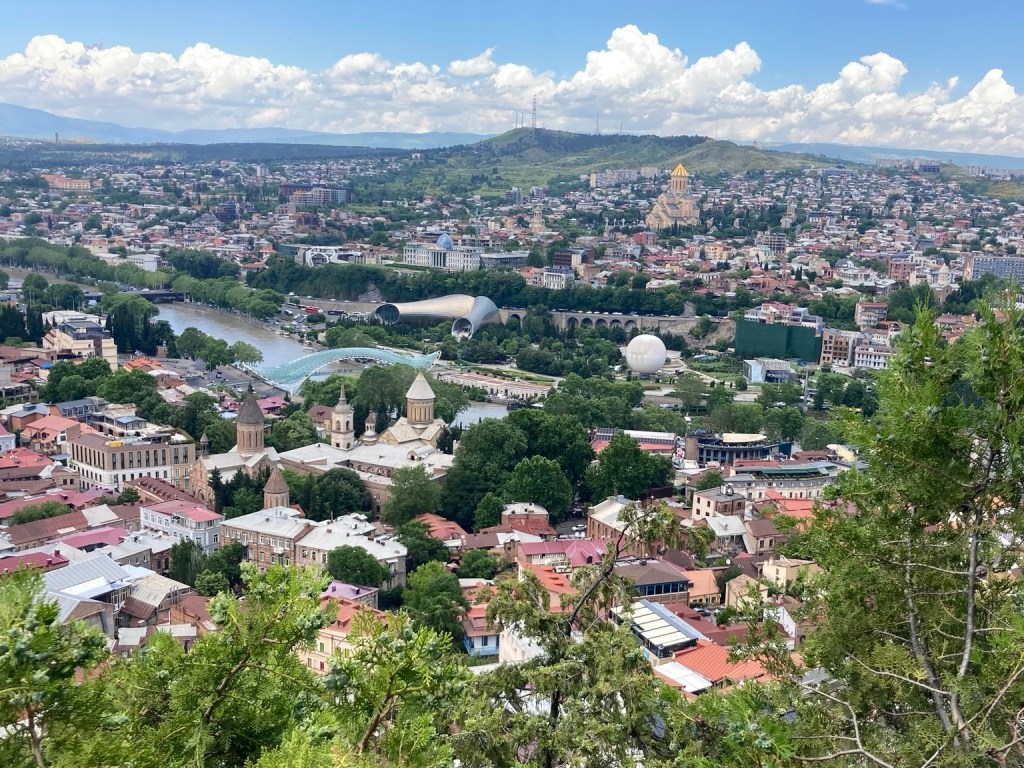
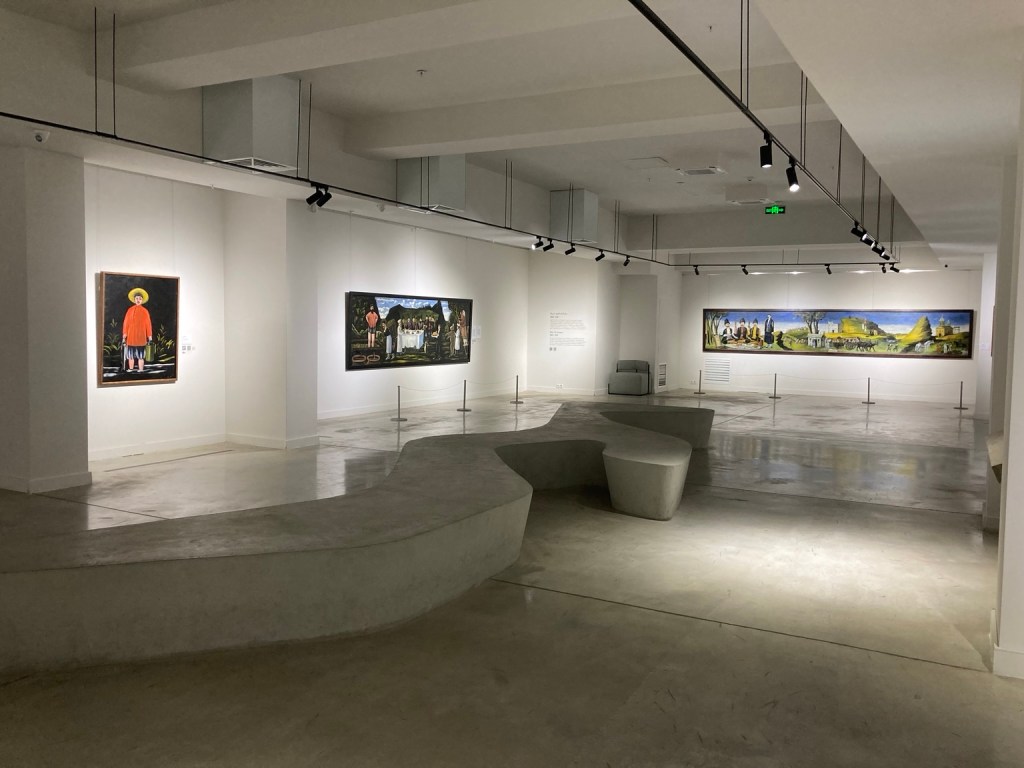
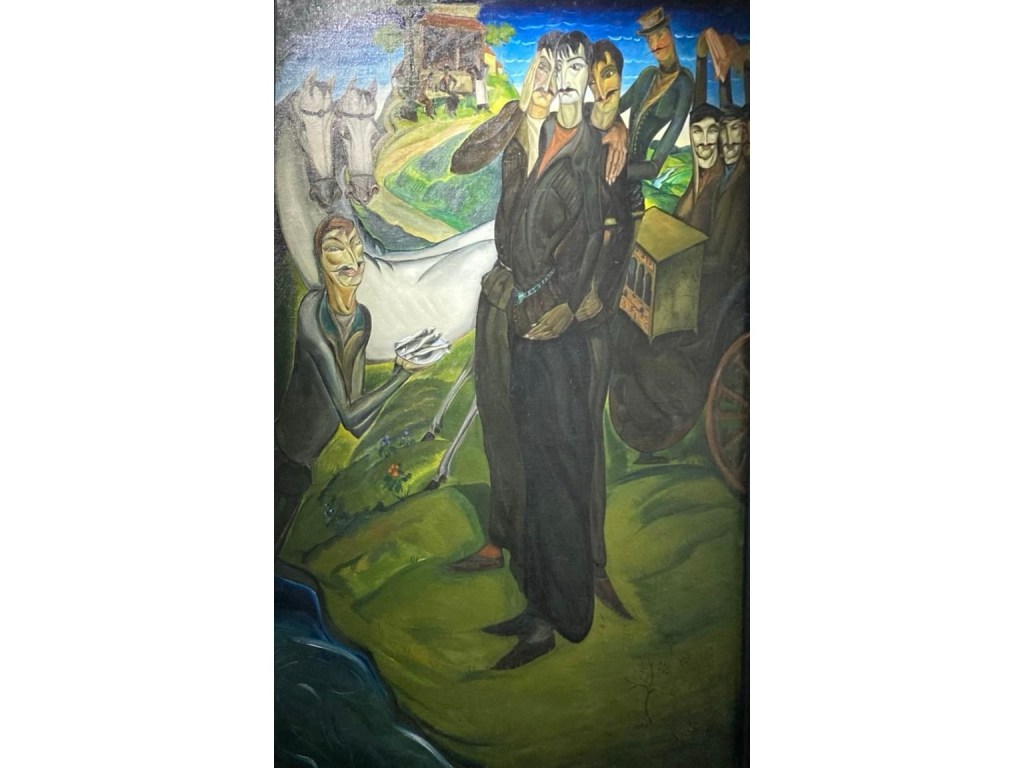
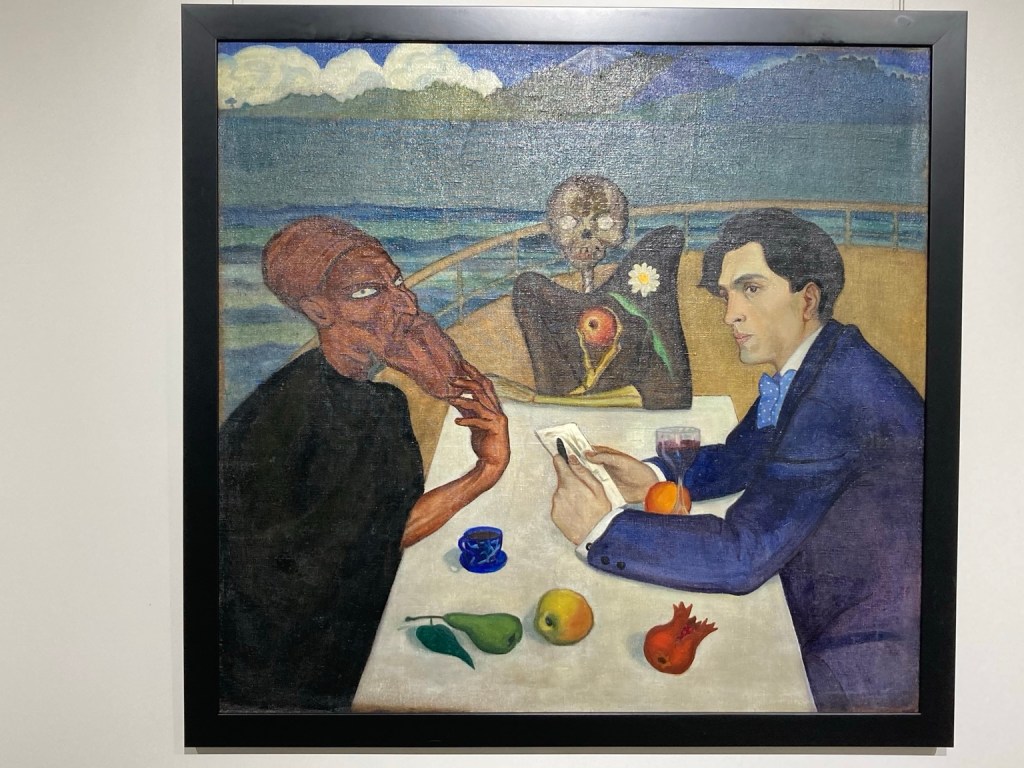
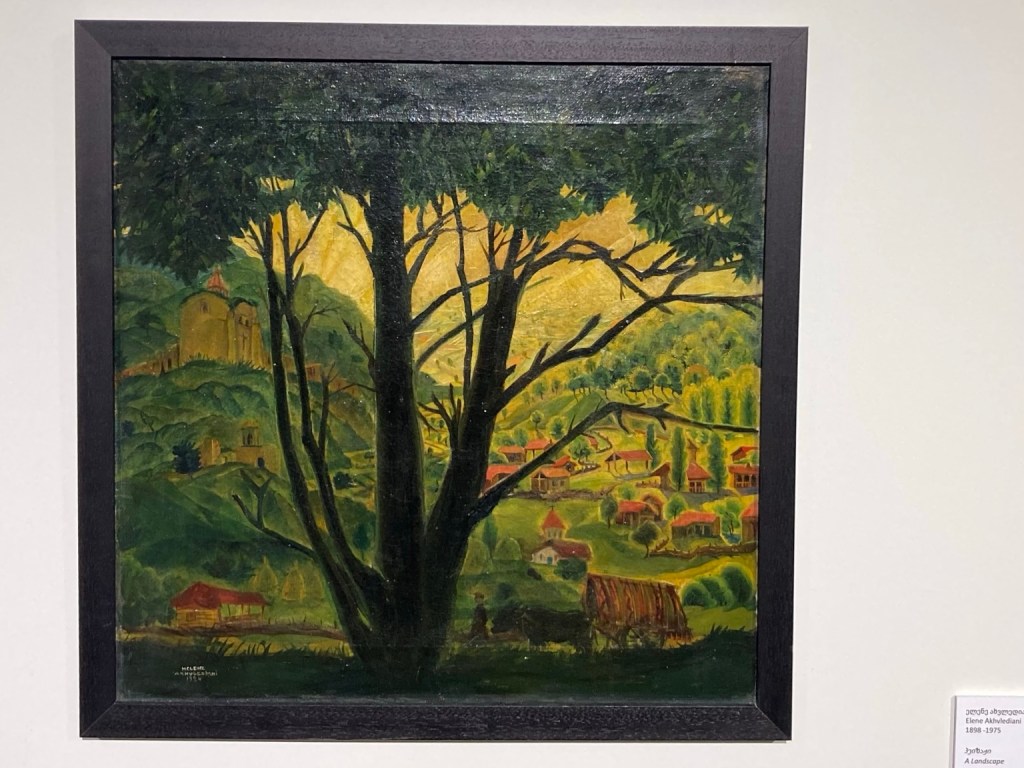
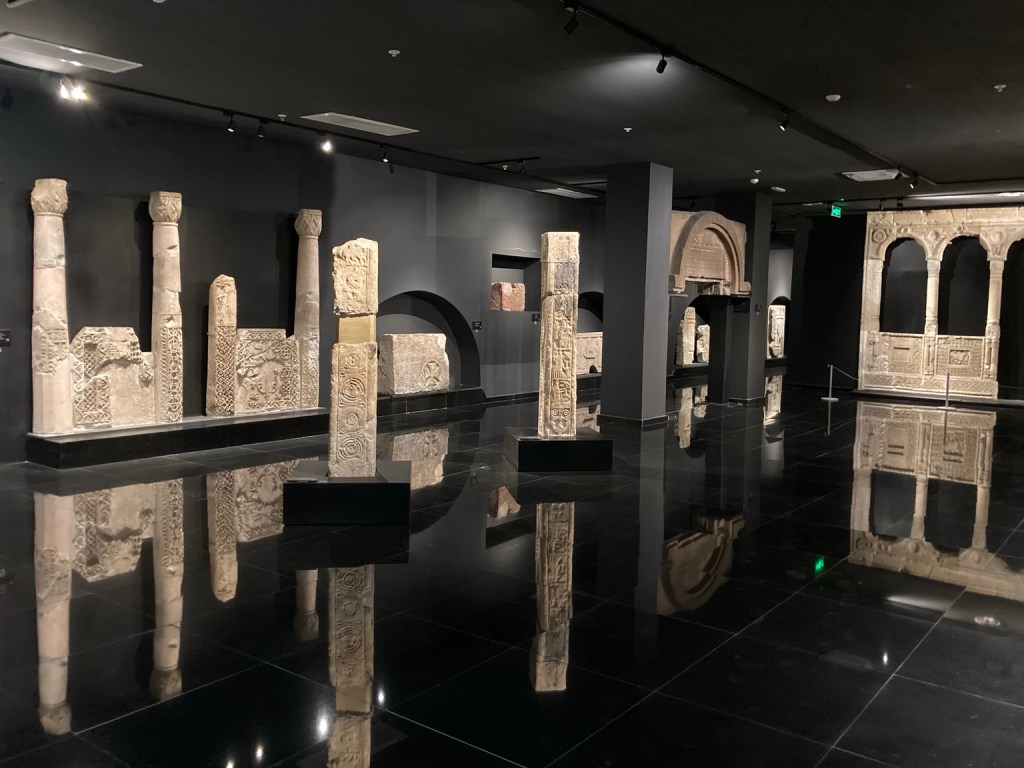
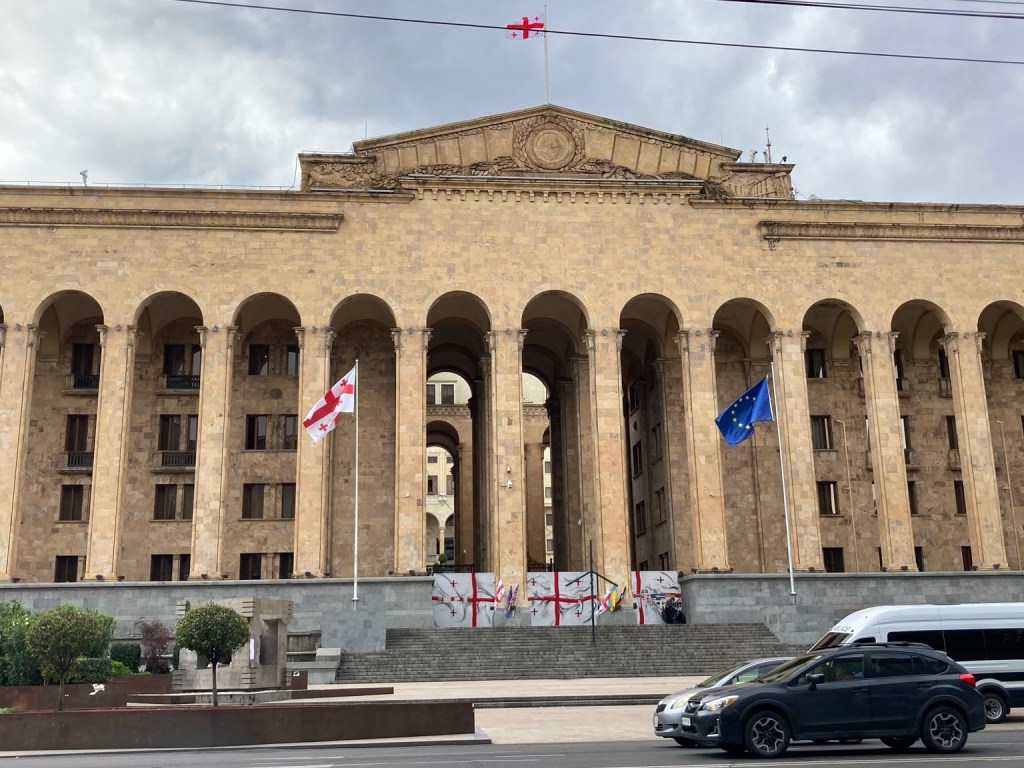
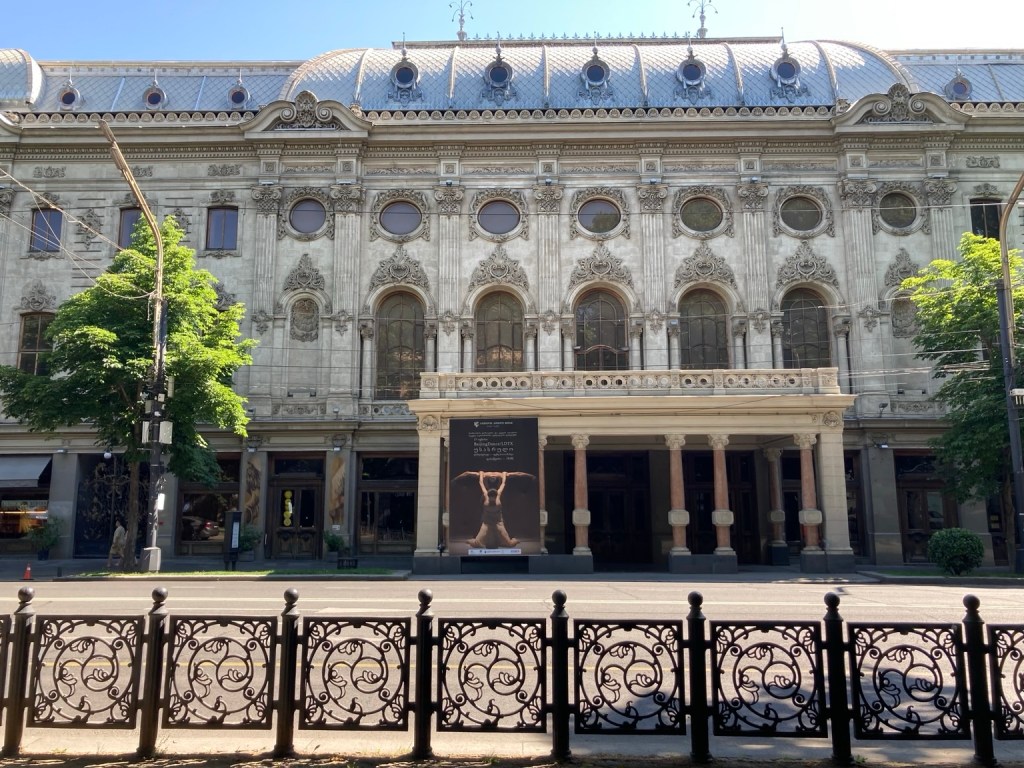
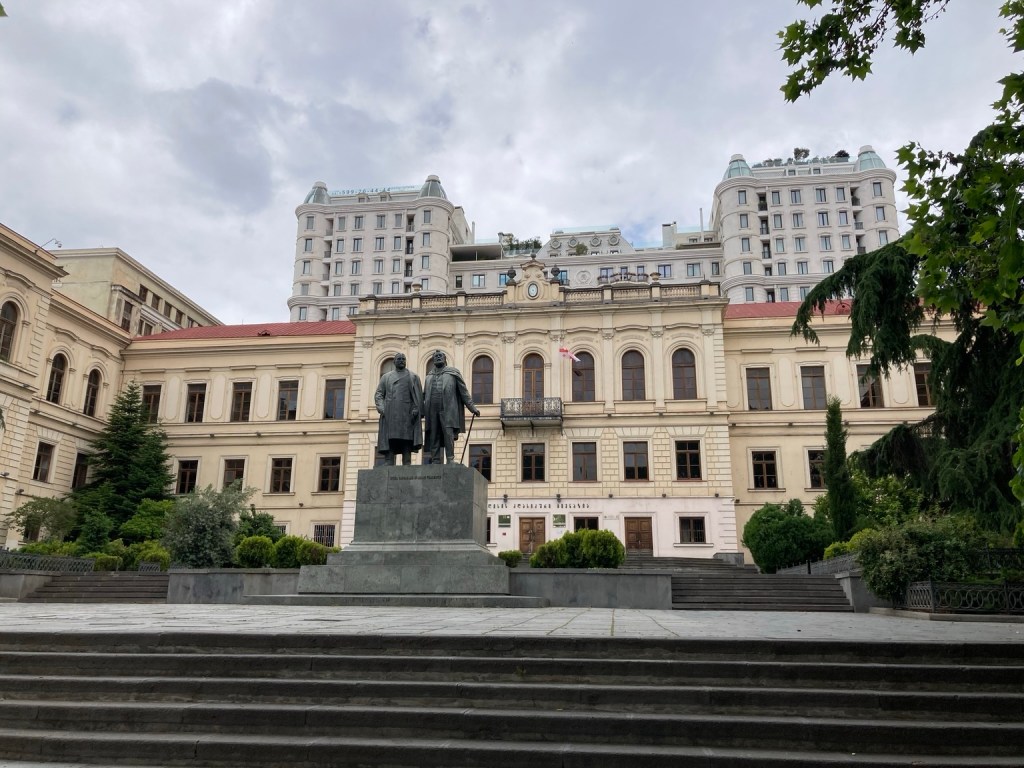
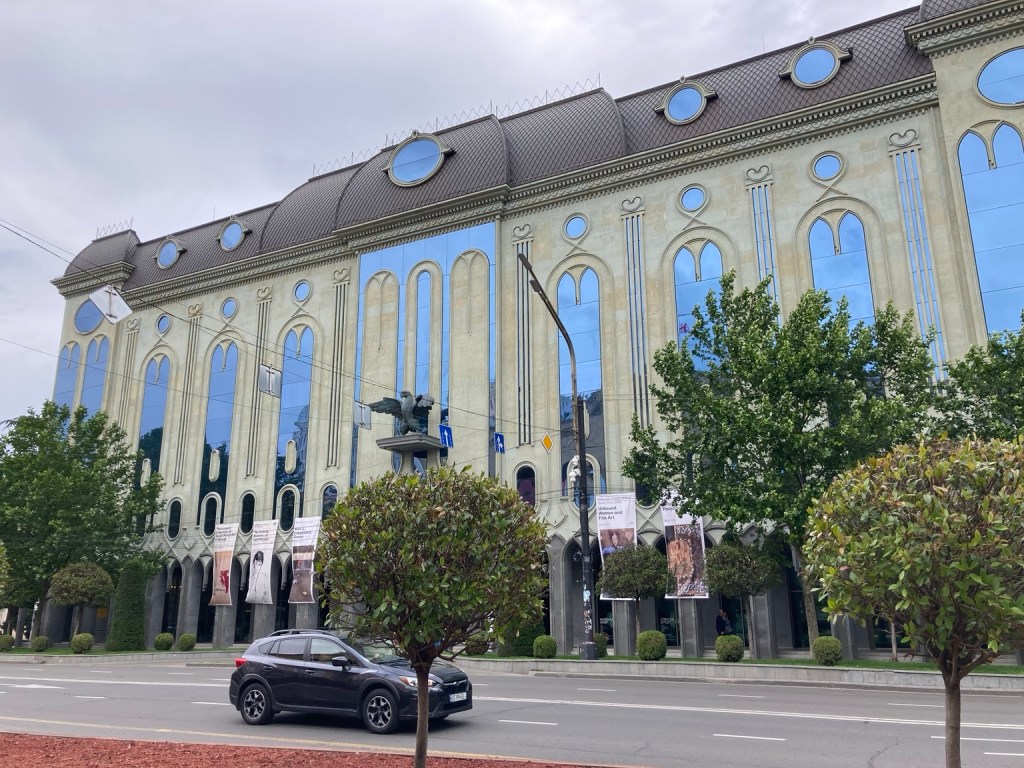
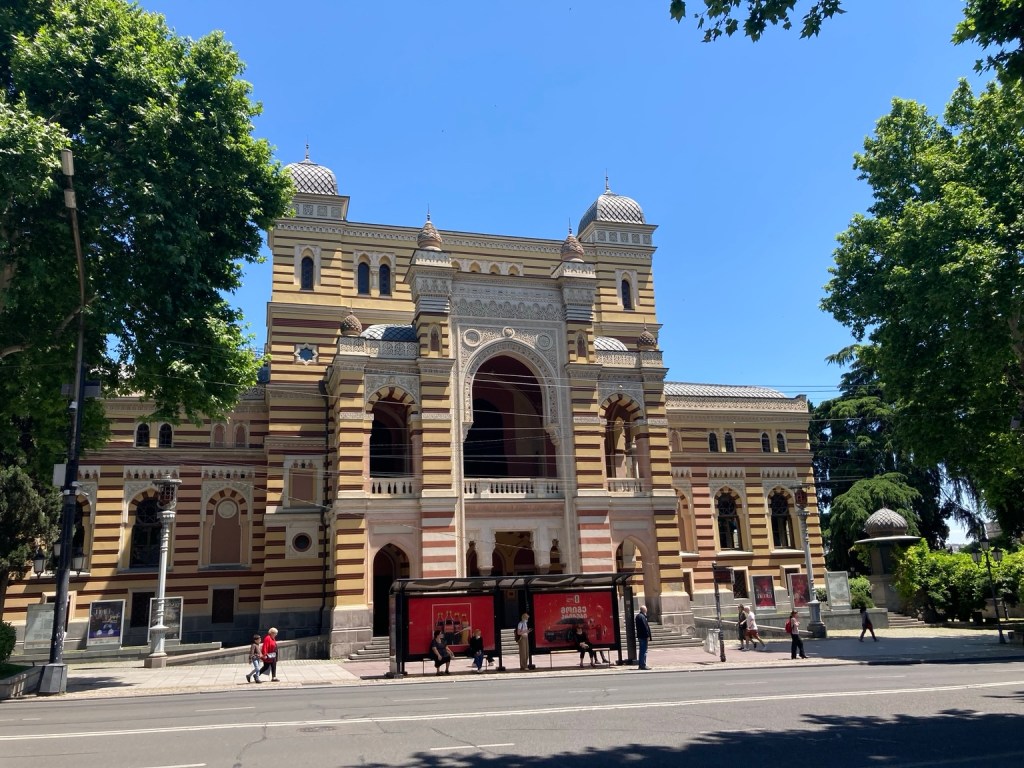
Another gallery start, this time in the Art Museum of Georgia, for a wider view of Georgian painters. There were of course more works by Pirosmani …
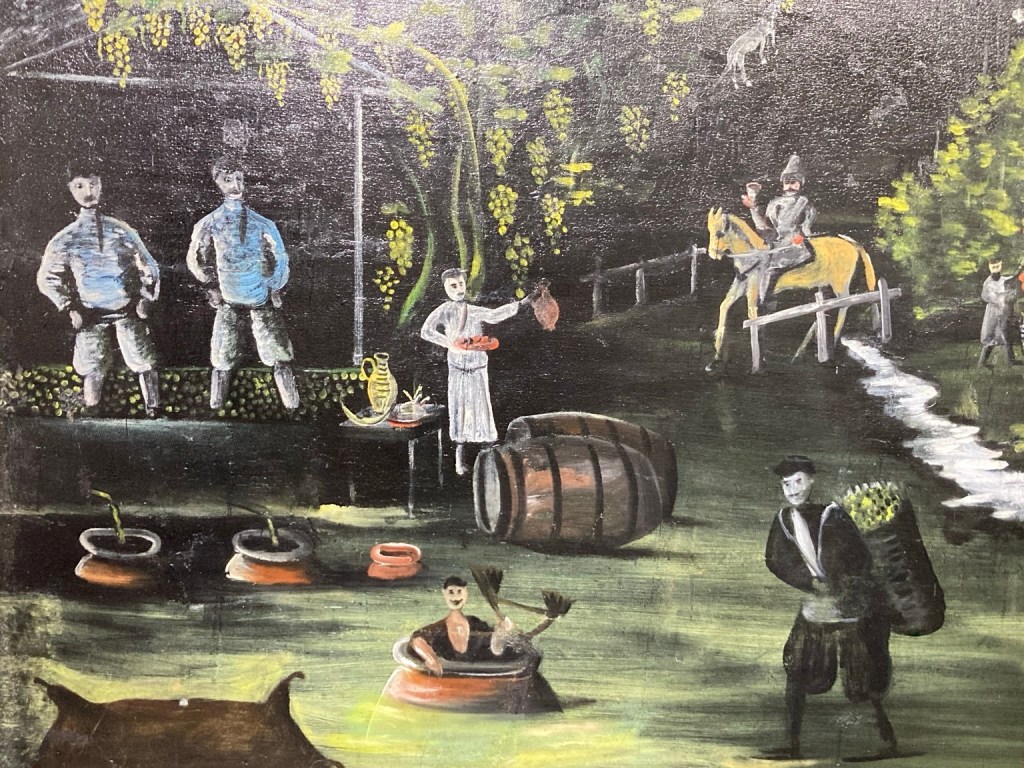
… this one all about the wine harvest …
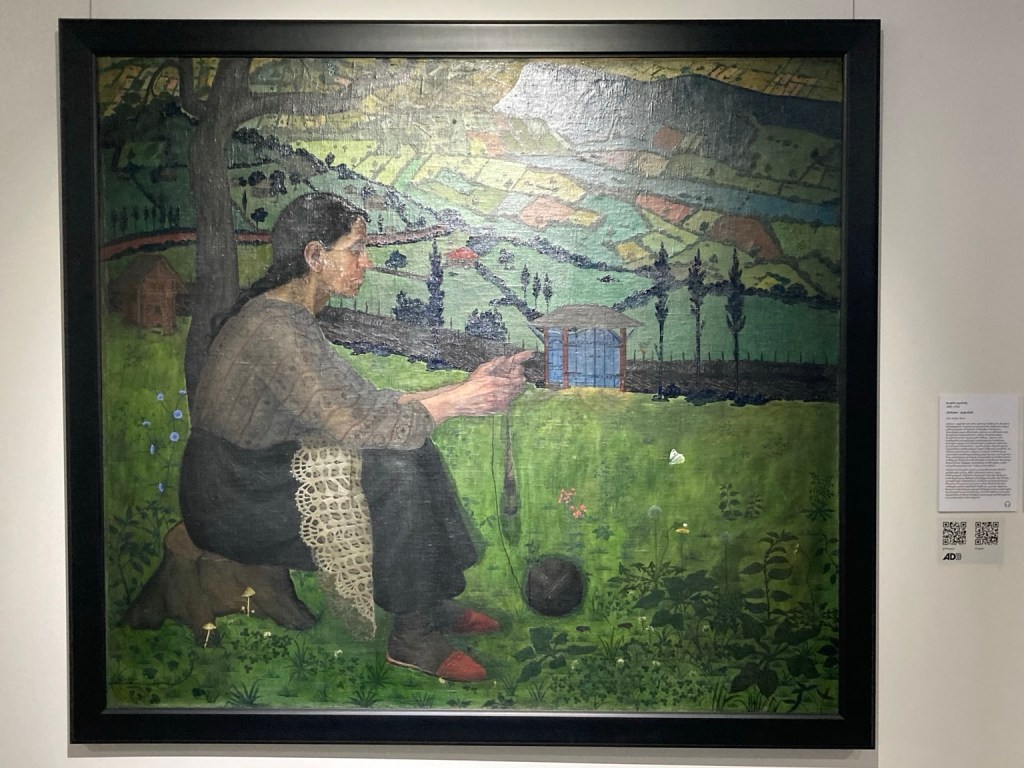
… but also his contemporaries, who in their lifetimes achieved more acclaim such as David Kakabadze …
… Lado Gudiashvili …
… Shalva Kikodze …
… and Elene Akhvlediani.
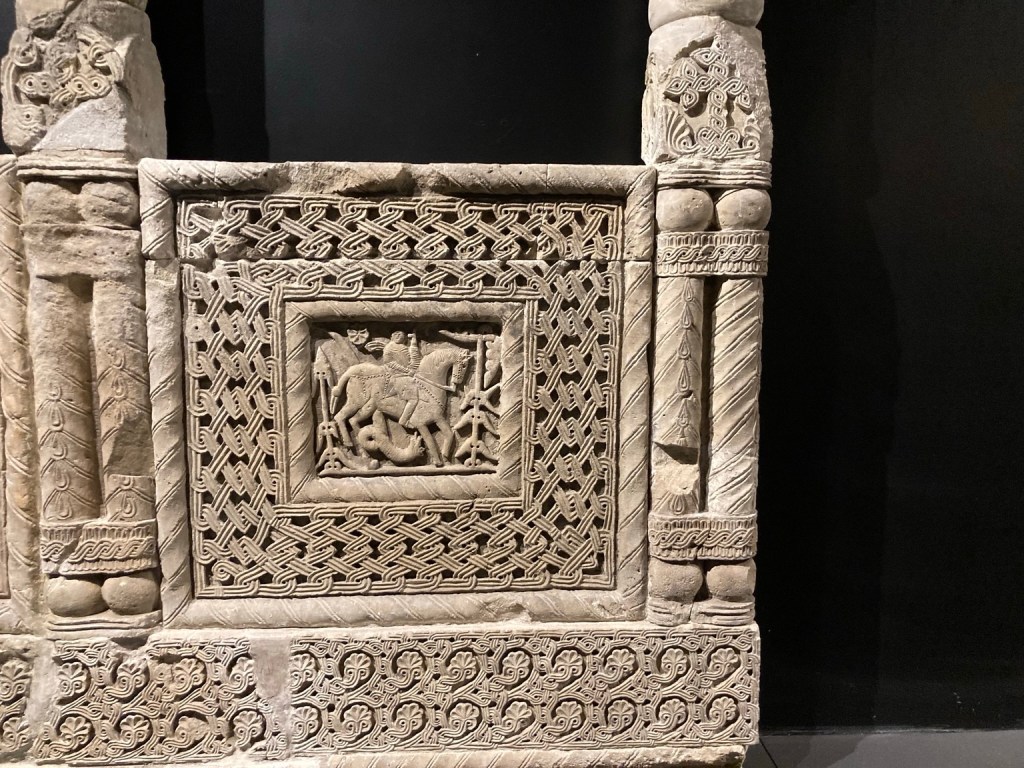
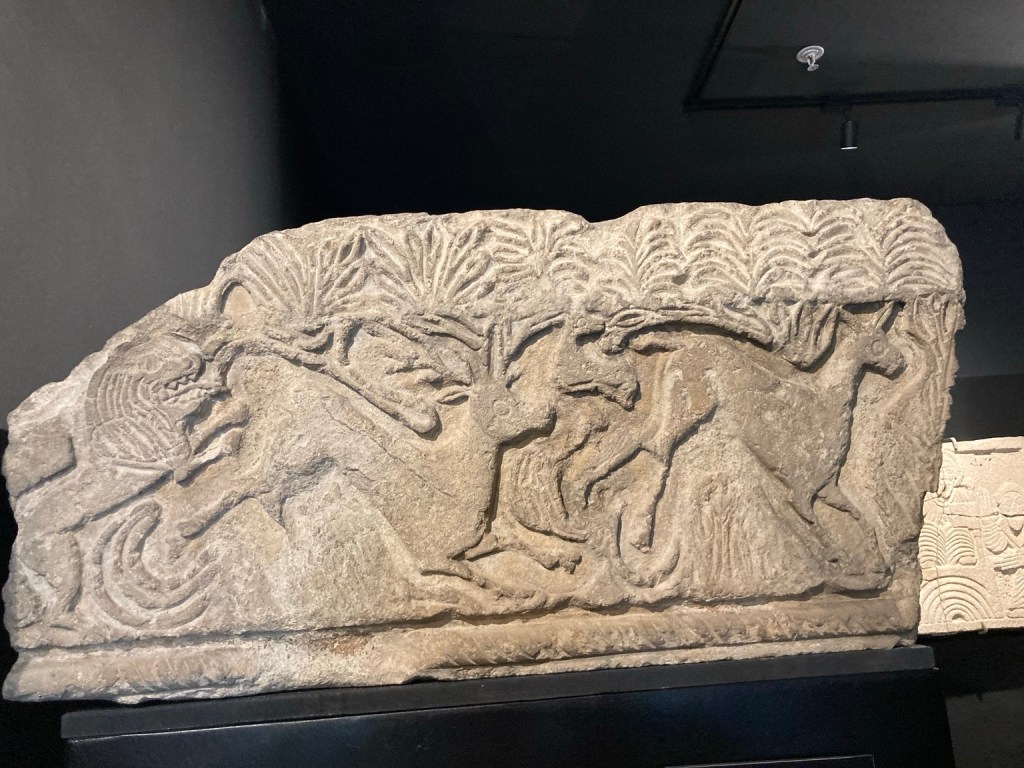
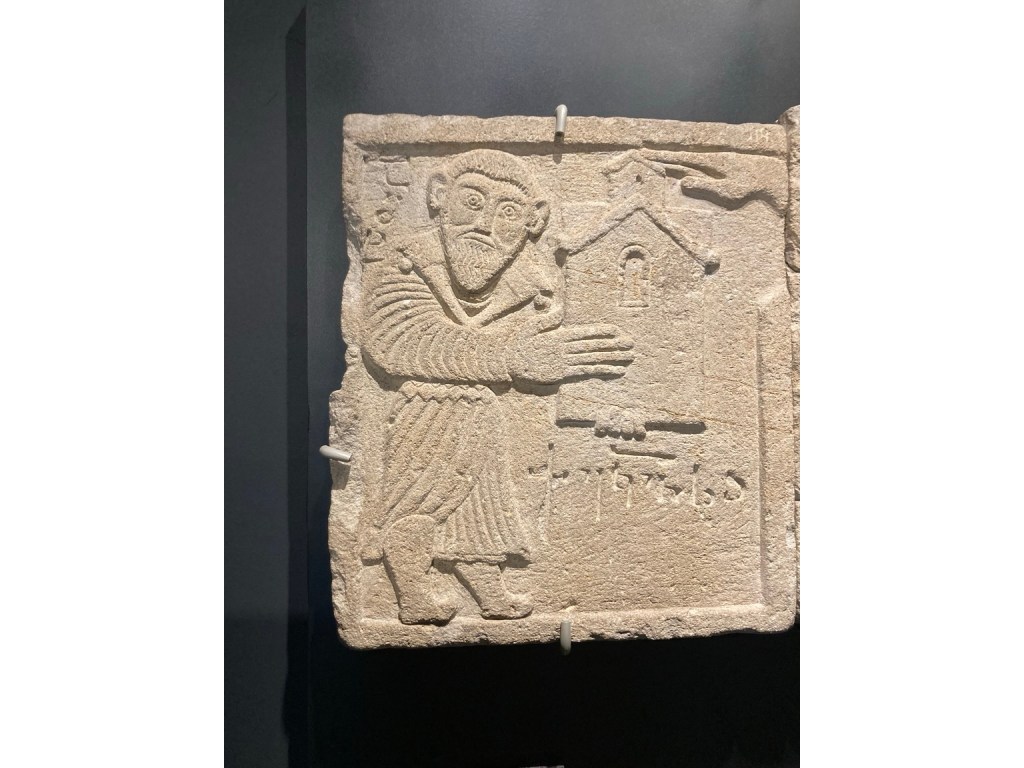
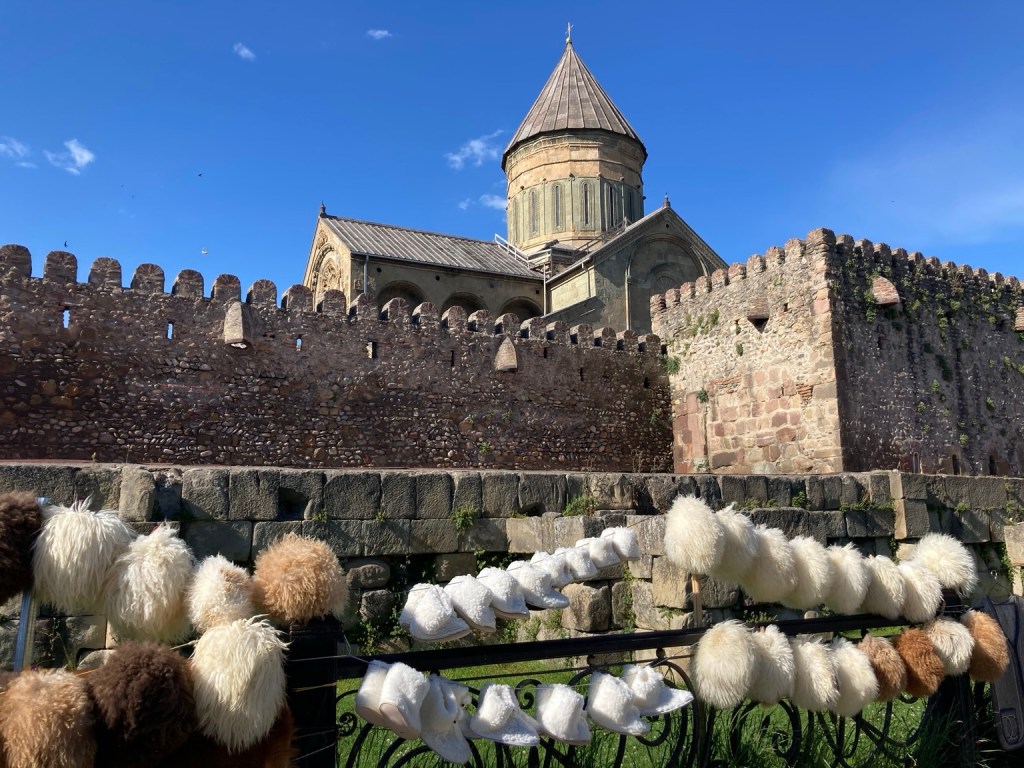
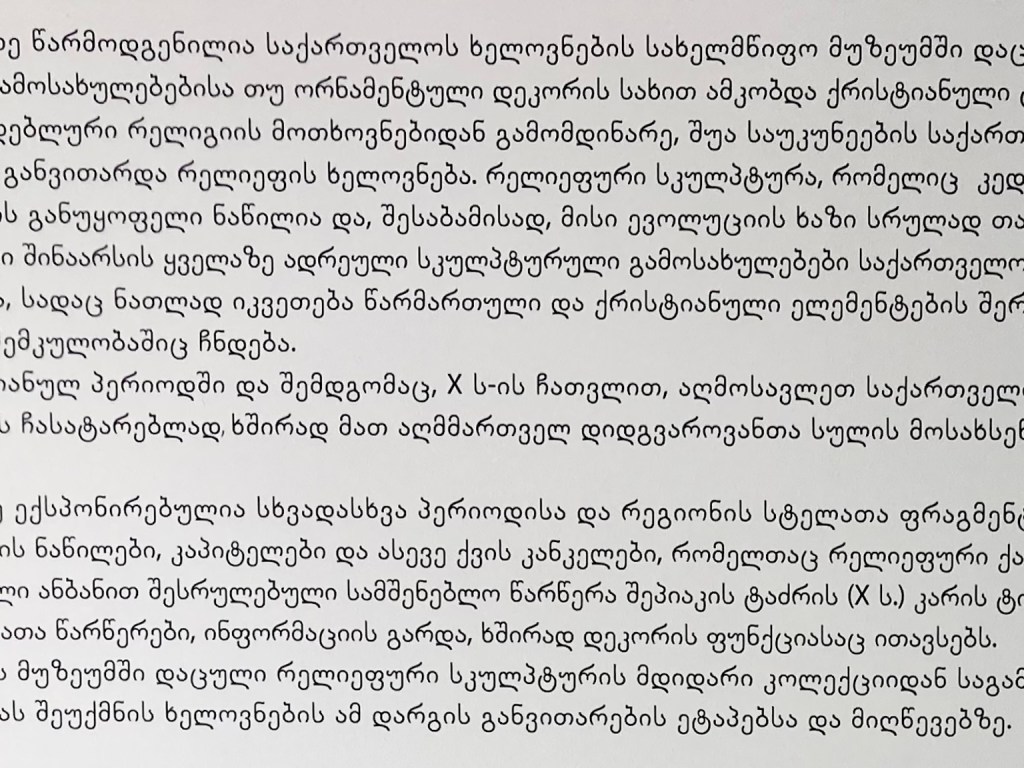
There was also a floor with fragments of medieval Georgian relief sculpture, beautifully displayed and lit.
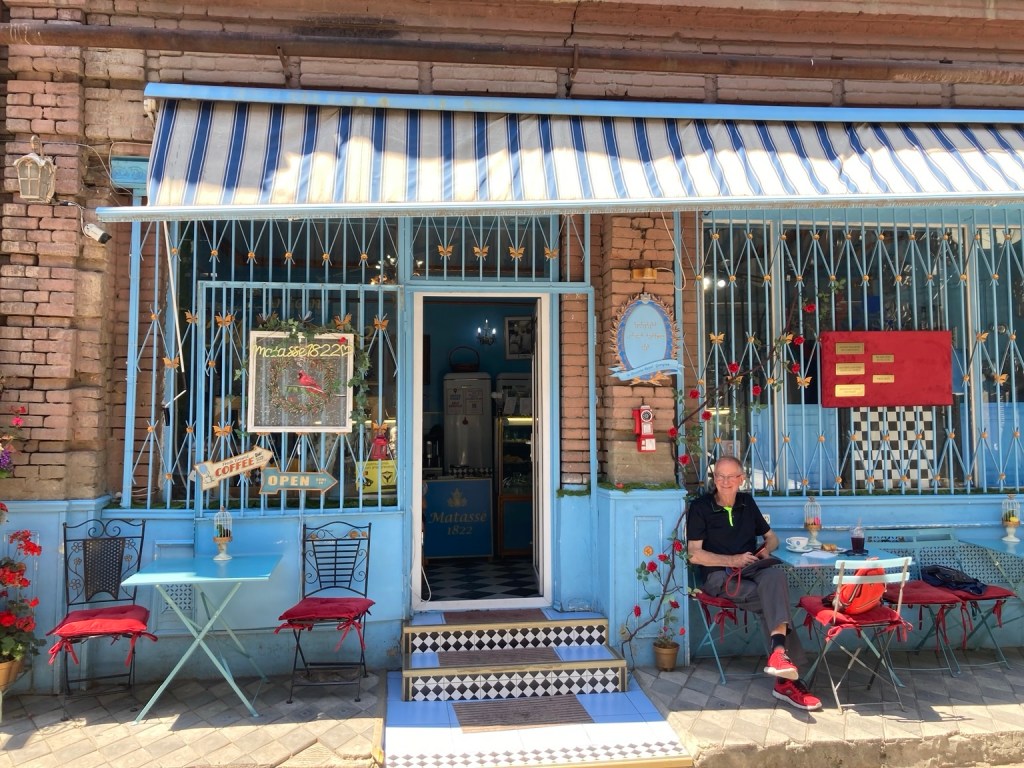
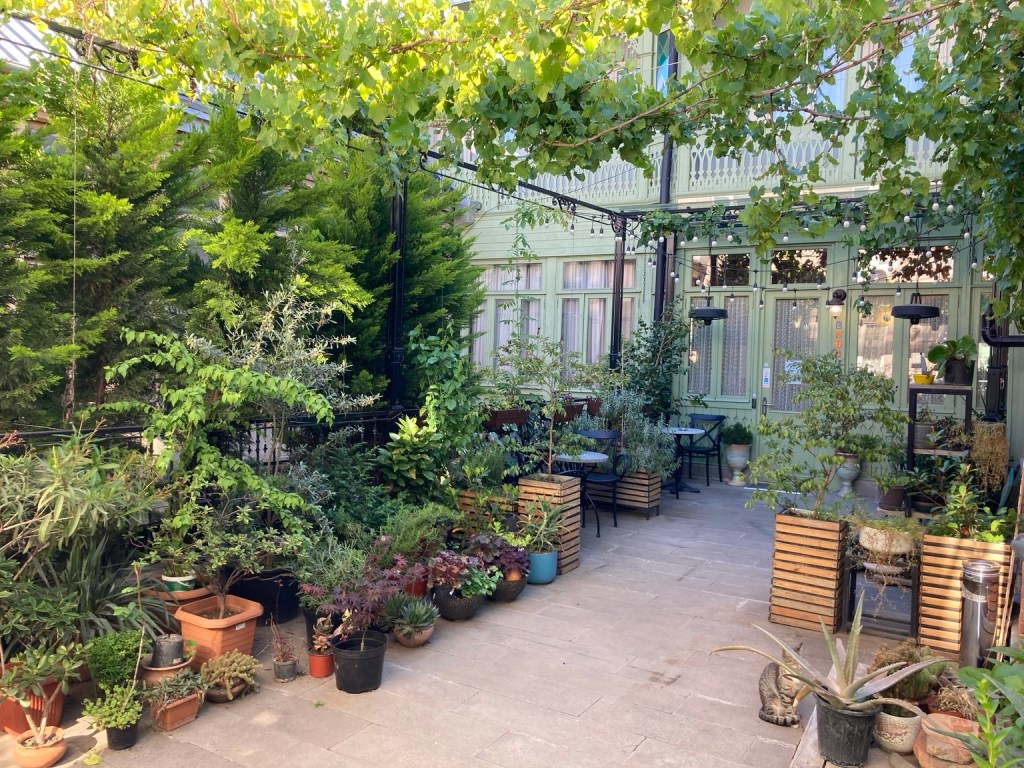
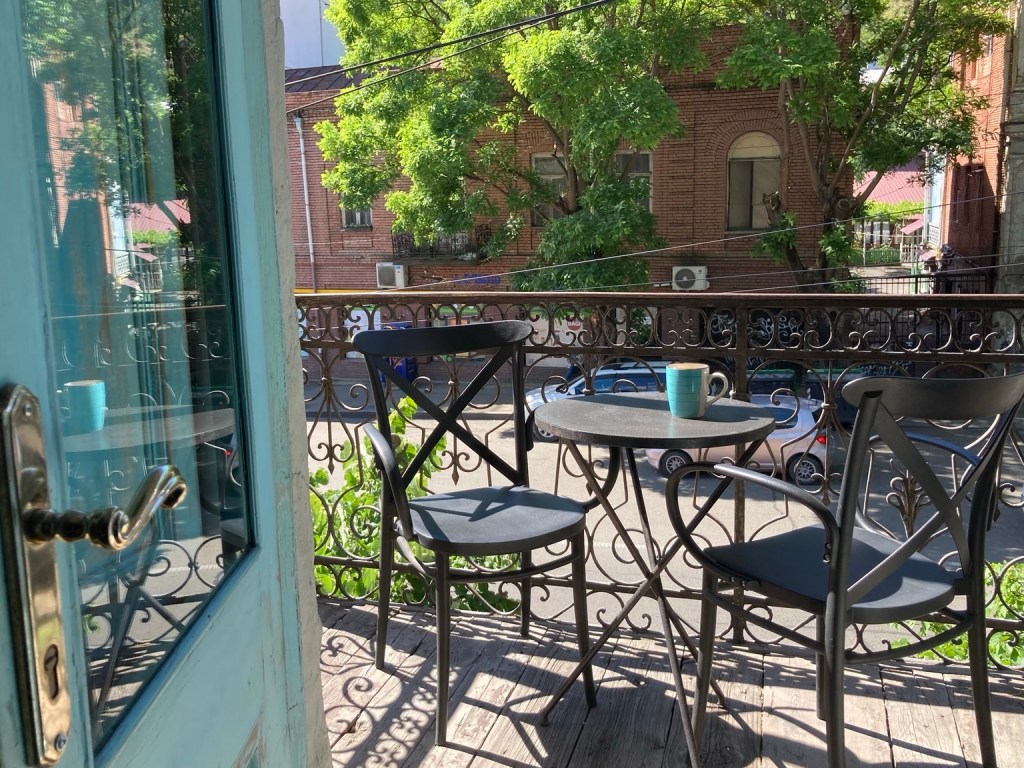
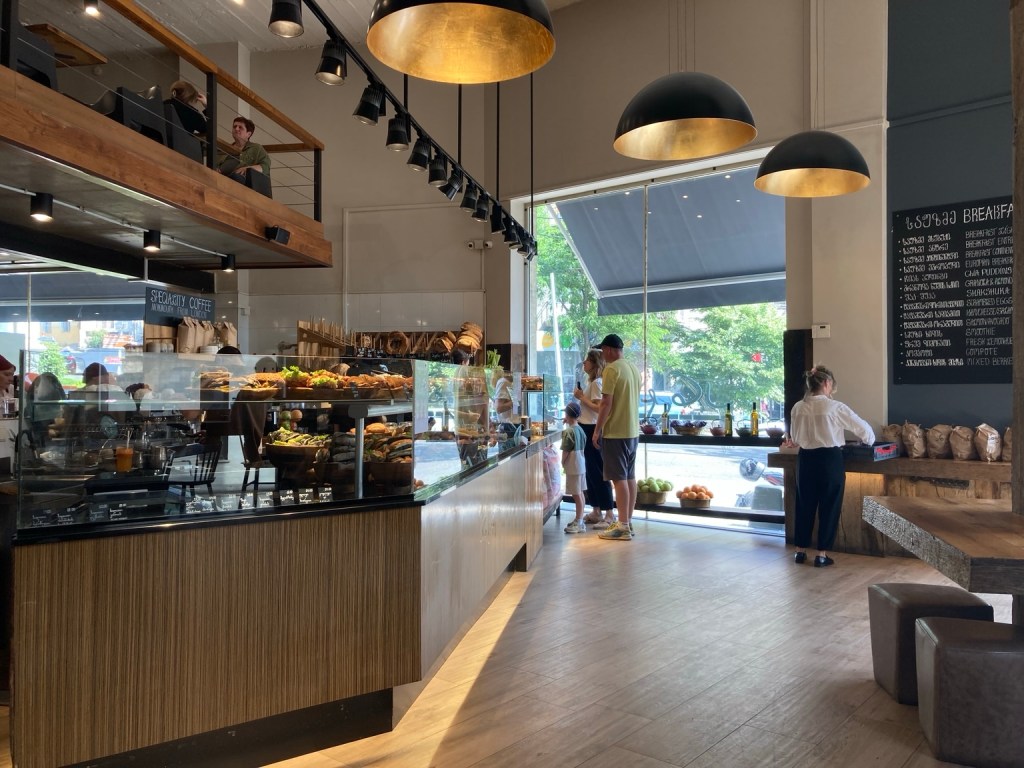
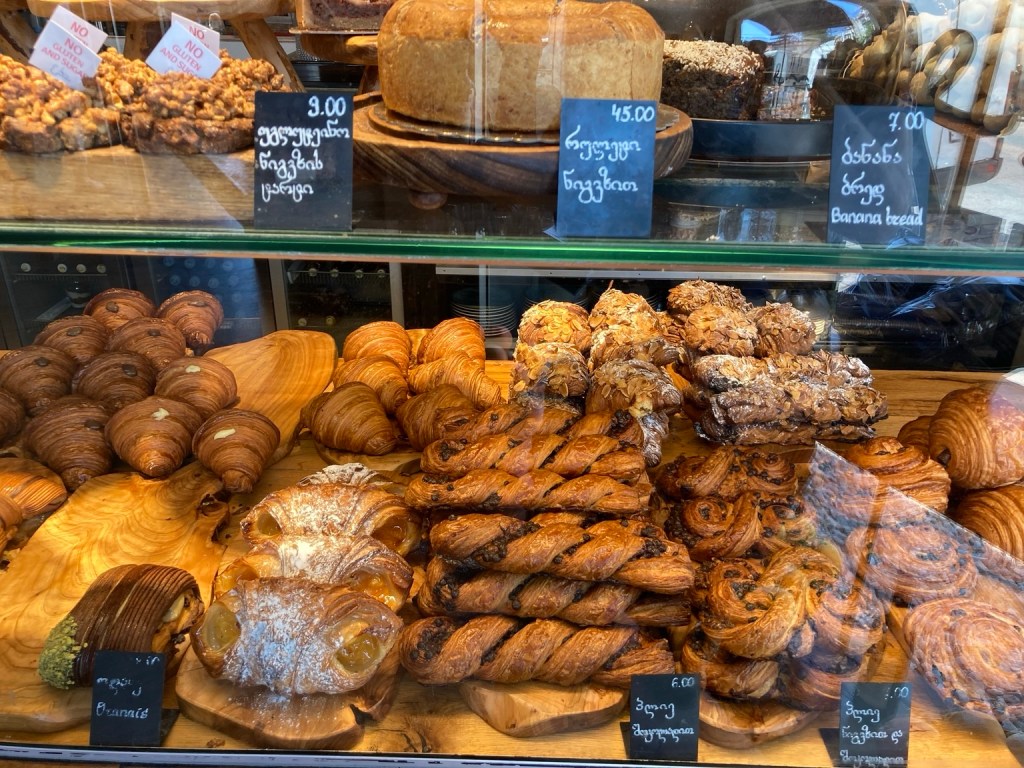
Now time for some more exploring and a coffee …
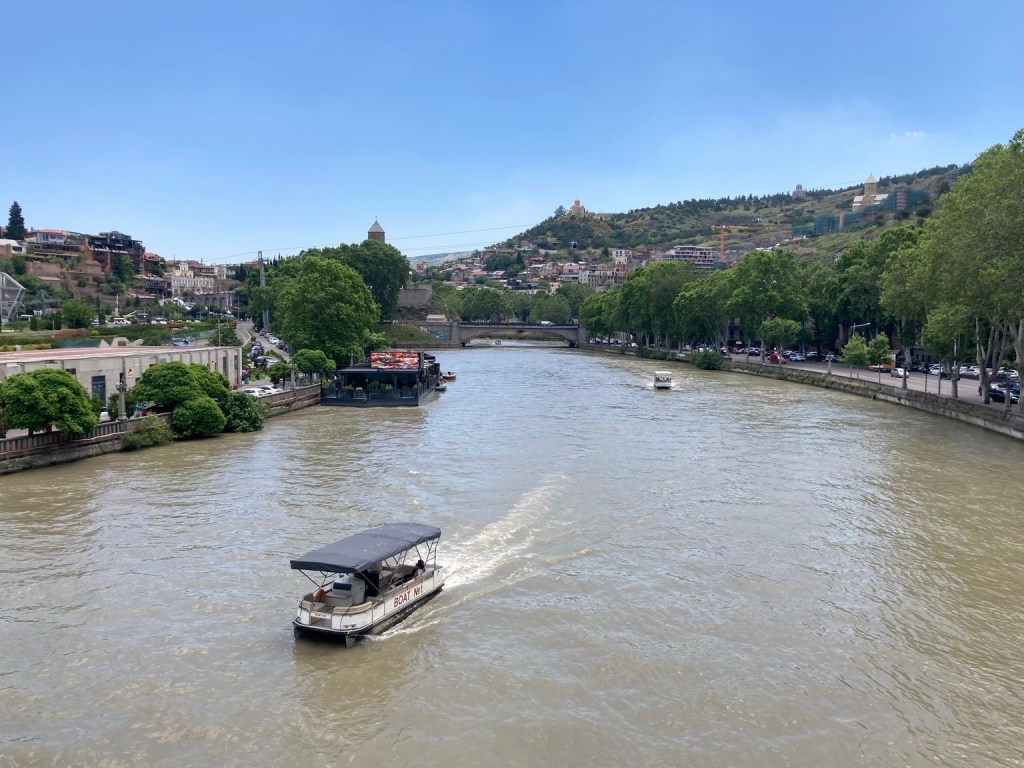
… then we walked over the Peace Bridge to Rike Park …
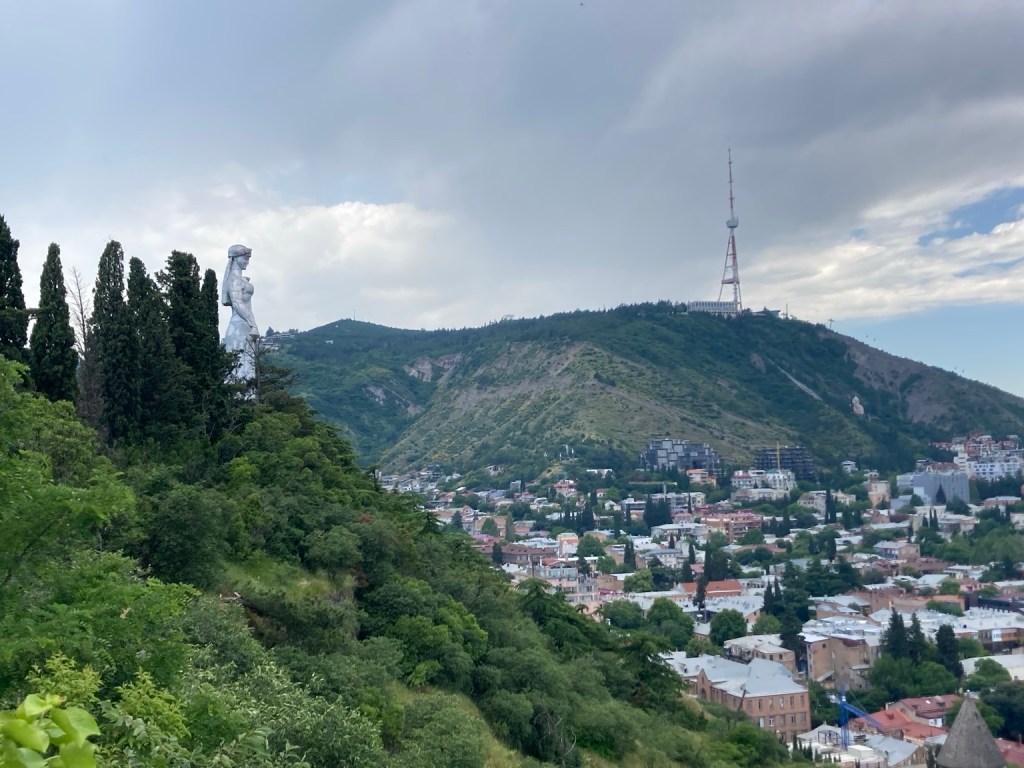
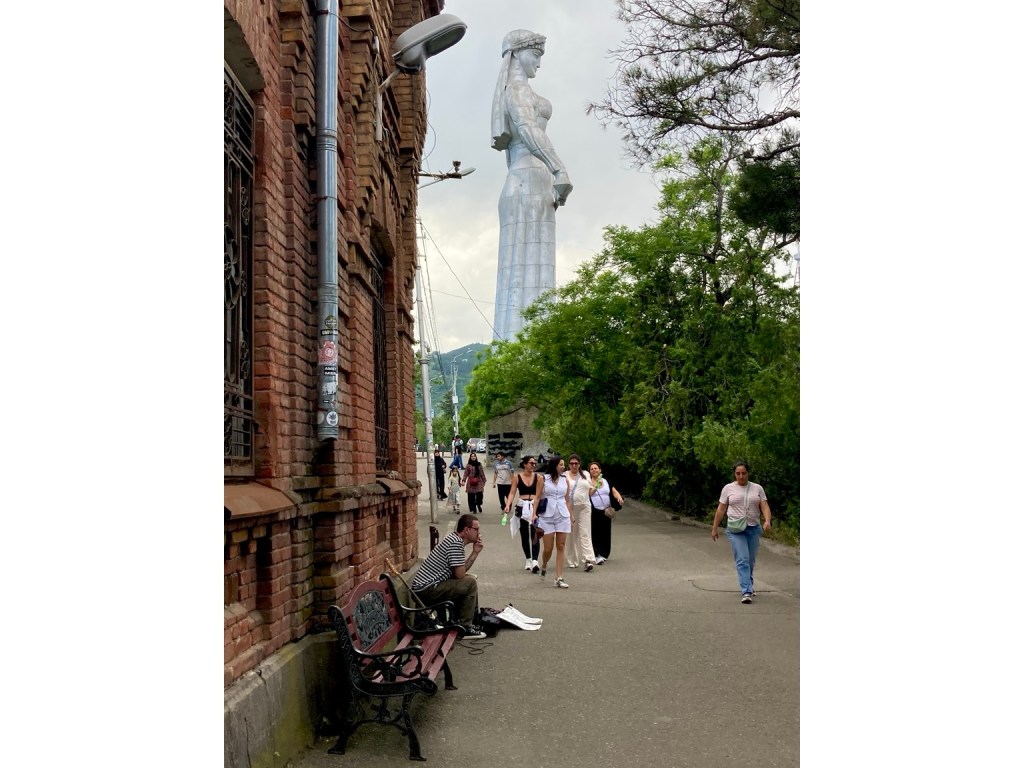
… and took another cable car up for a closer look at the Mother of Georgia who looks down on Tbilisi.
She embodies the Georgian national character with a sword to protect her country and a bowl of wine for welcomed guests.
We got a good view of the centre of the city …
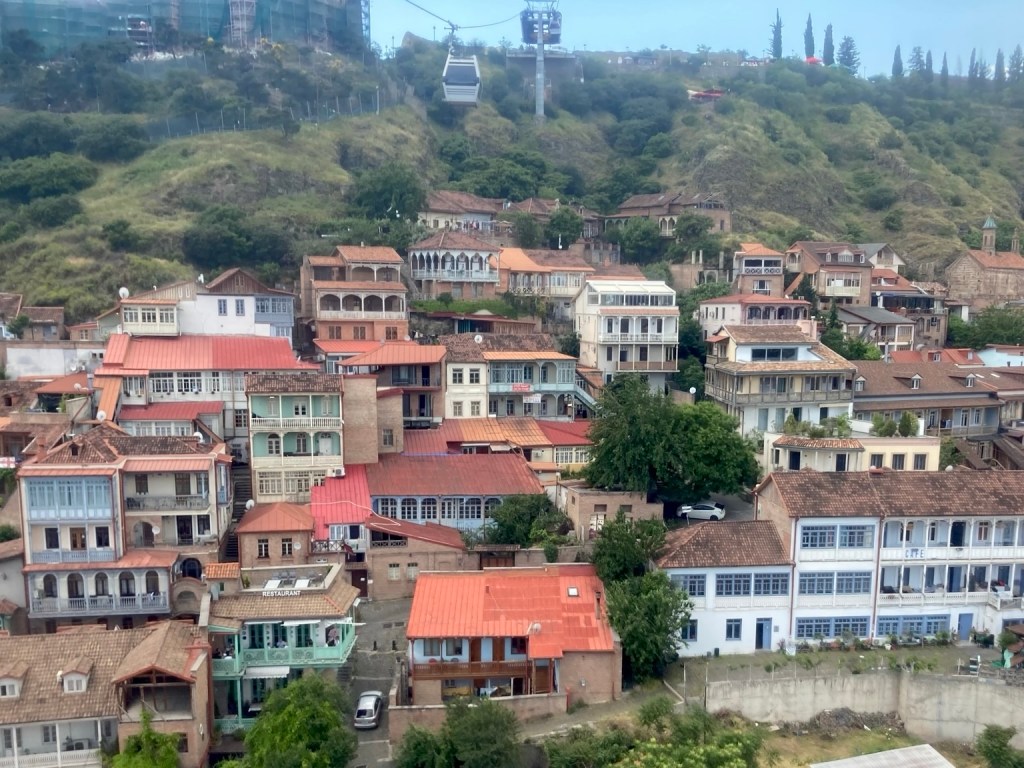
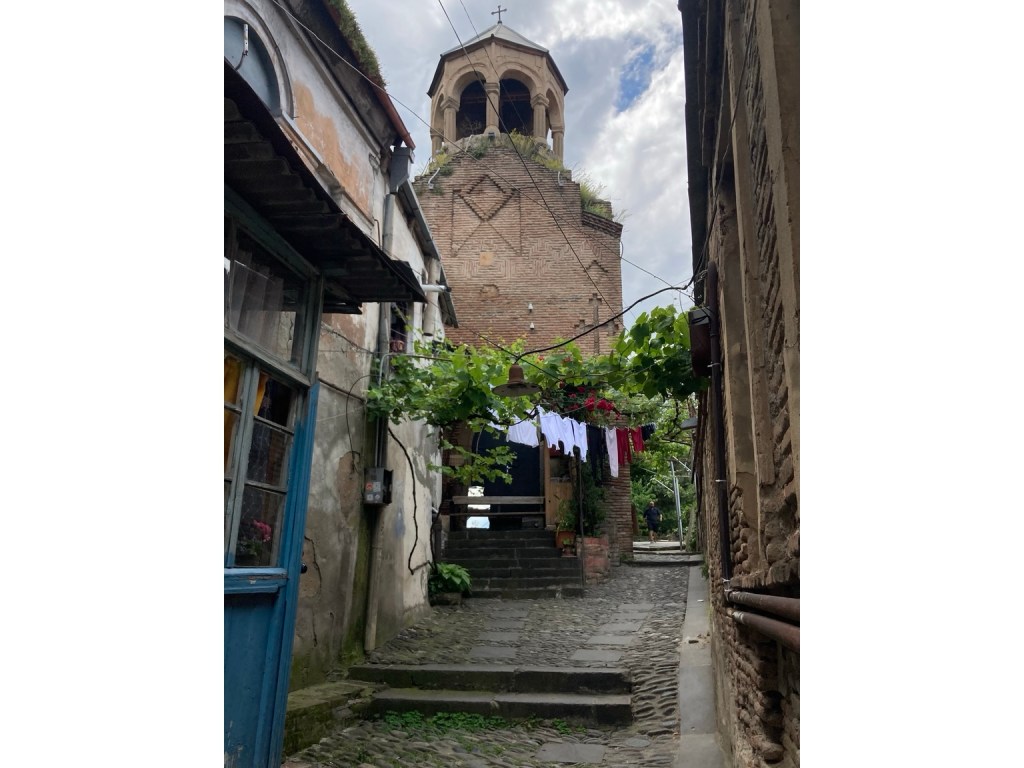
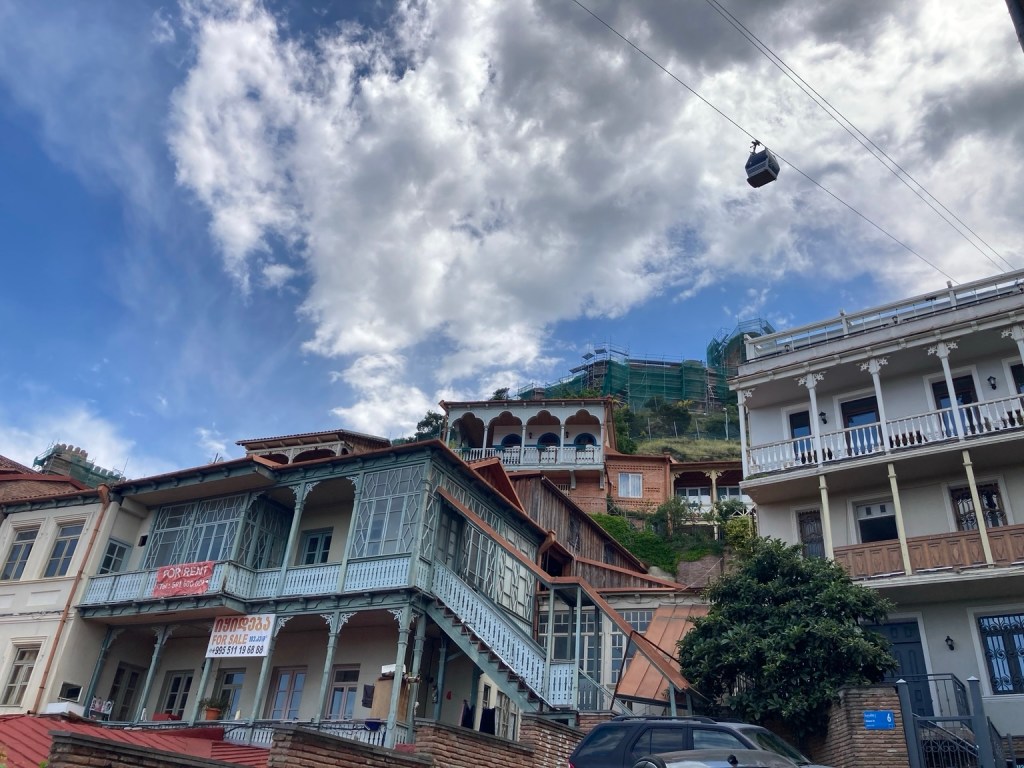
… but the day had become very warm and humid with the threat of a downpour, so we didn’t go into the botanical garden and instead made our way down the Bethlehem Steps which wind their way through some lovely old houses back to the city.
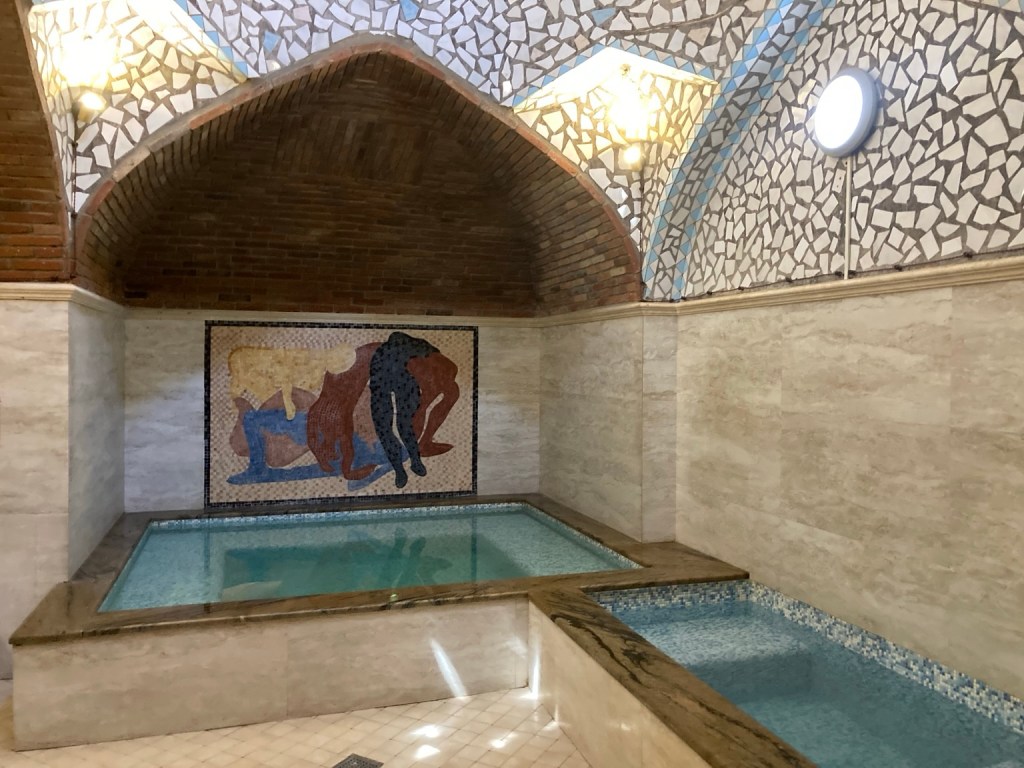
Arriving in Abanotubani, we finished the afternoon with a visit to Guli’s baths, where we had booked a private room for two, although I think they upgraded us as it was huge!
We started by soaking in the hot pool to soften our skin, then the mekise came in to give Chris his kisi treatment, a traditional, vigorous exfoliating scrub, followed by a soapy wash and concluding with a cold bucket of water over his head! Afterwards it was my turn, but the lady mekise was more gentle, and I was allowed to use the cold plunge pool rather than being doused! We spent the rest of our hour alternating between the hot and cold pools before showering. Our skin was left amazingly soft – another bathing experience to add to our now quite extensive list!
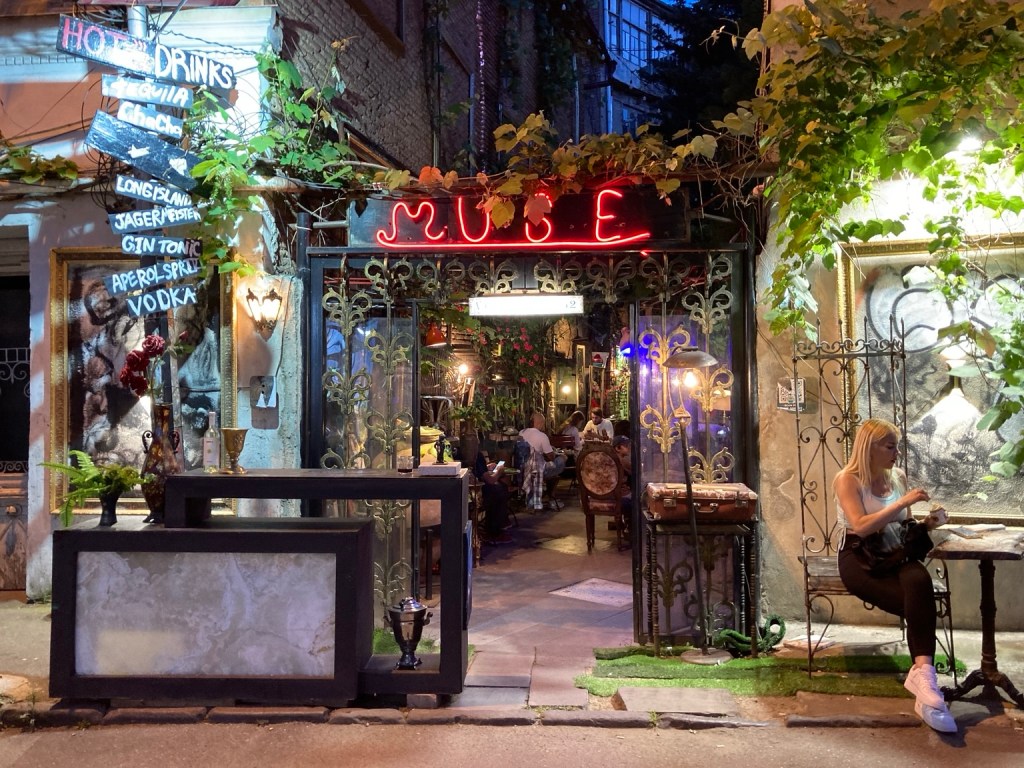
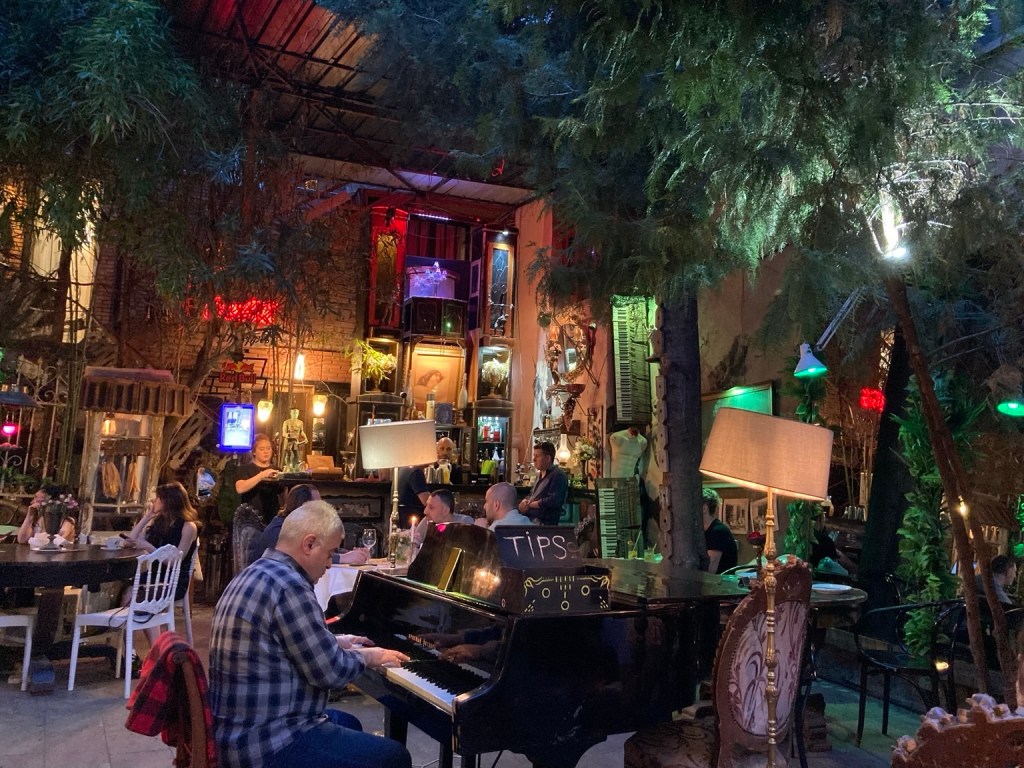
In the evening, we headed to Muse, which we had passed during the day and thought looked worth a proper visit.
In fact it was even better, with a good menu, quirky interior and a great pianist to entertain.
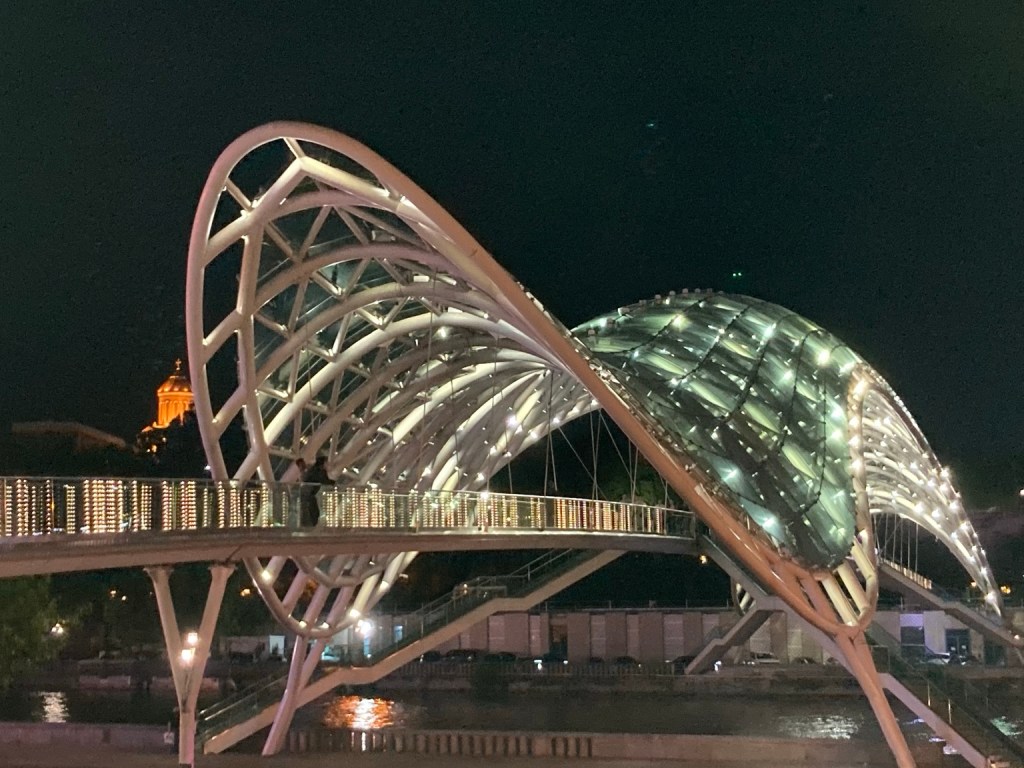
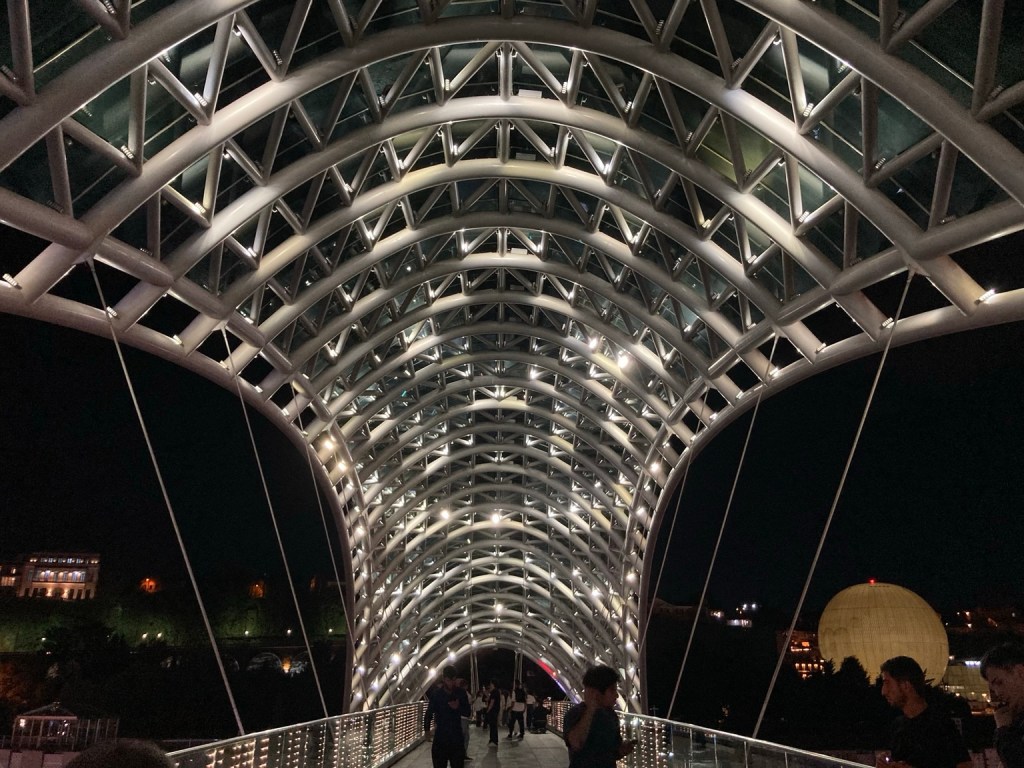
We passed the Peace Bridge on the way home, all lit up and sparkly.
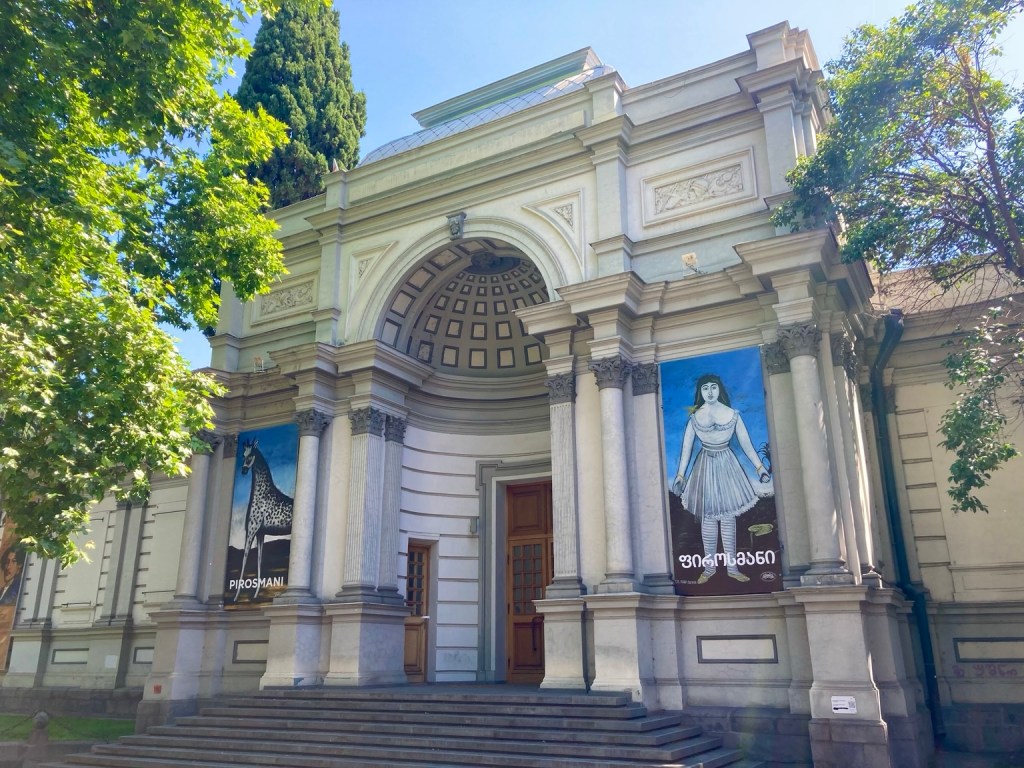
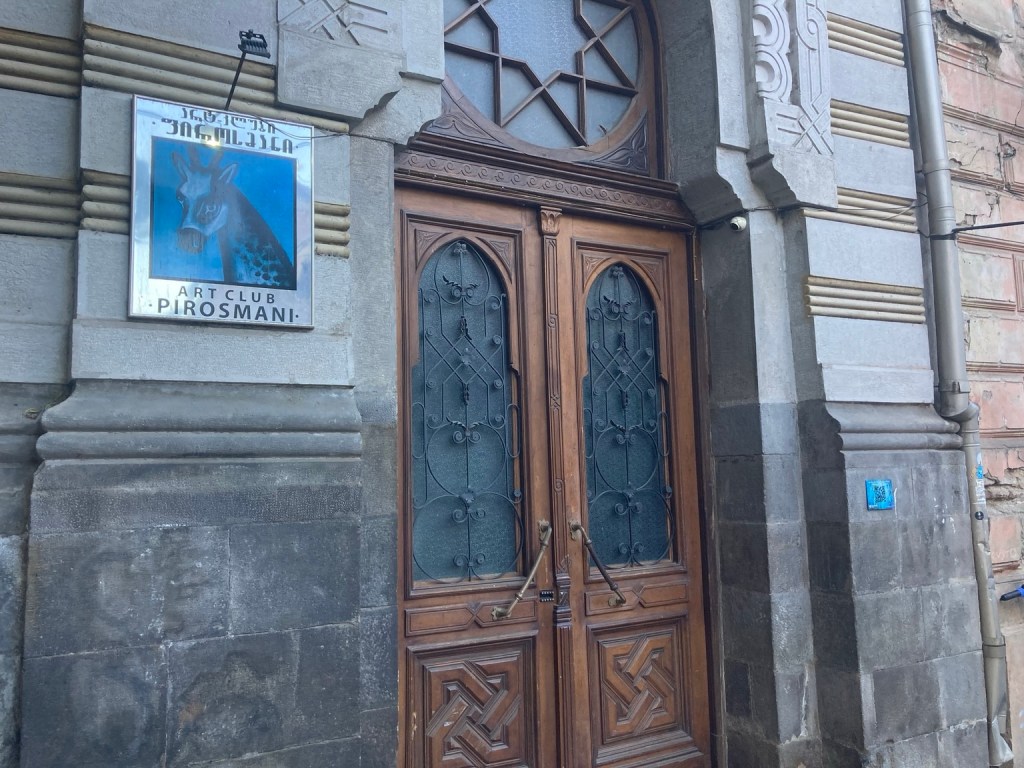
I’m surprised we’ve lasted so long without venturing into an art gallery, but today’s the day and we started with the National Gallery in search of Georgia’s national artist, boldly advertised on the outside!
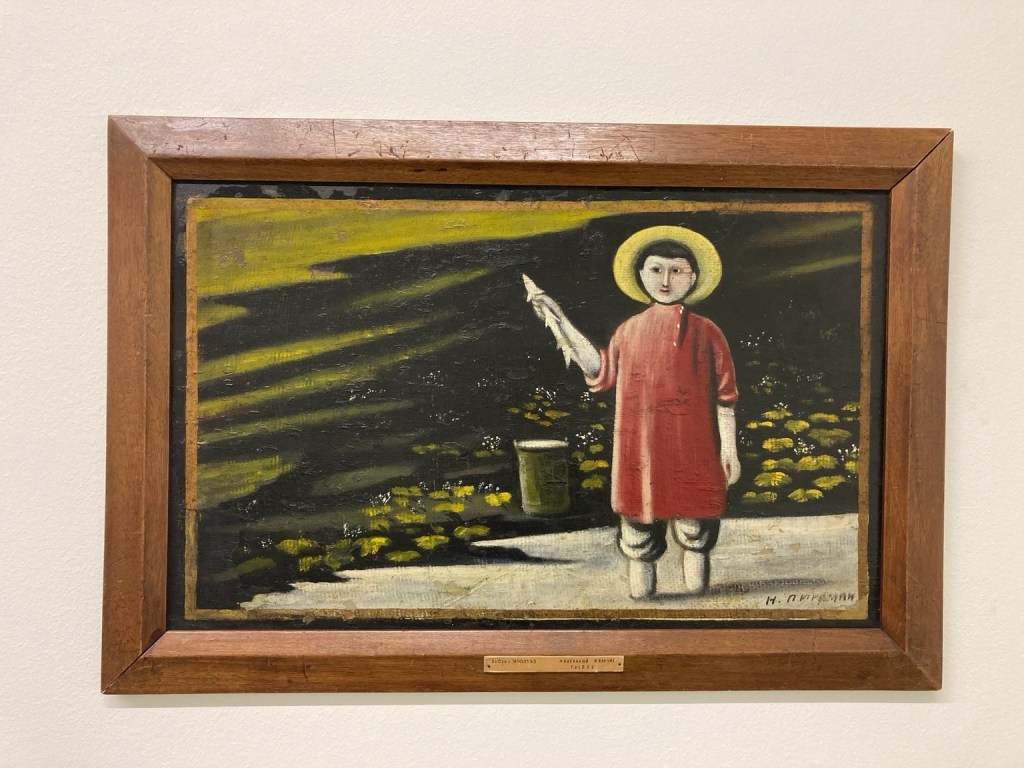
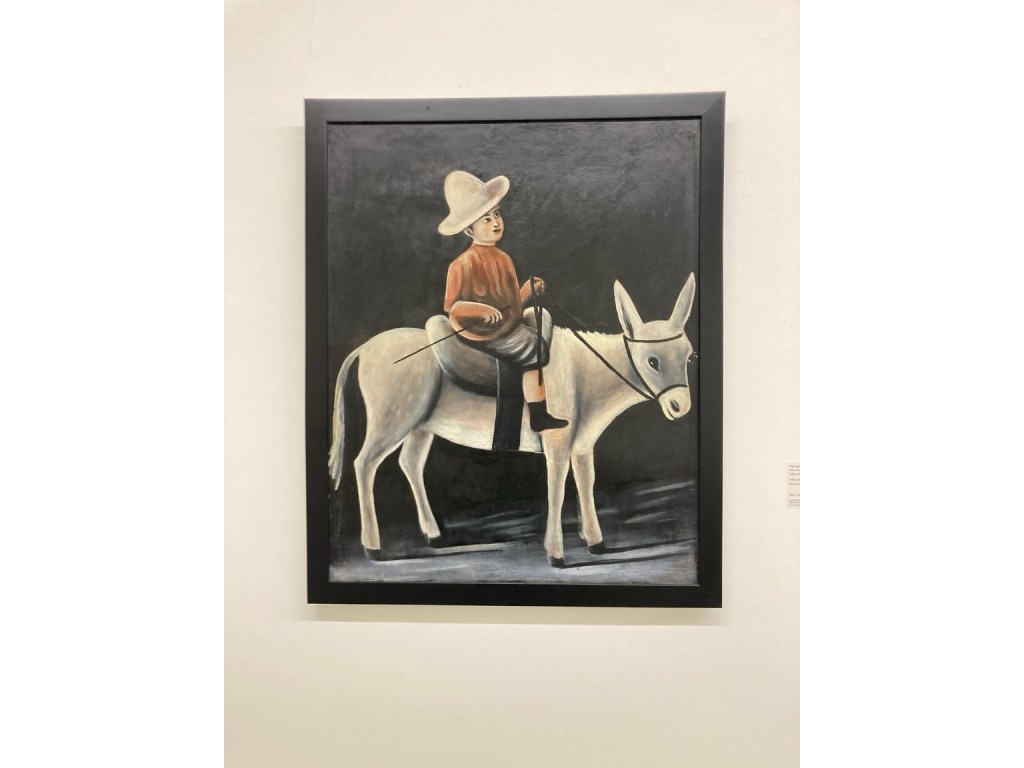
Niko Pirosmani was born in 1862 in a village in Kakheti and was a self-taught painter who only gained recognition after his death in 1918. He pioneered the Primitivist style and painted portraits and scenes portraying Georgian country life and traditions.
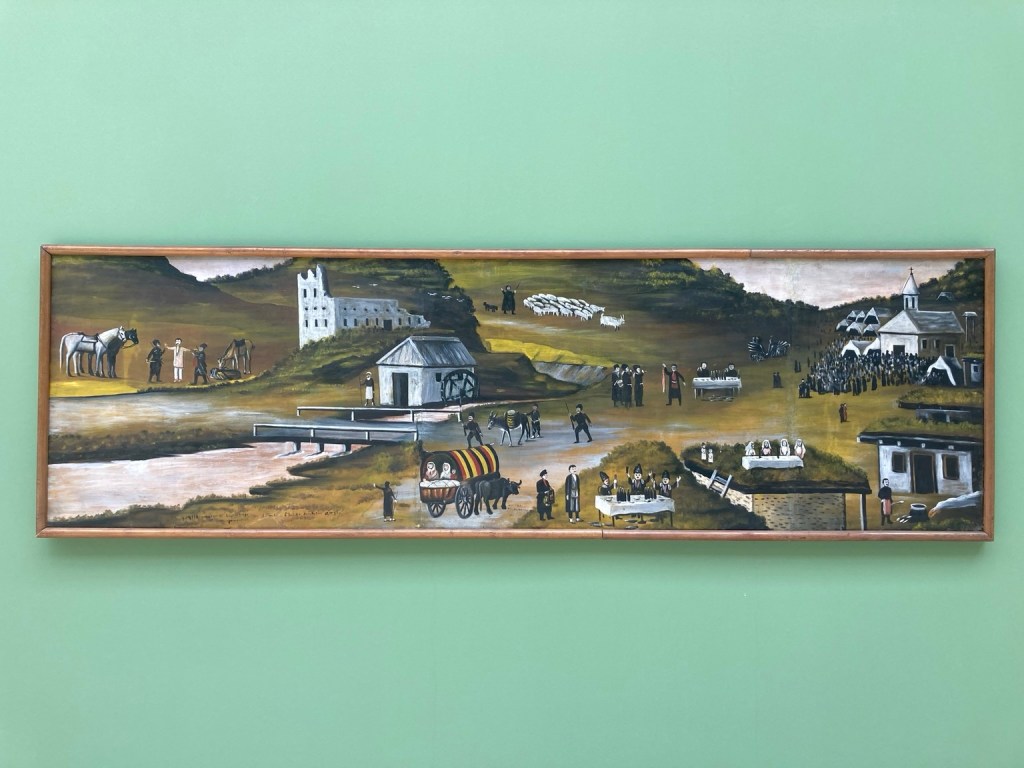
This one of a village with feast and church evens reminds me of the village of Mleta we drove through yesterday.
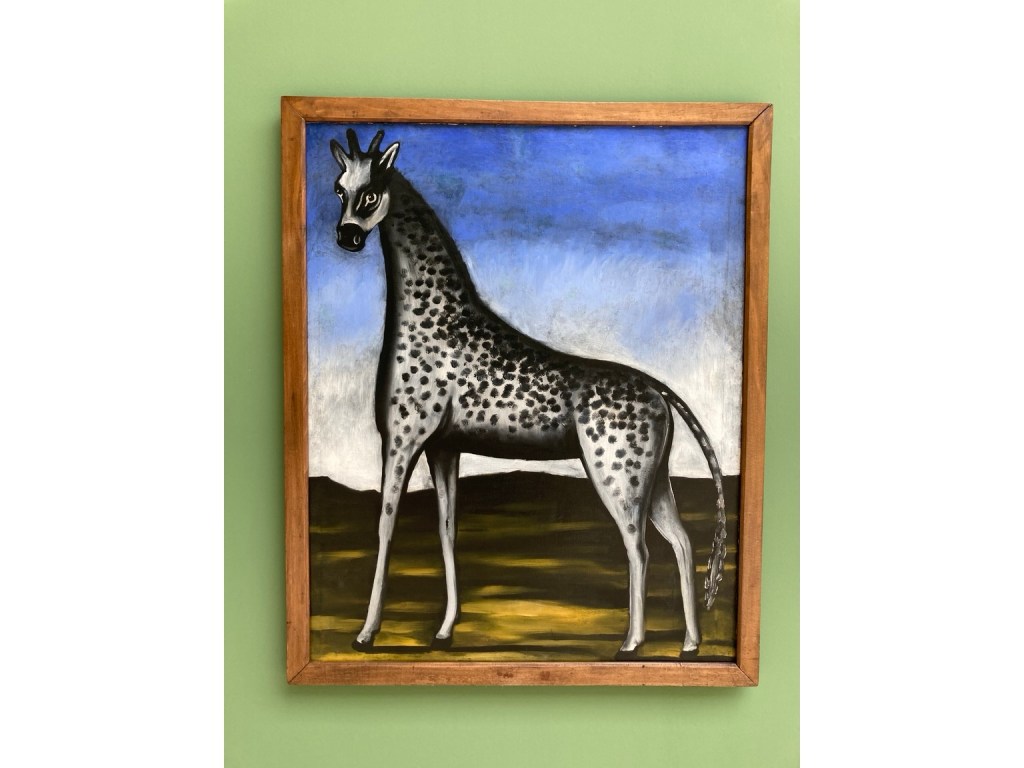
His most iconic painting is Giraffe, painted largely from imagination as he had never seen one, but there was a black and white image in the newspaper of the time which he could have seen. He used black oilcloth as the background for most of his paintings because it was cheap, and he was often economical with paint for the same reason but this makes his work stand instantly recognisable.
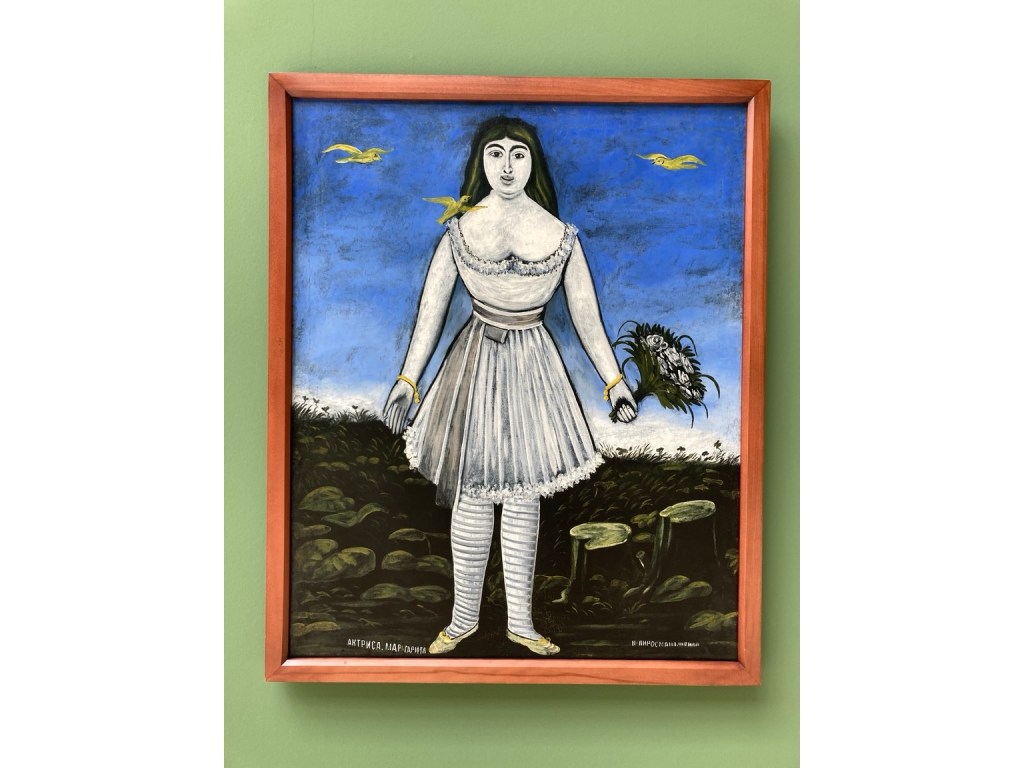
In Georgia there is a story for everything and Niko Pirosmani’s unrequited love for French actress Margarita de Sèvres is one of Georgia’s most famous romantic legends. Consumed by passion, the impoverished artist sold his possessions to buy all the flowers in Tbilisi, showering her with millions of blooms, only for her to leave the city forever.
His portrait of Margarita is hung in the gallery opposite the Giraffe, which could now be seen as a form of self-portrait, as its tear of melancholy rolls down its face.
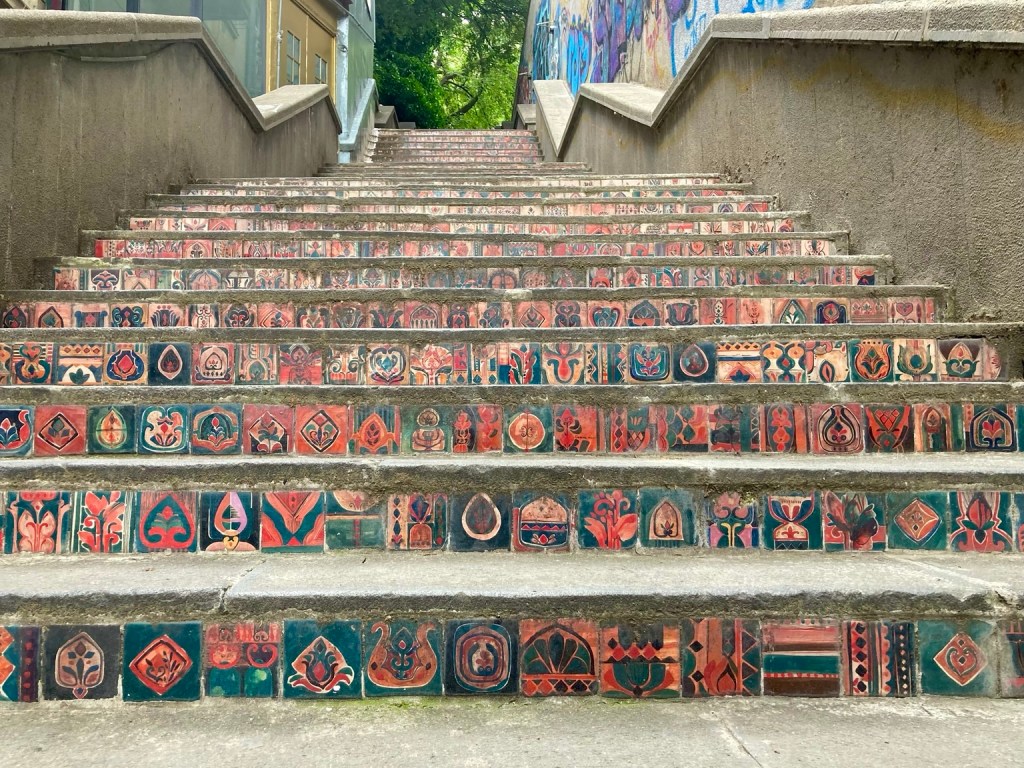
Walking along Rustaveli Avenue, we reached a tiled staircase leading to the Tbilisi State Academy of Arts. It is decorated with hand painted tiles made by the ceramic facility featuring traditional Georgian ornaments.
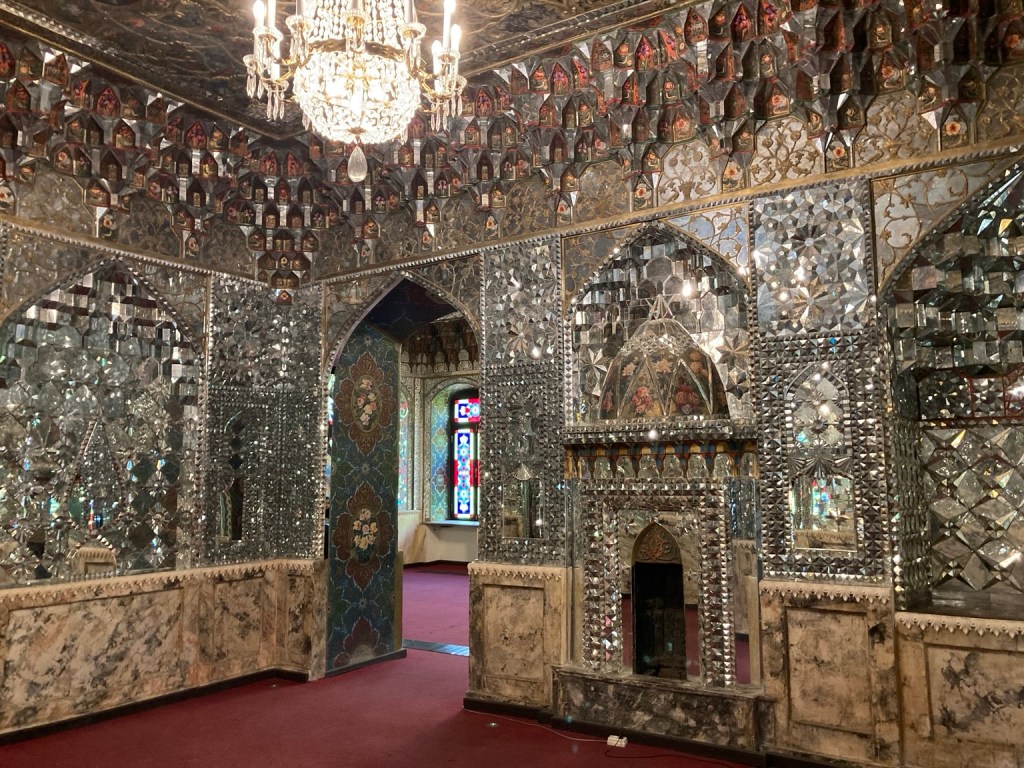
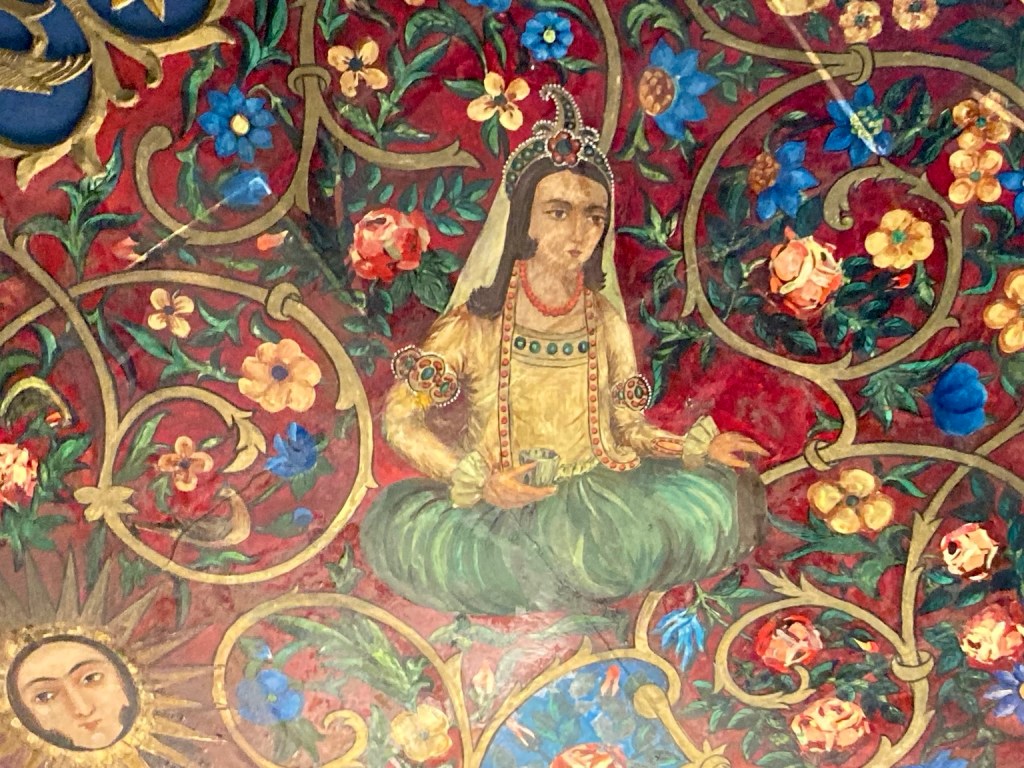
The academy was established in 1922 and occupied a building originally the residence of an Armenian merchant. He had built his fortune caviar farming in Azerbaijan and maybe had connections in Iran, because he brought craftsmen to decorate the interior to resemble a Persian palace. The Mirror Halls have survived and are covered with intricate mirror work comprising thousands of tiny glass pieces and arabesque plasterwork.
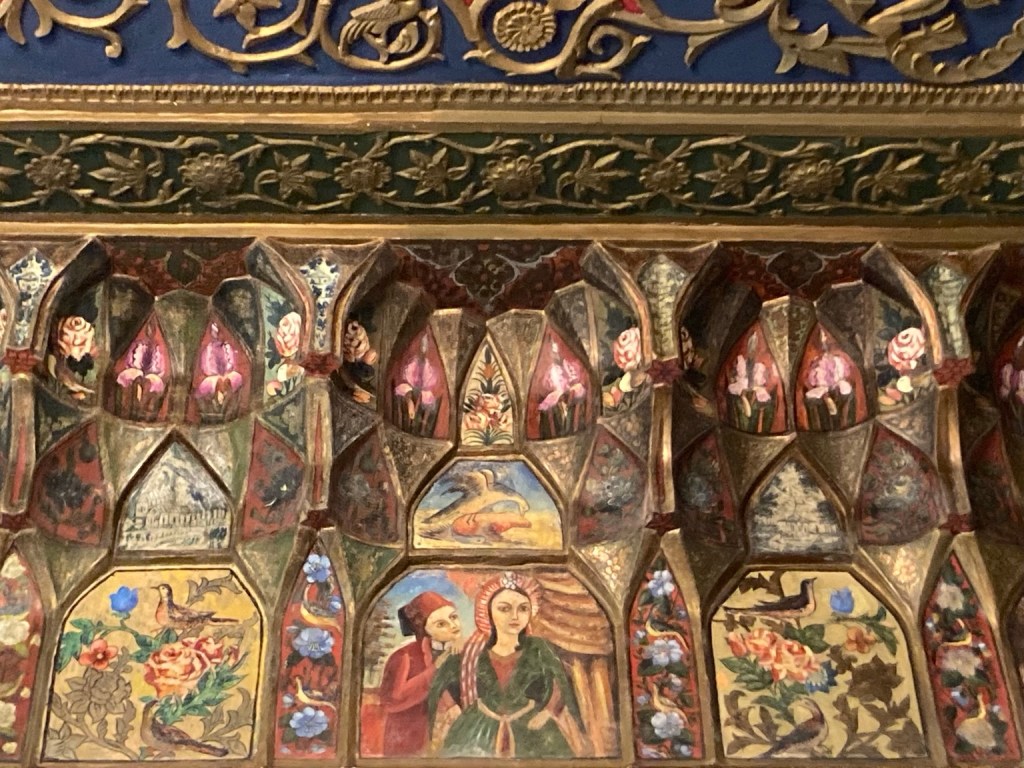
The cornices have painted miniatures …
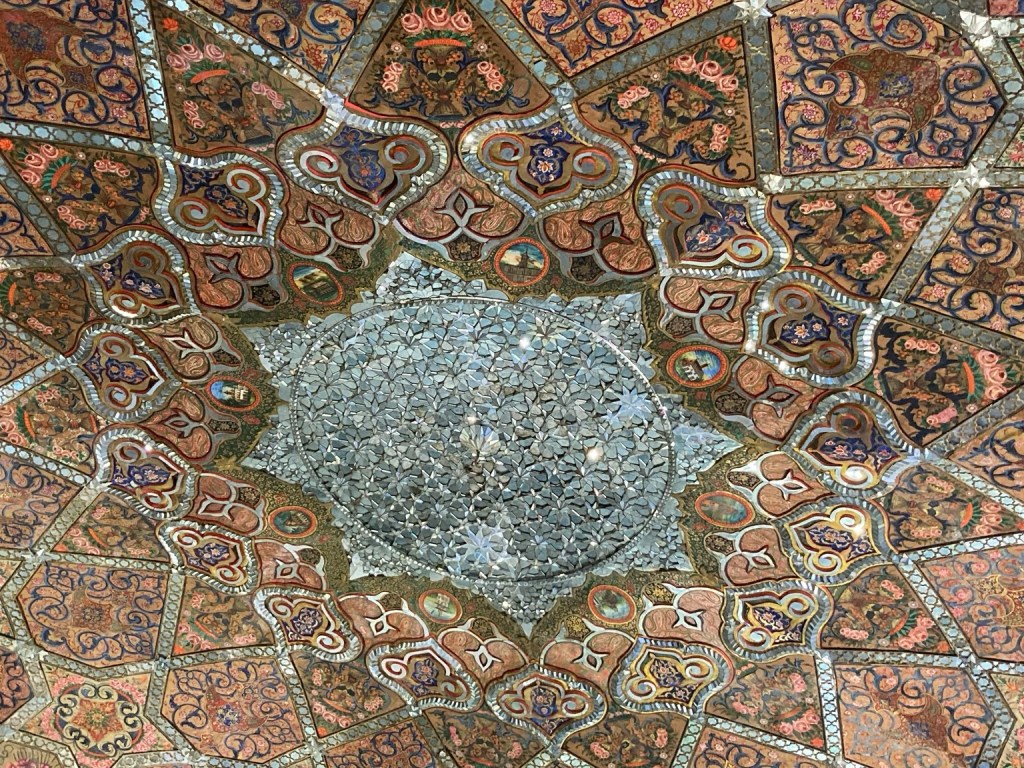
… the ceilings more mirrors …
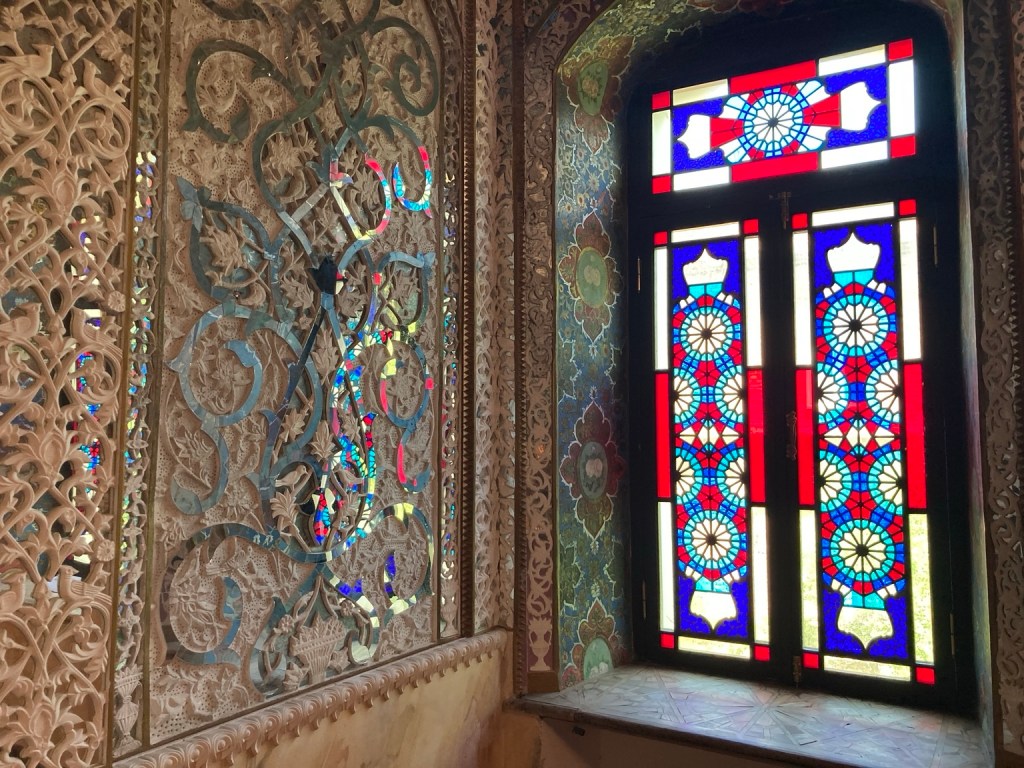
… and the windows brightly coloured glass. Student work is also on display, inspired by the rooms.
Enough of museums, it was time for some fresh air!
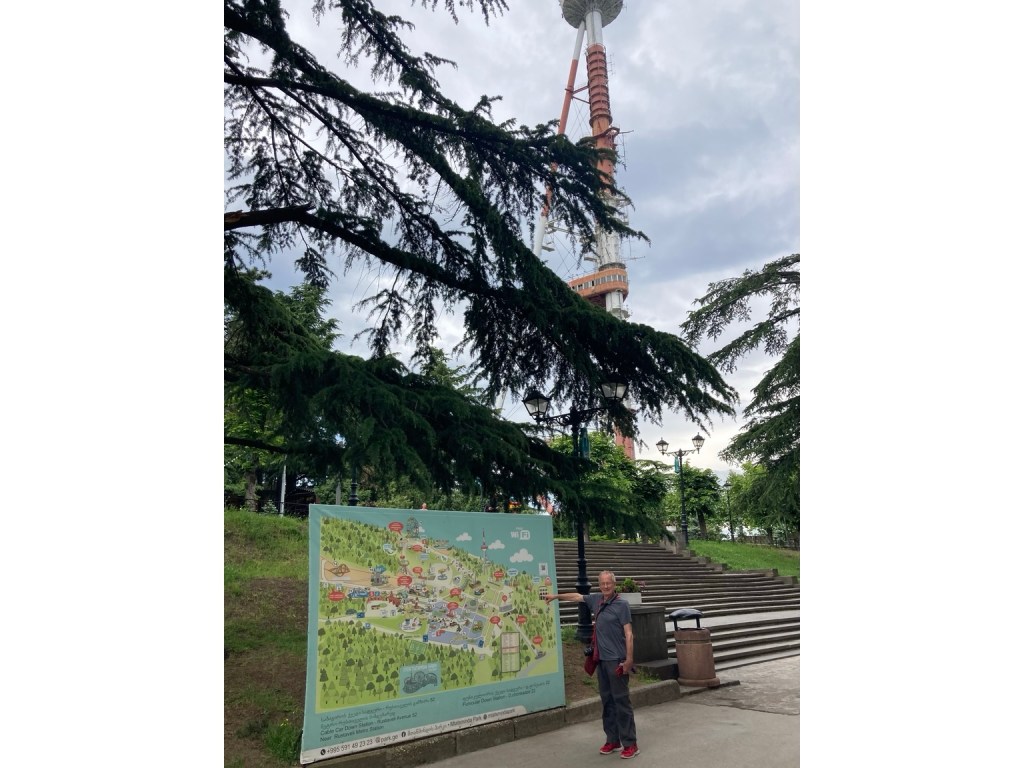
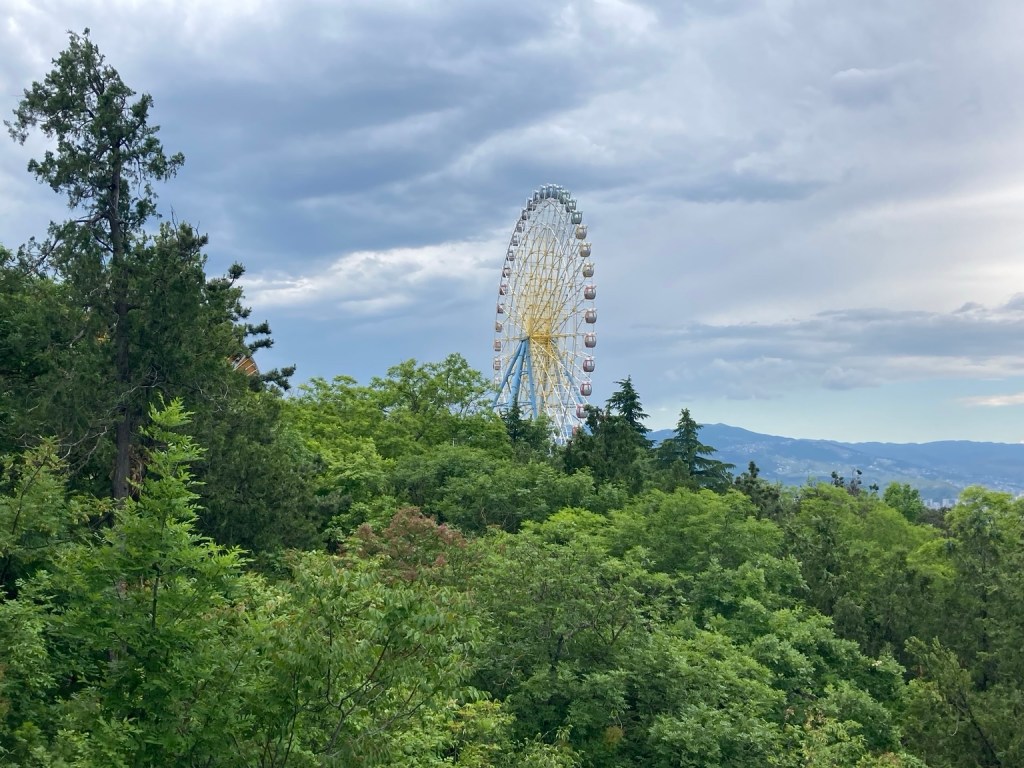
Mtatsminda means Holy Mountain and is the highest point in Tbilisi. In 1905 there were plans for an Upper Tbilisi so a funicular railway was built and it was transformed into a landscaped park which still houses the historic Funicular Restaurant. Today it is home to the TV tower, ferris wheel and amusement park and there is also another way up.
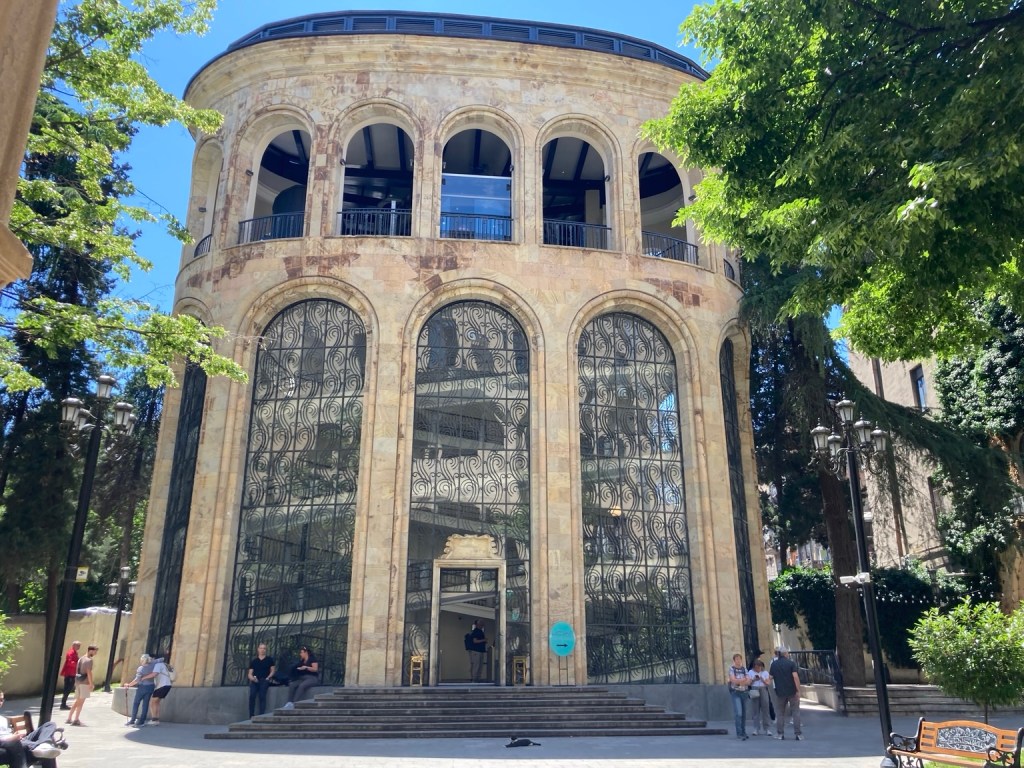
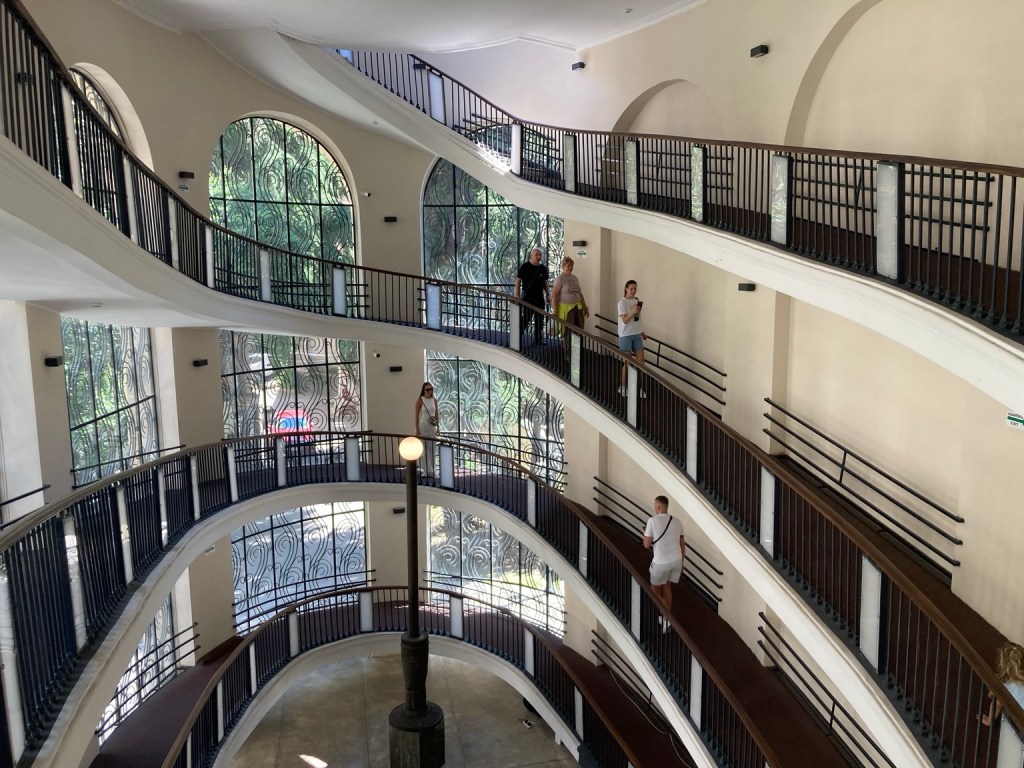
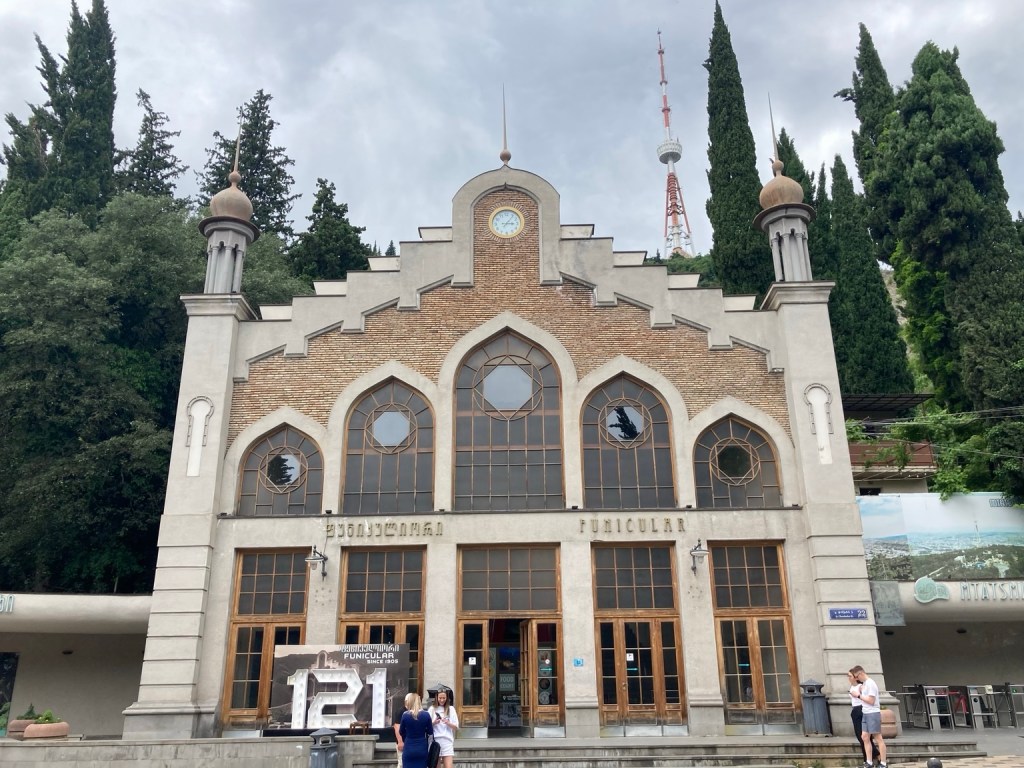
The Mtatsminda Cable Car station is an example of Soviet monumental architecture built in 1958.
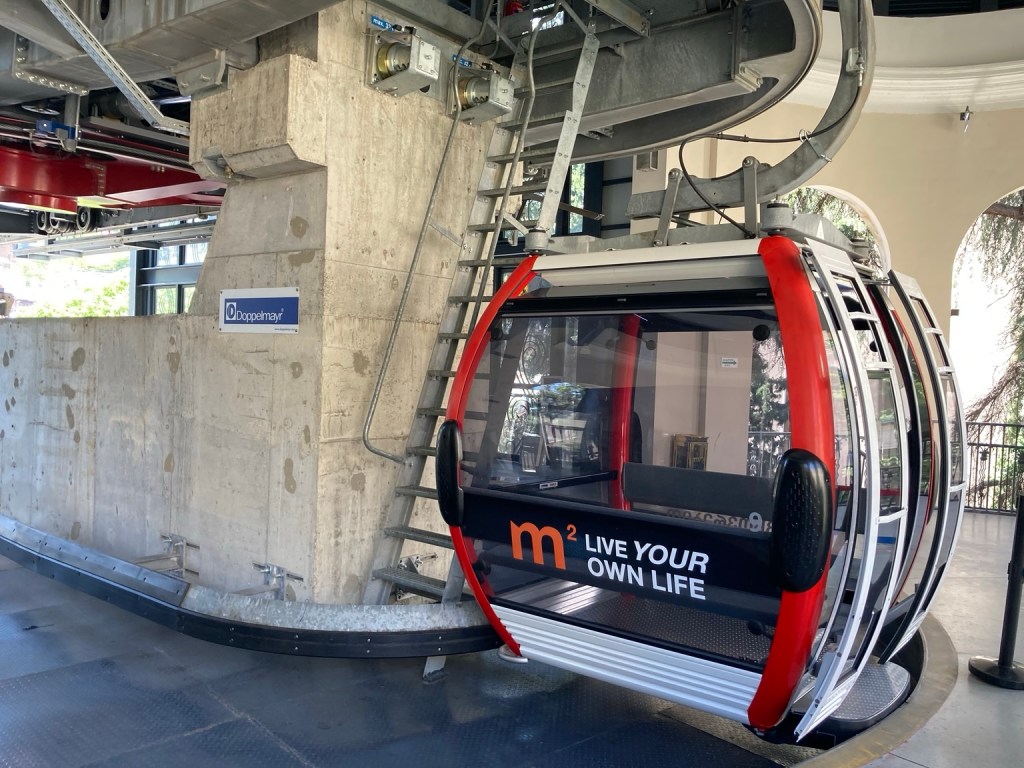
Closed for many years following a tragic accident, it reopened recently following complete restoration. Once inside, an impressive double-helix spiral interior walkway took us to the top and we boarded our car.
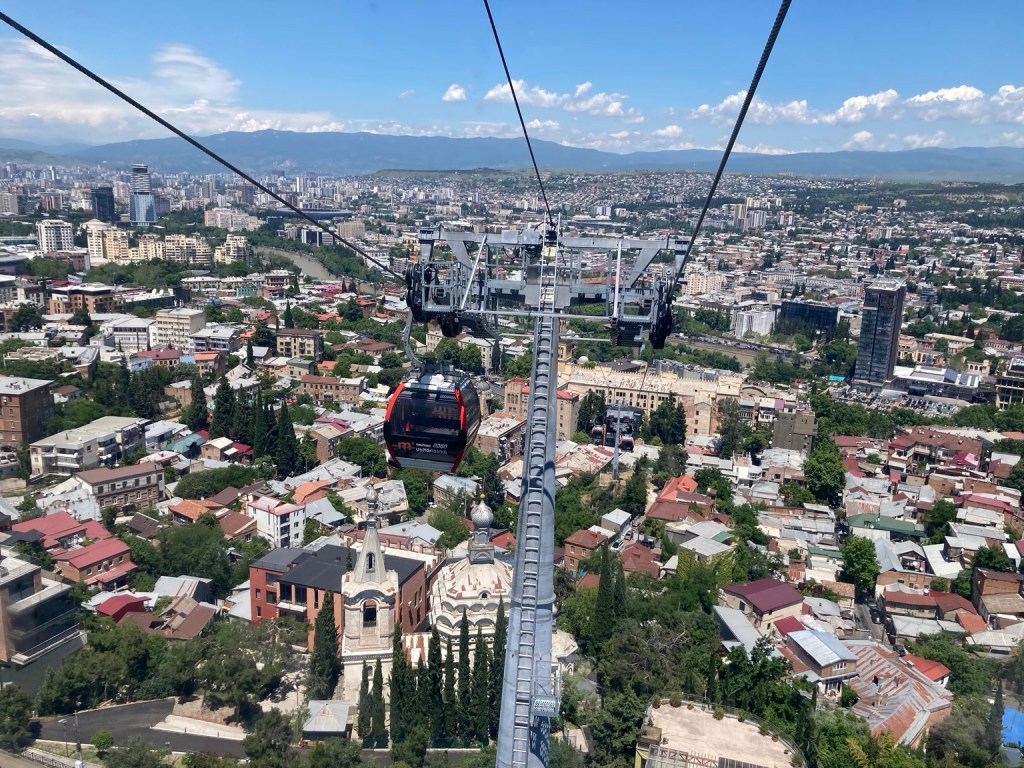
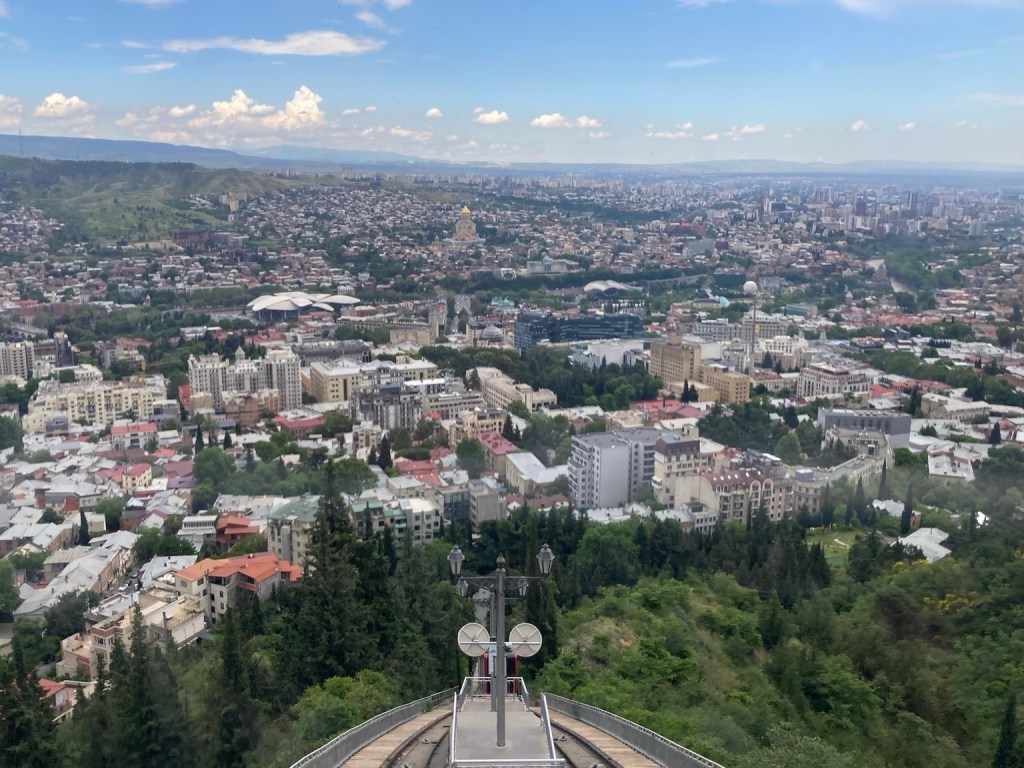
We took photos of the view and had lunch in the restaurant …
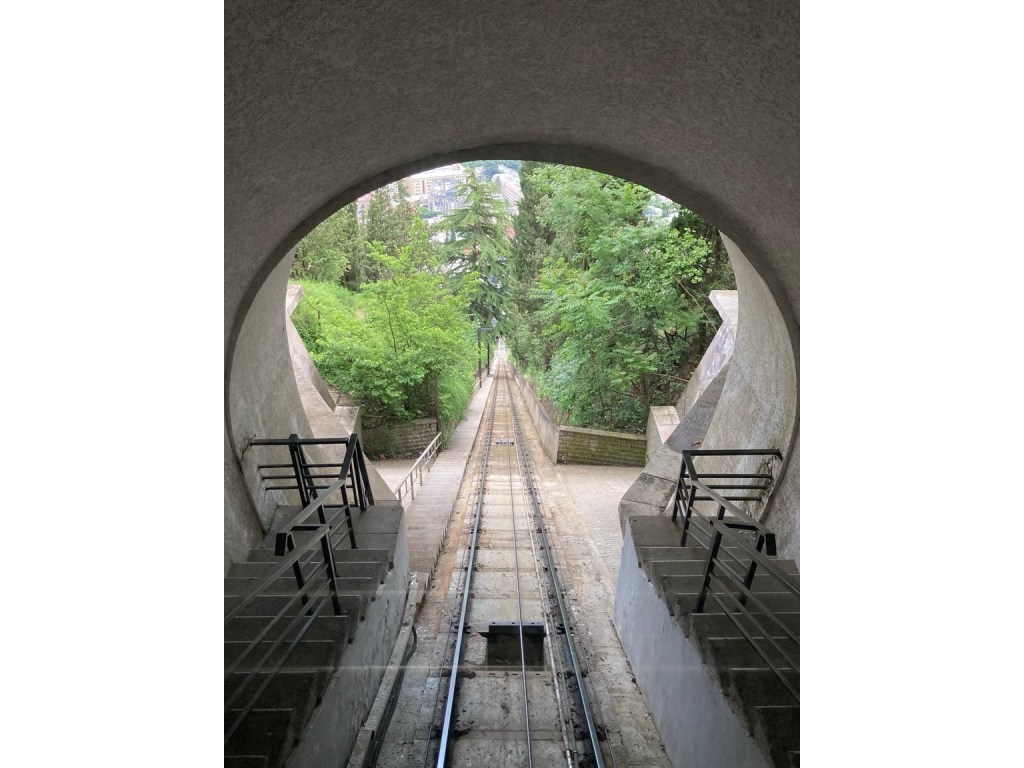
… before descending on the funicular …
… which ended its journey at another Soviet edifice.
After a bit of a rest, we were out again, this time joining another walking tour. The Hidden Tour was led by Eka who took us through the streets of Souliki we have become familiar with. Following clues from carved details on buildings or research from old letters or newspapers, she told us stories of the life and times of people who have lived in some of the 18th and 19th century buildings.
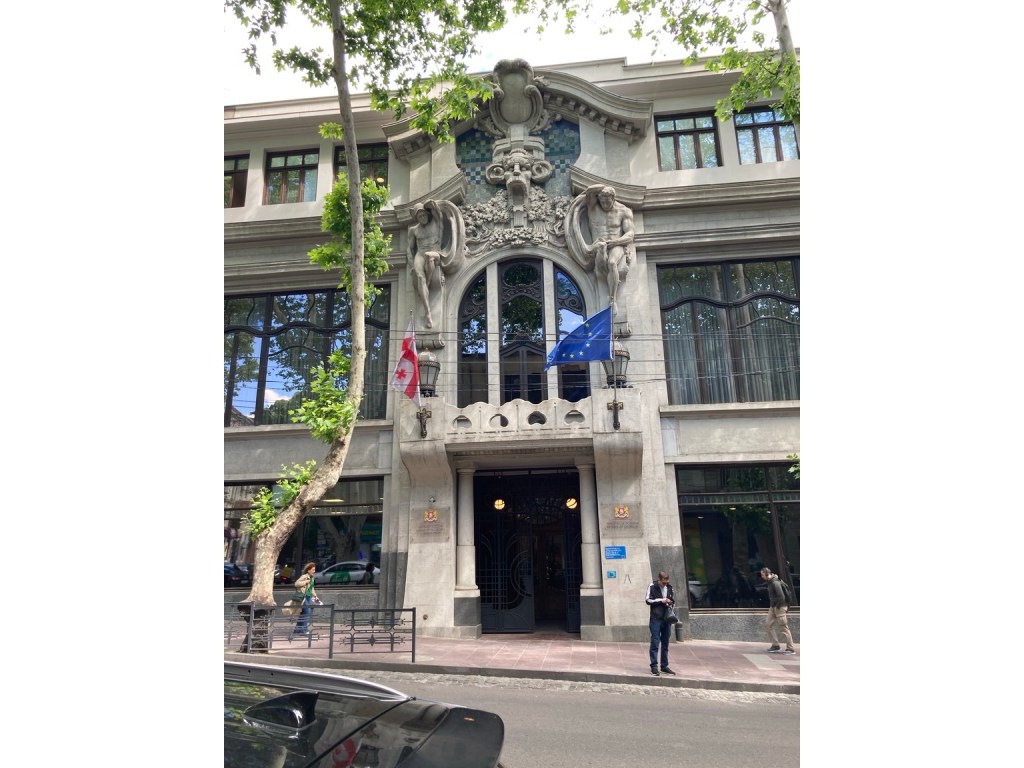
Apparently, funds once destined for this impressive Art Nouveau bank never arrived, reportedly stolen by the young Stalin to finance the Bolshevik cause.
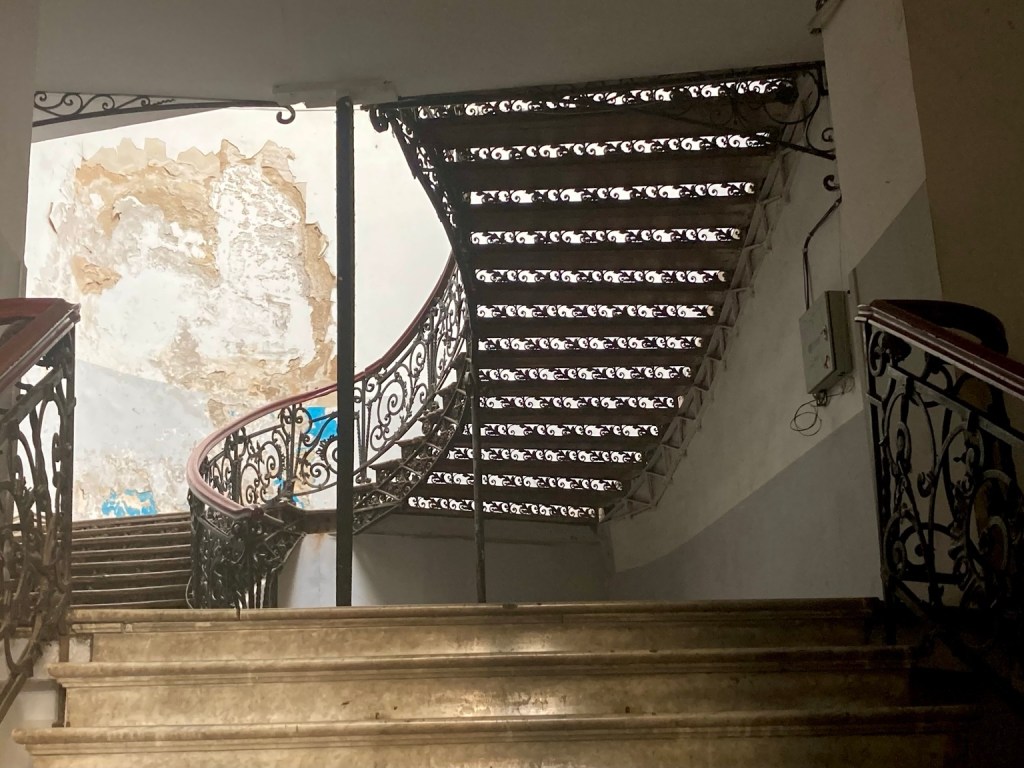
Many became communal properties in Soviet times so interior decorations were whitewashed and extra floors added to increase space. This was once the Consulate of Estonia.
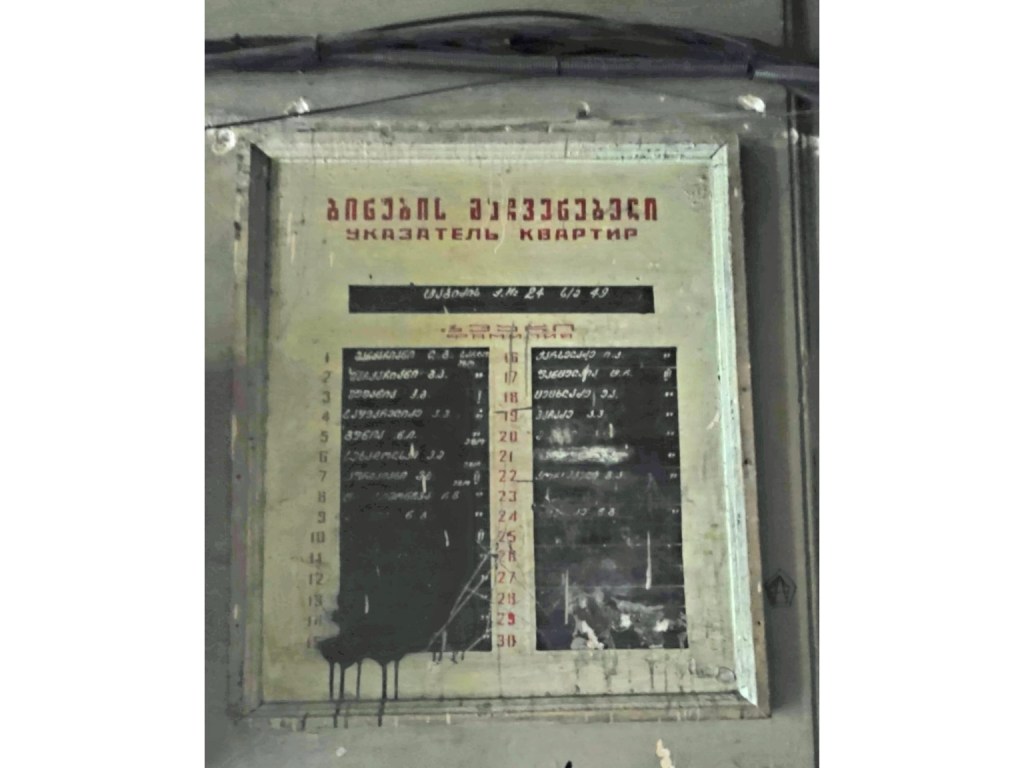
This one still has the board which showed 30 families were squeezed in here.
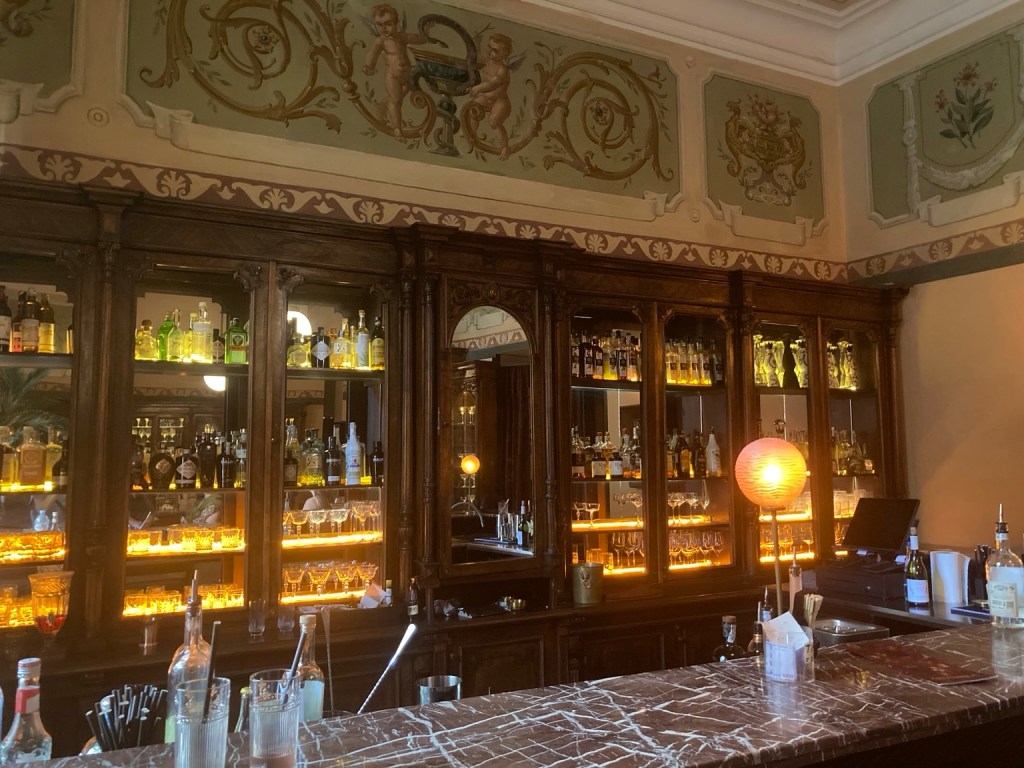
Most remain in a poor state of repair, needing funding and expertise to restore them, but this old apothecary has a new life as a bar, but retaining many of the old cabinets and murals.
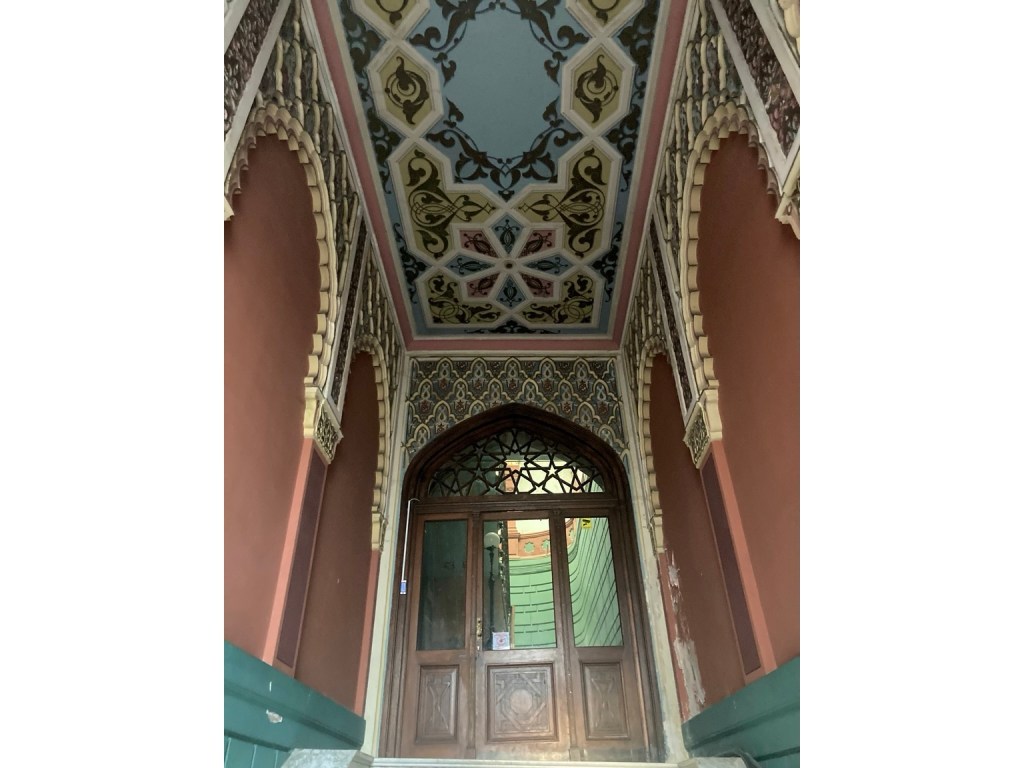
Eka showed us into the still elaborate foyer of this one …
… which was built by a wealthy Baku merchant as a gift for his wife, who was no longer able to get to the Tbilisi Opera, so now had a house just as grand! She hosted artists, writers and musicians here, maybe even Pirosmani.
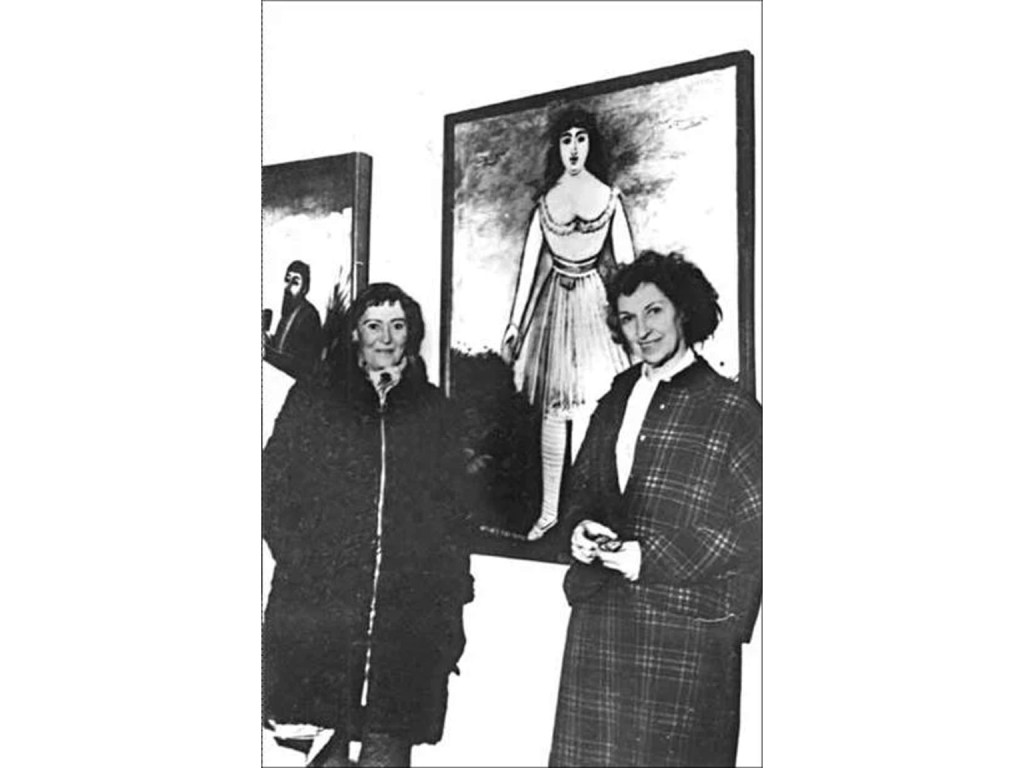
Having sold everything to buy flowers for Margarita, he no longer had a fixed abode and handed out paintings in return for lodging or meals in bars. He had little success in his lifetime but was shown at the first major exhibition of Georgian painters in Tbilisi in 1918. Interest increased in the 1950s in his naive style and a film was made about him. There have been several international exhibitions including The Louvre in 1969, and Eka showed us a photo of the elderly Margarita visiting the painting which ends the tale beautifully.
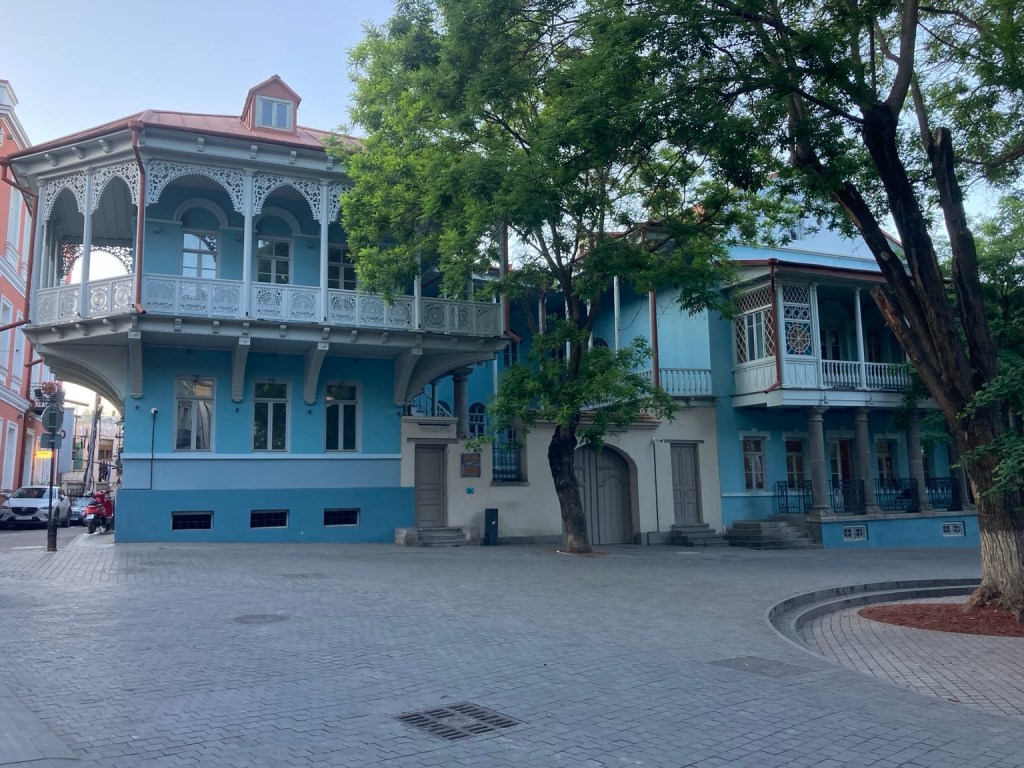
Afterwards we went wandering and came to this blue house known as Lermontov’s House. It once belonged to the imperial military department and the Russian poet Mikhail Lermontov stayed here as an officer. Later, it became the editorial office of Literary Georgia and the square is named after artist Lado Gudiashvili.
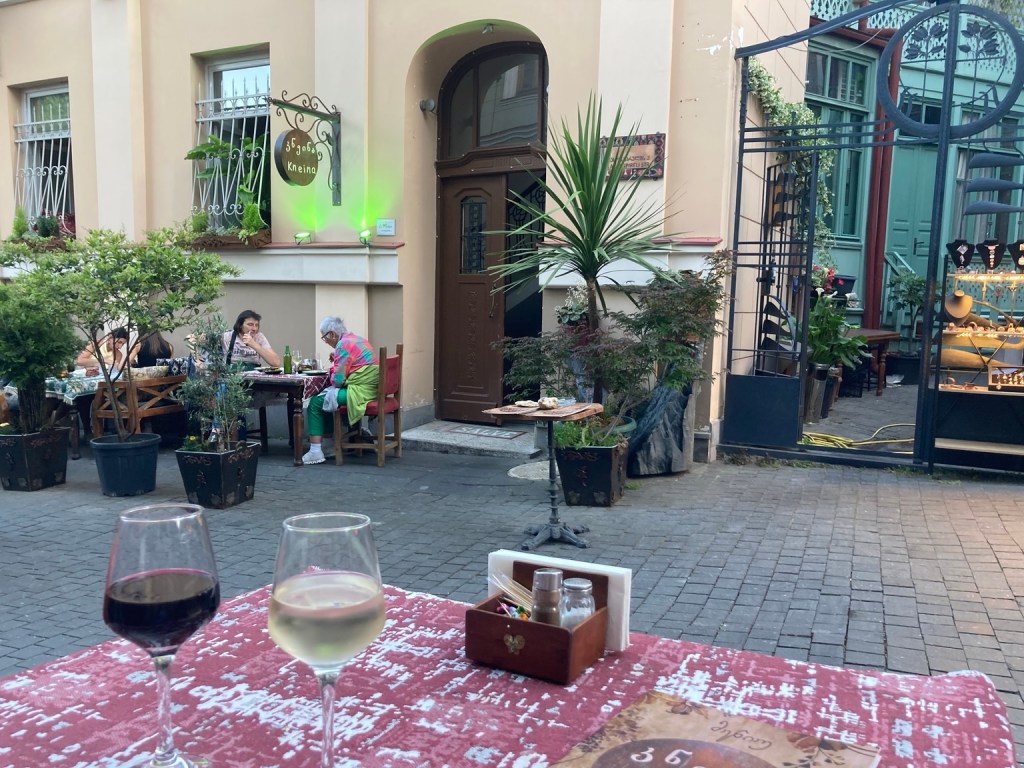
Just off the square we found Kneina, with the last free table outside obviously waiting just for us!
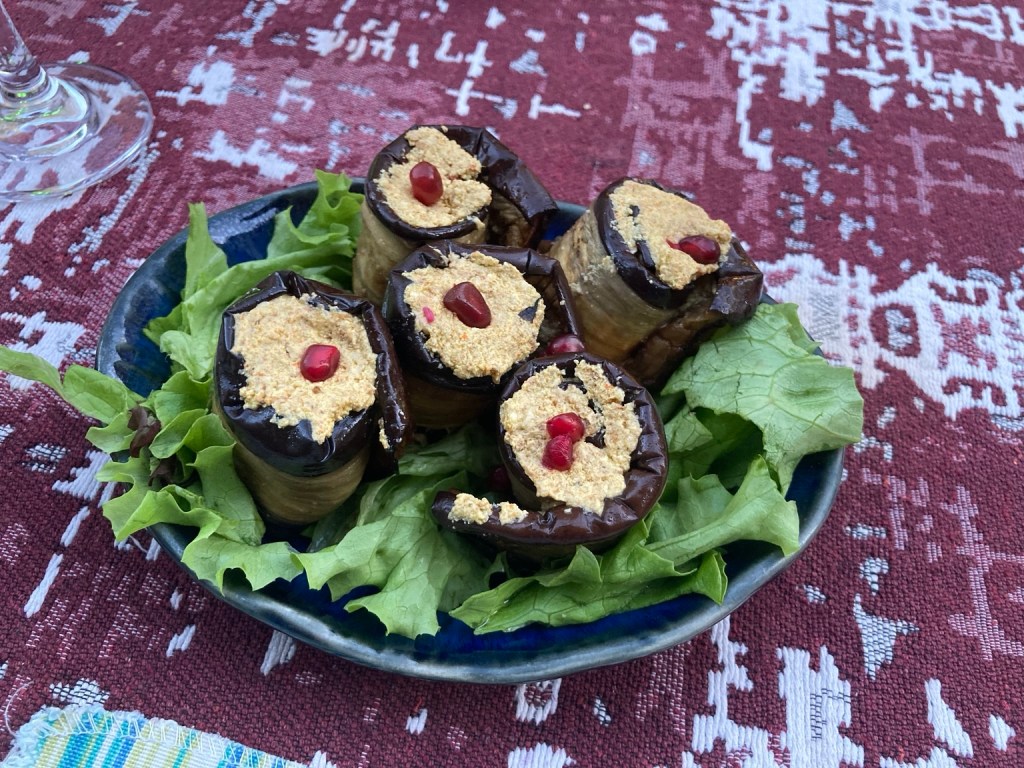
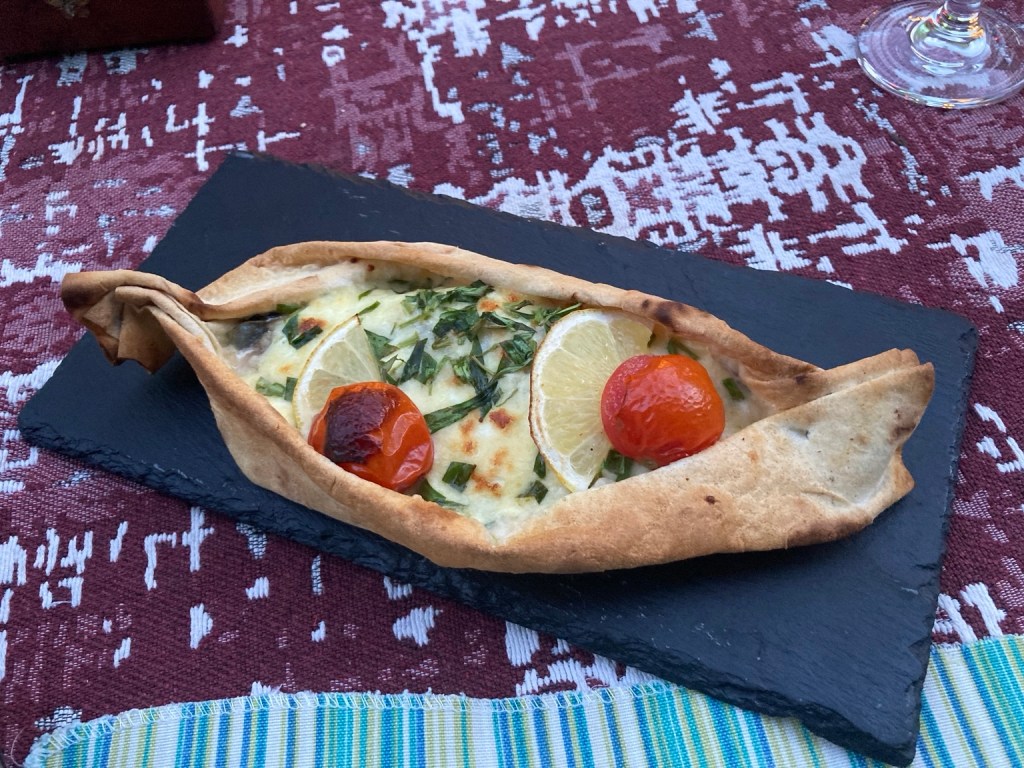
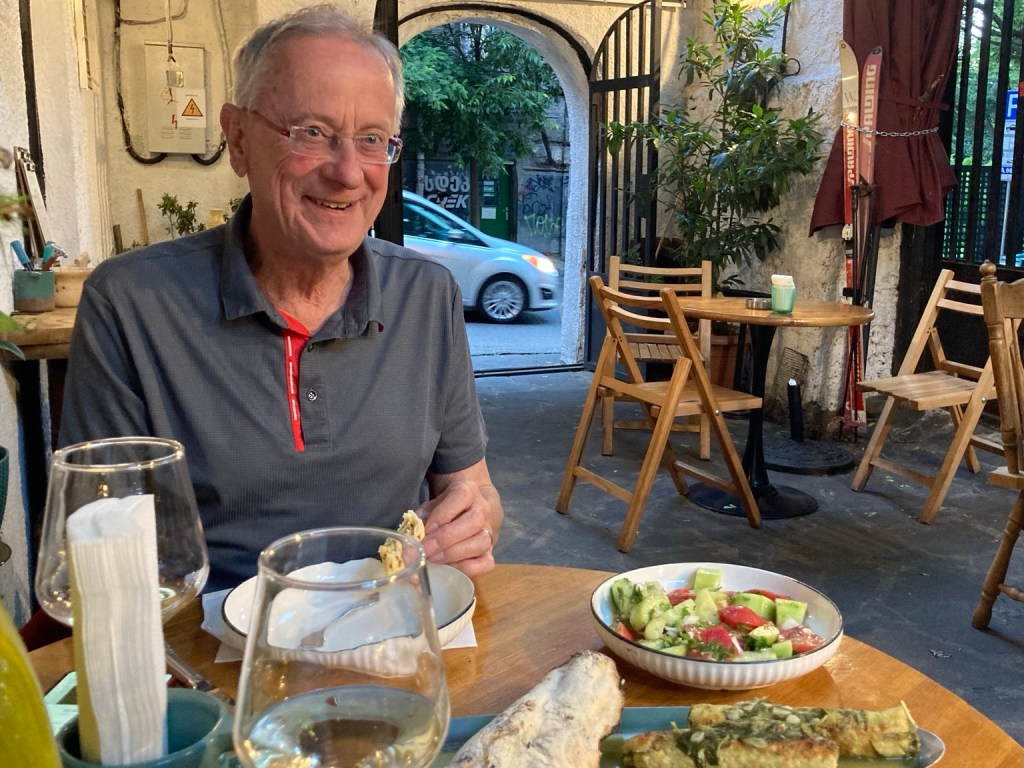
A lovely dinner while people watching including these delicious aubergine rolls spread with walnut paste … and trout cooked in a pretty filo boat!
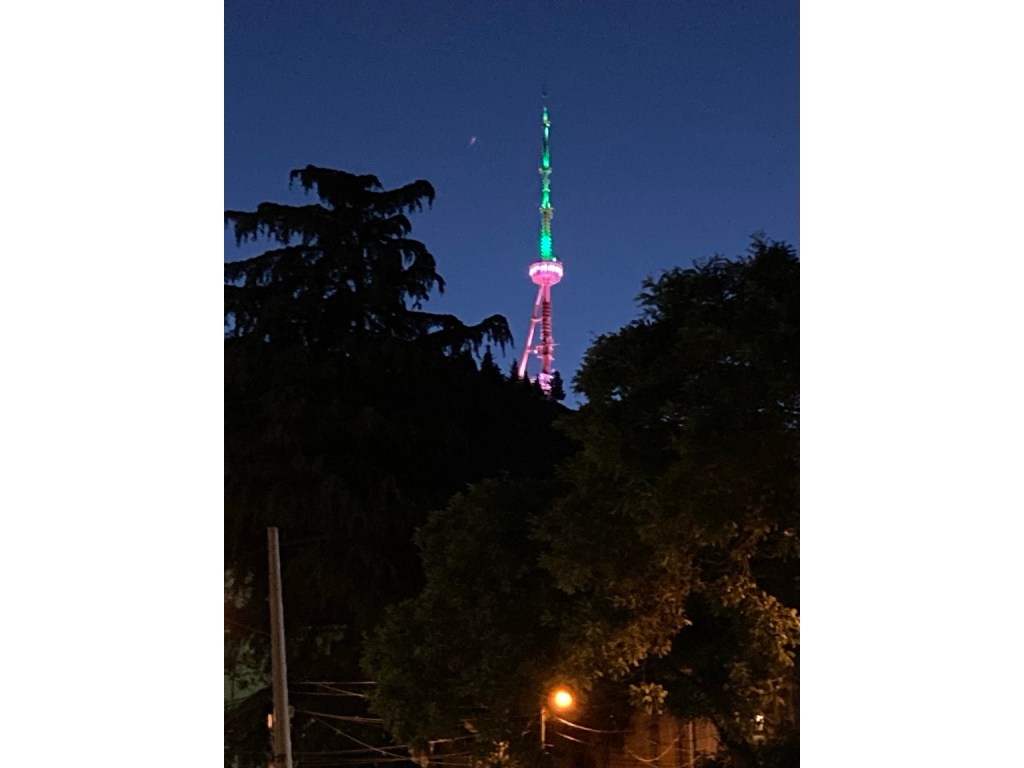
As we walked home we watched the tv tower above as it changed through all colours of the rainbow!
We were up bright and early and meeting our Gamarjoba Tour, this time to venture east into the Caucasus Mountains which we knew was going to be a bit of a trek.
In fact, it was quite possible the day would be longer than expected because we found out after we booked that the ancient Lomisoba festival was being celebrated today in a village on our route. Pilgrims walk from the village of Mleta, with some 950m of ascent, to the Church of St George at Lomisa in the Caucasus Mountains. Once the site of a pagan shrine, its name is connected to the bull Loma and Lomisa the moon deity, but when Christianity came to Georgia, this deity was identified with St George, and an Orthodox church built on the site. Following the liturgy, the festival famously involves the ritual sacrifice of rams or sheep, which remains a controversial but deeply rooted tradition and draws a huge number of people to celebrate.
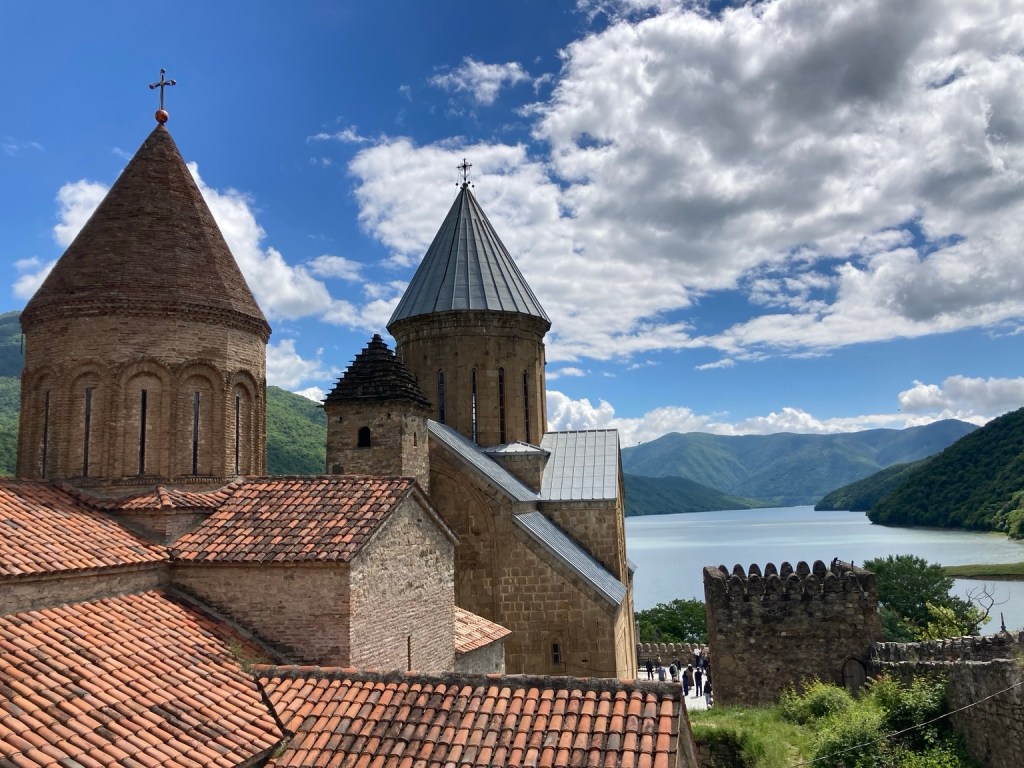
Our first stop was the Ananuri Fortress, ancestral seat of the powerful Dukes of Aragvi since the C13th which has survived countless sieges and power shifts …
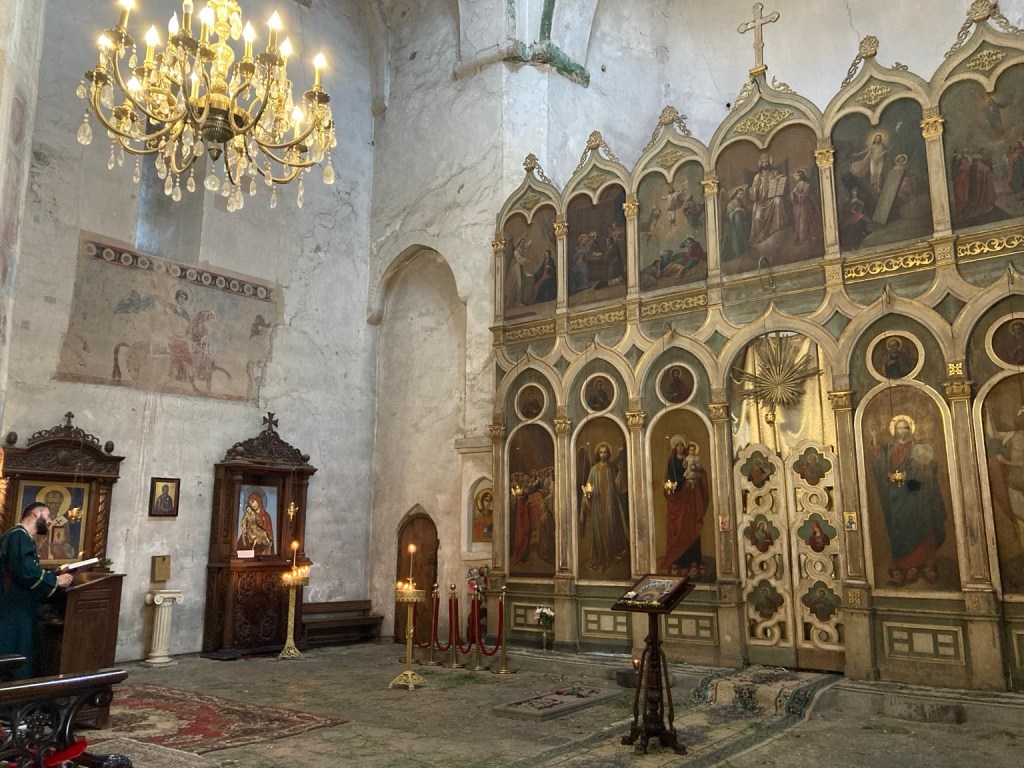
… and at its heart, The Church of the Assumption.
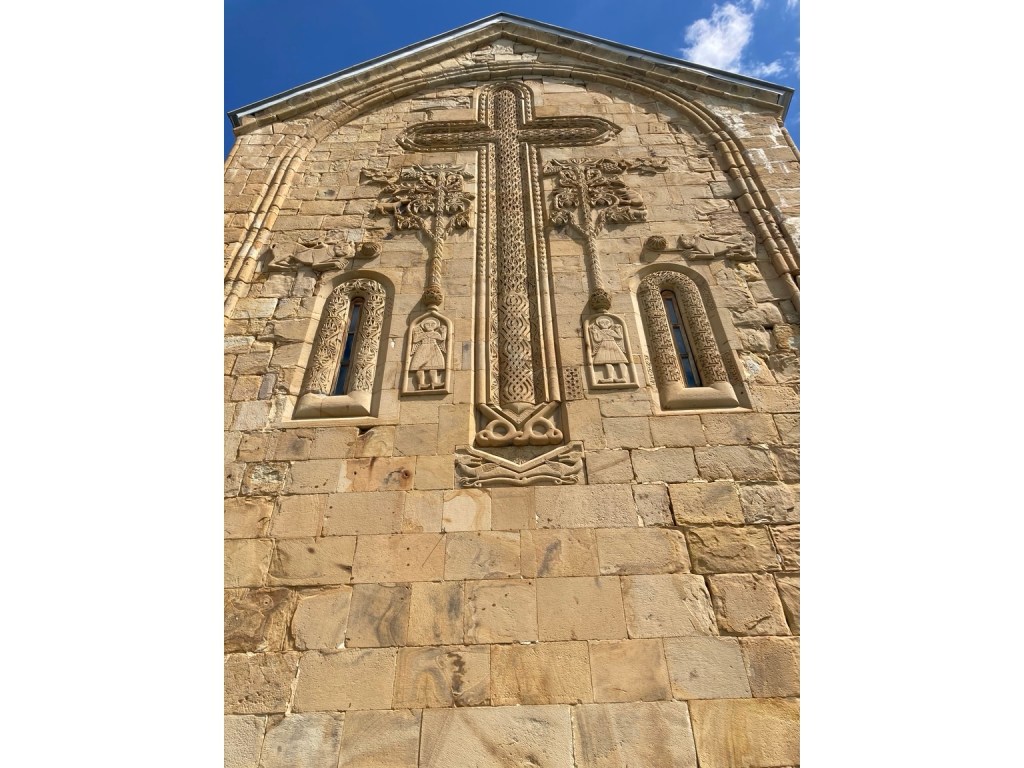
It is decorated with ornate carvings on its facades, with angels, winged lions, mythical beasts and floral and fauna surrounding a Georgian Cross …
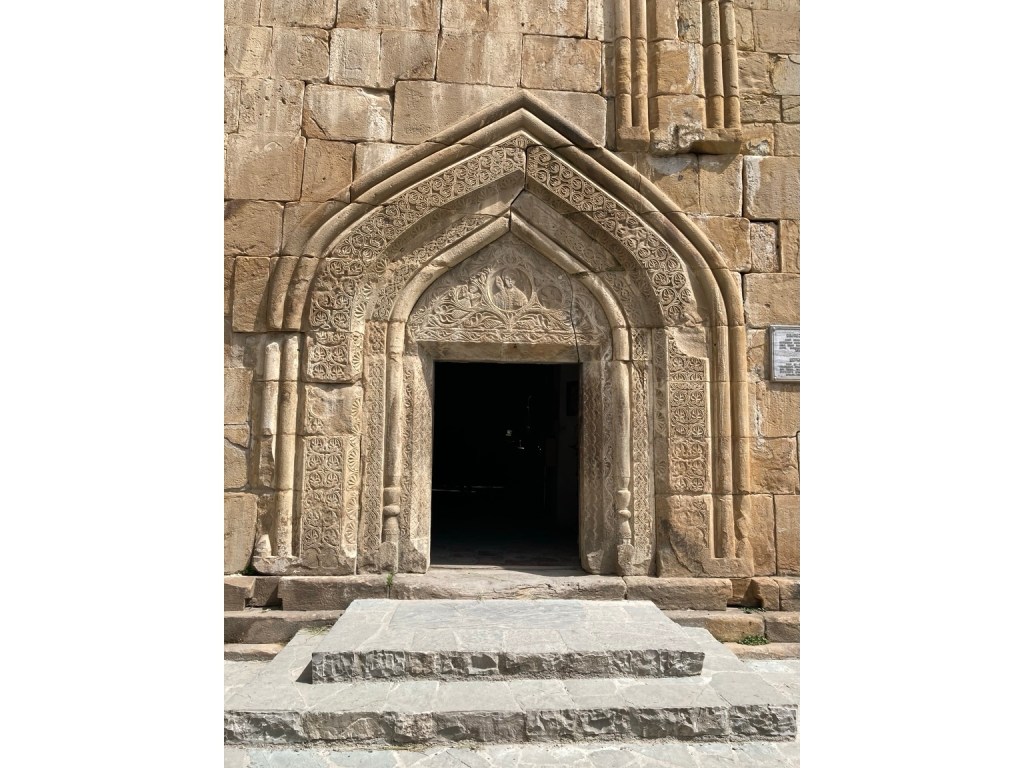
… and some very old Georgian script above the door.
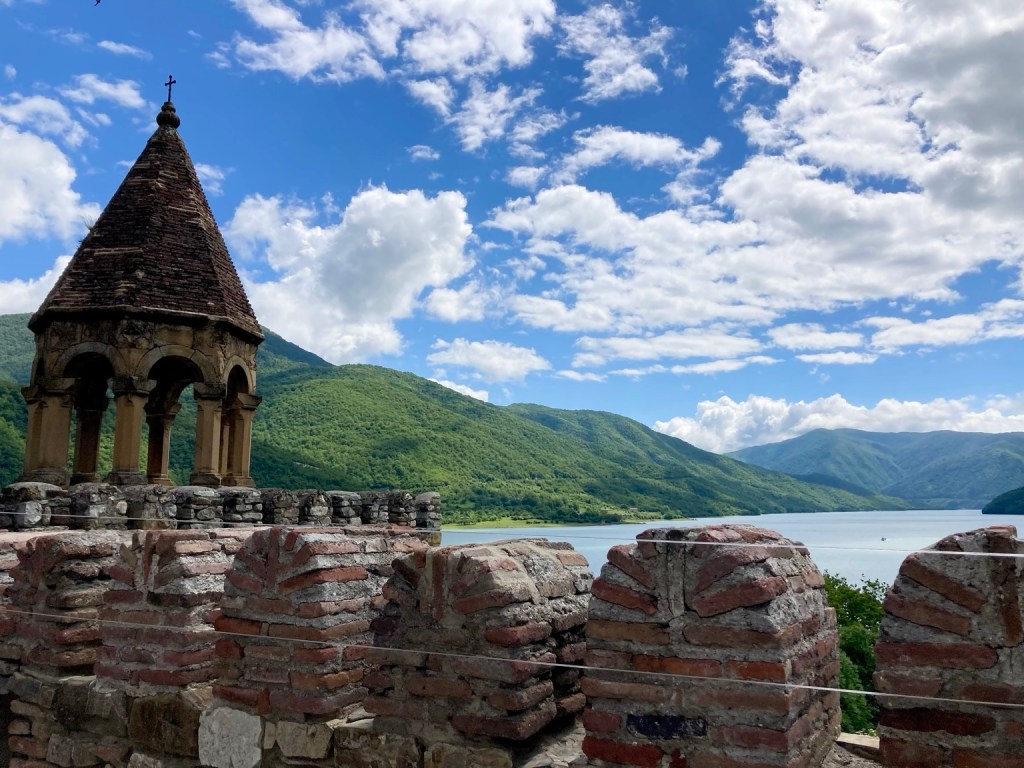
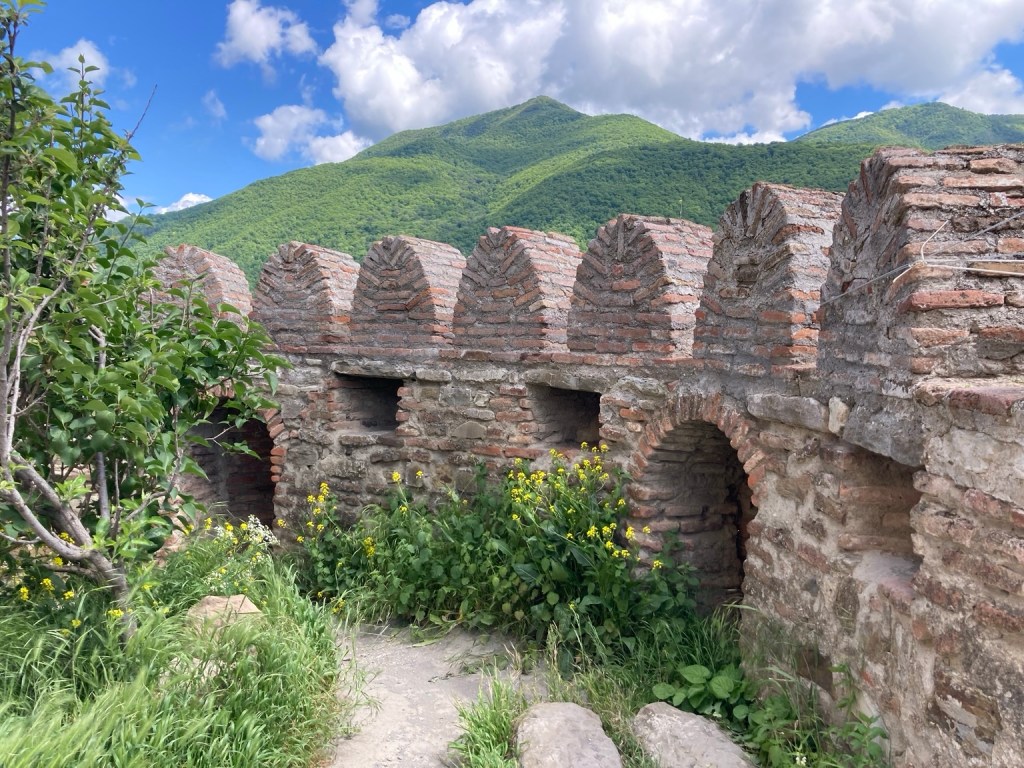
From the ramparts, there is a great view of the beautiful Zhinvali lake.
But all is not what it seems as this is actually a reservoir formed by a Soviet-era feat of engineering completed in 1985. Zhinvali was once a thriving medieval hub and a vital crossroads of the Silk Road and there was a race against time for archaeologists to save some of its history before flooding.
We had some time to explore.
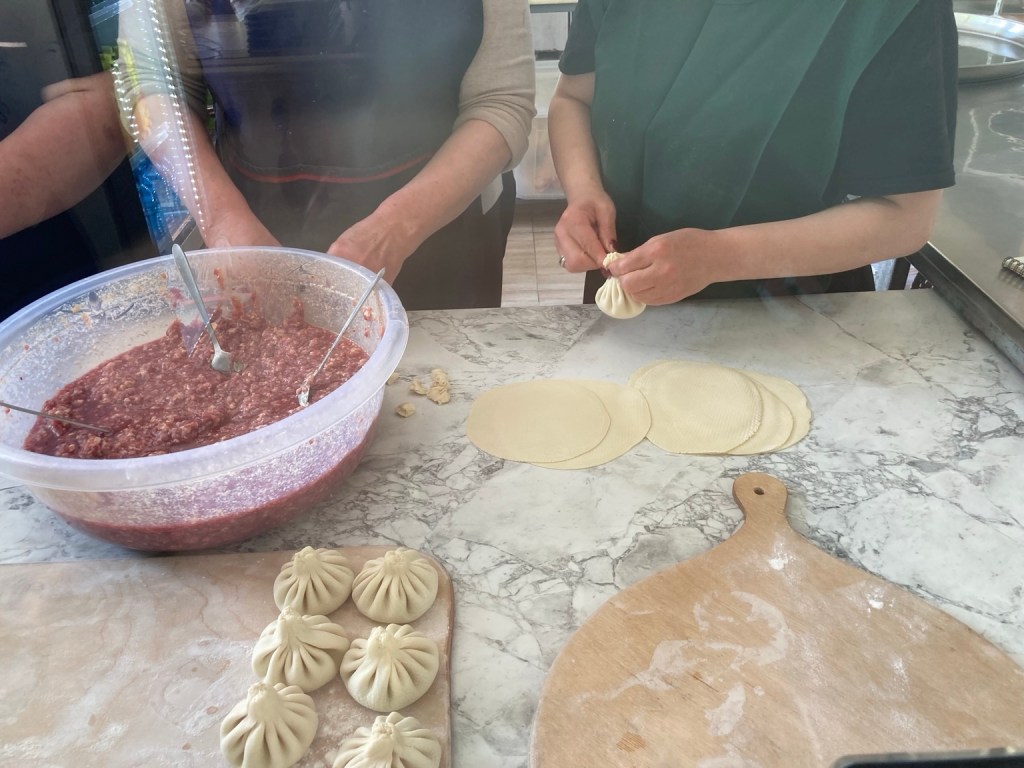
Lunch was at a mountain restaurant, sharing mushroom khinkali, lobio bean stew and grilled veg … and even watched the khinkali being made.
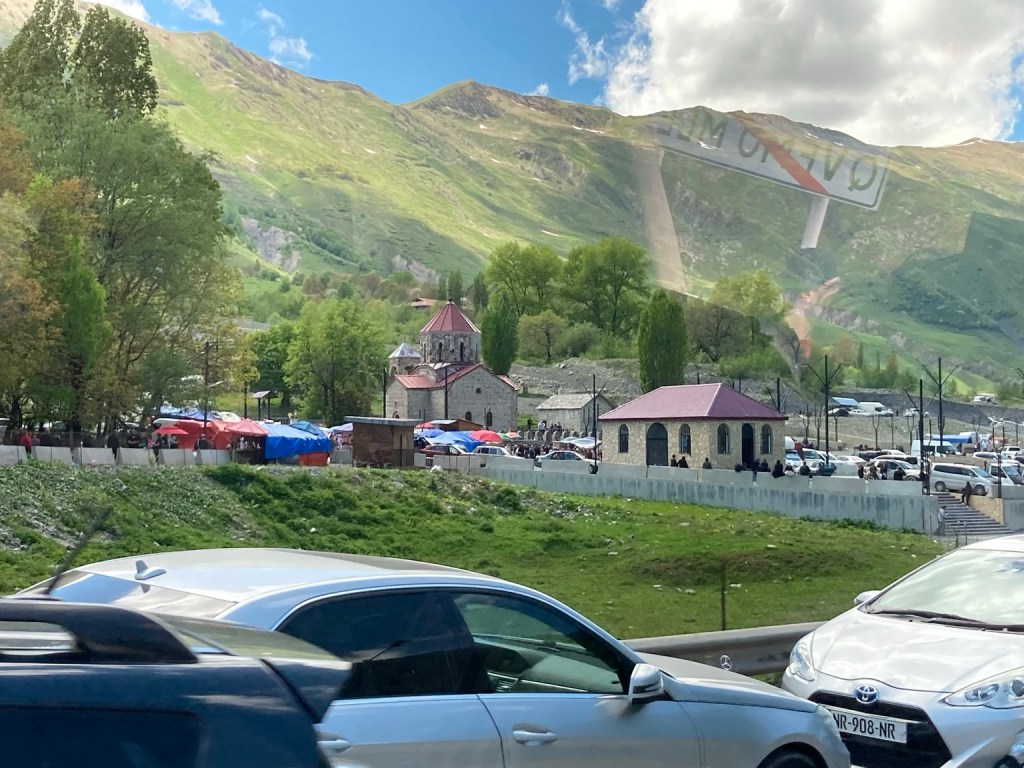
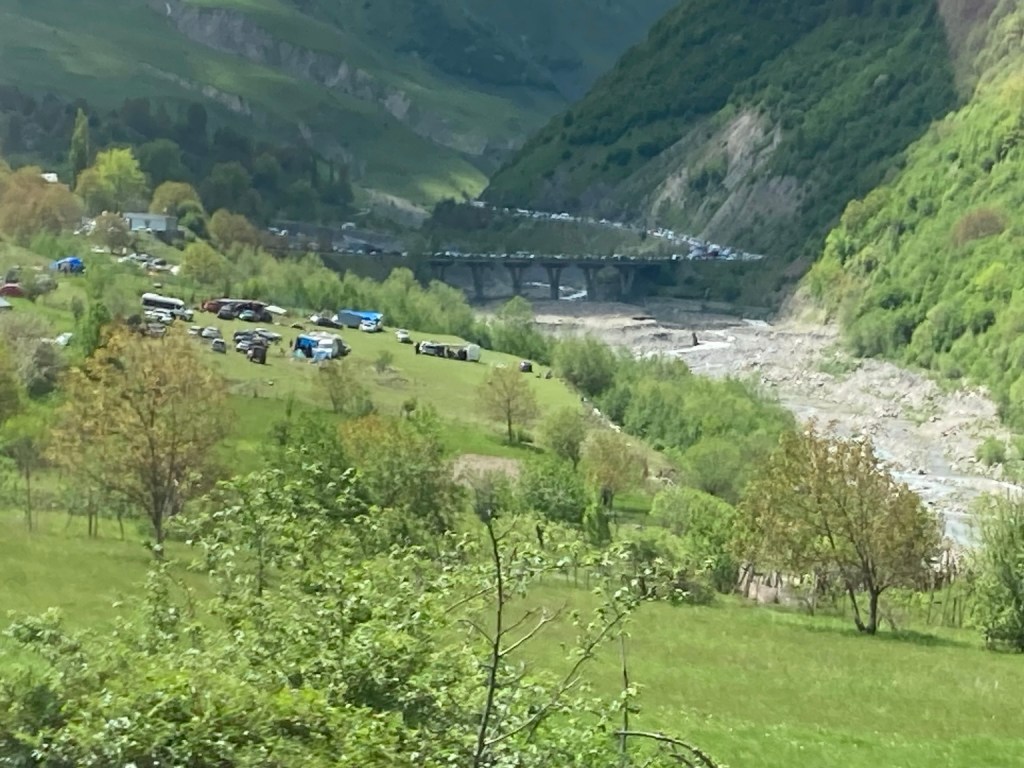
All good so far, but then the traffic jam started and we spent over an hour just to get through Mleta with all the celebrants parked everywhere, some camping overnight, others cooking.
Just as we thought we might be clear, we saw traffic continuing to queue ahead!
Finally clear and we were on our way once more. We have been travelling along the Georgian Military Highway which has existed for centuries as a trade route between Georgia and Russia, Europe and Asia. Once a narrow horse track and later a proper highway, it remains an important thoroughfare for lorries travelling between Russia, Turkey and beyond and we came across a long queue of trucks parked up along the road. And it went on and on … for 10km as I measured on the way back! The road rises to the Jvari Pass at almost 8000ft and with the galleries added to protect the road from avalanches, it isn’t wide enough for two trucks to pass so the traffic has to take turns. The tunnels are only open for a few hours a day, so drivers often wait days, or even weeks if the weather is bad – to pass through.
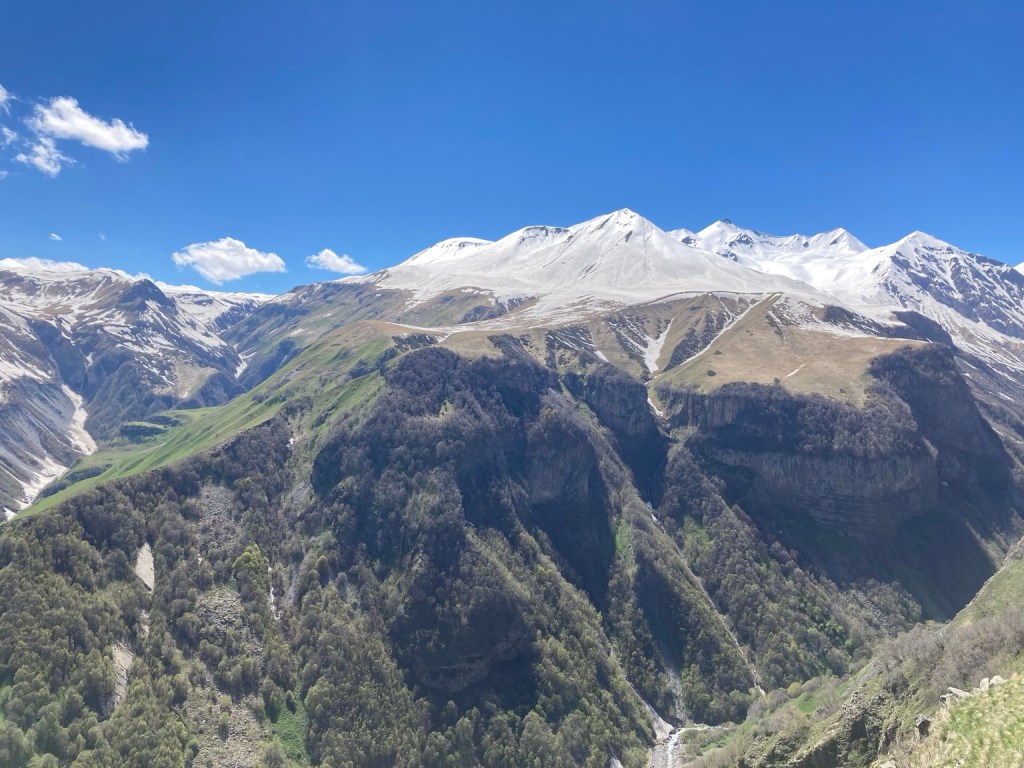
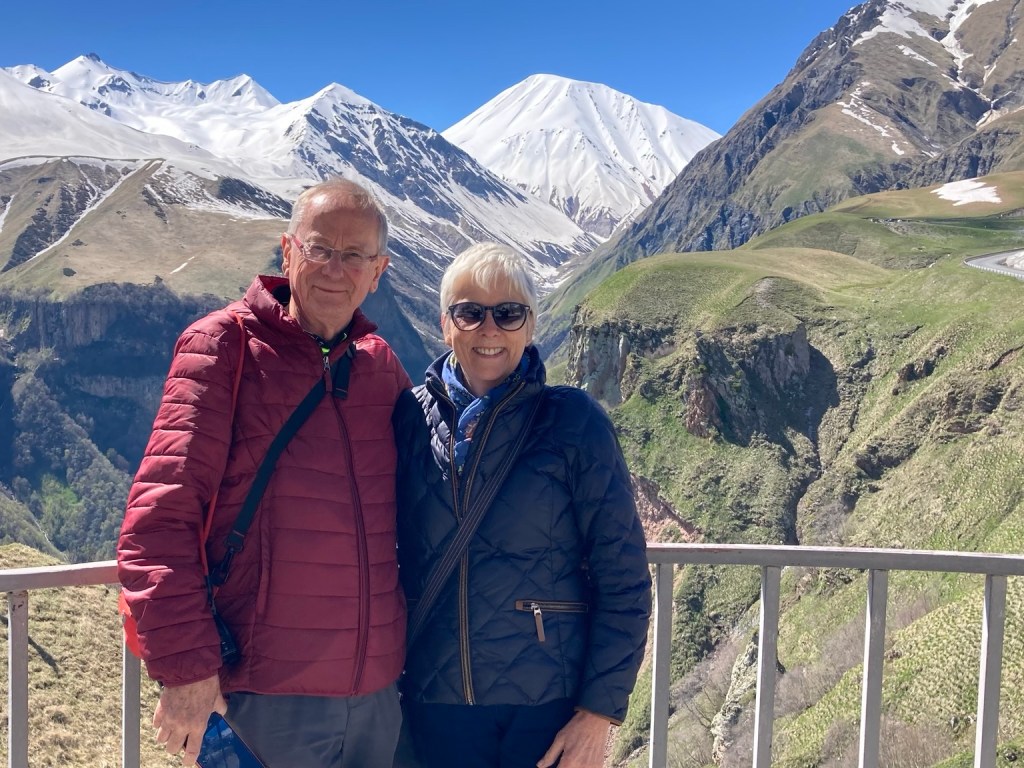
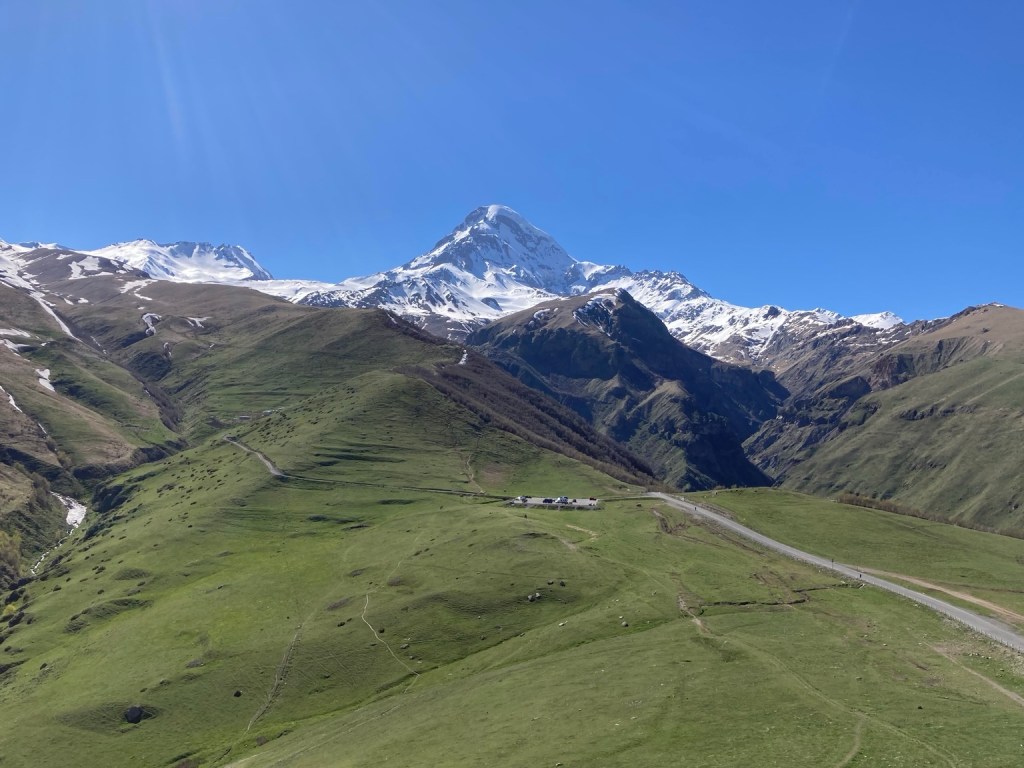
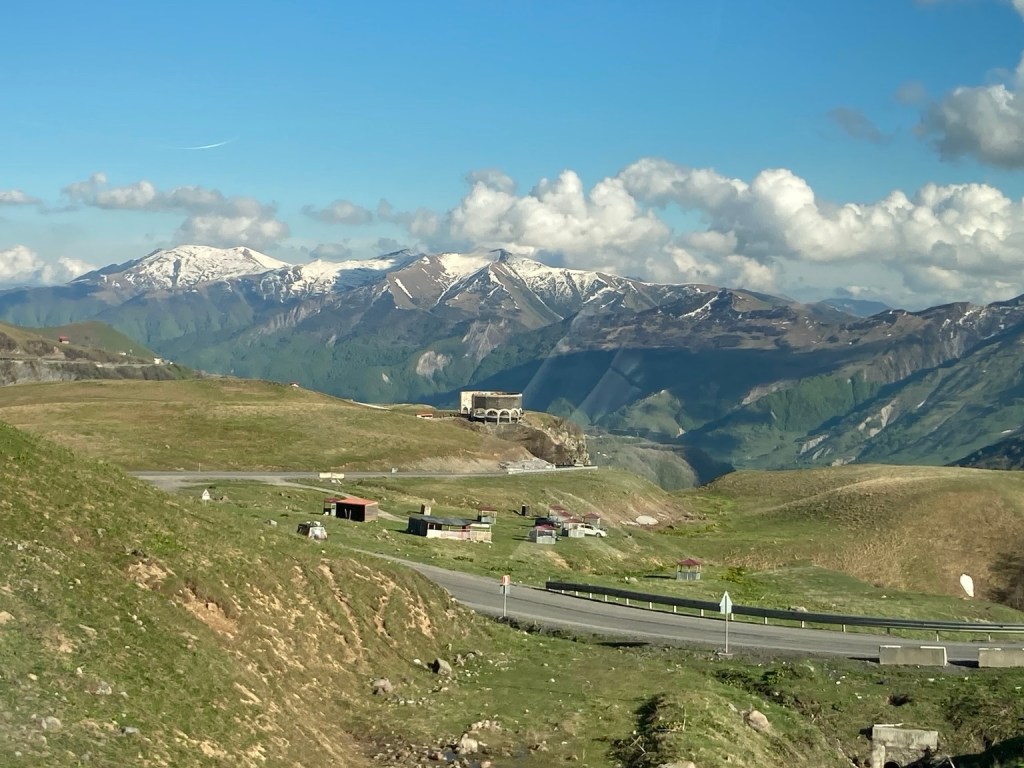
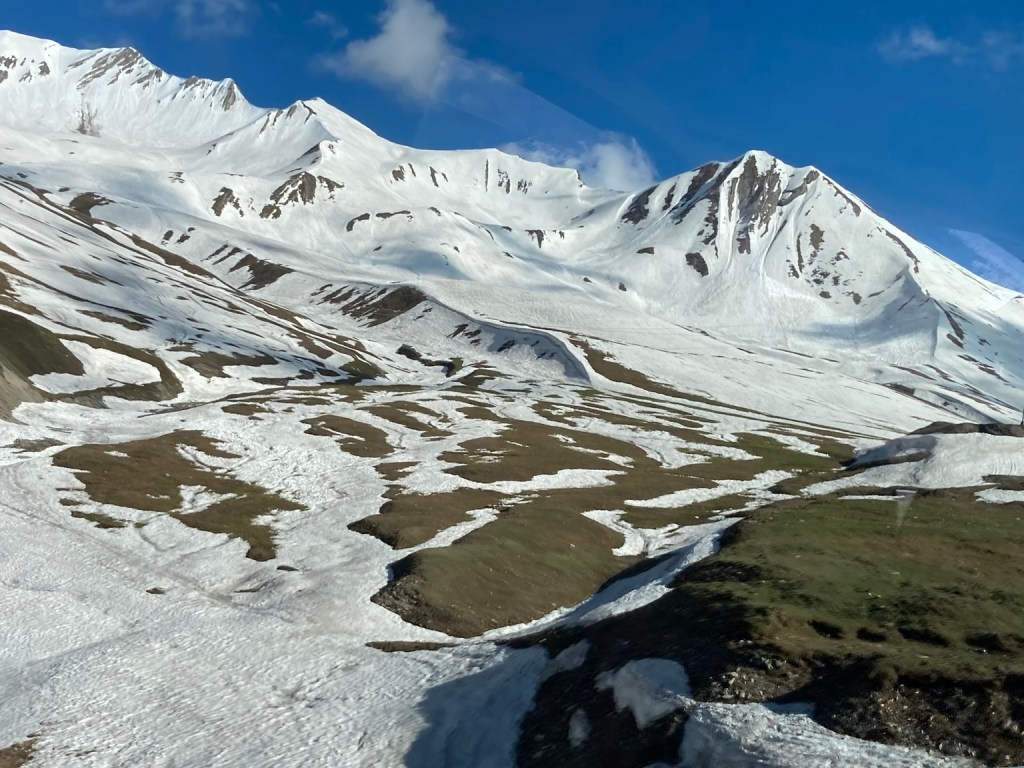
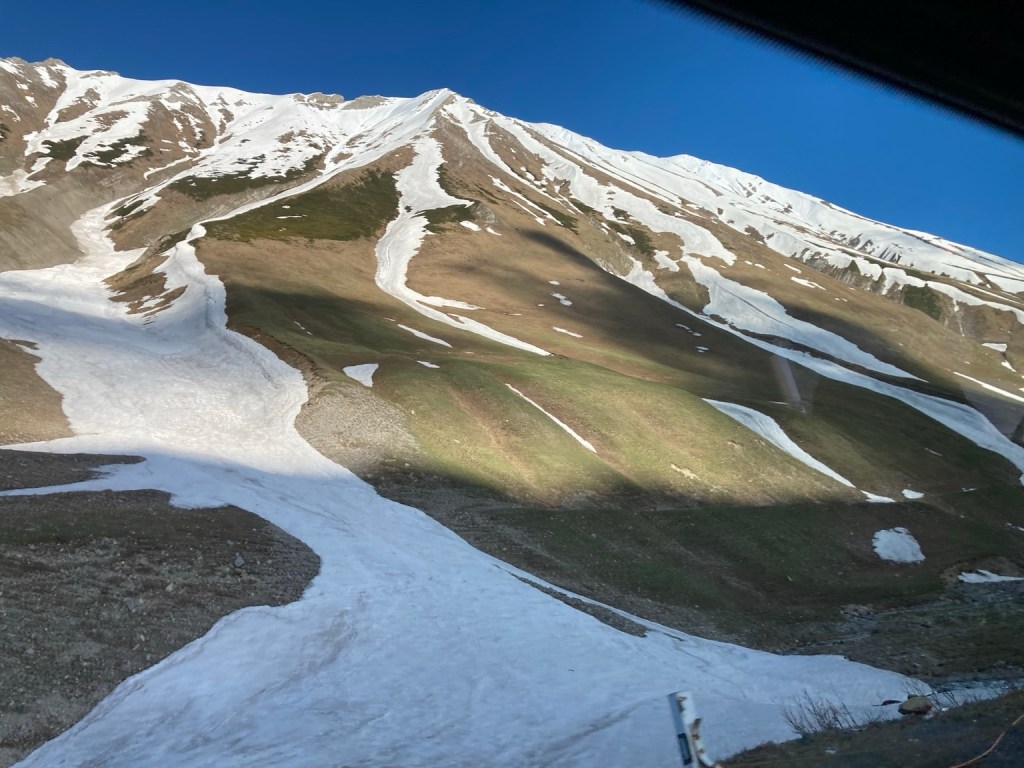
Just before we reached the pass, we stopped at the Gudauri Viewpoint which offers breathtaking views of the Caucasus Mountains.
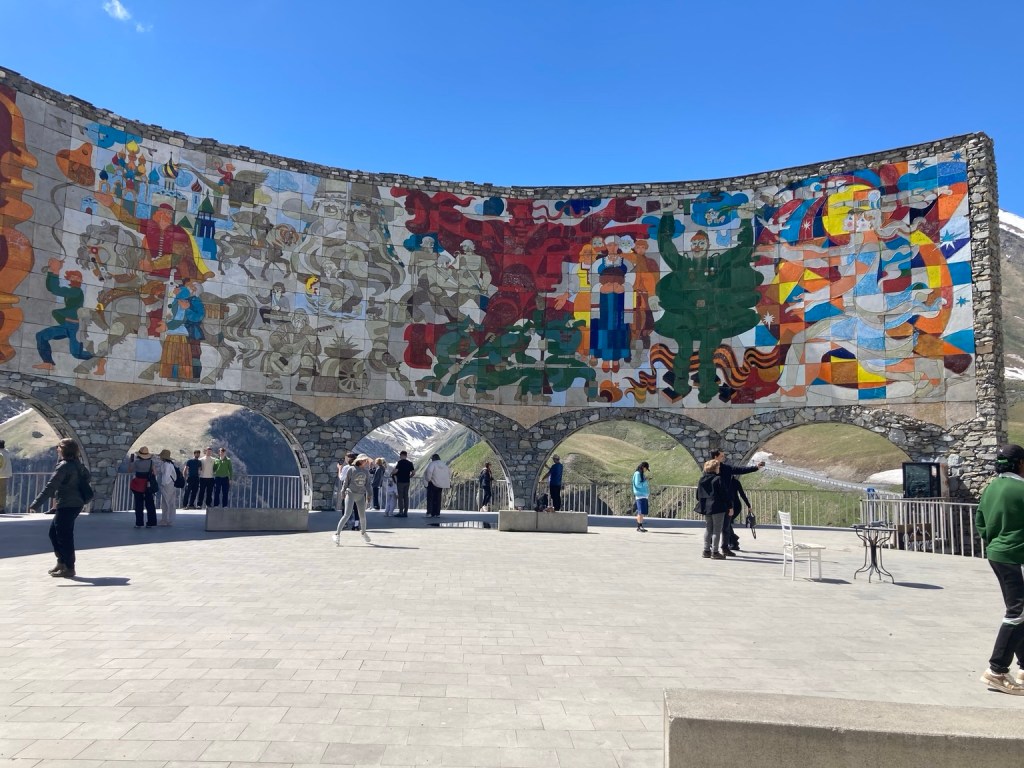
It is also the site of The Friendship Monument of Georgian and Russian People, built by the Soviets in 1983 to celebrate the 1783 Treaty of Georgievsk.
In 1783, Georgia was beset with Ottomans to the west and Persians to the east, and the king thought an alliance with Russia who at least followed the same religion would be the best move to keep Georgia safe. Instead, following the treaty, Russia failed to defend Georgia from Persian attack and by 1801 had annexed Georgia abolishing the Georgian kingdom entirely. Not surprisingly, especially with Russia’s more recent invasion, the name of this monument is less than popular.
Nonetheless, as an example of brutalist architecture, the huge structure is certainly striking and is decorated with a colourful mosaic mural. Georgia is on the left with brown haired people, farming and folklore …
… and Russia is on the right with a red haired Cossack, the Kremlin and a jolly green cosmonaut!
Interestingly the mother in the centre, maybe representing future generations has brown hair!
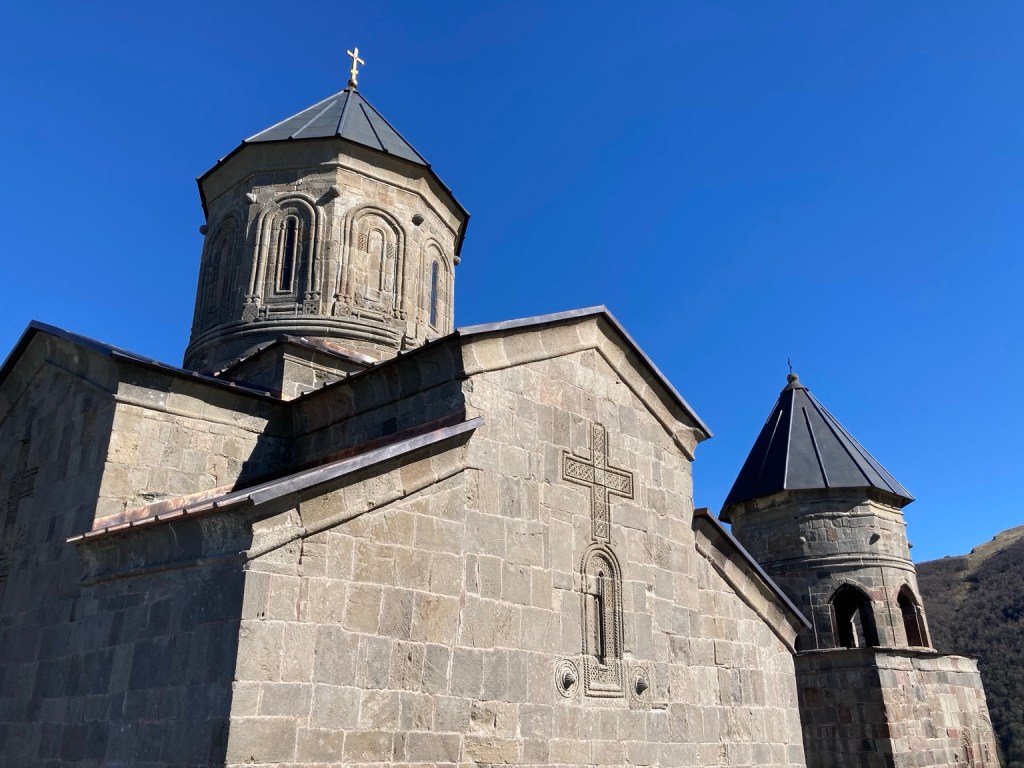
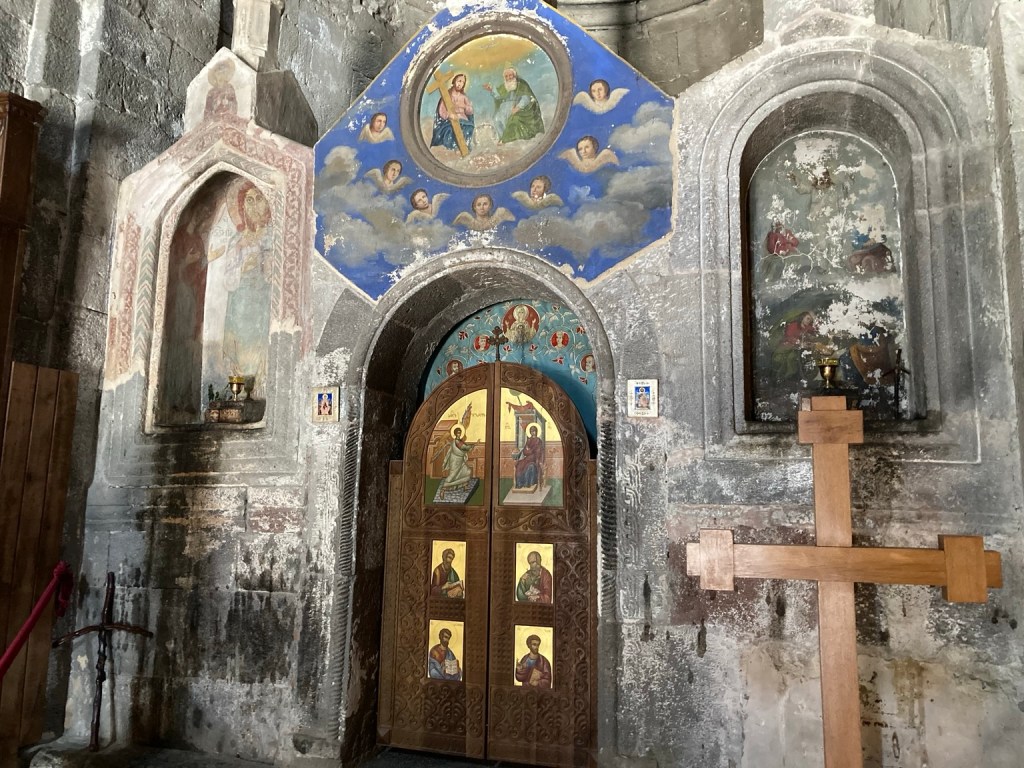
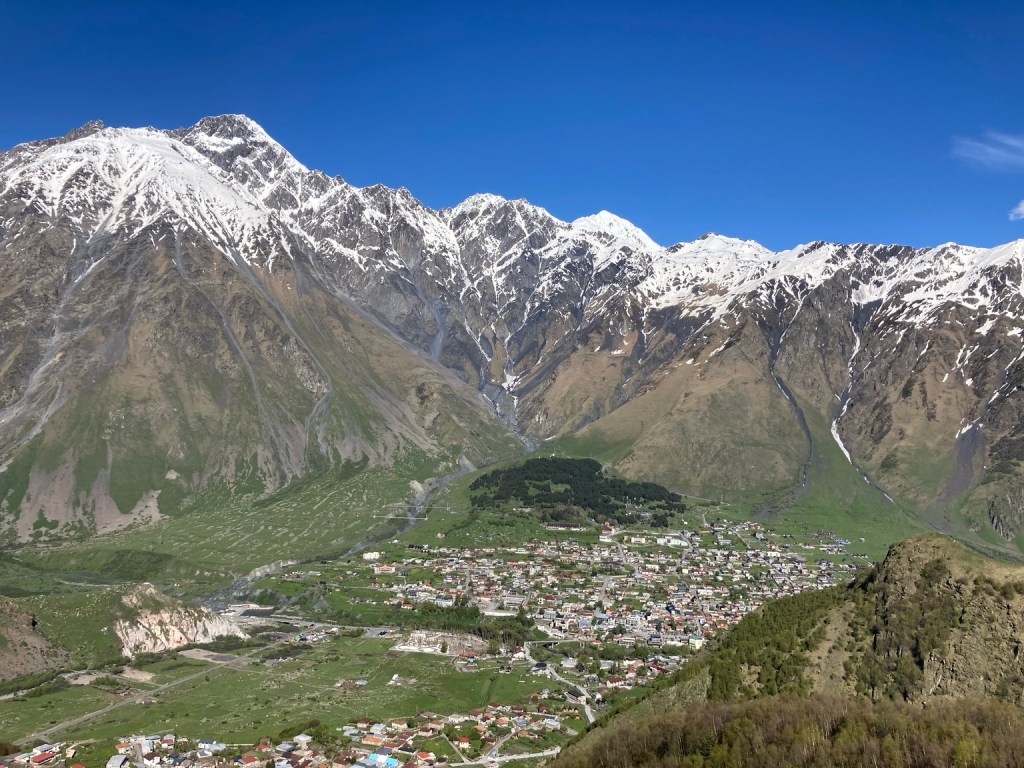
When we reached the town of Stepantsminda, we swapped to 4×4 vehicles to climb Mount Kazbek to visit the C14th Gergeti Trinity Church decorated with frescos and icons …
… and take in the fab view!
A couple of the lads on the tour were staying for a couple of days to go hiking, and certainly having a chance to walk a bit and see the church from a distance would have been a real bonus, but it was time to go.
There was a good view of the Friendship Monument …
… and the sun going down over the snowy mountains on our return …
…but soon the journey just became tedious and long, especially as there was still a queue through Mleta. We stopped briefly for honey tasting, which was really just a comfort break for us and the driver, and finally arrived back in Tbilisi some 3 hours later than expected at 11pm. Over a cup of tea and a handful of biscuits before bed, we reflected that a different day would have made all the difference.
We prefer to visit museums and galleries in the morning while we are fresh so after breakfast we headed to Rustaveli Avenue which is lined with elegant and impressive buildings containing offices, museums and galleries.
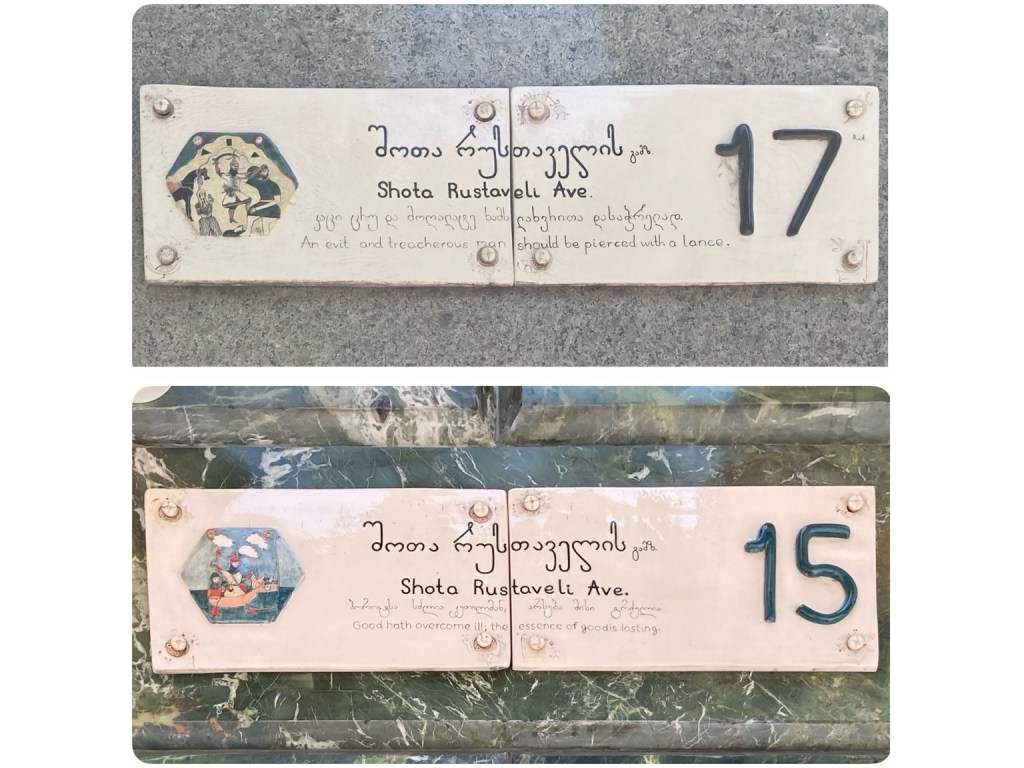
It is named after the national Georgian poet, Shota Rustaveli who wrote the medieval epic poem, The Knight in the Panther’s Skin. Until the early C20th, a copy of this poem was part of the dowry of every bride and even today it’s is still taught in school. Tile plaques bearing quotes number the buildings.
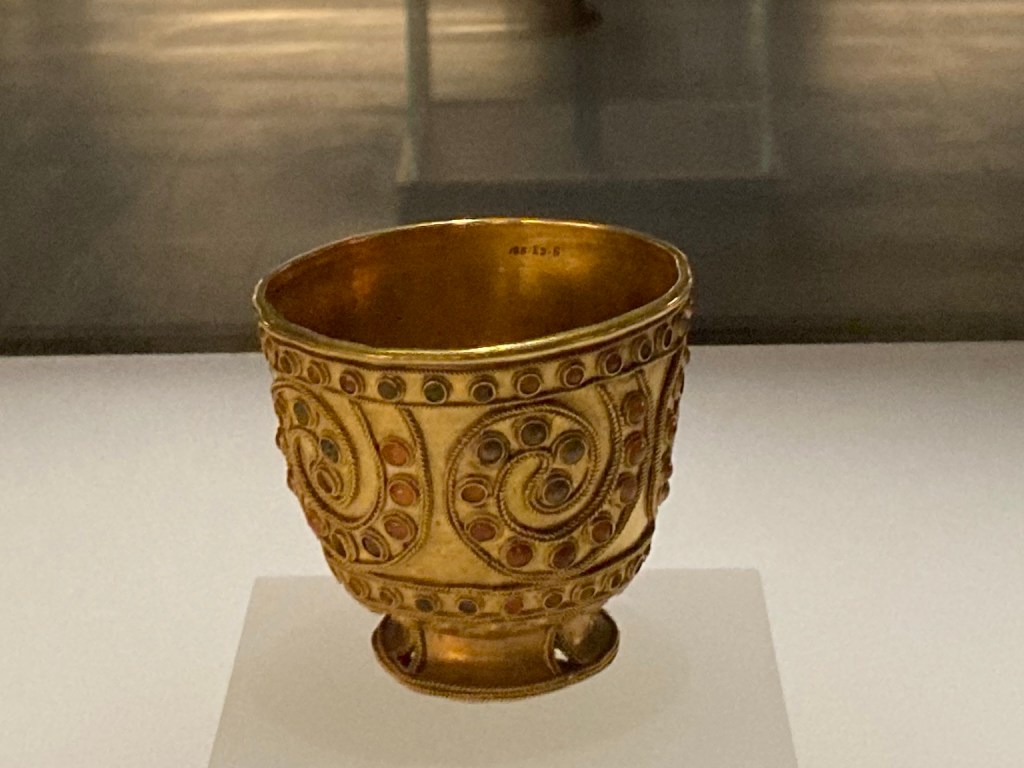
The Georgian National Museum contains a wonderful collection of gold in the treasury, highlighting the amazing skill of ancient Georgian goldsmiths. One of the great treasures of the collection is this C2nd BC cup, made from a single sheet of gold on a lathe and decorated with cornelian and lapis lazuli …
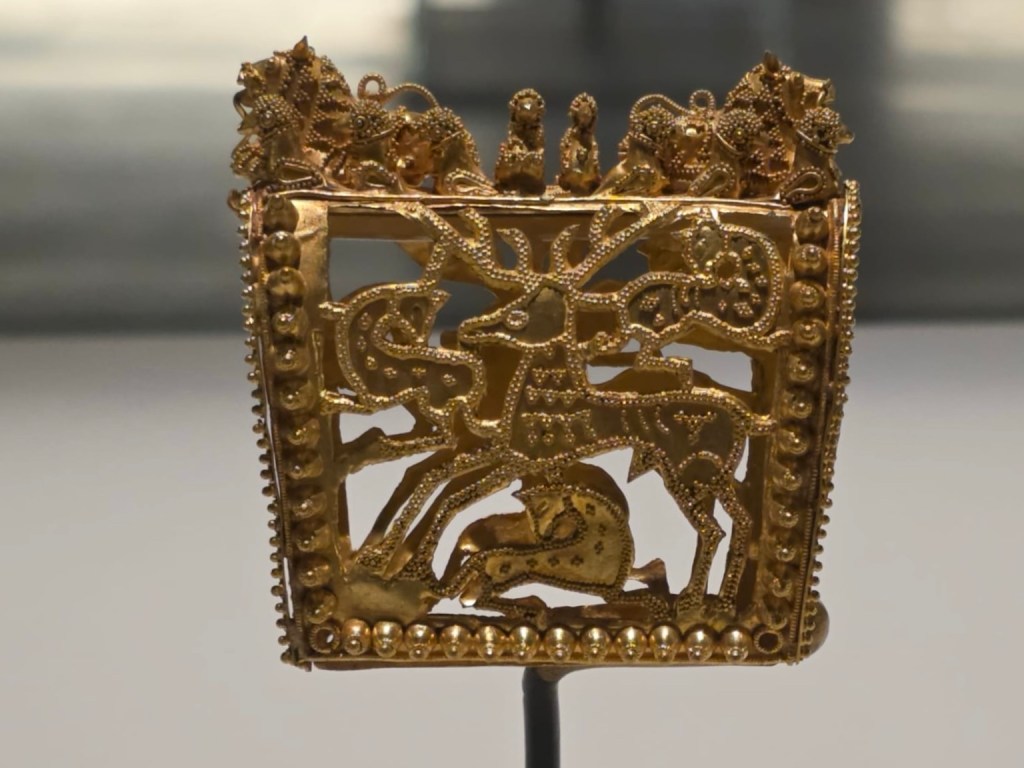
… but I loved the detail on this headdress ornament decorated with animals and birds C4th BC.
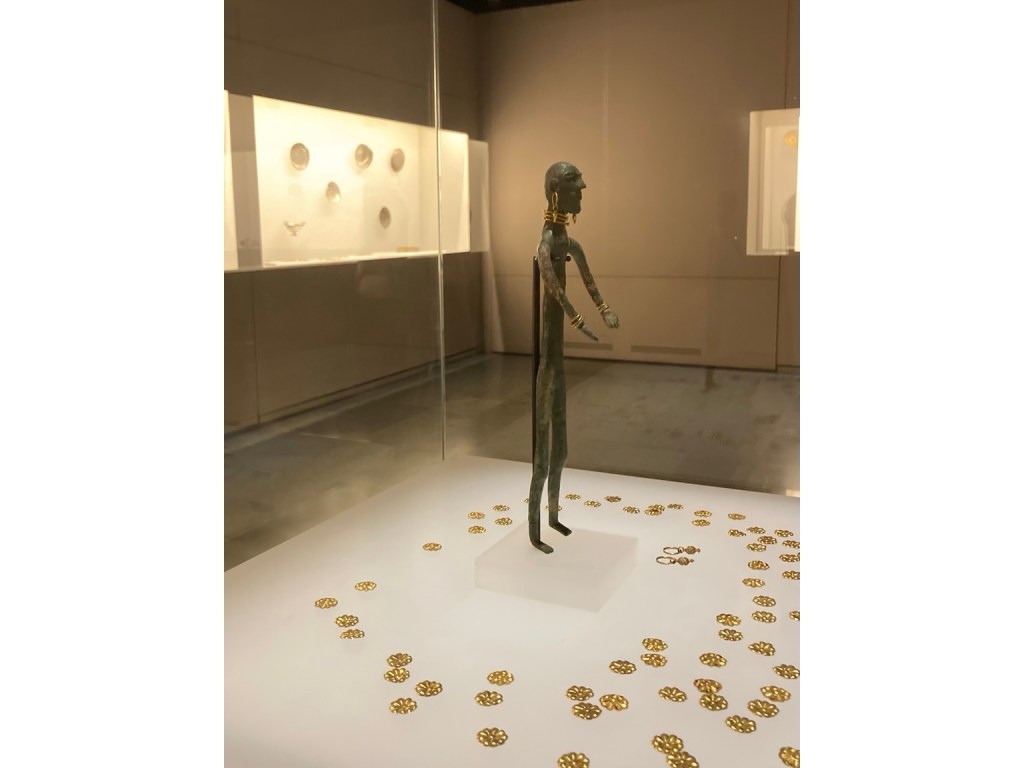
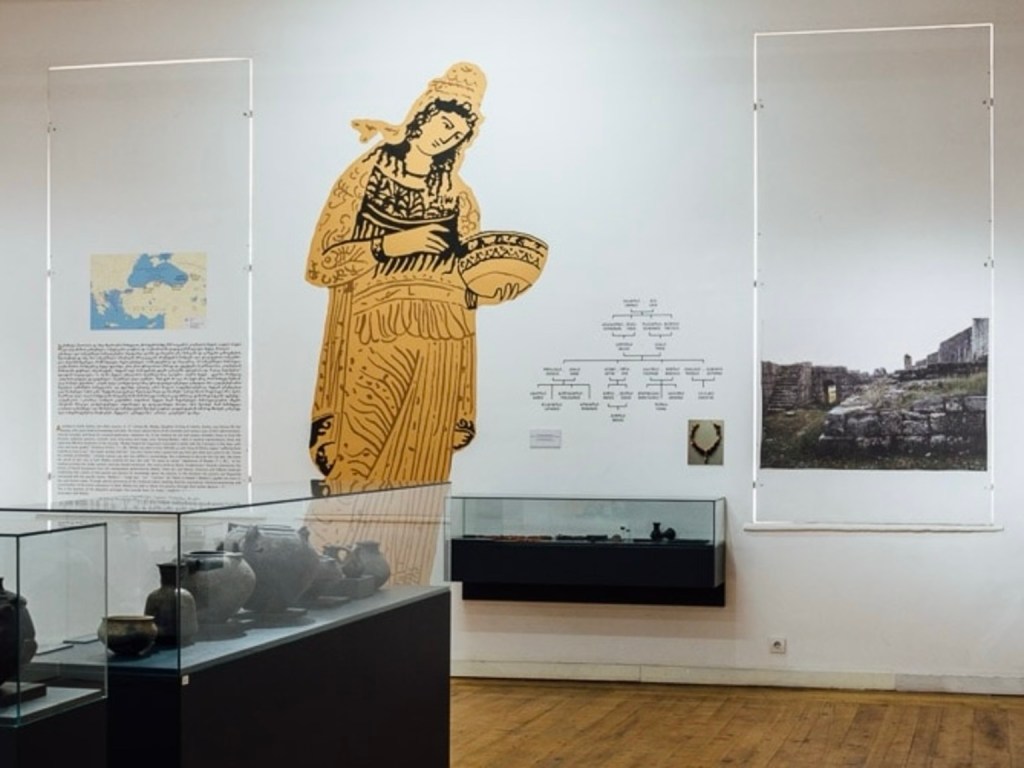
It was found at Vani, an important settlement in the ancient kingdom of Colchis as well as this striking C3rd BC figurine, adorned with gold jewellery.
With gold mines and expert craftsmanship, Vani is considered the likely destination of Jason and the Argonauts in their mythical quest for the Golden Fleece.
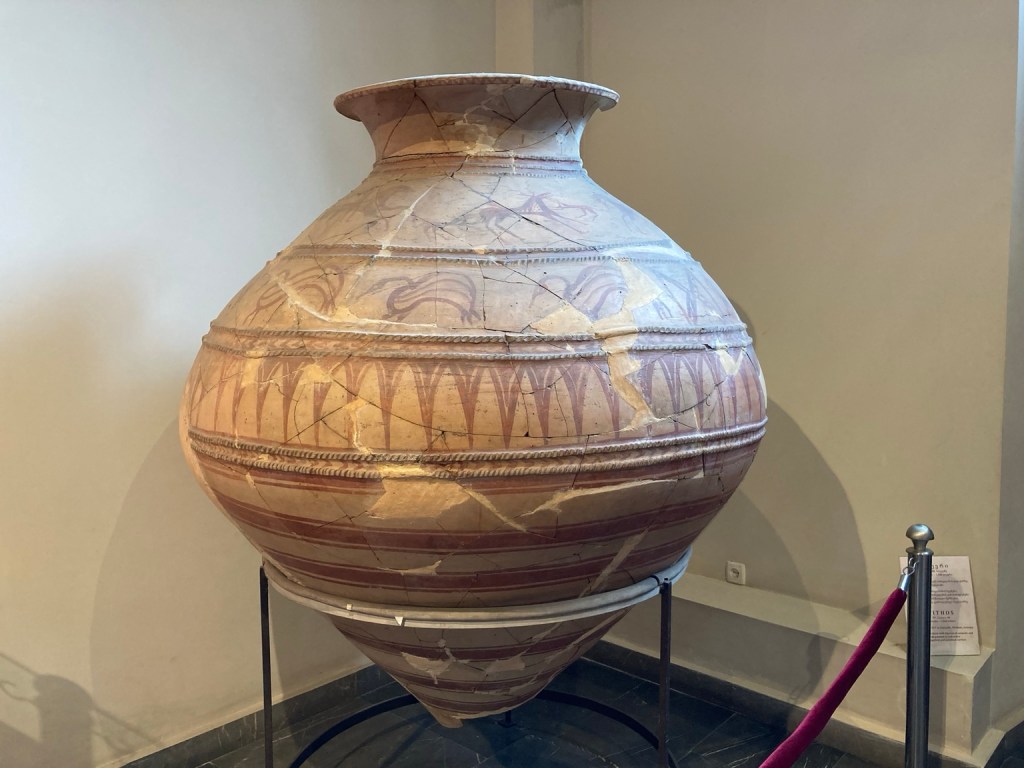
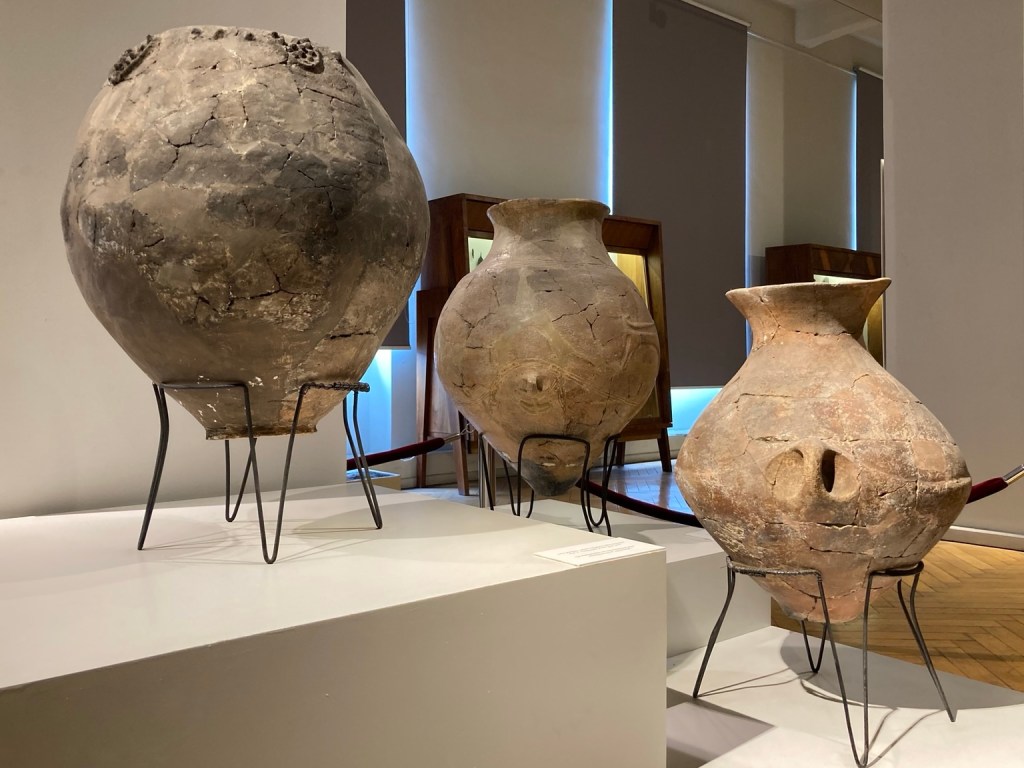
We also saw several kvevri, the clay pots used for winemaking in Georgia. Some were highly decorated …
… but the one with a small grape moulding at the rim was found containing wine remains proving wine has been made in Georgia for 8000 years. This makes it the earliest known evidence of wine making in the world.
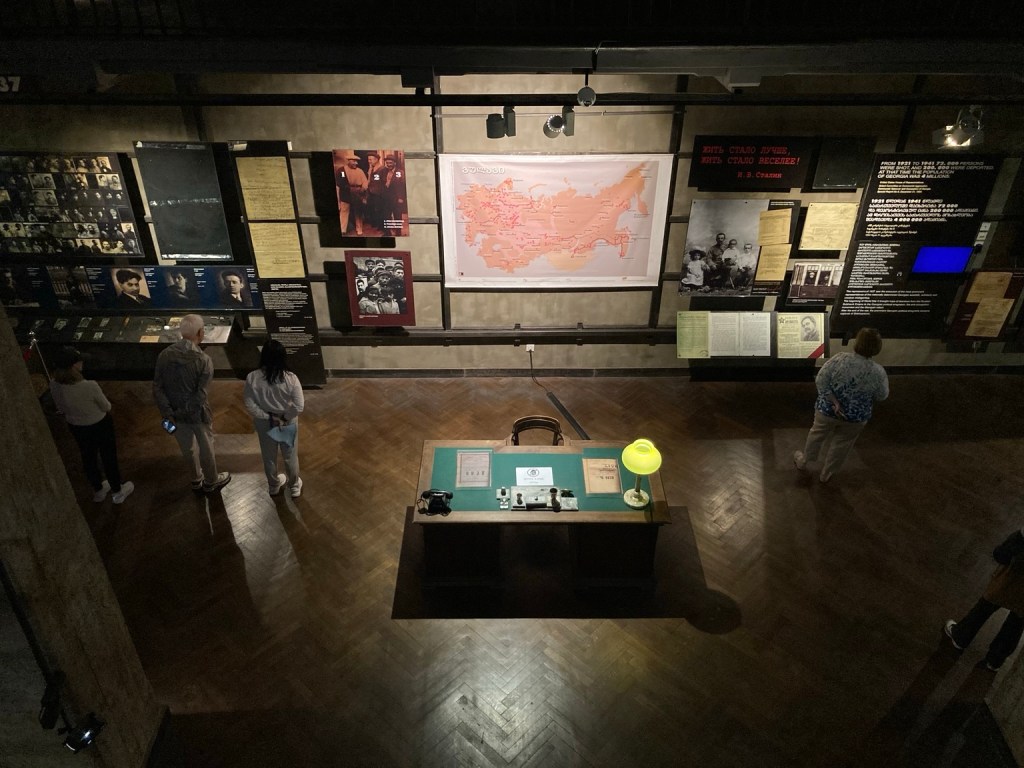
At the opposite end of the timeline is the floor dedicated to the 70 year Soviet occupation of Georgia.
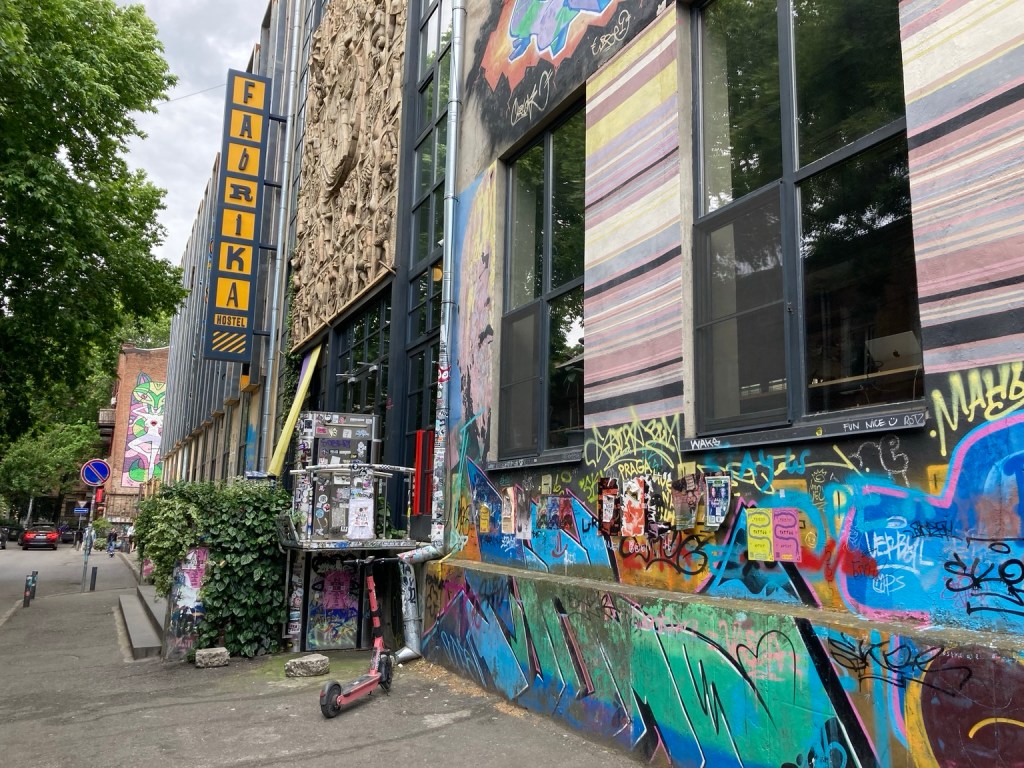
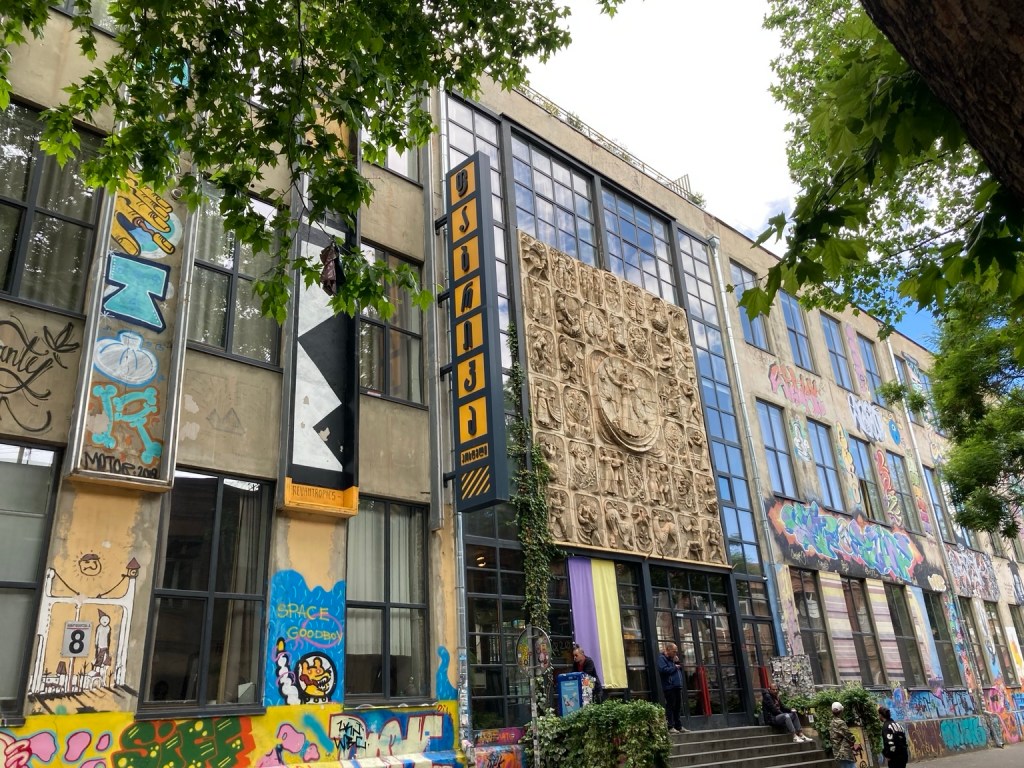
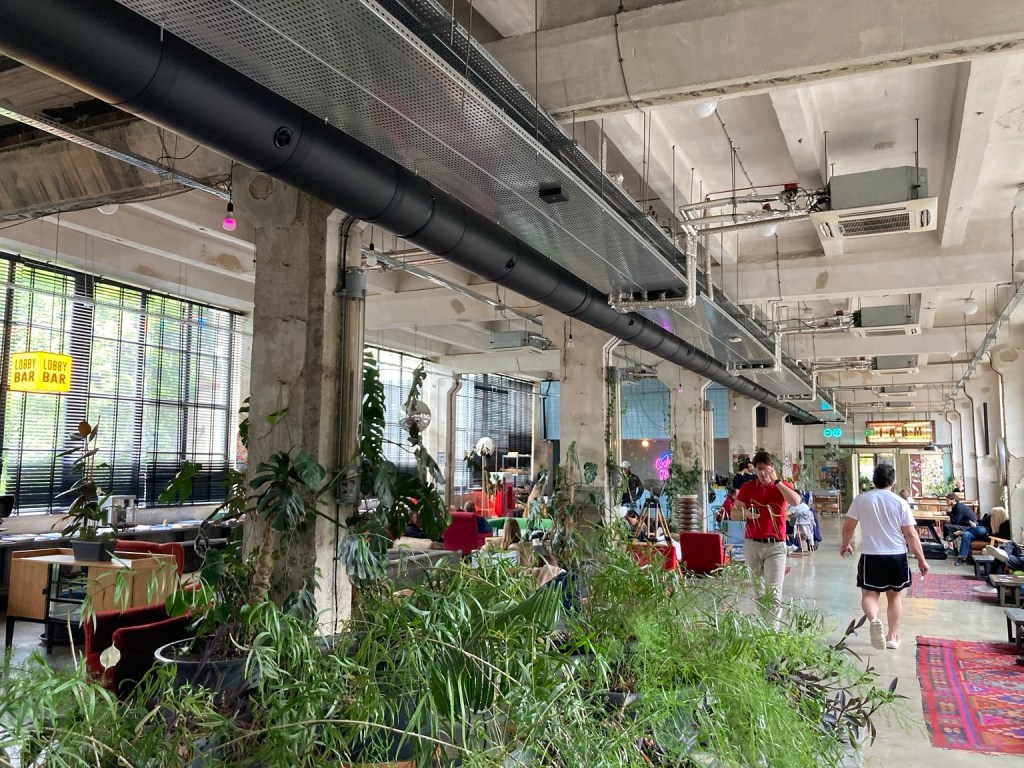
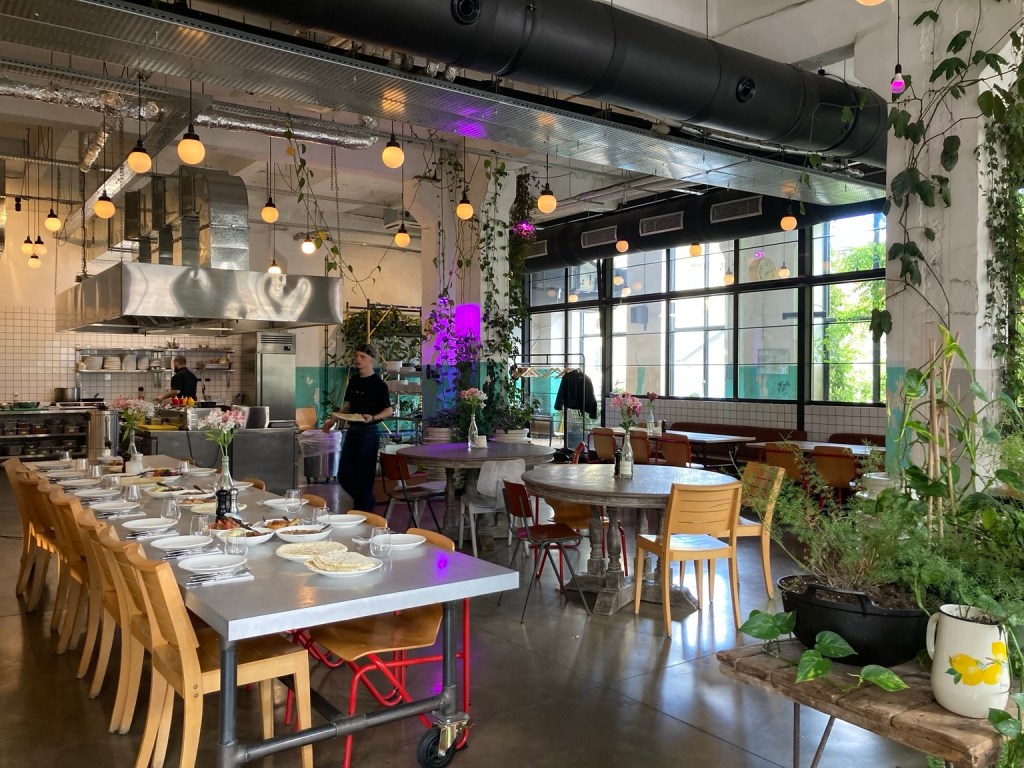
Following this theme, we planned lunch at Fabrika, which according to a guide I had read was apparently a Tbilisi icon. Once a Soviet-era sewing factory, it is now a creative space with cafes, performance space and hostel.
It certainly looked the part but we’d obviously picked an off day as it was almost deserted!
After lunch in a bakery with a larger clientele, we took a look round the nearby Museum of the History of Georgian Medicine. It is a repository for extensive records about ancient folk remedies, from the science behind sulphur baths to the development of poisons as a cure and even trepanation! There was even a claim that Medea, the daughter of the King of Colchis was skilled in such potions possibly making Georgia the home of modern medicine!
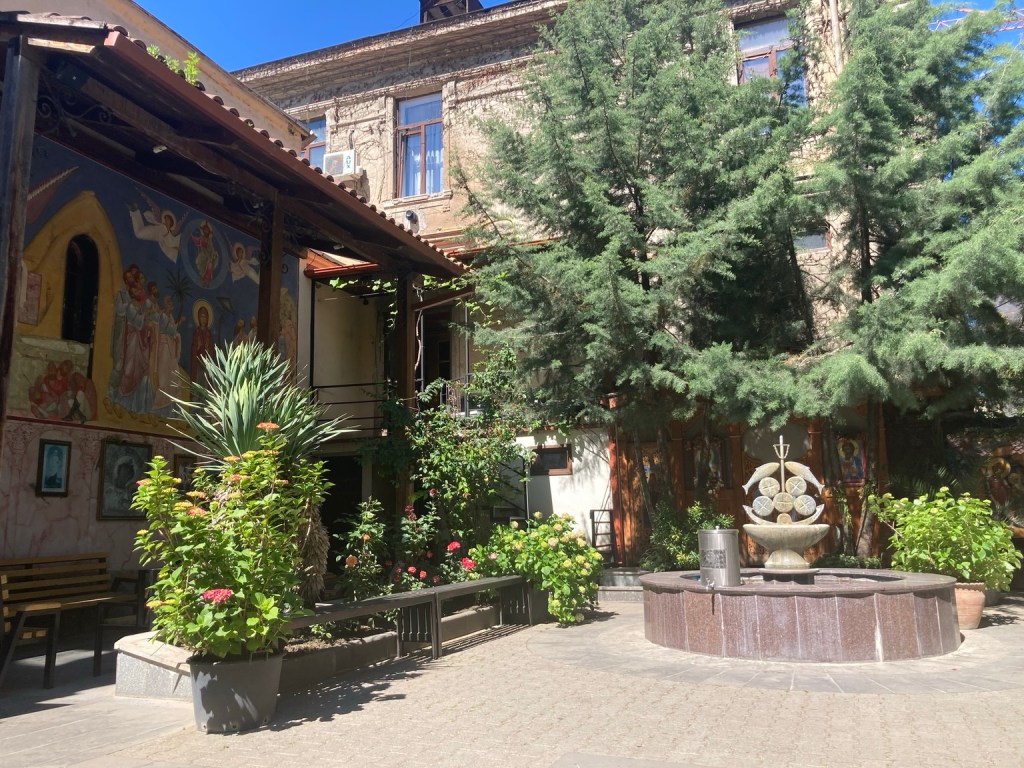
We also spotted this little church tucked between apartment blocks.
The evening was warm and we sat in the courtyard of Taverna Dariana where Chris just had to try another khachapuri while I enjoyed a little Eastern fusion as my chicken kebab came with a ginger, lime and coconut sauce, before getting an early night before a big trip out tomorrow.
After a quick breakfast in the apartment, we set off to get the bus to the tour meeting point on the other side of the river, fortunately leaving plenty of time as we missed our stop and had to get the bus back! They all seem to run every few minutes and we could just tap with our credit card and at 43p a trip it was a bargain.
We have booked several tours with Gamarjoba Tours and today’s focuses on history. Once our group had climbed into the minibus and were off, our guide Tako gave us an interesting introduction to Georgia. We started with Gamarjoba, the first word we learnt in Georgian, which strictly translated means victory but is used as a greeting like hello. This led us on to the fact that Georgian is completely unique and unrelated to any other language. In theory it is simple as it is completely phonetic, but the clusters of consonants and the throaty pronunciation make it a bit of a challenge, and on top of that it has its own flowing cursive script looking like no other!
Georgia is ancient – western Georgia was known as Colchis to the Greeks and the Kings of Kartli governed this land from the C3rd BC. Georgia was one of the earliest countries to adopt Christianity as the state religion in 337AD and they have been making wine for 8000 years!
At the opposite end of the timeline, in 2008, Russia invaded Georgia in a five day military campaign leading to hundreds of casualties, some 200,000 displaced Georgian citizens, and Russia illegally occupying about 20% of Georgian territory. Part of this is South Ossetia and as we drove to our first stop, Tako pointed to fields through which this border now lies, just 500m from the highway.
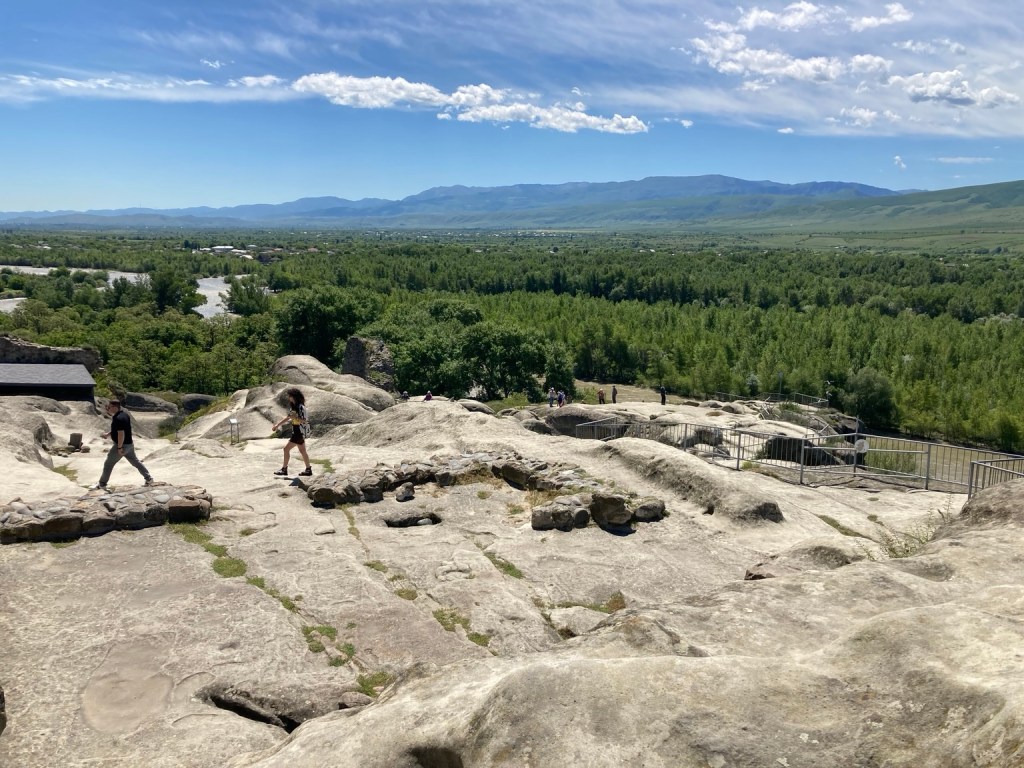
We are on our way to an ancient city called Uplistsikhe, which means The Lord’s Fortress. It was carved into the sandstone and continuously occupied for nearly 3,000 years. According to folklore, Uplistsiche was built by slaves. Their pickaxes concealed a nugget of gold and once they had worked hard enough to wear away the iron to reveal the gold they were granted both their freedom and the gold as their reward.
Initially a pagan temple city where the sun goddess was worshipped, after Georgia adopted Christianity, many of the pagan temples were converted into churches. During Arab rule in the C8th & C9th it was a stronghold of Christian resistance and the residence for the Kings of Kartli, housing a population of up to 20,000. However, it was the economic prosperity generated by the Silk Road ensured that Uplistsikhe remained a vital, fortified stronghold until it was heavily damaged during the Mongol invasions of the C13th An earthquake in 1920 caused further structural damage.
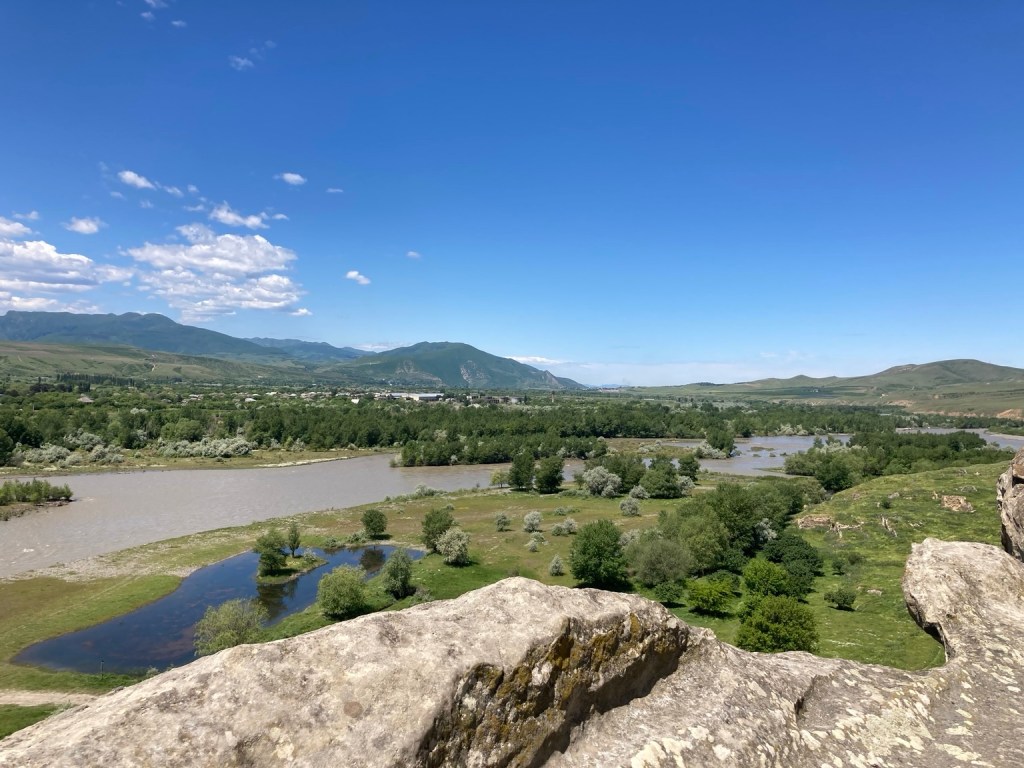
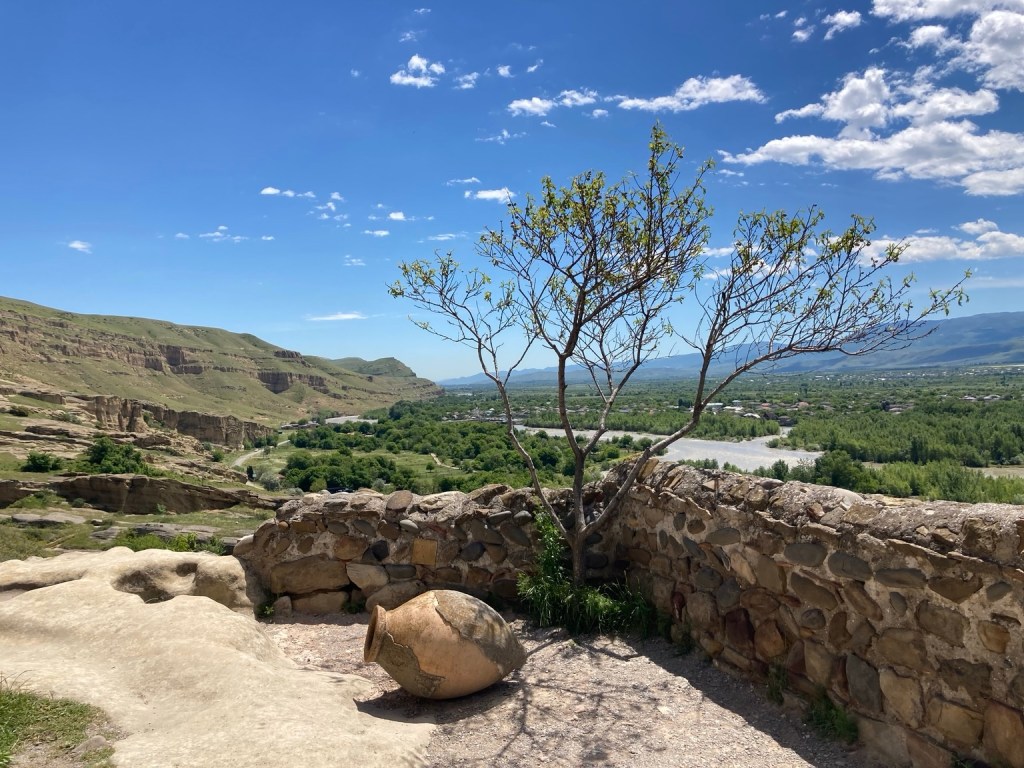
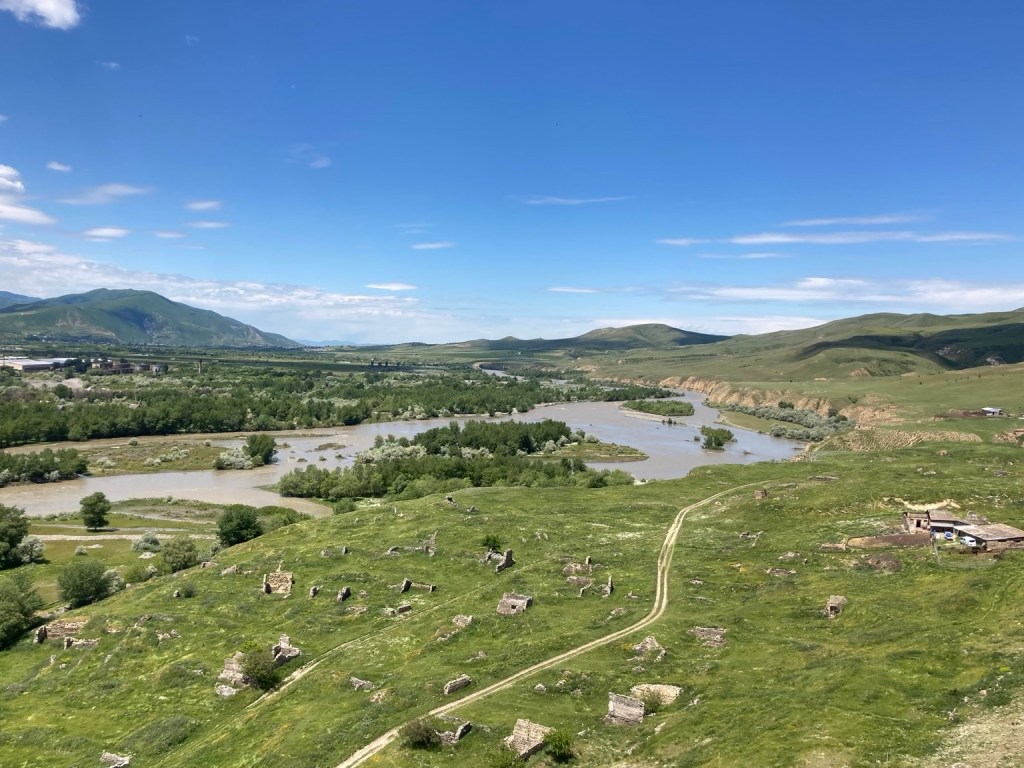
Halfway up, there was a great view out across the valley …
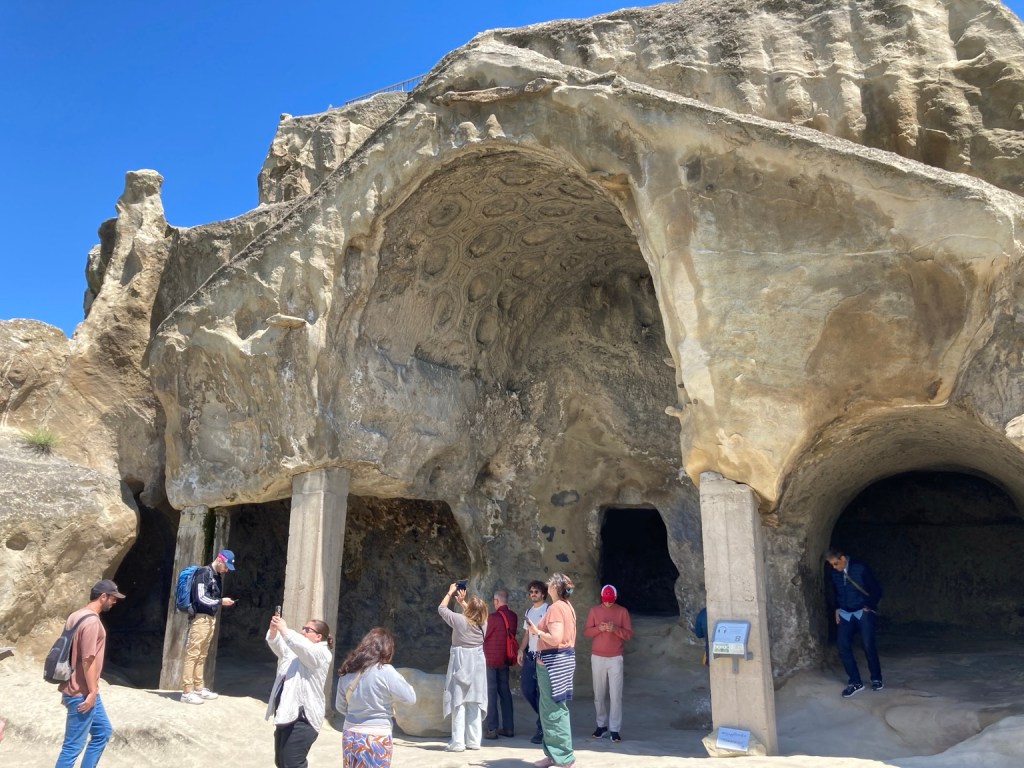
… beside this impressive structure believed to be the stage part of a theatre. It would have been completely enclosed with a roof and is decorated with a coffered ceiling.
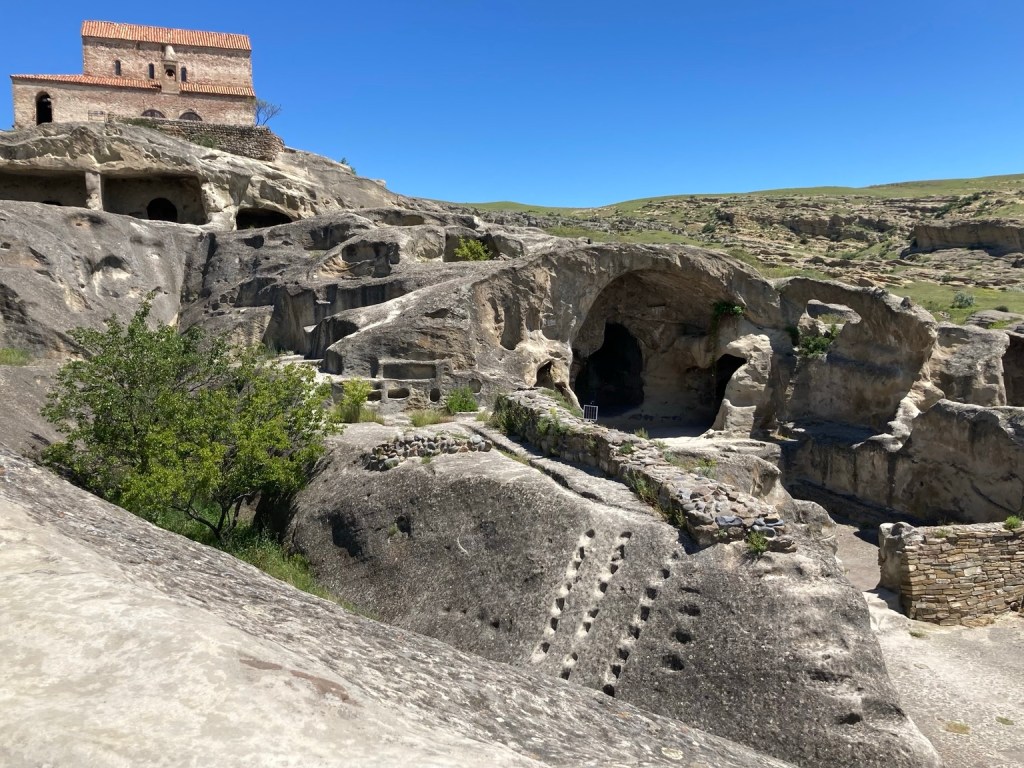
Further on we got the best view of the site, with the 10th-century Christian stone basilica built right at the summit.
We explored carved streets lined with shops and living quarters, including wine cellars and a pharmacy …
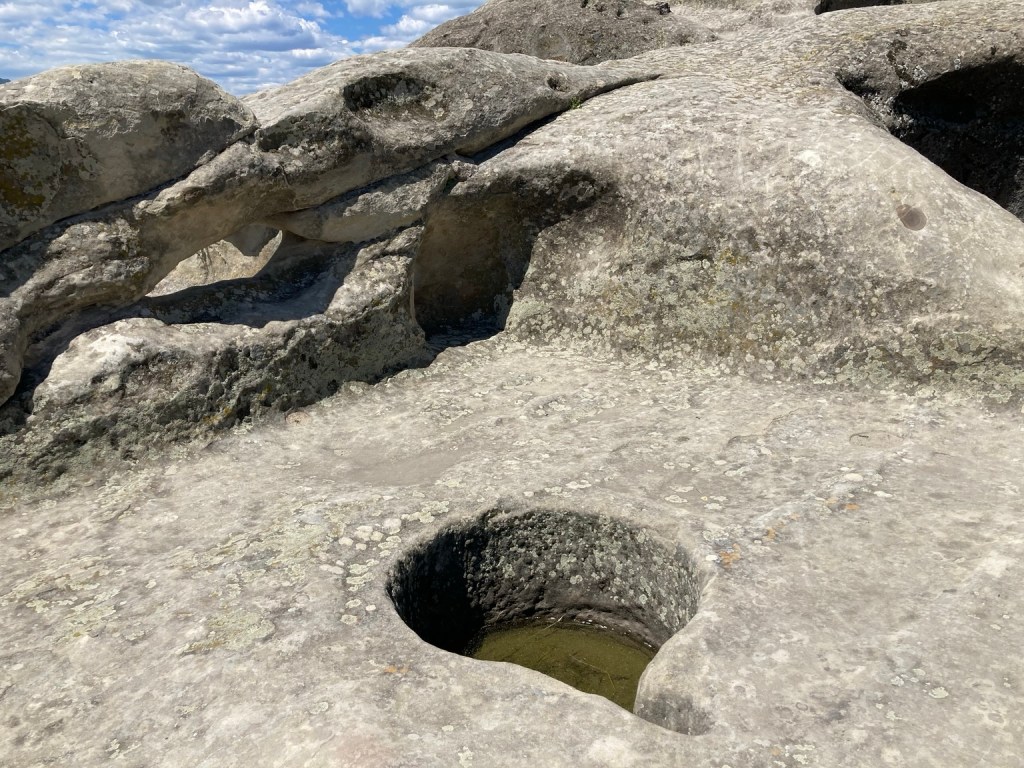
… and spotted several features like this keyhole-shaped pit which was an underground oven used for cooking and heating …
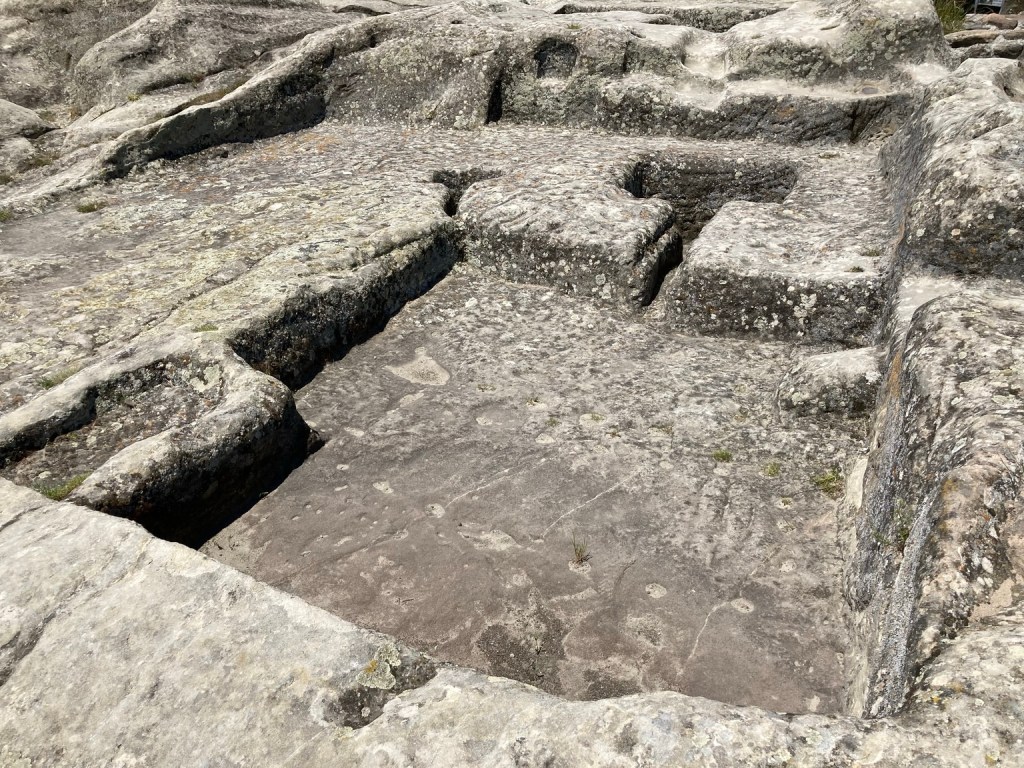
… and this area used for crushing grapes.
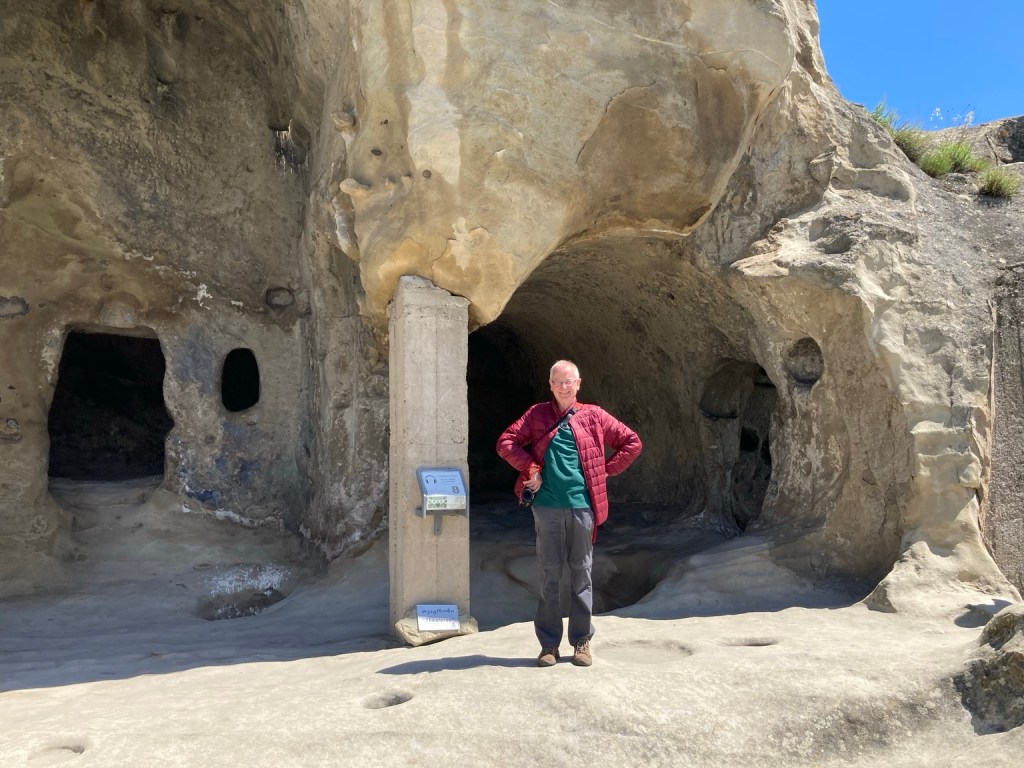
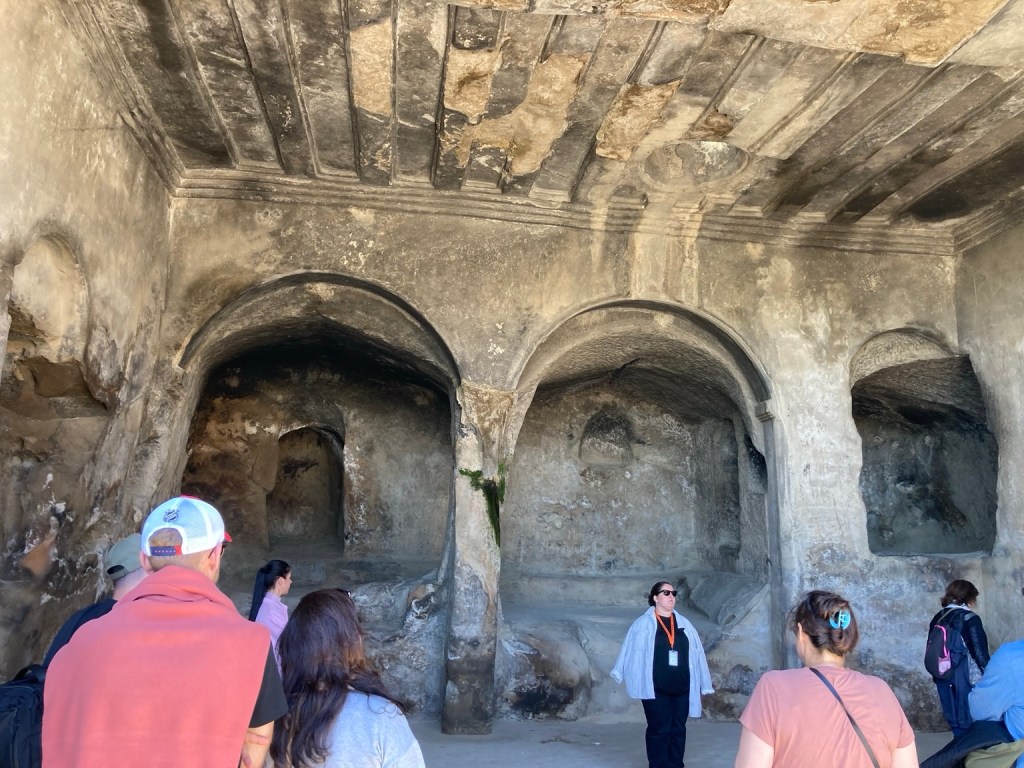
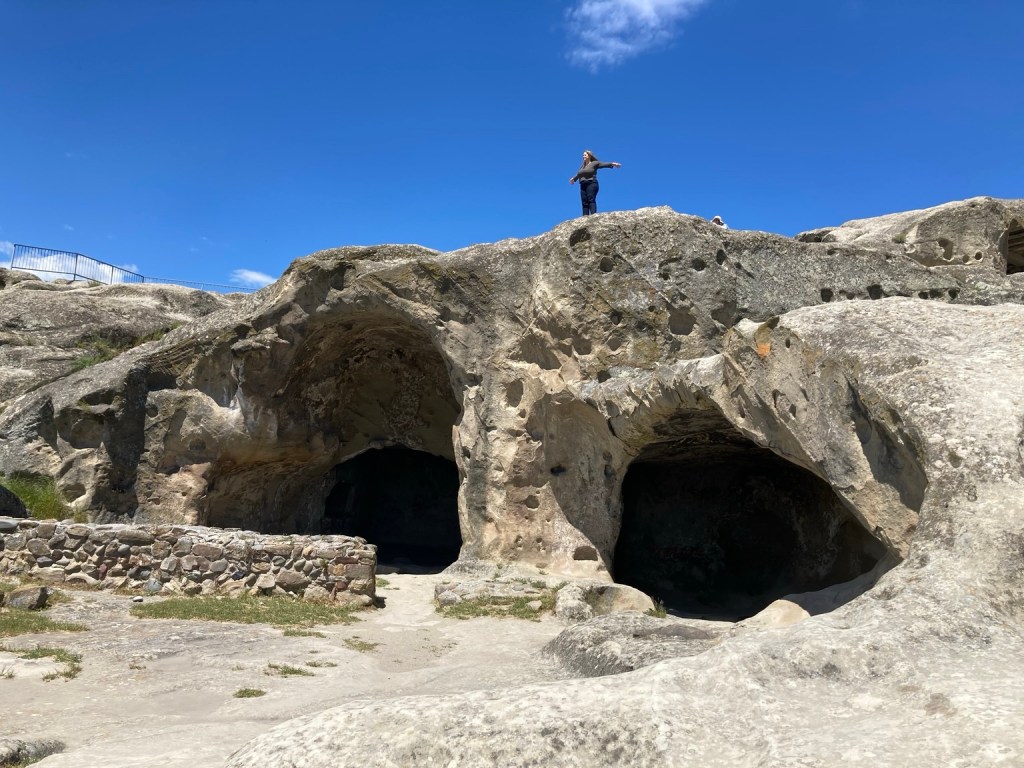
This is the most elaborate cave and has several chambers, a smoke hole and ribbed ceiling and has been named in the honour Queen Tamar, who ruled in the C11th at the height of Georgia’s Golden Age.
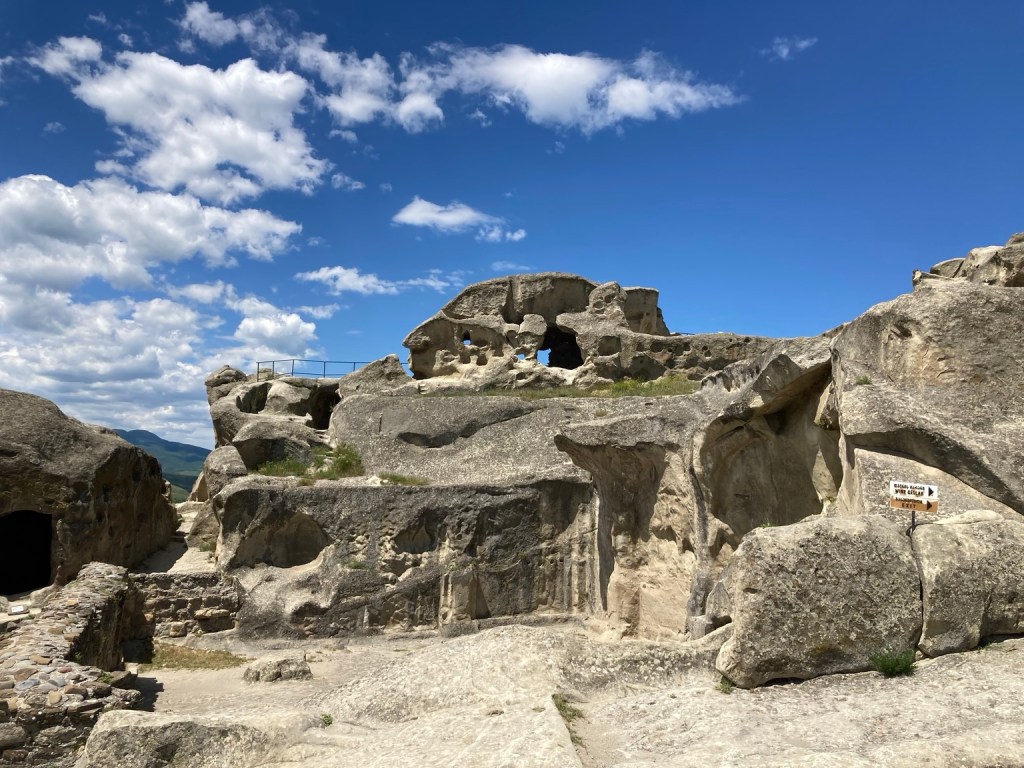
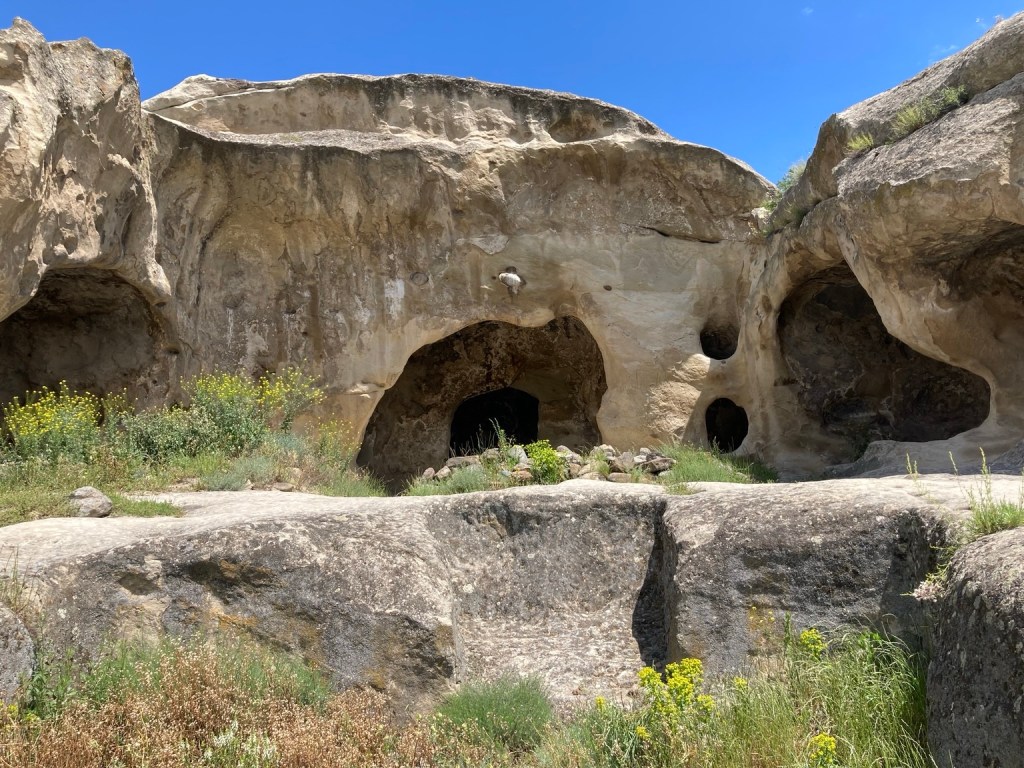
Blackberry Hall is named for the vines that grow here and is believed to have been a pagan temple or sun goddess shrine where rituals and sacrifices took place.
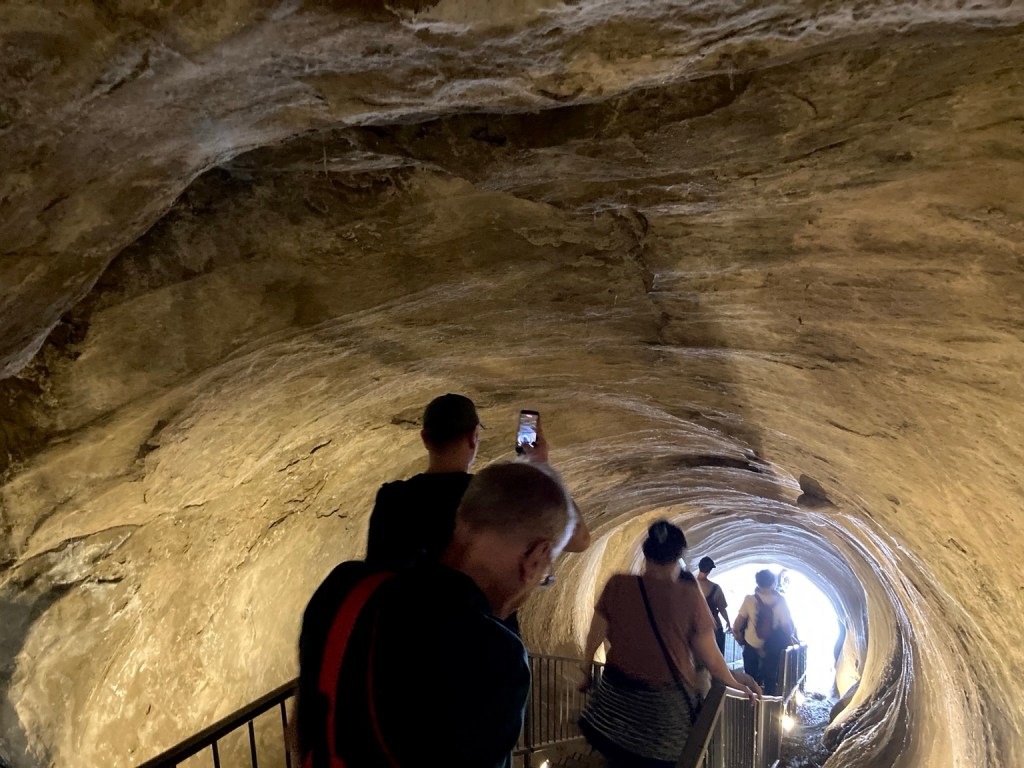
We had some time to explore ourselves and take some photos before leaving the site via a long, ancient rock-cut tunnel which leads down to the river, once used as an emergency water source and escape route.
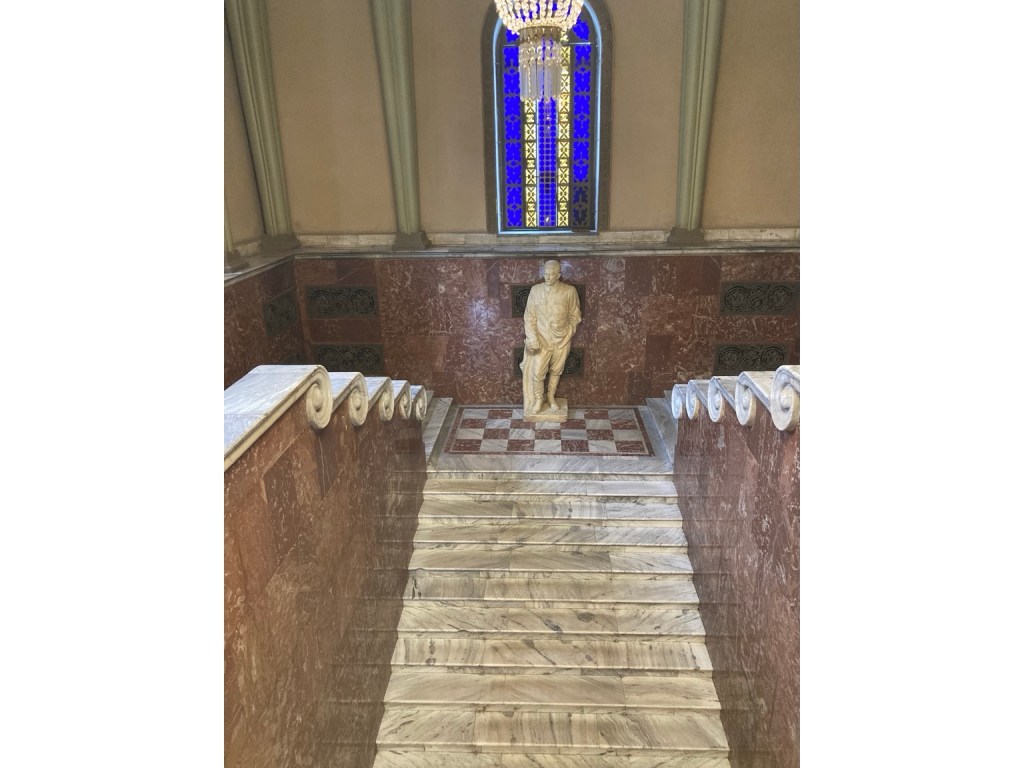
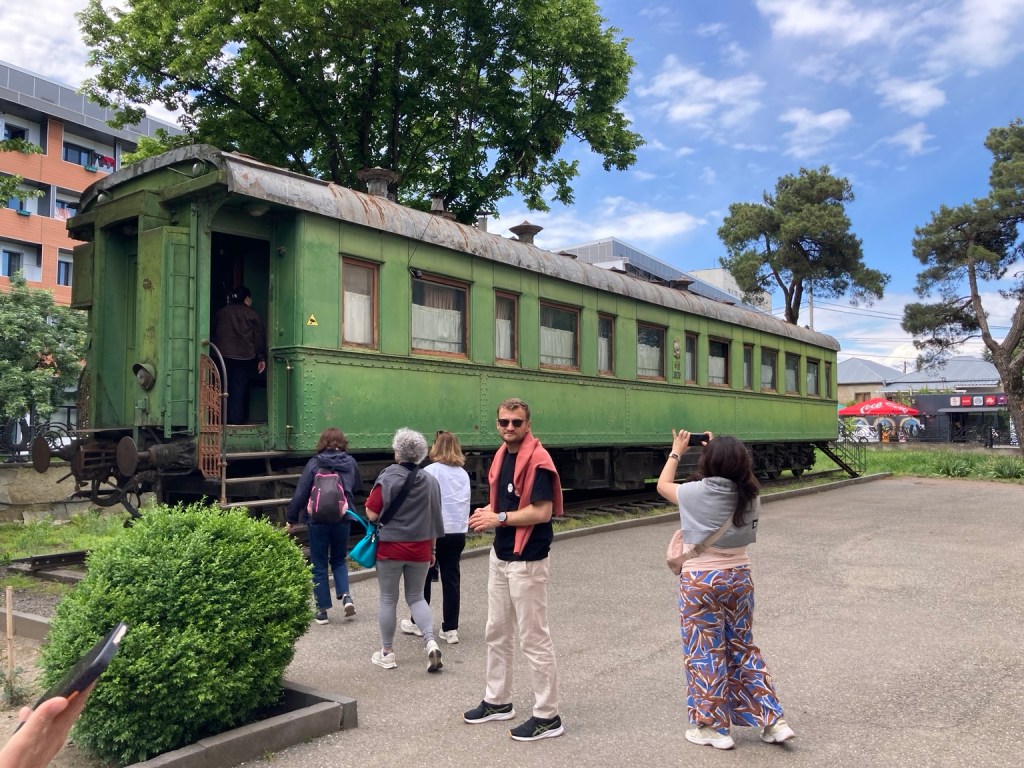
From the earliest of Georgia’s history we are now moving forward to the C20th, with Gori, Stalin’s hometown. After Joseph Stalin’s rise to the leader of the Soviet Union, he generously bought and donated the house in which he was born to the state to be a museum, and following his death, a new building resembling a classic Stalinist palace was erected and remains a preserved time capsule of Soviet-era propaganda. Interestingly, while the majority of Georgians view him as a brutal dictator, some older people still view him with nationalistic pride. The museum remains, but it is generally only visited by tourists and the huge statue outside is now concealed within. His armoured train carriage can be visited too.
If it had not been included on the tour, we might not have made a point of visiting, but it was interesting when we realised it was not a real history of his life, more a time capsule of Soviet-era propaganda.
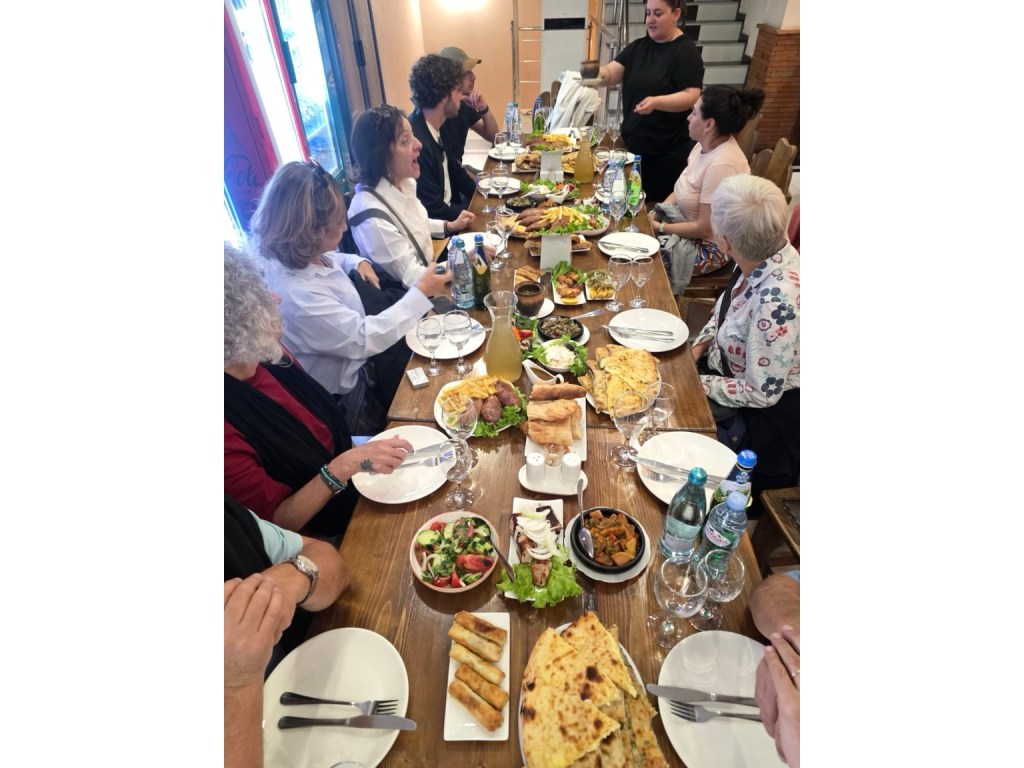
The lunch stop was at a traditional restaurant where we were presented with a table laden with an array of Georgian specialities including various khachapuri, salads, hot vegetable dishes and grilled meats.
All the food was delicious and it was a great opportunity to try lots of different dishes. There was also amber wine, still made using traditional methods, but unfortunately producing a wine in my view resembling a particularly rough scrumpy.
Georgia is rich in naturally carbonated mineral springs and most famous is Borjomi, which has been bottled commercially since 1890. Fruit and herb syrups are used to make a variety of ‘lemonades’ and we tried the fluorescent green tarragon lemonade but found it just far too sweet and stuck with just the water.
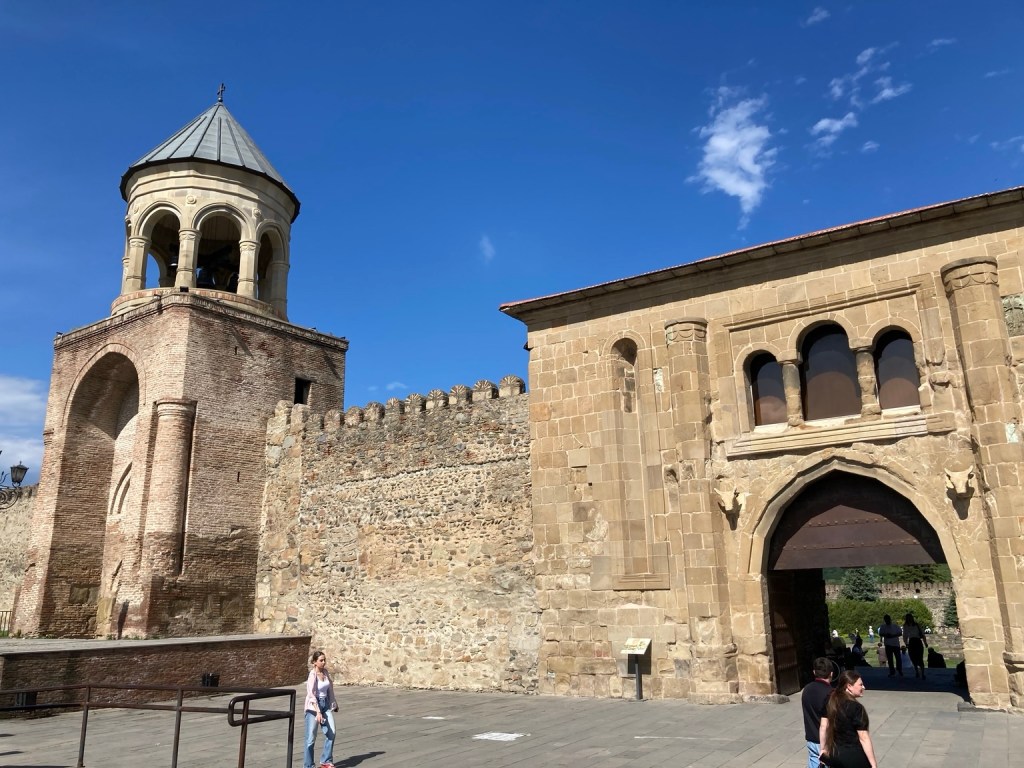
Our final stop was at Mtskheta and check out all those consonants!
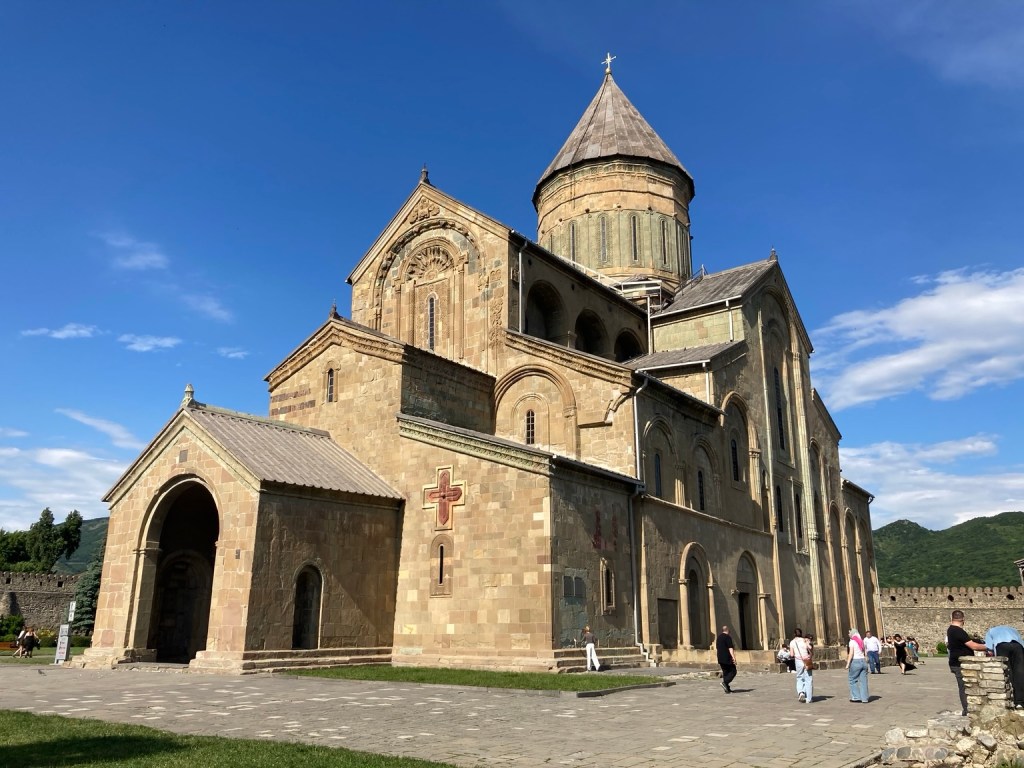
This was the capital of the early Georgian Kingdom of Kartli until the C5th and at its centre is the Svetitskhoveli Cathedral.
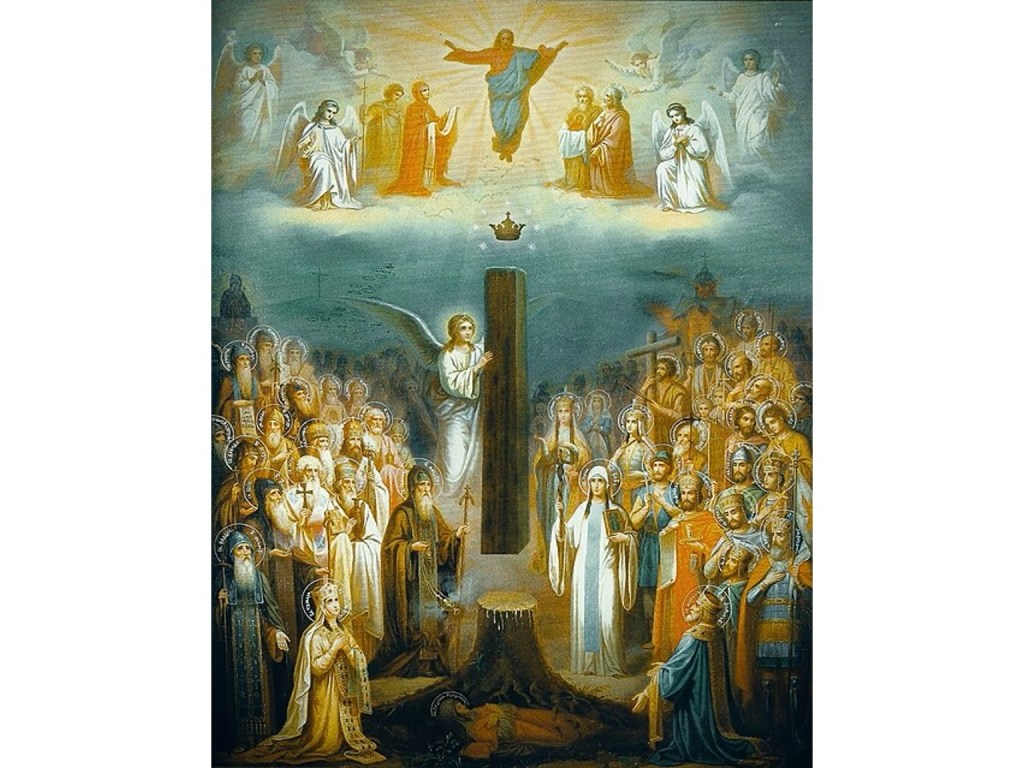
According to Georgian Orthodox tradition, a Jewish rabbi from Mtskheta was in Jerusalem when Christ was crucified and brought his robe to Georgia. On seeing it, his sister Sidonia touched the robe and died from the emotions it gave off and when she couldn’t be separated from it, was buried with the robe. A massive cedar tree sprouted from her grave. Centuries later in the C4th, King Mirian and St. Nino decided to build a church and cut down the sacred cedar. They carved seven pillars from its trunk to support the church’s foundation but the seventh pillar possessed supernatural properties and it lifted into the air on its own. After St. Nino prayed all night, the pillar returned to the earth, giving off a fragrant, holy oil that cured the sick so it was named Svetitskhoveli, which translates to “the life-giving” or “living pillar”.
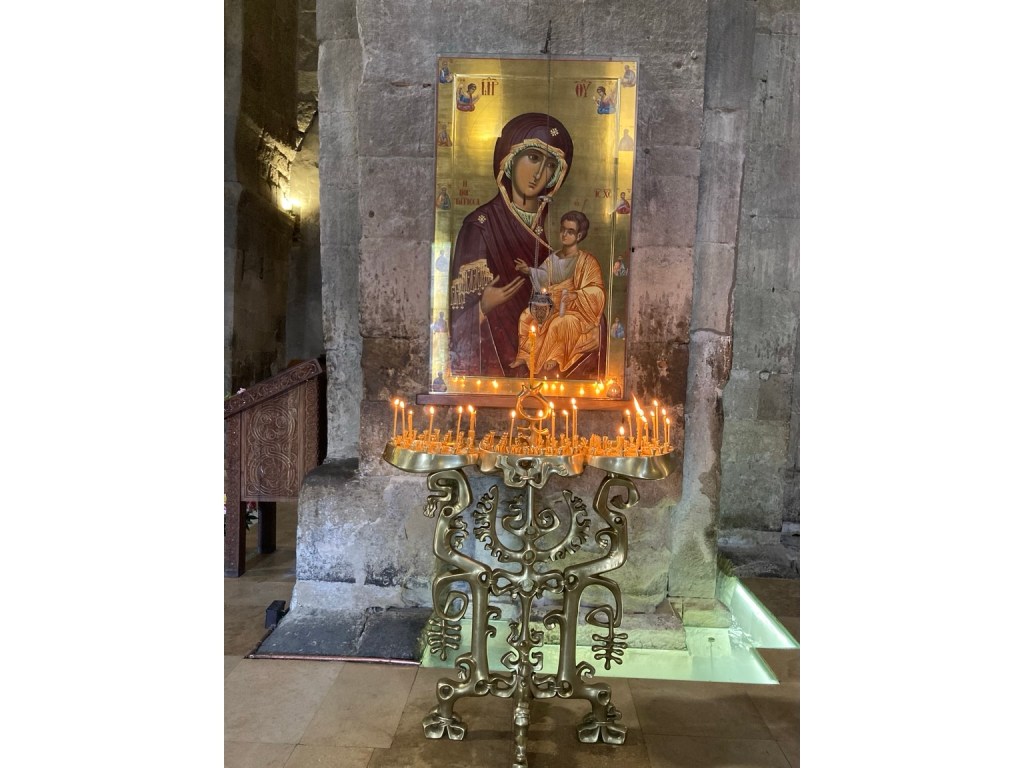
This icon show the story, with Sidonia’s corpse at the root of a cedar tree stump and an angel lifting the column toward heaven. Saint Nino, King Mirian and his wife, Queen Nana are at the front.
The present building dates to the C10th.
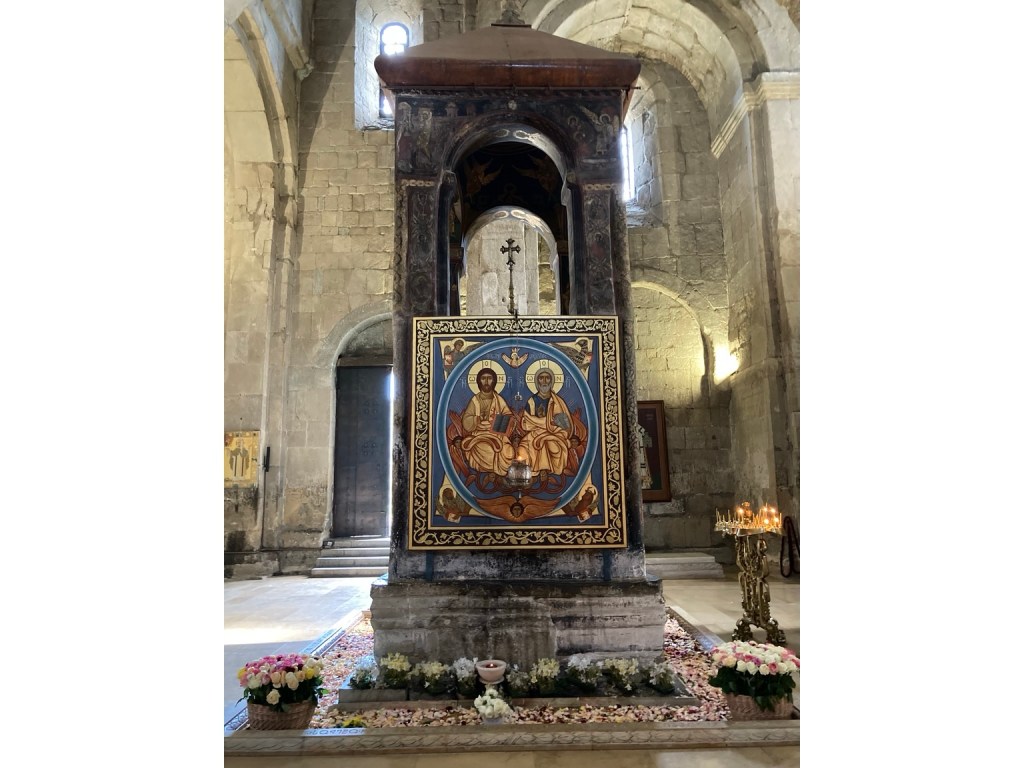
Inside we saw the burial site of Christ’s robe …
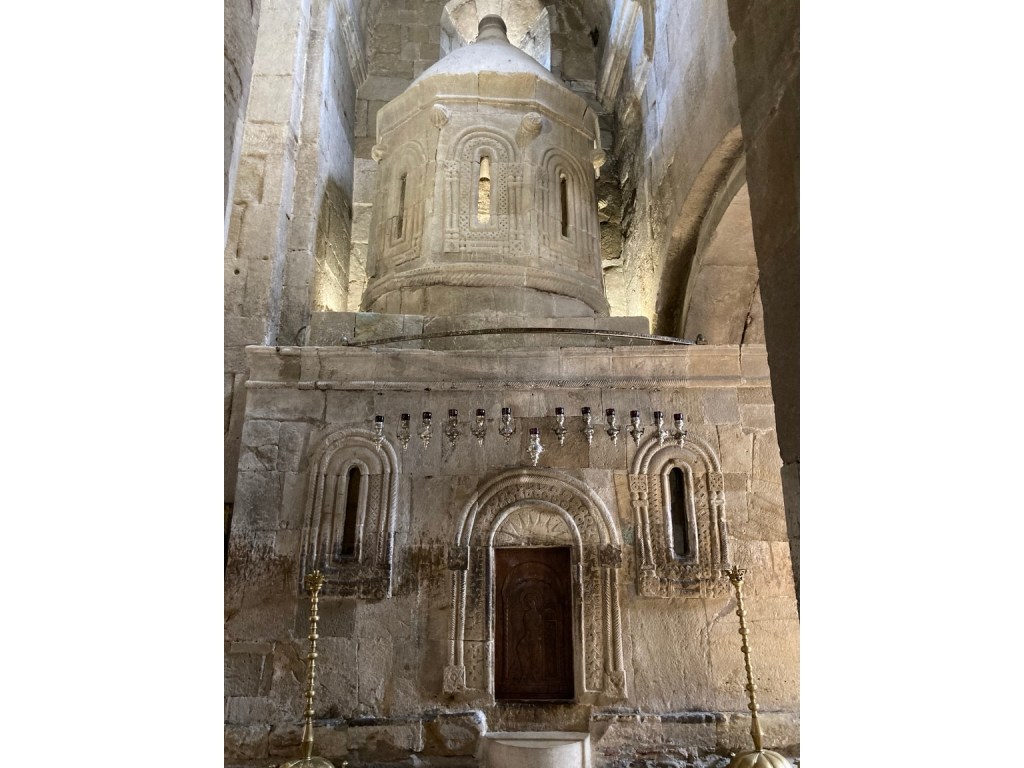
… and a symbolic copy of the Chapel of the Holy Sepulchre in Jerusalem which marks Svetitskhoveli as the second most sacred place in the world (after the church in Jerusalem).
There were lots of icons …
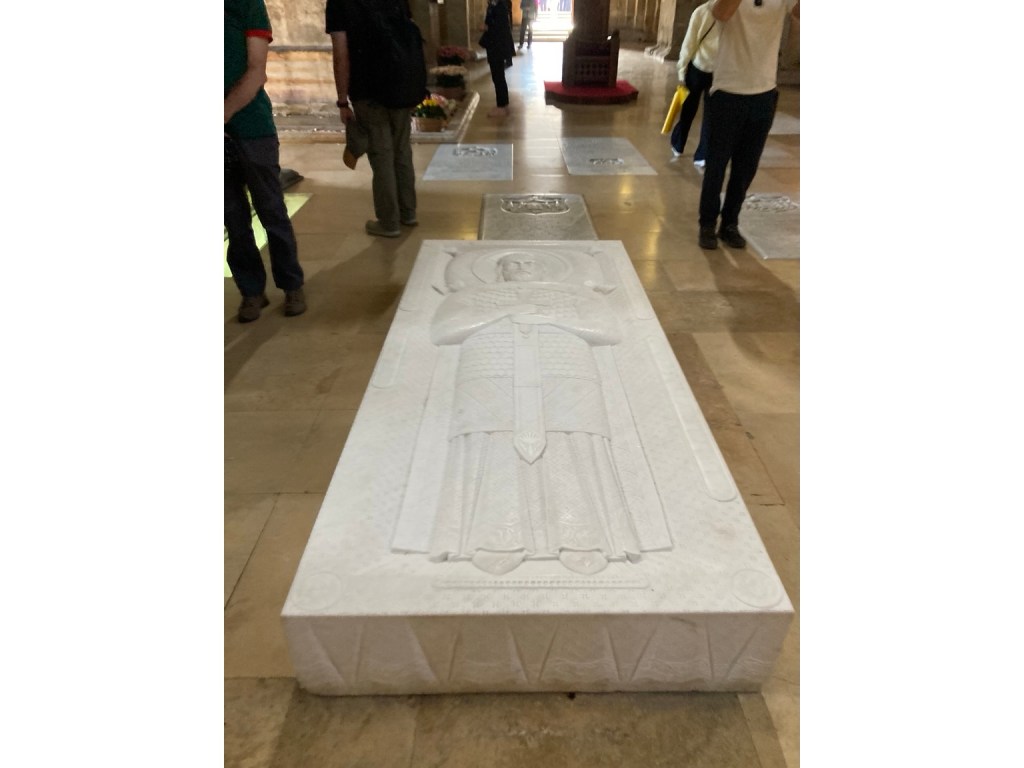
… and royal graves …
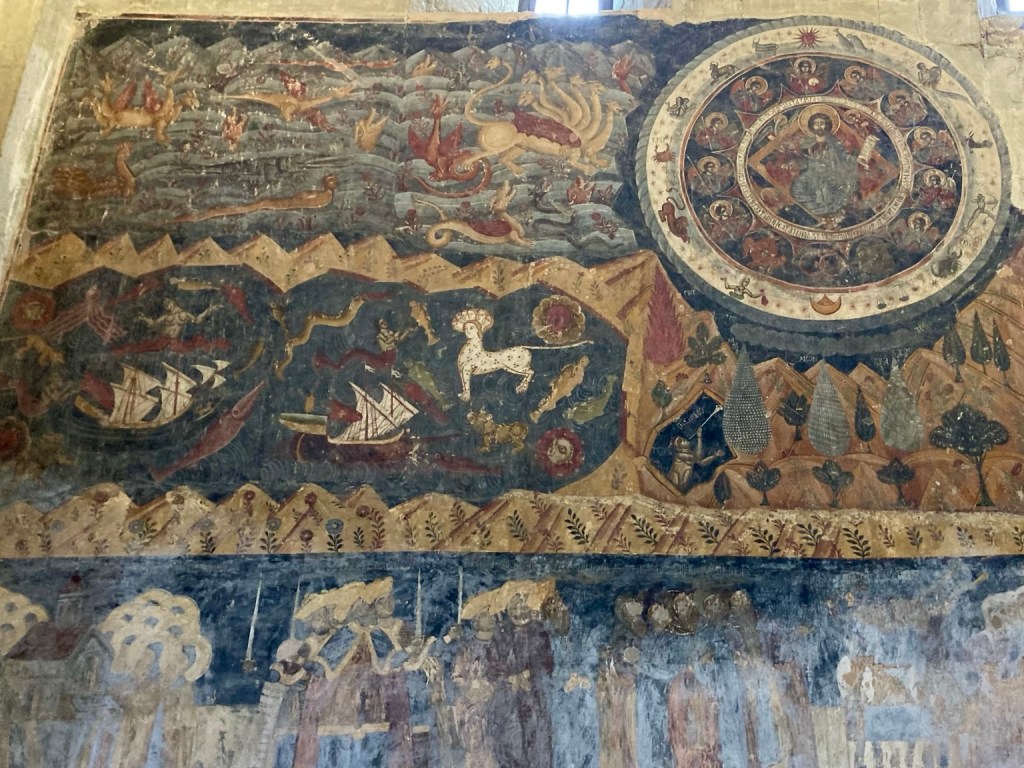
… and a C13th fresco of the Last Judgement featuring the signs of the zodiac.
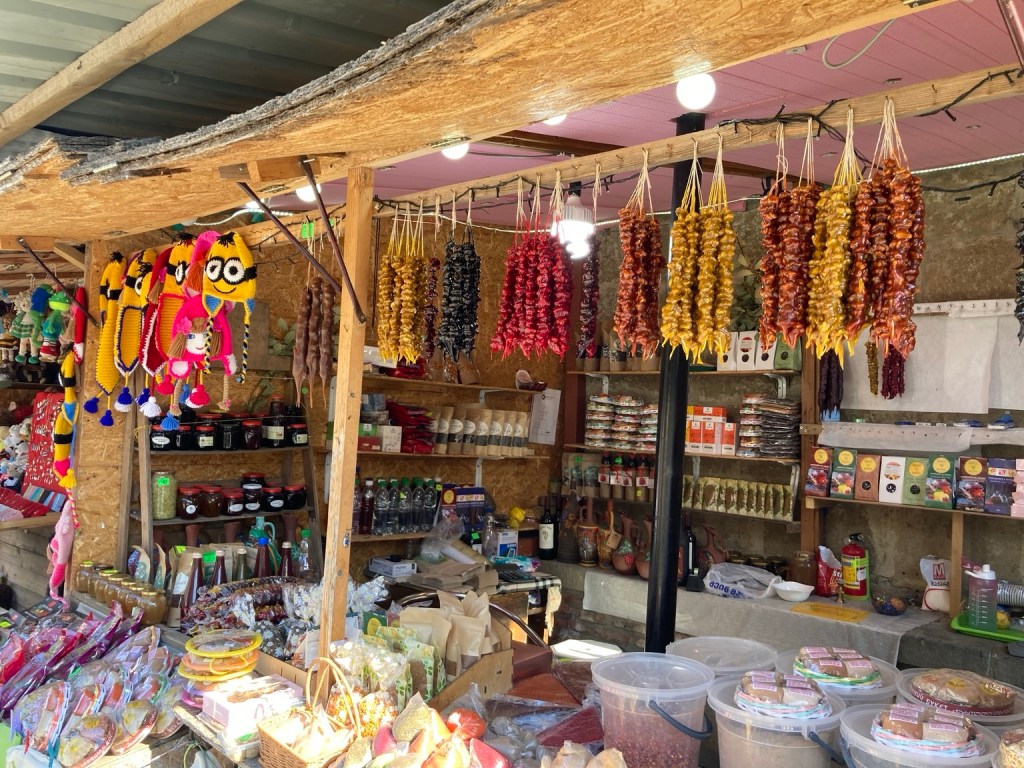
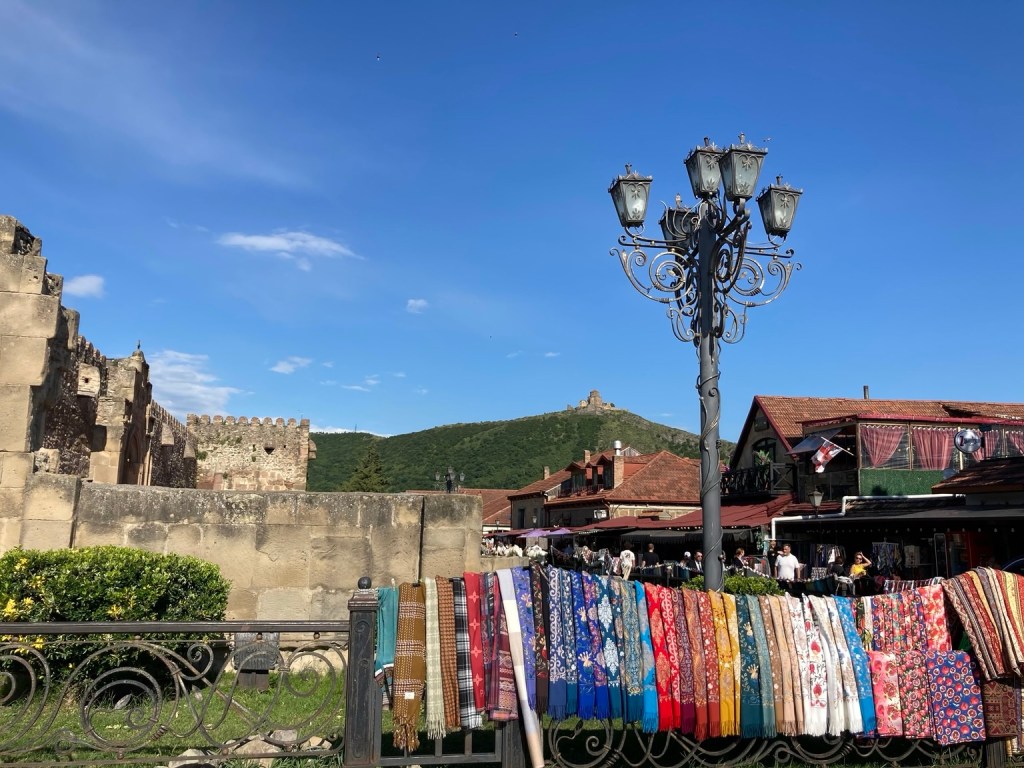
Outside, there were a number of souvenir stalls …
… and we bought some churchkhela, made by threading walnuts onto a string and dipping them into a thick, chewy fruit paste, usually made from grape juice – certainly a sugar boost …
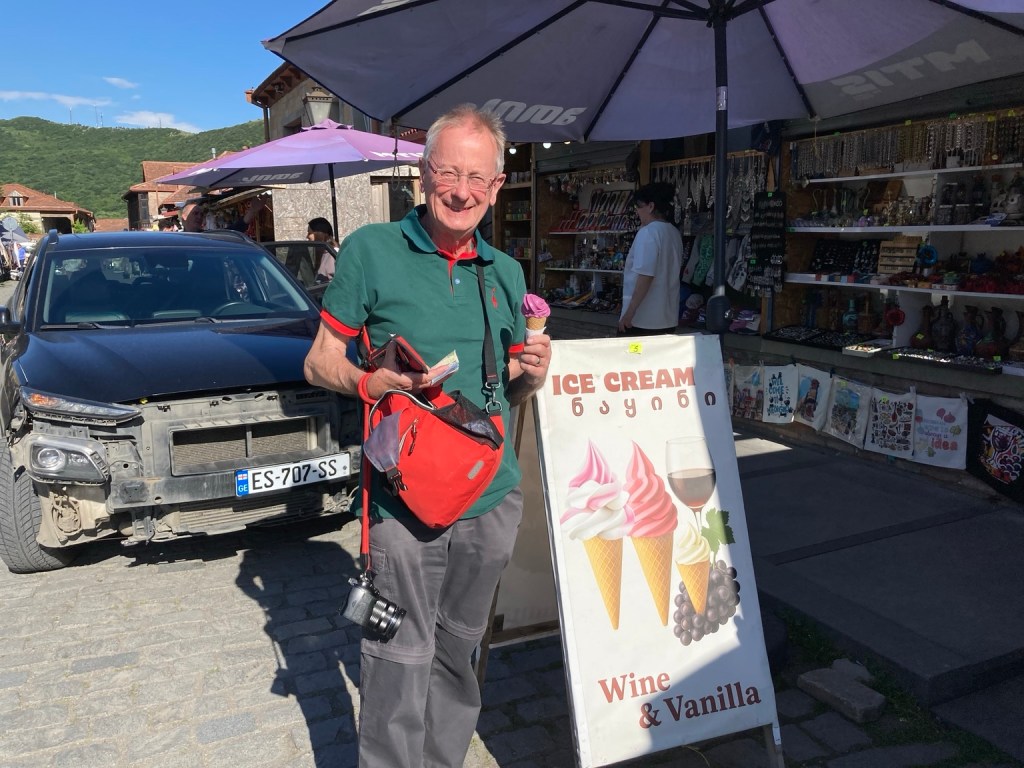
… and then tried the wine ice cream, unsurprisingly more novelty than gastro experience!
Jvari Monastery, seen on the top of the hill is also tied to the story of Saint Nino. As the story goes, this was the first place she arrived after returning to Georgia from Armenia. Finding a pagan temple on this site, she erected a large cross – famously crafted from twisted grape vines fastened together with strands of her own hair – to make this one of the country’s first Christian pilgrimage sites.
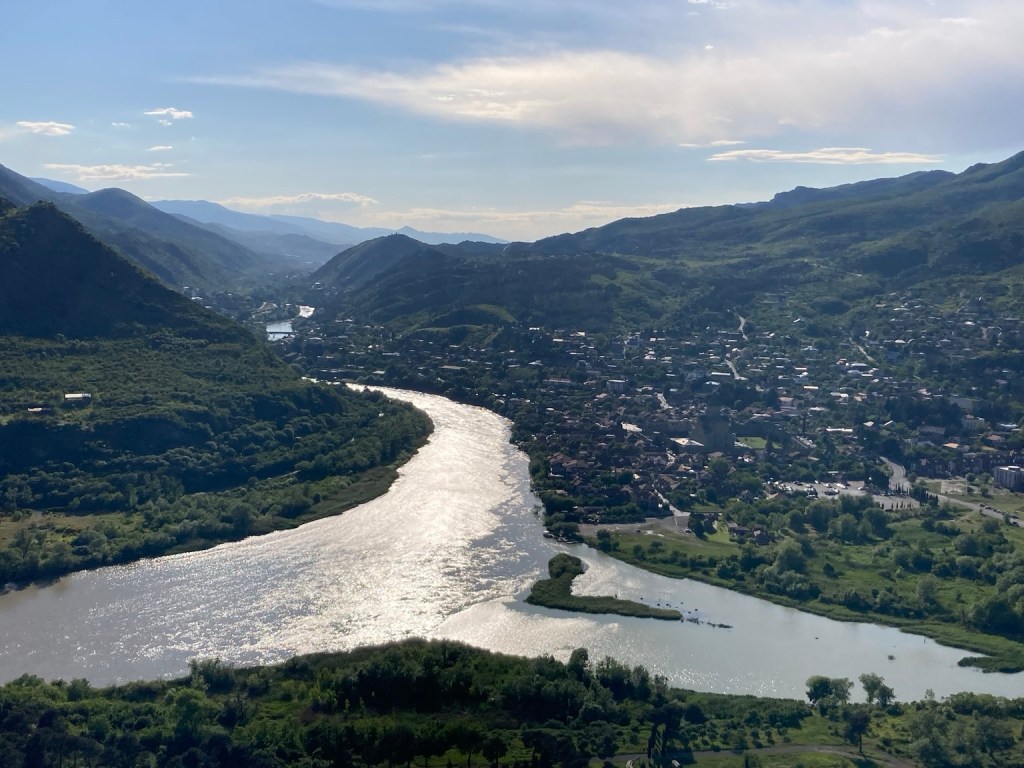
We went up to see the view of the city and the two rivers meeting but it wasn’t the best time of day for a photo.
Back in Tbilisi, we stopped at Leila’s Cafe and after our big lunch, just shared a couple of salads, one with ricotta and beetroot and the other with crispy fried cauliflower and walnut sauce with a glass of wine each as we watched the world go by.
With a 5 hour flight and 3 hour time difference, we arrived at our apartment in Tbilisi after dark which is always disconcerting, then went straight out to dinner before heading to bed after a long day.
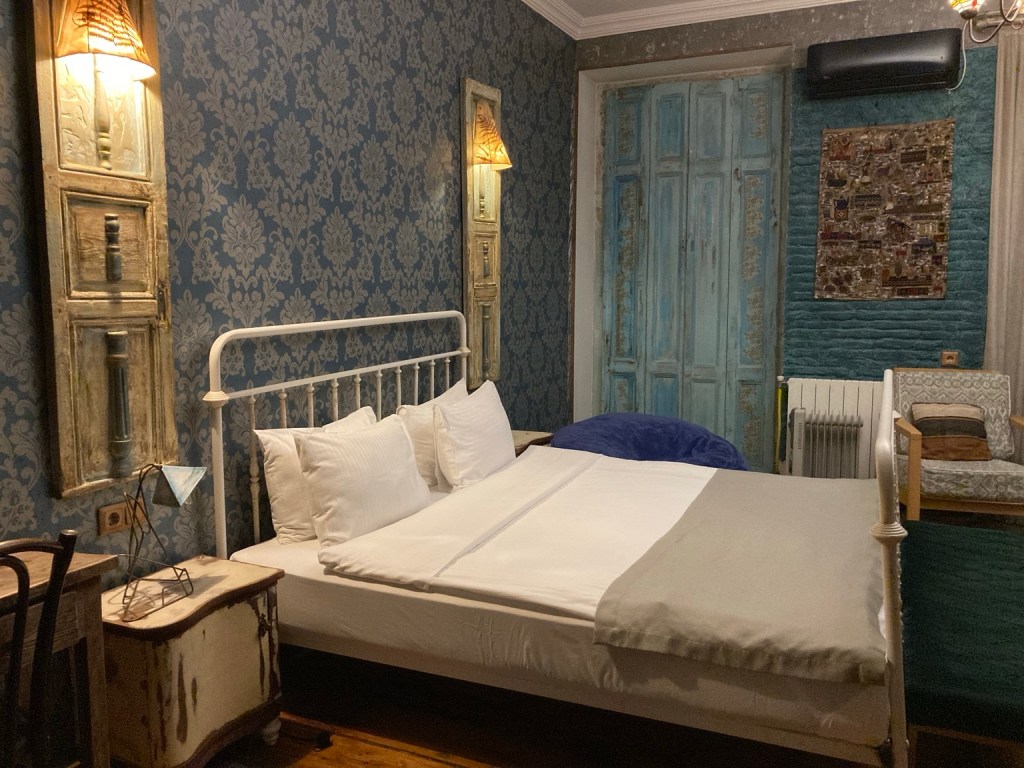
We are staying at The Arts Hotel in the Sololaki District, a C19th house which has been thoughtfully renovated into vintage style apartments.
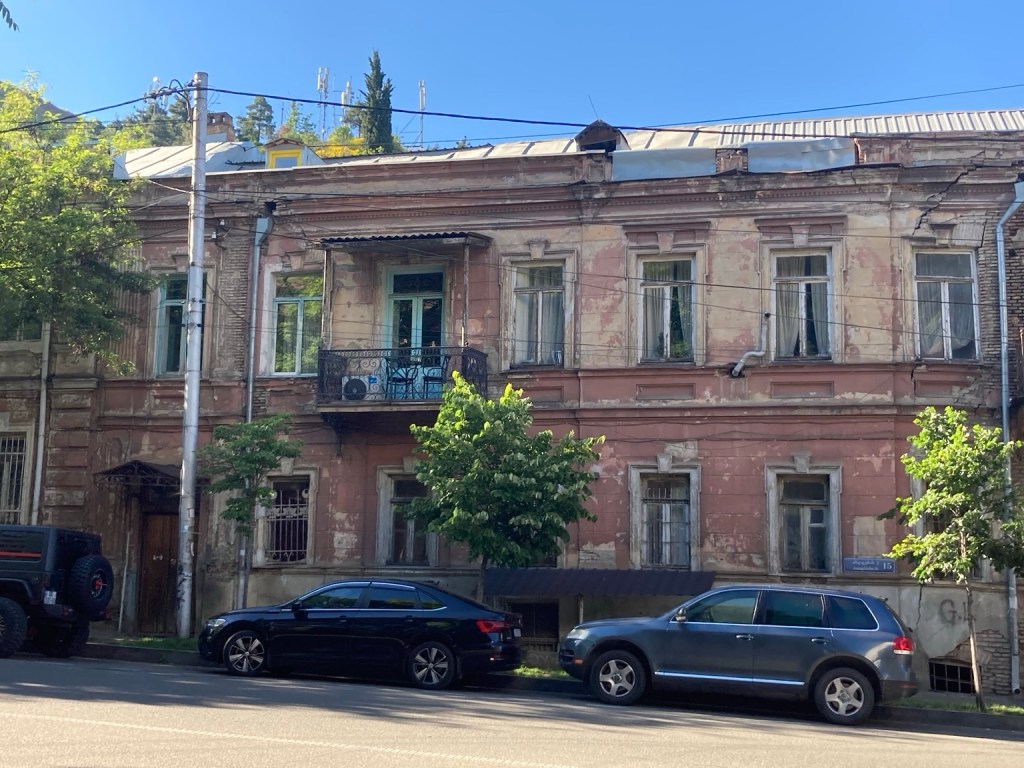
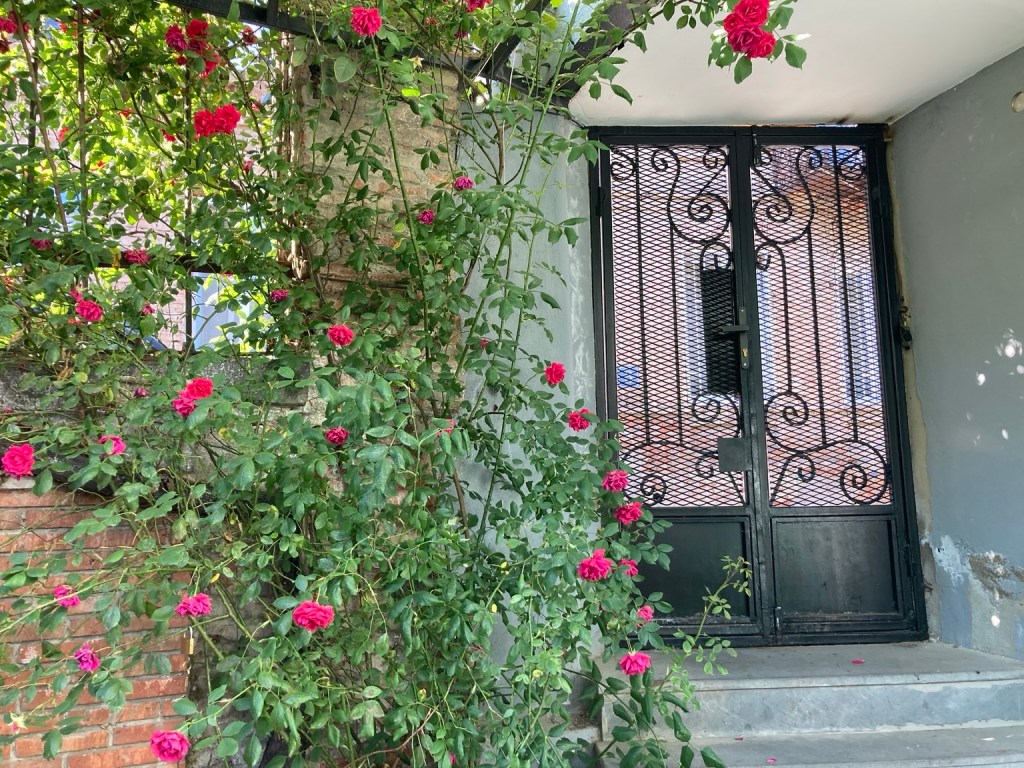
Sololaki is one of the oldest and most atmospheric residential neighborhoods in the city, famous for its steep, cobblestone streets and stunning, faded architecture. It was once the affluent enclave of Tbilisi’s wealthiest merchants, and peeling walls and faded entrance hall paintings are part of the district’s bohemian charm.
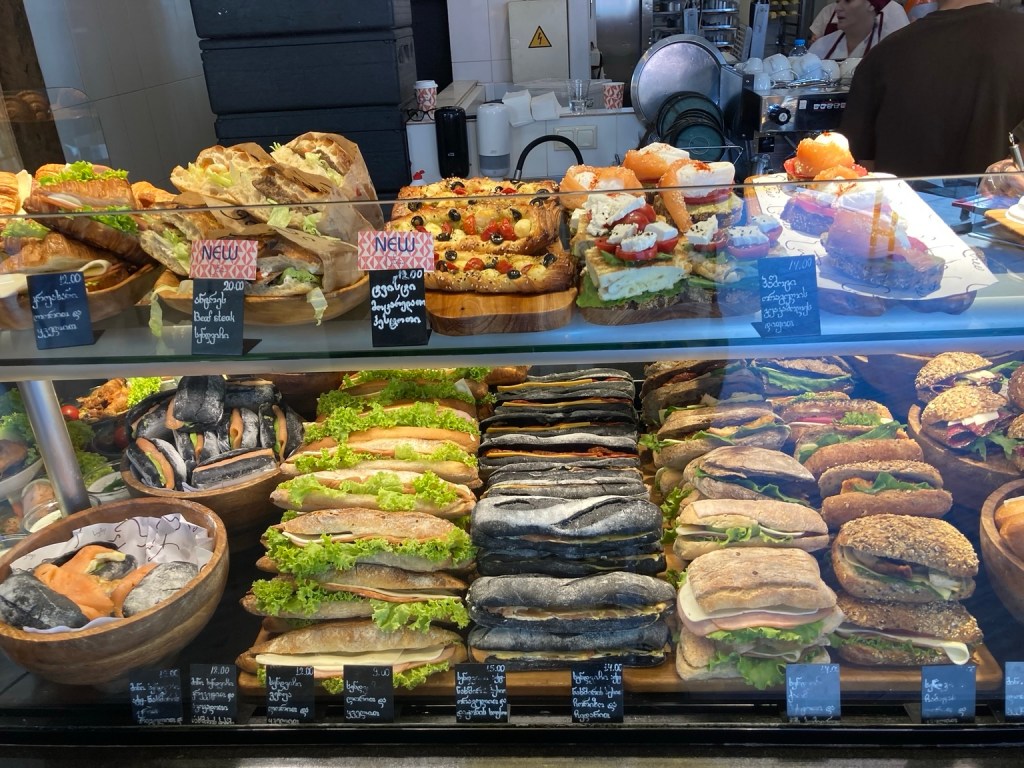
Apparently traditionally breakfast isn’t a thing here, but modern style European bakers have become popular in the city and we have one just across the road called Entreé filled with treats and serving great coffee.
Today is Sunday, and as we walked to the city centre, we were looking out for a church.
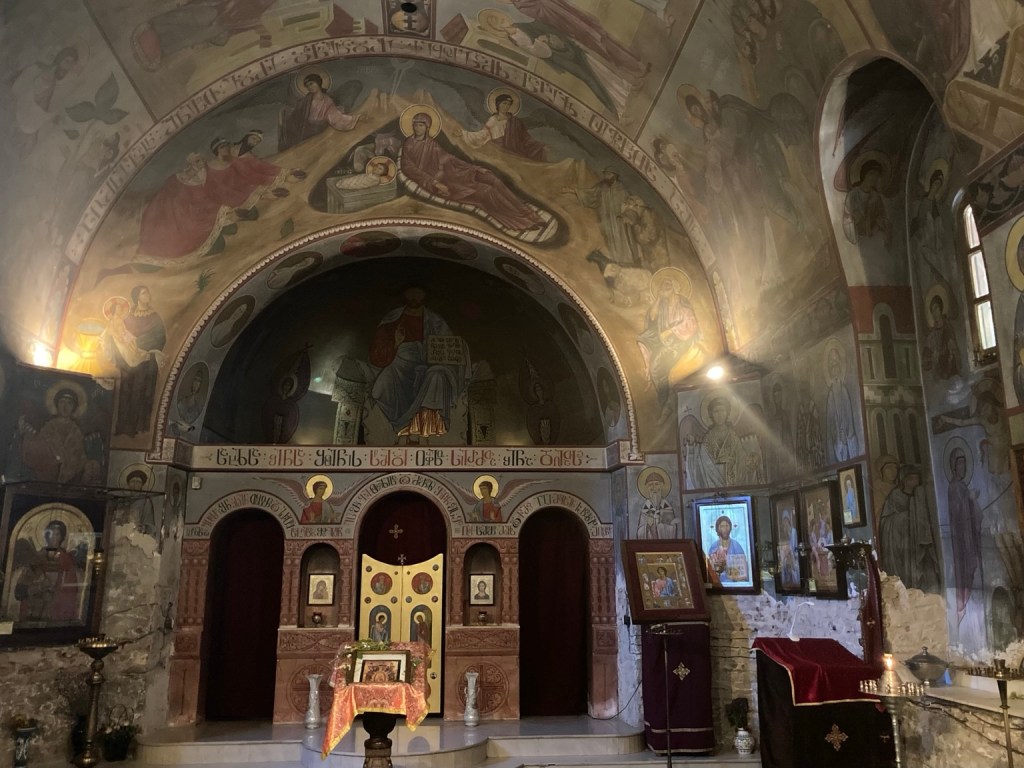
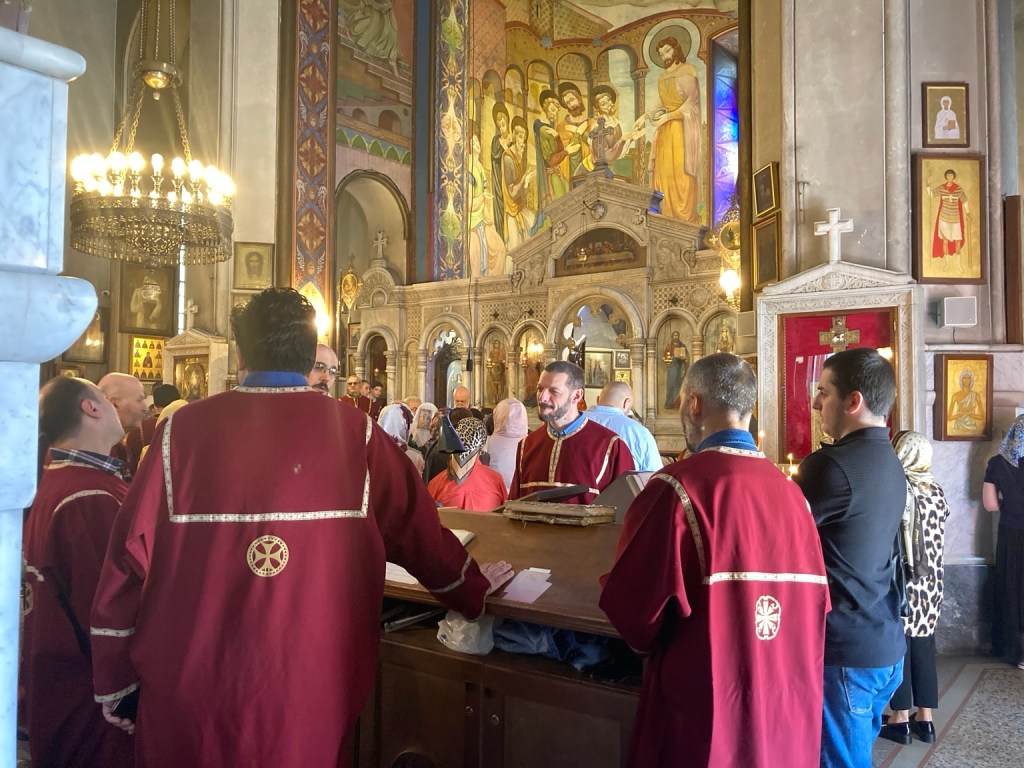
There is an ancient tradition of polyphonic singing in Georgia that goes back to antiquity and is part of every day life – in the home, in the fields, and at celebrations with songs passed down in each community. Sunday morning is the best time to experience the three-part a cappella polyphonic singing that the Georgian Orthodox church is renowned for, sung by a small choir of men as part of the liturgy. It seemed quite normal for members of the congregation to come and go during the service, so it was easy to slip in and stand at the back and listen and I took a discreet photo.
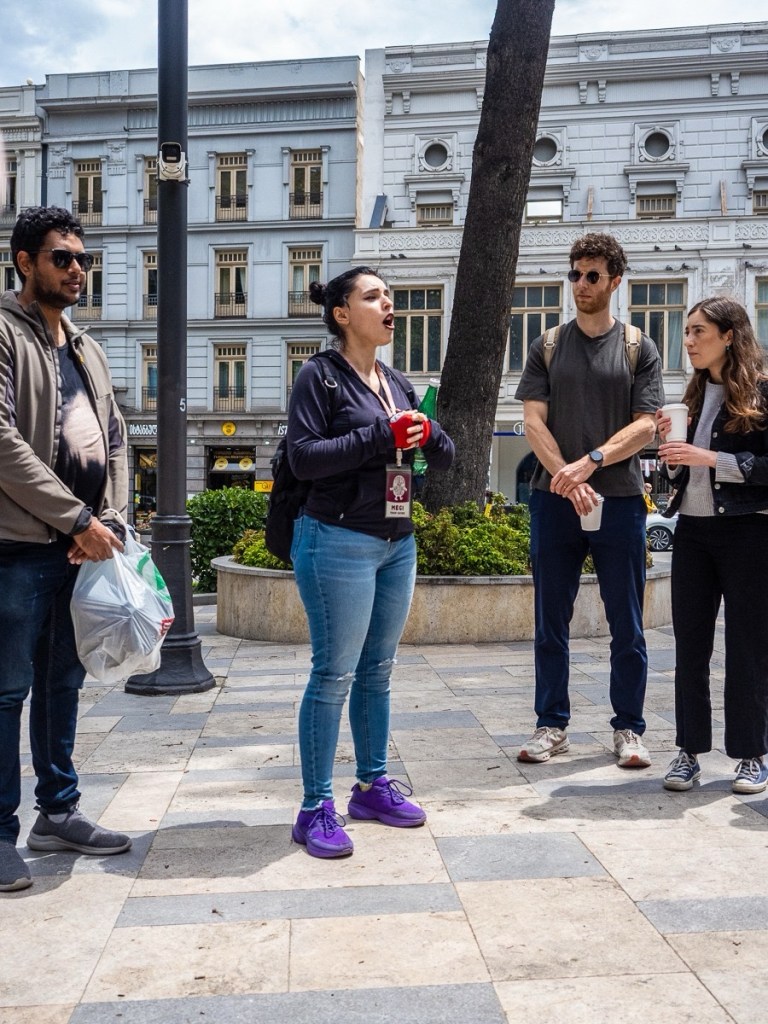
After our long day yesterday, joining a walking tour seemed a good idea so we headed to meet our guide in Pushkin Park and she took a group of us on a gentle stroll through the city for a couple of hours, introducing us to Georgia and Tbilisi.
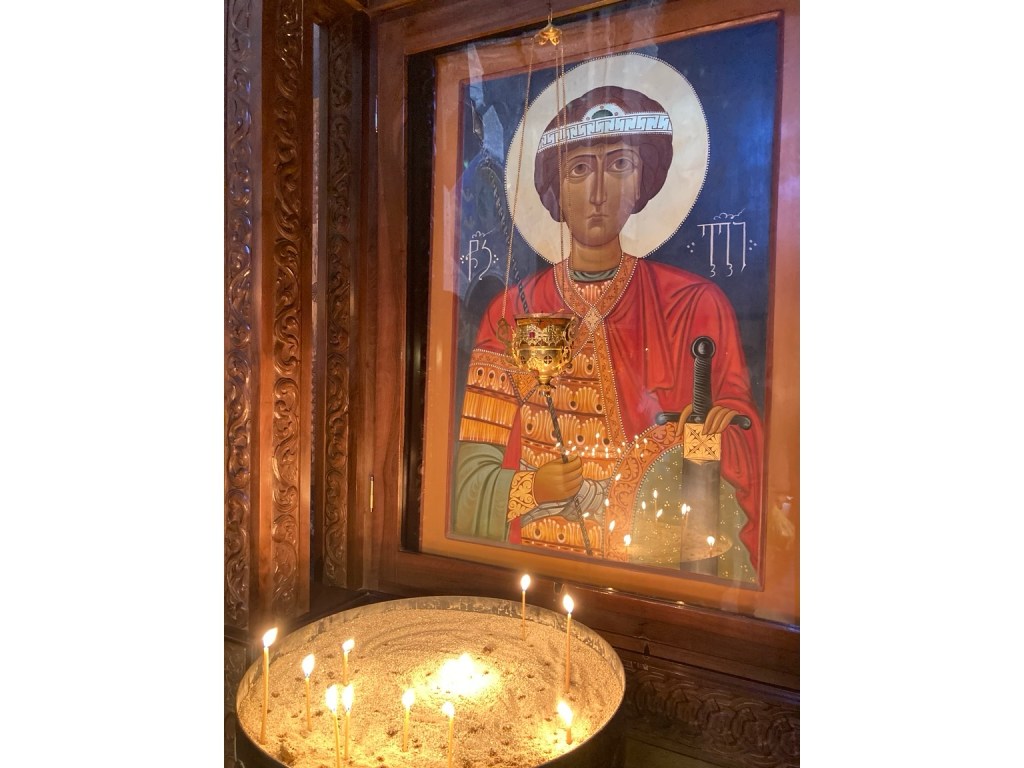
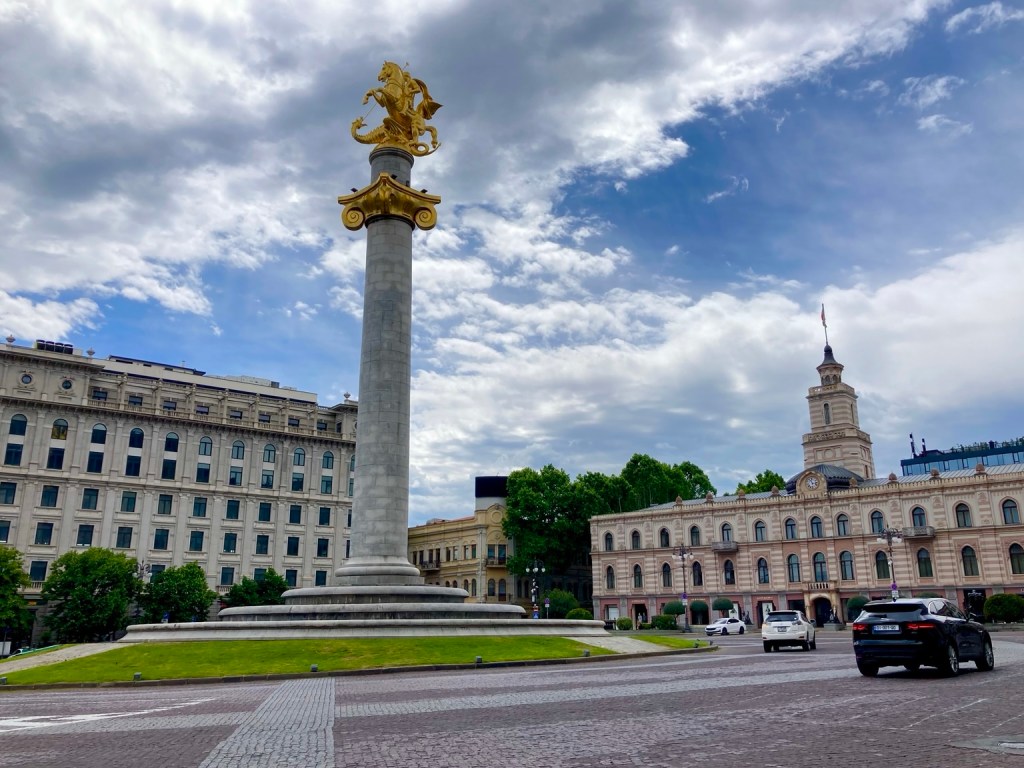
We began at Freedom Square where a column topped by a golden St. George stands amidst the busy traffic.
He might be the patron saint, but he is not the reason Georgia has its name. Far more likely it came from Gurjistan or land of the wolves as the Persians called it, although the Greek word Georgos meaning farmer is also a contender! In any case, Georgians don’t use this name at all, they refer to their own country as Sakartvelo which means “land of the Kartvelians” after the Kartli who united the country in the Middle Ages.
Anyway, back to the square which was first called Freedom Square in 1917 after the Russian Revolution, being renamed for Lenin and Stalin during Soviet times and then Freedom Square once more in 1991 following the collapse of the Soviet Union with St George being unveiled in 2006.
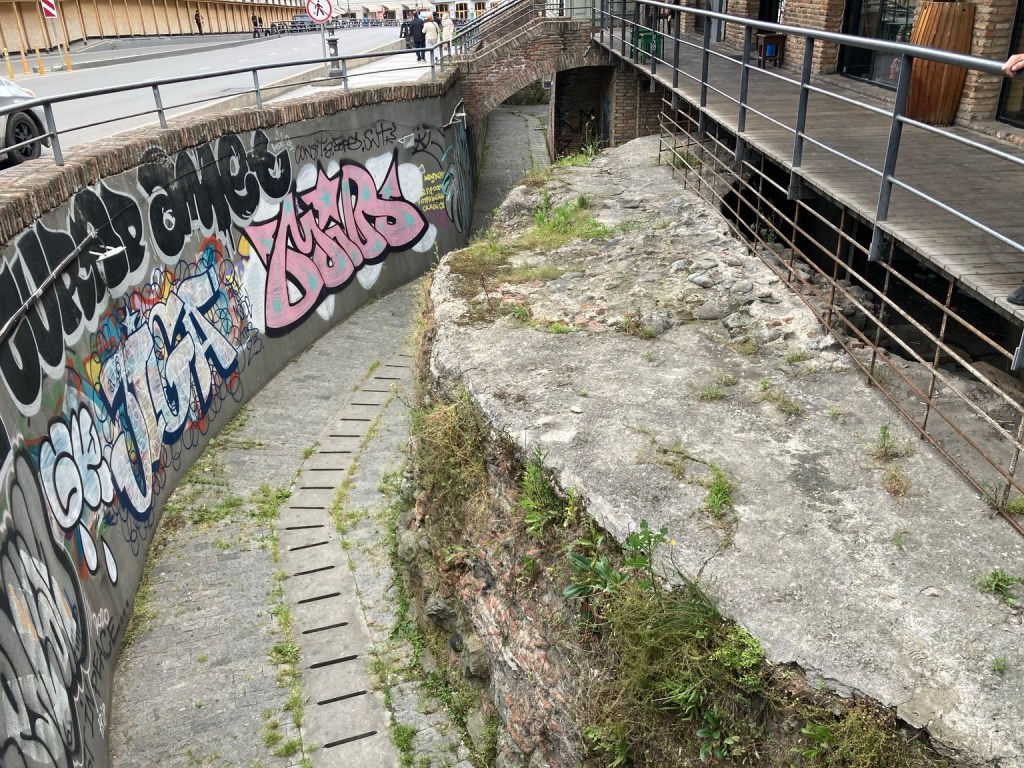
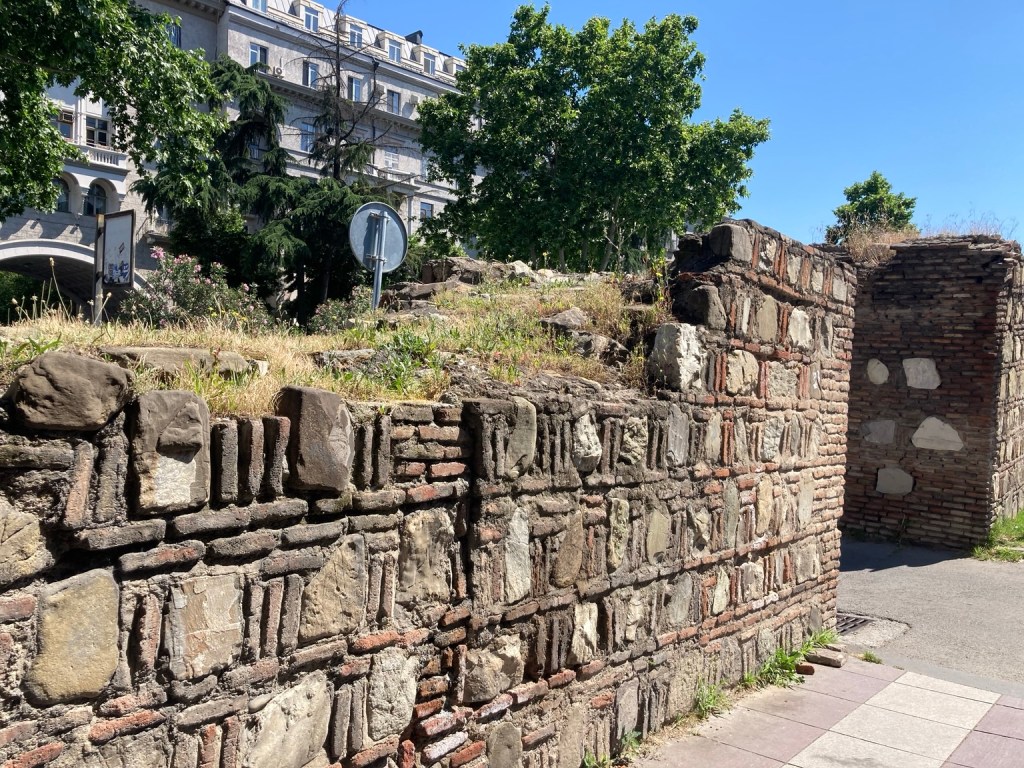
From here, we followed the line of the old city walls, foundations of which were recently rediscovered and preserved.
Tbilisi became the Georgian capital in the C5th and its strategic location on the Silk Road, has meant it has faced dozens of attacks, sieges, and sackings over its 1,500-year history from Arab, Persian, Mongol, Russian and Soviet forces.
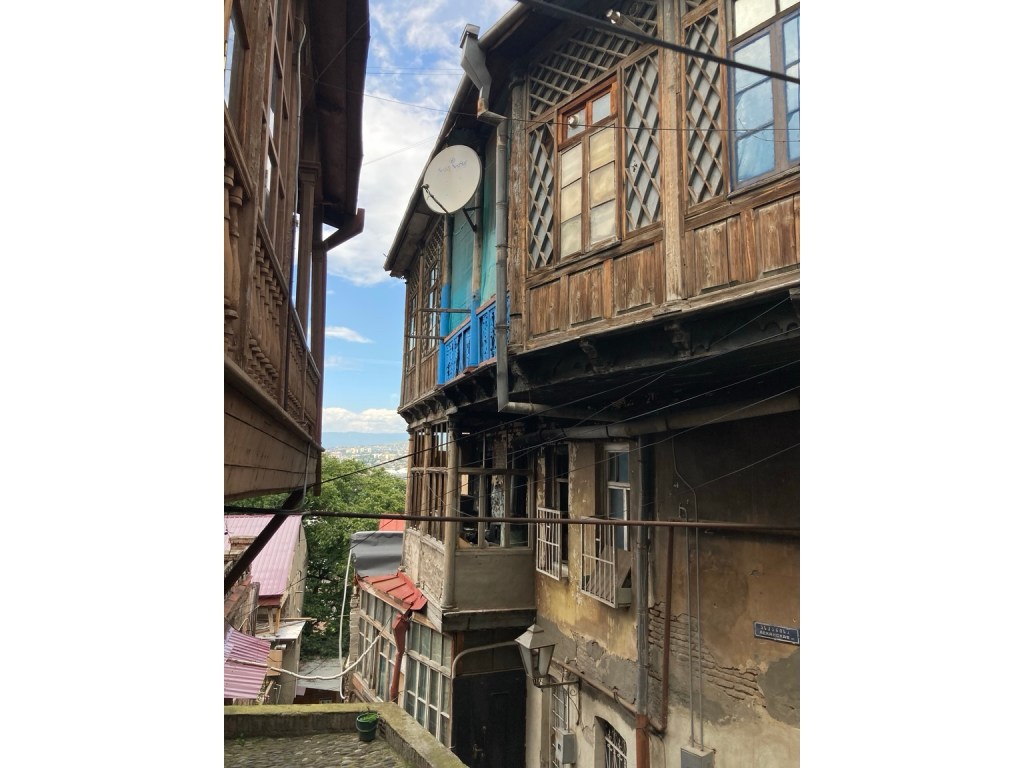
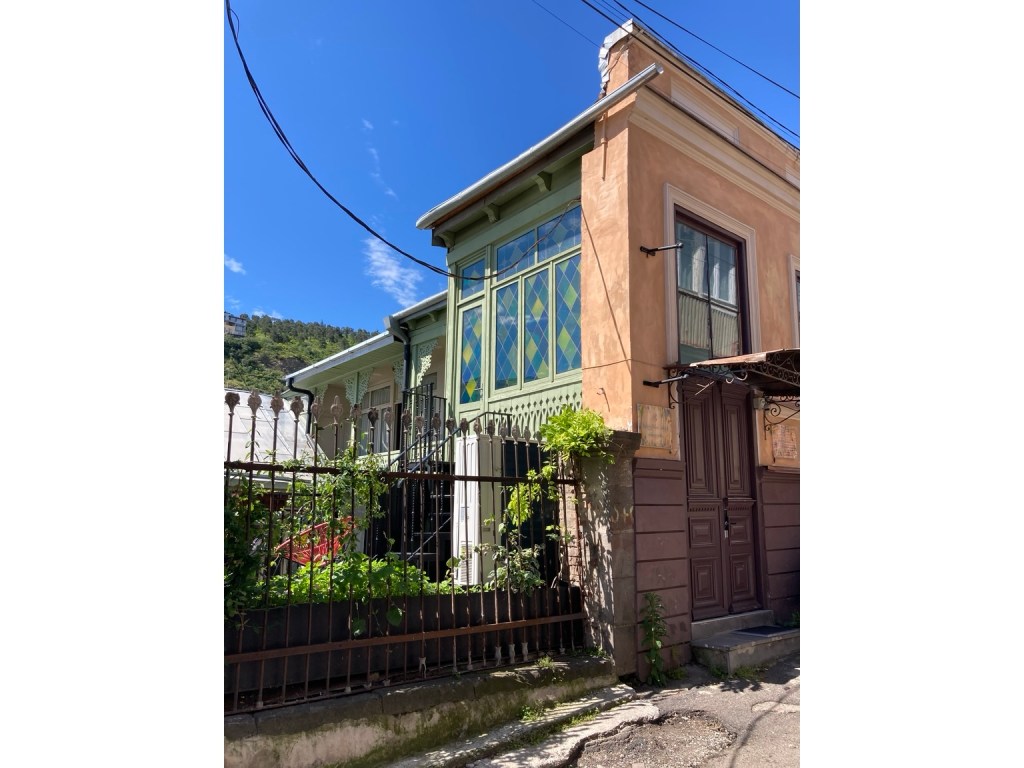
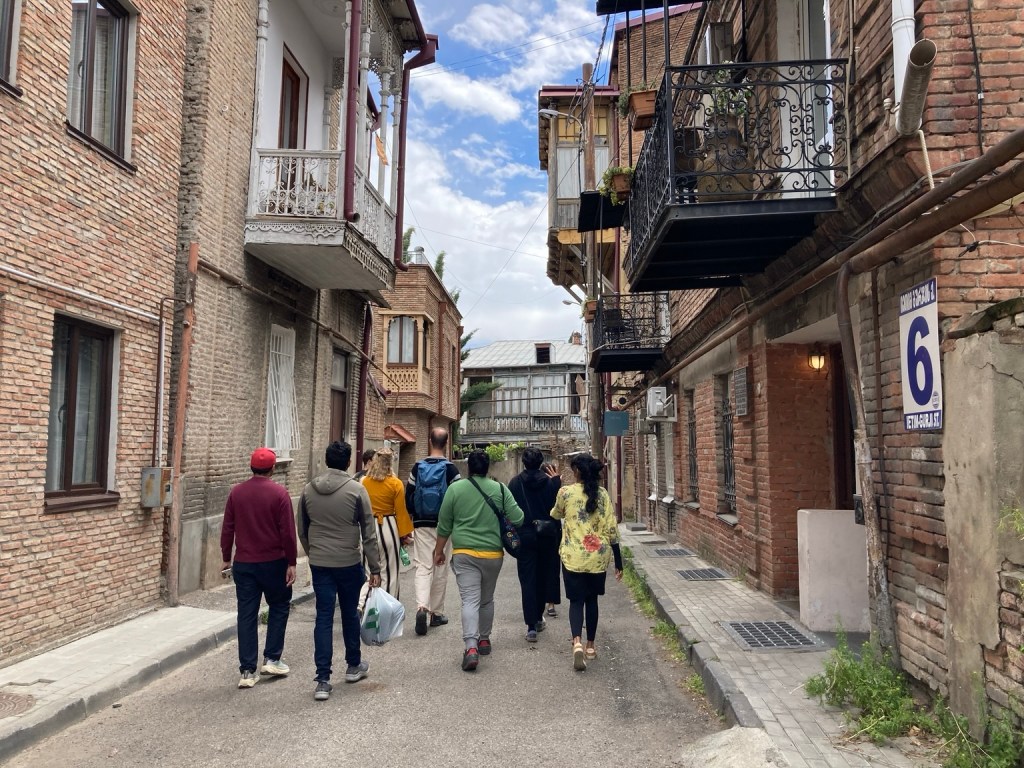
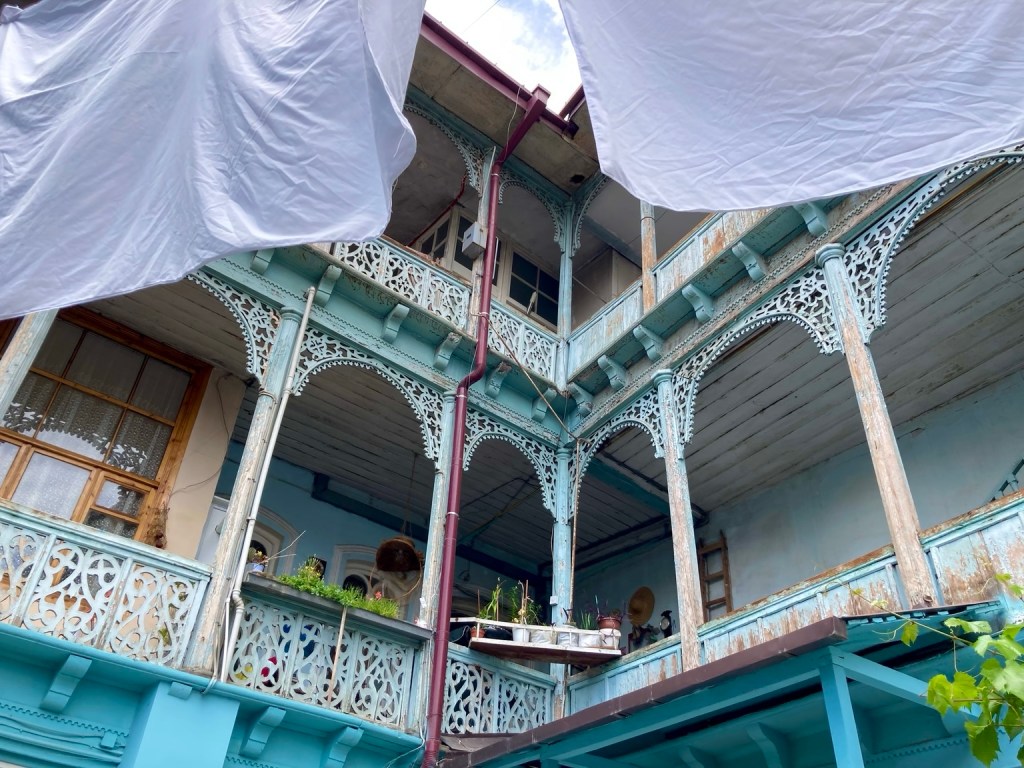
We will see a number of early buildings in the city which have miraculously survived, but most were built after the Persian invasion of 1795 destroyed much of the city. The old town is a maze of winding streets lined with traditional balcony houses with intricately carved, open wooden balconies and lace-like fretwork. Many are in dire need of renovation, but this adds to their charm and certainly their photographic appeal!
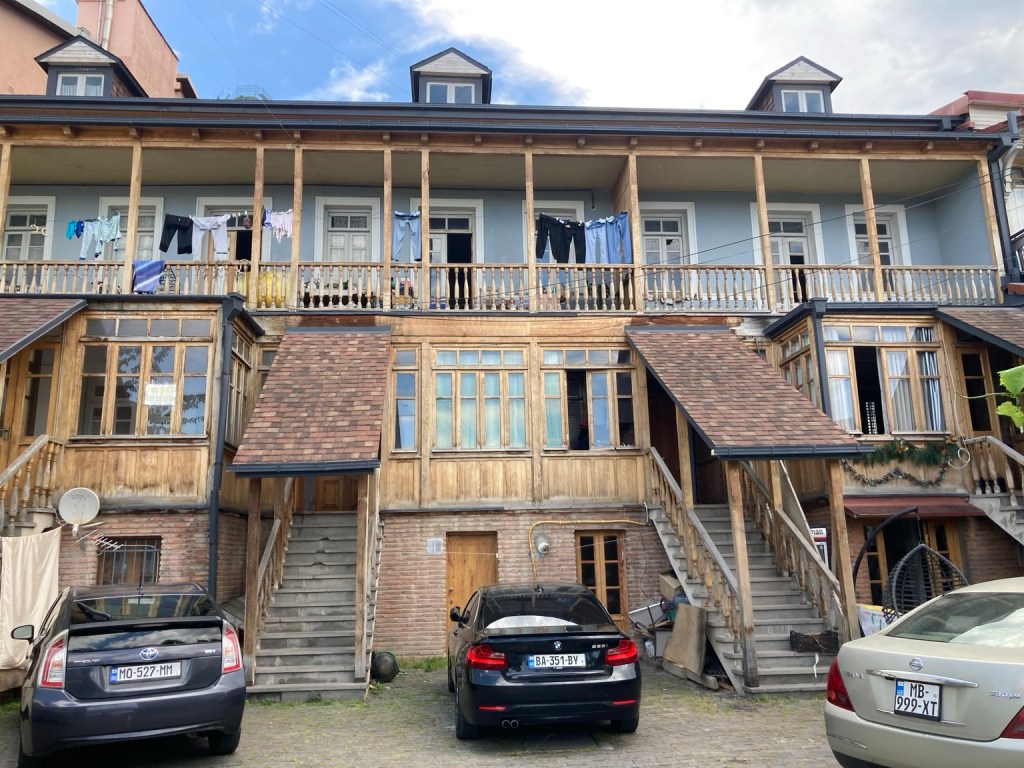
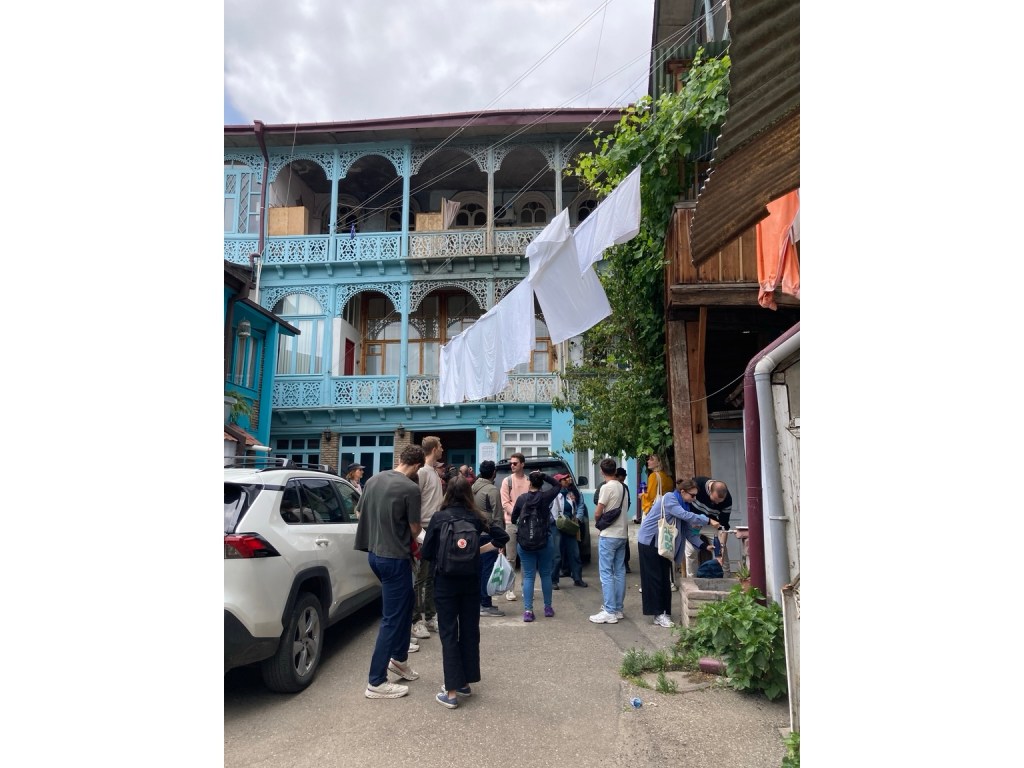
This blue house is one of the oldest, built for a wealthy business man, but then divided up in Soviet times to provide accommodation for many families. This was a common occurrence and introduced communal living around a shared courtyard or ezo which became typically Georgian.
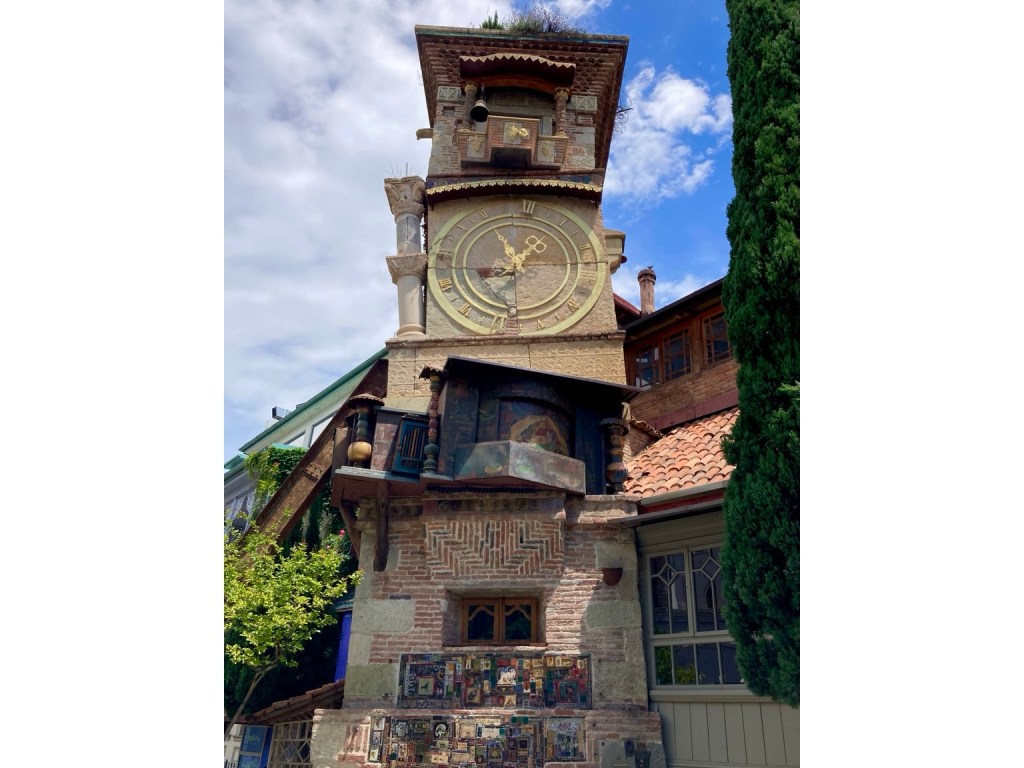
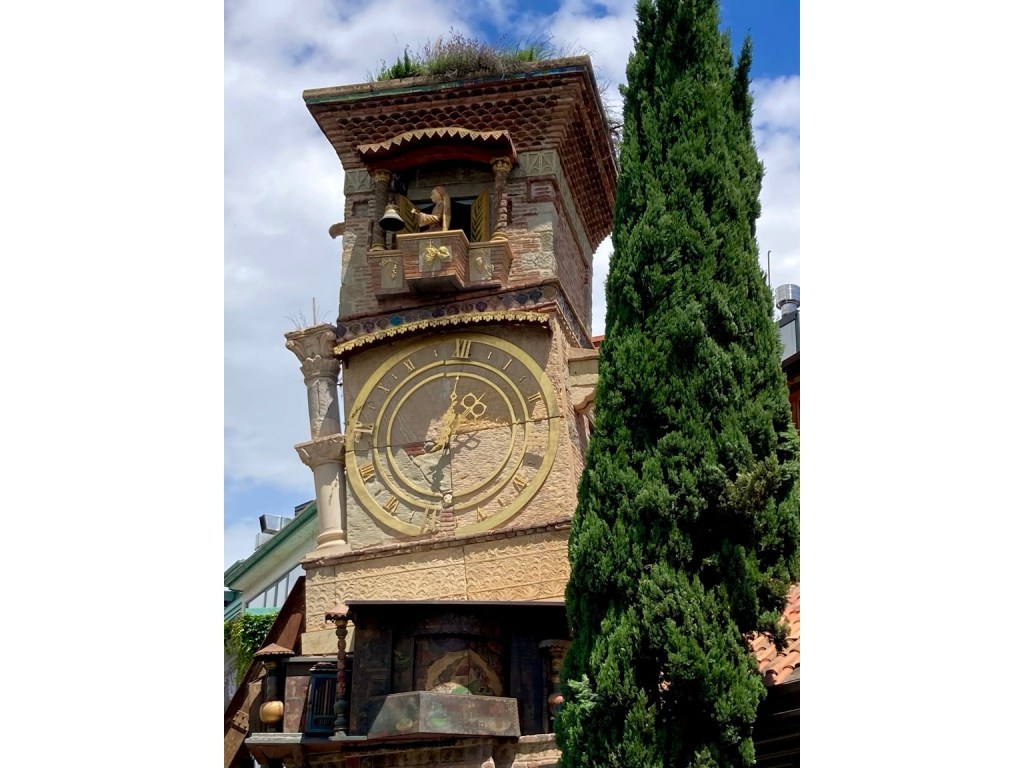
Heading to the centre, we came to the Gabriadze Clock Tower, a quirky landmark created by puppeteer Rezo Gabriadze deliberately on the wonk!
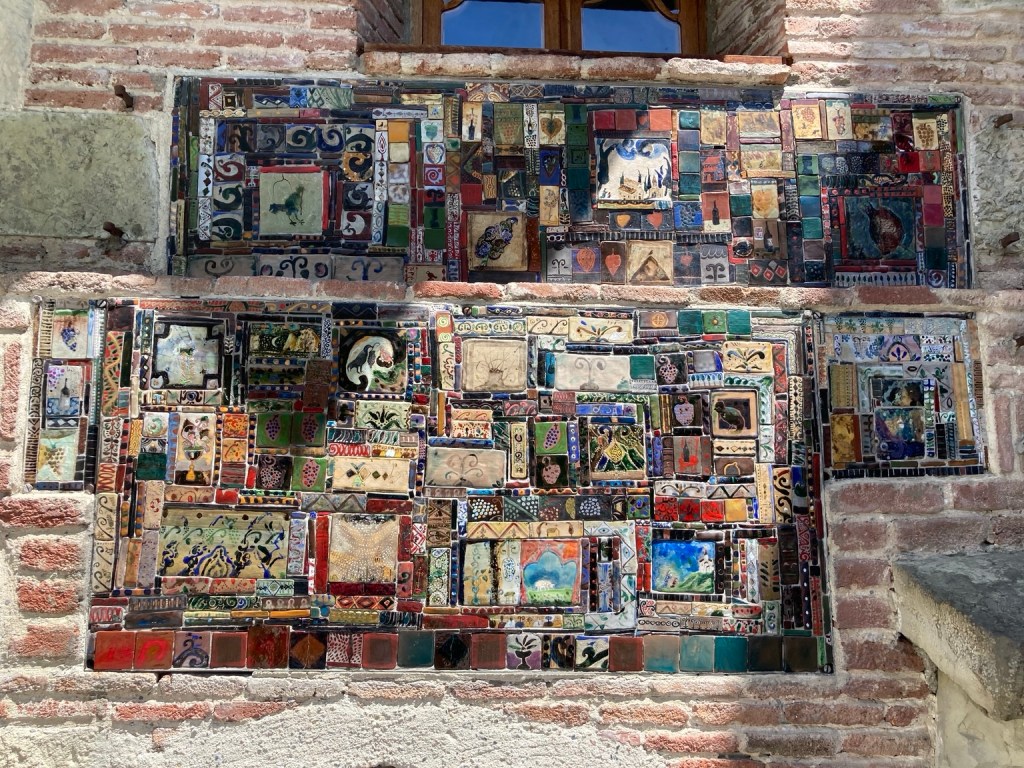
Handmade ceramic tiles decorate the outside …
… and a golden angel emerges to strikes the bell on the hour.
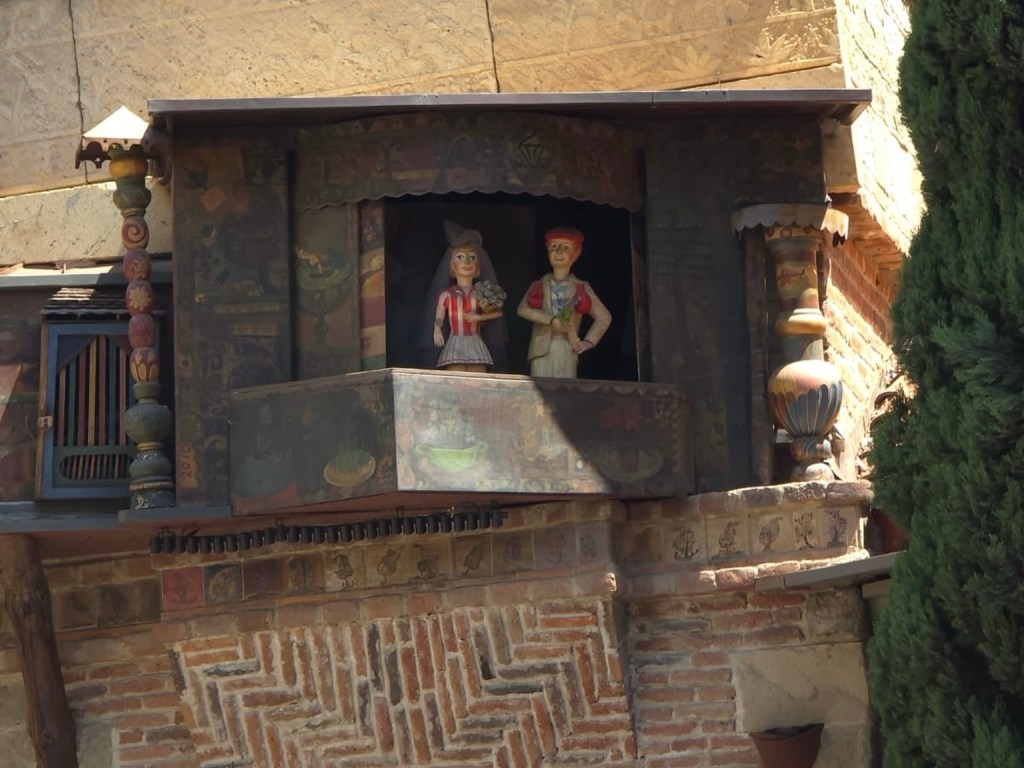
There is also a brief puppet display of the circle of life at midday.
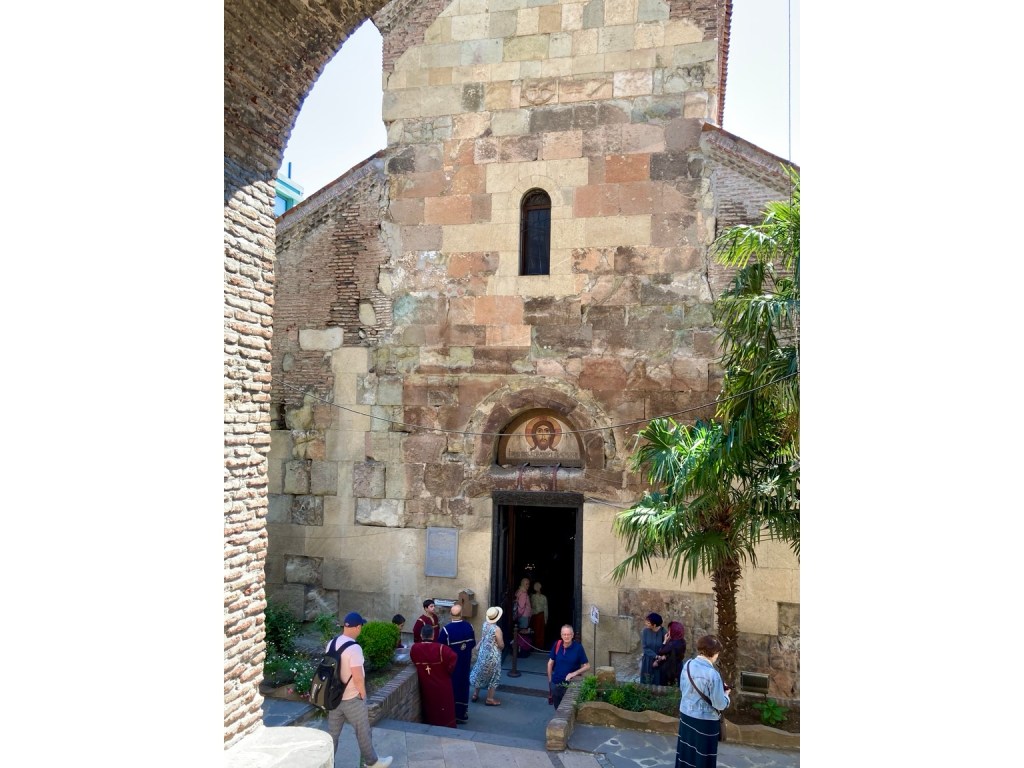
Now from the old to the new – the Anchiskhati Basilica of St Mary, is the oldest surviving church belonging to the Georgian Orthodox Church and dates from the C6th …
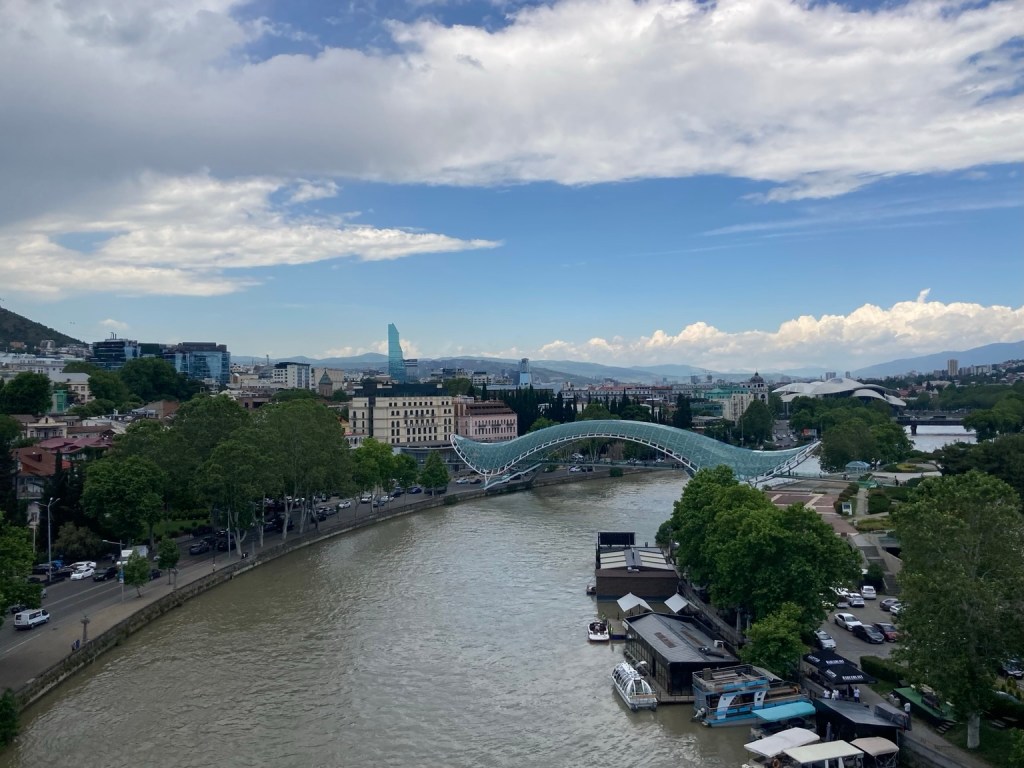
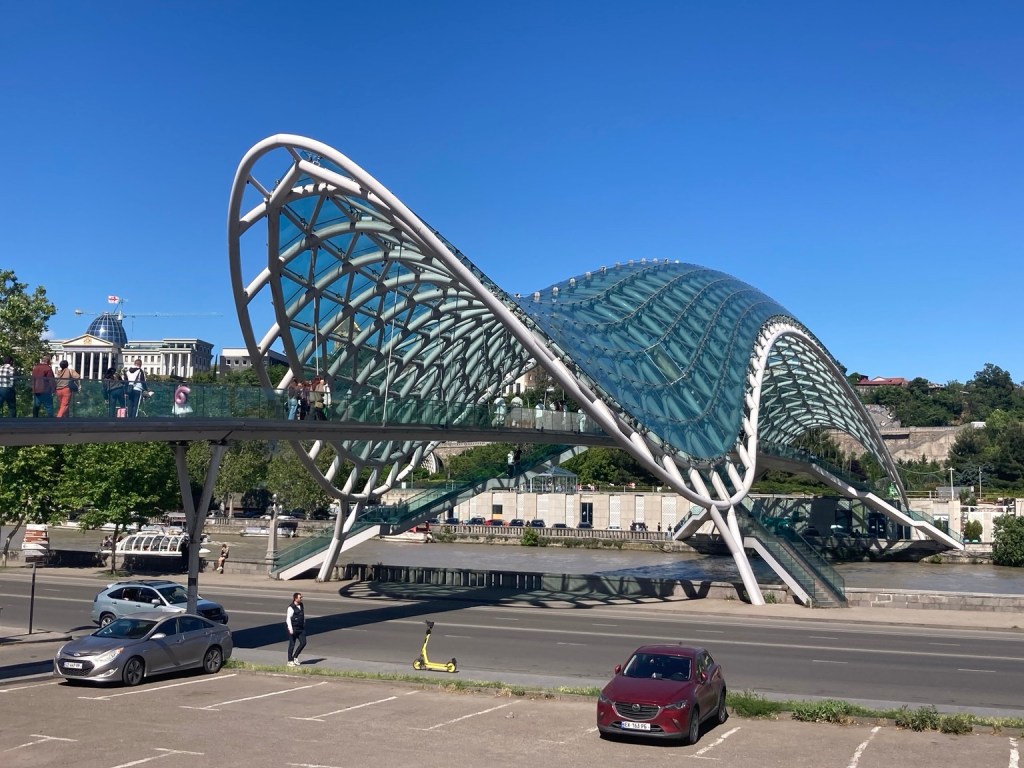
… and this is The Peace Bridge which sends a message of peace by morse code into space every hour.
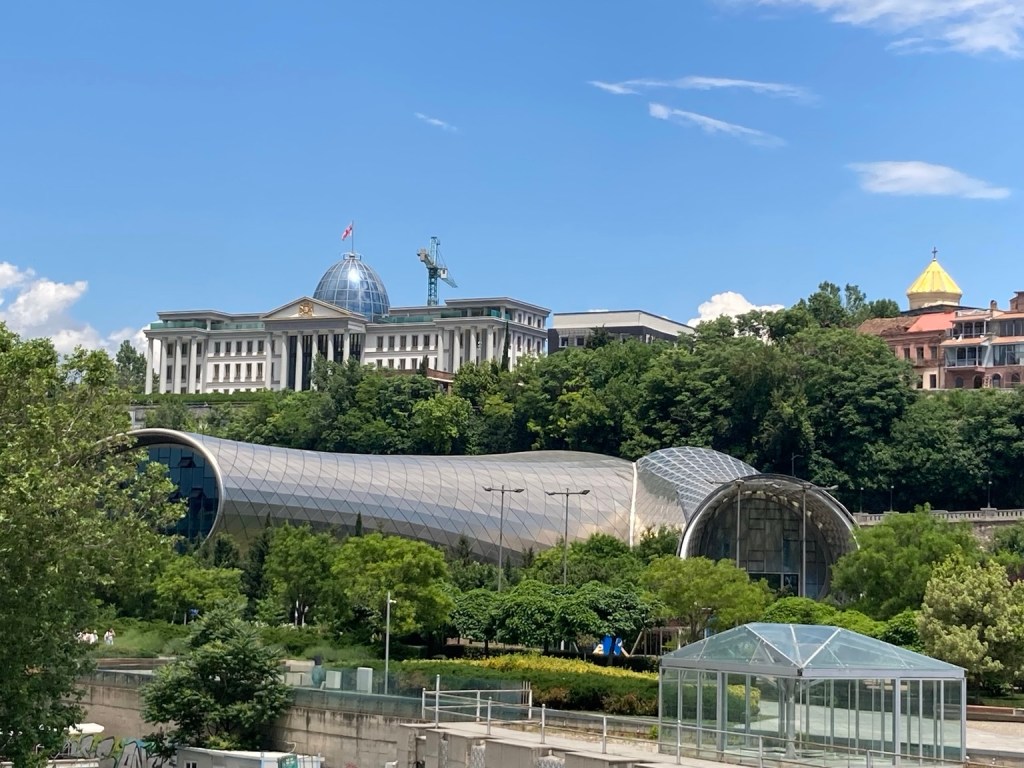
Following the Rose Revolution of 2008 which brought an end to the Soviet-era government in Georgia. there was a new policy of transparency. This was promoted by a public building programme favouring glass buildings which include both the bridge and the Ceremonial Palace of Georgia with its iconic curved glass cupola seen behind.
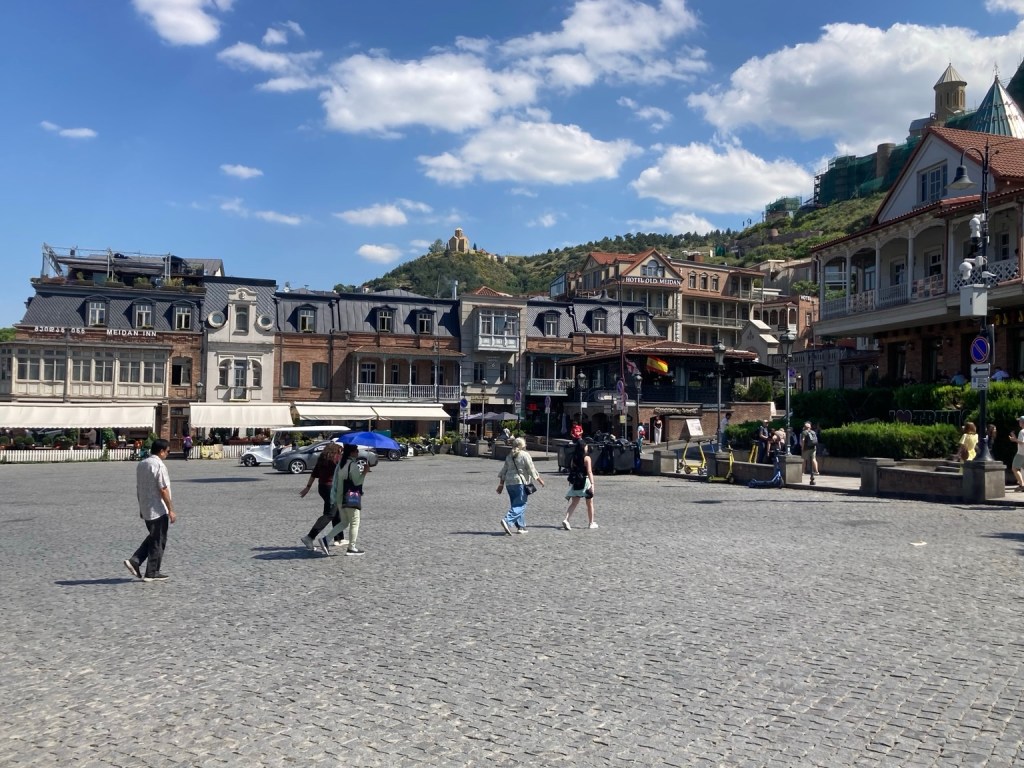
We continued through the old town finally ending up at the Meidan, once the site of Tbilisi’s bustling main bazaar, but now a busy junction.
From here we could just see the Narikala Fortress which is closed for restoration and probably looks quite striking without its scaffolding.
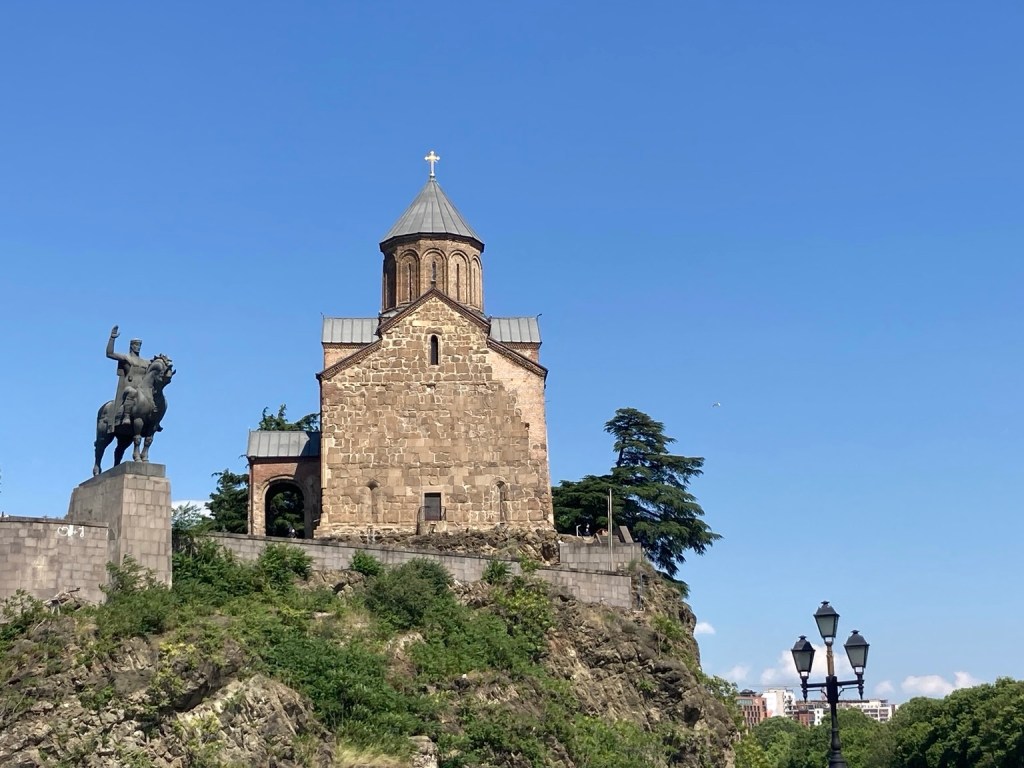
Here we met King Vakhtang I Gorgasali of Iberia who founded Tbilisi in the C5th, nicknamed High Five King by the guide.
According to local legend, while he was hunting, his falcon caught a pheasant, and both birds fell into a hidden hot spring and died. Impressed by the naturally warm and healing waters, the king decided to clear the forest and build Tbilisi, named for the warm waters found here.
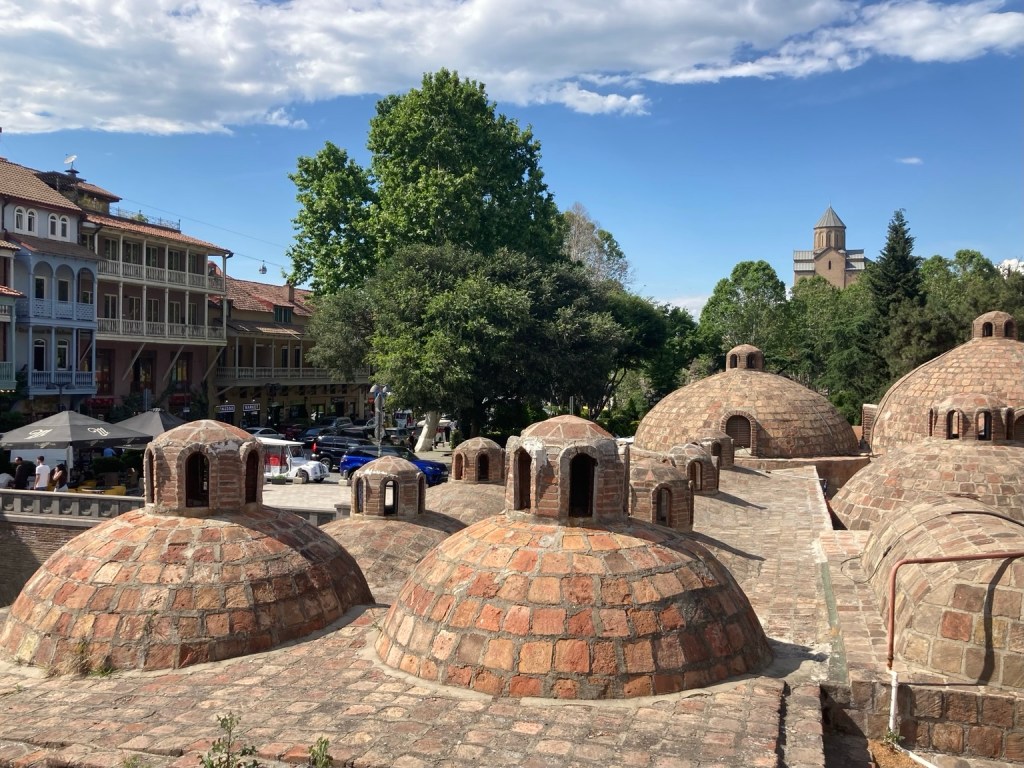
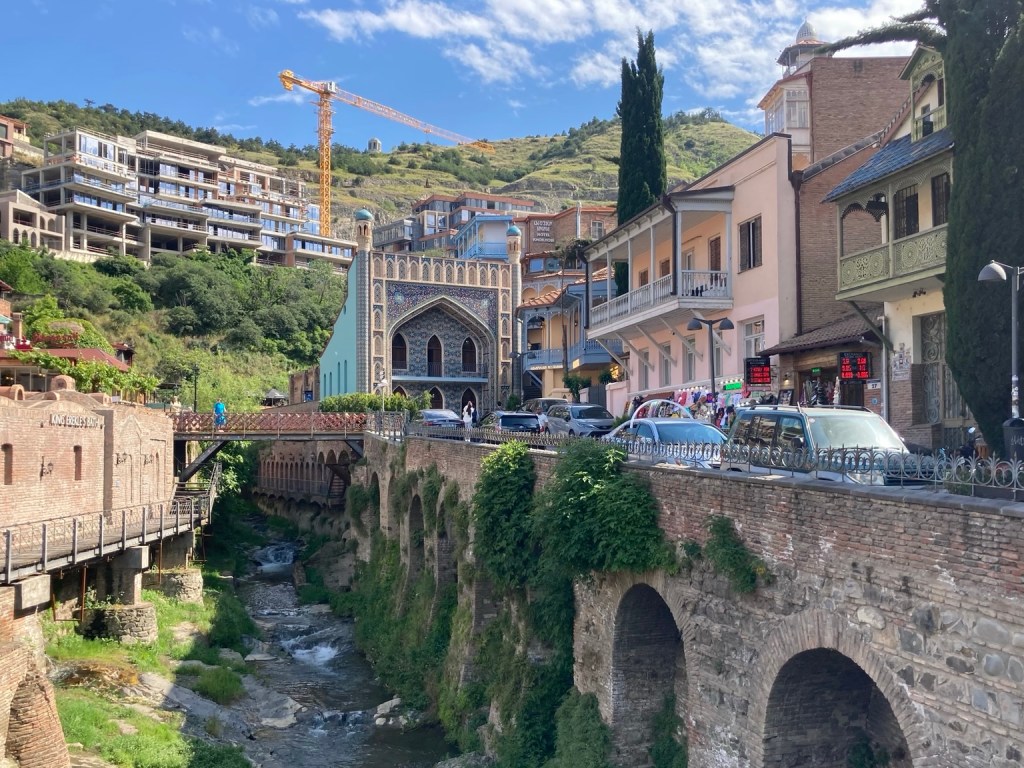
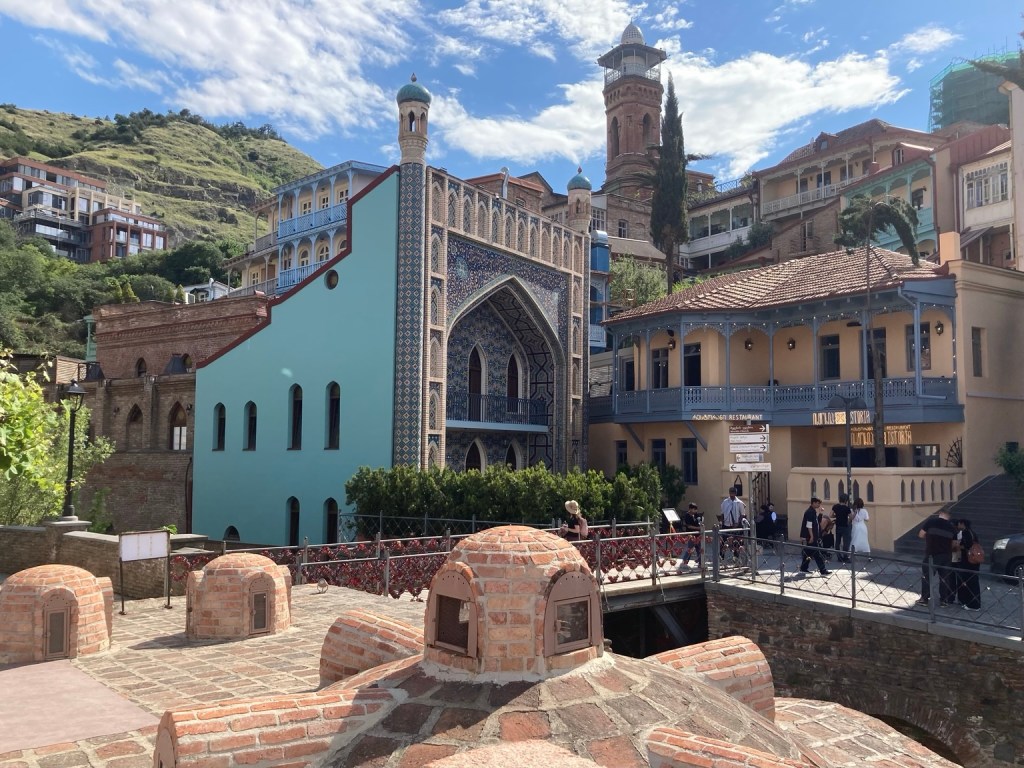
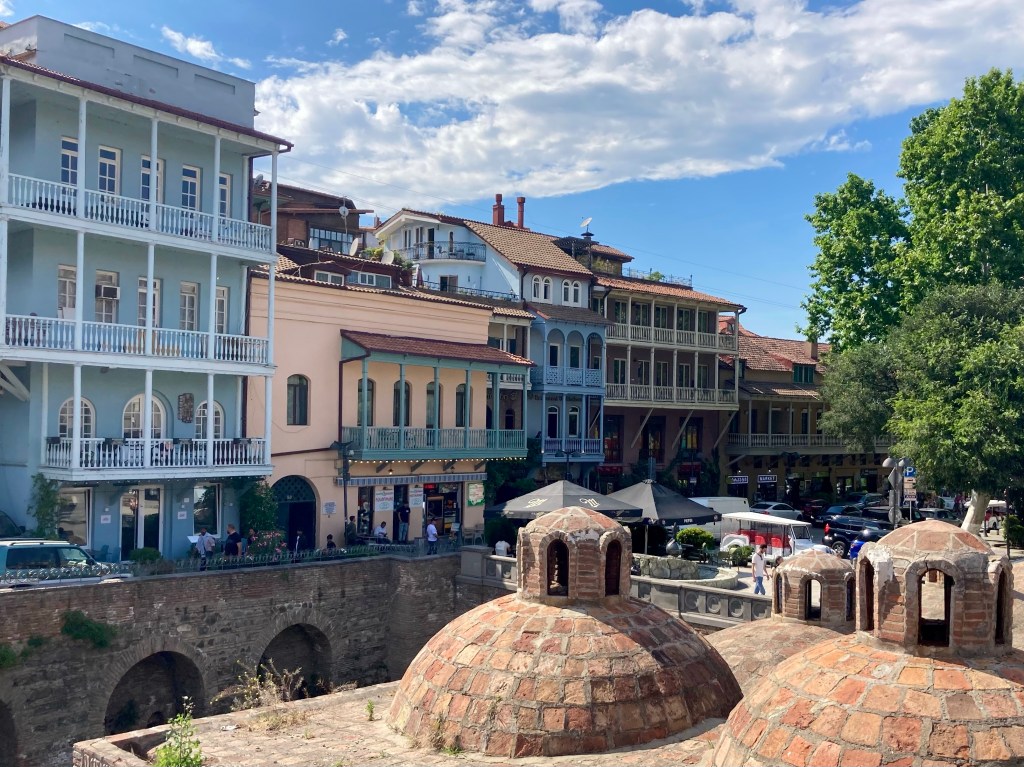
Over the centuries bathhouses were built around the springs in the Abanotubani district with distinct semi-underground brick domes shaped by Persian, Arab, and Ottoman influences during the height of the Silk Road.
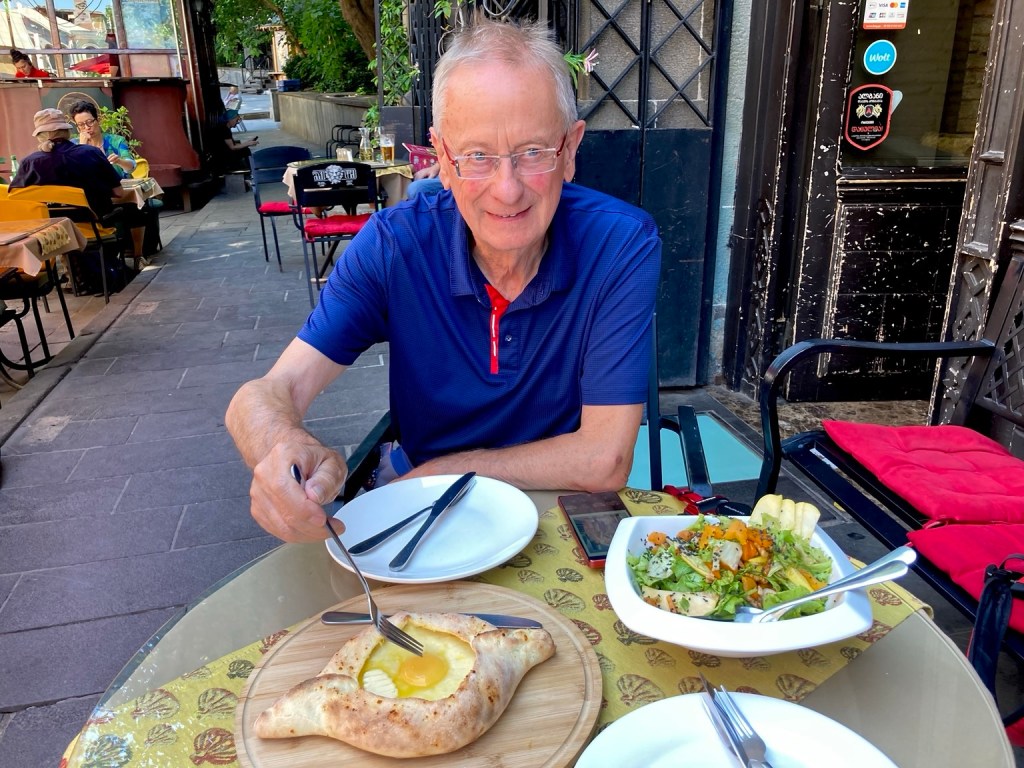
Along the way we had a couple of food tips which we were eager to put into practice and fortunately it was lunchtime. Once of the most iconic dishes here is Khachapuri, the Georgian cheese filled bread. It comes in several varieties but the most impressive looking is Adjaruli Khachapuri and we were told the egg yolk needs mixing into the hot cheese then the crispy edges of bread can be broken off to dip in. We followed instructions and it was delicious.
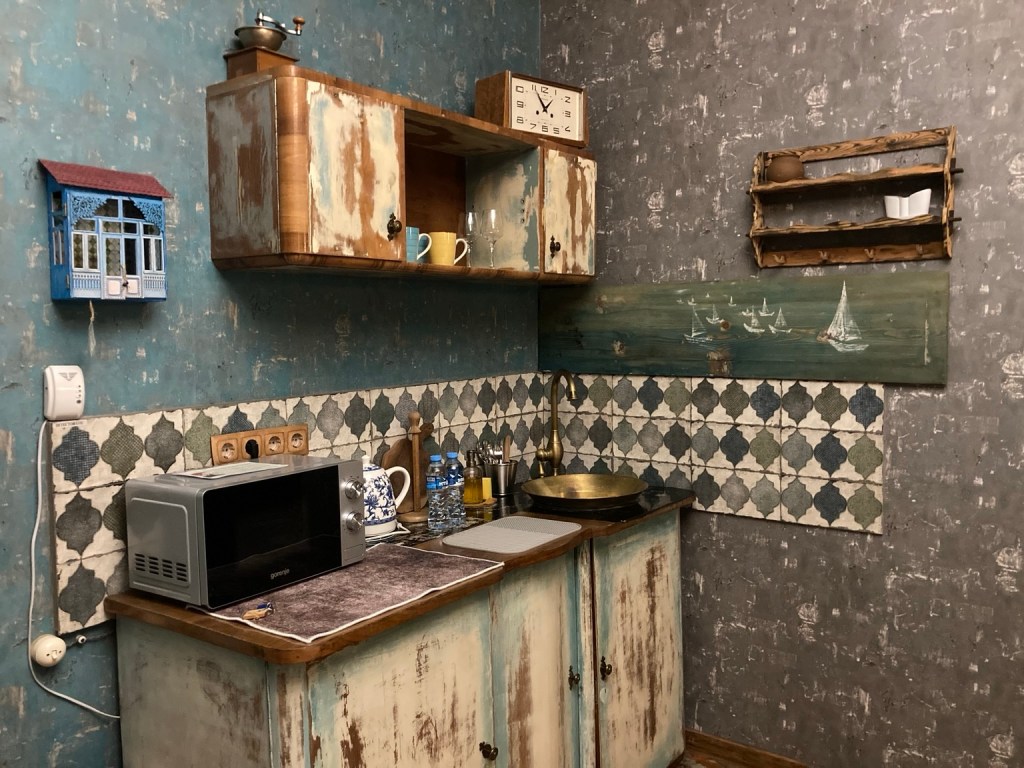
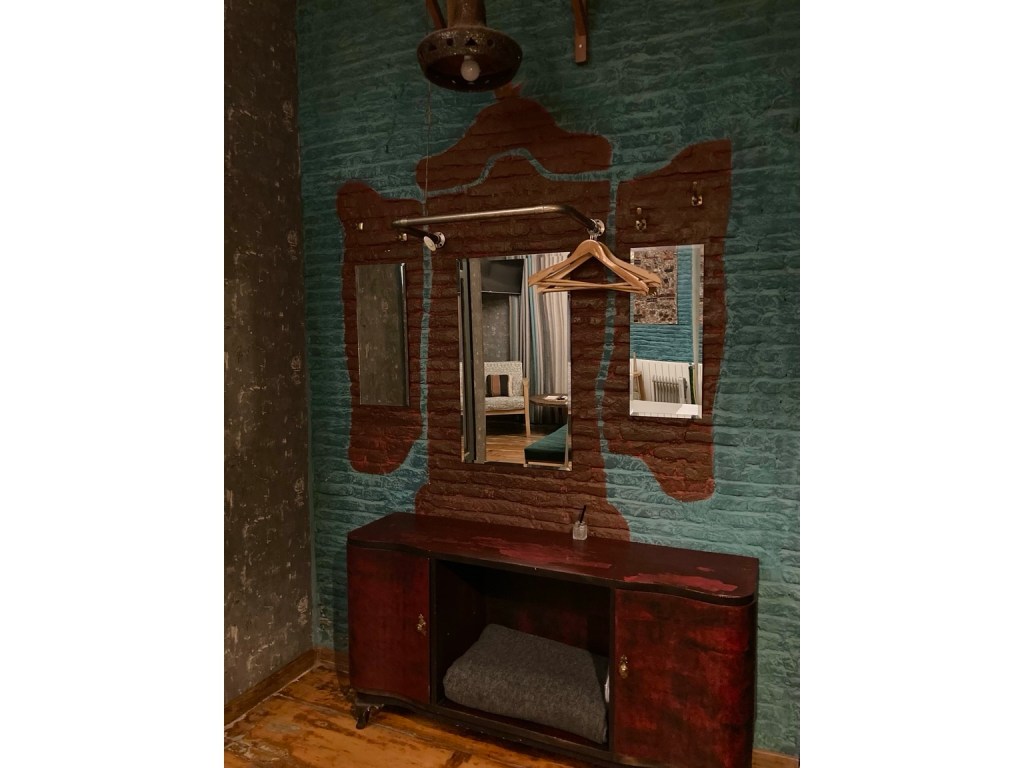
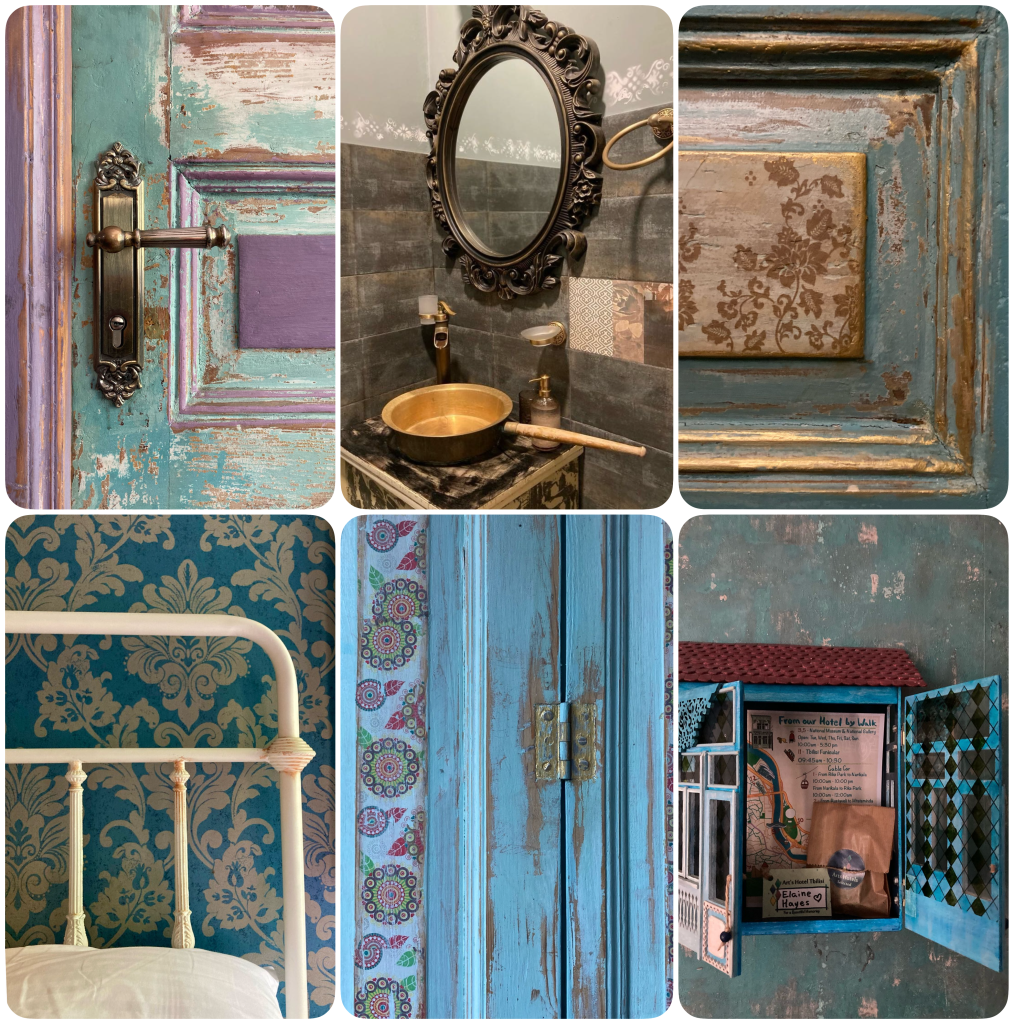
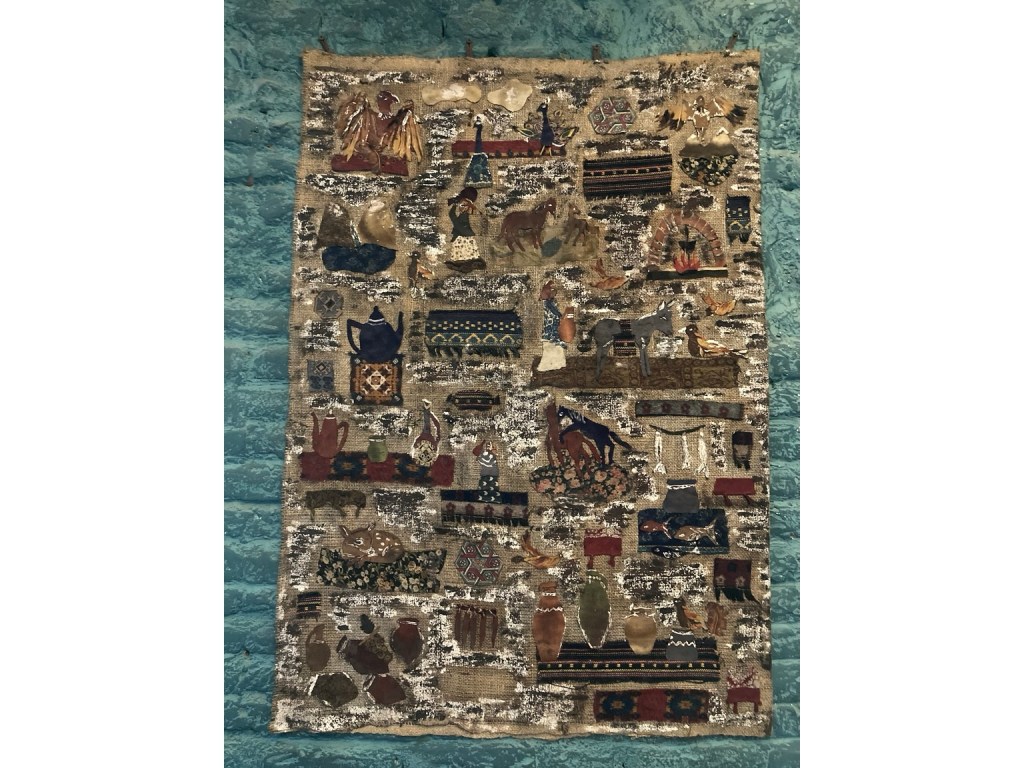
After our busy day yesterday, we took the rest of the afternoon slowly, a bit of a nap and then took some pictures of the interesting asthetic at the Art Hotel, not surprisingly as we met the owner and she is an artist who works in theatre and set design.
Later we went for dinner just down the road, at Pasanouri, a small chain of traditional Georgian restaurants, famous for serving authentic local cuisine and known as the birthplace of khinkali, Georgia’s iconic meat dumplings. Fortunately they also serve them with with a cheese filling, and we had them with a rich mushroom and tomato stew. Portions are generous everywhere so we were careful not to over order!
Having spent one day in the city, tomorrow we are off on a bus tour westwards …
Chris has had Georgia on his mind for sometime and finally we are going!
It started during our trip to Russia, when we spent several evenings in charming Georgian restaurants enjoying the vegetarian friendly cuisine and warm hospitality, and new direct flights from London have spurred us on.
We didn’t want a fully guided trip, but a self-drive felt too challenging, so we’ve opted for the middle ground. We are staying in Tbilisi, and will spend time exploring the capital ourselves, known for its colourful old town, wooden balconies, sulfur bathhouses, and great food and wine, but have also booked several organised day trips.
These will include exploring Georgia’s history of ancient cave cities and early monasteries and churches as well as Stalin’s birthplace, the striking Gergeti Trinity Church set against towering peaks of the Caucasus Mountains and possibly the wine region too!
June weather should be perfect and we are off in search of khinkali and khachapuri together!
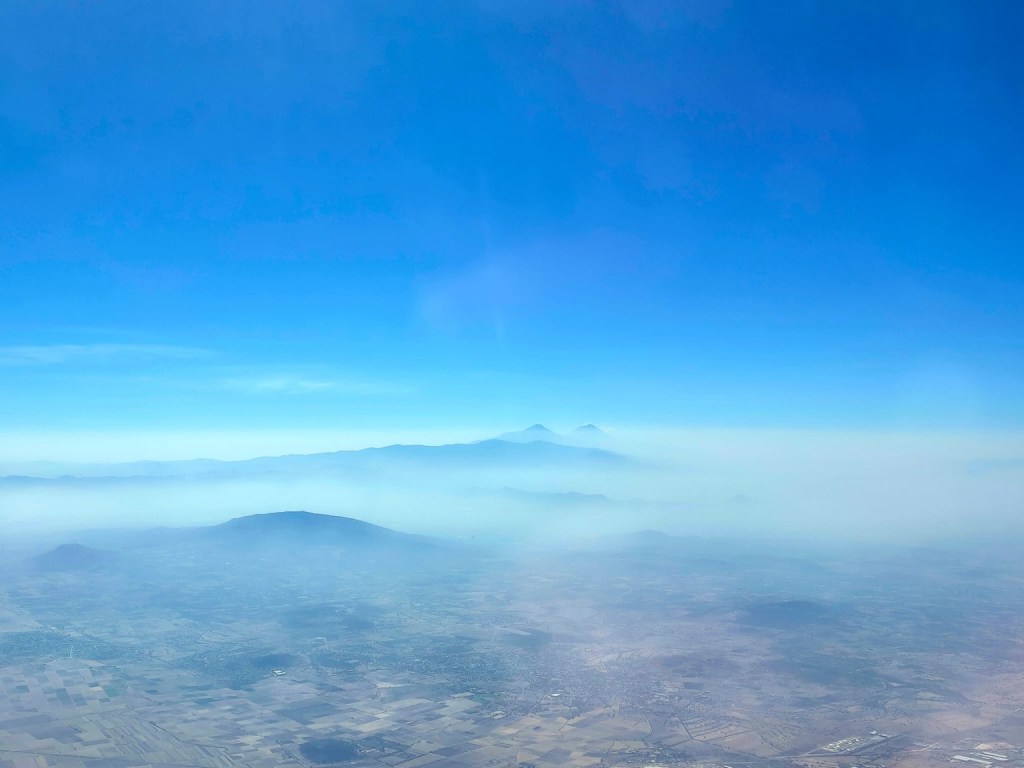
We were most surprised to pull the curtains and see a little drizzle, the first rain we’d seen in a month, but it soon dried up. It remained overcast and the day was cool, but with a flight to catch later that suited us fine.
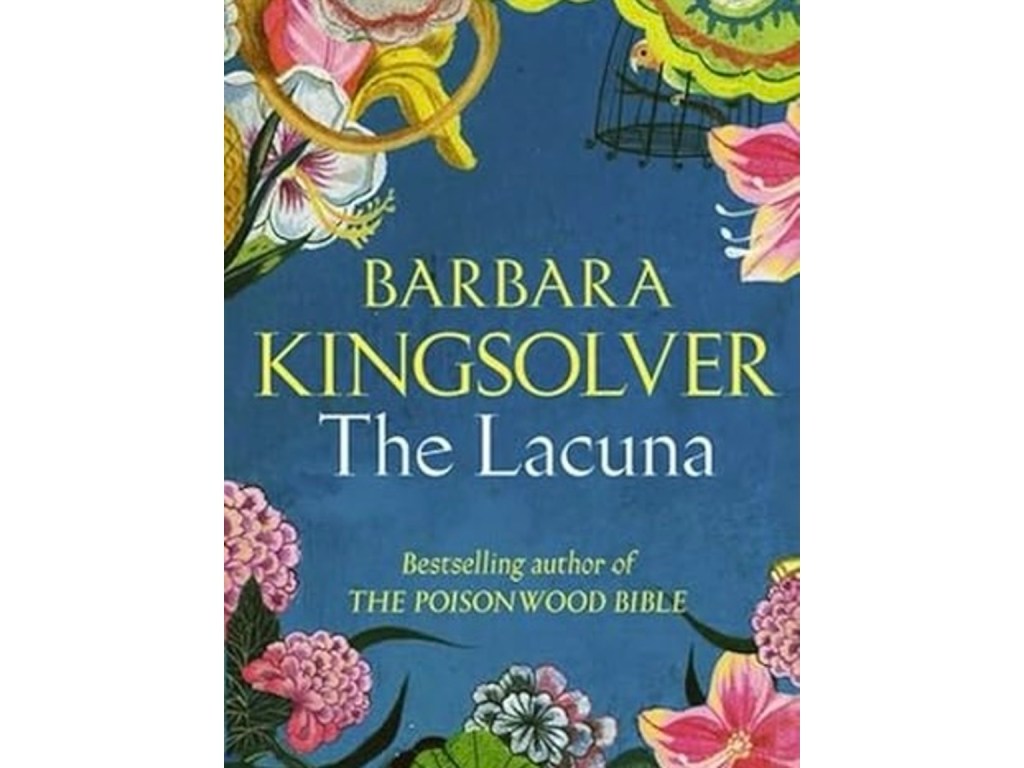
I always like to do a bit of background reading and this trip read a novel by Barbara Kingsolver called The Lacuna. It tells the life of Harrison William Shepherd, a writer raised between Mexico & the US who becomes entangled with real historical figures such as Frida Kahlo and Diego Rivera, and later serves as a secretary to Leon Trotsky who was given asylum in Mexico after his exile from Russia.
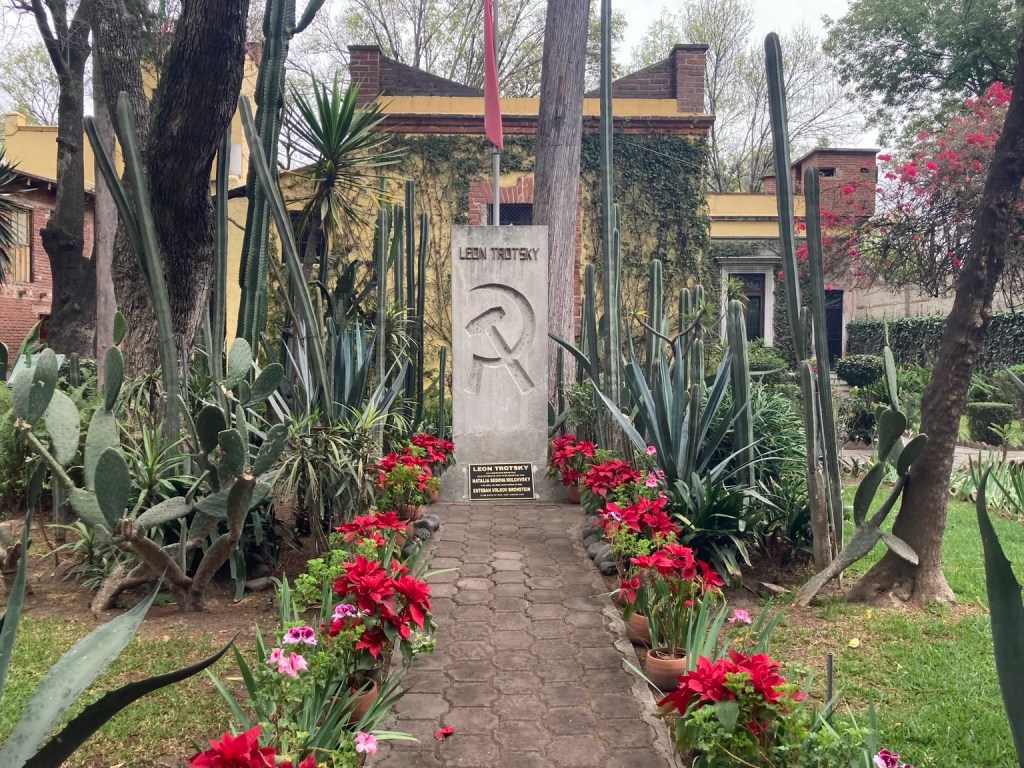
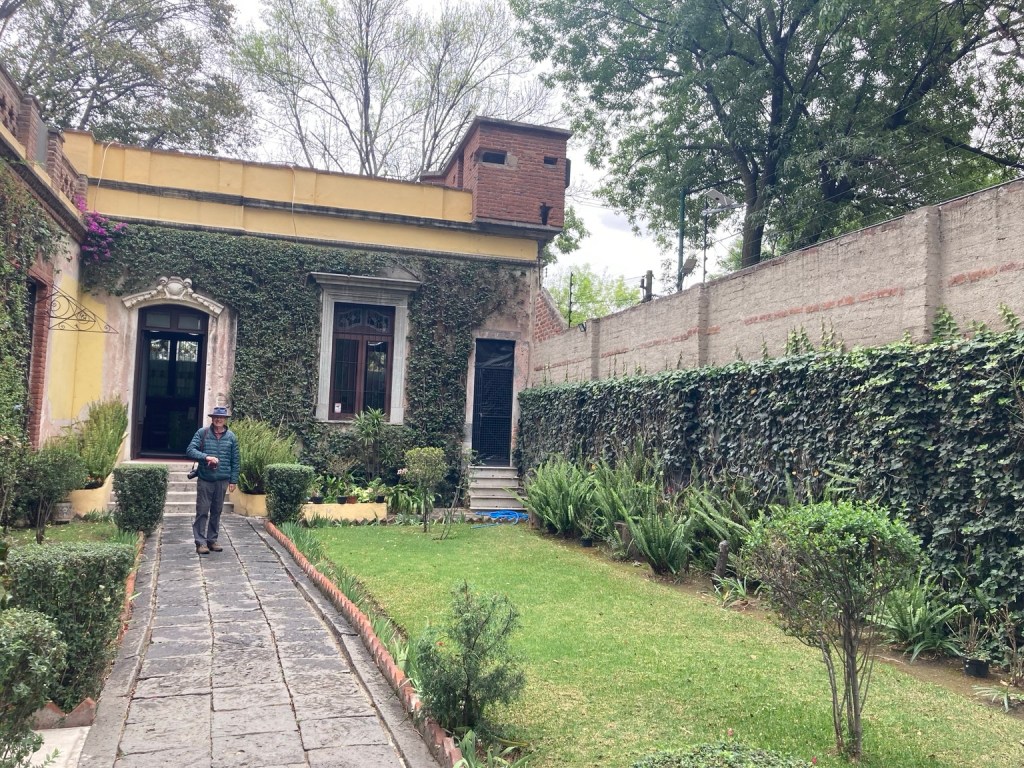
Trotsky initially lived with Diego & Frida at Casa Azul but later moved to a house close by which could be more secure. We saw his house where is he buried …
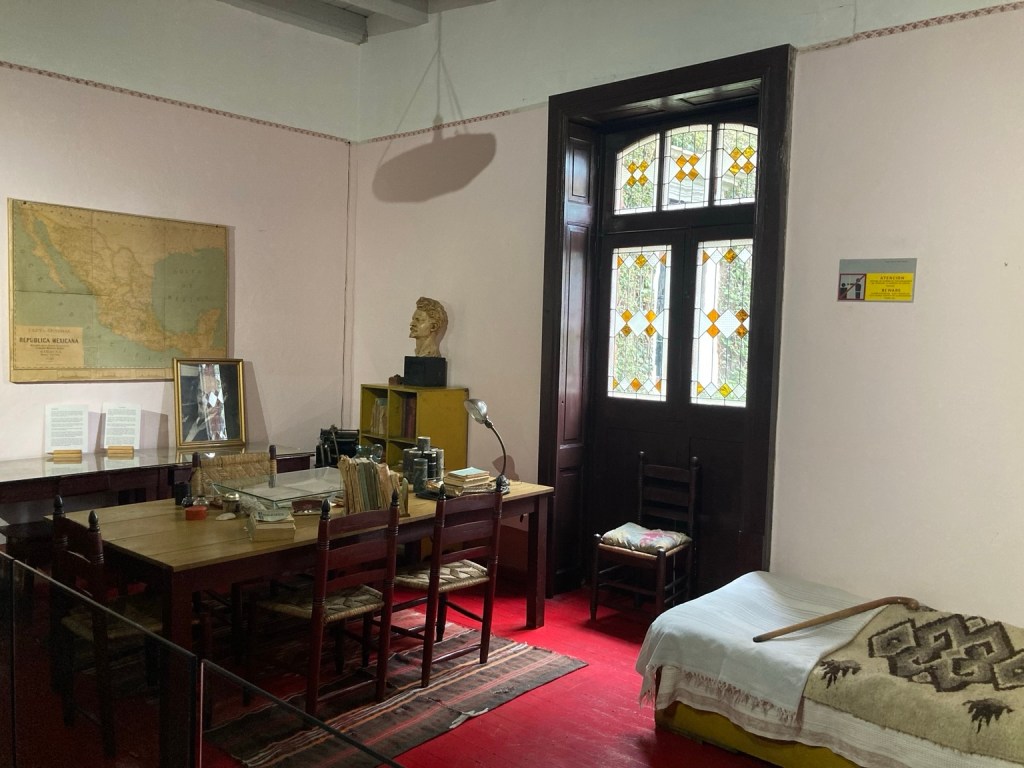
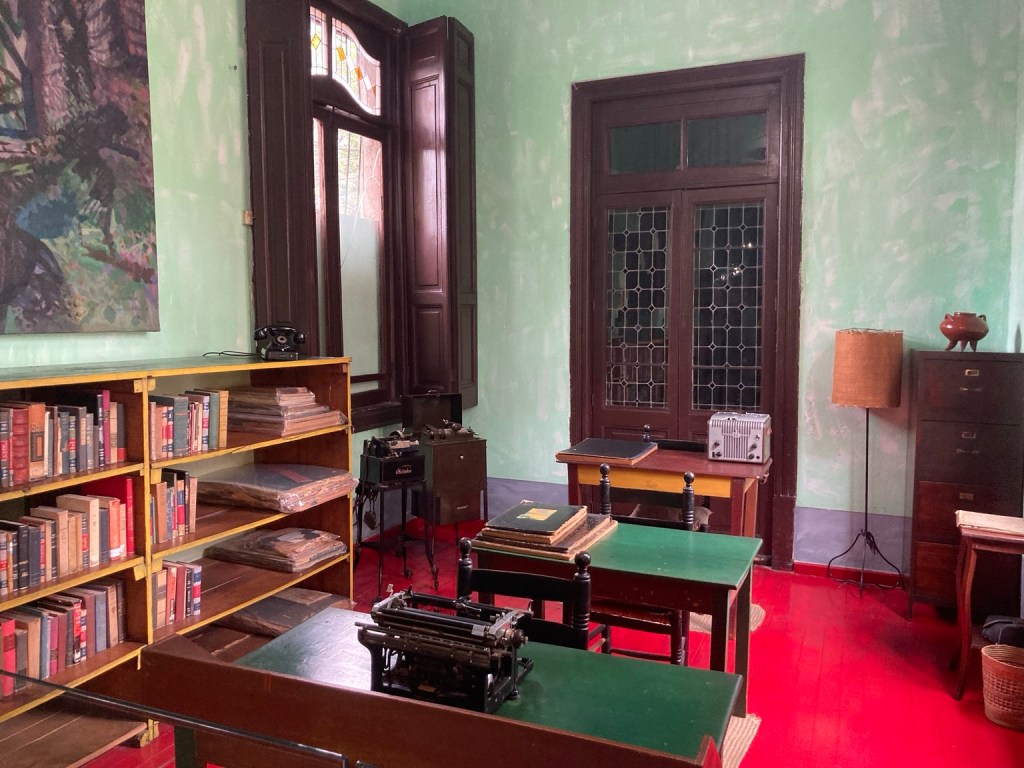
… the offices from which he continued his campaign against Stalin …
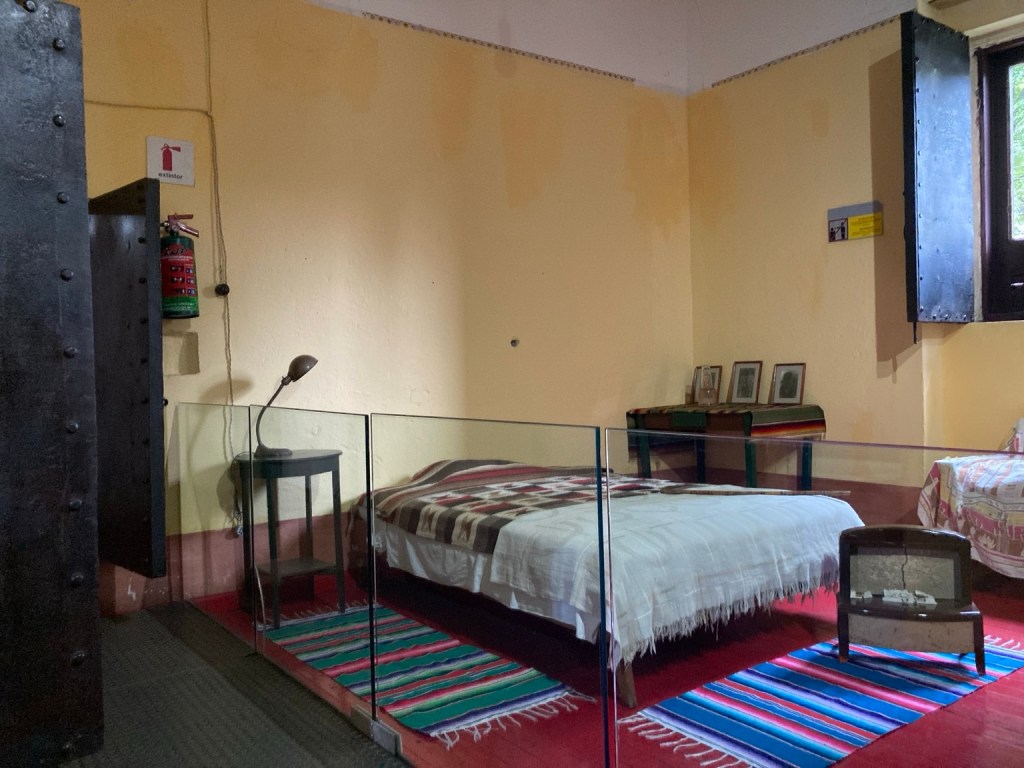
… and his bedroom complete with armoured doors.
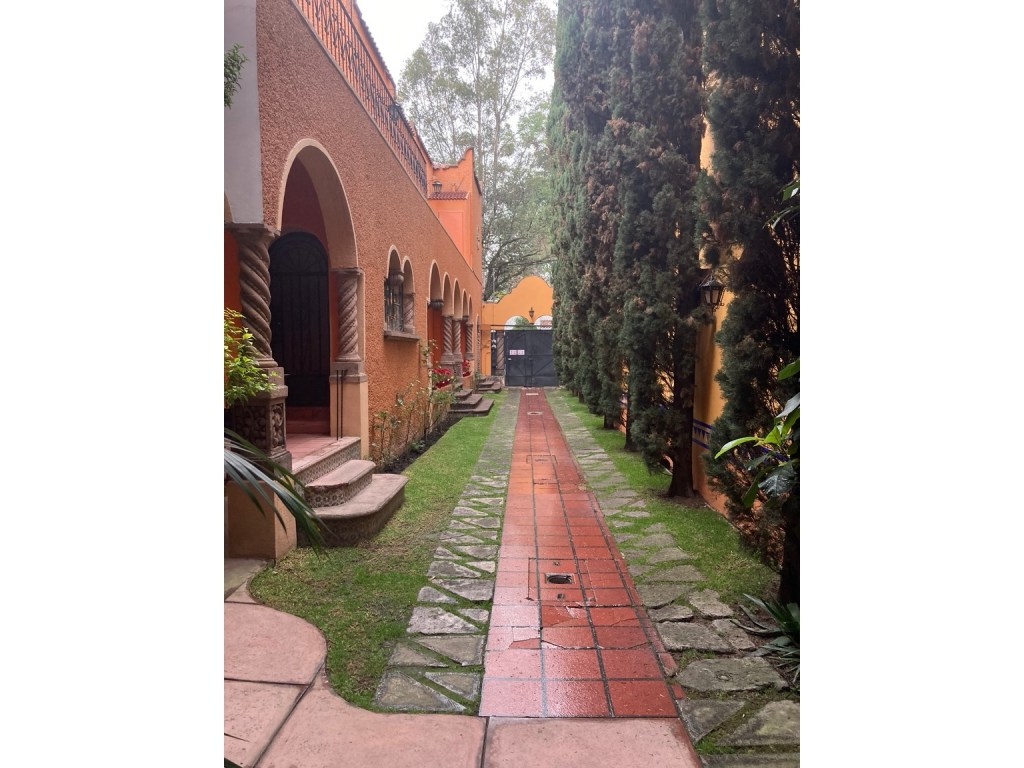
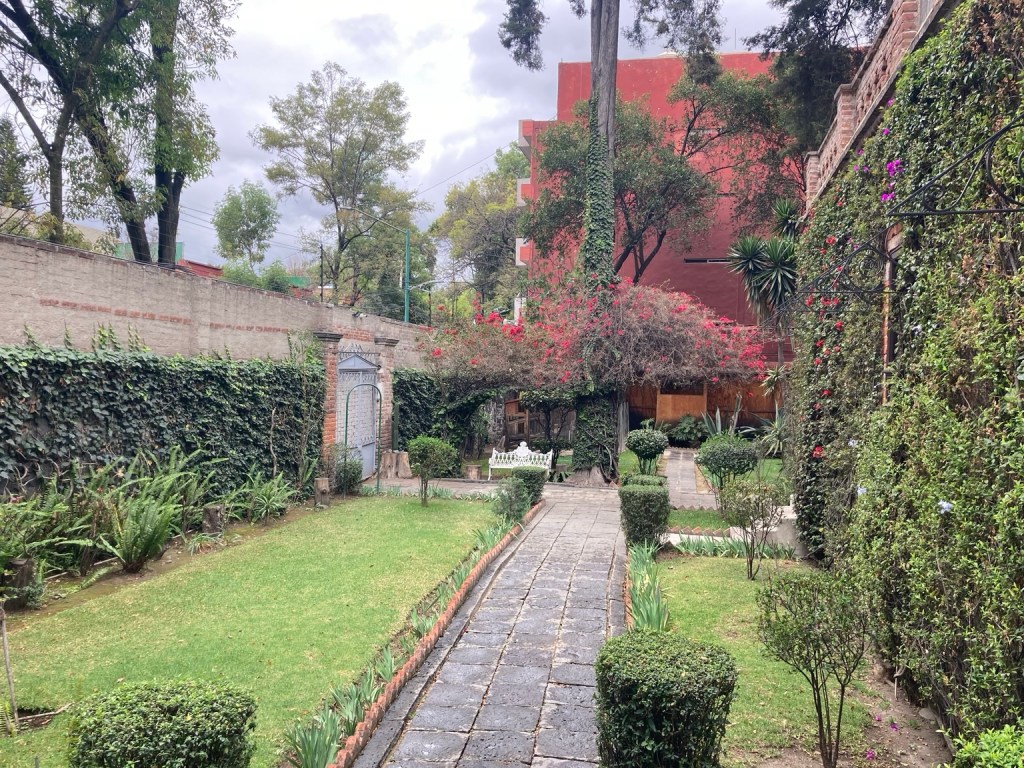
Garden pics show the high walls and guard posts, but it was not enough as he was later assassinated by a soviet agent.
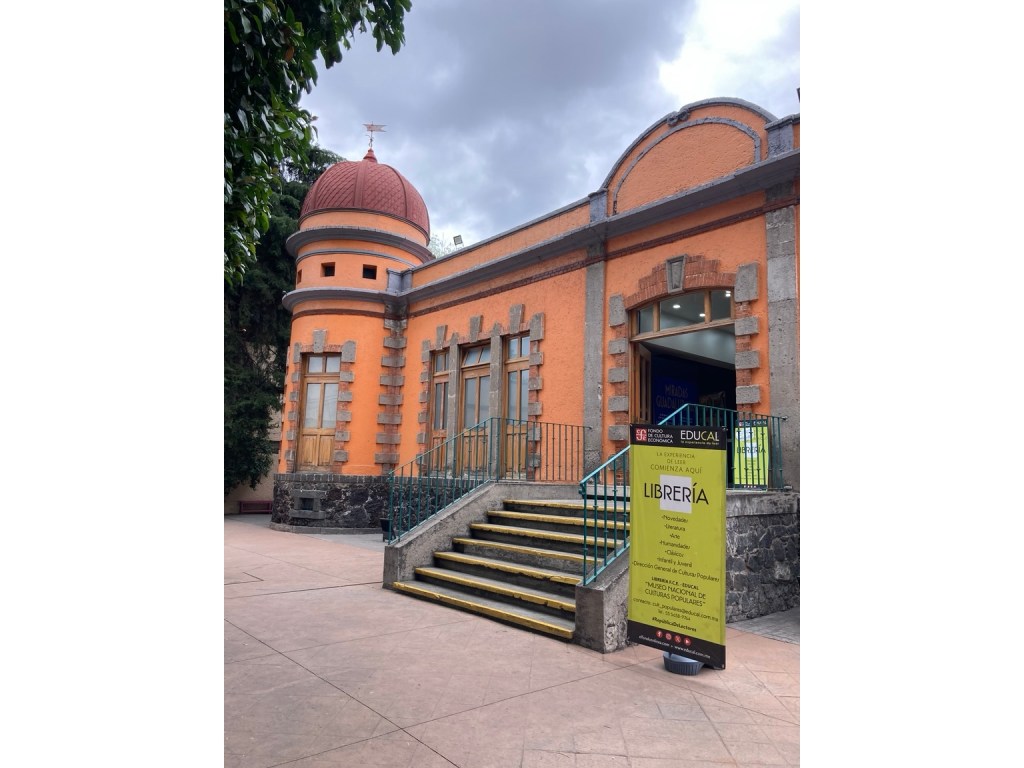
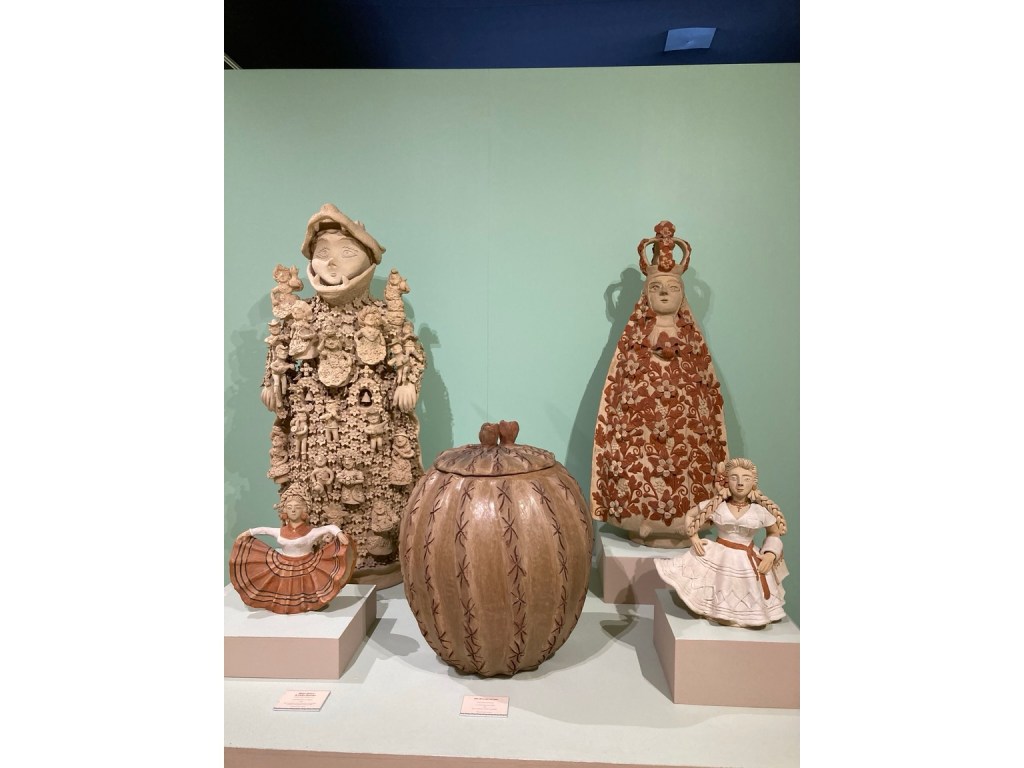
The last place to visit was the National Museum of Popular Culture which showcases Mexico’s cultural and ethnic diversity …
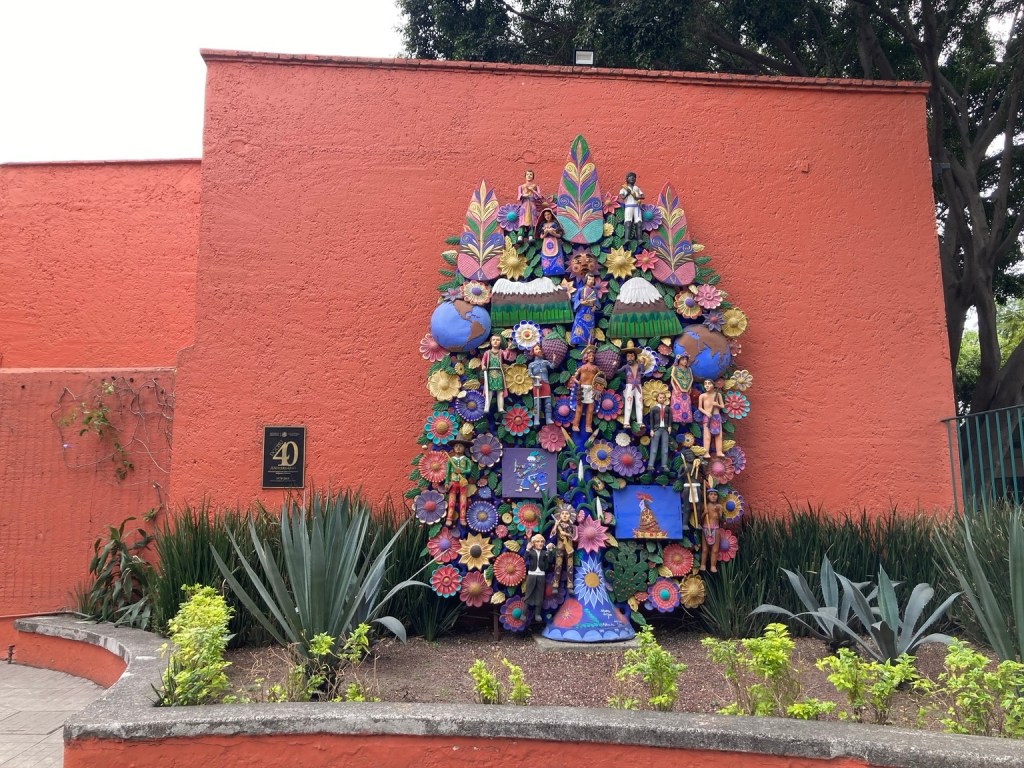
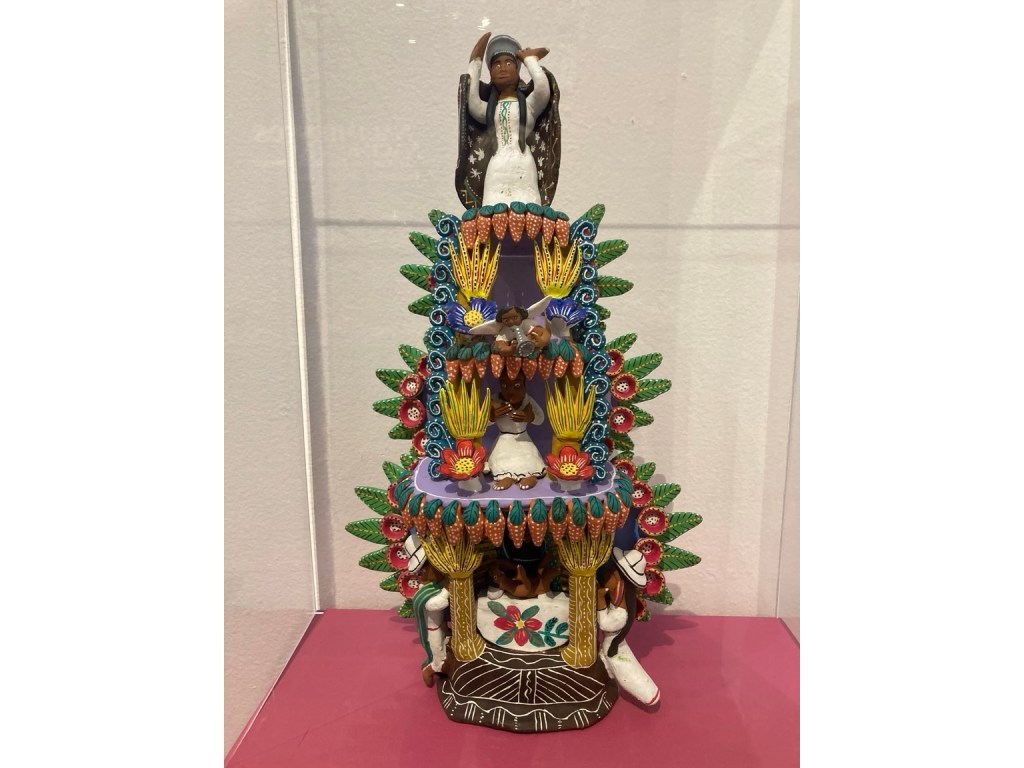
… and outside is a Tree of Life honouring the 500th anniversary of the arrival of Columbus.
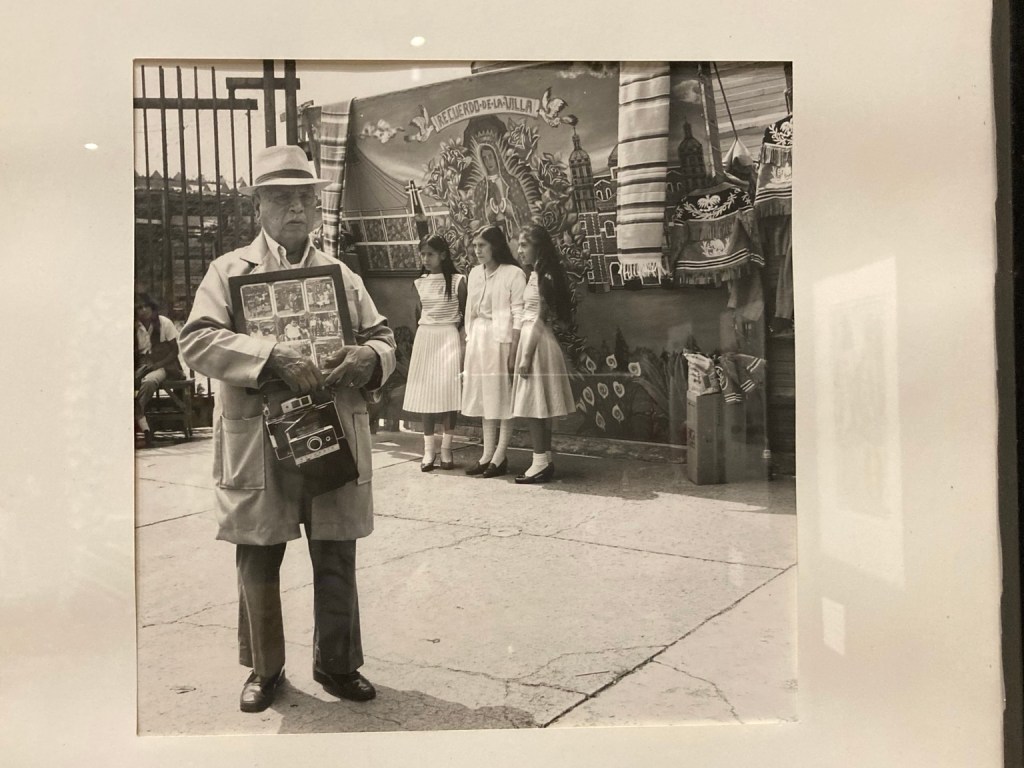
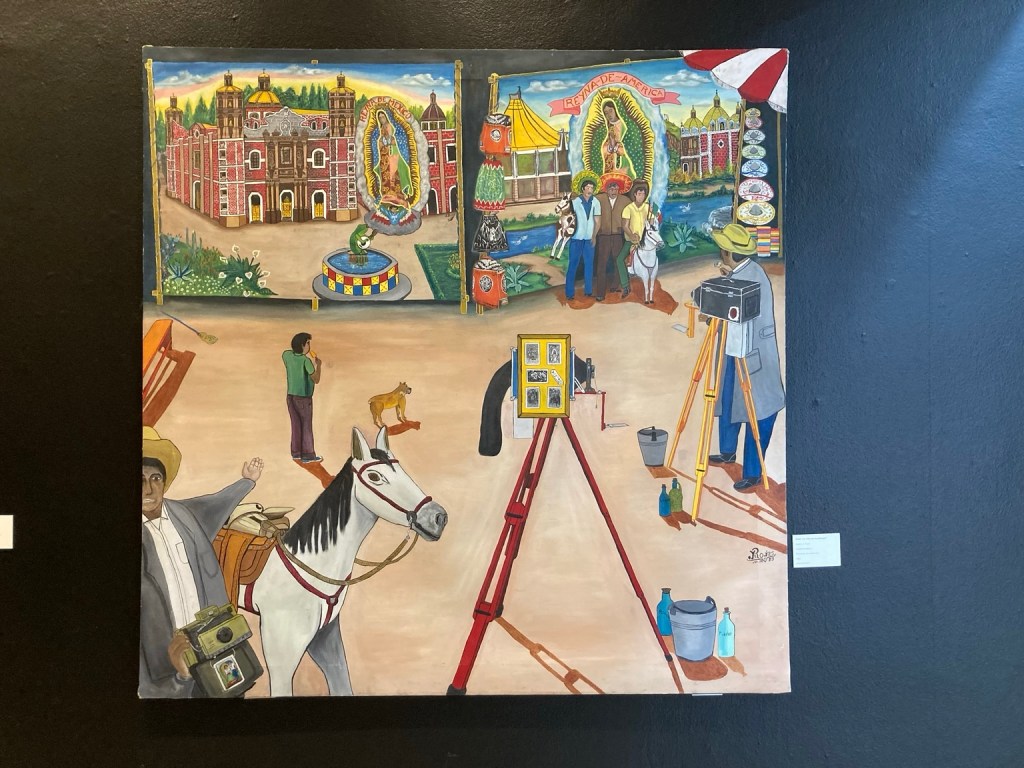
Exhibits included an exploration of Our Lady of Gualaloupe in art …
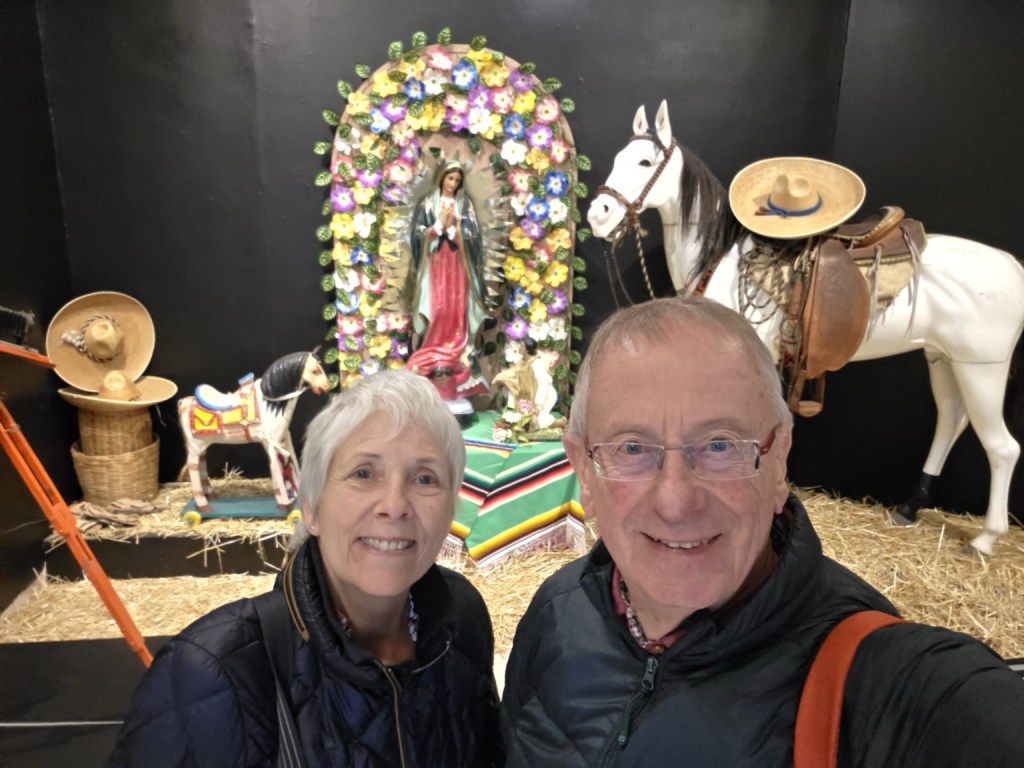
… which even gave us a chance to make our own image …
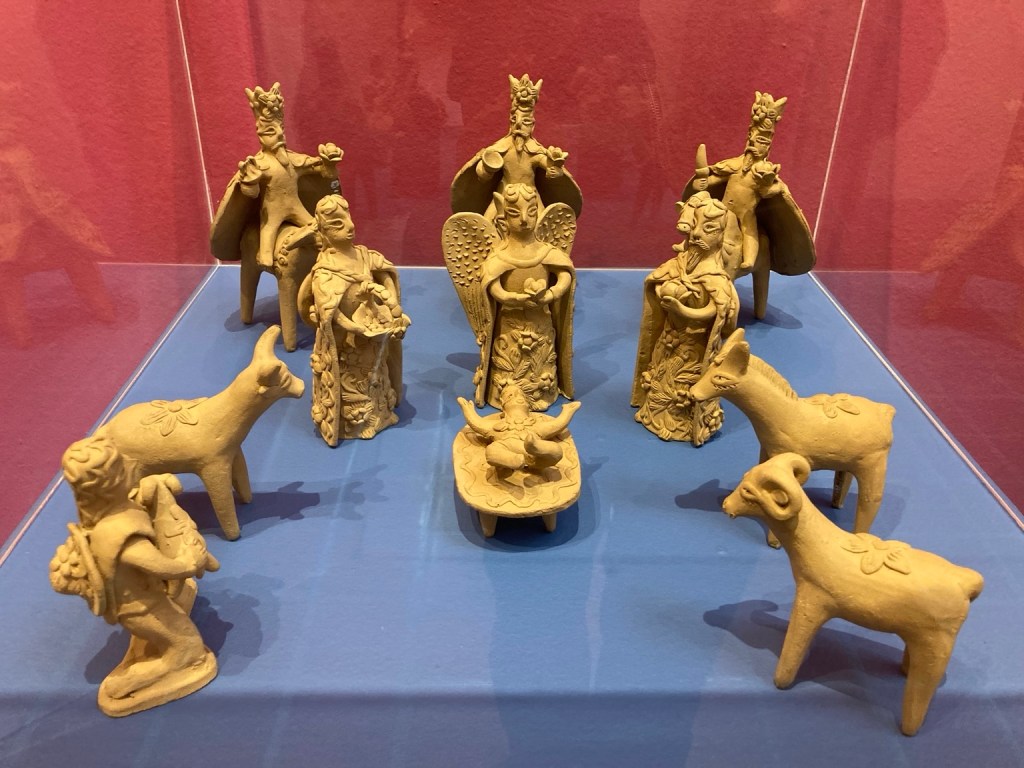
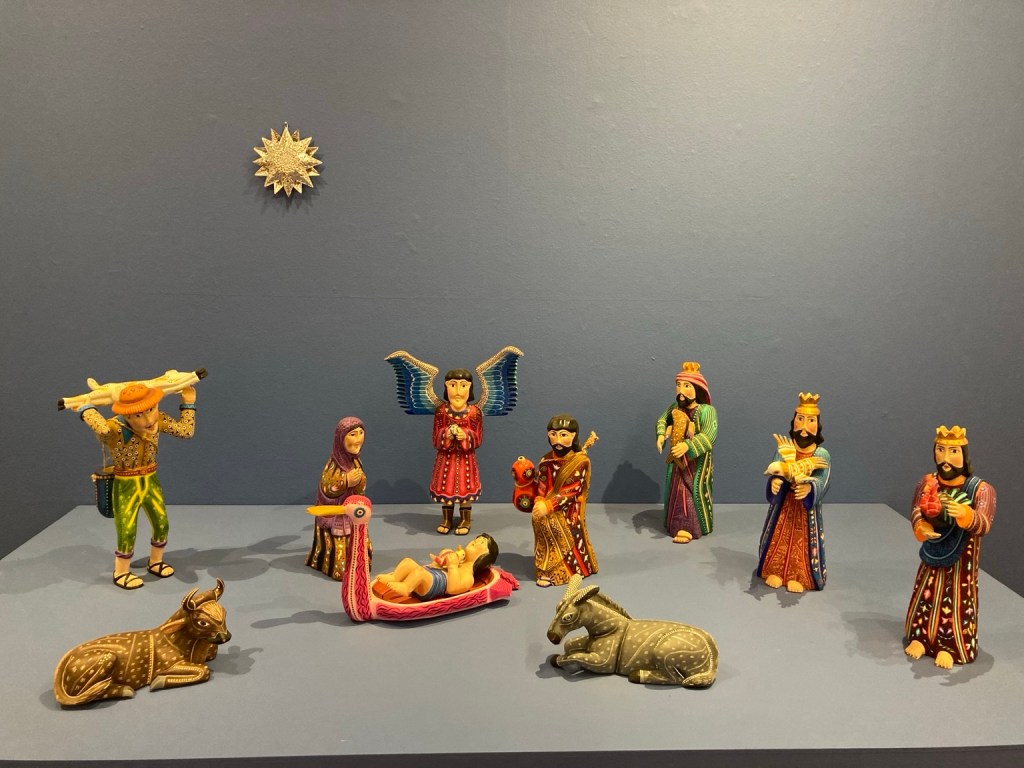
… nativity scenes made of many materials …
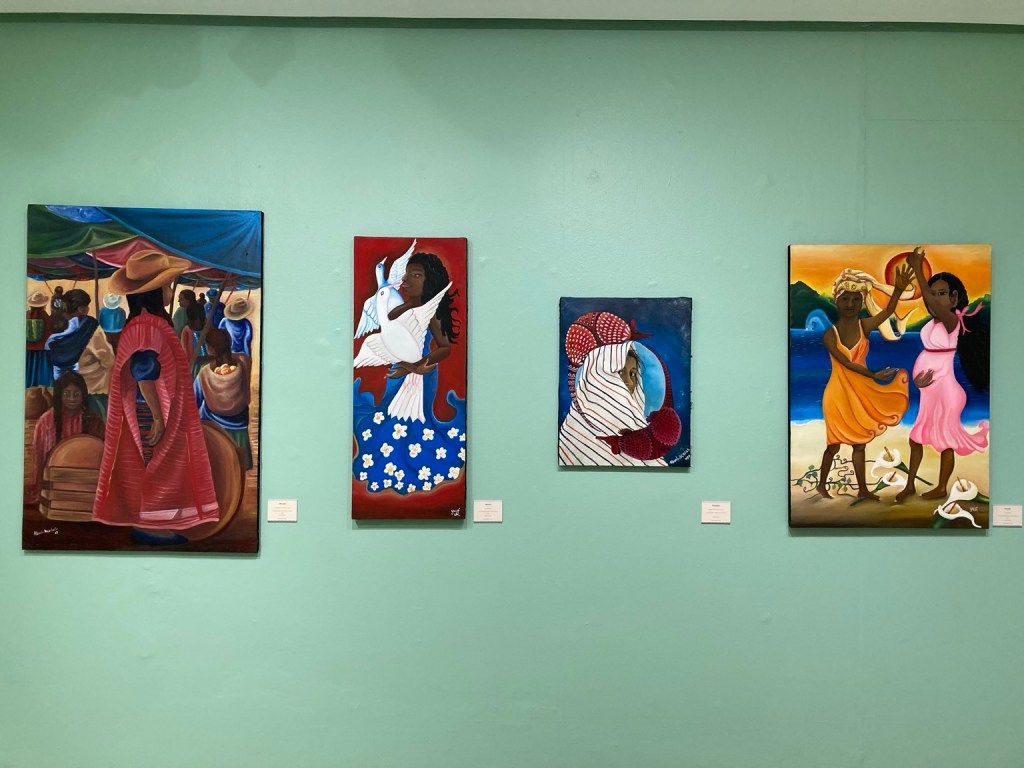
… and art made by women.
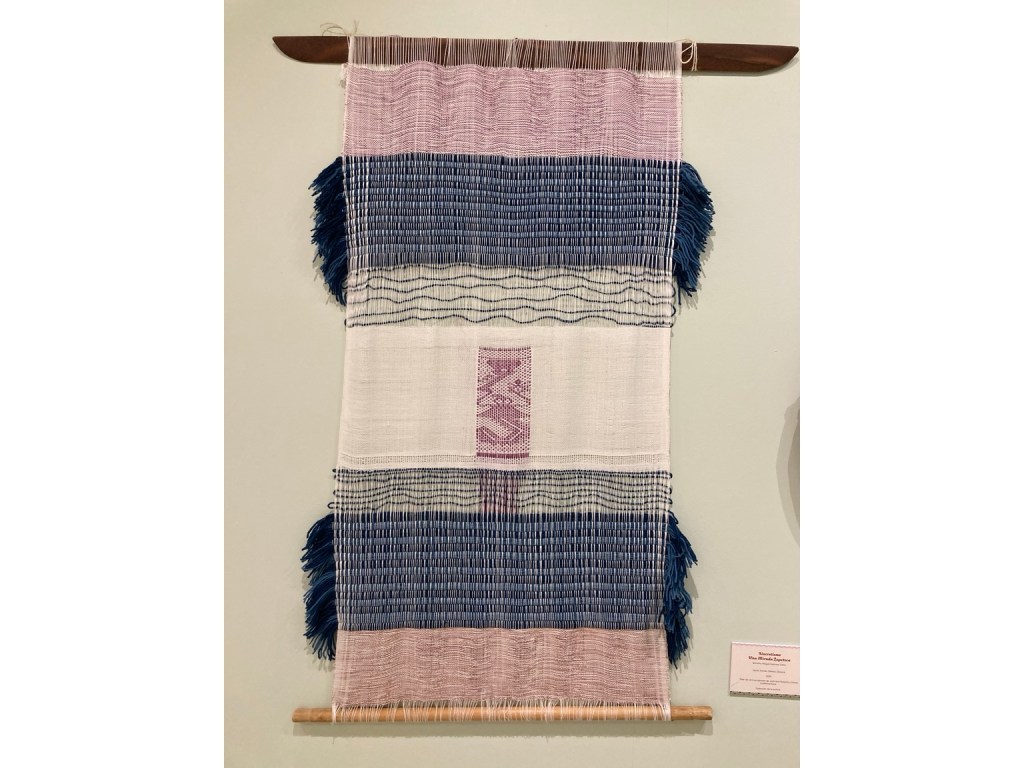
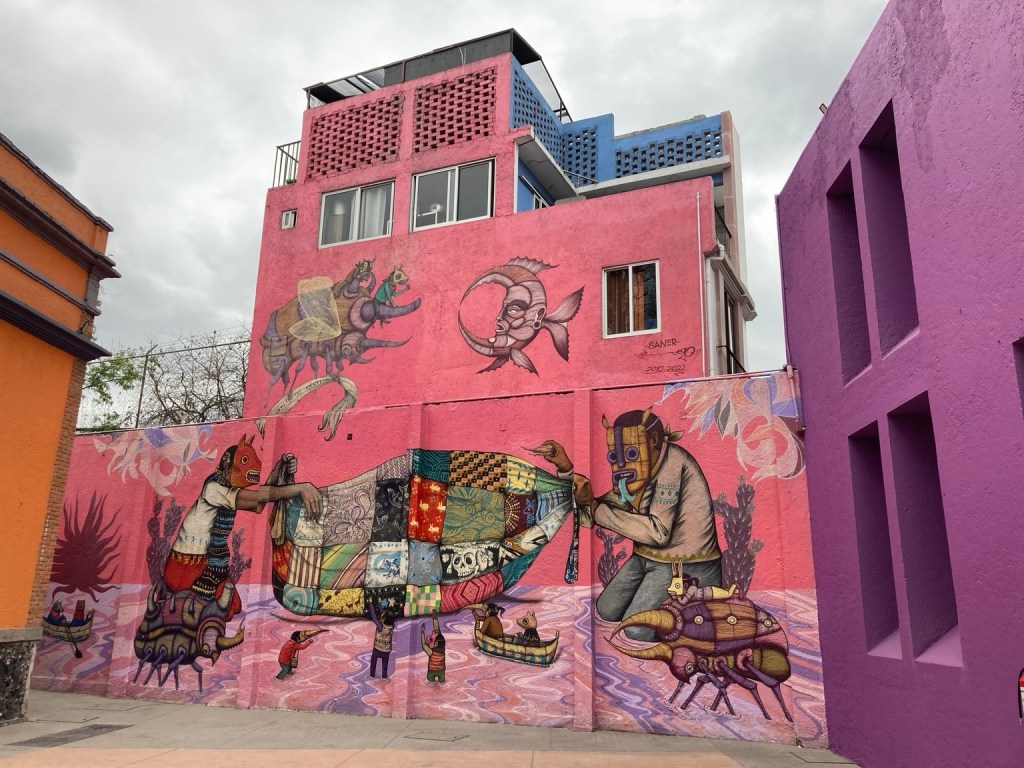
This huge graffiti style mural in the courtyard called Weavers of Dreams, shows the evolution of Mexican folk art which can now be influenced by pop-art like comics and robots.
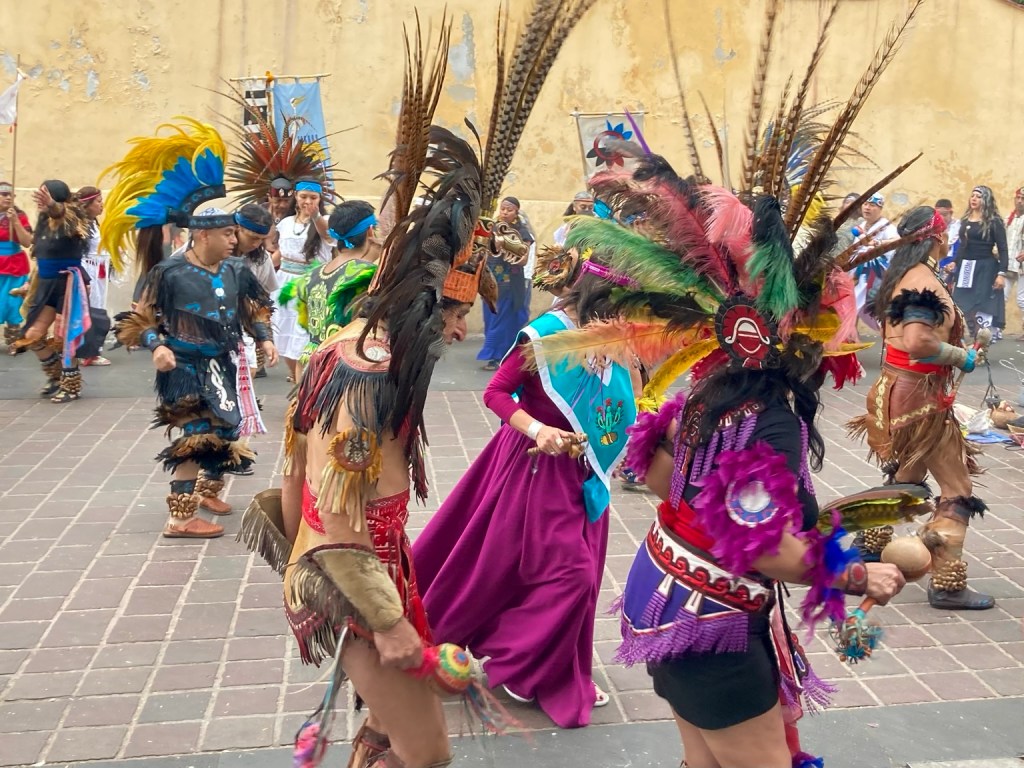
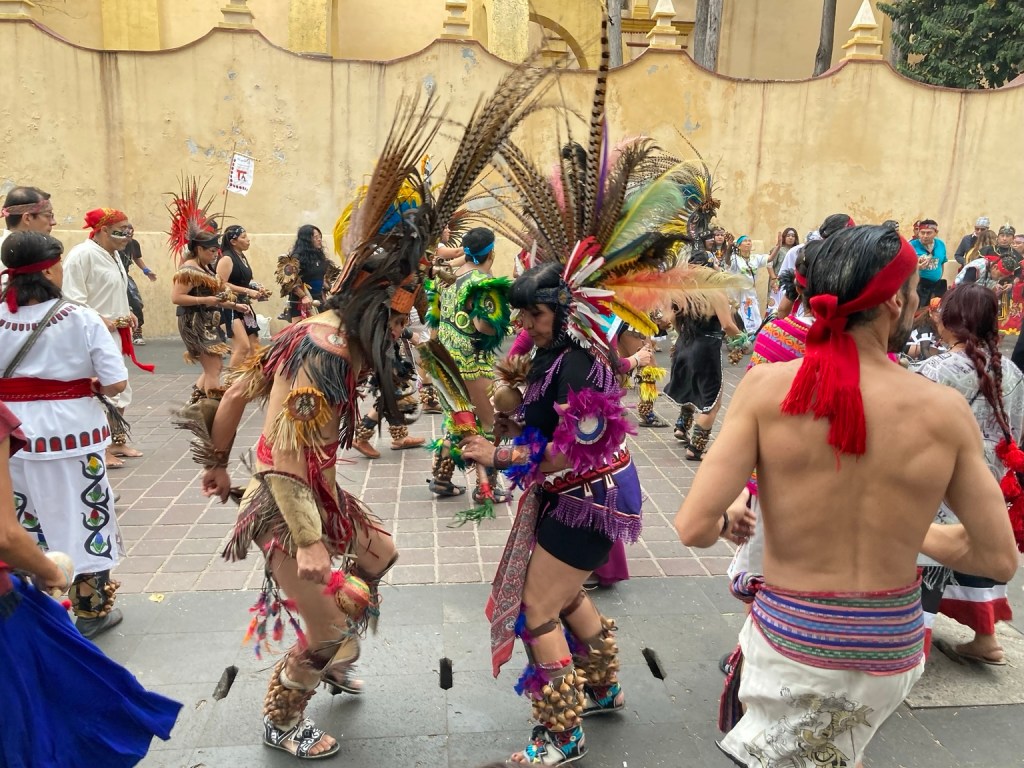
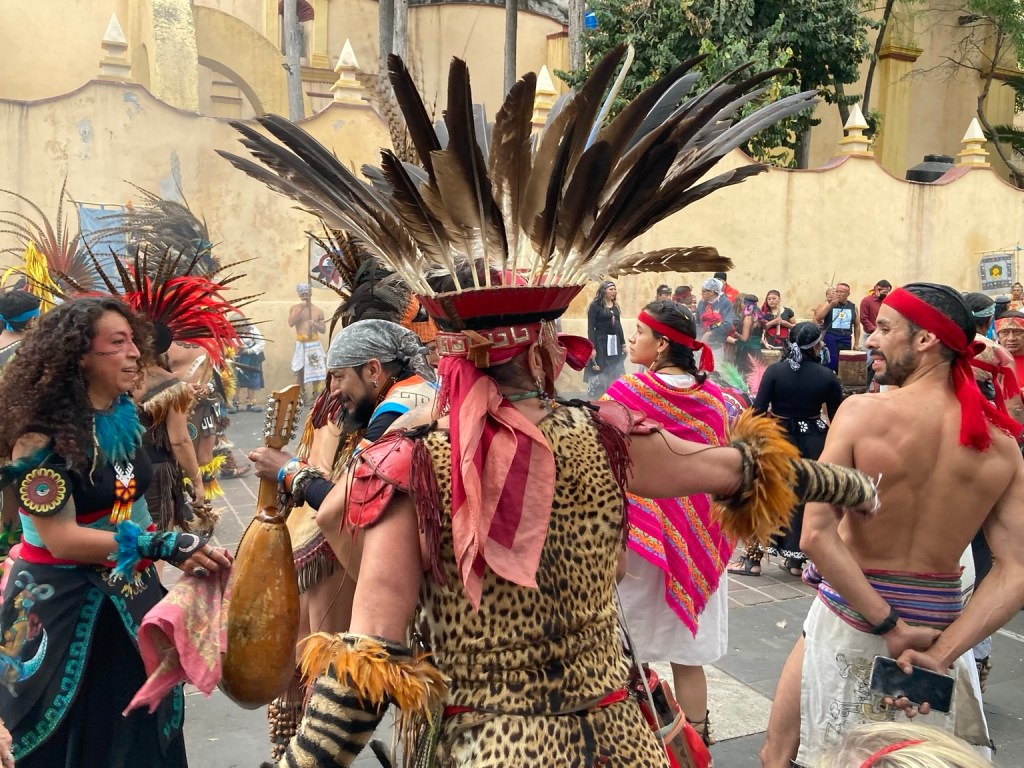
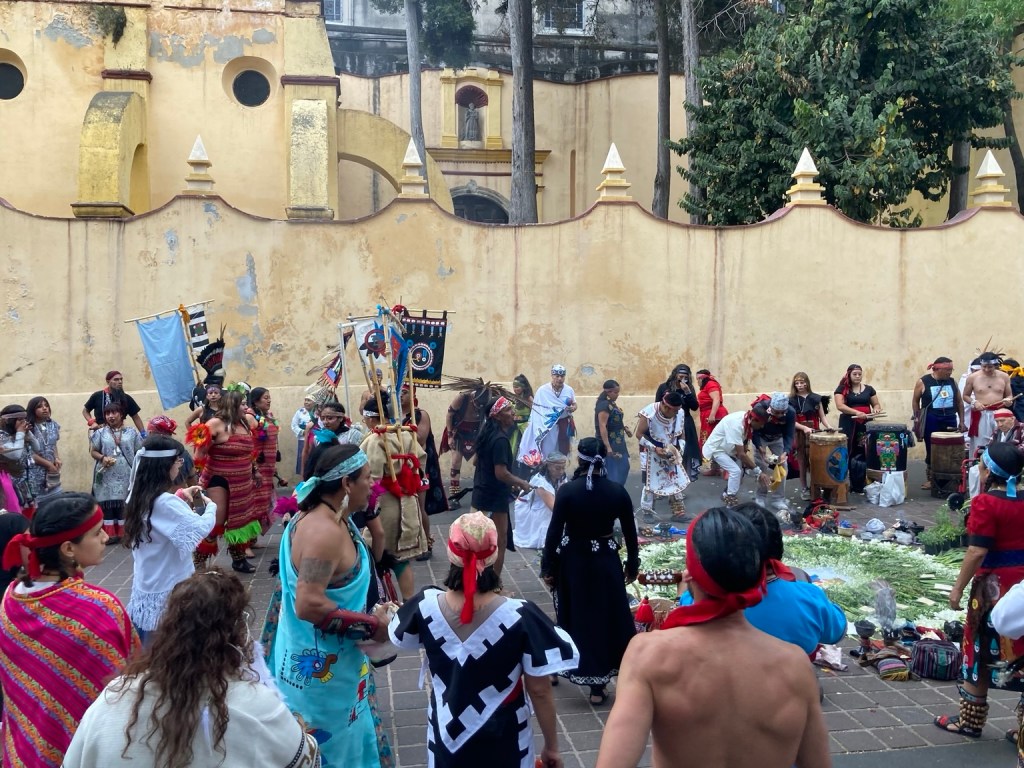
As we left, we could hear rhythmic drumming, and as we reached the plaza, we found a group of maybe 200 Concheros or Aztec dancers outside the church, using dance and ritual to connect with their indigenous roots, with an offering of plants and flowers in the centre … a spectacular finale for our trip.
The main thing we’ve learnt is that they can be big or small, flat or folded, crispy or soft and called tacos, enchiladas, tostadas, quesadillas, sopes, tlayudas, chilaquiles, burritos … but they are all just tortillas, the one thing all Mexicans have in common apart from Our Lady of Guadeloupe.
We’ve tried the lot – and that’s before we get onto the filling or topping or sauce – so you can see why a month just wasn’t enough to try them all!
It wasn’t until we were home that we learned of the cartel violence breaking out when El Mencho, Mexico’s most wanted man, was fatally injured during capture by the military. Concentrated in western states, tourists were asked to stay inside and some flights were cancelled, so we timed our return perfectly.
The one thing we missed was the Museo Dolores Olmedo with its extensive collection of paintings by Diego and Frida as it has been closed since Covid. The only bright side is that 14 works are coming to Tate Modern in the summer for ‘Frida – Making of an Icon’ so that’s something to look forward to.
Our taco trail ticked all the boxes, including lots of pyramids, colonial towns, arts & crafts, margaritas and sunshine. What’s more, all has gone according to plan with fab buses which were more spacious than an aeroplane!
Despite limiting ourselves to carry on to make life simpler, we still had room to bring back our very own woven coffee mats, a whistle that sounds like a jaguar, chocolate, the mezcal miniatures we didn’t actually drink and a turquoise spoon that will go beautifully on the kitchen wall and remind us of Casa Azulejo and Frida Kahlo.
And it has definitely been slow enough, with space and time to take it all in and enjoy la buena vida … the good life!
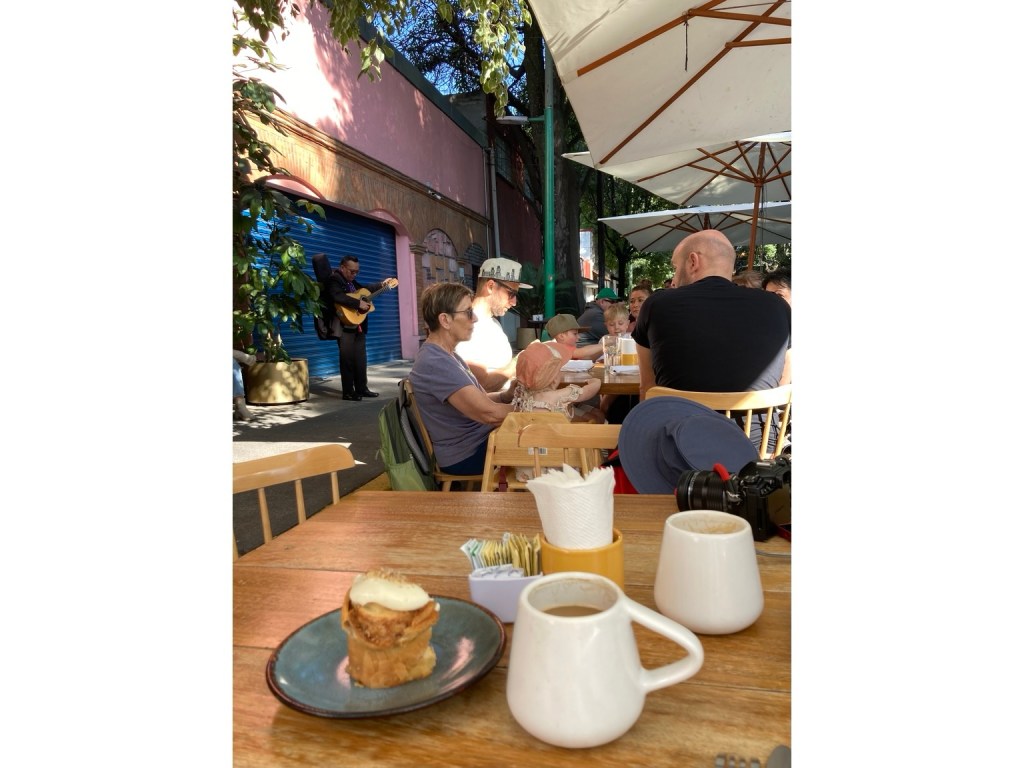
Next day we were focused and popped just down the road for breakfast at Croasan and were lucky to get the last table in the sunshine. When I ordered a poached egg with mushrooms, bacon and Parmesan I was surprised to find my egg in a bowl surrounded by a wonderful mushroom broth, but I was delighted I’d picked it as it was such a well crafted bowl of yuminess! Chris had a spinach and cheese omelette so was was prepared for the day Popeye style and we even had tunes while we ate.
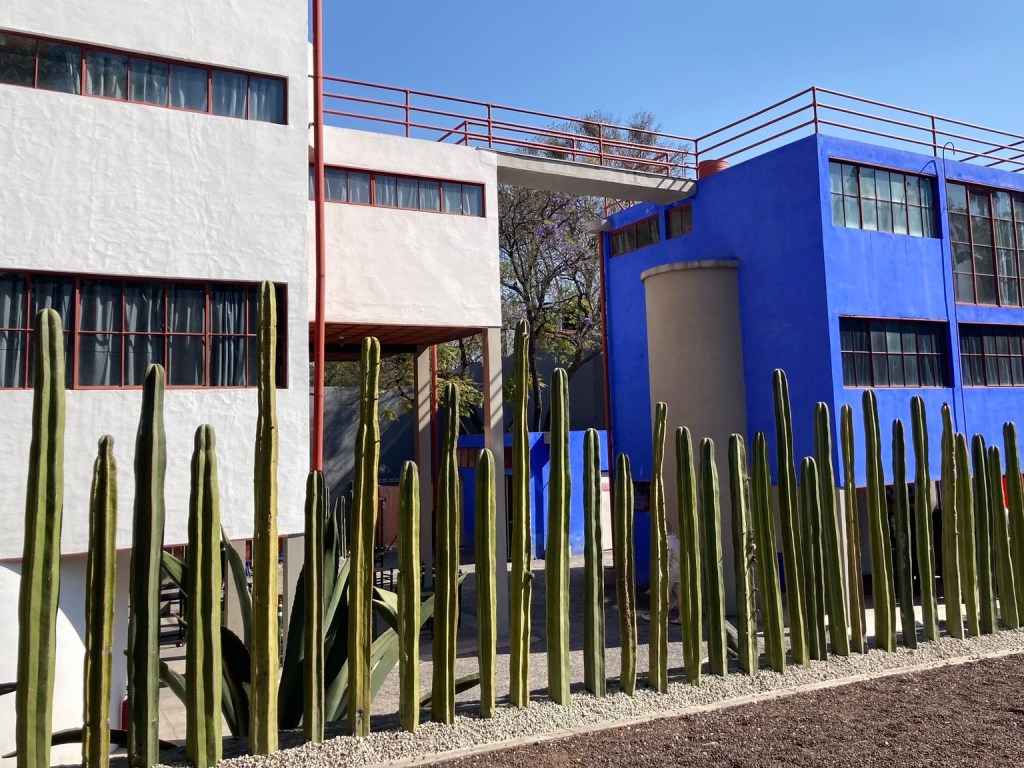
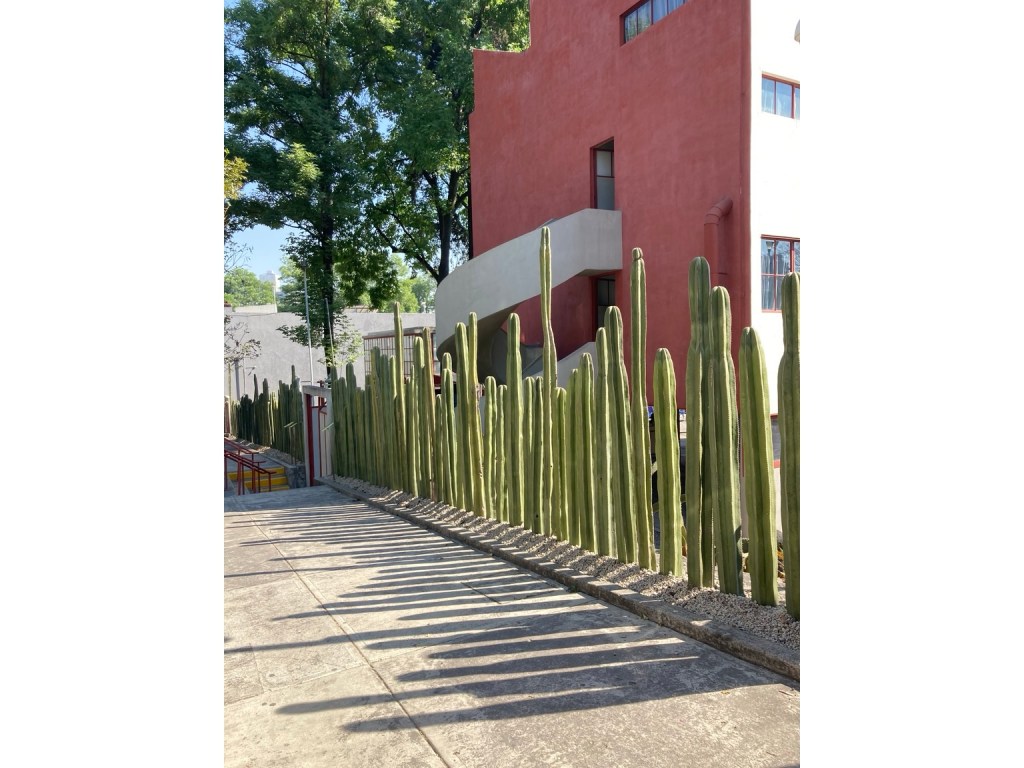
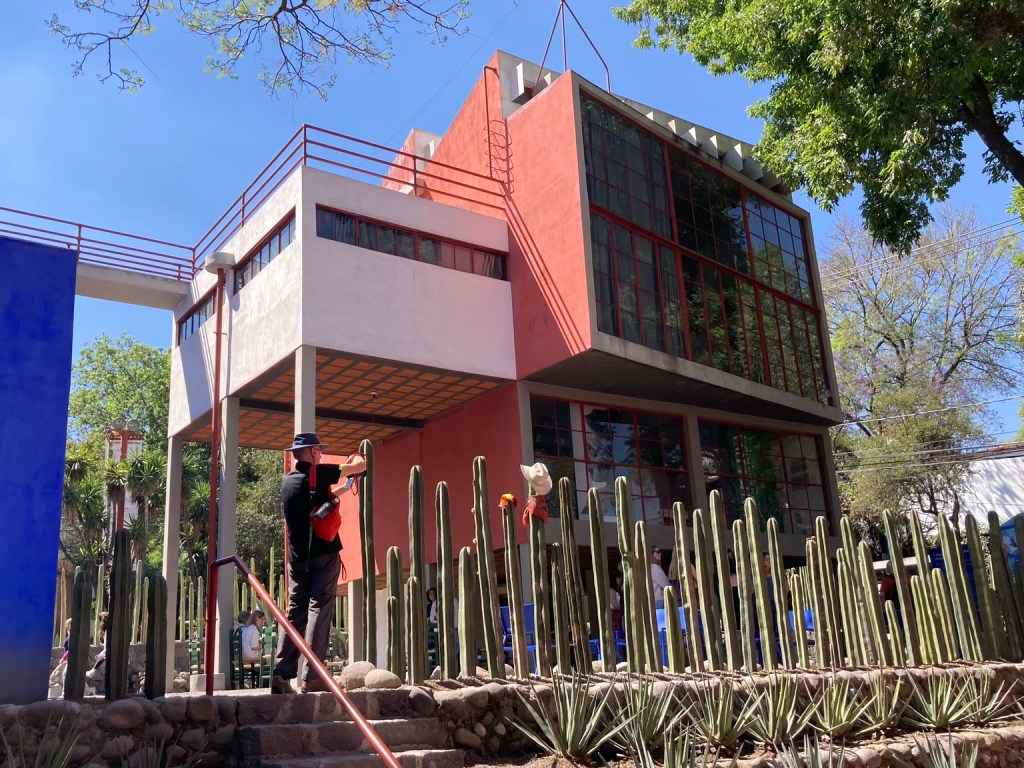
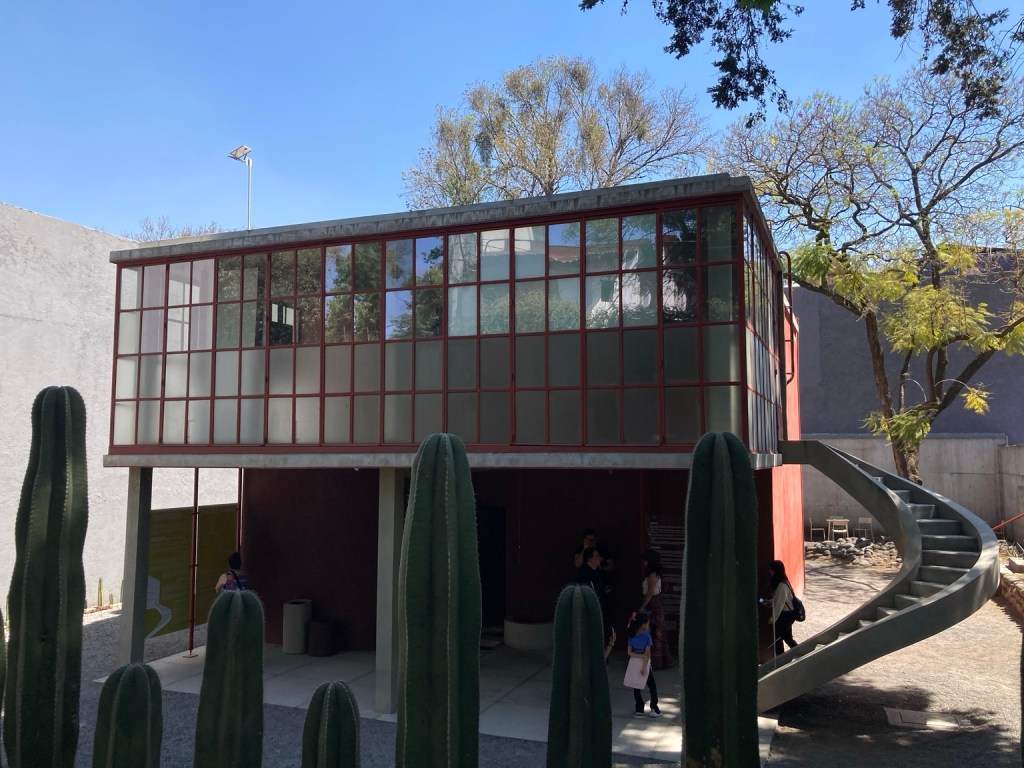
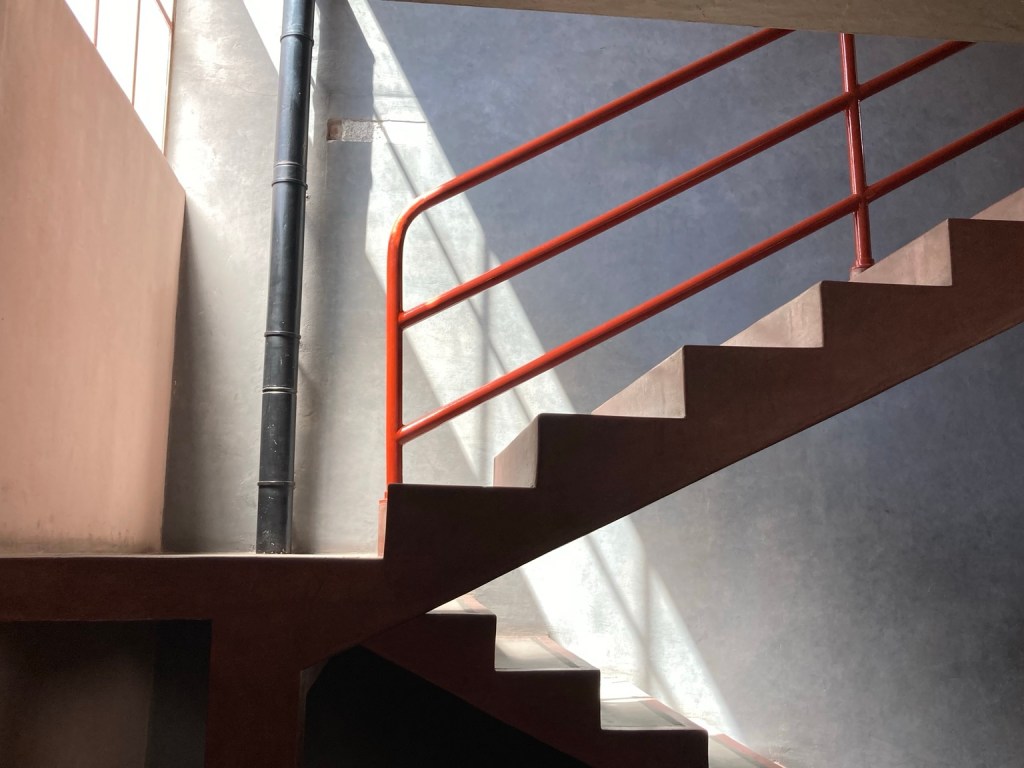
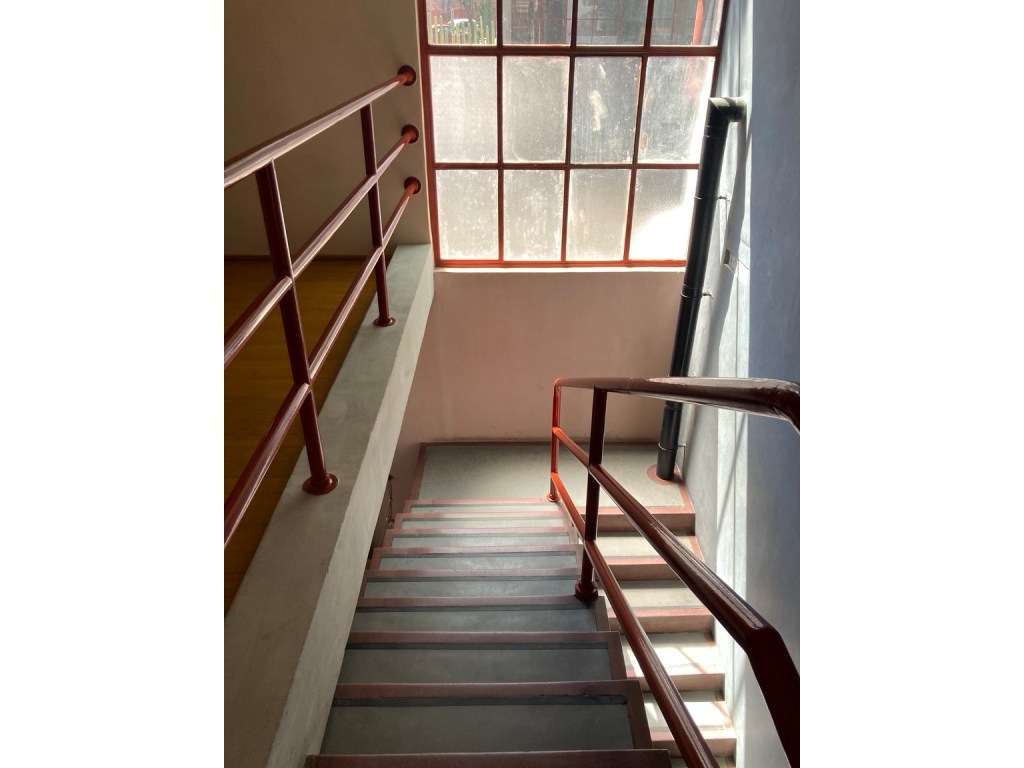
In 1929 Juan O’Gorman built a house based entirely on functionalism as developed by Le Corbusier. It was the first building in Mexico that implemented a social architecture putting technique before aesthetics and this utilitarian style of building appealed to Diego Rivera, reminding him of the philosophy of the Russian constructivist movement. He commissioned Juan O’Gorman to build a house-studio for him and another for his wife Frida Kahlo, linked by a bridge which was built on the adjacent plot. All three buildings now form one museum.
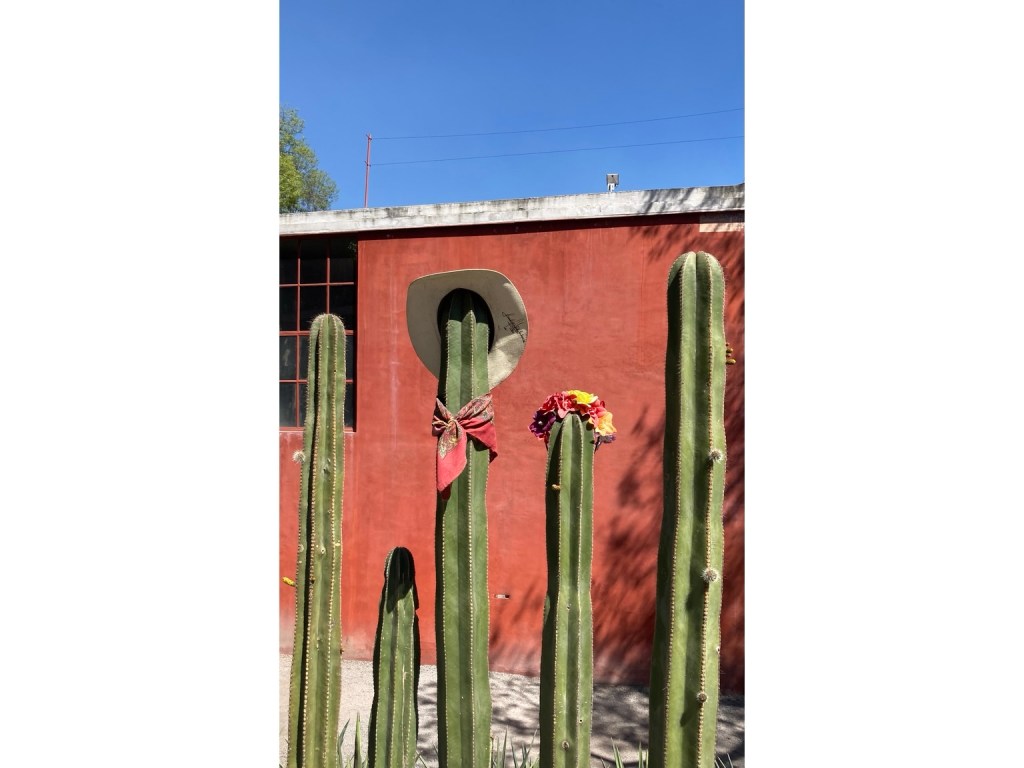
The first glimpse was of the famous cactus fence surrounding the property, and the vibrant walls beyond.
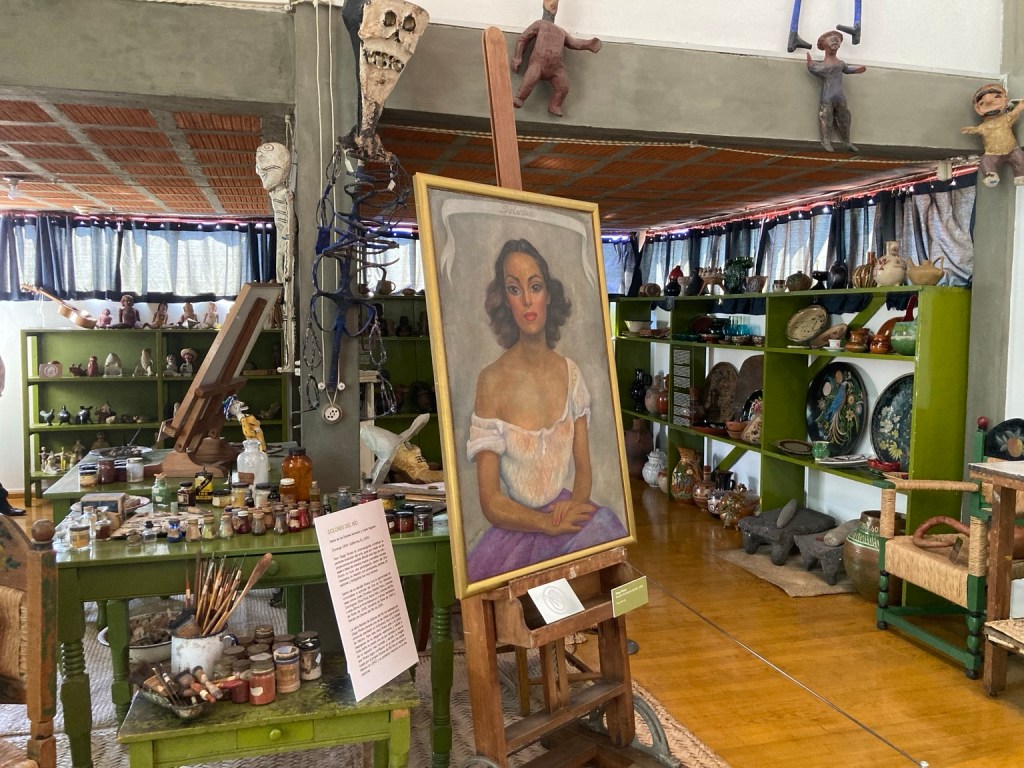
The main space in Diego’s house was his double height studio, and what a treasure trove it was, filled with personal items and almost as if he had just popped out.
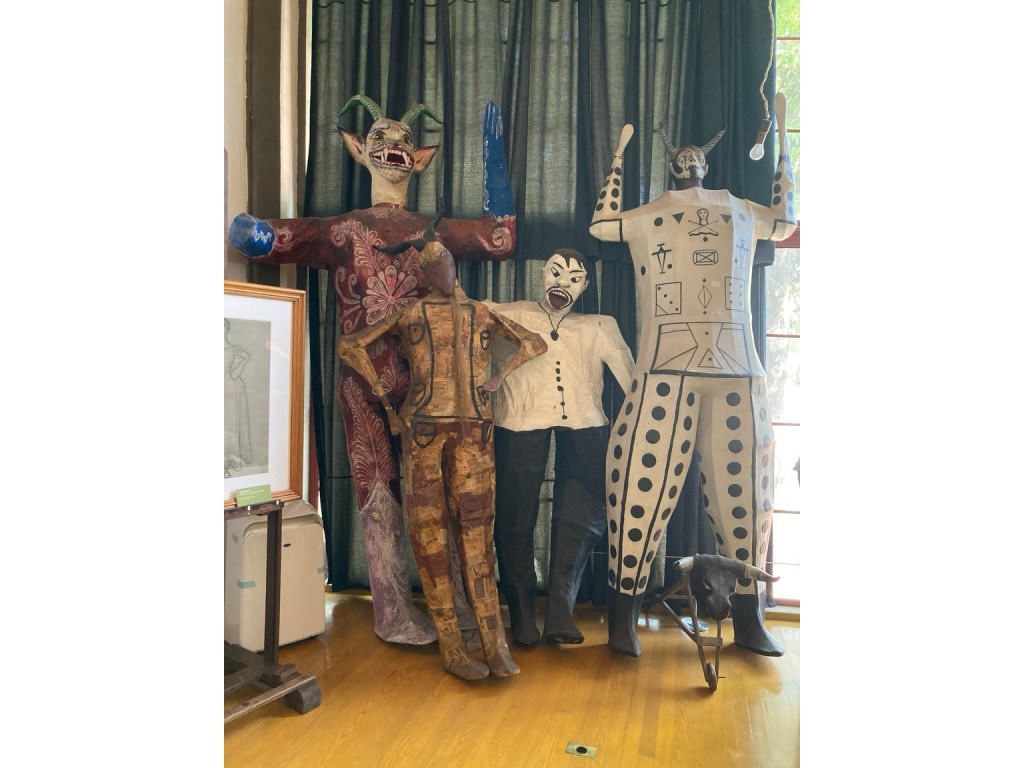
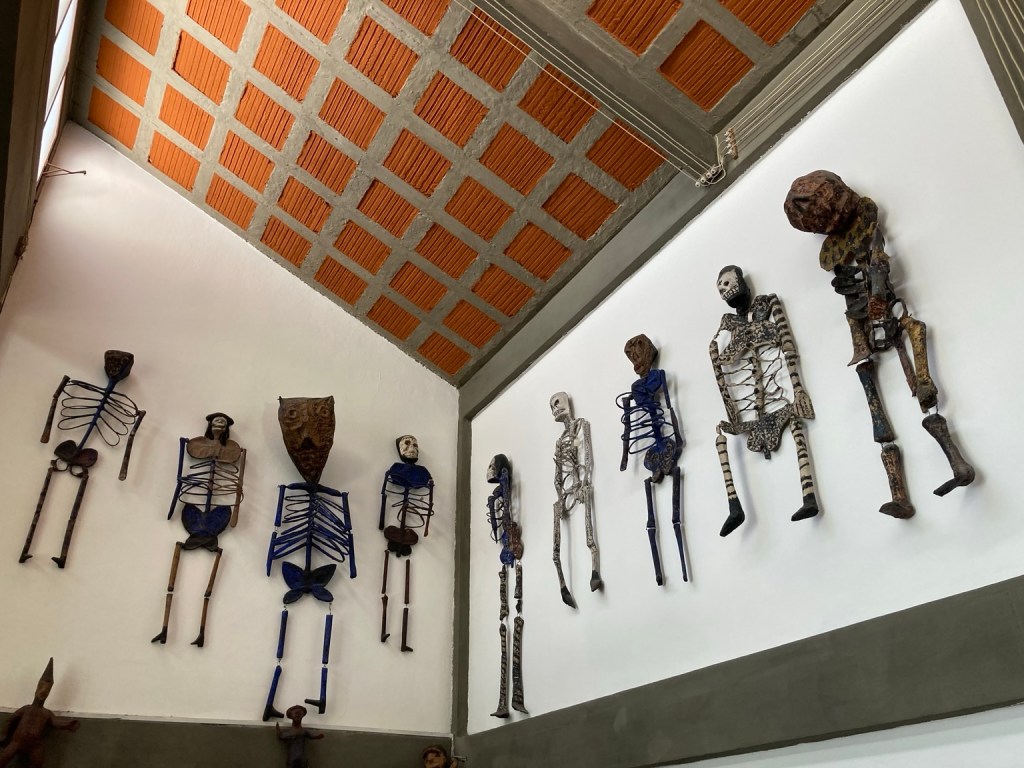
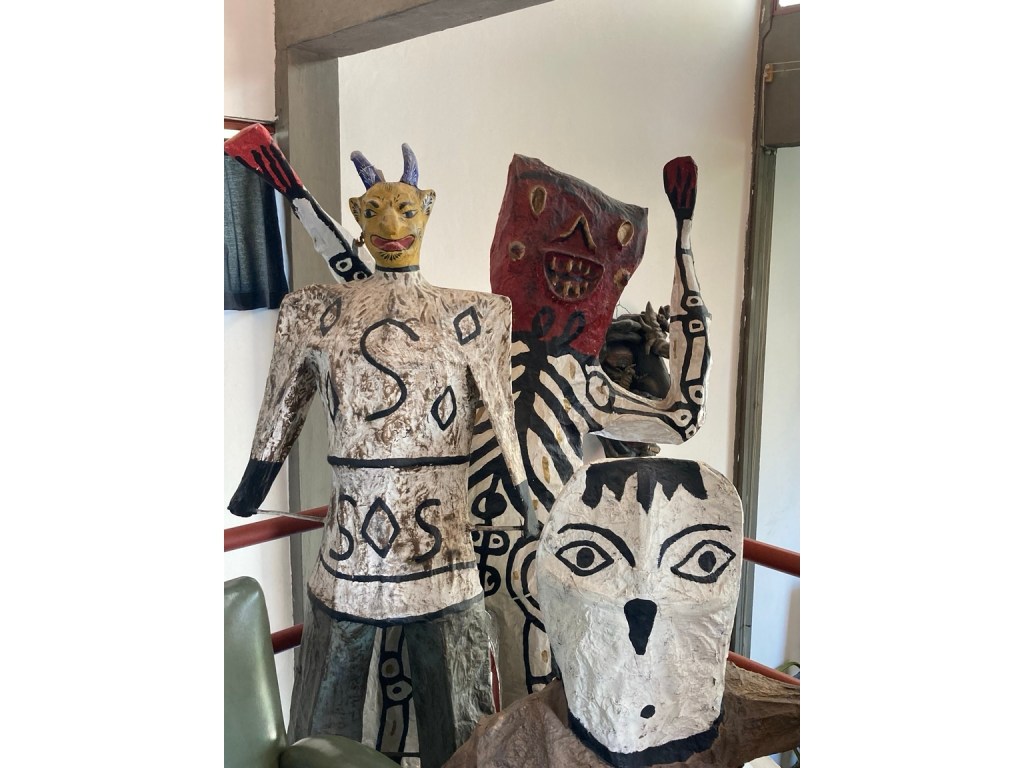
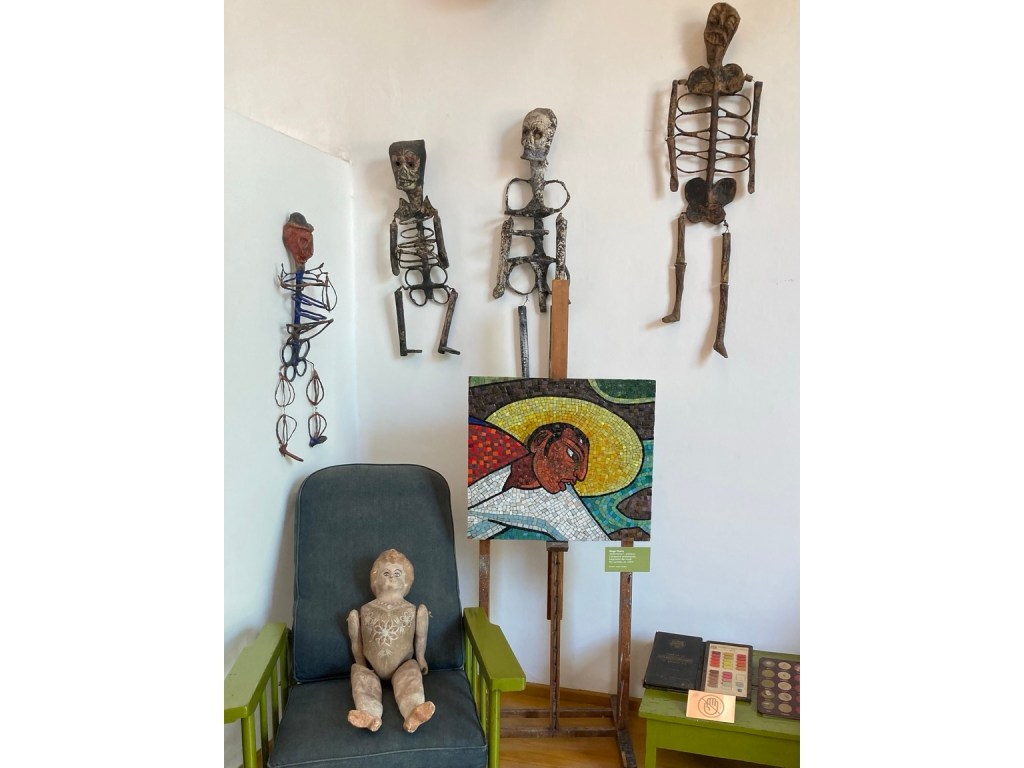
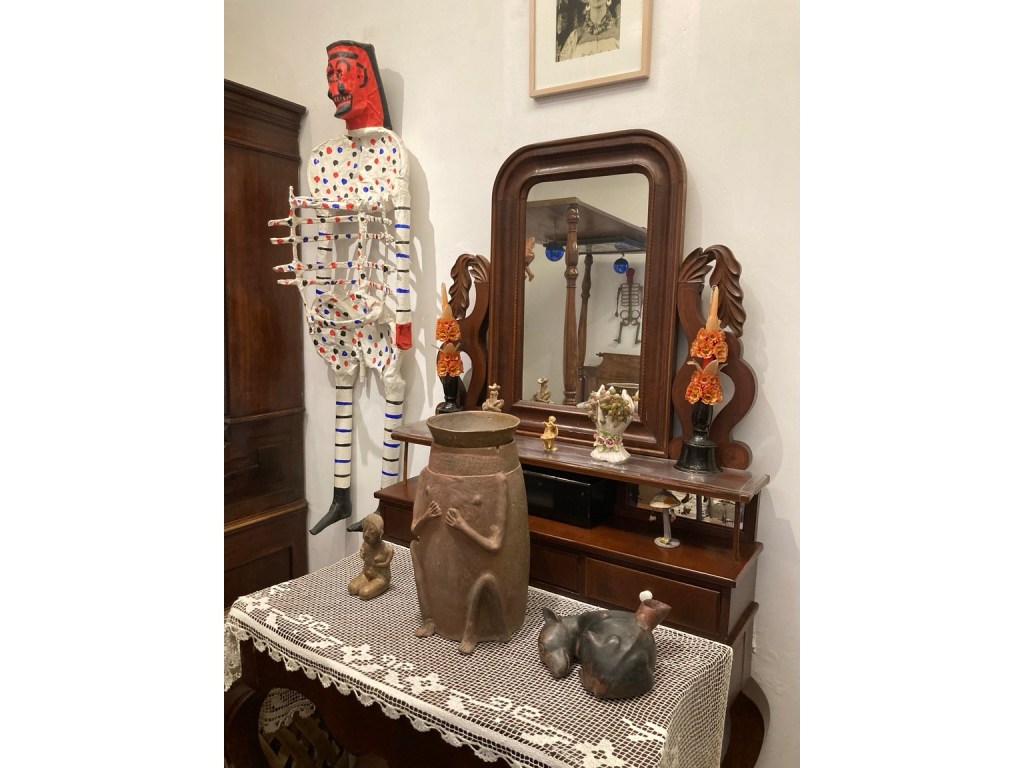
The huge skeletons and other figures are part of his judas collection – papier-mâché figures traditionally burned in Mexico during Holy Week to represent evil or, in this context, to serve as whimsical, satirical art.
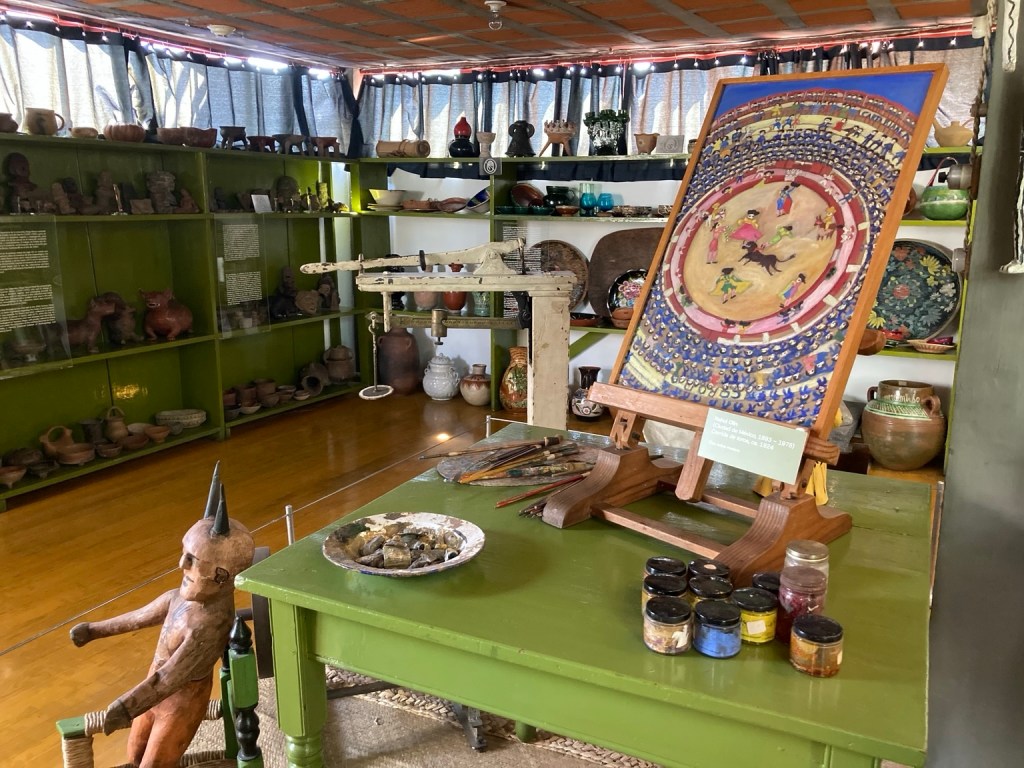
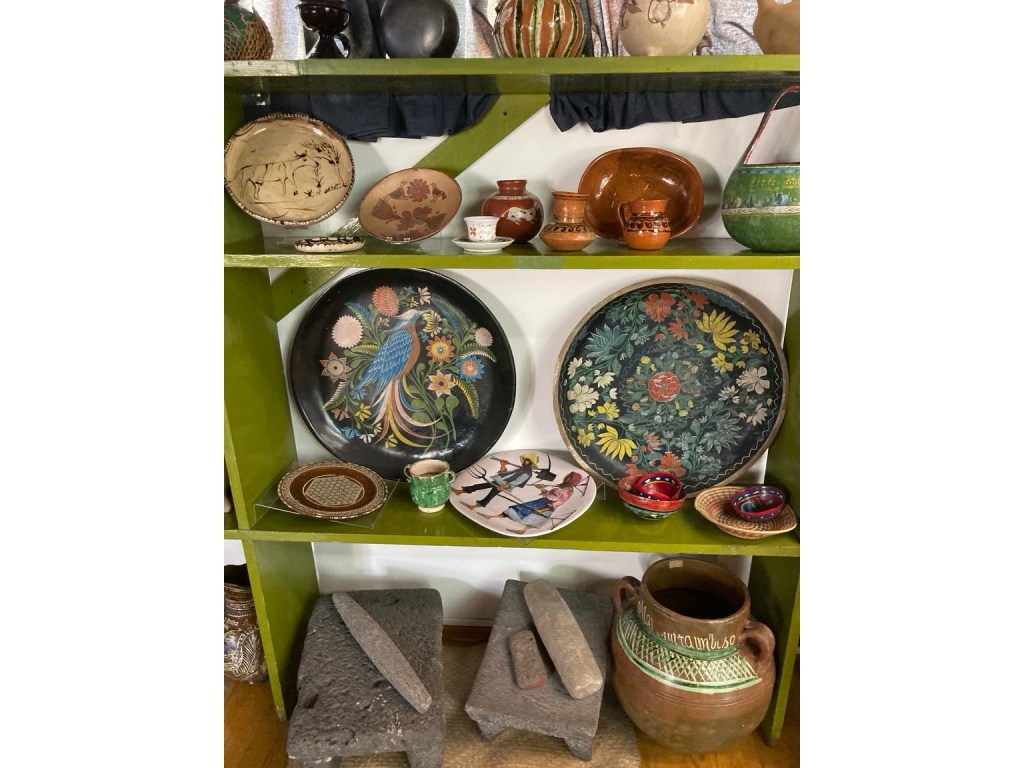
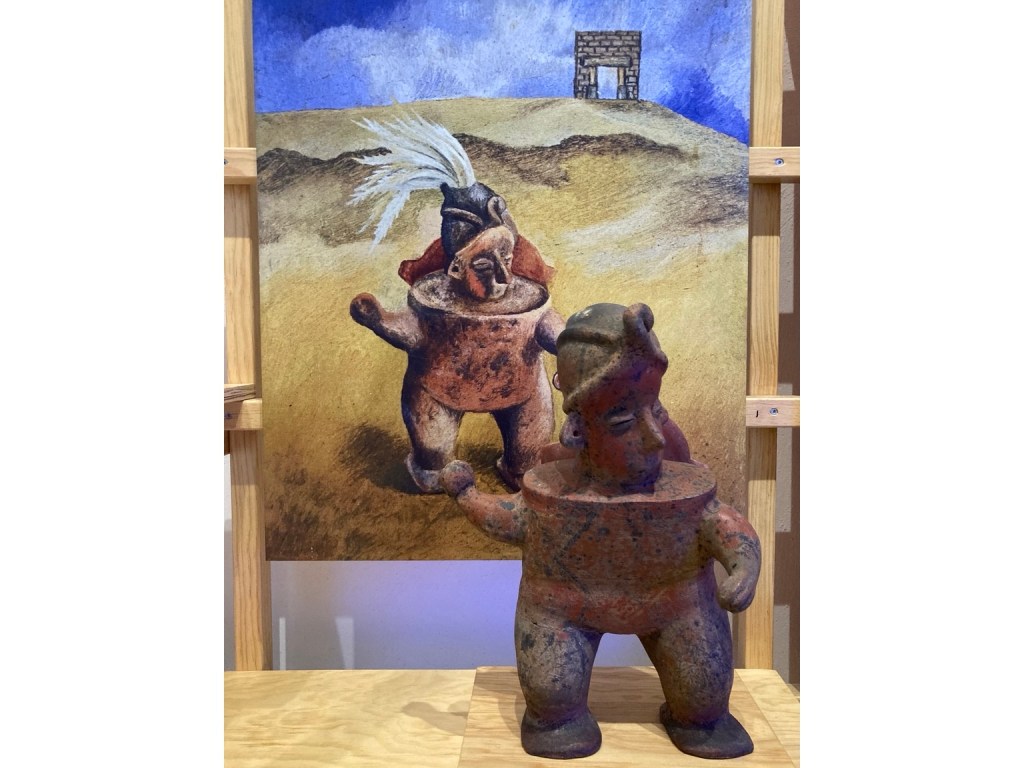
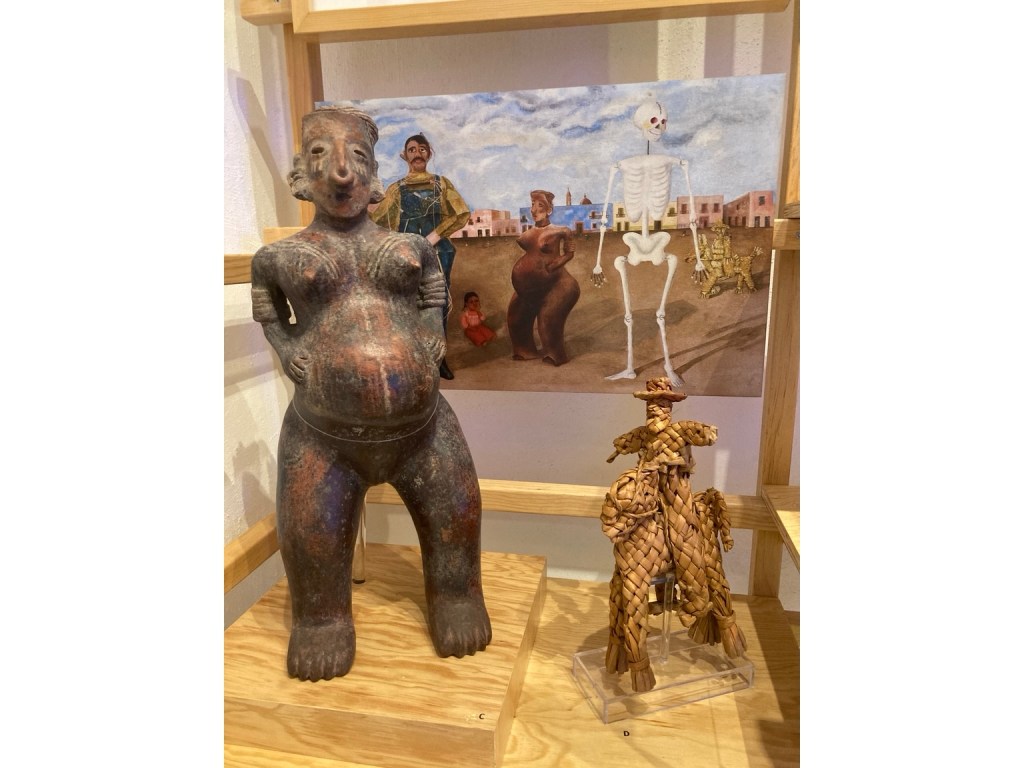
Diego had collected folk art since he spent his pocket money on small clay items as a child and he considered it more than just a tradition as it also showed contemporary expression.
Part of his pre-Hispanic collection is here too … and also shelves of pigments, natural pigments which his assistants would grind and mix.
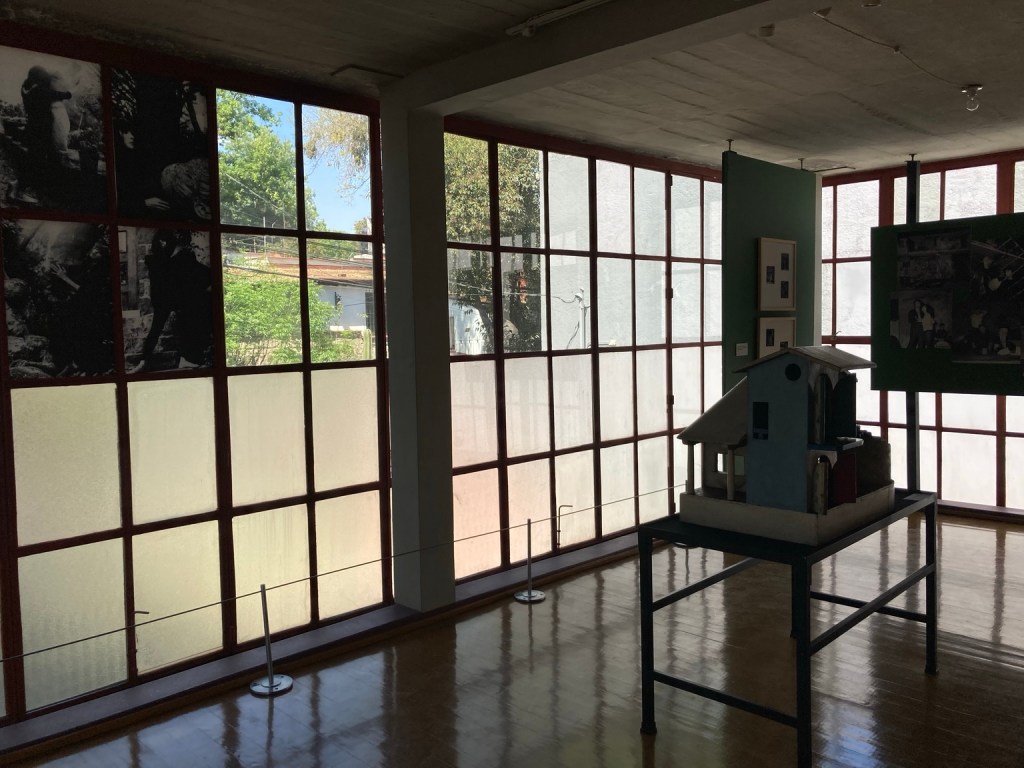
Once the wow factor of walking into the studio settled, we started taking in details of the building – clean lines, metal framed windows, polished grey concrete, wooden floors and exposed clay panels of the ceiling. Colour comes from the denim blue curtains – fabric used for American workwear, and the wooden furniture lacquered olive-green – commonly used to paint pulquerias at the time.
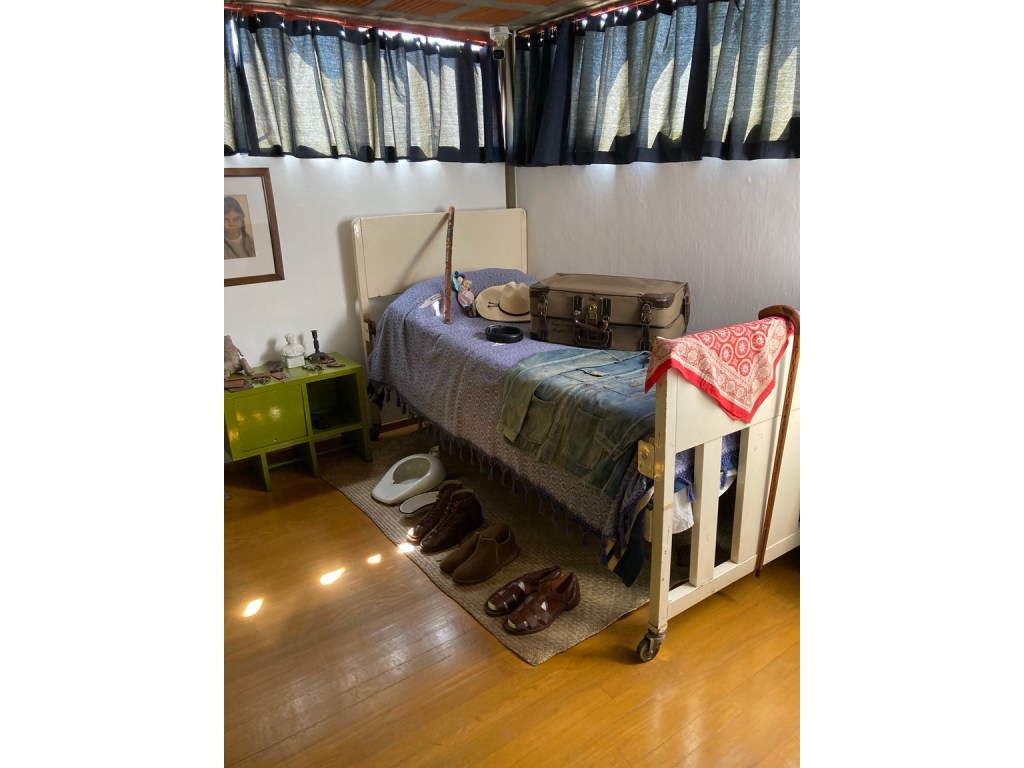
His bedroom was tiny …
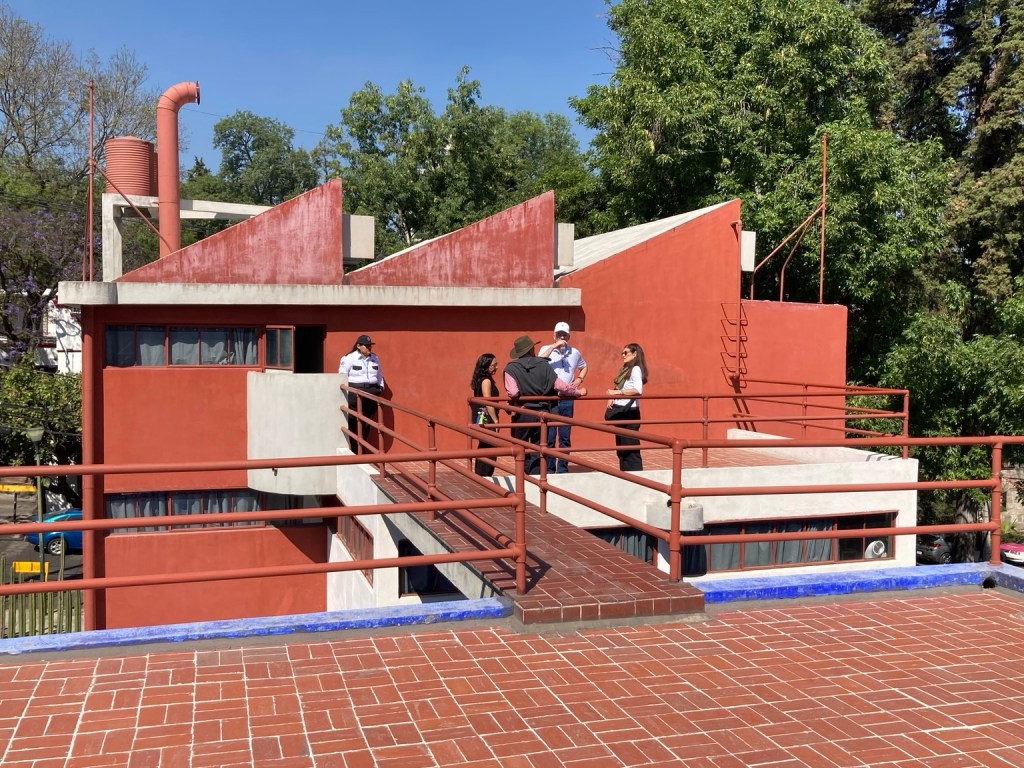
… and then up to the roof where exposed functionality provides a striking roofline.
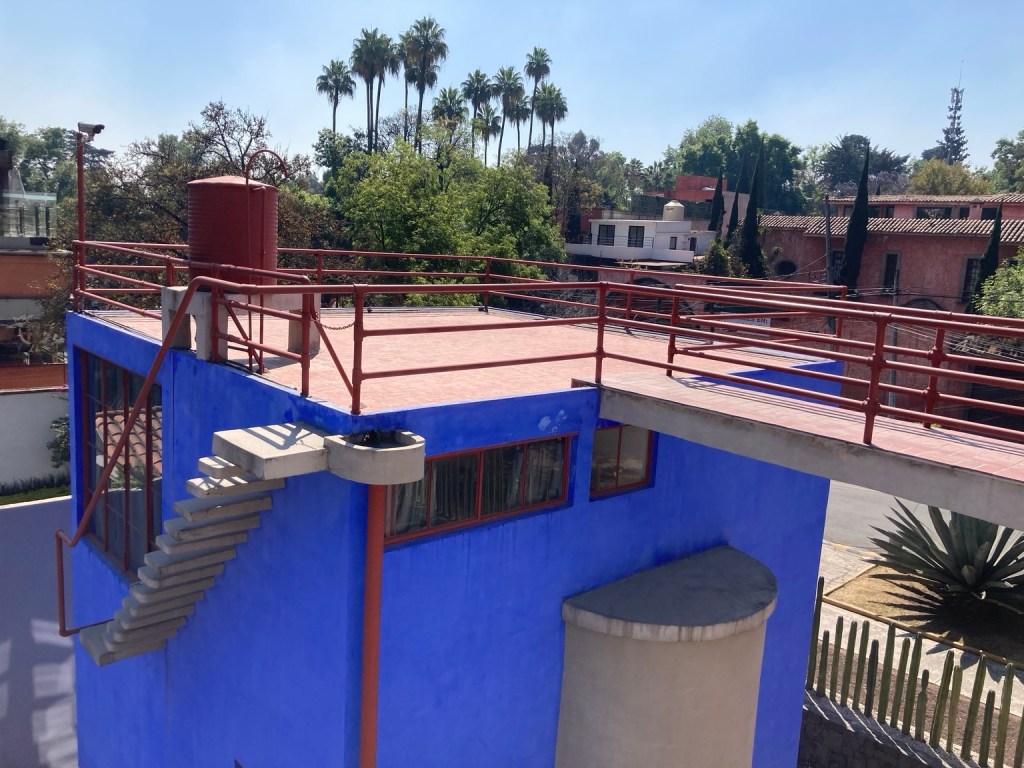
Looking then towards Frida’s house, the bridge that joins them can be seen, and also steps into her house. As I stood waiting to take my photo, I thought how precarious they looked for a woman with mobility issues, but a guide showed me a photo of her standing on the steps, so she did use them. Fortunately, when the window concertinas open, it provides a barrier at the base of the stairs, but I still think H&S would be on the case!
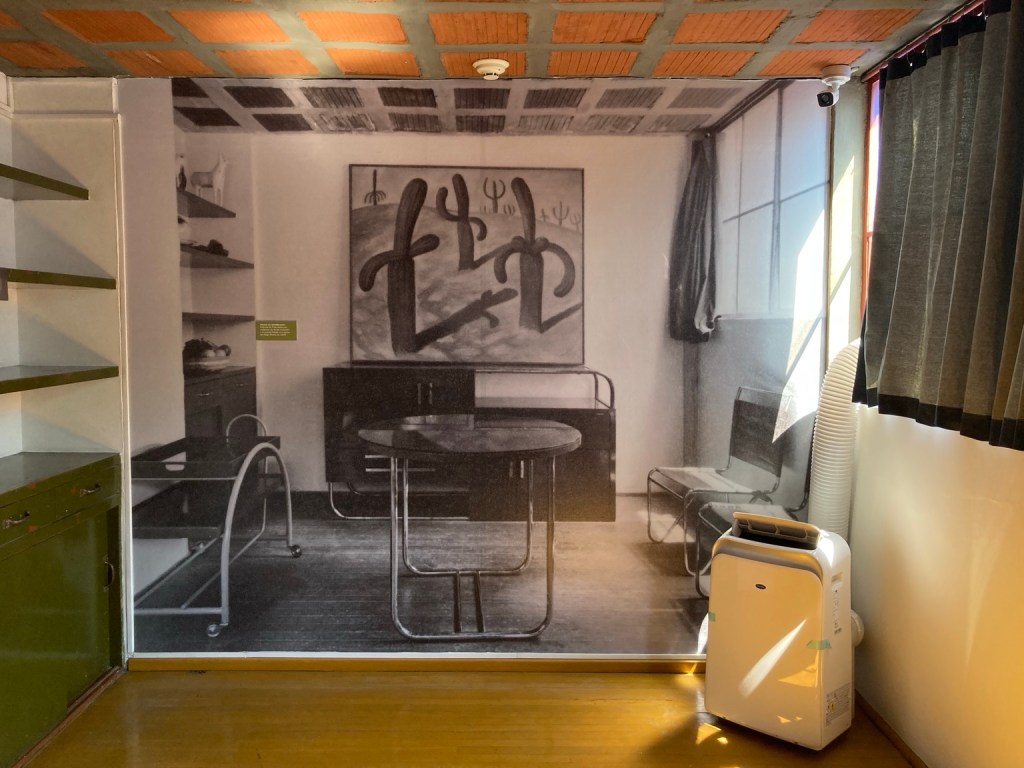
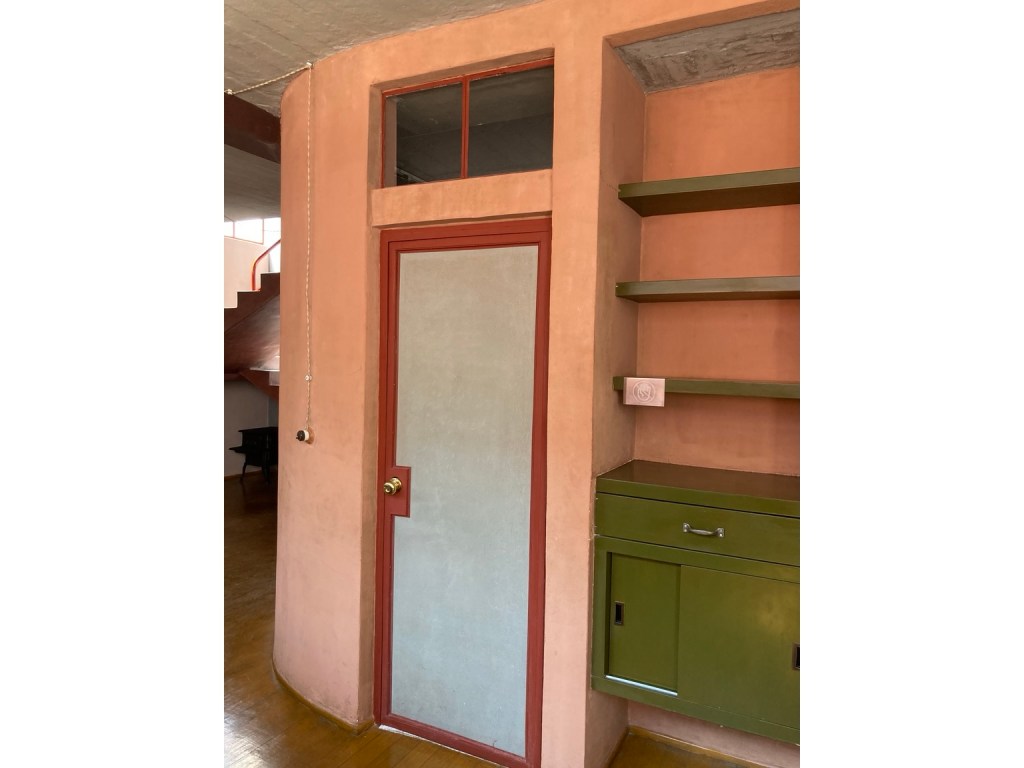
The idea of the linked houses was to live together, but also apart, so they each had studios, and bedrooms but the living area was just in Frida’s house. Here’s a snap. but no belongings remain. She lived here on and off for a couple of years but having seen Casa Azul, I can quite see why she preferred it!
A courtyard links the building.
Finally we looked round O’Gorman’s house, with a concrete spiral staircase to his studio, but again empty, highlighting its clean lines.
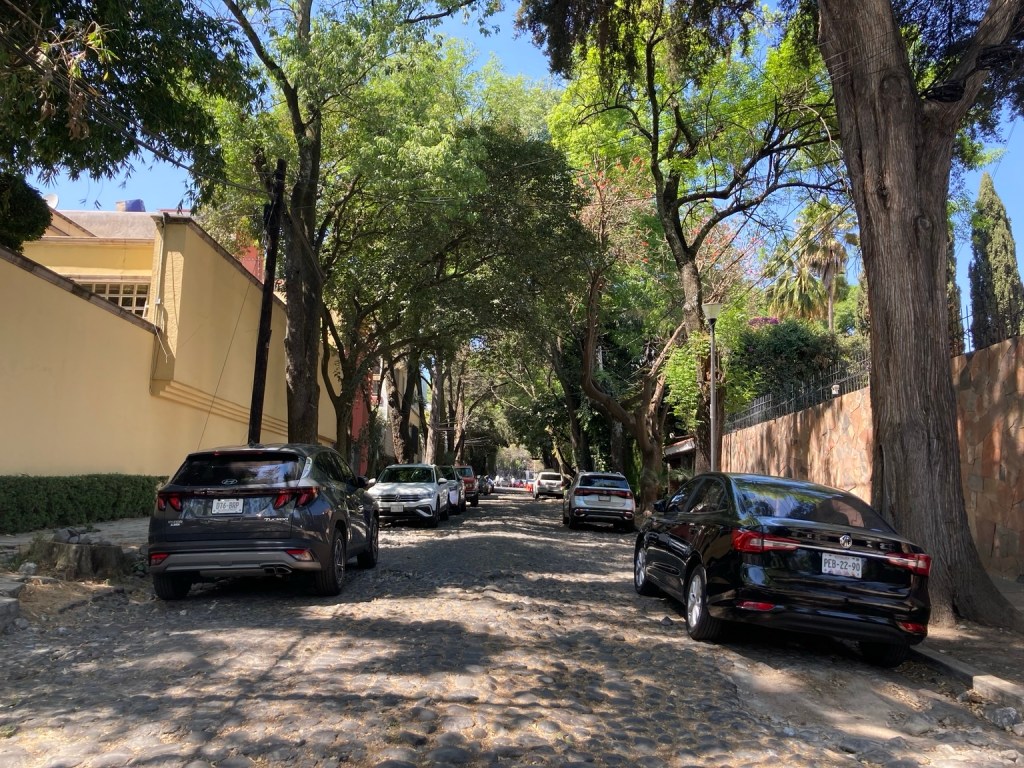
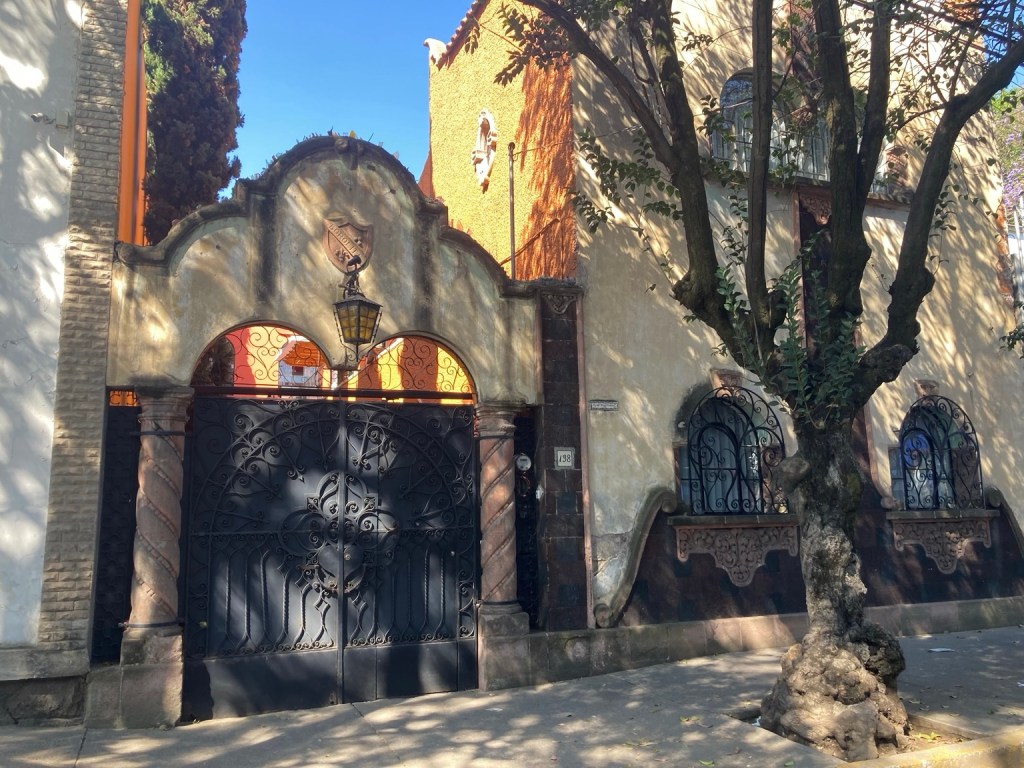
Time for some lunch so we walked to the market in San Angel, interested as we went so see what a smart neighbourhood it was, retaining the charm of cobbles, but with properties hidden with large gates, we could only guess at the luxury concealed.
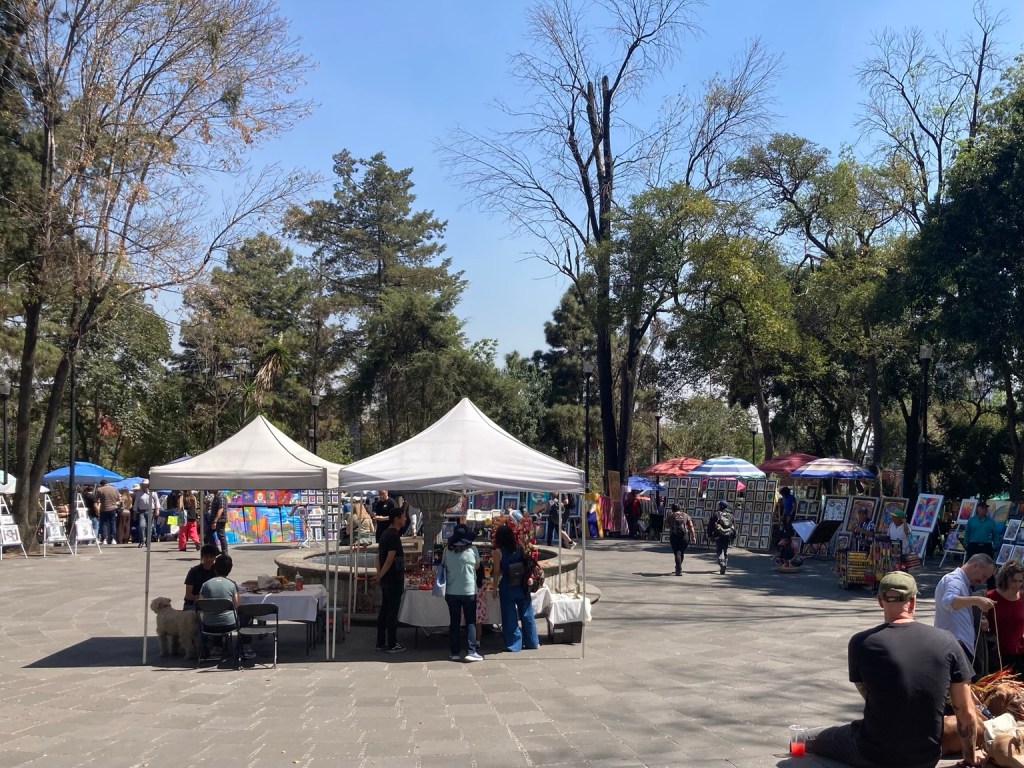
Saturday is market day, with a vibrant art and craft market where we browsed but didn’t buy! We stopped in a cafe, pleased to sit down and ordered cold drinks and cactus tacos.
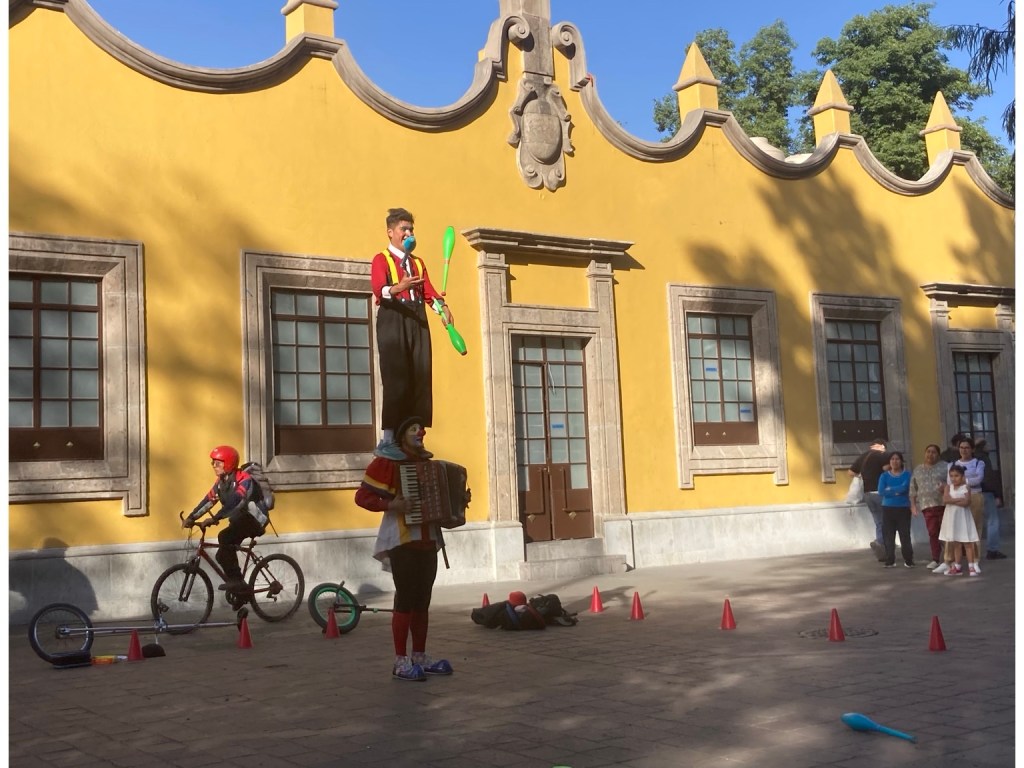
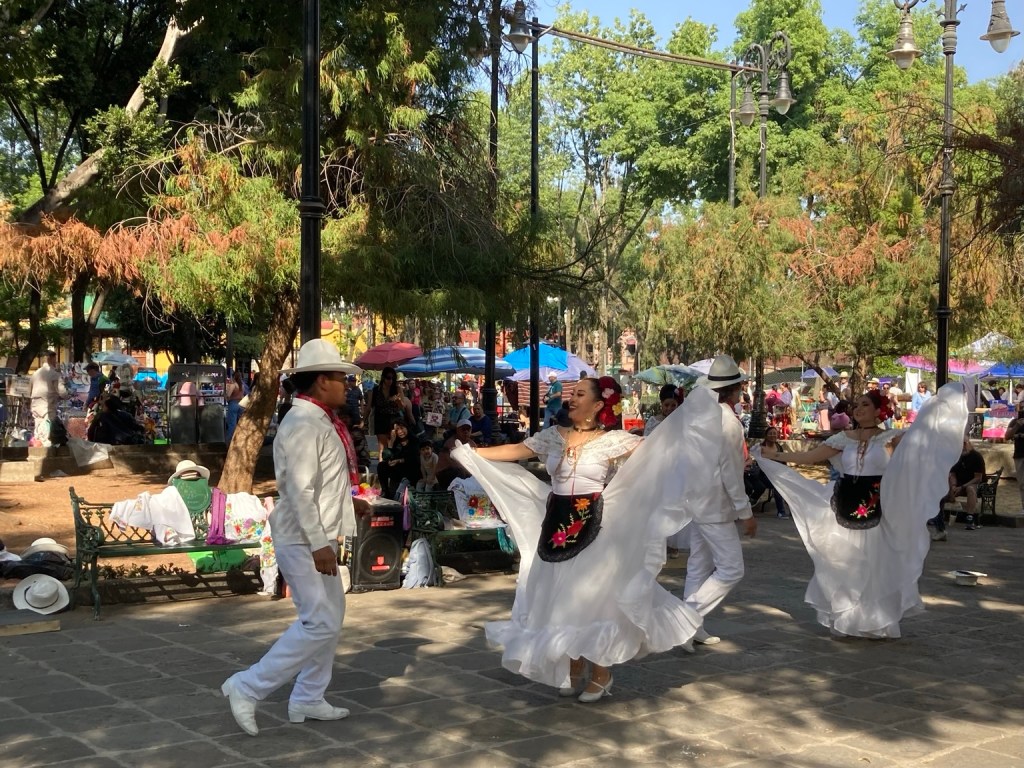
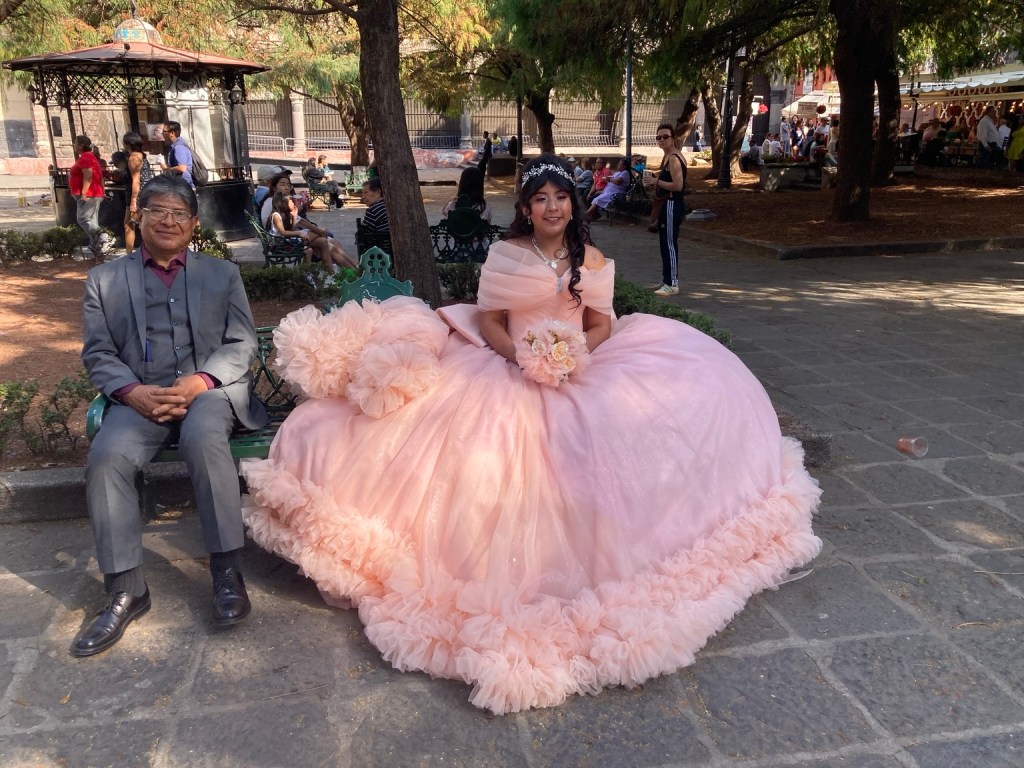
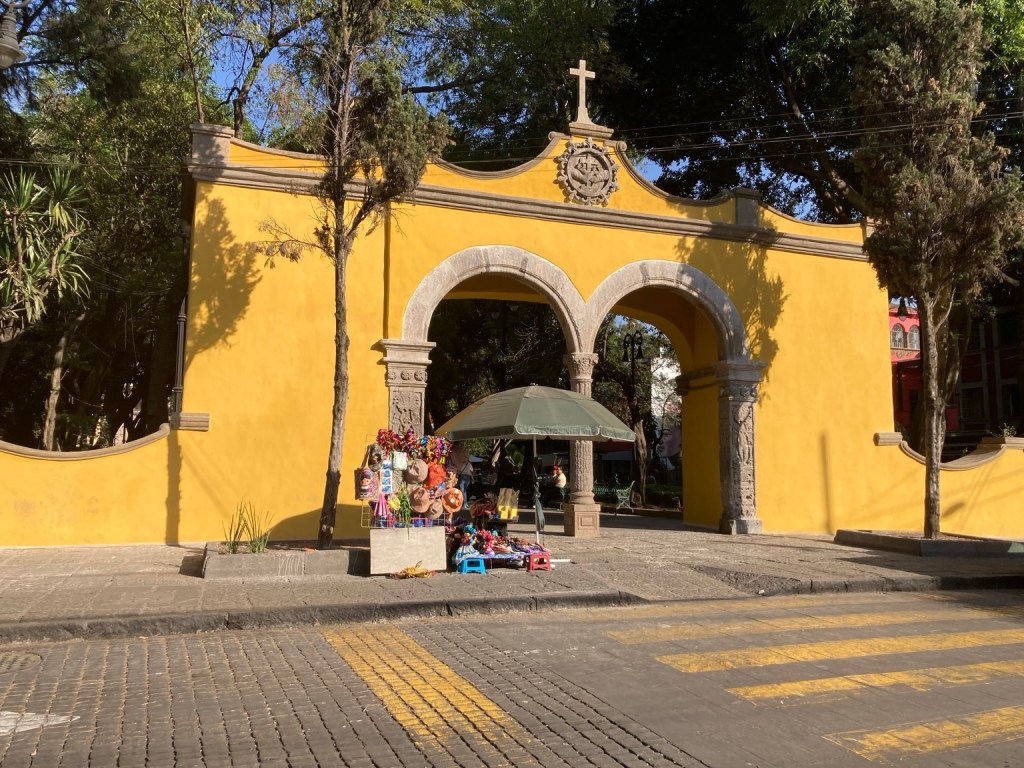
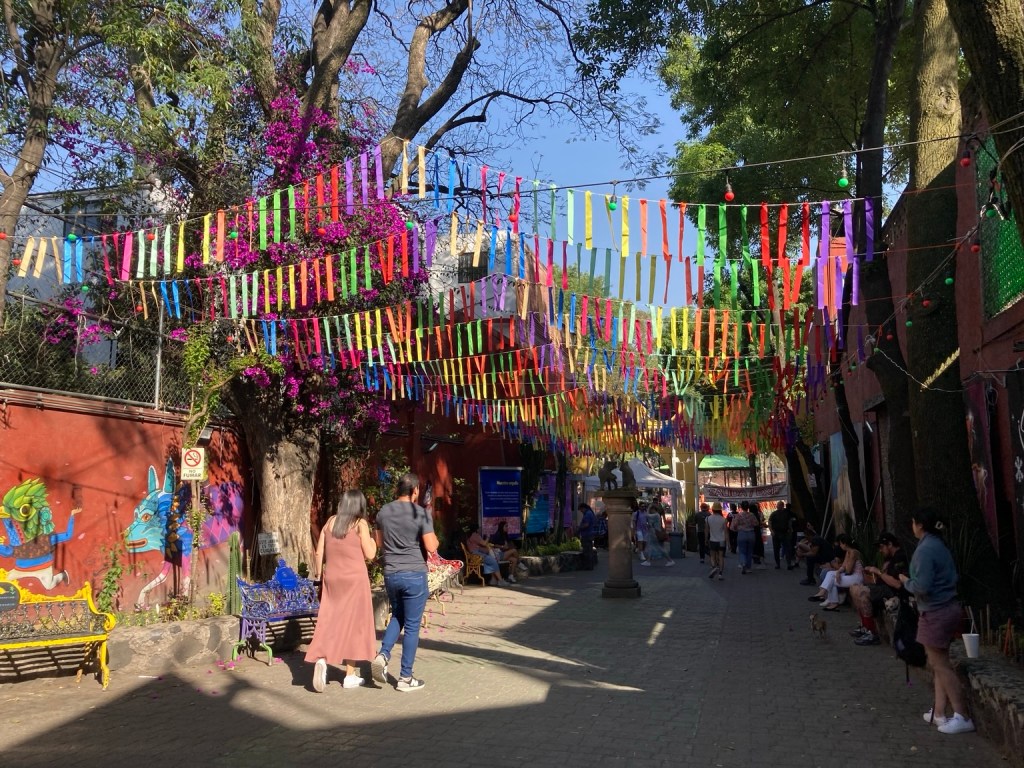
Coyoacan was also busy when we got back with clowns, dancers and even a wedding.
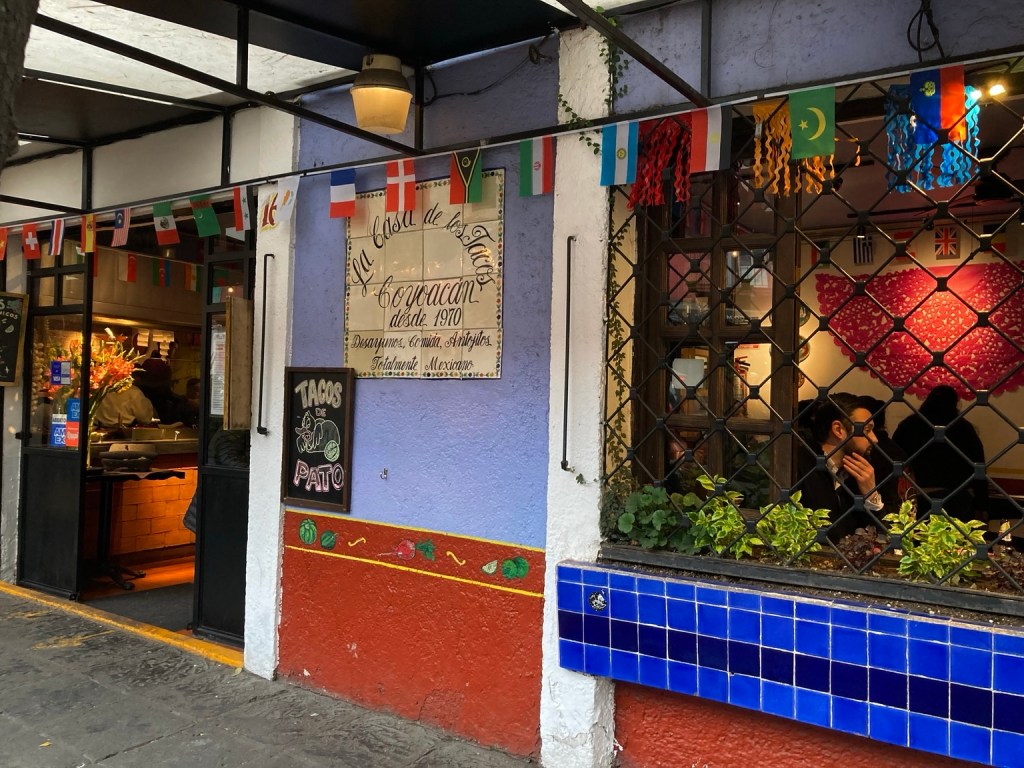
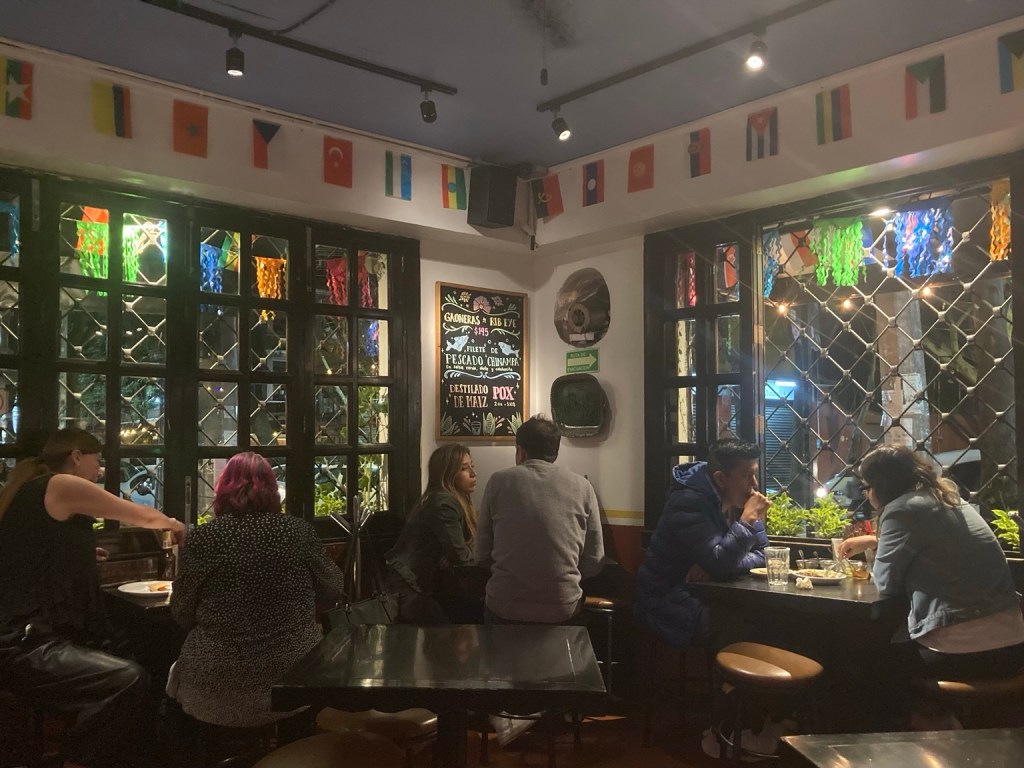
The town was still buzzing when we went for dinner, with foods stalls that had popped up to line the streets and a night market selling anything and everything. We ate in a small but very cute taco bar down a side street and had the best mexcal margaritas with the tacos.
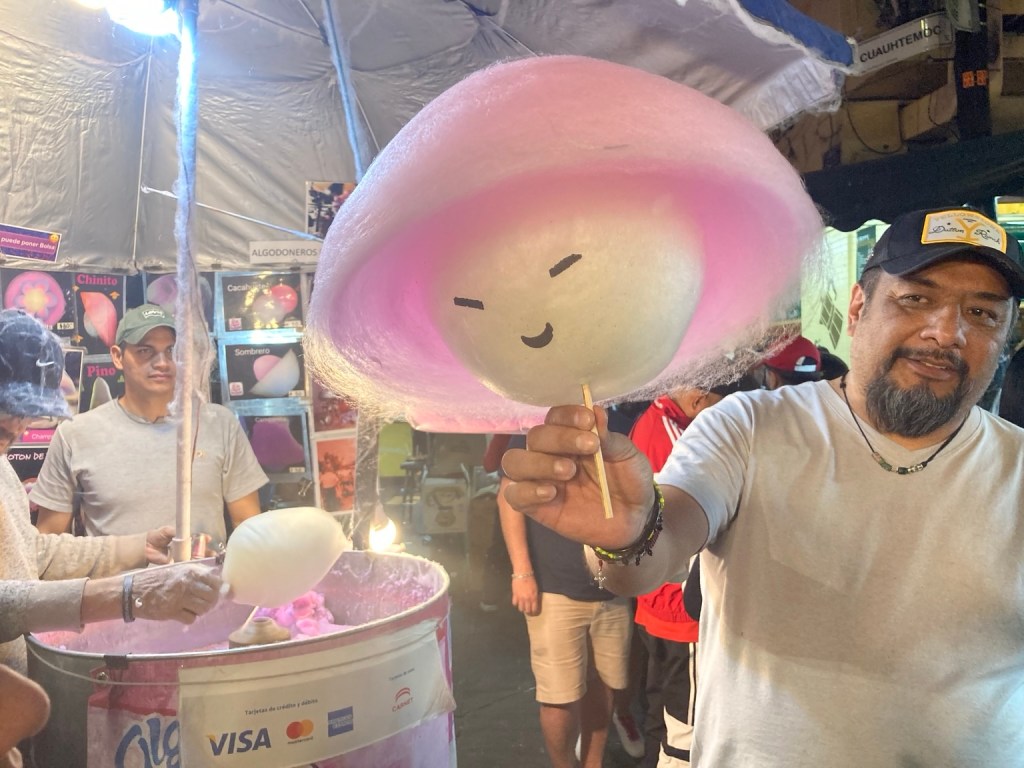
On the walk back, entertainment was everywhere from a god squad rock band, candy floss art and a man dislocating his shoulder for tips, but you only need a photo of the chinaman!
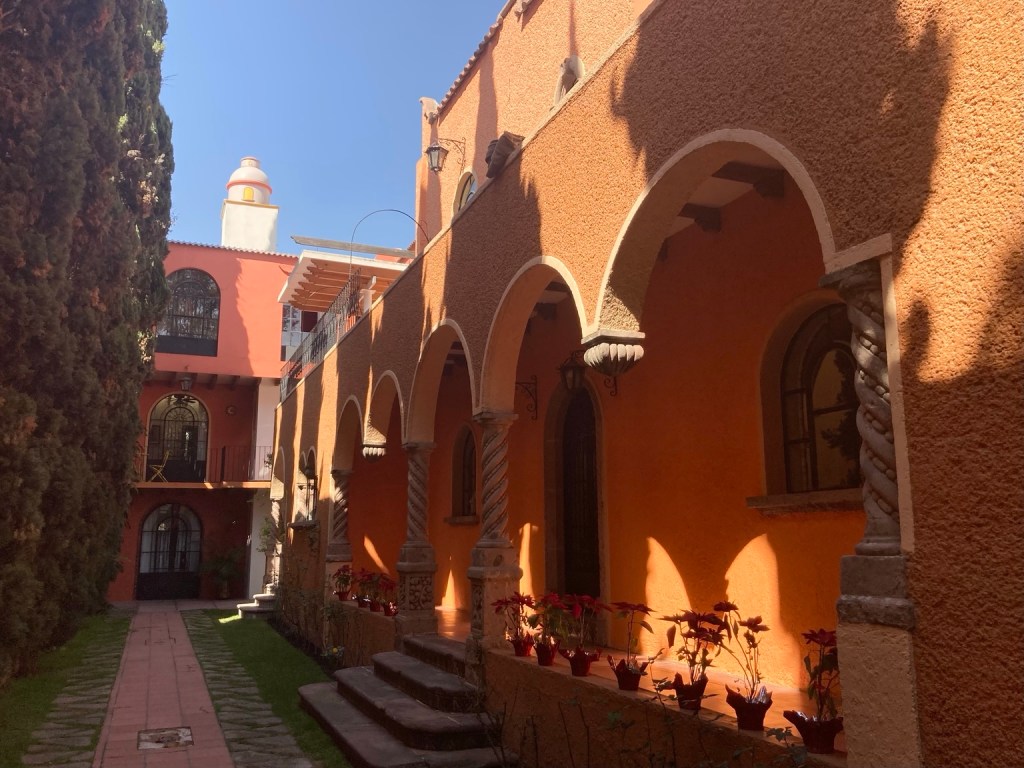
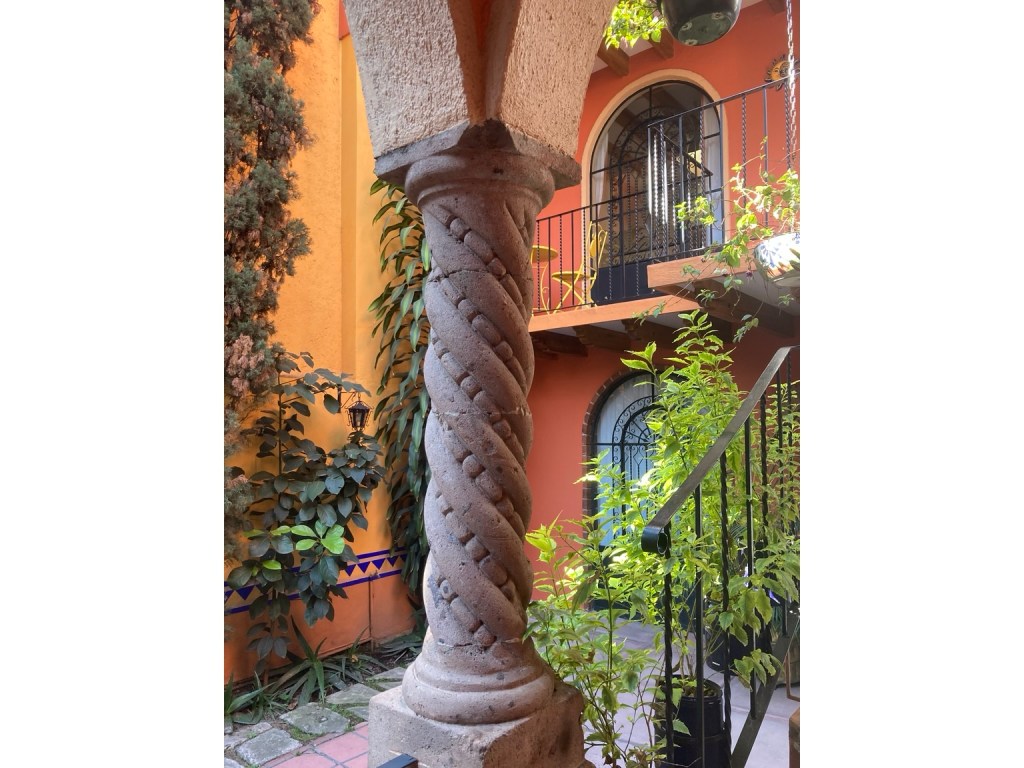
… and a taxi ride on the busy Mexico City orbital route and we arrived in the leafy suburb of Coyoacan. Villa Alfonsina is our home for our last few days, a family run colonial style house with cosy rooms, a little kitchen handy for making drinks and a terrace to enjoy breakfast.
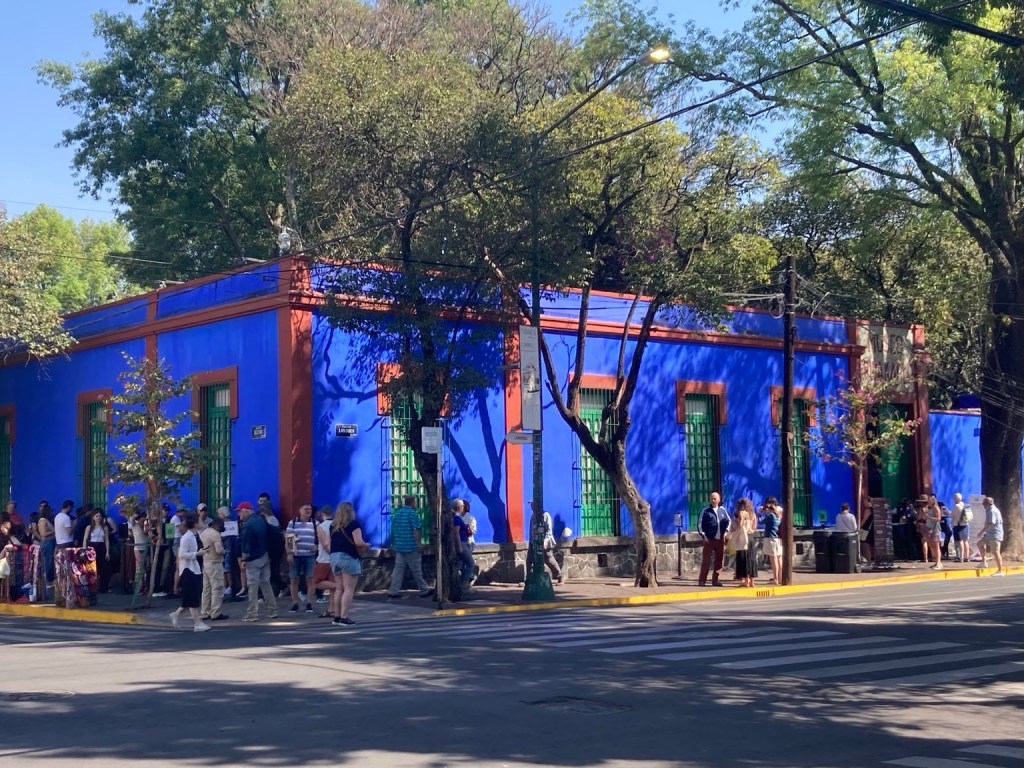
We are also just across the road from Casa Azul, birthplace of Frida Kahlo and the hottest ticket in town, so luckily we booked ours weeks ago, but more of that later.
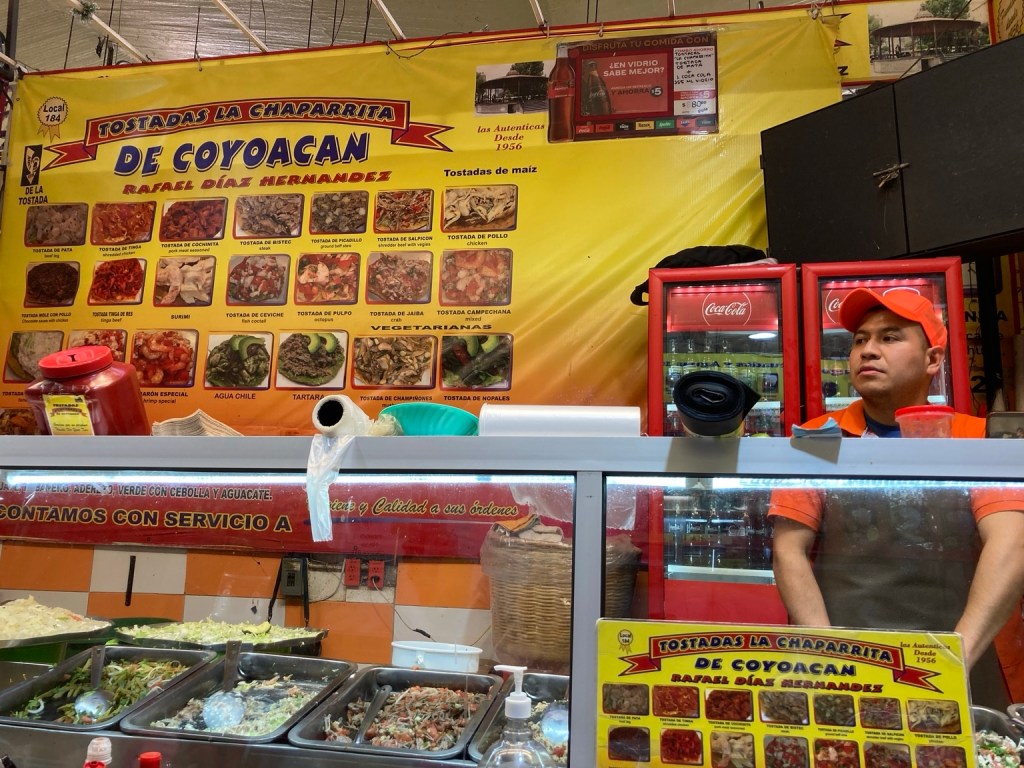
Hungry, we headed straight to the market where there were a number of tostada stalls, all claiming to be the original and the best, each with their own special recipes for the array of possible toppings.
We munched through a couple each – thin and crispy on the bottom loaded with filling that is just waiting to fall off – mushroom, cactus, cochinita and chipotle chicken.
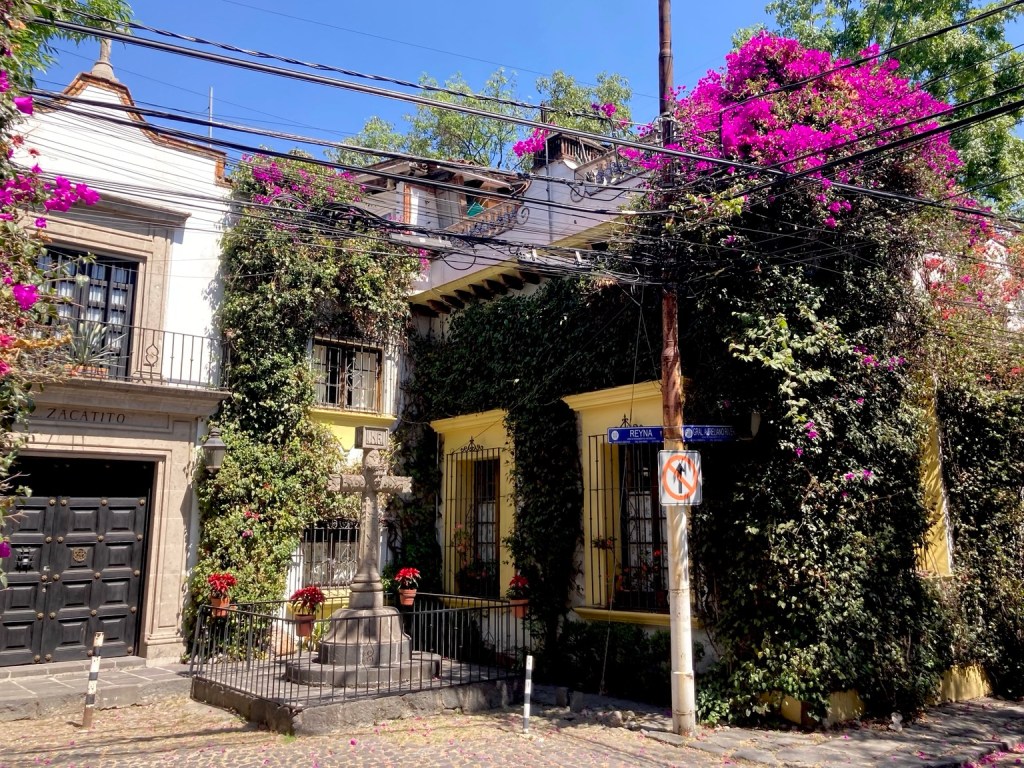
Coyoacan is known for its cobbled streets, leafy parks and old-fashioned charm, but with the Diego & Frida connection, it obviously attracts lots of visitors so restaurants and gift shops abound. Nonetheless, it still feels more like a small town rather than part of Mexico City!
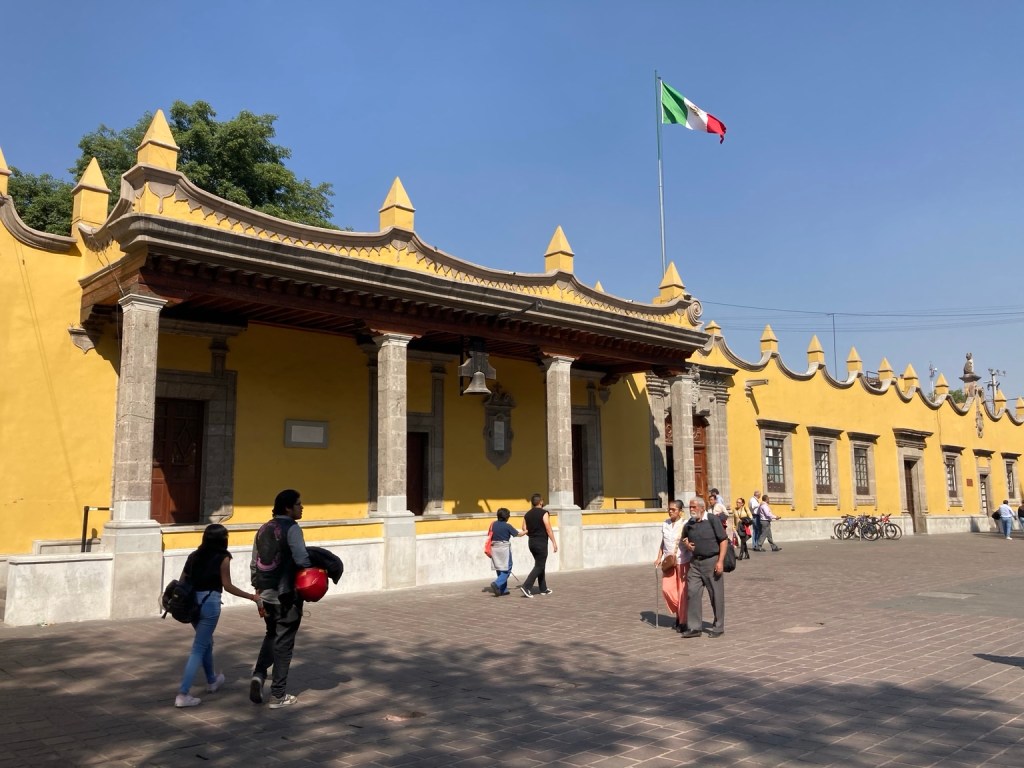
We walked on to the centre where we saw the Palacio Municipal, also known as the Casa de Cortés after Hernán Cortés who led the Spanish conquest first settled here after the fall of Tenochtitlan.
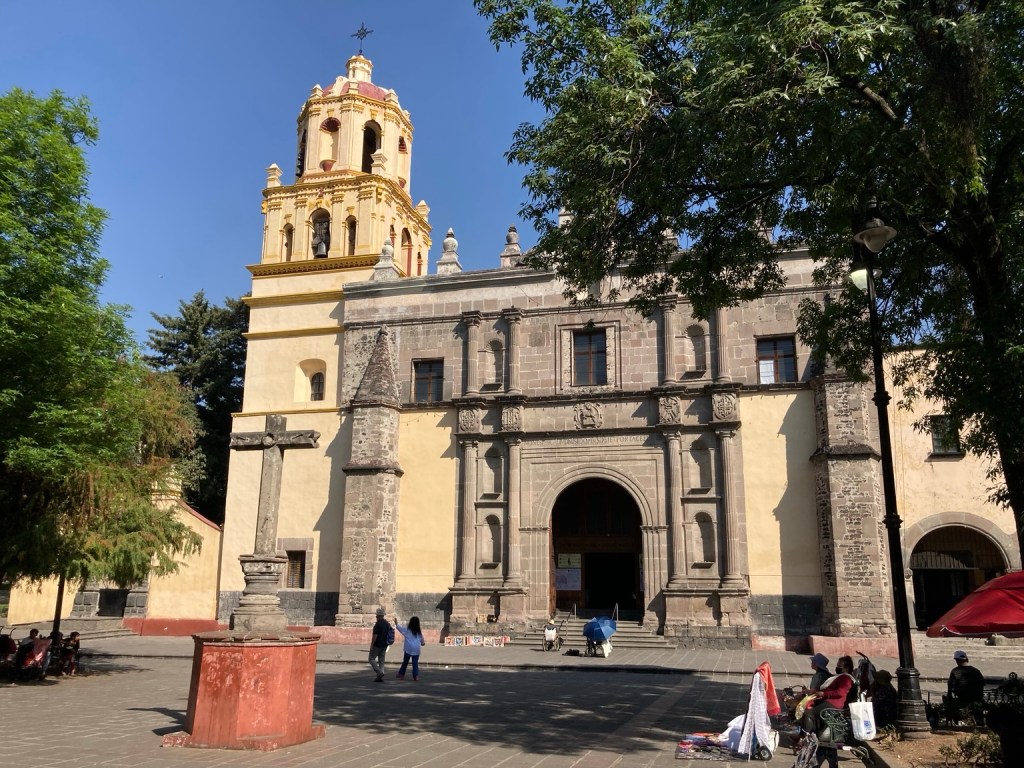
Opposite is the C16th Church of San Juan …
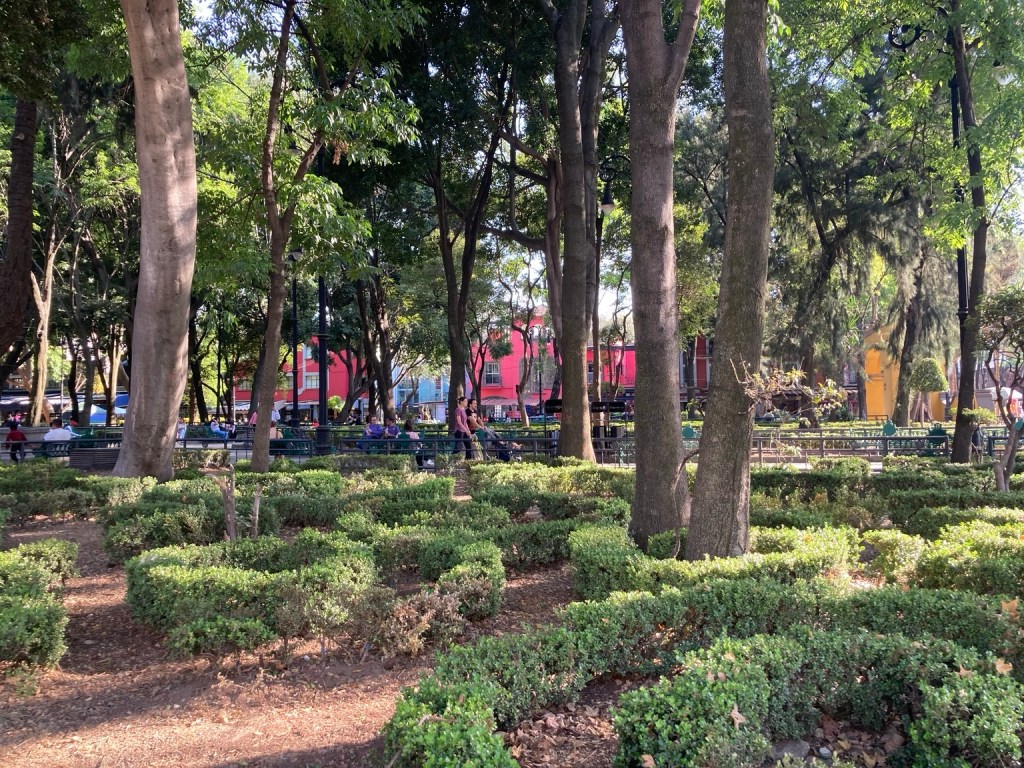
… and outside a large plaza.
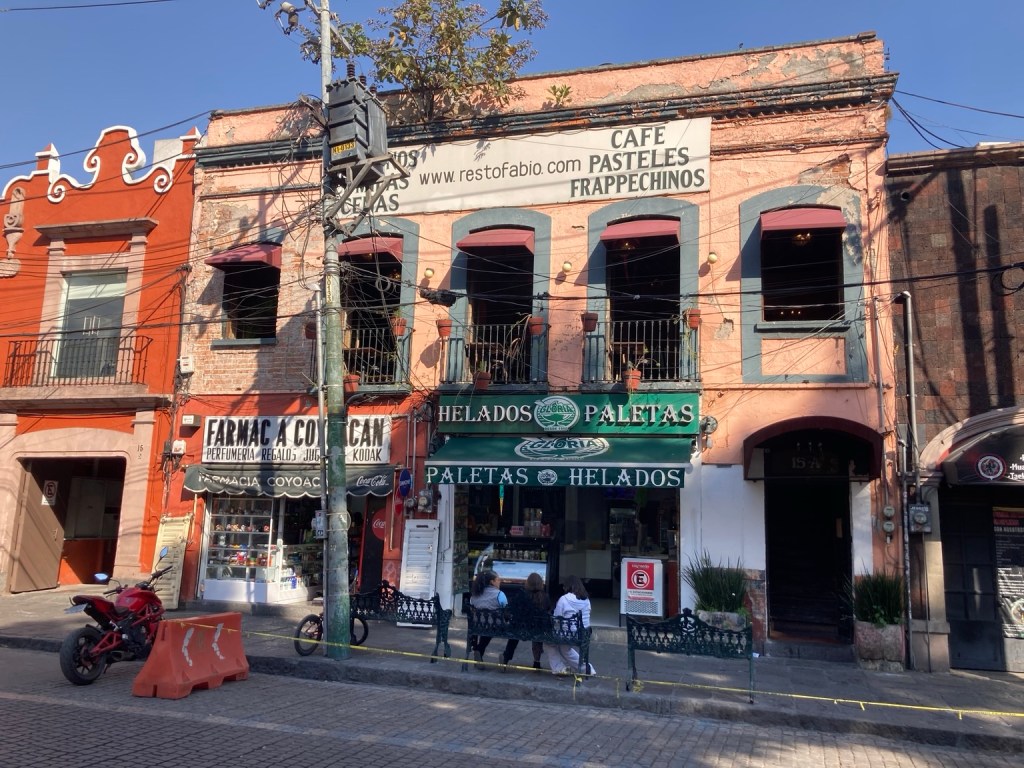
The ice cream has been great here – I love the walnut which seems very popular – and this place is quite an institution.
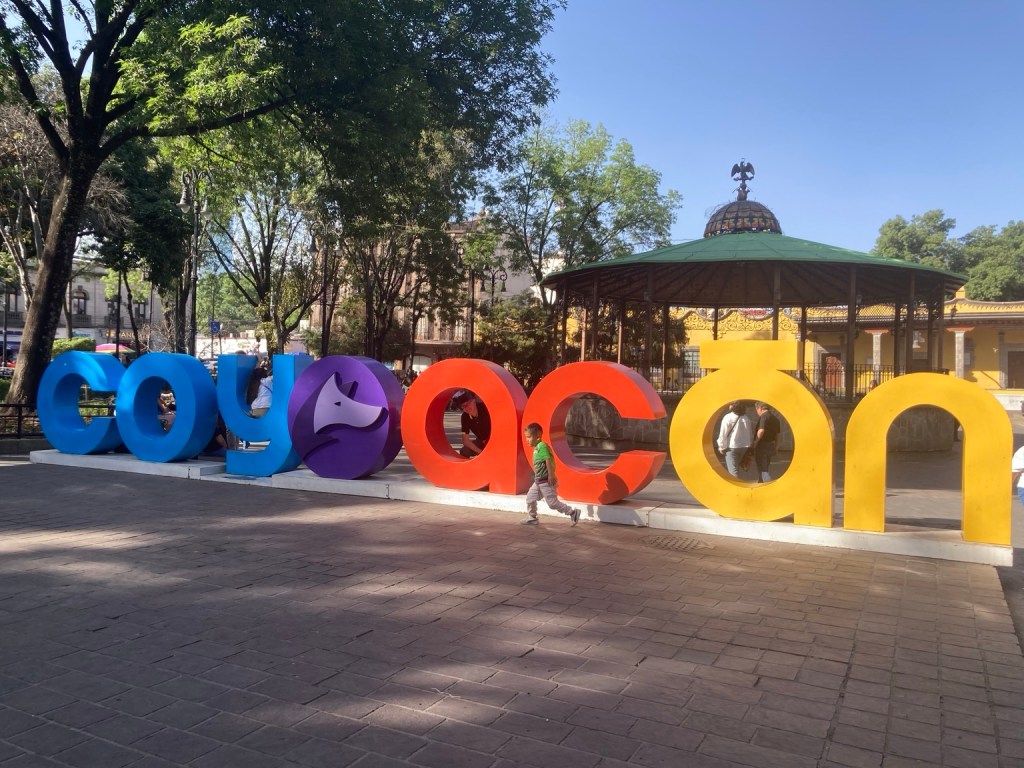
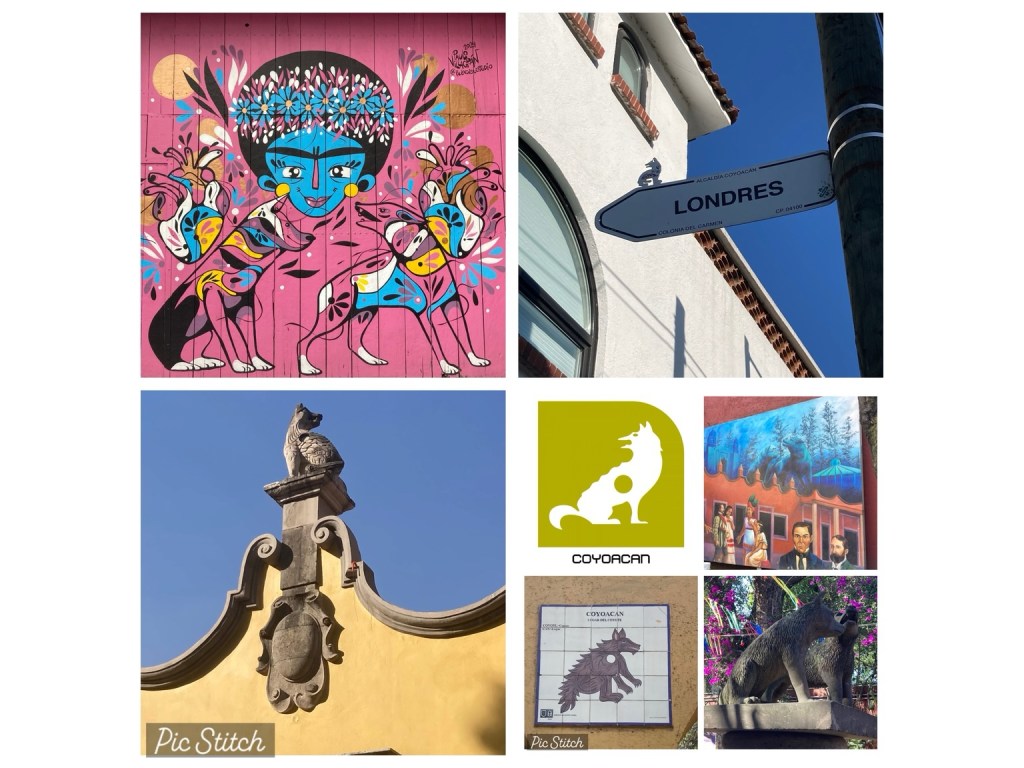
There are statues and images of coyotes everywhere, hardly surprising as Coyoacán is an Aztec word meaning ‘place of the coyotes’ and in Aztec times this area was a forest.
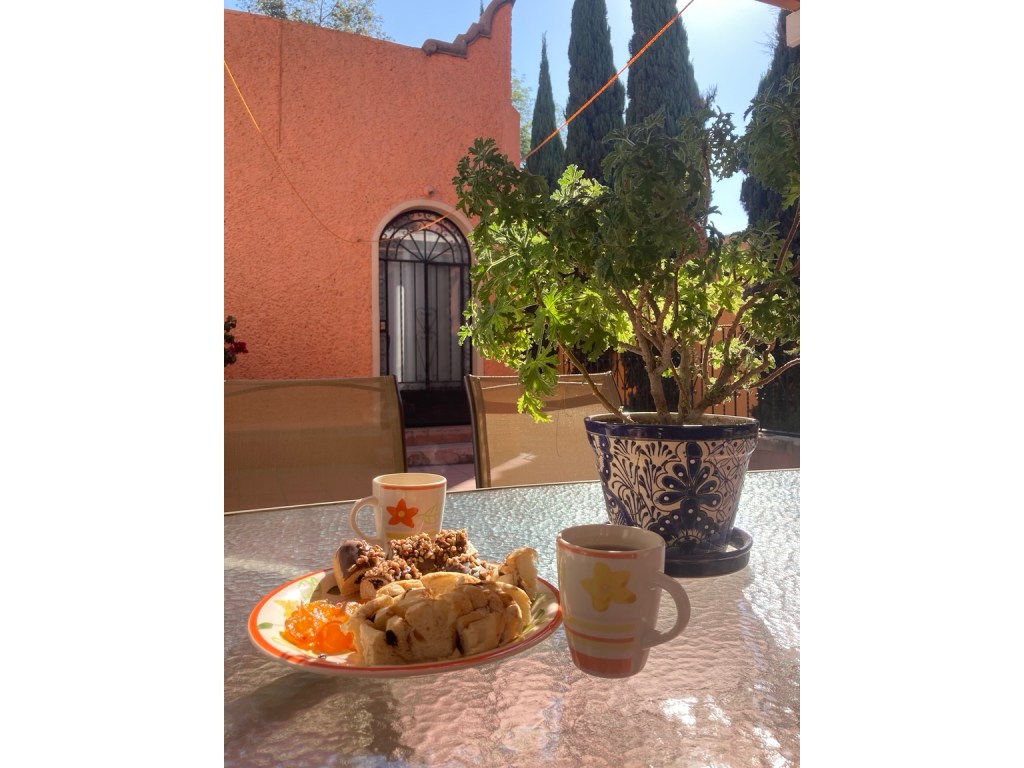
Next morning, after breakfast on the terrace …
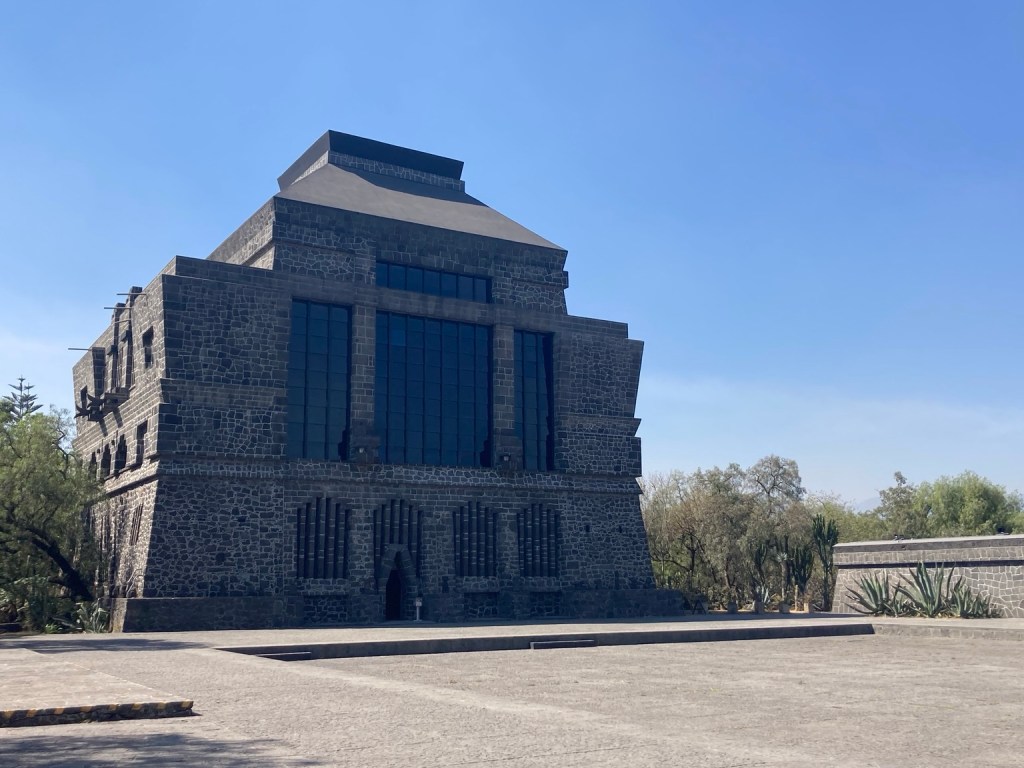
… we got a taxi to Museo Anahuacalli, the final achievement of Diego Rivera, a temple displaying the art and craftsmanship of his indigenous collection within a modern monument inspired by the ancient world.
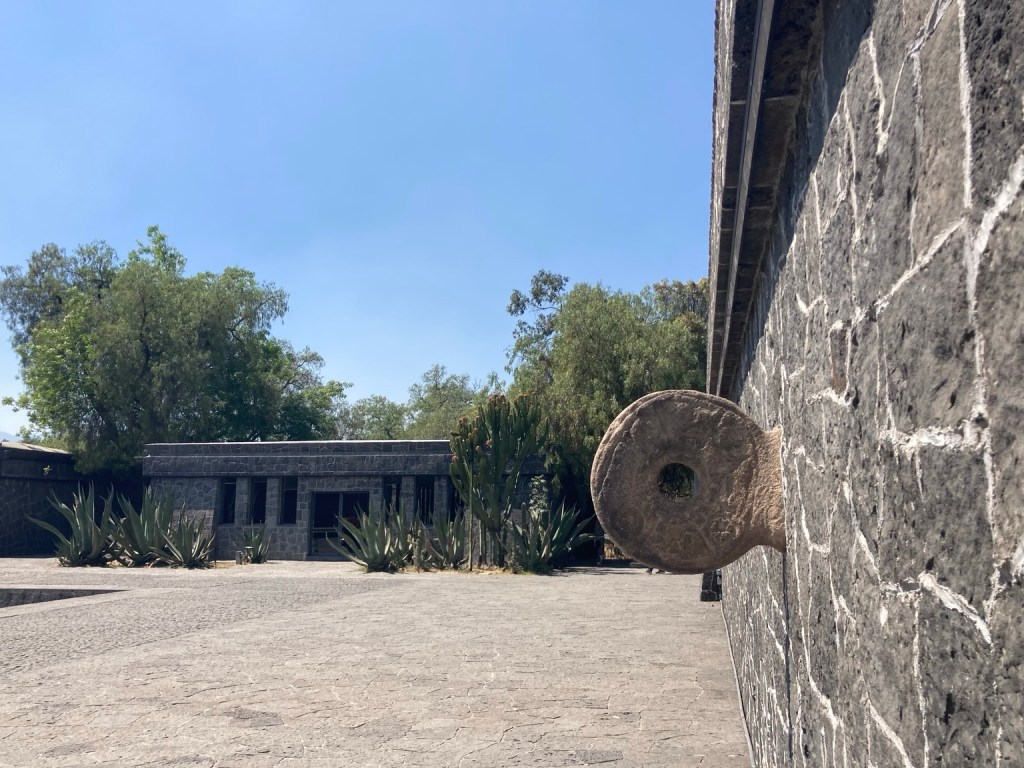
Made from local volcanic rock, it echoes the shape of a Mesoamerican pyramid with a ball court outside.
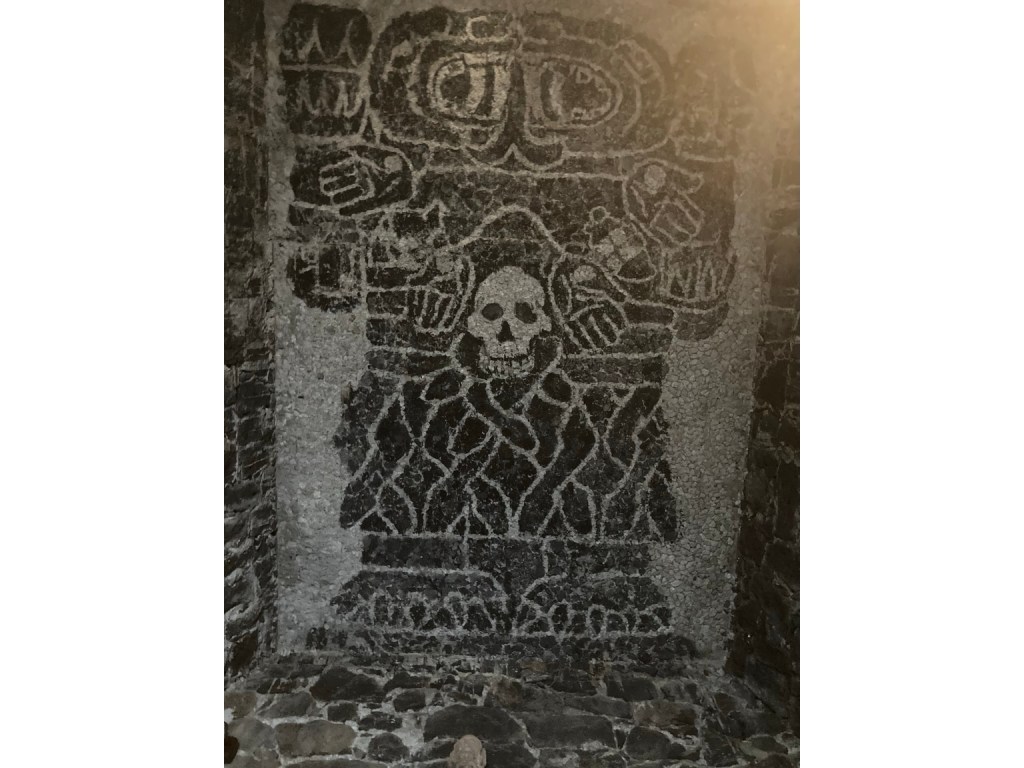
Inside, we rose through the underworld and the earth to the cosmos and each corner depicted the earthly elements and their gods. In order to make a modern building feel ancient, there are mosaics on the ceilings, like this one of the mother goddess who welcomes us …
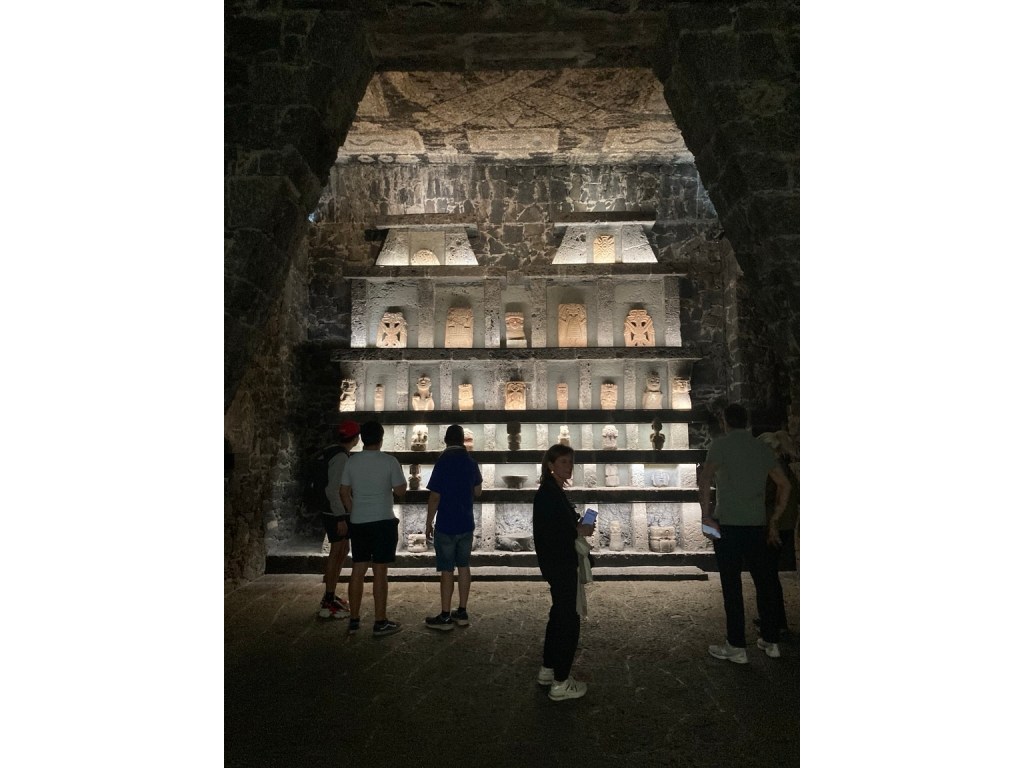
… and a beautifully lit altar in the underworld.
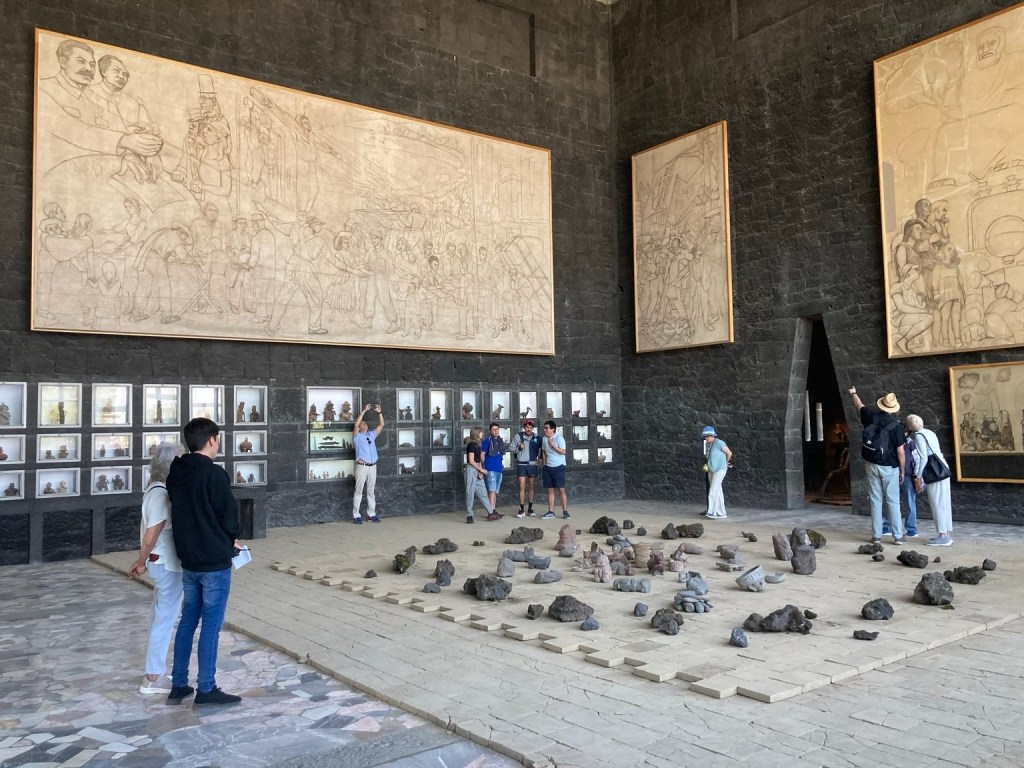
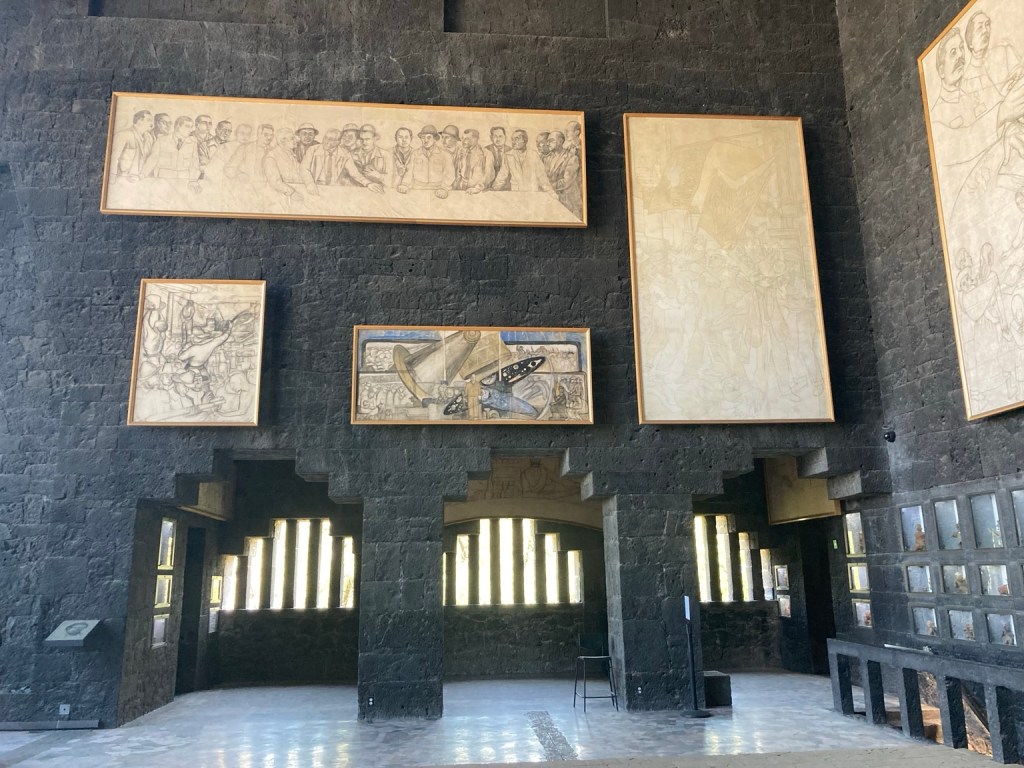
The most impressive space was planned as a studio for Rivera, although he died before he was able to use it. Preparatory sketches line the walls, and with some of the murals now lost, they are more precious.
The cabinets on each floor contain much of his collection of over 50,000 pieces of Pre-Hispanic art, amassed at a time when there was little restriction in the trade of such items.
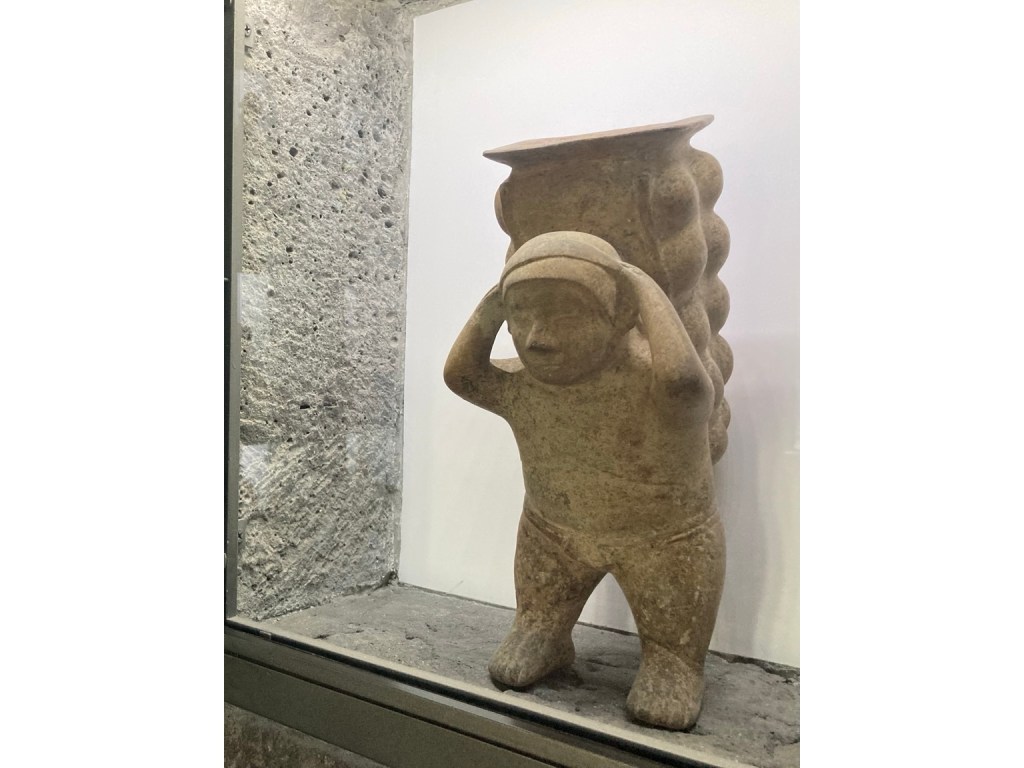
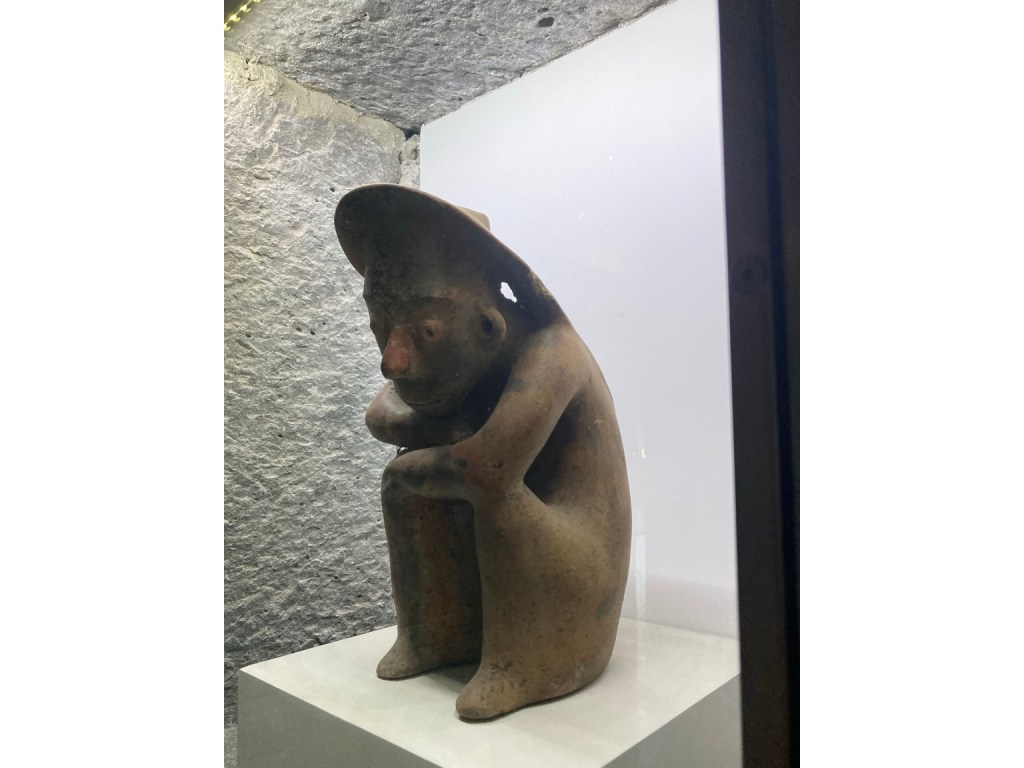
There are no labels as he wanted them to be seen as art rather than an archaeological collection. This figure is a bearer and was given a second life as a character in his murals …
… and unlike many figures which show little emotion, this one is lost in thought …
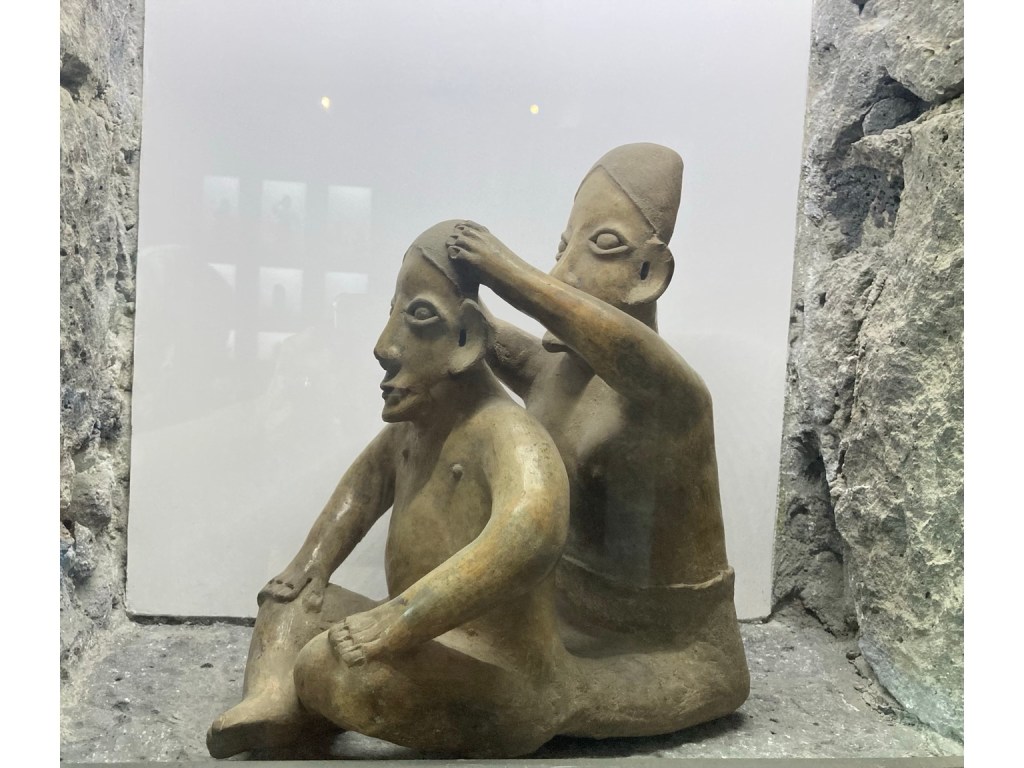
… and maybe this just shows nits are not a new thing!
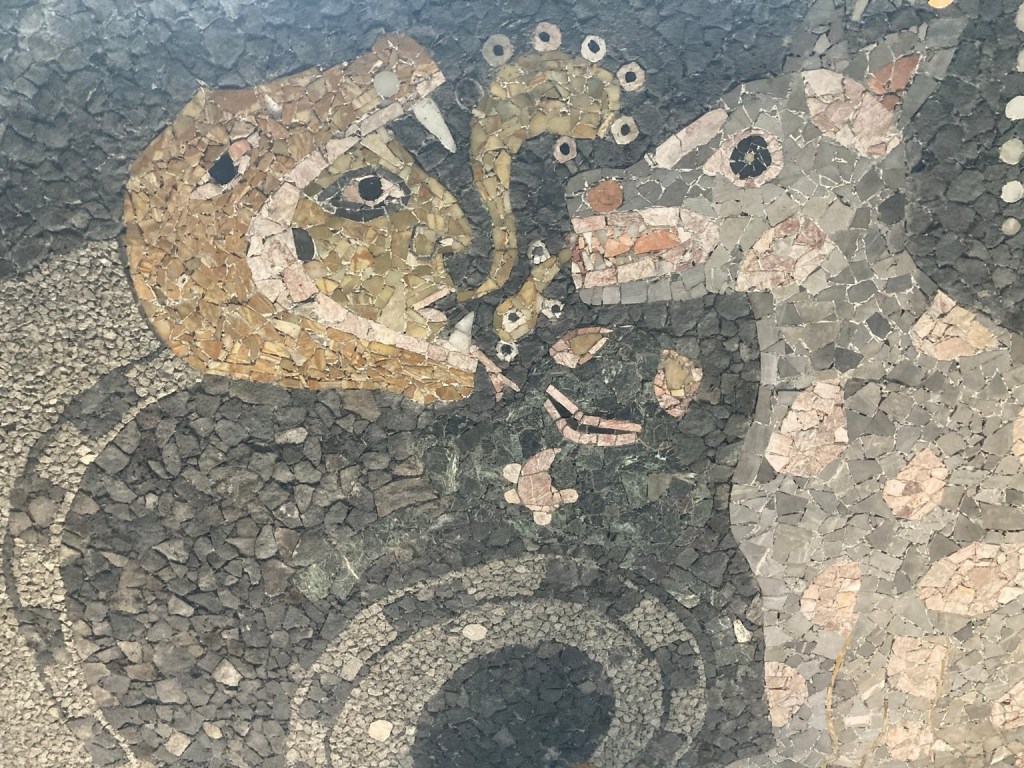
We spent several hours here, totally engrossed in the visual spectacle. This ceiling mosaic is maybe Rivera’s farewell. A dog personifies the guide of souls through the underworld while the creator of humanity is a serpent with a human face. Between are the large eyes and smile of a Frog – Diego listening to life and death talking together.
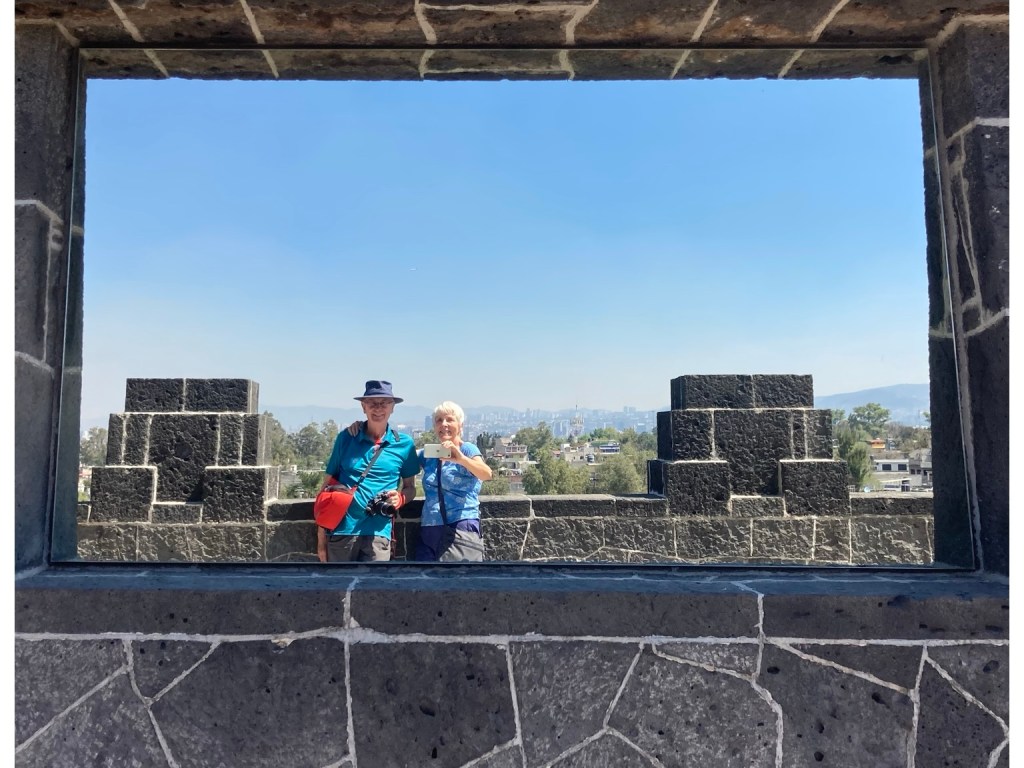
The roof gave a photo op and it was back to town
It was definitely a Diego & Frida day, as our timed ticket to visit Casa Azul was at 3.30.
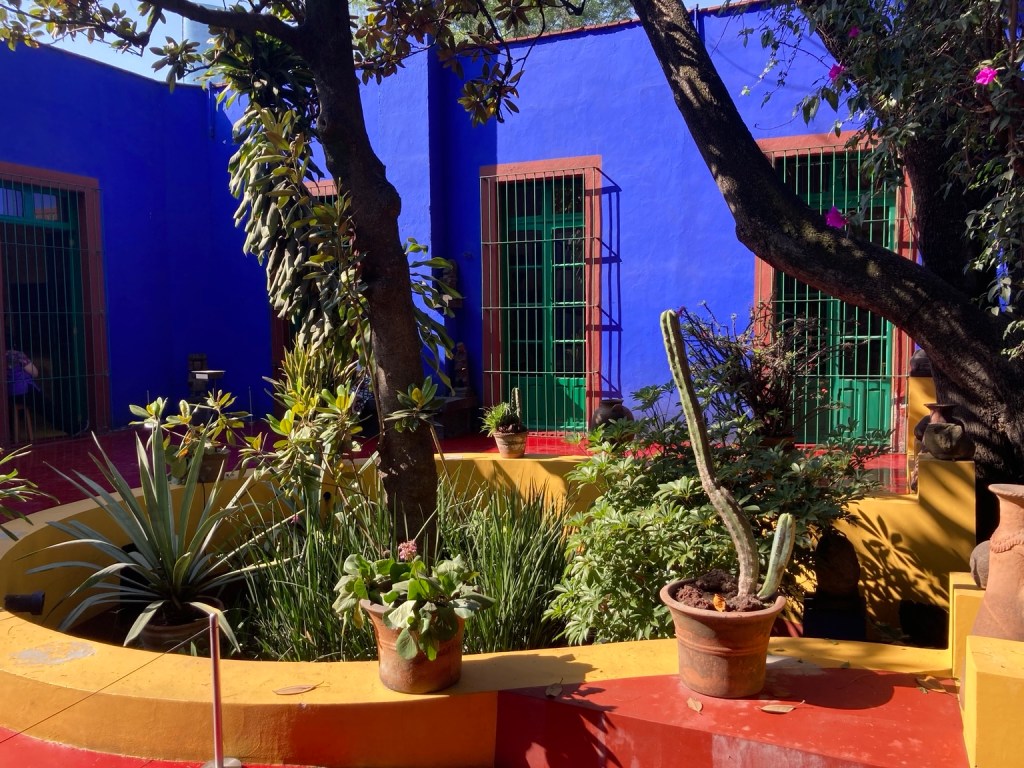
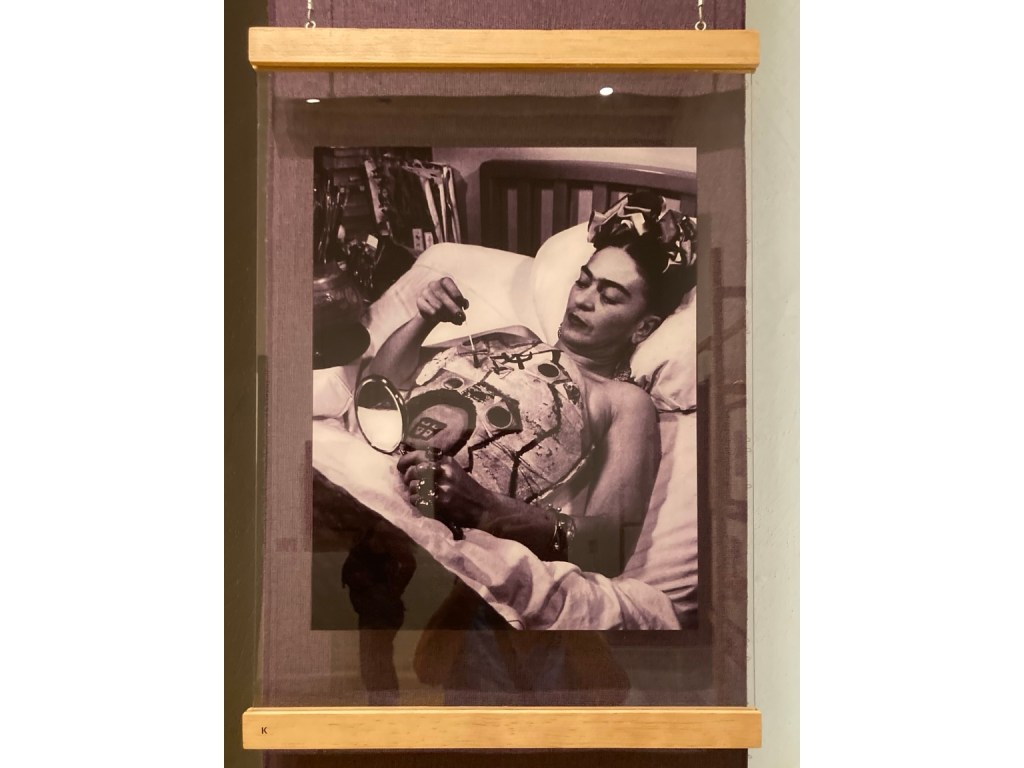
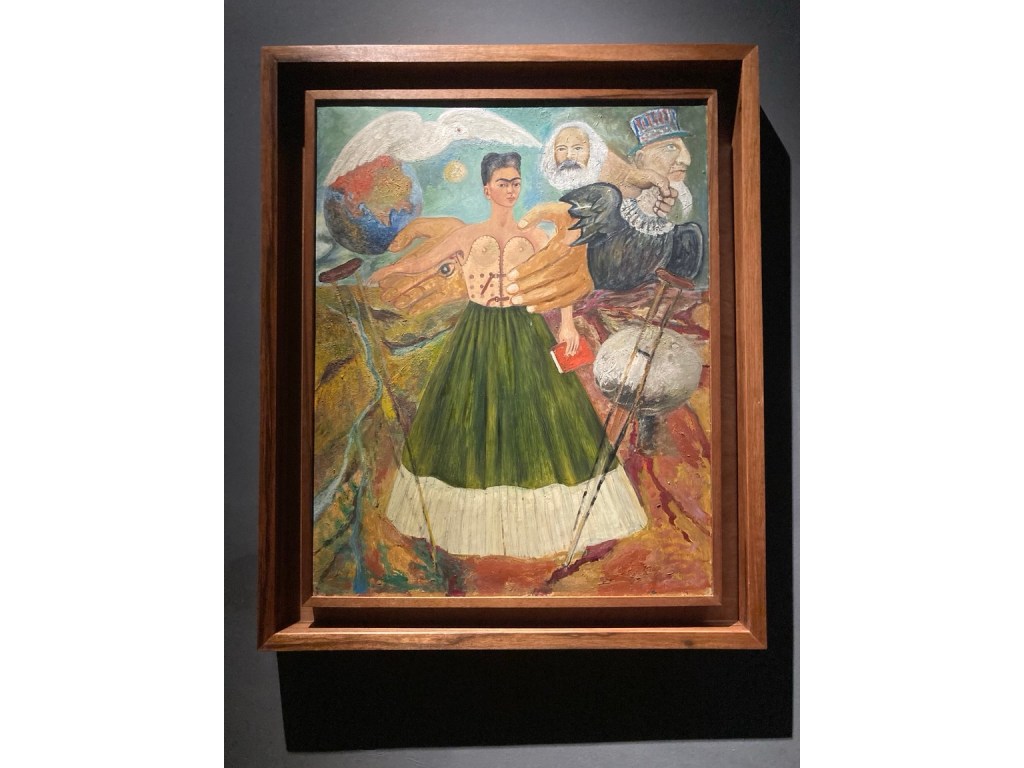
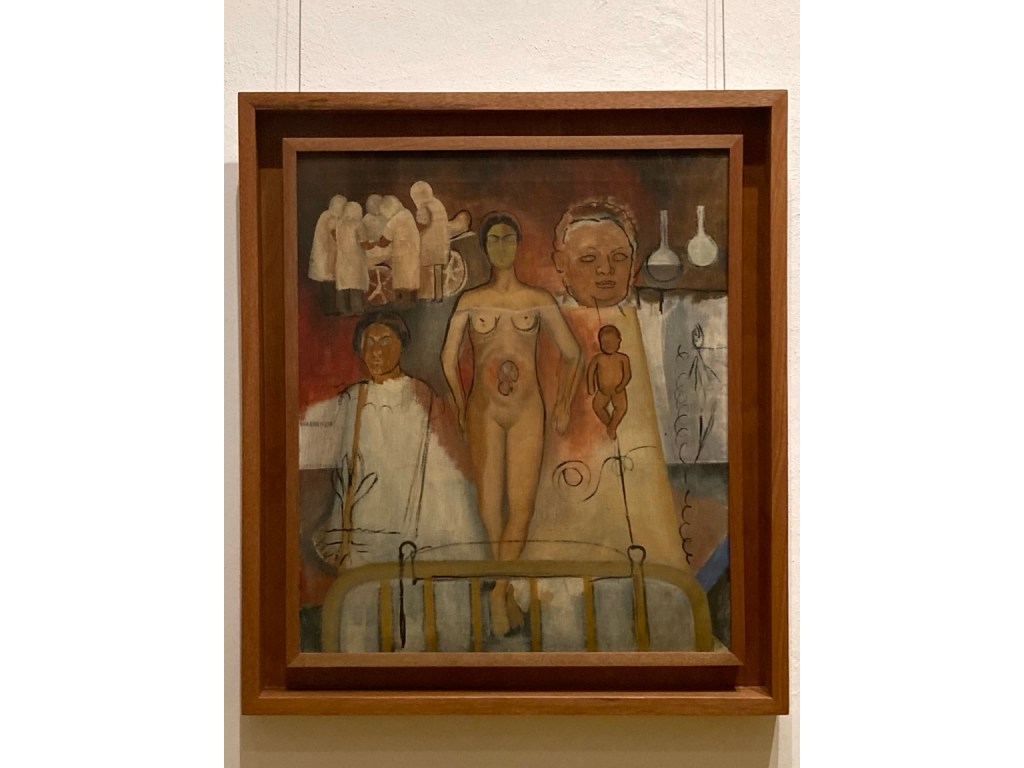
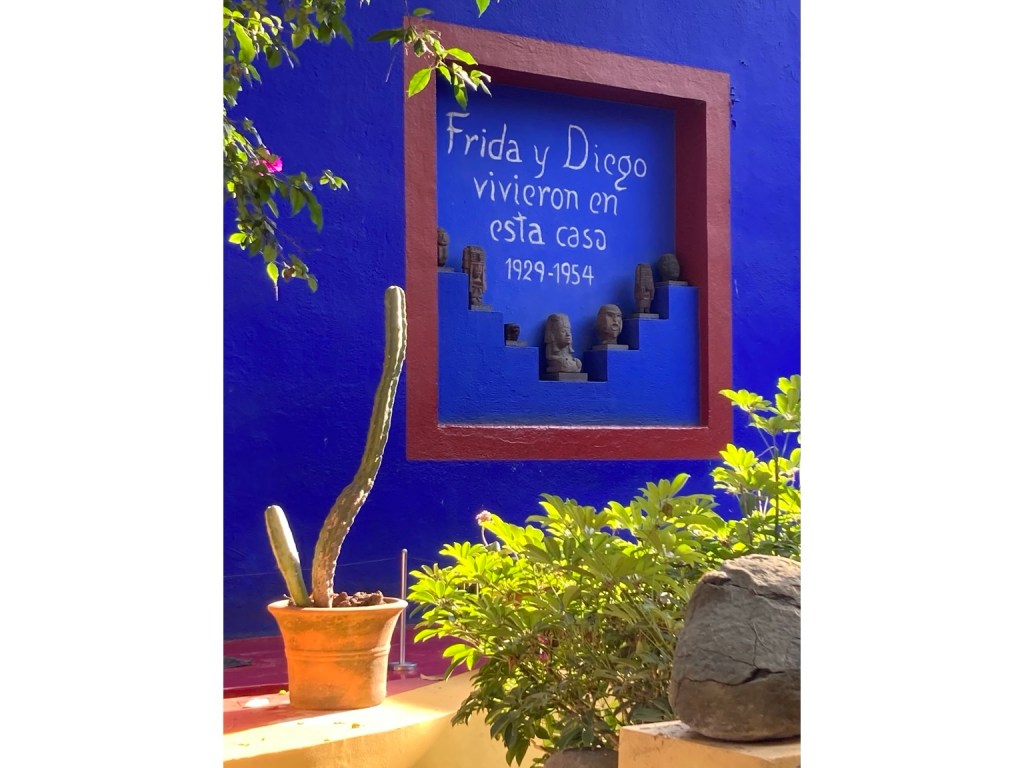
Frida lived here for much of her life and so much has been written about her. The first few rooms told of her early life, her struggles with health and how her art helped to heal her emotionally, especially when couldn’t carry a baby to term.
We remembered some of the items from the V&A exhibition in 2018 which was the first to show the Frida Kahlo’s clothing, jewelry, prosthetic limbs, and hand-painted corsets outside Mexico.
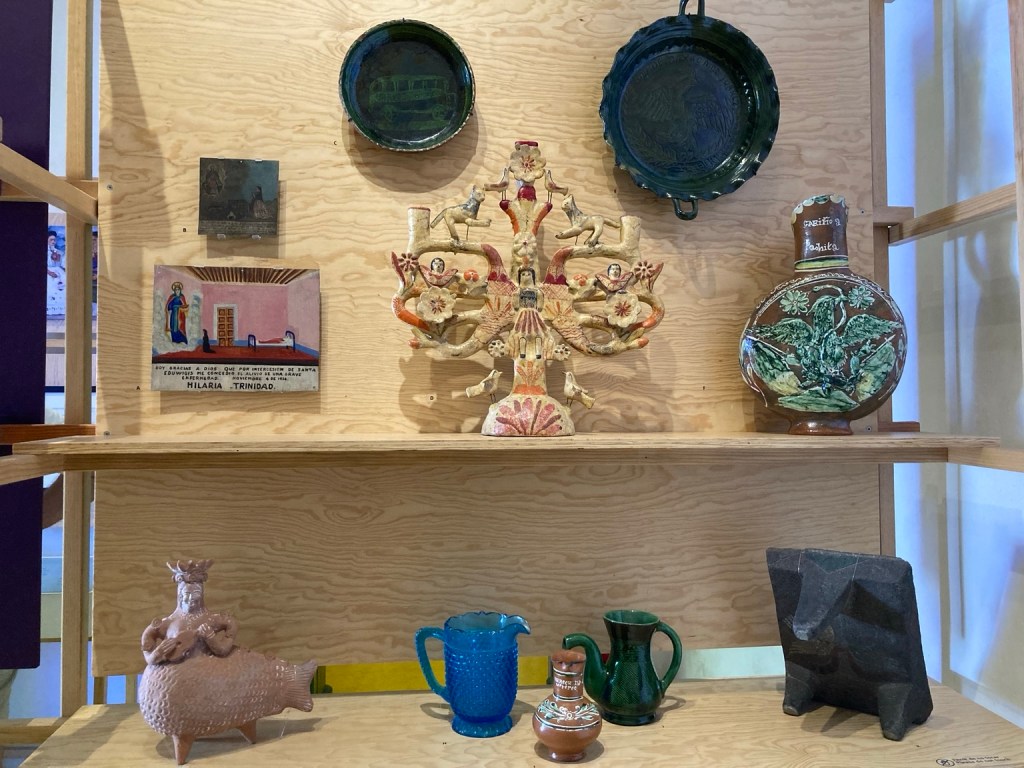
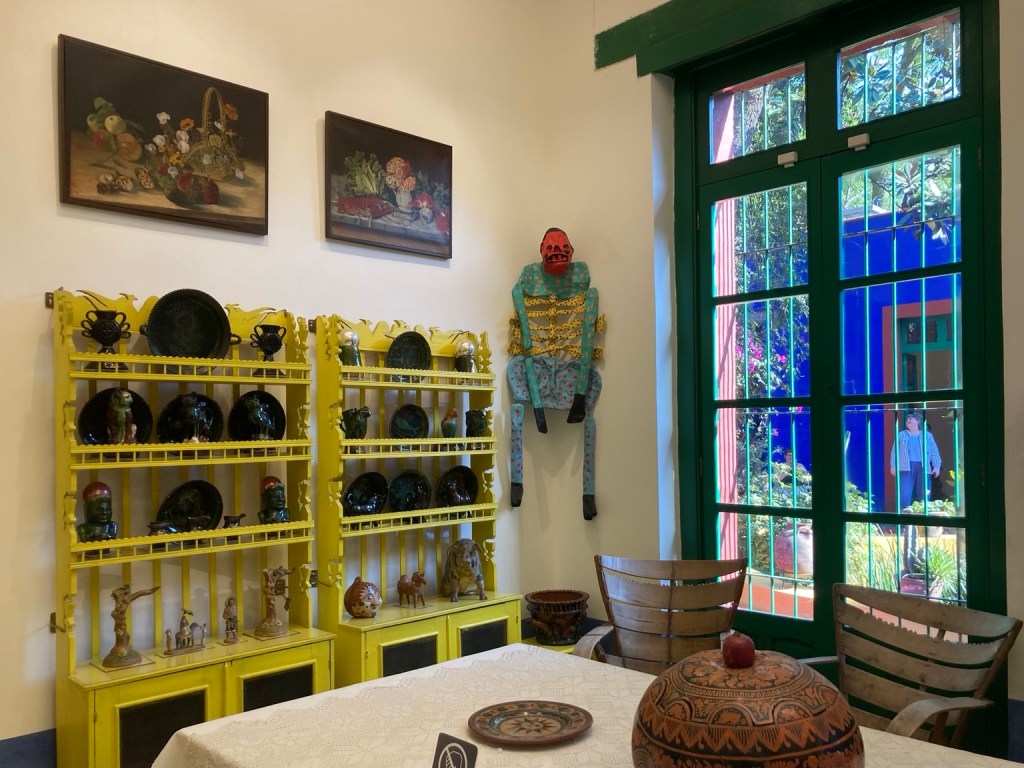
Her collection of folk art inspired her and she included them in her work …
… and displayed them throughout the house …
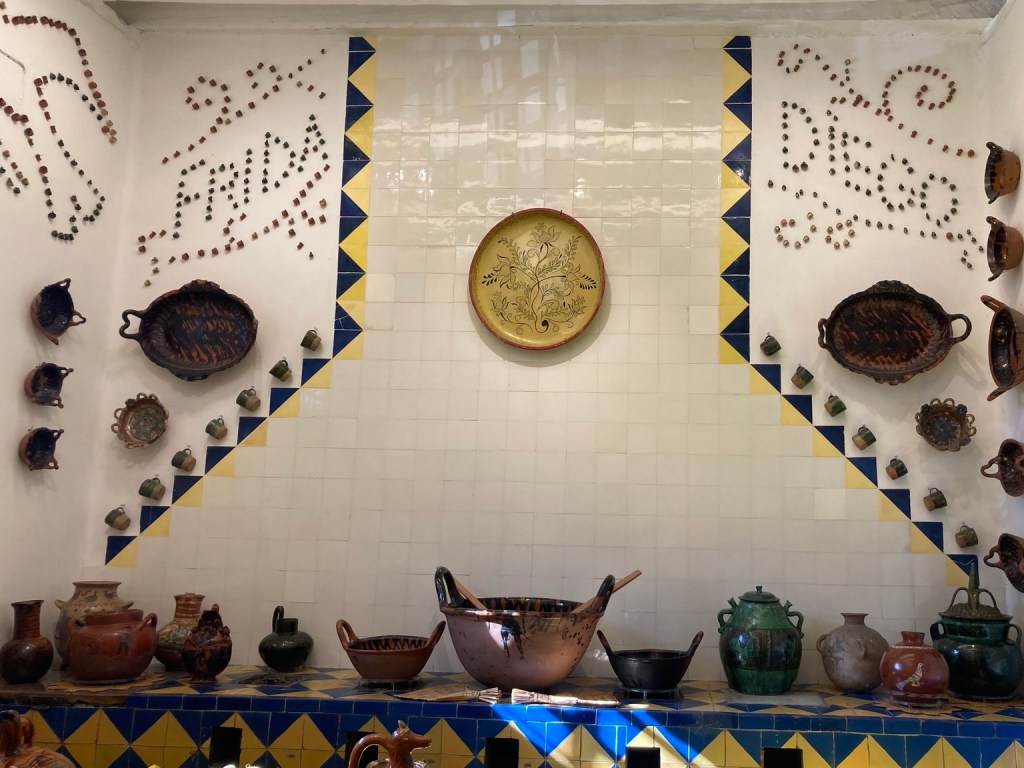
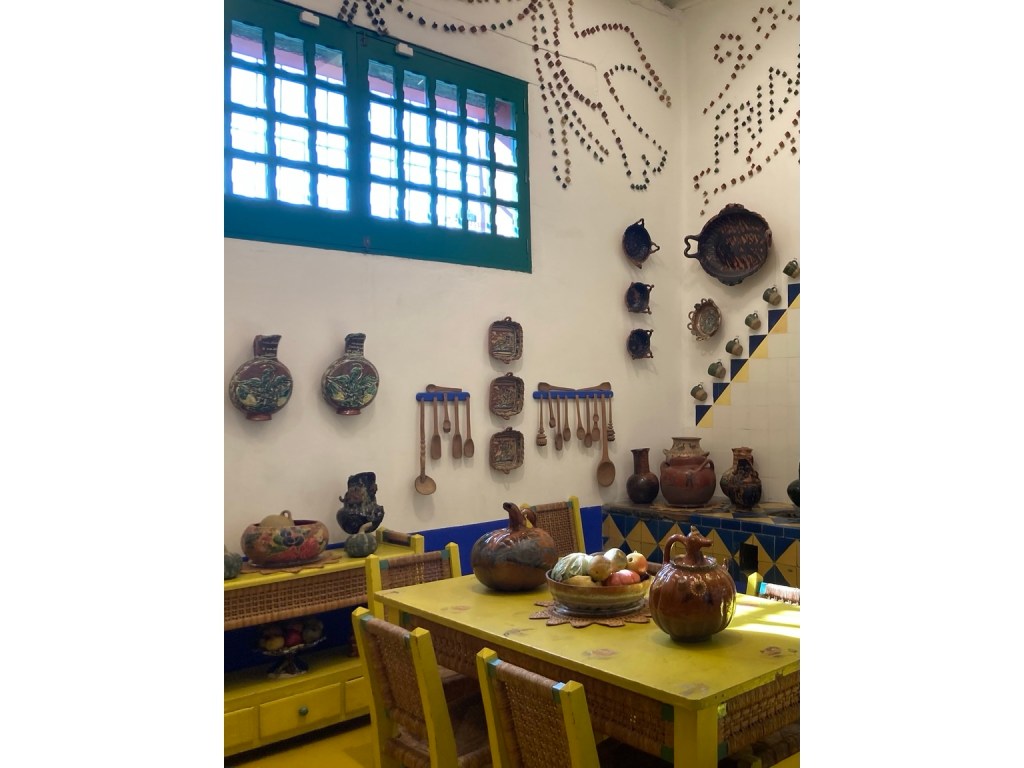
… including cute jugs on the kitchen wall!
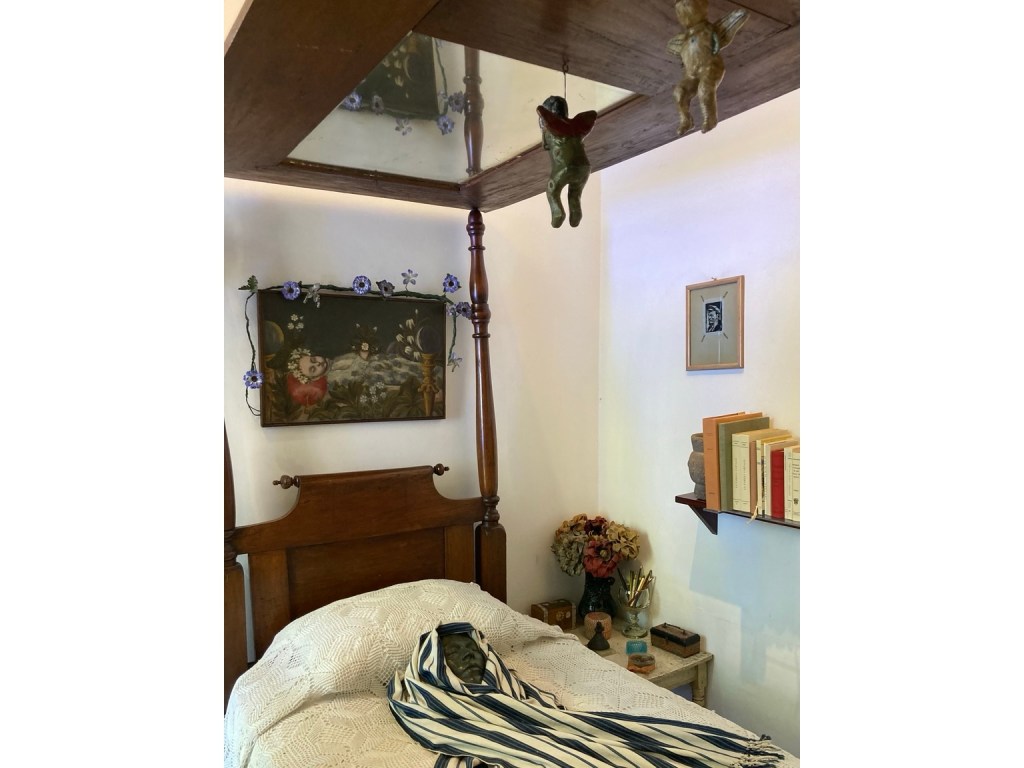
Her bedroom was poignant, with the mirror above the bed which enabled her to paint self portraits …
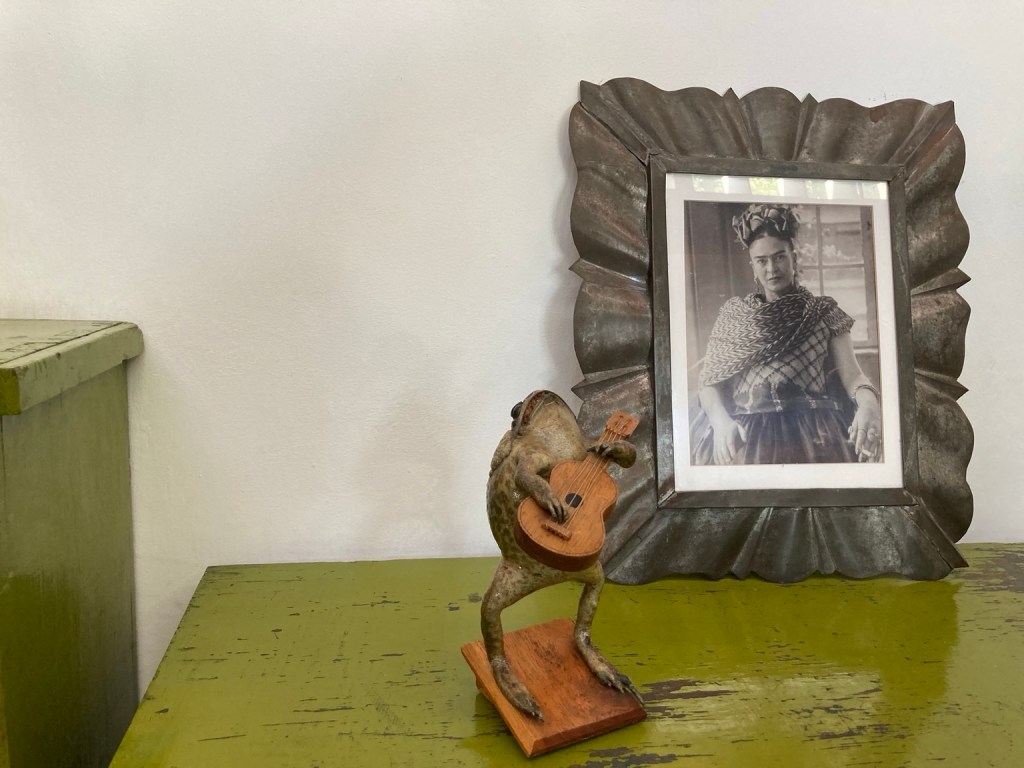
… and the frog shaped jug on the dressing table containing her ashes.
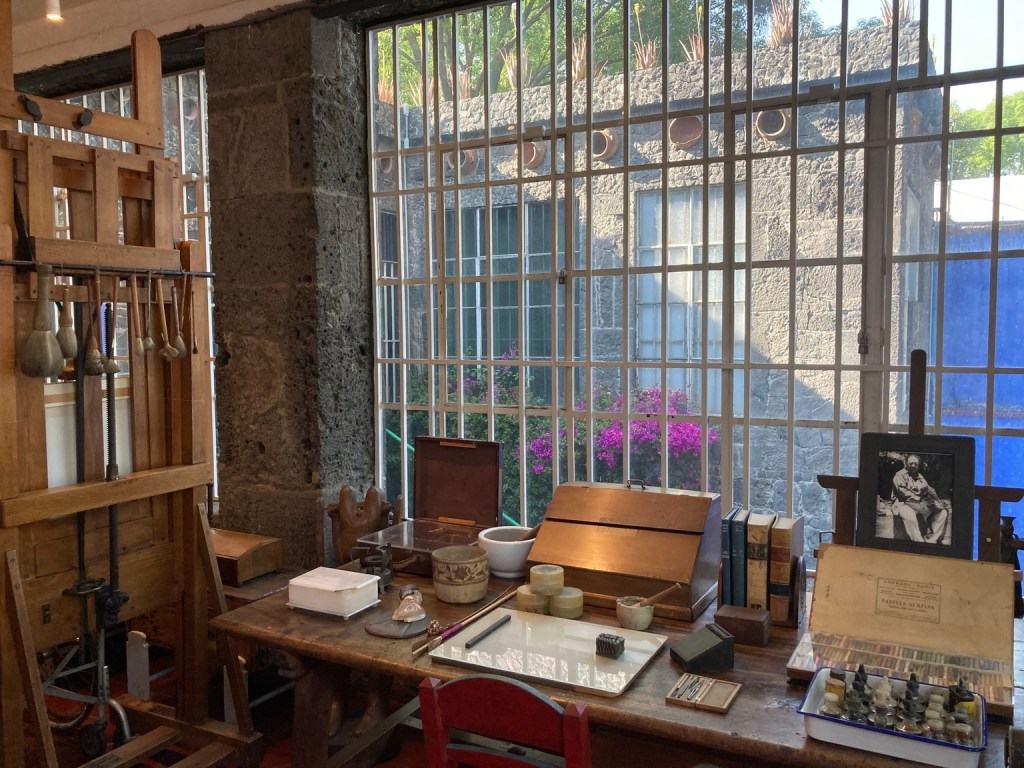
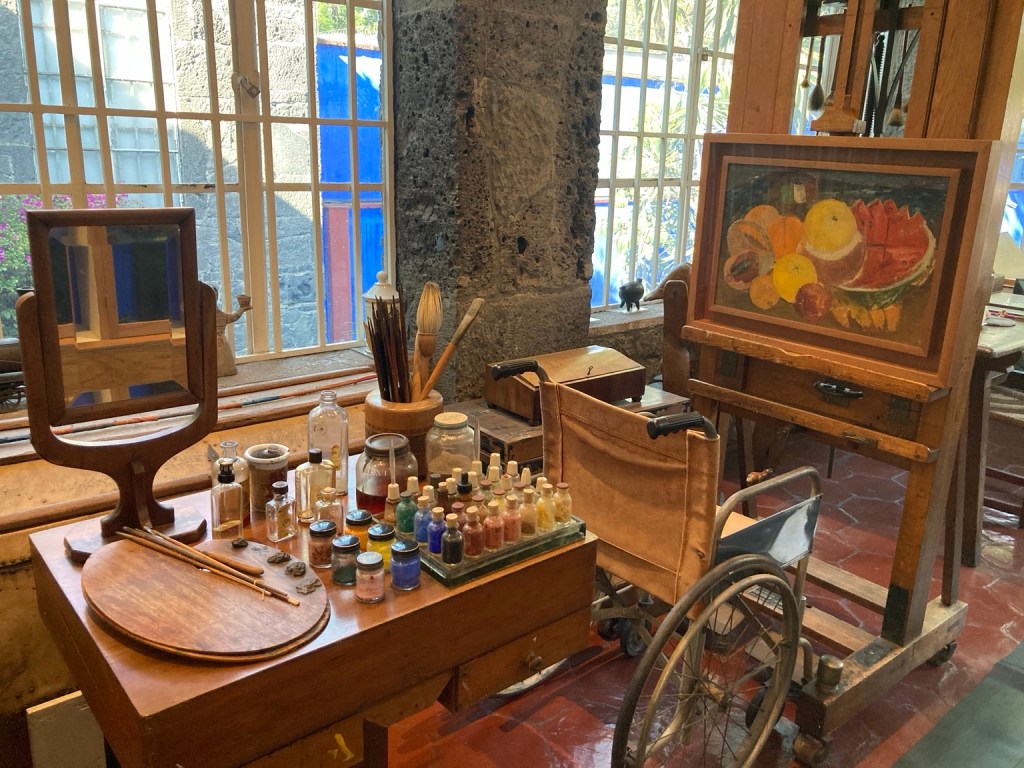
Finally her studio with paints, easel and a wheelchair …
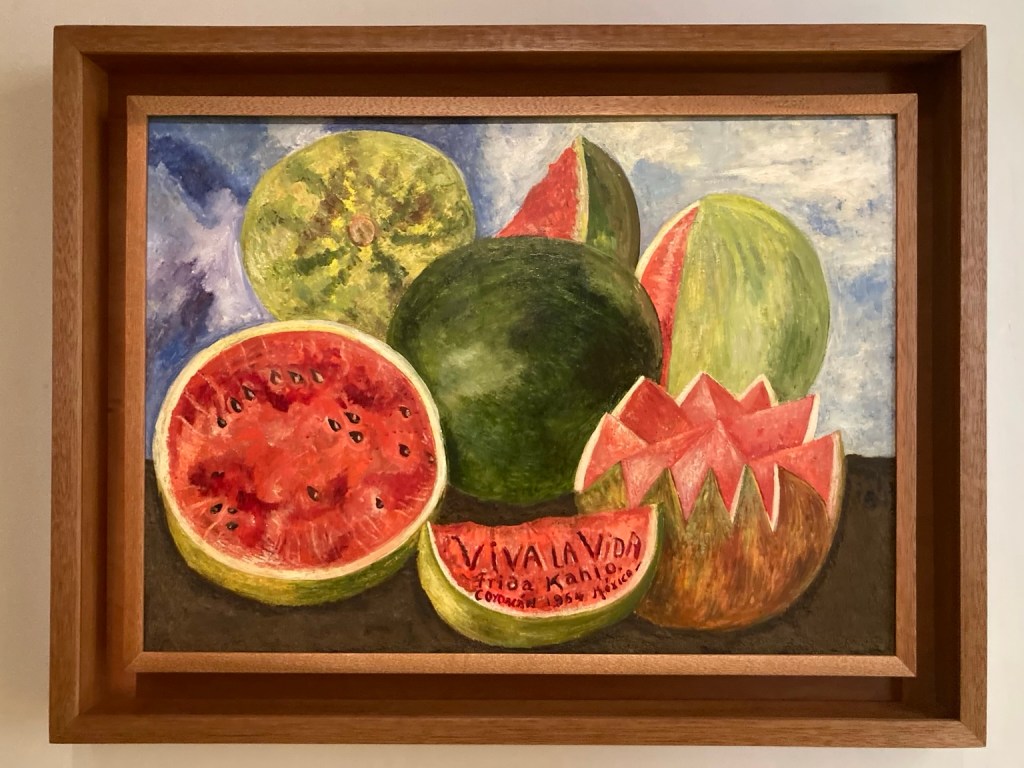
… and her last painting, a vibrant still life of watermelon.
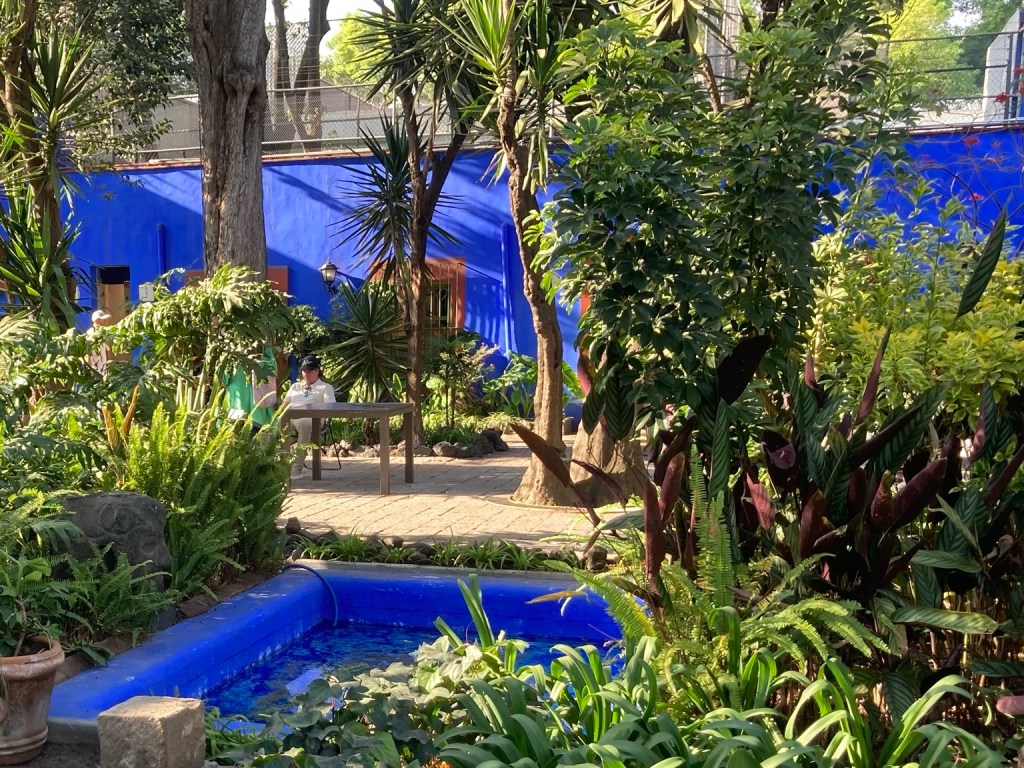
The garden was lovely in the afternoon light …
… and that just left the gift shop, where I found a blue spoon to remind us of our visit.
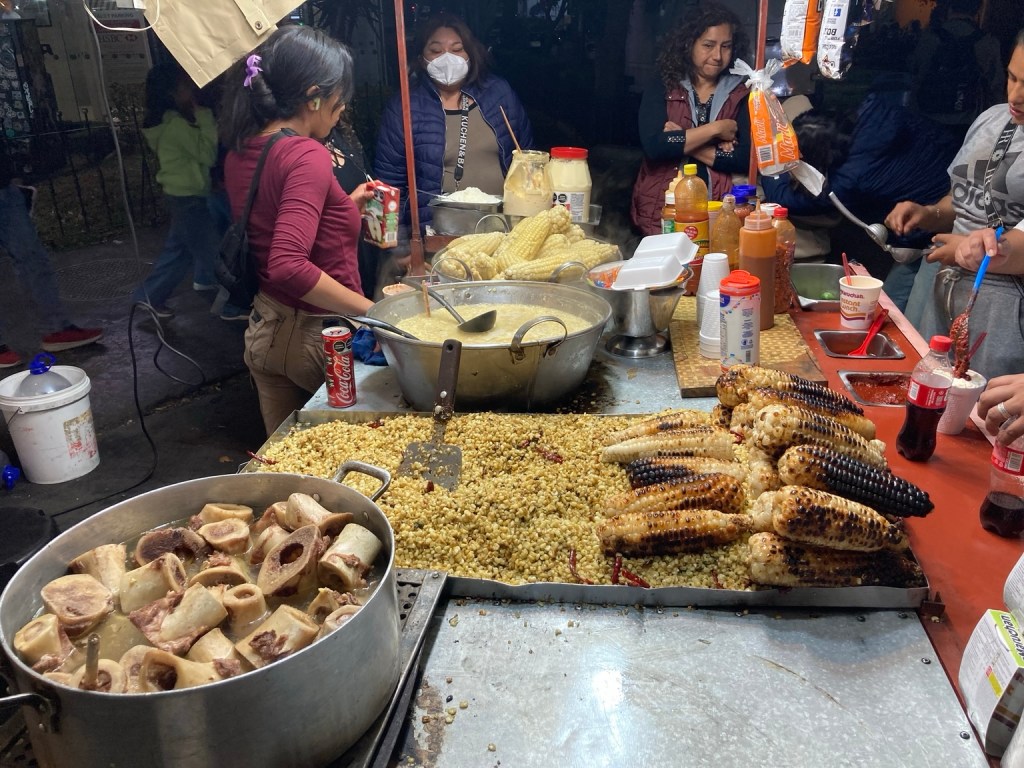
We headed into town for dinner, but almost got sidetracked by the night market with stalls offering everything from the corn that is for sale on every corner …
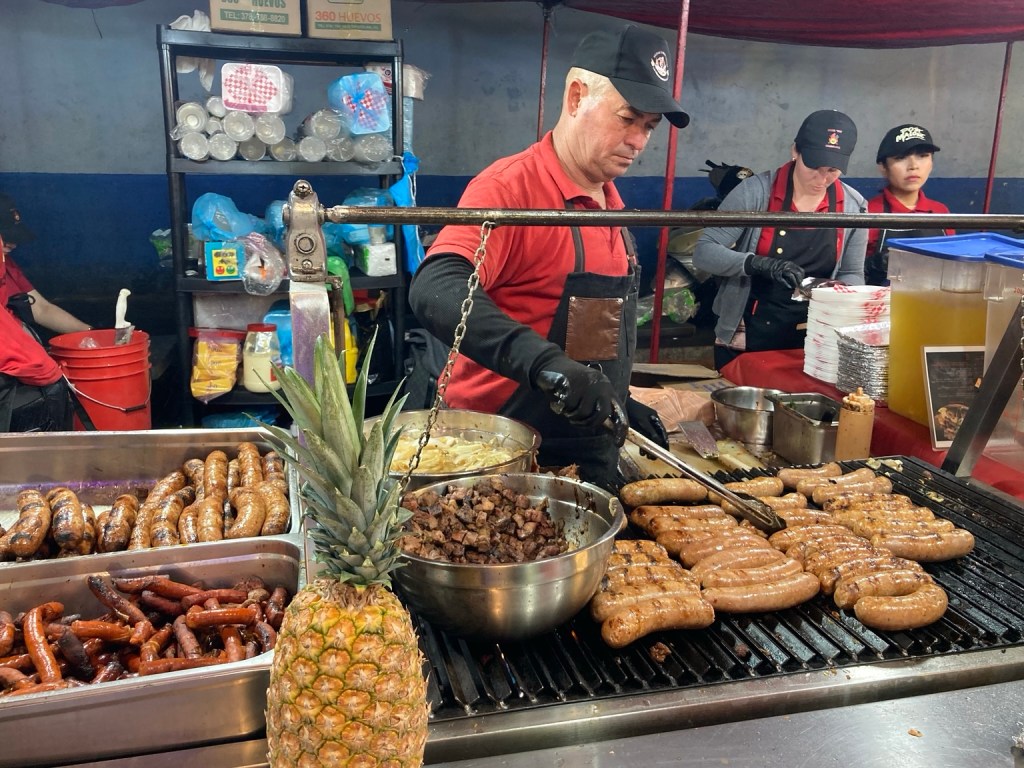
… to bbq meat …
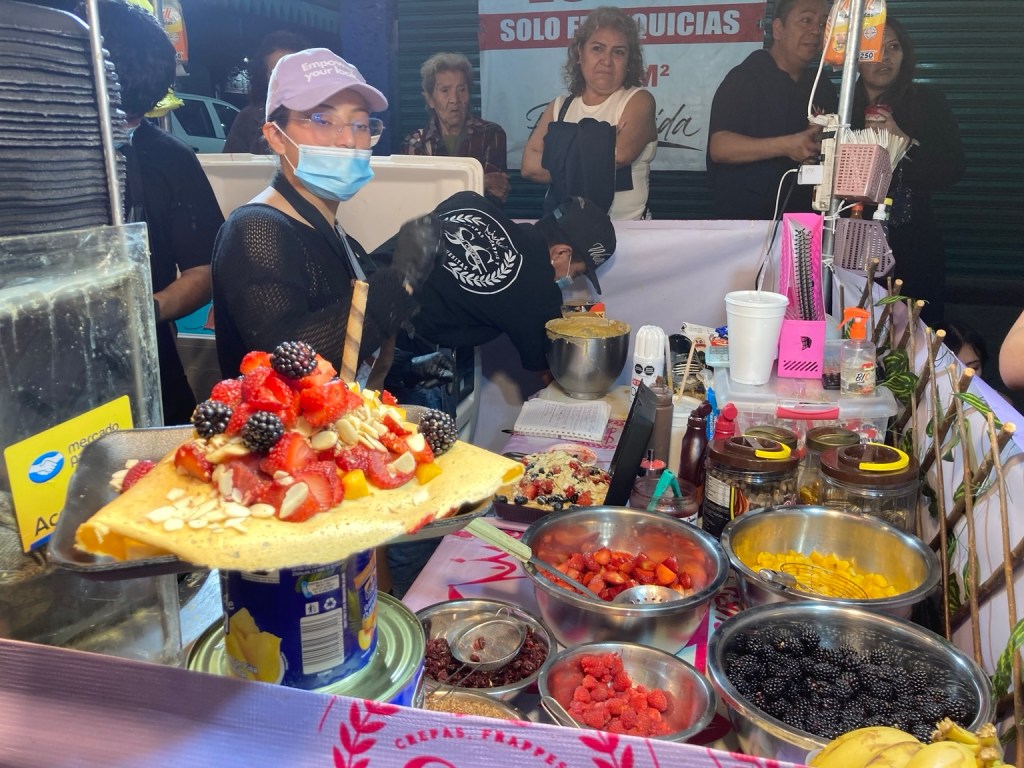
… and crepes and ice cream …
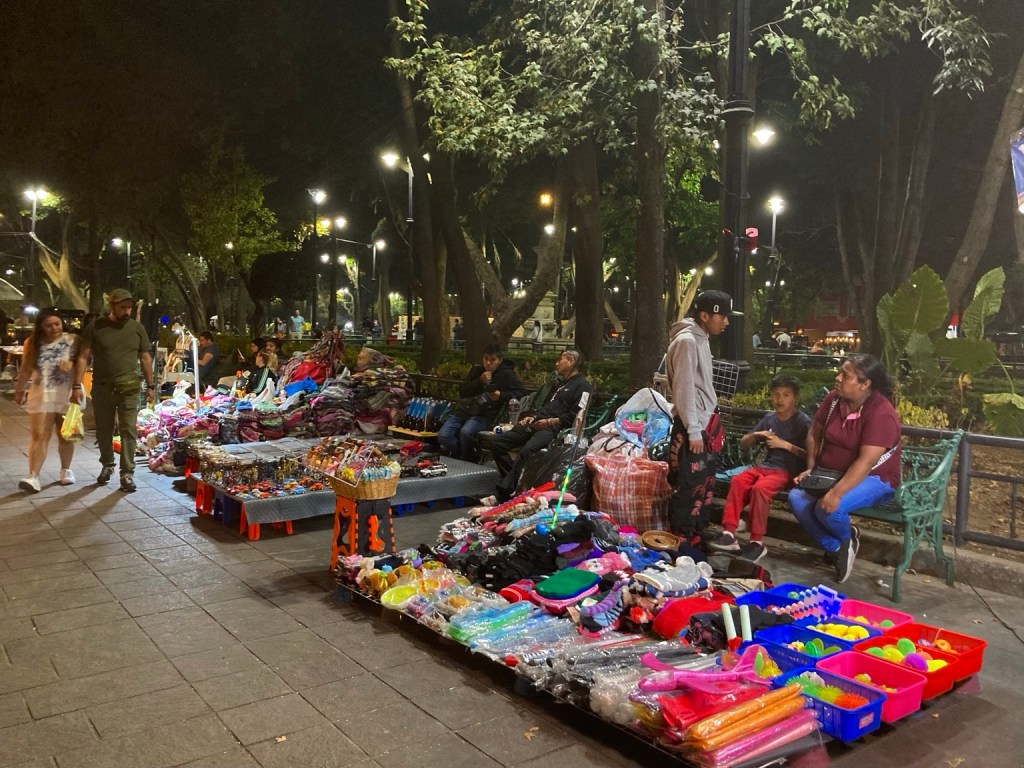
… as well as every souvenir you could ever want … or not!
In fact there is so much food for sale everywhere I can’t believe it could all be eaten!
Our destination was La Calaca, meaning the skeleton …
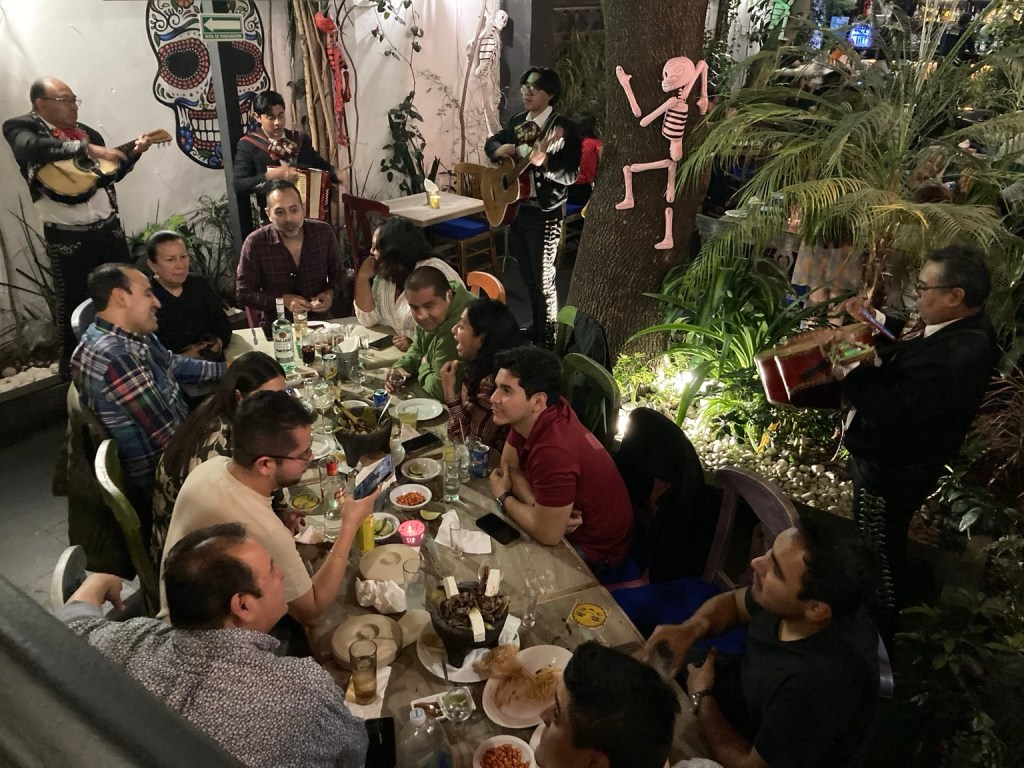
… and as soon as we entered there was a mariachi band who continued to play tune after tune at full volume, accompanied by the family group who were celebrating.
Since we had been in Oaxaca, we’d been on the look out for decent margaritas, but none had hit the spot till tonight … finally mexcal margaritas once more and fab!
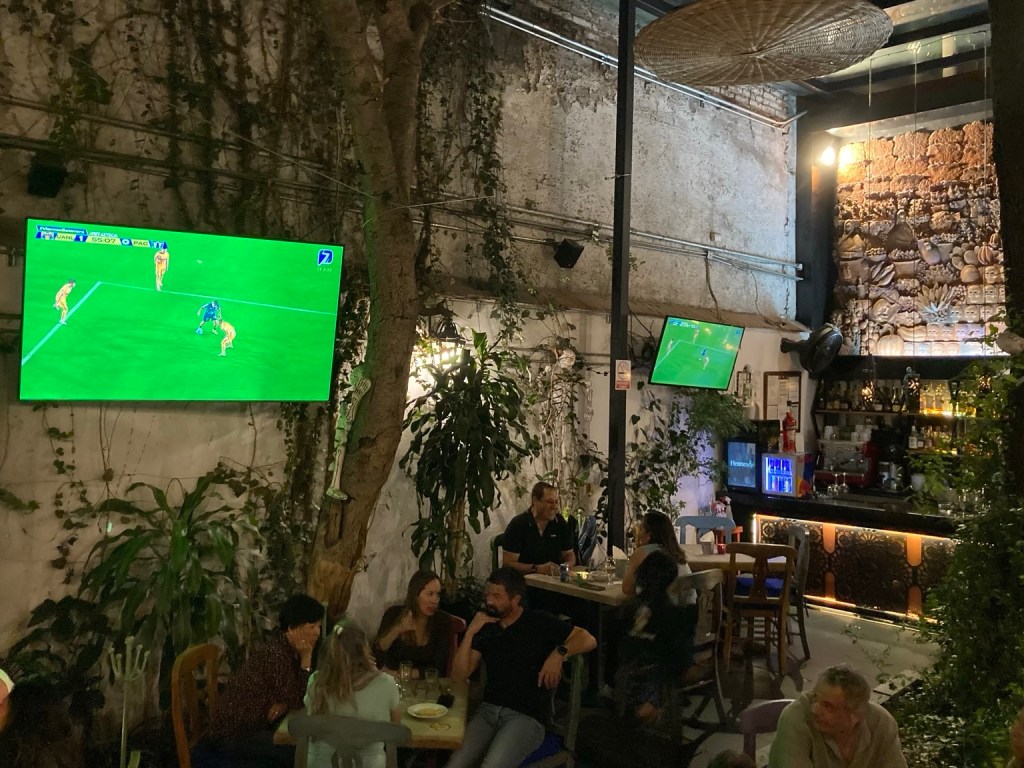
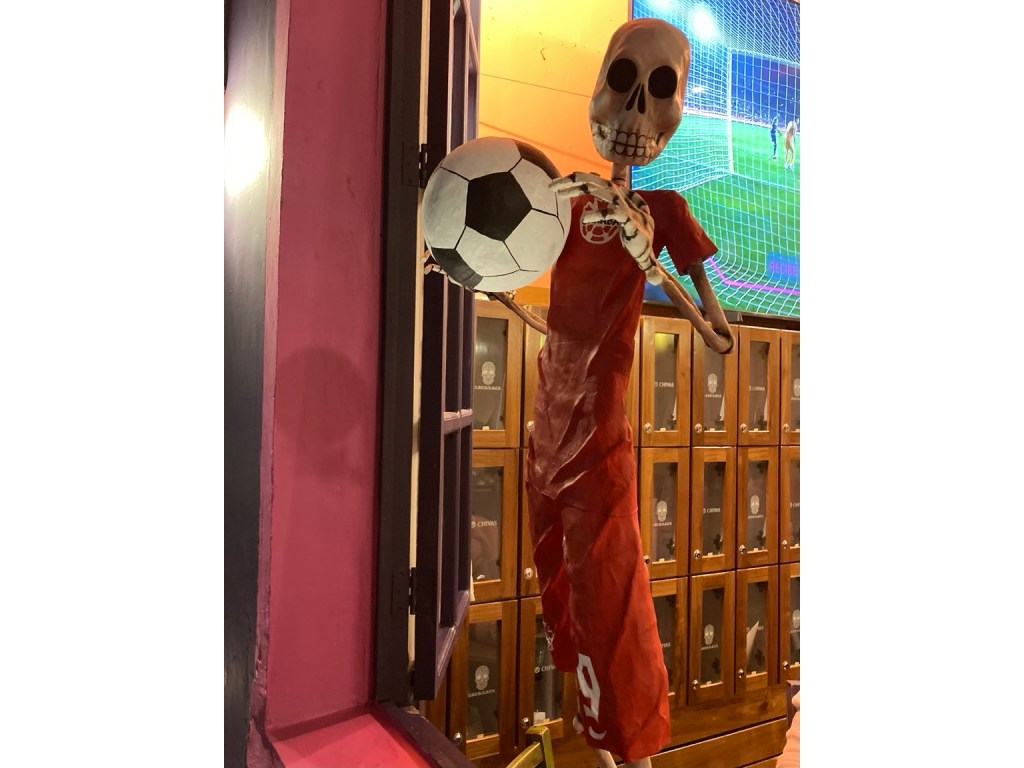
We’d also been hoping to see a football match, but it hasn’t happened, so Chris had to be content with screens showing a local match and even a redman!