After a quick breakfast in the apartment, we set off to get the bus to the tour meeting point on the other side of the river, fortunately leaving plenty of time as we missed our stop and had to get the bus back! They all seem to run every few minutes and we could just tap with our credit card and at 43p a trip it was a bargain.
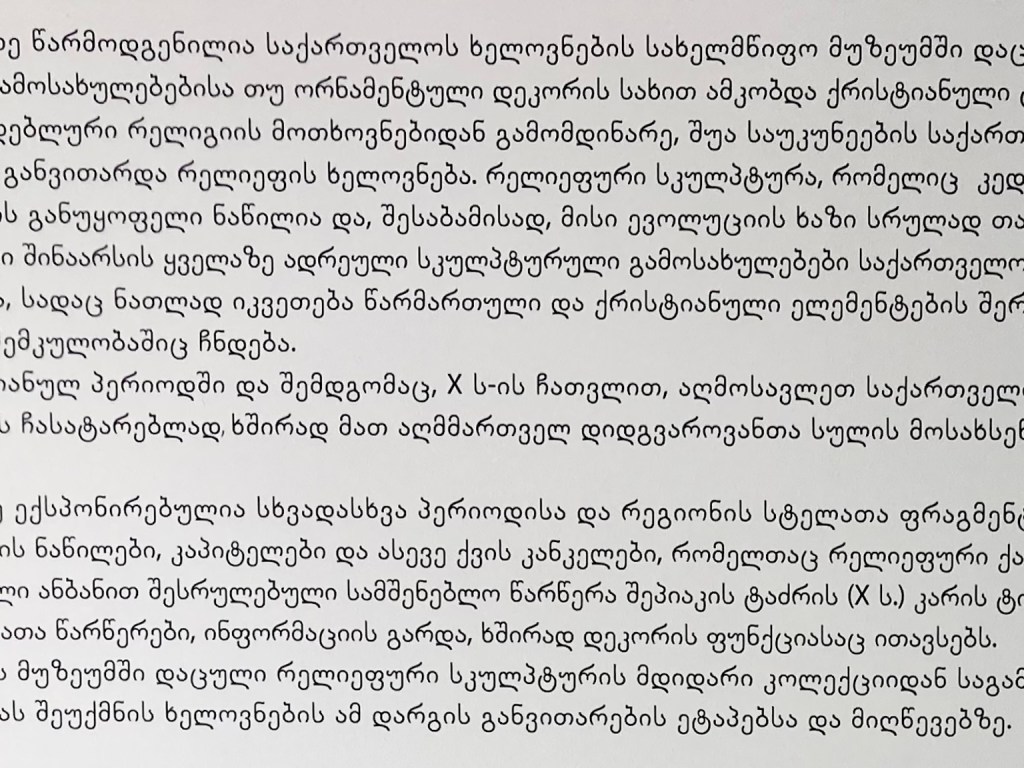
We have booked several tours with Gamarjoba Tours and today’s focuses on history. Once our group had climbed into the minibus and were off, our guide Tako gave us an interesting introduction to Georgia. We started with Gamarjoba, the first word we learnt in Georgian, which strictly translated means victory but is used as a greeting like hello. This led us on to the fact that Georgian is completely unique and unrelated to any other language. In theory it is simple as it is completely phonetic, but the clusters of consonants and the throaty pronunciation make it a bit of a challenge, and on top of that it has its own flowing cursive script looking like no other!
Georgia is ancient – western Georgia was known as Colchis to the Greeks and the Kings of Kartli governed this land from the C3rd BC. Georgia was one of the earliest countries to adopt Christianity as the state religion in 337AD and they have been making wine for 8000 years!
At the opposite end of the timeline, in 2008, Russia invaded Georgia in a five day military campaign leading to hundreds of casualties, some 200,000 displaced Georgian citizens, and Russia illegally occupying about 20% of Georgian territory. Part of this is South Ossetia and as we drove to our first stop, Tako pointed to fields through which this border now lies, just 500m from the highway.
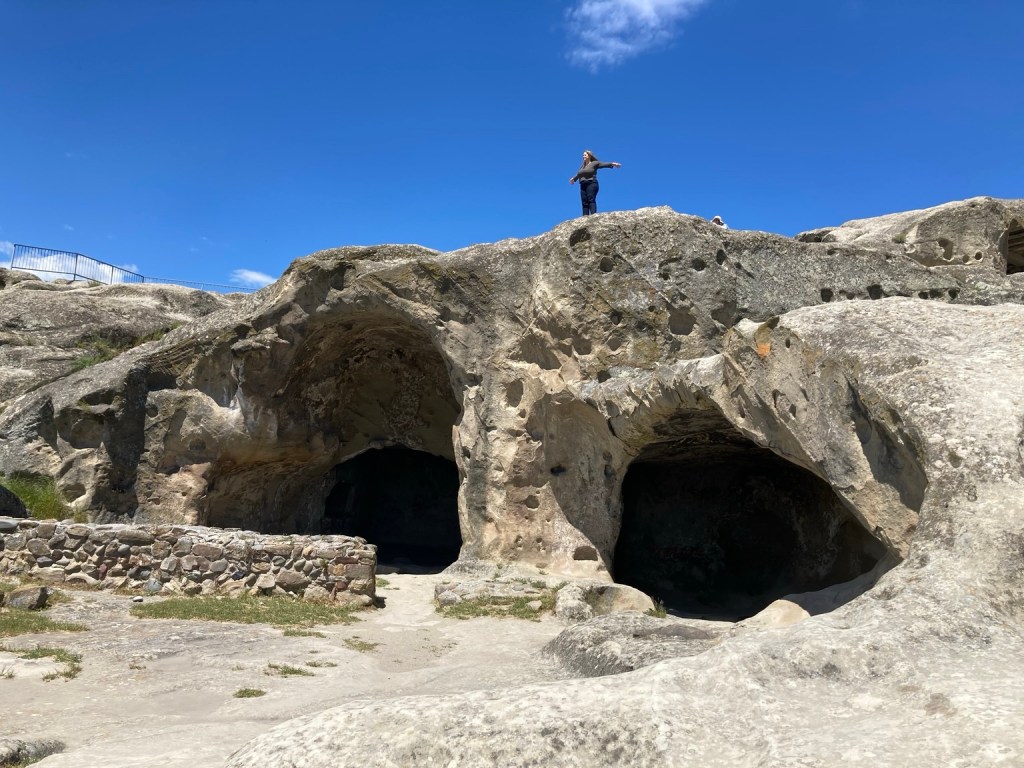
We are on our way to an ancient city called Uplistsikhe, which means The Lord’s Fortress. It was carved into the sandstone and continuously occupied for nearly 3,000 years. According to folklore, Uplistsiche was built by slaves. Their pickaxes concealed a nugget of gold and once they had worked hard enough to wear away the iron to reveal the gold they were granted both their freedom and the gold as their reward.
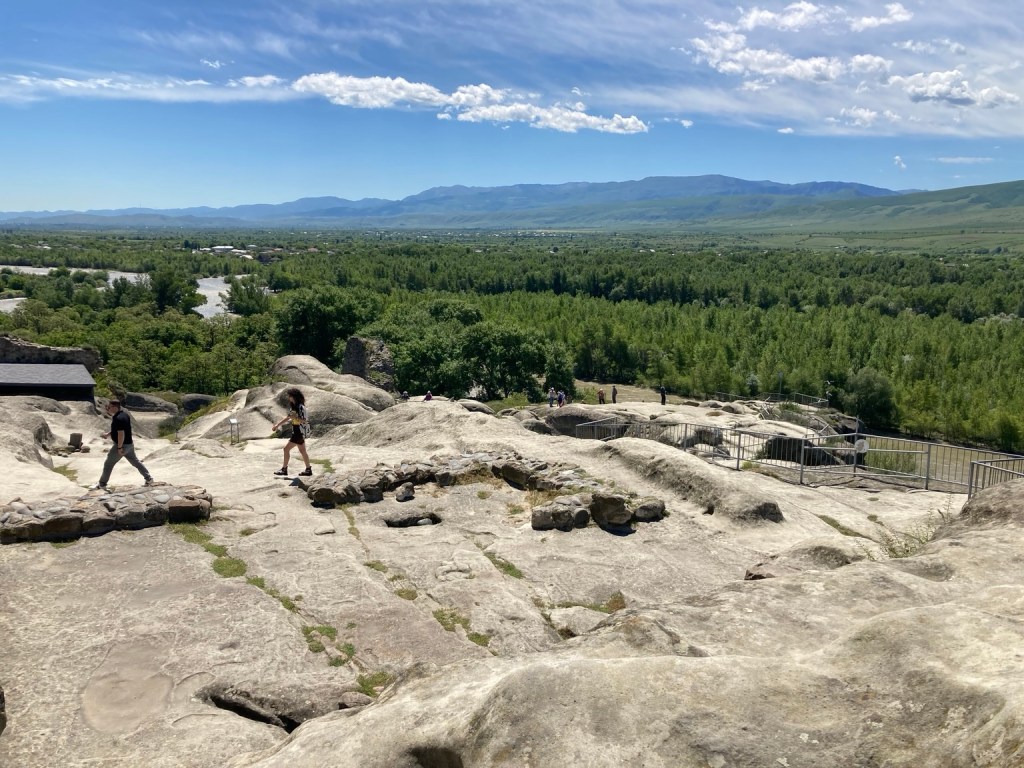
Initially a pagan temple city where the sun goddess was worshipped, after Georgia adopted Christianity, many of the pagan temples were converted into churches. During Arab rule in the C8th & C9th it was a stronghold of Christian resistance and the residence for the Kings of Kartli, housing a population of up to 20,000. However, it was the economic prosperity generated by the Silk Road ensured that Uplistsikhe remained a vital, fortified stronghold until it was heavily damaged during the Mongol invasions of the C13th An earthquake in 1920 caused further structural damage.
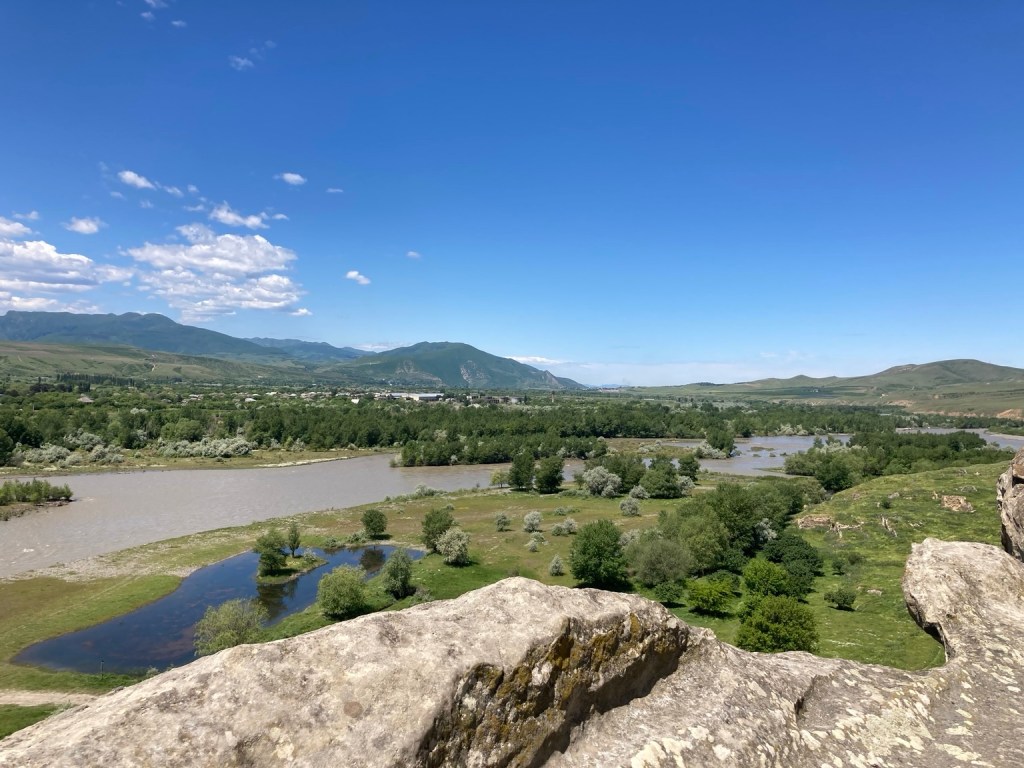
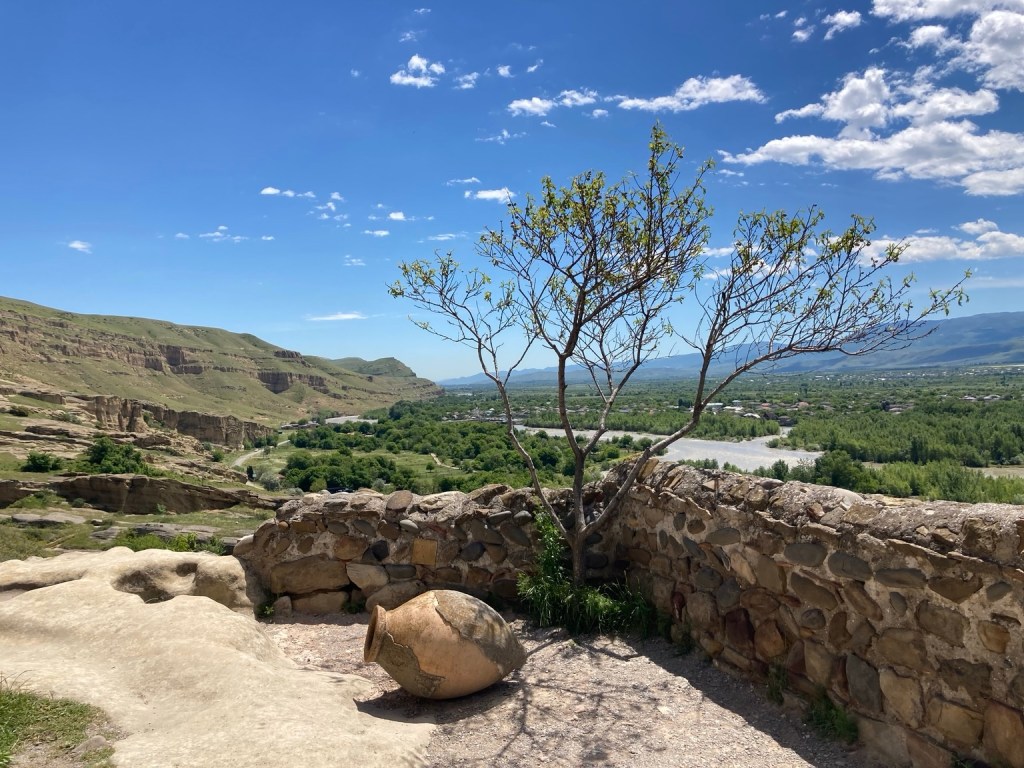
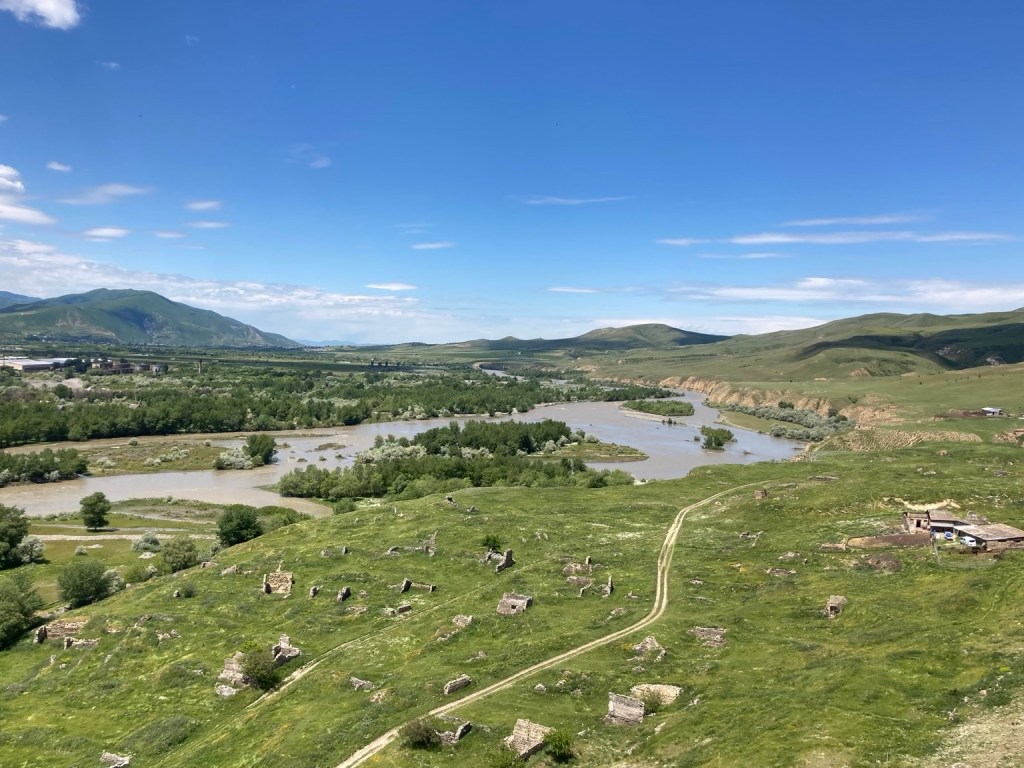
Halfway up, there was a great view out across the valley …
… beside this impressive structure believed to be the stage part of a theatre. It would have been completely enclosed with a roof and is decorated with a coffered ceiling.
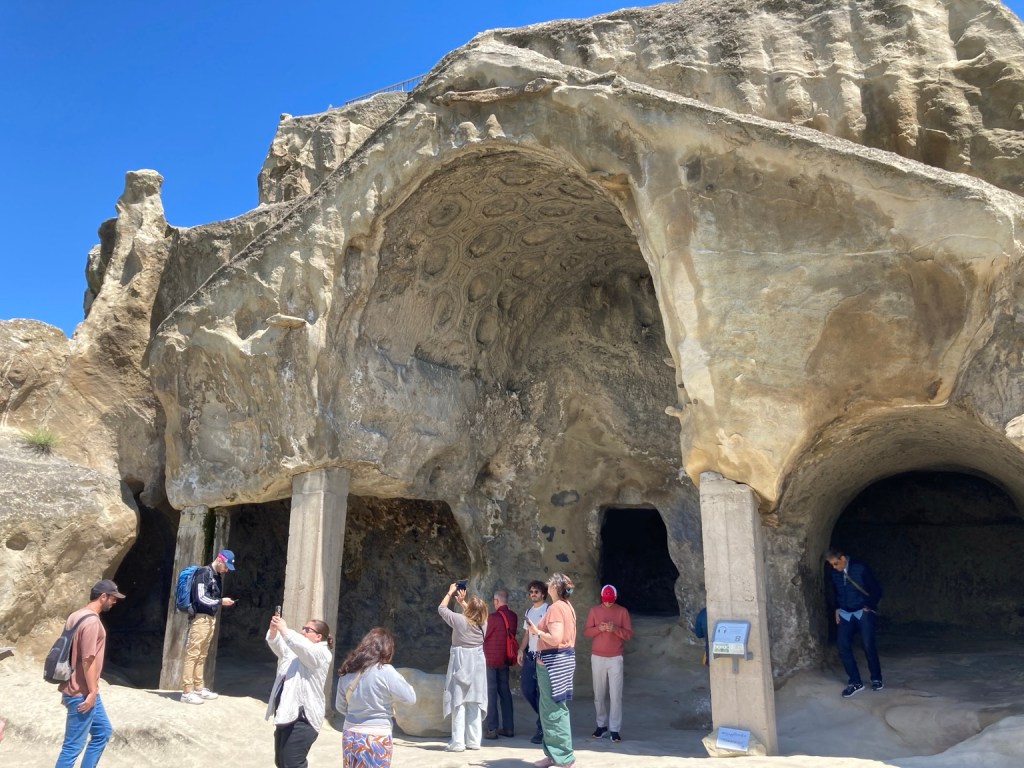
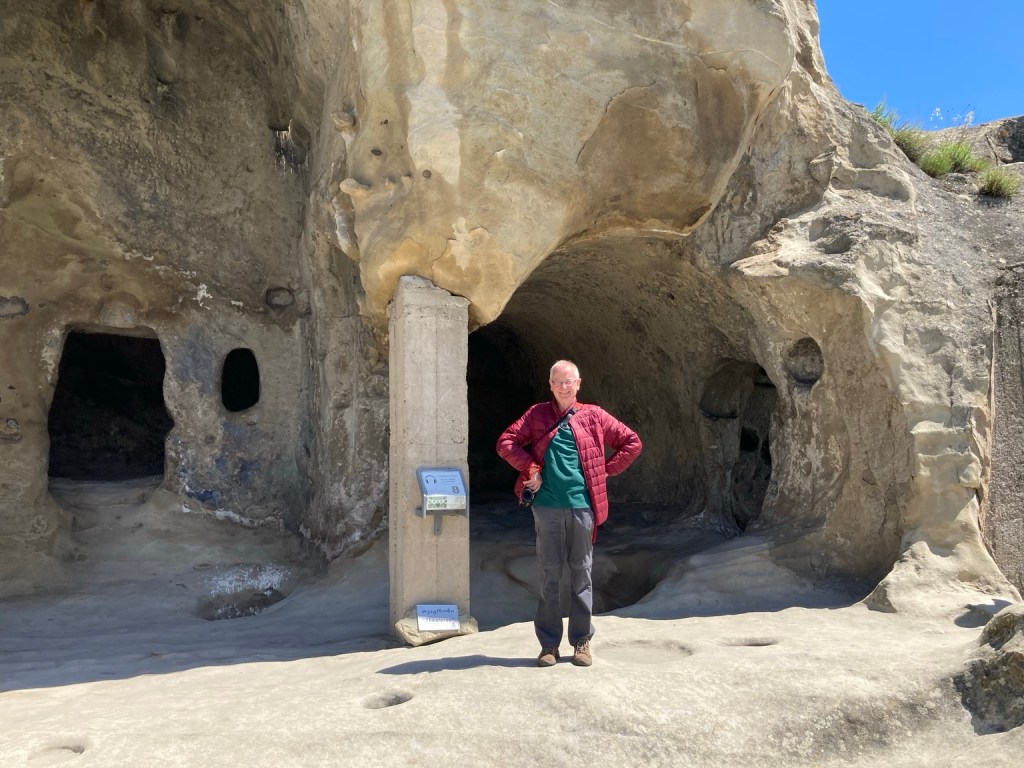
Further on we got the best view of the site, with the 10th-century Christian stone basilica built right at the summit.
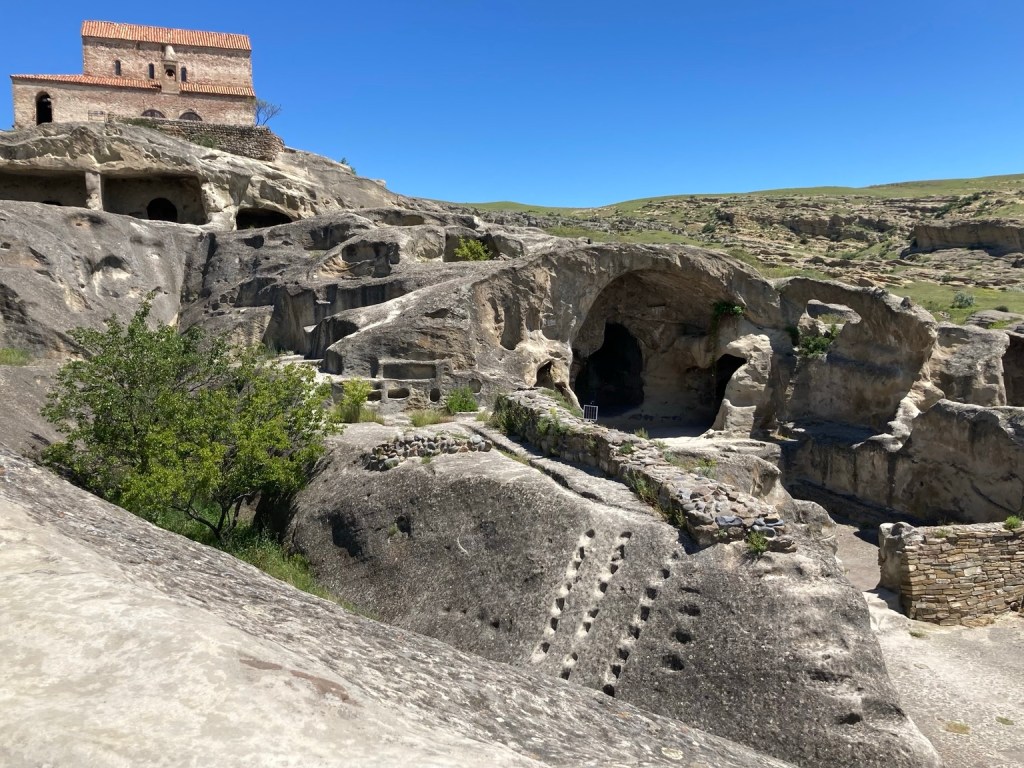
We explored carved streets lined with shops and living quarters, including wine cellars and a pharmacy …
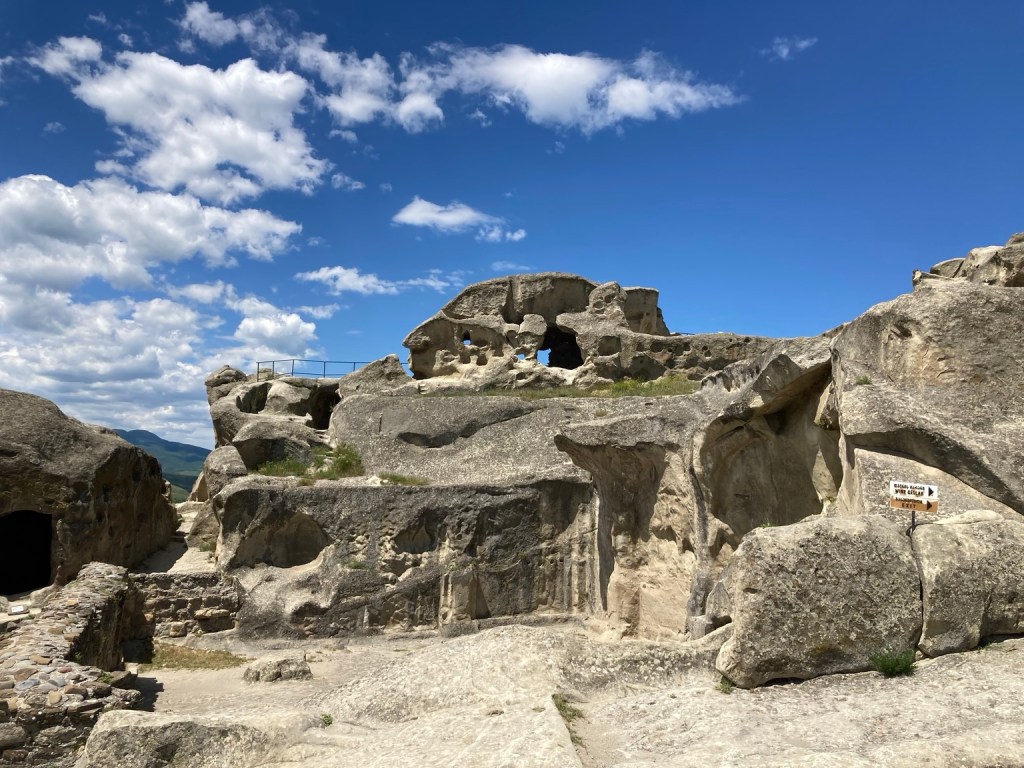
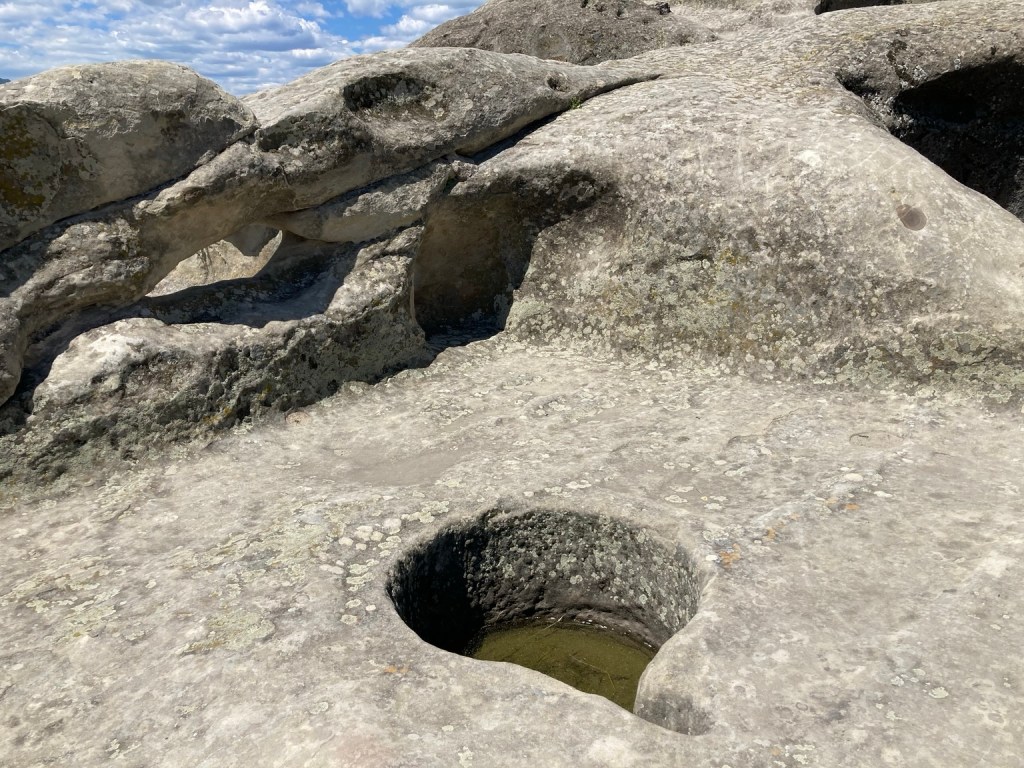
… and spotted several features like this keyhole-shaped pit which was an underground oven used for cooking and heating …
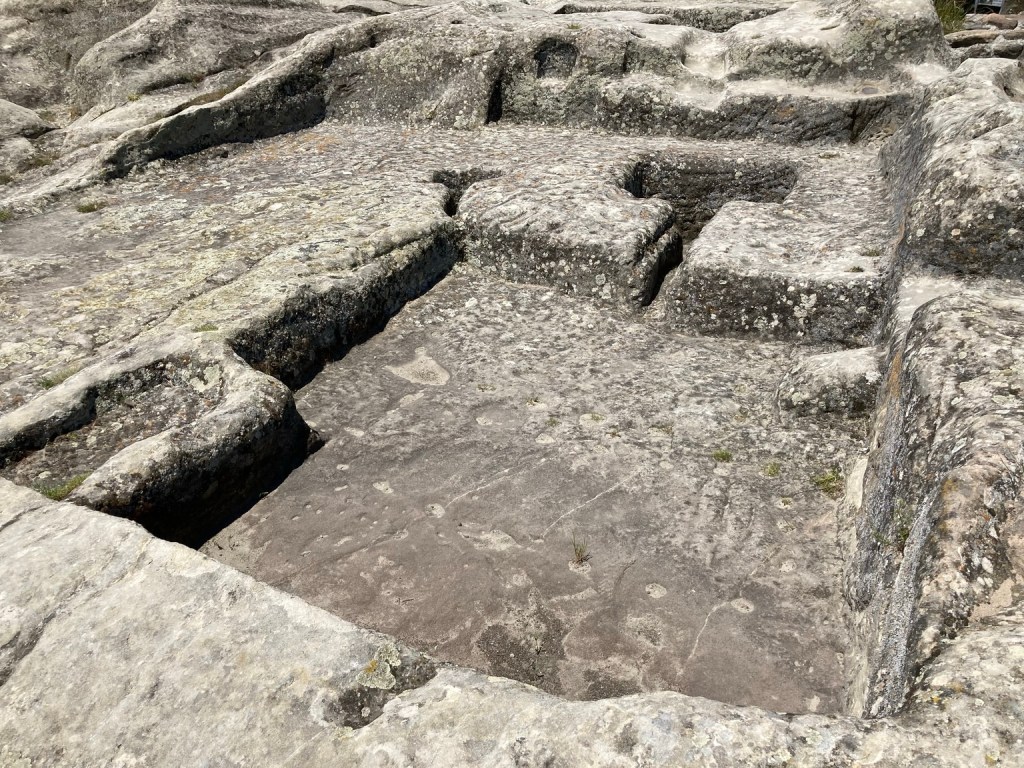
… and this area used for crushing grapes.
This is the most elaborate cave and has several chambers, a smoke hole and ribbed ceiling and has been named in the honour Queen Tamar, who ruled in the C11th at the height of Georgia’s Golden Age.
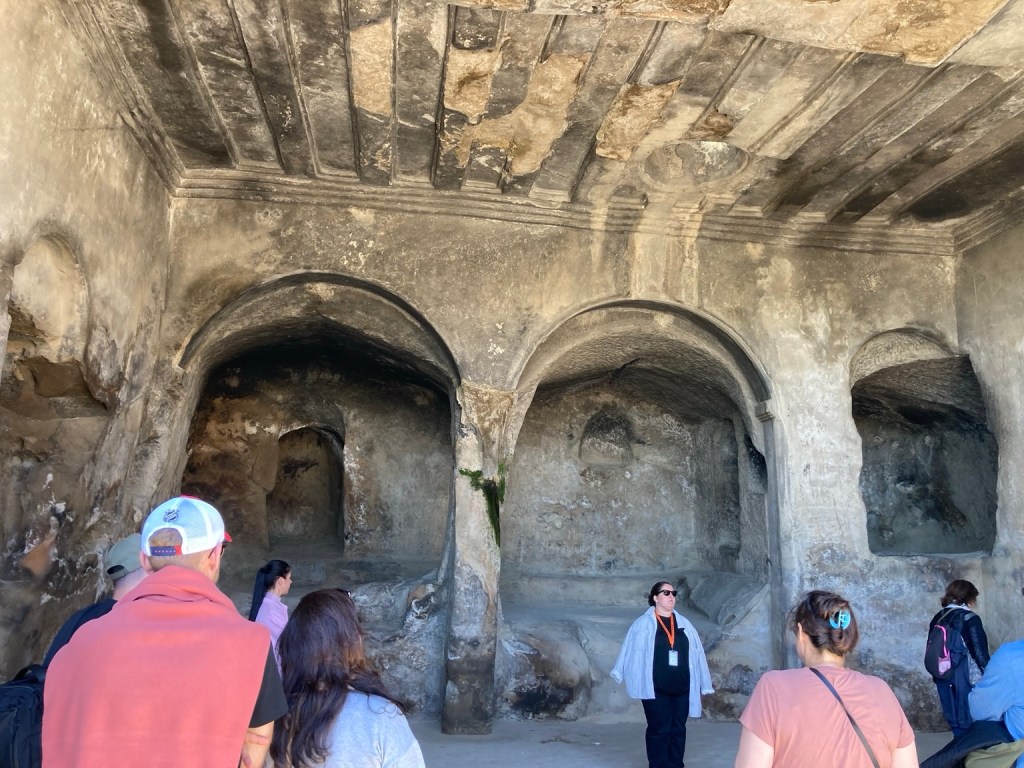
Blackberry Hall is named for the vines that grow here and is believed to have been a pagan temple or sun goddess shrine where rituals and sacrifices took place.
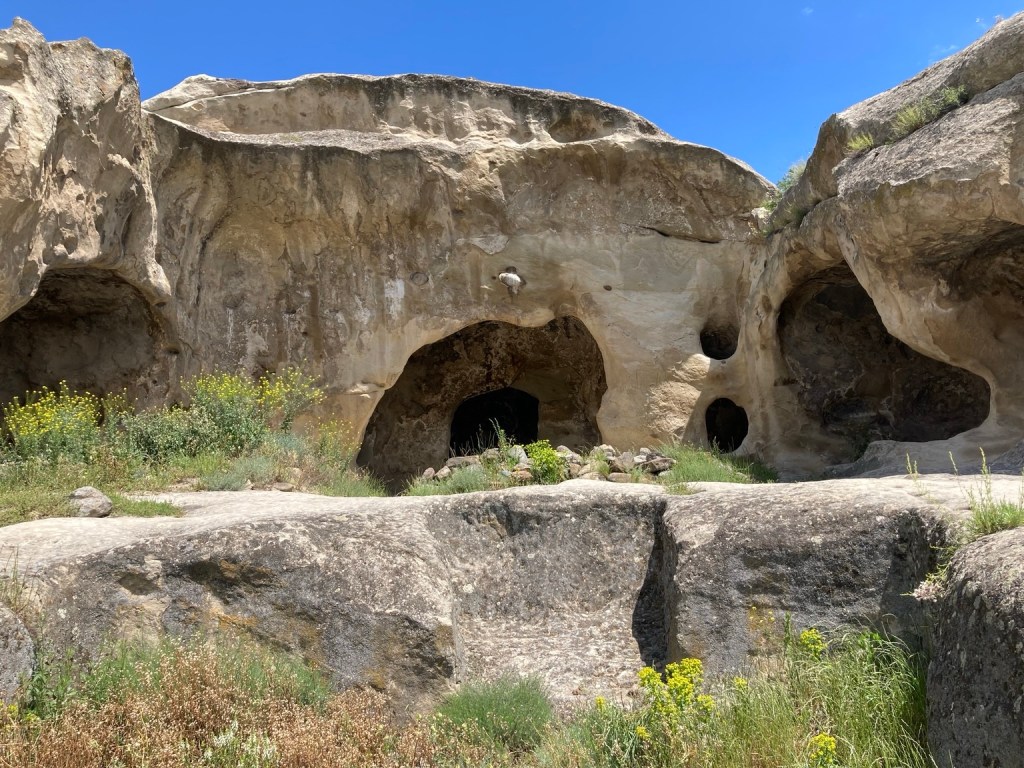
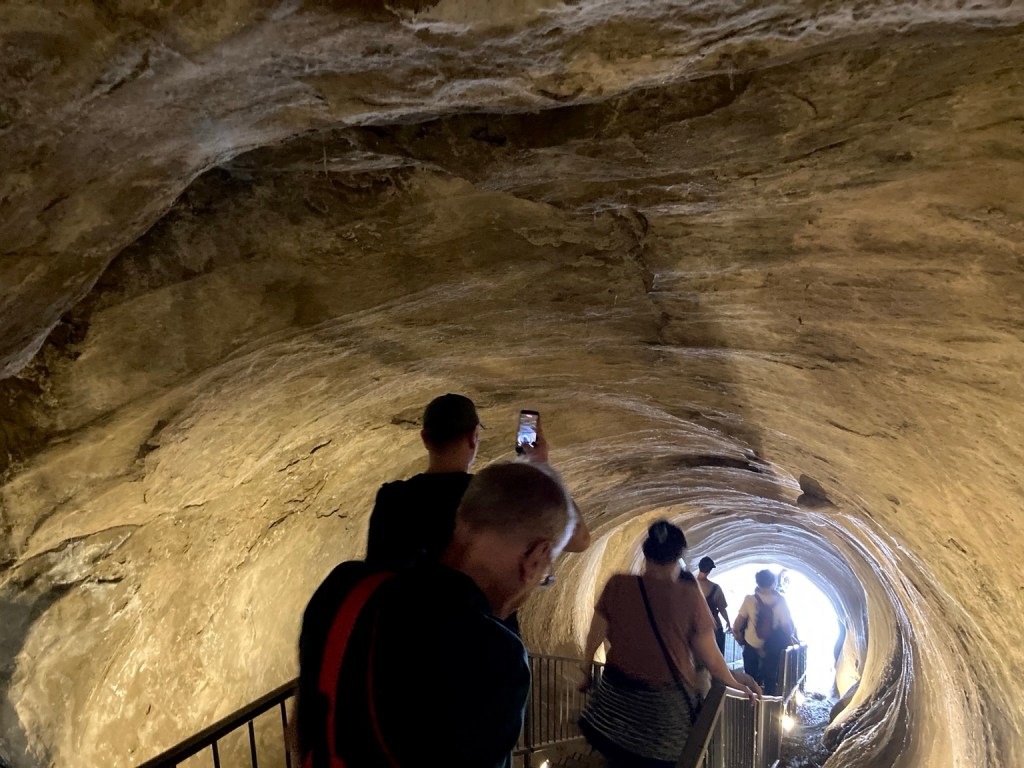
We had some time to explore ourselves and take some photos before leaving the site via a long, ancient rock-cut tunnel which leads down to the river, once used as an emergency water source and escape route.
From the earliest of Georgia’s history we are now moving forward to the C20th, with Gori, Stalin’s hometown. After Joseph Stalin’s rise to the leader of the Soviet Union, he generously bought and donated the house in which he was born to the state to be a museum, and following his death, a new building resembling a classic Stalinist palace was erected and remains a preserved time capsule of Soviet-era propaganda. Interestingly, while the majority of Georgians view him as a brutal dictator, some older people still view him with nationalistic pride. The museum remains, but it is generally only visited by tourists and the huge statue outside is now concealed within. His armoured train carriage can be visited too.
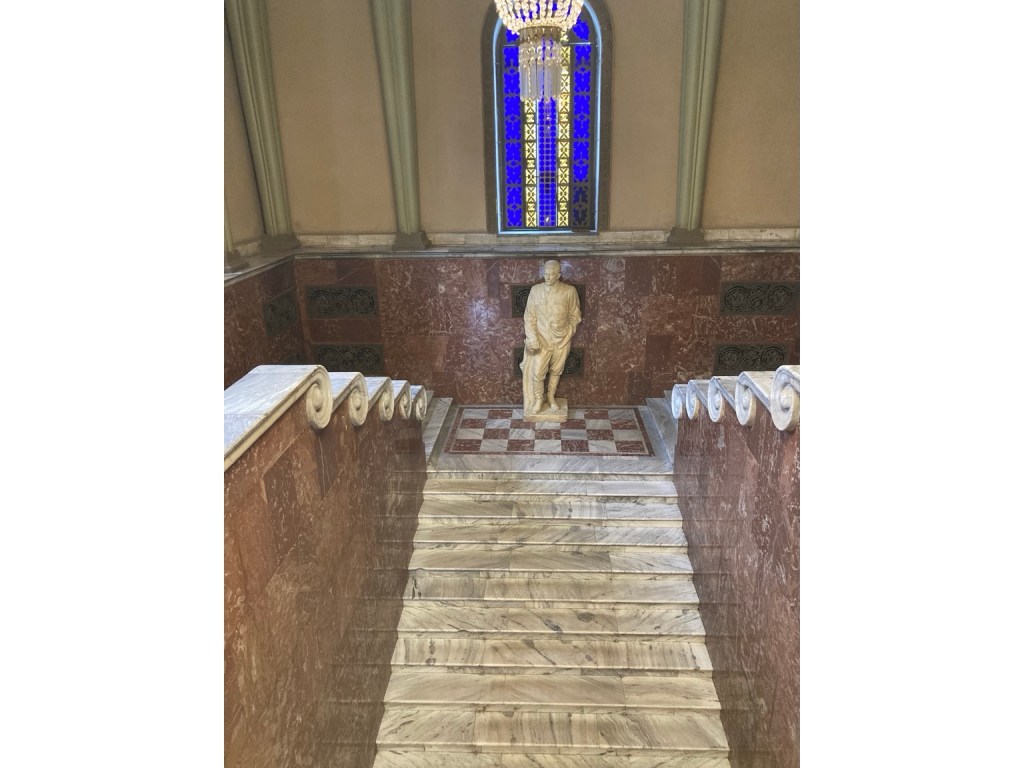
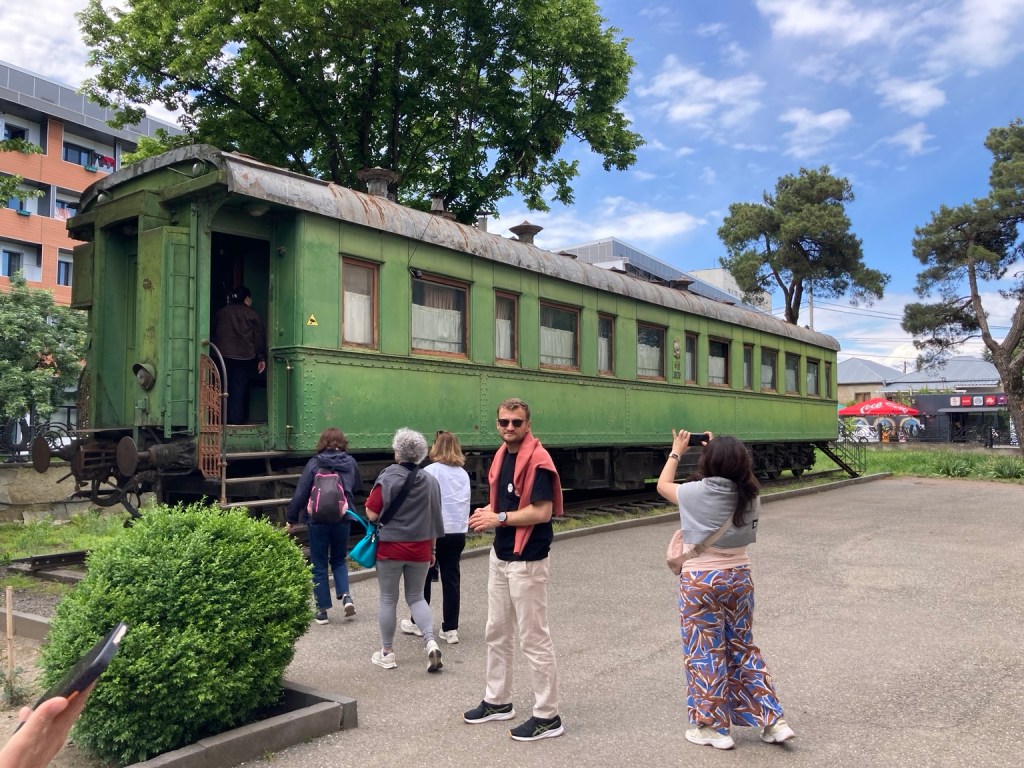
If it had not been included on the tour, we might not have made a point of visiting, but it was interesting when we realised it was not a real history of his life, more a time capsule of Soviet-era propaganda.
The lunch stop was at a traditional restaurant where we were presented with a table laden with an array of Georgian specialities including various khachapuri, salads, hot vegetable dishes and grilled meats.
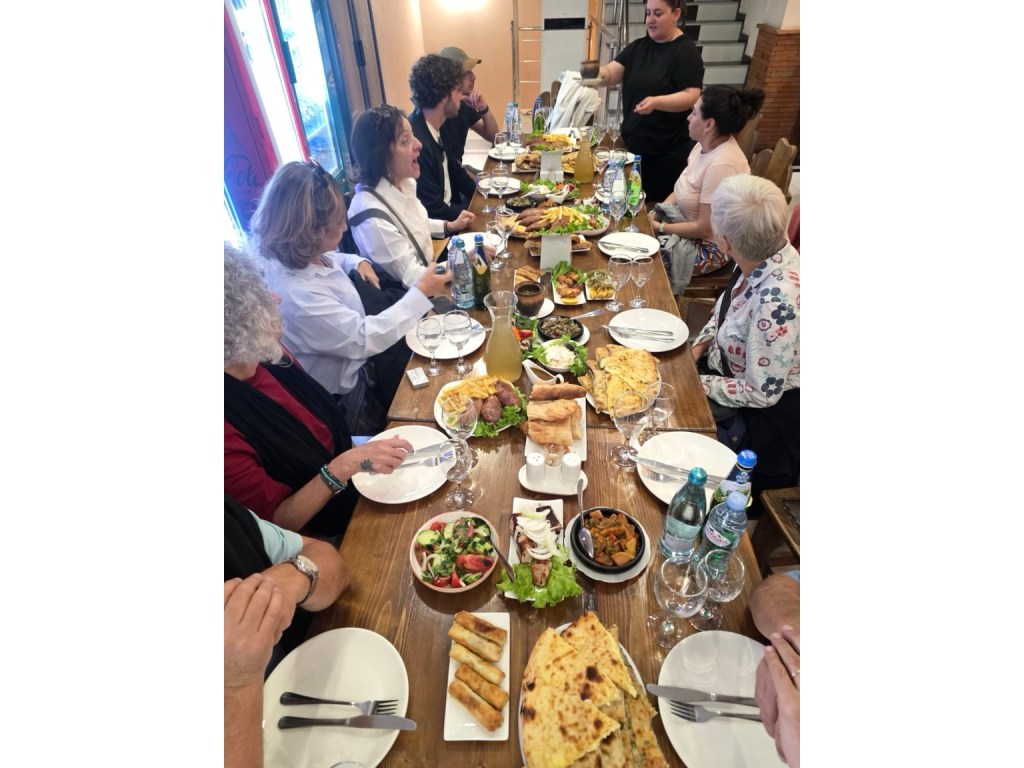
All the food was delicious and it was a great opportunity to try lots of different dishes. There was also amber wine, still made using traditional methods, but unfortunately producing a wine in my view resembling a particularly rough scrumpy.
Georgia is rich in naturally carbonated mineral springs and most famous is Borjomi, which has been bottled commercially since 1890. Fruit and herb syrups are used to make a variety of ‘lemonades’ and we tried the fluorescent green tarragon lemonade but found it just far too sweet and stuck with just the water.
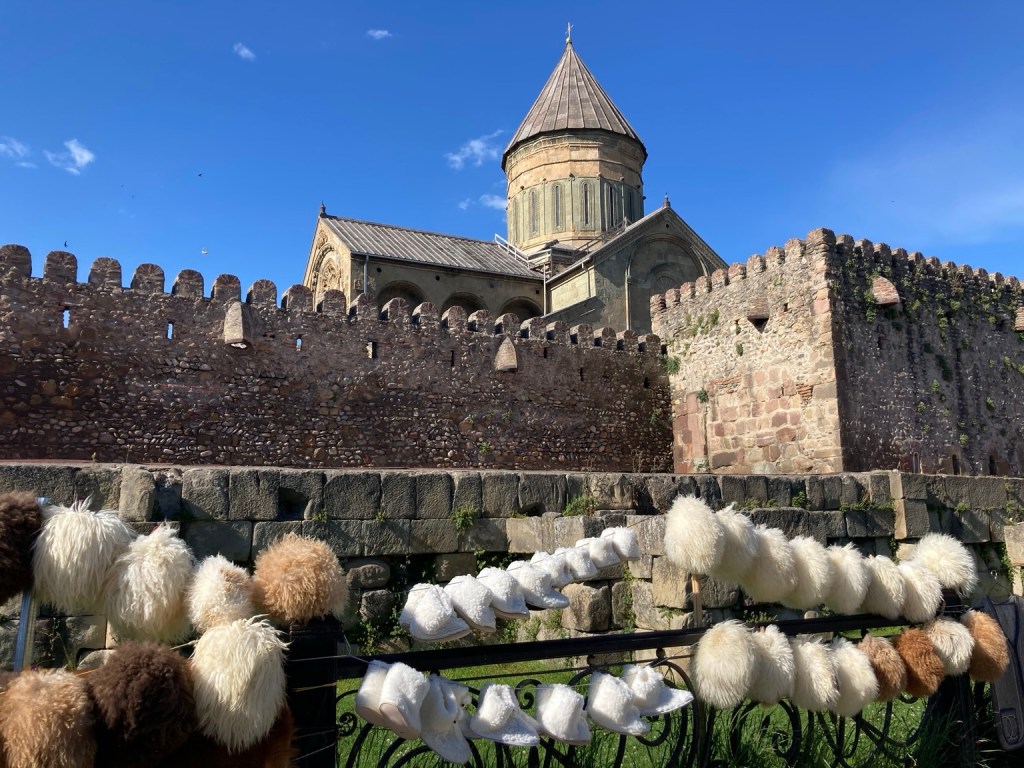
Our final stop was at Mtskheta and check out all those consonants!
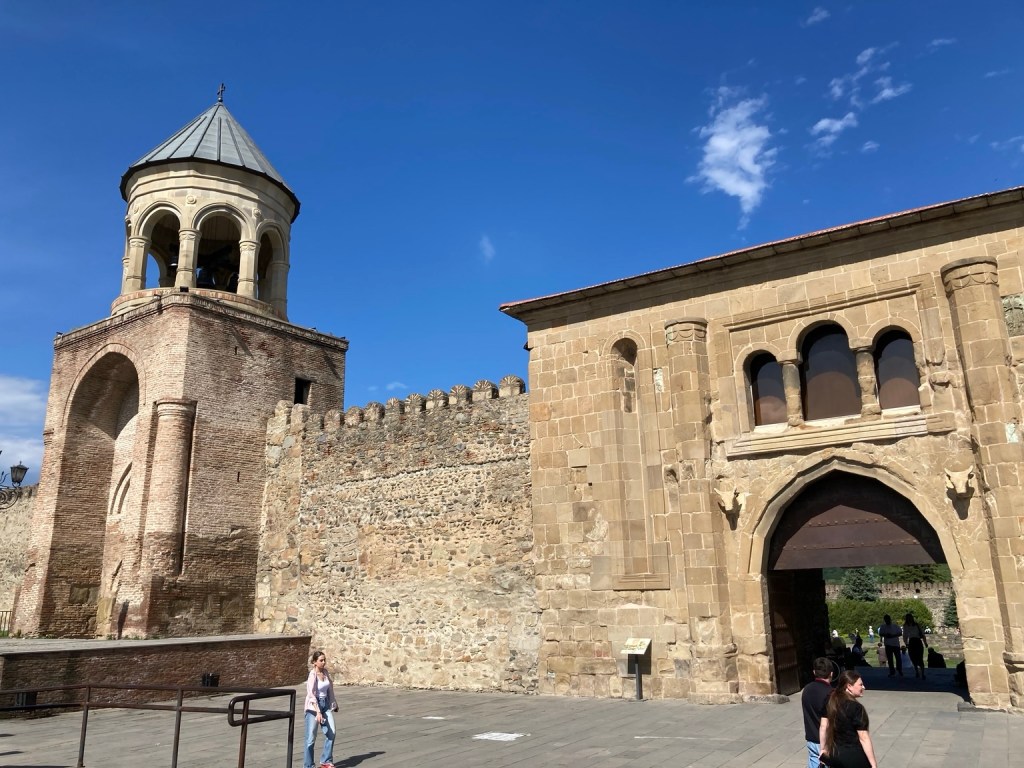
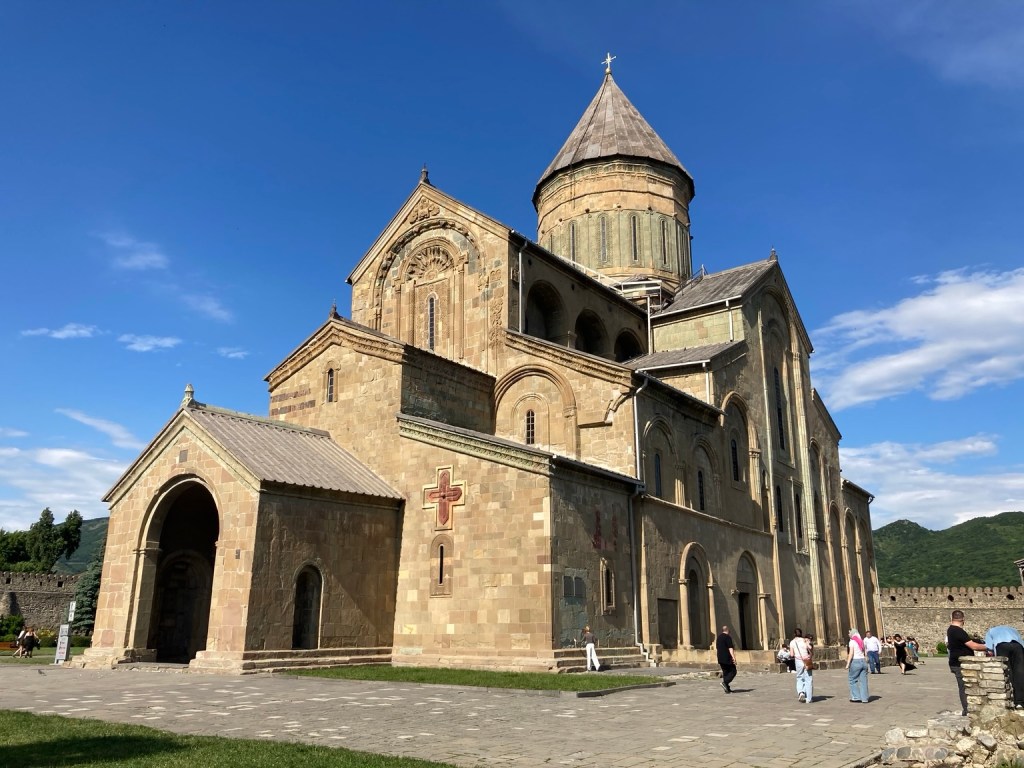
This was the capital of the early Georgian Kingdom of Kartli until the C5th and at its centre is the Svetitskhoveli Cathedral.
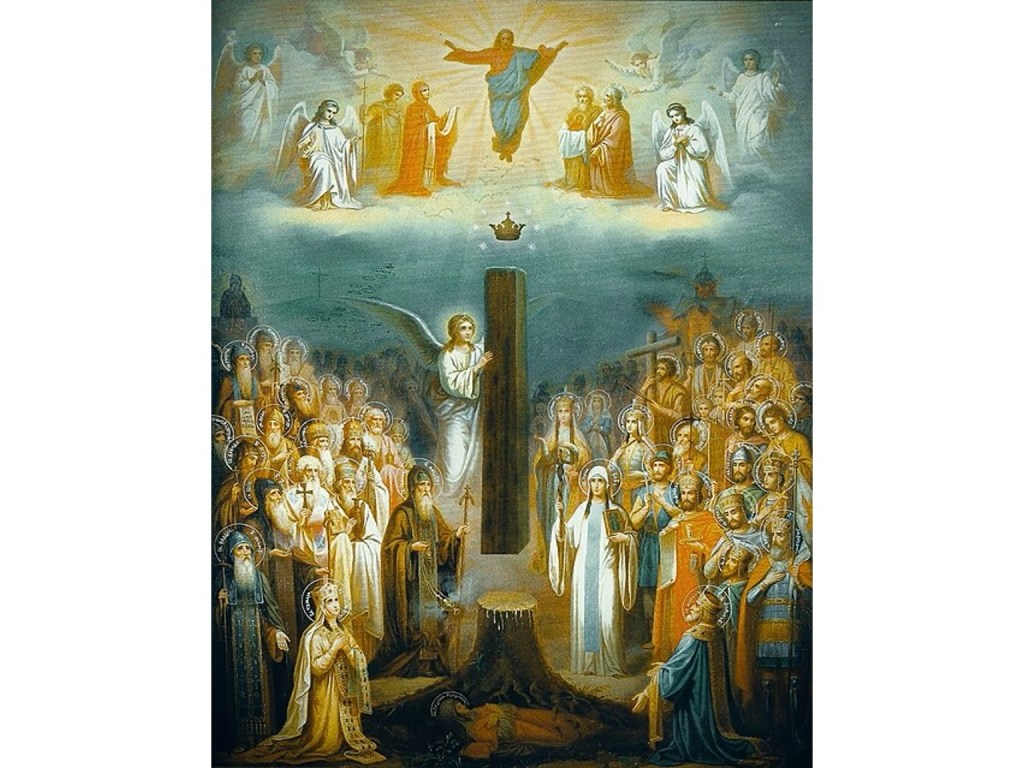
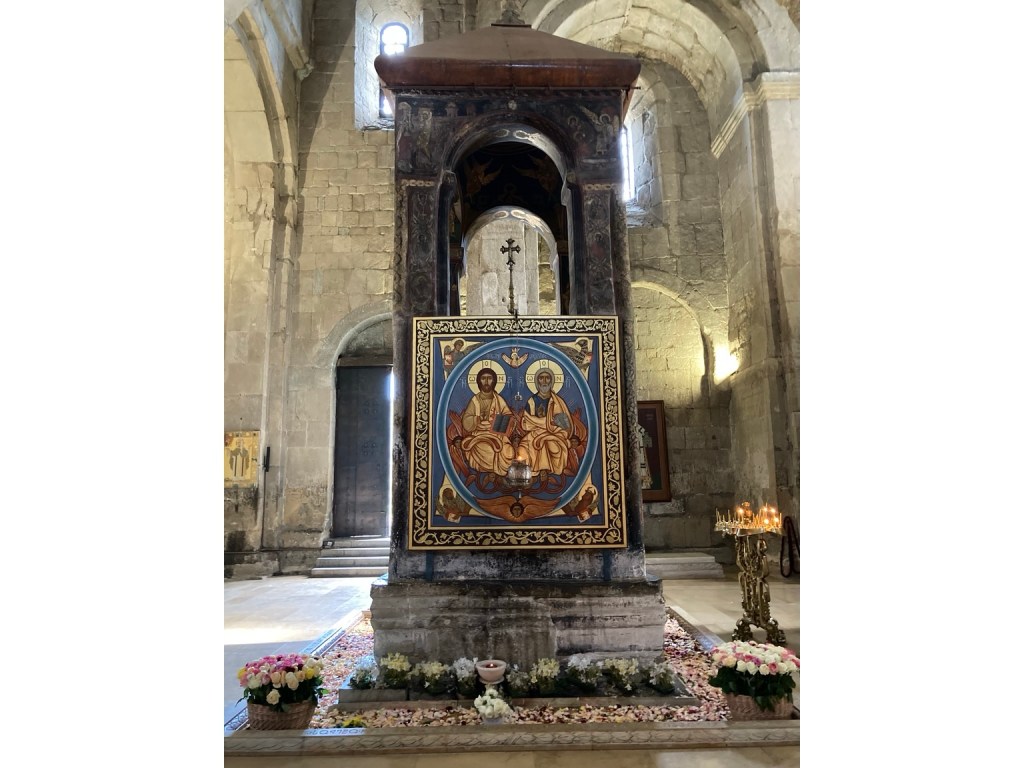
According to Georgian Orthodox tradition, a Jewish rabbi from Mtskheta was in Jerusalem when Christ was crucified and brought his robe to Georgia. On seeing it, his sister Sidonia touched the robe and died from the emotions it gave off and when she couldn’t be separated from it, was buried with the robe. A massive cedar tree sprouted from her grave. Centuries later in the C4th, King Mirian and St. Nino decided to build a church and cut down the sacred cedar. They carved seven pillars from its trunk to support the church’s foundation but the seventh pillar possessed supernatural properties and it lifted into the air on its own. After St. Nino prayed all night, the pillar returned to the earth, giving off a fragrant, holy oil that cured the sick so it was named Svetitskhoveli, which translates to “the life-giving” or “living pillar”.
This icon show the story, with Sidonia’s corpse at the root of a cedar tree stump and an angel lifting the column toward heaven. Saint Nino, King Mirian and his wife, Queen Nana are at the front.
The present building dates to the C10th.
Inside we saw the burial site of Christ’s robe …
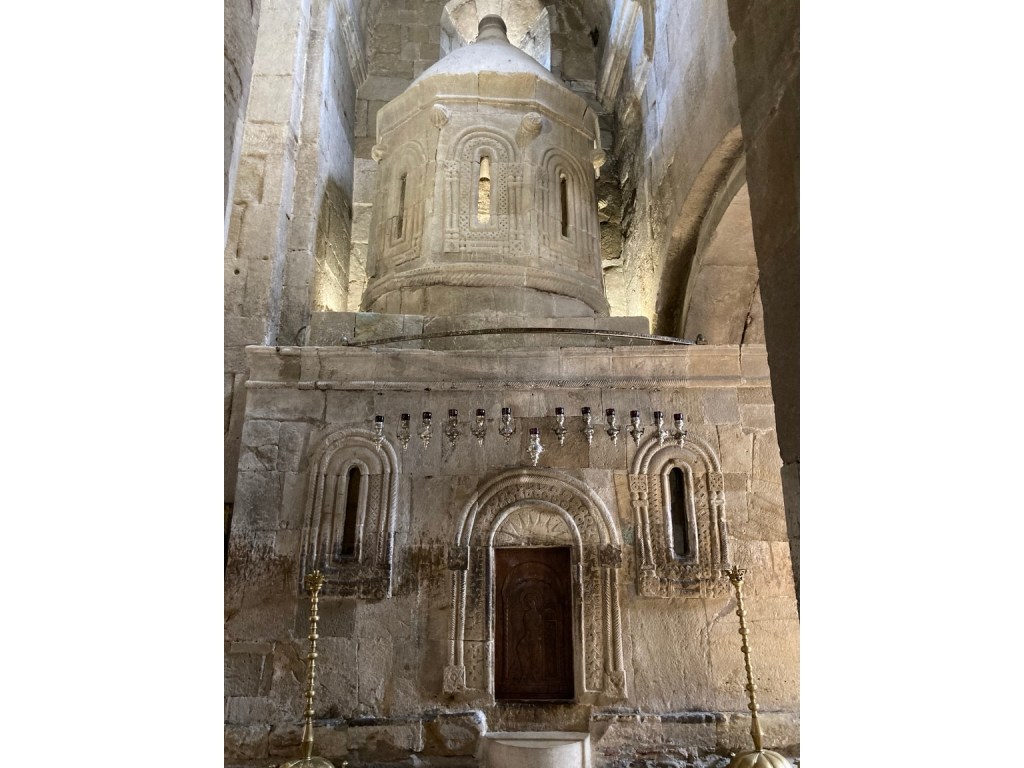
… and a symbolic copy of the Chapel of the Holy Sepulchre in Jerusalem which marks Svetitskhoveli as the second most sacred place in the world (after the church in Jerusalem).
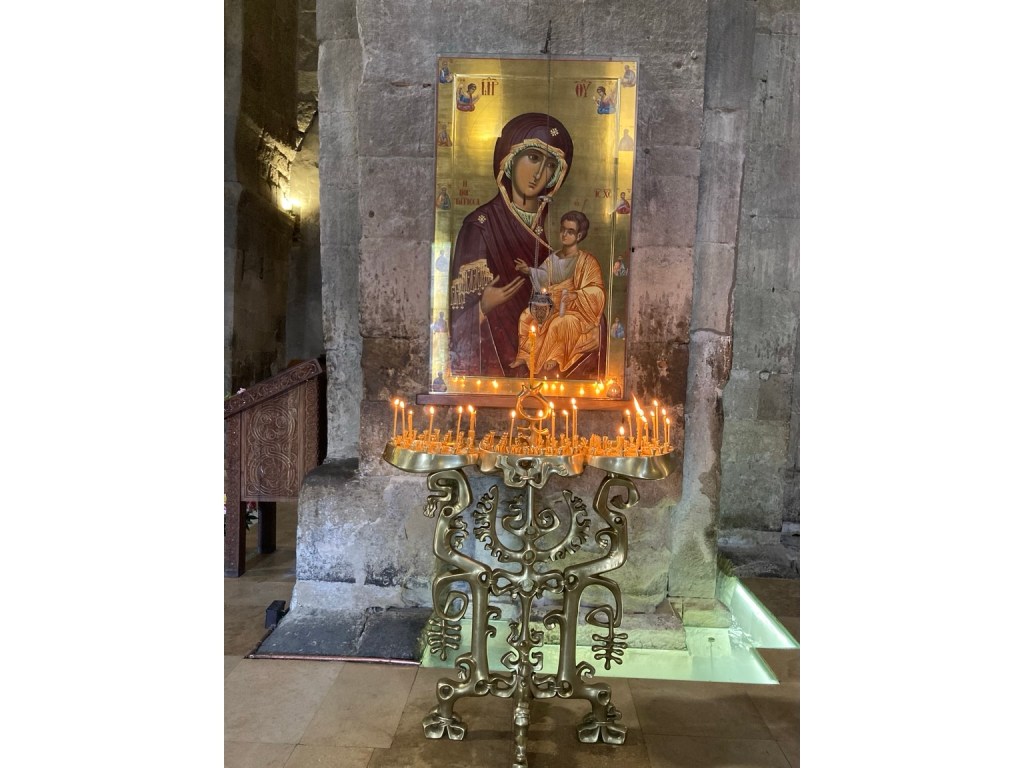
There were lots of icons …
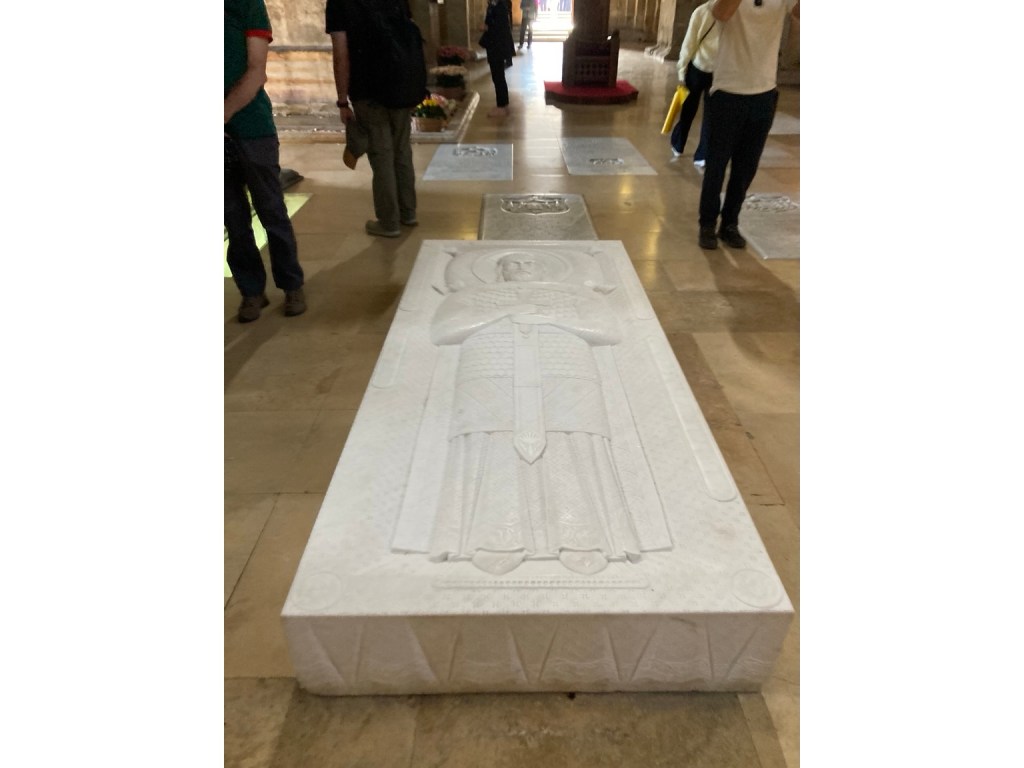
… and royal graves …
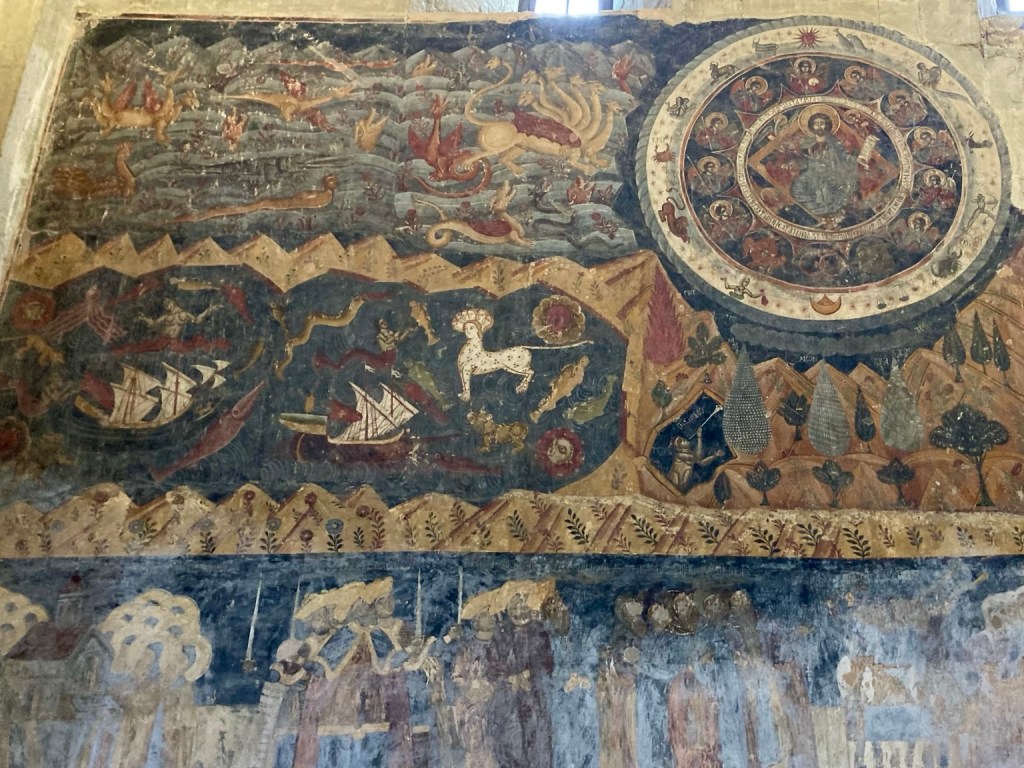
… and a C13th fresco of the Last Judgement featuring the signs of the zodiac.
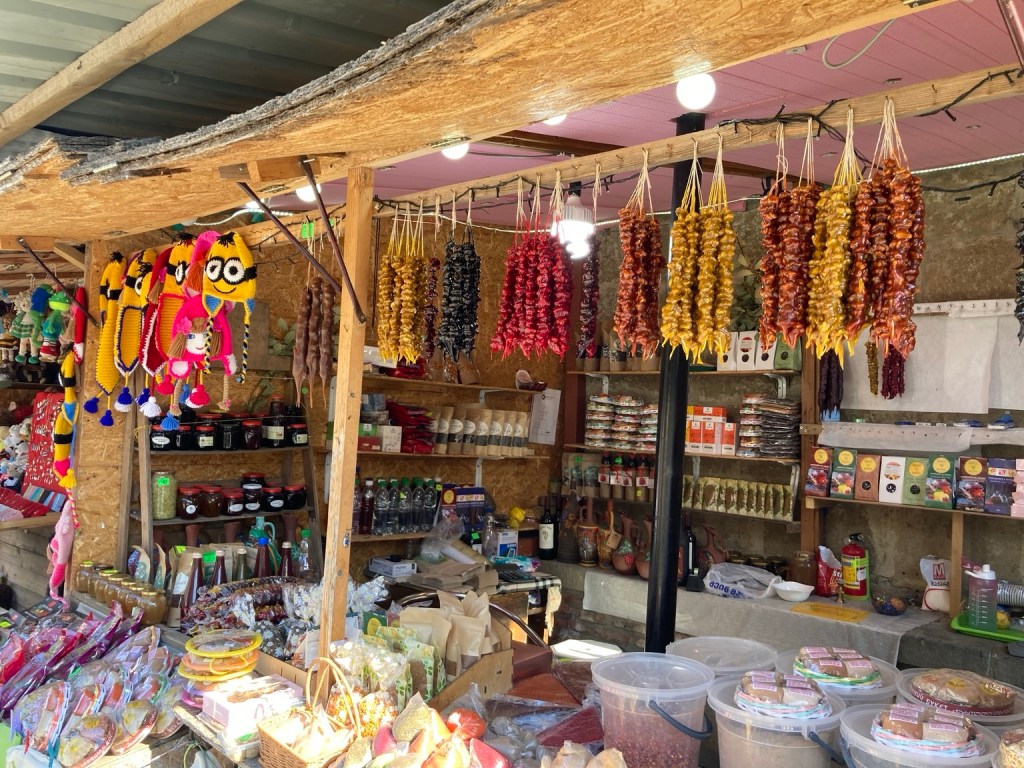
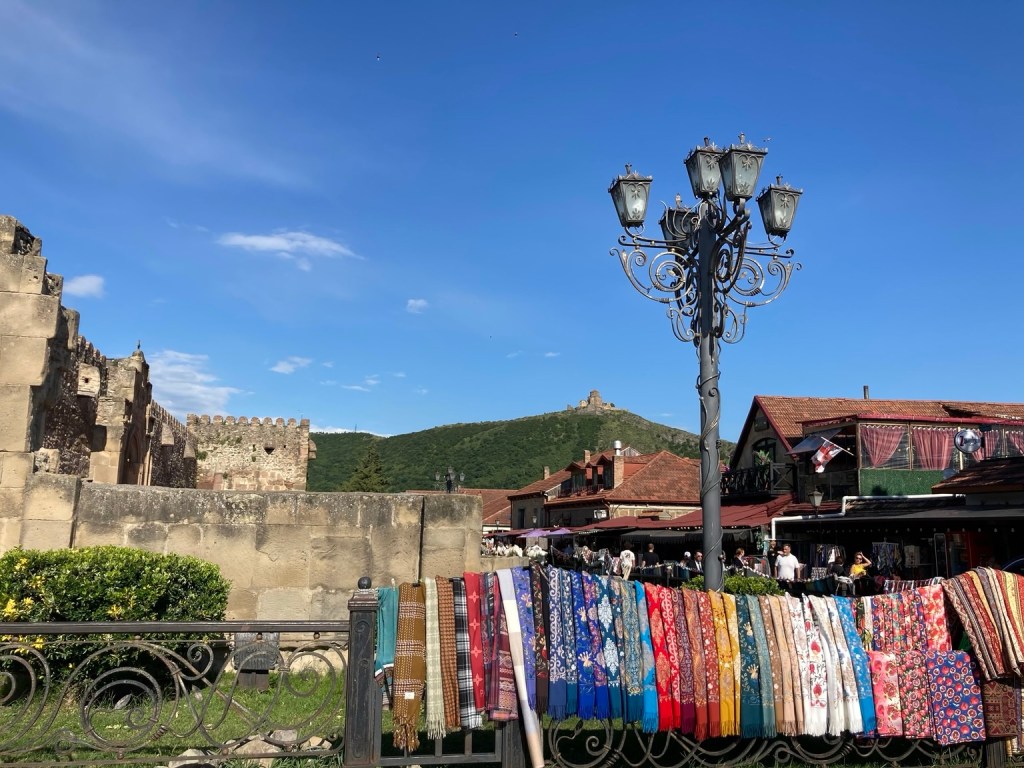
Outside, there were a number of souvenir stalls …
… and we bought some churchkhela, made by threading walnuts onto a string and dipping them into a thick, chewy fruit paste, usually made from grape juice – certainly a sugar boost …
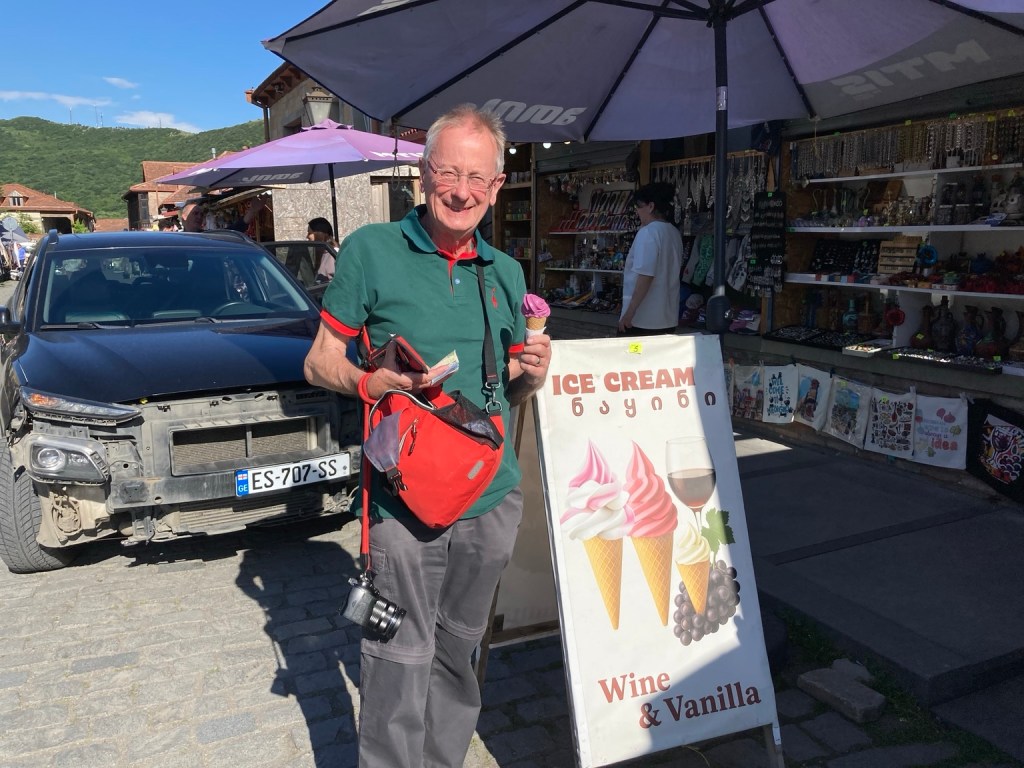
… and then tried the wine ice cream, unsurprisingly more novelty than gastro experience!
Jvari Monastery, seen on the top of the hill is also tied to the story of Saint Nino. As the story goes, this was the first place she arrived after returning to Georgia from Armenia. Finding a pagan temple on this site, she erected a large cross – famously crafted from twisted grape vines fastened together with strands of her own hair – to make this one of the country’s first Christian pilgrimage sites.
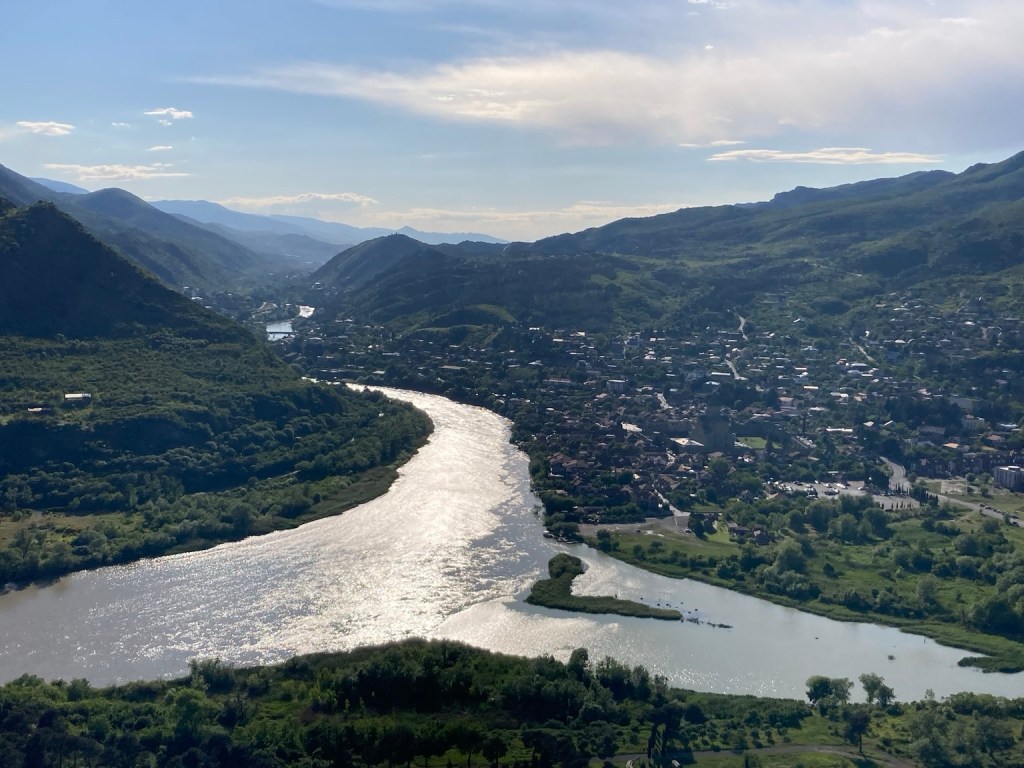
We went up to see the view of the city and the two rivers meeting but it wasn’t the best time of day for a photo.
Back in Tbilisi, we stopped at Leila’s Cafe and after our big lunch, just shared a couple of salads, one with ricotta and beetroot and the other with crispy fried cauliflower and walnut sauce with a glass of wine each as we watched the world go by.

