While there are a number of unique structures dating from the Soviet era, they are distributed throughout the metropolitan area of Tbilisi so we’ve chosen just one.
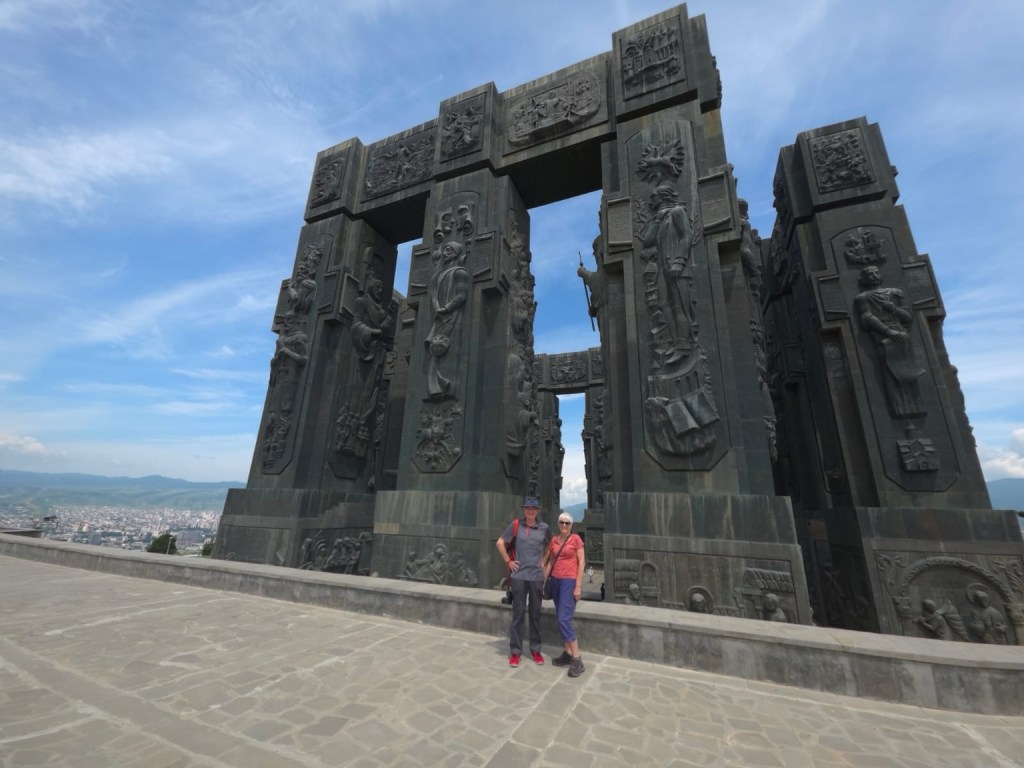
The Chronicle of Georgia is a massive bronze, copper and stone sculpture overlooking a huge reservoir in the north of the city.
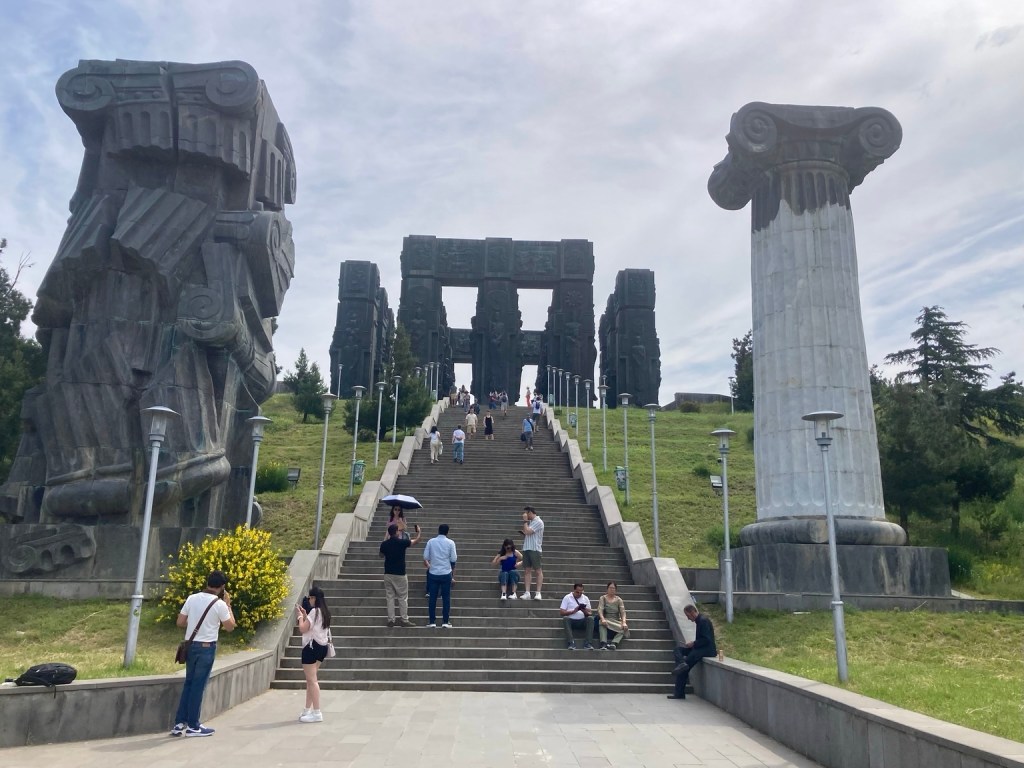
It was designed by Zurab Tsereteli, who also created the sculpture of St. George in the centre of Freedom Square, to commemorate 3,000 years of Georgian statehood, and 2,000 years of Christianity in the country. Work started in 1985 and almost 40 years later, it is almost done, possibly as it has proved popular with visitors to Tbilisi!
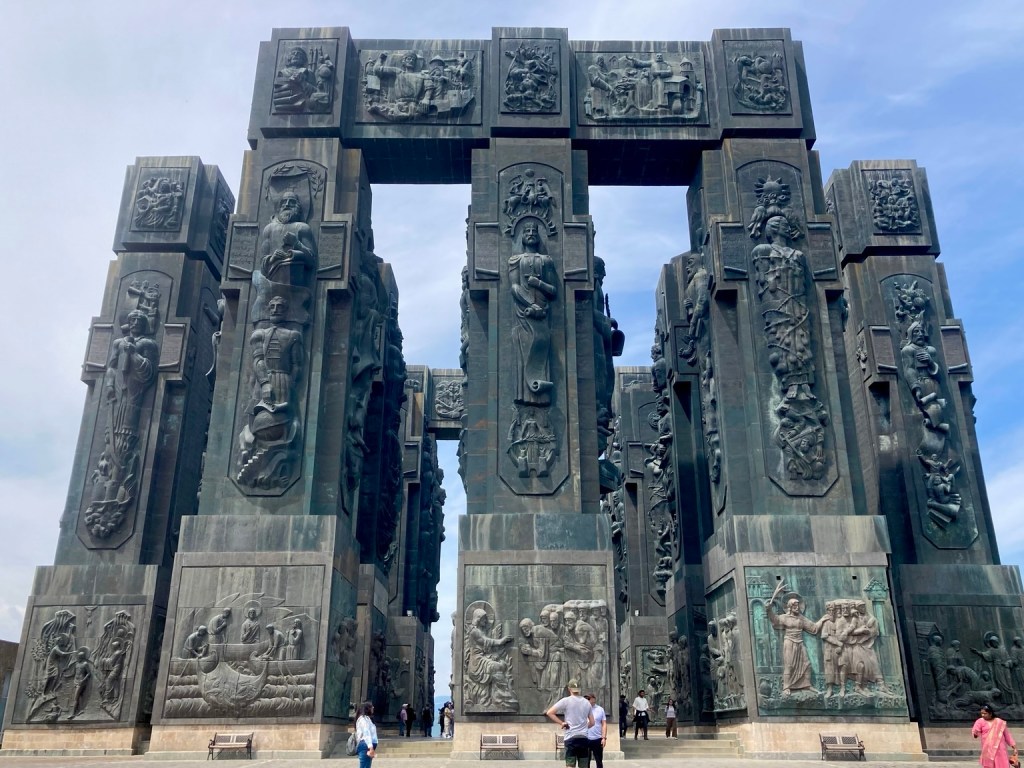
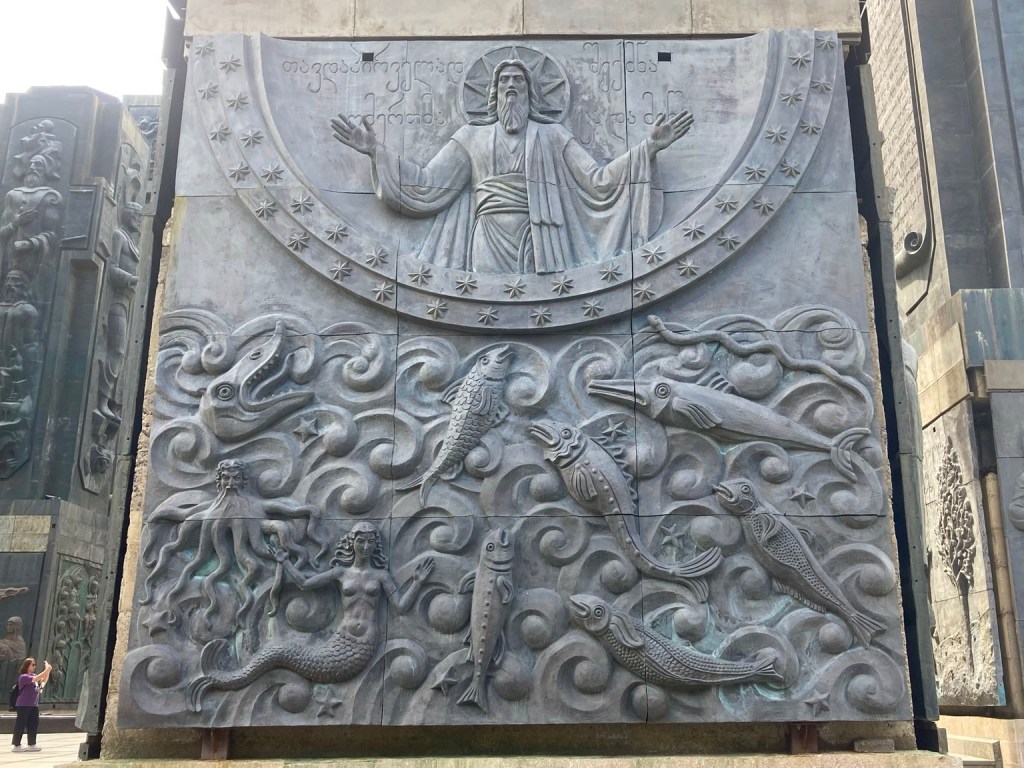
The pillars have three levels of reliefs, with the bottom telling Bible stories …
… the middle depicting important characters from Georgian history and the top showing Georgian traditions such as the wine harvest.
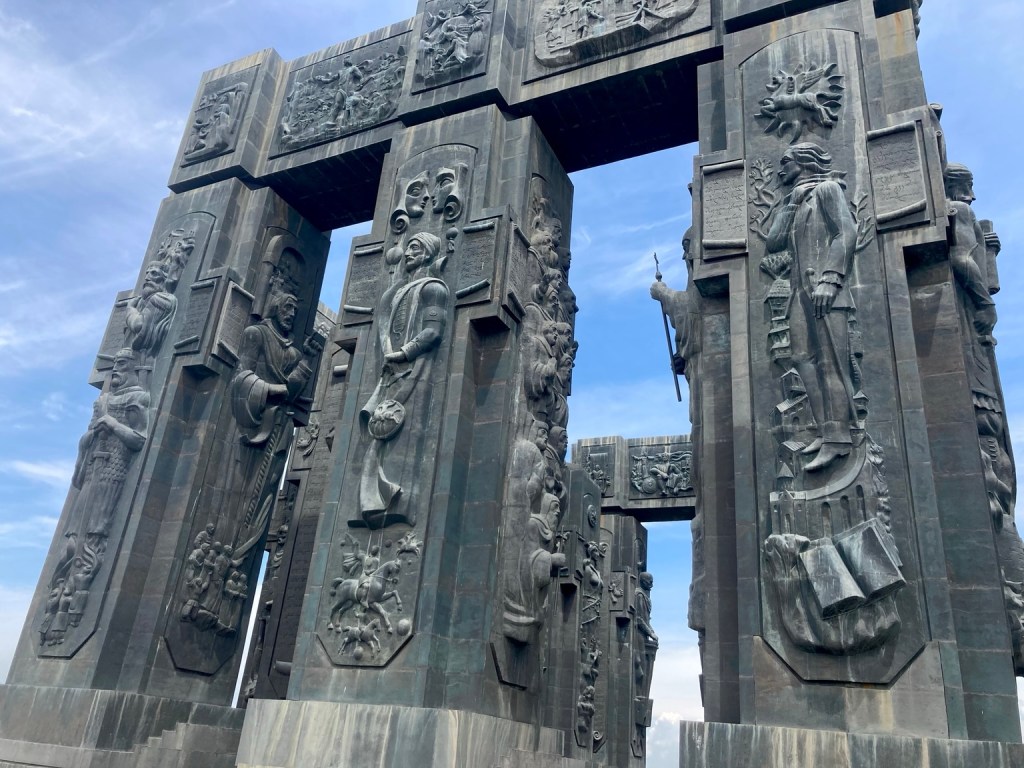
Figuring out the images was a bit of a guessing game, and by the time we arrived, the sun made taking photographs a bit of a challenge, but there is no denying it is a feat of engineering and a very striking monument to Georgia’s history.
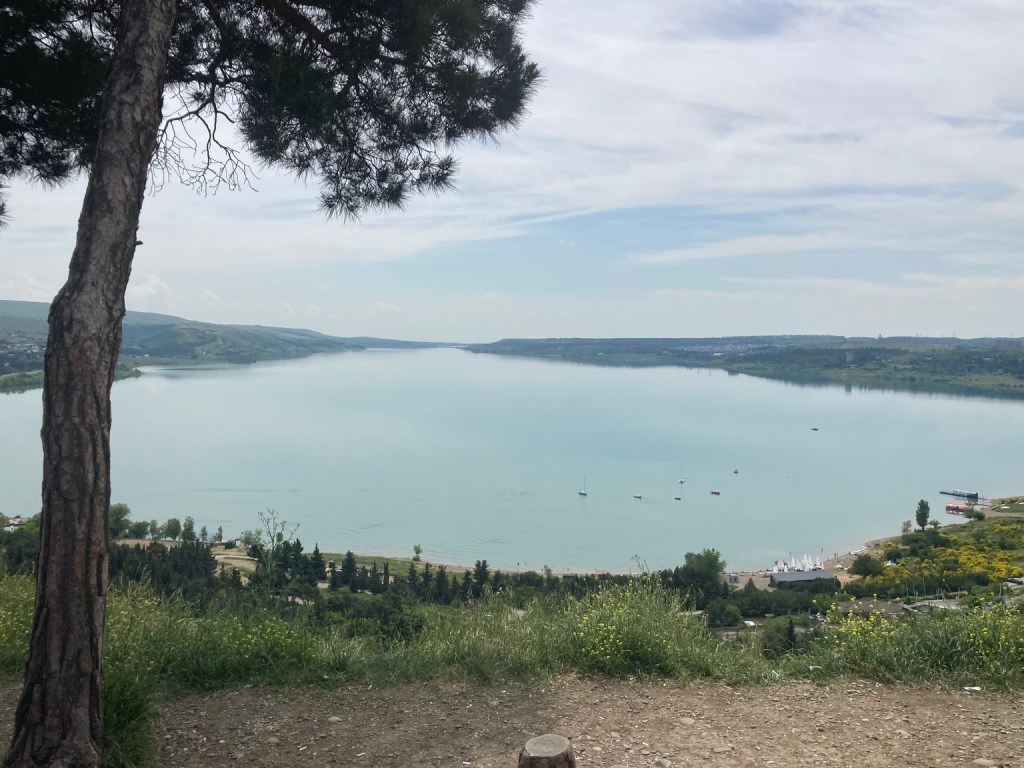
The view across the lake was serene …
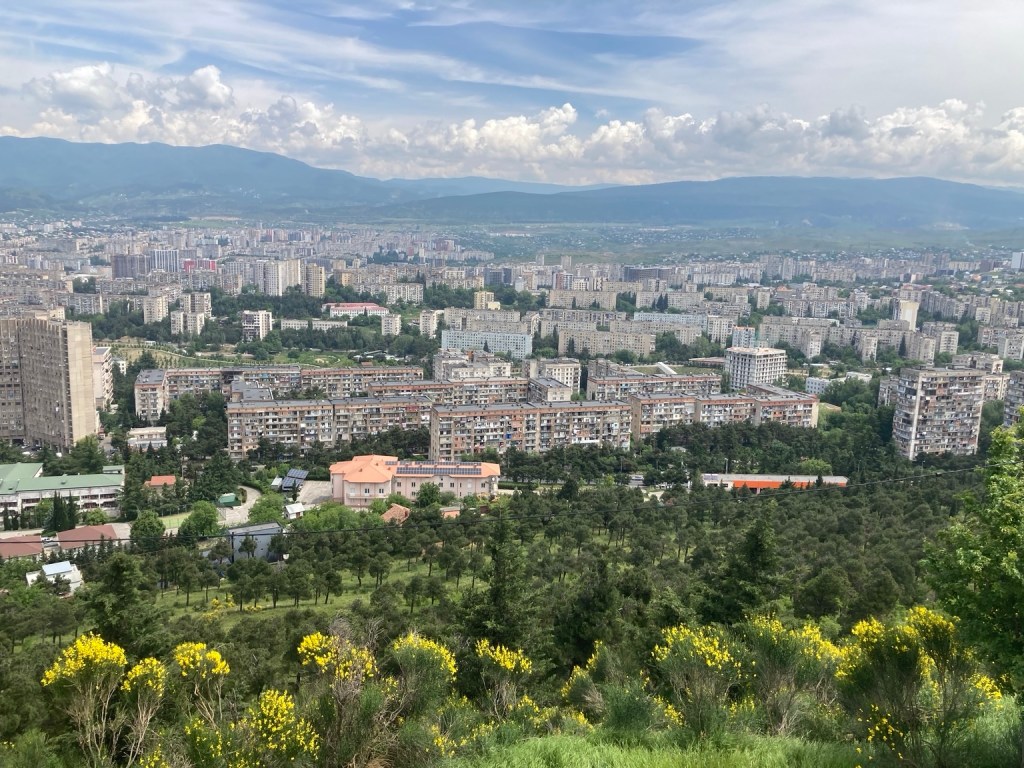
… but turning just a few degrees we saw ranks of apartment buildings extending into the distance, unsurprising when a third of Georgia’s population live in the city.
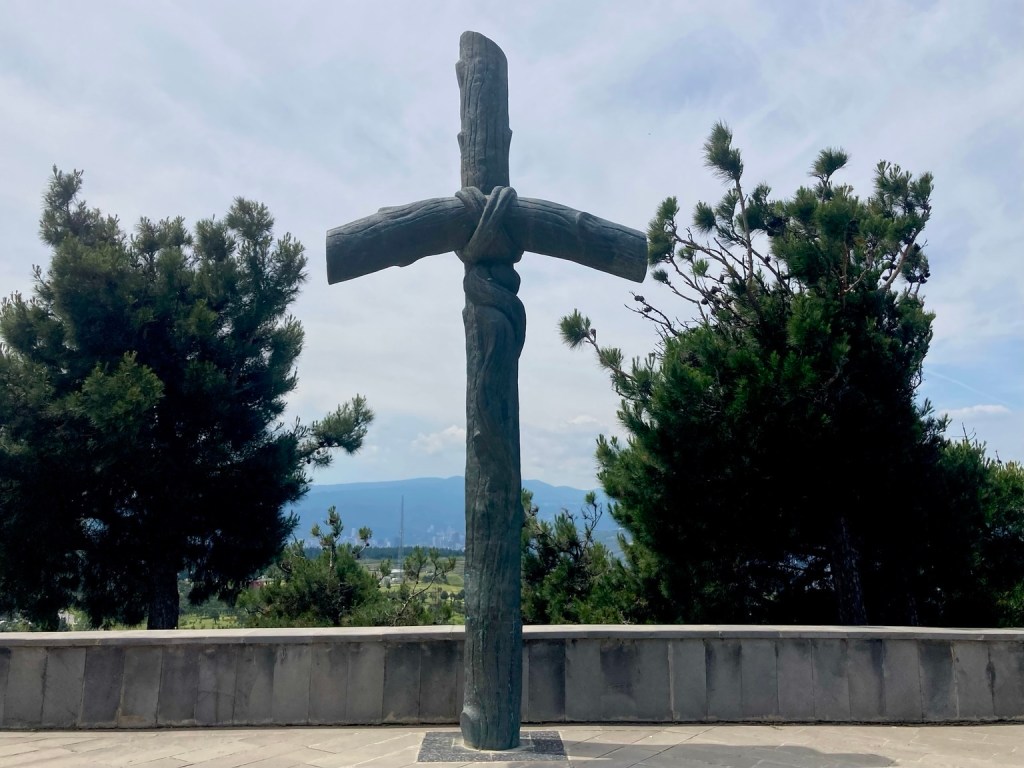
Finally, there was a Grapevine Cross of Saint Nino with its trademark drooping arms, originally crafted from twisted grape vines fastened together with strands of Nino’s own hair.
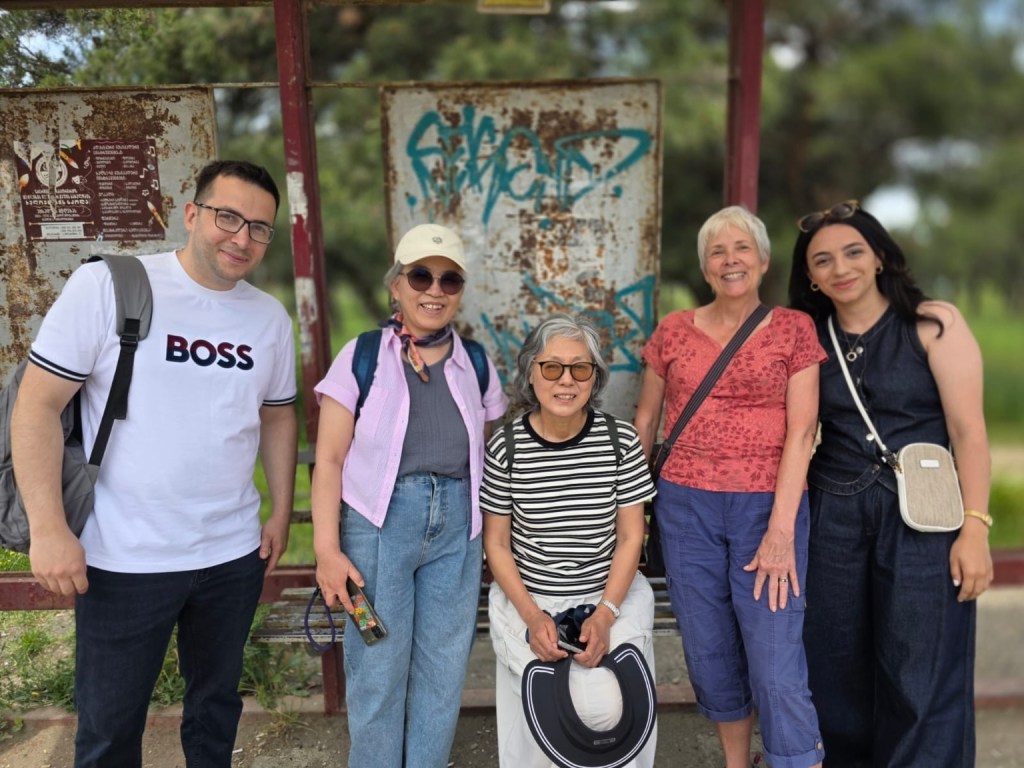
Having arrived by cab which took 30mins, we decided to return by public transport especially since it also gives us the opportunity to use the metro! But first the bus and we found ourselves waiting in a line with the same couple of Korean ladies who we’d chatted to in front of Pirosmani’s giraffe and then the whole queue got chatting!
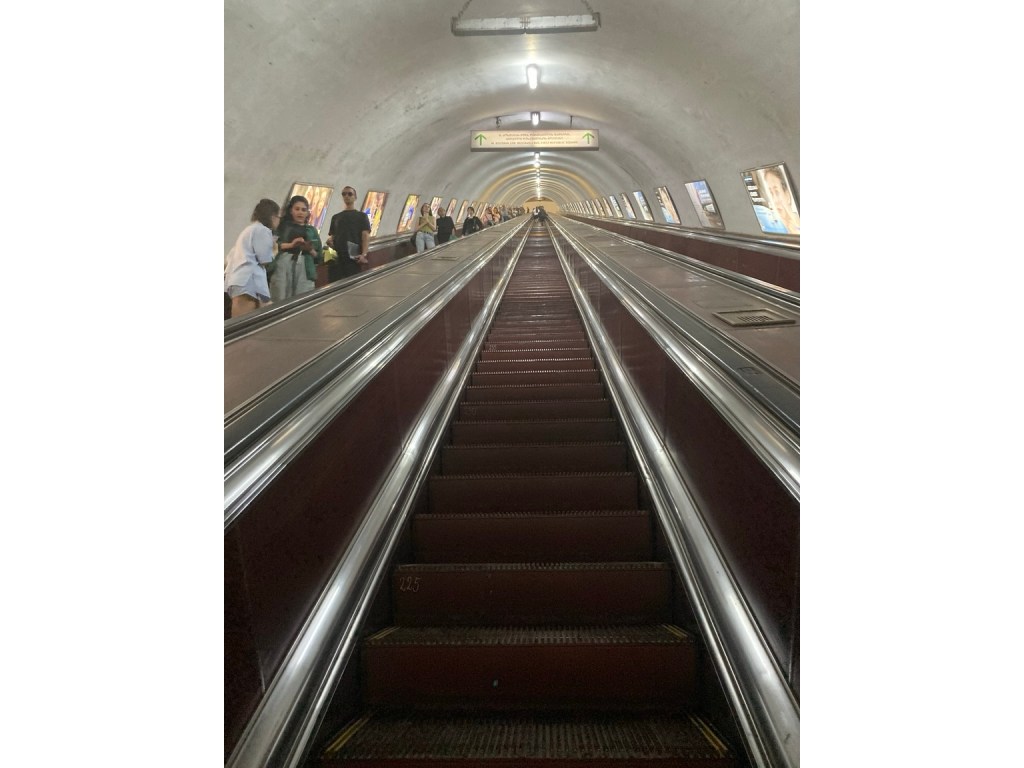
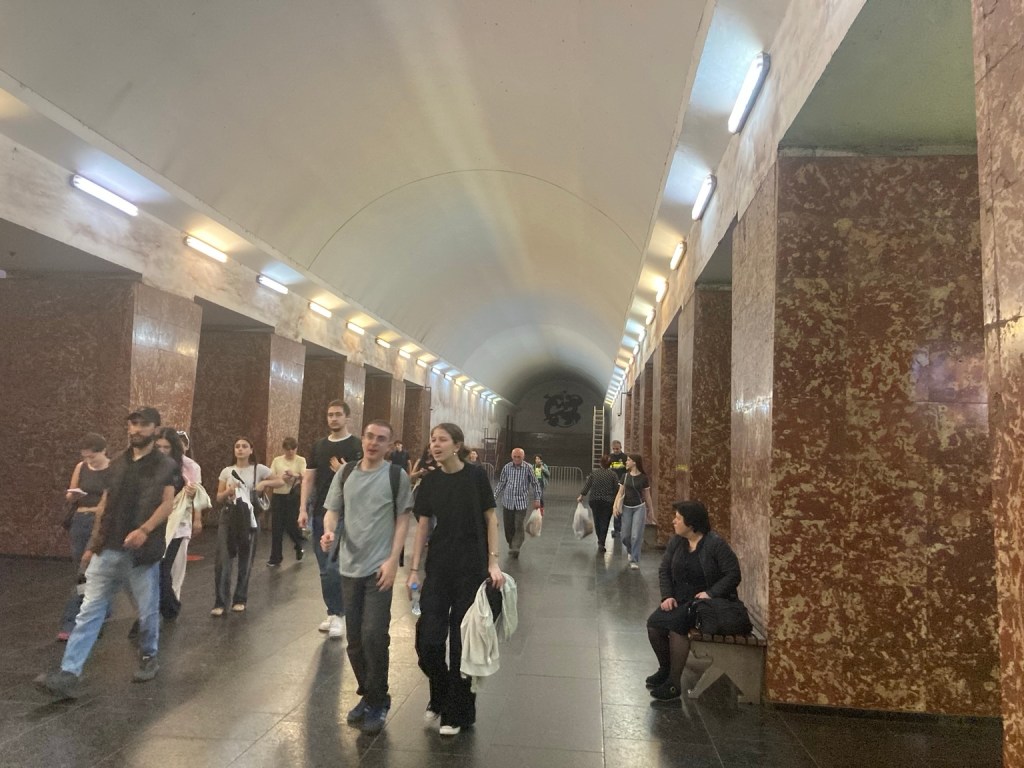
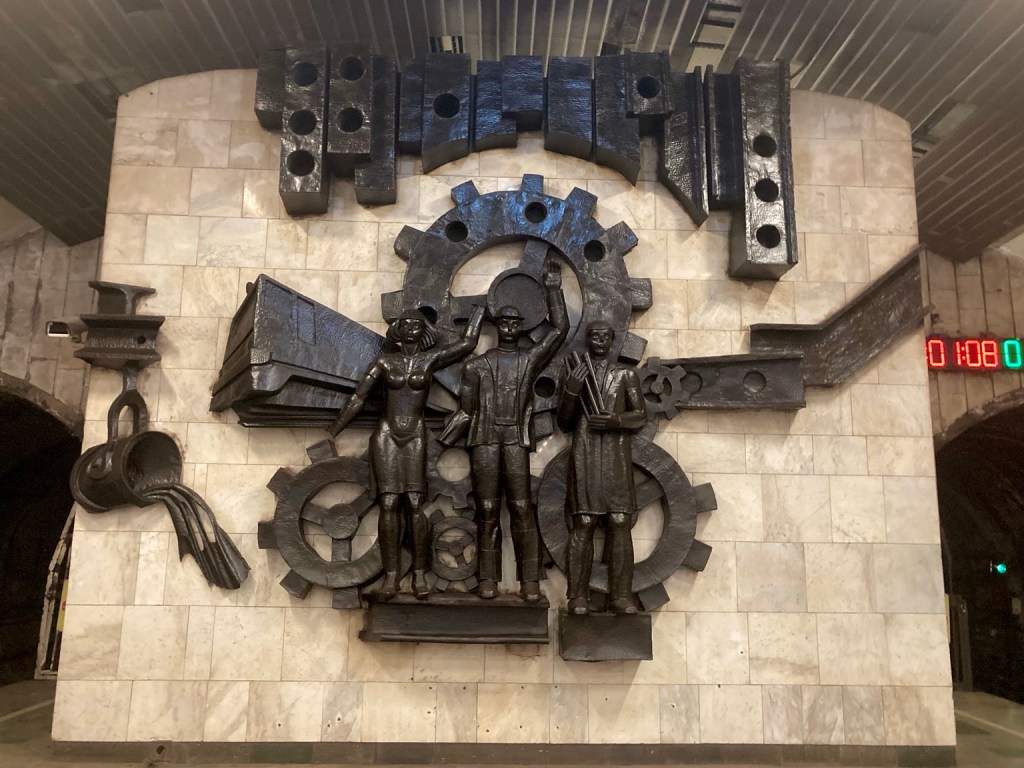
Next up the metro which opened in 1966, with heavily engineered deep-level tunnels that could also act as fallout shelters.
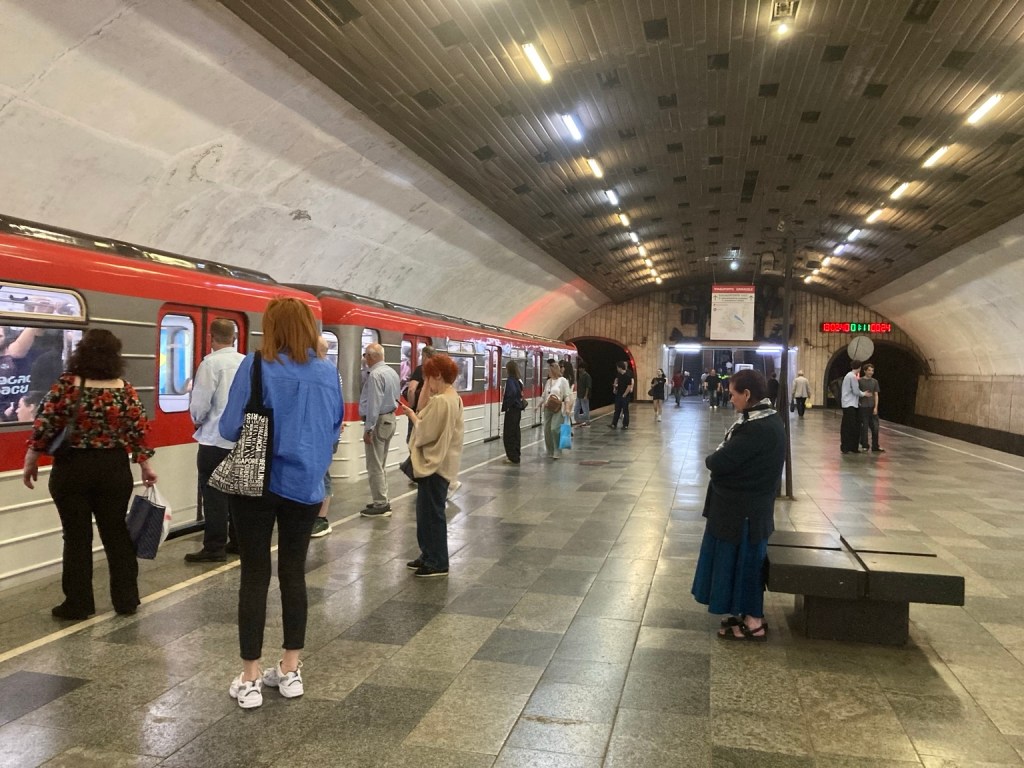
We were expecting a little more Soviet style decoration, but then we only visited two stations.
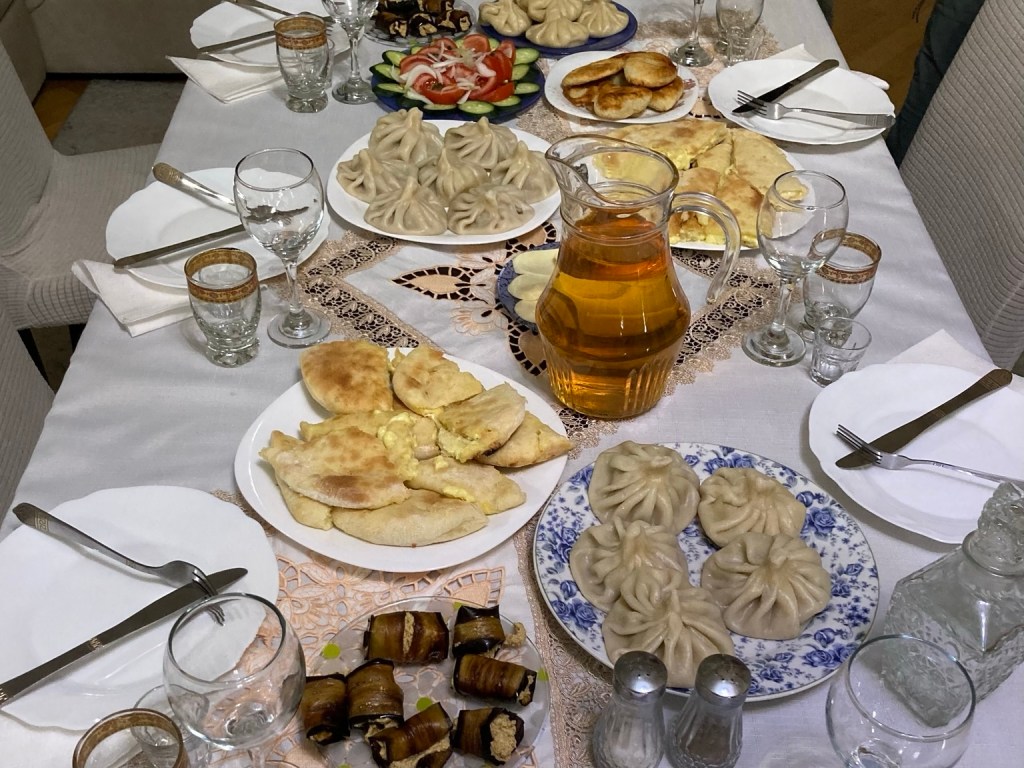
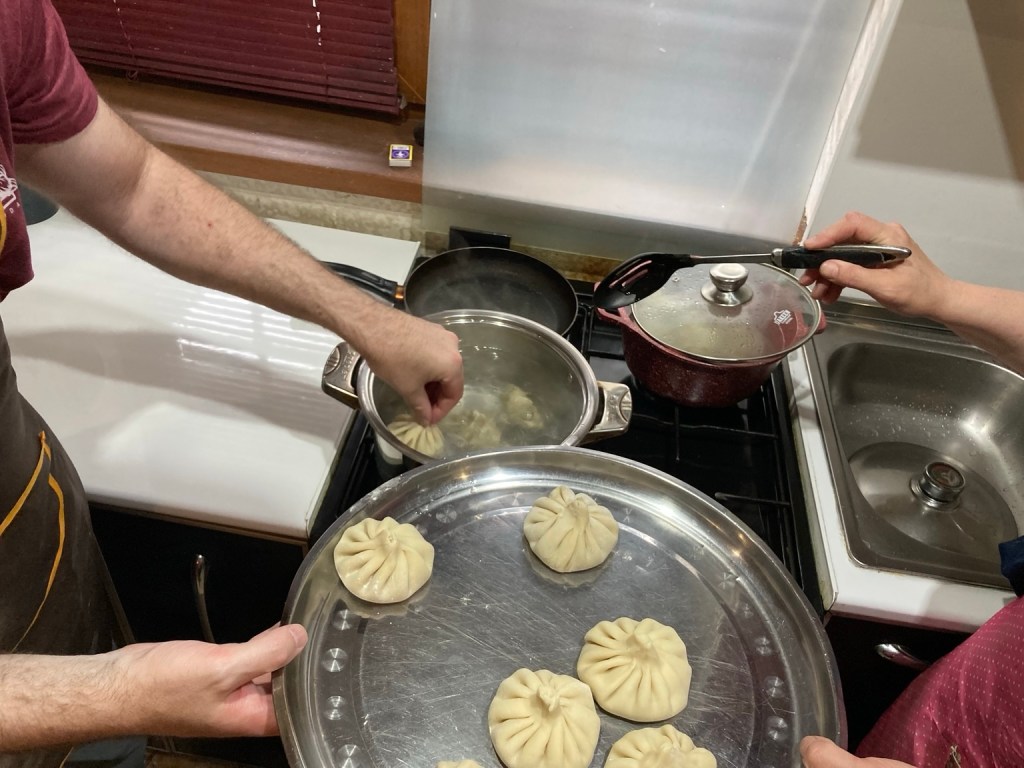
We couldn’t come to Georgia and eat khinkali and khachapuri without learning how to cook them so after a little downtime, we were off to a cooking class. We were in a group of six with a NZ couple on a 3 year sabbatical in Europe and a couple who had been living all over including Costa Rica and working remotely, as well our guide who translated for us. I made khinkali with a seasoned beef and pork filling while Chris made potato ones, from discs of dough made from flour and water. They were then pleated to enclose the filling and cooked in boiling water and Chris was delighted to achieve the gold standard of 19 pleats!
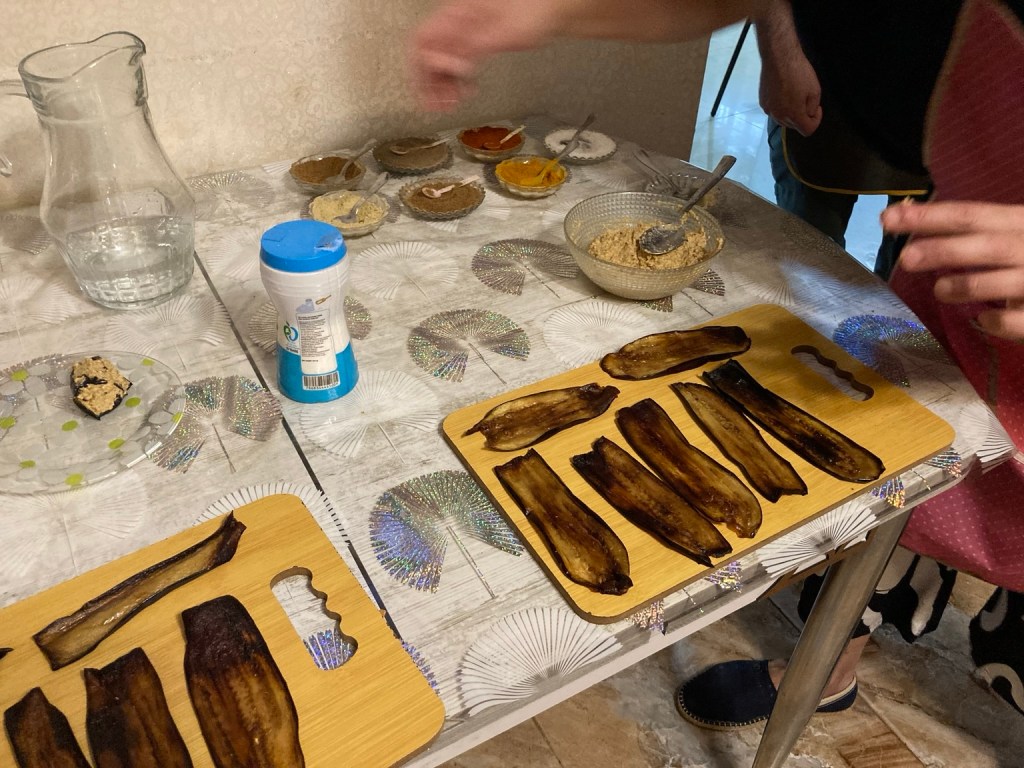
The khachapuri were Imeretian style, from discs of yeast dough stretched into a circle, topped with local cheese, which was then enclosed like an Eccles cake and turned over onto a tin for baking. Finally, we made eggplant rolls filled with walnut paste.
Our guide told us about the Georgian supra, a traditional feast that marks joyful and solemn occasions, where the table is laden with food and all are welcome.
We all sat down for dinner together and our guide began by telling us that traditional meat khinkali must be held by the knob with the filling upwards, then bites taken so none of the cooking juices are lost, before eating the knob last! They were delicious, peppery and well seasoned and I hate to say it, far better than the veggie ones!
Every supra is guided by a tamada or toastmaster, chosen for his eloquence, wit and ability to hold his alcohol – essential due to the tradition of consuming a whole glass of wine for each toast! We had homemade wine with our meal and took turns raising a toast Georgian style, ending with Gaumarjos or cheers! We really enjoyed our evening chatting with our group as we ate and finally there was homemade cha cha, Georgian brandy, often several times distilled and strong so one small glass was plenty!
 Off Travelling Together