With a 5 hour flight and 3 hour time difference, we arrived at our apartment in Tbilisi after dark which is always disconcerting, then went straight out to dinner before heading to bed after a long day.
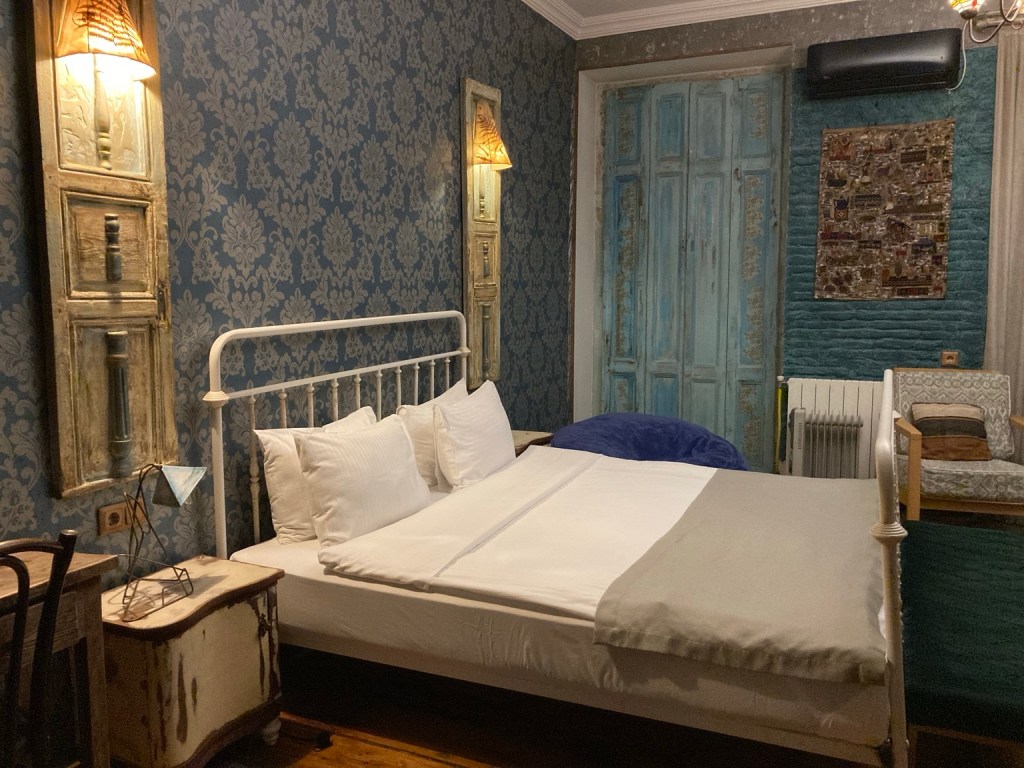
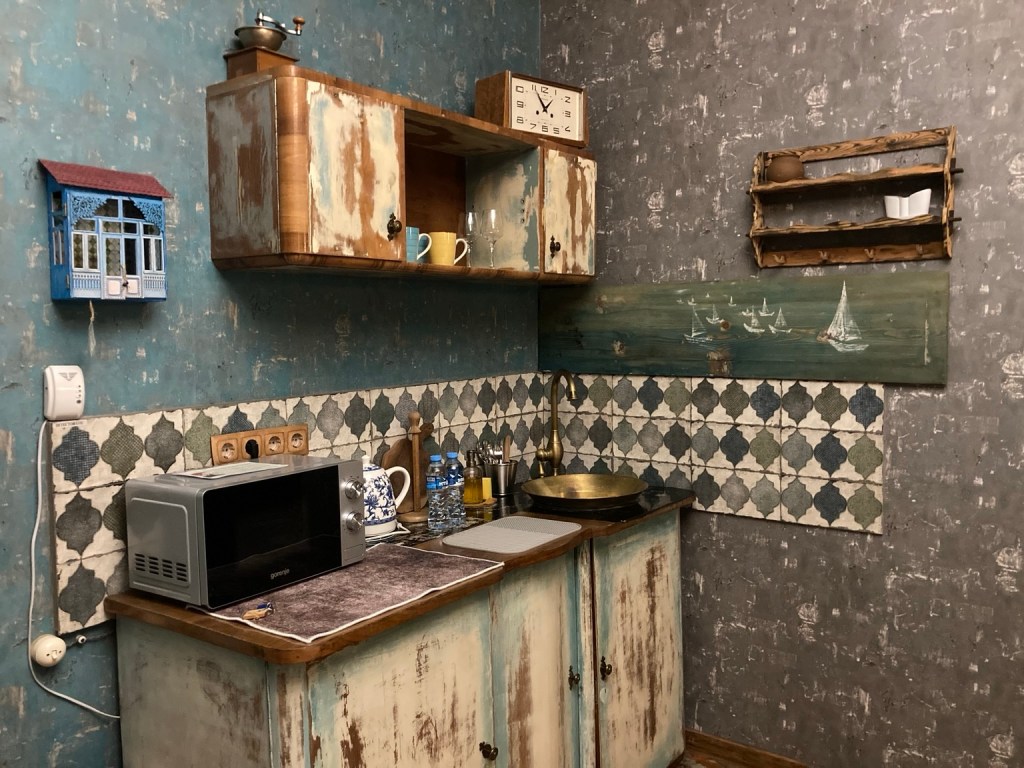
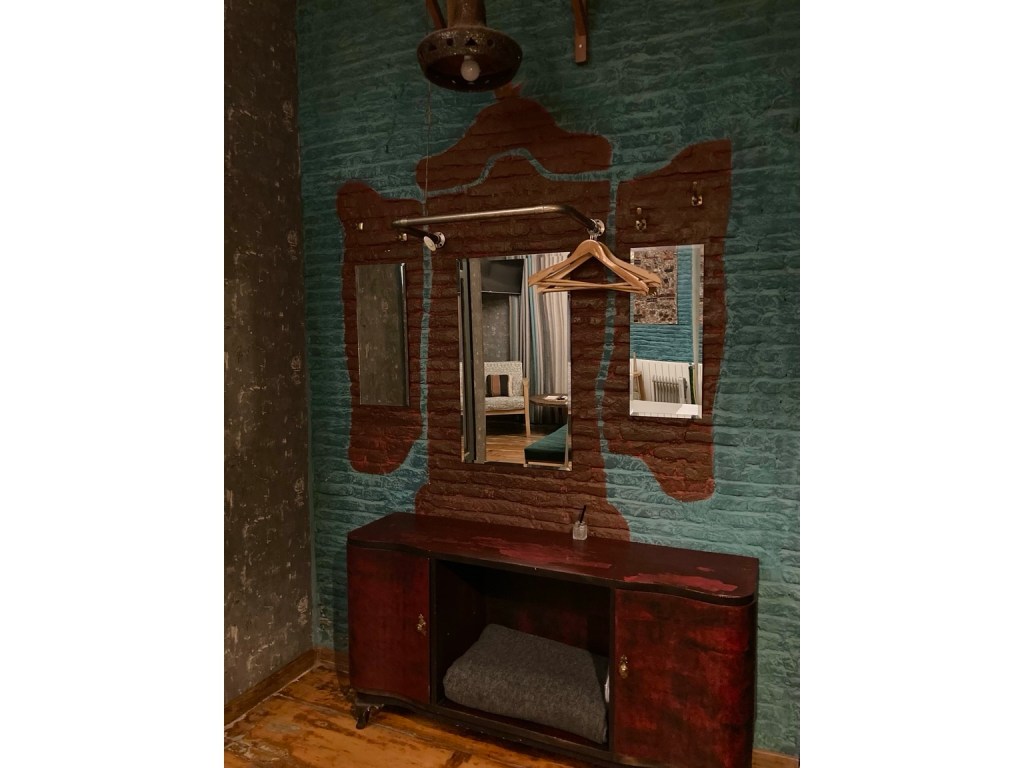
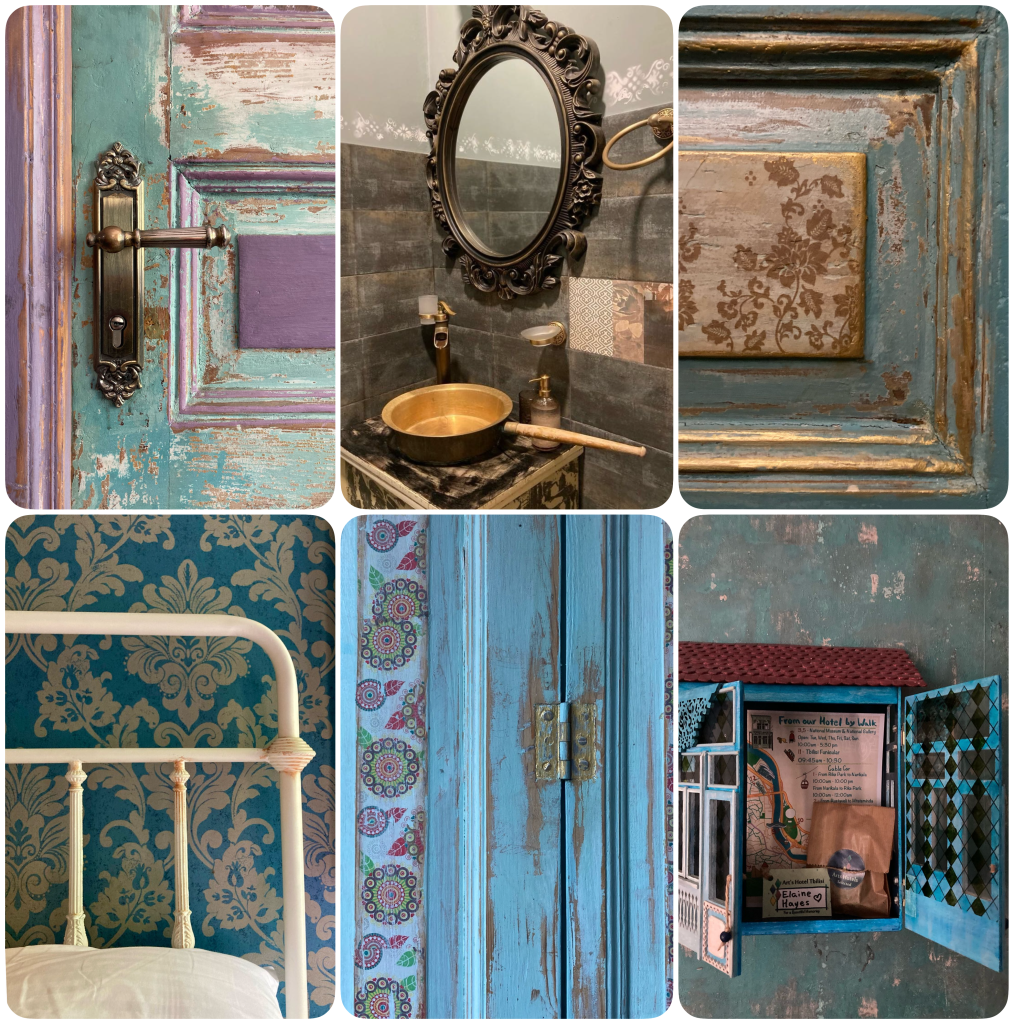
We are staying at The Arts Hotel in the Sololaki District, a C19th house which has been thoughtfully renovated into vintage style apartments.
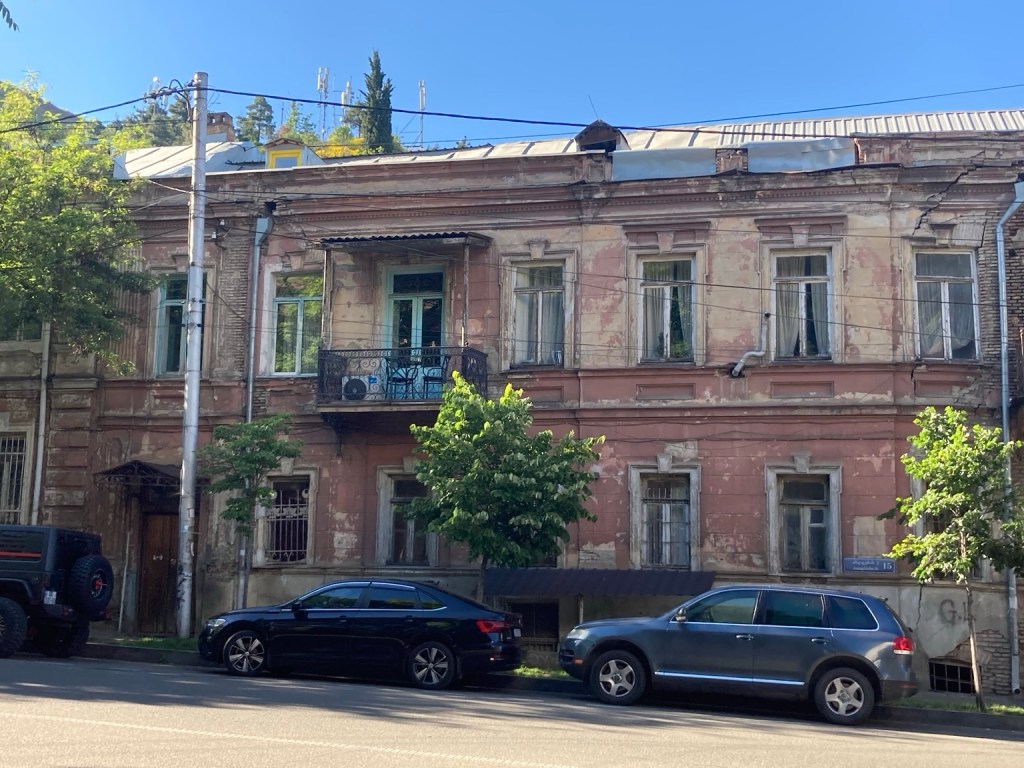
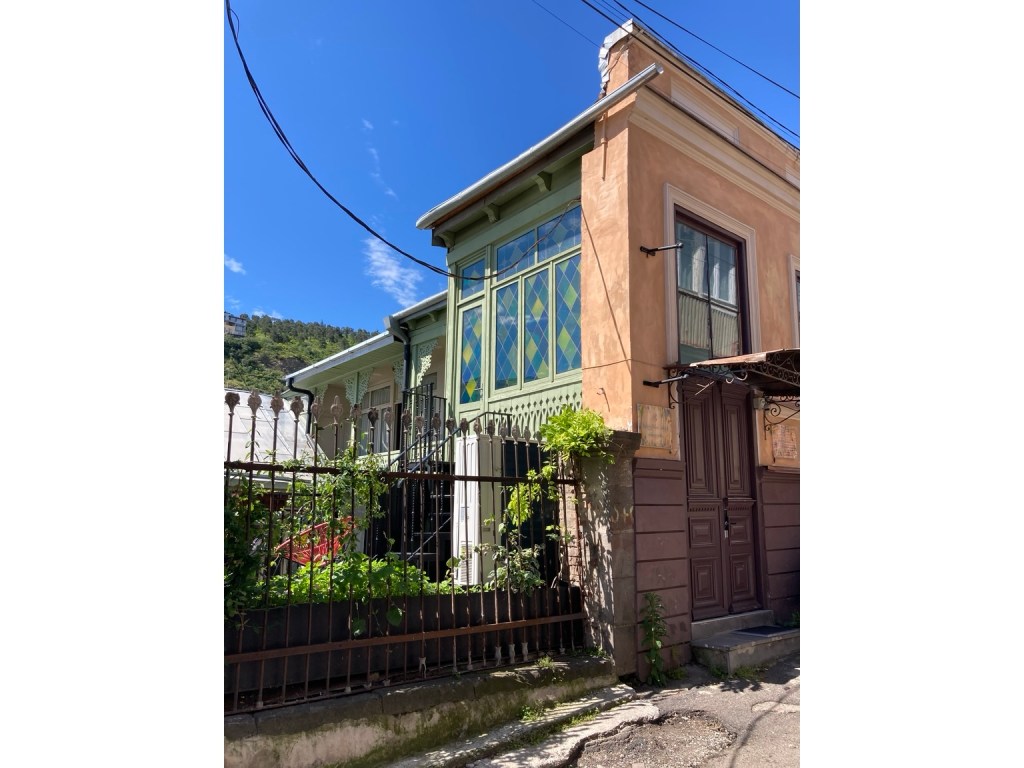
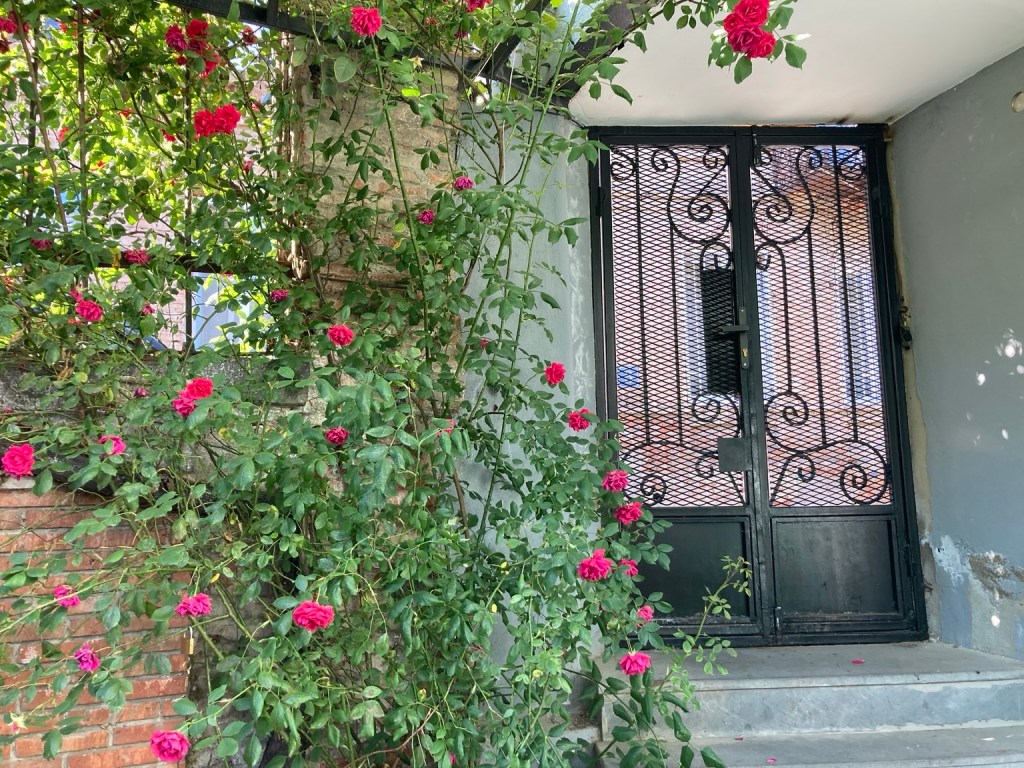
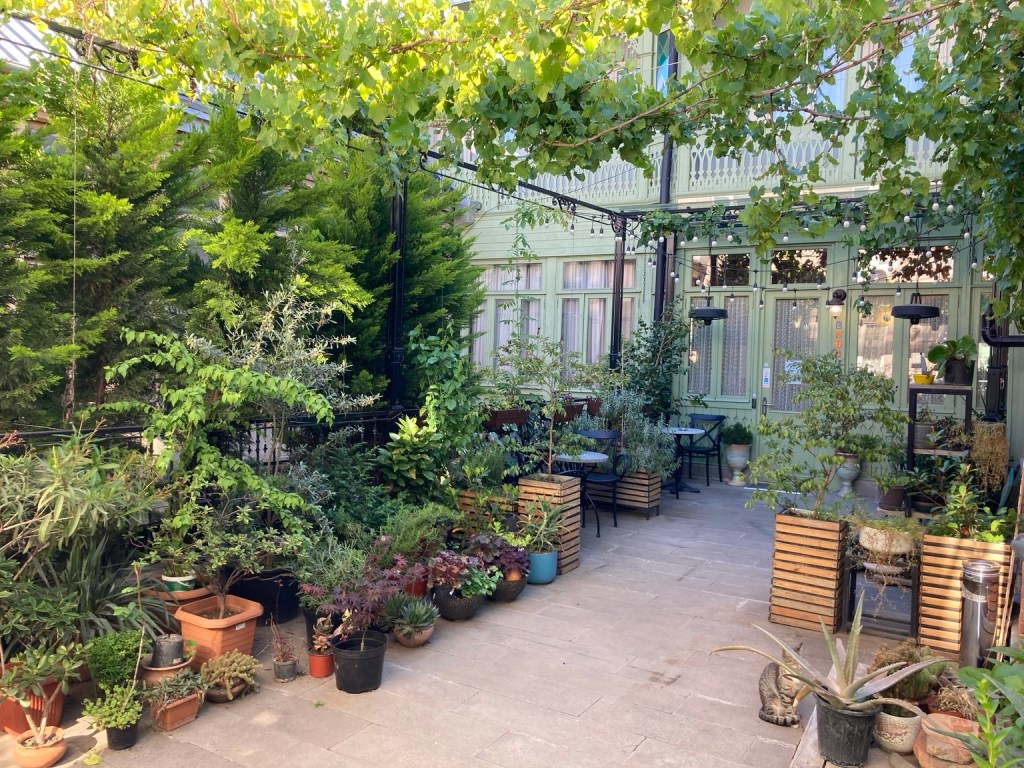
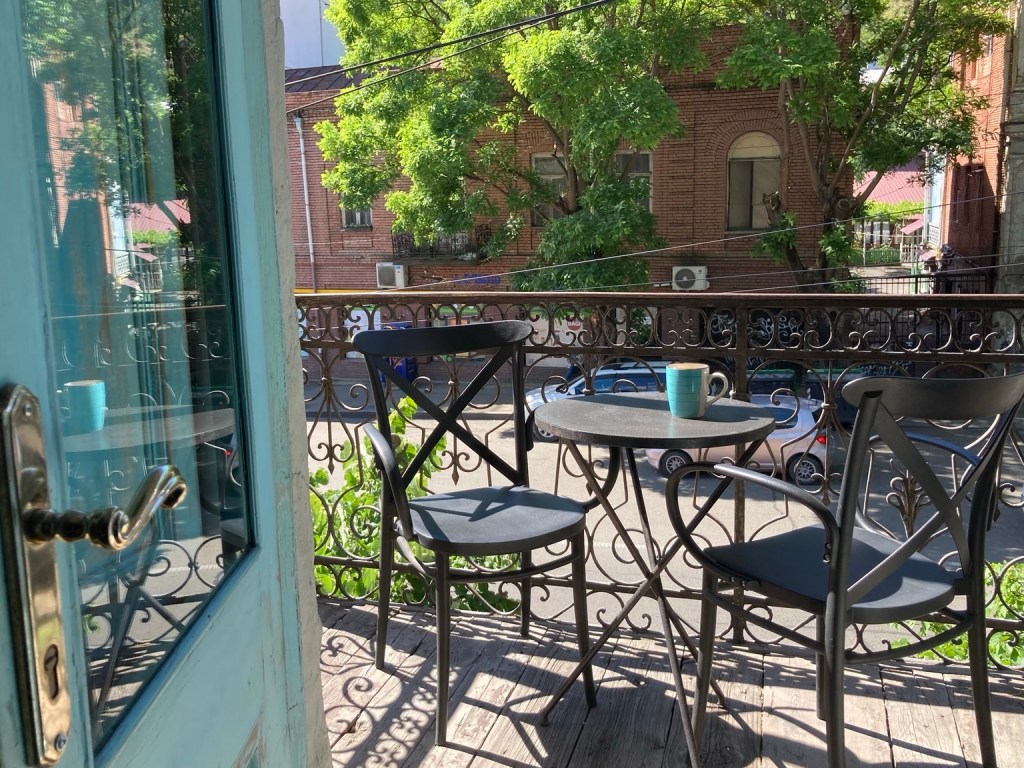
Sololaki is one of the oldest and most atmospheric residential neighborhoods in the city, famous for its steep, cobblestone streets and stunning, faded architecture. It was once the affluent enclave of Tbilisi’s wealthiest merchants, and peeling walls and faded entrance hall paintings are part of the district’s bohemian charm.
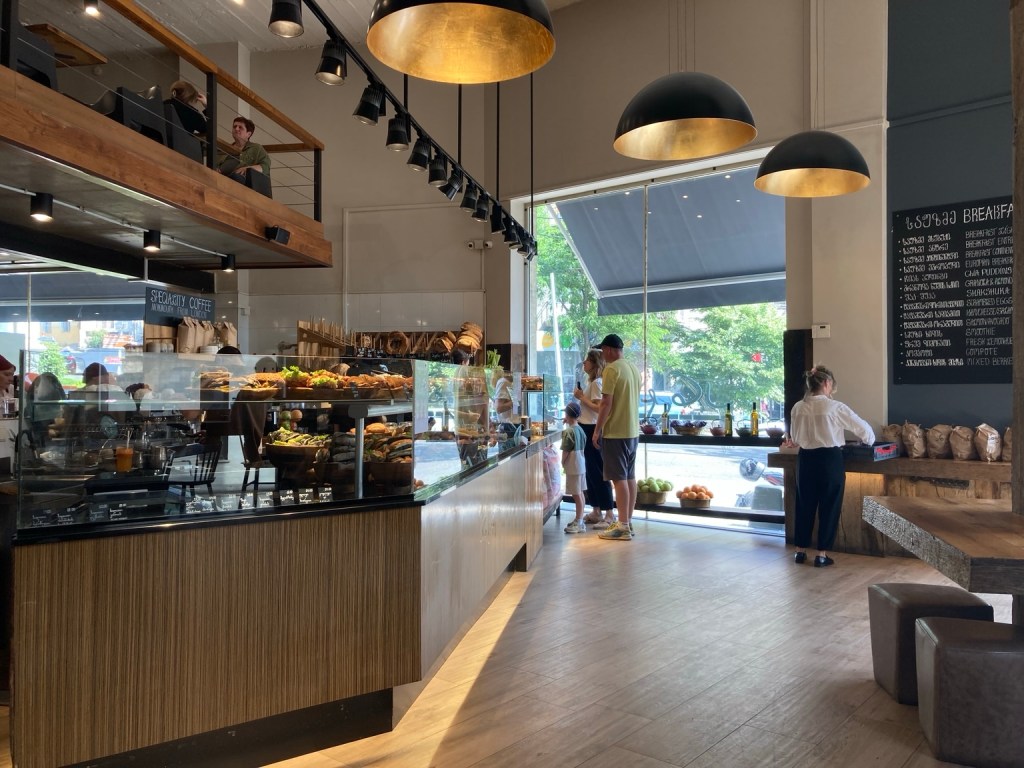
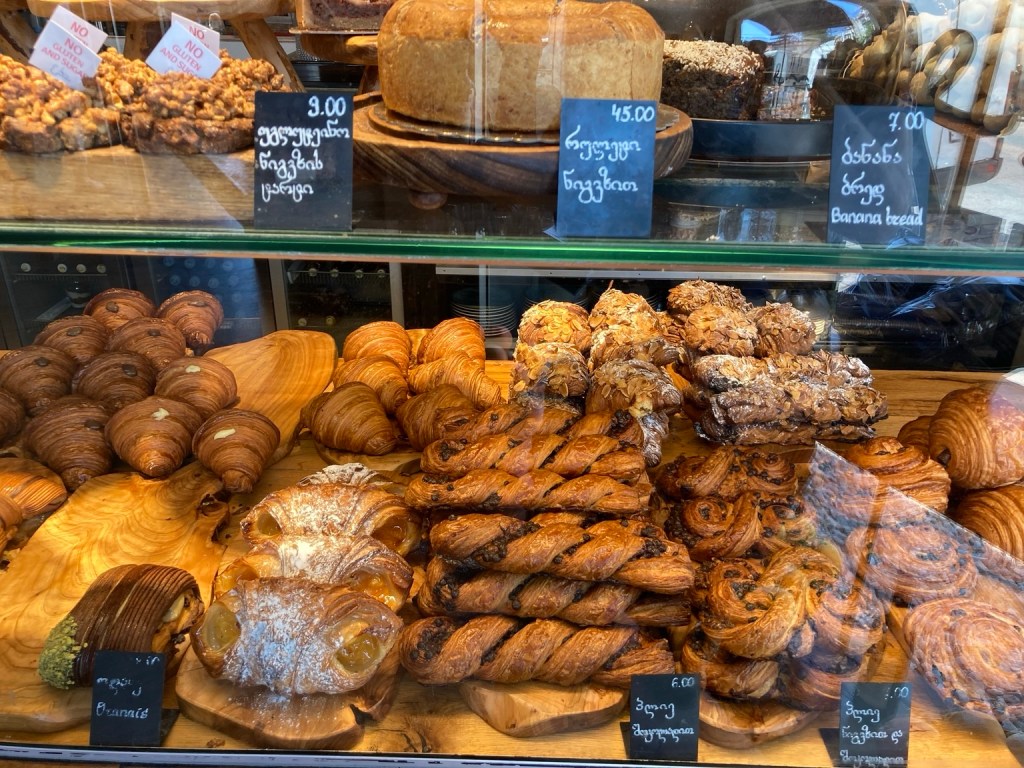
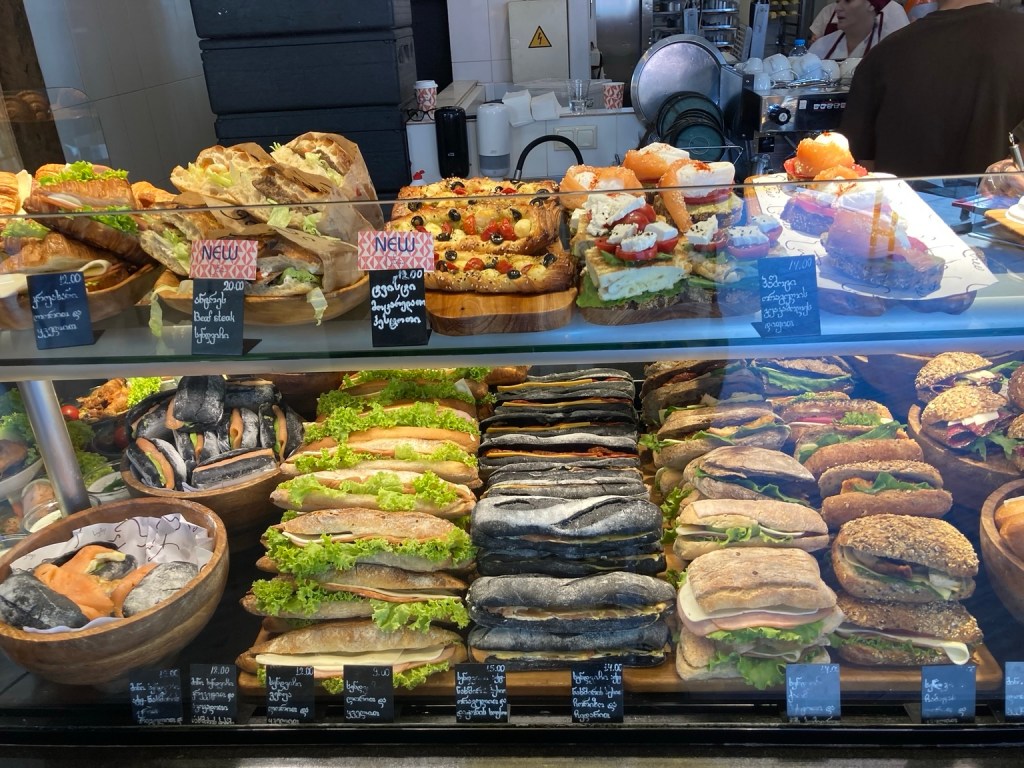
Apparently traditionally breakfast isn’t a thing here, but modern style European bakers have become popular in the city and we have one just across the road called Entreé filled with treats and serving great coffee.
Today is Sunday, and as we walked to the city centre, we were looking out for a church.
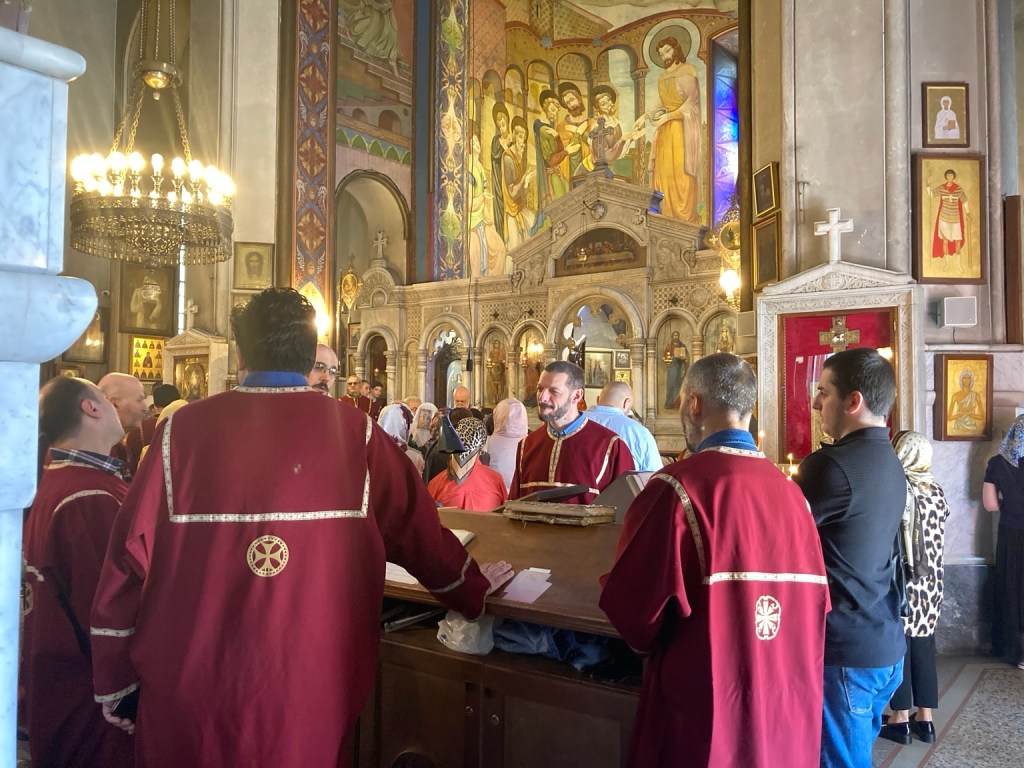
There is an ancient tradition of polyphonic singing in Georgia that goes back to antiquity and is part of every day life – in the home, in the fields, and at celebrations with songs passed down in each community. Sunday morning is the best time to experience the three-part a cappella polyphonic singing that the Georgian Orthodox church is renowned for, sung by a small choir of men as part of the liturgy. It seemed quite normal for members of the congregation to come and go during the service, so it was easy to slip in and stand at the back and listen and I took a discreet photo.
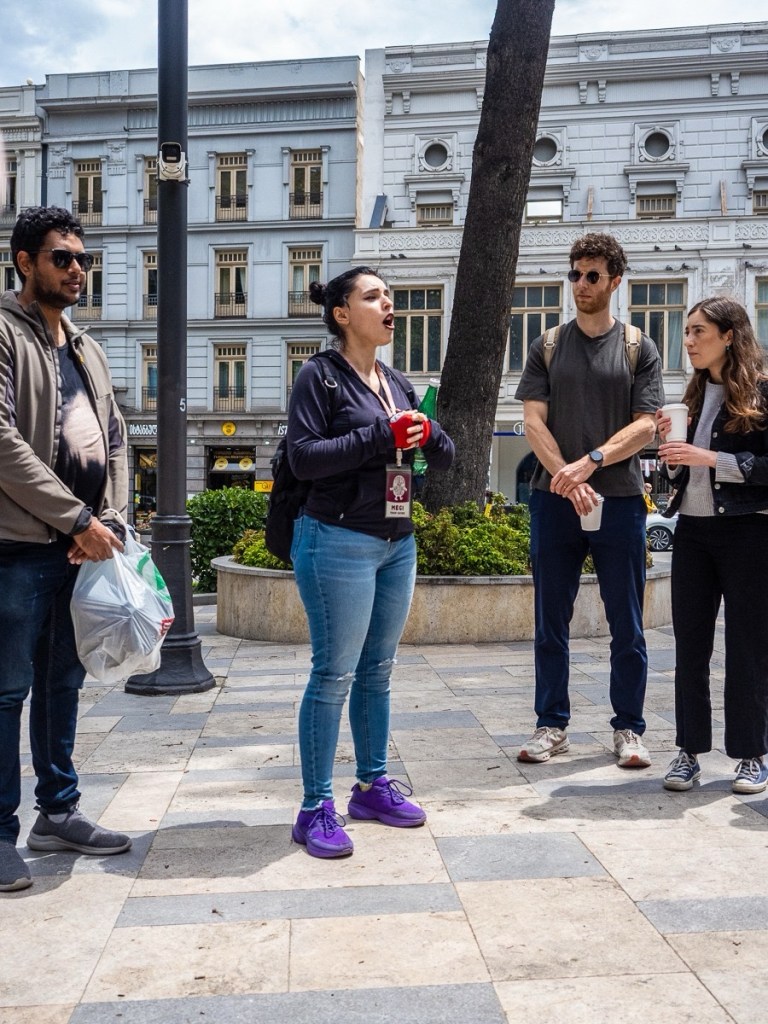
After our long day yesterday, joining a walking tour seemed a good idea so we headed to meet our guide in Pushkin Park and she took a group of us on a gentle stroll through the city for a couple of hours, introducing us to Georgia and Tbilisi.
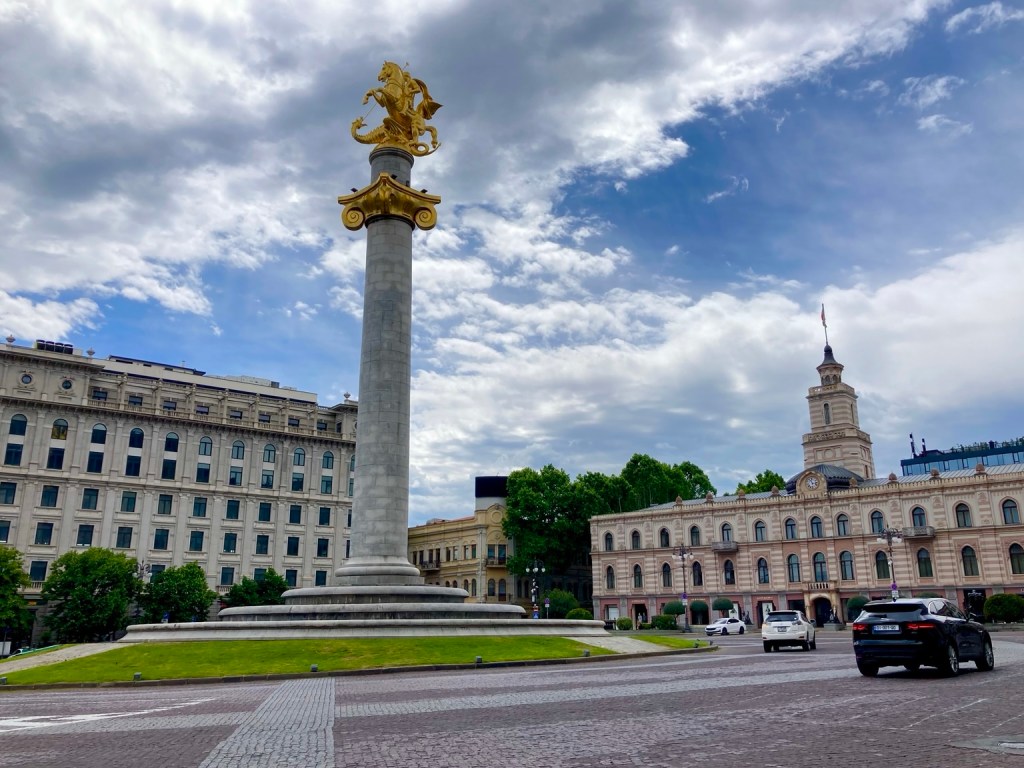
We began at Freedom Square where a column topped by a golden St. George stands amidst the busy traffic.
He might be the patron saint, but he is not the reason Georgia has its name. Far more likely it came from Gurjistan or land of the wolves as the Persians called it, although the Greek word Georgos meaning farmer is also a contender! In any case, Georgians don’t use this name at all, they refer to their own country as Sakartvelo which means “land of the Kartvelians” after the Kartli who united the country in the Middle Ages.
Anyway, back to the square which was first called Freedom Square in 1917 after the Russian Revolution, being renamed for Lenin and Stalin during Soviet times and then Freedom Square once more in 1991 following the collapse of the Soviet Union with St George being unveiled in 2006.
From here, we followed the line of the old city walls, foundations of which were recently rediscovered and preserved.
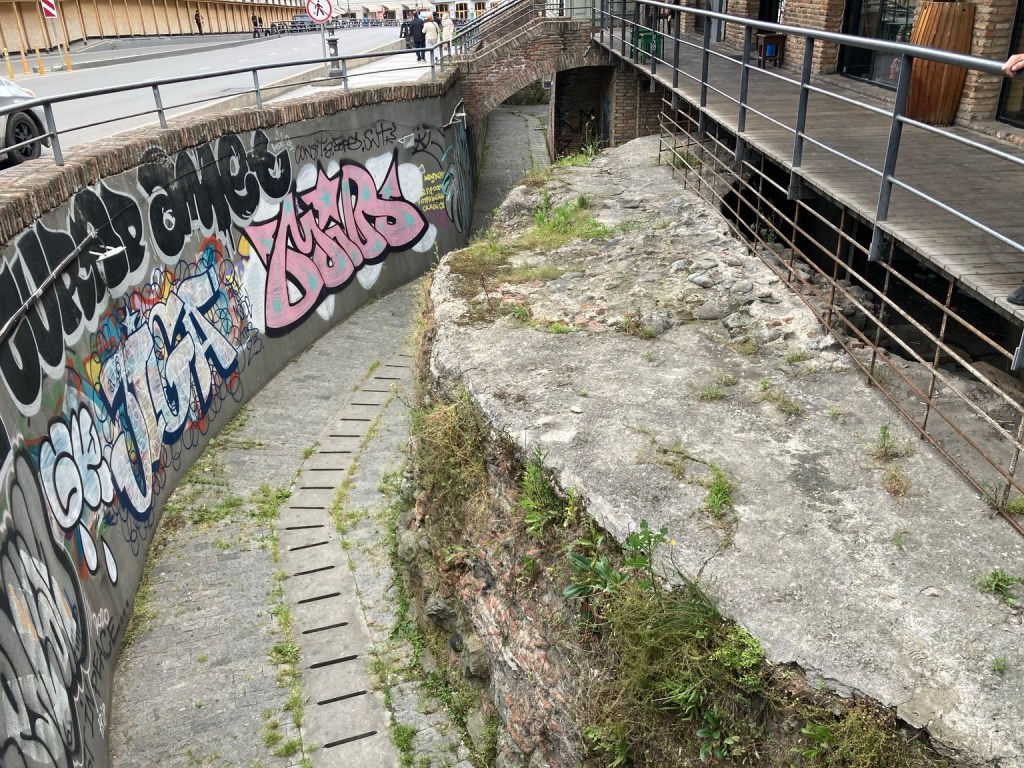
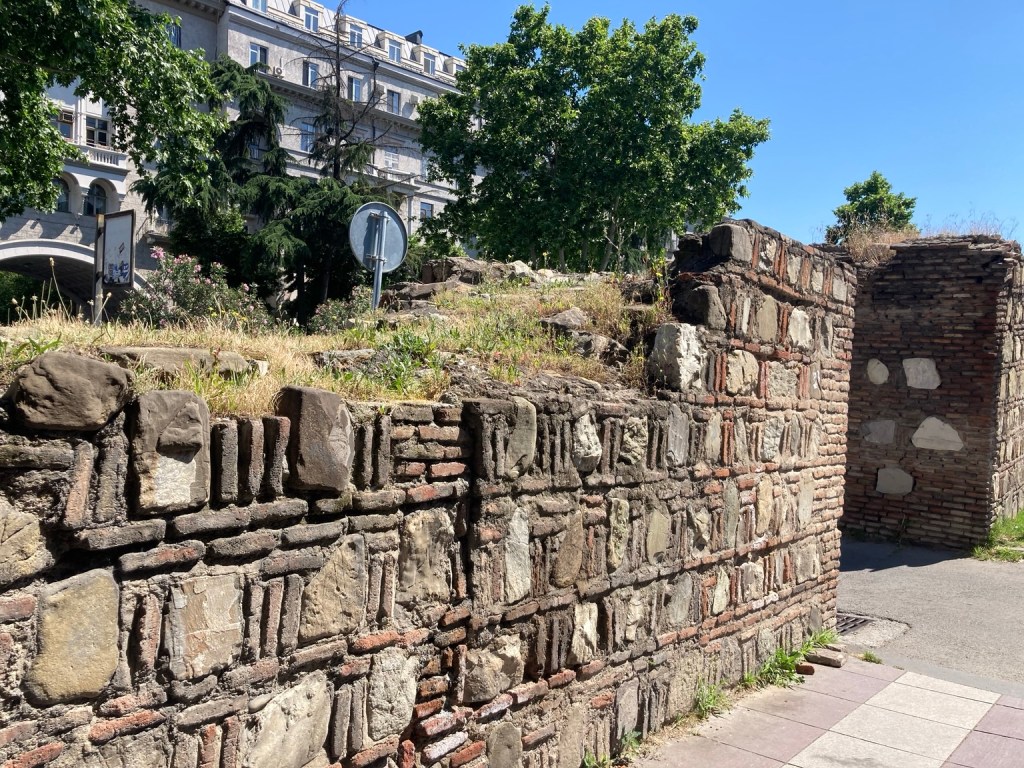
Tbilisi became the Georgian capital in the C5th and its strategic location on the Silk Road, has meant it has faced dozens of attacks, sieges, and sackings over its 1,500-year history from Arab, Persian, Mongol, Russian and Soviet forces.
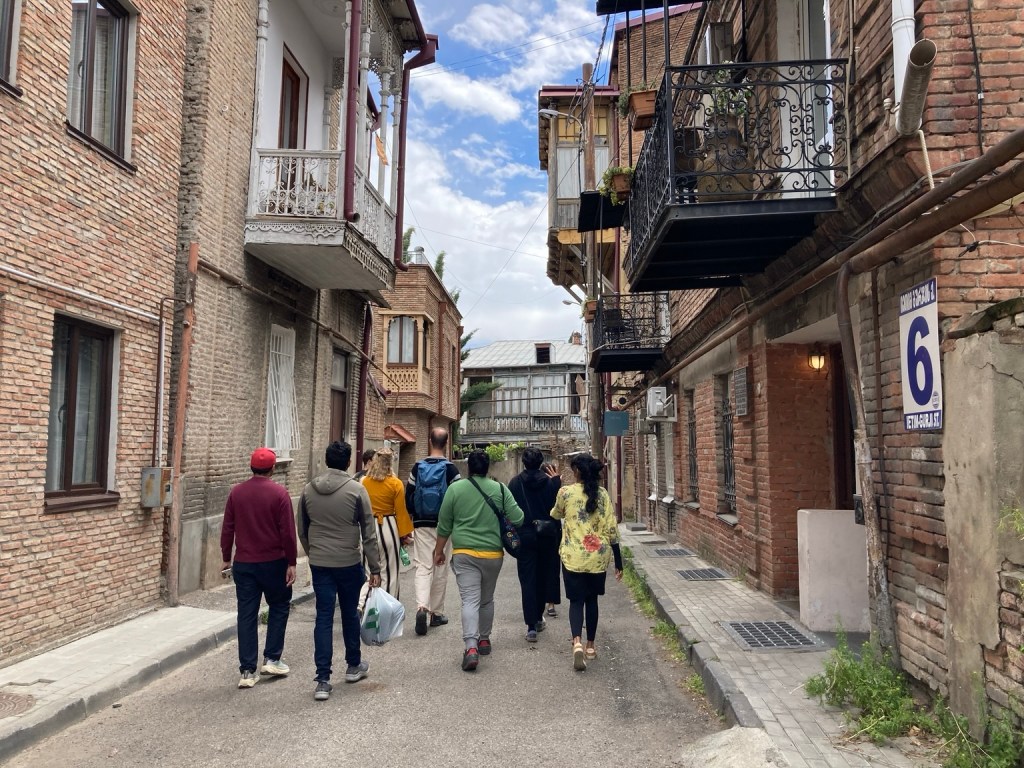
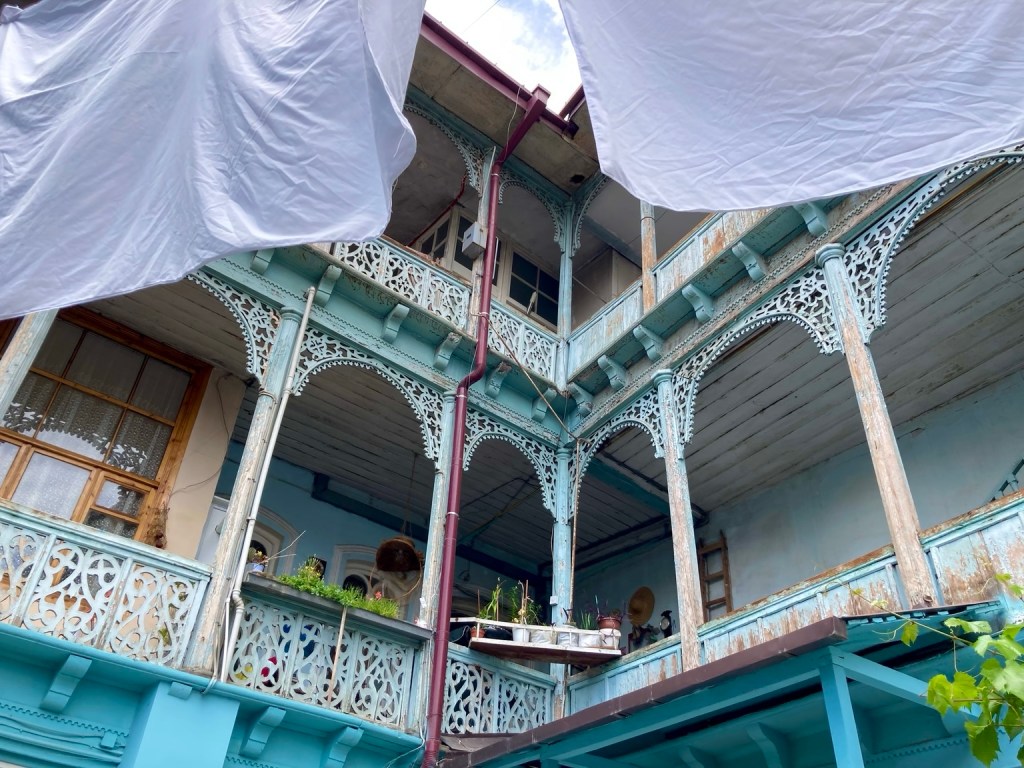
We will see a number of early buildings in the city which have miraculously survived, but most were built after the Persian invasion of 1795 destroyed much of the city. The old town is a maze of winding streets lined with traditional balcony houses with intricately carved, open wooden balconies and lace-like fretwork. Many are in dire need of renovation, but this adds to their charm and certainly their photographic appeal!
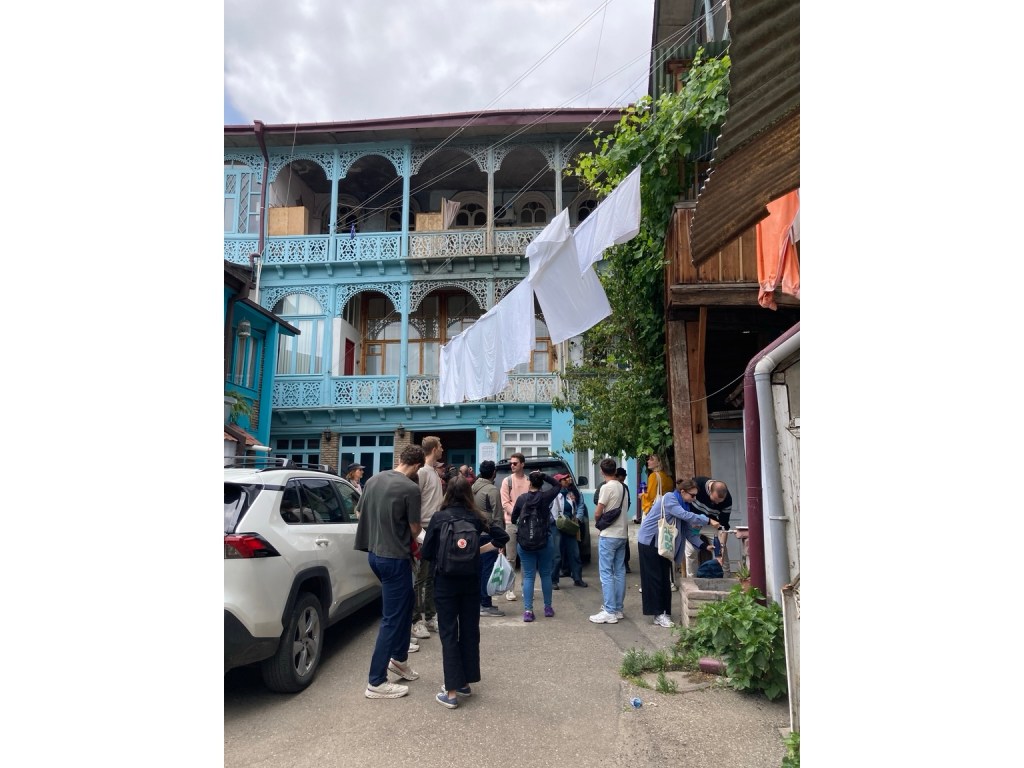
This blue house is one of the oldest, built for a wealthy business man, but then divided up in Soviet times to provide accommodation for many families. This was a common occurrence and introduced communal living around a shared courtyard or ezo which became typically Georgian.
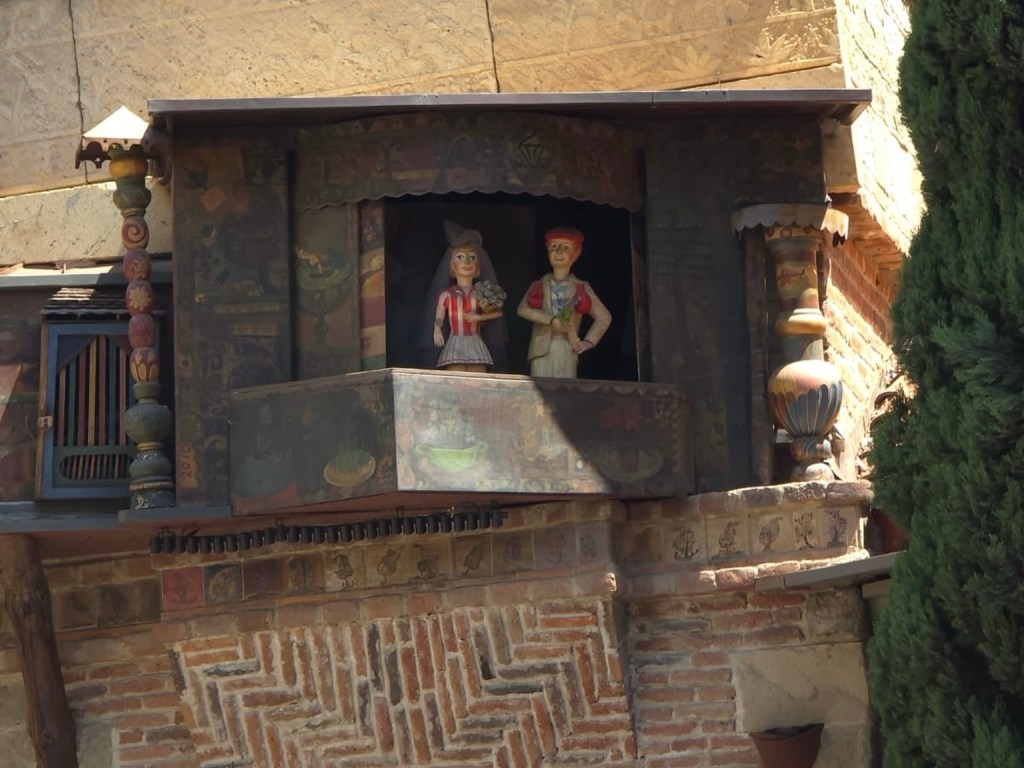
Heading to the centre, we came to the Gabriadze Clock Tower, a quirky landmark created by puppeteer Rezo Gabriadze deliberately on the wonk!
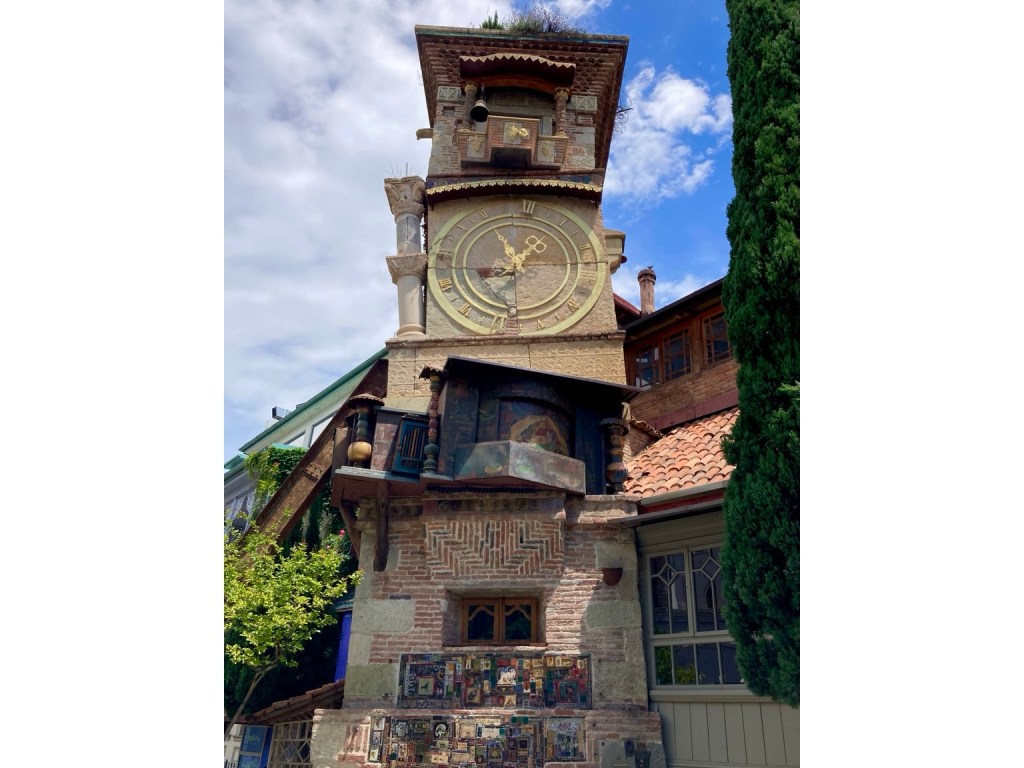
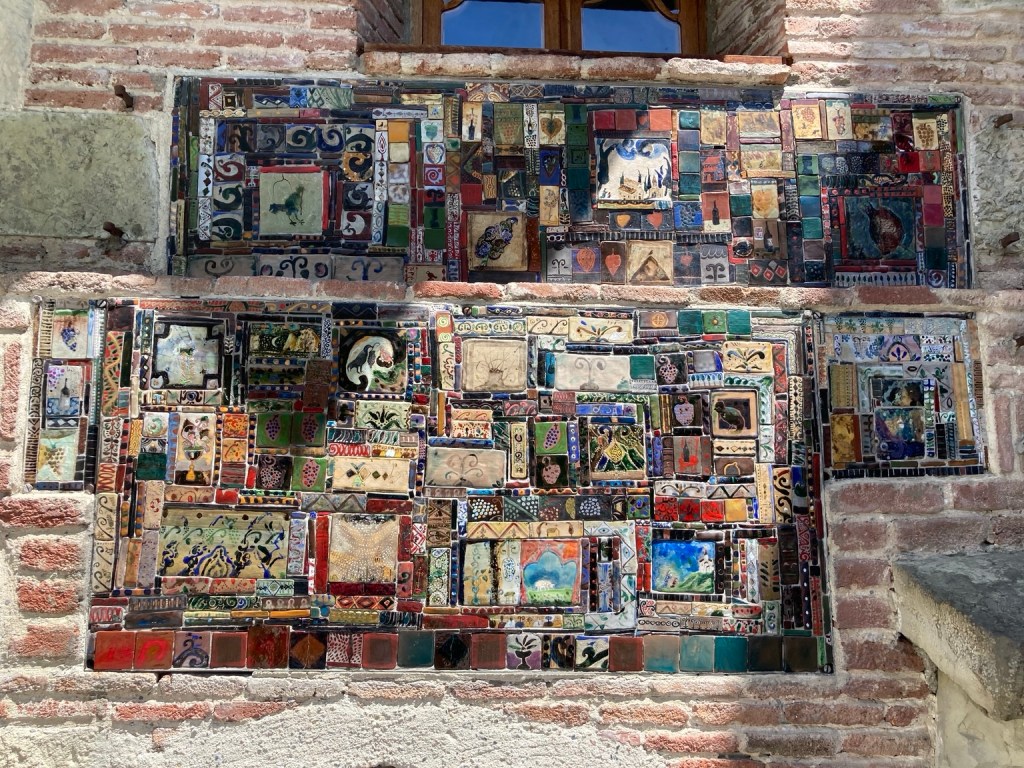
Handmade ceramic tiles decorate the outside …
… and a golden angel emerges to strikes the bell on the hour.
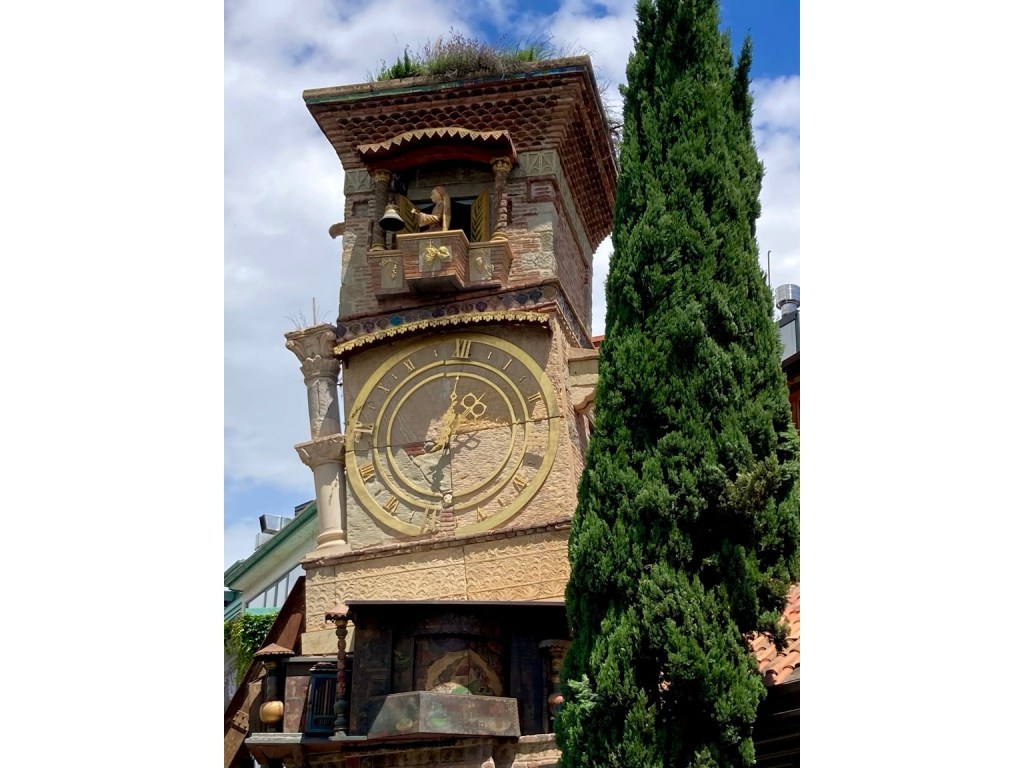
There is also a brief puppet display of the circle of life at midday.
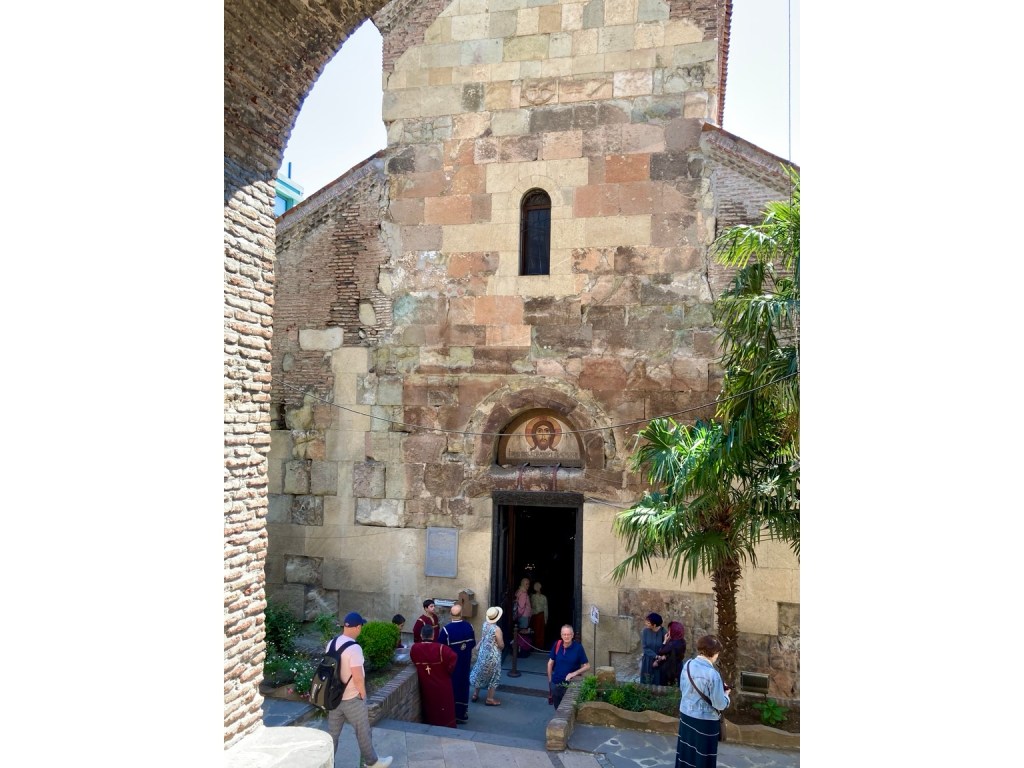
Now from the old to the new – the Anchiskhati Basilica of St Mary, is the oldest surviving church belonging to the Georgian Orthodox Church and dates from the C6th …
… and this is The Peace Bridge which sends a message of peace by morse code into space every hour.
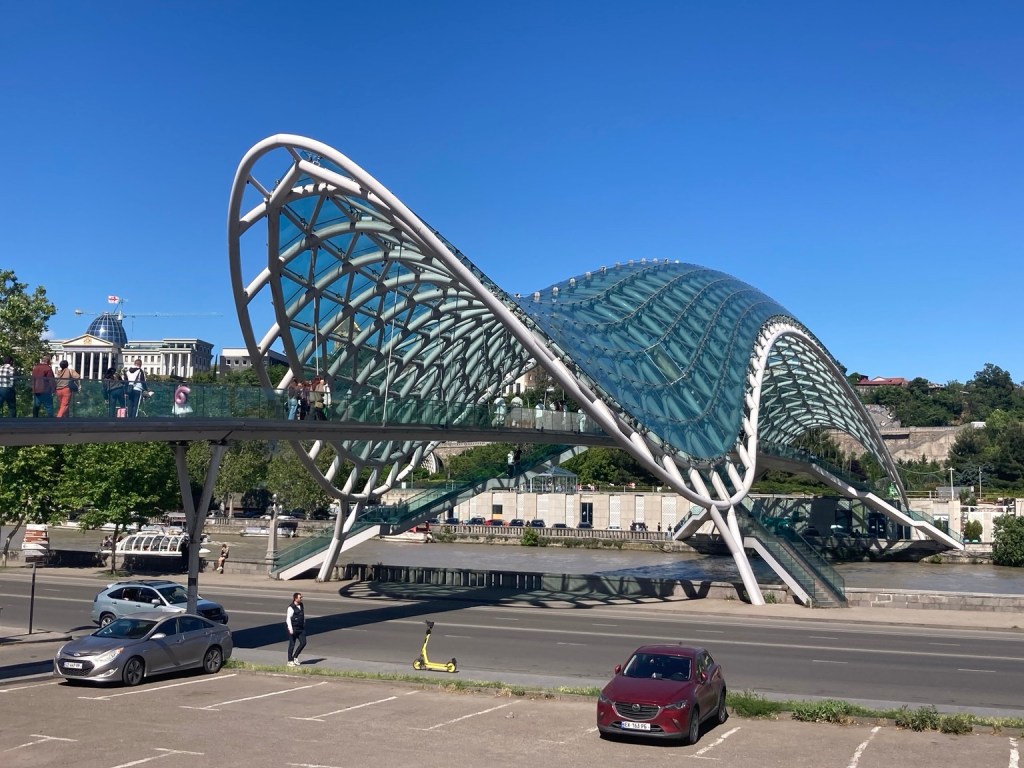
Following the Rose Revolution of 2008 which brought an end to the Soviet-era government in Georgia. there was a new policy of transparency. This was promoted by a public building programme favouring glass buildings which include both the bridge and the Ceremonial Palace of Georgia with its iconic curved glass cupola seen behind.
We continued through the old town finally ending up at the Meidan, once the site of Tbilisi’s bustling main bazaar, but now a busy junction.
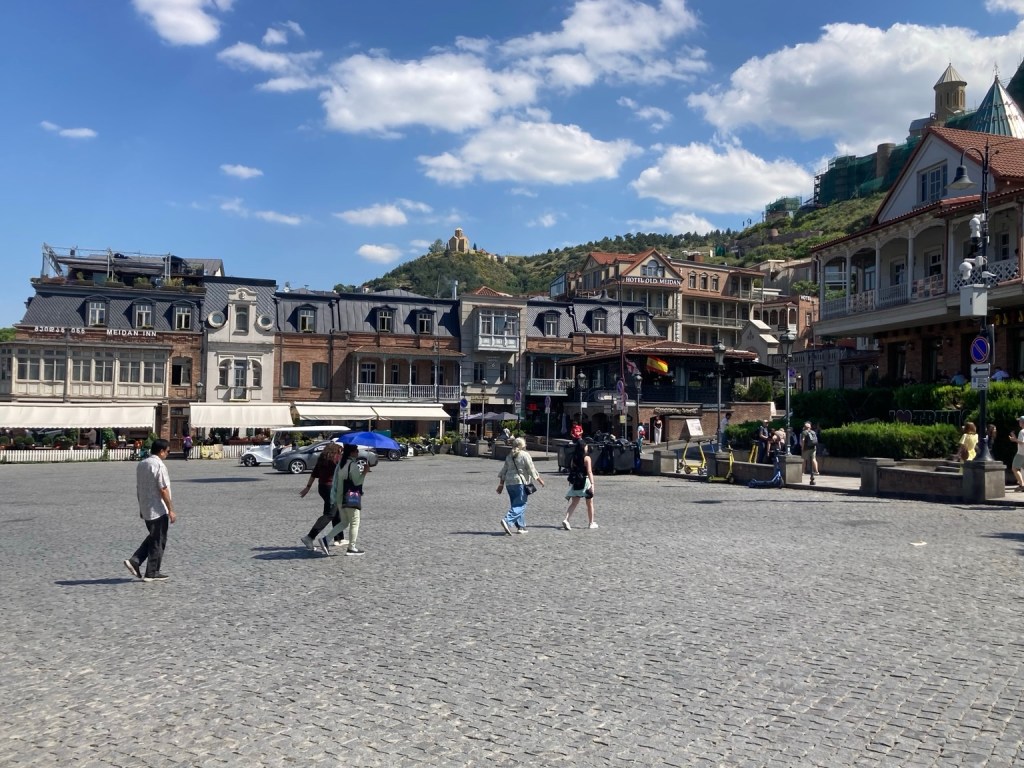
From here we could just see the Narikala Fortress which is closed for restoration and probably looks quite striking without its scaffolding.
Here we met King Vakhtang I Gorgasali of Iberia who founded Tbilisi in the C5th, nicknamed High Five King by the guide.
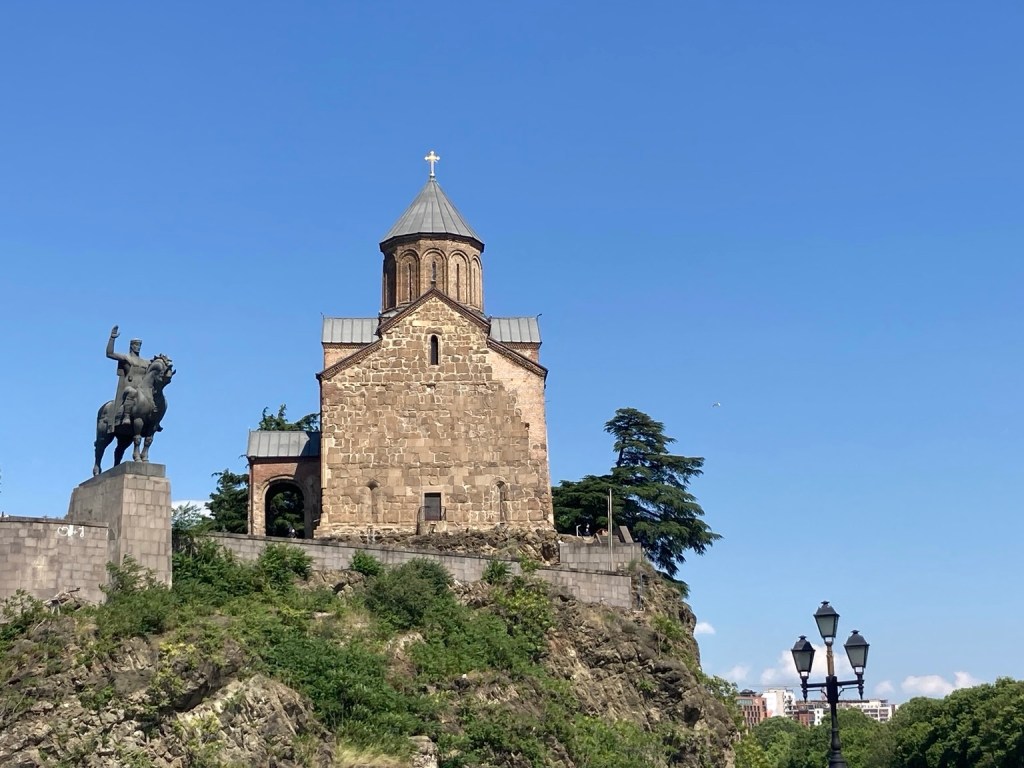
According to local legend, while he was hunting, his falcon caught a pheasant, and both birds fell into a hidden hot spring and died. Impressed by the naturally warm and healing waters, the king decided to clear the forest and build Tbilisi, named for the warm waters found here.
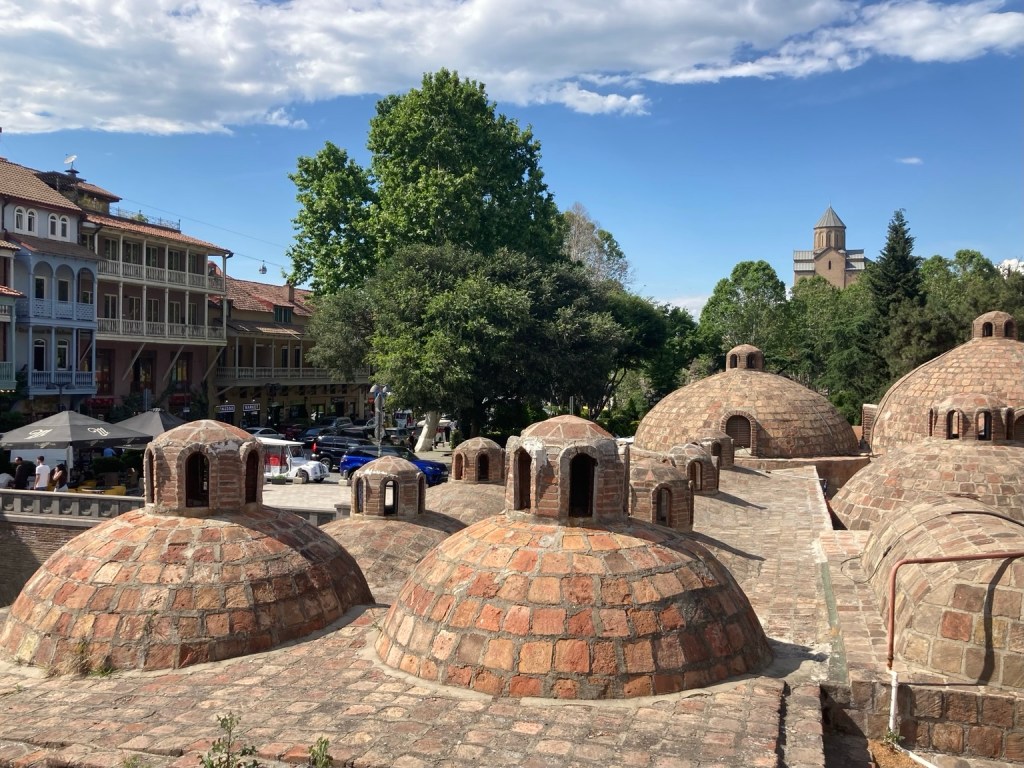
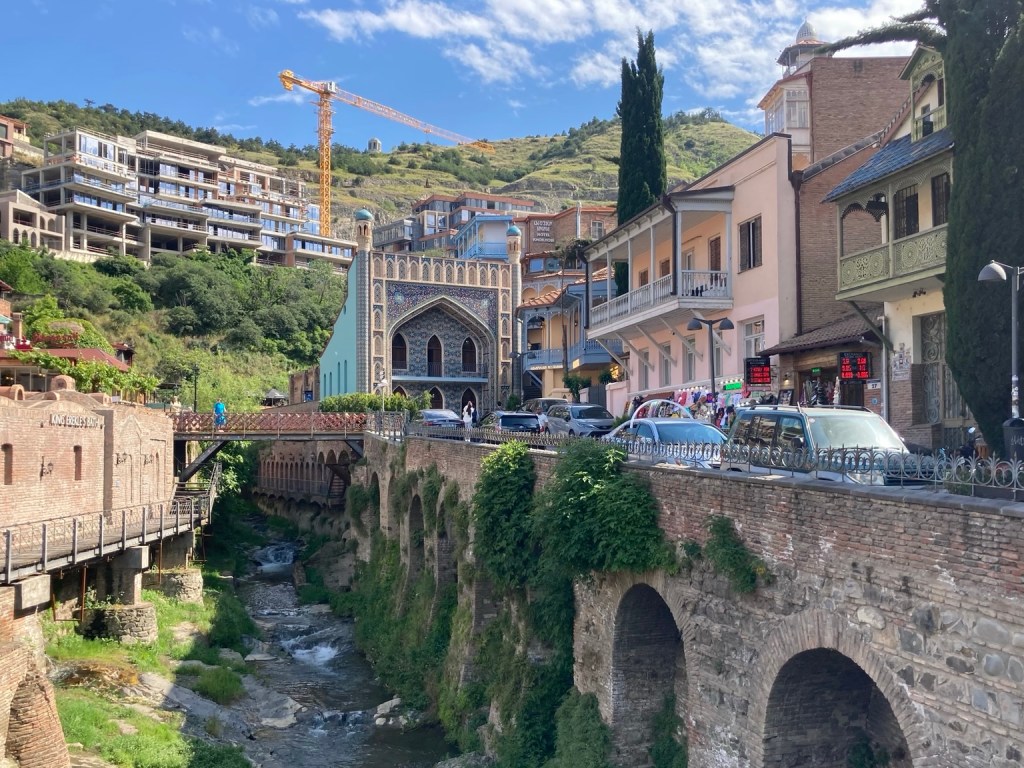
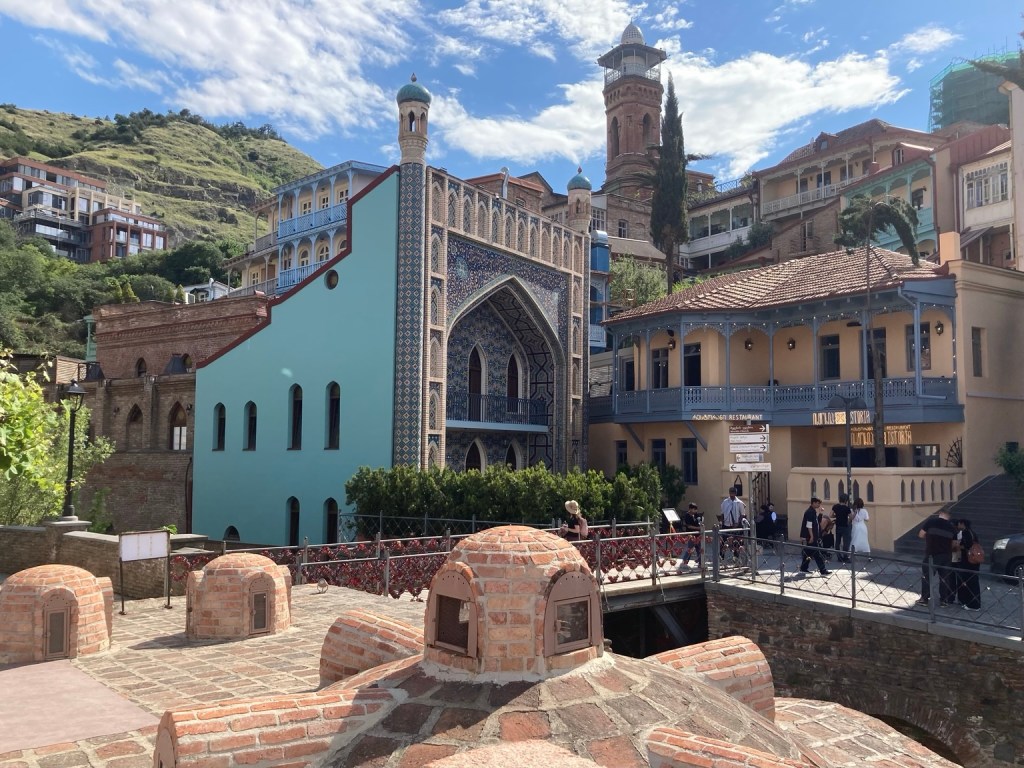
Over the centuries bathhouses were built around the springs in the Abanotubani district with distinct semi-underground brick domes shaped by Persian, Arab, and Ottoman influences during the height of the Silk Road.
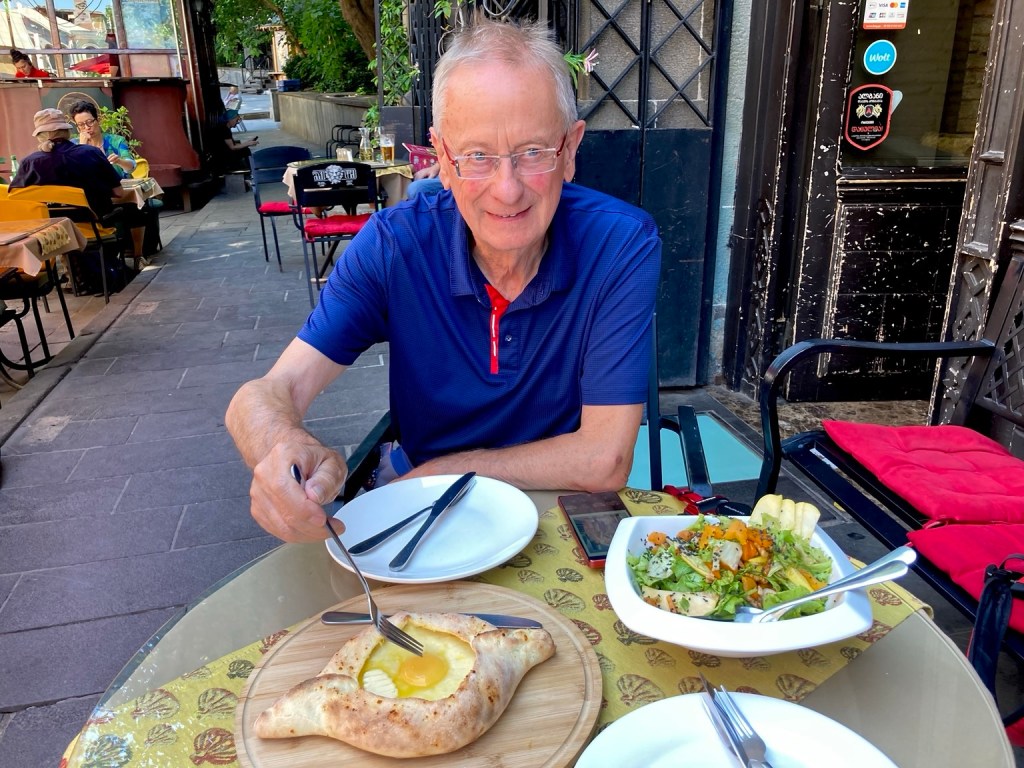
Along the way we had a couple of food tips which we were eager to put into practice and fortunately it was lunchtime. Once of the most iconic dishes here is Khachapuri, the Georgian cheese filled bread. It comes in several varieties but the most impressive looking is Adjaruli Khachapuri and we were told the egg yolk needs mixing into the hot cheese then the crispy edges of bread can be broken off to dip in. We followed instructions and it was delicious.
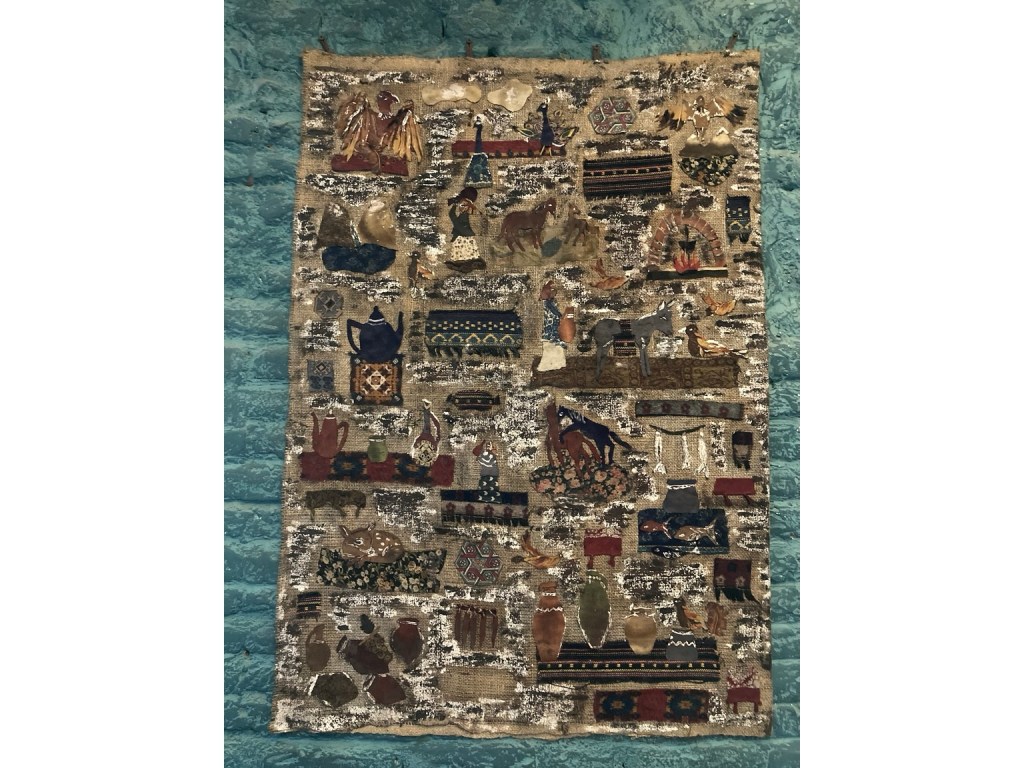
After our busy day yesterday, we took the rest of the afternoon slowly, a bit of a nap and then took some pictures of the interesting asthetic at the Art Hotel, not surprisingly as we met the owner and she is an artist who works in theatre and set design.
Later we went for dinner just down the road, at Pasanouri, a small chain of traditional Georgian restaurants, famous for serving authentic local cuisine and known as the birthplace of khinkali, Georgia’s iconic meat dumplings. Fortunately they also serve them with with a cheese filling, and we had them with a rich mushroom and tomato stew. Portions are generous everywhere so we were careful not to over order!
Having spent one day in the city, tomorrow we are off on a bus tour westwards …
 Off Travelling Together