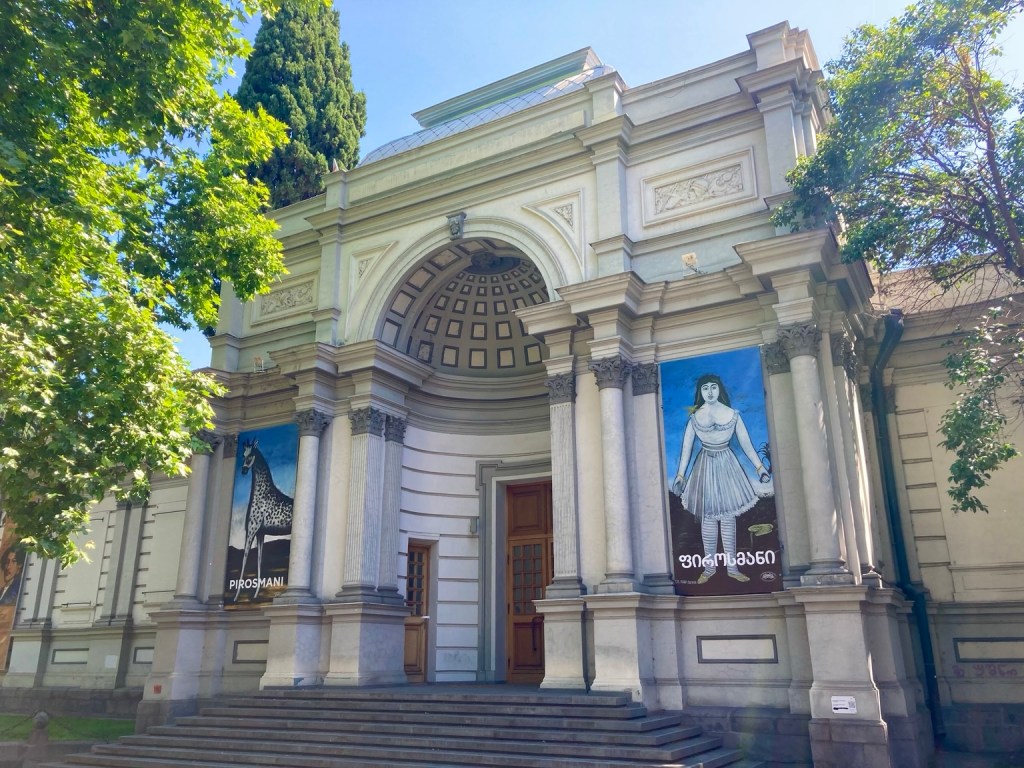
I’m surprised we’ve lasted so long without venturing into an art gallery, but today’s the day and we started with the National Gallery in search of Georgia’s national artist, boldly advertised on the outside!
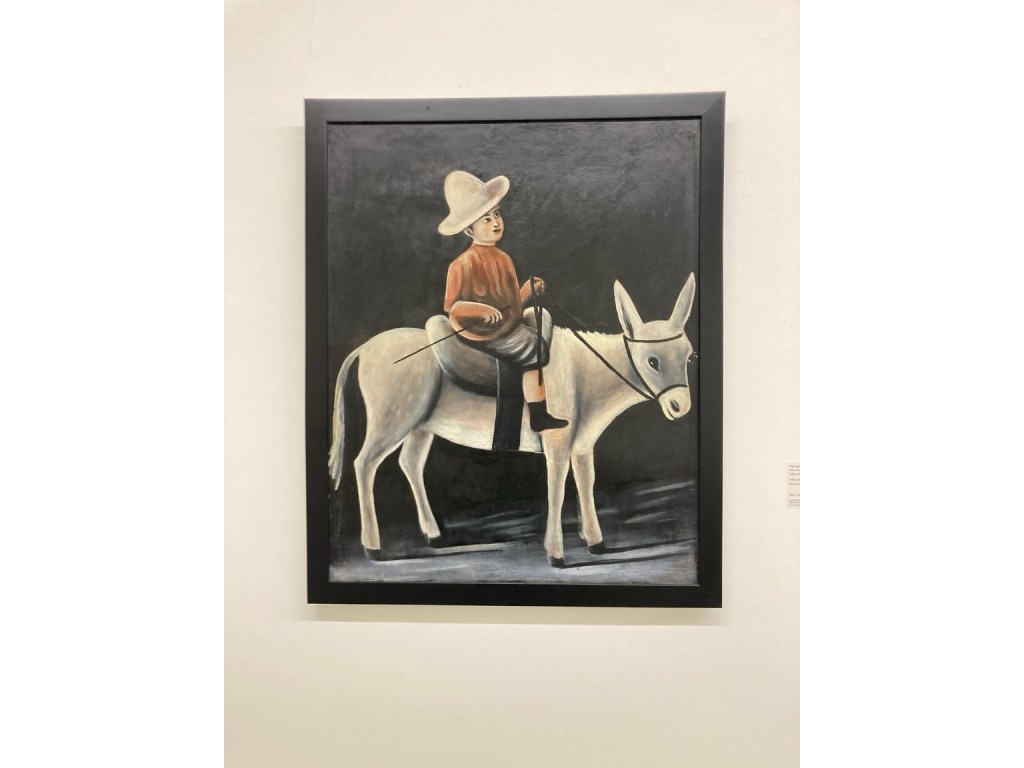
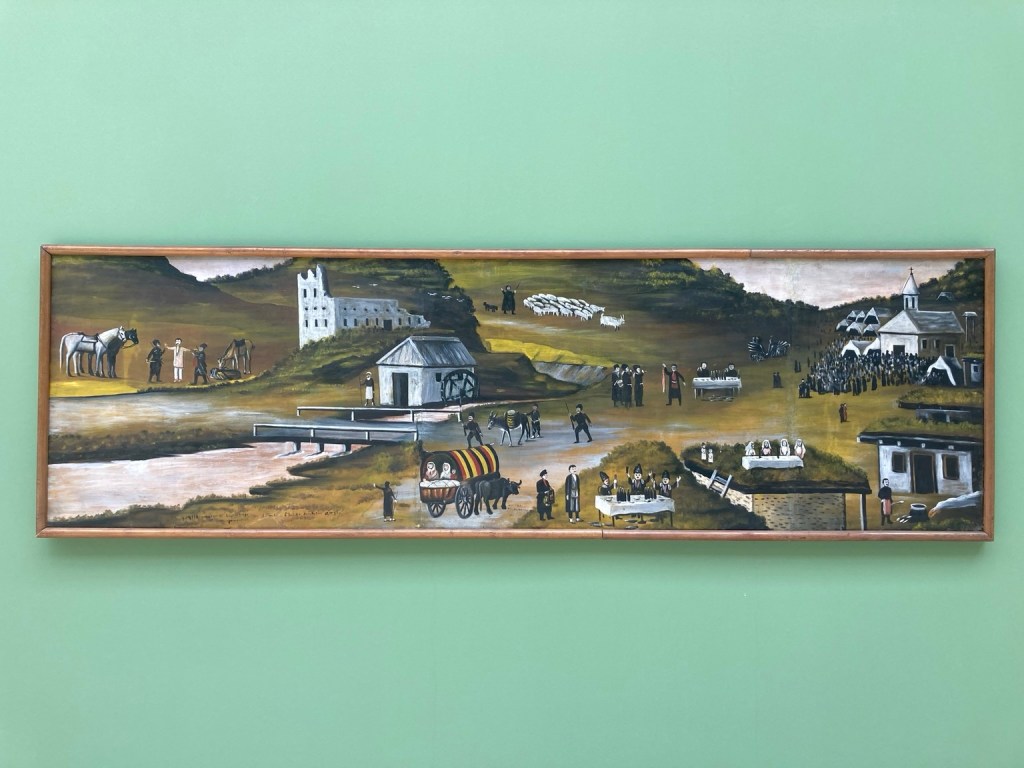
Niko Pirosmani was born in 1862 in a village in Kakheti and was a self-taught painter who only gained recognition after his death in 1918. He pioneered the Primitivist style and painted portraits and scenes portraying Georgian country life and traditions.
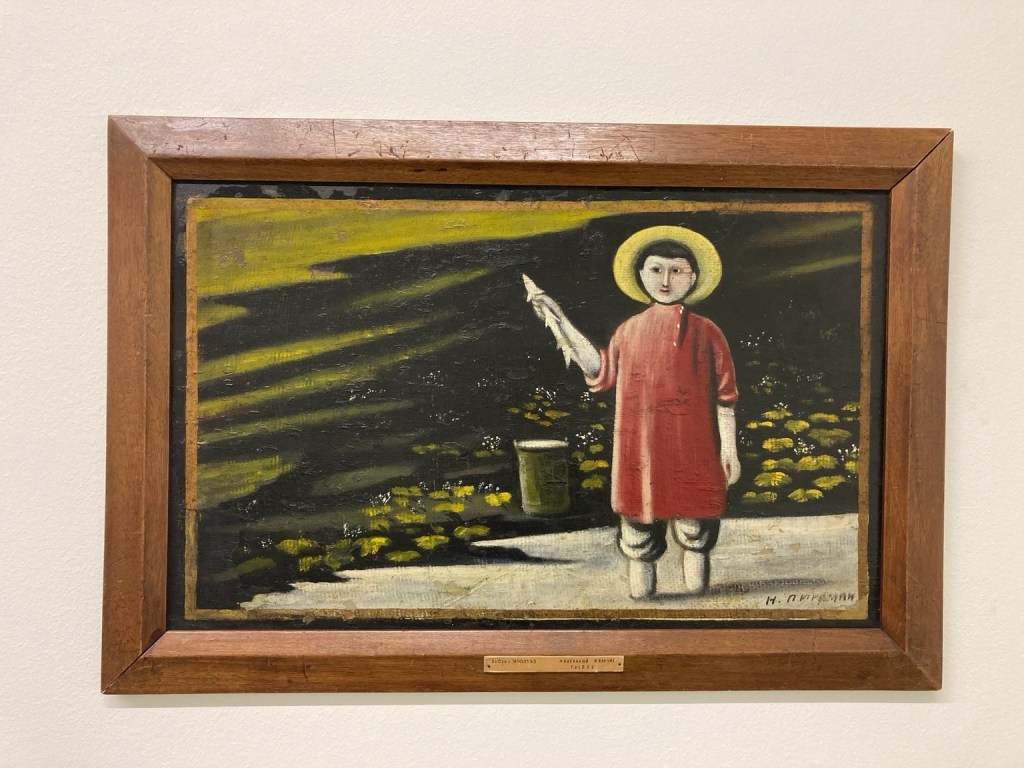
This one of a village with feast and church evens reminds me of the village of Mleta we drove through yesterday.
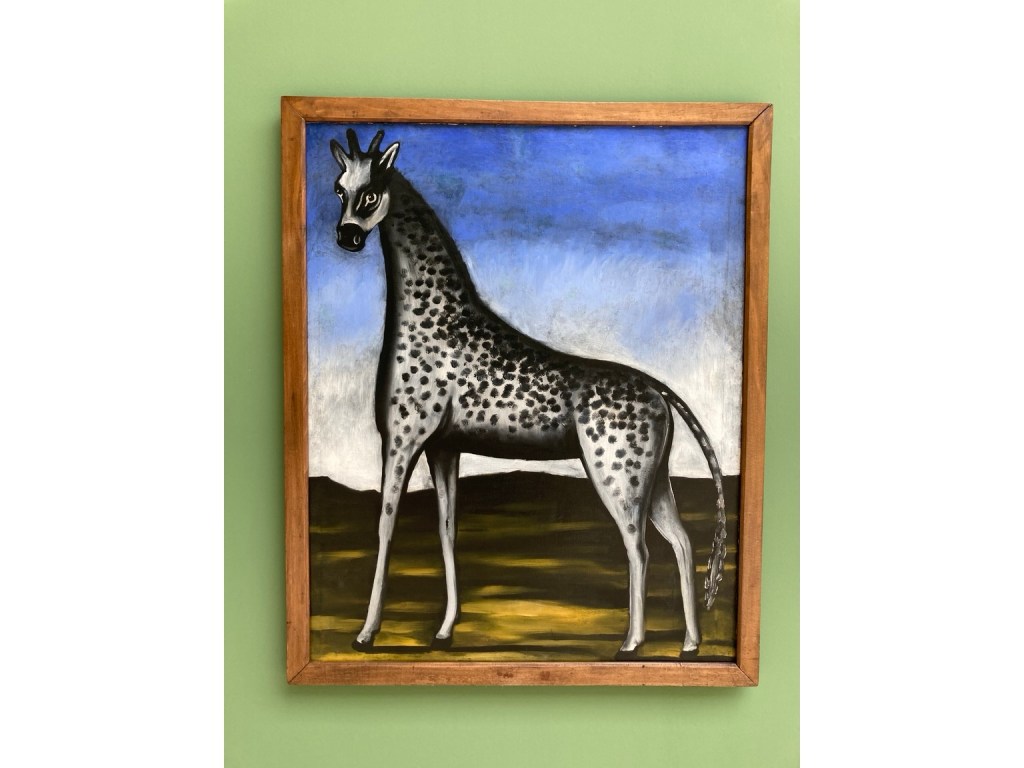
His most iconic painting is Giraffe, painted largely from imagination as he had never seen one, but there was a black and white image in the newspaper of the time which he could have seen. He used black oilcloth as the background for most of his paintings because it was cheap, and he was often economical with paint for the same reason but this makes his work stand instantly recognisable.
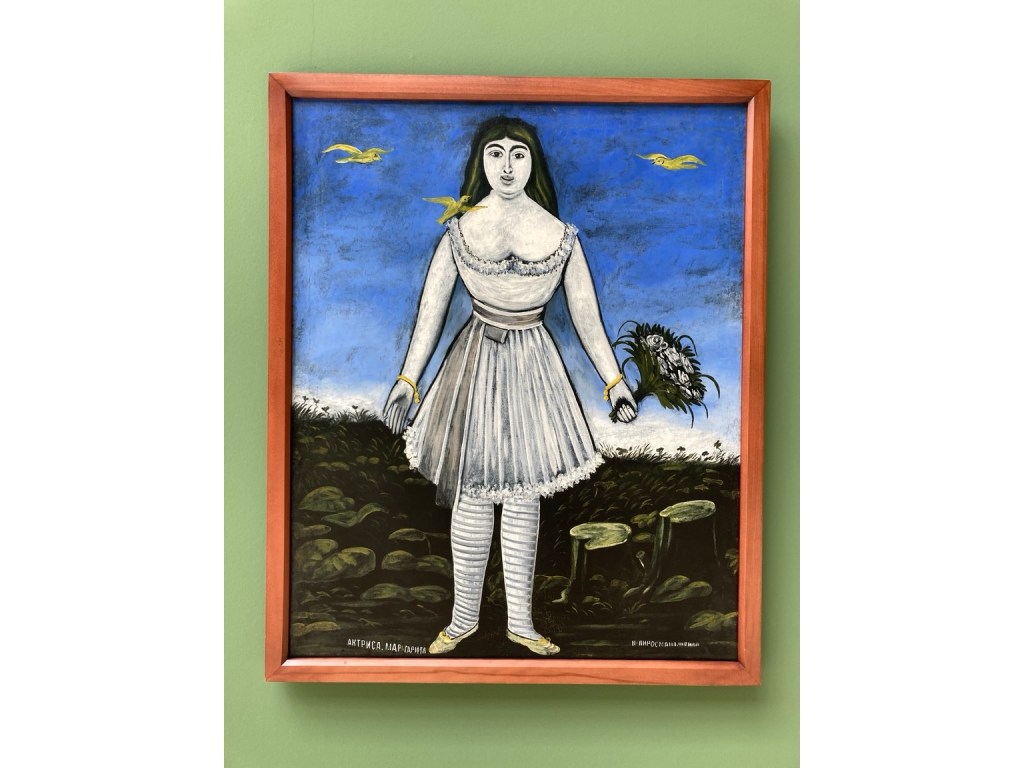
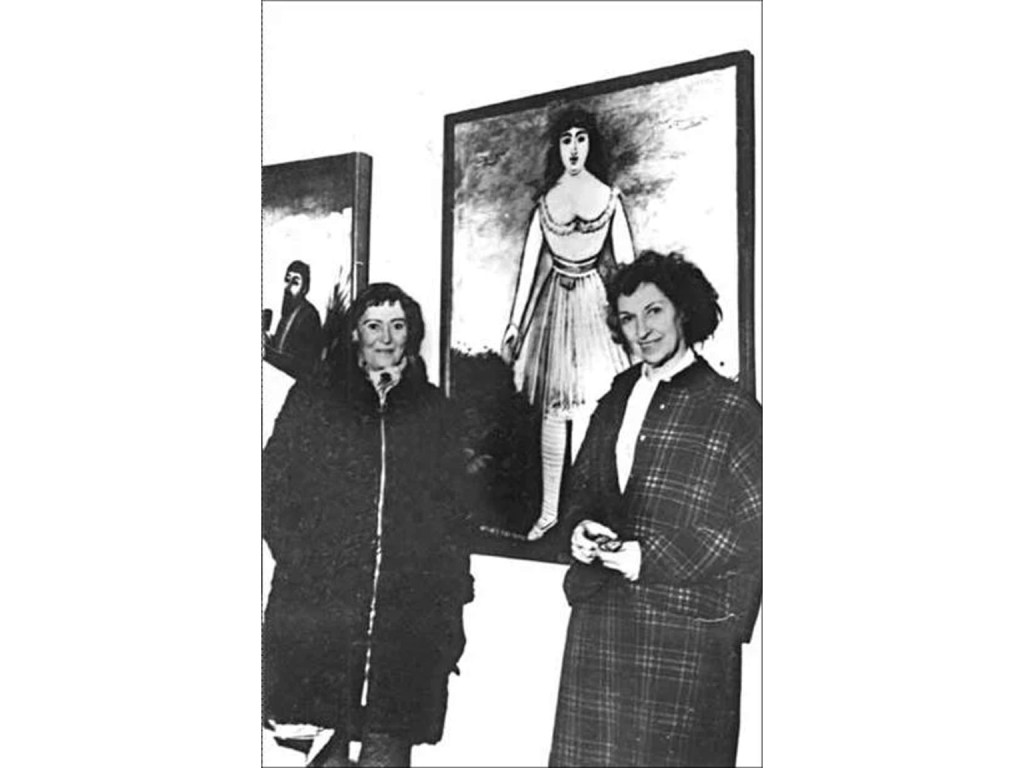
In Georgia there is a story for everything and Niko Pirosmani’s unrequited love for French actress Margarita de Sèvres is one of Georgia’s most famous romantic legends. Consumed by passion, the impoverished artist sold his possessions to buy all the flowers in Tbilisi, showering her with millions of blooms, only for her to leave the city forever.
His portrait of Margarita is hung in the gallery opposite the Giraffe, which could now be seen as a form of self-portrait, as its tear of melancholy rolls down its face.
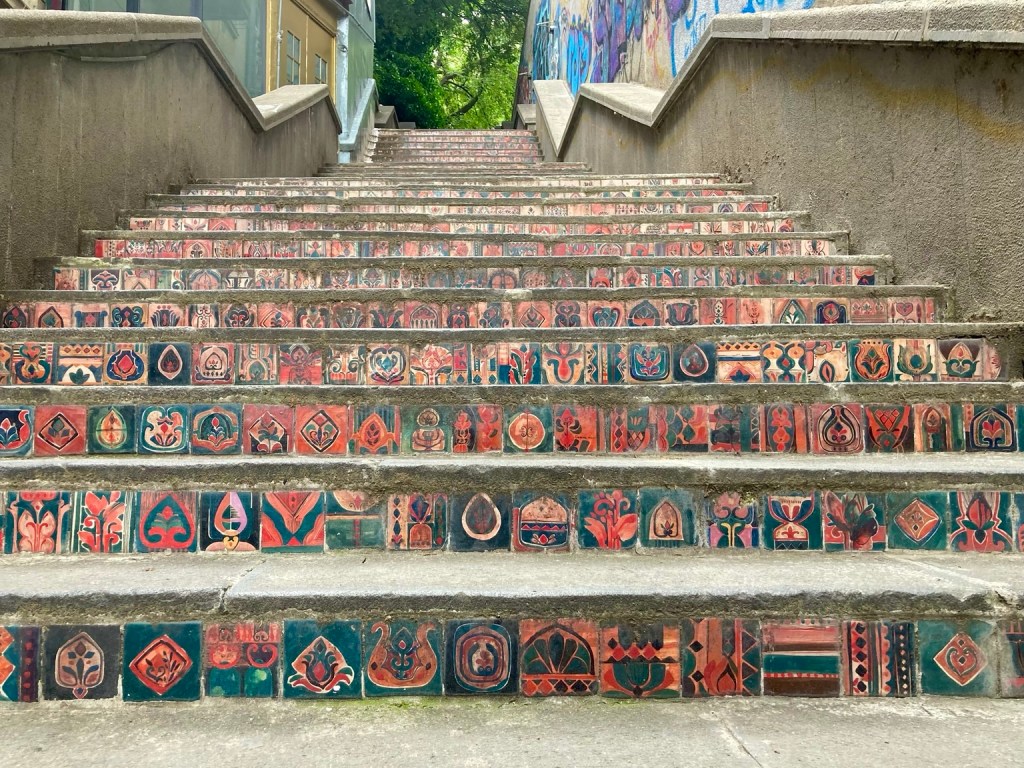
Walking along Rustaveli Avenue, we reached a tiled staircase leading to the Tbilisi State Academy of Arts. It is decorated with hand painted tiles made by the ceramic facility featuring traditional Georgian ornaments.
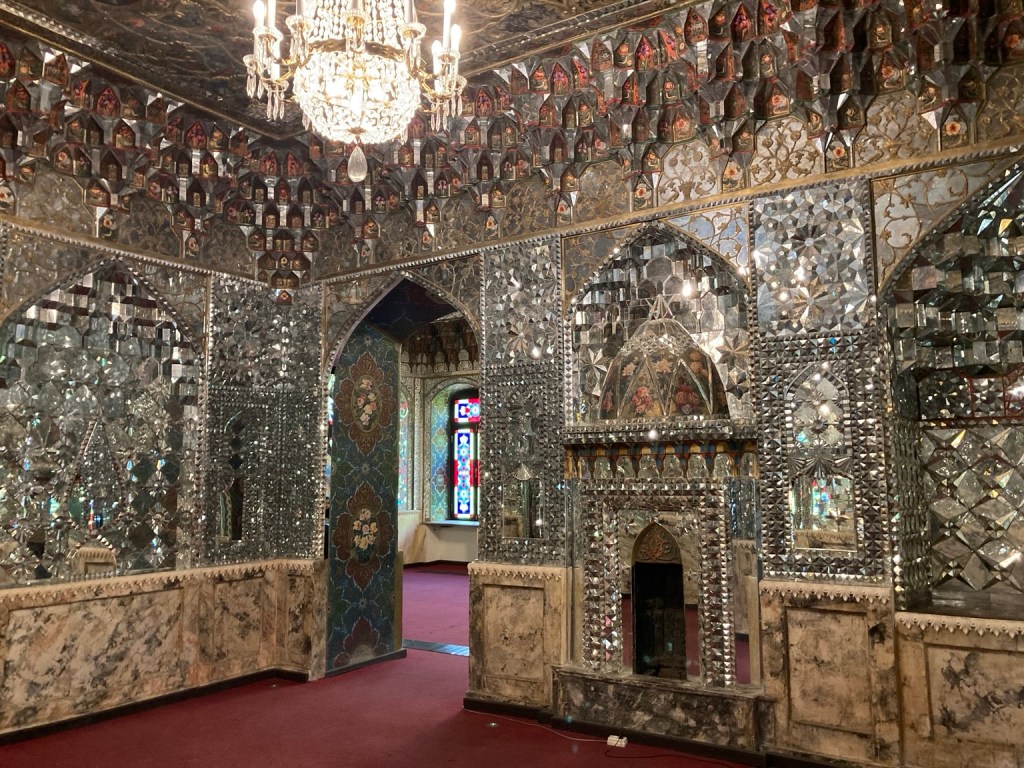
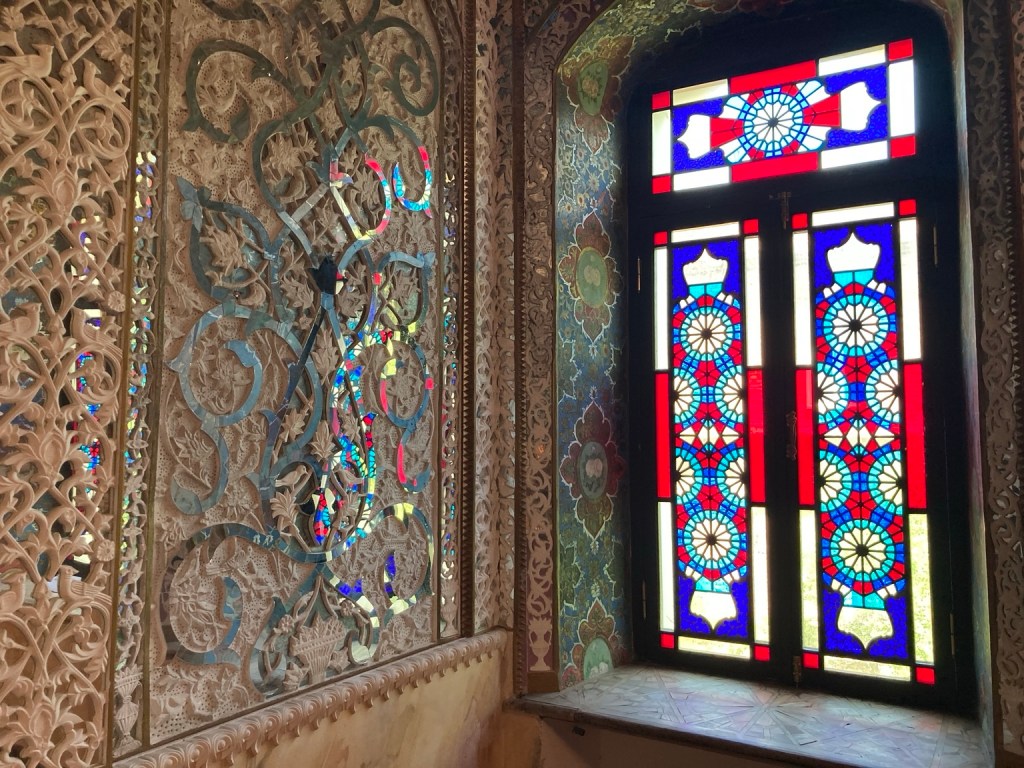
The academy was established in 1922 and occupied a building originally the residence of an Armenian merchant. He had built his fortune caviar farming in Azerbaijan and maybe had connections in Iran, because he brought craftsmen to decorate the interior to resemble a Persian palace. The Mirror Halls have survived and are covered with intricate mirror work comprising thousands of tiny glass pieces and arabesque plasterwork.
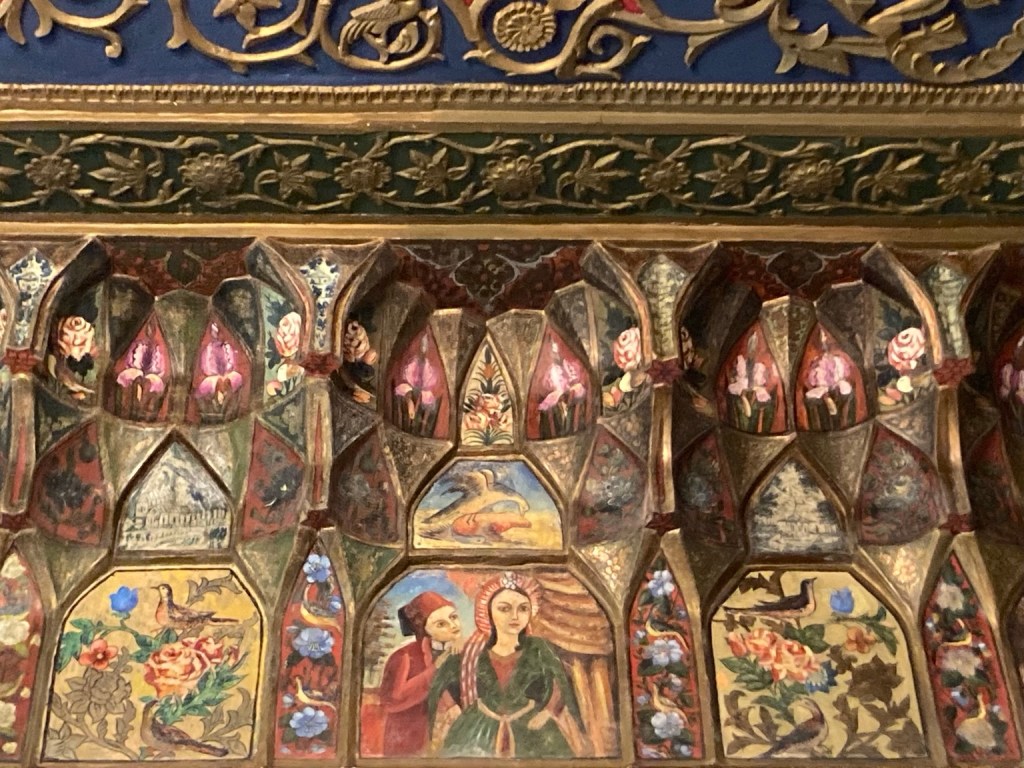
The cornices have painted miniatures …
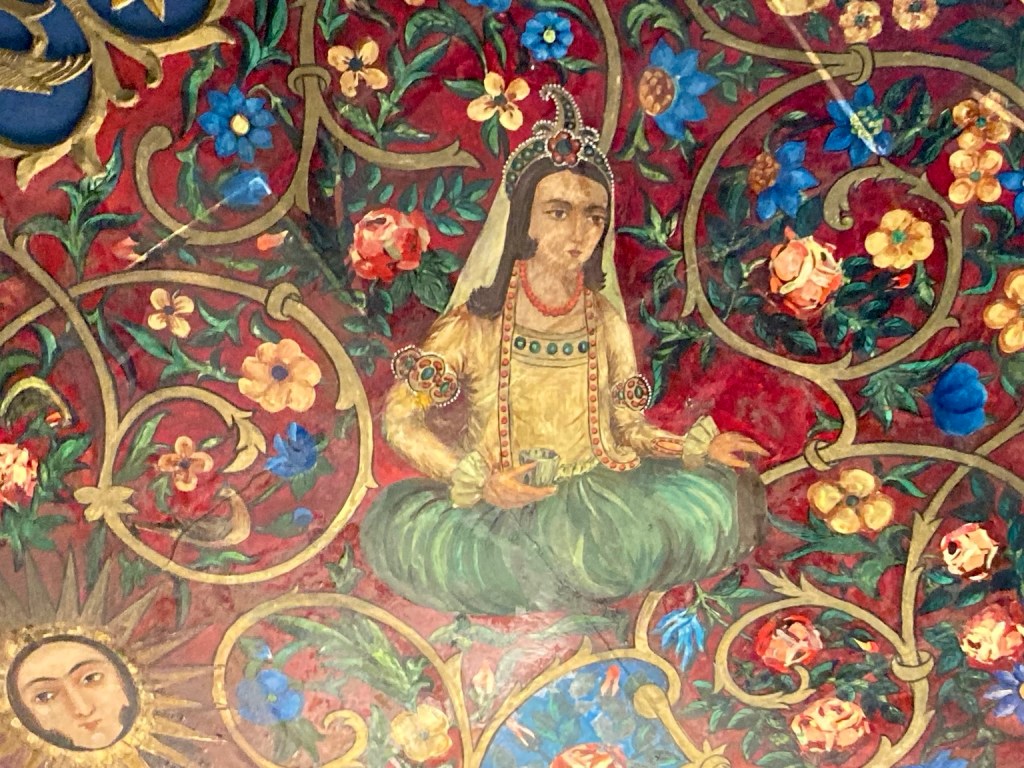
… the ceilings more mirrors …
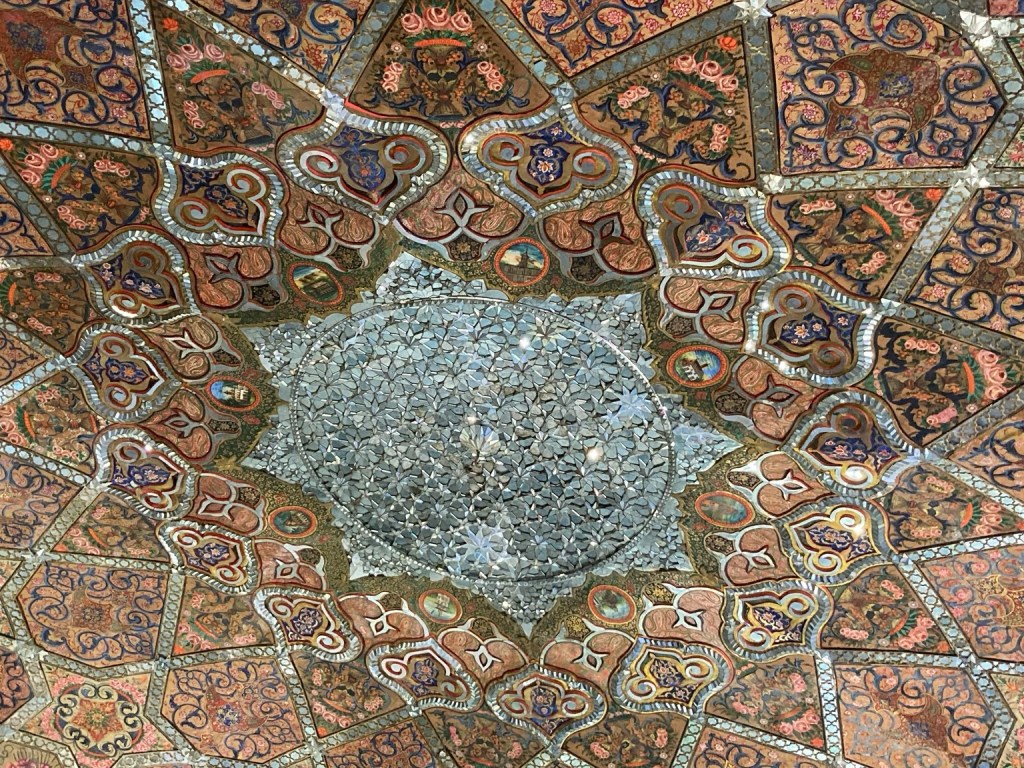
… and the windows brightly coloured glass. Student work is also on display, inspired by the rooms.
Enough of museums, it was time for some fresh air!
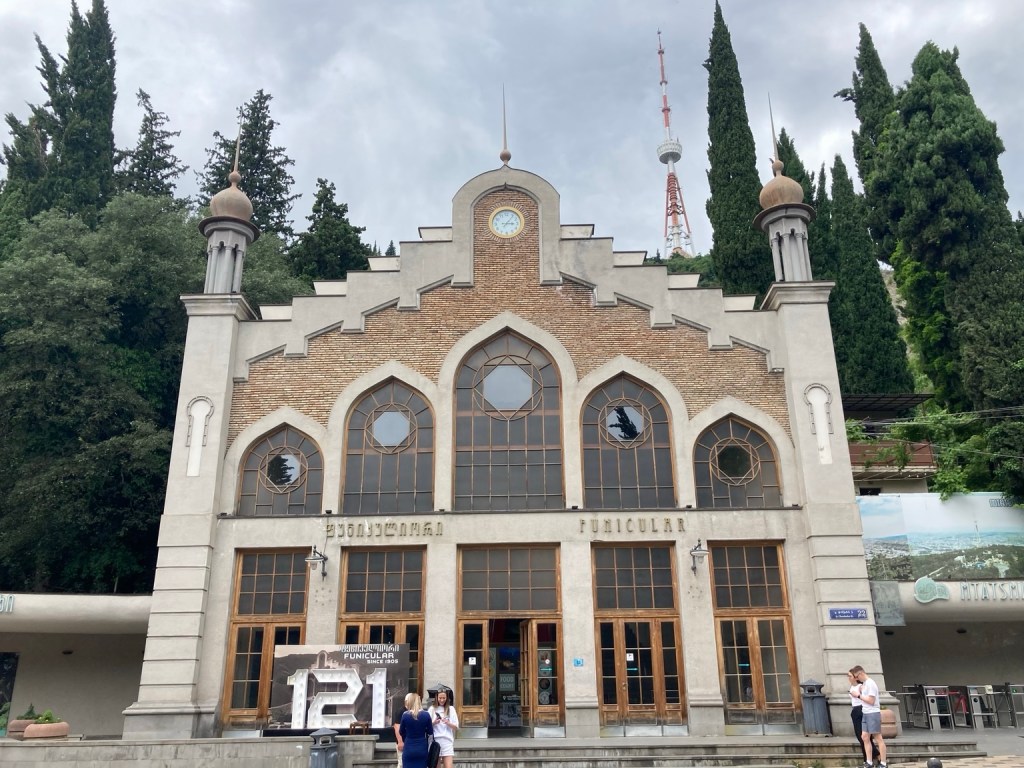
Mtatsminda means Holy Mountain and is the highest point in Tbilisi. In 1905 there were plans for an Upper Tbilisi so a funicular railway was built and it was transformed into a landscaped park which still houses the historic Funicular Restaurant. Today it is home to the TV tower, ferris wheel and amusement park and there is also another way up.
The Mtatsminda Cable Car station is an example of Soviet monumental architecture built in 1958.
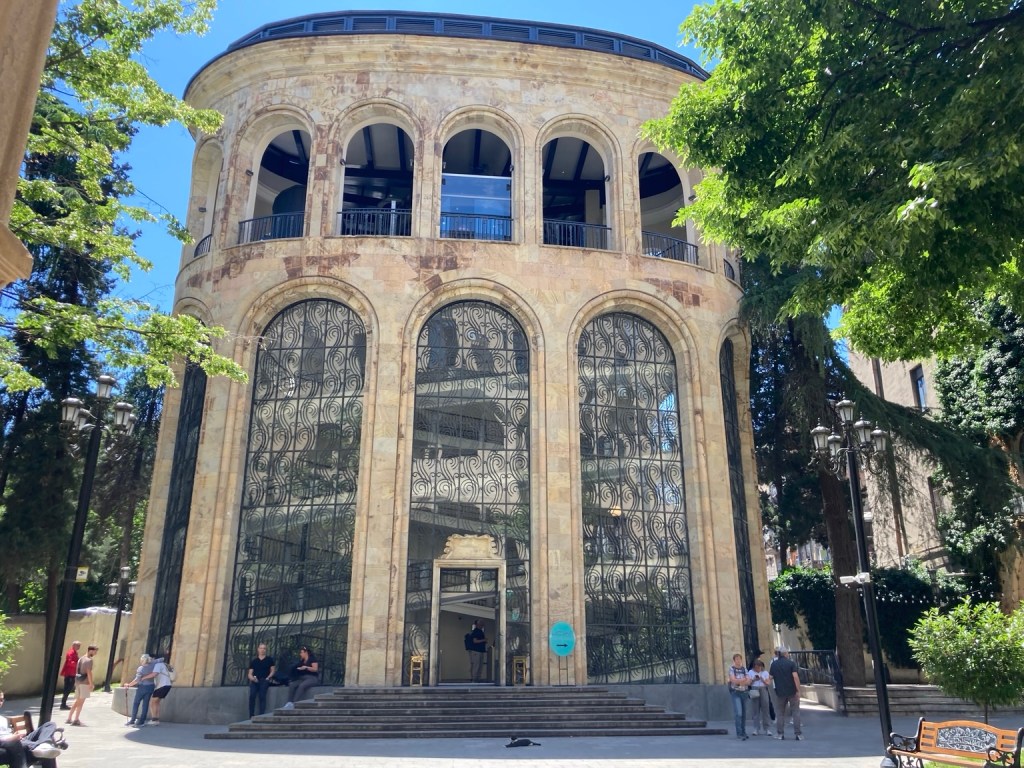
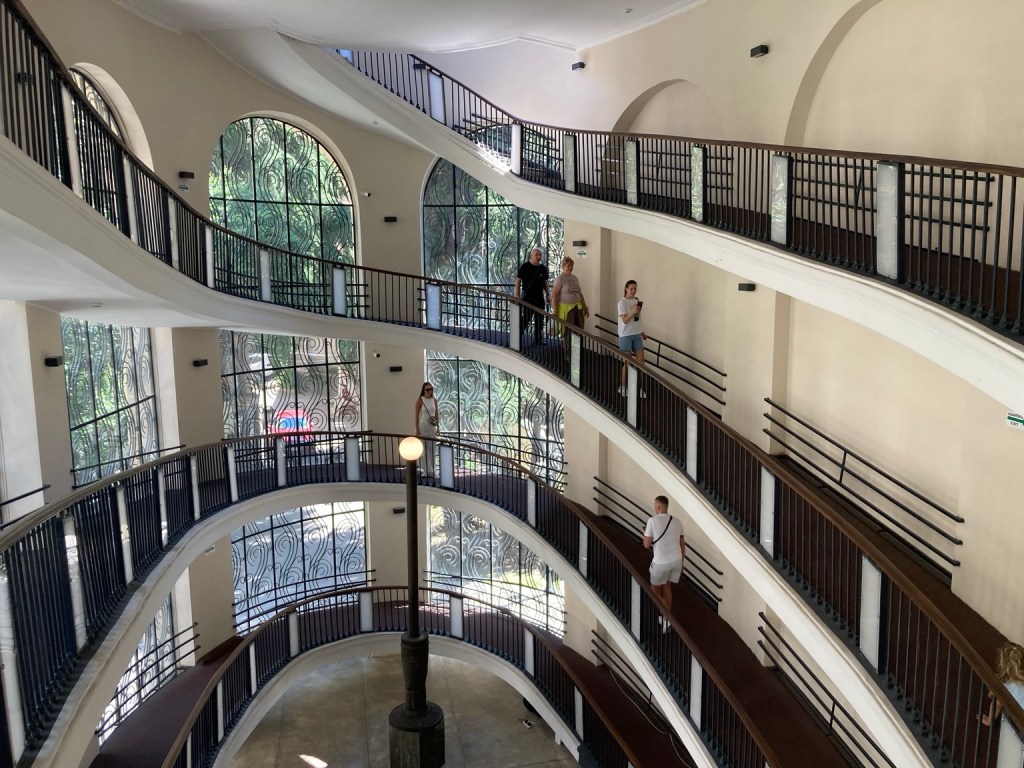
Closed for many years following a tragic accident, it reopened recently following complete restoration. Once inside, an impressive double-helix spiral interior walkway took us to the top and we boarded our car.
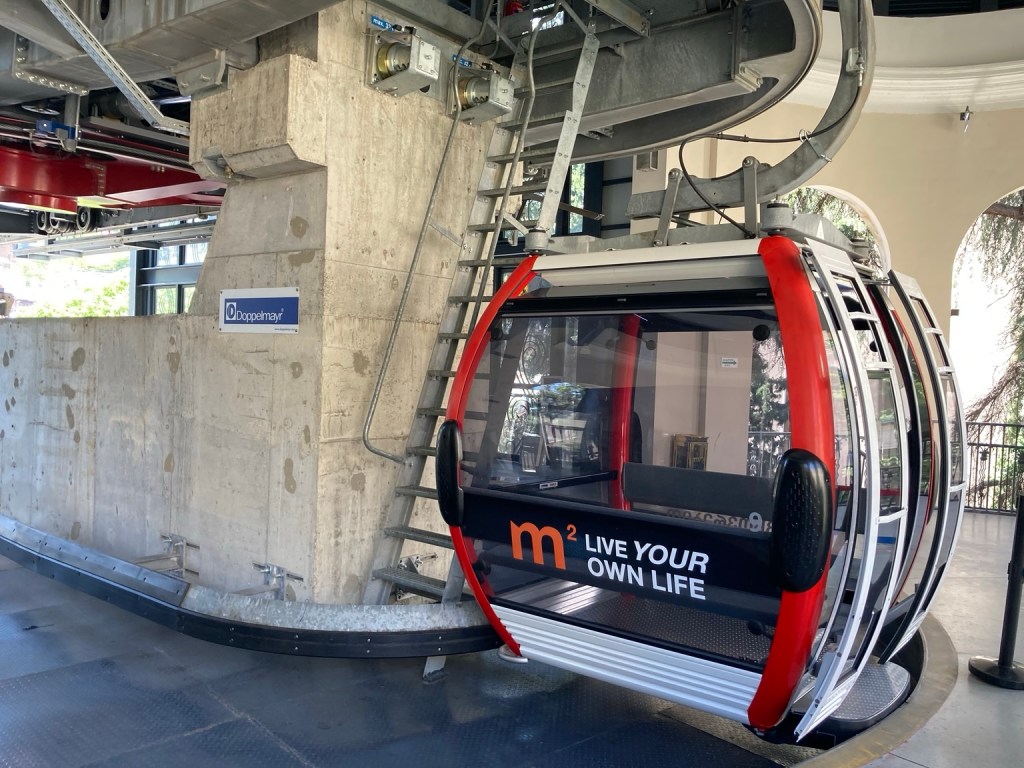
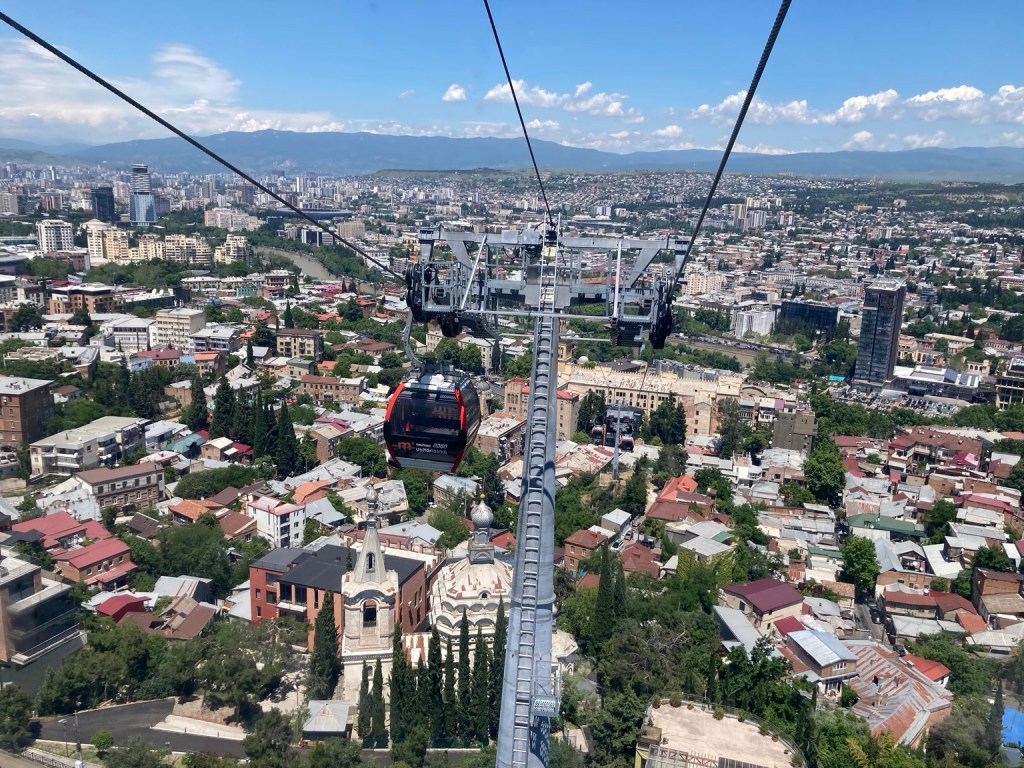
We took photos of the view and had lunch in the restaurant …
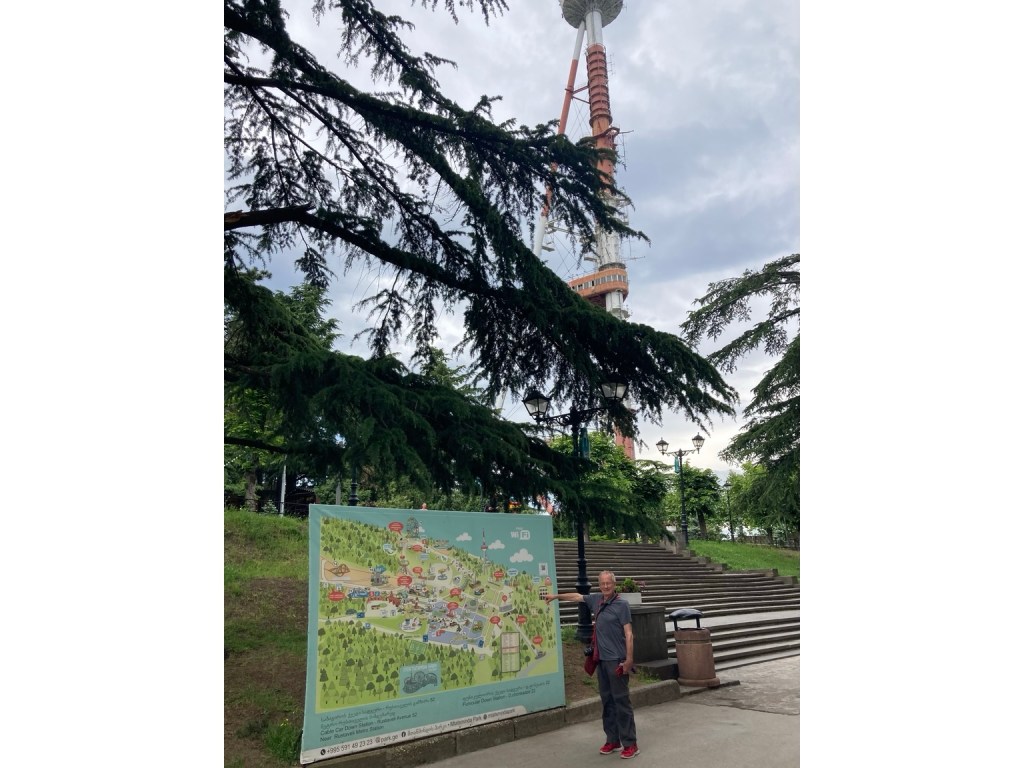
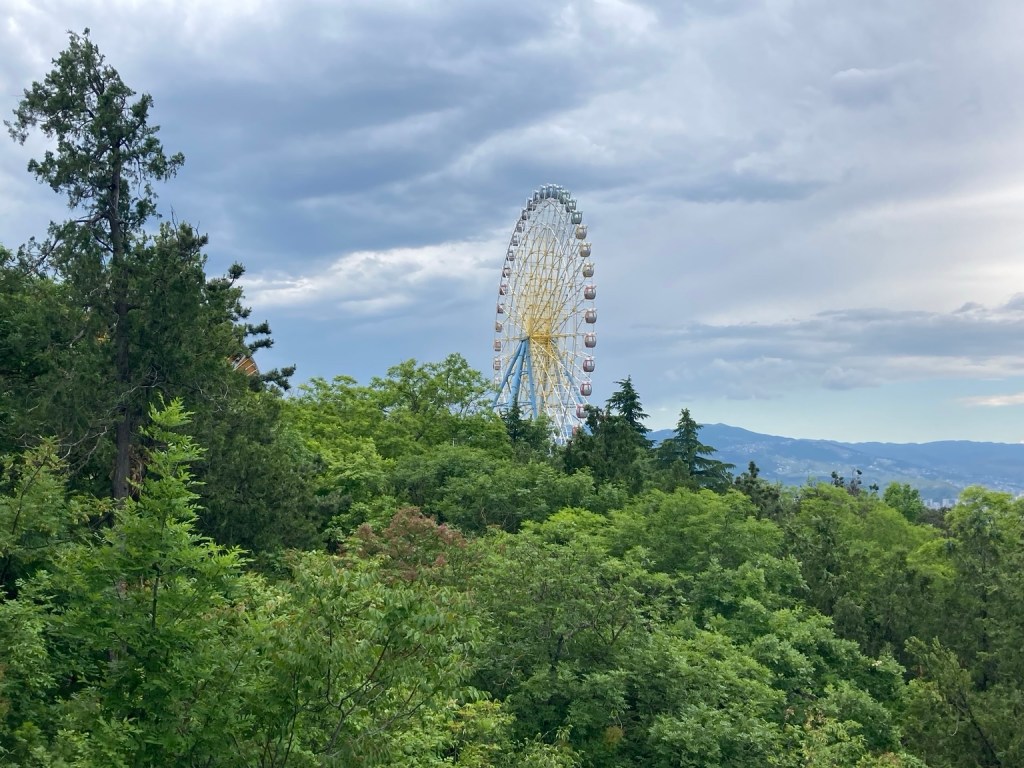
… before descending on the funicular …
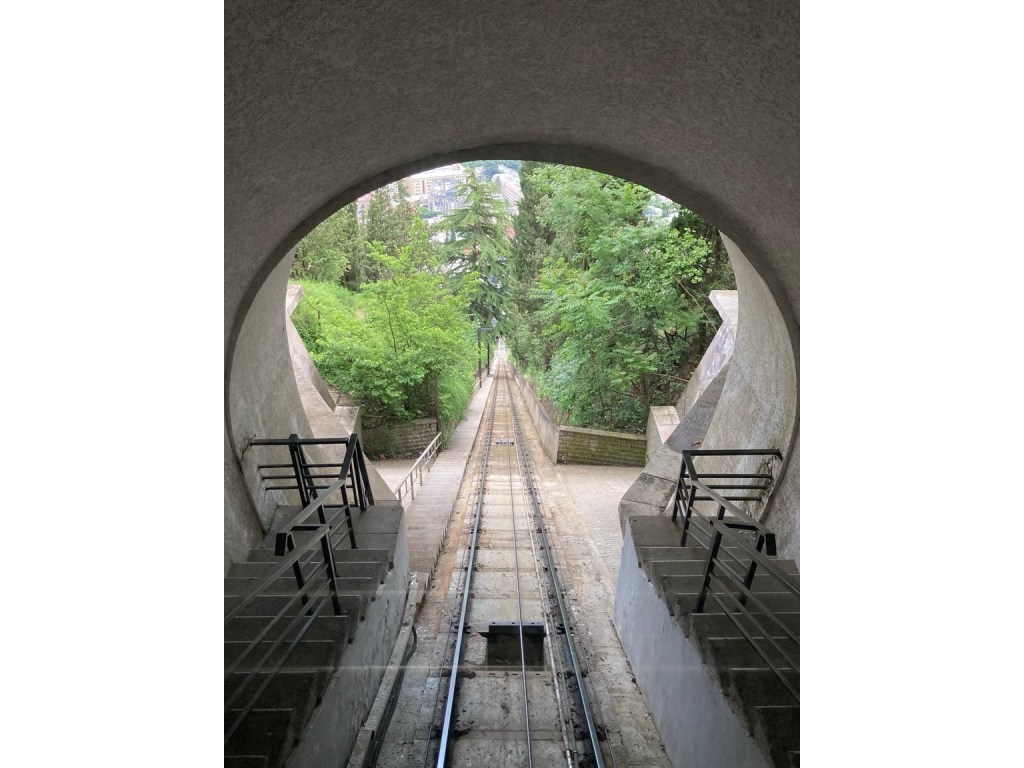
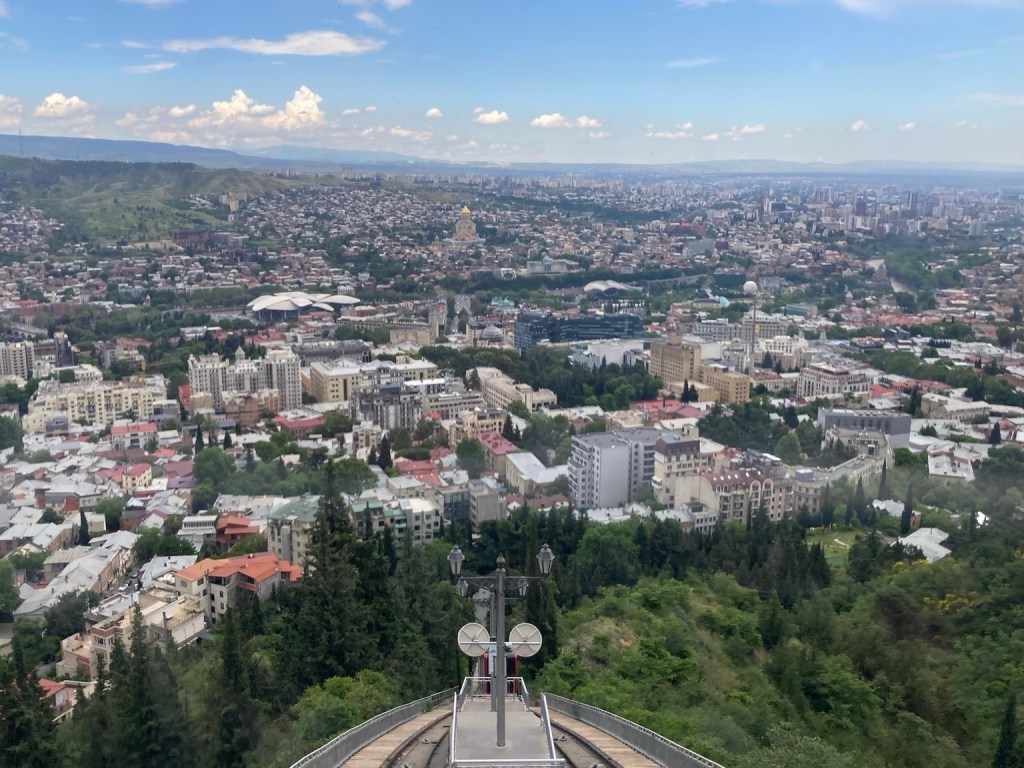
… which ended its journey at another Soviet edifice.
After a bit of a rest, we were out again, this time joining another walking tour. The Hidden Tour was led by Eka who took us through the streets of Souliki we have become familiar with. Following clues from carved details on buildings or research from old letters or newspapers, she told us stories of the life and times of people who have lived in some of the 18th and 19th century buildings.
Apparently, funds once destined for this impressive Art Nouveau bank never arrived, reportedly stolen by the young Stalin to finance the Bolshevik cause.
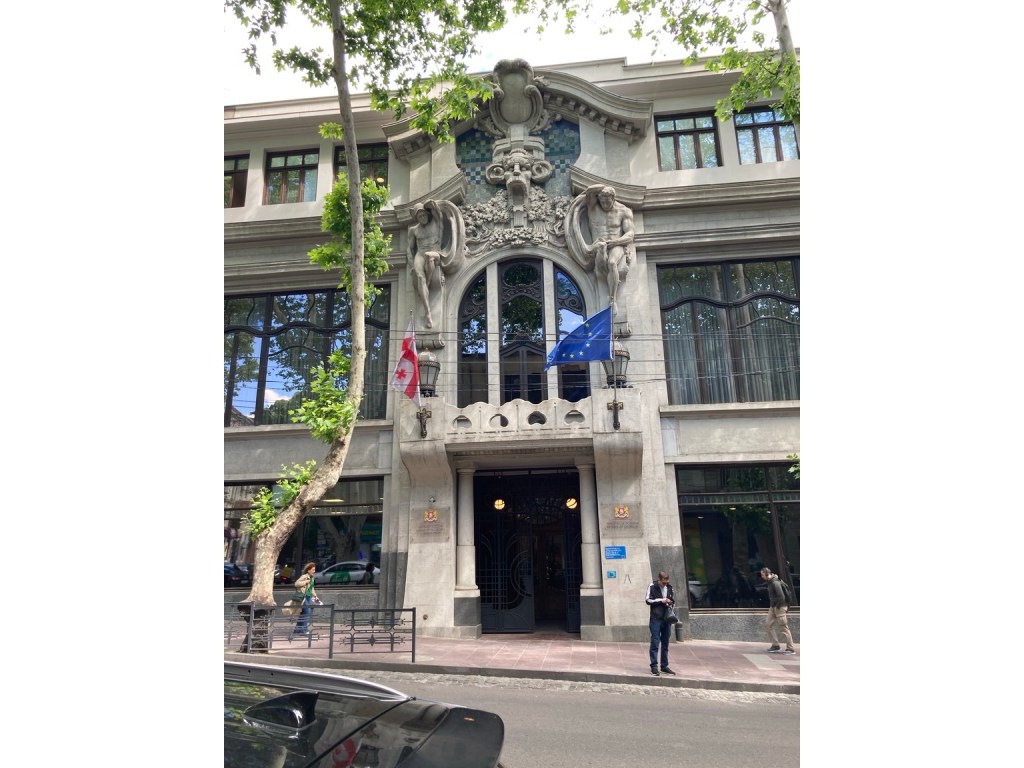
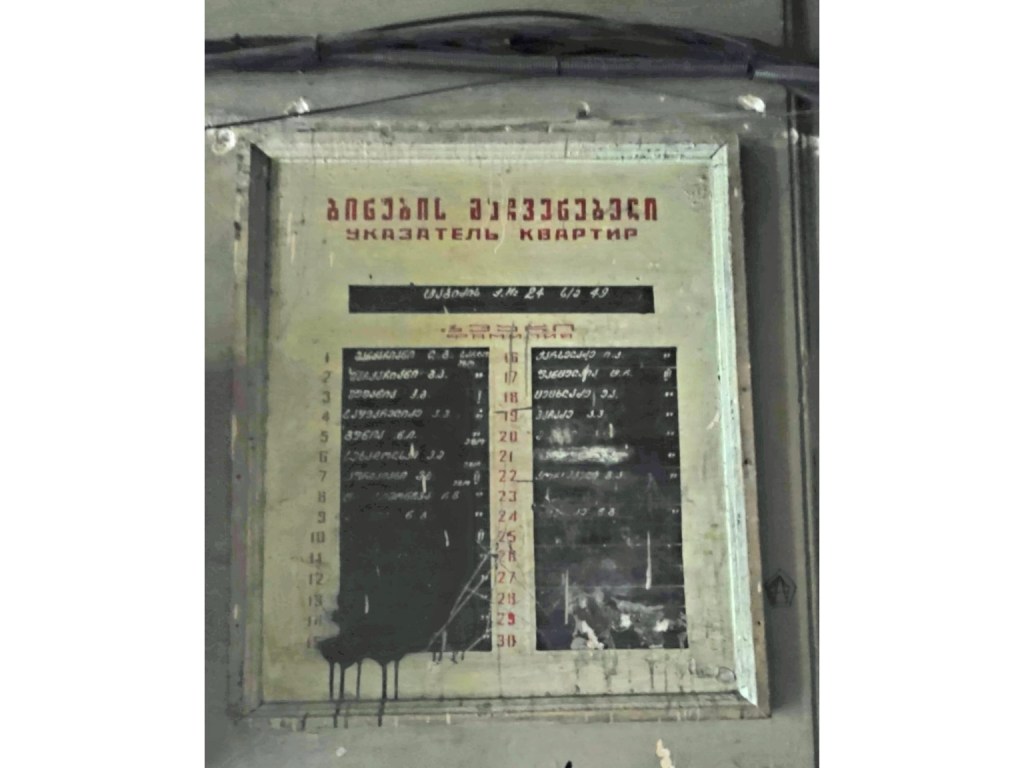
Many became communal properties in Soviet times so interior decorations were whitewashed and extra floors added to increase space. This was once the Consulate of Estonia.
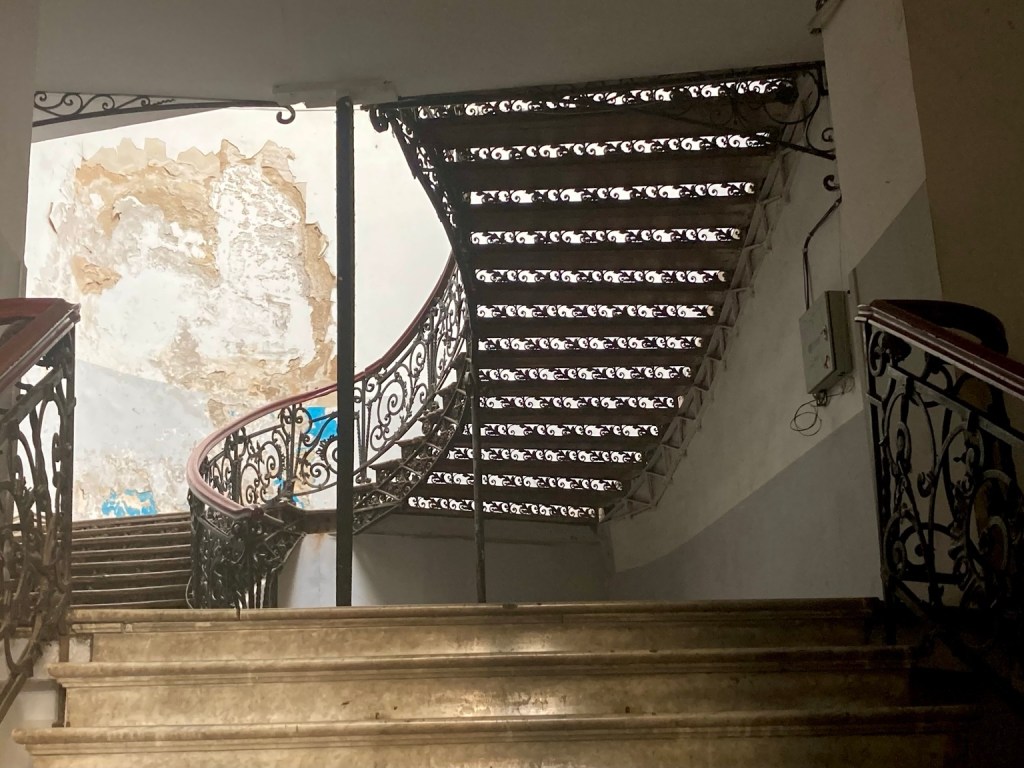
This one still has the board which showed 30 families were squeezed in here.
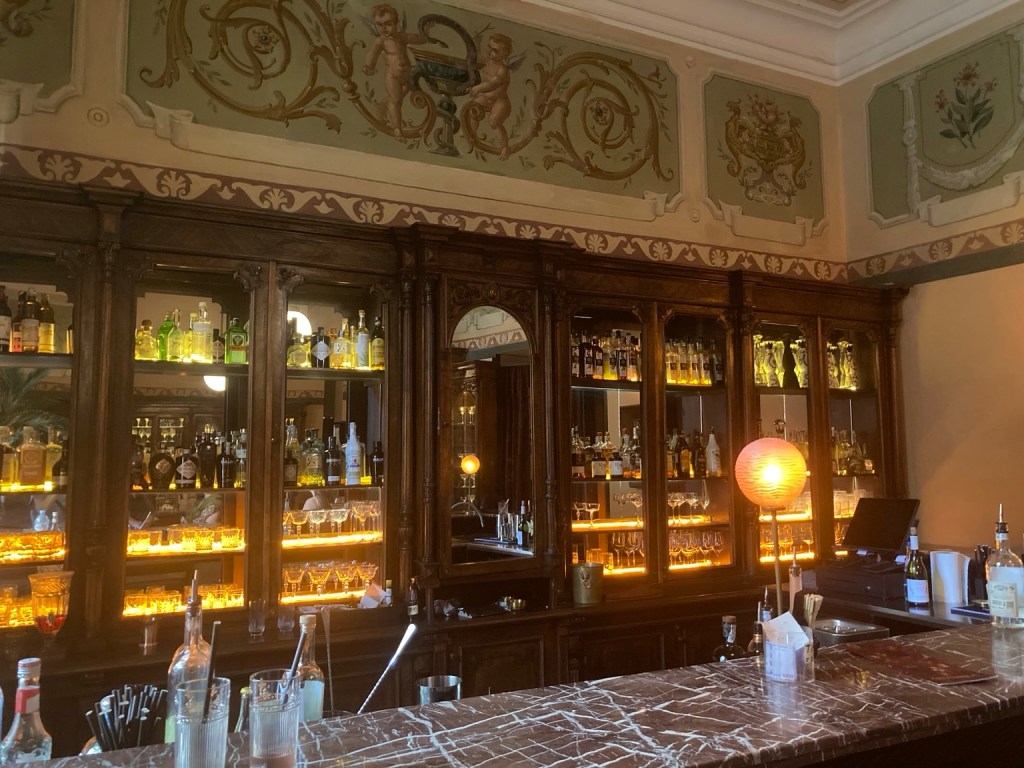
Most remain in a poor state of repair, needing funding and expertise to restore them, but this old apothecary has a new life as a bar, but retaining many of the old cabinets and murals.
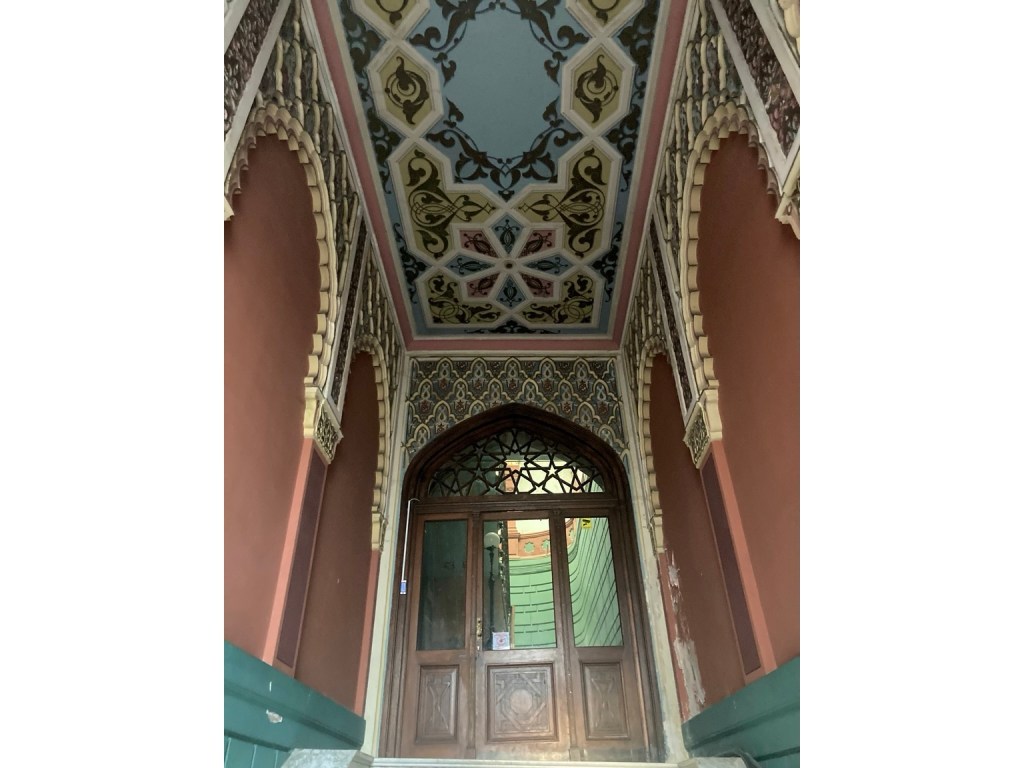
Eka showed us into the still elaborate foyer of this one …
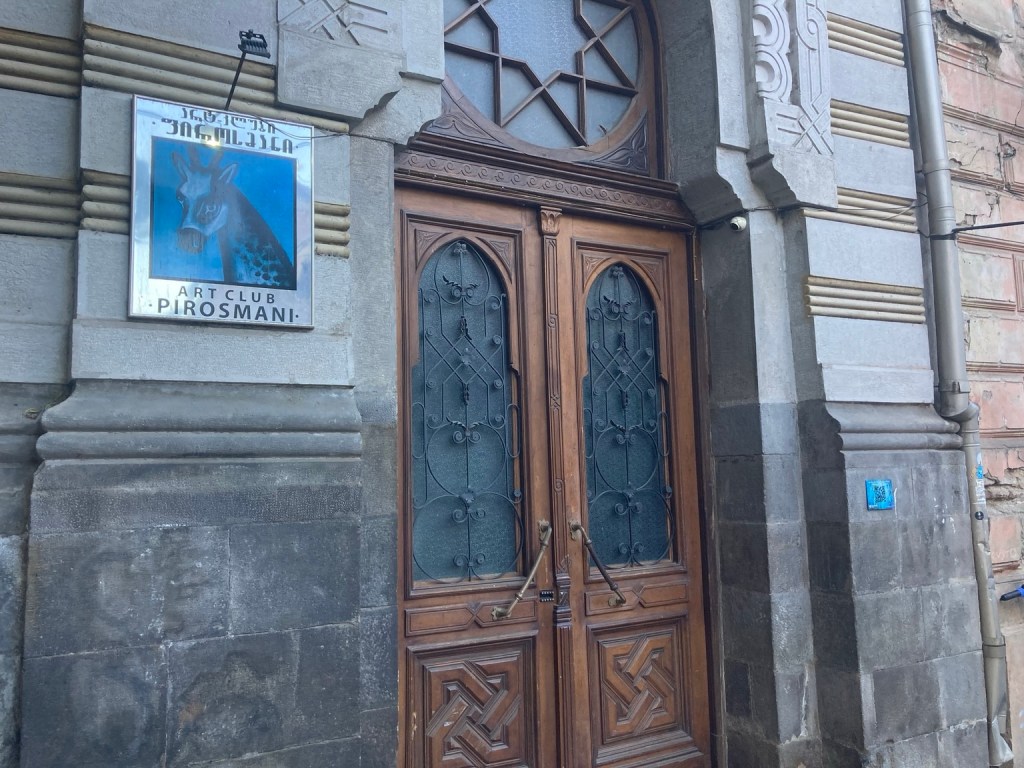
… which was built by a wealthy Baku merchant as a gift for his wife, who was no longer able to get to the Tbilisi Opera, so now had a house just as grand! She hosted artists, writers and musicians here, maybe even Pirosmani.
Having sold everything to buy flowers for Margarita, he no longer had a fixed abode and handed out paintings in return for lodging or meals in bars. He had little success in his lifetime but was shown at the first major exhibition of Georgian painters in Tbilisi in 1918. Interest increased in the 1950s in his naive style and a film was made about him. There have been several international exhibitions including The Louvre in 1969, and Eka showed us a photo of the elderly Margarita visiting the painting which ends the tale beautifully.
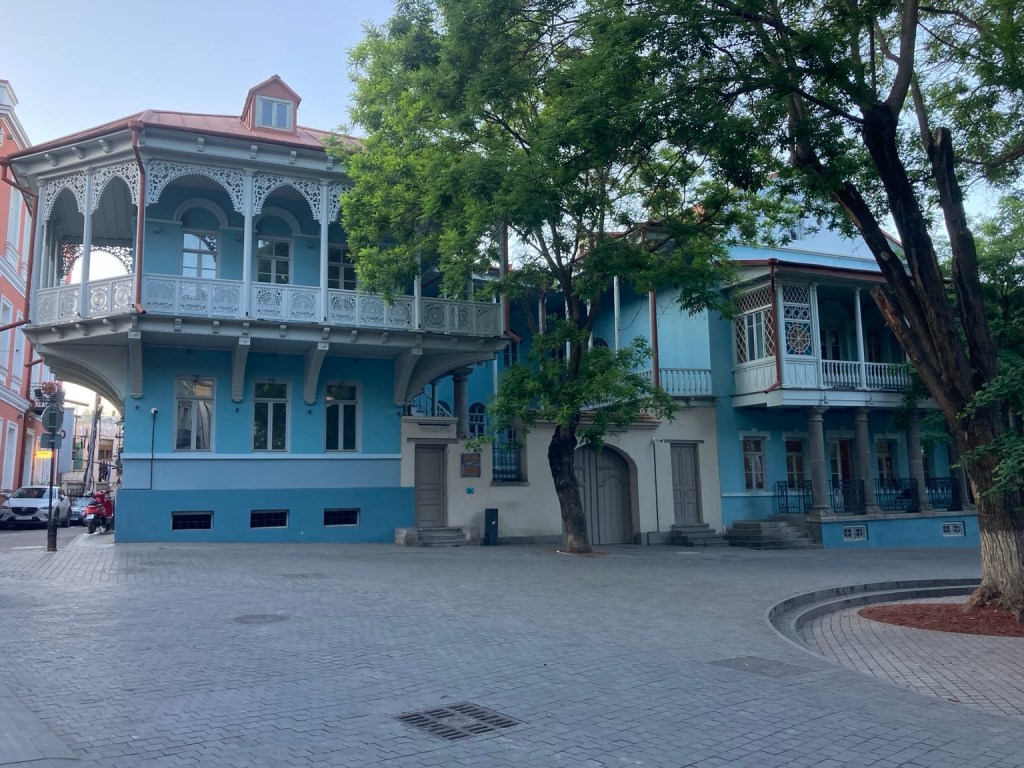
Afterwards we went wandering and came to this blue house known as Lermontov’s House. It once belonged to the imperial military department and the Russian poet Mikhail Lermontov stayed here as an officer. Later, it became the editorial office of Literary Georgia and the square is named after artist Lado Gudiashvili.
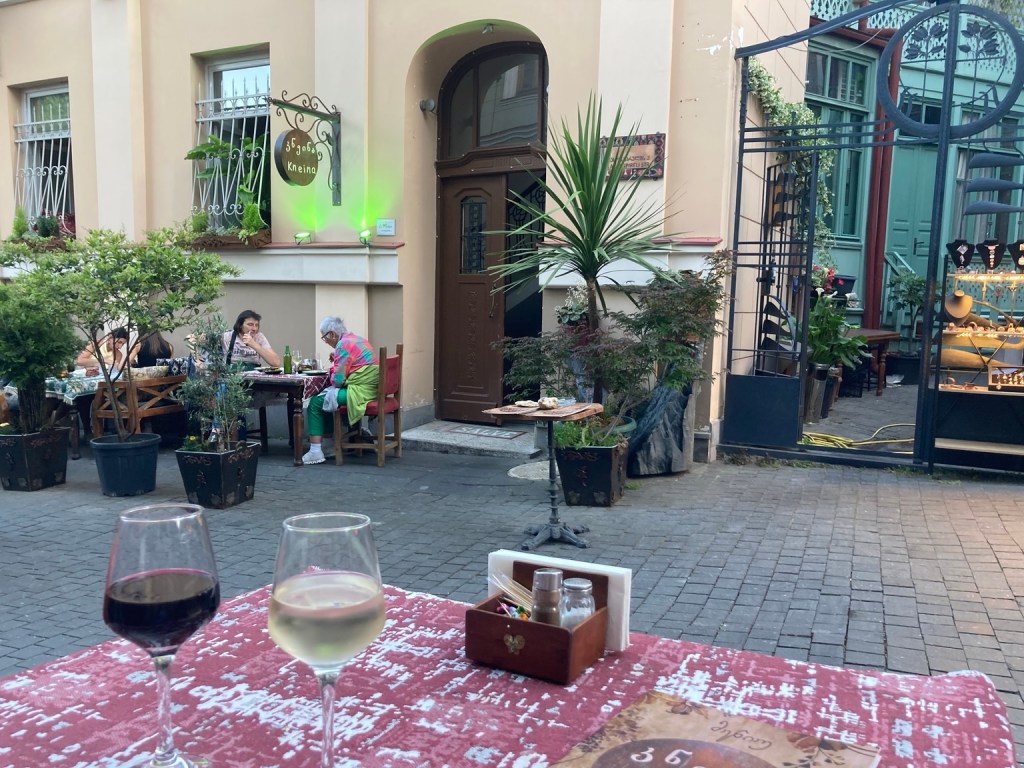
Just off the square we found Kneina, with the last free table outside obviously waiting just for us!
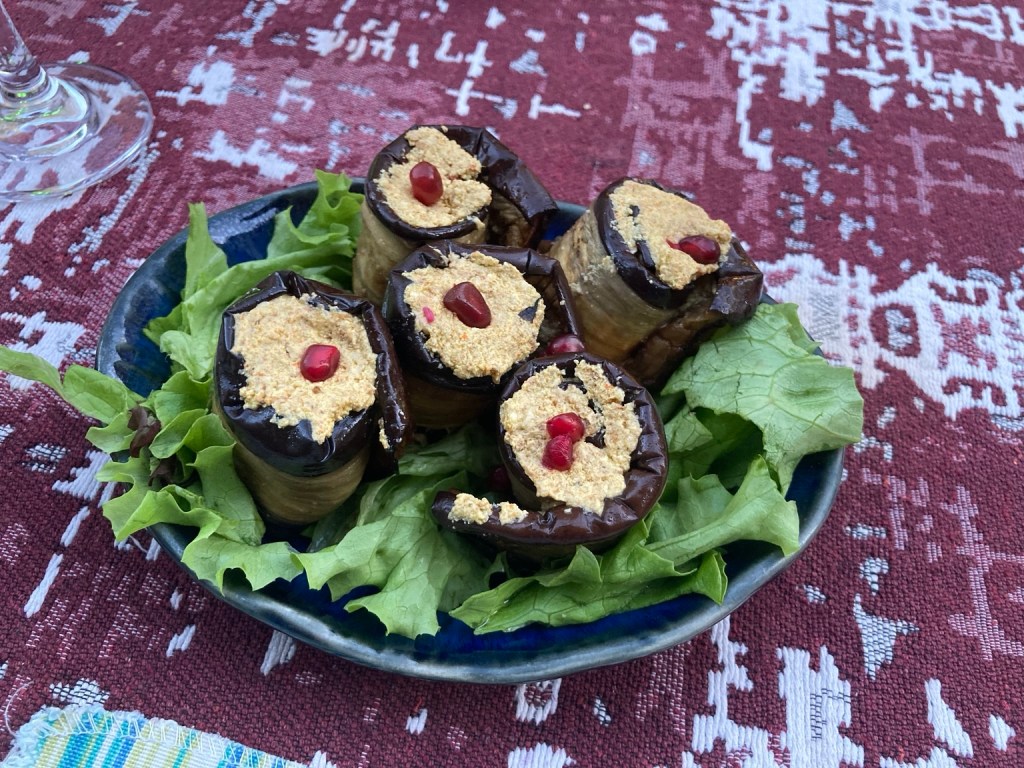
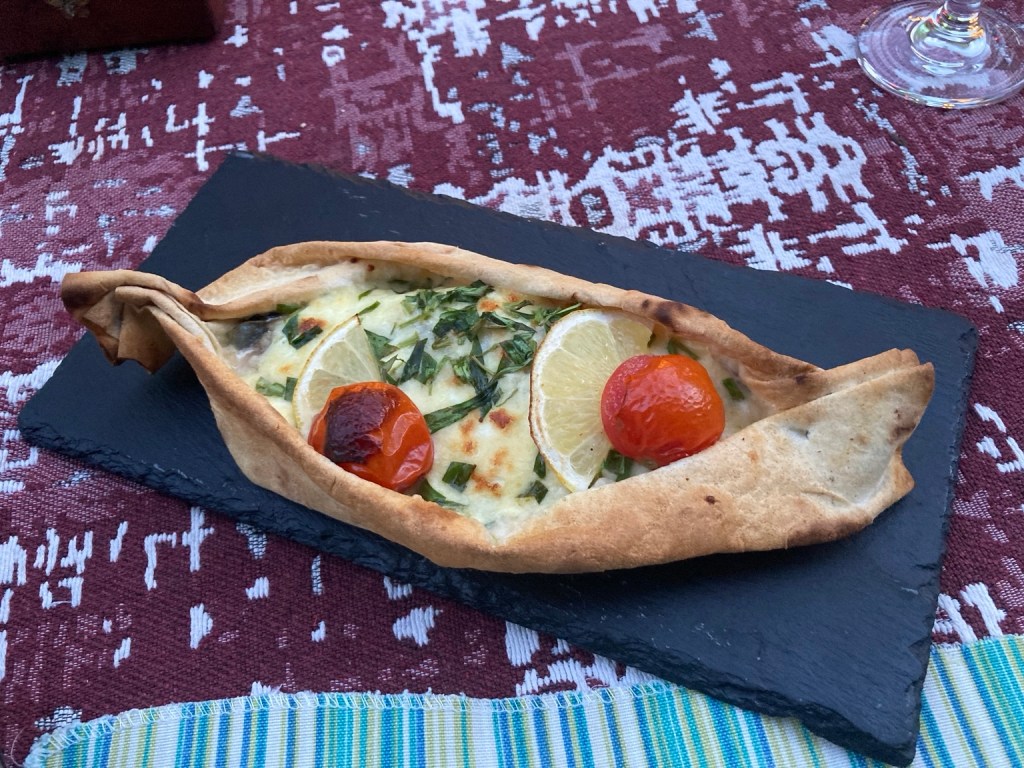
A lovely dinner while people watching including these delicious aubergine rolls spread with walnut paste … and trout cooked in a pretty filo boat!
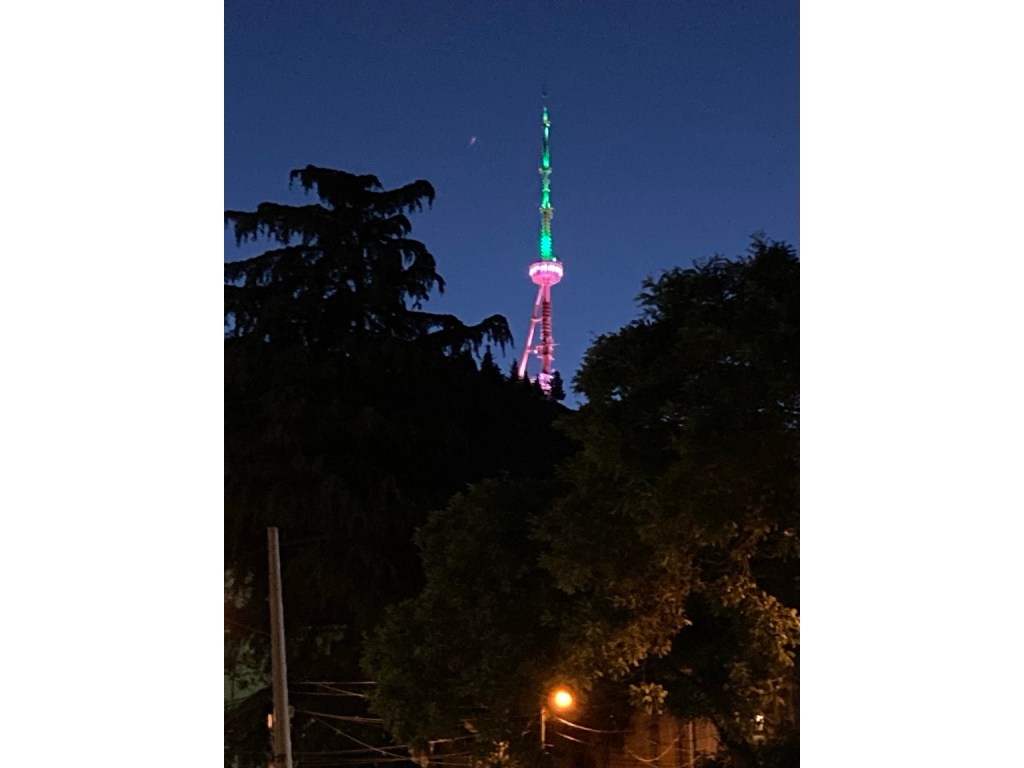
As we walked home we watched the tv tower above as it changed through all colours of the rainbow!