We spent the morning driving further north, enjoying the views over the English countryside in late summer, a patchwork of golden harvested fields bordered with green hedgerows. We came upon a glimpse of the Angel of the North rather suddenly and taking snaps from the car is always tricky, so we’ll make a point to stop in the way back for a proper look.
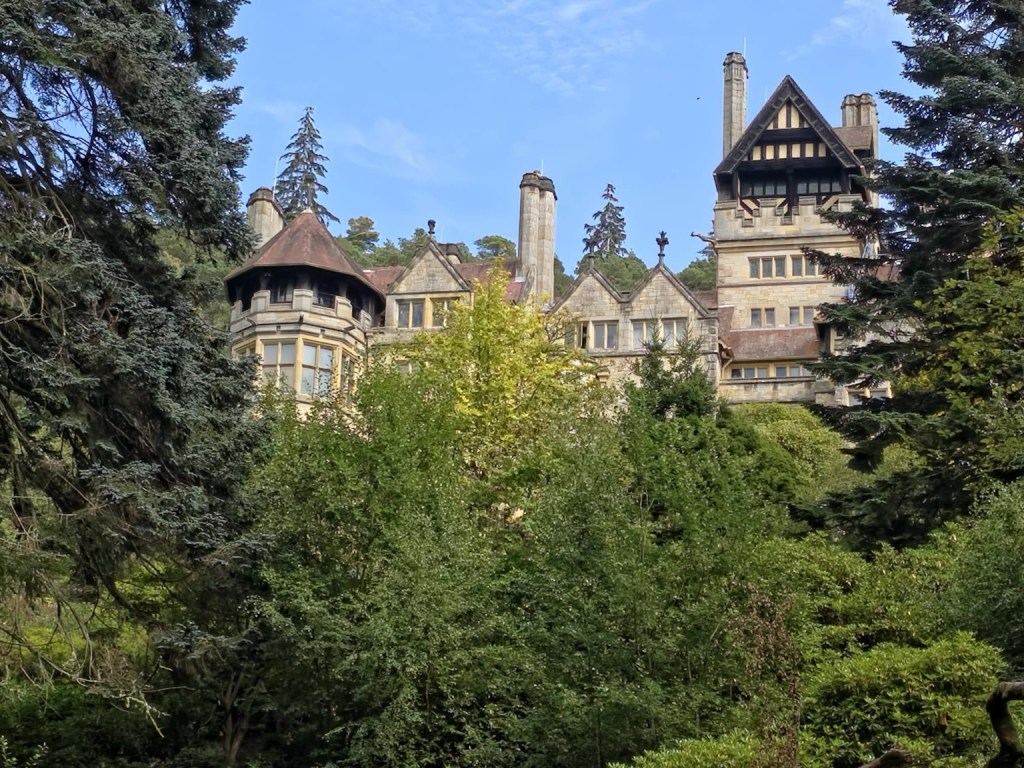
We didn’t want to delay as we were eager to get to Cragside, the dramatic Victorian country house built for the inventor and industrialist Lord William Armstrong and his wife Margaret. They shared a vision of a dream home set within a landscape of trees and lakes, and blends pioneering technology with grand Tudor Revival architecture designed by Norman Shaw. It was also the first home in the world to be lit by hydroelectricity.
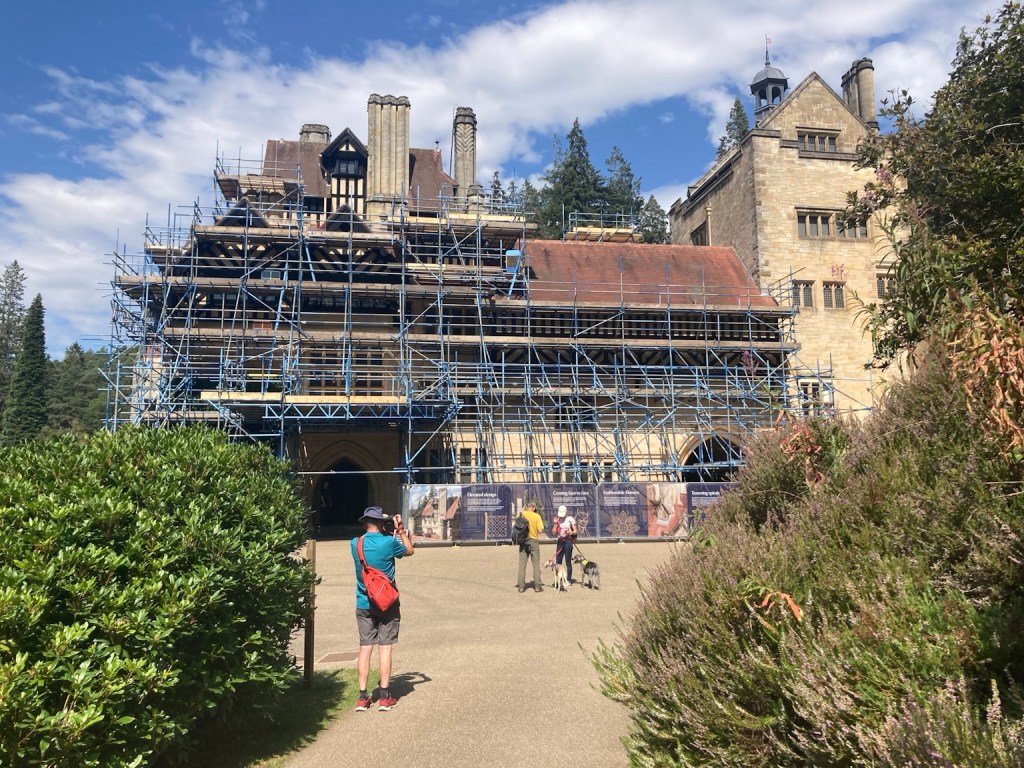
At present, there is an extensive conservation project to repair and renovate the roof so a lot is hidden behind scaffolding but some of the main architectural features of the exterior can still be seen like the Tudor style chimney stacks, half timbered walls, Gothic arched doorways and stone mullioned windows.
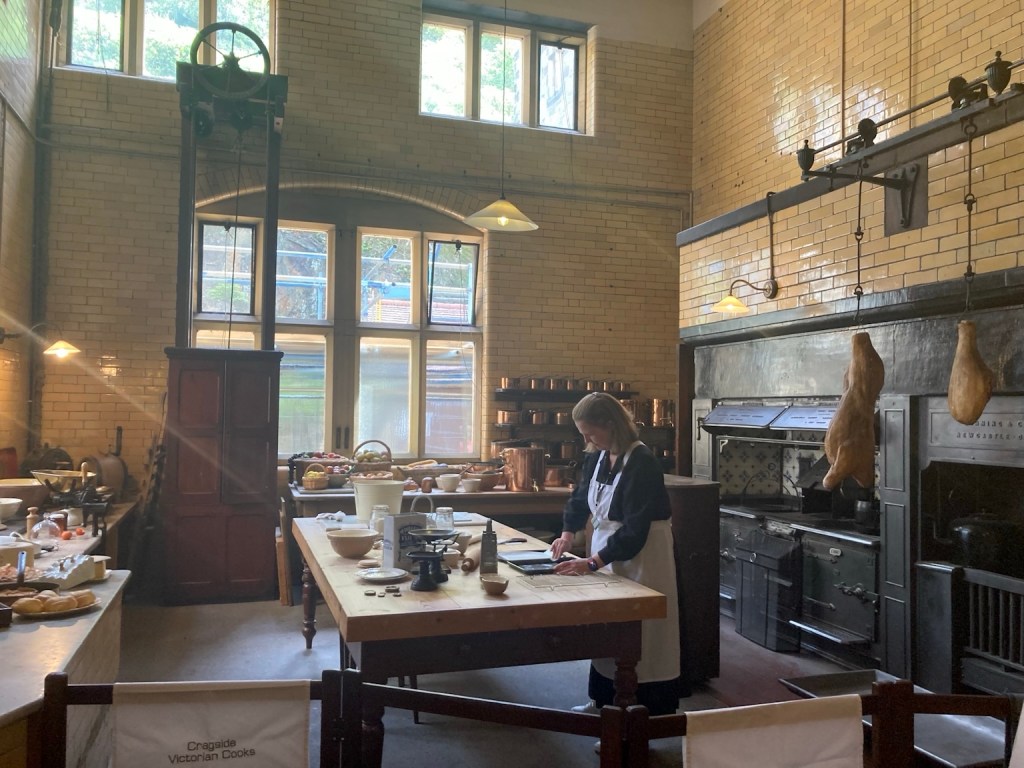
The visitor route took us first to the kitchen where there were several modern labour saving devices including a water-powered roasting spit over the range and a hand-operated dumb waiter in the far corner.
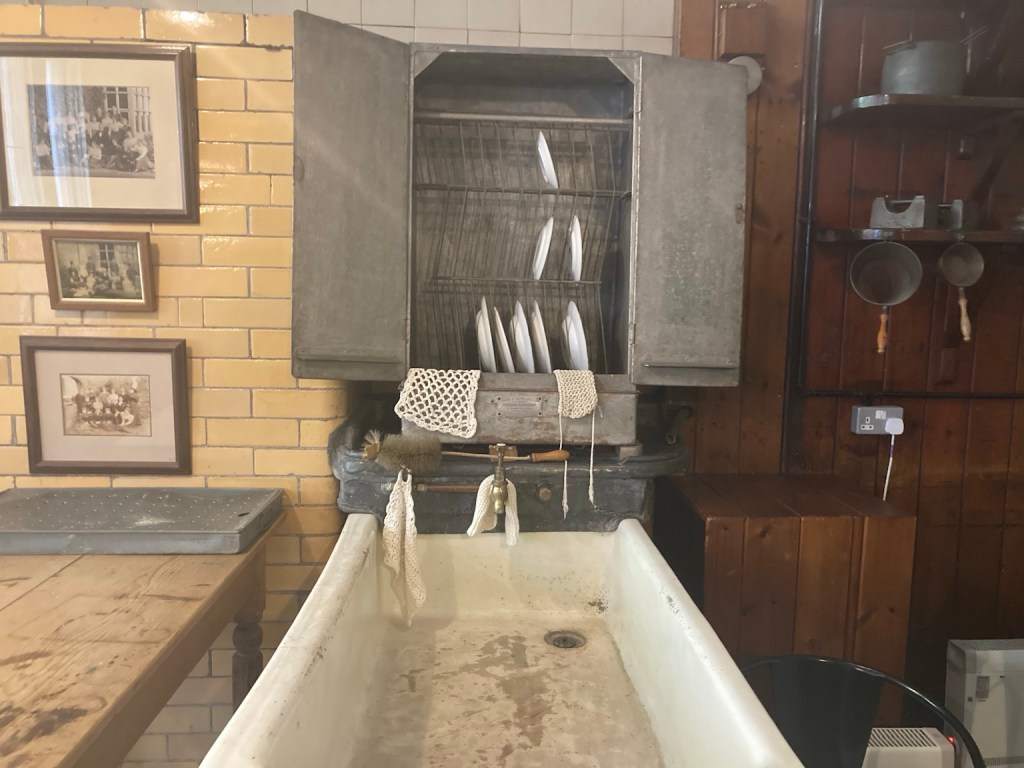
There was even an early dishwasher set above the sink!
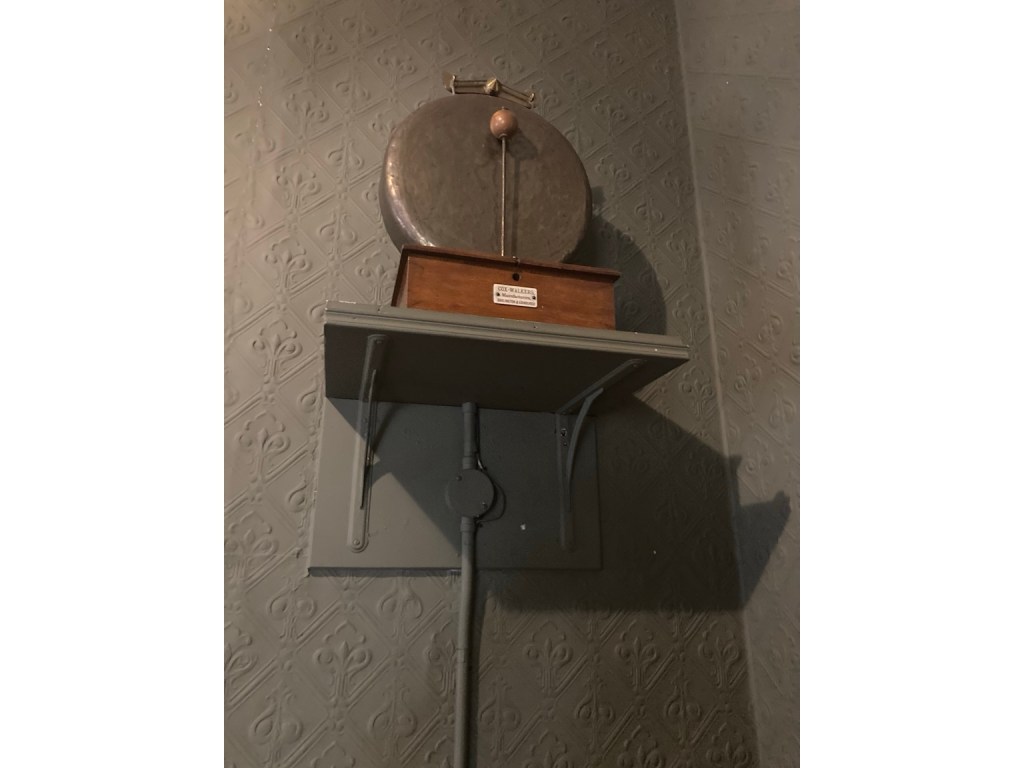
There was no excuse to be late for dinner at Cragside as the butler sound the electric dinner gong with the touch of a button …
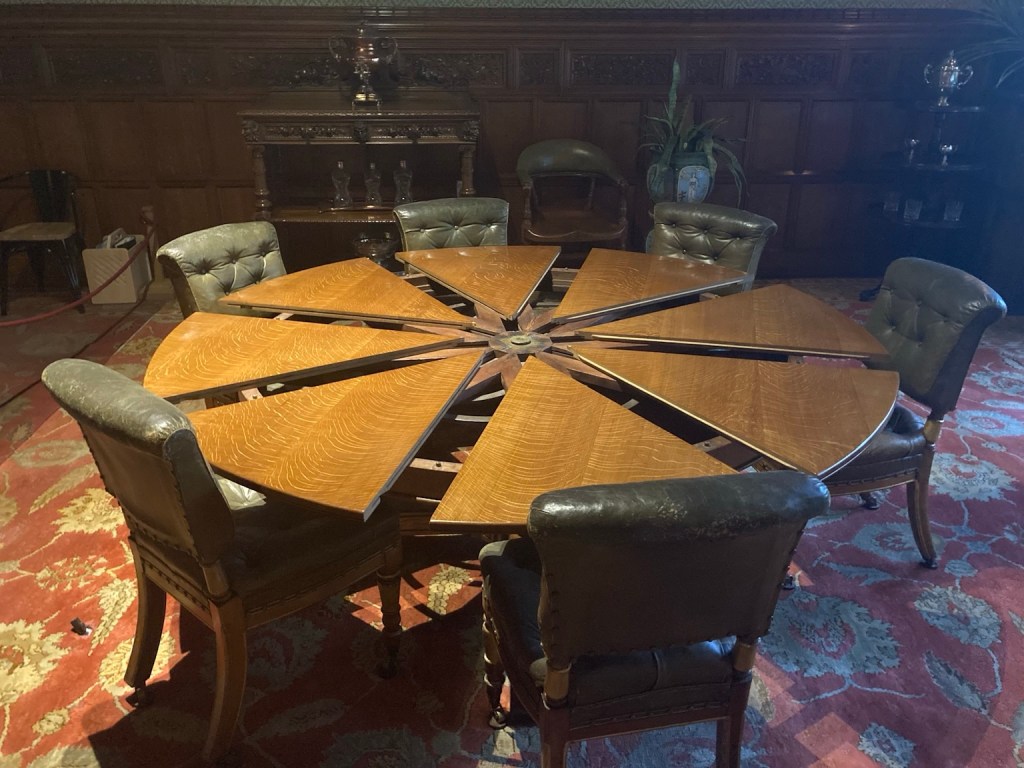
… and the dining room had an ingenious Capstan table which could be extended with extra sections to seat up to 12 people.
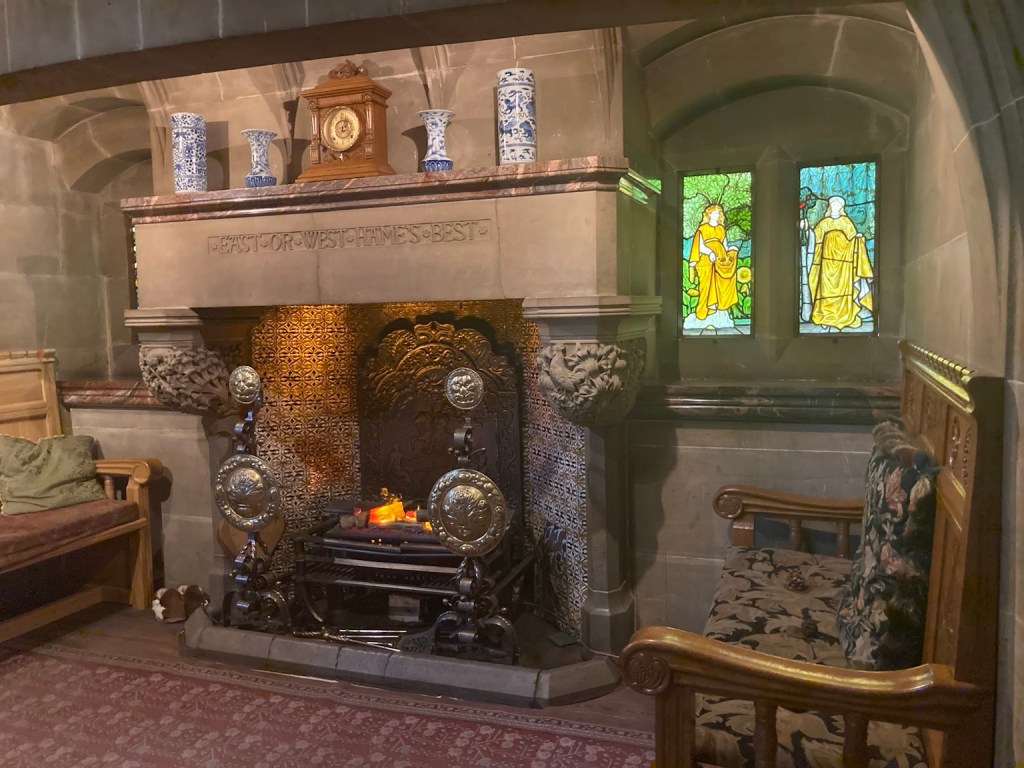
But the part of the house I loved best was this cosy Arts & Crafts inglenook fireplace decorated with stained glass panels of the seasons designed by William Morris.
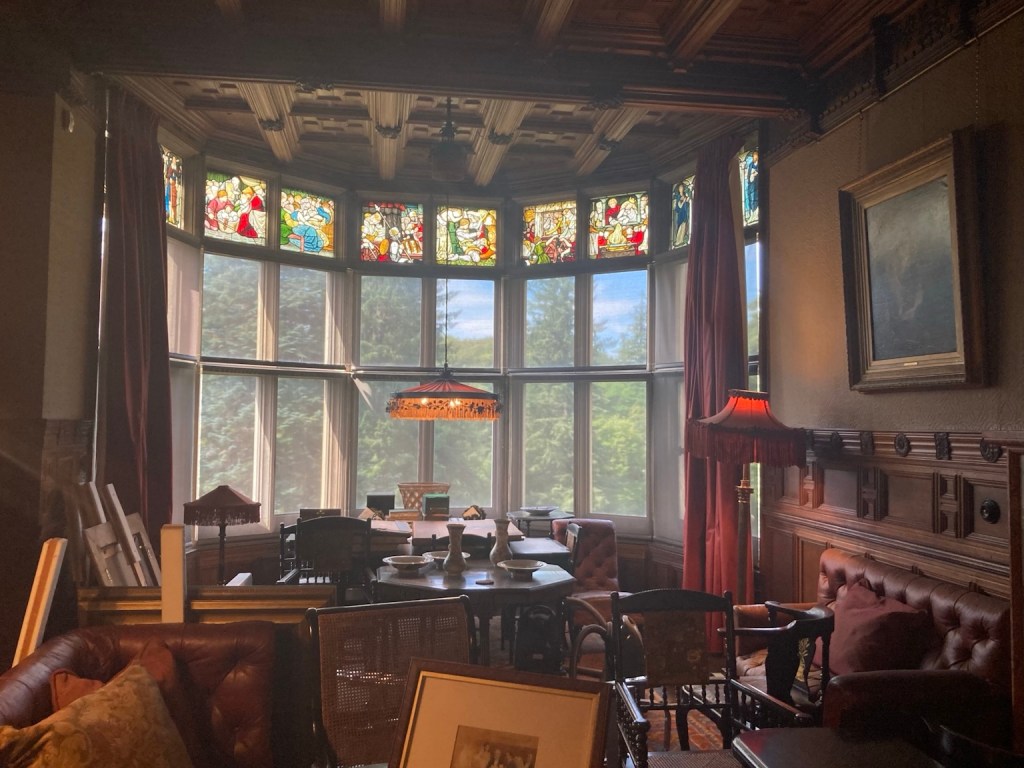
There was more stained glass in the library, but we couldn’t get very close and the contents of the room had all been pushed together to facilitate the scaffolding.
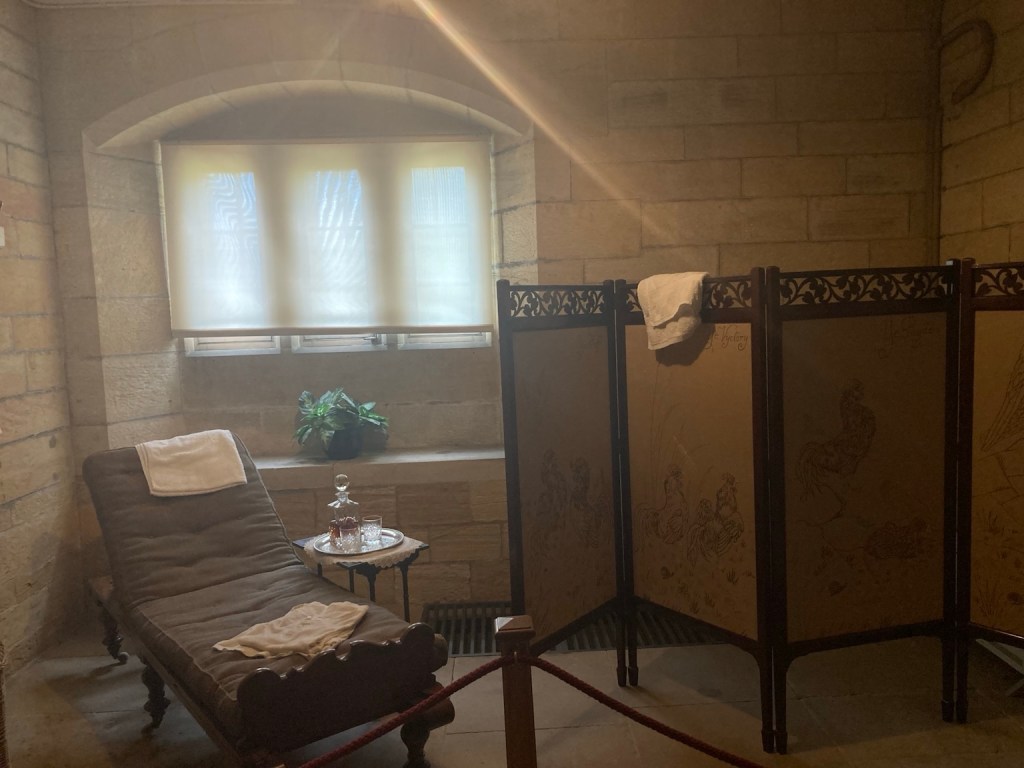
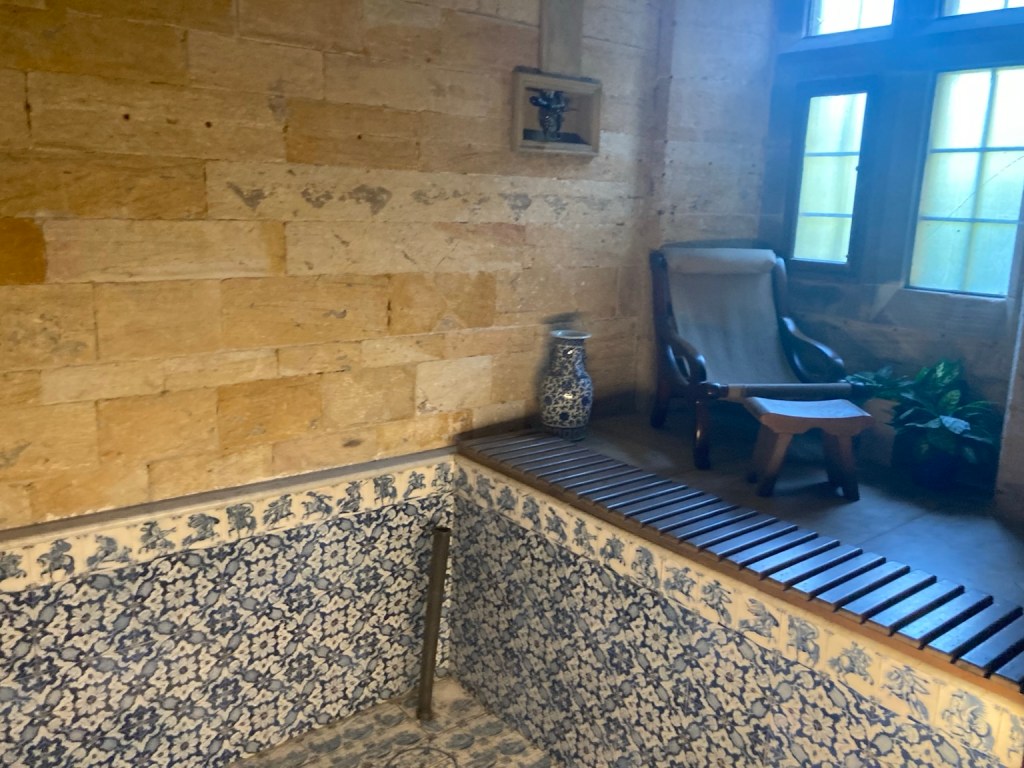
Downstairs we were surprised to find Cragside comes with its own Turkish Bath suite which features a hot room, steam bath, cooling-room, shower and plunge pool … how lovely!
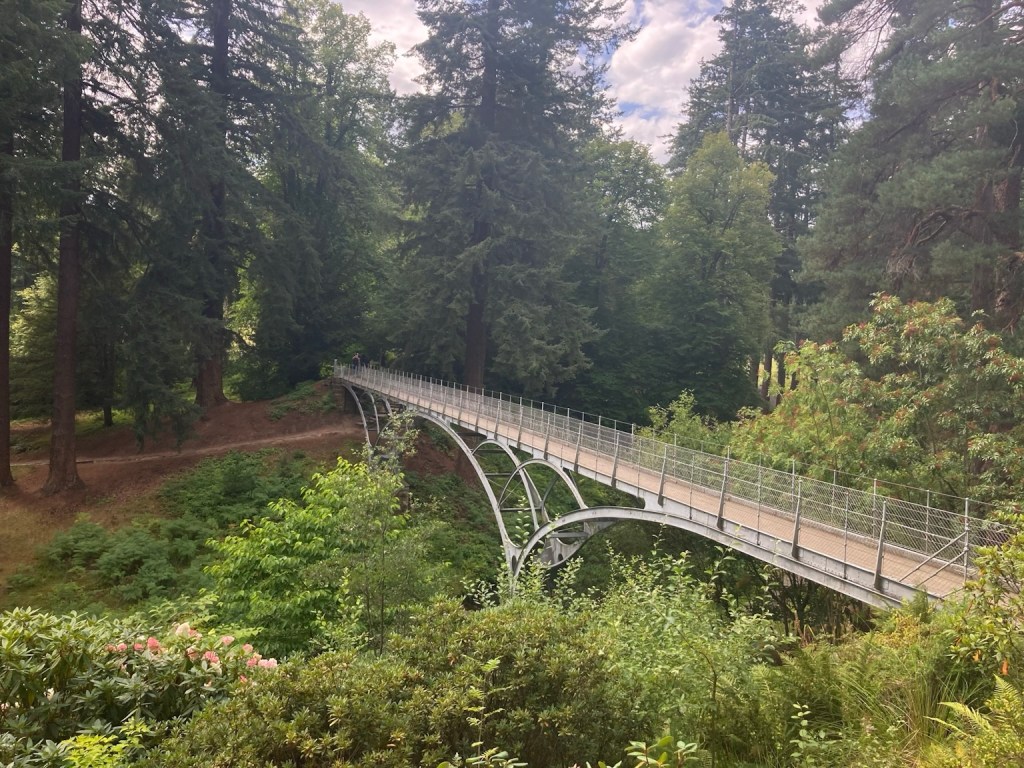
Once we started going round the upper rooms, they were all a little dark, mainly due to the conservation blinds, but we got a glimpse out of a window at the iron bridge below and it’s obvious how large the surrounding trees have grown so while there may once have been vistas, now it feels a little oppressive.
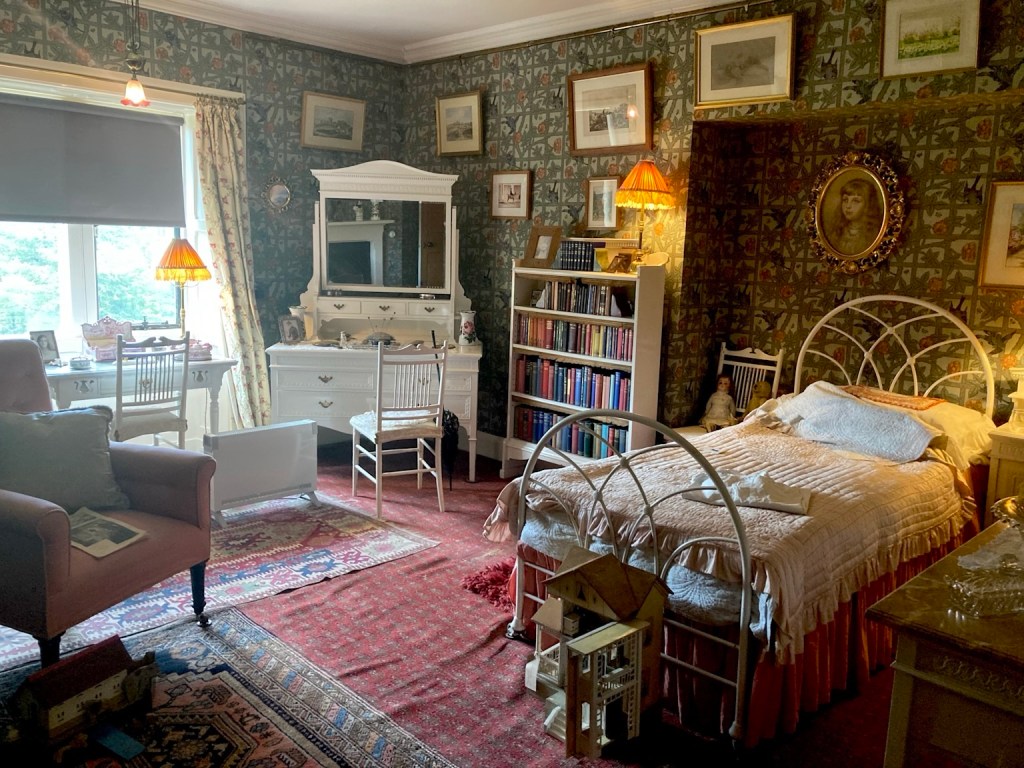
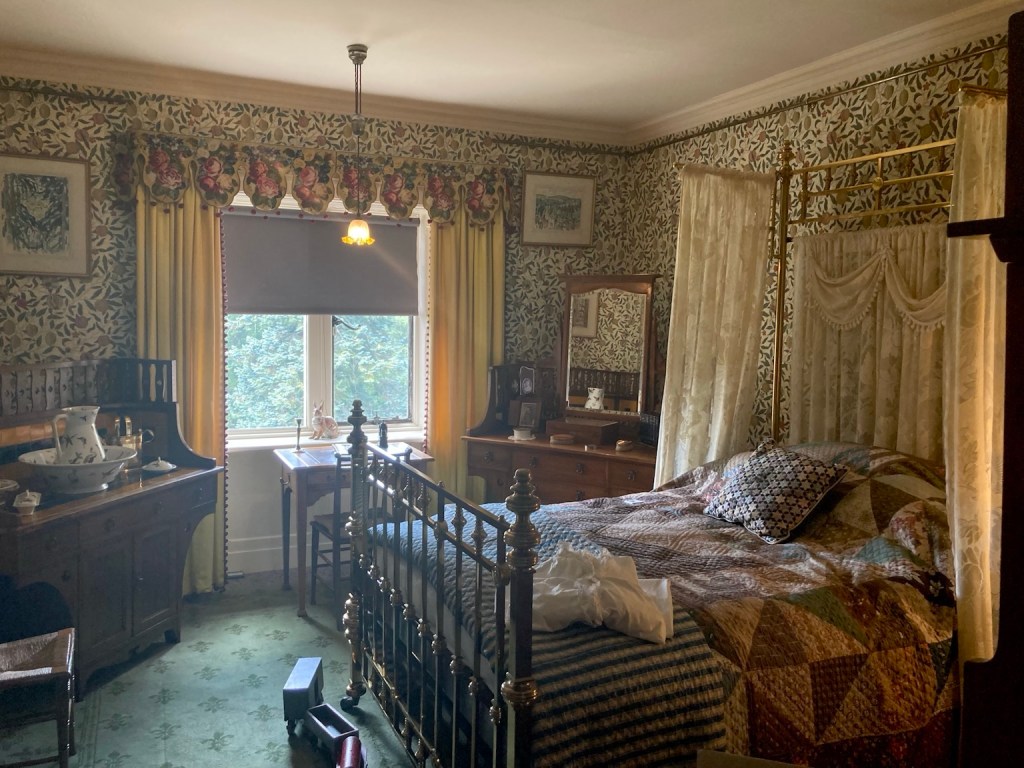
William and Mary Armstrong had no children, so their great-nephew, William Watson Armstrong inherited and these two bedrooms were used by his children William and Winifred.
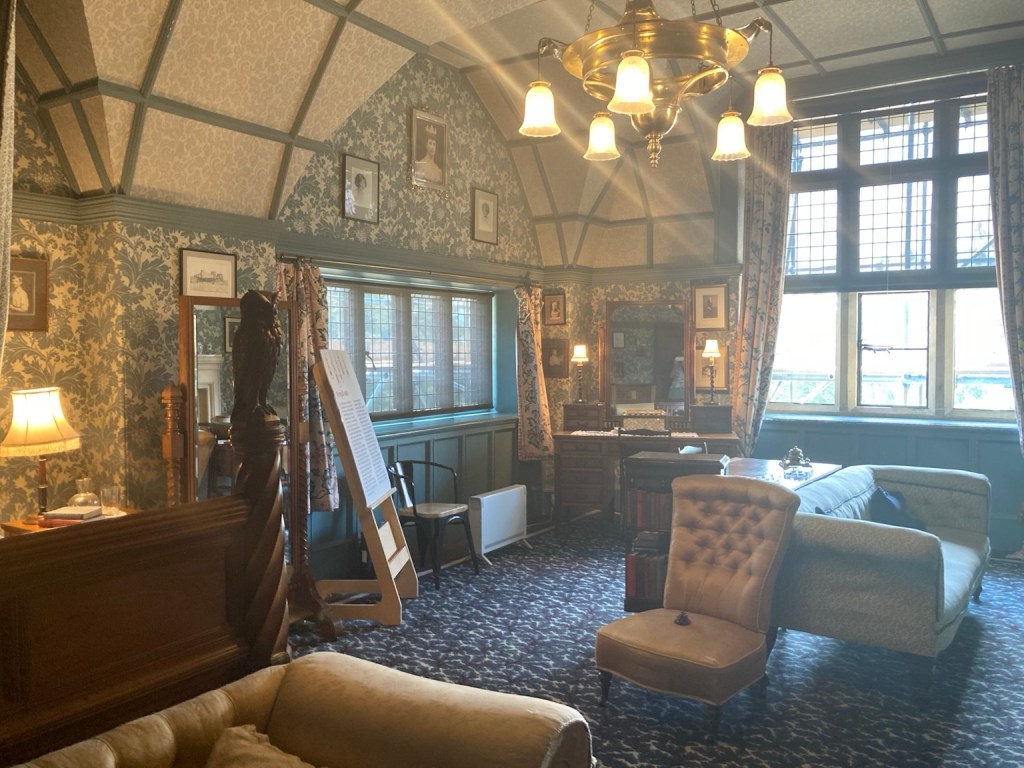
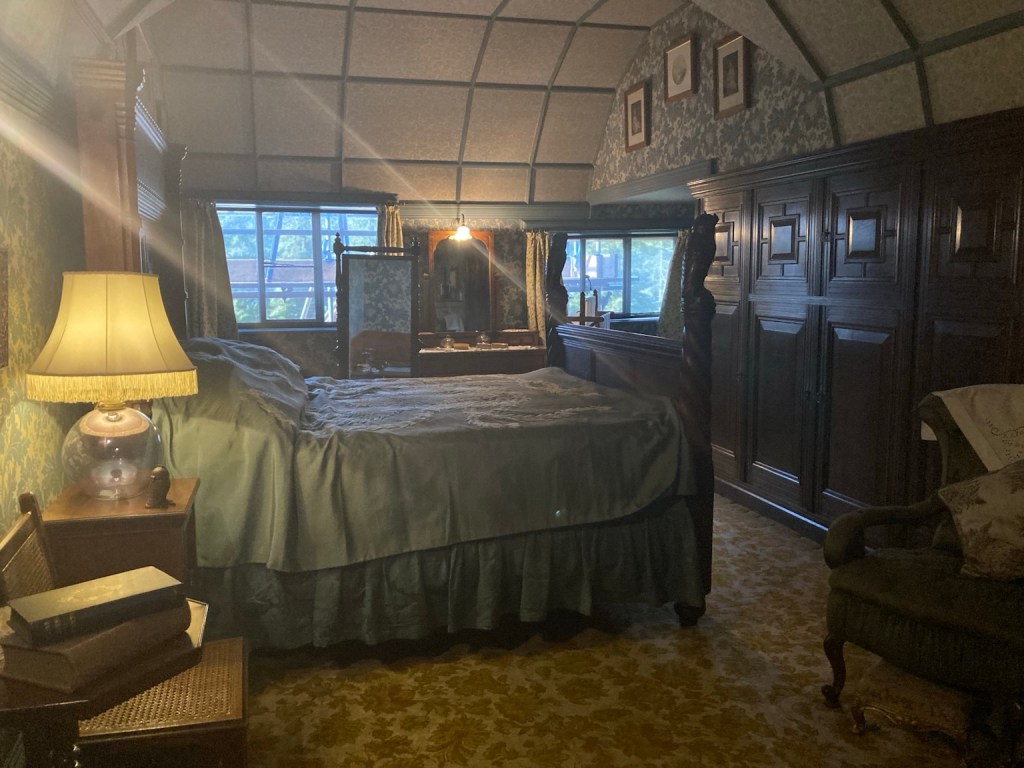
In preparation for a royal visit from the Prince and Princess of Wales in 1884, an extension was built with the lavish Owl Suite for the royal couple …
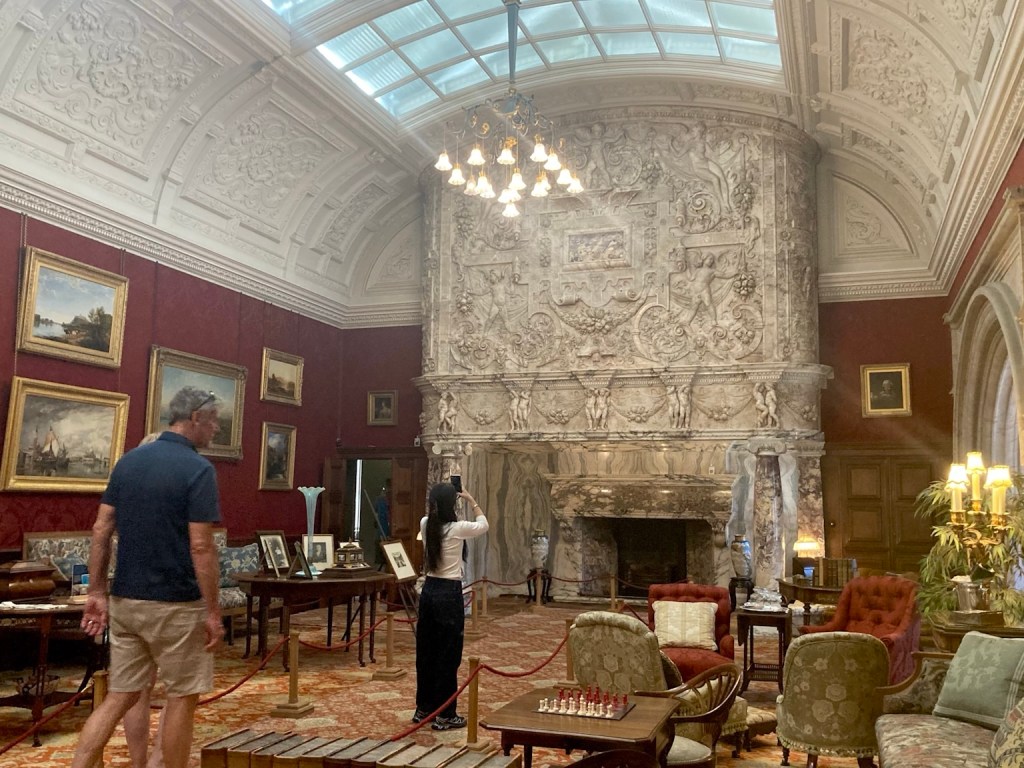
… and also a new drawing room with this colossal marble and alabaster fireplace. It was a mark of Armstrong’s success and Cragside’s fame that the future King Edward VIl chose to stay at the home of an industrialist who was not yet a lord.
In 1878 Armstrong experimented with lighting the house with electricity, using arc lamps in the gallery which was apparently splendid but also unreliable, noisy, smelly and dangerous. By 1880 the Library became the first domestic room in the world to be illuminated with incandescent light bulbs invented by Joseph Swan. The lights would be ‘turned on’ by placing cloisonné vases acting as bulb holders into charged bowls of mercury. The copper sides of the vases acted like ‘return wires’ and hey presto there was light, but bowls of mercury round the house doesn’t sound much safer either!
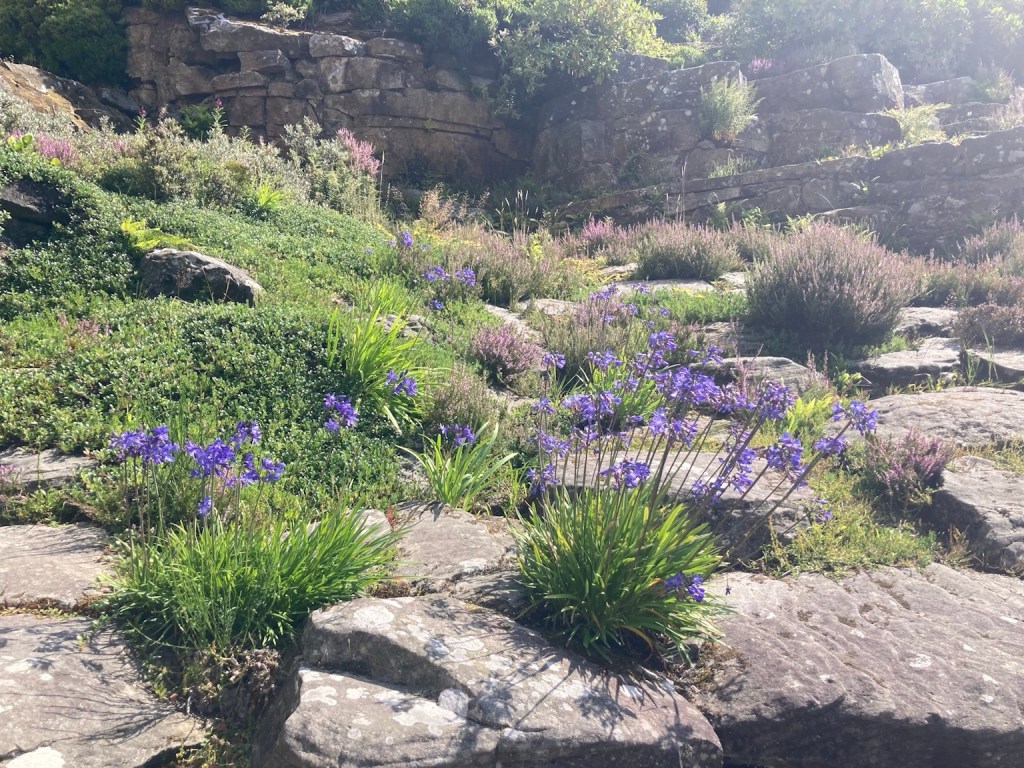
We left the house and took a walk round part of the estate and garden which included a rock garden …
… and gorge leading down to the river.
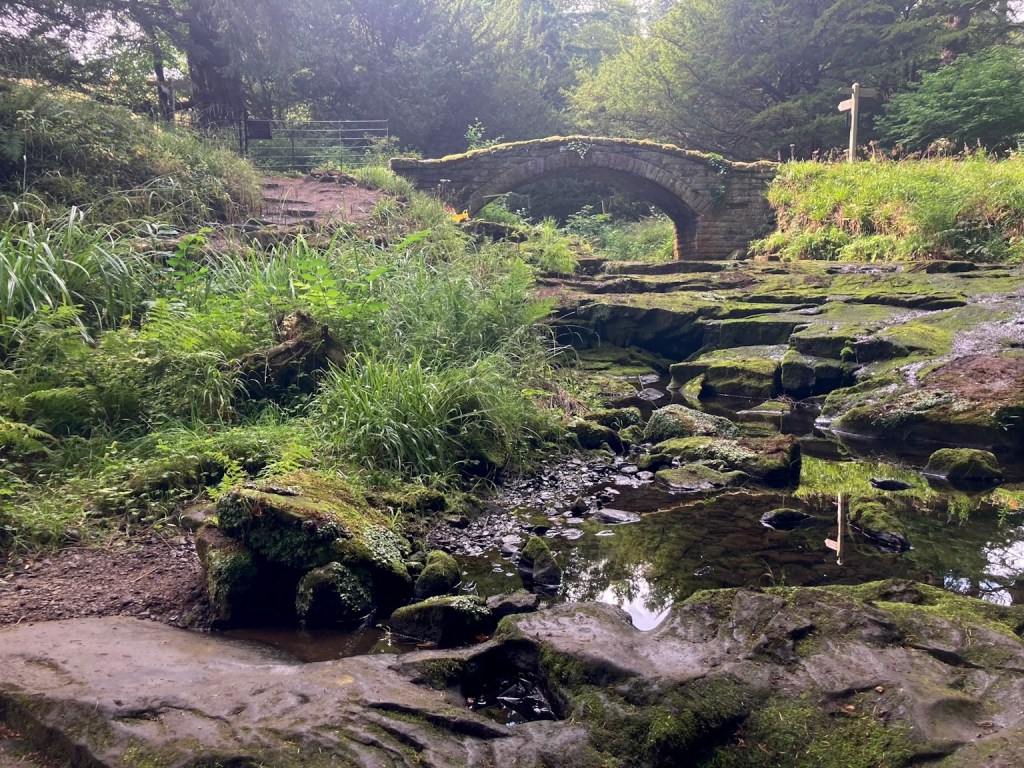
From the iron bridge we were able to get a pretty good view of the back of Cragside.
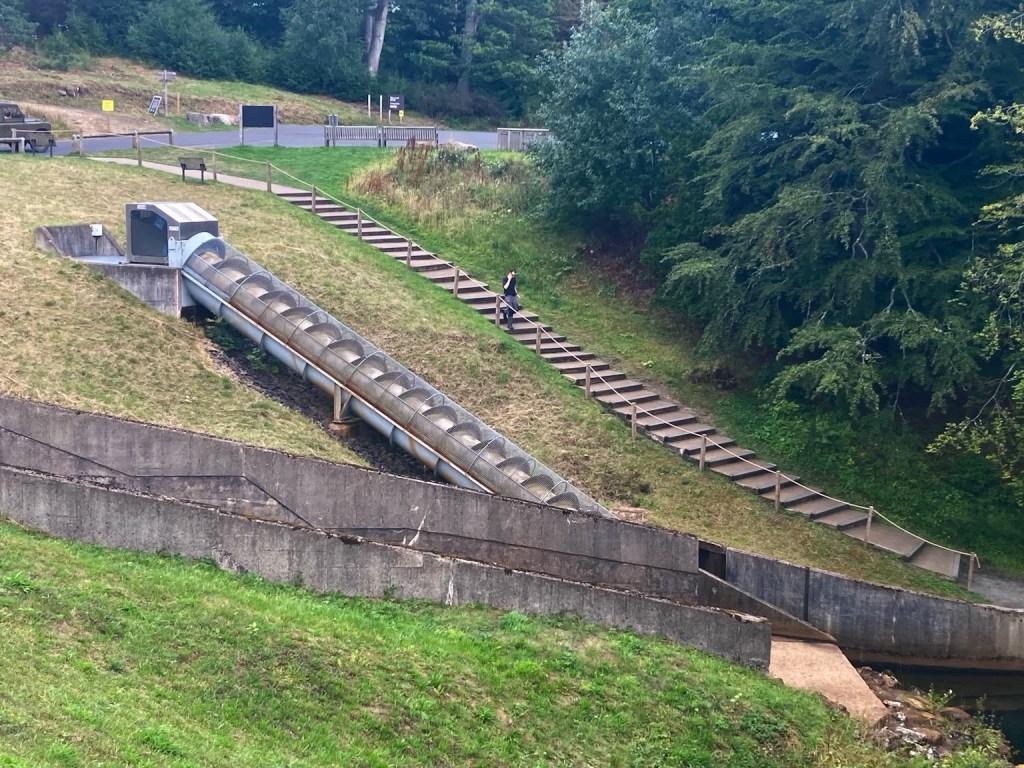
Finally, before we left, we saw the modern Archimedes screw, installed by the National Trust in 2014 to continue Armstrong’s legacy of lighting Cragside with hydroelectric power. Water from the lake flows through turning the blades and this energy is sufficient to light the 350 light bulbs in the house.
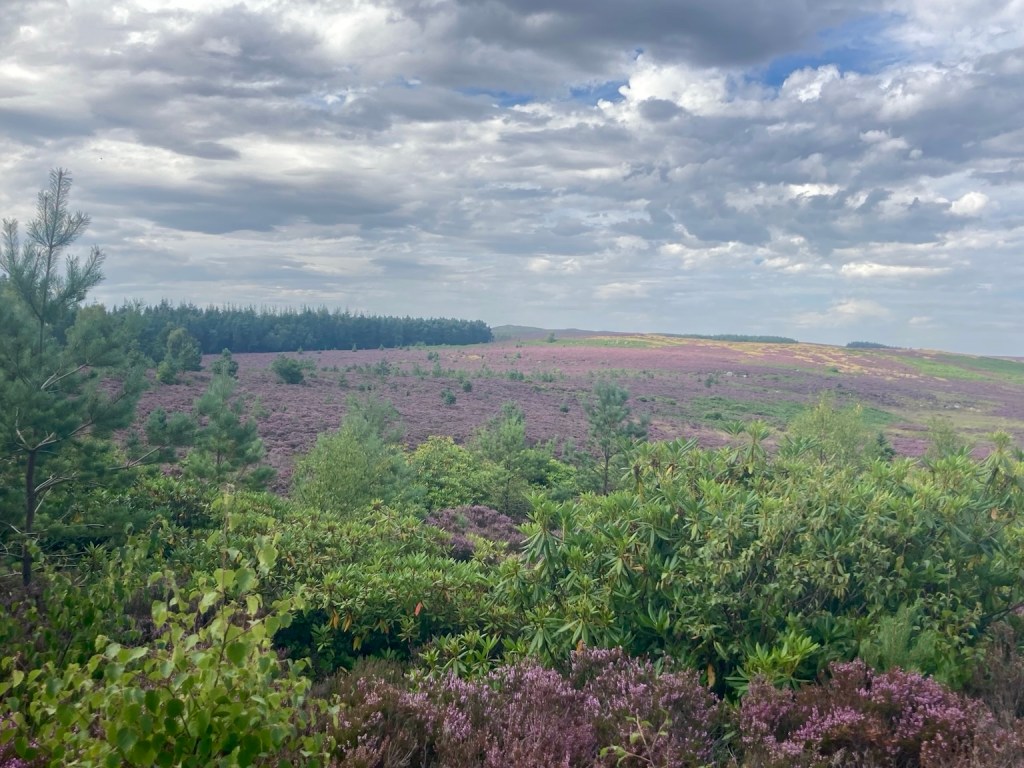
As we left, we took the 6 mile carriage drive, designed to show off the estate to visitors although original vistas seem to have overgrown except this one over the moors.
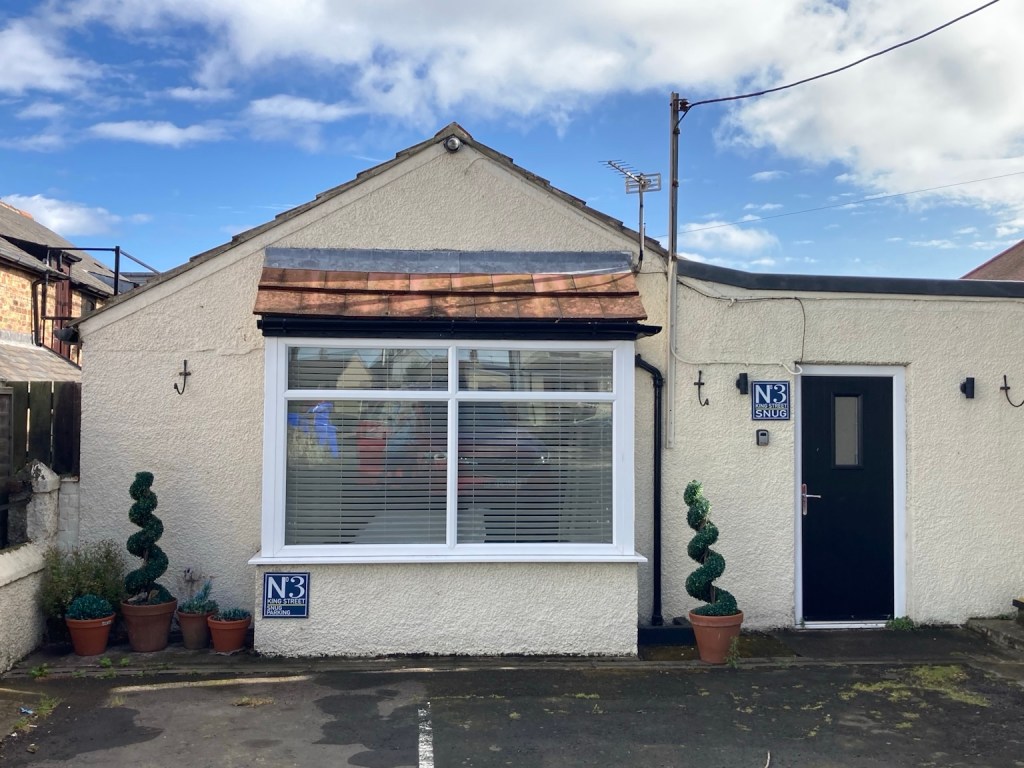
A short drive brought us to Seahouses where we are staying in an ideal holiday apartment right in the centre of town… with a parking space!
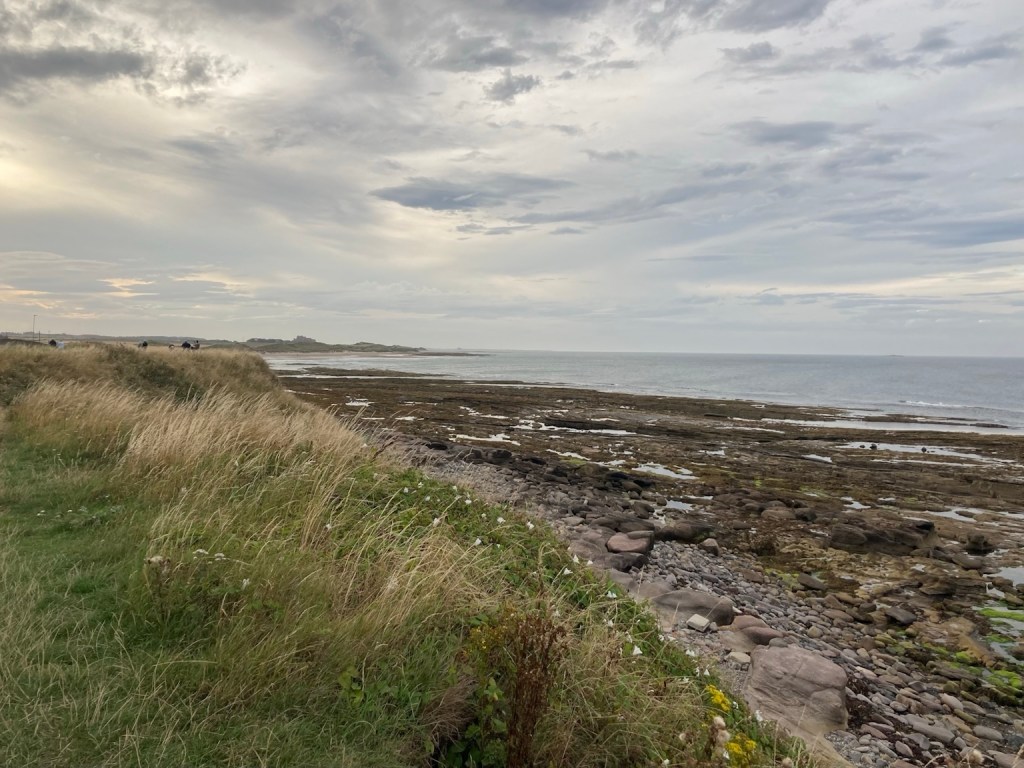
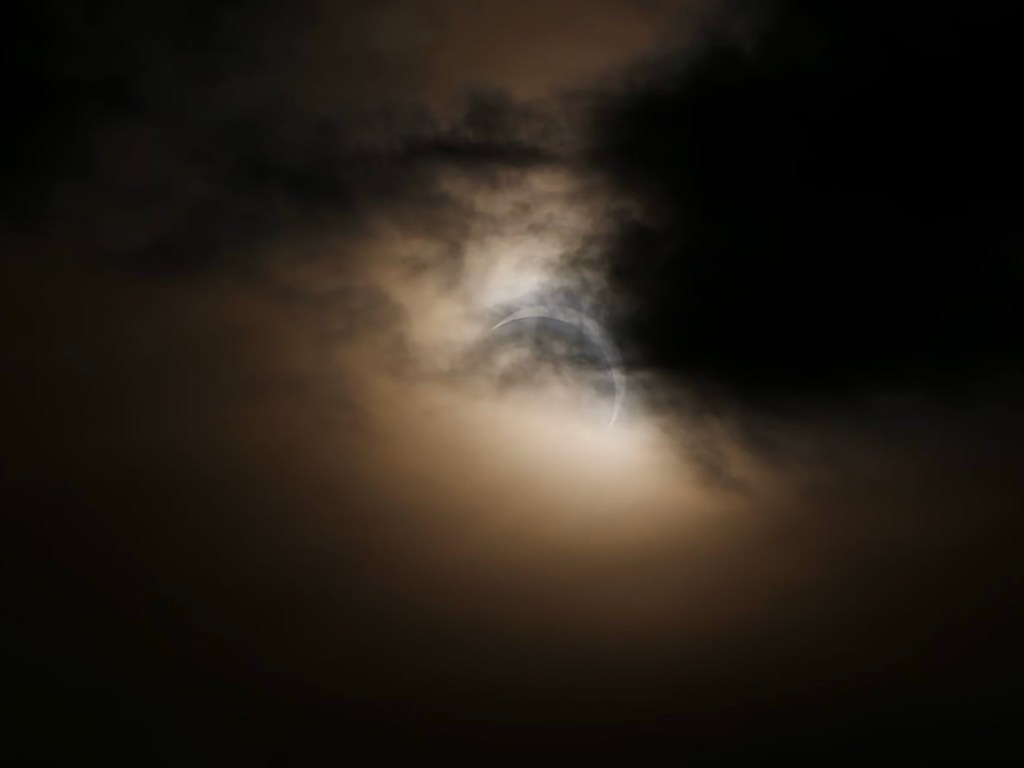
No sooner had we settled in, it was time to wander down to the beach to see if we could catch a glimpse of the much advertised solar eclipse, the first since 1999. Clouds obscured much of the event, but here’s the view towards Bamburgh …
… and Chris managed this with his phone.
 Off Travelling Together