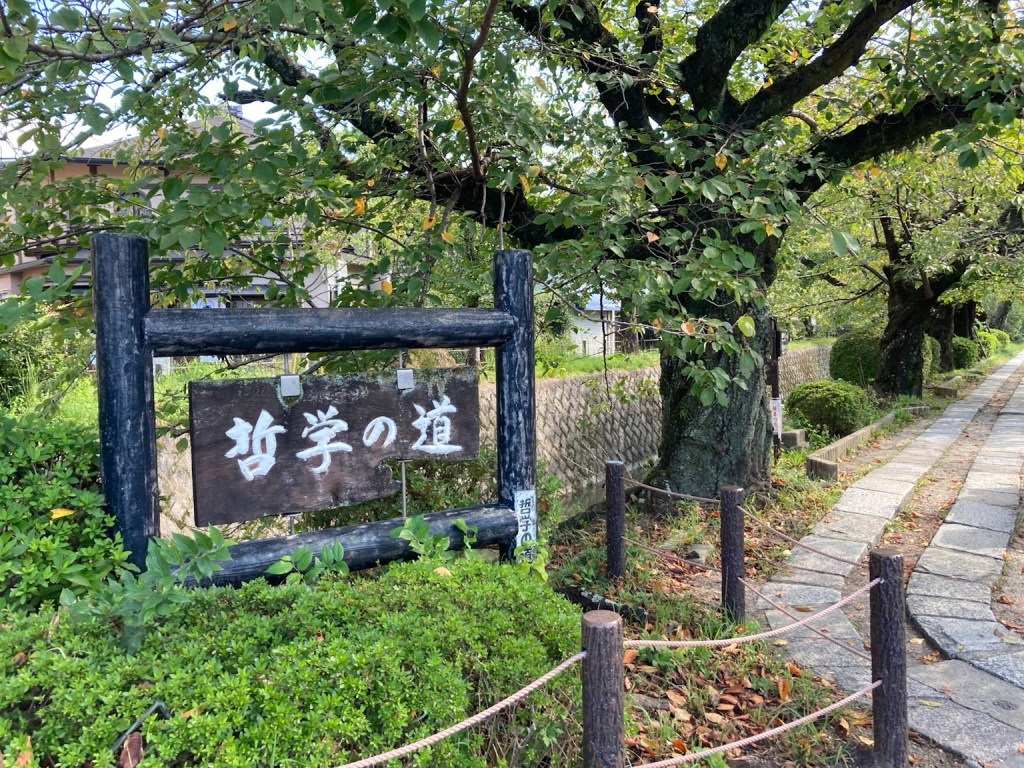
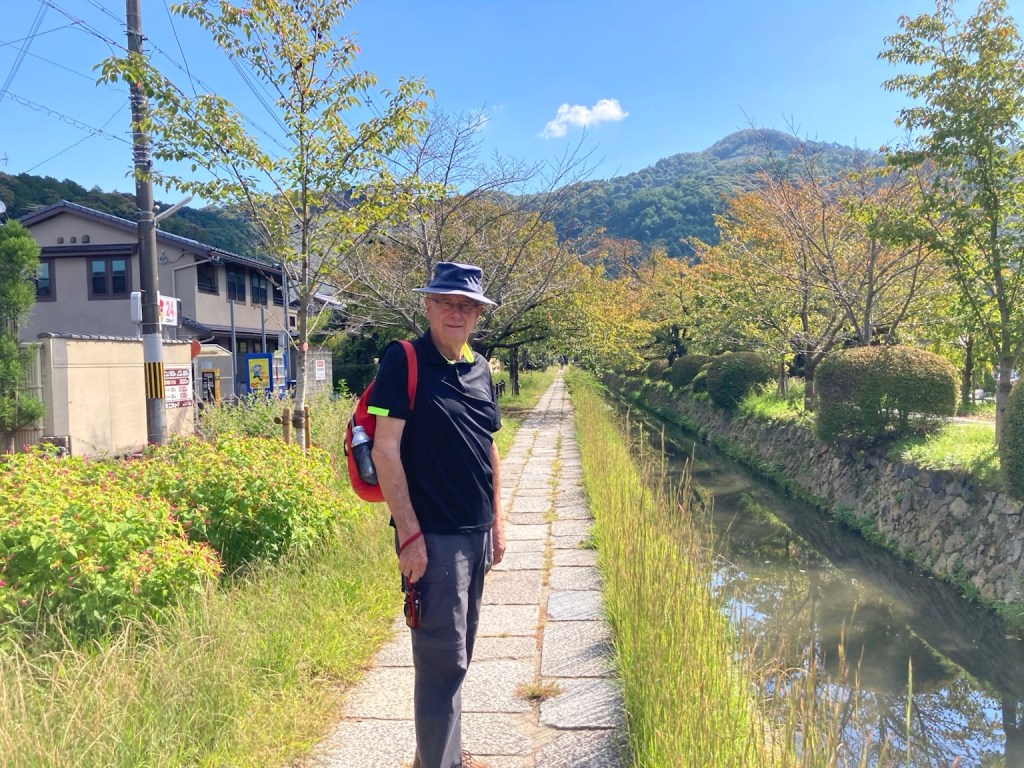
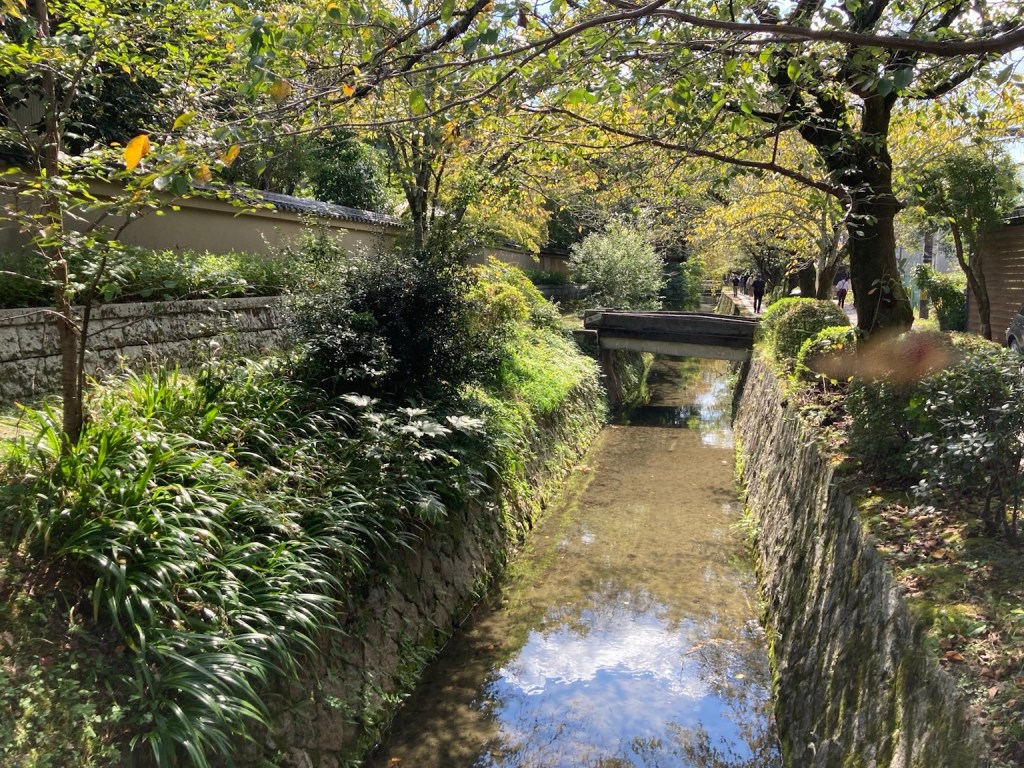
Today we are walking the Path of Philosophy which follows a stone-paved canal that brings water down from Lake Biwa. It earned its name because Nishida Kitaro, one of Japan’s most famous 20th-century philosophers, walked this route daily as a form of active meditation.
The path conveniently connected a couple of temples, firstly Ginkaku-ji or the Silver Pavilion where the Higashiyama Culture began. This C15th artistic movement that gave birth to the wabi-sabi aesthetic of understated simplicity and imperfection.
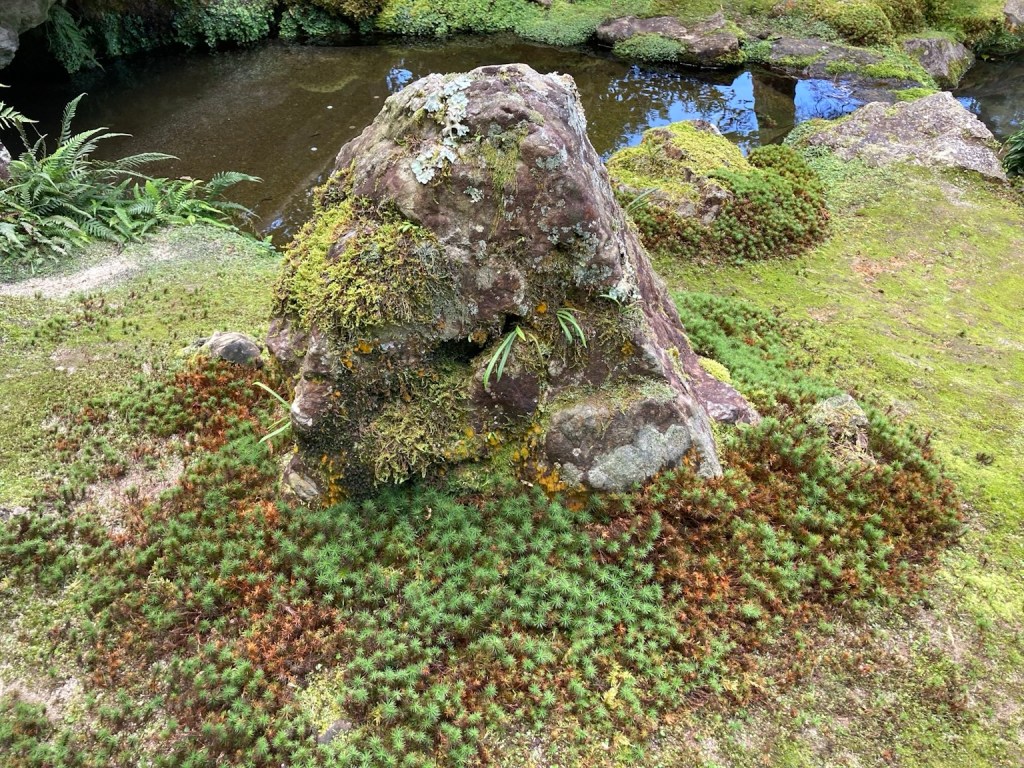
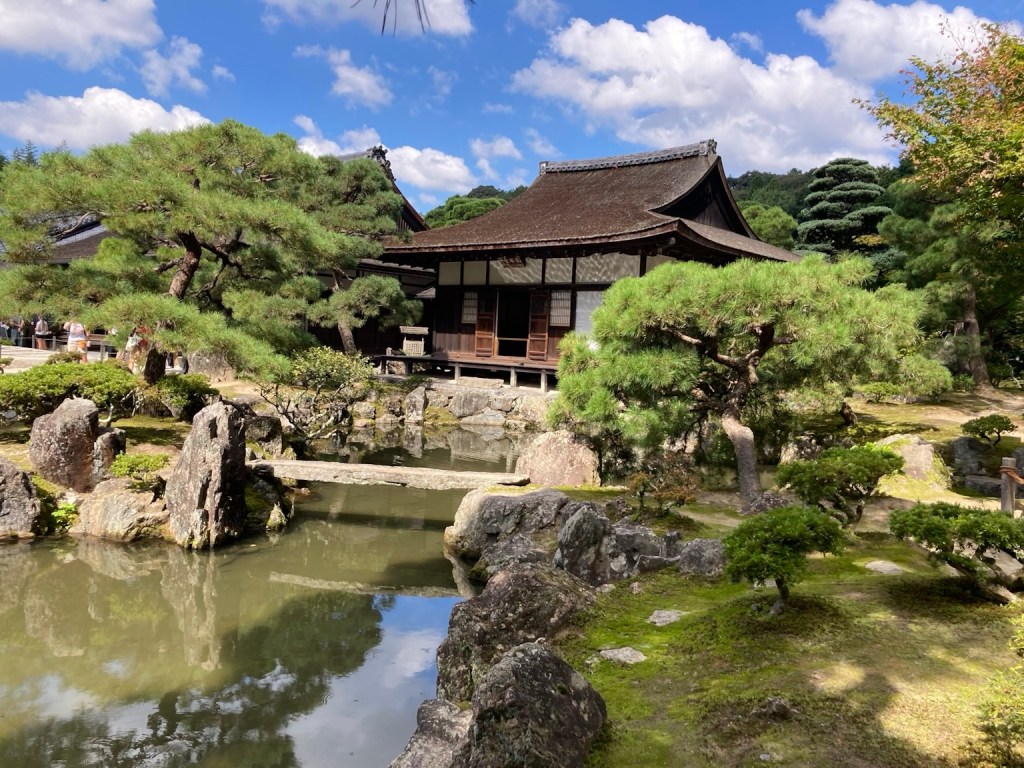
Built in 1482 by Shogun Ashikaga Yoshimasa as a villa for retirement, it was never covered in silver. Instead, it celebrates natural, unpainted timber, weathered surfaces, and a harmonious blend with nature, the core of the wabi-sabi aesthetic.
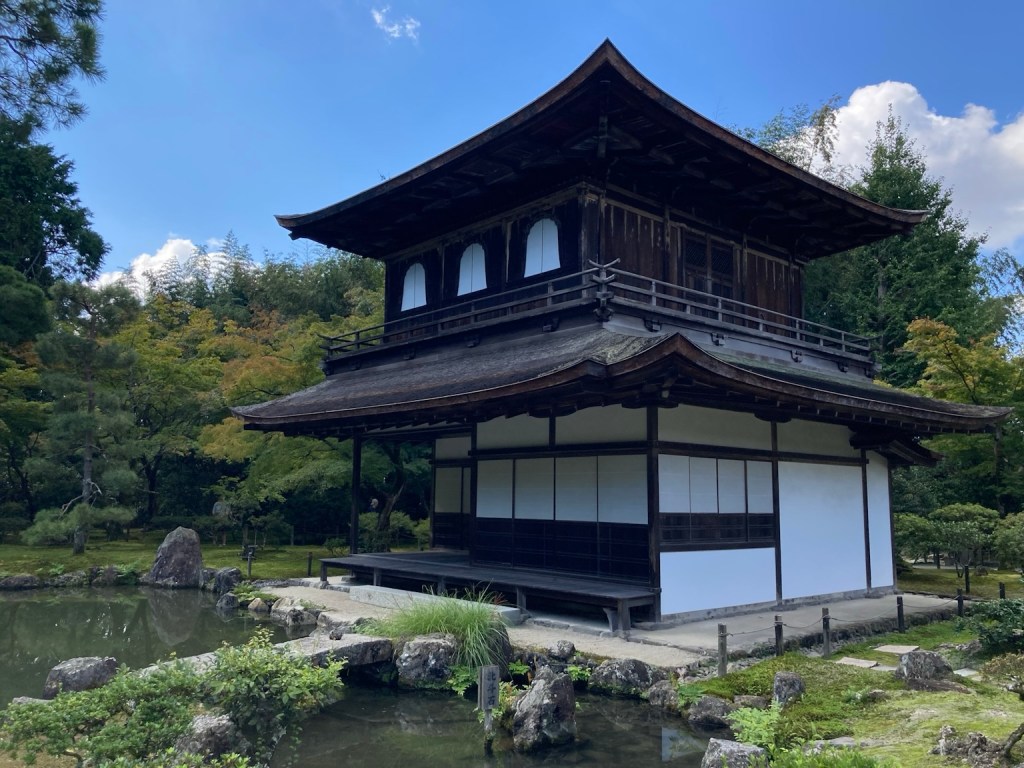
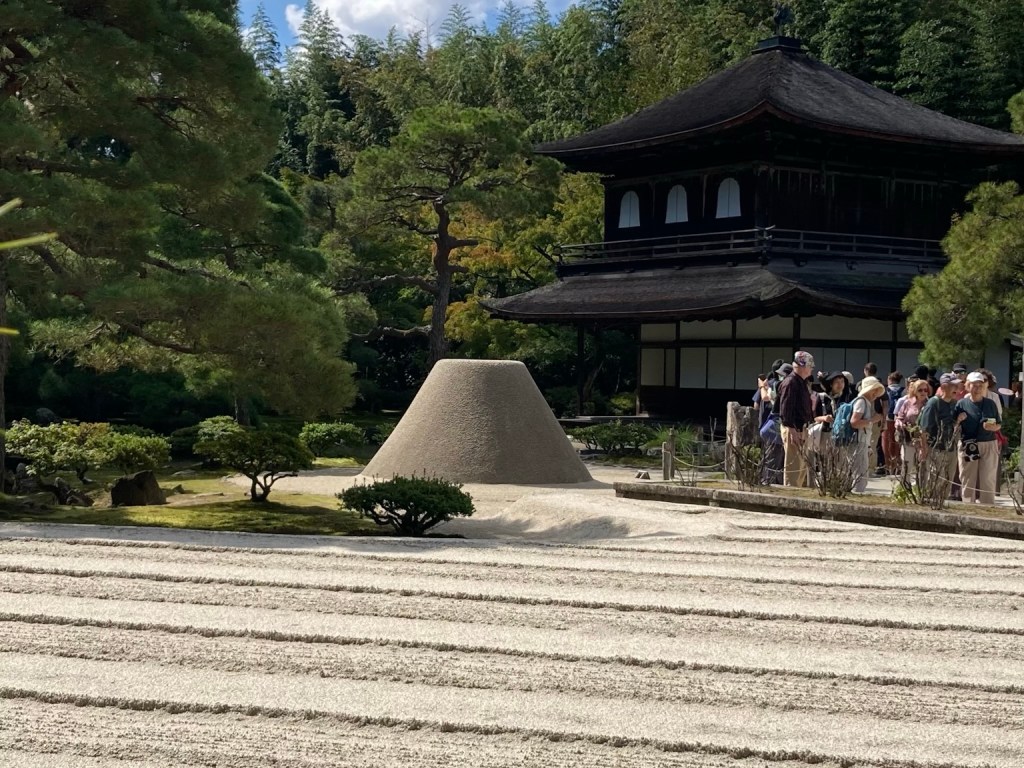
Outside, both the perfectly sculpted cone of white sand representing Mt Fuji and the raked sand garden are designed to reflect moonlight onto the main pavilion.
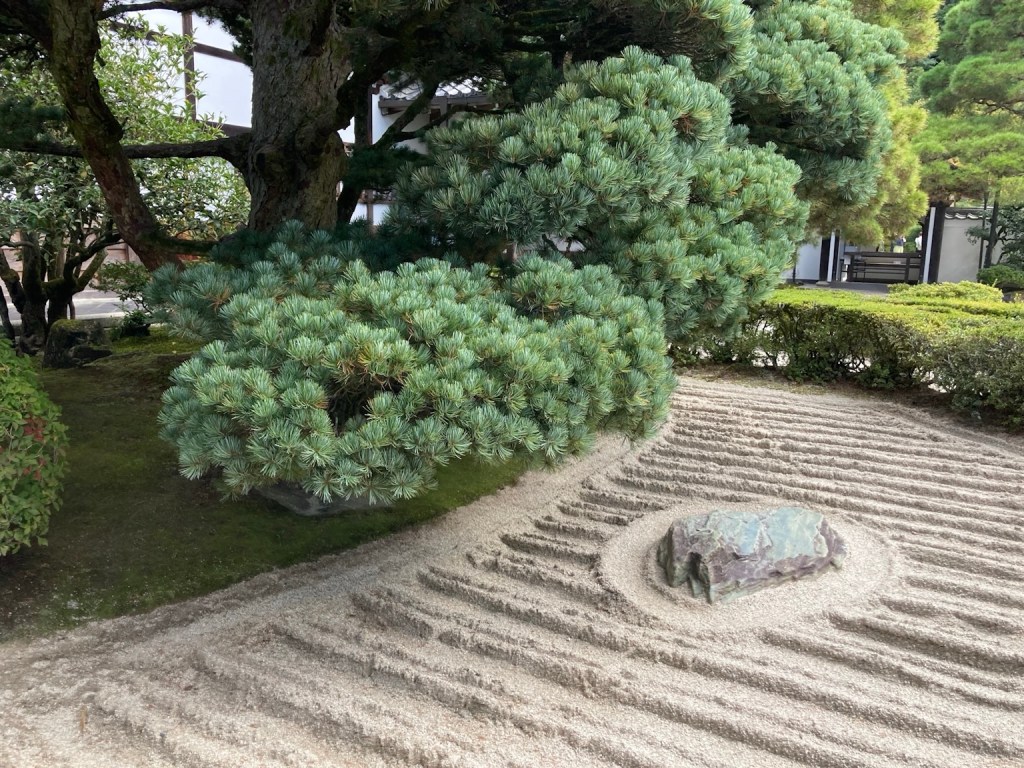
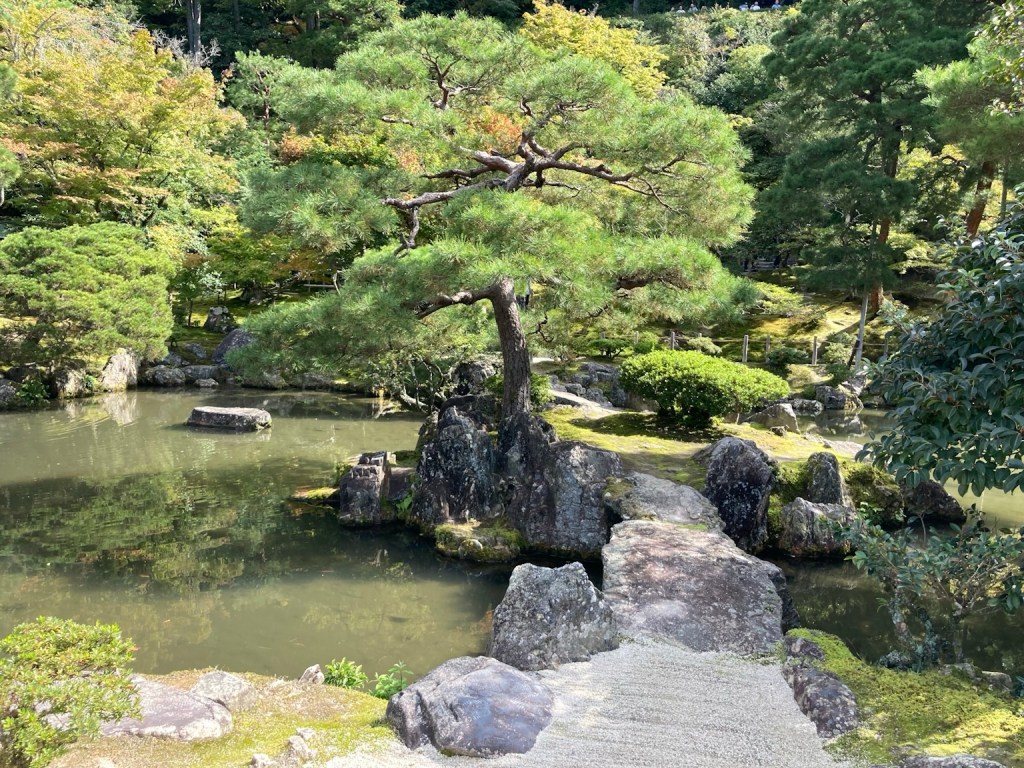
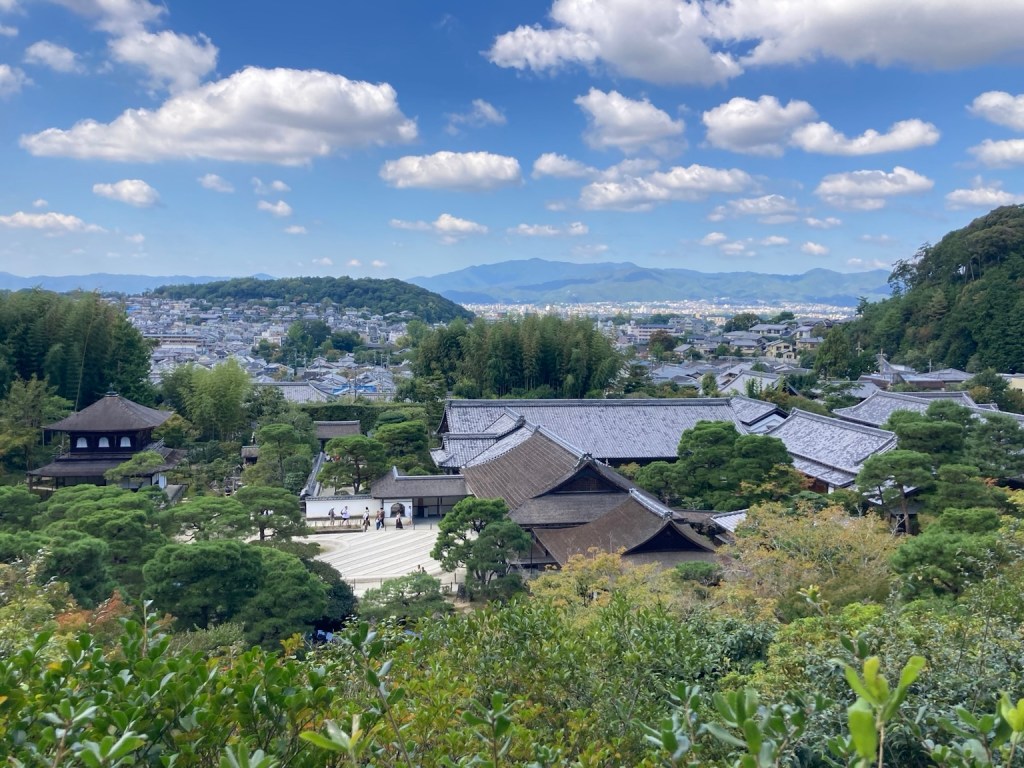
The mossy garden complete with water and teahouse … led us up to a view over Kyoto.
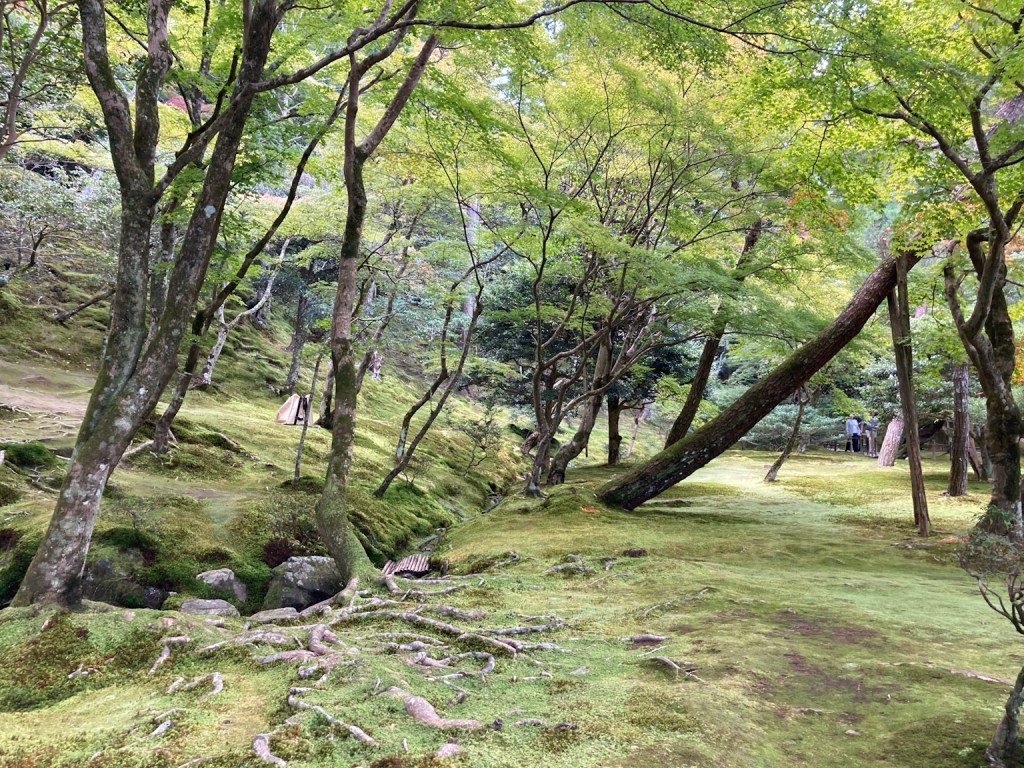
From here, we followed the path ..
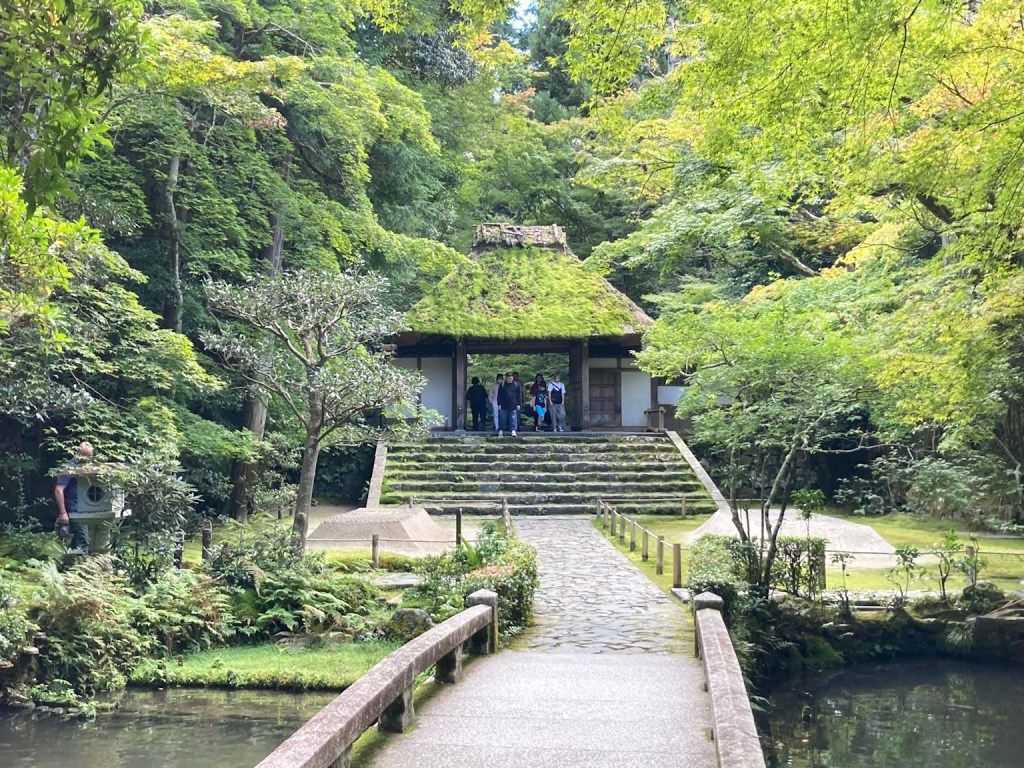
… to the very understated Honen-in Temple which we entered through a thatched gate that looked part of the forest. There were sand mounds on either side, raked daily by the monks to symbolise purity of mind and the impermanence of life.
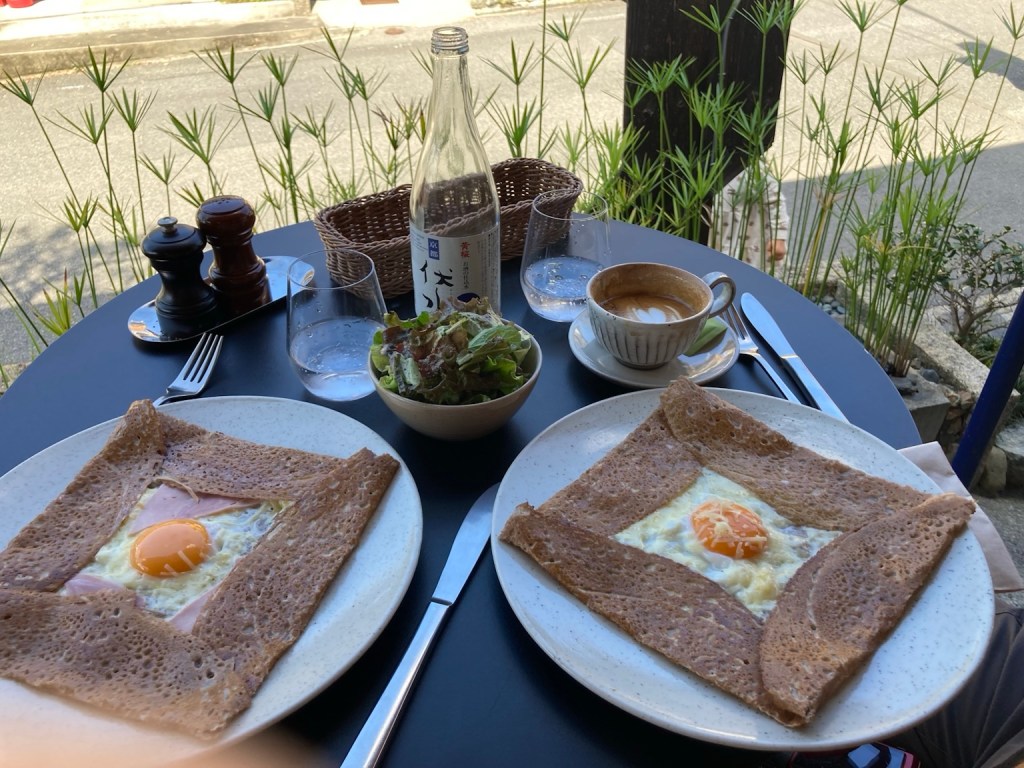
It was approaching lunchtime as we came across of all things a Breton Creperie and a couple of buckwheat pancakes went down very well.
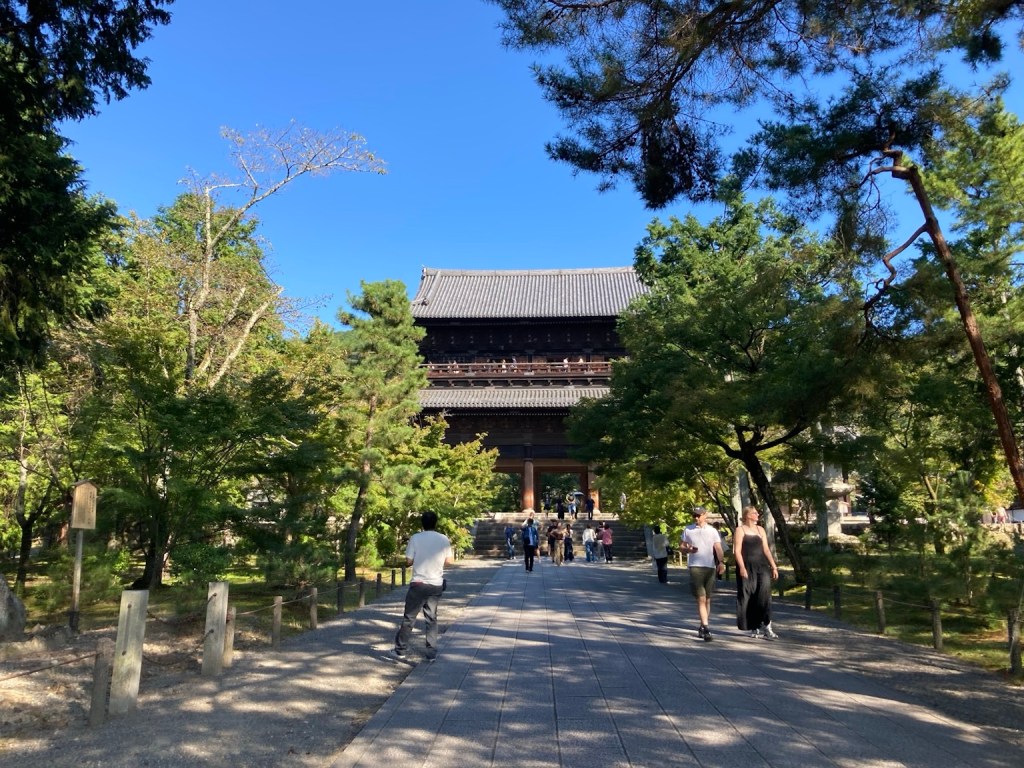
Our last temple was Nanzen-ji which dates back to 1291 and held authority over all Zen temples across Japan. The Sanmon Gate is huge – another that barely fits in the frame …
… and inside is the Leaping Tiger Garden where the massive boulders are meant to resemble a mother tiger carrying her cubs across a wild torrent of water represented by white raked gravel … but I feel quite a lot of meditation might be required to see it!
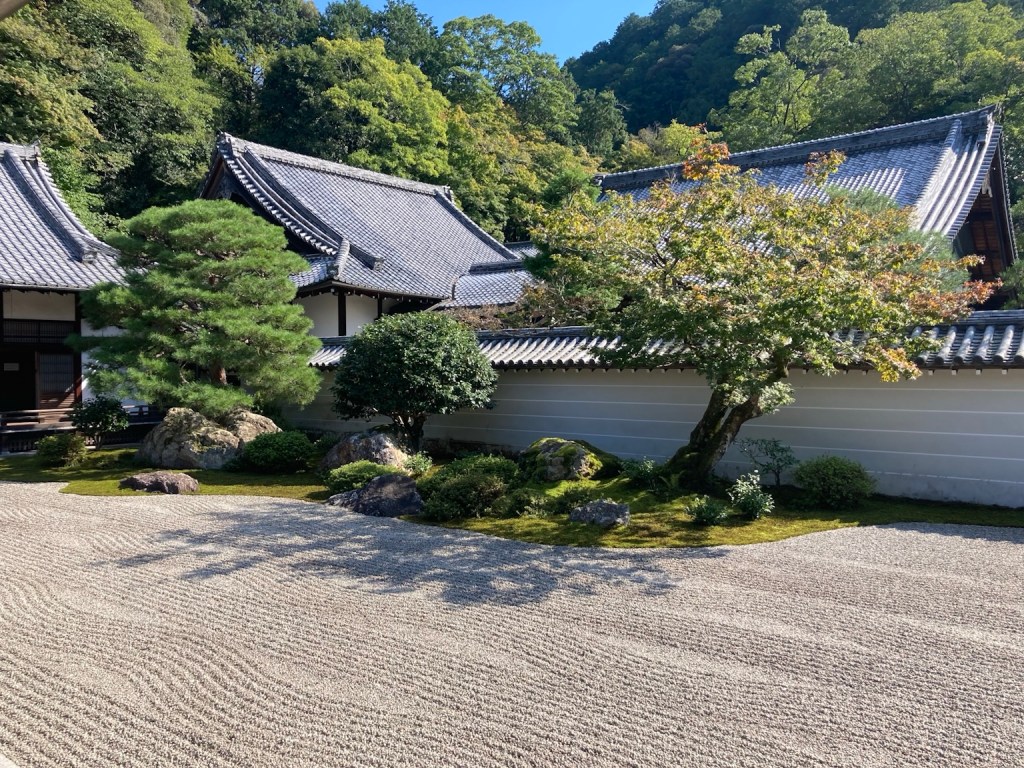
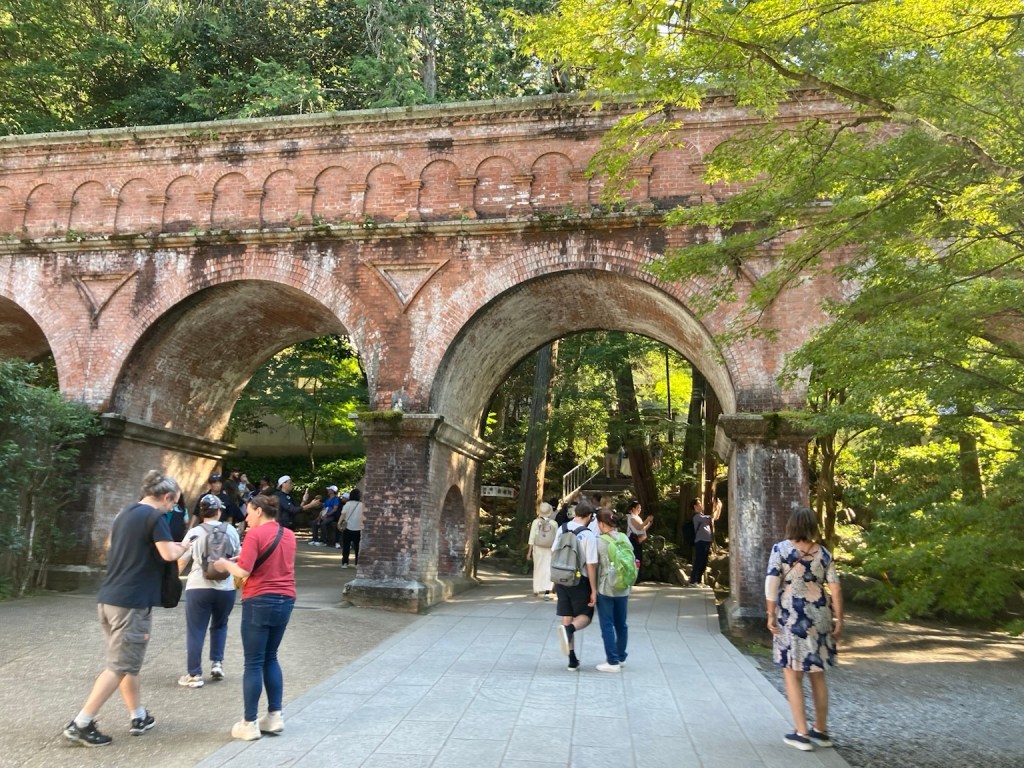
We passed the Suirokaku Aqueduct on the way out, maybe a strange place to put it but otherwise unremarkable, but it is now one of the city’s most photographed spots.
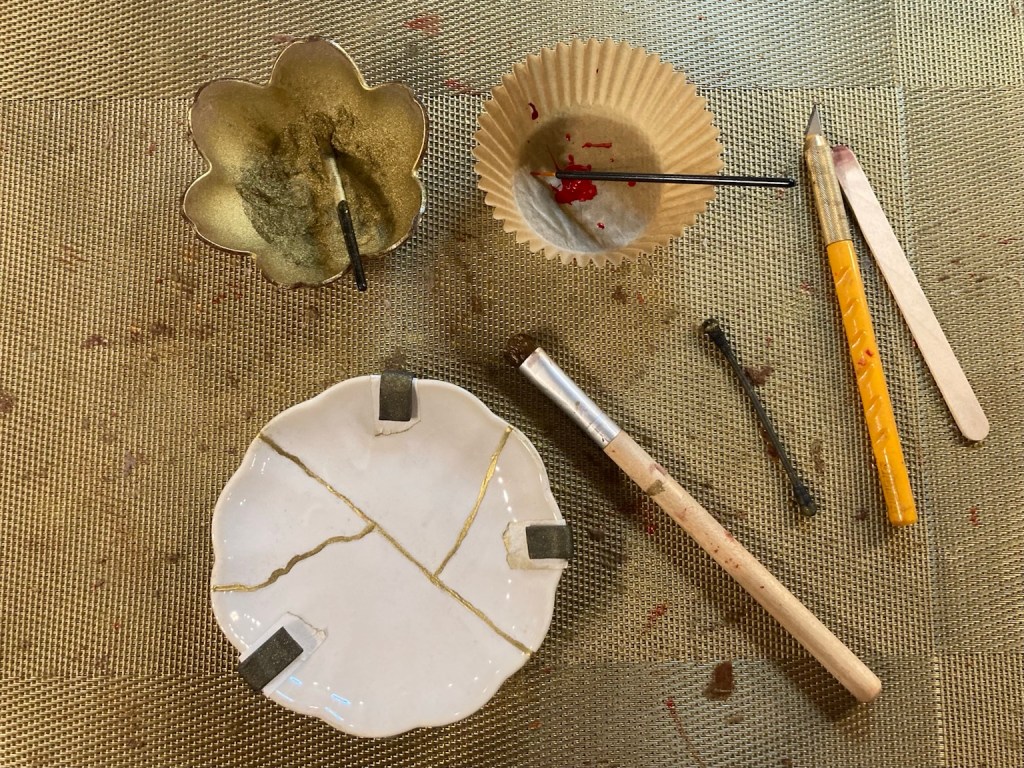
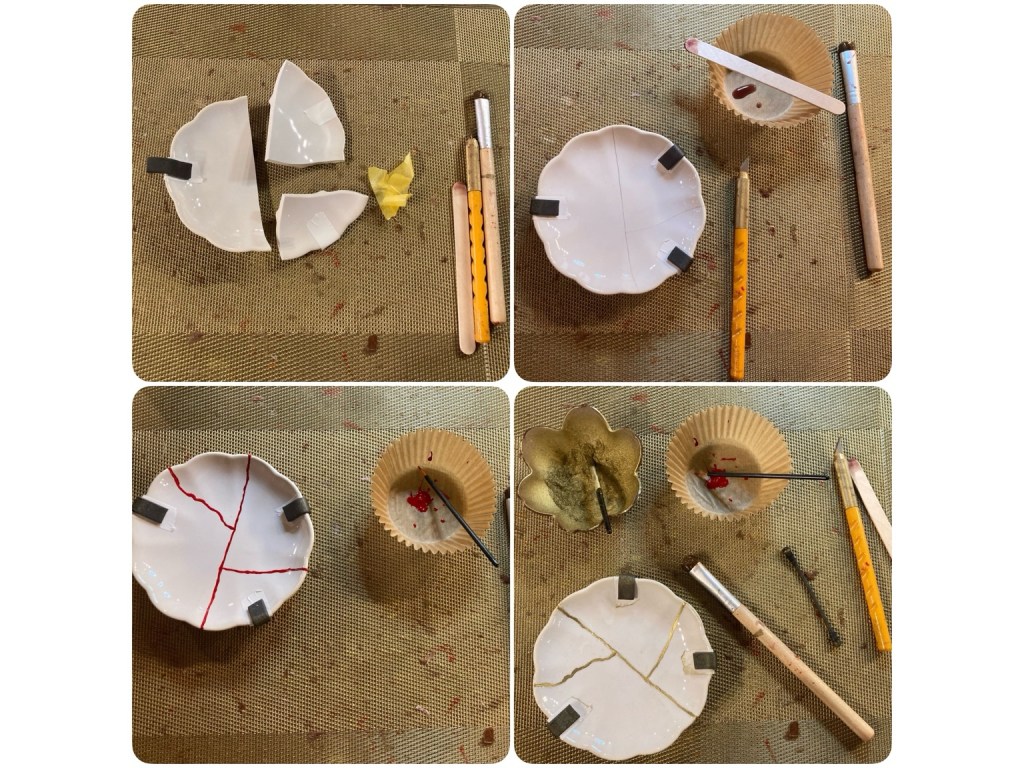
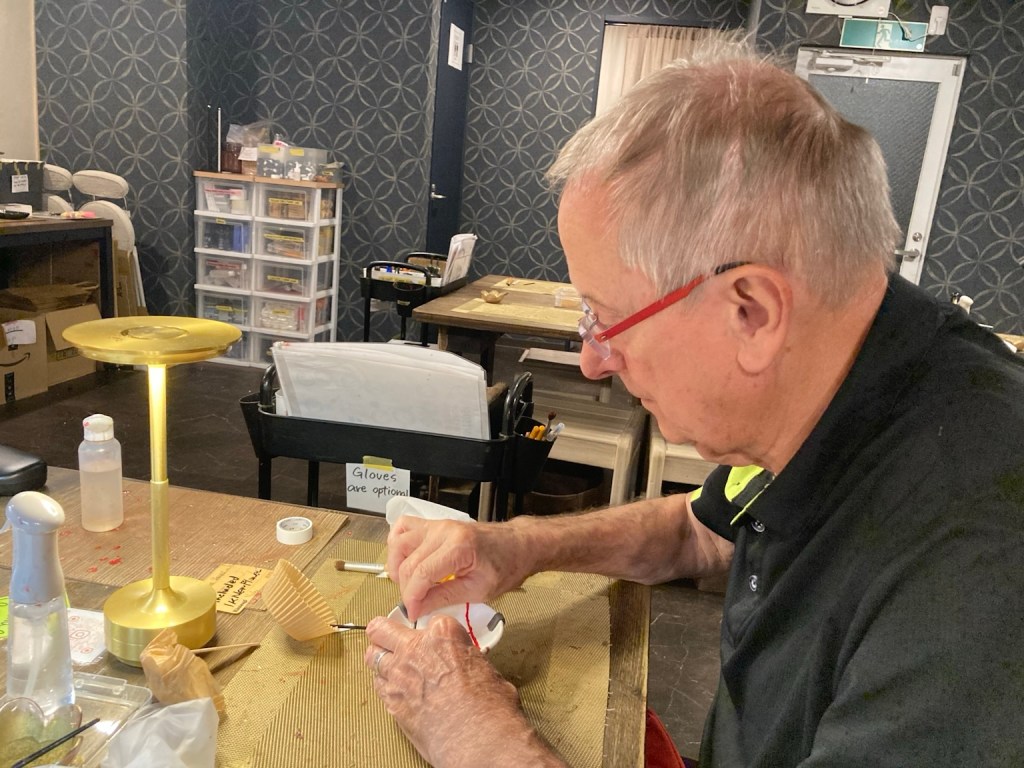
Continuing the wabi-sabi theme, we are now heading back to the city to join a class to repair a piece of china. Kintsugi which means golden joinery, is the traditional Japanese art of repairing broken ceramics by mending fractures with natural lacquer mixed with powdered gold. It embraces the beauty of imperfection, impermanence, and the natural passage of time and is a way to honour an object rather than discarding it.
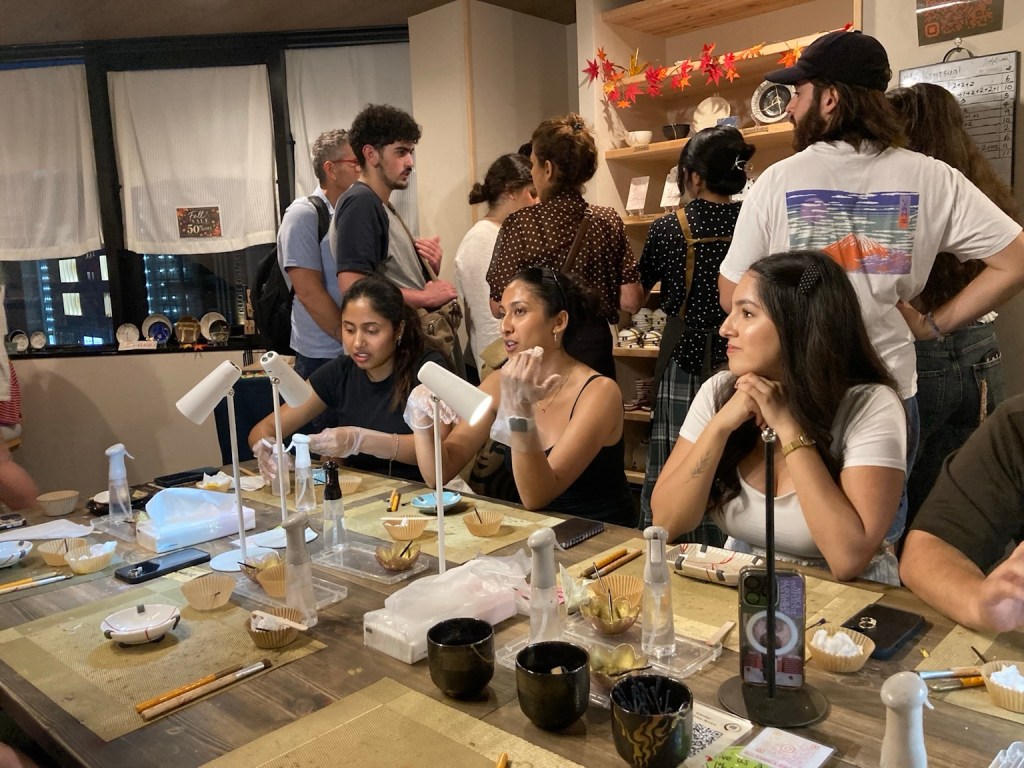
With just an hour, rather than using slow drying lacquer, we used modern materials, but the concept is the same. The dish was already broken and first we glued it together, then covered the join with a synthetic resin and finally the metal powder … and it has made a couple of great souvenirs to bring home.
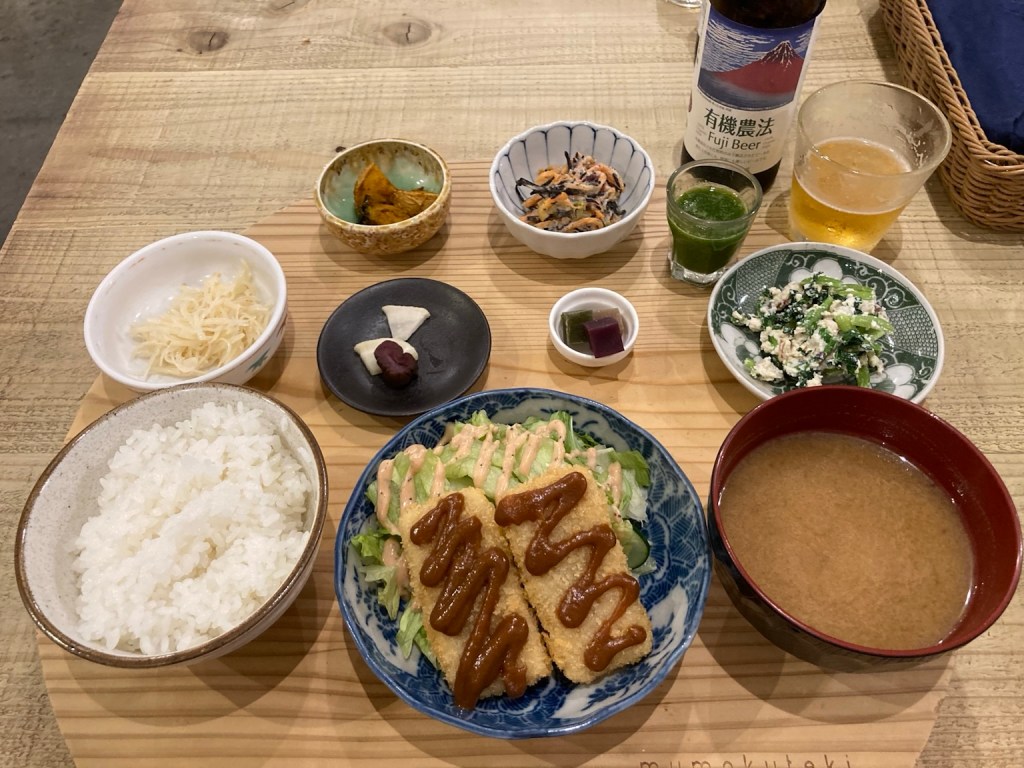
Straight to dinner at the Mumokuteki Cafe, another vegan set meal with a variety of tasty dishes.