Just before we left Seahouses there was one last thing I wanted to do – visit the Smokehouse and pick up a kipper roll for breakfast! It certainly set me up for the day and was definitely one of the culinary highlights of the trip!
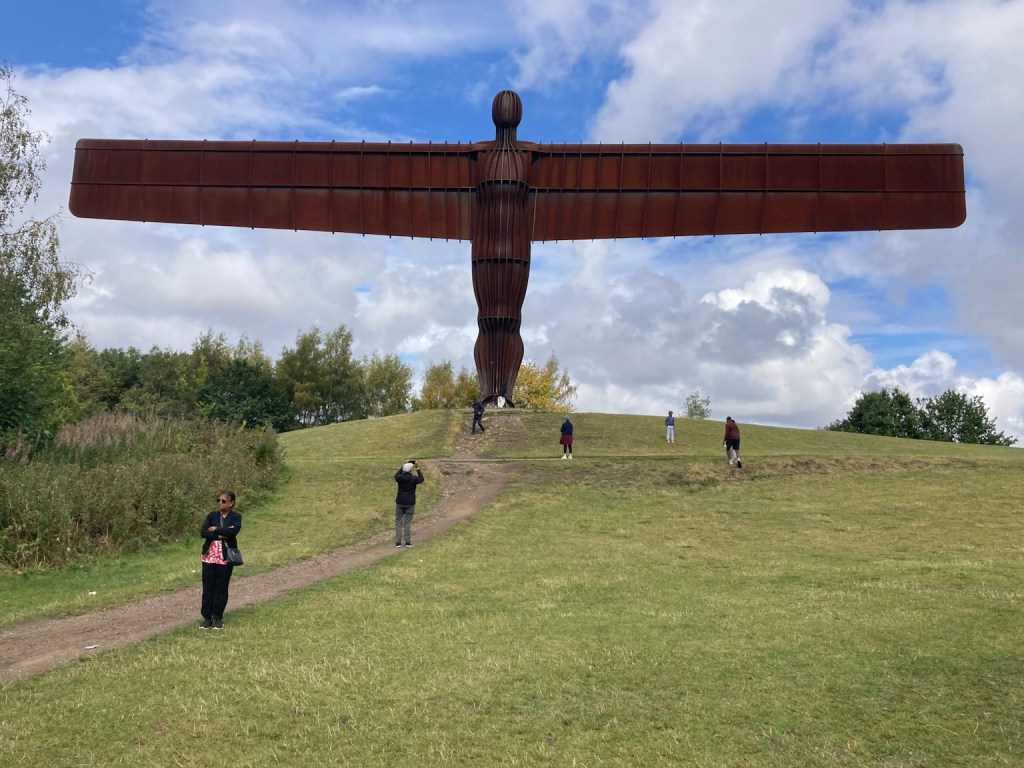
As we drove homeward, our last stop in Northumberland was The Angel of the North, which is actually less obvious from the motorway now the trees have grown up, but is huge when you get there! Always pleased to tick off another Gormley, it was interesting to read about the engineering feat required for such a sculpture.
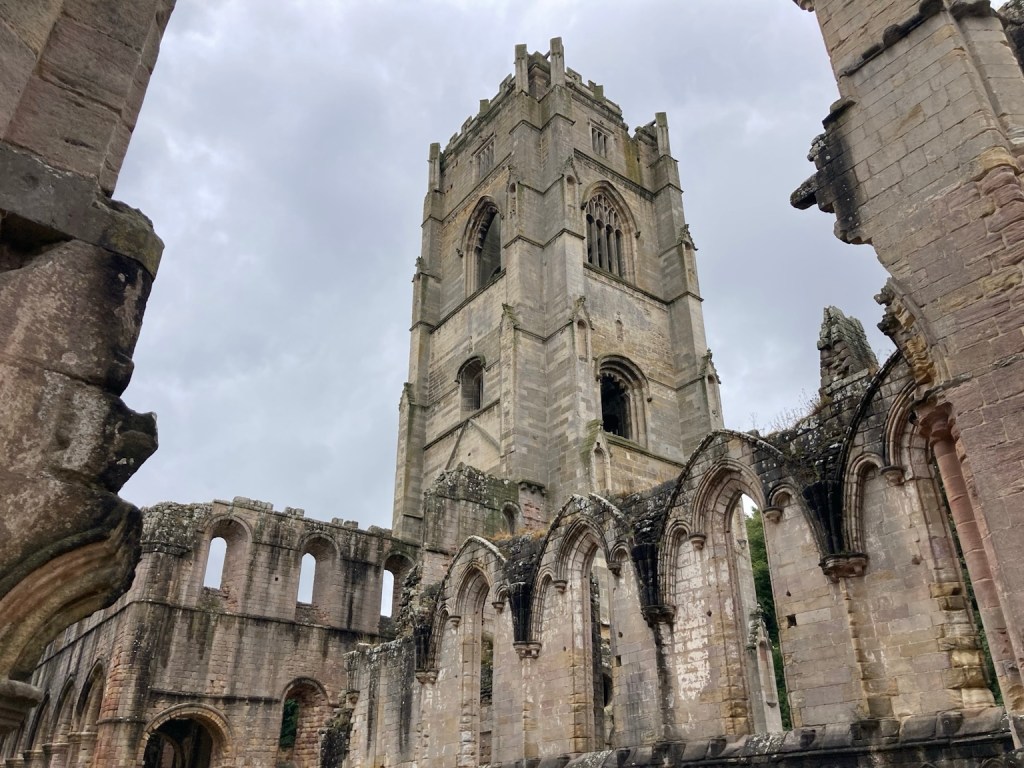
By lunchtime we had reached Yorkshire, and while it was looking a bit grey the drizzle was holding off and it was time for a stop. Fountains Abbey was a Cistercian house which grew into one of the largest and wealthiest monasteries in England before its closure by Henry VIII in 1539. In the C18th its picturesque ruins were integrated into the landscaped Georgian water gardens of Studley Royal, the creation of John Aislabie and his son William, and the entire site is now managed by the National Trust.
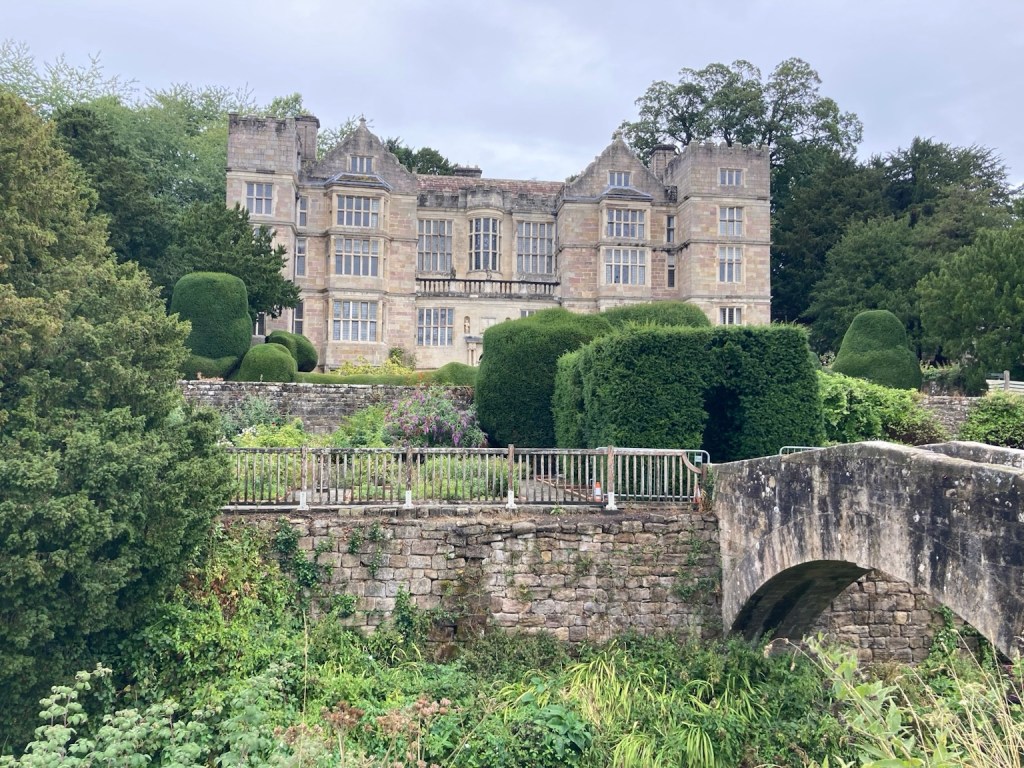
We picked up the map and started walking round the site. The first stop was Fountains Hall, built in Elizabethan times by a local landowner using stone from the ruined abbey. Later it became part of the Studley Royal estate and was leased to tenants, but when the Vyner family inherited the estate in 1923 they chose to restore the hall and live here instead.
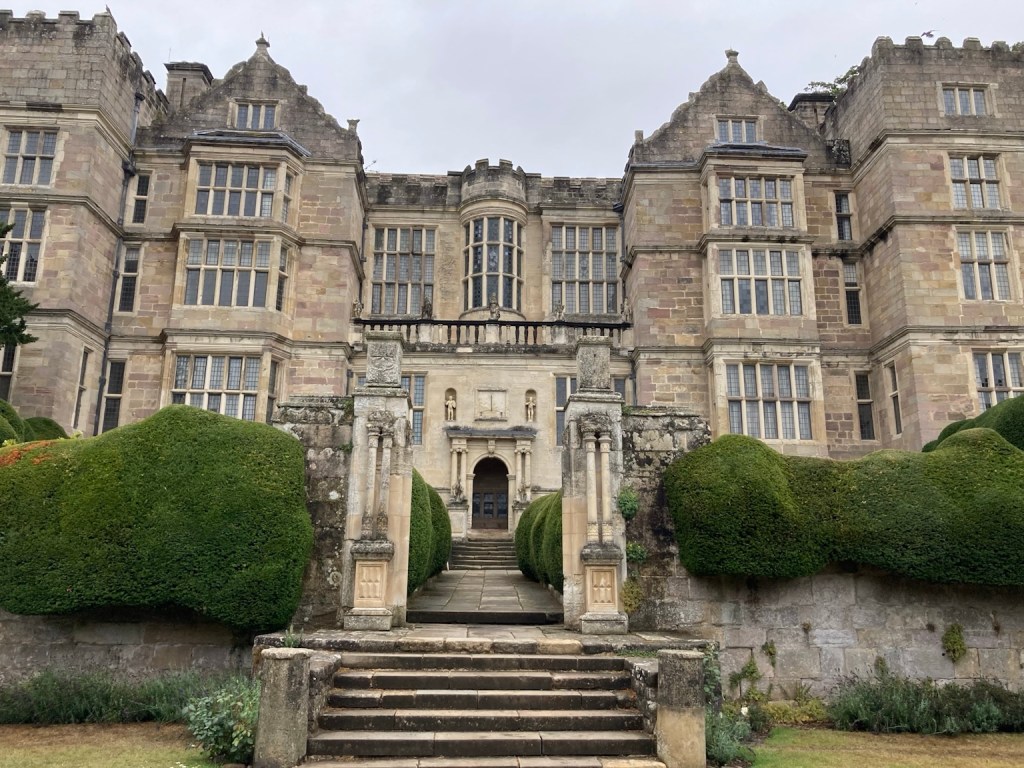
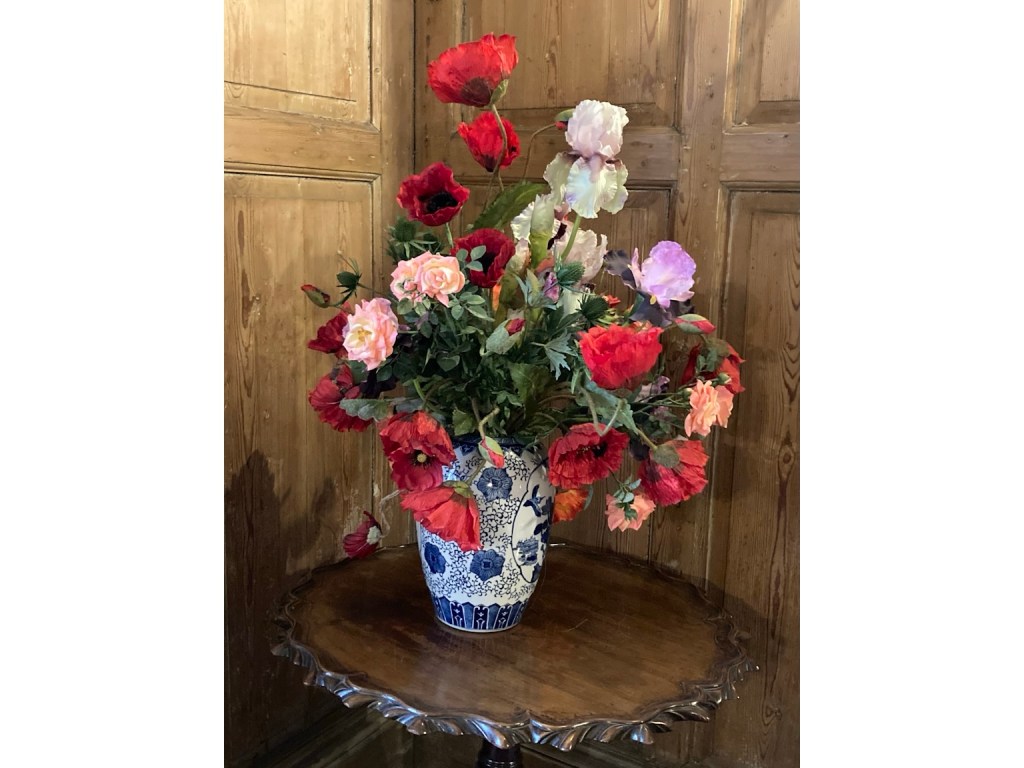
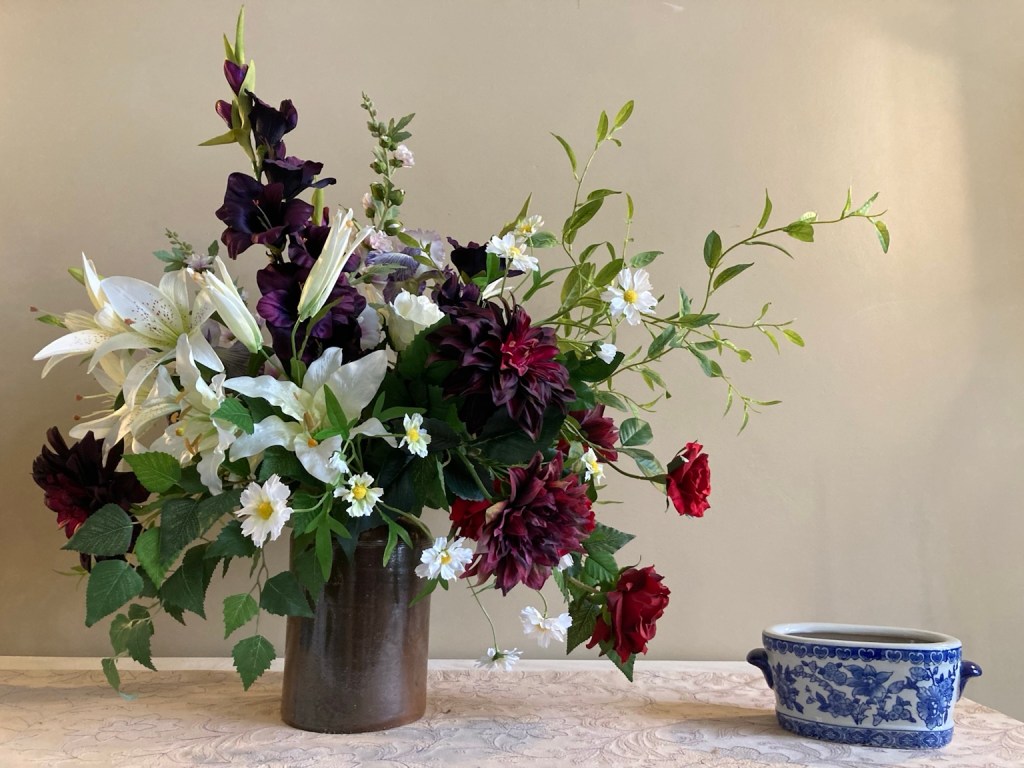
It was a very welcoming building made of honey stone decorated with lovely flower arrangements.
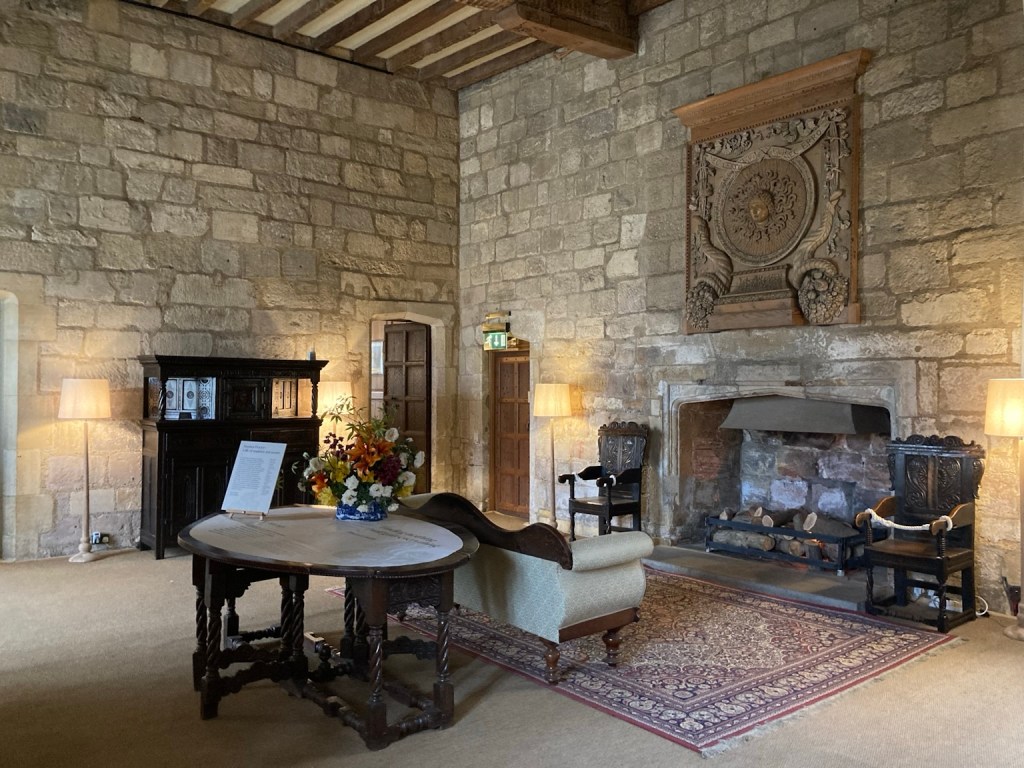
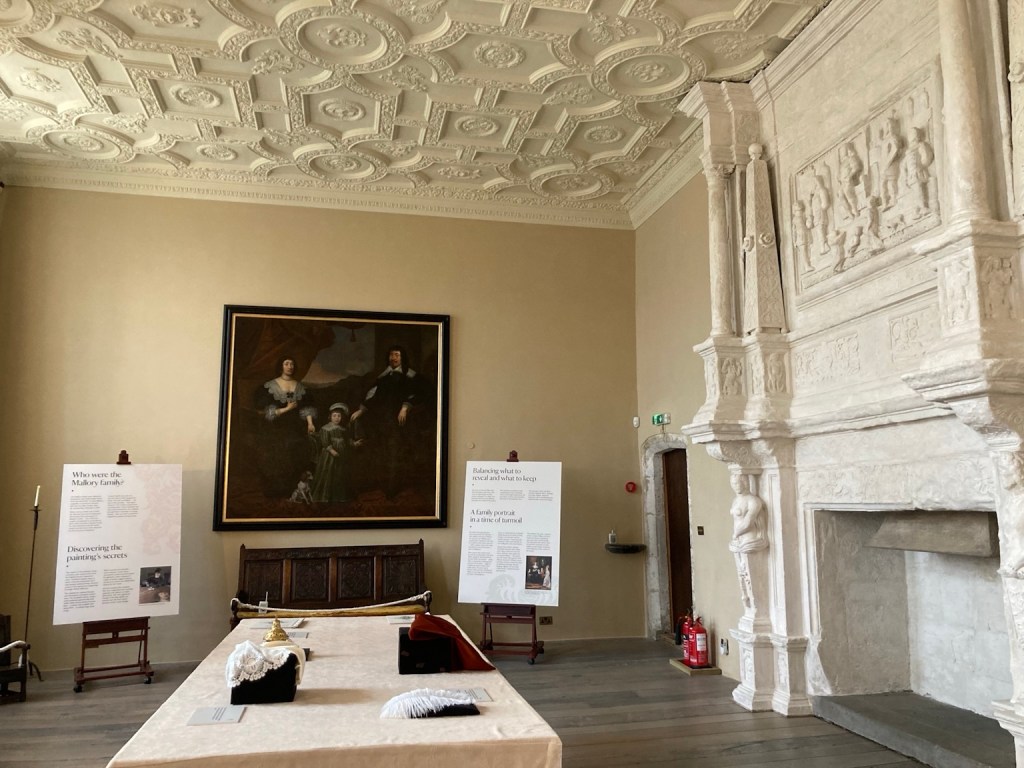
Upstairs, the Great Hall had an imposing Jacobean fireplace showing the Judgement of Solomon and a recently restored portrait of Sir John Mallory and family who owned the medieval Studley Royal estate from the 1400s.
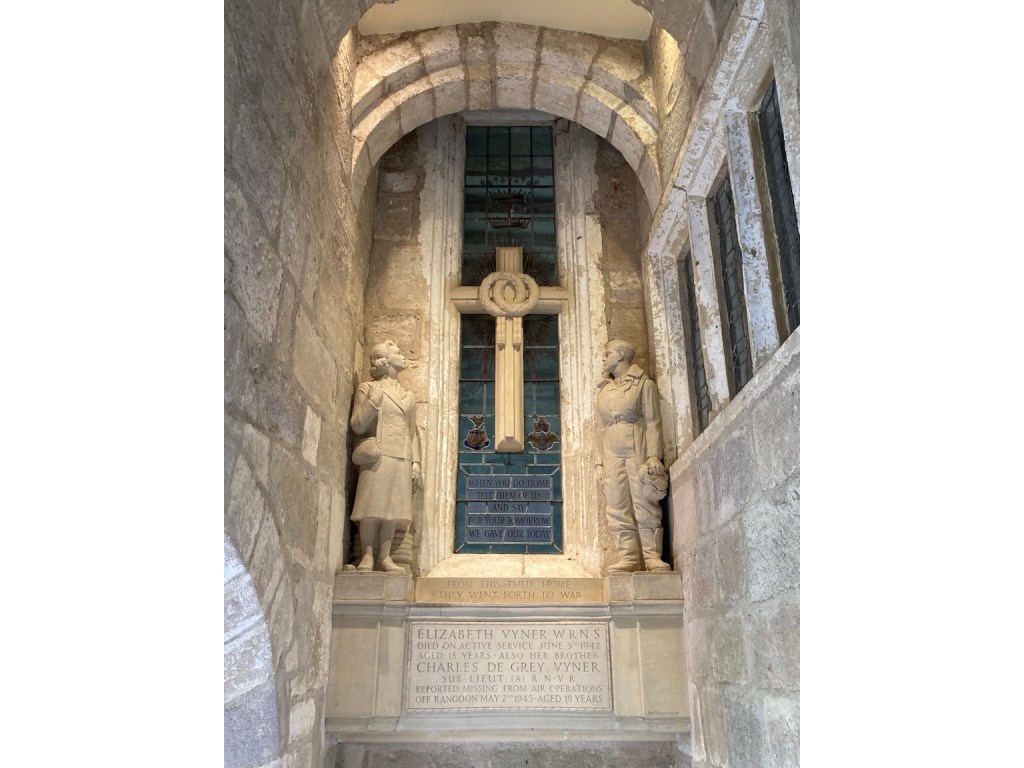
As we left we saw the Vyner memorial to siblings lost in WWII …
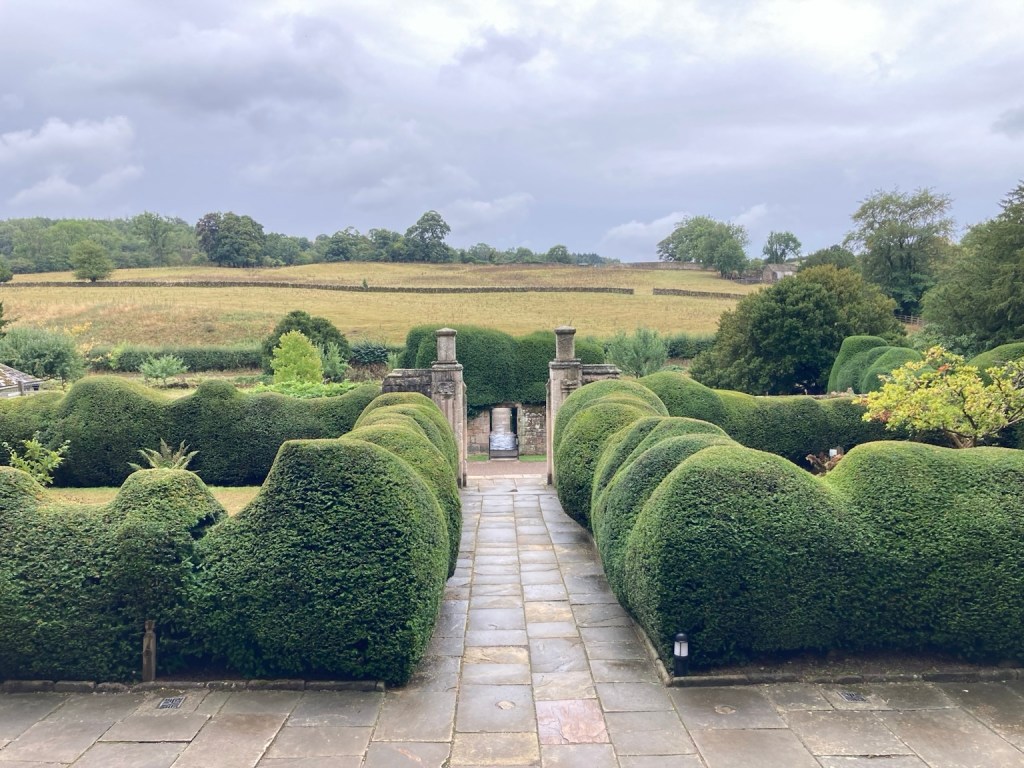
… then walked through the small garden by the stream …
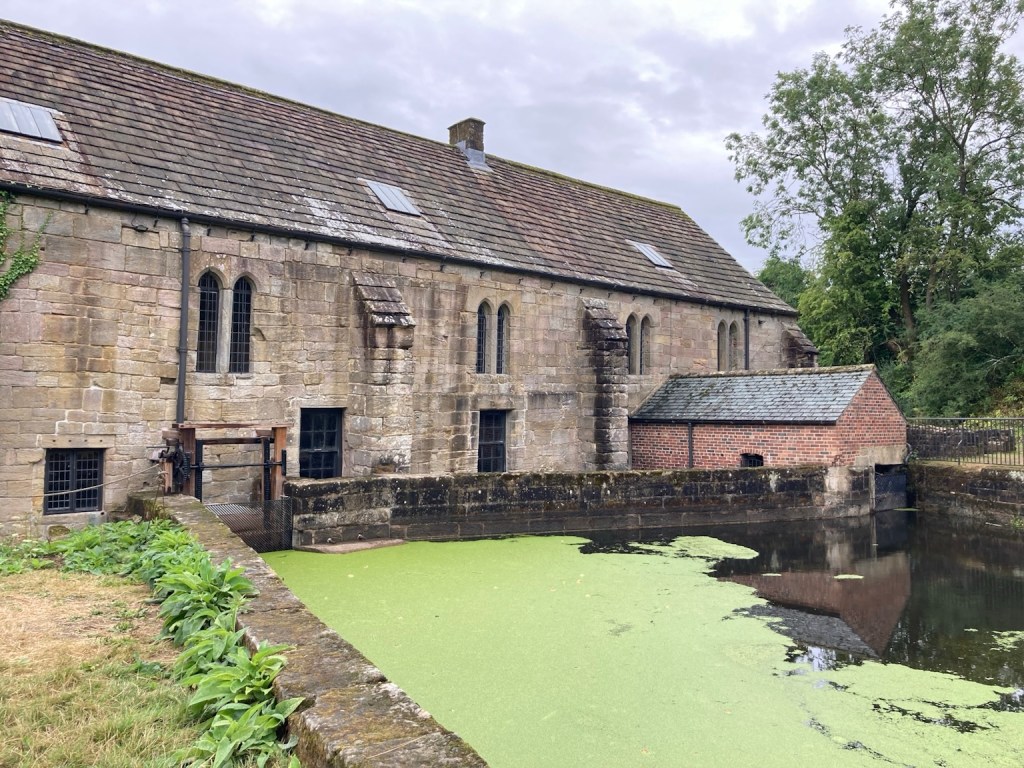
… and on the watermill …
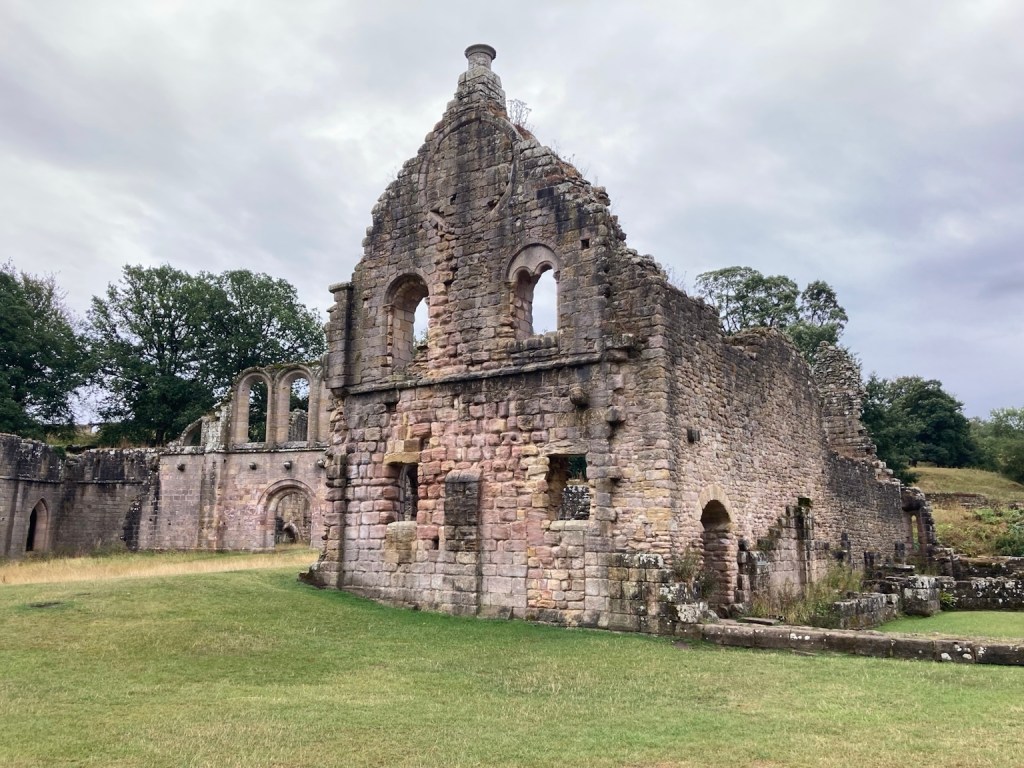
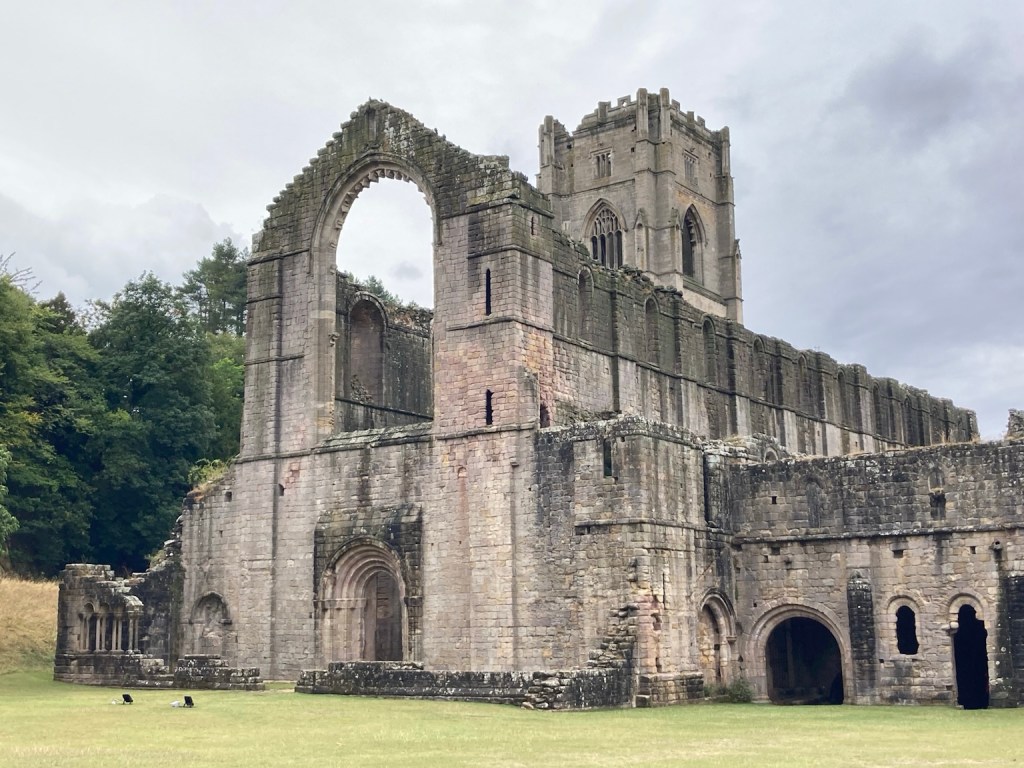
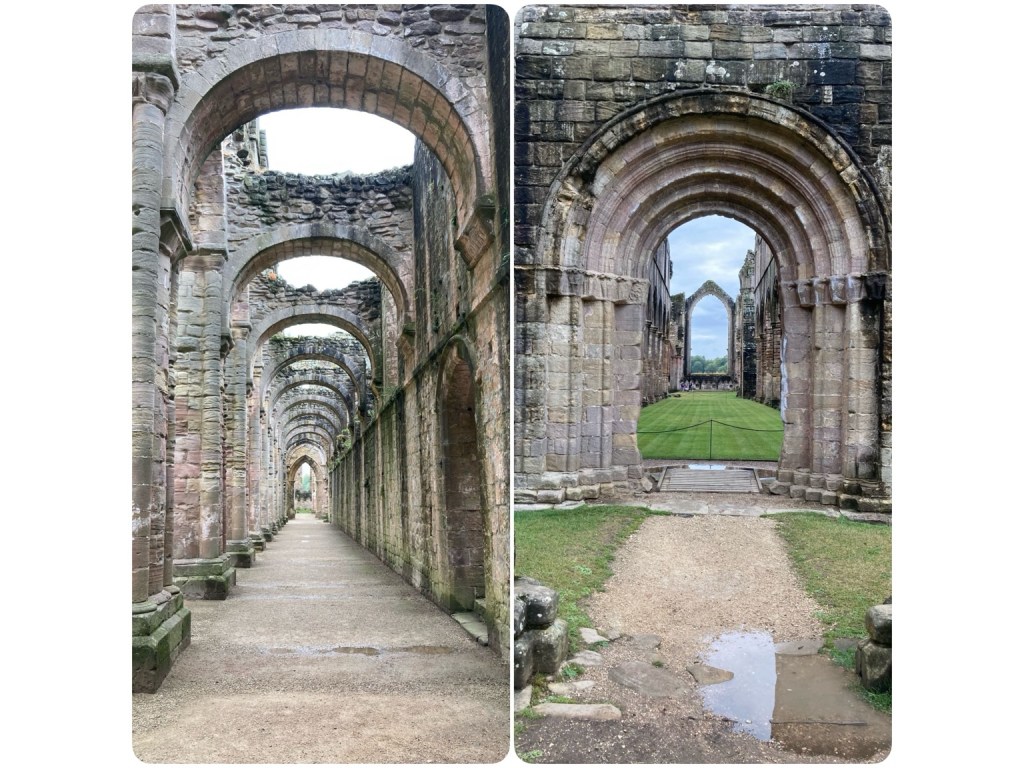
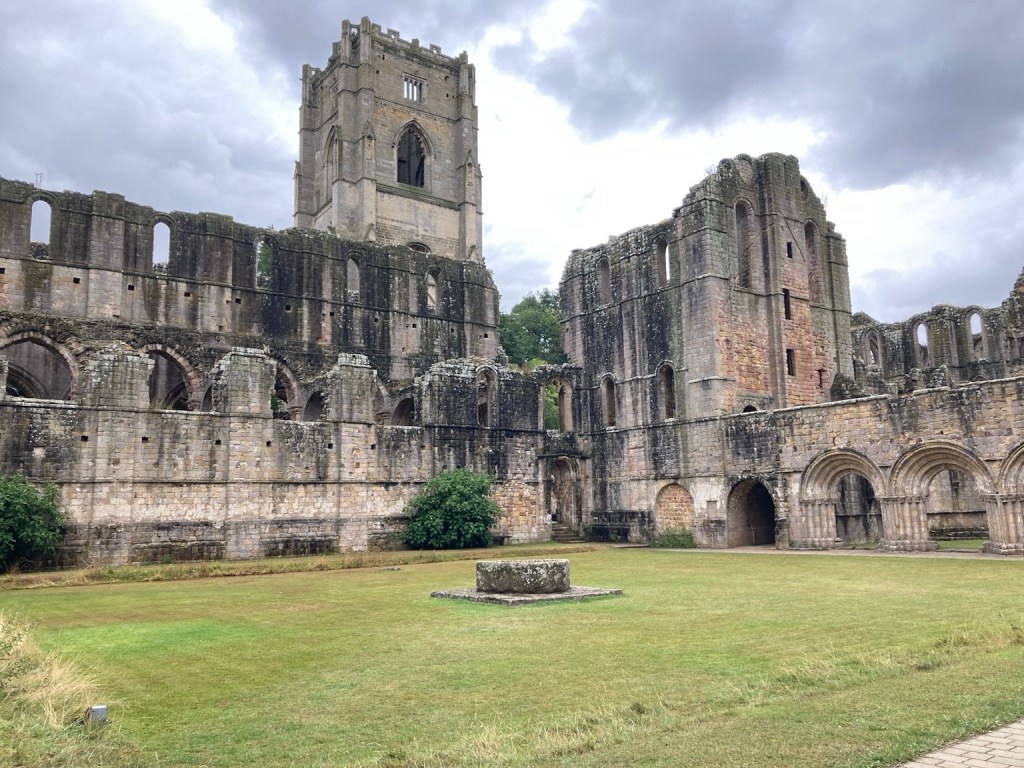
… and the abbey.
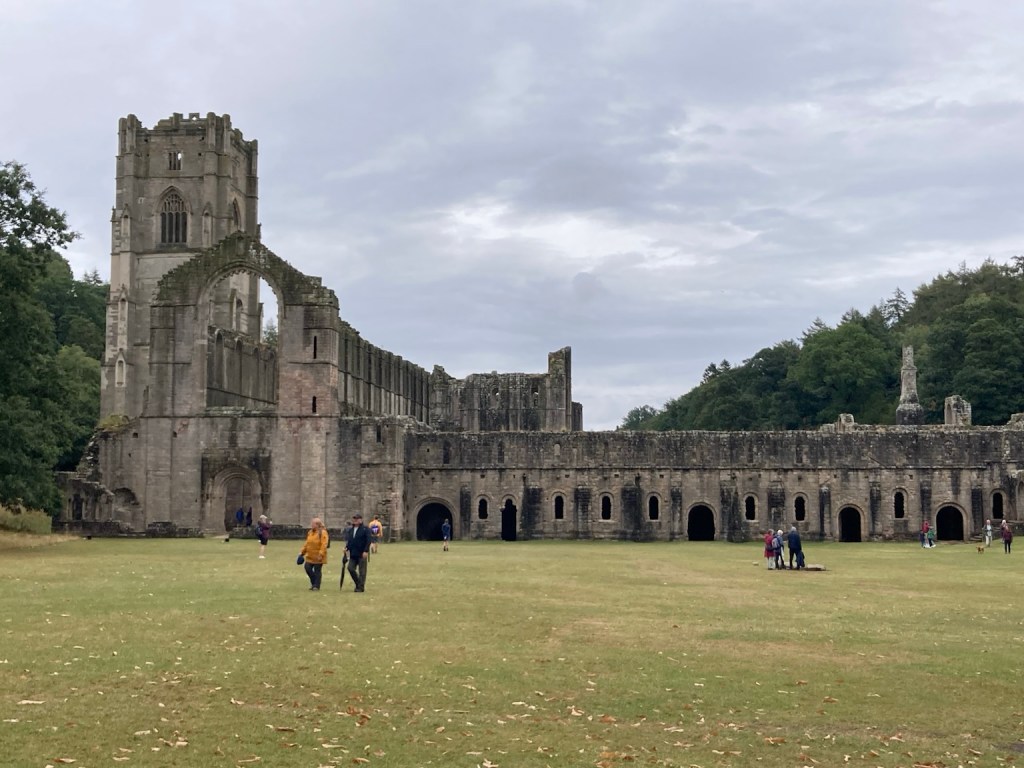
On a brighter day the photos would have been better, but the ruins are striking and extensive.
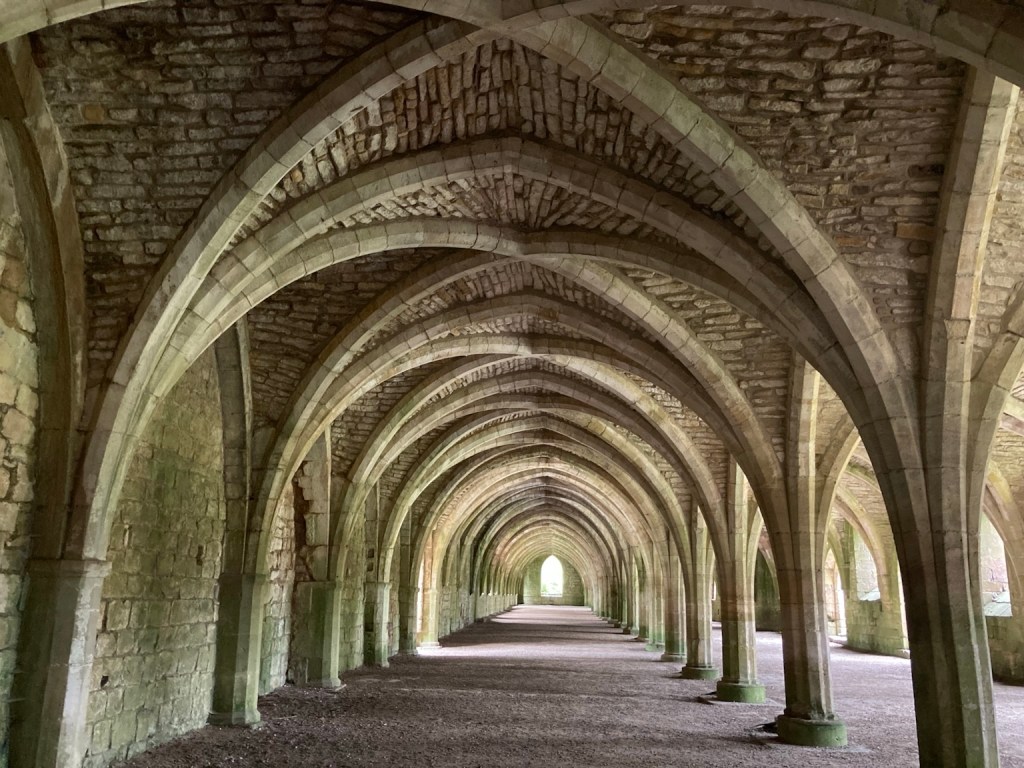
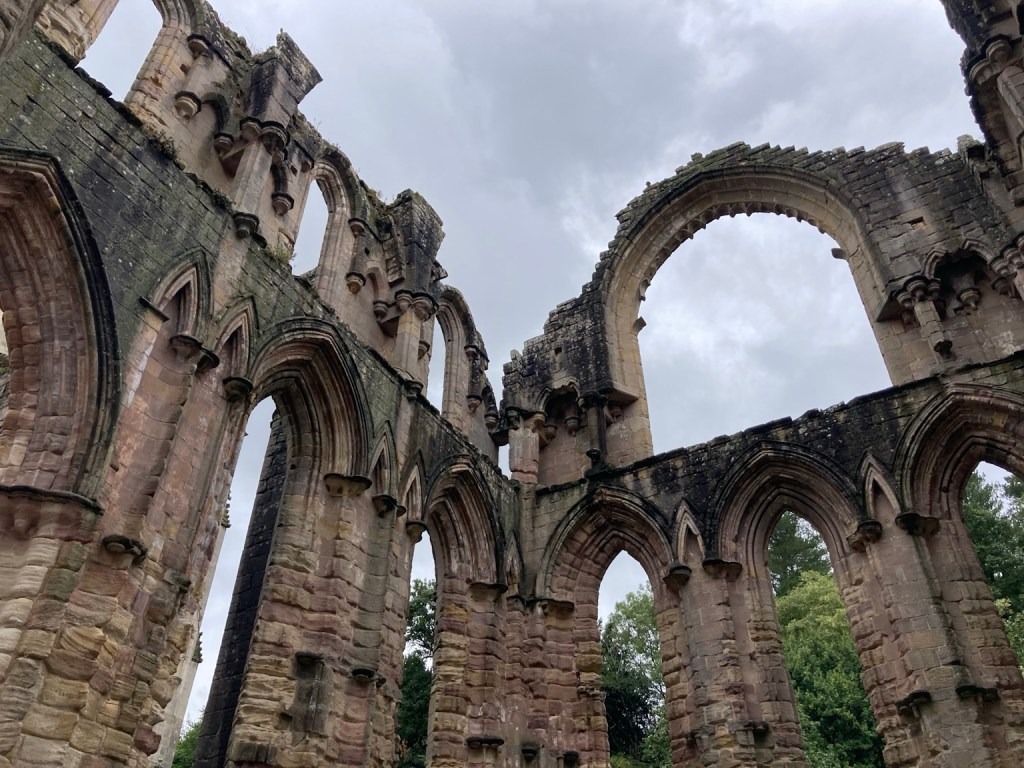
As we moved through the estate, we also moved on in time. Around 1700 the original Studley Royal house had burnt down and was replaced by a Palladian mansion by Sir John Aislabie who had inherited the estate. His parliamentary career came abruptly to disgraced end in 1721 with the popping of the South Sea Bubble, a scheme he had heavily promoted, and the gardens became his grand, theatrical project to reassert his family’s power and prestige.
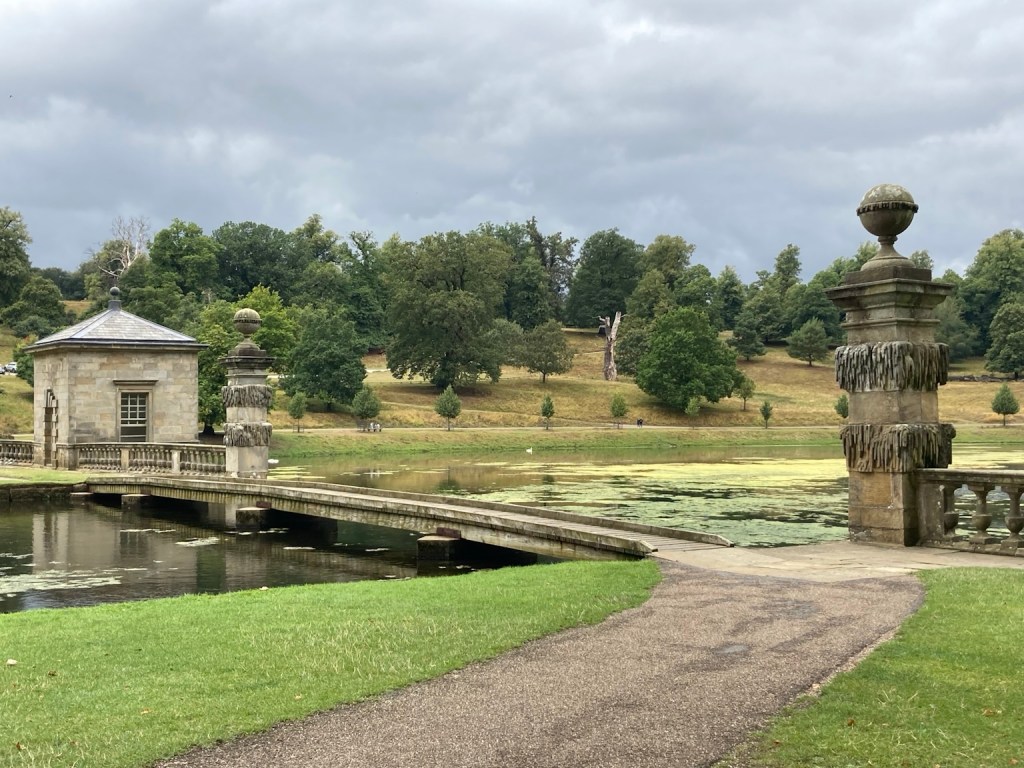
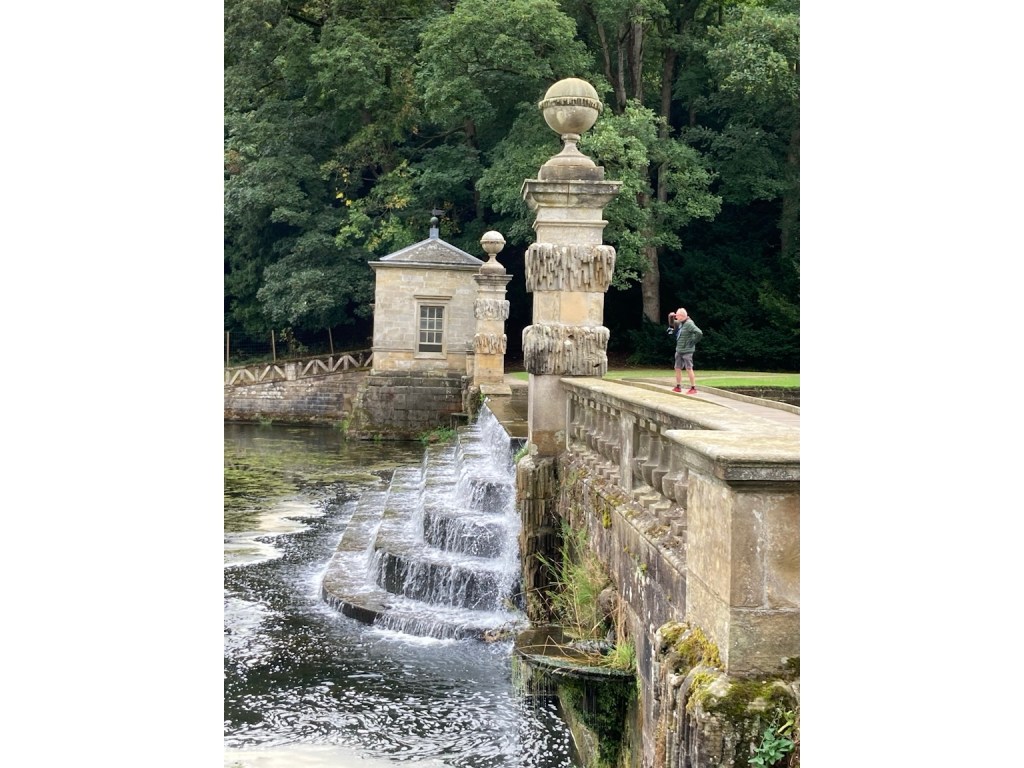
We came to several large lakes and some cascades which are more impressive when you realise the labour it would have taken to excavate them by hand …
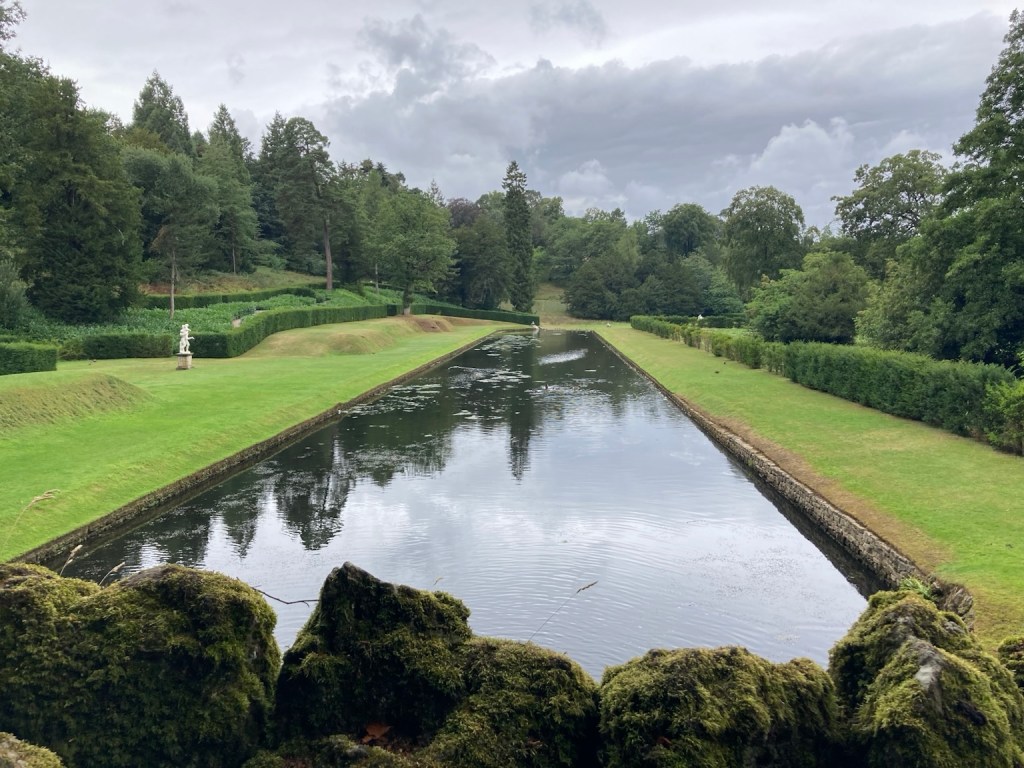
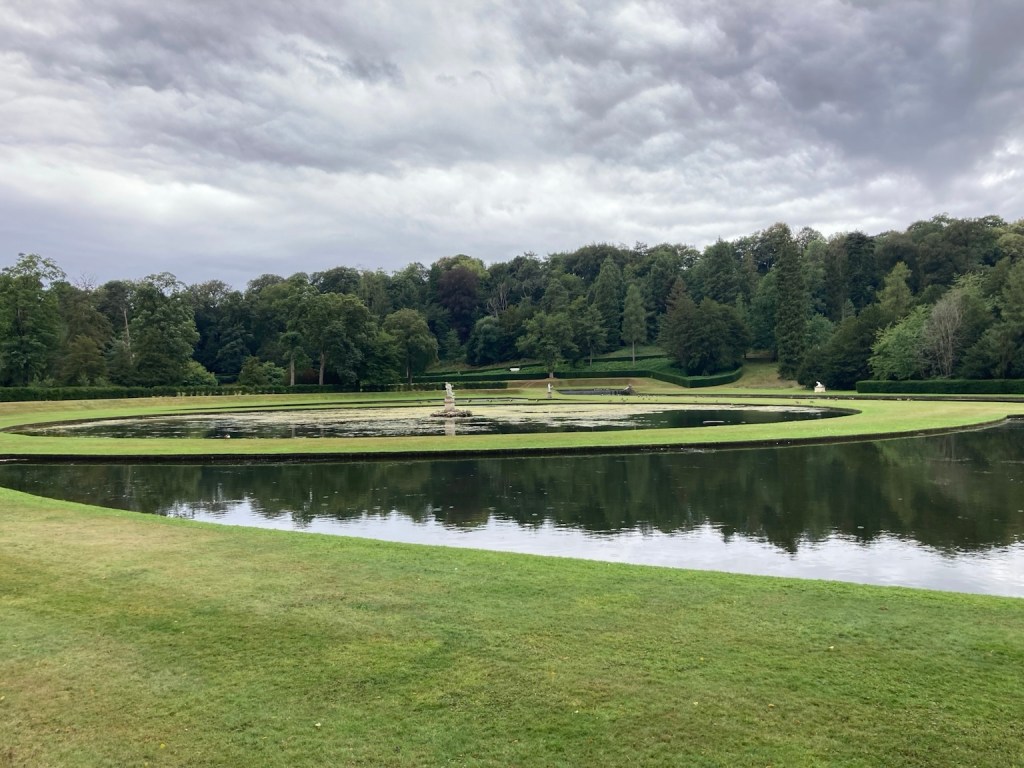
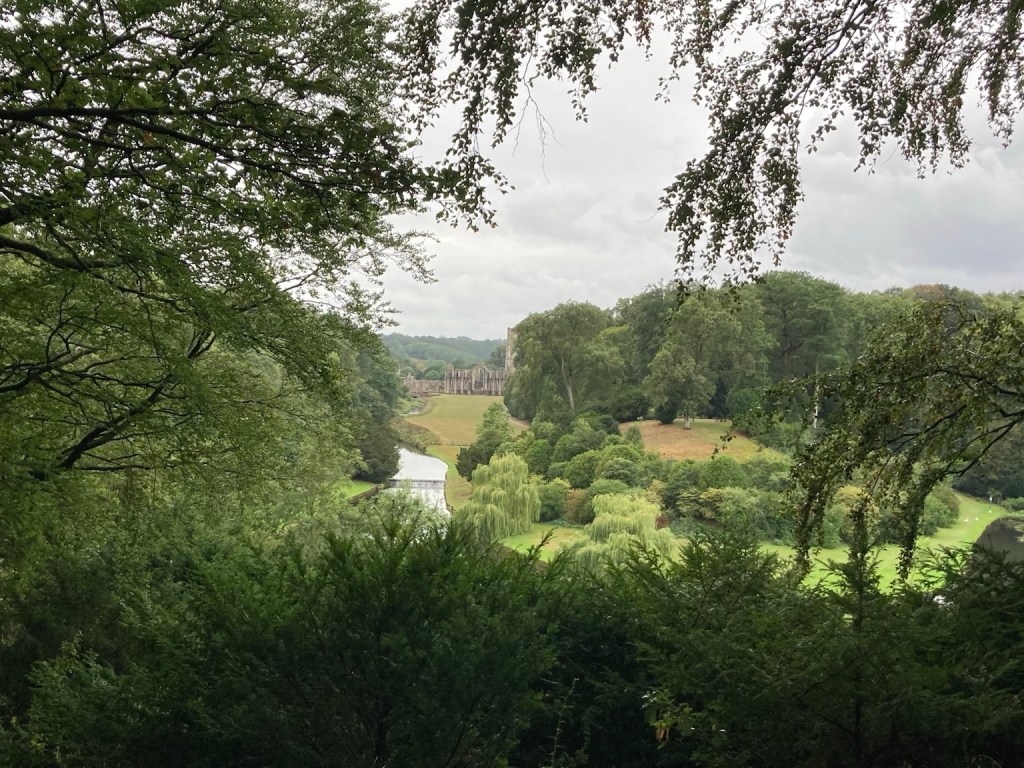
… and also the slightly overgrown Surprise Viewpoint which reveals the abbey ruins in the distance.
And what of the Palladian Manor? Well that mostly burnt down in 1946, except for a converted stable block which is now in private hands.
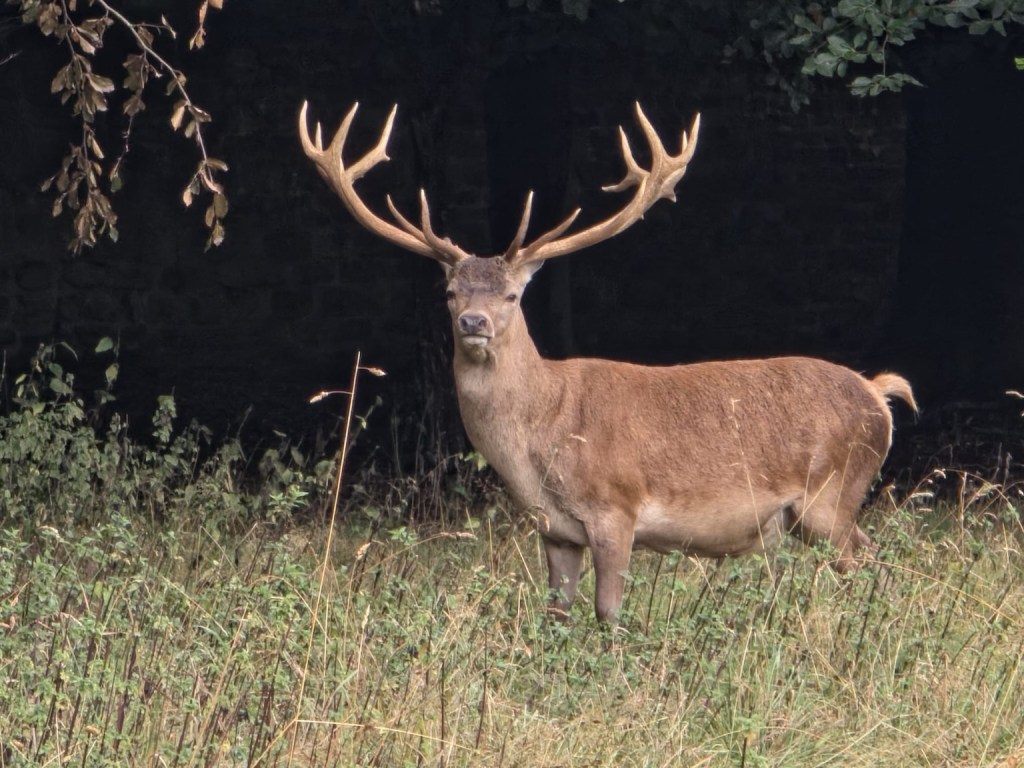
Walking back past the deer park, Chris stalked a prime specimen …
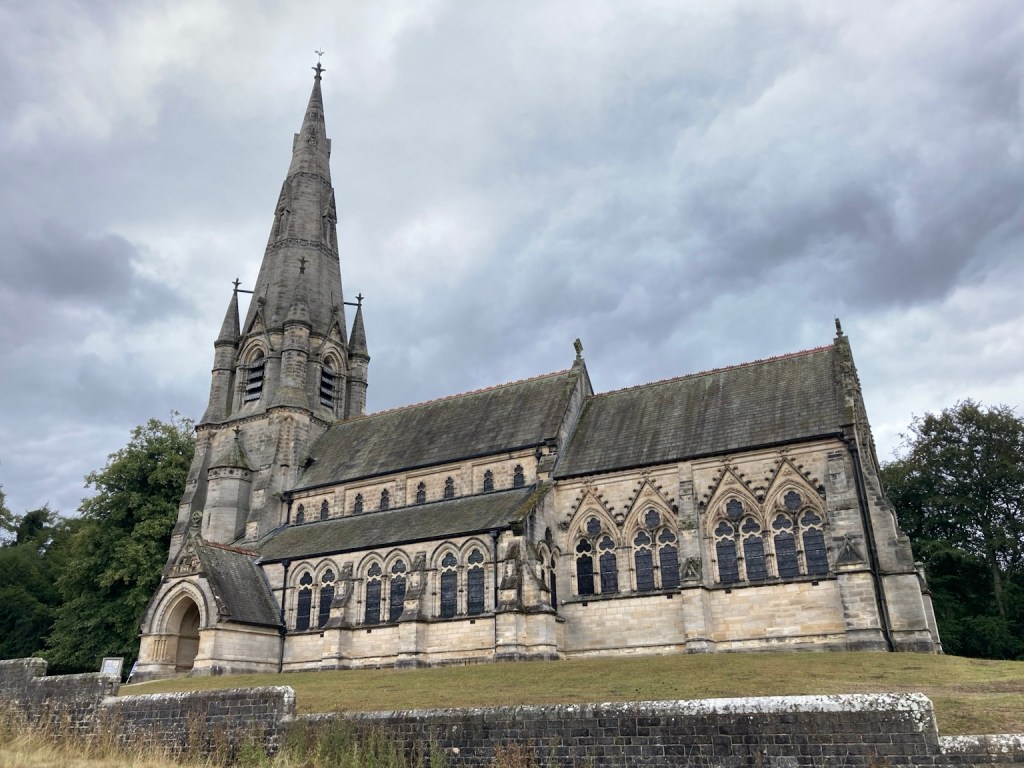
… while I took a look at St Mary’s Church which was designed by William Burges in High Victorian Gothic Revival style. It was the flamboyantly decorated interior I wanted to see … but I was too late as it had just closed for the day!
We drove to The Black A Moor Inn where we had a reservation, only to find it has been sold, rebranded and no longer offers rooms! Fortunately we hadn’t paid, and we found room at The Royal Oak in the centre of Ripon instead.
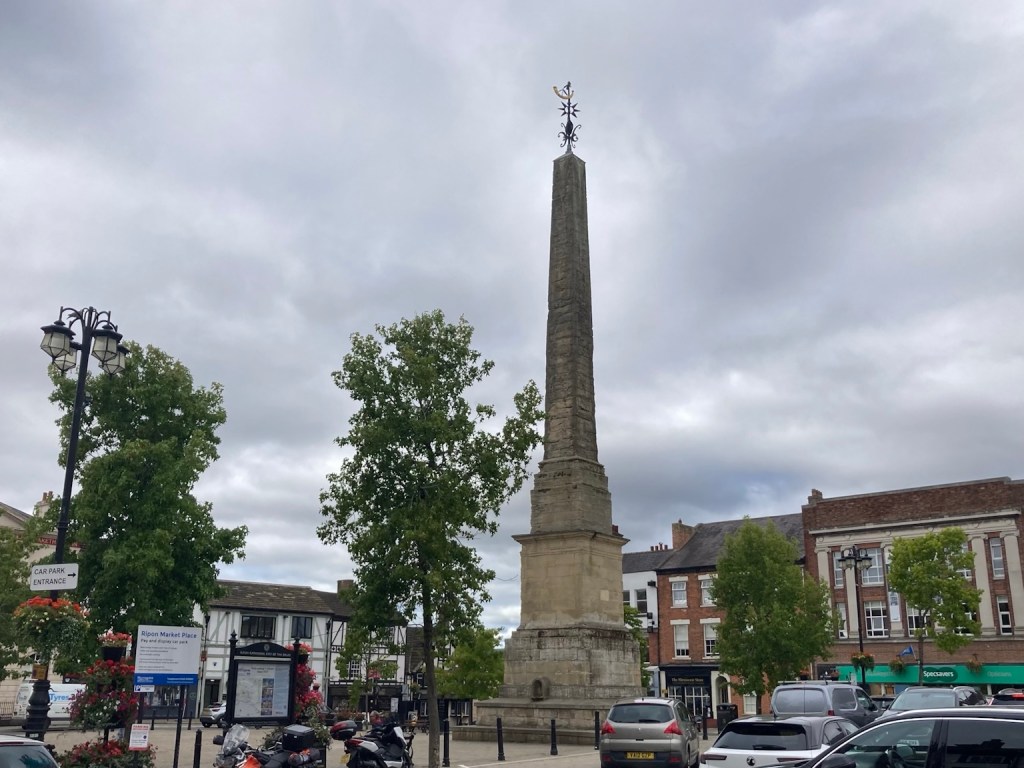
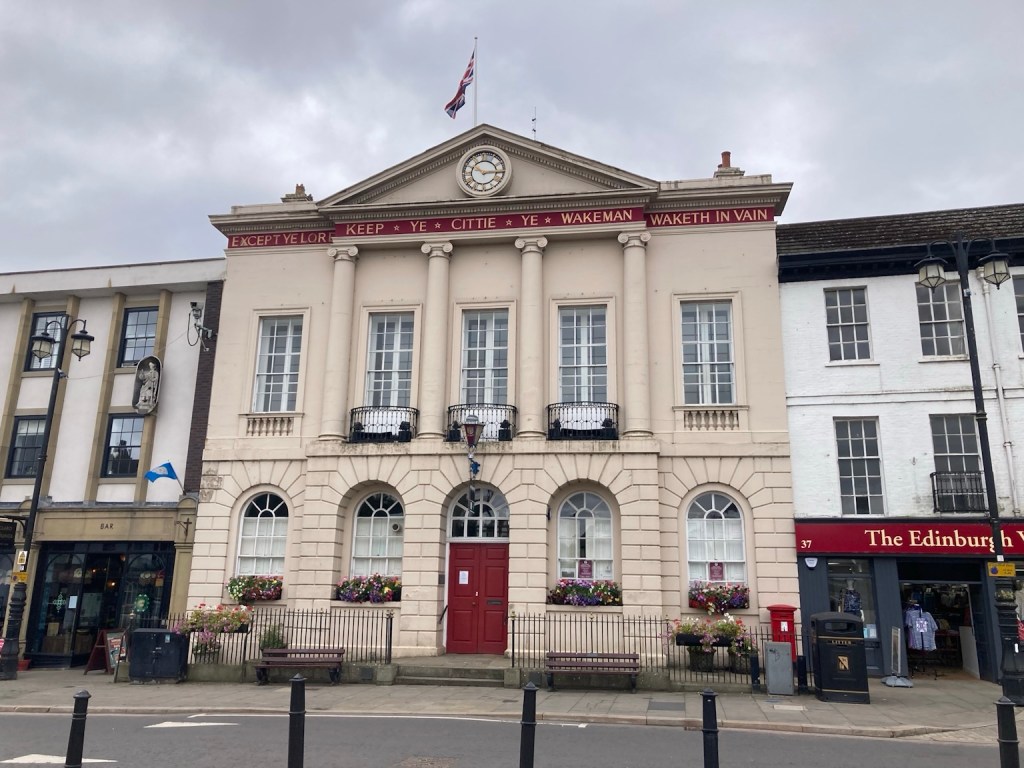
After dinner, we went for a walk round the town square and were very lucky to see a piece of living history. Every night of the year without fail, a horn is blown at the four corners of the Obelisk in Ripon Market Place to set the ‘watch’ and then outside the house of the Mayor. This ceremony commemorates the time in the Middle Ages when Ripon’s first citizen, the Wakeman, was responsible for crime prevention in the city from 9 pm until dawn and had to compensate victims of burglary. The Wakeman had constables to patrol the streets, and also had the right to levy a rate on houses of 2d a year per outside door.
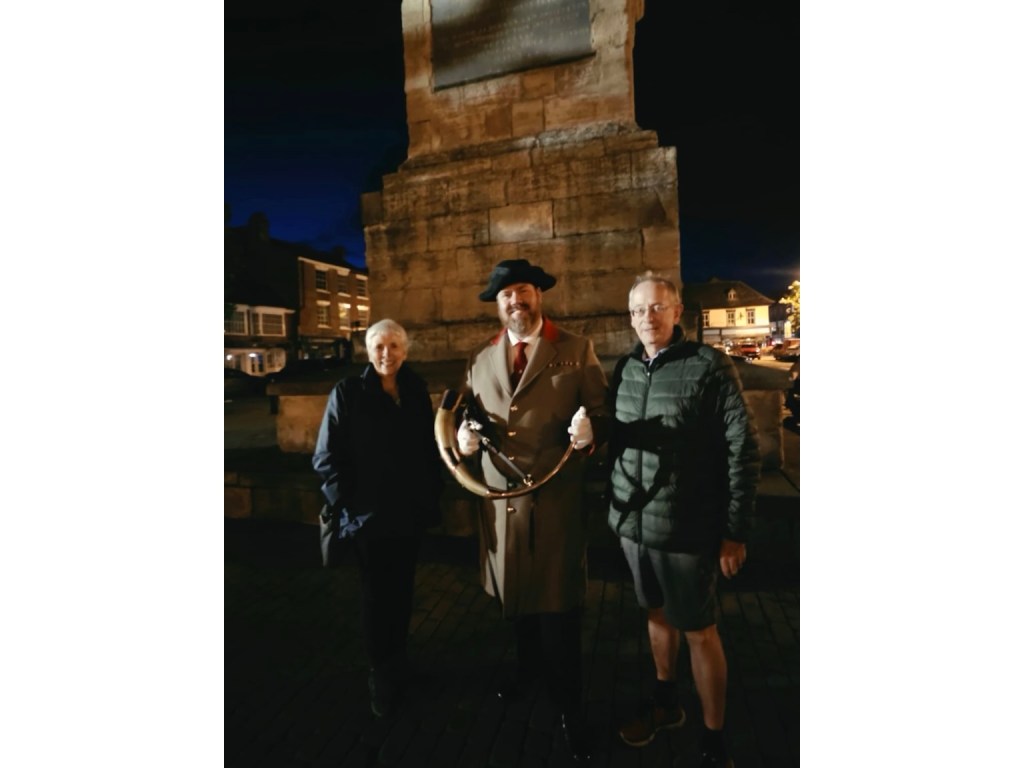
Today Wayne is one of four hornblowers who take turns and although it was nearly 10pm, he was still in the square, told us about his job and posed for a photo.
In the morning we had a quick look round, at the town square with its Obelisk, complete with horn on top built by John Aislabie …
… the town hall with reference to the Wakeman.
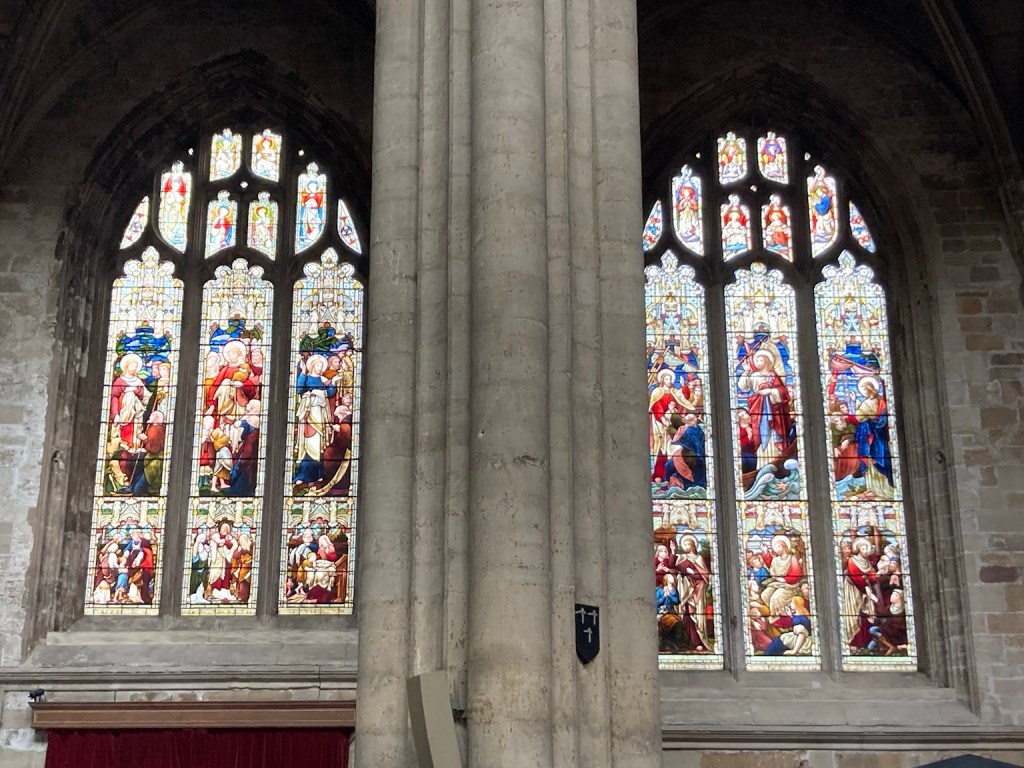
The cathedral also beckoned …
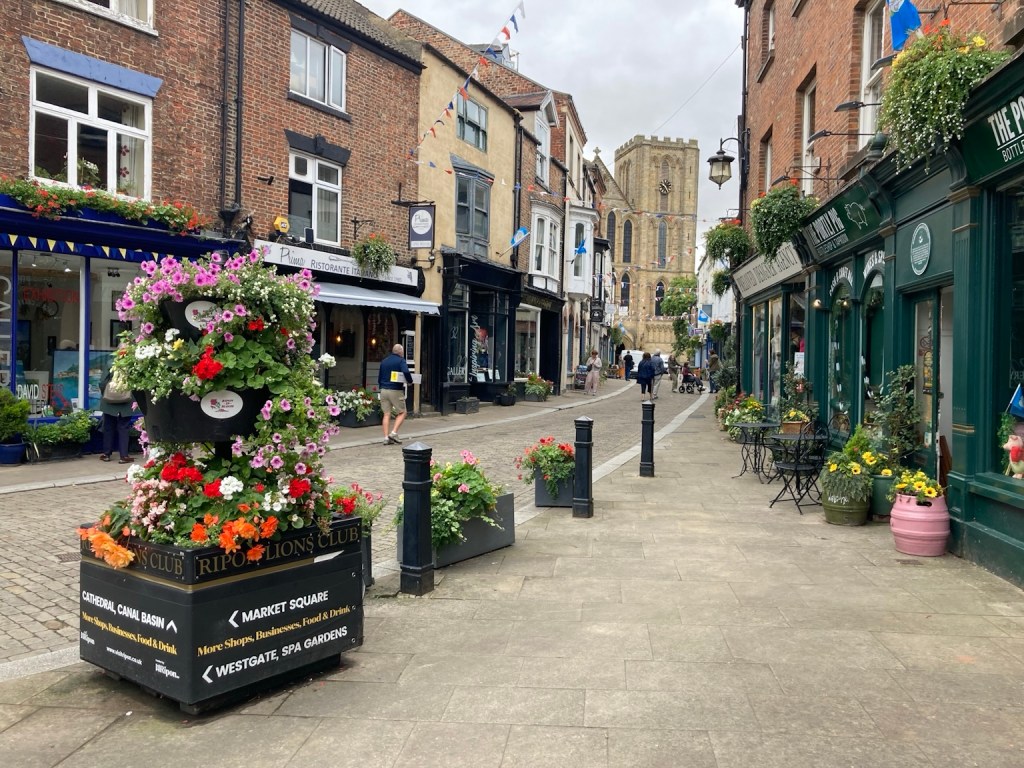
… built on the remains of the C7th monastery founded by St Wilfrid with its crypt said to be the oldest surviving structure of any cathedral in England.
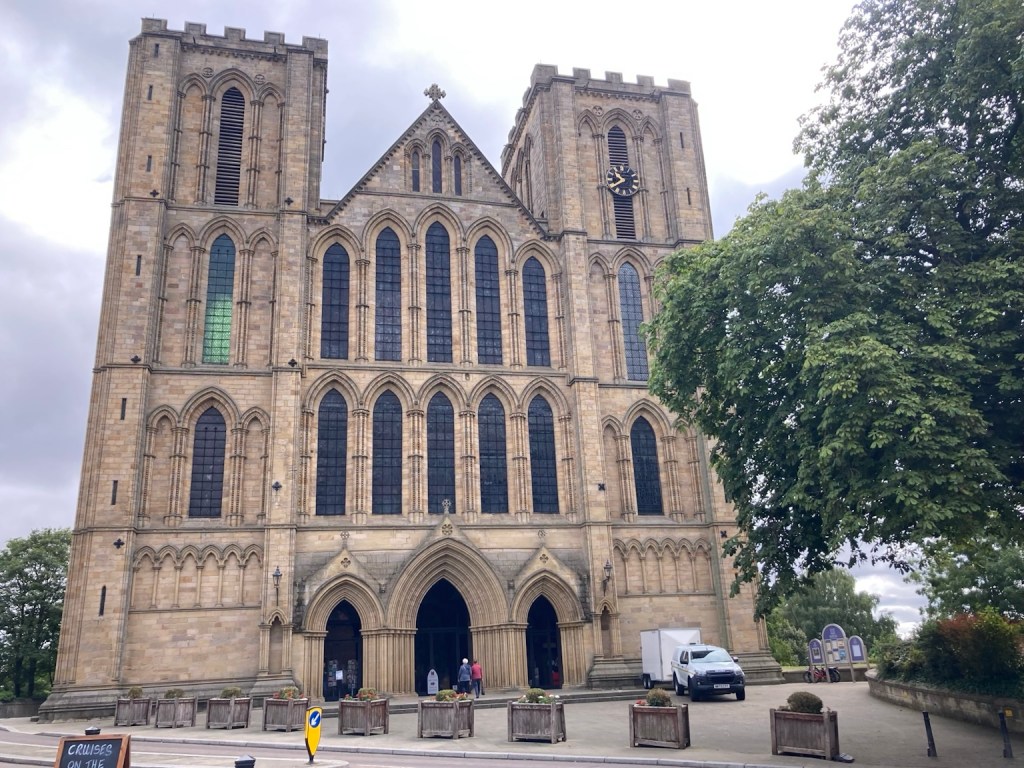
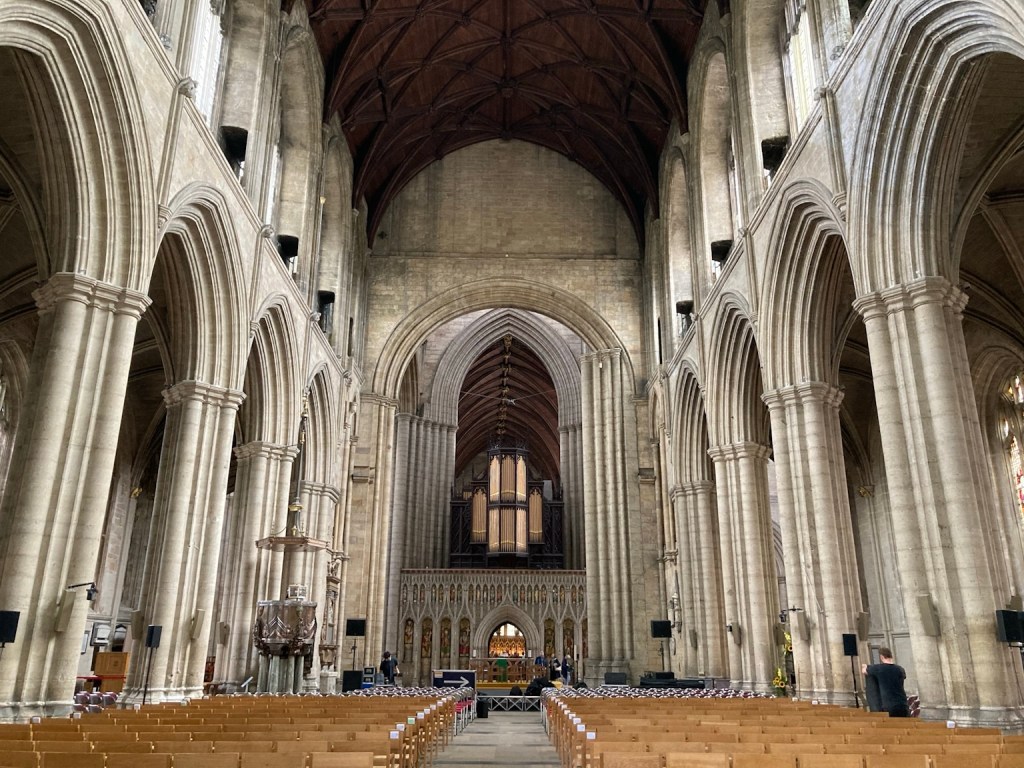
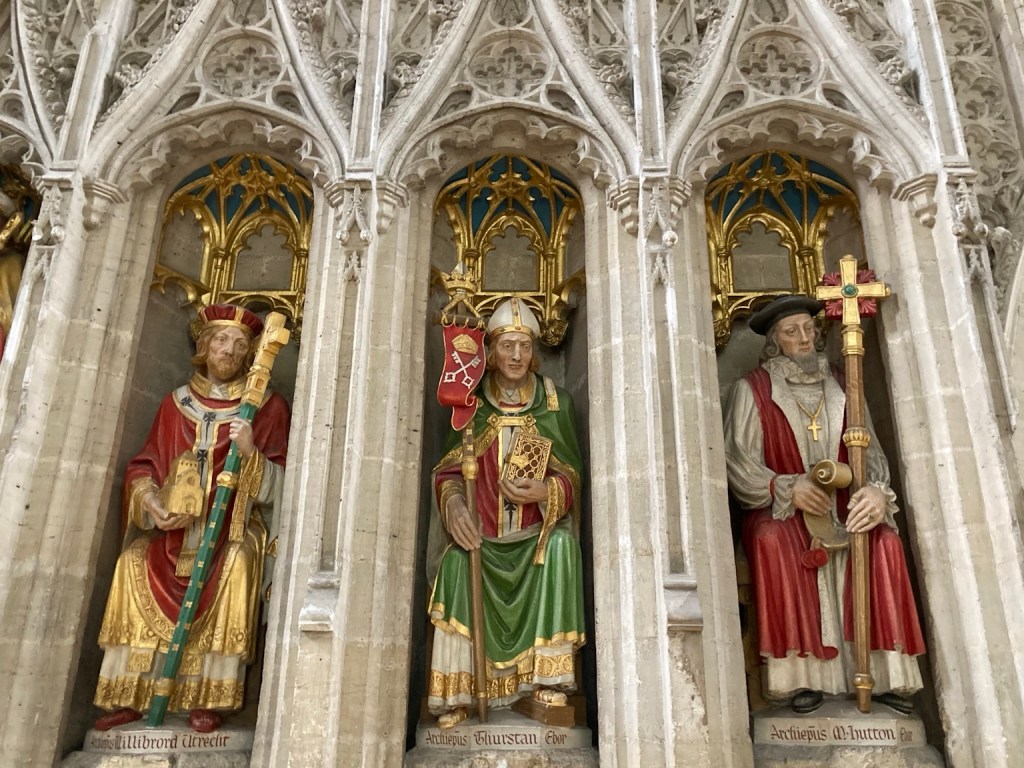
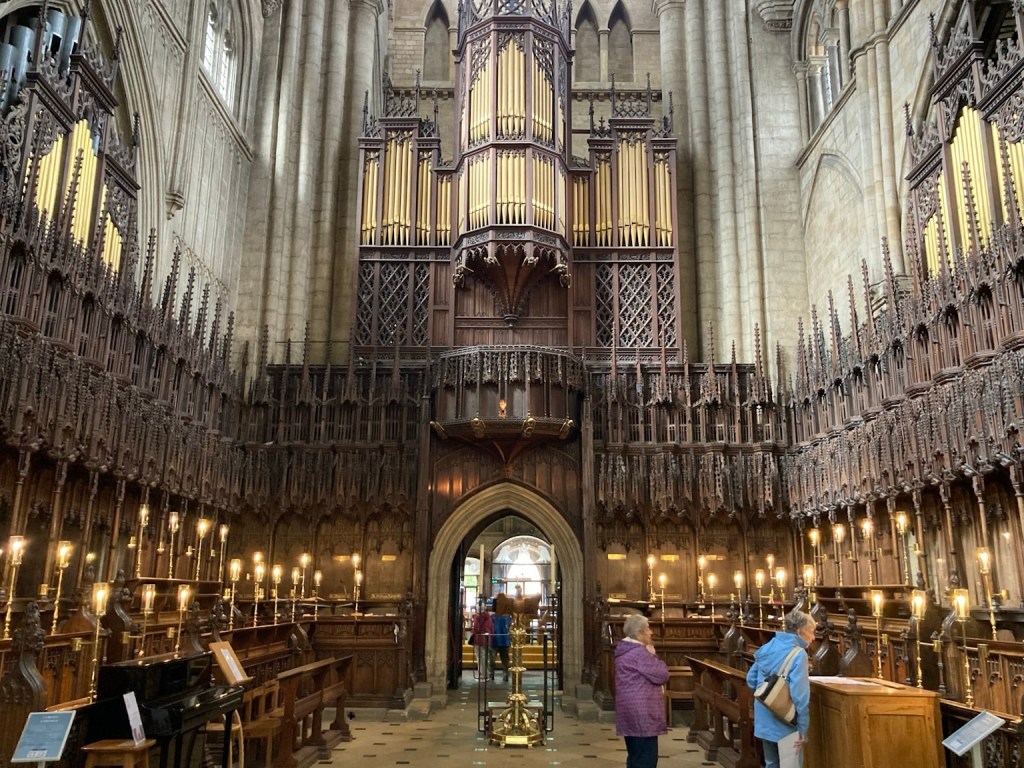
Can you spot the hand to help the organist signal the choir?
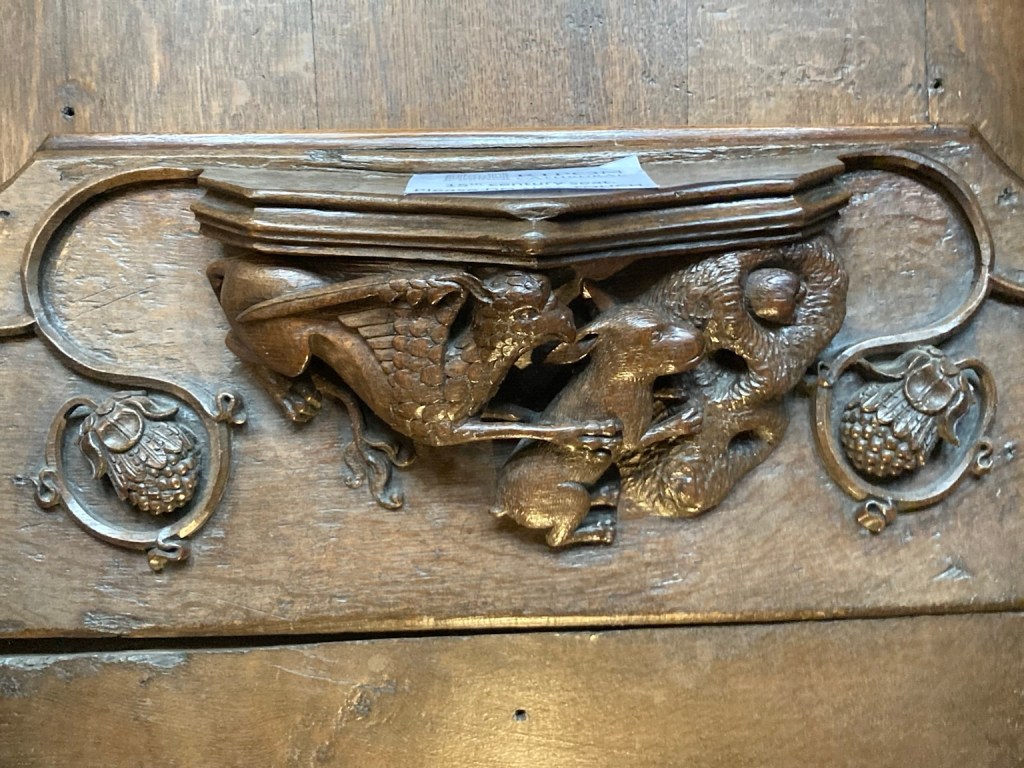
It also has a misericord of a griffin and a couple of rabbits, one heading down a rabbit hole is said to have inspired Lewis Carrol whose father was a canon here.
Enough pottering, it was time to get on the road as there was a long drive head. There was plenty of time to reflect on how lucky we had been with the weather and how quiet it was considering it is still the middle of August! There is still so much more to see and I’m sure this won’t be our last trip north.

