Mainly Brunel …

With rain forecast later, we made an early start so we could walk to Clifton along the bank of the River Avon. We would have started along the Chocolate Path, named for the appearance of its paving slabs laid in 1906, but it is slowly crumbling into the canal and has been closed awaiting repairs.

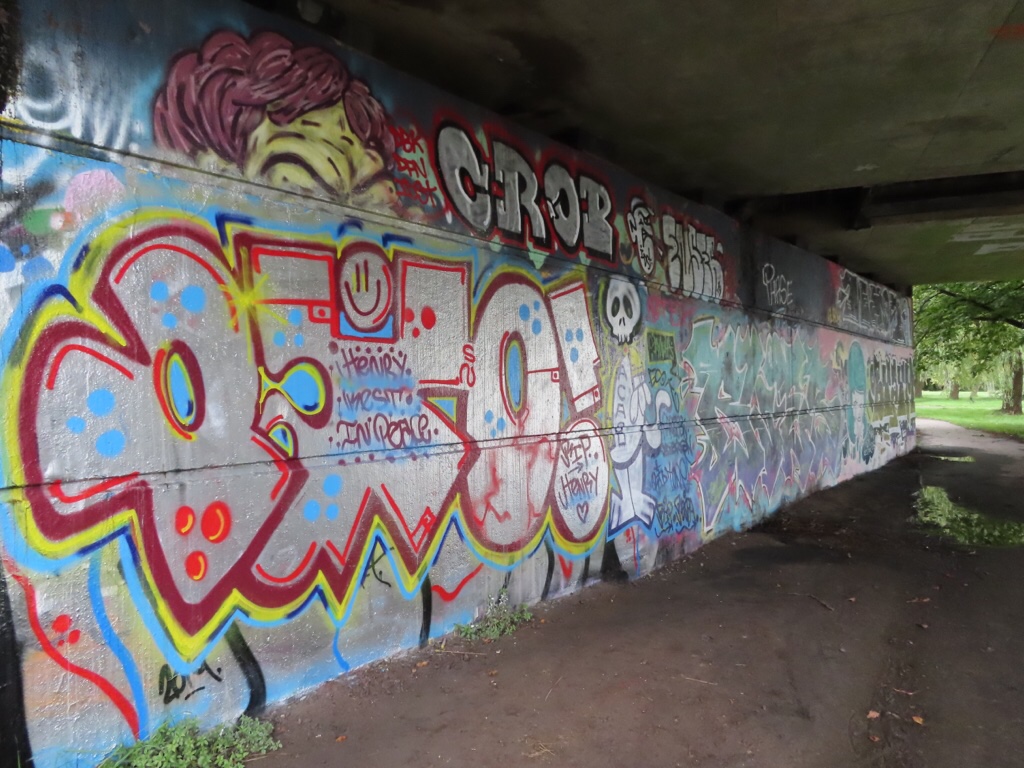
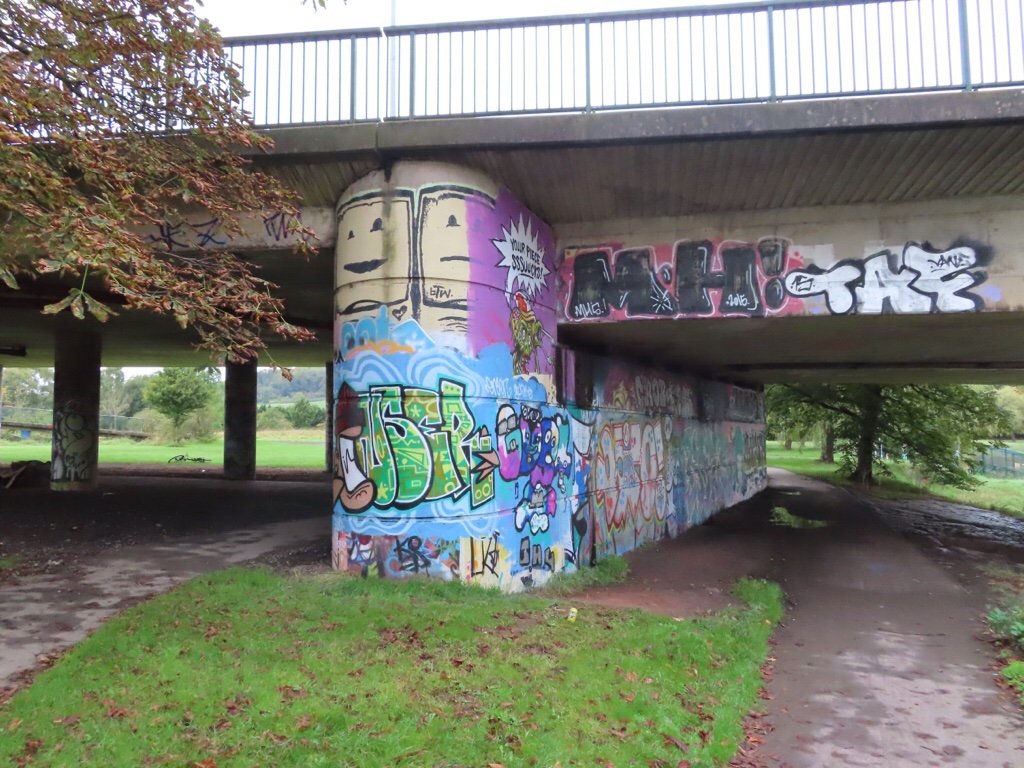
On such a grey morning even the graffiti and brightly painted houses did little to lift the mood …

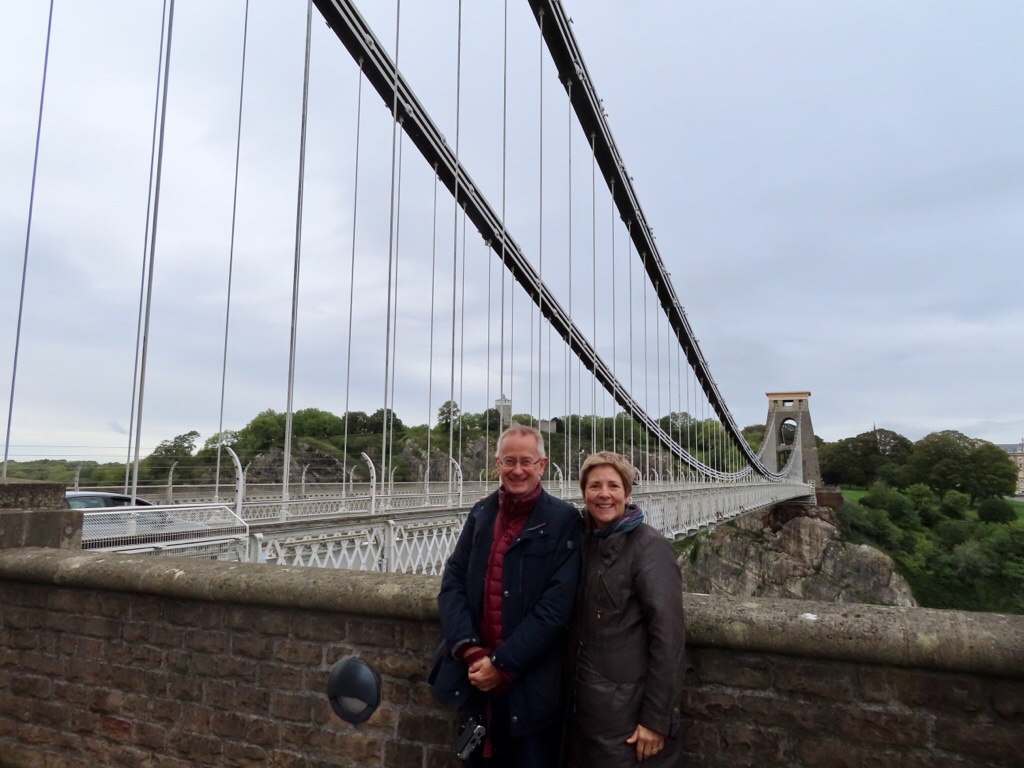
… but The Clifton Suspension Bridge came into view and still looked impressive.
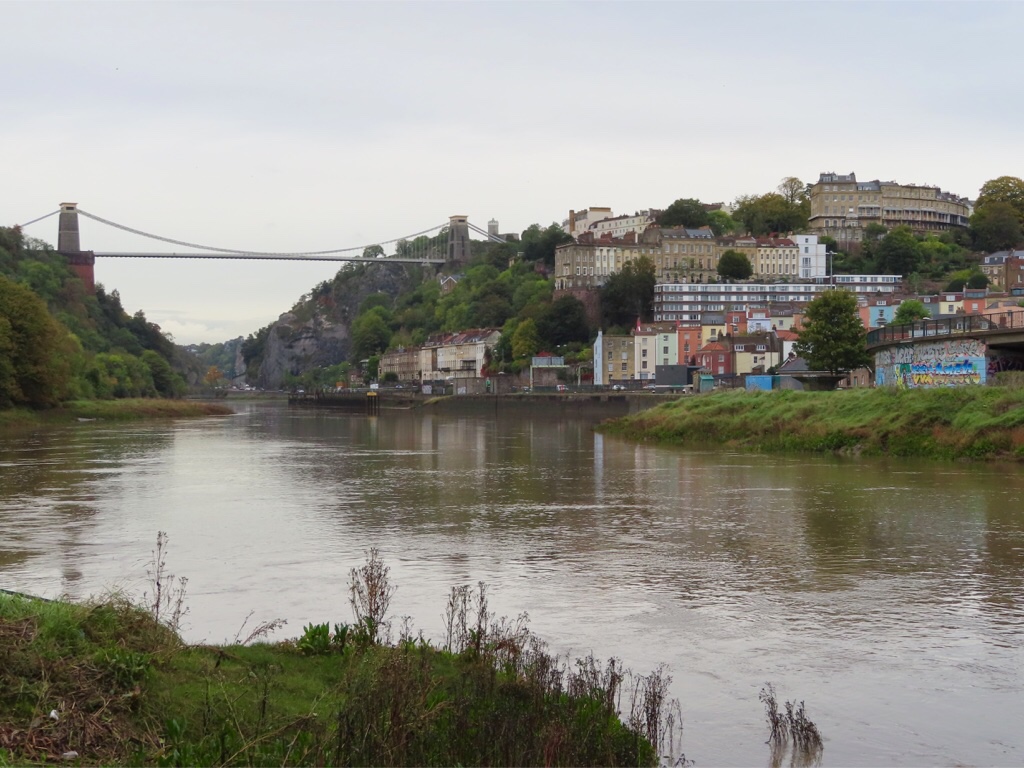
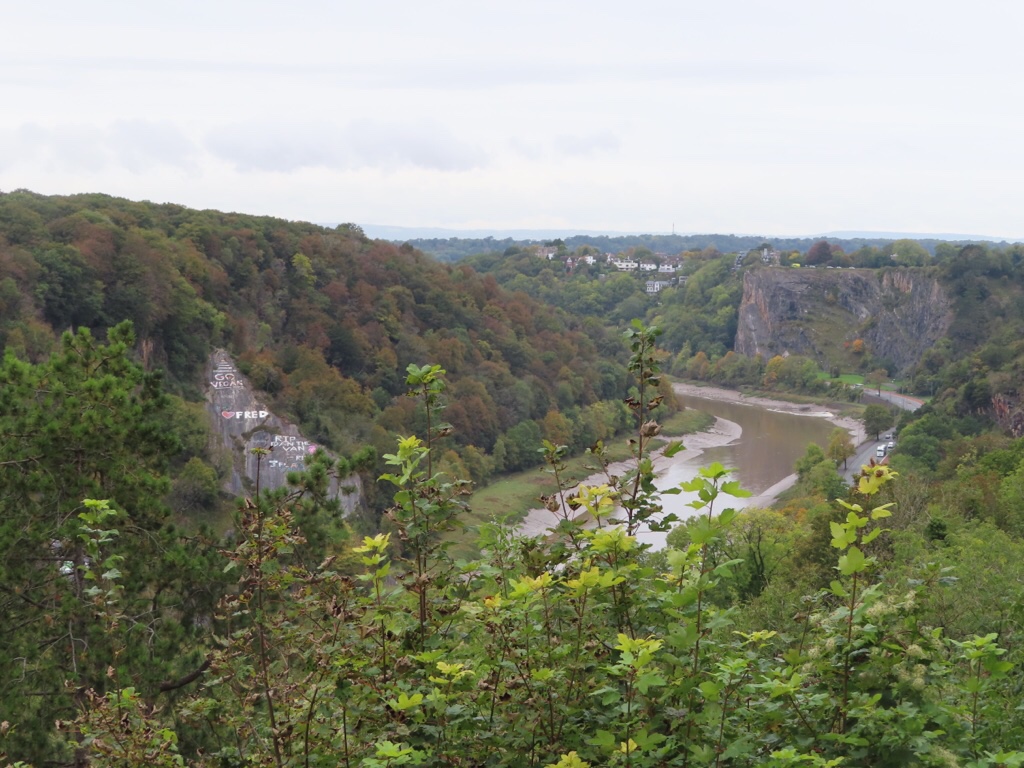
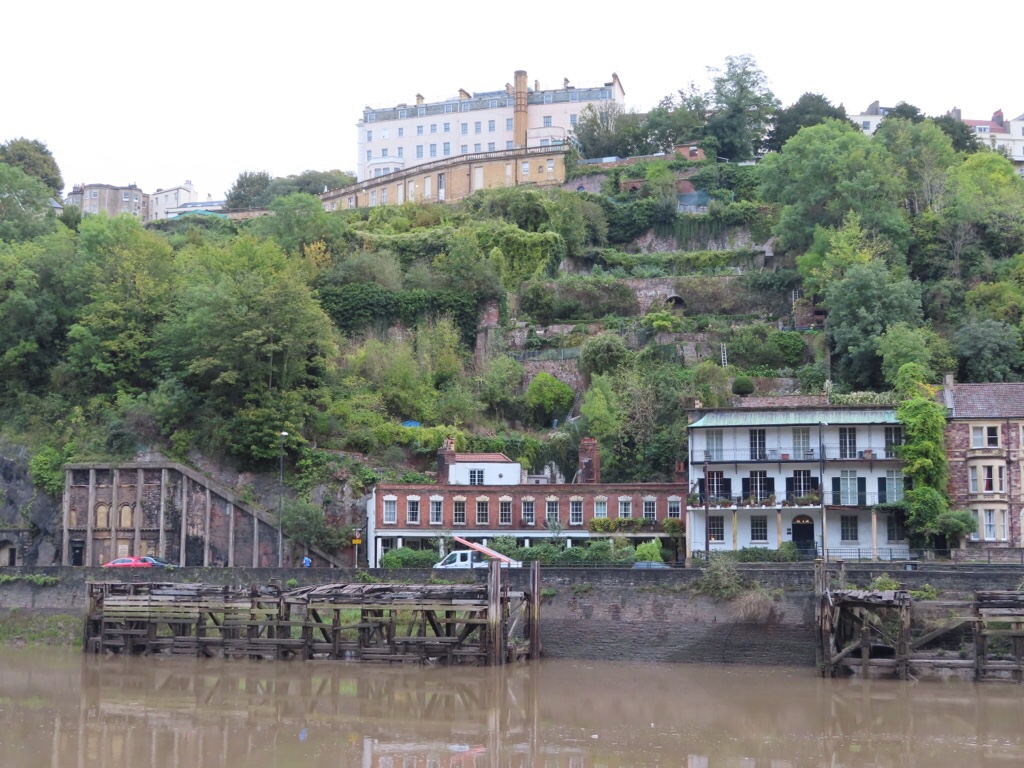
Looking across the river, we could see the area called Hotwells, named for the hot springs which bubble up through the rocks of the Avon Gorge. In the C18th, the spring was enclosed and its water pumped up into a new Hotwell House, which combined a pump room with lodgings in an attempt to compete with Bath. Elegant Georgian terraces were built as well as assembly rooms, hotels and lodging houses and Hotwells became crowded with nobility and gentry. Development up the green slopes of Clifton continued with much speculative property development, which was hit hard by the uncertainty of the war with France in 1793. By the time peace came, spas were giving way to seaside resorts as fashionable retreats, but Clifton developed into a perfect suburb for the rich merchants of the city and could even be reached by the Clifton Rocks Railway, a funicular railway built in a tunnel through the cliffs.
It started drizzling as we took the footpath up through Leigh Woods to the visitor centre by the bridge.

Having read about its construction, it’s surprising that this symbol of Bristol got completed at all. The idea of building a bridge across the Avon Gorge originated in 1753 but it was difficult to find a design which would fit the budget and even once Brunel’s design was chosen, there were delays, cost cuts and changes which meant the planned Egyptian style towers and sphinxes were omitted. It wasn’t completed till after Brunel’s death and was finally opened in 1864. It has always been a toll bridge, with a charge of £1 per car and was also the location of the first ever bungee jump by members of the Oxford University Dangerous Sports Club 1979.

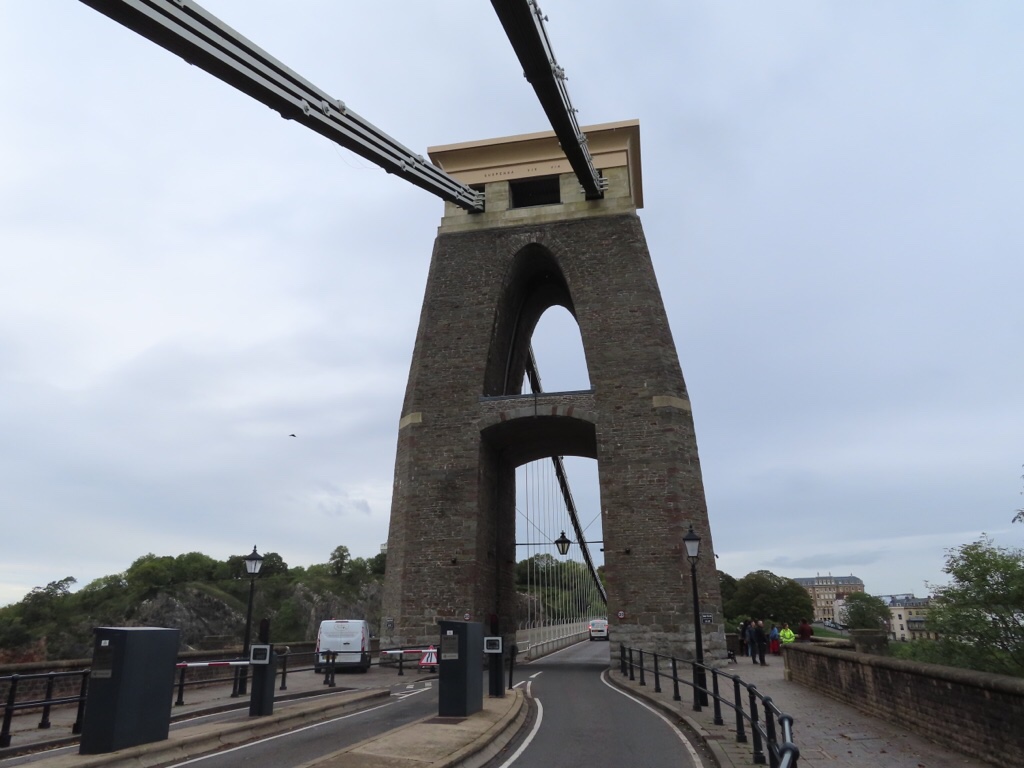
We walked across, looked back to the city and continued to the observatory which we had seen from the other side but the camera obscura was not working on such a grey day and we had no great ambition to climb down through the cliff to the Giants cave below. After a couple of snaps, a coffee and a chance encounter, we continued into Clifton.

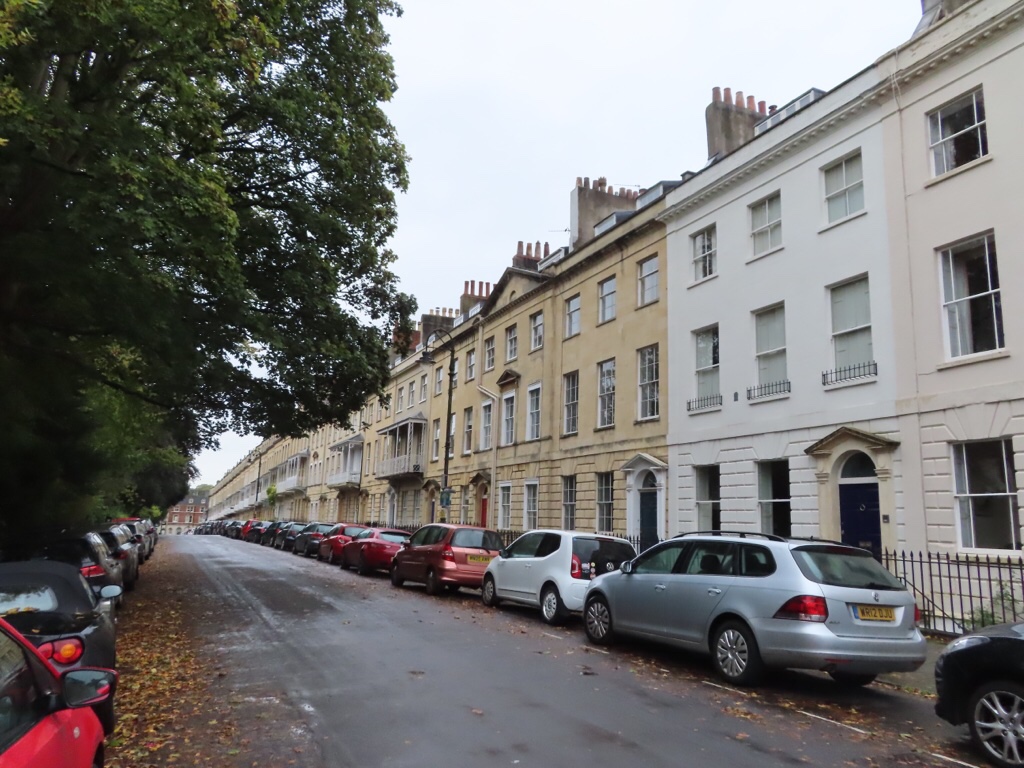
I’m sure it would have been far more appealing on a dry day, and while we did take a look at a couple of the elegant streets and terraces …
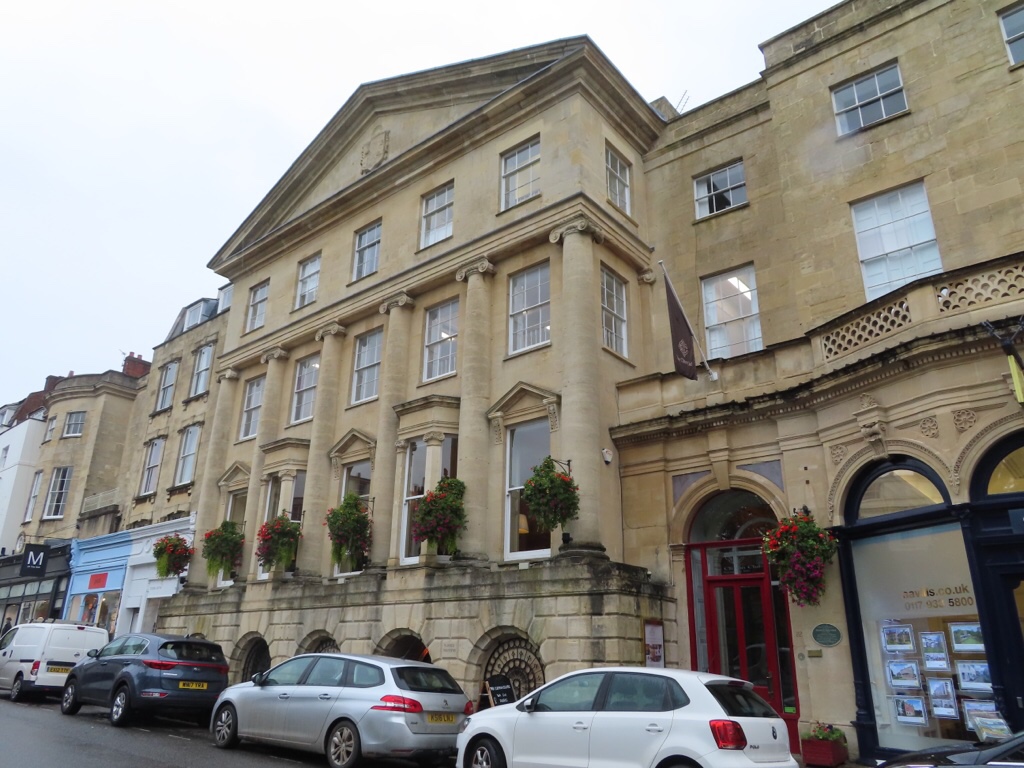
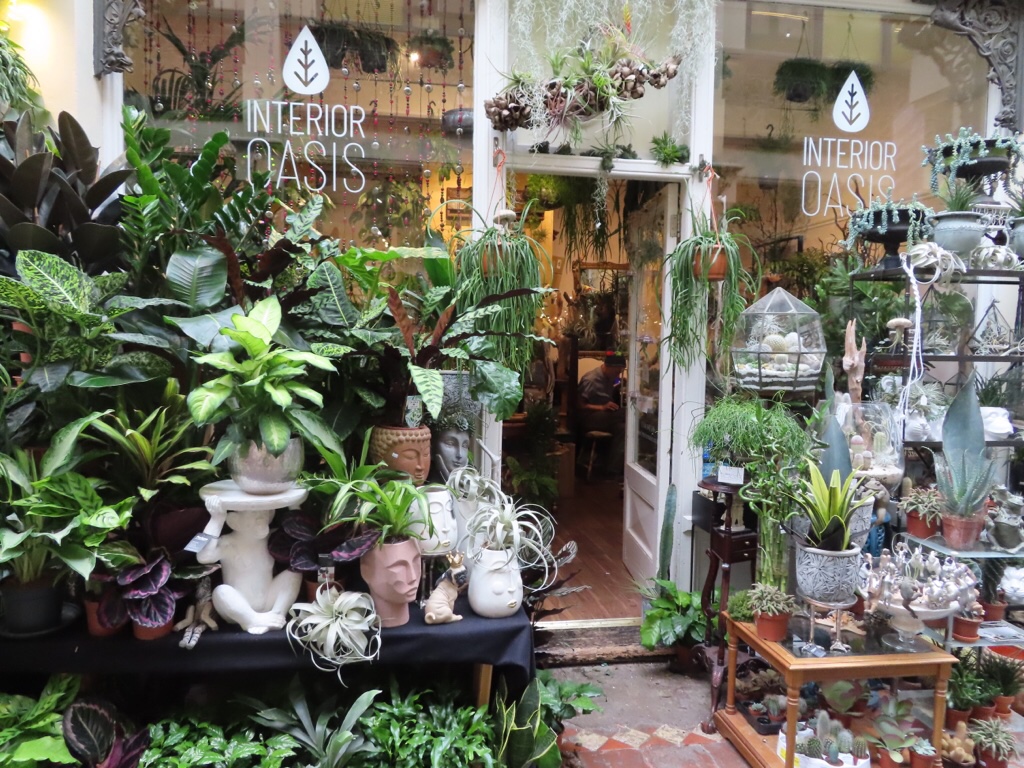
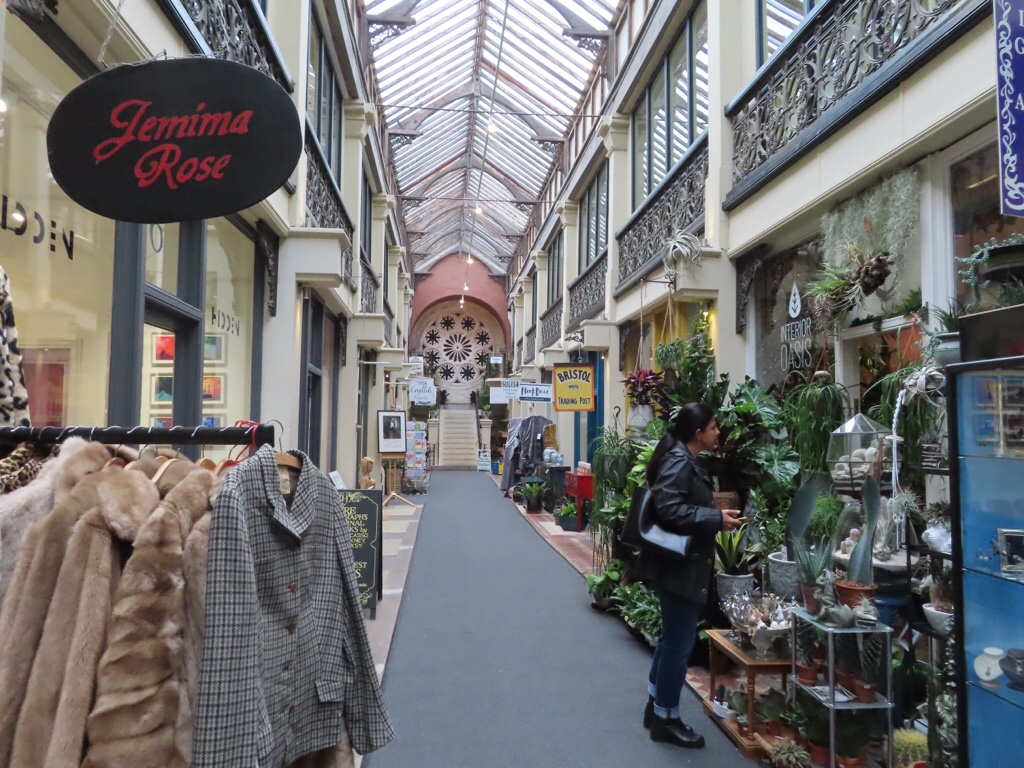
… and also the Clifton Arcade, it was all a bit damp.

I had been reading Birdcage Walk by Helen Dunmore to immerse myself in Bristol, named for a footpath through a graveyard where one of the gravestones leads the reader into a story of the very speculative property development I mentioned earlier woven together with radical activists … so of course we had to check it out and it was certainly very atmospheric, especially in the rain!
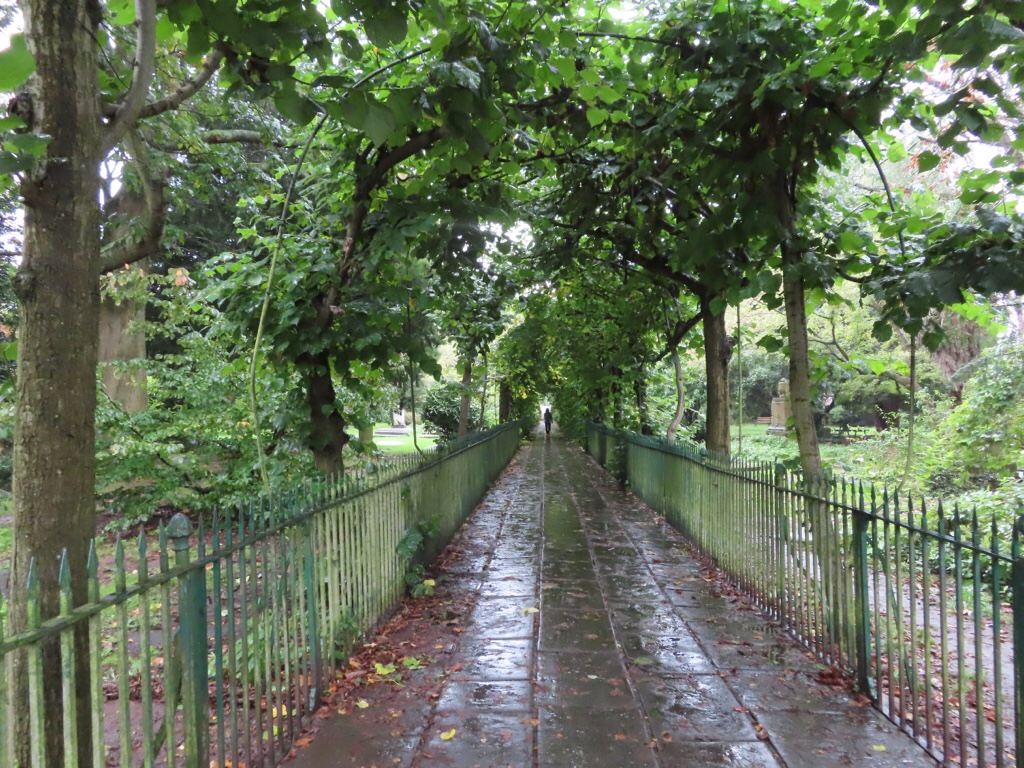
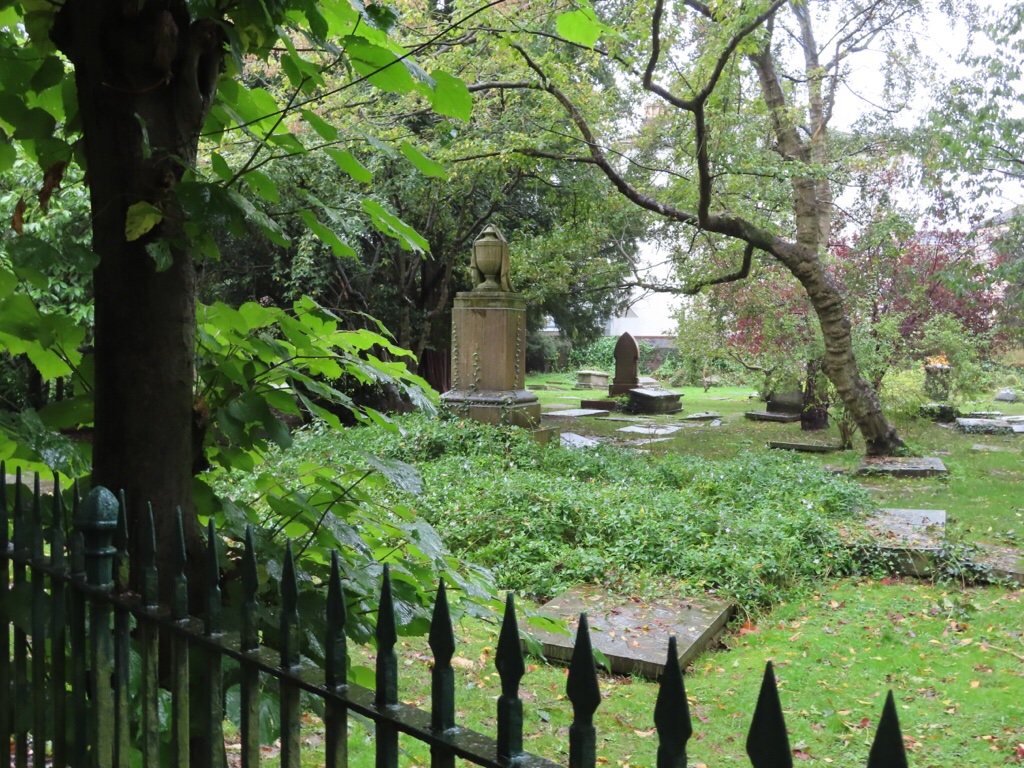
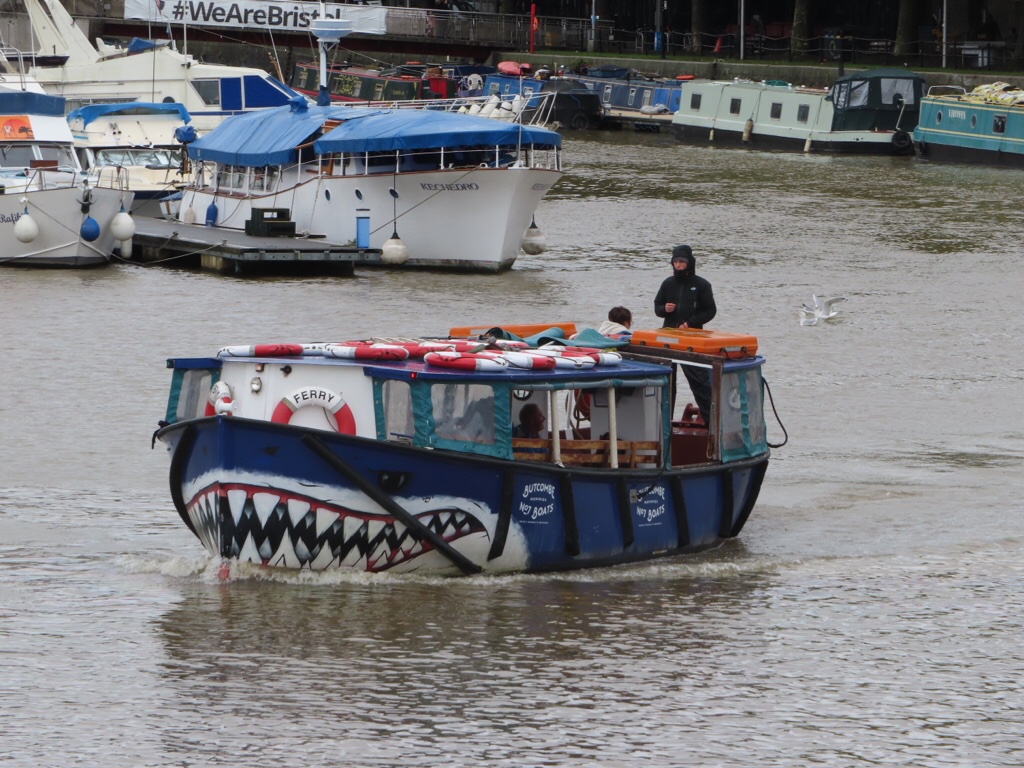
At this point enough was enough, and rather than taking our time admiring more architecture and checking out the coloured houses of Hotwells, we took the most direct route back to the city, followed by a small ferry that takes passengers across the river for £1 and took refuge in the SS Great Britain.
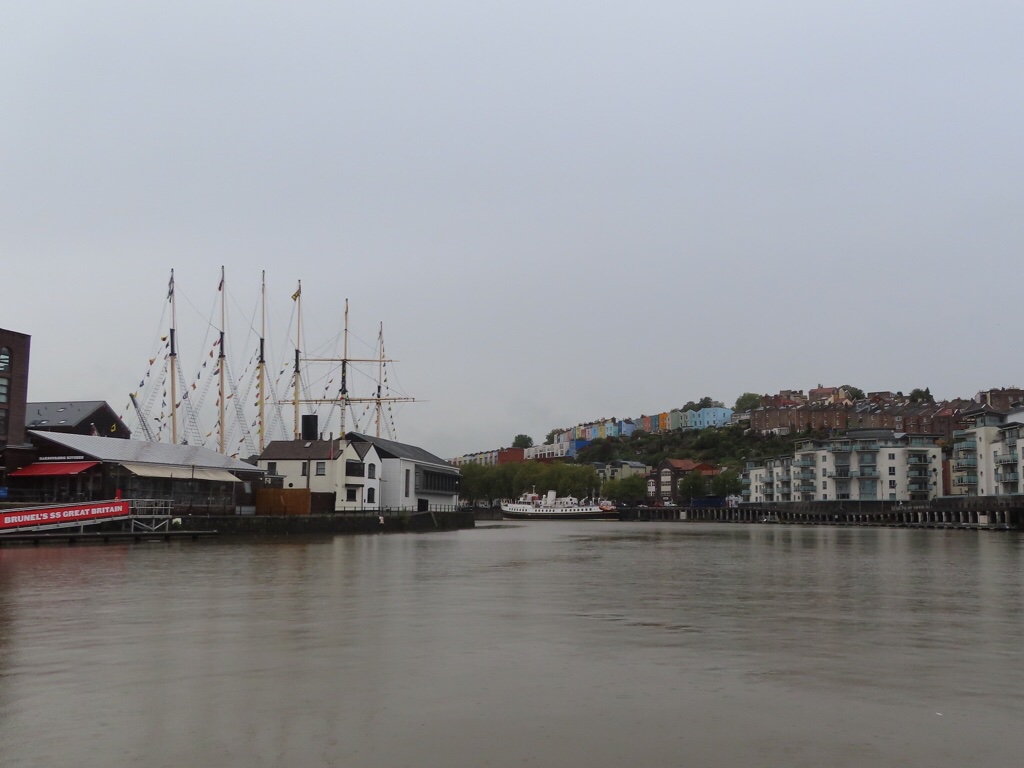
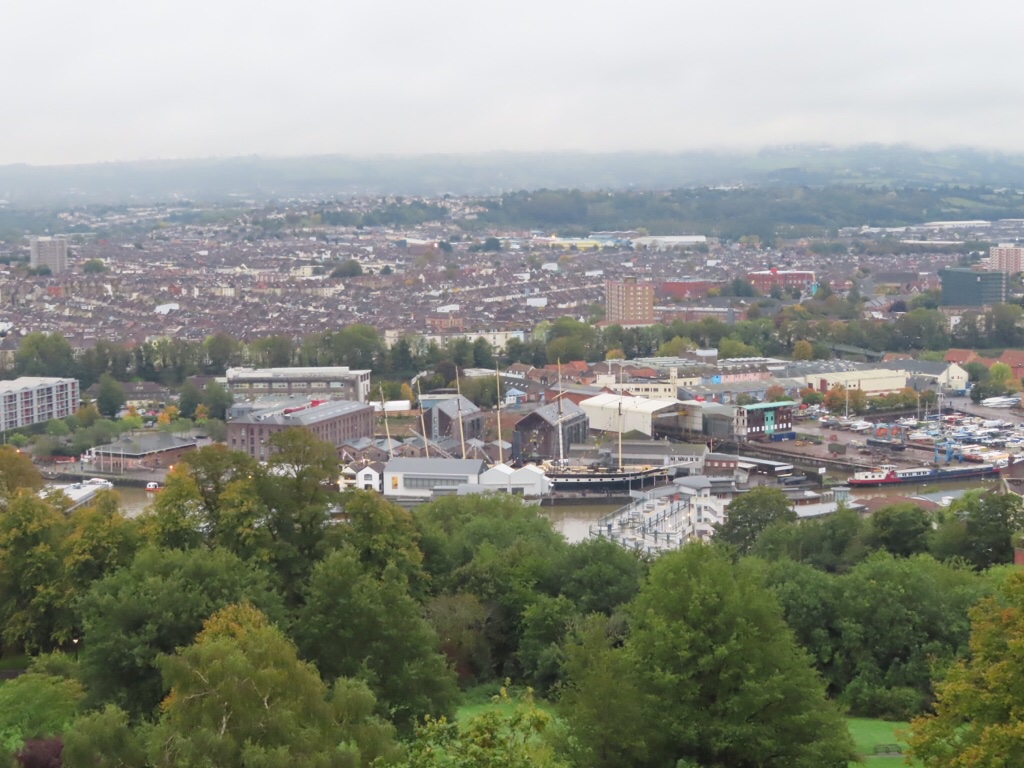
She was designed by Brunel and built in 1843, the first iron-hulled, propeller-driven ship to cross the Atlantic to New York. Subsequently she was fitted with an extra deck and made voyages to Australia, then was used for freight and did a stint carrying troops during the Crimean war. At the end of her life she was sunk as offshore storage in the Falklands before being rescued in 1970 and returned to the same dry dock she was built in and preserved. She stands giving the impression she is in water …
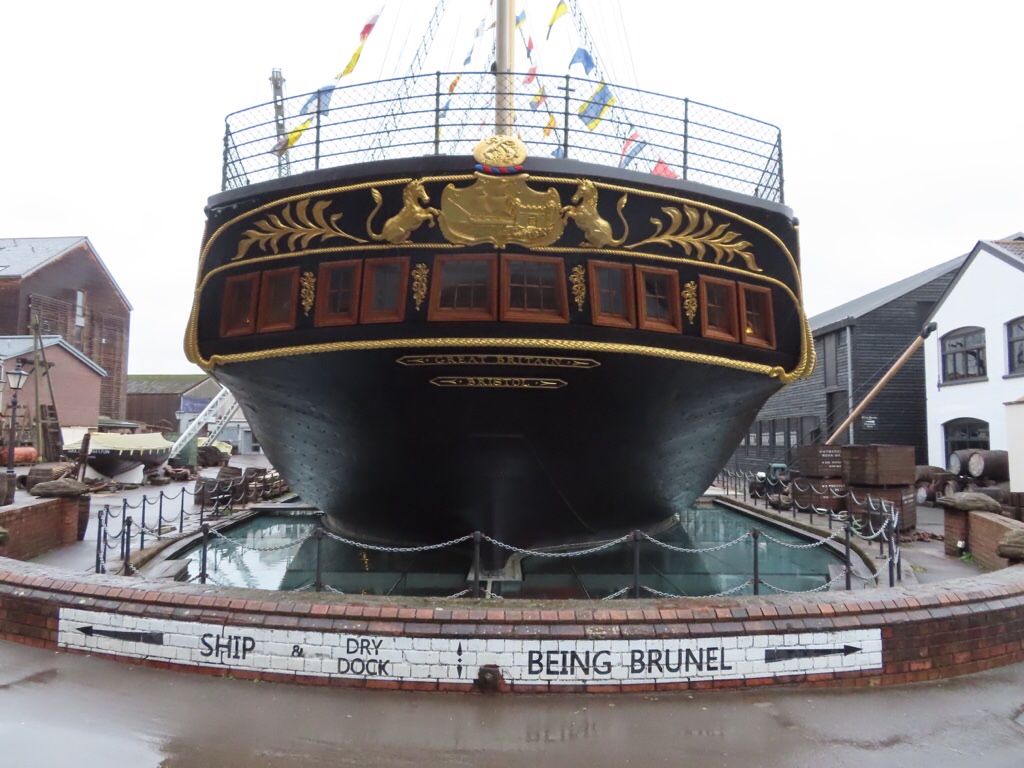
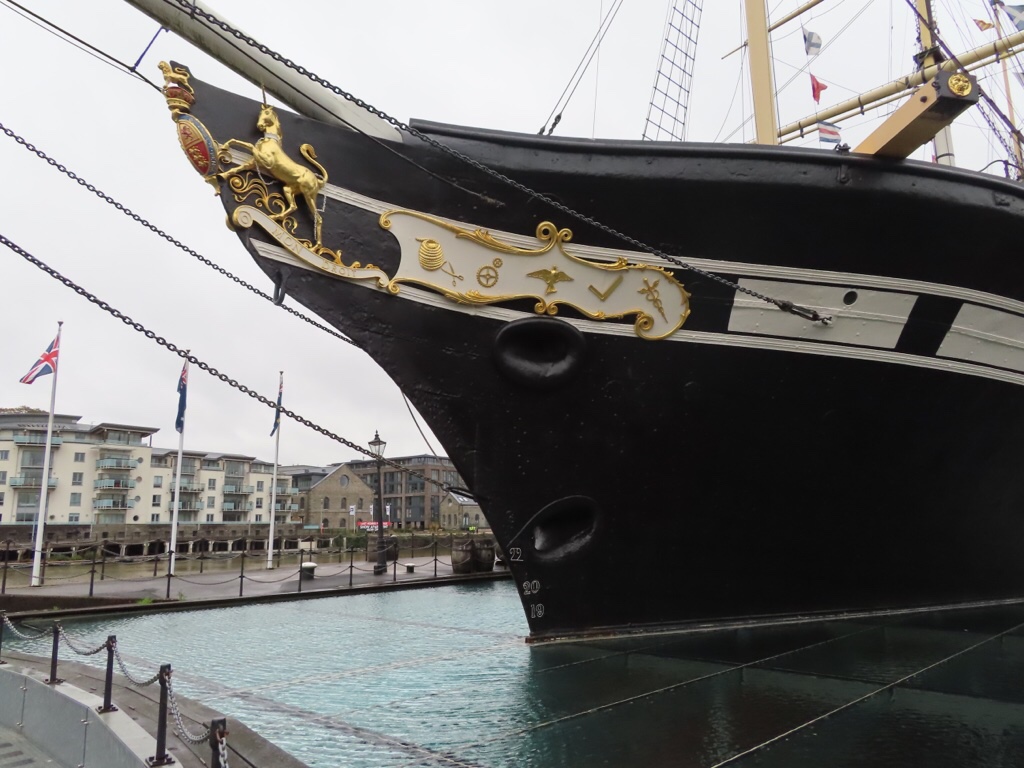
… but the truth can be seen below in the dry dock which contains warm air to prevent the hull from rusting further.

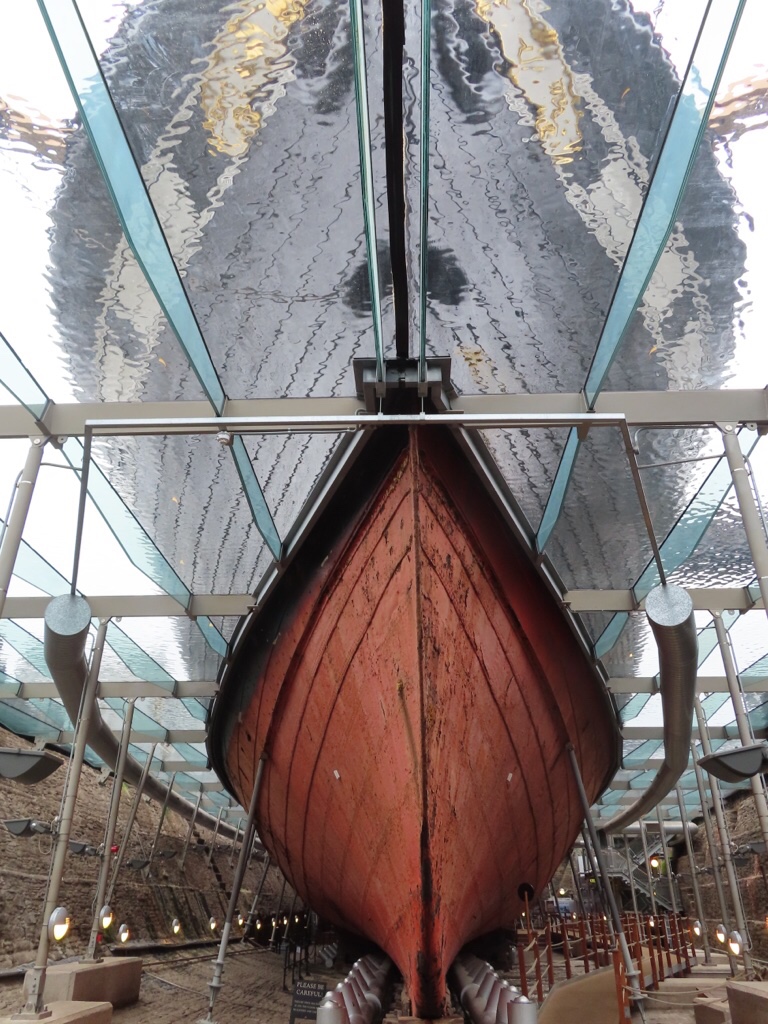
From the main deck she looks very smart …
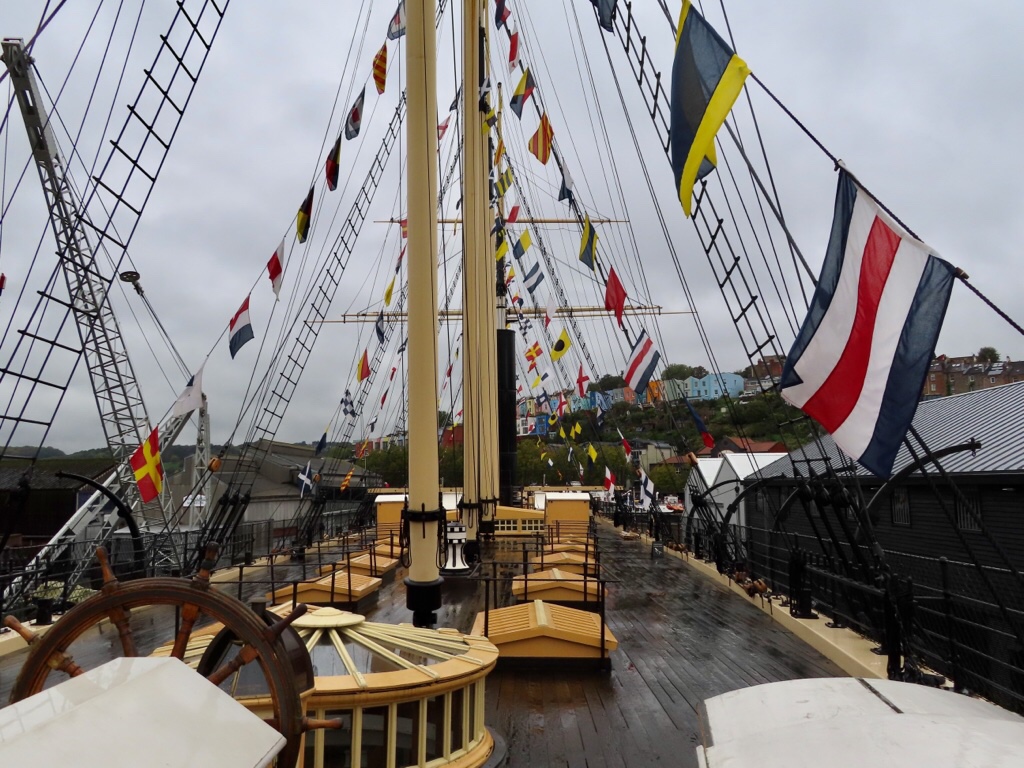
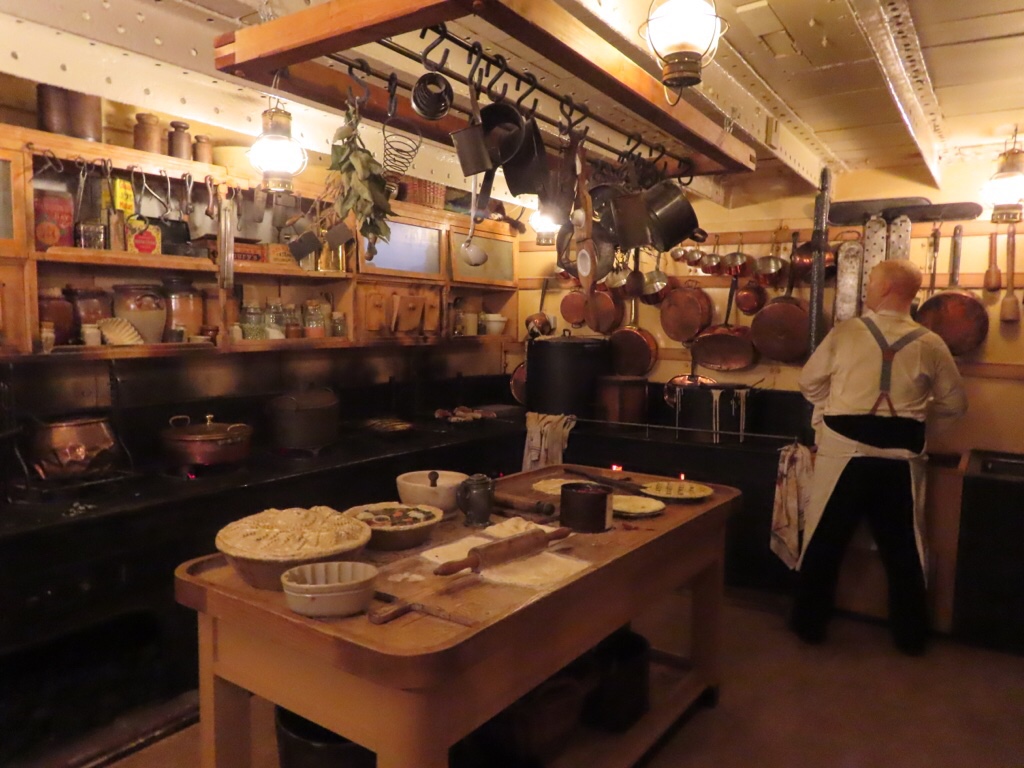
… and inside she has been partially refitted to show how she would have looked when first built complete with rats in the galley and rattling lids on the boiling stew!
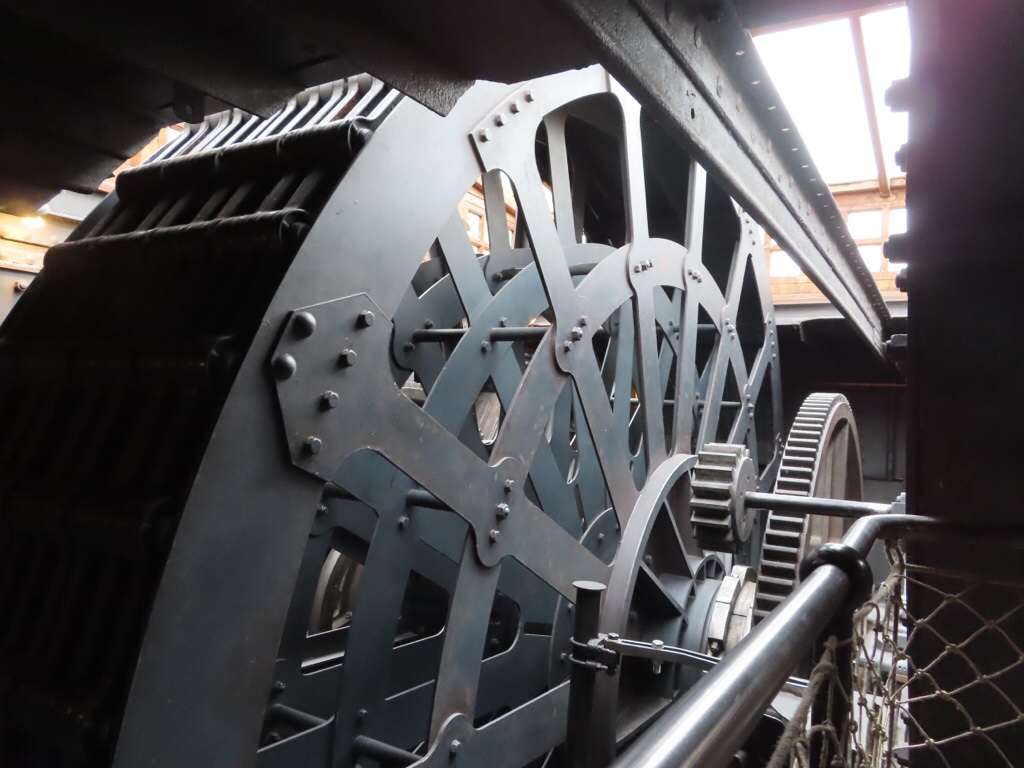
This was a great way to spend a wet afternoon and there was so much more including letters and diaries from passengers, details of the engineering design and how they have preserved her … good job our ticket enables to return for another visit!

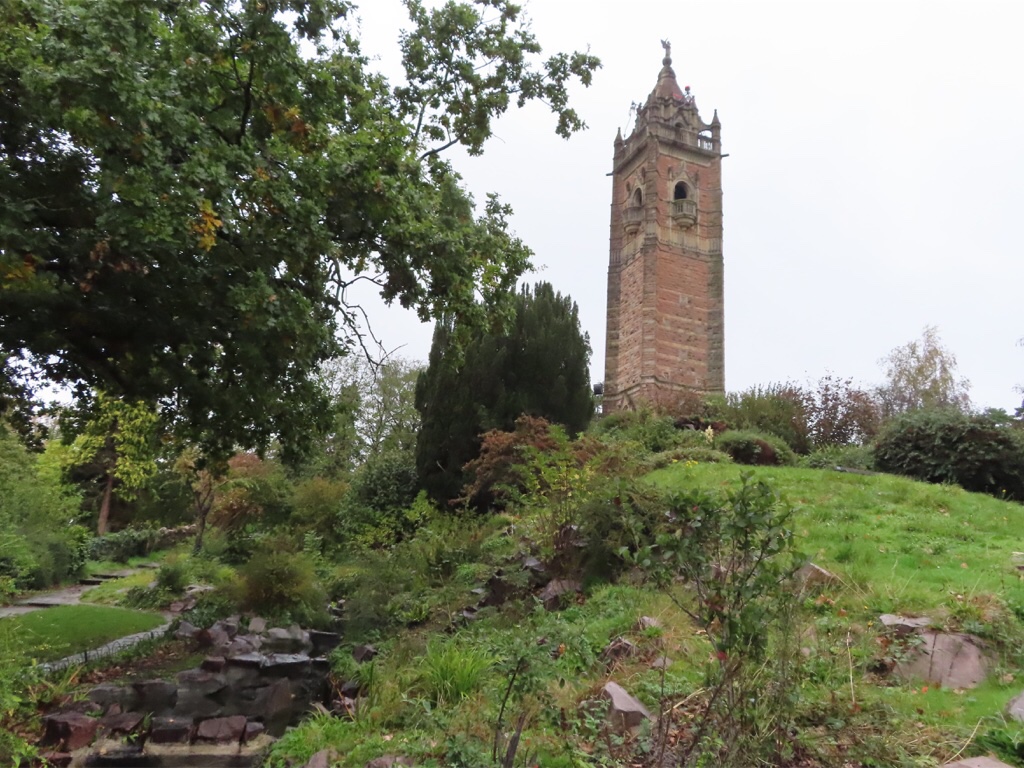
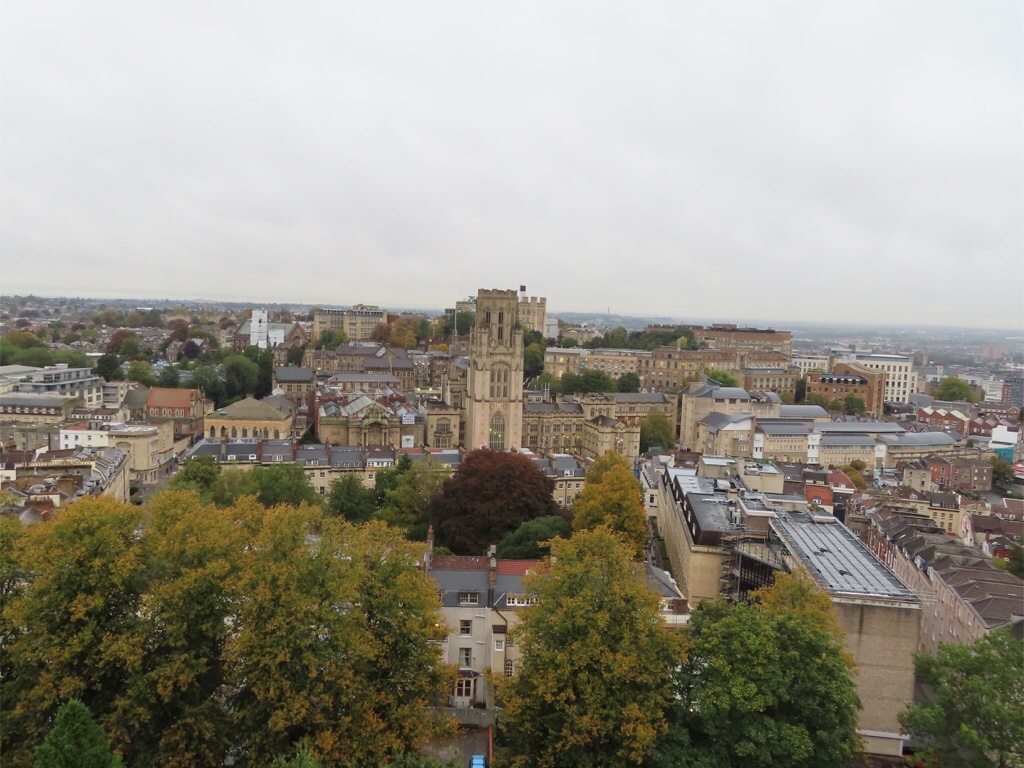
Just when we felt quite ready to call it a day, we set off back into the city to meet our niece Abi. Walking through Brandon Park, I climbed Cabot Tower but only got murky views.
A Sri Lankan restaurant called the Coconut Tree was a great choice for dinner and we caught up on news, chatting about all we had seen and what she was up to over white wine, hoppers and curry.

Map

Hello Bristol …

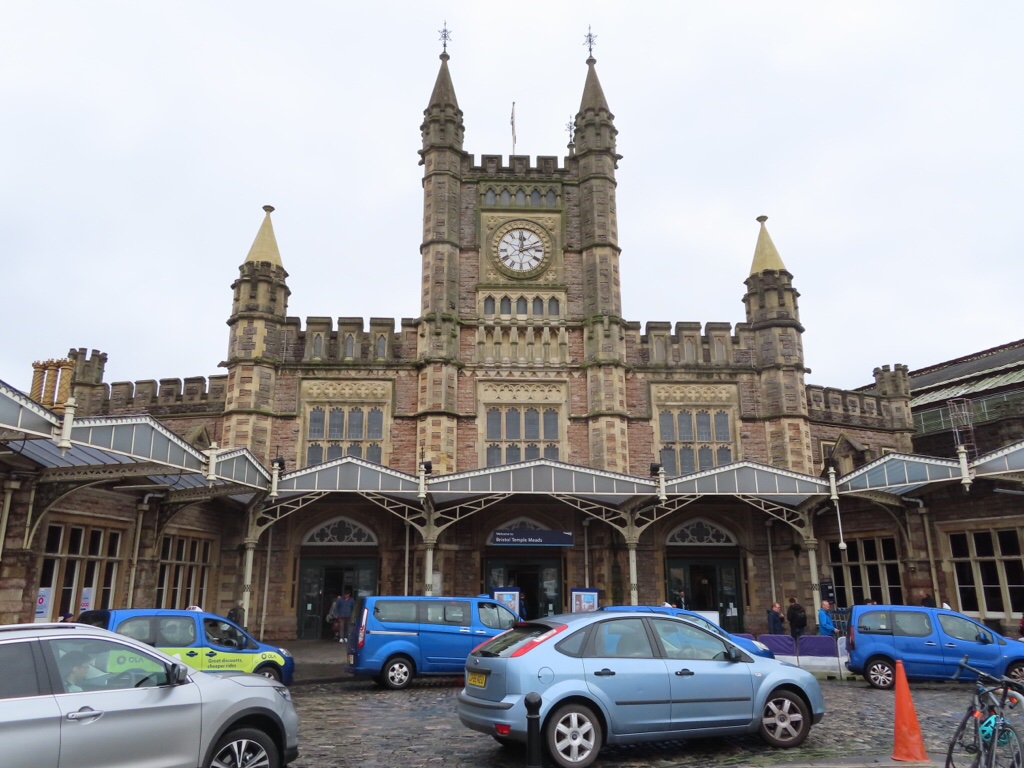
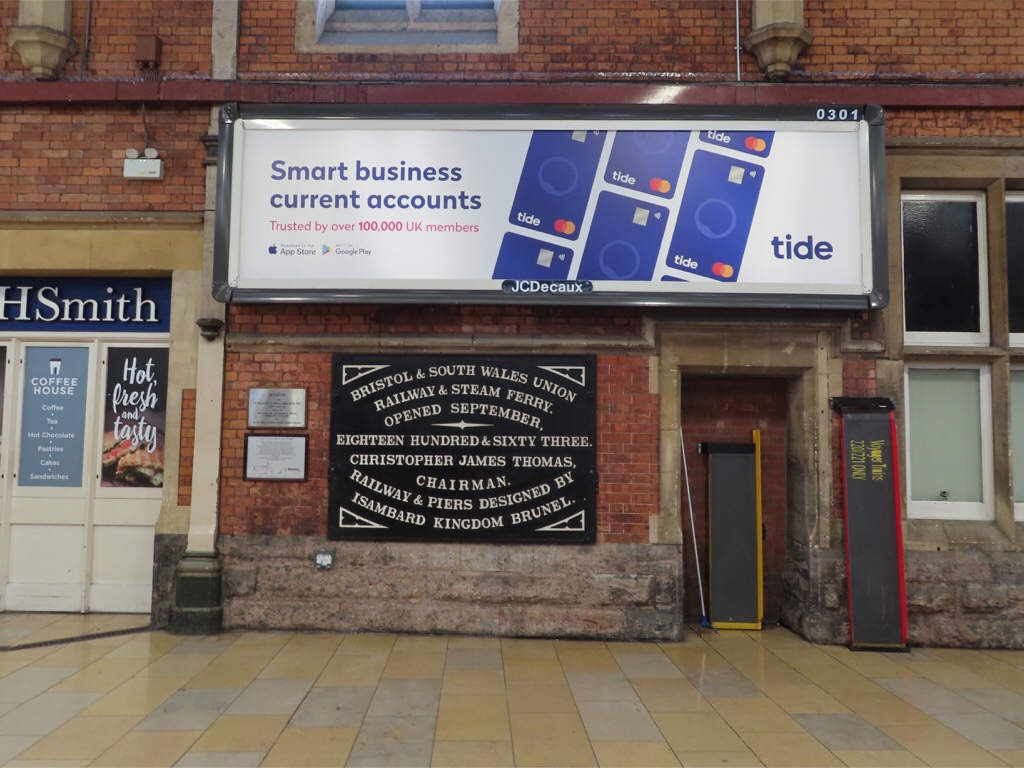
We arrived, like many visitors since 1840, on a Great Western Train at Temple Meads Station designed by Isambard Kingdom Brunel.

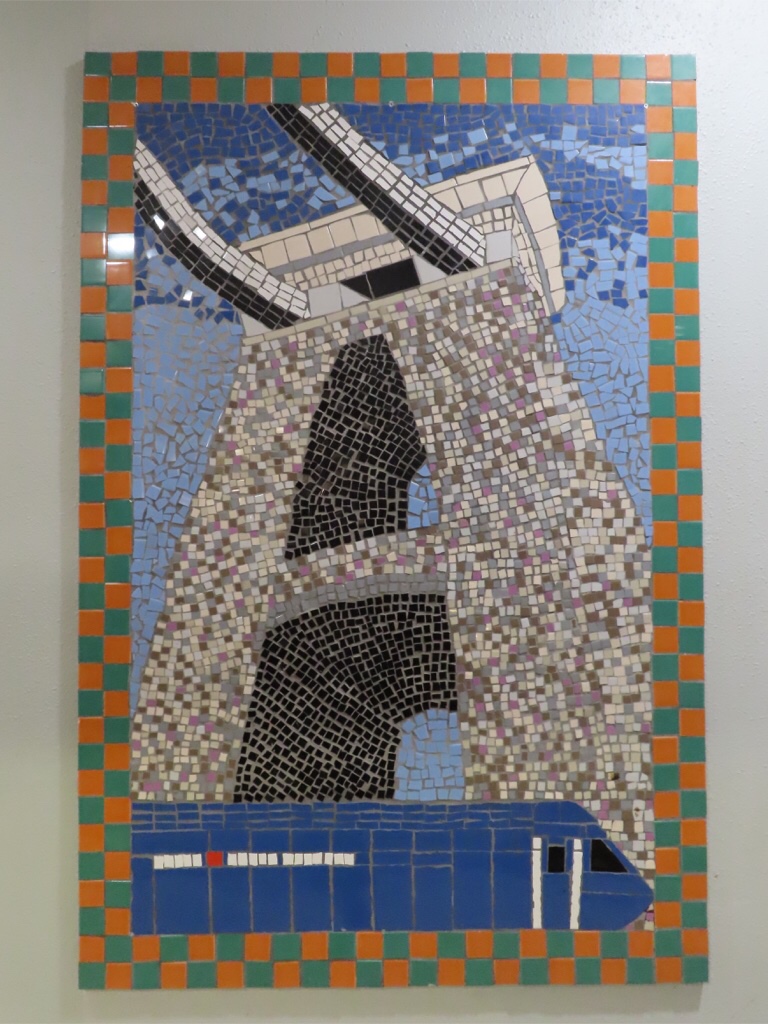
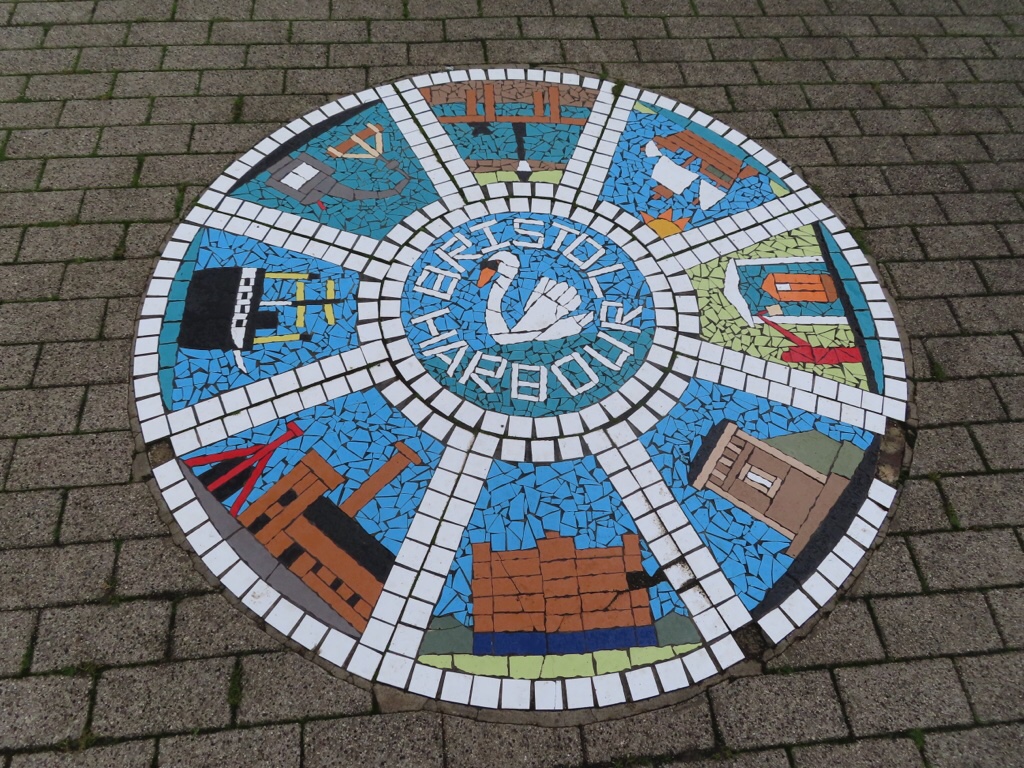
There were a couple of cheery mosaics, even though the day was rather grey.

The terminus soon needed expanding so here is the new Gothic station from 1870 …

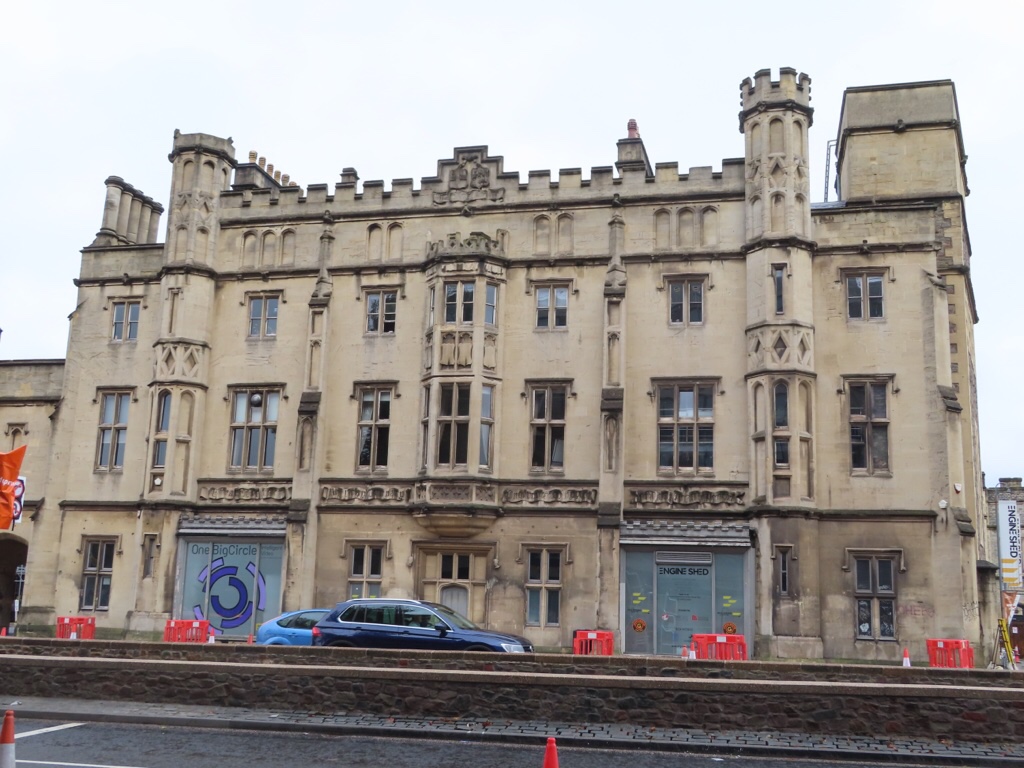
… and here is Brunel’s Old Station building across the forecourt.

We are staying a short walk away in Southville, at the cute and cosy Ibrox Hotel where we left our luggage before heading out for lunch.

Bristol has a long maritime history so we thought we would start with the harbour. A short walk brought us to Spike Island which was created in 1809 when the Floating Harbour was constructed. Previously, the high tidal range meant that ships moored in the harbour would be aground at low tide and tip to one side so if everything was not stowed away ‘Ship Shape and Bristol Fashion’ cargo could be spoiled. The Floating Harbour was a lock system which trapped water in the city’s central harbour and allowed ships and boats to stay afloat without being affected by the changing tides.

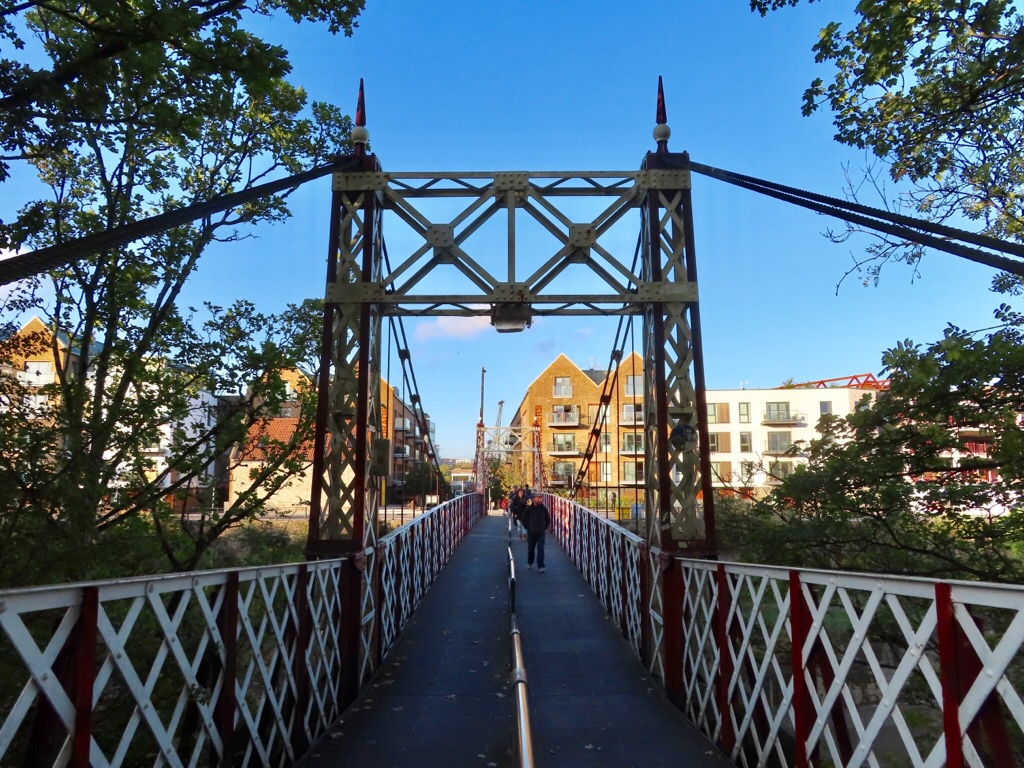
Gaol Ferry Bridge crosses New Cut to Wapping Wharf which was once home to the Victorian prison, but is now a regenerated area of cafes and shops.

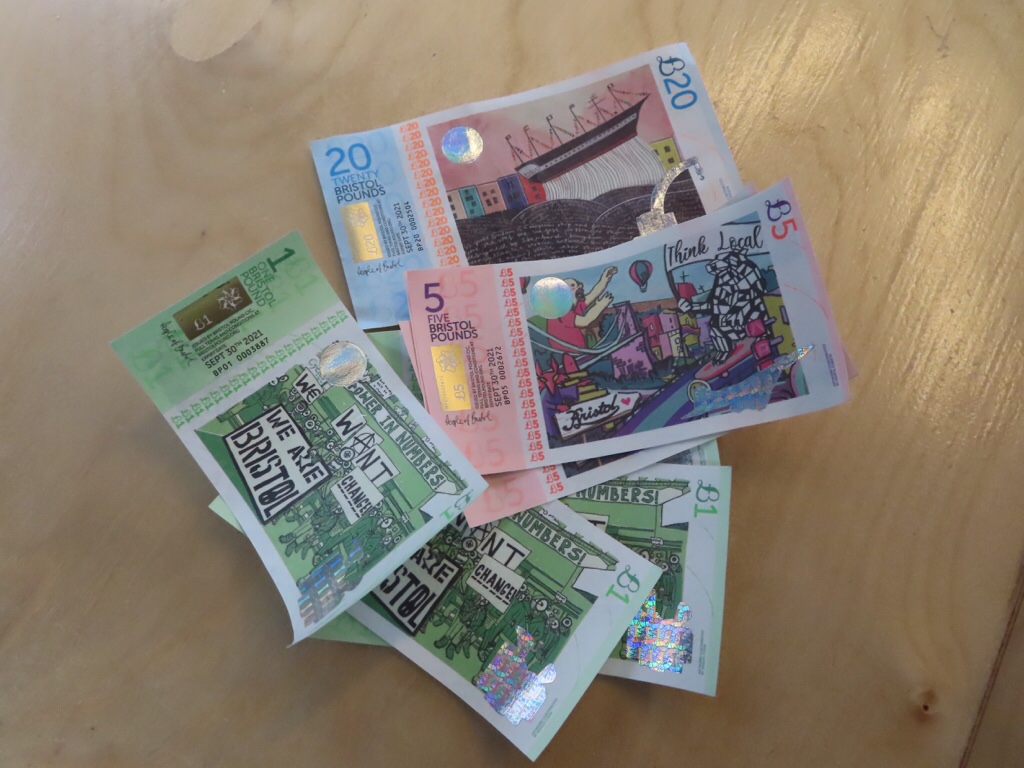
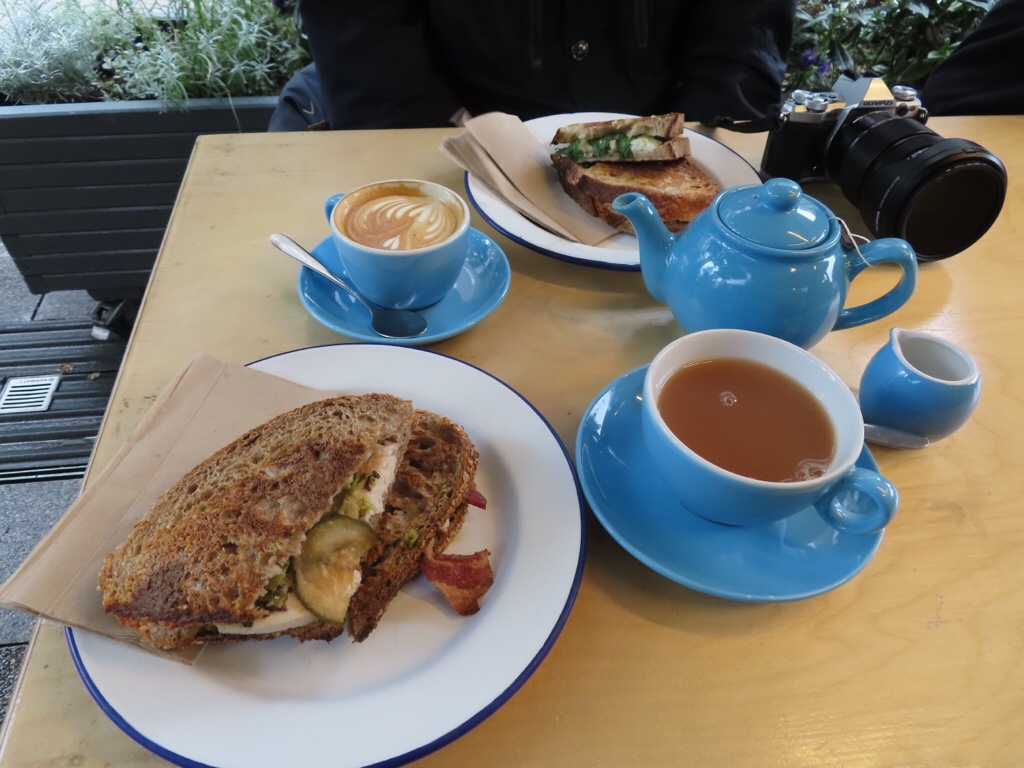
In Little Victories, to Chris’s amazement, we were able to change some money into Bristol Pounds, a community currency that began in 2012 and is used in various shops and cafes in the city. Having spent a few minutes admiring the notes, with their striking designs of Bristol including the suspension bridge, coloured houses, hot air balloons, ships and Concorde we spent a few on a couple of toasties for lunch.

Yesterday in the newspaper, we saw a photo of a sound and light installation in Bristol so went to have a look. It was in the Redcliff Caves, man-made caves, originally dug to provide sand for glass and pottery making extending for over an acre under the city. ‘We are Warriors’ marks 100 years since the first women were allowed to vote and on the way in, we each made a tiny light with a battery and bulb stuck together with tape, then added them to the array of lights inside the caves. It was very atmospheric, especially with the slightly eerie soundtrack. Unfortunately it was too dark to get a photo we could share … you had to be there!

We got several views of the harbour on the way back …

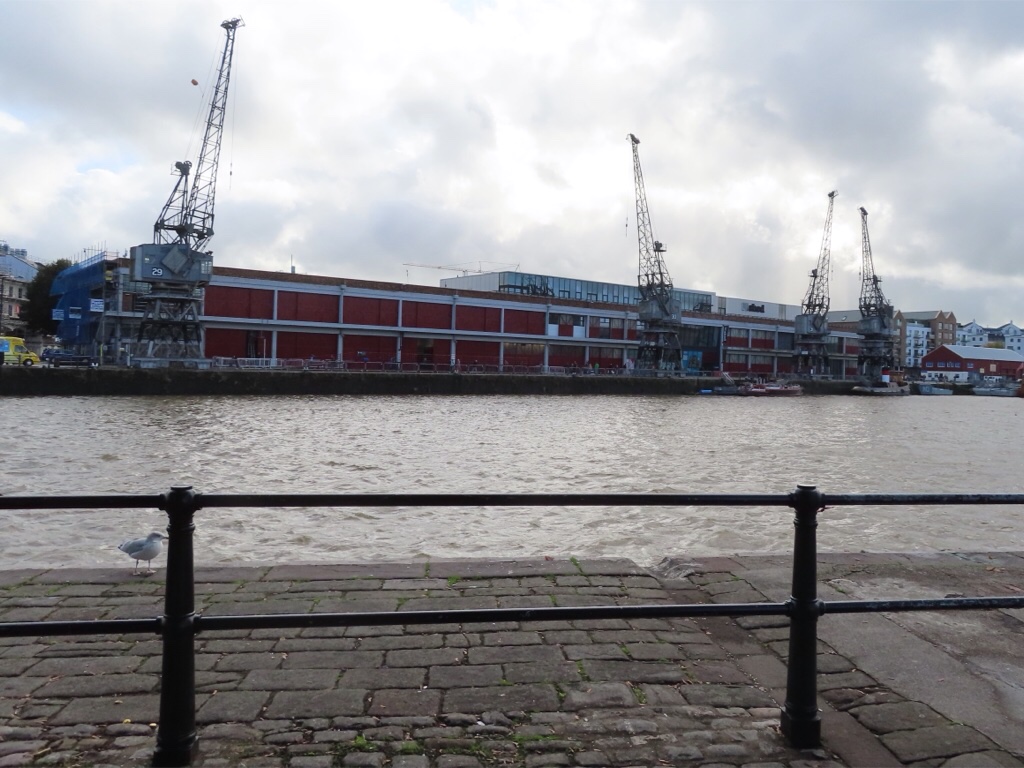
…including four huge electric cranes dating from the 1950’s when there were over 40 in the docks …

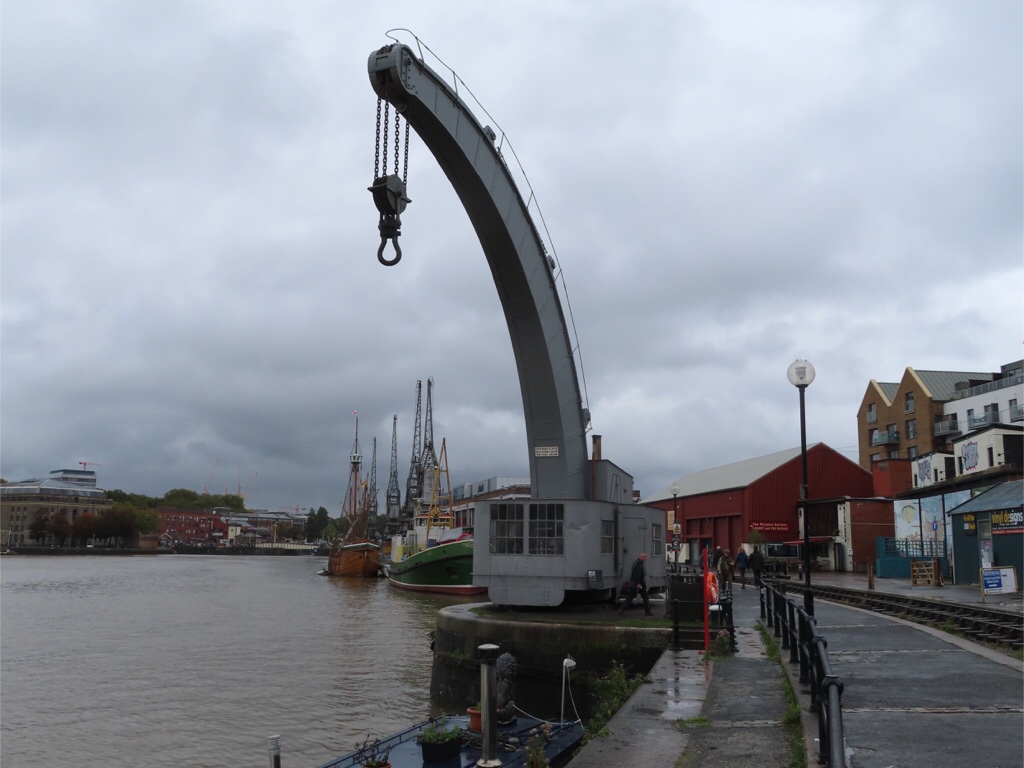
… and the striking banana-shaped crane is the Fairbairn Steam crane which could lift loads of 35 tons.

Next stop was M Shed, a really interesting museum all about the life and times of Bristol. It seemed to cover everything from voyages of discovery and trade to the development of technology and the arts. It was the wealth from the trade of tobacco, sugar and slaves which made Bristol prosper and funded the elegant buildings of Bristol such as Temple Meads Station, the Georgian houses in Clifton, the Suspension bridge, as well as many buildings in centre of the city which were lost to bombing in WWII.

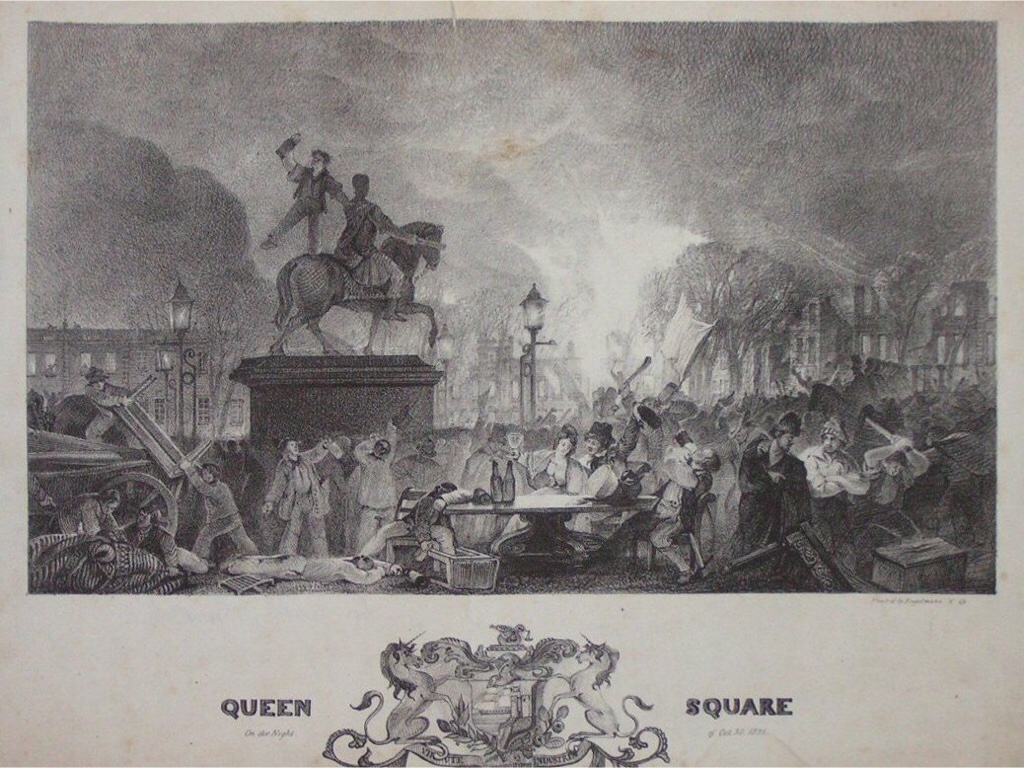
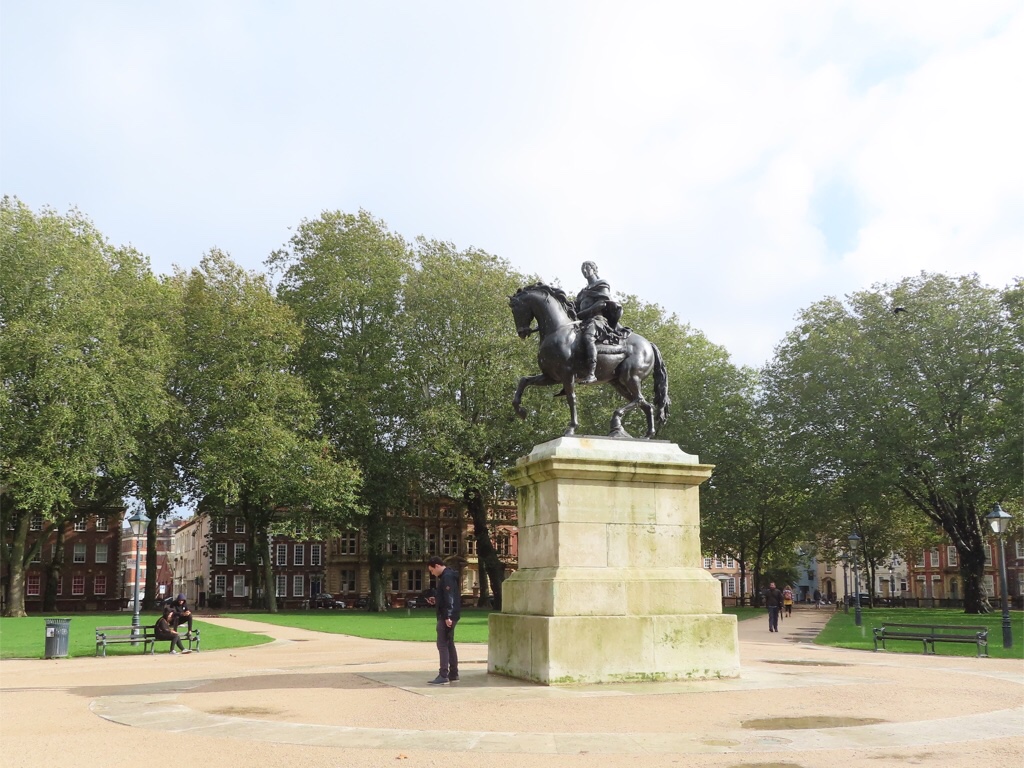
Bristol has also long boasted a proud history of civil insurrection. During the C18th there were riots over bread, wage cuts for weavers and, most frequently, toll-booths. In 1831, Queen Square was once the scene of some of the worst rioting in Britain. The Bristol Riots broke out after the House of Lords the rejected the second Reform Bill which would have given greater representation in the House of Commons, shown here in a lithograph from the time as well as how it looks today.

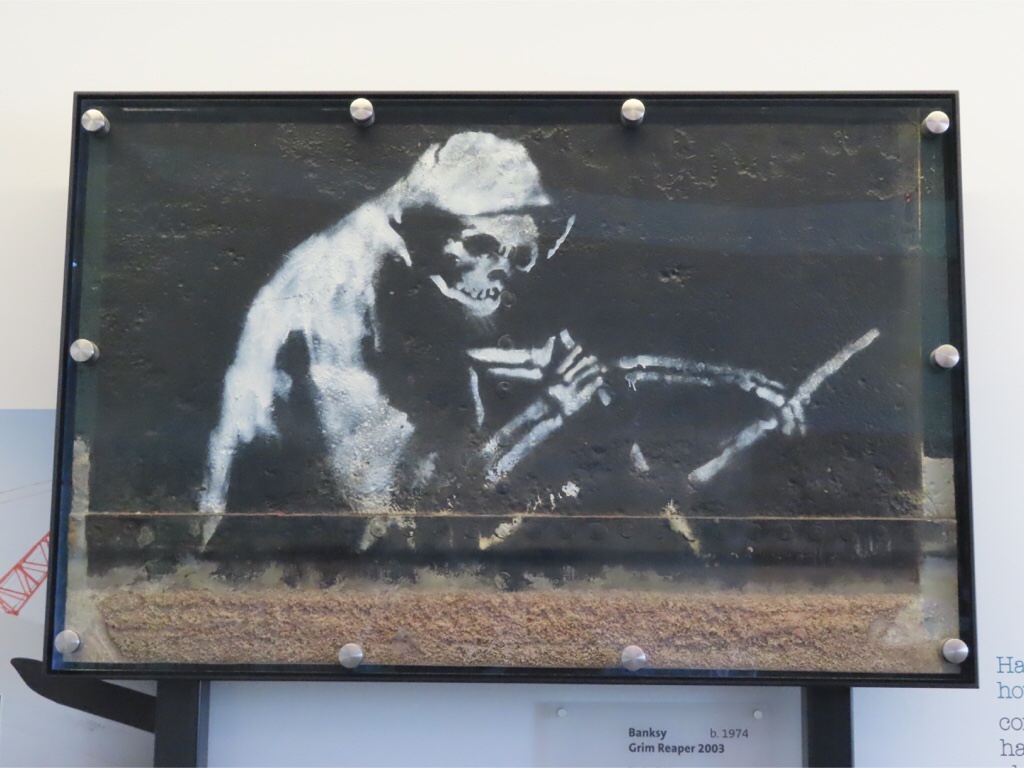
One area where dissent and art come together is the street art for which Bristol has become famous, especially being the home town of Banksy – the anonymous graffiti artist well known for his satirical and anti-establishment street art. There are quite a few pics around the city and the first is here – the Grim Reaper, which was originally painted on the side of the Thekla Social boat moored in Bristol harbour but later removed to protect it from damage. Bristol City Council has a formal street-art policy which seeks to define and support the display of public art and give the public a vote as to whether it should be preserved or scrubbed clean following a hugely popular Banksy’s exhibition in the Bristol Museum in 2009. There is also the Upfest festival which has been running for 10 years and draws artists and visitors from far and wide. We will be seeing a lot more examples as we wander round the city.

Bristol is the home of Aardman Animations, makers of Wallace & Gromit and Chicken Run and an exhibition showed the process of film making using using stop-motion clay animation techniques with their last film Early Man as an example. It was fascinating to see what a labour of love it must be and how time consuming just to achieve a short sequence of film. We will certainly be looking out for the Shaun the Sheep Movie: Farmageddon which will be in a cinema near us at the end of October.

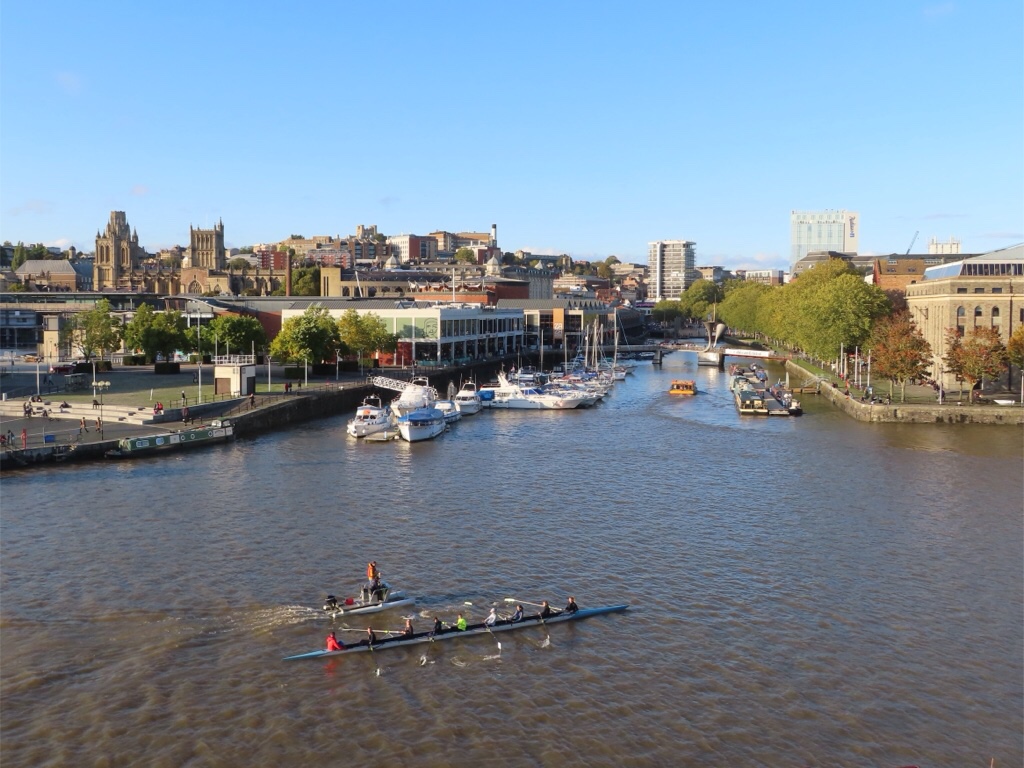
While we were inside, the sky had cleared and we were able to take a couple of great pics of the harbour in late afternoon sunshine, before heading back for a rest and dinner at Ganesha down the road in Bedminster where we munched dosas and veggie curry.

Map

Chris & Elaine in Bristol 2019 – Brunel, Banksy & The BBC …

We met our niece for lunch in Bristol last year and thought it a city worth a better look, so when it came to planning a couple of days away to celebrate our wedding anniversary, Bristol won.
The only real prerequisite was a boat for our annual anniversary boat trip, and with a ferry serving the harbour daily, that should be easily done.

The more we read about Bristol, the more we found to do so it will be an action packed trip … so here we go Brunel, Banksy & The BBC in 72 hours!

Journal Entries

Hello Bristol …

Mainly Brunel …

Lots of Banksy …

BBC Bristol …

Map

Pisa and Home

We made our way back to Pisa this morning by train which passed Carrara, famous for the marble quarries that we had seen in the distance yesterday …
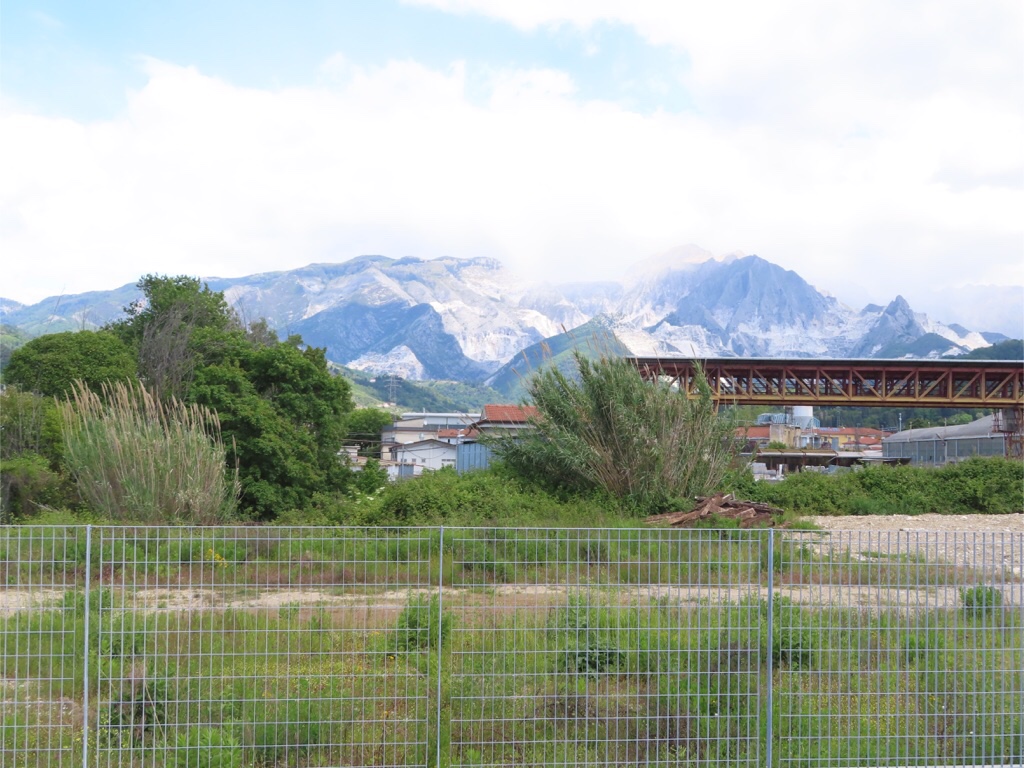
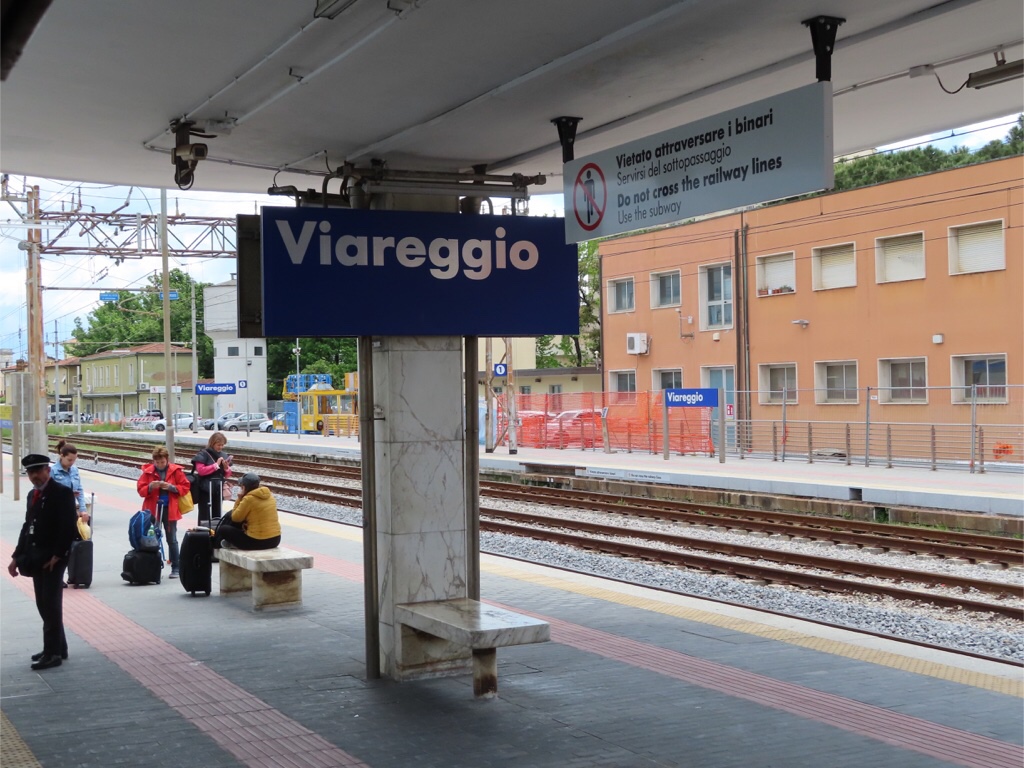
… and also Viareggio, a popular seaside town which I can remember visiting on a family holiday with my father and sister years ago.

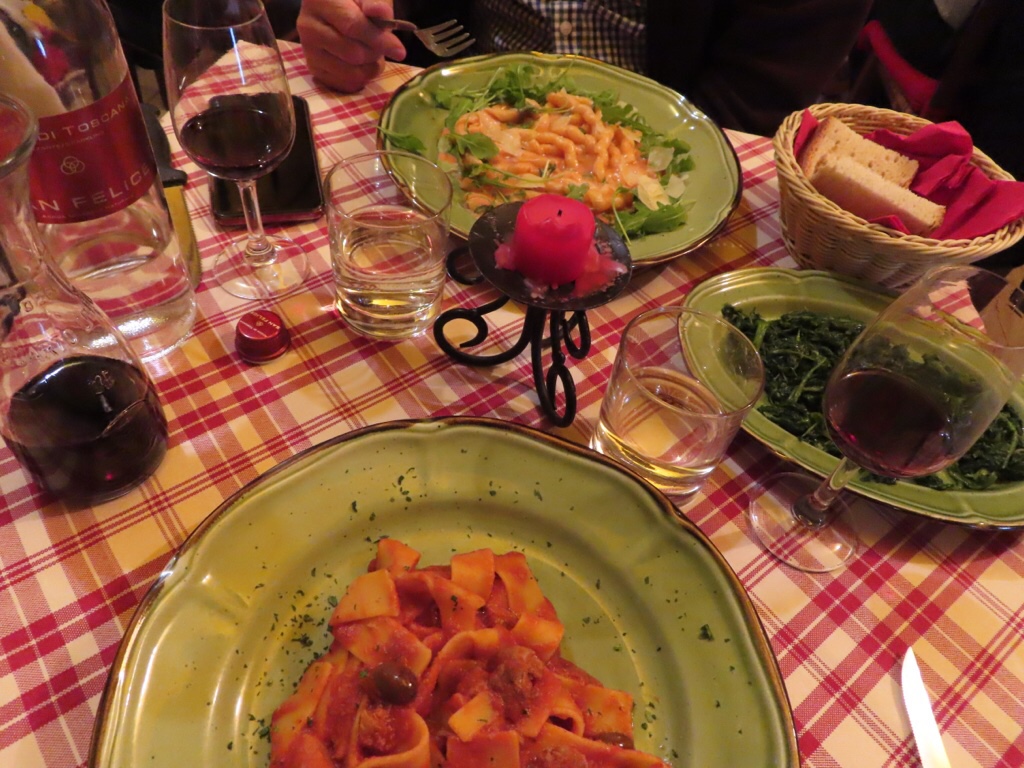
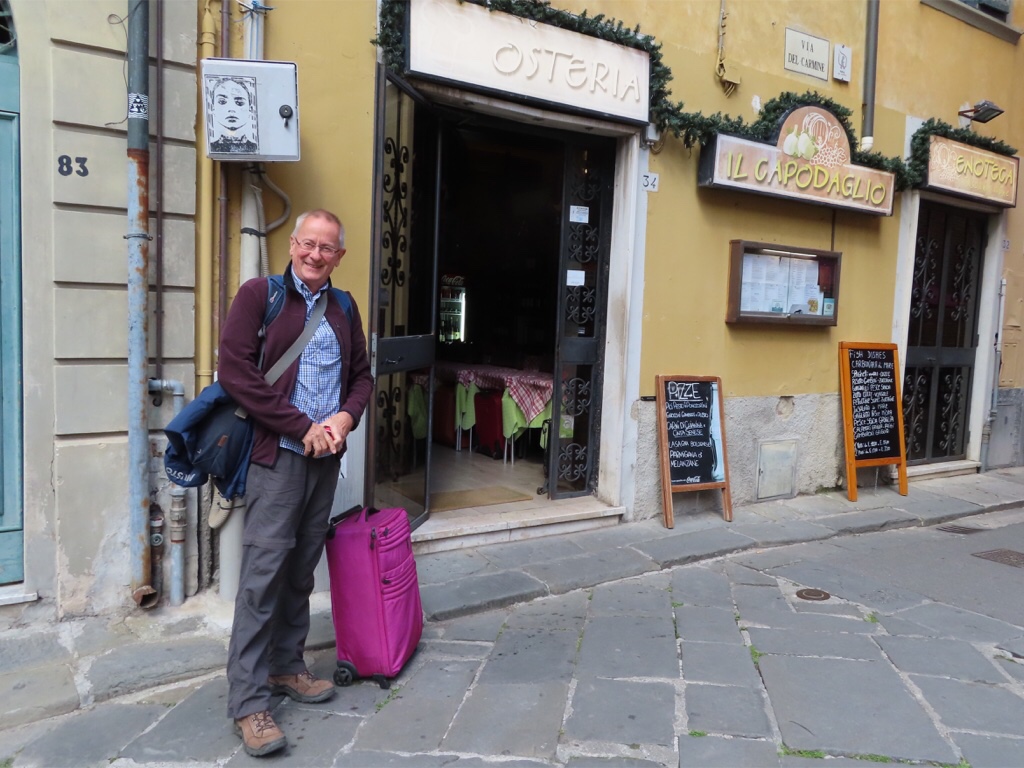
Arriving a little early to head to the airport, we first went in search of a place for some lunch and ended up at Osteria il Capodaglio where we had a lovely Tuscan meal to end our holiday.

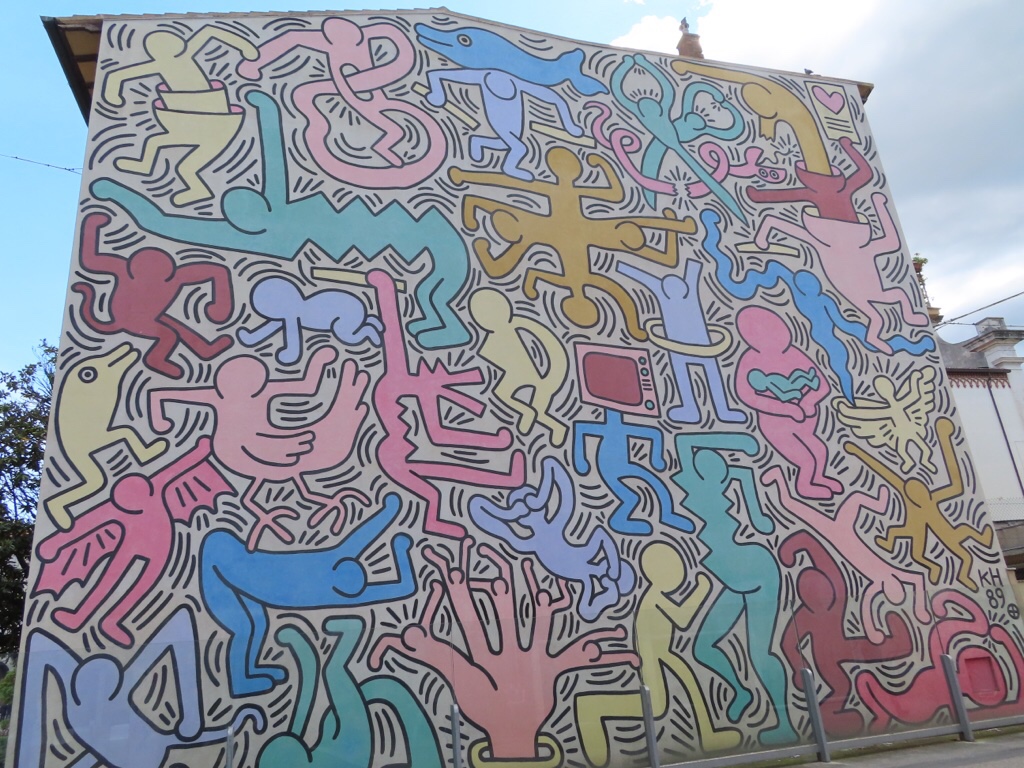
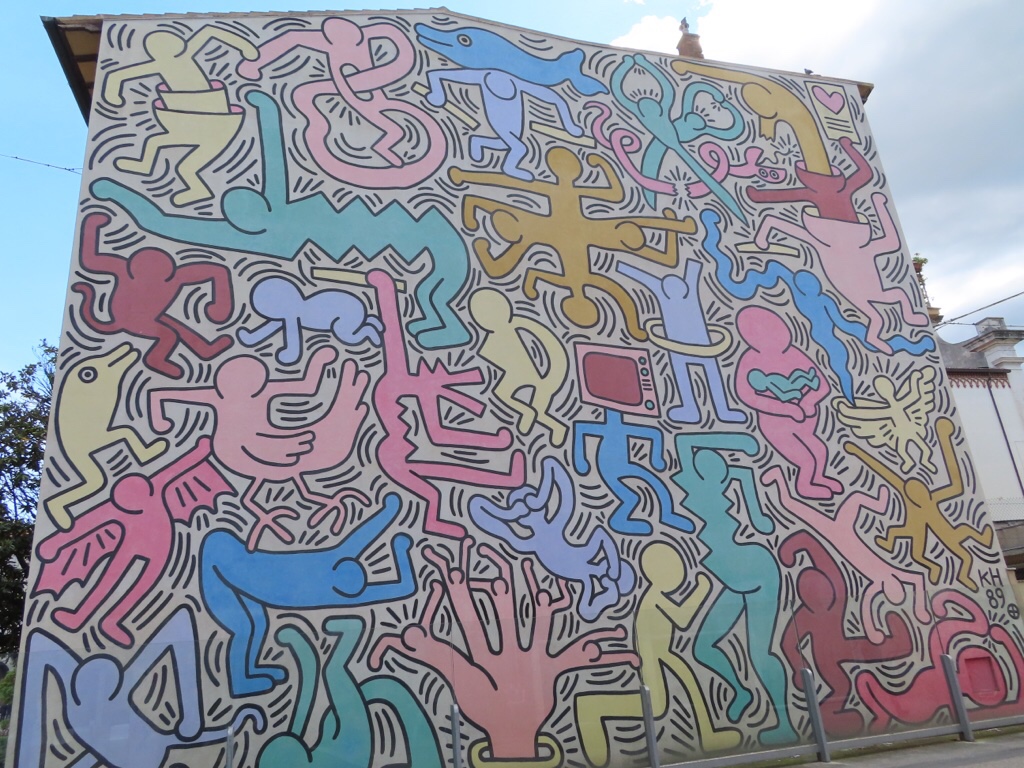
Walking back to the station, we passed a mural called Tuttomondo by an American artist called Keith Haring who we hadn’t heard of, but there is an exhibition of his ‘vibrant, graffiti-like painting’ at Tate Liverpool later this year.

Before we knew it the PisaMover shuttle was dropping us at the airport and as we waited for our flight, there was time for a little reflection …

We’ve had another great trip and while all the villages have proved very similar … clinging to rocks in some degree or another, tall slim houses painted in shades of orange with narrow cobbled streets, little harbours and churches with pretty towers … we were surprised by how different they all felt to visit.

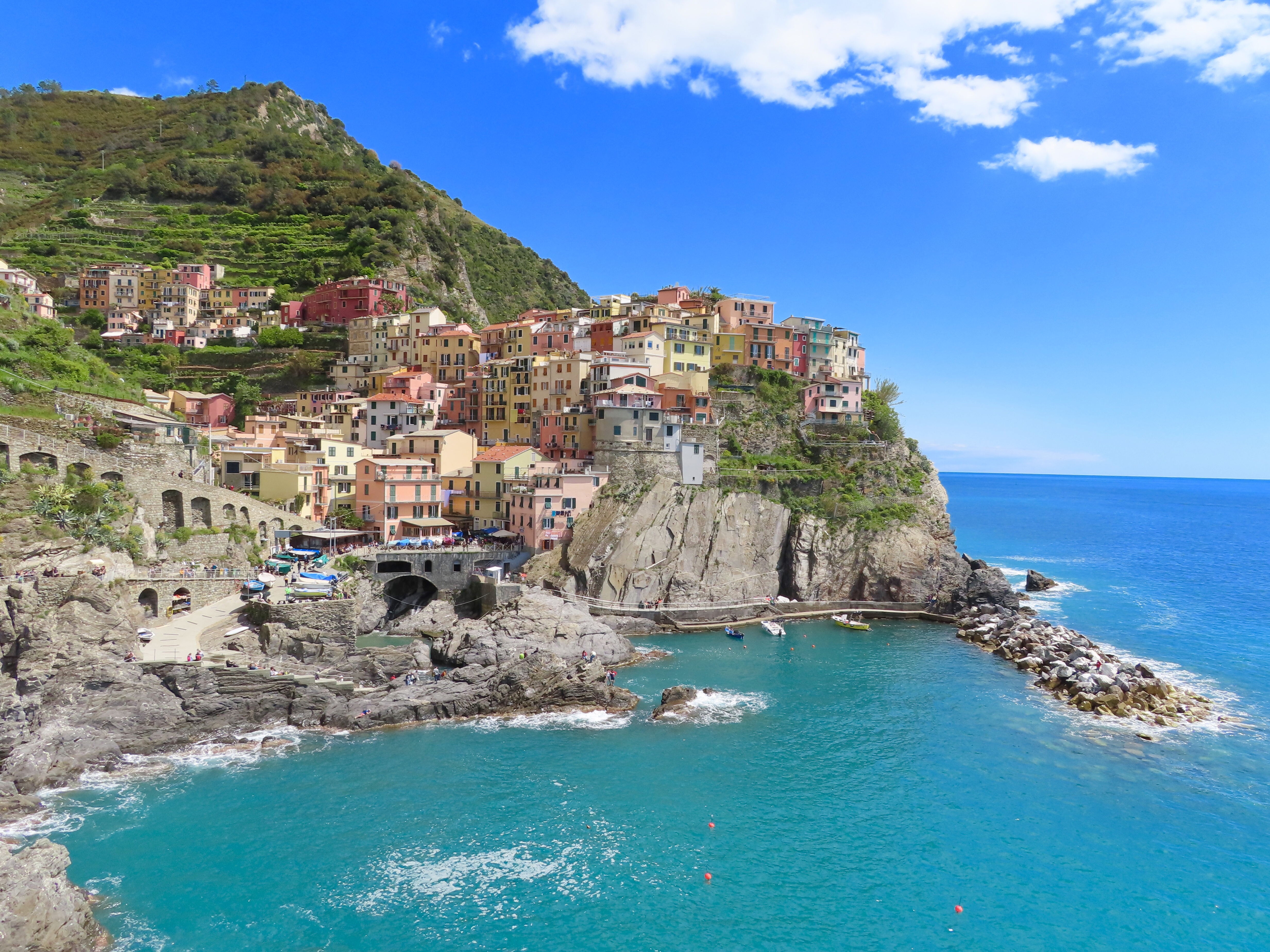
Of the Cinque Terre, Vernazza and Manarola were our favourites, maybe we stayed in Vernazza and saw it from every angle, with and without the crowds …

… and Manarola because as we walked down into the village, the views kept coming, saving the best till last.

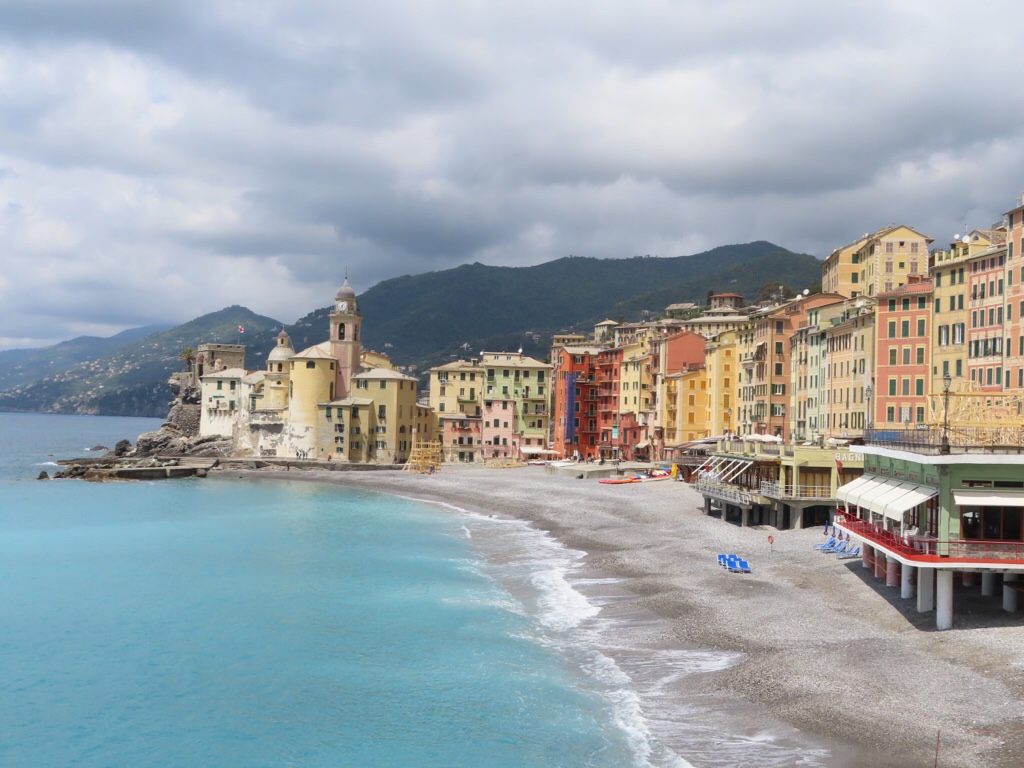
Camogli was the real surprise, as I had chosen it as an affordable alternative to a Portofino rather than expecting it to be so statuesque as villages go!

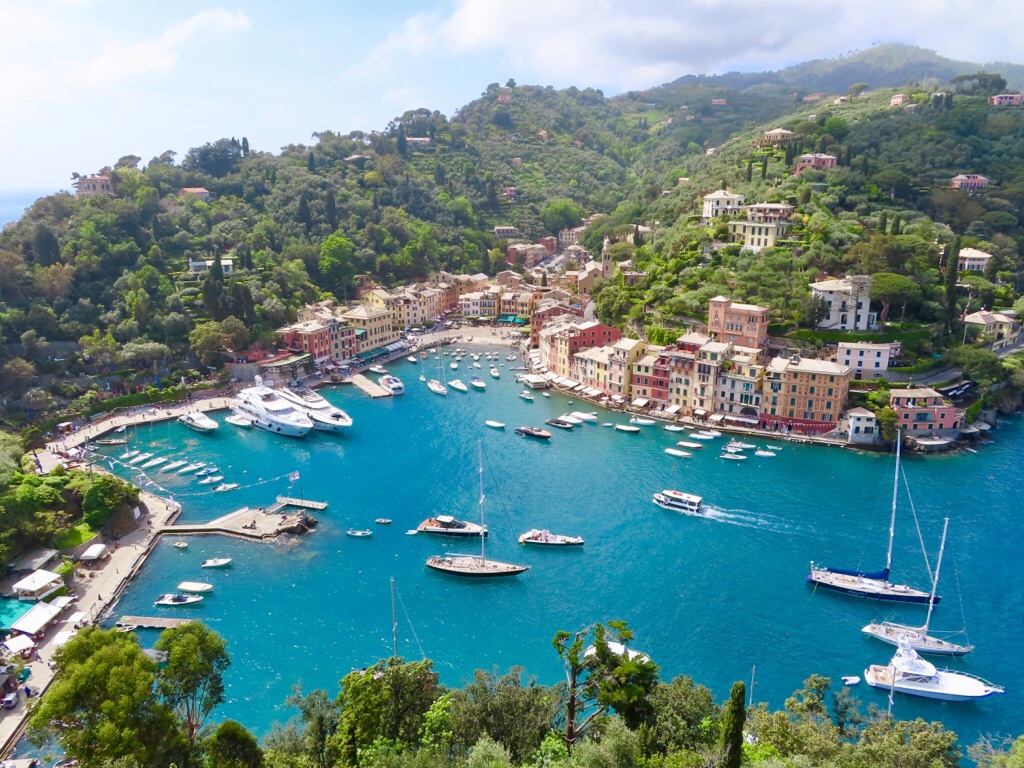
Portofino had to be the jewel, but was maybe just a little too perfect.

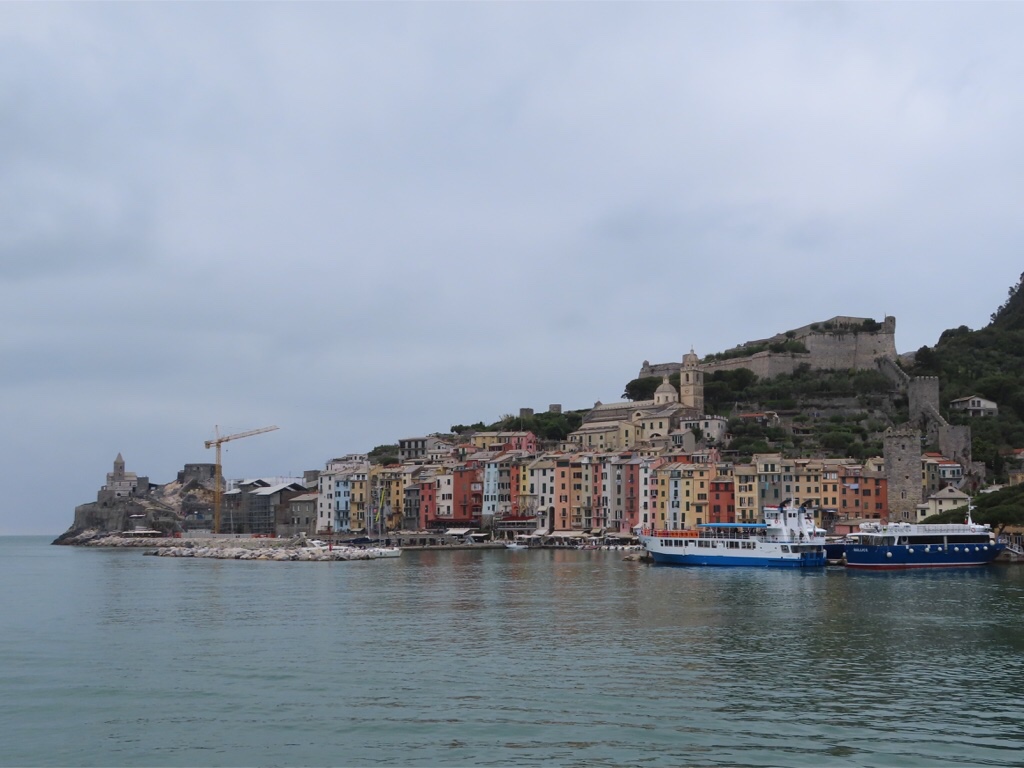
We didn’t see Portovenere at its best on such a gloomy day, but it was perfect for an afternoon, with lots too see and fun to travel by boat.

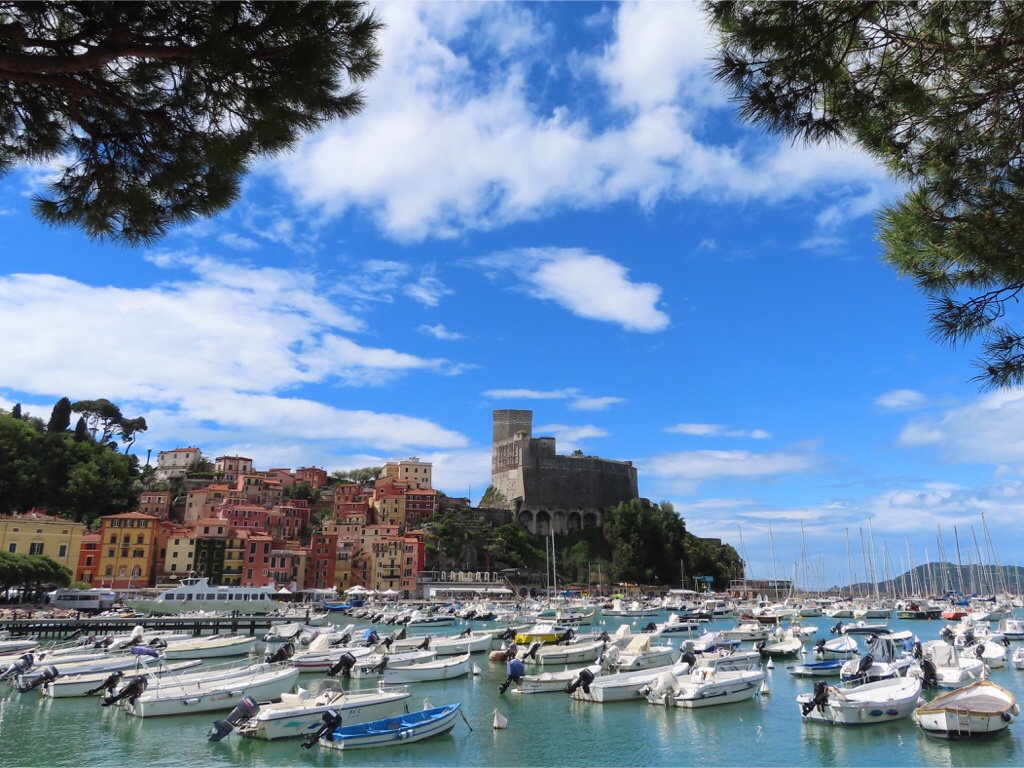
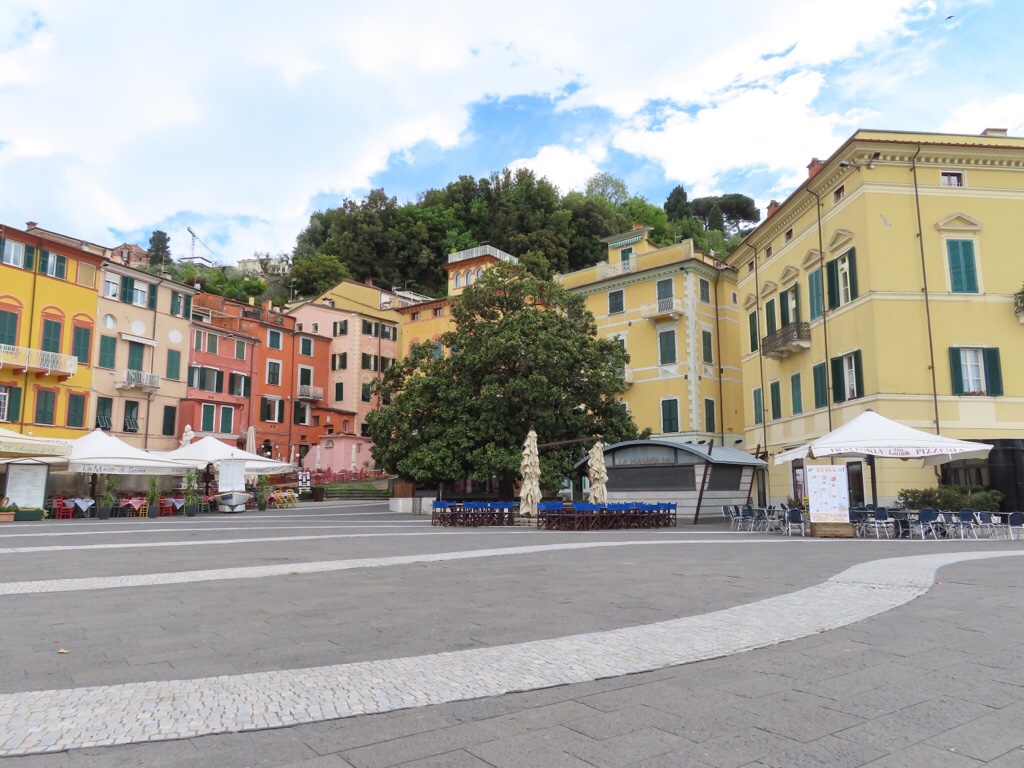
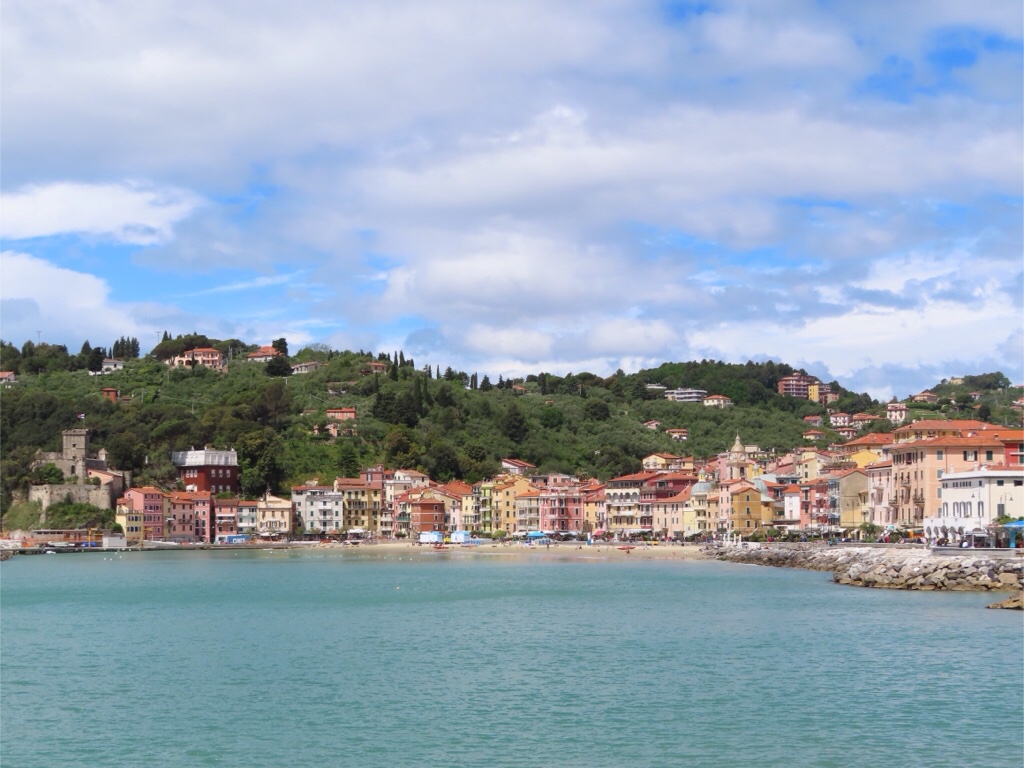
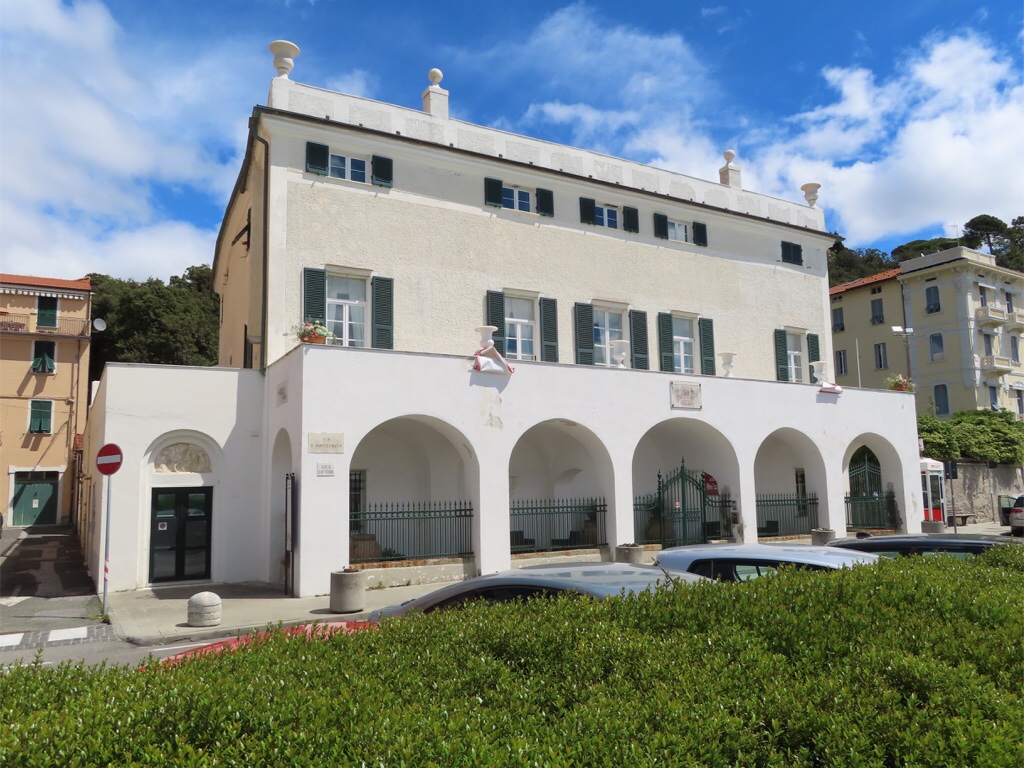
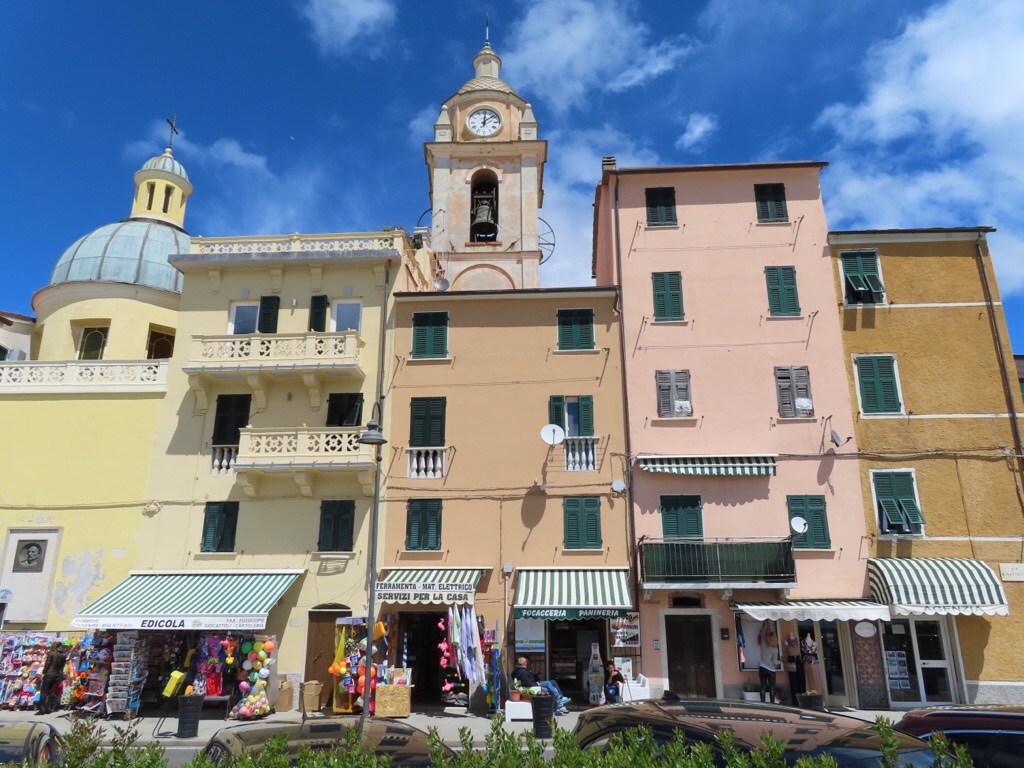
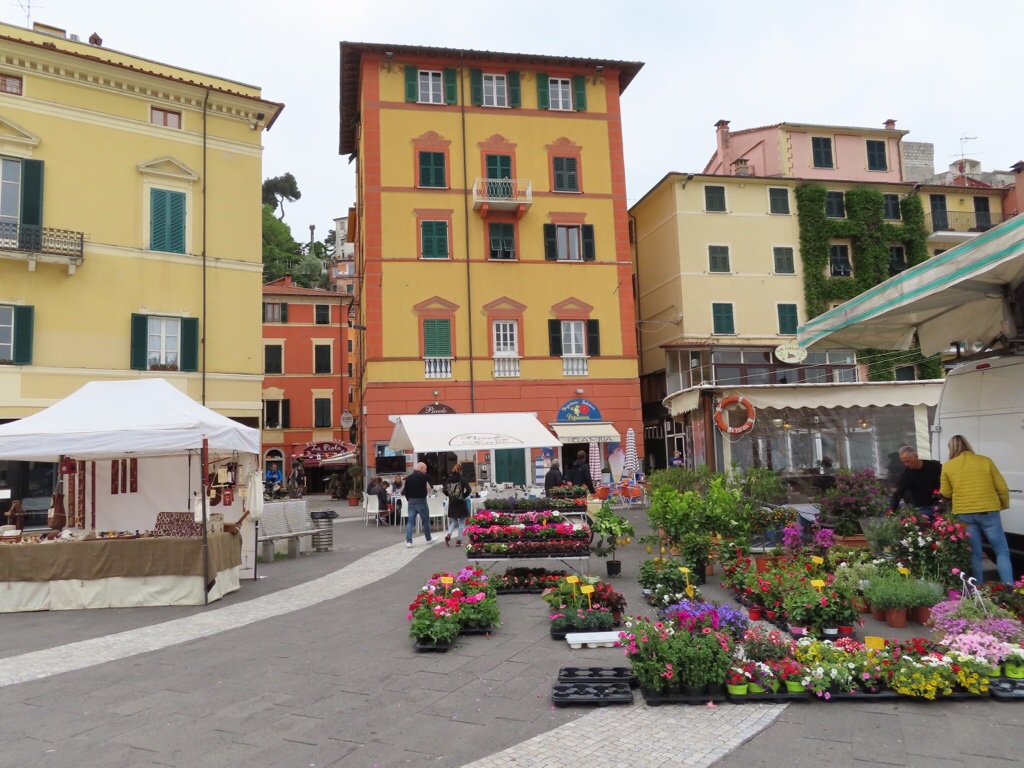
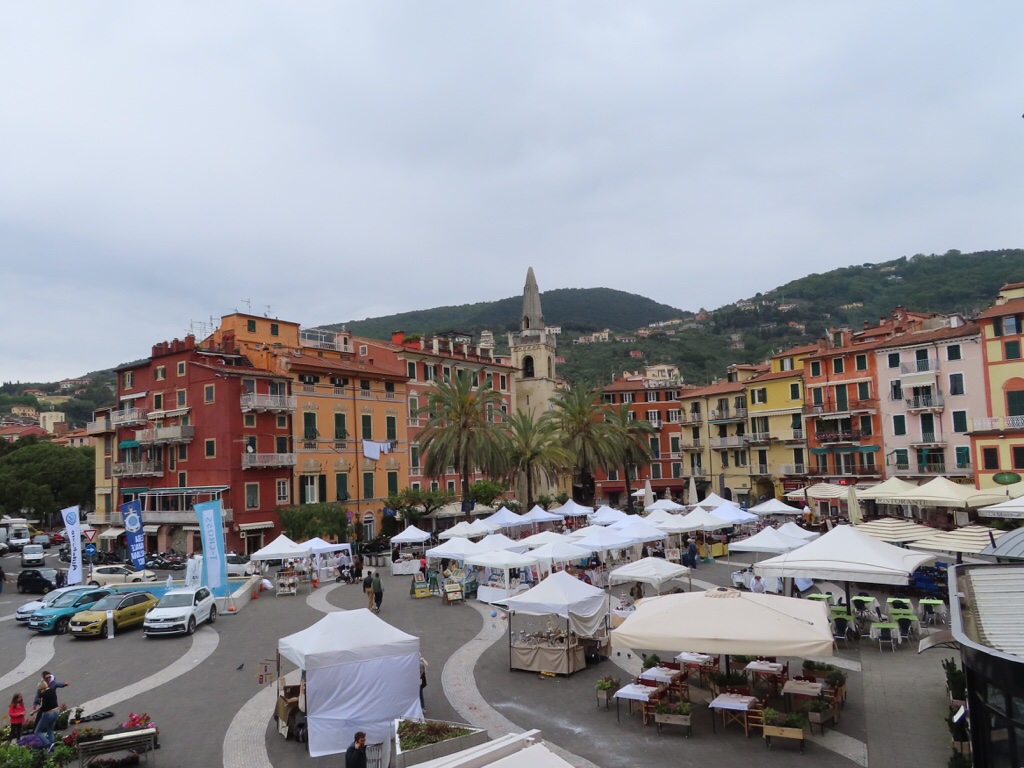
We have also become quite attached to Lerici, with our room overlooking all that is happening in the square and it is quite noticeable that the visitors are mainly Italian.

Finally Terrano, yet another of the most beautiful villages in Italy, but a little grey …

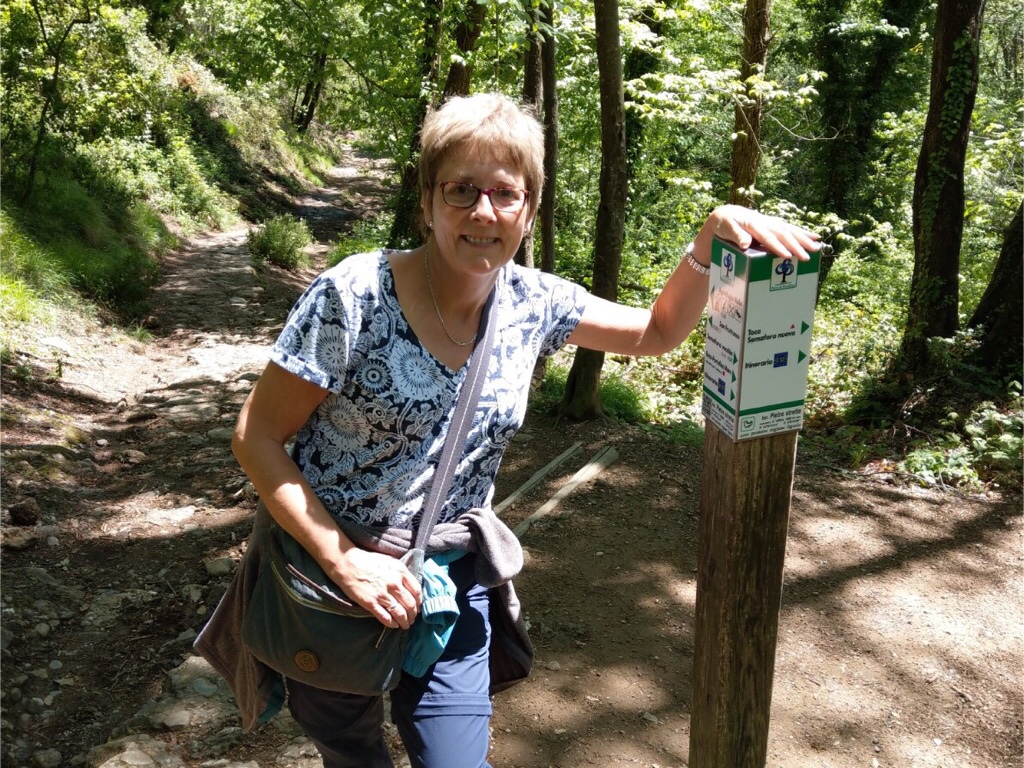
The walking has been great, getting away from the busiest tracks and finding some wonderful views of the coast, but usually with more ups and downs than we were expecting! We’ve used the Sunflower walking guide which has suggested good routes with accurate instructions – we only took the wrong path once – and the waymarking has been excellent everywhere.

The weather has been a bit chilly for May – few days hit 20° and only a couple got warmer. Fortunately we’ve dodged most of the showers except for the one really rainy day in Vernazza so for walking it’s turned out ok.

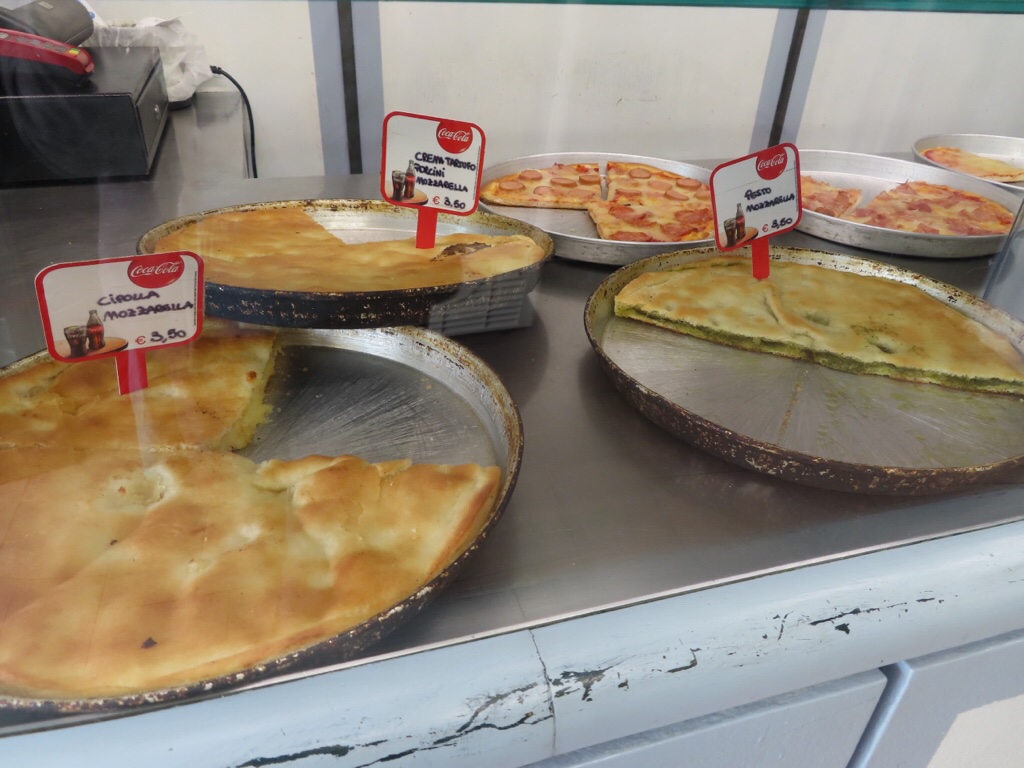
Just a quick mention here of the food. We have certainly had some very delicious dinners (with lots of local fish for me) and also tried a selection of local specialities including the walnut sauce and pesto with local pasta such as pansotti and trofie, savoury pies with vegetable and herb fillings, focaccia with a selection of toppings or fillings, and sweet treats like the gelato and panedolce. Then there were our fab picnics …

What we have really missed is vegetables, which may be arrayed in plenty in the markets, but never seem to make their way onto a restaurant menu, where side dishes are limited to mixed salad and maybe grilled veg or spinach if you are very lucky! So despite the claims for the healthy Mediterranean diet and on average the 8 miles we’ve walked every day, we’re not sure we’ll be trimmer than when we left … but we have had a good time!
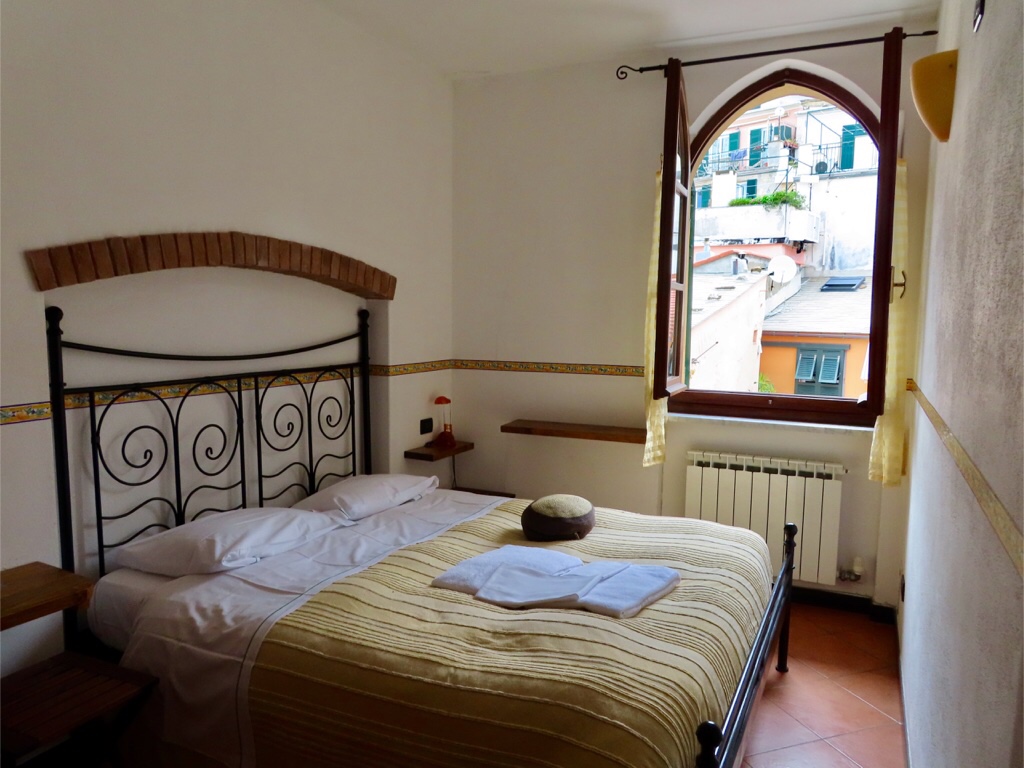
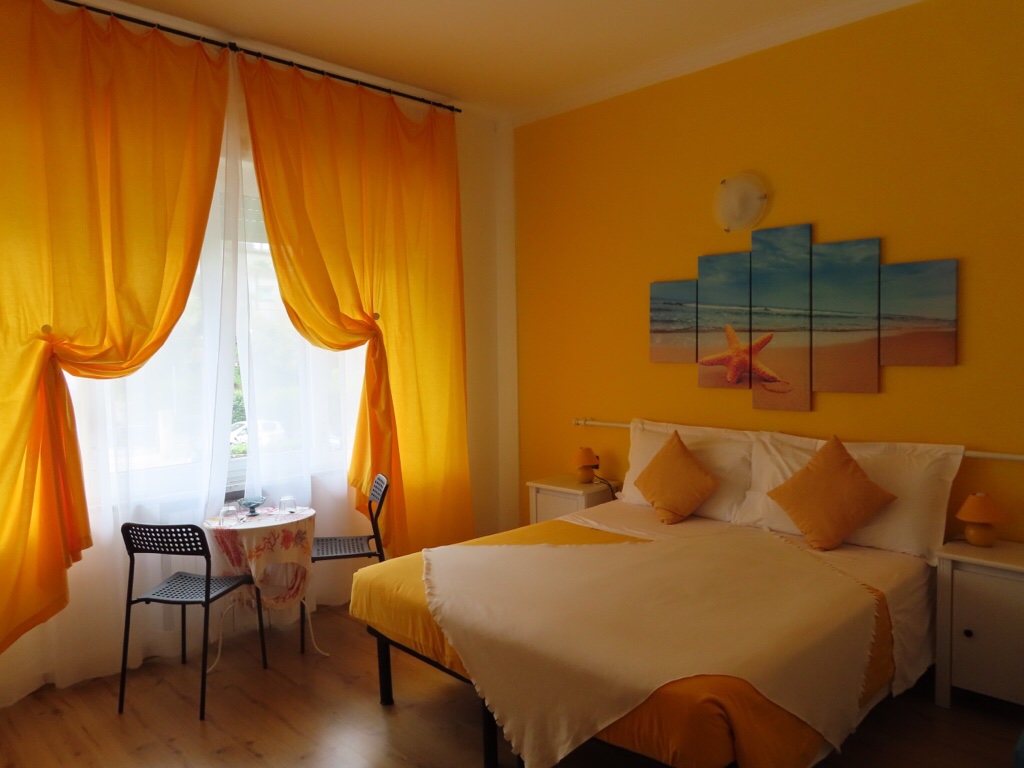
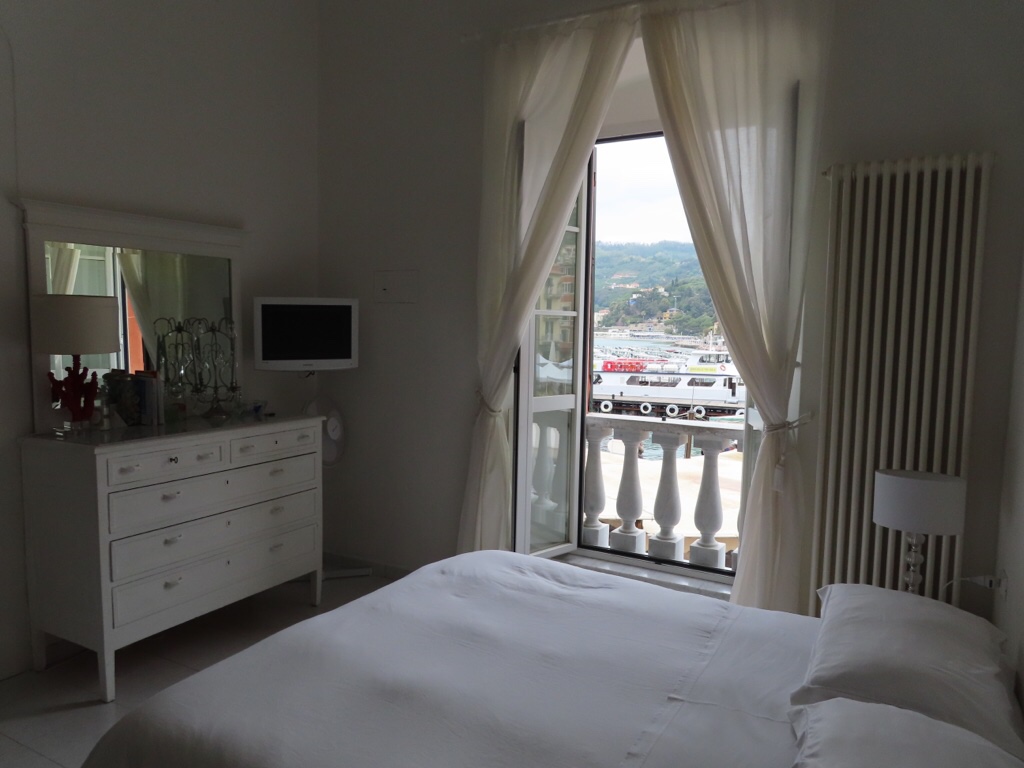
All our arrangements have gone smoothly – the trains and buses were easy to use and our accommodation has been great – rooms with all mod cons including kettles and coffee makers, often a view and a breakfast basket … even if there were stairs to climb!

So there we have it, time to go home and our flight is being called so ciao until next time!

Map

Golfo dei Poeti – Lerici to Ameglia

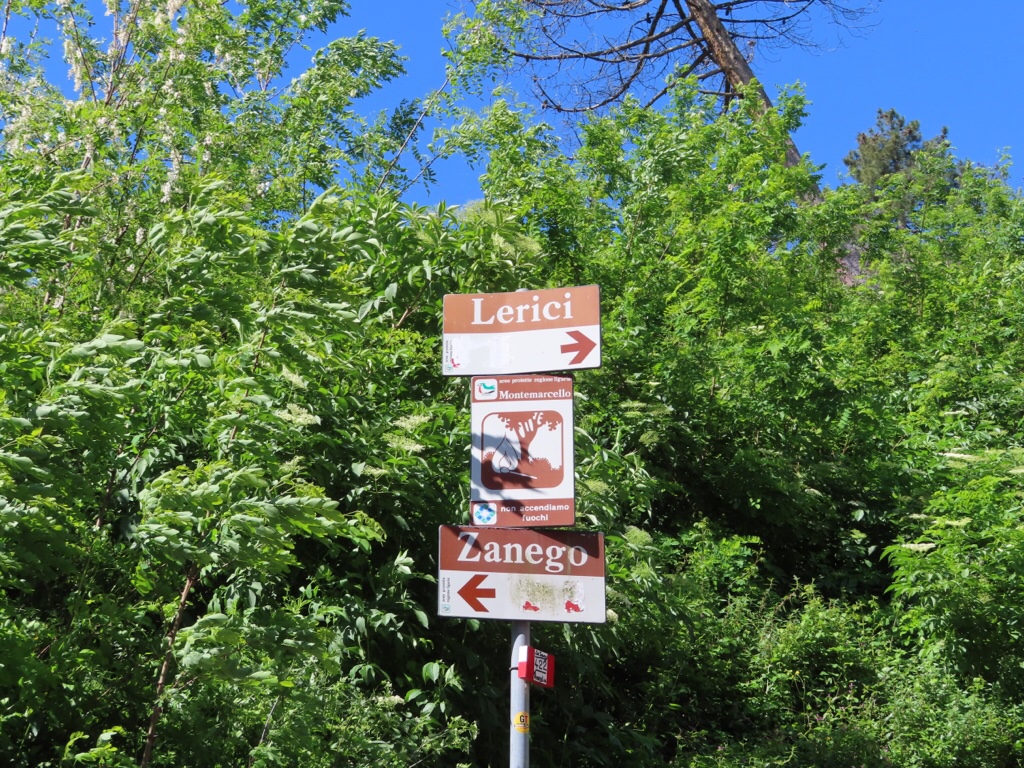
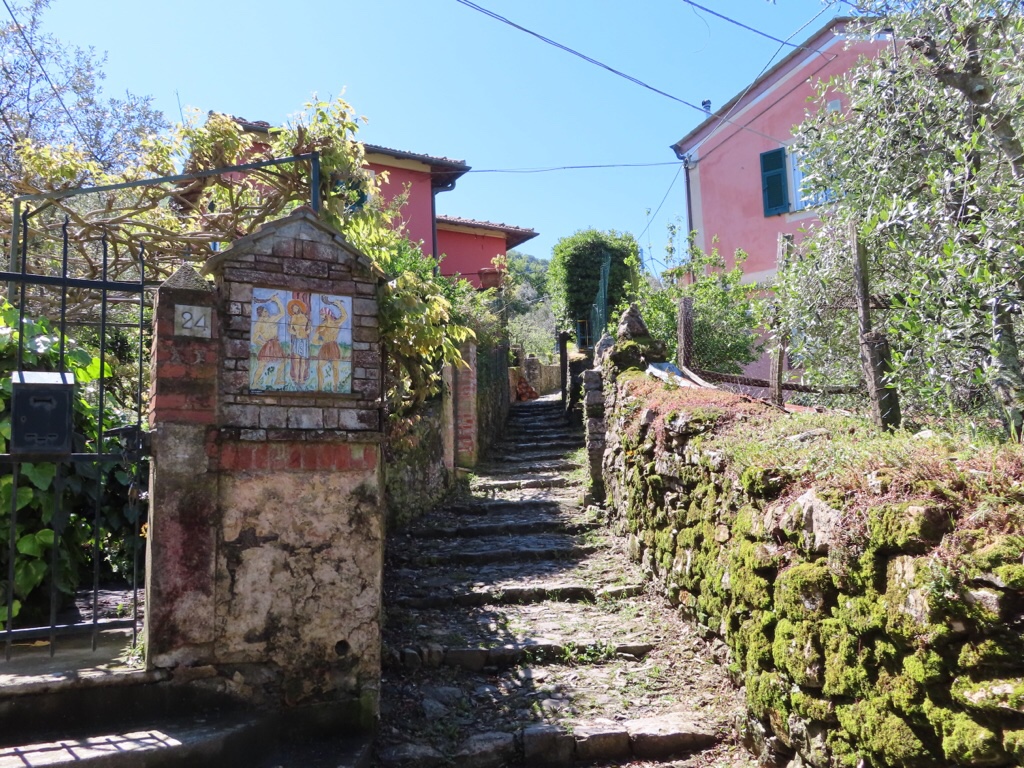
We took the bus Zanego and found the start of the walk by a small altar.
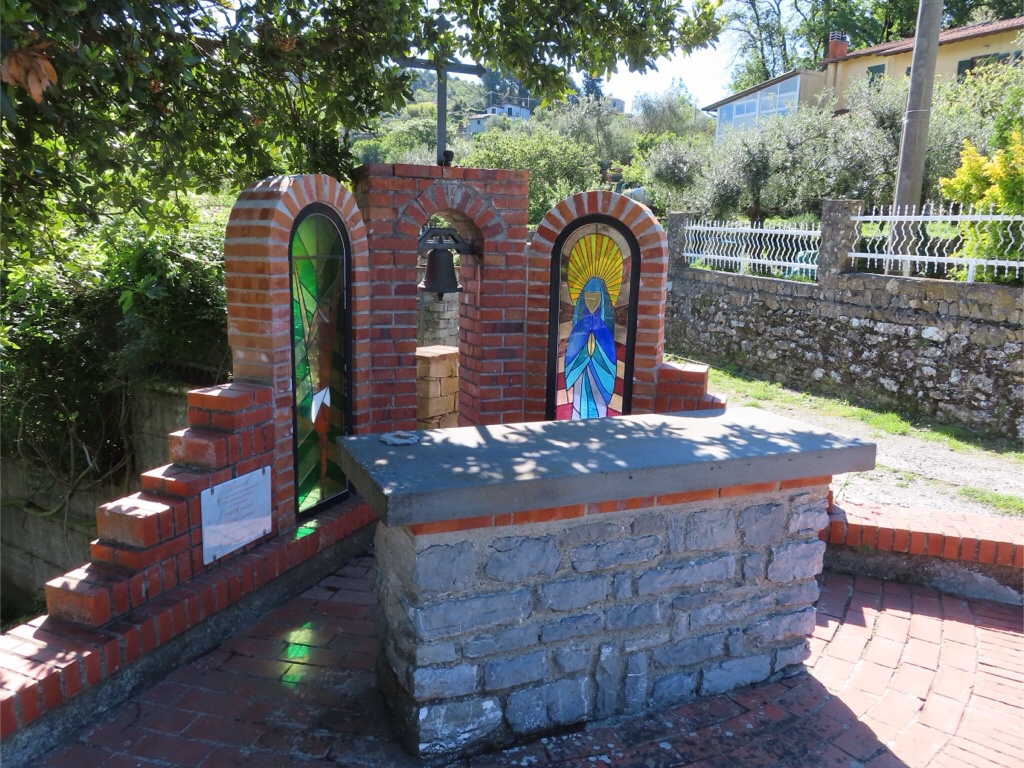
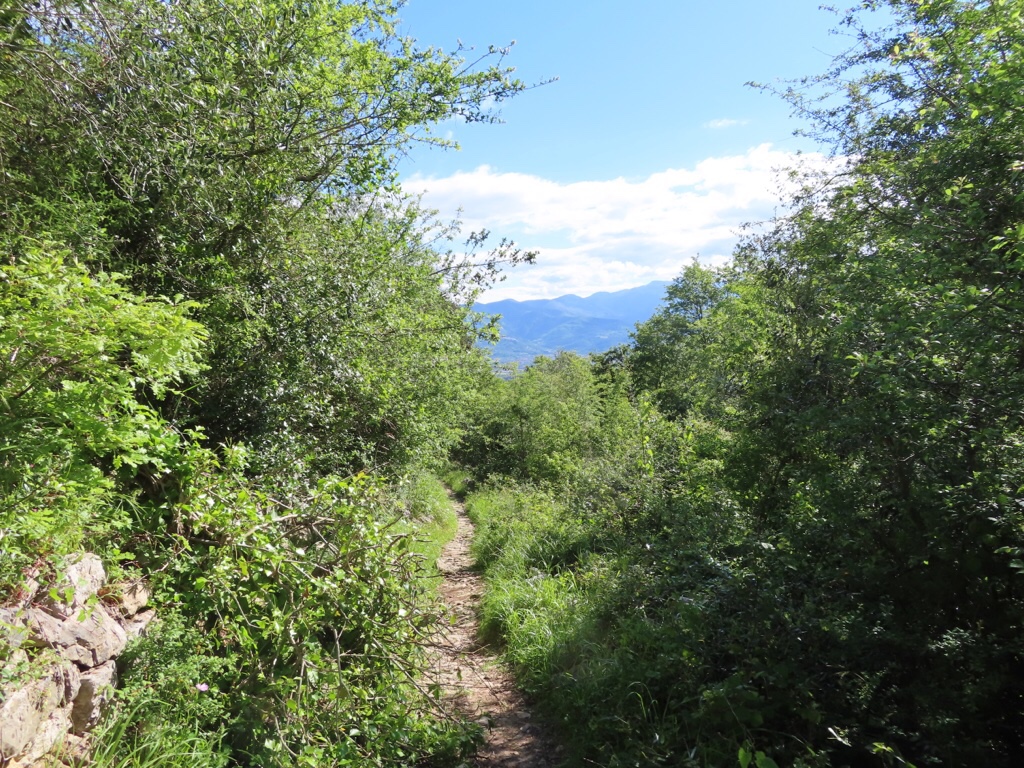
Most of the route was through a regional park which protects the area from overdevelopment and our track started through a green valley with wild flowers and the sound of birdsong, including a cuckoo.

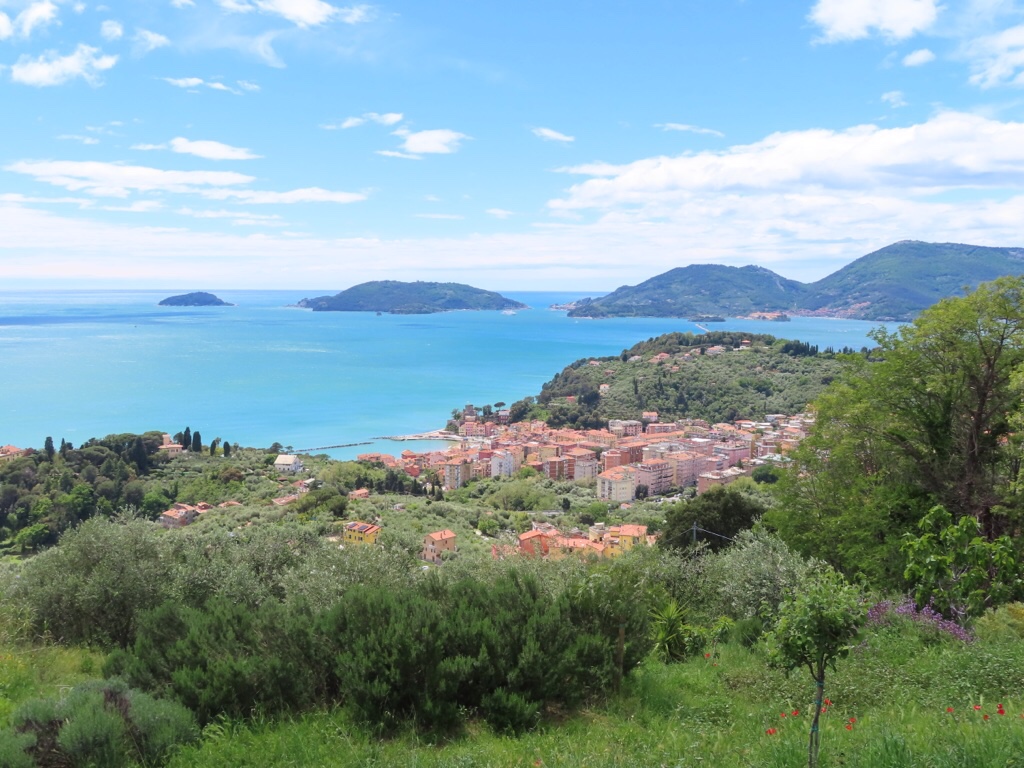
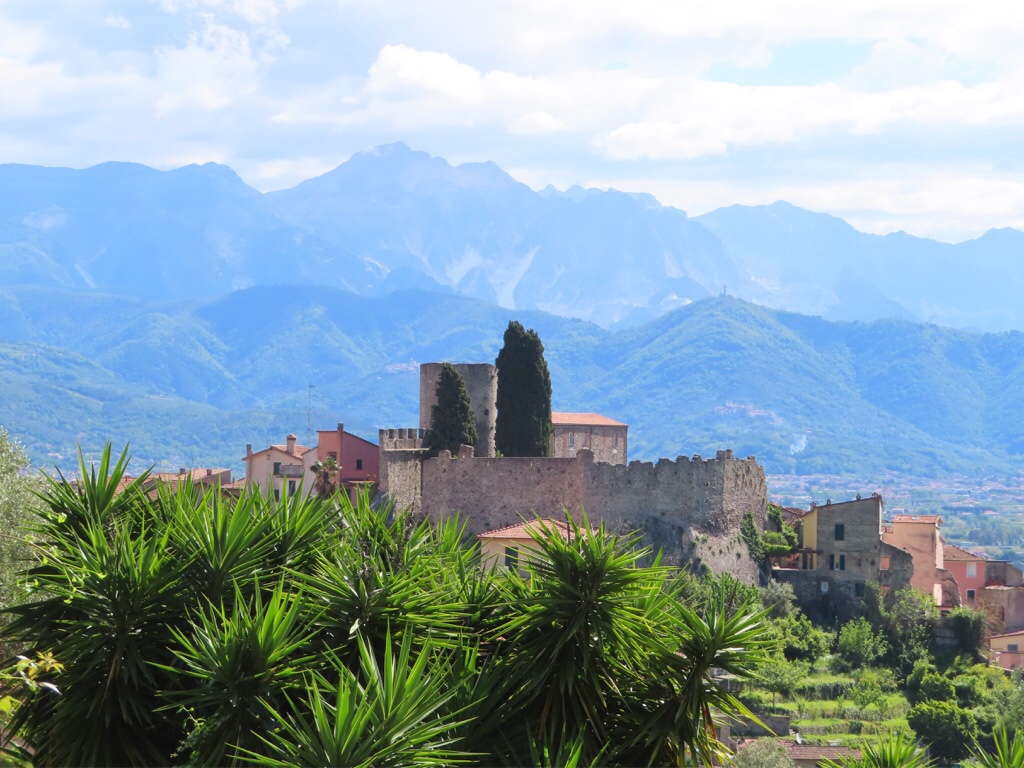
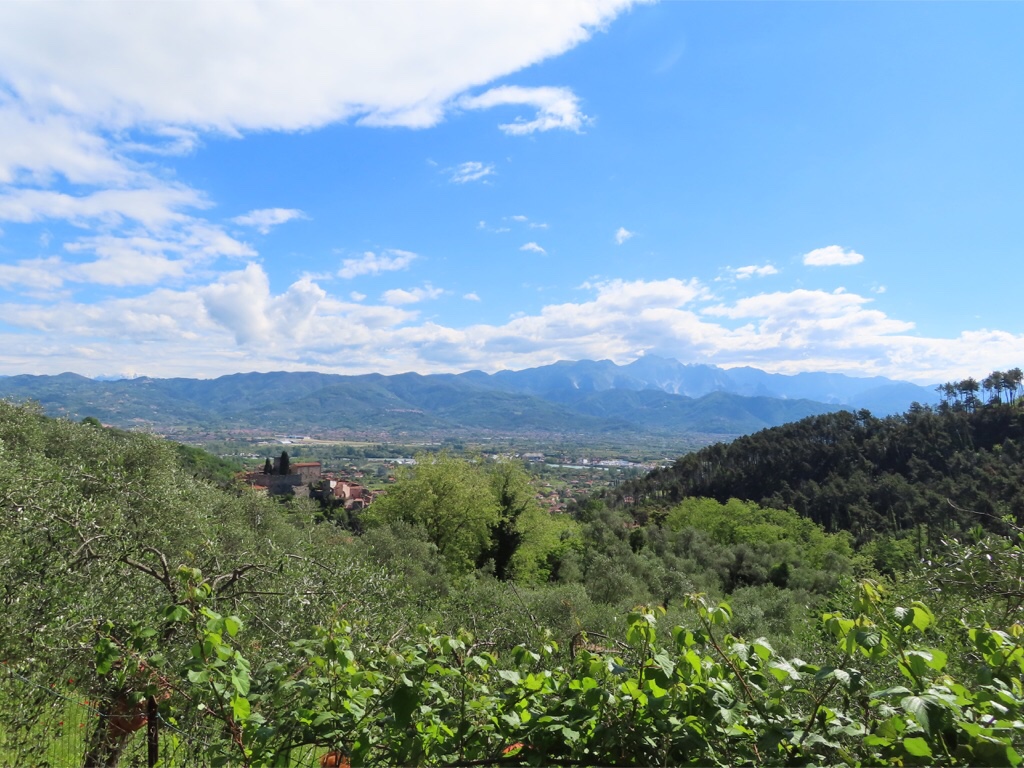
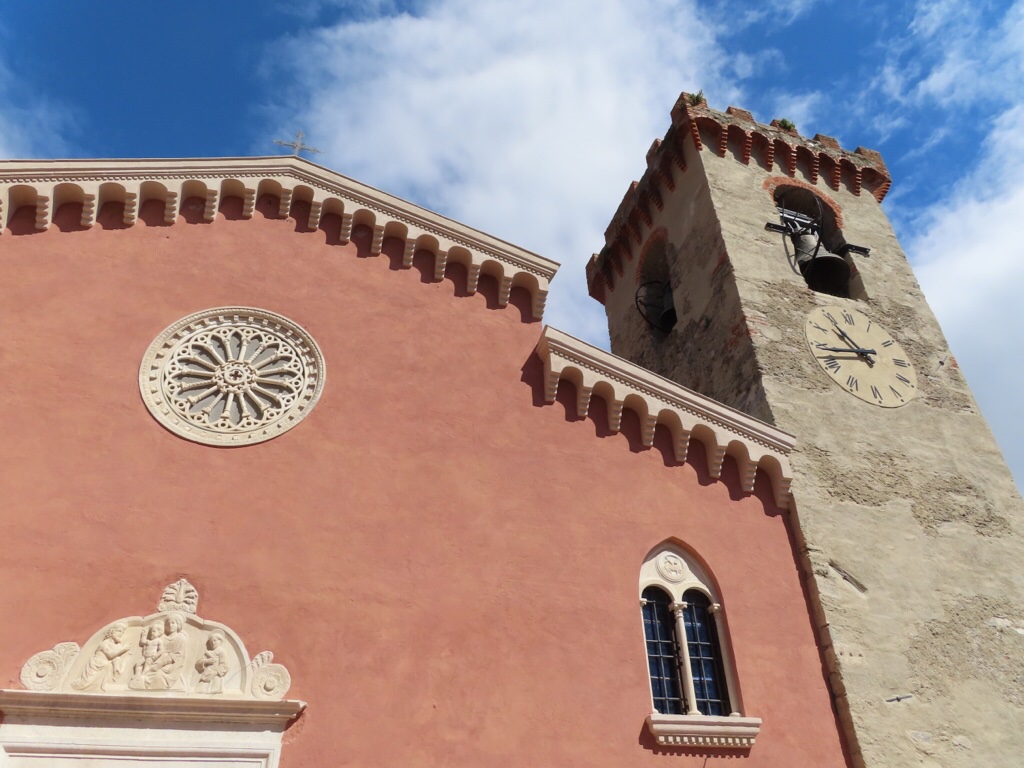
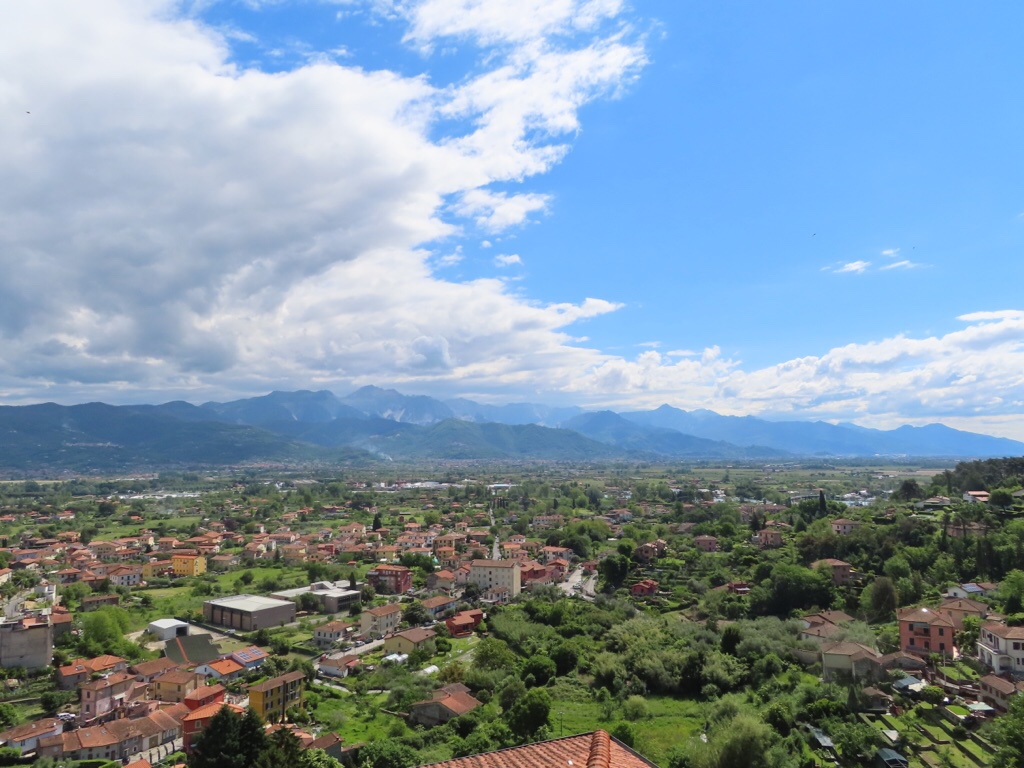
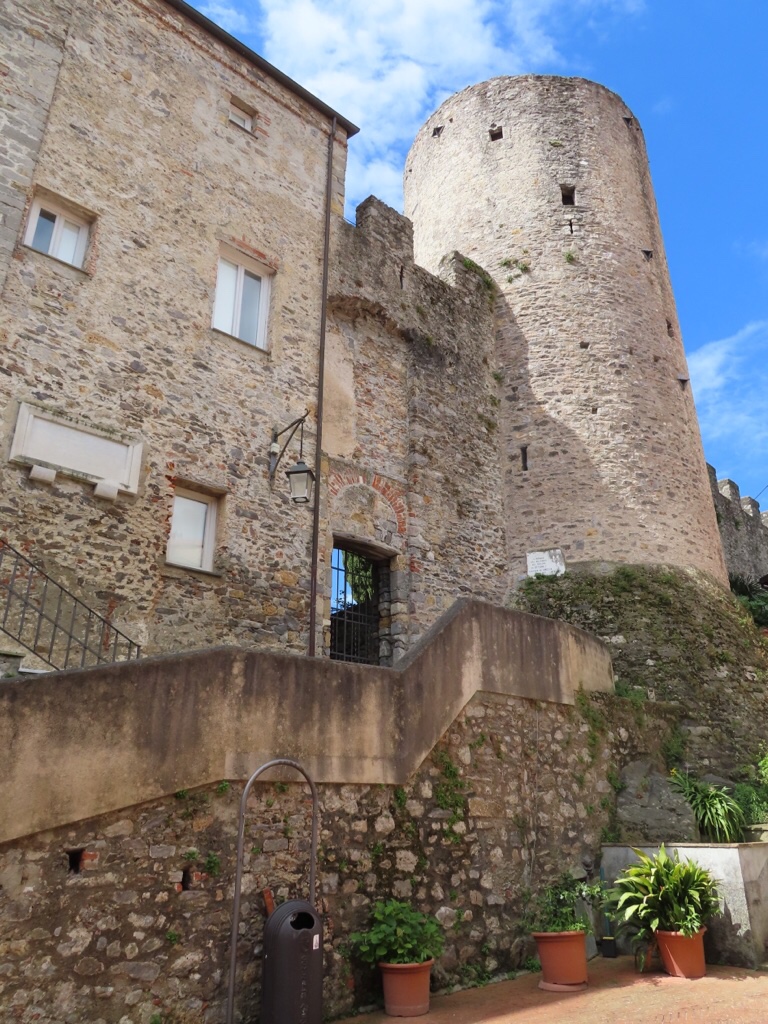
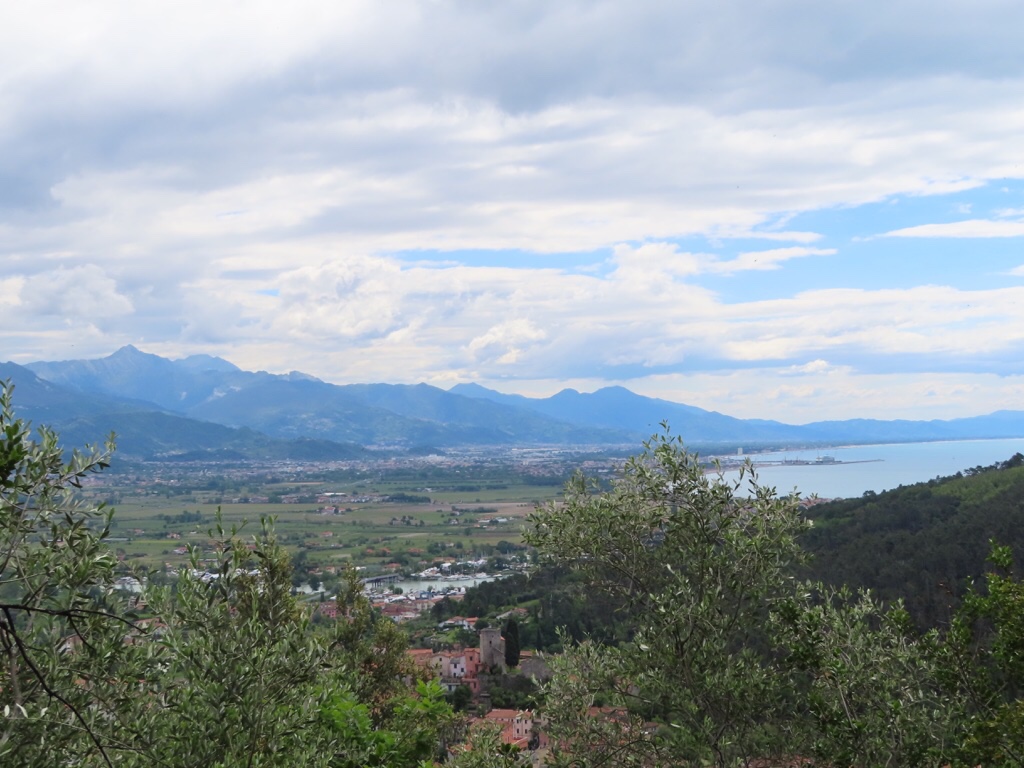
We got a great view across the Magra plain, with what looked like snow topped mountains to the left, the Apuan Alps in Tuscany to the right and the medieval castle of Ameglia in the foreground.

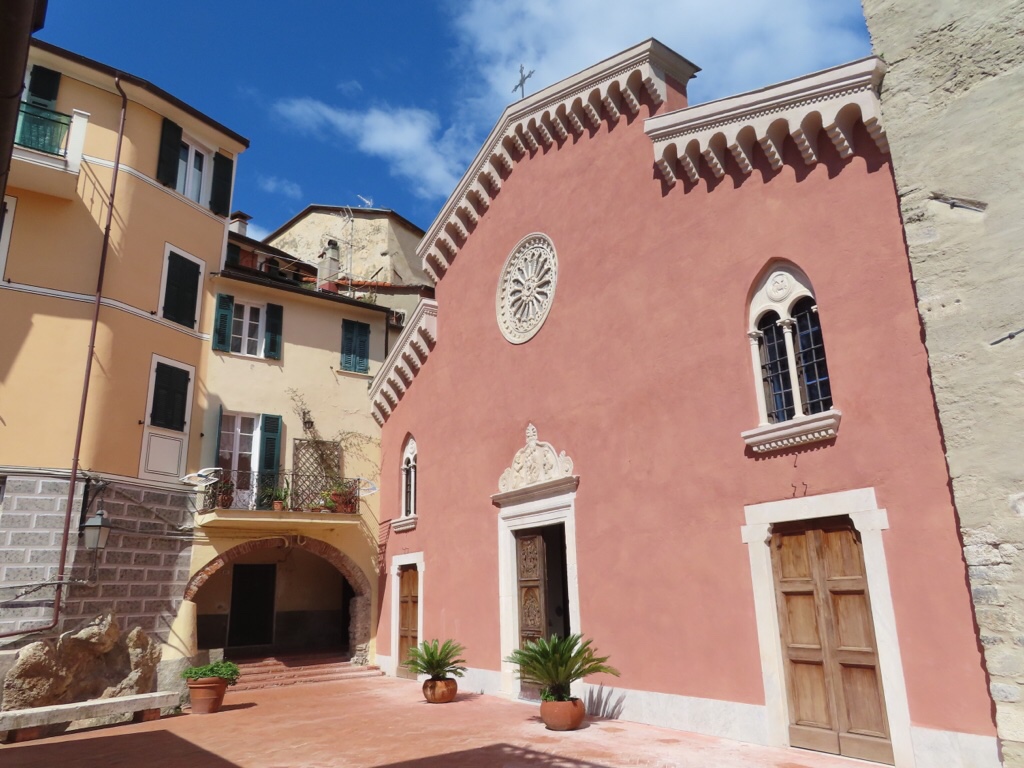
We walked down to Ameglia for a look round and to buy a couple of rolls for lunch.

The path then climbed steeply through woodland with views of the Magra estuary …

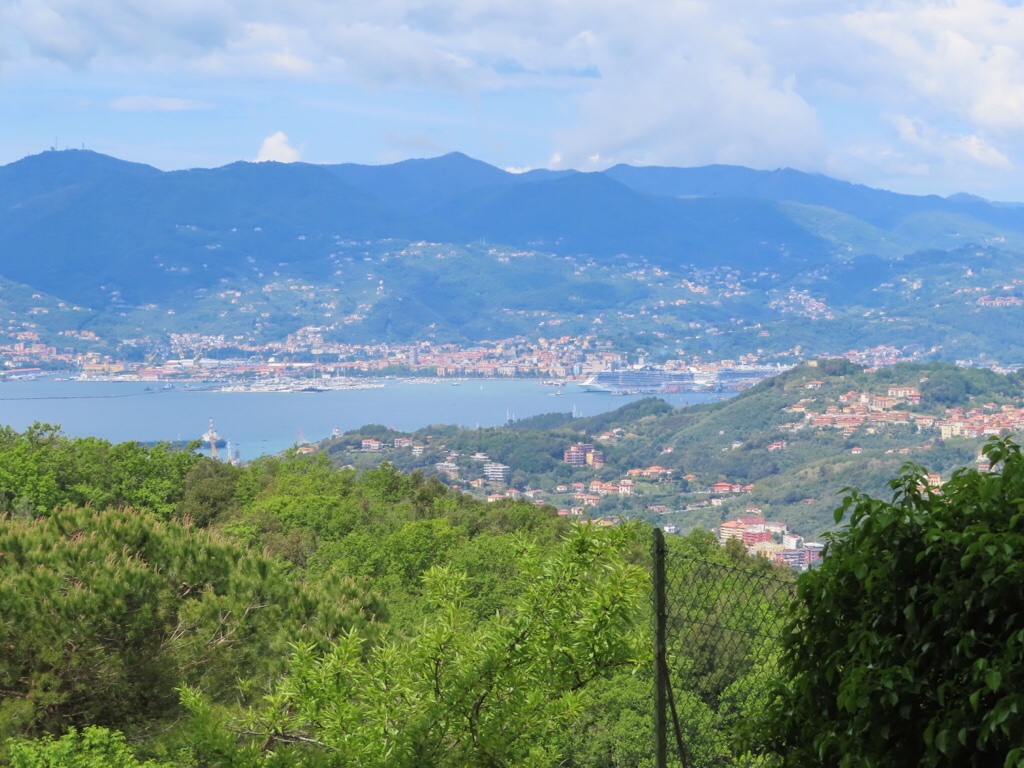
… before descending with views across to La Spezia …

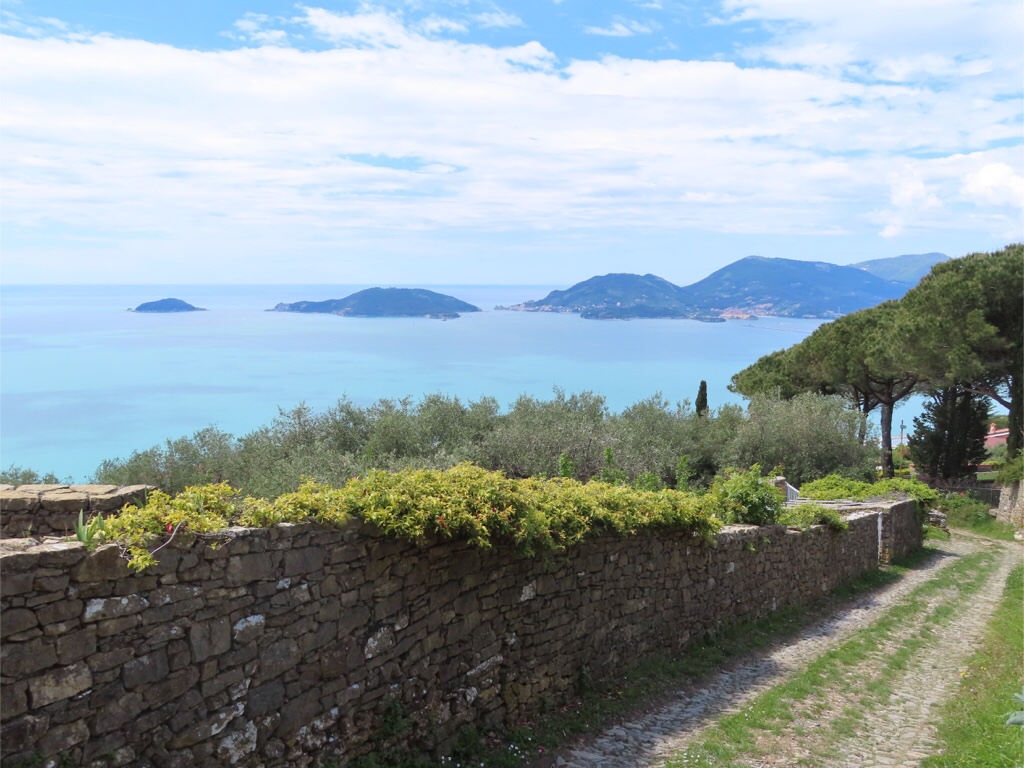
… and to Portovenere and the islands.

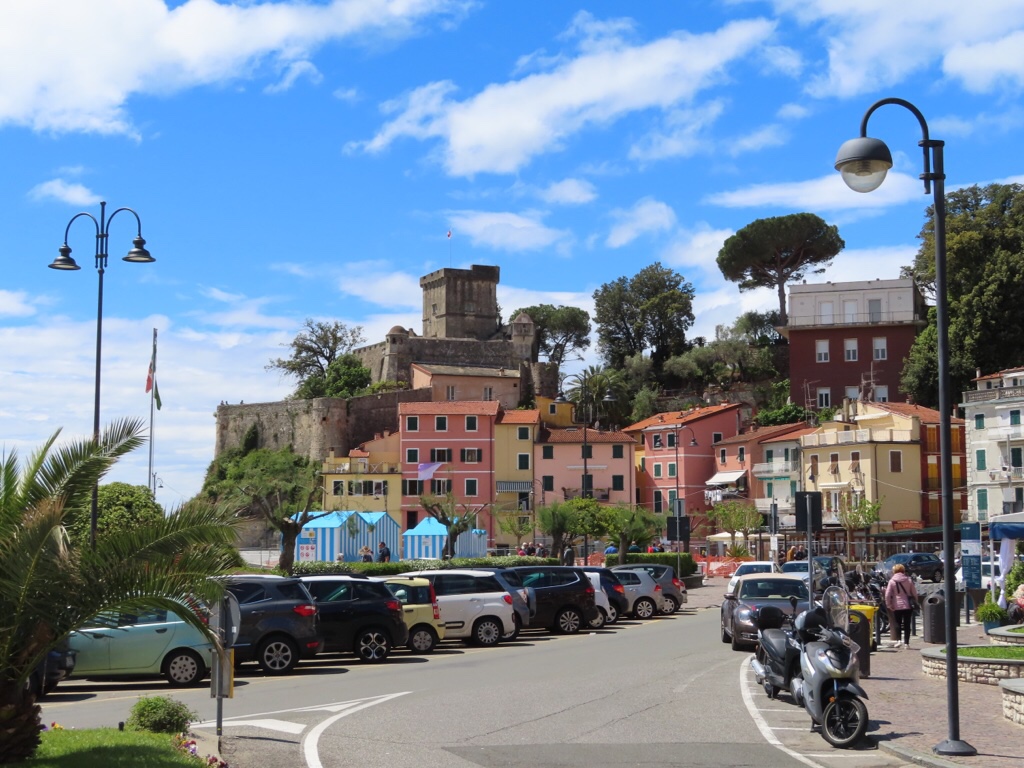
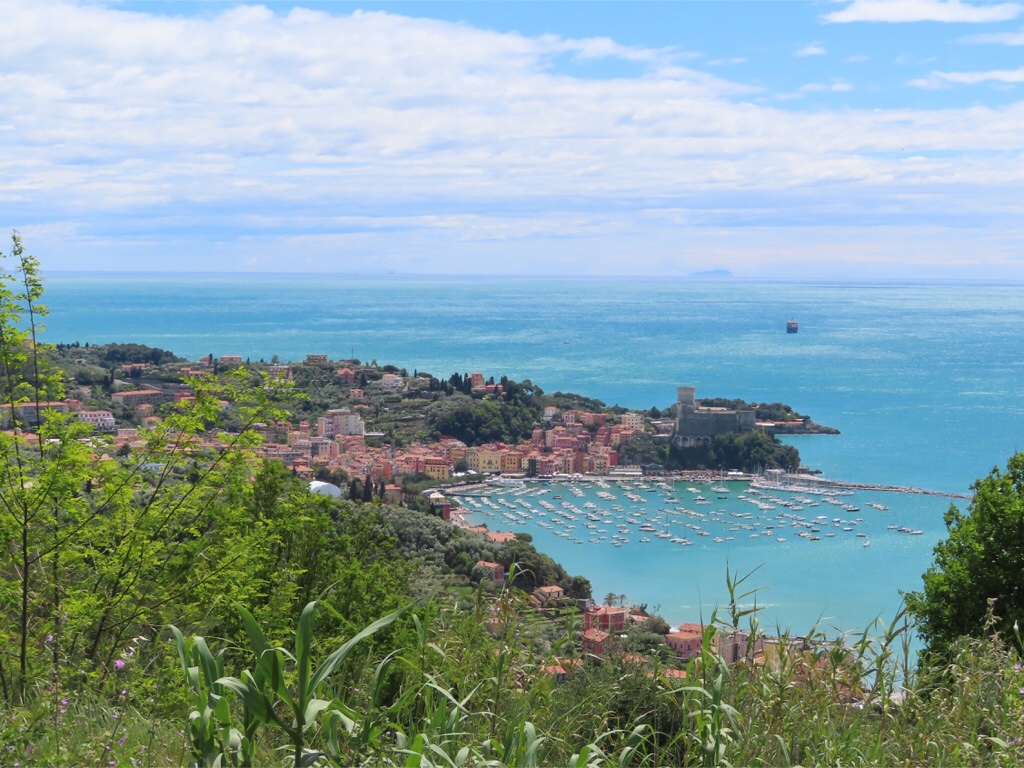
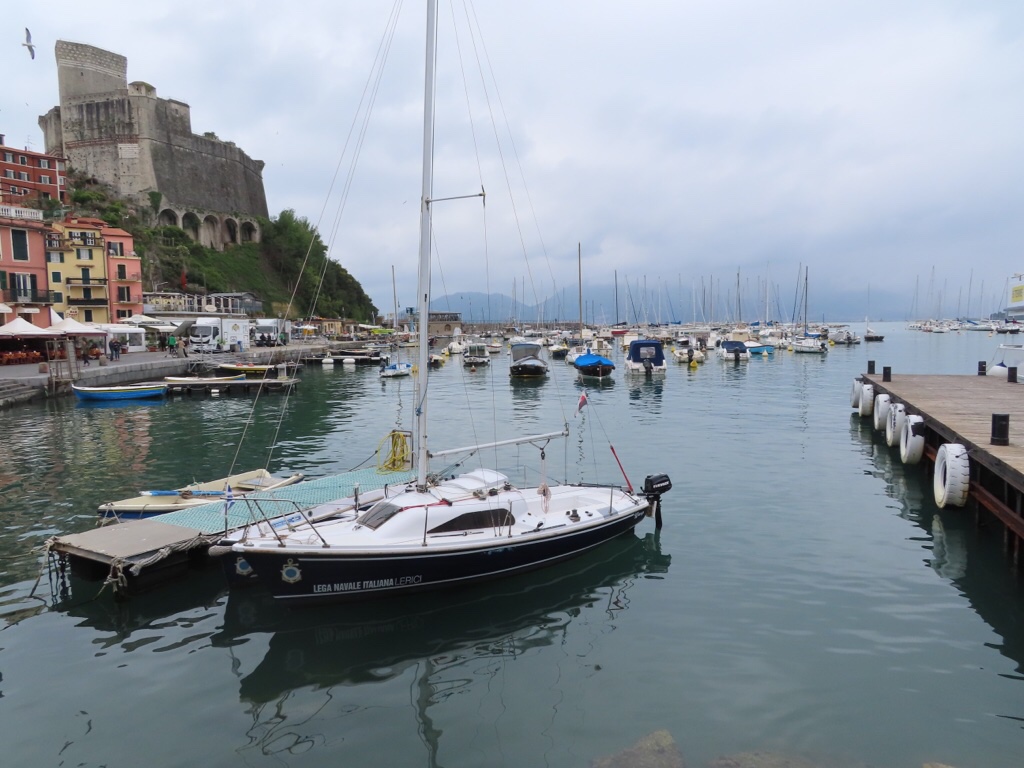
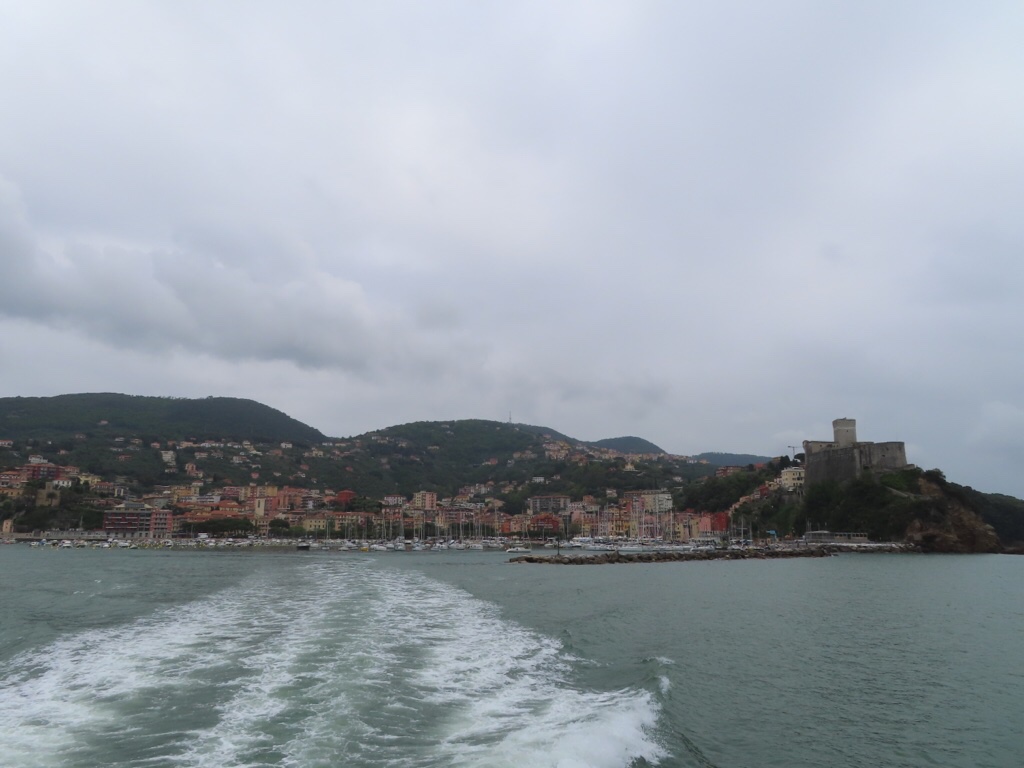
A final descent through the village of Serra and we were back in Lerici, with one last stop … the castle. It is such a landmark from the harbour, but there isn’t much inside, except a selection of viewpoints.

Our final afternoon – gelato, a rest and then dinner … this trip has flown by and we are back to Pisa for our flight tomorrow!

Map

Golfo dei Poeti – Lerici to Tellaro

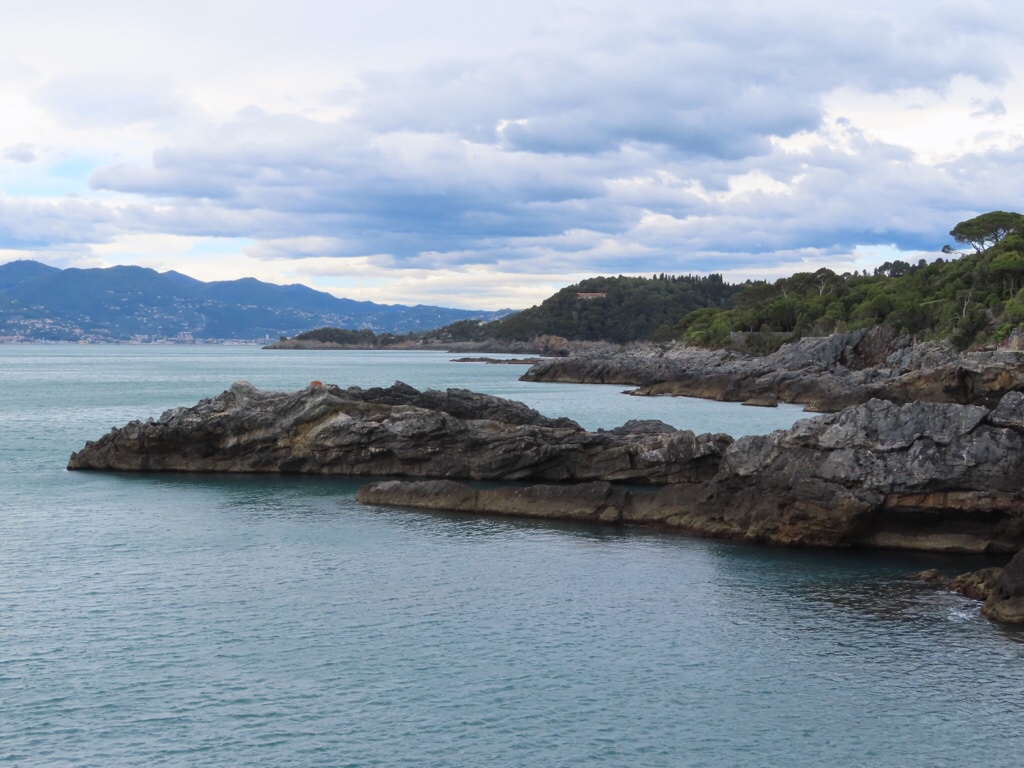
Today’s walk was a climb out of Lerici for views across the gulf then a descent to the picturesque fishing village of Tellaro.

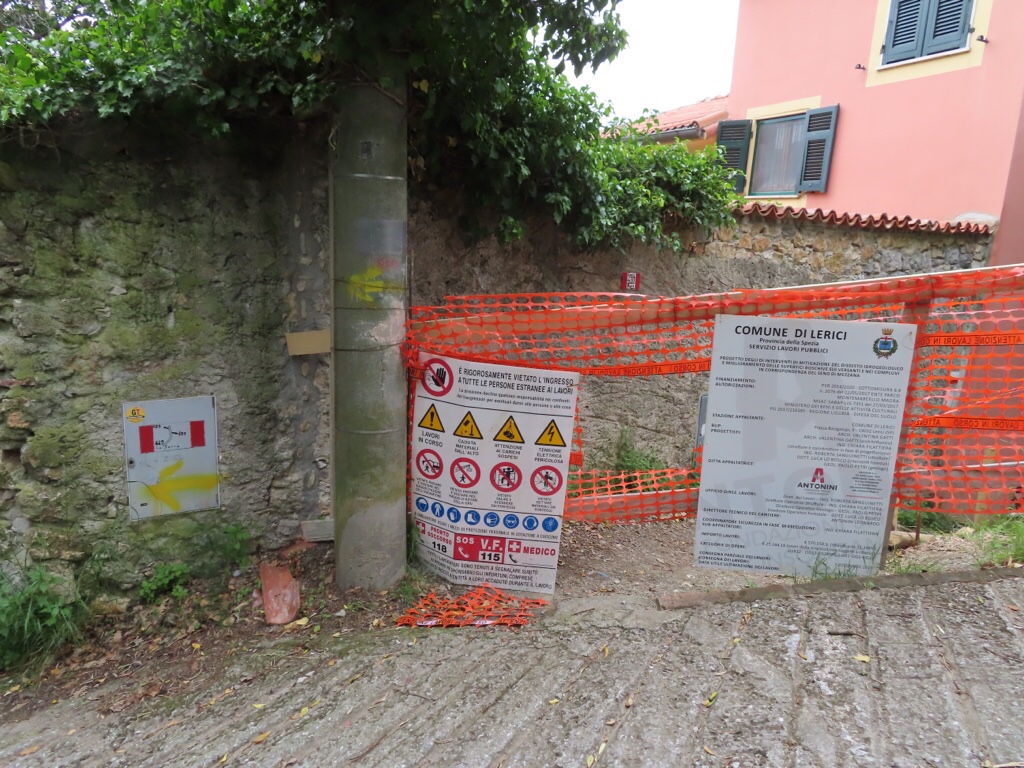
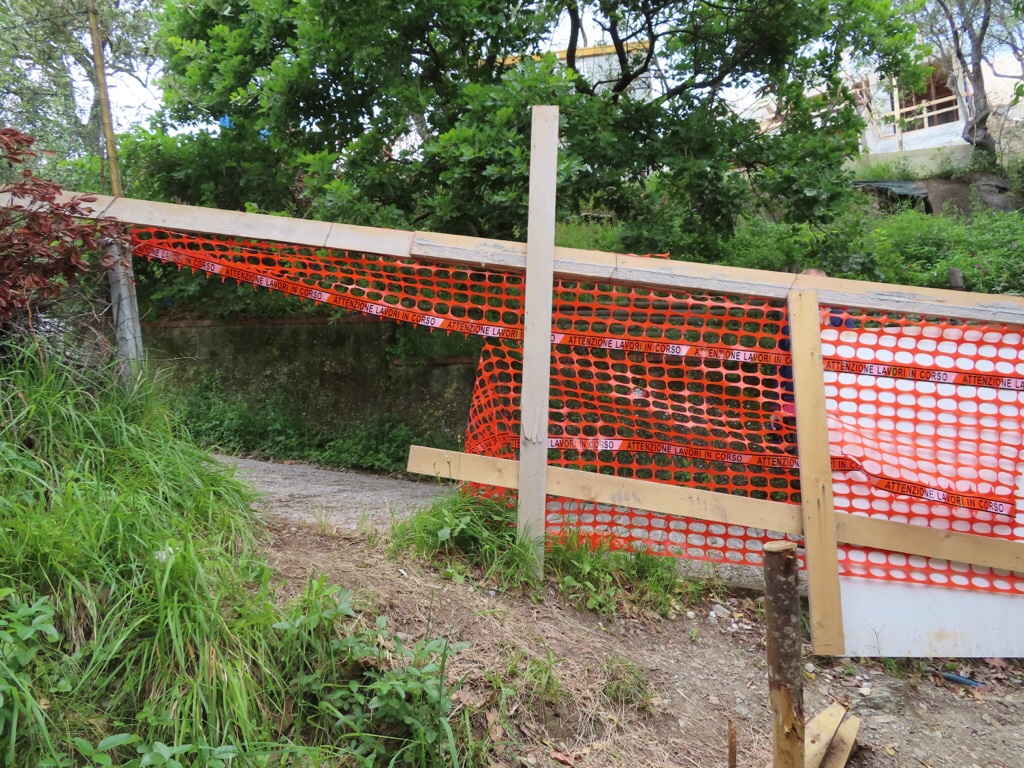
We started off ok, but were not sure if we’d taken the right path … maybe all the orange tape should have told us something …

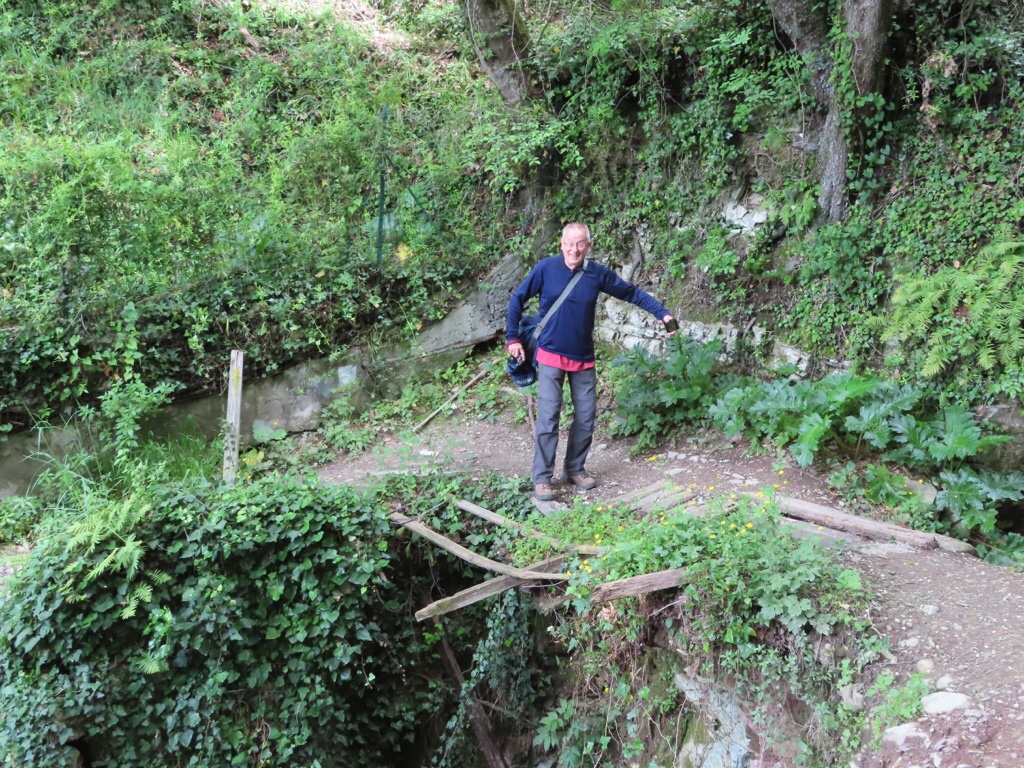
… but we managed to get over the stream so just continued …

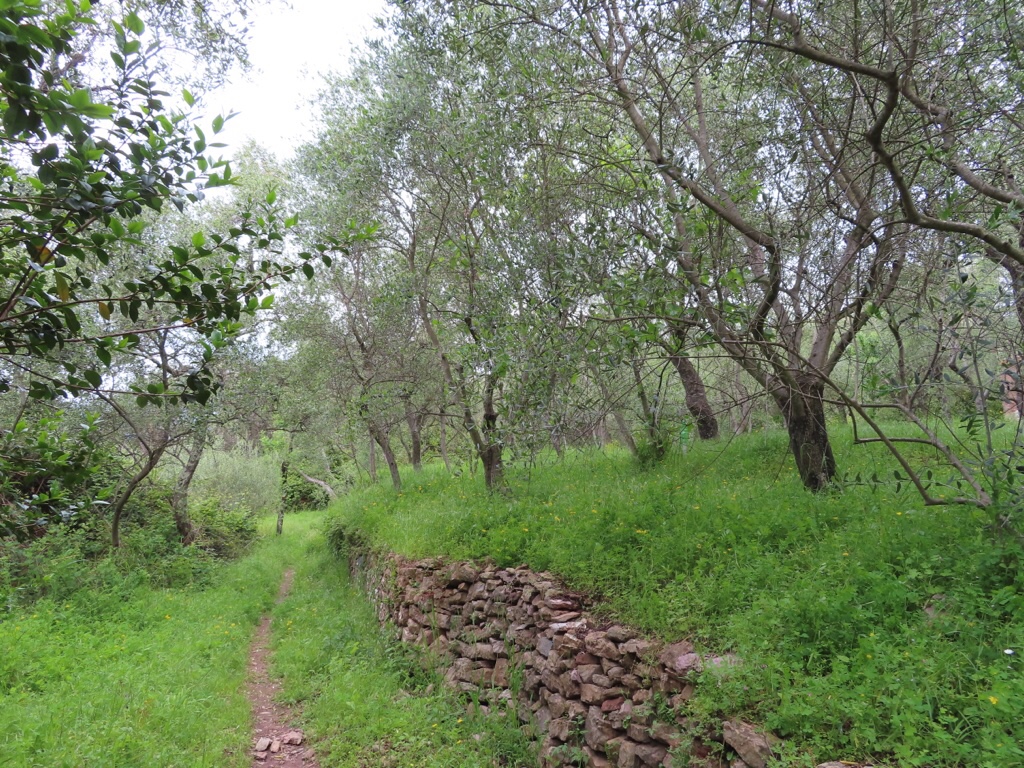
… which was fine for a while …

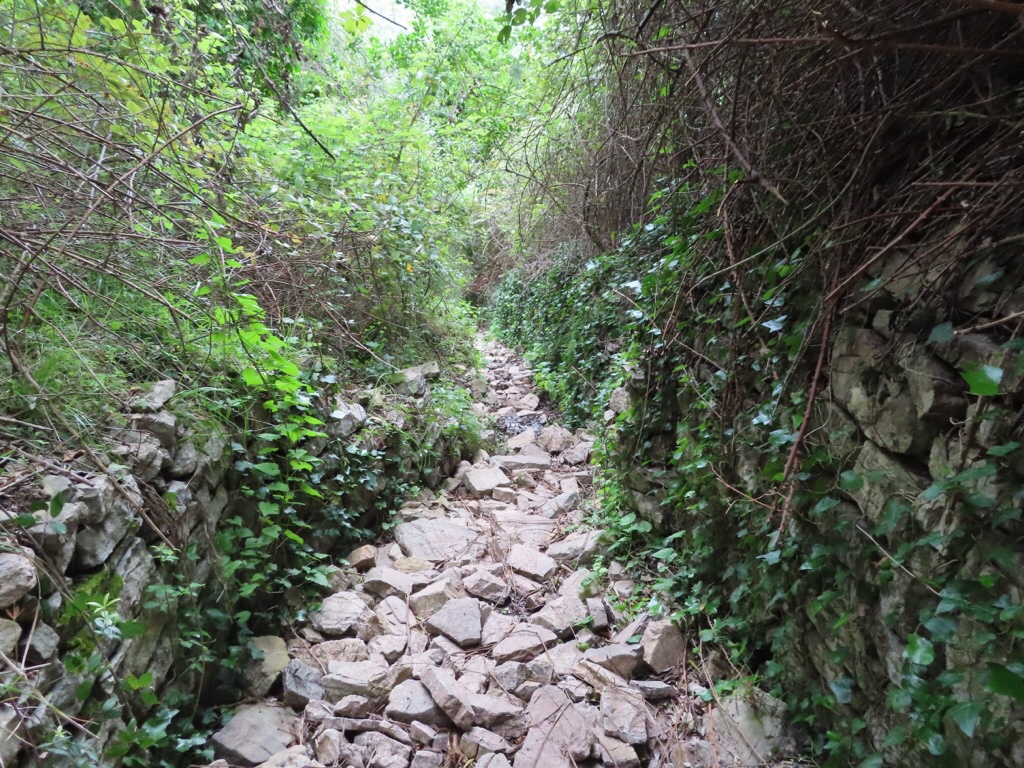
… until the path deteriorated into a steep slope covered in loose rubble …

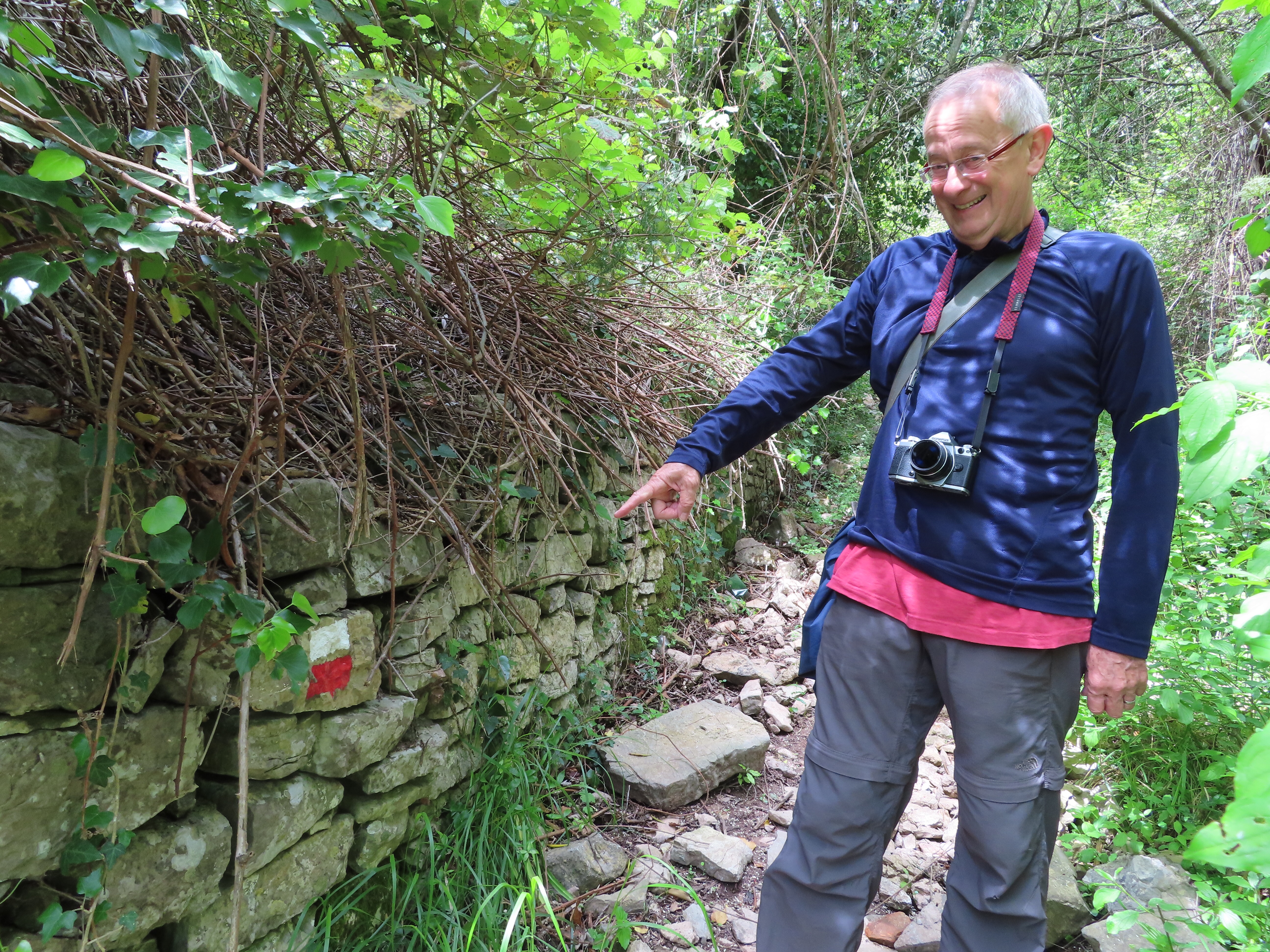
… but we saw a waymark, so kept on going …

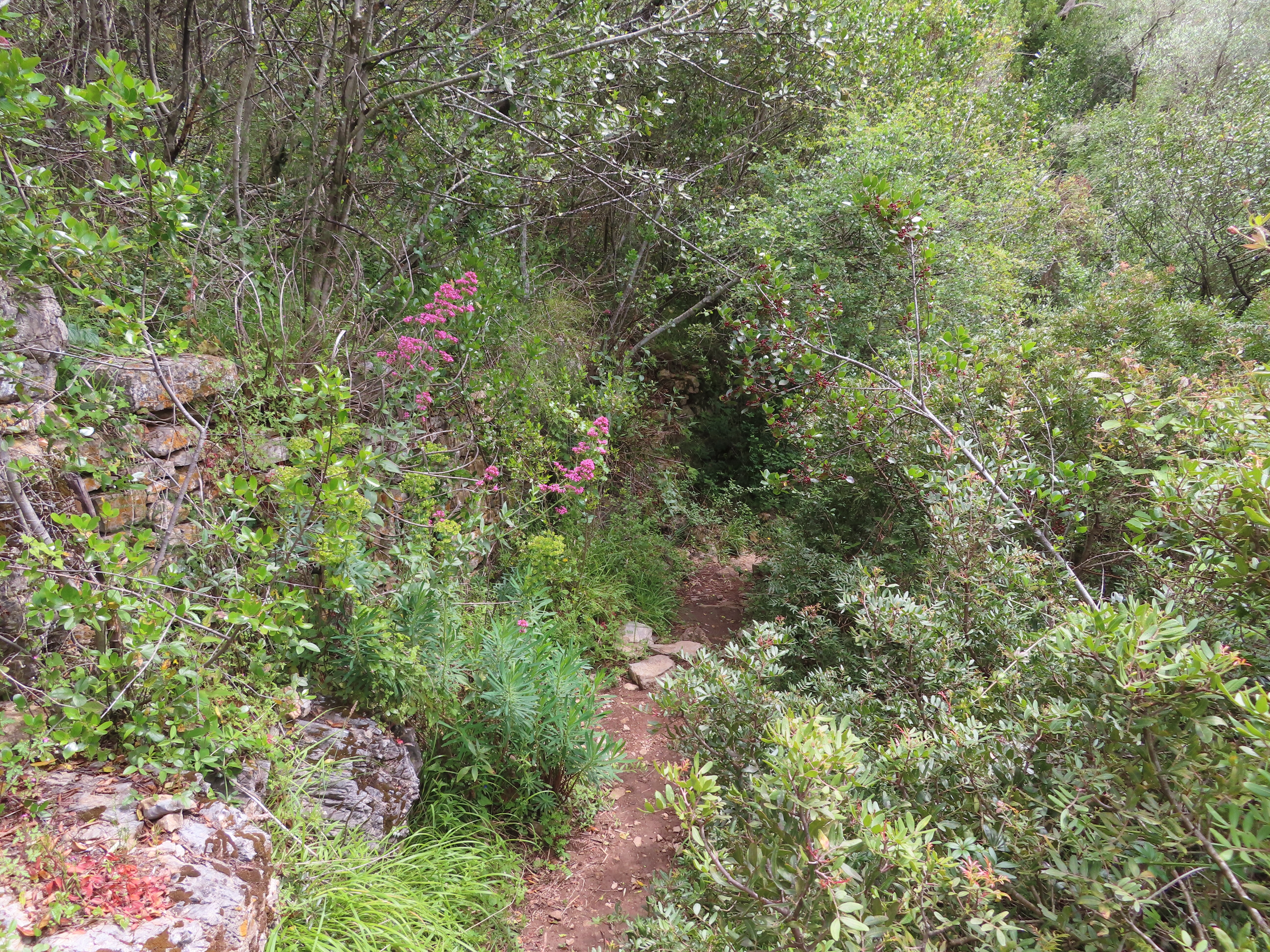
… and the path became increasingly overgrown!

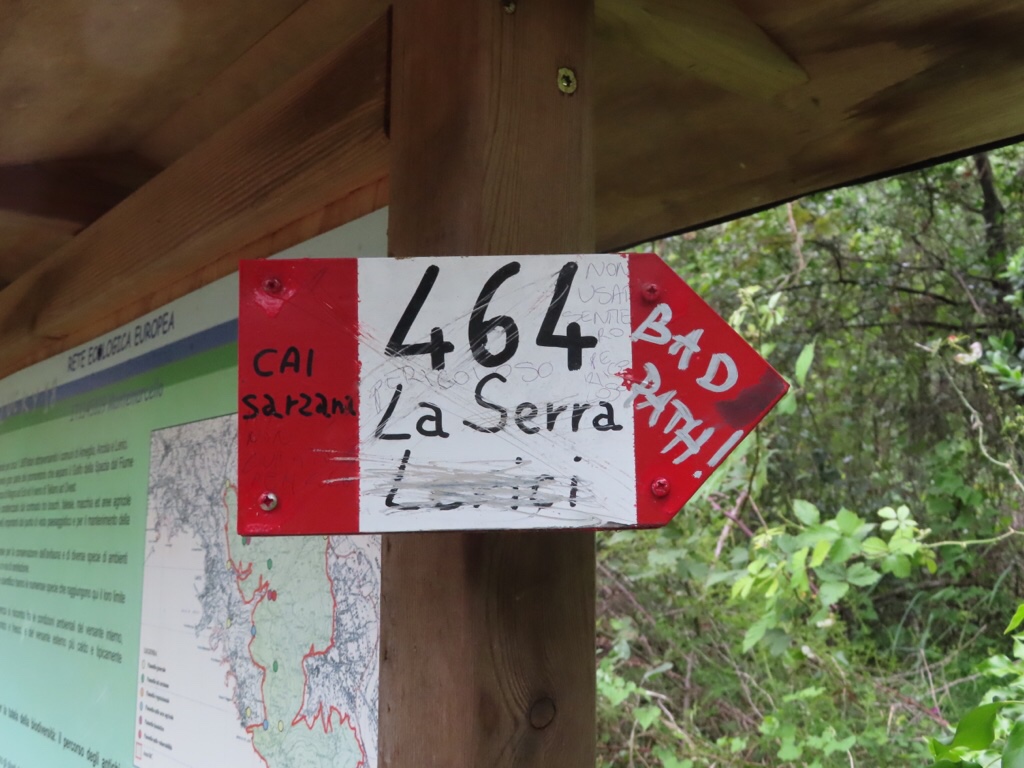
Intrepid adventurers that we are, we finally made it, reaching a main path, with a big sign … annotated by previous walkers … shame they were at the wrong end for us!

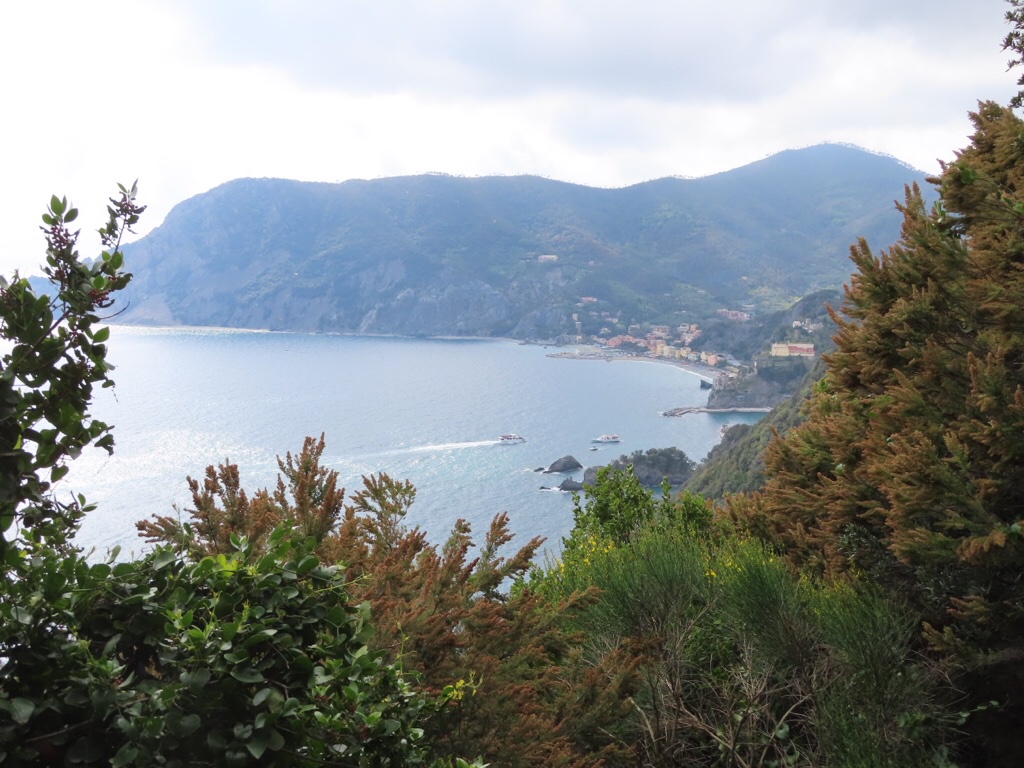
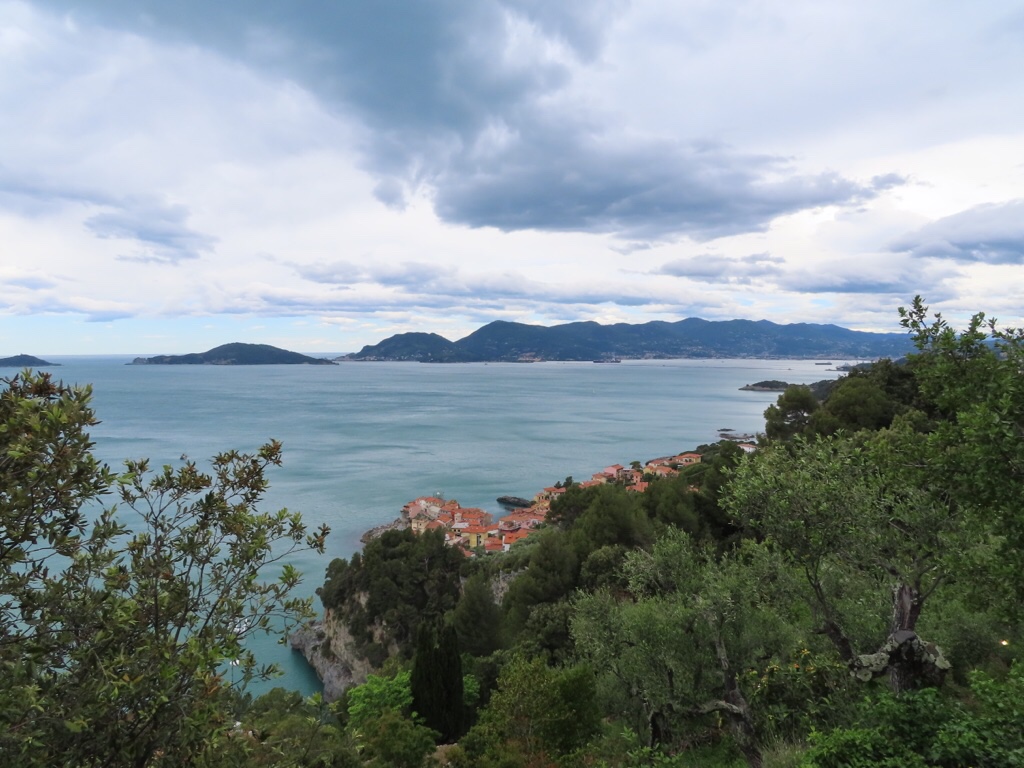
Realising we had now reached the path we should have been on, we continued the rest of the walk without drama, with a view across the bay as promised …

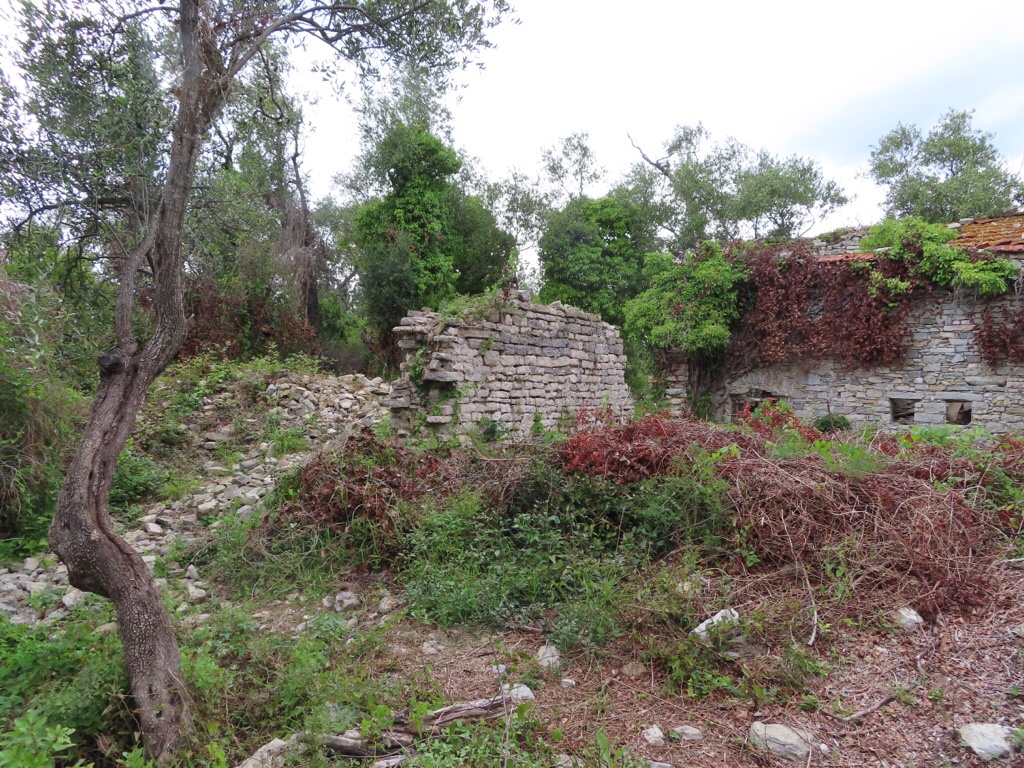
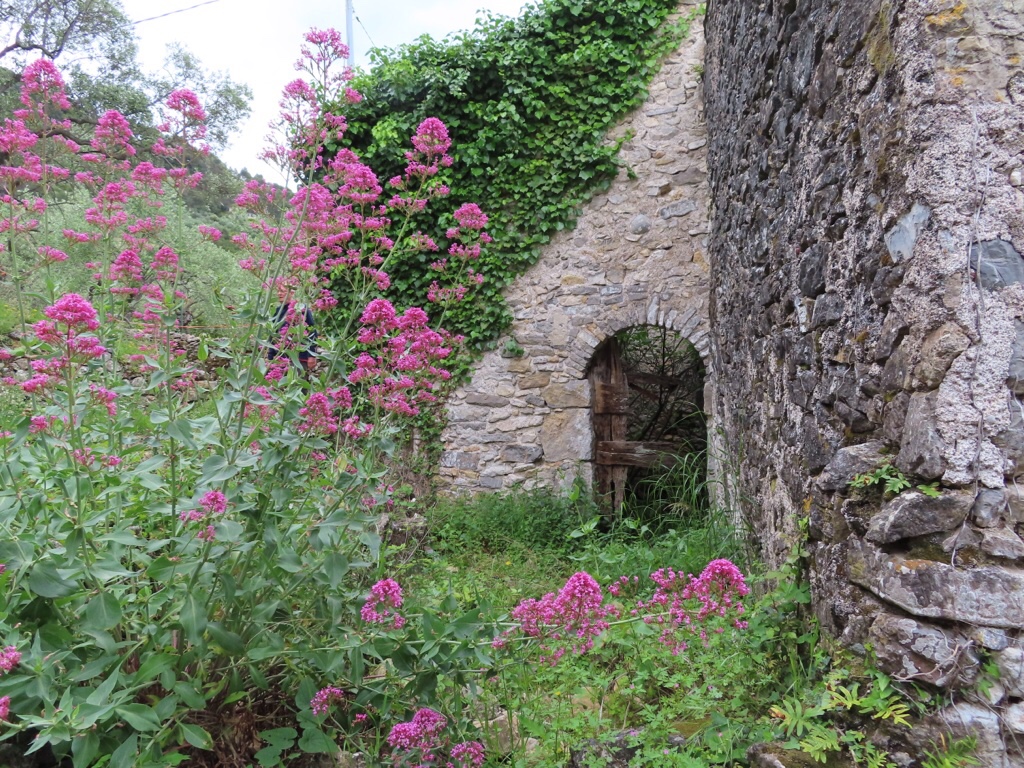
… ruins of a C16th deserted plague village called Portesone …

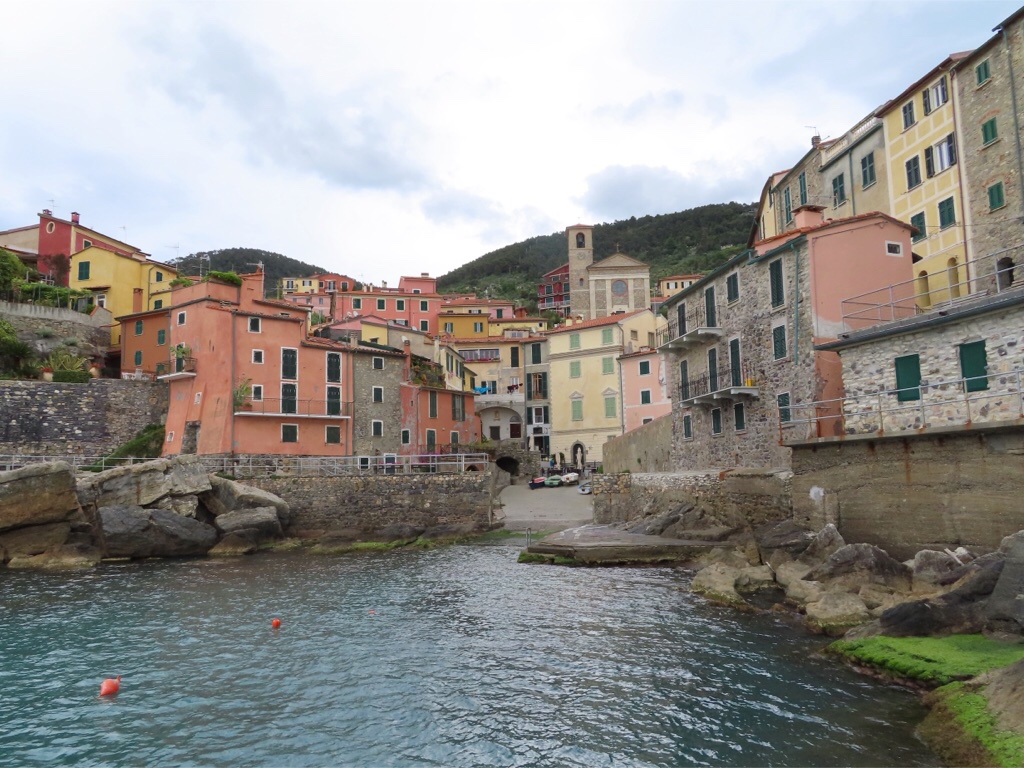
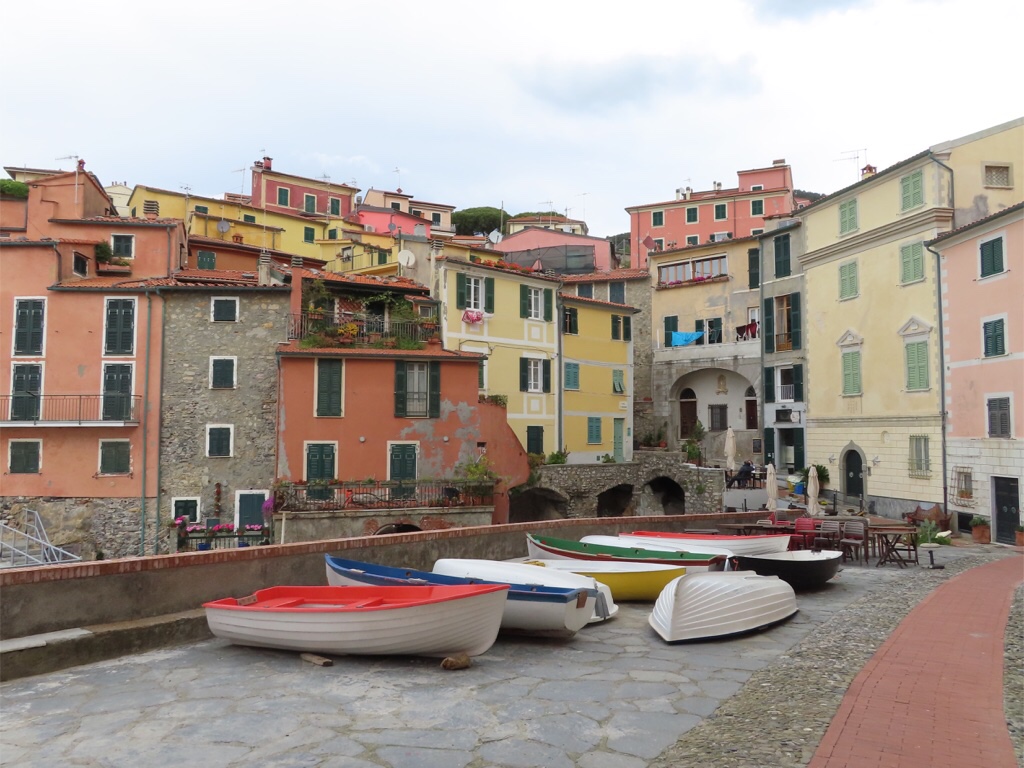
… then the descent to Tellaro.

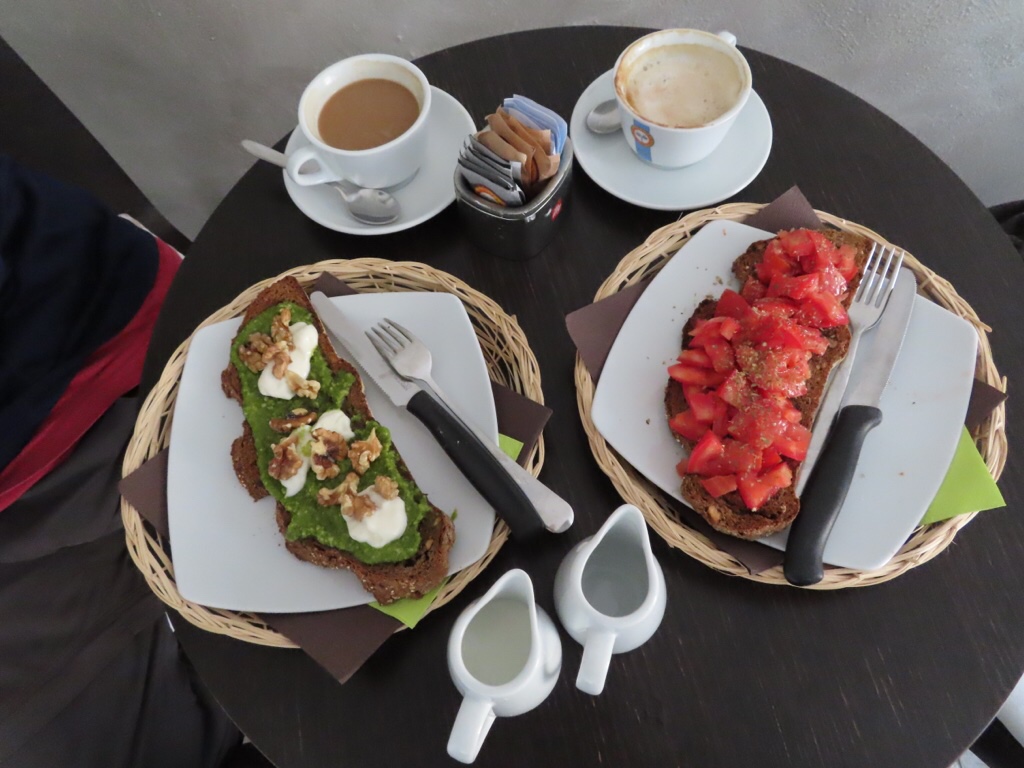
It was a little grey, so not at its best but we took some snaps then retreated to a warm bar for coffee and bruschetta.

The bus was imminent, with a long wait for the next one, so we didn’t linger and returned to Lerici, which was pretty deserted now the weekend is over. Fortunately the gelateria was open!
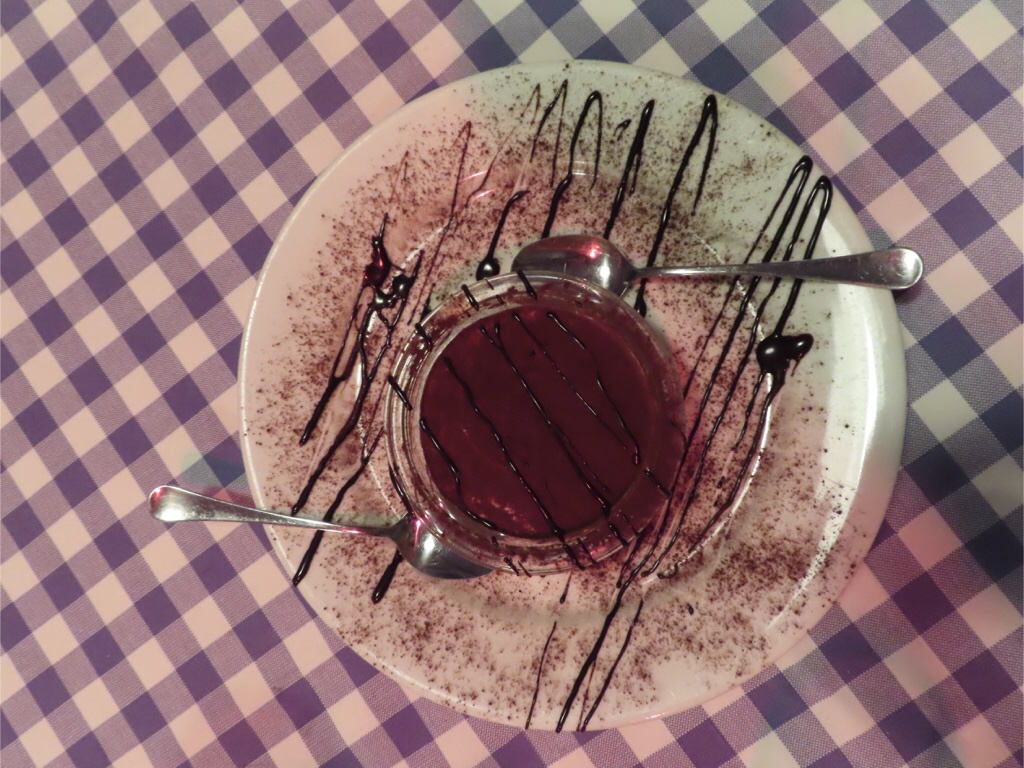
Back to Mani de Fatima for dinner for another delicious dinner and tiramisu for dessert!

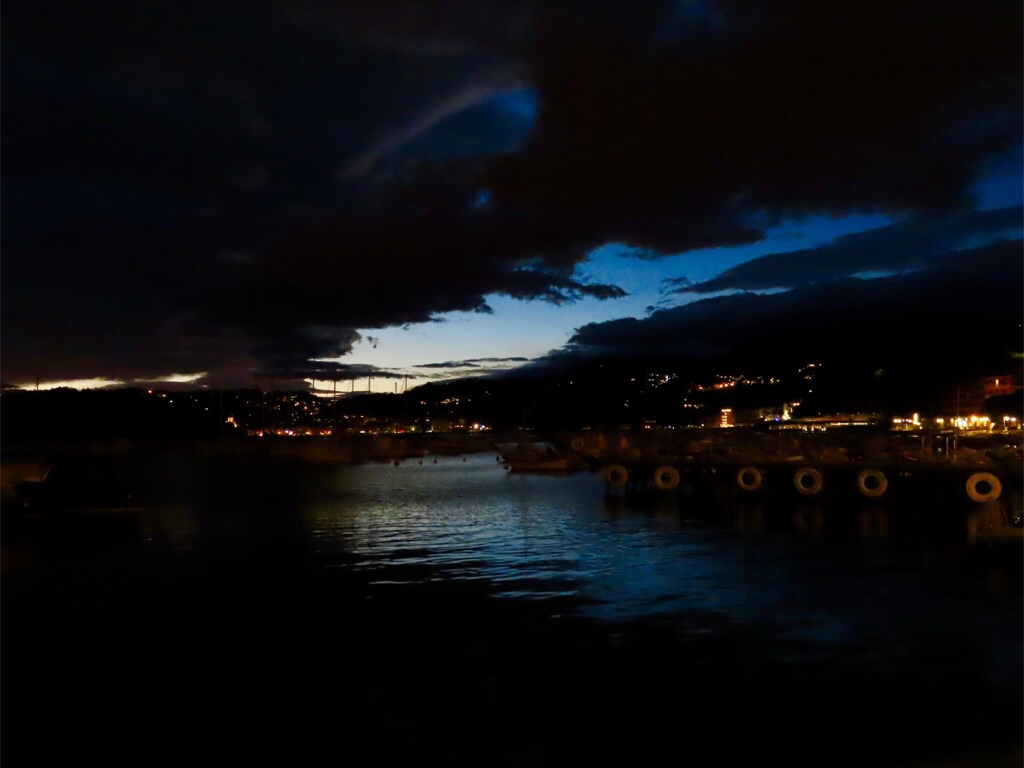
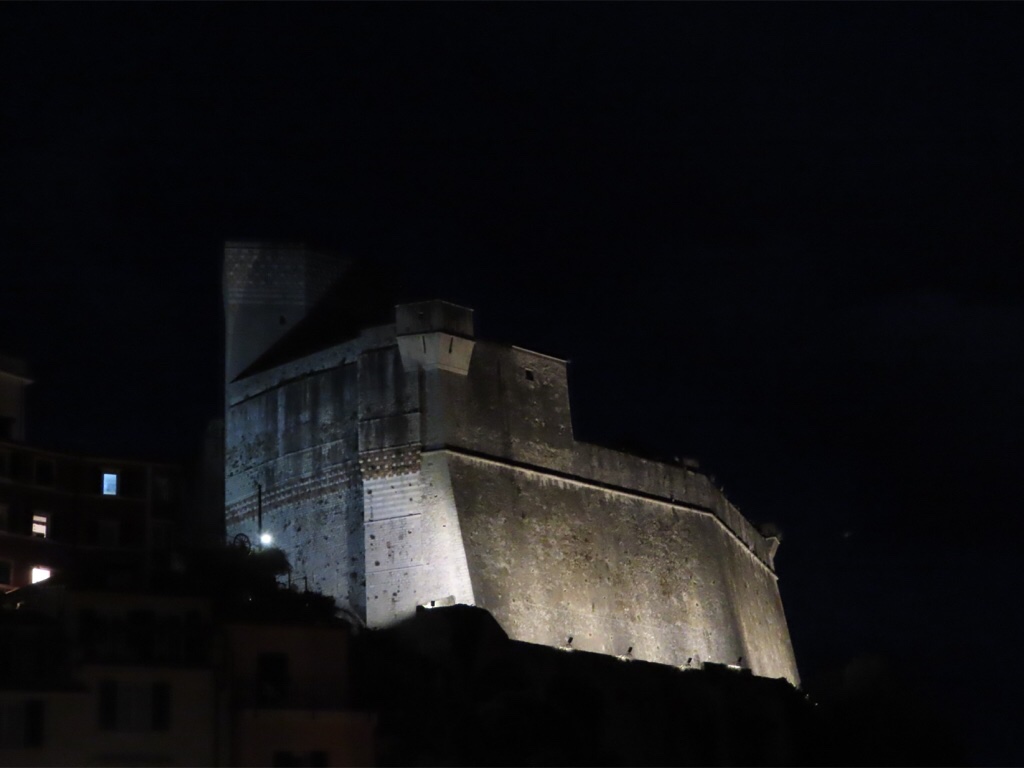
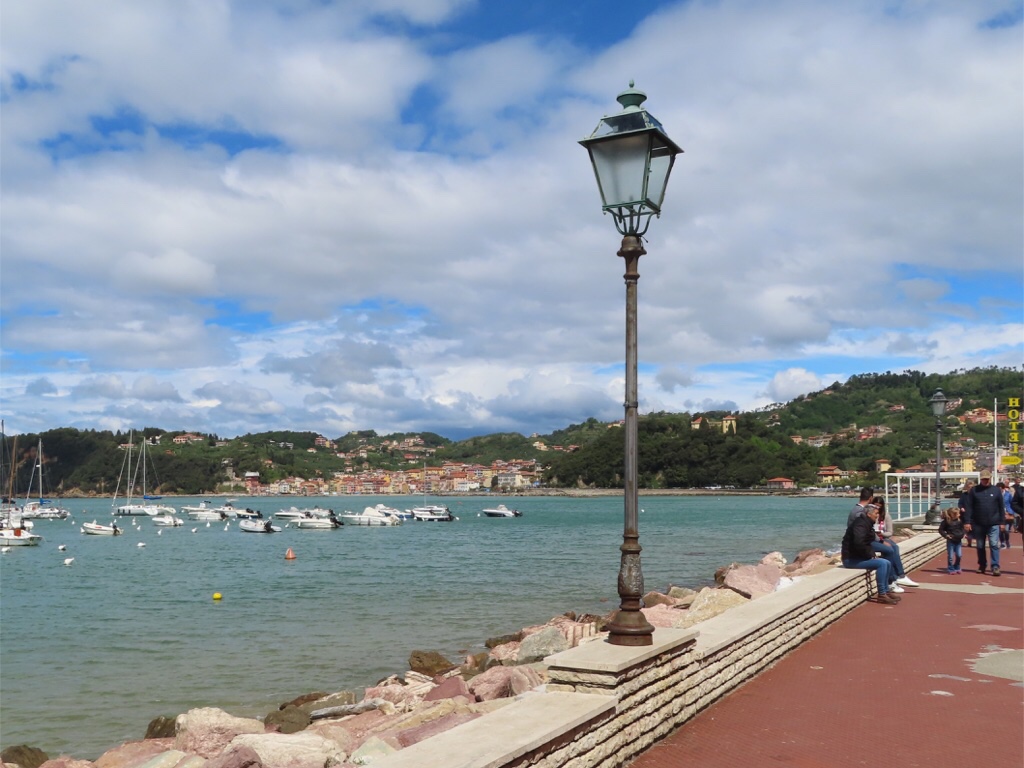
A quick turn round the square for the lights then off to bed.
Map

Golfo dei Poeti – Lerici to San Terenzo

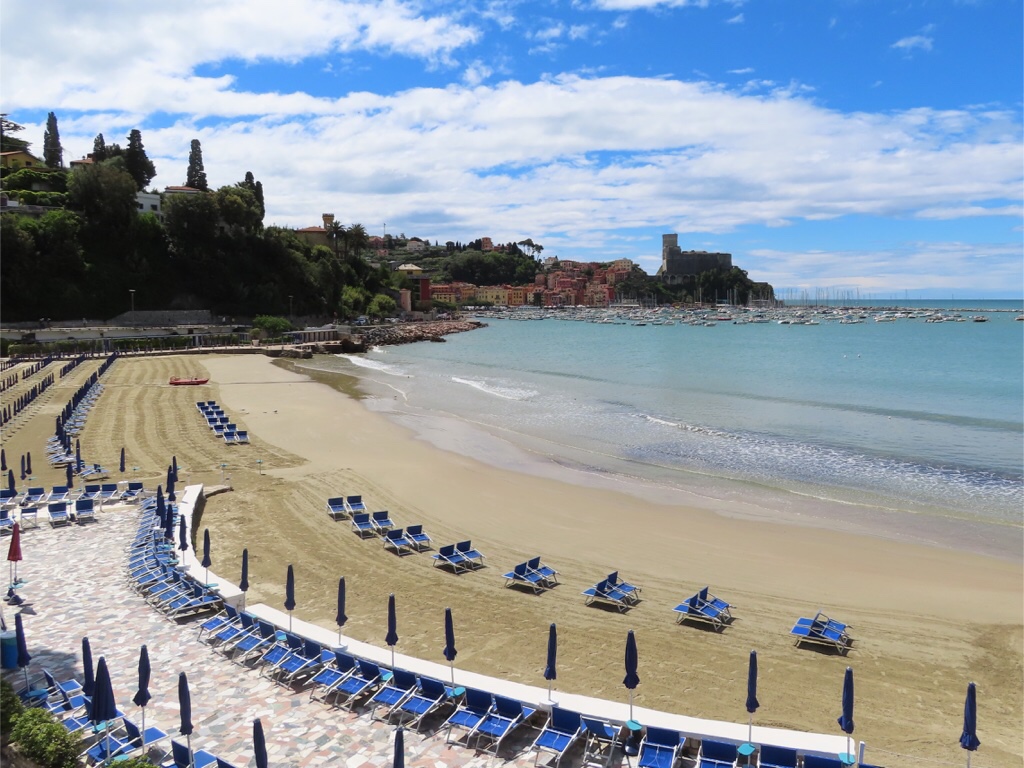
It was a bright but blowy morning here in Lerici and we set off along the coastal promenade which runs all the way to San Terenzo.

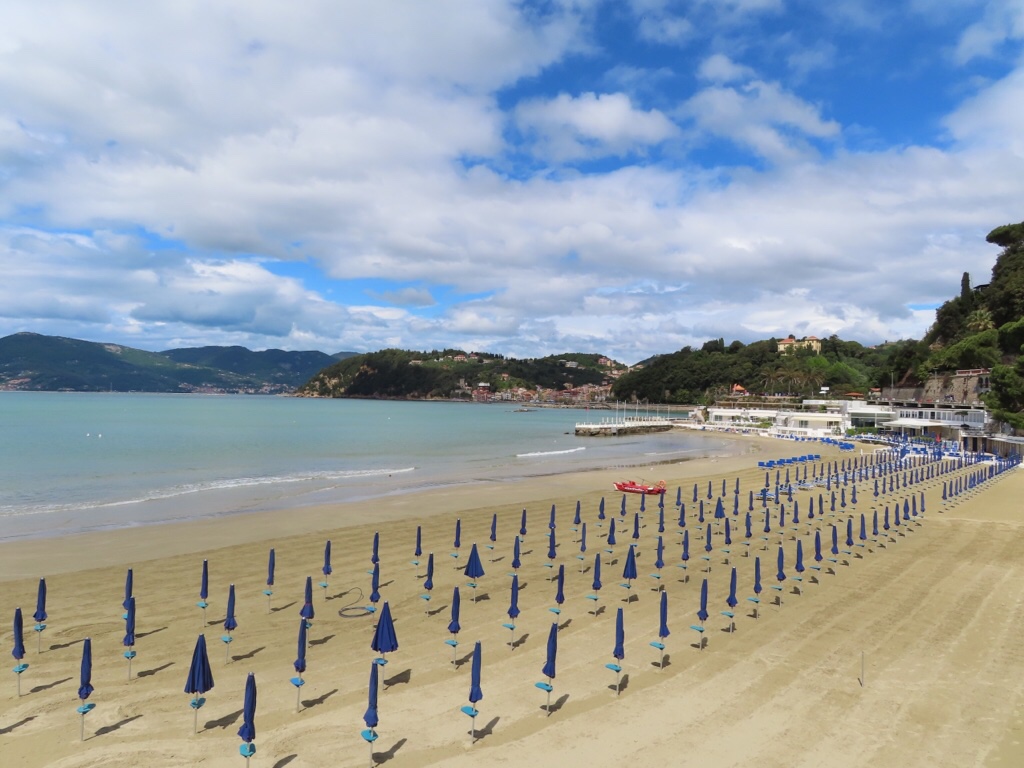
The lidos were getting ready for their summer visitors – a snip at €36/day for 2 people with sun beds and an umbrella – but this does include the convenience of changing rooms, toilets and showers, and perfectly clean and raked sand!

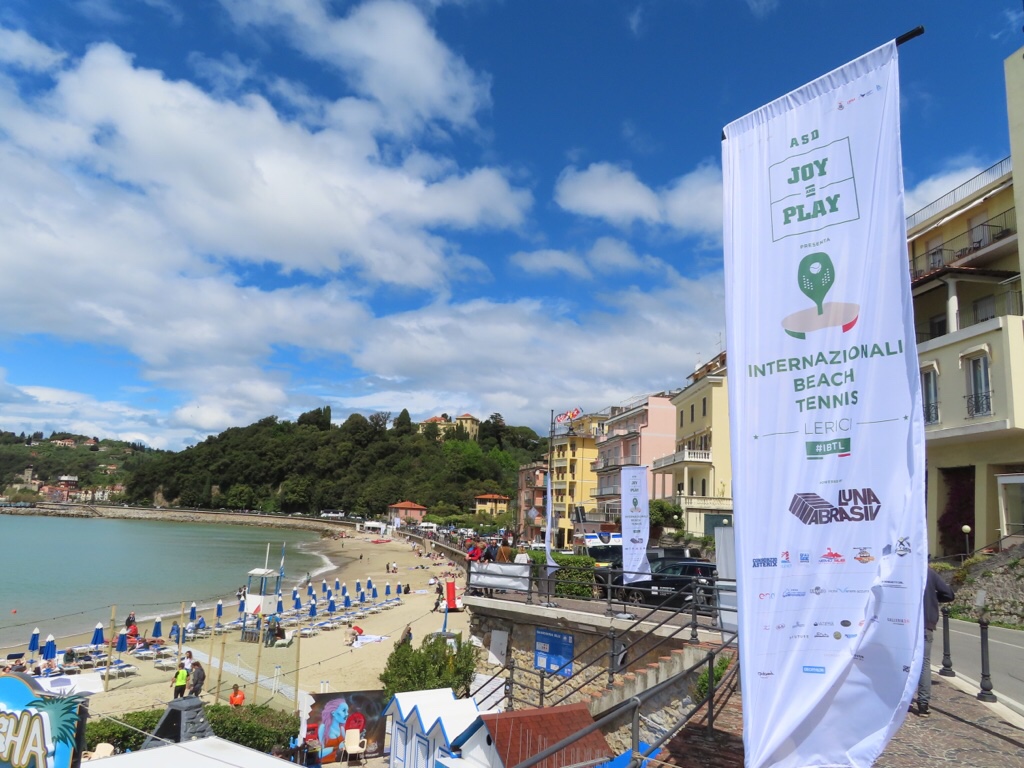
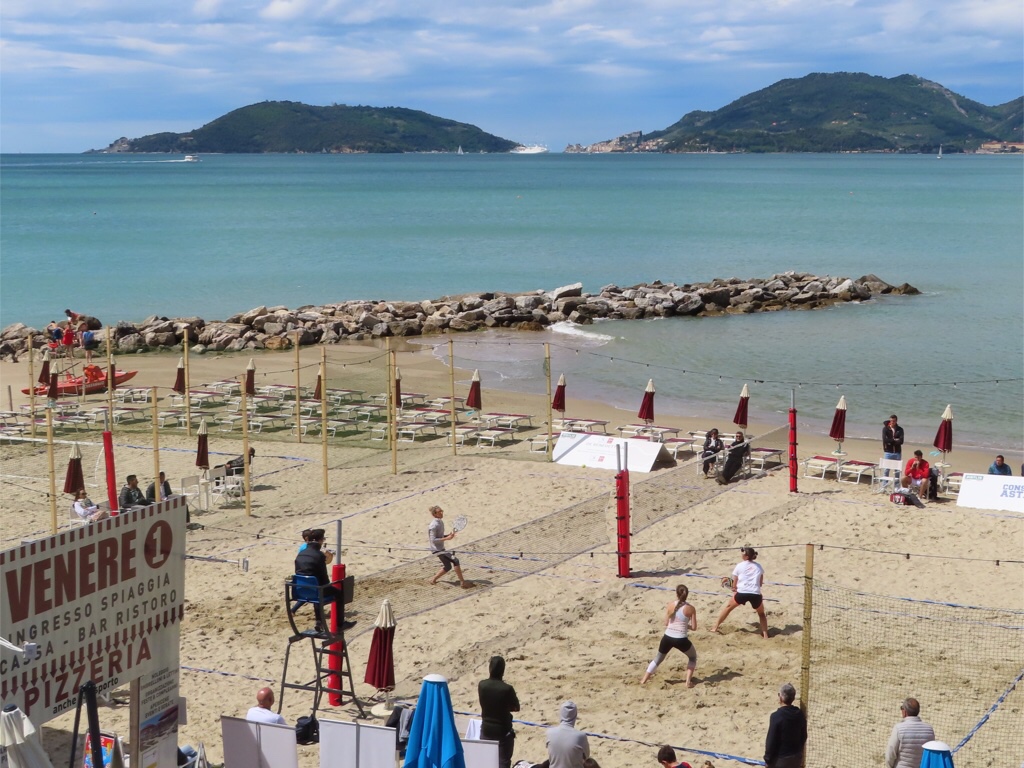
One of the beaches was hosting an event on the International Beach Tennis circuit …

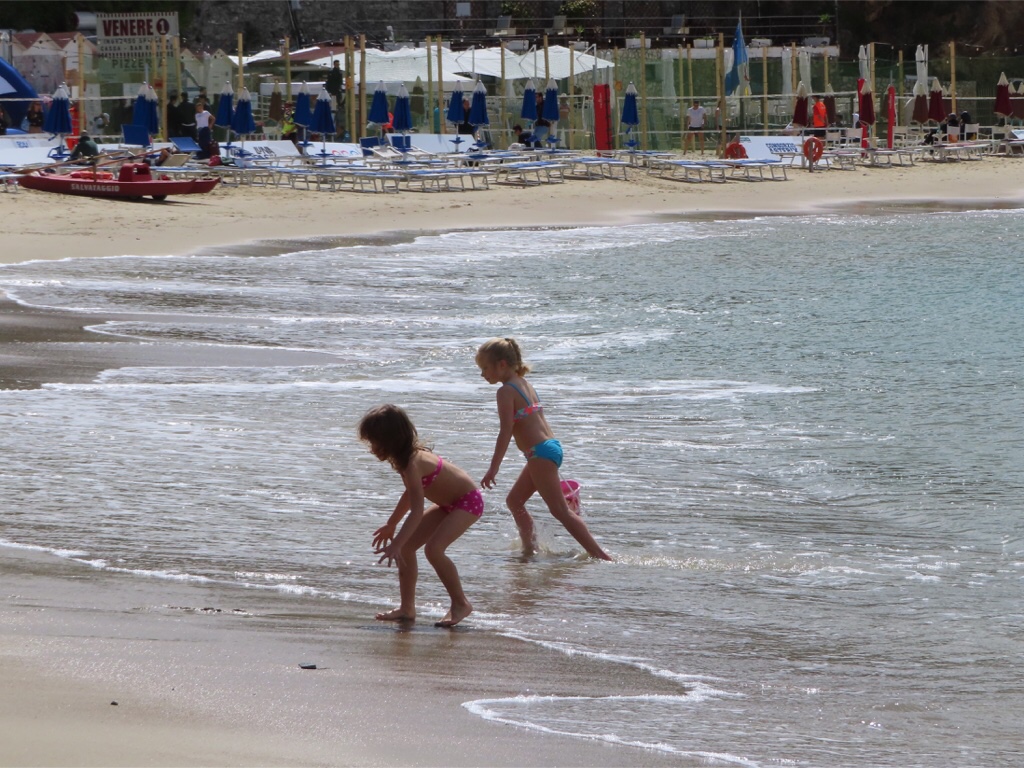
… and while it was too chilly for most to paddle, there were a couple of brave souls!

San Terenzo was bustling on a Sunday morning and we passed Casa Magni- the house Shelley lived in with his wife, the local church and the castle.

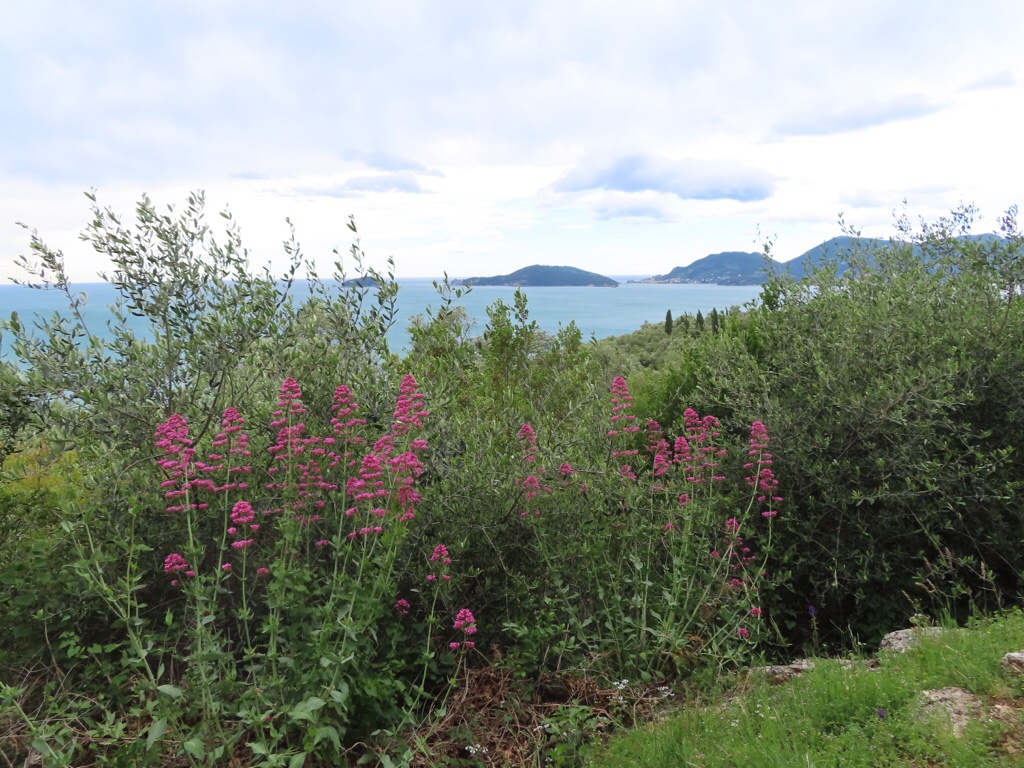
We took a footpath up through the back of the village … and you can guess, a mixture of mule track, earthen track and paved path and more ups and downs than we were expecting! It was all worthwhile for the views – leftwards to Lerici …

… and rightwards to San Terenzo, with Portovenere and the islands of Palmaria and Tino in the distance.

Back in Lerici, then sun had gone in and the wind had got up so we just chilled for the rest of the afternoon, then went for pizza later.

Map

Golfo dei Poeti – Portovenere

The natural beauty of this bay has inspired writers and artists as far back as Petrarch and Dante. Later it was popular with a number of Italian writers as well as DH Lawrence and Virginia Wolf. Shelley lived in the village of San Terenzo with his wife Mary and Byron famously swam across the bay from Portovenere to visit them. But the sea here is not always kind and tragedy struck a month before Shelley’s 30th birthday when a sudden storm in the Bay of Spezia caused him to drown during his journey back to Lerici in his sailing boat.

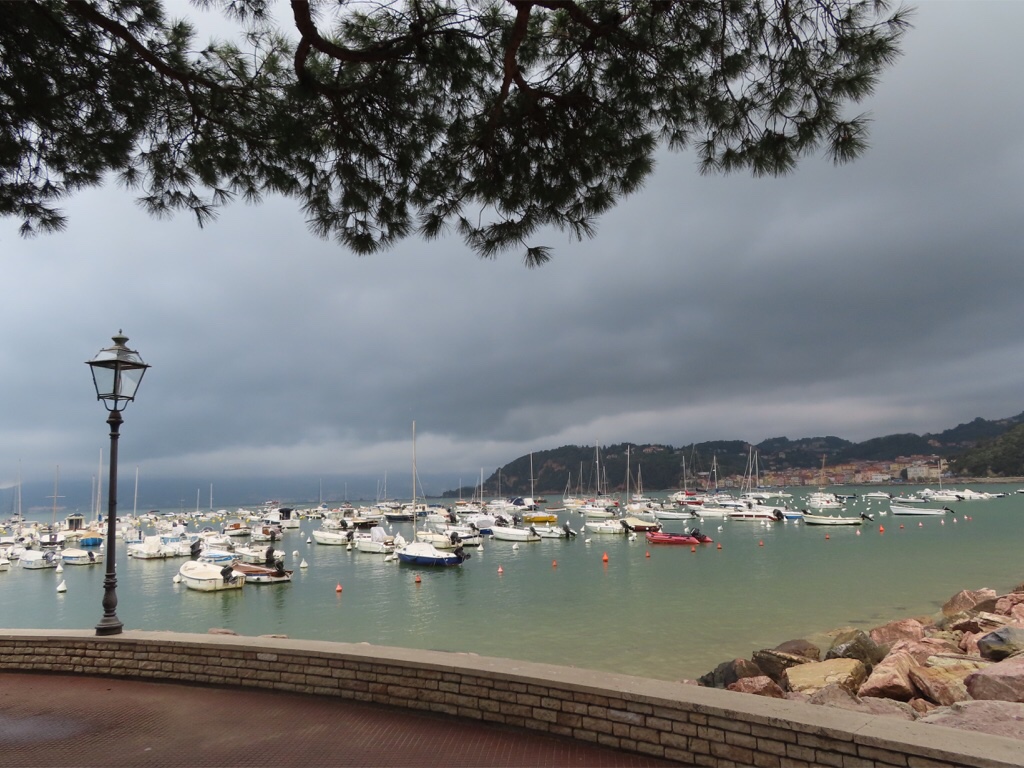
We are staying in Affittacamere Vittorio in Lerici, a lovely room with dark green shutters above a gelateria with a view of the square …

… and from here we will be exploring the coast around the bay. It’s another of those grey days and having travelled on two trains and a bus, we arrived at lunchtime and quickly checked in, grabbed a bite for lunch …

… walked to the pier …

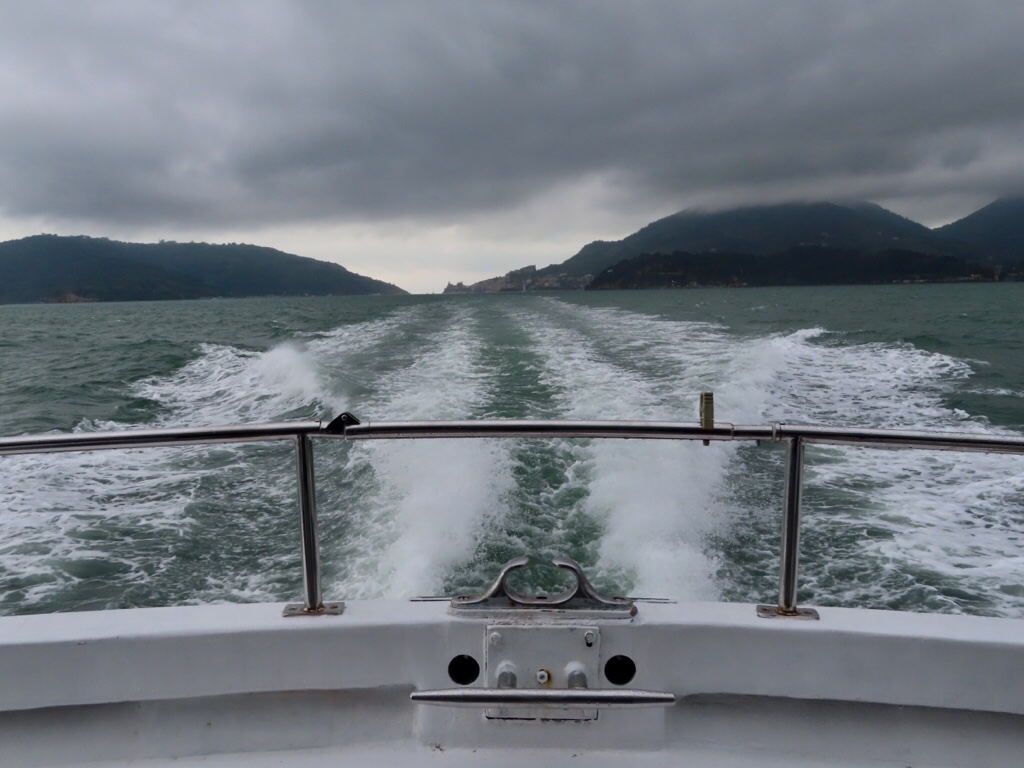
… and left Lerici behind …

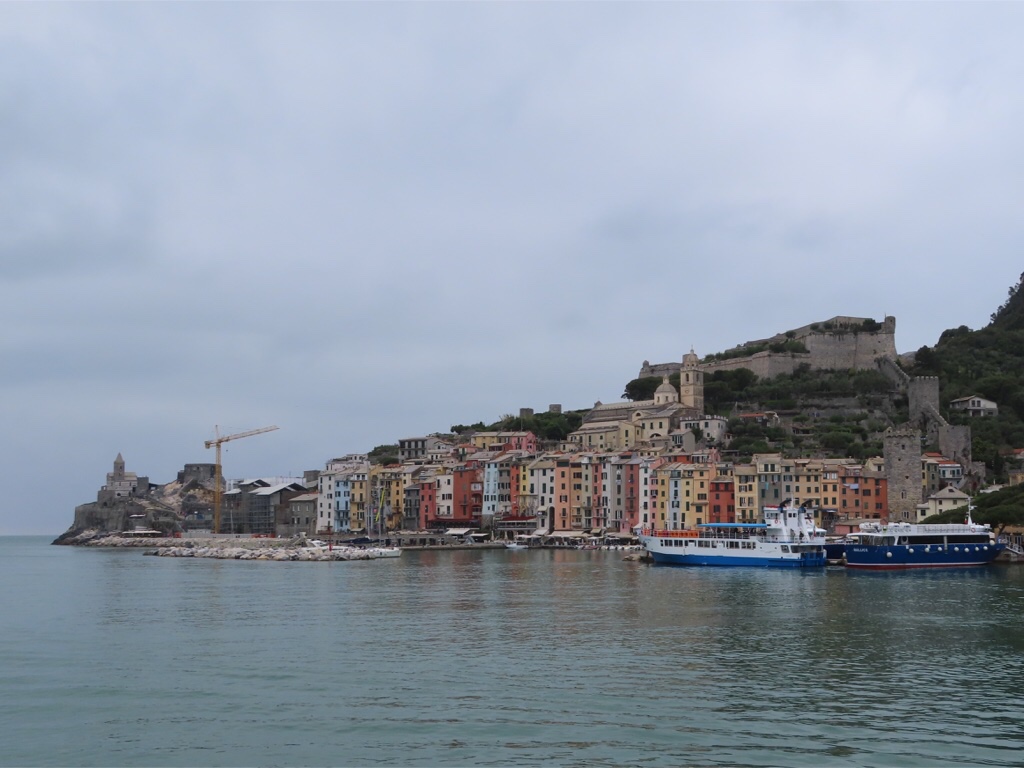
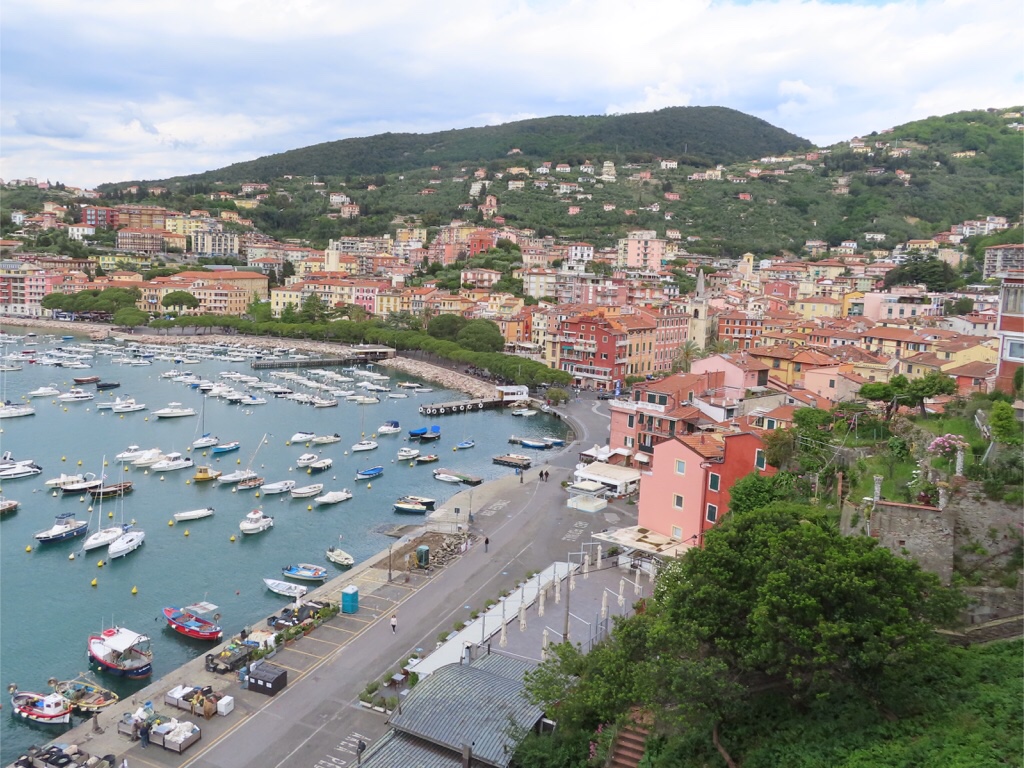
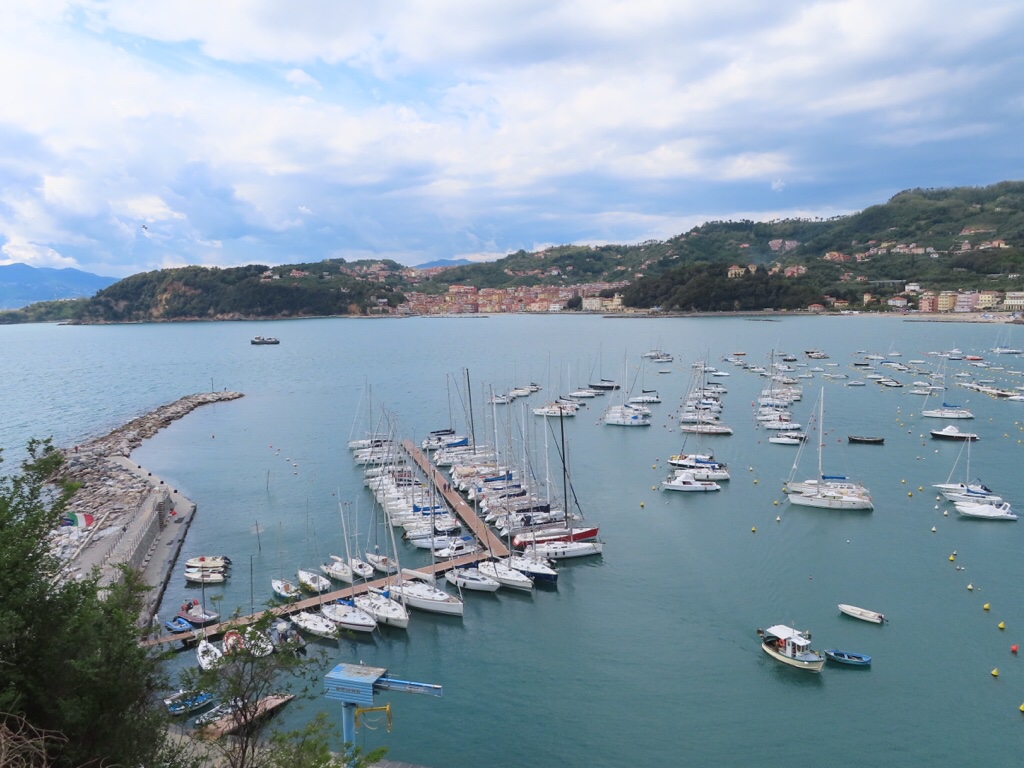
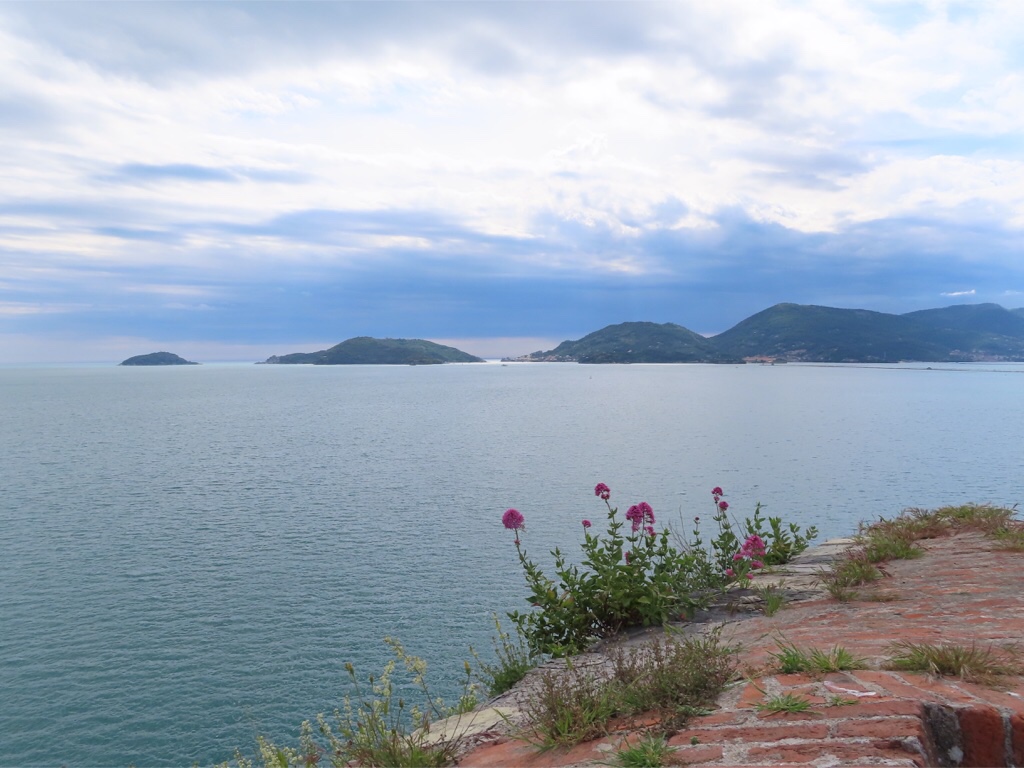
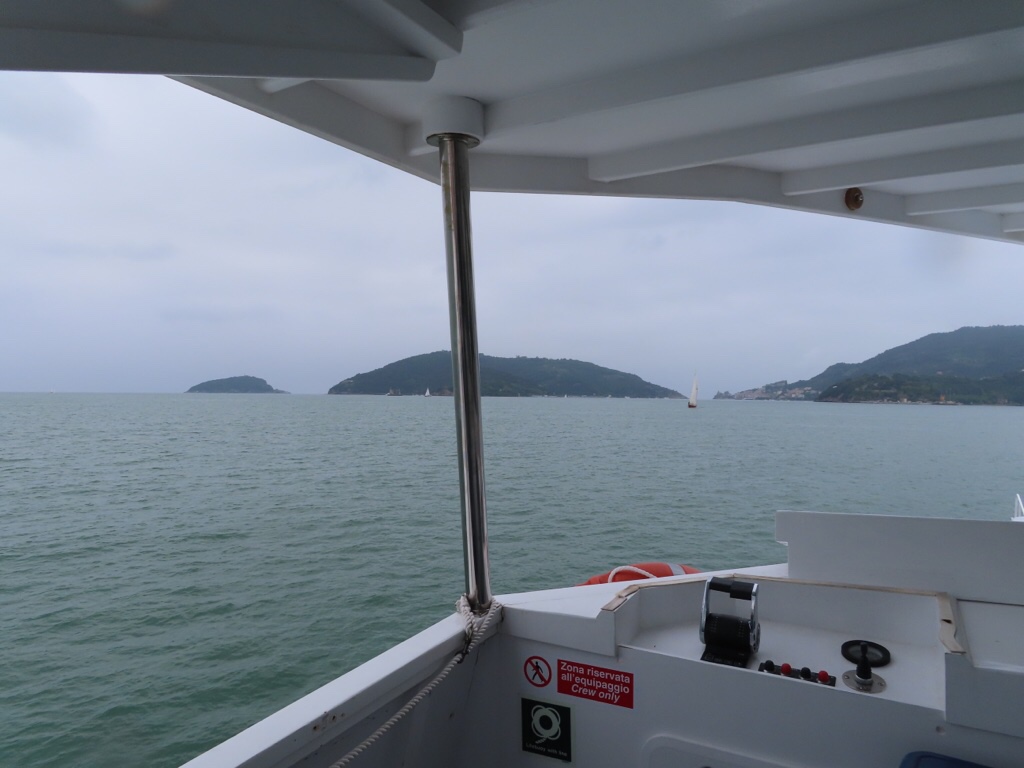
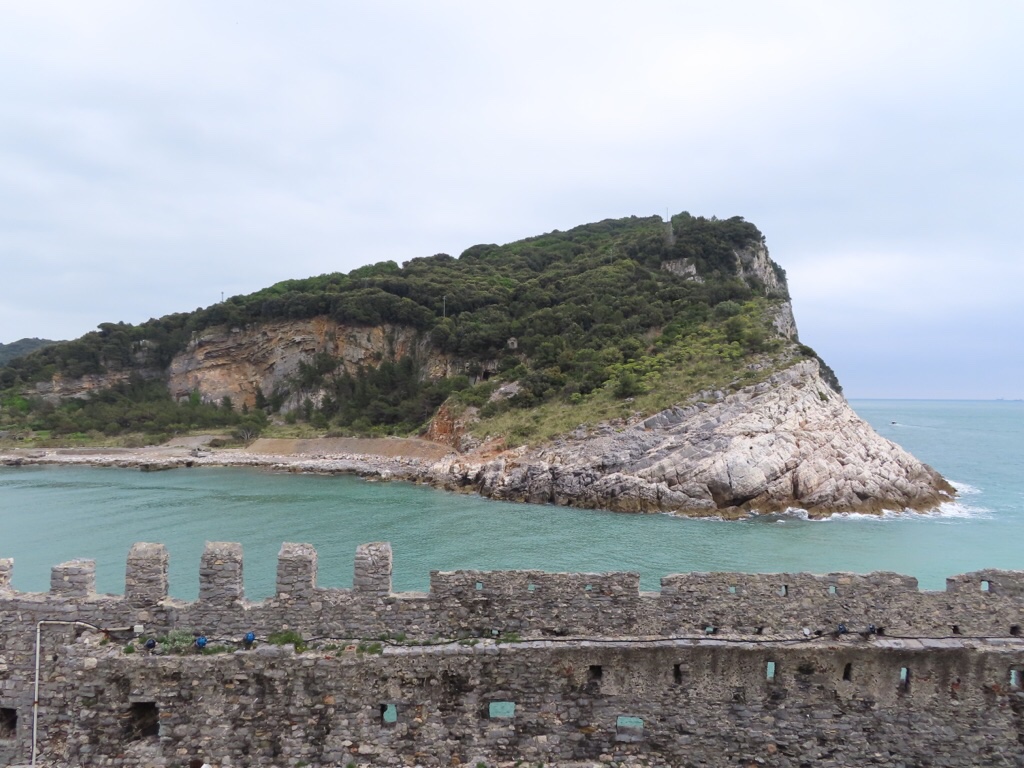
… as we took the boat to Portovenere, ahead with Palmaria and Tino islands to the left …

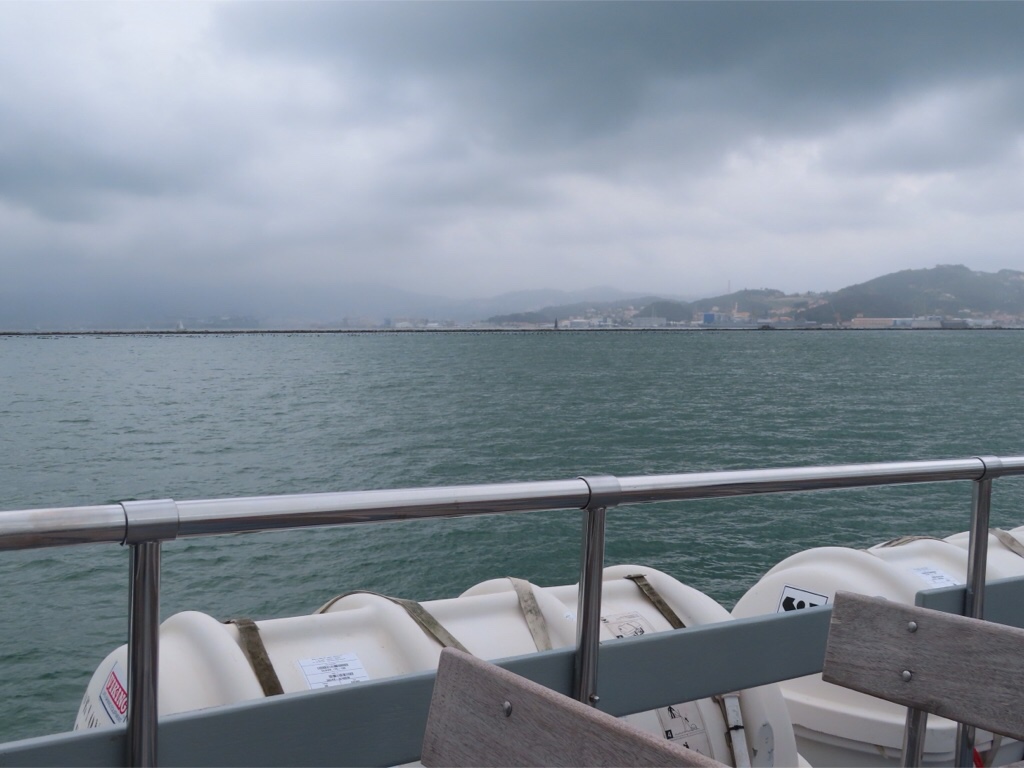
… while clouds lurked over La Spezia.

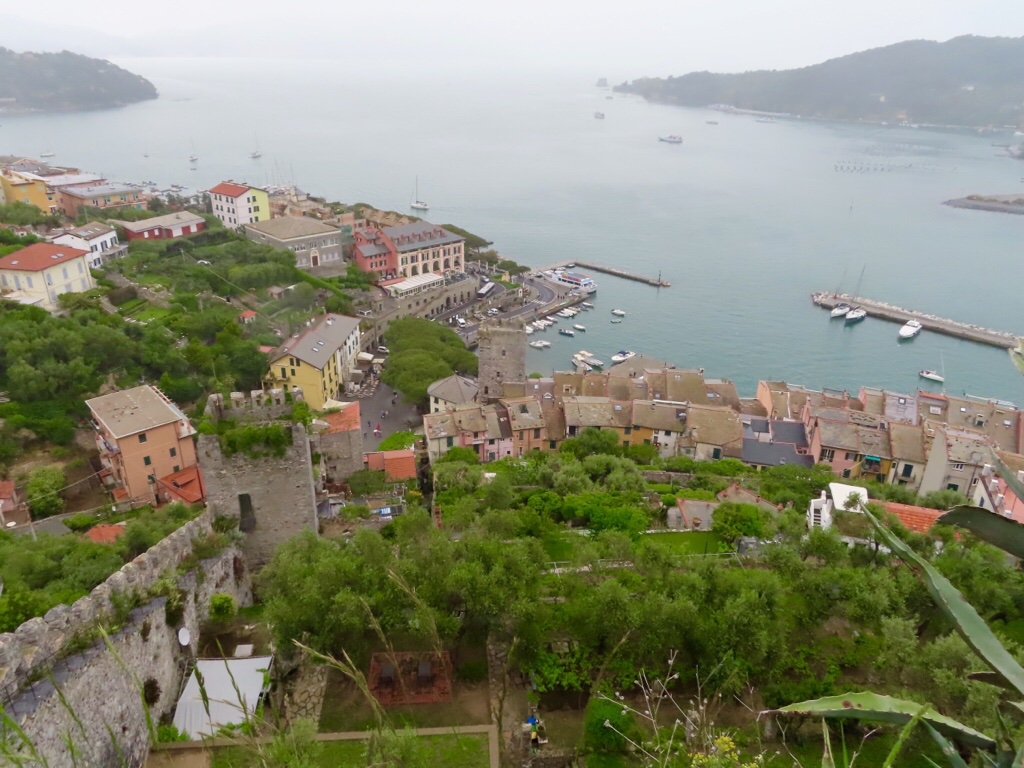
Once a fortified fishing village, Portovenere is now a popular tourist destination and we spent the afternoon exploring.

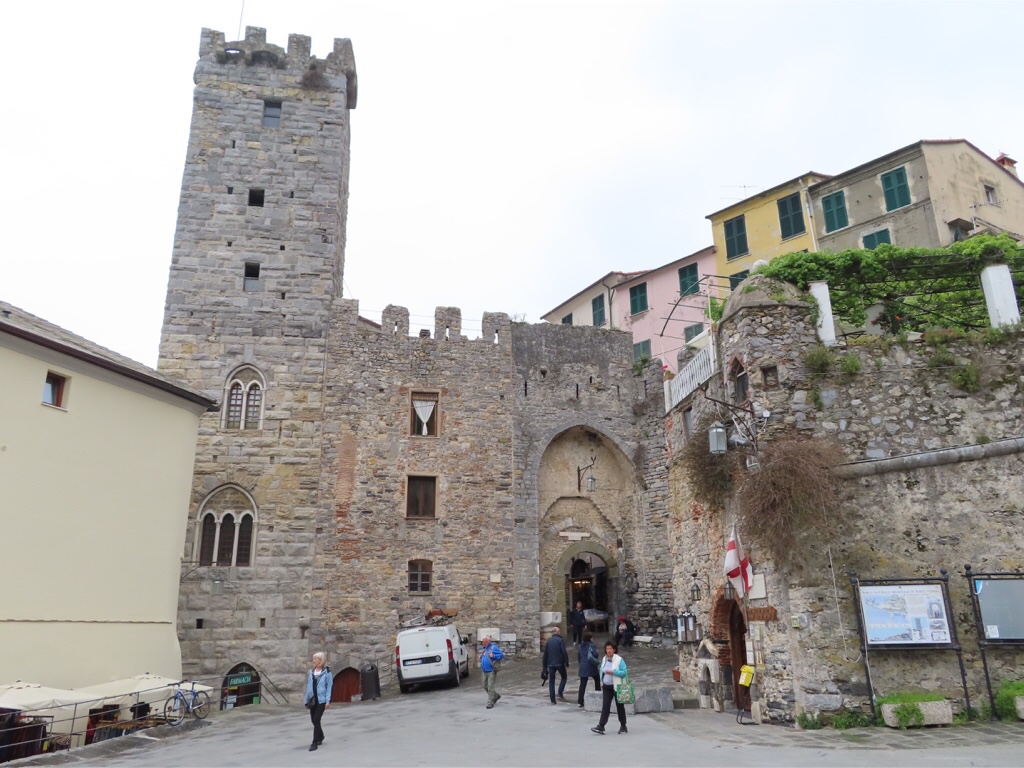
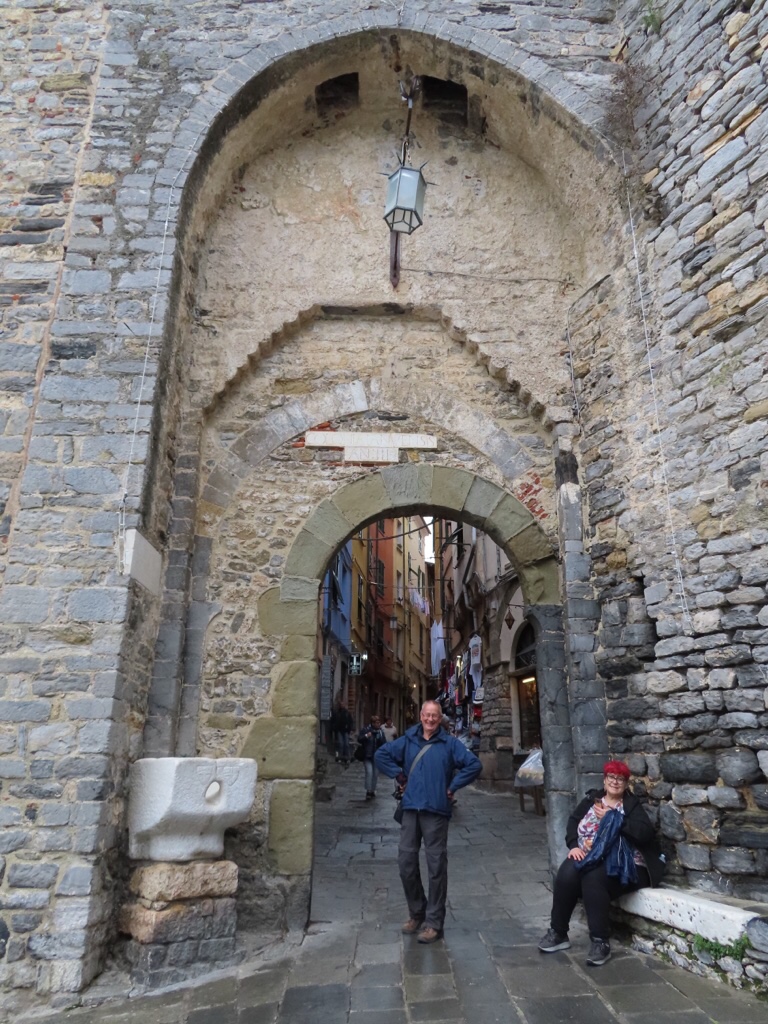
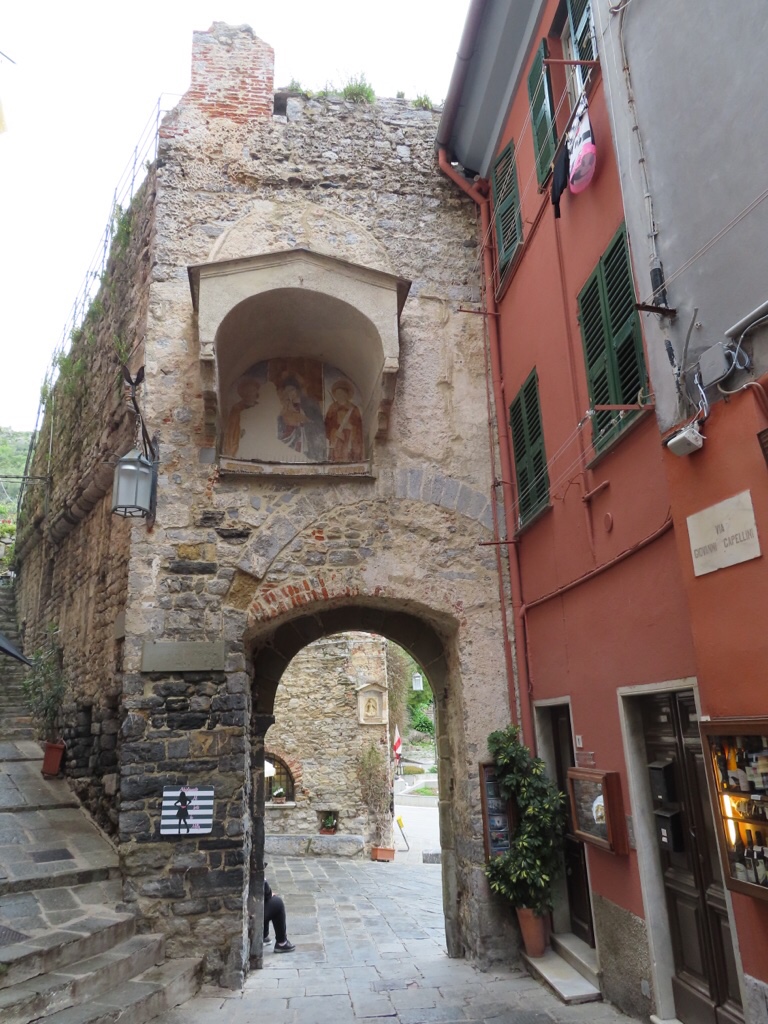
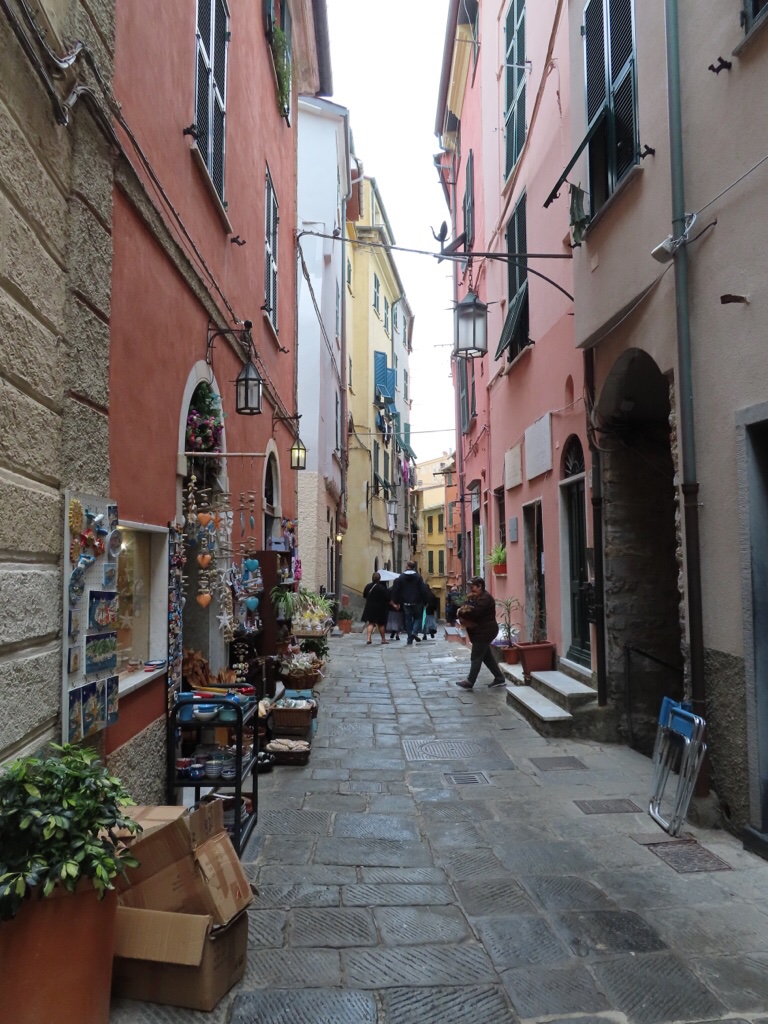
We started with the town gate and tower, leading to a narrow street filled with tourist shops selling souvenirs, snacks and local foodie specialities to take home.

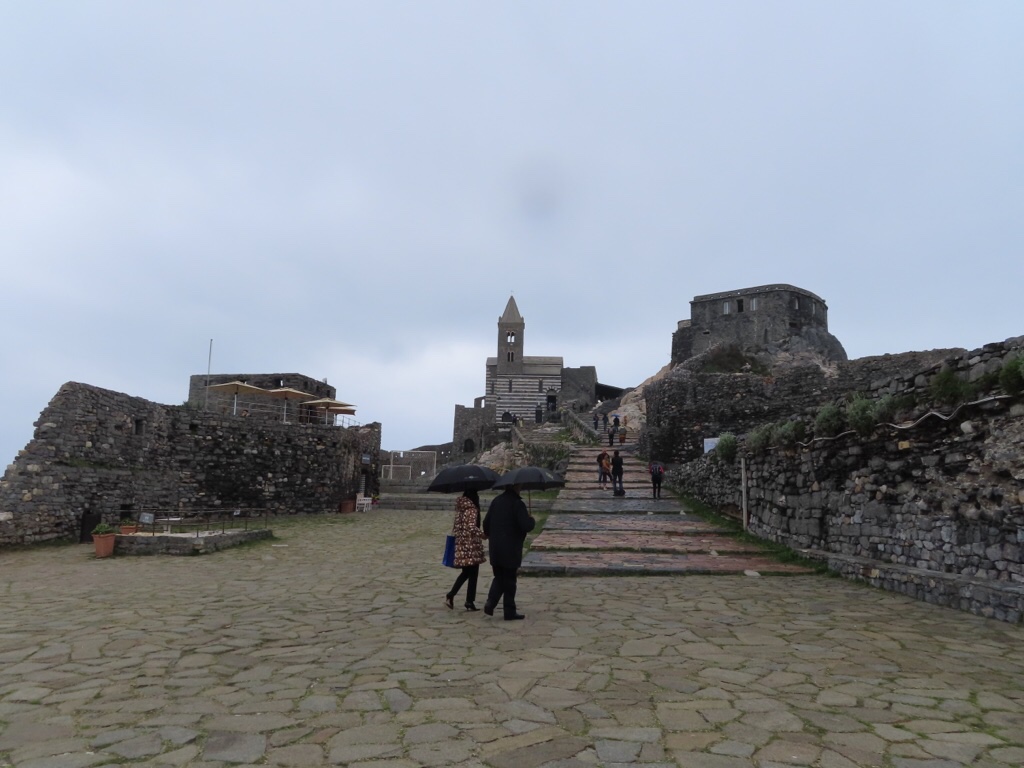
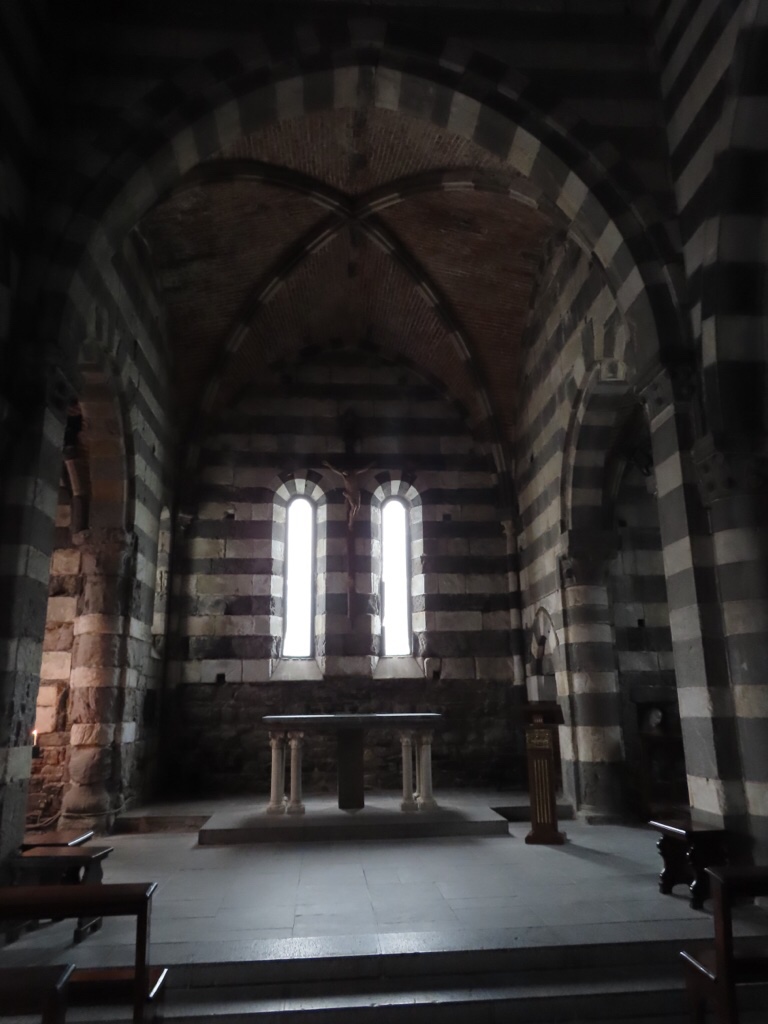
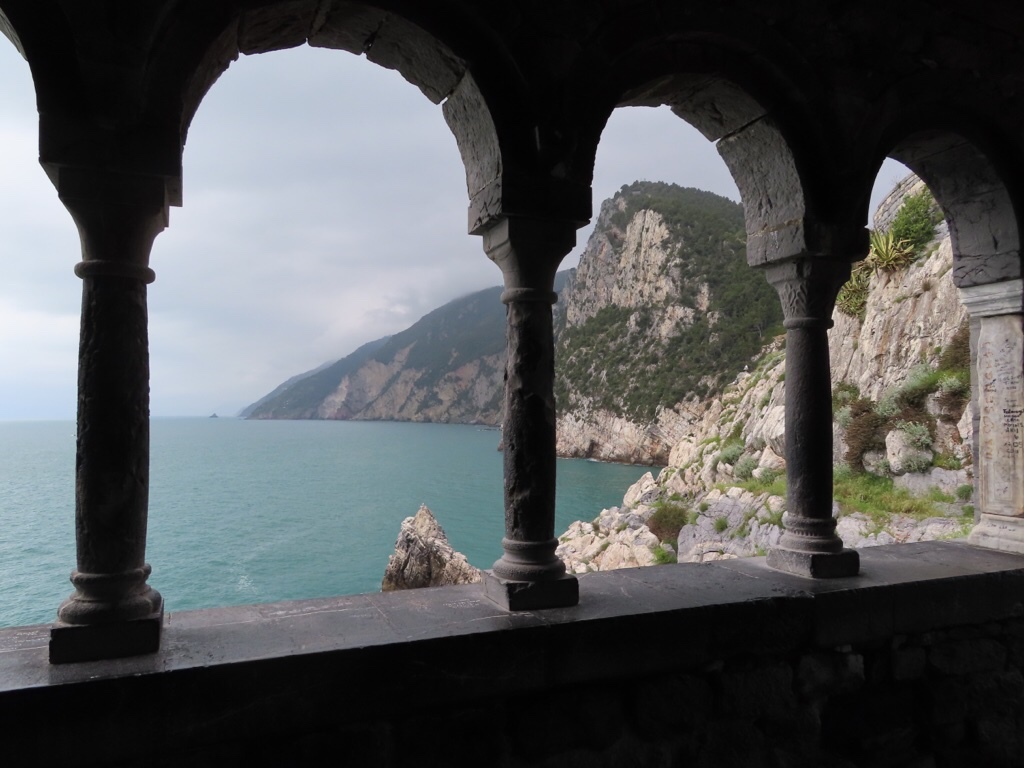
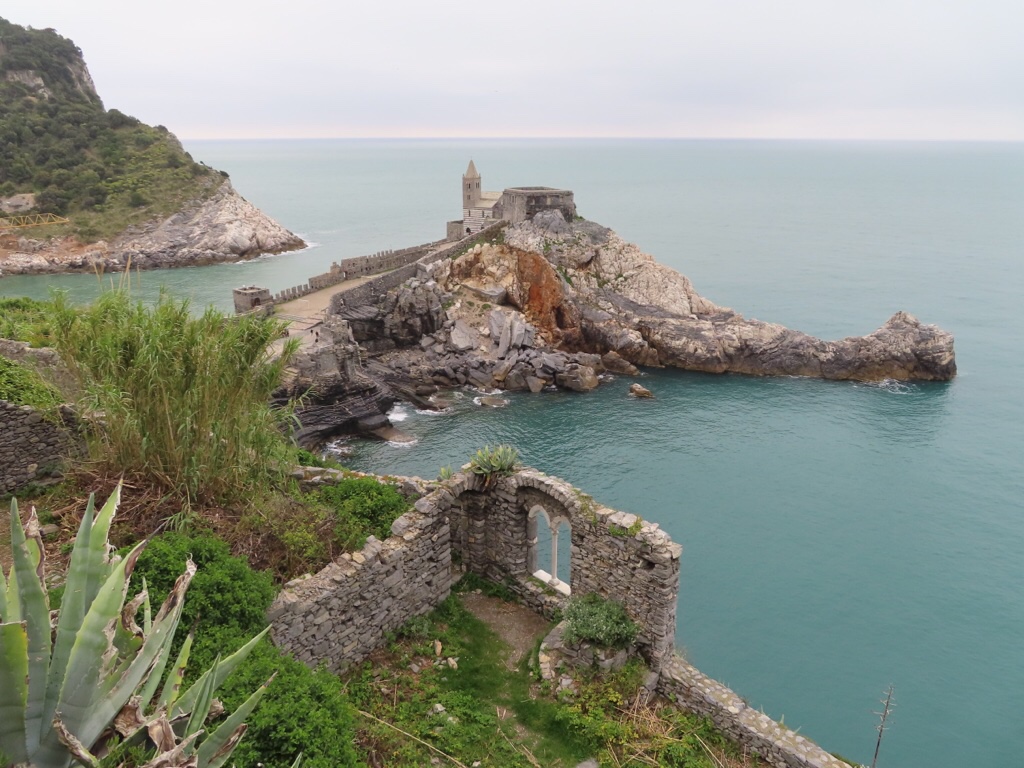
We continued to the Church of San Pietro, standing here since the C12th …

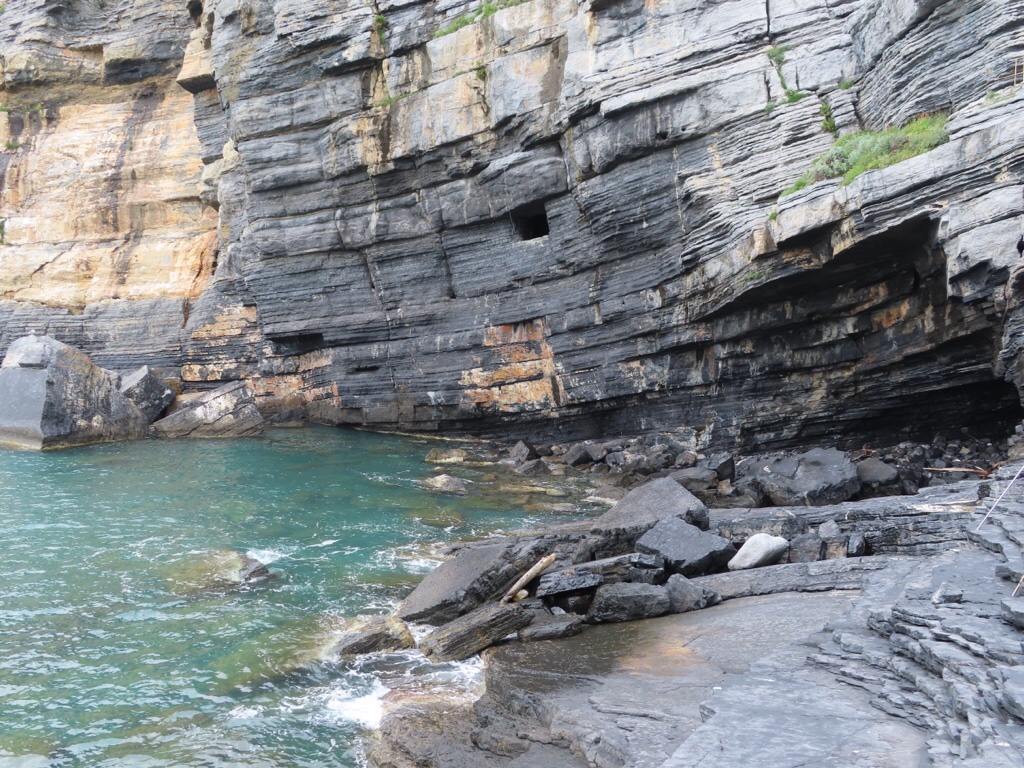
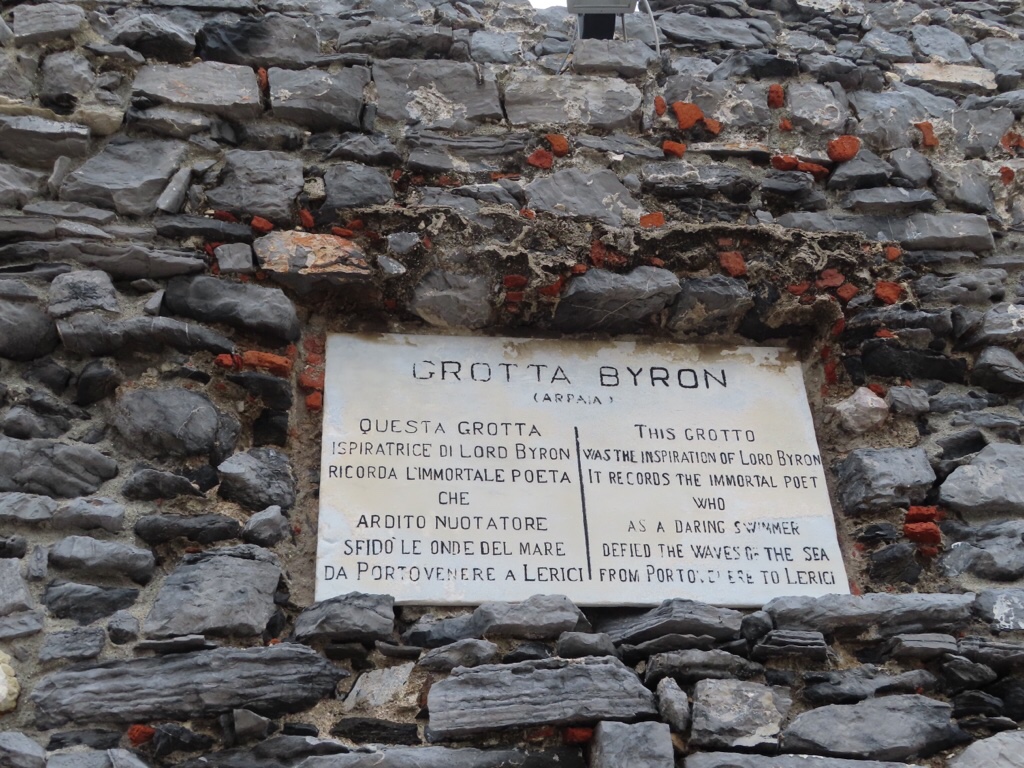
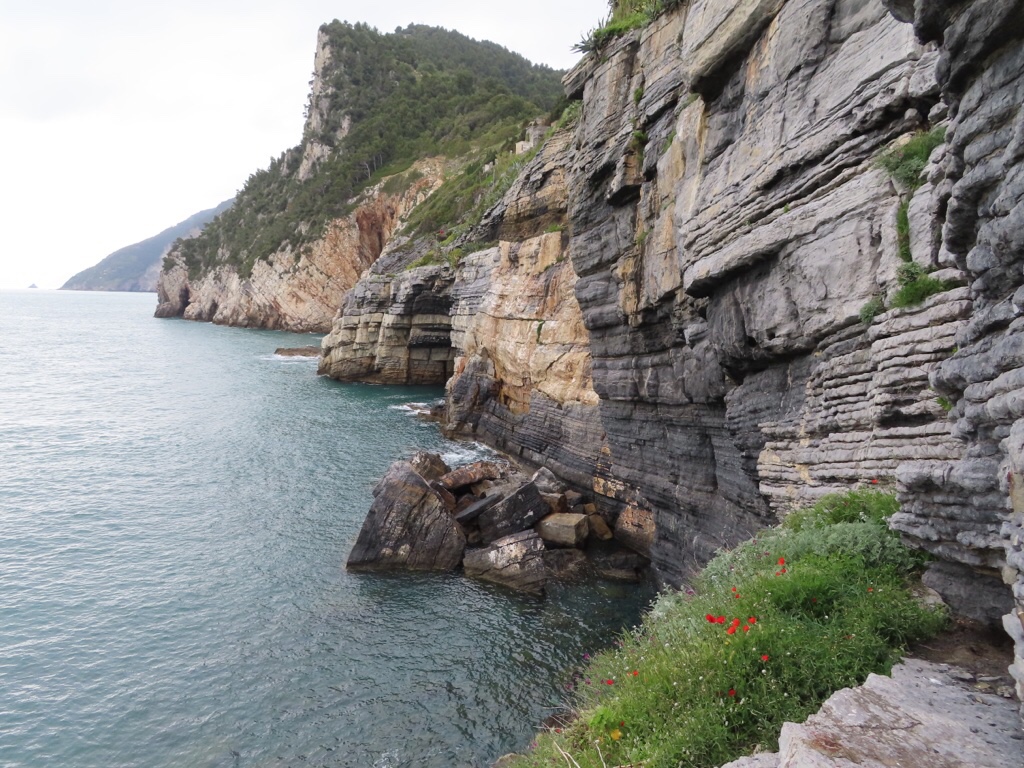
… and Cave Arpaia, one of many caves in the area, but specifically the one in which Byron recited poetry, as stated on the sign!

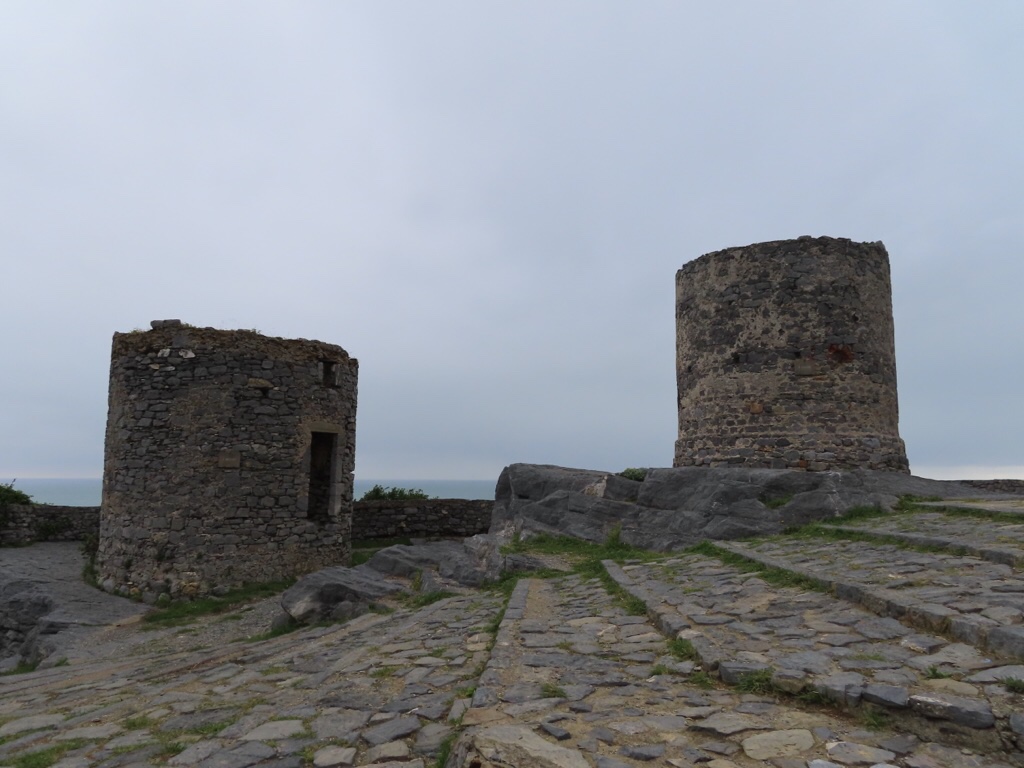
Climbing up, we passed the ruins of two cylindrical structures which used to be both mills and guard towers …

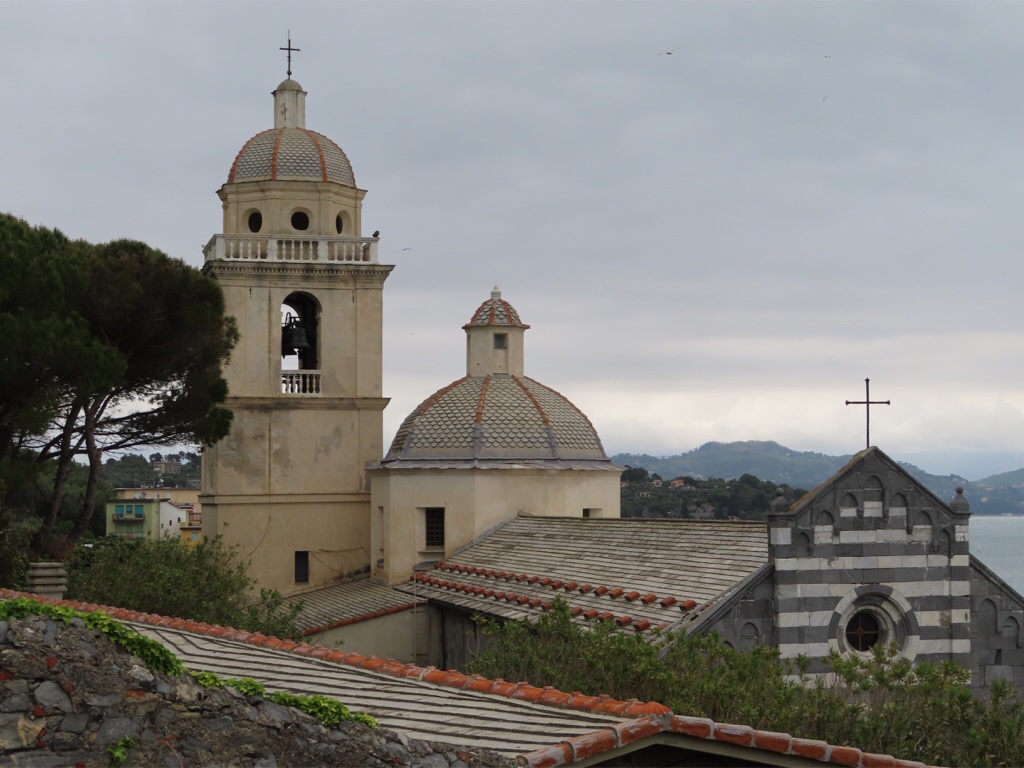
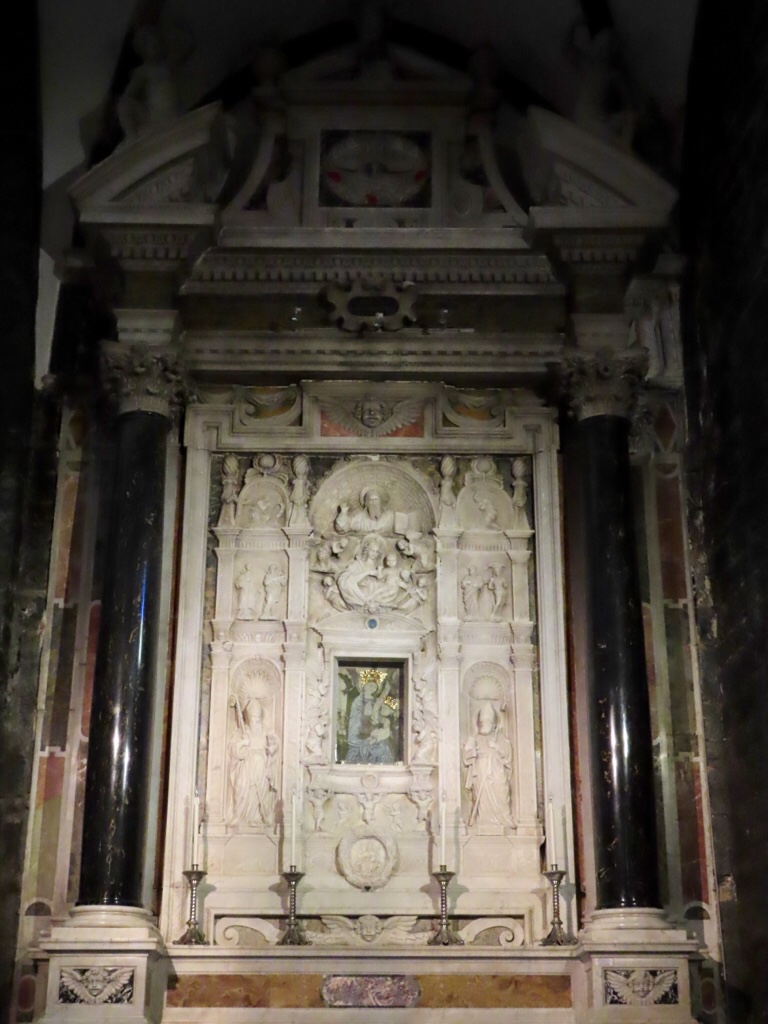
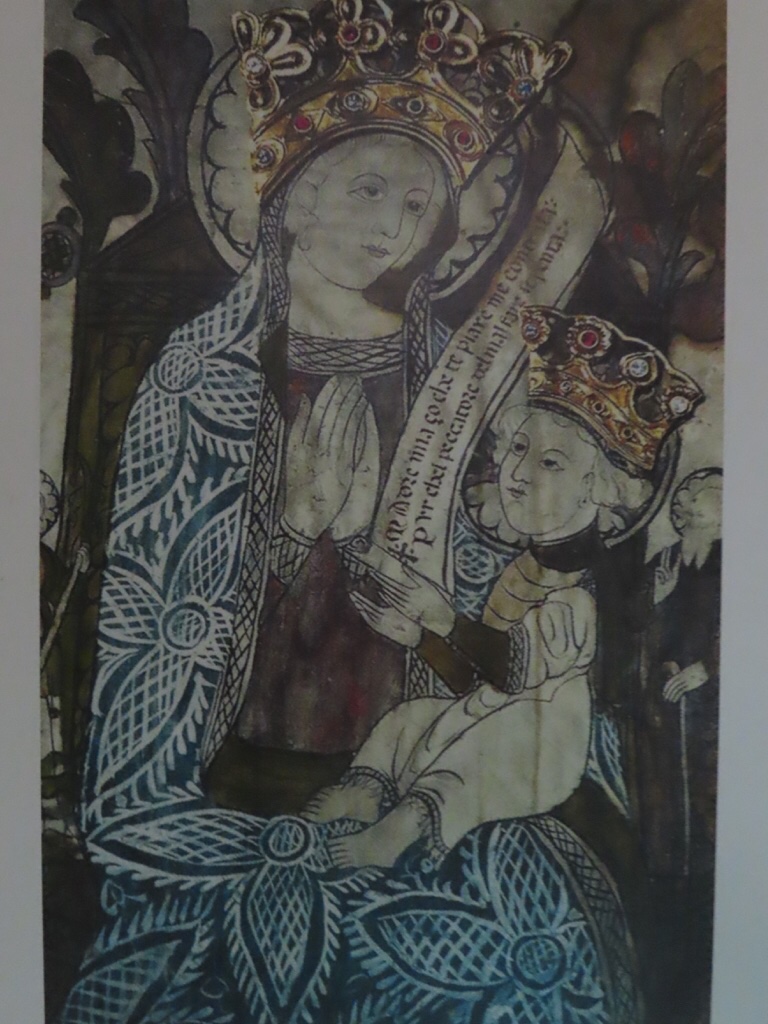
… then on to the C12th Church of San Lorenzo, containing the White Madonna. As the story goes, in 1399 Portovenere was being devastated by a plague and when Lucciardo, a local devout man, was praying in front of an image of the Virgin Mary asking for his village to be freed from the terrible disease, suddenly, the colors of the painting lit up, gleaming and the plague disappeared.

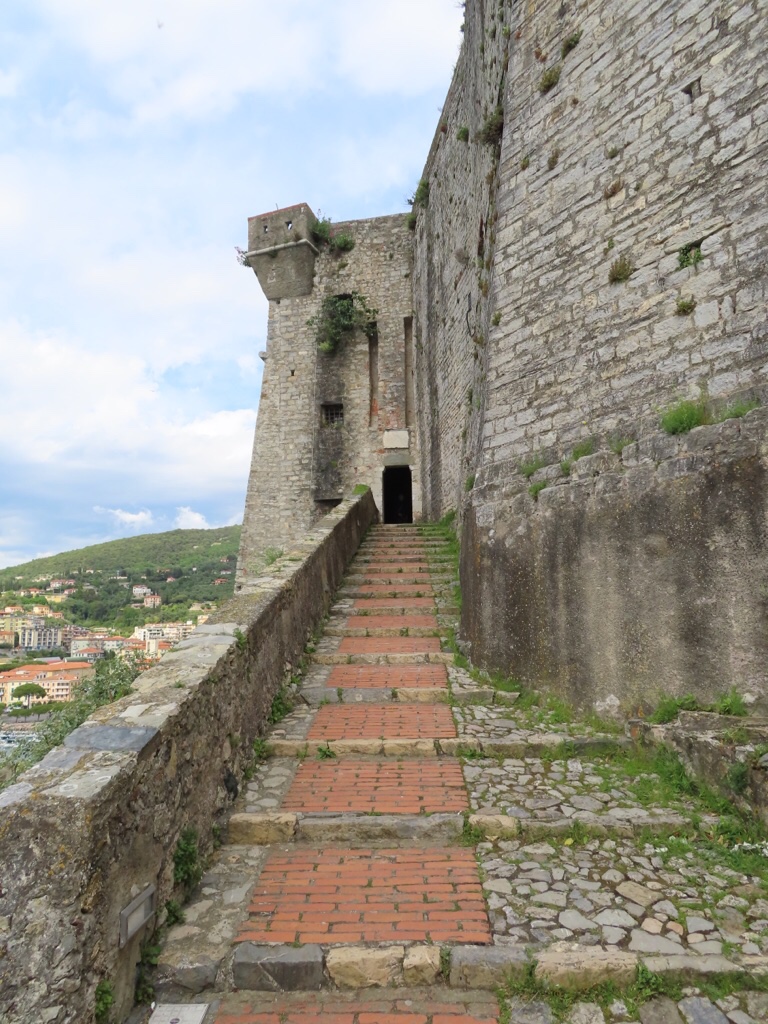
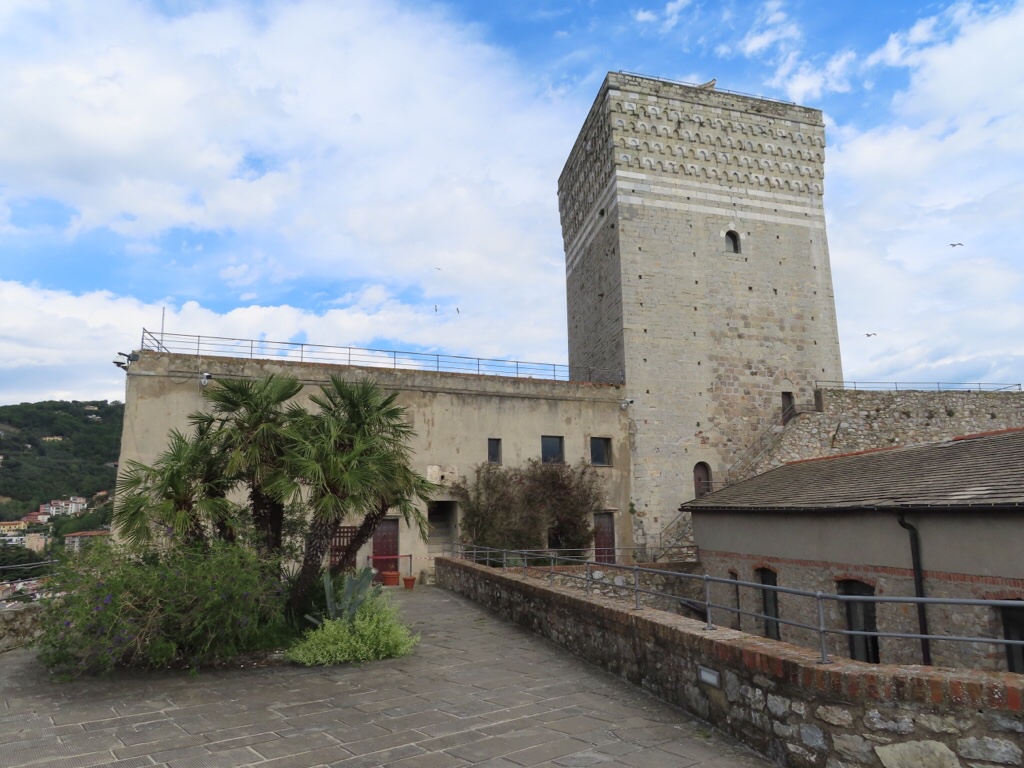
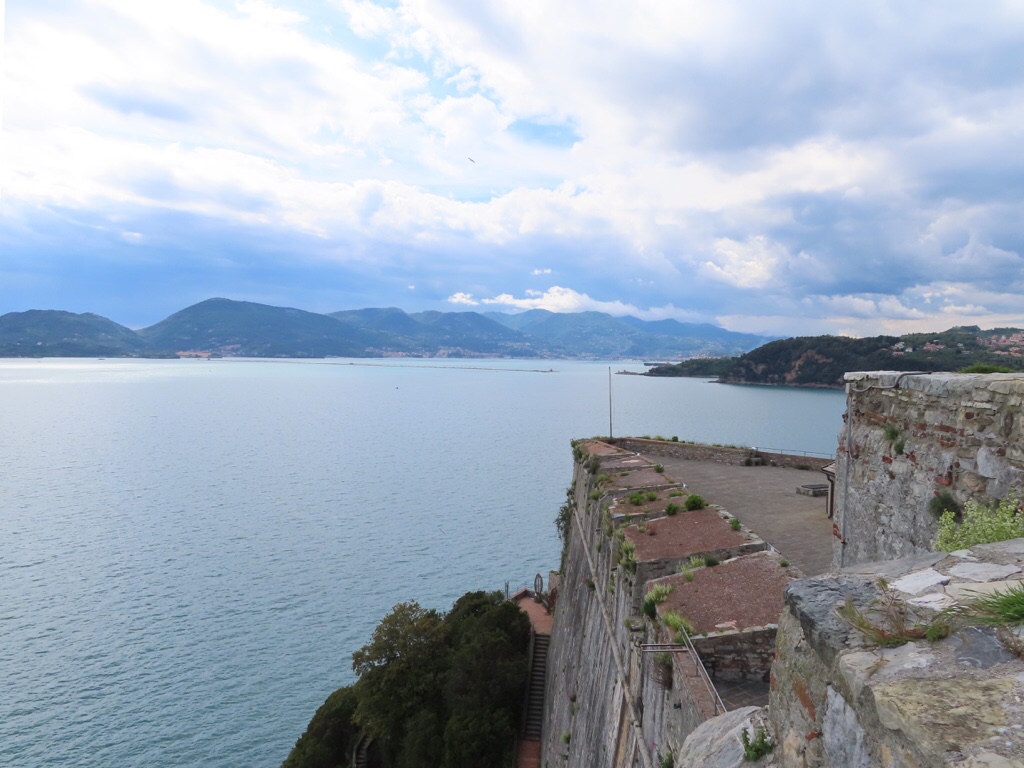
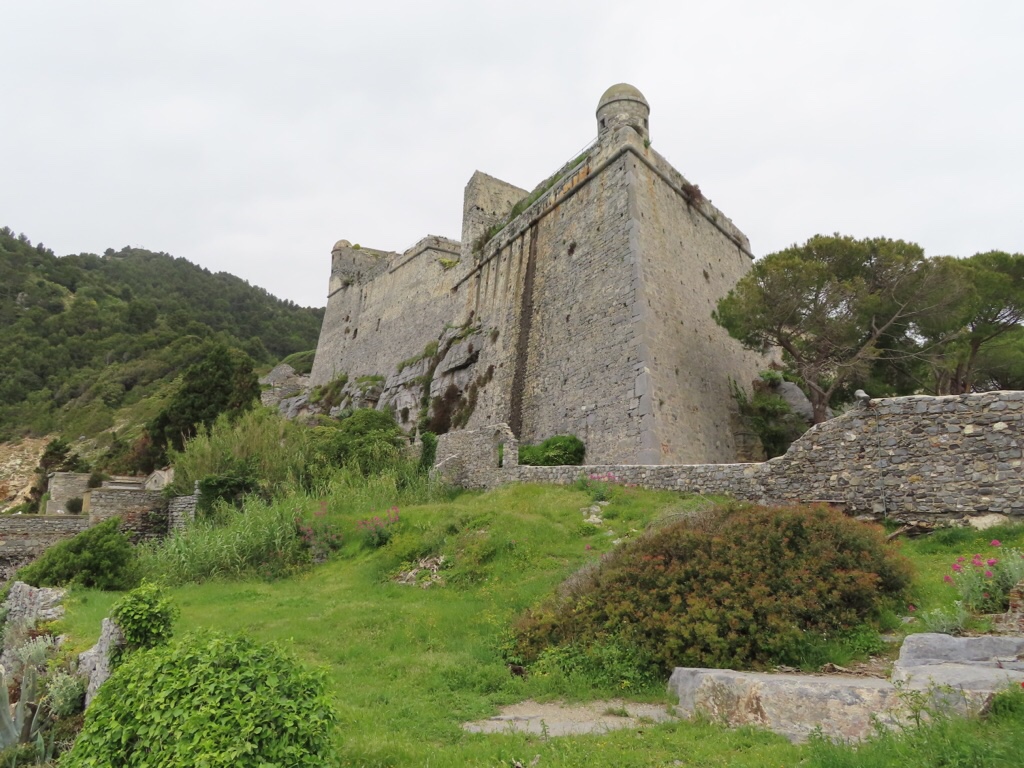
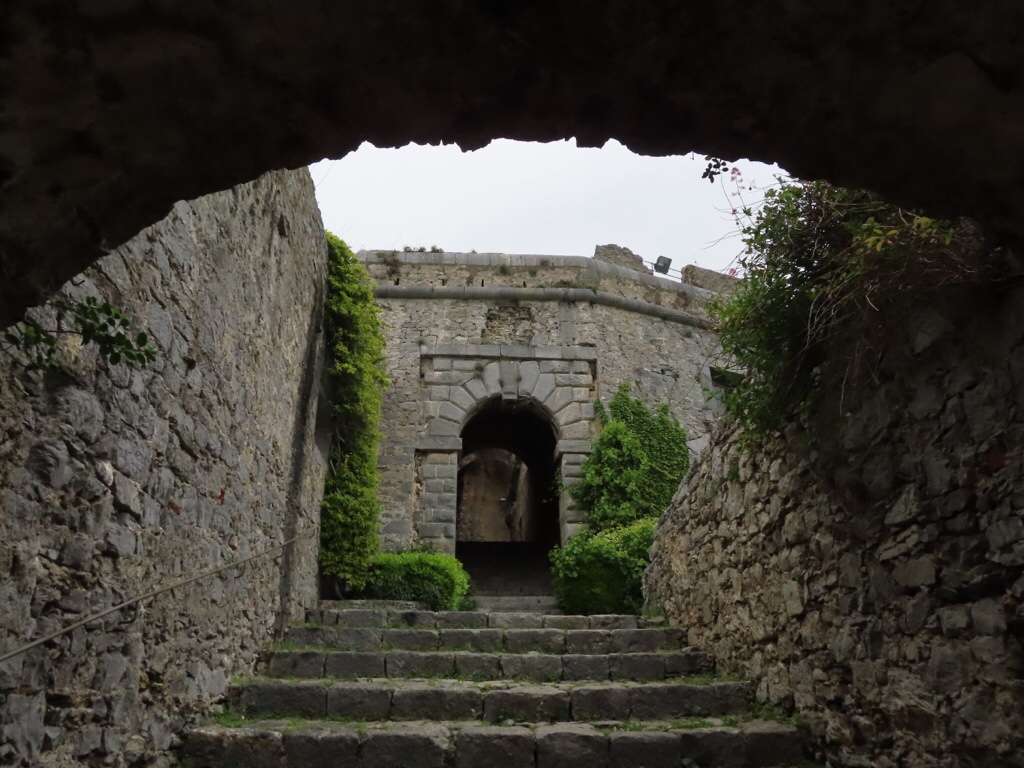
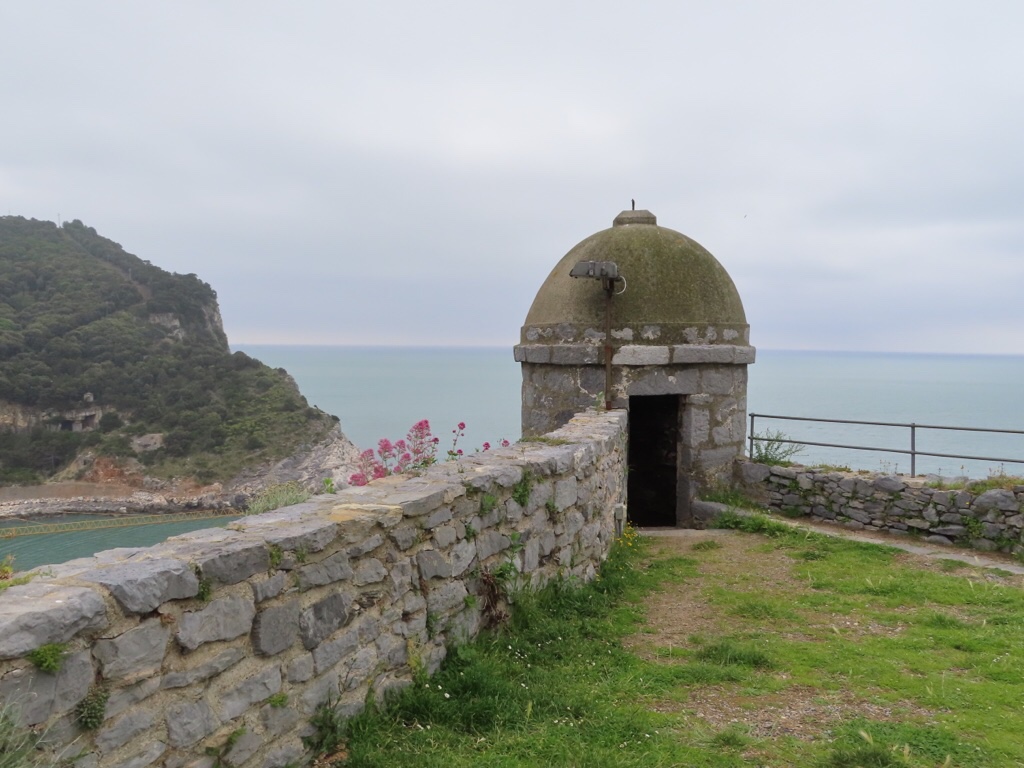
A bit more of a climb to the Doria Castle … those Dorias get everywhere … once a defensive structure, now converted to tourist attraction, concert arena, exhibition space and wedding venue!

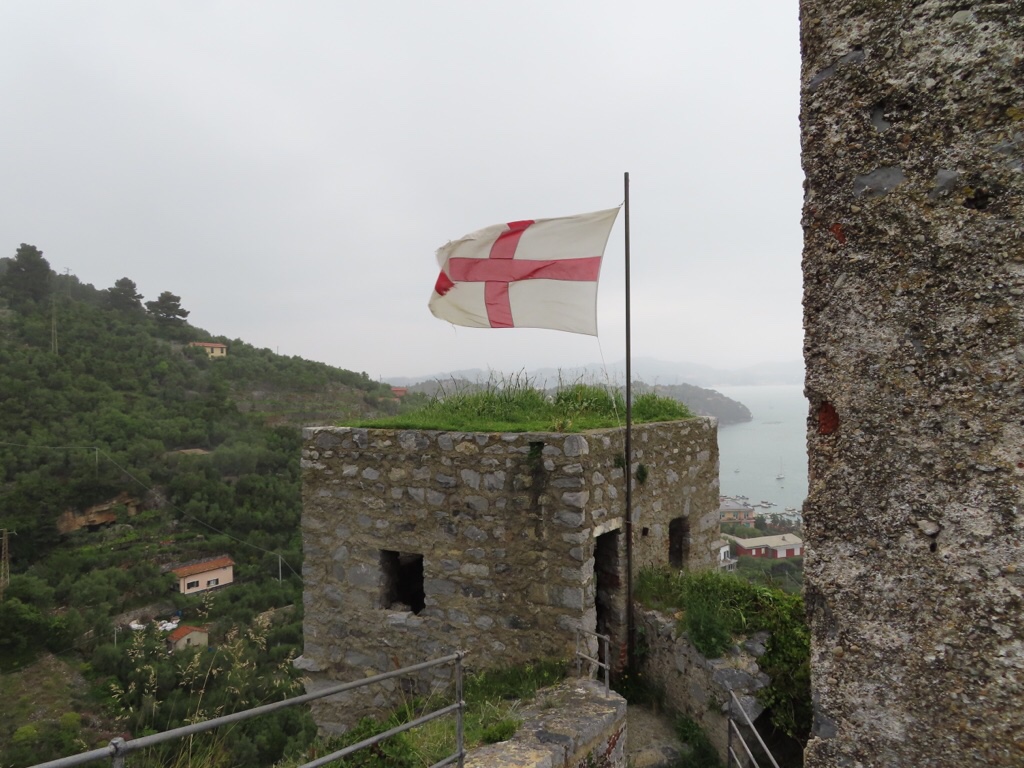
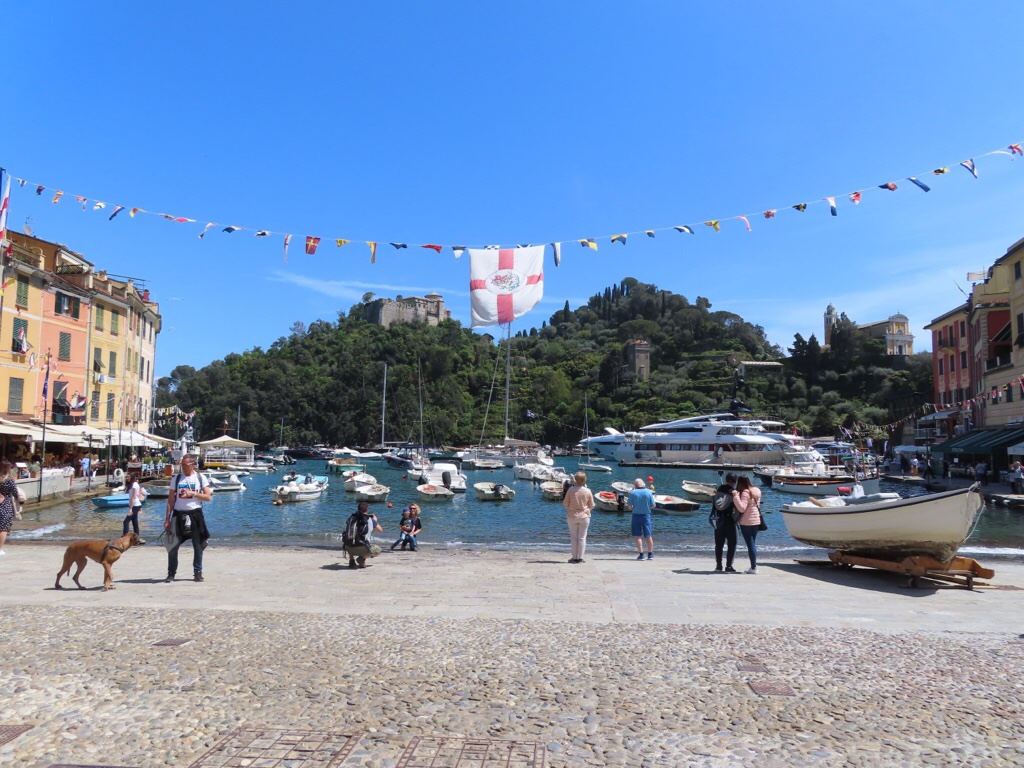
You might we wondering about the white flag with the red cross which has been flying from many of the buildings … it is the city flag of Genova, derived from the Cross of Ambrose adopted by Milan and popular in much of northern Italy … and also predating the Crusades, the St George’s Cross and the flag of England!

Too chilly for ice cream or aperol, we took the boat back for a nice cup of tea!
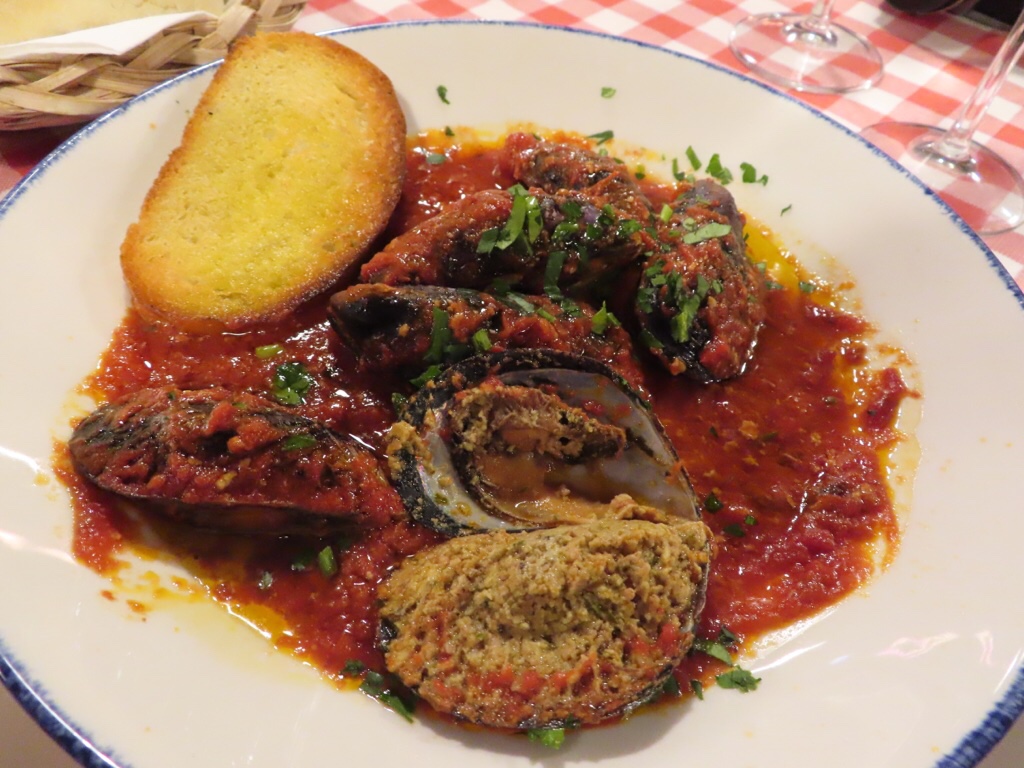
I had stuffed mussels for dinner, maybe the best dish of the holiday, so Trattoria Mani di Fatima deserve a mention!

Map

Portofino Peninsula – Camogli to Portofino

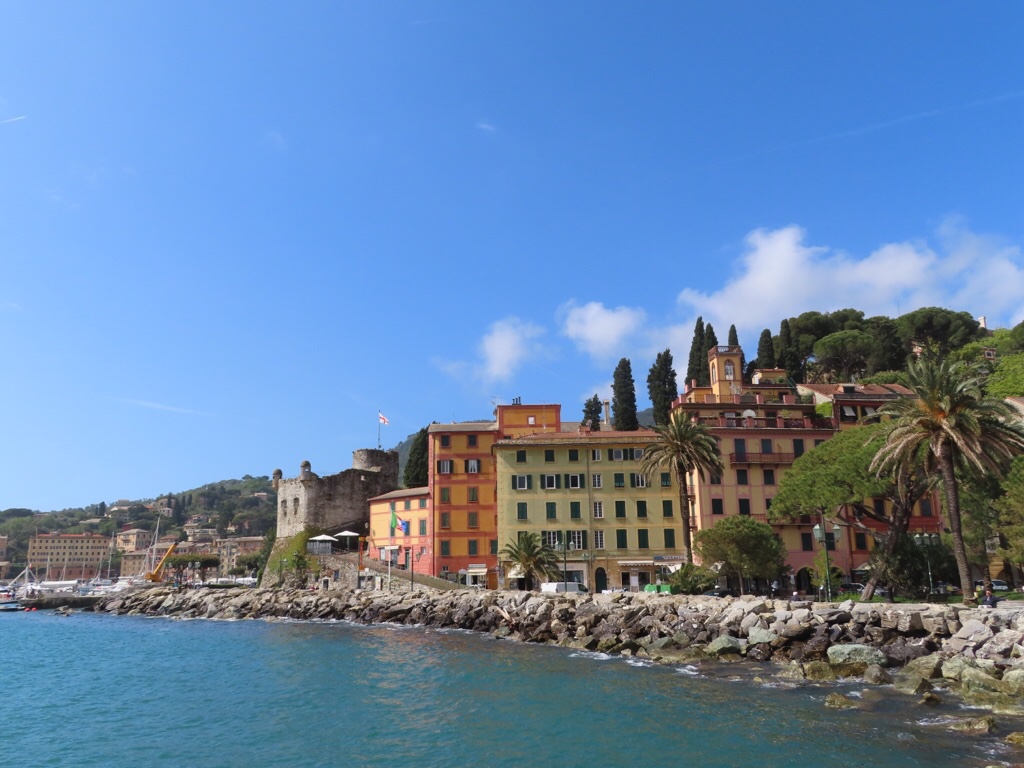
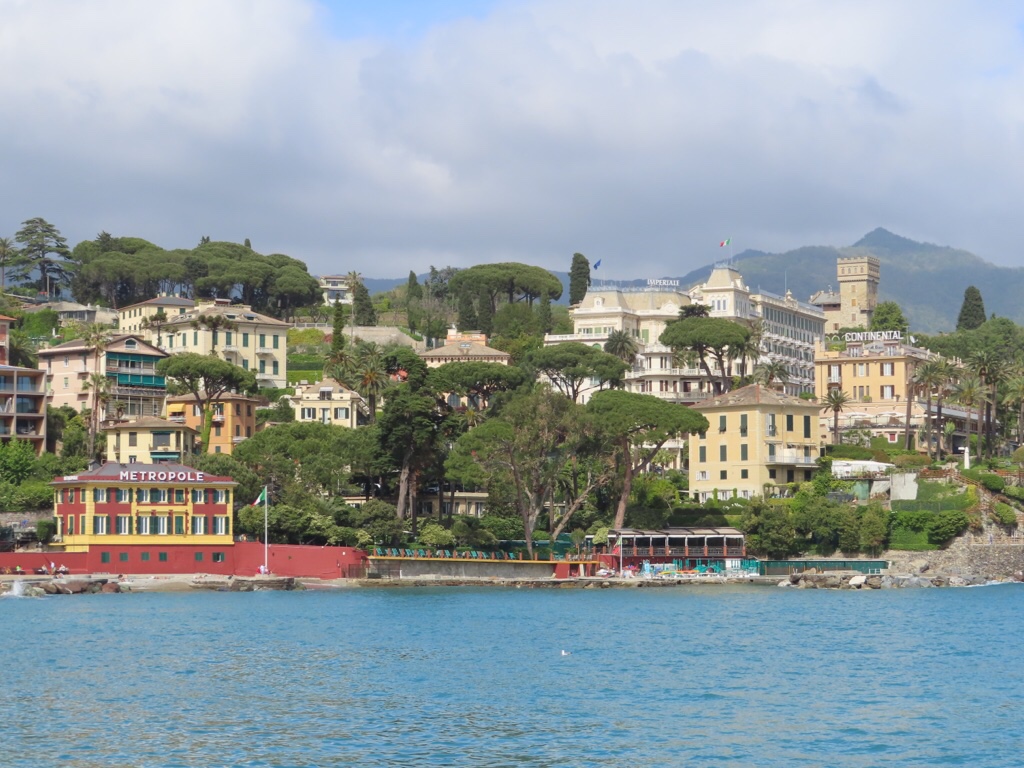
Another sunny day for walking so we took the train one stop to the chic resort of Santa Marguerite Ligure, popular with wealthy Milanese, with its castle and seafront studded with smart hotels.

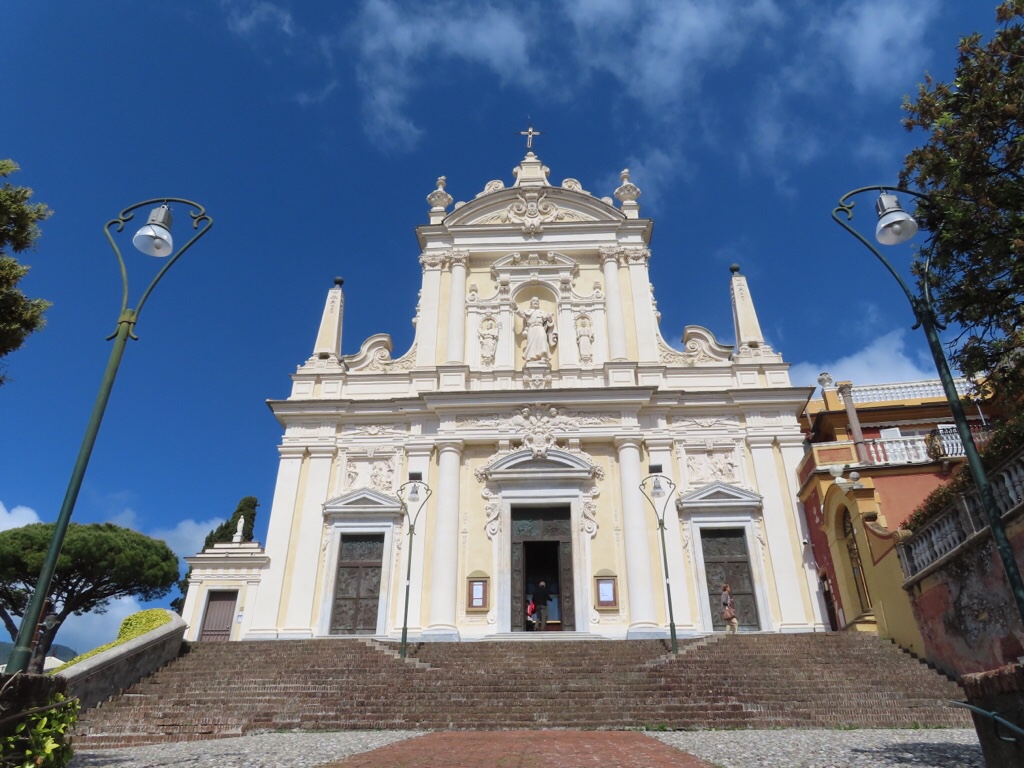
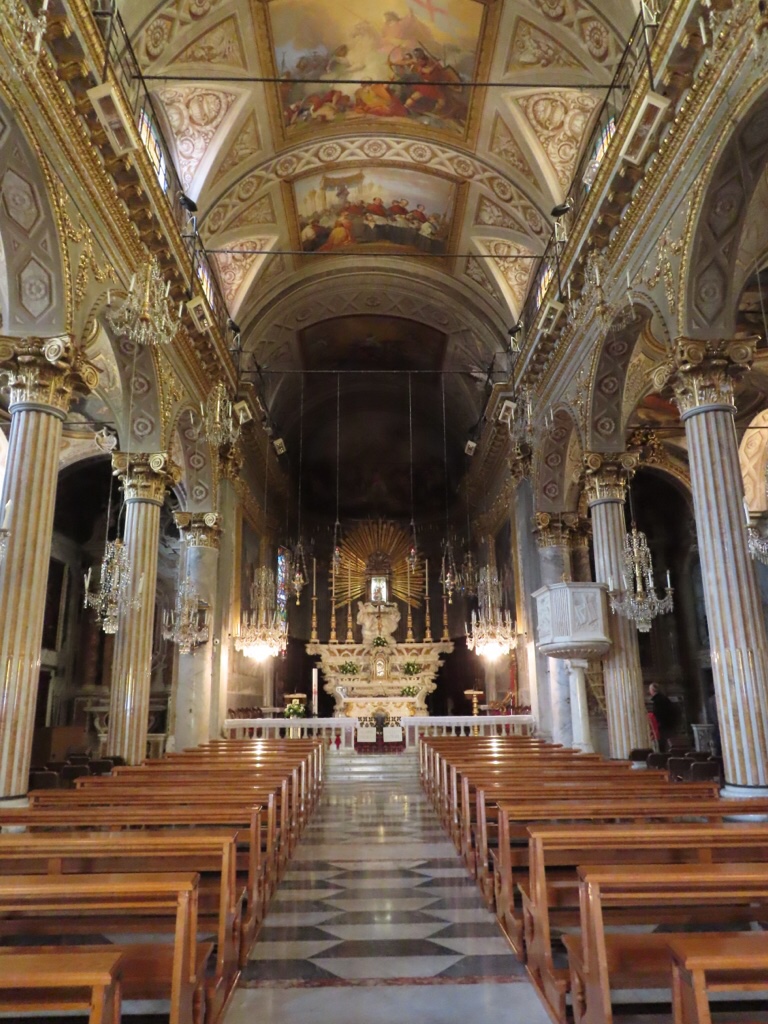
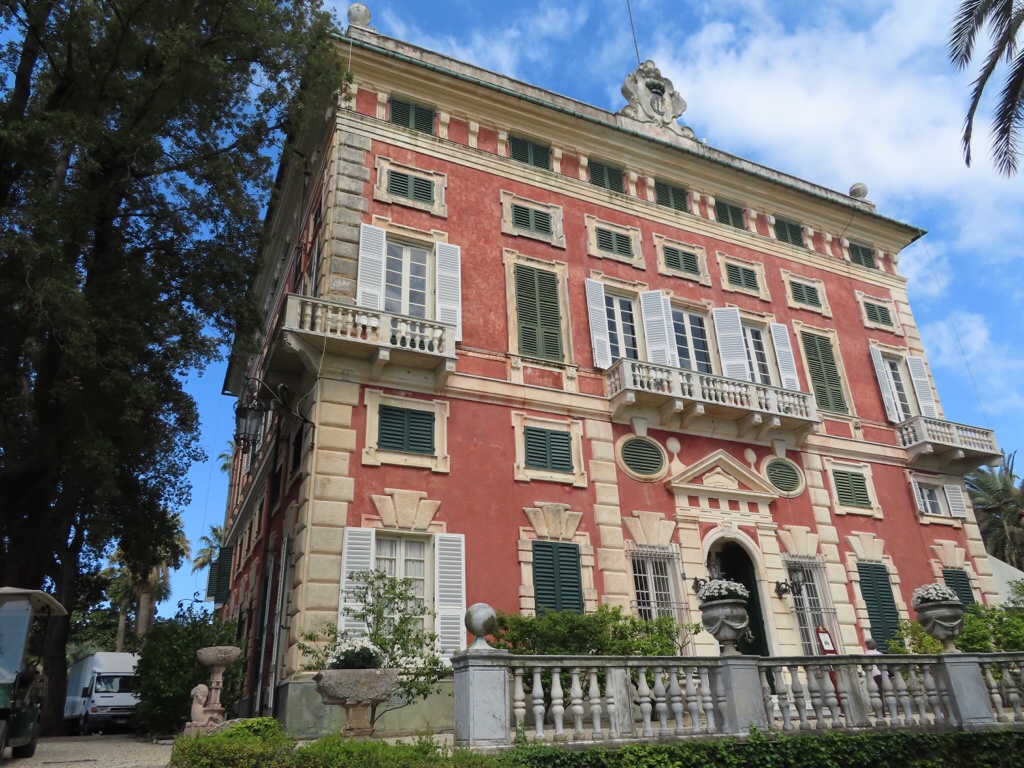
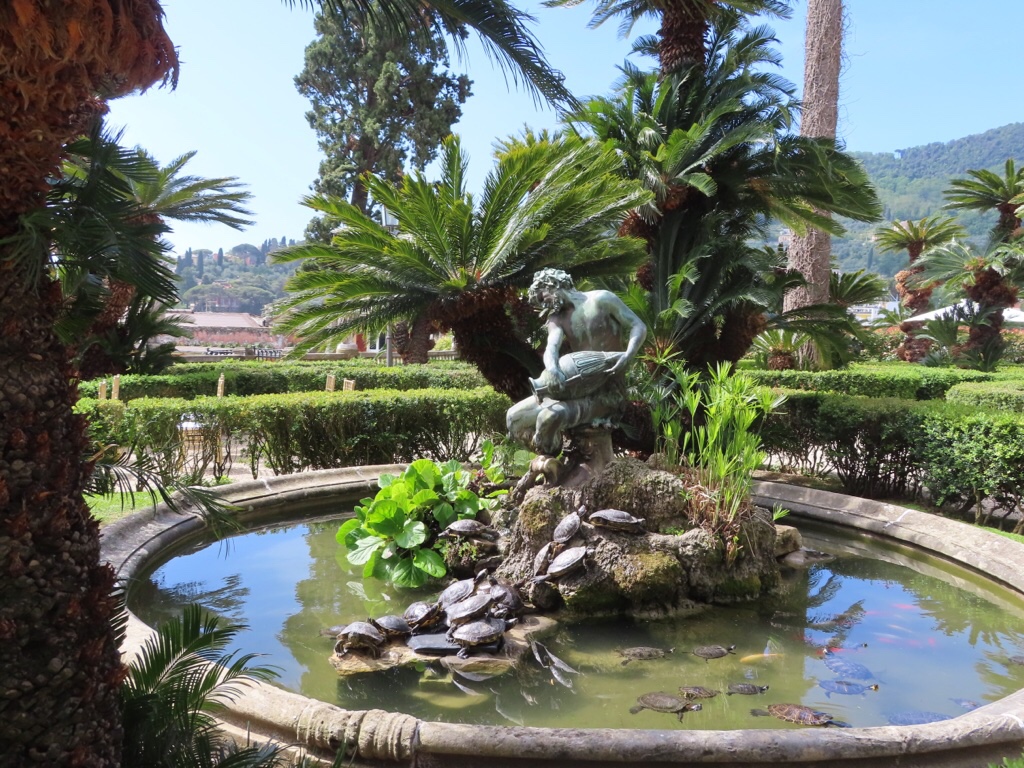
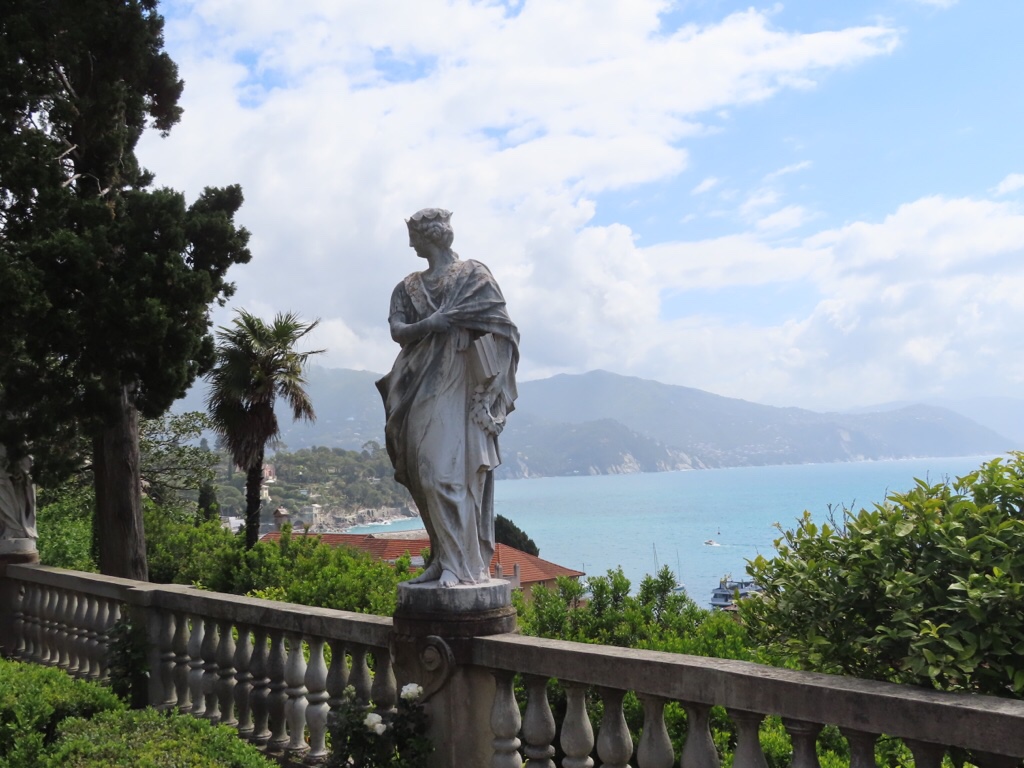
We walked up to the Baroque Church of San Giacomo Di Corte then walked round the gardens of the Renaissance Palazzo Durazzo, typical of the villas in this area, complete with statuary and fine views.

We picked up rolls for a picnic at the supermarket and set off past the harbour …

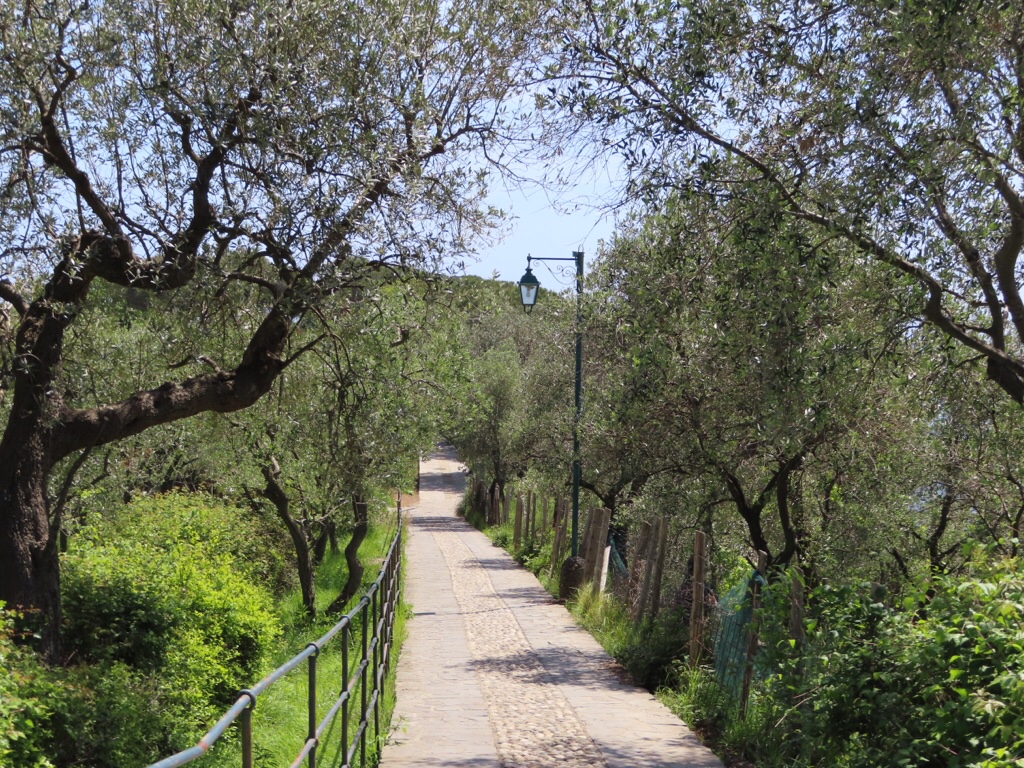
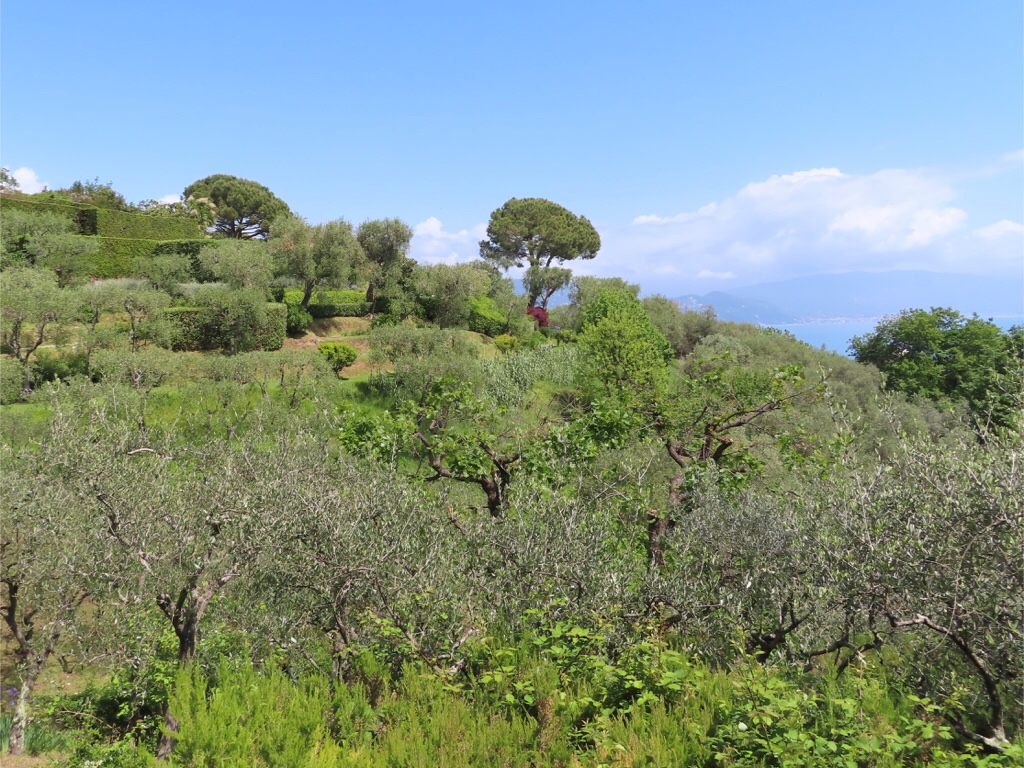
… and up a narrow path winding upwards. It was another walk though the countryside, on a mule track, with glimpses of the sea and more ups and downs than we were expecting!

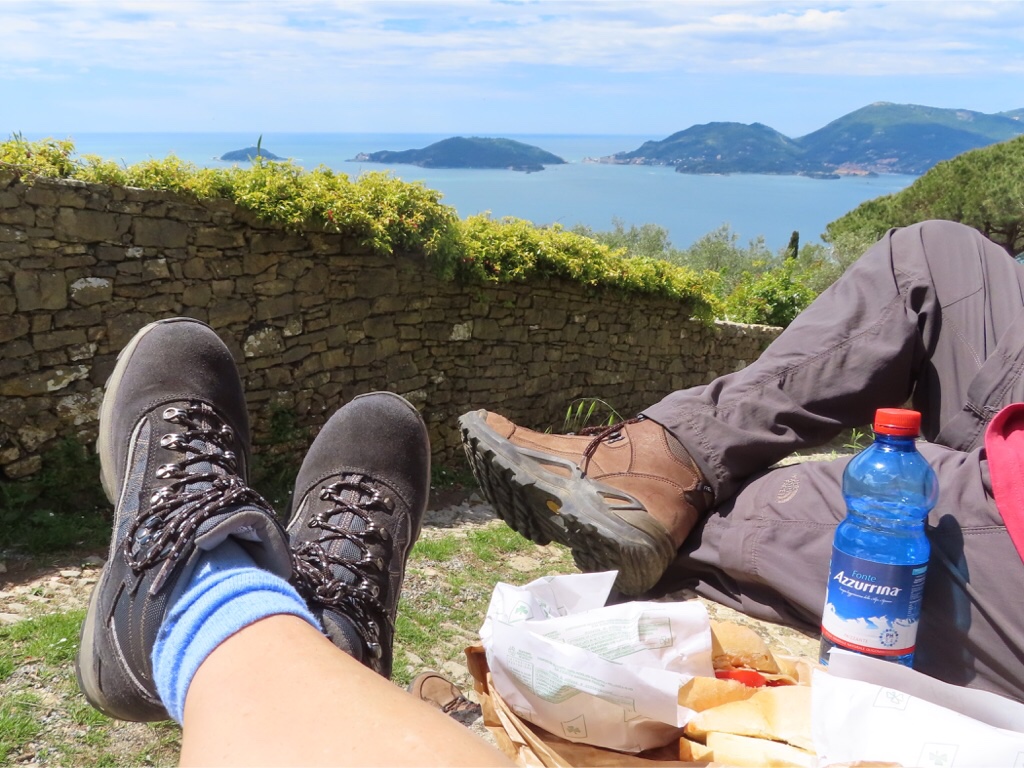
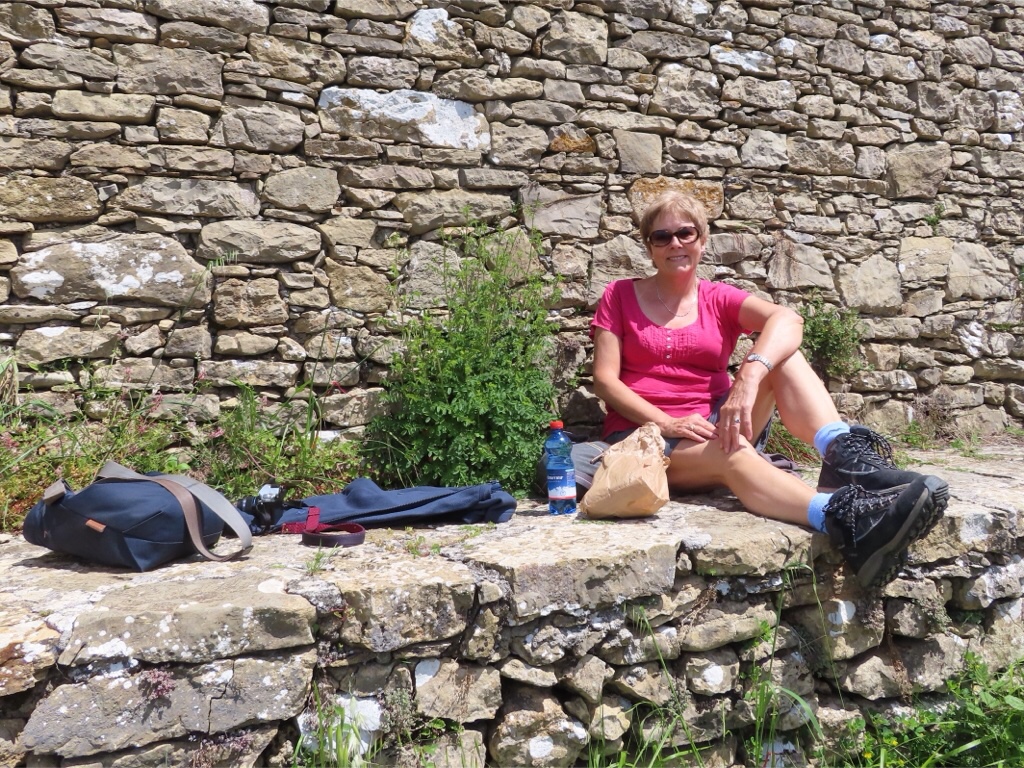
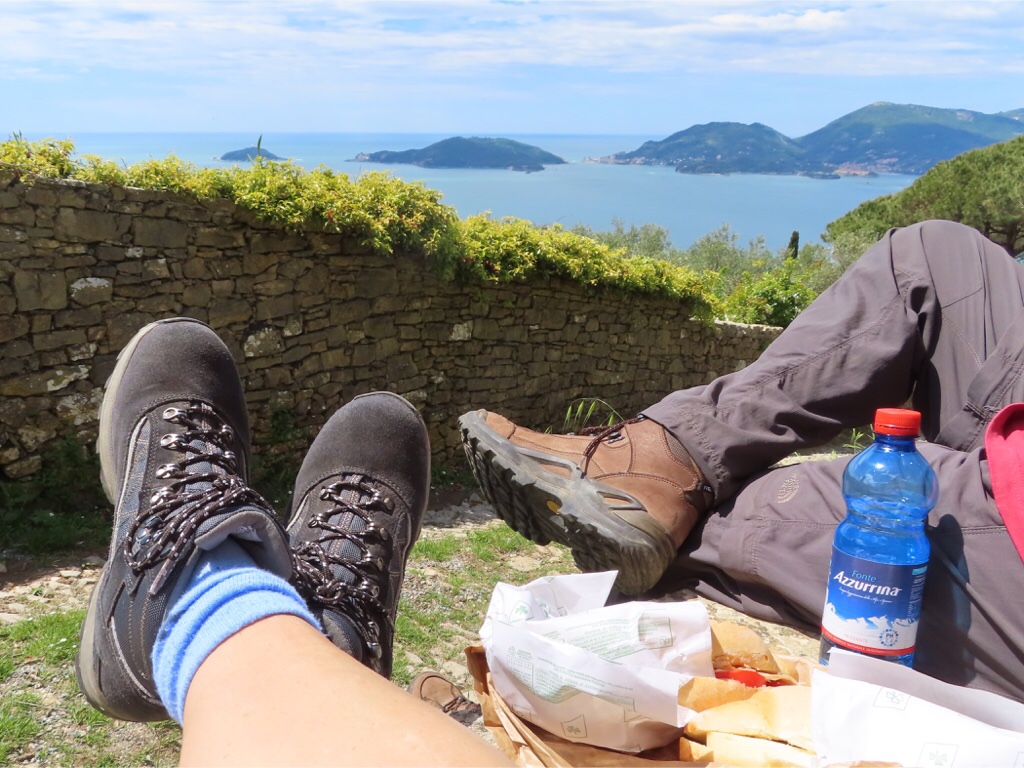
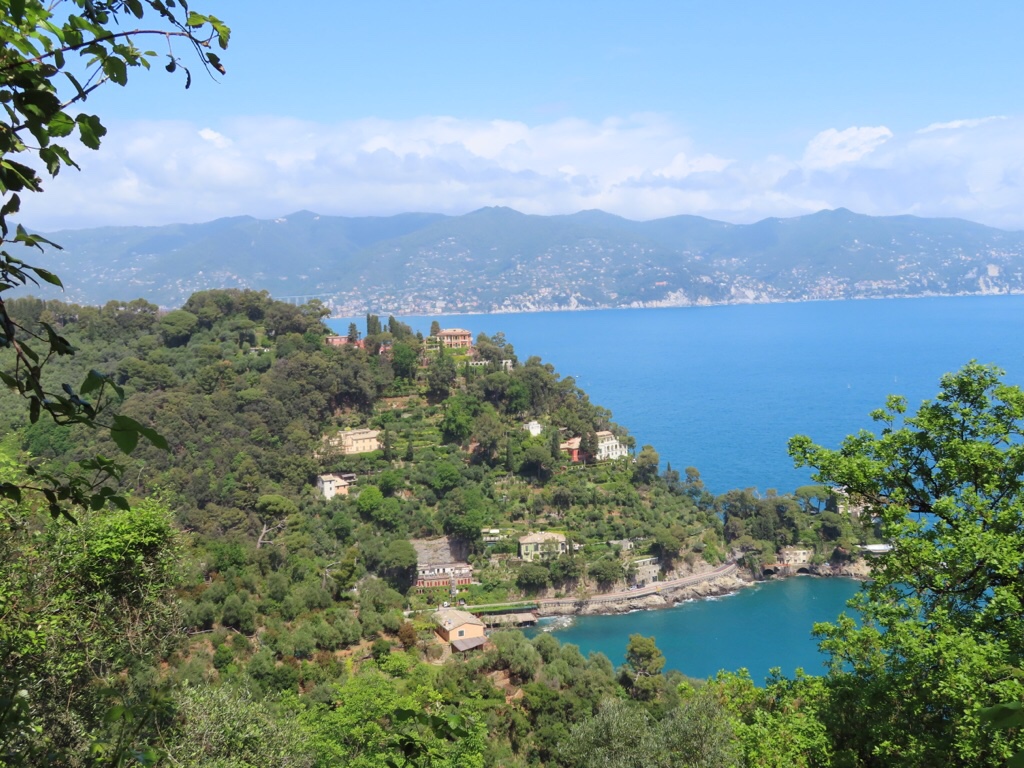
We found another picnic stop with a distant view of our destination …

… and some time later, the path became quite a bit smarter …

… as it made its final descent into Portofino.

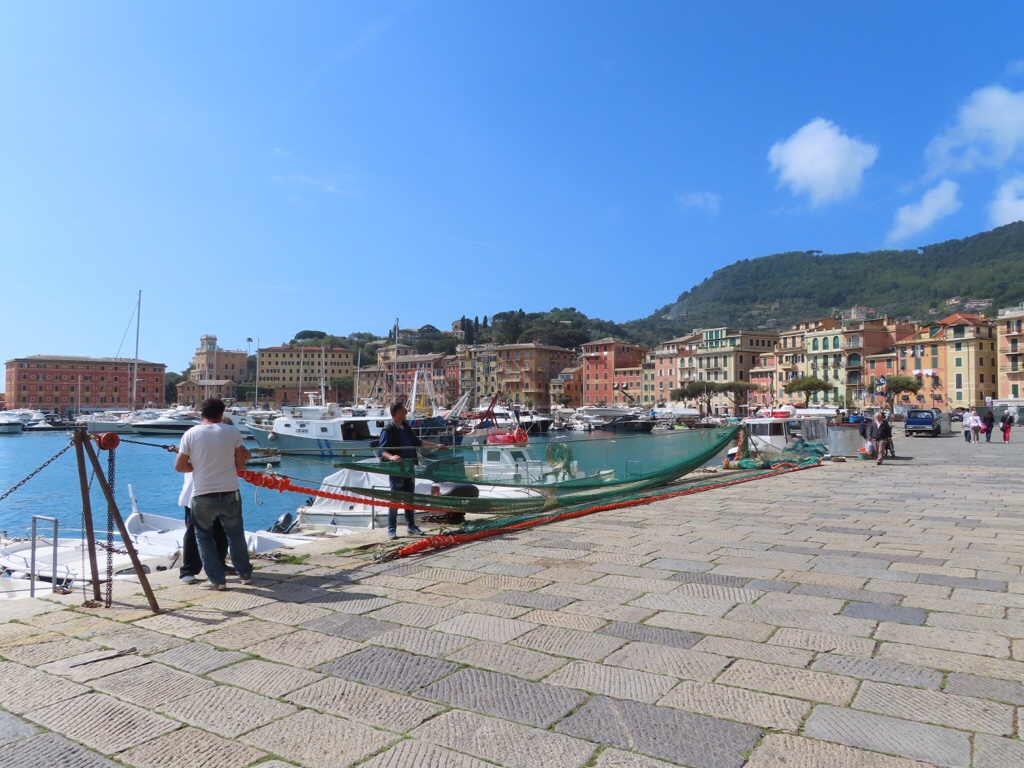
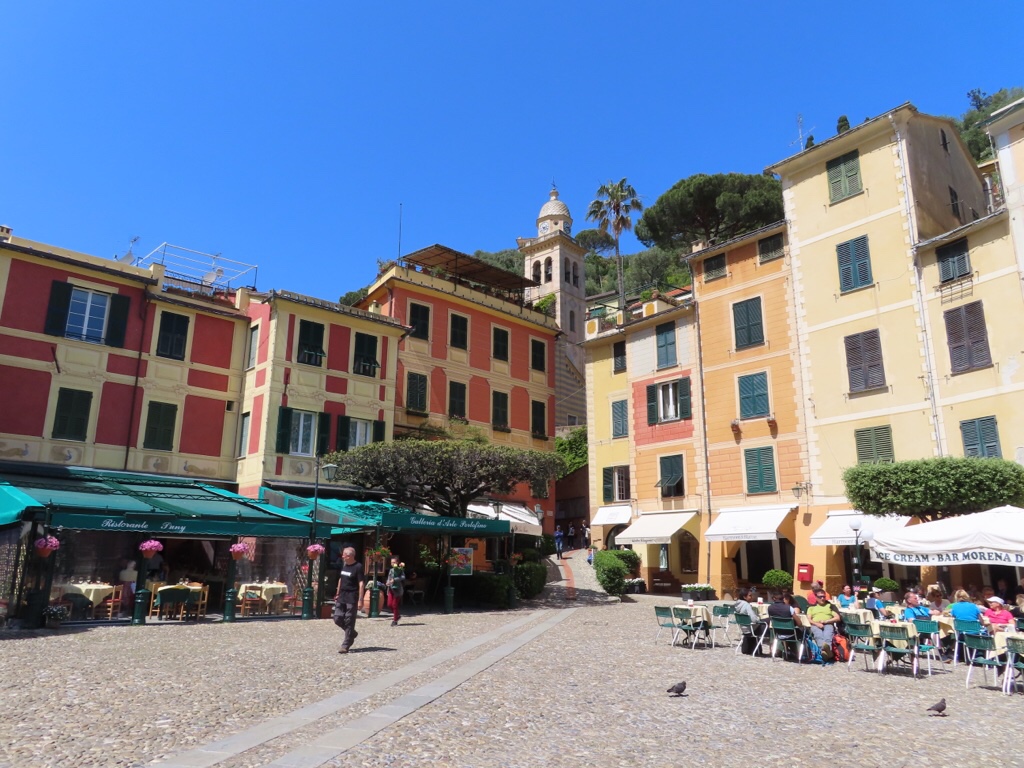
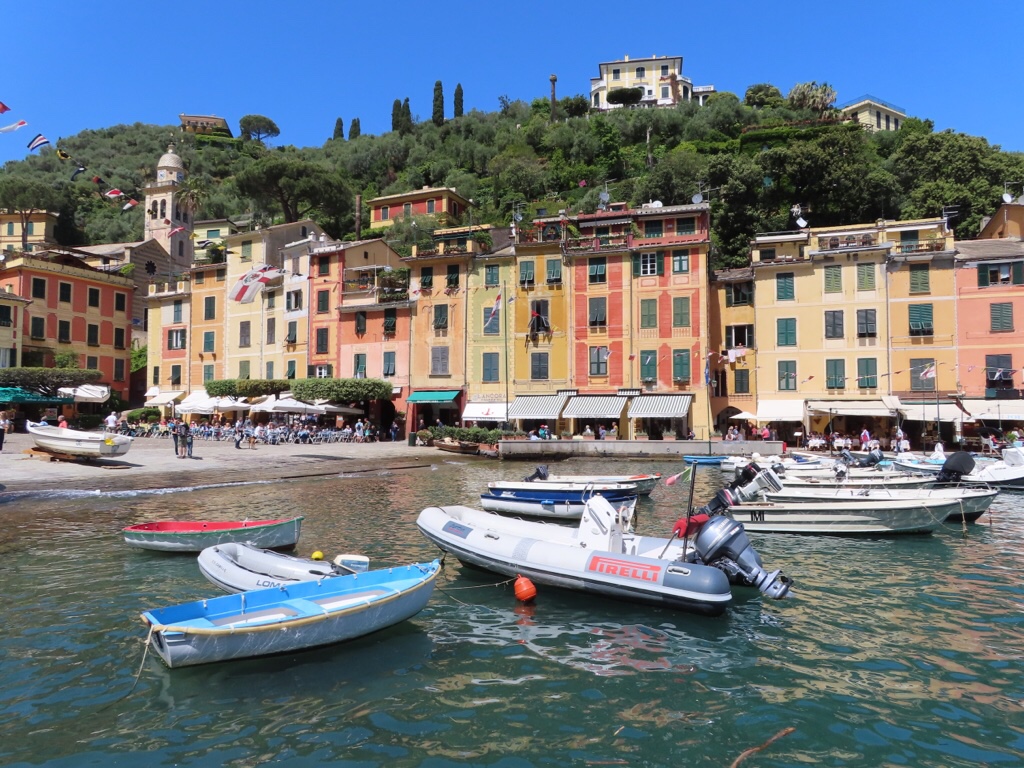
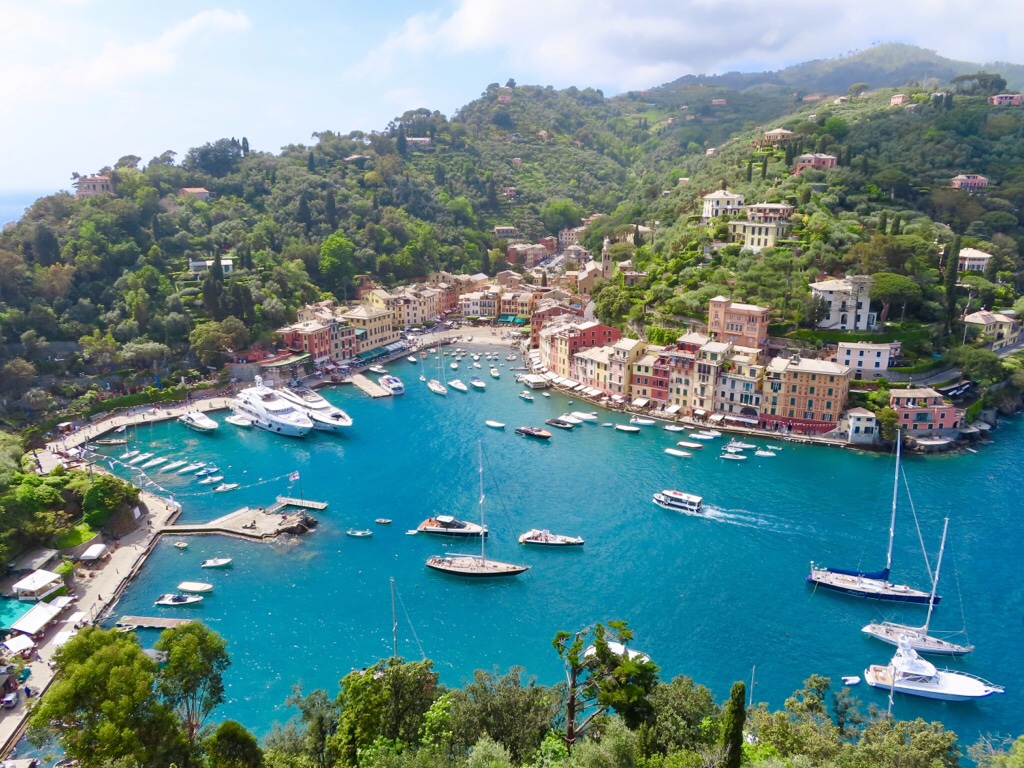
It really is as one might imagine a perfect Italian fishing village to be!

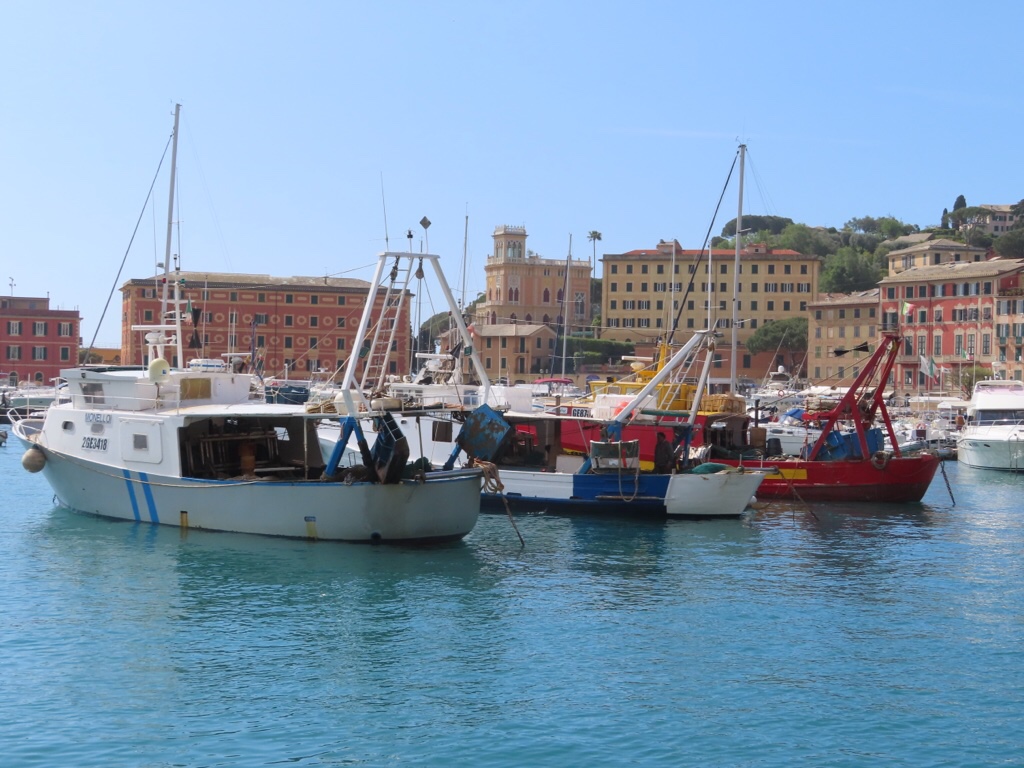
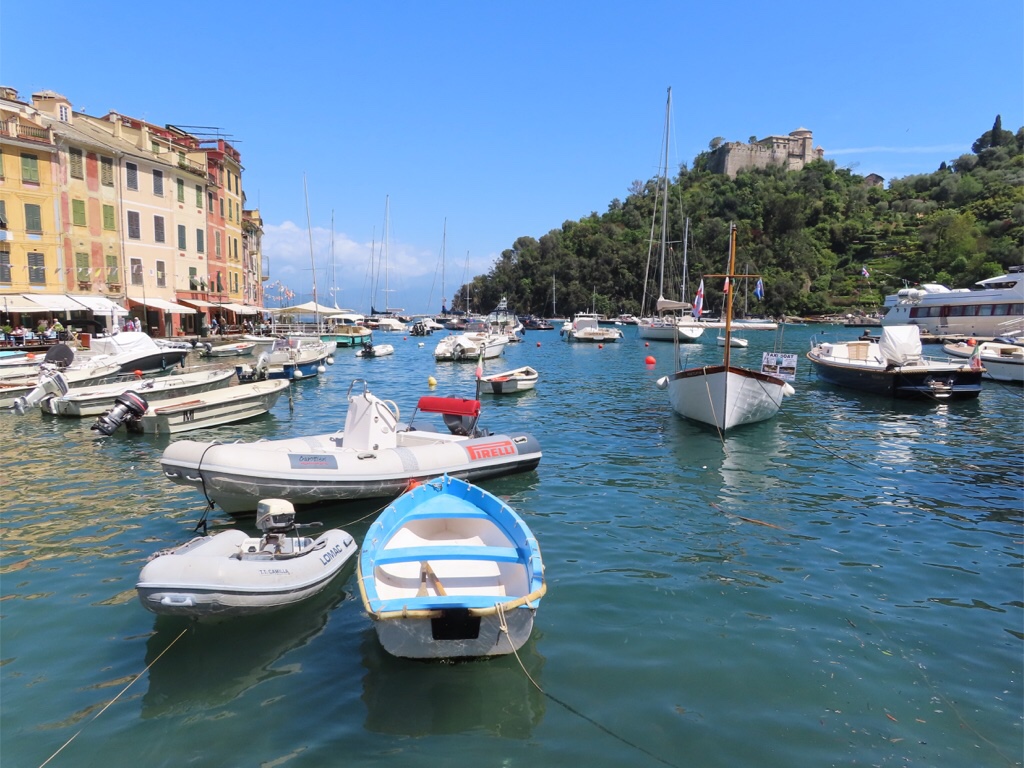
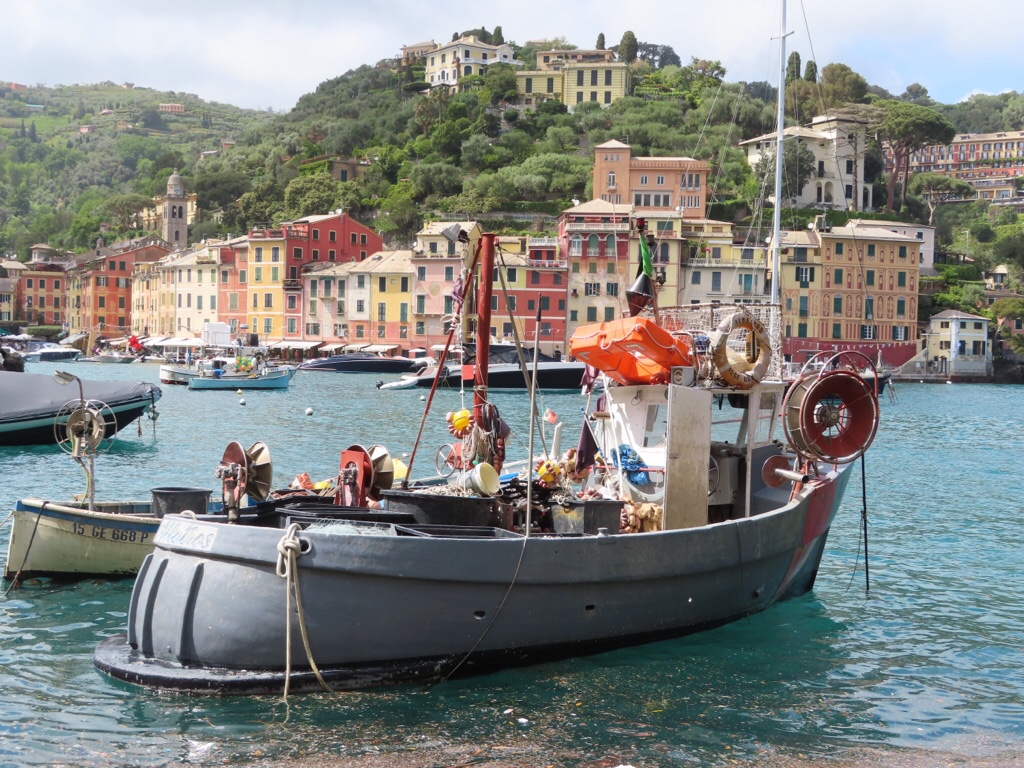
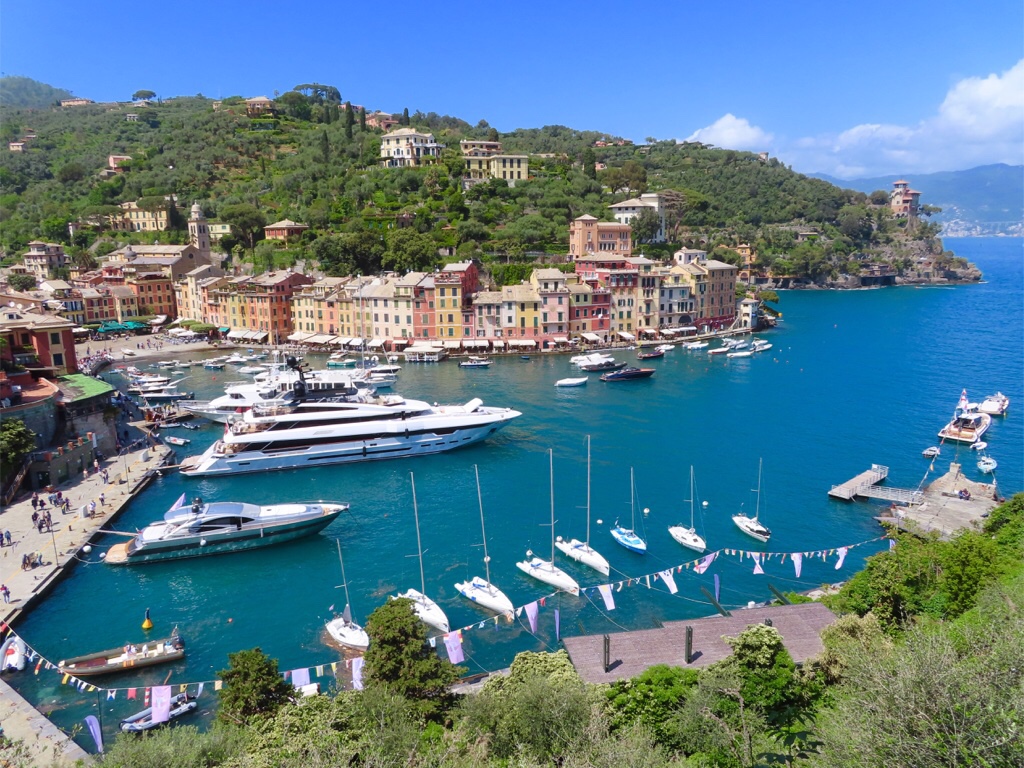
Having said that, it still has working fishing boats moored beside immense luxury cruisers.

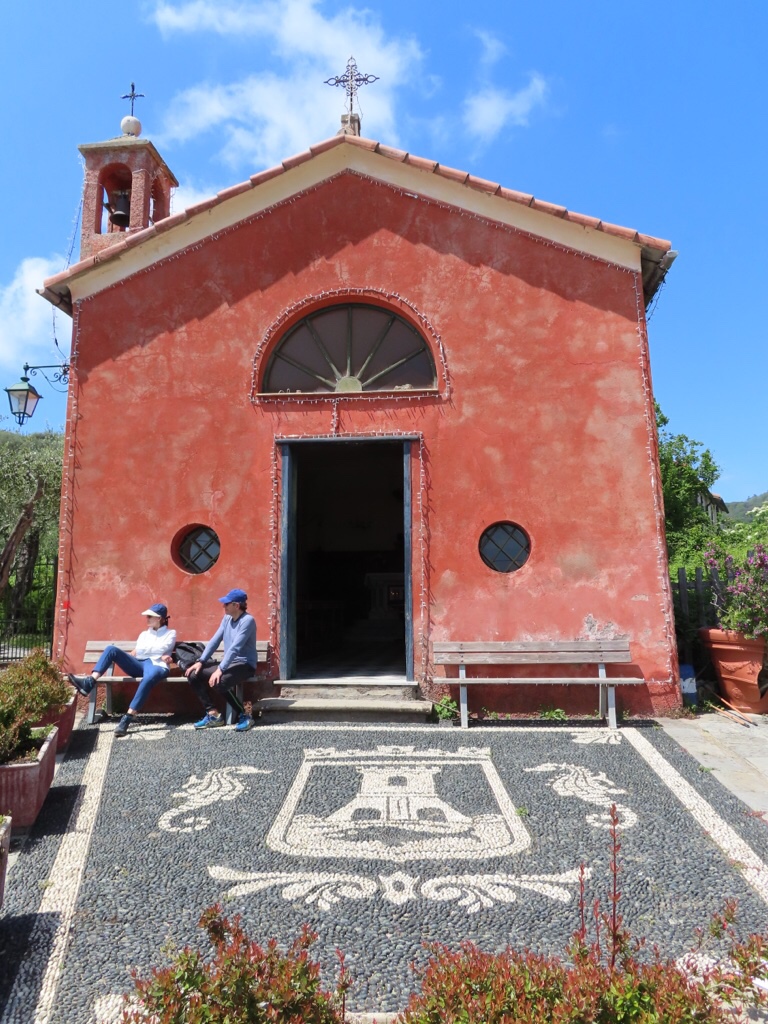
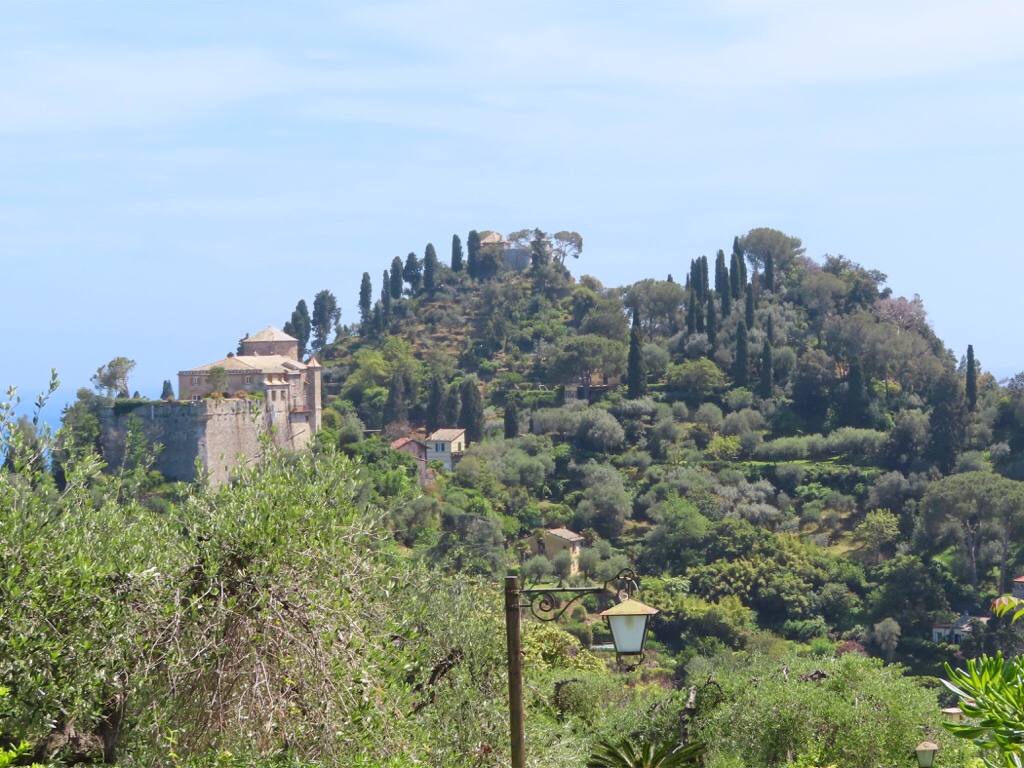
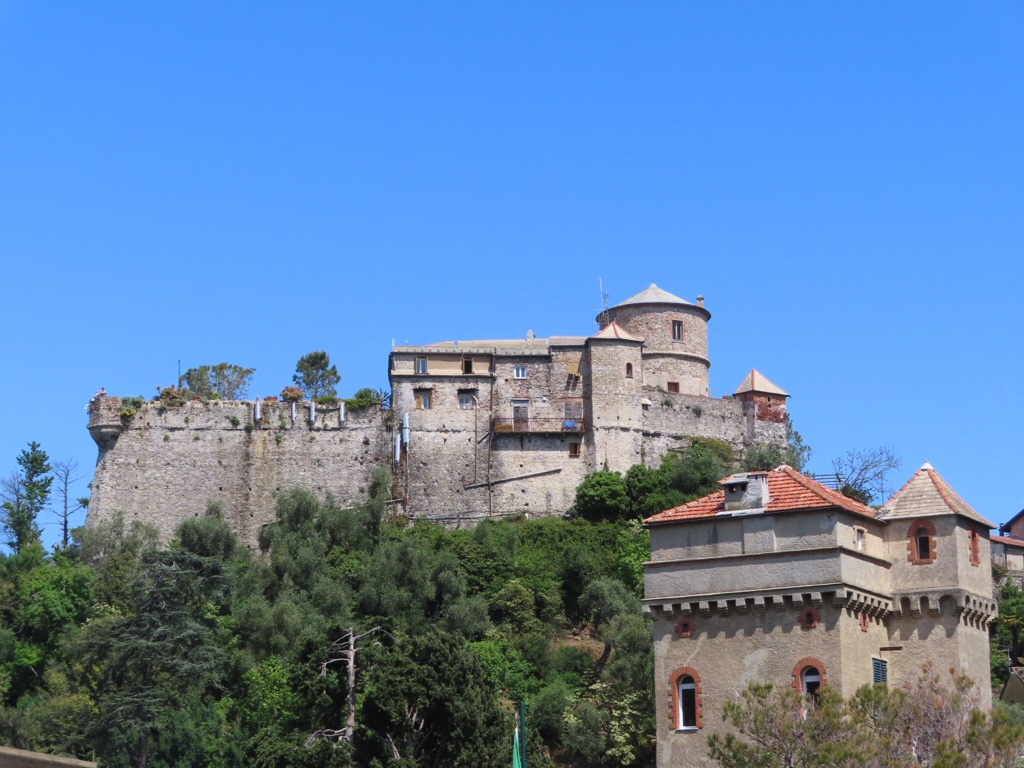
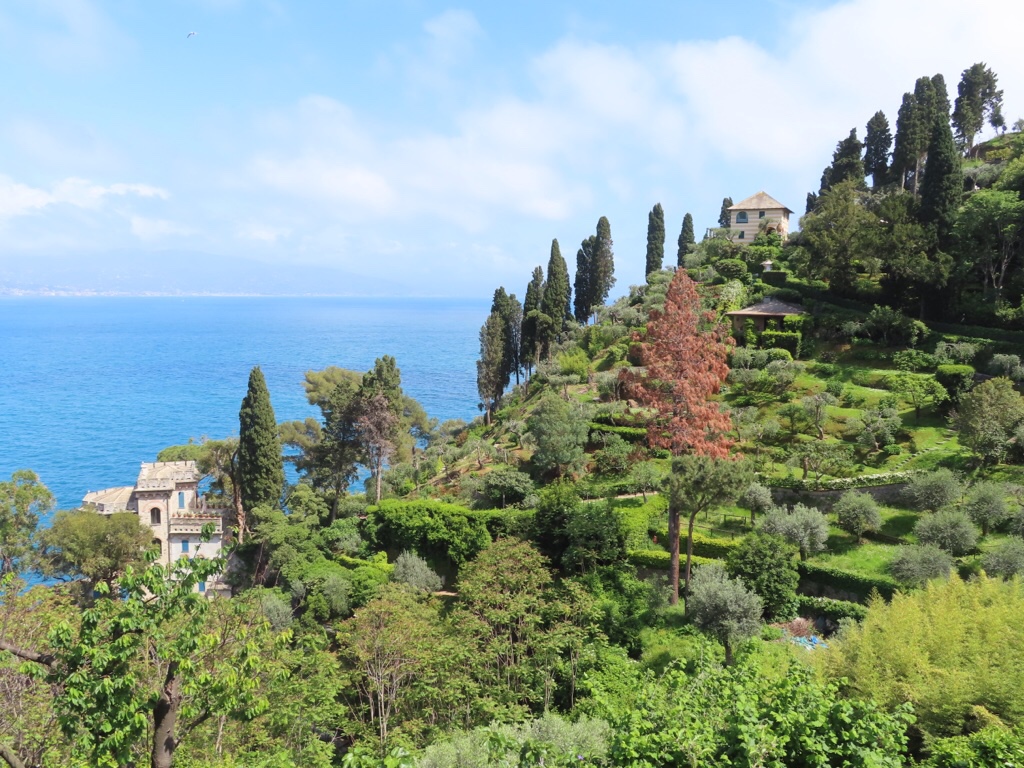
We took the path first to the church of San Giorgio, then higher to Castello Brown, built as a coastal defence in C16th, then bought in the C19th by the British Consul to Genova, Montague Yeats-Brown, and converted into a comfortable villa, hence its name. It is now open to the public and we went to look round and get a great view of Portofino.

Time enough for an ice cream … at €3.50 each well over the going rate but still yummy … the ferry back to SM Ligure and the train home.
Slight technical hitch in that we got on the wrong train and went whizzing past our stop … fortunately we only overshot by one stop … but owned up and bought new tickets to return to Camogli.

Friday night and the town was buzzing, especially with the festival tomorrow. All the restaurants we open and we picked an osteria with pizza for Chris and fish of the day for me.

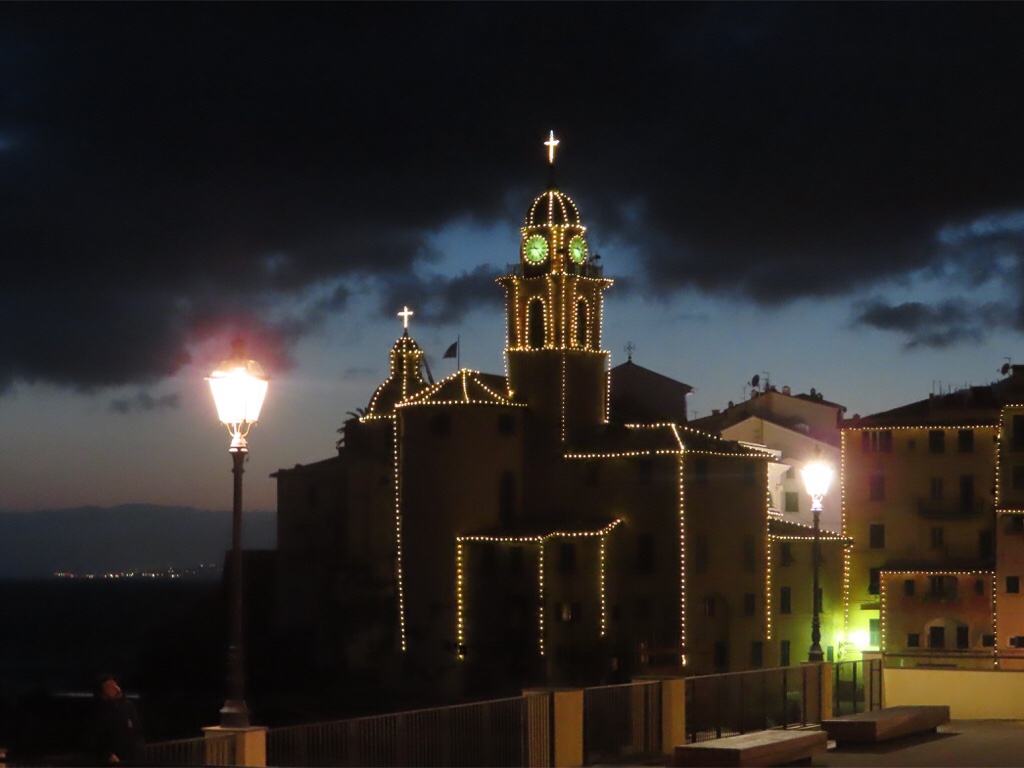
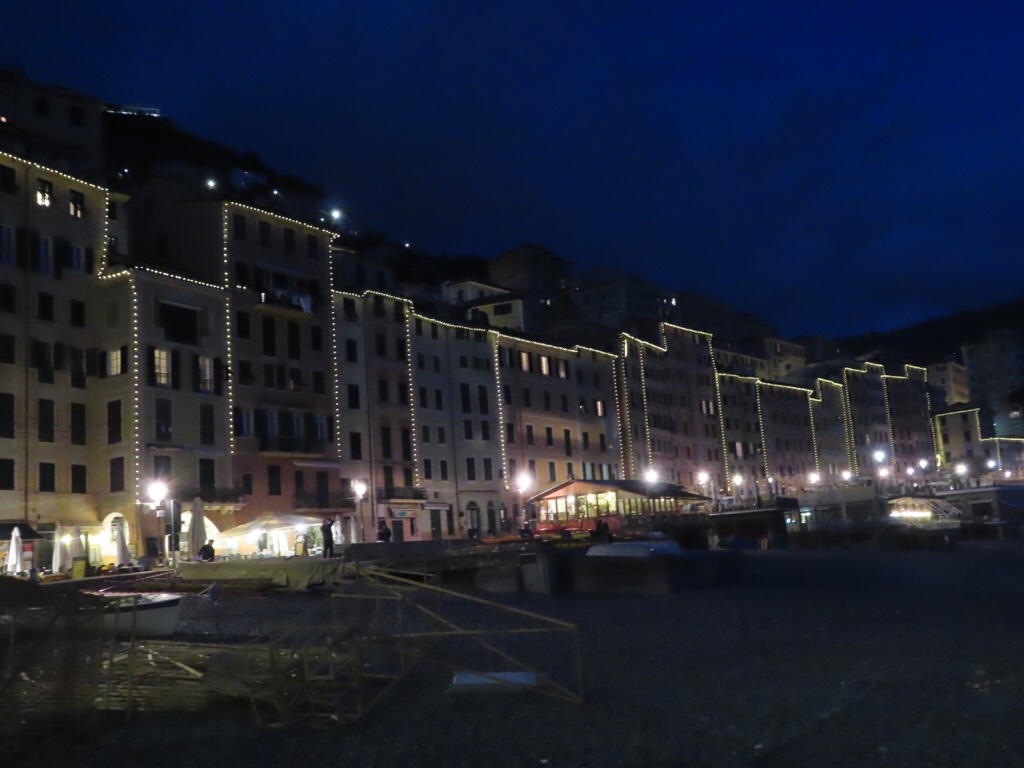
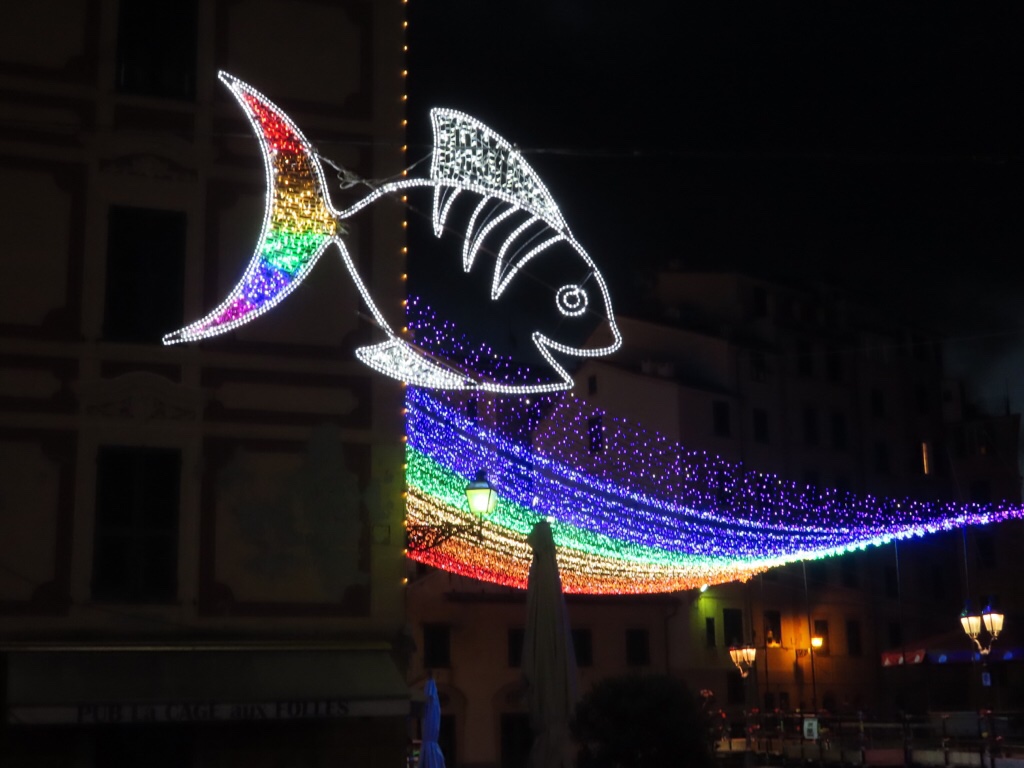
Darkness had fallen while we were eating and all the buildings were lit up and twinkly …

… not that we will be there to sample the fish fest as we are off in the morning to our final destination … Lerici.

Map

Portofino Peninsula – Camogli to San Fruttuoso

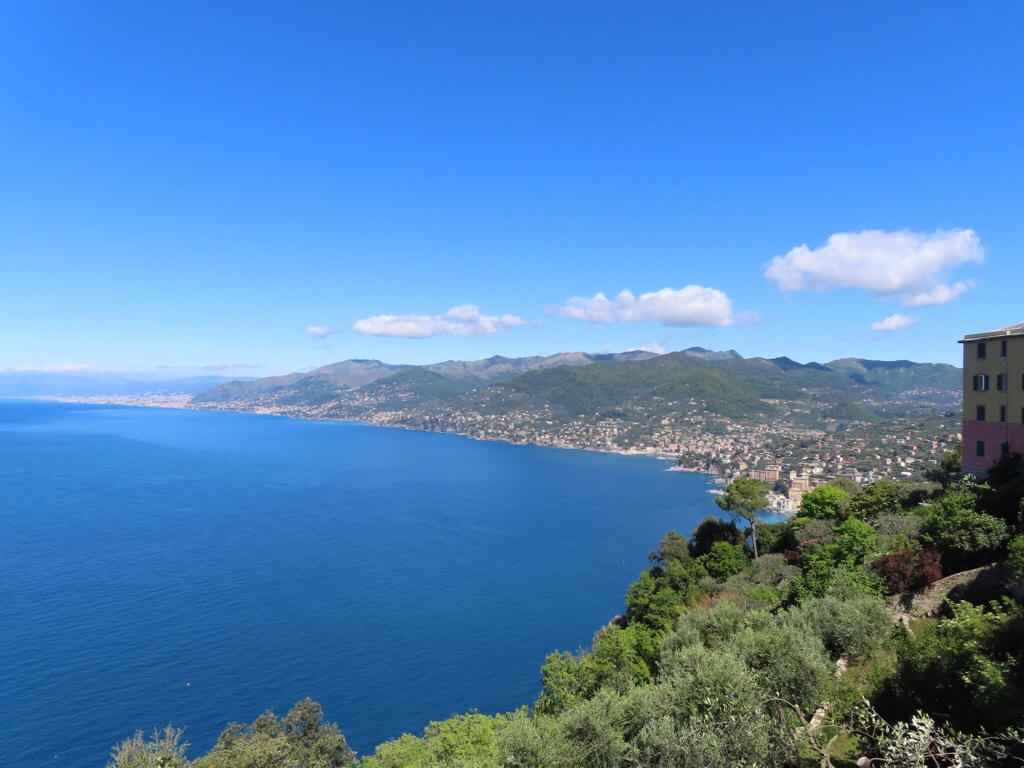
It was definitely a walking day today and we had a route planned. We followed a path out of town and climbed up between gardens and villas on an old mule track to the hamlet of San Rocco. A huge group of teenagers were out on a school trip and while we waited for them to move on, took a great photo of the coast as far as Genova.

We bought some bits for a picnic in the local shop …

… then set off, getting a great view of Camogli and San Rocco.

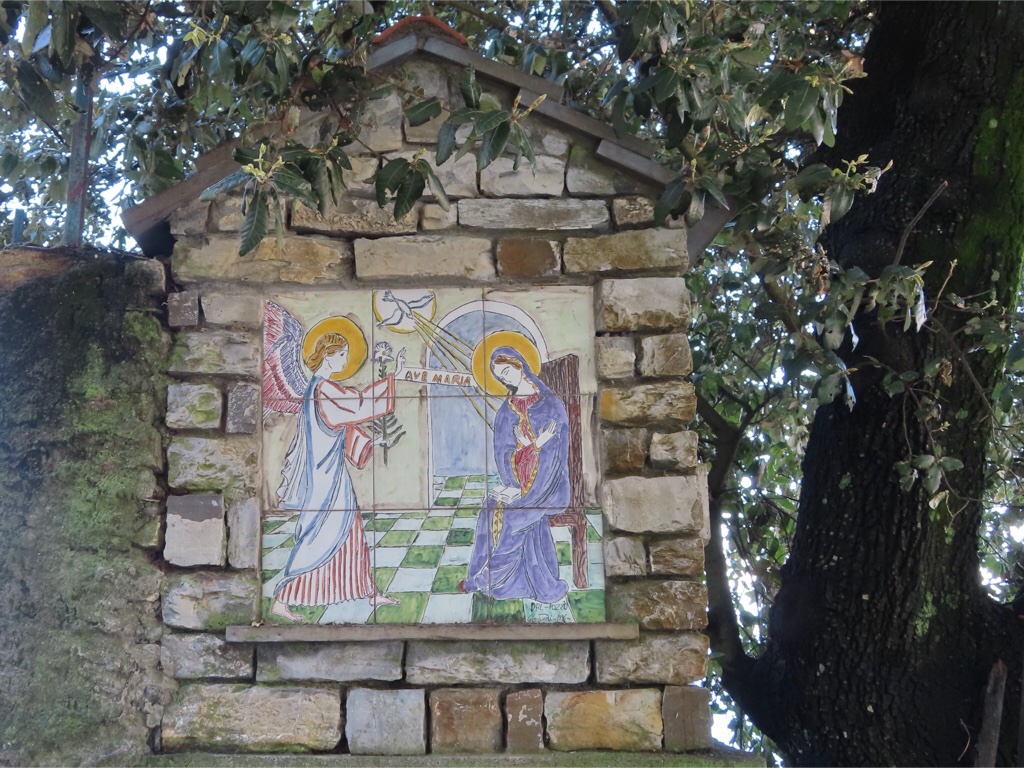
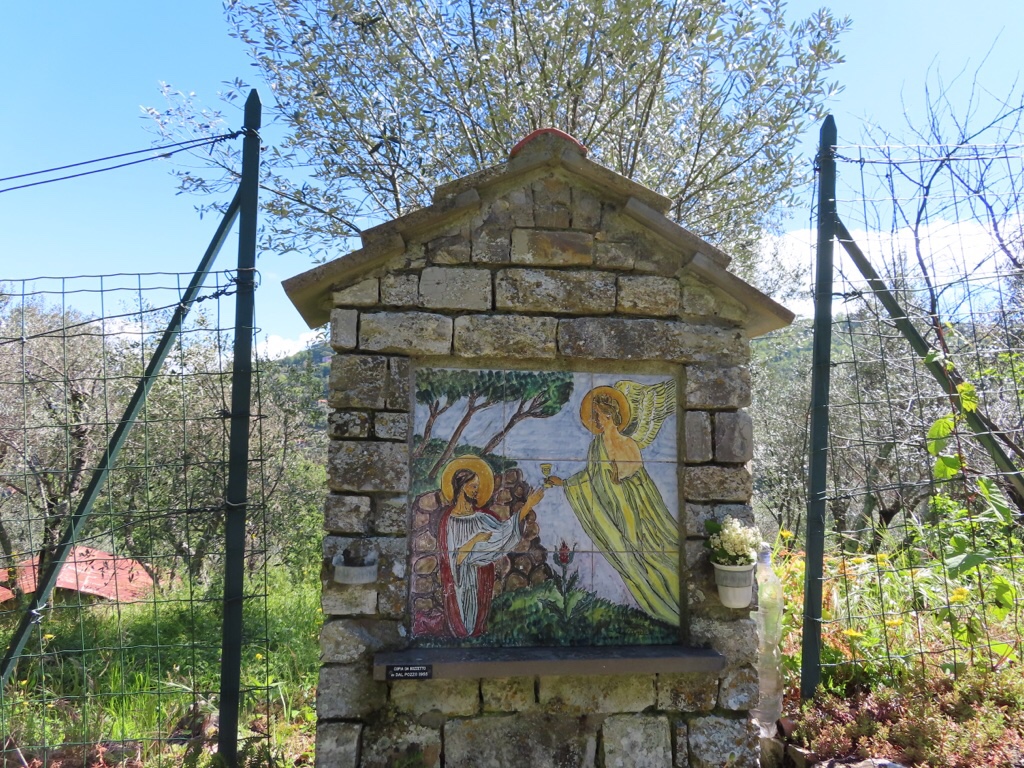
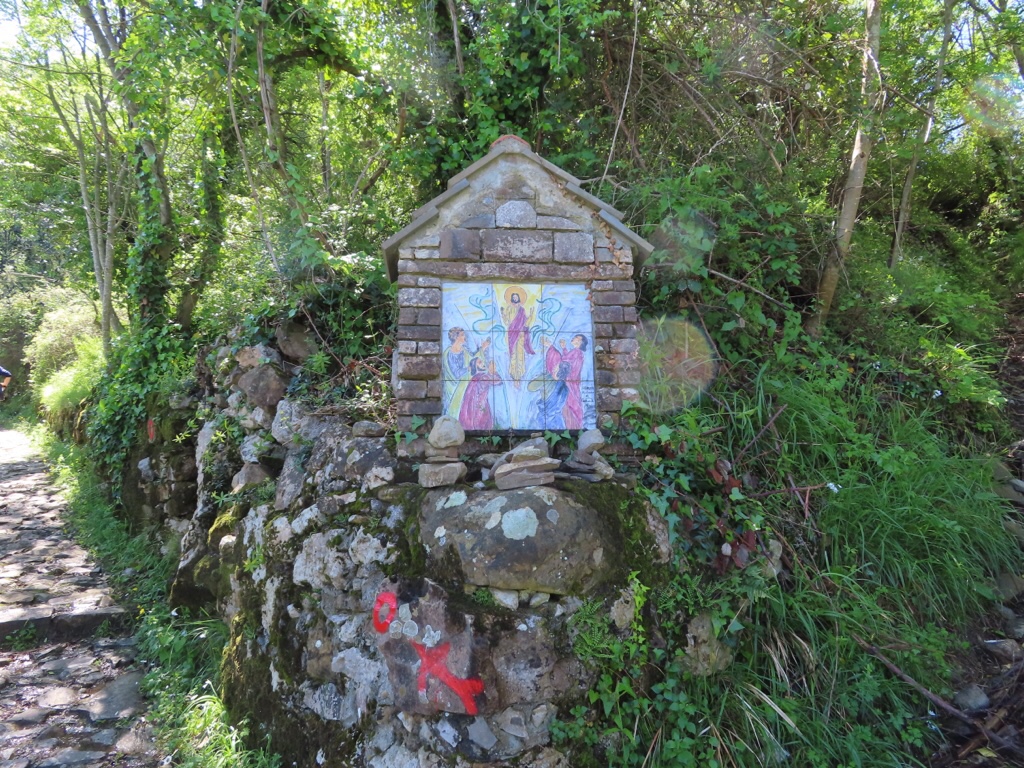
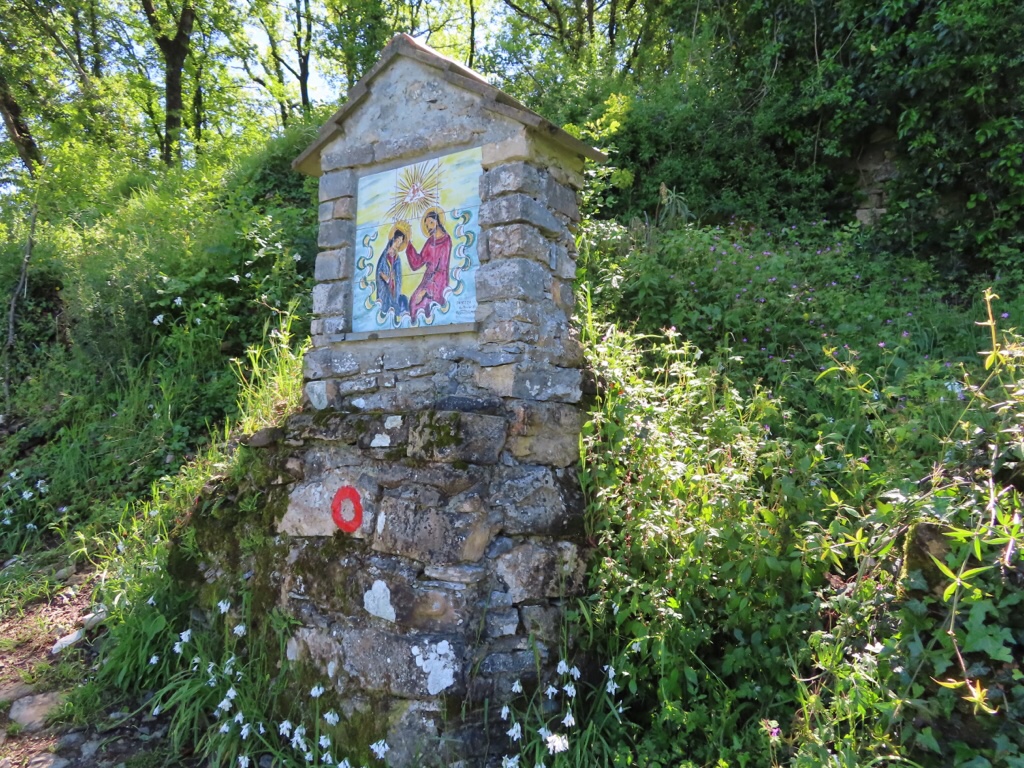
There were stations of the cross made of colourful ceramics as the path climbed.

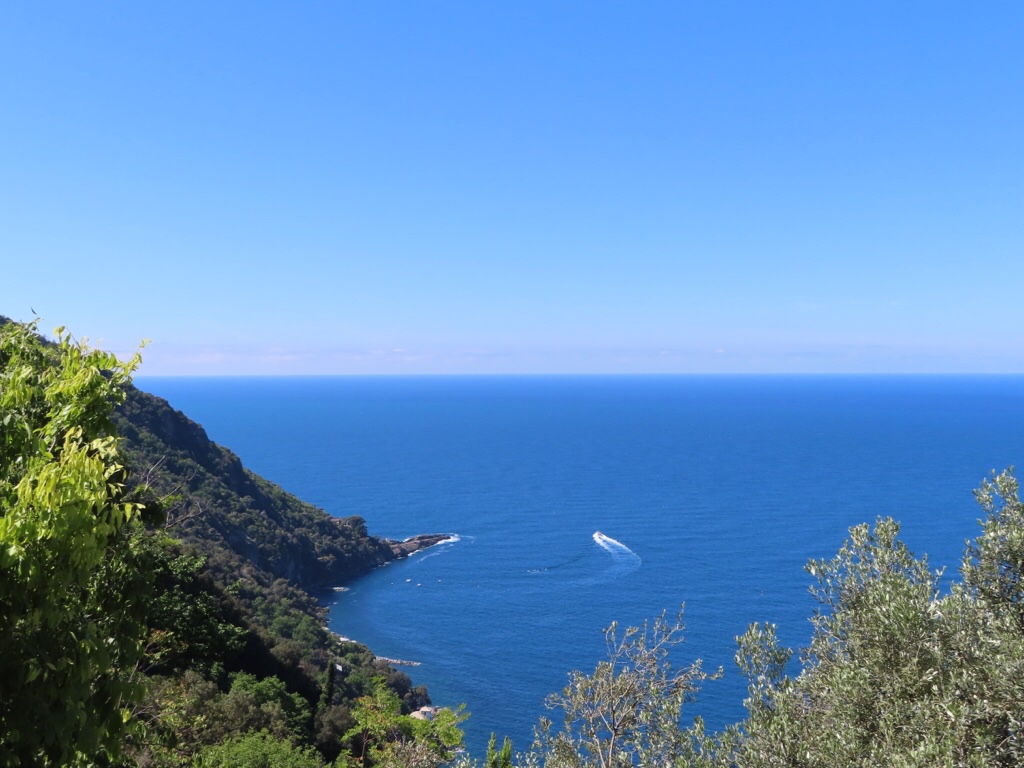
We took a detour round Monte di Portofino offering snatches of sea views …

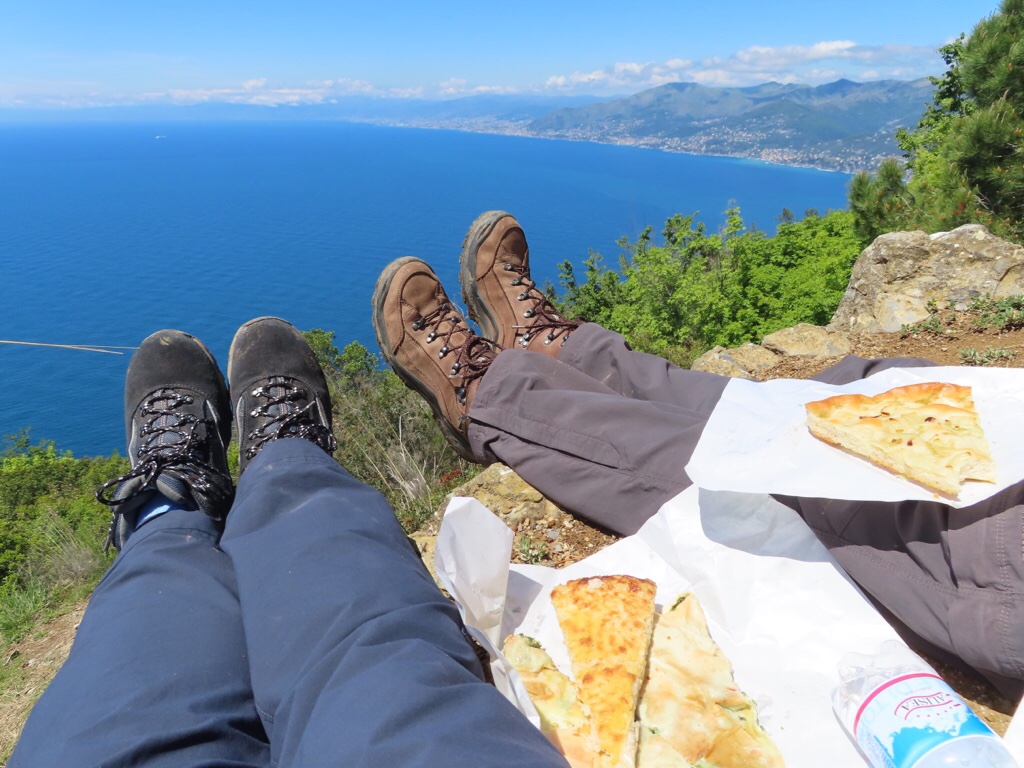
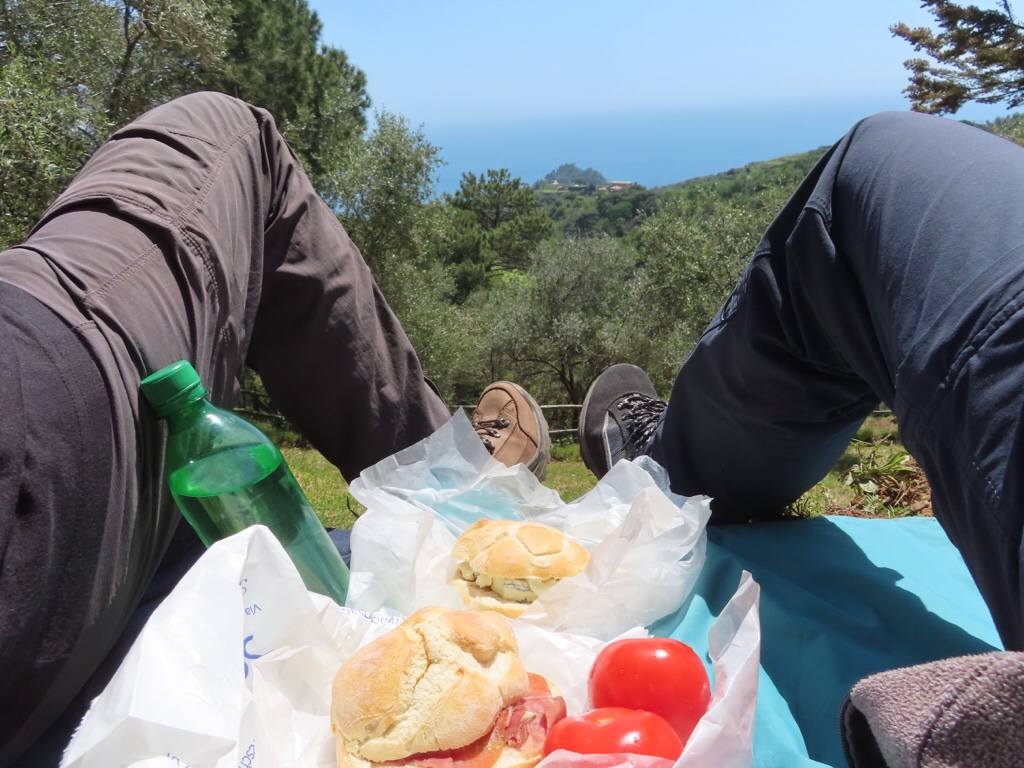
… then a perfect picnic spot, complete with back rests and a view and tucked into a torte made of rice flavoured with cheese, onion focaccia and the vegetable torte filled with greens sold everywhere here.

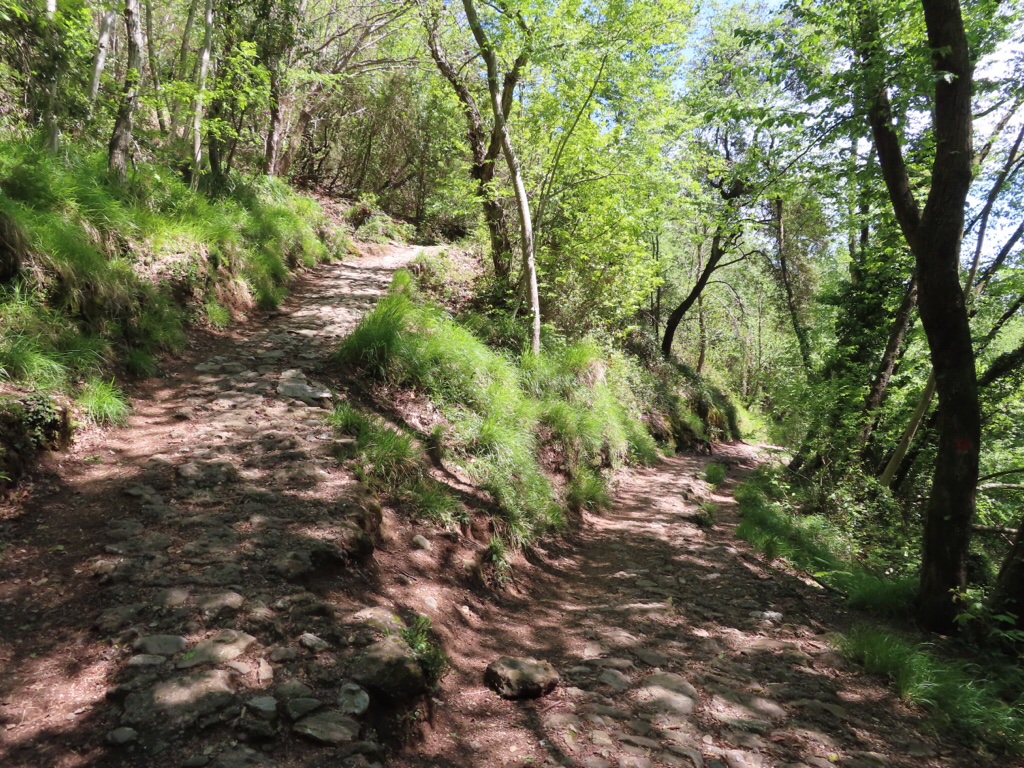
A bit further and we went down on a cobbled mule track through the woods.

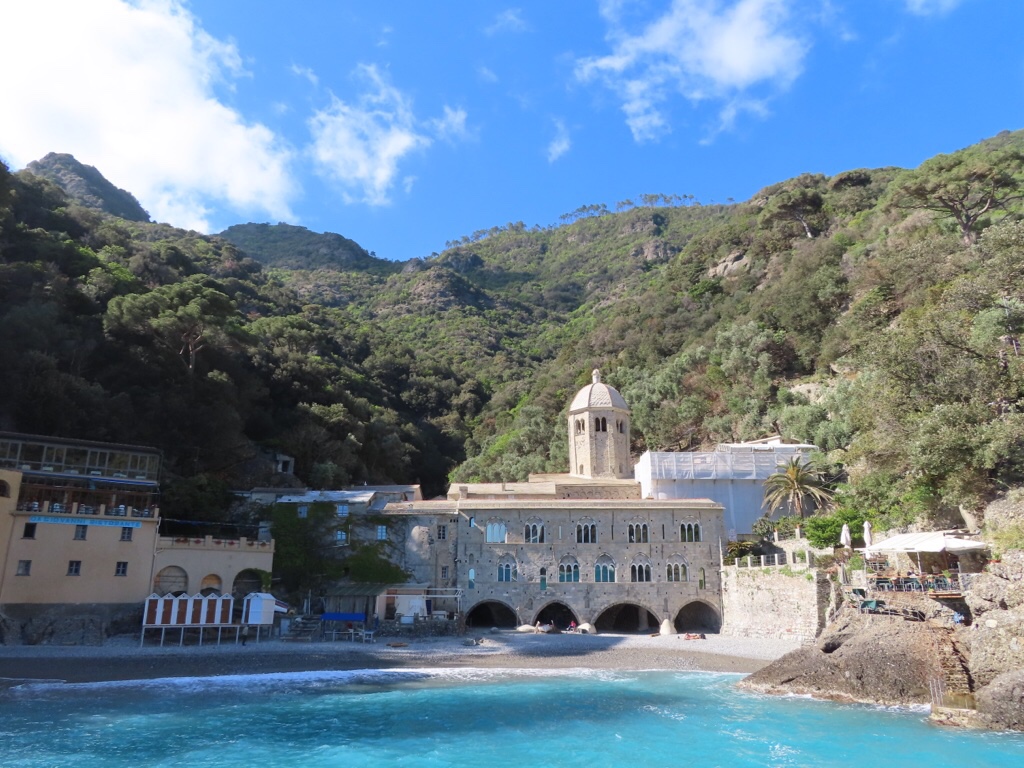
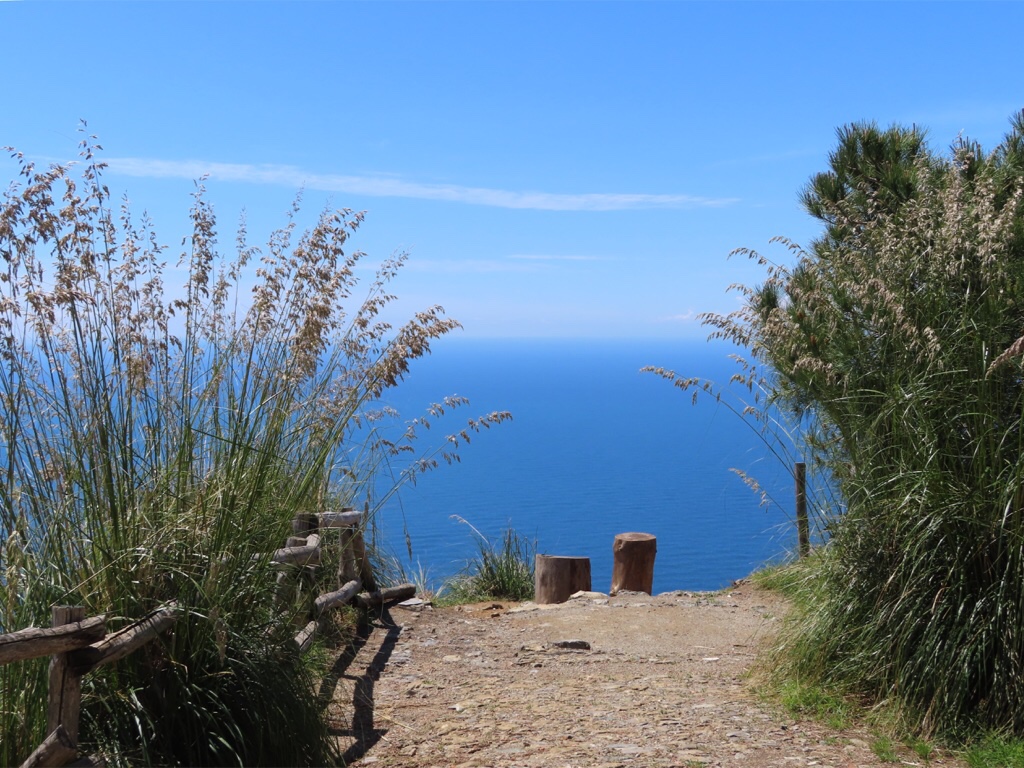
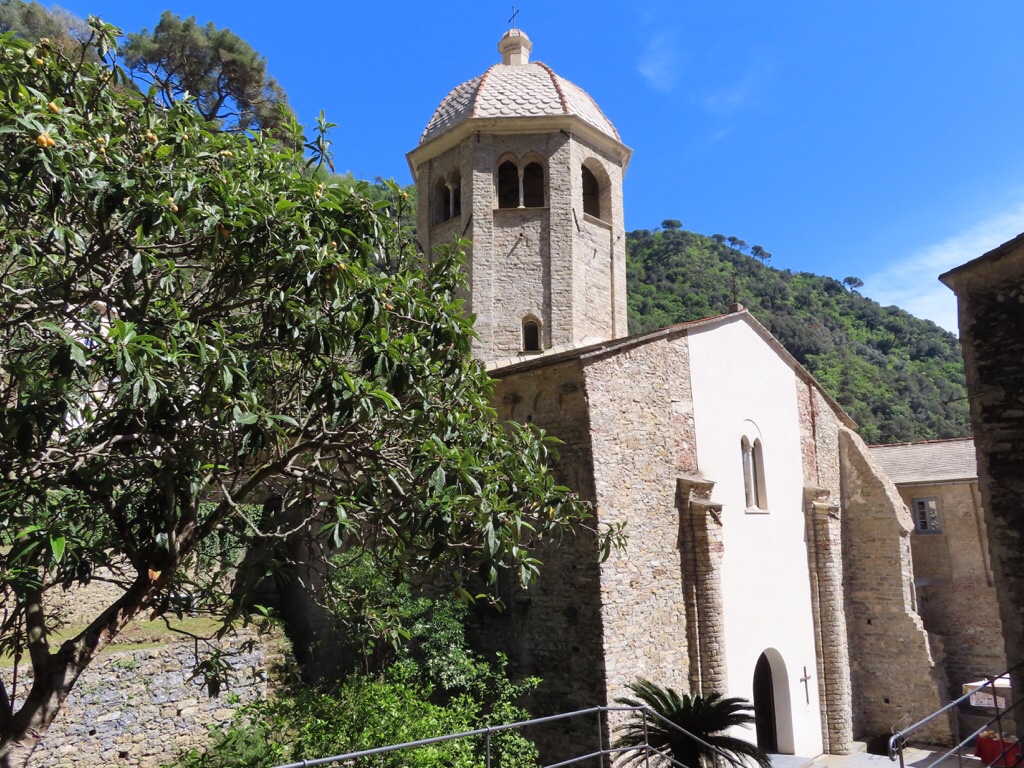
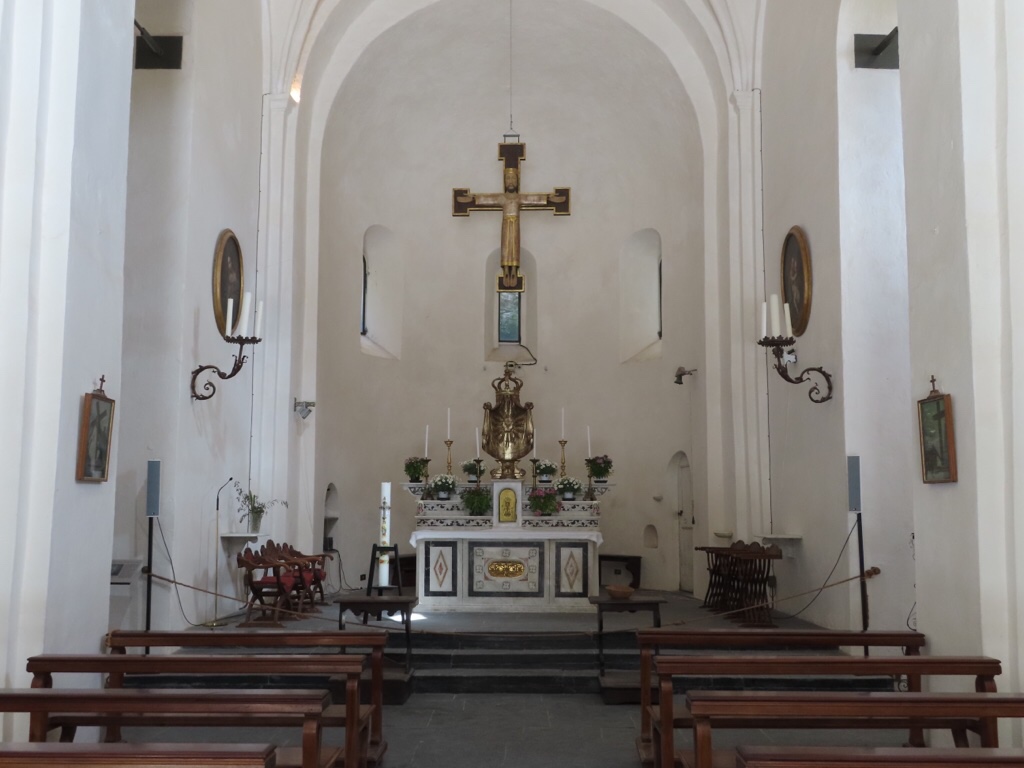
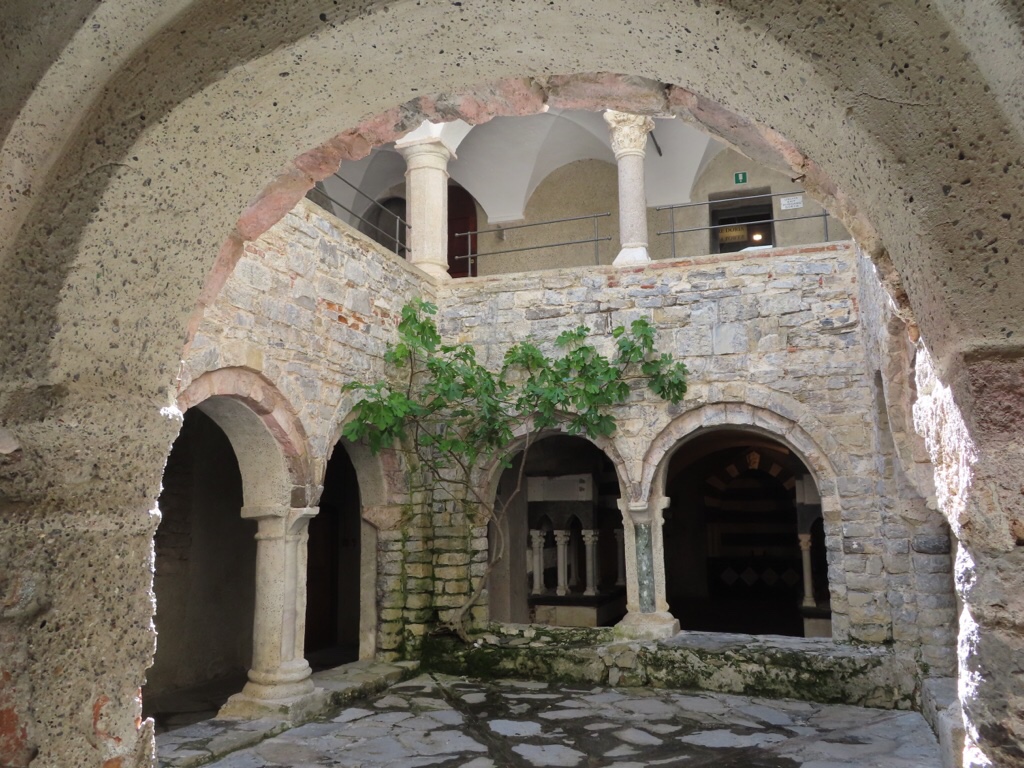
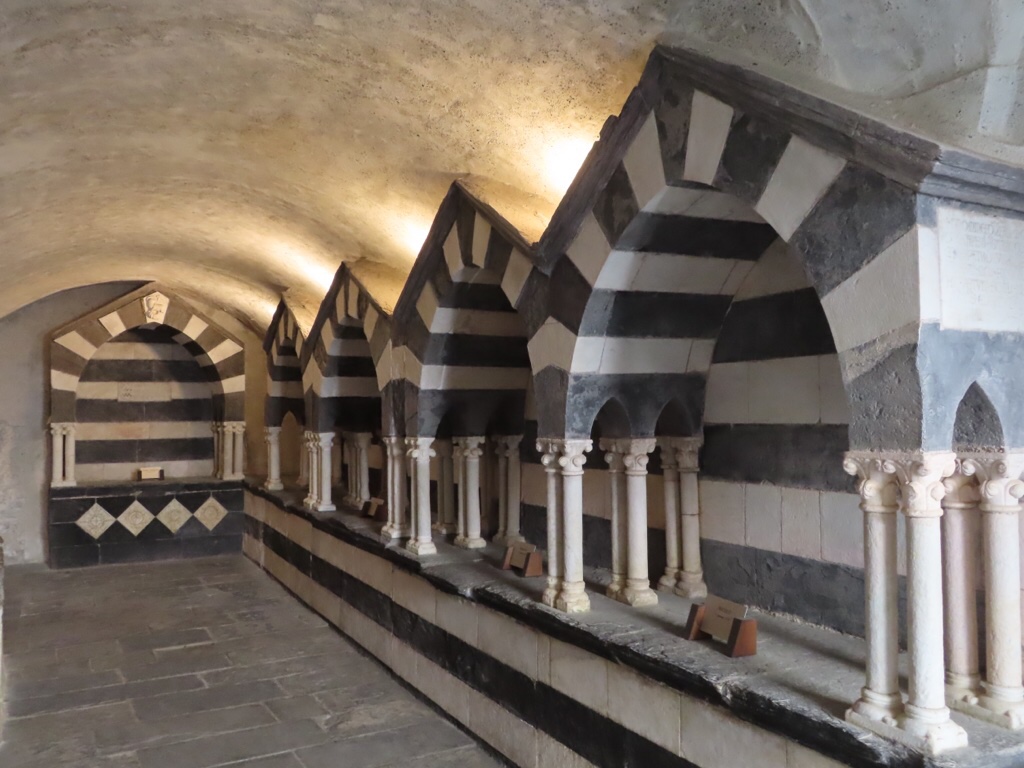
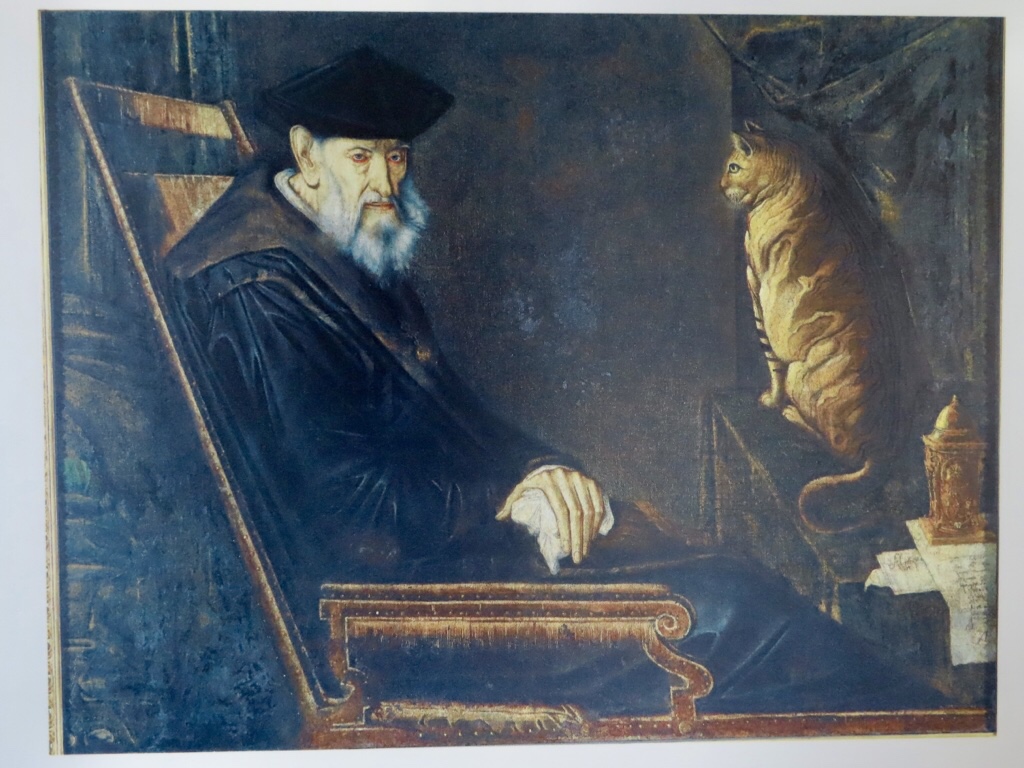
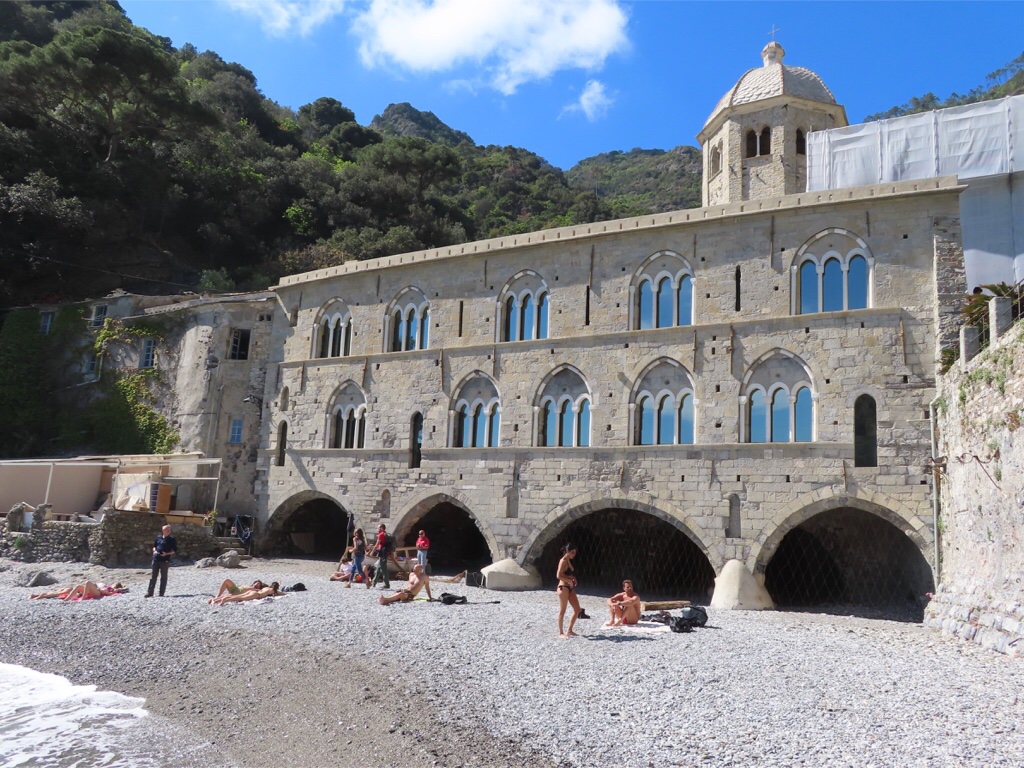
The track zig zagged back and forth and it seemed to go on forever … but finally we reached the monastery and hamlet of San Fruttuoso. How the remains of this saint were buried here is unknown, but there has been a monastery here since at least 984. In 1200 the Abbey was given some land and became connected with the Doria family who were allowed to bury their dead here in exchange for paying to extend the buildings. Over time, there were periods of disrepair then renovation and finally in 1983 the Doria Pamphili family gave the site to the FAI, the Italian National Trust enabling us to visit for free with our NT cards.

We took various pics of the church, tombs of the Doria family and a painting of Andrea Doria.

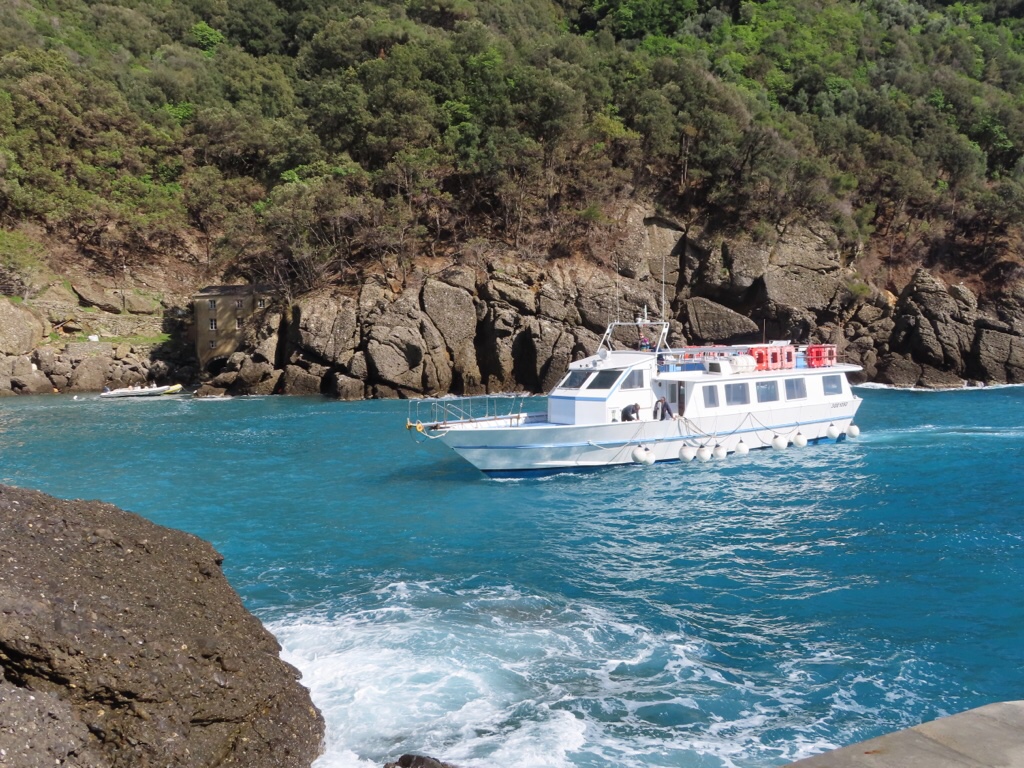
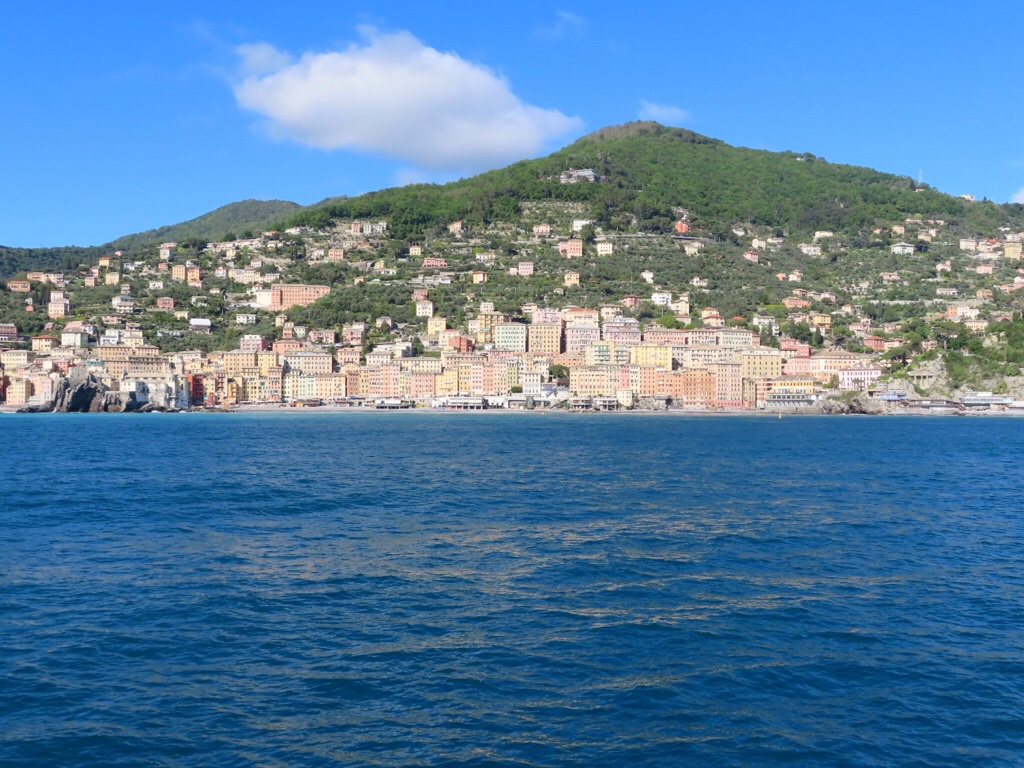
Luckily we didn’t have long to wait for the ferry … the only other way out of the bay … and 15 minutes later we were back in Camogli.

The book said the route was 7.5 miles although my step counter suggested 11 for the whole day … either way, we deserved our bowls of pasta for dinner!

Map