A Tale of Two Aqueducts

I was awake at the crack of dawn, not helped by cramp in my foot which made me hop out of bed quickly to relieve it. It was already light and the birds were chirping. Then I started fretting that I only had 0.3GB of data to last 6 days and before I knew it, I was definitely awake. It was 5.30. I lay in bed and read for a while, then got up and crocheted a butterfly, then made tea for us both, telling Chris it was nearly 8.00 Rome time (ie 6.45!).

Anyway, by 8.30 Chris had topped up the engine and were ready to explore Willen Lake.

The public art here has an alternative religious theme, starting with the Peace Pagoda, the first of its kind in the Western hemisphere and built in 1980 by the monks and nuns of the Nipponzan Myohoji, a spiritual movement. It enshrines sacred relics of Lord Buddha presented from Nepal, Sri Lanka and Berlin and the frieze tells the story of Buddha – here he is The first of its kind in the Western hemisphere and built in 1980 by the monks and nuns of the Nipponzan Myohoji, a spiritual movement. It enshrines sacred relics of Lord Buddha presented from Nepal, Sri Lanka and Berlin and the frieze tells the story of Buddha.

The Medicine Wheel was designed by Roy Littlesun in 2000 and consists of two concentric circles of stone inspired by the legends of the Hopi Nation in North America whose prophesies foretell an age of peace when all nations live in peace and harmony. The design pays homage to British traditions of building circles alongside meeting places and important sites. Two extra pairs of stone situated north east and south west of the circle align with the needle stone alongside the lake and join the ‘Midsummer Line’, which follows the Midsummer sunrise that runs through the Tree Cathedral to the Belvedere in Campbell Park, along Midsummer Boulevard in Central Milton Keynes.

The Willen Labyrinth is a turf maze based on an enlarged version of the Saffron Walden Rosicrucian Maze with an oak tree at its centre and bronze faces in its lobes like this one and was laid out in 1988.

Finally we followed the edge of the lake, past the waterskiing winch and a series of paths and underpasses in search of the Tree Cathedral. We could have picked up a couple of scooters on the way, but unfortunately didn’t have helmets to hand.

The Tree Cathedral initially just looked like a glade of trees and as we entered a couple of bunnies ran across the grass with their pale fluffy tails catching the light. Inside there were aisles of trees forming an arched roof which apparently depicts Norwich Cathedral, peaceful, and certainly different.

Returning to Daisy, we made a start, and saw several more of the Gyosei art works from the canal – a life size steel Shire Horse whose steady toil propelled the barges of yesteryear along the towpaths …

… Three Post Bench illustrating wildlife of the canal such as coarse fish, and water birds but also smaller inhabitants such as water beetles, snails, insect larvae, floral algae and amoebae …

… and finally a beautiful white barn owl in glass mosaic swooping to capture its prey.

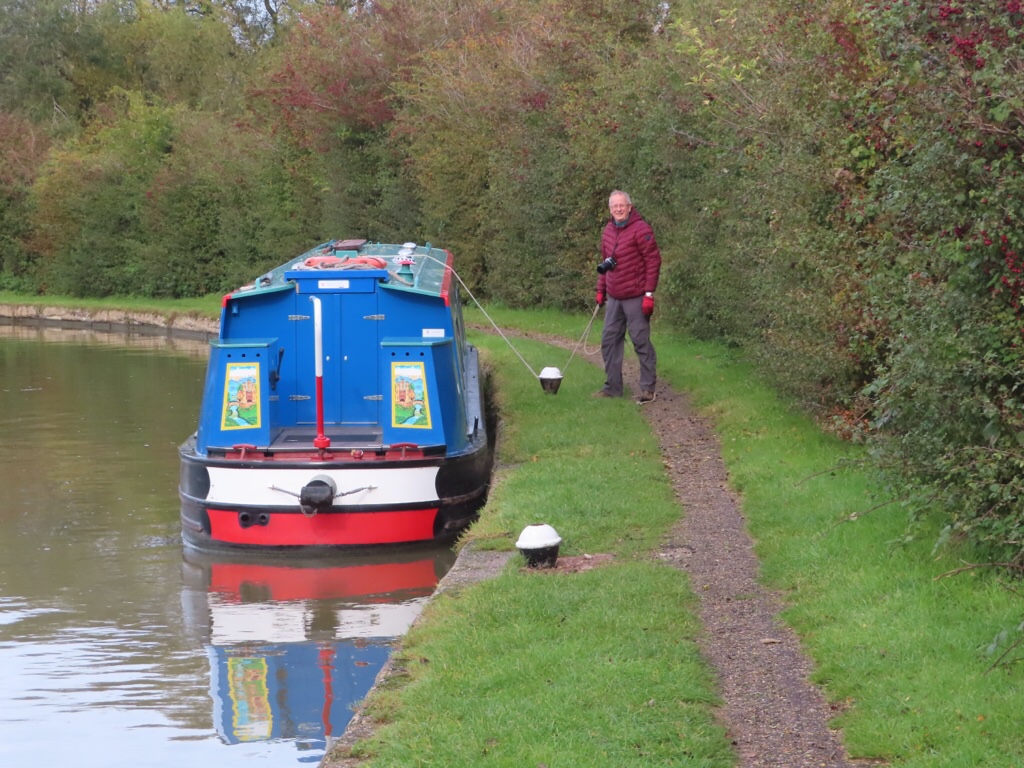
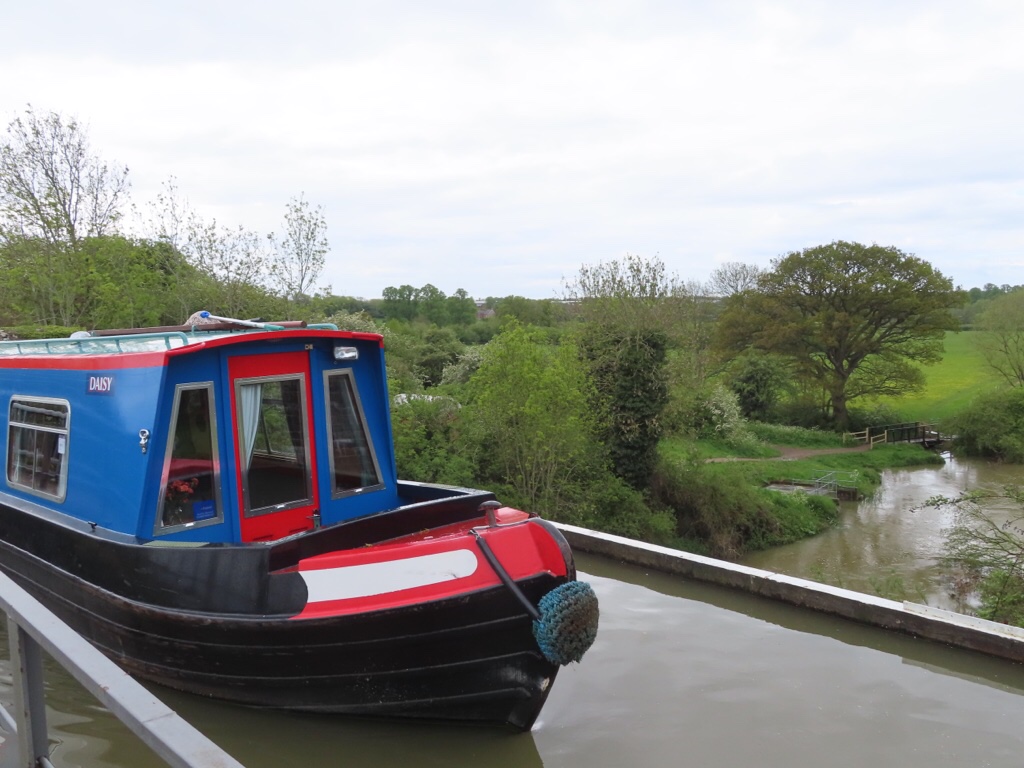
We then chugged slowly through Great Linford Park and Stanton Low Park which we hope to see more of on our return, and on to the New Bradwell Aquaduct, which carries the canal over Grafton Street. I’d read it was possible to get off the boat, nip down the towpath and over a parallel footbridge to take a photo of our narrowboat crossing the aqueduct … and it is possible!

Chris was so excited by starring in the photo, his steering briefly went a bit to pot!

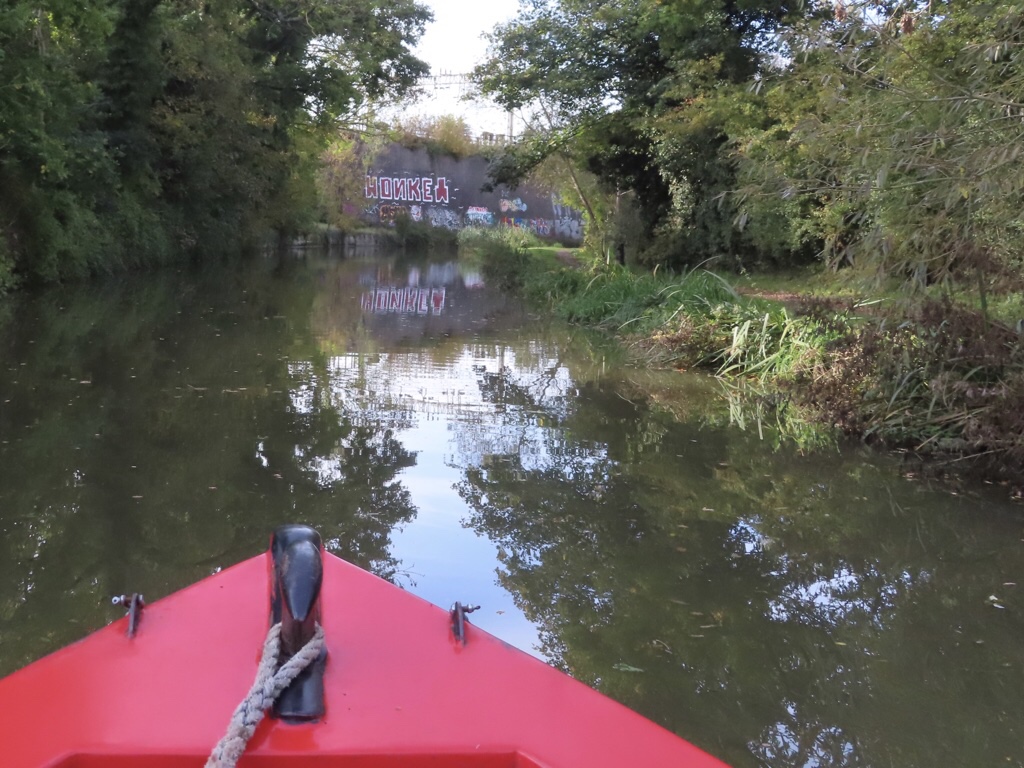
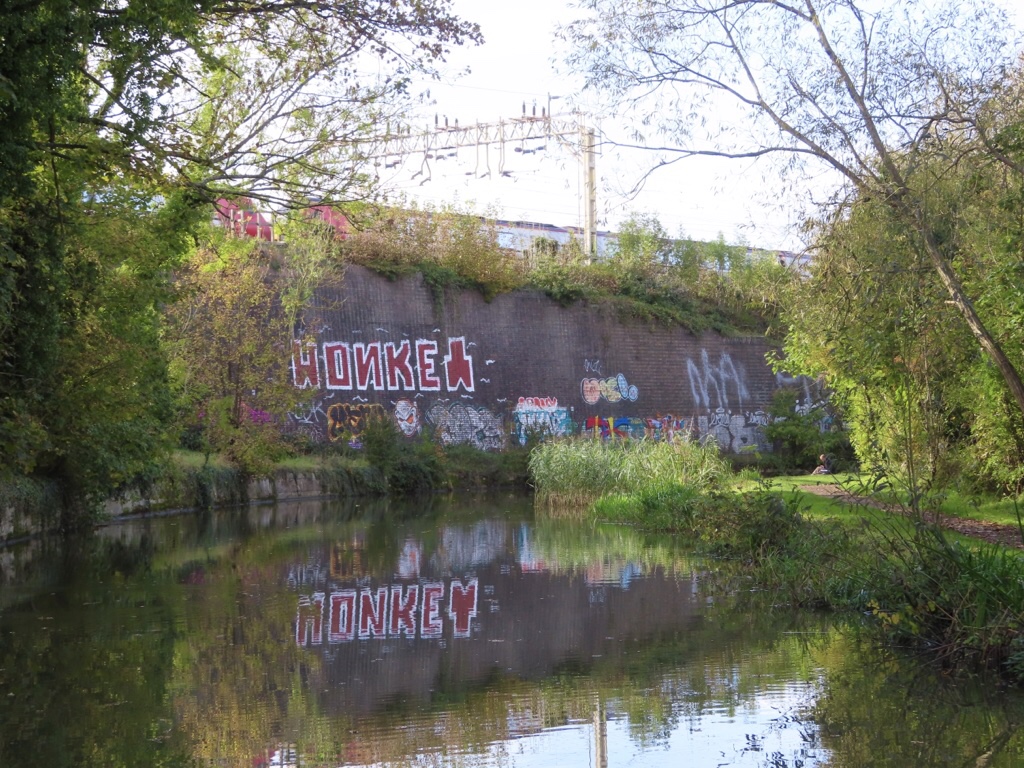
Coming into Wolverton there were a few more urban views …

… including a mural alongside the station …
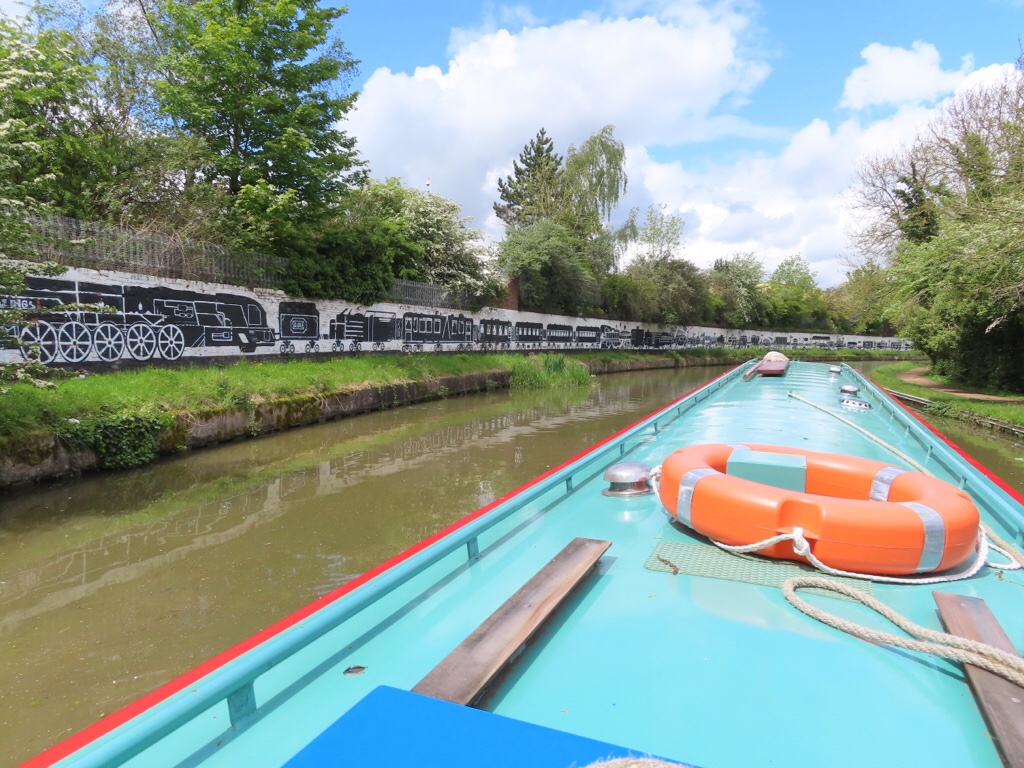
… and several boats moored up beside a wharf development of new houses beside a footbridge which conveniently leads to a good size Tesco, no doubt stocking up on groceries.

Not much further and we arrived at Ouse Valley Park and moored up just before the aquaduct. We’d had a couple of short bursts of rain on our way, but now the sky was getting very dark, and I think we arrived just in time.

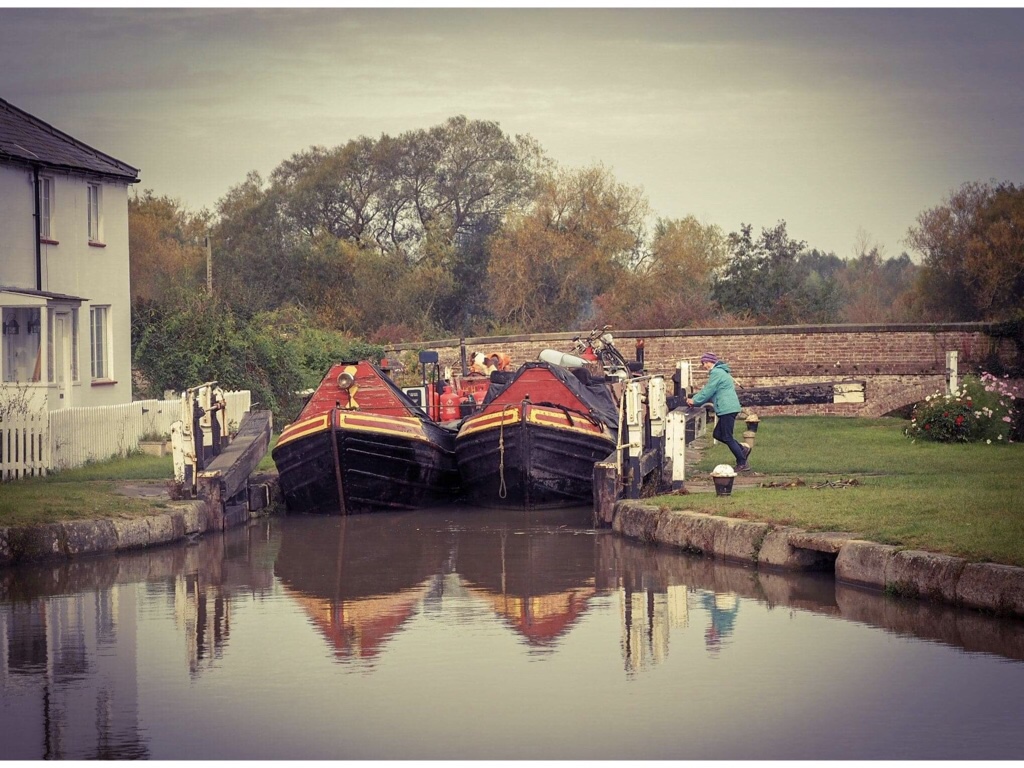
After lunch, the sky soon cleared and the sun came out and we went for a walk. Steps took us down beside the Iron Trunk Aqueduct which dates to 1811 and is the oldest broad canal iron trough aqueduct. It was the 4th attempt by the Grand Junction Canal Company to cross the River Great Ouse as earlier attempts collapsed. A horse tunnel leads underneath … so we walked through to get a view from both sides …

We then headed round the park, taking in the river floodplain filled with flowers …

… and grazing ponies …

… until we reached the brick-built Wolverton Viaduct, constructed by Robert Stephenson in 1838, carrying the railway from Euston northwards …

… before looping back as the sky became grey once more and we were back to Daisy for a cuppa and cake before the rain.

We wanted to take a turn round Cosgrove, just a mile away, billed as a typical canal village, but also wanted to make a good start next day, so once the rain stopped we took a chance and set out. This time we weren’t so lucky, so most of our walk was in the drizzle, down to the lock, a snap of the Ornamental Bridge, through another horse tunnel and back, but I’m not sure it would have been much more exciting on a lovely.

We were pleased to get back, dry out and sit in the warm with stew and red wine for supper.

Map


A Very Good Start

We picked Daisy up at lunchtime and she immediately felt like home from home. We’re travelling in the same direction as our last trip, so we repeated our route through the three locks at Soulbury …

… before mooring near Bridge 106 at Stoke Hammond.

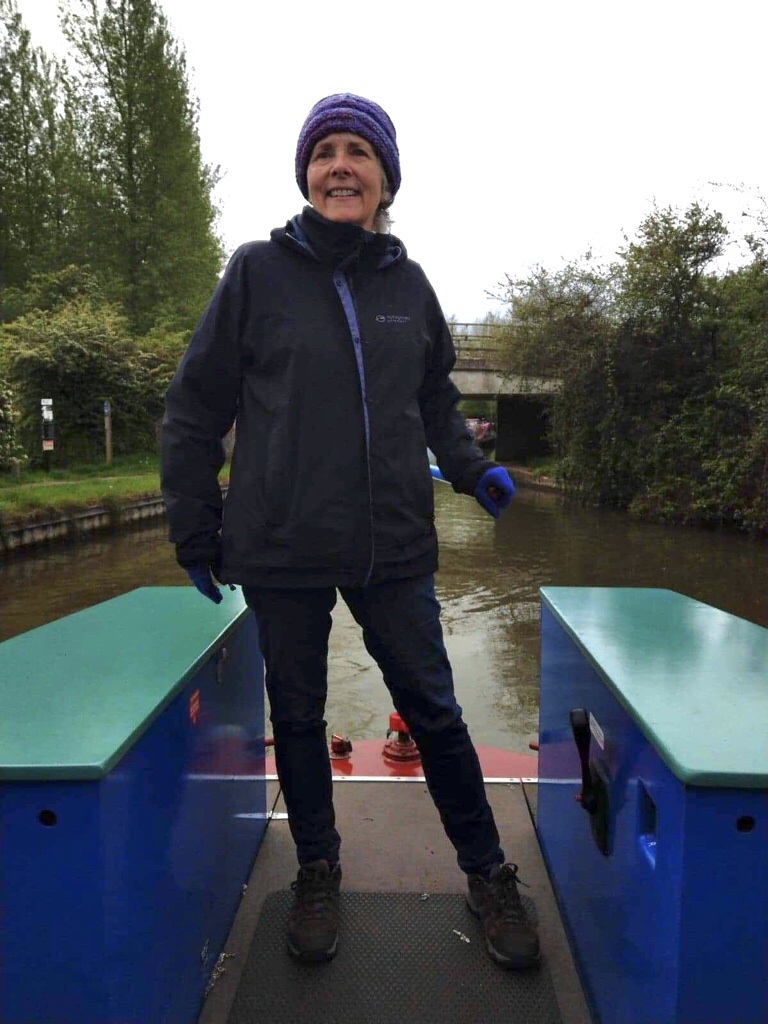
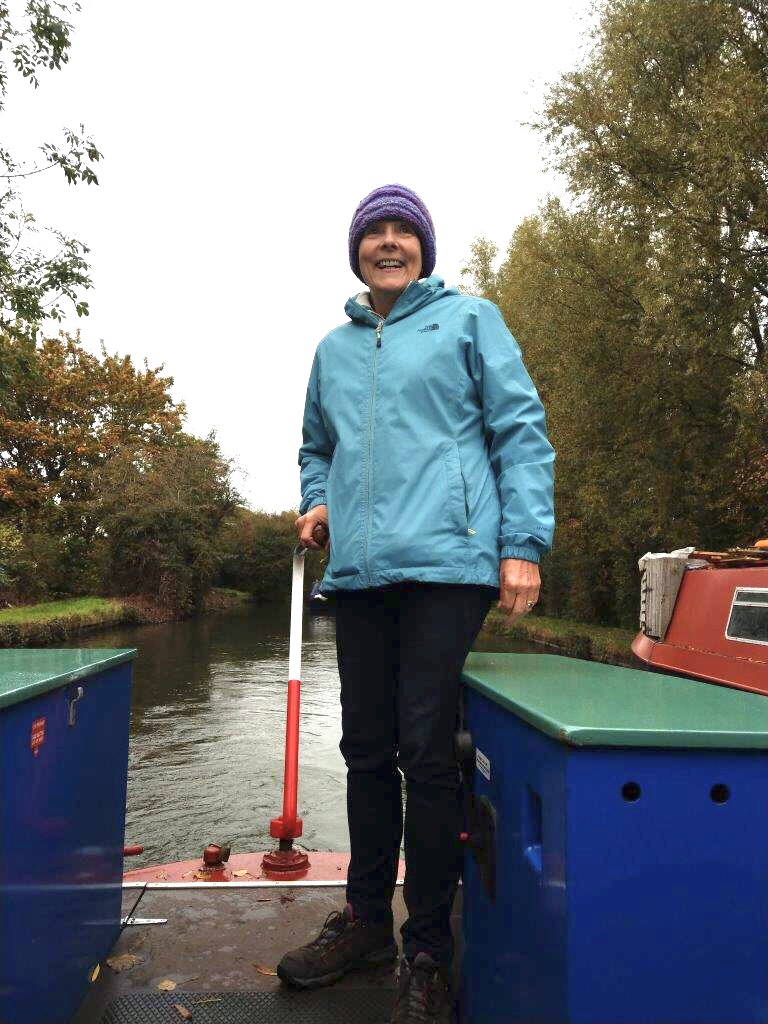
The biggest difference is that I had the helm for much of the afternoon, and did a pretty good job! Don who came with us to begin with encouraged me to steer and I must have felt more relaxed because I finally got the hang of it. Having said that, Chris steered through the locks while I manned the windlass, but we went through with another boat so we shared the work.

Soon afterwards we moored and went for a walk to stretch our legs. The hawthorn is blossoming in abundance, but there were lots of other white flowers like cow parsley, white dead nettle, garlic mustard and even the dandelion clocks.

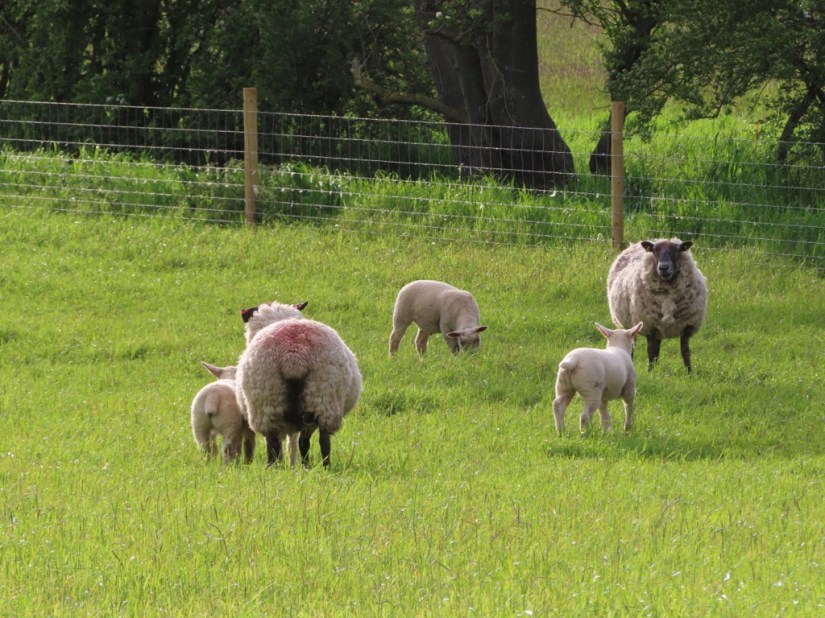
And there were sheep …

… inevitably some sheep bottoms …

… and also Daisy’s!

After dinner we sat listening to the sound of sheep in the field and a cuckoo calling, pleased we’d covered the 4 miles we’d planned.

Next day rain was forecast later so we got a good start, taking turns to steer through the locks at Stoke Hammond and Fenny Stratford then into Milton Keynes. It started to get showery so we stopped for a sandwich in the hope it would pass, then cracked on, past the winding hole where we turned last trip and Campbell Park to new territory.

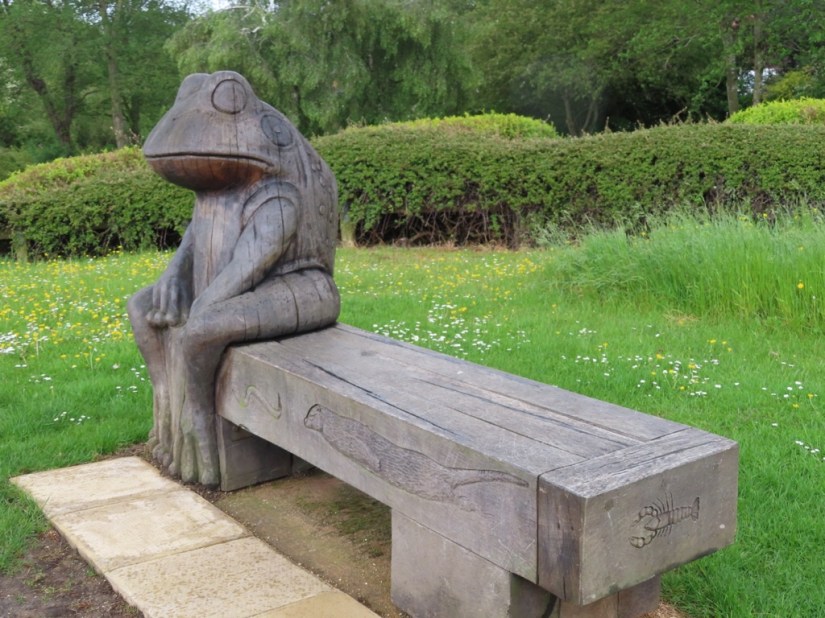
After covering about 7.5 miles, we moored up at Willen Lake where we had planned to walk, but heavy rain threatened and instead we just took a short walk in search of a frog.

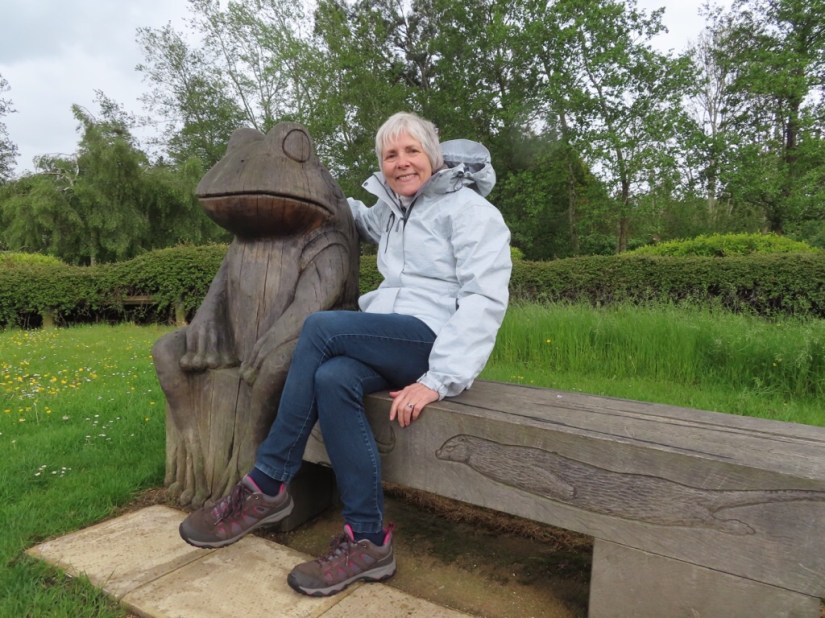
There is lots of public art in Milton Keynes and this stretch of the towpath hosts the Gyosei Art Trail, funded when the site of a Japanese School was redeveloped. The eight pieces relate to Japan, the canal and natural history and we came across this little chap sitting on a bench. Entitled “What lies beneath”, the frog is sitting, peacefully unaware of the food chain below in the canal … but he did look like he wanted some company … and we are allowed to hug again now!

Chris was delighted to be back in time for a mug of tea and LFC’s final game of the season v Crystal Palace that he was able to watch on his phone … even more delighted when they won 2-0, so Champions League football again next season.

I was surprised how few snaps I took today, just a couple of fallen soldiers …

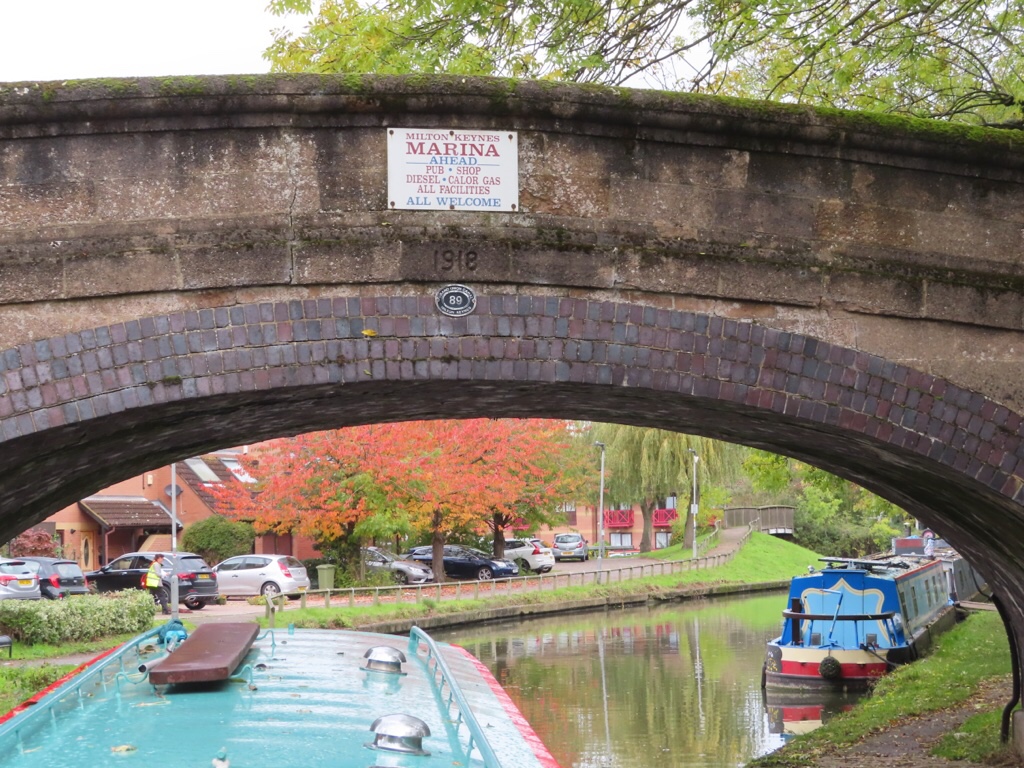
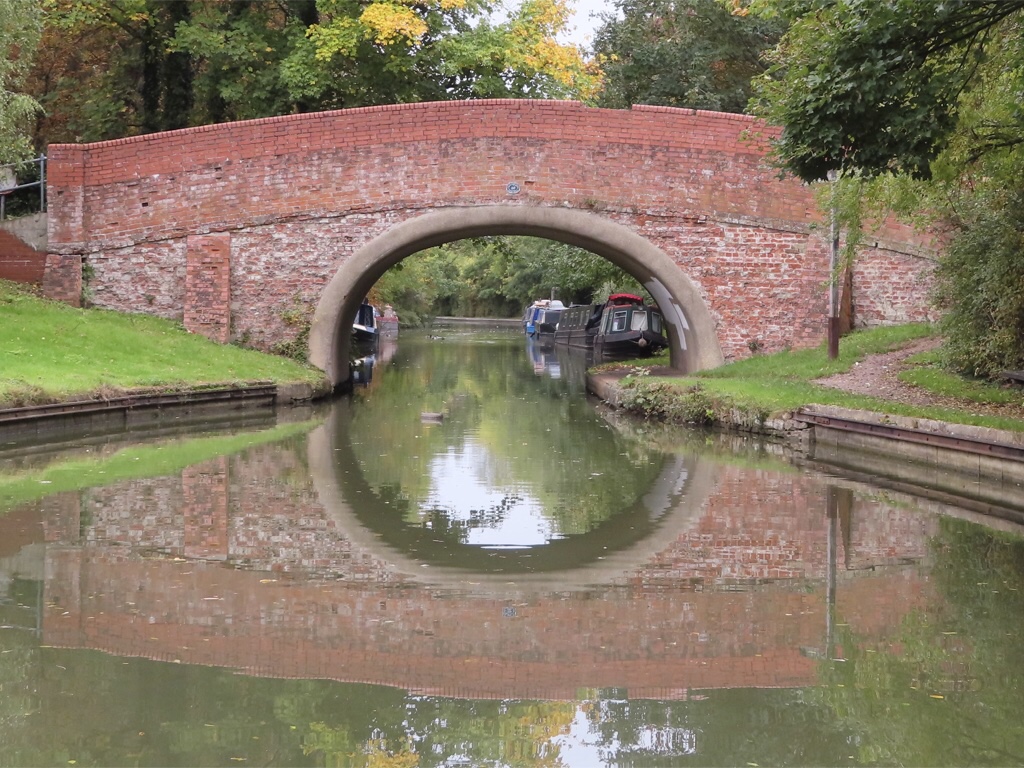
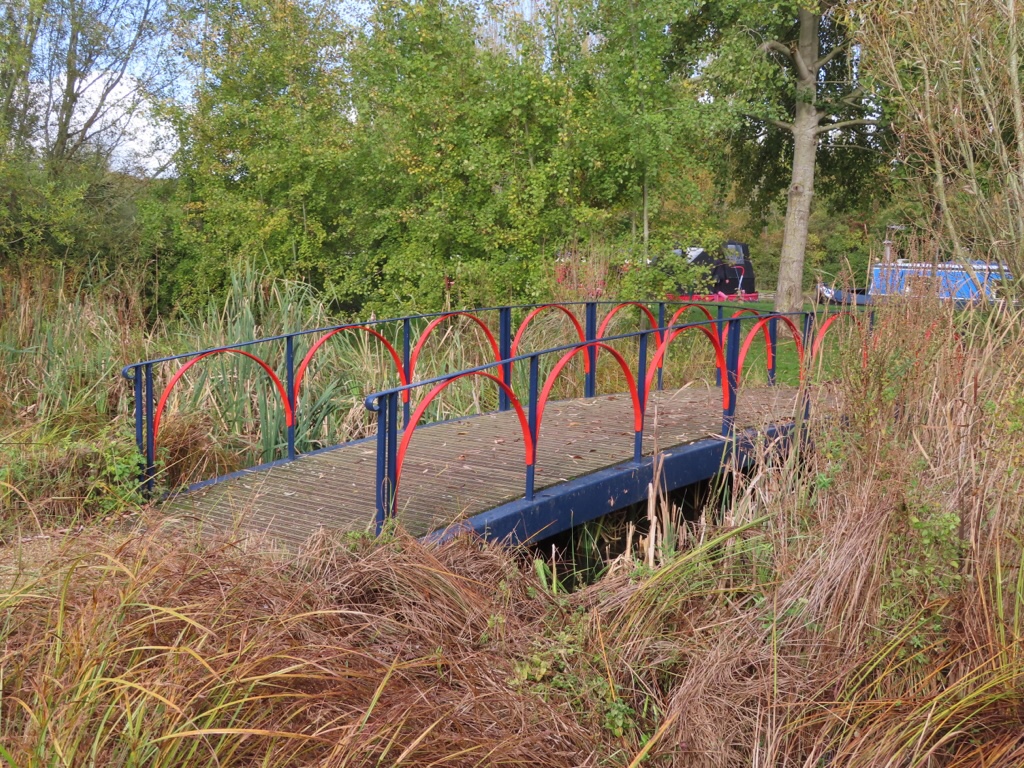
… and a trio of bridges.

Map


Chris & Elaine Afloat Again 2021

As soon as we returned from our last trip on Daisy, we were inspired to try a longer trip and a lucky cancellation gave us the opportunity.

So here we are, preparing to set off afloat once more, from the same place and in the same direction but further! We are looking forward to actually reaching Cosgrove and seeing the viaduct and aquaduct in Ouse Valley Park, and based on our progress last time, we hope to get to Weeden Bec before we turn round.

There will be a bit more housekeeping involved in a longer trip, things we didn’t have to consider before like fuel, water, rubbish and groceries and the forecast is mixed, but I have a nice new waterproof jacket, and we are really looking forward to a bit of an adventure.

Journal Entries

A Very Good Start

A Tale of Two Aqueducts

A Flight of Locks and a Haunted Tunnel

Weedon Wharf and the Northampton Arm

Stoke Bruerne to Cosgrove Revisited

The Greenest City

The Final Stretch

Map


Homeward Bound …

We took a turn round Waterhall Park before we set off. The park seems to mark the end of Milton Keynes and the beginning of the countryside.

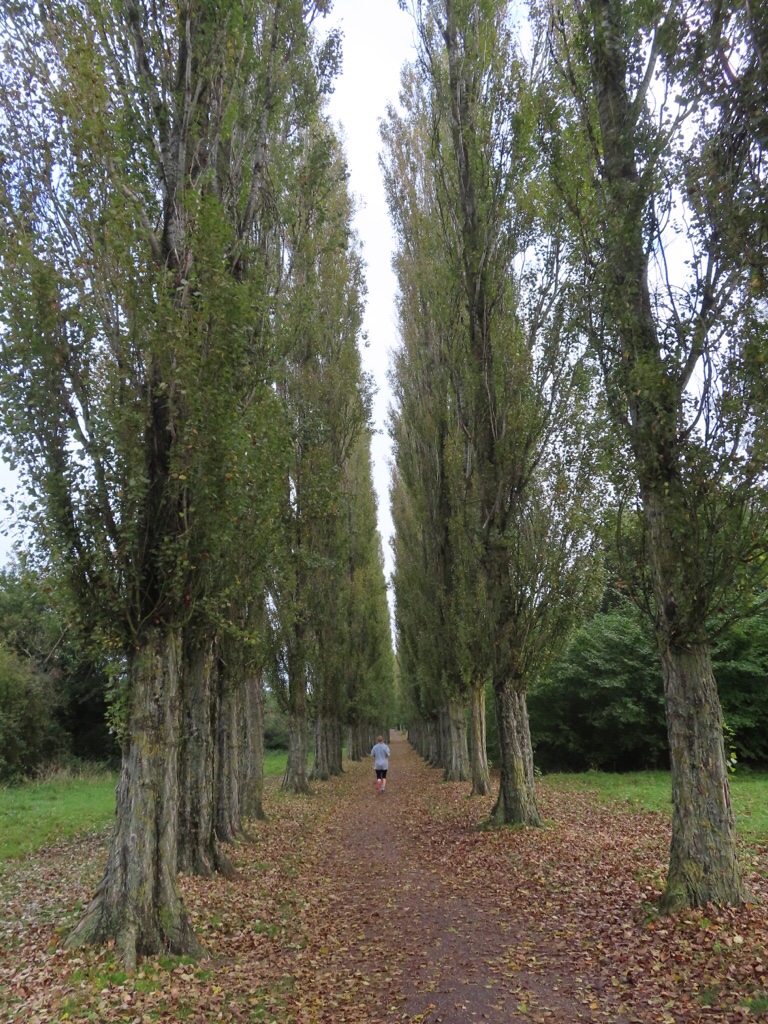
Just the other side of the towpath is an avenue of Lombardy Poplar trees which have been planted either side of a footpath which run from here, all the way through Milton Keynes.

It gives access to an almost uninterrupted stretch of parks which I wish we had explored more fully and we kept catching glimpses of the these tall trees all along the canal.

Once we set off, I had another go steering, but still couldn’t get the hang of it and even managed to collide with a parked boat … albeit very gently!

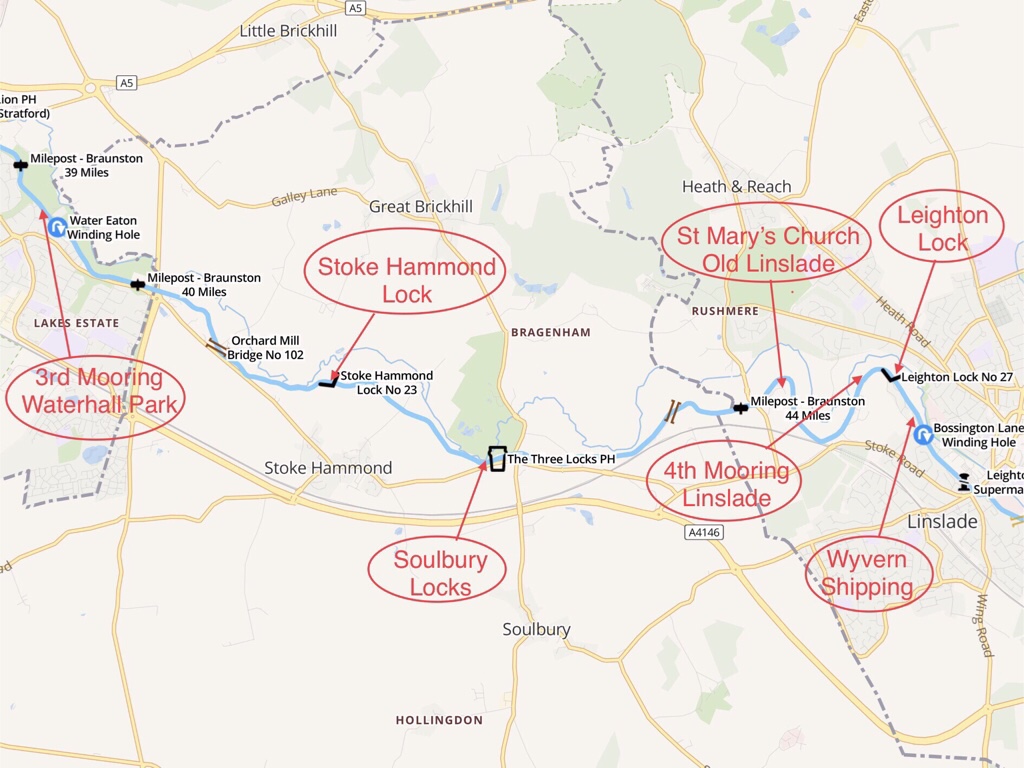
As we approached Stoke Hammond lock, we looked out for the unusual double arched bridge which we’d missed on the way up.

At one point, duplicate narrow locks were built to take smaller boats saving water and time. They have since been filled in but the second arch shows where it was.

We caught up with the boat we had started out with, also making their way back and worked the lock together.
We stopped for lunch then refreshed, continued to Soulbury and the Three Locks. As we arrived another boat had just come through, so they were in our favour, and if they could come through just a single boat, then so could we. It was hard work though, working all three locks on our own, with Chris on the boat steering and me working all the paddles and gates. I did manage to get Chris to close one set though … just so he could have a go! At the end we were quite pleased with ourselves!

A bit later we moored up and went for a short walk past St Mary’s Church in Old Linslade and along the towpath.

We moved a short way further and moored for the night beside the site of Bridge 112, carefully chosen as far from the railway as possible and leaving just a short run back to Wyvern Shipping in the morning, setting a daily record of 6 miles, 31⁄4 furlongs! We polished off the last of the cake and a well deserved cuppa!

We came away, prepared to self cater throughout and brought enough with us so we didn’t need to shop, after all we are only on Daisy for four days and keeping our distance seems sensible at the moment.

We had thought if we passed an appealing pub at lunchtime we might stop for a bag of chips but it didn’t happen, and by choosing secluded moorings we were too far from a pub for dinner. We’ve had homemade soup, sandwiches and beans on toast for lunches and the dinner menu has comprised sausages with roasted sprouts and potatoes, Higgedy Pies and veg, homemade chilli and on our last night we have pesto pasta. This has worked out really well and meant we could both enjoy the whole experience and spend our time watching the world go by rather than slaving in the galley.
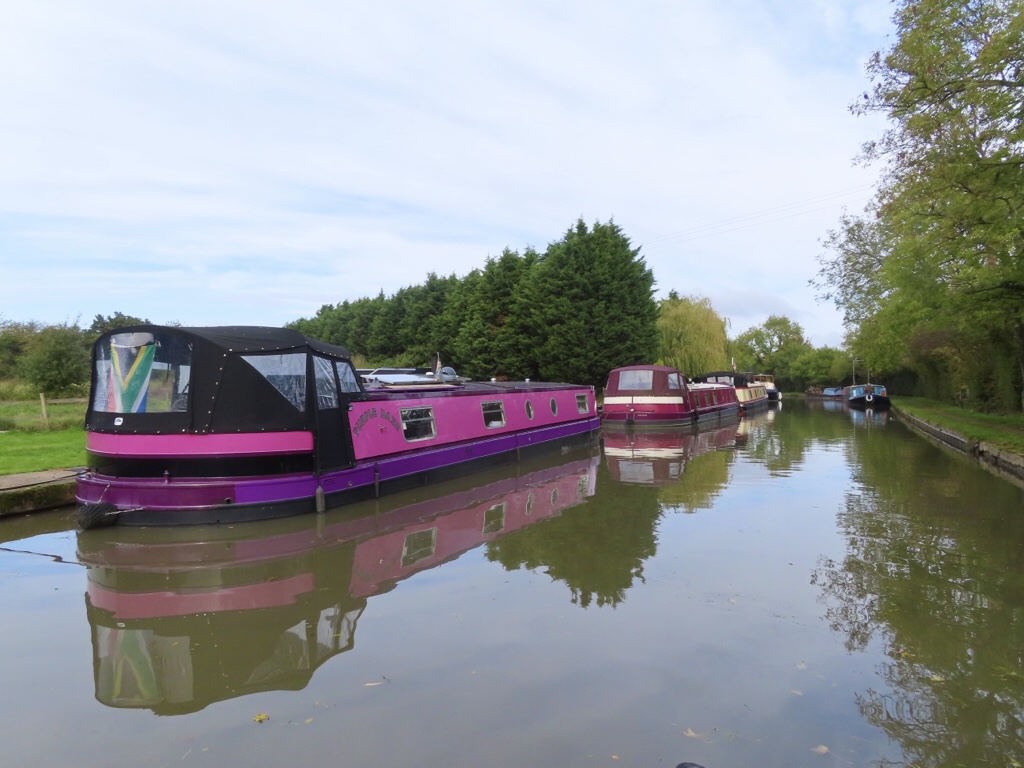
And from galley to gallery, just in case I’ve not included enough photos already, here are a few more, including some of the quirky views from the canal …

Next morning we were out on the water at 8.15 to ensure we were back on time. Just Leighton Lock to go through …

… and 31⁄2 furlongs to travel and we were back at the boat yard, handing Daisy back.

We caught up with others who had been out for a midweek trip like us, some making Cosgrove and the tunnel at Stoke Bruerne beyond, a lady who had dished up a full roast dinner one night and a chap who had backed into the winding hole by mistake, but a good time was had by all.

We’ve really enjoyed our first trip afloat and it was a perfect way to celebrate our anniversary, especially this year with options being limited. We may only have travelled a total of 22 miles, 1⁄2 furlongs and 12 locks with a revised destination of Campbell Park but we were obviously a little too ambitious thinking we could get further! Daisy is just lovely and we’ve already told her we hope to see her again soon … maybe we can get to Cosgrove next time and see the aquaduct!

Maps

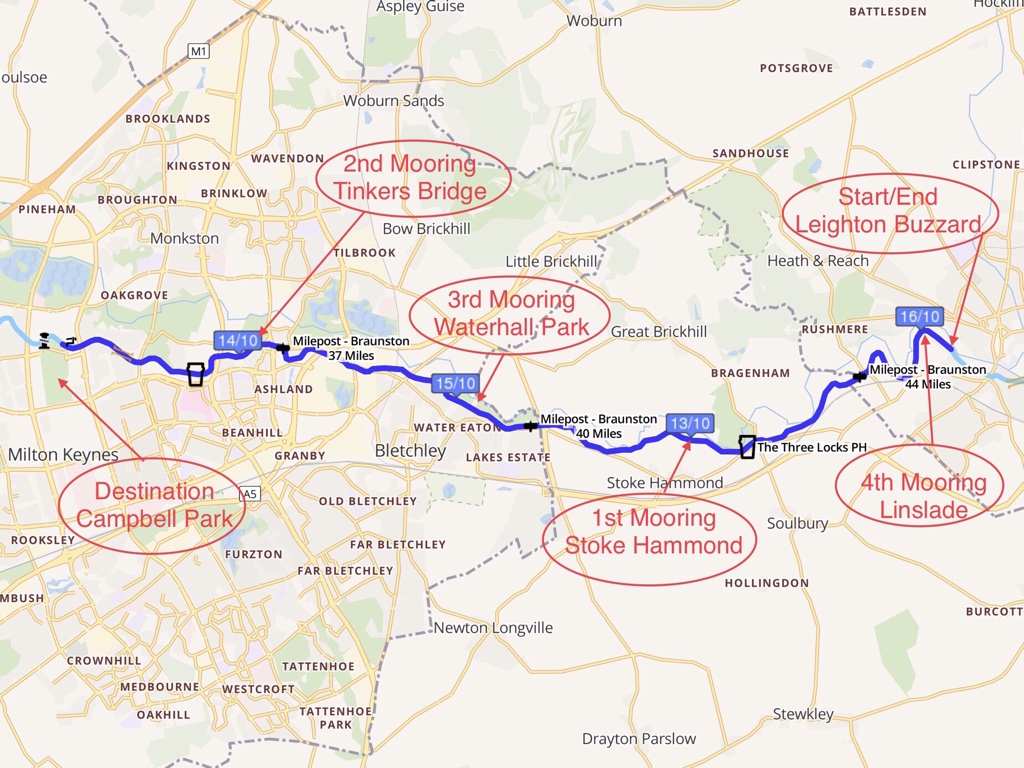
Actual Route

Celebrating In Campbell Park …

We woke on our anniversary to a lovely morning and exchanged cards and thought how lovely our mooring was, especially so close to Milton Keynes.

Already we are about halfway through our trip so we looked at the map to decide how much further we could get and where we could turn. Needless to say with a 48 foot boat and a canal that’s 30-40 foot wide, you can’t turn round just anywhere! We needed a winding hole (pronounced win-ding) which is a ‘notch’ or specially widened area made for turning. We saw the best one would be 2 miles ahead, just short of Campbell Park in Milton Keynes, otherwise we would need to travel another 45 minutes (and back) so it was important we didn’t overshoot it!

Chris did a grand job, waiting till other boats had passed, heading the bow into the notch and swinging the stern round.

We then moored up across from the noisiest stretch of canal so far …

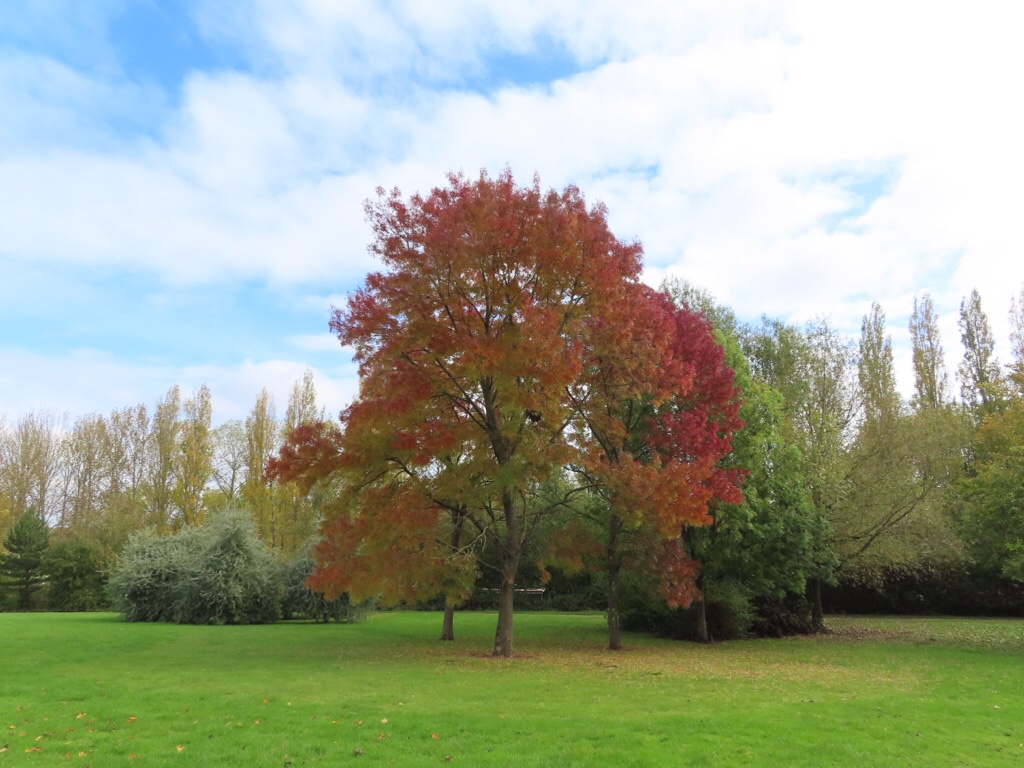
… and walked to Campbell Park, a huge rectangular green space in the centre of the city, edged by the canal on one side and containing a cricket arena and full of autumn colour.

The Belvedere rises in the centre and offers views across Bedfordshire and there is a wild flower meadow in the middle which is apparently grazed by sheep in the summer! The original vision was that the park would also be the cultural centre of the city and there are a number of works of art and sculptures throughout, the most prominent being the Light Pyramid which replaced the original basket beacon which was destroyed by lightening. It is made of steel and painted white and was first lit for the Queen’s Diamond Jubilee on 4th June 2012 and is still lit to commemorate special local and national events.

The Milton Keynes Rose is a commemorative public space featuring a calendar of days important to the people of Milton Keynes. Pillars are arranged like a flower, many already inscribed and others left for future dedications.

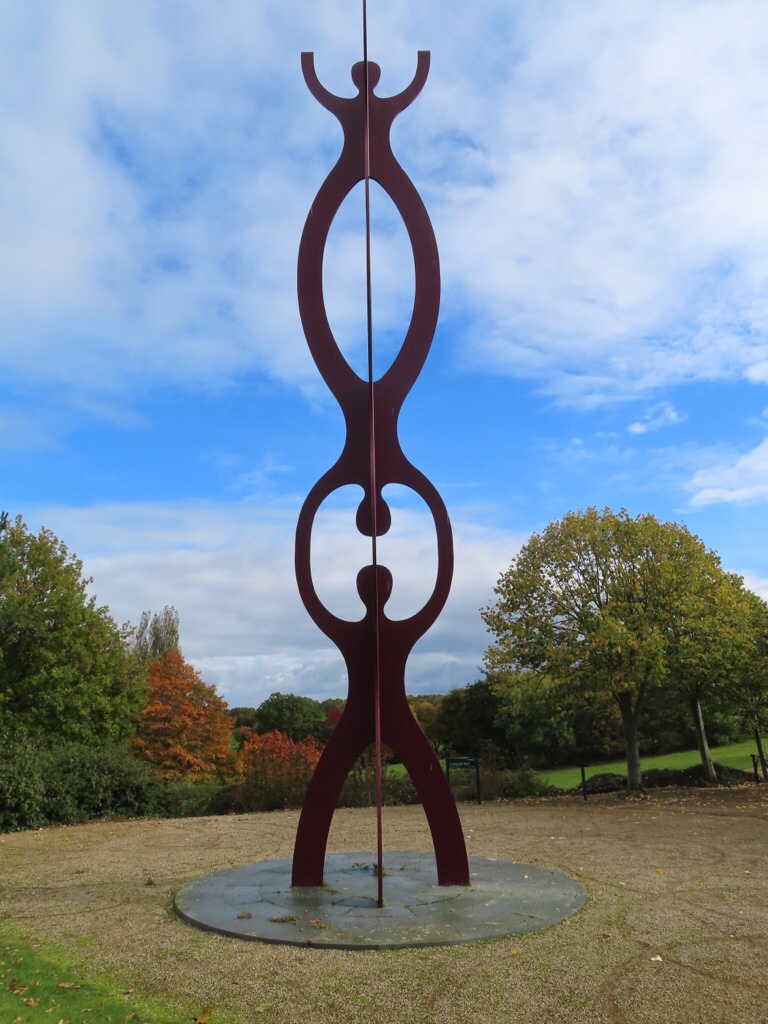
Other pieces include Head …

… Gnomon or Shadow Castor made of Ffestiniog blue grey slate and bronze which casts its shadow just like the arm of a sundial it is named for … but Chris keenly pointed out it is by the cricket pitch and represents wickets and a ball … surely I had realised that … but I hadn’t!

… Onwards and Upwards, carved from a single piece of eight-metre-high sweet chestnut and representing the growth and development of the park and the city …

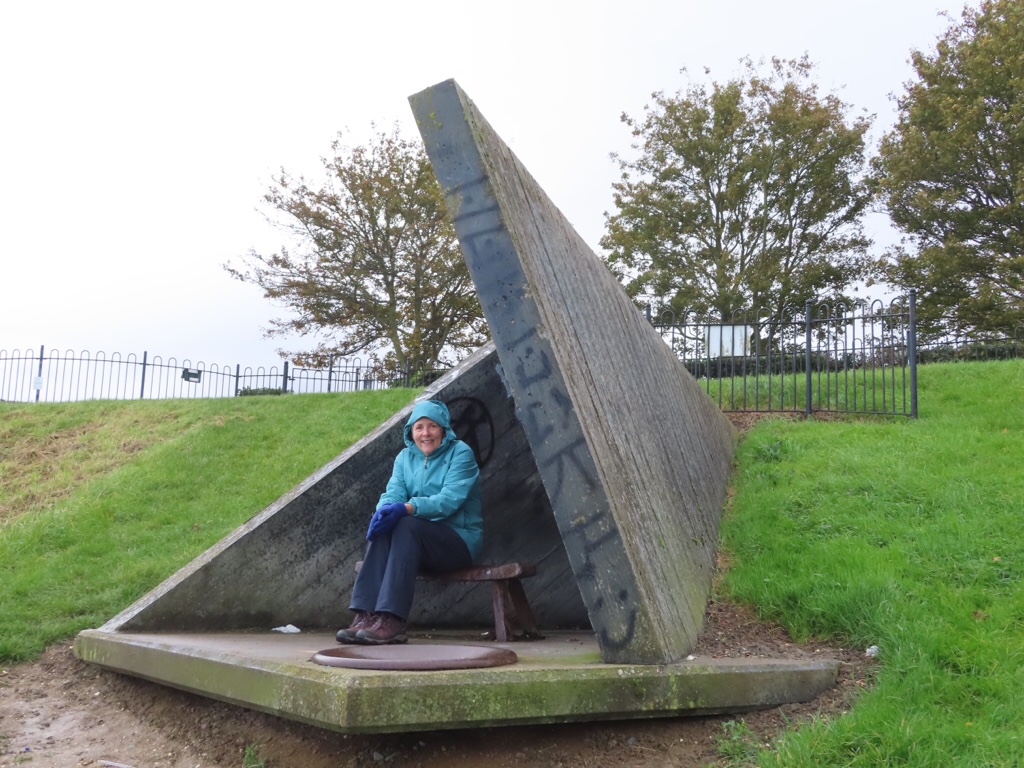
… Cave, supposedly offering shelter in the park, but not much as it doesn’t really have a roof …

… Chain Reaction, a 3D model of figures balanced like acrobats, in an endless chain which changes as it is viewed from different angles …

… and Armillary Sphere in the centre of the Labyrinth to celebrate the 10th anniversary of MK Housing Association.

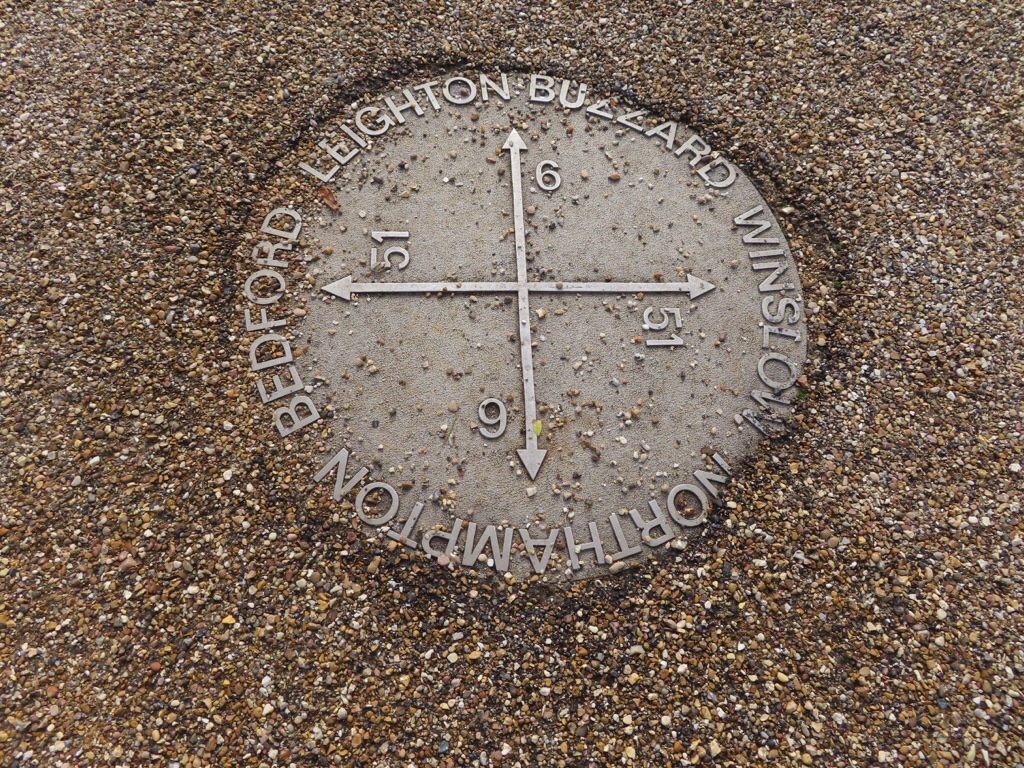
Chris was intrigued by this plaque, confused by the seemingly incorrect distances …

… until I pointed out this post!

We returned to the boat for lunch …

… before beginning our return trip. We barely had to stop at Fenny Stratford Lock with its Swing Bridge as it was in our favour and open. We went through with another boat, and another boat was waiting so we didn’t even need to close it, quite a contrast to the day before! Before we knew it, we were back at Waterhall Park, where we had stopped for lunch the day before and moored up after covering exactly 6 miles for the day.

The sun came out when I made the tea, so we sat on the bow, admiring the canal.

Later we celebrated our anniversary with a bottle of fizz and a very delicious White Chilli made from a Simon Rimmer recipe which I’d brought with us frozen, served with greens, grated cheddar and tortilla chips!

We played several hands of Uno and Chris was pleased to reign once more as Uno Champ!

Maps

Finding Our Feet …

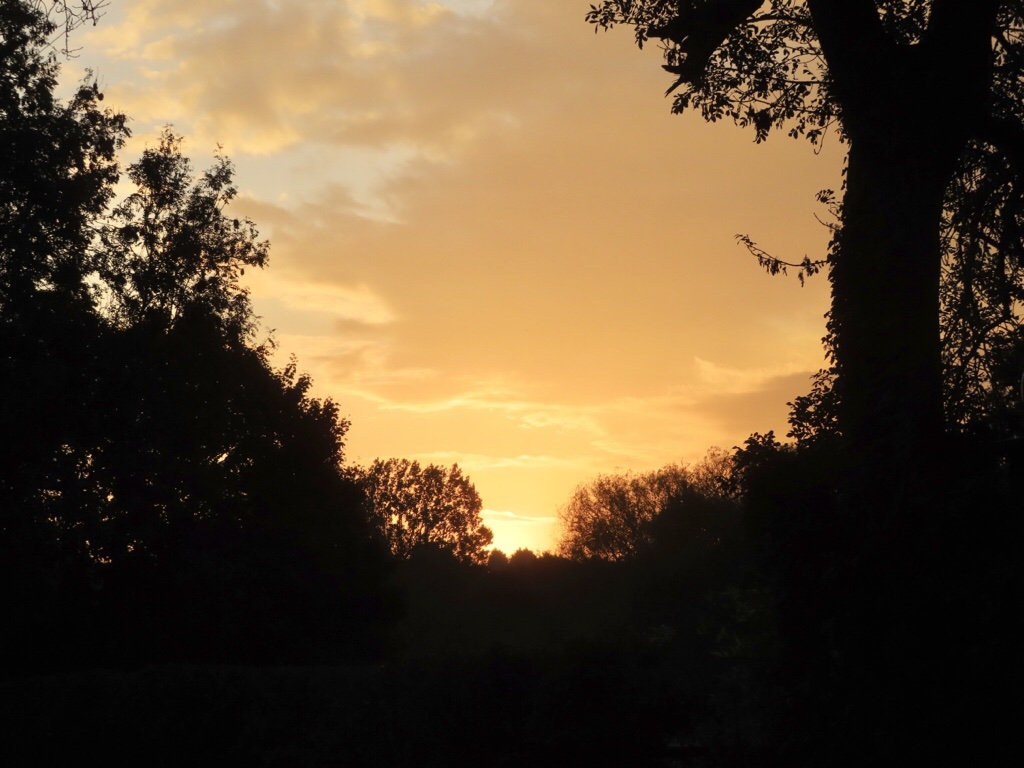
We slept pretty well, despite the snug bed, but both of us woke in the night and were kept awake for a while by unfamiliar nocturnal noises. The sky started turning pink during our first cuppa, so we dressed quickly and walked down the tow path to the bridge and took a few pics …

Over breakfast we were feeling quite pleased with ourselves that we were already further along than we had expected, in fact 3 locks and 1 mile further … but we shouldn’t have been congratulating ourselves so soon …

I found a really interesting website with details about this stretch of the Grand Union Canal and read about Soulbury as I drank my tea. Stating the pretty obvious, when you think about it, when a boat passes down a lock it takes a whole lock of water too, so unless this is replaced, the canal would eventually dry out. When the canal opened in 1800, reservoirs were built to collect water and keep the levels high enough for boats to stay afloat. However this might not be enough with heavy traffic or a drought, so a series of nine pumphouses called the ‘Northern Engines’ were built, including the ones at Soulbury and Stoke Hammond. Each housed a steam powered pump that drew water up from below the lock and pumped it through a tunnel and back above the lock. The buildings had chimneys, few of which survive, and were often decorated with fan lights and ornamental glazing bars which can be seen at Soulbury and Stoke Hammond. At Soulbury, water is still recycled using a pump to keep the canal open and the pumphouse is currently undergoing restoration, which explains all the metal fencing and here’s a closer picture …

Every lock on the canal, like every bridge, has its own number, starting with No1 at Braunston where the Grand Union Canal joins the Oxford Canal. The flight of three locks at Soulbury, No 24, 25 and 26, take the canal 6m further uphill from its lowest stretch across the Ouse Valley in Milton Keynes up to Tring summit at 121m above sea level.

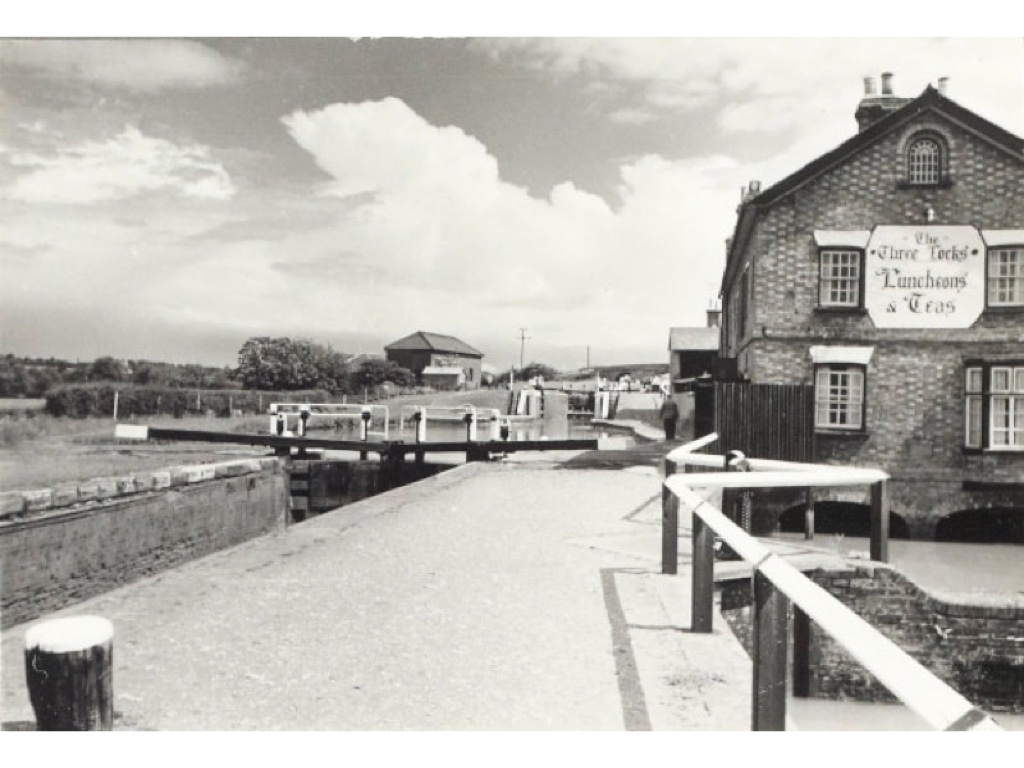
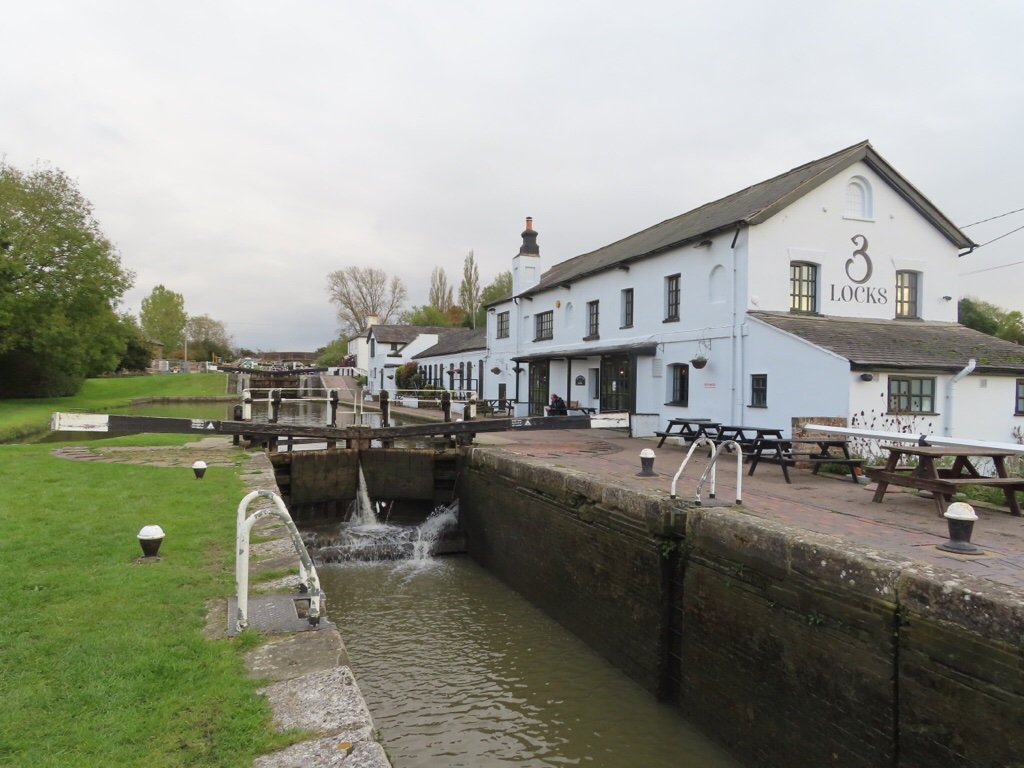
The Three Locks was purpose built as a canalside pub to provide services to travellers on the canal and was originally known as The New Inn. Census records from 1881 list the innkeeper as Mary Faulkner who ran the pub with her two servants, Charles Barron and Mary Curtis. On the night of the census the inn had one guest, Joseph Staige, a retired optician from Birmingham who was perhaps stopping off overnight on his way home from London on a flyboat. Here’s an archive photo from maybe the 1950’s … not much has changed except the colour and the boats in the lock.

Anyway, time to shake a leg and get on with the day!

We set off after breakfast at 10.00 and we soon came to Stoke Hammond Lock. A real Waterman was bringing a pair of boats through the lock towards us which meant the lock was ready for us to take the other way …

… and here’s the pumphouse with its fanlight.

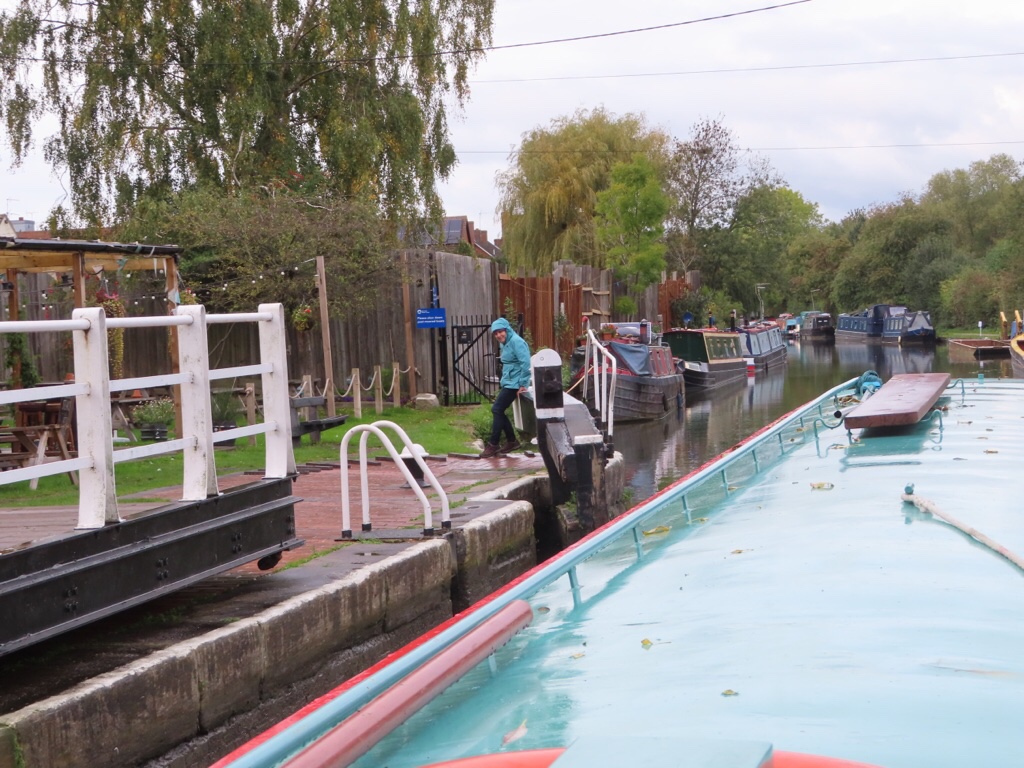
Only one boat had passed us this morning, so we were surprised to see another come up behind us to share the lock. She and I got chatting as we worked the lock … they had renovated their boat and had it for 8 years. I think he shared some tips with Chris, who managed to moor and pick me up perfectly!

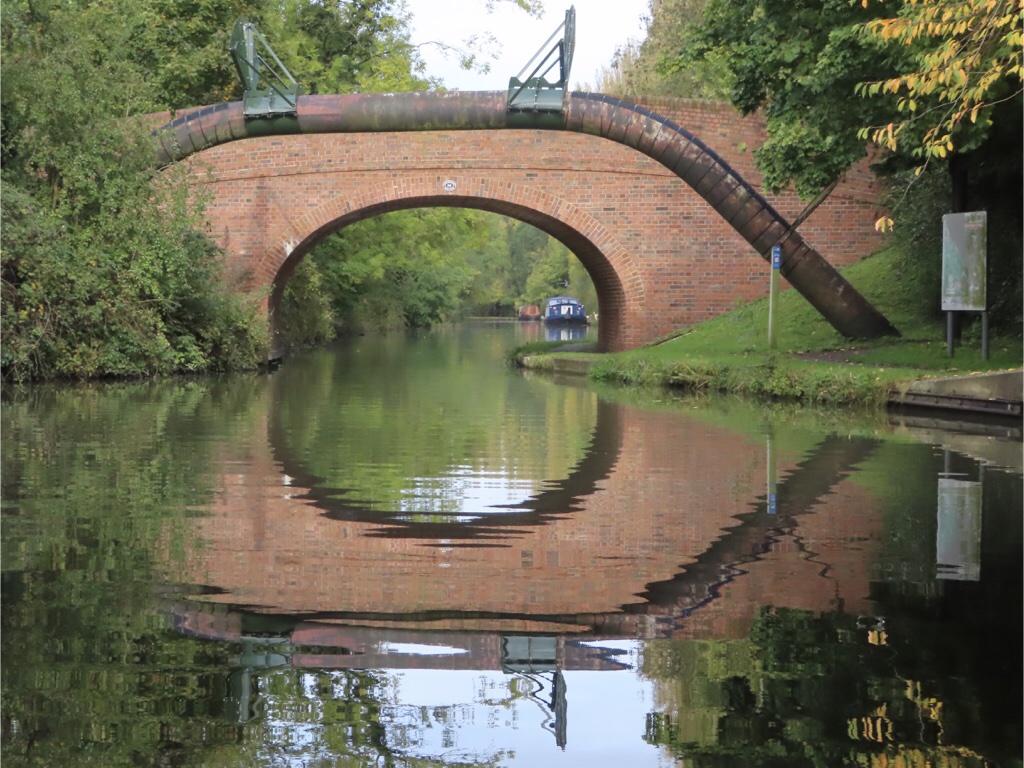
Incidently, if you wondered what a pipe bridge is … as we did … here is a prime example, taking a pipe over the canal!

Some time later we passed a marina …

… then decided to stop for a coffee. Easier said than done though as mooring proved quite tricky … we managed to get the bow in … but the stern stuck out … so we tried again … twice … before we had success! I think the lesson learnt is not to leave it too long to stop for a break, as concentration is already waning when it’s most needed. We started with coffee … then I went for a short walk round Waterhall Park, where I saw the River Ouse …

… then we had lunch!

Setting off again was easier said than done as we seemed to have got stuck in the mud. Chris got the pole and despatched me to the other end of the boat in the hope we could push free!

Finally we were free and a mile or so further on we reached Fenny Stratford where Bridge 96 takes the canal beneath the old Roman road of Watling Street and the oldest known gold coin in Britain dating from 200BC-100BC was found here in 1849.

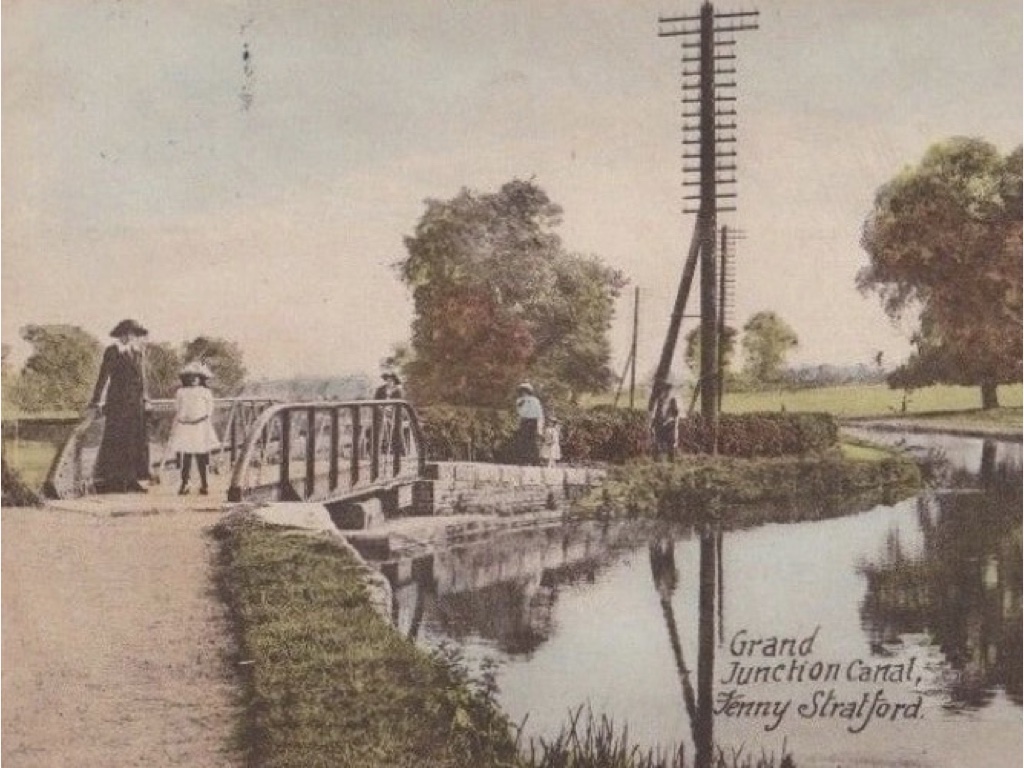
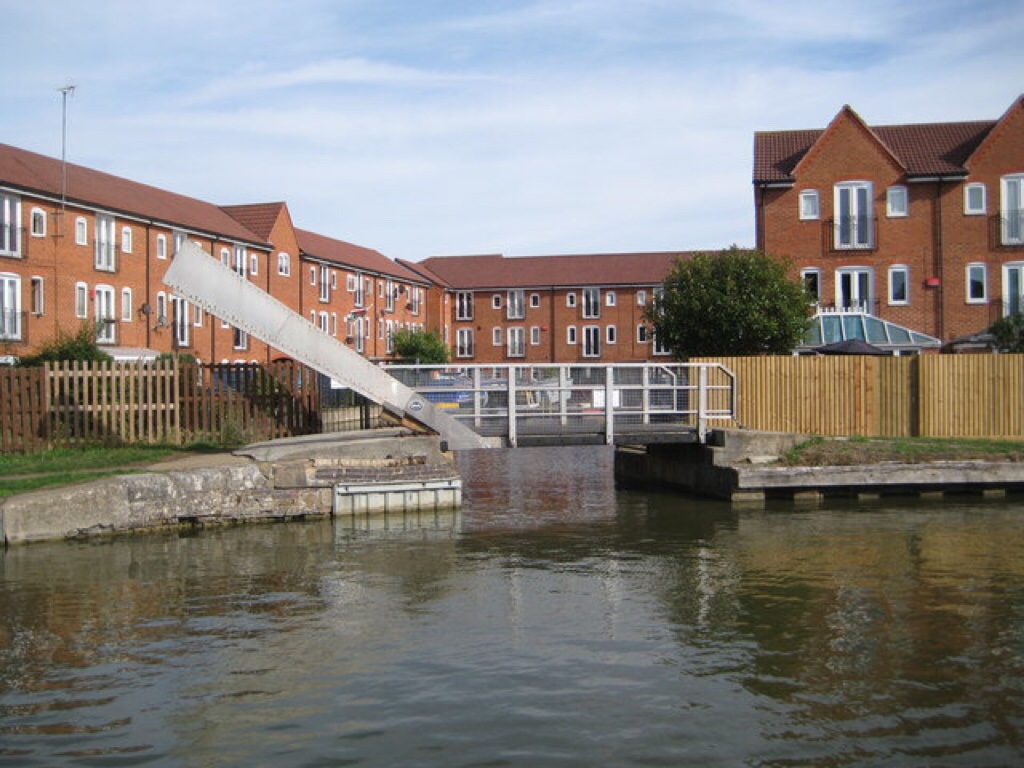
Here are a couple more then and now images of the bridge …

… and houses on the site of a brick kiln and a wharf which was used to load goods from barges.

The towpath was carried over the entrance to the wharf by a swingbridge, since replaced by a liftbridge. There would have been wharves like this all along the canal, providing a transport network. The canal was also useful for other communication and large telegraph poles lined the route. A GPO repeater station amplified signals so they could travel north, or during WWII to the code-breakers at nearby Bletchley Park.

Just past the town is Fenny Stratford Lock, the first lock that raises the level of the canal after it has crossed the long flat plain of the Ouse Valley. We managed to moor up quite easily this time and went to check it out.

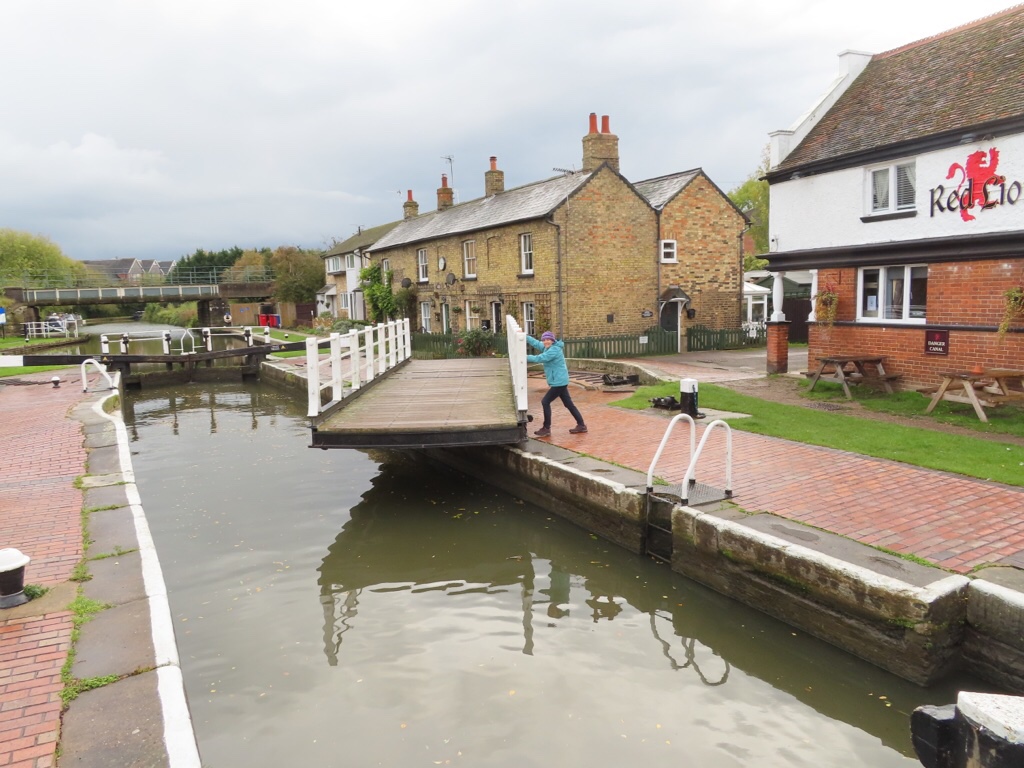
The lock had been left full, so we just needed to open the gates, but as I was taking a few pictures, I noticed an added complication, a swing bridge in the middle of the lock!

The sky darkened and the rain started, so we decided to wait and see if it would blow over.

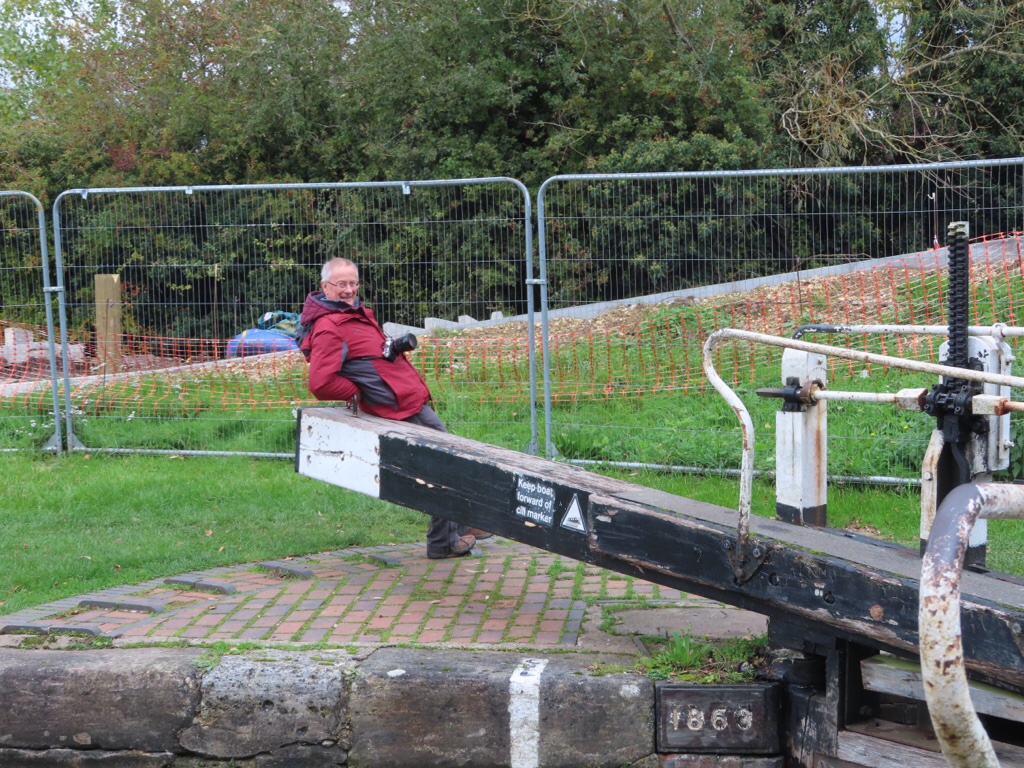
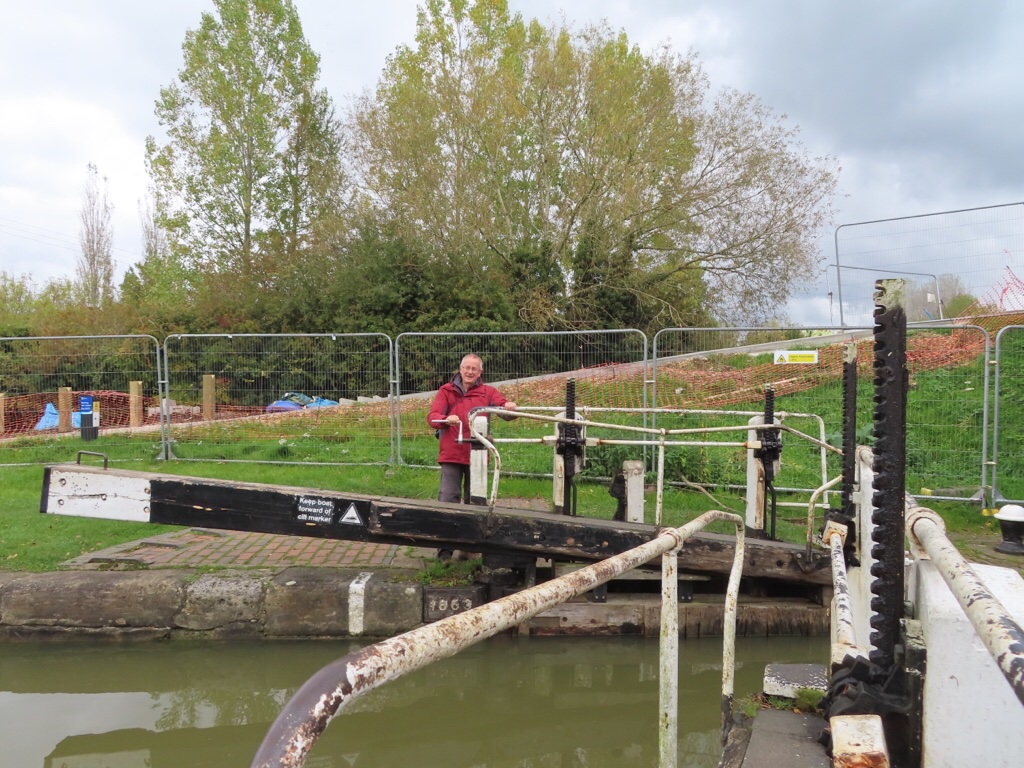
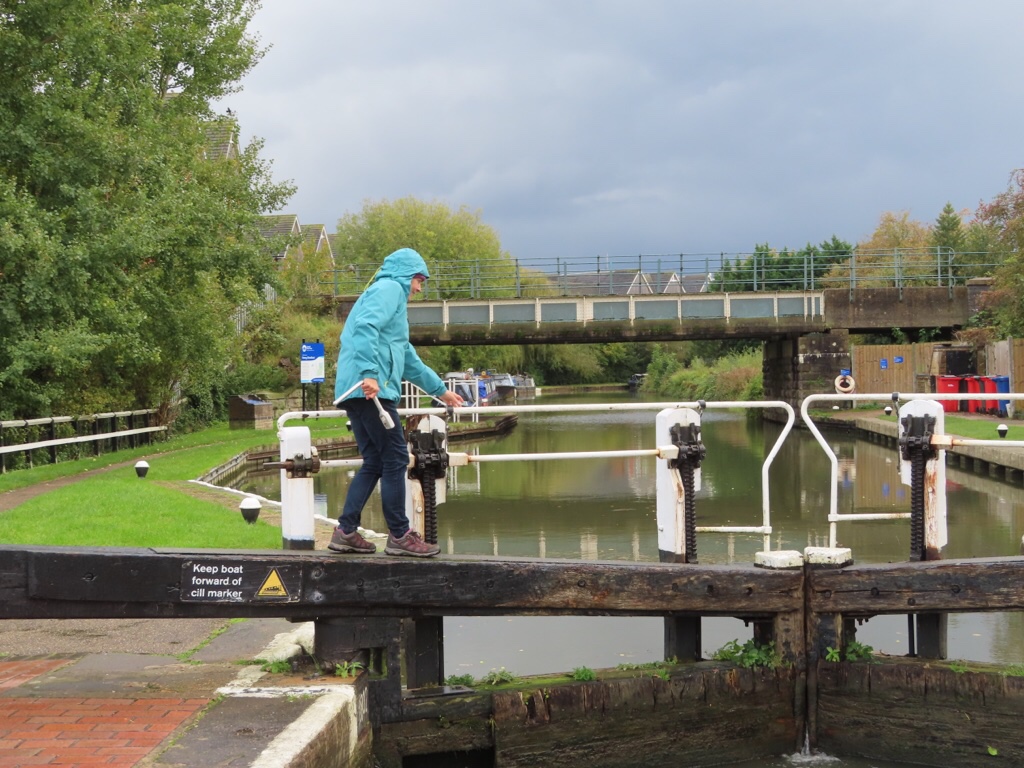
We didn’t have to wait long, just a passing shower. No other boats had come, so we started to work the lock ourselves. I tried to move the swing bridge, but struggled and Chris came to help … finally he had a chance at some manual labour!

I opened the lock gates, Chris moved the boat into the lock. I closed the gates, opened the paddle on the other gates so the water equalised, then opened the gates. Chris took the boat out and moored while I closed the gates, but he had to help again with the swing bridge. I remembered that so far I had taken a few pics of Chris, but there were none of me, so I handed over the camera to even the score.

We checked we had left the lock as we should, then set off again. I really enjoyed working this lock as we remembered how to do it and managed all on our own … a real sense of achievement!

The sky was getting grey again and if it rains, the skipper gets wet, so we started to keep an eye out for a place to moor up … it’s not as easy as it sounds as you have to be a reasonable distance from hazards like bridges and bends not too close another boat and preferably not right by a noisy road. Coming into Milton Keynes, our options were reduced and we chose to stop just before Tinkers Bridge 90B, which we managed without event.

Sitting over a cuppa, we both felt the day had been quite hard work – the concentration needed to steer, as just a brief lapse has the boat heading for the bank – as well as the physical effort at the locks. We are resigned that as beginners, this is definitely slow travel as we have only travelled 5 miles, 3⁄4 furlongs today, and our idea of getting to Cosgrove is no longer realistic. Instead we will enjoy our tea and cake and take some time out. Chris is busy editing photos of swans …

… while I’m happy to put my feet up and read some more of my carefully chosen getaway reading … Canal Pushers by Andy Griffee, a murder mystery set on a narrowboat called Jumping Jack Flash on the Grand Union Canal no less!

Another tasty supper … this time sausages with roasted sprouts and potatoes with pomegranate molasses and a nice drop of Merlot!

Maps

The Adventure Begins …

We enjoyed our 90 minute drive to Leighton Buzzard, noticing how some of the leaves are turning already. We stopped briefly at Tiddenfoot Waterside Park to stretch our legs and eat our sandwiches …

… and caught the first glimpse of the Grand Union Canal.

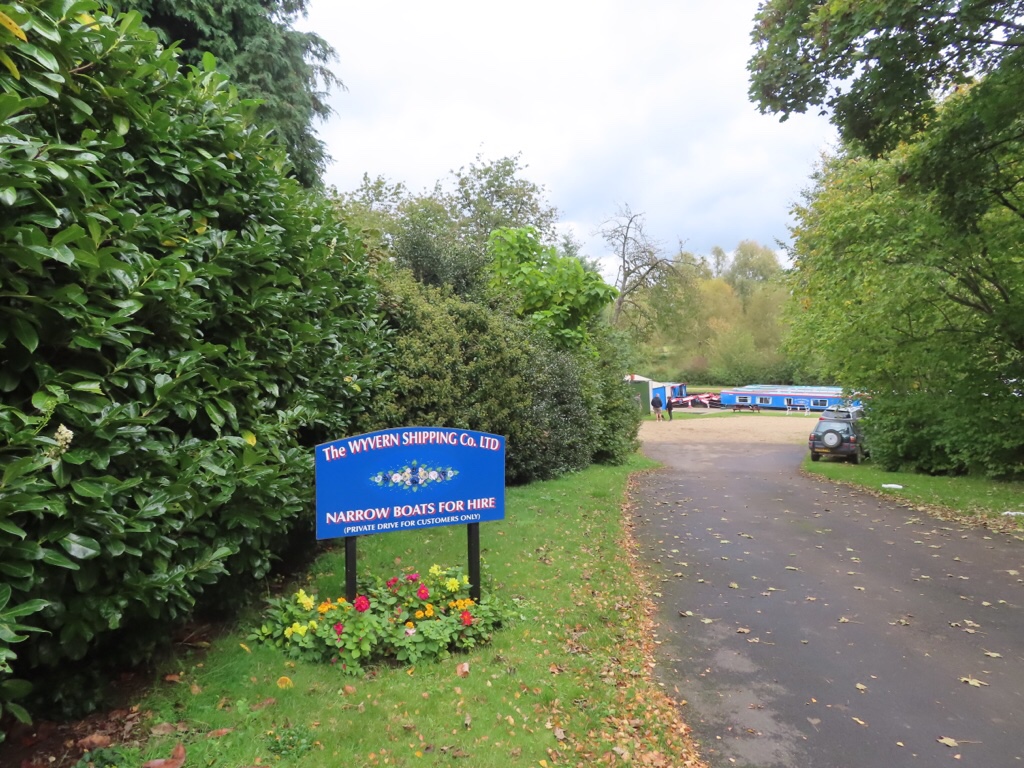
We were at Wyvern Shipping at 1.30 on the dot to collect Daisy, and were quite surprised to see lots of other boats were going out as well.

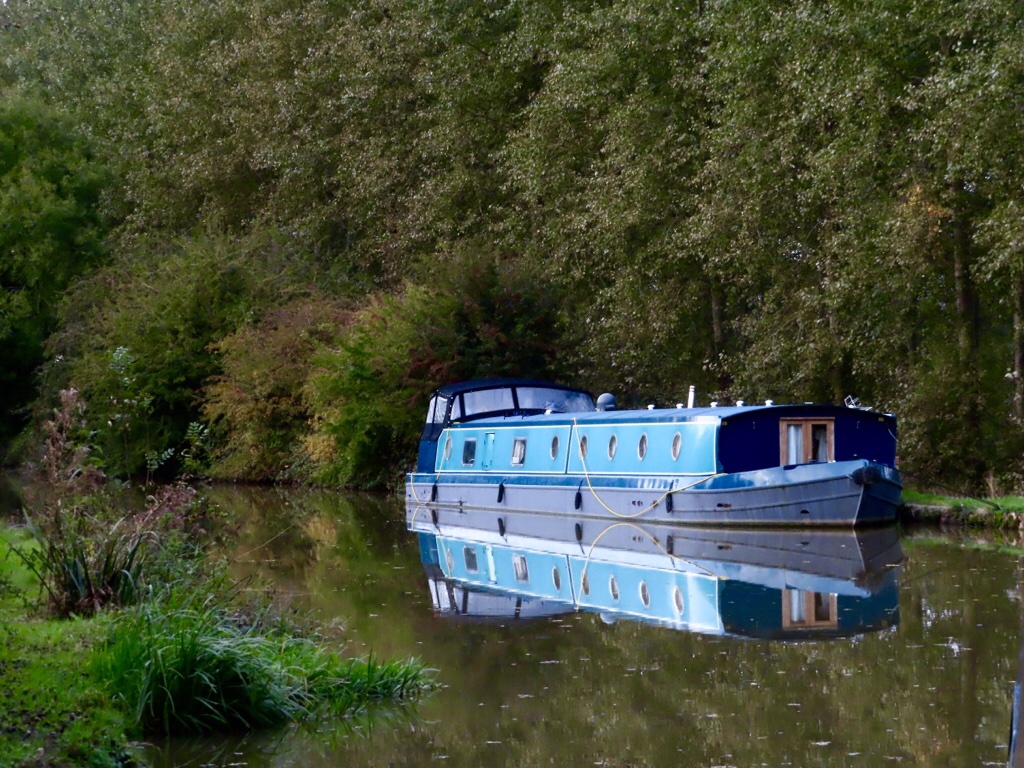
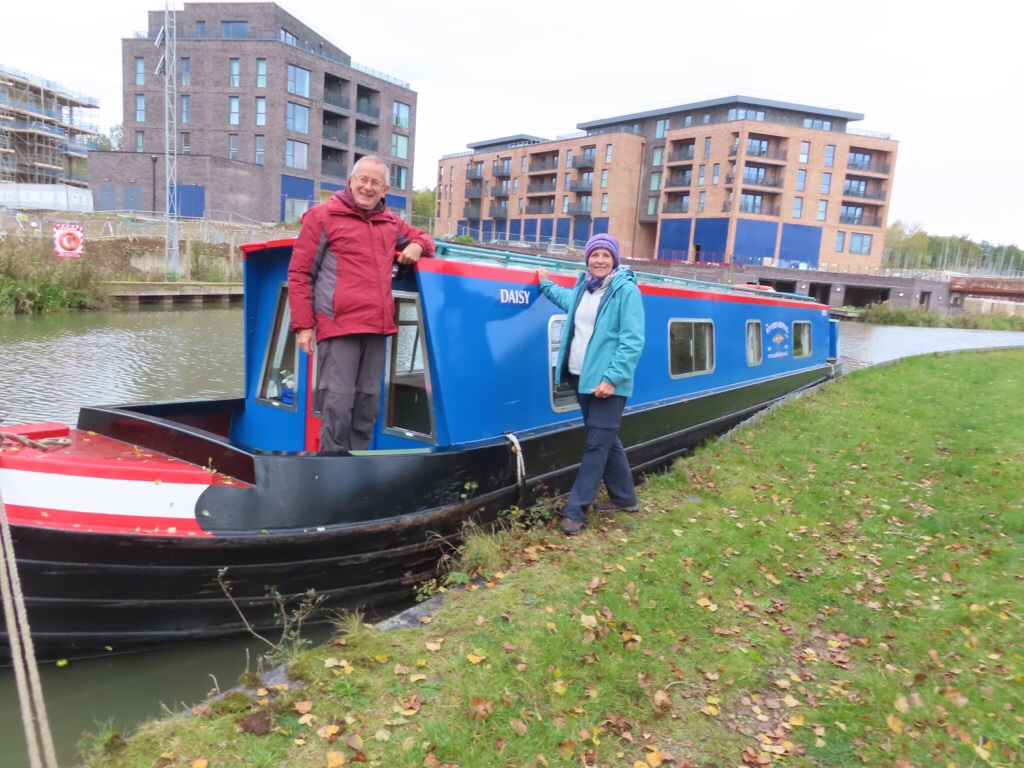
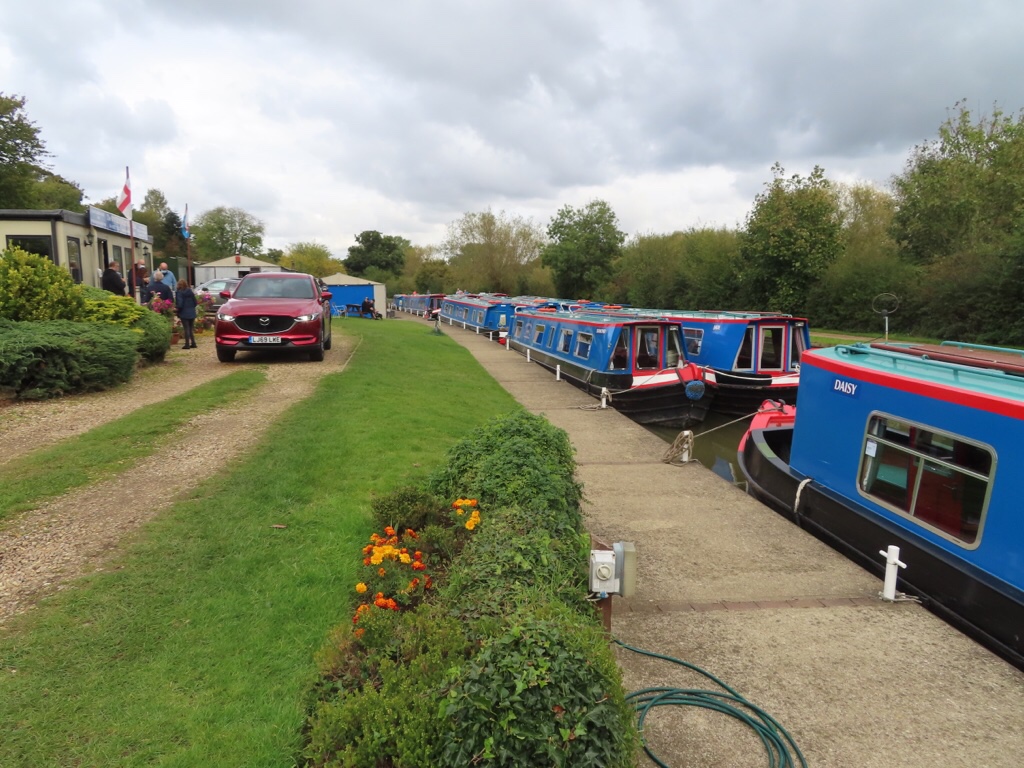
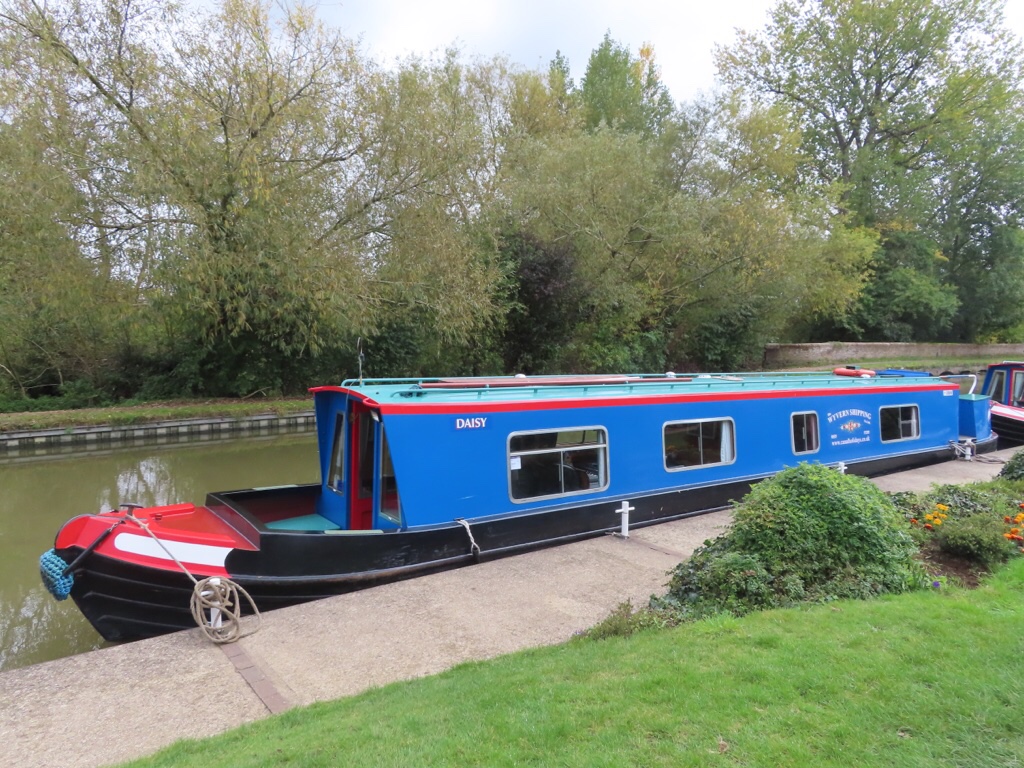
While Chris brought the car over to load our things, I quickly took some snaps of Daisy.

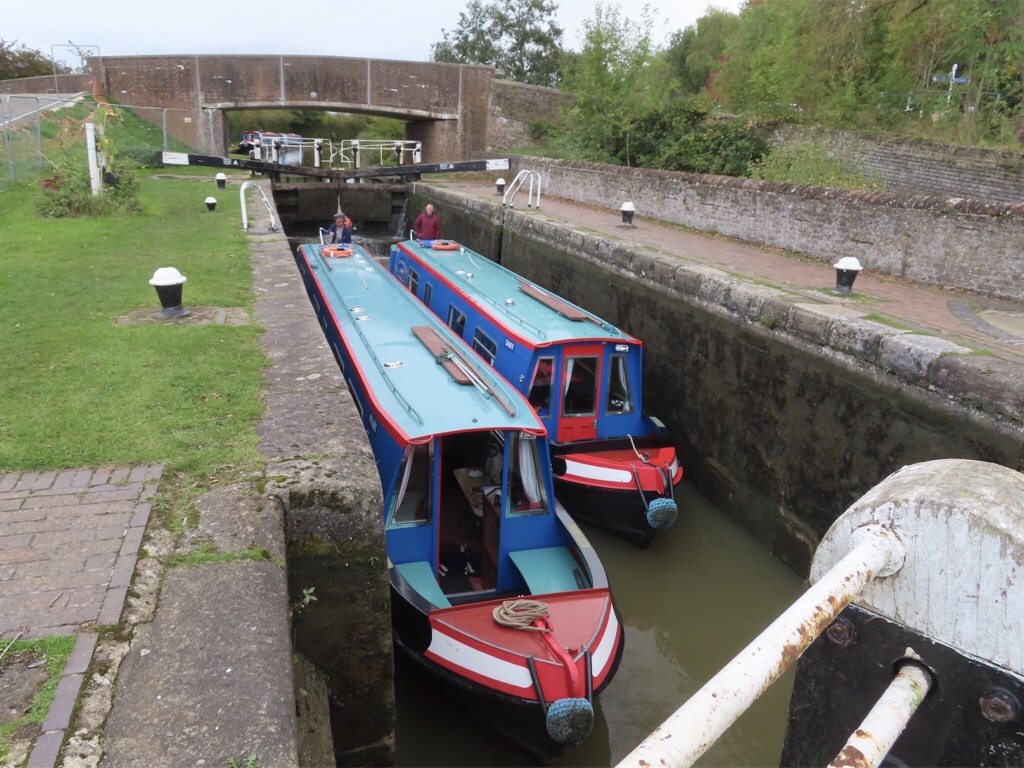
Simon gave us a full tour inside and out, together with operating details and safety. It seemed a lot to remember. Then we set off with Simon showing Chris how to manoeuvre the boat and me how to work the first lock, Leighton Lock. The locks here are big enough to take two boats, and another of the Wyvern boats had come down the canal behind us so we went through together. Chris might have the most technical task but I seem to have the most active, having to use the windlass to raise and lower paddles and my back to push the gate open and closed. Simon suggested we proceed to the three locks at Soulbury and go those together with the other boat and with all the instructions fresh in our mind, it seemed a good idea. We had thought we might moor short of the locks for the night and do them fresh in the morning, but it is best not to do this set of 3 locks on your own, and we could end up waiting a while for another boat the next day.

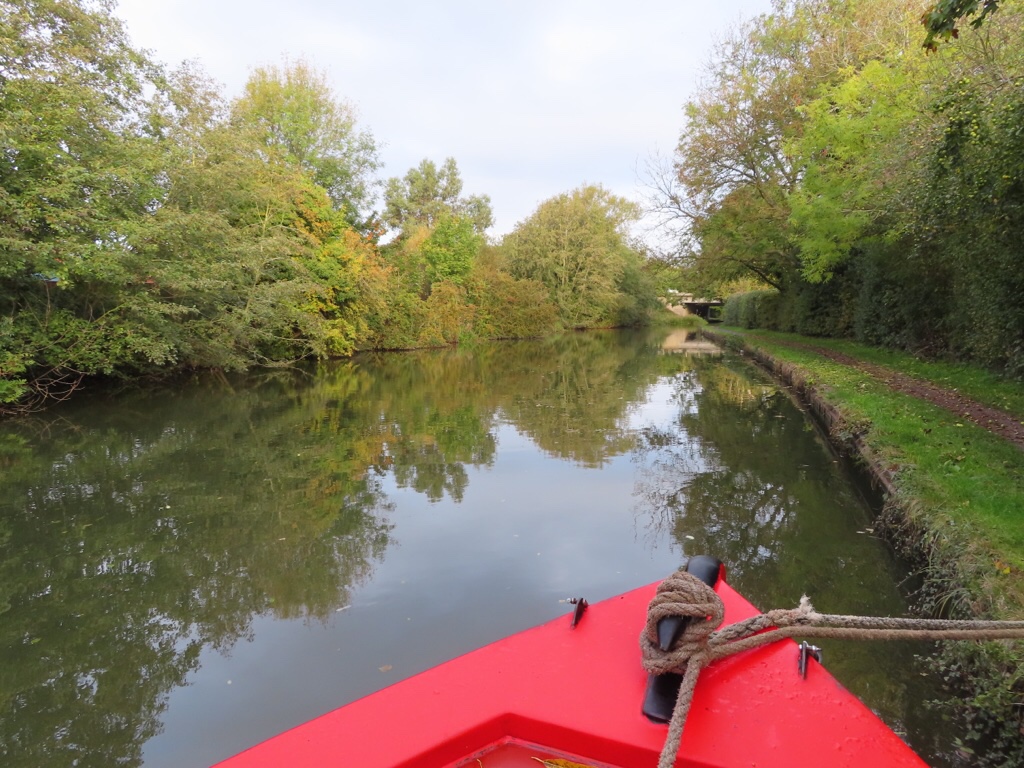
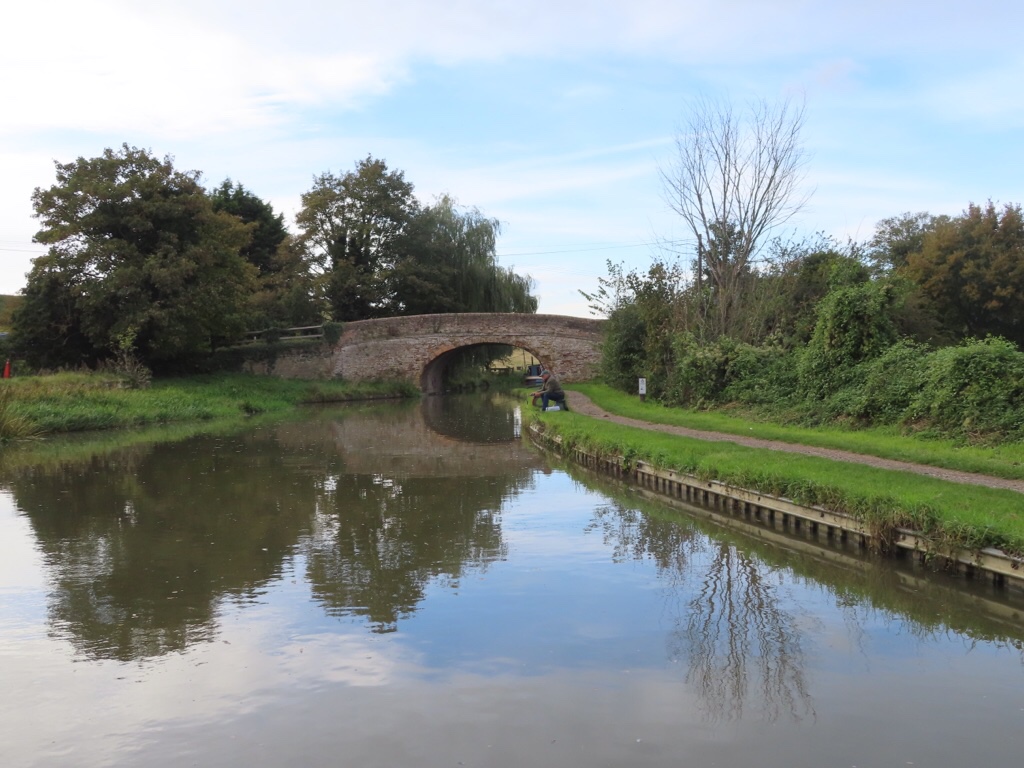
Our induction complete, Simon returned to the boatyard and I put the kettle on for a cuppa. The canal meandered through the Ouzel Valley past farmland & woodland and under several bridges …

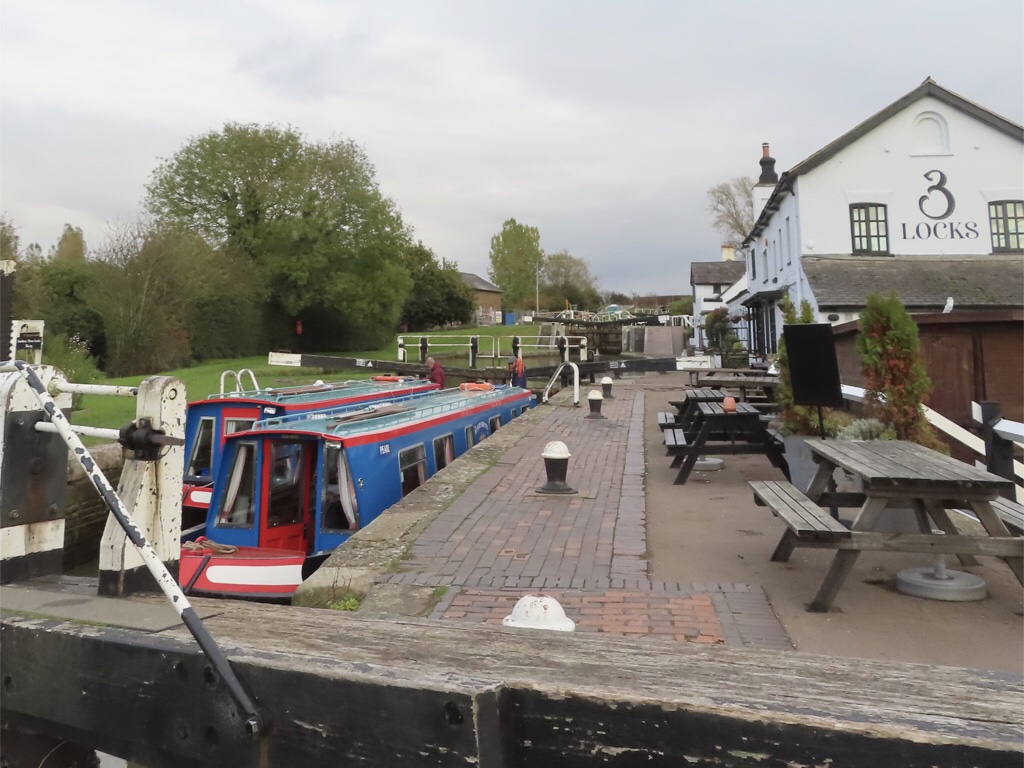
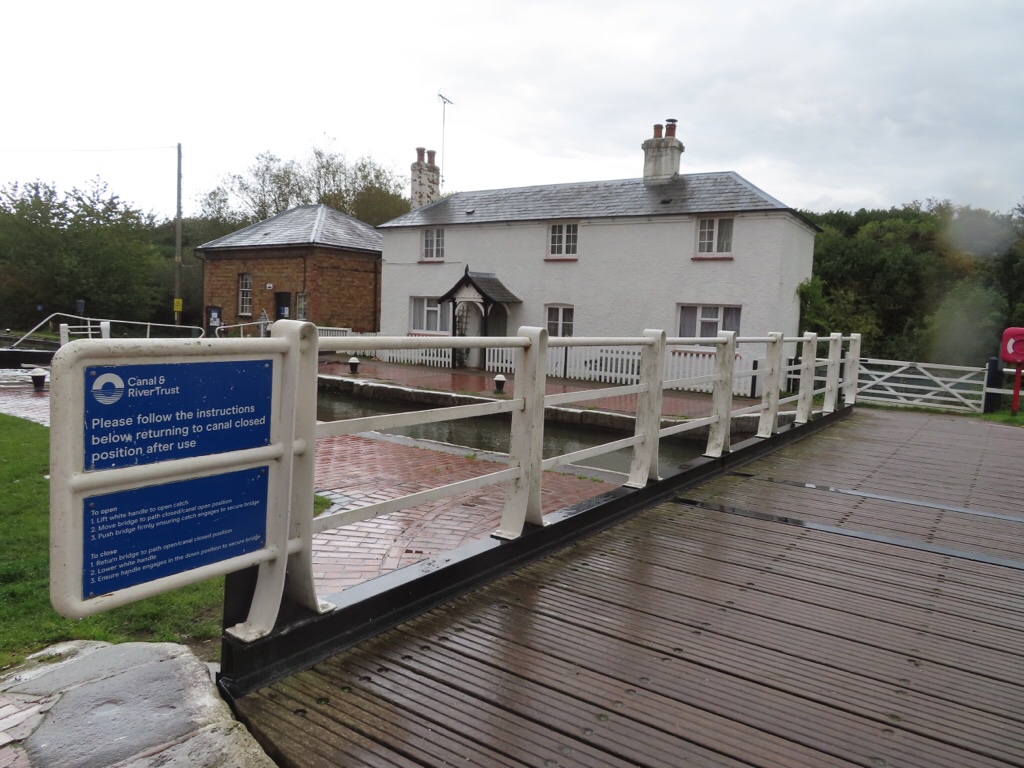
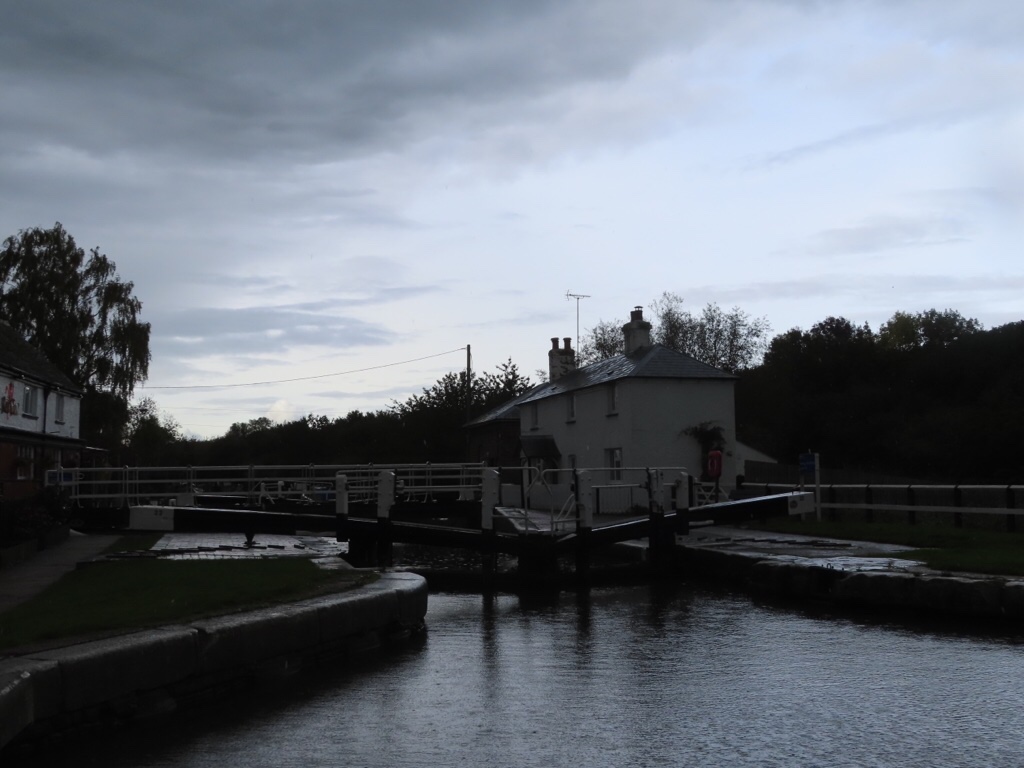
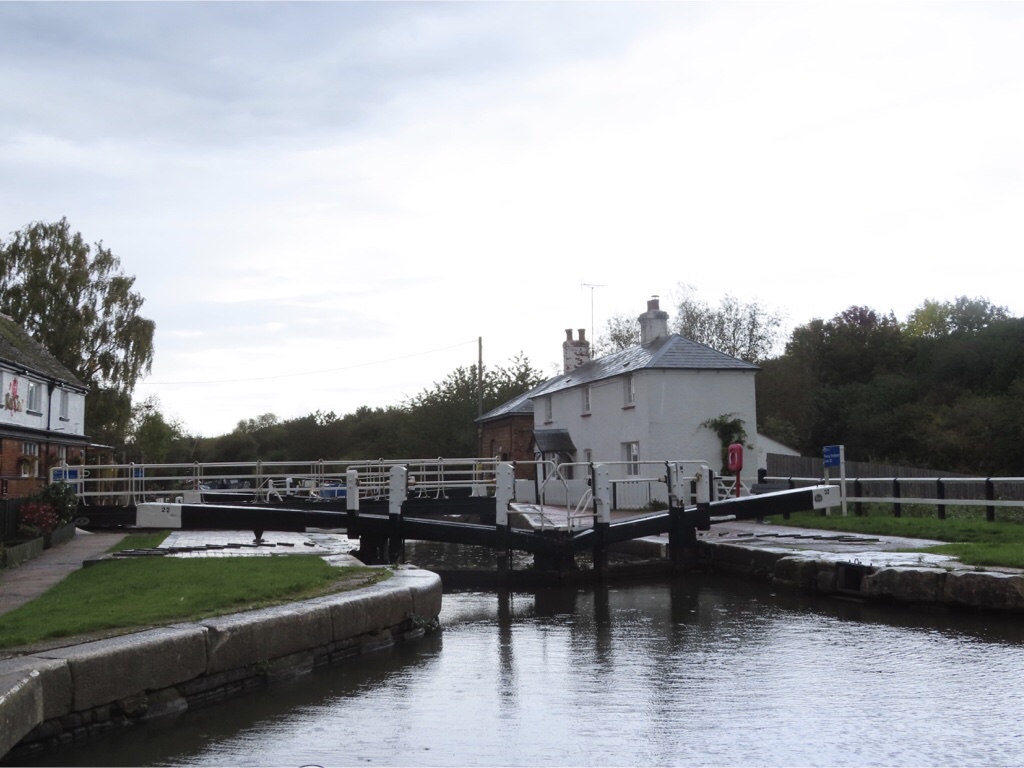
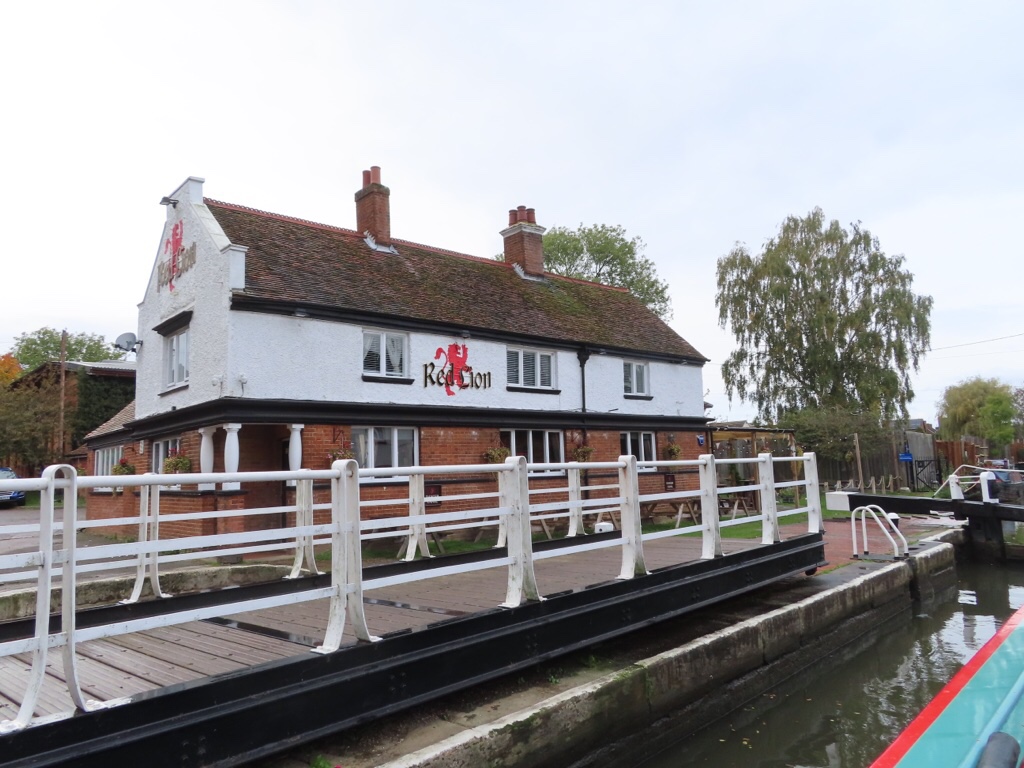
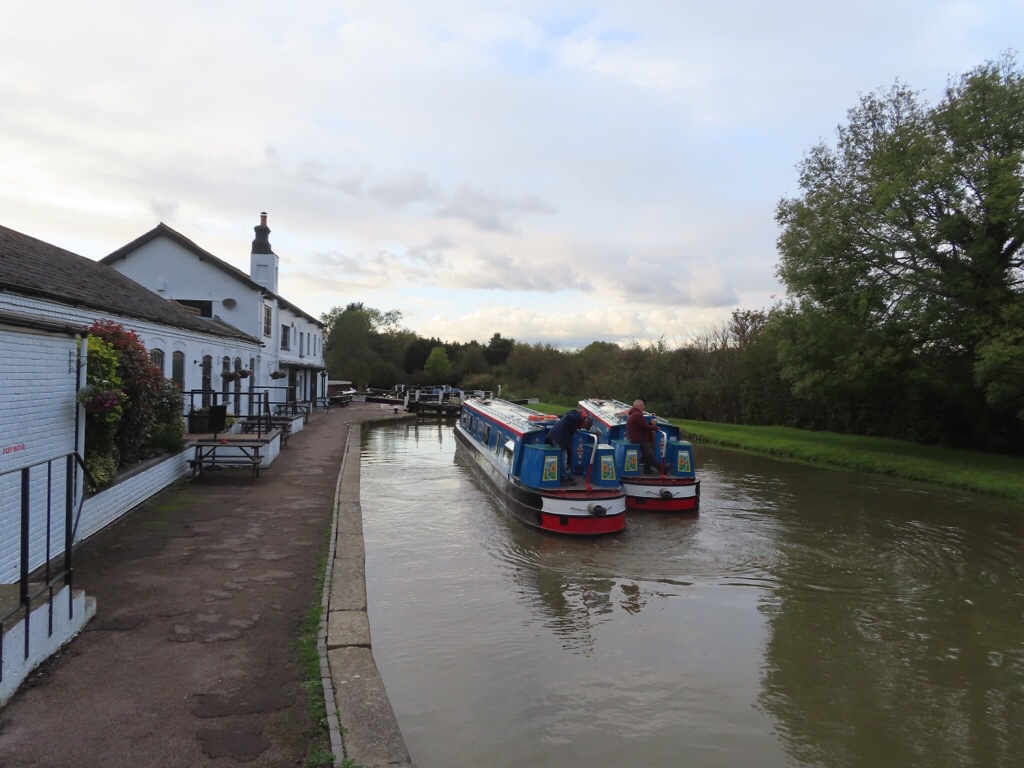
After around 3 miles, we approached Soulbury and moored up to survey the scene, with the flight of three locks ahead, a road bridge, a historic cottage and pub on the left and the old pumping station on the right.

Even this was easier said than done as drawing the boat in to the bank at the right angle to end up alongside in one go looks like it will take a little practice! I went with the chap from the other boat to look at the lock and figure out what we needed to do and we quickly established we weren’t too confident at all! A couple of other boats had moored up behind us and Jim came forward to rescue the situation. He had also hired his boat from Wyvern, but had done this before and got us organised as to who should do what when and I even managed to take a few pictures along the way …

Relieved that we had survived the three lock ordeal, we looked for a safe spot to moor for the night as it had started to spit with rain and ended up stopping quite soon,just short of Bridge 106 and a total of 4 miles, 11⁄4 furlongs from Wyvern. After a little backwards and forwards, the hefty hammering in of stakes and tightening of ropes, we were securely moored and we scuttled in to the dry.

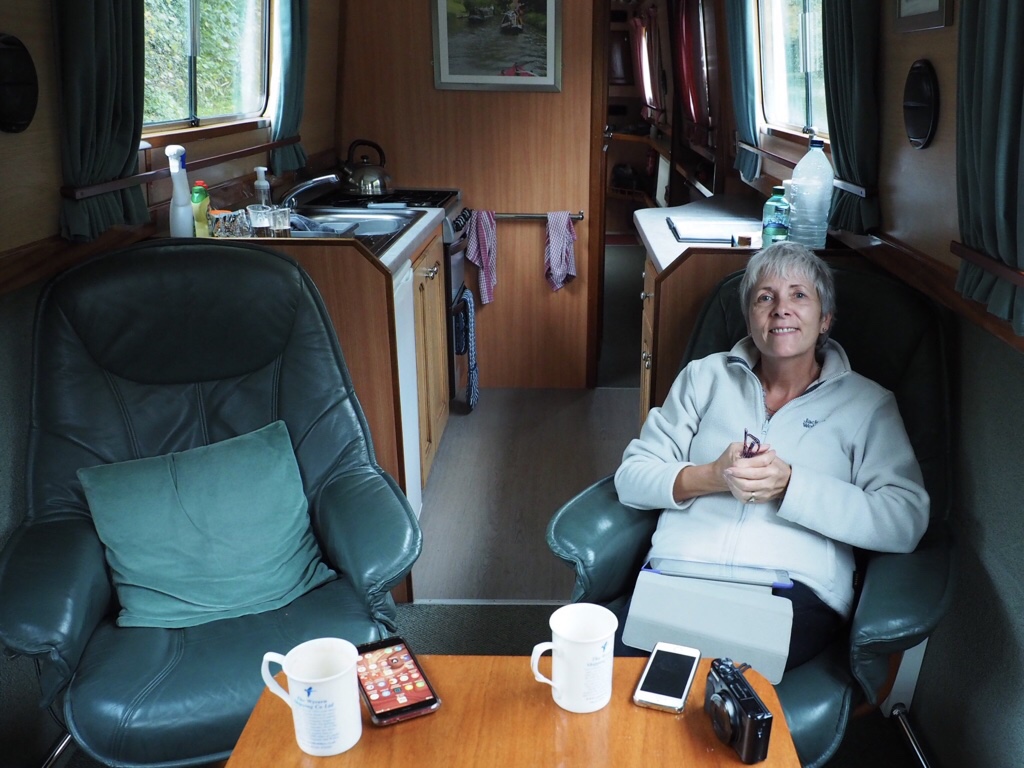
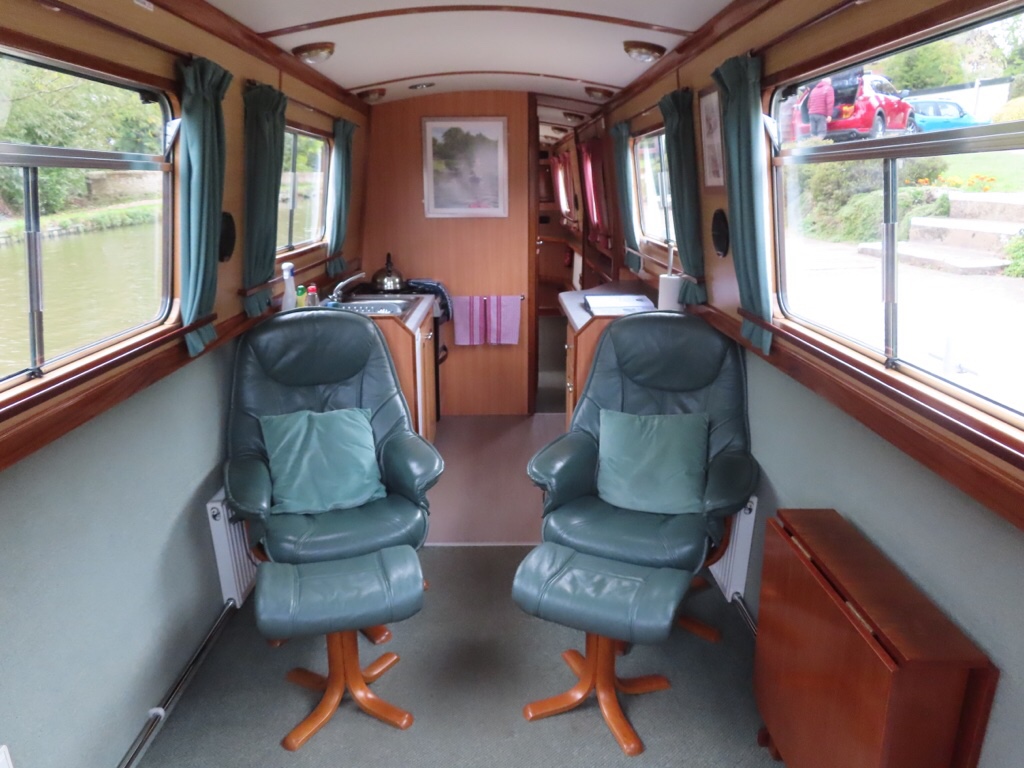
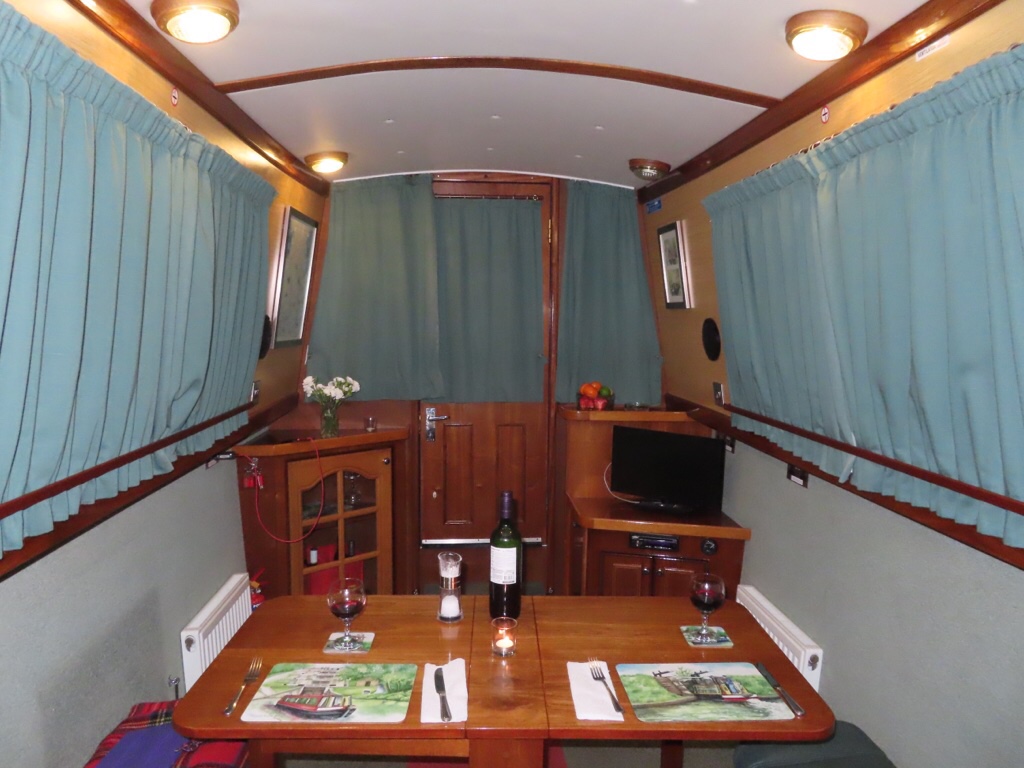
We did a bit of unpacking, made more tea and put the oven on for dinner then tucked in to pies and veg and a bottle of red wine in our cosy cabin. Any worries we had that it would be chilly were unfounded as the heating is very efficient. After all the excitement, we had an early night and could hearing the rain falling on the roof of the boat as we fell asleep.

Maps

Chris & Elaine Celebrate Afloat 2020

Covid 19 has stopped us all in our tracks this year and we’ve stayed at home, cancelling or postponing all the travels we had planned. In August we thought a modest little trip might be possible and an article in the newspaper gave us the idea to book a narrowboat for our wedding anniversary. It ticked all the boxes, one of the most important being to celebrate our wedding anniversary on a boat as we have every year, while still keeping our distance and having a bit of an adventure.

Daisy is moored on the Grand Union Canal near Leighton Buzzard and we hope to travel north as far as the Ouse Valley Park in Cosgrove, so we can admire the viaduct and aqueduct, before returning … just 37 miles and 1⁄4 furlongs with 12 locks in total … not a very demanding route as we are new to this lark and goodness knows what the weather will be like.

We’ve not wanted to plan, look at a map or make a list to early, just in case this trip also had to be delayed … but so far so good and fingers crossed!

So this is the plan, but anything could happen along the way … join us and find out!

Journal Entries

The Adventure Begins …

Finding Our Feet …

Celebrating In Campbell Park …

Homeward Bound …


Maps

BBC Bristol …

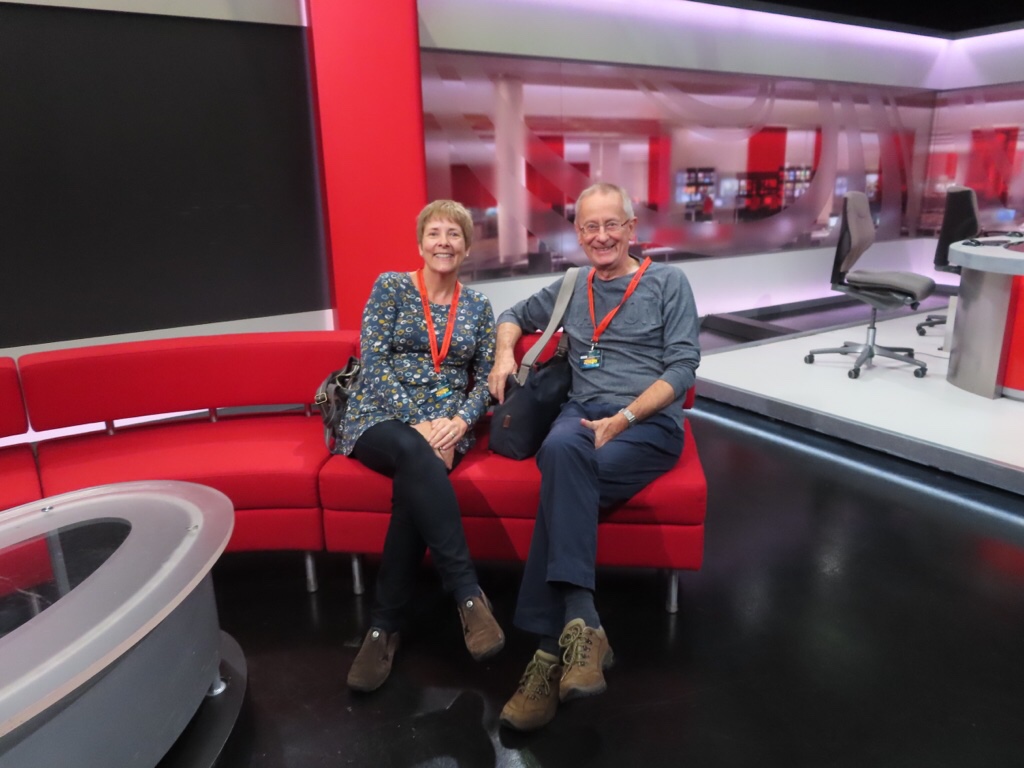
On our last morning we checked out, leaving our bag to collect later, stopped for breakfast at Wapping Wharf then walked up through the city to BBC Bristol for a tour.

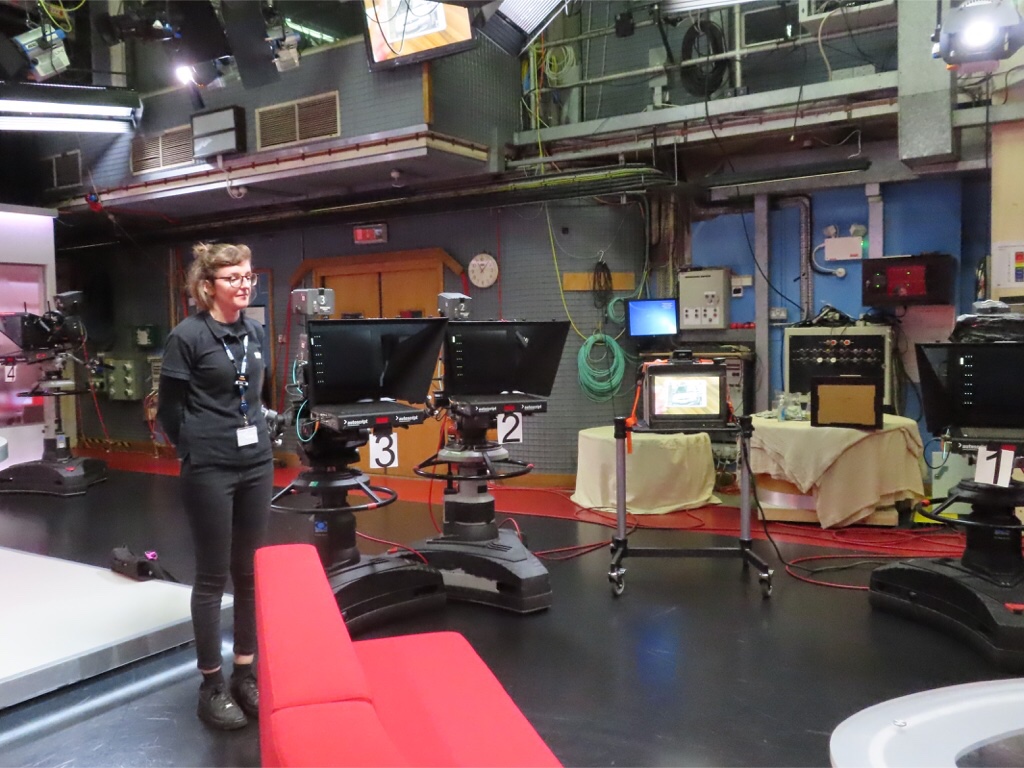
We looked round reception and could see the kind of programmes made here like Antiques Roadshow, Gardeners World and Countryfile. Their pride and joy is the Natural History Unit which have made all the best known wildlife programmes from Life on Earth to Seven Worlds, One Planet that will be shown this autumn. The technical developments during this time have been immense, enabling the camera to get closer and closer to the action, nowadays often using drones to disturb the animals as little as possible. BBC Bristol also make the local news programme Points West and our tour showed us the BBC Wildlife Garden where the weather is filmed and the main news studio – both behind the scenes, and in front of the camera!

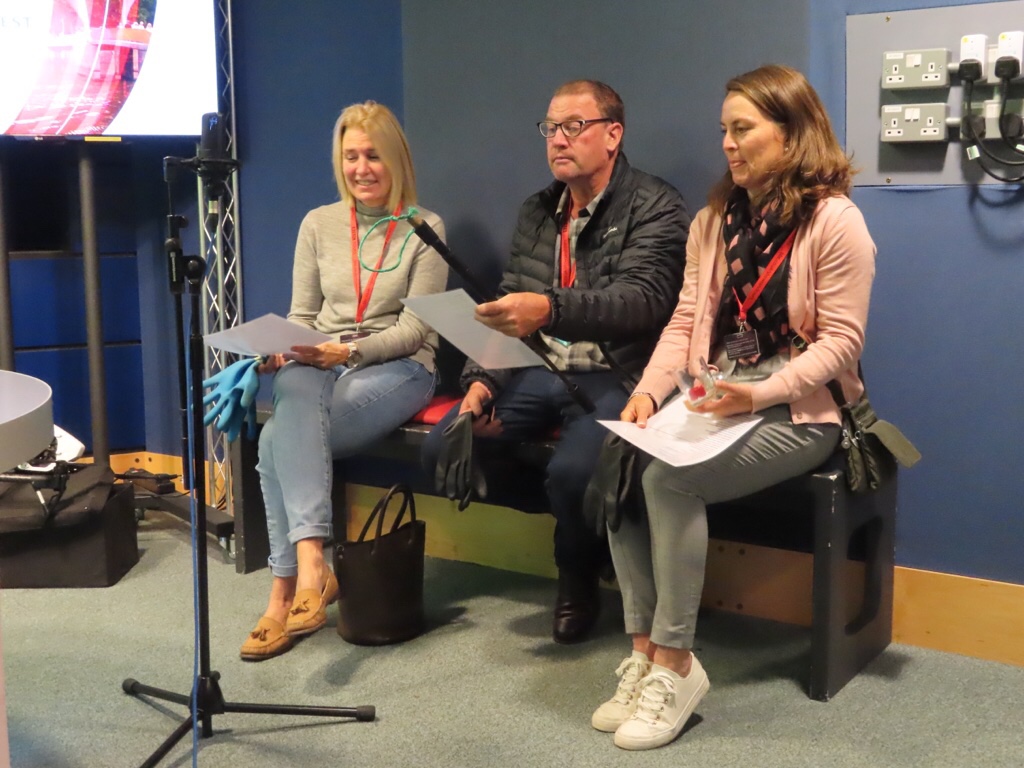
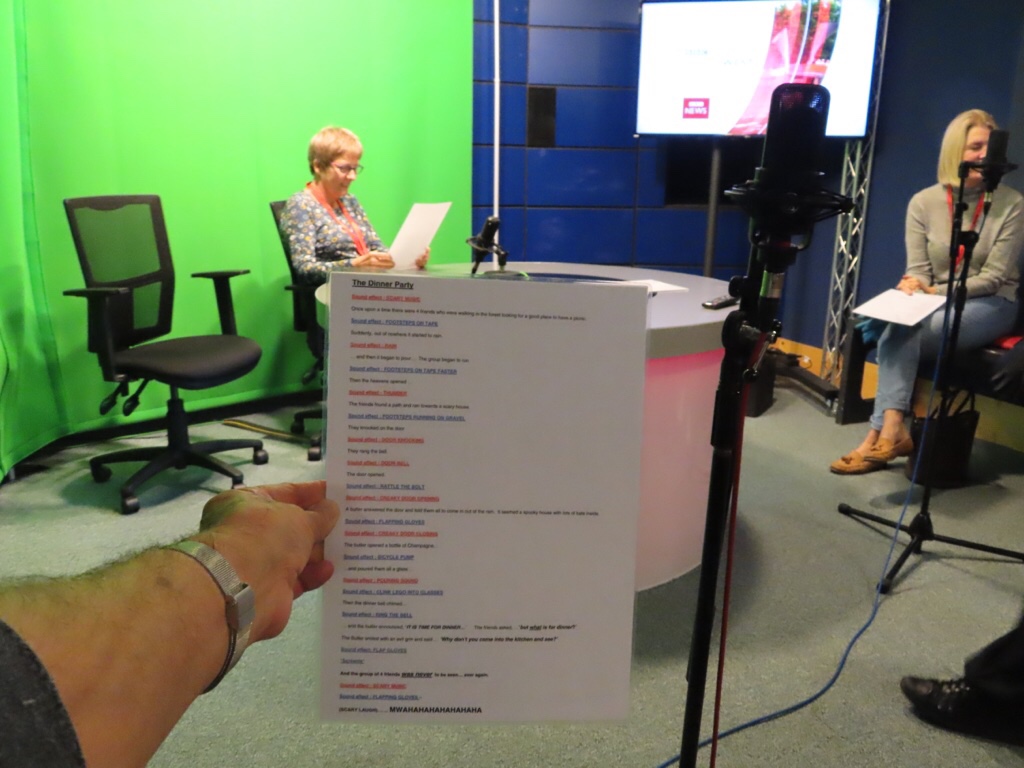
Afterwards, we had a go recording our own radio play with special sound effects including rubber gloves for bats, a bicycle pump for a champagne cork …

… and then filming a news and sport bulletin with a weather slot which certainly helped us see there is a lot more to this tv lark than meets the eye!

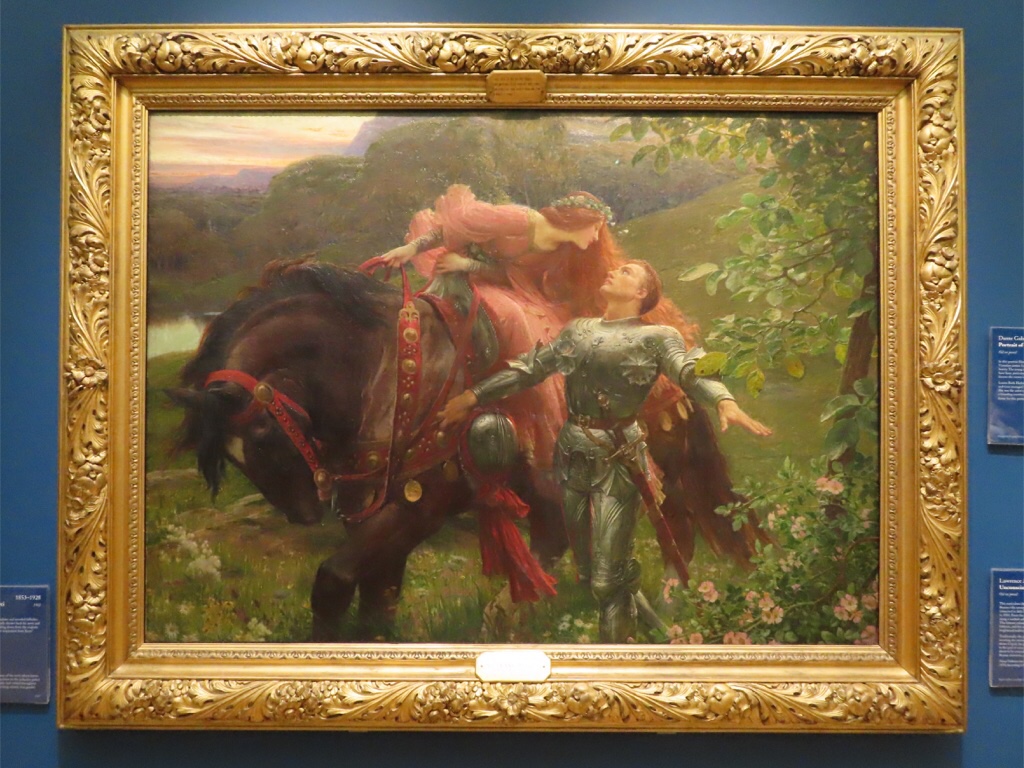
Walking back, we popped into the Bristol Museum and Art Gallery, really just to see Banksy’s Paint-Pot Angel, but it was out on loan … so we’ll have to see that next time. Once inside though, we took a turn round their Pre-Raphaelites and really liked this one …

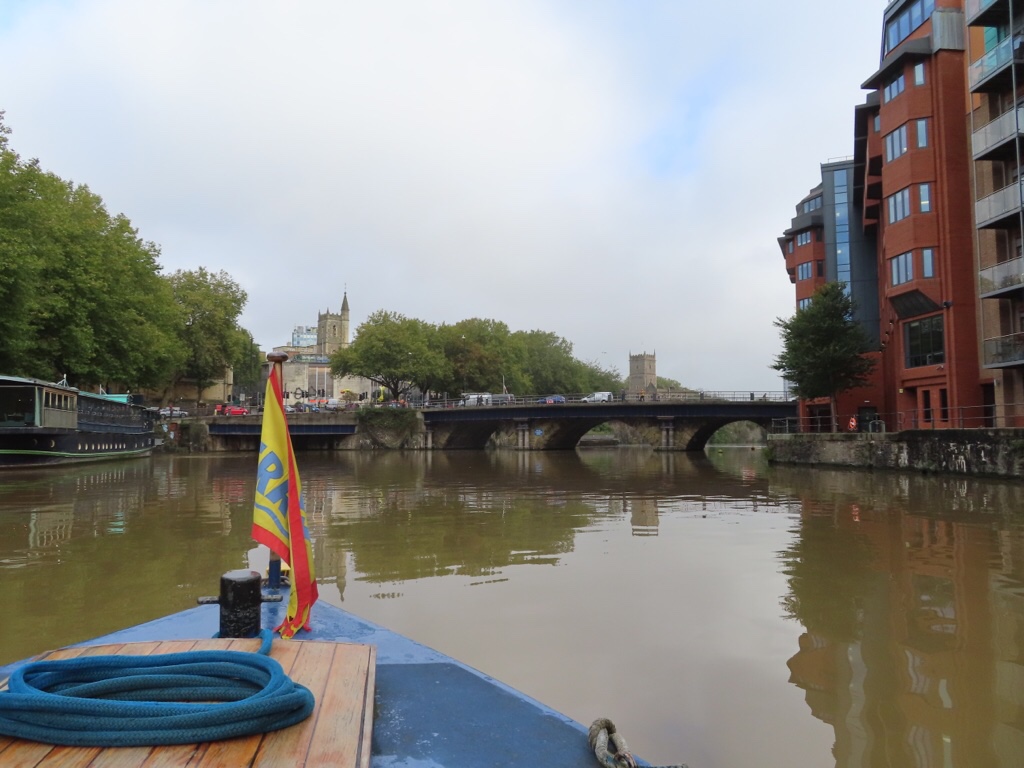
… saw this view of the bridge …

… and this replica of the first plane built in Bristol – the Bristol Boxkite.

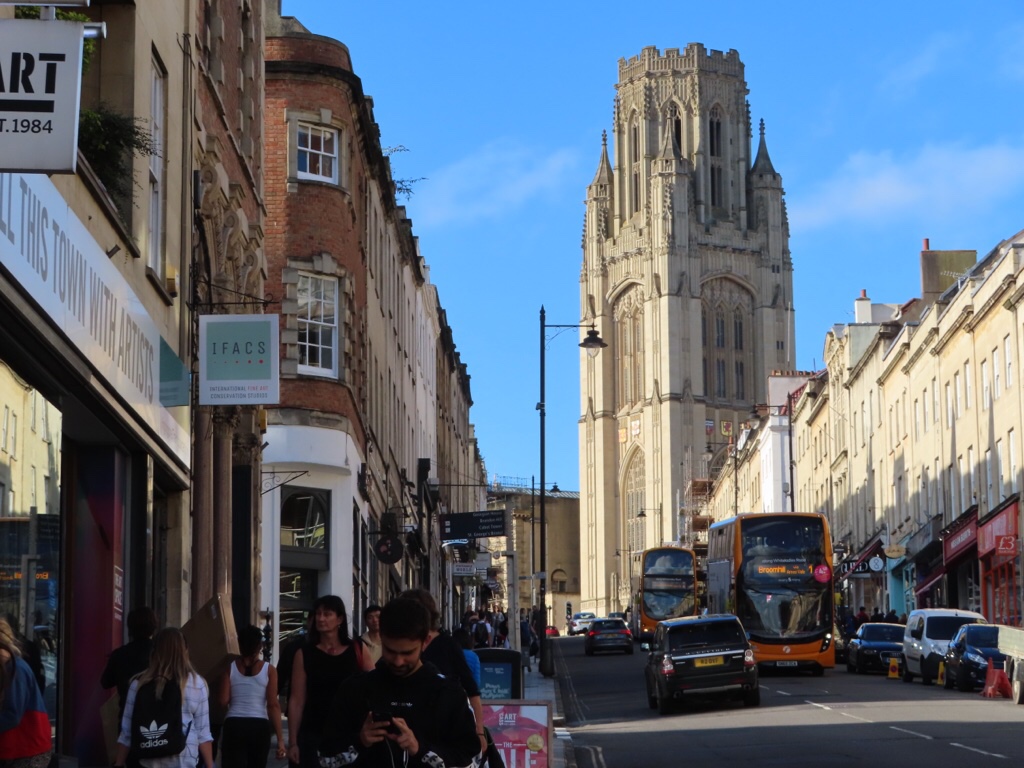
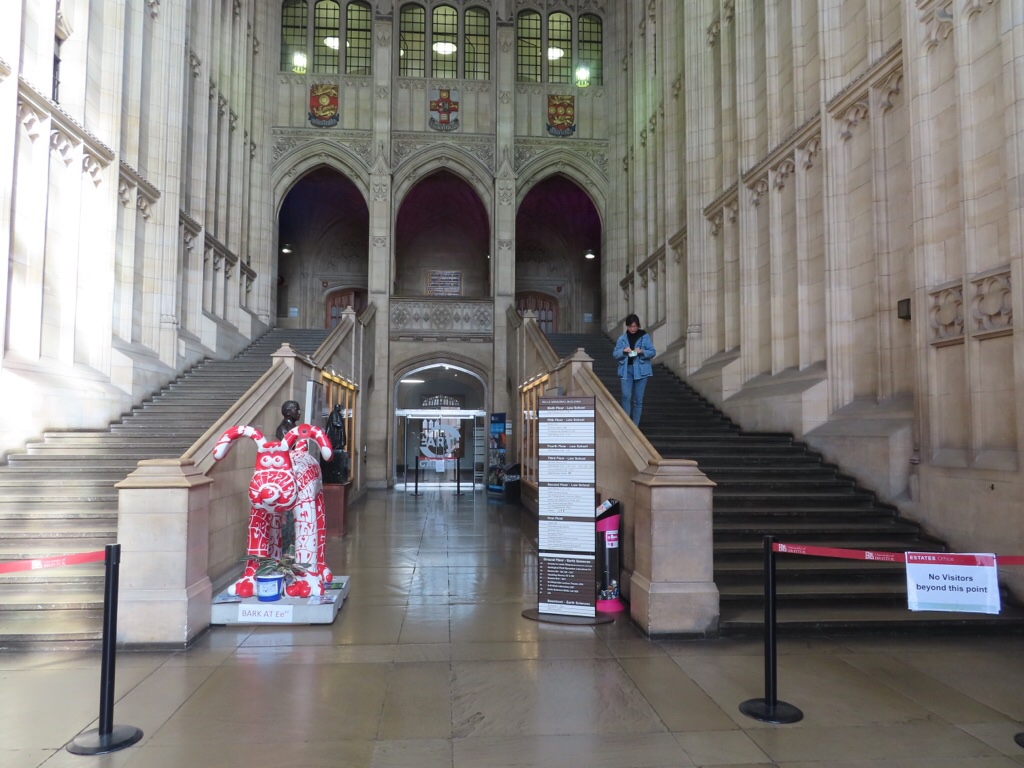
The tower of the Wills Memorial Building dominates the city and is considered one of the last great Gothic buildings to be built in England. It is part of the University of Bristol and we just looked inside the entrance hall …

… then headed passed the Cathedral and we were done.

We had watched the quiches and salads being prepared while we ate our breakfast this morning and returned to Mokoko to try them out!

Chatting over lunch, we thought we would probably be back sometime, after all there’s definitely more to see, it would be nice to see the city with a little more sunshine and there are lots more restaurants to try!

On that happy note, the ferry took us back to Temple Meads and our train home.

Map

Lots of Banksy …

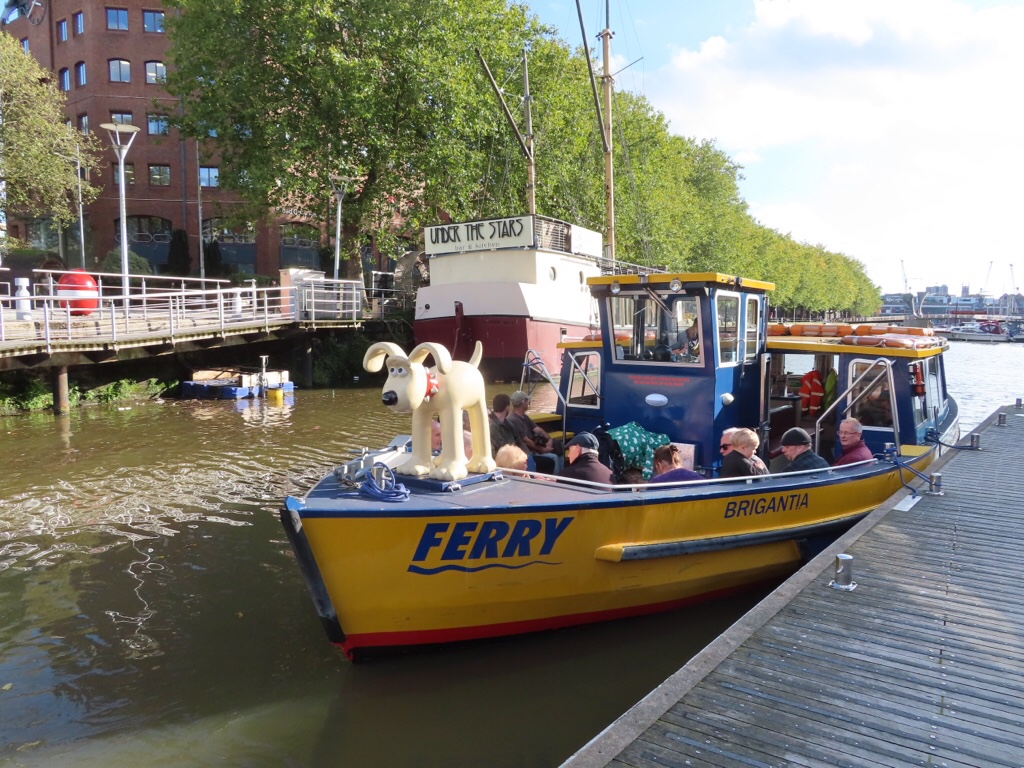
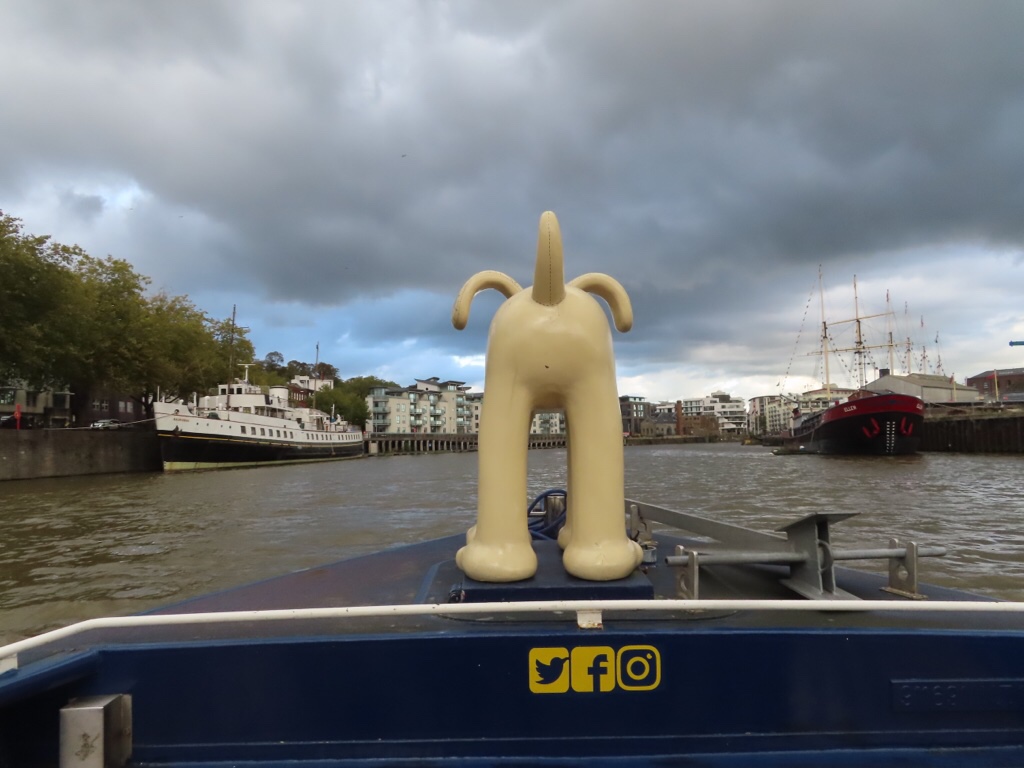
Today is our wedding anniversary, and we picked Bristol so we could celebrate with a boat trip. There are a pair of ferries who have a figure of eight route round the harbour and we really fancied having Grommit at the helm but he was going the wrong way … maybe later!

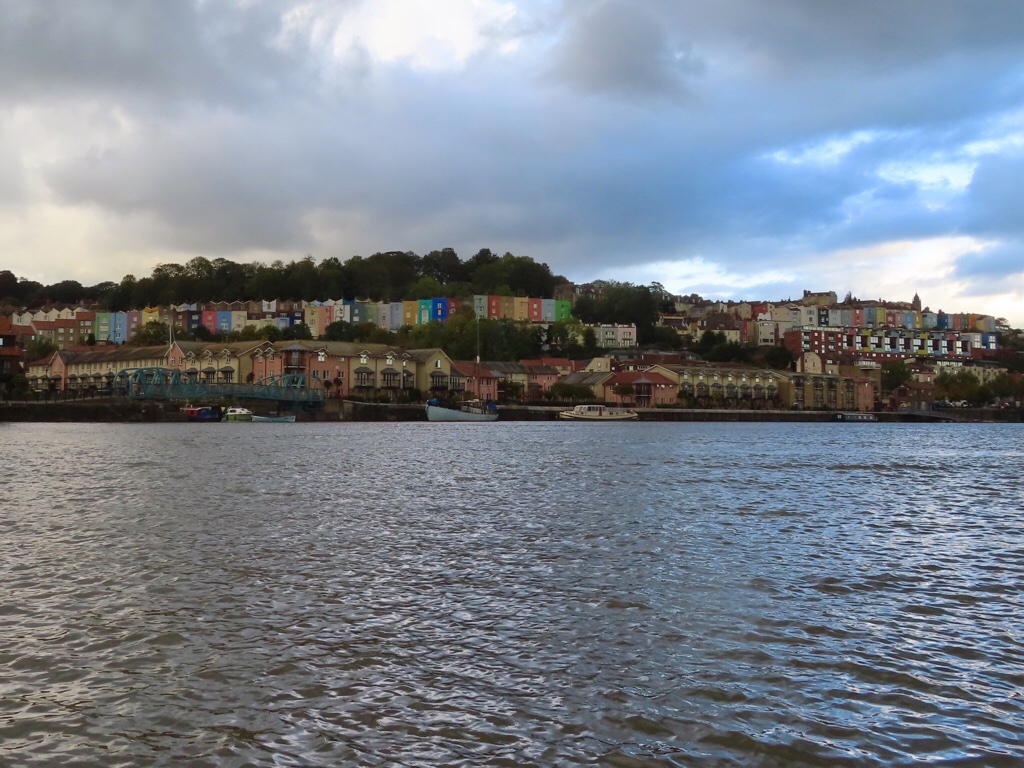
We passed wharf buildings converted into apartments …

… under Bristol Bridge …

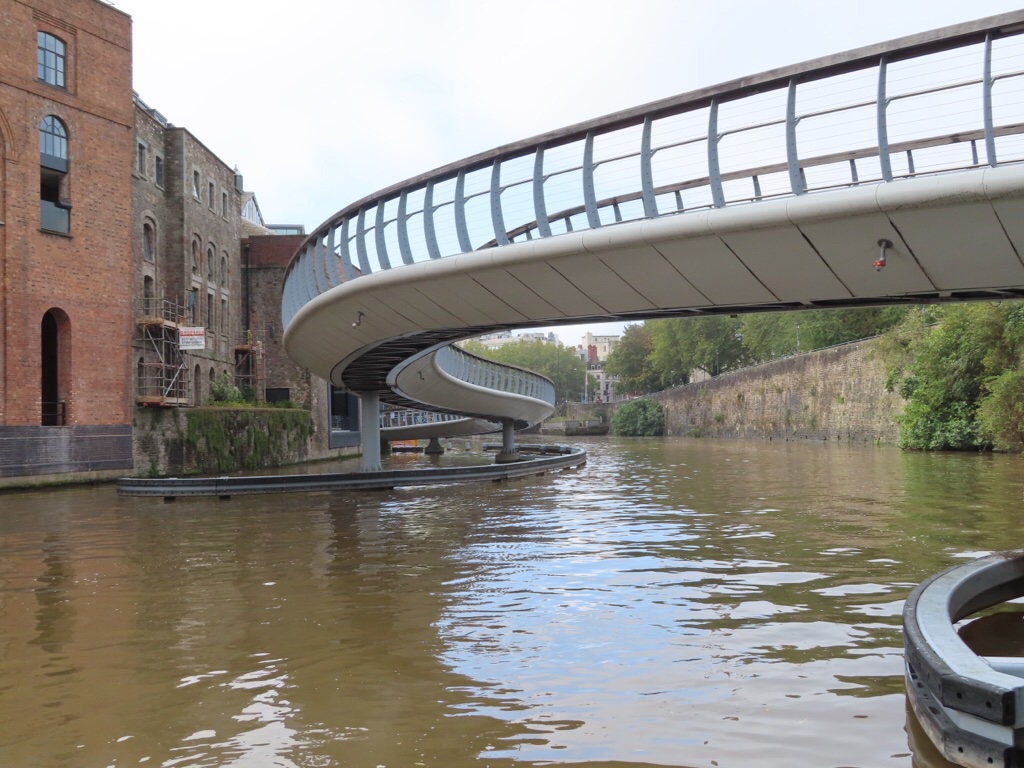
… and an interesting new pedestrian bridge …

… until we could see Cheese Lane Shot Tower. William Watts invented the tower process for making lead shot whereby molten lead was dropped into cold water below. The original tower was built in 1782 and used until demolished for road widening in 1968. It was rebuilt the following year in this modern design and continued to be used to make lead shot till 1980. It can now be hired as a penthouse boardroom!

We got off at Castle Park which contains St Peter’s church, bombed in the Blitz and left as a monument …

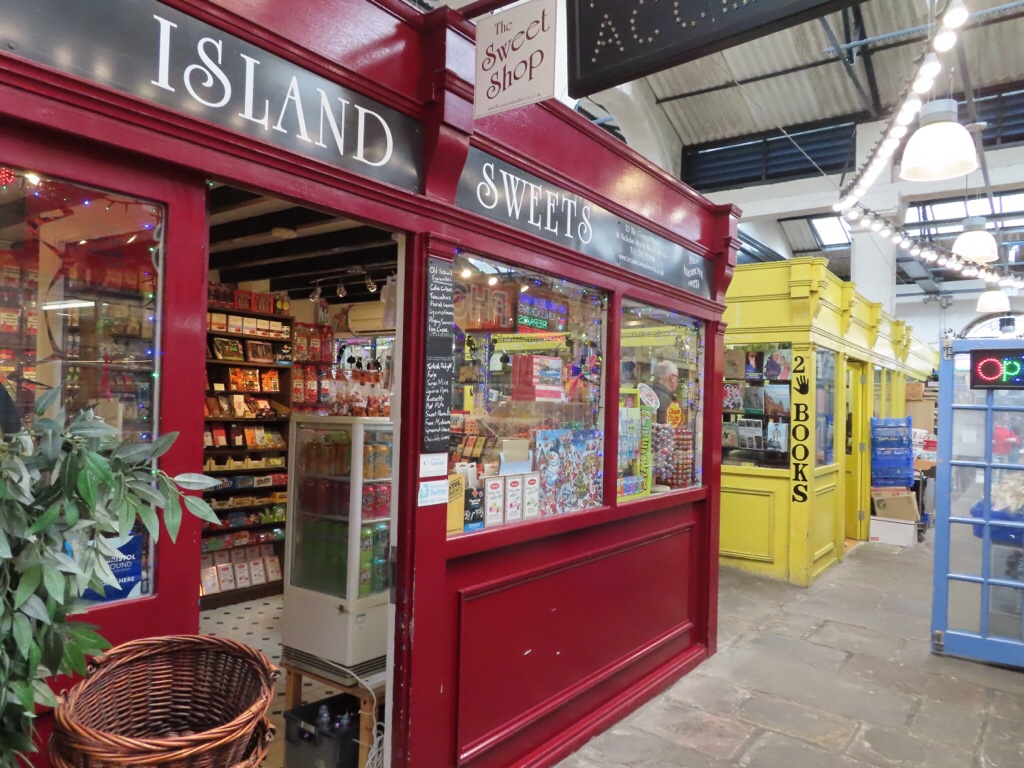
… then followed a route through the city, picking off the main attractions starting with St Nicolas Market …

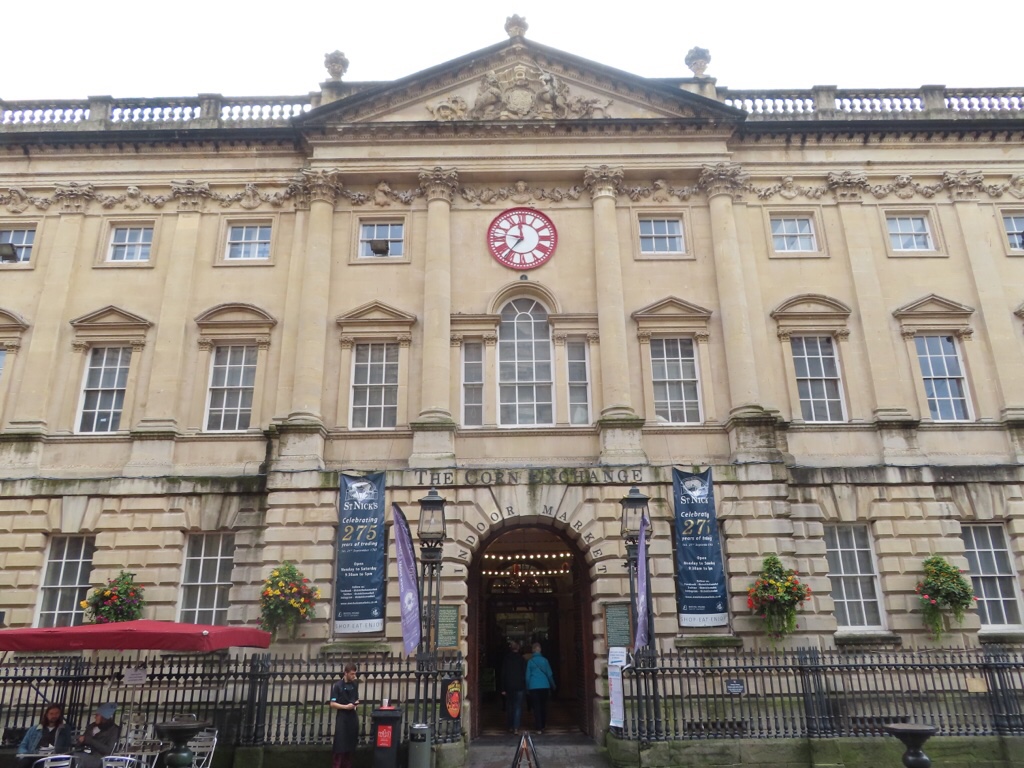
We exited the market in Corn Street where the C18th Corn Exchange was built to house the merchants who were blocking the streets. They settled their debts on the four flat-topped brass pillars called Nails – hence the expression to ‘pay on the nail’.
The clock above the entrance has two minute hands, the red hand shows Bristol Time and just over ten minutes ahead is the black hand showing Railway Time (or GMT) used before time was standardised across the UK to accomodate railway schedules in 1852.

Everards Printing Works has a colourful Art Noveau facade with Carrara-ware tiles and murals of Johannesburg Gutenberg and William Morris, the fathers of modern printing, separated by the Spirit of Literature and presided over by a woman holding a lamp and mirror representing light and truth … it just needs a little tlc so I hope somebody restores it.

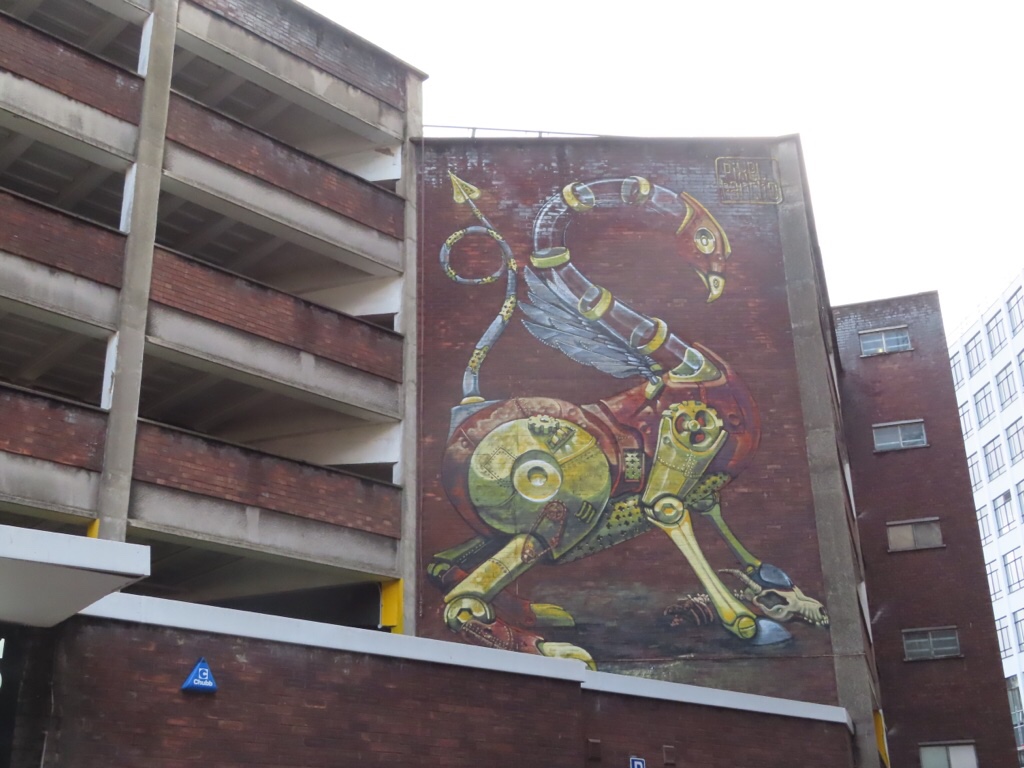
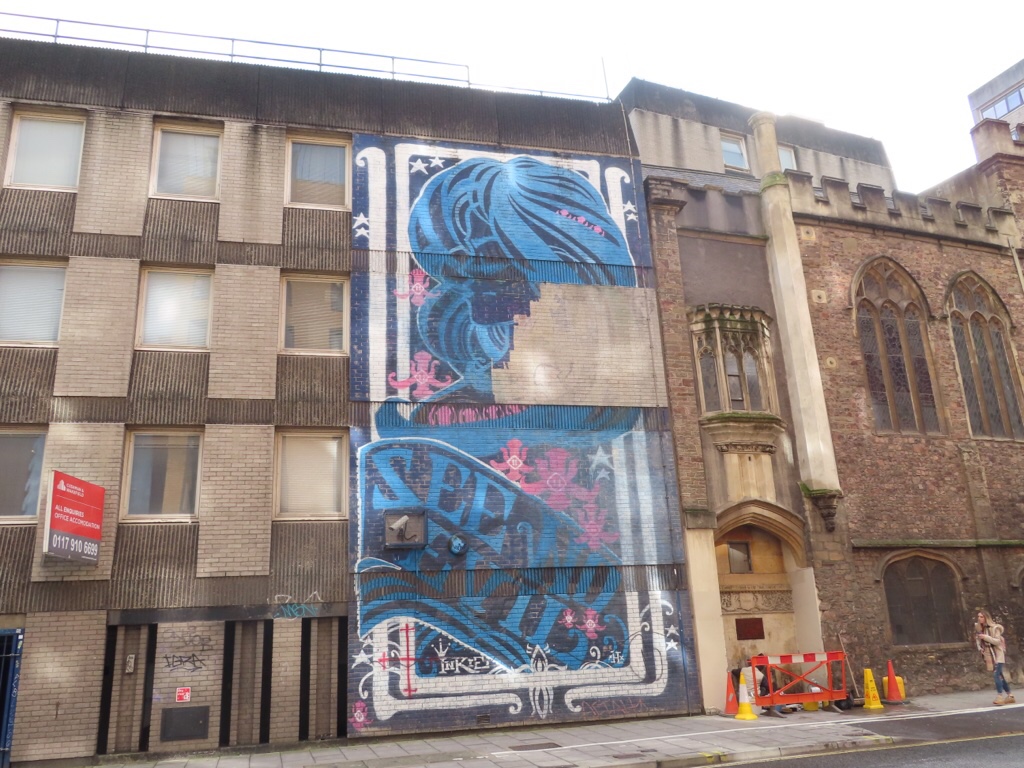
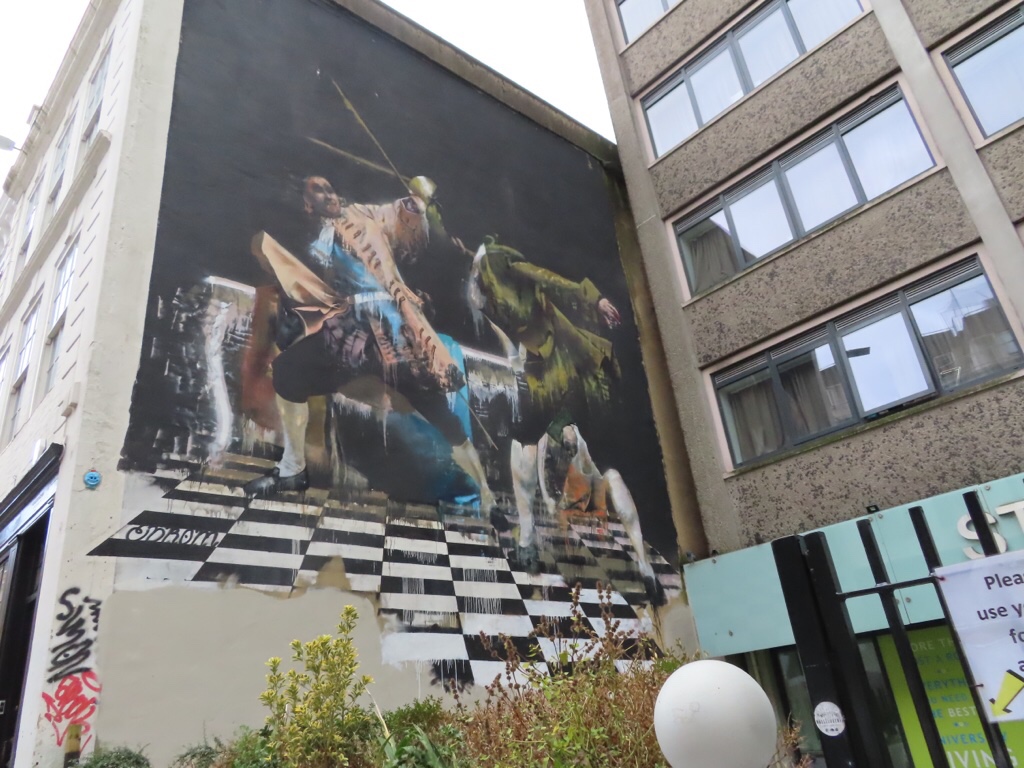
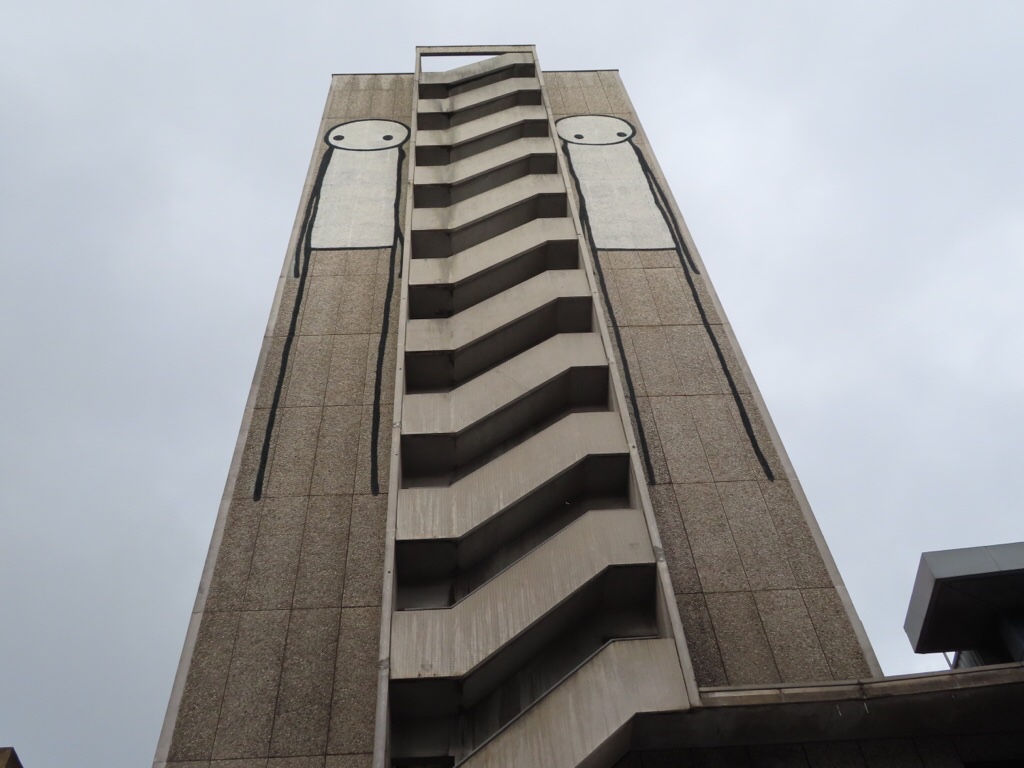
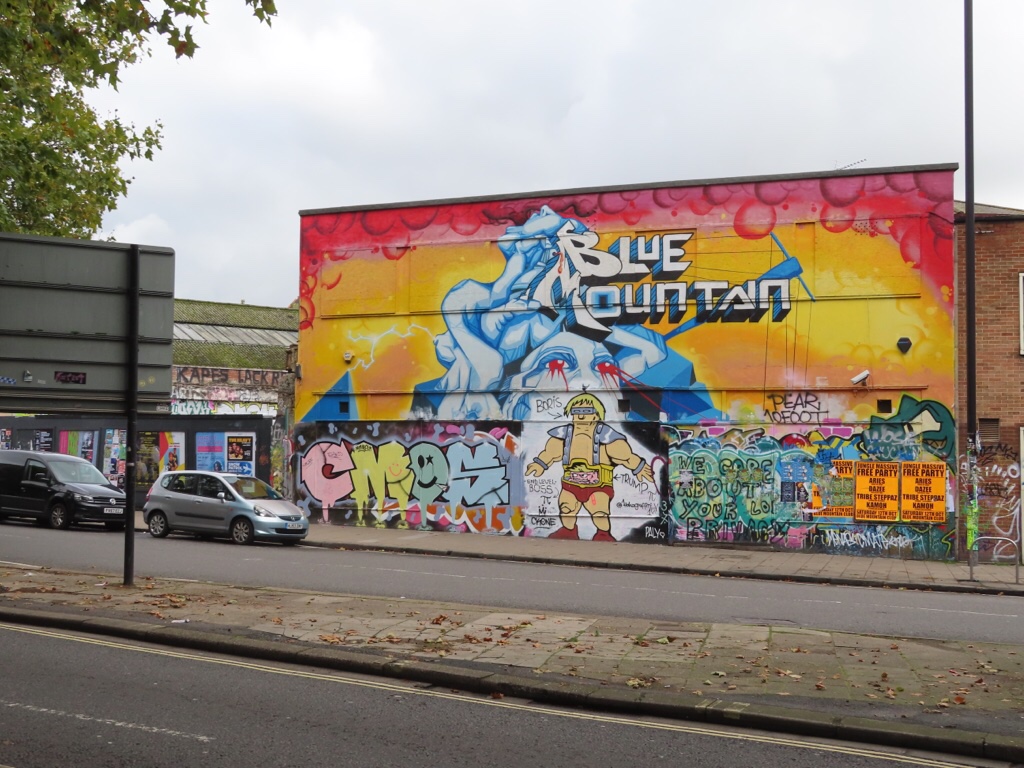
We then headed down Nelson Street to see remaining street art from the See No Evil festival in 2011-12. There is a huge amount of information online about who painted what, but here are just some images.

New Room was built by John Wesley in 1743, initially as meeting room but also used as a soup kitchen, a school, a dispensary and the first Methodist chapel.
Next stop is the neighbourhood of Stokes Croft, where the People’s Republic of Stokes Croft promote art in the community.

It seems quite a rundown area and the aroma of pot and drying spray paint was definitely in the air as we checked out some of the of street art …

… including a couple of Banksy’s – The Mild Mild West and The Rose Trap …

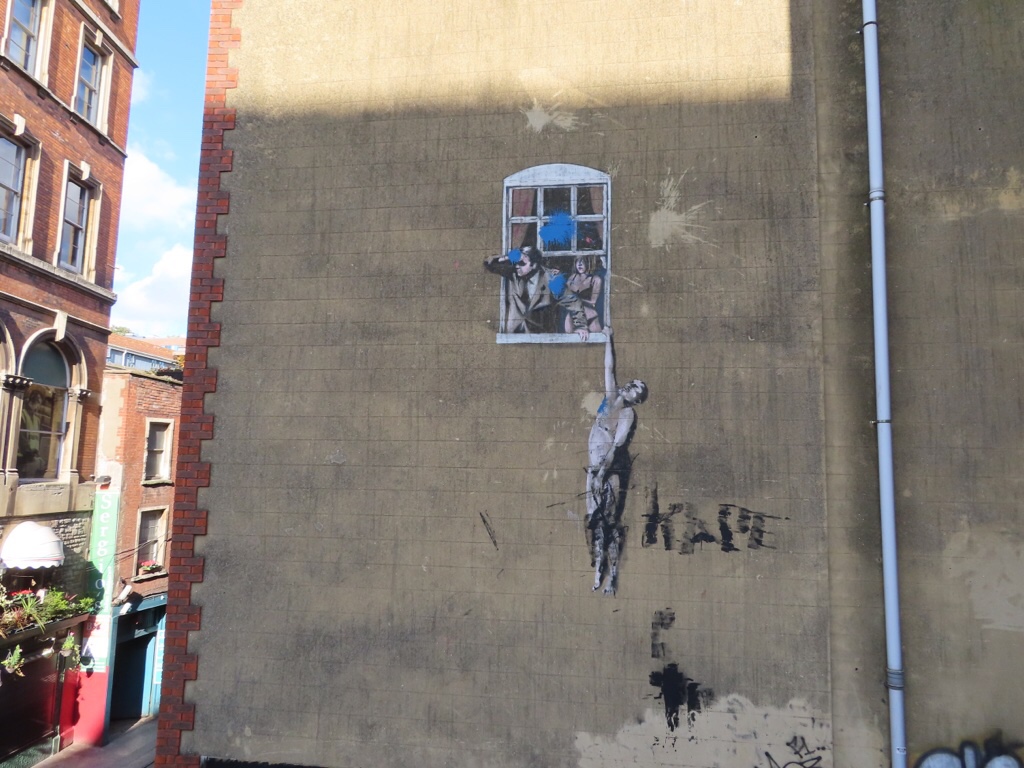
… and Well Hung Lover nearer the city centre.

The city have several free museums including Red Lodge which was once a C16th merchants house and later England’s first girls reform school with a splendid Tudor Oak Room …

… and The Georgian House, former home of local sugar merchant John Pitney with faithfully restored rooms and the story of the family’s dealings in the West Indies. Their slave Pero was commemorated by the Pero bridge in 1999.

Back at the harbour, Grommit was ready to take us round the other side of the harbour.

We passed the reconstruction of the Matthew, the ship in which the Italian navigator Giovanni Caboto or John Cabot, sailed west from Bristol in 1497 in search of Asia. Instead he found North America, landing on the banks of what he named Newfoundland, which he claimed for England.

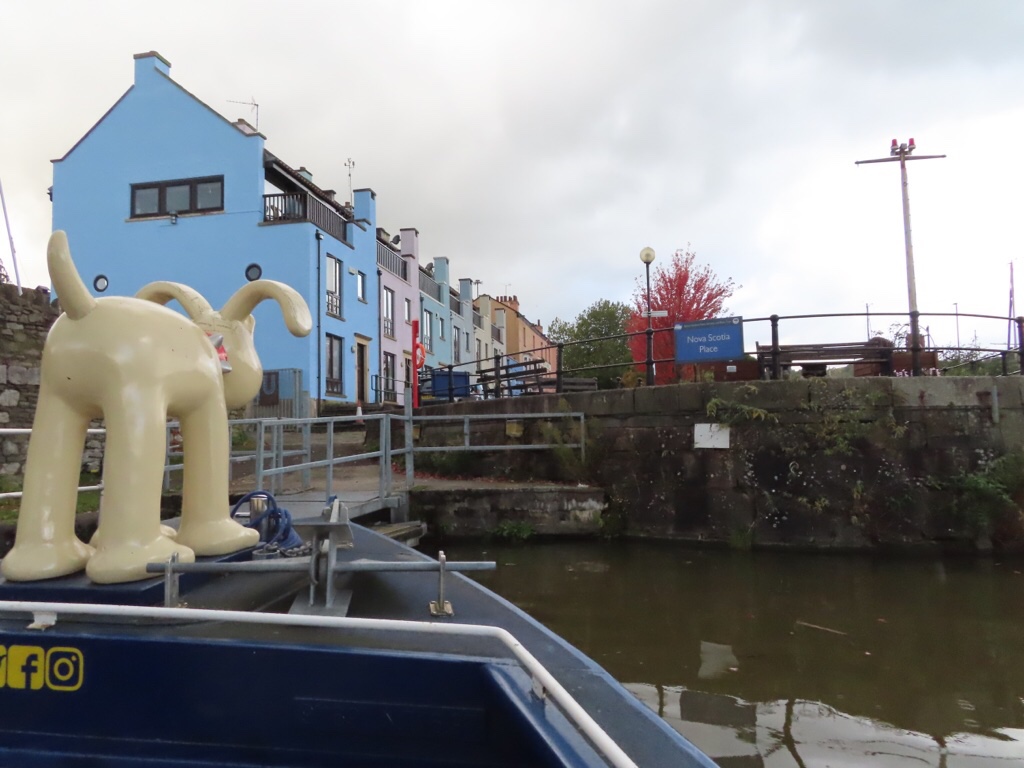
We continued to Nova Scotia Point …

… before returning to the SS Great Britain and got off.

We went in search of Banksy’s take on Vermeer. It’s a good job Google Maps has a note of these or we would never have found it tucked between a couple of dock buildings … Girl with the Pierced Eardrum …

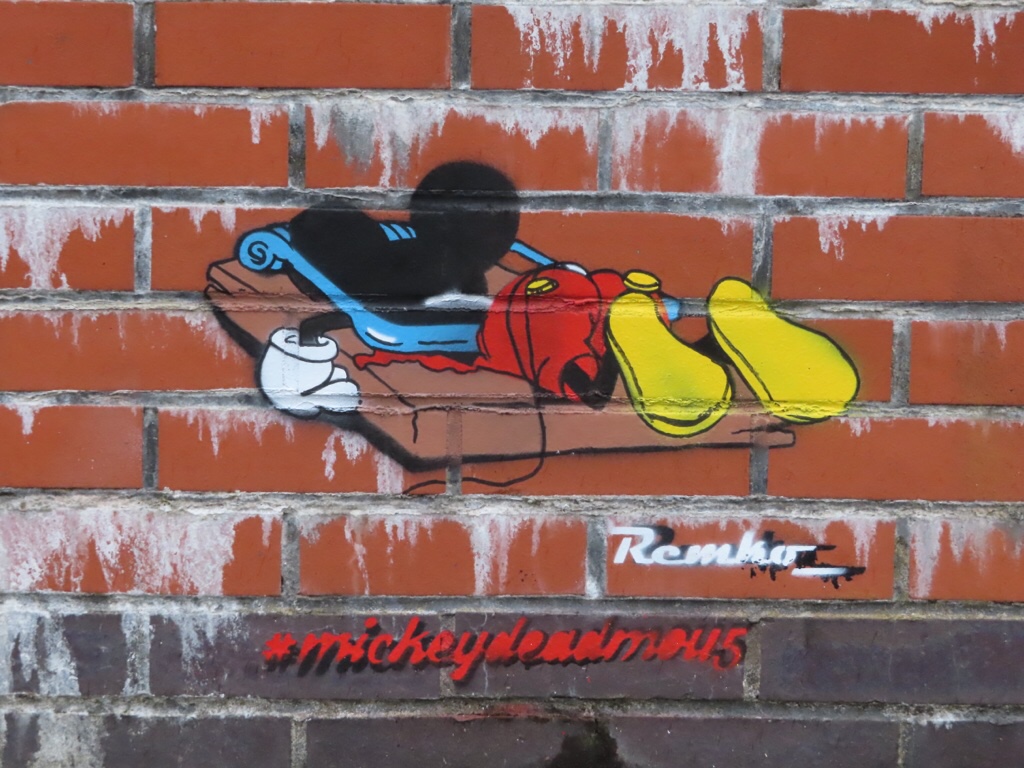
… and finally, a rather squashed Mickey reminding us of Rose Trap earlier

With such a multi-cultural heritage in Bristol, we’ve managed to revisit all our favourite cuisines in one short break, and tonight was no different with Souk Kitchen decorated with bold colours and flickering candles and offering a fusion of Middle Eastern flavours. Yum!

Map