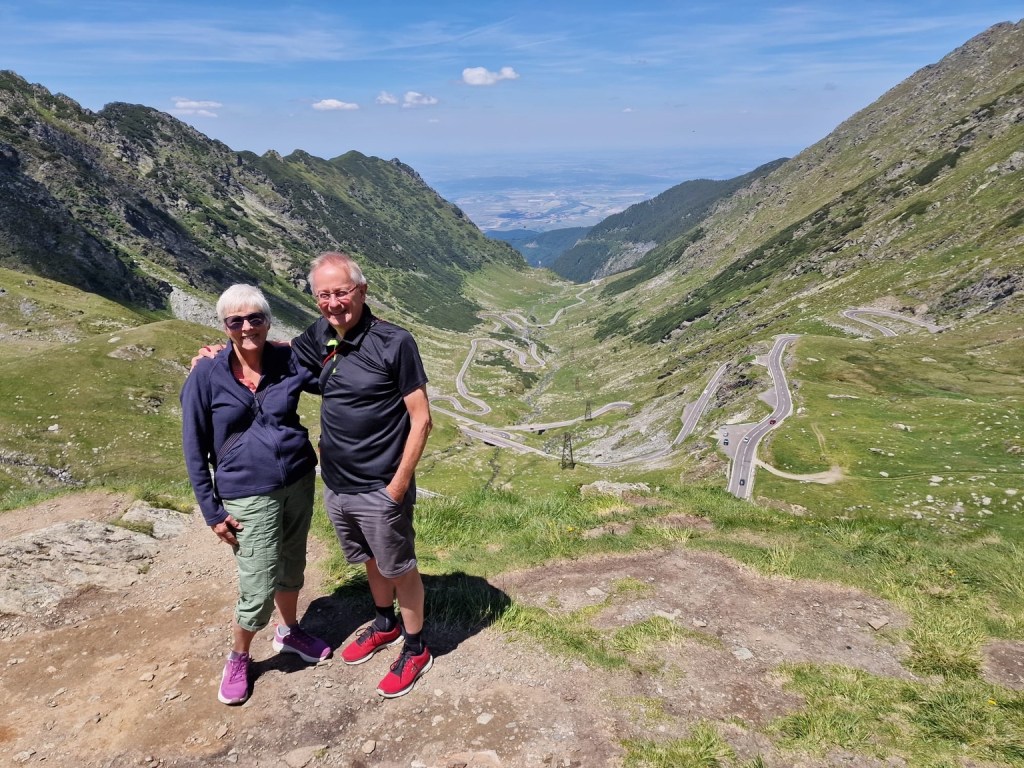
Blog

Cluj … Baroque and Buzzing!

Our drive to Cluj was interesting!  All started well, but we lost phone signal for a bit … and also the connection to the sat nav … and having taken a turn in completely the wrong direction, it was a little while before we realised our mistake.  

It has been hard to judge what speed we should be driving as sticking to the limit has every car on the road overtaking us, but on the other hand we are visitors and should be cautious.  Then we were pulled over by the police … was it because we were speeding a little … no, it seemed they were just doing spot checks on vehicle papers so we were soon on our way.

Finally the traffic was heavy in Cluj, unsurprising in rush hour, but our journey had taken twice as long as expected.  Fortunately, we kept our accommodation informed on the way, because when we arrived, our host was saving us a car parking space by waiting in the road.

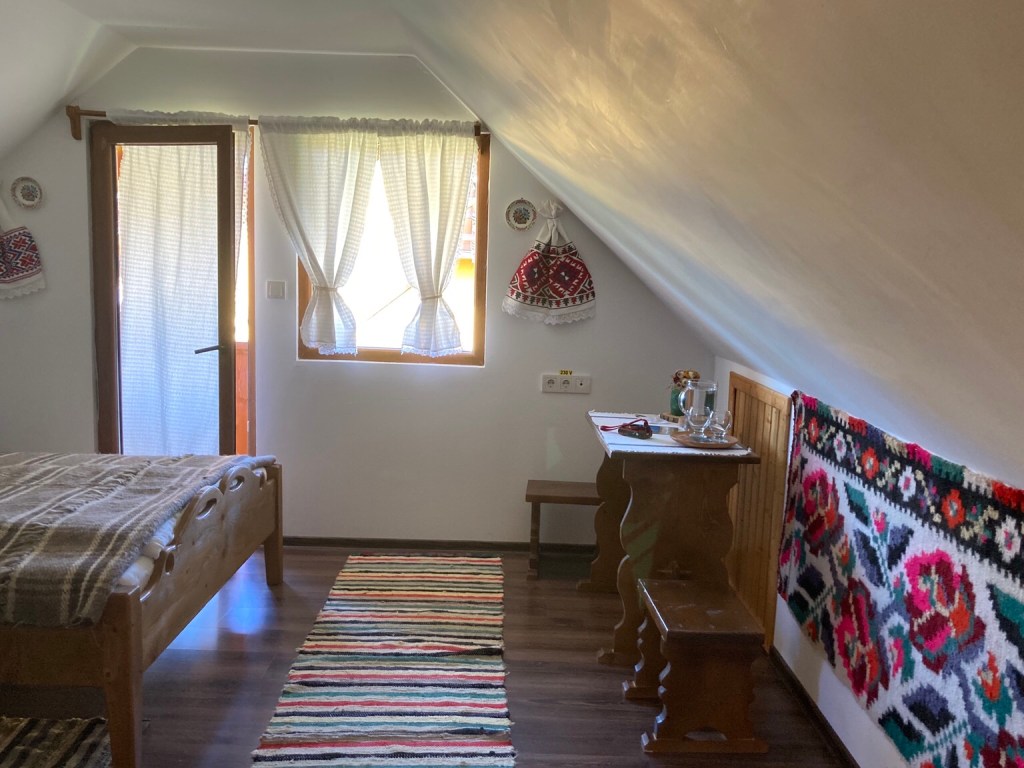
Citadel Rooms is just ten minutes walk to the main square but in a quiet street and our room was great.  

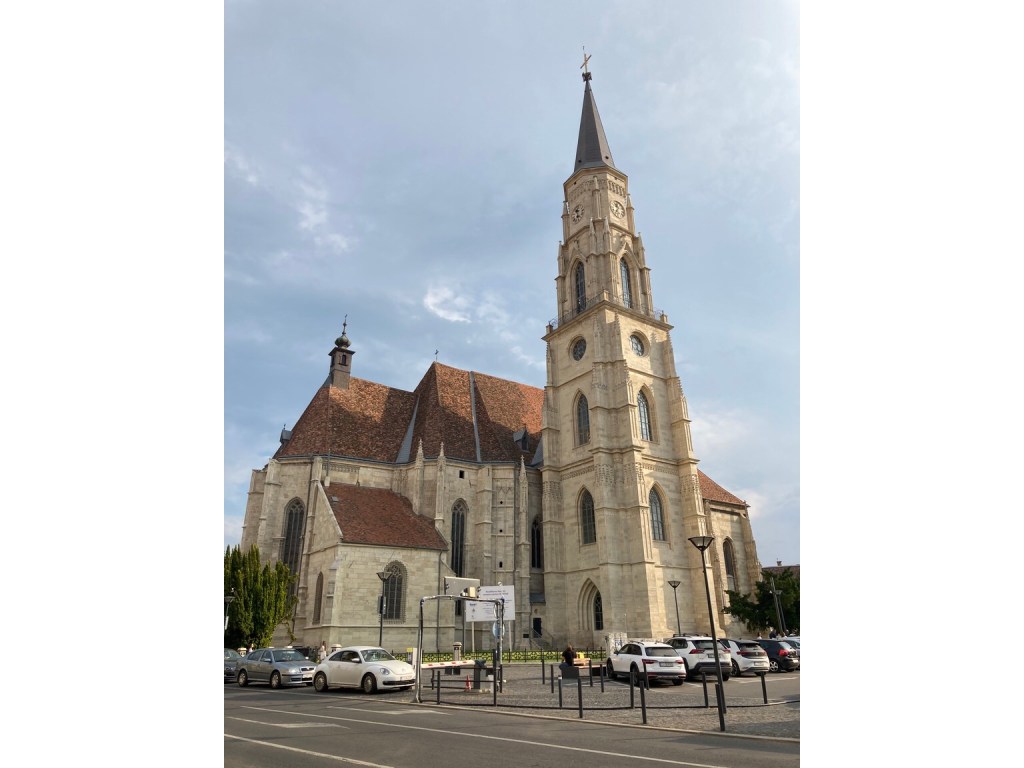
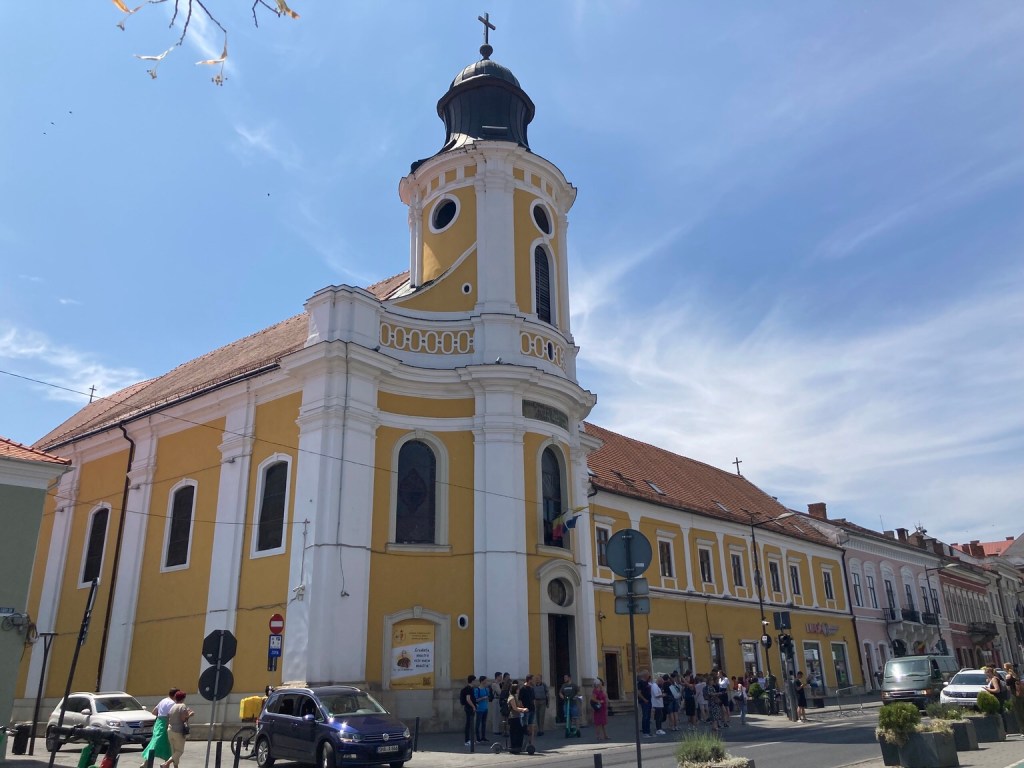
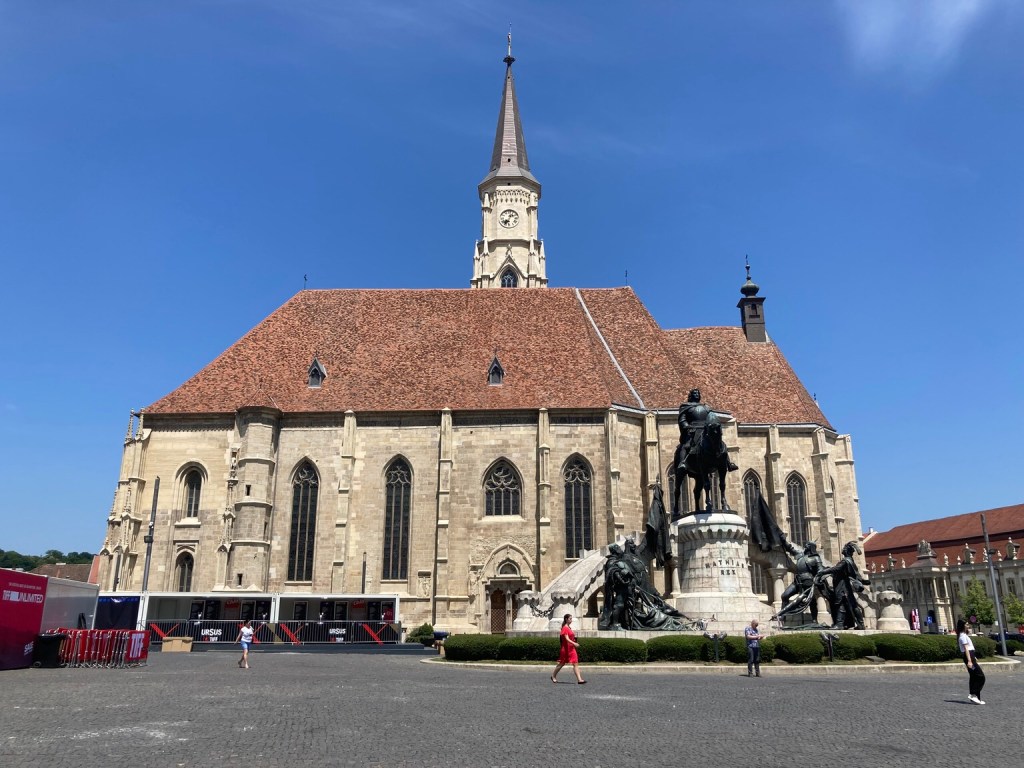
In the evening, we walked to Piata Unirii, the main square, dominated by the cathedral …

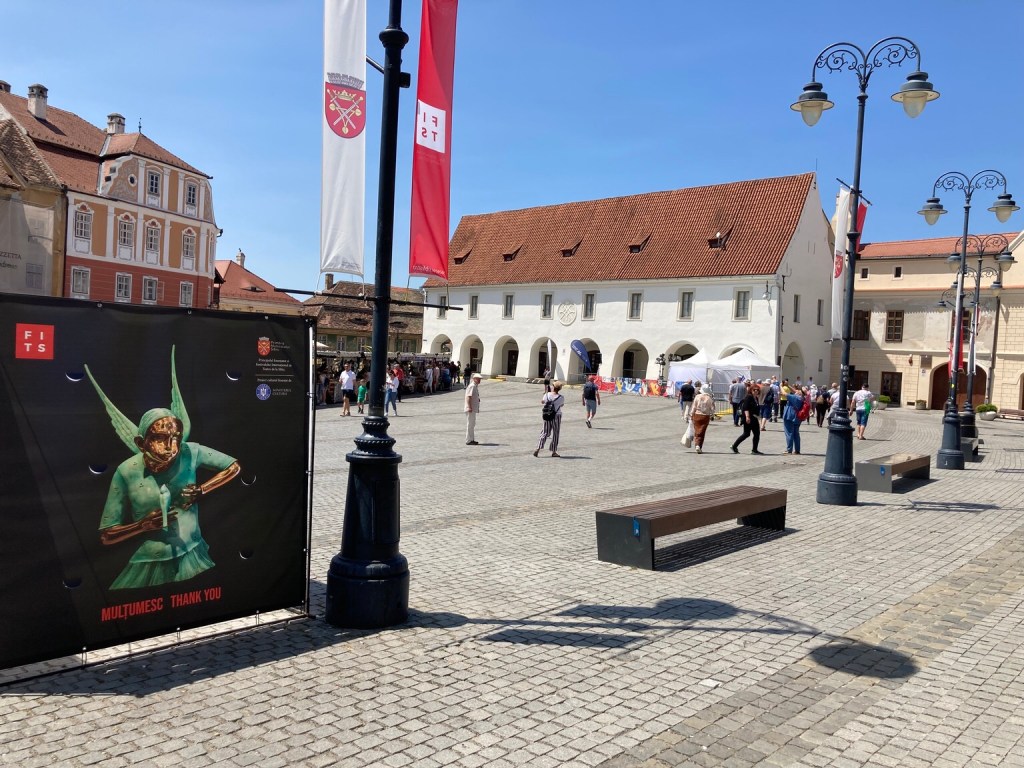
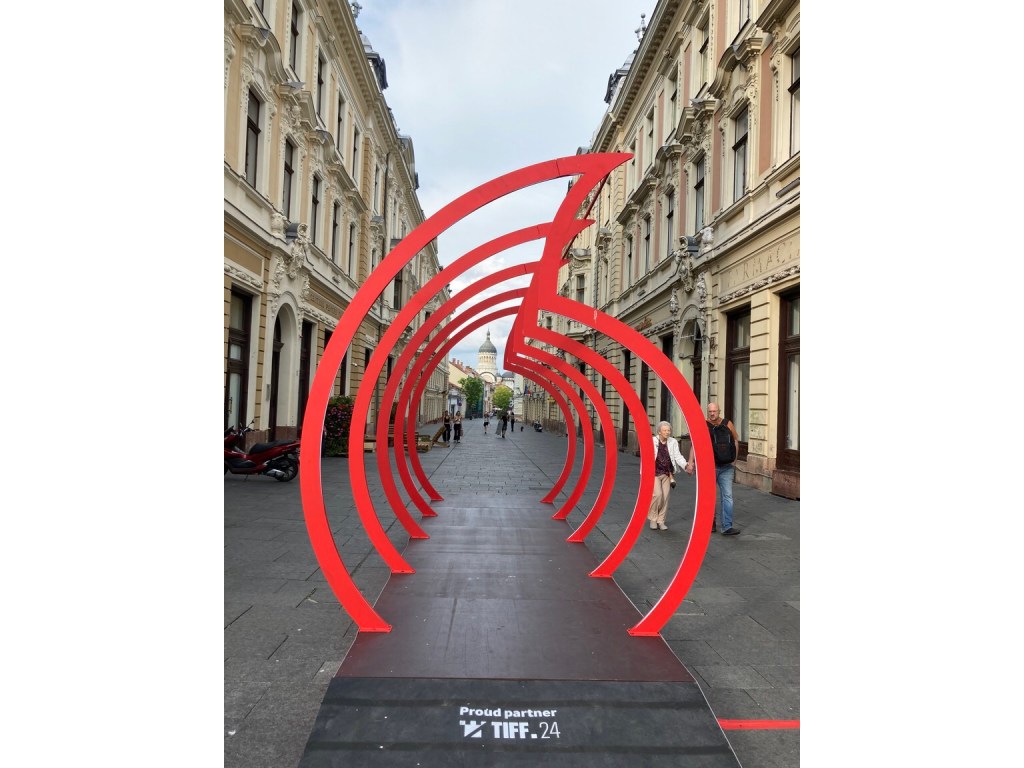
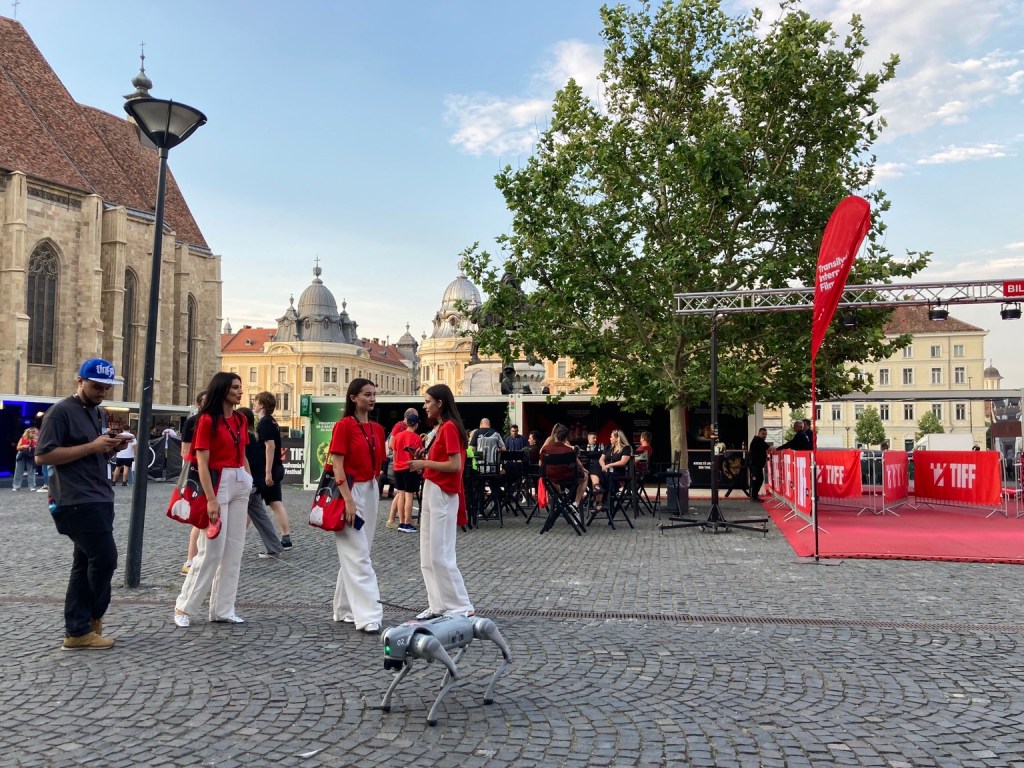
… but also by TIFF, the Transylvanian International Film Festival which has taken over lots of venues over the city for a couple of weeks to show international films.

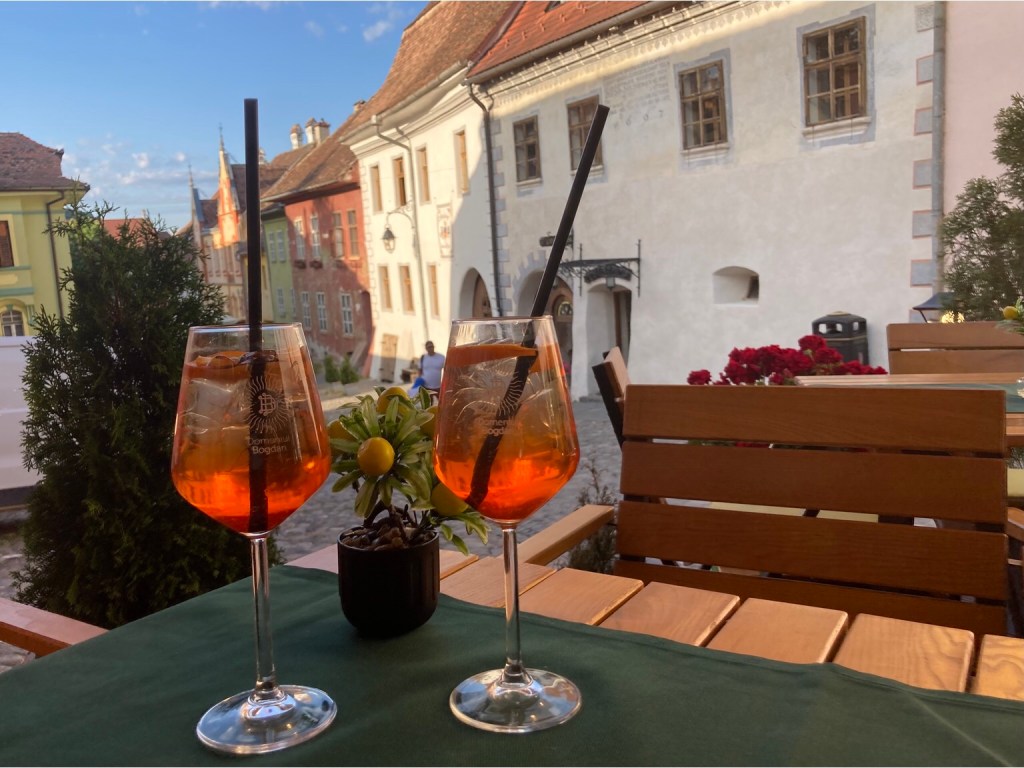
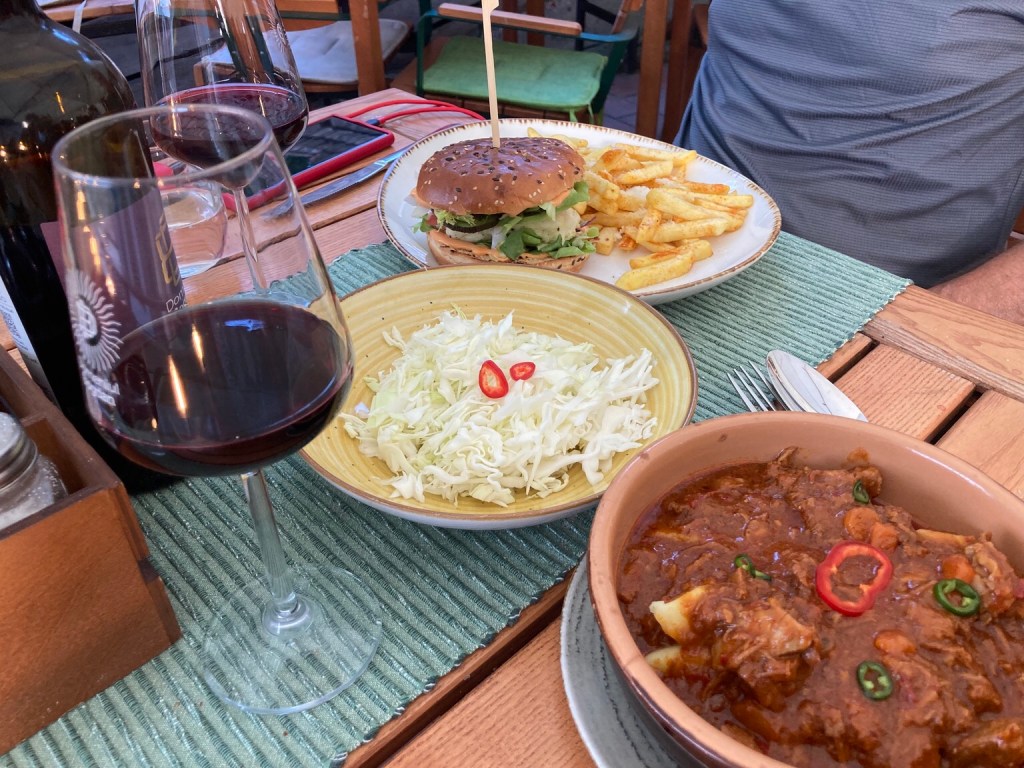
Ate in the square watching the world go by …

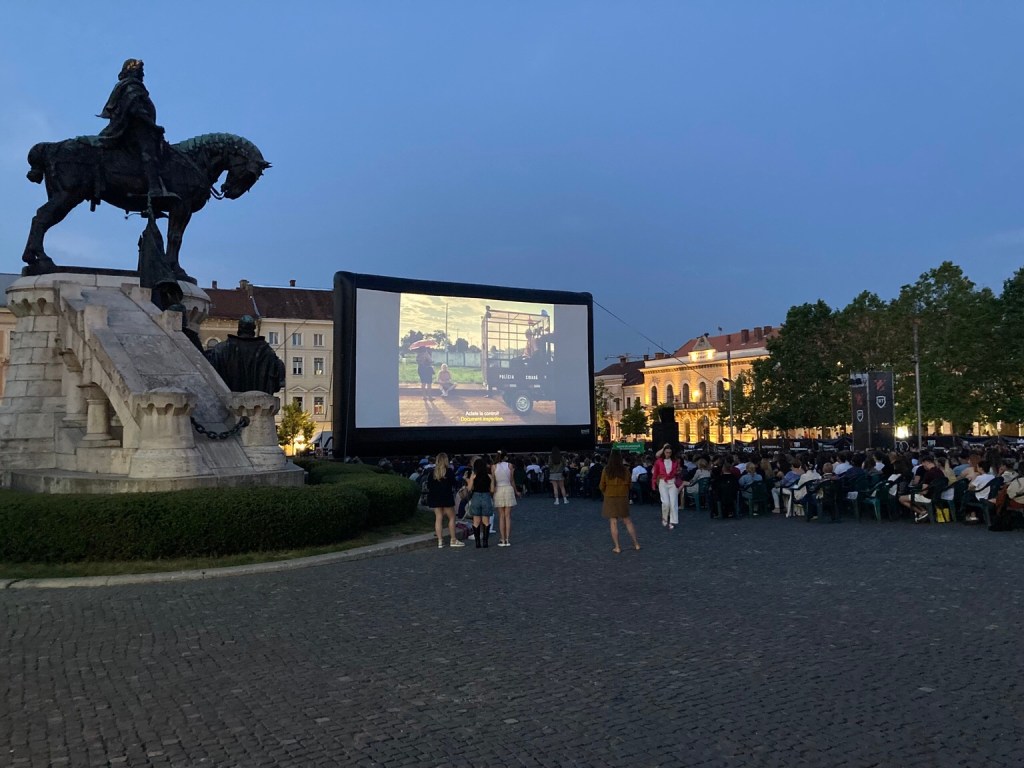
… and glanced at the film on the way to bed.

In the morning we were brought coffee and a pastry which we ate outside on the balcony then set out to explore.

Cluj is the unofficial capital of Transylvania and another of the seven fortified Saxon towns, not that you’d realise as little remains of any fortifications. Today the continued Austrian-Hungarian heritage is far more apparent with fine Baroque and Secessionist buildings and wide streets, having much in common with Vienna or Budapest.

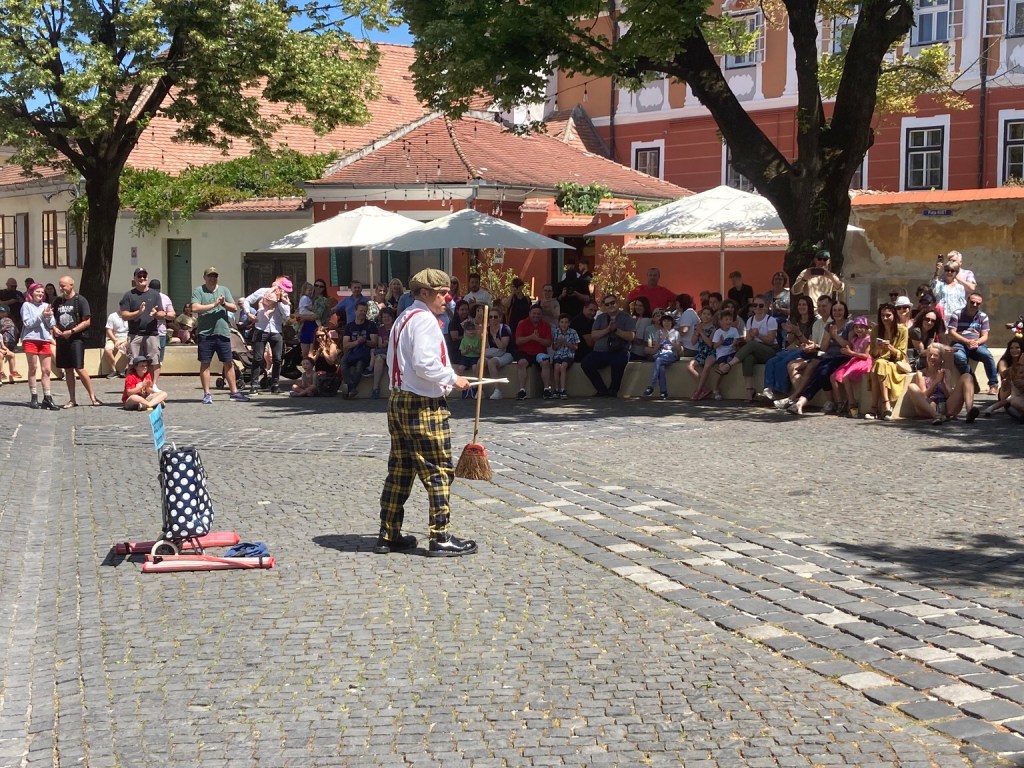
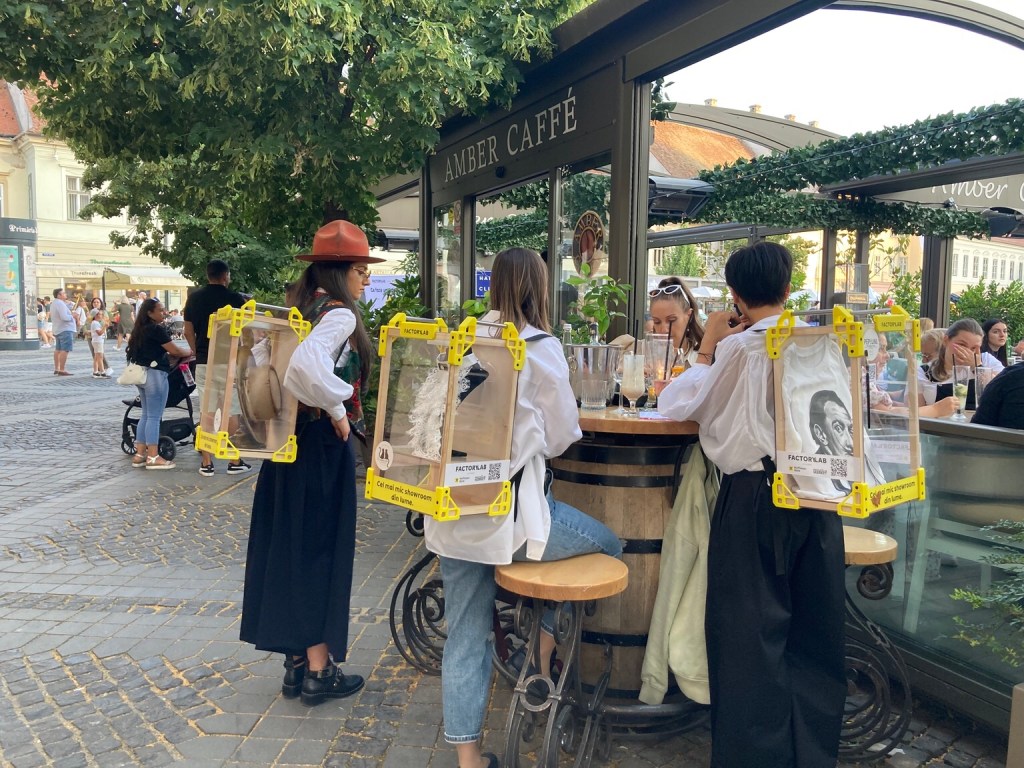
In front of this baroque backdrop, casually dressed students rub shoulders with the stylish city set and TIFF adds an extra artistic energy.

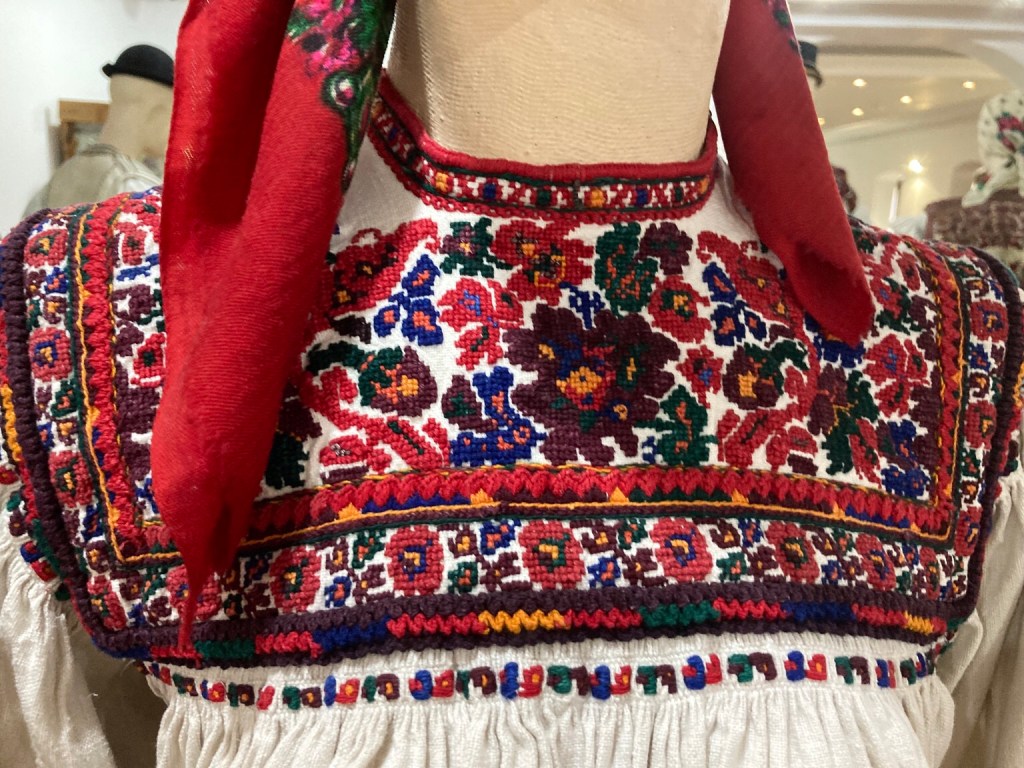
We began with the Ethnology museum which contains a huge range of utensil for every use but it was the costumes that were most interesting …

… and being able to get up close to some of the embroidery.

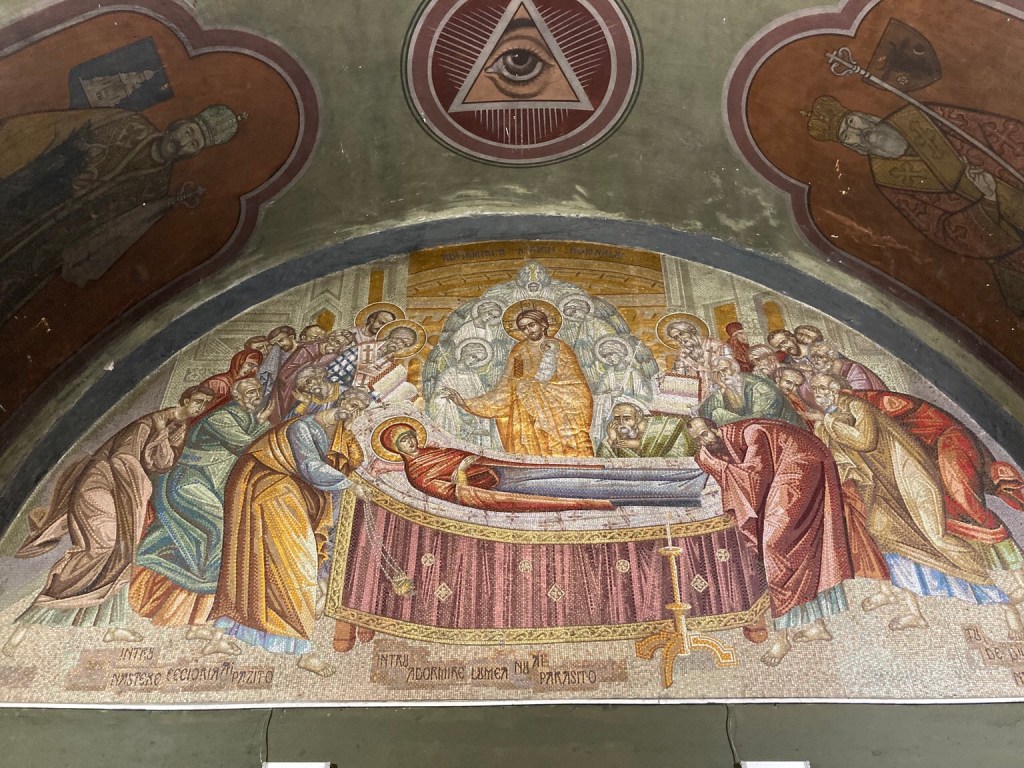
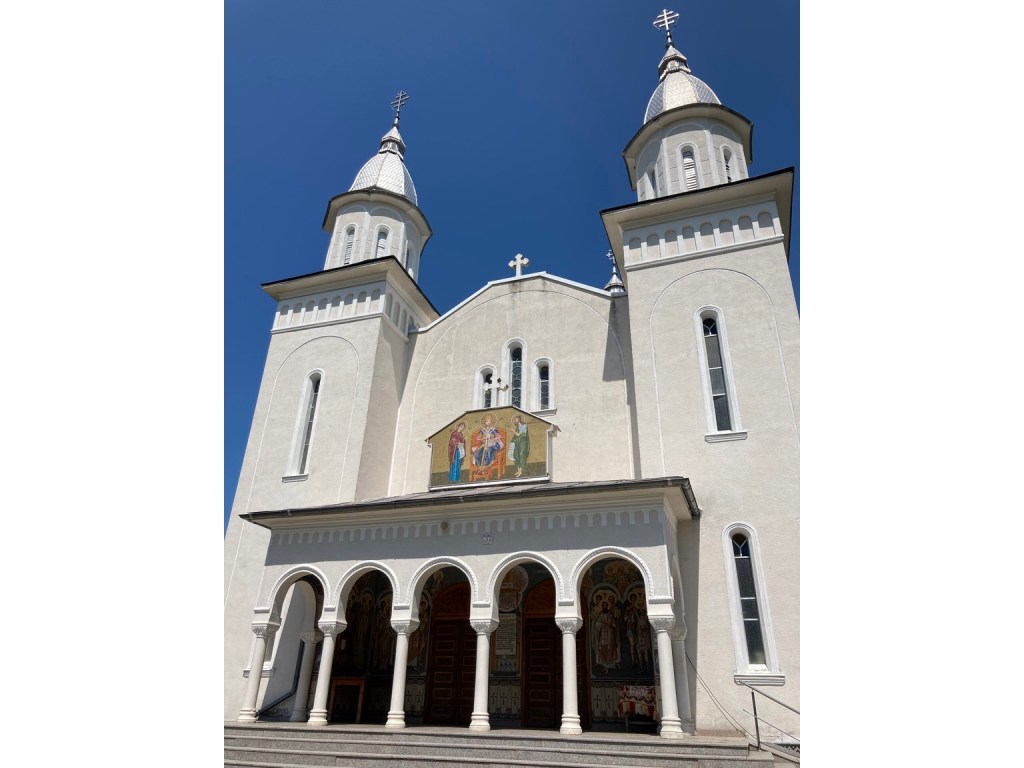
The Orthodox cathedral was nearby, a 1920’s Byzantine revival building …

… while the Murano mosaics from Venice were only added in 2001.

A maze of cobbled lanes lead from the main square, full of bars and restaurants and busy in the evening.  During the day it is quieter but we spotted a shady brasserie for lunch.

Opposite, was the Matthias Corvinus House is one of the oldest buildings in Cluj, built in the C15th in the gothic style.  Now an arts institute, it was the birthplace of Corvinus who became King of Hungary in 1458. 

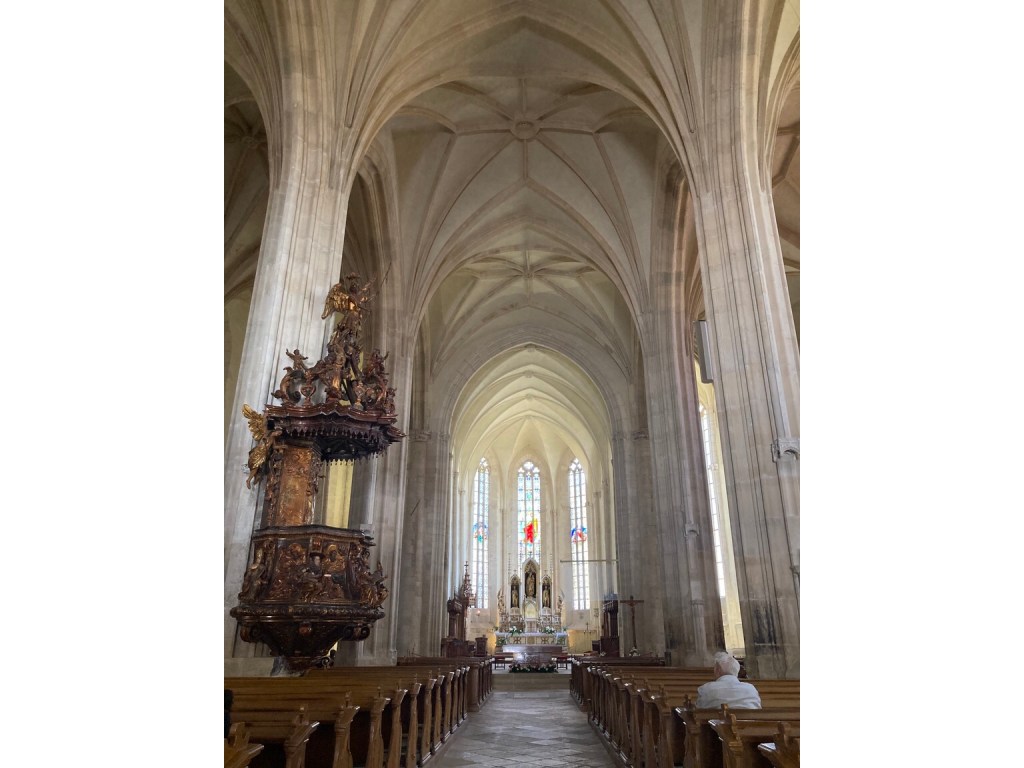
There is also a statue of him in the main square beside the Cathedral of St Michael, built in the C14-15th in the German Gothic style like the Black Church in Brasov.

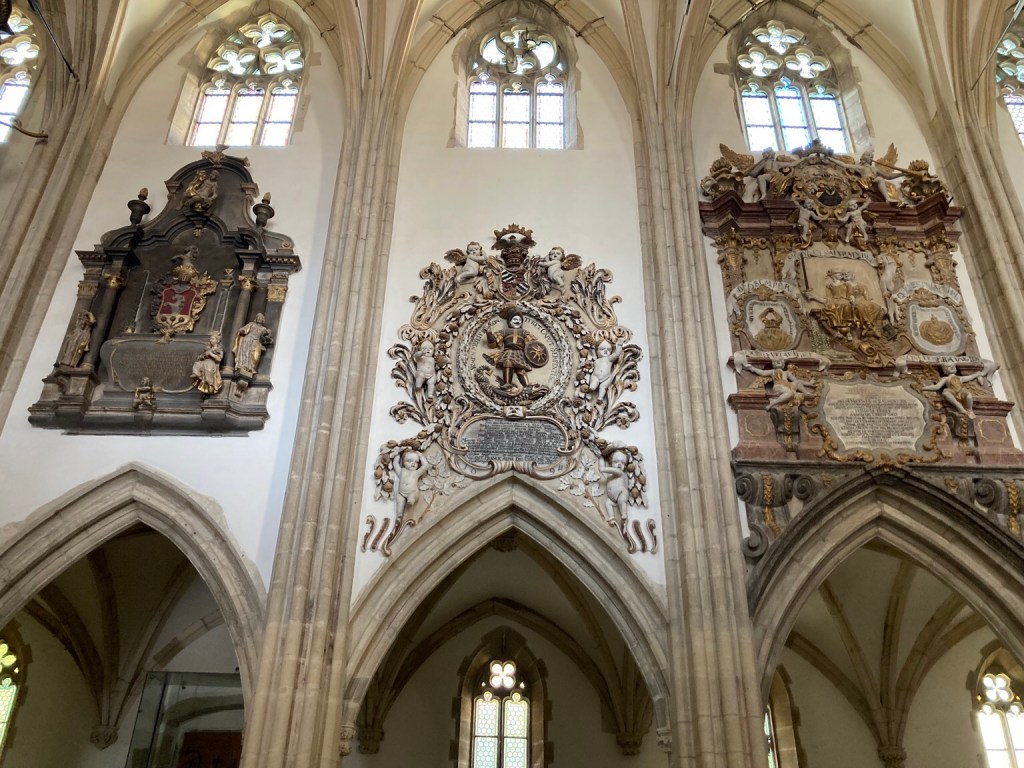
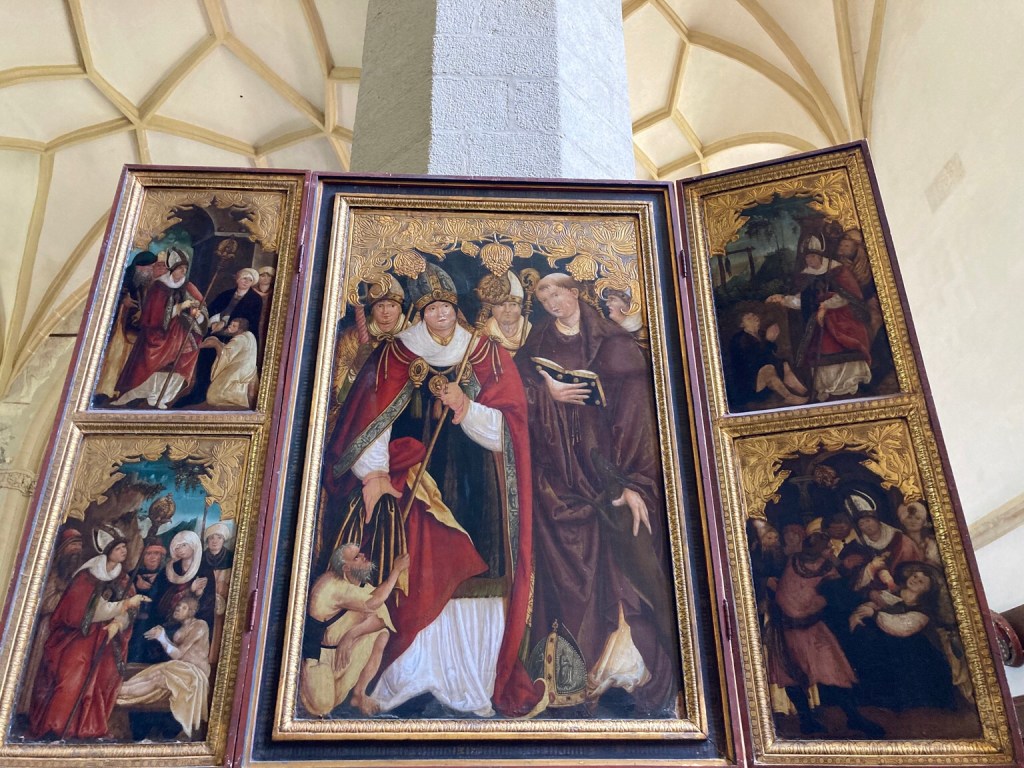
Inside, the hall church soars impressively sporting a later Baroque pulpit …

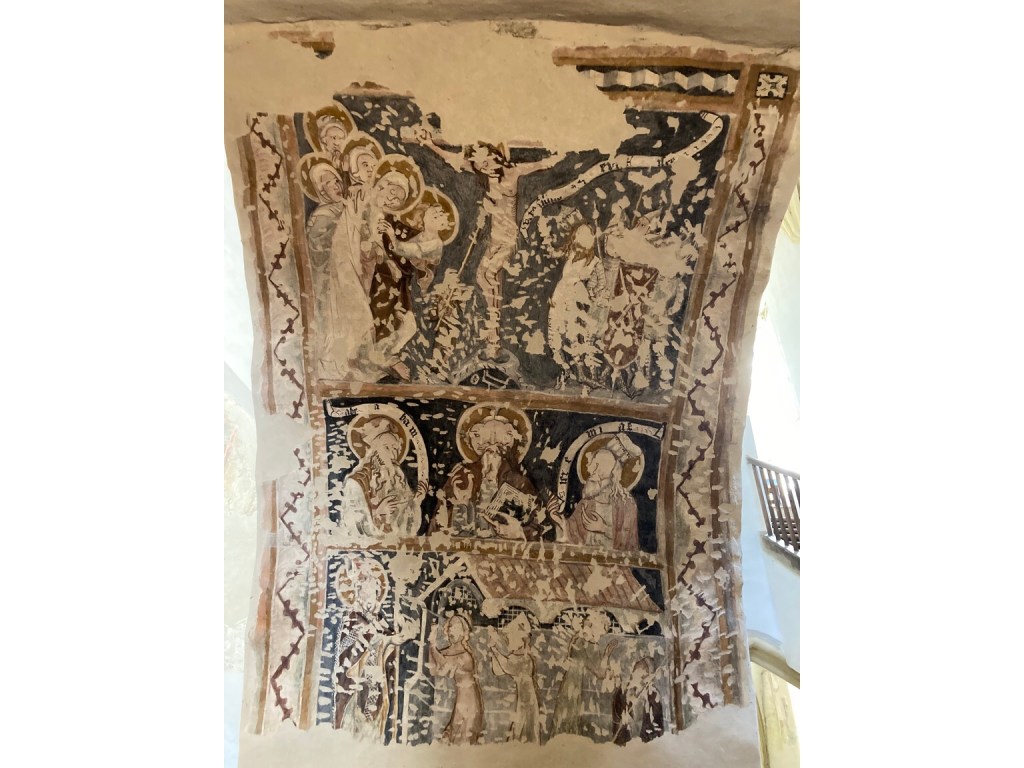
… and some C15th frescoes.

Also in the square are the Shot Pillars, seven bronze cylinders erected in 2003 to commemorate those gunned down in the 1989 revolution, around 26.

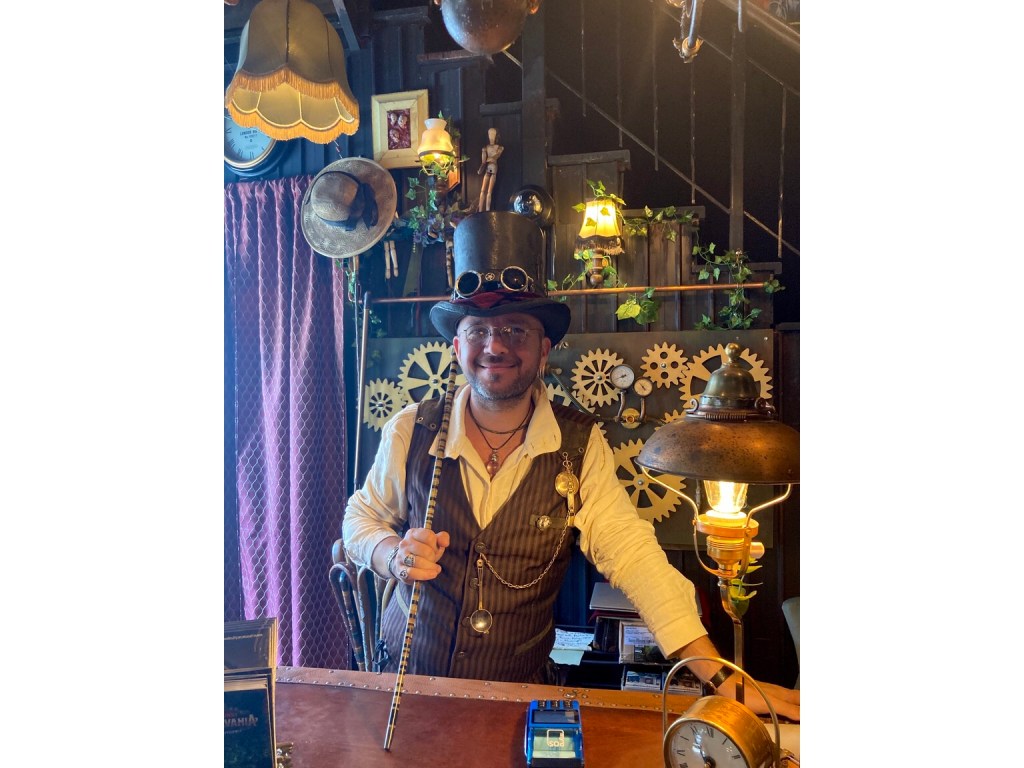
For a complete change of direction, the Steampunk Transylvania Museum is the only one in Europe, and since we’d visited the only other in the world, in Oamaru in New Zealand, we had to go!

It’s been open for three years and is filled with genuine technical collectibles, and inventive bits and pieces combined with artistic flair and inspired by Jules Verne. 

Quite a bit is interactive so it was fun to visit and could even make your hair stand on end!

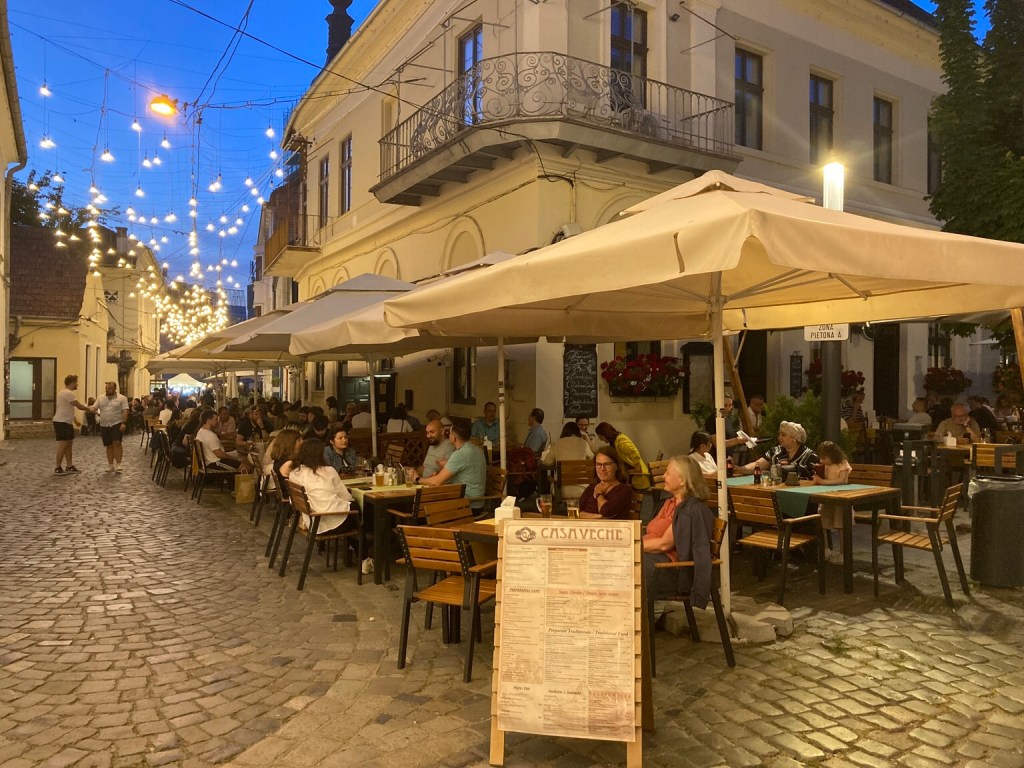
While walking round earlier, we’d spotted Casa Veche, a restaurant offering a veggie version of samale filled with mushrooms and rice which Chris was eager to try so I kept him company and had the regular dish with smoked pork – another winning dinner!

Tomorrow we move on again 

Map

Maramures … and Wooden Churches

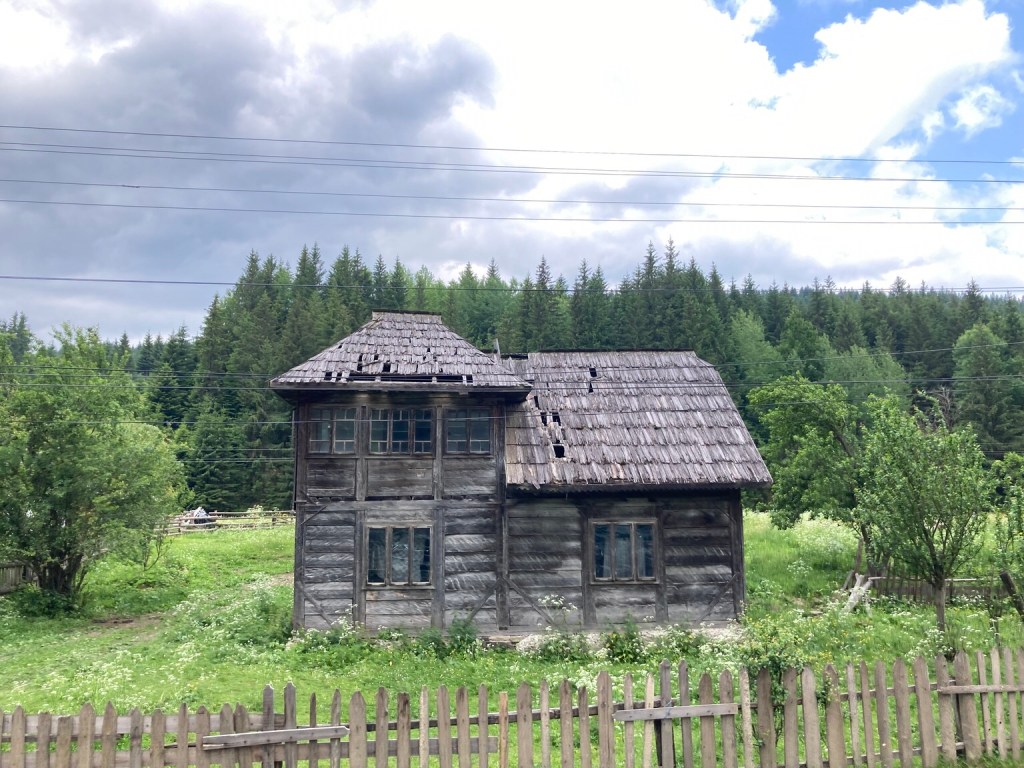
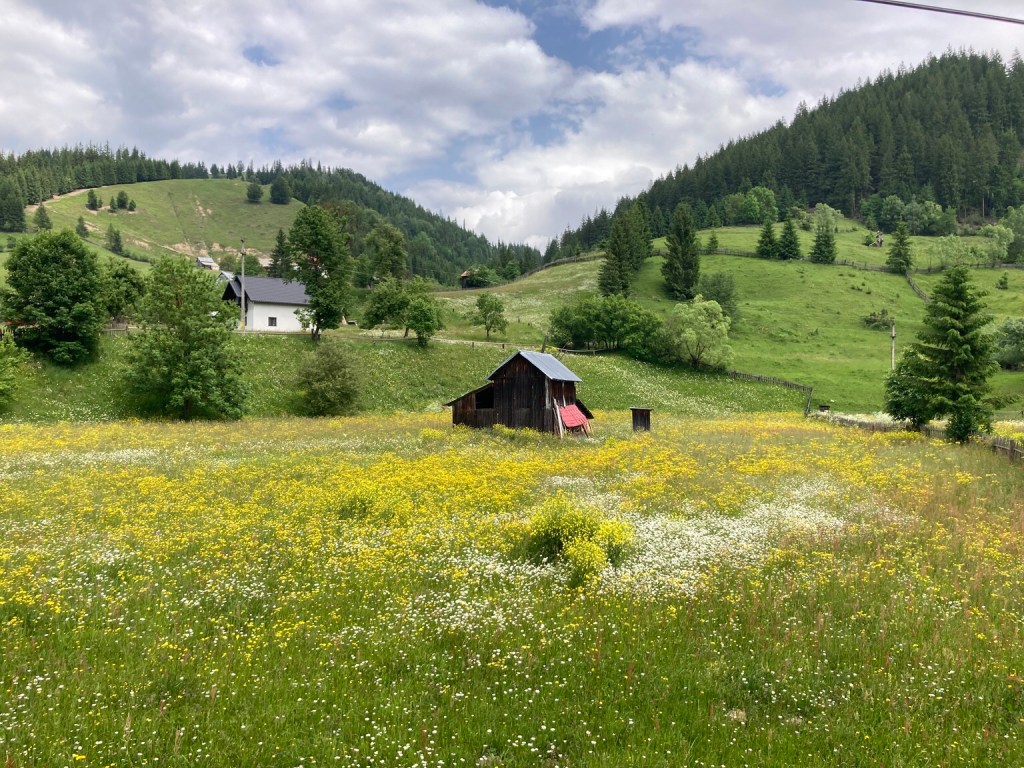
This is Romania at its most rural and least changed since the Middle Ages with families still following the traditional way of life. We have come to see wooden churches but have found so much else along the way.

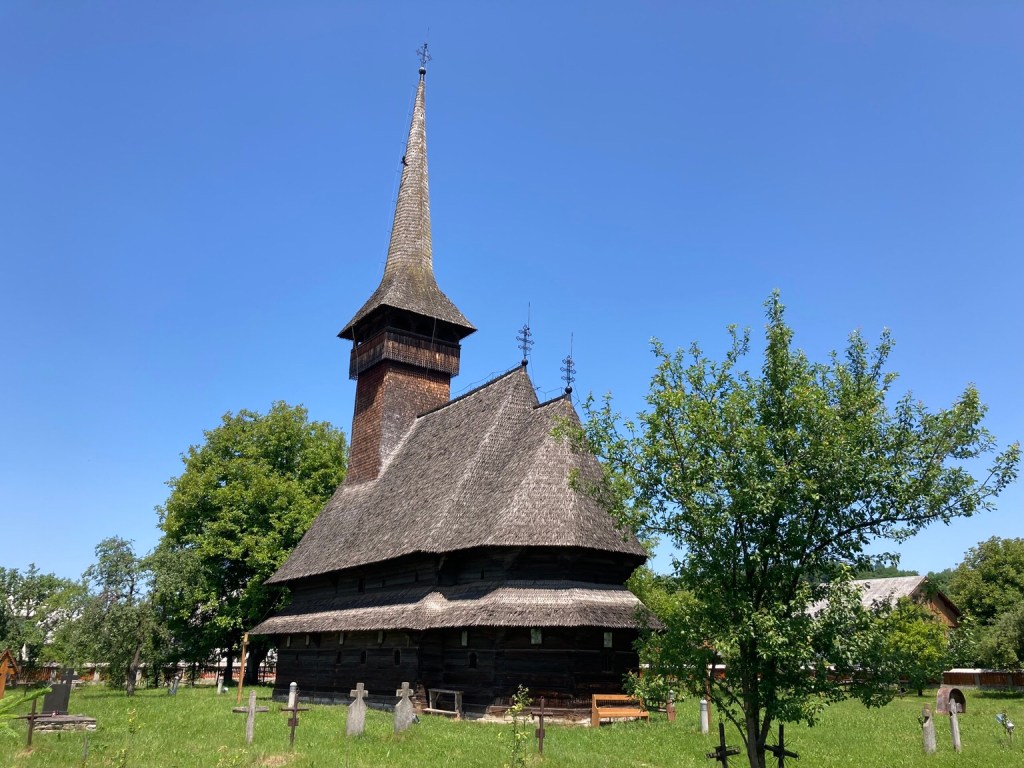
In 1278, Orthodox Romanians were forbidden by their catholic Hungarian overlords to build their churches in stone, so they just built in wood instead.  Today is Sunday and first town we stopped in was Bogdan Voda, renamed in in the 1960’s in honour of the local ruler who founded the principality of Moldavia in the C14th.

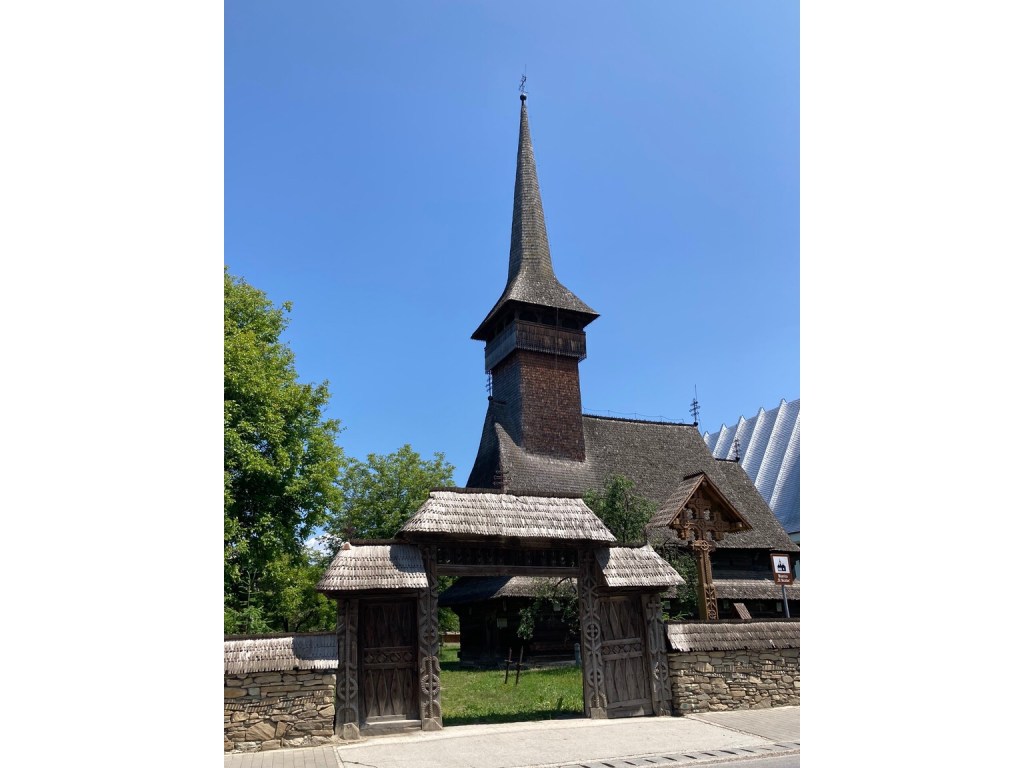
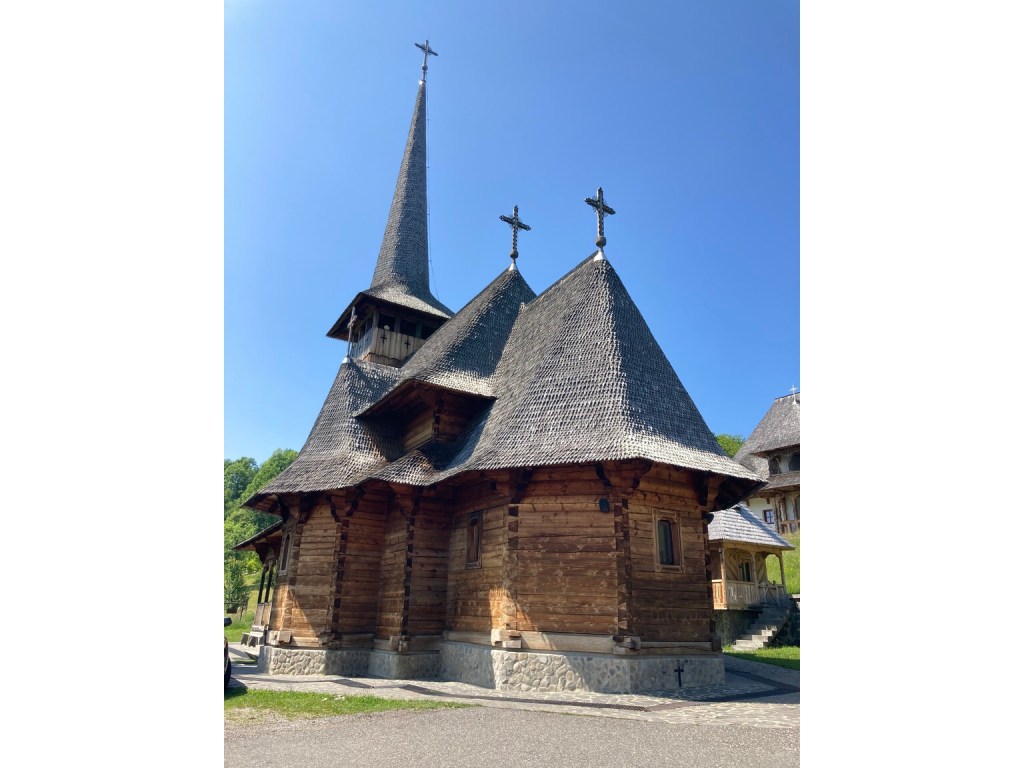
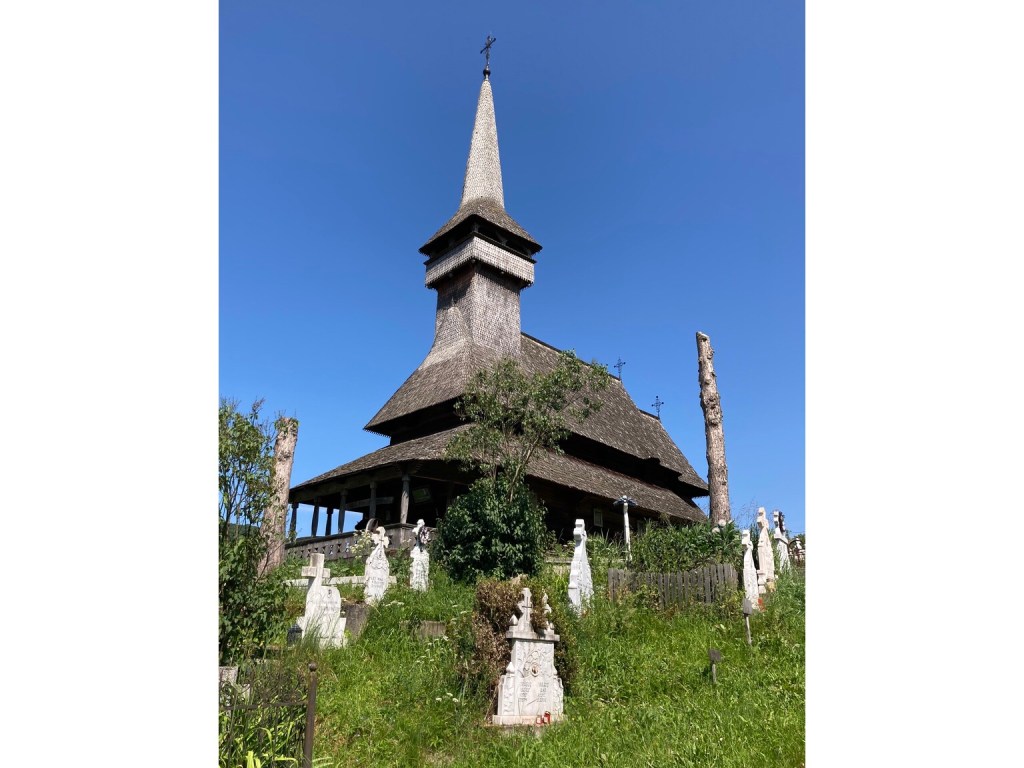
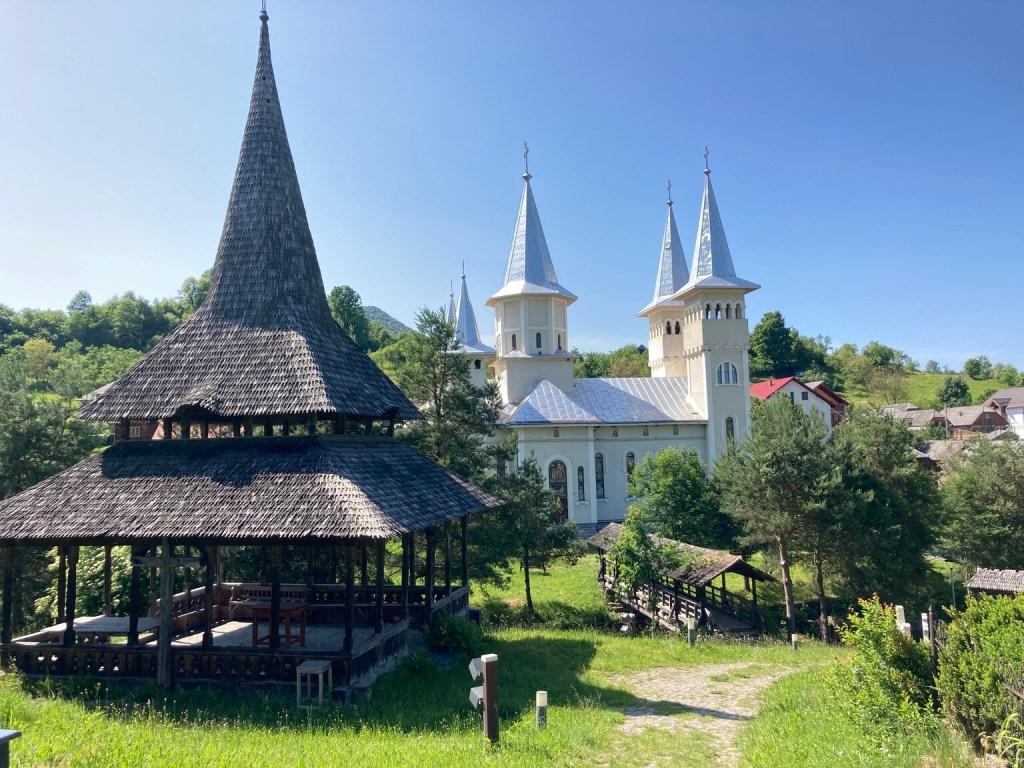
The old wooden church of St Nicholas built in 1718 sits right beside its modern successor …

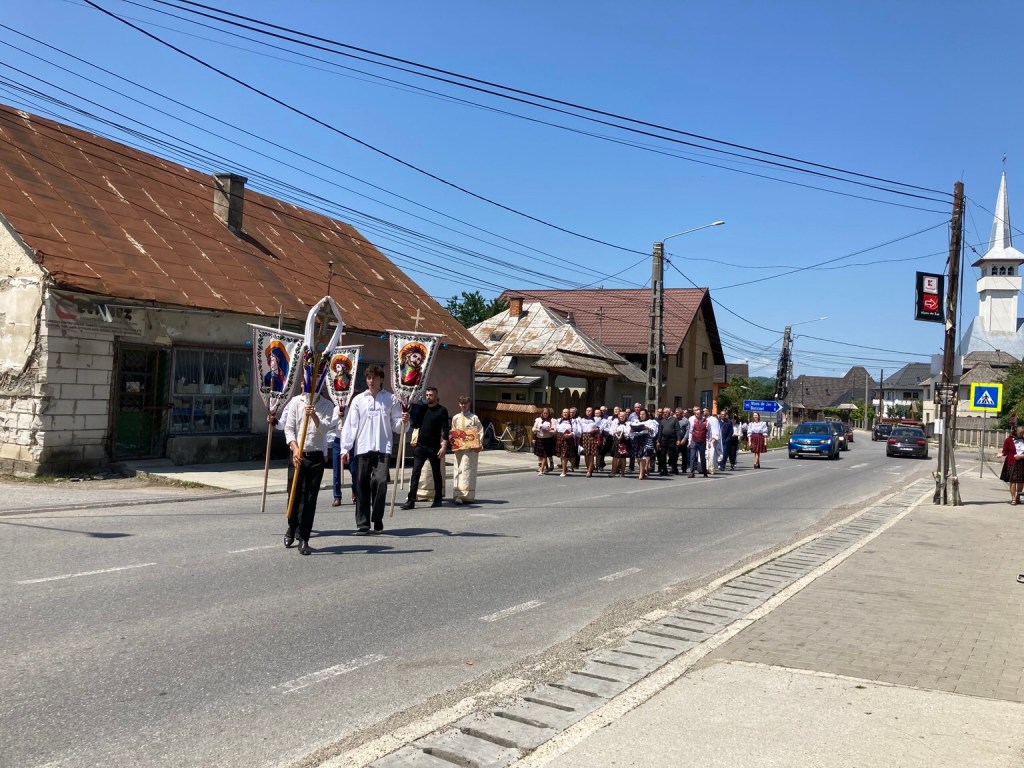
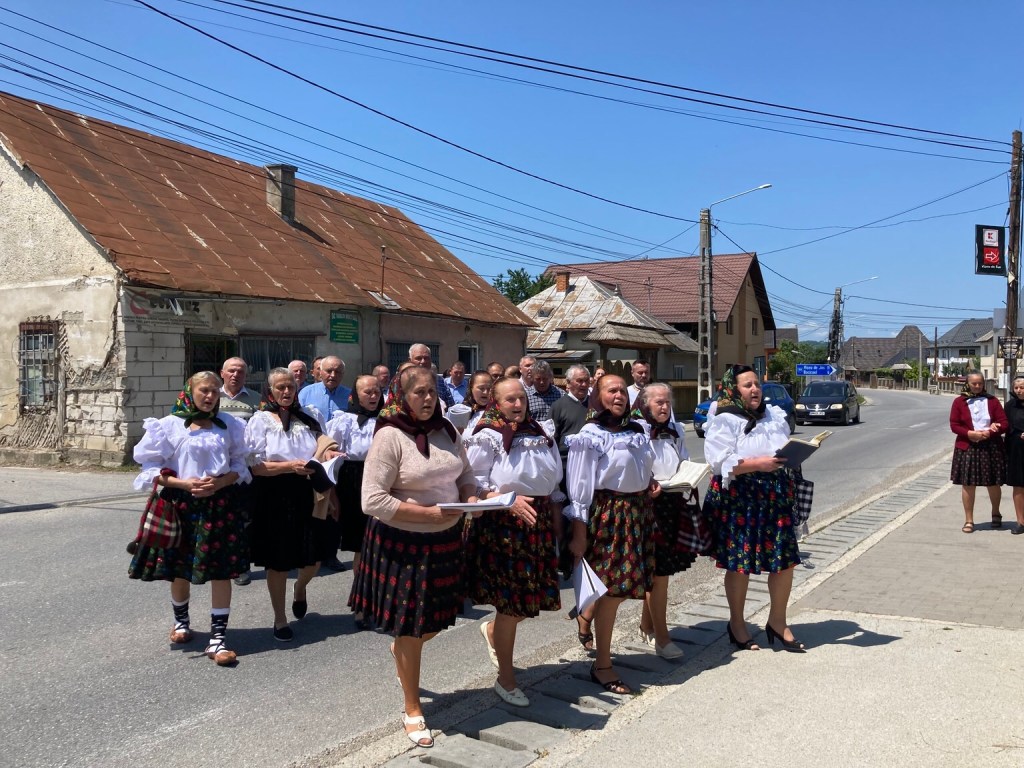
… and it shortly became apparent why a couple of people were waiting around as a procession approached from down the street, singing, all in their Sunday best. 

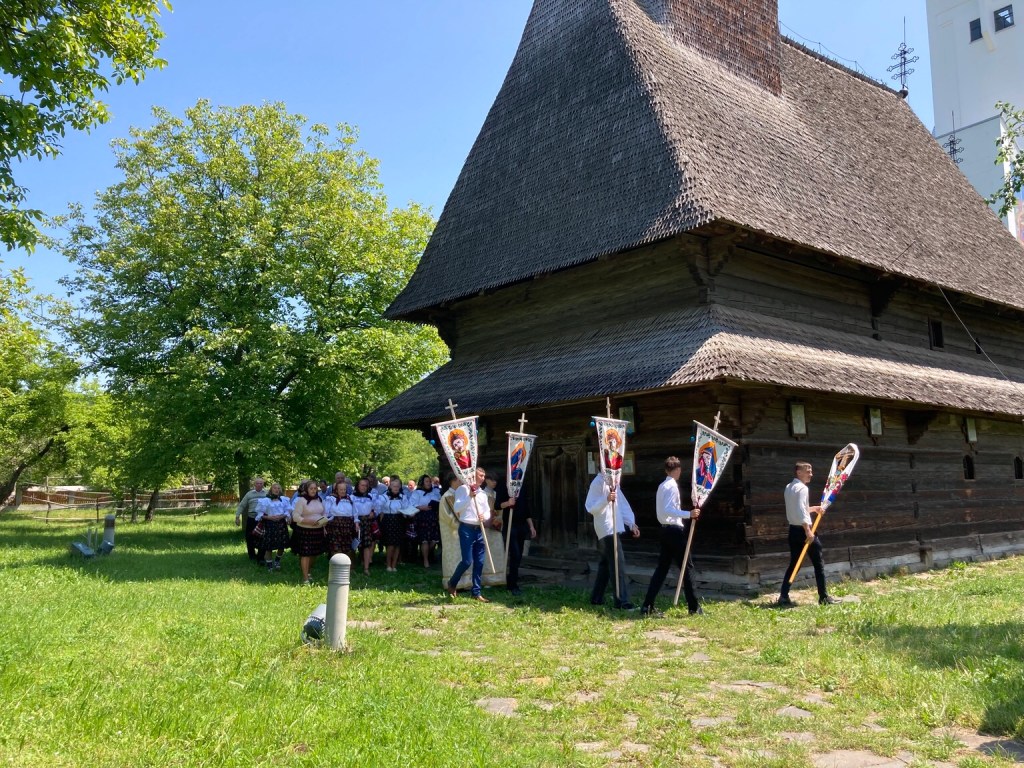
They came through the gate and processed three times round the church then the priest said a few words and they dispersed towards the new church. 

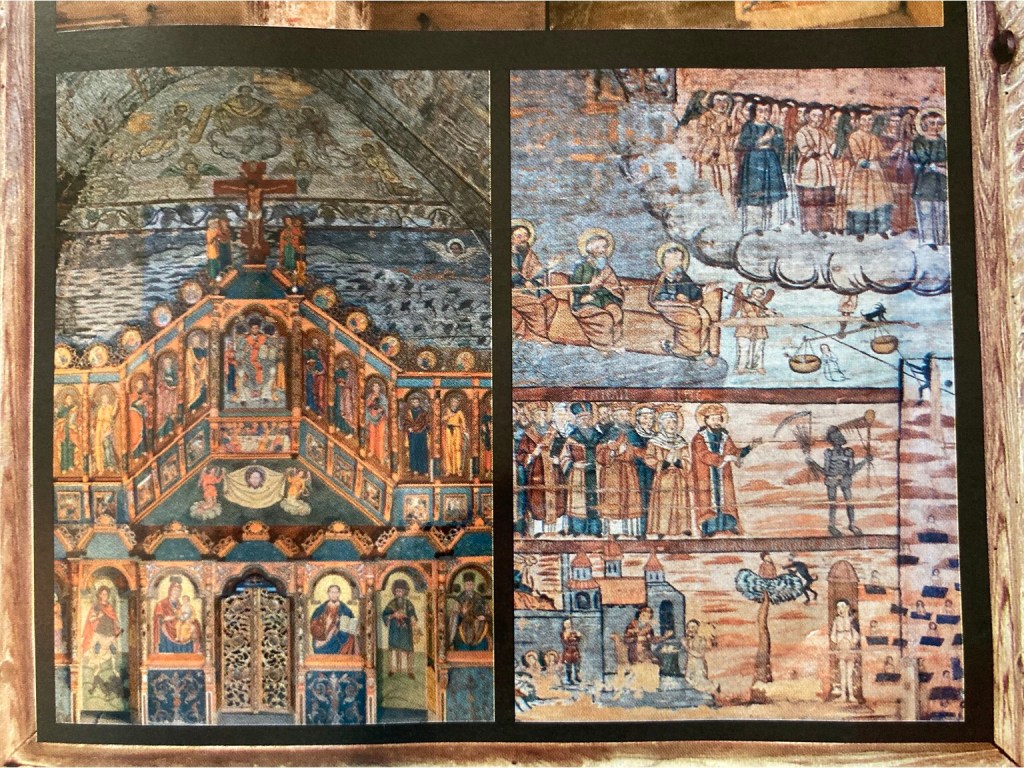
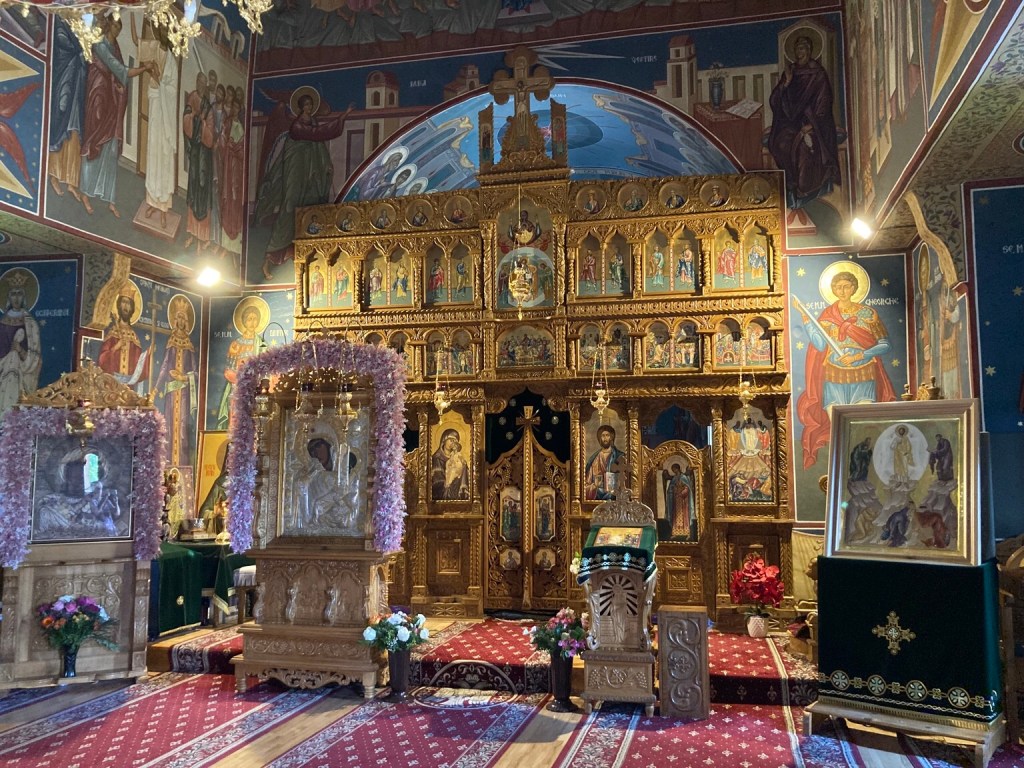
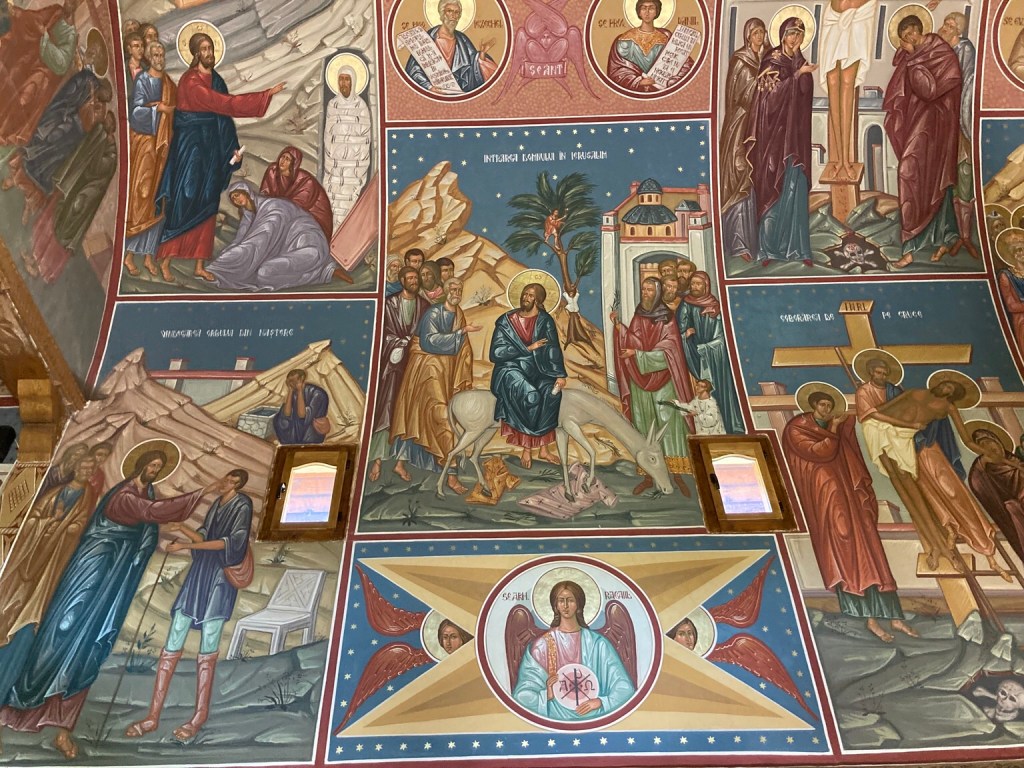
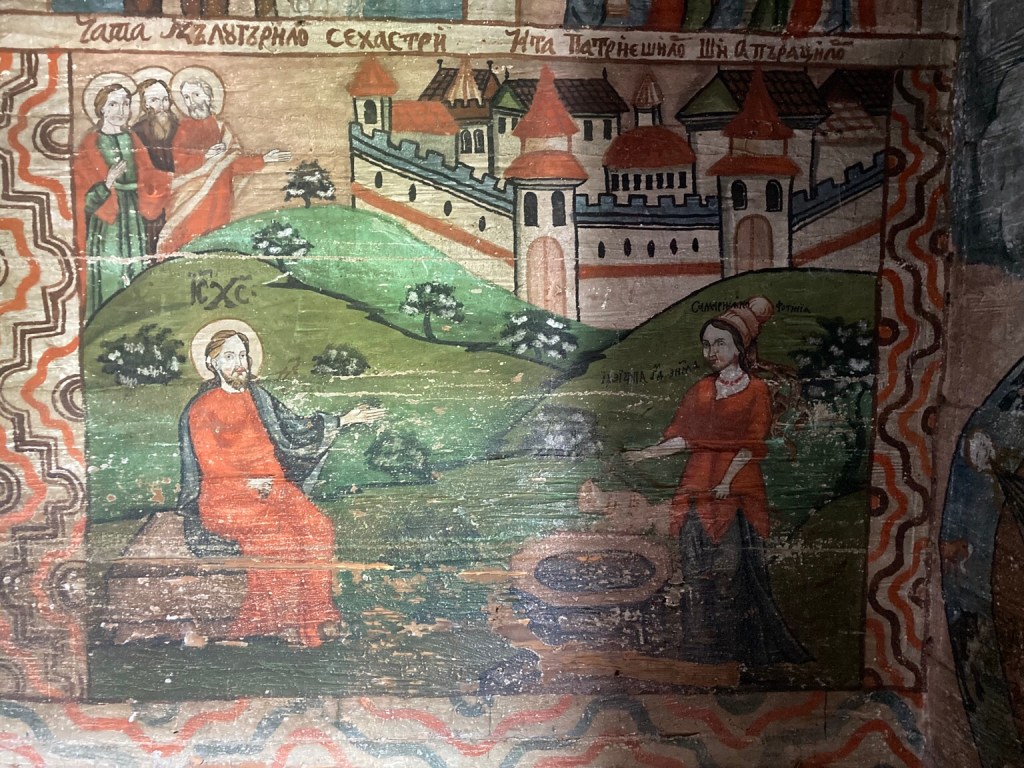
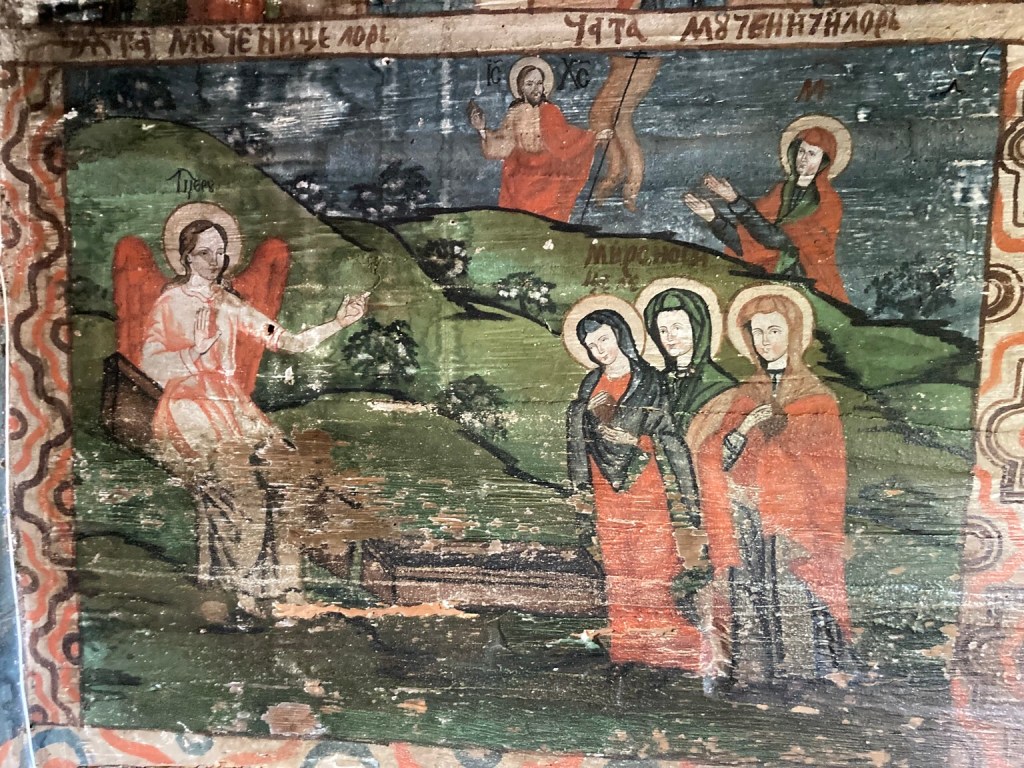
The priest then let us into the church which was empty of furnishings and seemed unused, but had painted murals on every wall, most showing bible stories and images from the life of Christ.  While we couldn’t take photos, we bought a leaflet and here are some pictures, of the Iconostasis and Doomsday & Death …

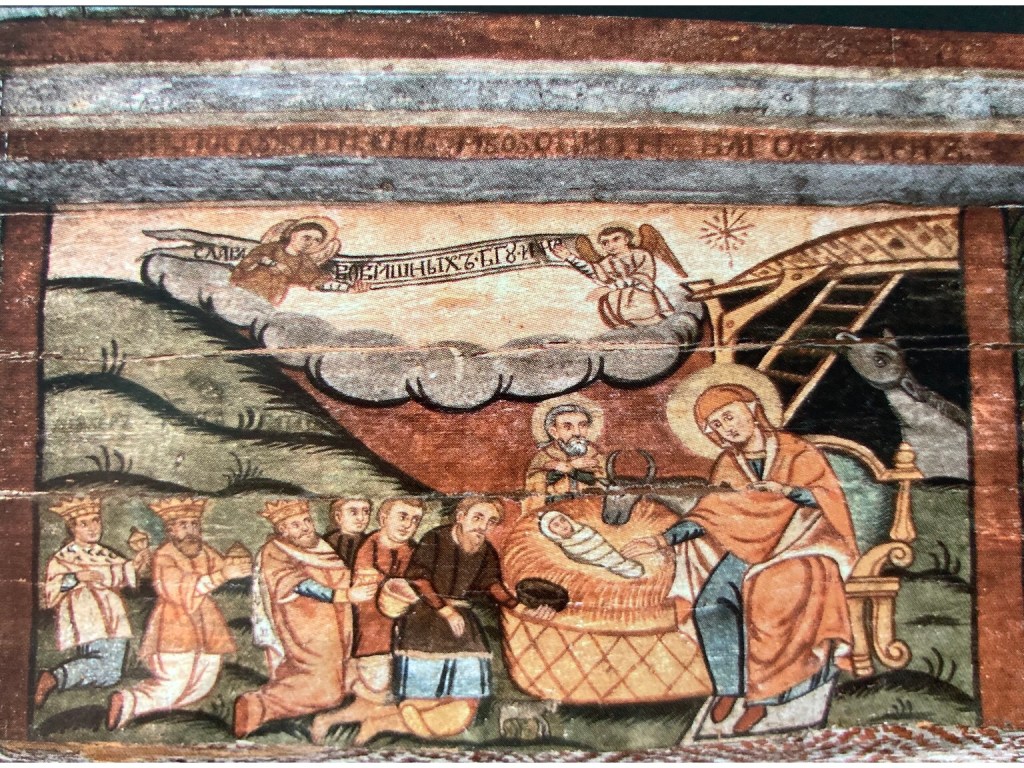
… The Nativity …

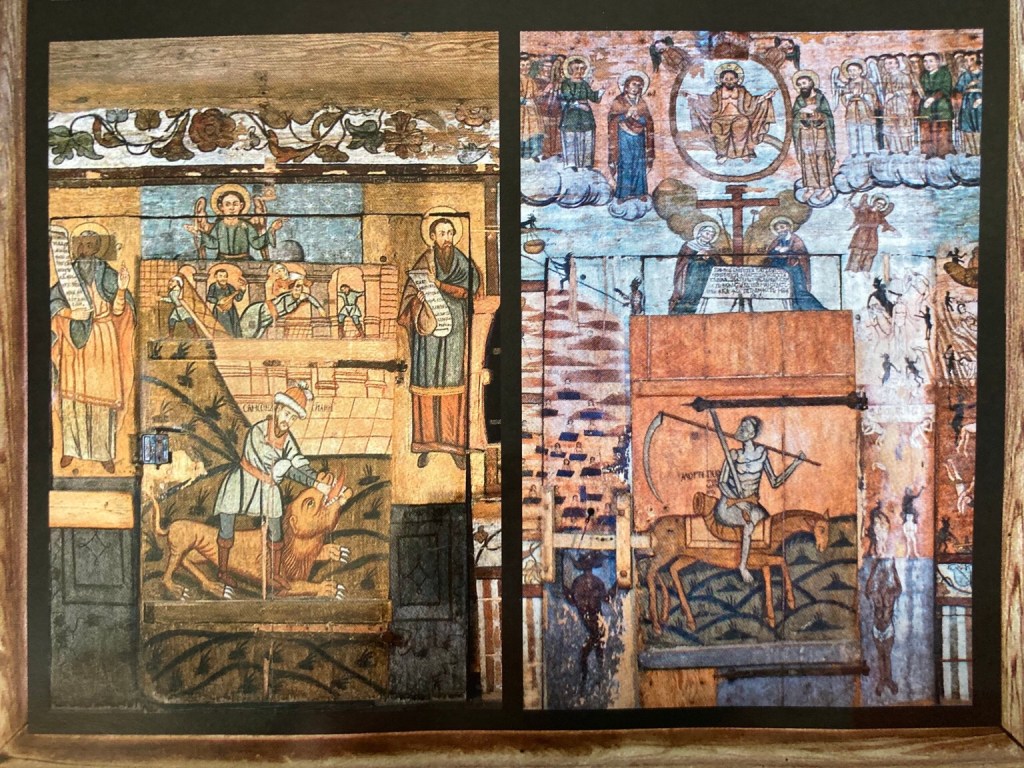
… and Samson with Delilah & the lion and Death on a Horse with a Scythe

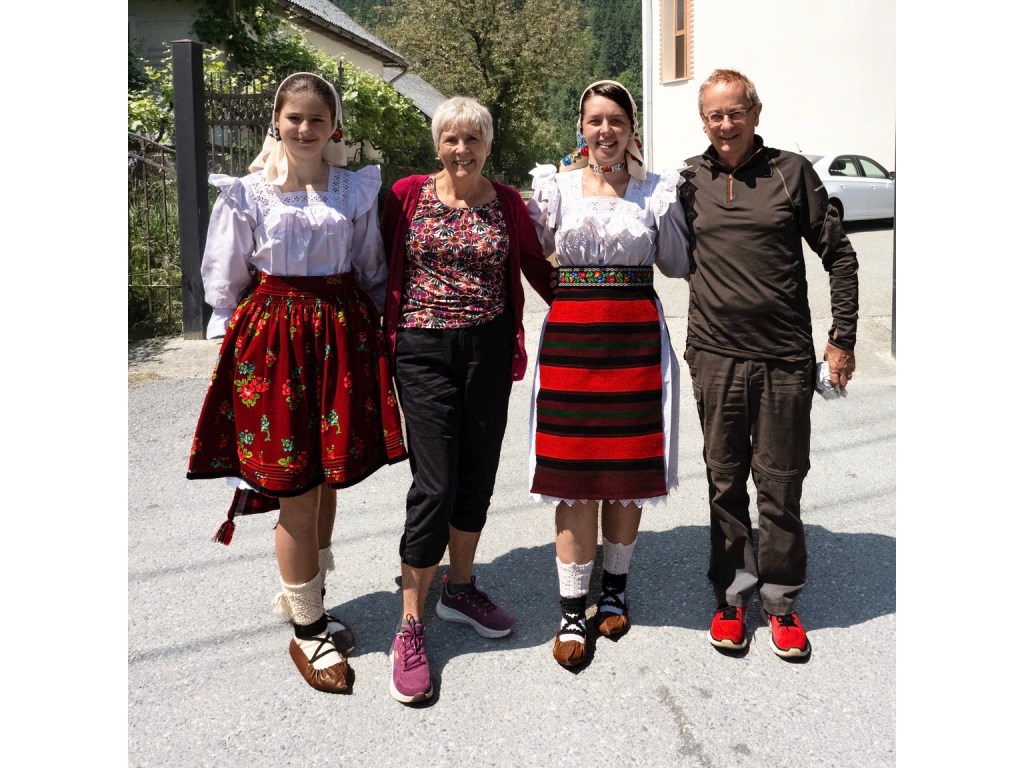
As we drove on we saw more people in traditional dress and when we slowed the car beside one group, the lady in the striped skirt spoke good English and explained she was a bride to be married in a month, so she was in a special wedding outfit.  Her grandmother had embroidered her belt, and everything is handmade, including the stockings and leather shoes called opinci.  She asked if we would like a photo and here it is!

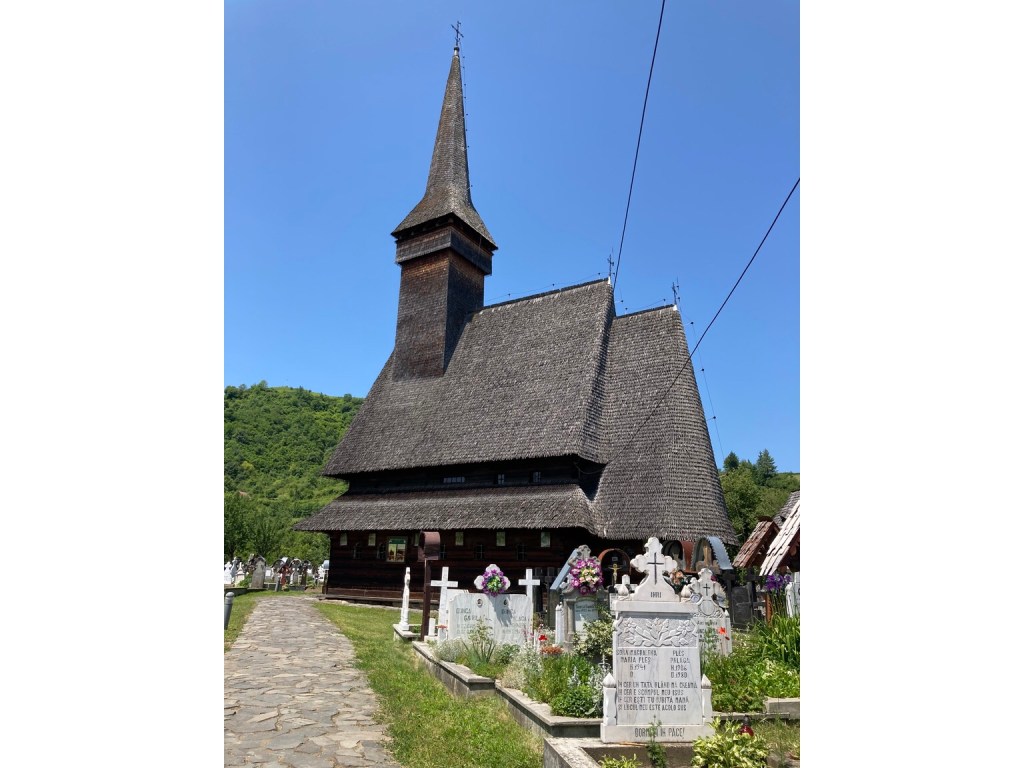
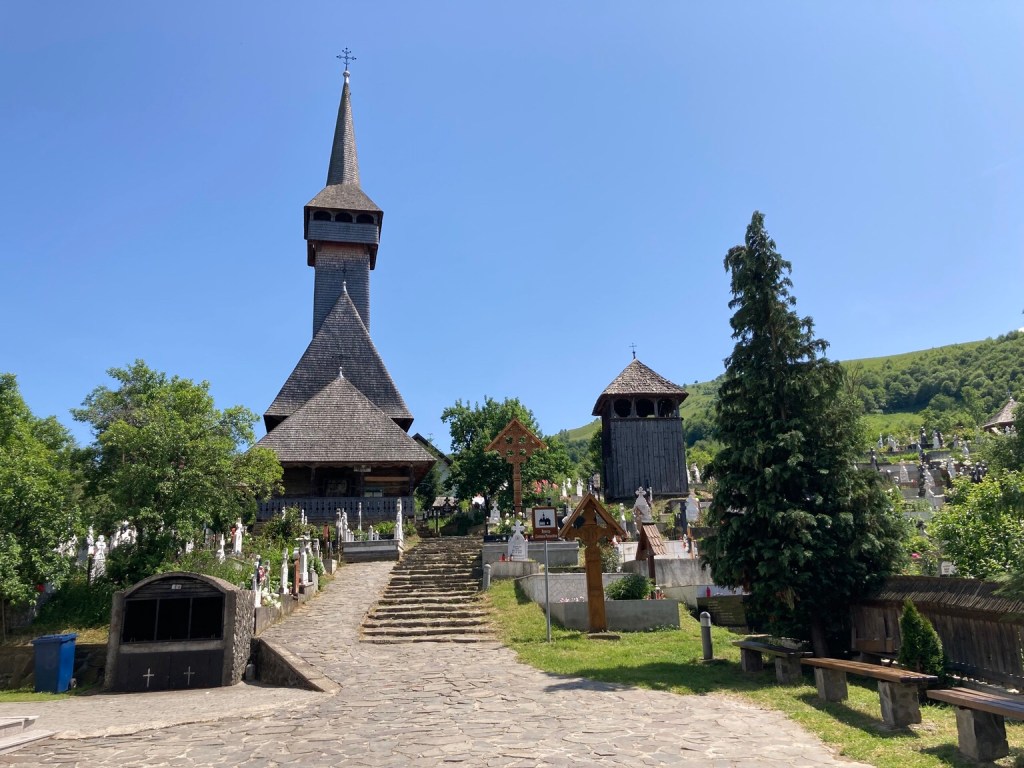
Next up was the Uniate church in Ieud, also built in 1718.  As we approached, a lady went to get the key to let us in. 

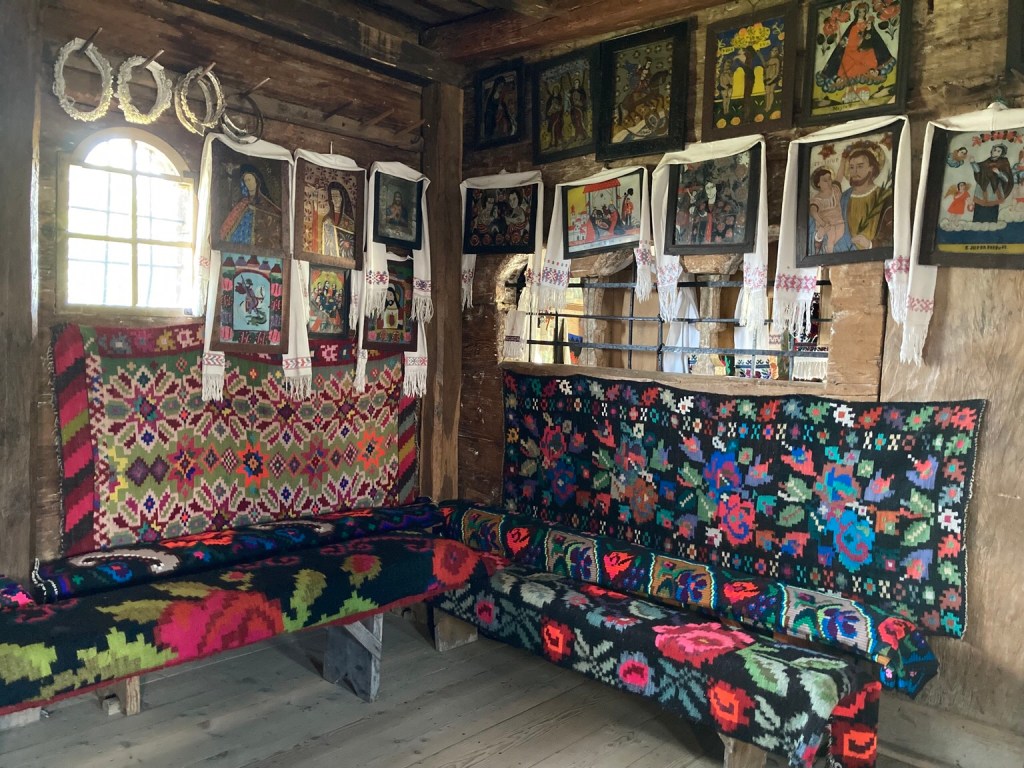
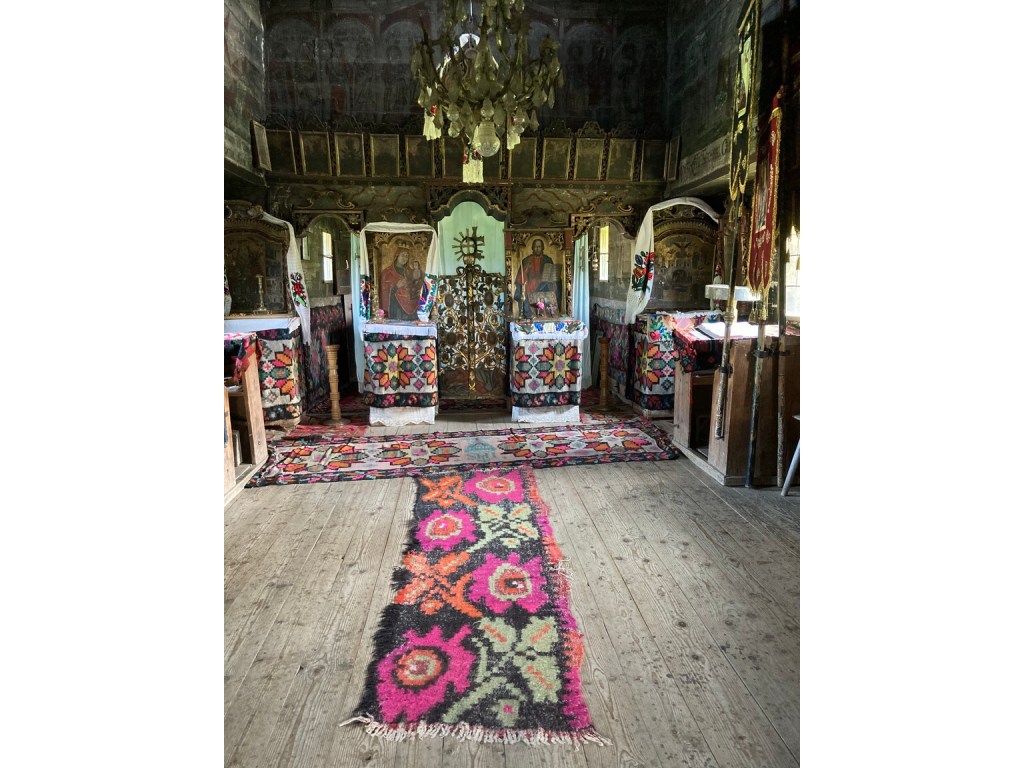
This church was charming and seemed to still be used. We were allowed to take photos, so here is the outer room lined with rug covered benches and decorated with adorned icons …

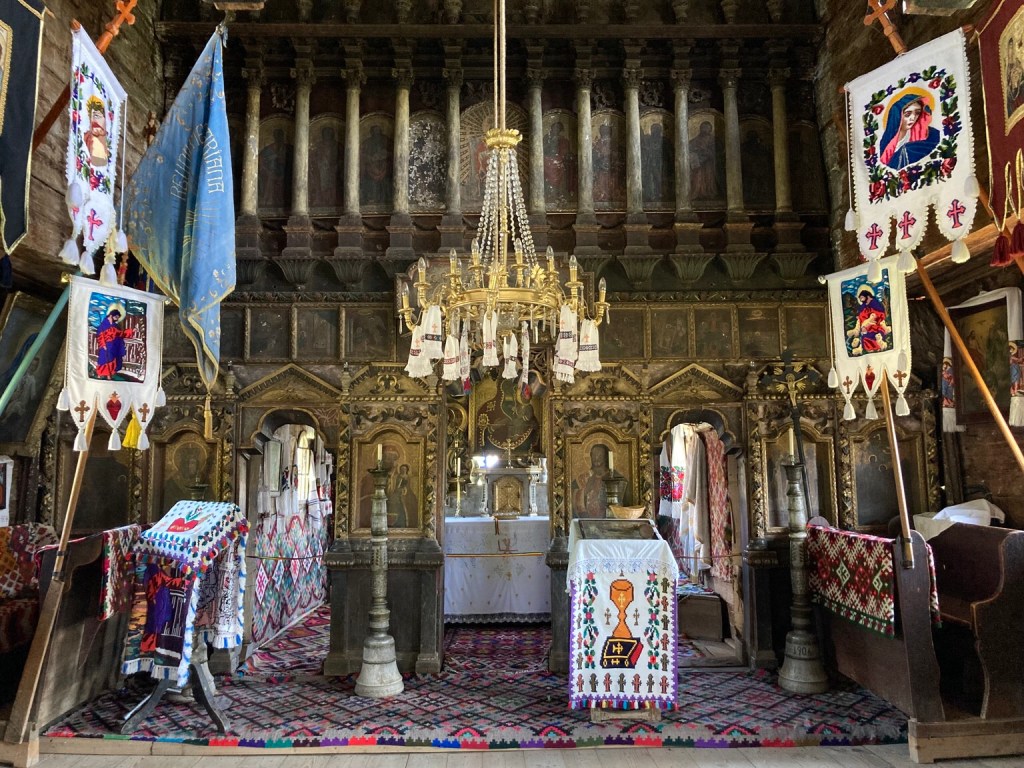
… and the inner room with the altar and brightly embroidered banners.

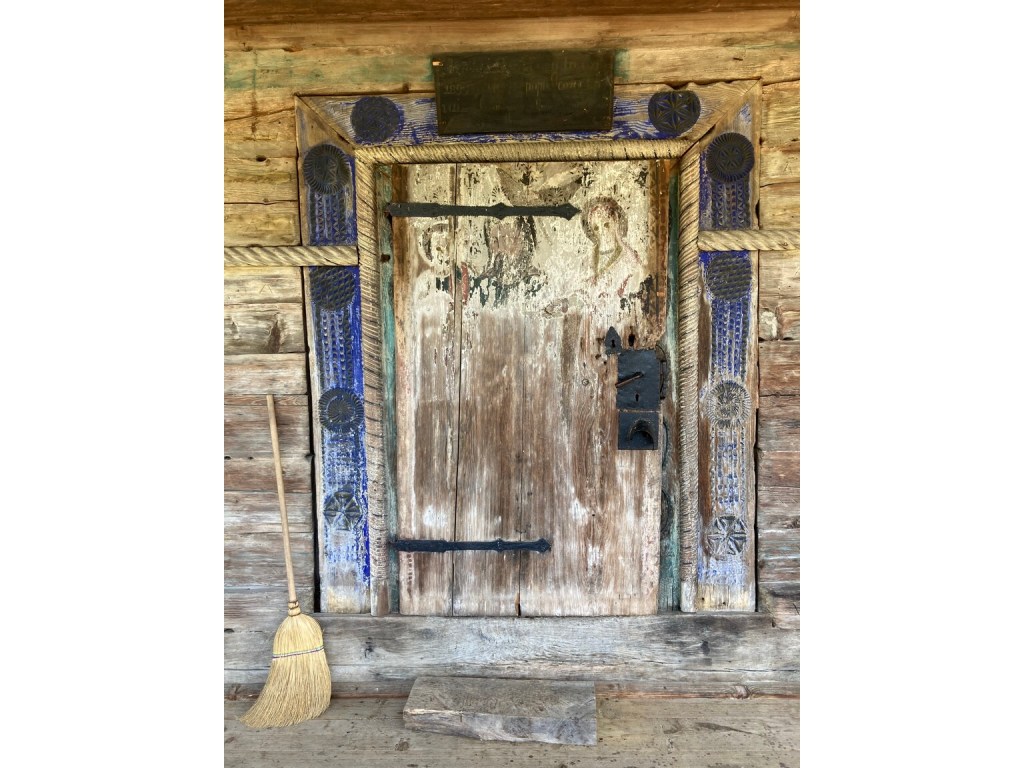
Botiza church was closed …

… again with a modern successor next door …

… but we walked around and the door looked interesting!

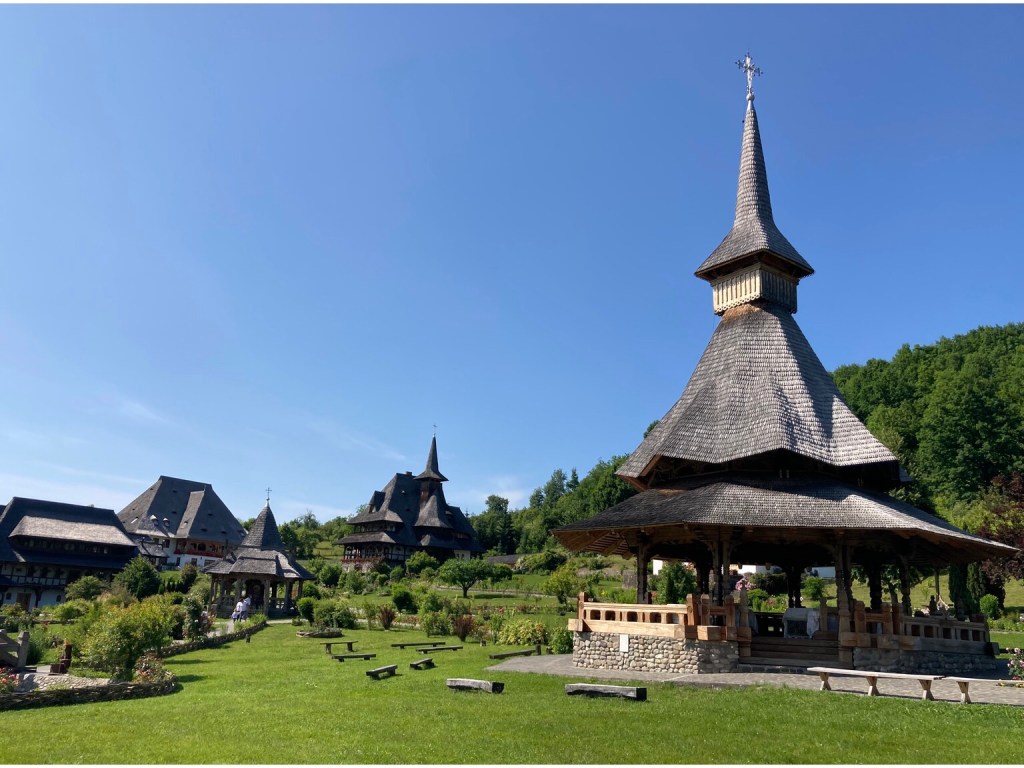
We saw a sign for Botiza Transfiguration Monastery which was built in 1991 in the traditional style.  It had a pretty garden …

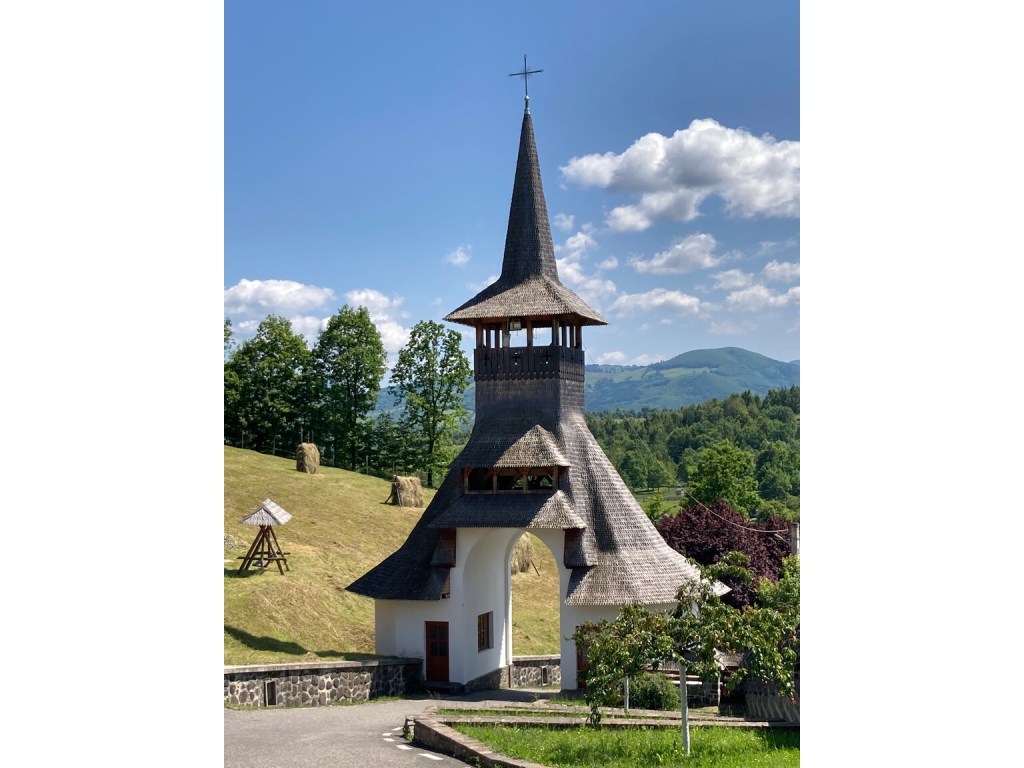
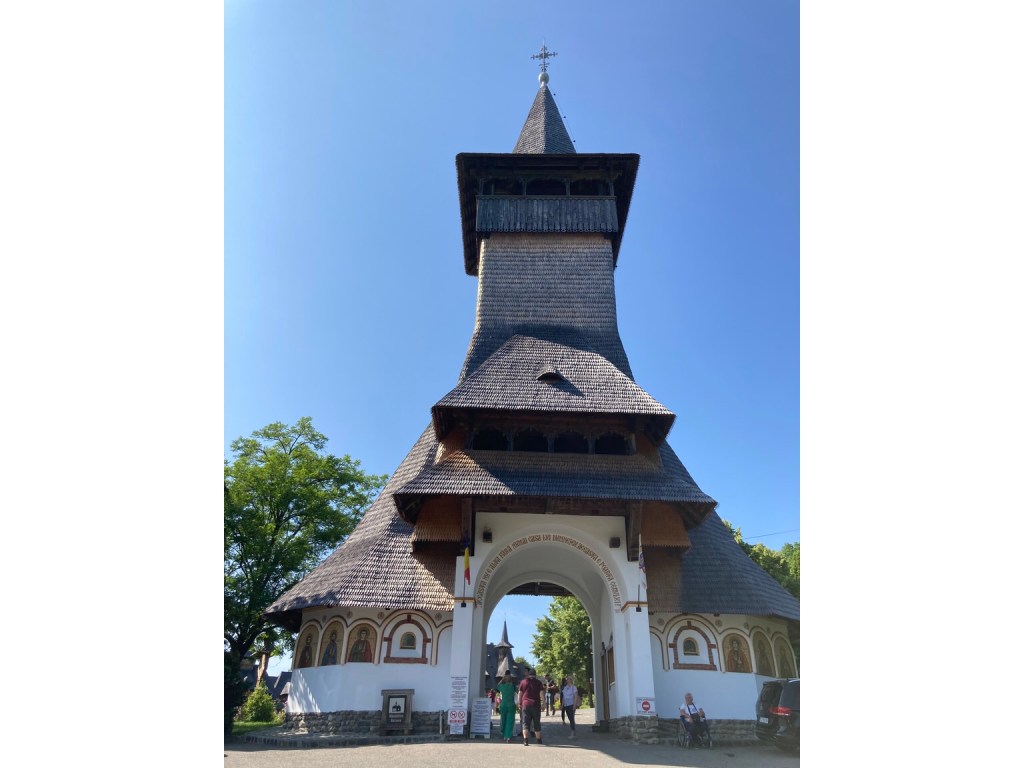
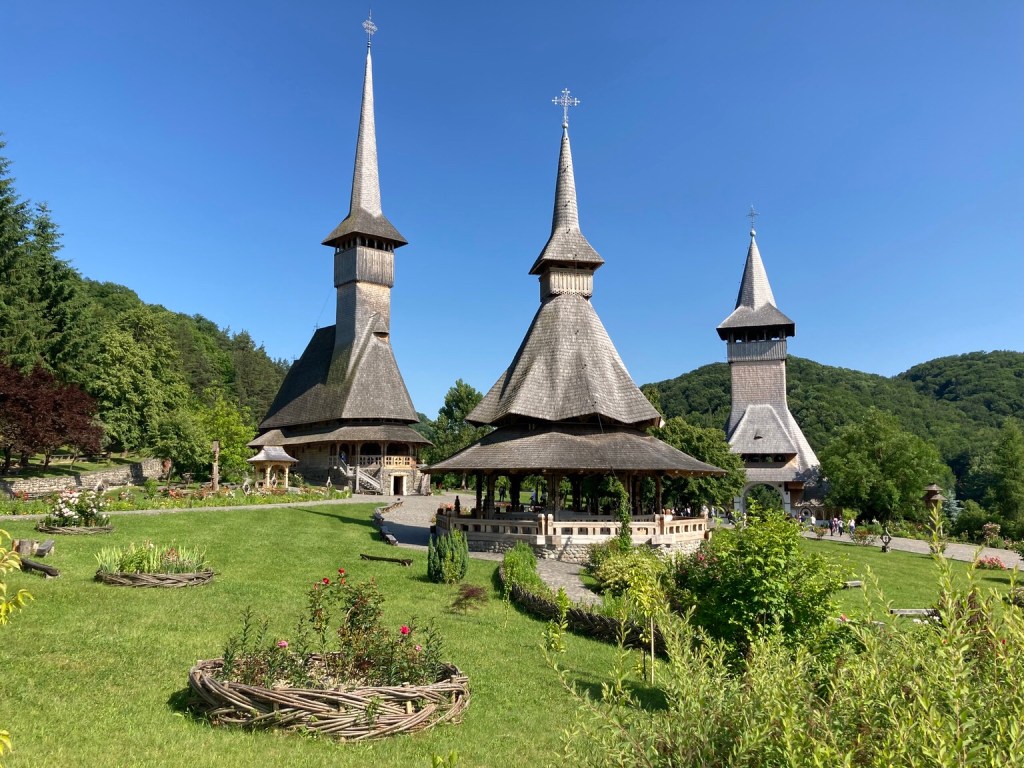
… church and entrance gate. 

The nun inside was happy to turn a blind eye to a couple of photos!

At Poienile Izei, the church was open and having bought tickets from the lady there we could take pictures.

Although many of the murals were soot damaged and very dark …

… the textiles were bright and lovingly made.

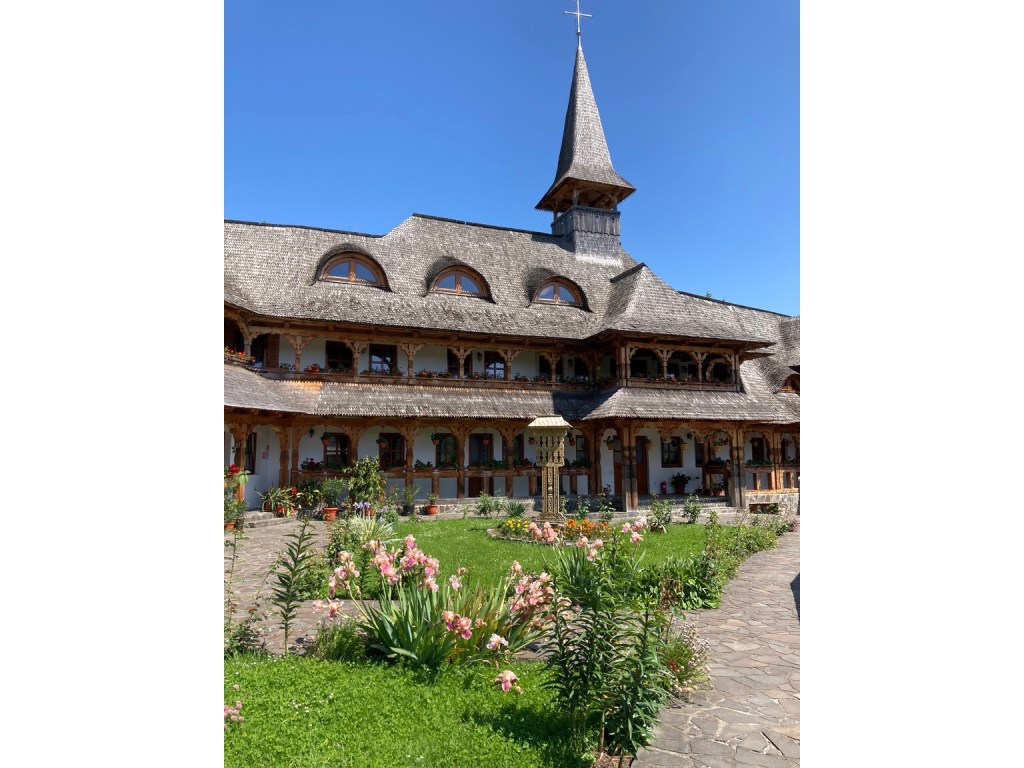
Finally there was Barsana, where the original monastery had been closed in 1791 and this complex was begun in 1993. It includes the traditional Maramures gate, bell tower, church, summer altar, nuns’ cells and chapel all set in gardens …

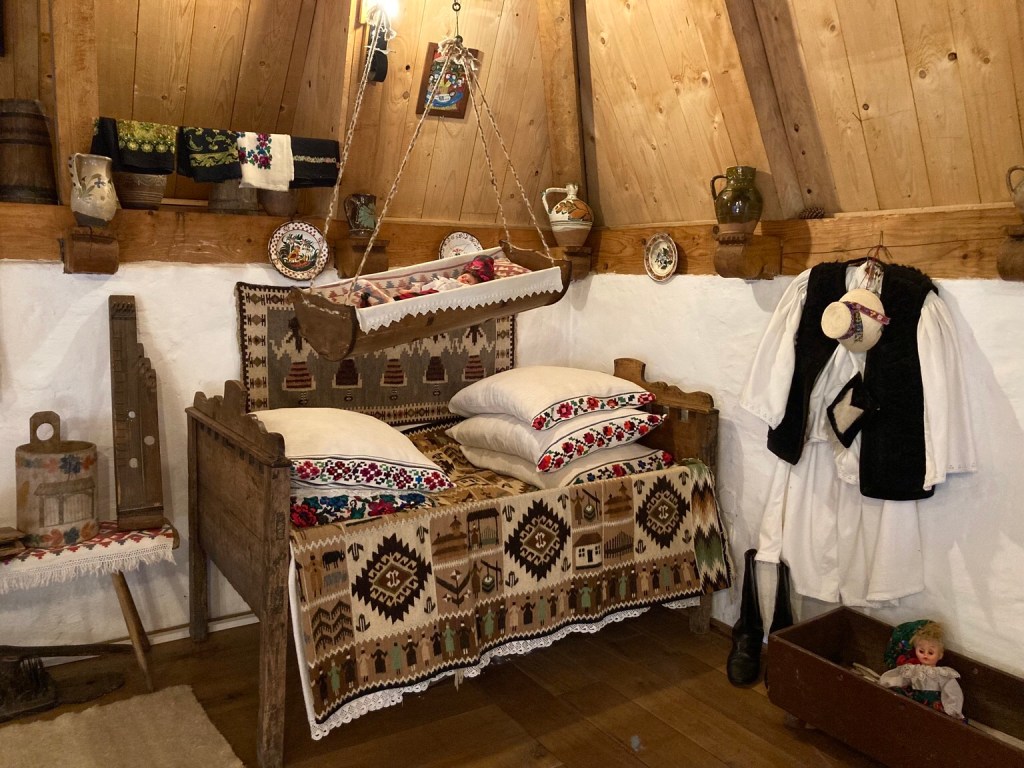
… and a museum.

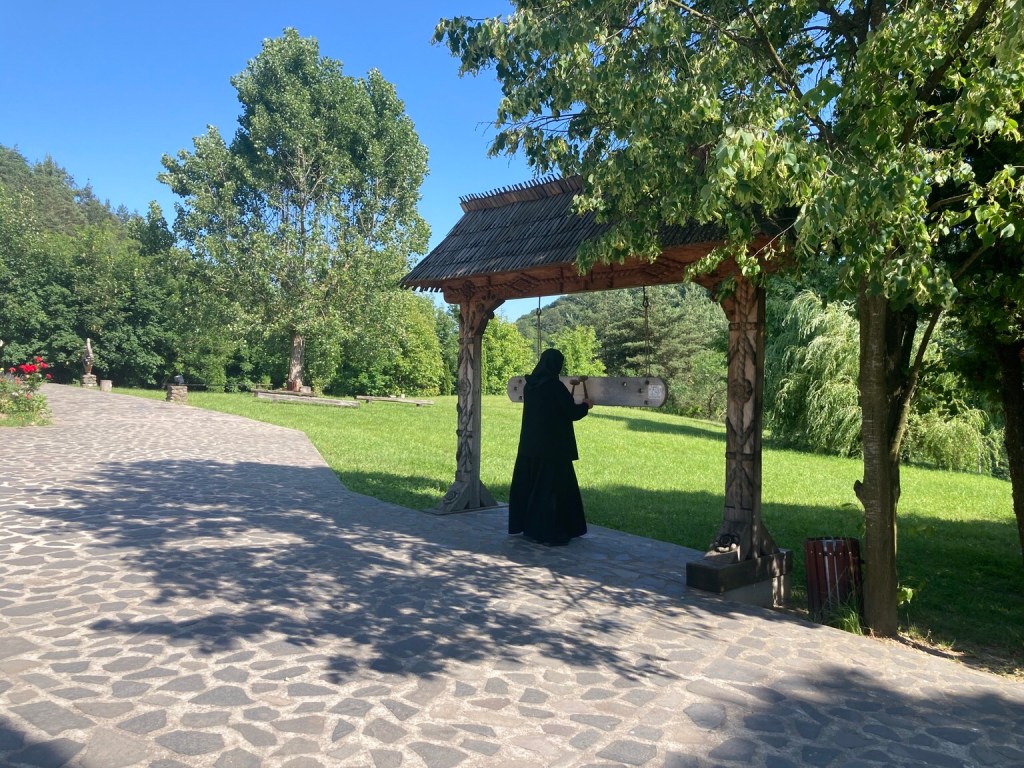
It might be intended to be calm and reflective, but it’s a popular family day out on a Sunday and the piped music made it a little surreal … a little like a theme park! Just before we left, we saw a nun striking a traditional paddle called a semantron to call the nuns to prayer.

We had booked a couple of nights in the village of Breb …

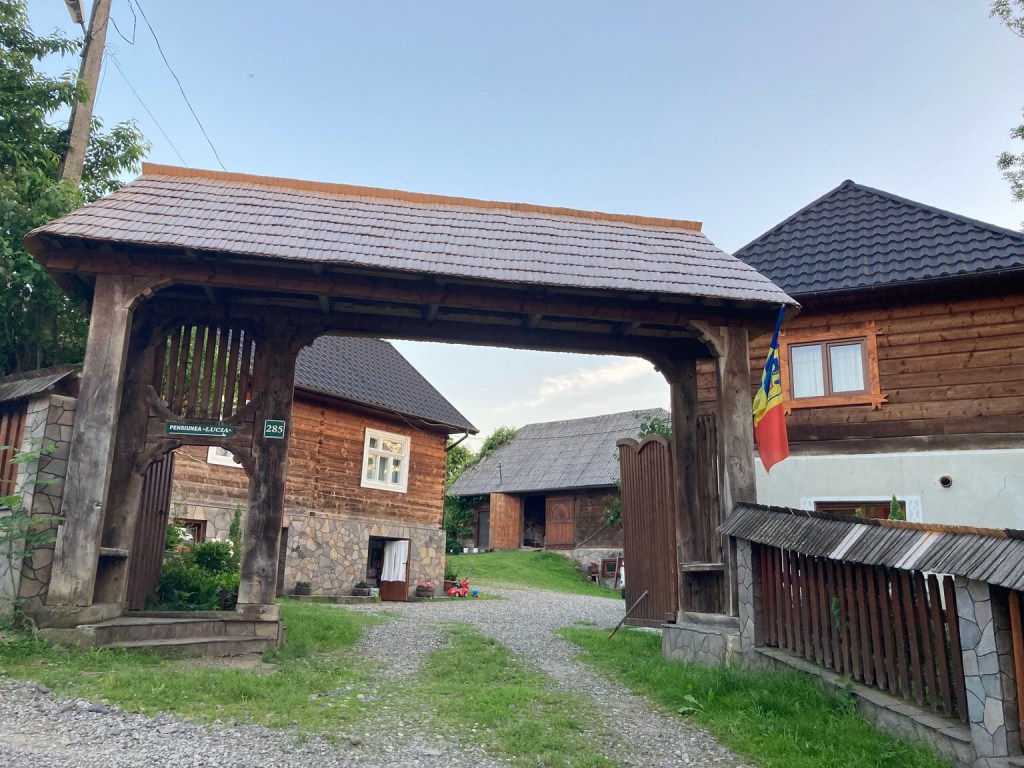
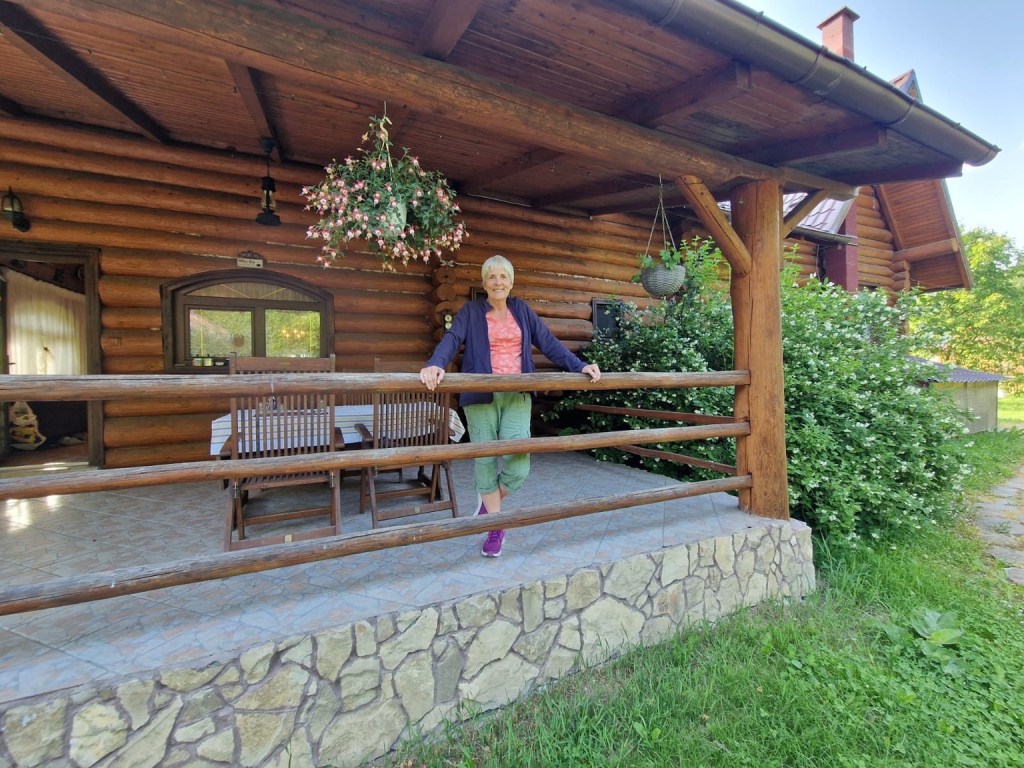
… staying at Pensiunea Lucia in the vila small farm with two houses, a courtyard, barn, orchard and vegetable garden.  
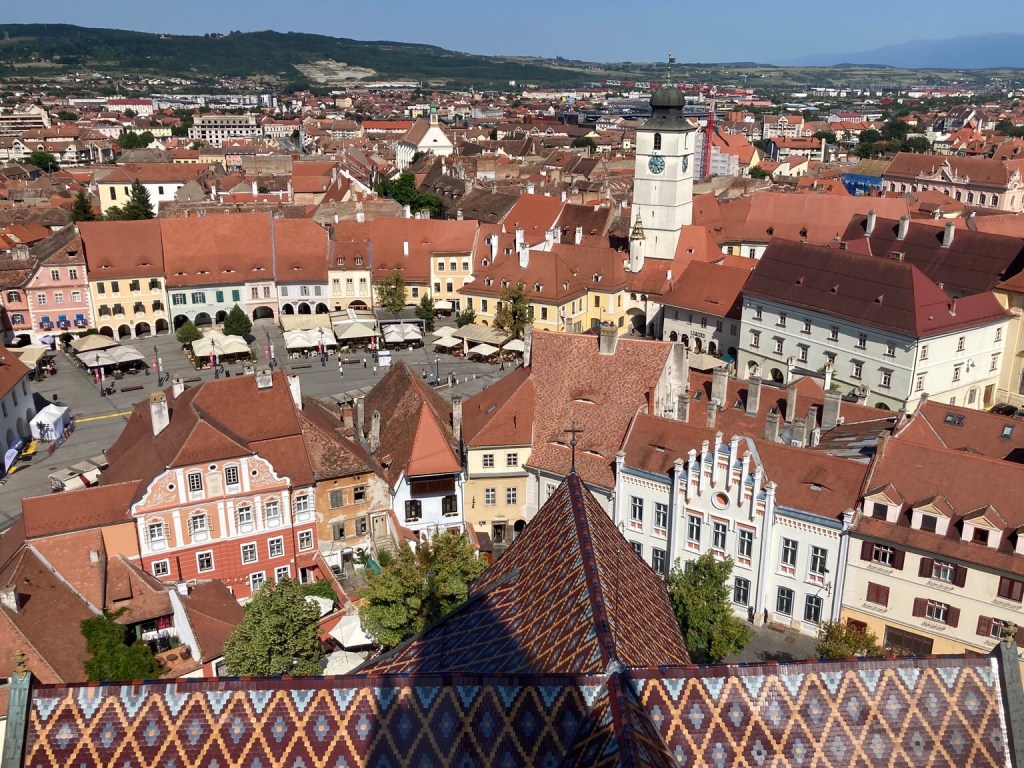
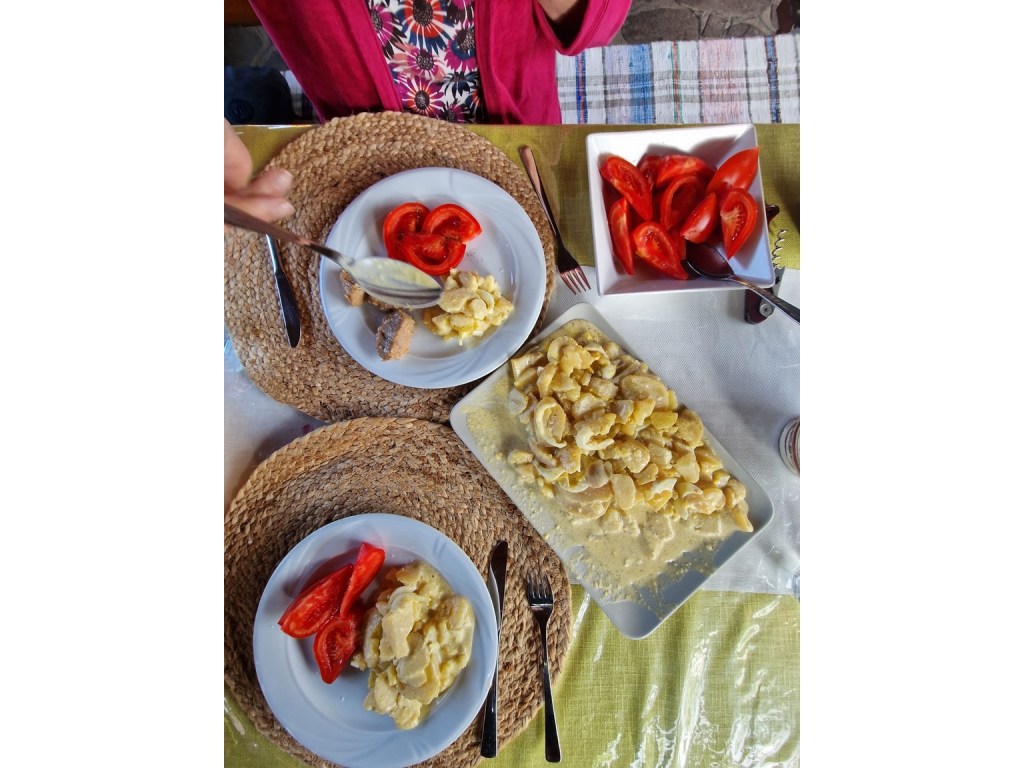
Iona and Lucia gave us the opportunity to enjoy traditional Maramureș hospitality and delicious home cooked food prepared from their own produce. We had dinner both nights starting with vegetable soups, then had new potatoes cooked with boiled eggs and sour cream with a tomato salad one night and polenta with mushroom stew the other. Homemade cake completed the meals, and certainly a drop of pakinka! 
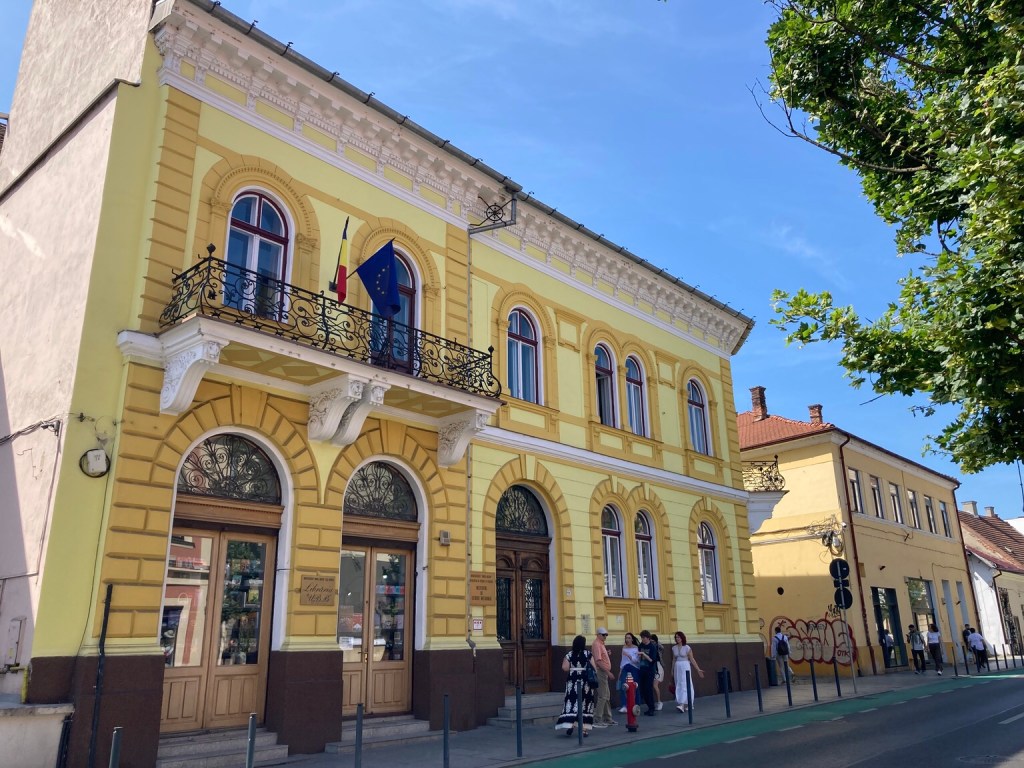
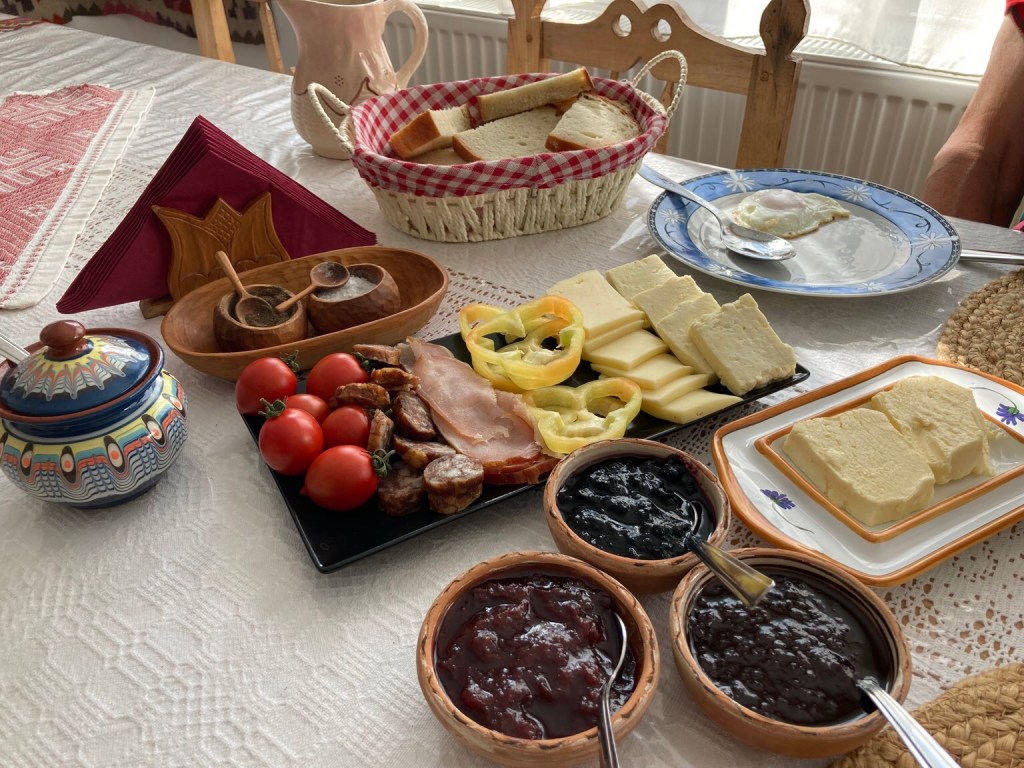
Next day, after a typical farmhouse breakfast …

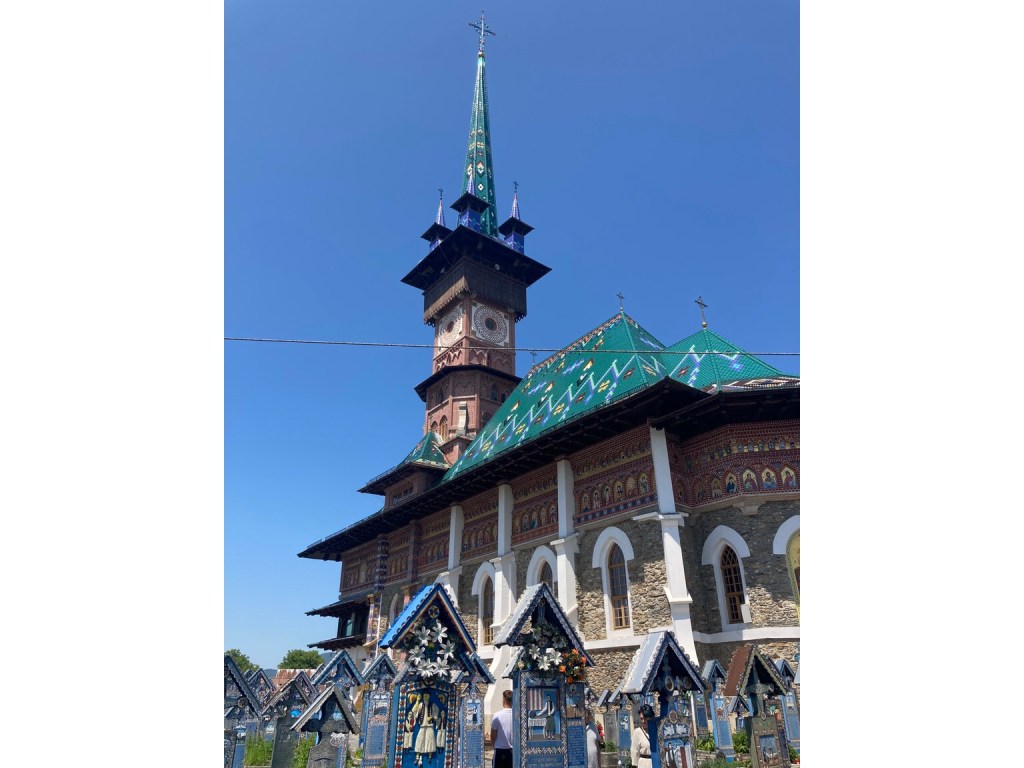
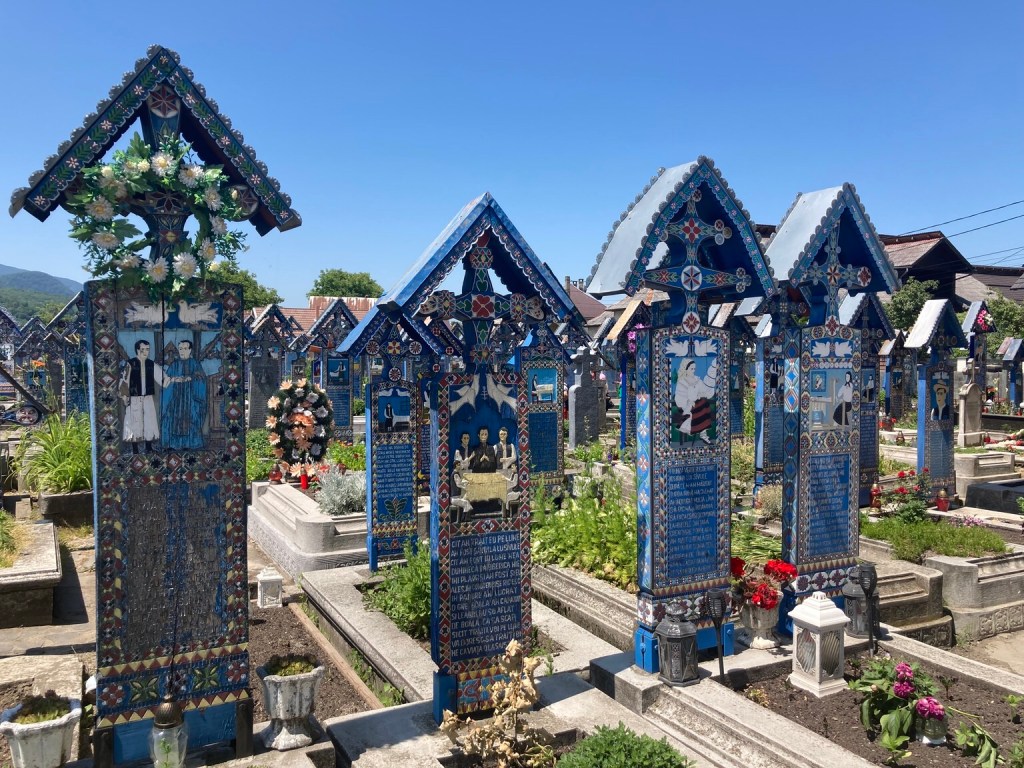
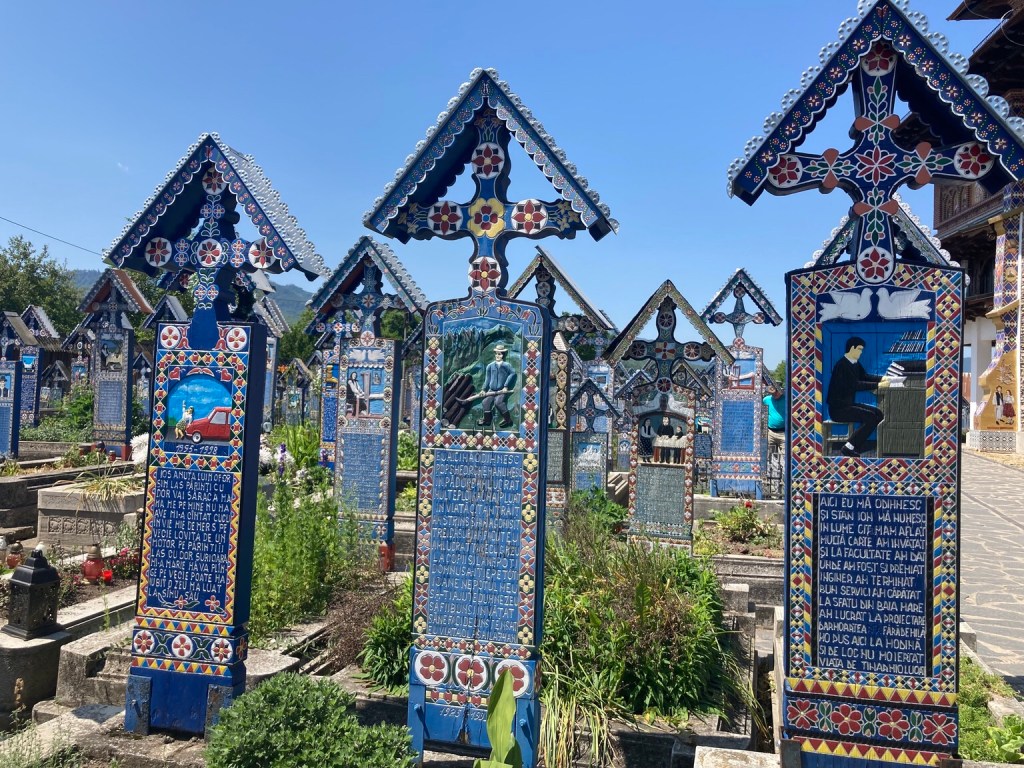
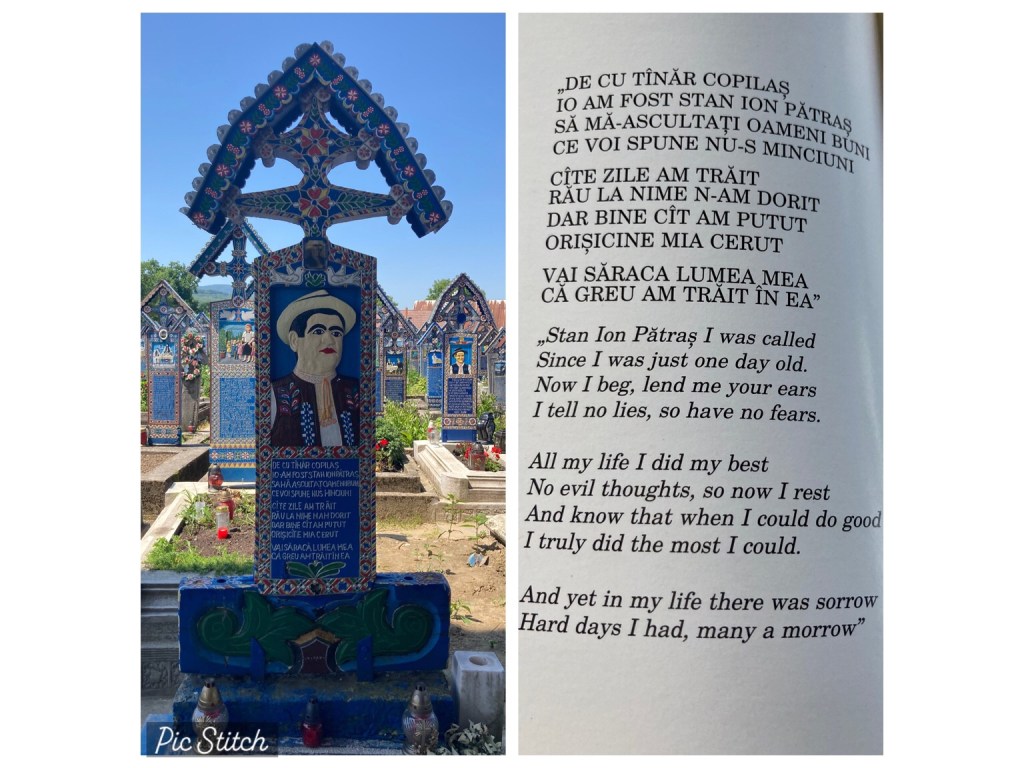
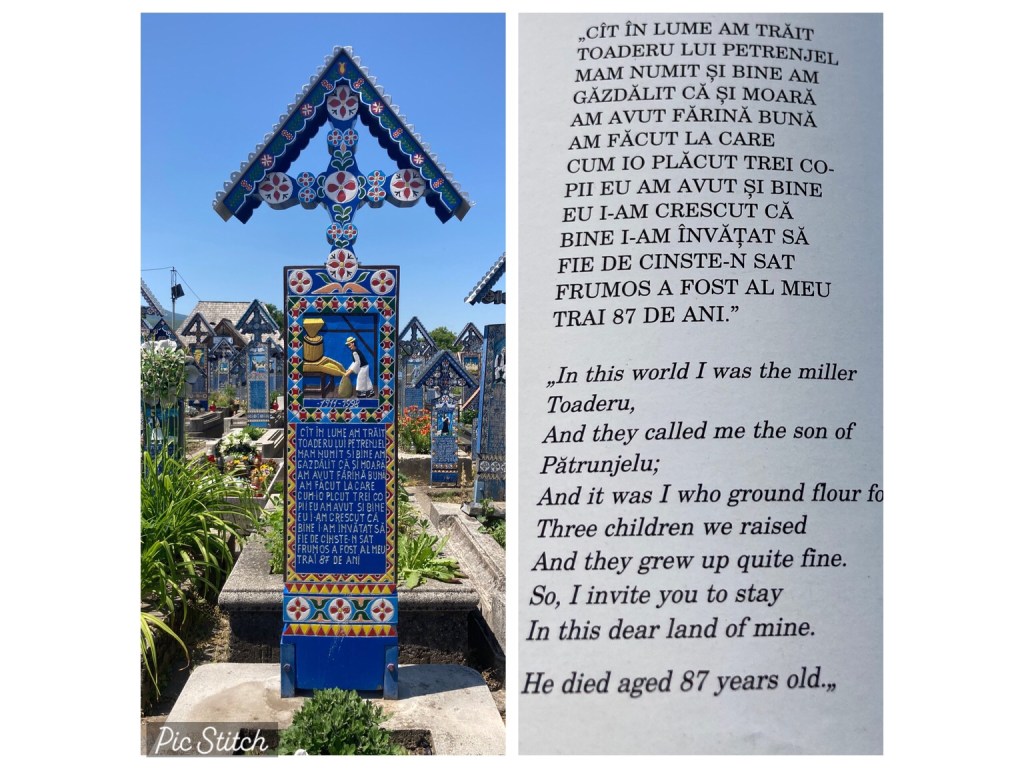
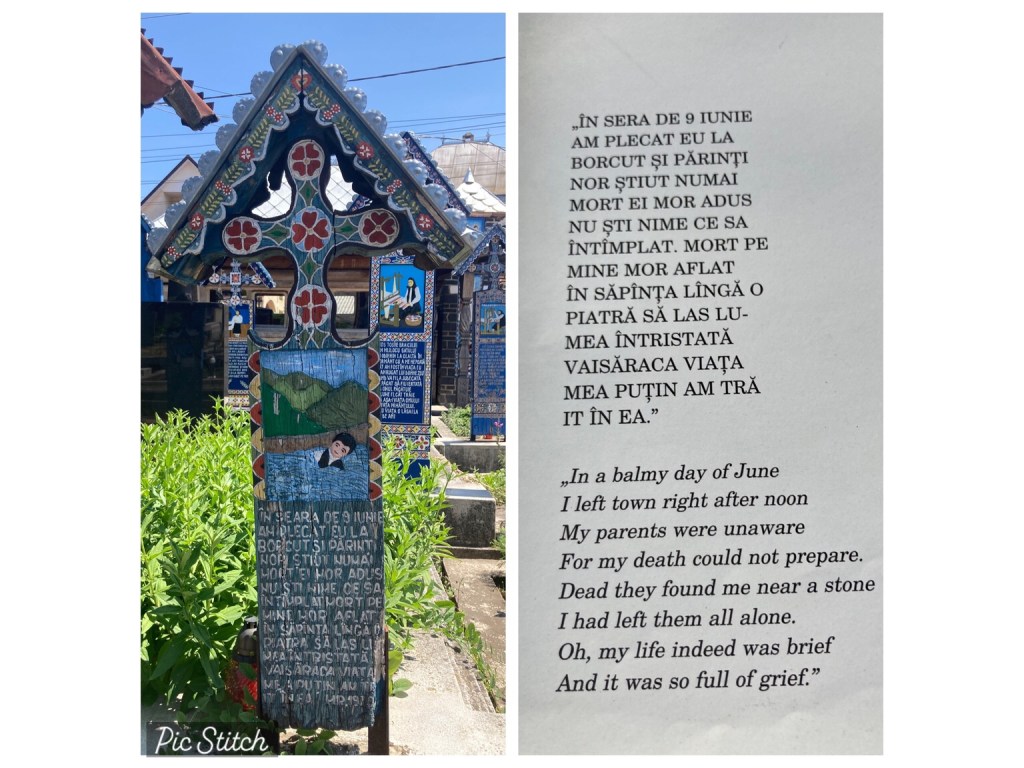
… we set off to Sapanta to visit the Merry Cemetery, famed for the work of the woodcarver Stan Ion Patras who spent his life making painted wooden grave markers, with pictures of the deceased or a scene from their life and a short rhyme. 

We had seen a book the evening before which sympathetically translated some of the verses into English, but google translate wasn’t up to the task, a shame as understanding the rhymes would have made it more relevant.

Here are a couple of photos with their translations from the book …

While we did stop at a couple more wooden churches, none were open, so we realised it was lucky we had seen so many the day before.

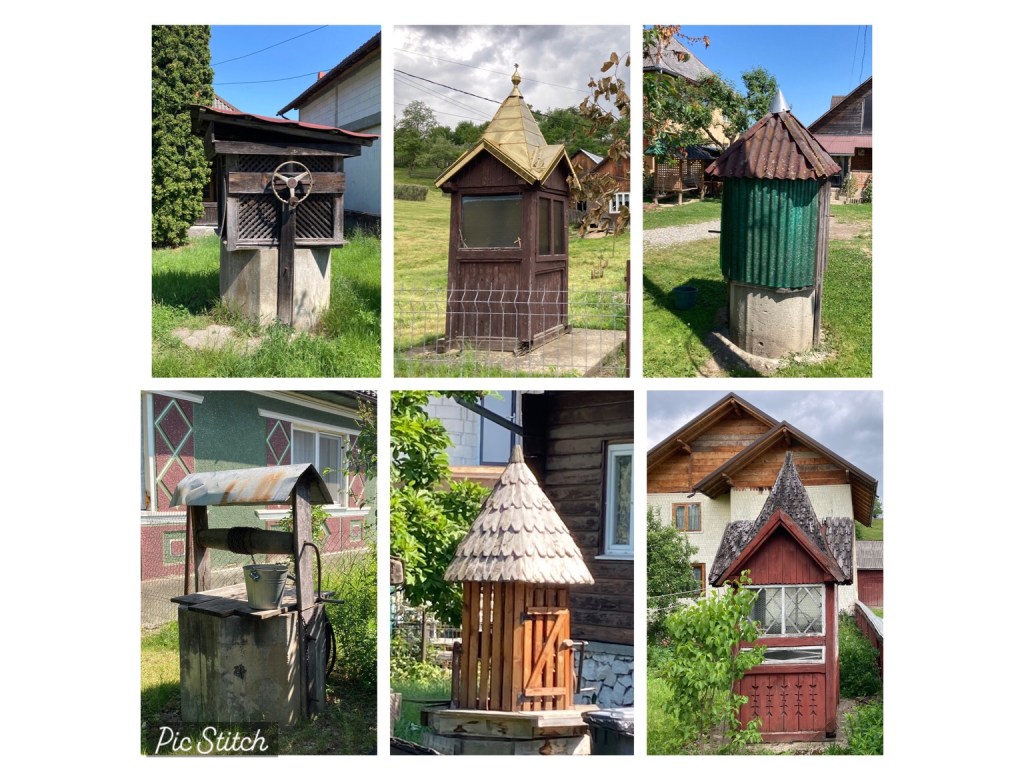
There are several things we have particularly noticed in the last few days, and the first is wells. It seems that most households have a well, and the water is still preferred for drinking and watering the garden and animals.  They come in all shapes and sizes, often with a roof and side panels, so here are a few!

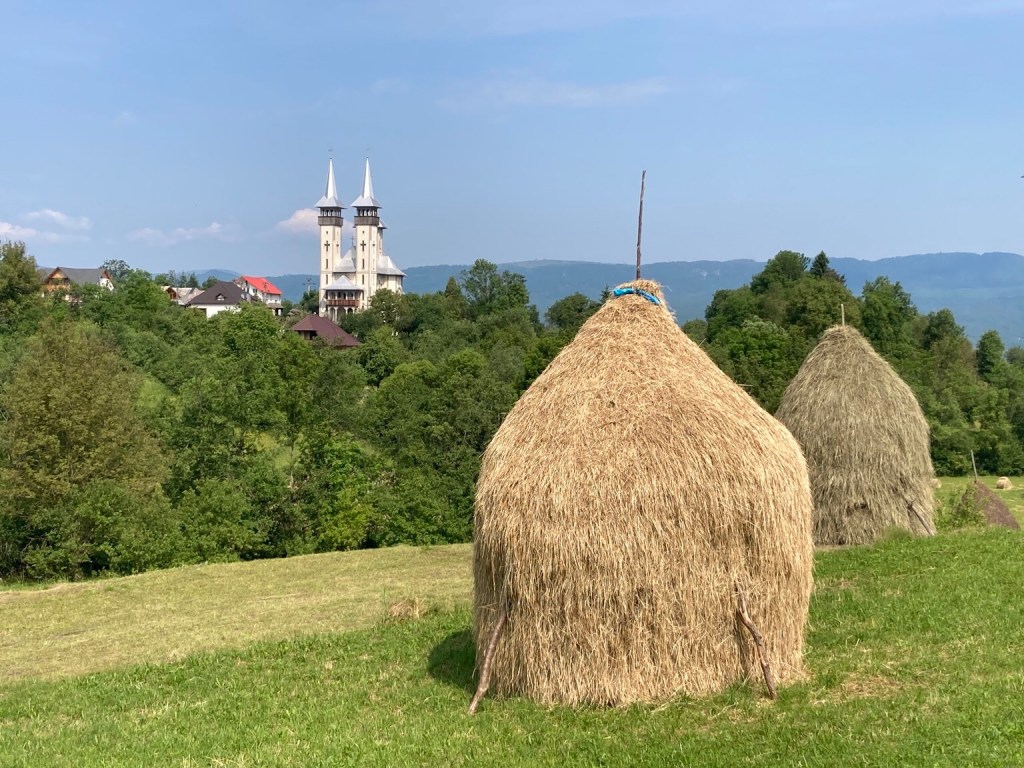
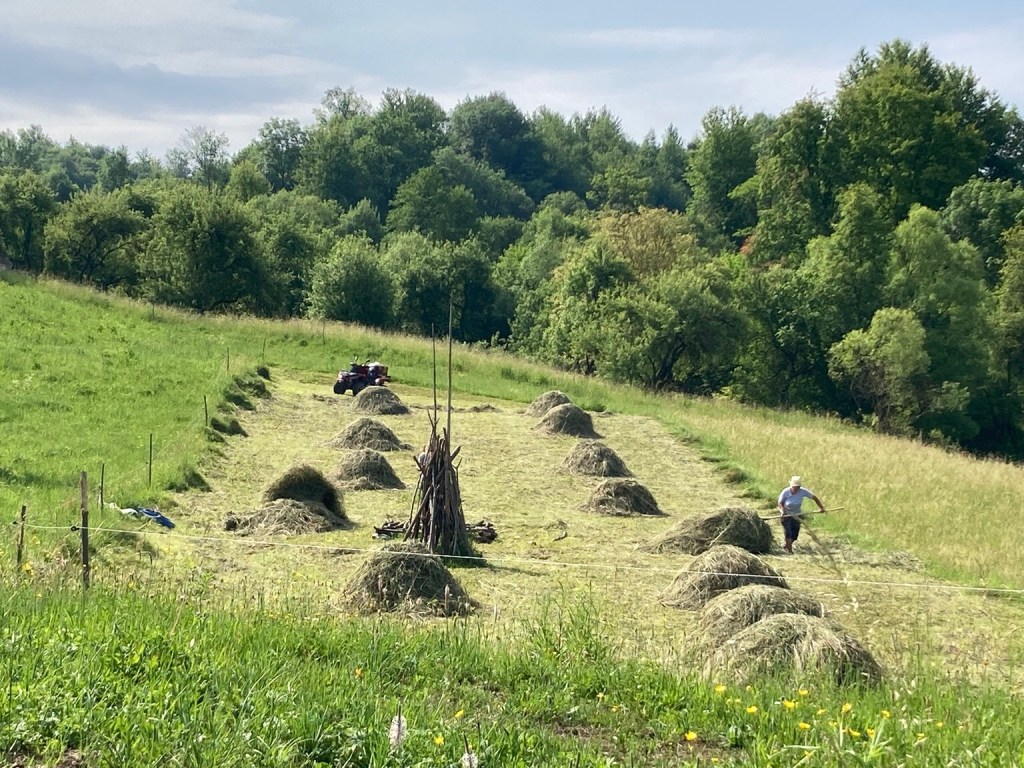
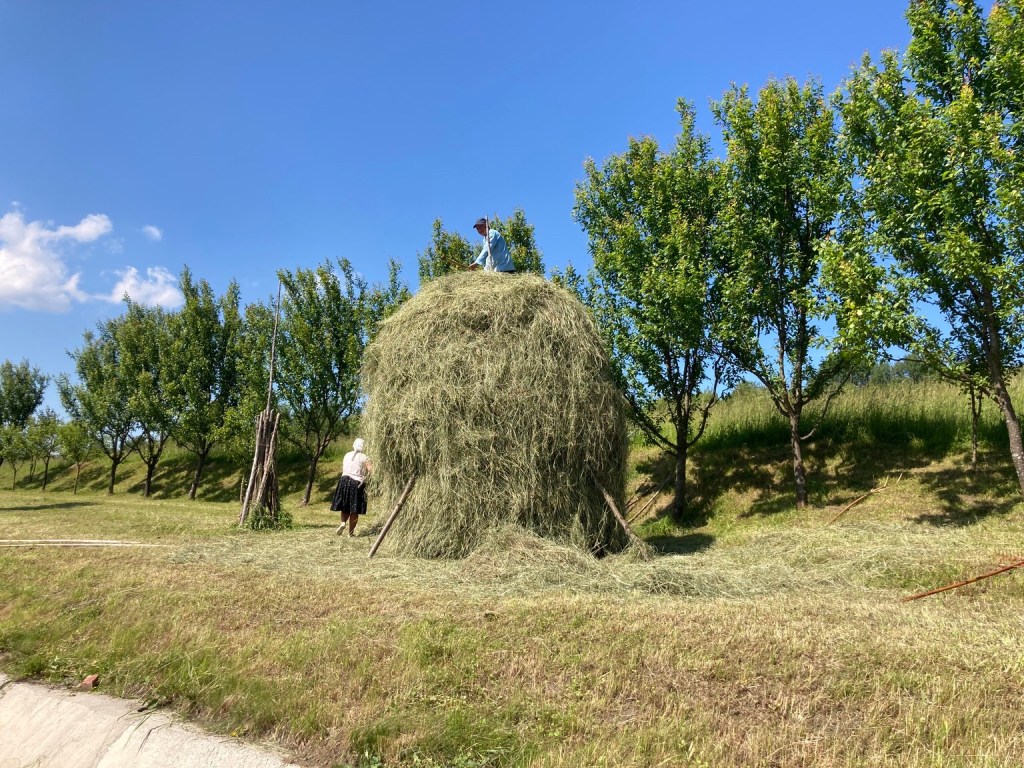
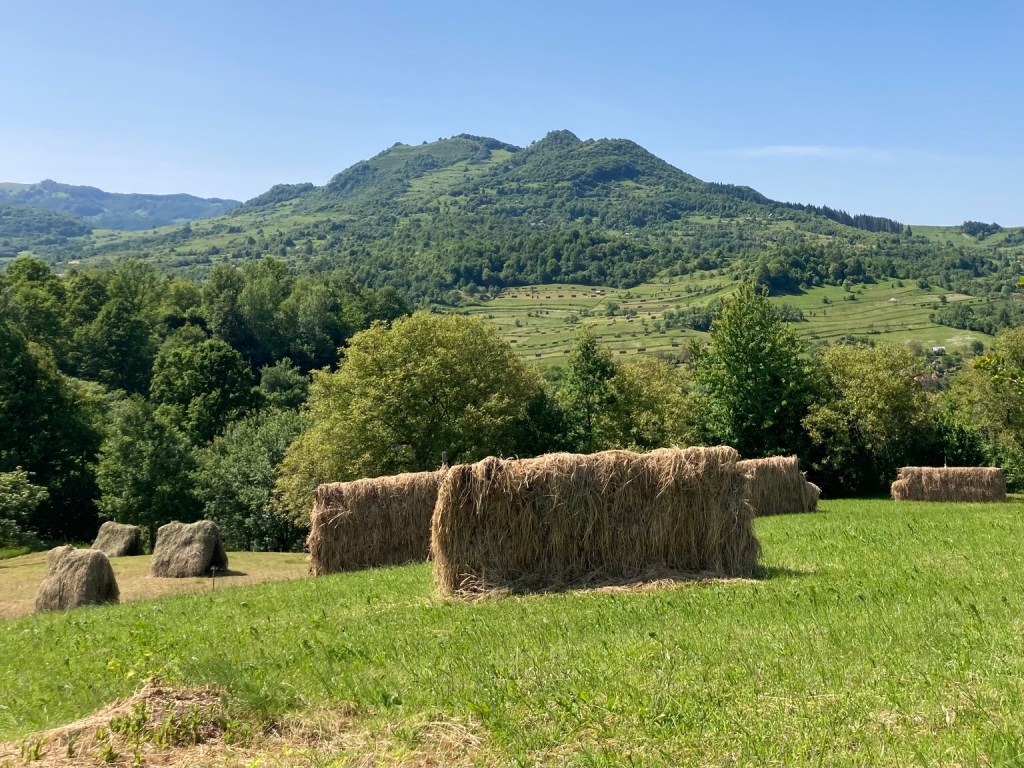
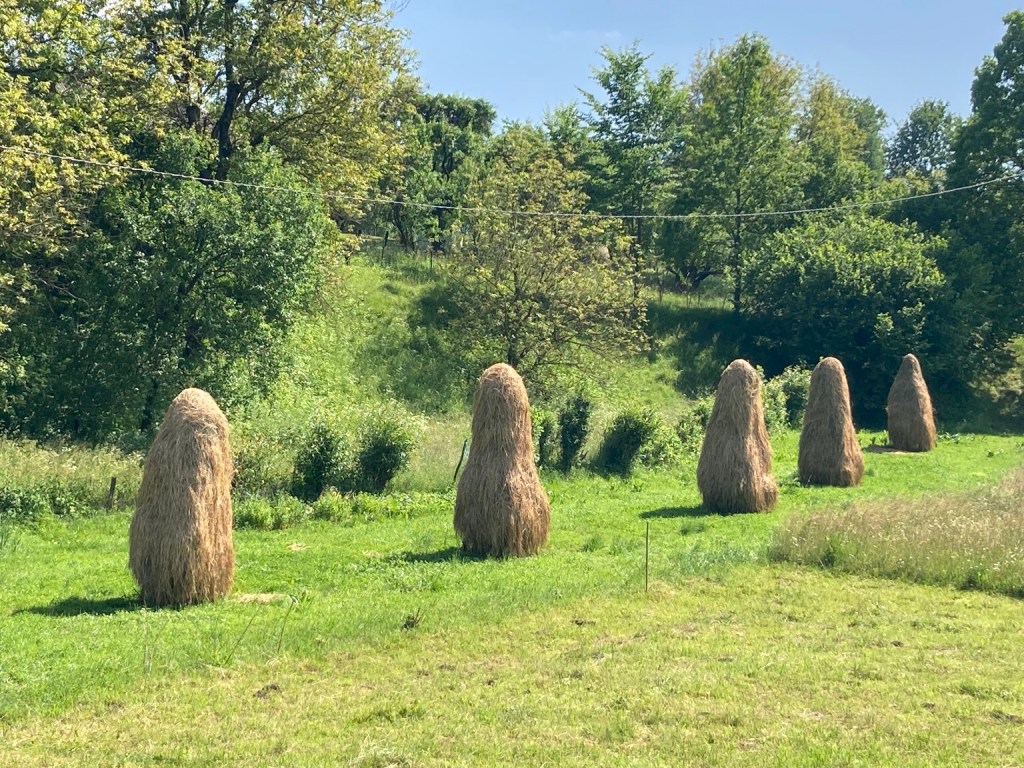
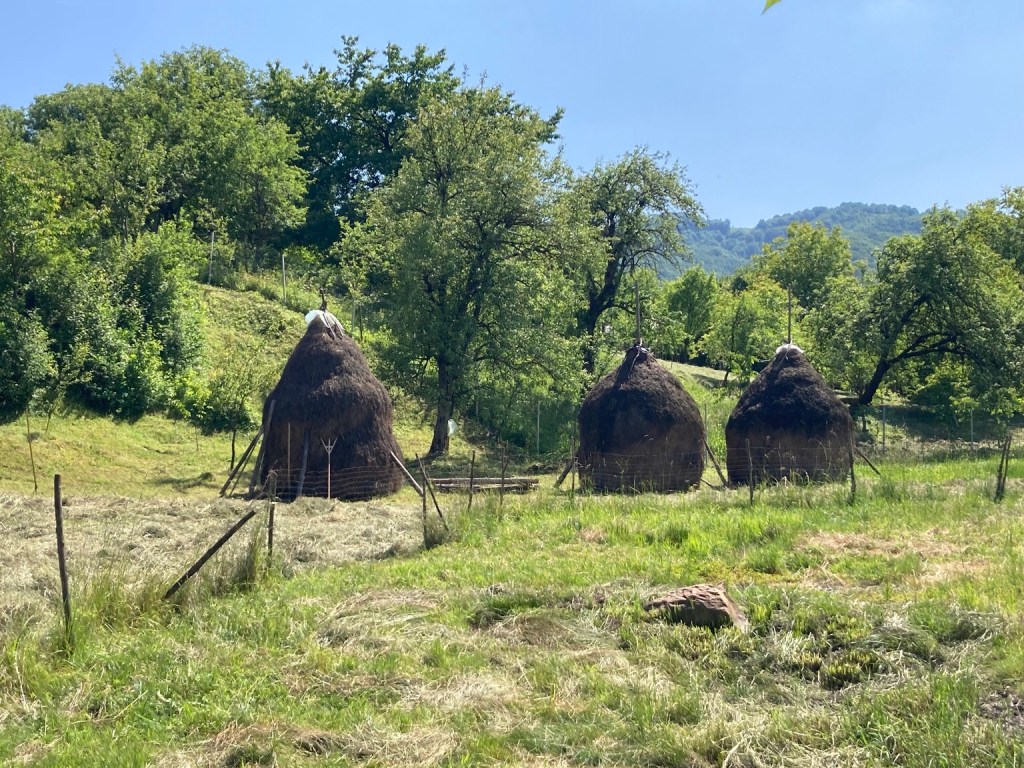
Secondly, it is hay making season here in Maramureș, with much of the work still be done by hand. 

Most people have a small area of meadow and the hay is needed for winter feed for animals, or to be sold to those who do. Once the grass has been cut, it dries, is turned and then collected onto racks or piled in stacks.

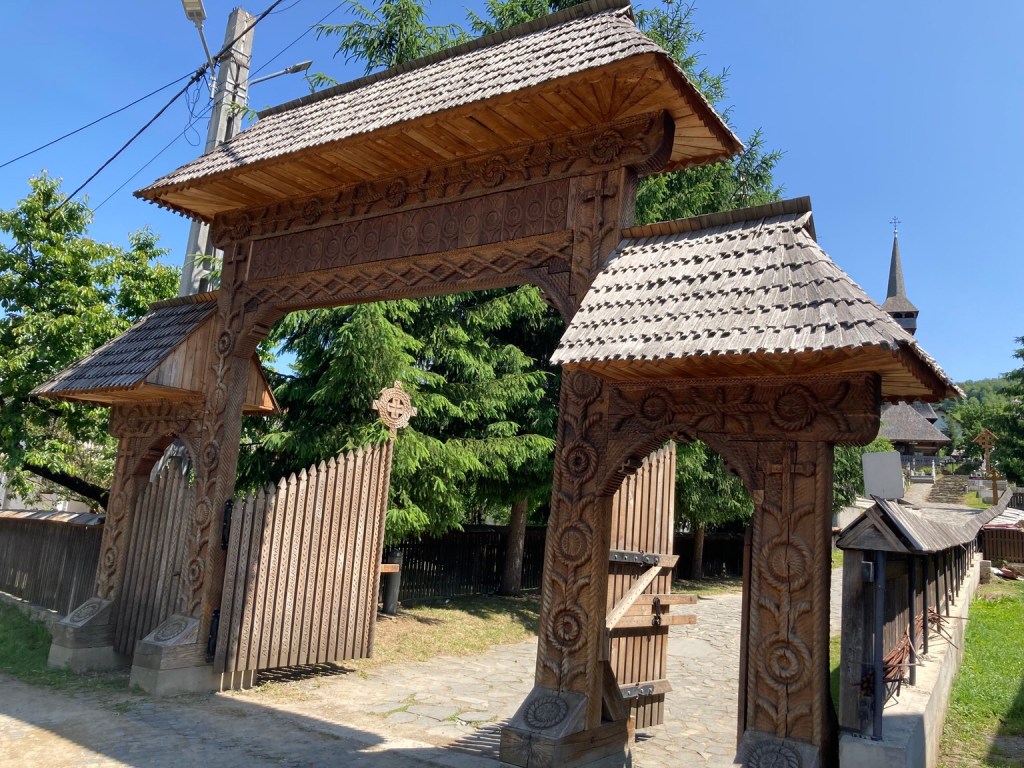
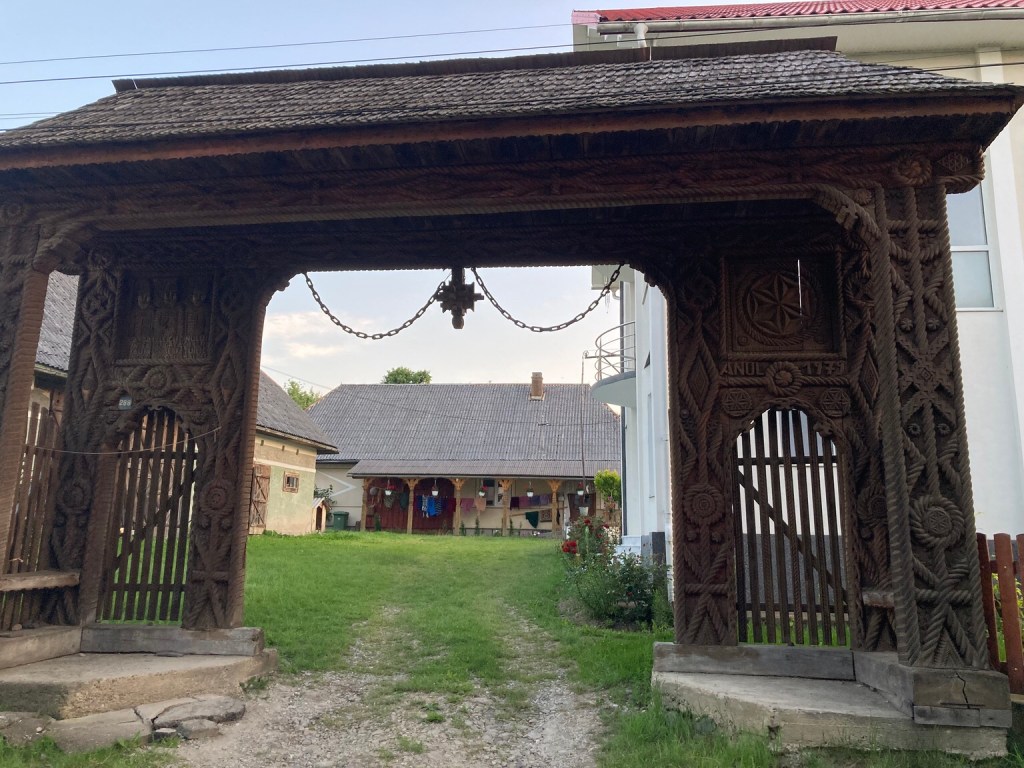
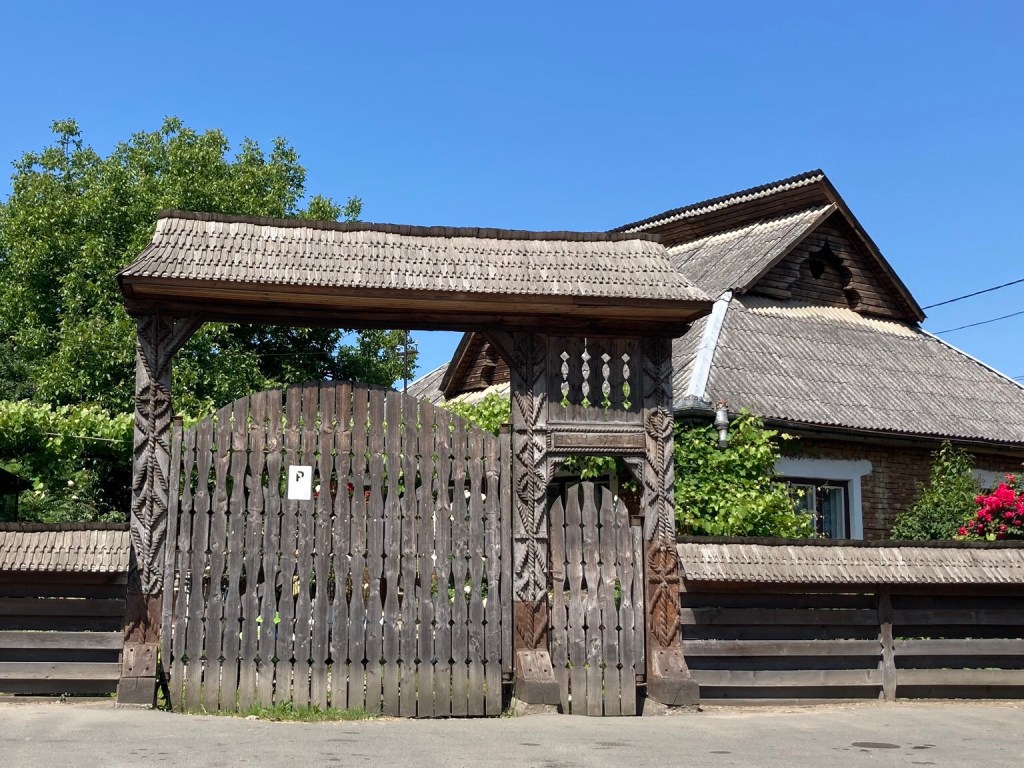
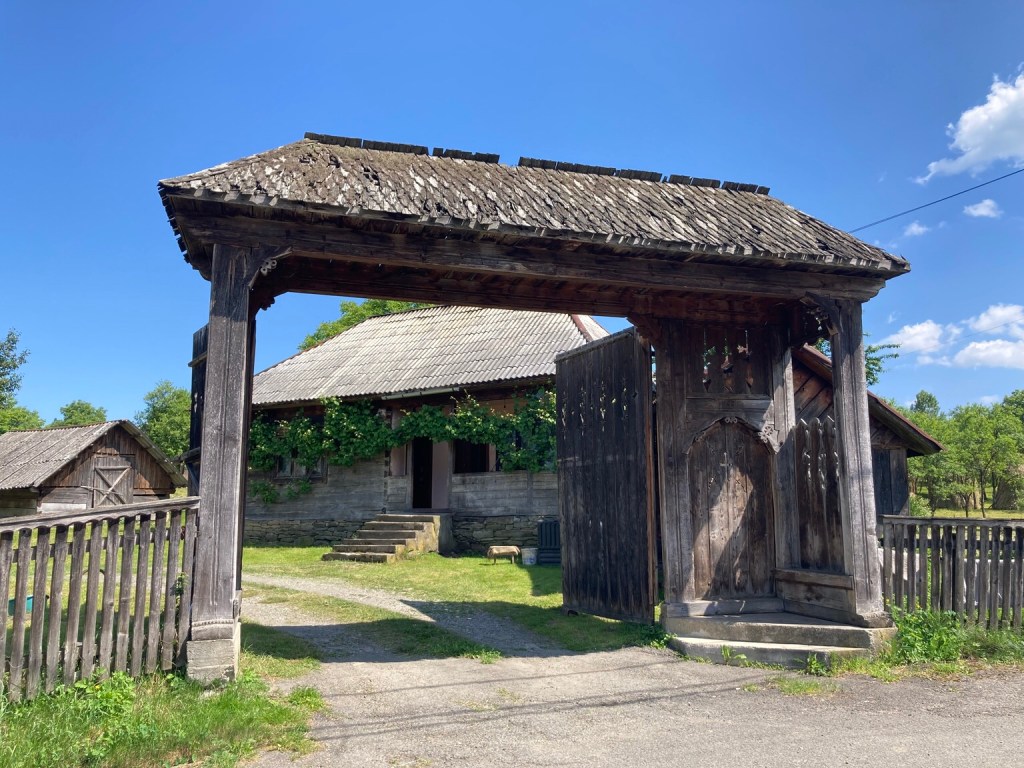
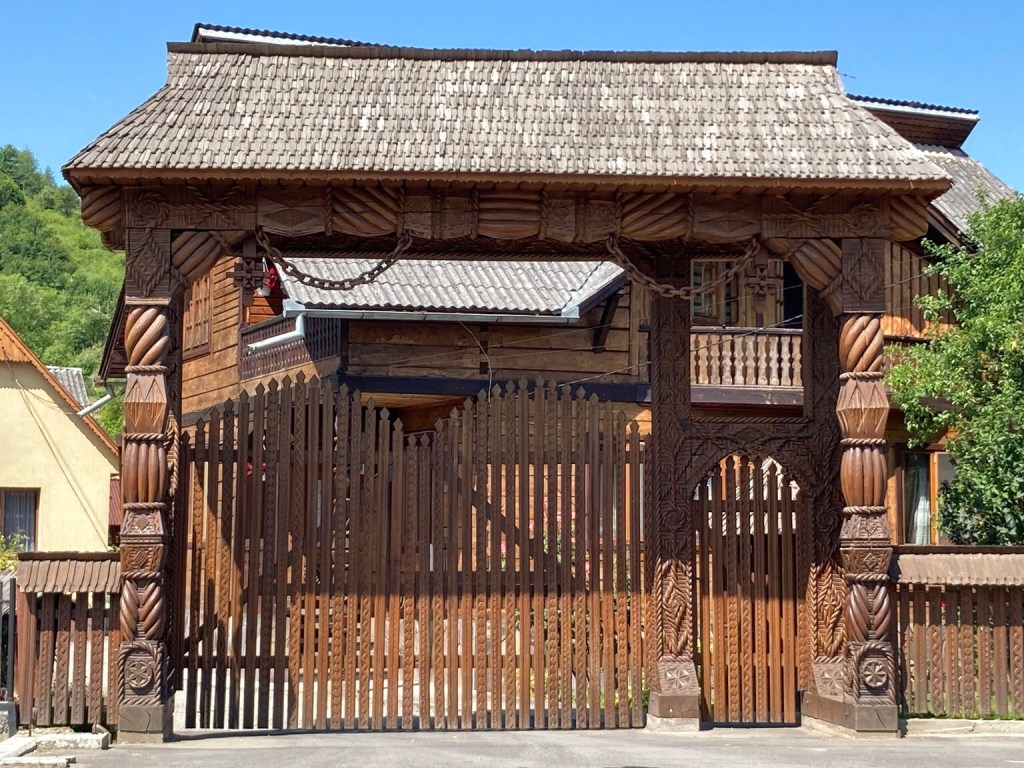
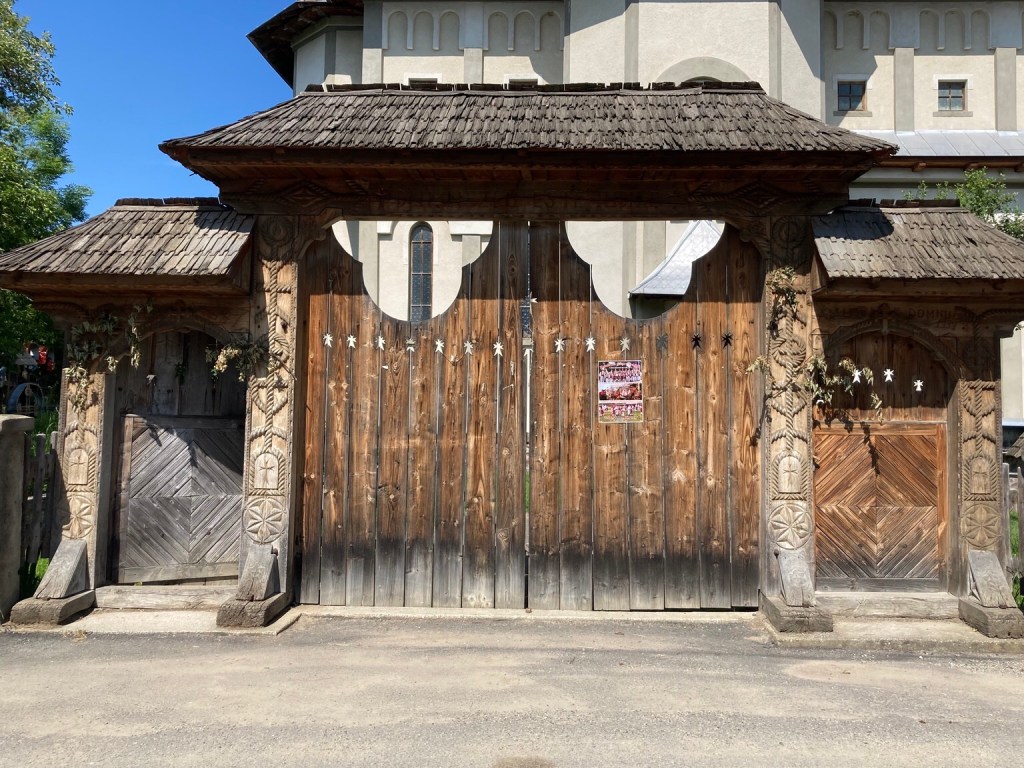
We’ve also noticed how intricate the carving is on many of the traditional gates at the entrance to both churches and family homes.  There seems to be a deep cultural significance to the design which includes symbols like the tree of life, sun, rope and snake which protect the household from the world outside. 

They are not confined to old properties either – many newer homes have gates too …

… and some have dried twigs of foliage attached, which would have been put there at Pentecost to ward off the charmed spirits of the dead.

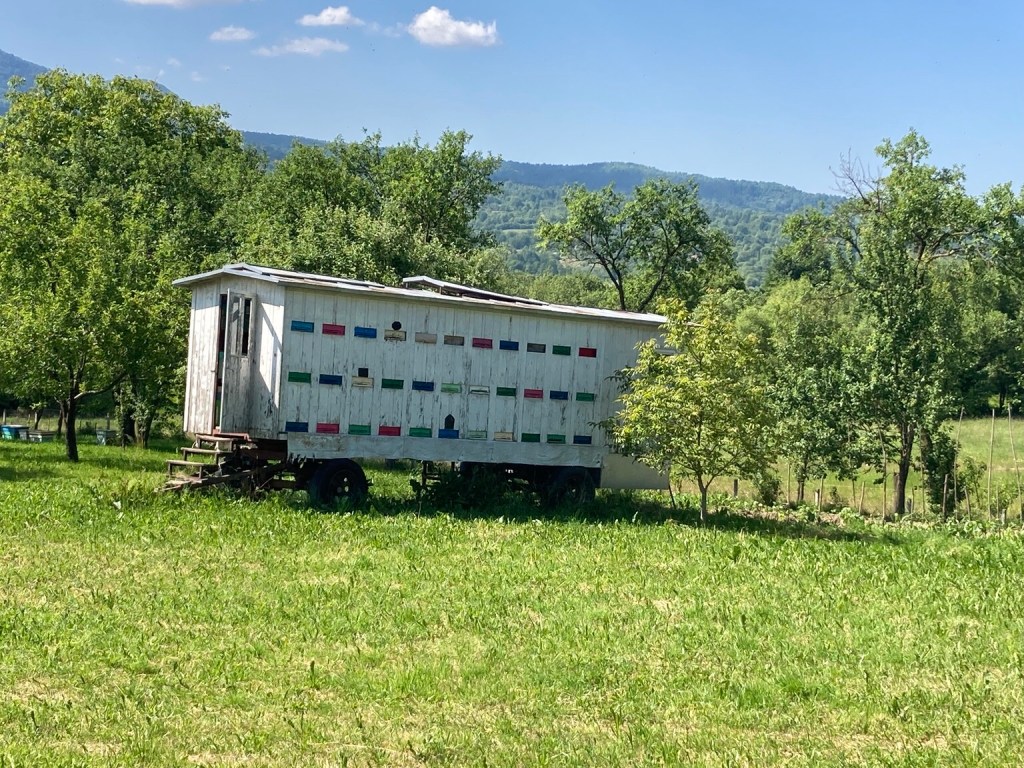
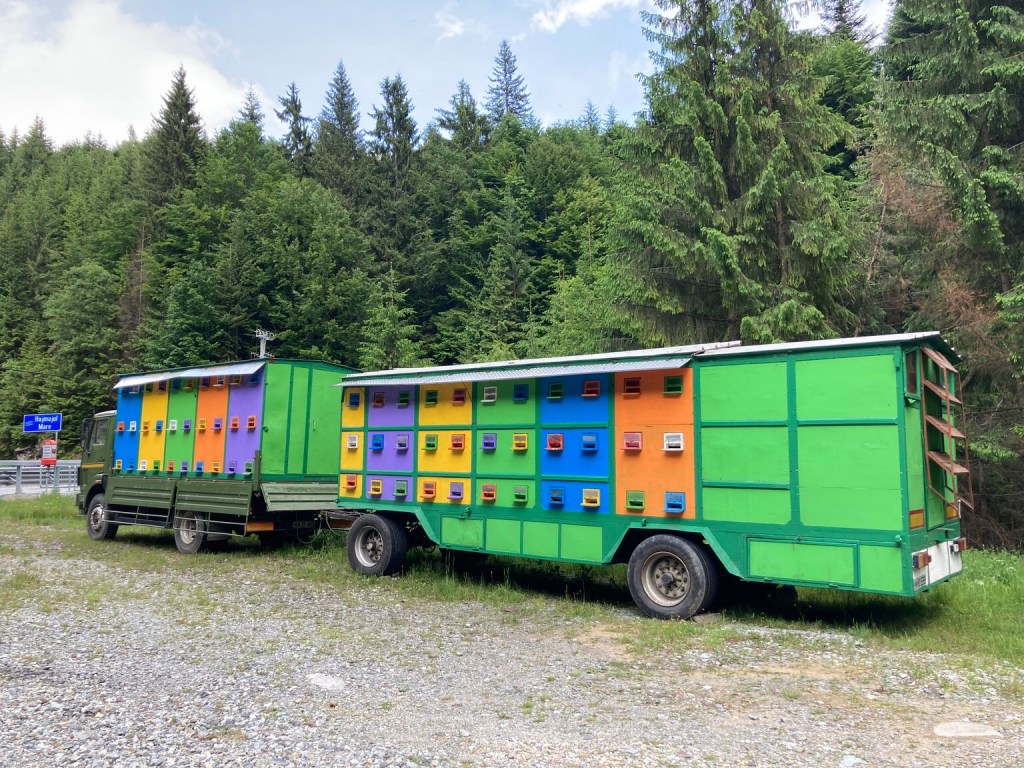
Finally beehives, not just individual ones sitting in a field, but caravans and lorries containing rows of beehives, easily portable to go where the flowers are!

We are now halfway through our trip, and it’s time to drive south …

Map

Bucovina … and the Painted Monasteries

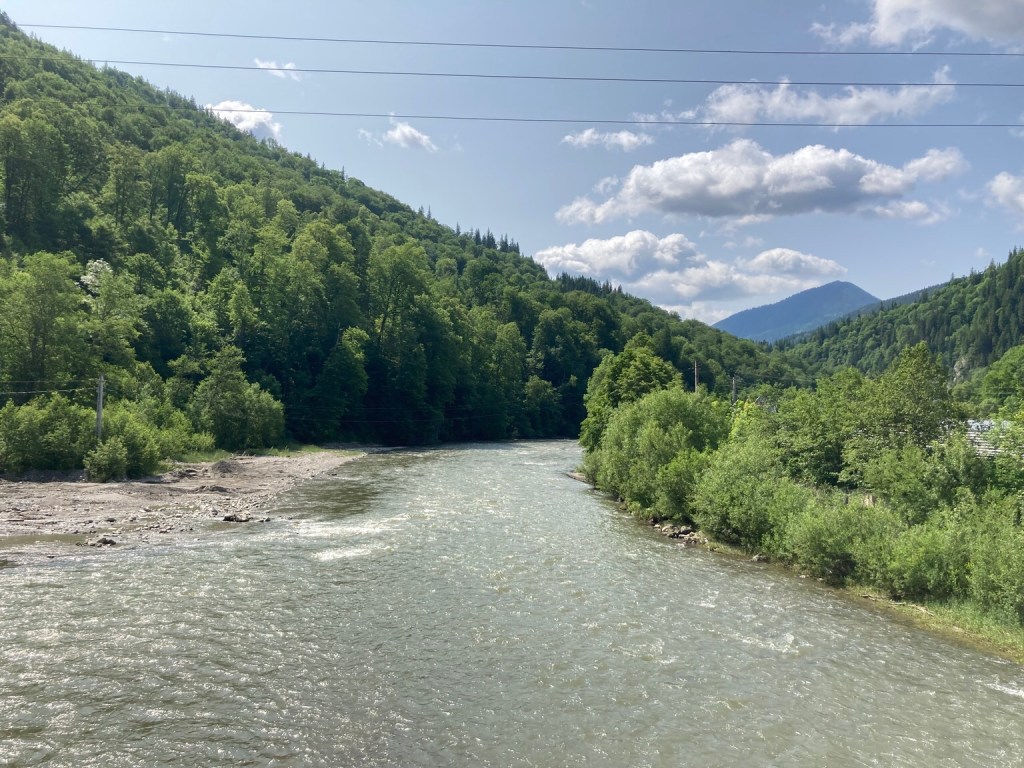
Today’s drive took us further into Moldova,   Along a river valley … 

… then upwards …

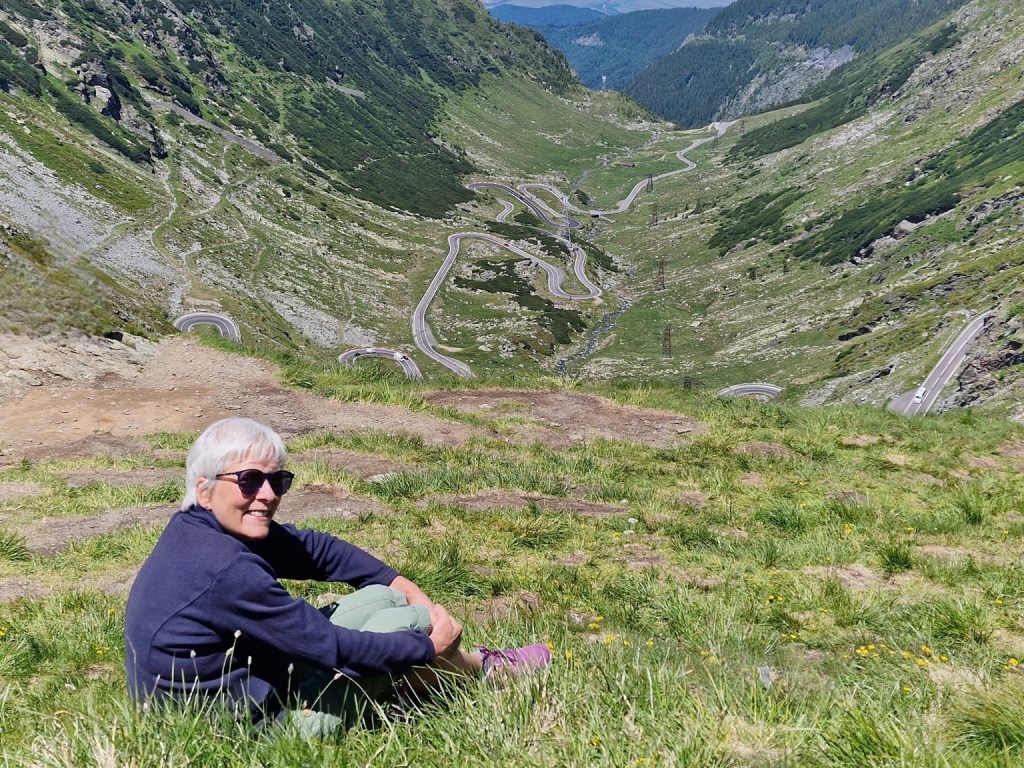
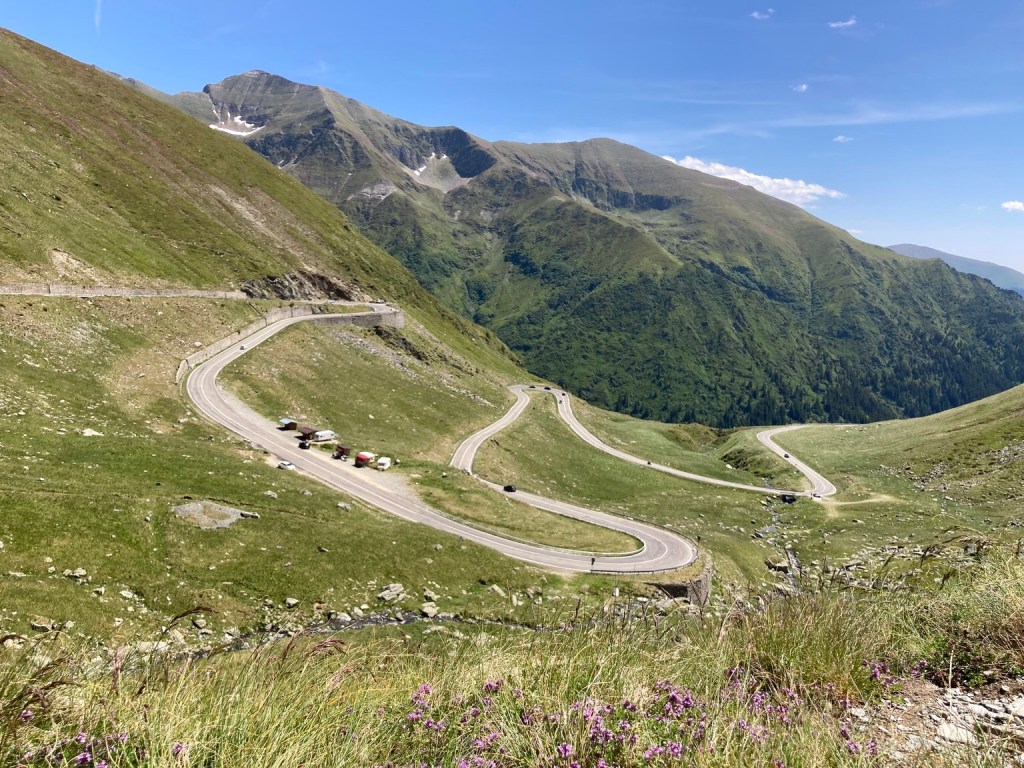
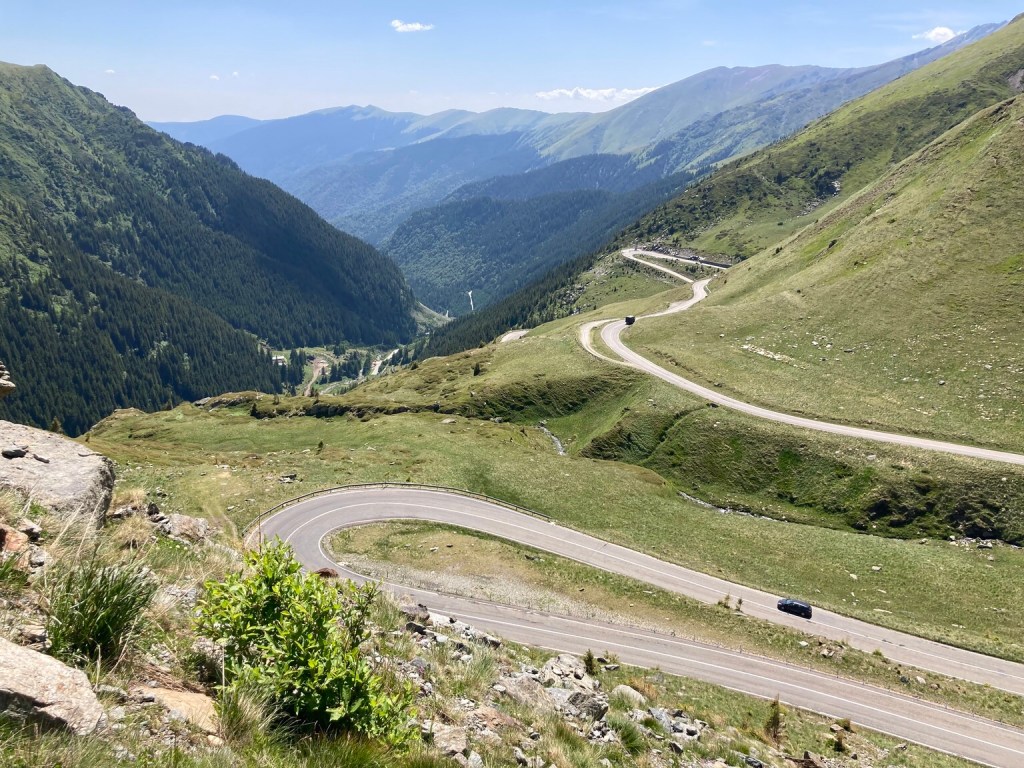
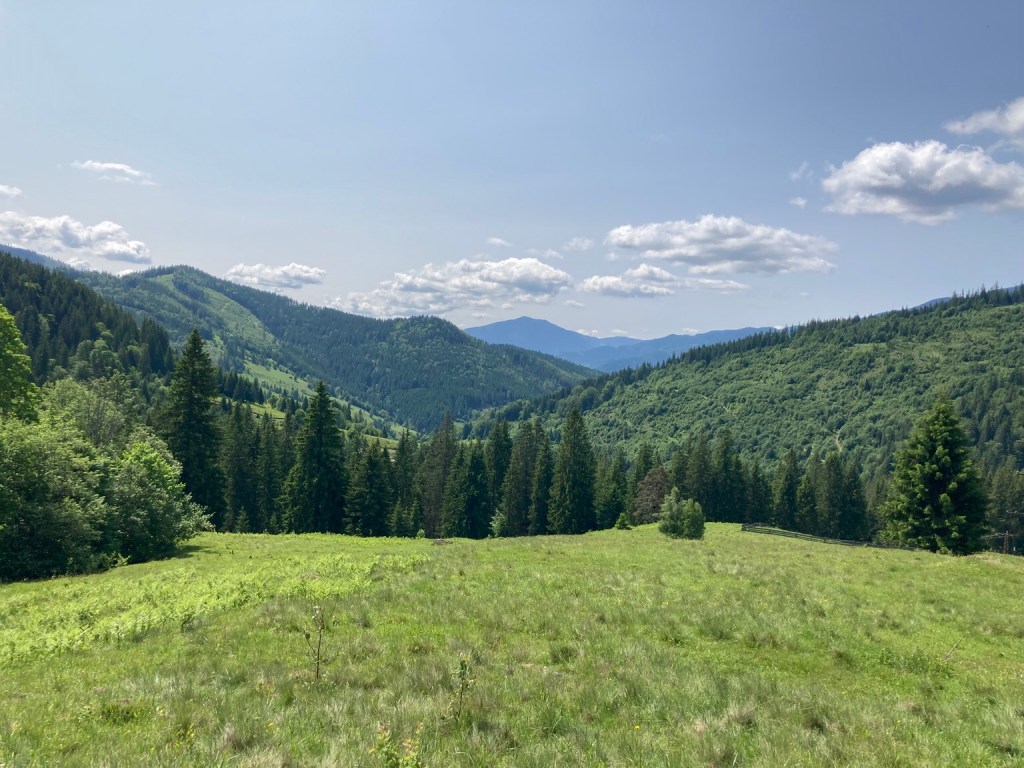
… to cross the Rarau mountains on the Transrarau road, also named the Road of Treasures.  Billed as the third most beautiful alpine drive in Romania, the highest stretch reaches 1,400m and has a camera enforced 30 kmh limit which just ensured we had time enough to enjoy the drive!  The view at the top was fab …

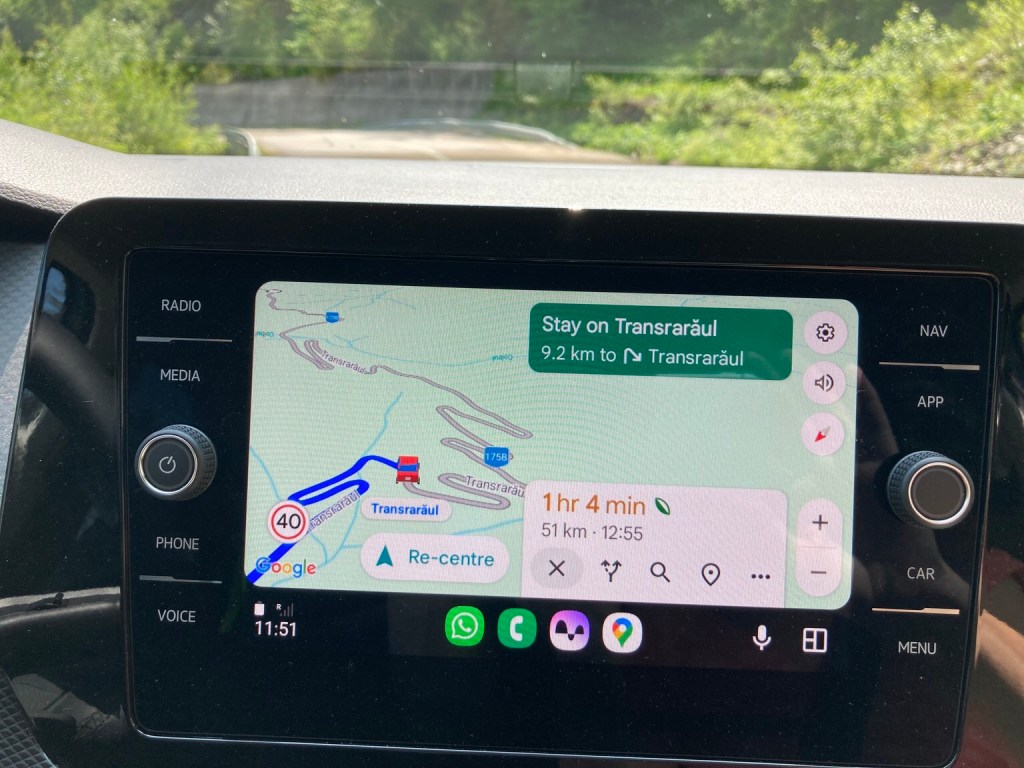
… and this is how the descent looked on the sat nav!

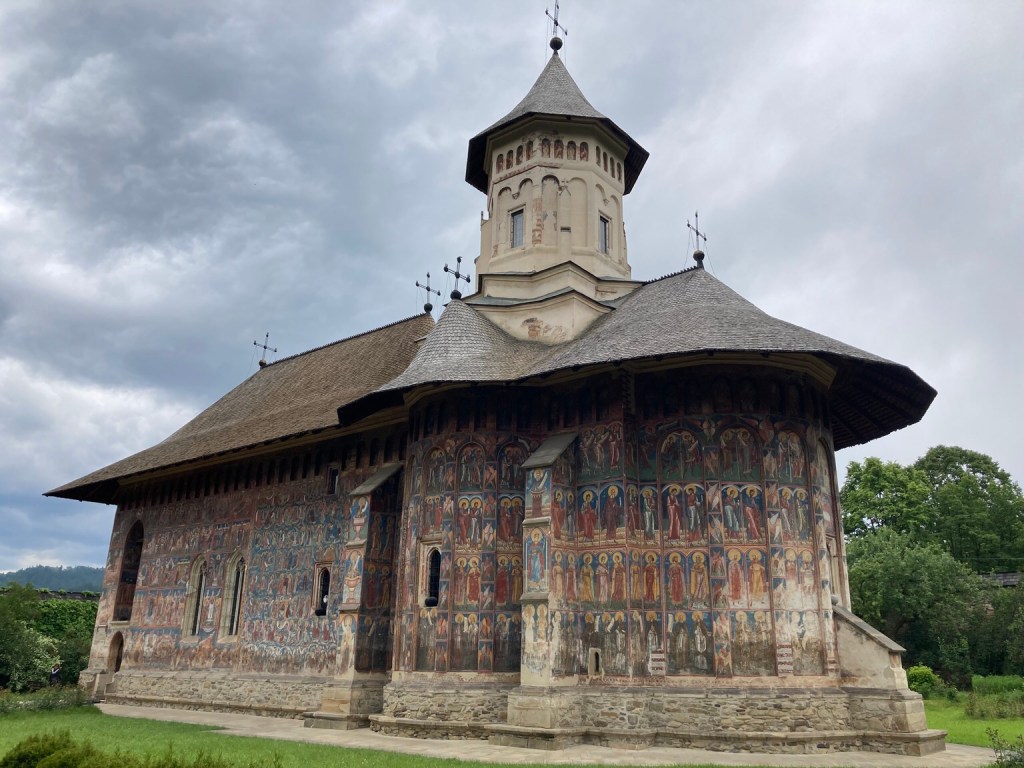
During the Middle Ages, all Romanian principalities were constantly threatened by the expansion of the Ottoman Empire so local rulers were kept on high alert and marked victories by having a monastery built on an important site.  Their exterior and interior walls are decorated with elaborate C15th and C16th frescoes featuring portraits of saints and prophets, scenes from the life of Jesus, images of angels and demons, and heaven and hell.  Deemed masterpieces of Byzantine art, they are infused with local folk art and mythology and also taught the stories of the bible. The monasteries are surrounded by fortified walls which could protect the community from attack.  

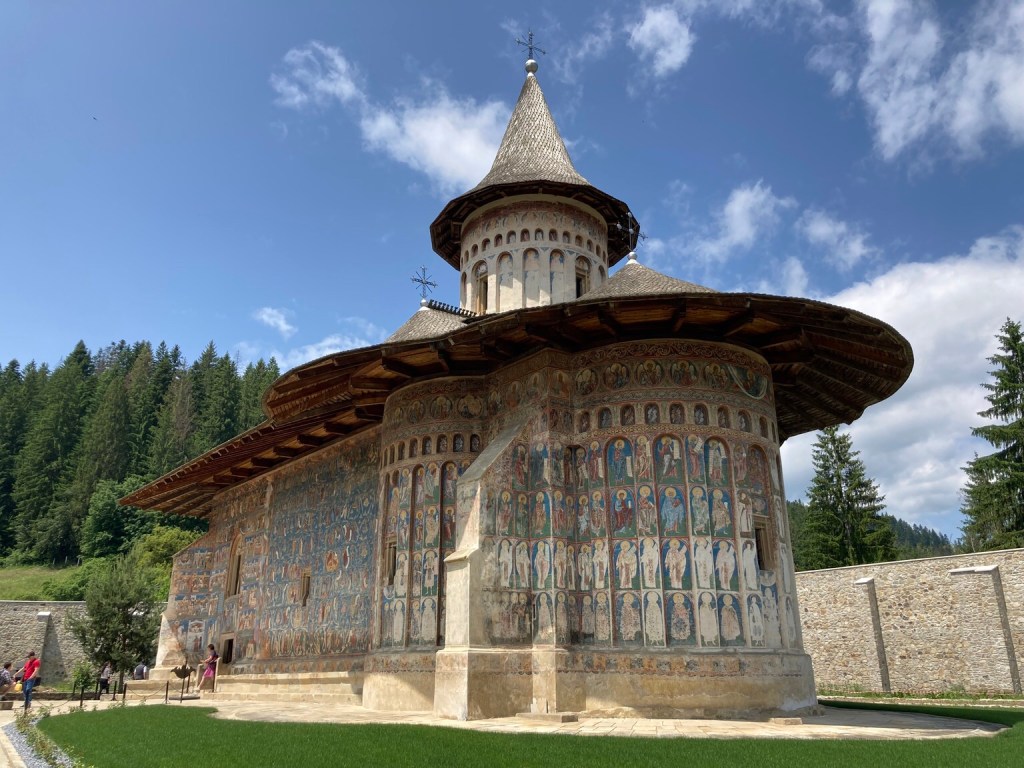
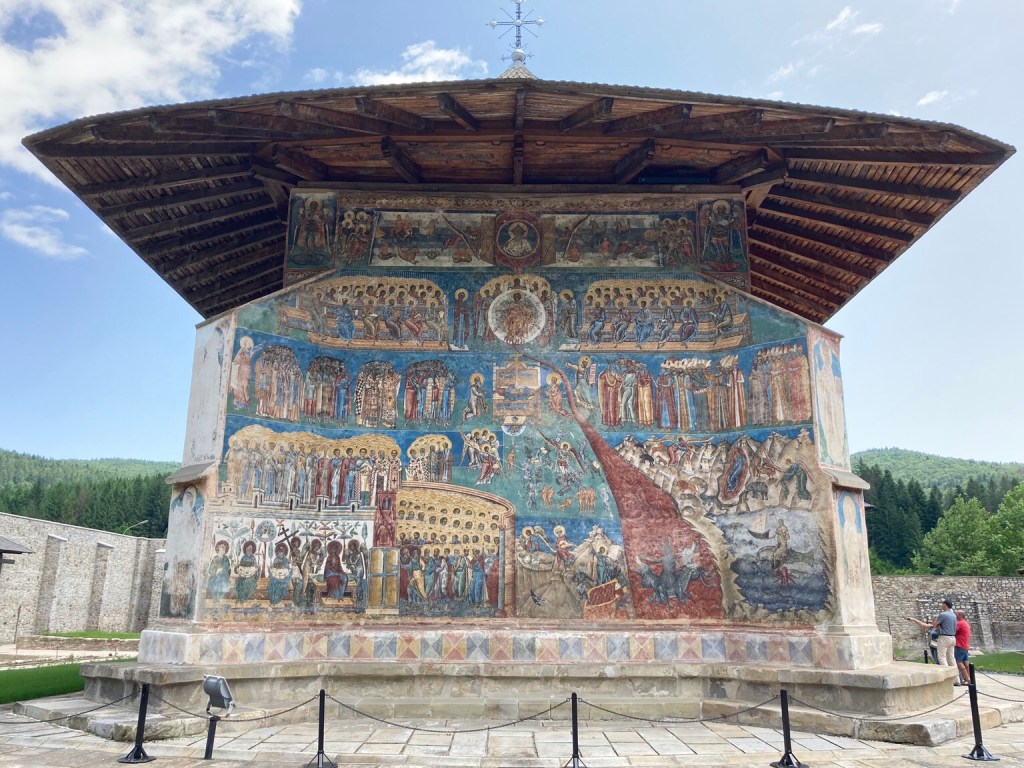
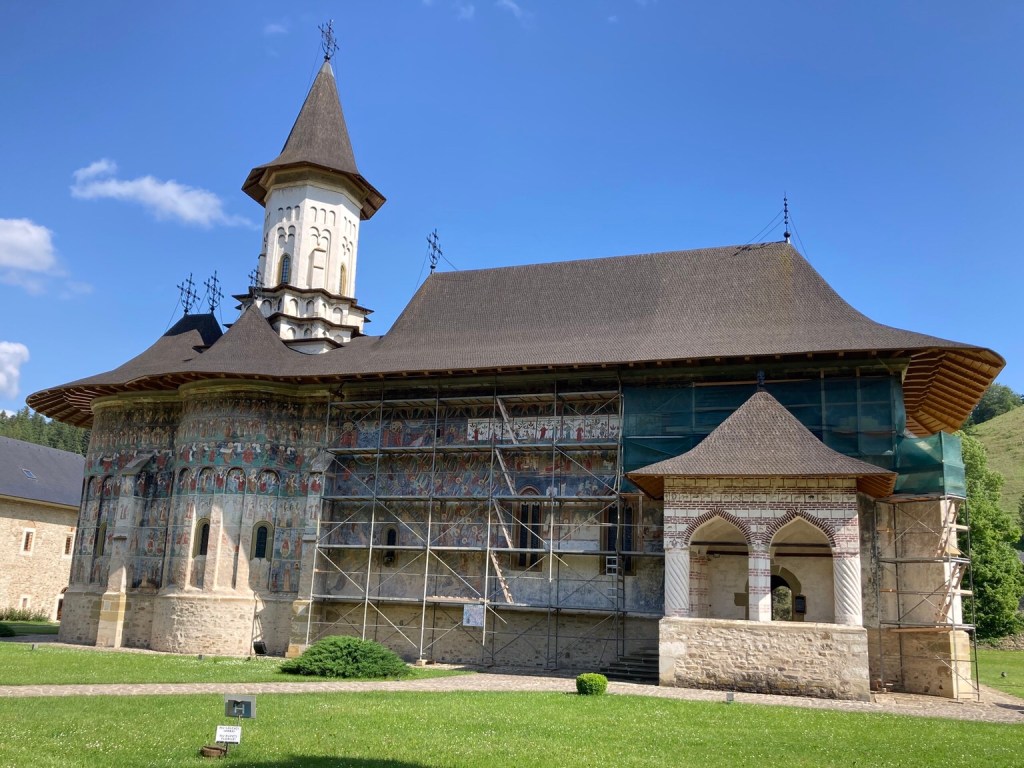
Voronet was built in 1488 for Stephen III of Moldavia to celebrate chasing the Turks from Wallachia and is considered the jewel of Romania’s painted church crown. We entered beside the north wall, where the frescoes have largely been worn away by weather …

… but as we walked round the the south side we could see the frescoes, still vivid after 450 years. 

Most of the south wall is covered by a Tree of Jesse which shows the genealogy of Christ and the intense shade of blue of the background contains lapis lazuli and is commonly known as Voronet Blue.

The area round the door shows a comic strip of the lives of St Nicholas and St John …

… but the Last Judgment on the west end is possibly the finest single composition among the painted monasteries showing zodiac signs at the top, then Christ seated with the faithful on the left to go to heaven and the penitent on the right (including Tatars and Turks!) to go to hell. Below devils push sinners into the flaming river to hell, and to the left, there is a crush of righteous at the gates of heaven!  

Photography within the church was forbidden so I can’t share, but there was a calendar of saints in the entrance showing martyrdoms and miracles, a tomb chamber next and then the main church with icons.  Every inch was covered in images even more vibrant than those outside.

Moving on, having bought a ticket to the monastery at Humor, we found was covered in scaffolding …

… but once inside we were able to take a couple of photos, and noticed how much more lifelike the images were, especially the prancing horses.

Sucevita Monastery was built in 1585 by the Moldavian princely grandsons of Petru Rares, Simion and Ieremia Movila and was a princely residence as well as a fortified monastery.  The Ladder to Paradise can just be seen under the scaffolding, with red-winged angels in rows and the righteous on a slanting ladder to the heavens, while sinners fall through the rungs and are driven by grinning devils to hell.

More remains on the south wall …

… with another Tree of Jesse …

… and a procession of angels, preachers and apostles on the curved east end.

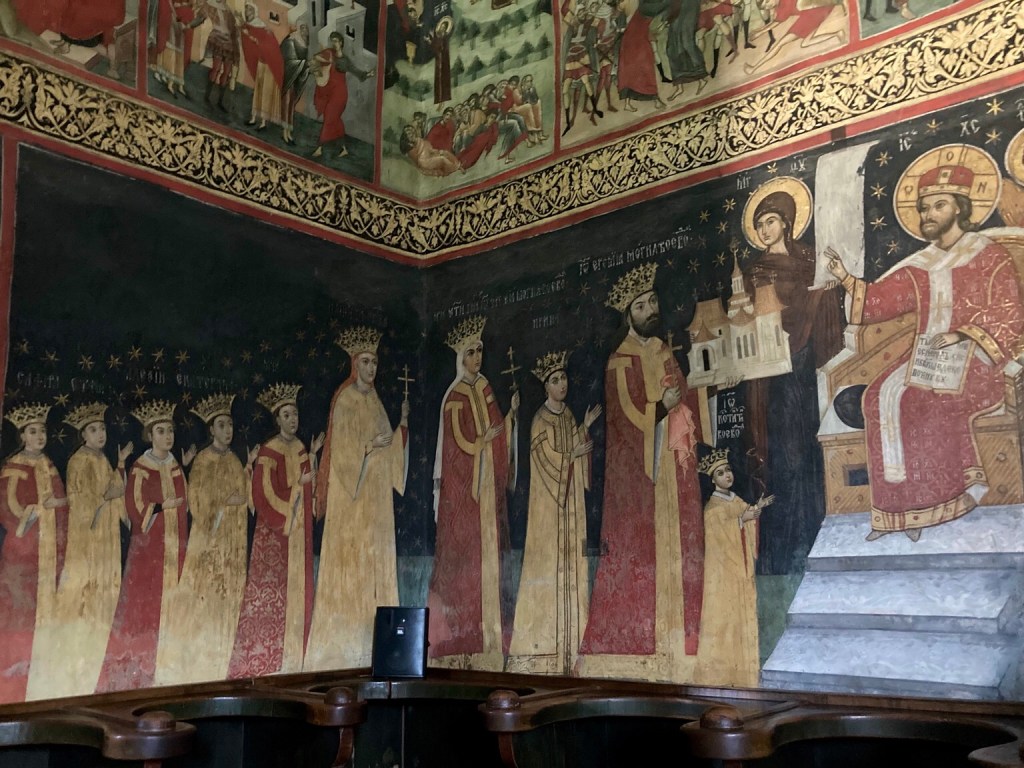
We managed a couple of snaps inside. This is the votive picture of the two brothers and the family presenting the monastery to Christ …

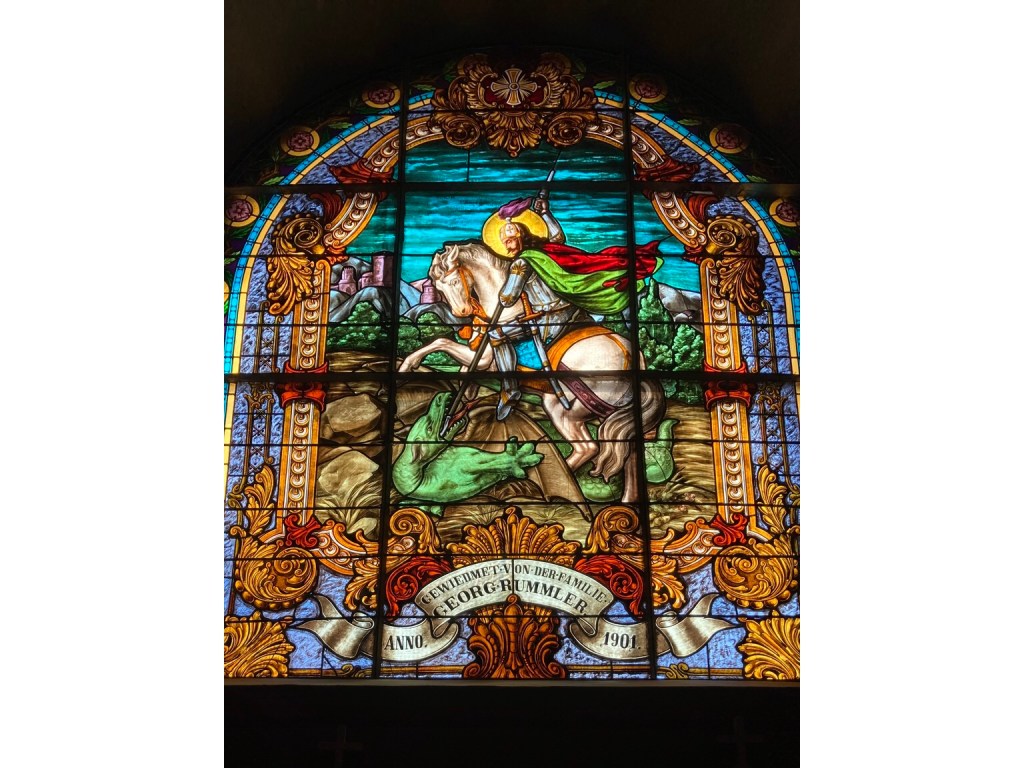
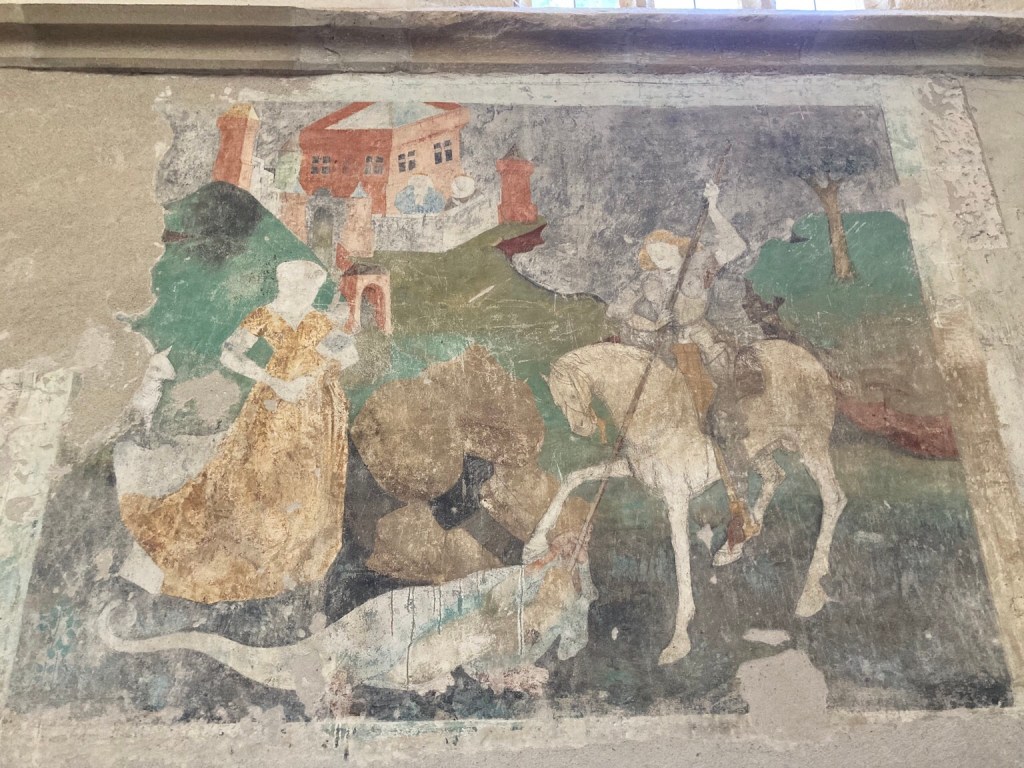
… and a rather dashing Saint George.

We spent the night at Cabana Piatra Runcului, a homestay in Moldovita. 

We were made very welcome but for the first time, language was an issue as despite letting our host know Chris was vegetarian, his dinner came with pork stew.  Rather than fuss, he took as much from his plate and mine as possible onto a clean plate and called it a win, helped by several glasses of homemade fruit liqueur!  

After a breakfast of eggs, we took a ride on the Mocănița Huțulca, a restored narrow gauge steam train that once transported timber but now chugs to the hamlet of Argel and back. 

Everyone was jolly in our carriage, enjoying their day out and we were offered something to eat which looked a bit like a crepe, and people were tearing a piece off. It was sorici or salted pork skin, and I tried a small piece, not surprisingly a bit like shoe leather!

The idea of a a ride in a wood fired steam train doesn’t take into account how filthy the smoke is and full of smuts, but fortunately there was enough space to choose a seat that avoided the worst of it.  

There was some gorgeous mountain scenery along the way …

… then we arrived at Argel, where they had been cooking up a storm – shame we’d had breakfast!

Before long we were back aboard and making the trip back.

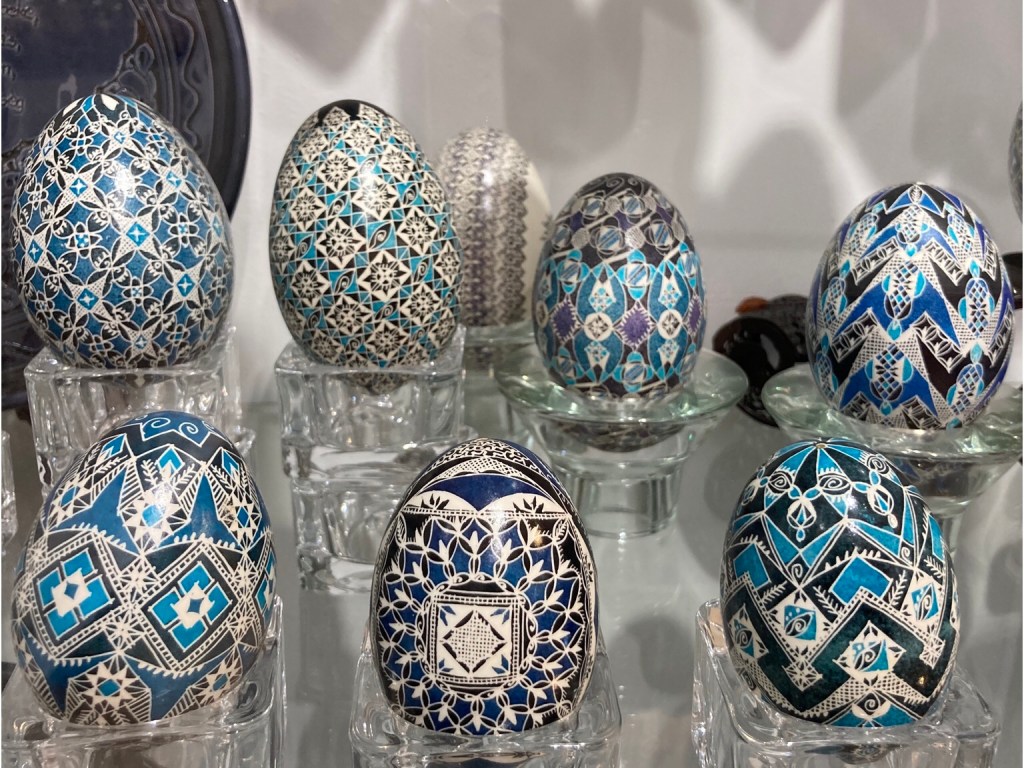
Across the road was a painted egg museum containing some 5,000 eggs painted by Lucia Condrea who spent her life practising this popular Romanian folk custom.  Using wax resist techniques, she took her patterns from local tradition but was also inspired by nature, carpets, lace and imagination!

Moldovita also has a monastery, completed in 1537 at the bequest of military leader Petru Rares, the illegitimate son of Stephen the Great. 

He still hoped to defeat the Turks, despite their continued advance after the fall of Constantinople and to raise morale, included this revised version of the Siege of Constantinople which shows Christians routing the infidel!

There is also a Tree of Jesse and Last Judgement, but here we could take photos inside, so here is the votive painting of the presentation of the monastery to Christ …

… an expressive Virgin and Child …

… an Annunciation …

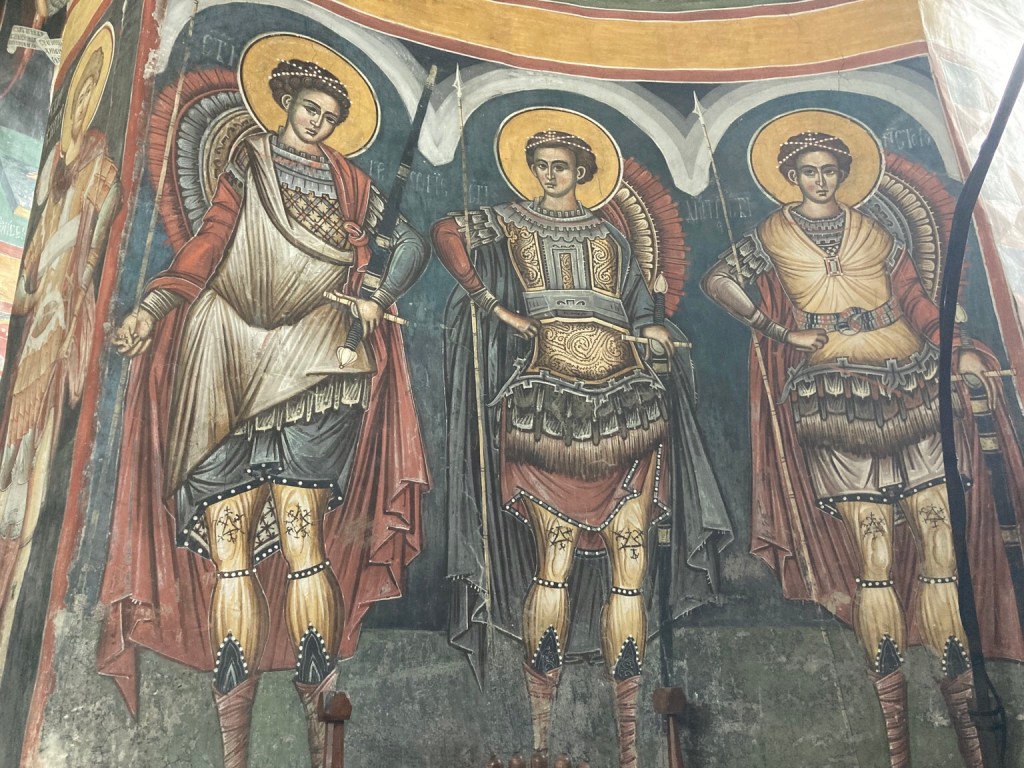
… and a bunch of nonchalant warrior saints!

There seemed to be no holds barred taking photos here …

…or maybe the nun was just busy counting the takings!

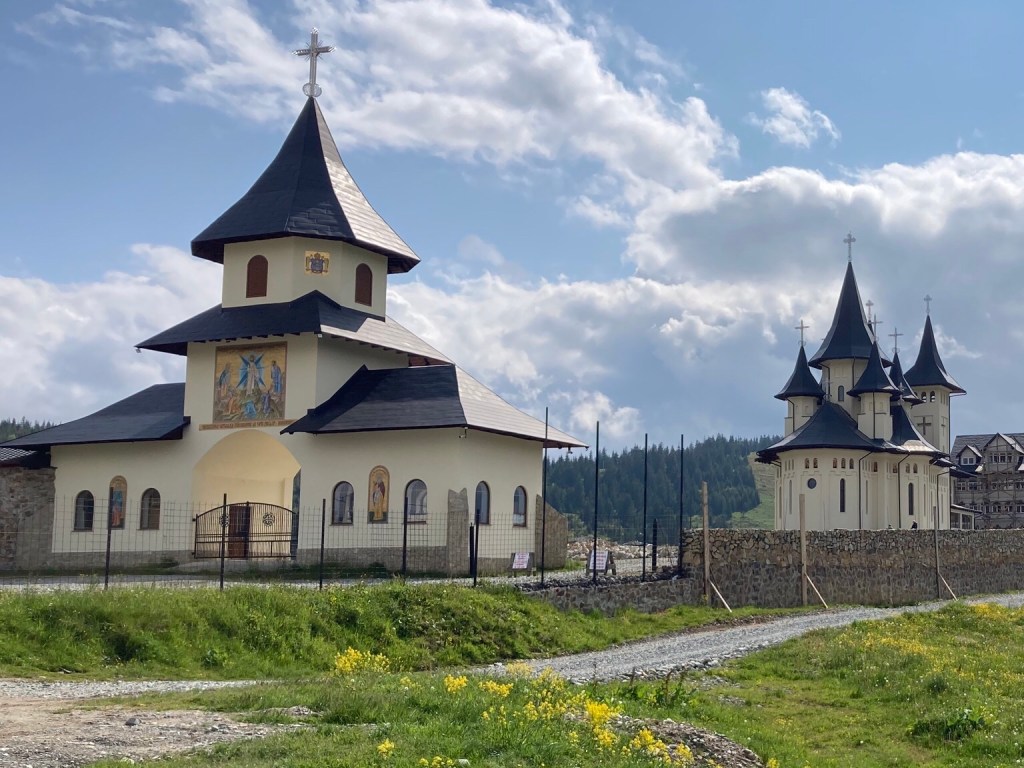
Another ascent and we followed the road up 1400m to Prislop Pass which connects the historical regions of Bucovina and Maramureș over the Rodna Mountains and of course there is a monastery …

… and a view, but we didn’t linger as it was only 8.5°!

Hairpin bends to took us down to Borsa where we spent the night at Galileo, a pension and pizzeria … perfect!

Map

Premjer … a Fortified Church

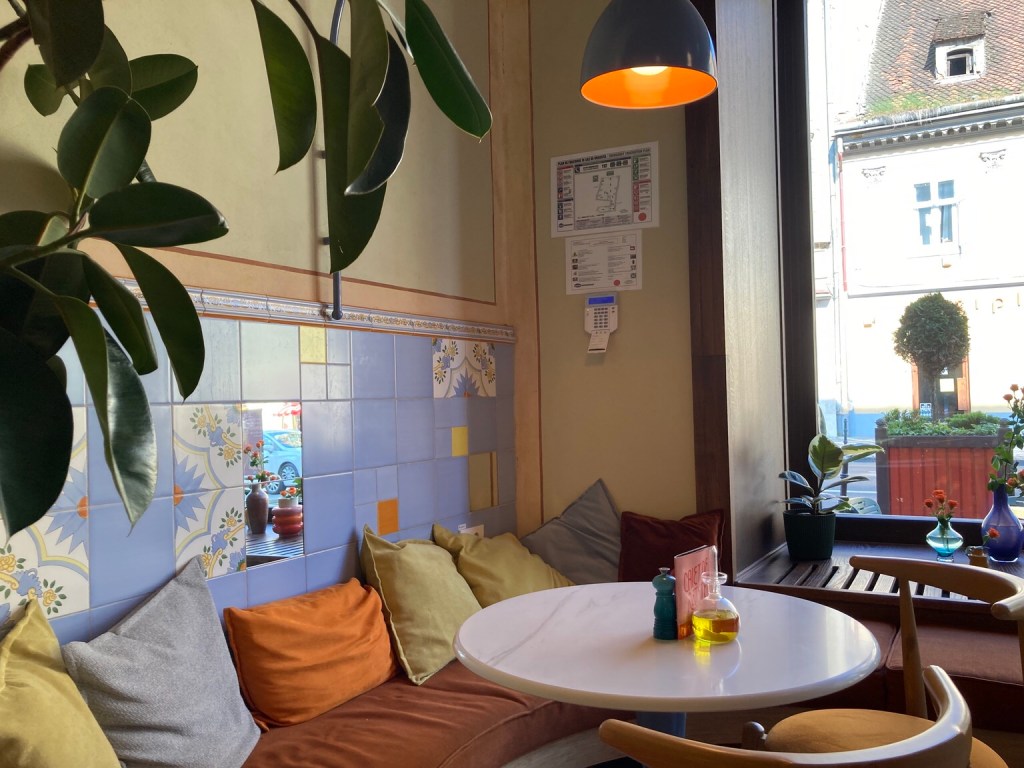
Omlett was so sunny …

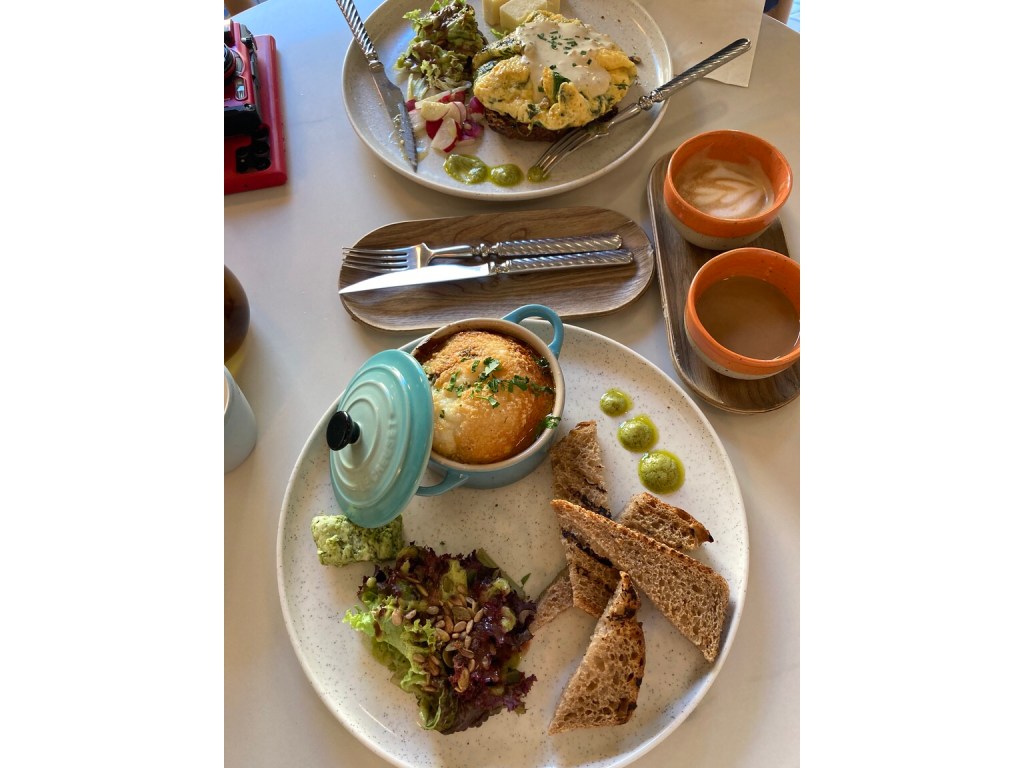
… and proved a perfect start to the day, with their range of delicious eggy treats – Chris had eggs scrambled with spinach, spring onion, parsley and dill served with Burduf Romanian Cheese and I chose Cocotte eggs with spinach, béchamel & Grana Padano. 

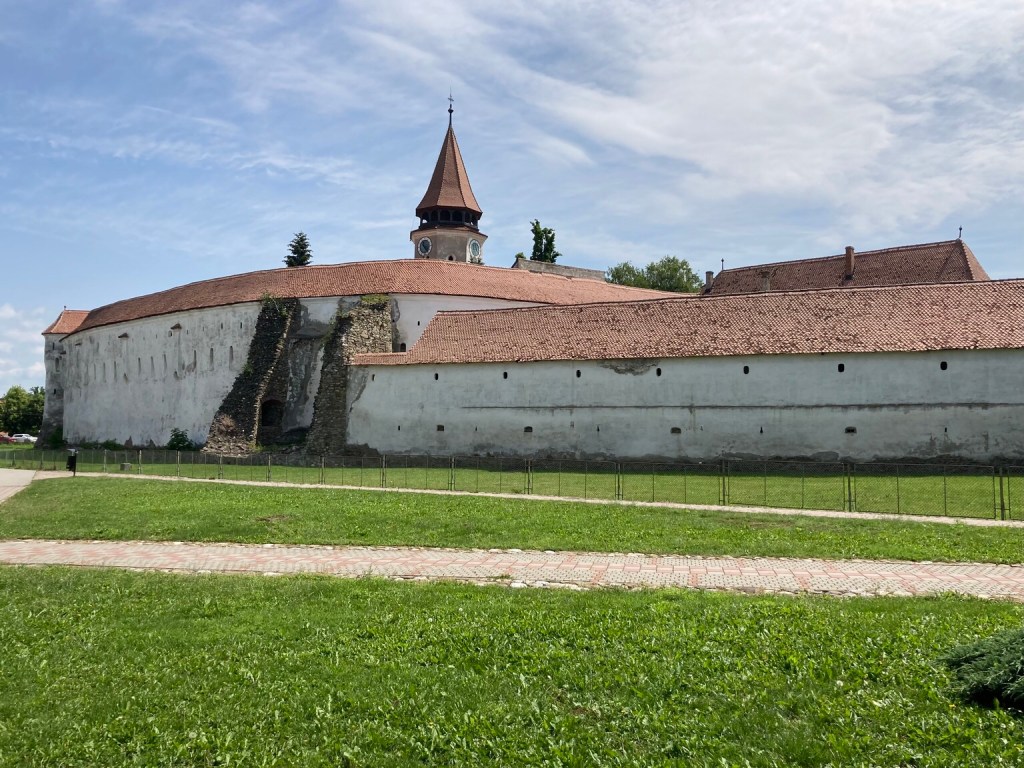
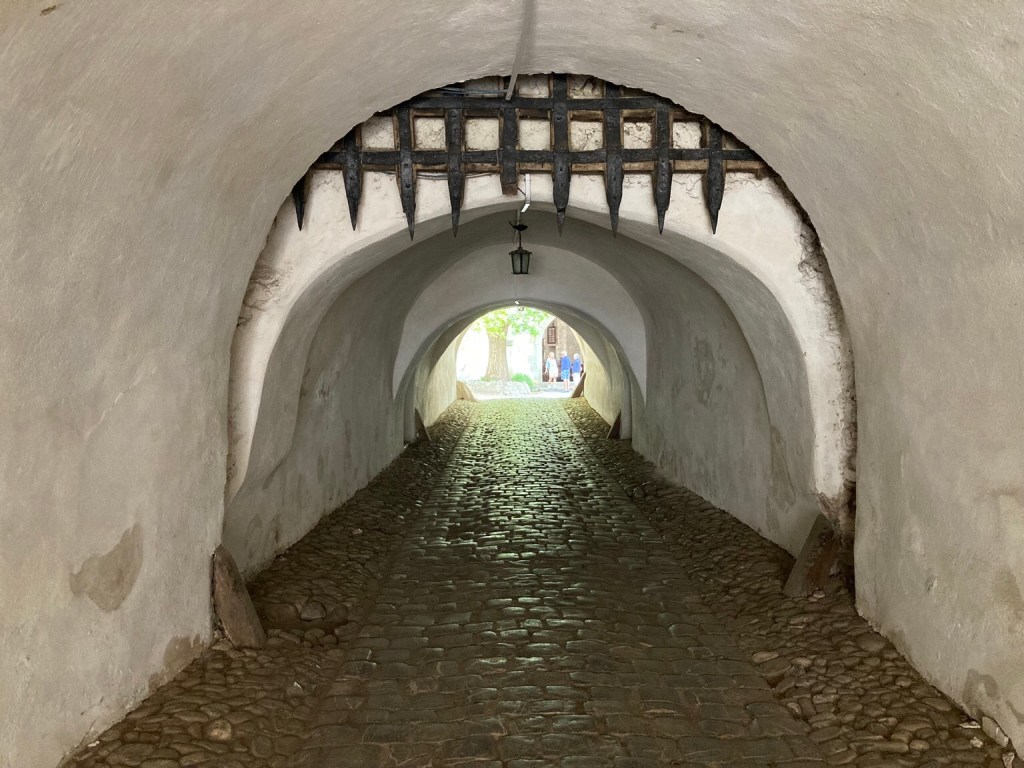
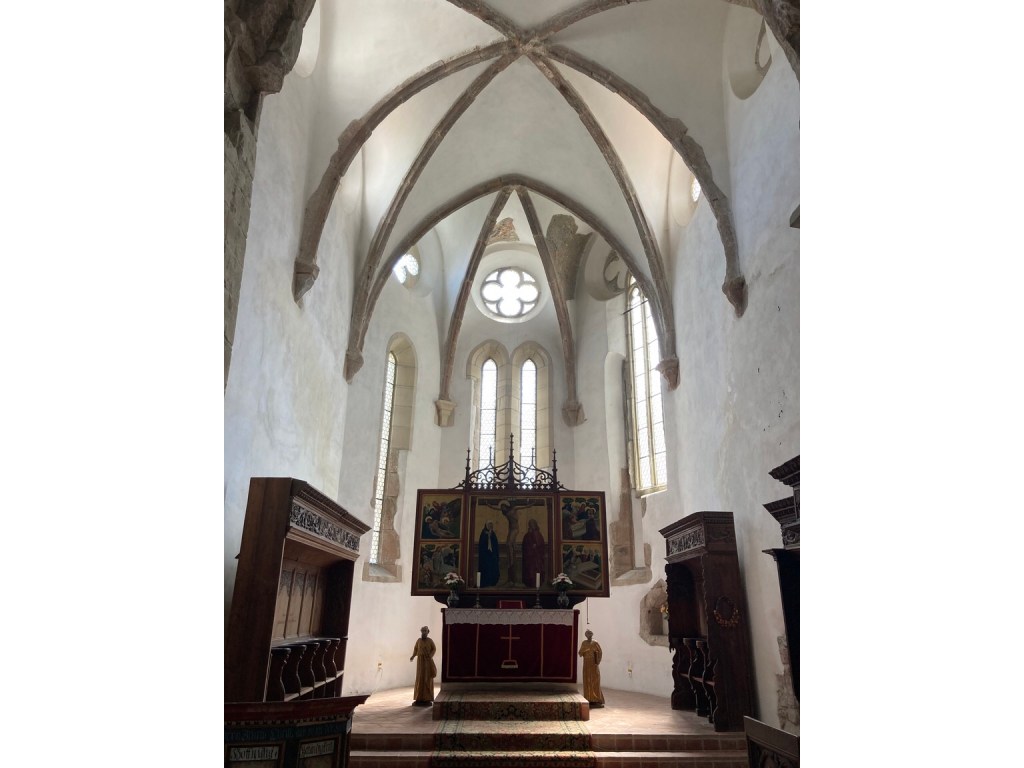
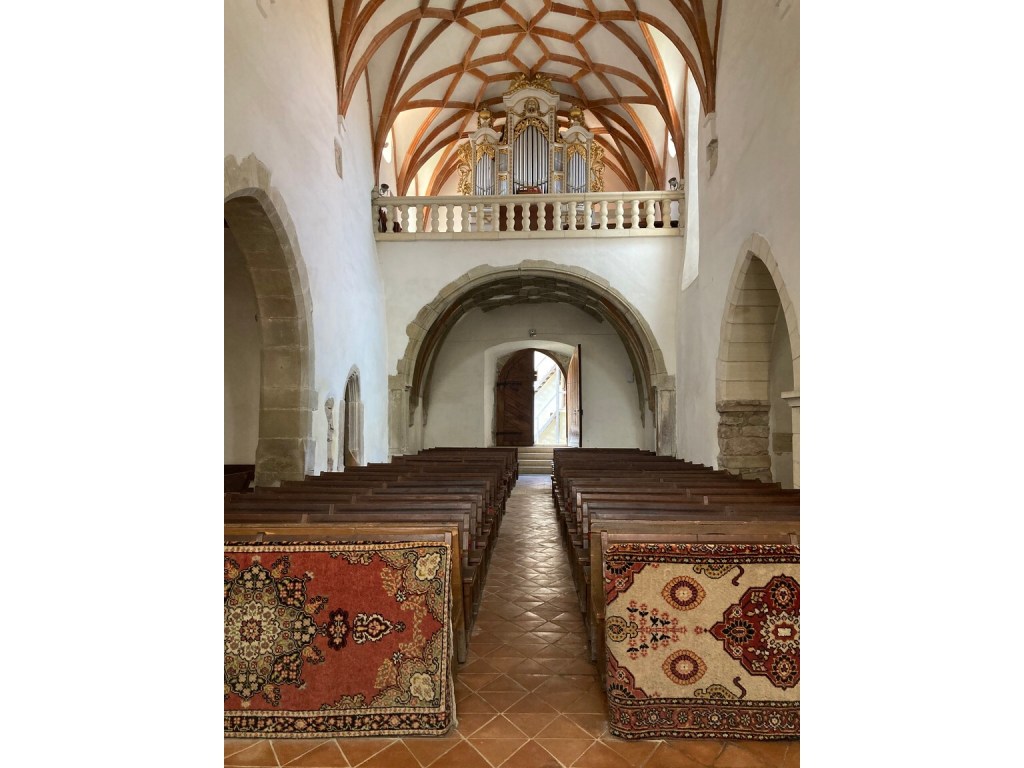
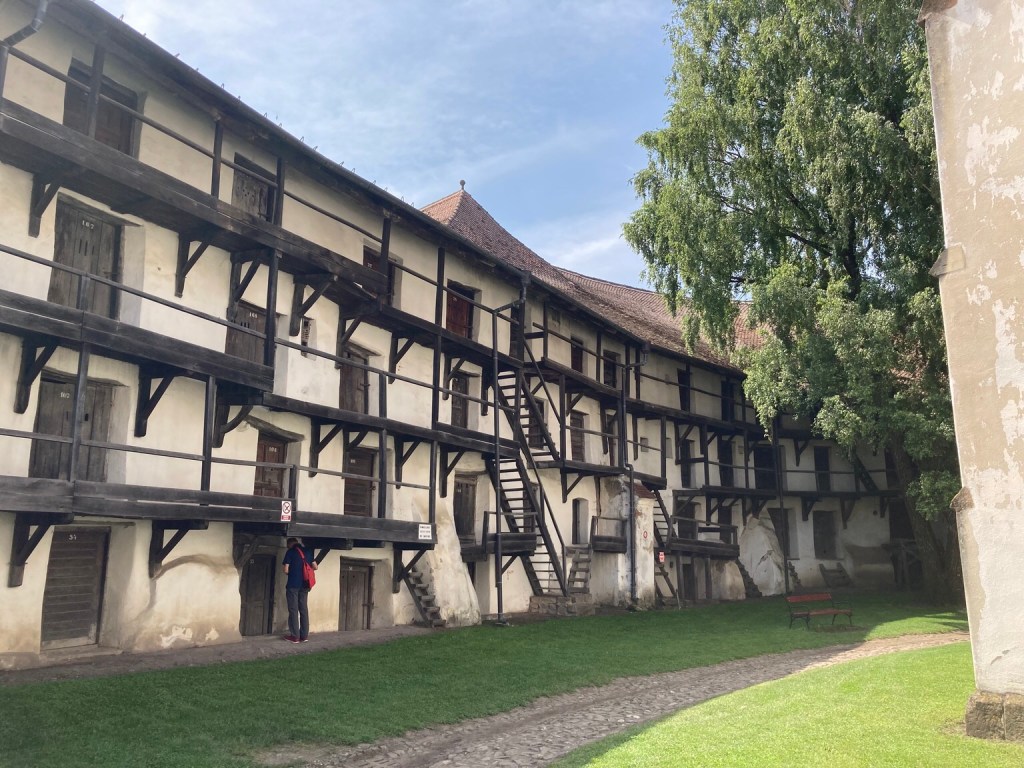
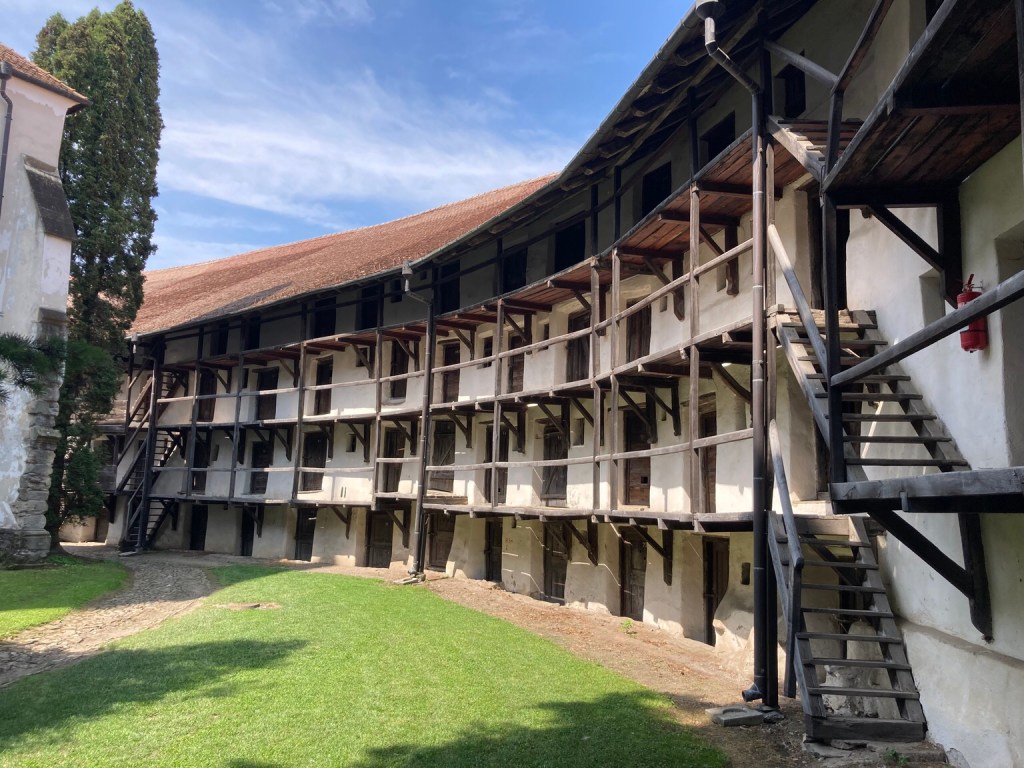
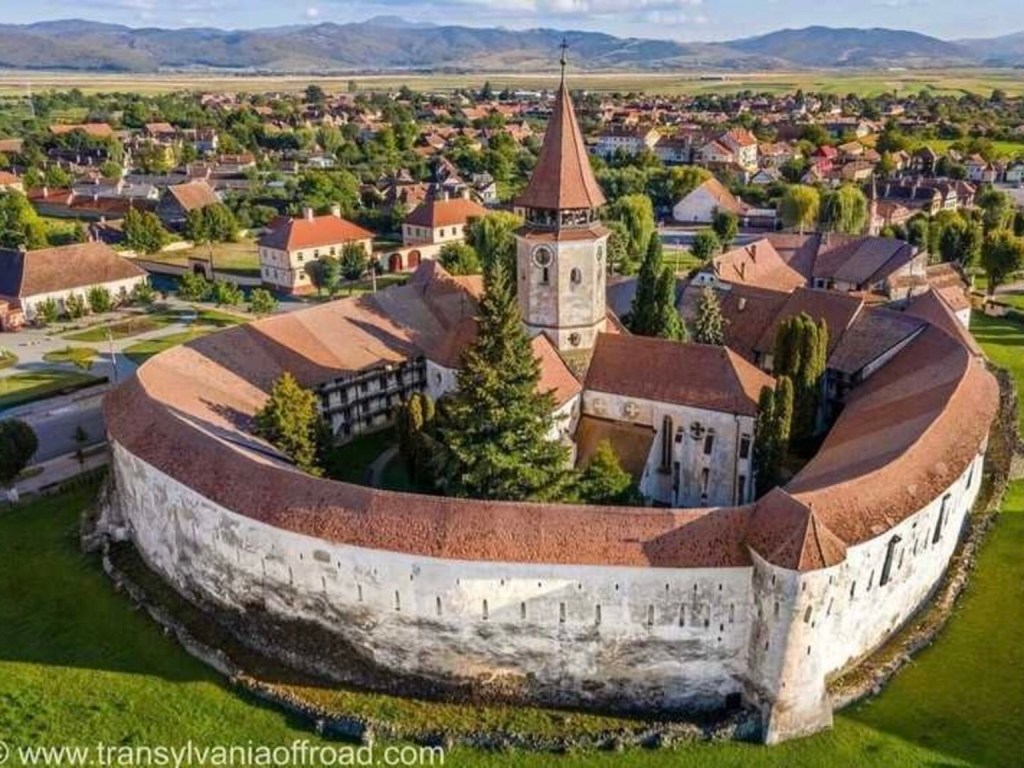
Once on the road, our first stop was at Premjer fortified church, entered through a 30m tunnel with a portcullis in the middle!

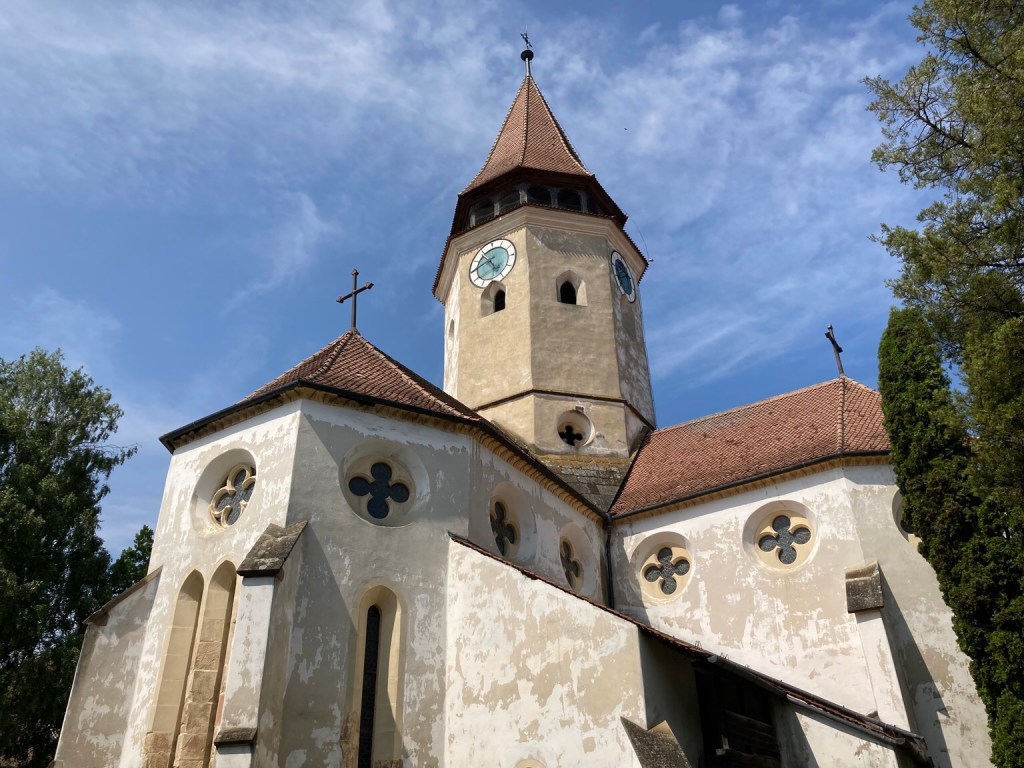
The church was initially cross shaped, but was enlarged by the Cistercians in early Gothic style in 1240.

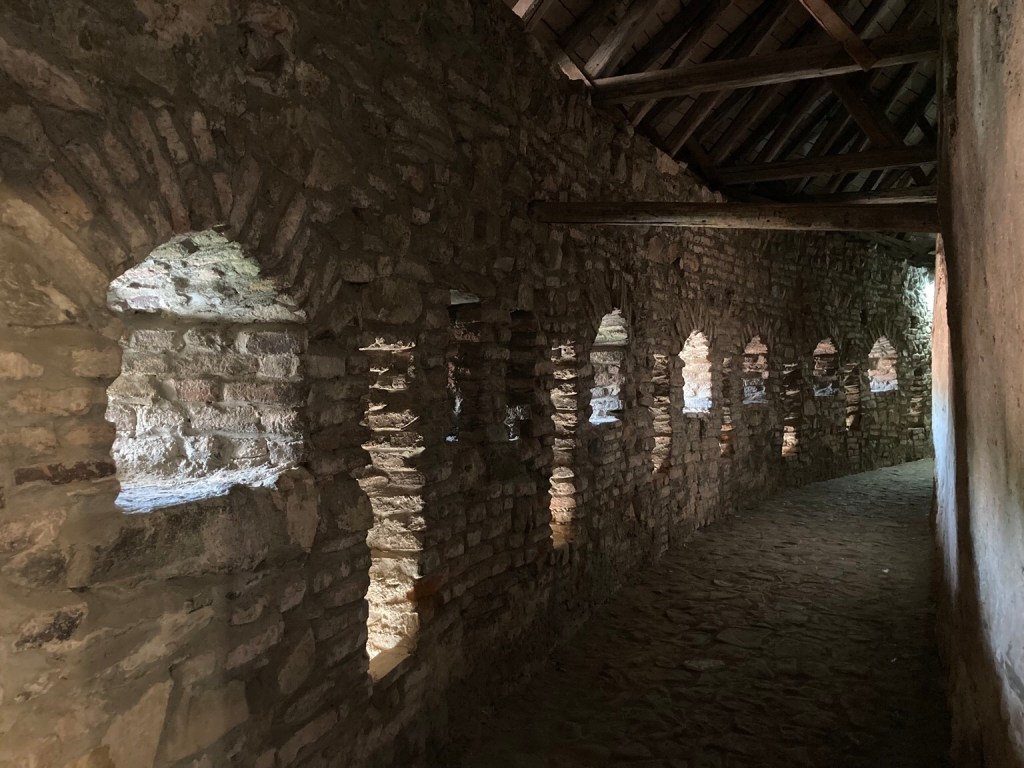
In the C15th it was surrounded by a 12m defensive wall …

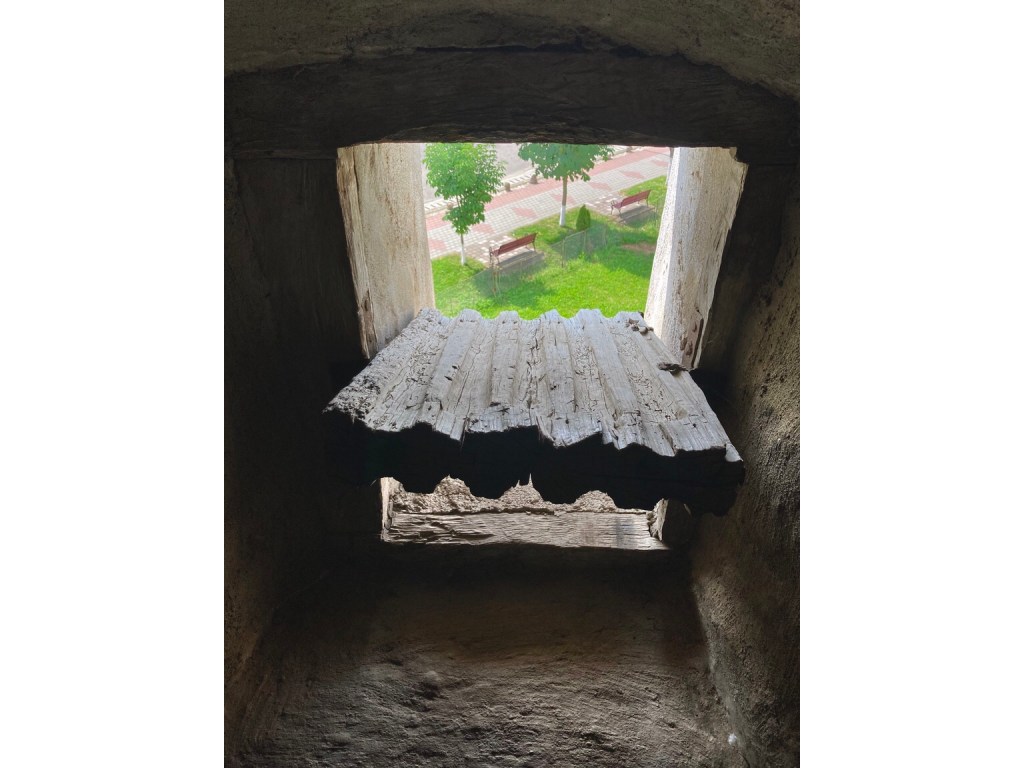
… and we walked all the way round on the inside, looking out of various defensive openings …

… and then later it was fitted with four tiers of storerooms all the way round!

It was the most unusual building reminding us strangely enough of a football stadium, and here’s an aerial shot to make it clearer!

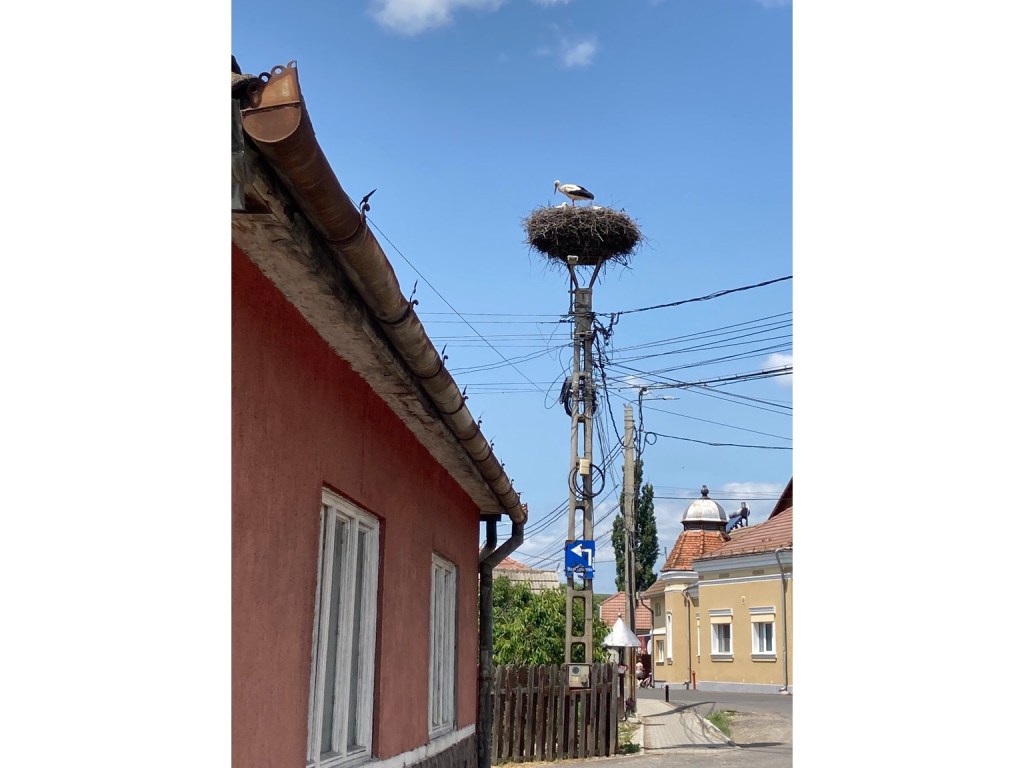
We then set off on a long drive across flat agricultural land, studded with villages. The road was good and pretty empty, but we got held up behind lorries with few chances to overtake. The speed limit dipped as we reached every town which made it easier to see the storks nesting on top of telegraph poles in huge nests, many with chicks.

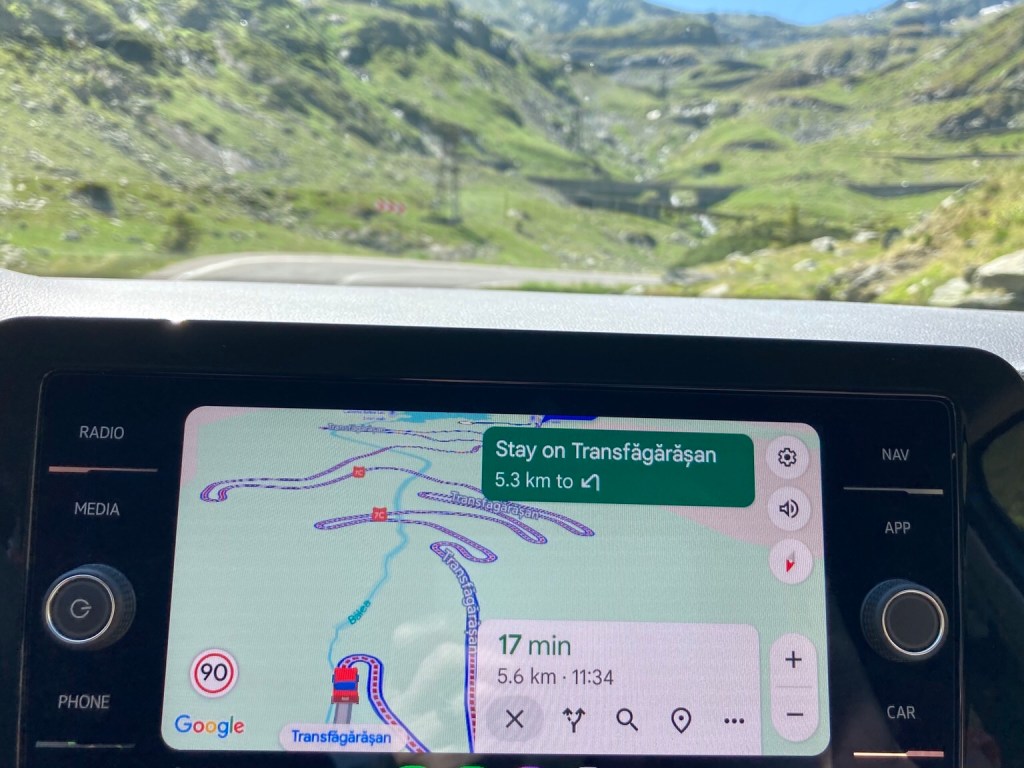
Eventually we started climbing into the mountains and the mild hairpin bends helped Chris get in training for the Transfagarasan later in the trip!

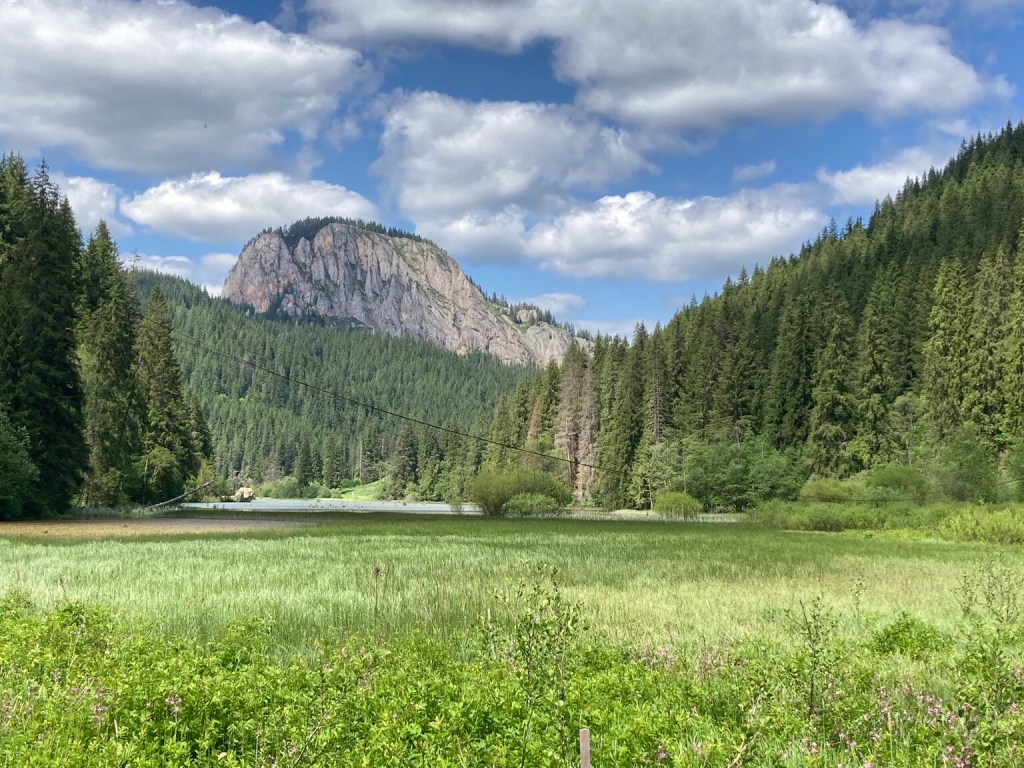
We stopped for coffee and chips at a cafe before reaching Red Lake.

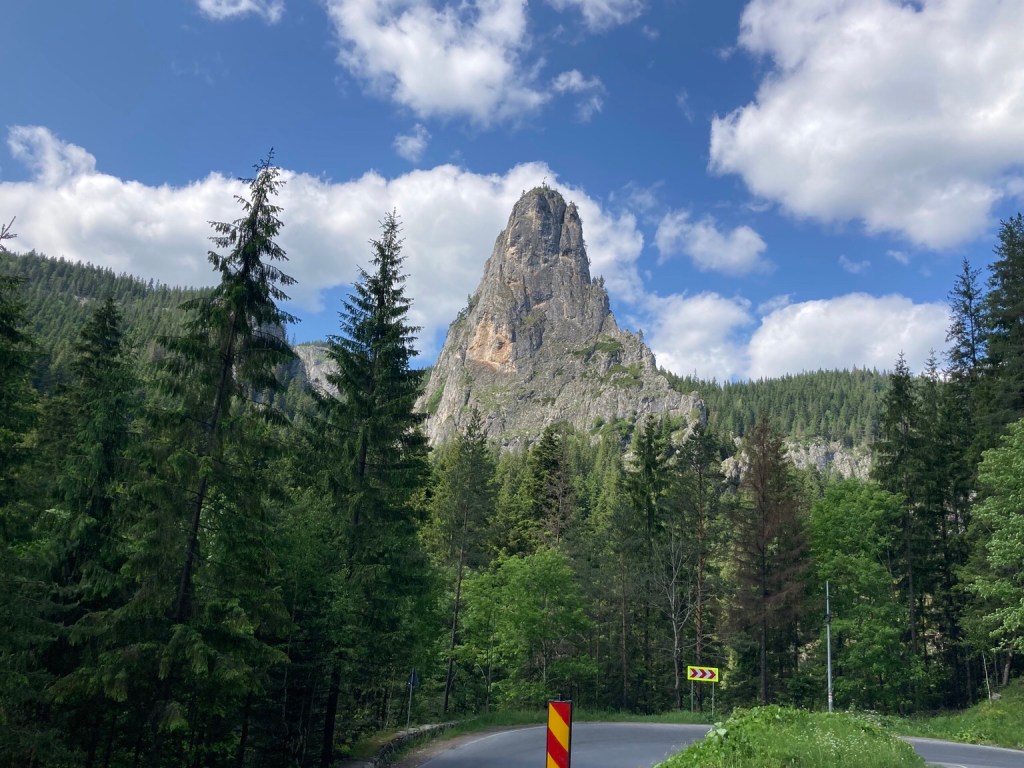
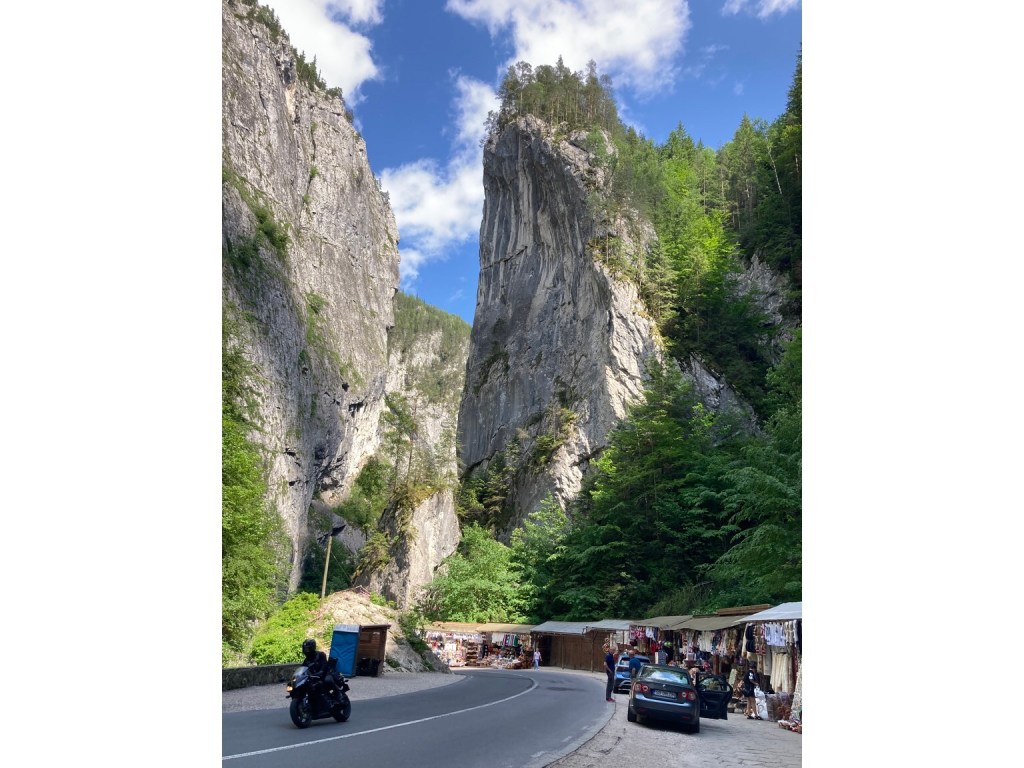
The road then entered the Bicaz Gorge, a scenic canyon between the provinces of Moldova and Transylvania. 

The limestone rocks towered above with a sheer drop on the other side.

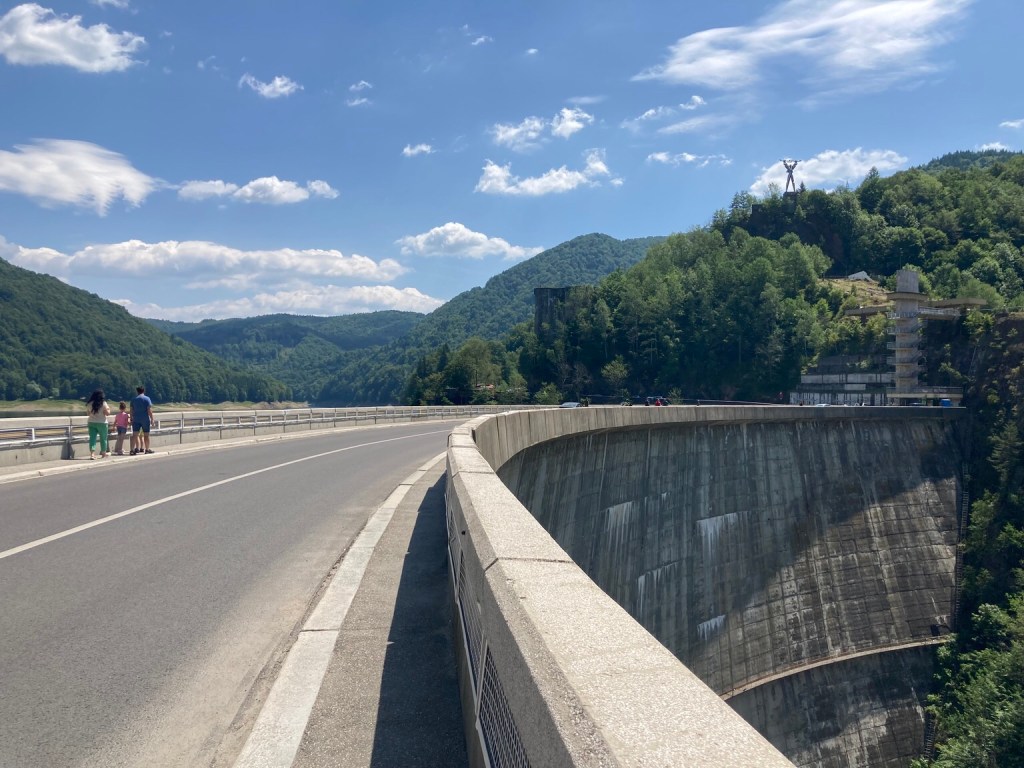
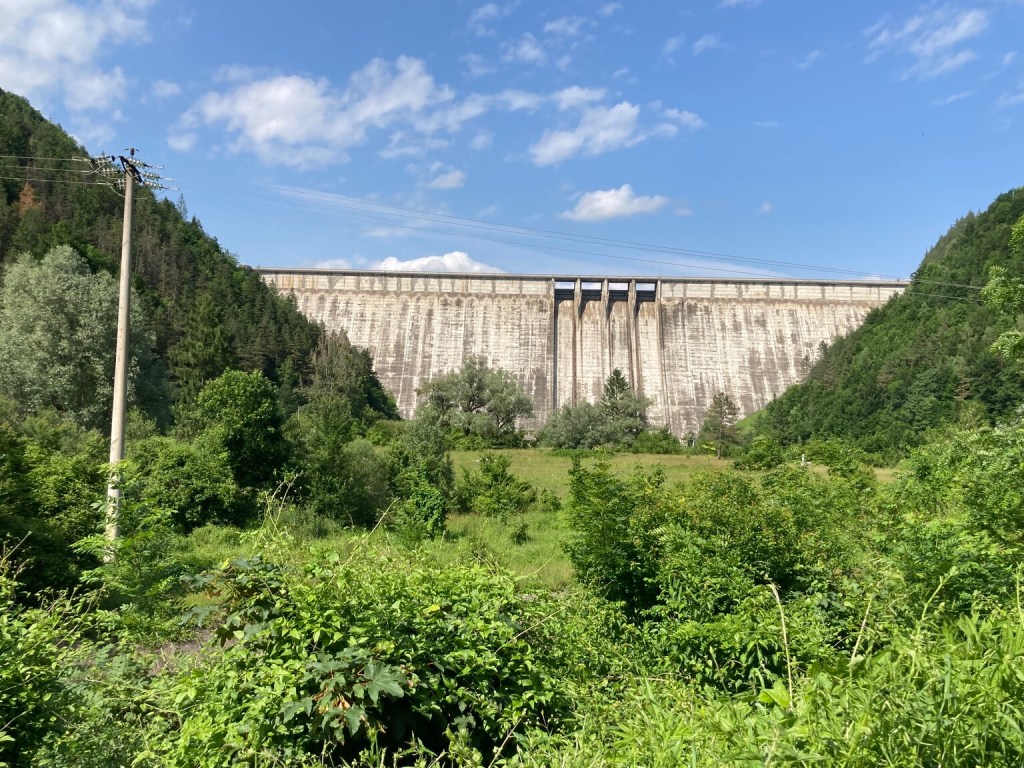
Next up was the impressive dam built on the river Bistrița …

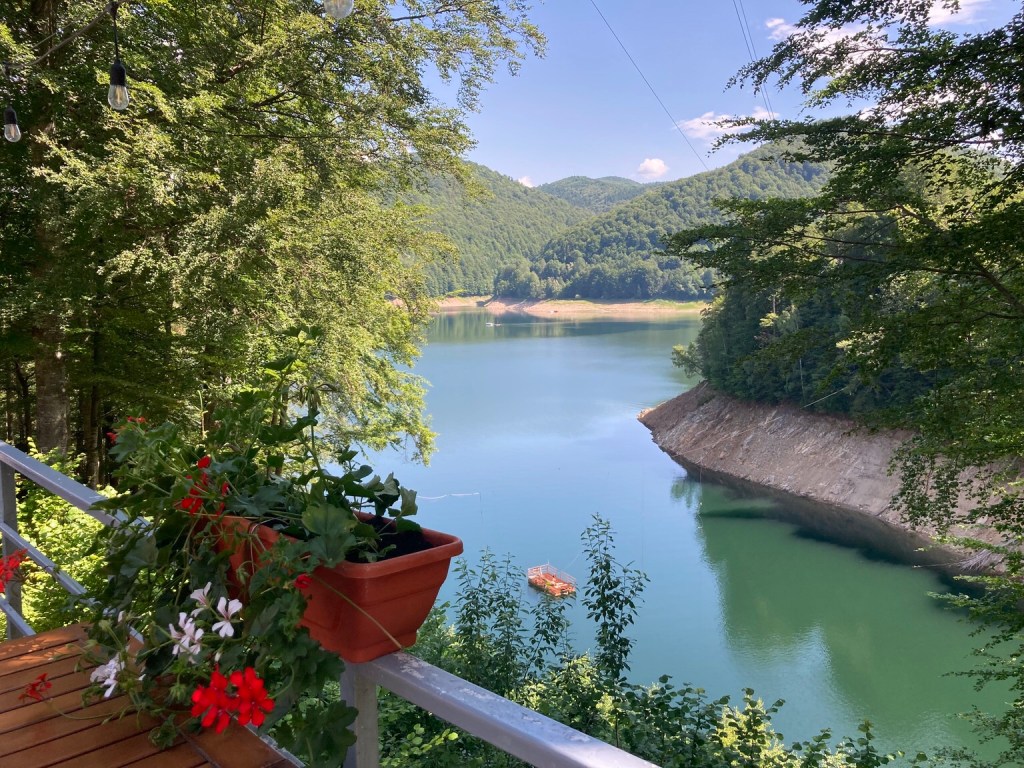
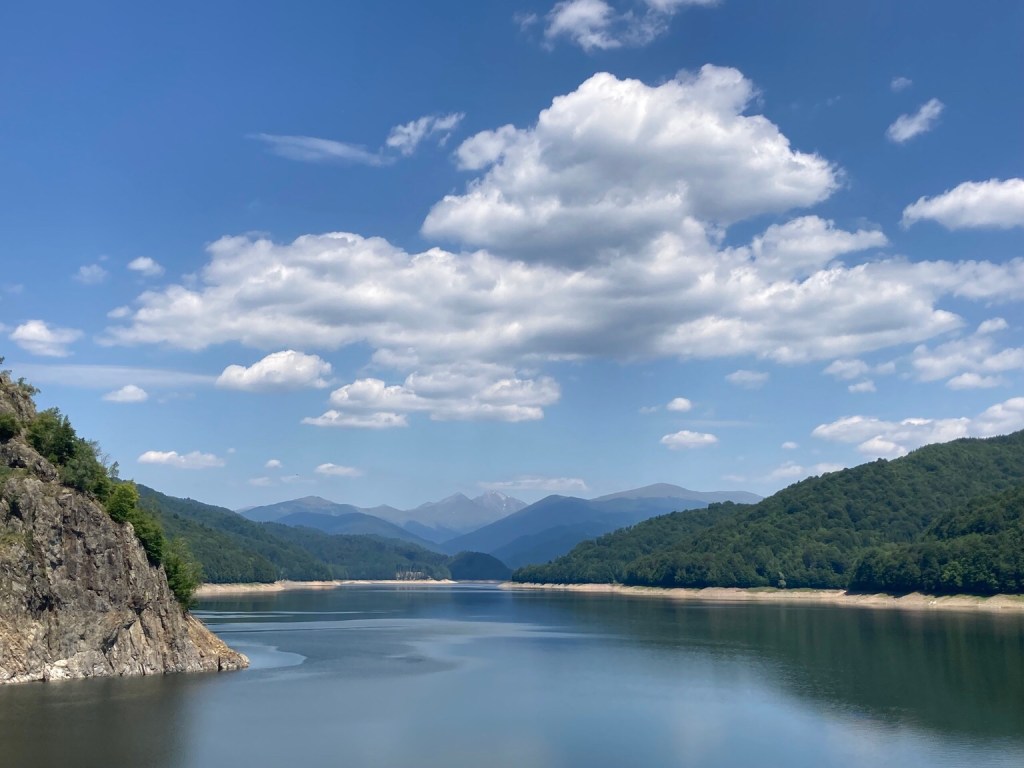
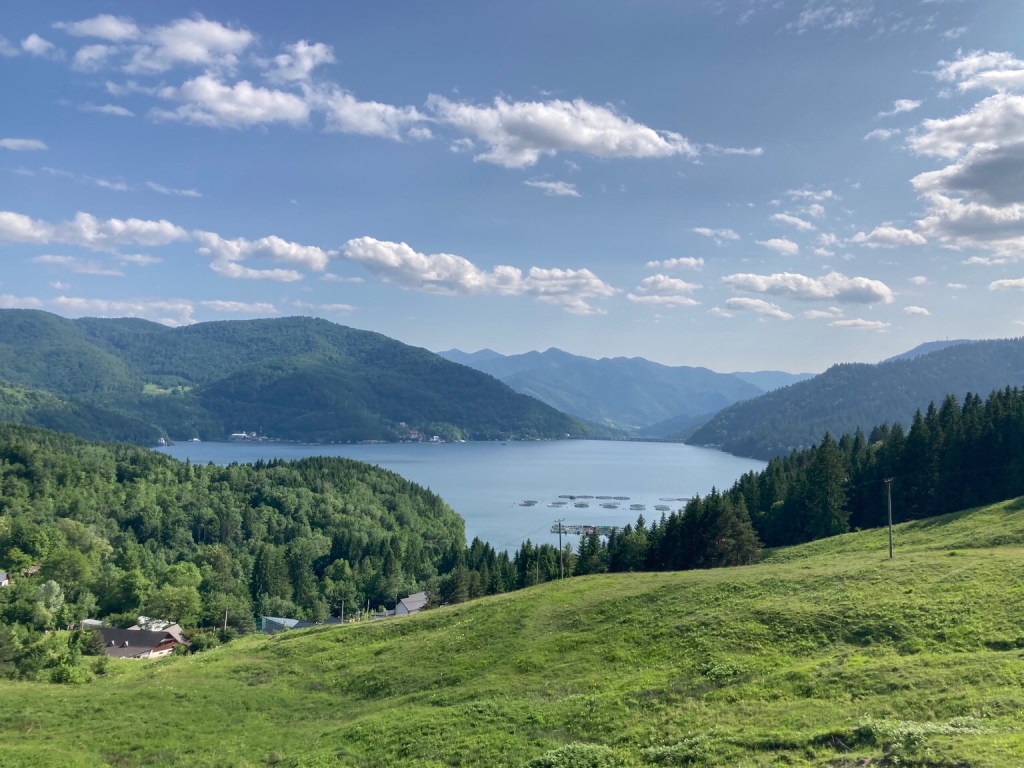
… forming Lake Bicaz, the largest artificial lake in Romania. It took most of the afternoon to drive the length of it.

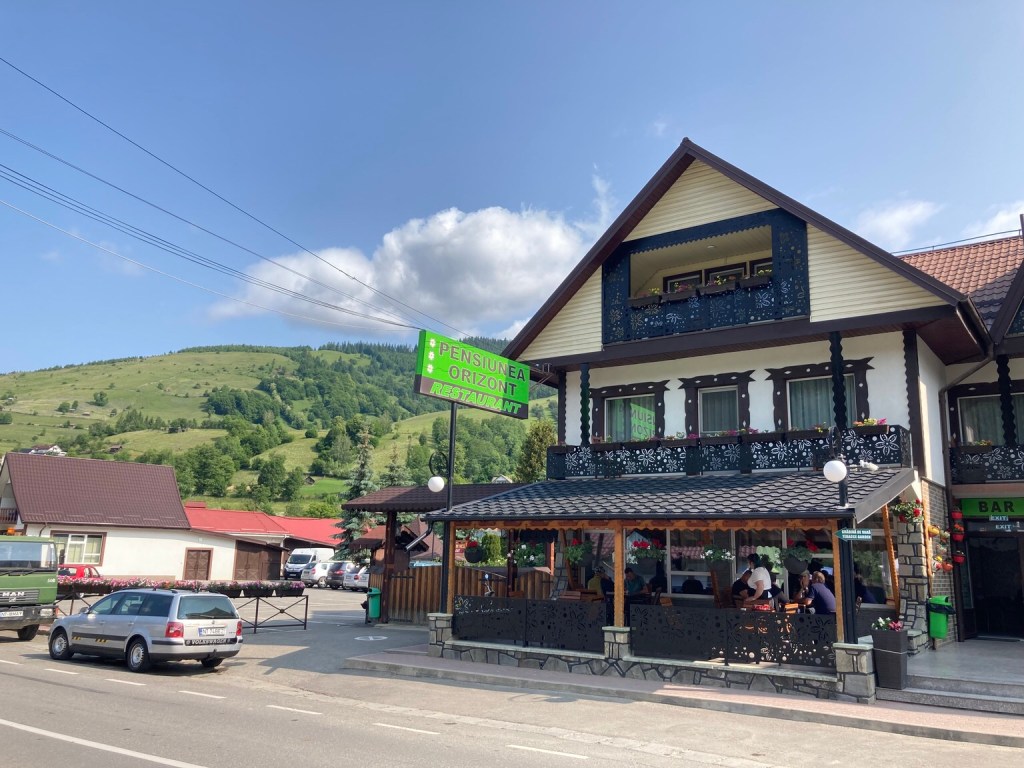
Tonight’s stay was at the family run Pensiunae Orizont …

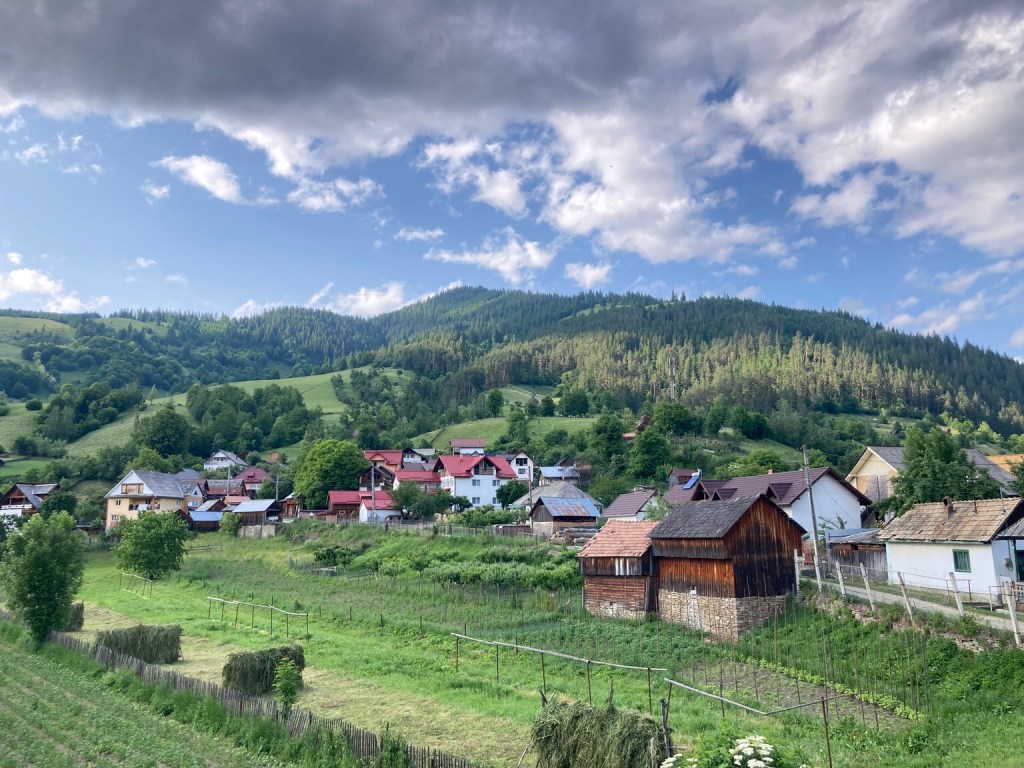
… where our room overlooked the mountains and hay drying in the field.

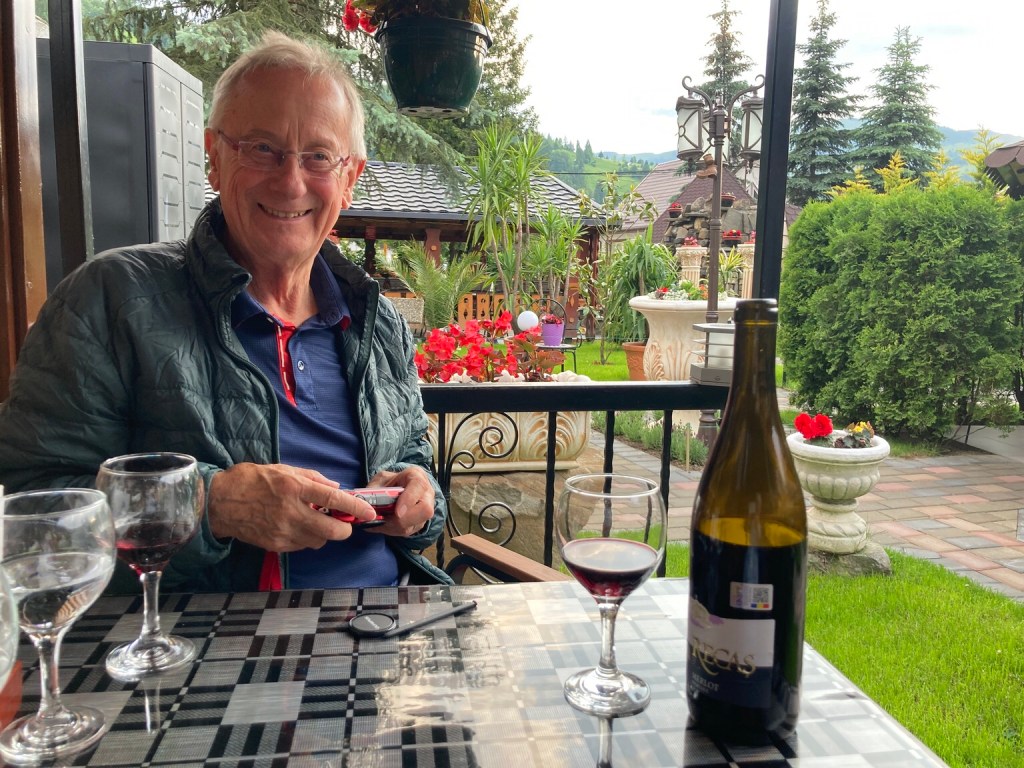
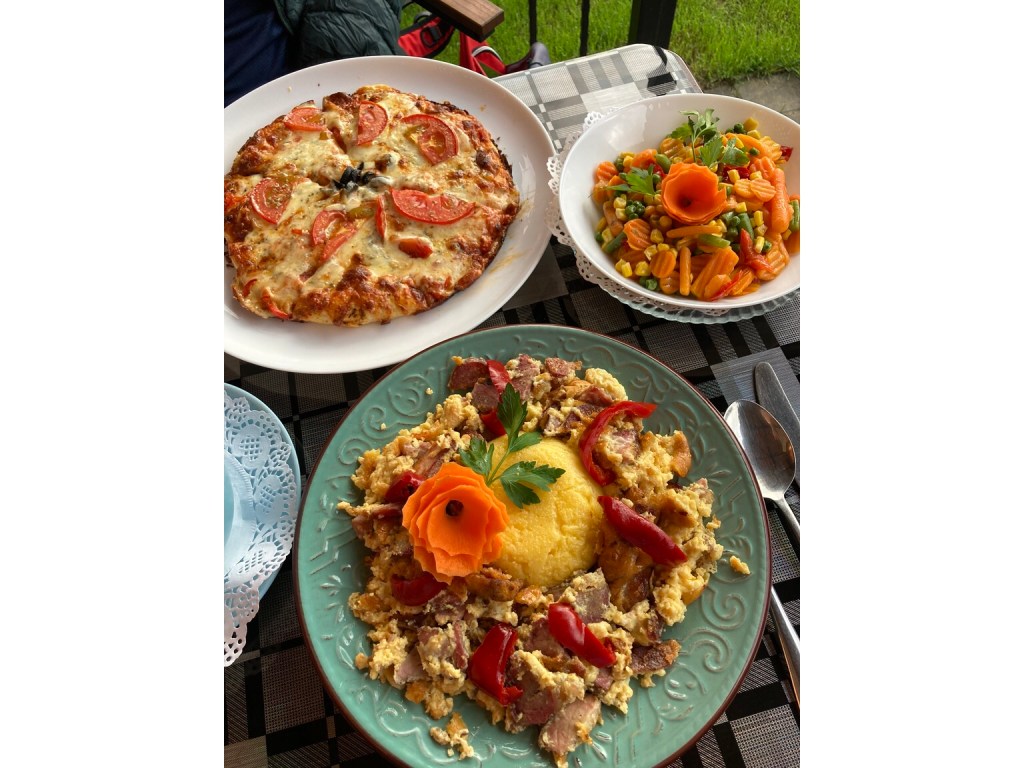
The garden had been made with much care with separate sitting spots surrounded by hedges and we sat there to eat. I had Tochitură bucovina made with pork, finished with eggs and Chris had a pizza and the bottle of local wine was very good, and only £6!

An early night and swift start and we have a lot to fit in tomorrow.

Map

Bran … Fact & Fiction

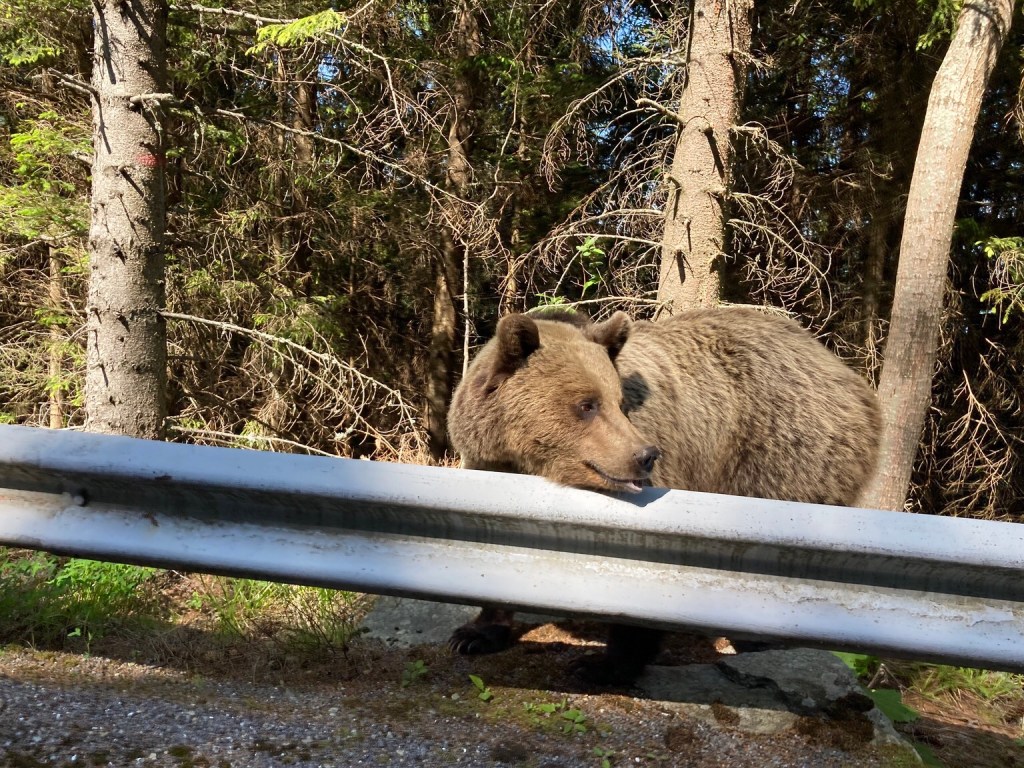
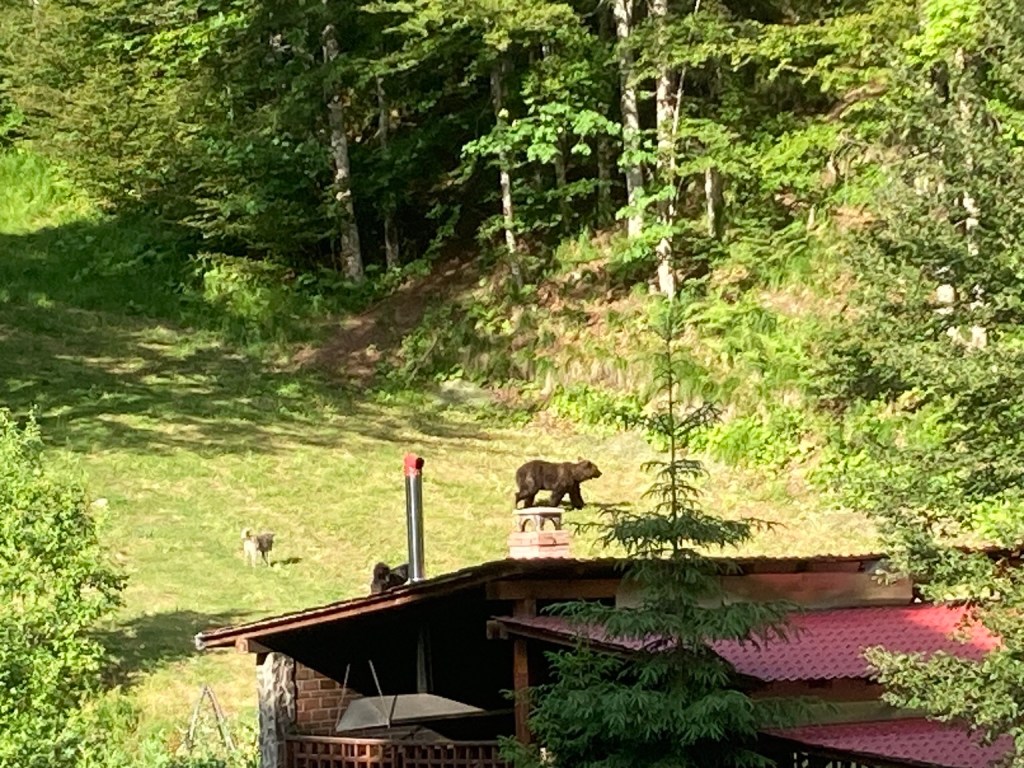
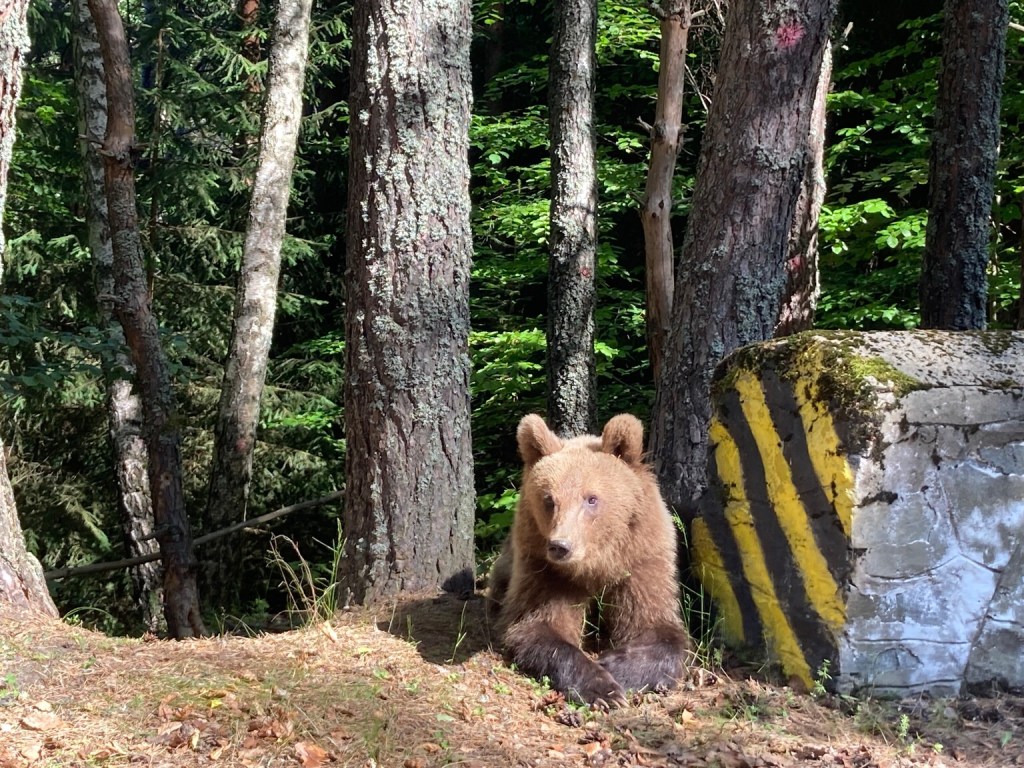
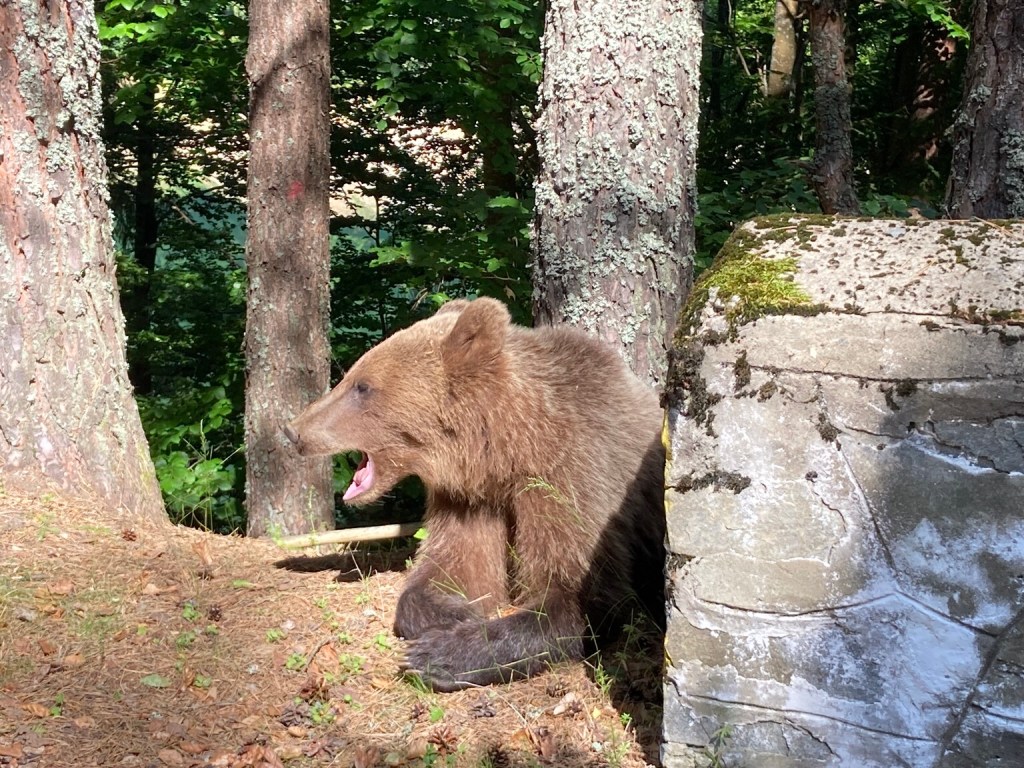
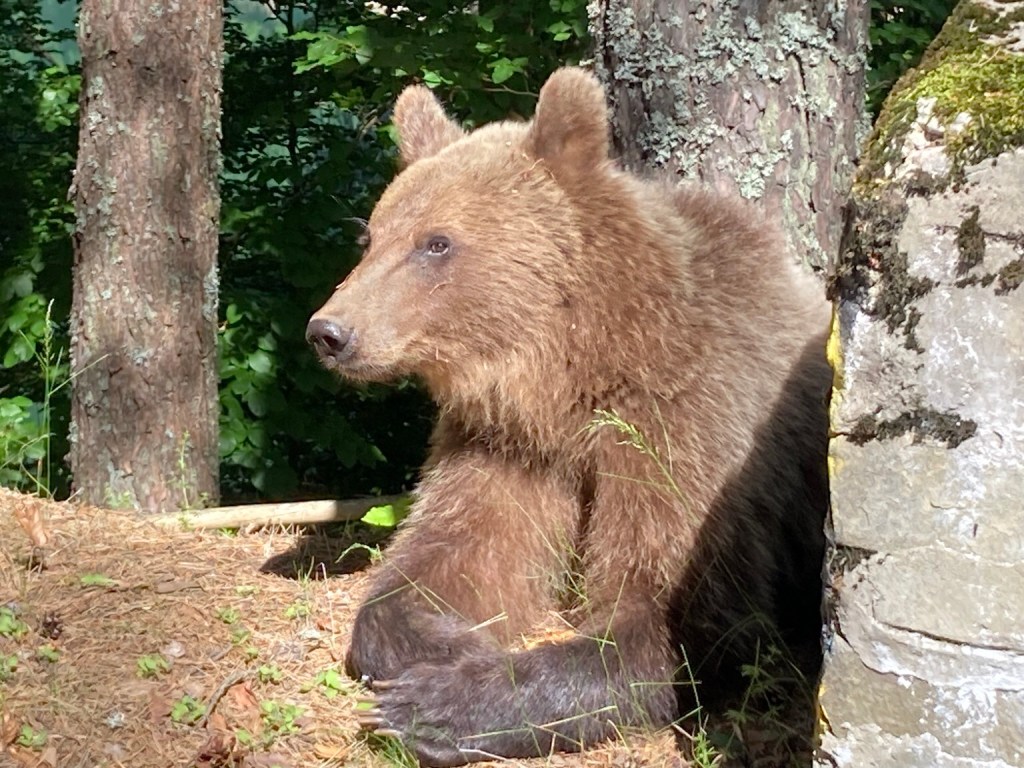
The Carpathian mountains have one of the highest populations of brown bears in Europe and there are constant reminders from signs advising caution while walking, to bears on the beer bottles and advertising restaurants and souvenir bears.

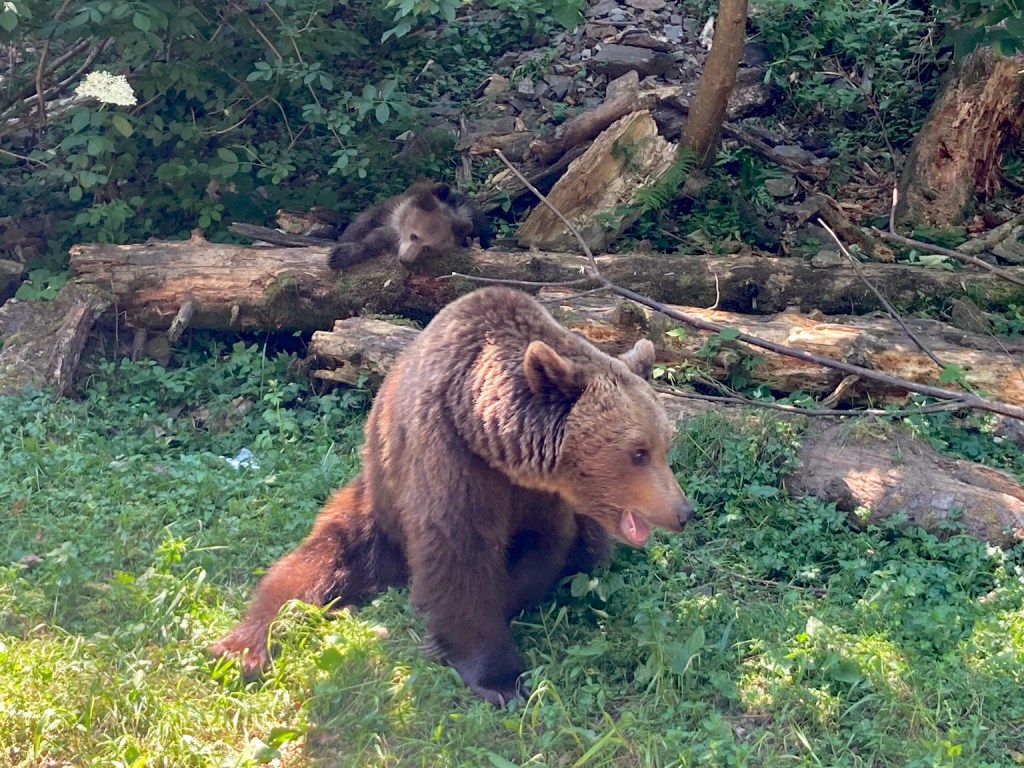
Our first visit today was to the Libearty bear sanctuary which has some 100 rescued brown bears who now live safely in 69 hectares of forest.

There are just a couple of tours each day and the guide was swift to point out it was a sanctuary, not a zoo. 

The stories of where the bears came from and how they had been treated were deeply affecting but we were pleased to have seen the bears and supported the work of the volunteers who rely on visits and donations to feed and care for them.

We both came away sad that such a place was necessary, and reflected it would be better never to wish to see another wild animal if staying well away ensures their safety.

We couldn’t come to Transylvania without paying a visit to Bran Castle, billed worldwide as Dracula’s Castle, based entirely on the fact that it is the only castle in all of Transylvania that fits Bram Stoker’s description of Dracula’s Castle!

As for the name Dracula, Stoker probably derived it from the Romanian prince, Vlad Tepes – commonly known as Vlad the Impaler whose father was associated with the Crusader Order of the Dragon, or ‘Dracul’, but his castle is 80 miles away and we will pass the ruins later in our trip.

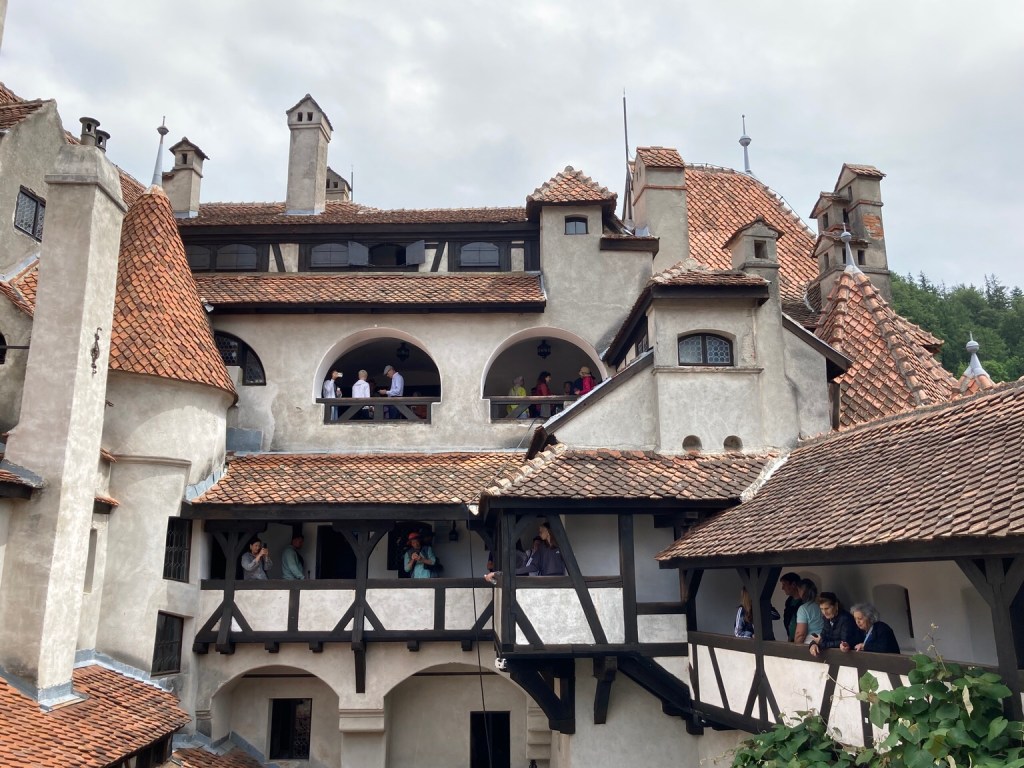
Bran castle certainly looks like the residence of a vampire count, perched above a craggy rock face with terracotta turrets soaring above, but it was built by the Saxons to protect the trade route.  

The castle receives a constant stream of visitors, many arriving on coach trips who seemed to constantly bump and jostle and we couldn’t wait to get out!

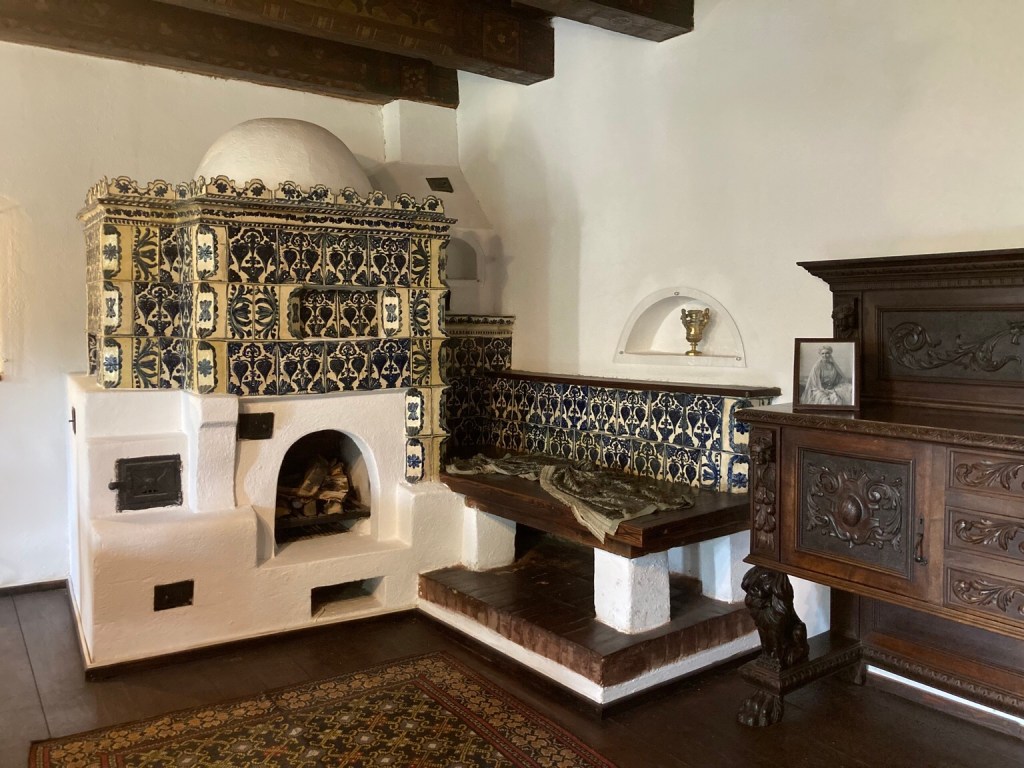
Having said that, I was taken with the tiled stoves, and snapped several.

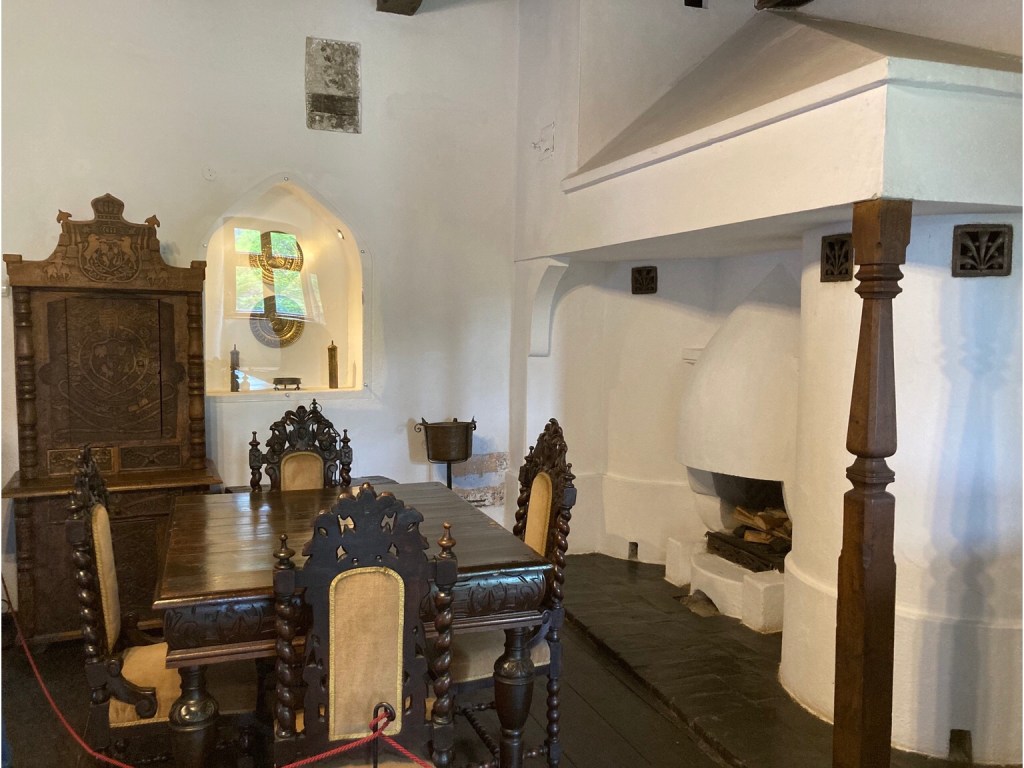
Queen Marie, the last queen of Romania and a grand daughter of Queen Victoria spent her summers here in the 1920’s and 1930’s and the rooms inside the castle look much as they did then.

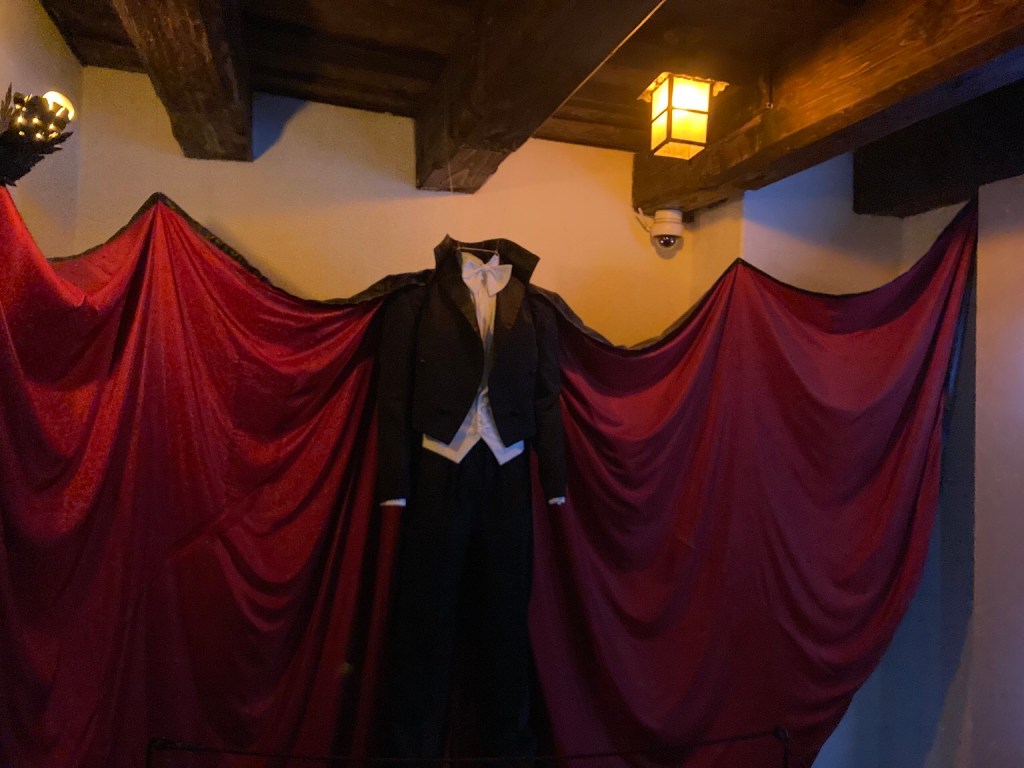
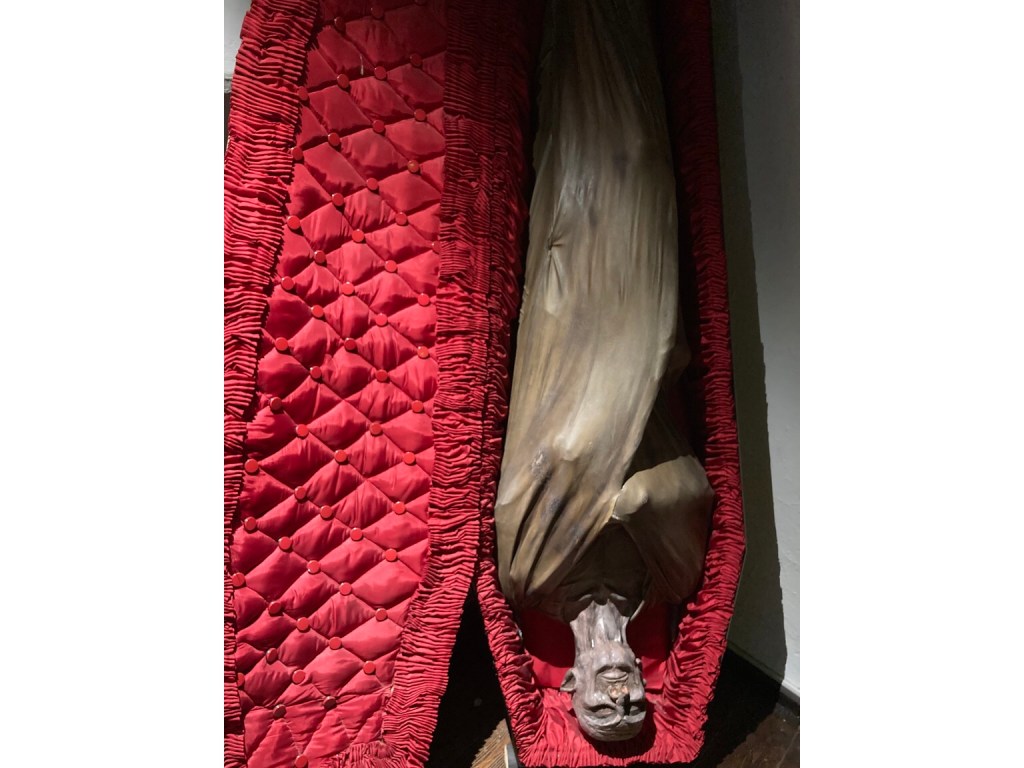
Of course there was a Dracula room …

… and finally, it would be hard not to see the photographic potential of the castle …

… it was just a shame so many strangers are in my pics!

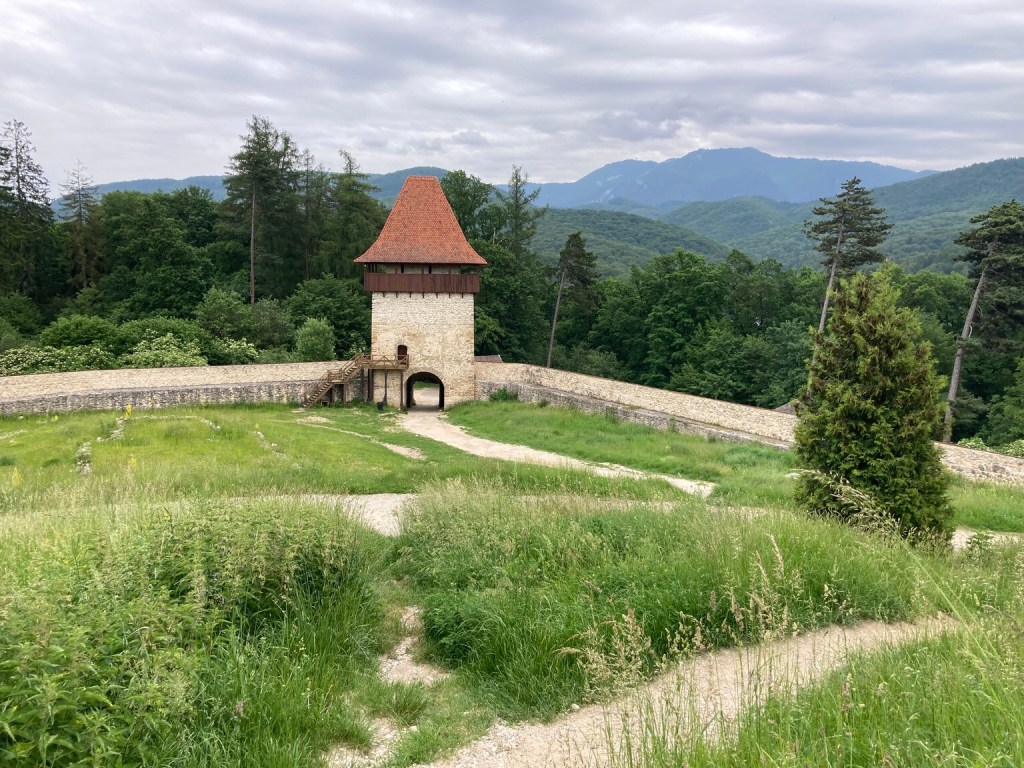
On the way back, we stopped at Rasnov Fortress …

… which is bigger than Bran Castle and promised spectacular views …

… but the fortress is closed for renovation and when we arrived the advertised garden was just an overgrown meadow!

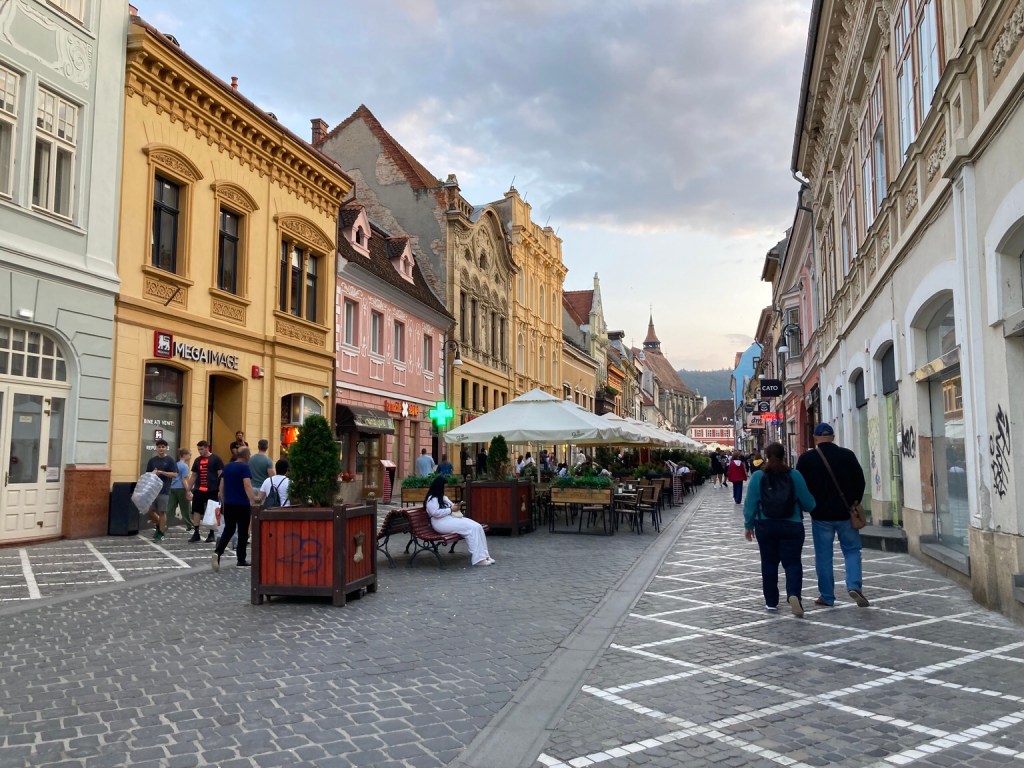
That evening as we walked through town …

Chris spotted Pilvax, a restaurant with a vegetarian section on the menu, the first so far, so we had to give it a go.

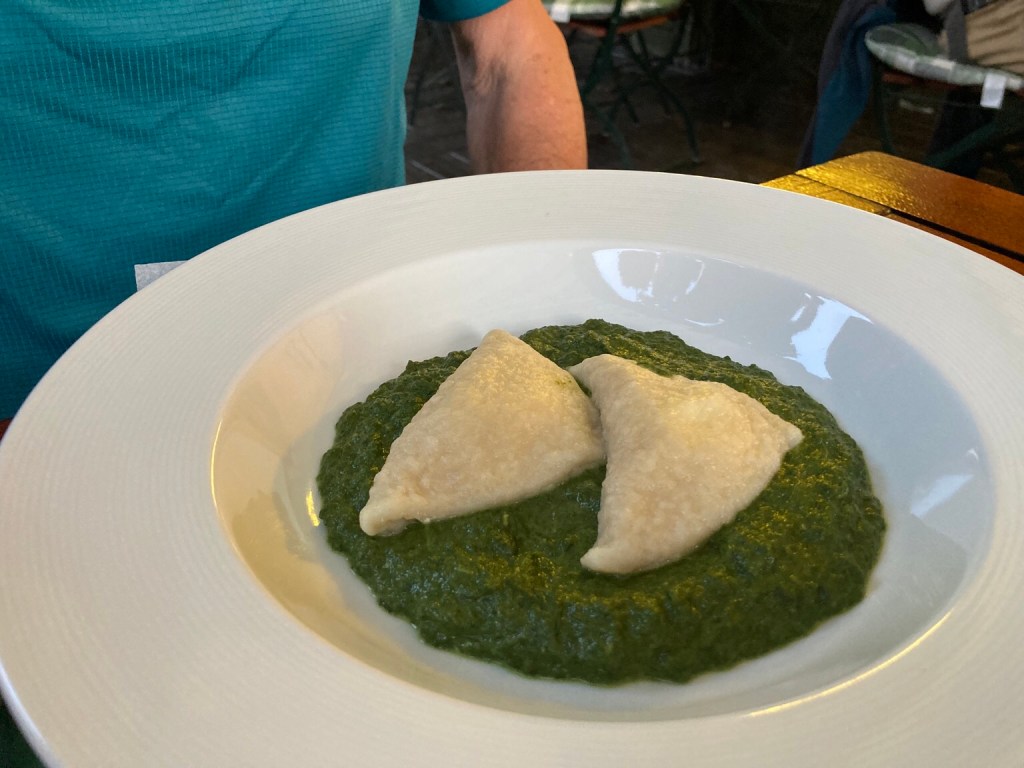
Chris had Transylvanian dumplings stuffed with cheese in a spinach purée …

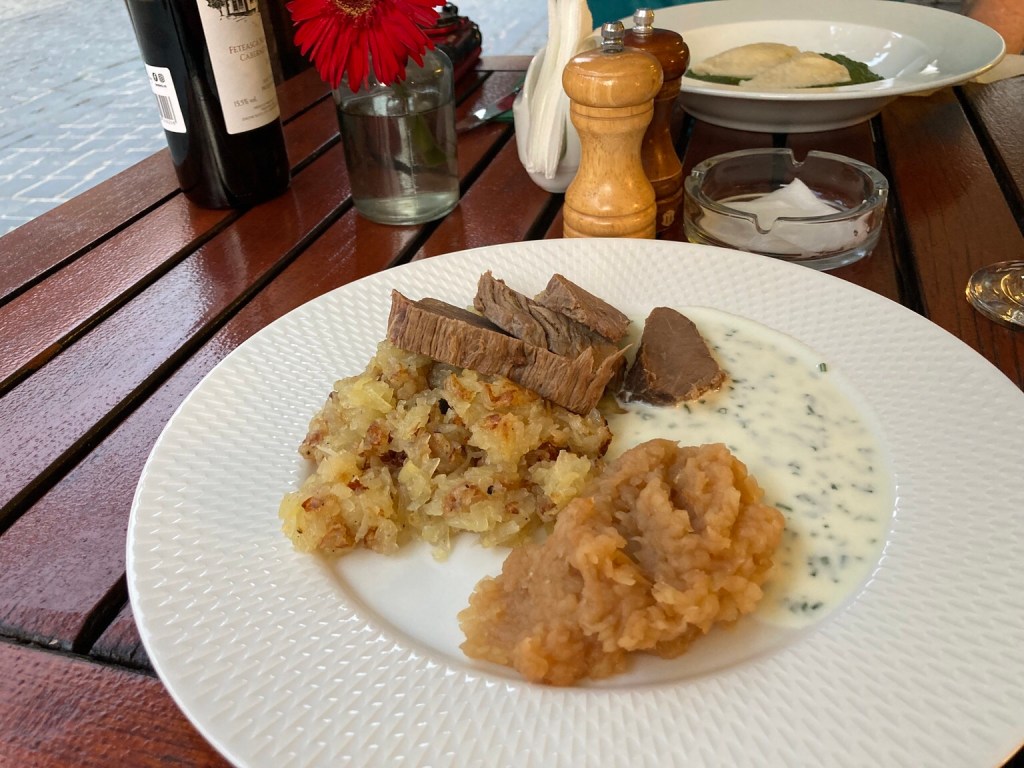
… and I had Tafelspitz, actually an Austrian dish of simmered beef served with apple and horseradish and yogurt.

Chris was still a tad peckish, so we polished off a cheese plate with the last of our very lovely local wine, but it was yet another fab meal and brings our time in Brasov to a close.

Northwards tomorrow!

Map

Brasov … a Saxon Heritage

Transylvania means beyond the forest, and having been first occupied by the Magyars from Hungary from 997, by the C13th, the Hungarian monarchy invited Saxons to settle and guard the mountain passes.  Brasov became one of Transylvania’s seven walled citadels and its location at the intersection of trade routes linking the Ottoman Empire and Western Europe helped it develop rapidly.  

Facing attacks from Turkey in the C15th, stronger fortifications were built with each defending bastion assigned to a particular guild, and we stayed in the medieval heart at the Old Town Suites. 

A rather unassuming entrance …

… led to an amazing apartment, with windows that opened onto a quiet pedestrian street. 

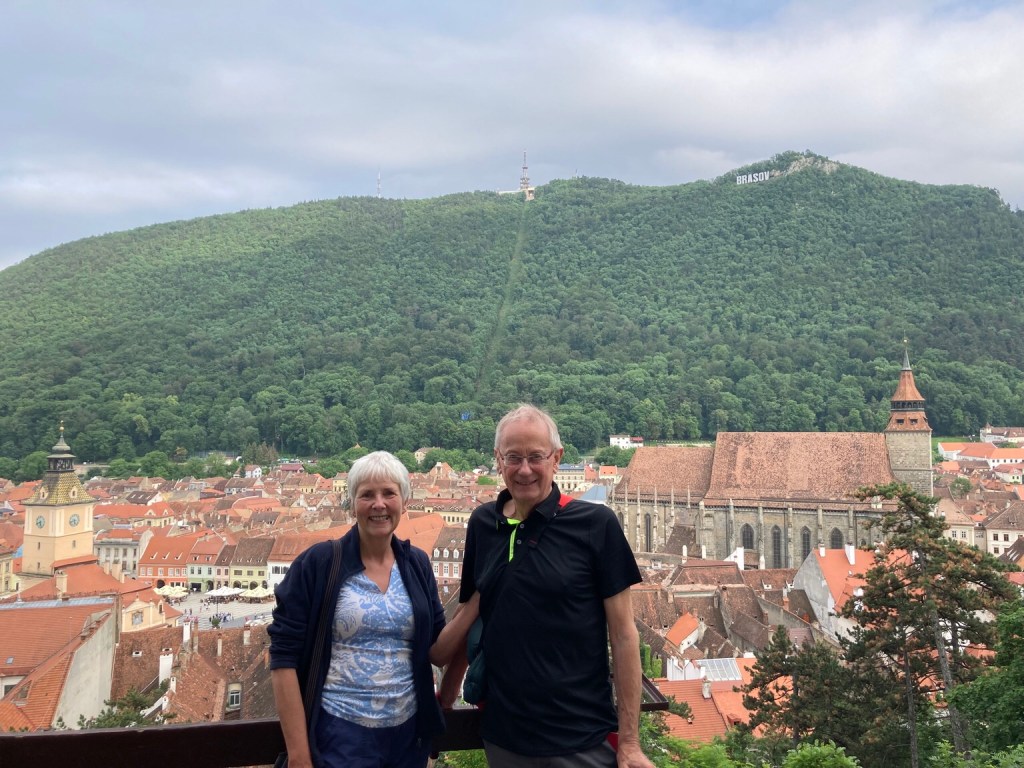
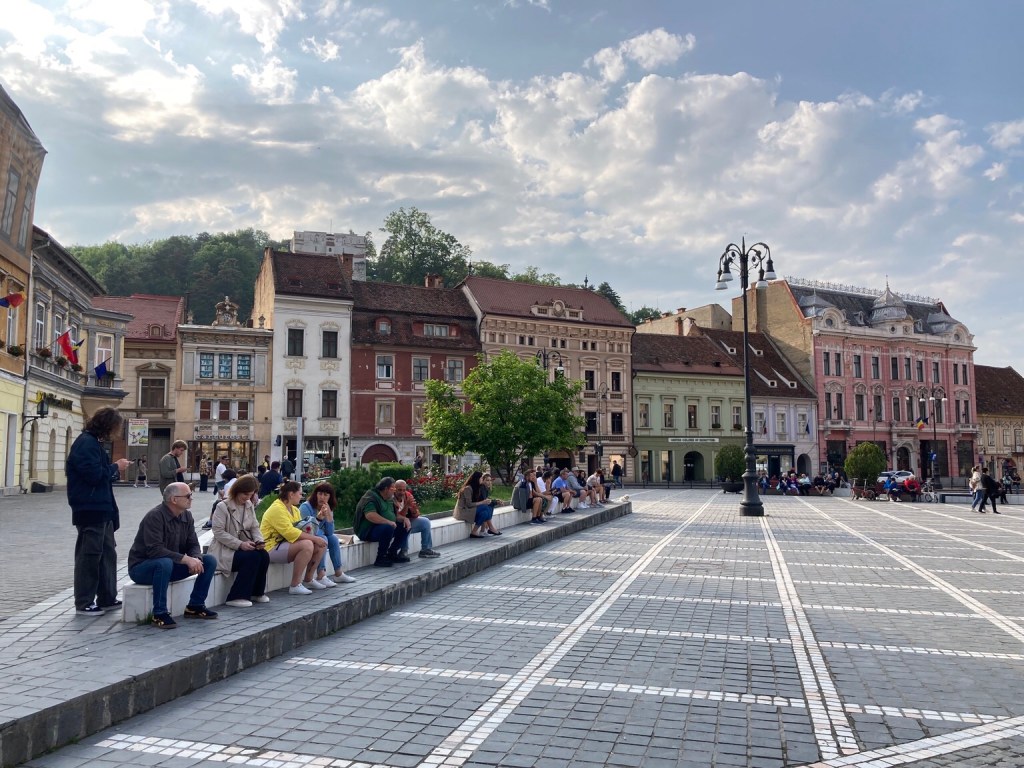
It was still a little grey as we headed to the main square, with the Brasov sign high on Mount Tampa behind. 

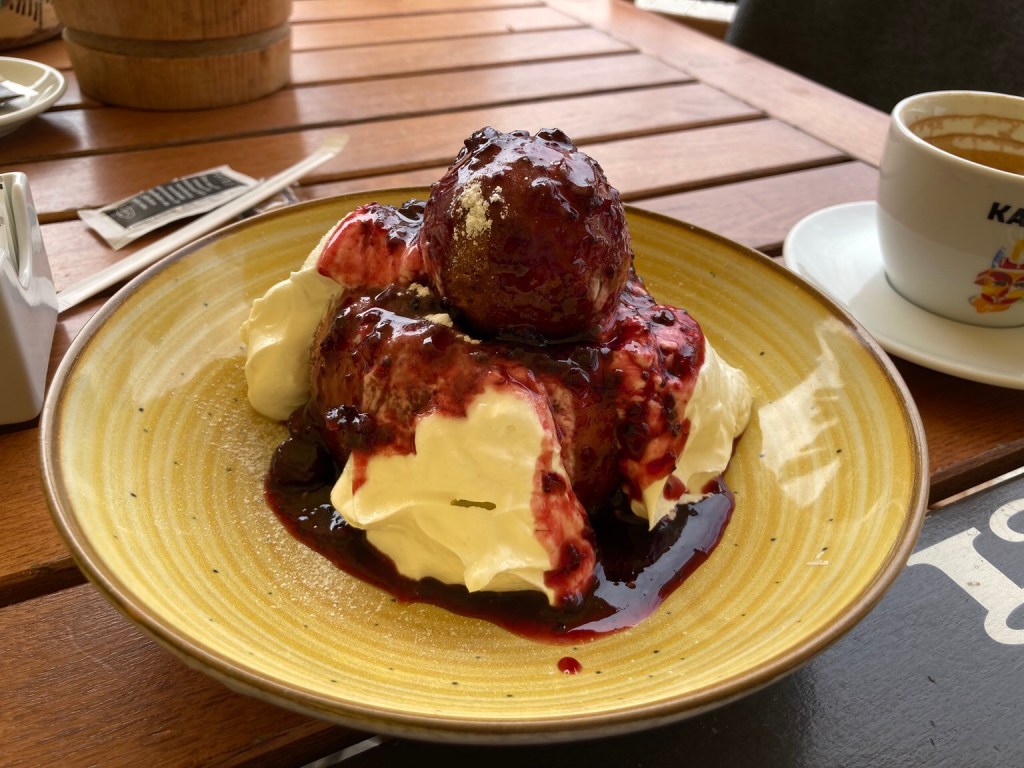
Our first priority was a snack and we went in search of a cafe serving coffee and cake but to no avail.  Instead we sat in a restaurant in the main square and ordered papanași, one of Romania’s most iconic desserts, sweet cheese dumplings served with berry jam and cream … we should have had one to share … but they were delicious!  

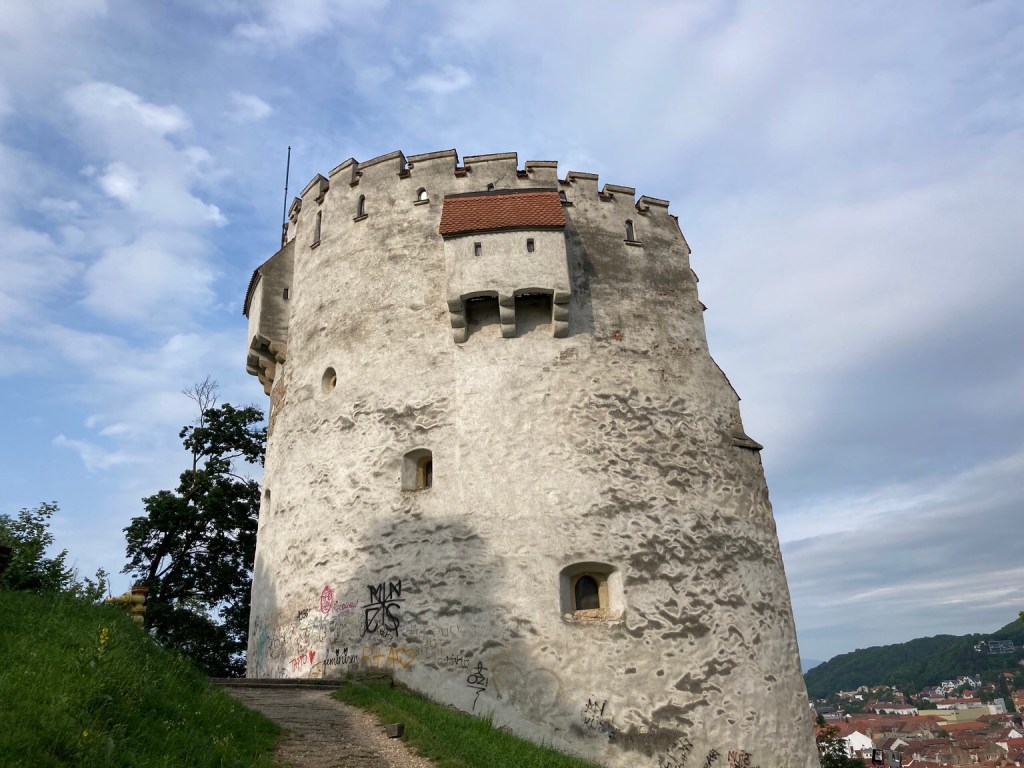
Revitalised by a sit down and some sugar, we set off to get a view of the town from above.   There are a couple of towers, The White Tower which looked most impressive …

… and here is the view …

… and the Black Tower …

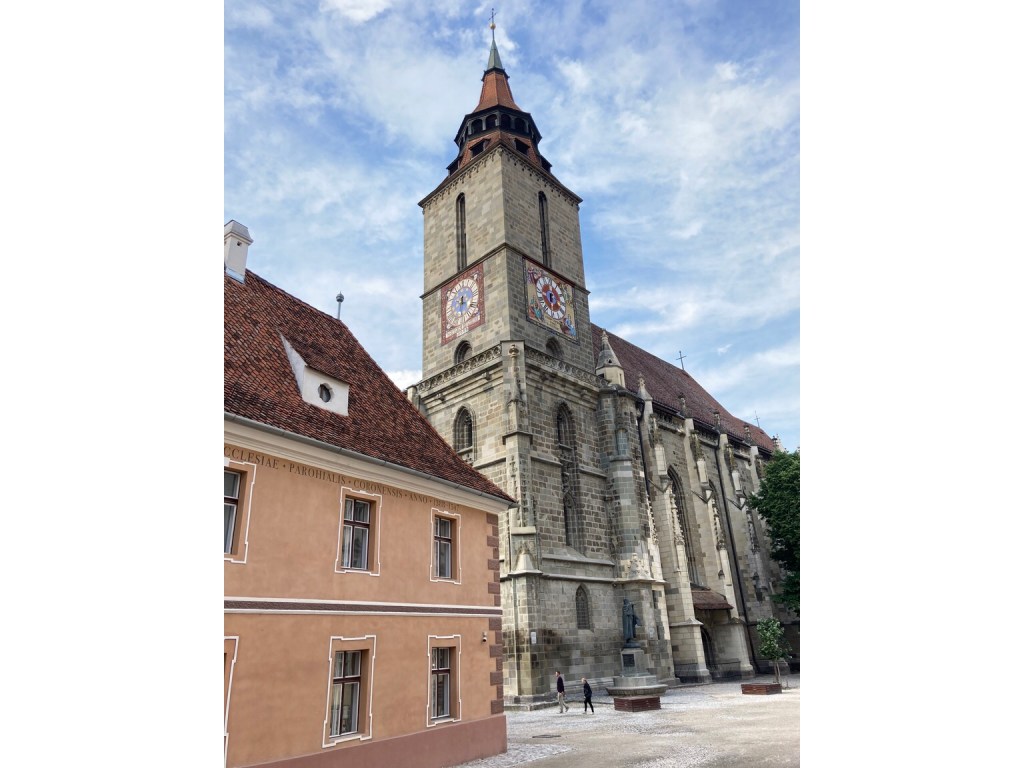
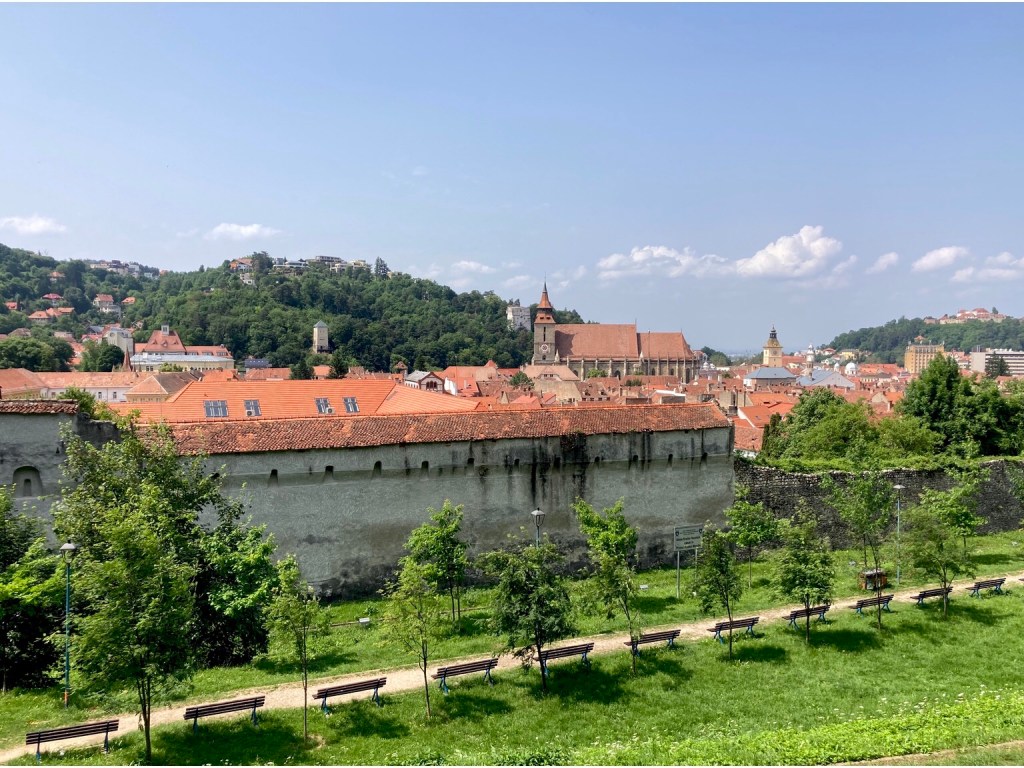
… which gave a view including the front of the Black Church, the most famous medieval monument in Brasov.

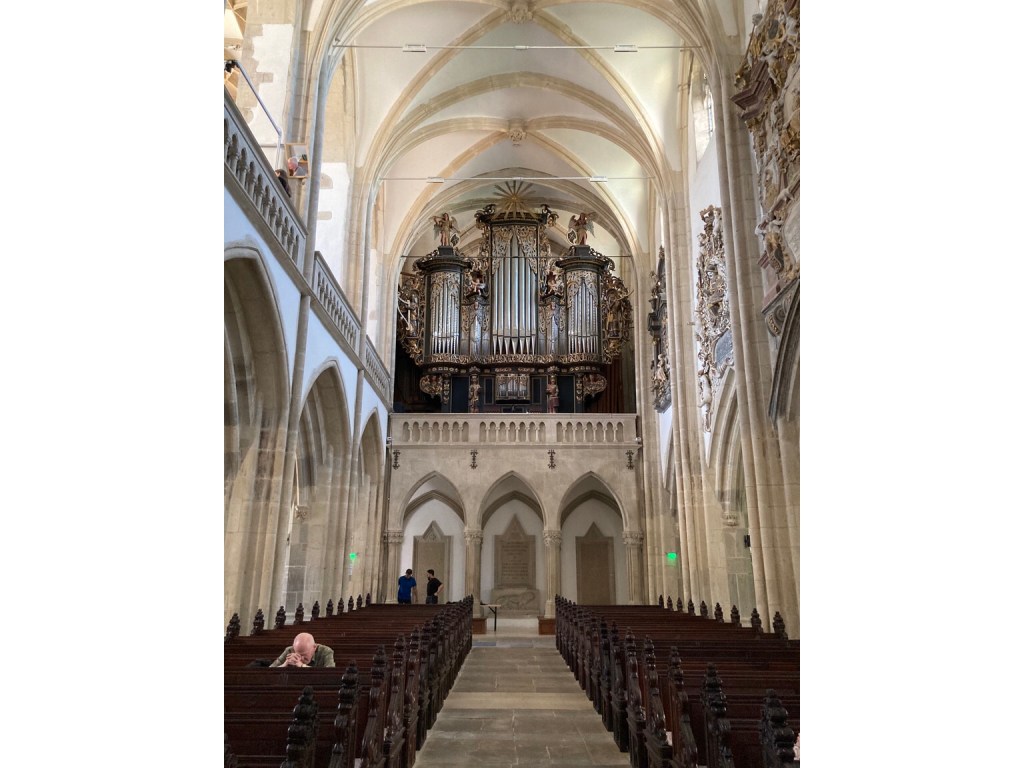
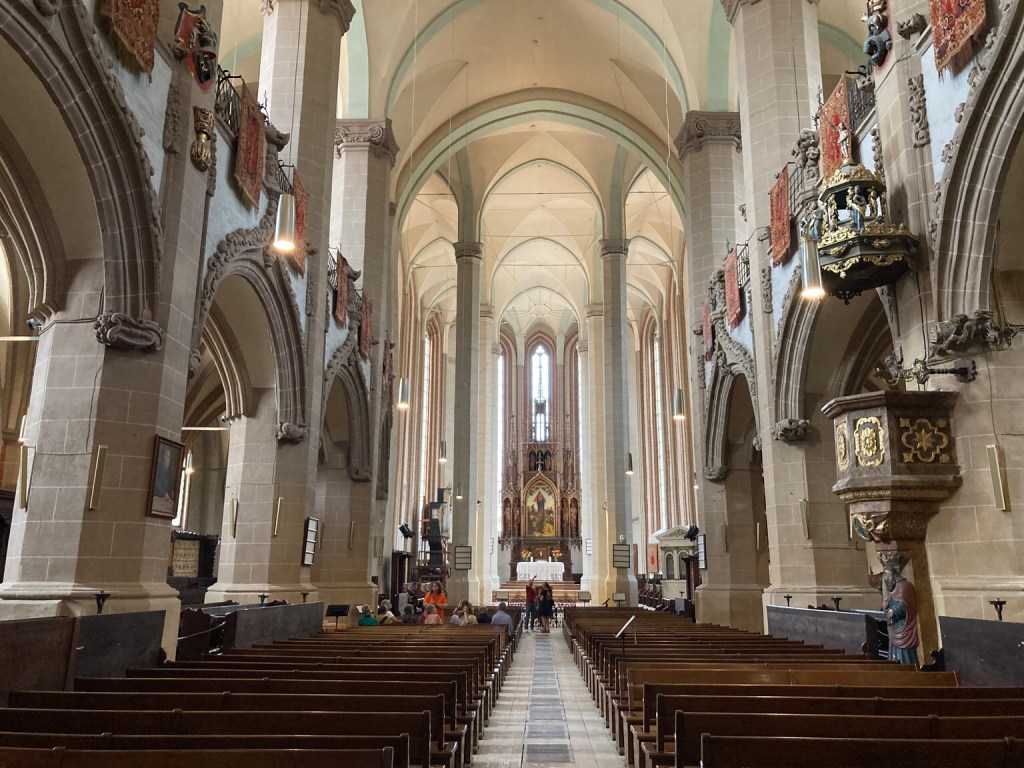
Over 600 years old, this is the largest hall-church east of Vienna and one of the most impressive Gothic-style buildings in this corner of Europe.

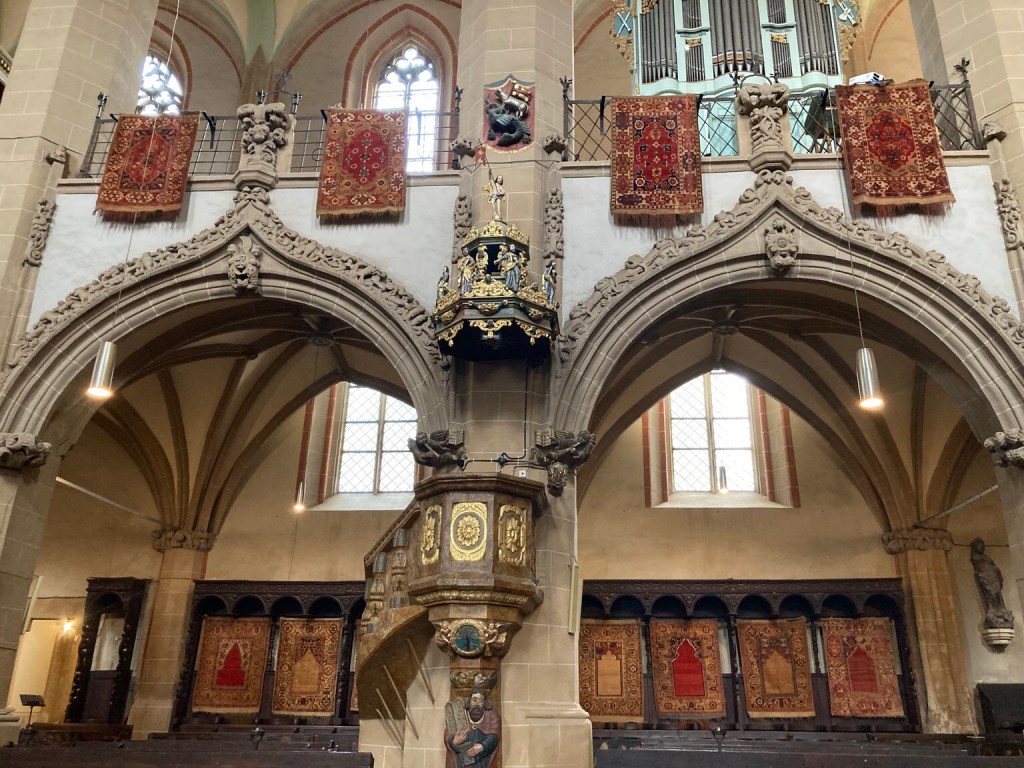
The interior is quite austere, apart from a collection of Turkish prayer mats, brought back from the east by merchants …

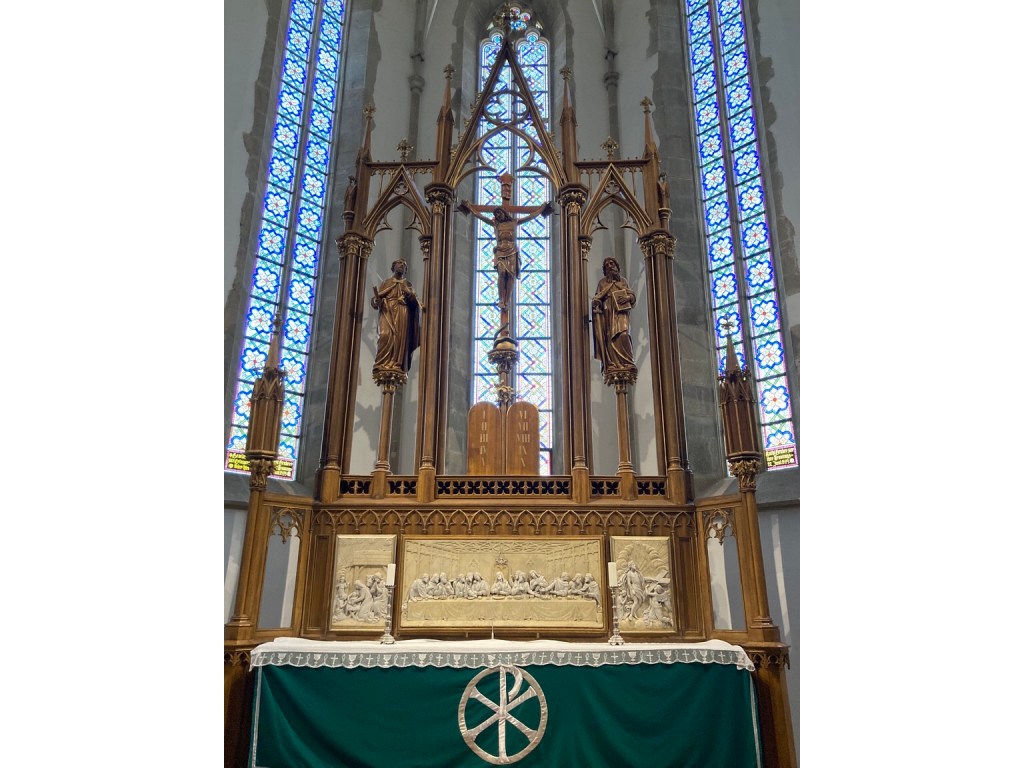
… and the impressive pulpit and organ.

Catholic services were replaced with Lutheran ones during the Protestant Reformation, and recent research shows the name Black Church only followed discolouration by pollution in the C19th.

There was a burst of late afternoon sunshine which was most welcome.

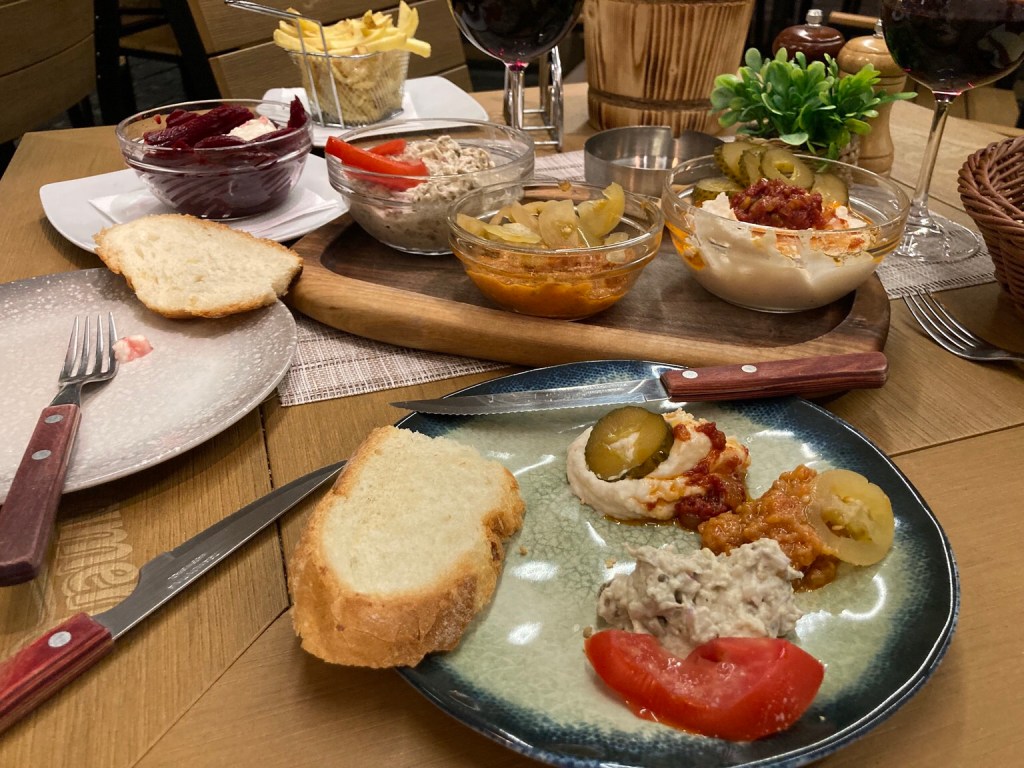
Not really hungry later, we had a glass of wine in the square then shared a Romanian salata plate of which the zacusca was best made of aubergine and red pepper.

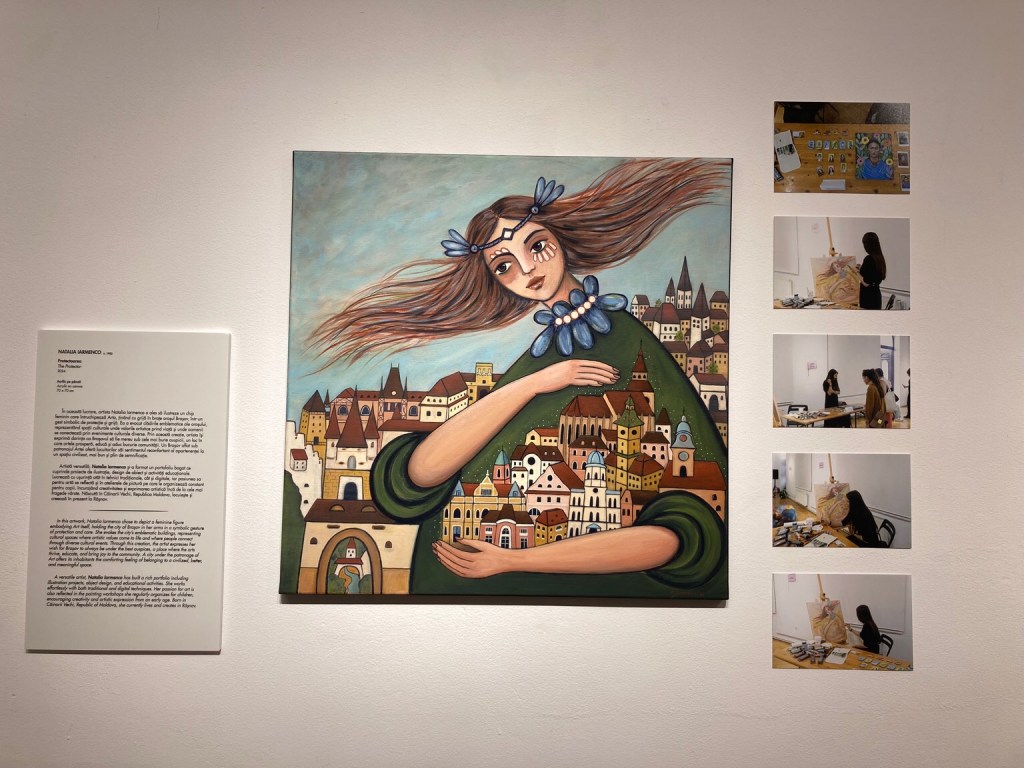
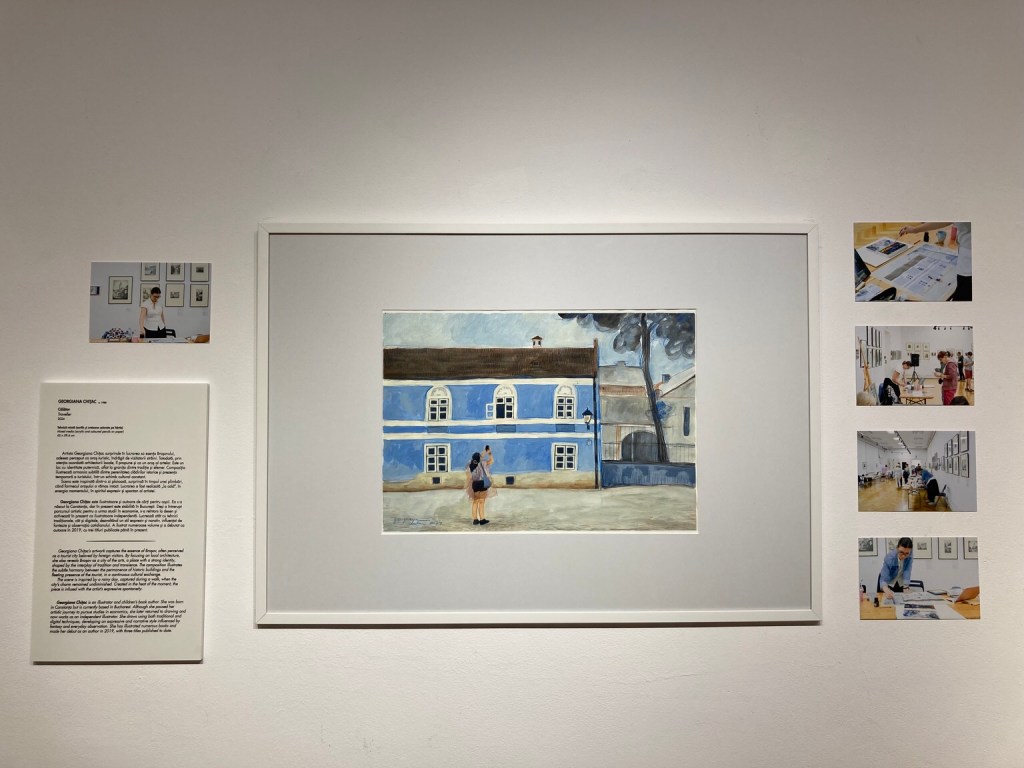
A second day in Brasov, and we visited the Muzeul de Arta which has a selection of works by Romanian artists but also a very engaging display of works produced in a community project to celebrate 25 years of the museum.

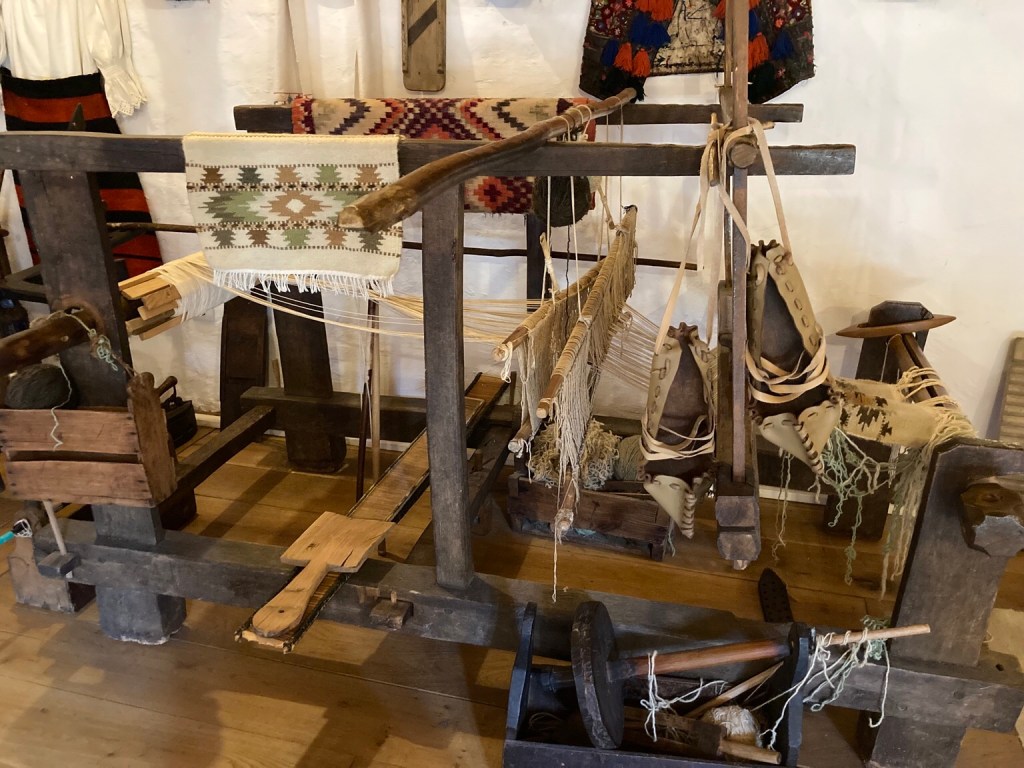
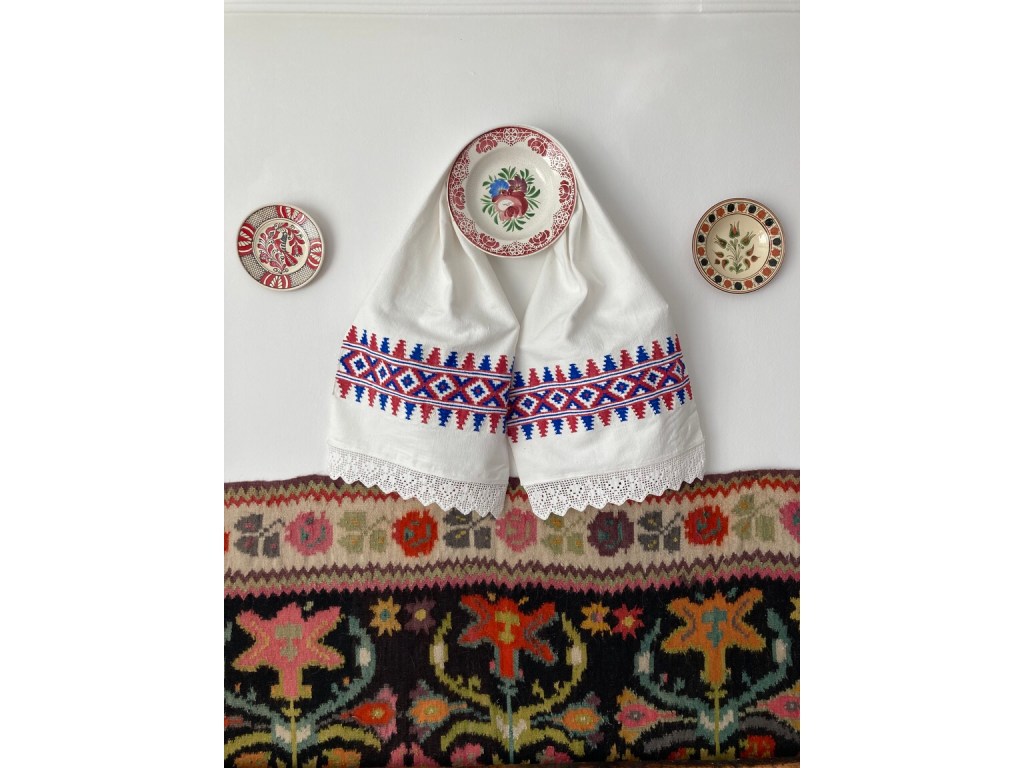
We also popped into the Muzeul de Etnografie which focused on costume, and woven and knitted textiles.

The technique to make filet lace for these caps was so time consuming and would have taken ages to master. 

Lunch in the square was a chance to try something new – this time the homemade carp roe salad, very similar to taramasalata and very delicious, while Chris had beans with onions and pickles.  To drink we had homemade soft drinks, one with elderflower and the other sea buckthorn, which I haven’t seen on the menu since we were in Russia.

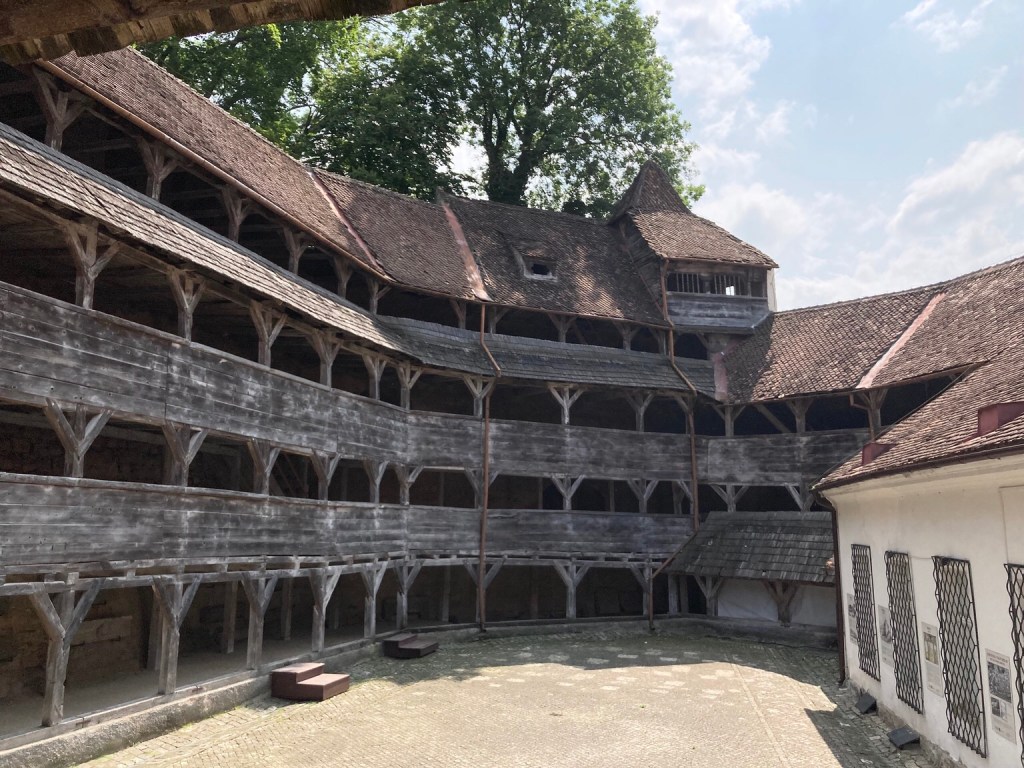
Time for a little exercise, so we walked up to another part of the fortifications, The Weaver’s Bastion.

The three levels of combat galleries were fitted with a variety of shooting holes for different calibre weapons.

In addition there was storage to stock provisions and two guard towers …

… and from the roof, we got a different view of the city.

Funny though, as soon as we walked in, we were both reminded of The Globe Theatre!

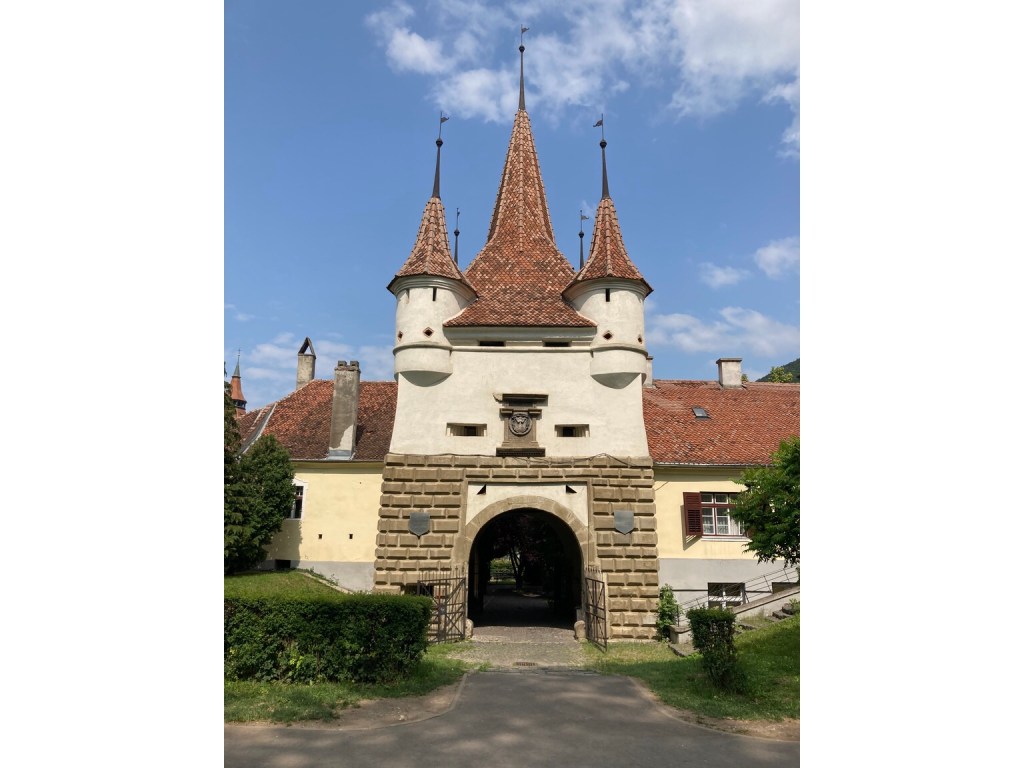
Once at the bottom of the hill there were two gates, firstly the very splendid Catherine’s Gate which was built in 1559 as an entrance to Brasov’s City Walls and bears the city’s coat of arms: a crown on a tree trunk. 

In Saxon times, the Romanian speaking population were compelled to live outside the city walls and could only enter if they paid the toll.

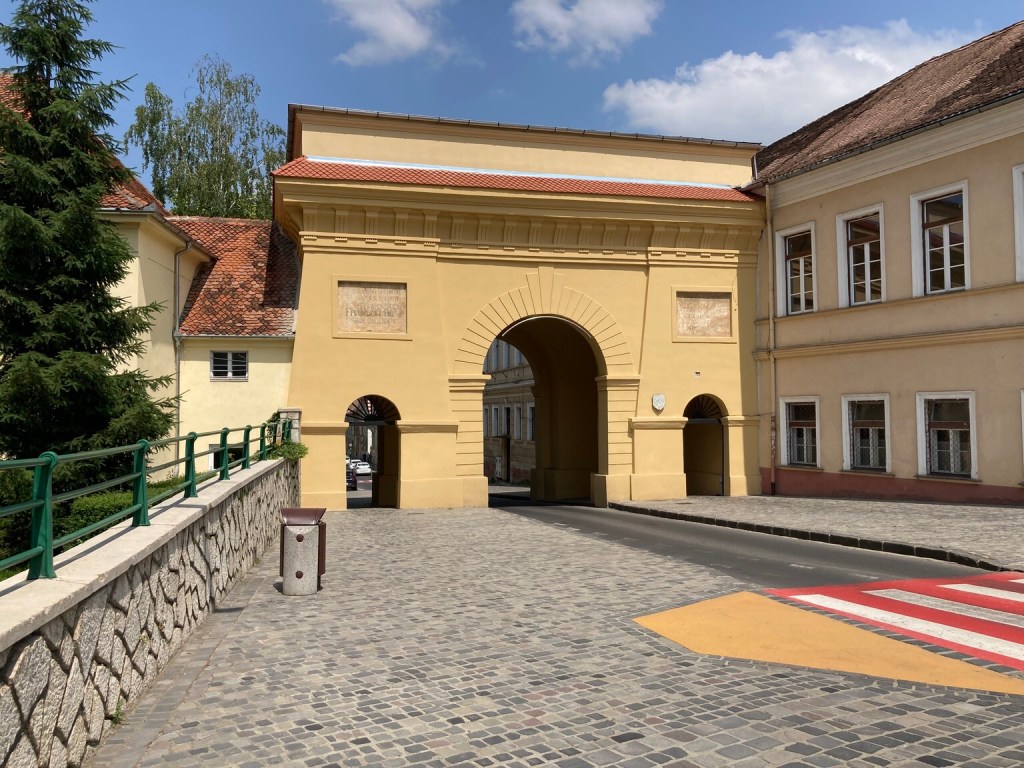
Close by is the more modern Schei Gate built in 1825 …

… which has brought our tour of Brasov to a close.

Tonight we shared a cheese and tomato pie for supper and salad …

… and tomorrow we are off on day trip.

Map

Sinaia … Pearl of the Carpathians

Our drive from Bucharest airport took us across flat farmland on a good main road which made it easy to get used to the car and the road signs.  

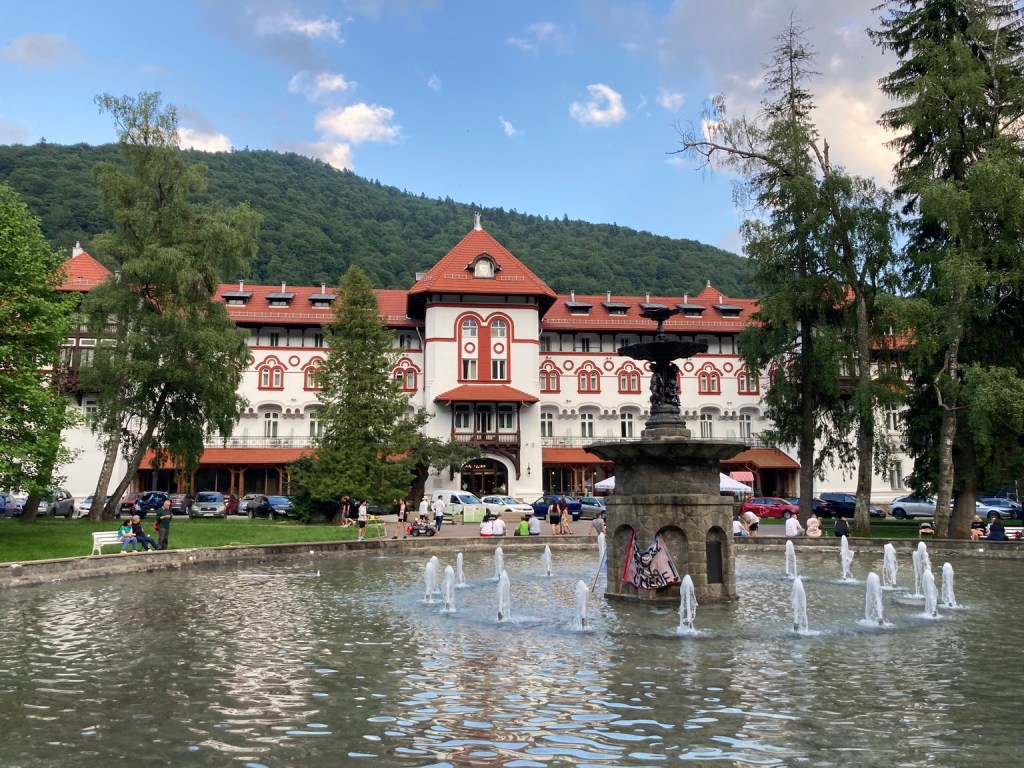
Sinaia is our first destination, a mountain resort in the foothills of the Carpathian Mountains which attracts hikers in summer and skiers in the winter.

There has been a monastery in Sinaia since the C17th, named after St Catherine’s on Mount Sinai.  A larger church was added in the C19th and the site became an annual summer residence for the Royal family, seeking the healthy mountain air, until the nearby Peleș Castle was completed in 1883 for King Carol I of Romania and the town grew into a resort.

We are staying at Vila Camelia, a charming confection of a building …

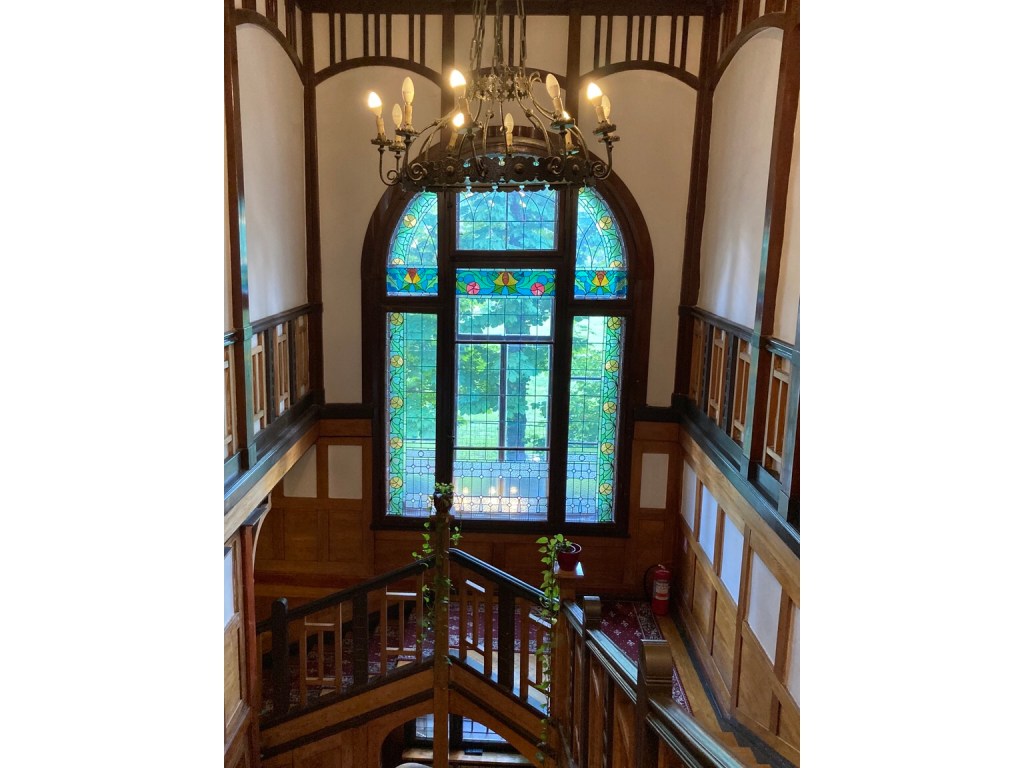
… with wood fittings and stained glass.

Having checked in, we went to explore. We had arrived on a holiday weekend, celebrating Pentecost so Sinaia was full of people enjoying a particularly warm and sunny day.

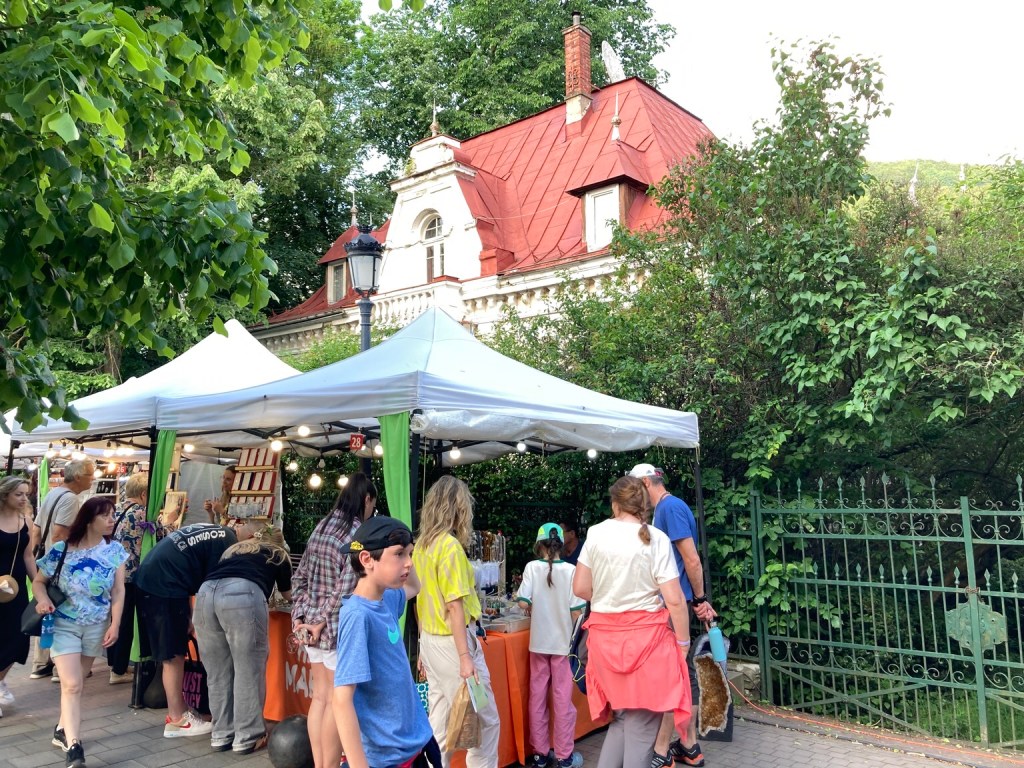
As we browsed the craft market …

… we spotted several older buildings between the more modern …

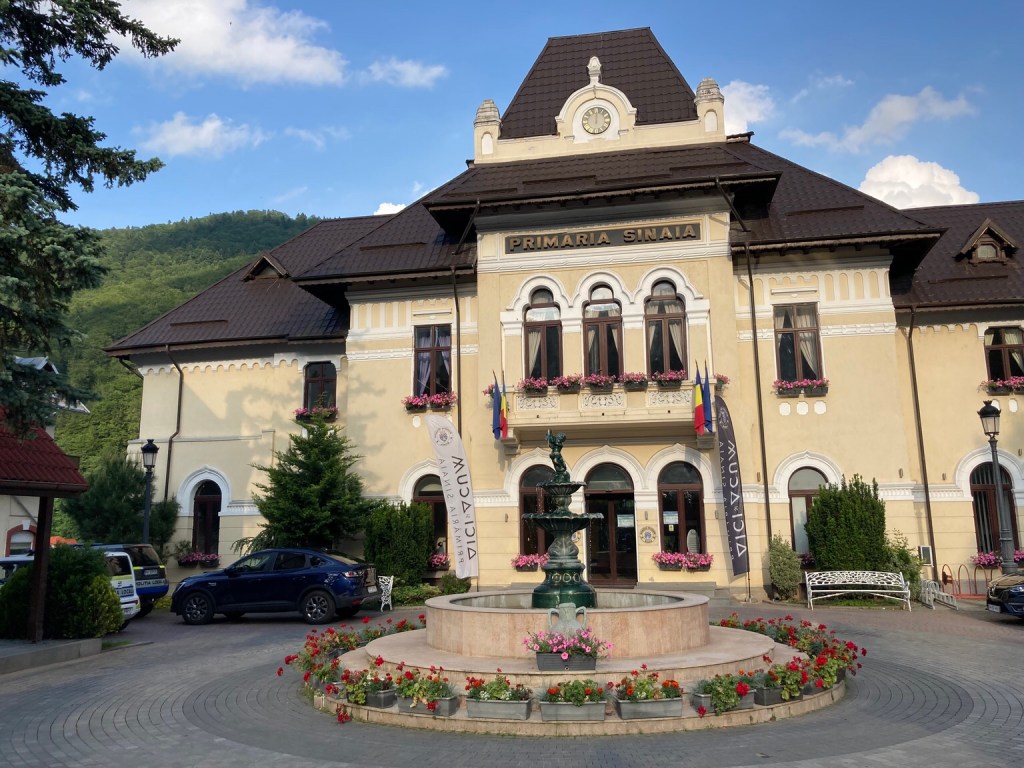
… including the old town hall …

… before stopping for a beer … a bear beer!

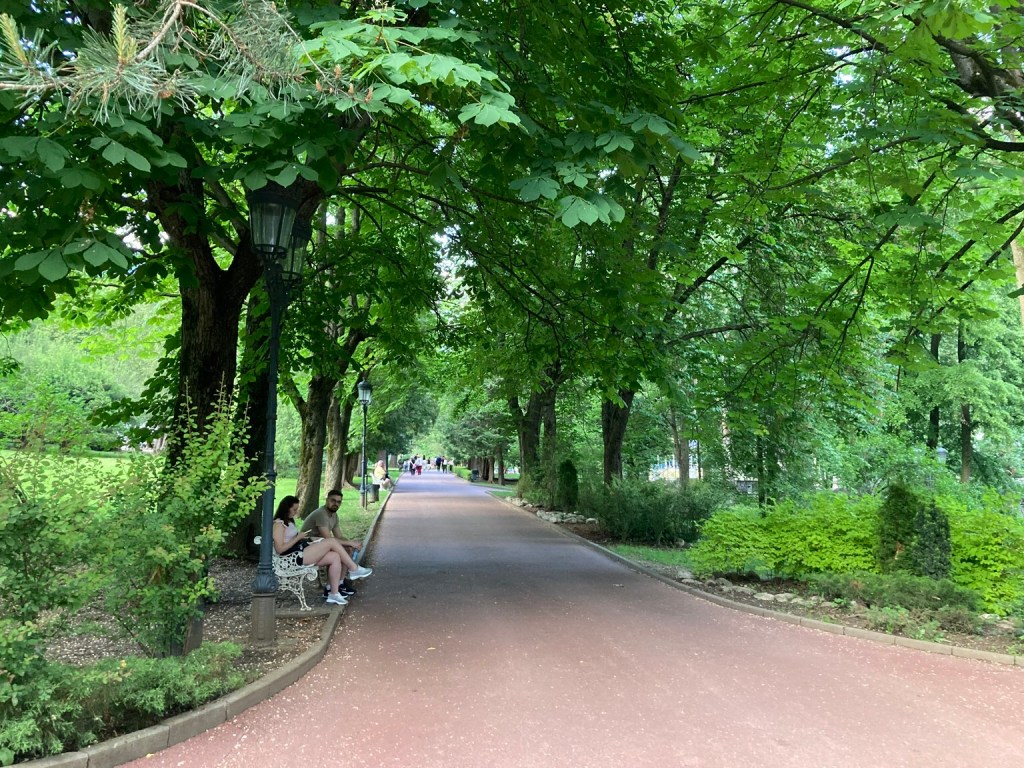
We took a wander in leafy Dimitrie Ghica Park …

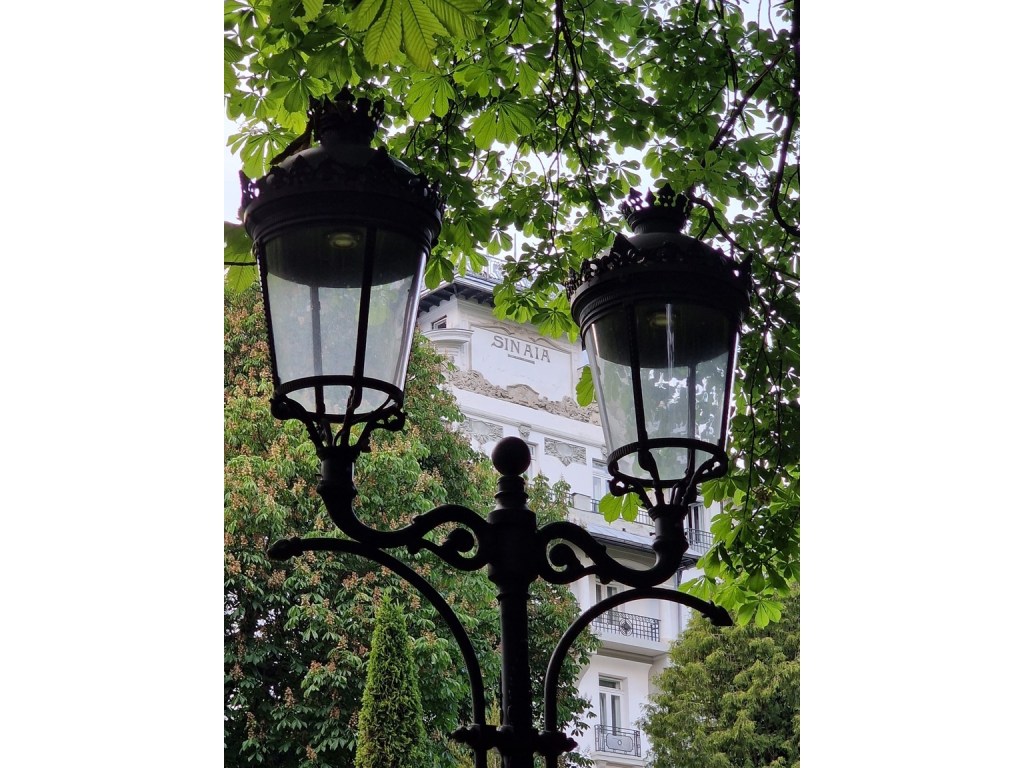
… which centres round the Sinaia Casino, built by the King in 1912 …

… and as the sign informed us, Sinaia was the first town in Romania to get electric light …

We chose a typical restaurant for dinner, decorated with red and white rugs and huge painted vases and chose typical fare. I had samale, or cabbage rolls, filled with mince and rice and served with slices of smoked pork and polenta and Chris had polenta with sour cream and cheese. It was our first taste of Romanian home cooking and was a great end to our first day here.

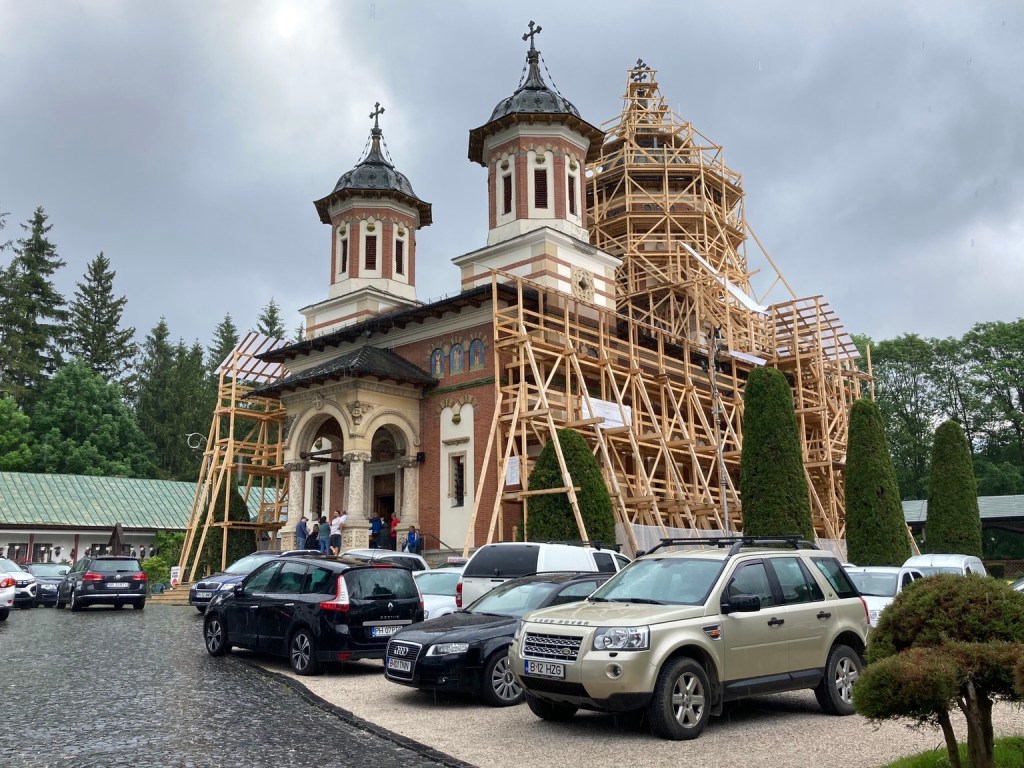
We woke to an overcast morning with the threat of thundery showers but it looked ok after breakfast so we walked up the hill to see the monastery.  As we approached, we could hear the unaccompanied chant of the Orthodox service carrying on the air. 

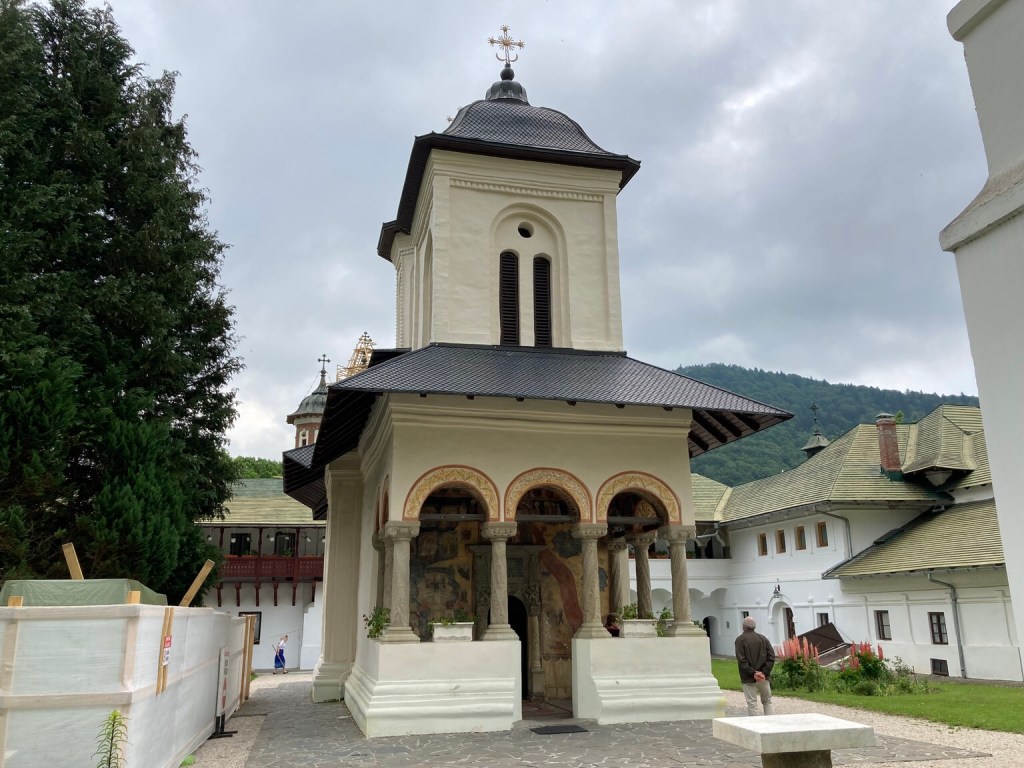
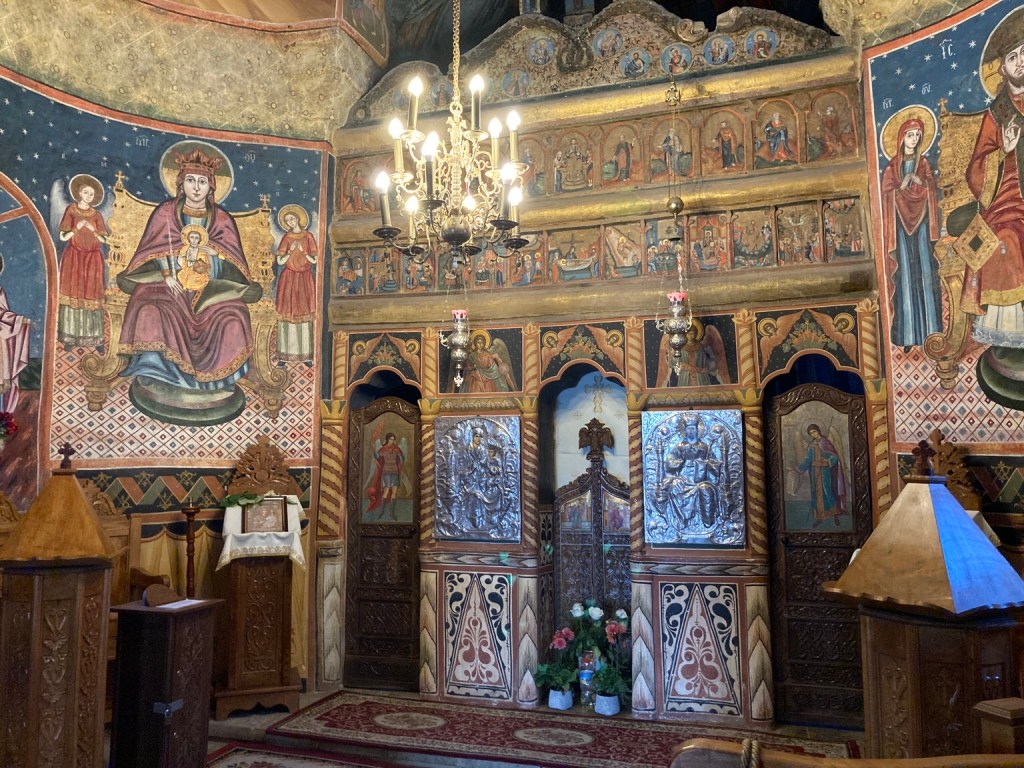
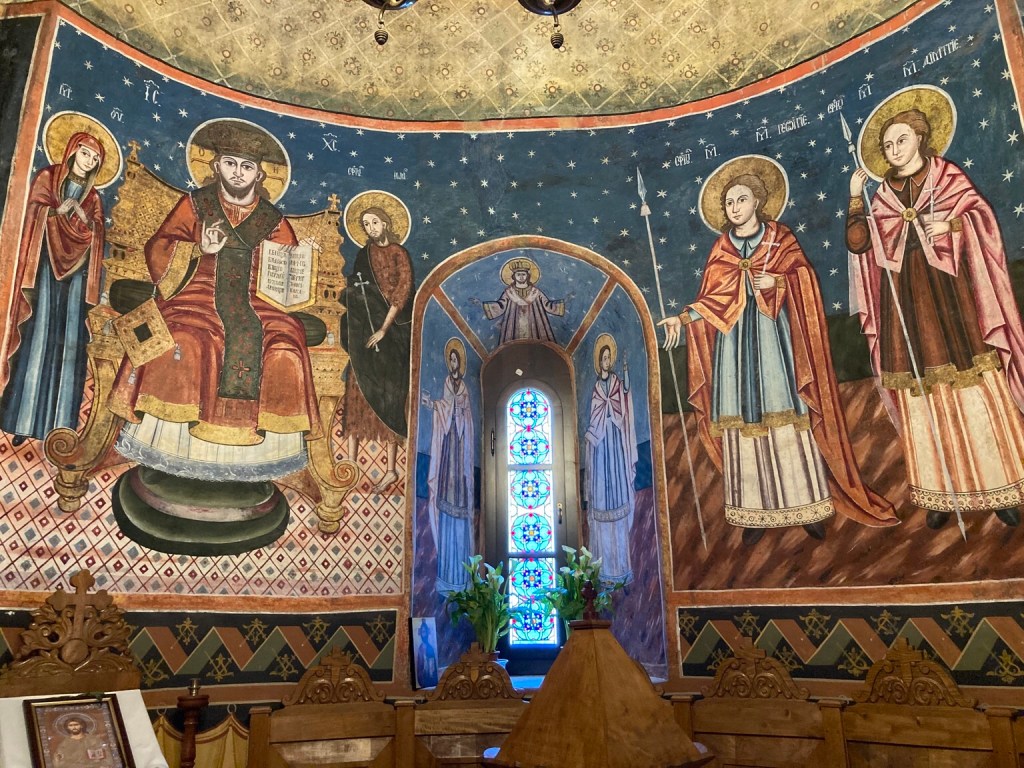
The new church is under repair, but was completely full of worshipers so instead we found the old church which was tiny and a painted treasure.

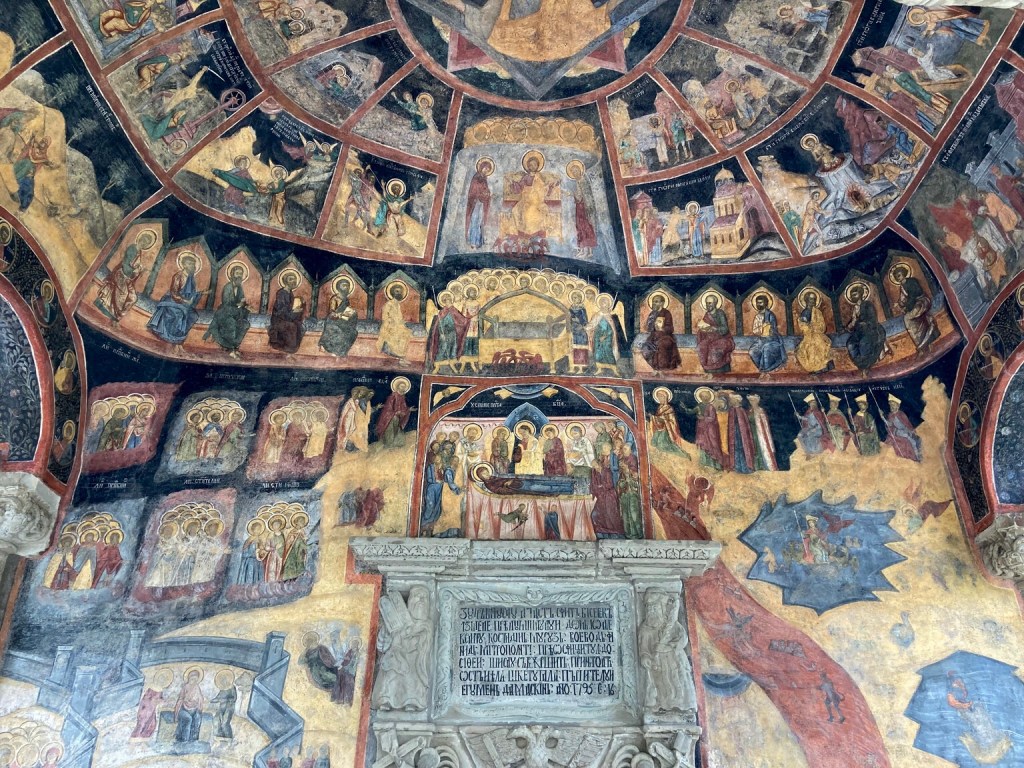
The church portal depicts Moses with the Tables of the Law on the left and Aaron with the leafy staff on the right and the frescoes tell the life of St Catherine.

Inside the light reflected off the gold and illuminated the saints around the walls.

Just as we were leaving a few raindrops fell, changing to a downpour in seconds, and we took cover under the porch till it passed.

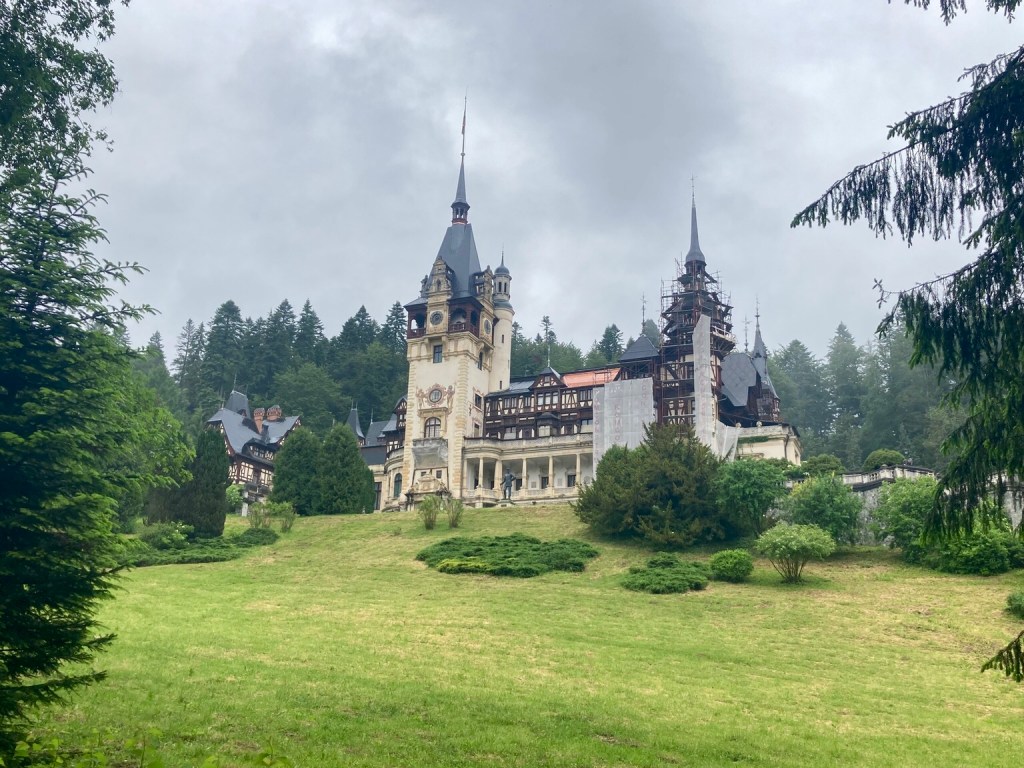
The other must-see in Sinaia is Peleș Castle, but today it is closed so we took footpath through the forest, rather wet from the shower …

… and made do with a snap from the viewpoint instead!

Just a short way out of Sinaia is Busteni where a cable car climbs the mountains to a variety of trails for a walk and views.  We did stop briefly, but it was obvious that it really wasn’t the best day to go up …

… so settled for a coffee instead.

Time now to move on … Transylvania beckons!

Map

Chris & Elaine’s Romanian Roadtrip 2025

We first considered a trip to Romania in 2015, inspired by images of painted churches and medieval towns but weren’t confident we could do it independently.  Then, during a recent trip to the dentist, the nurse insisted to Chris it was perfectly possible to drive round Romania without speaking Romanian, and this trip was set in motion.  Of course it will all be fine …

Travelling slowly, we are staying in a mixture of apartments and homestays as we explore Transylvania, Moldavia and Maramures.  The Transfagarasan highway will also be one of the highlights, and if we are lucky, we might even spot bears!

Itinerary

Sinaia … Pearl of the Carpathians

Brasov … a Saxon Heritage

Bran … Fact & Fiction

Premjer … a Fortified Church

Bucovina … and the Painted Monasteries

Maramures … and Wooden Churches

Cluj … Baroque and Buzzing!

Sighisoura … a Medieval Citadel 

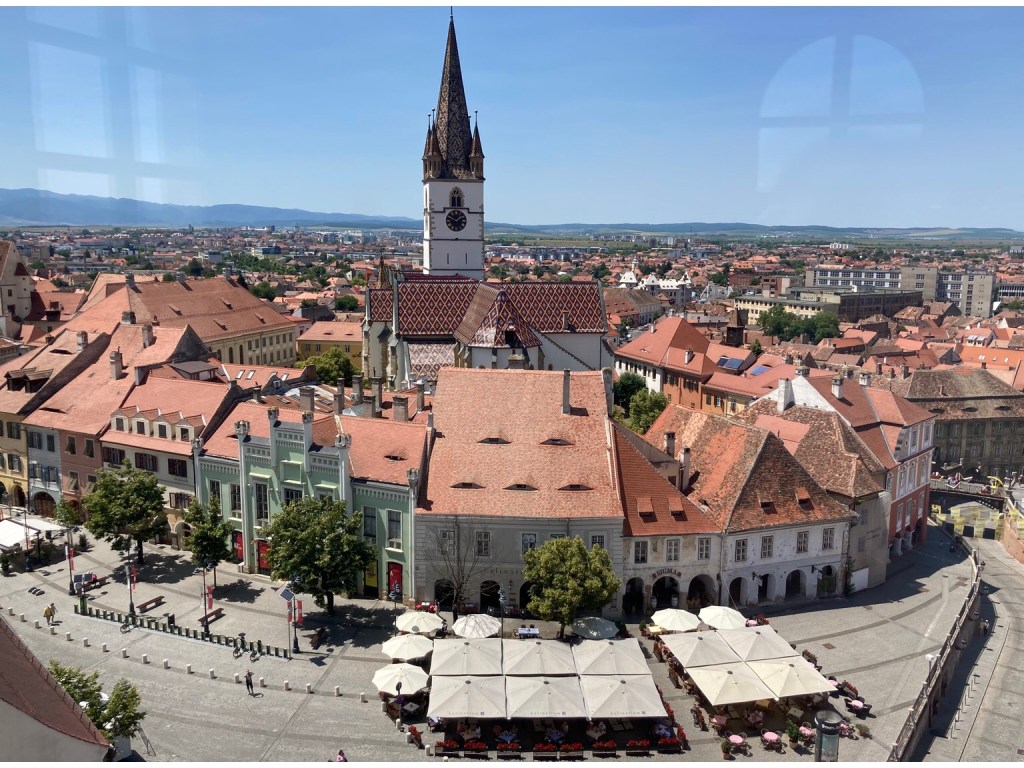
Sibiu … and her Watchful Eyes

The Transfagarasan Highway  … Wow!

Bucharest … under Ceaușescu

Map

Past & Present in Amman

It was a long drive back from Aqaba, but podcasts passed the time and we got to the hotel around 4pm.  Eager to stretch our legs, we took an Uber to Darat Al Funan, an initiative to support the arts and artists of Jordan and the Arab world. 

It is housed on a hillside, in six renovated buildings which were built in the 1920’s as homes for prominent families. 

Most of the pieces highlighted the struggles in the Middle East like these from Abdul Hay Mossalem. On a base of glue and sawdust they look cheerful with their bright colours until a closer look reveals the subject matter. Here is Gaza and Martyr …

The watermelon is a motif we have seen time and again during our trip, having been adopted as a symbol of Palestinian resistance, particularly against the Israeli occupation, and here is Story of a Water Melon by Khaled Hourani.  

There was also a display of drawings by artists in Gaza including this by Basil Al Maqousi which made the horror of Gaza too real.

On a lighter note, students from Jordan University have been designed chairs using architectural details of the building as inspiration …

… and here are a couple of the buildings …

… and the renovated Roman temple in the garden!

As we set off to find something to eat, the heavens opened, but fortunately we took cover and then an Uber to stay dry and enjoyed the opportunity to eat away from the hotel at Shams El Balad, a family run cafe in an old villa.

Although we had a short drive through Amman on our first day, it wasn’t until the end of our trip that we had a better look. Amman is named for the Ammonites who lived here in the C3rd BC and is today capital of the Hashemite kingdom of Jordan. We began at the citadel where there are Roman, Byzantine and Umayyad remains.  The Roman Temple of Hercules dominates …

… built at the same time as the theatre down the hill …

… and the Corsa Maximus or Main Street …

… also used later by the Umayyads and leading to the Umayyad palace.

We didn’t spend long in the museum which contained lots of bits of old pottery, but did look at the Neolithic statues left in a buried cache by the earliest settlers 9,0000 years ago, known as the Ain Ghazal statues.

Afterwards we headed down the hill past colourful murals …

to the hustle and bustle of downtown Amman …

… with vibrant veggies hidden down a side street.

We ordered a glass of lemon and mint in a first floor cafe …

… and watched the world go by until it was time to be off to the airport.

It’s been a quite a workout this trip, in both mind and body! Standing overlooking the Holy Land was moving, the desert was beautiful but also inhospitable and Petra was every bit as impressive as we had hoped and we were so lucky to miss the flooding.  

We’ve enjoyed learning not just the history, but also issues that affect modern Jordan and the political tightrope the country treads … and talking of treads, we walked around 50 miles in 10 days!

Our tour certainly packed everything in and ticked all the boxes, but we are looking forward to returning to a much slower pace next time we go off travelling together … very soon!

Map

The Dead Sea & Desert Castles

The day began with a drive out into the desert to discover the Desert Castles of Azraq, Kharanah and Amra which are located on a strip of Jordan between Iraq and Saudi.

They date from the early Islamic era and were built as retreats for the Caliphs of the time. Qsar al-Azraq is a crusader castle, first built by the Romans, and more recently home to a Lawrence during the Arab Revolt in 1917. 

The huge basalt doors were heavy to open, turning slowly on basalt pivots, lubricated with palm oil. 

We were pleased to have a comfort stop, but should have taken the sign as a warning!

Next was Qusayr Amra, which formed part a large Umayyad complex which included a bathhouse, hunting lodge, roadside inn and also a castle which no longer exists. 

Renowned for being a pleasure palace, the walls are adorned with frescoes that reflected early Islamic life with images of wrestlers, half-naked women, dog races and hunting.

Next was Qasr al-Kharanah, named for the surrounding harra or gravel plains.

Despite its fortified appearance, it does not seem to have served a military function as the towers and arrow slits are ornamental, so quite probably it served as a meeting place with the local tribes to gain their support for the Umayyad dynasty.

After a very long morning, we continued to the Dead Sea, the lowest point on earth at 400m below sea level.  Actually a landlocked lake, it is bordered by the Israeli-occupied West Bank to the west and Israel to the southwest. We stopped at a resort hotel where we could change and have a quick bite to eat …

… then walked down to the shore, fortunately warned the ground was hot and stony, so we elegantly wore our socks!

The mineral-rich mud is said to be therapeutic so game for anything, we slapped some on …

… then floated in the salty waters, careful not to splash our faces or get the water in our eyes as it is 10 times saltier than the sea …

… and here are our feet!

All too soon it was time to shower and change and return to Amman. 

Once more we ventured out for dinner to Mijana, a family run restaurant just off Rainbow Street.

It was a little chilly for the garden so we sat in the rooftop restaurant, overlooking the city …

… with warm twinkly lights inside and a cellist accompanying our meal. 

We ordered a selection of mezze including haloumi for Chris and hummus with meat for me and a selection of vegetables and ended up with this …

Needless to say we just couldn’t finish the salad! 

Map