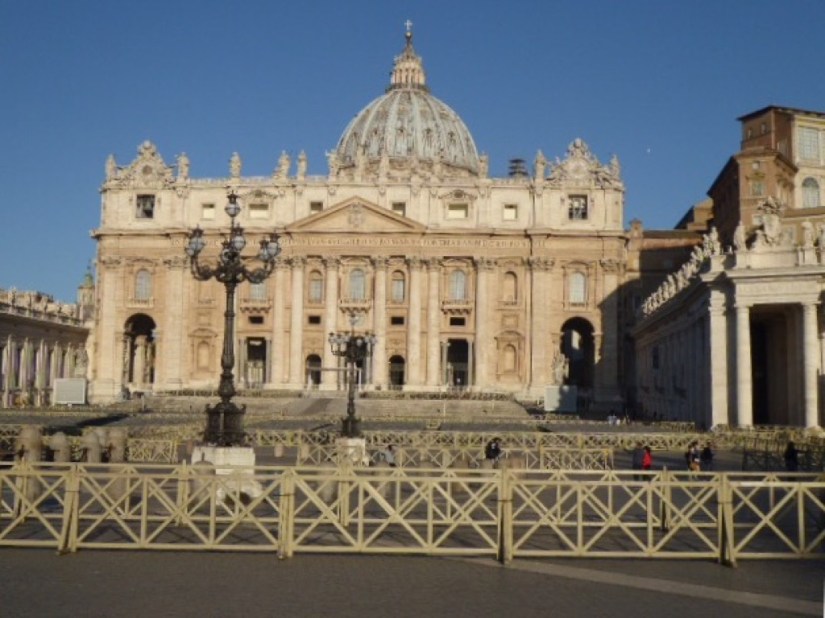
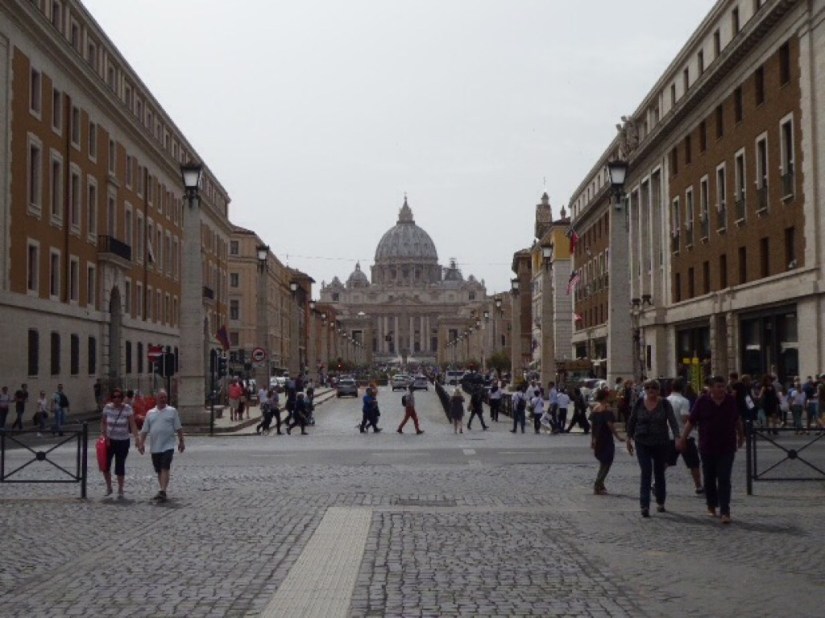
 Much of the architecture in Rome is Baroque, born out of the Catholic Church’s determination to reassert itself after the Reformation and The Basilica di San Pietro is no different. We were there by 7.30 and walked through security and straight inside. It is huge, but felt somewhat impersonal.

We admired Michelangelo’s Pieta from afar as there is a barrier to protect it …
 … and admired the ceiling from below.
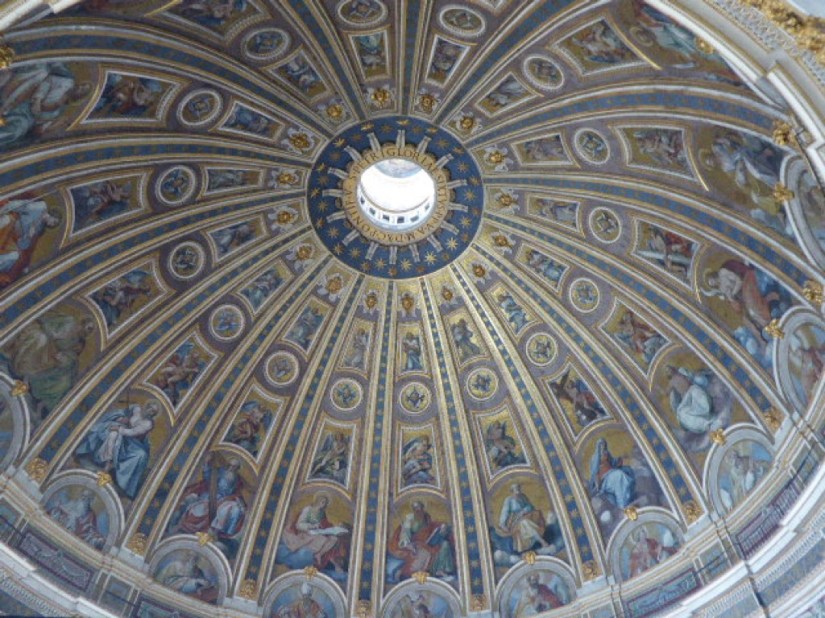
 We took the lift then steps, stopping to walk round inside the dome where even the letters are 2m high …
 … then between the layers of the dome to the top, with that view out over the Piazza San Pietro, designed by Bernini, which welcomes visitors with open arms.
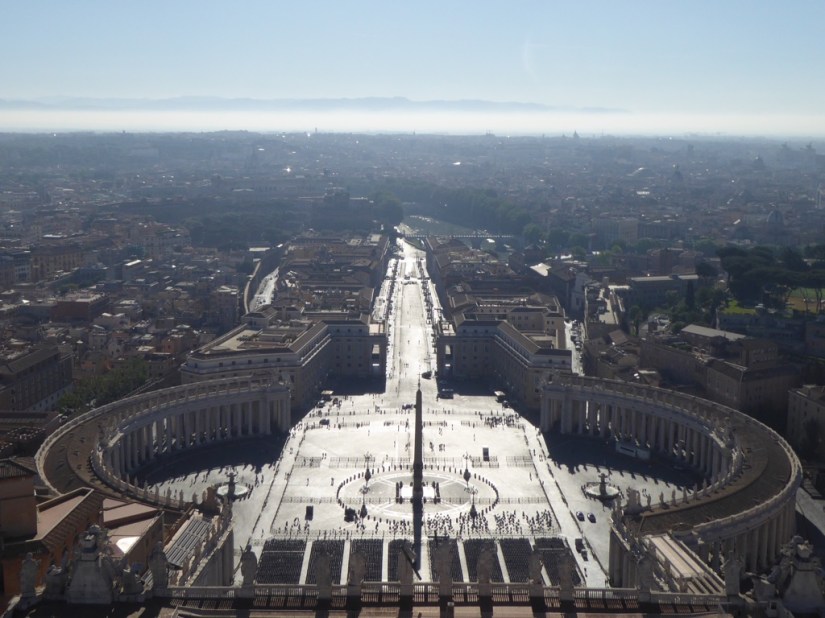
 Back to earth, we walked out across the piazza, stopping at a circular stone in the pavement which marks the focal points of an ellipse, from which the four rows of columns on the perimeter line up perfectly so the colonnade appears to be supported by a single line of columns. Clever stuff!
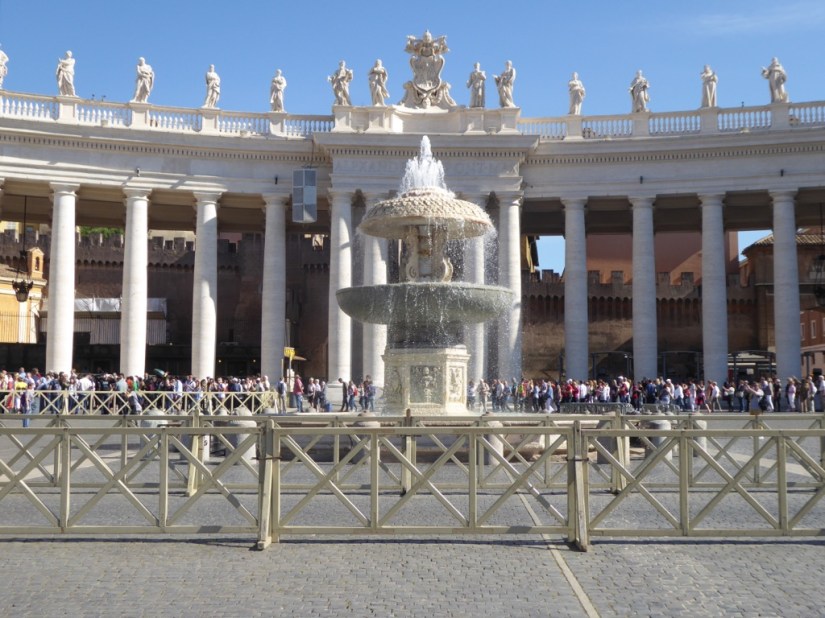 We were amazed how the queue had grown, and it was only 9am!
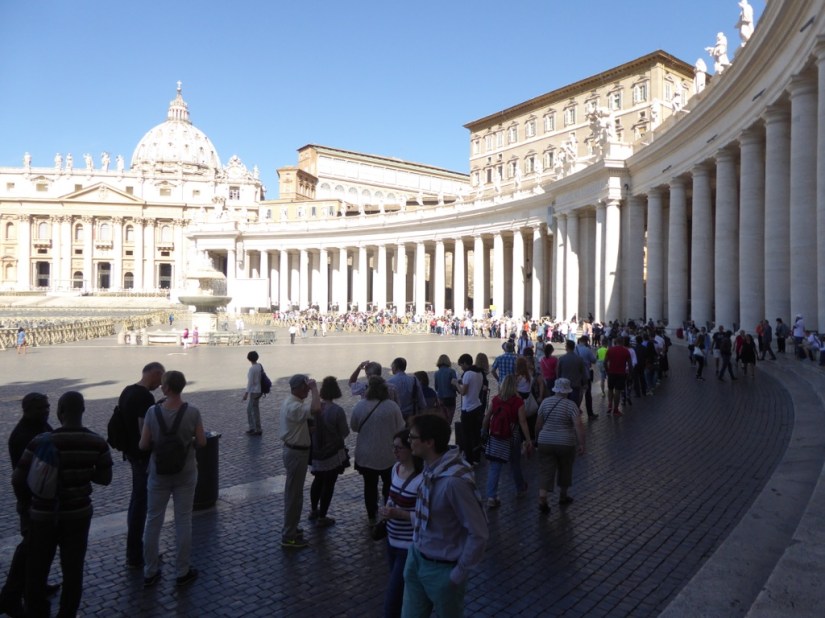 After breakfast we set off to the historical centre, passing the Trevi fountain which was undergoing its weekly clean and empty, carefully supervised by the police as some €20,000 is raked out each week and sent to local charities.
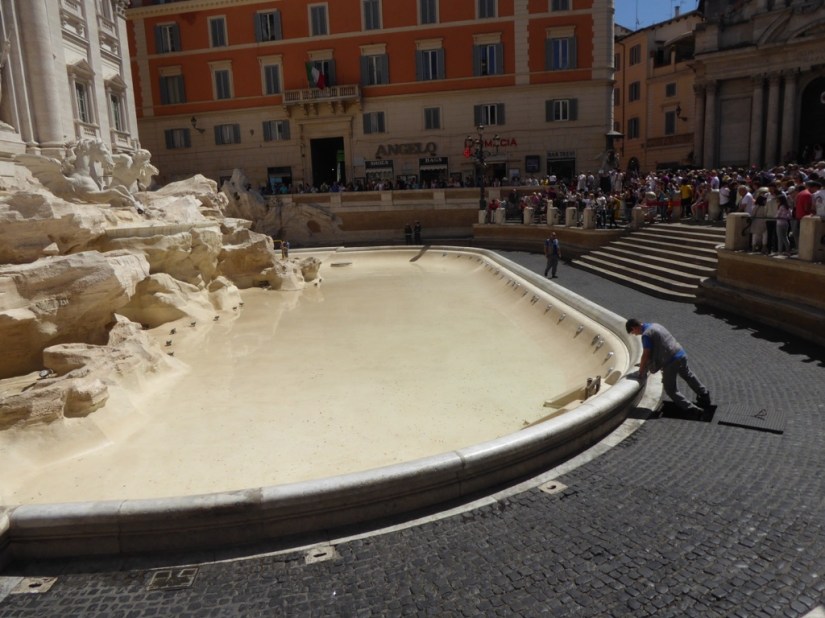 We picked up rolls for lunch at the nearby Antico Forno bakery …


… and continued to Piazza Venezia which is overpowered by the gigantic Vittoriano or Victor Emanuelle Memorial errected to celebrate Italian Unification.

The Palazzo Doria Pamphilj, one of the city’s finest Rococo palaces and still lived in by the family is our next stop. Jonathan Pamphilj himself led us round the sumptuous state rooms and extensive art gallery via the audio guide, pointing out the sparkly Gallery of Mirrors with tales of Hercules on the ceiling and decorated with grotesque work.


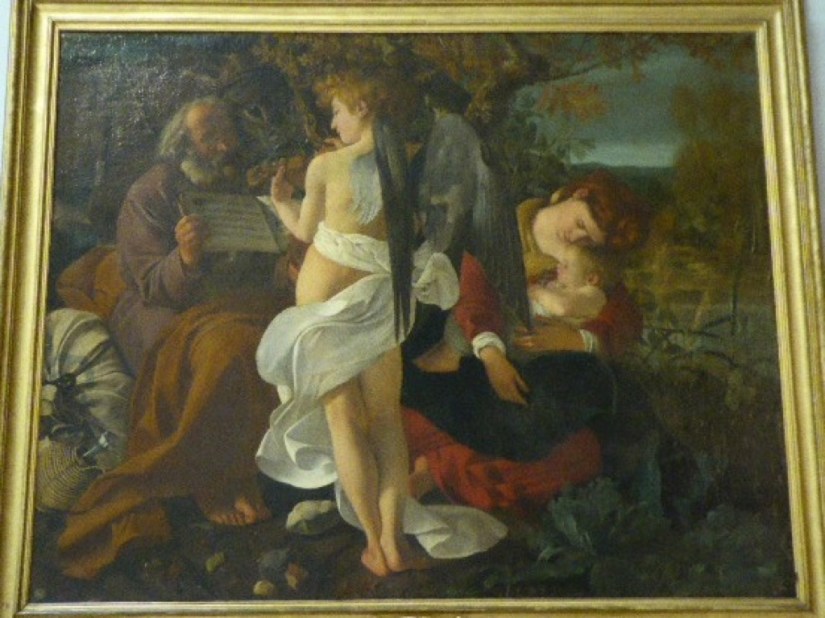
Then, towards the end, I saw a Caravaggio I liked. The Rest on the Flight into Egypt has no blood or moody lighting, instead an angel playing violin to soothe the baby to sleep!
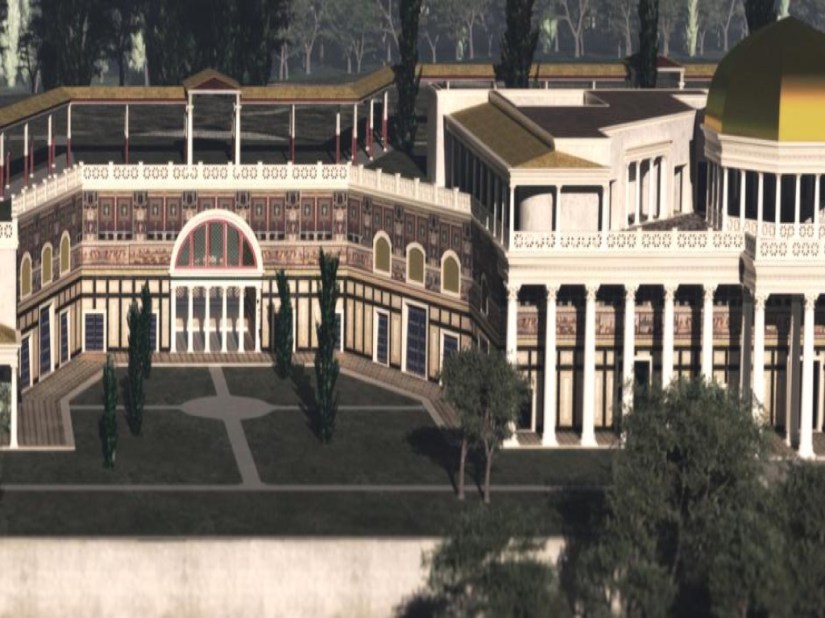
Next up, a trip back in time beneath the government offices of Palazzo Valentini to visit Domus Romaine, ruins of Roman baths and a residential complex brought vividly to life by a high tec and dramatic guided tour. Afterwards, there was a virtual reconstruction of Trajans Column. This 30m column was built to celebrate the empires victories in Dacia (modern Romania) in 113AD.
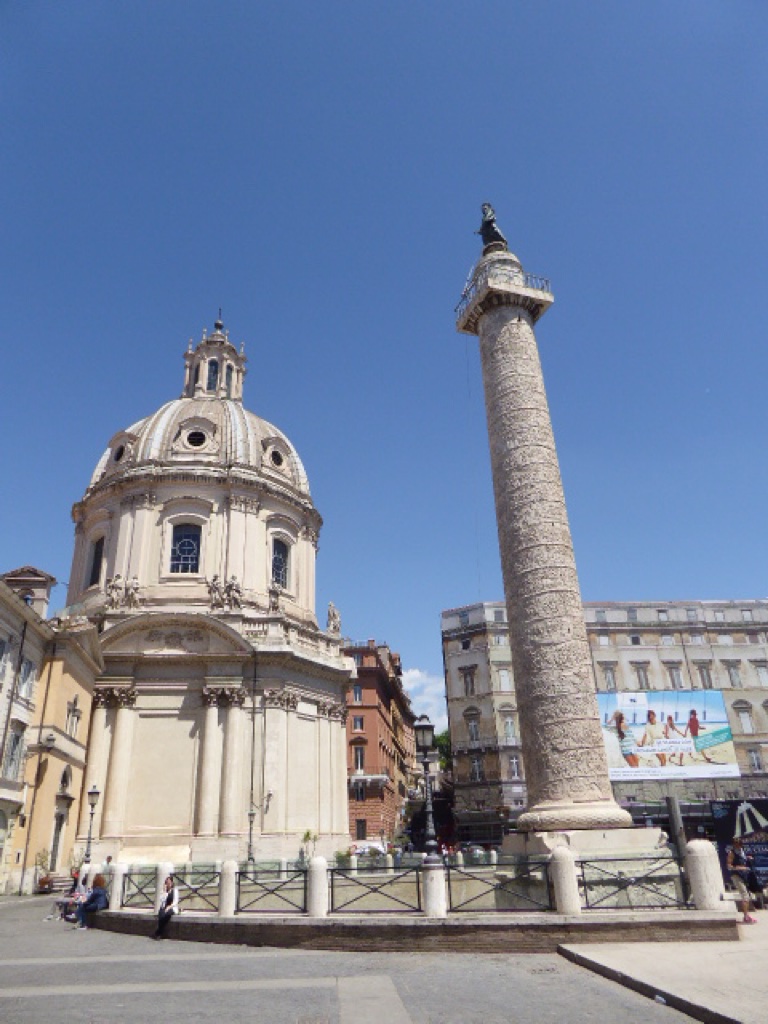 It is covered in reliefs commemorating the campaign, with some 2590 figures carved on a series of marble drums. The detail of the soldiers in their armour going off to war in their boats, blessed by Neptune is amazing considering its age.

 Moving on to Piazza della Minerva we took photos of the cute elephant statue by Bernini …
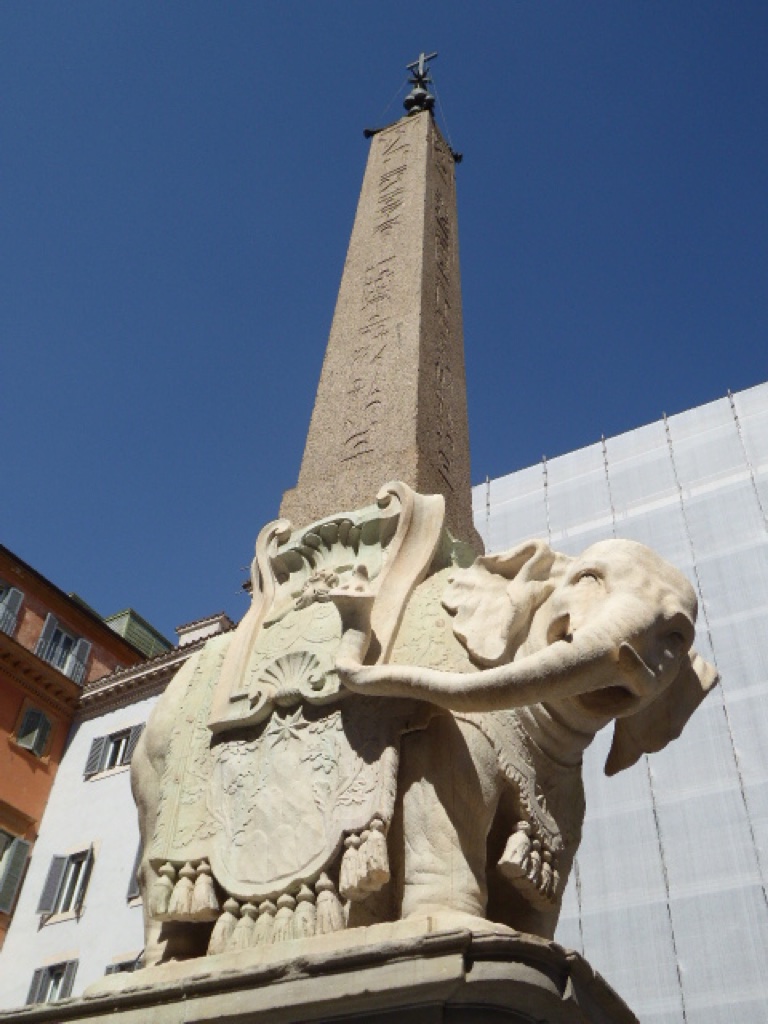 …then went to the roof bar of the Minerva Hotel as we were given a tip that there was a good view of the Pantheon … and there was.
 The Pantheon was built by Hadrian in 125AD, and consecrated as a Christian church in 609AD. It is an engineering marvel, with the diameter equalling its height and the oculus 8.7m across and remains the world’s largest unreinforced concrete dome. It would have been richly decorated in its heyday and the niches filled with statues if the gods.
 Just round the corner is Piazza Navona, Rome’s most famous square, with bars, buskers and lots of tourists and we found a nice little spot to watch the world go by.
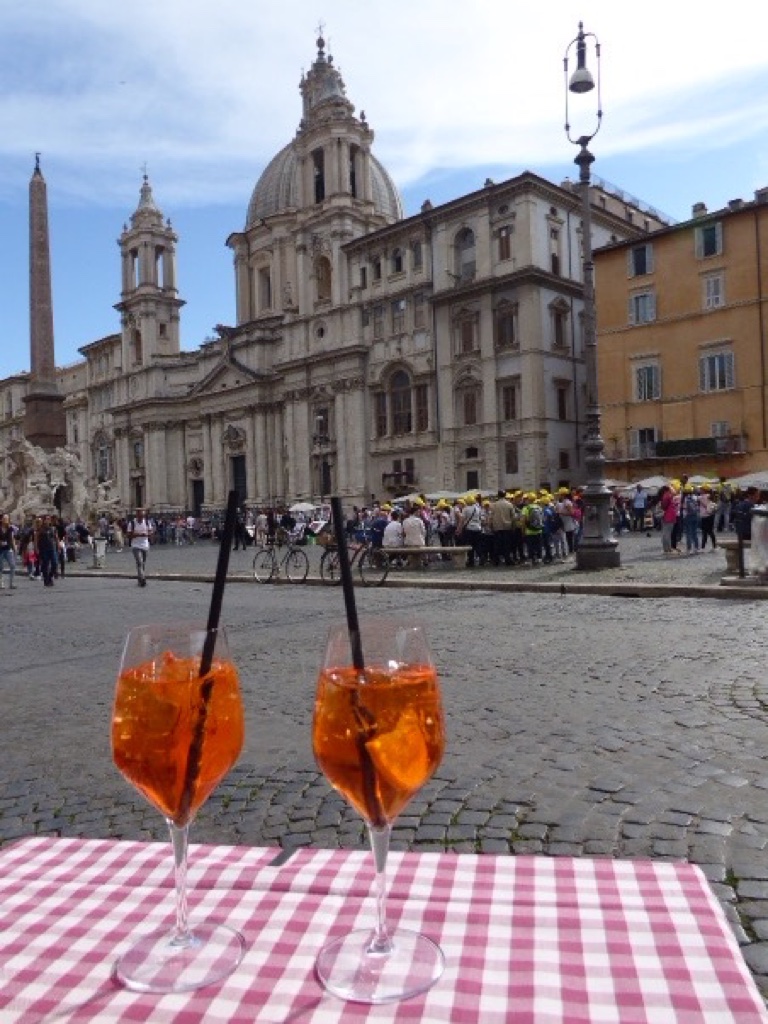 Revived, we went and looked at Fontana dei Quattro Fiumi or fountain of the four rivers by Bernini, with figures representing the great rivers of the world – the Nile, Danube, Ganges and Plate and topped by yet another obelisk.

 We returned to Cantina 26 for dinner and had another great meal – more pasta and aubergine patties with lemon sauce for Chris and Saltinbocca, a Roman speciality for me.



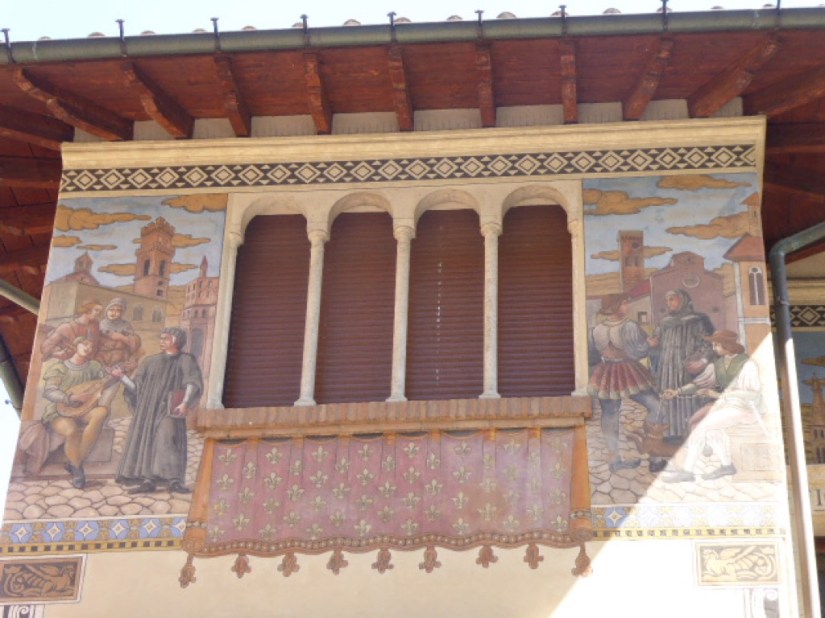


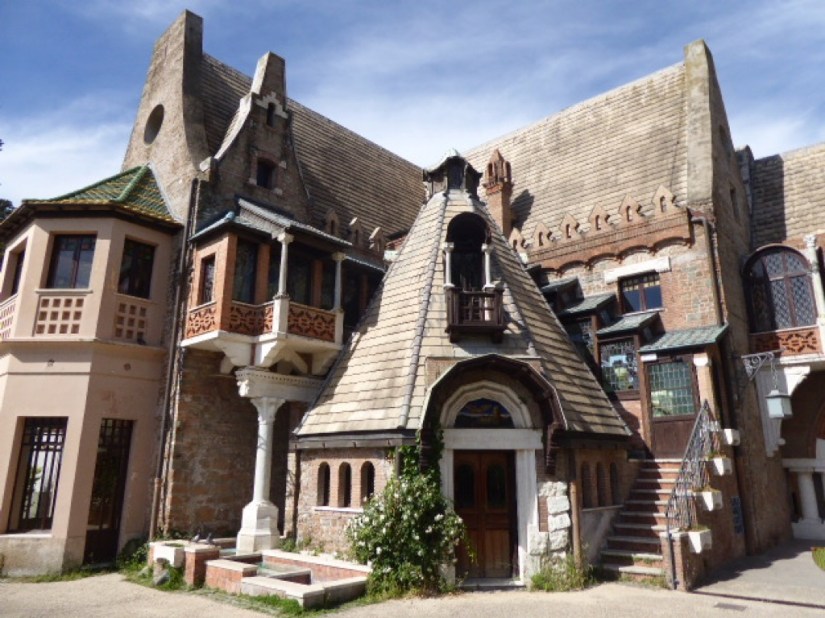
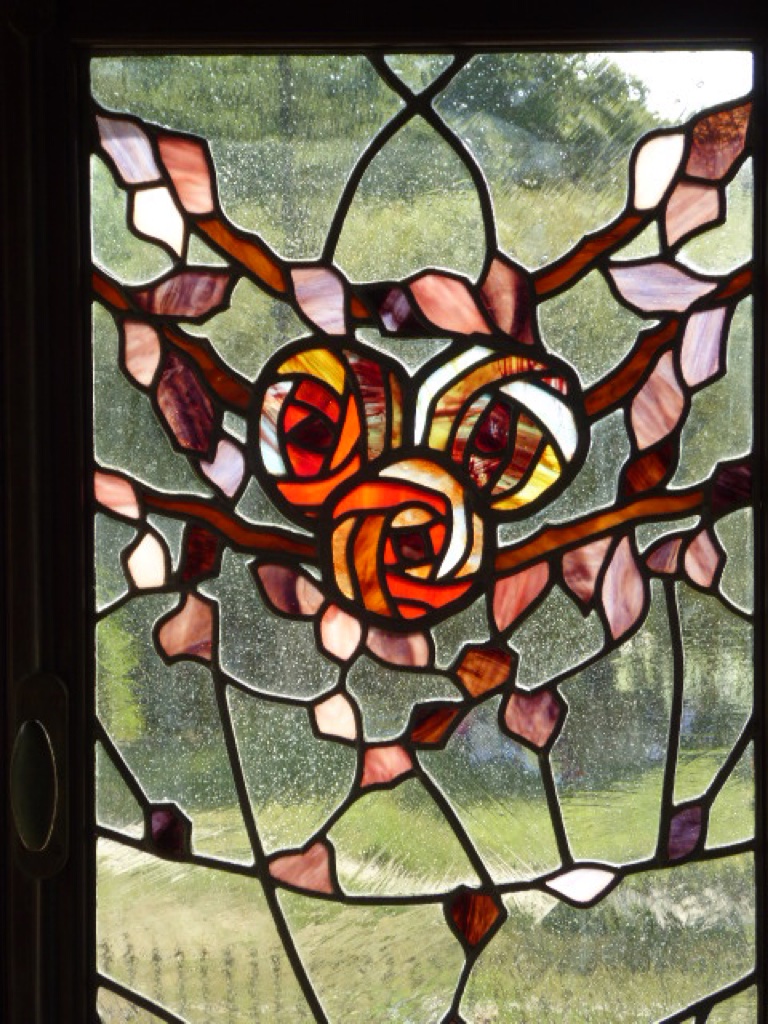
 Unfortunately it became quite dilapidated before being restored but now contains a huge collection of stained glass, some original to the house, some remade from original drawings and other glass collected from the period.




 As for getting back to the B&B, with a limited metro system, the Google bus information has been invaluable, telling us the best route and showing us where the bus stop is and even the time of the next bus and it also works for trams, so we got a ride back on this green one!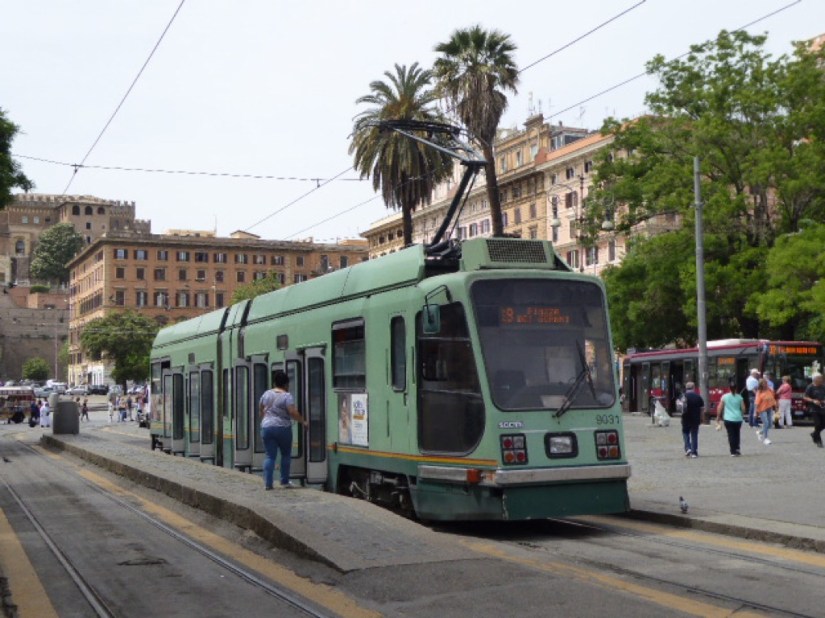




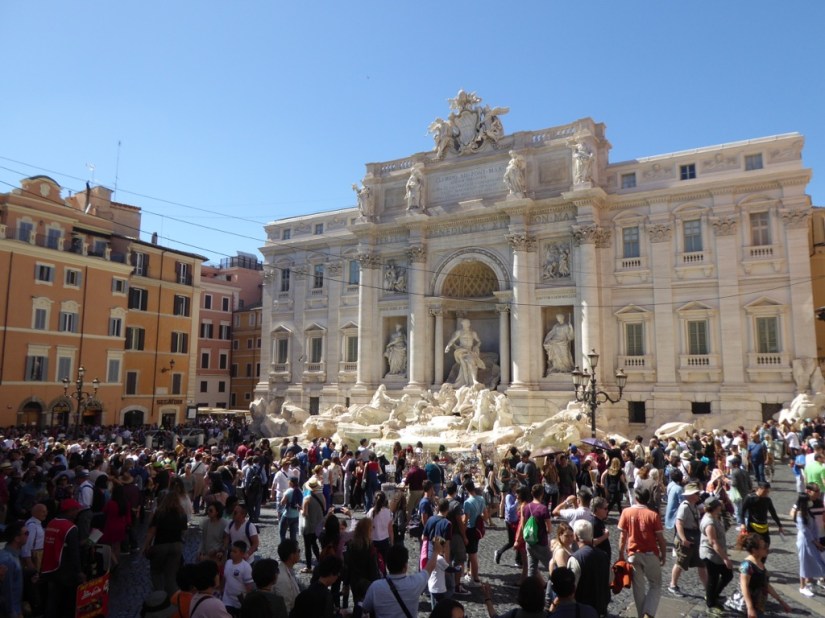
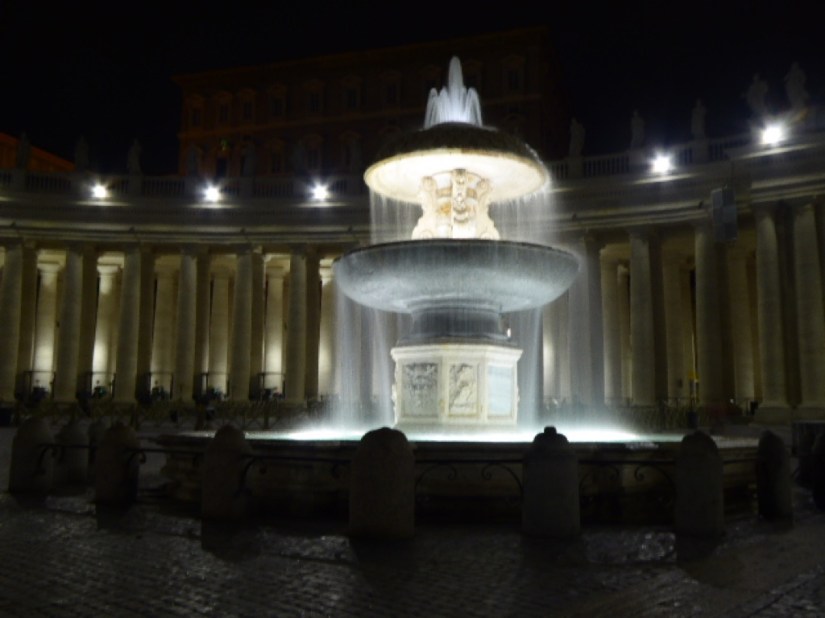
 We then wound our way down mainly pedestrianised streets to the Trevi Fountain, a very Baroque gush of water over statues and rocks on the back of a Renaissance Palace. It was designed by Bernini and they say if you toss in a coin you will return to Rome but you’d be lucky to get close enough.




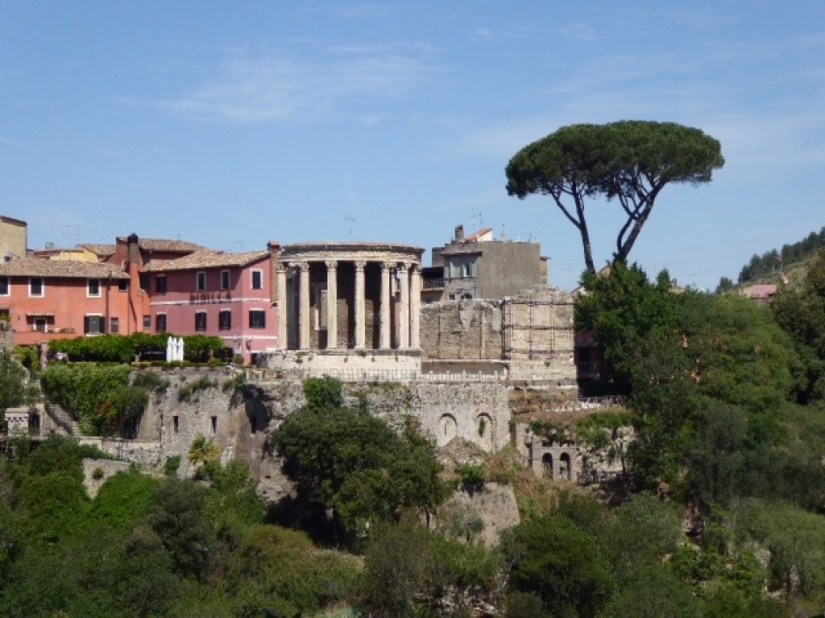


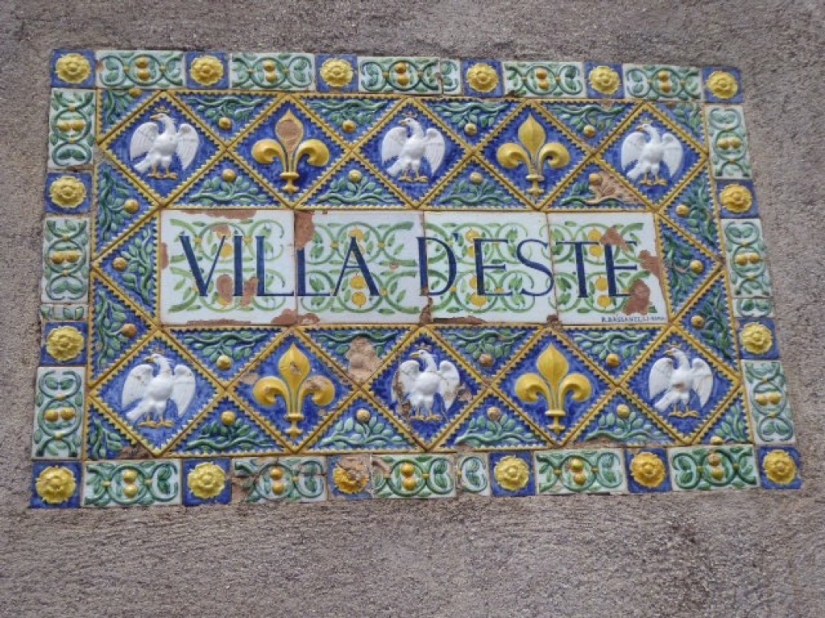 The villa itself contains a number of Mannerist frescos, but most people come for the gardens, which descend from the villa in a succession of terraces with some amazing fountains along the way.
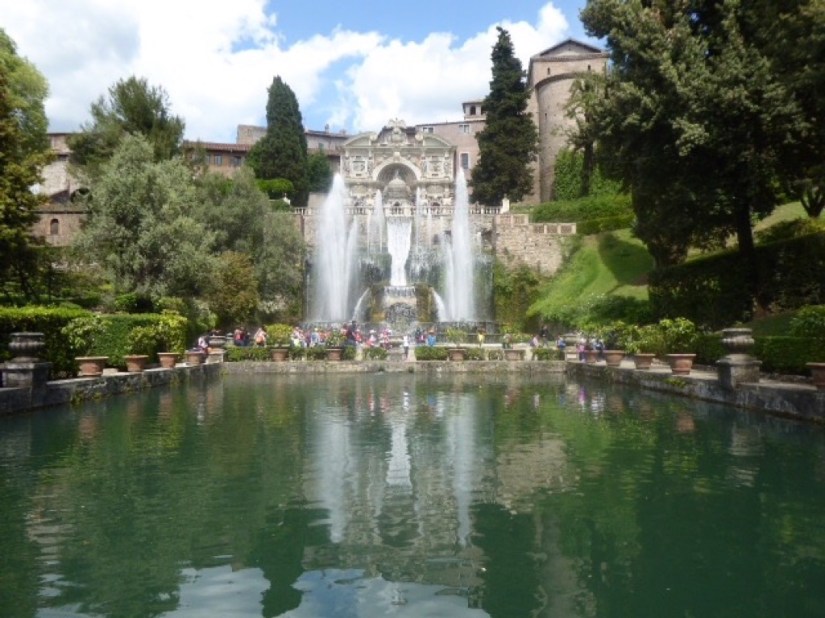


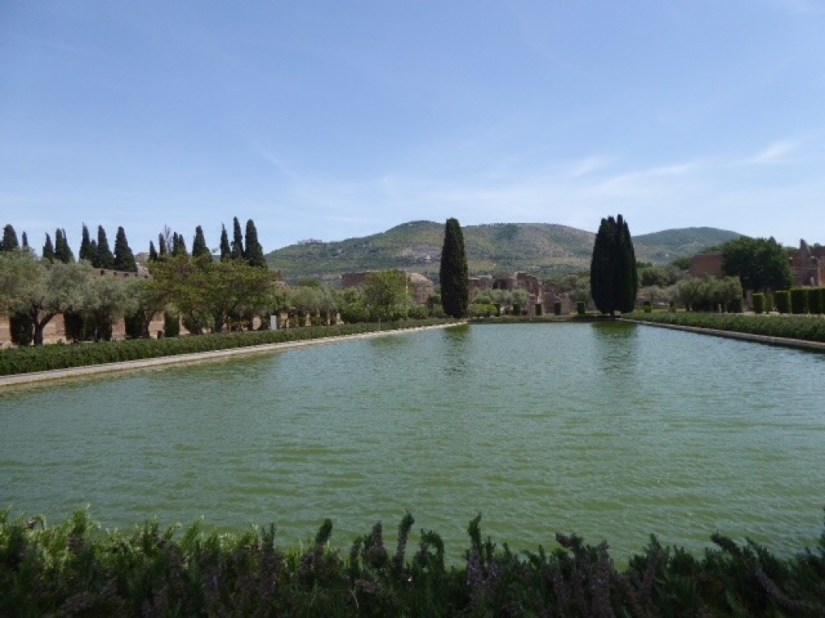 The Canopus was another huge pool with a banqueting area, complete with statuary and a crocodile.


 Early evening and we went for an Aperol spritz and some cheese to nibble on before dinner at Vino Tinto, a small local restaurant serving rich Roman food. We ordered far too much – a pasta dish each, both with asparagus but one with tomatoes and the other with porcini and truffle then Chris followed with smoked cheese and porcini and I had pork with truffles and walnuts – we rolled home!

 Trastevere maintains its character thanks to its narrow cobbled streets lined by ancient houses and feels more like a small town in the countryside than a suburb of Rome.


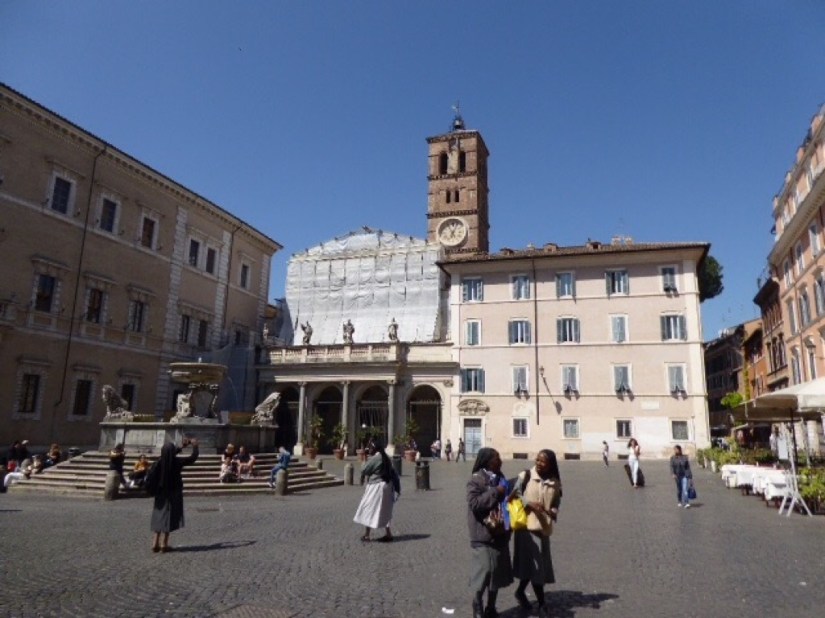
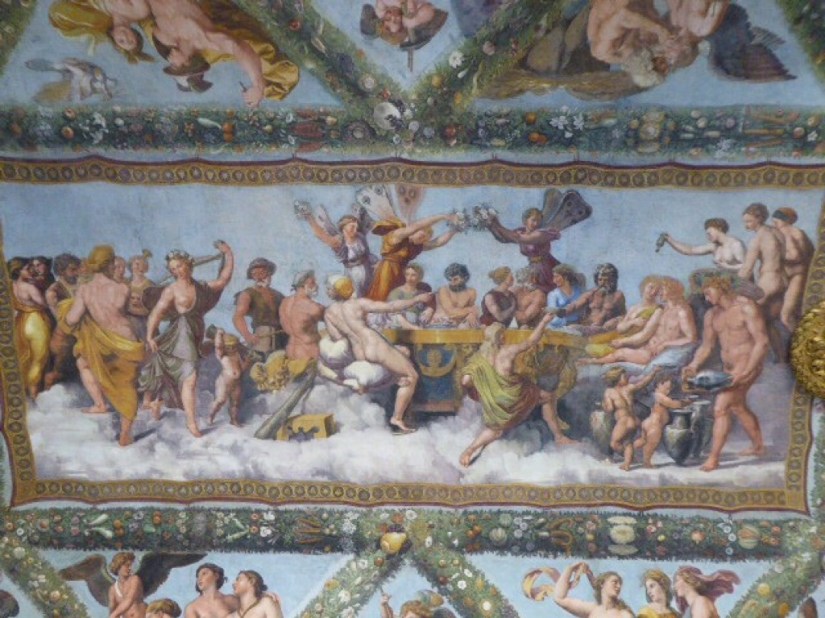
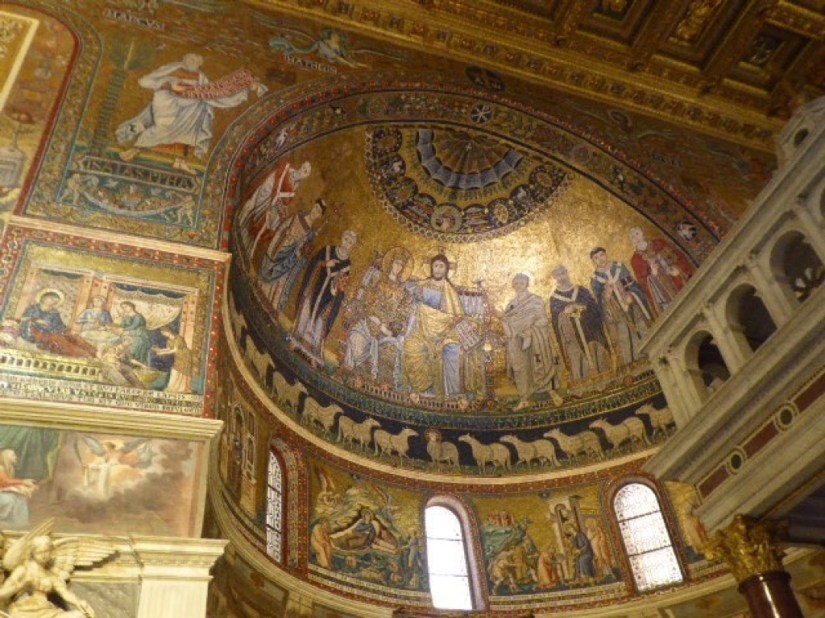 Nearby is the C16 Villa Farnesina, a summer villa built for Agostini Chigi, the richest man in Rome, as a retreat from the city where he lived with his lover and entertained lavishly. He encouraged guests to throw the silver dishes into the river at parties but his servants secretly collected them with nets draped under the windows!
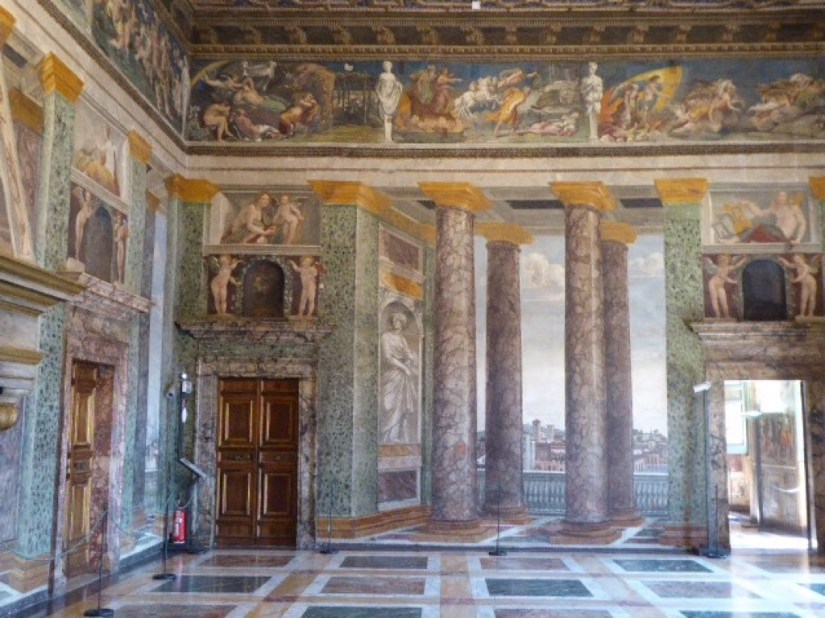
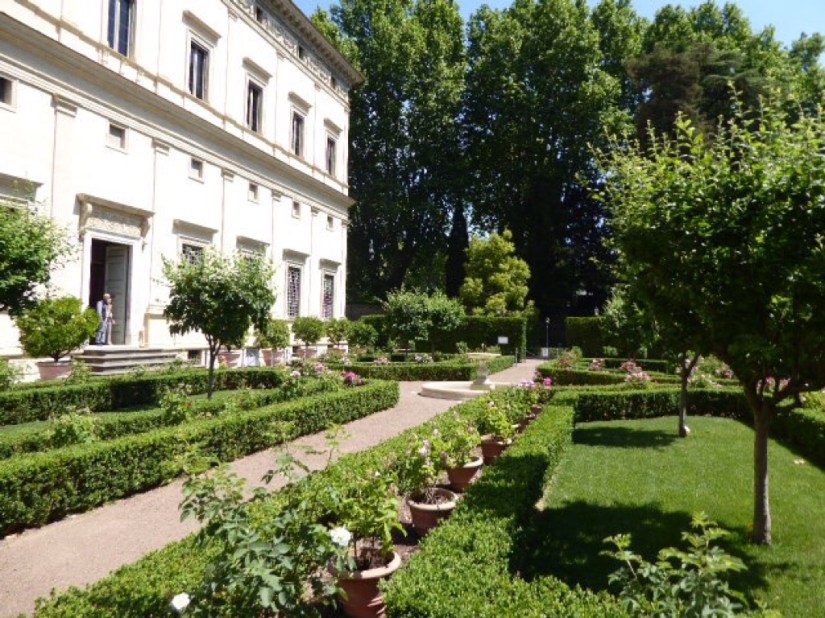 He commissioned fabulous frescos in many of the rooms including the Galatea fresco painted by Raphael depicting a sea nymph on her dolphin-drawn scallop shell chariot, and Cupid and Psyche surrounded by fabulous garlands with fruit and vegetables and the Sala Delle Prospettive where trompe-l’oeil balconies appear to give views over Rome.
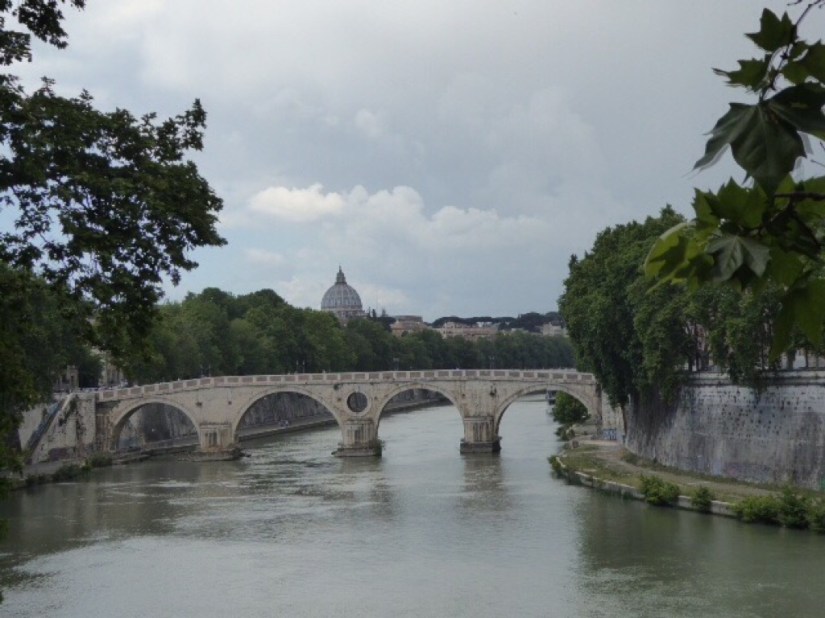
 Here’s a view of the pretty Ponte Sisto with St Peter’s in the distance.
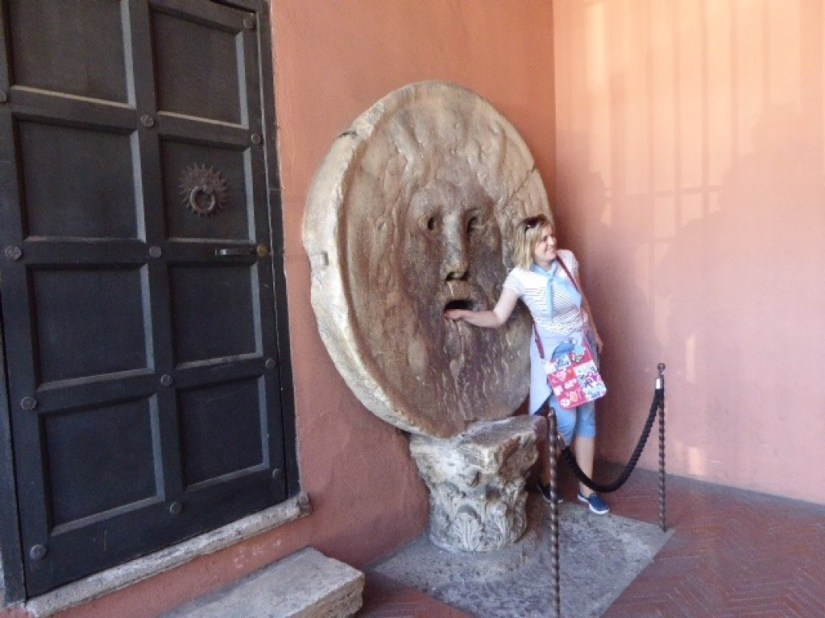
 Following in the footsteps of Audrey Hepburn and Gregory Peck in Roman Holiday, stopped at the Bocca della Verita or Mouth of Truth, an enormous Roman drain cover which was said to swallow the hand of anyone who did not tell the truth. There was a huge queue of people waiting to test their honesty, so I snapped someone else’s moment of truth!
 We climbed up to the Capitoline Hill, which in the days of imperial Rome, was the spiritual and political centre and the name comes from Capit mundi, or head of the world, and passed between the statues of Castor and Pollux.
 The Piazza dei Campidoglio was redesigned by Michelangelo for Pope Paul III who wanted a symbol of the new Rome to impress Charles V. The site was difficult as the buildings did not face each other squarely, and the whole site sloped. Michelangelo remodelled the palazzi, and designed an egg-shaped design on the pavement which draws the eye to the central statue of Marcus Aurelius, transforming the piazza into a harmonious space despite being trapezoid. The thing that surprised me most was that in Rome where everything is bigger than you expect, this was actually smaller!
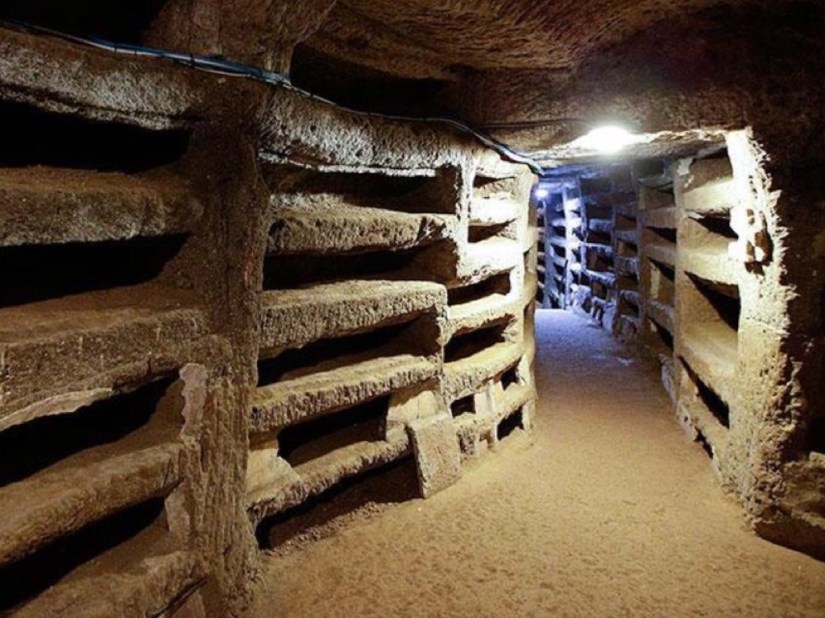
 We ended the afternoon at the Catacombes de Priscilla, far less busy than those along the Appian Way and more interestingly open! There are some 13km of tunnels on three levels, dug into the soft tufa rock between the 5th and 9th centuries. After that they were forgotten till they were rediscovered in the C16. Many tombs had been looted and there are no bones remaining in the section we visited, but rows of body sized cavities one above the other in the soft brown rock on each side of the tunnels.
 High humidity has destroyed most of the fresco but scraps remain, including Mary and Jesus, the Magi and the Good Shepherd.