The coast road took us passed several small towns and a number of small beach resorts but the beach was very shallow and nowhere looked as enticing as Tangalle or Mirissa.
According to the guide book, the stilt fishermen seen along this stretch of coast are one of the most iconic sights in Sri Lanka … and having checked out some gift shops, they would agree …

… however the reality is that the best time is sunset between October and December when the currents are flowing in the right direction.
 Not wanting to miss out on a tip, there were several posing with rods first thing on a February morning!

Galle (pronounced Gaul) has grown into Sri Lanka’s fourth largest city, but we just visited the old Dutch quarter, called Galle Fort. The first fortifications were built by the Portuguese in 1589 and were extended by the Dutch after they captured the city in 1640 but when the British took Galle in1796, barely a shot was fired so the fort remained intact.
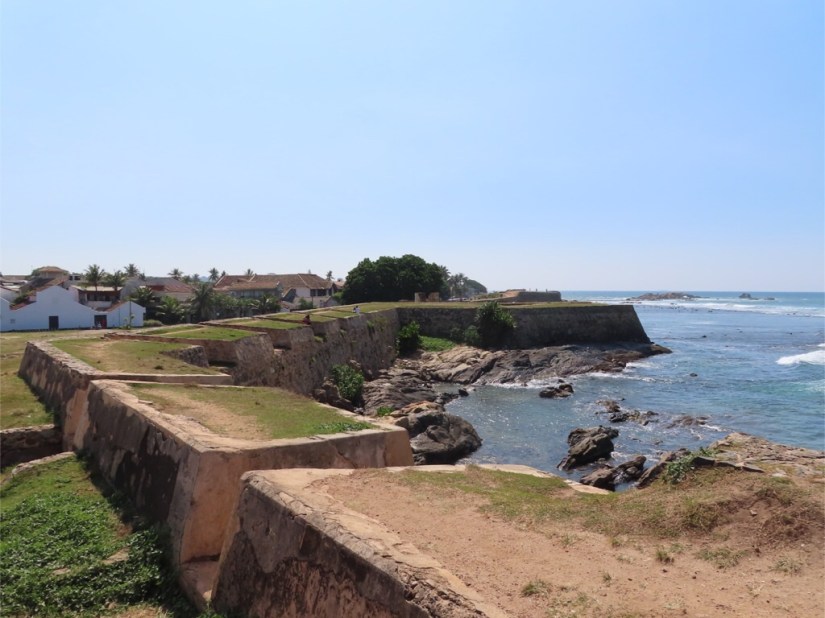
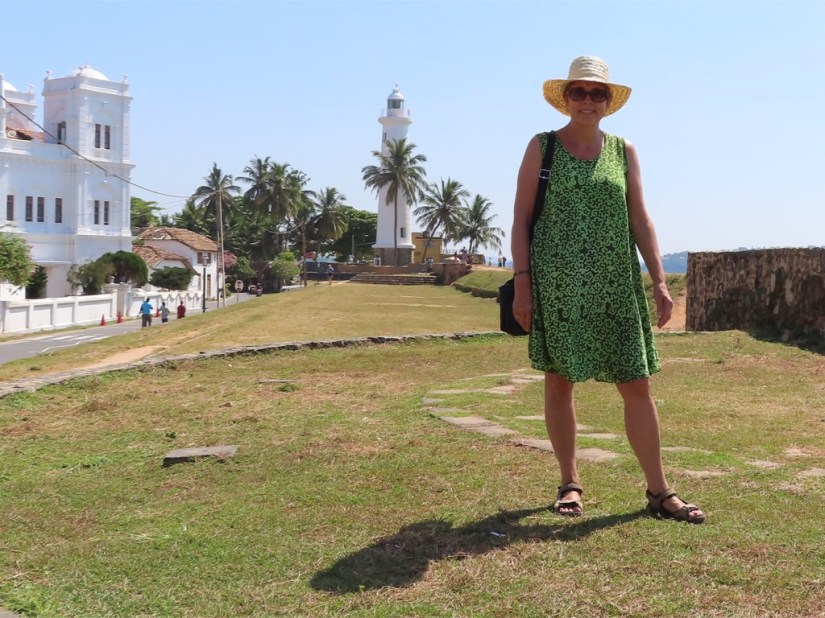
The walls are immense, with huge bastions, gun emplacements and a pretty white lighthouse and we walked round the ramparts one morning before it was too hot and took a few snaps …




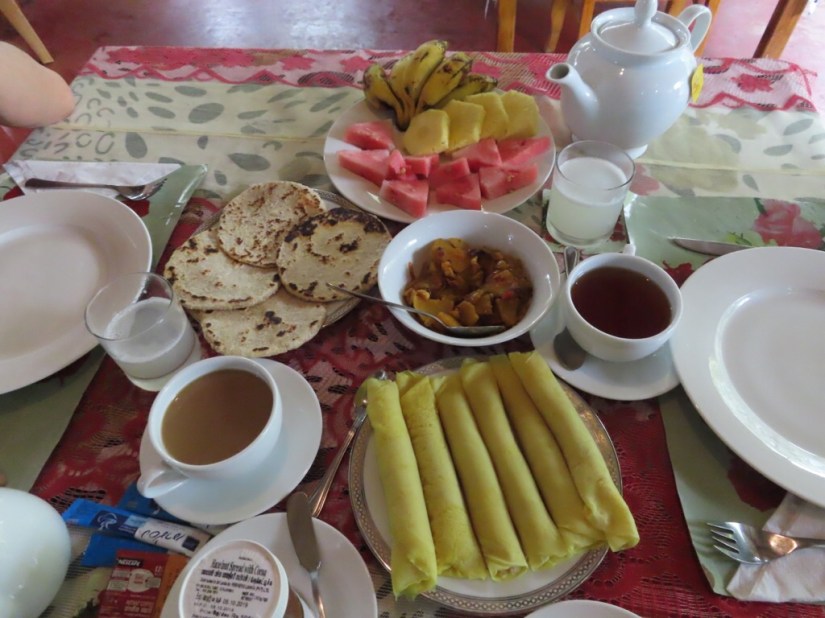
We are staying at Seagreen, originally housed a C18th colonial period home but now a comfortable guesthouse owned by a Sri Lankan family who have lived within the Fort for eight generations. The rooms are named for the bastions and the roof terrace has a sea. It’s been a great place to stay with friendly and helpful staff and great breakfasts.


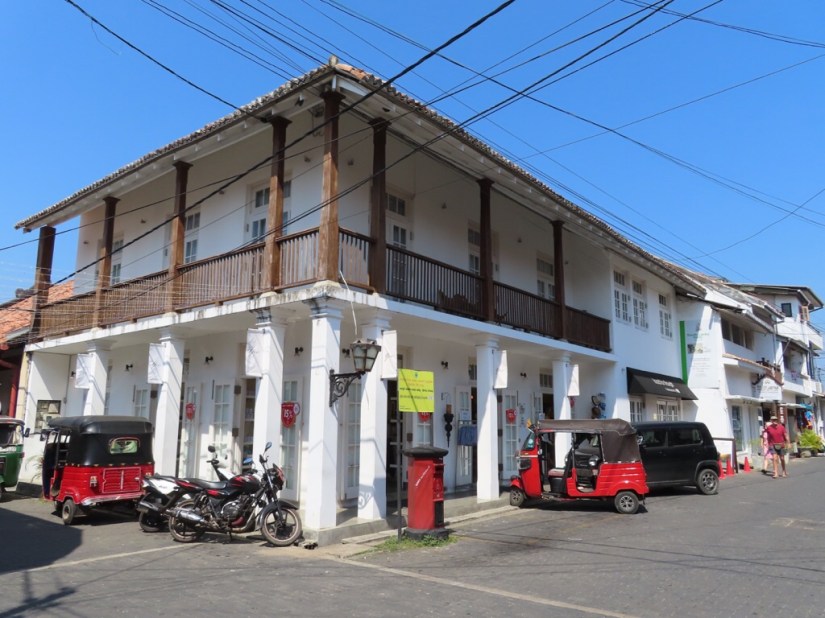
Many of the historic buildings have been restored by expats and the Colombo elite attracting visitors and money giving Galle Fort a cosmopolitan feel, with Dutch-period villas now home to boutique hotels and trendy shopping.


The buildings standing on the junctions were often the most impressive …




We noticed the coat of arms of the VOC or Dutch East India Company one side of the main gate and the British crest on the other …


… the rather uninspiring Anglican Church …

… a C20th Mosque that looks more like a Baroque church till you notice the minarets and crescent moons …

… and a Buddhist temple by our guesthouse.

The Dutch Reformed Church was more interesting with an impressive array of memorials …


Many of these commemorate the families of Sri Lanka’s smallest minority, the Dutch Burghers who are Sri Lankan’s of Dutch or Portuguese descent. Many held government posts or ran trading companies under the British, but around half left when Sinhalese nationalist laws were brought in after independence. A couple of notable Burghers include the Canadian-based author Michael Ondaatje who wrote the English Patient and the architect Geoffrey Bawa.
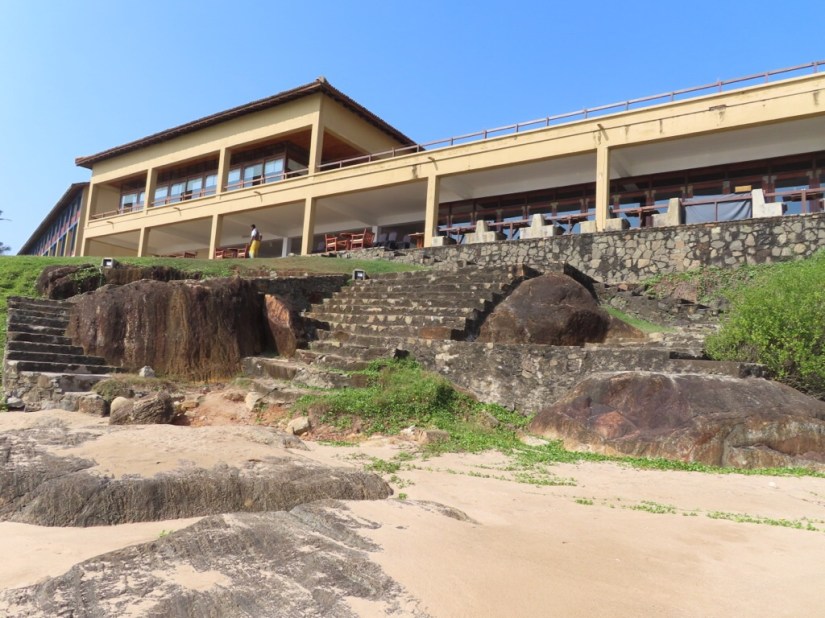
On our last afternoon, we went to look at The Lighthouse Hotel, opened in 1997 and designed by Geoffrey Bawa. We will be learning more about Bawa when we take a tour of his Colombo home, but in a nutshell, he qualified as an architect in London in 1960, heavily influenced by modernism. He soon realised that this didn’t fare well in the tropics – the white walls weathered badly and flat roofs were no good in a monsoon – so adapted his designs using local materials and features, merging his buildings with their surroundings. The Lighthouse was the last of his major projects and is a perfect example, reflecting the 17th-century Dutch fort at Galle which also looks down on the ocean from a rocky promontory.
The facade is unimpressive, but the spiral staircase into the heart of the hotel is jaw-dropping, with intricate bronze and copper sculptured balustrading depicting the Battle of Randeniwela between the Sinhalese and the Portuguese.


The main lobby opens out, with the sunlight shining on the polished concrete floor and is open to the sea beyond.


We ordered drinks and spicy wedges and sat and admired the view before walking round and taking some snaps … sorry rather a lot … but I thought it was so photographic!




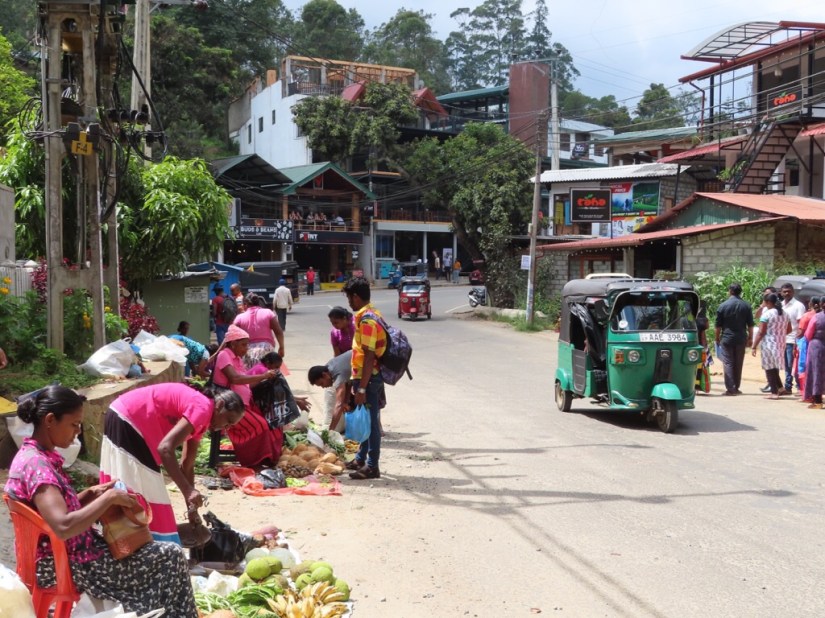
Now from high design to absolute kitsch! We have been both charmed and irritated by musical tuk-tuks during our time in Sri Lanka. It started with strains of Für Elise reaching us at the top of Mihintale and trailing us all round Anuradhapura … although we didn’t see where it was coming from. Later we heard a different tune and spotted bread seller driving along – too far away to snap! Since then there have been several that we have heard but not seen and others we haven’t been quick enough to photograph! We did spot this chap in Ella …

… and a couple here in Galle …


… only to amazed to hear this chap playing a tune as he collected the rubbish!

As the afternoon cools, everyone comes out, looking for the best spot to watch the sunset and on the first day, it seemed as though every local school had sent a day trip here, with long lines of children all dressed in white – surely the most impractical colour for a uniform!


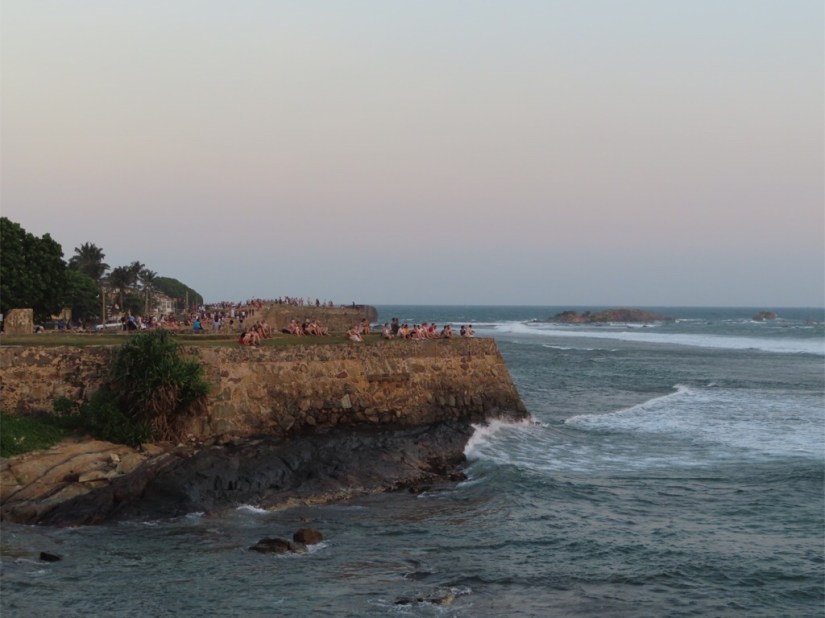
Then the sun sets …


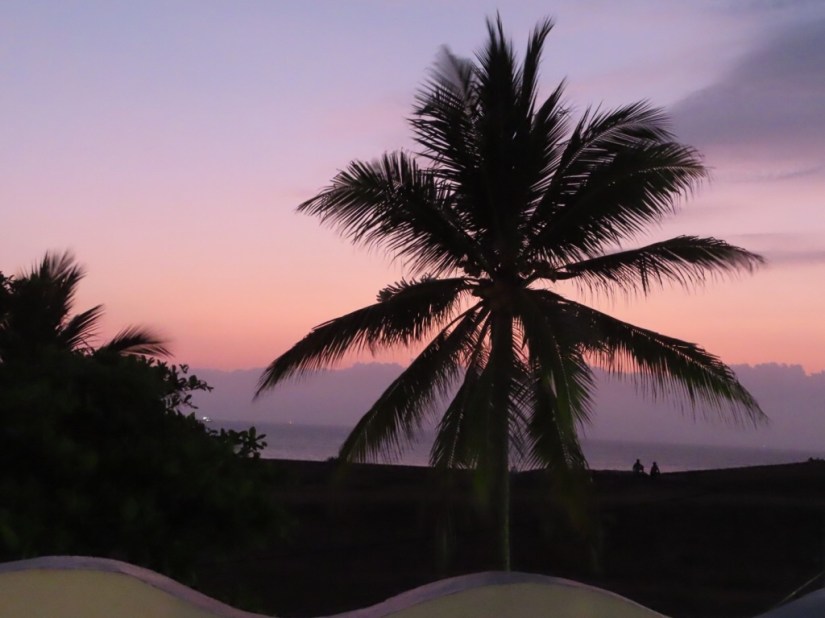
… and before the light fades there is just time for football or cricket …


… and once the the sun is up …

… they are at it again!

Our trip is almost at its end … as we return full circle to Colombo.
 A couple of hours west by tuk-tuk, closer to Colombo and a few degrees more touristy.
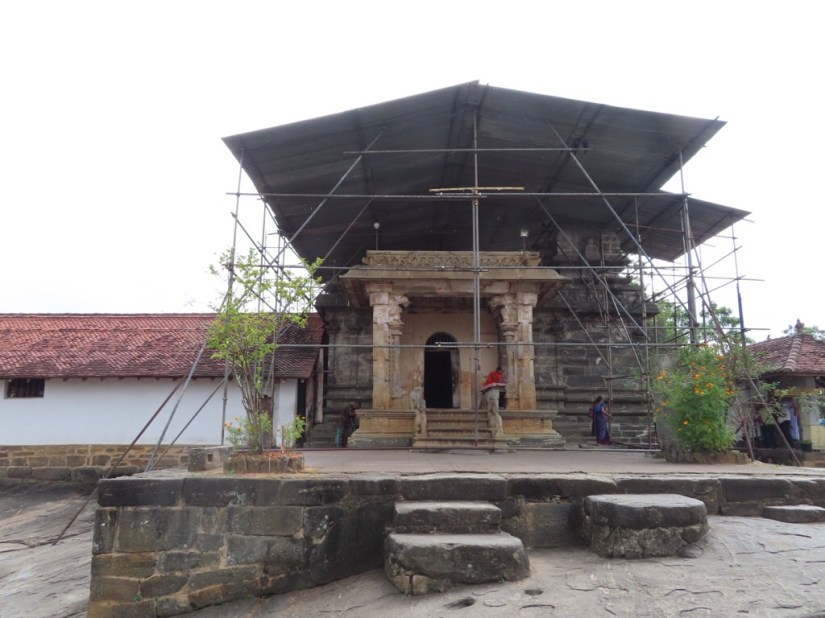
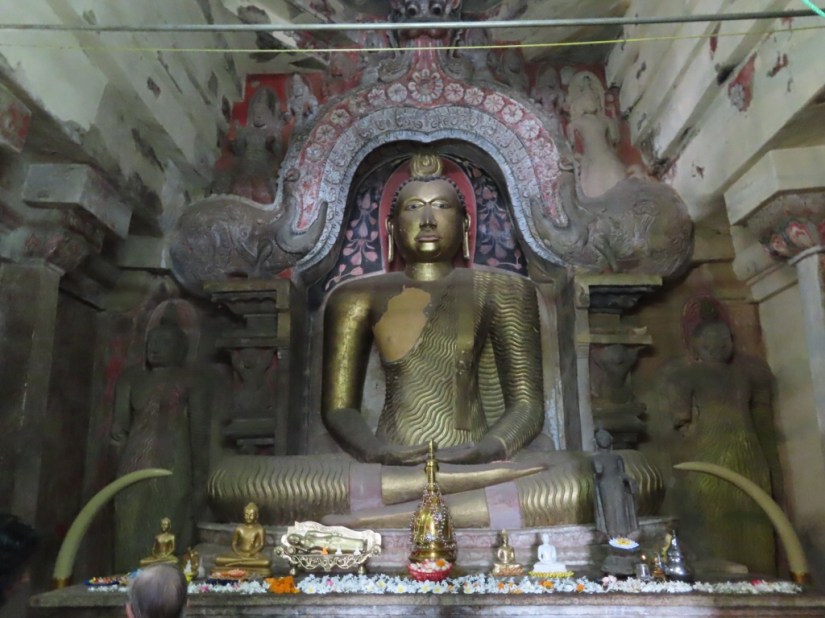
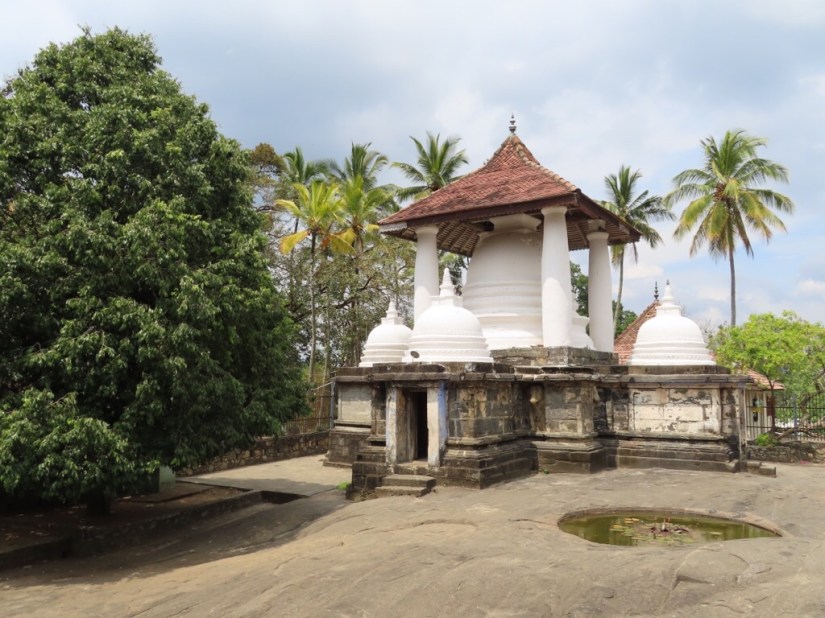
 The main image house contained a collection of Buddhas and other statues, as well as one that looked a bit like a nativity!


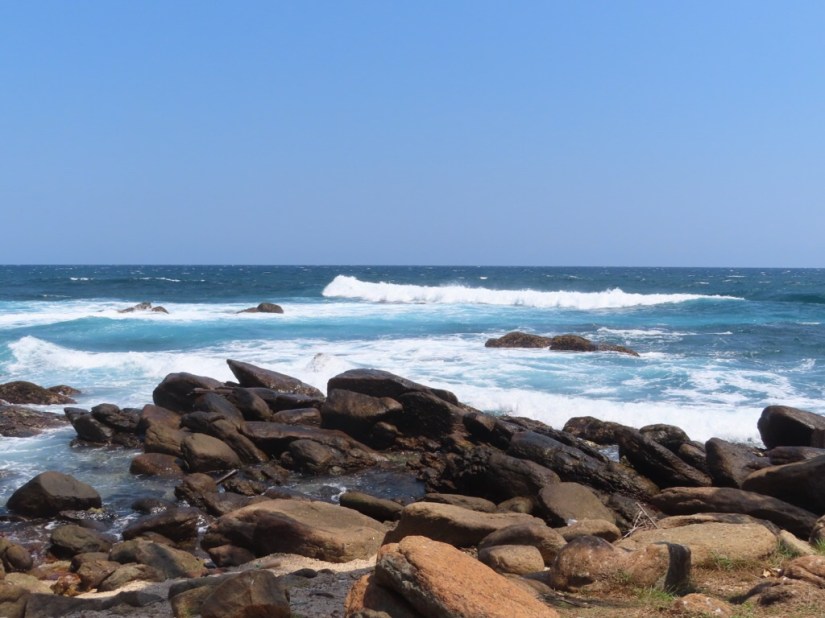


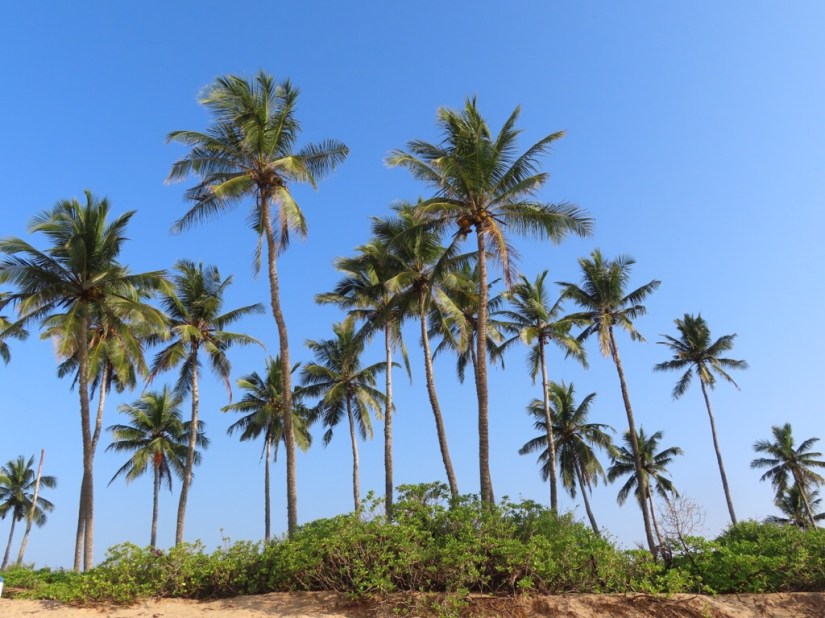
 Tangalle, (pronounced Tan-Gaul), is a pretty sleepy place on the south coast and we are staying at Cinnabar Resort, beautifully designed with a rustic laid back feel to it. Here is our first view of the sea as we checked-in.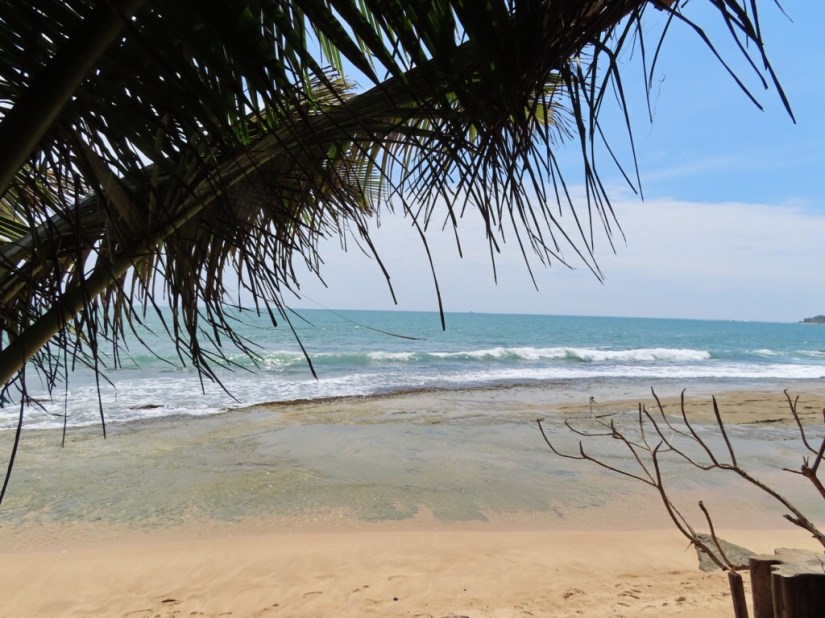






 It is 100kms from Ella to Uda Walawe so we decided to get a car to take us. As we left Ella we stopped briefly at Rawana Falls …






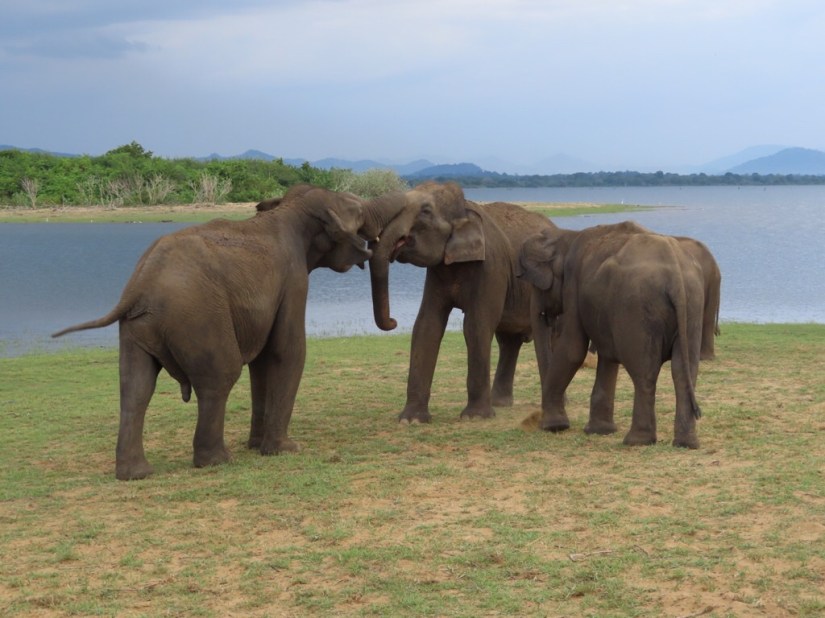
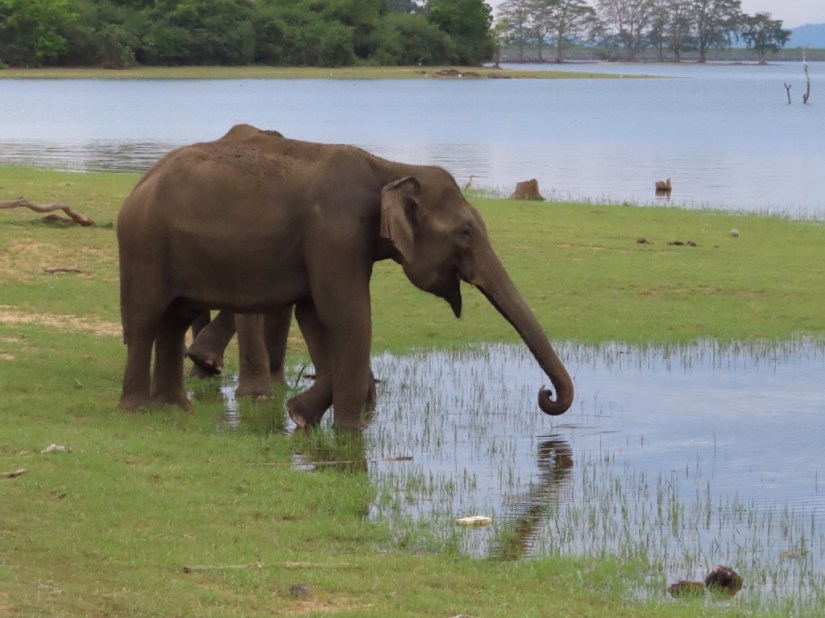


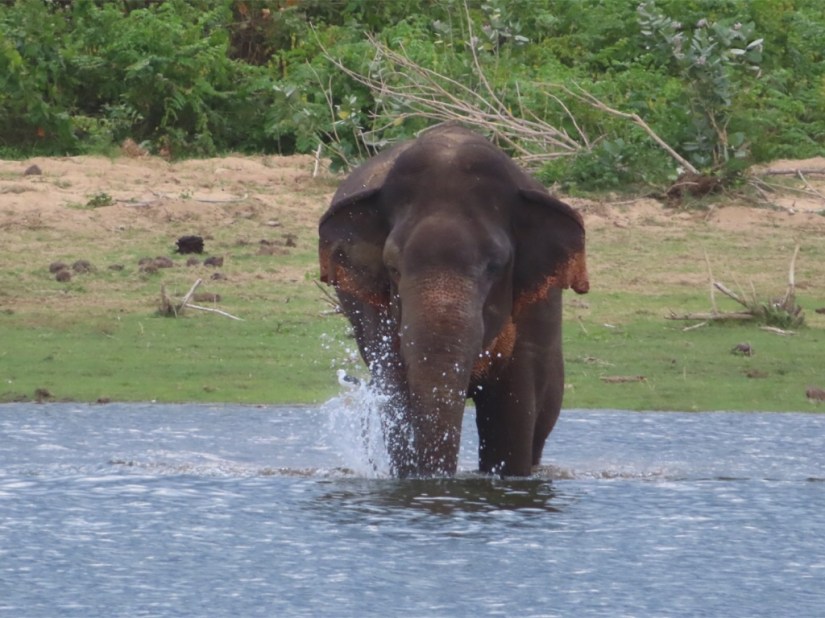
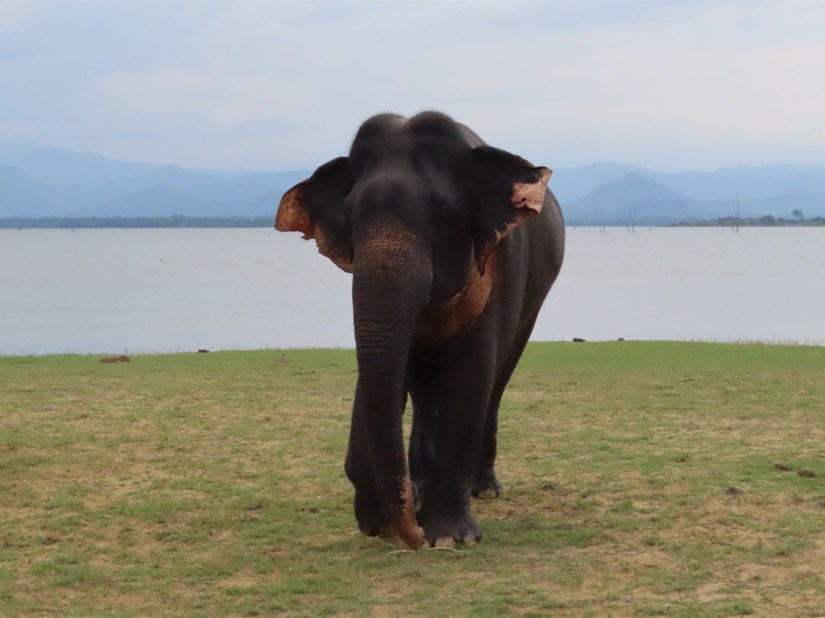
 I was amazed that the trucks didn’t disperse, but I guess these elephants are completely used to being watched, and he just walked nonchalantly passed the vehicles … putting his head right against ours and rocking it slightly … I was too surprised to take a photo … but Chris thinks he has a couple of close ups. Then he walked off.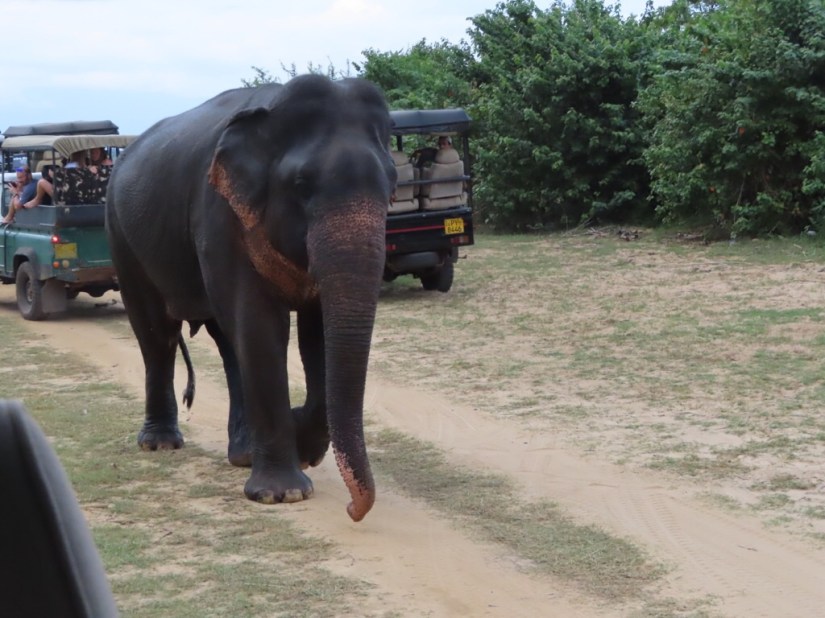



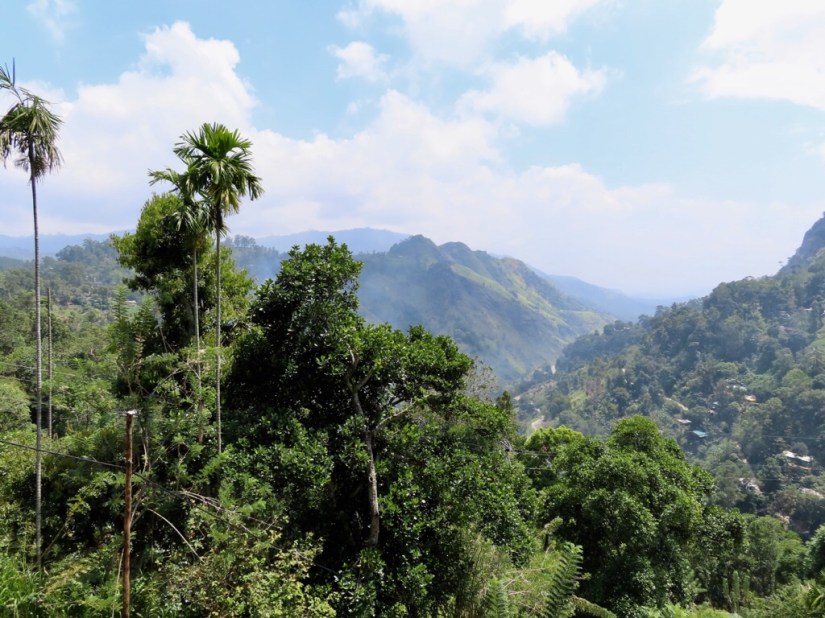
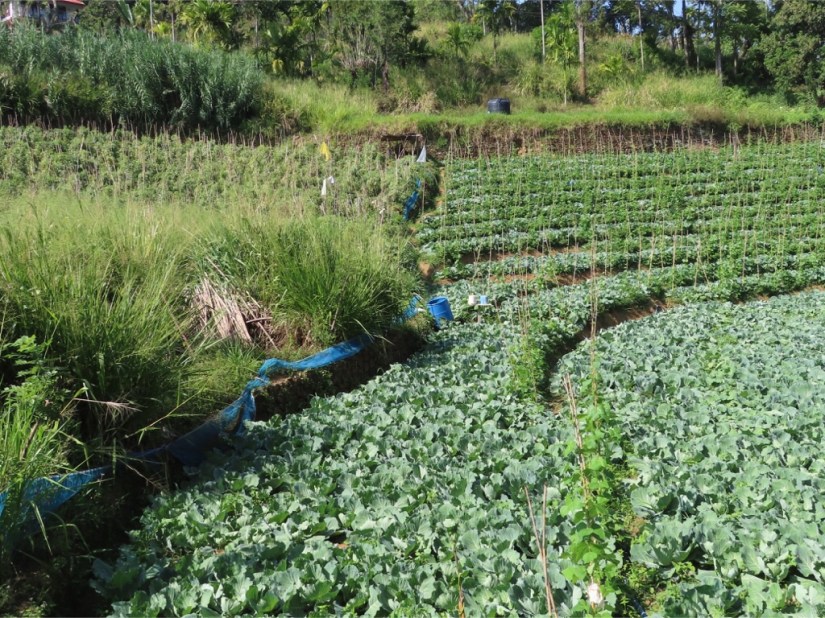
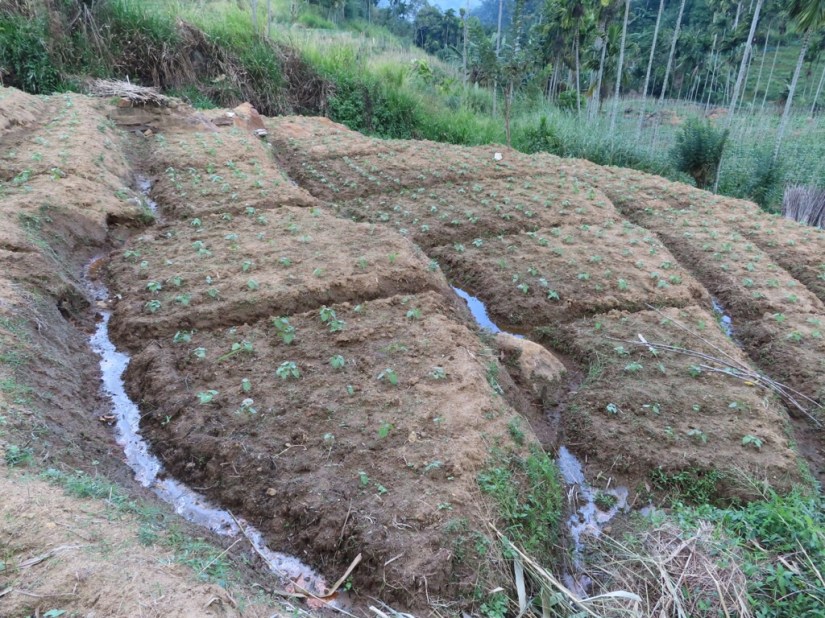
 After a leisurely start and breakfast, we took a tuk-tuk to Ella, about 1000m lower and several degrees warmer! On the way we passed people picking tea and our driver showed us the difference between black tea on the left at 400 rupees/ kg and silver top white leaf tea on the right at 48,000 rupees/kg!




 Anyway we went with it, got a view of the waterfall and safely back to the road and gave him some rupees for his trouble. A scam … maybe … but another adventure nonetheless!








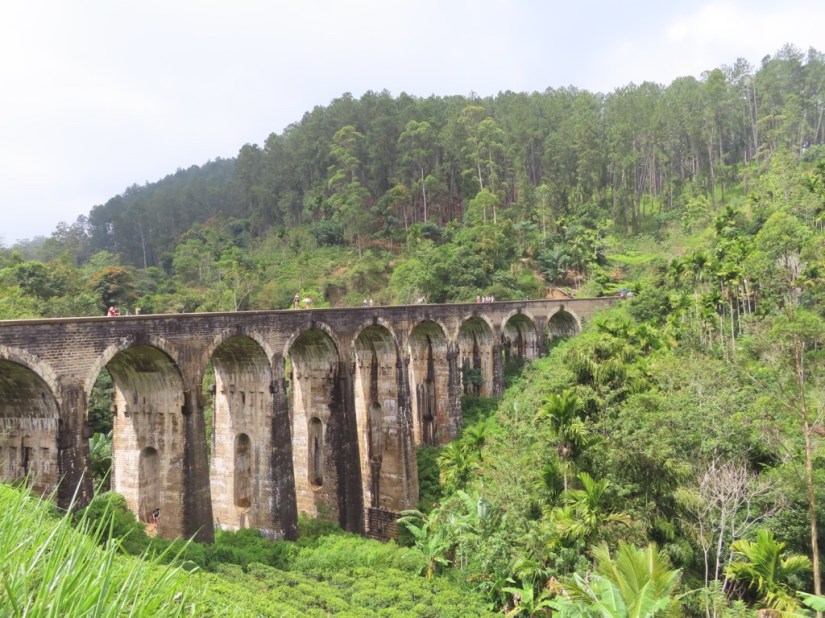
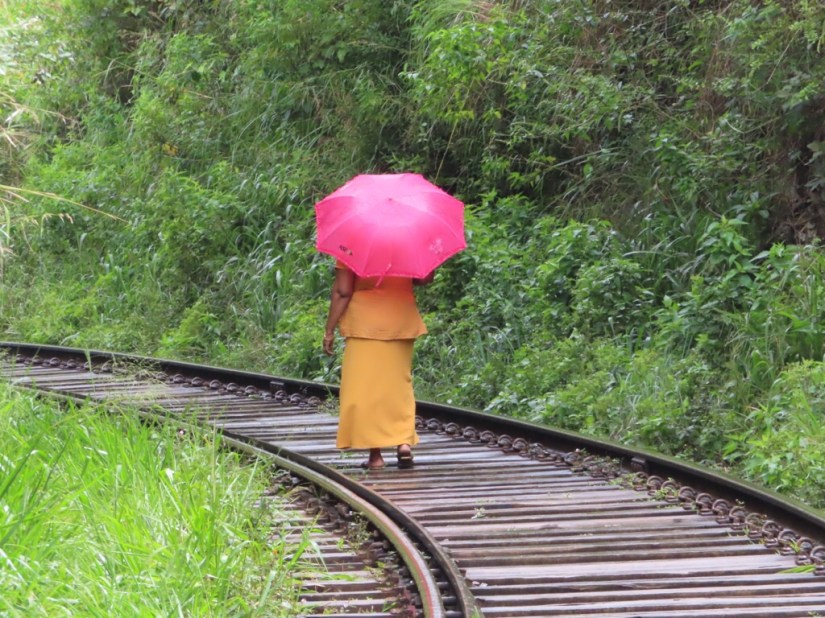
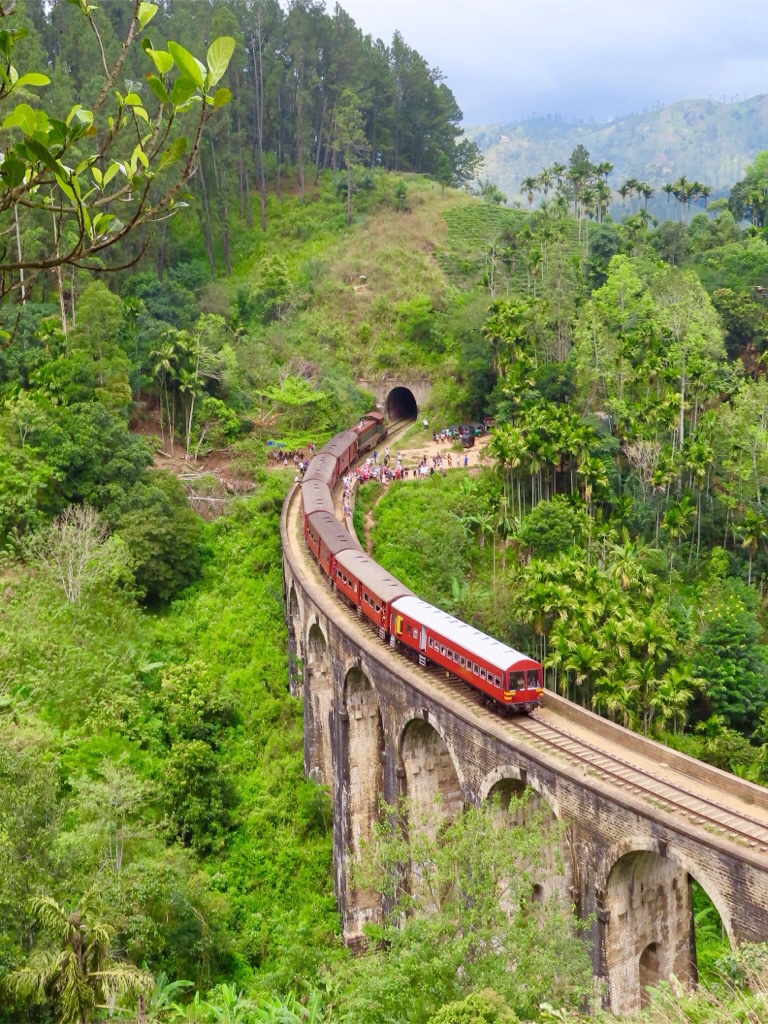
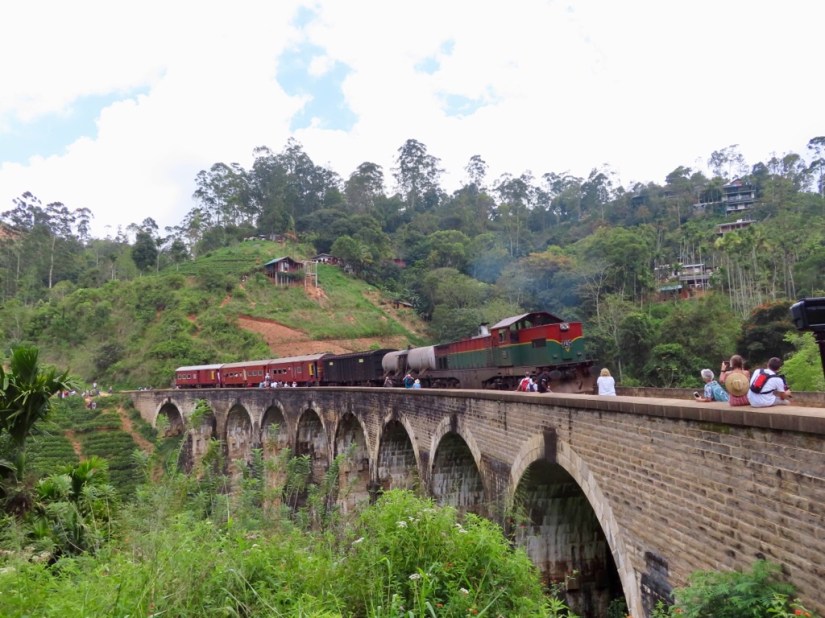


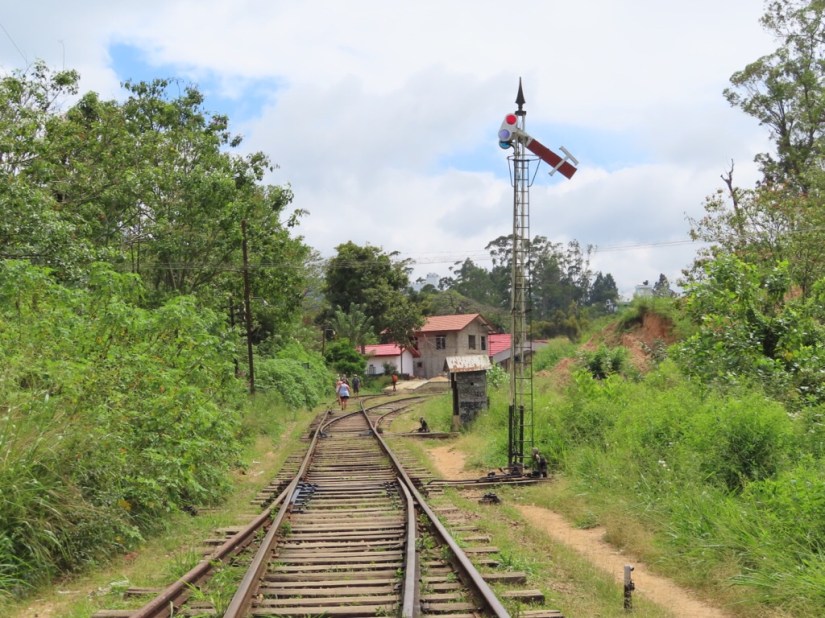
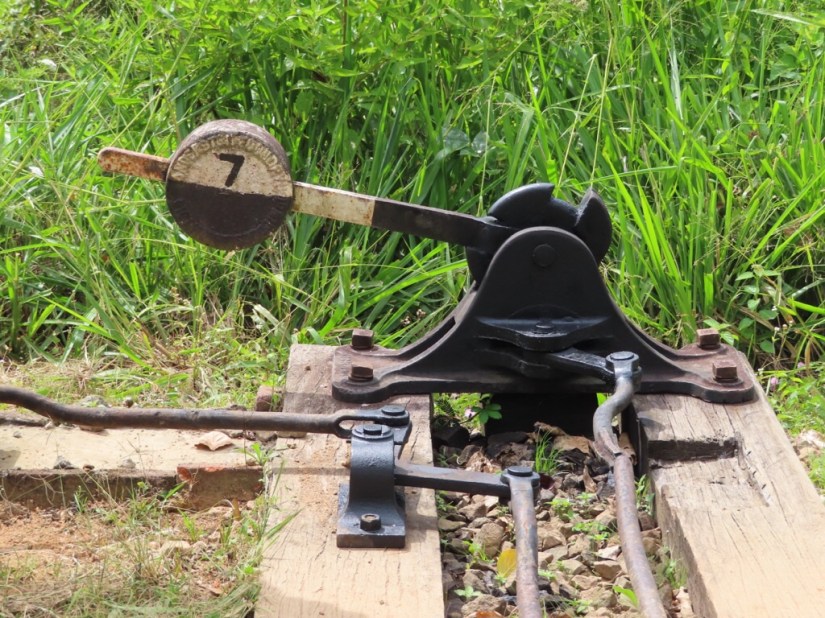
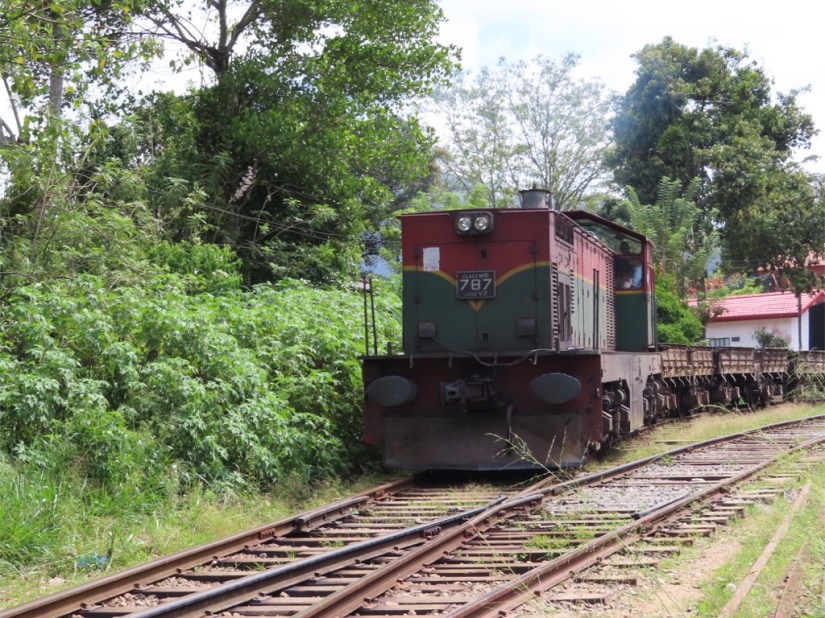



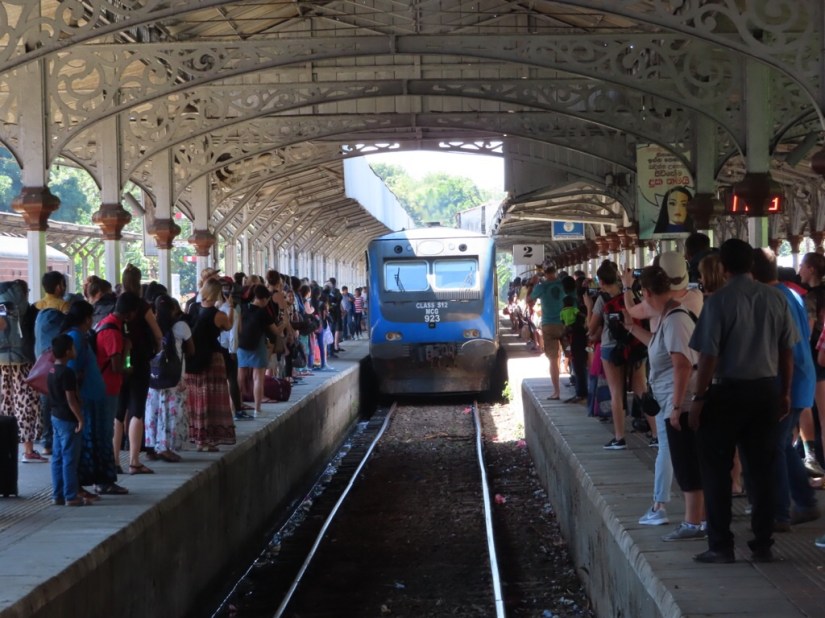
 Our train was eagerly awaited, arriving 30 mins late, but we were soon on board and settled into our reserved 2nd class seats for our 4.5hr train ride up into hill country.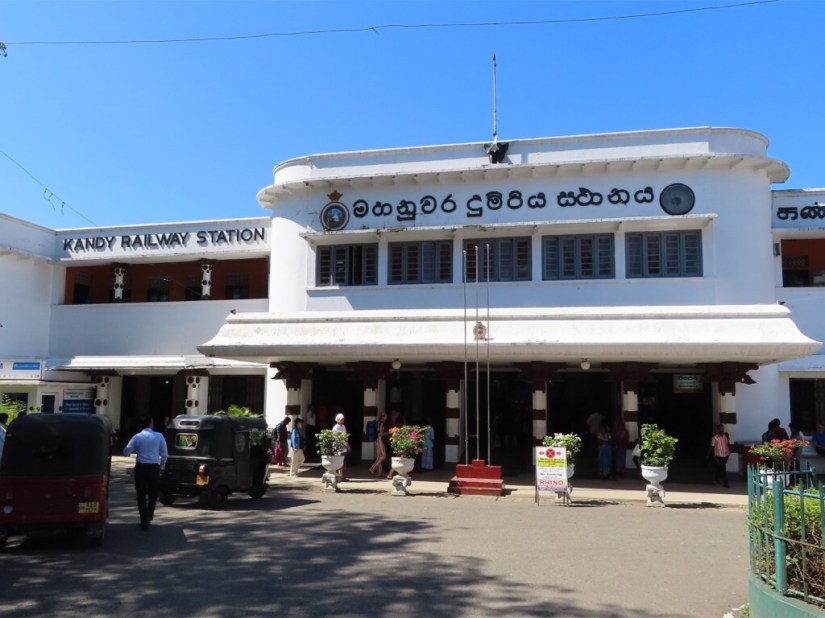

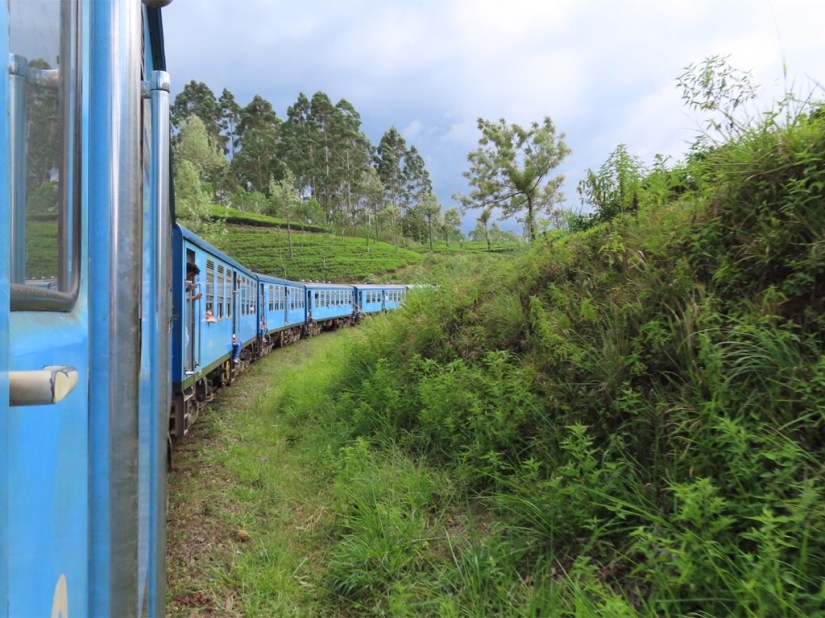
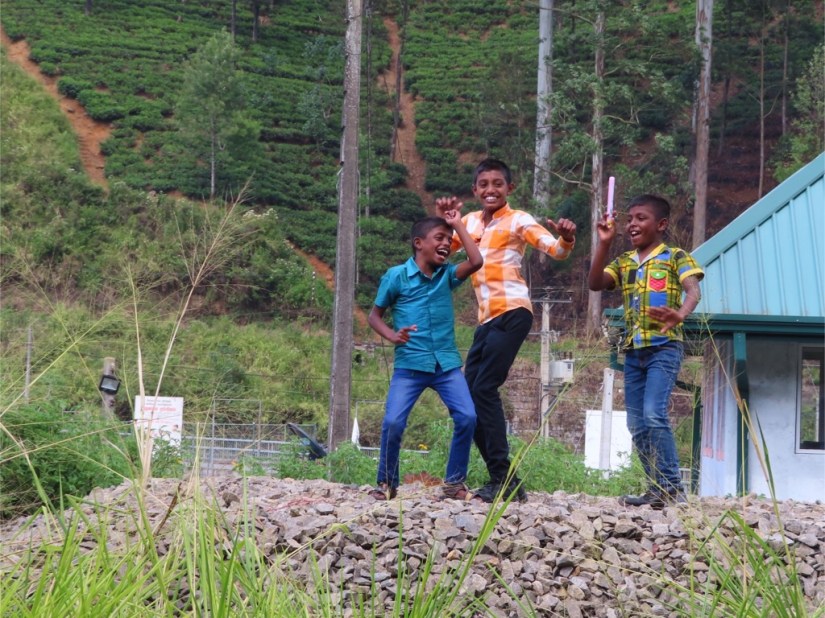
 We stopped at several stations with cheerful well wishers …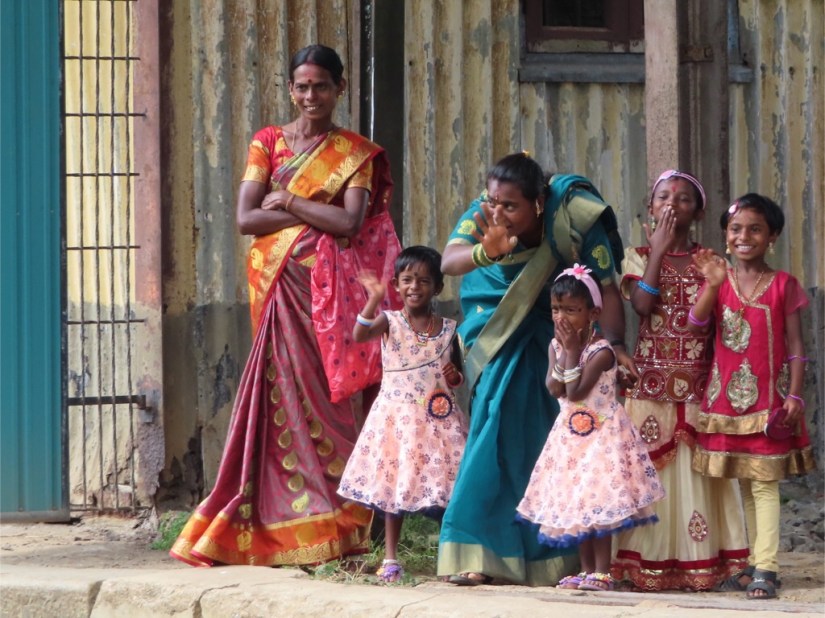

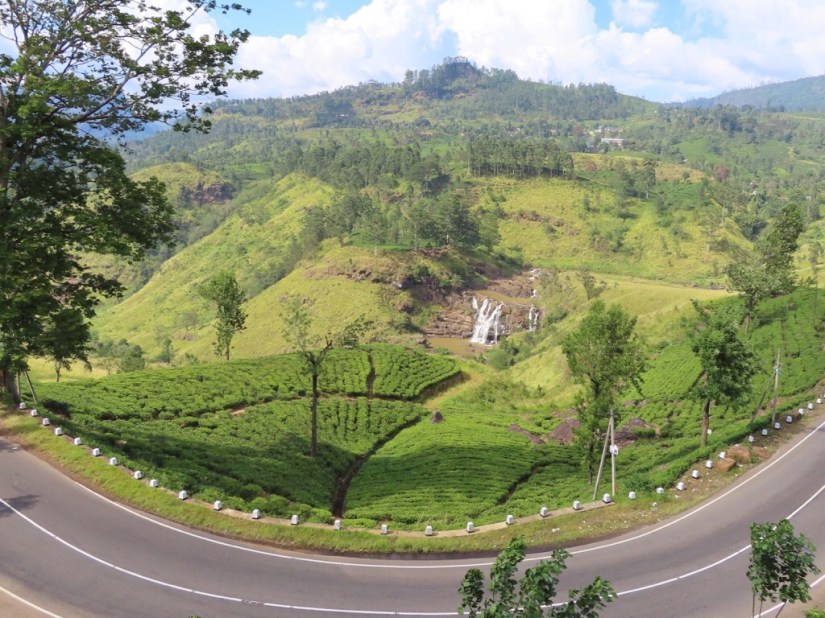

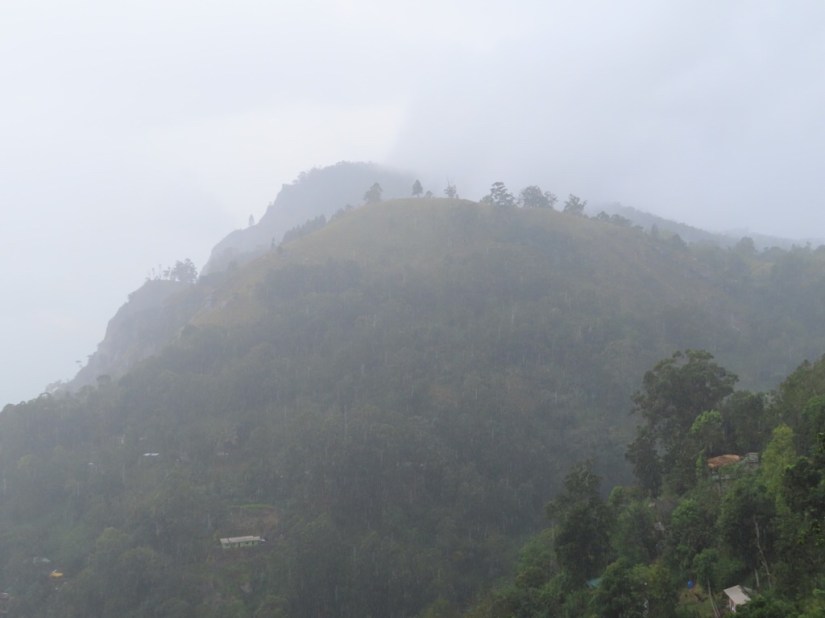
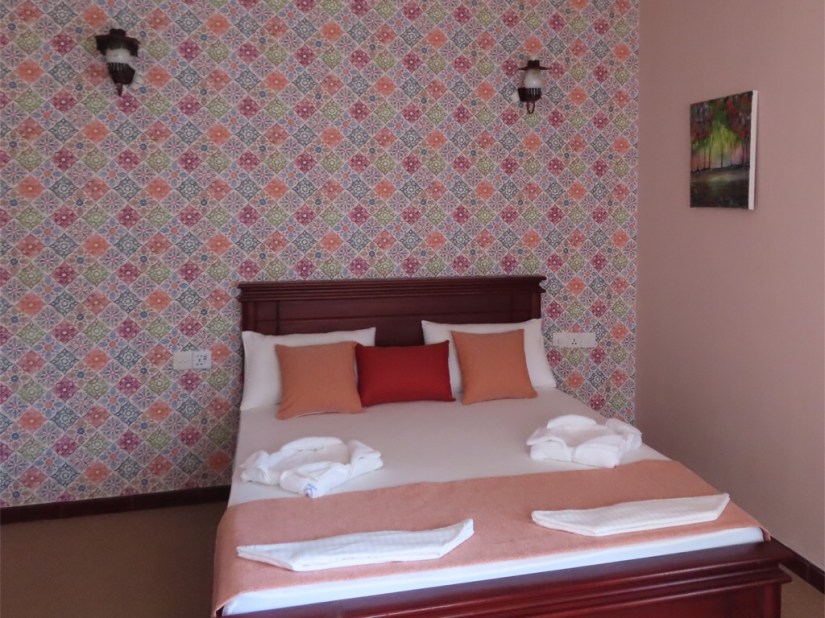
 We were pleased to arrive at Leisure Mount View Holiday Inn just outside the town and relax with a cup of tea on our balcony, although were slightly taken aback by the view as the cloud seemed to creep closer to us as we watched!



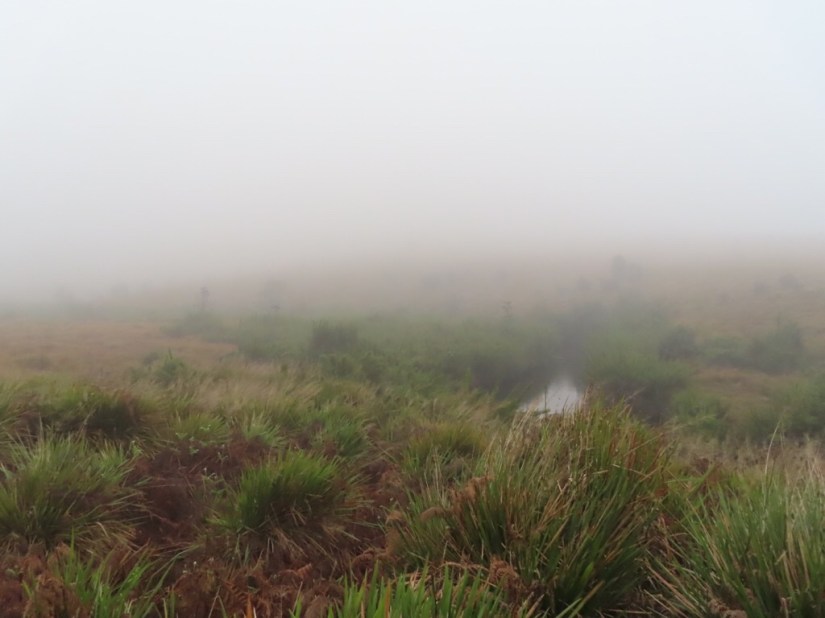
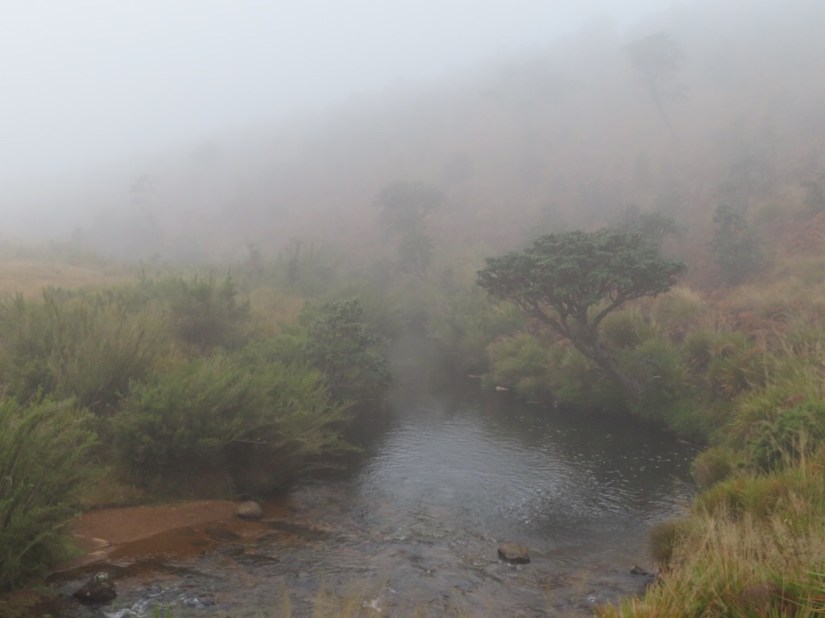
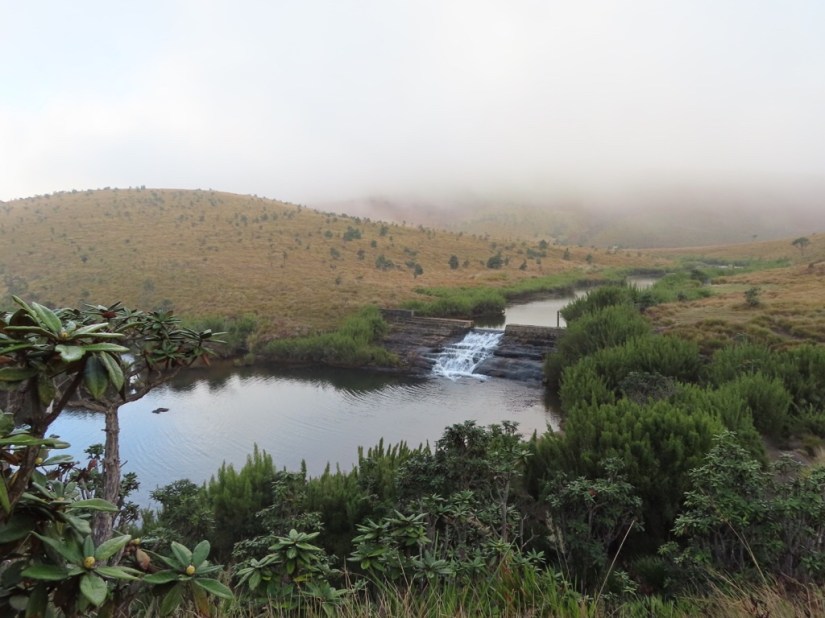
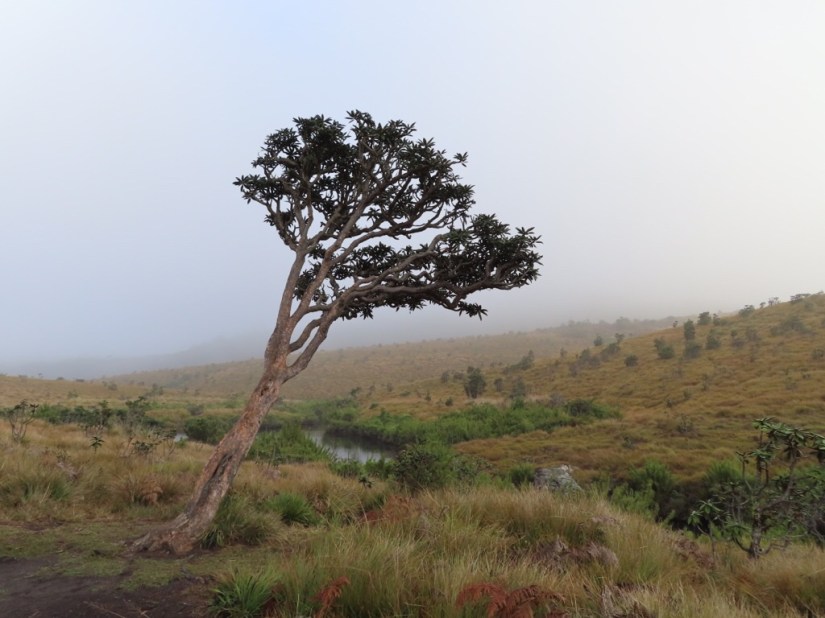

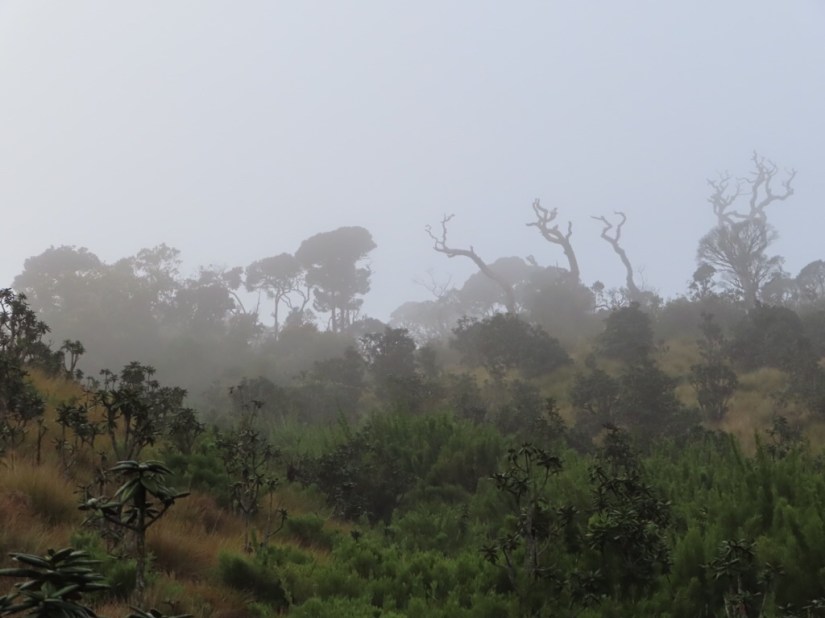


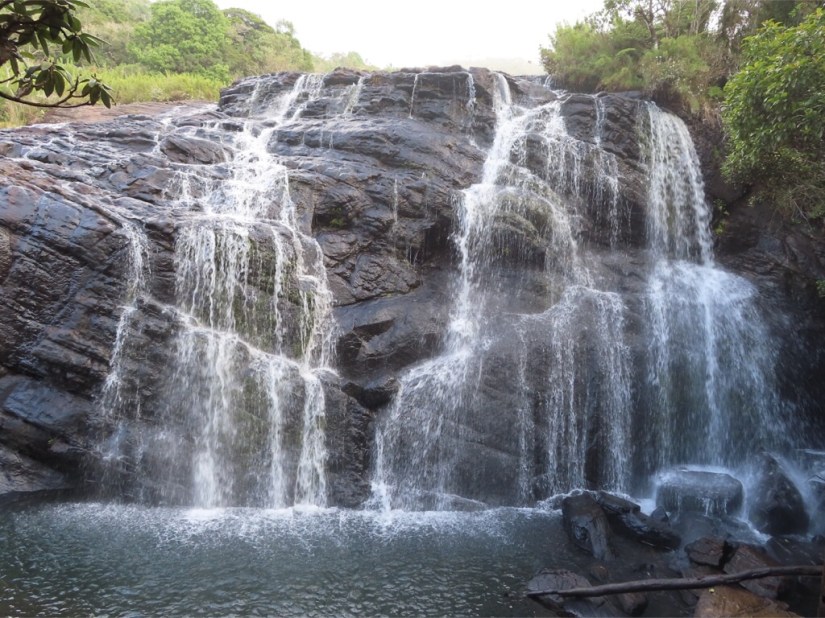


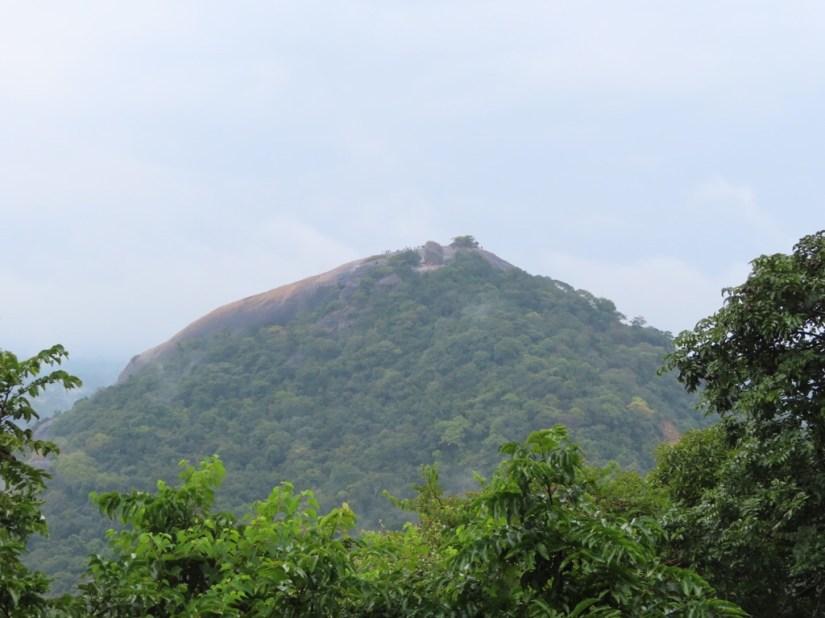
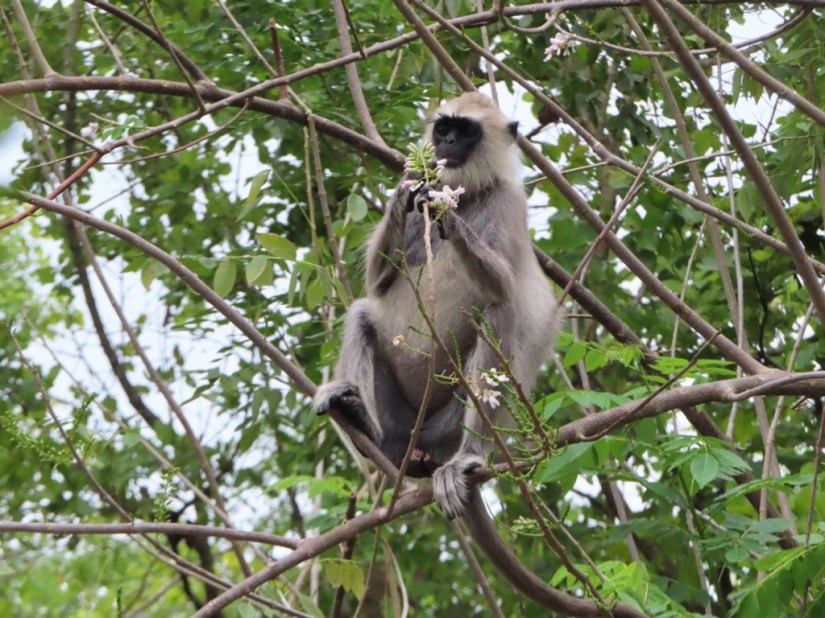
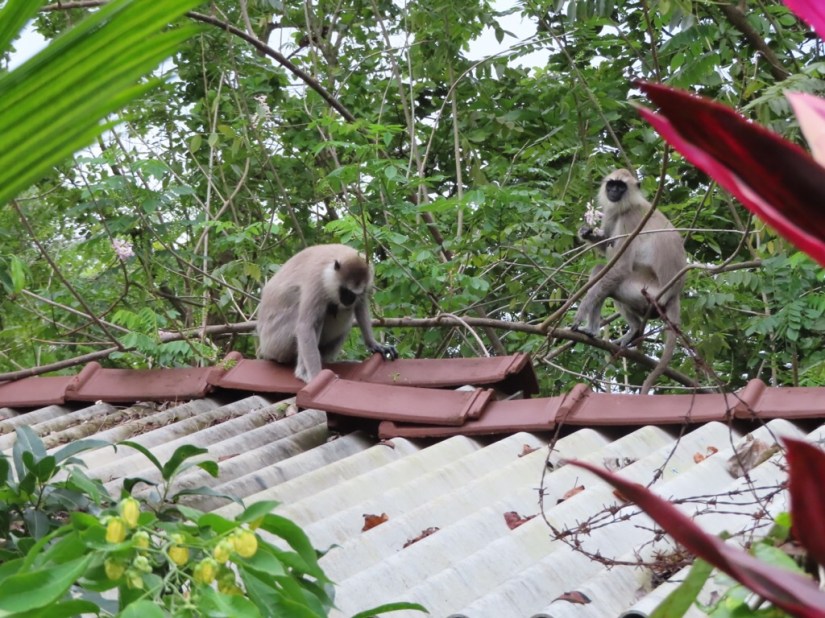
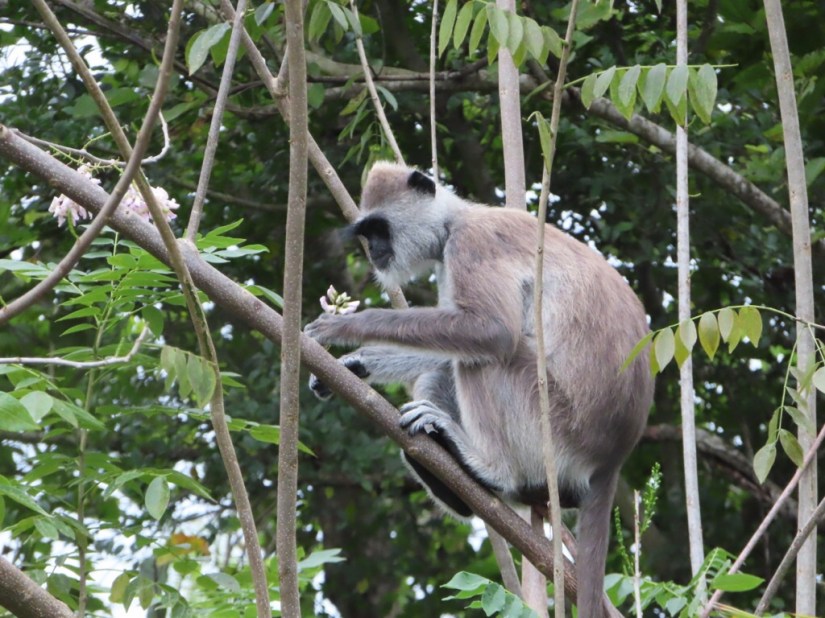
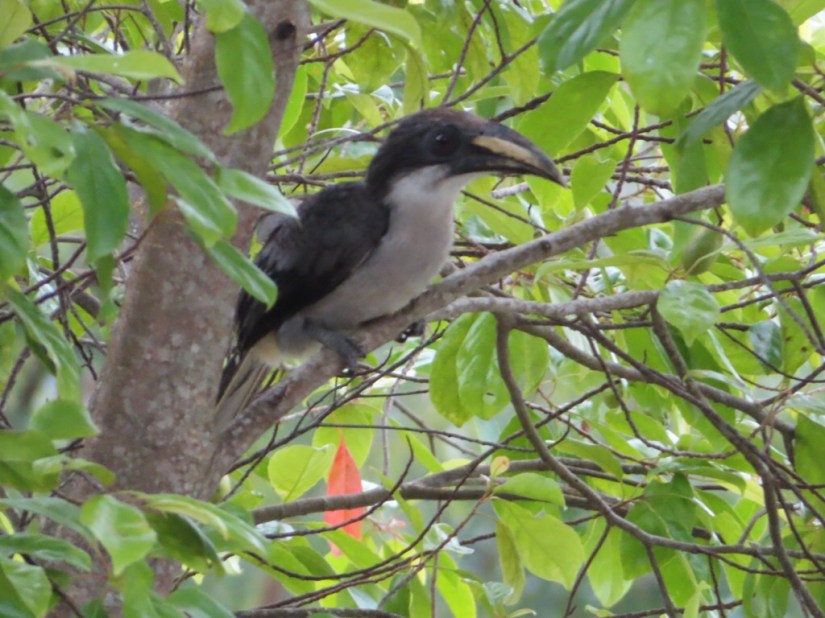
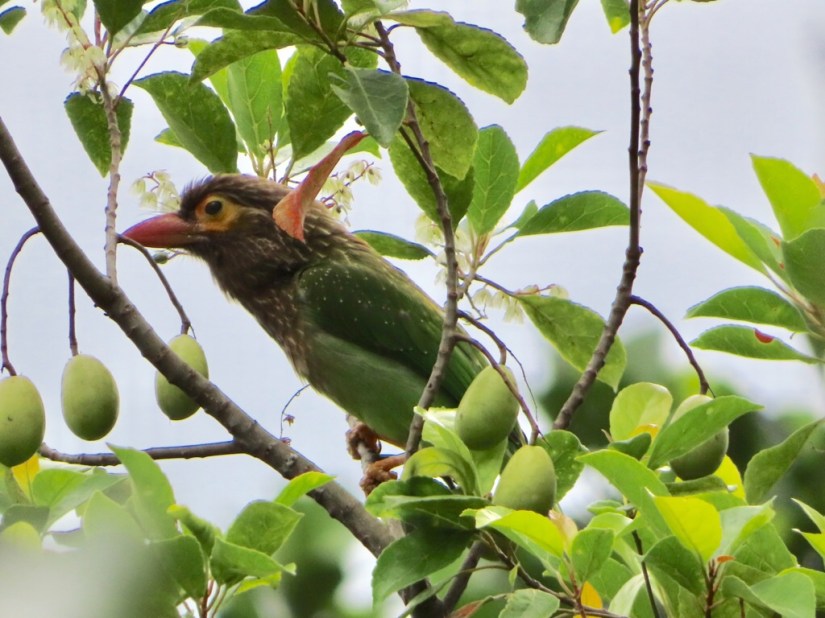
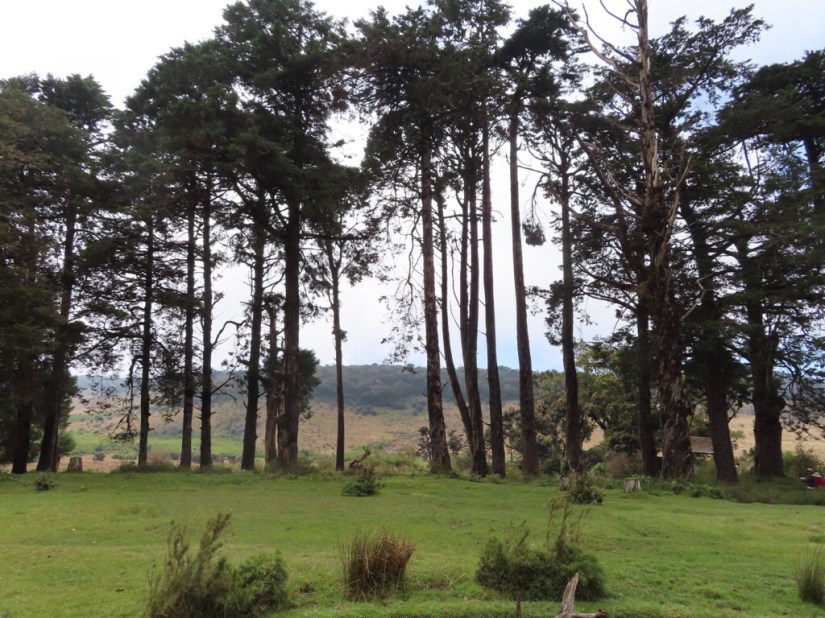
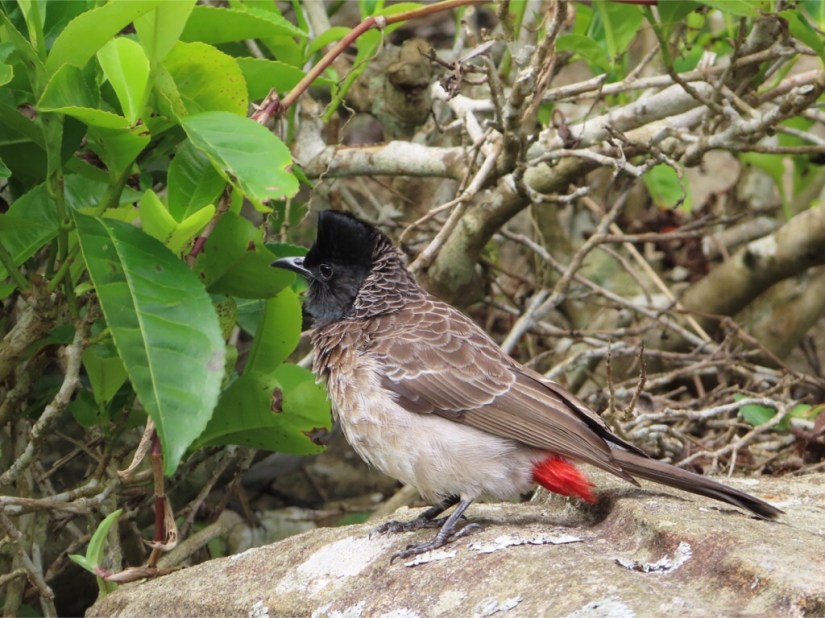
 As for wildlife … well the elephants which once lived on the plain are long gone but we did see a sambar deer and were very lucky to spot a rare purple faced langur.

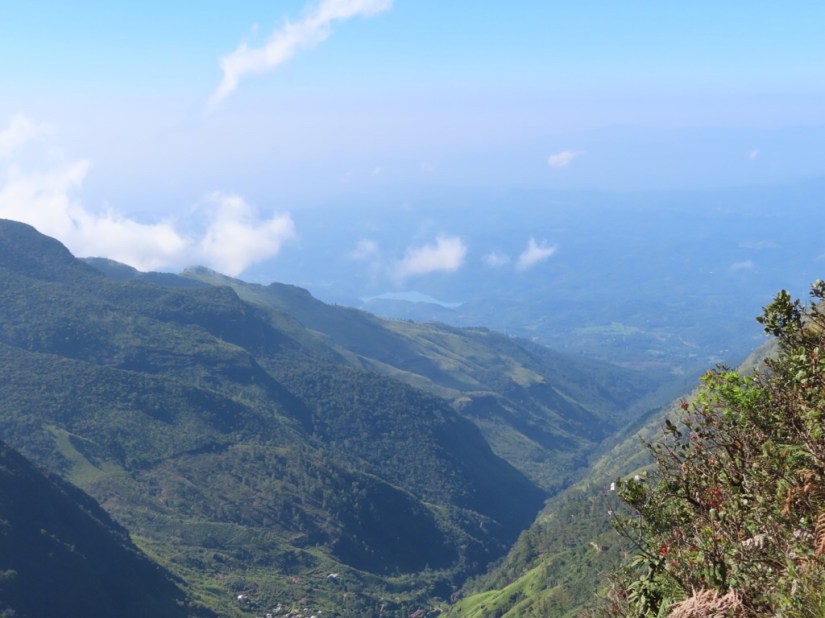


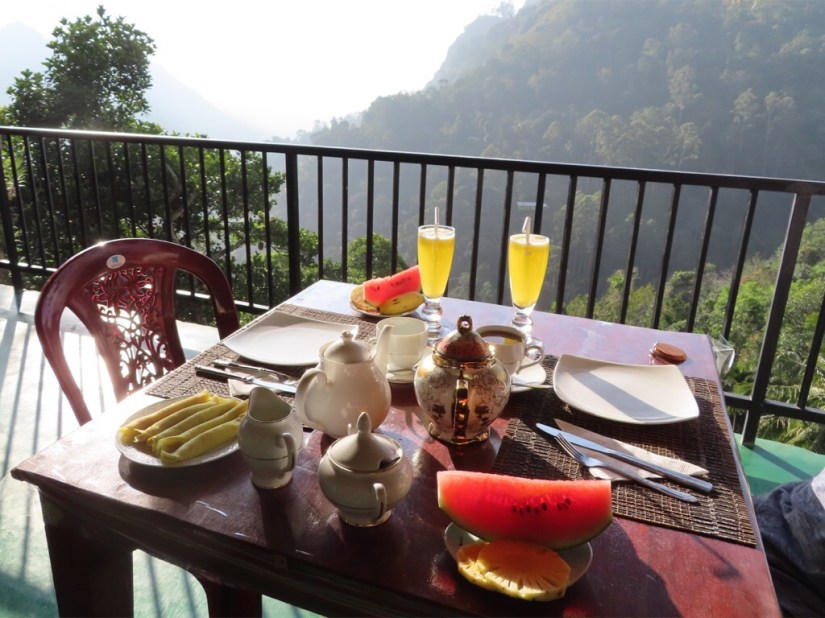
 After a breakfast of string hoppers – little patties of rice noodles – served with dhal and fried eggs, we went on a tuk-tuk day out.








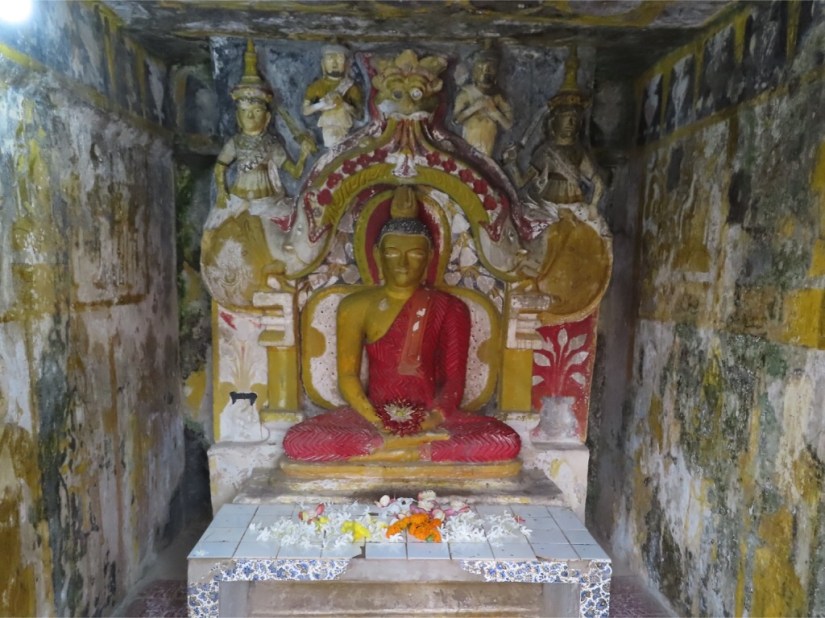
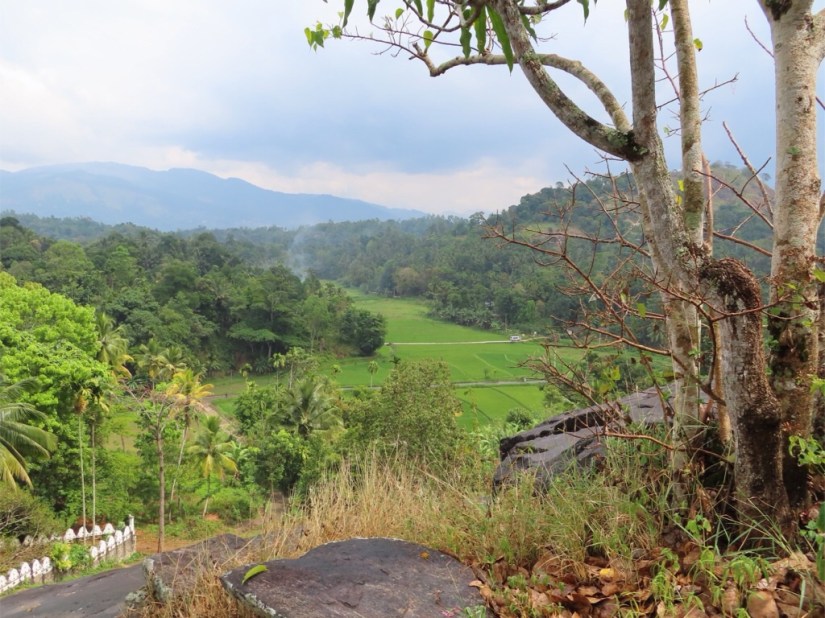


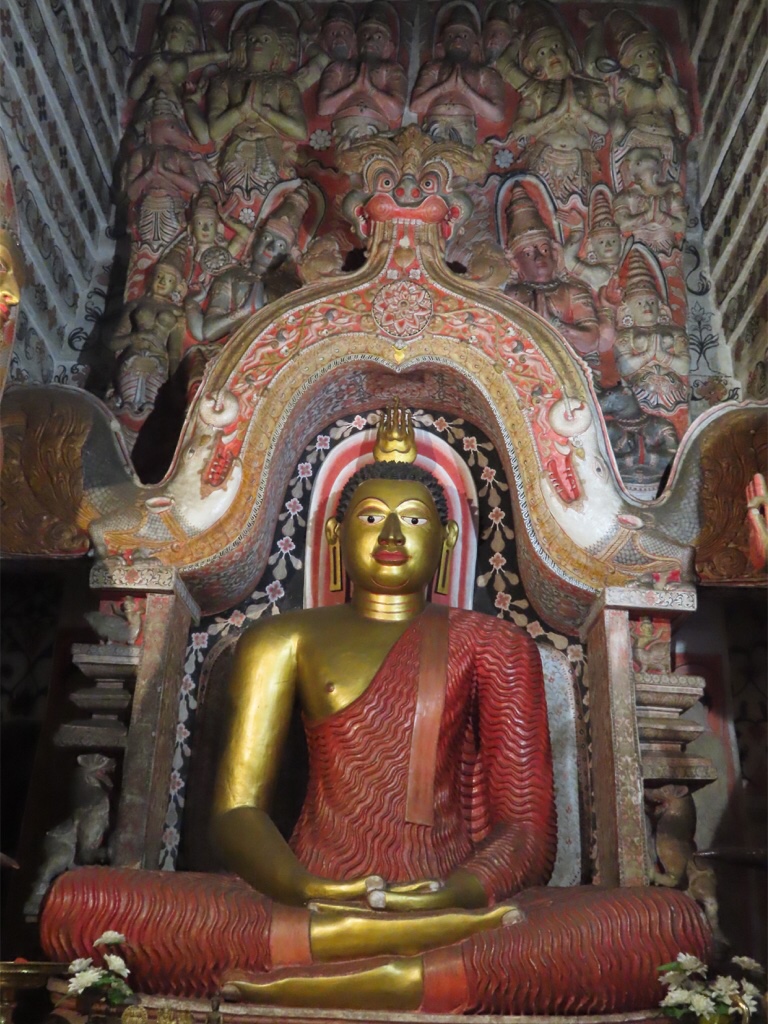
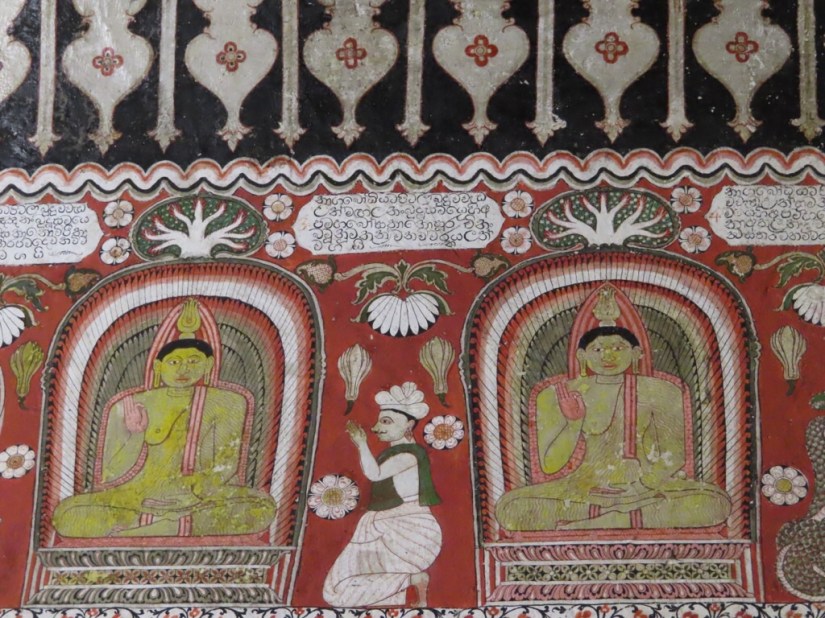







 We decided to take a chance on the local bus but got a tuk-tuk to the bus station so we could guarantee seats and get our luggage stowed. The journey took about 4hrs, but the seats were comfy enough and the open windows and door gave a breeze. There were cheerful tunes playing all the way, and every time we braked, a row of shrines at the front lit with flashing lights! Hawkers got on, sold their wares and got off at the next stop but before long there was little standing room left. And the price of the ticket … 203 rupees each or 88p!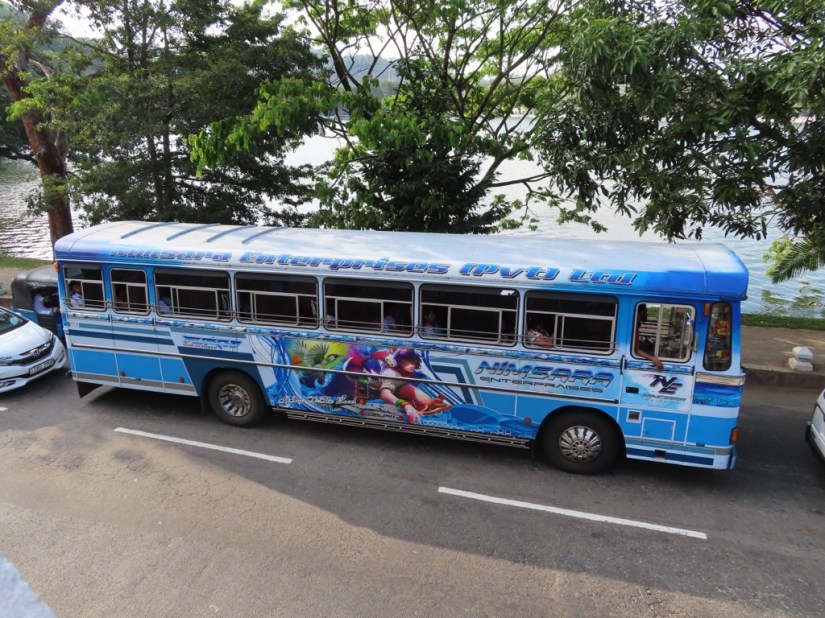
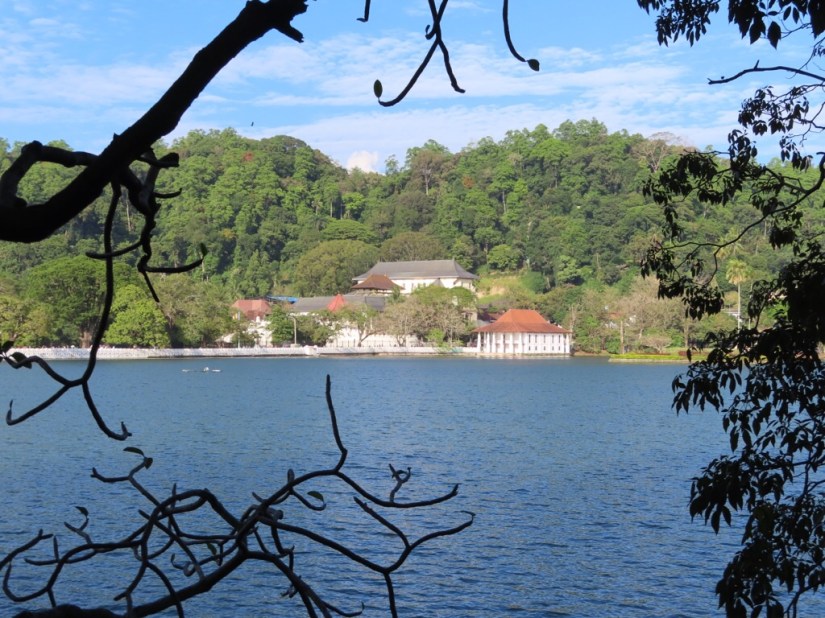
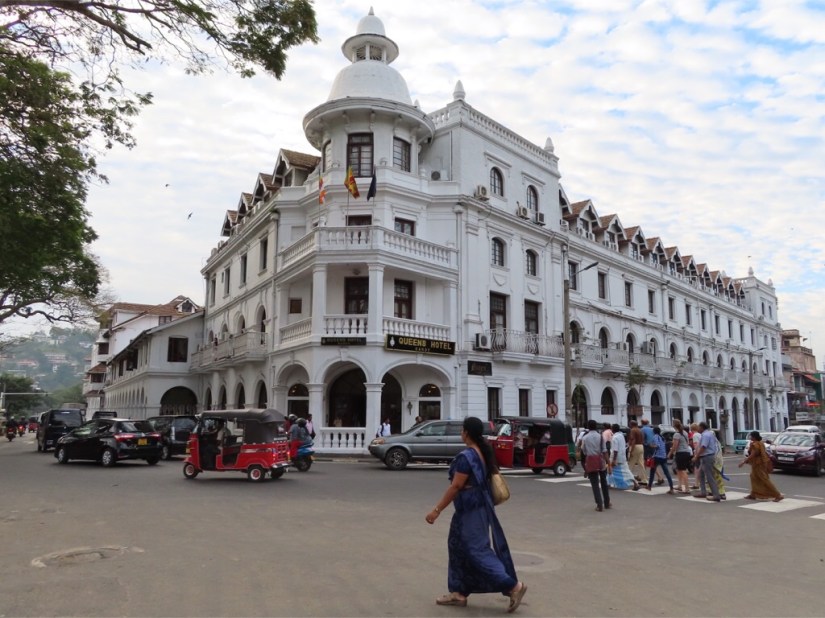
 So as I said, the Sinhalese established a new capital further south, well they actually tried out several places finally ending up in Kotte near Colombo … meanwhile the Tamils made a capital in Jaffna in the north… and then a member of the Kotte royal family established a third kingdom in Kandy. It remained the last independent bastion of the Sinhalese long after the rest of the island had fallen to the Portuguese and then Dutch. When the British arrived, and due to the cruelty of the last king of Kandy, the Kandyan chiefs handed over sovereignty in 1815 in return for their laws and customs being preserved. A later Kandyan rebellion was subdued and Kandy became an important centre for British rule and trade. Since Independence in 1948, Kandy has thrived as Sri Lanka’s second city and cultural capital.




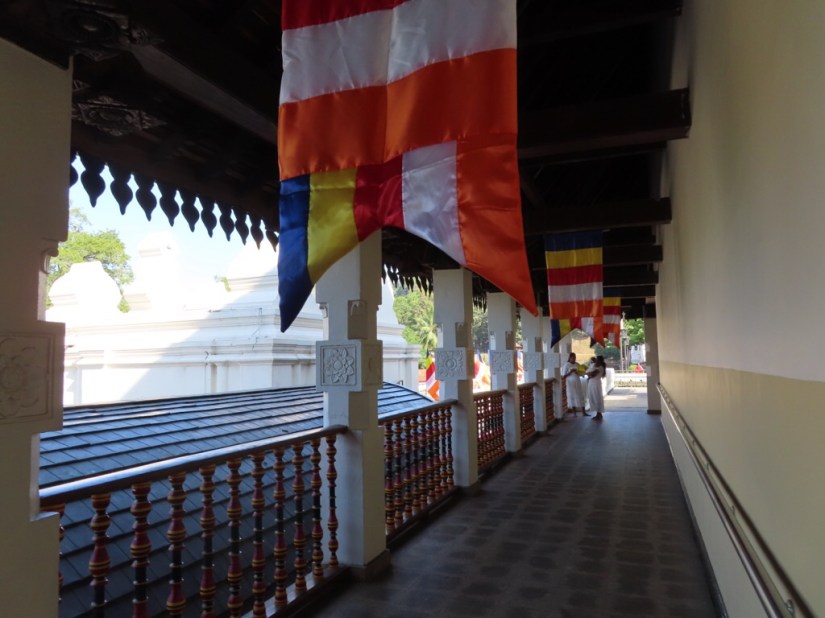

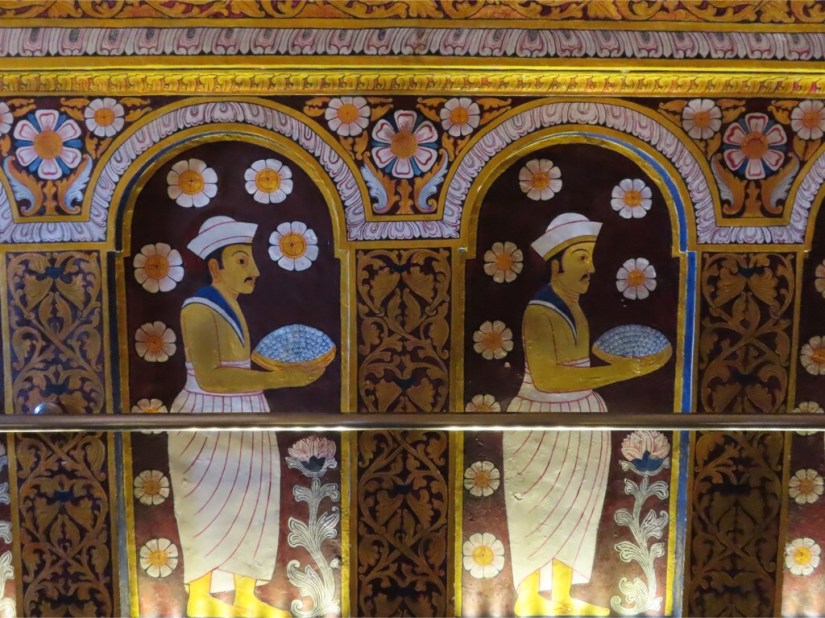

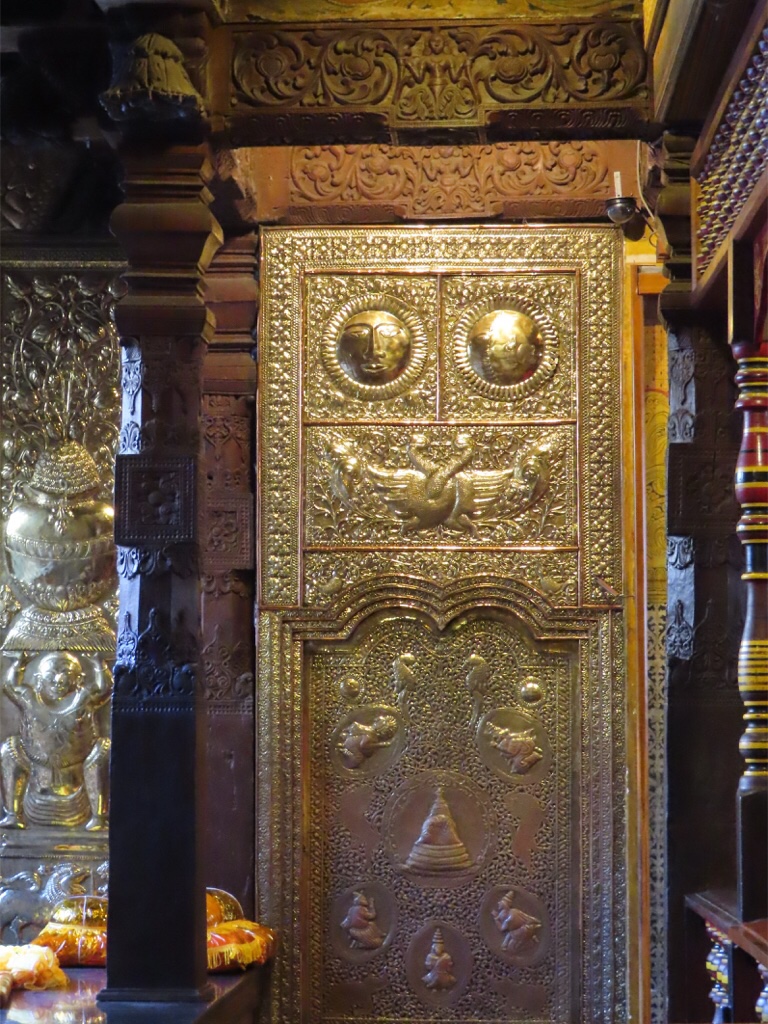


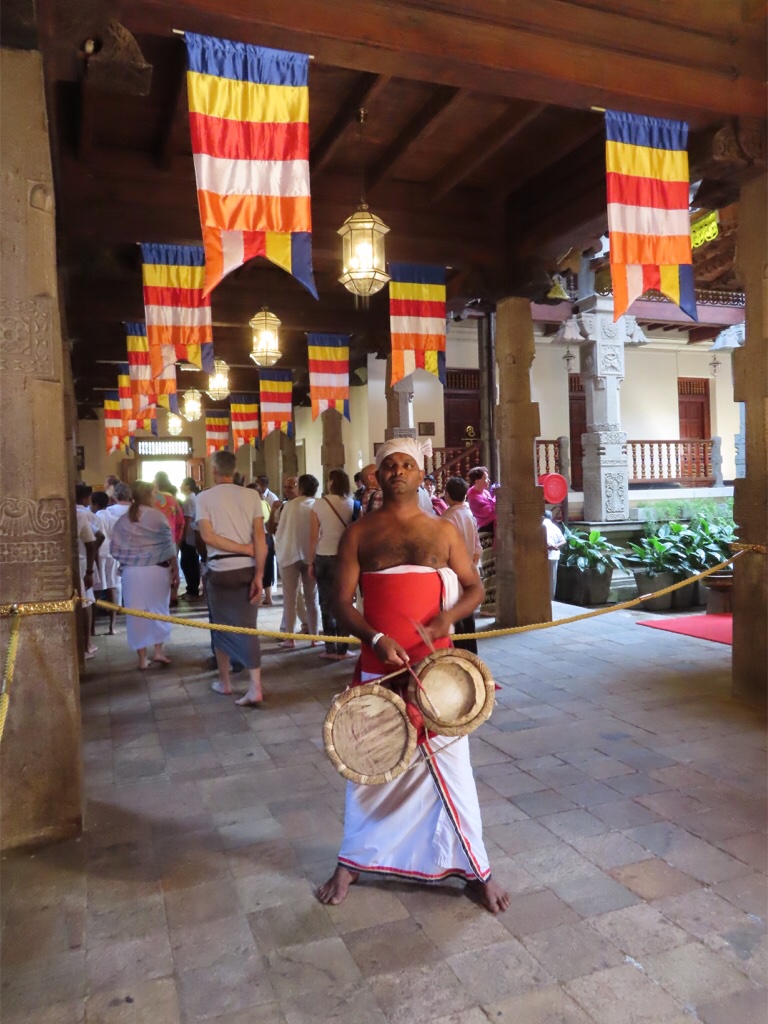








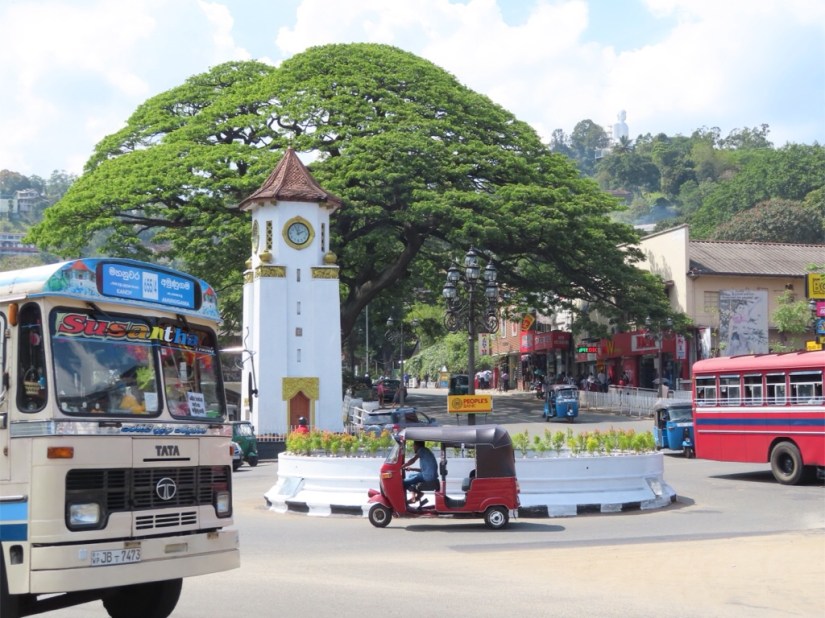


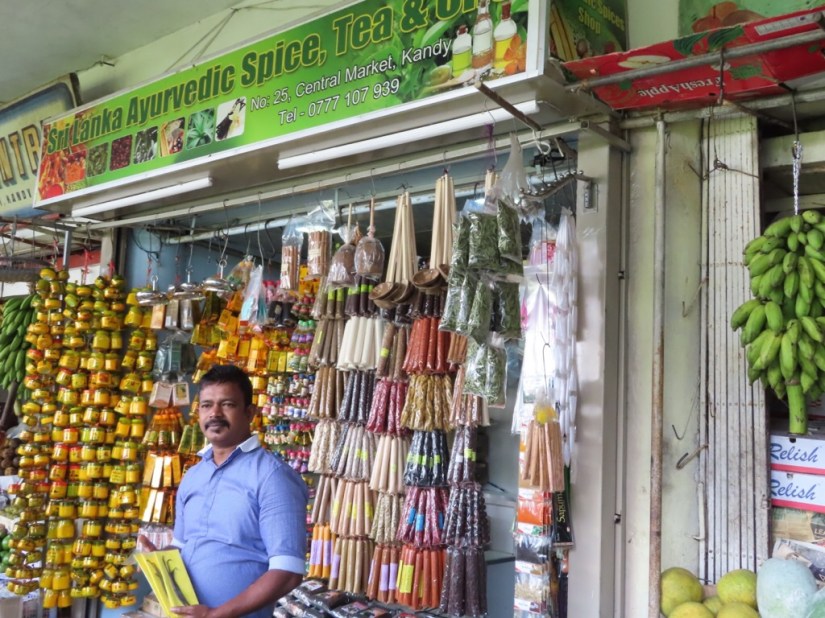
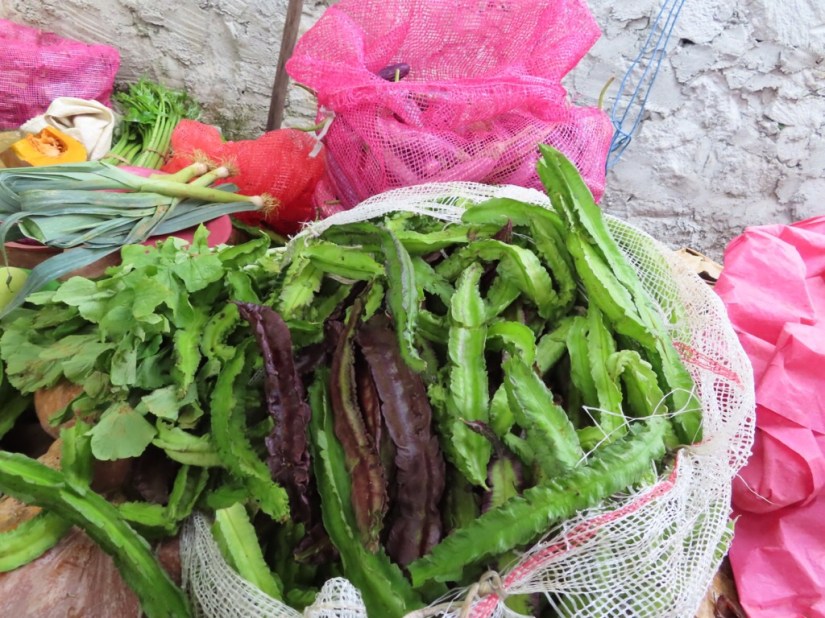
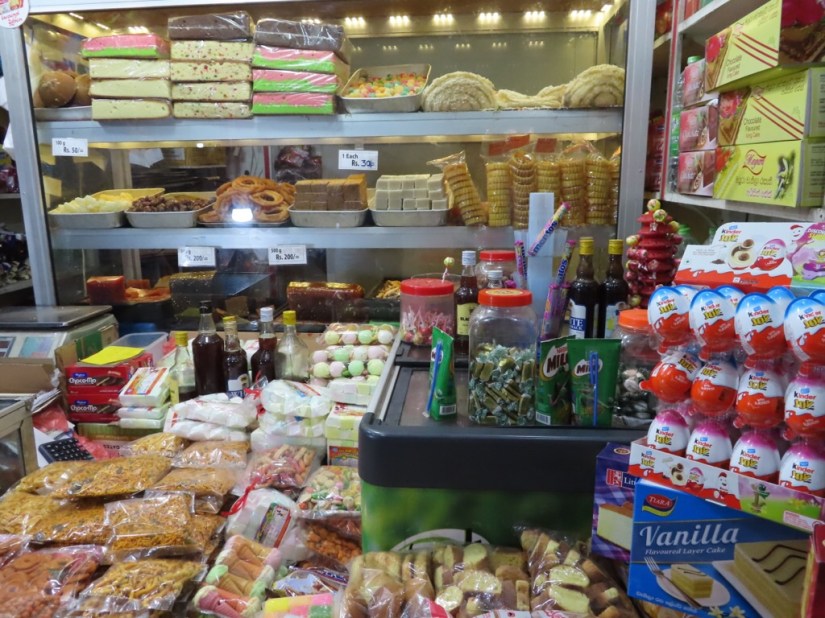


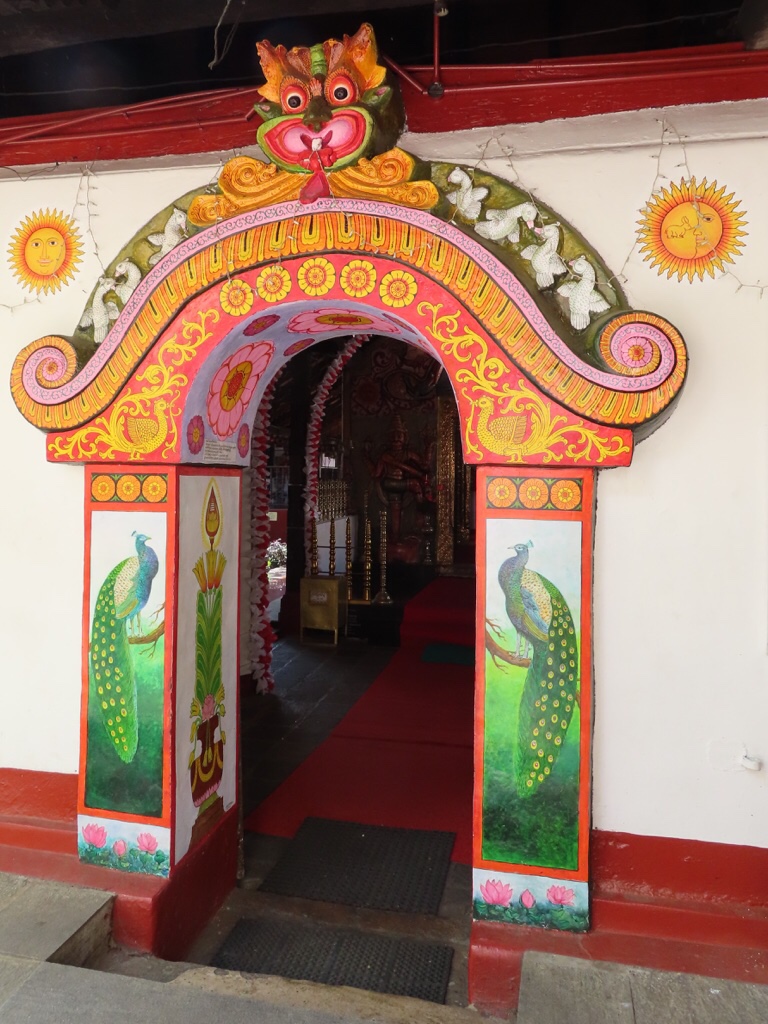


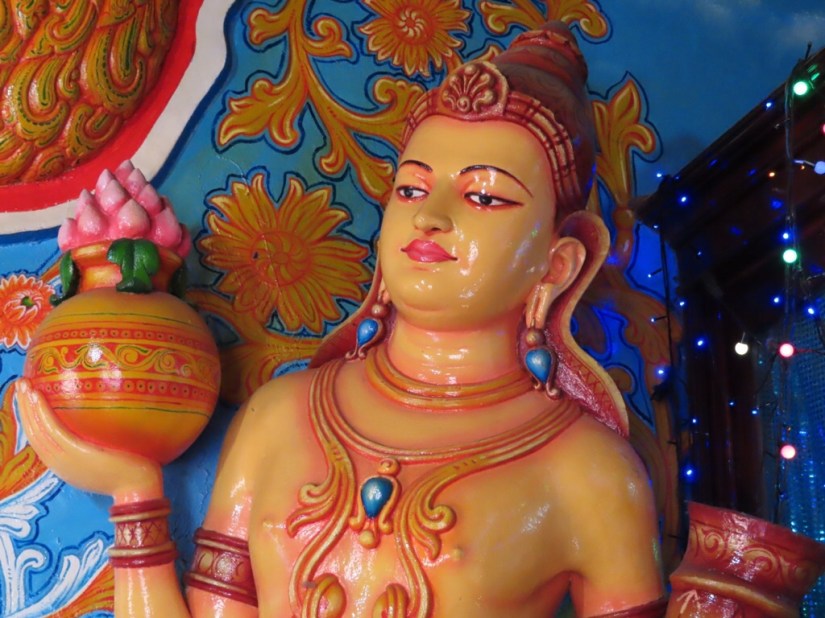
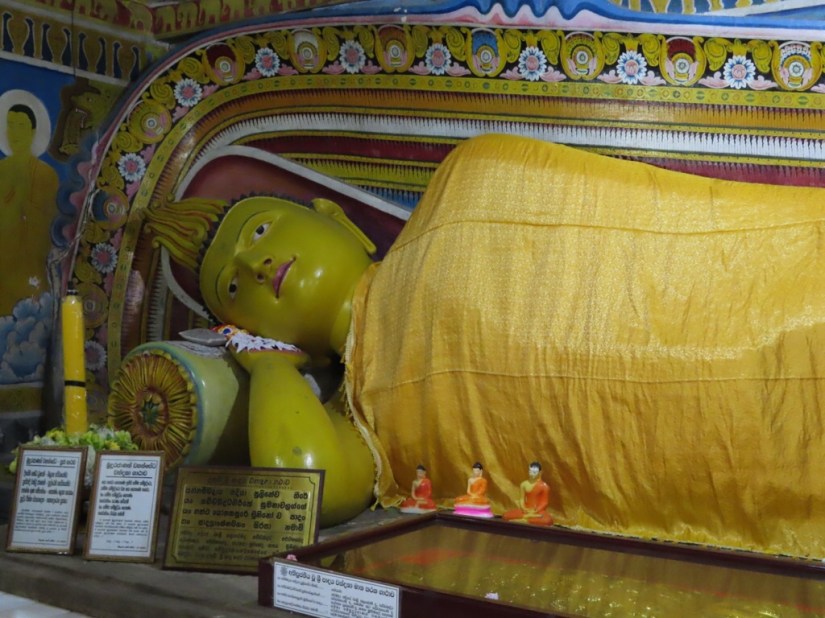


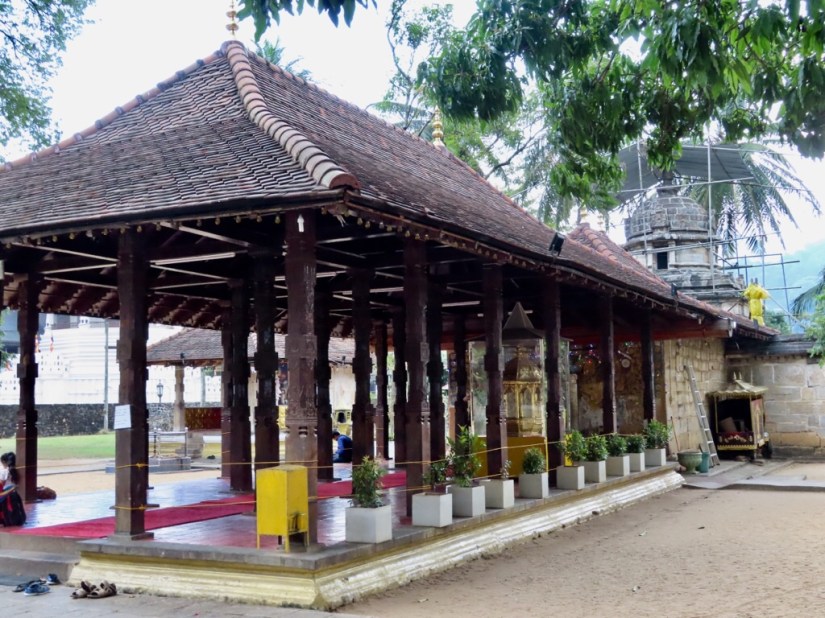


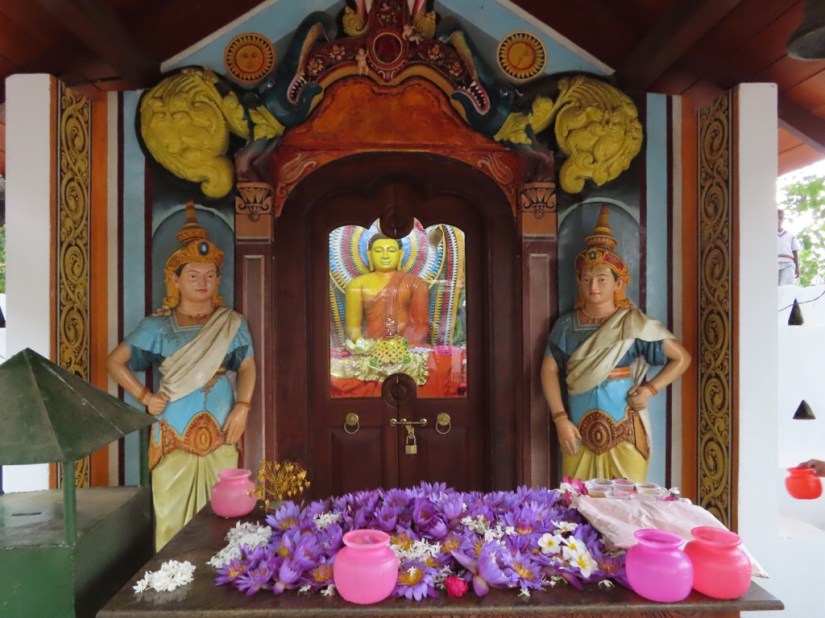
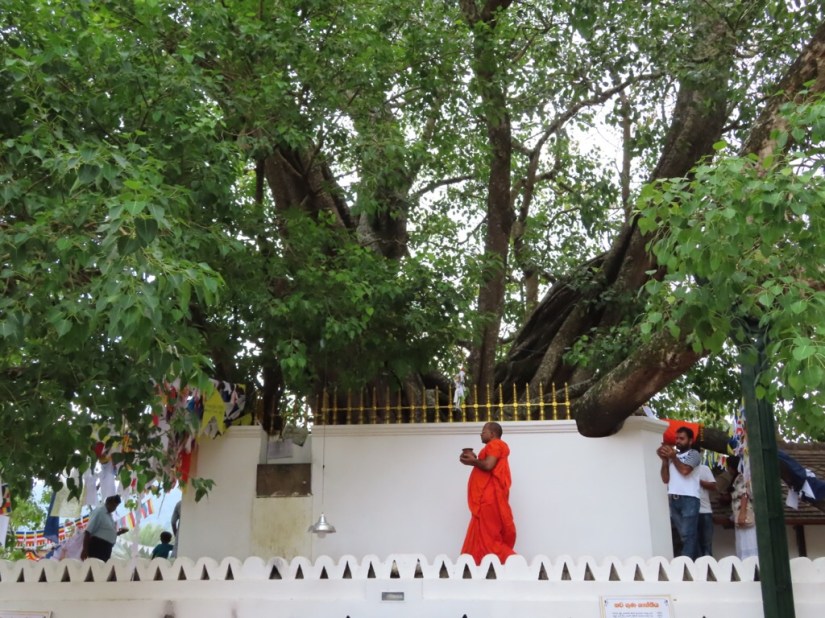
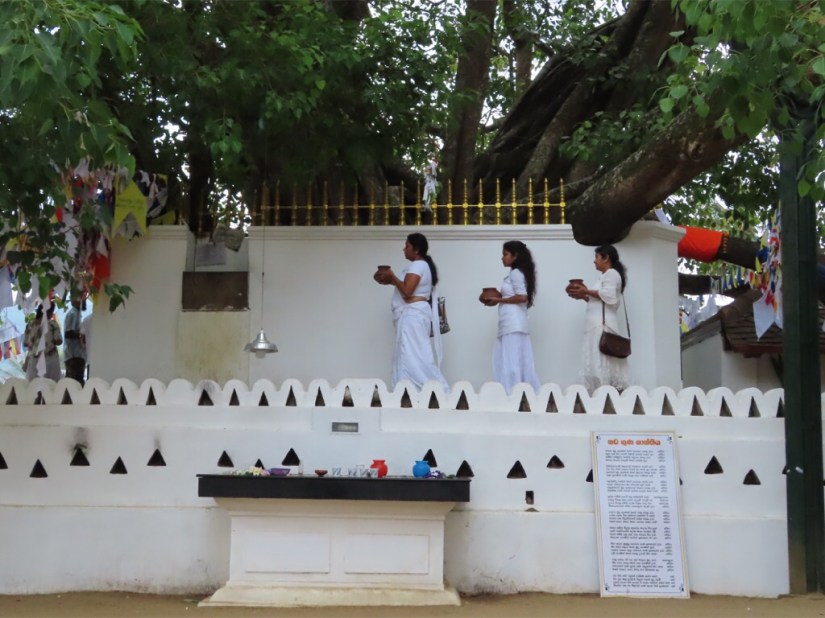
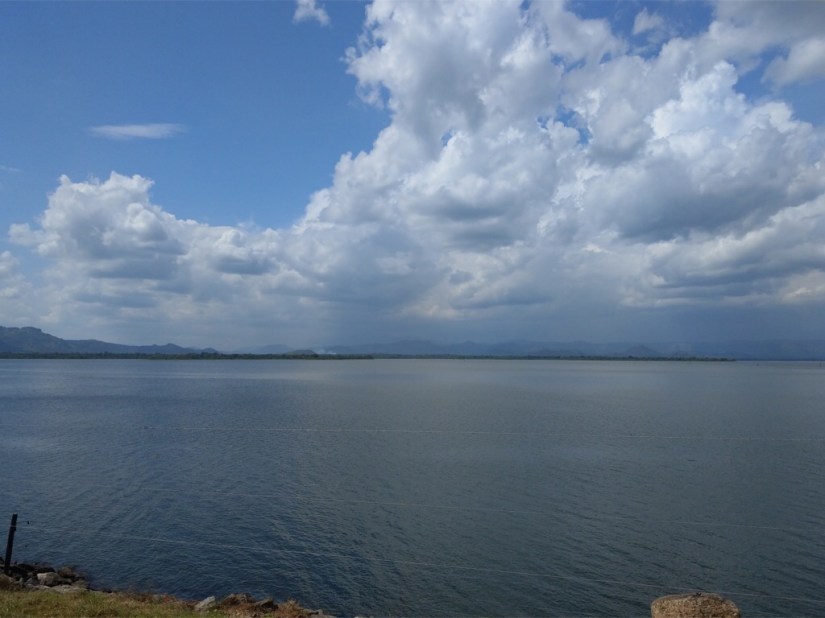
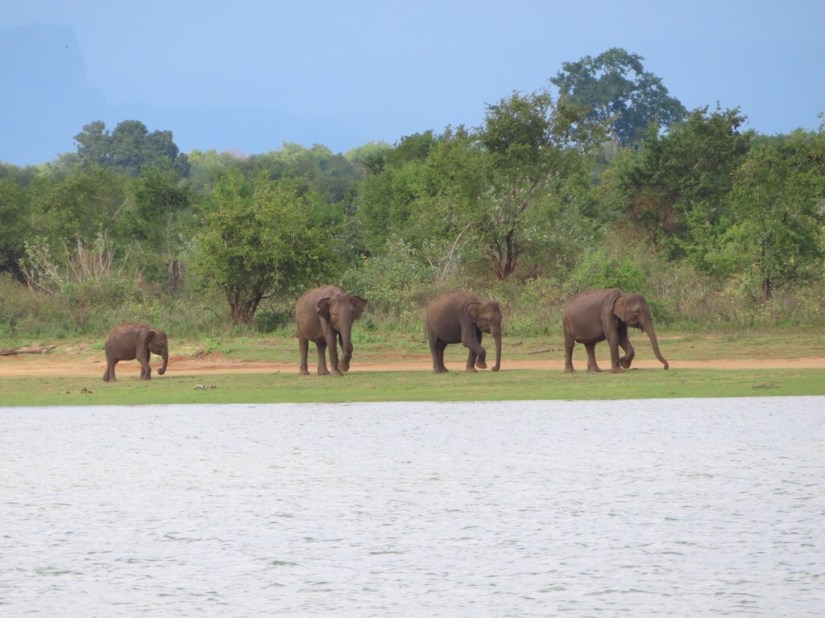
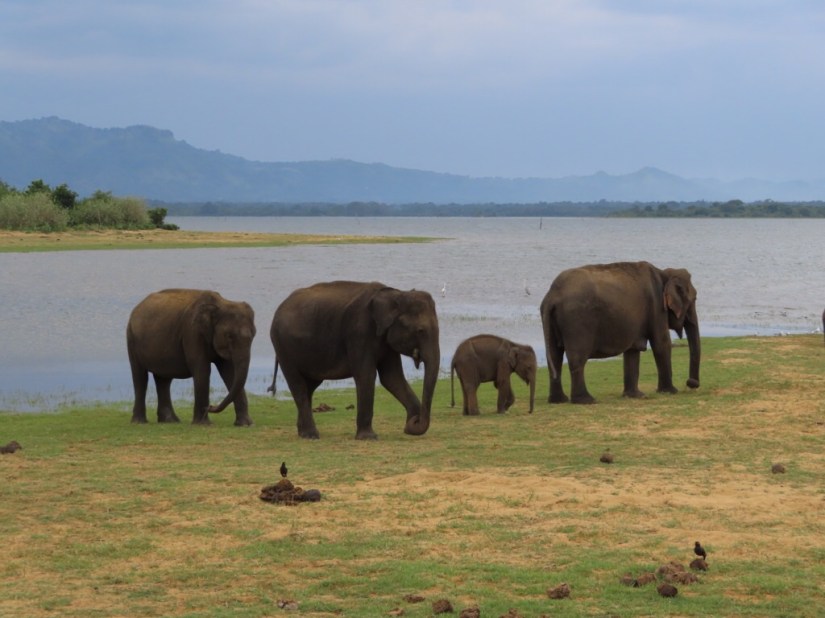
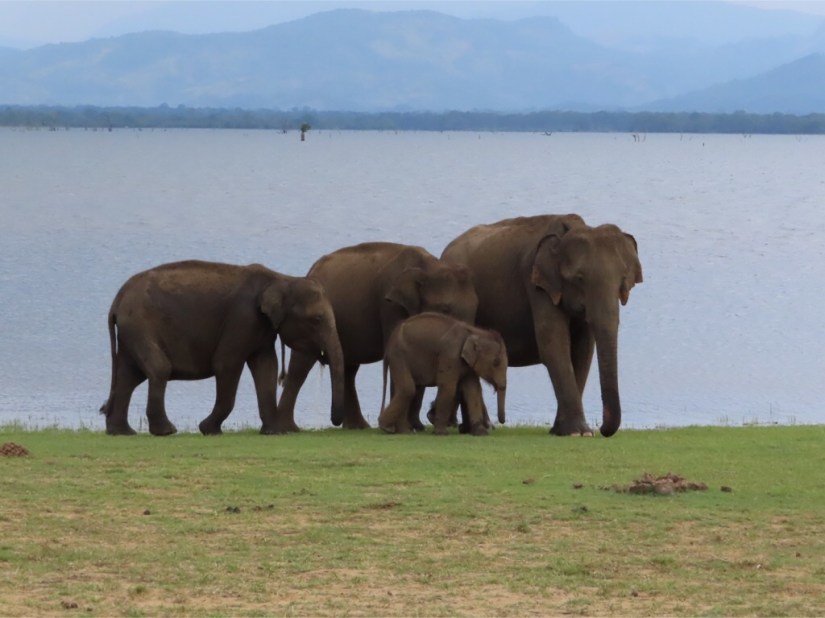
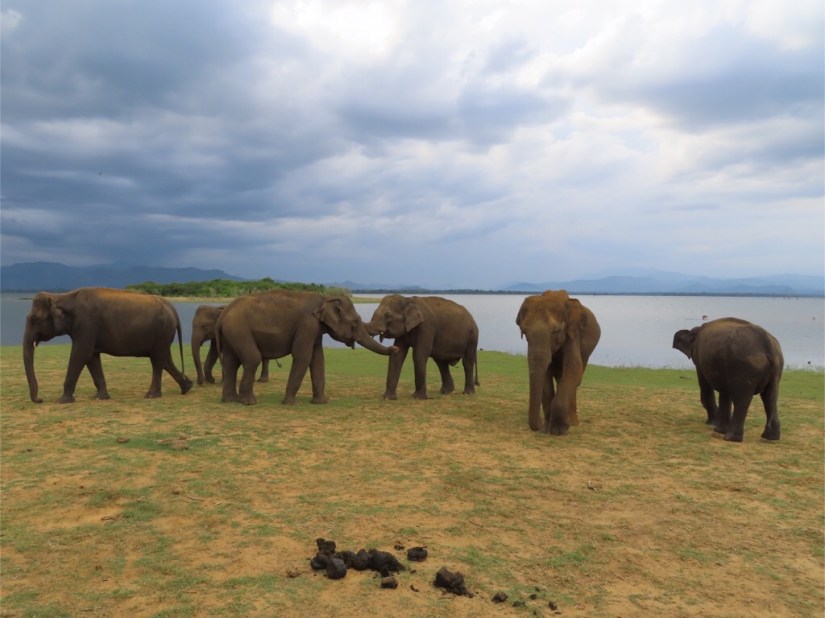
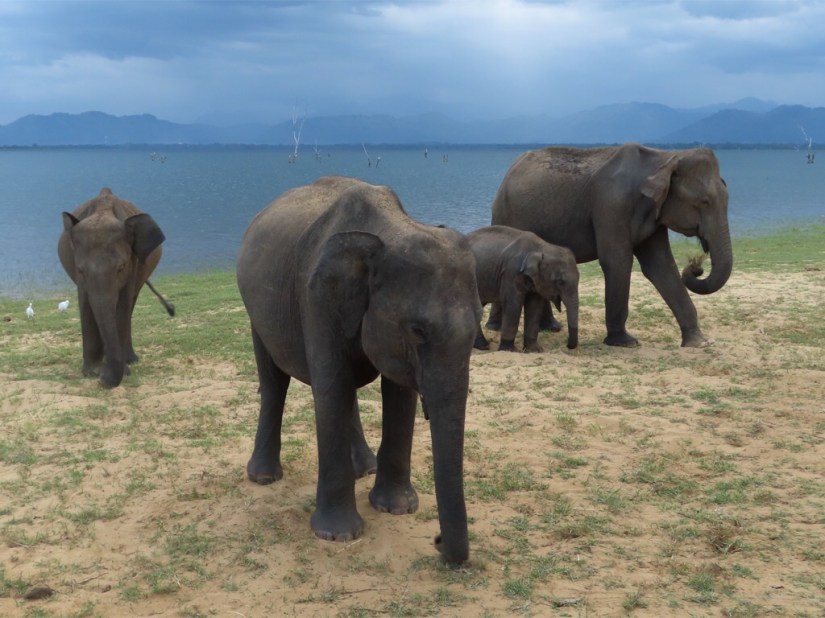
 Travelling again by tuk-tuk, our first stop was at a small roadside shrine to Ganesh, where our driver picked a stem with a few leaves and left it with some coins as an offering for a safe journey. Next stop was an ayurvedic herbal garden where Chris bought some red oil which he hopes will work wonders on his dodgy ankle. We were lucky enough to see a mother with two baby elephants as we passed the edge of Minnetiya Tank in the National Park …







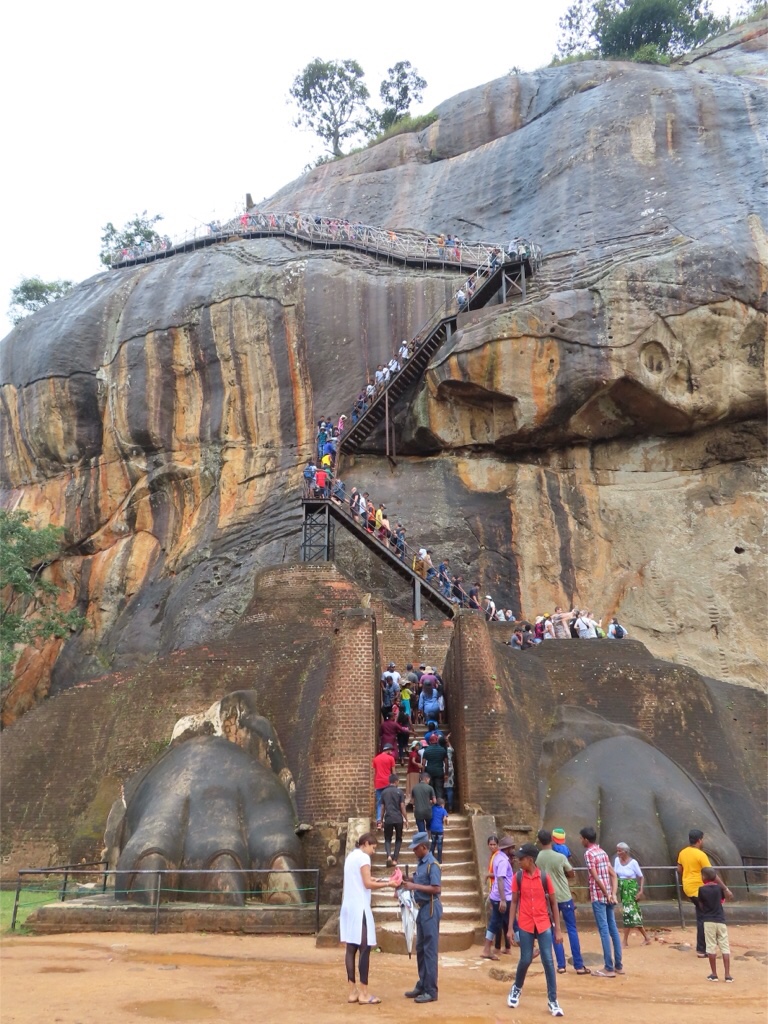
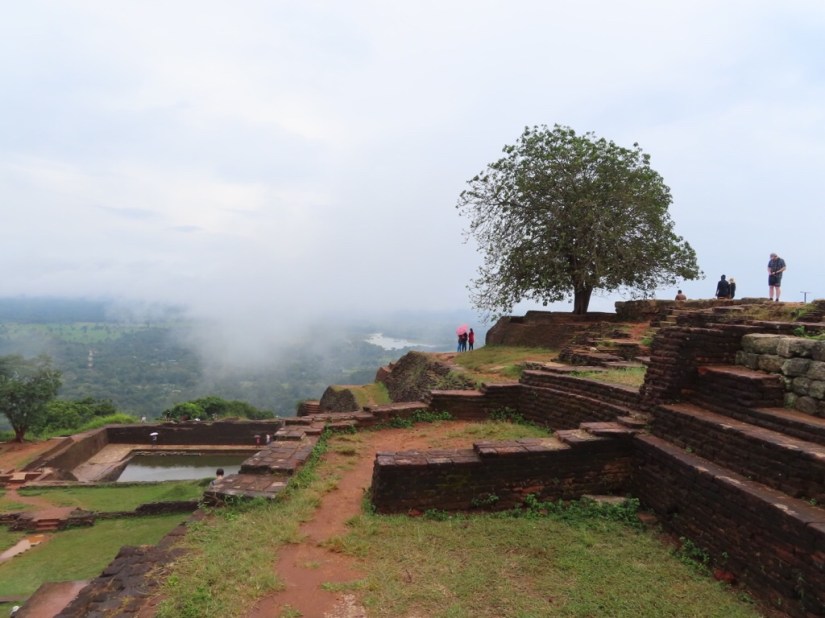
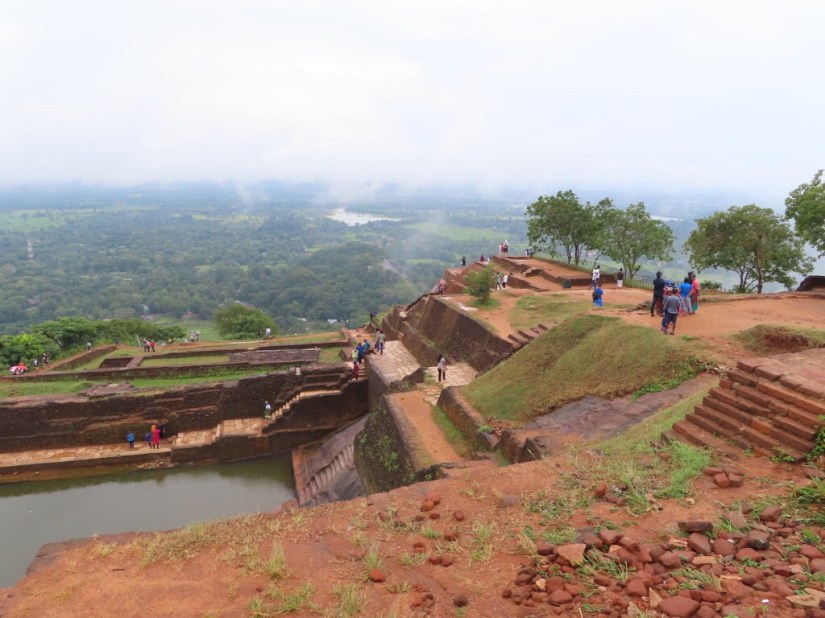
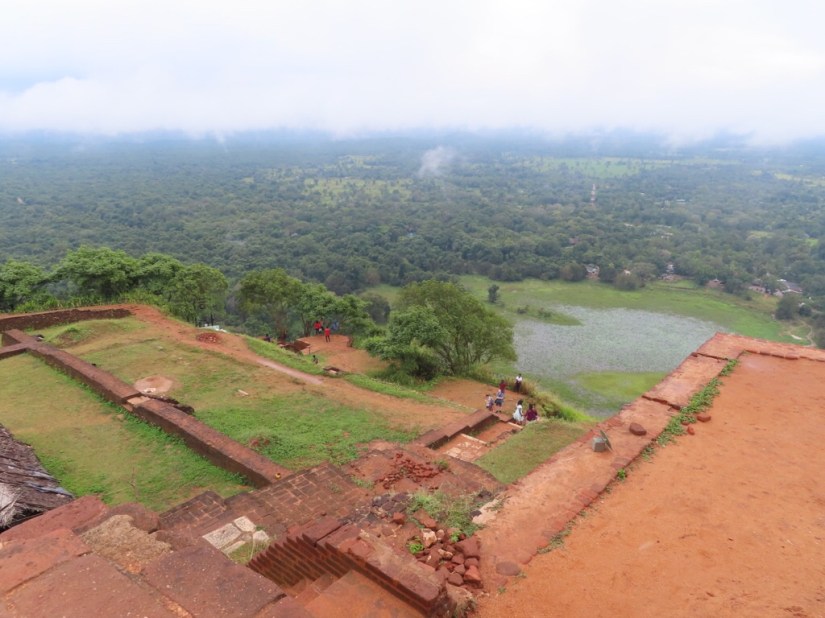
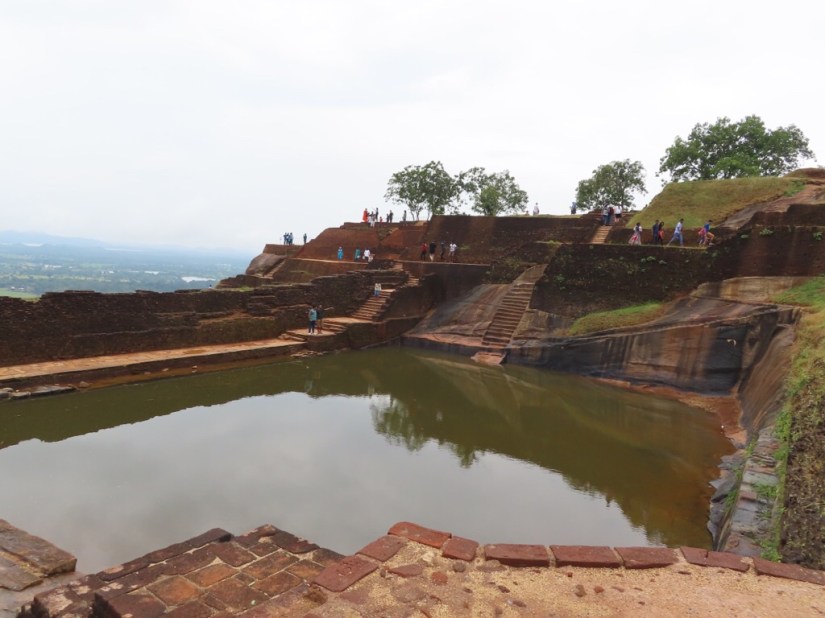
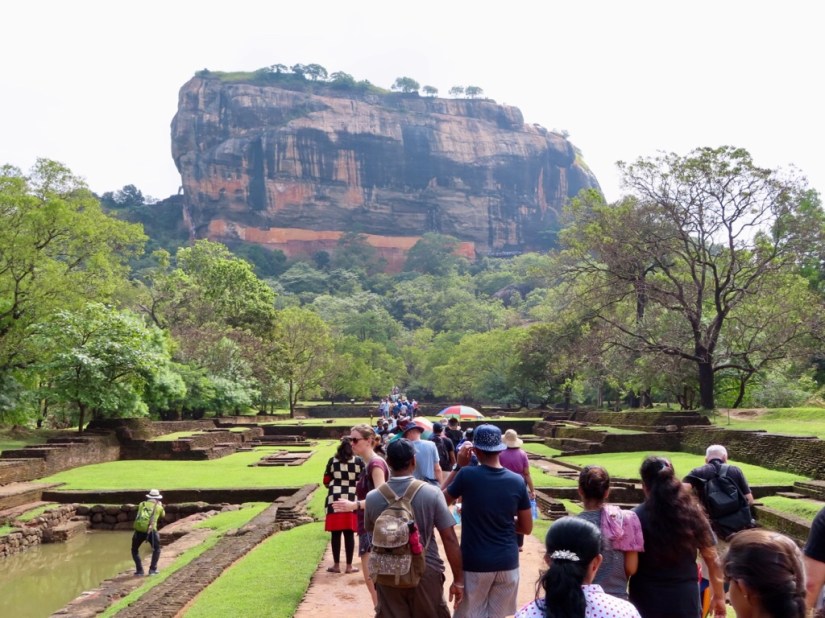
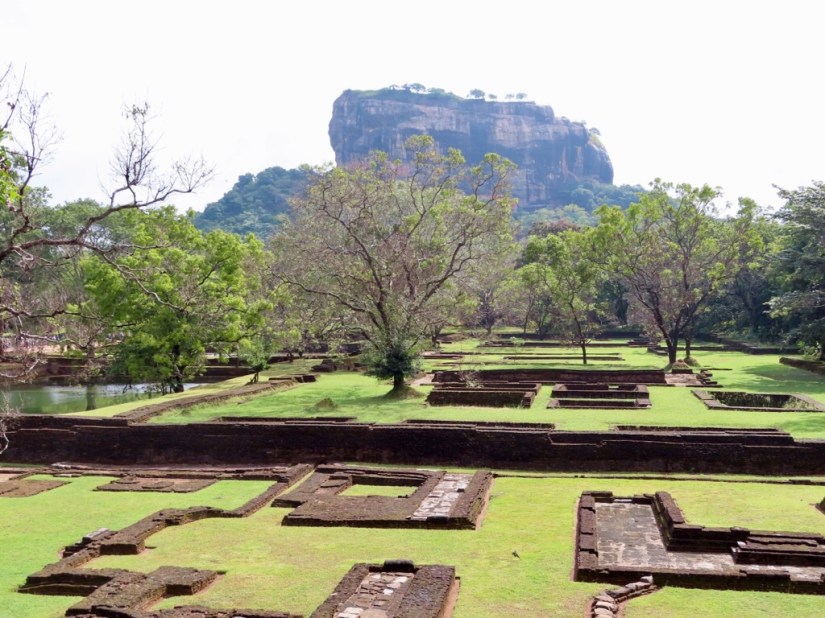 Sigiriya is built on a huge rocky outcrop towering 200m above the countryside. There was a power struggle between the two sons of Dhatusena of Anuradhapura in the C5th. Kassapa, the lesser son, drove his brother Mogallana into exile in India, killed his father then built a combination of pleasure palace and fortress on the top of the rock, copying the legendary abode of Kubera the god of wealth, and a city below, all in seven years. A few years later Mogallana returned with an army of Tamil mercenaries. Despite the benefits of his unassailable fortress, Kassapa rode out boldly on an elephant at the head of his troops, his elephant bolted, his troops fell back and facing capture Kassapa killed himself. Mogallana handed Sigiriya back to the monks who abandoned the site in the C12th.
 Later, we decided to take a chance on the weather, as there had been several short but heavy downpours, and asked for a tuk-tuk. By the time it arrived the rain had started again but it stopped as we reached the Pidurangala Temple.
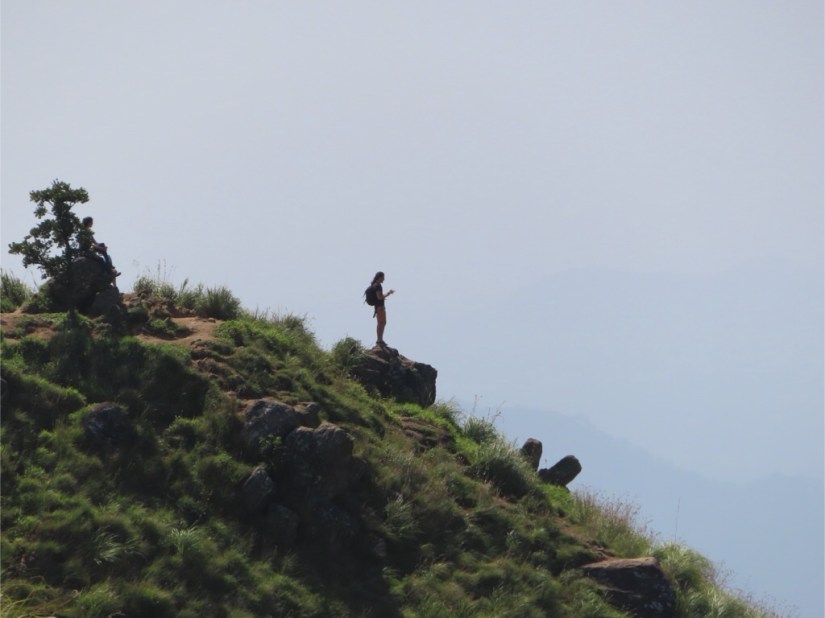
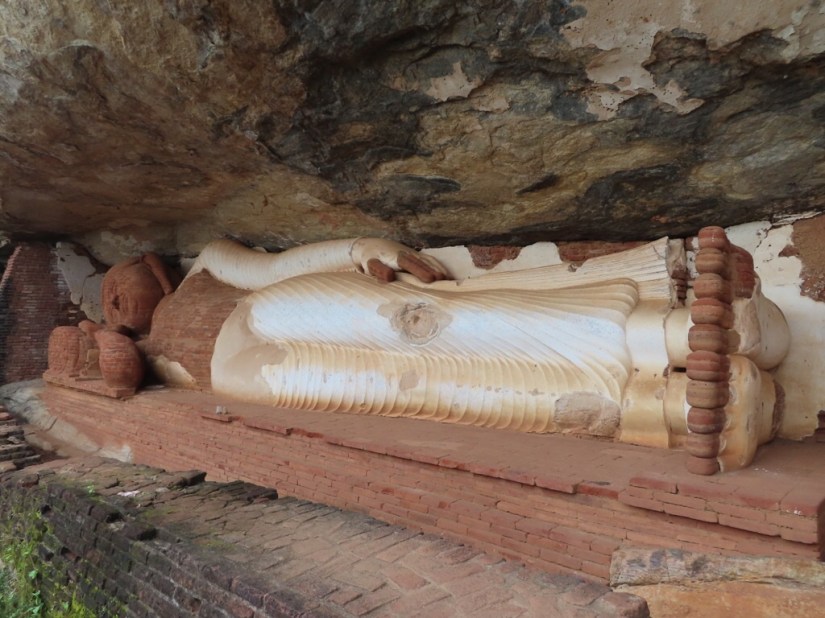
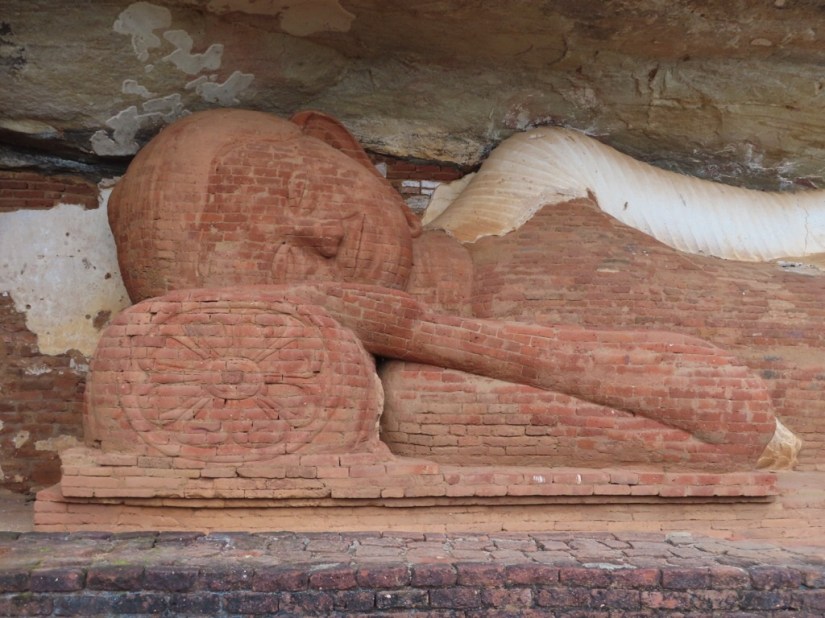
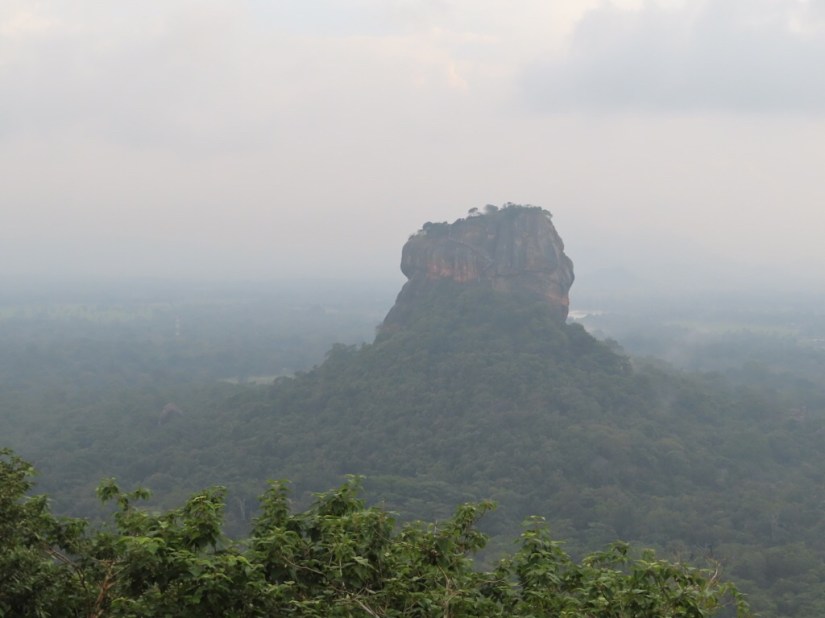
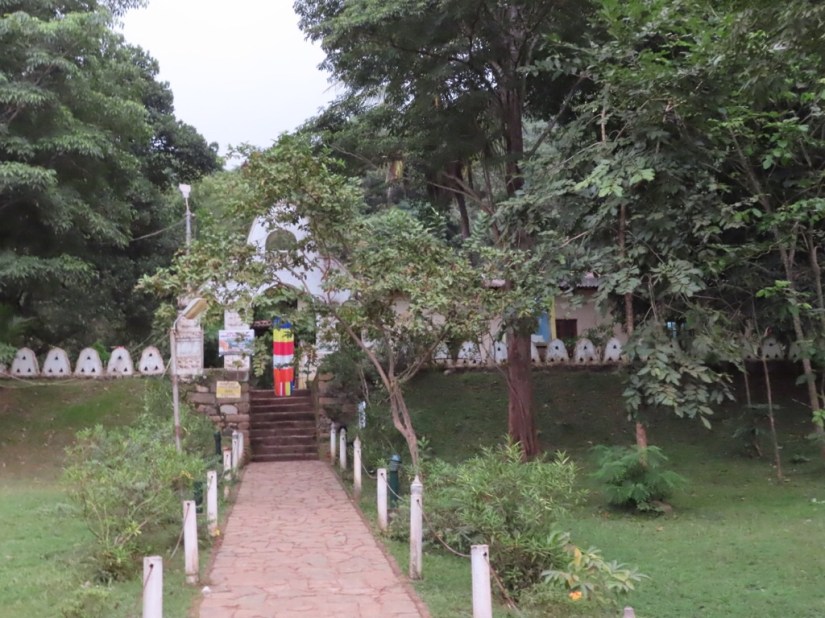 The story says that monks living in Sigiriya were given land to rebuild here when the citadel was built, and the main reason for visiting was to get a great view of Sigiriya. We entered the temple area at the bottom then started a steep climb which began as stairs up as far as a reclining Buddha under an overhang …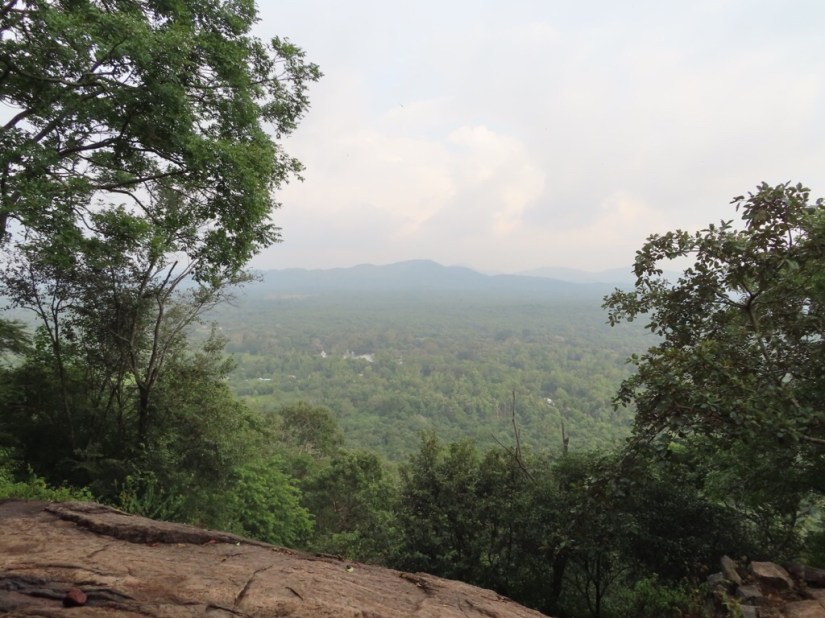
 We waited and as soon as it stopped at 9.30 set out to climb Sigiriya, and took this on the way!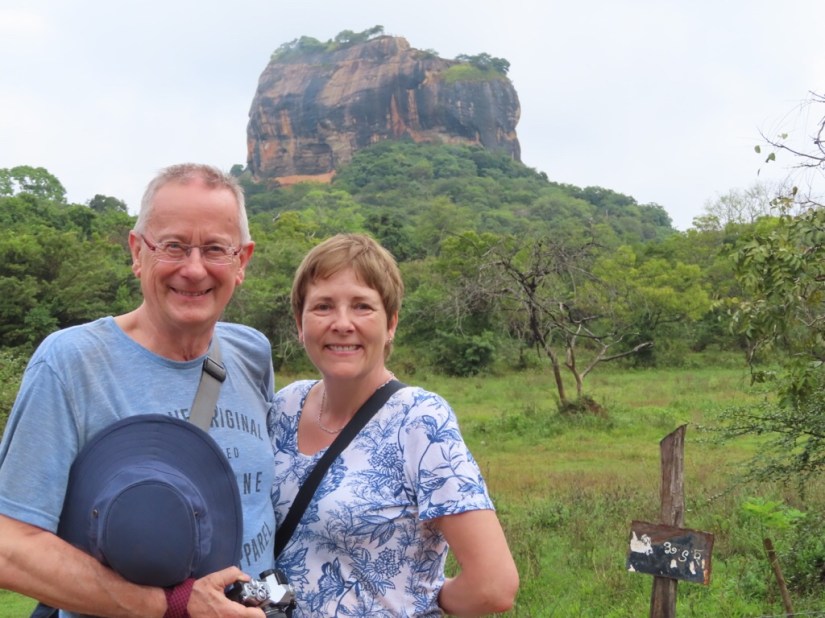
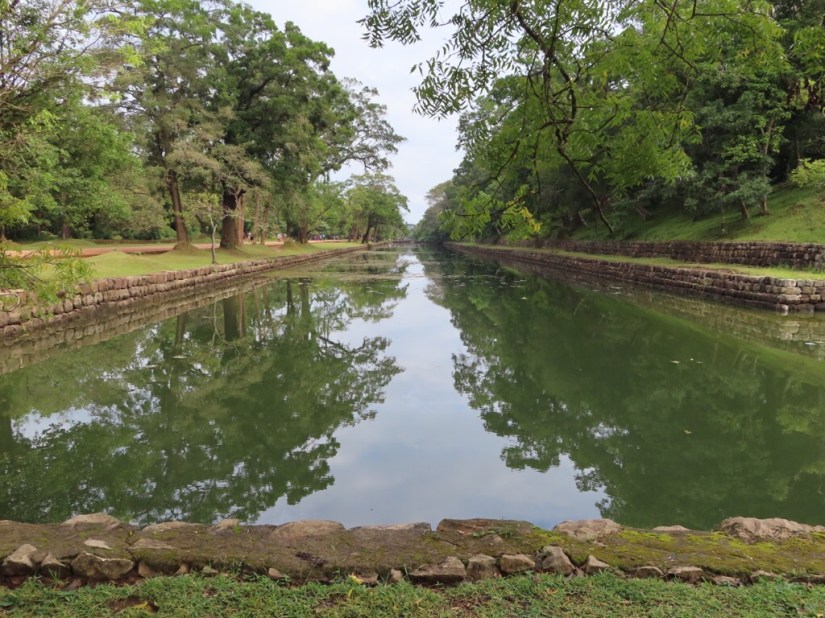
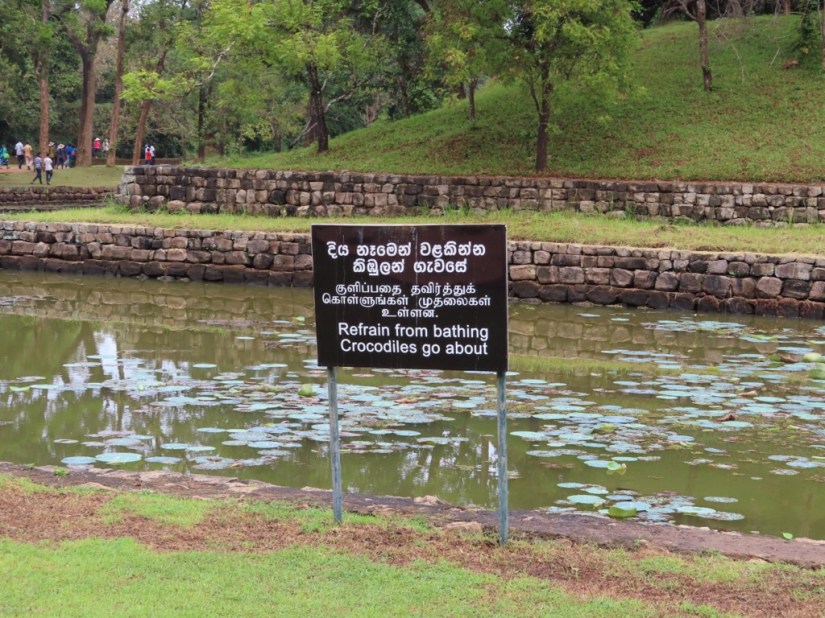
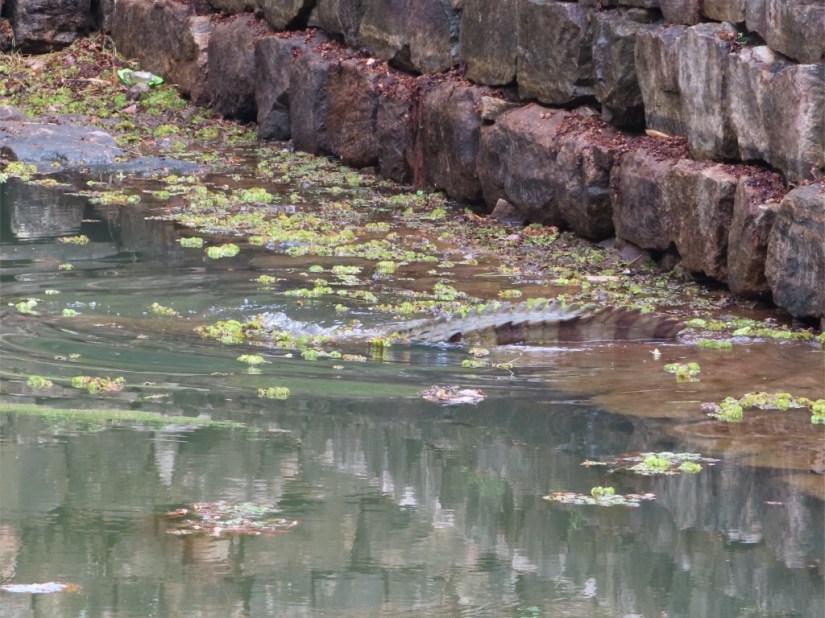
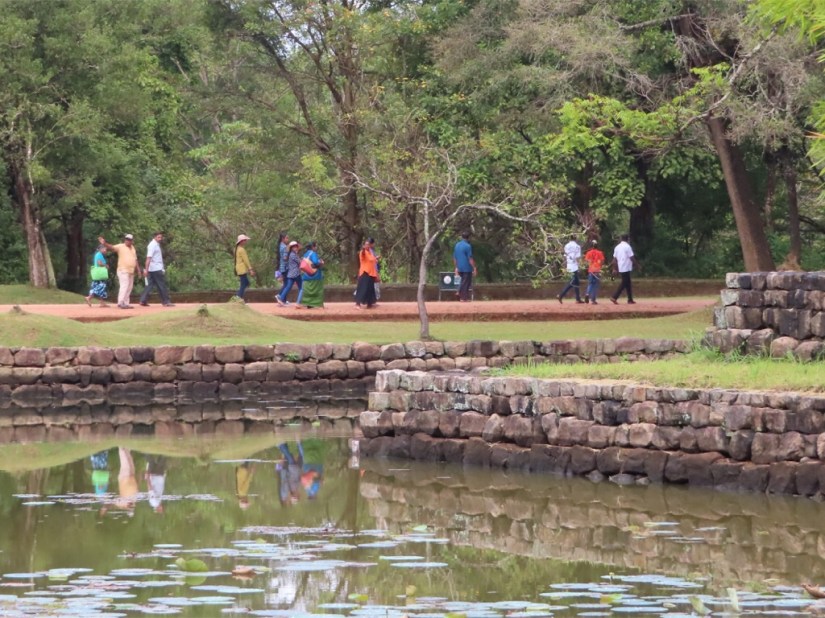
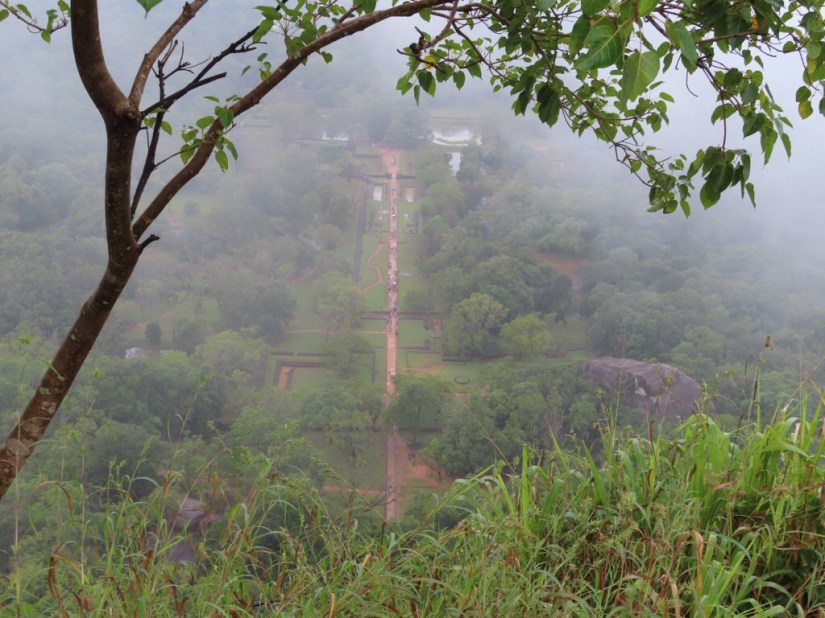
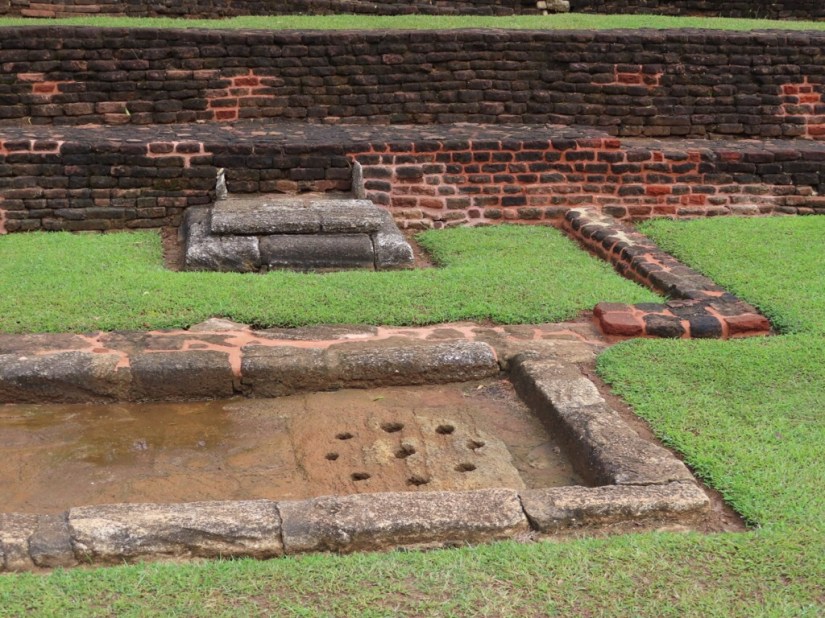
 Apparently the fountains work on a simple pressure and gravity system and still work!
 When I planned the trip, I noticed it said to avoid visiting on the weekend or holidays as it gets very busy, which is why we were here on a Monday, but we hadn’t realised it was 71st National day of Sri Lanka, celebrating their independence, or that the whole of Sri Lanka would be coming for a day out!
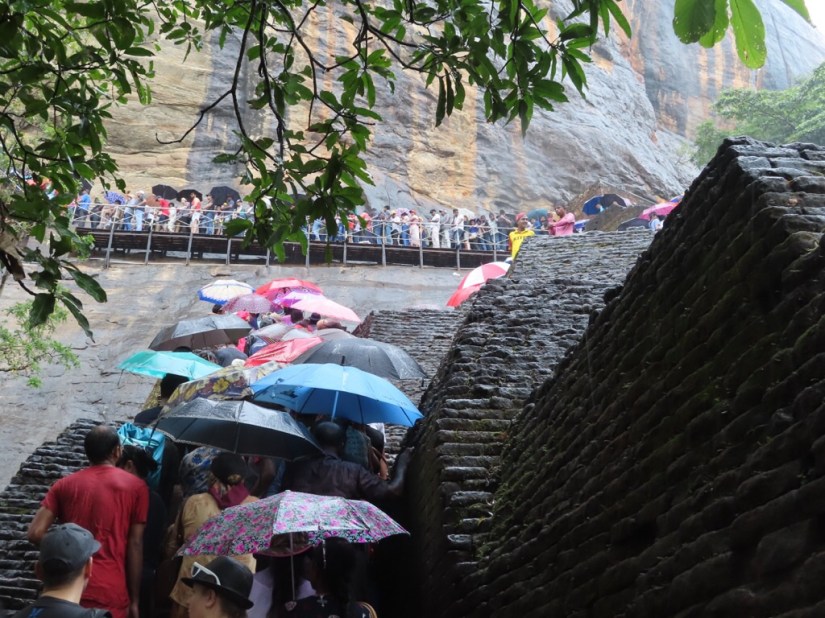 We edged upwards, step at a time, and the rain fell. 90 minutes later we reached a flat stretch, and finally the rain stopped.
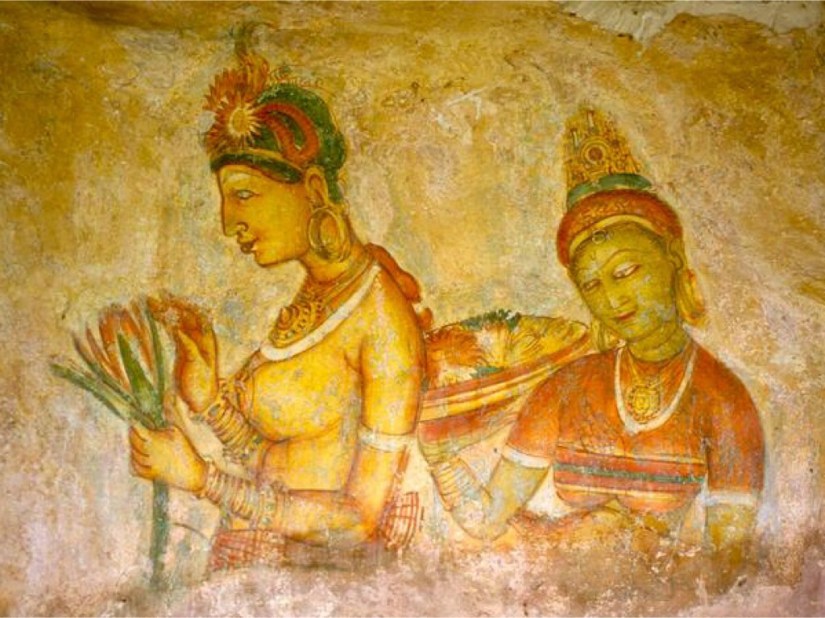
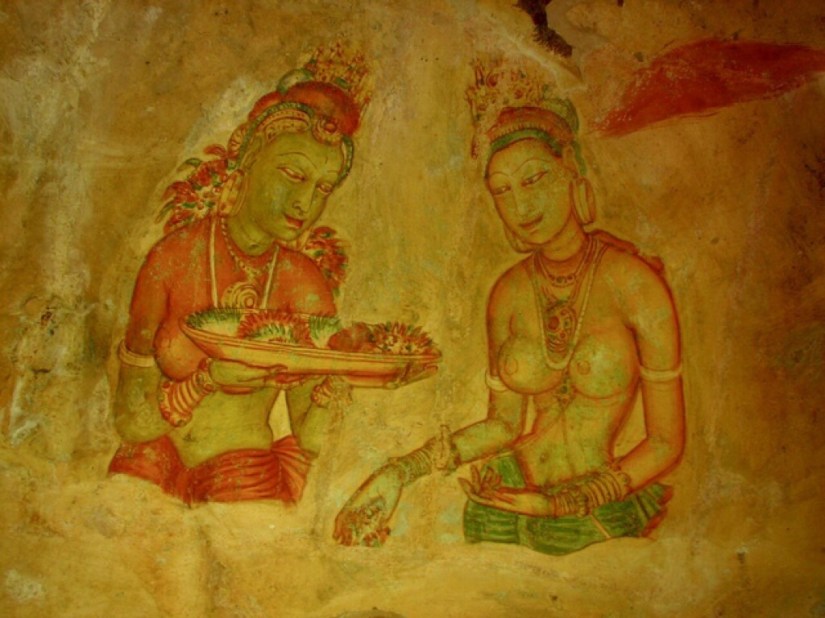
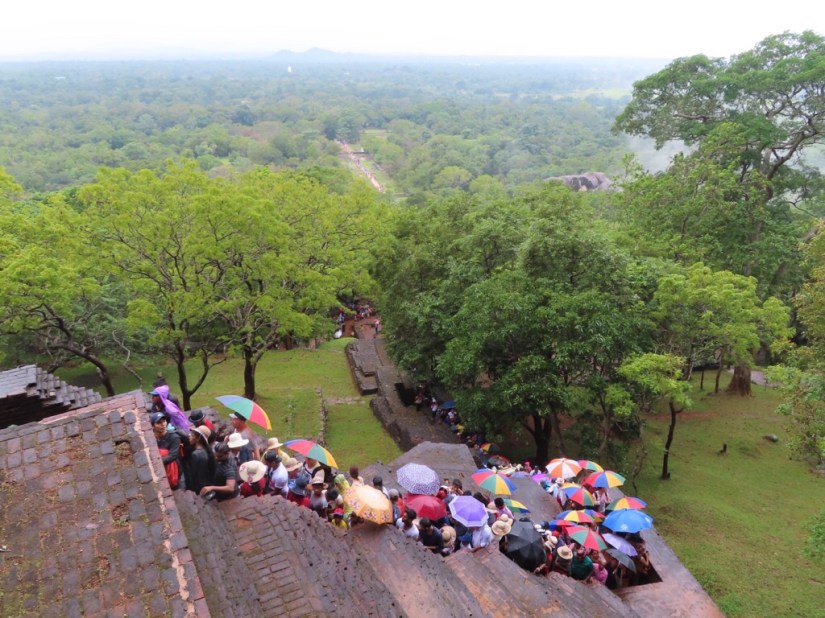 The bottleneck was caused by a couple of spiral stairways to and from a cave with Sri Lanka’s most famous frescoes – The Sigiriya Damsels. There were once as many as 500 covering a huge area but now just 21 remain and photos were not allowed, enforced by strict guards, so I found these online.