Having discovered a huge supermarket next to our hotel, we picked up breakfast buns so we could get up and out in the morning. We took the train to just the other side of Gion and were pleased to find it much quieter.
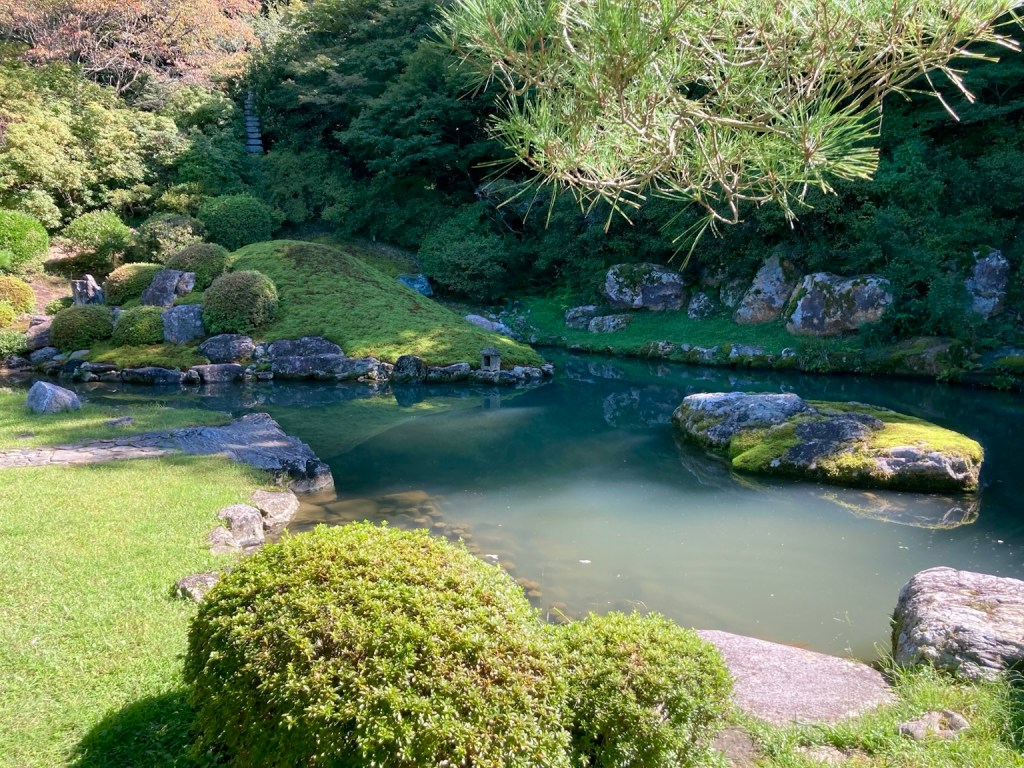
Today we are visiting Higashiyama, the main sightseeing area of Kyoto and starting at Shoren-in Temple which was built as a residence for imperial princes who served as abbots.
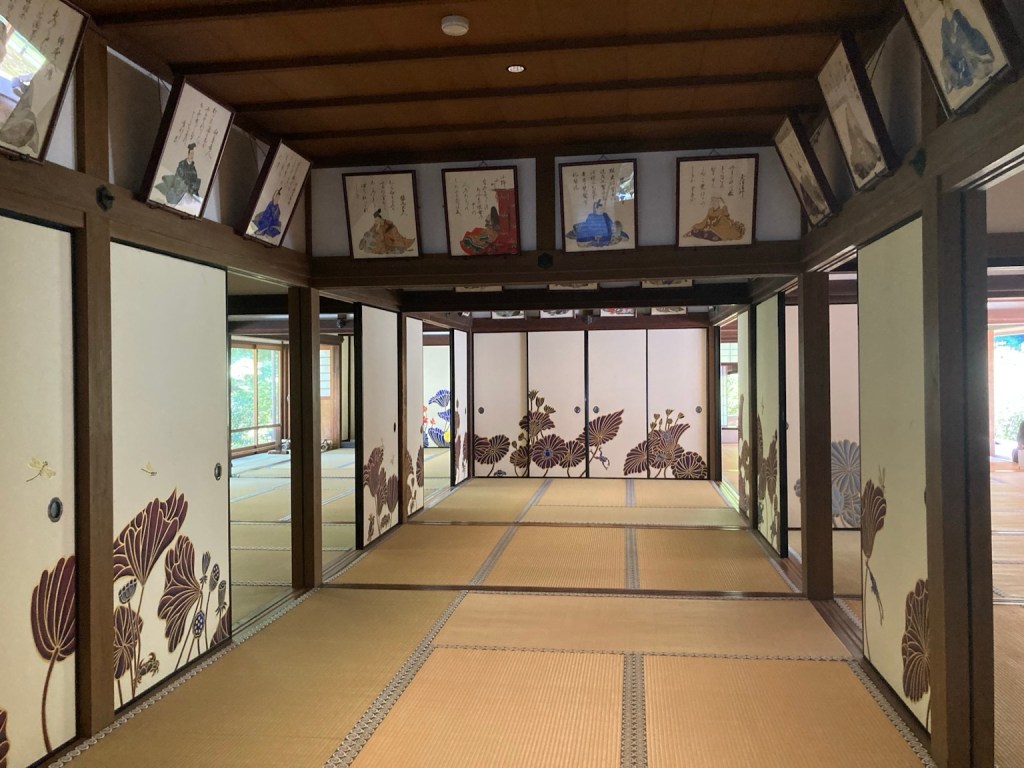
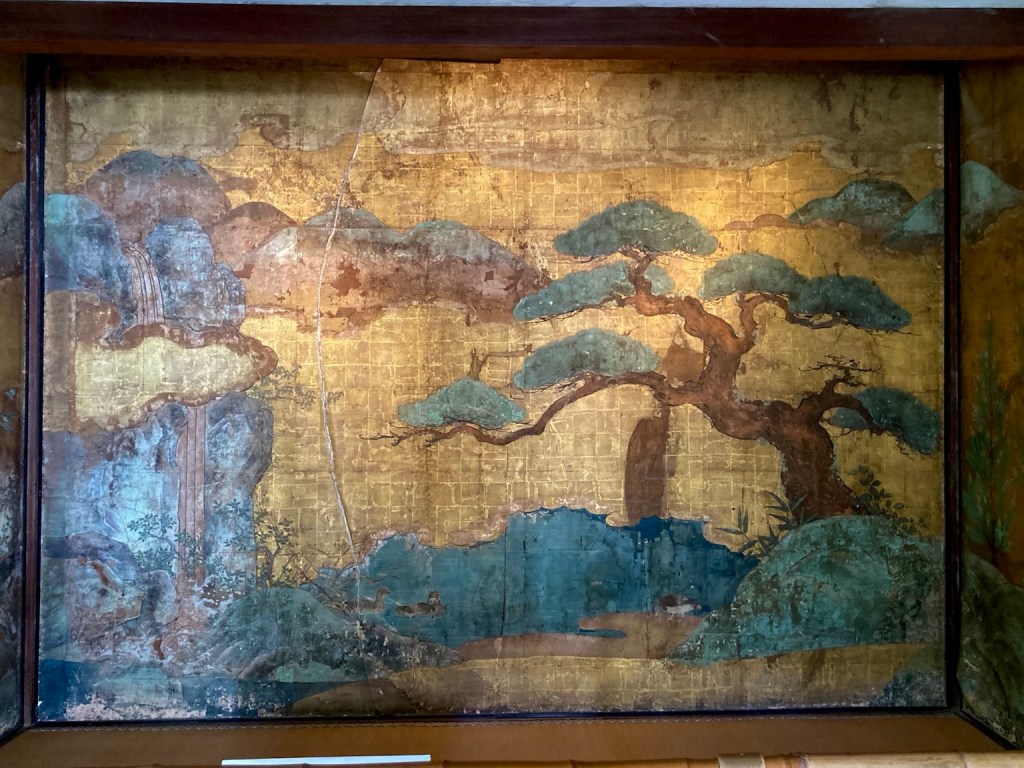
There were several painted screens and decorated rooms within and sitting on the tatami mats in the main hall, looking out on the garden was very peaceful.
The rock in the centre of the pond represents a dragon’s back.
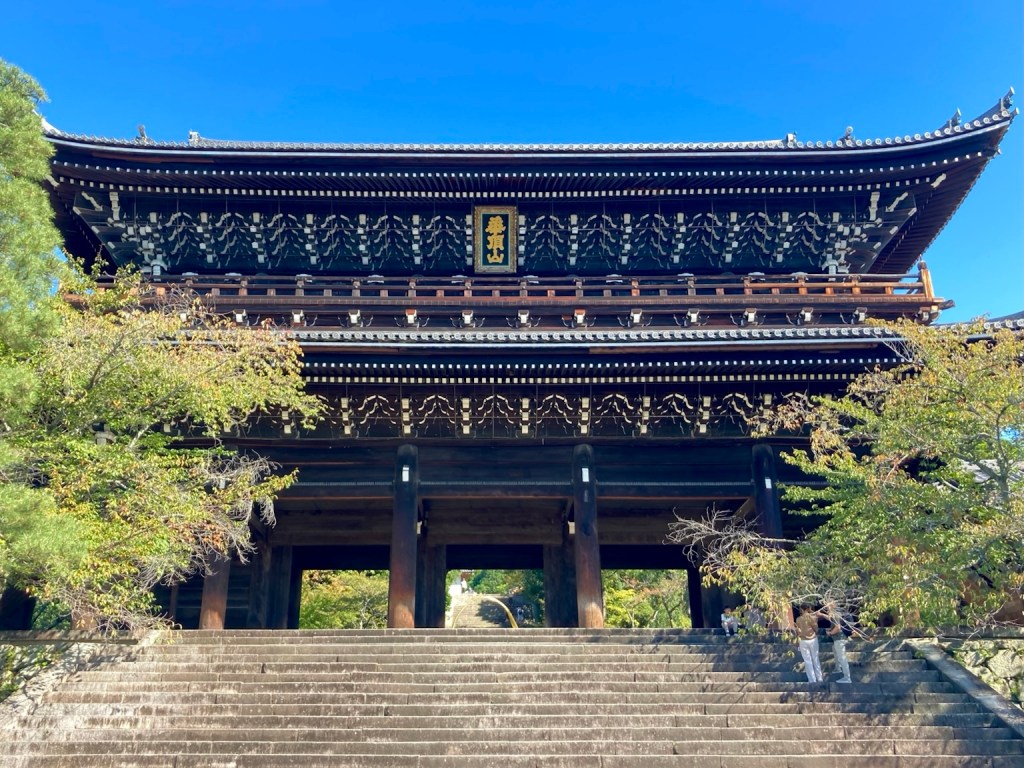
A little further was Chion-in Temple, the grand powerhouse of Japanese Buddhism—the head temple of the Jodo (Pure Land) sect. Everything here is colossal, from the two storey wooden gate at the entrance …
… to the main hall which I could barely squeeze into the viewfinder!
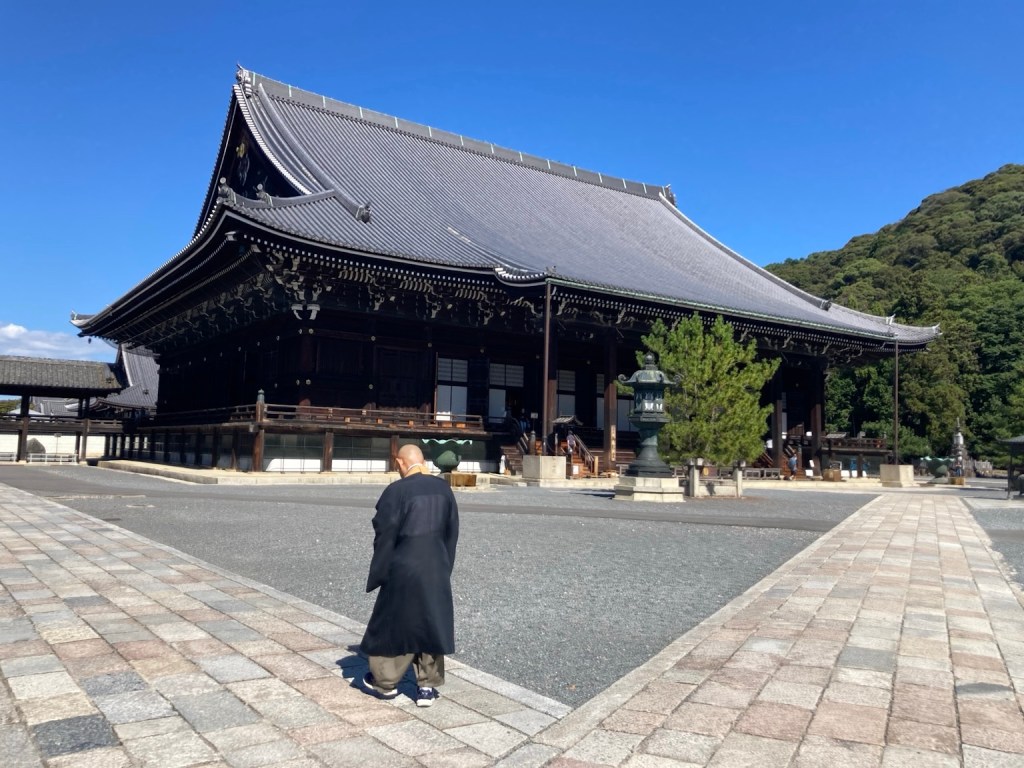
While standing inside, one of the monks was offering prayers and the chanting was punctuated by percussion instruments which was quite mesmerising.
Very practically for a quite a wet country, all these complexes seem to be linked by miles of covered walkways …
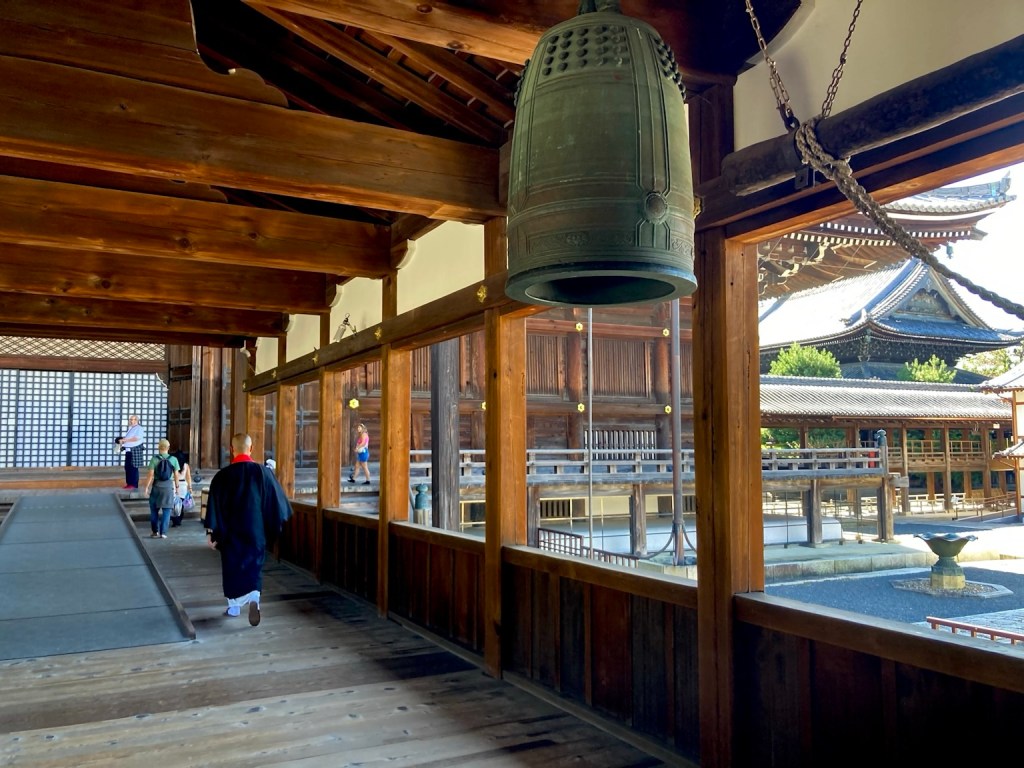
… and here they even have Uguisubari or Nightingale Floors, corridors apparently designed to chirp like birds when walked upon to alert monks of assassins. Sadly, it could just be that over time the wood warped and caused a sound that was never intentional … but the first explanation has more charm!
There was pagoda …
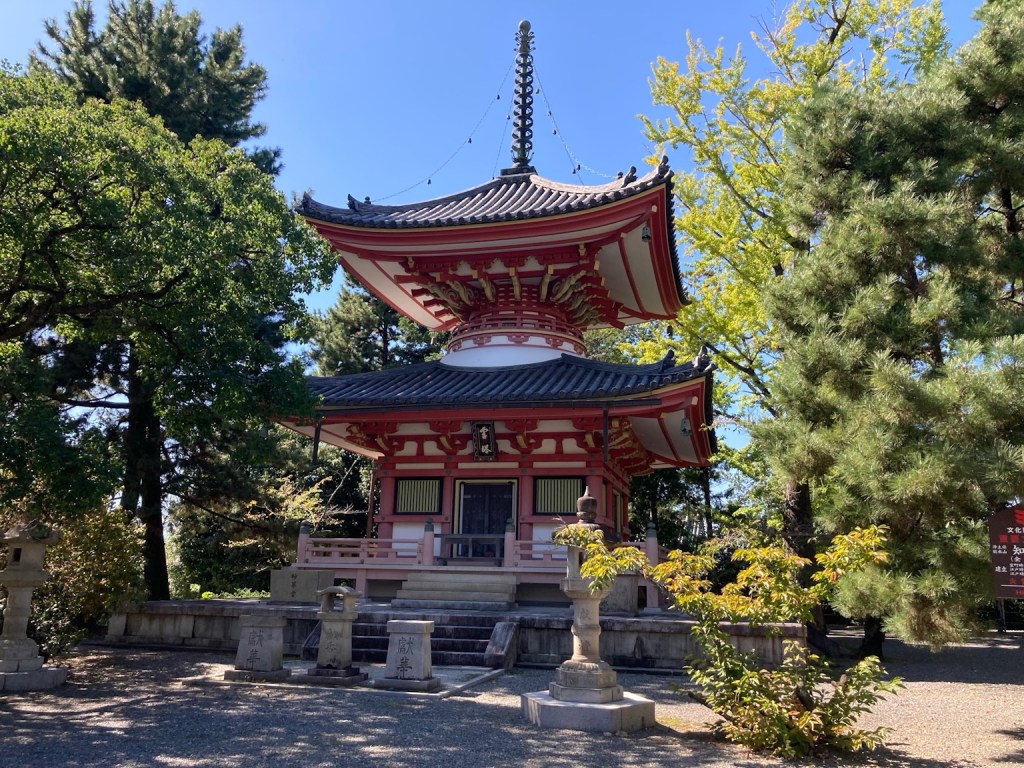
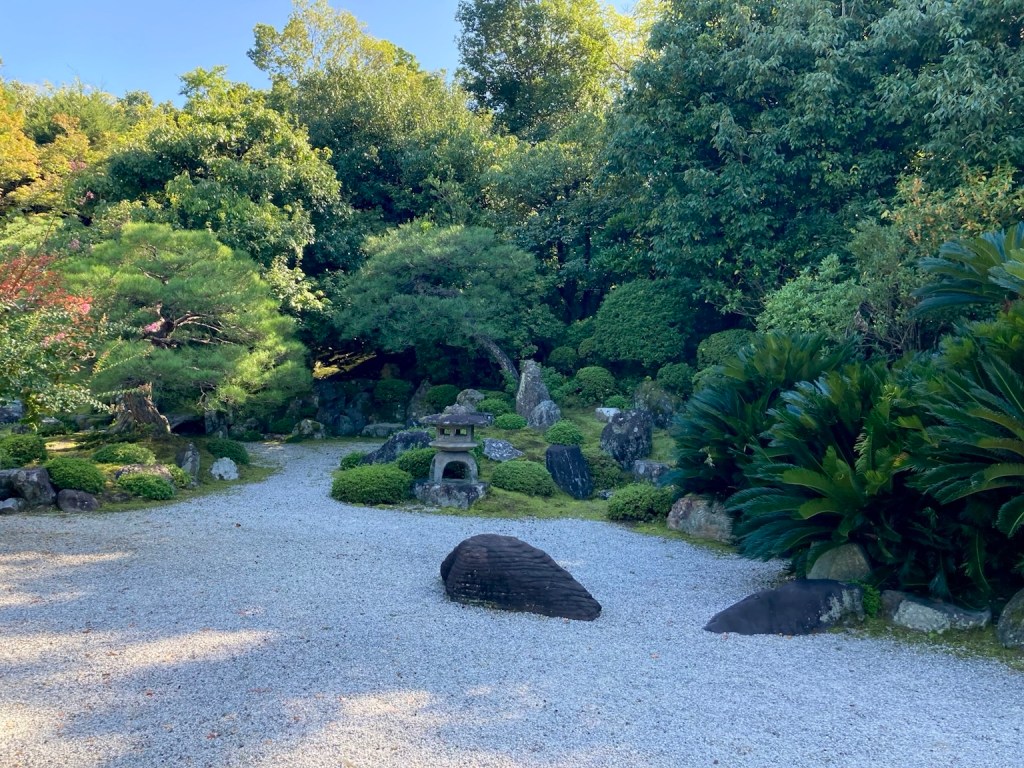
… and a Zen dry gravel garden …
… and we spotted a heron …
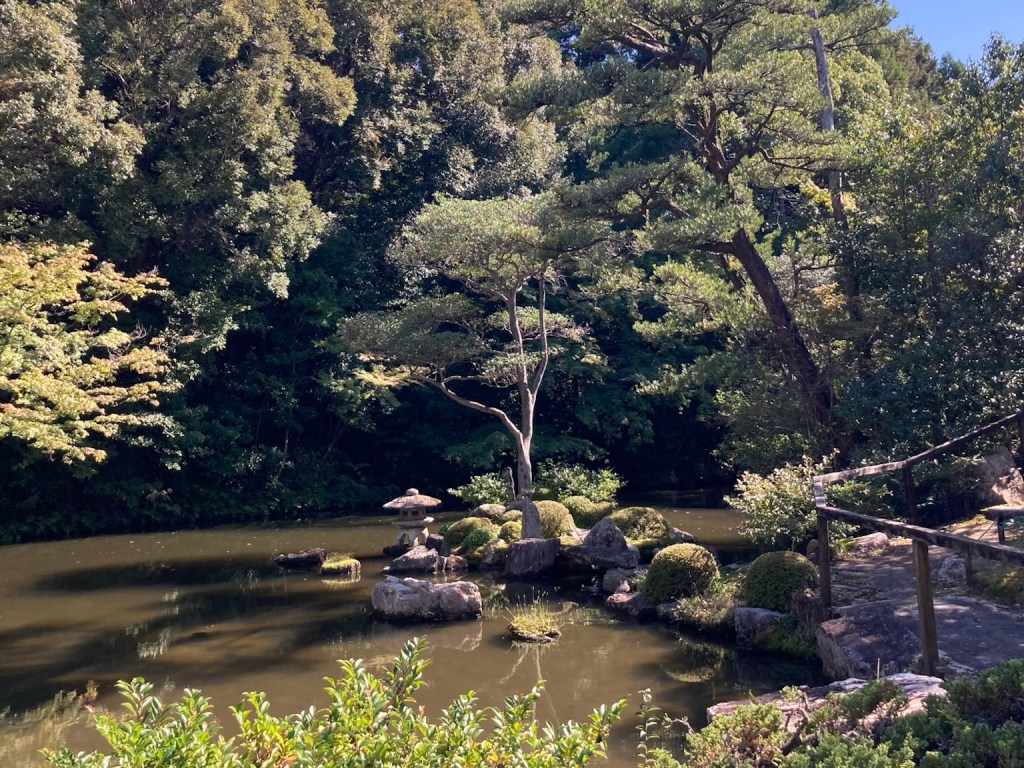
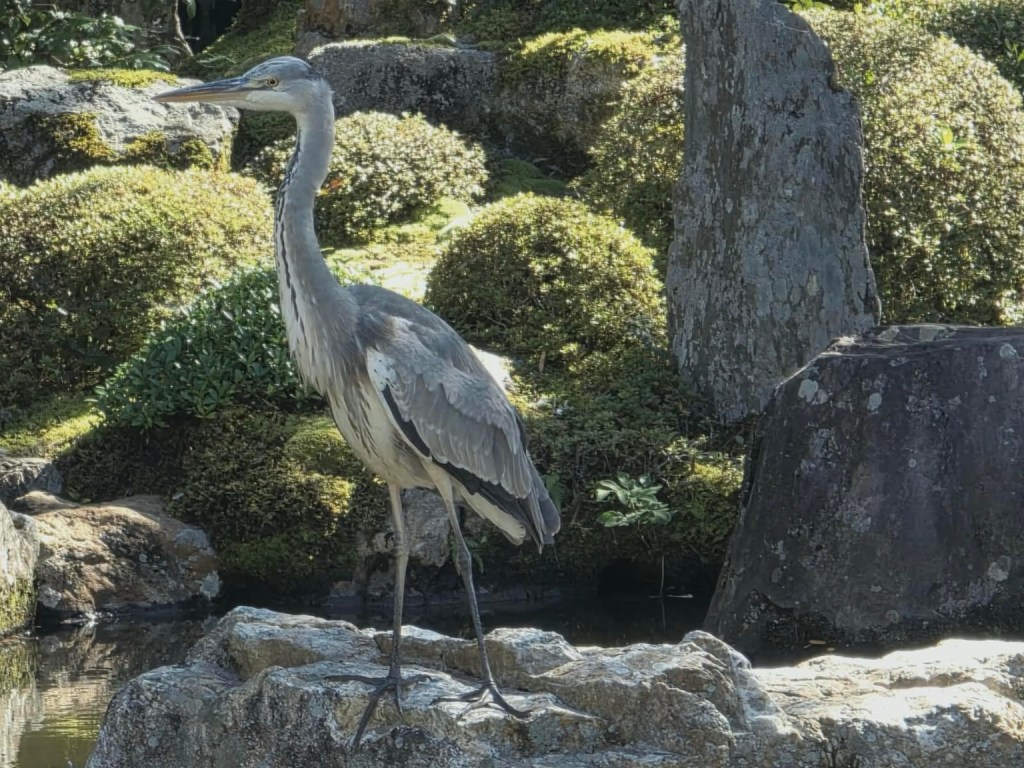
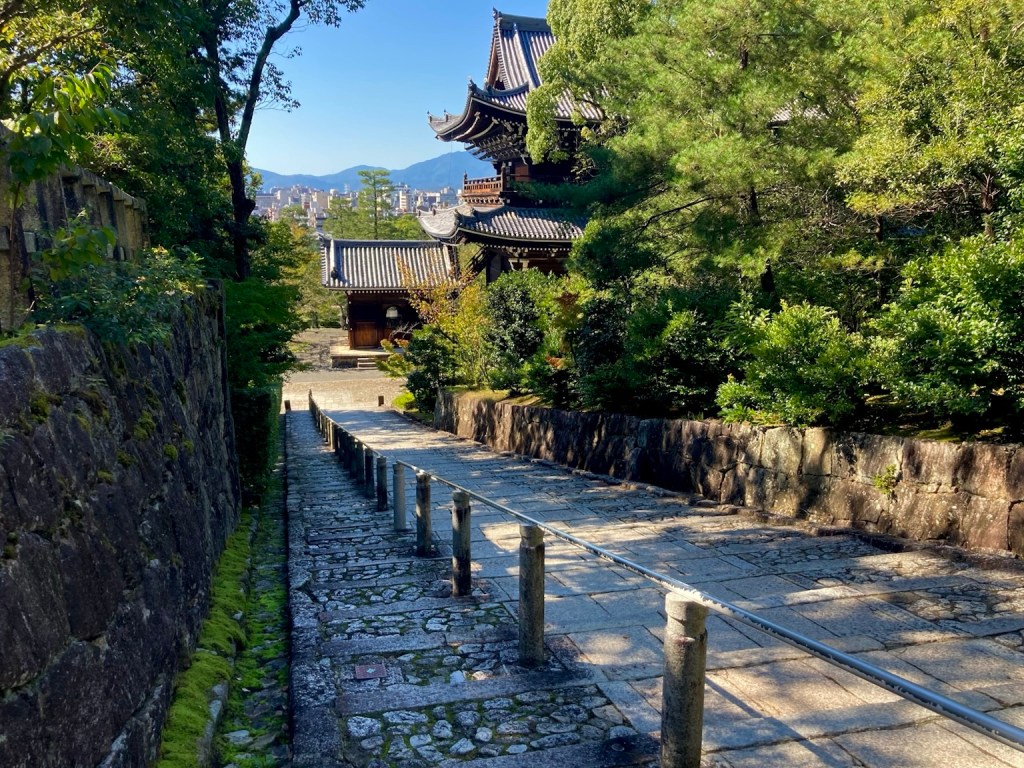
… but it was really hard to get good garden shots in the bright sunshine, and then we left down this lovely cobbled path.
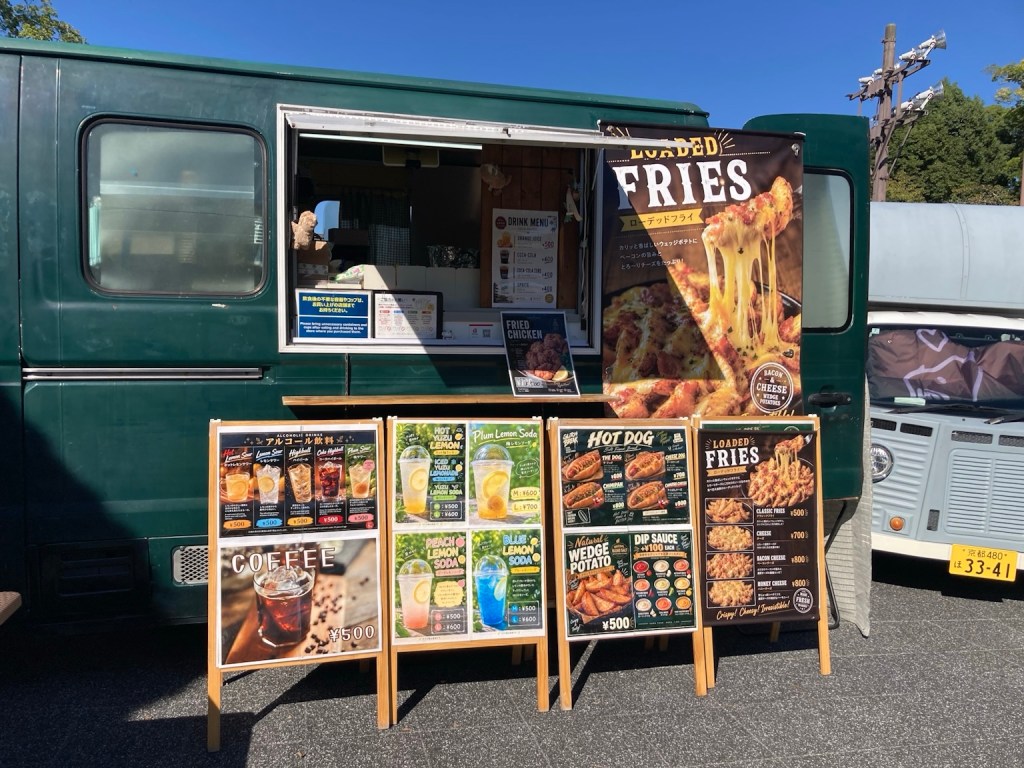
The food truck outside acted like a magnet for Chris and we shared some cheesy chips and a drink in the shade before moving on.
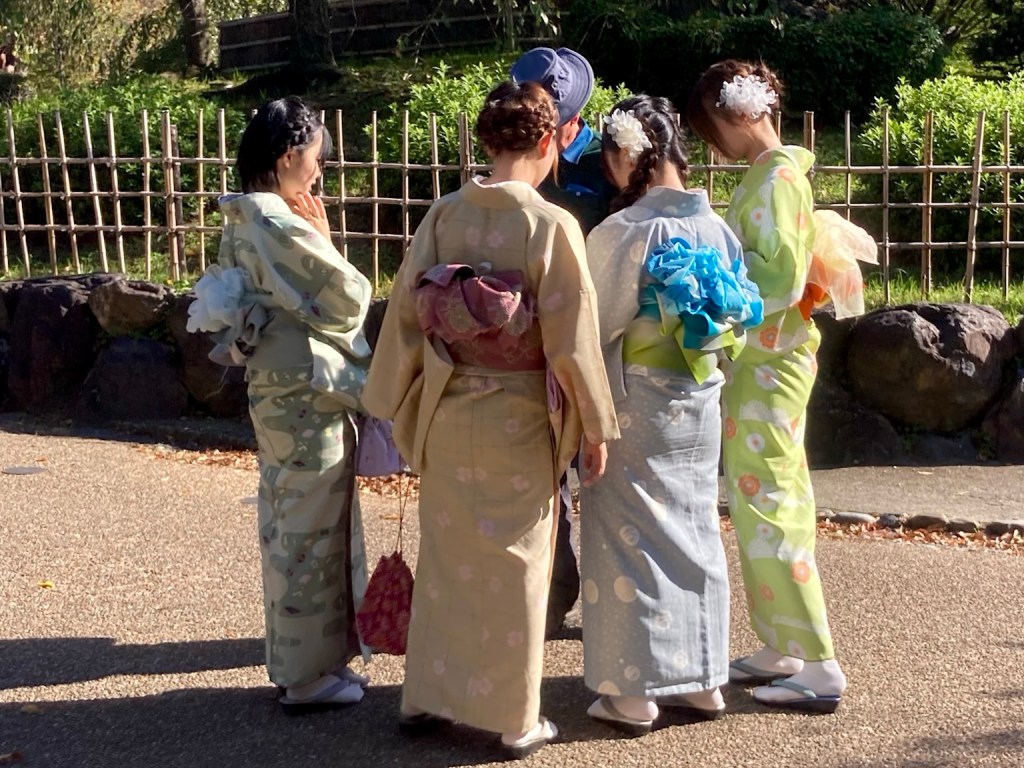
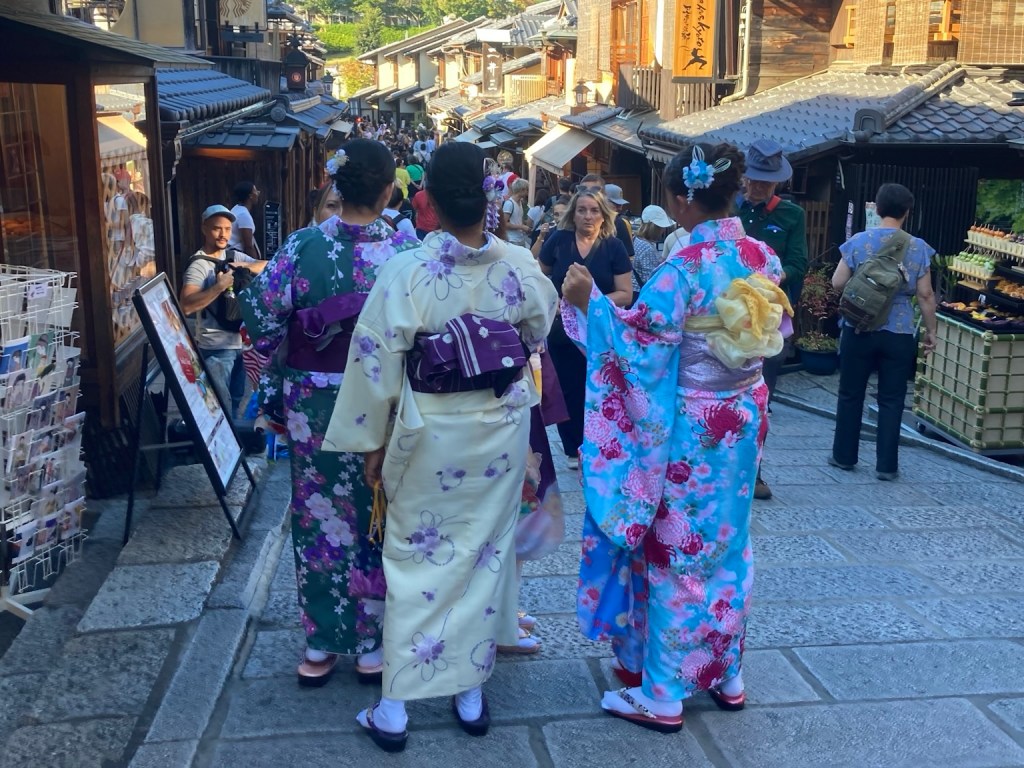
Maruyama Park is Kyoto’s oldest public park and serves as a seamless, green bridge connecting Chion-in with the Yasaka Shrine and there were colourful kimono everywhere!
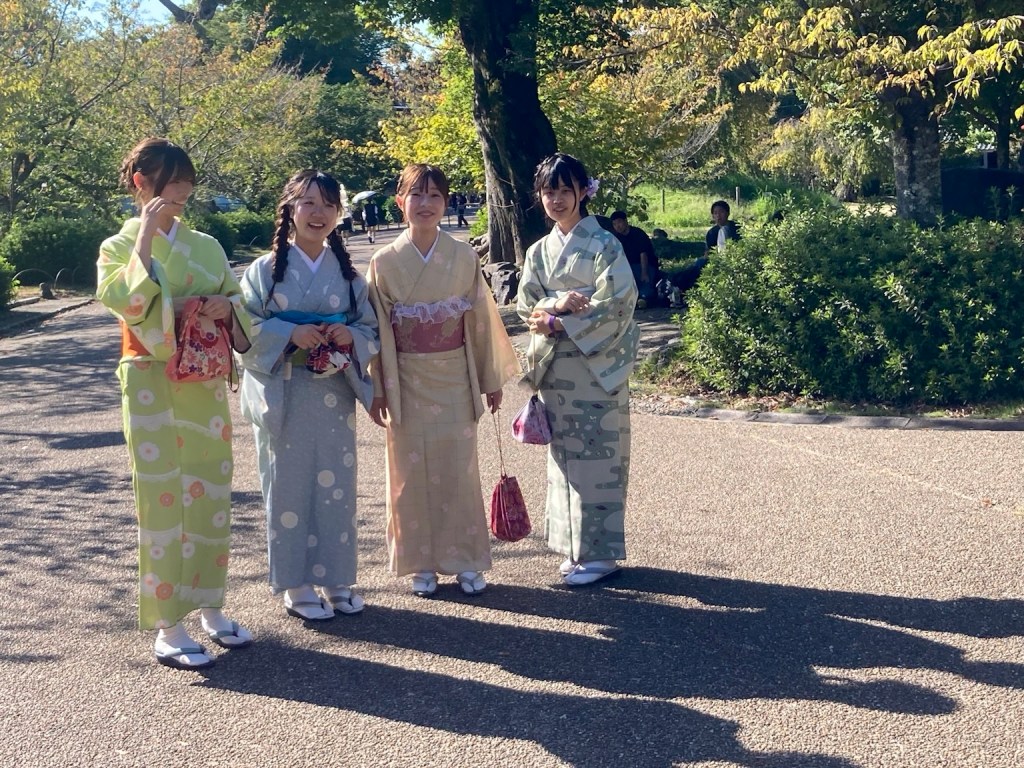
This group of girls on a school trip from a town a couple of hours away were all excited to be dressed up in the sunshine and chatted away to us with google translate.
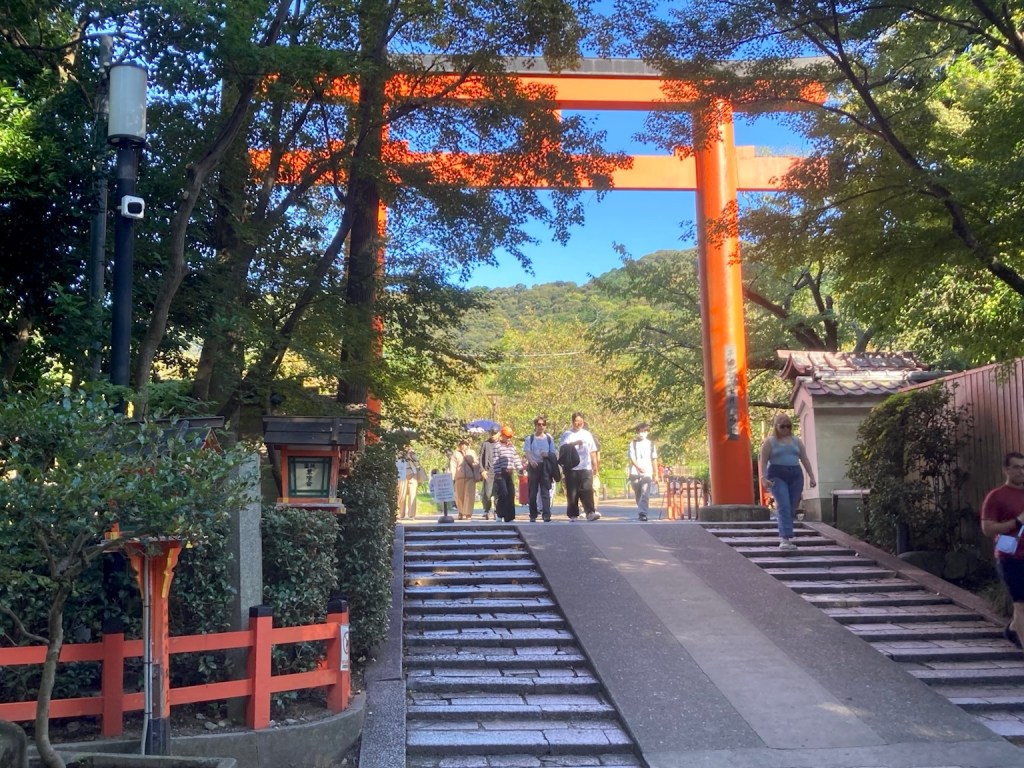
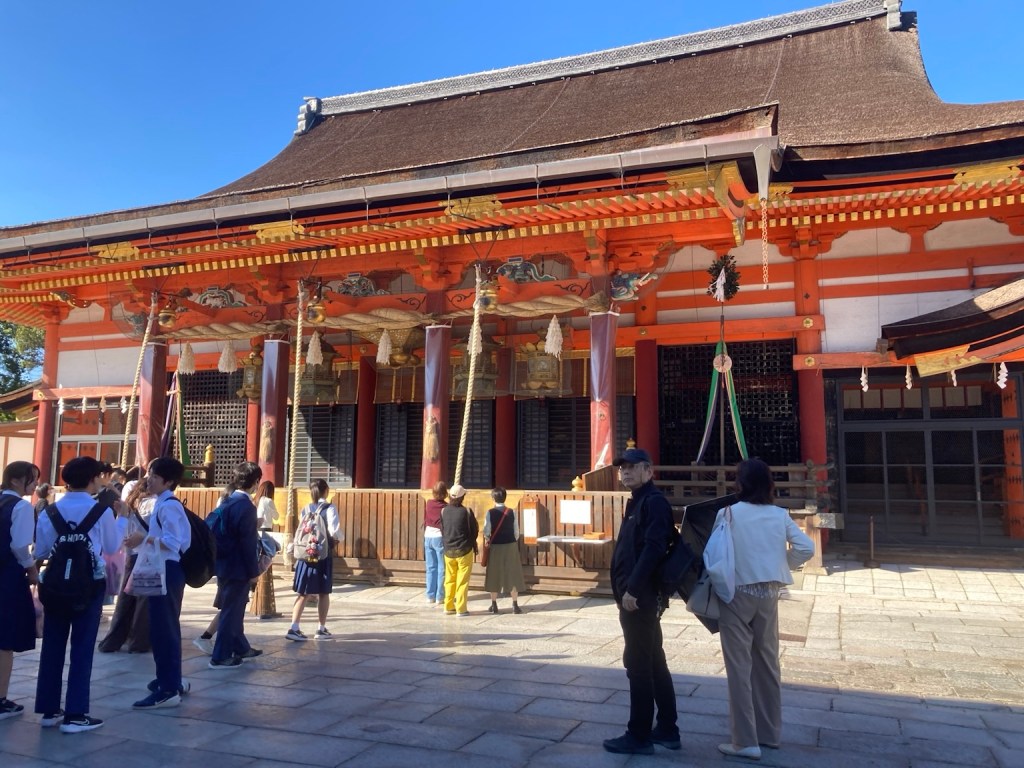
The Yasaka Shrine remains the spiritual heart of the city’s festivals …
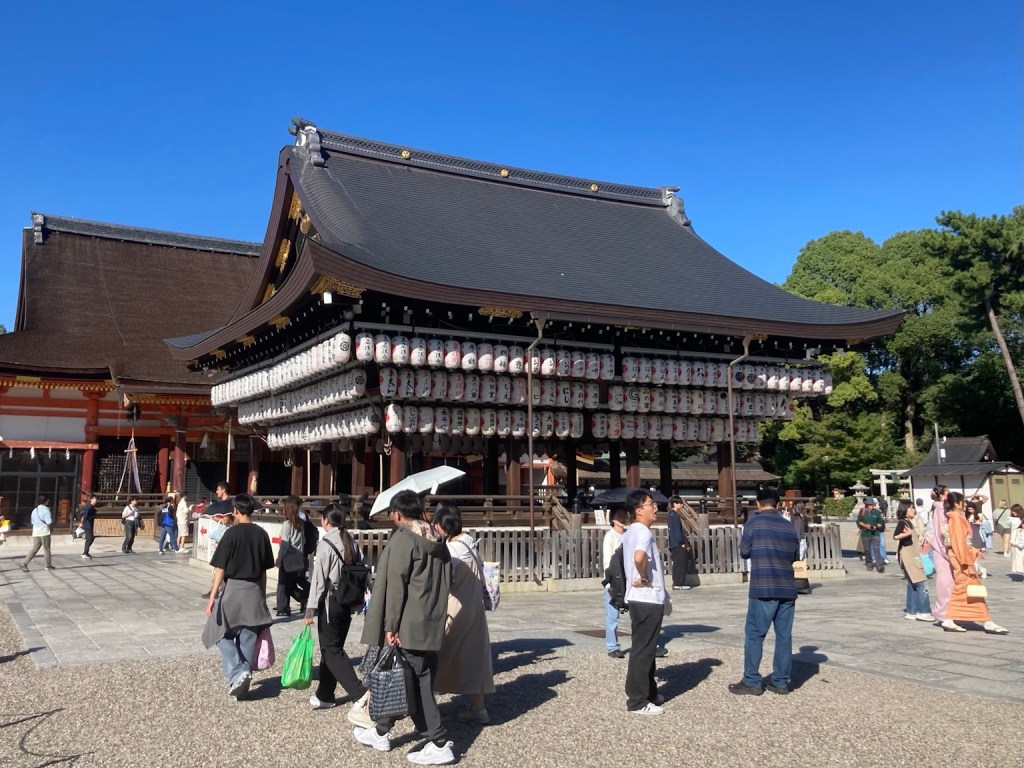
… and in the centre there is a large wooden performance stage hung with hundreds of paper lanterns, each hand-painted with the names of local Gion businesses and geisha houses.
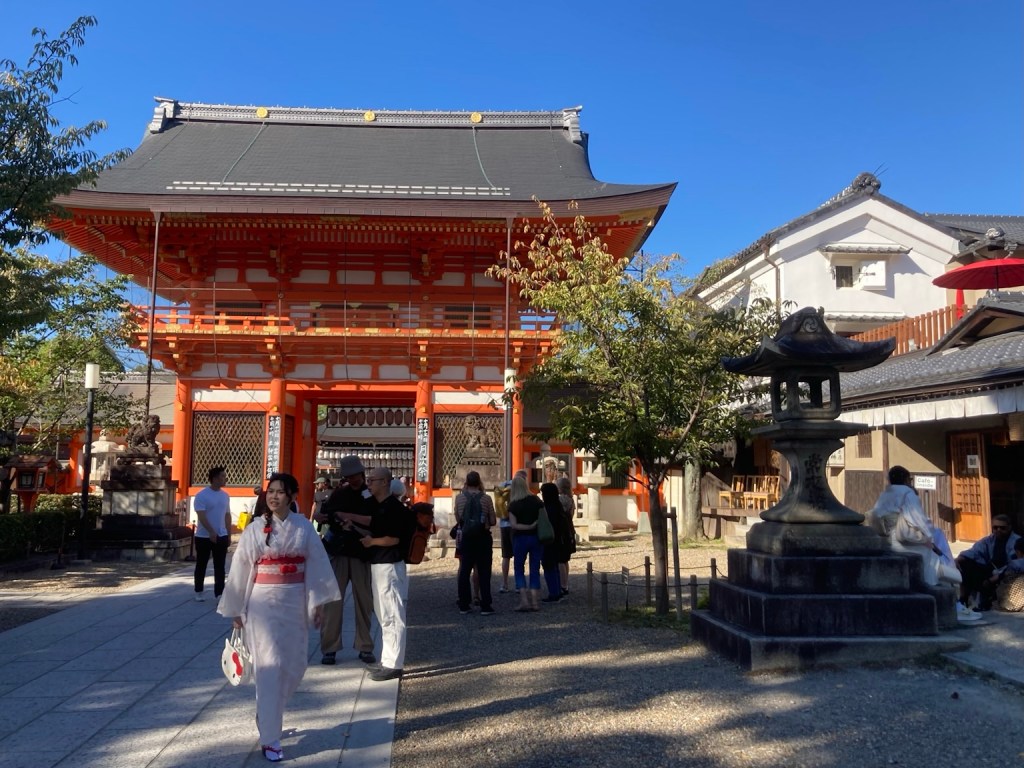
Gion flourished in the C14th-15th to accommodate travelers and visitors to the Yasaka shrine, but when the government authorized the construction of tea house quarters around Japan in 1732, Gion became established as an entertainment district.
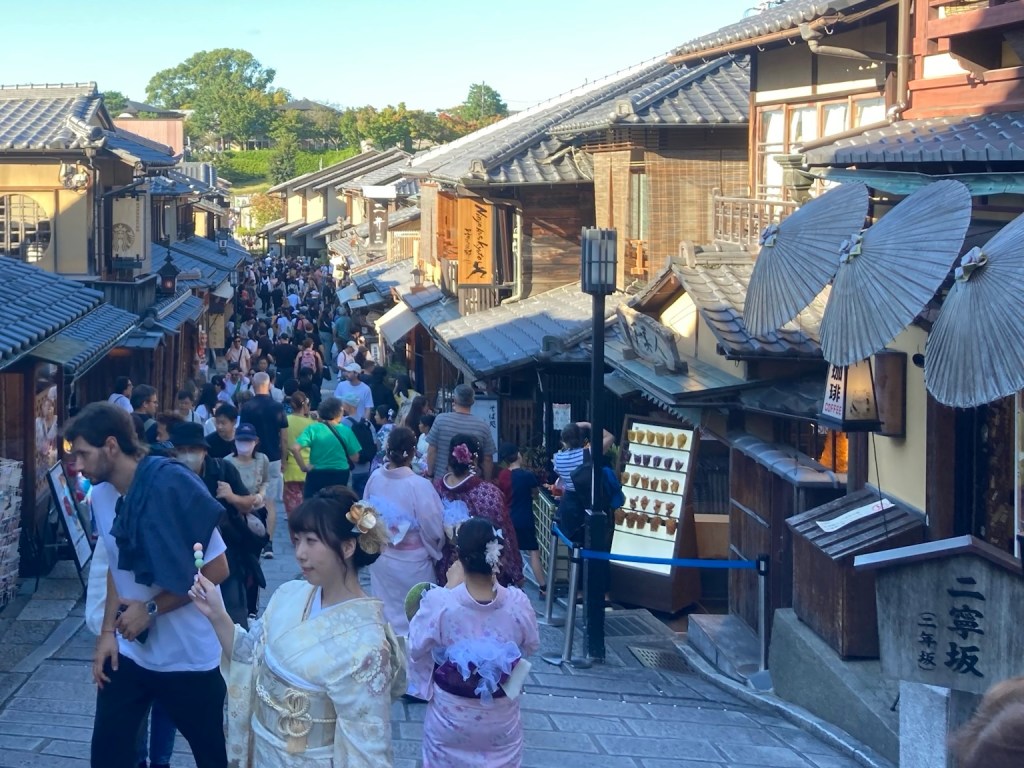
Sannen-zaka was so busy, I think every tourist in Kyoto was here!
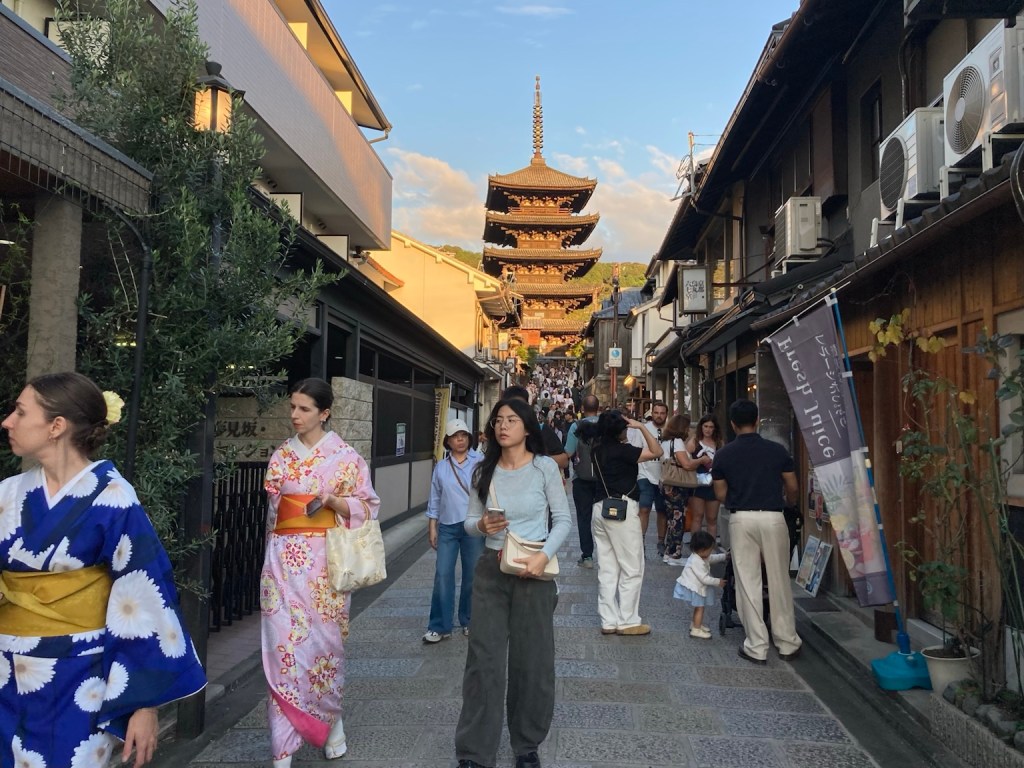
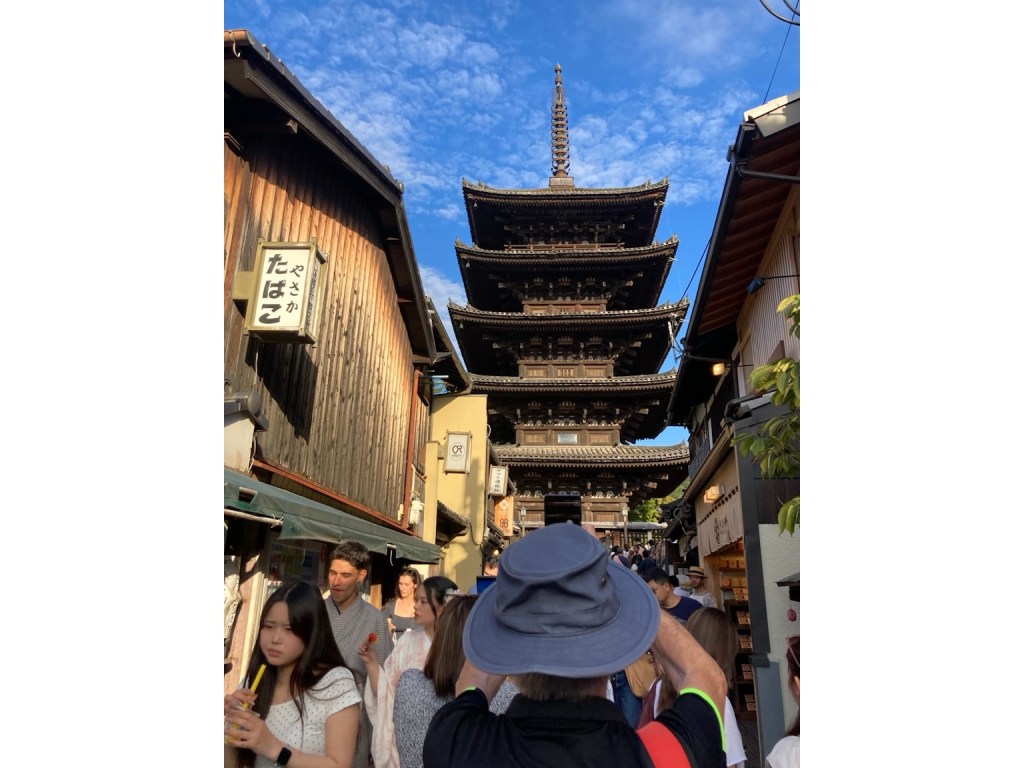
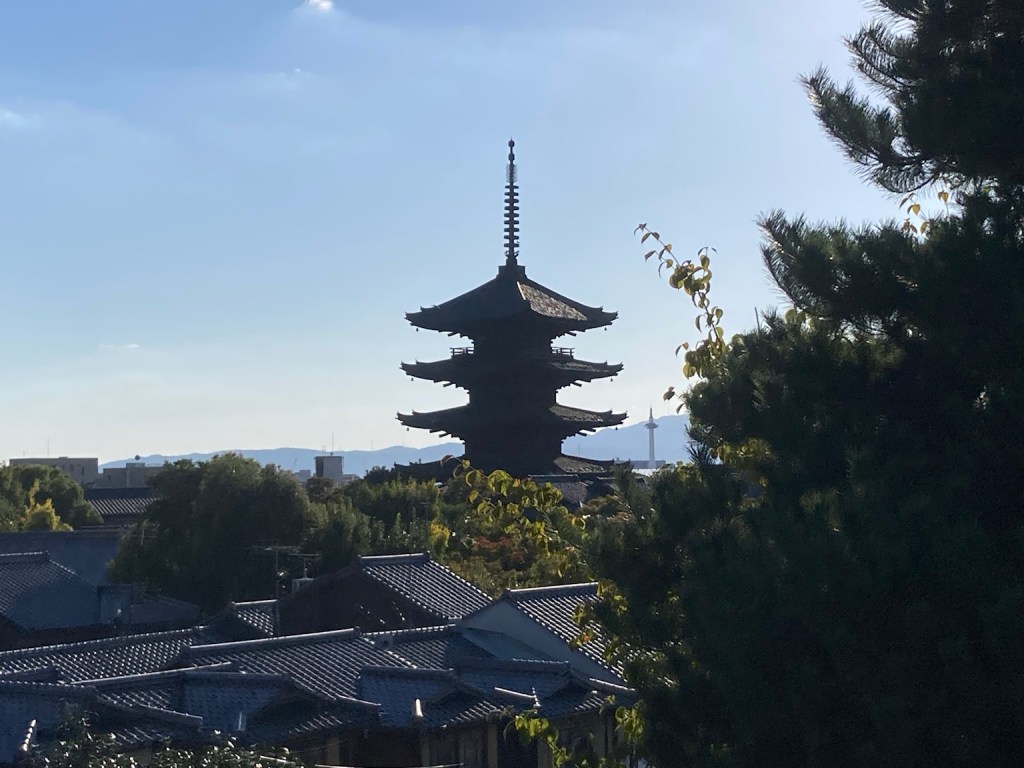
There was as much interest in selfies with the famous Yanaka Pagoda …
… as with the world’s first tatami-mat Starbucks.
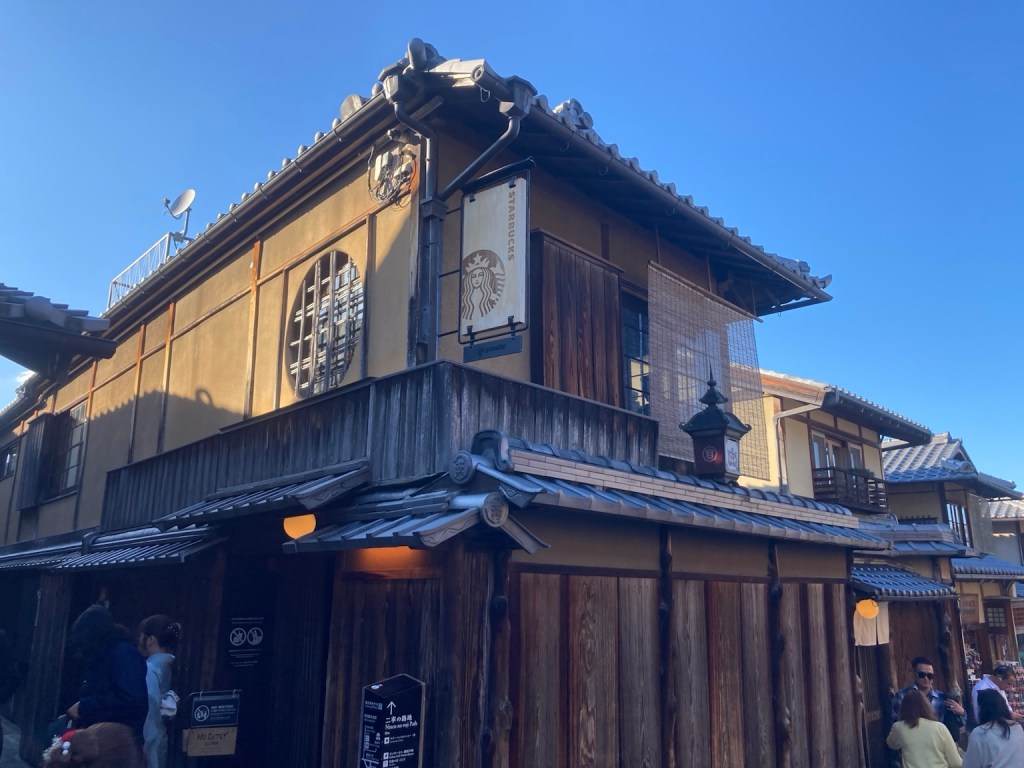
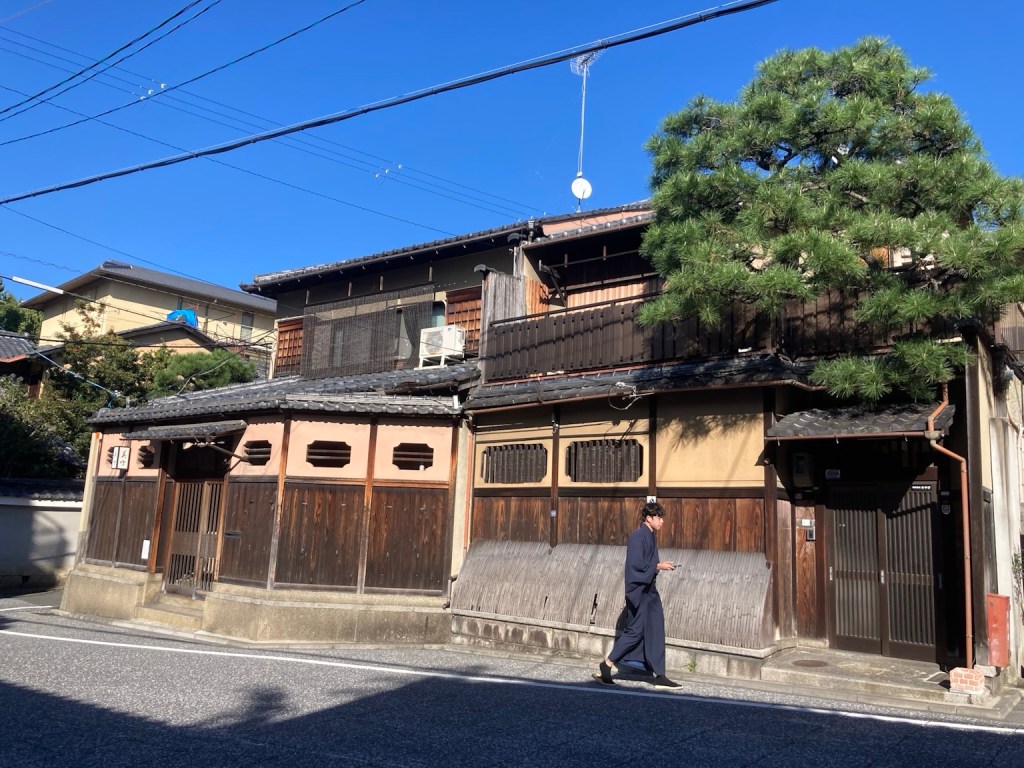
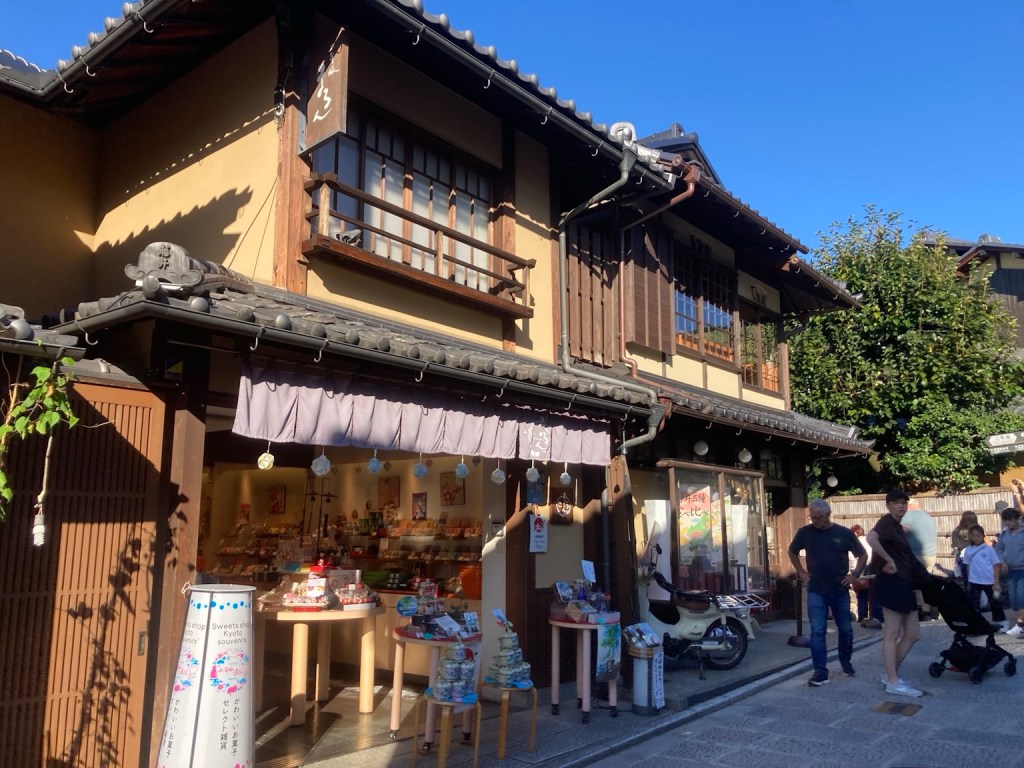
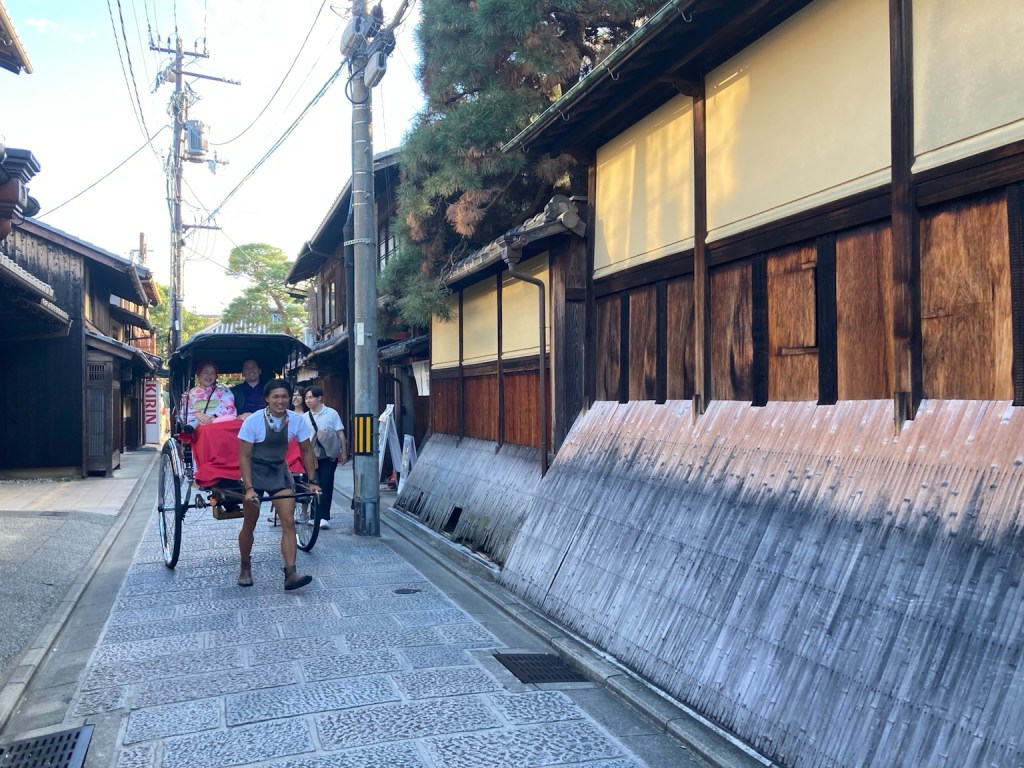
Both sides of the road have beautiful old traditional wooden Machiya buildings, a wooden row house that once functioned as both the workplace and home for Japan’s middle class of merchants and craftsmen, although now they house tea shops, pottery boutiques, and street food stalls.
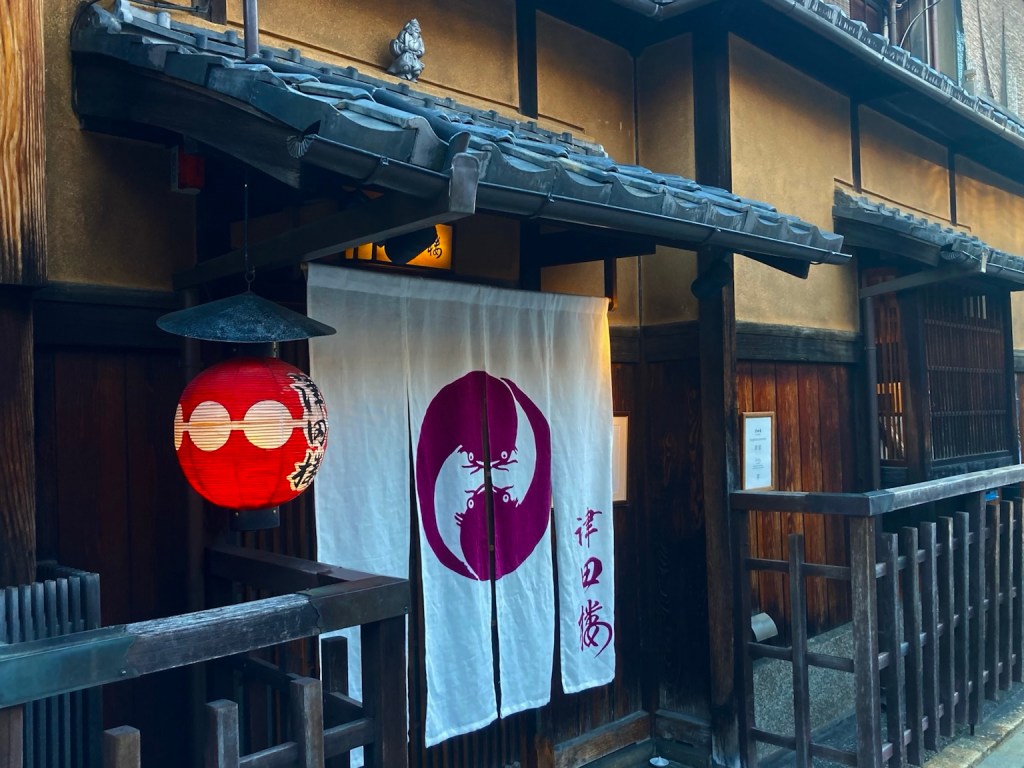
Hanamikoji Street is the main artery of the Gion district, lined with highly exclusive, traditional ochaya or teahouses. They have slatted windows and intricate wooden lattices called koshi to provide privacy and ventilation, and iconic bamboo shields outside called inuyarai to protect the lower part of the building from damage.
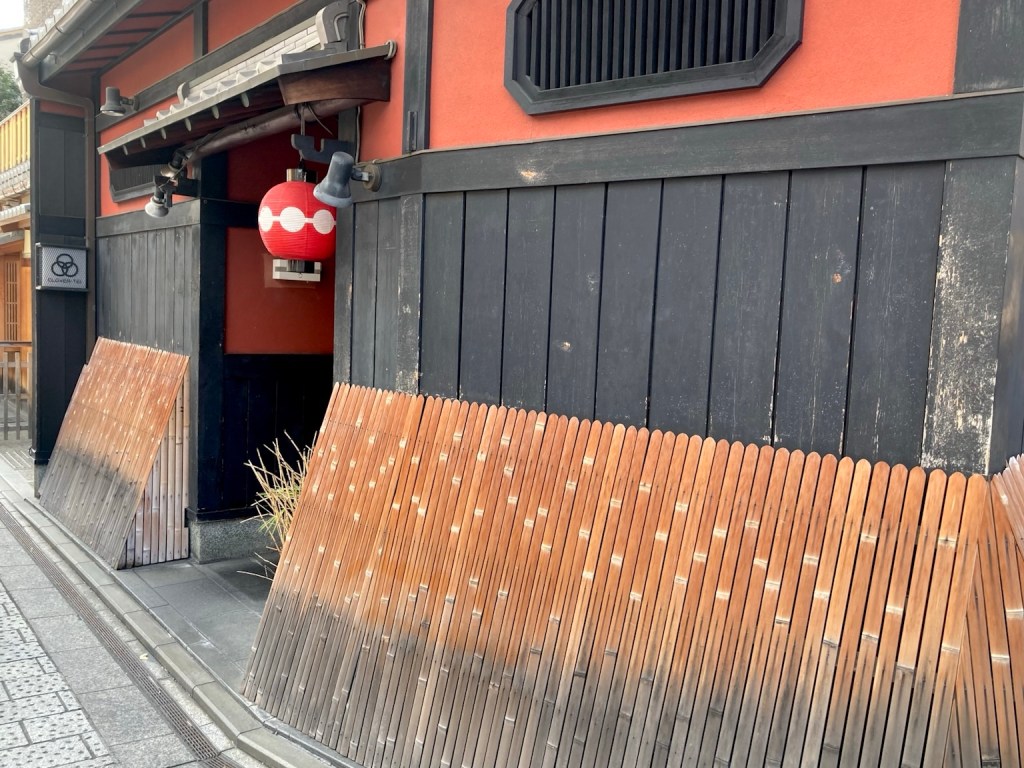
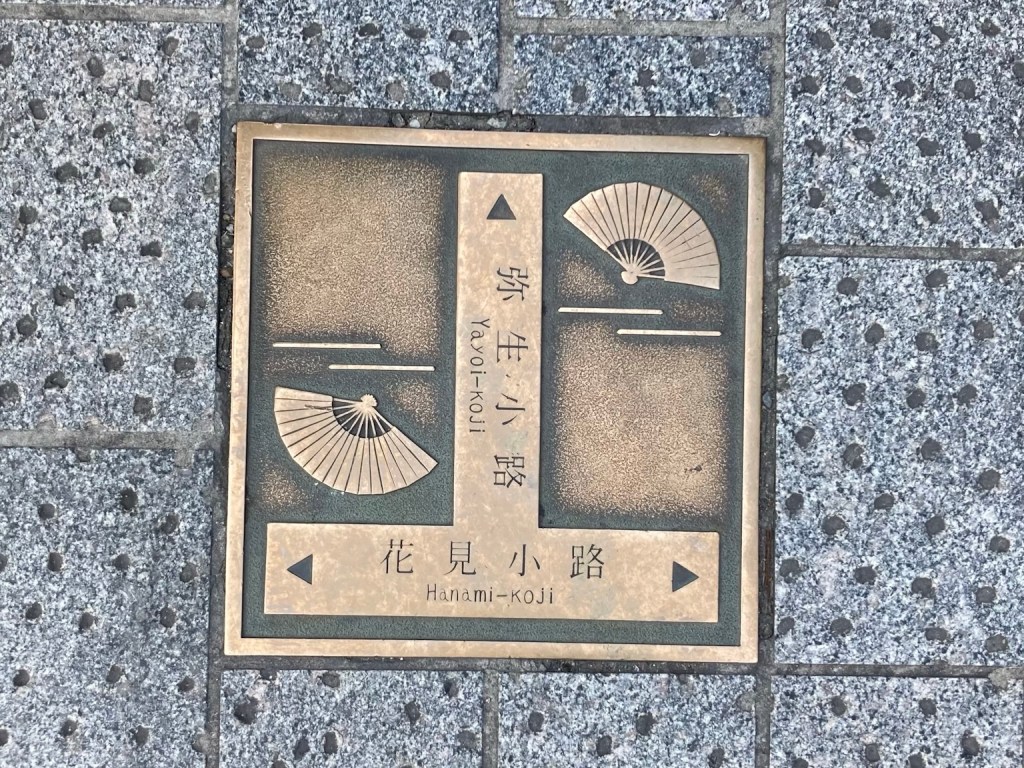
Some show a circular emblem with interlocking rings which symbolize a connection between the shrines, the tea houses, and the people who live in the Gion district. There are also brass plaques in the pavement with directions
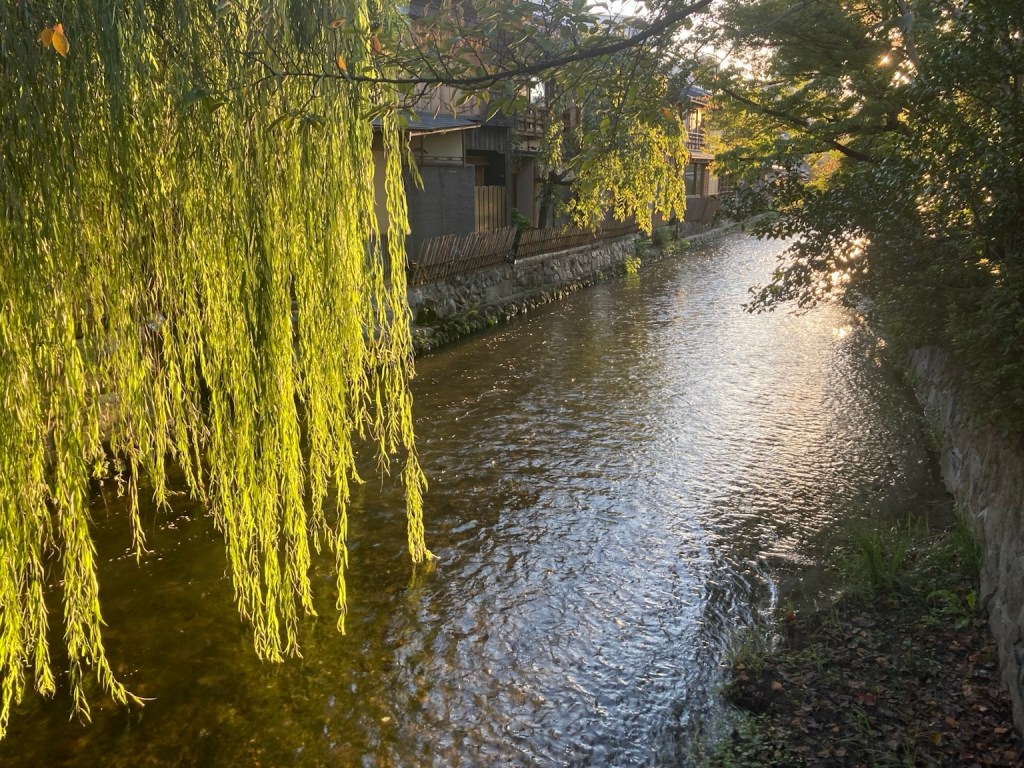
Walking back, we found ourselves in one of the prettiest parts of Gion beside the Shirakawa Canal lined with more wooden buildings …
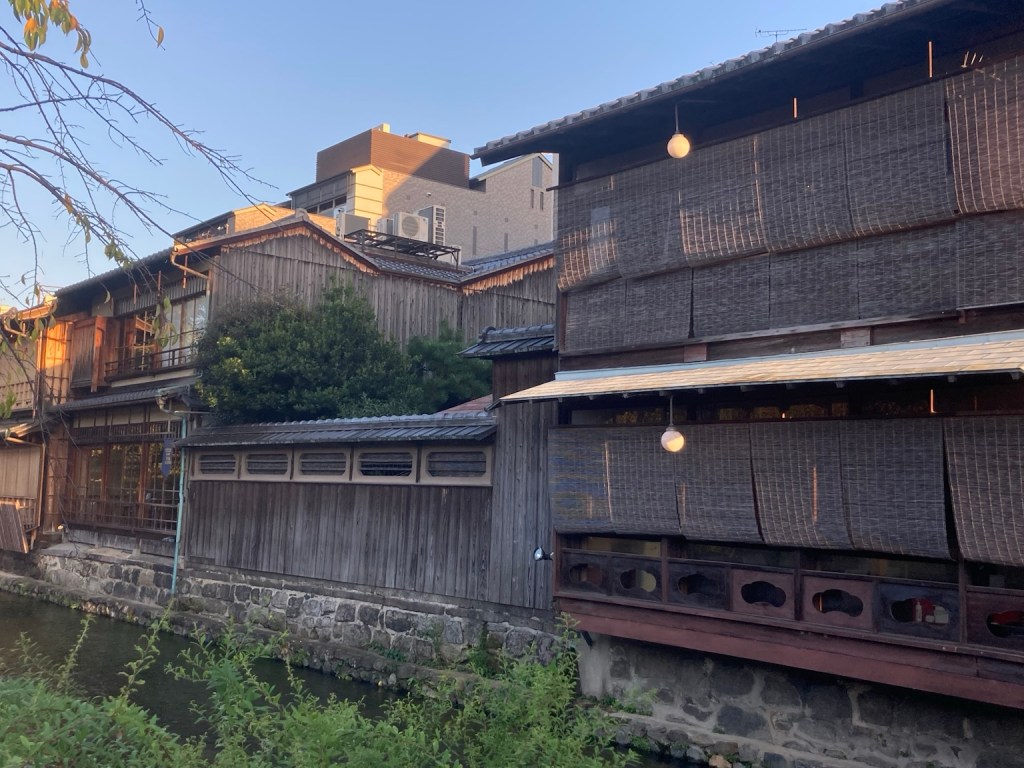
… and willows draped over the narrow wooden Tatsumi Bridge.
Next door is Gion Tanto, with no queue …
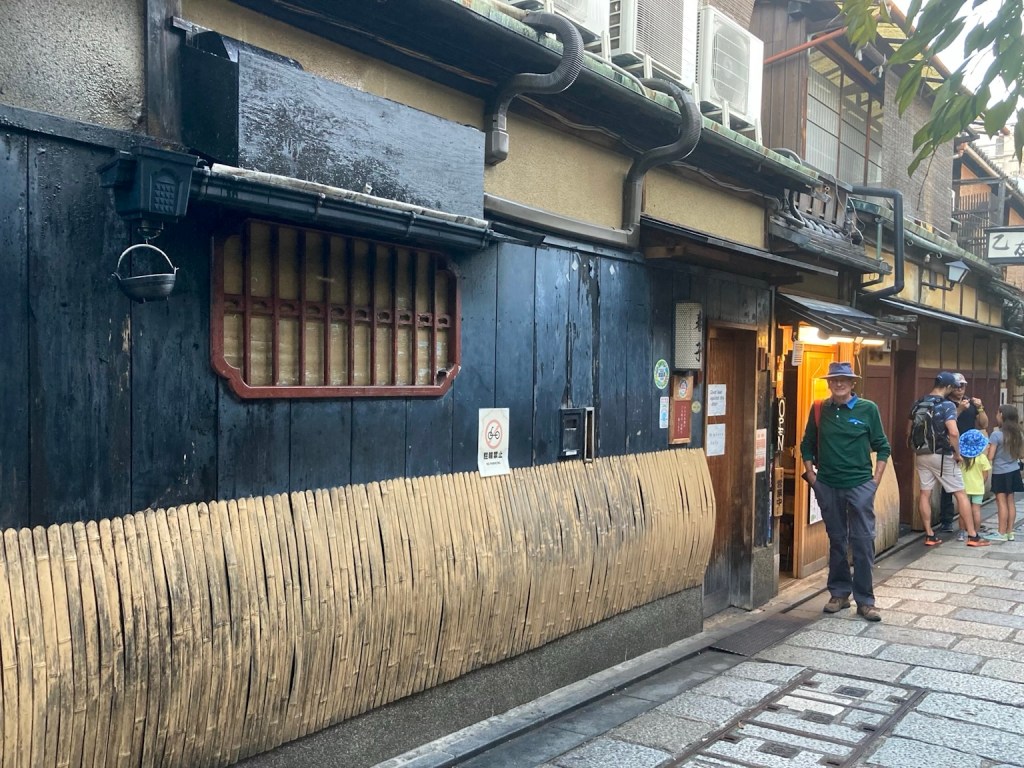
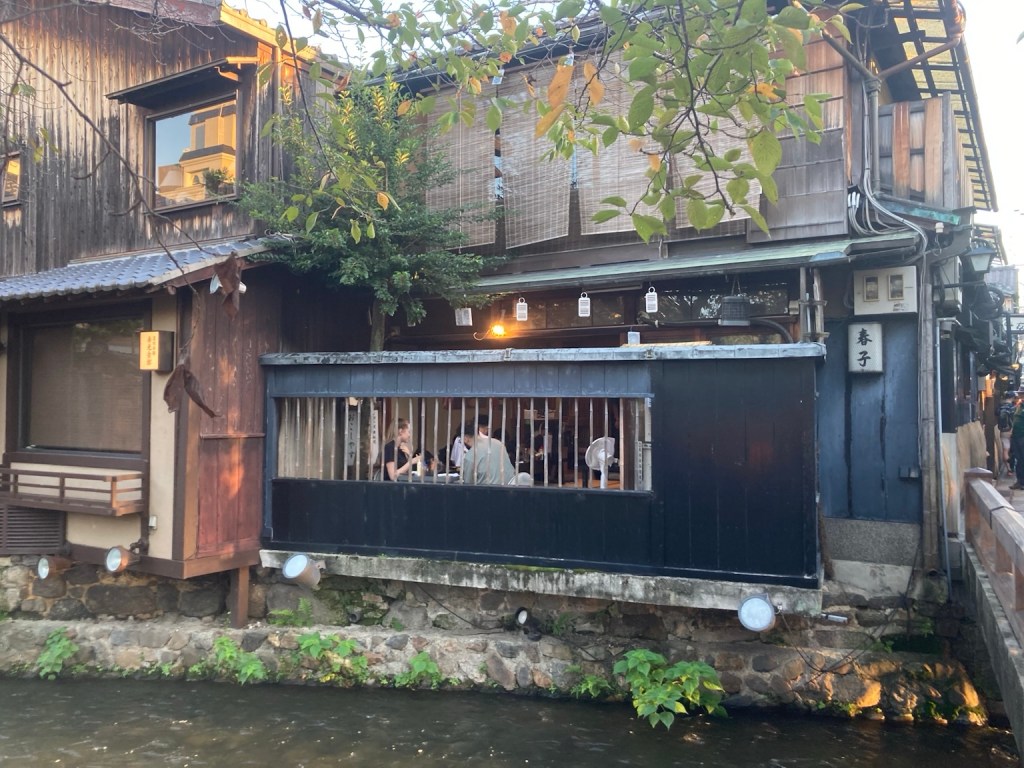
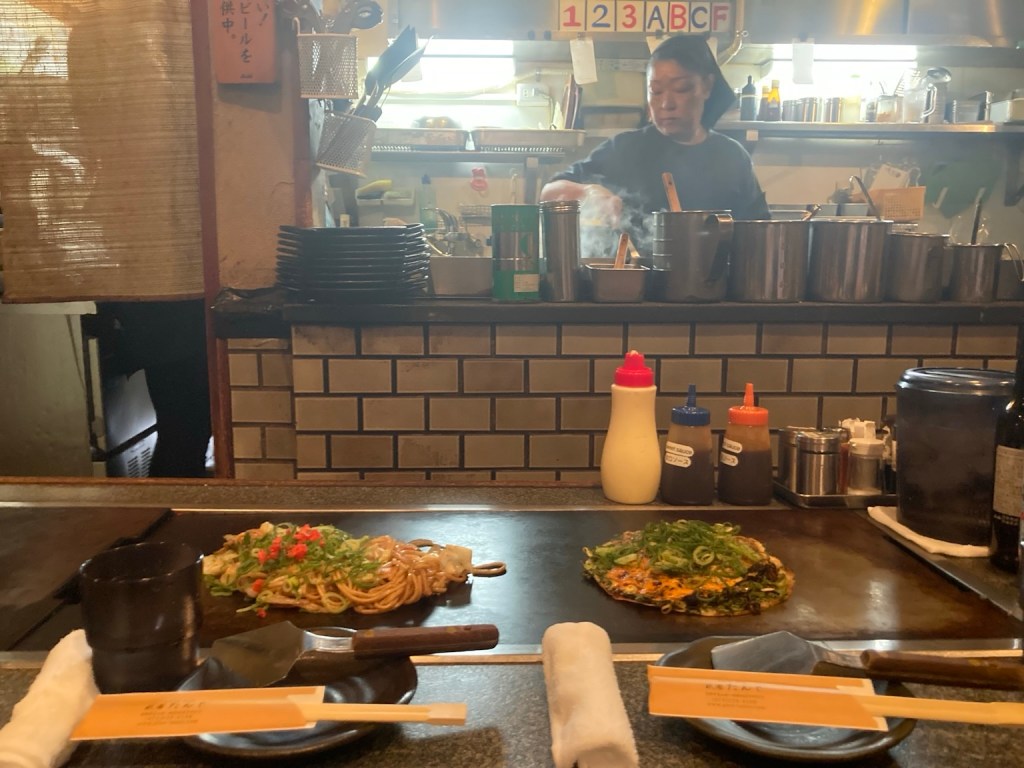
… so we decided to eat early. The main attraction for Chris was the vegan menu, but the bonus was the preserved traditional building with tatami matting, sunken tables and teppanyaki grills to keep food hot.
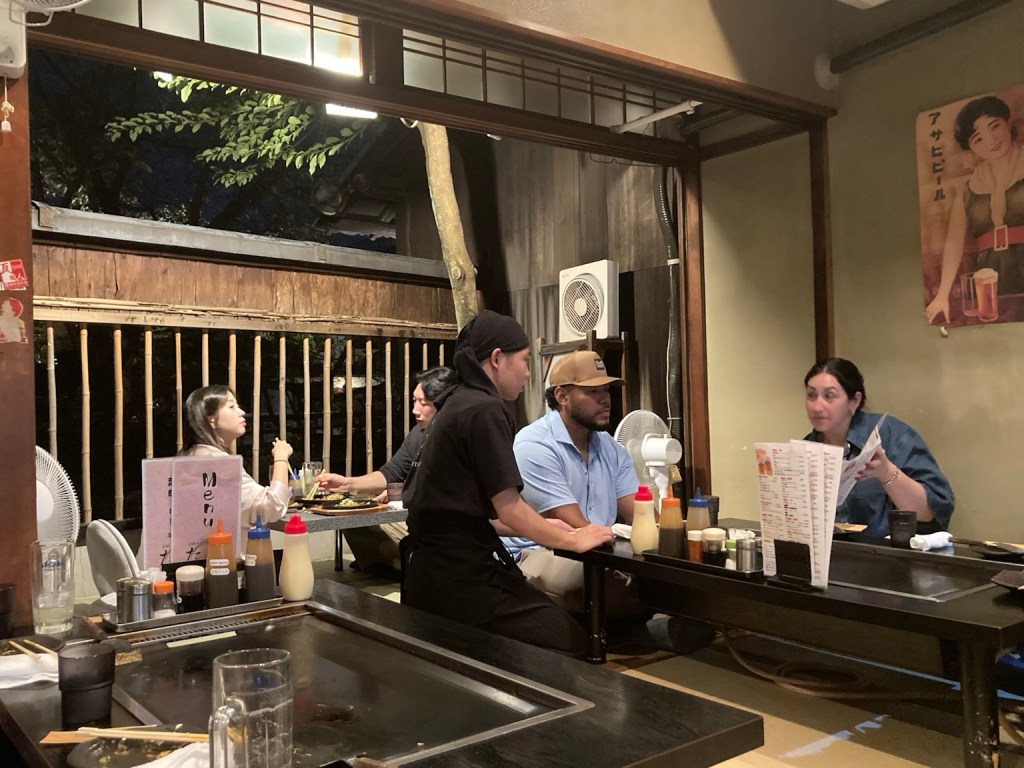
I chose the slightly lighter negiyaki, a Kansai pancake made with green onions, while Chris had yakisoba, the stir-fried noodles.