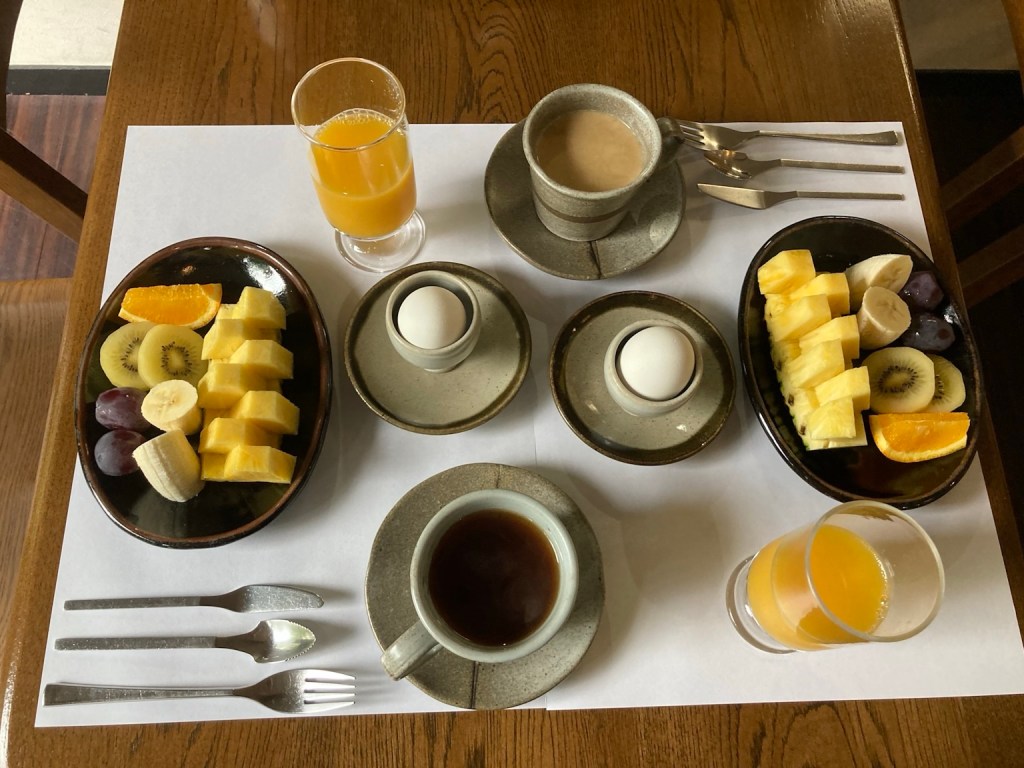
In the morning we had a lovely breakfast with lots of fruit which I’d been missing …
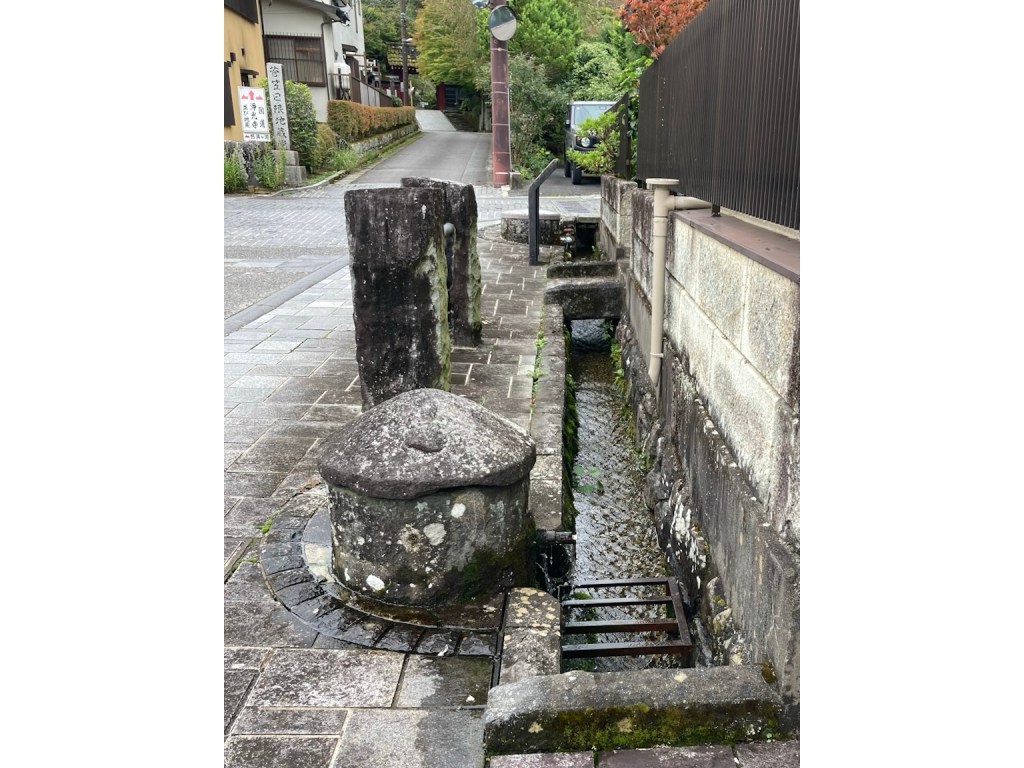
… then set off for a few more temples! Walking through our neighbourhood we spotted stone wells delivering spring water to the houses …
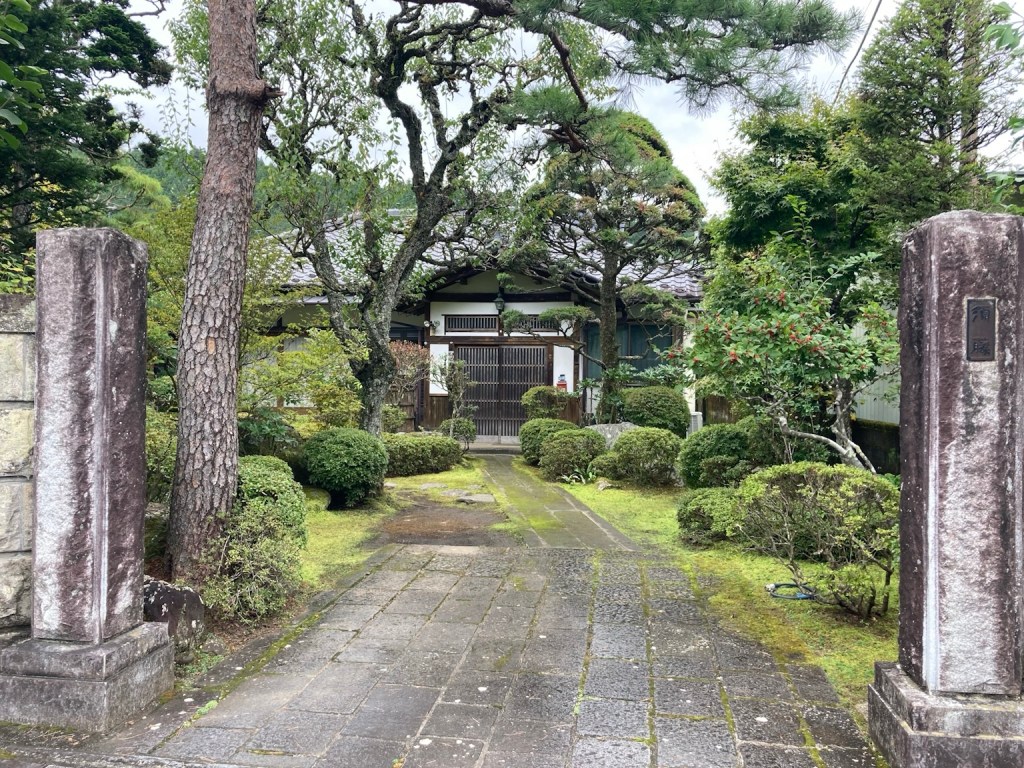
… some lovely homes …
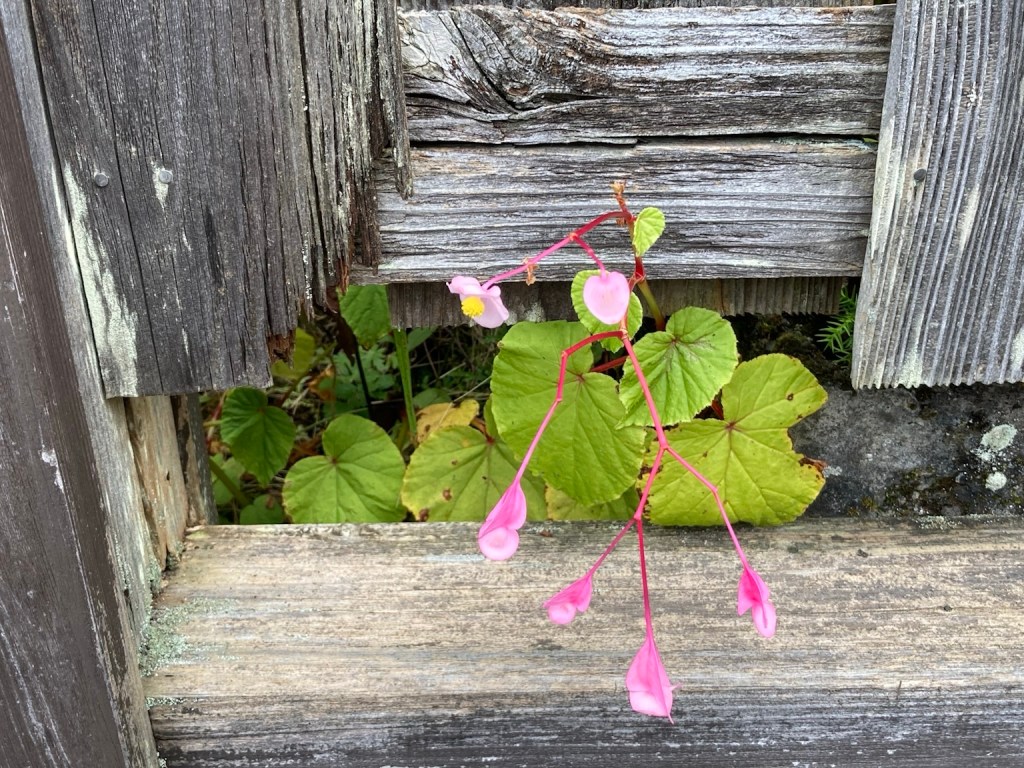
.. a pretty begonia …
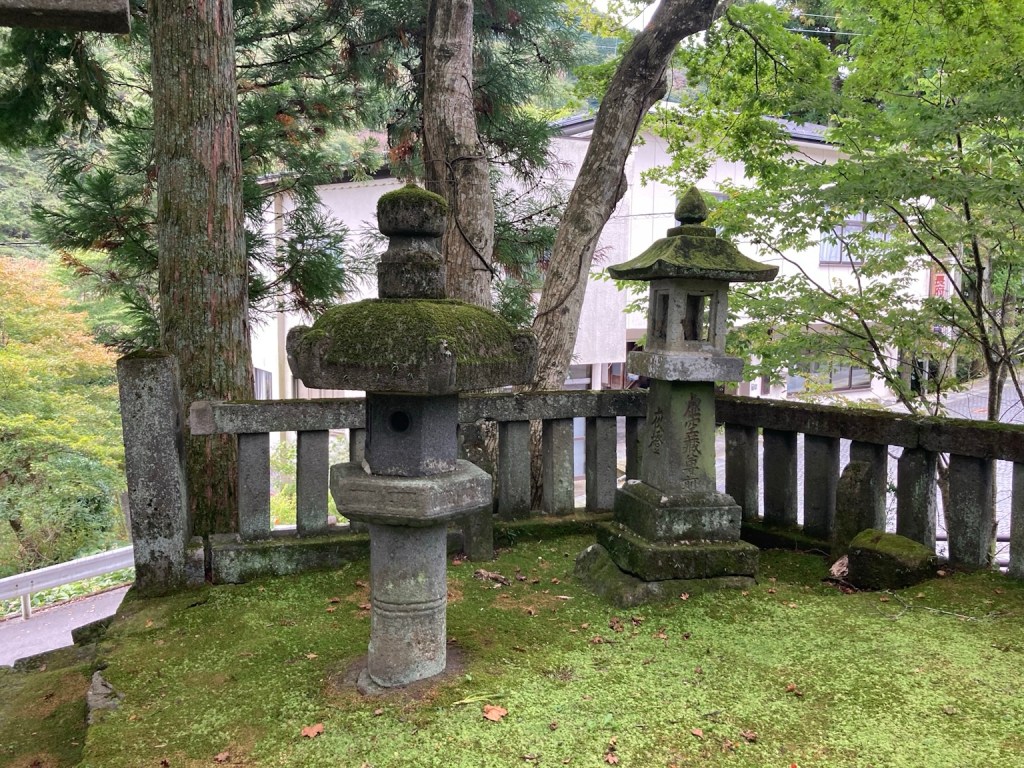
… and a small shrine on the corner.
Having headed to the main temple area, we began with Toshogu Shrine. This is the mausoleum of Tokugawa Ieyasu, founder of the Tokugawa Shogunate that ruled over Japan for 250 years until the Meiji Restoration in 1868 when power was returned to the Emperor. Ieyasu was entombed at Toshogu in 1617 but the complex was significantly enlarged and enhanced by his Grandson, Iemitsu, in the early C17th.
The site is huge, with lots of buildings …
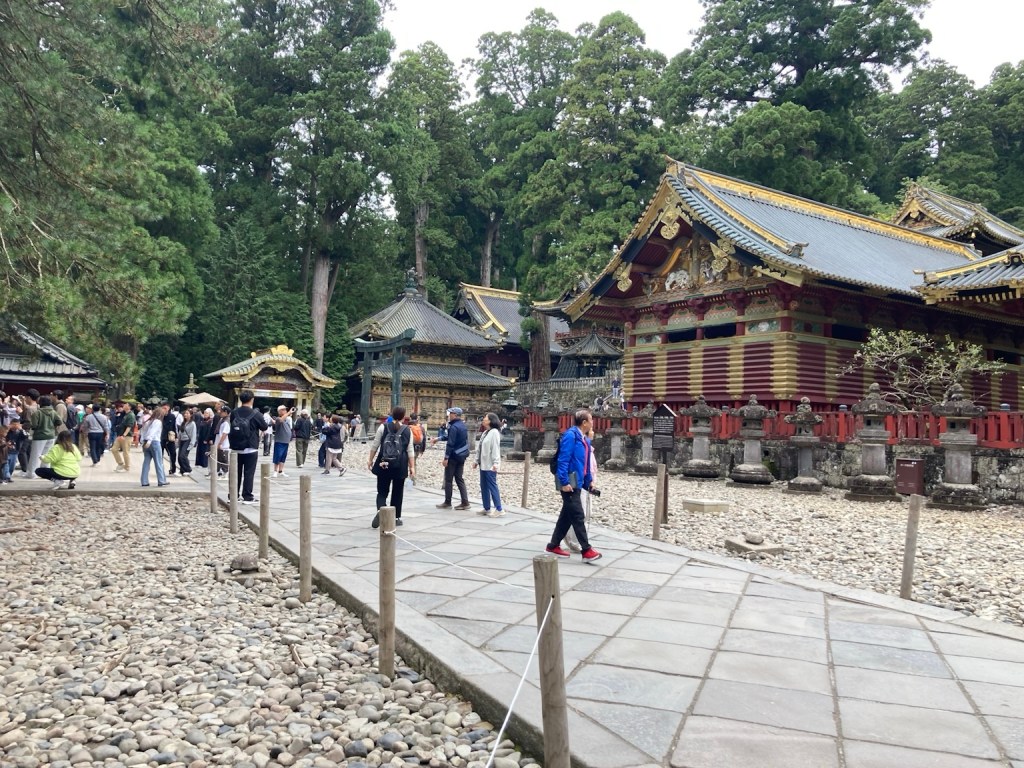
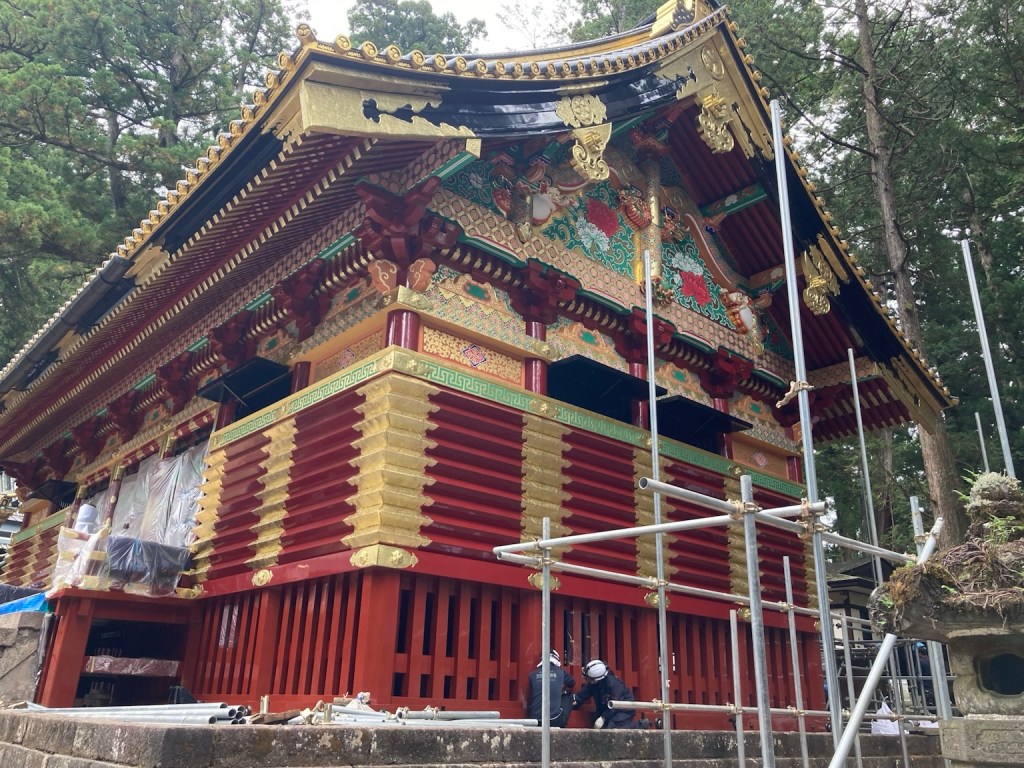
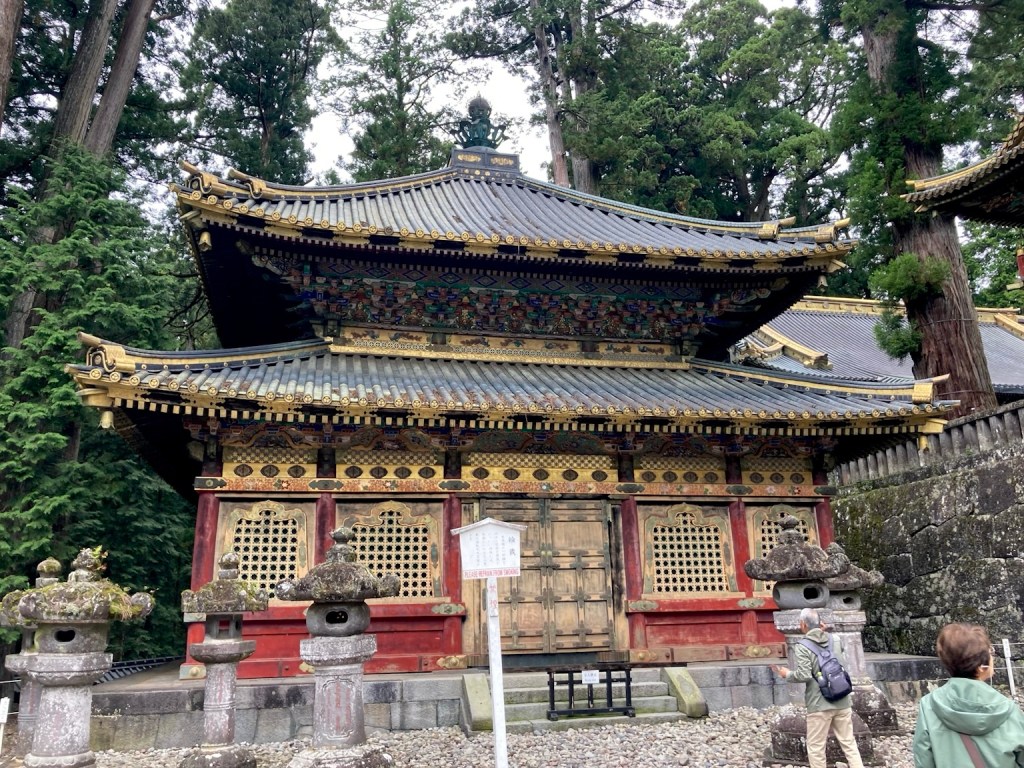
… the first being these three sacred storehouses, modeled after the Imperial storehouse in Nara, to contain ceremonial dress and implements for 1200 people used in the Thousand Warrior Procession.
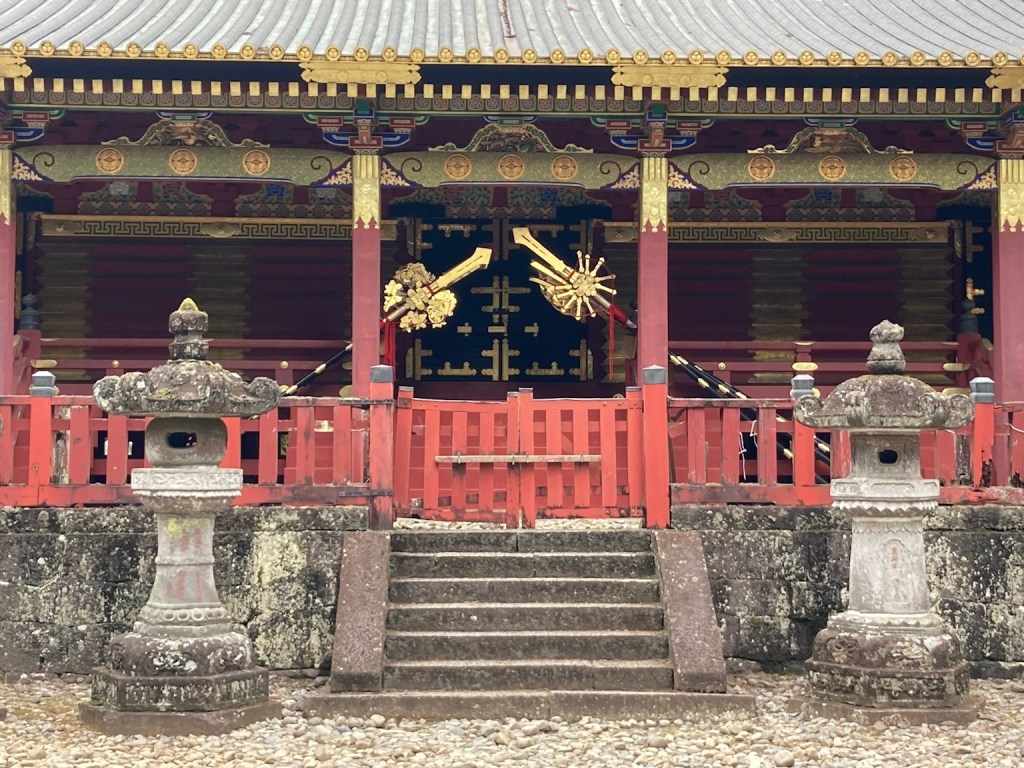
This one is being restored …
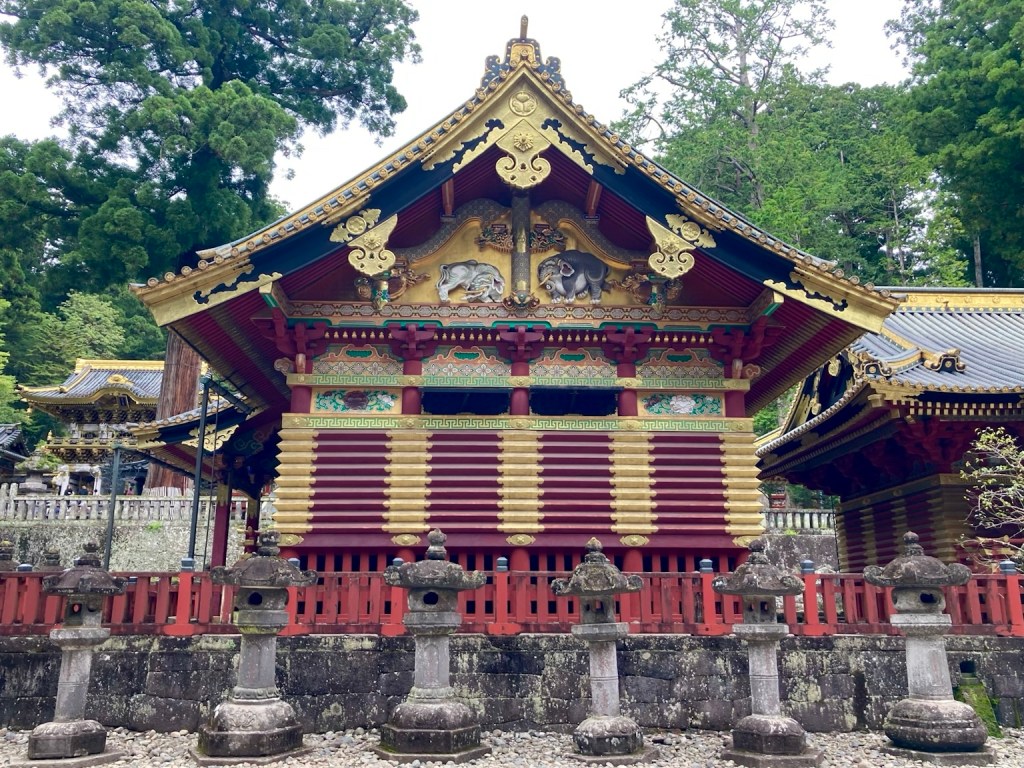
… and the elephants at the top of this one were probably carved by an artist who had never actually seen one!
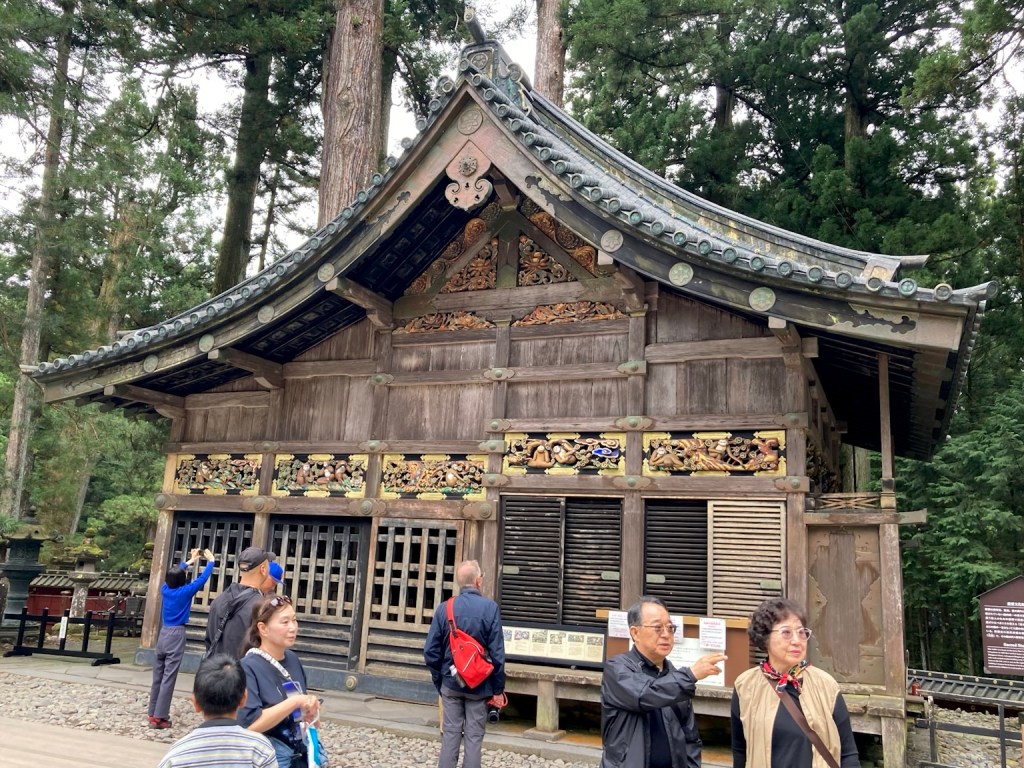
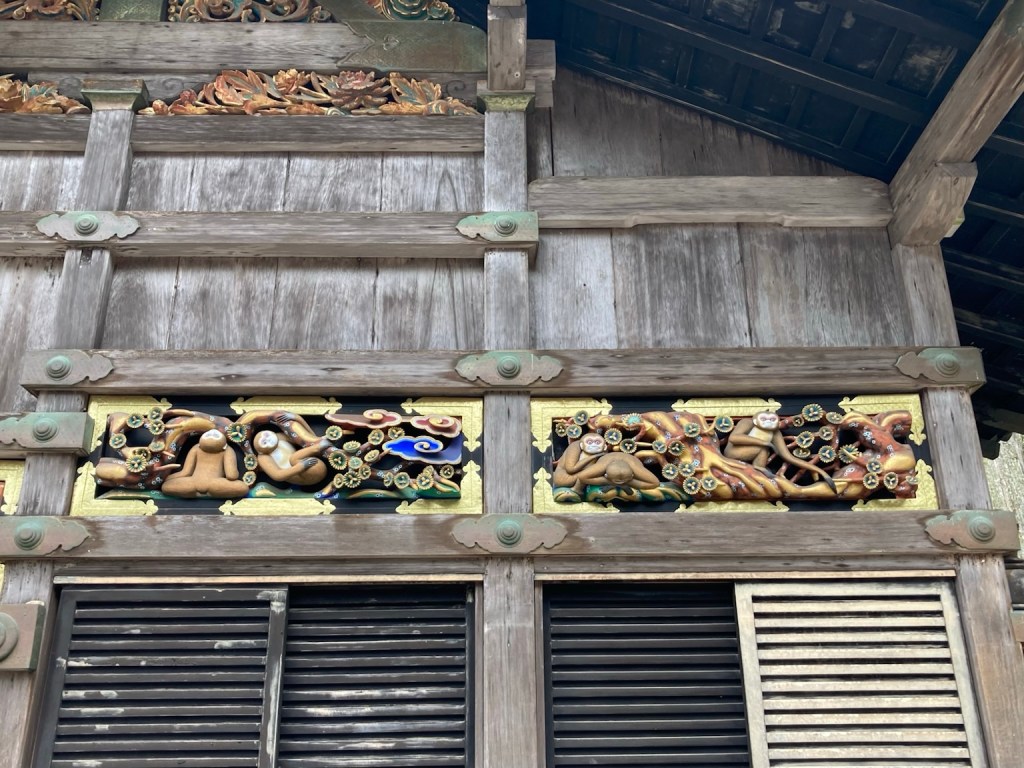
This stable was home to the horse that Lord Tokugawa leyasu rode during the Battle of Sekigahara in 1600 that unified Japan under Tokugawa rule. It is decorated with a frieze advising children how to avoid trouble in life, illustrated by monkeys. Sounds familiar?
Well in the panel on the left, the mother looks to the future, hoping it will be rosy and fruitful like the loquats and crimson clouds, but in the second the monkeys tell children to ‘See-no-evil, Say-no-evil, Hear-no-evil’ – the origin of the phrase.
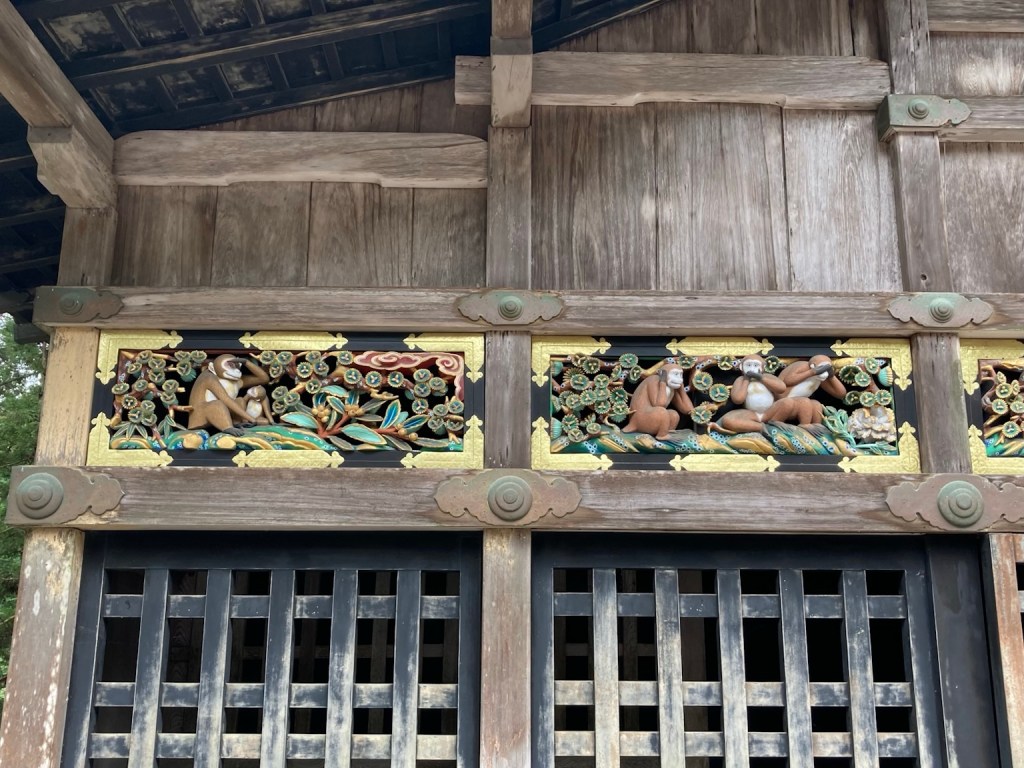
The rest of the frieze is just as charming.
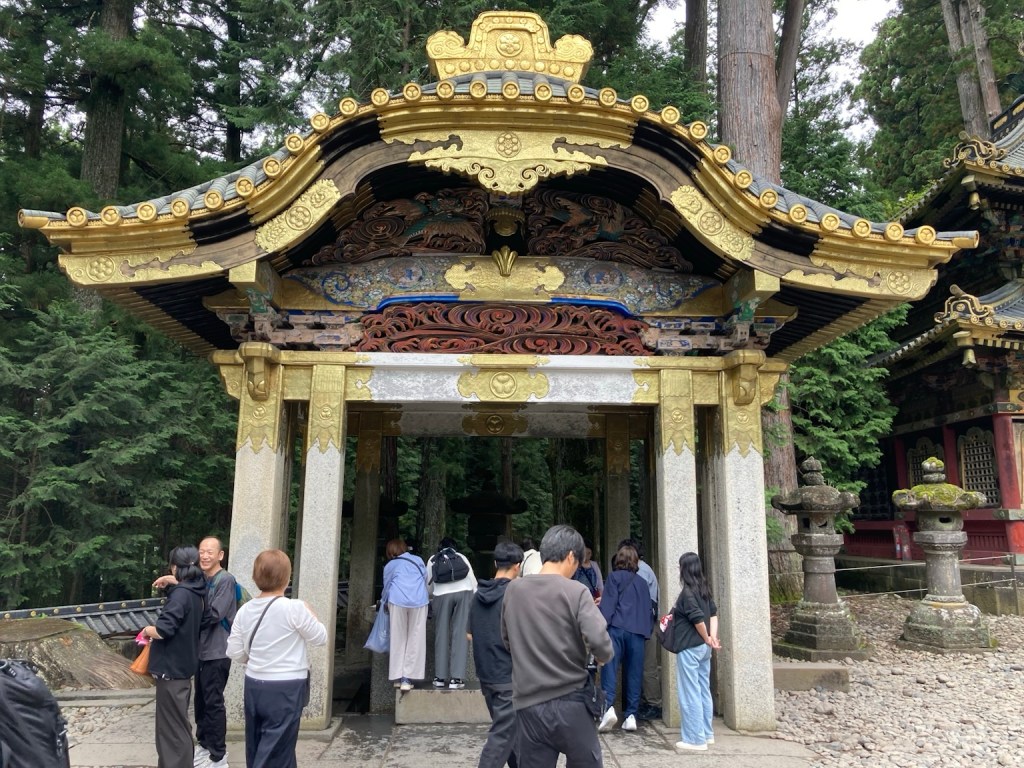
Many of the buildings are richly decorated with gilded lacquer like the Ritual Purification Building.
The lanterns were donated by the feudal lords who fought with Lord Tokugawa leyasu at the Battle of Sekigahara in 1600, which led to the creation of the Tokugawa Shogunate.
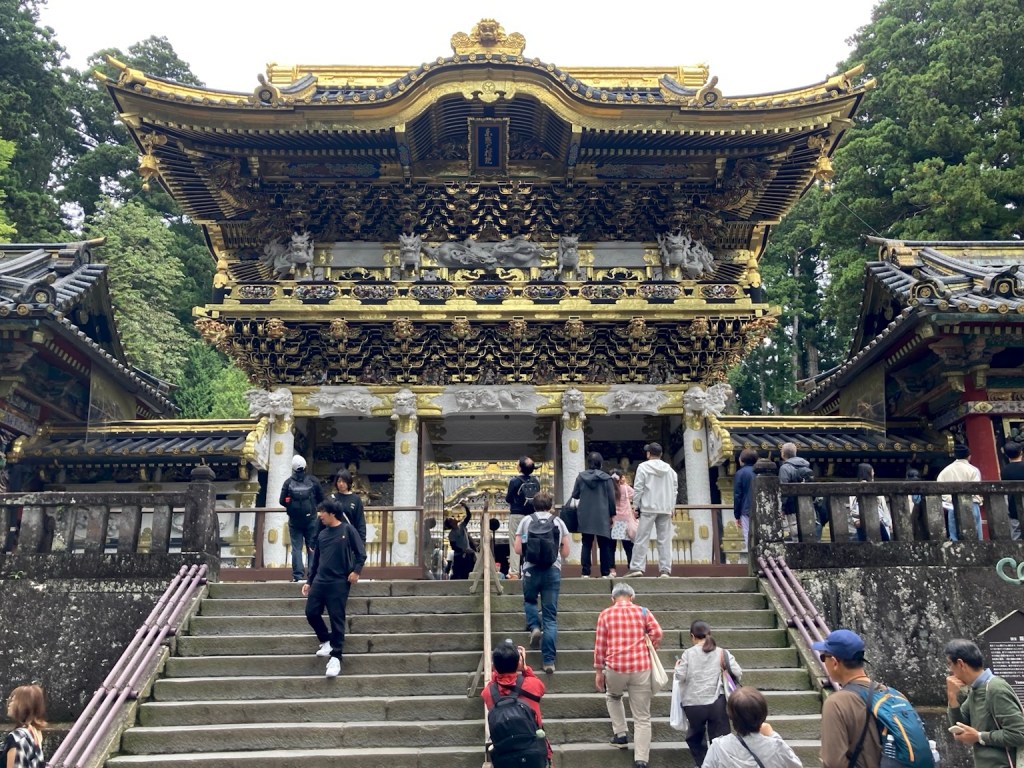
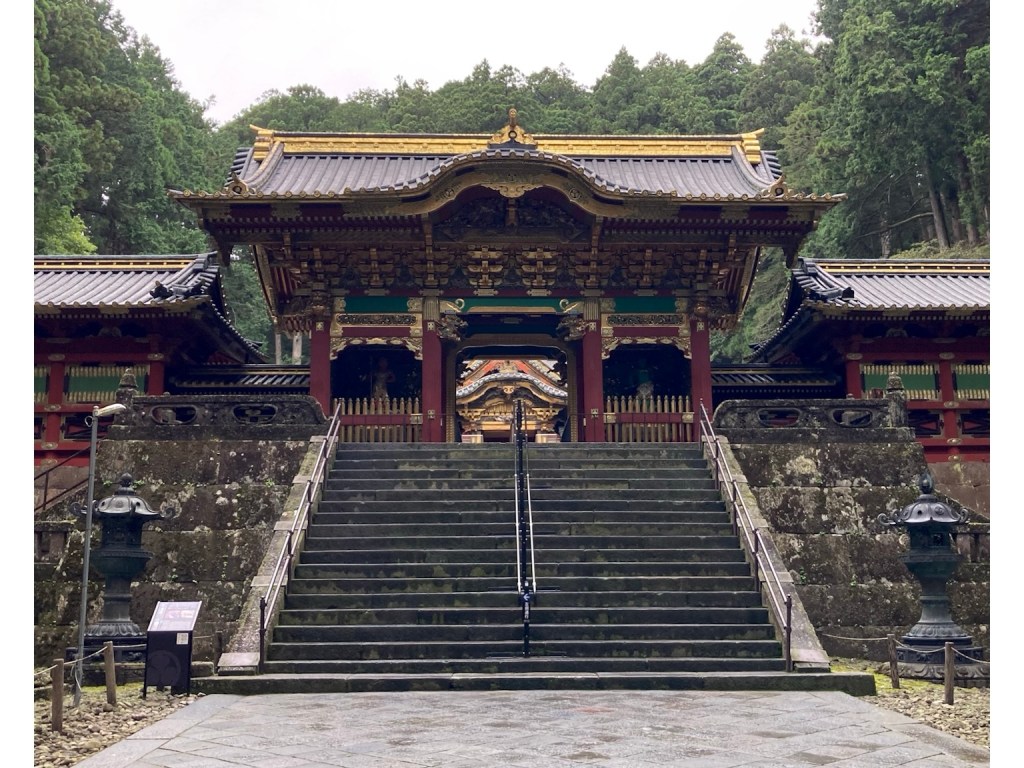
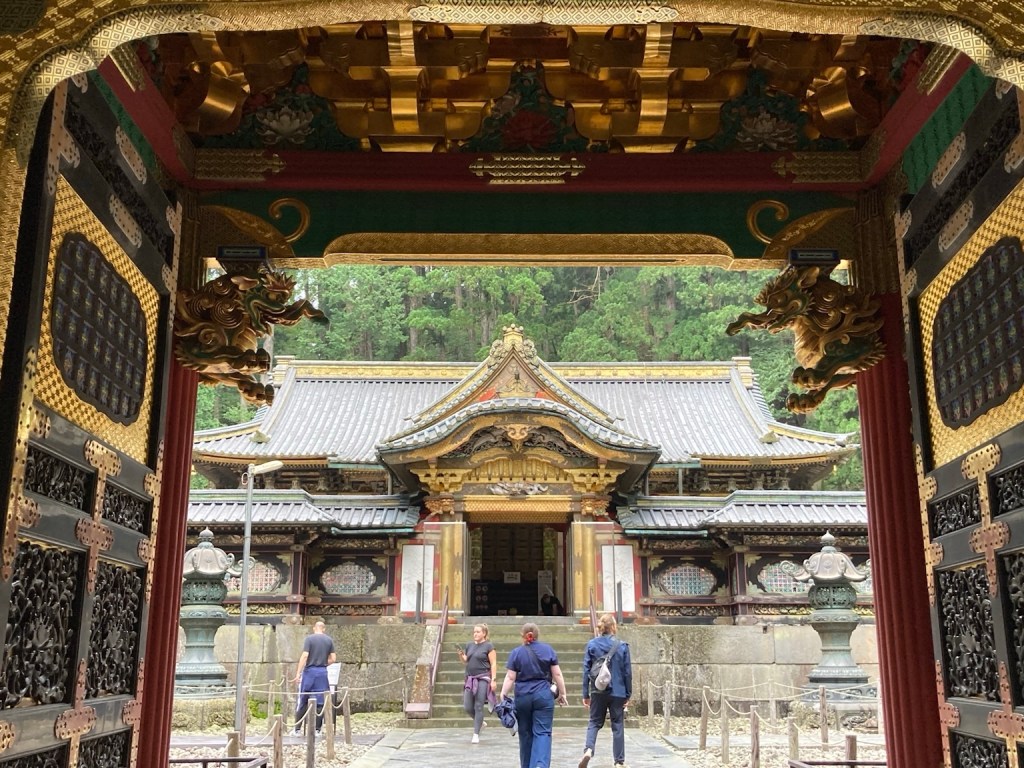
Here is the Yomeimon Gate, the most extravagantly decorated gate in Japan, with some 500 carvings including dragons, flying horses and other mythical beasts at the top and people lower down, followed by some details.
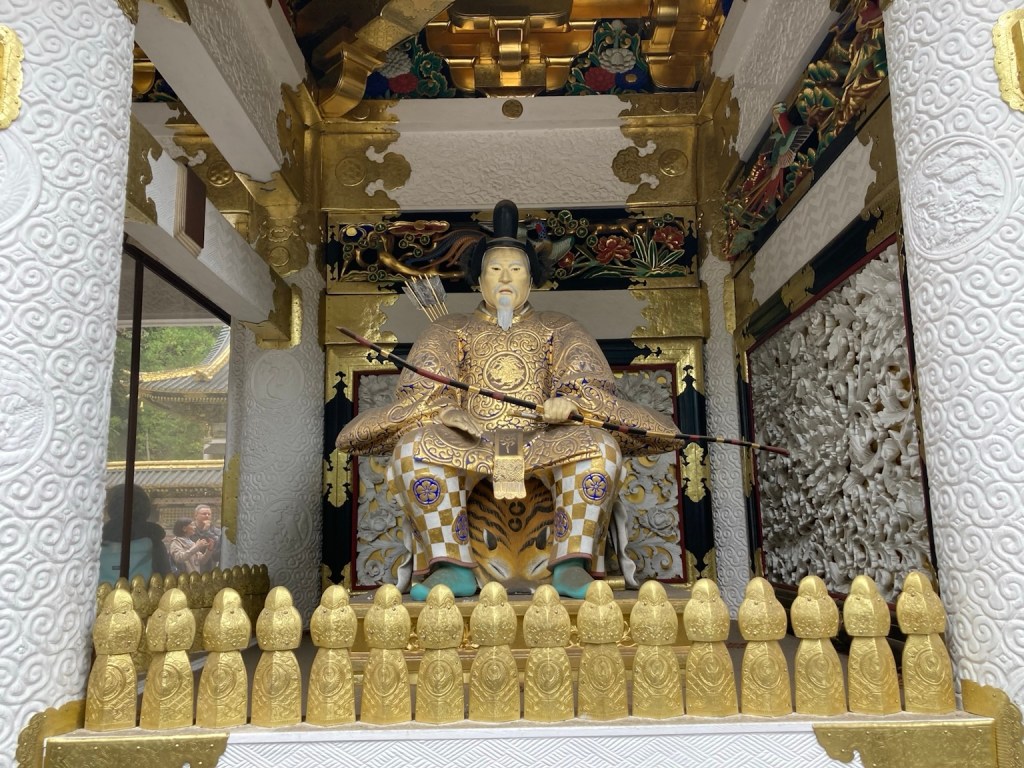
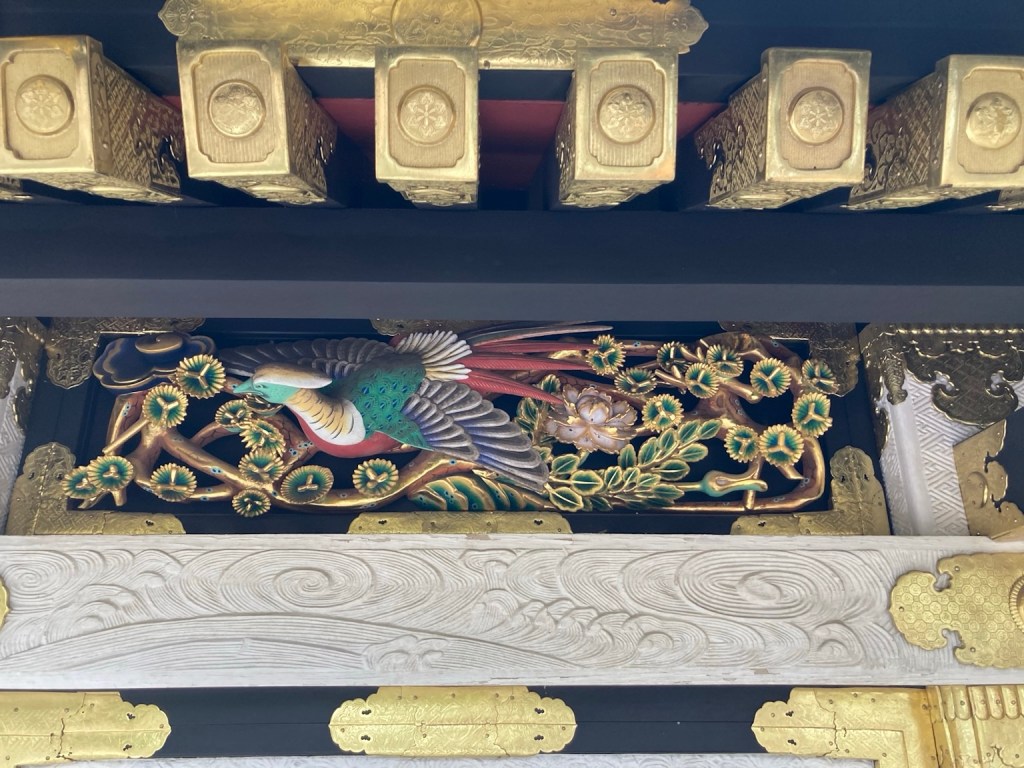
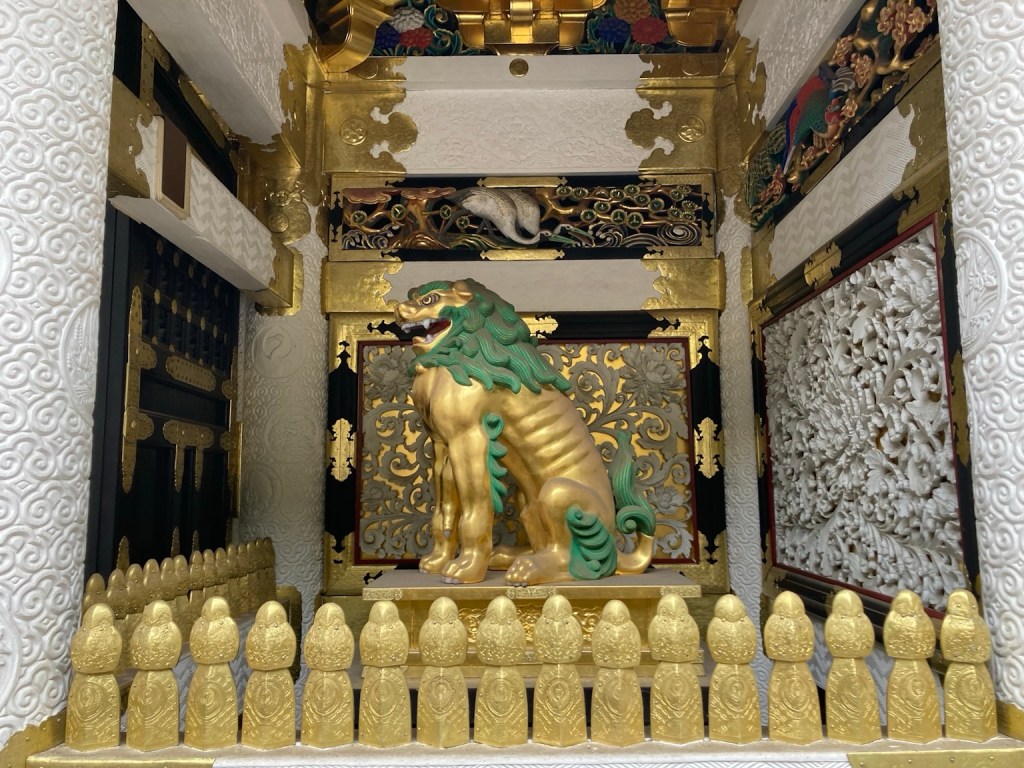
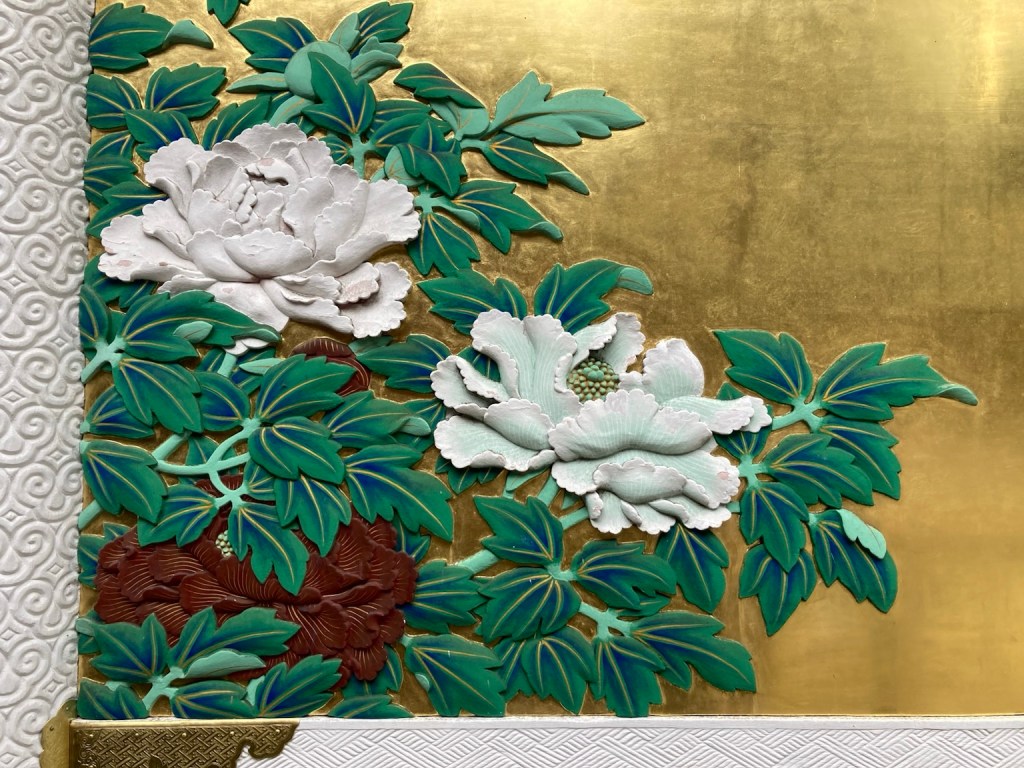
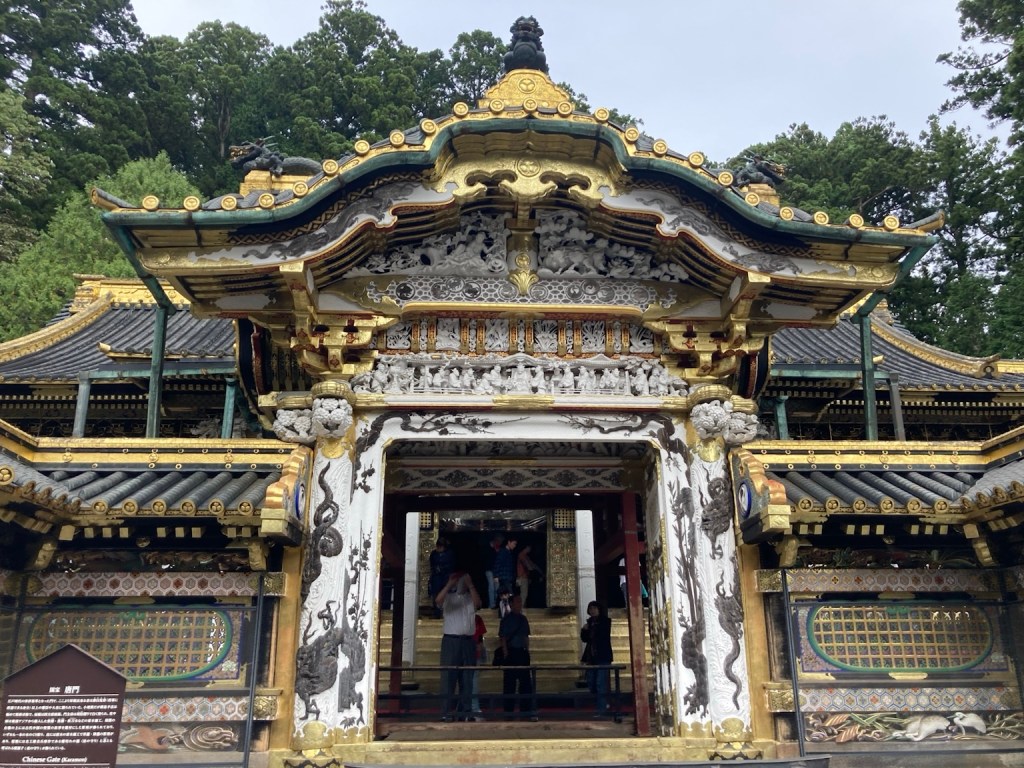
Next is the Karamon or Chinese Gate which only people of the very highest rank were allowed to pass through on special occasions. It is protected by sacred animals, including an ascending and a descending dragon on either side of the gate, and by Chinese lions and dragons on the roof.
This small carving is one of the most famous at Nikko Toshogu. The cat protects the entrance gate to the grave of Lord Tokugawa leyasu.
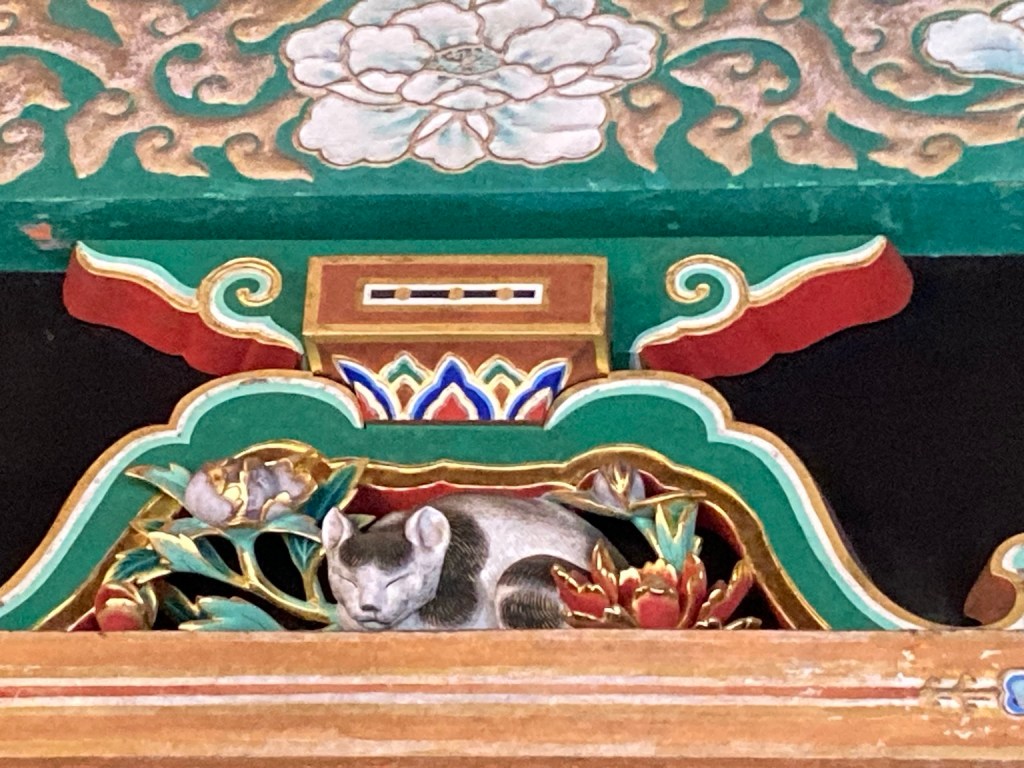
There are 207 stone steps leading up to the Inner Shrine. Special care was paid to the materials used in the Inner Shrine and each of the steps is carved from a single block of stone.
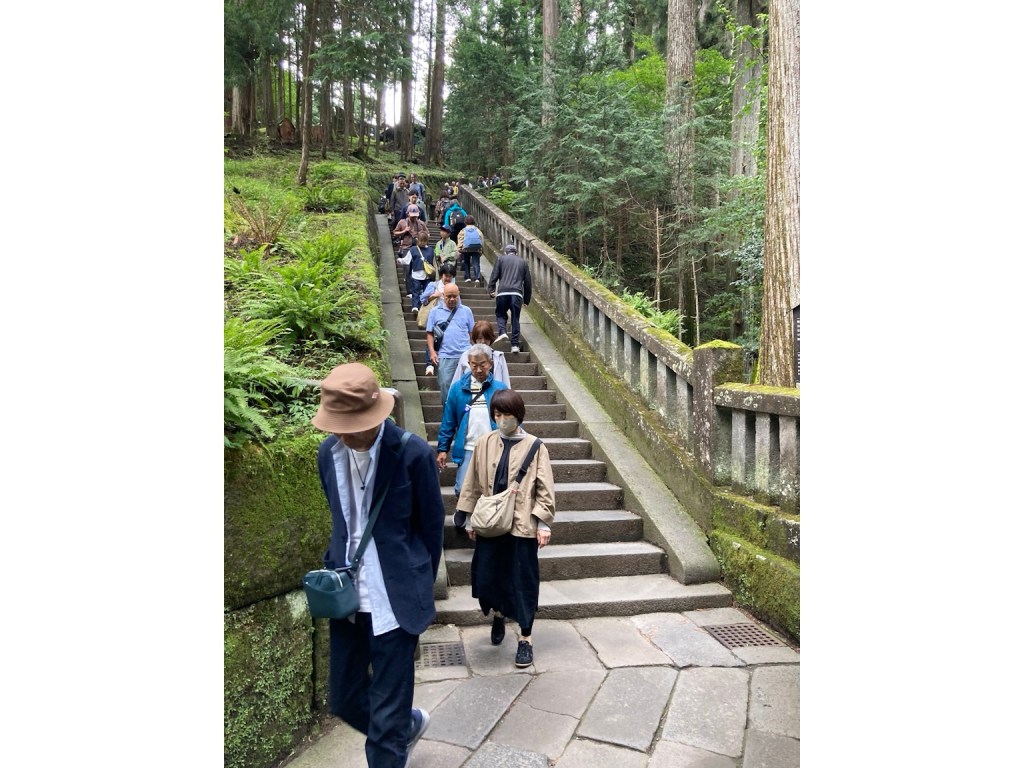
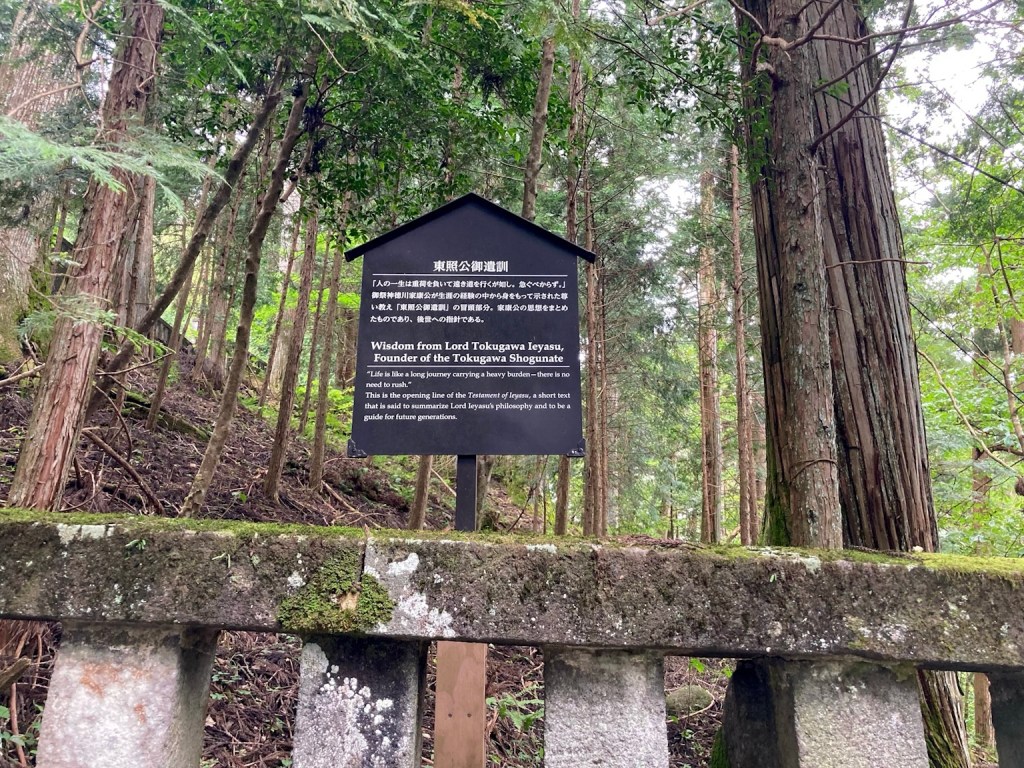
We were pleased for a breather half way up and smiled to see this sign.
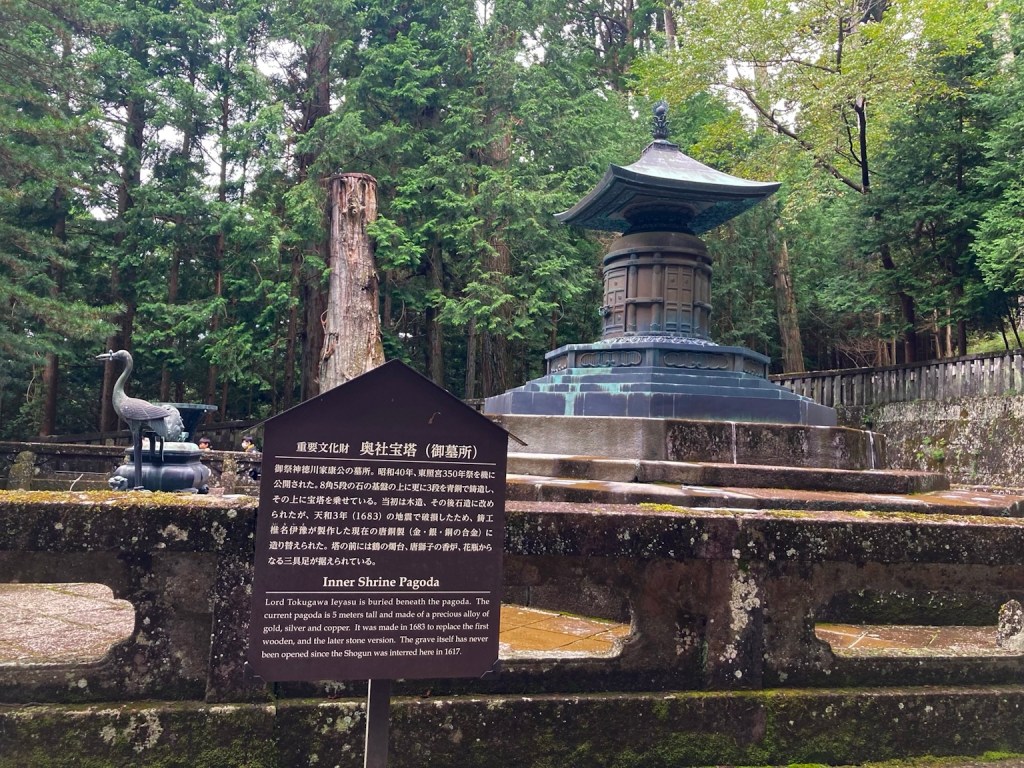
Opened to the public only since 1965, the Inner Shrine is the site of the grave of the first Shogun of the last and longest samurai government in Japan.
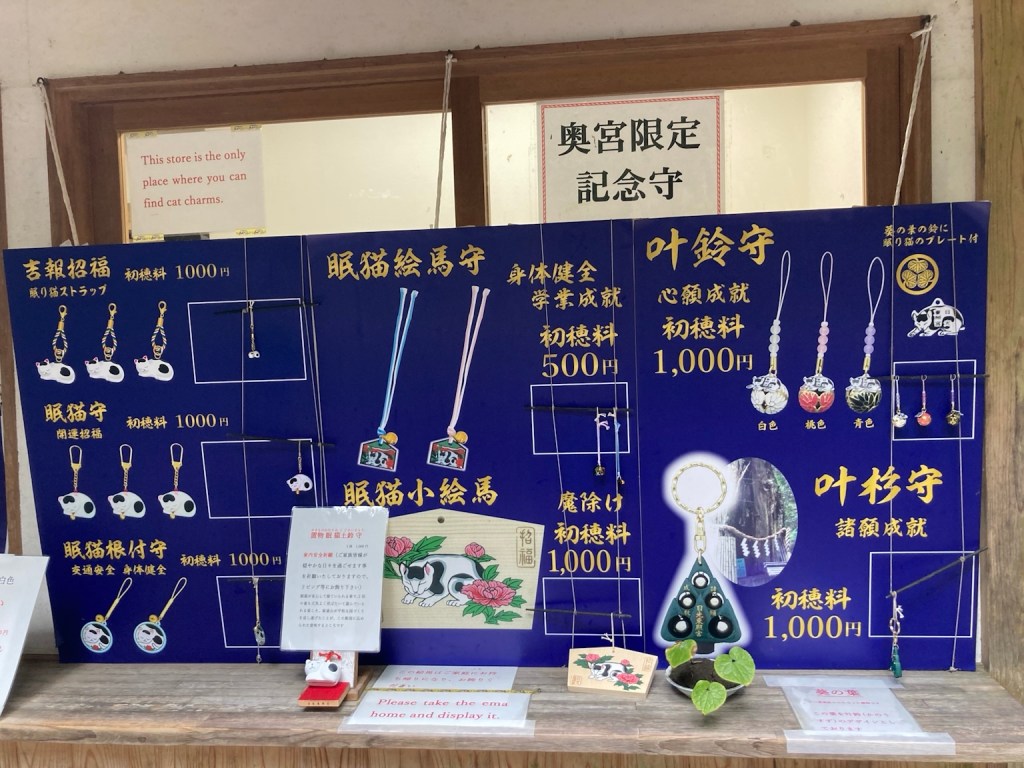
There is always some kind of souvenir or charm to buy at each shrine, and that cute sleeping cat fits the bill perfectly …
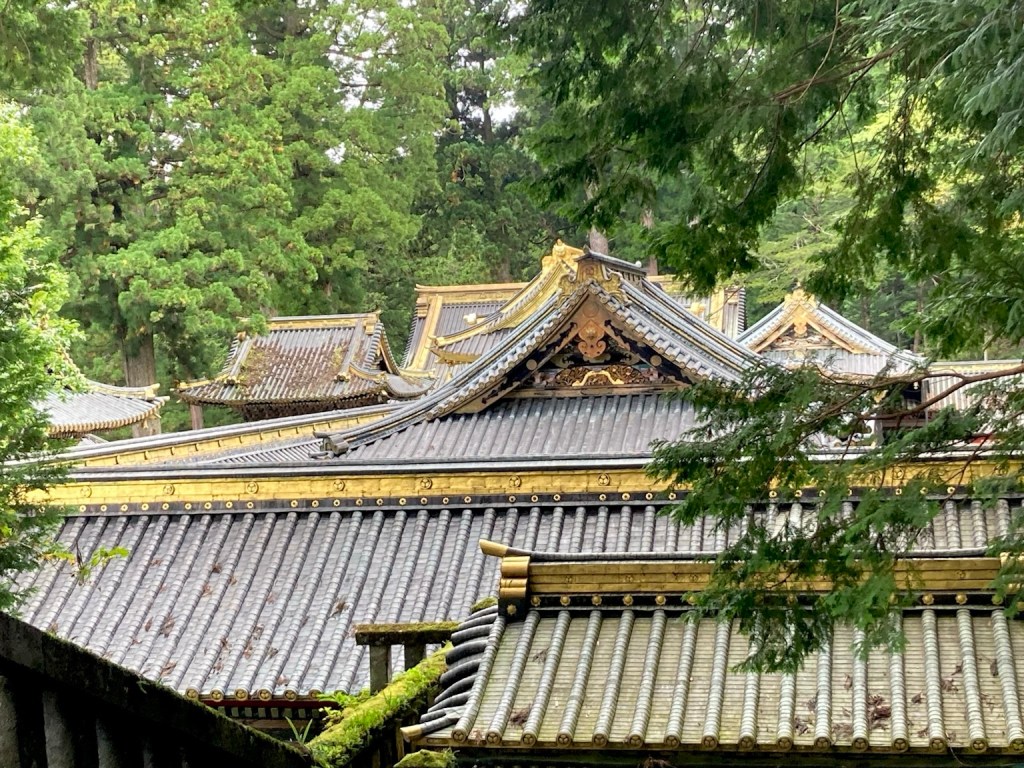
… and we spotted this roofscape on the way down.
Next is Futarasan Jinja, a much older shrine than Toshogu, it was founded in 782 by Shodo Shonin, the same Buddhist monk that founded Rinnoji Temple.
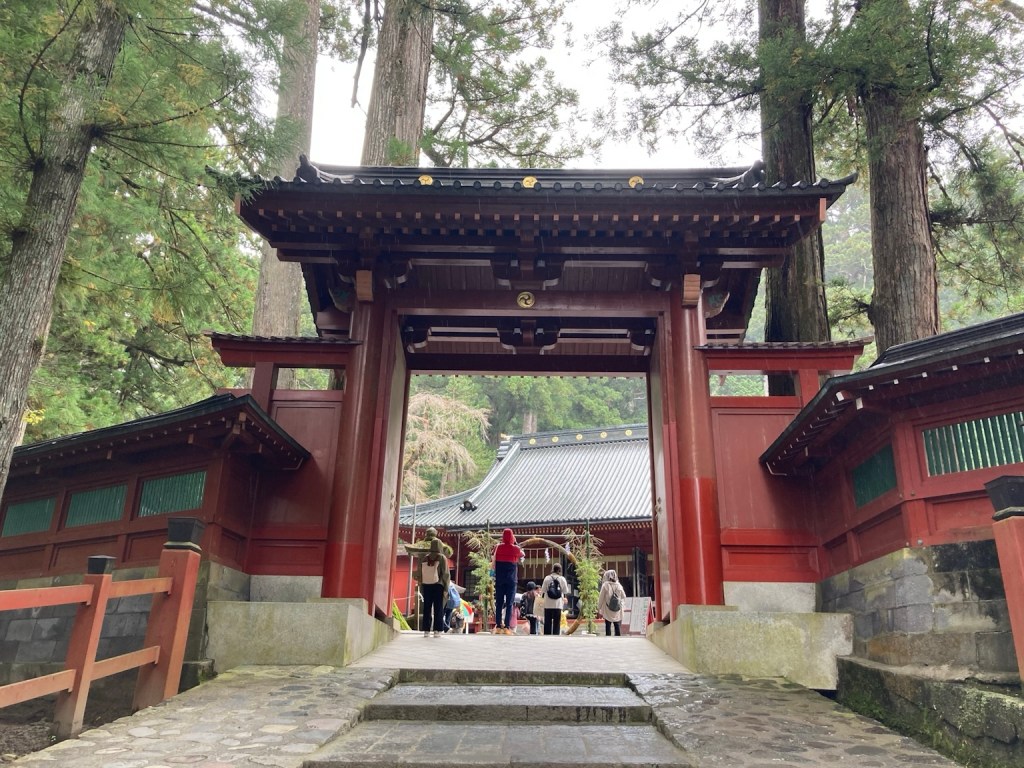
Futarasan is another name for Mt Nantai a volcanic peak in the Nikko National Park and the shrine is dedicated to the deities of three important mountains in the area, Mt Nantai, Mount Nyoho and Mount Taro.
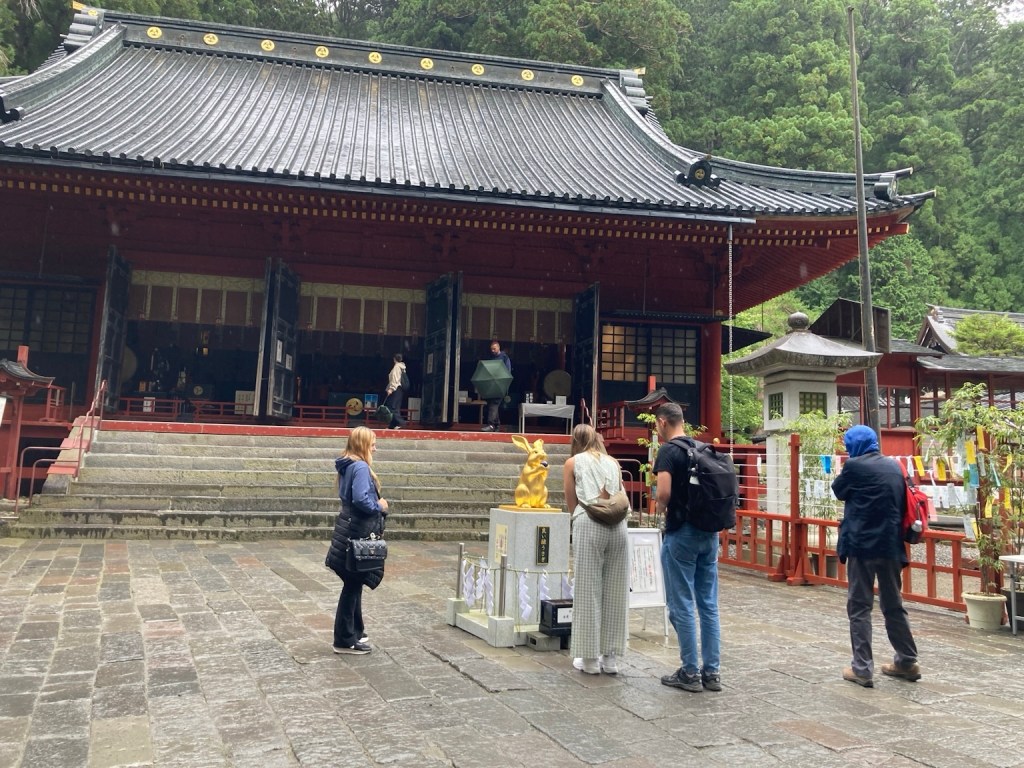
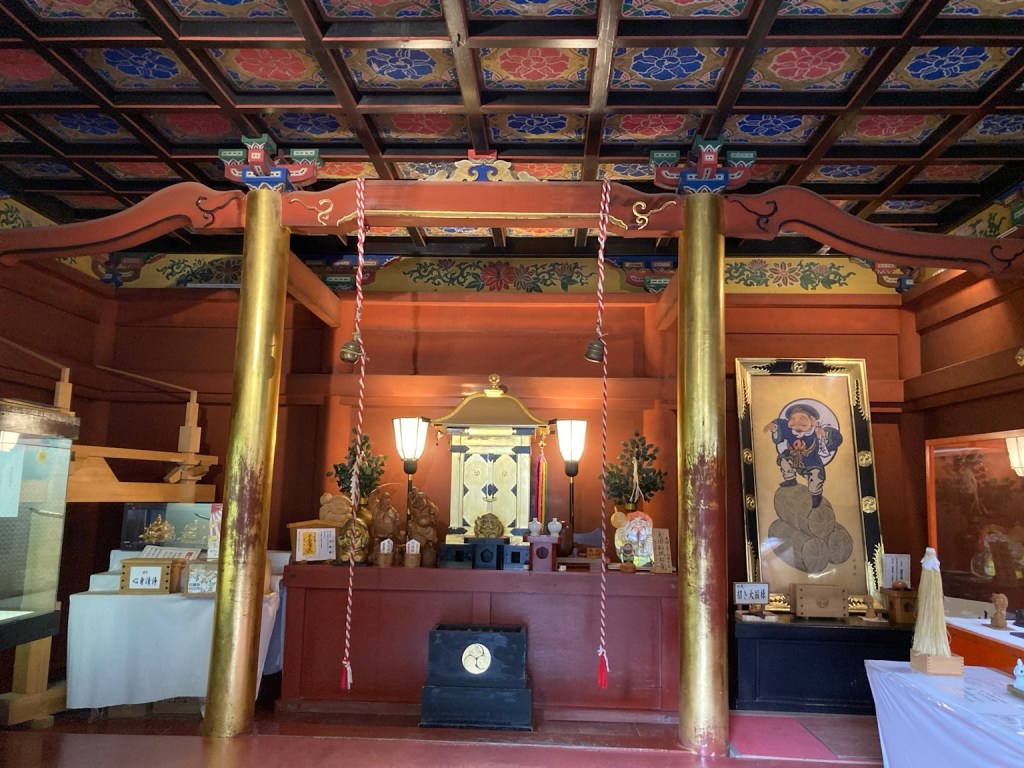
Again, a selection of buildings, and guess what the charm is here!
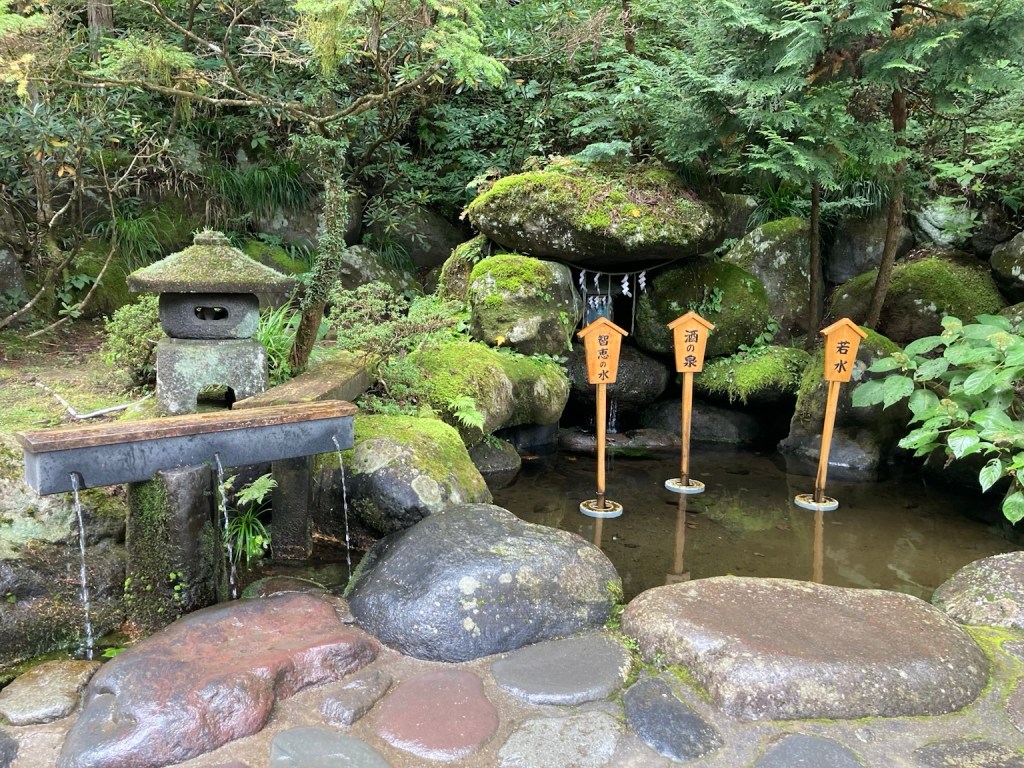
Within the shrine grounds, there is a pool and drinking station, which is fed by three springs that are said to have special powers, one for wisdom, one for the energy of youth and one for eye health.
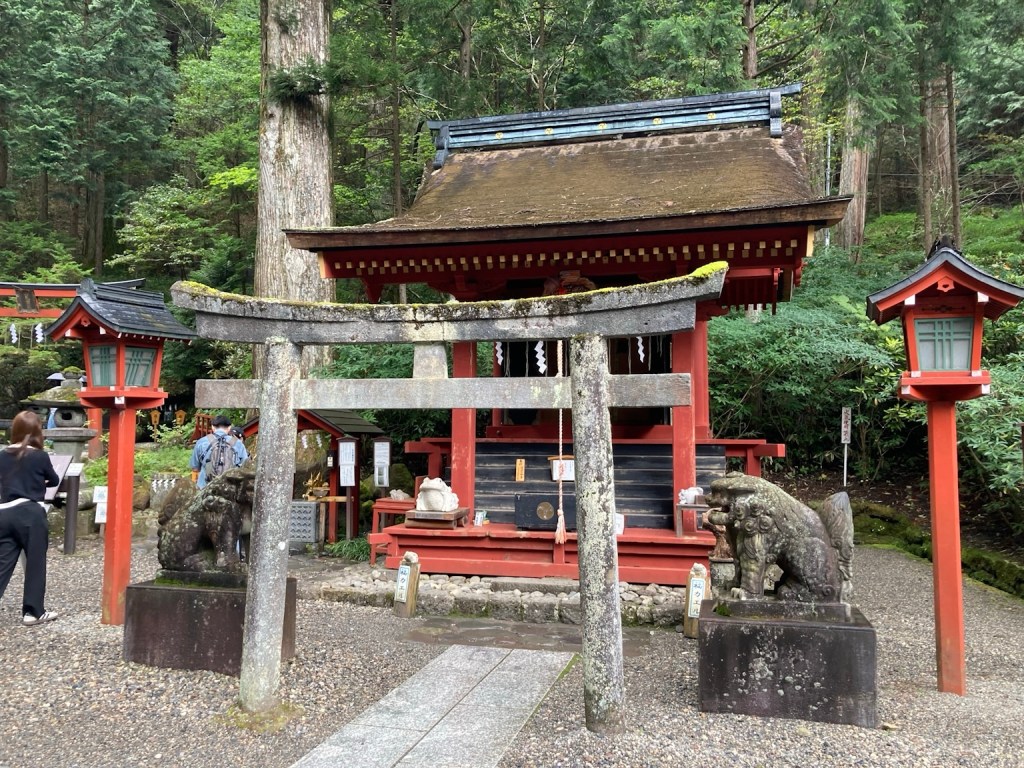
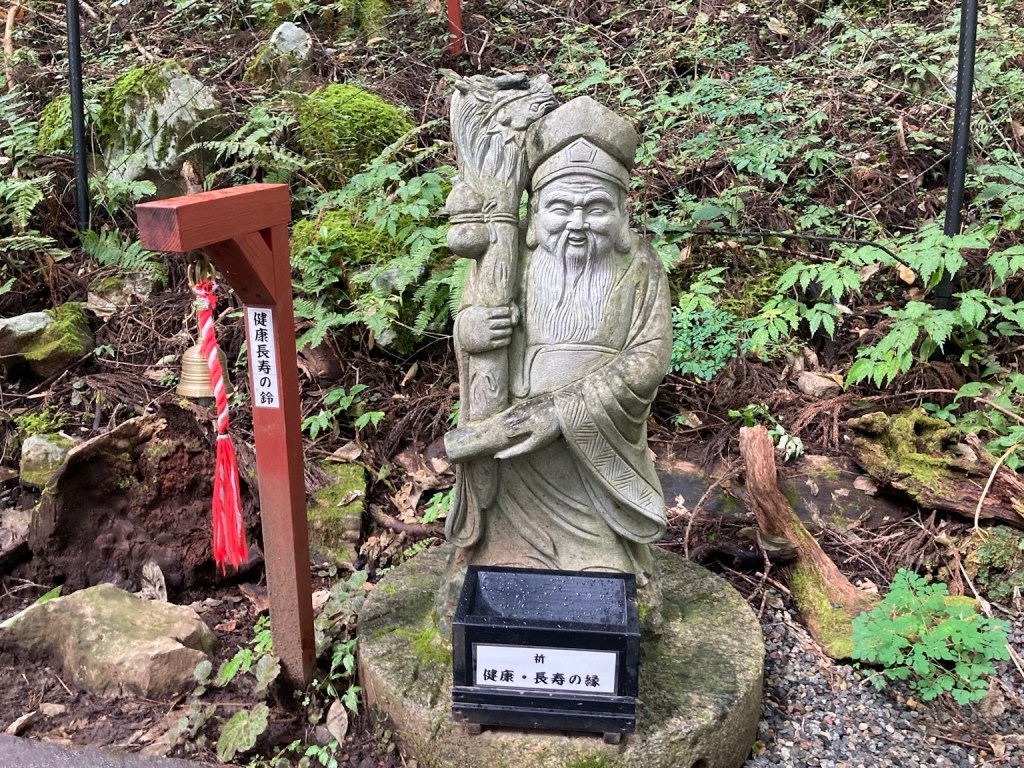
A bit further and there was a torii leading to a woodland walk lined with little shrines like this one, dedicated to Jurjin who has a connection to health and longevity and we all could do with a bit of that.
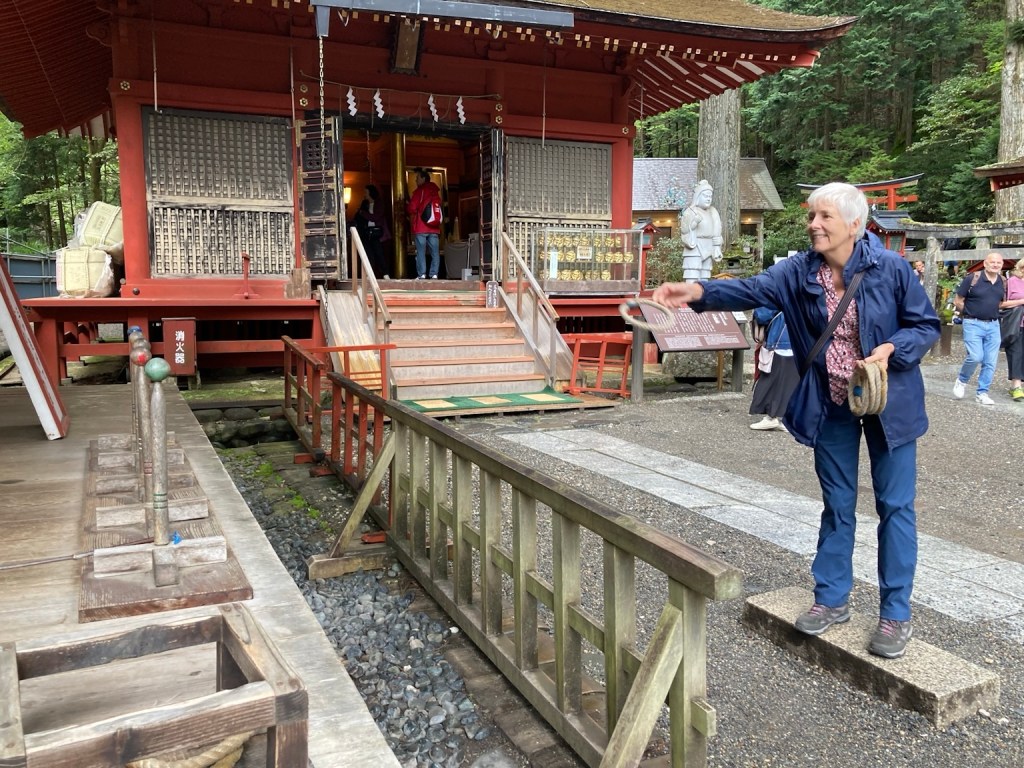
Finally, before we left, we were surprised to see what we think of as a fairground game inside a shrine, but of course the focus here whether you can obtain good luck. Three rings on the stick out of five – no chance – we only got one each!
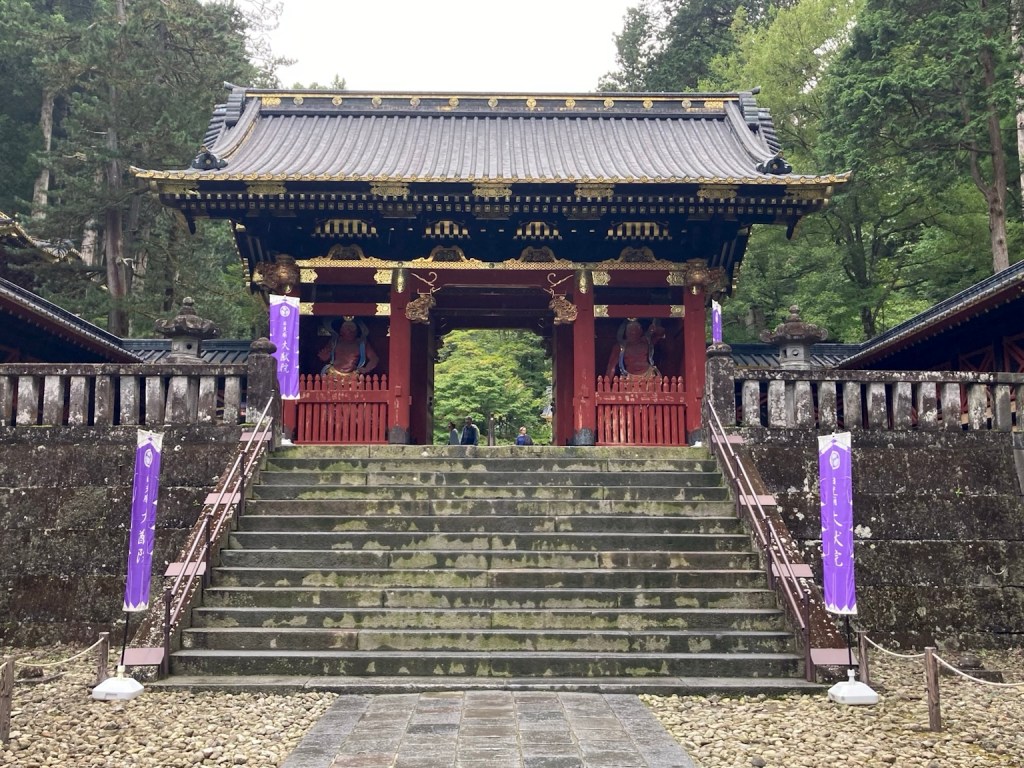
Just one shrine left, Taiyuin is the mausoleum of Tokugawa Iemitsu, grandson of Tokugawa Ieyasu, the founder of the Tokugawa Shogunate. In contrast, this site is deliberately more modest to show the respect he had for his heroic grandfather, despite achieving much himself. Although his grandfather may have consolidated control of the country, he then set the framework that would allow the dynasty to maintain control as long as it did.
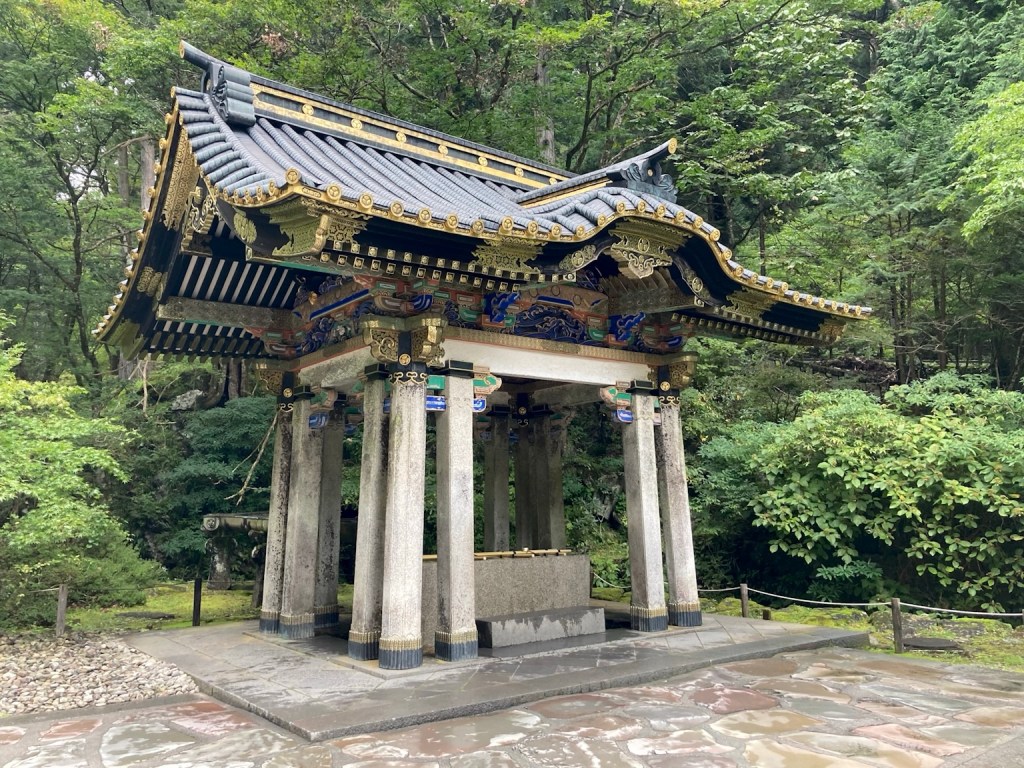
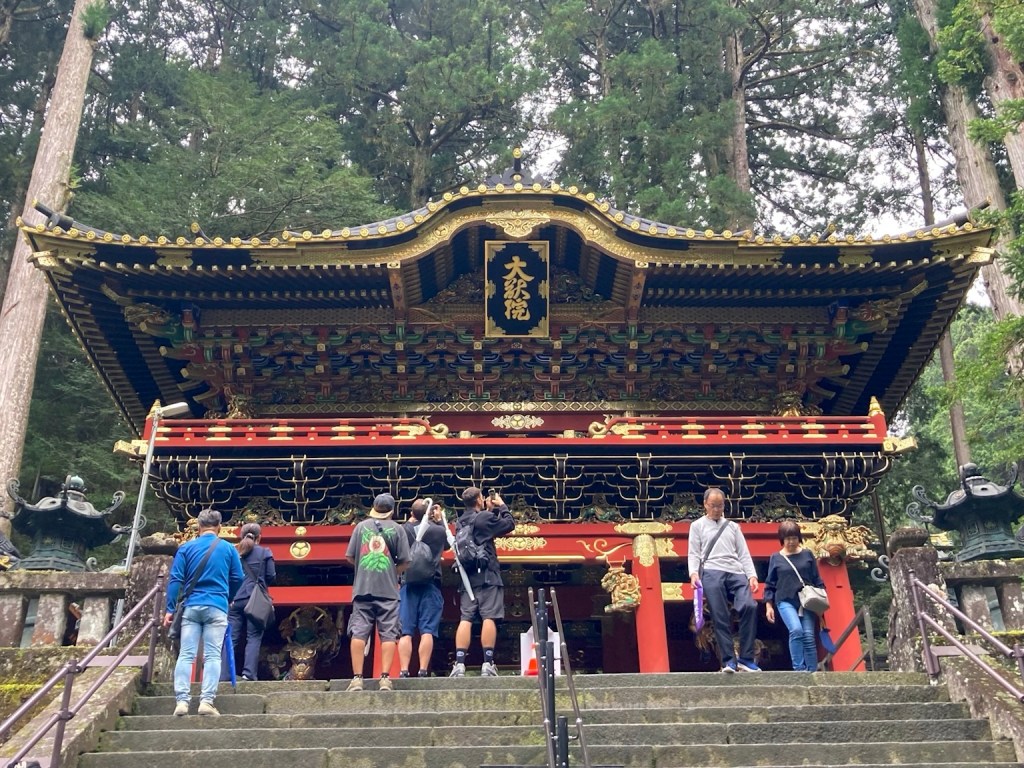
The format was very similar, with an outer gate, purification building, a couple of entrance gates and the main shrine beyond.
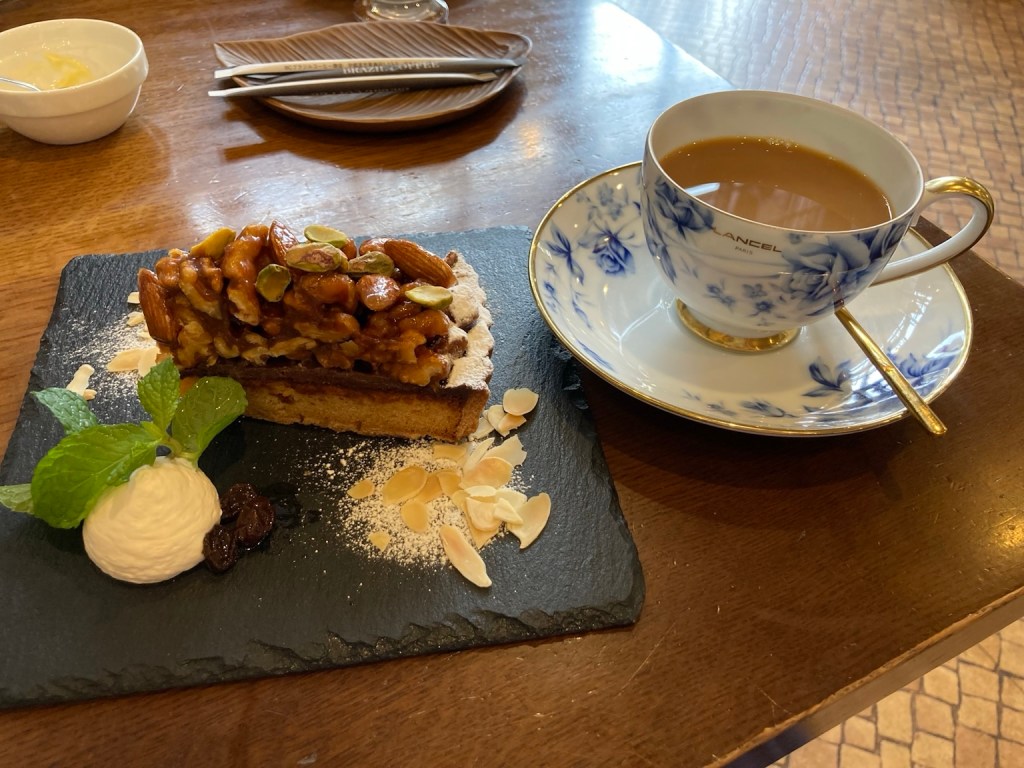
It was definitely time for a sit down and coffee and cake was just the sugar boost needed, and presented so beautifully!
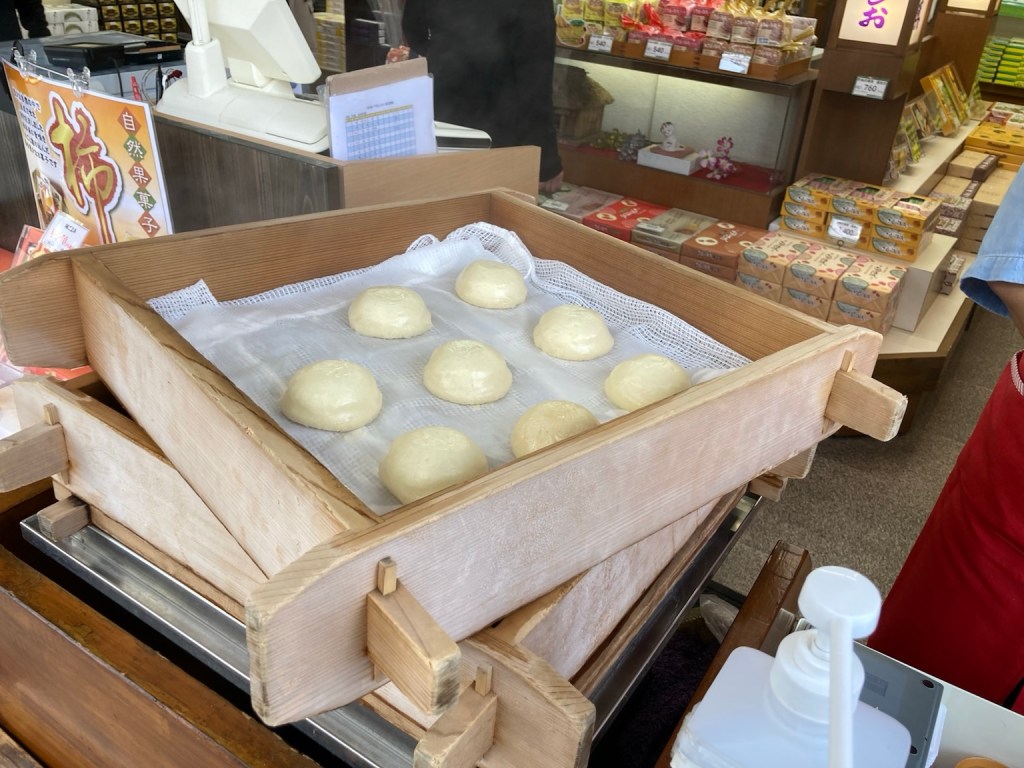
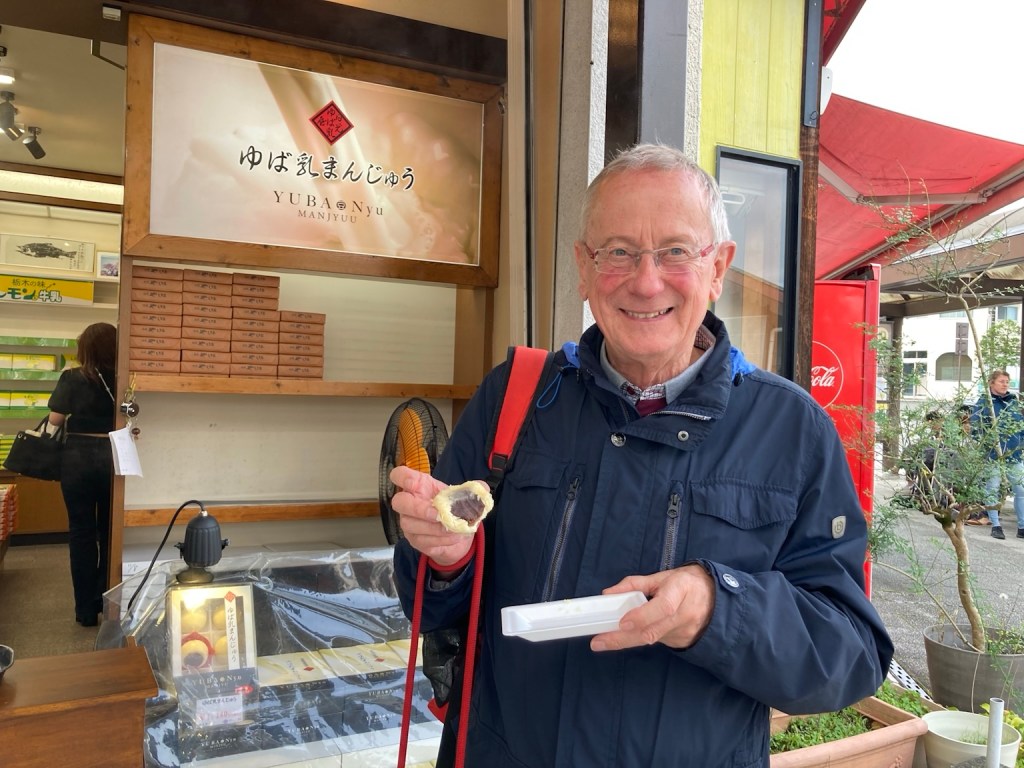
As we browsed a couple of shops nearby, we spotted these hot steaming buns and had to try! They are a local specialty called sake manju, flavoured with Japanese sake yeast and filled with smooth azuki red bean paste … very soft, very sweet!
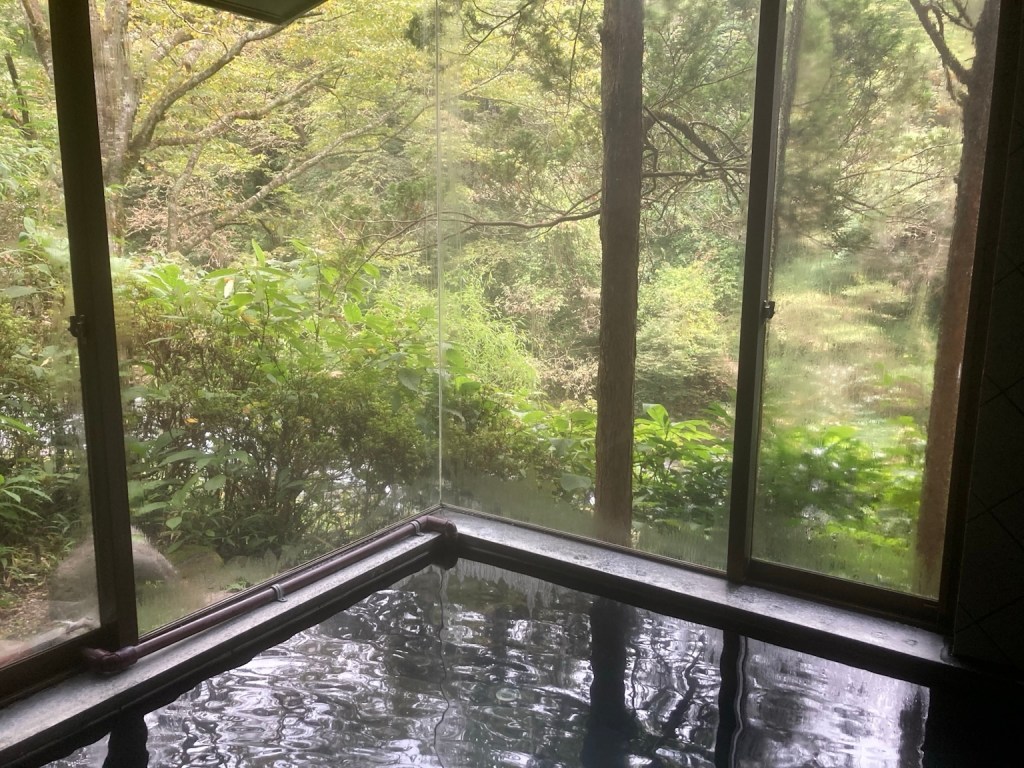
We bought our bus pass for the next day at the station, then decided to take some time out and return to the B&B. It was a great opportunity to catch up with a bit of photo editing, post writing and also to use the onsen in daylight and enjoy this view while soaking.
Nikko was historically a temple town and Buddhist monks enjoy a vegan diet, which is probably why Nikko got so creative with its soy products. Yuba is the skin that forms when you boil then cool soy milk, and that might not sound like much, but it is really versatile. That evening we went to Cafe Bell …
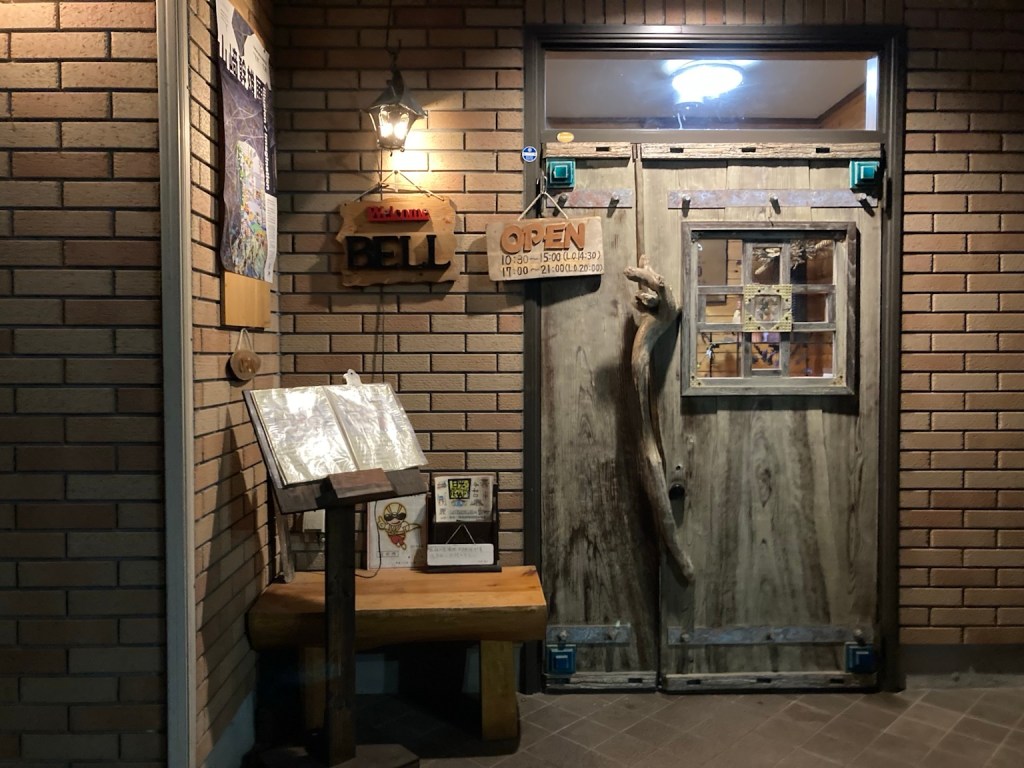
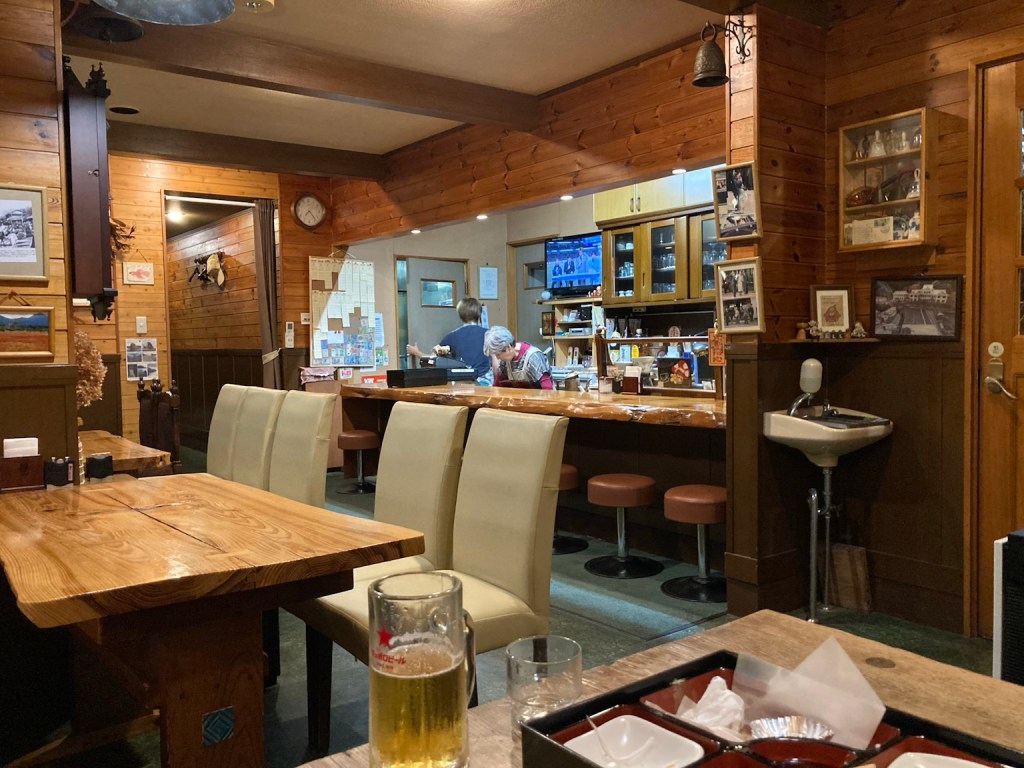
… and ordered their monk’s festa menu, a set meal like that at Bon, but this time it came all together!
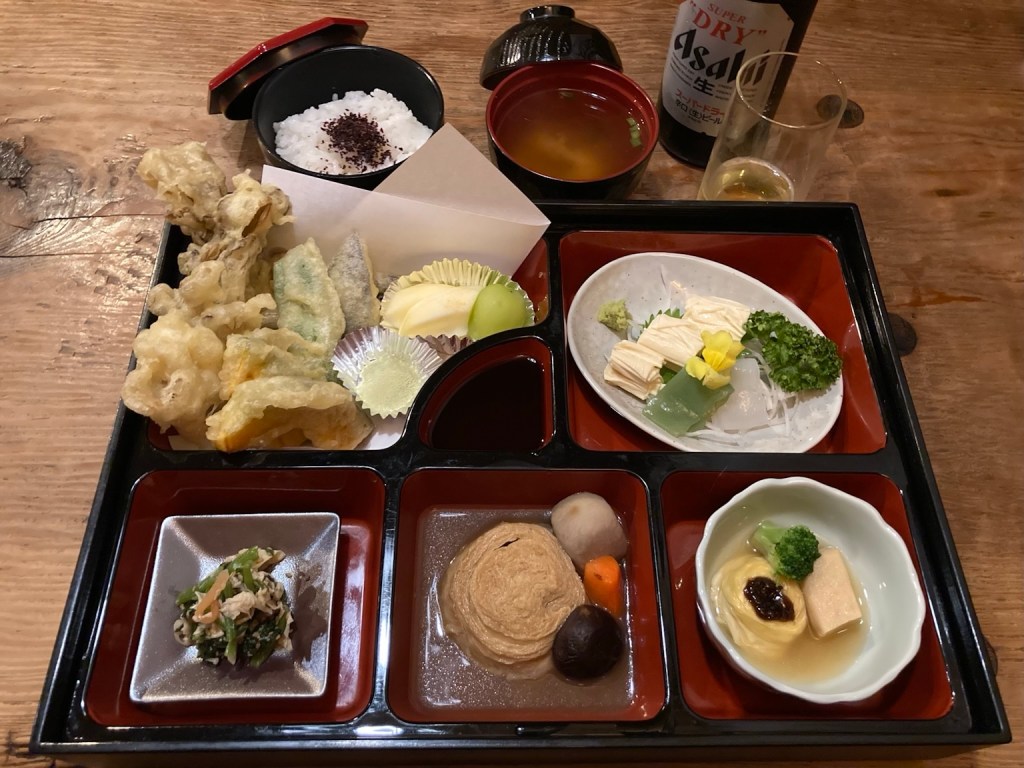
The tempura was the crispest and least greasy we’d had, and it came with a little dish of savoury salt seasoning, next was the cold fresh yuba – had to be tried but texture was challenging. There was also a tasty yuba salad and then two cooked dishes with rolled yuba, one with veg and the other with sweet miso, rice, miso soup and fruit to finish! Who would have thought one little bean could be used in so many ways!

