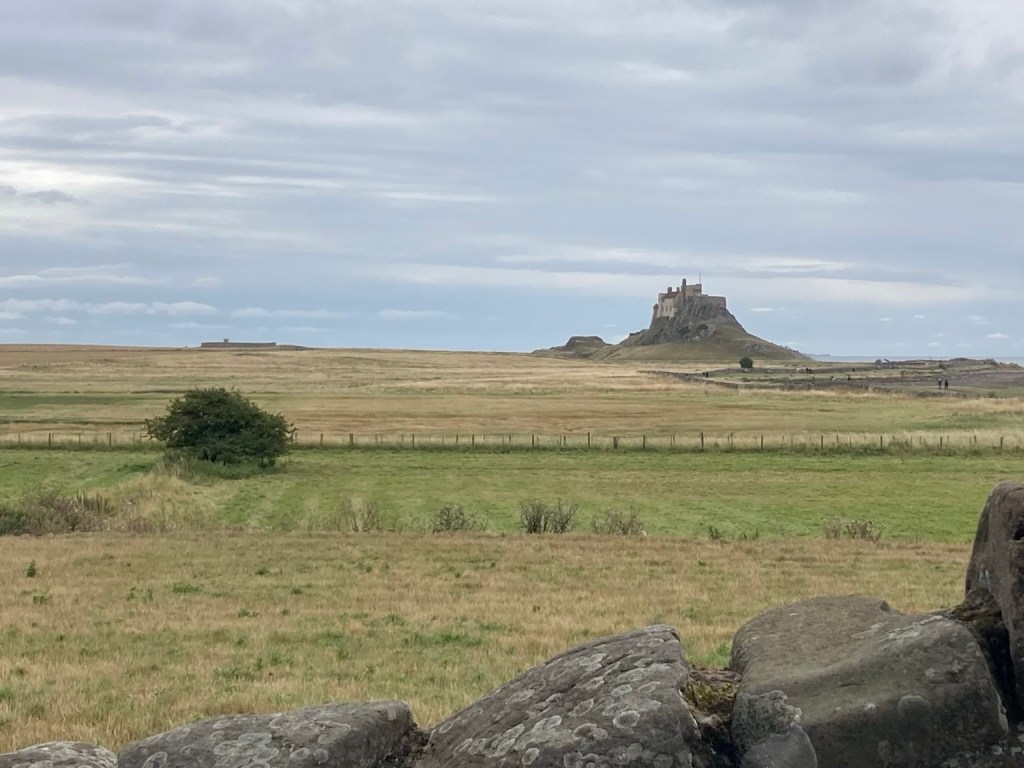
Today we went to visit a castle that’s not a castle, on an island that’s not an island!
Holy Island or Lindisfarne is a tidal island and can be visited at low tide by taking the 3 mile walking route called the Pilgrims Way marked by wooden poles across the mudflats, or by car along the causeway built in the 1950s. At any other time, a boat is the only option.
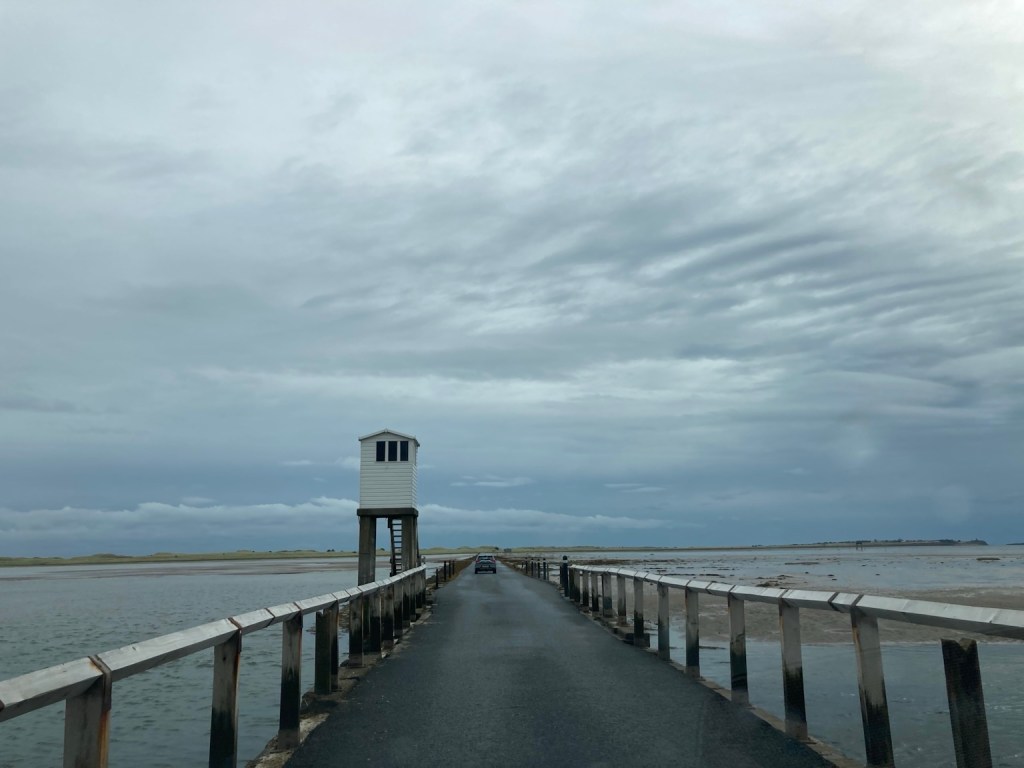
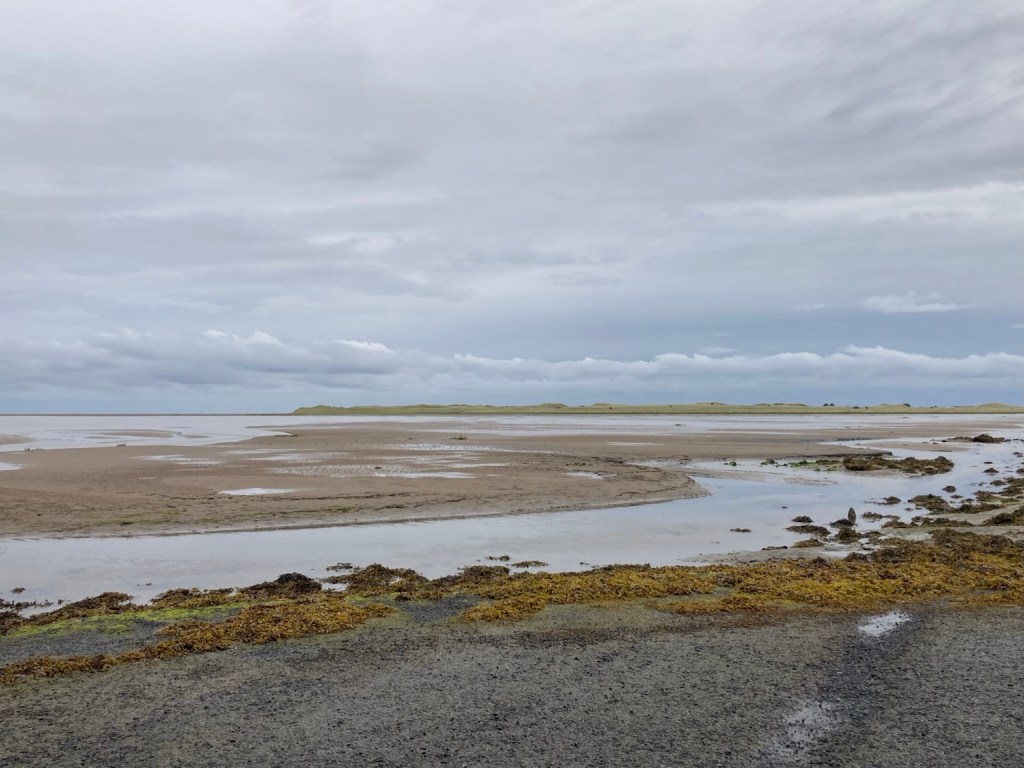
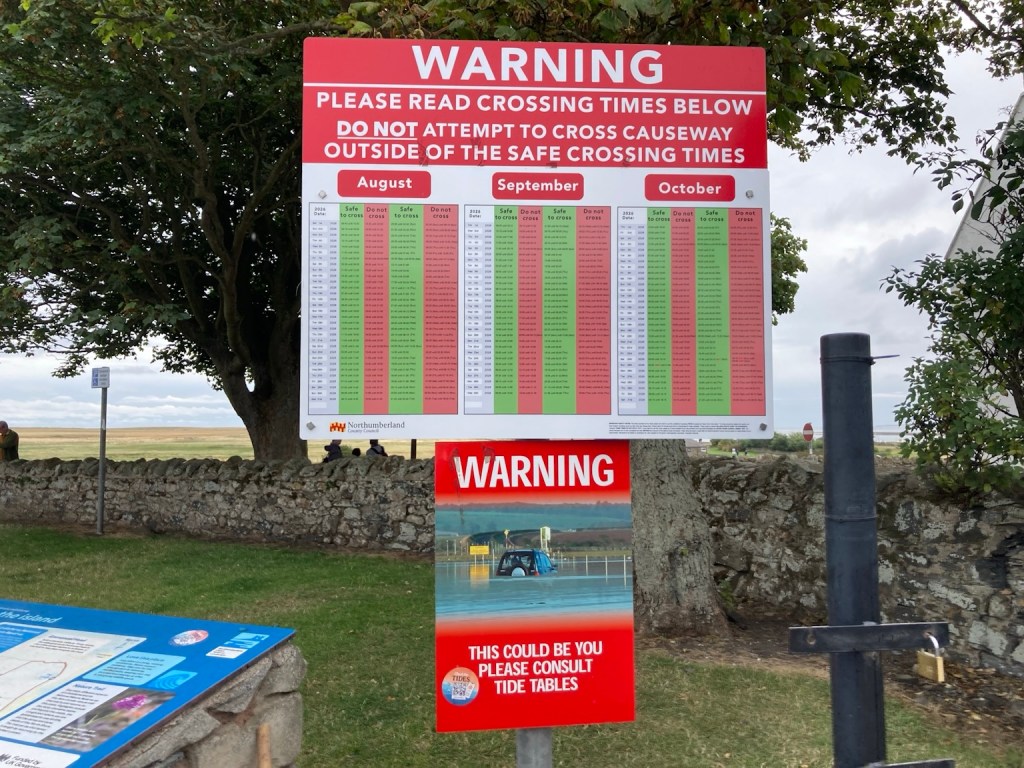
Having checked out the tide tables, we had a window of six hours so we were heading over the causeway at 9.50, as early as it was safe to go. We parked and signs reminded us to check our safe departure time.
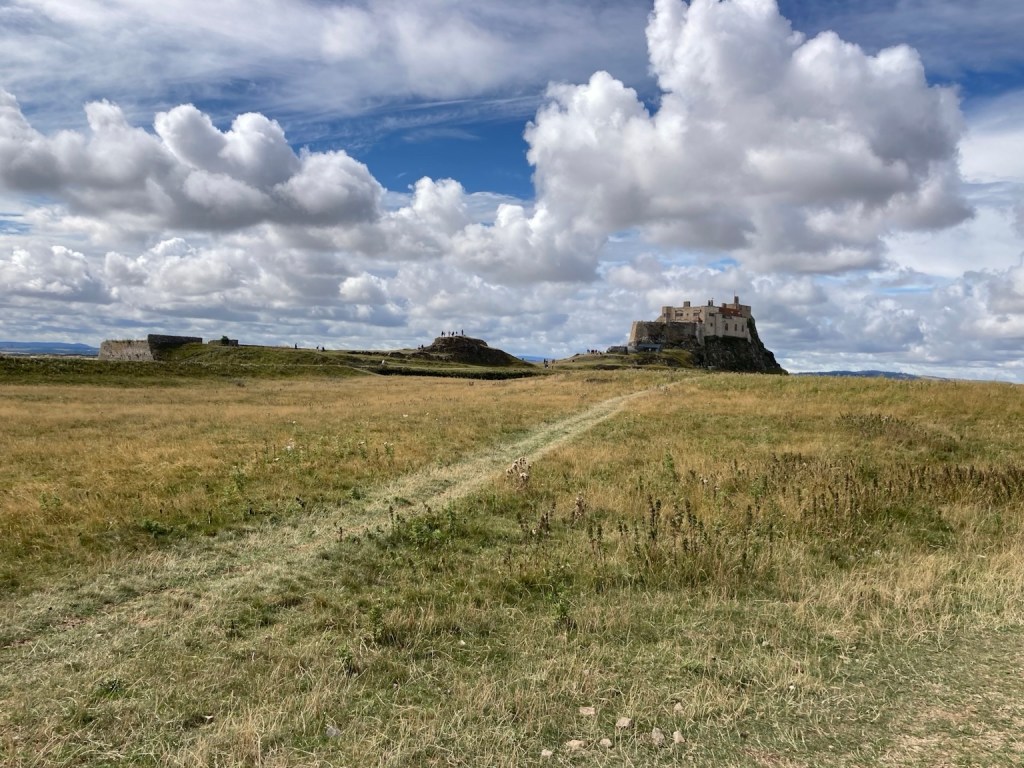
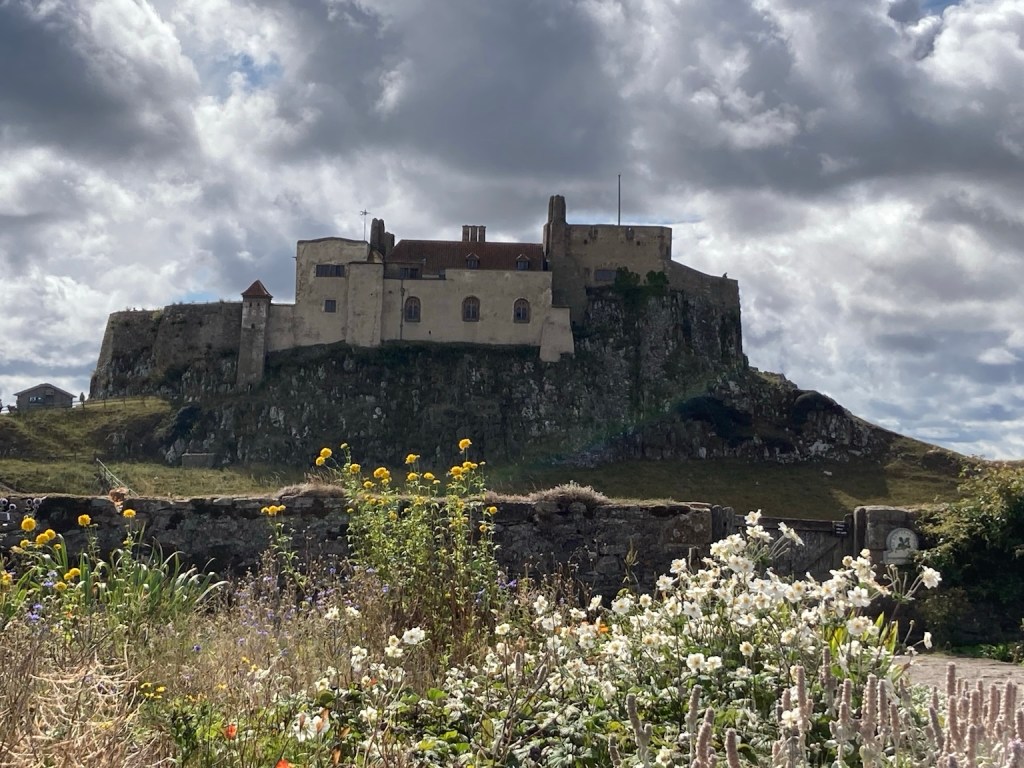
There were a few drops of rain as we walked through the up to Lindisfarne Castle which is run by the National Trust.
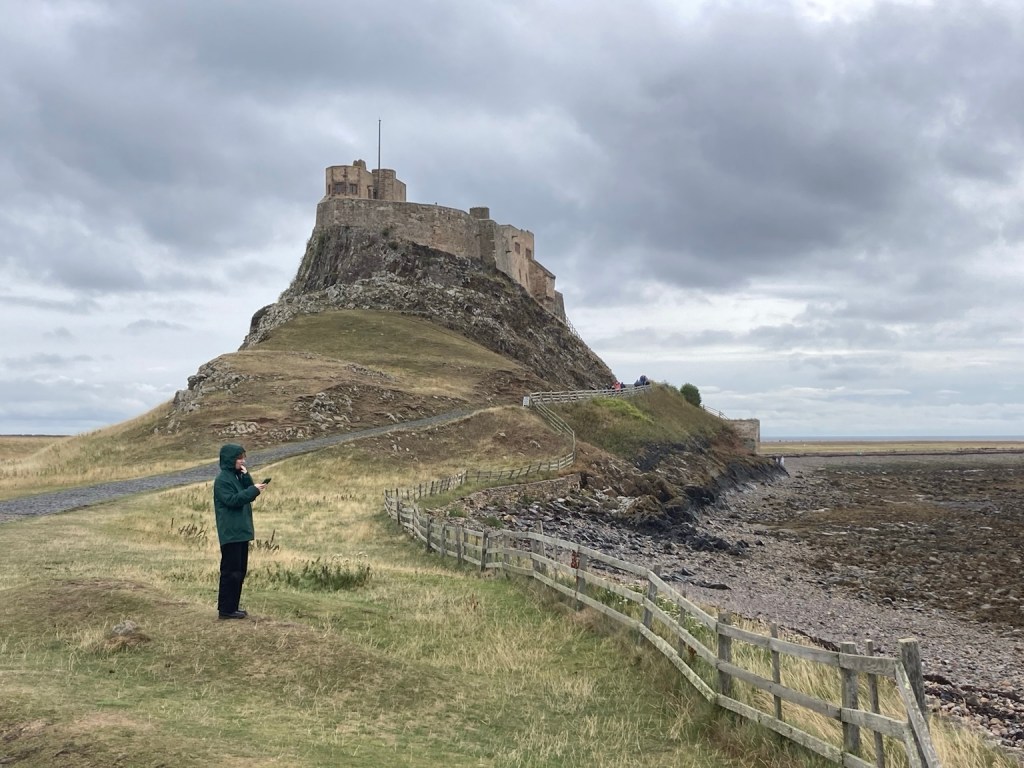
Across the harbour, we could see two tall pointed towers which we later found out are the Old Law Beacons. Sailors lined them up to steer their ship safely into harbour keeping clear of shallow sandbars, and they didn’t need to be lit as entering at night was too dangerous.
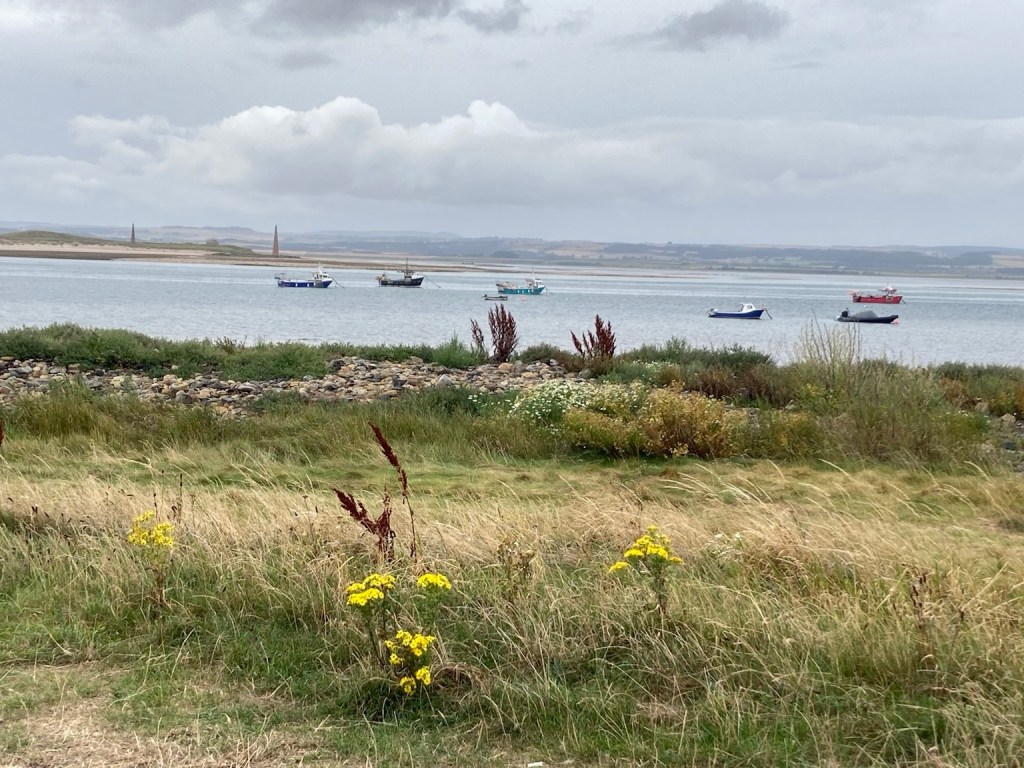
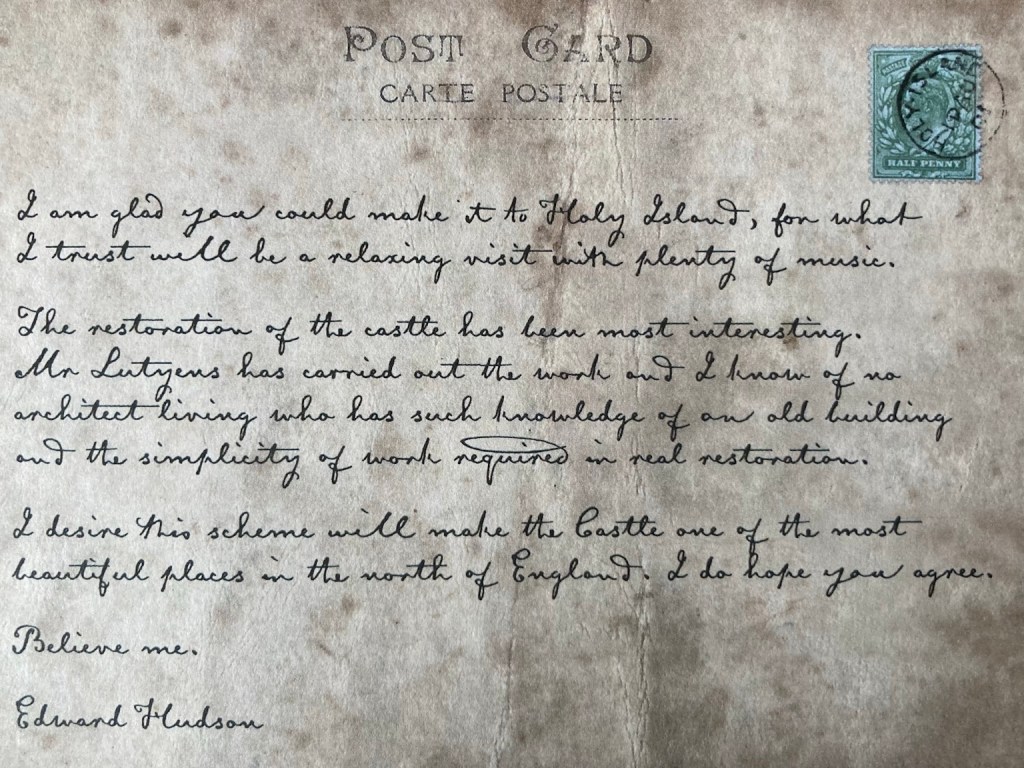
In 1901, Edward Hudson, founder of Country Life magazine, fell in love with the derelict Tudor fort built high on a large rock and engaged his friend Edwin Lutyens, a young and upcoming architect to convert it into an Arts & Crafts style holiday home. The fort had been built by the Tudors to protect first against the Scots and then the French but had been empty for years so a fair bit of work was needed.
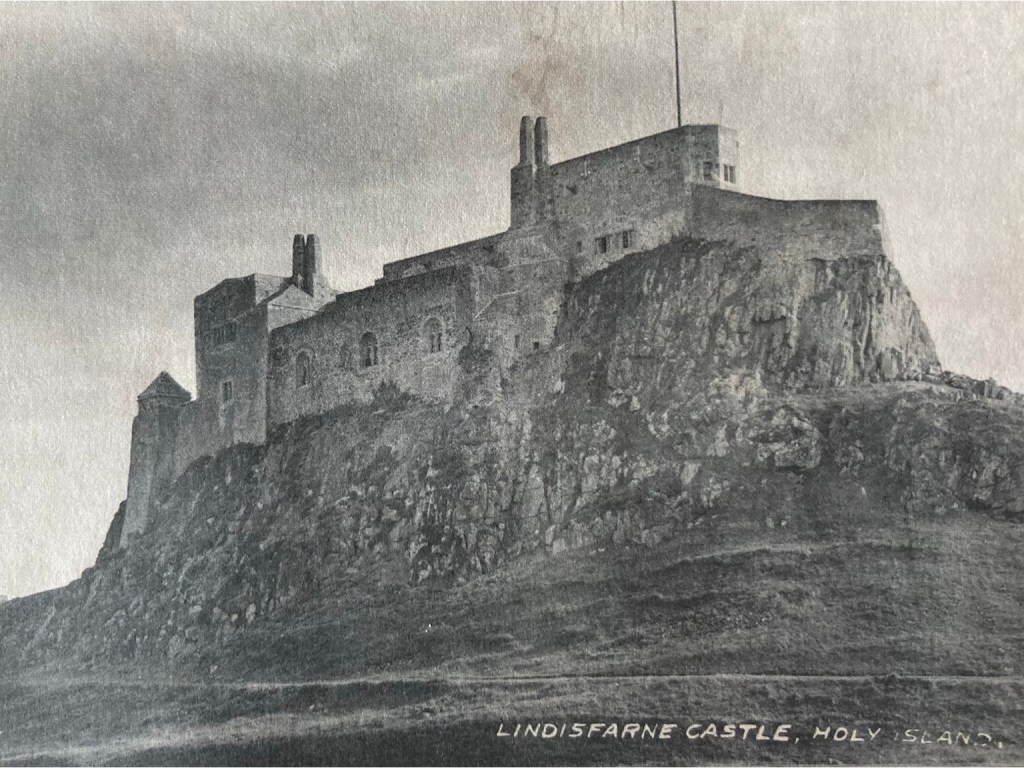
We were handed a postcard …
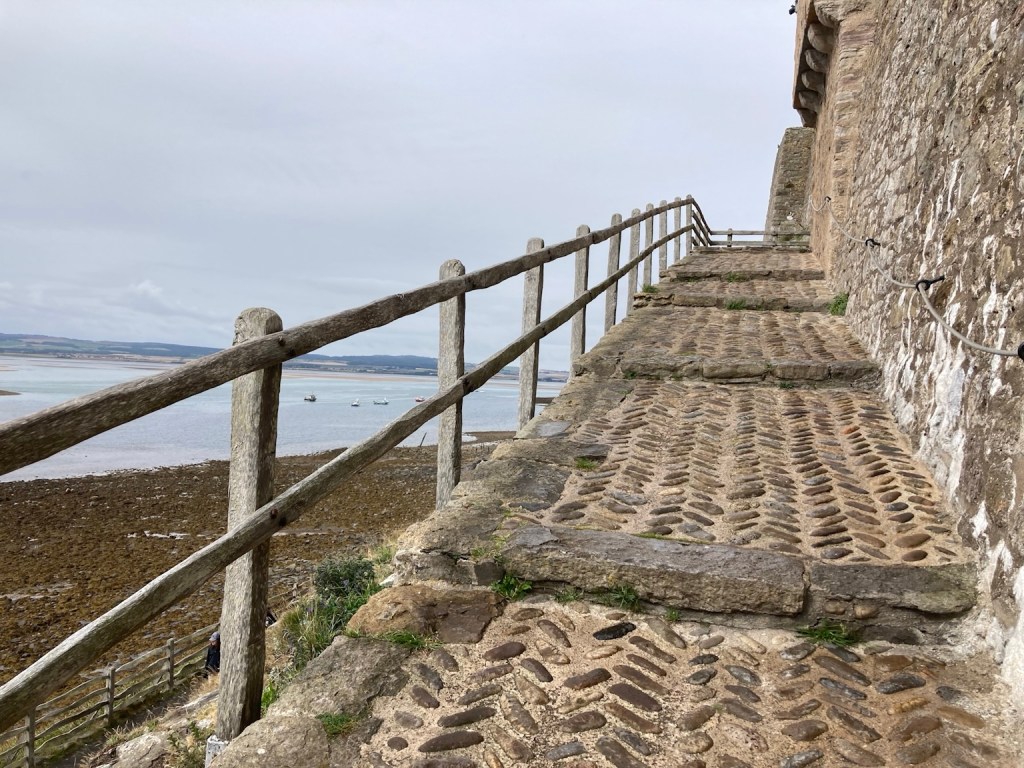
Once up the ramp …
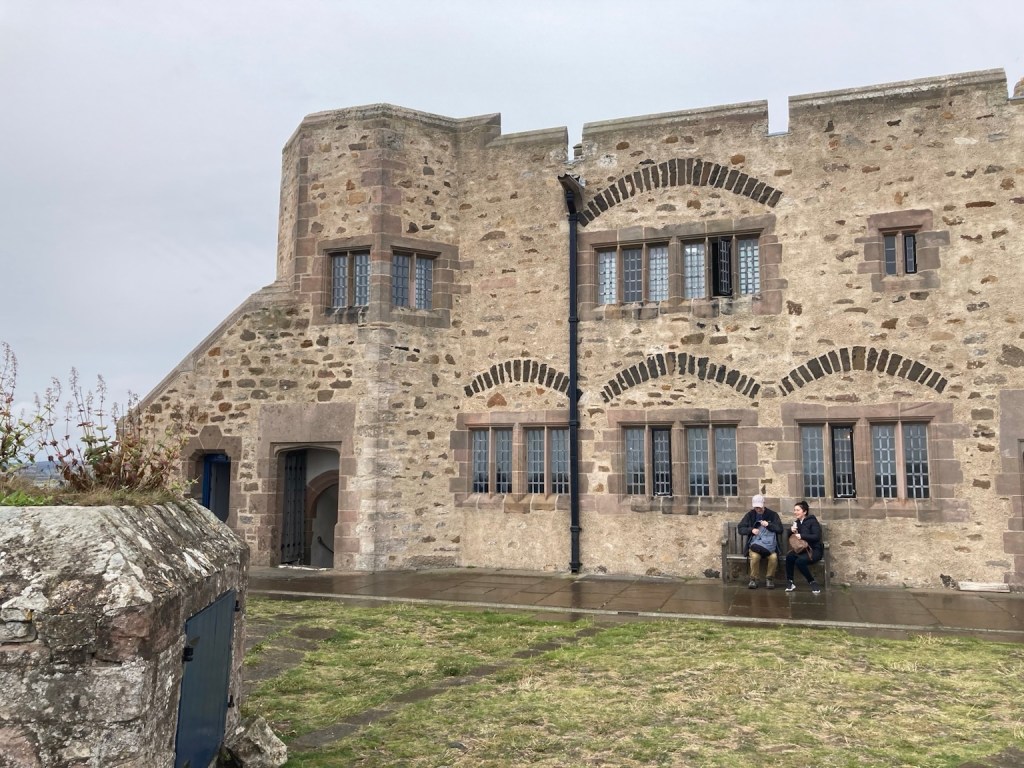
… we entered the lower battery where the facade blends original Tudor stonework with new mullions and lintels of local pink sandstone as well as arches added above the windows.
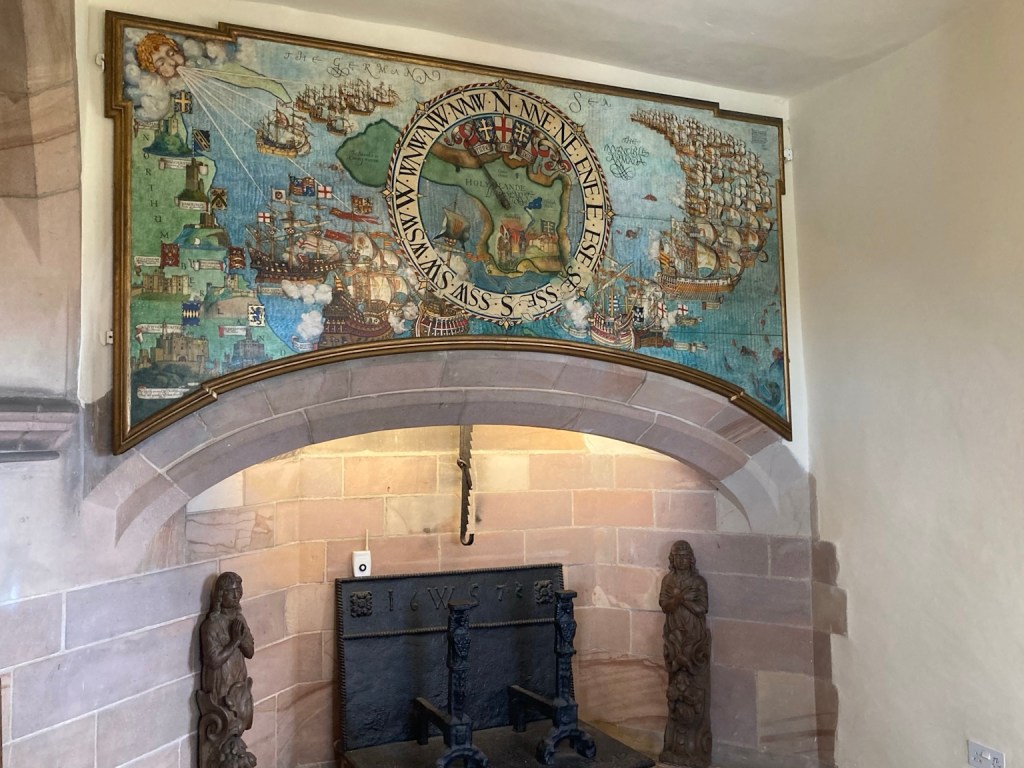
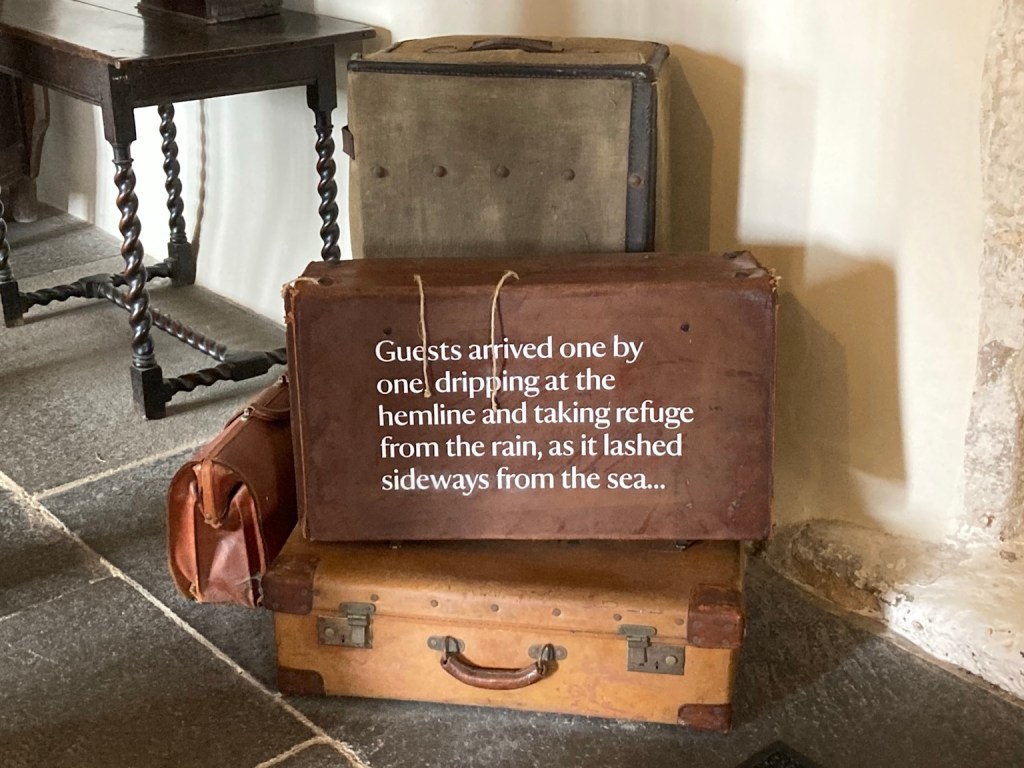
Inside, Lutyens has played with proportions, ensuring a snug homely feel with low doorways and winding passages. The entrance hall features this colourful wind direction indicator commissioned for the house … and a suggestion of what the weather can be like here!
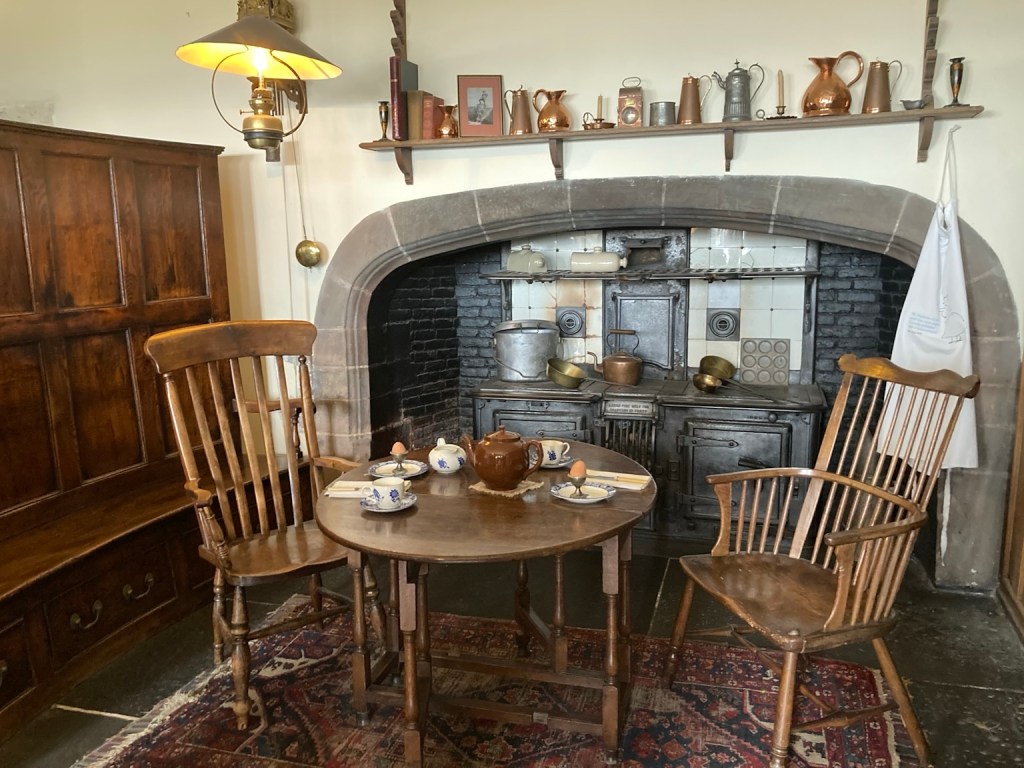
This is the kitchen, domain of Jack and Hannah Lilburn who began the three-generation relationship as housekeepers for the castle’s owners …
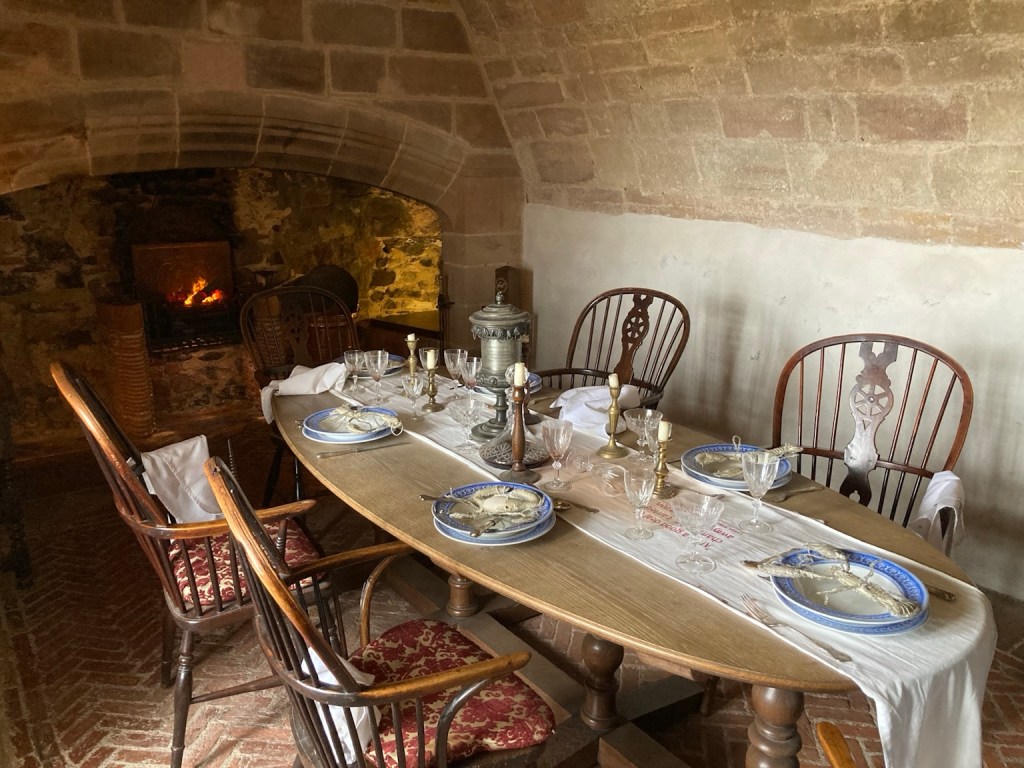
… the dining room with its cavernous fireplace …
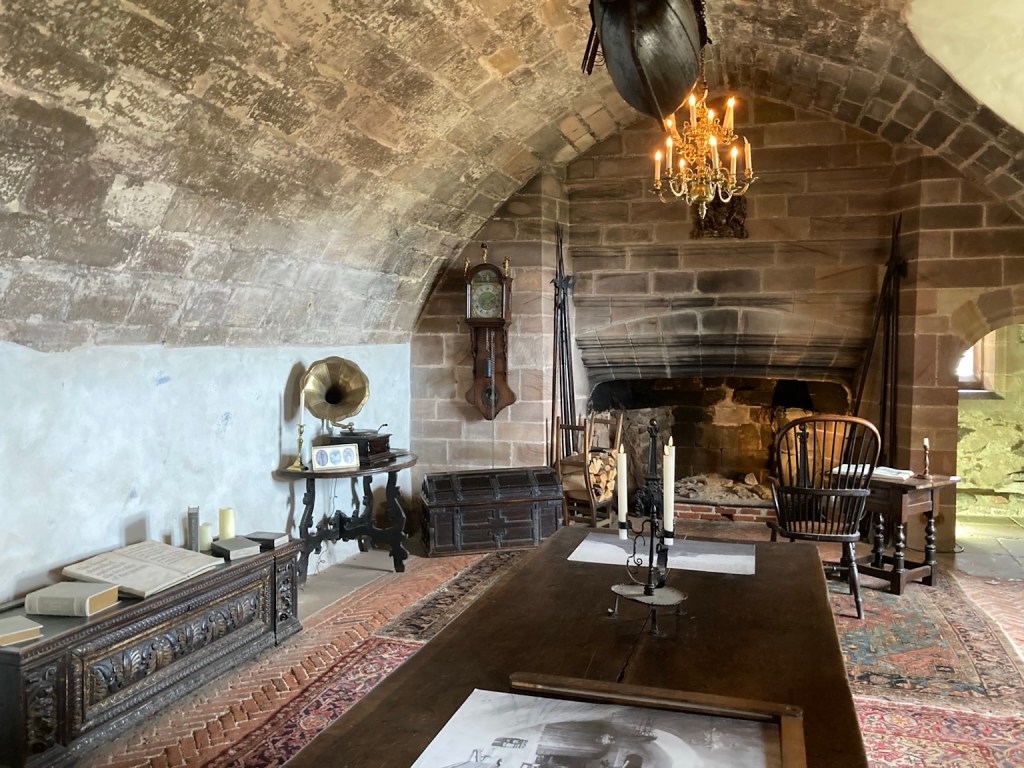
… and the Ship Room used as a drawing room.
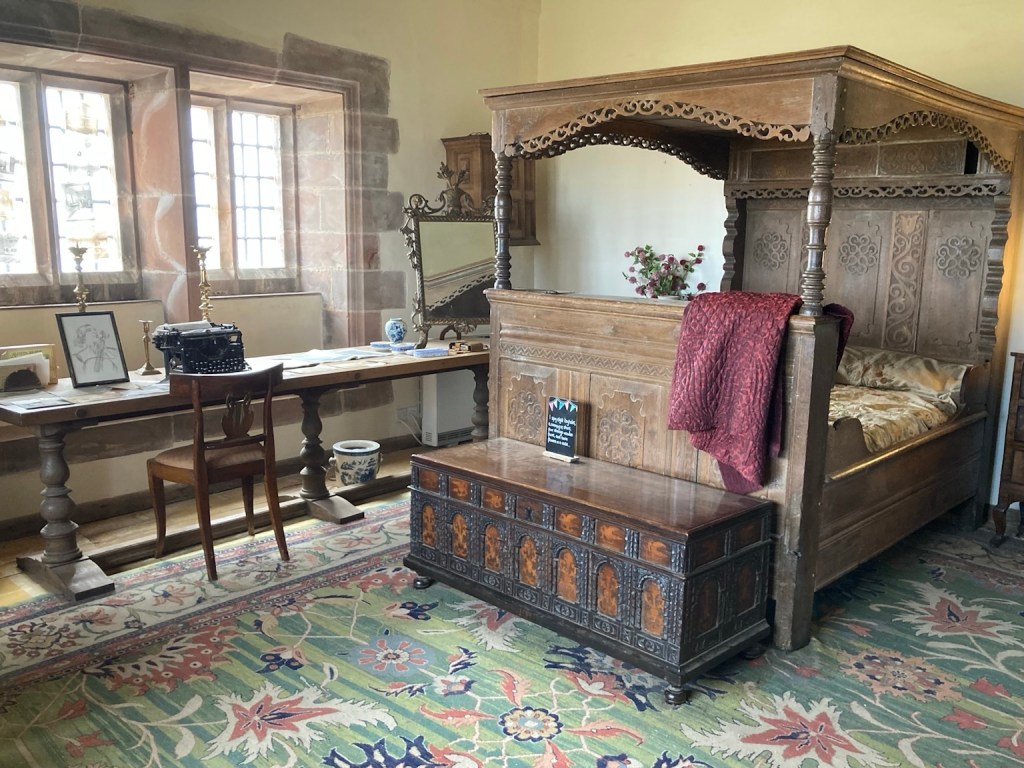
There were seven bedrooms in all including Hudson’s …
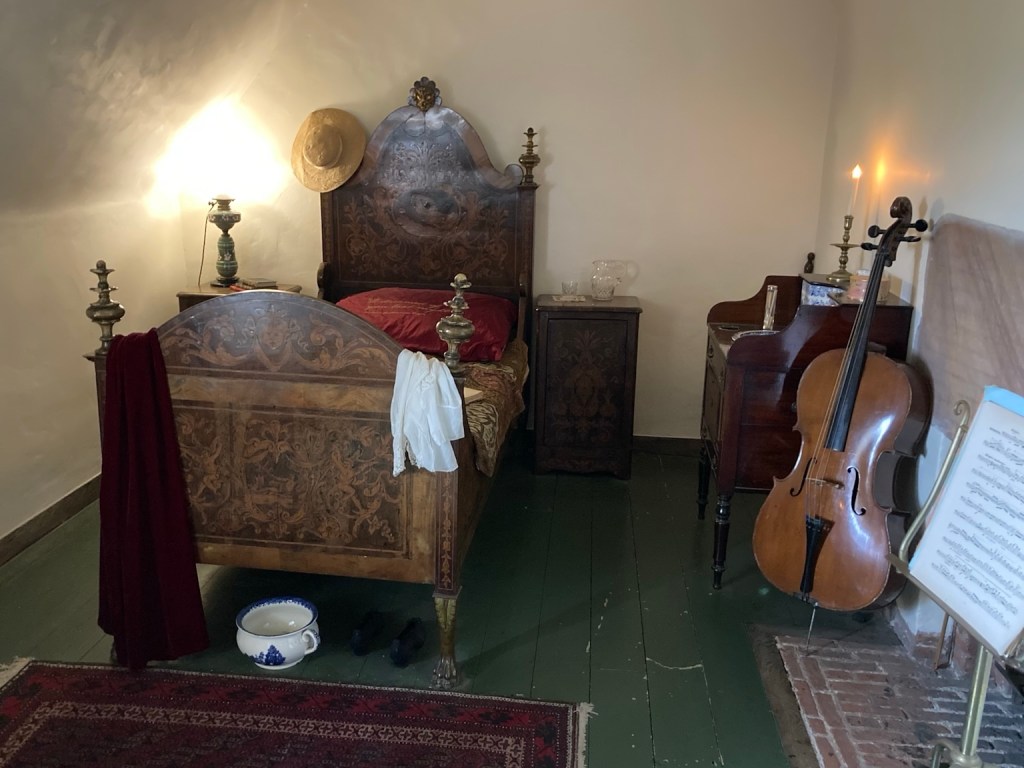
… and one for Madame Suggia, a famous Portuguese cellist and Hudson’s fiancé.
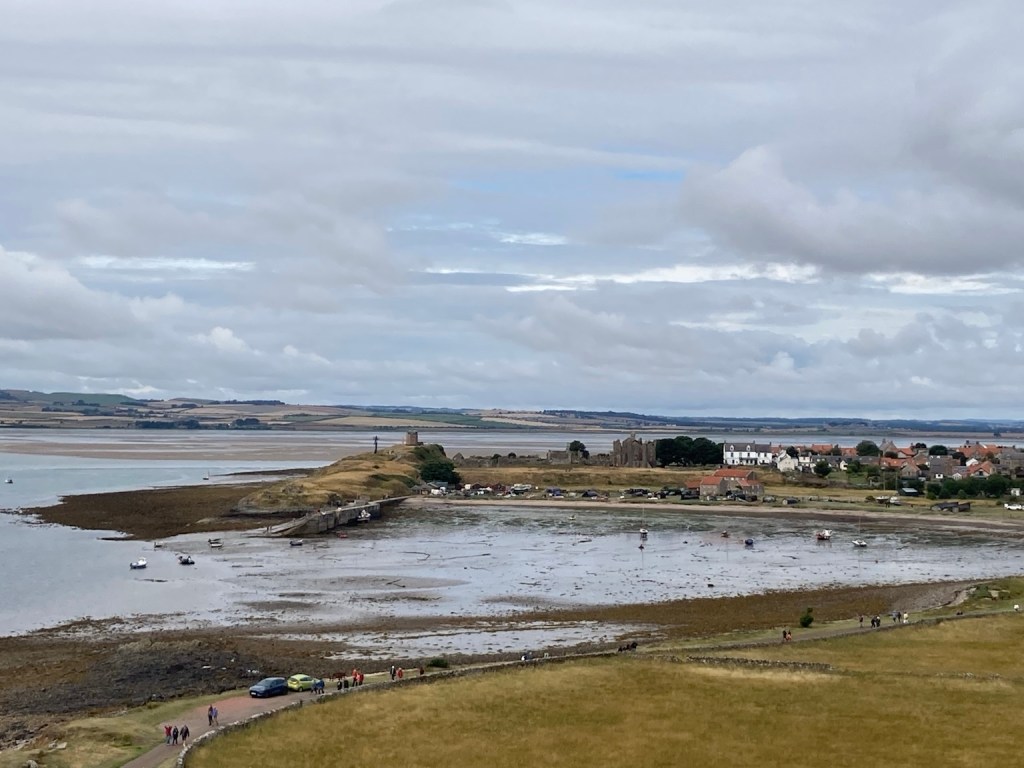
From the Upper Battery where gun emplacements can still be seen, there is a great view out towards the ruined Priory which we will visit next.
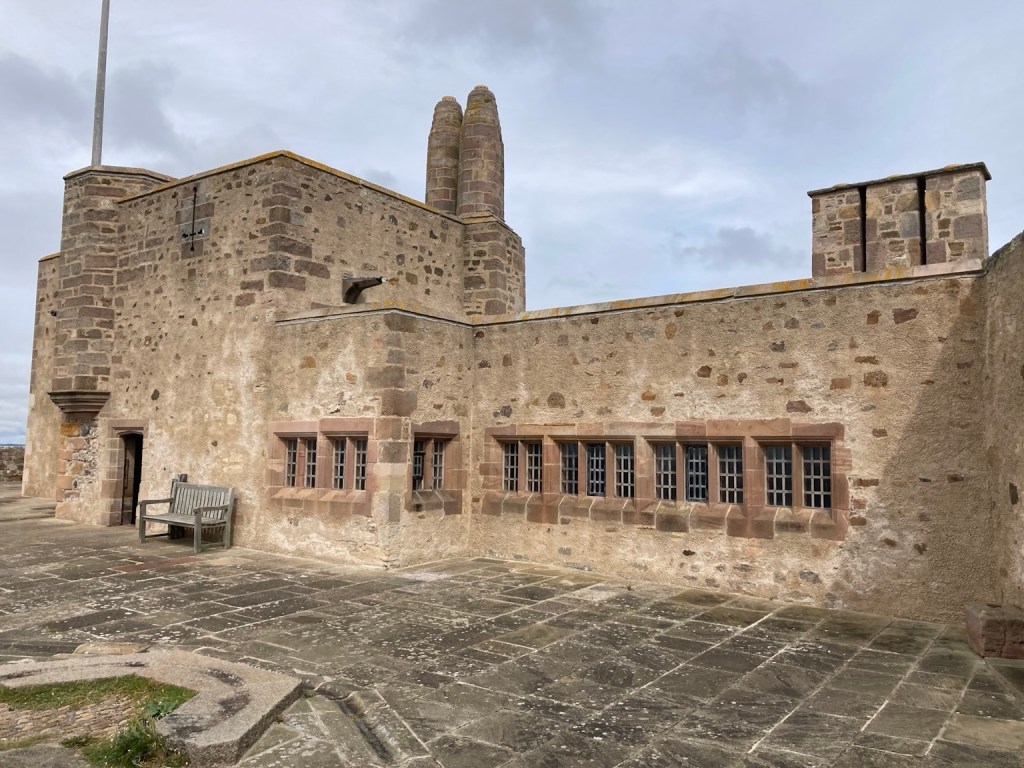
The facade features clustered chimneys, a Lutyens favourite, and more mullioned windows, looking so modern!
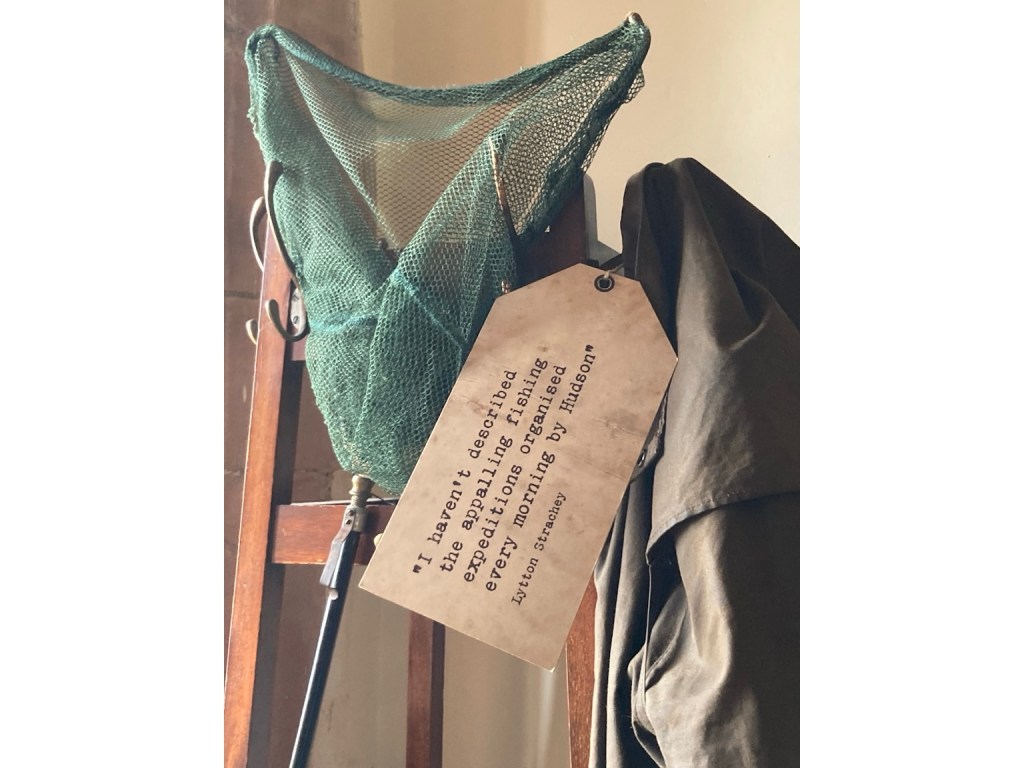
Once complete, Hudson only used the castle for brief visits during a six week period in the summer, often inviting guests including famous artists, writers, and high-society figures. His guests enjoyed champagne and long dinners, though some complained the lack of comfortable seating and modern comfort and organised entertainment!
On our way out, we noticed the portcullis, a small touch added by Hudson to add to the medieval charm!
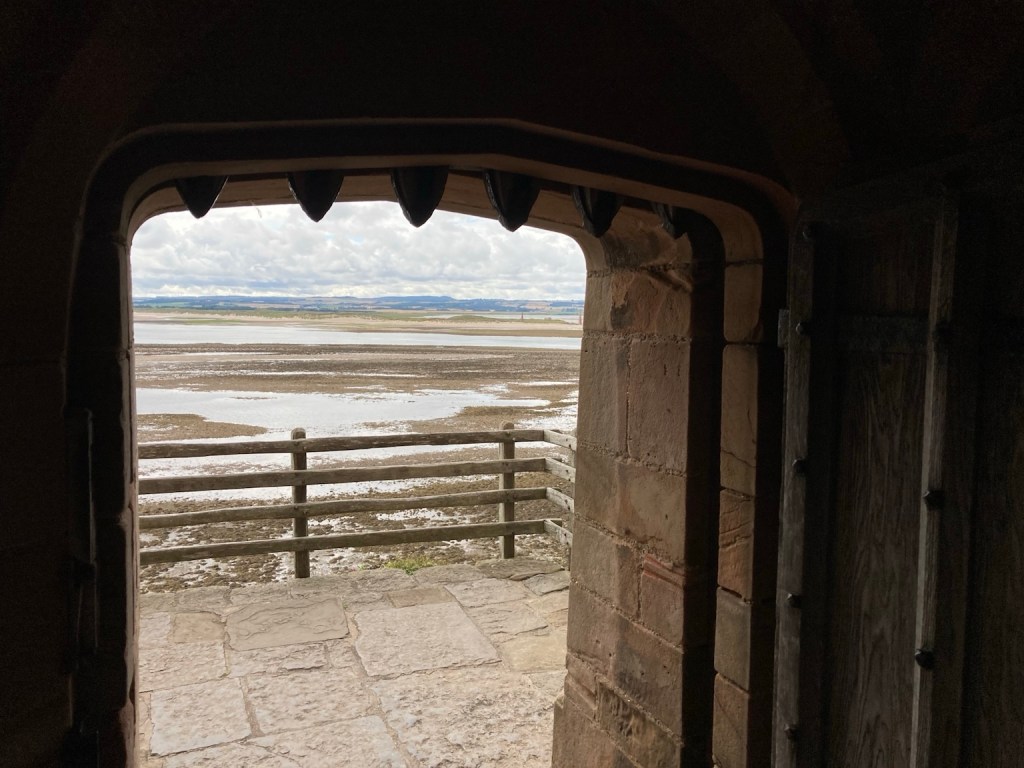
By 1921 though, Hudson decided to sell, possibly due to high running costs, but also that his intended heir had been killed in the war. The two later owners kept the Lutyens design and it was given to the National Trust in 1944.
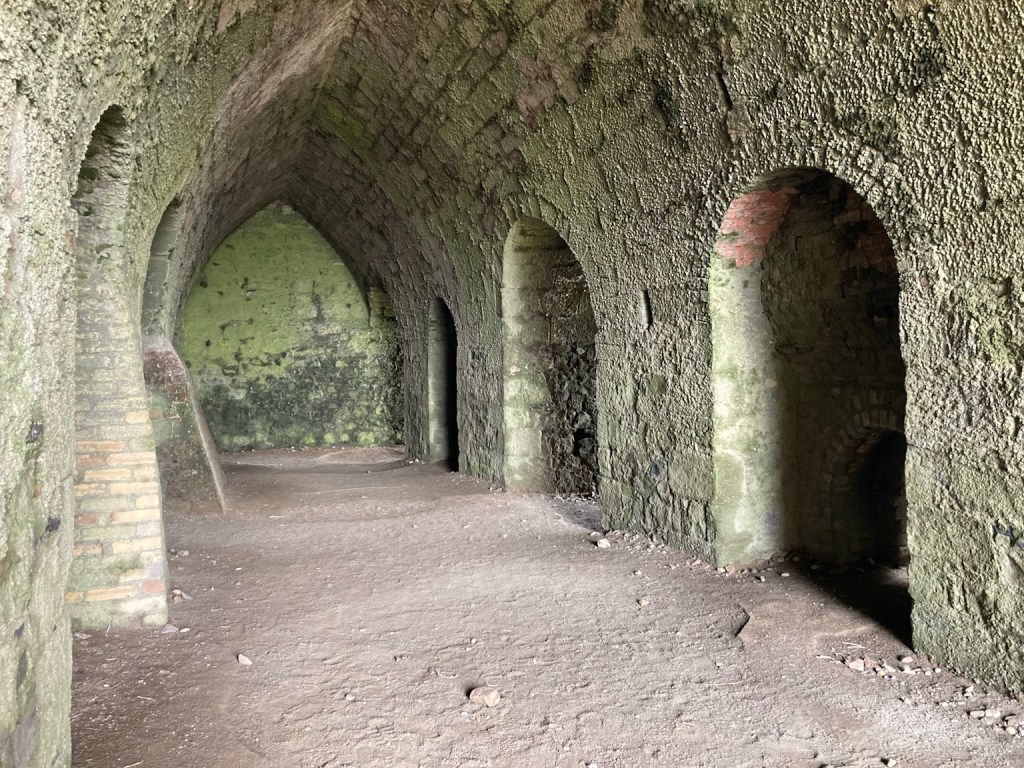
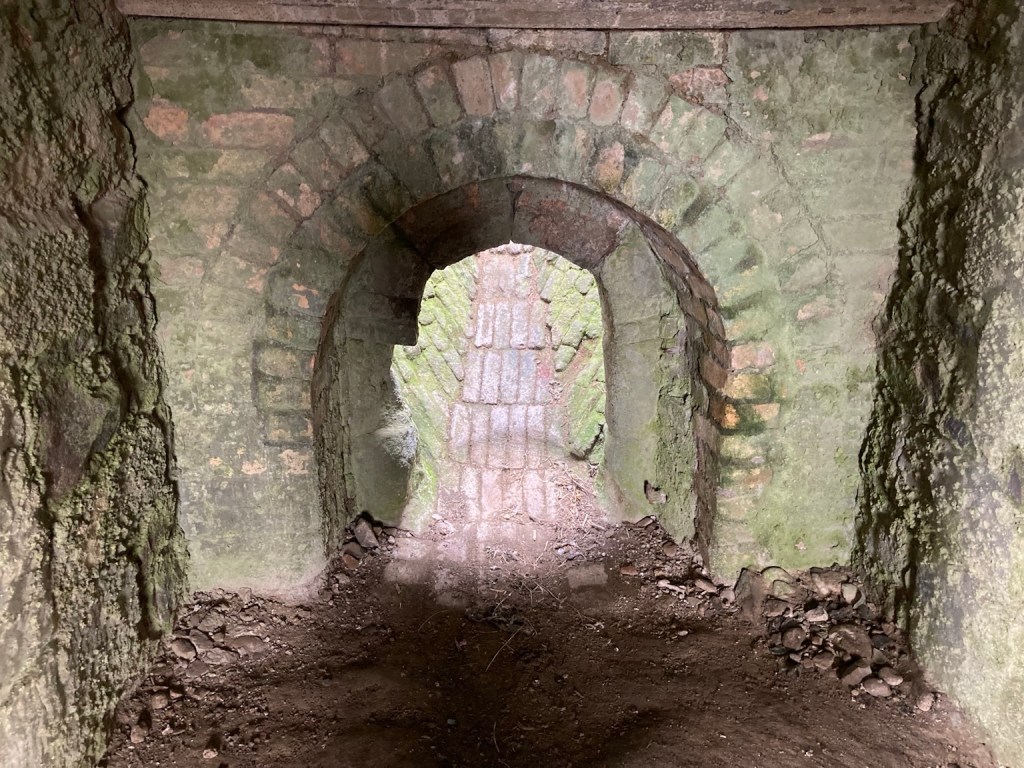
In the 19th Century, Lindisfarne had a long-established lime-burning industry, and the kilns by the castle still survive.
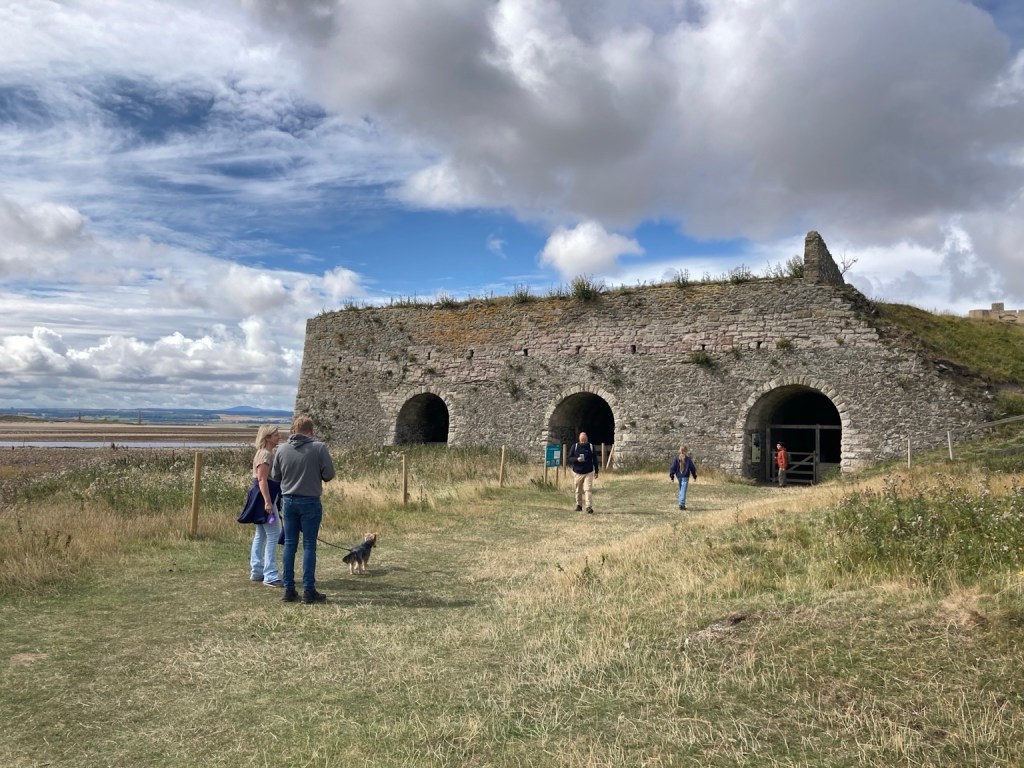
Limestone quarried from the island was layered with coal brought in by ship and burnt to make quicklime. It would have been a hot, smelly and dangerous job and men often suffered caustic burns and lung damage and in the peace,of today, it’s hard to imagine such a horrid industrial site being here.
As we walked back towards the village …
… we passed a small walled garden, once the garrison vegetable plot.
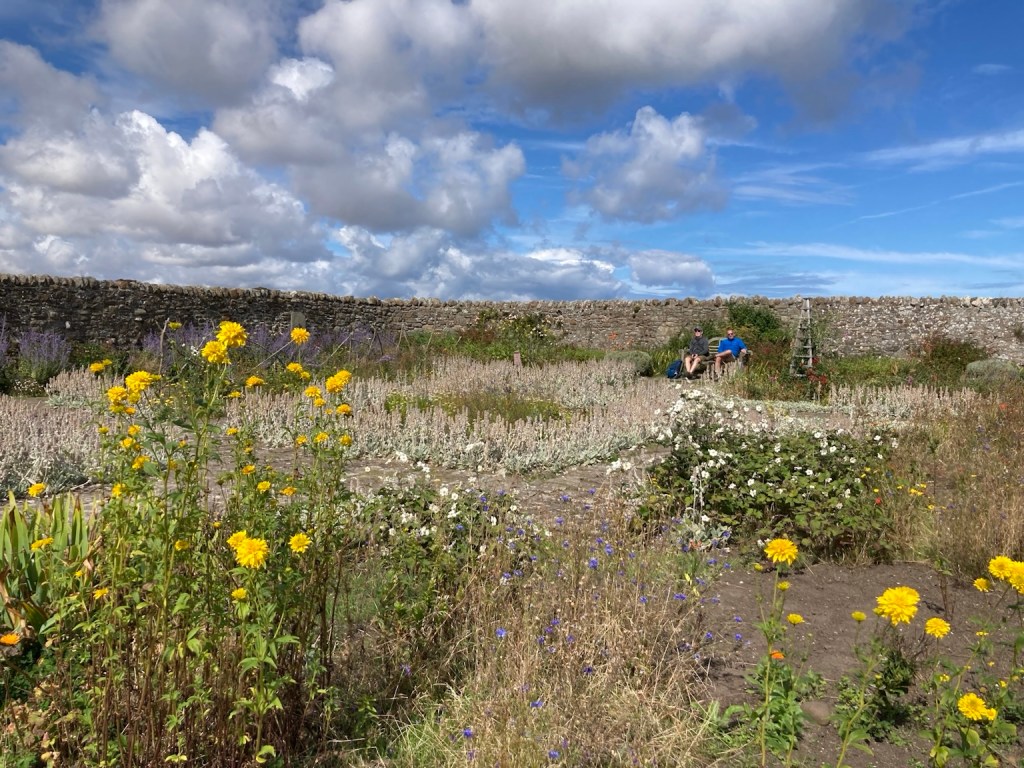
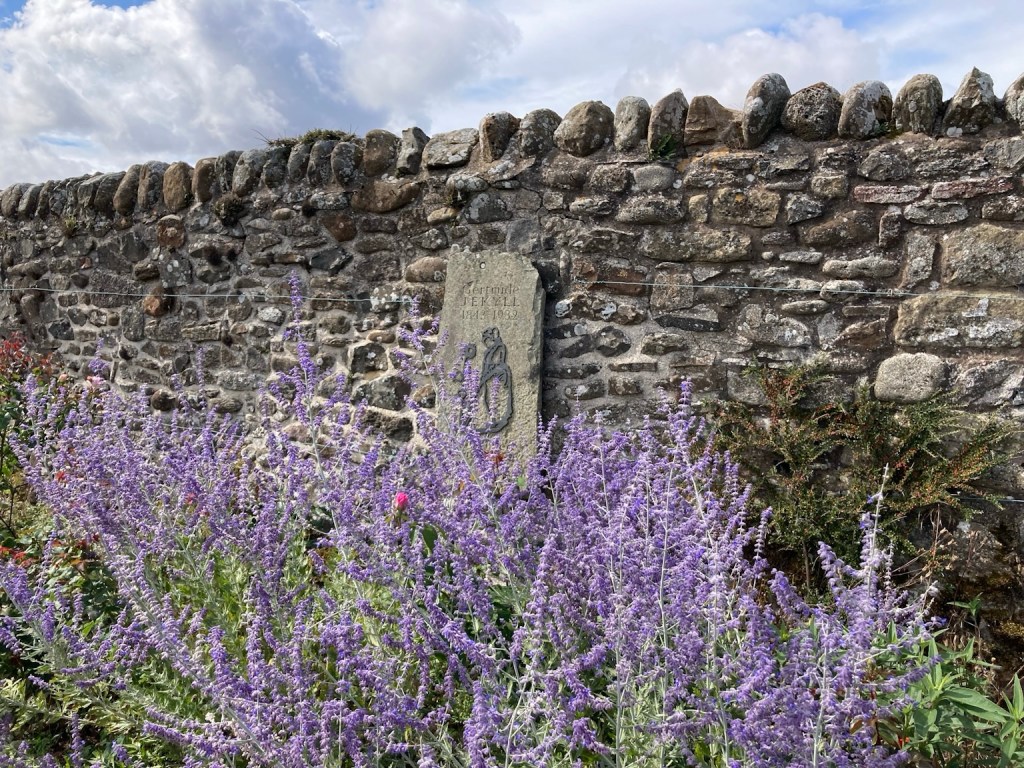
In 1911 Gertrude Jekyll planted a garden of perennials to be colourful especially during August when the castle was most visited and was quite an achievement in such a remote spot.
The village is pretty small and most shops were closed as it was Sunday, but The Crown & Anchor was a perfect spot for a late lunch and we munched sandwiches in the garden.
Our last stop was the ruined priory, which we’d seen from the castle.
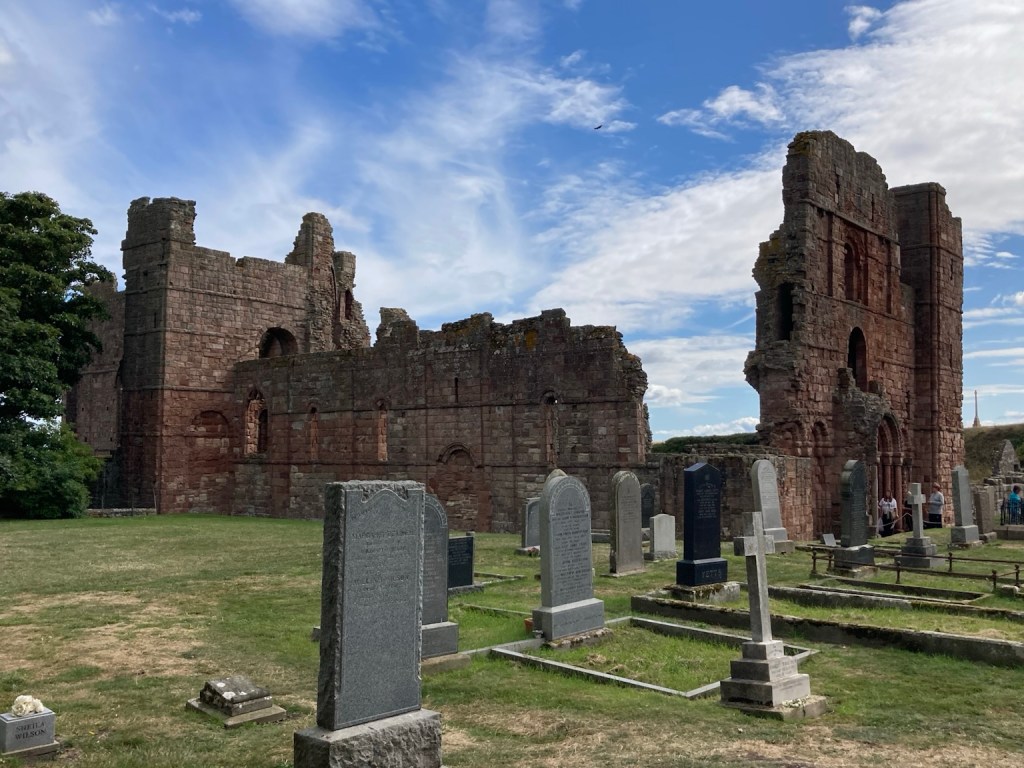
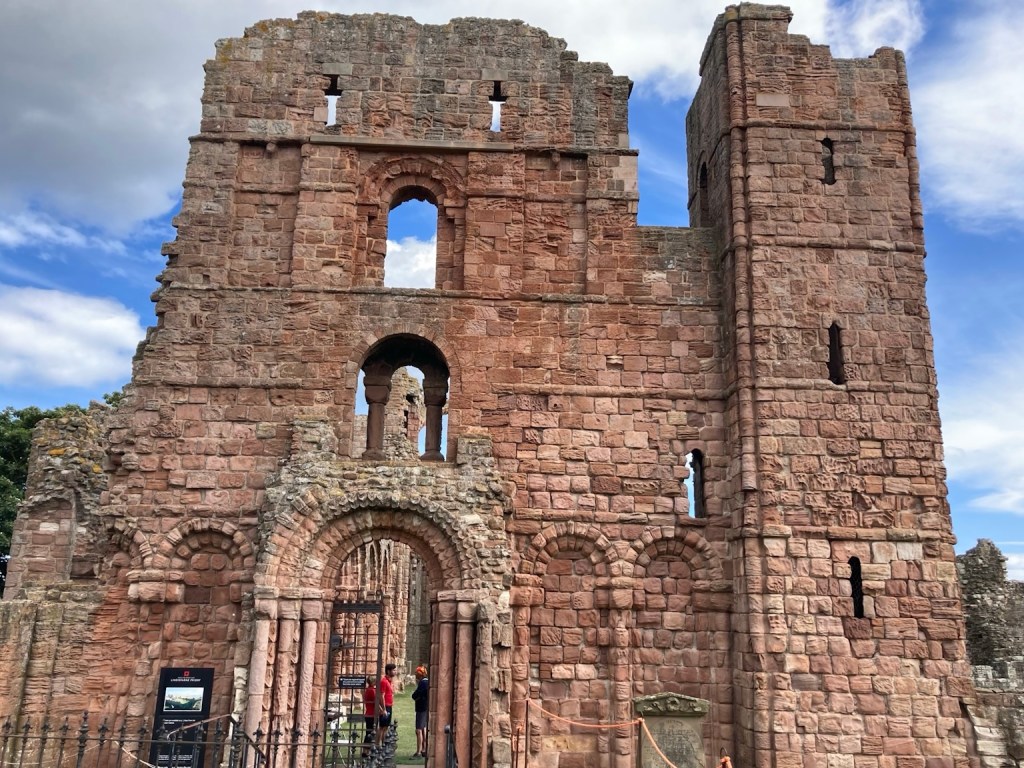
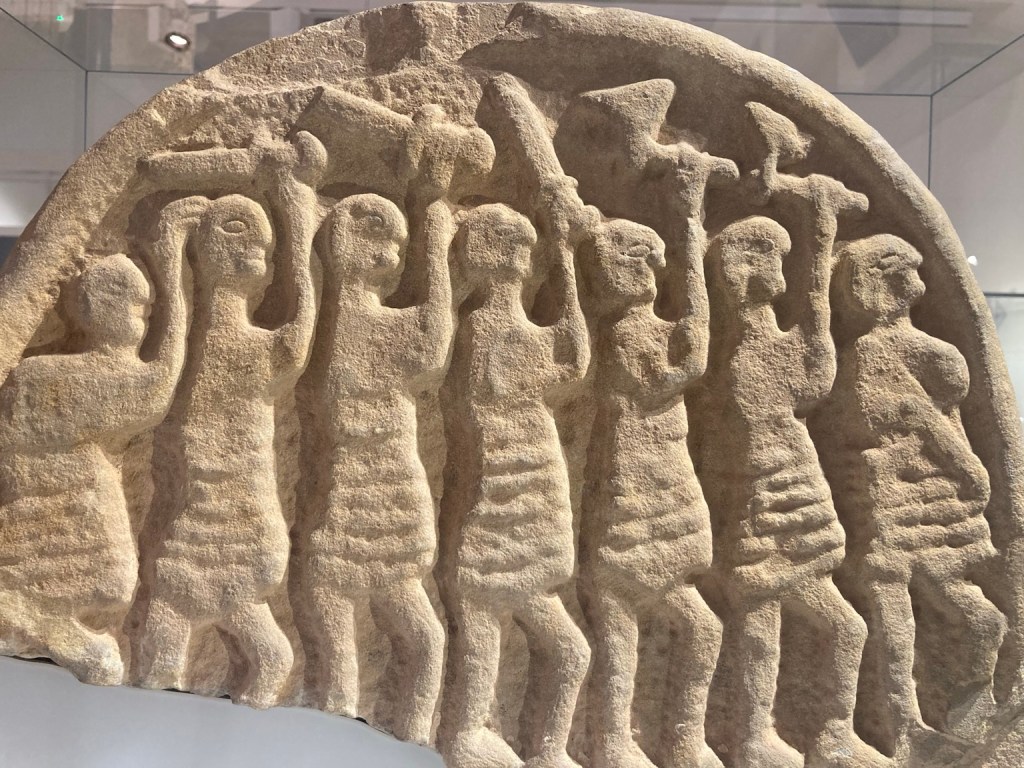
In 635 AD, King Oswald gave Holy Island to St Aidan to establish a monastery, and it soon became a renowned centre of Christianity and learning. St Cuthbert became Lindisfarne’s greatest saint and, following his death, the island developed into an important place of pilgrimage. The magnificent Lindisfarne Gospels were created here before Viking raids brought devastation to the community. This stone depicts a procession of men armed with axes and swords and may commemorate that Viking raid.
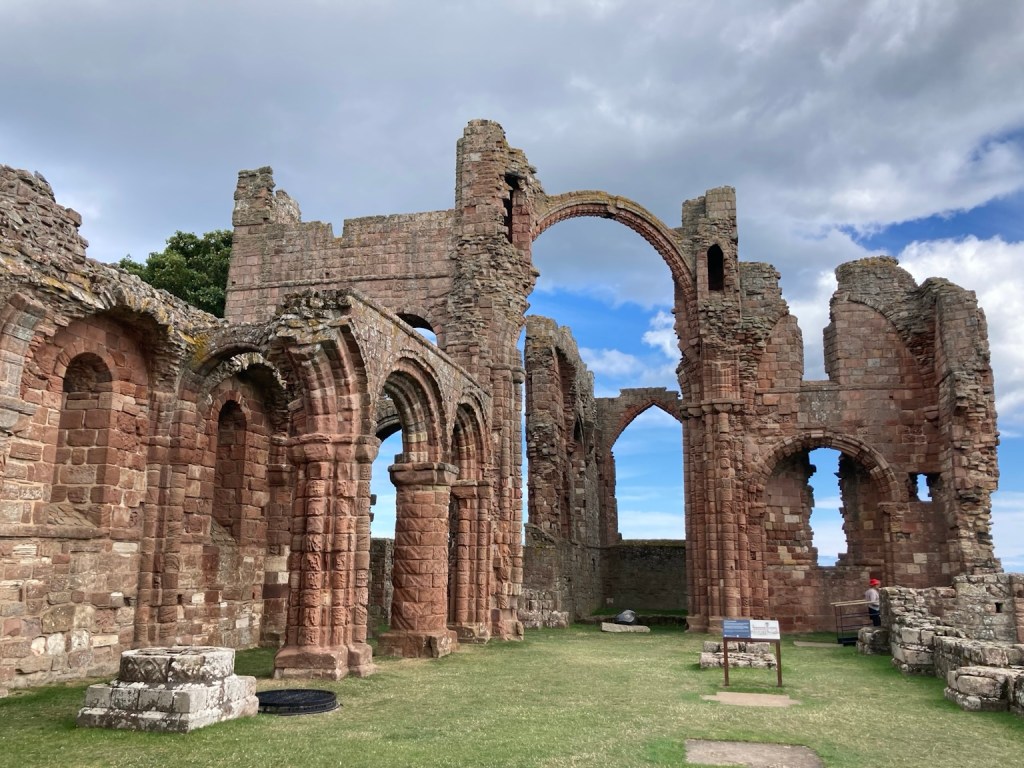
Monastic life eventually returned with the building of the Norman priory, which continued until the Dissolution of the Monasteries. Today it is a ruin … with St Cuthbert’s original resting place marked with a stone.
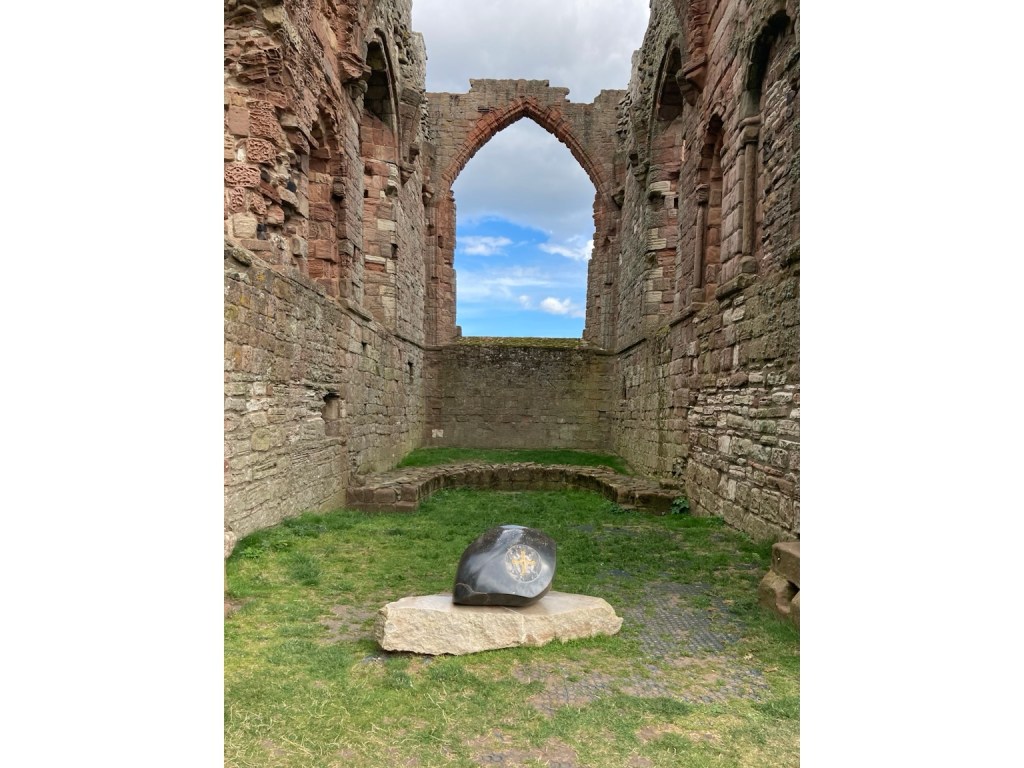
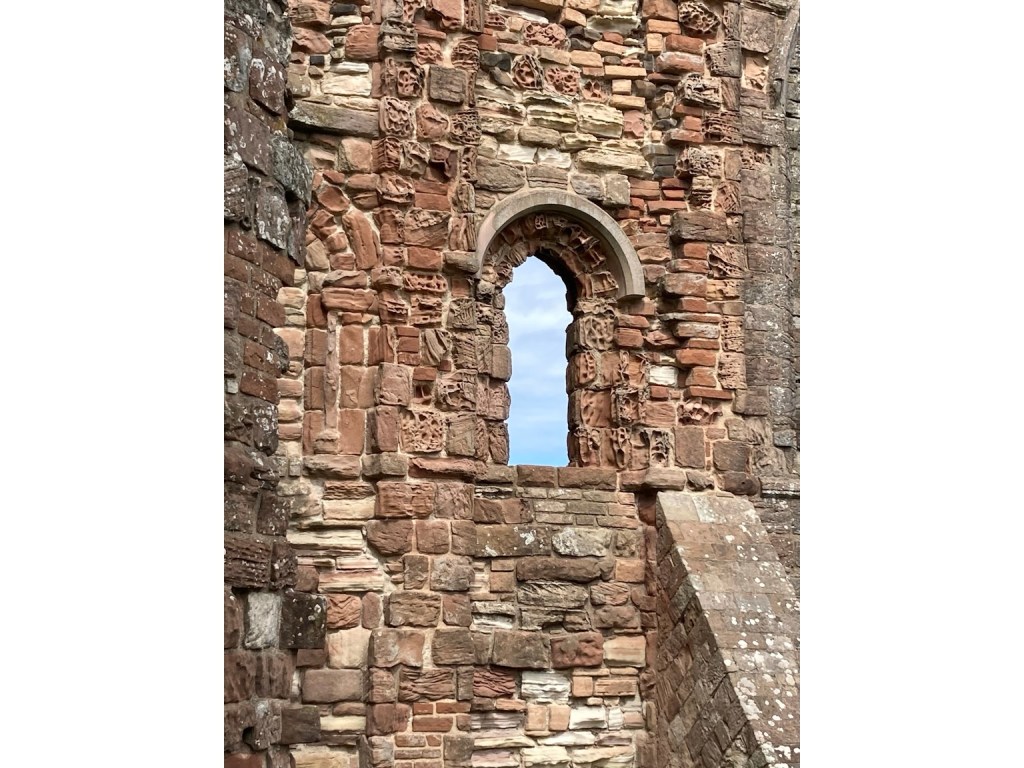
And when the sun came out, the dark red sandstone shone!
Our sightseeing done, we were back over the causeway with plenty of time to spare and we drove back through some lovely countryside …
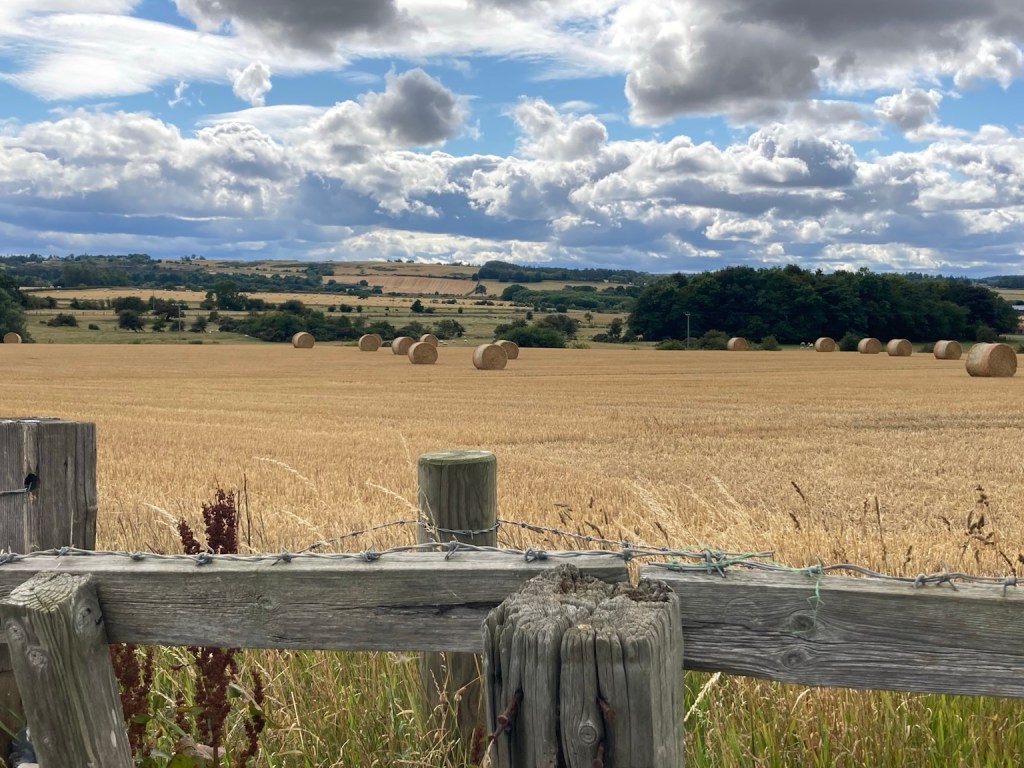
… then stopped at the Coop to put together a picky tea and we spent the evening in with Ride or Die on Prime!