
Malta’s history goes back forever – megalithic temples, Phoenicians, Romans, Arabs, Normans, the Spanish – then in 1530 the Holy Roman Emperor Charles V ceded the island to the Knights of St John so they could defend it from the Turks. They established a city at Vittoriosa which faces present-day Valletta and started building defences which enabled them to defeat the Turks during the Great Siege of Malta in 1565. Afterwards, The Grand Master, decided to build a citadel on the peninsula on the opposite shore which was named Valletta in his honour. Hospitals, churches and palaces were also built and Malta flourished during their 300 year rule. Napoleon stopped by for a couple of years, but he was routed by the British who then ruled for 150 years, with Malta becoming independent in 1964. Many buildings were damaged especially during WWII, but much restoration has been undertaken since especially preparing for Valletta 2018, Capital of Culture.
We’ve been staying in Palazzio Consiglia, a 400 year old traditional Maltese townhouse which has been converted into a modern boutique hotel, but still retains character and charm.

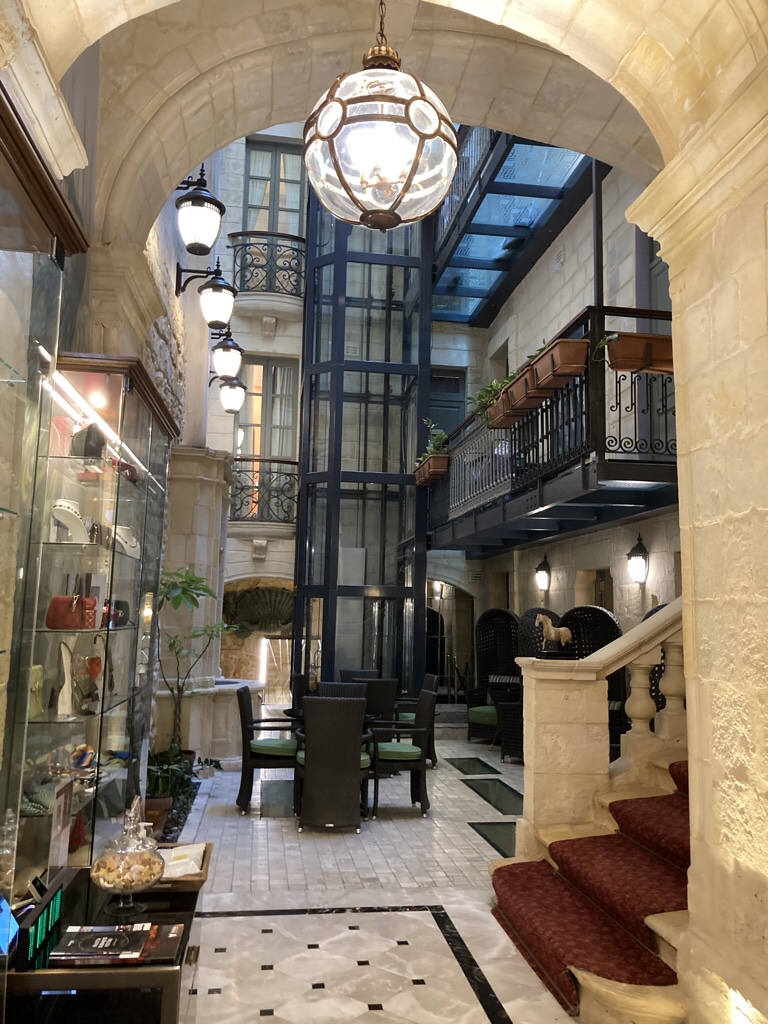
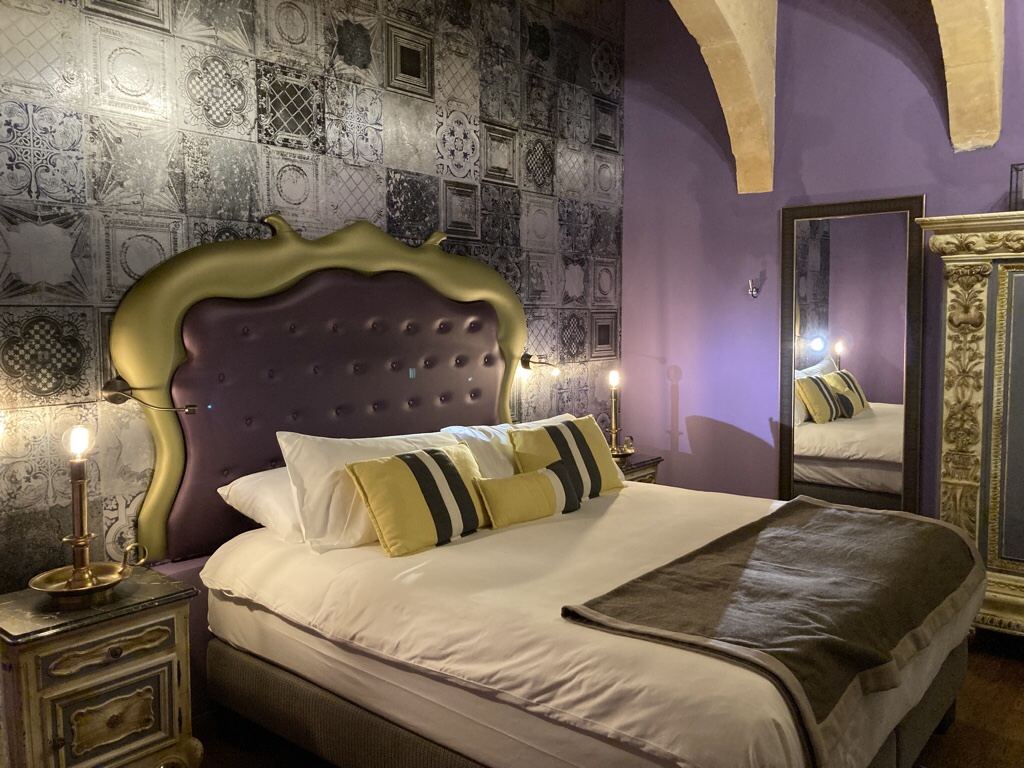
The rooms are all stylish and sumptuous and we chose Zingara …
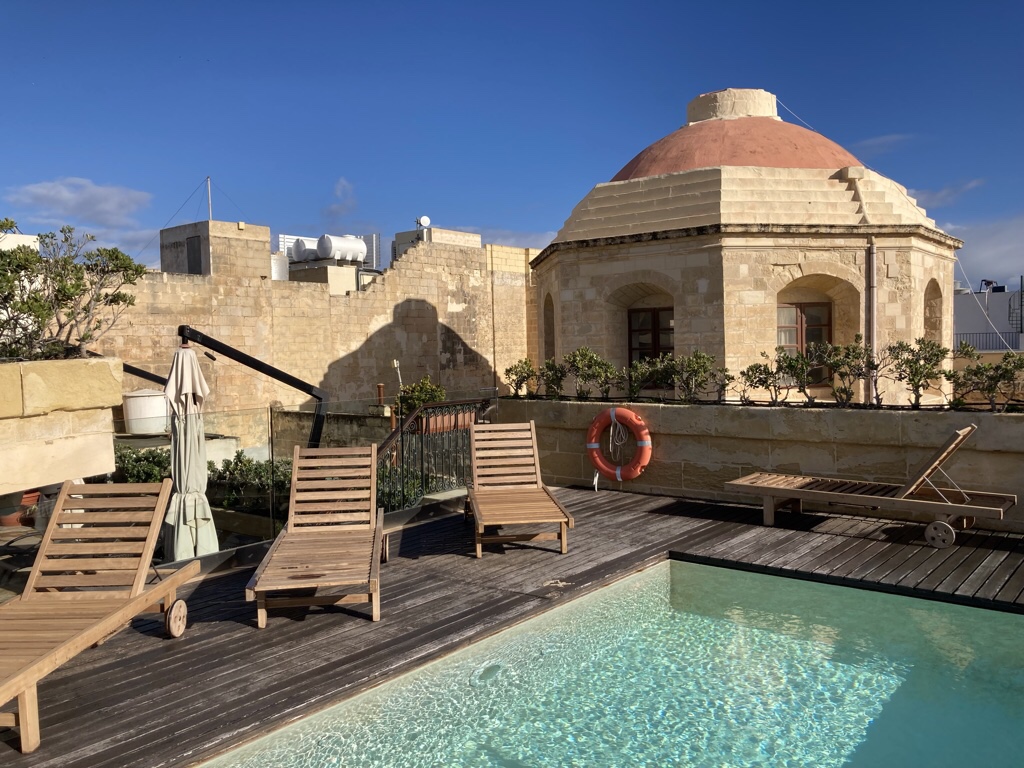
There is a pool on the roof, not that it’s warm enough to swim …
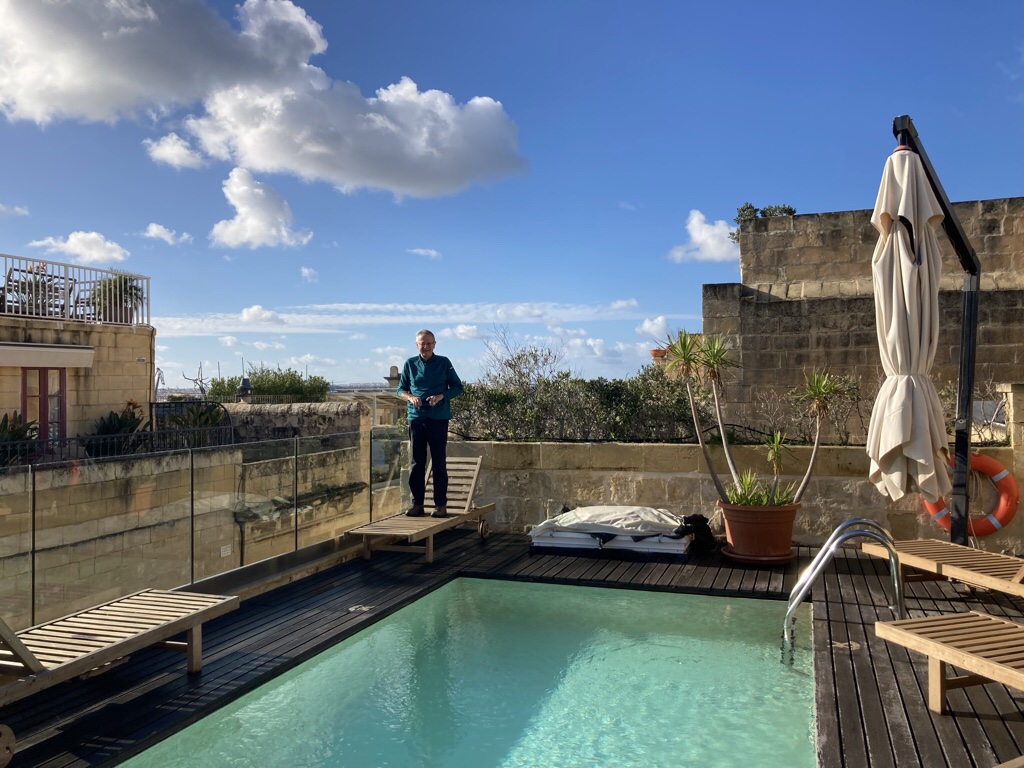
… but also a spa in the basement and time in the jacuzzi and steam room each day has been a real treat.

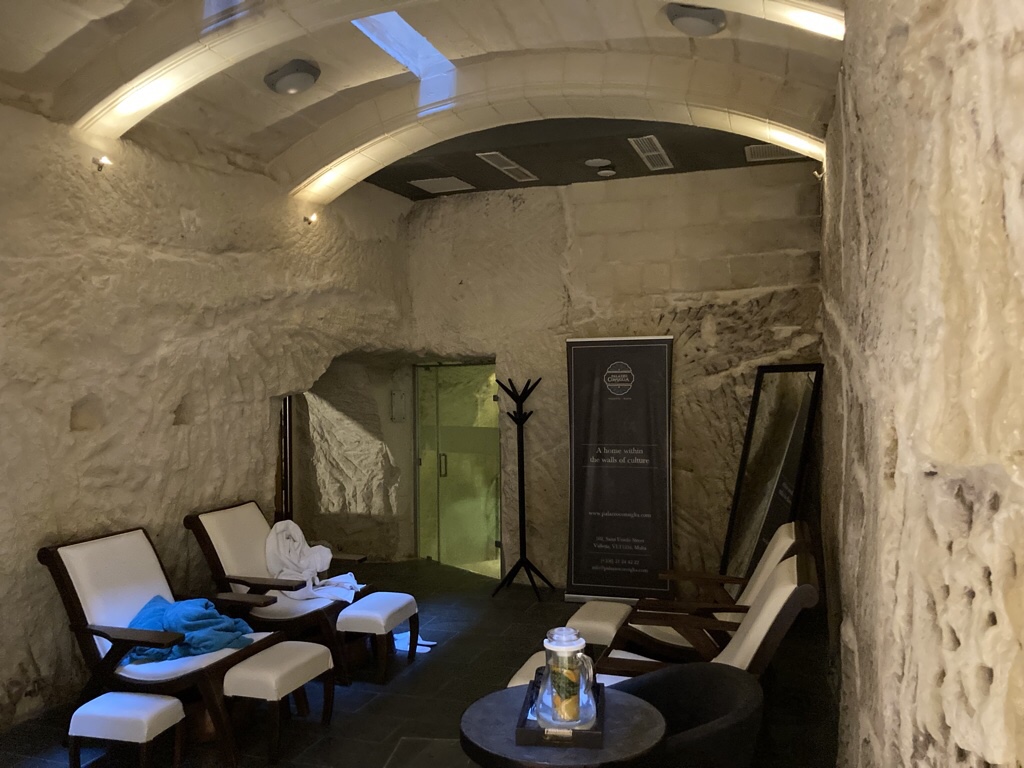
We are in St Ursula Street, right in the middle of Valletta old city, with everywhere just a few minutes walk.

The city was planned and built all in one go and was one of the first modern cities to be based on a grid, with the streets falling steeply towards the edges giving defenders the best position.
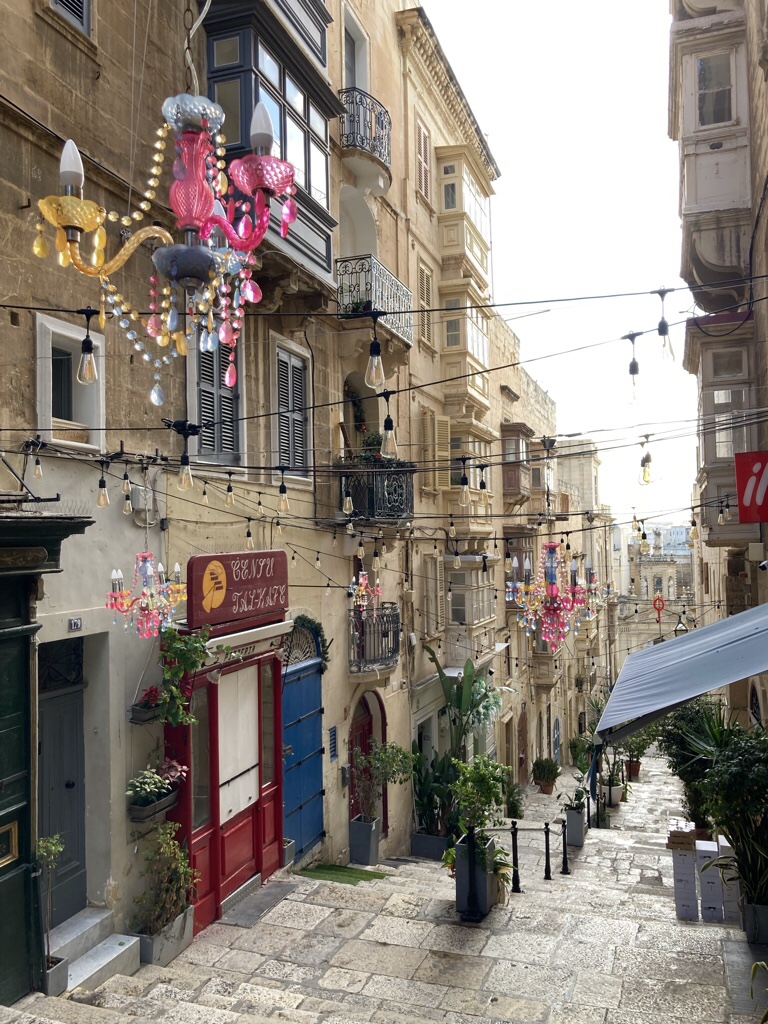


Many streets are narrow and the buildings tall, built with Maltese sandstone which is a warm yellow, often pitted with age, or even WWII gunfire.


Closer to the centre the streets widen and buildings become more grand.


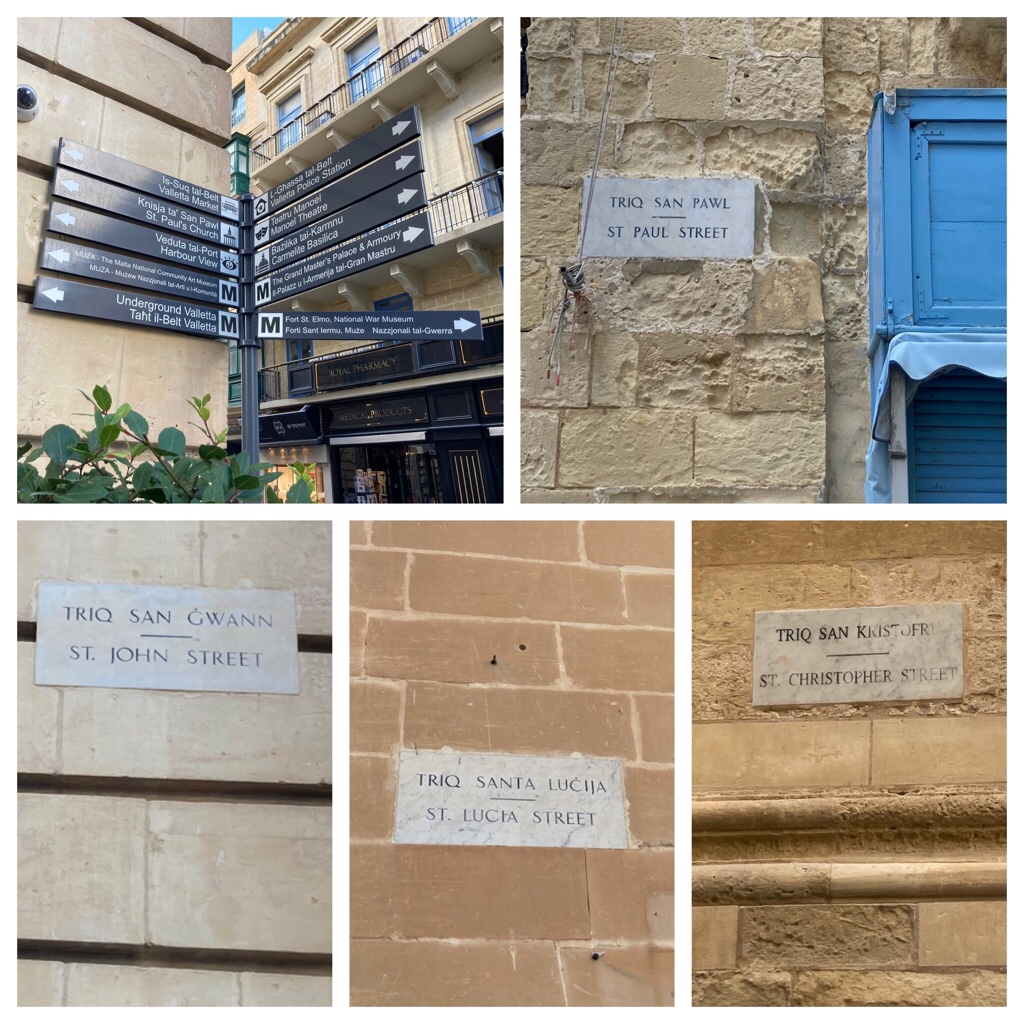
The street signs quickly caught our eye, with the words not looking traditionally European. The native language of Malta is Malti, which is a Semitic language, probably originating in North Africa, related to Hebrew and Arabic. It has Arabic grammar but a vocabulary drawn far more widely and is written in Latin script. Until 1934, Italian was the official language here, even though only the church and aristocracy used it, but then it changed to Malti, although everyone also speaks English.
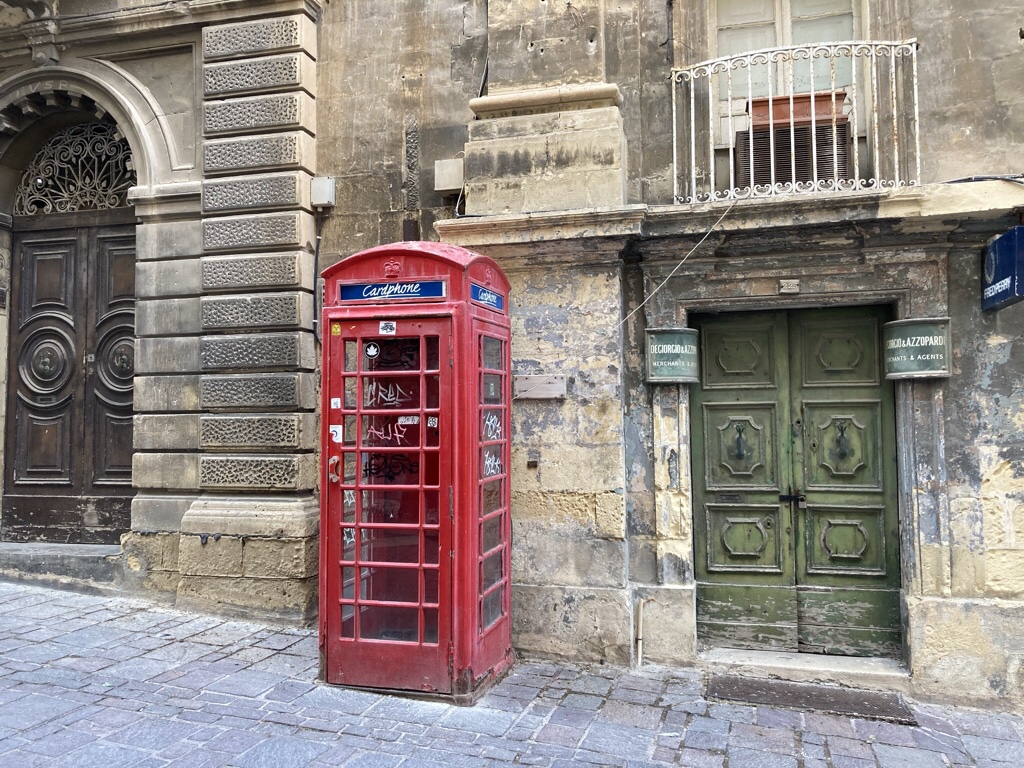
The language isn’t the only reminder of British rule, the Maltese drive on the right and we spotted these …

Another feature we’ve noticed are the statues decorating many street corners … which were built by decree from the Knights of St John when they planned Valletta.

We loved just pottering about. We wandered down side streets which have all sorts of businesses mixed up together, with cafes and bars rubbing shoulders with jewelry shops and haberdashers.


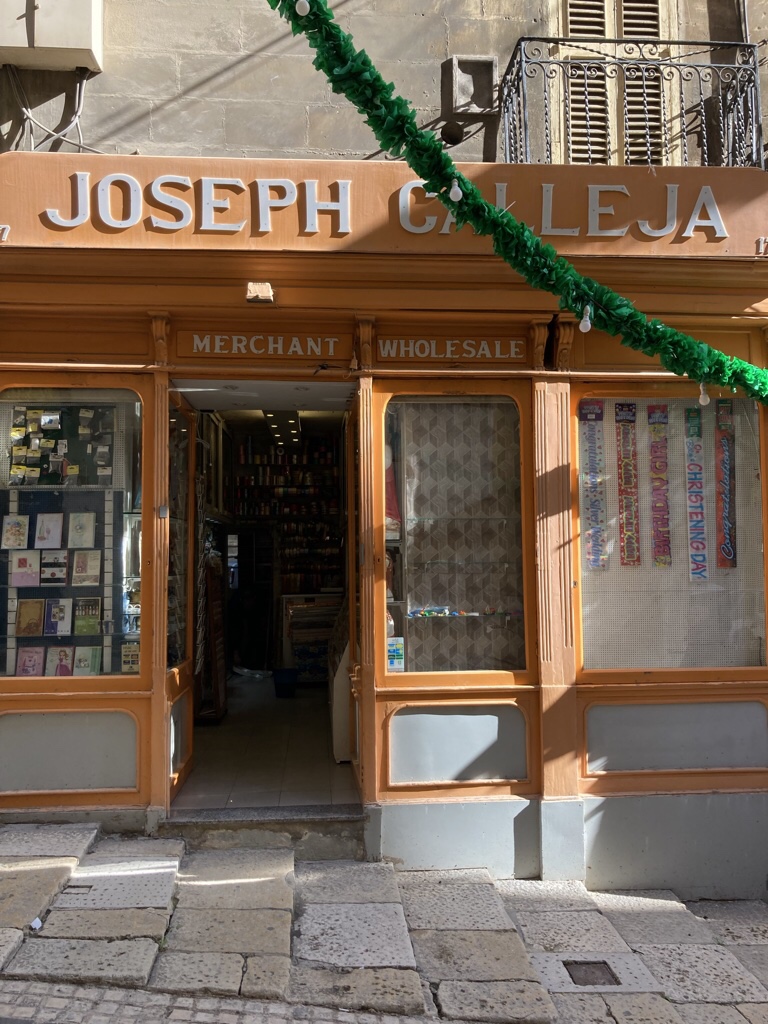
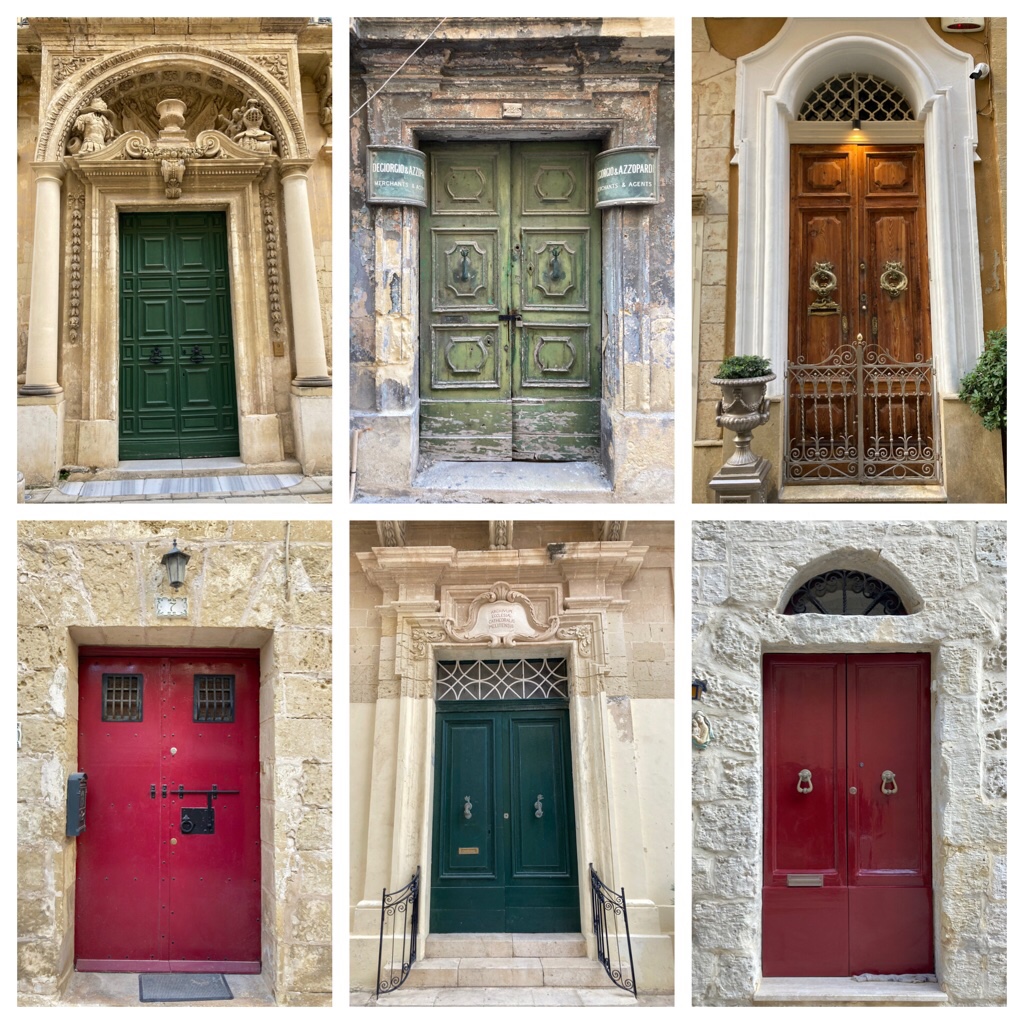

So many photos, but maybe time to get down to so serious sightseeing!
 Off Travelling Together
Beautiful photos and interesting blog. Never having been to Malta, Valletta seems a lovely place.
LikeLike
Yes, we had a lovely time 😀
LikeLike