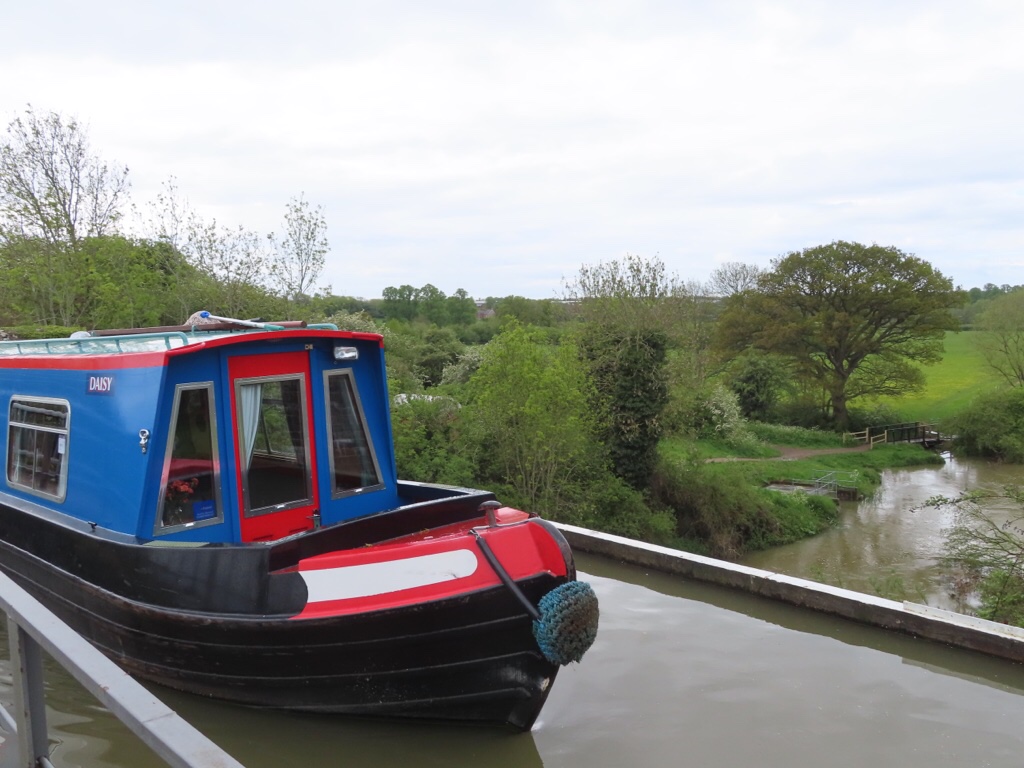
I was awake at the crack of dawn, not helped by cramp in my foot which made me hop out of bed quickly to relieve it. It was already light and the birds were chirping. Then I started fretting that I only had 0.3GB of data to last 6 days and before I knew it, I was definitely awake. It was 5.30. I lay in bed and read for a while, then got up and crocheted a butterfly, then made tea for us both, telling Chris it was nearly 8.00 Rome time (ie 6.45!).

Anyway, by 8.30 Chris had topped up the engine and were ready to explore Willen Lake.

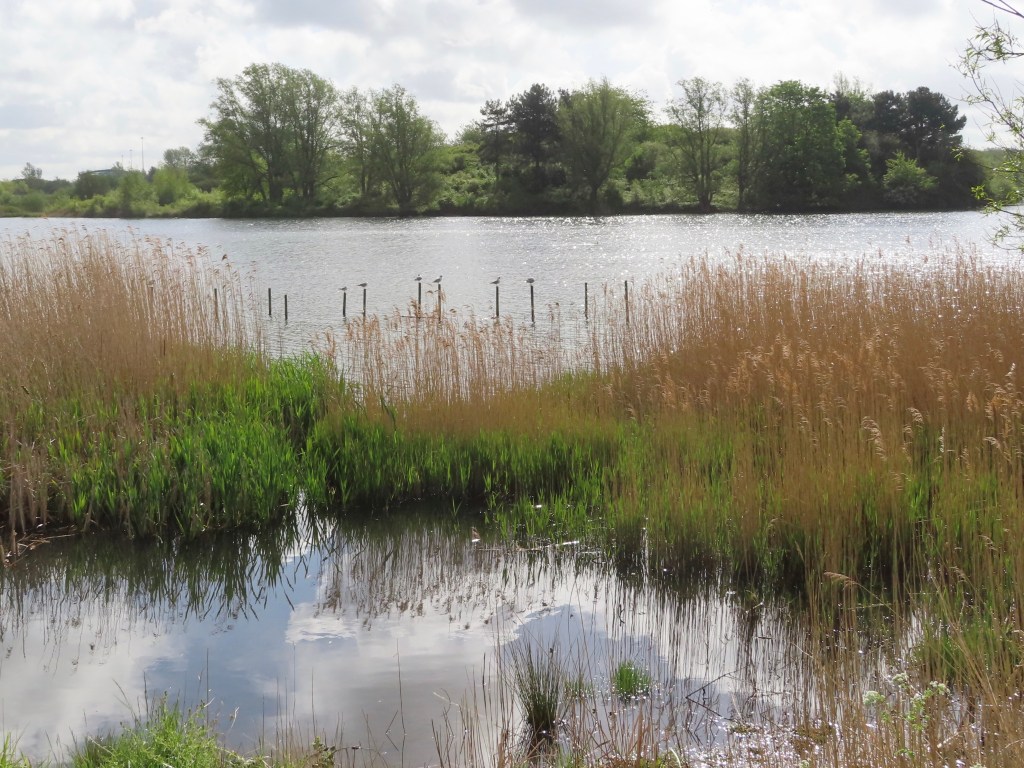
The public art here has an alternative religious theme, starting with the Peace Pagoda, the first of its kind in the Western hemisphere and built in 1980 by the monks and nuns of the Nipponzan Myohoji, a spiritual movement. It enshrines sacred relics of Lord Buddha presented from Nepal, Sri Lanka and Berlin and the frieze tells the story of Buddha – here he is The first of its kind in the Western hemisphere and built in 1980 by the monks and nuns of the Nipponzan Myohoji, a spiritual movement. It enshrines sacred relics of Lord Buddha presented from Nepal, Sri Lanka and Berlin and the frieze tells the story of Buddha.


The Medicine Wheel was designed by Roy Littlesun in 2000 and consists of two concentric circles of stone inspired by the legends of the Hopi Nation in North America whose prophesies foretell an age of peace when all nations live in peace and harmony. The design pays homage to British traditions of building circles alongside meeting places and important sites. Two extra pairs of stone situated north east and south west of the circle align with the needle stone alongside the lake and join the ‘Midsummer Line’, which follows the Midsummer sunrise that runs through the Tree Cathedral to the Belvedere in Campbell Park, along Midsummer Boulevard in Central Milton Keynes.

The Willen Labyrinth is a turf maze based on an enlarged version of the Saffron Walden Rosicrucian Maze with an oak tree at its centre and bronze faces in its lobes like this one and was laid out in 1988.


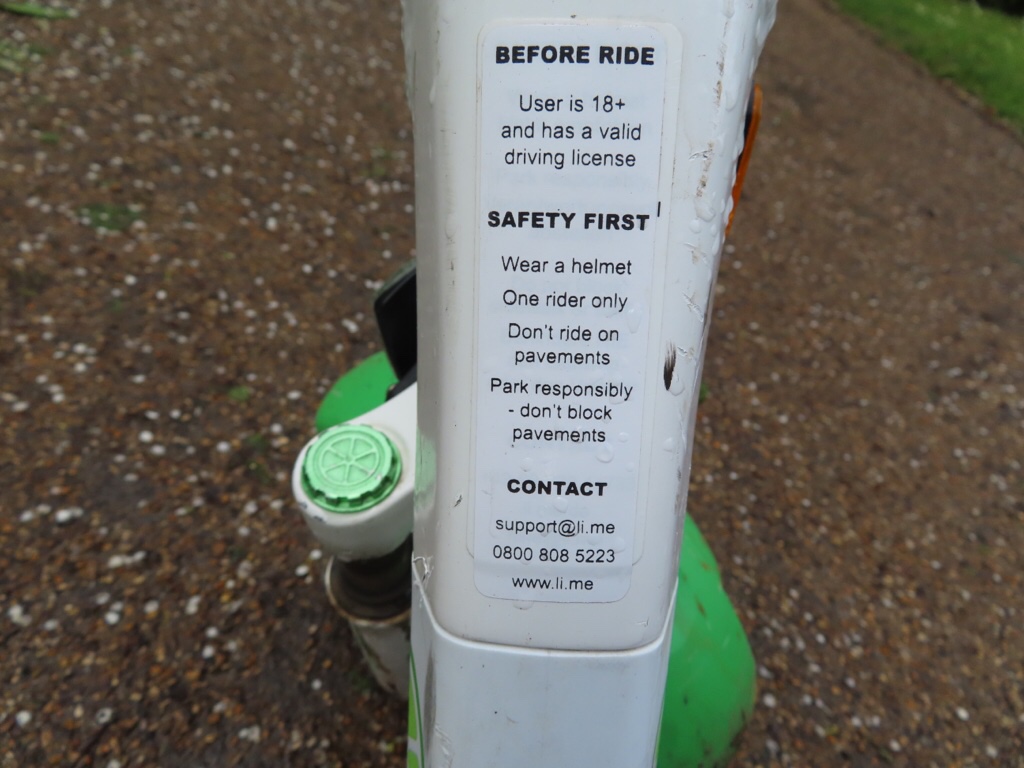
Finally we followed the edge of the lake, past the waterskiing winch and a series of paths and underpasses in search of the Tree Cathedral. We could have picked up a couple of scooters on the way, but unfortunately didn’t have helmets to hand.


The Tree Cathedral initially just looked like a glade of trees and as we entered a couple of bunnies ran across the grass with their pale fluffy tails catching the light. Inside there were aisles of trees forming an arched roof which apparently depicts Norwich Cathedral, peaceful, and certainly different.


Returning to Daisy, we made a start, and saw several more of the Gyosei art works from the canal – a life size steel Shire Horse whose steady toil propelled the barges of yesteryear along the towpaths …

… Three Post Bench illustrating wildlife of the canal such as coarse fish, and water birds but also smaller inhabitants such as water beetles, snails, insect larvae, floral algae and amoebae …

… and finally a beautiful white barn owl in glass mosaic swooping to capture its prey.

We then chugged slowly through Great Linford Park and Stanton Low Park which we hope to see more of on our return, and on to the New Bradwell Aquaduct, which carries the canal over Grafton Street. I’d read it was possible to get off the boat, nip down the towpath and over a parallel footbridge to take a photo of our narrowboat crossing the aqueduct … and it is possible!


Chris was so excited by starring in the photo, his steering briefly went a bit to pot!

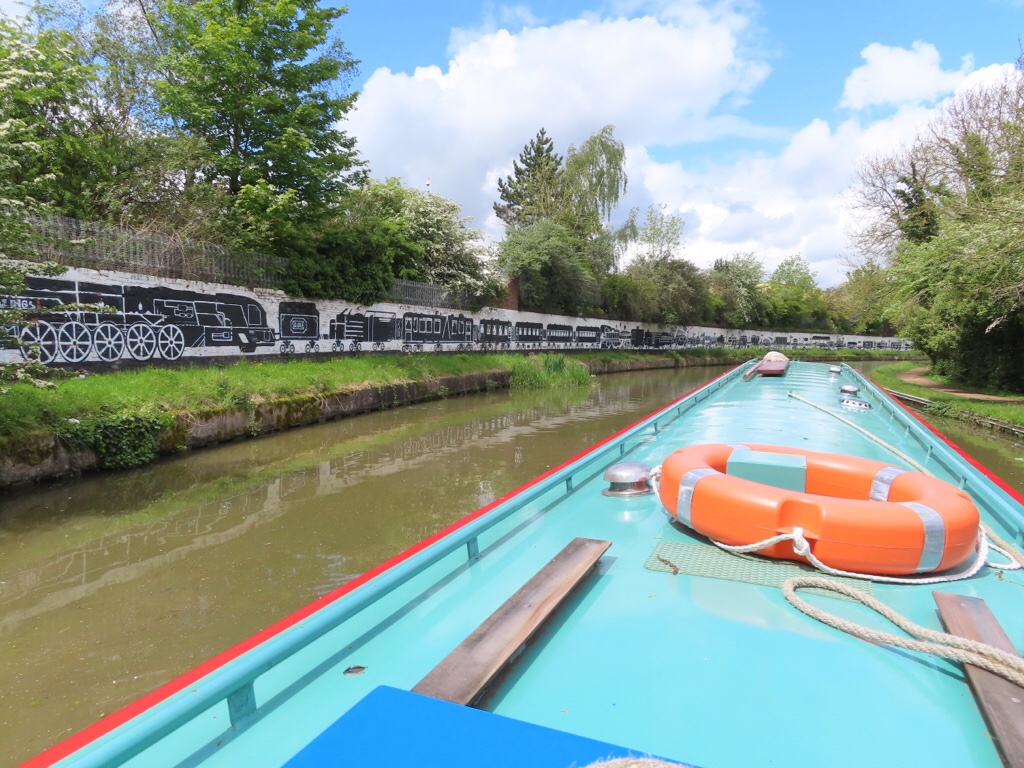
Coming into Wolverton there were a few more urban views …


… including a mural alongside the station …

… and several boats moored up beside a wharf development of new houses beside a footbridge which conveniently leads to a good size Tesco, no doubt stocking up on groceries.

Not much further and we arrived at Ouse Valley Park and moored up just before the aquaduct. We’d had a couple of short bursts of rain on our way, but now the sky was getting very dark, and I think we arrived just in time.


After lunch, the sky soon cleared and the sun came out and we went for a walk. Steps took us down beside the Iron Trunk Aqueduct which dates to 1811 and is the oldest broad canal iron trough aqueduct. It was the 4th attempt by the Grand Junction Canal Company to cross the River Great Ouse as earlier attempts collapsed. A horse tunnel leads underneath … so we walked through to get a view from both sides …


We then headed round the park, taking in the river floodplain filled with flowers …


… and grazing ponies …

… until we reached the brick-built Wolverton Viaduct, constructed by Robert Stephenson in 1838, carrying the railway from Euston northwards …


… before looping back as the sky became grey once more and we were back to Daisy for a cuppa and cake before the rain.


We wanted to take a turn round Cosgrove, just a mile away, billed as a typical canal village, but also wanted to make a good start next day, so once the rain stopped we took a chance and set out. This time we weren’t so lucky, so most of our walk was in the drizzle, down to the lock, a snap of the Ornamental Bridge, through another horse tunnel and back, but I’m not sure it would have been much more exciting on a lovely.


We were pleased to get back, dry out and sit in the warm with stew and red wine for supper.
 Off Travelling Together
Love all the artwork, sculpture and tree cathedral….plus the Buddhist buildings….beautiful.
LikeLike
Thanks 😊
LikeLike