
We left Arequipa on a sunny clear morning, and got great views of El Misti, meaning “majestic lord” …
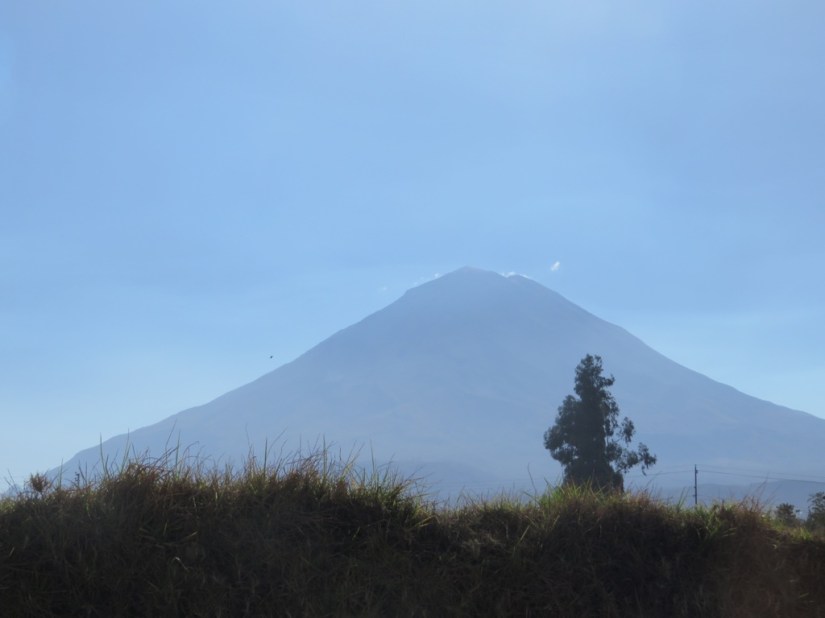
… and snow covered Chachani “”dressed in white”.

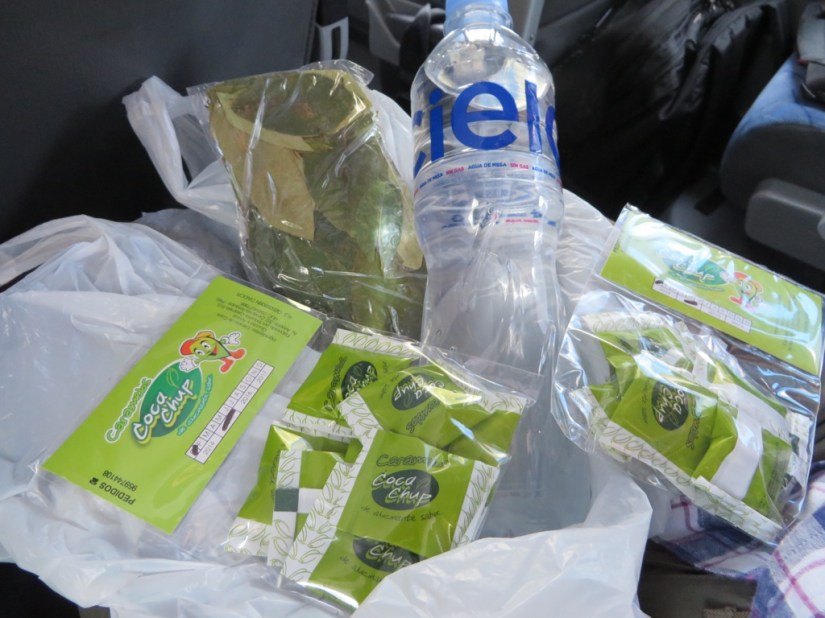
After stocking up with coca goodies, we were ready for our ascent of the Andes, passing Mount Ampato (where Juanita the ice maiden was found) on the left and Sabancaya which was smoking.

We then entered the cold and dry puna of the National Reserve of Salinas and Aguada Blanca, the home of several camelids. The first is the shy and very pretty wild vicuna.

Annually there is the Chaccu festival where a human chain of 1000 people surround and corral some 300 vicunas for shearing. About 1/4 kilo of fibre is obtained from each animal which is tagged so it is only sheared every 2 years. Since this custom was resumed a few years ago, the community, who profit from the fibre, has more responsibility for the animals and poaching has reduced. A scarf retails for $500 due to its extreme softness. Afterwards they have a big celebration with much singing, dancing and chicha beer! Talking of drinks, we stopped for our first mate de coca or coca tea, flavoured also with thyme and very good.

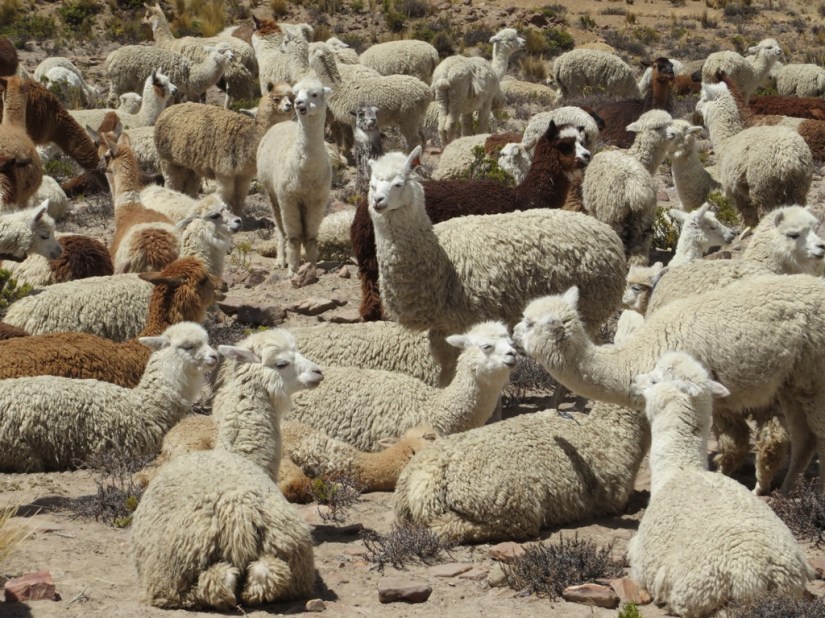
Next we saw alpacas (only one colour, short legs, short neck and tail down) which are bred for meat and wool for clothing …
… and the taller llamas (more than one colour, long legs, long neck, tail up) bred for carrying packs up to 40kg and wool for blankets.
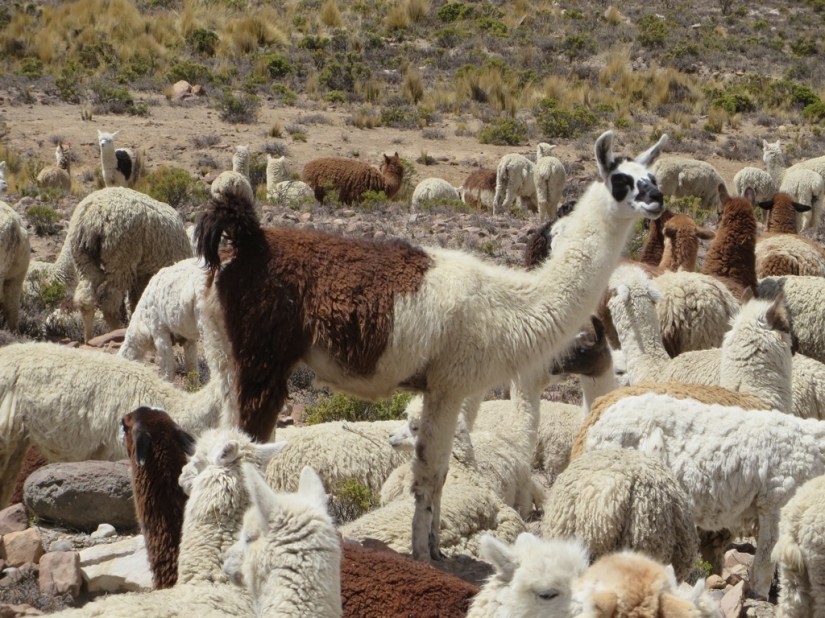
The meat of the llama is no good as they eat a certain bush that makes it taste nasty, while alpacas eat grass and the meat of young animals is good. They all looked very cute … but that didn’t stop me trying alpaca steak for dinner, and very nice it was!
We were climbing higher and were about to reach the highest point of our journey, crossing Patapampa Pass as 4010m.

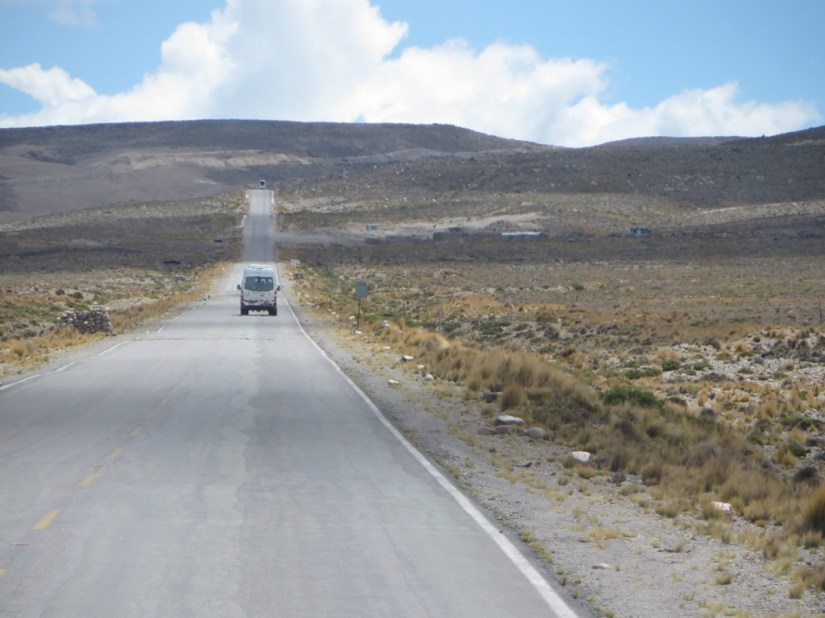
So far we had been feeling fine, we had been drinking mate de coca and sucking coca sweets which help to increase the absorption of oxygen into the blood, which in turn helps to reduce the affects of altitude, which can kick in from 2500m, especially if you exert yourself. And yes, it is the same leaf that is used to make cocaine, but rest assured, we won’t get hooked … 500g of leaves would be needed to make just 1 gram of cocaine, and each cuppa contains 3 or 4 leaves! Having said that, best not slip any in the luggage home just in case!
Having said all that, we both felt distinctly queasy in the time it took at the pass to take a few photos …

… and build our small apacheta which I dedicated to Mismi in the background, the source of the Amazon, and say a prayer before returning to the bus.


We then descended a winding road to the Colca Valley below.


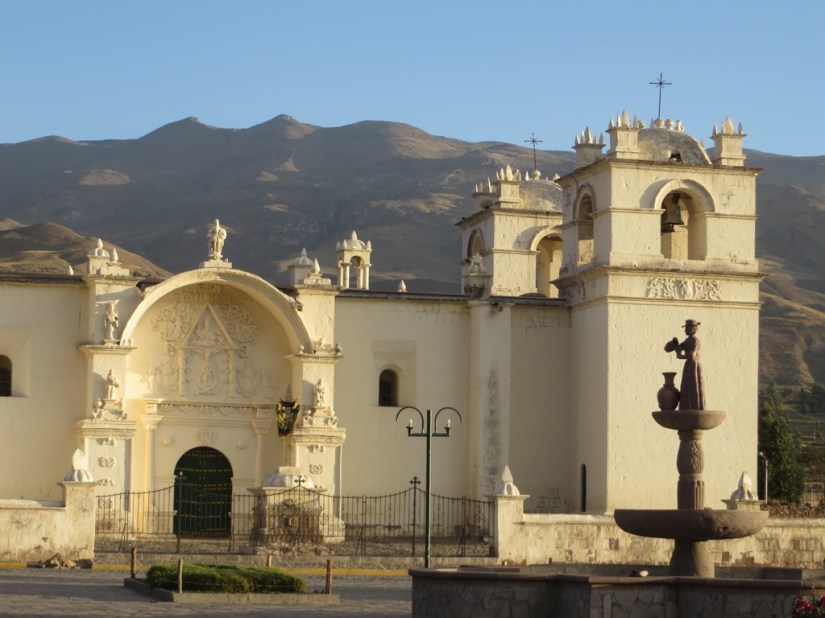
We stopped to admire the view then arrived at our B&B in Yanque, which also has great views. We had a chat and a giggle with Rose and Barbara, two friends from Boston who were sharing the Colca tour and the B&B, and had travelled all over the world together.

After the early start we were glad of some downtime, checked out the hammocks and later went for a walk round the town where we saw a woman winnowing her quinoa, the church and some splendid cacti!




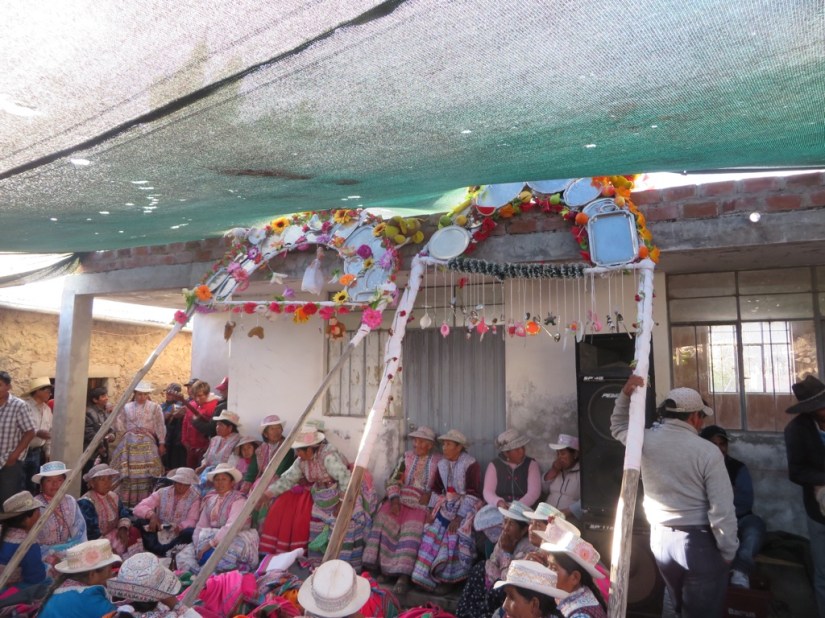
We were drawn by loud music, and guess what, ended up inviting ourselves to another party, this time a wedding, where many of the women were in traditional costumes. We tried the chicha beer, which we didn’t like, but everyone else did! Chris gave some money to the happy couple and danced with the bride, and joined a circle dance!



We had an early start in the morning to see the condors rising on the currents in the canyon from their nests as the go looking for food. They were amazingly graceful as they soared backwards and forwards, ever higher, till they flew away.

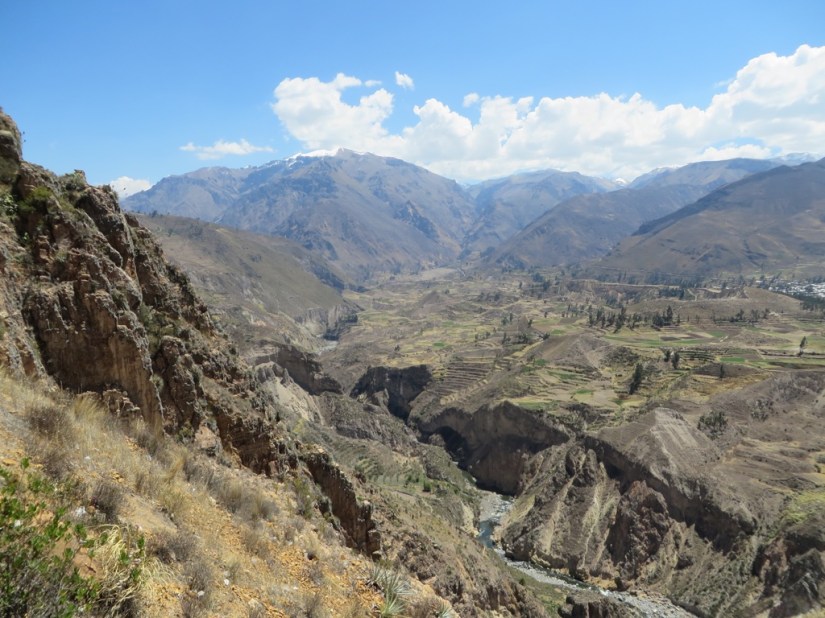
On the way back we walked along the edge of the canyon which is 1km from cliff top to river bottom, admiring the flowers and the view.


And also admired the impressive ancient terracing on either side of the Colca valley.



One little story Victor our guide told us as we returned from our trip was that two distinct ethnic groups live in the canyon, the Aymara speaking Collaguas in the highlands and the Quechua speaking Cabanas in the valley. Each in pre-inca times used different techniques to deform the heads of their children so they resembled the apu or mountain god they prayed to … elongated heads of the Collaguas and flattened heads of the Cabanos. When the Spanish arrived, they killed those involved so the people decided to stop to prevent further death, and since then it is the shape of the women’s hats that show the difference, with the Collaguas wearing rounded hats and the Cabanas flat boaters. Both tribes have always been friends as can be seen at the wedding with both hat shapes present.

Another interesting fact was the fruit from a local cactus is very good for liver problems and hangovers … maybe this is how they can party for 3 days at a time … and we tried some made into sorbet, which was like a sour kiwi, even looking like it, bright green with tiny black seeds.

We spent a quiet afternoon as Chris isn’t his usual self, not helped by the energetic dancing, being kept awake by the music, our early start and the altitude which have conspired to give him a headache. Hopefully he will feel better tomorrow as we depart for Puno.
 Off Travelling Together