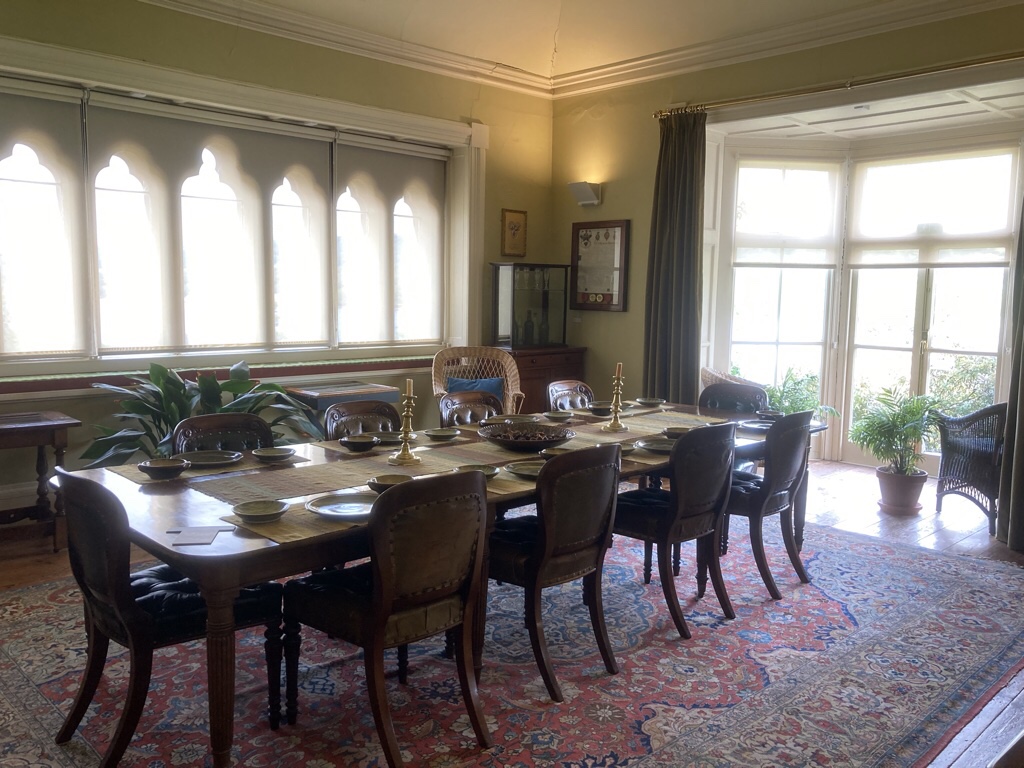
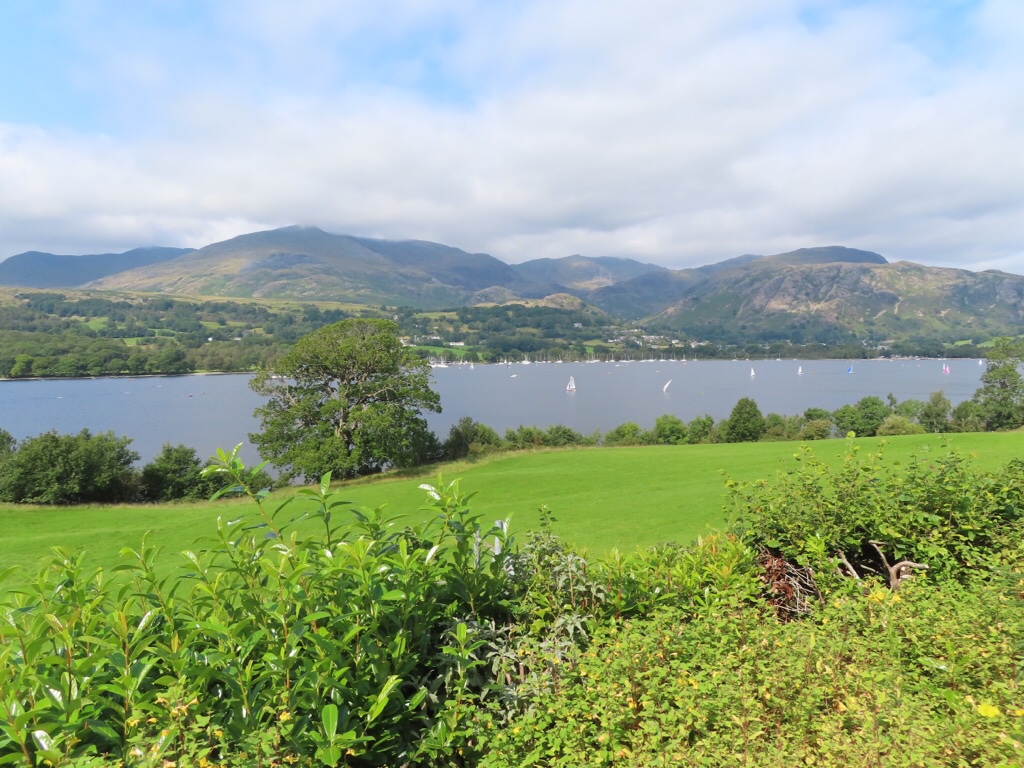
I was reading about Ballie Scott this morning and discovered that John Ruskin had spent the last 18 years of his life living in Brantwood on Coniston and the house is open to the public so we went for a look. While the social criticism of John Ruskin and his romantic idealization of craftsmen taking pride in their handiwork inspired the Arts & Crafts movement, we were surprised that his home looked quite Victorian, a bit dark and cluttered with collections of all sorts of things like coins and geology samples. Nonetheless, the visit was interesting and the view across Coniston was lovely and I can see why he fell in love with the location.
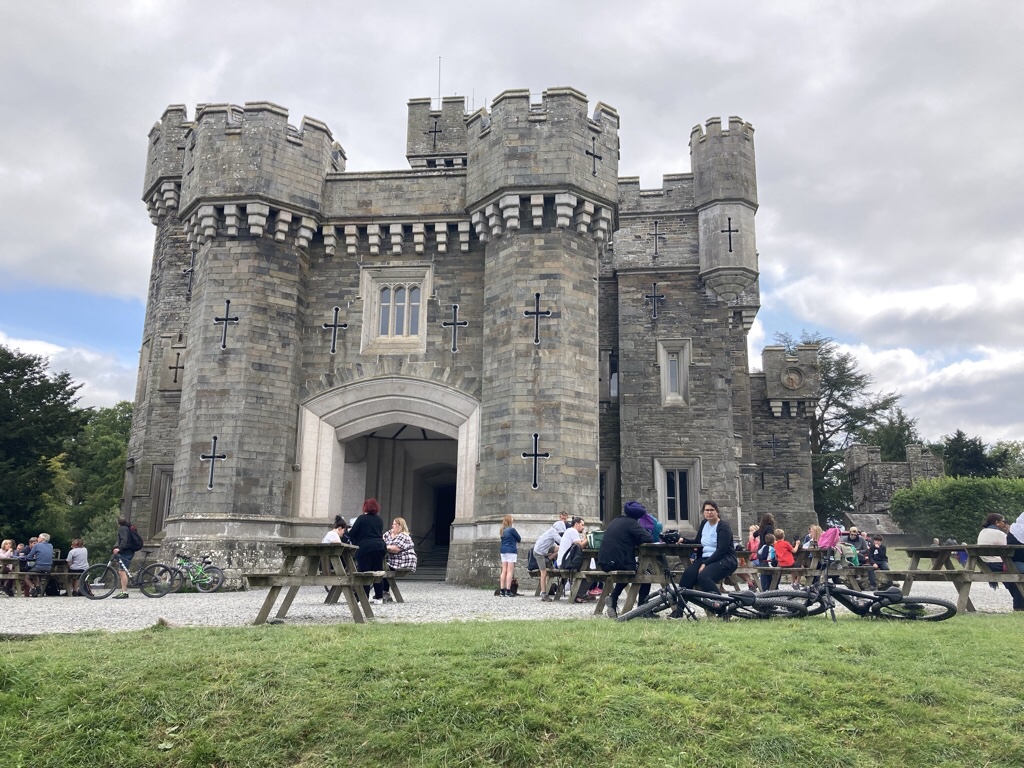
Next stop was Wray Castle, a Victorian neo-gothic house built for a retired Liverpool surgeon in 1840. It’s been owned by the National Trust since 1929 and is just a shell, but has a convenient car park so we could do a circular walk.
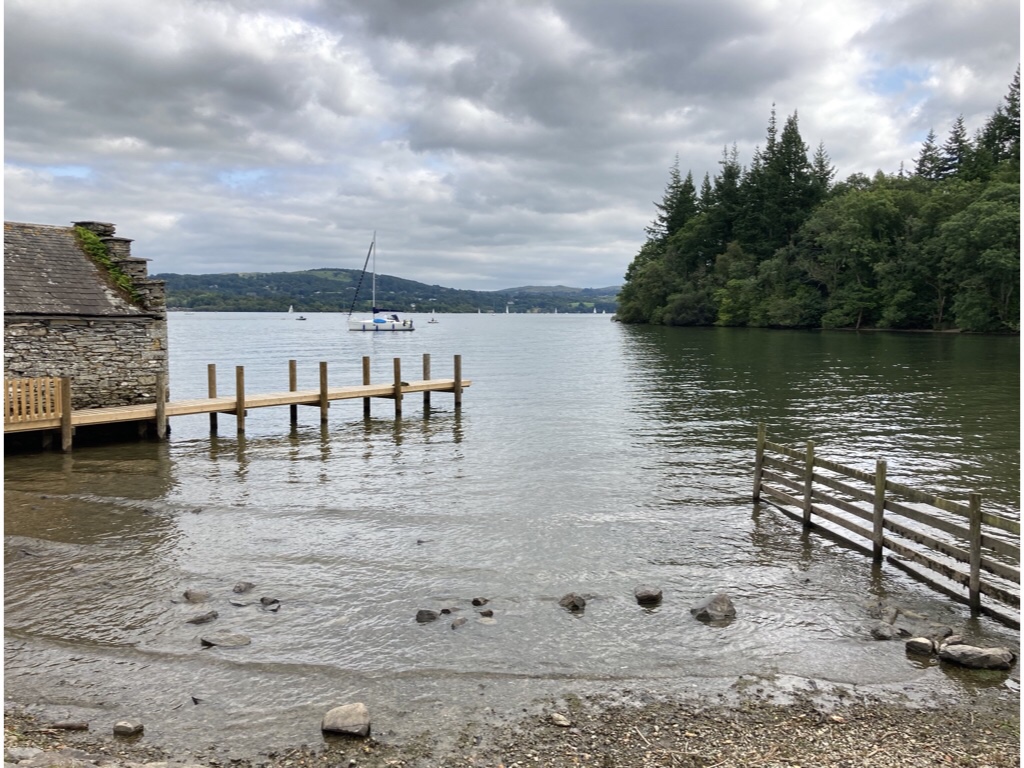
Firstly we took the path in a loop down to the shores of Windermere and past a waterside barn …
… then back up the hill and round Blelham Tarn …
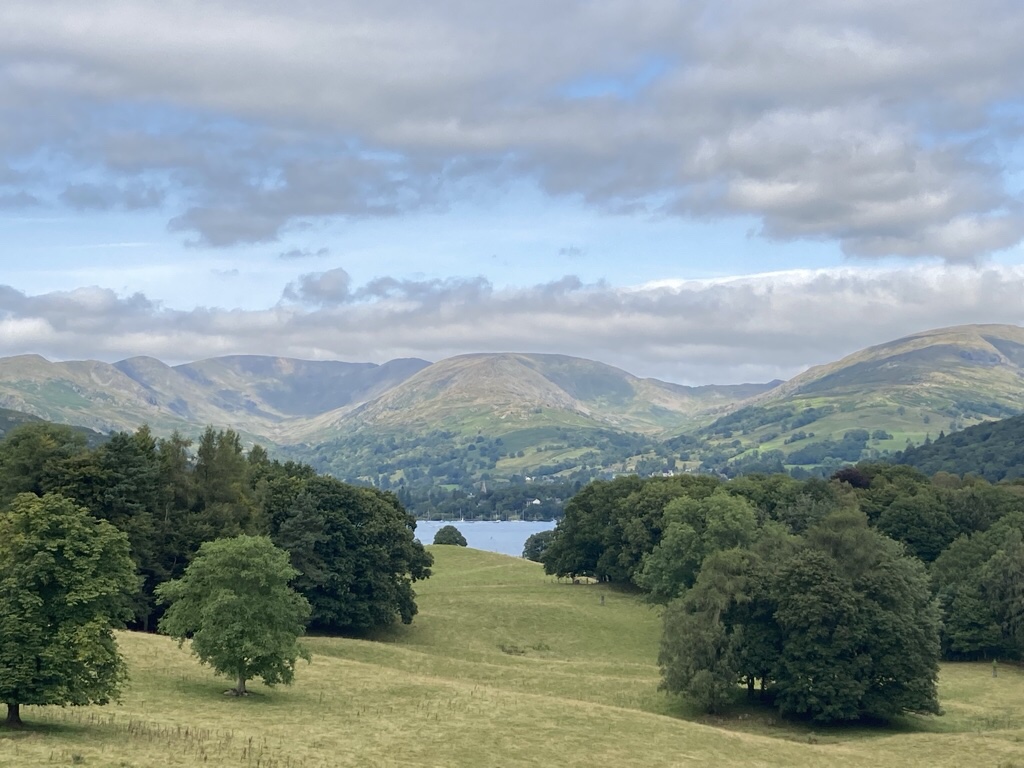
…with views towards Ambleside and Wansfell behind …
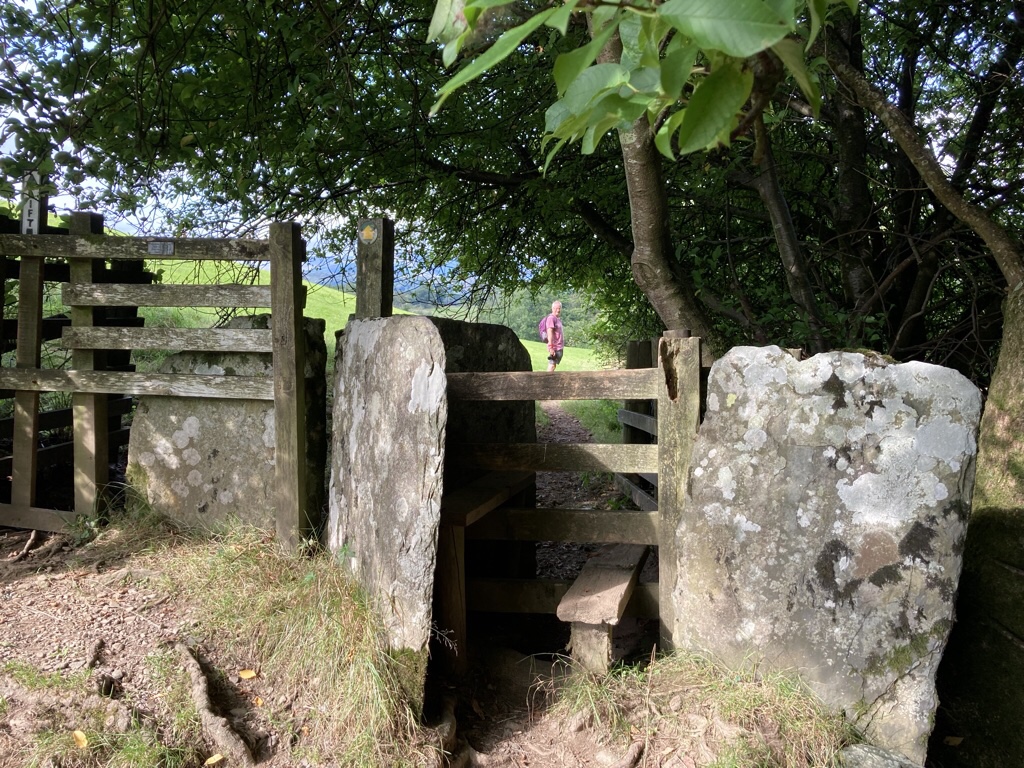
…before returning through this pinch stile to the car. It was a lovely afternoon and the short walk was perfect.
On the way back, we drove through Ambleside and Windermere which were heaving with visitors and were pleased we’d managed to avoid the crowds on a busy Bank Holiday Sunday, but still have a fab day out. We have only had a glimpse of the Lake District and even Kendal looked as though it deserved a better look, but time was short.
We ended the day munching pizza while watching the first of a new series of Vera and prepared to pack up and head to Yorkshire in the morning
Next day, the sunlight was streaming into the apartment as we got ready for a real treat. I was so looking forward to visiting Blackwell, an Arts & Crafts house, designed by Mackay Hugh Baillie Scott (1865-1945) and by far the best example of his work open to the public.
Before we started exploring, we had coffee on the terrace in the sunshine, overlooking Lake Windermere and this set the tone of the day … decidedly chilled … a brew with a view!
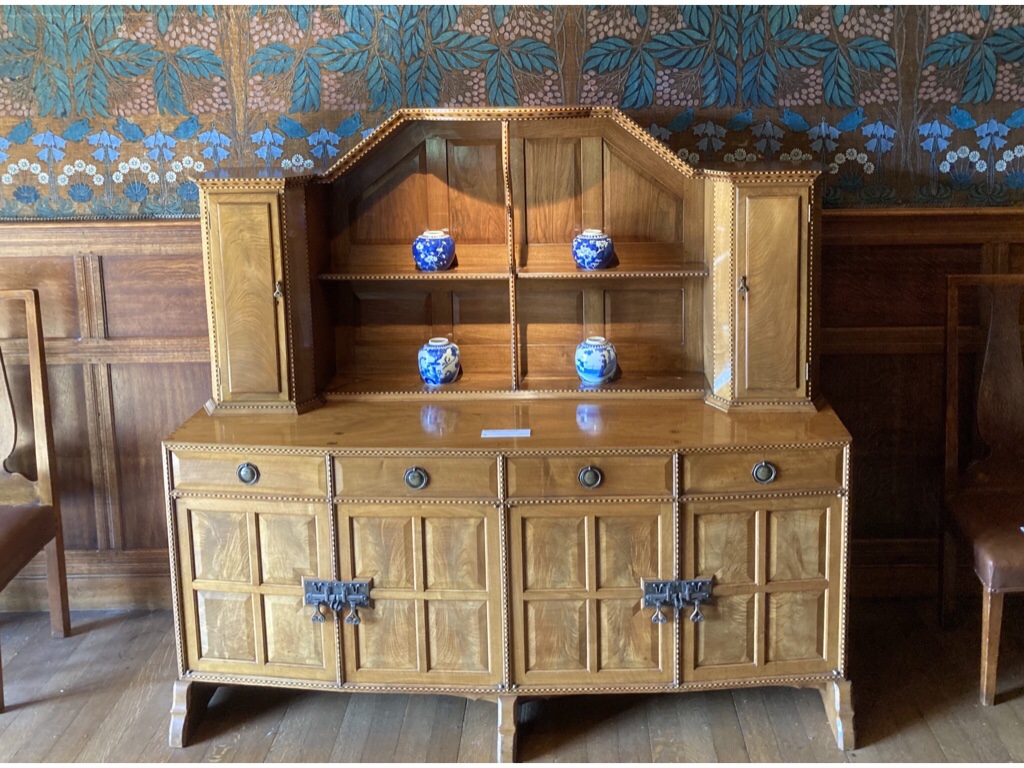
Blackwell was built as holiday for Sir Edward Holt, a wealthy Manchester brewer and completed in 1900, and was later a school and offices but has survived with almost all its original decorative features intact and has been open to the public since 2001. The furniture and objects in the rooms are not original to the house but are by leading Arts and Crafts designers and most are contemporary to the house.
Blackwell is asymmetrical in design with local influences such as the tall round chimneys and the use of local slate and sandstone. A variety of crafts have been incorporated into the house including tiles in the fireplaces, carved stone and wood paneling, stained glass, wrought iron and lead work, wall coverings and beautiful plaster work.
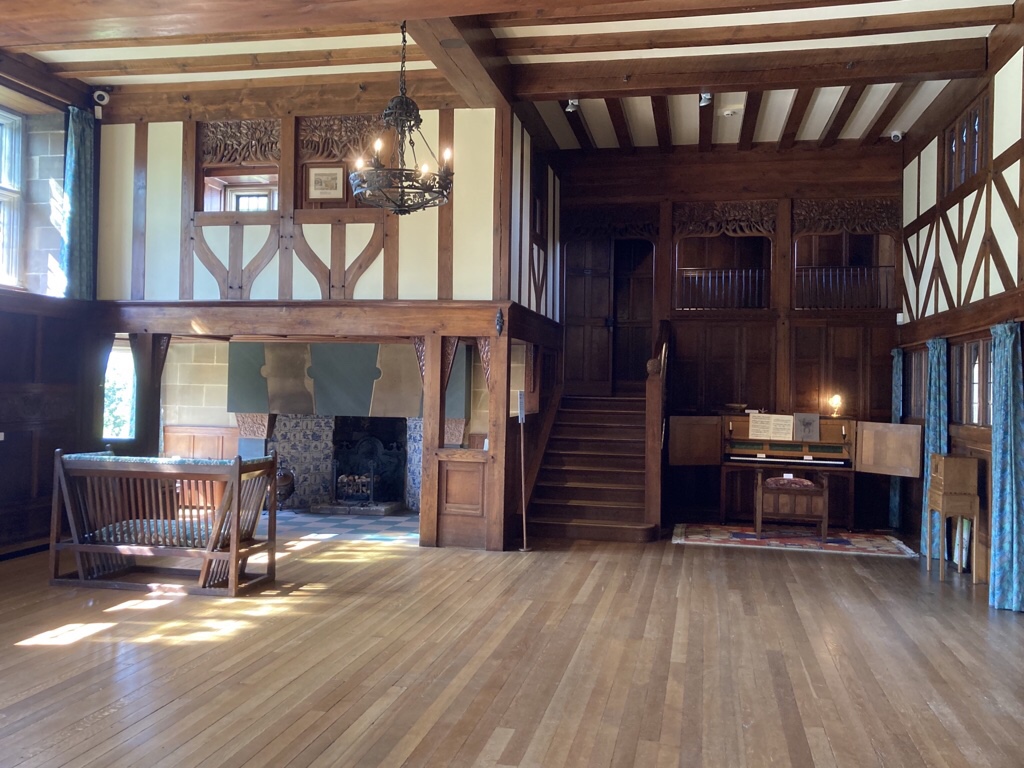
Blackwell gave Baillie Scott the chance to put his ideas on the use of space, light and texture into practice on a grand scale and as it didn’t need to be quite so practical as a main home, there was more scope to experiment. The main hall shows influence from old baronial halls, but is also modern, with plenty of room for the billiard table which would have stood under the six copper lights and the piano for musical evenings. There are also places to retreat such as into the minstrel gallery or by the fire with a book. At first glance, the peacock frieze appeared to be mosaic, but looking closer, it is wallpaper which took nine months work to conserve but looks amazing.
The dining room was cosier, but there is still good colour in the hessian wall covering and the fireplace is a joy.
The White Drawing Room comes as a surprise after the first two rooms, and immediately brought to mind Rennie Mackintosh’s House for an Art Lover in Glasgow. Firstly there is the amazing panorama from the window opposite the door …
… the dazzling white gesso everywhere … the ceiling panels, wall freeze and also the capitals which look like delicate trees …
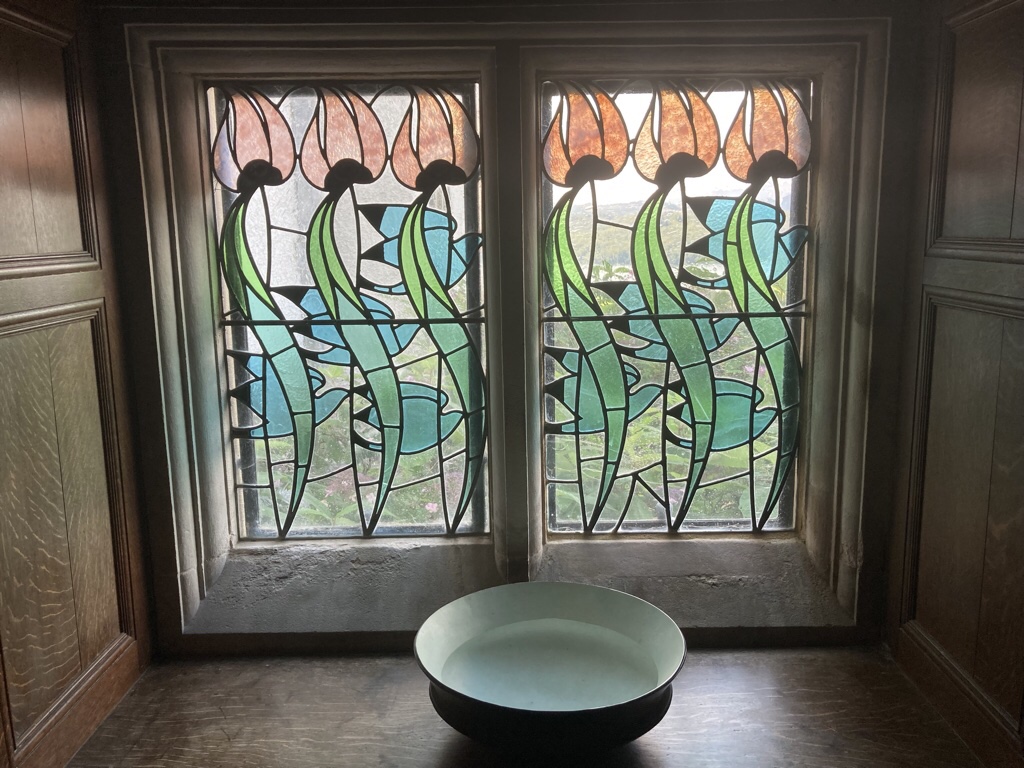
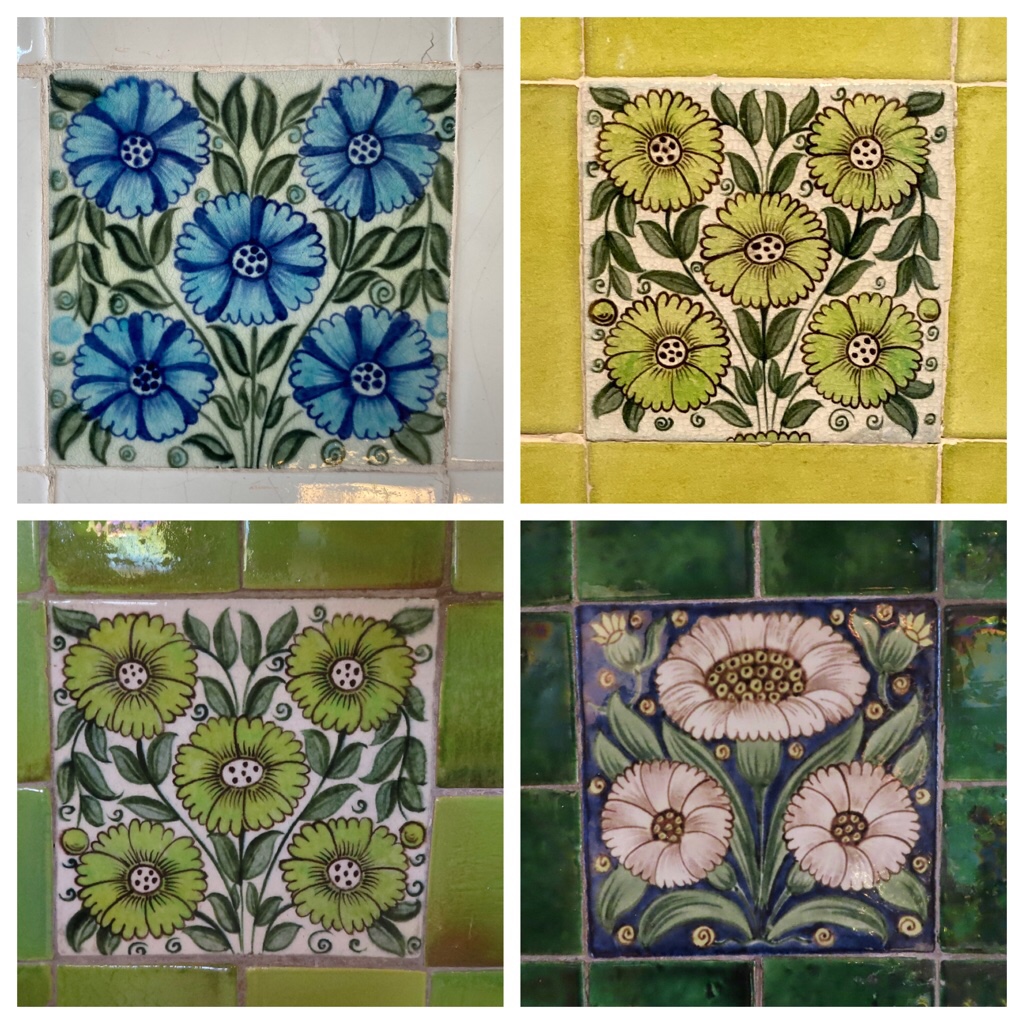
… then another great fireplace with original firedogs and the vivid blue of the tiling complements the blue in the stained glass windows.
The Rowan tree appears in the family crest and is used as a motif throughout the reception rooms …
More stained glass and tiling details … so pretty!
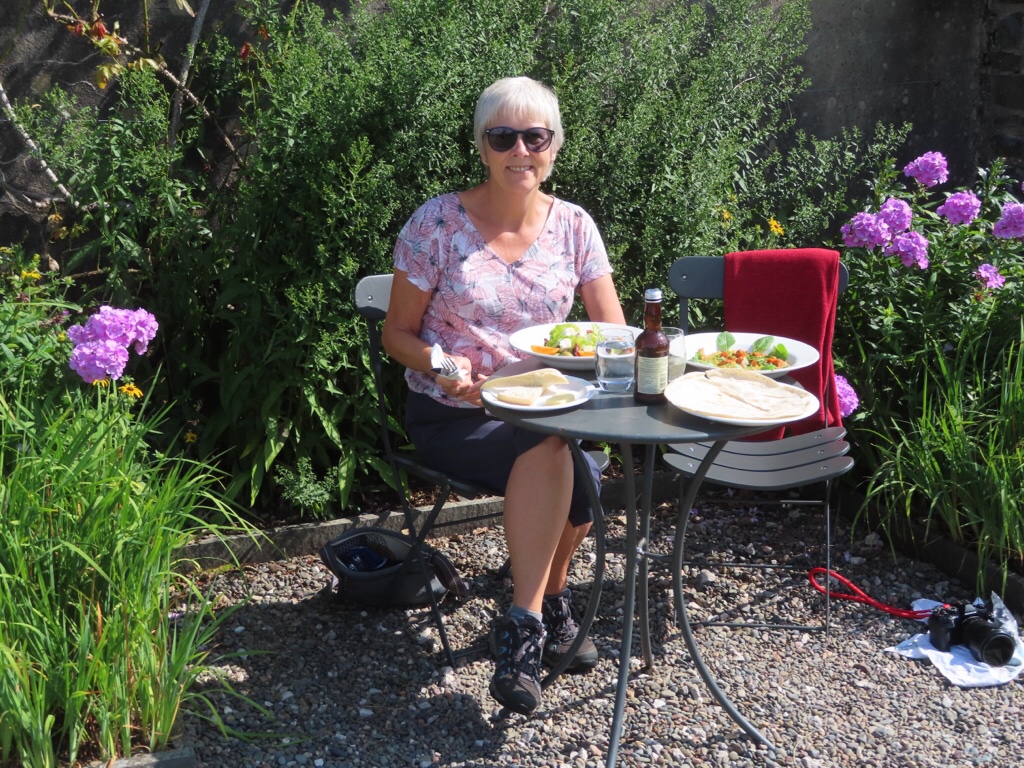
After checking out the exhibition about the Arts & Crafts movement and another celebrating cultural connections with Japan at that time, we settled in the garden for lunch … I said it was a chilled day!
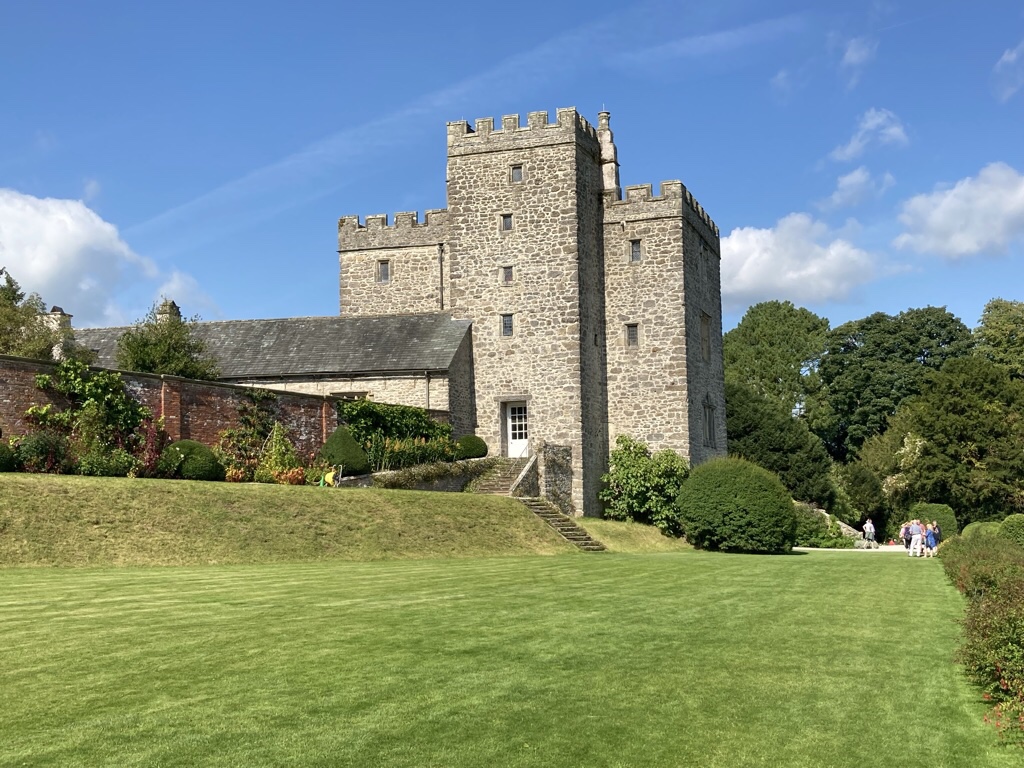
On the way back, we stopped at Sizergh (pronounced sizer to rhyme with Tizer!). The core of the castle is a 14th-century pele tower and hall and there have been additions every century since but we didn’t go inside as it was such a lovely day. Instead we just wandered round the gardens and even the estate walk seemed too much like hard work.
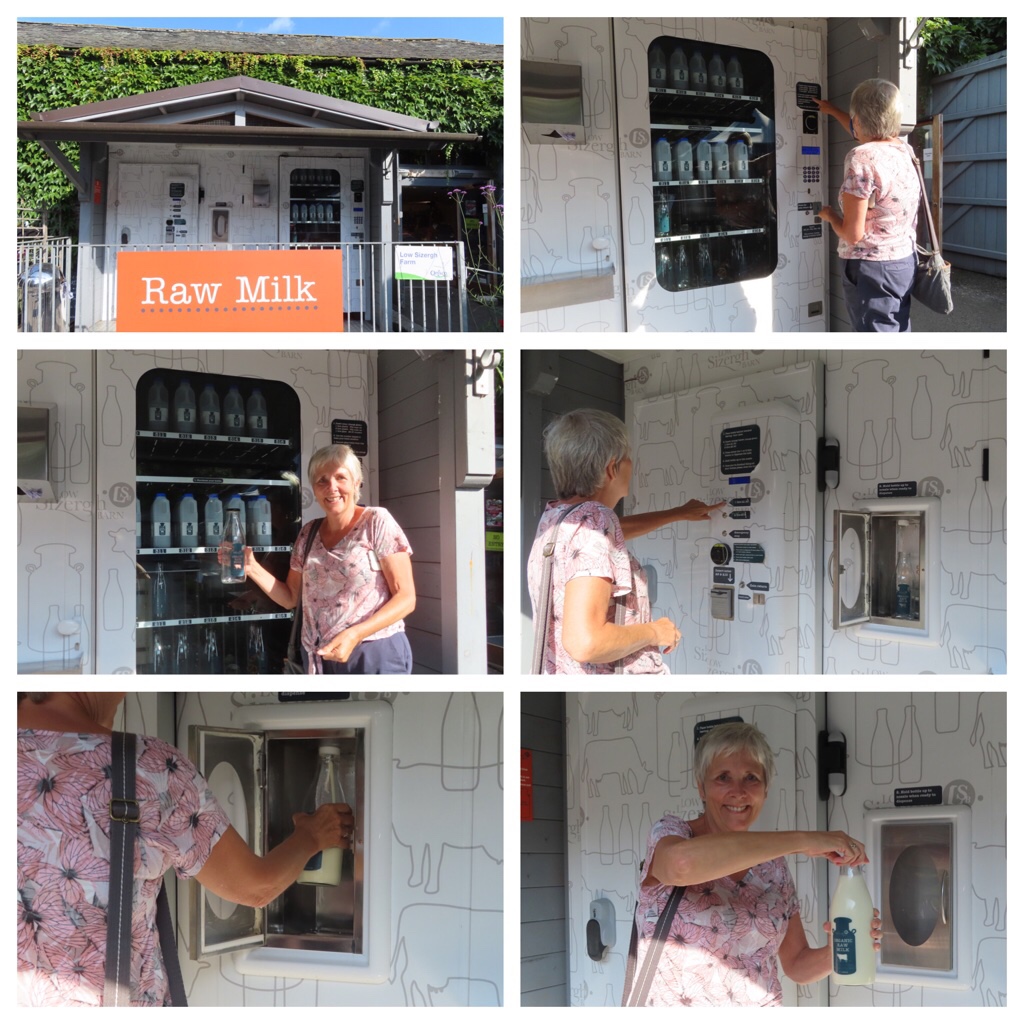
As we left we saw a sign for a farmshop and we picked up some Lancashire cheese made on the farm and cake. They also had a milk vending machine, selling whole organic milk from cows we saw being milked … and we confirm it was lovely for porridge and muesli.
In the evening we walked to Corner 134 in Kendal where we had a lovely dinner. We started with a platter of mixed tapas style mouthfuls, followed by venison with mustard & raspberry sauce for me and a veggie filo tart with taleggio for Chris. Afterwards we had vanilla ice cream with Pedro Ximenez. Who’d have thought ice cream with sherry poured over it was a thing … I’m obviously behind the times as Rick Stein did this 10 years ago!
We drove on side roads south to Penrith, enjoying the scenery as we went, including this sheep in the heather.
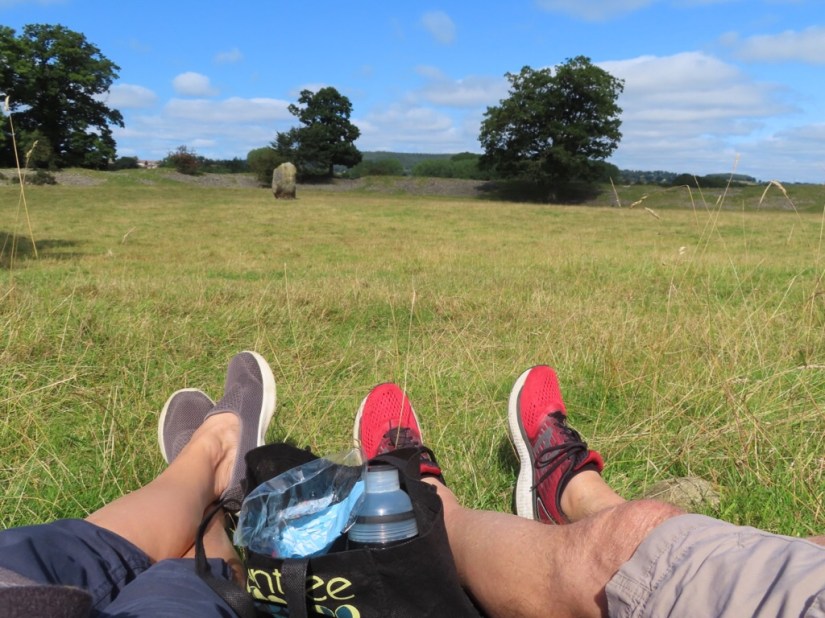
We found Mayburgh Henge and sat here to eat our lunch, then continued to Pooley Bridge, gateway to the Lake District at the top of Ullswater.
The road took us along the side of the lake and we could see people were enjoying the view in the sun or playing about on the water. There were several small parking areas, and finally we saw one with a space and walked path to the shore.
A bit further and the land became hillier …
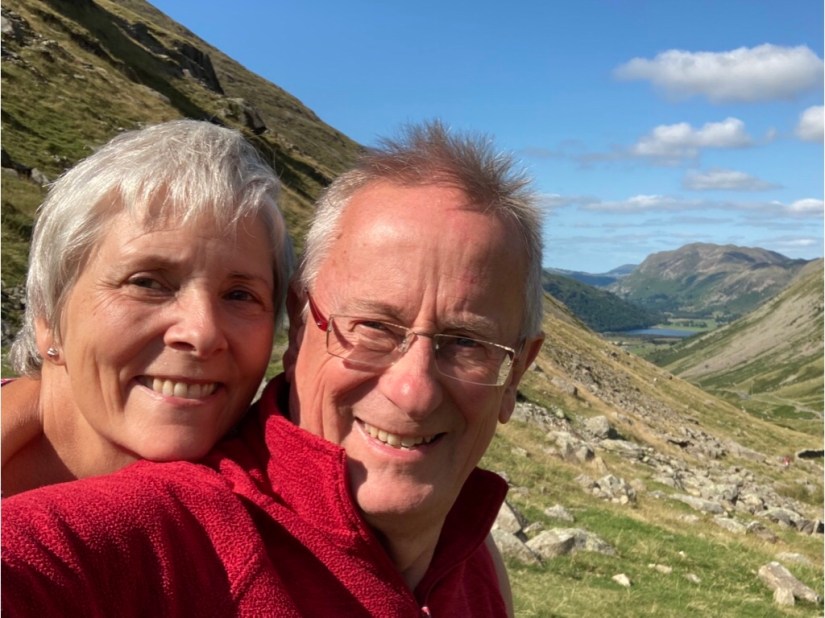
… and the road started to rise as it approached Kirkstone Pass and we took this photo back towards Ullswater.
We parked at the top, opposite the Kirkstone Inn and followed the path up Red Screes to get a better view. The signpost said 3/4 mile to the summit and I reckon we got just over halfway and decided we had gone far enough.
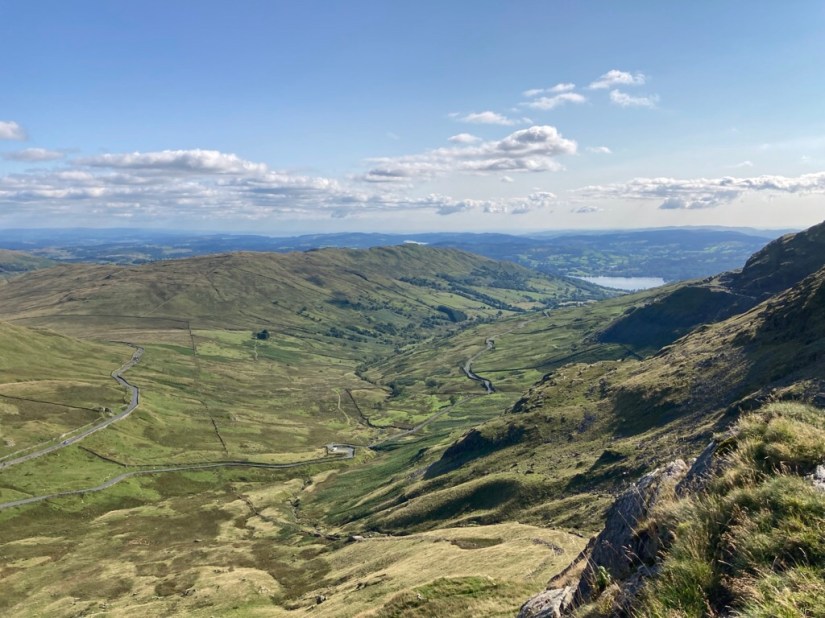
We could see The Scramble, a narrow twisty road leading down to Ambleside and the top of Windermere and also the far end of Windermere behind Wansfeld Pike with Morecambe Bay in the distance
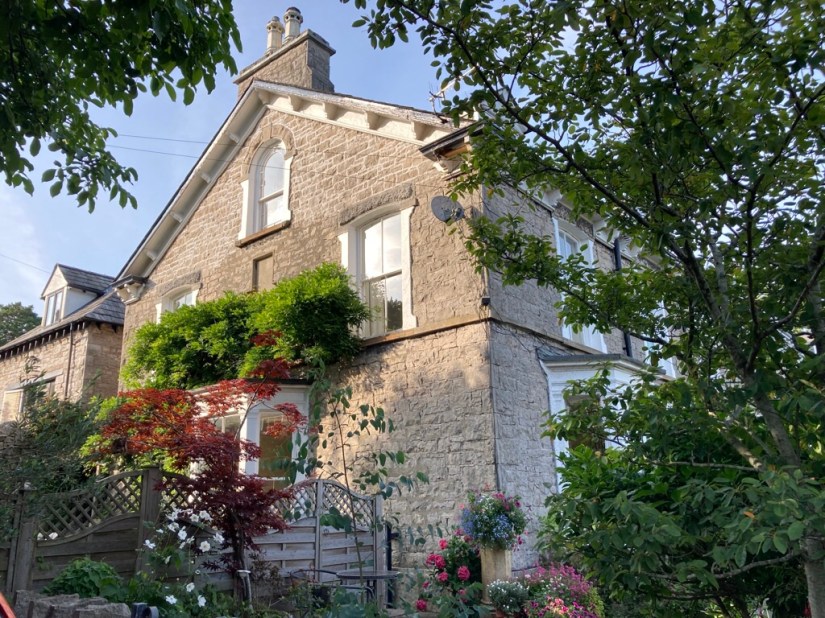
Time was getting on so we went on to Kendal to check in to our next stop, a cute basement flat in a terrace of smart houses built in 1860. It feels a little like a hobbit hole with little natural light at this time of day, but perfect for a three day stay when we will hardly be here.
We’d barely settled in and freshened up and it was time for a 20 minute walk into town for dinner. I’d booked a table in Jintana, a Thai restaurant, and we had a lovely meal, very reminiscent of previous travels.






















 Off Travelling Together