We made our way out of the city to the Triton Fountain …

… and turned to look at the controversial new city gate.
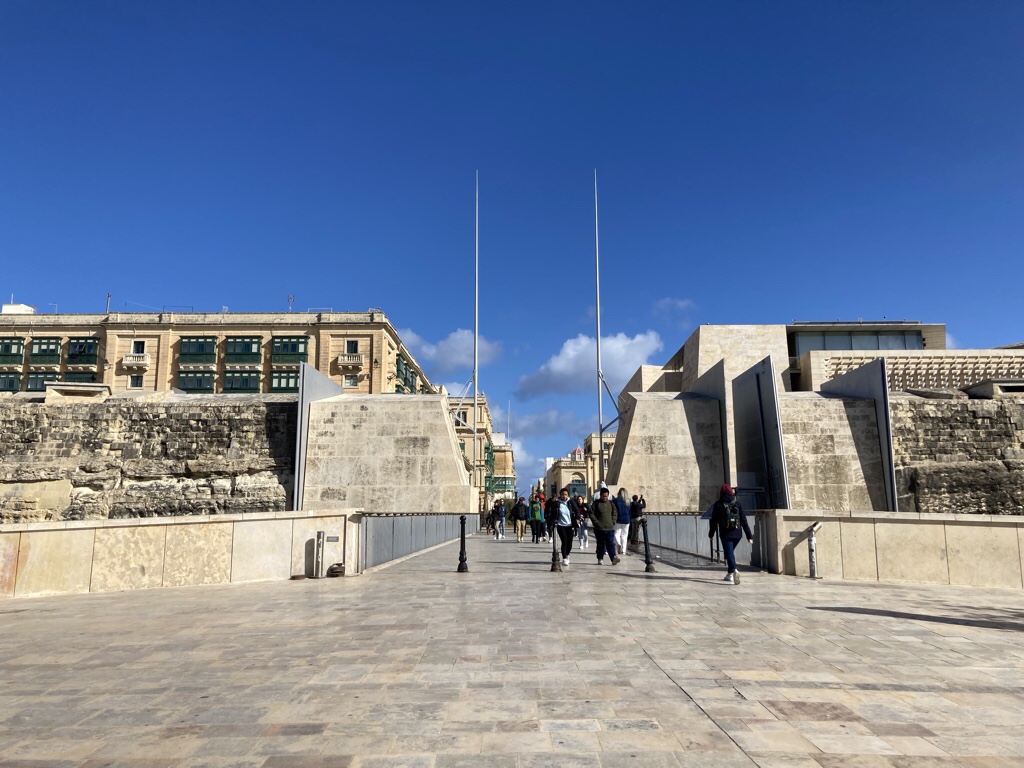
It is the fifth to have stood at the entrance to Valletta and was designed in 2011 by Renzo Piano. It echoes the dimensions of the original gate, with entry over a bridge and views of the ditch, rather than the uninspiring modernist 1960s structure which it replaces. It isn’t liked by all, but it’s certainly a statement.

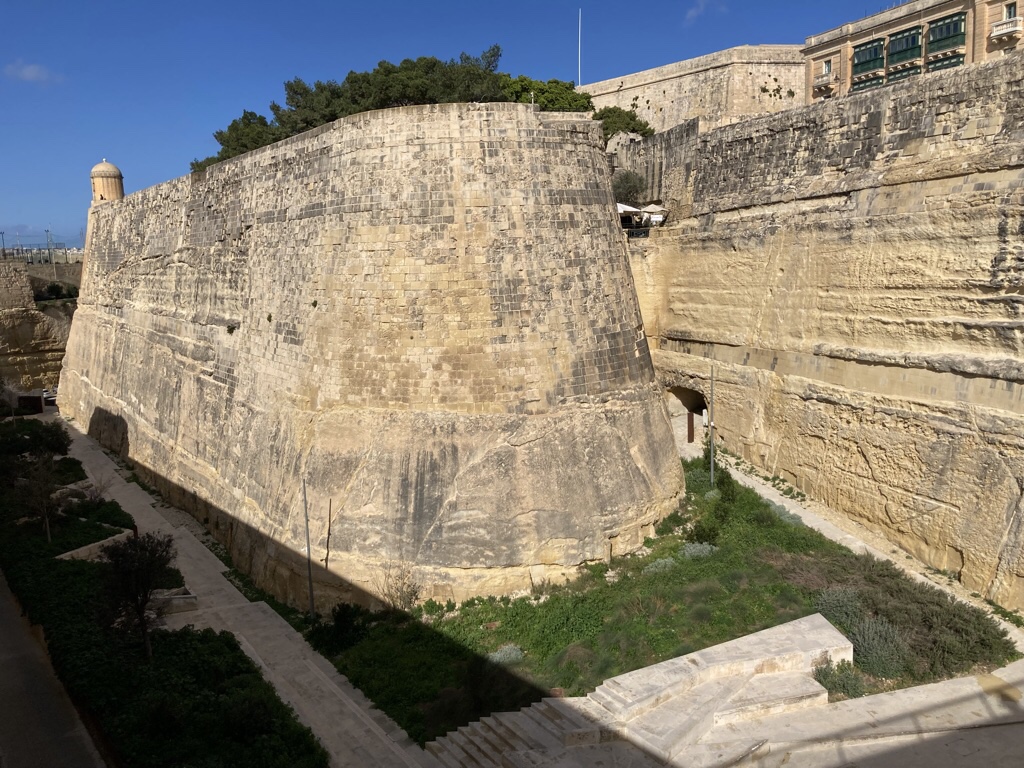

Just inside is the Parliament Building, also designed by Renzo Piano which comprises two buildings with walkways between, situated so that St James Bastion can be seen behind.
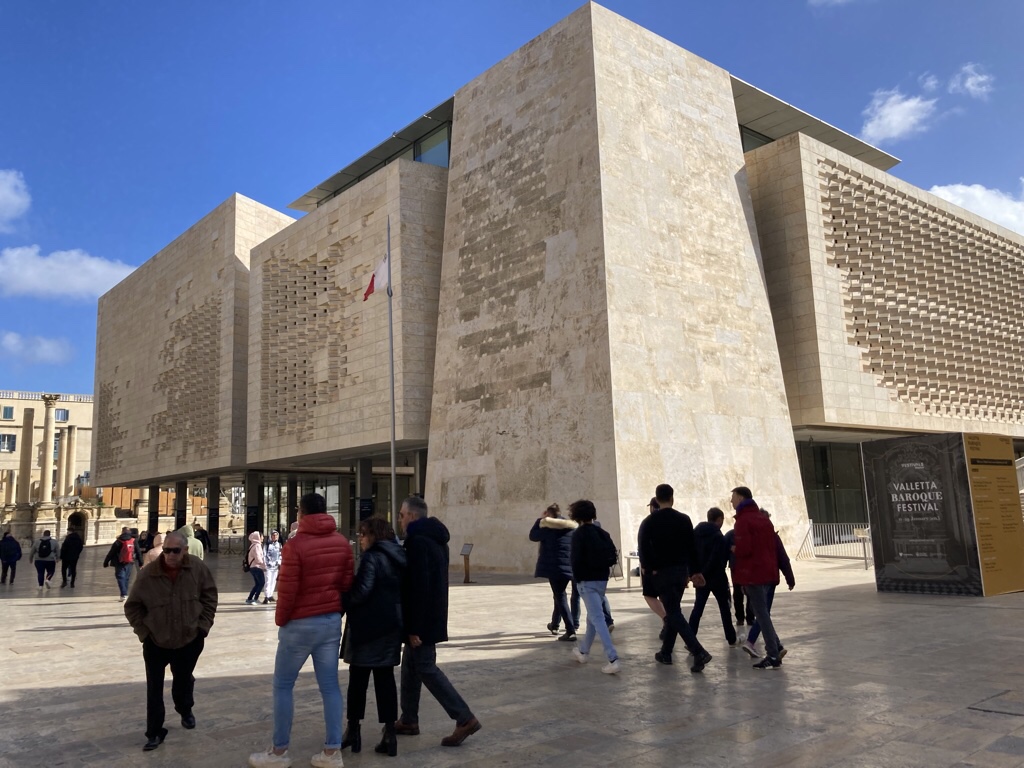

The surface is machine cut which reduces solar radiation and lets in daylight and was inspired by the eroded stone of Baroque monuments. It was hard to pick a viewpoint as each had something different to offer, and the colour of the stone changed with the light.

Heading onwards there are large squares surrounded by palaces and churches. The largest palace was once residence to the Grand Masters of the Knights of St John, then later home to Malta’s Parliament until they moved into their new building.

It’s closed for restoration so all we could see was the entrance …

… and this fabulous ceiling. It has a plaque outside stating Malta were awarded the George Cross during WWII.

It also features the first enclosed balcony which was added in the late C17th.
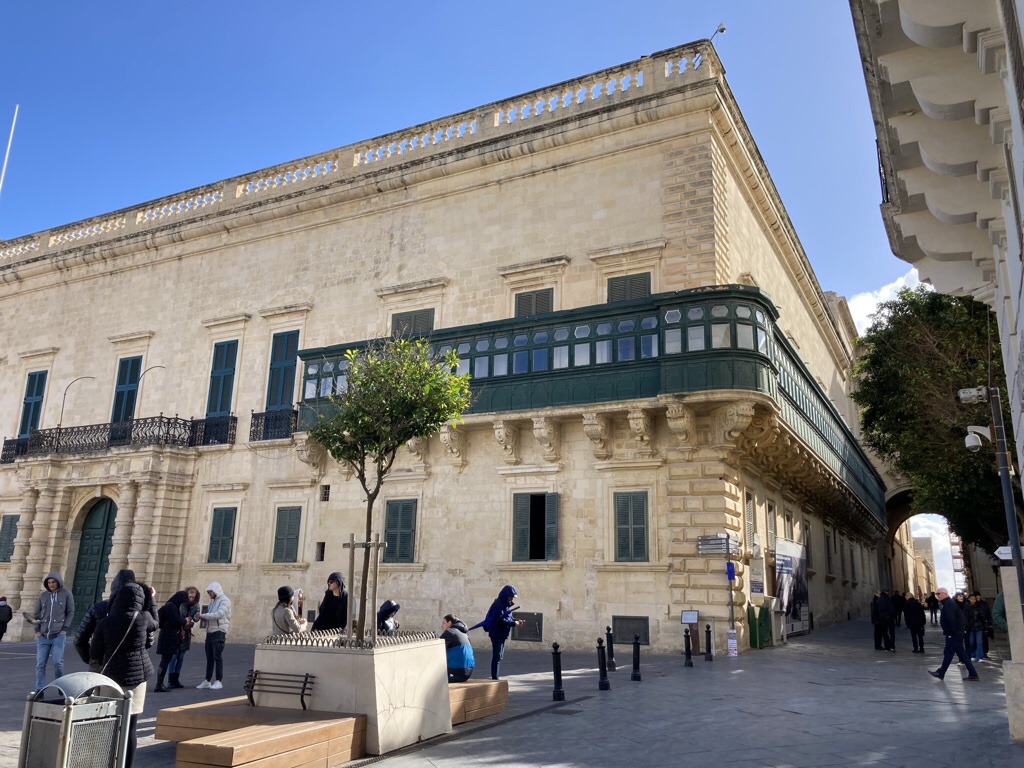
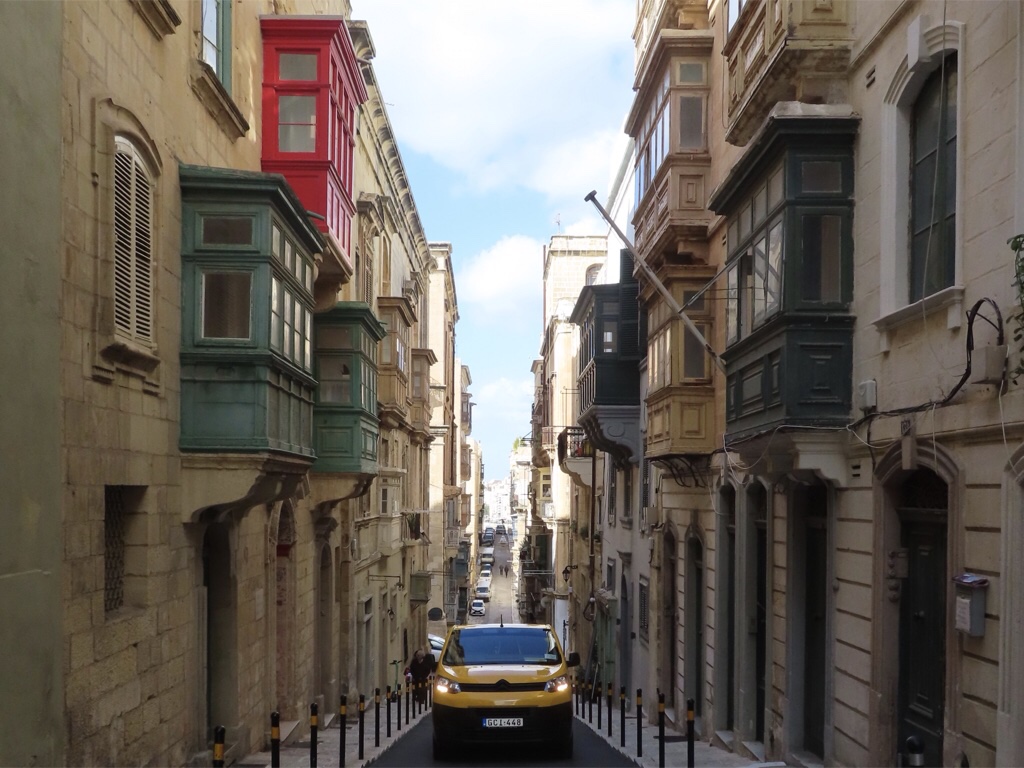
Open balconies had been a popular feature, but this started a trend, firstly just enclosing the top of existing balconies, but later building the Maltese balconies as we see today. They are one of the most prominent features we’ve spotted, often painted in bright colours, but just as likely to be peeled and fading!
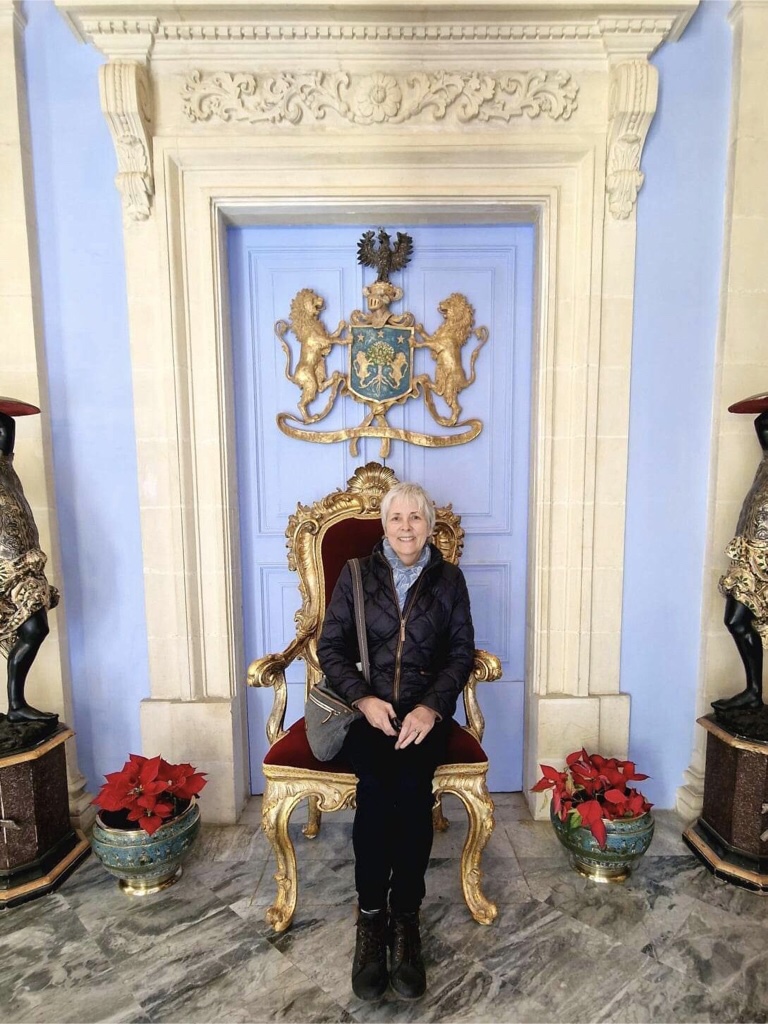
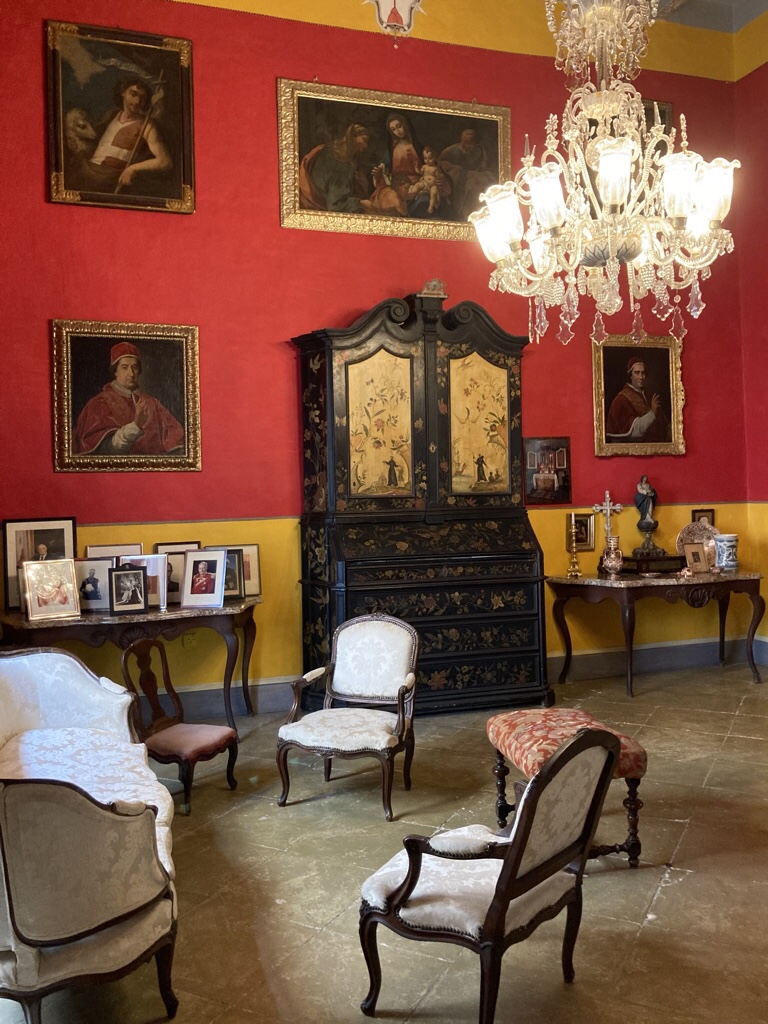
Not all the palaces are quite so grand. Casa Rocco Piccola is a C16th palazzo and the family home of the 9th Marquis de Piro who opens part of it to the public.

The house is full of grand rooms and centuries of accumulated furniture, paintings, family ephemera and various collections which gives a glimpse into the life of the Maltese aristocracy.



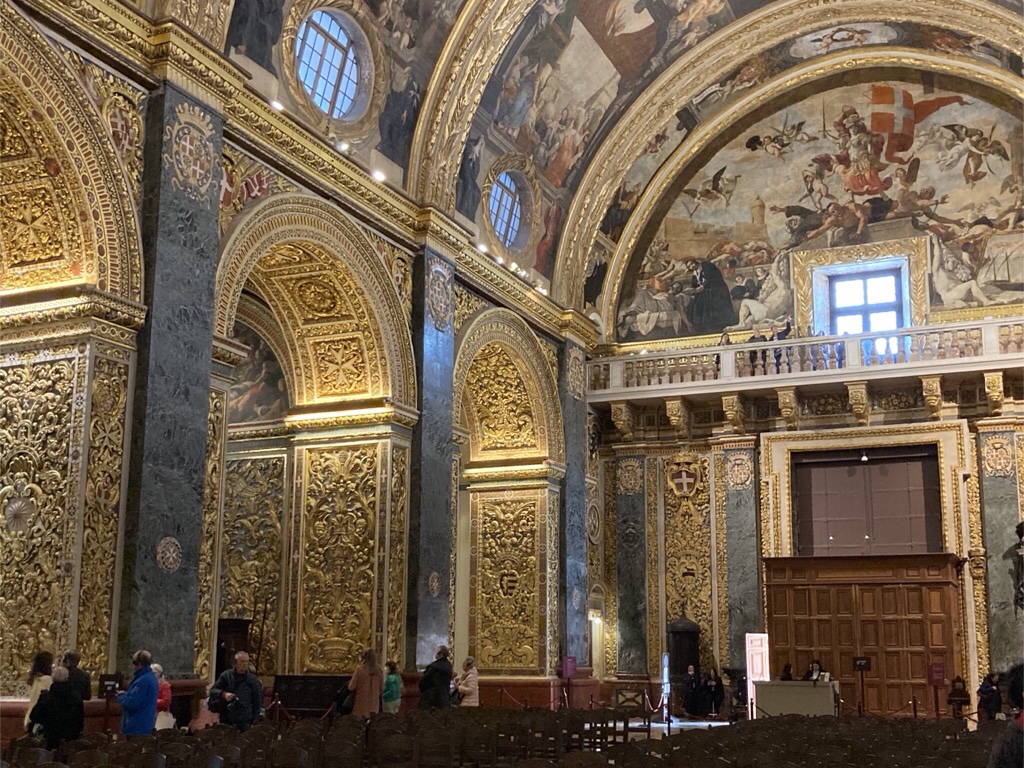
Churches abound, with 28 in Valletta, the largest being St John’s Co-Cathedral, so called because it shares the honour with St Paul’s in Mdina. This C16th building may be quite plain on the outside …
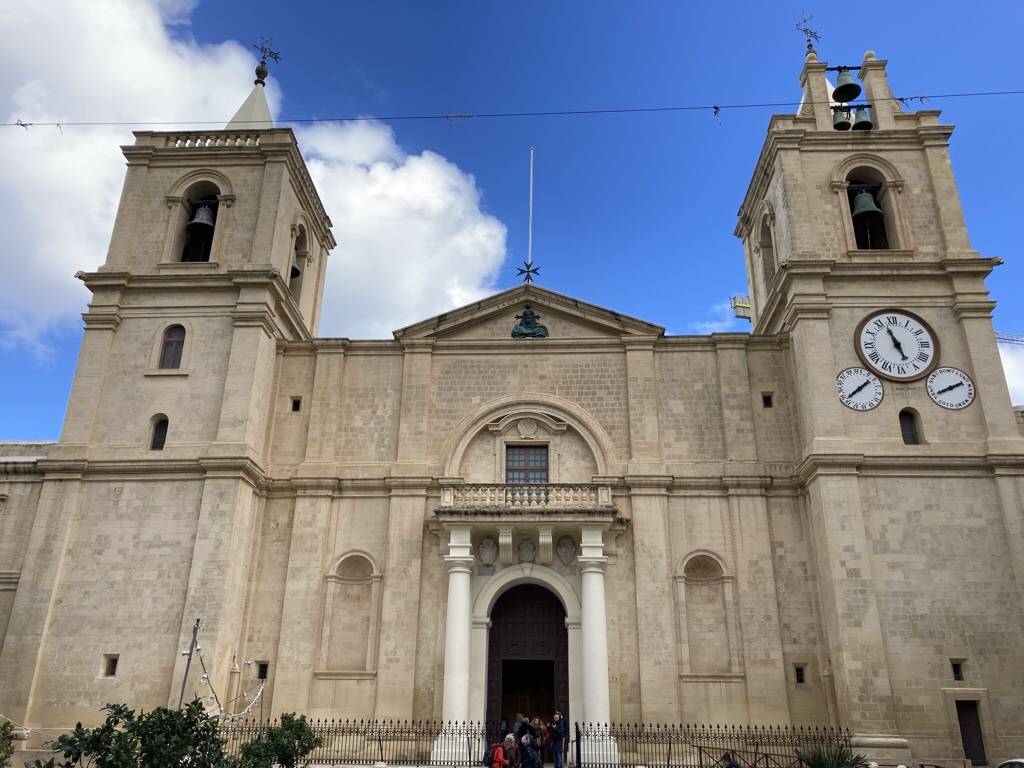
… but it’s exuberant Baroque interior makes up for it!
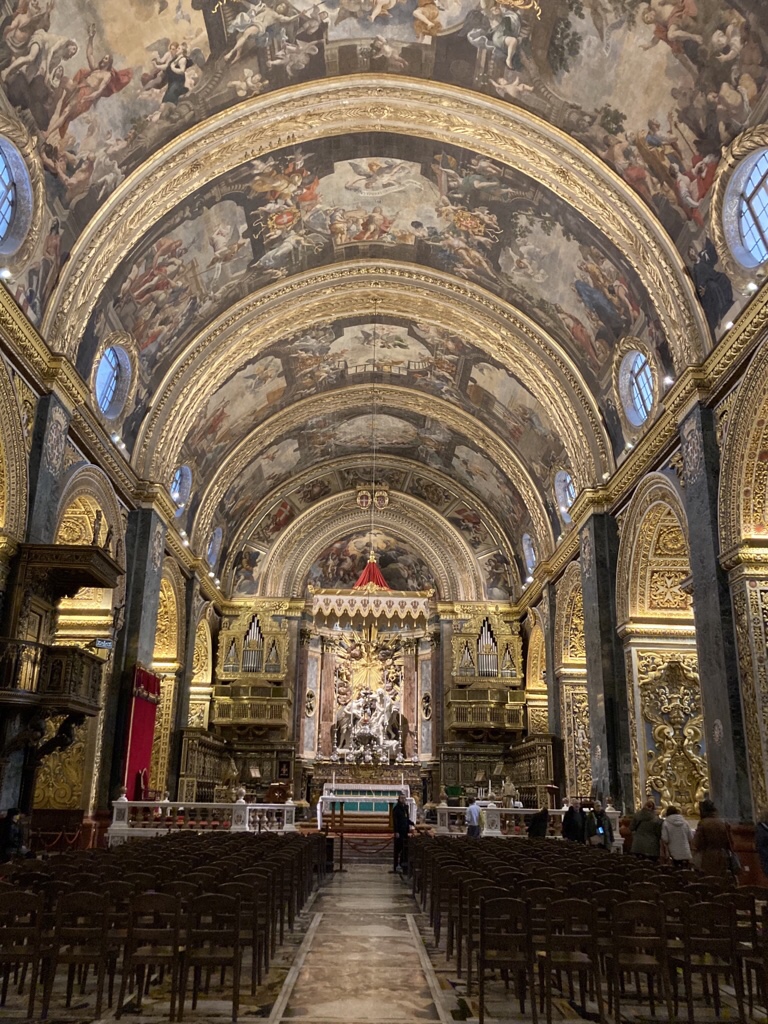
The walls sparkle with gilded carved stone …

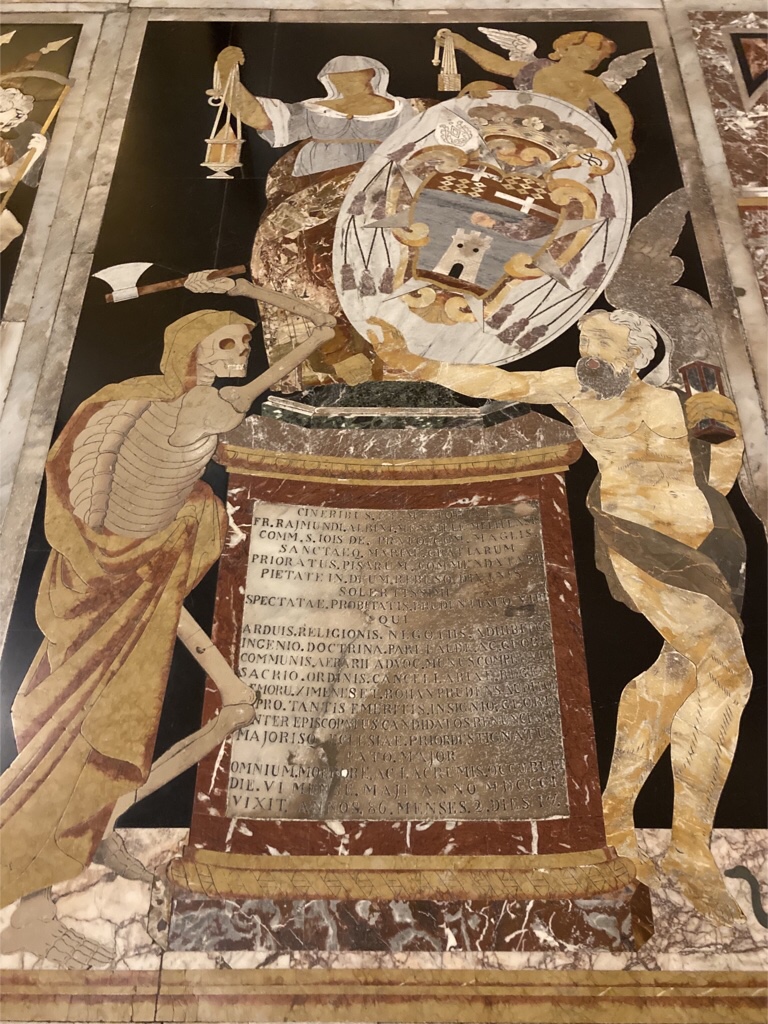
… the ceiling shows the life of St John the Baptist and the floor is a patchwork of inlaid marble tombstones with symbols of victory, fame and mortality.

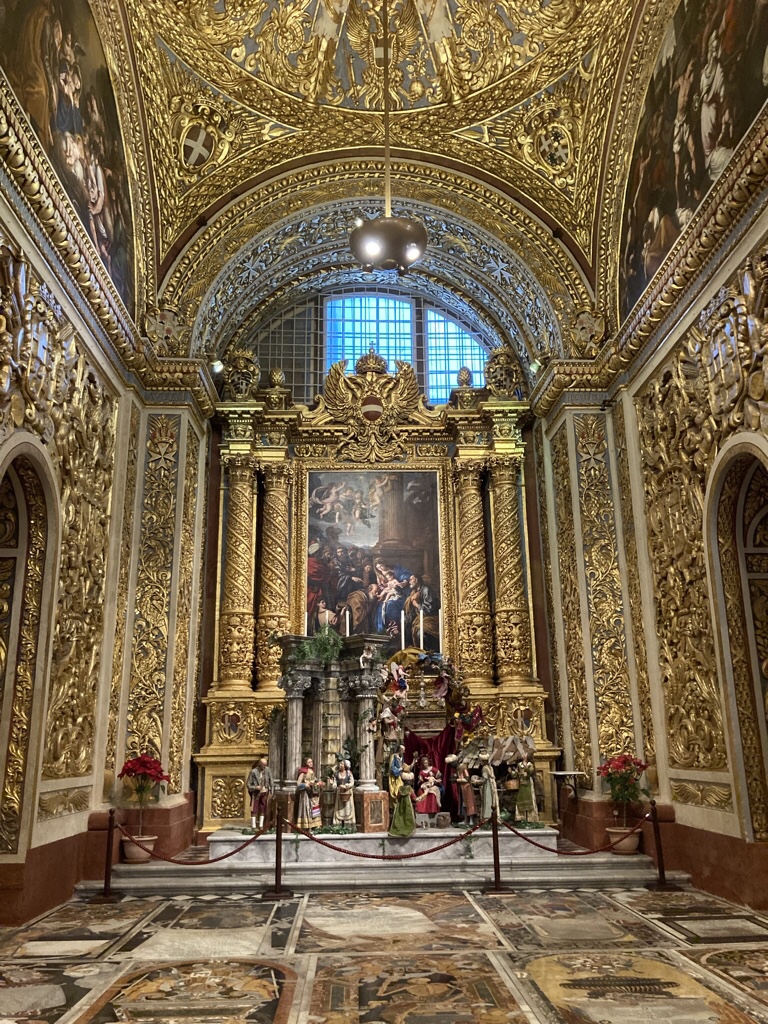
The side chapels are each dedicated to a different nationality represented within the Knights of St John, this one to Germany.
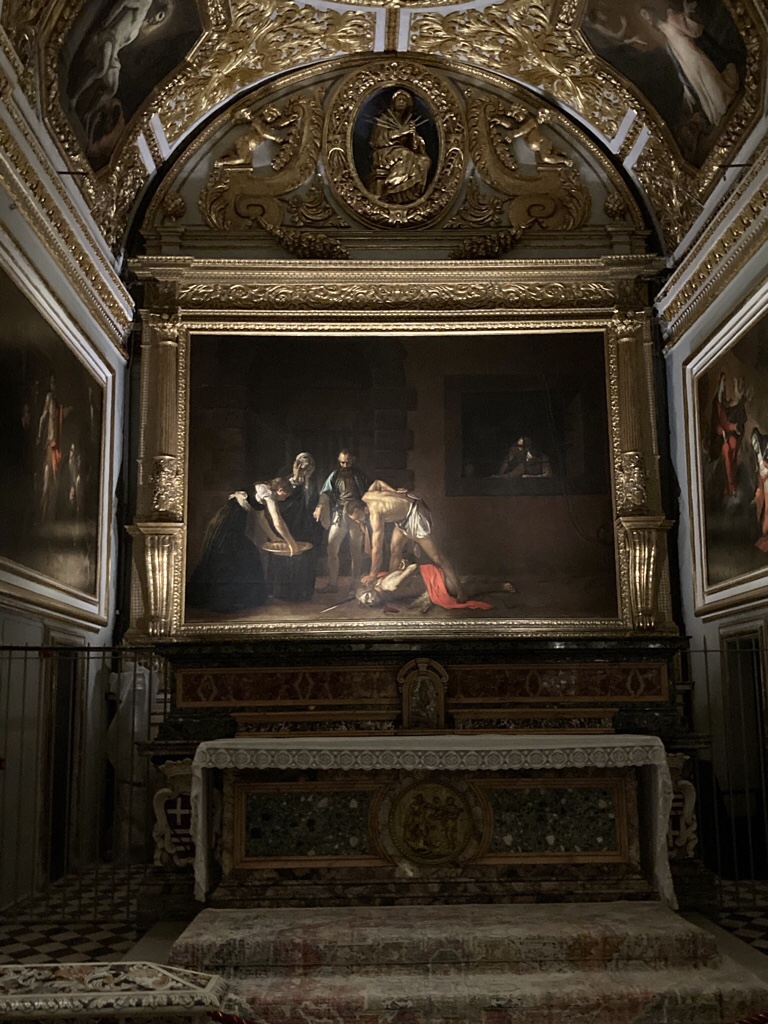
The greatest treasure is the Beheading of John the Baptist by Caravaggio, who spent some time in Malta after he went into hiding having killed a man in a brawl in Rome. He was admitted into the Knights of St John briefly, until he was arrested for some crime, then managed to flee to Sicily. It is the only work that Caravaggio signed.
We came across Our Lady of Victory, and wandered in to find a soprano singing arias as part of the baroque music festival which has been on this week. It was the first church built in Valletta and is on the spot where the inaugural foundation stone of the city was laid and there was a lovely painted ceiling. Of all the churches we’ve been in, this was the one I liked best.

Another church that made an impression was Knisja Nawfraġju San Pawl, just round the corner from our hotel. St Paul’s Street has been adorned with red and green decorations since we arrived and on our way to dinner on Saturday it was lit up like Blackpool pier and fireworks were let off above.
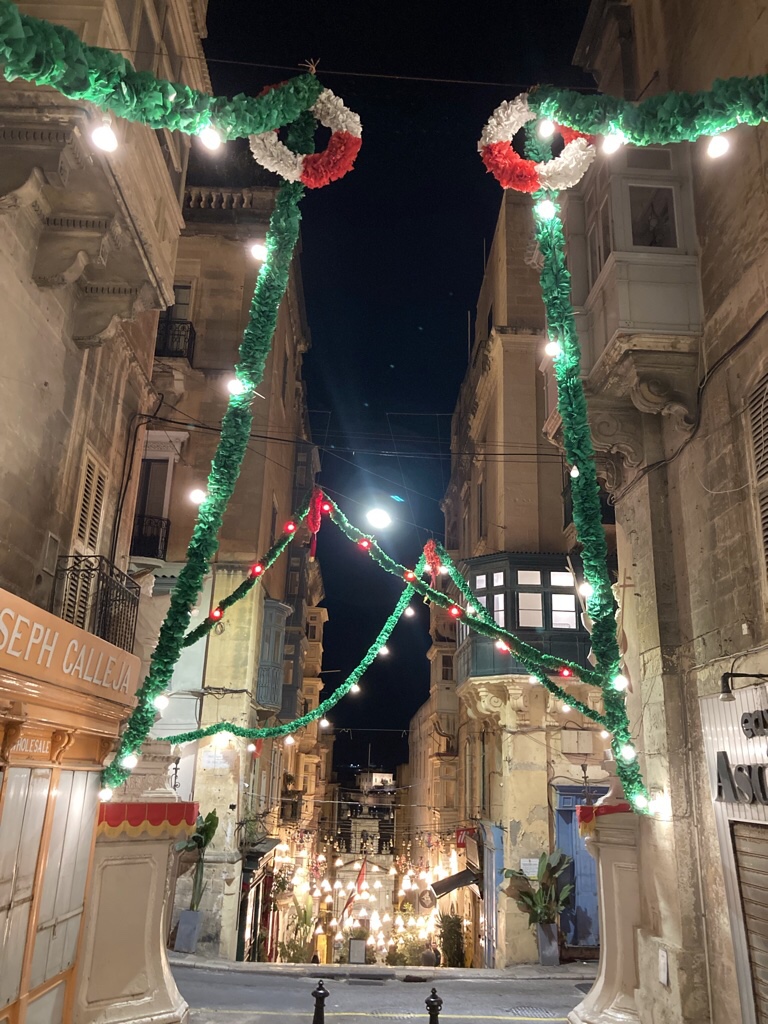

We found out from Caroline in the cake shop that this was a celebration of St Paul’s arrival in Malta. He was on a ship which grounded here during a storm and he and the ship crew stayed in Malta for three months during which the Maltese were told about Christ and the first Christian community was formed on the Islands.
Having spent all our time so far in Valletta, it’s time to explore further afield ..
 Off Travelling Together