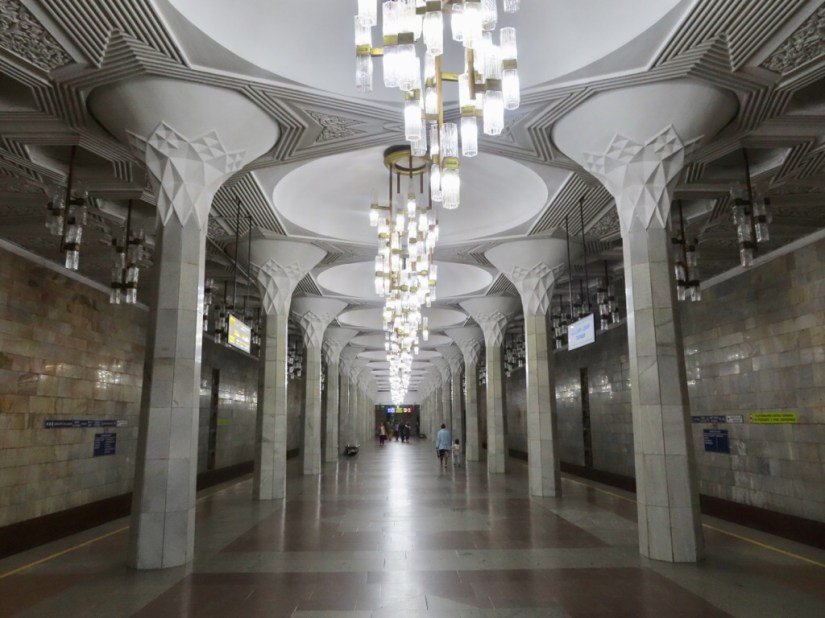
 Despite being at the station in plenty of time, boarding the train was hectic. Originally we had hoped to take the fast Afrosiyob train but couldn’t get tickets so instead we were taking the Sharq which covers 300km in 3.5hrs.
We were sent to platform 3, down under the subway … only to be sent back to platform 1 … and then had to return to 3, but were ‘officially allowed’ to cross the lines instead of using the subway! We were told to go to the front of the platform, only to find when the train came, carriage 2 was second from the back of a 12 carriage train! Our carriage had a central corridor with cubicles of 2 or 4 seats so we were quite snug, especially as it took as a while to realise there was luggage storage after all! When the chap came down the train with an offer of beer, we gave a sigh of relief!
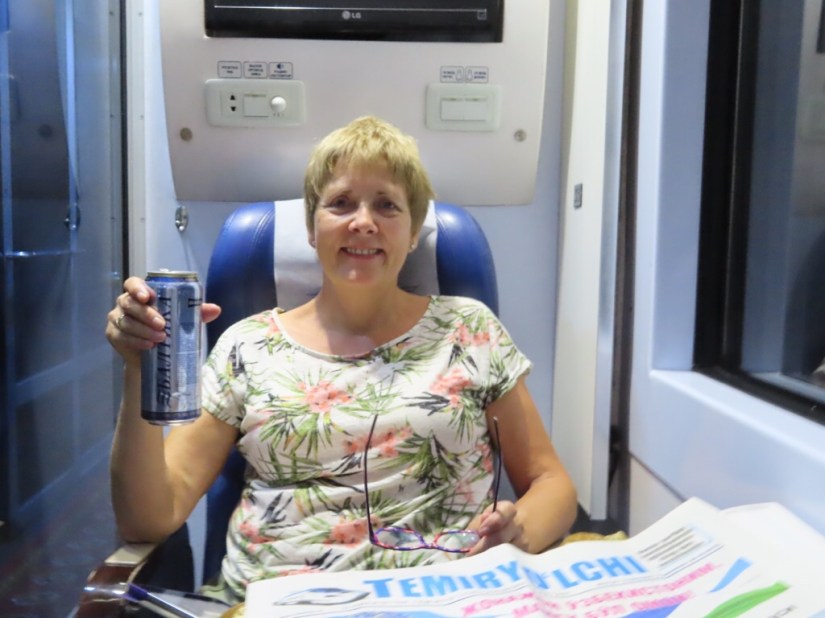
We also found that Mike and Sarah who we’d shared a table at dinner a couple of days before were also on our train and they invited us to share a game of Dobble and a chat to pass the time. Dobble may well have to go on my Xmas list!
We arrived just after 10pm and got a cab back to Trip.le where we stayed at the beginning of our trip. I have to be honest and say that I think this was the worst accommodation choice we have ever made, and we only returned because we couldn’t find anything better at short notice and we thought we must have exaggerated in our mind how uncomfortable the beds were … but we hadn’t! There is no doubt that beds in Uzbekistan are hard and they all have a standard sprung mattress with tough springs. Having said that, everywhere else we have had some sort of padded mattress topper which has mitigated the worst of the effects … but not here! There has been a good choice of places to stay elsewhere in Uzbekistan, but less so in Tashkent and we picked this place for location but despite having family rooms, it is definitely a hostel … even if it does have cute art work!

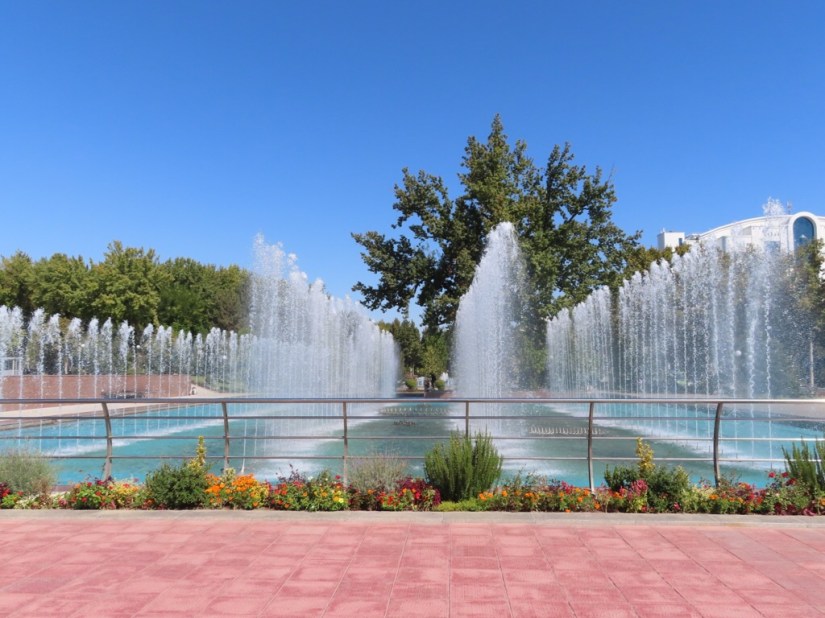
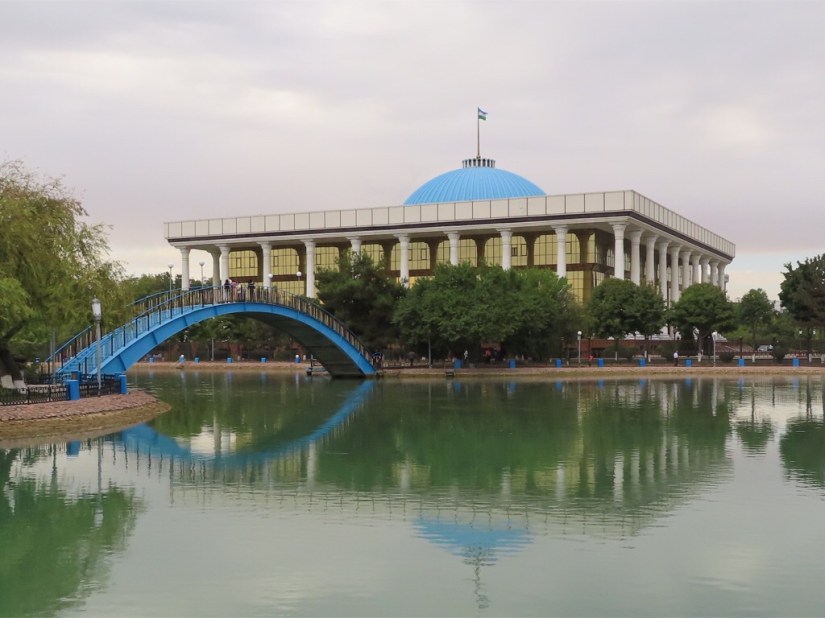
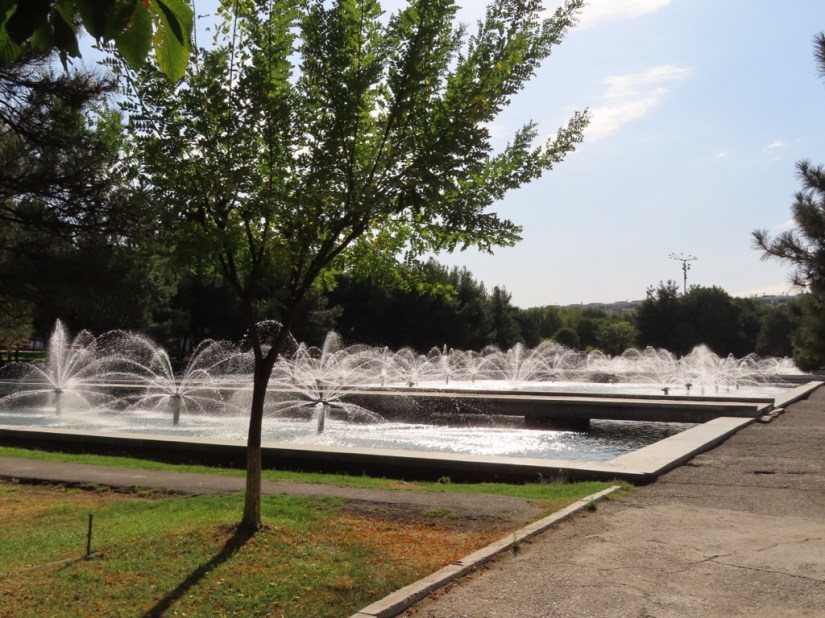
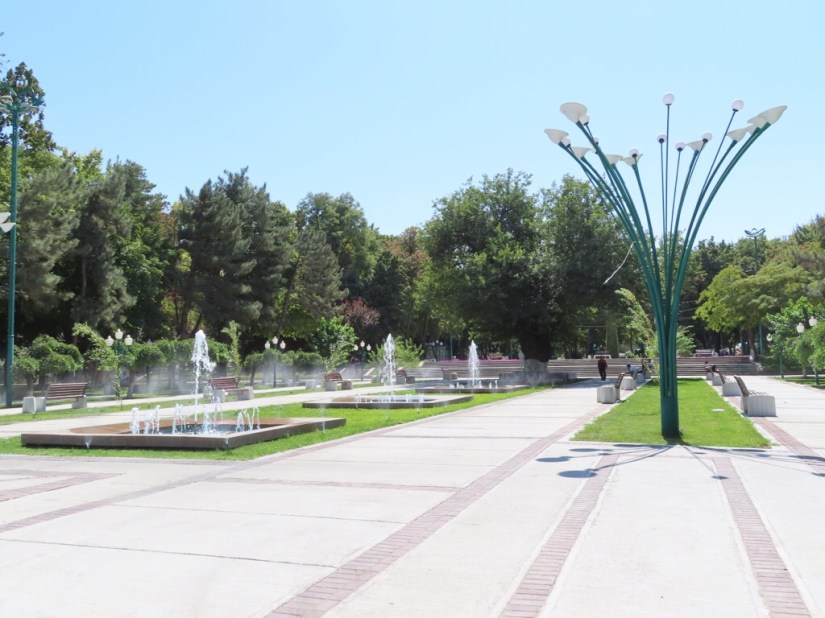
We had hoped to start with a couple of art galleries only to find both closed for renovation! Moving on, not only was Independence Square open, but the fountains were working too!

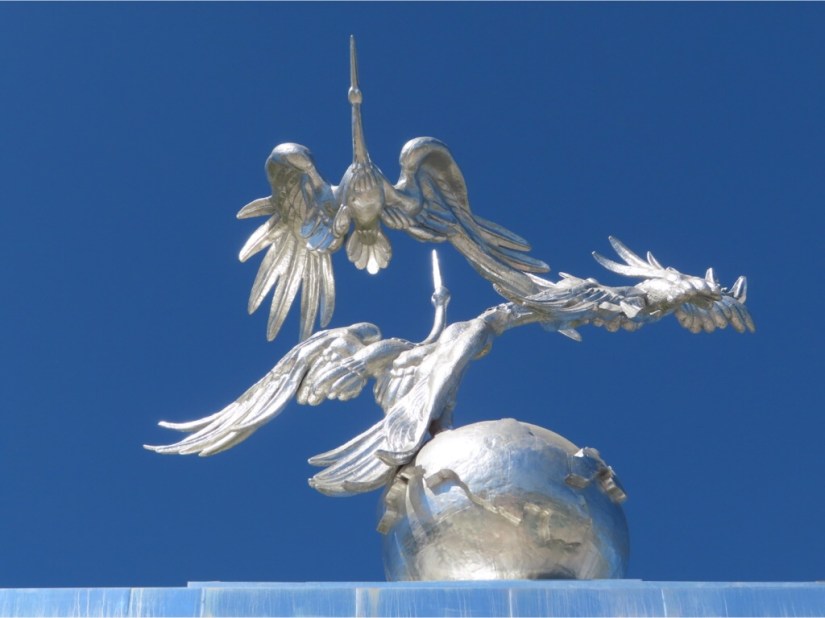
The sculptures of storks are to symbolize peace and quietness, and behind is a globe showing the Uzbekistan border and a figure of a woman holding a baby in her arms representing Mother-Motherland.


Just nearby is the former home of the Grand Duke N.K. Romanov – an eccentric reminder of tsarist Tashkent. A first cousin of tsar Nicholas II, he was exiled to Tashkent for shenanigans involving the crown jewels.

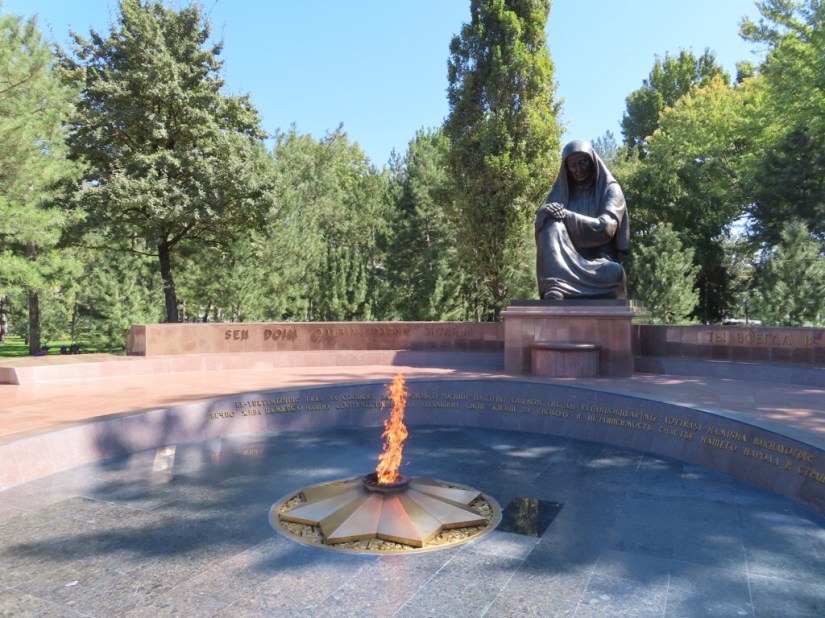
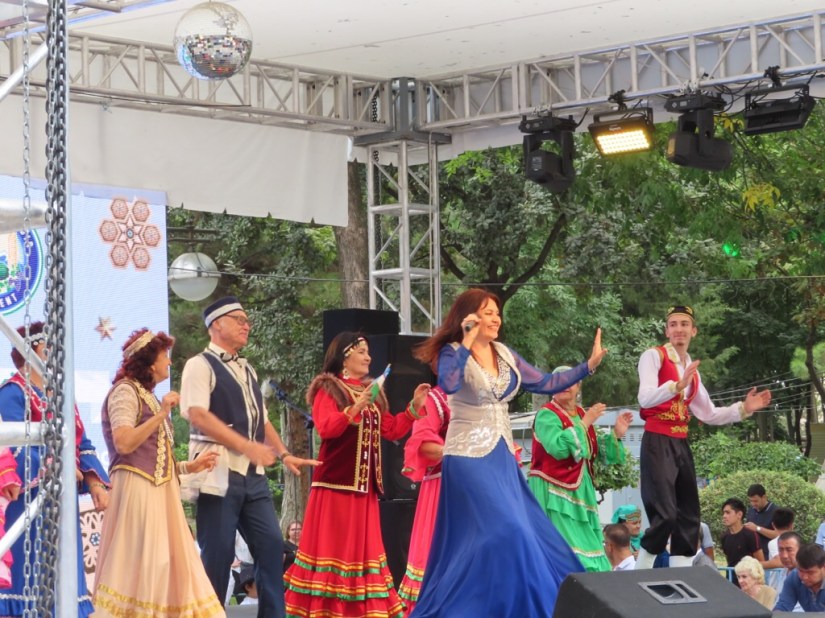
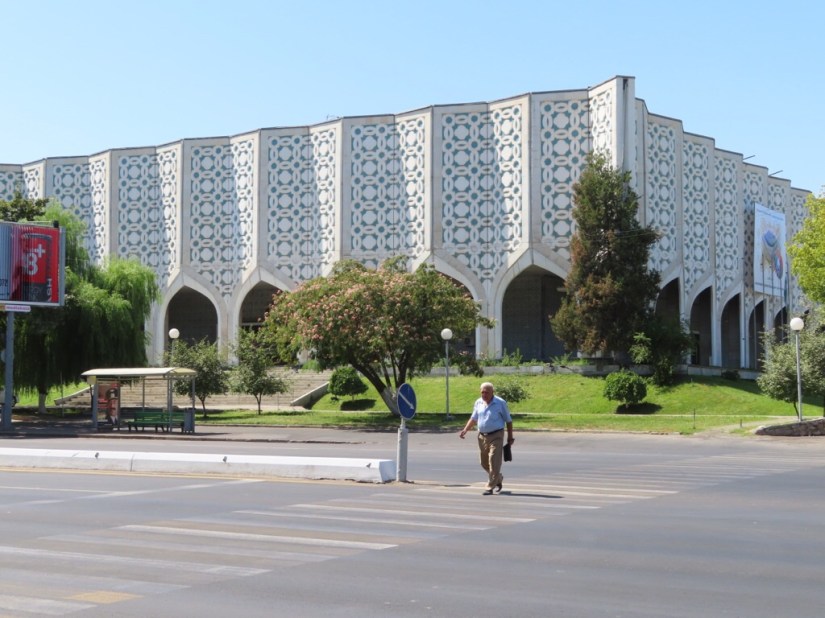
Along the way we saw the Glory and Memory Alley in honor of the soldiers who died in World War II, the statue of a Mourner Mother with a Quenchless Flame circle in front, the Turkiston Palace concert hall and the extraordinary outdoor summer concert hall – a marvel of Soviet architecture.


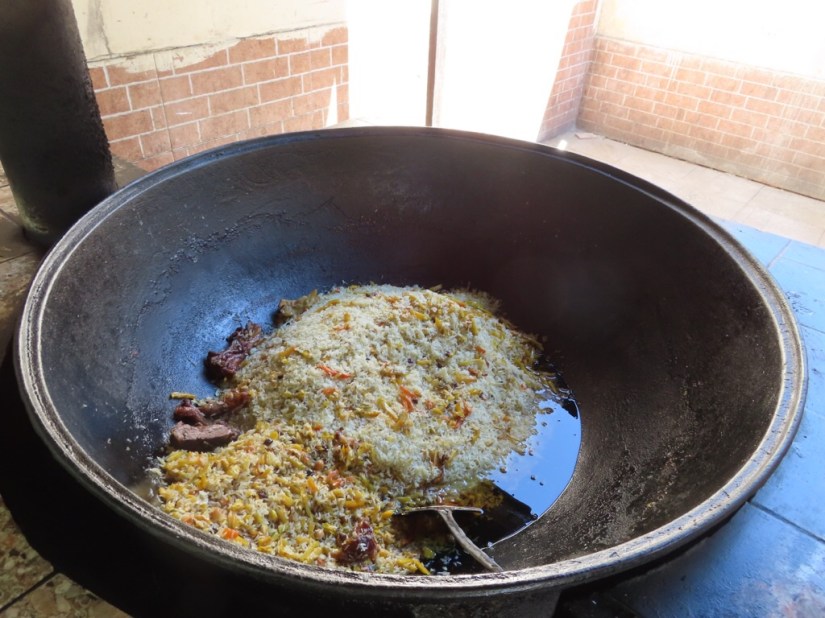
Our tea break became early lunch when I saw the plov cooking in a local cafe and it was definitely third time lucky, although Chris had to make do with bread and salad.
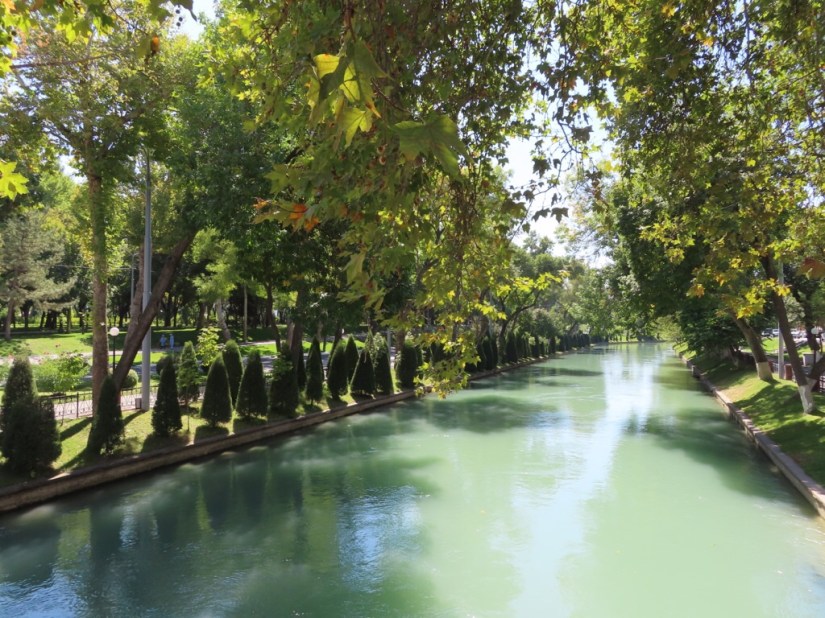
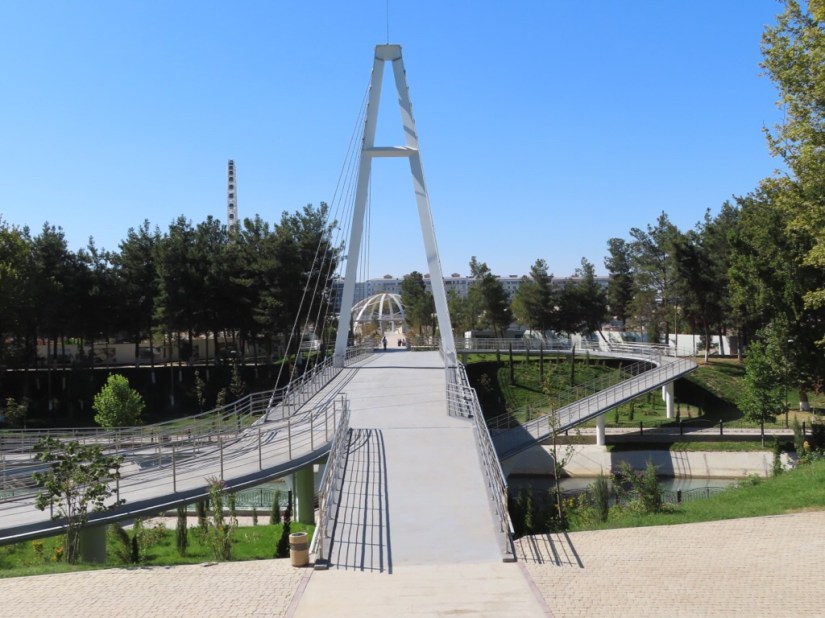
The afternoon included the Museum of Olympic Glory, and a walk along the Ankhor Canal together with a pretty elaborate bridge, the 2014 Minor Mosque …



and finally the Tashkent Tower.

Built in 1981 to withstand earthquakes, this 375m tower is the tallest in Central Asia – a weather station and tv transmitter. The tower’s foyer is decorated with mosaic panels of semi-precious stones, marble and metal …
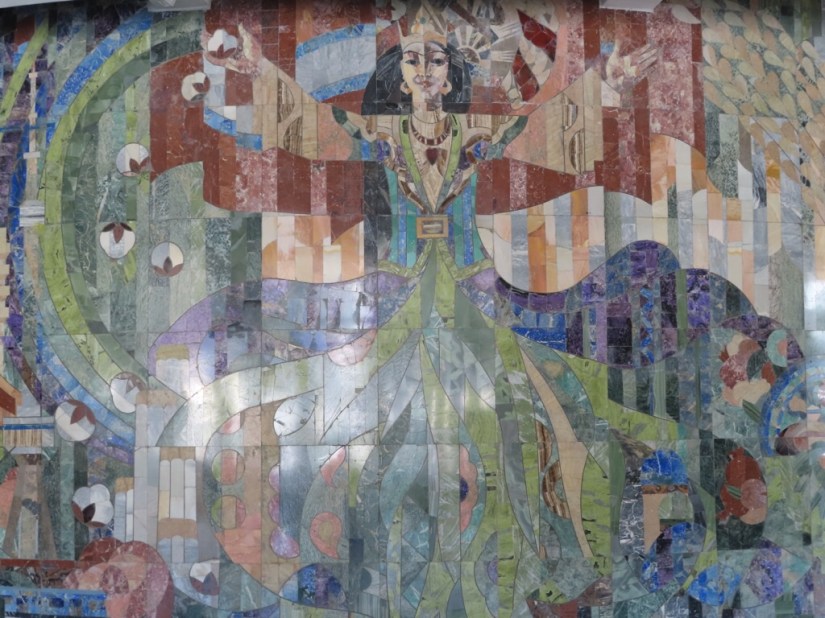
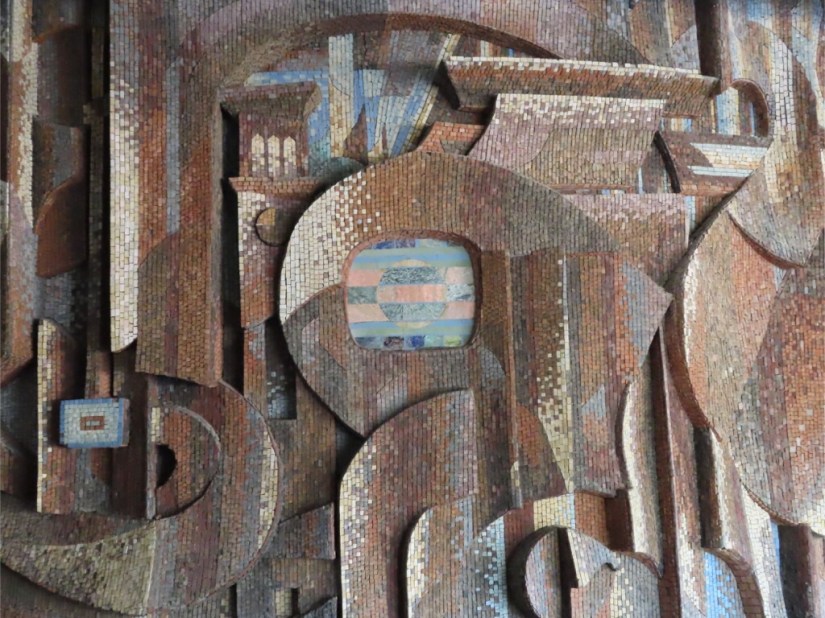

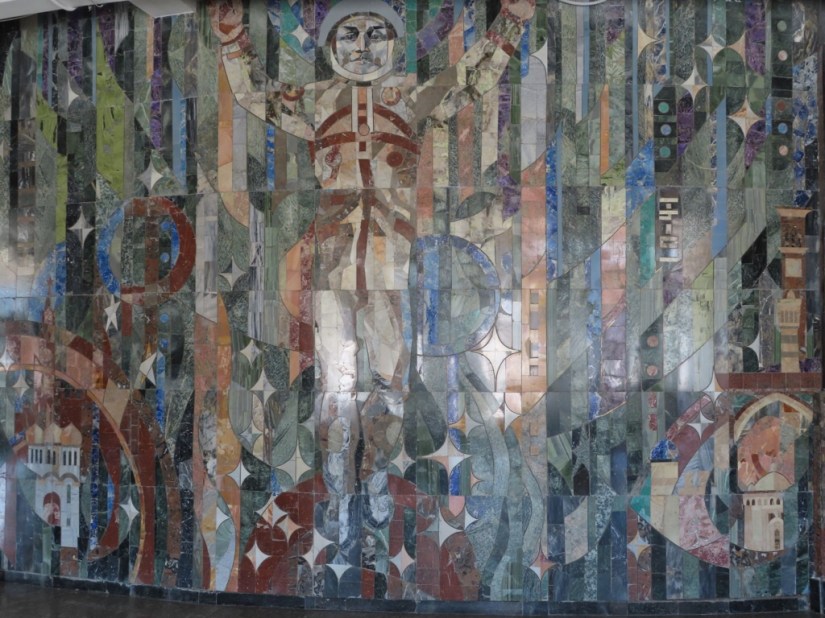
… and we went up to the observation gallery and restaurant with these very Dale Chihuly inspired decorations!
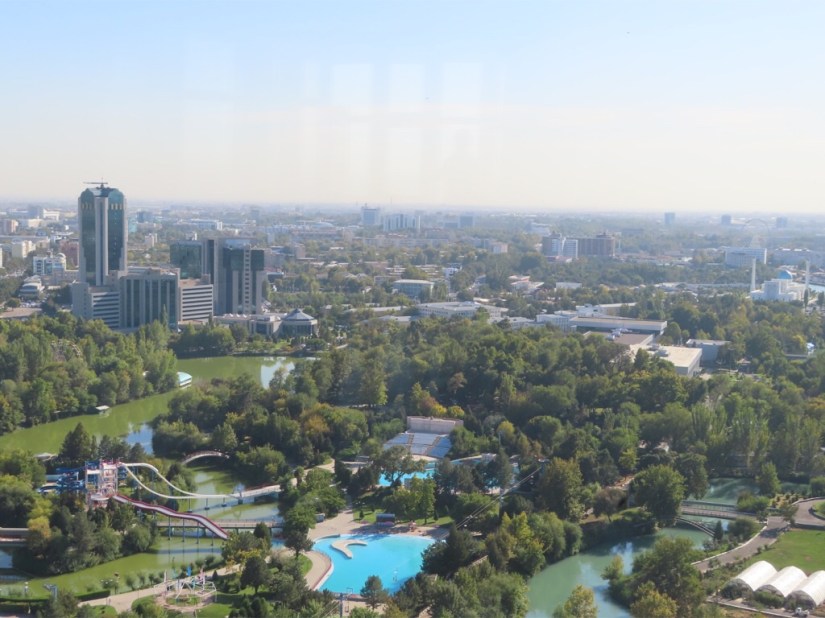

Next day, having seen enough of the city, we took a day out in the countryside with Mauad who drove us to the Valley of Chimgan is around 1500m above sea level, surrounded with mountains and just a couple of hours from Tashkent.

The mountains are popular for skiing in the winter and have chairlifts which also operate in summer, but unfortunately not the one in Beldersay today …


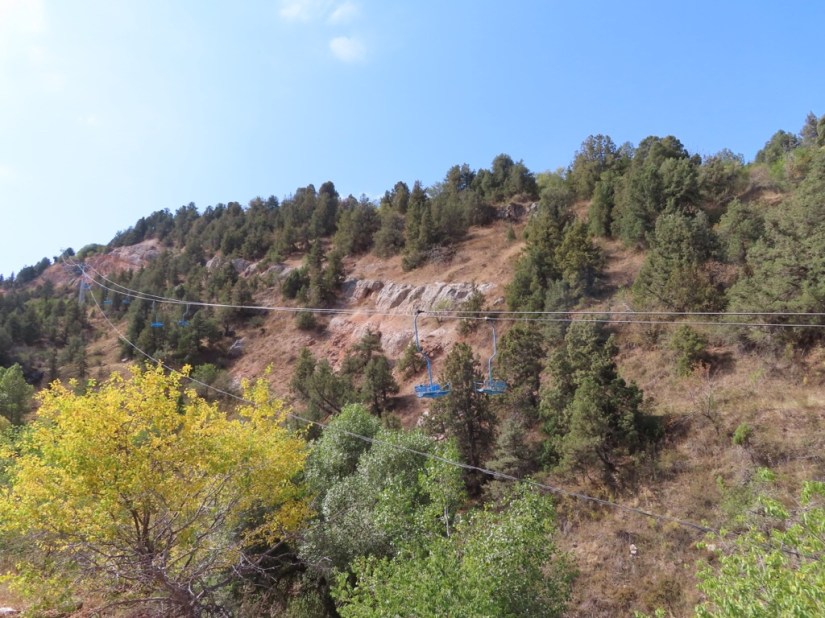
… so we continued to Chimgan Mountain which at 3309m is the main peak and towers above the entire valley.

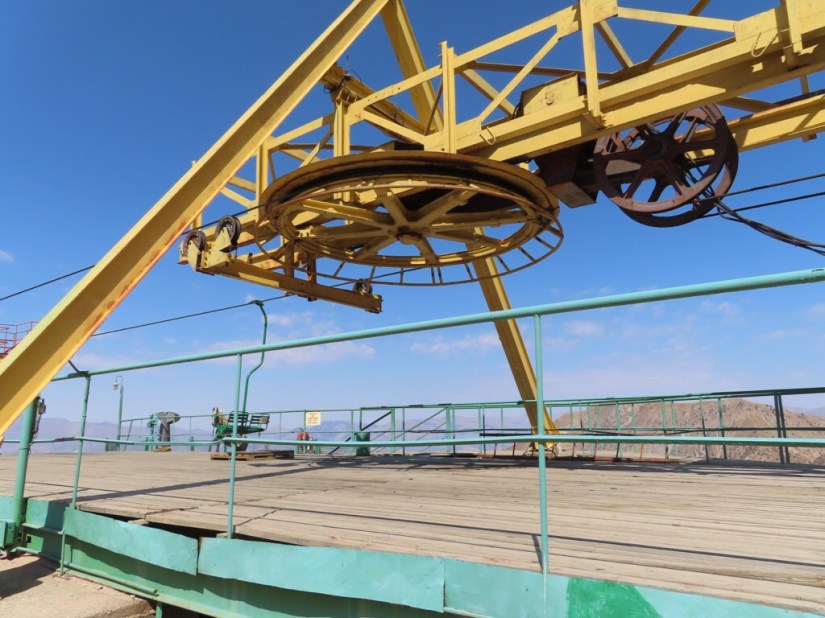
Here the chairlift was working and we took a ten minute ride up and down for the view.
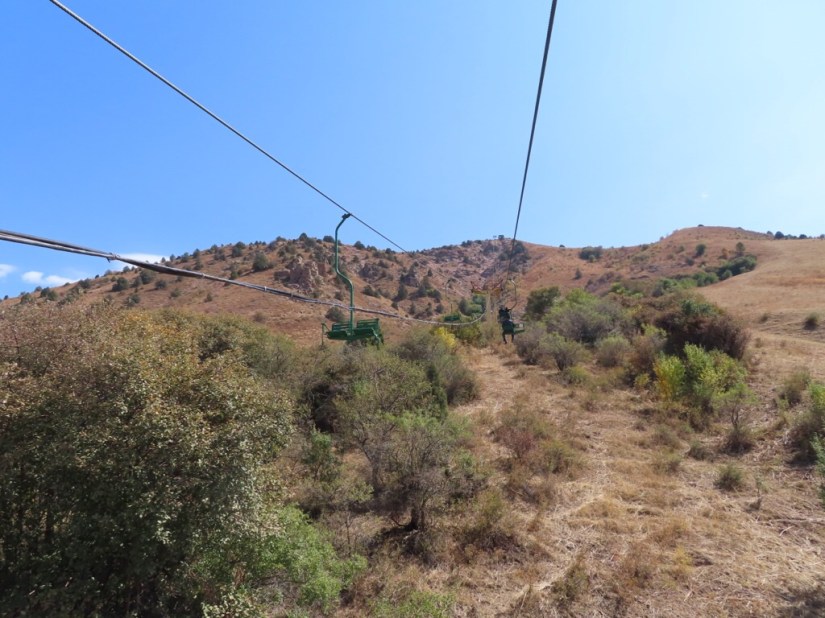


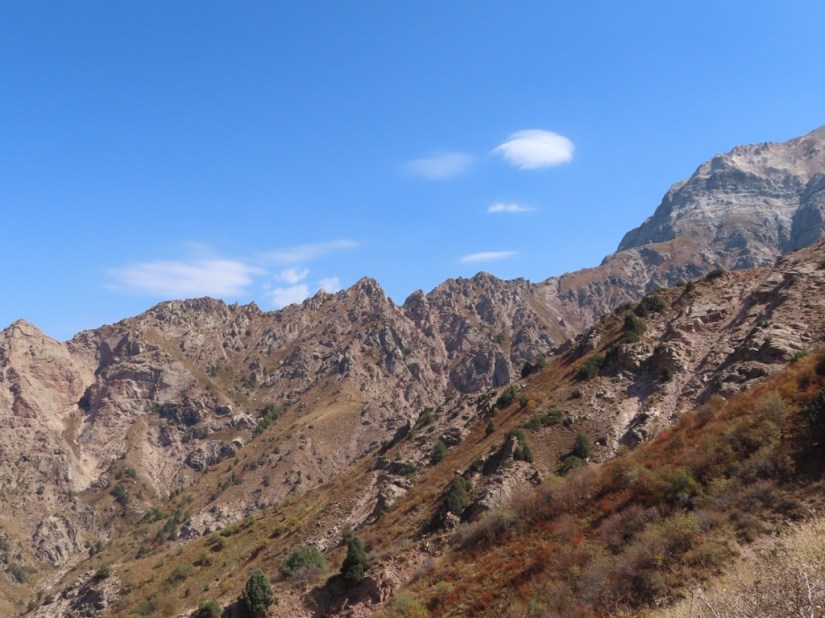
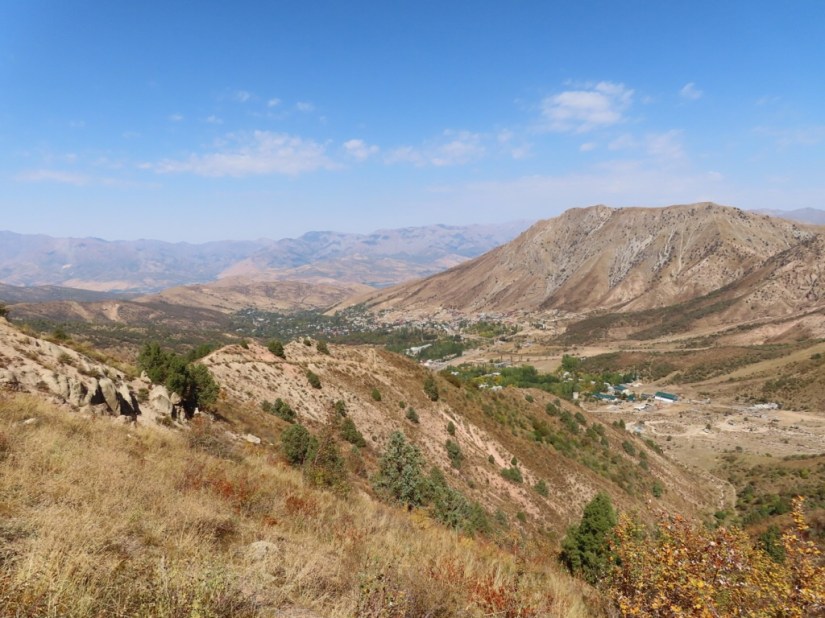
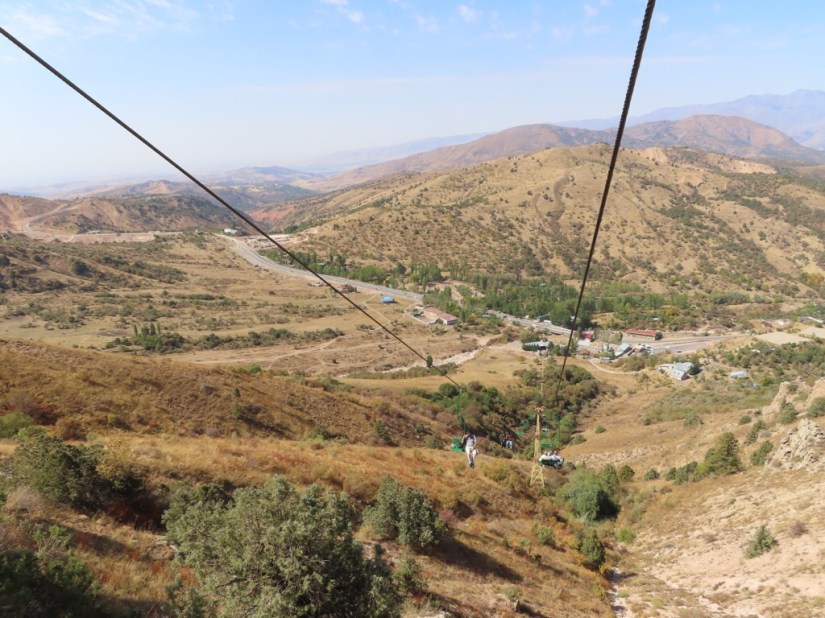
Next stop was Lake Charvak, a reservoir, created in 1970 when the 168m dam was built and is huge and very blue. It is fed by three rivers and supplies Tashkent. In a country where visiting the sea is a major expedition, Lake Charvak is a popular resort for holiday makers.


A short way further and we stopped for lunch at the Cinara chaykhana or teagarden, with plenty of shade and a stream running through. We sat under a 800 year old sycamore tree believed to be the great grand daughter of the very tree sat under by Alexander the Great in 328 BC when he first tasted Plov! We munched our way though cheese filled lavash and salad before returning to Tashkent.
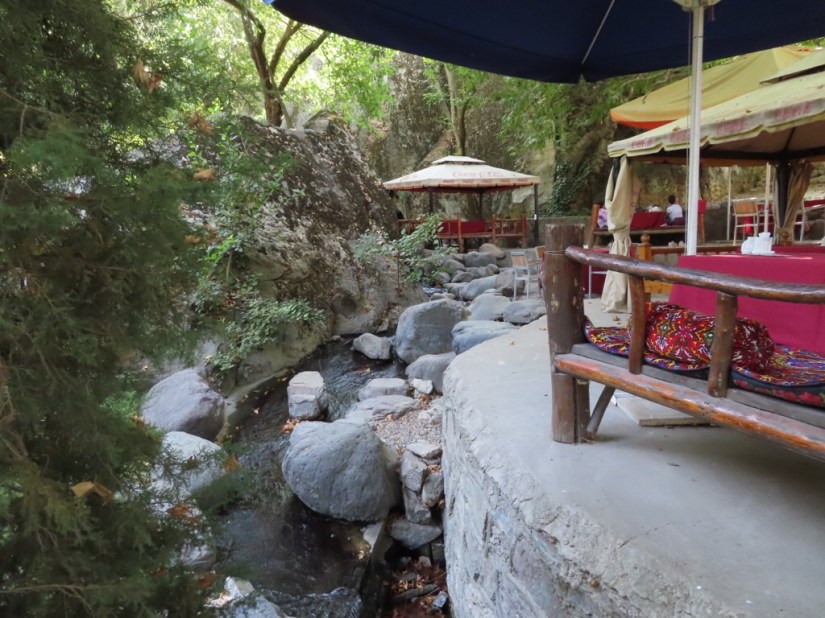

Cinaras is part of the Caravan group of restaurants (as is Gruzinski Dvorik) which we have revisited since we’ve been back as we enjoyed them so much. They are aimed more at tourists and affluent locals as they are expensive by local standards with a meal and a bottle of wine costing around Som 250,000 … £25, but it was worth it for varied vegetarian choices and reasonable wine.
This time round we have learnt our lesson and have been using cabs to get around, but we have taken some pics on the Tashkent metro which opened in 1977. The stations also house bunkers and are considered military installations, so no photos were allowed but the ban has now been lifted. At just 1400 Som or 12p a ride it must be the cheapest public transport we’ve been on!

On our last morning we went station hopping and here are a few stations visited and snapped –
Mustakillik Maydoni which means Independence Square and is suitably grandiose …

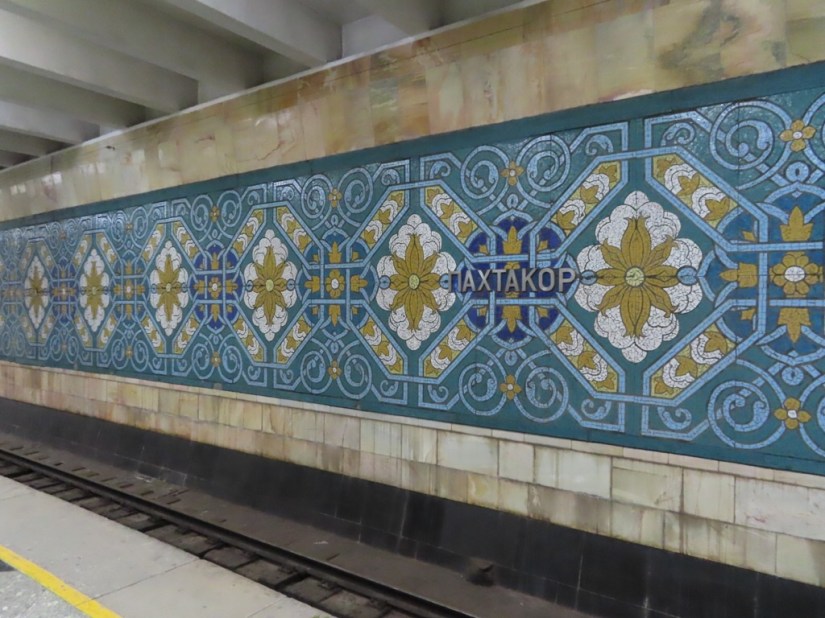
Pakhtakor which means Cotton Grower with a mosaic of flowering cotton plants …
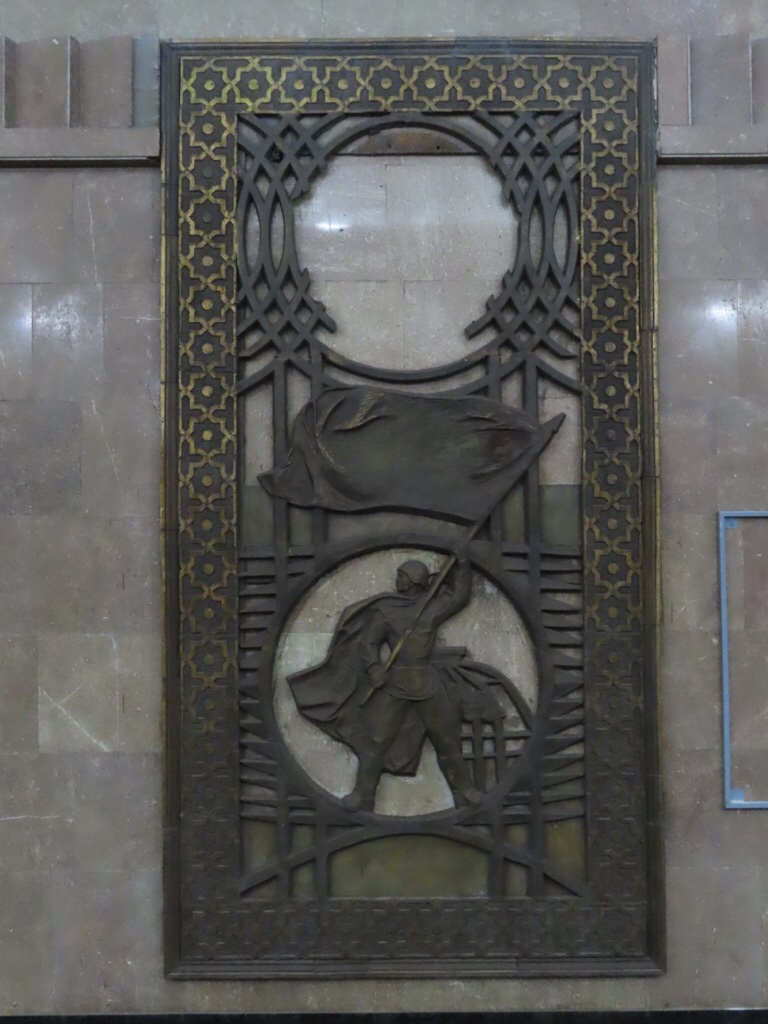
Amir Temur Khiyoboni station is the former October Revolution station and here is a Red Army soldier waving a blank flag that apparently had its hammer and sickle removed …
Gafur Gulom named for a famous Uzbek writer and poet …
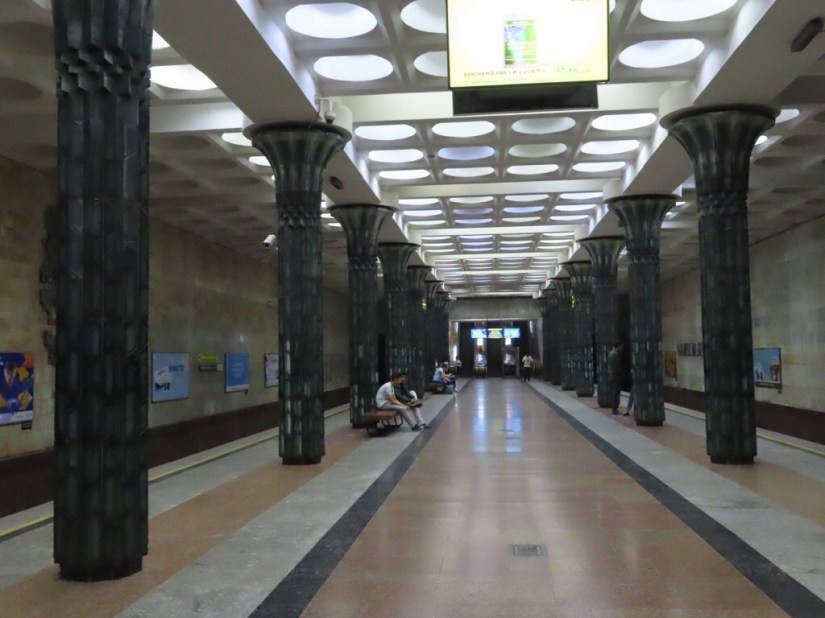


Alisher Navoi named for a Muslim poet with ceilings resembling a mosque and turquoise panels showing scenes from his poems …


Yunus Rajabiy named for a Uzbek musician …

Tashkent celebrating them founding of the city over 2000 years ago with ceramic pictures of national spirit in blues and whites and the crest of Tashkent ‘a city of peace and friendship’.


Kosmonavtlar has a Cosmonaut theme with this huge sculpture outside uniting visions of a space dream – Vladimir Dzhanibekov, Uzbekistan’s only cosmonaut and Ulugh Beg, the astronomer-king …
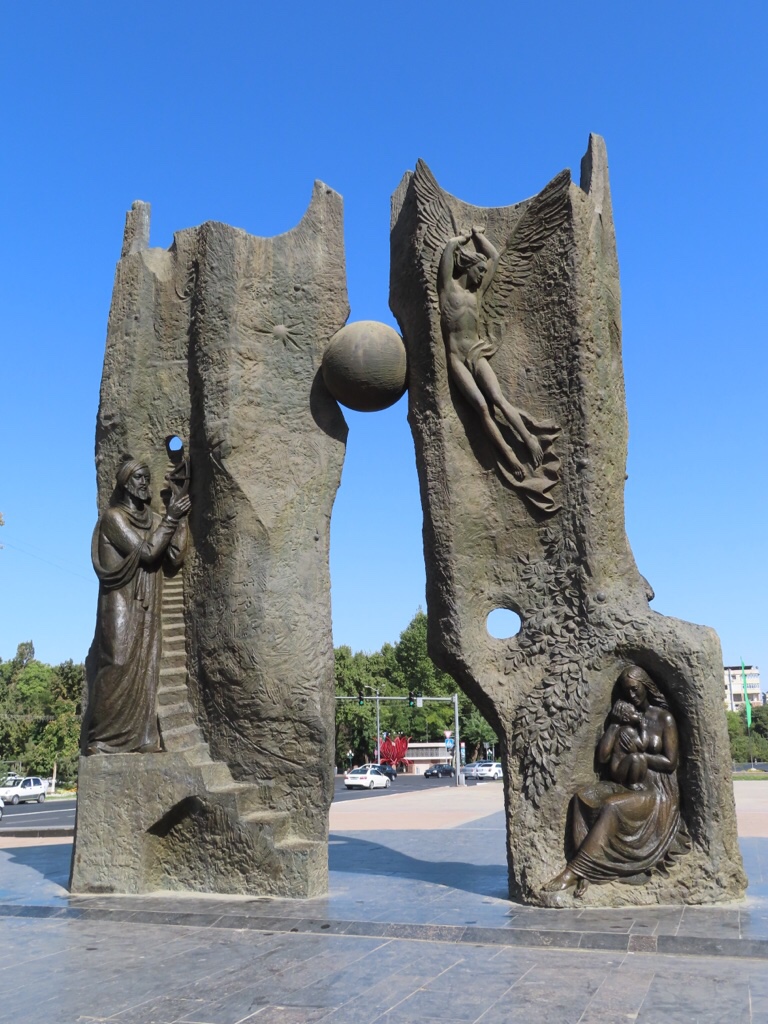
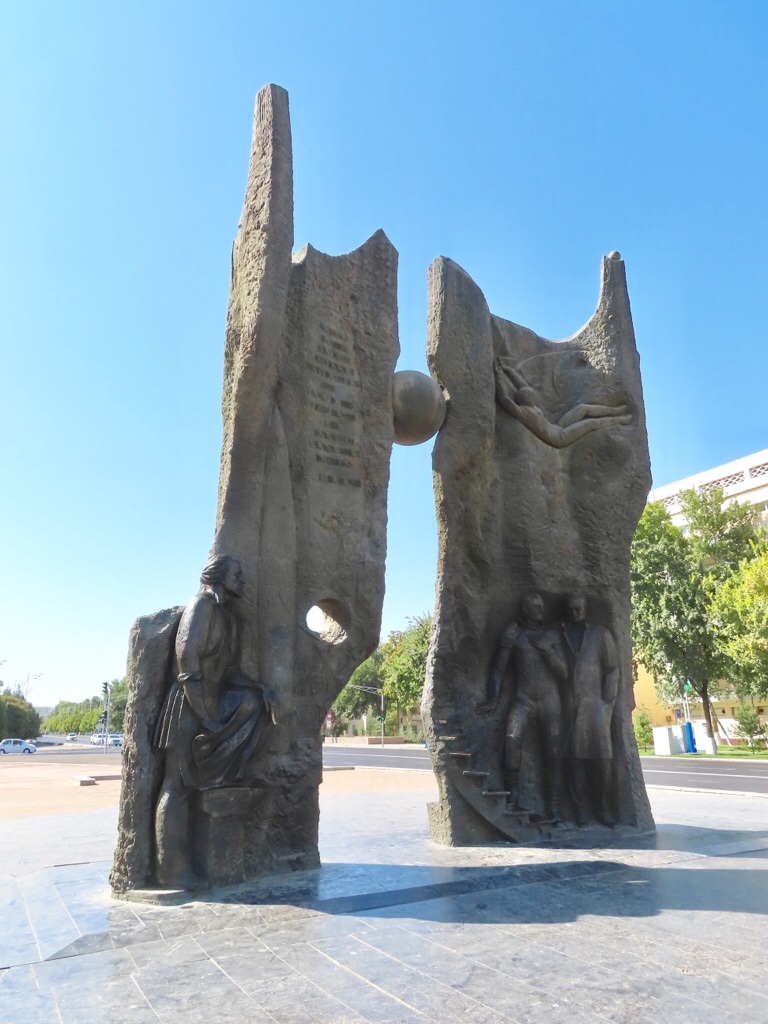
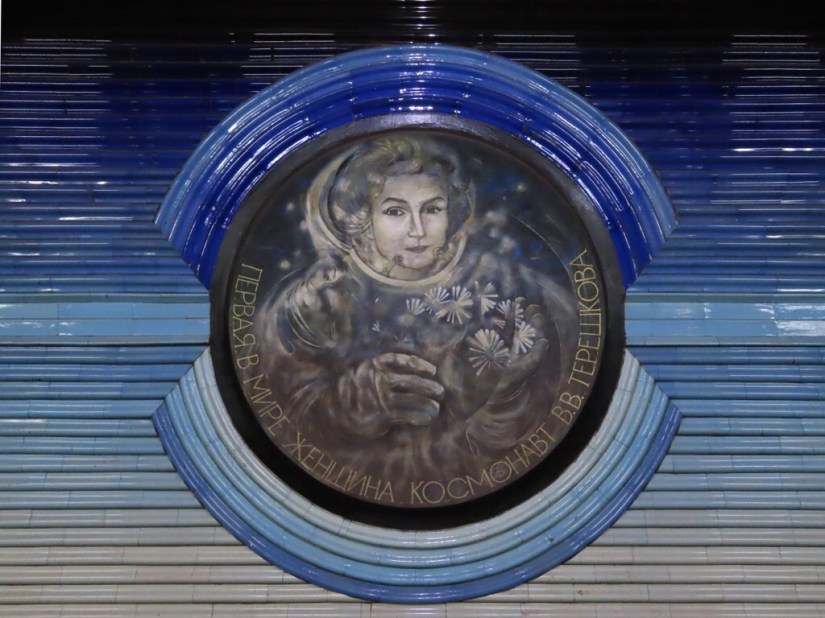
… and inside the ceramic wall panels fade from blue to black in imitation of Earth’s atmosphere with cosmonauts including Valentina Tereshkova, the first woman in space.


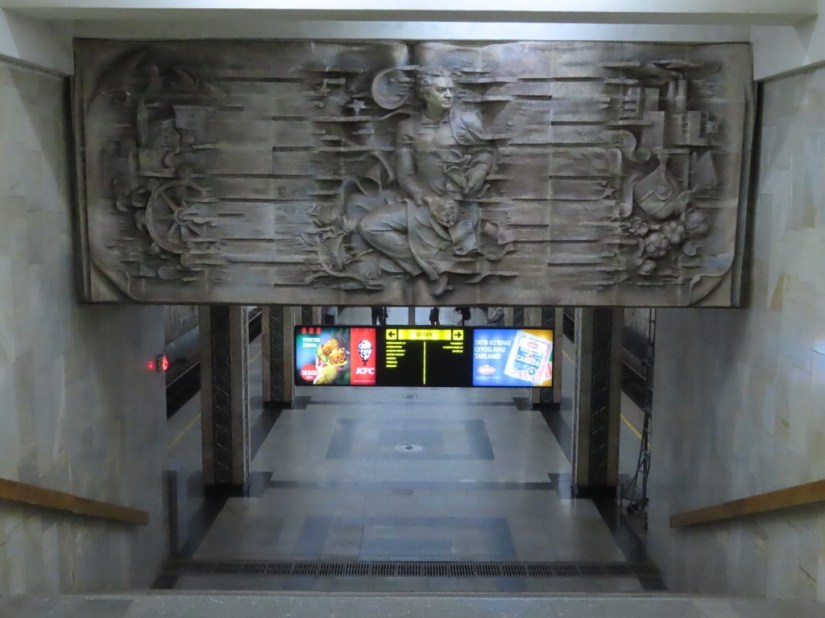
Oybek is another station named for a Uzbek poet …
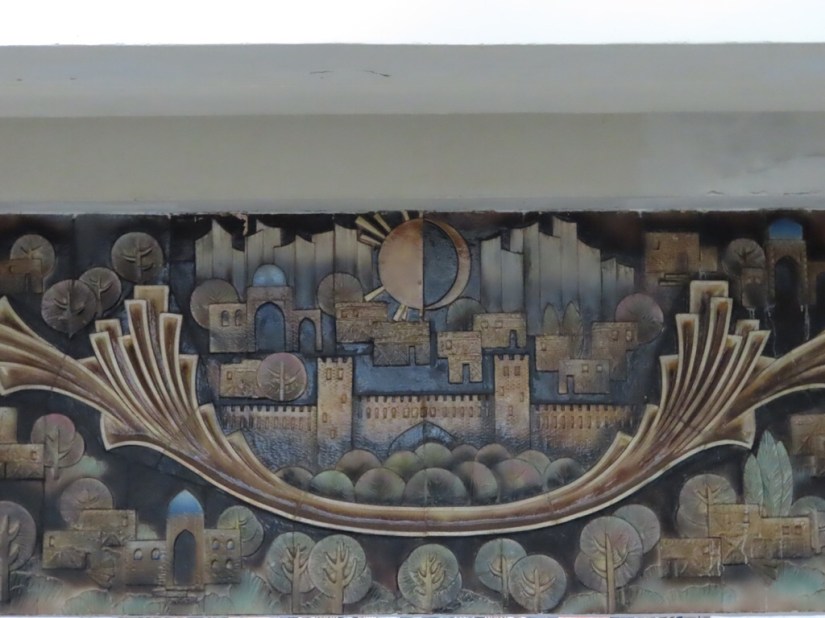
Ming O’rik (Thousand Apricots) station.

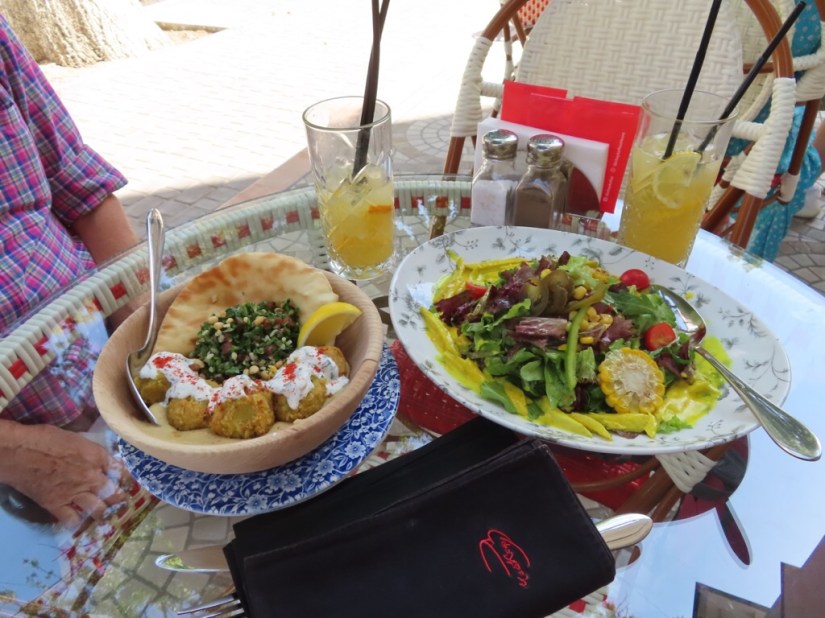
After an early lunch in the cafe at the end of the road of distinctly fusion food – Mexican salad and falafel and hummus …
… we ordered our last Yandex taxi to the airport.
With over two hours to wait, there is plenty of time for a little reflection, firstly on two of the most important things in Uzbekistan (after plov) … tea and bread.
Tea is very important to the culture here. Green tea is the local drink of choice but black tea was popularised by the Russians. Either way, the pot is brought, often with one cup more than needed. Tradition says that you pour half a cup three times and return it to the pot, then leave it two minutes before pouring. Only half a cup should be poured … and when it is cool enough to drink, it should be drunk in one go.
We have drunk so much tea, not surprising at anything from 17p to 85p for a pot for two – and what’s more it’s so eco friendly, far better than drinking water from plastic bottles! We tried the green but it tastes a bit smokey and a bit like veg water so we prefer the black. In Hotel Khurjin in Bukhara they served particularly delicious tea made in Russia called Tess Pleasure which is black tea with pieces of wild rose, dried apples and delicate cornflower petals and we have bought some to bring home.
That just left a teapot … since we don’t own one, and as the same china is used in every hotel and restaurant here, we checked out the kitchenware stores by the bazaar in Samarkand. We now have a teapot and tea dishes called piala, saying made in Uzbekistan on the bottom, to pack into our luggage … just like this one!

Bread is also a big thing, ranging from the very pretty discs in Khiva where they prick the dough with a variety of patterns – possibly the most attractive, but also very solid as it doesn’t rise …
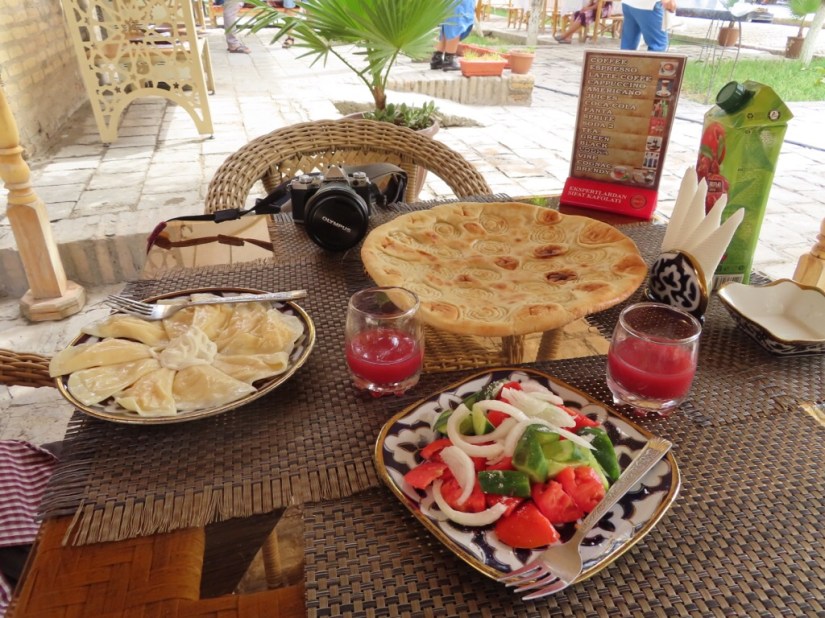
… to the fancy decorated breads in Samarkand market which we tried with some picked tomatoes for lunch one day – also very solid …

… to our favourite, Tashkent bread which is light and airy with an amazing and very moorish texture enabling us to polish one off in a sitting!

There are even traditions such as it must never be cut with a knife or placed upside down and when someone leaves the house he should bite off a small piece of bread and the rest of the loaf will be kept until he comes back to eat it.
Well our trip has gone pretty smoothly and we have came across quite a few independent travellers while we’ve been here. We only needed help from an agent to buy our train tickets, and paying a premium was worth it for the peace of mind rather than leaving it to chance when we arrived. Most hotels and guesthouses use Booking.com so that was easy. Admittedly Uzbekistan Airways doesn’t yet have online check-in but we can live with that for a direct flight!
Each of our destinations had something different to offer and the weather has been sunny and warm. English is not widely spoken, but we’ve managed in hotels and restaurants and people are friendly and want to help so that goes a long way. As for prices, we can’t believe how cheap everything is, averaging £30/day for all food, drink and sightseeing for us both.
And as for what we’ve seen … well I realise there are just far too many photos … but we have seen so much! After so many madrasas and mosques, I had hoped to take better photos of them but the confined courtyards, often with trees and always with tricky light made it really hard to give true impression. Also, we couldn’t quite understand why the backs of the gateways weren’t tiled, just to finish the job!
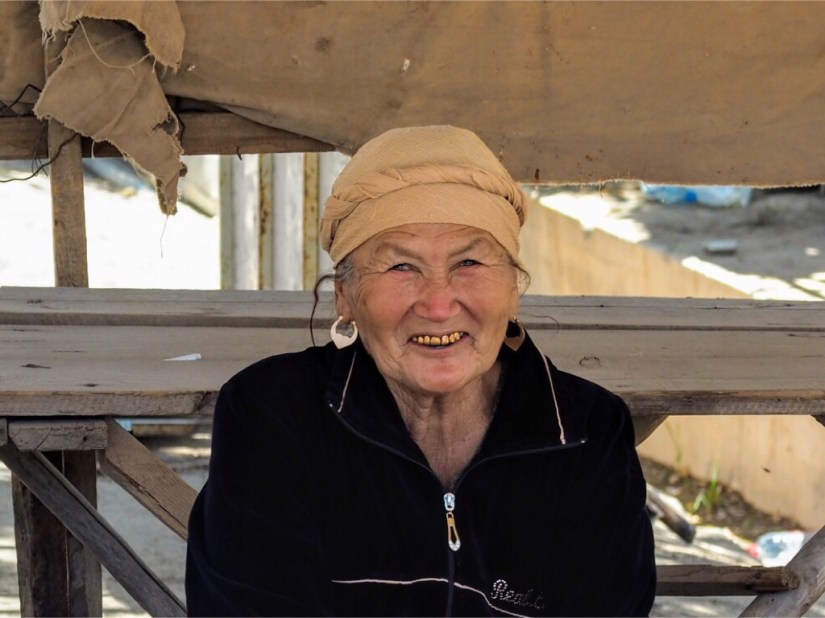
 Nonetheless we both think we’ve taken some good snaps with Chris taking more of people than buildings. He’s been especially fascinated not only by brides, but also by gold teeth which are a status symbol throughout Central Asia, but I was horrified to read they are sometimes installed in the place of healthy teeth. It has been a challenge as it’s polite to ask to take a photo and once they pose they rarely smile … but he had success here!
Tourism and development are definitely on the increase and Uzbekistan is another country which is moving swiftly onwards and upwards so we are very pleased we came now … Uzbekistan, thank you very much … kata rahmat!

























 Off Travelling Together