 The catamaran took a couple of hours and the crossing was smooth. The weather was a little overcast and warm but there was nothing much to see out of the grubby windows. On arrival, there was astonishment all round as our three suitcases were strapped to the back of a tricycle for our 10 minute ride to the hotel. There was a seat for two on one side and Joanna hopped up behind the driver!


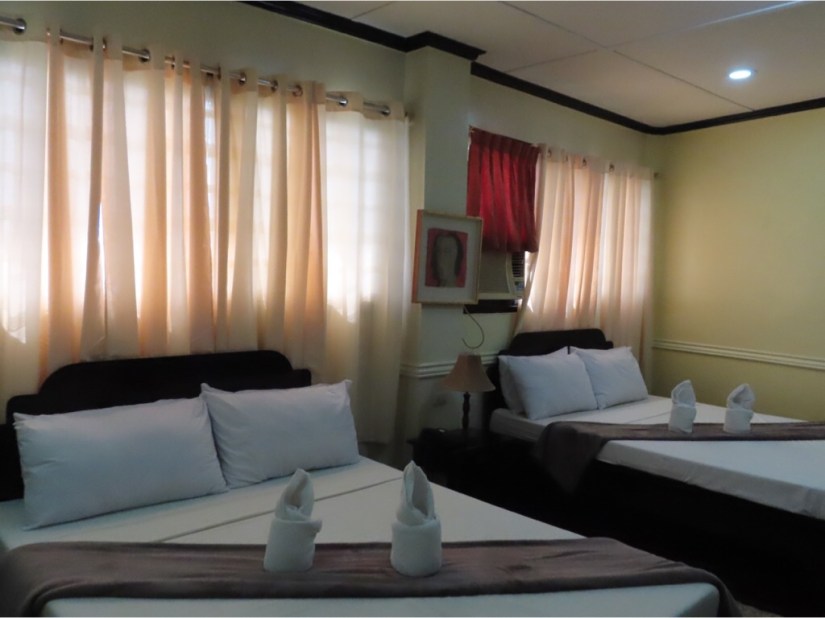
Once we had checked in to our good sized room Vest Grand Suites …

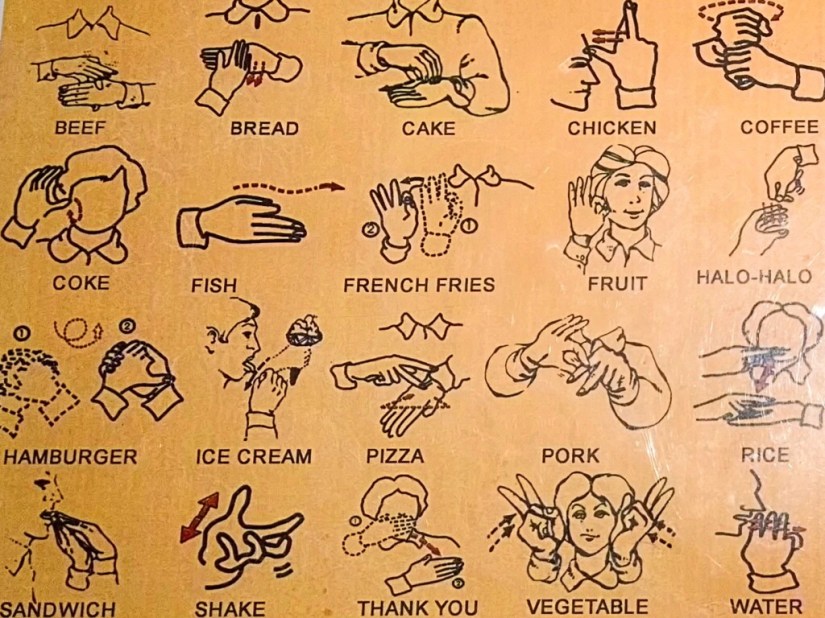
… our priority was lunch so we hailed a tricycle to the centre of town and tried out the Garden Cafe which is run by the Bohol Deaf Society with the proceeds used to educate local deaf children and the cafe itself used to train deaf students. I should mention here that our mixed dietary requirements (Chris veggie, no fish, but will eat dairy and eggs – Joanna, no meat, no dairy but will eat eggs and fish) could prove challenging in a country where the national dish is lechon or roast pork! The salads were unavailable but we had bowls of chop suey which hit the spot but we ordered far too much food as the portions were huge. The useful sign language guide in the menu meant we all managed to thank our servers.

Afterwards, we took a turn round Plaza Rizal in the centre of town and named for Jose Rizal, a national hero who inspired independence from the Spanish, but more about him later.

On one side is the Capitol Building …

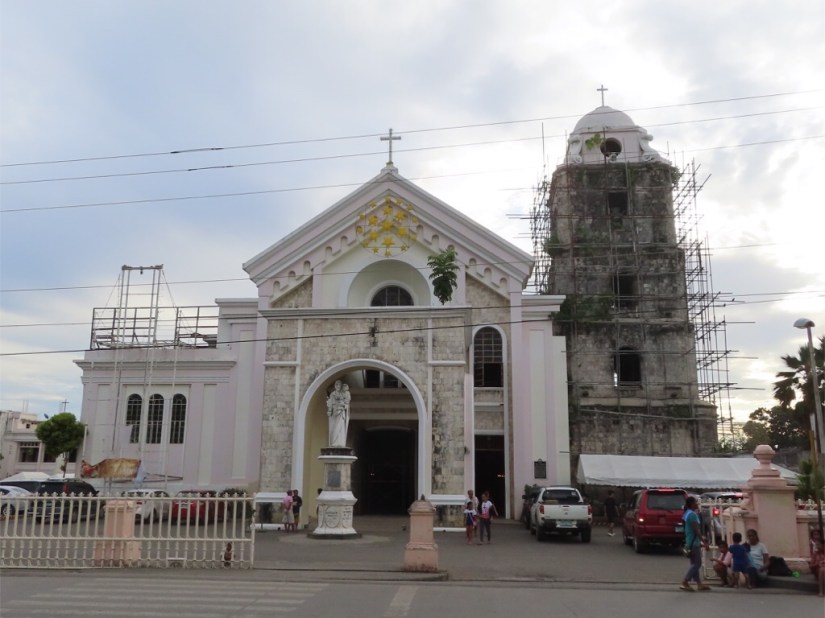
… and on the other the elegant San Jose Cathedral initially built in 1767 but destroyed by fire and rebuilt in 1855. It also suffered damage in the 2013 Bohol earthquake which caused serious damage across the Visayas and killed 222 people.
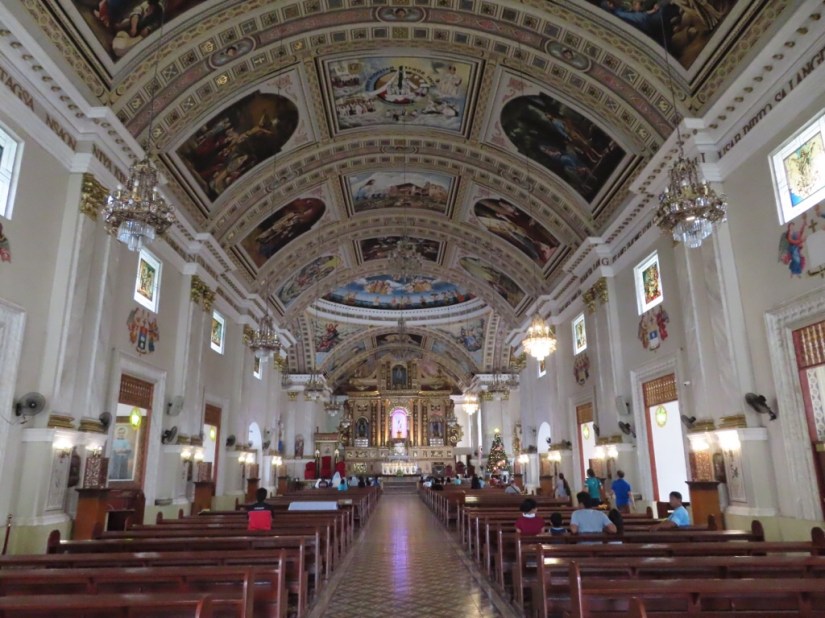
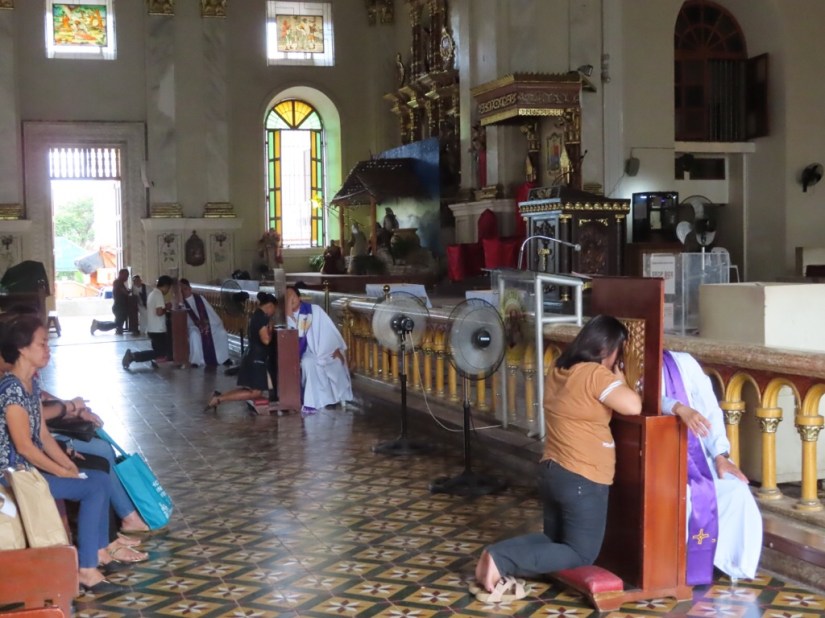
Inside, the altar is very elaborate and we had obviously visited during confession.
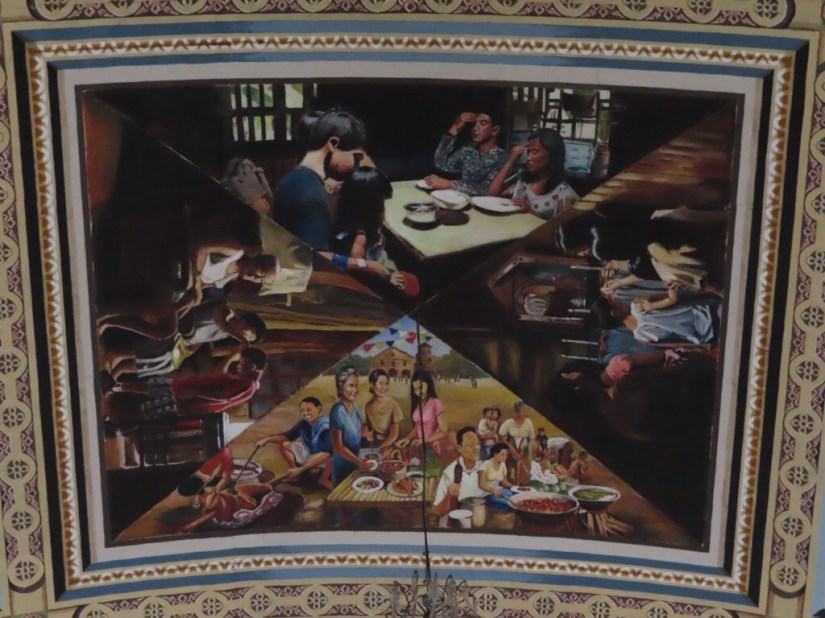
Many of the paintings are very local in style, including this one remembering the earthquake.



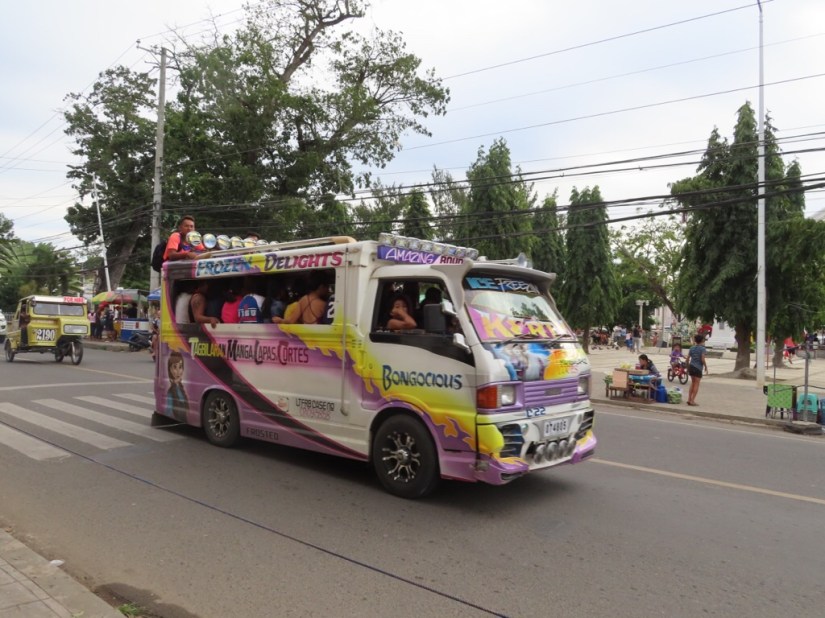
We walked back to our hotel, taking snaps of the busy town filled with colourful jeepneys and tricycles, most with a bible verse on the back!


We had dinner in a cafe run by Bohol Bee Farm, using homemade and organic ingredients and with choice for all.
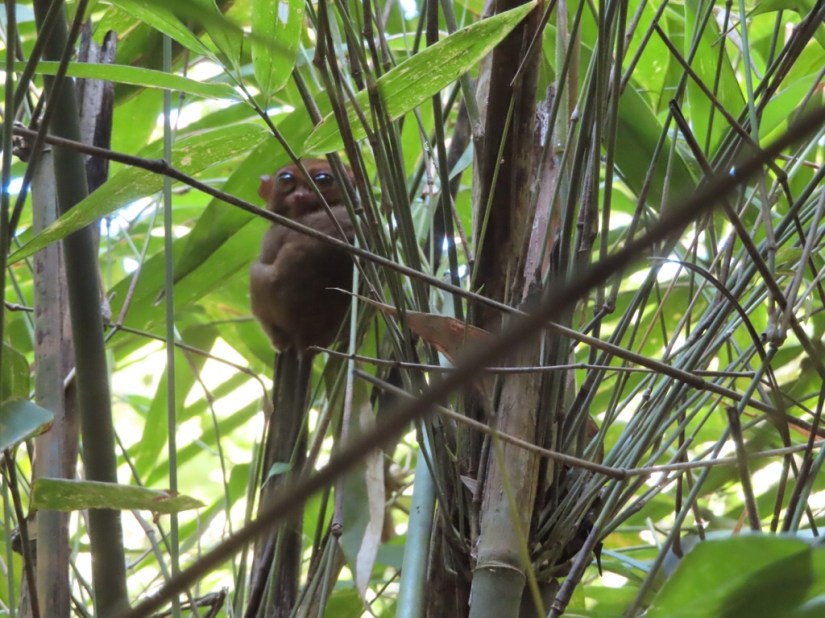
Next day, the hotel arranged a car to take us on the Countryside Tour, taking in all the attractions of Bohol. We began at the Philippine Tarsier Sanctuary where they protect what is left of the native population of this tiny saucer-eyed primate. Tarsiers have been around for 45 million years are are closest related to lemurs and bush-babies. They are just 10-15cm and live alone in small territories in this protected 134-hectare area of wilderness. Each day, the volunteers ‘spot’ their positions so that they can guide visitors quietly and in very small groups to get a glimpse. A high school student on work experience showed us round and we were very lucky to see tarsiers awake as they are nocturnal.


Our next stop was the other main tourist attraction on the island, The Chocolate Hills. There are as many as 1776 conical limestone hills spread over 50sqkm and covered in grass which turns brown in the dry season and gives them their name. They are similar to the karst hills we saw in the Vinales valley in Cuba called mogotes. We climbed 211 steps to the viewing platform and waited till the sun lit up the hills.
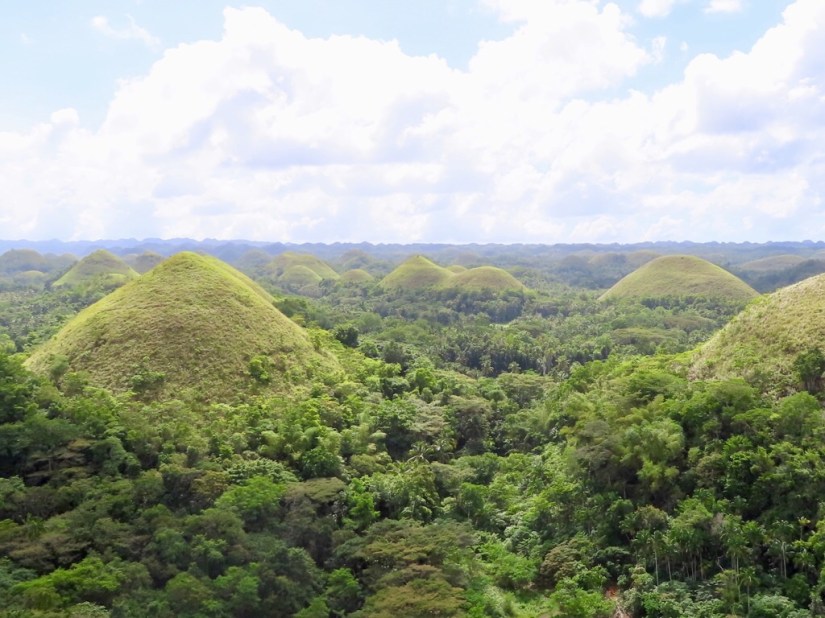
And yes readers, we were there!

The next stop, crazily, was so we could have our picture taken in the middle of the road! This 2km stretch of stretch of densely planted mahogany trees known as the Manmade Forest was planted by university students over 50 years ago to replace trees lost from widespread slash and burn farming. Luckily, traffic slows on approach, knowing there are likely to be visitors taking that essential selfie!

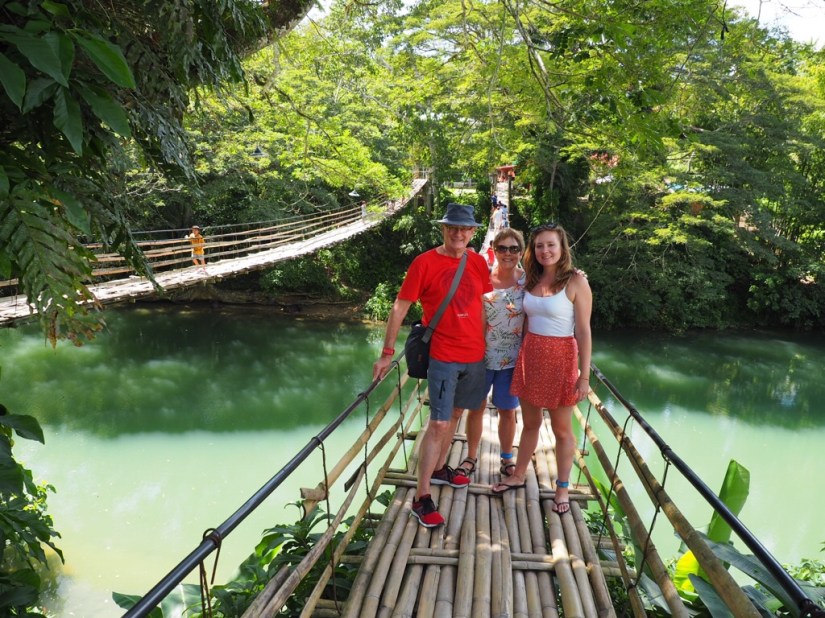
The Sevilla Twin Hanging Bridge was first erected so enable locals to transport farm and livestock across the Sevilla River, but along the way evolved into an attraction for visitors. It has a traditional deck of intricately my woven bamboo slats, although the rope suspension has been replaced with steel cables! We crossed to the other side, browsed the souvenirs and returned to the car.
We joined other visitors on a Loboc River cruise which travelled slowly upstream as we had a tasty buffet lunch with a variety of local specialities to try, while being entertained by a small band.
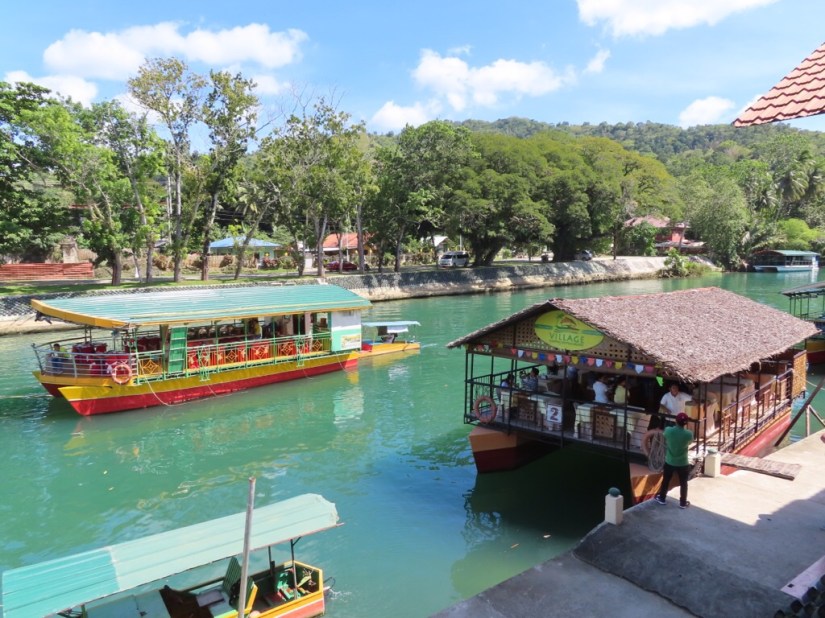


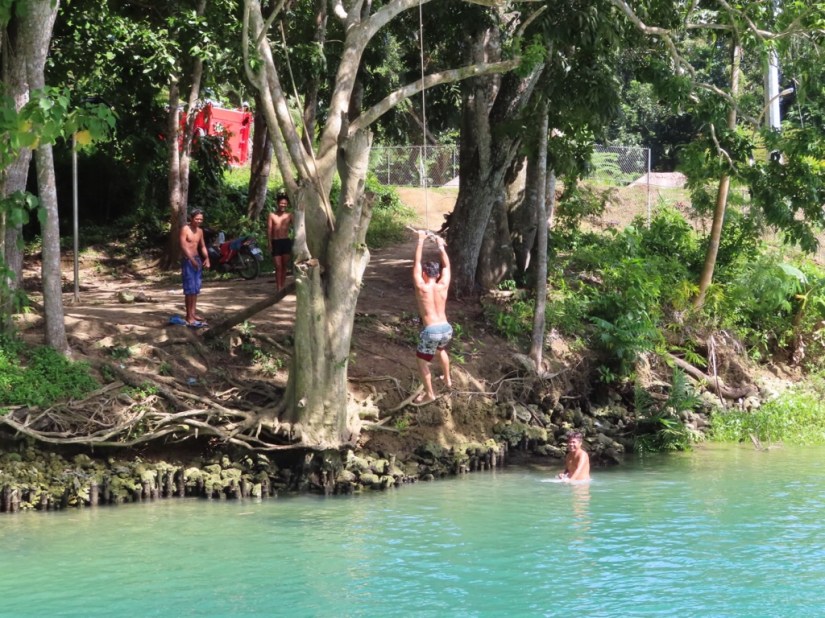


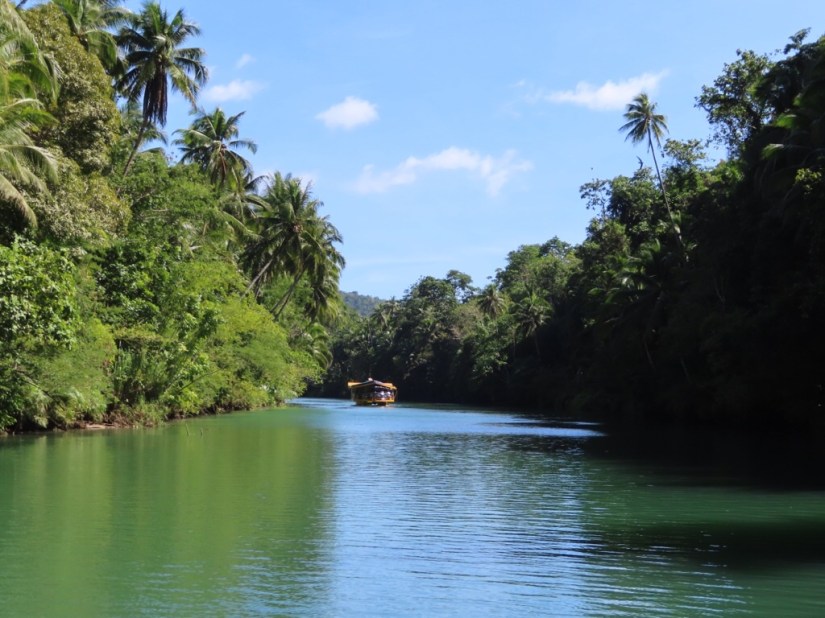 Once we had finished, we reached a floating platform where a show of massed ukuleles and dancing was put on by a community group, who encouraged visitors to join in!


As we approached the rather uninspiring Tontonan Falls …
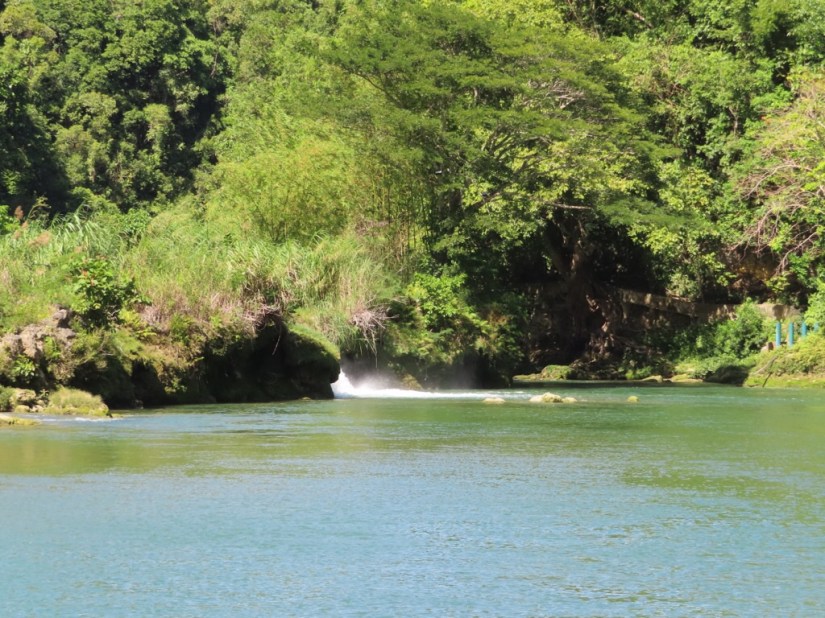

… we noticed people zip- wiring above us, and as boat turned and returned to the dock we decided to enquire about having a go. It was just a few kms back up the road and Joanna and I decided to go for the 2-zip special, side by side. Without go-pros it would have been silly to take a camera, so we relied on Chris to capture the moment from below. IT WAS AMAZING! The scariest part was assuming a horizontal position in the harness … and trusting that you would stop in time at the other end … I shut my eyes for that bit. In the middle it was fabulous, swooping like birds over the river and seeing far more of the waterfalls than we had seen on the boat. Our event photographer said it was all over so fast … and this is the best snap, but I was too busy looking at the view!

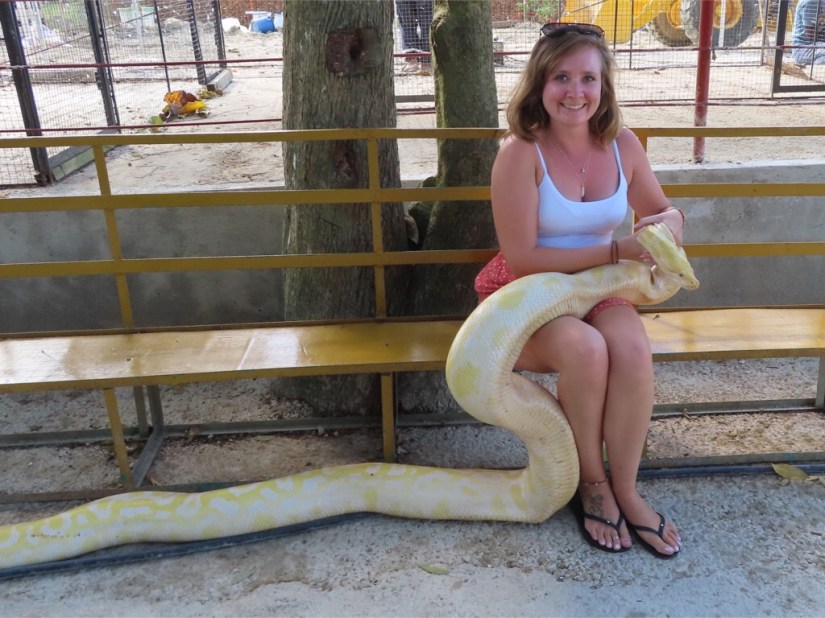
We made a brief stop at the Xzootic Animal Park where we saw butterflies and pythons, but it only gets a mention as we took a couple of nice pics of Joanna!

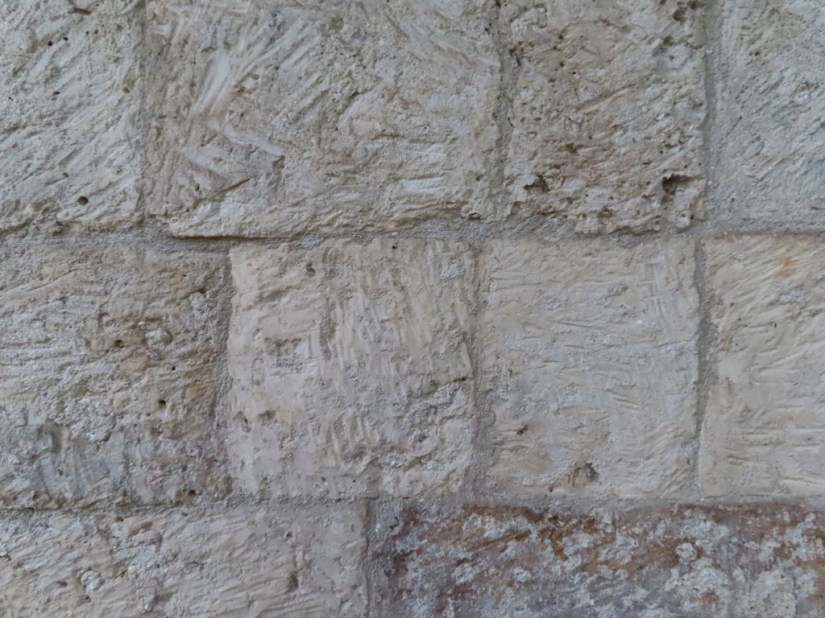
The road back took us along the coast road and we stopped at Baclayon Church, which was founded in 1596, and is the oldest Christian settlement in Bohol. It was all but destroyed during the 2013 earthquake, so much has been restored.

 Church design in the Philippines is a fusion of native Spanish designs and a uniquely Oriental style. It also was adapted to cope with natural disasters including fires and earthquakes, creating a style sometimes referred to as Earthquake Baroque. This was characterised by sturdy proportions with thick, heavily buttressed side walls and upper structures made with lighter materials. Bell towers are also usually lower and stouter and all these characteristics can be seen here. Also, like many churches, the walls are made of coral stone.

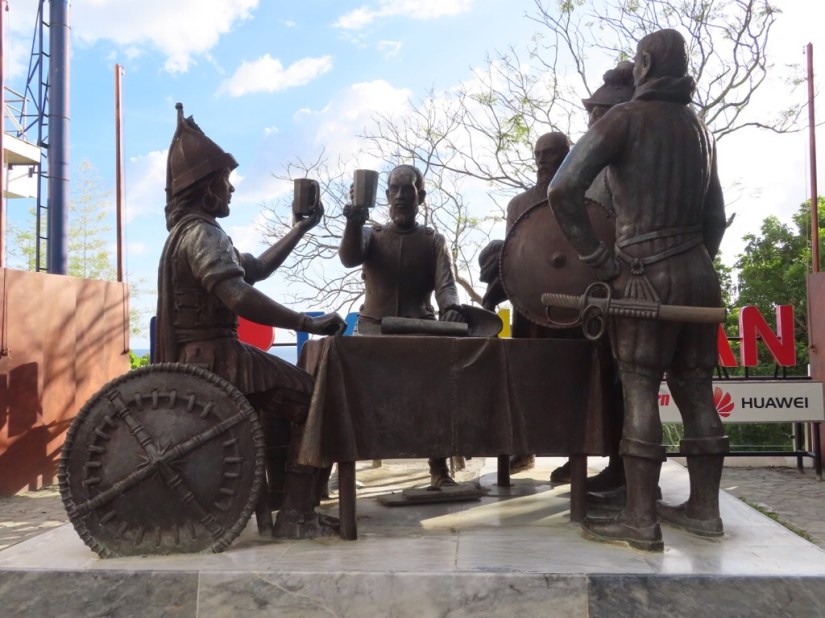
Our final stop was the site of the Sandugo or Blood Compact between Spanish explorer Miguel López de Legazpi and Datu Sikatuna, the chieftain of Bohol, who sealed their friendly agreement by cutting their arms and letting few drops of blood to mix with the wine which they drank together. It is considered the first treaty of friendship between the Spaniards and Filipinos and is celebrated every July.
Tomorrow, rather than the luxury of an air conditioned car, we are going to try out something a little more local …
Map
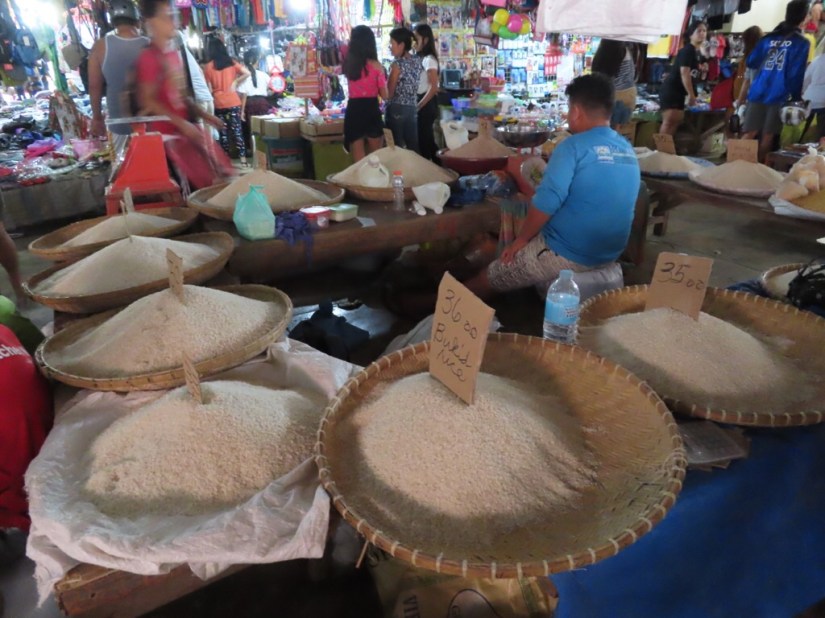
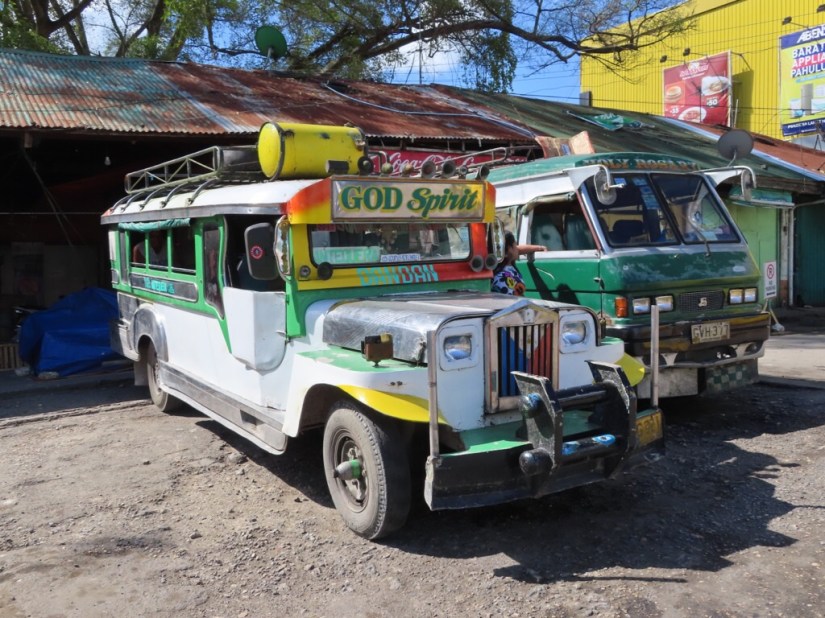 Determined to try out all transport options, next day we headed to the local market and bus station to catch a jeepney. Originally converted from US military jeeps after WWII and decorated with bright colours and chrome ornaments, these minibuses are the most popular means of public transportation in the Philippines. We knew they were crowded, mainly as the routes and fares are fixed, but the driver wants to maximise his income so waits till it is full to leave. Joanna fancied the kitch one, but the slightly more modern one was next in line …
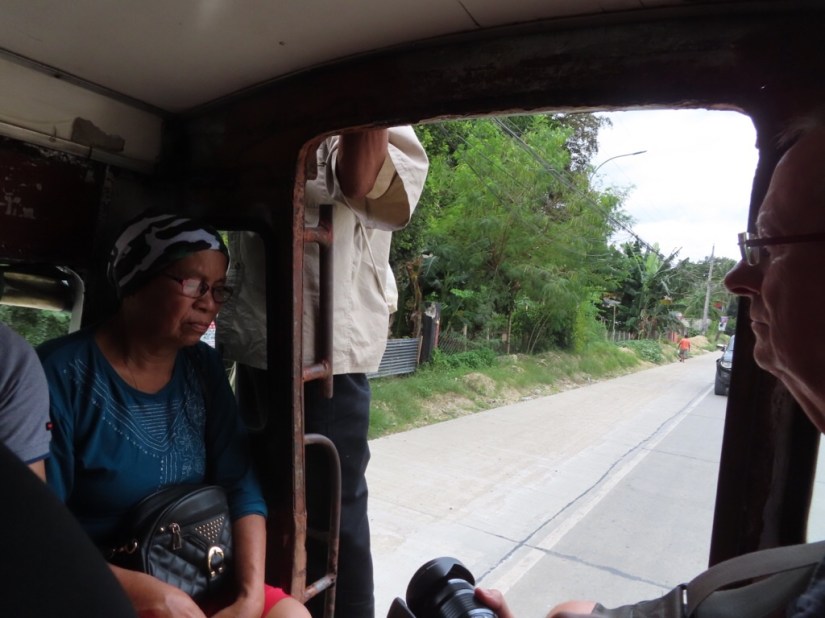
 Filipino full is very full! In addition to the benches either side, additional stools are placed in the central aisle to load more people in. Ours reached 23, then two lads held on behind! During our 30 minute ride to Antequera, a couple of people got off and a couple more got on so at 25 pesos per person, the driver would have made about £10, half of which goes in costs and he keeps the other half!






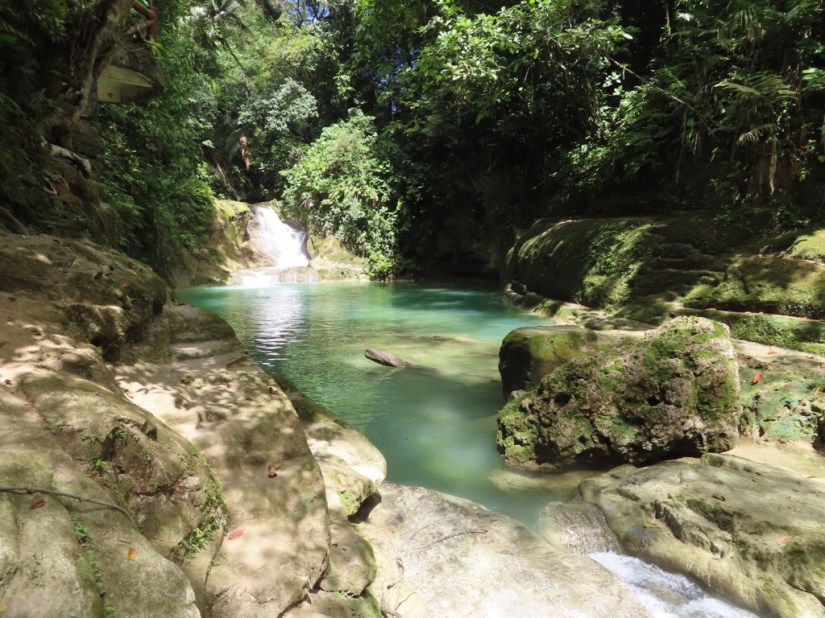 … and after a few moments of indecision, I decided since I’d gone prepared to swim, I would! Joanna was a little slower to get with the programme, but another lady had arrived and she got brave and came in too. The water was chilly but lovely and it was very similar to swimming in the Cenotes in Mexico.




 Off Travelling Together