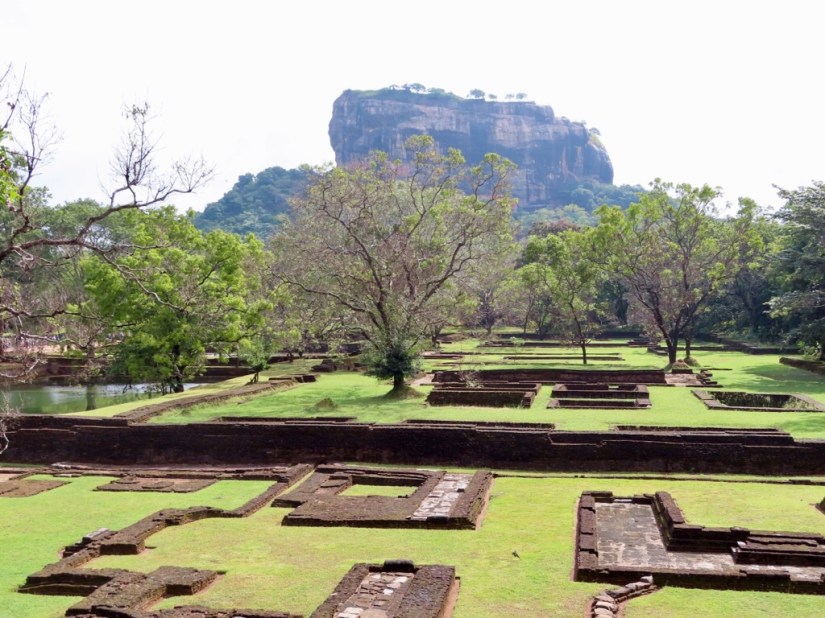
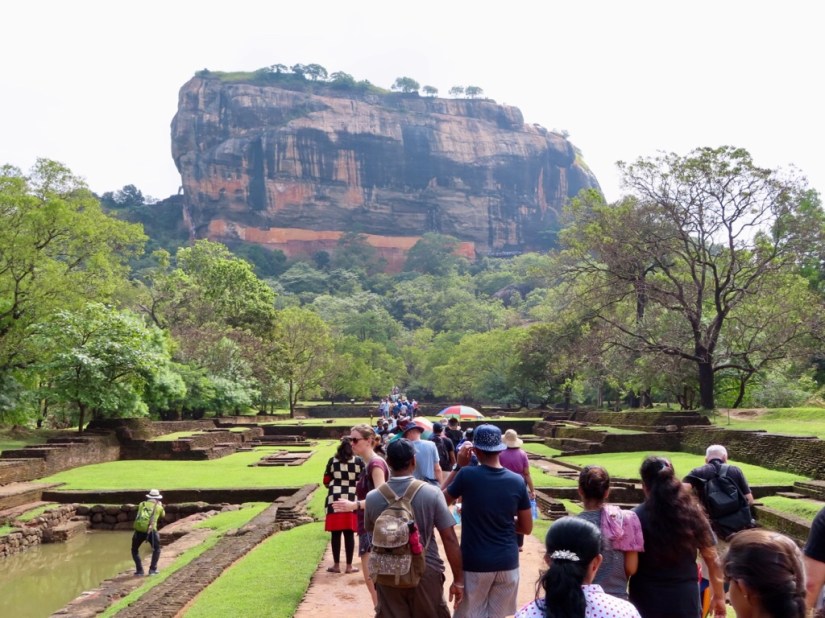
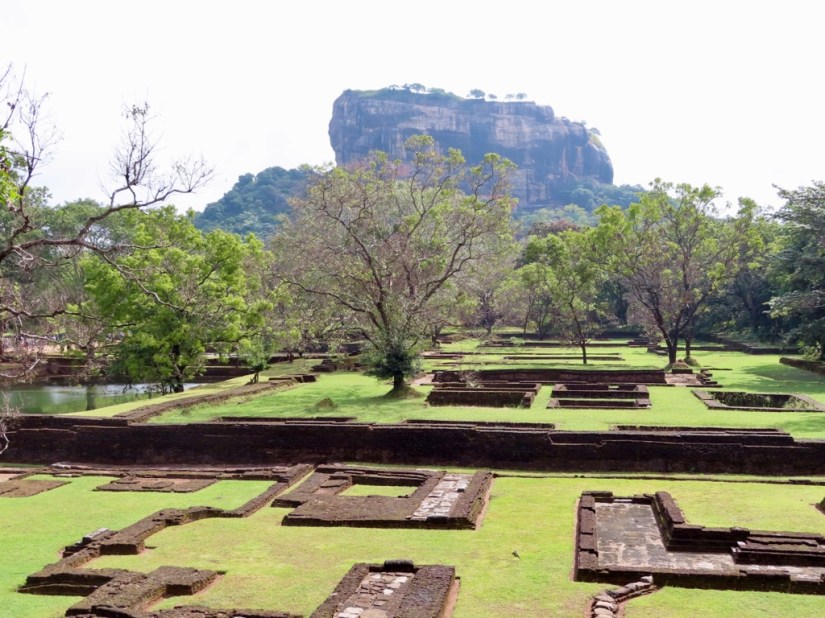
 Sigiriya is built on a huge rocky outcrop towering 200m above the countryside. There was a power struggle between the two sons of Dhatusena of Anuradhapura in the C5th. Kassapa, the lesser son, drove his brother Mogallana into exile in India, killed his father then built a combination of pleasure palace and fortress on the top of the rock, copying the legendary abode of Kubera the god of wealth, and a city below, all in seven years. A few years later Mogallana returned with an army of Tamil mercenaries. Despite the benefits of his unassailable fortress, Kassapa rode out boldly on an elephant at the head of his troops, his elephant bolted, his troops fell back and facing capture Kassapa killed himself. Mogallana handed Sigiriya back to the monks who abandoned the site in the C12th.
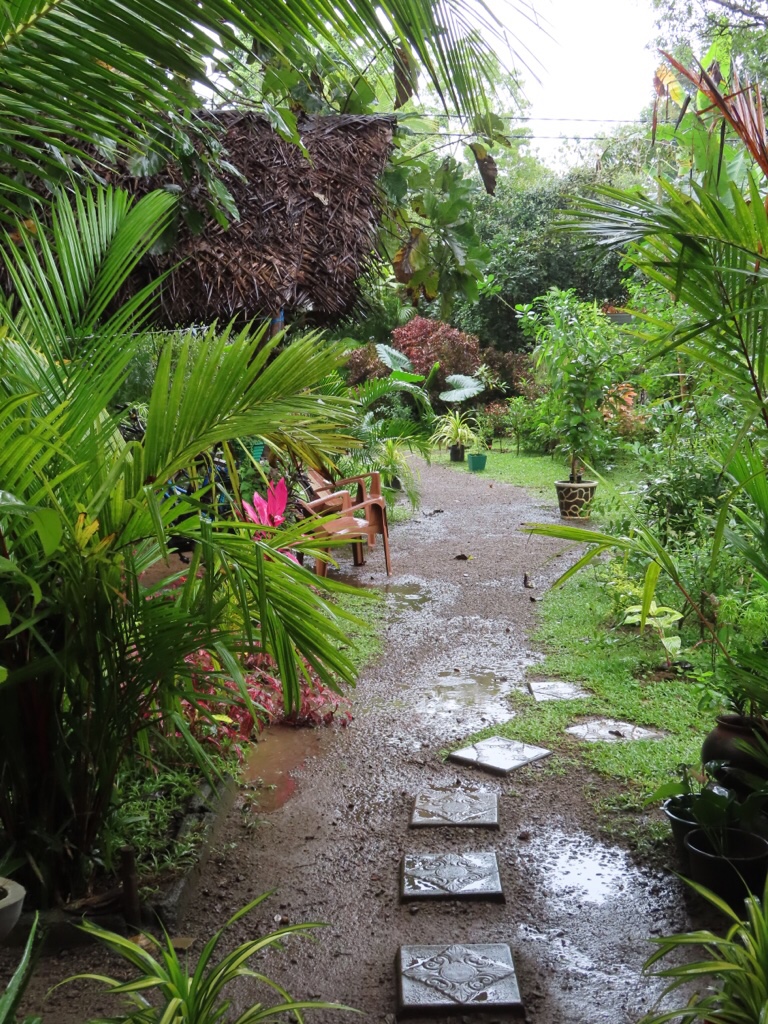
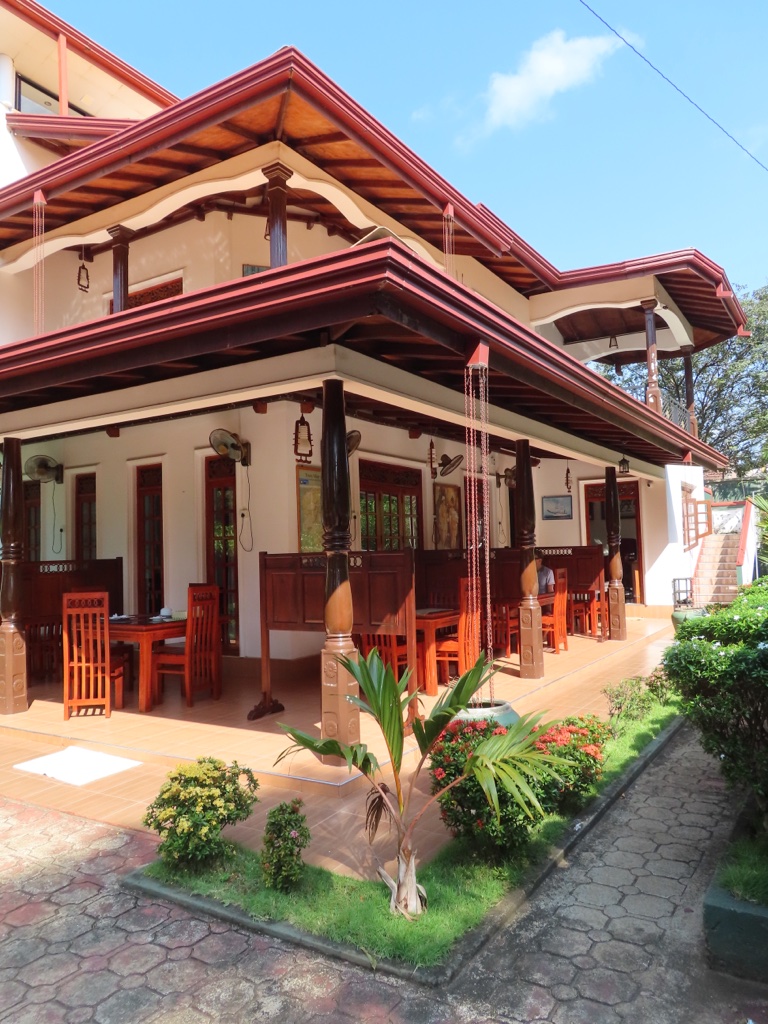
We took a tuk-tuk and arrived in Sigiriya at lunchtime. Dinesh welcomed us to the Otunna Gesthouse, set in lovely gardens and owned by his family.
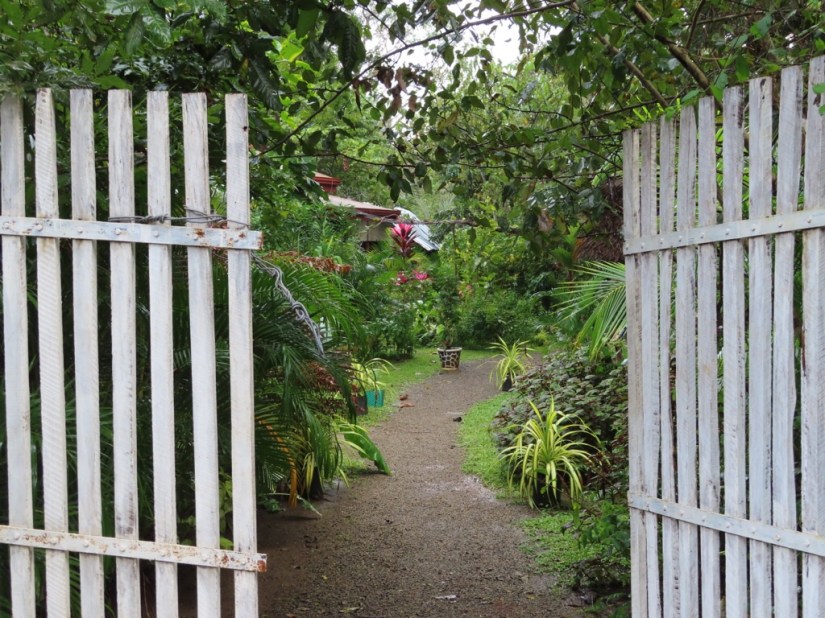
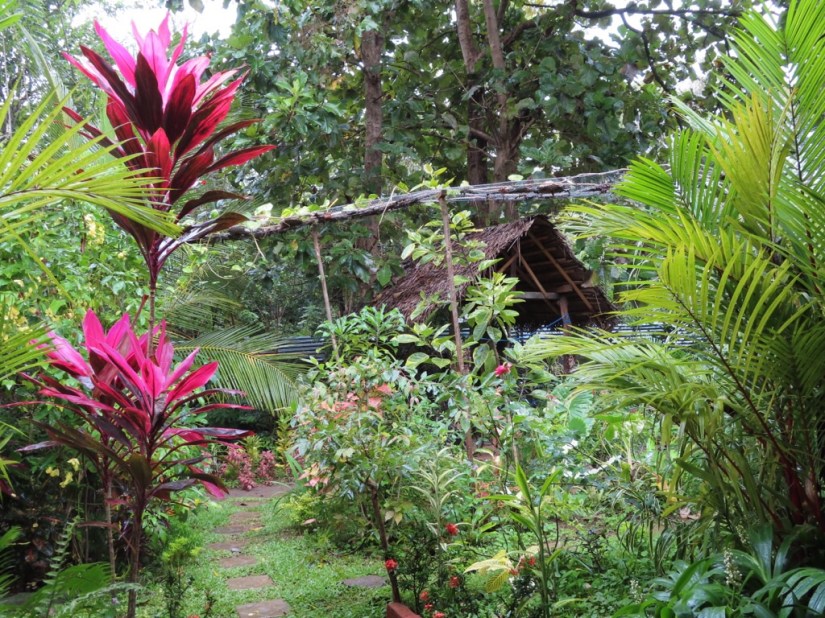
 Later, we decided to take a chance on the weather, as there had been several short but heavy downpours, and asked for a tuk-tuk. By the time it arrived the rain had started again but it stopped as we reached the Pidurangala Temple.
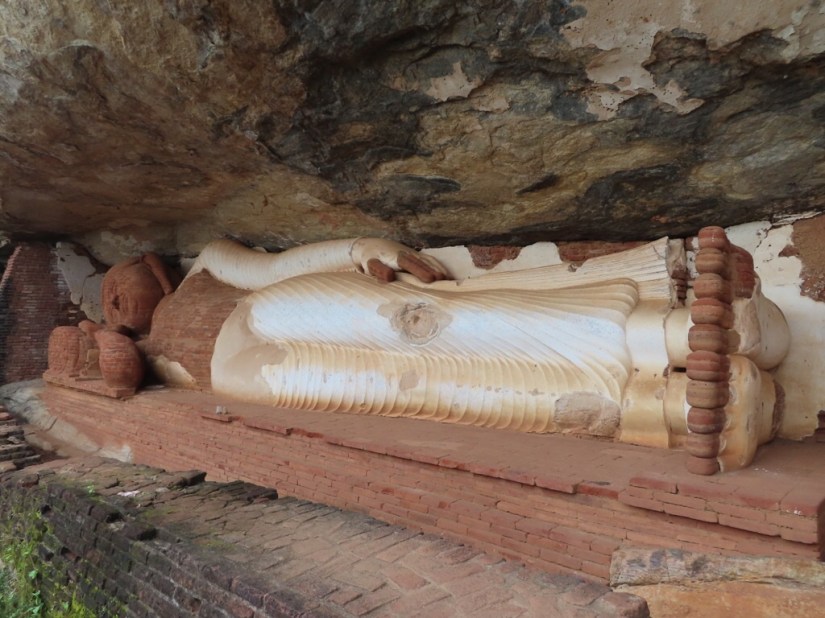
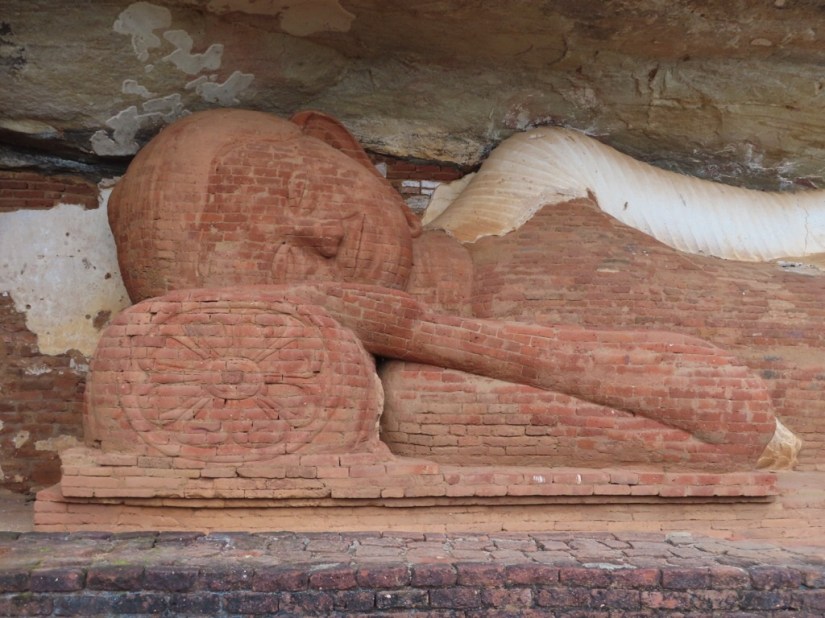
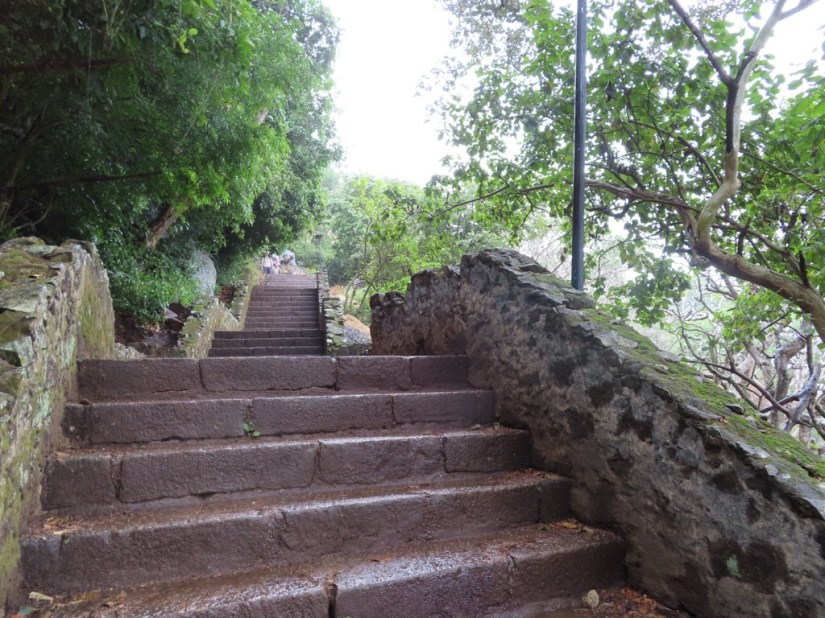
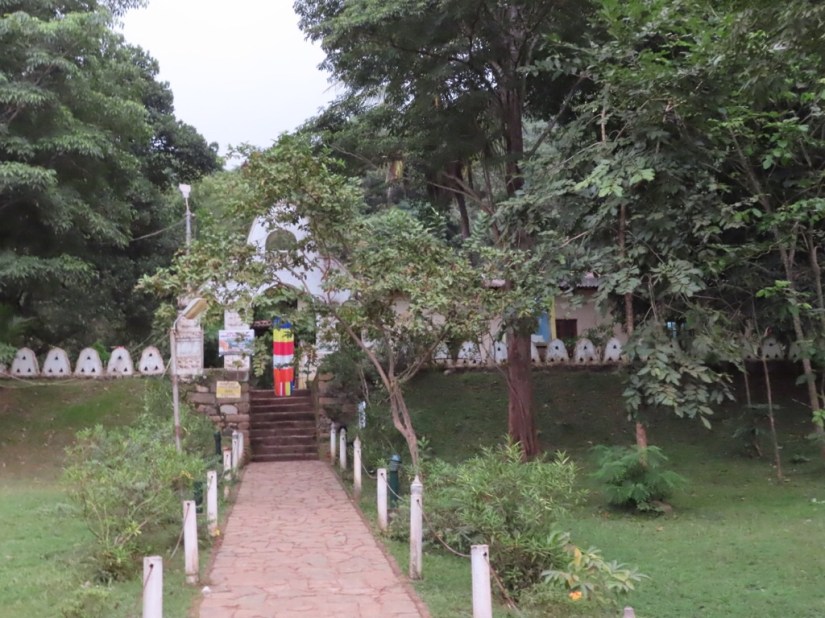 The story says that monks living in Sigiriya were given land to rebuild here when the citadel was built, and the main reason for visiting was to get a great view of Sigiriya. We entered the temple area at the bottom then started a steep climb which began as stairs up as far as a reclining Buddha under an overhang …
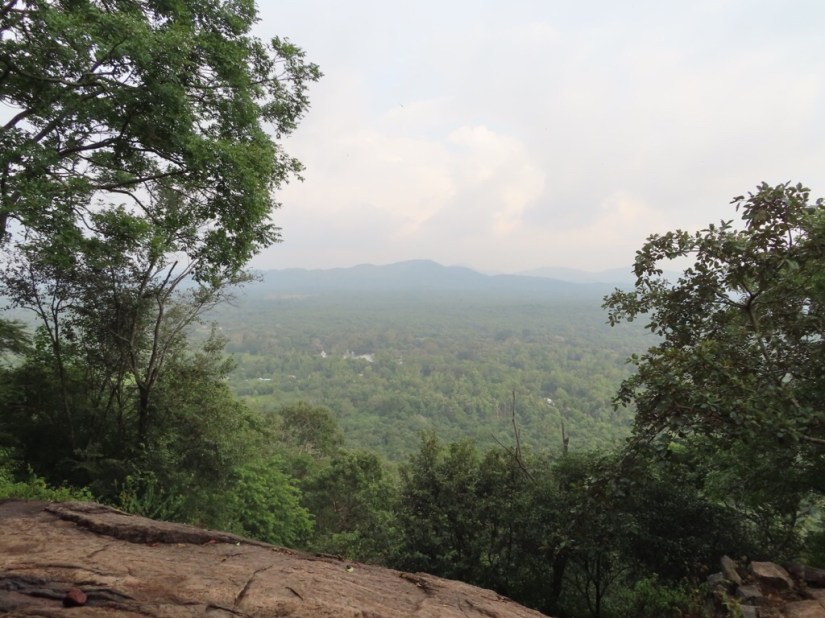
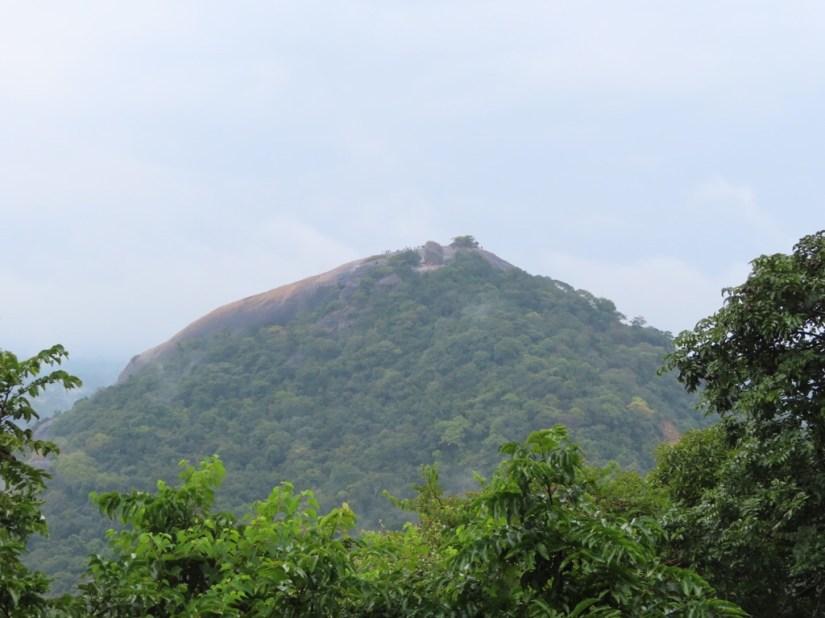
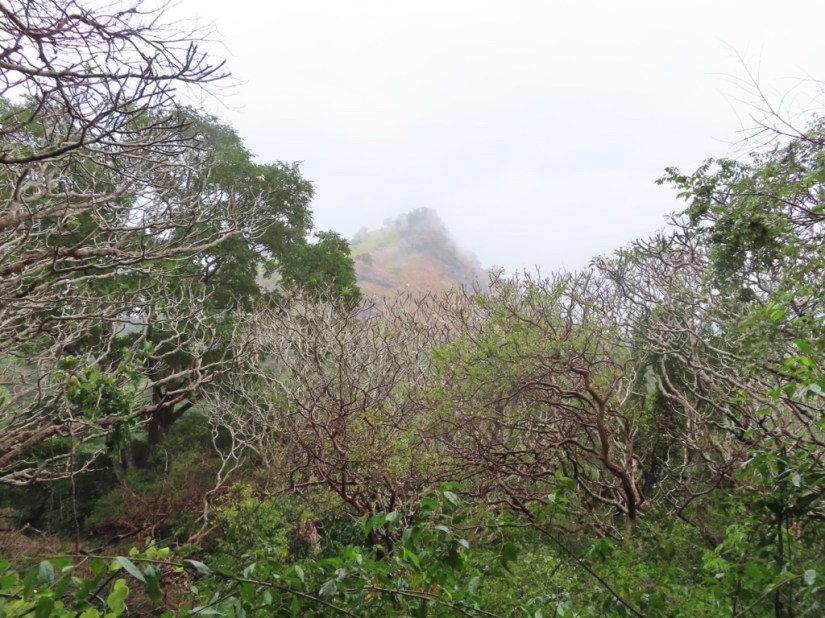
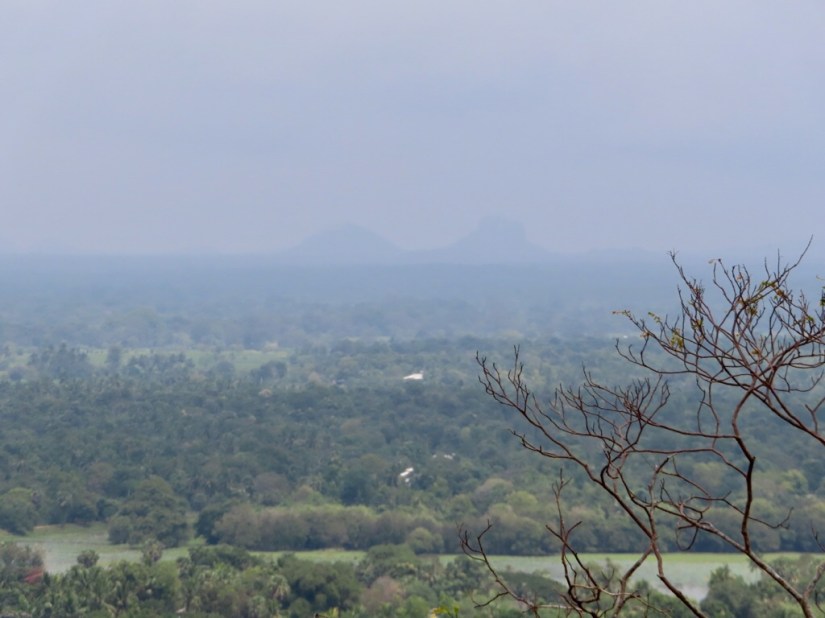
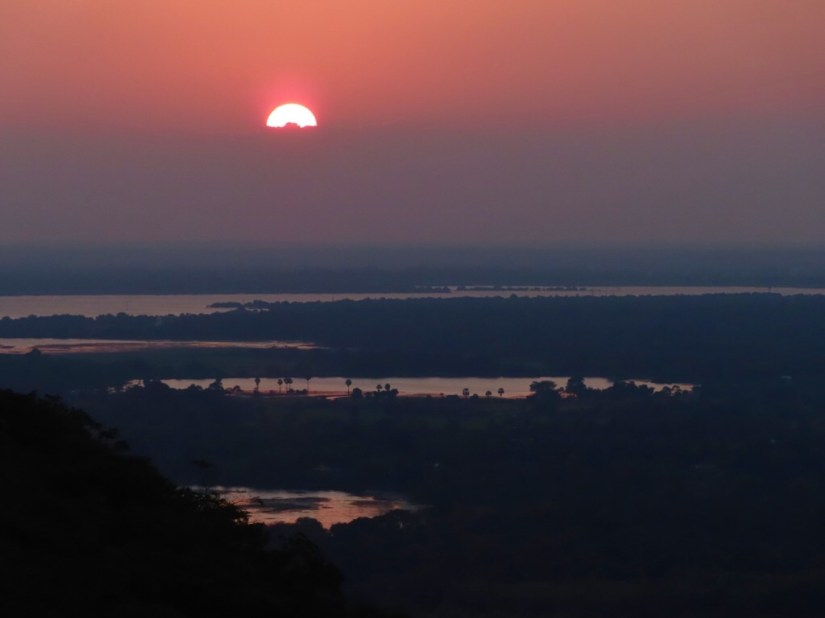
… then became more of a rough ascent with a final scramble over boulders which we wouldn’t have managed if it wasn’t for the help of other climbers who were lending a supporting arm. The view was worth it … although a little misty … and we could see people on the summit of Sigiriya.
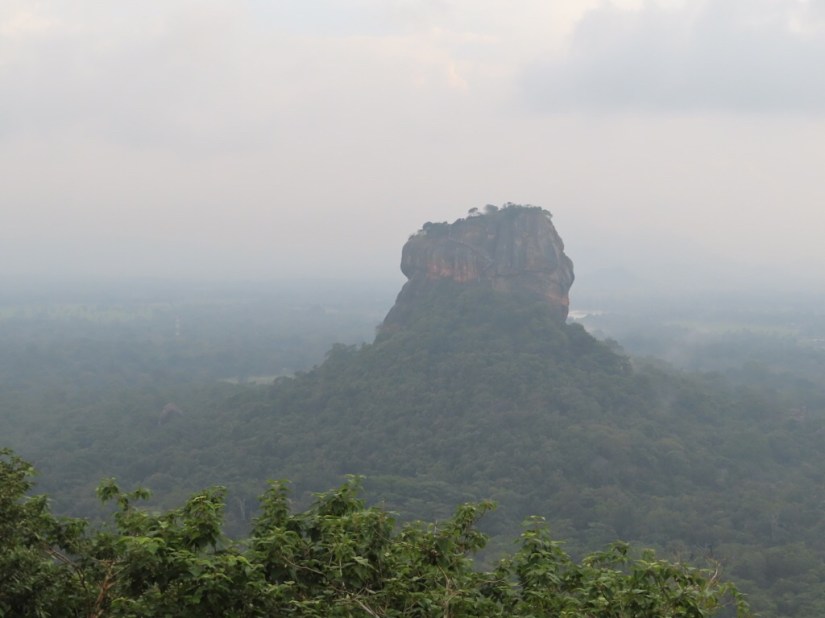
The descent was just as tricky in the fading light and we were glad to see our tuk-tuk at the bottom, especially as if on cue, the rain began again.
It was a good job we’d had some exercise as we had another splendid array of curry for dinner.
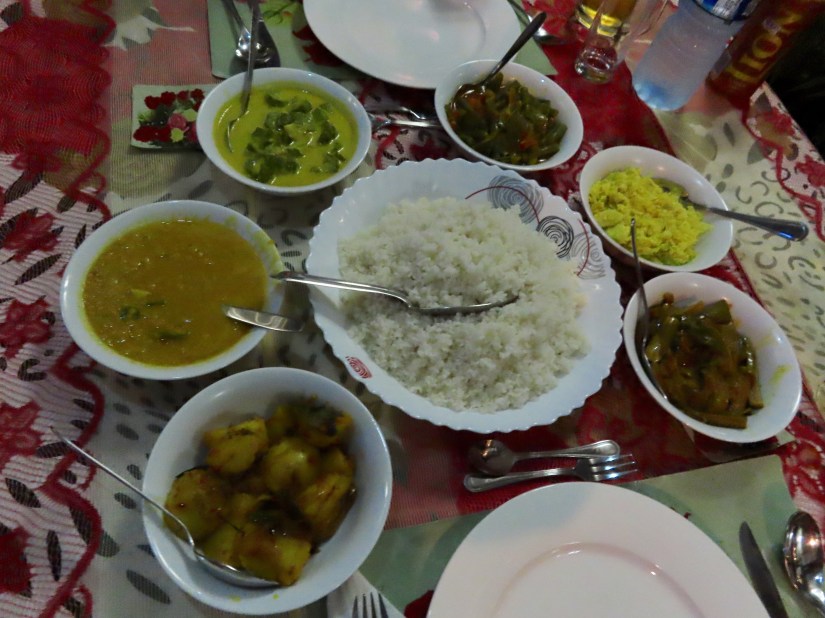
Interestingly here, the vegetables are cooked separately rather than all mixed up together, each with slightly different spices so it’s a real treat. We had cabbage cooked with coconut, green beans, potato, aubergine and snake gourd which is a bit like cucumber. We’ve also had okra, beetroot, pumpkin and breadfruit.
Regular showers are forecast for the next couple of days so we had a beer on the verandah and planned an early start, just in case it was dry!
There had been heavy rain in the night which had stopped by morning, but that wasn’t to last and by the time we’d eaten breakfast at 7.30 it was pouring again!
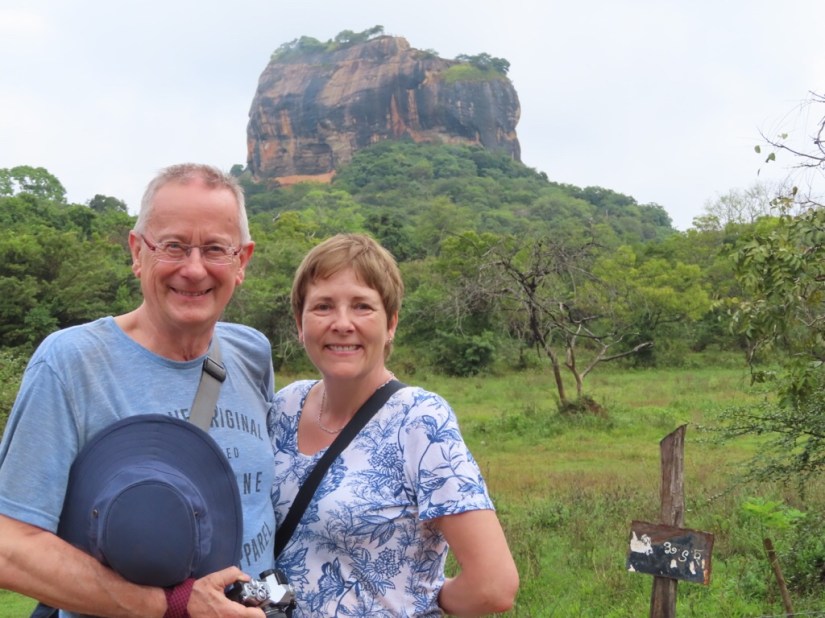
 We waited and as soon as it stopped at 9.30 set out to climb Sigiriya, and took this on the way!
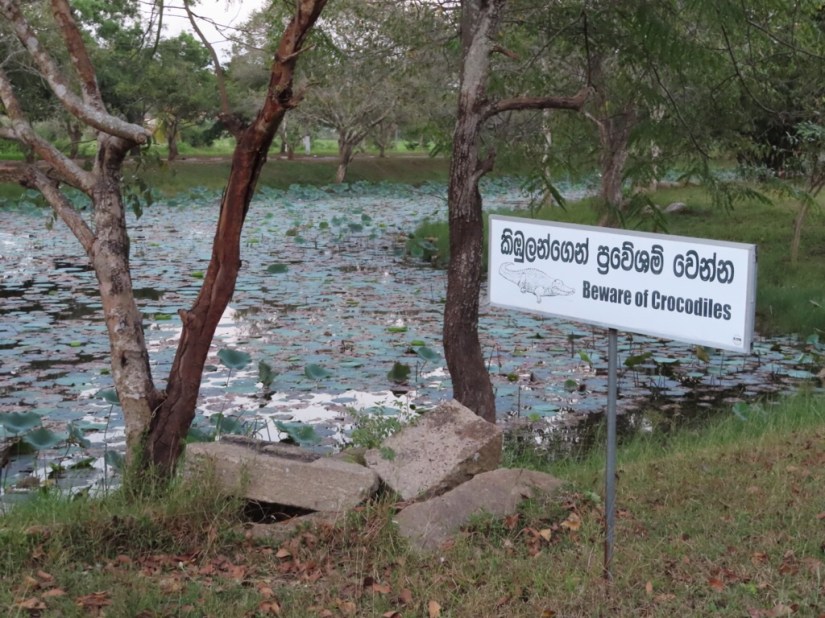
The path took us round the moat … complete with crocodiles … we saw one …
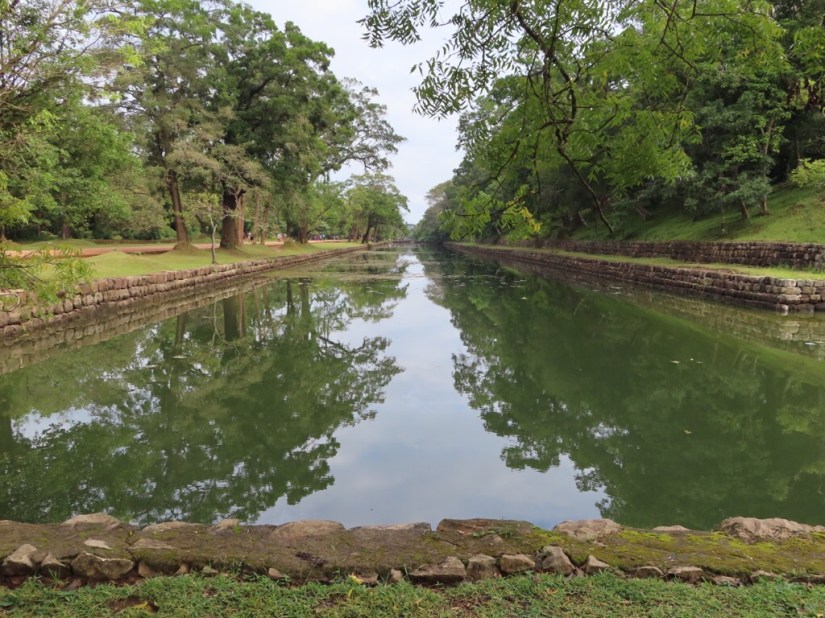
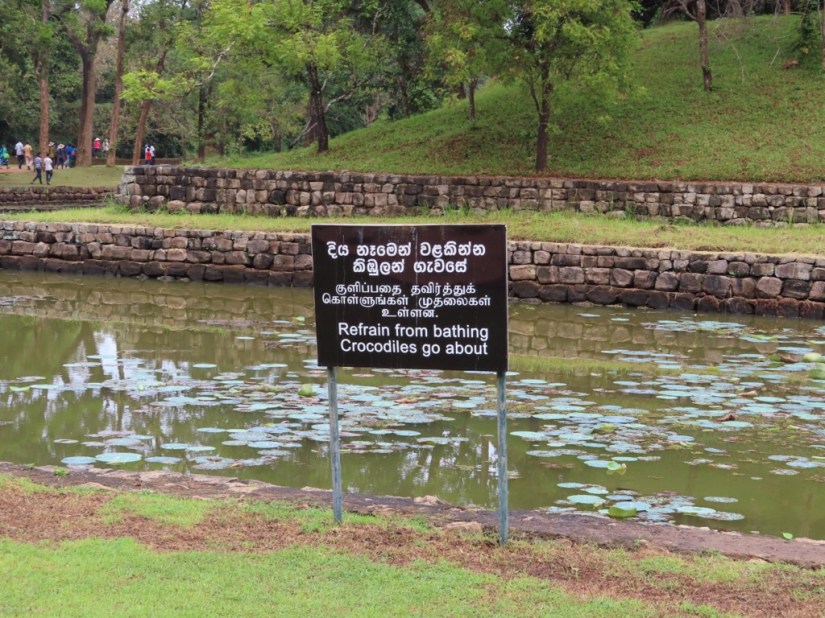
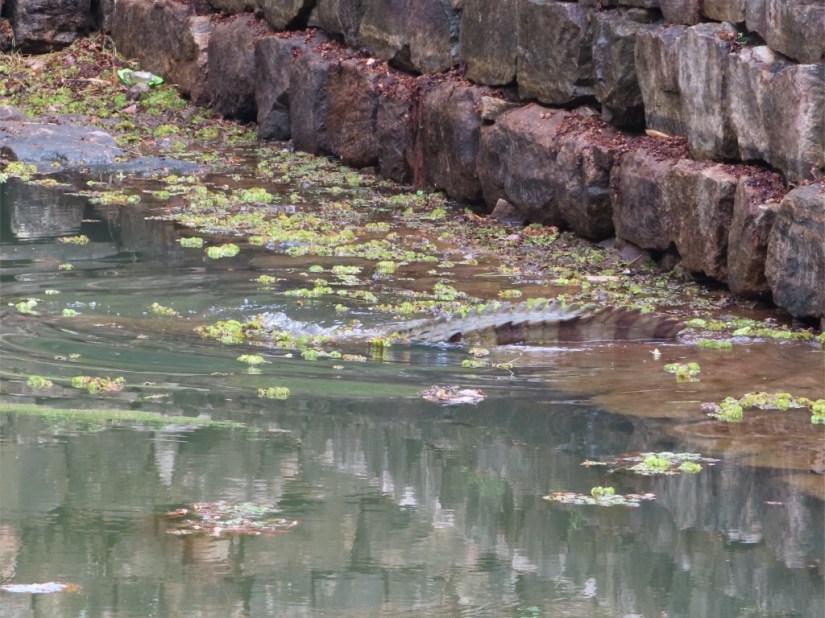
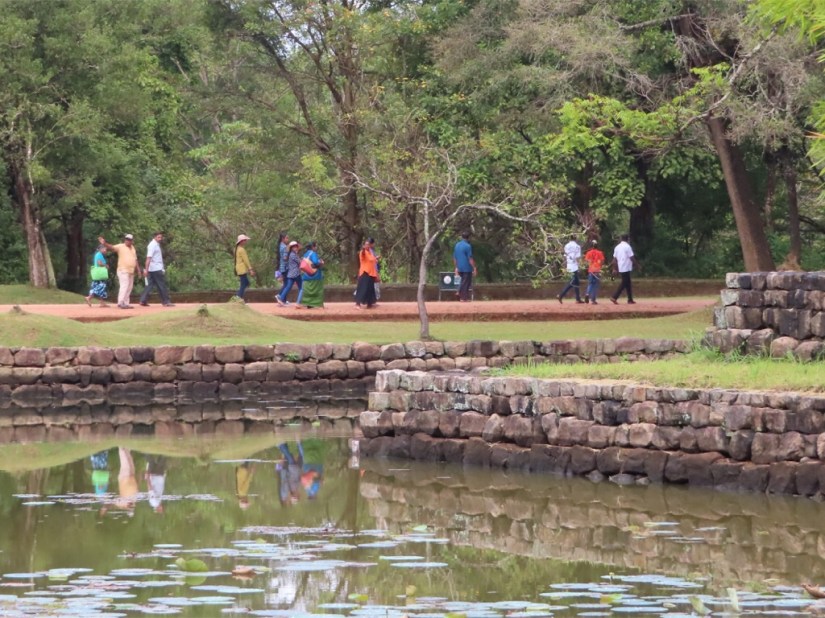
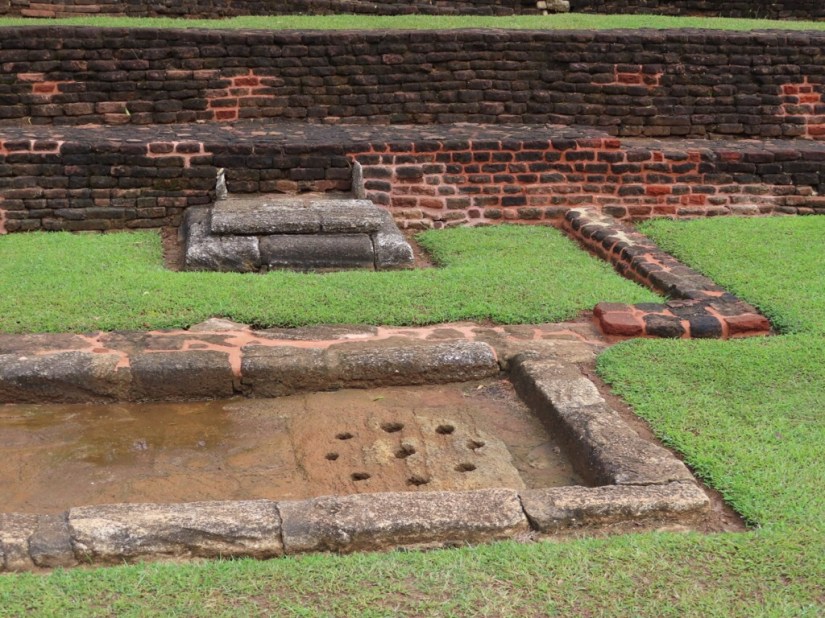
… then on to the ticket office and through the water gardens which must look amazing when full.
 Apparently the fountains work on a simple pressure and gravity system and still work!
 When I planned the trip, I noticed it said to avoid visiting on the weekend or holidays as it gets very busy, which is why we were here on a Monday, but we hadn’t realised it was 71st National day of Sri Lanka, celebrating their independence, or that the whole of Sri Lanka would be coming for a day out!
As we reached the back of the queue at the bottom of the steps which climbed steeply through the terrace gardens, the rain began.
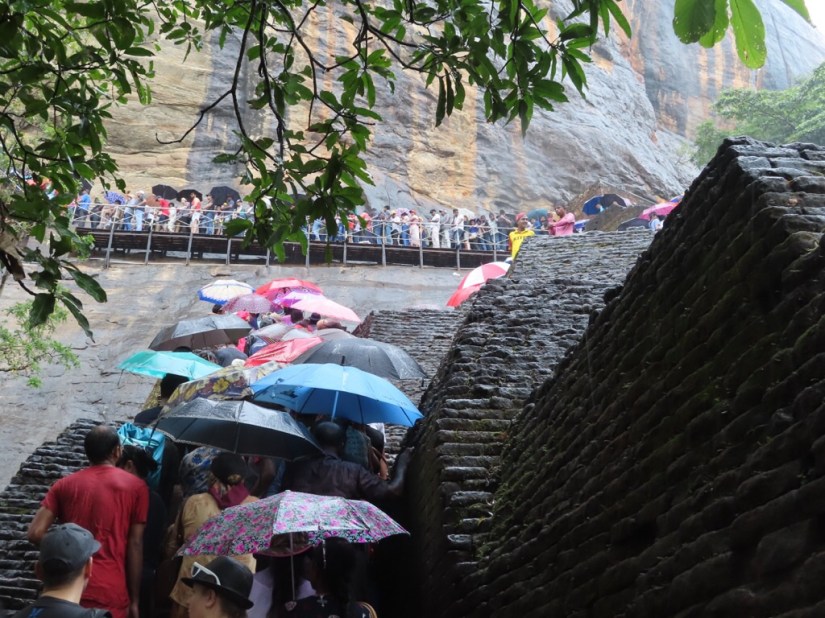 We edged upwards, step at a time, and the rain fell. 90 minutes later we reached a flat stretch, and finally the rain stopped.
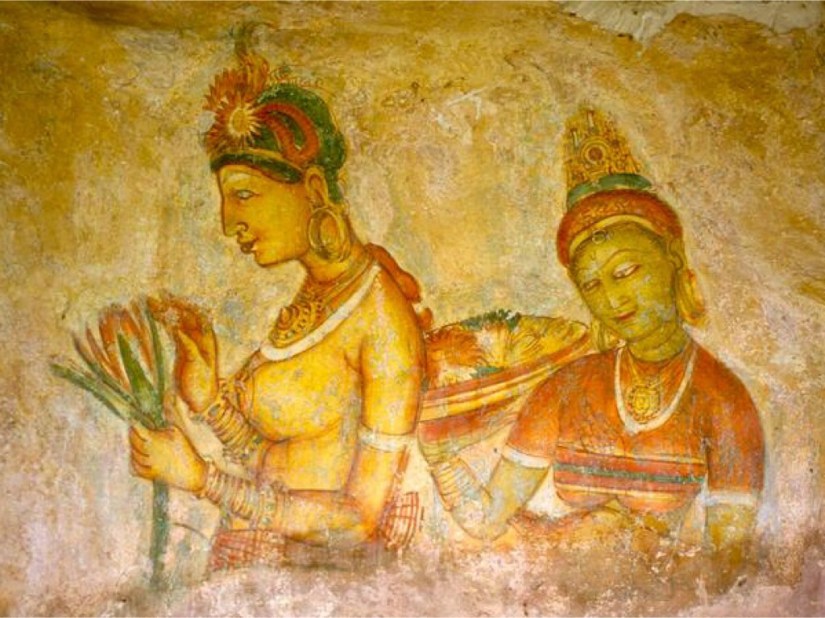
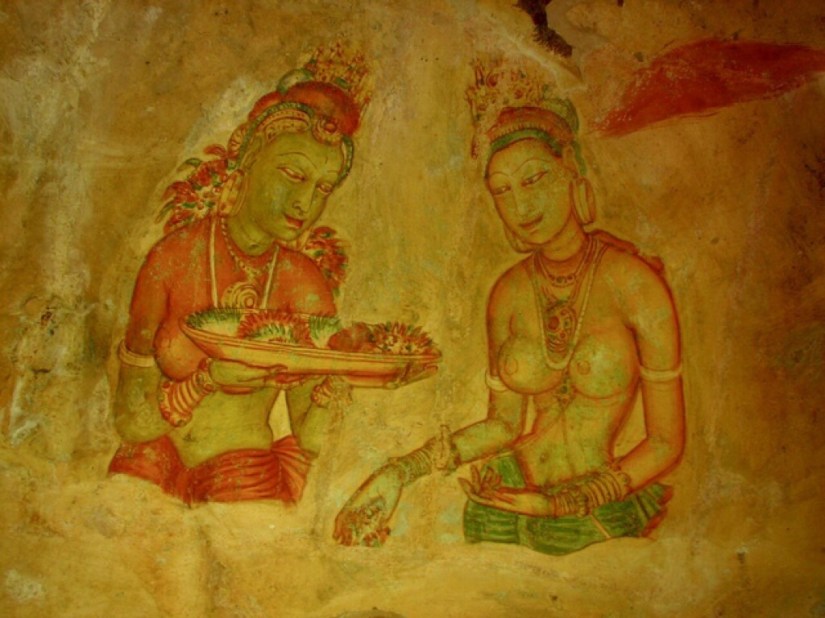
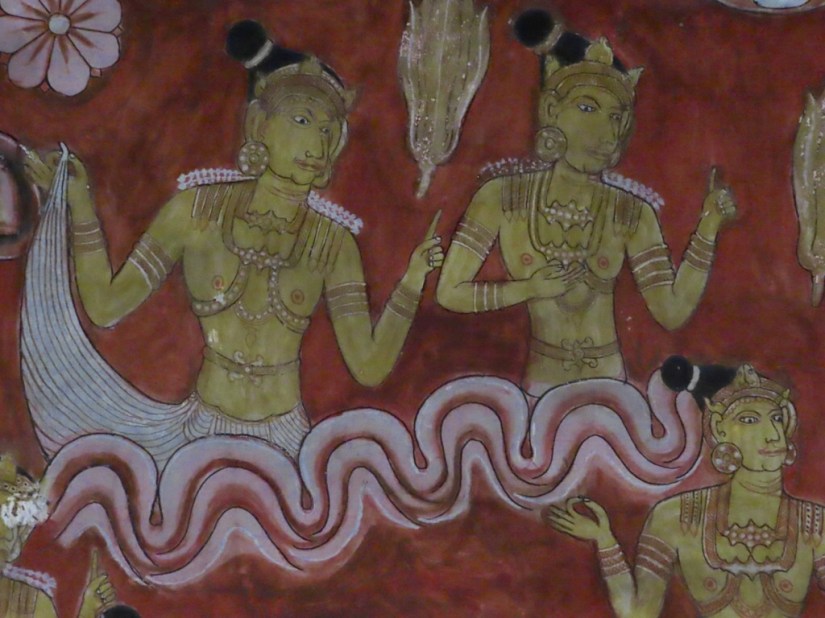
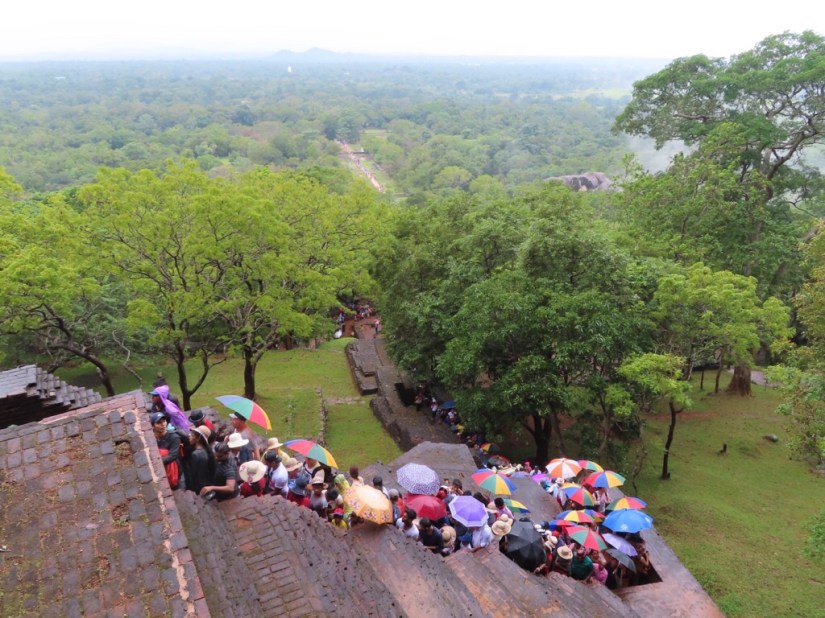 The bottleneck was caused by a couple of spiral stairways to and from a cave with Sri Lanka’s most famous frescoes – The Sigiriya Damsels. There were once as many as 500 covering a huge area but now just 21 remain and photos were not allowed, enforced by strict guards, so I found these online.
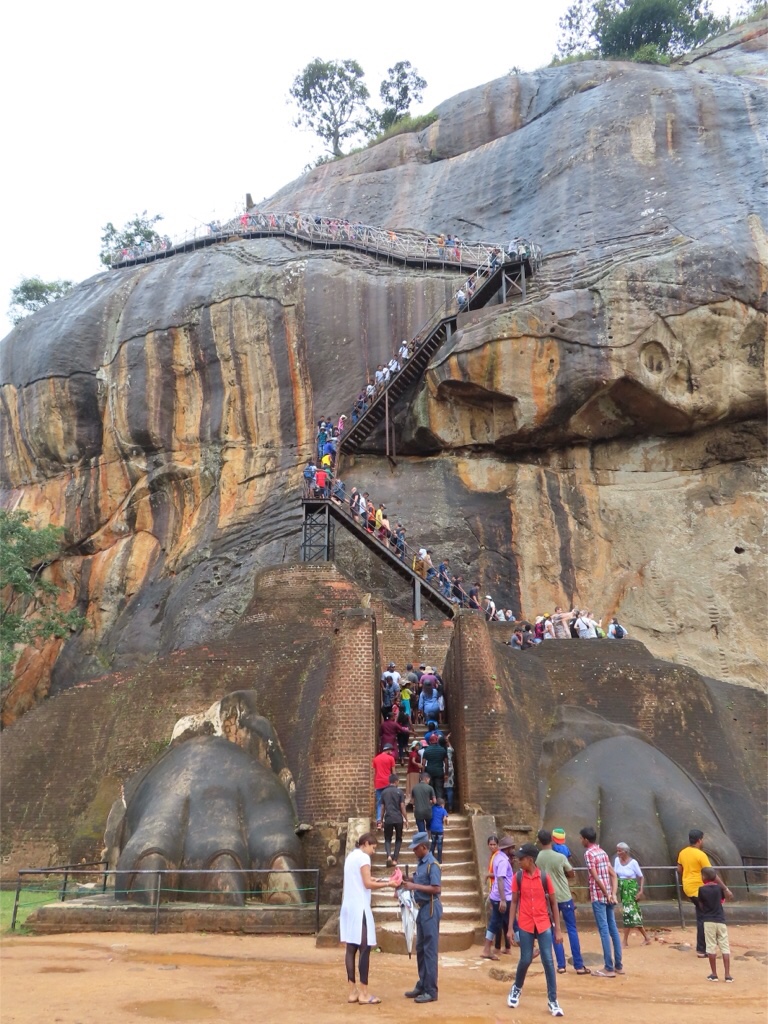
Another flight of steps took us to the Lion Platform, where there was a warning as bees from nests on the rock have been known to attack visitors, but fortunately not today. The final staircase ascends from here, between two immense lion paws, originally into the lions mouth, but the rest of the beast no longer survives.
We reached the summit which is huge, and would have been covered in buildings, although just foundations remain. A great photo op in all directions …
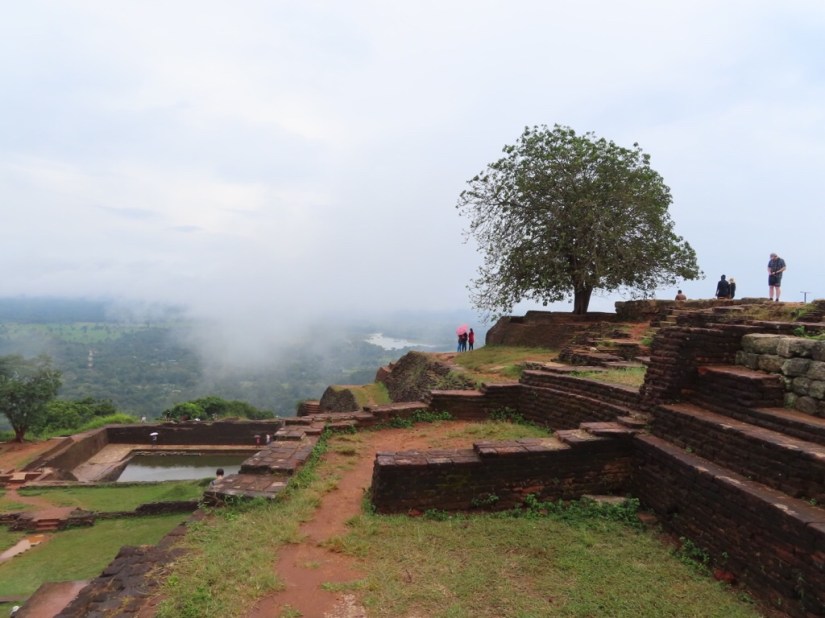
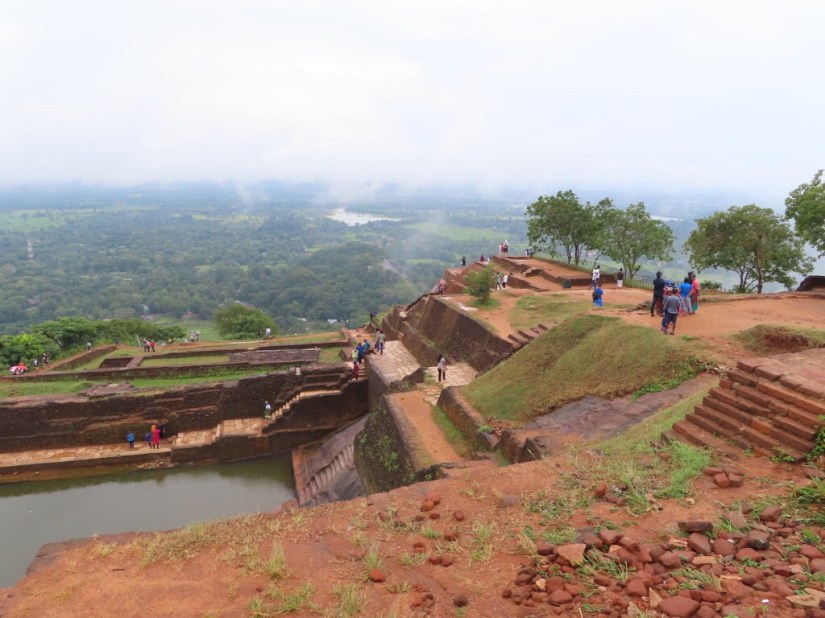
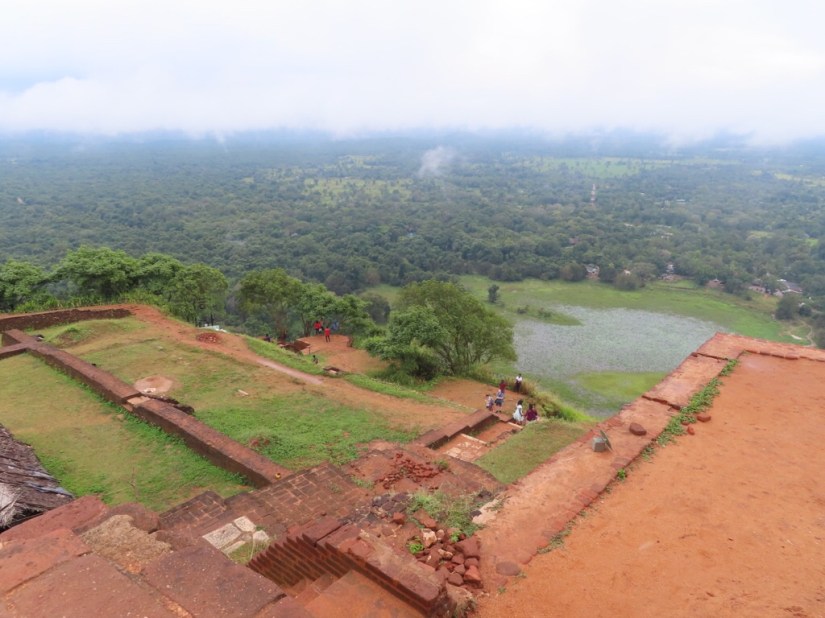
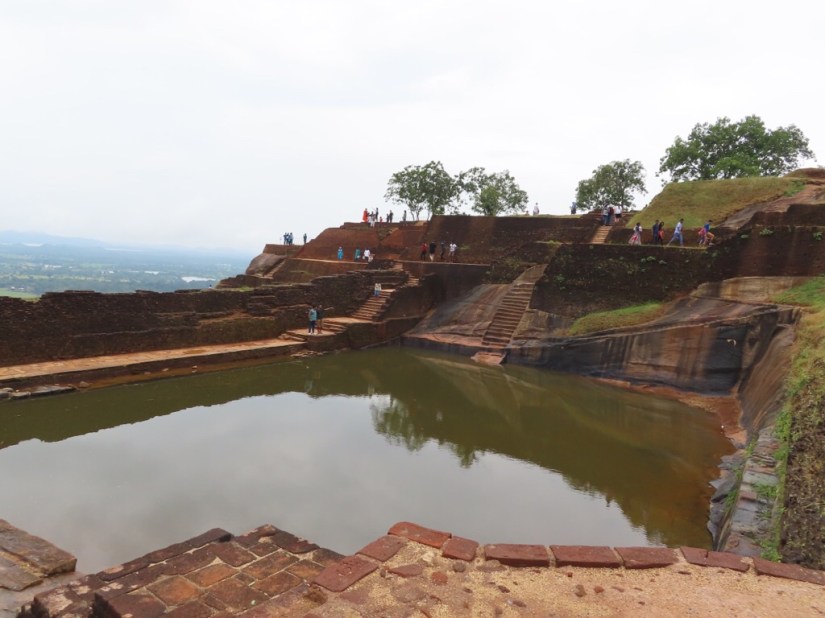
… including down to the water gardens …
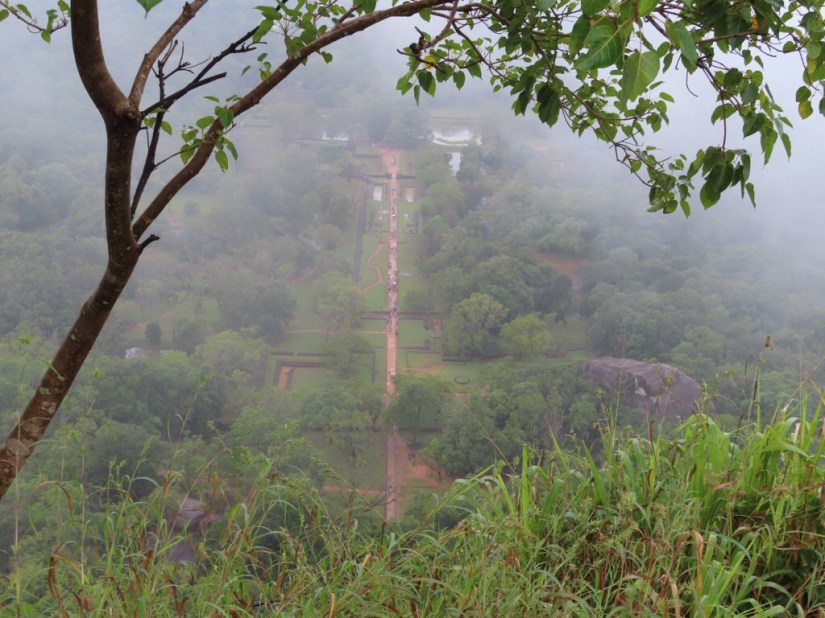
… and across to Pidurangala Rock.
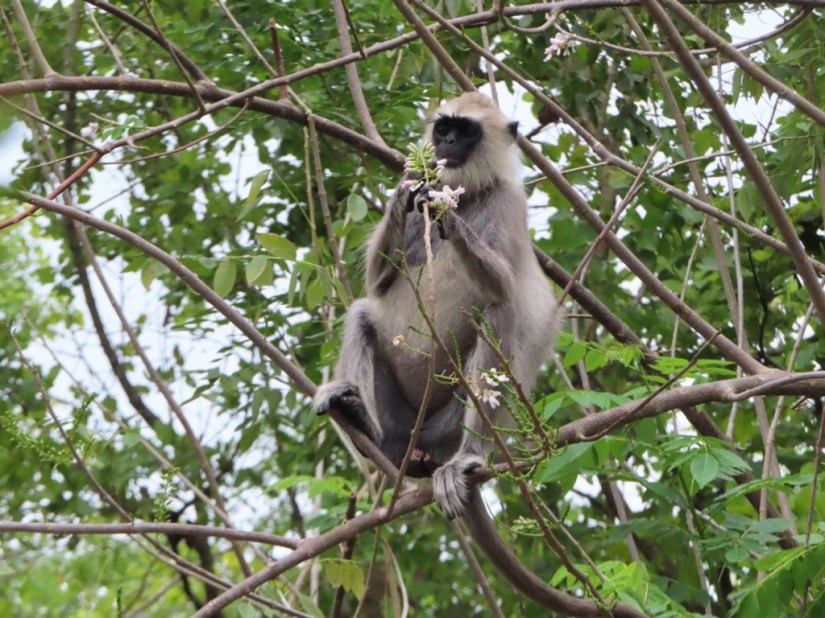
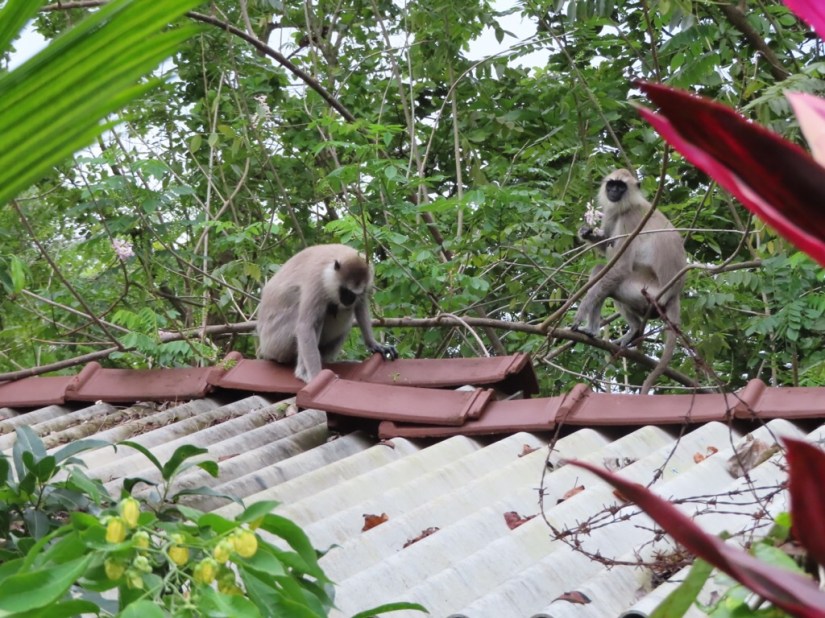
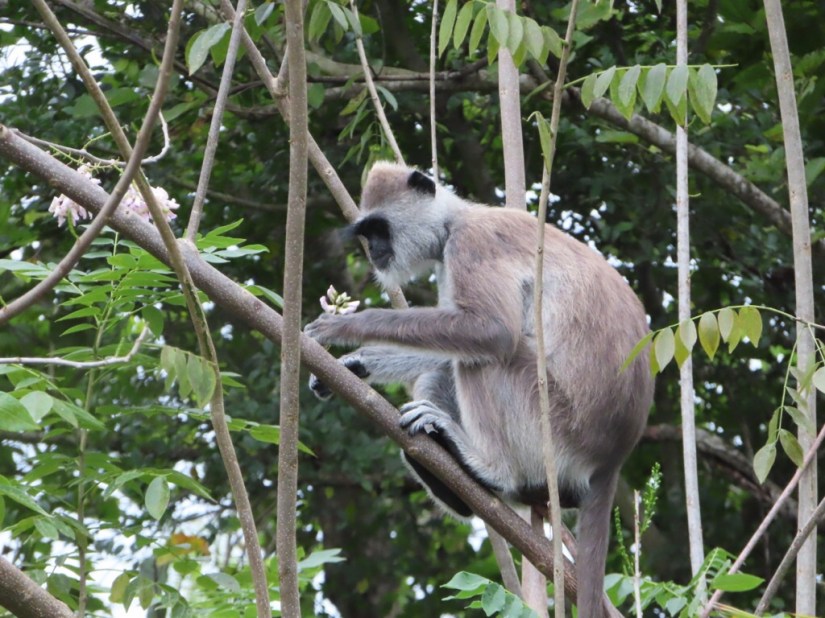
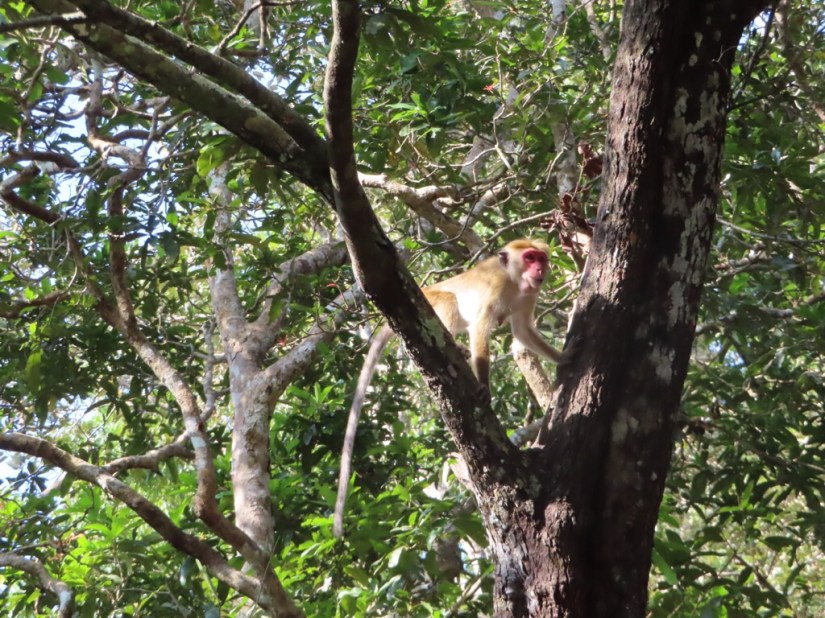
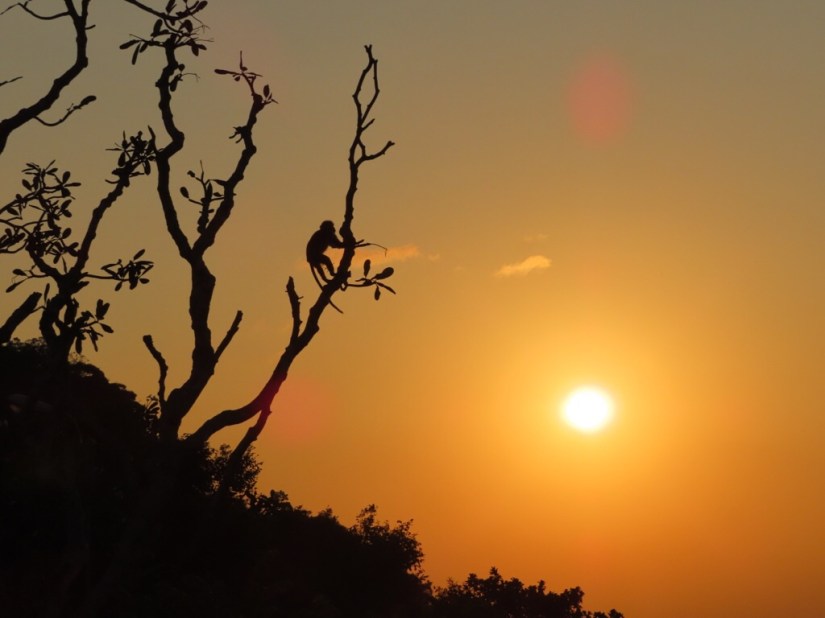
The descent was easier, accompanied by more rain, but at least we had avoided standing for 90 mins in the blazing sun! Round trip was 5.2 miles and we spent the rest of the day relaxing and watching monkeys from our verandah!
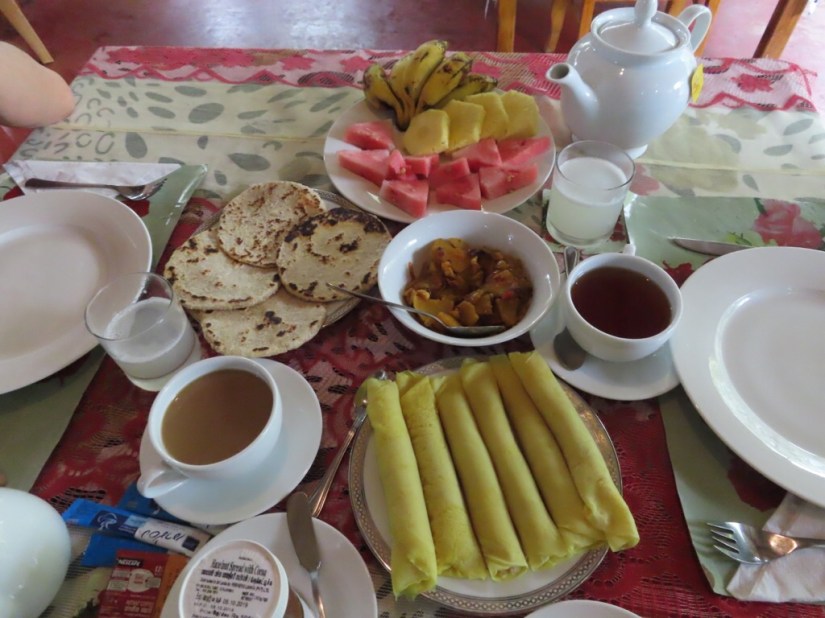
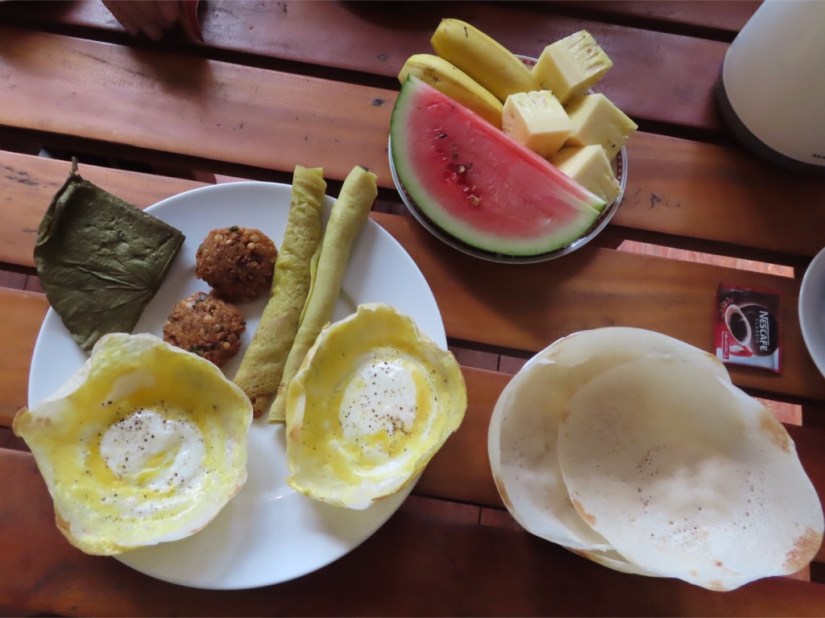
All the meals here have been amazing and here is our breakfast spread with coconut roti and sambal, and rolled pancakes filled with coconut and sugar which are really delicious.
Another showery morning and time to move on again … more ruins!
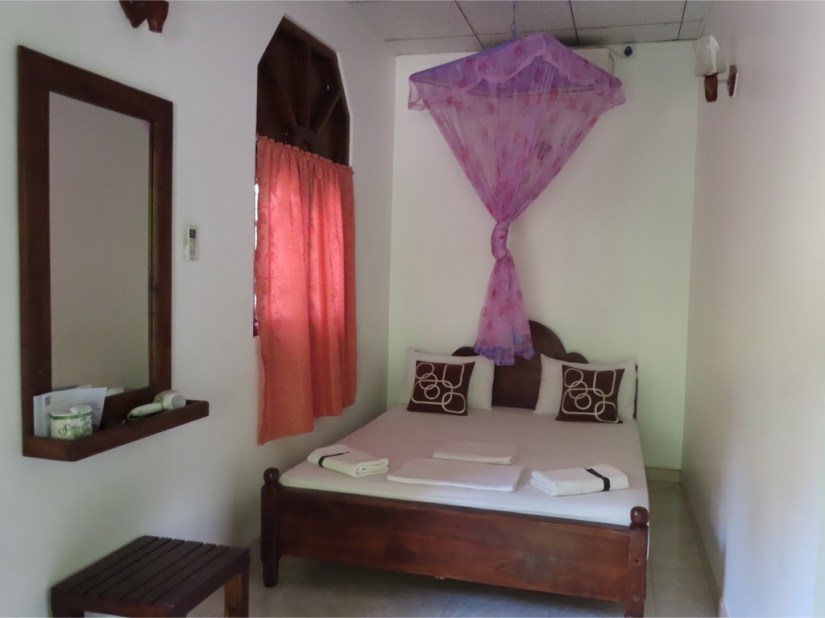
 Arriving in the afternoon, we checked in to the Golden Rainbow Guesthouse …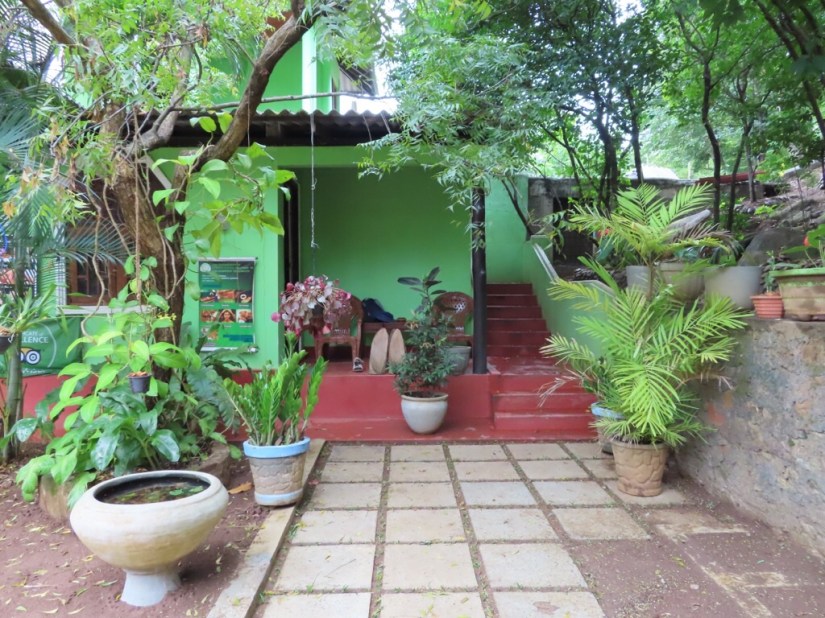
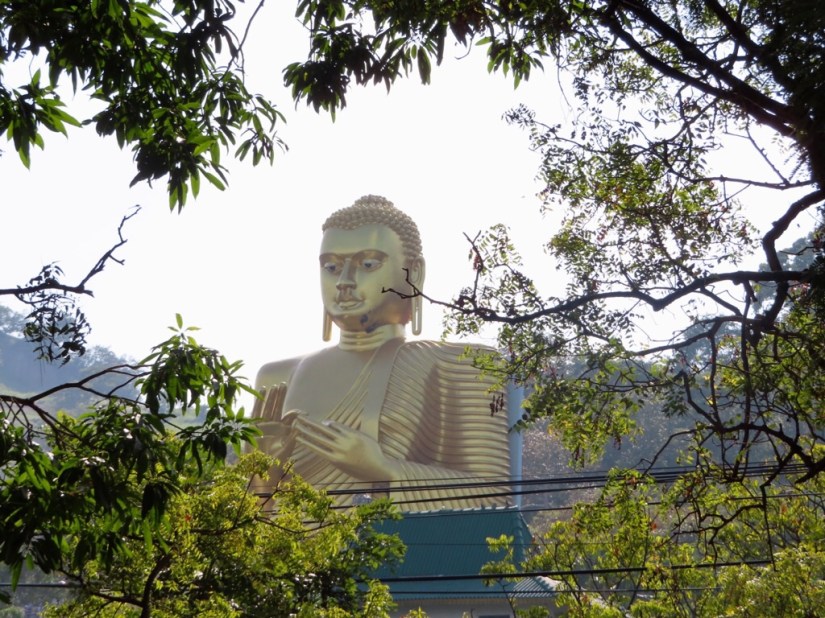
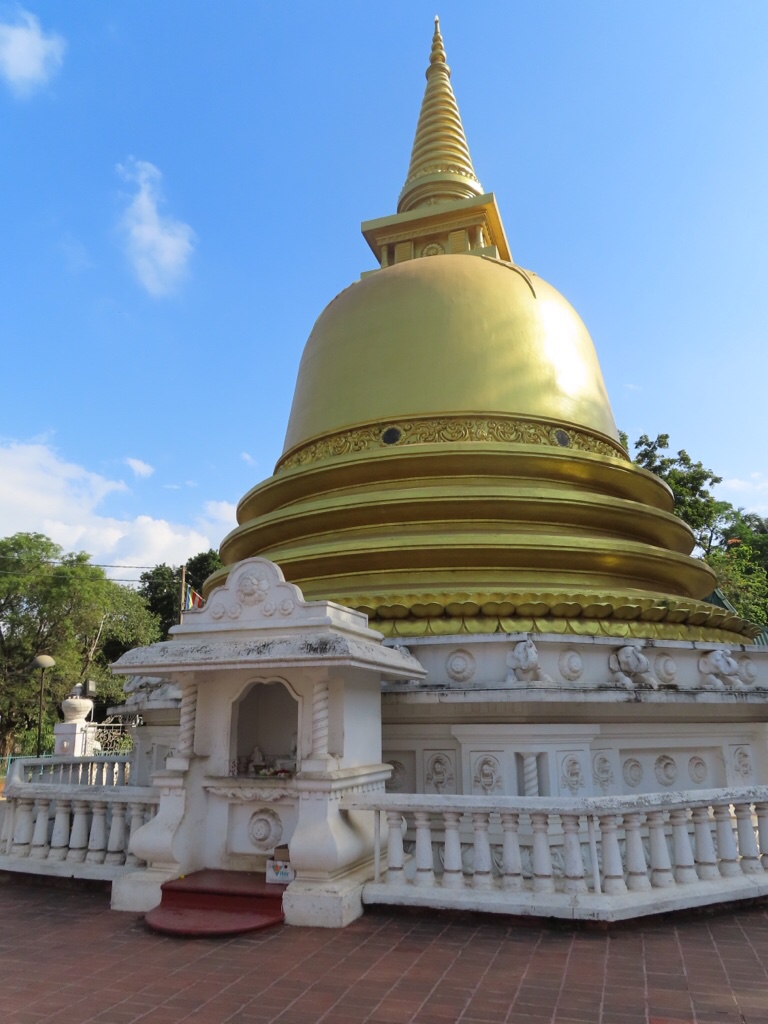
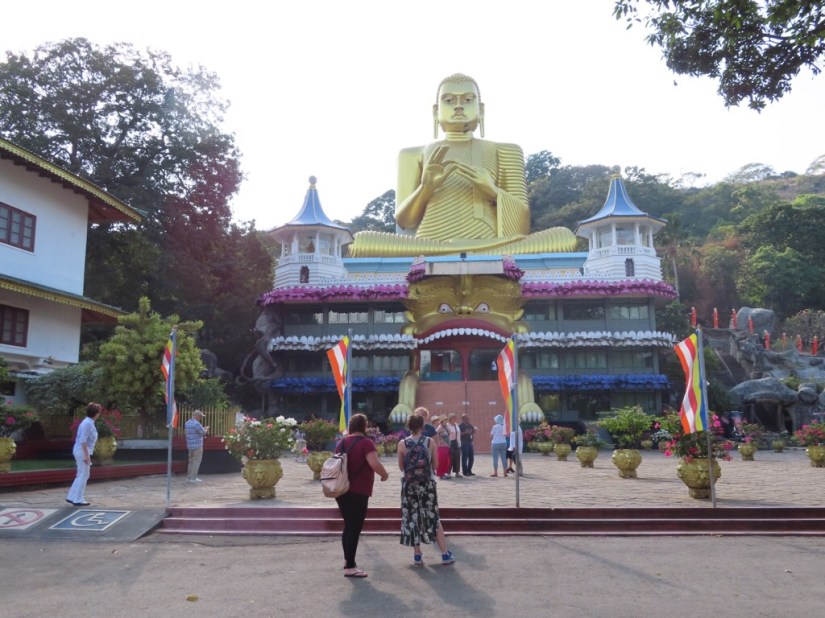

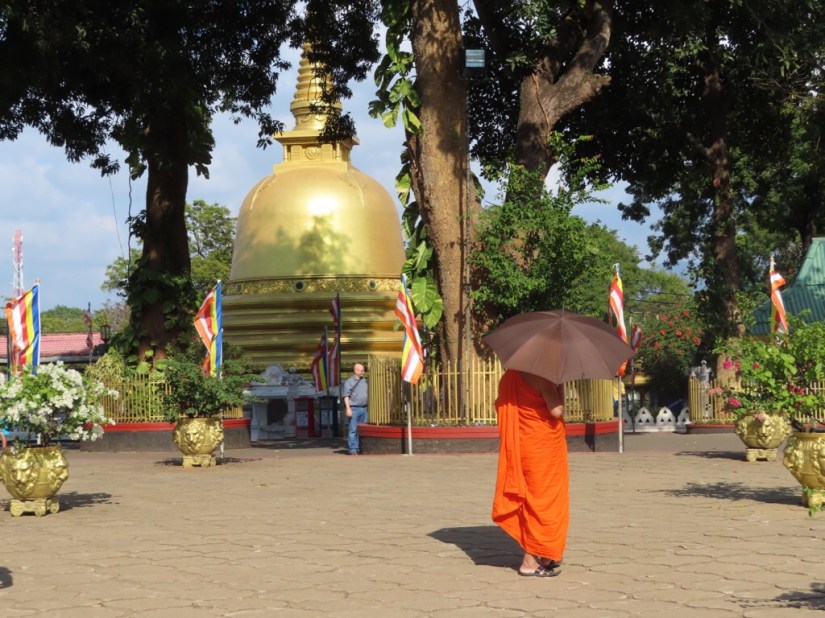
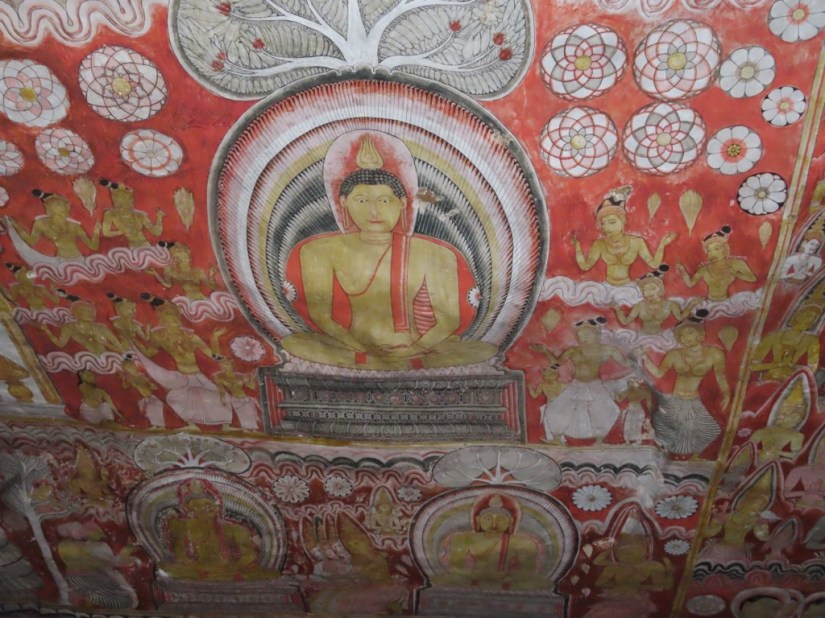
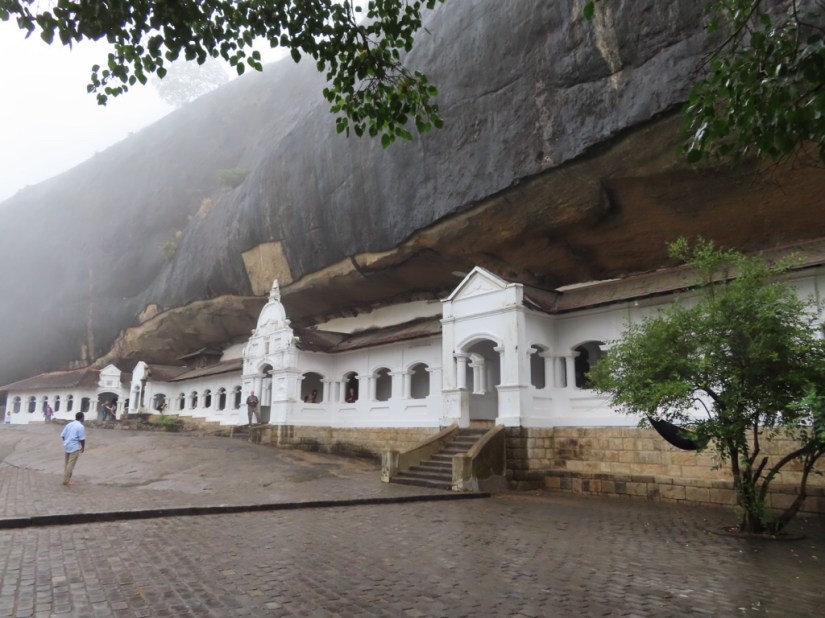
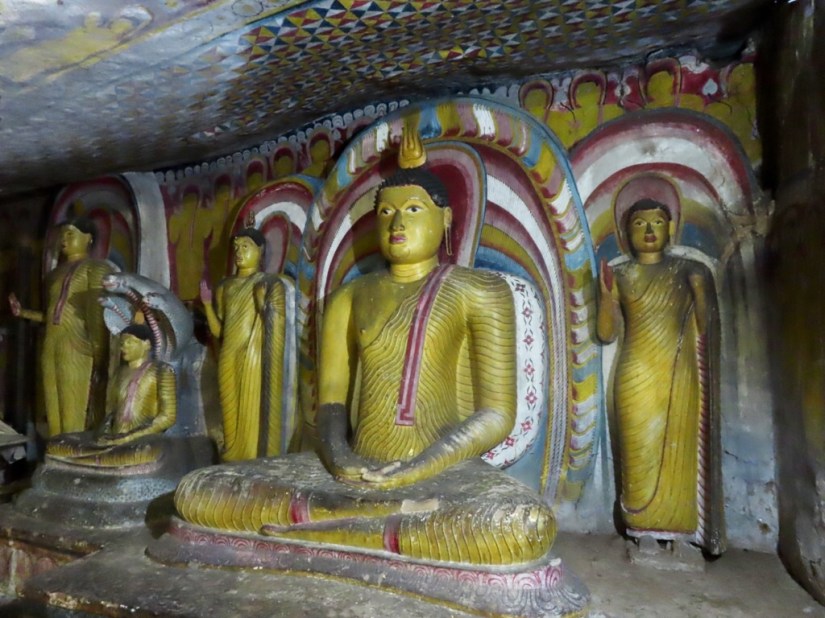
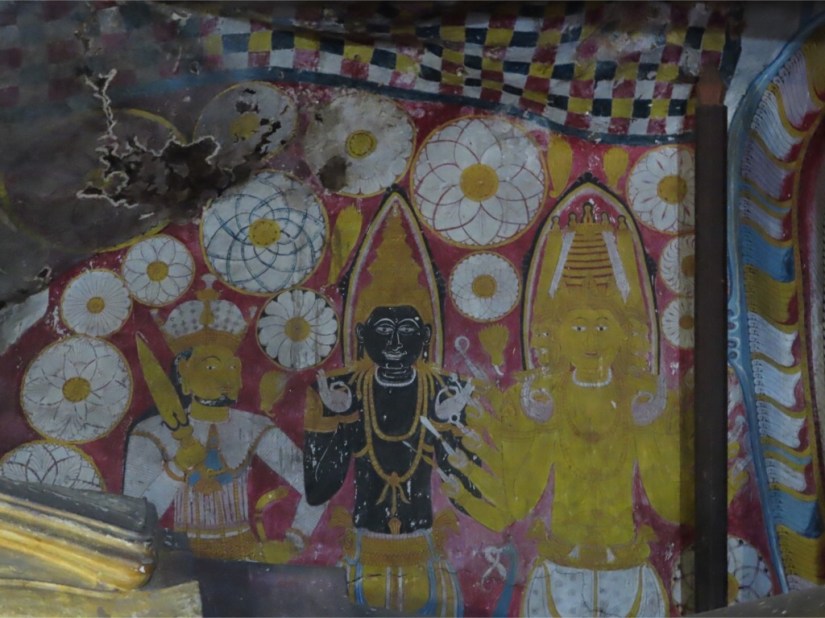
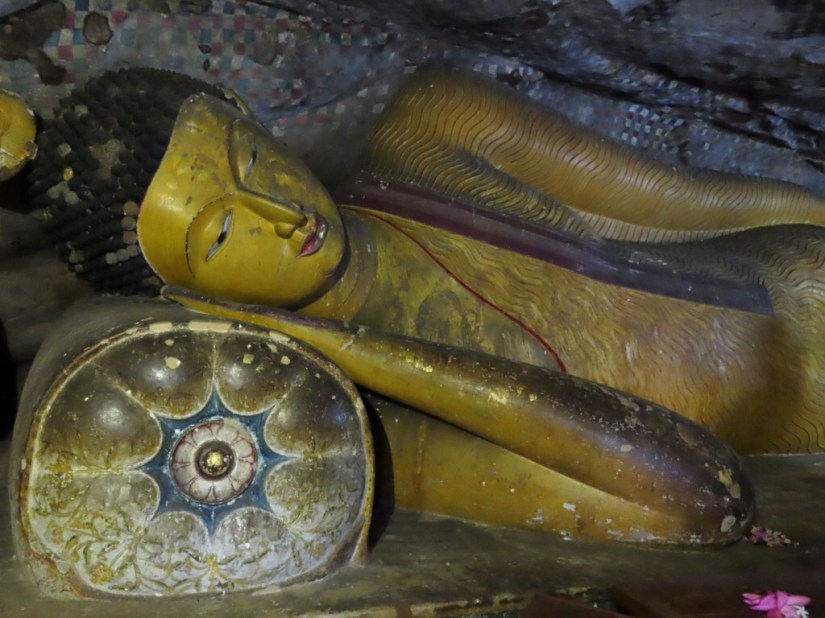
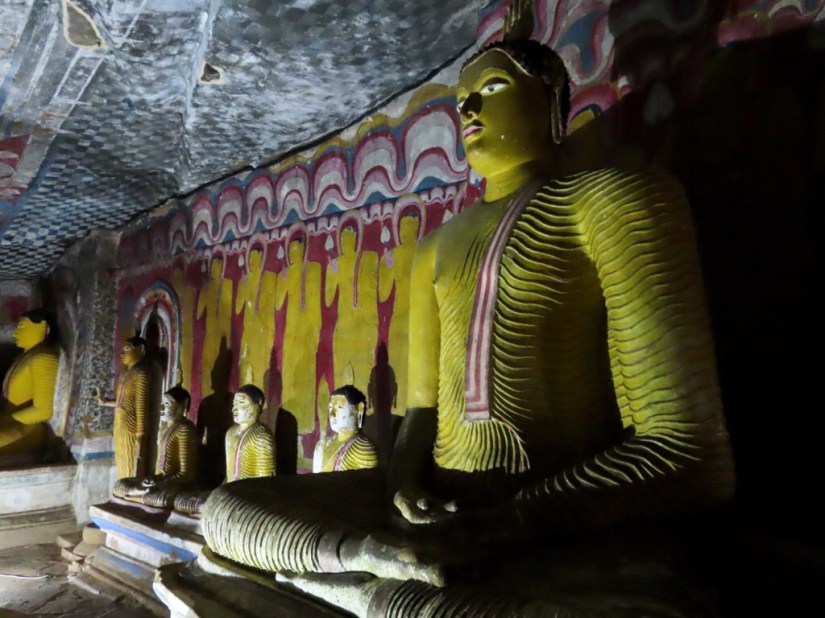
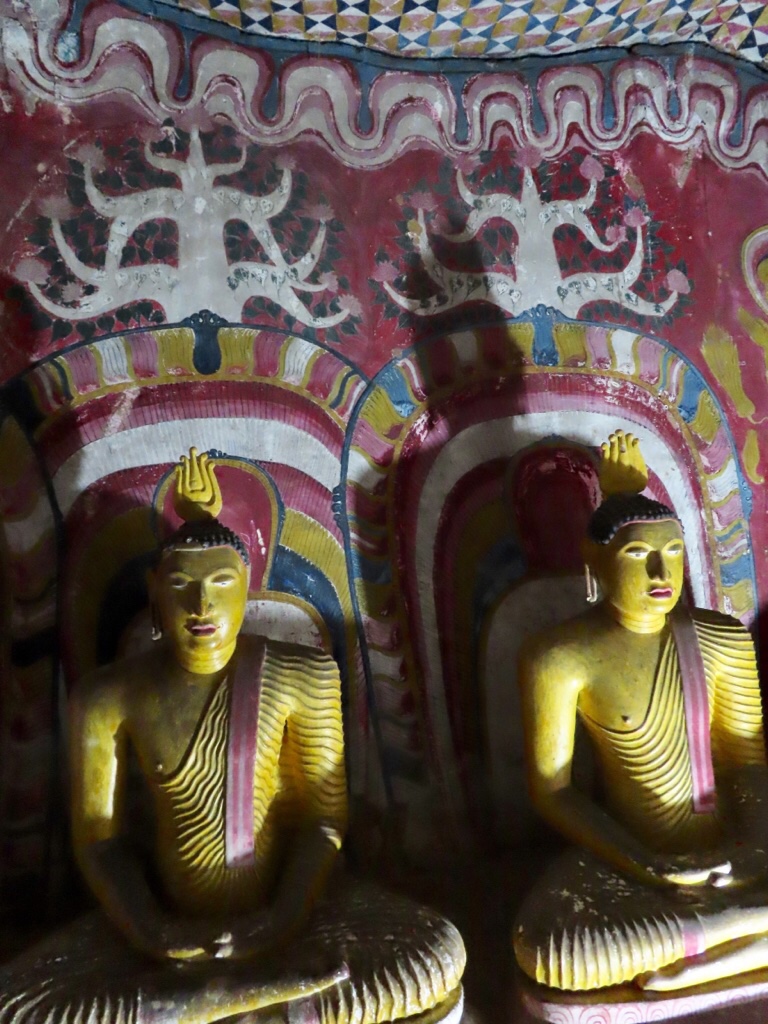
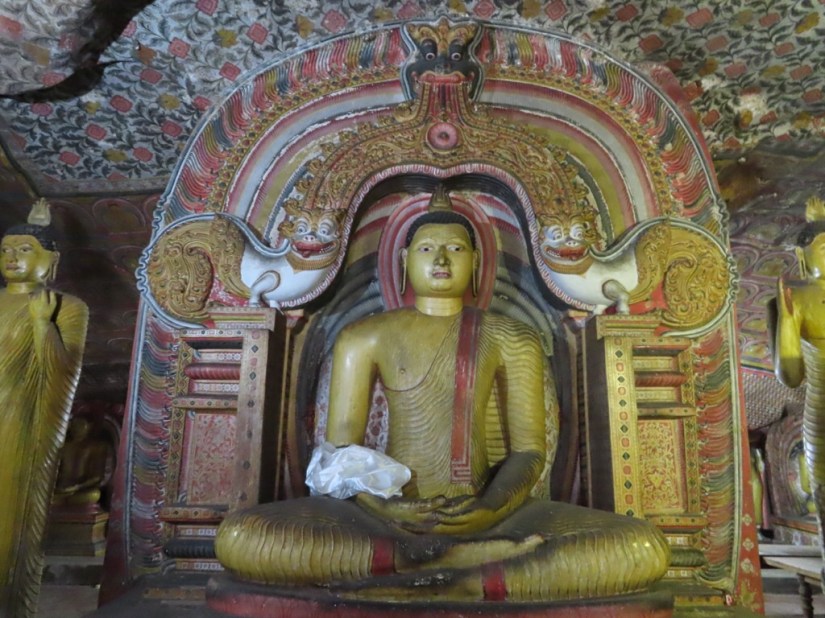
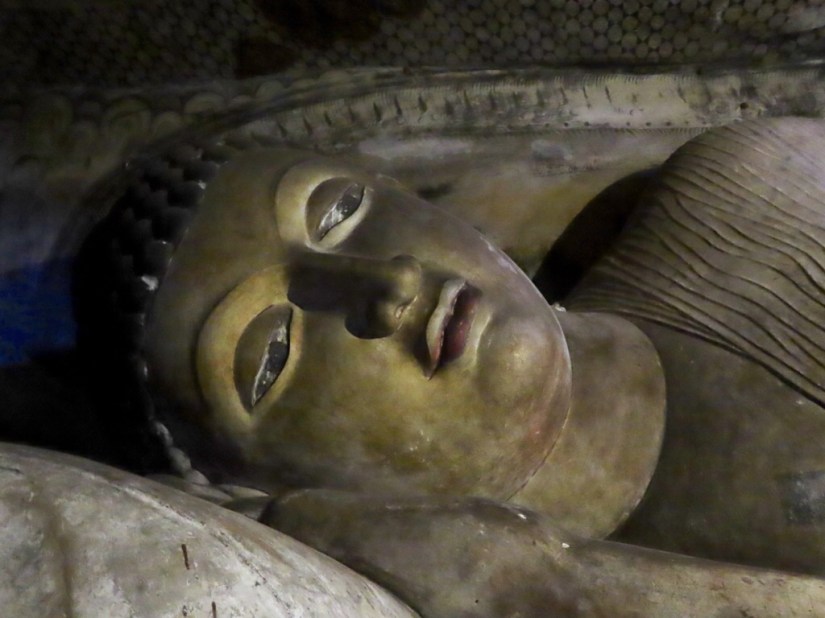
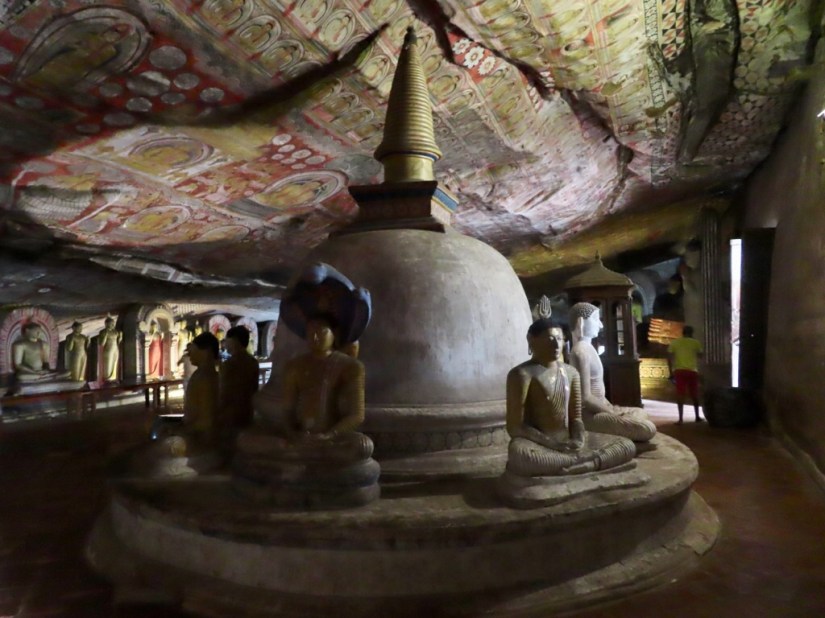
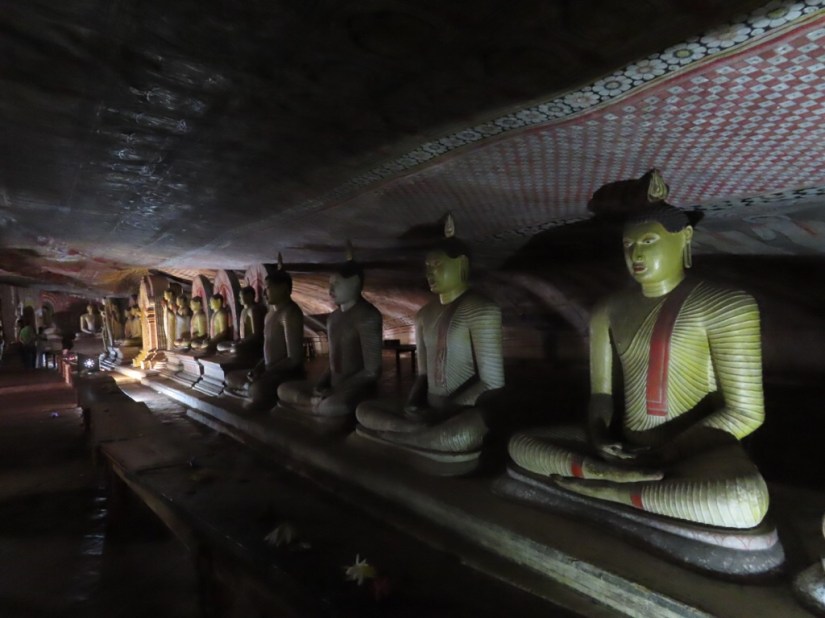
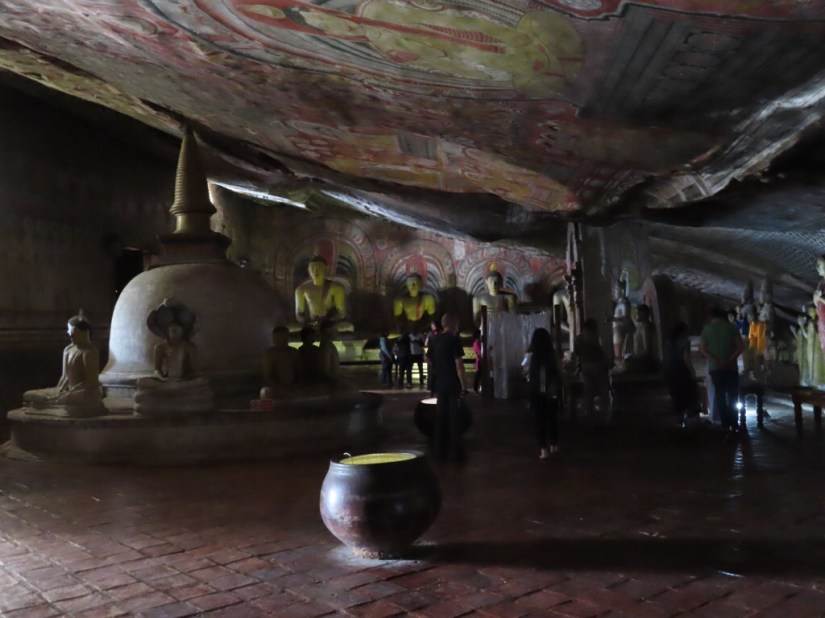
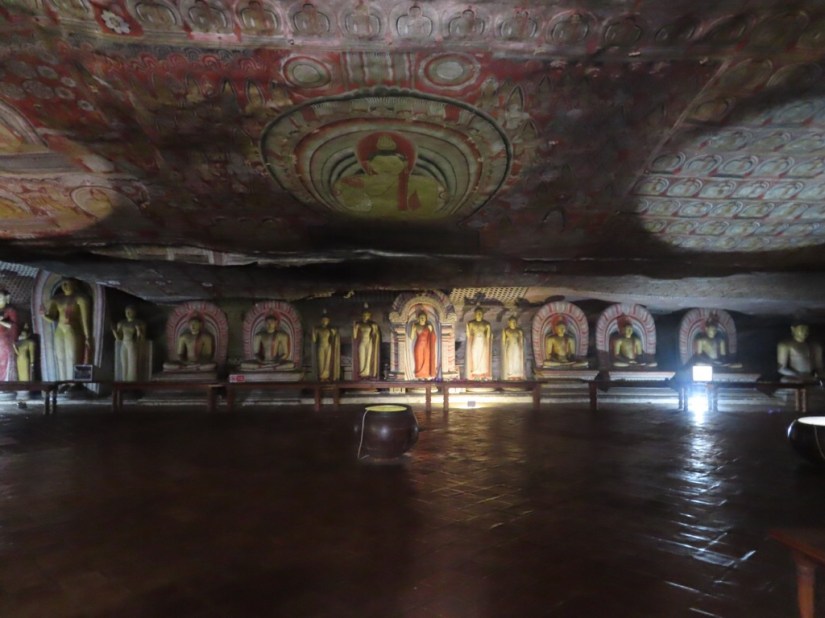
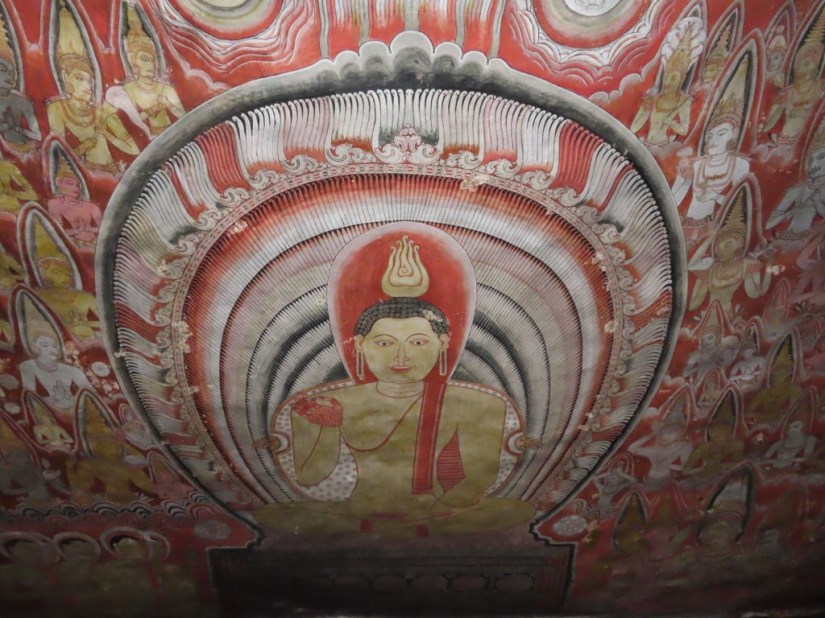
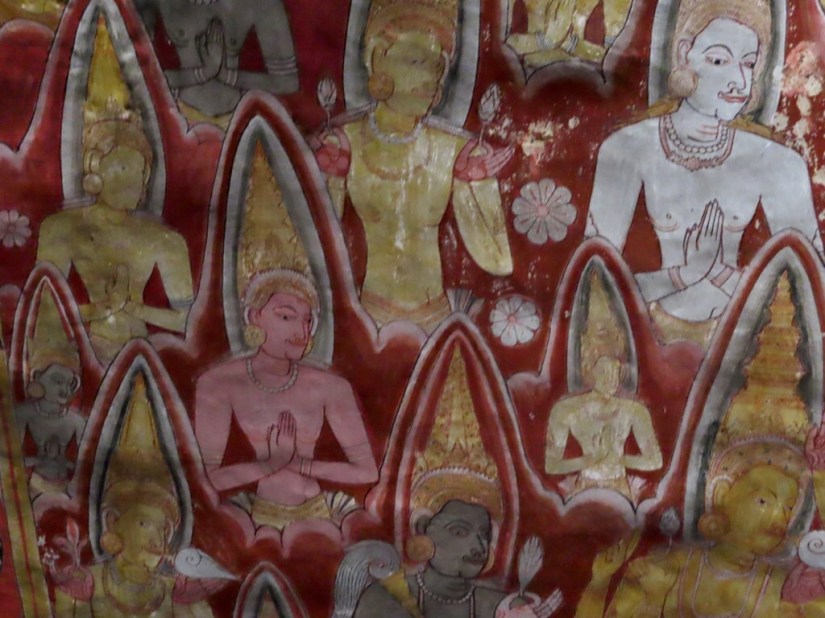
 The caves are built into a huge granite outcrop which rises 160m above the countryside. Just five months after becoming king in 103BC, Vattagamini lost his throne to Tamil invaders and took refuge in these caves for 14 years. On regaining his throne, he had the temples constructed in gratitude for his shelter. Later kings embellished, restored and repainted the temples regularly as the paint faded. There are five caves of varying sizes, containing a mixture of standing, seated and reclining Buddhas and decorated with the best murals in Sri Lanka.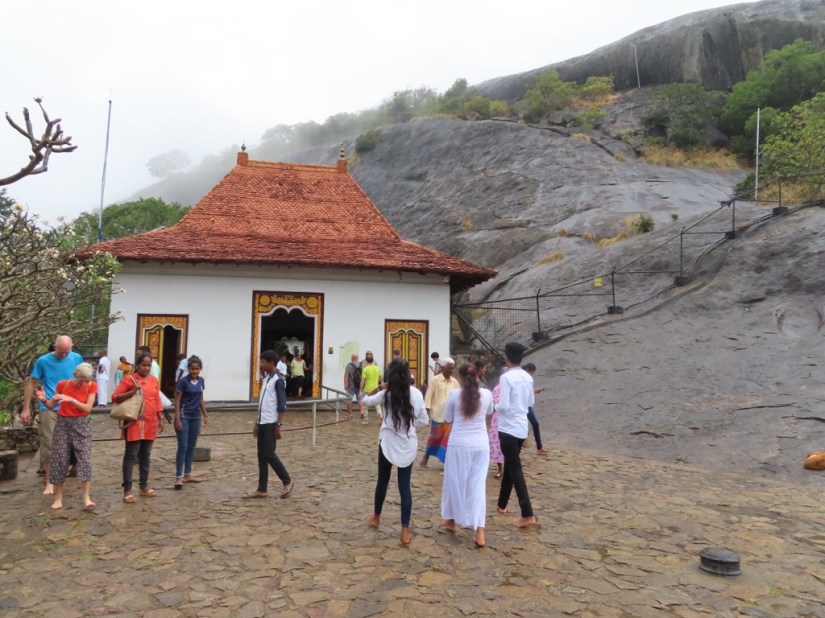

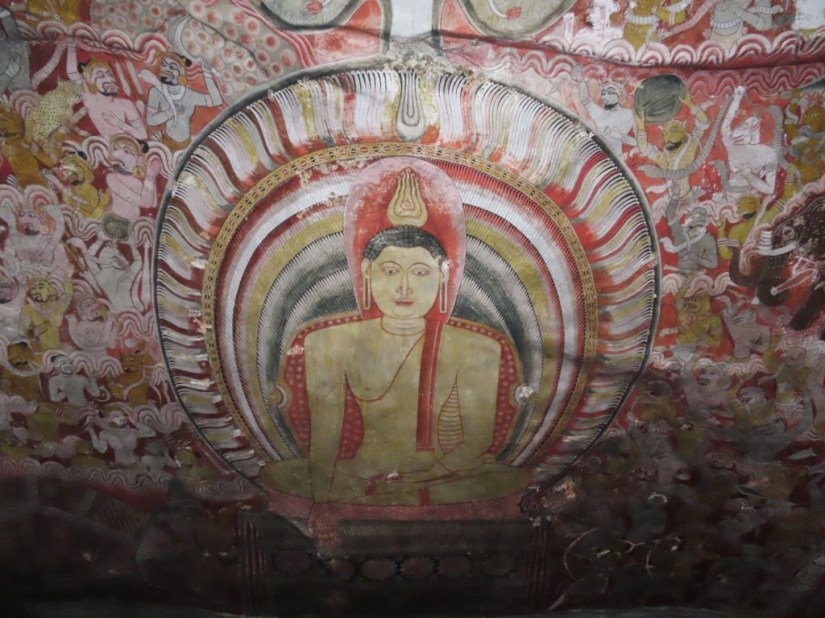
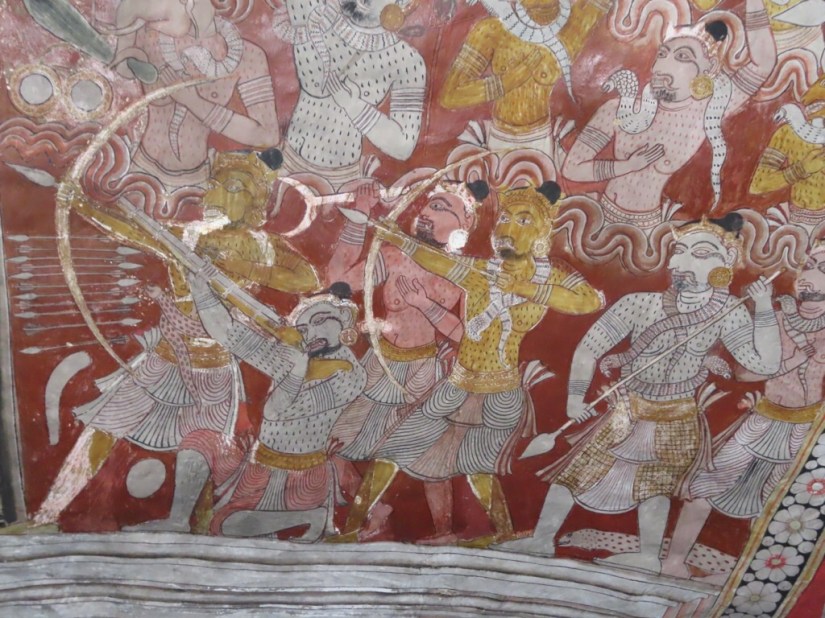
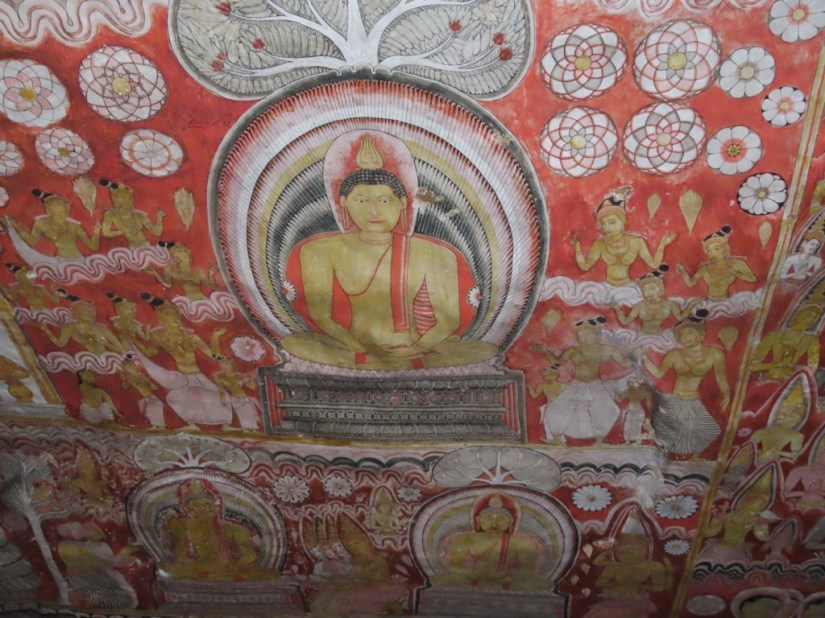
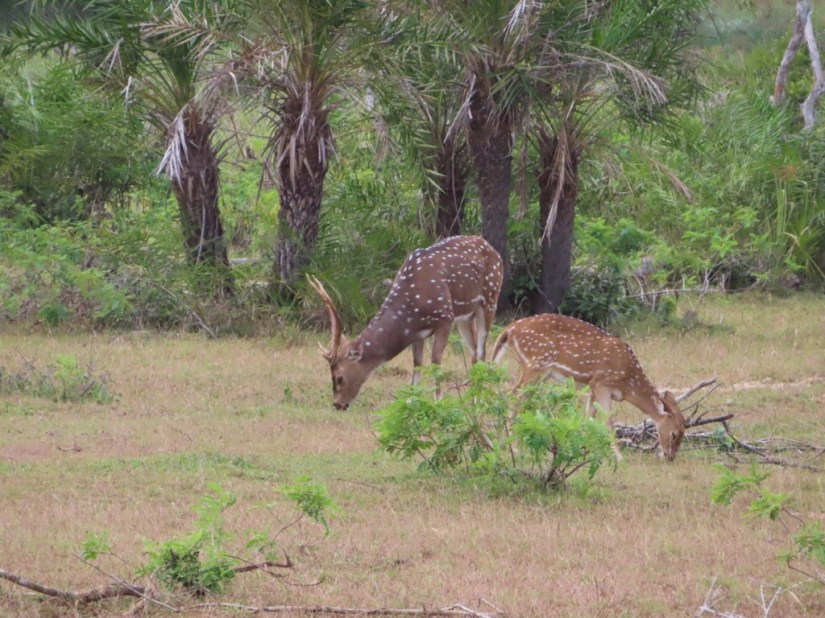
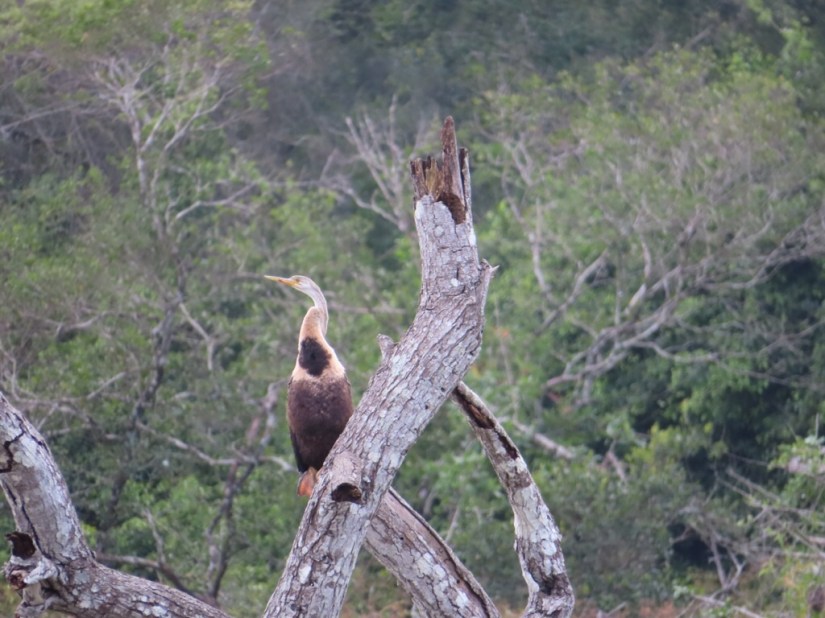
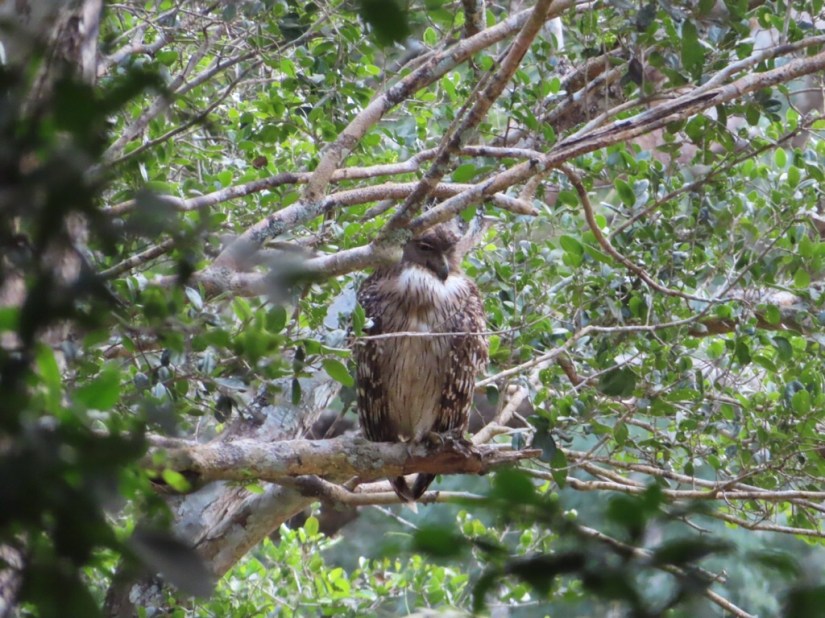
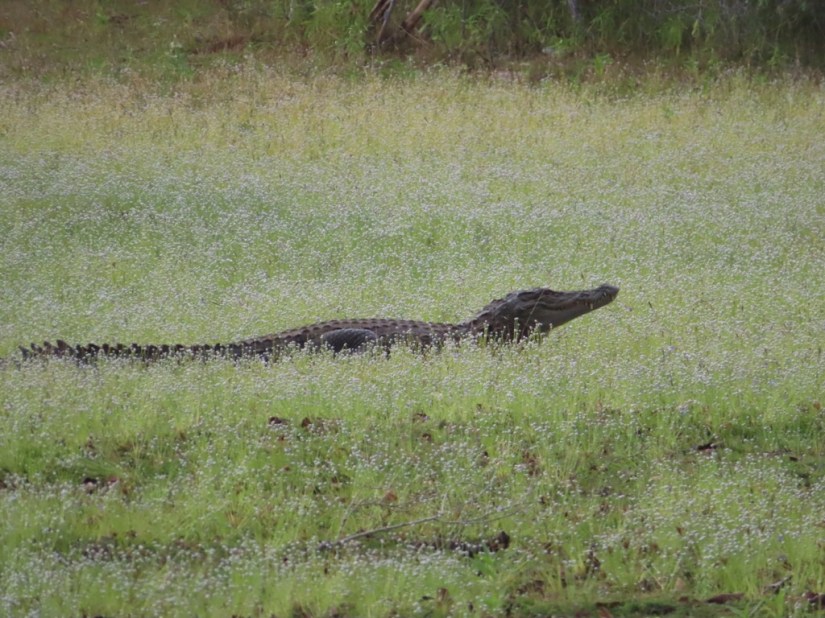
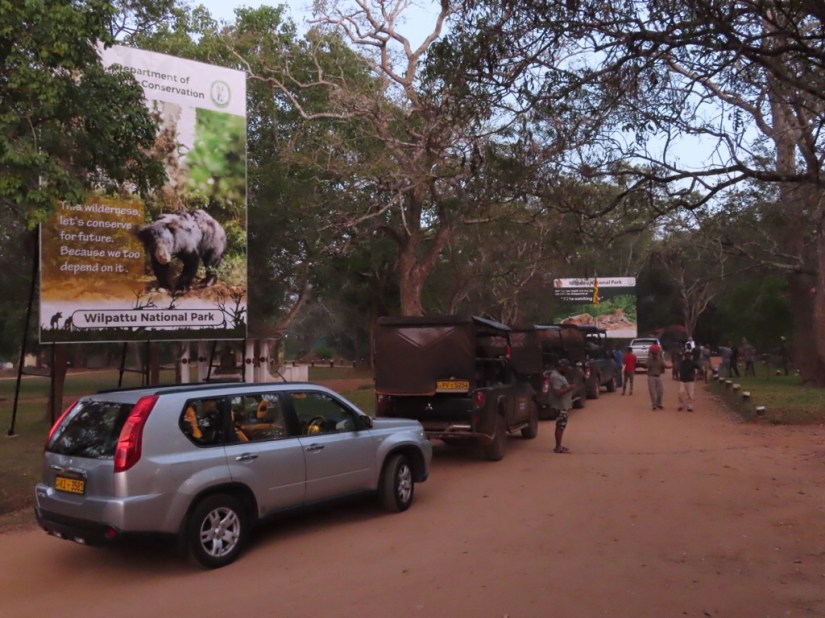
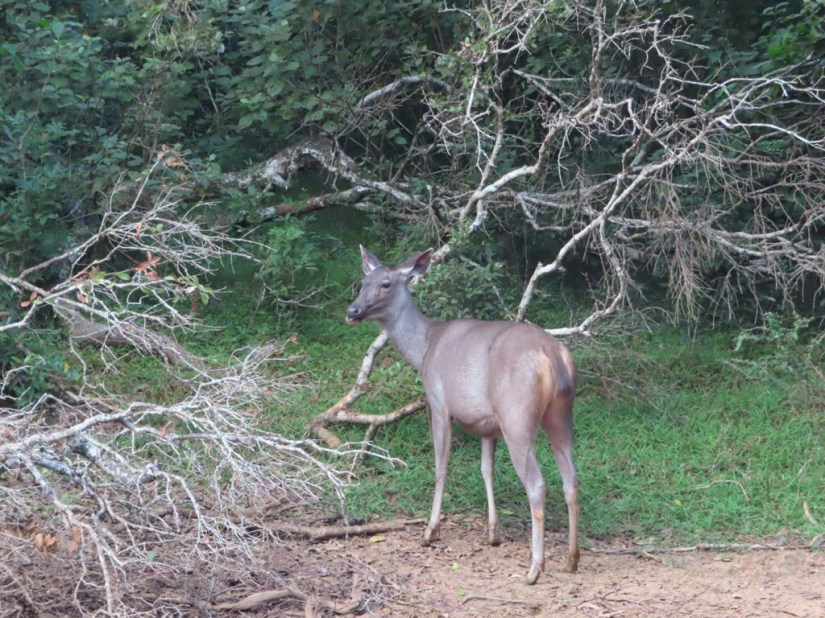
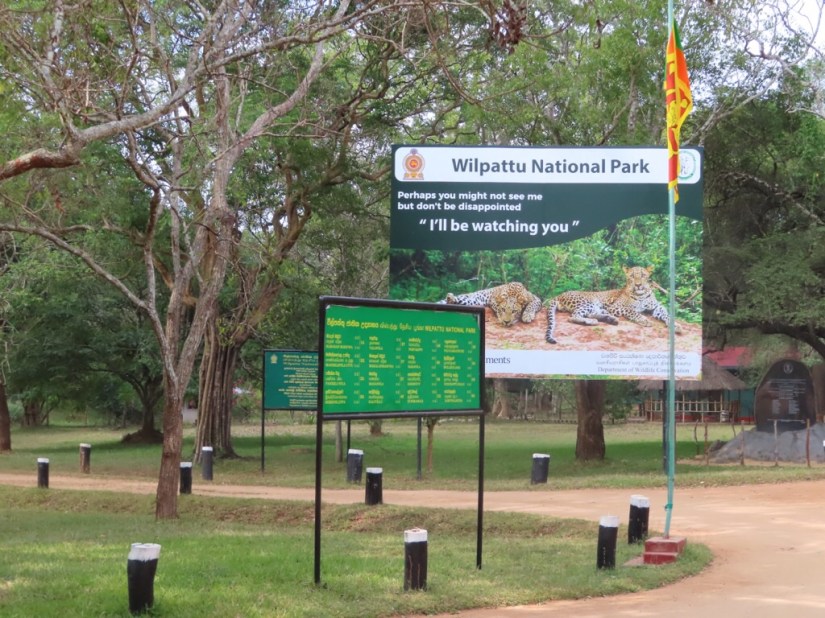
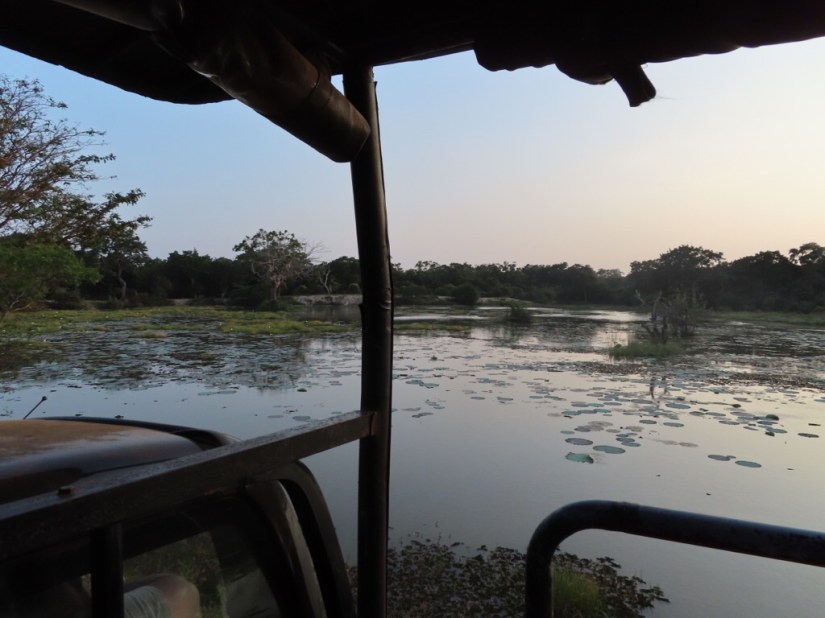 We arrived at Wilpattu National Park late morning after a short drive west. We are staying at a tented camp run by Big Game Camps and were shown to our cute little tent with all mod cons – power, lighting, a double bed, and bathroom with loo and shower.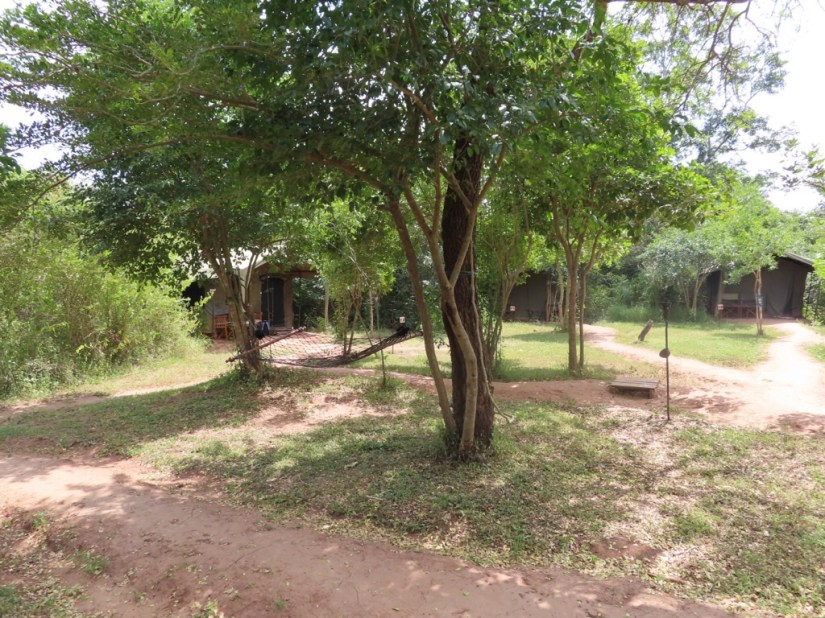

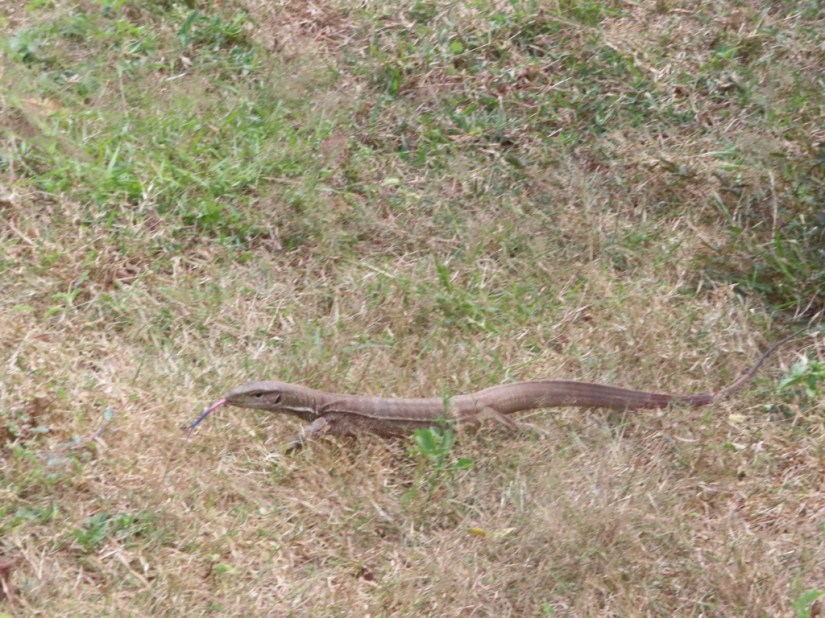
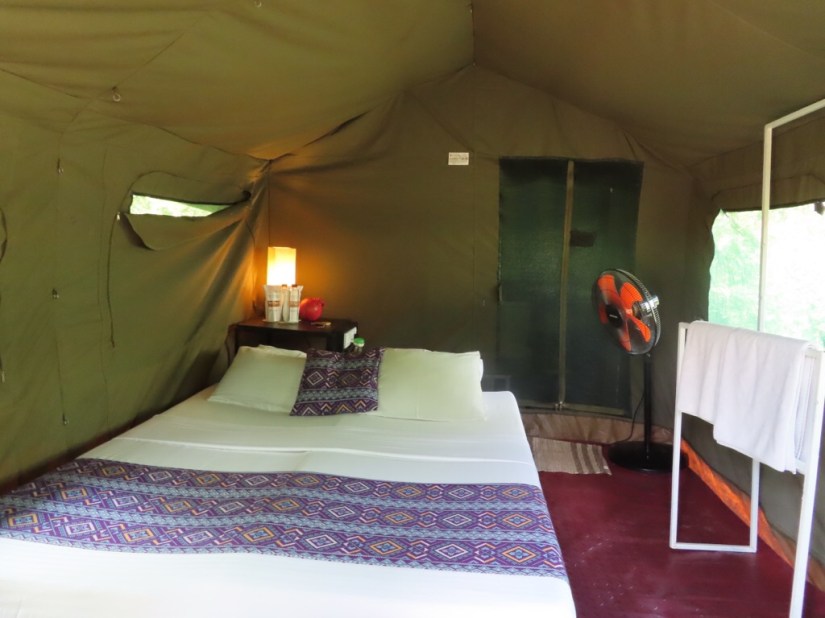 We were warned to keep the sleeping compartment zipped up at all times and soon found out why when we saw a lizard sneaking about!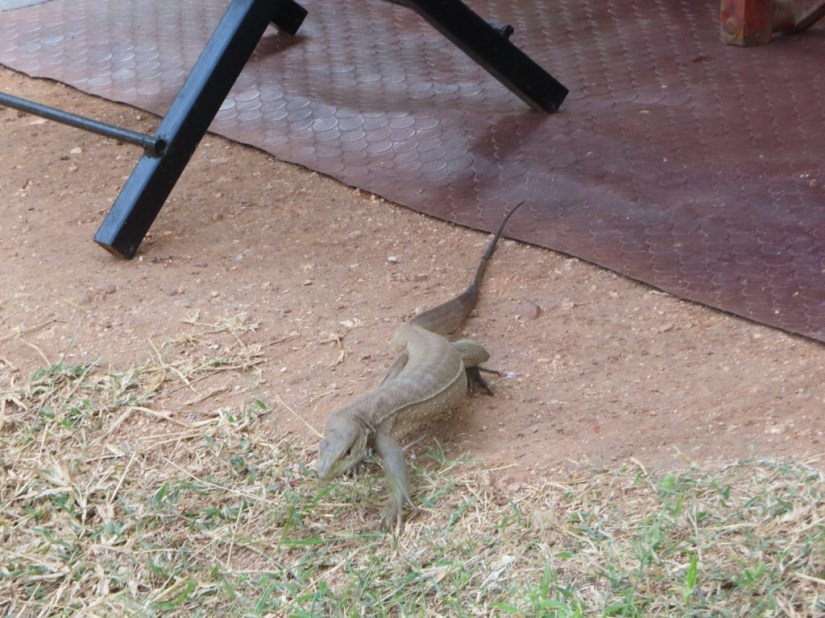
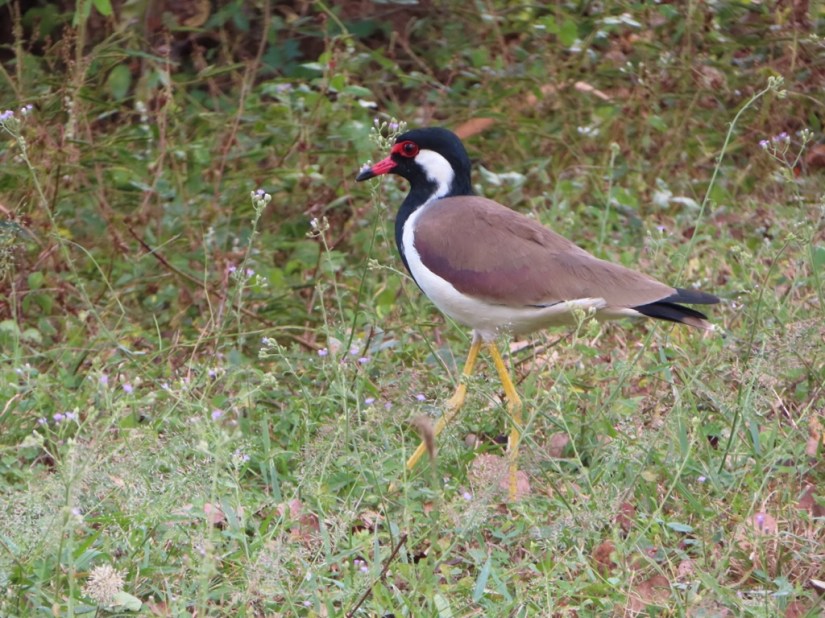
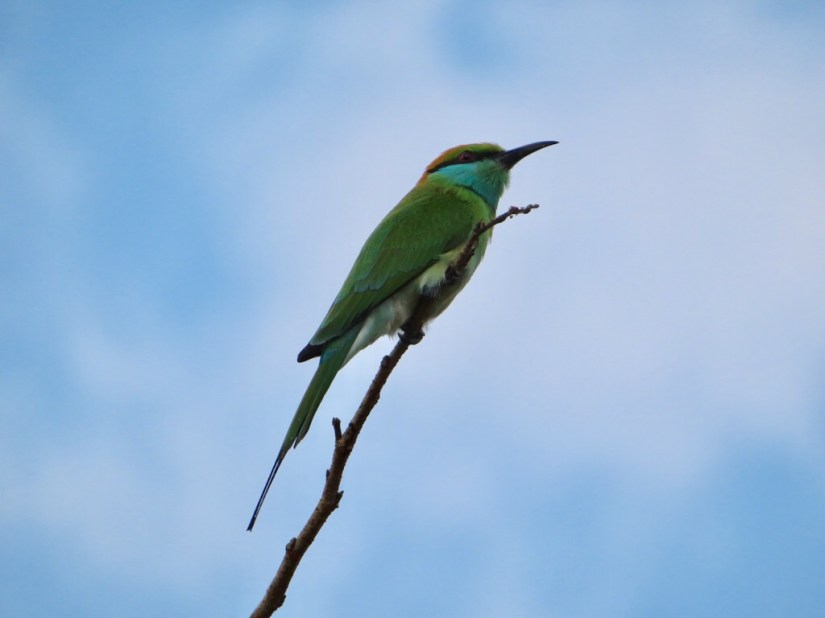
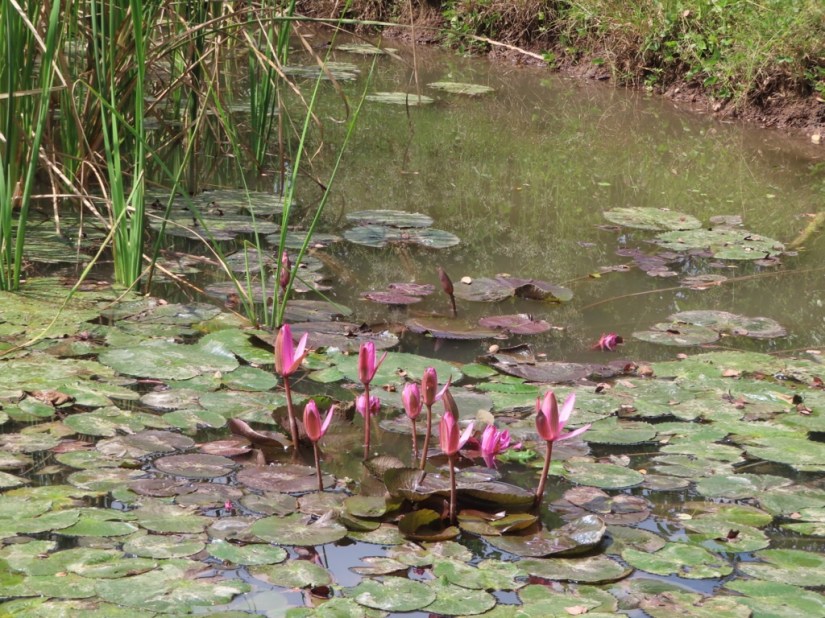
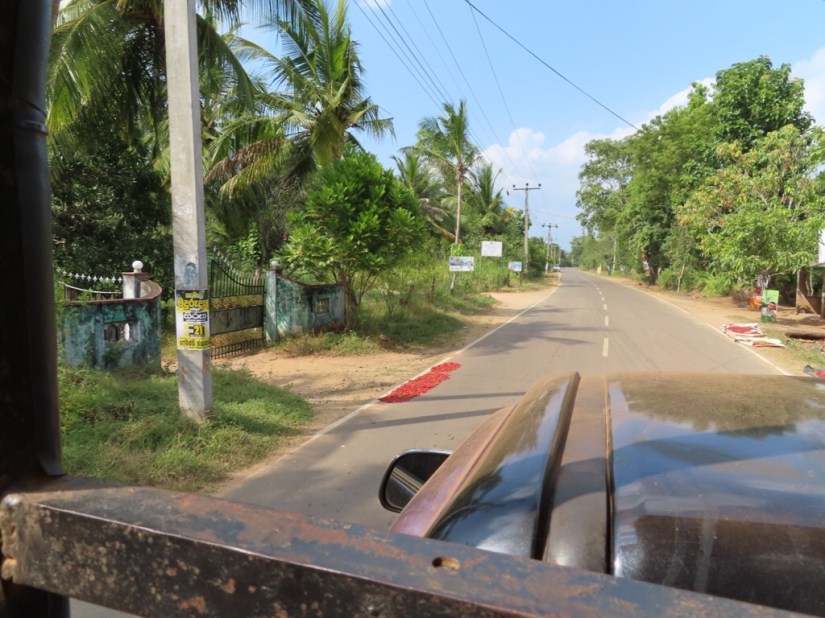
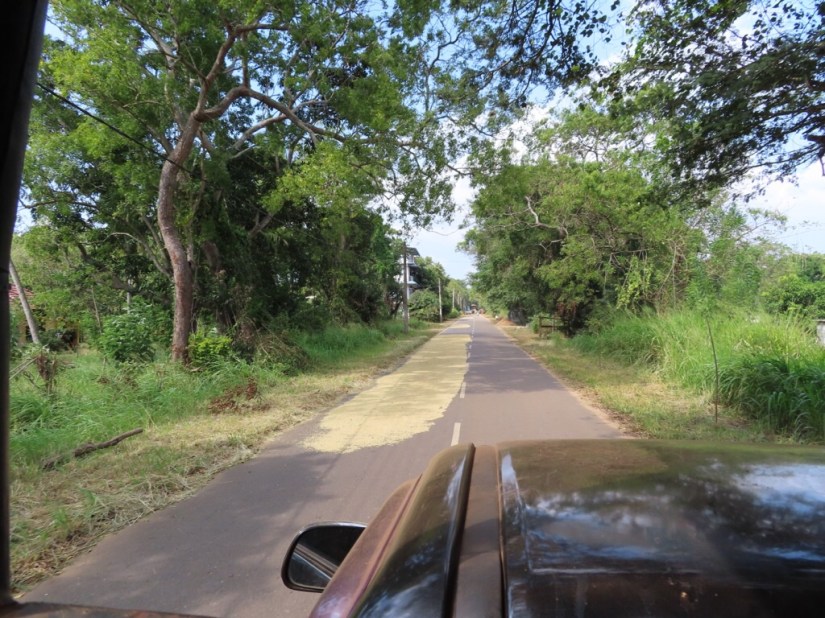
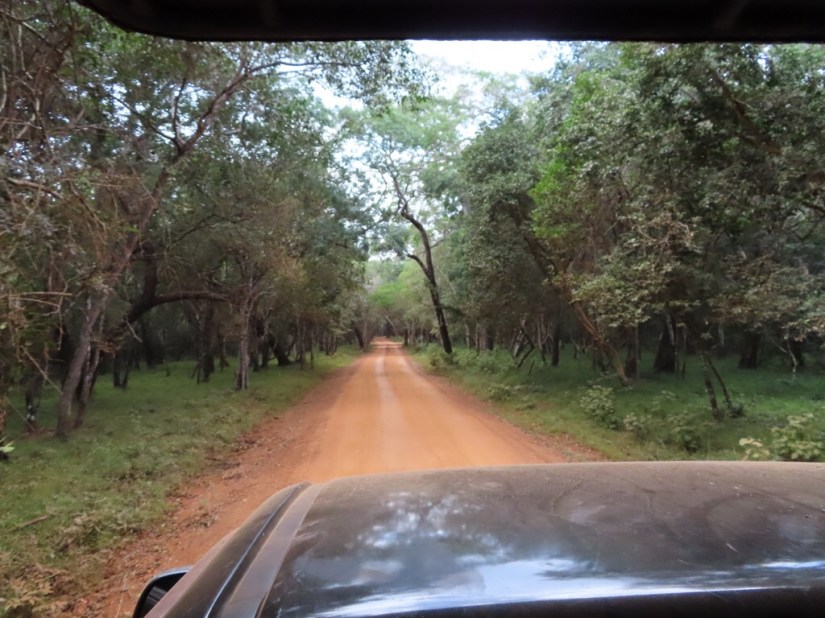
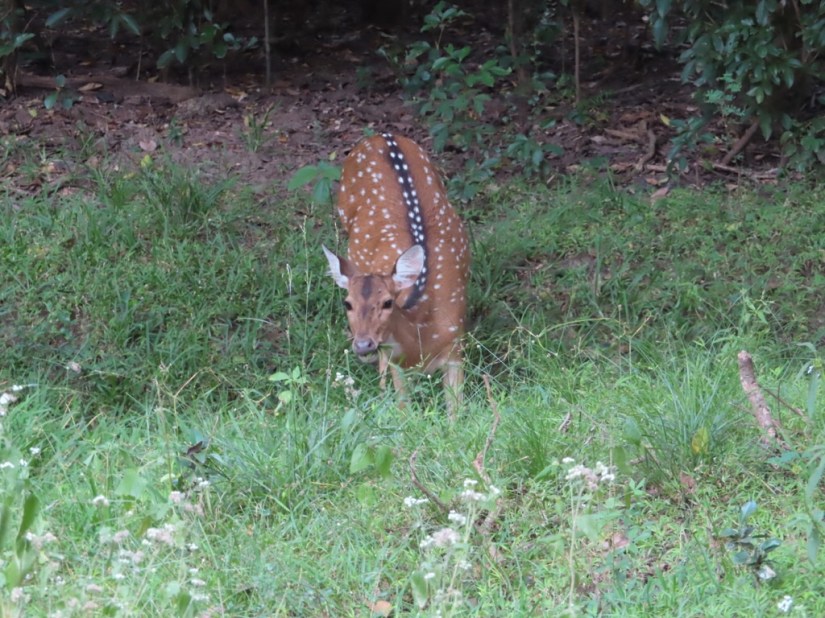
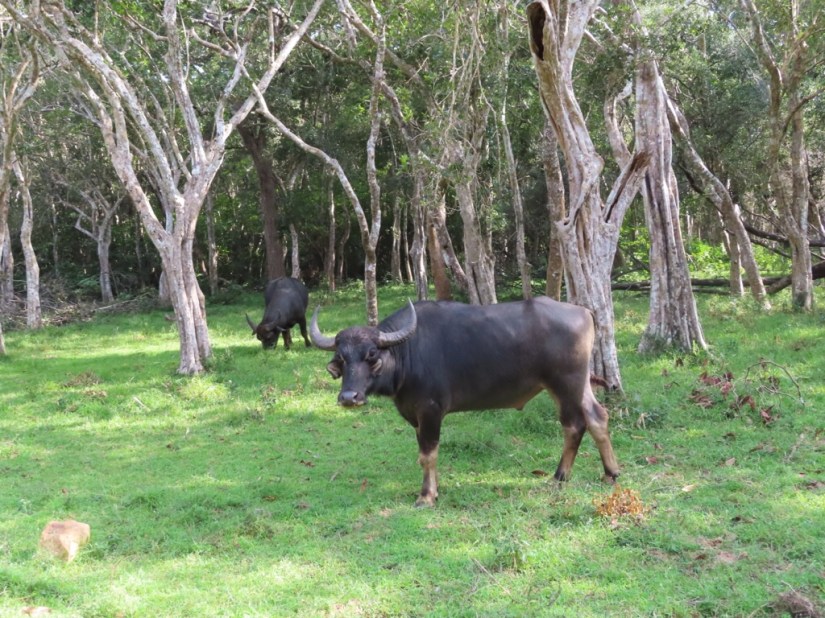

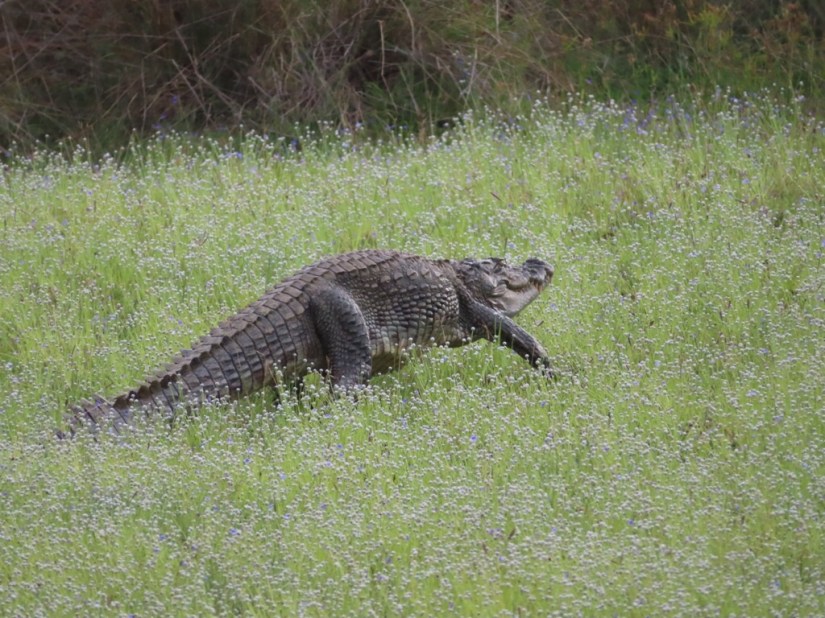
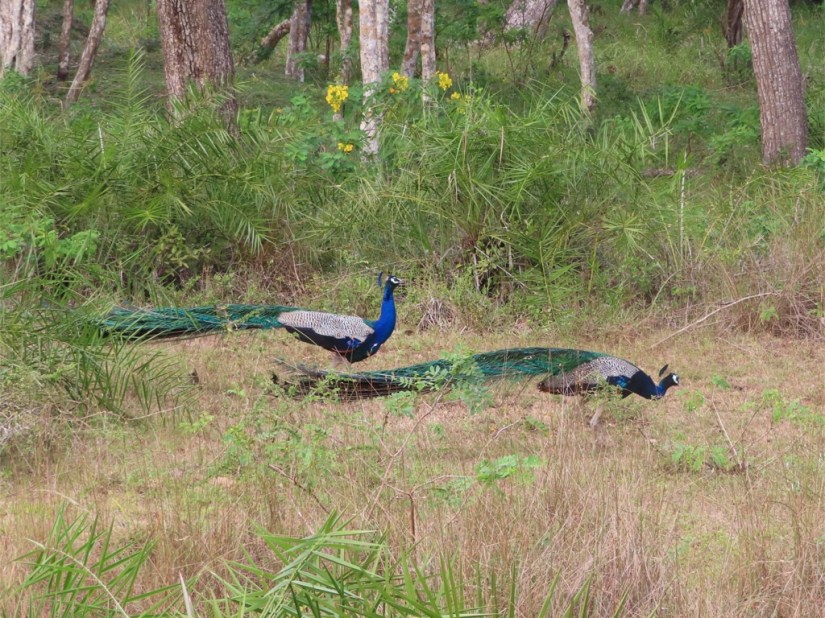
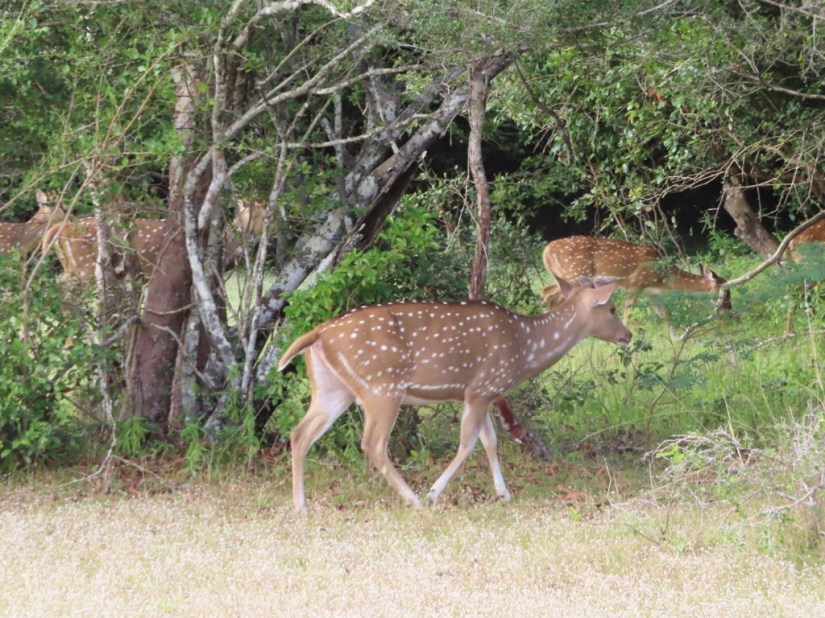
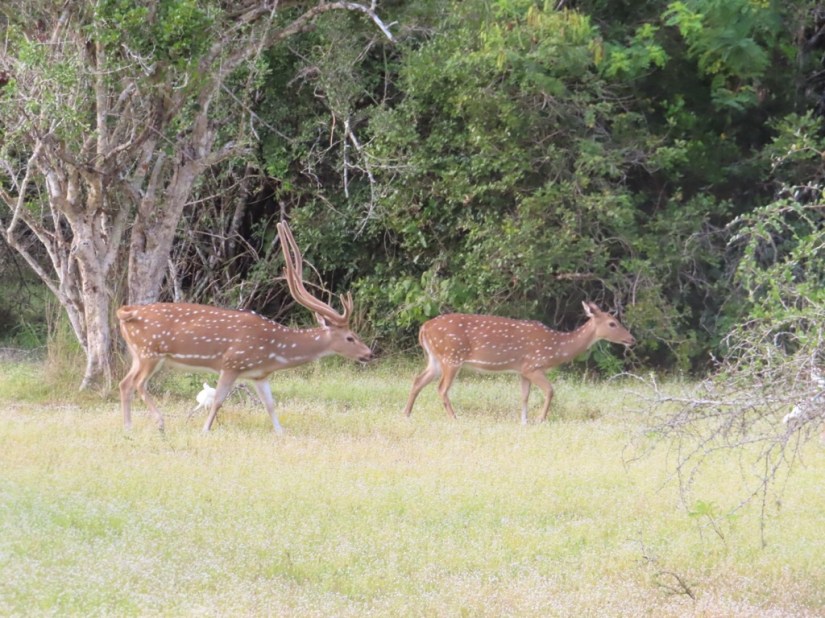
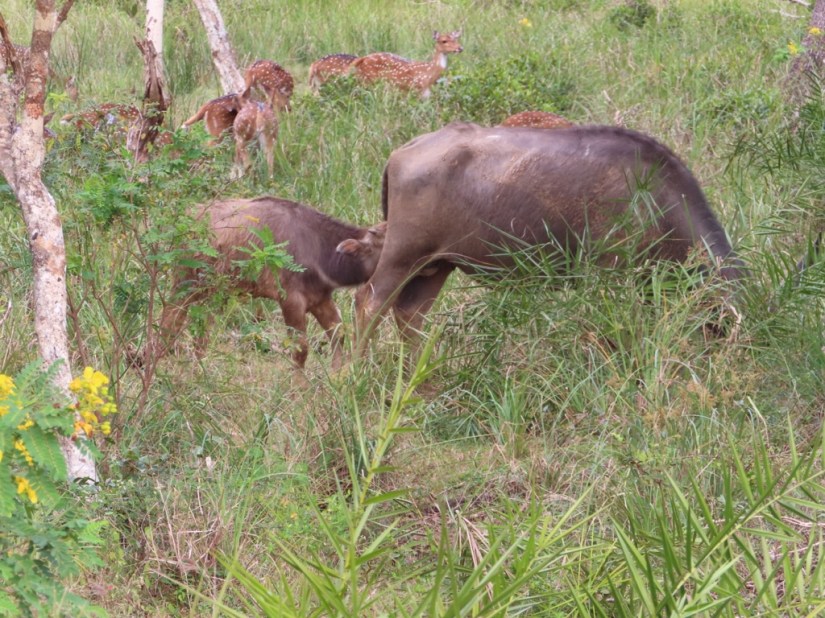
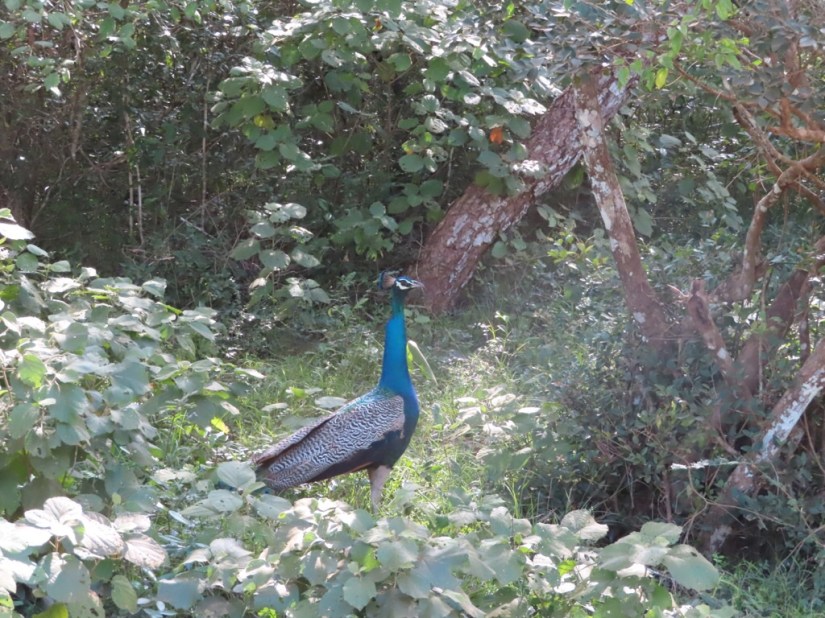
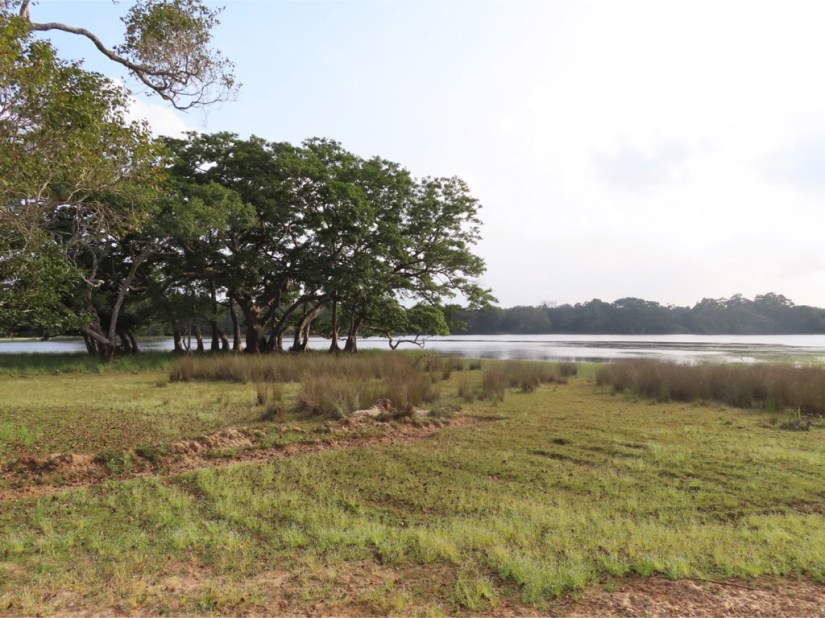
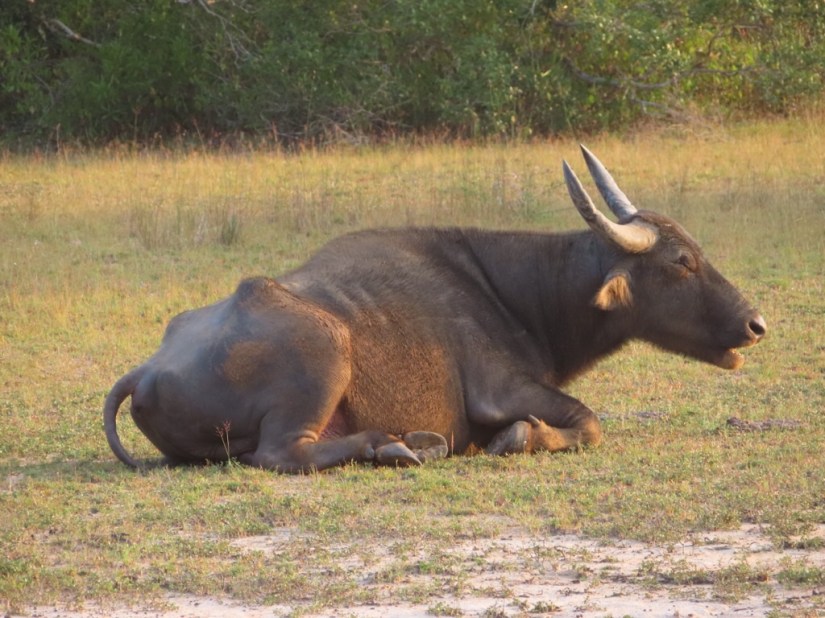
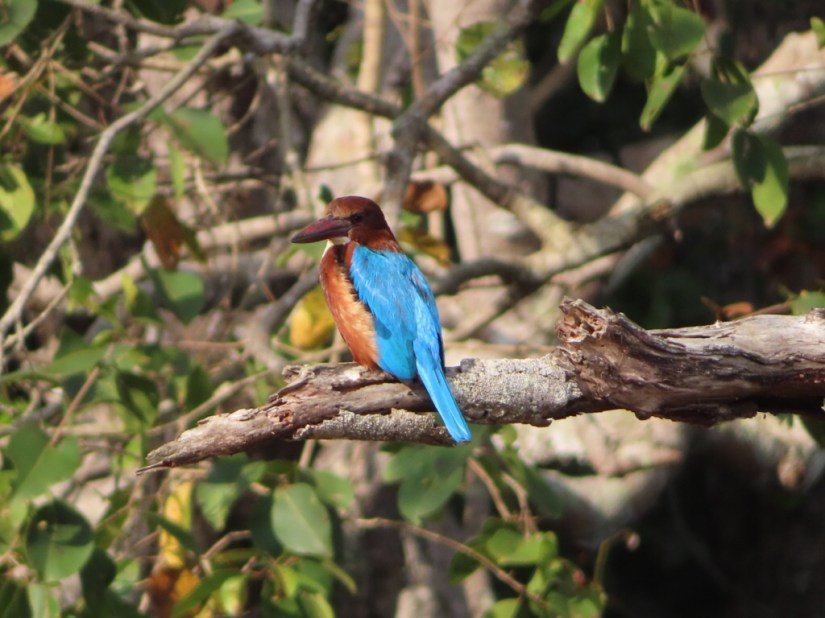
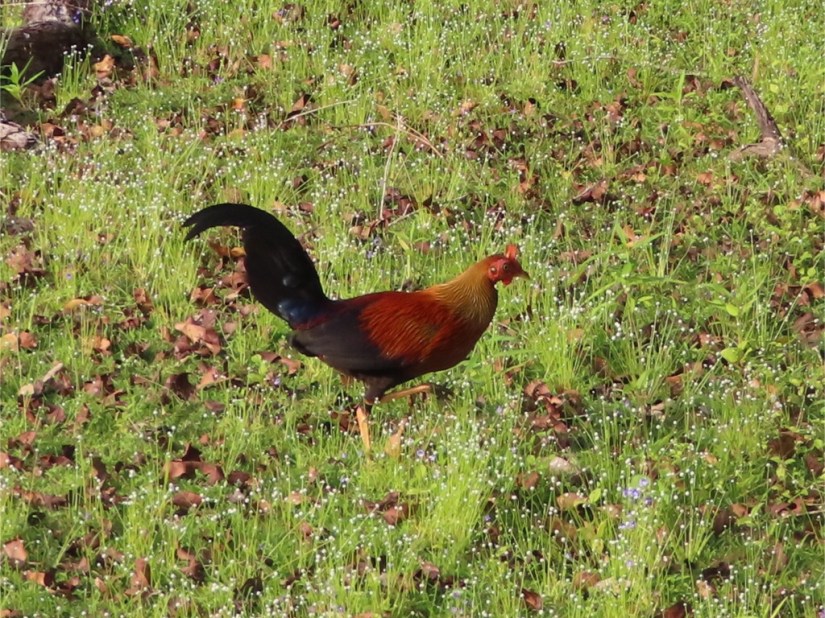
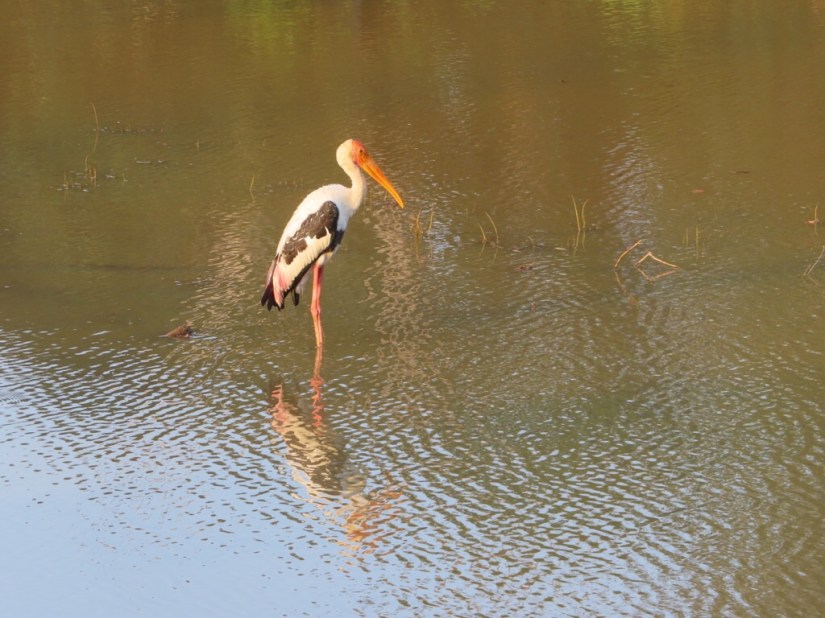
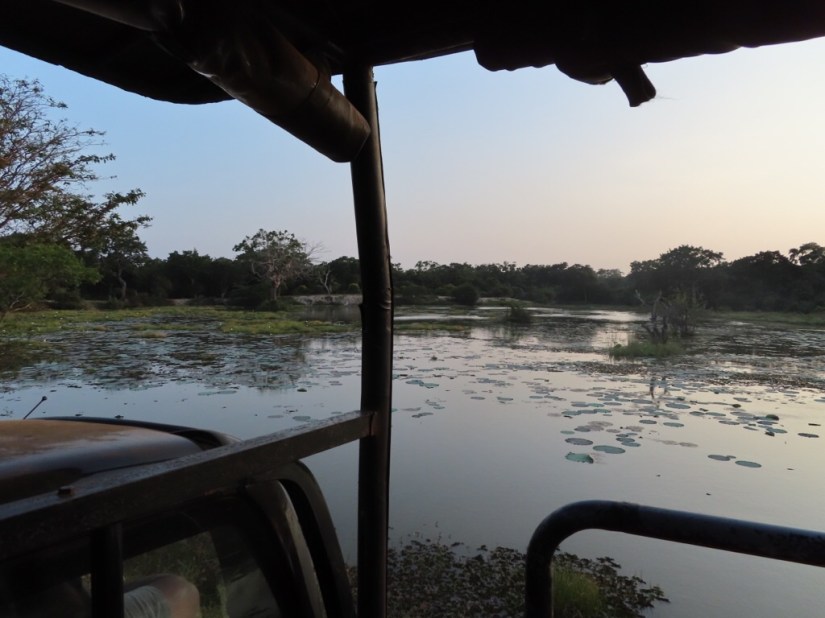
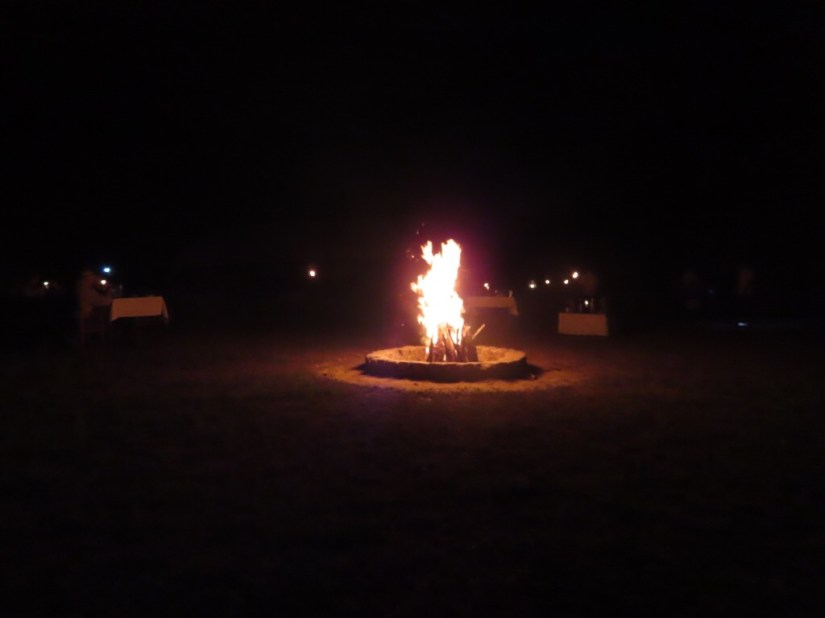
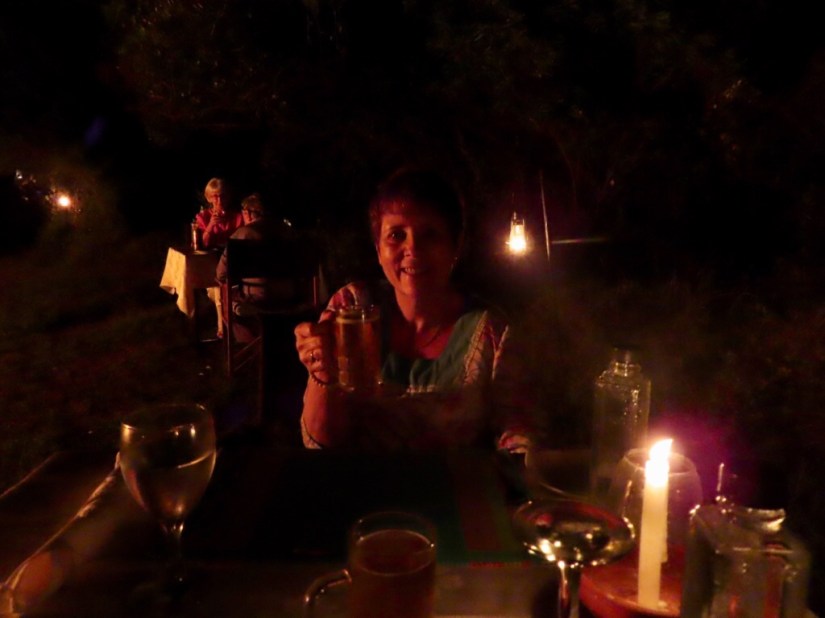
 The shower was excellent, if cold, and was followed by dinner by candlelight round a bonfire and an early night.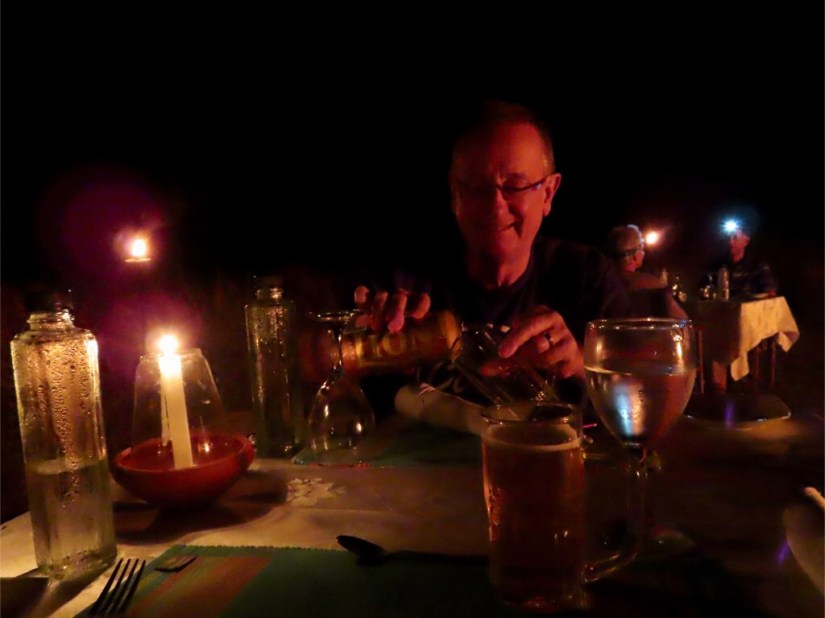
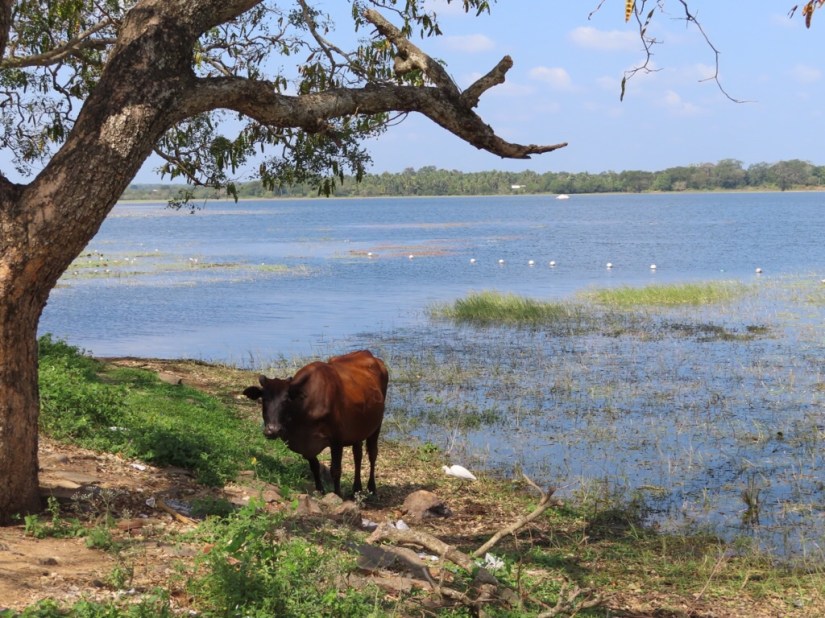
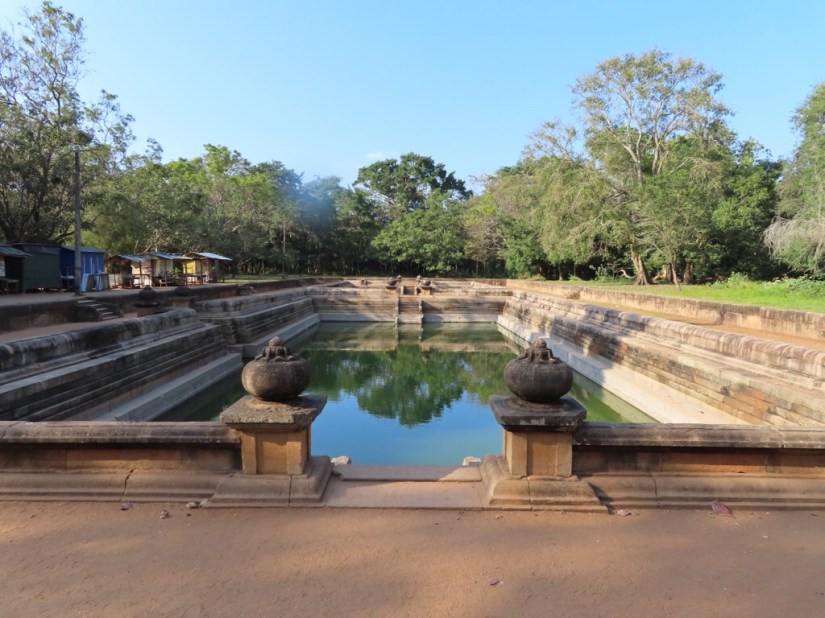
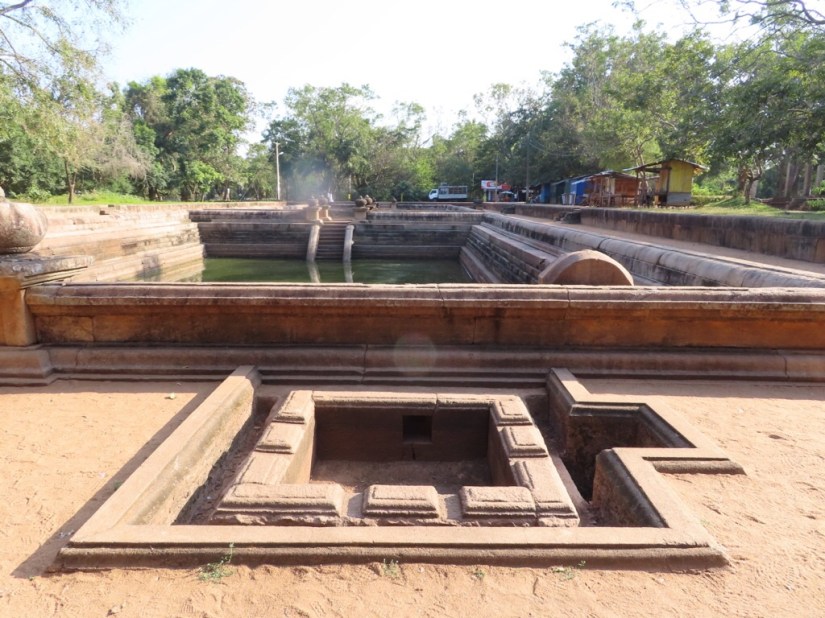
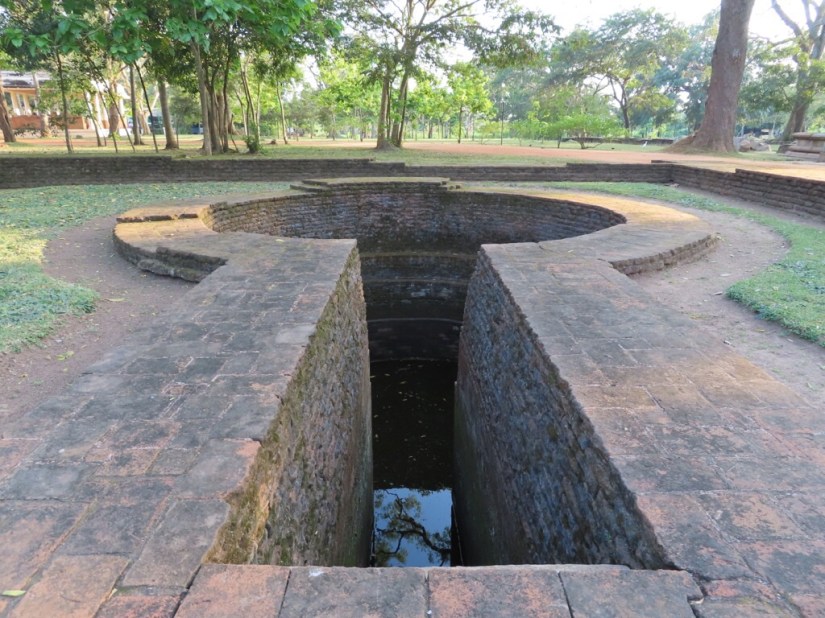
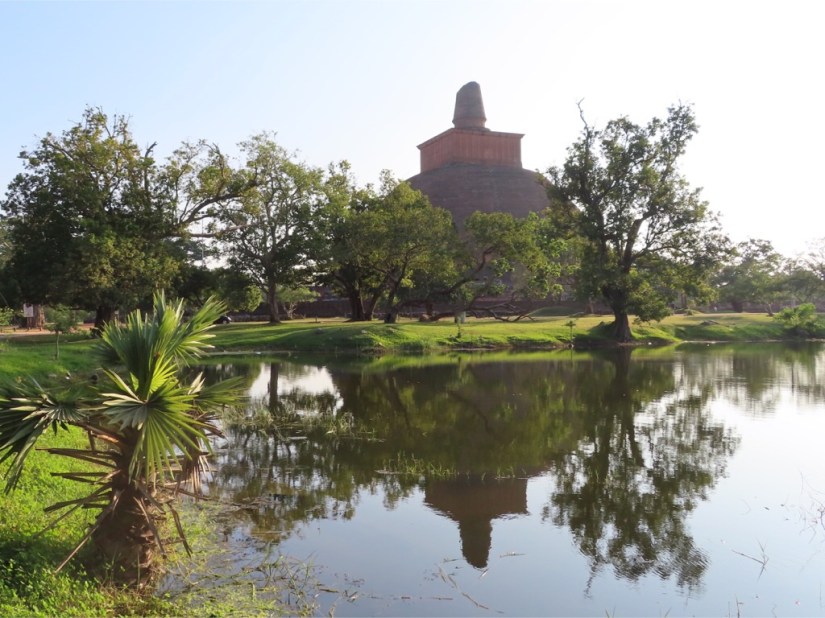 The Sinhalese became masters in hydraulic engineering which enabled them to capture the monsoon rains then transport and use them where needed during the dry season. Successive kings built a huge number of tanks or reservoirs all over the country and linking irrigation systems which turned the northern plains into an enormous rice bowl, capable growing two crops a year and feeding the civilisation that developed. Parakramabahu the Great said that ‘not one drop of water must flow into the ocean without serving the purposes of man’.
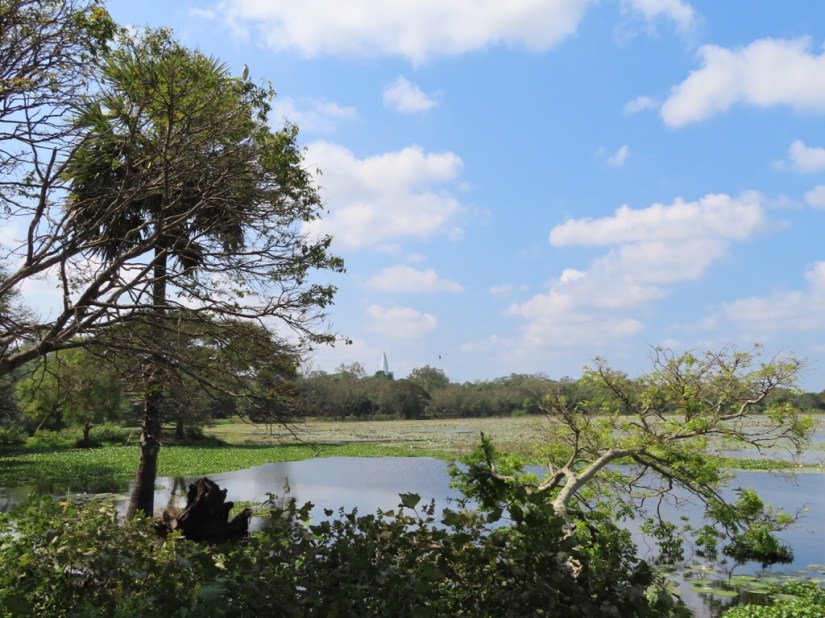
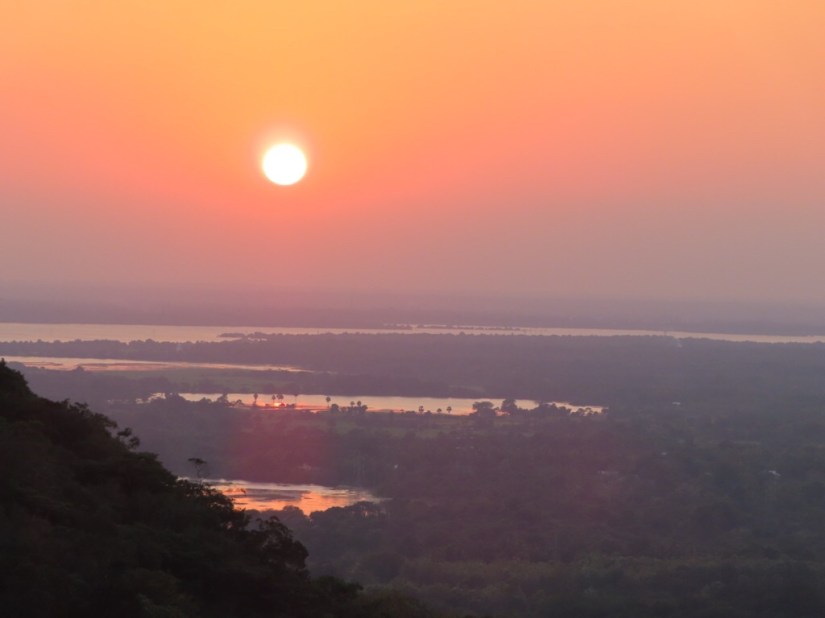
 … and here is Nuwara Wewa, the largest of the three tanks, or reservoirs in Anuradhapura made by King Valagamba in the first century BC. King Dhatusena later constructed the Jaya Ganga canal, almost 90km long, and maintaining a steady gradient of six inches to the mile delivering water to Anuradhapura from the huge Kala Wela tank.












 As we left, I spotted a flash of colour and saw this pretty pair … apparently blue-tailed bee-eaters.





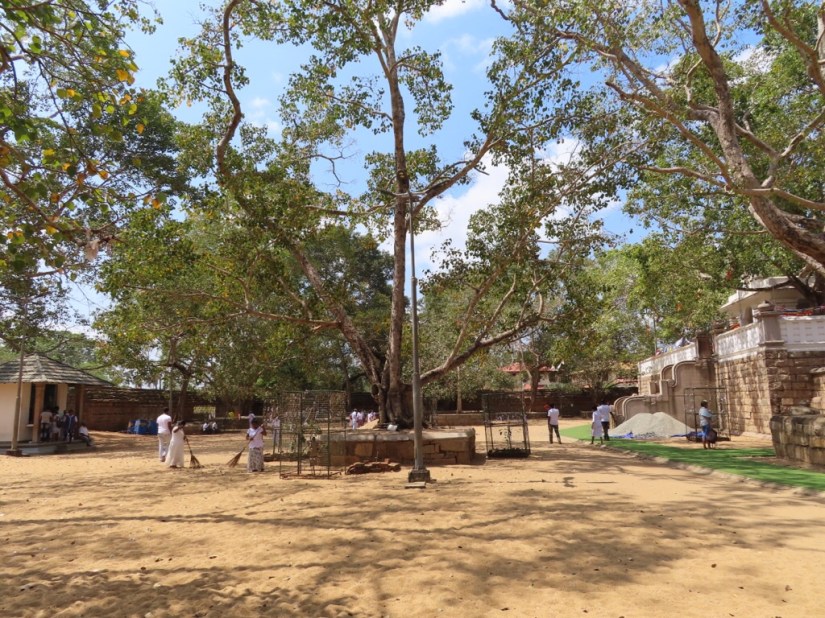
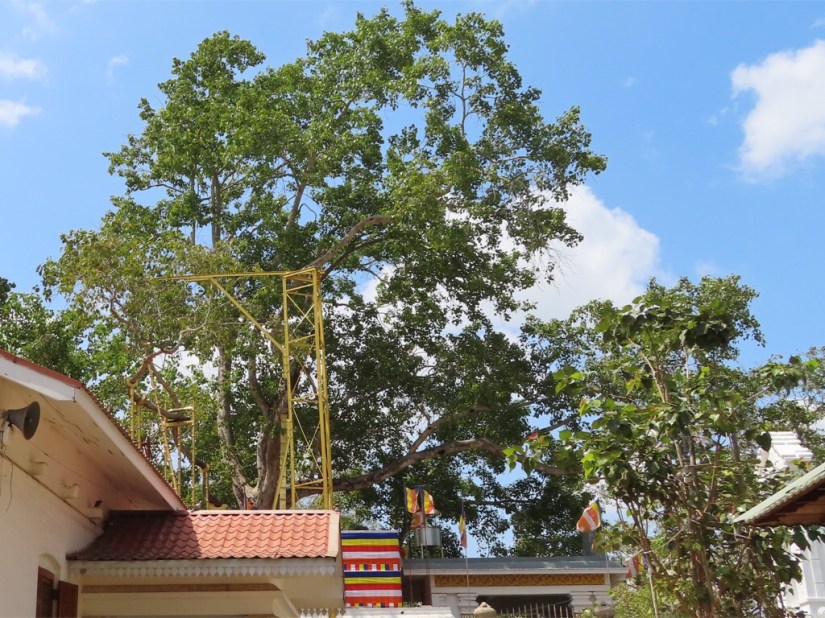
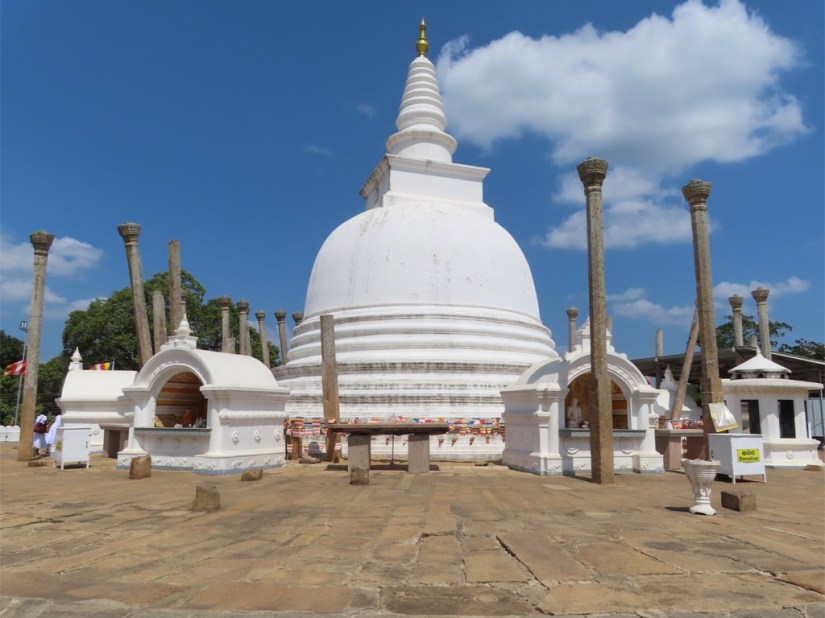
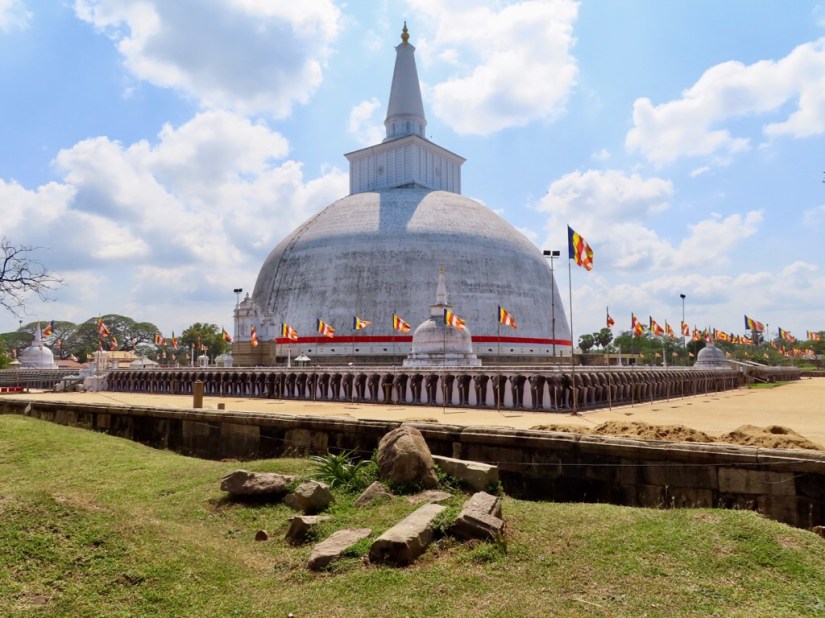
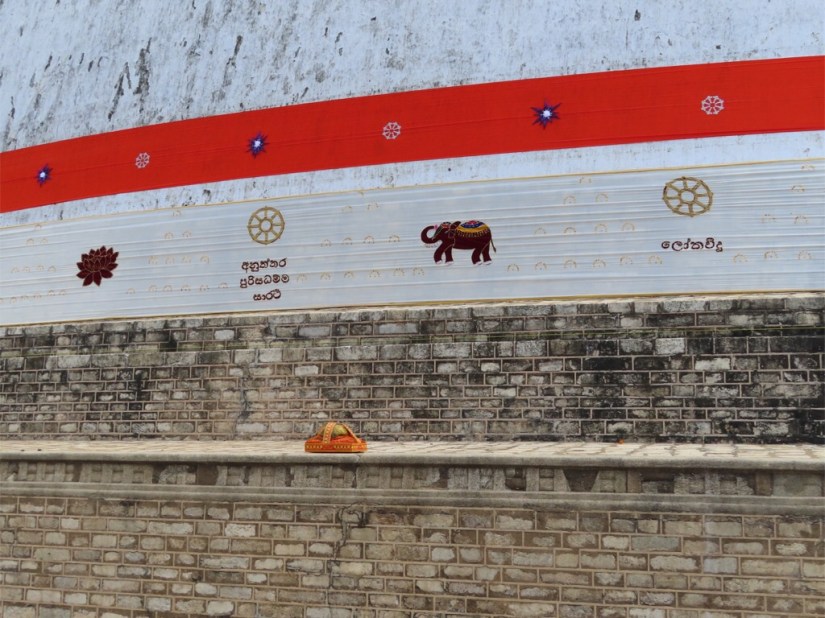
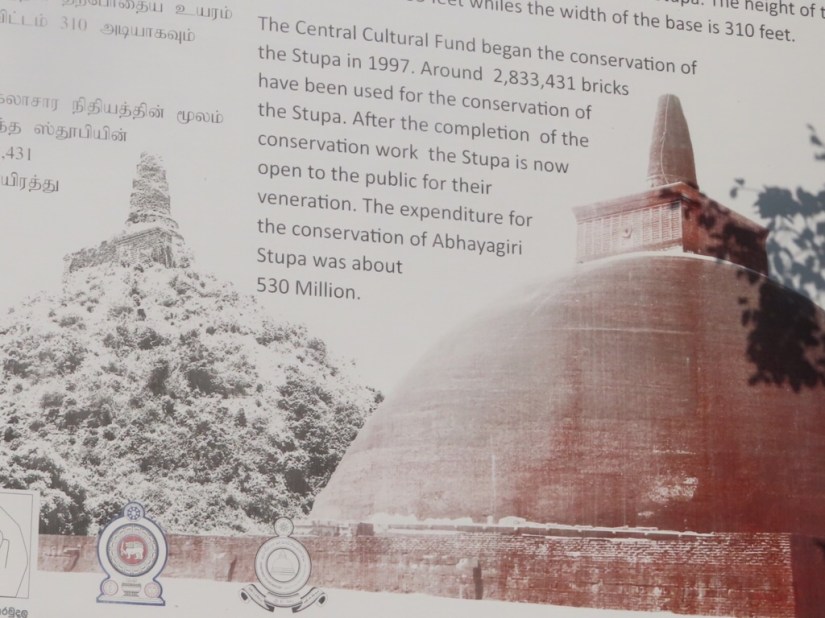
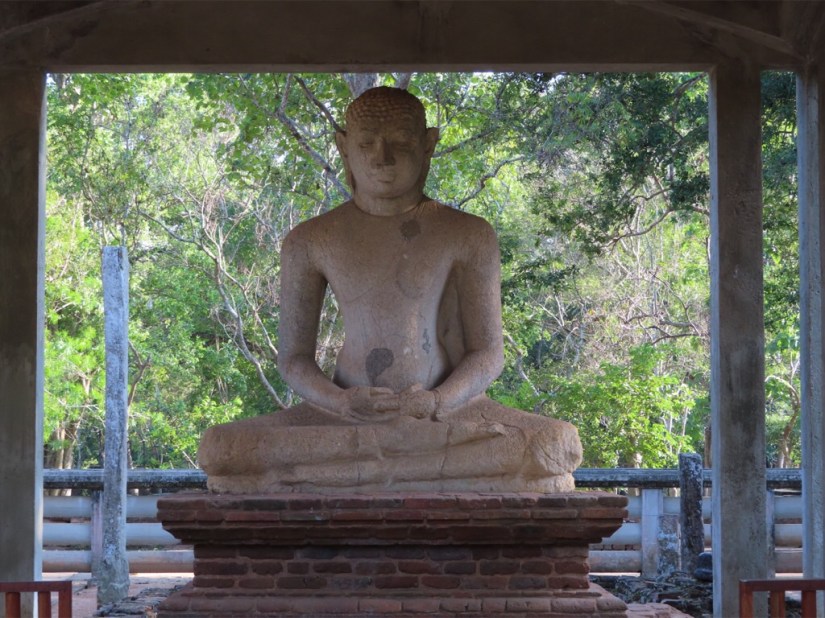
 The history of Sri Lanka revolves round two groups of immigrant people – those from North India who became the Sinhalese and those from the south who became Tamils. There is much controversy as to who got here first, who has rights to what and what it means to be Sri Lankan. So let’s start with Anuradhapura, the first major Sinhalese kingdom, which began around 377BC, becoming one of the greatest cities of its age for almost a millennium before being destroyed by Indian invaders in 933. Following the introduction of Buddhism, it developed into one of the largest monastic cities with some 10,000 monks and many monasteries. The kings of Anuradhapura ruled over a golden age of Singalese culture and the dagobas erected were huge architectural feats, surpassed only by the Great Pyramids at Giza.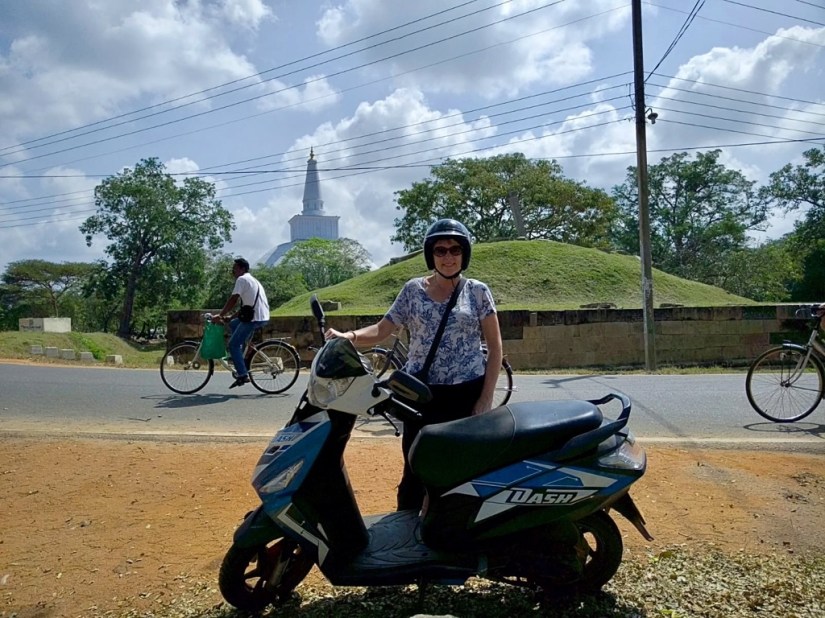

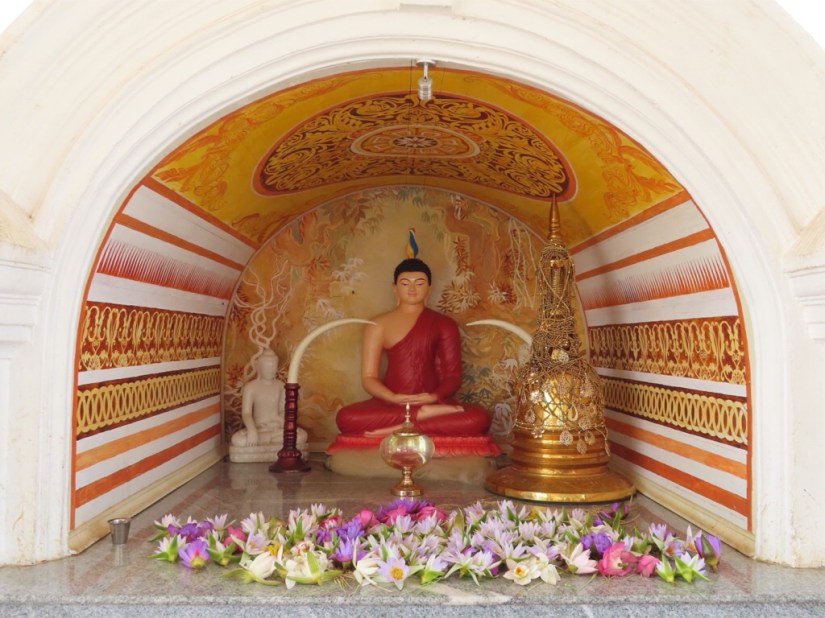






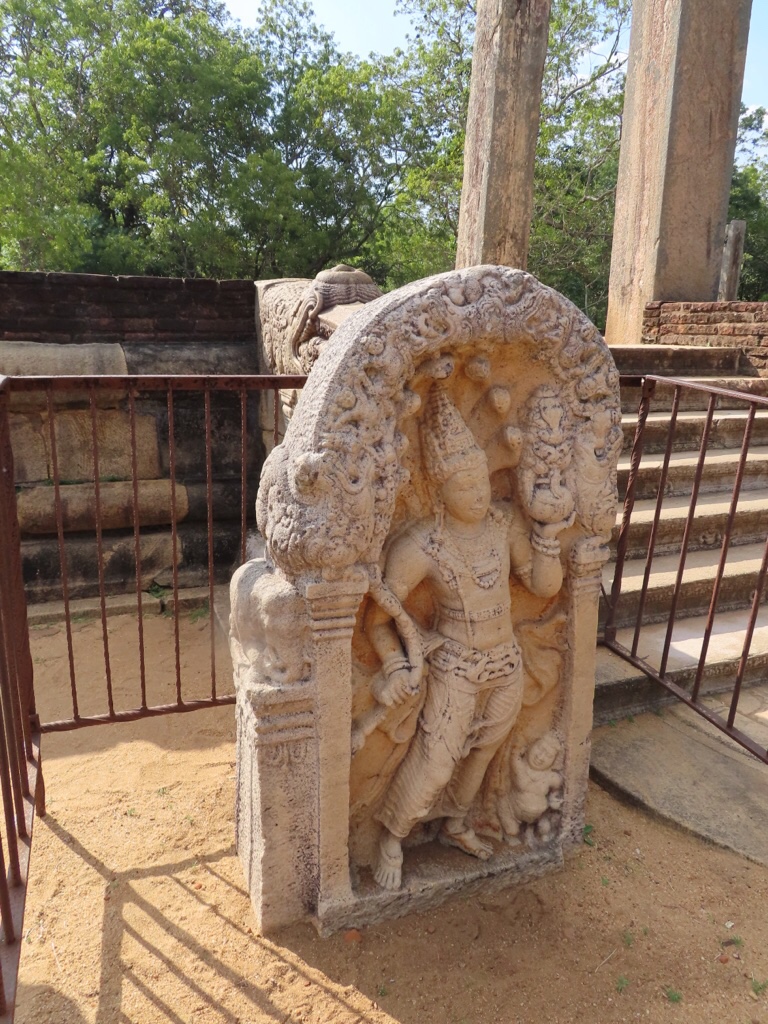

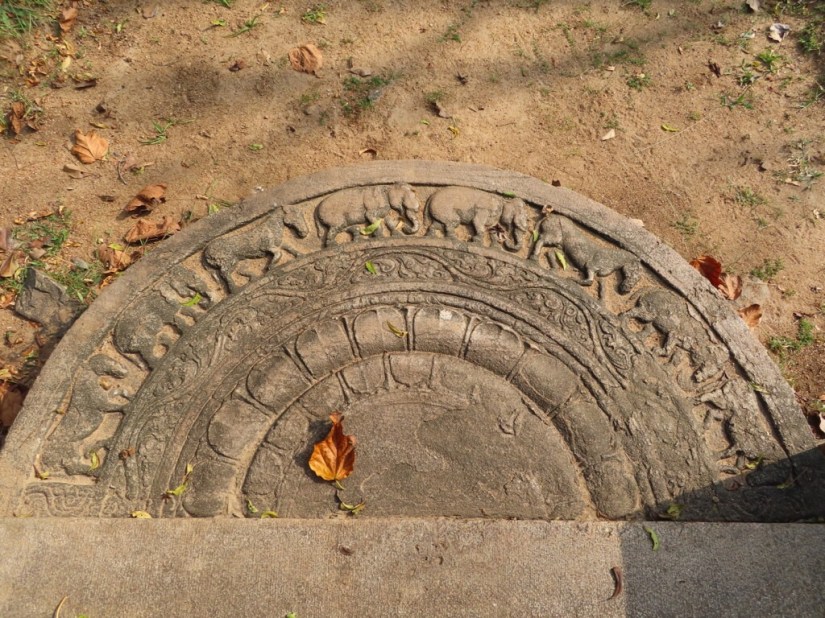
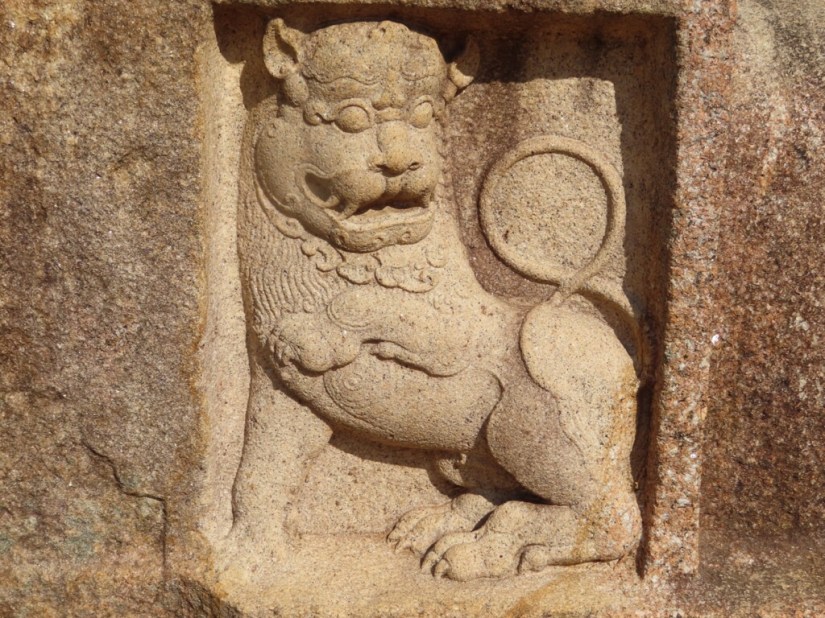
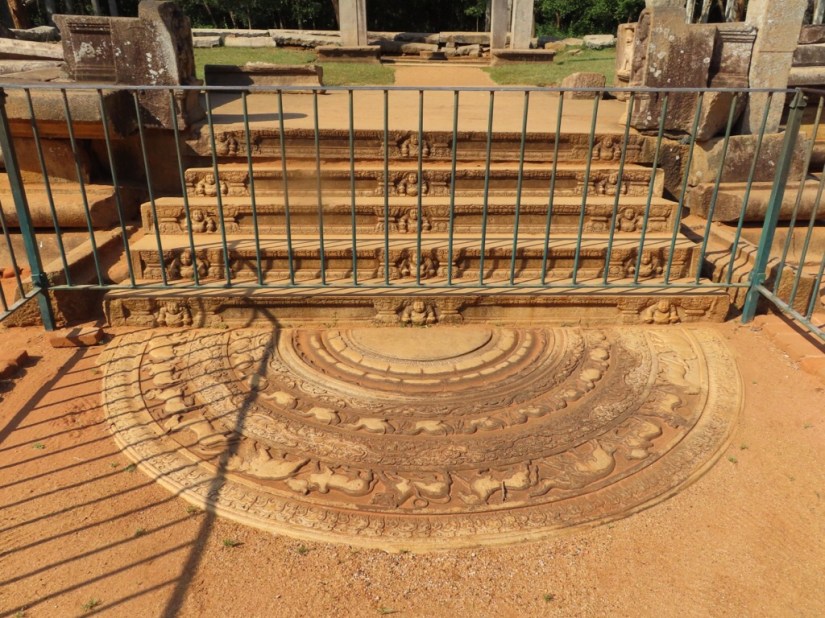 The moonstone is a semi circular stone at the entrance to shrines meant to concentrate the mind of the worshipper before entering. This one clearly shows all the main features – flames on the outside to purify, the four Buddhist animals – the elephant for birth, the horse for old age, the lion for illness and the bull for death, vines for attachment to life, geese for purity and a lotus at the centre as the symbol for Buddha and nirvana.

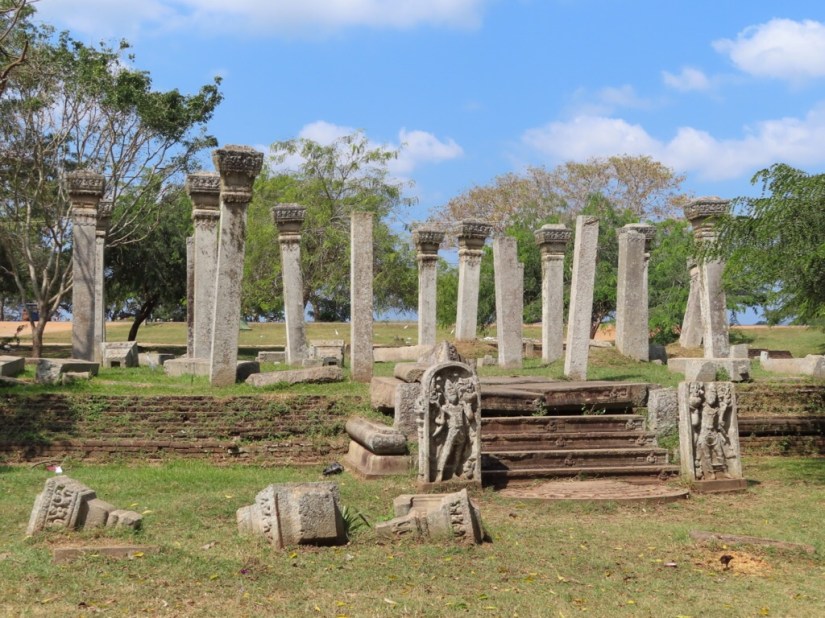


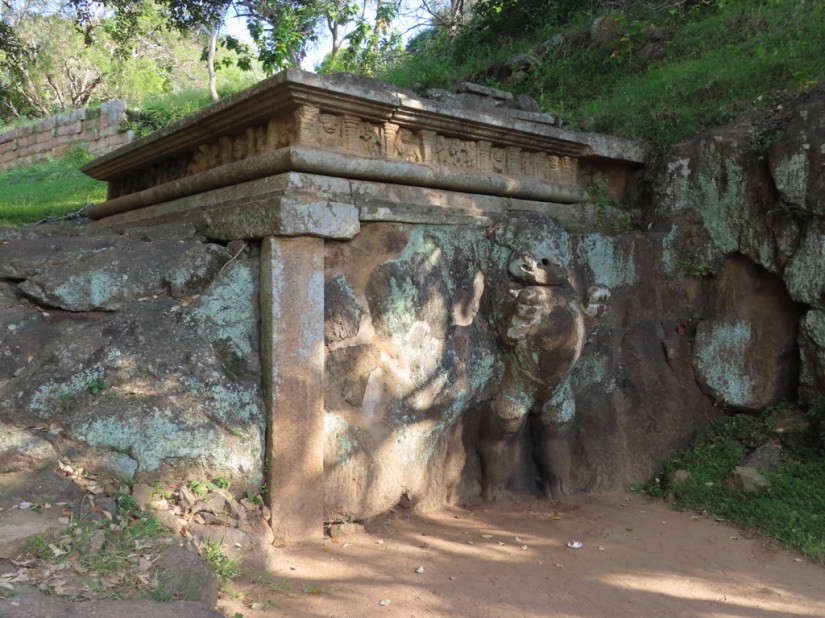
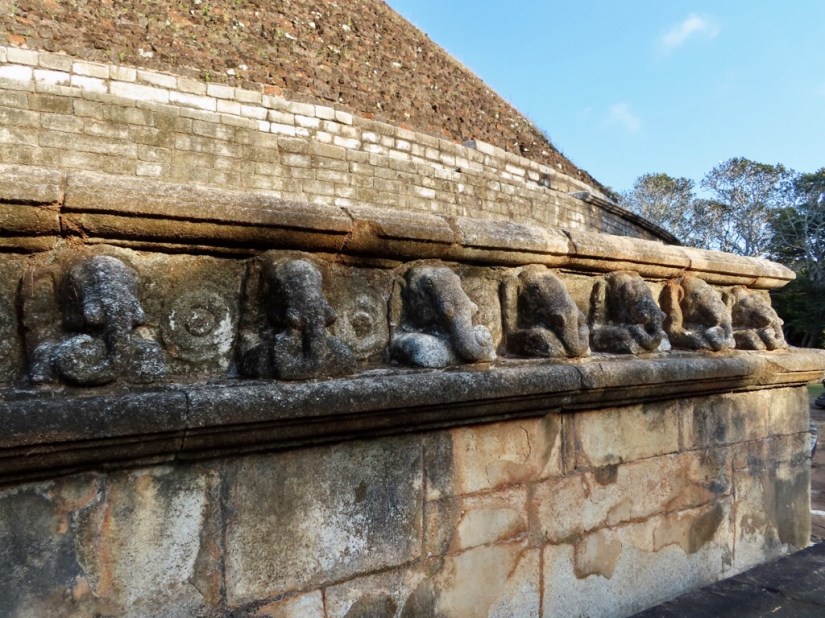
 There were some carvings of bathing elephants, and a man with a horse, and a gilded shrine with a moonstone at the entrance.


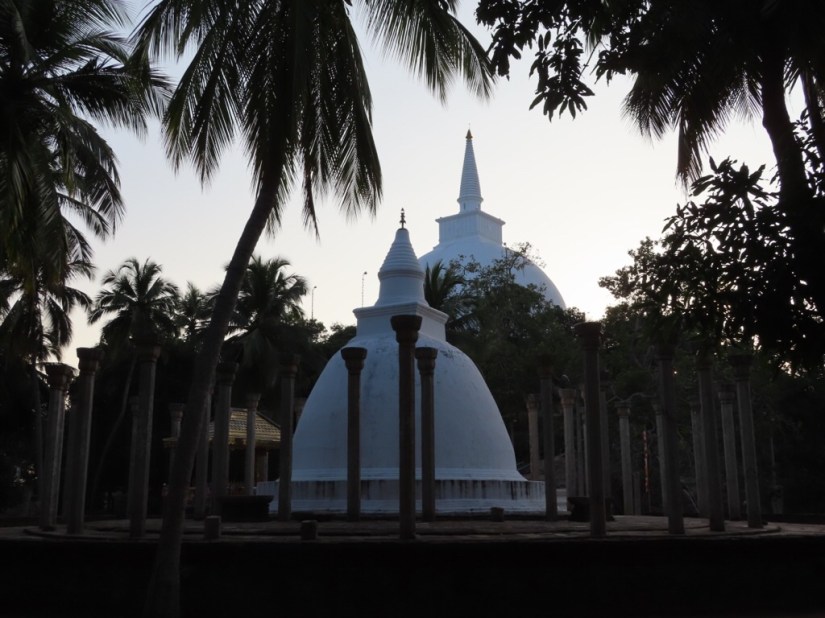
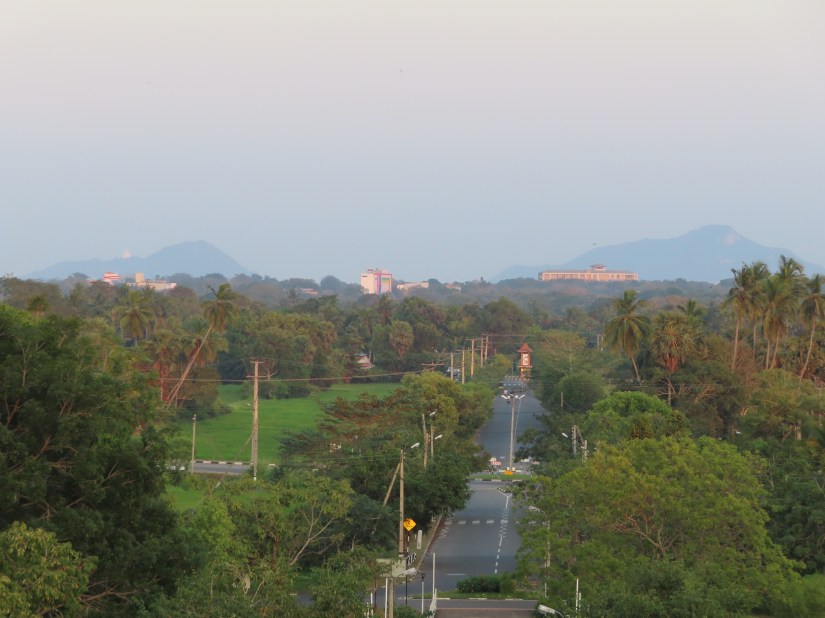 … and also the Sandahiru Seya or Triumphant Stupa, a new dagoba begun in 2014 to commemorate the soldiers who died fighting the LTTE … also known as the Tamil Tigers … times don’t change …
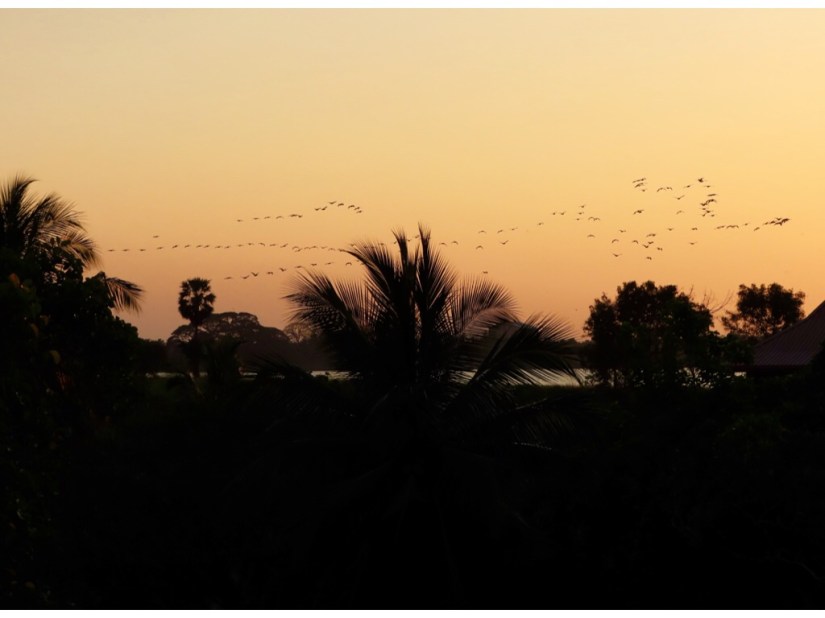
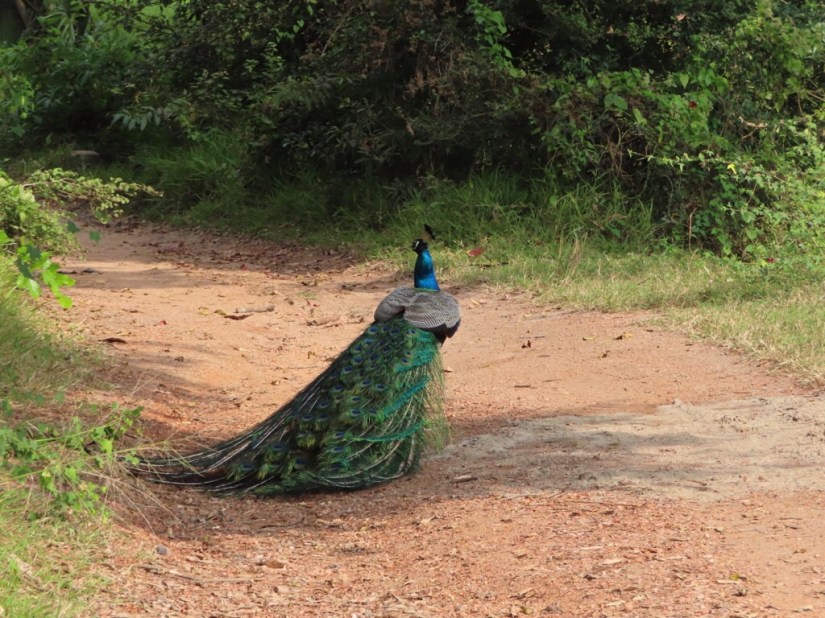
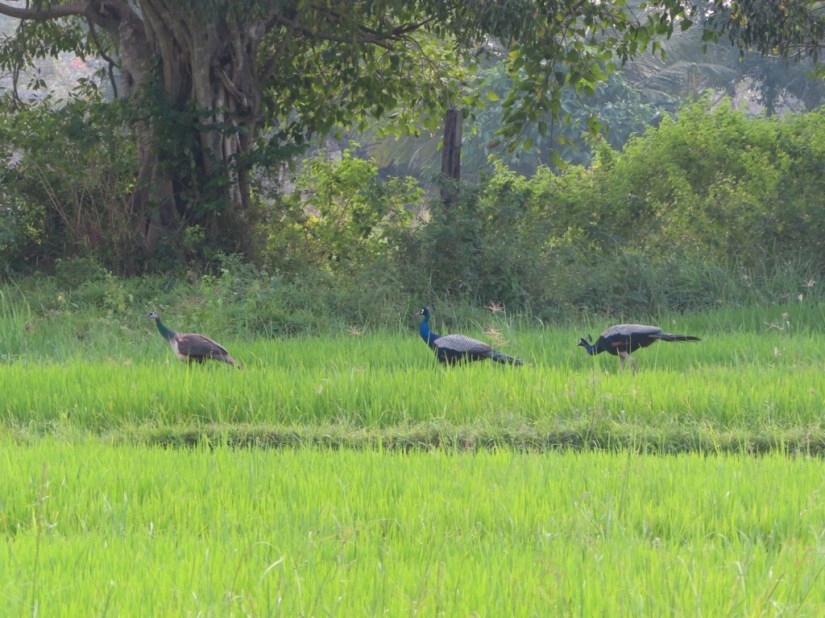
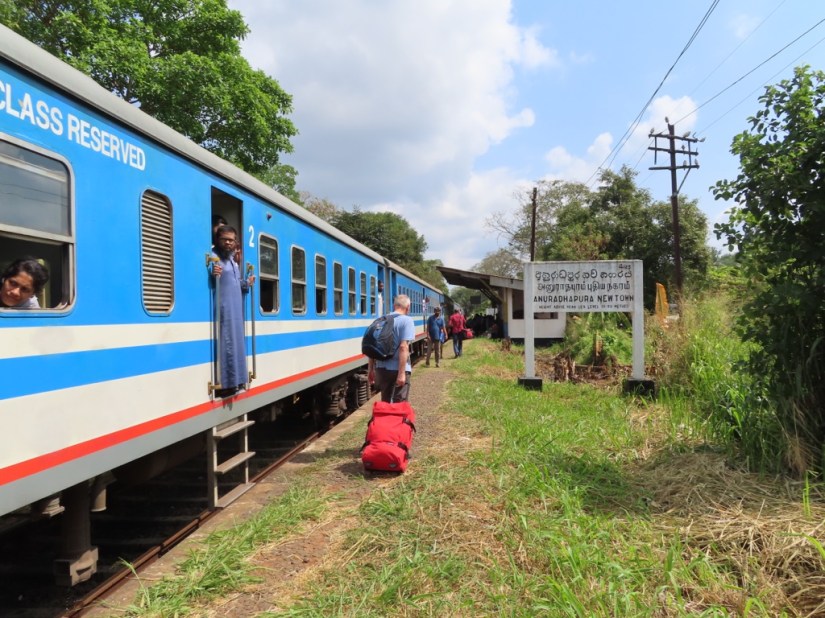
 We travelled 125 miles north in 4.5 hours in reserved 1st class seats with and electric fan on the ceiling and open windows providing the AC! We passed a lot of rice paddies, with patches of woodland, the odd stand of palm trees or bananas and a scattering of cows, egrets and one peacock.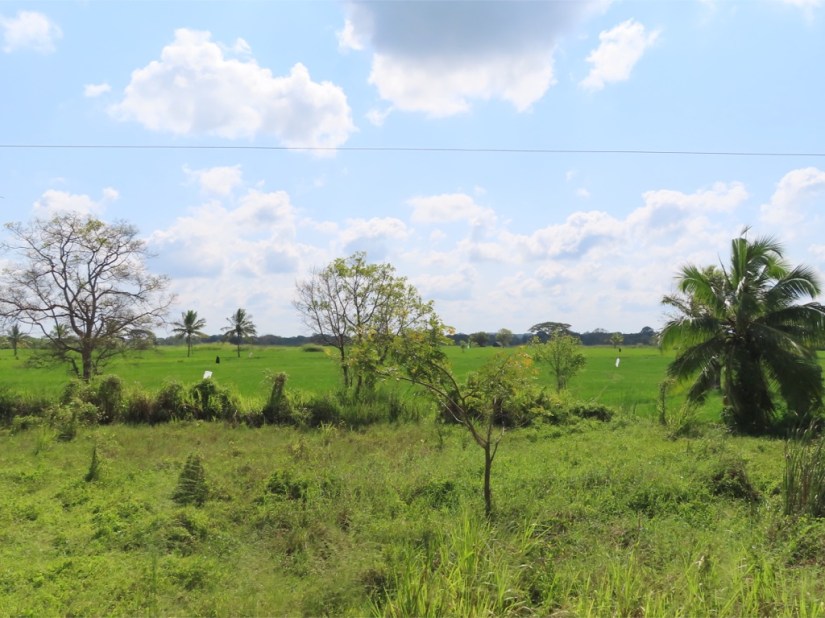

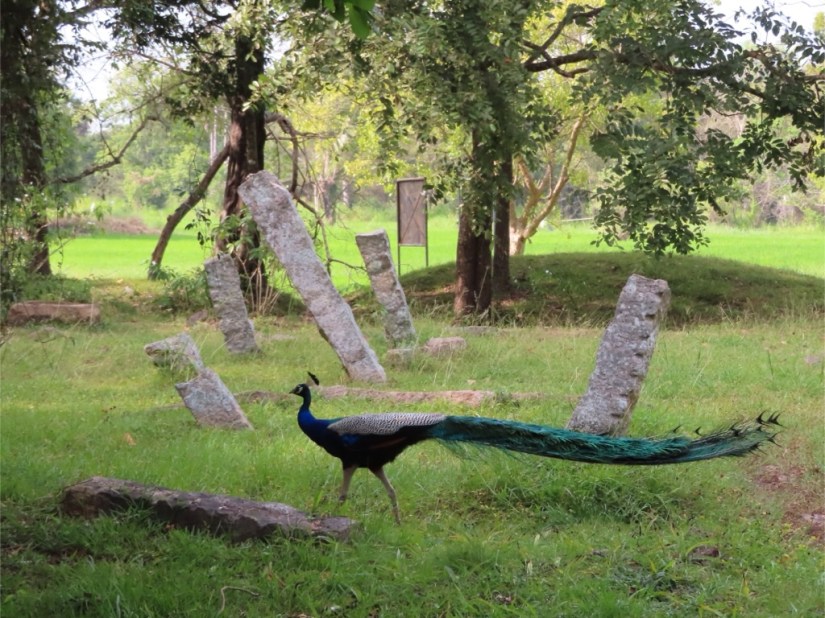
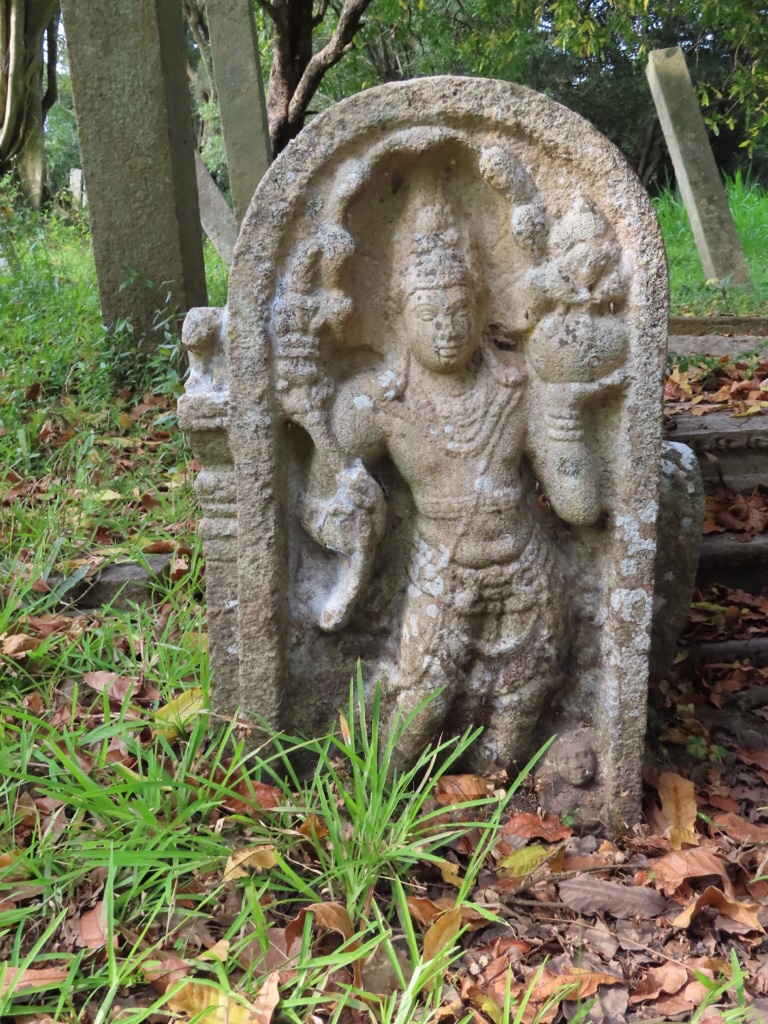
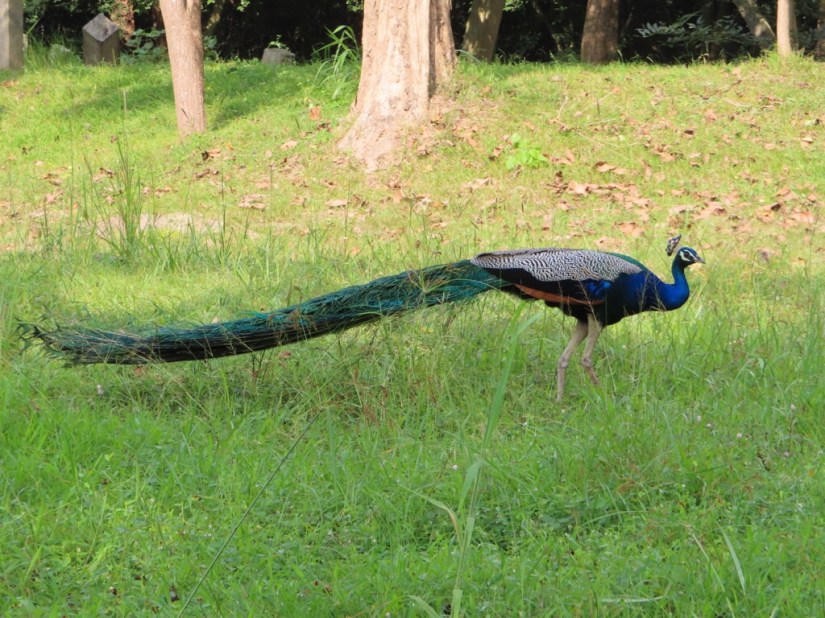
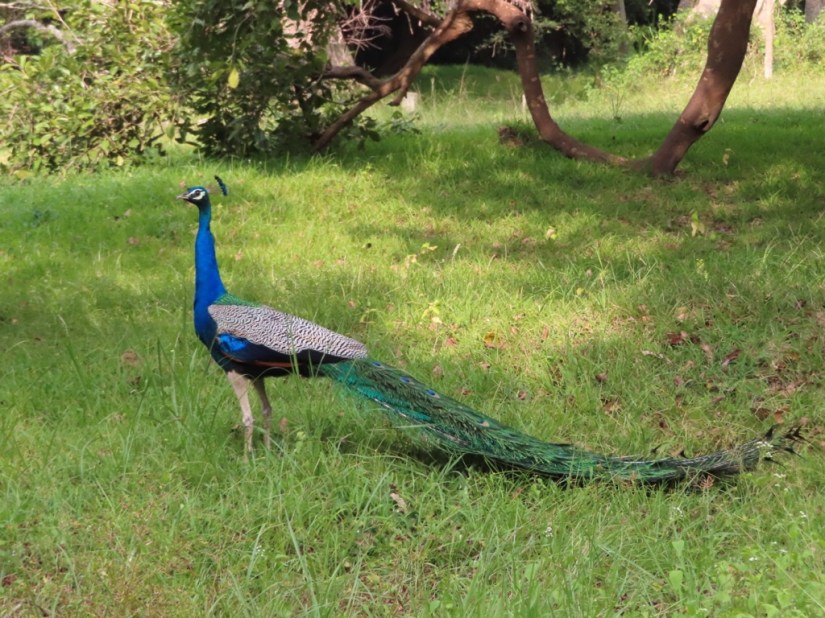
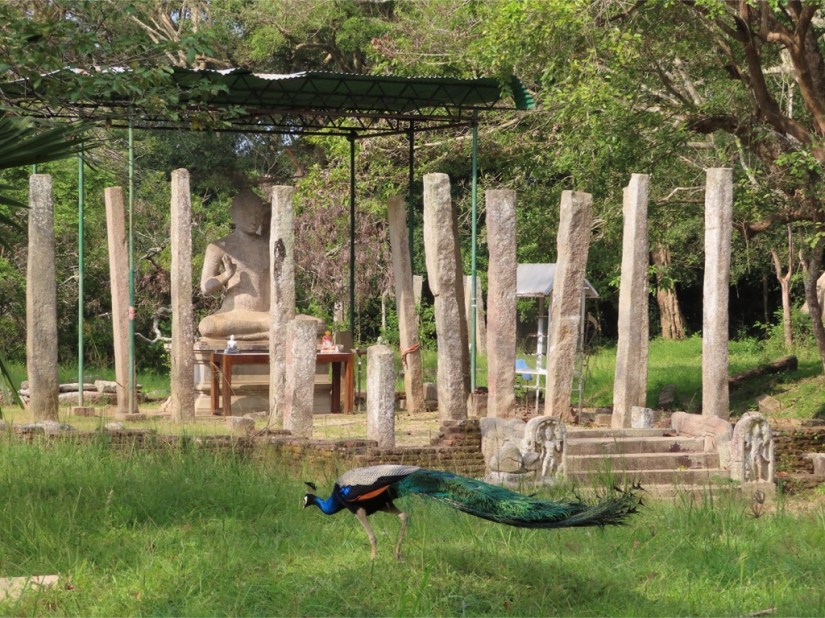
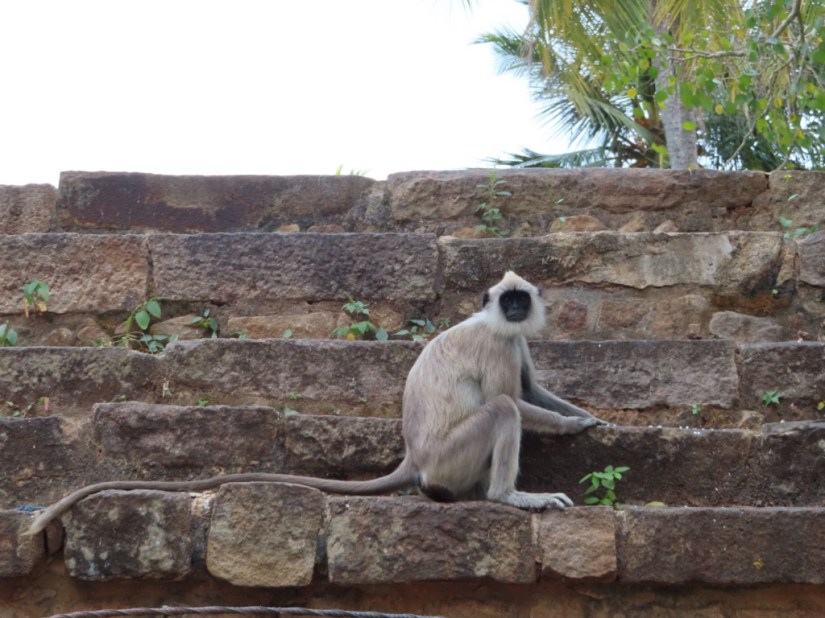
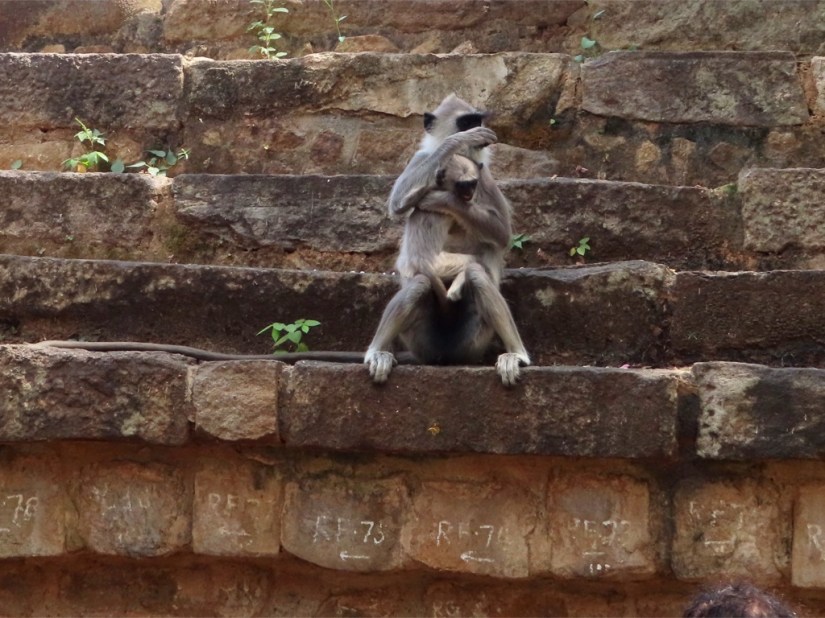
 … wildlife between the ruins …





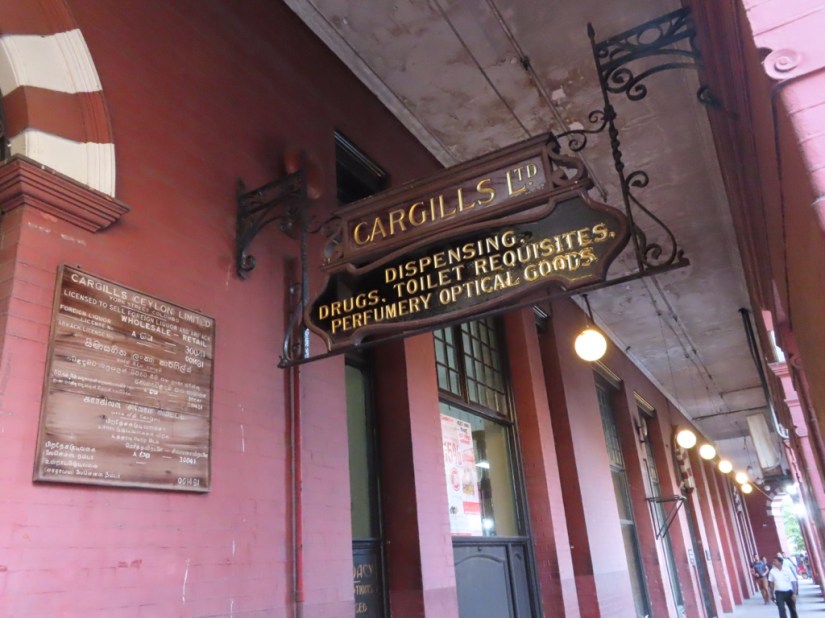
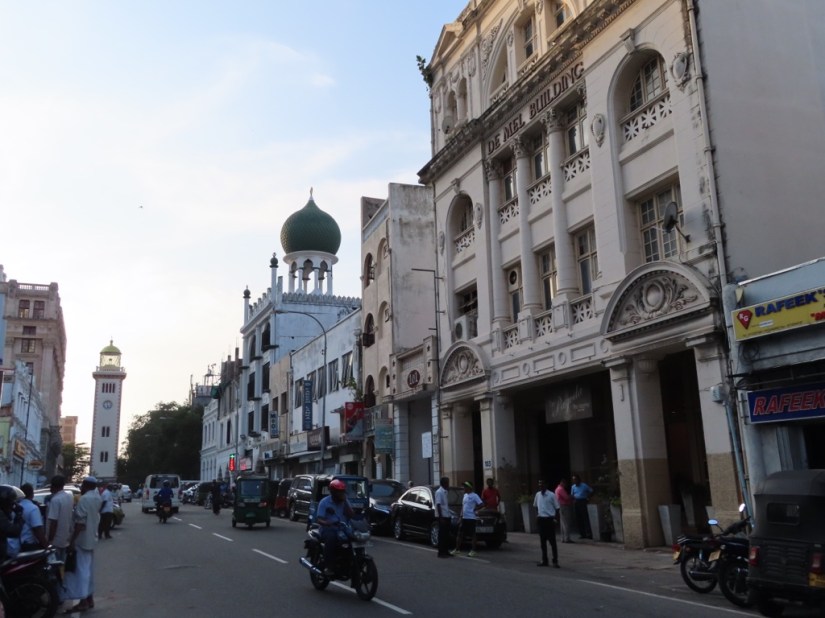
 We arrived at Katunayake International airport and took the express bus for around an hour to Colombo central bus stand then a tuk-tuk to our hotel in the historic Fort district. We are just here for one night, and have to leave even earlier in the morning than planned, with our train leaving at 06.35.
 … then walked to the railway station to collect our tickets, overshadowed by the Lotus Tower soaring above.




 Another chilly January in England but fortunately we are off to warmer climes …
 Off Travelling Together