Colombo … Revisited

The Galle to Colombo train didn’t have reservable seats, so we took pot luck with 2nd class and found a space standing by an open door and watched the miles slip by. After a couple of hours we were pleased to get off at Mount Lavinia then travel the last 20mins by tuk-tuk … with a seat!

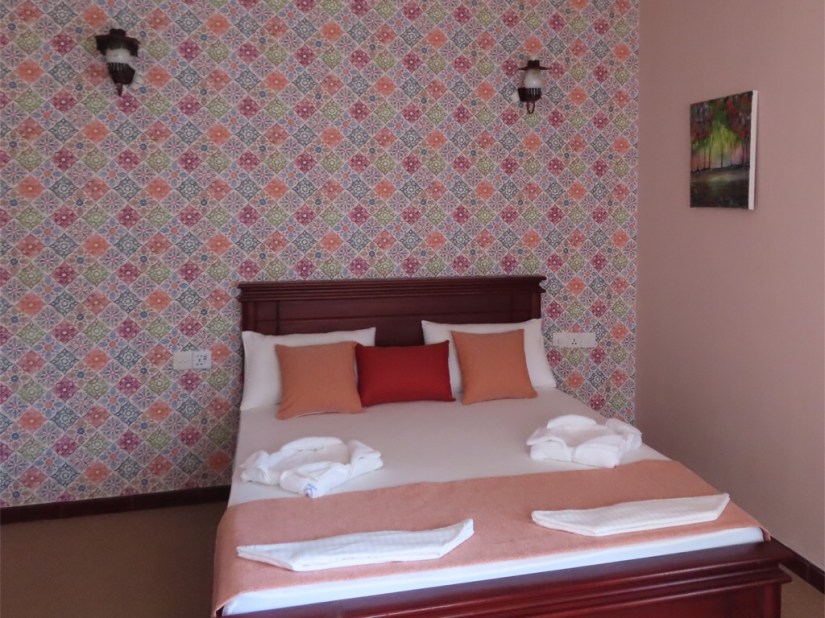
We are back in Colombo, but this time just south of the centre, staying at Moss BNB with a modern zen feel to it.

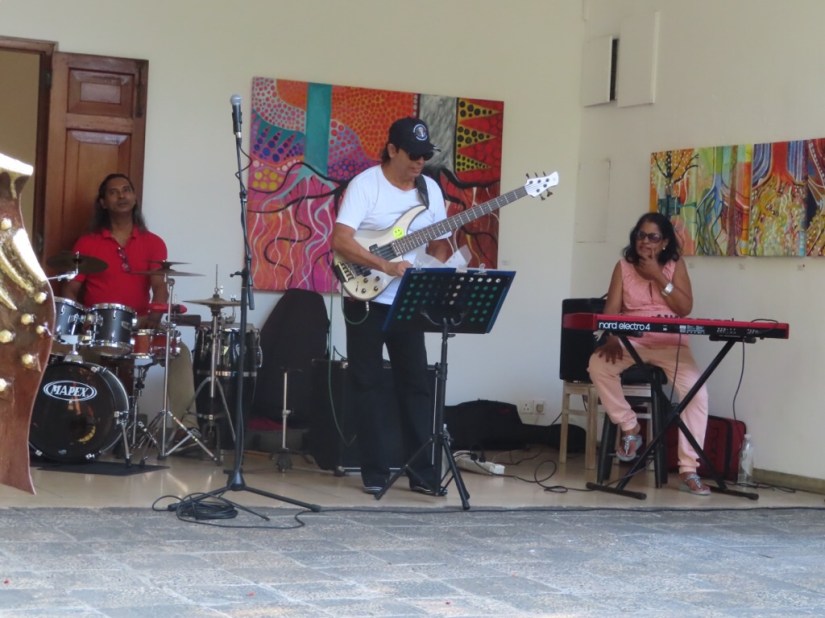
After freshening up, we walked to Barefoot, a store selling fabric designed and woven in Sri Lanka and made into clothes and housewares. We just bought a bottle of Kithul palm syrup to take home but we’re really here to relax in the cafe where they have Sunday jazz.

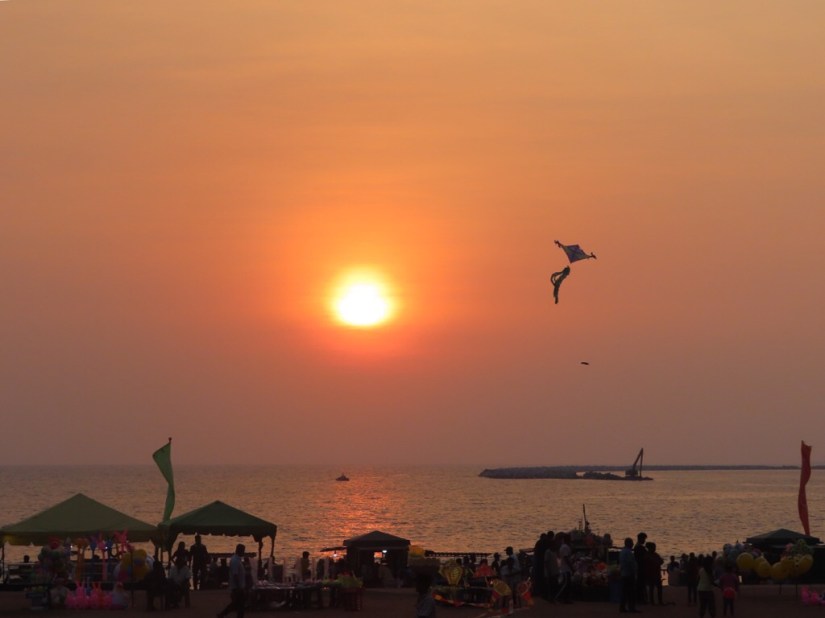
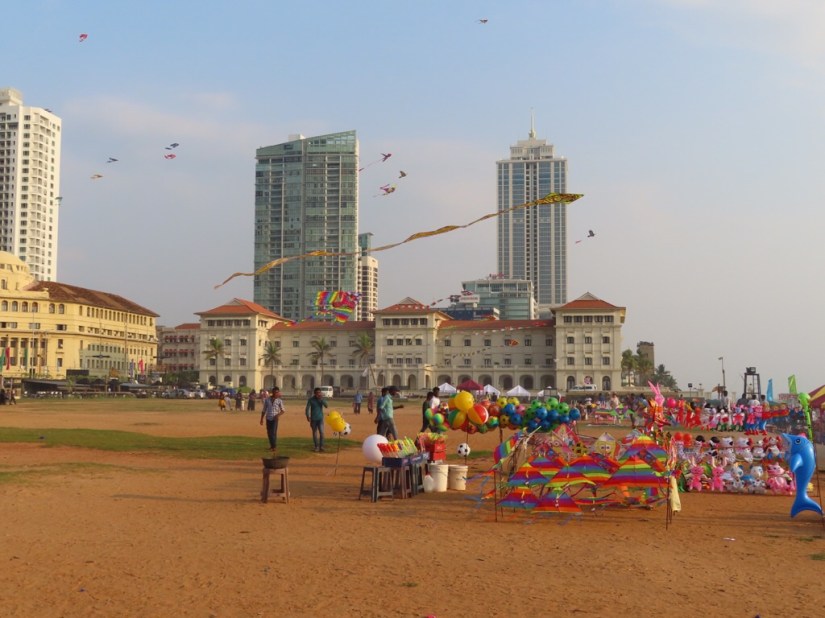
Later we took a tuk-tuk to Galle Face Green, a huge urban park besides the sea where everyone goes to watch sunset. There are lots of families and lots of vendors selling snack food, toys and kites …

… The Galle Face Hotel at one end …

… a huge flag pole in the centre …

… lots of construction in between …
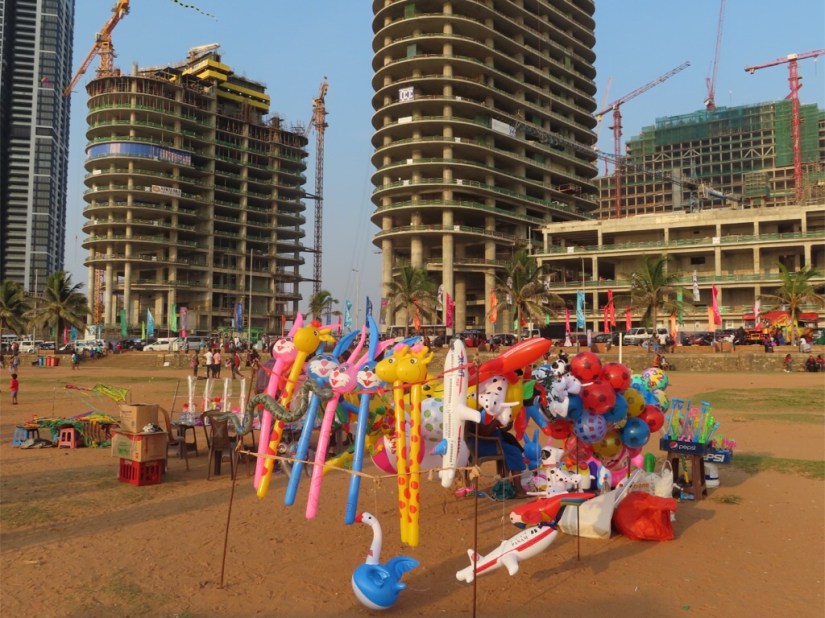
… and paddling and promenading!

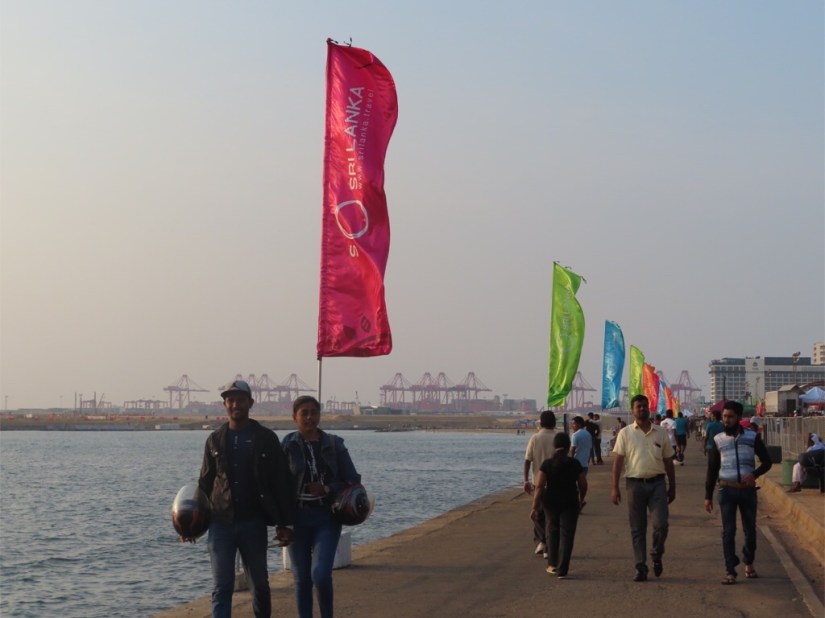
The flag is lowered at 6pm …
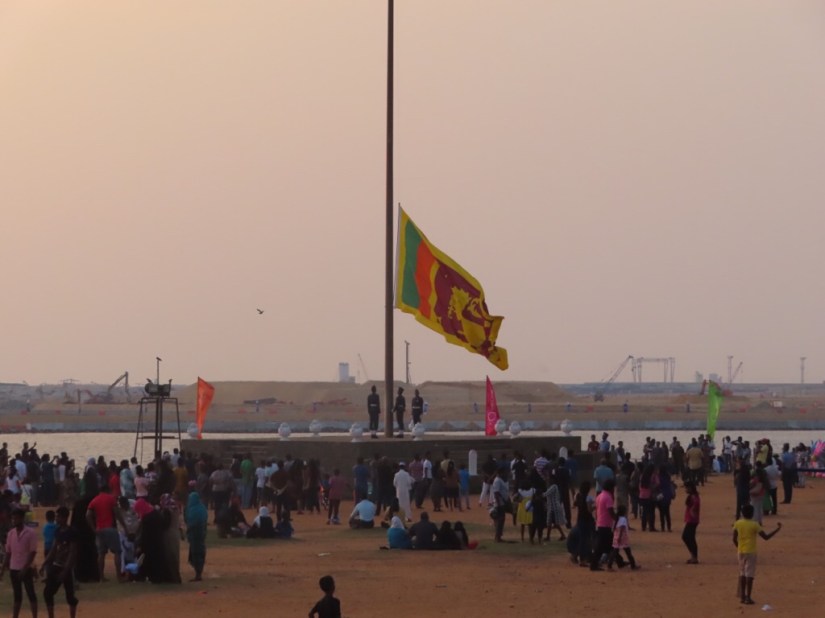
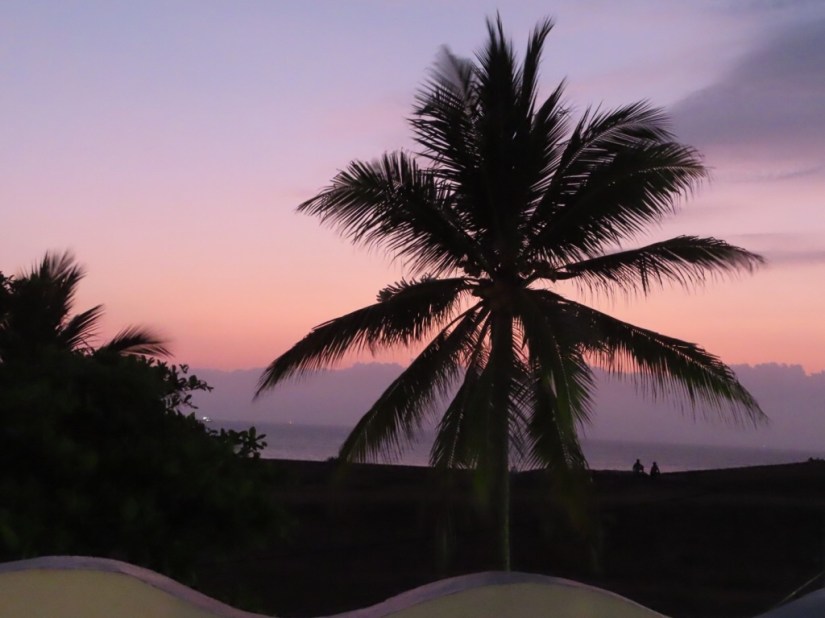
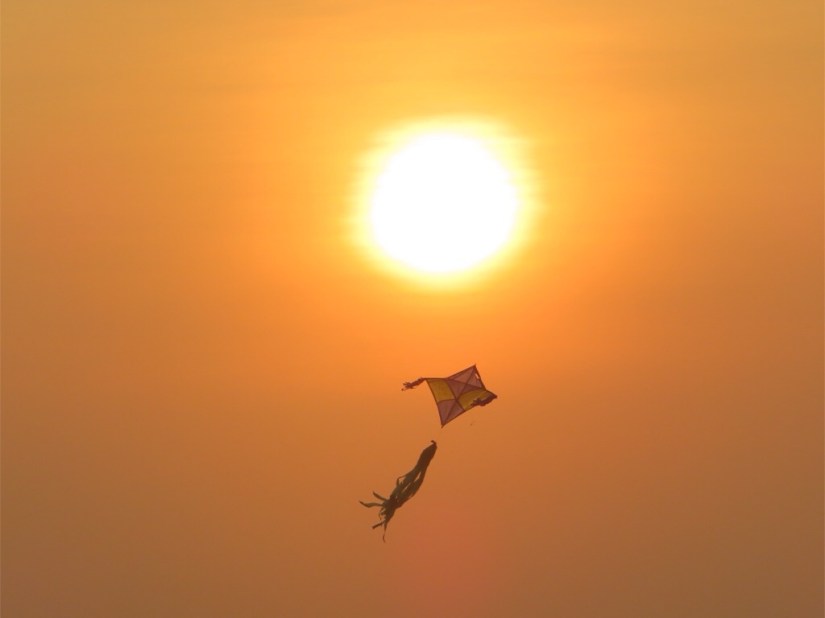
… then the sun sets.
Later, we found the rooftop bar of a local hotel with a breeze, beer, pizza for Chris and baked crab for me … the first crab I’ve had because its usually so messy to eat but this was perfect! I think we might be slipping into our ready to go home mindset … not a bad thing with just one more day to go.

Our last day … and my birthday … so there are treats in store!

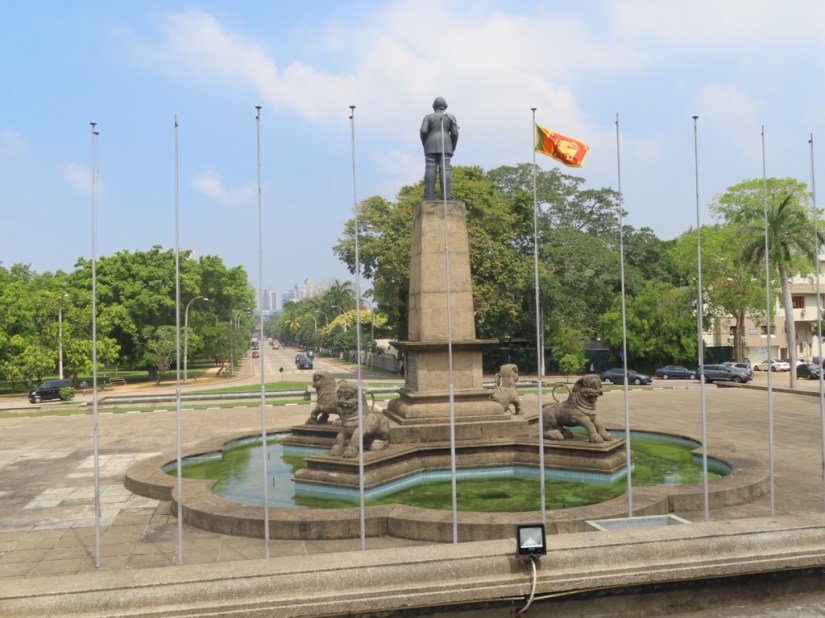
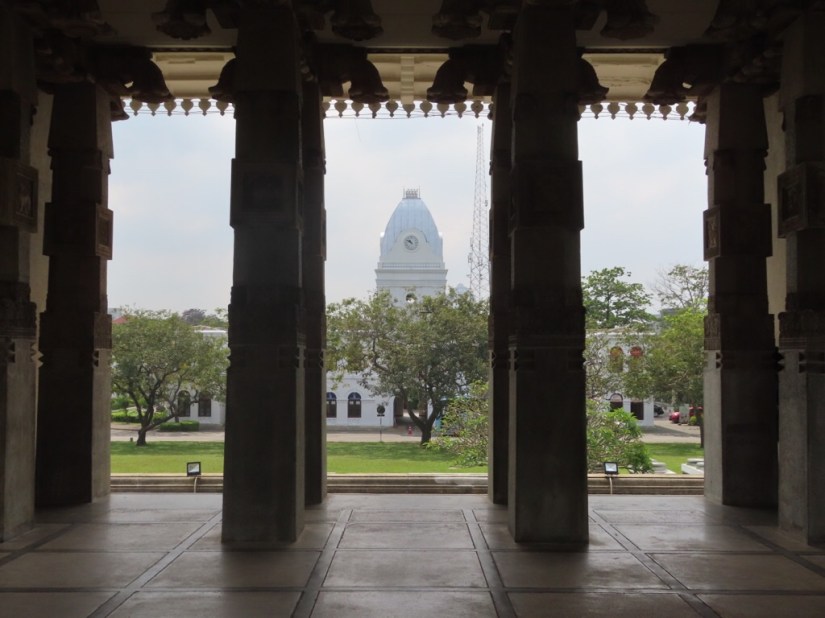
First was a quick tour taking in Independence Commemoration Hall, a rather clumpy stone replica was of the lovely audience hall we had seen in Kandy …

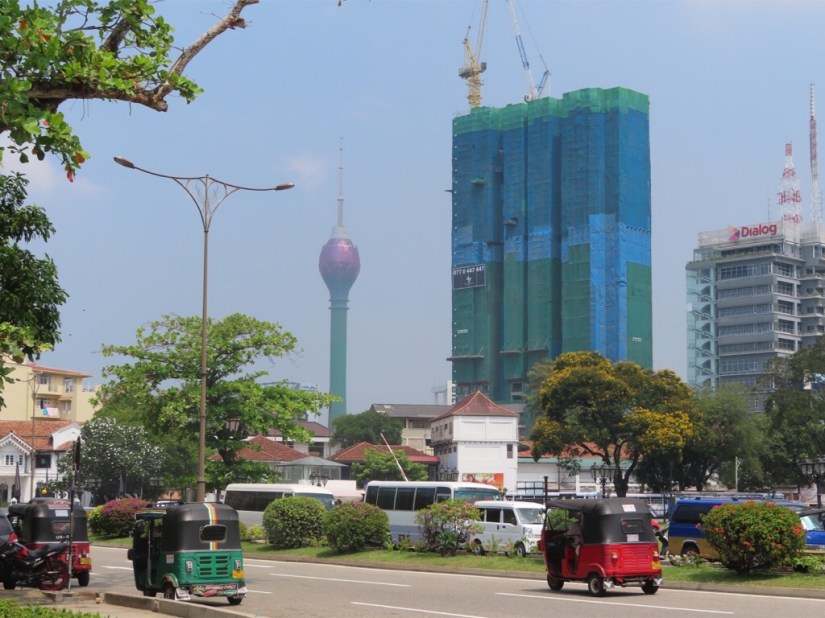
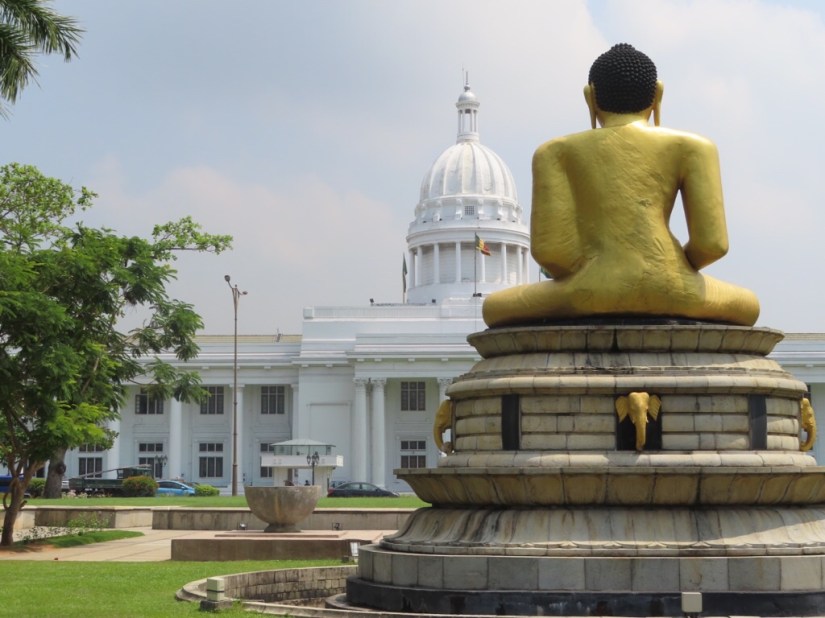
… then up through Cinnamon Gardens, a smart suburb filled with swanky houses and embassies, to the uninspiring Town Hall …

… and gilded Buddha in Victoria Park – a green oasis in the heart of the city.

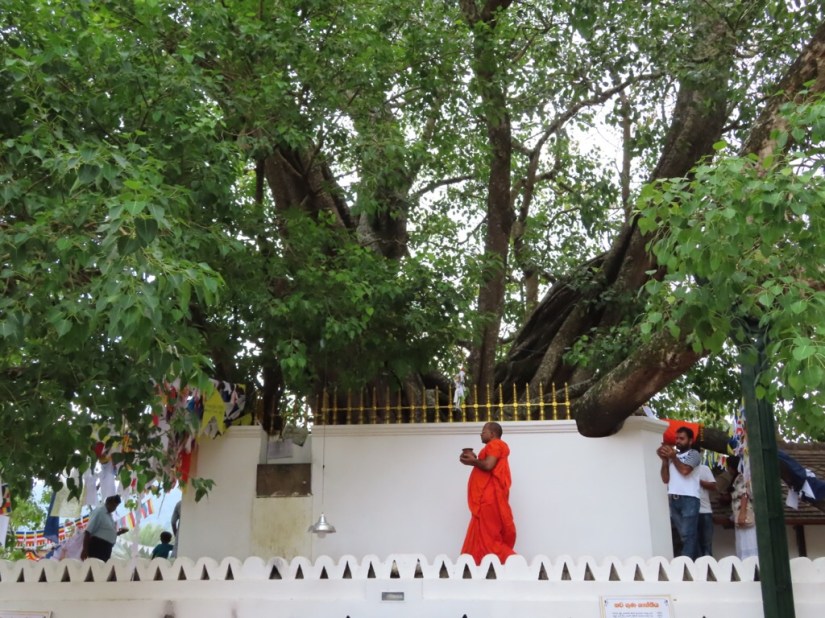
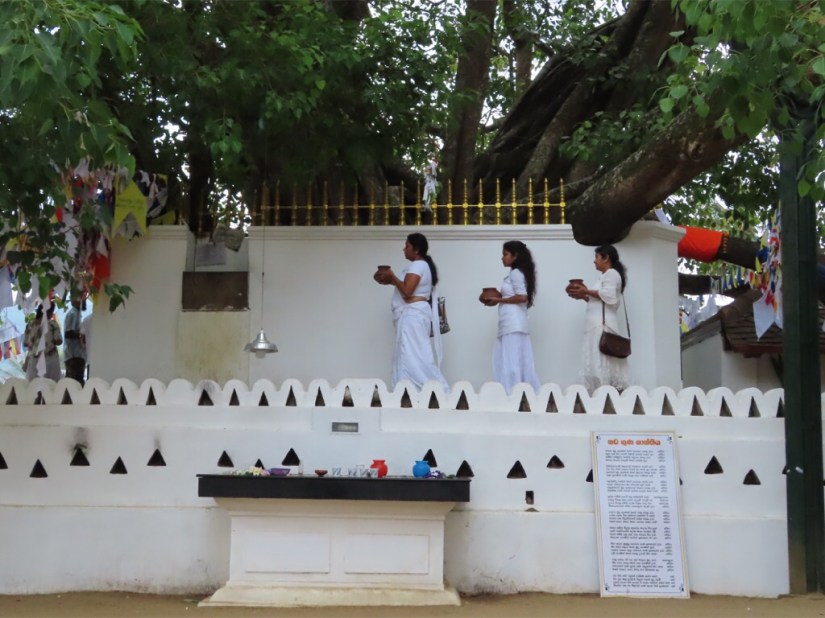
The C19th Gangaramaya temple had the usual image house, dagoba and bo tree …
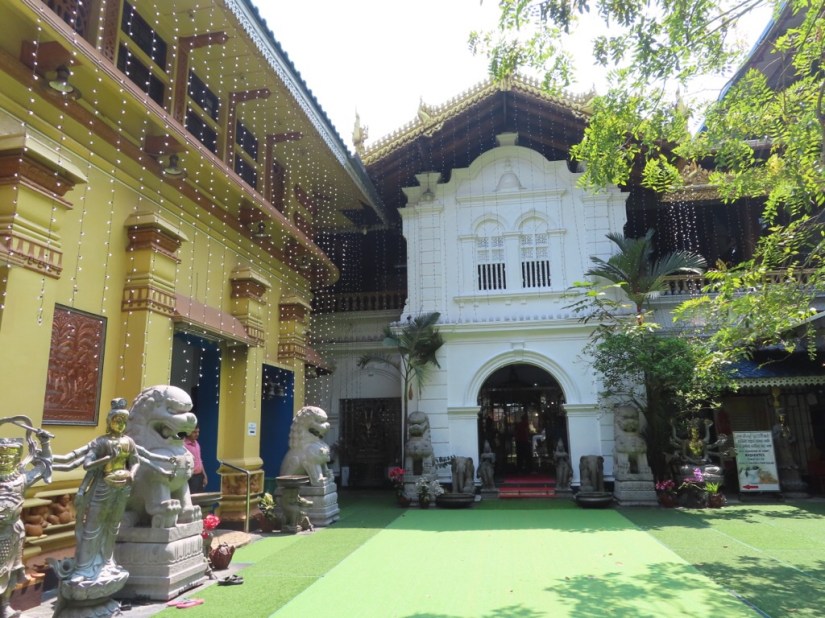
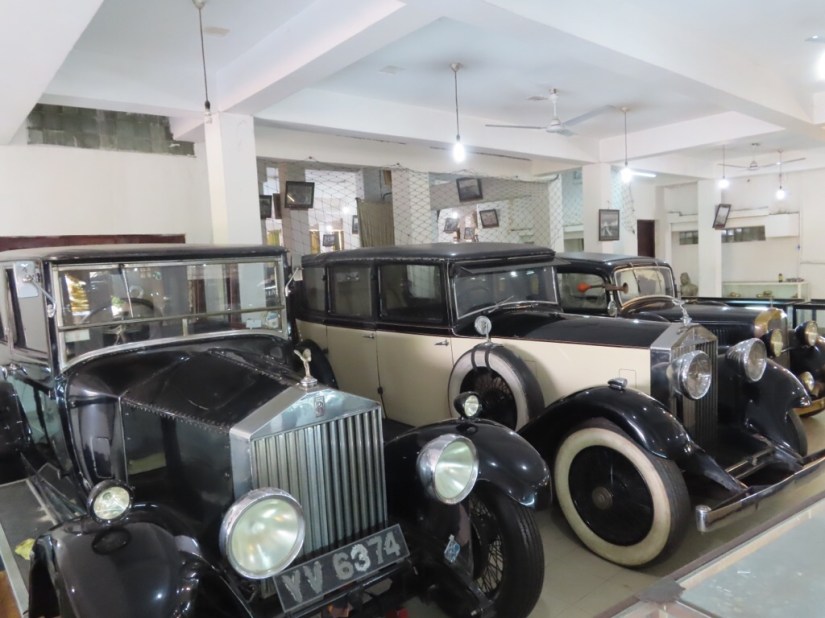
… but was a bit quirky, displaying the huge number of gifts donated to the temple from expensive golden Buddhas to old cars and the most mundane bric a brac more likely seen at a car boot or house clearance sale!

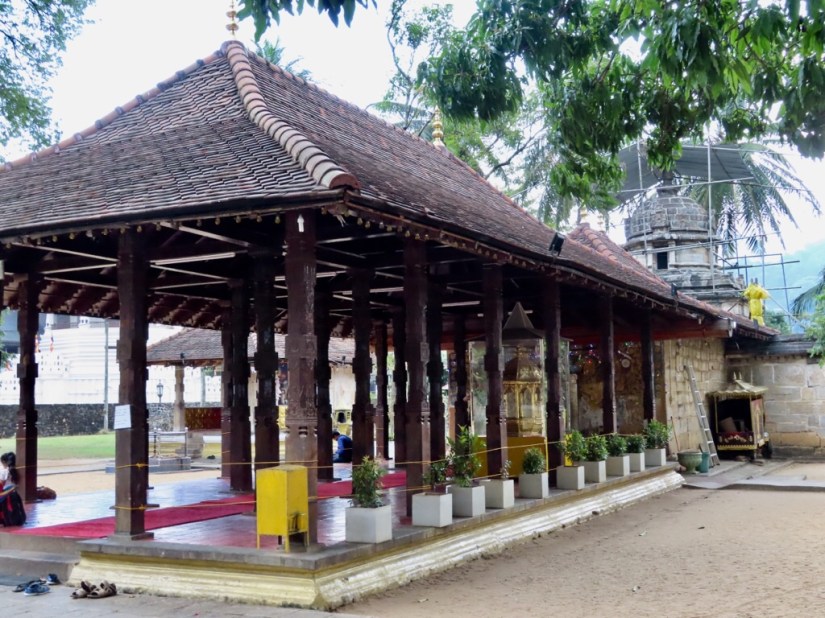
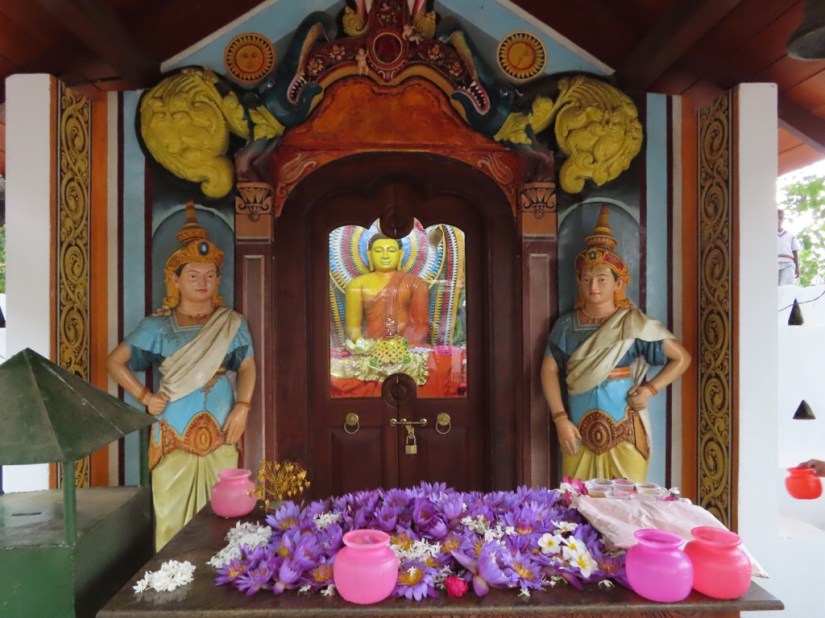
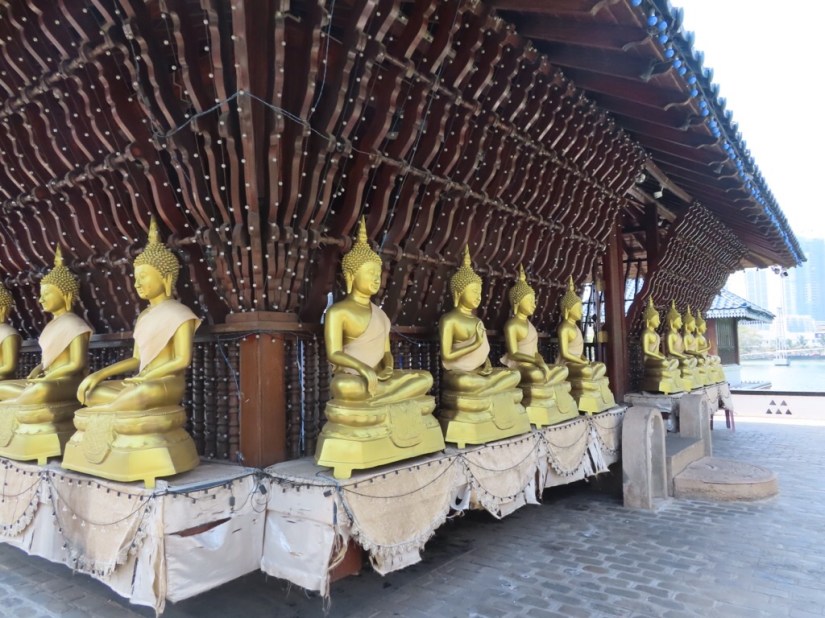
Onwards to Beira Lake and the Seema Malaka Temple- another chilling designed by Geoffrey Bawa, but apart from the wooden pavilion with gold Buddhas, it wasn’t as impressive as we’d expected.

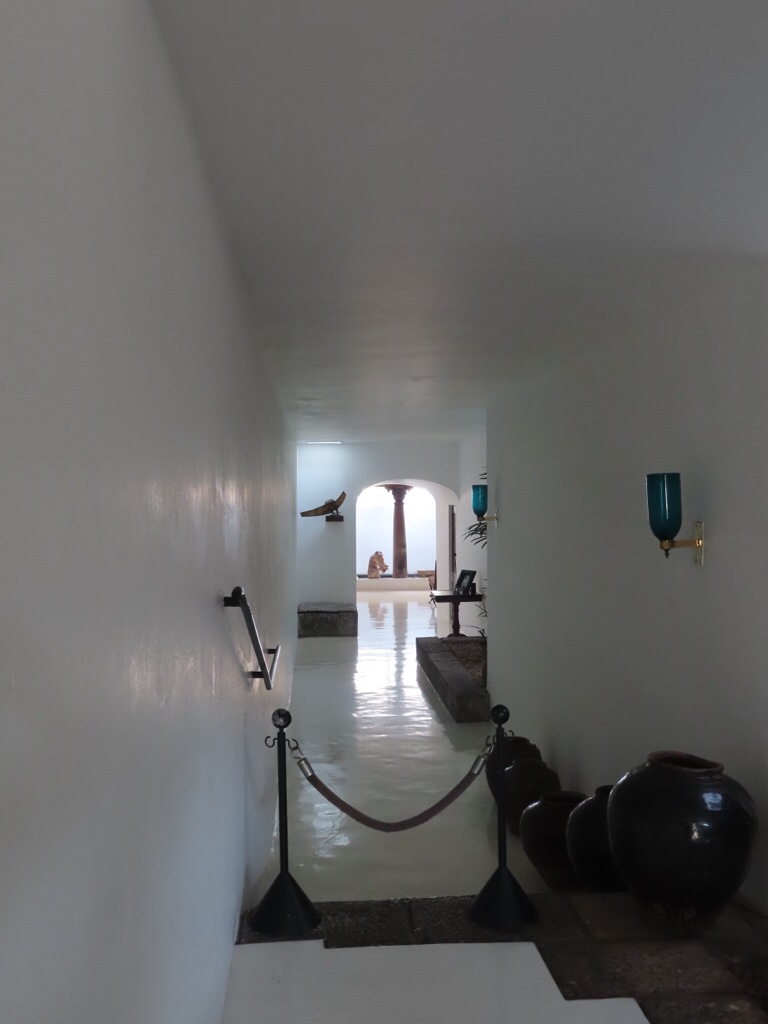
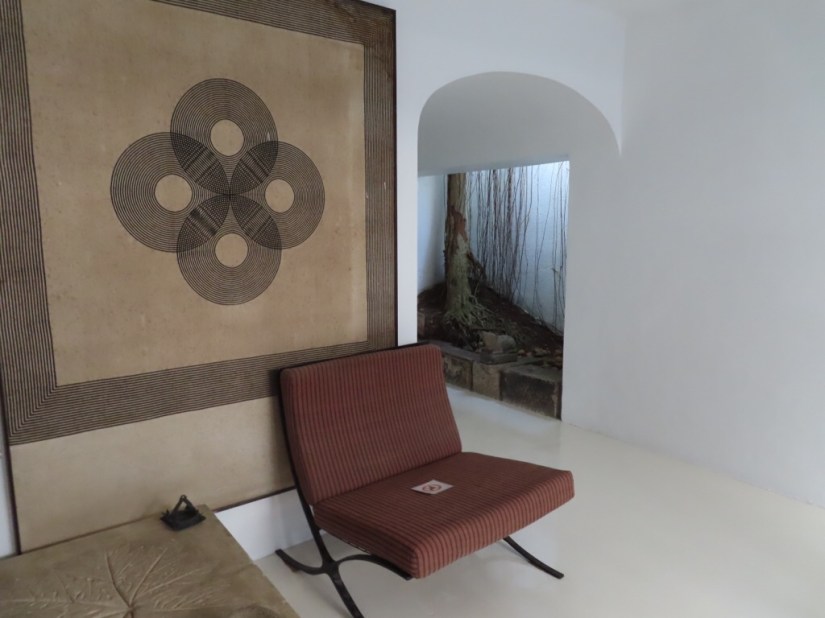
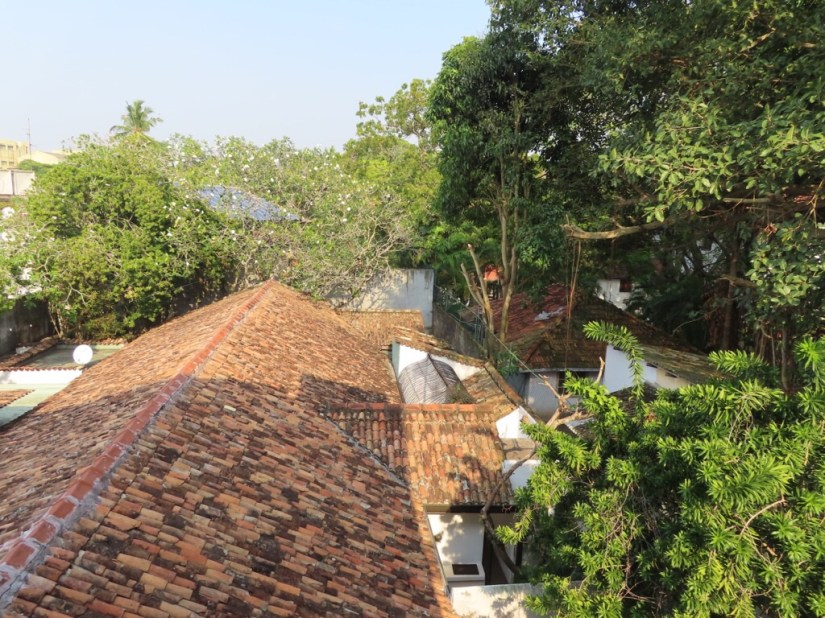
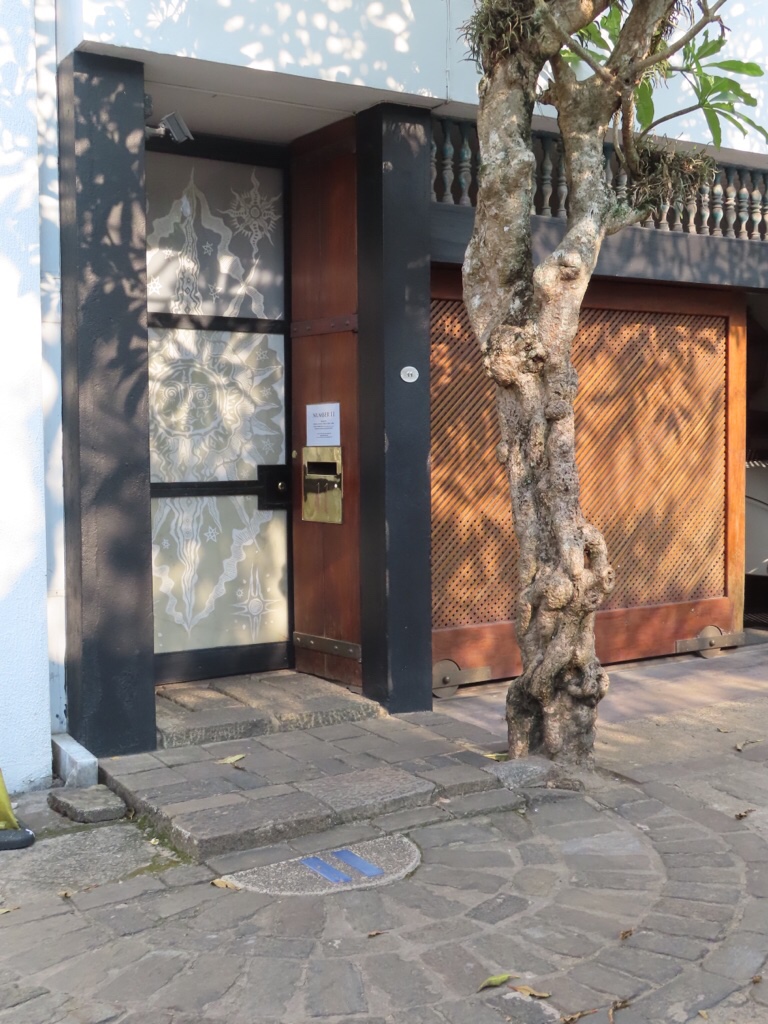
In the afternoon we had a tour of Geoffrey Bawa’s home, converted from 4 small cottages into an inspired modern home in the heart of Colombo, just what you would expect of Sri Lanka’s foremost C20th architect, although only limited photography was allowed.
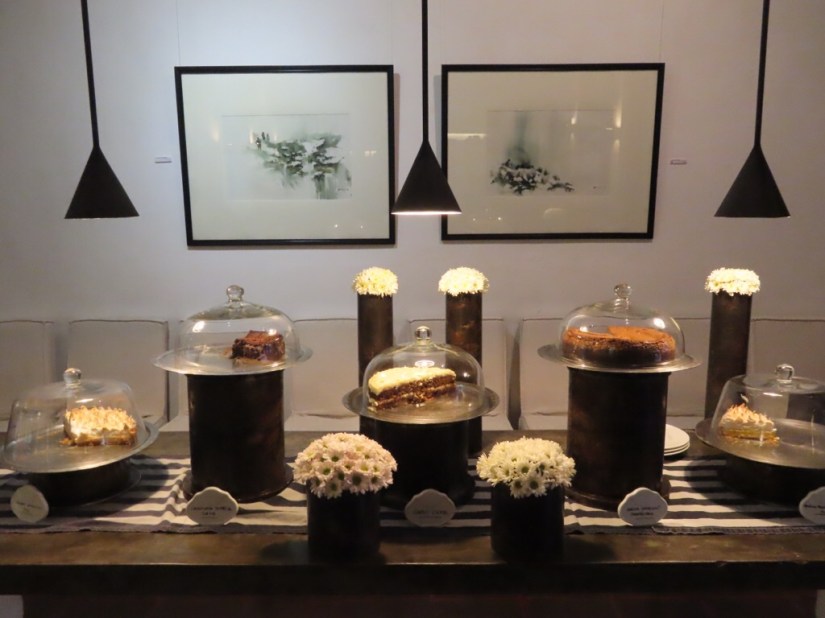
Afterwards it was tea and cake at the Gallery Cafe which was once his office where we also found a lovely souvenir, a letter rack designed like one of the many moonstones we have seen in the entrance to temples during our trip. Birthday cocktails, our last Sri Lankan meal and a nightcap brought the day to a close.

Tomorrow we have a morning flight home so here we are at the end.

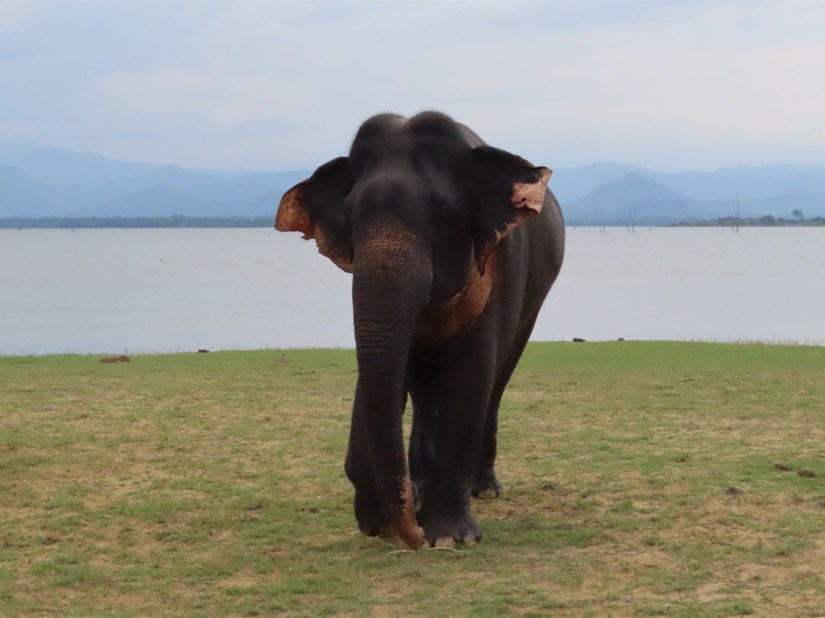
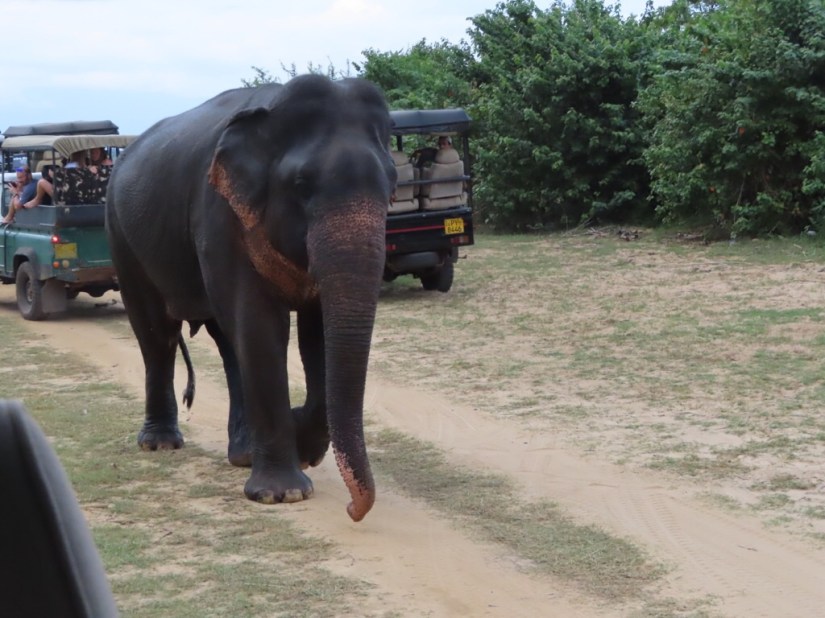
Chris has expanded his wardrobe by three T-shirt’s with a collection of elephants and tuk-tuk s as well as a very loud red elephant shirt which will no doubt make an appearance on future trips.  He also has high hopes for his close up photograph of the elephant’s eye!

We’ve had a great time – Sri Lanka is lovely with so much to do and see, friendly people and delicious food. We’ve drunk lots of lime, king coconut, Lion and passion fruit … my favourite … and as a bit of a trip first … not a single glass of wine!

Watching the elephants in the national park had to be the highlight with the elusive leopard our only disappointment.

Until next time, we wish you well and long life … or as they say here … Ayobowan!

Map

Galle … Fort!

file-bc6410cb-f39d-4dbd-8184-4b6f798e977e-419-0000001d75425687The coast road took us passed several small towns and a number of small beach resorts but the beach was very shallow and nowhere looked as enticing as Tangalle or Mirissa.

According to the guide book, the stilt fishermen seen along this stretch of coast are one of the most iconic sights in Sri Lanka … and having checked out some gift shops, they would agree …

… however the reality is that the best time is sunset between October and December when the currents are flowing in the right direction.

Not wanting to miss out on a tip, there were several posing with rods first thing on a February morning!

Galle (pronounced Gaul) has grown into Sri Lanka’s fourth largest city, but we just visited the old Dutch quarter, called Galle Fort. The first fortifications were built by the Portuguese in 1589 and were extended by the Dutch after they captured the city in 1640 but when the British took Galle in1796, barely a shot was fired so the fort remained intact.

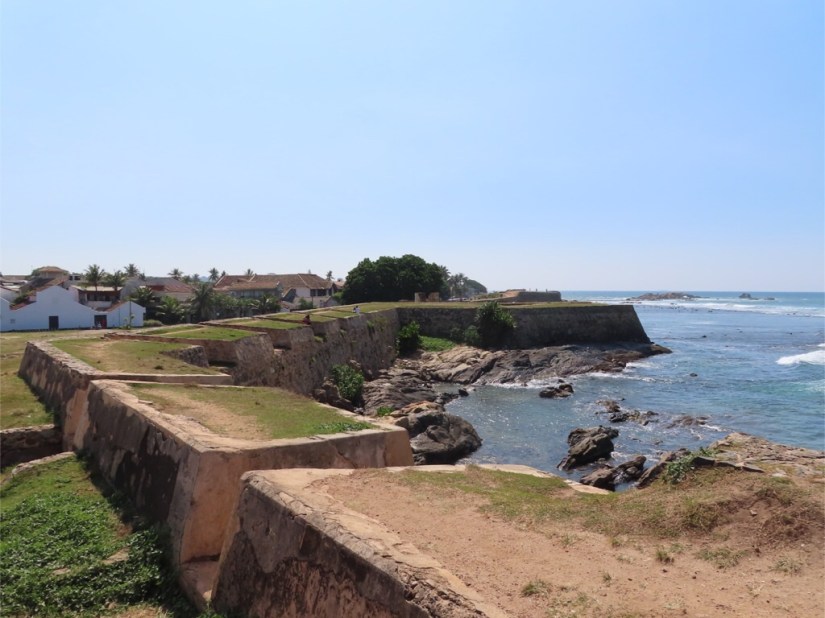
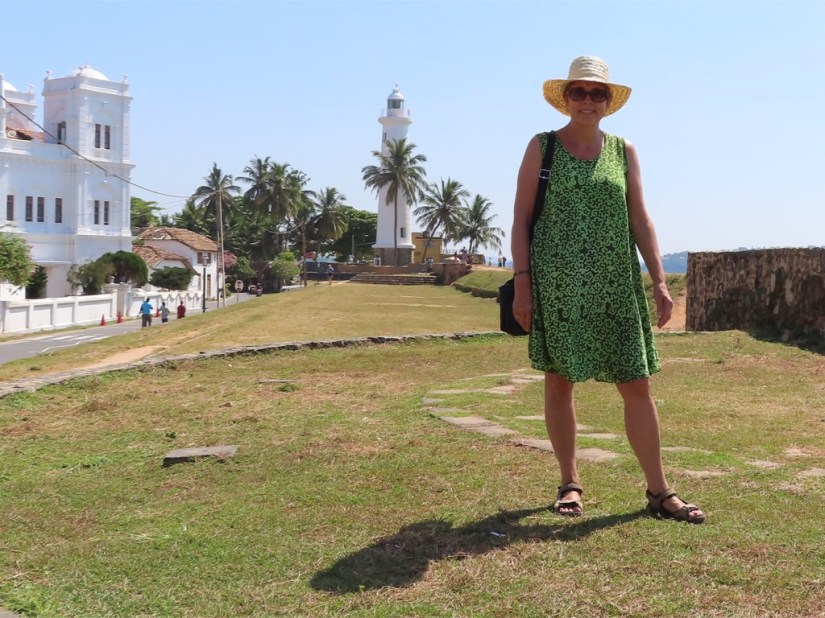
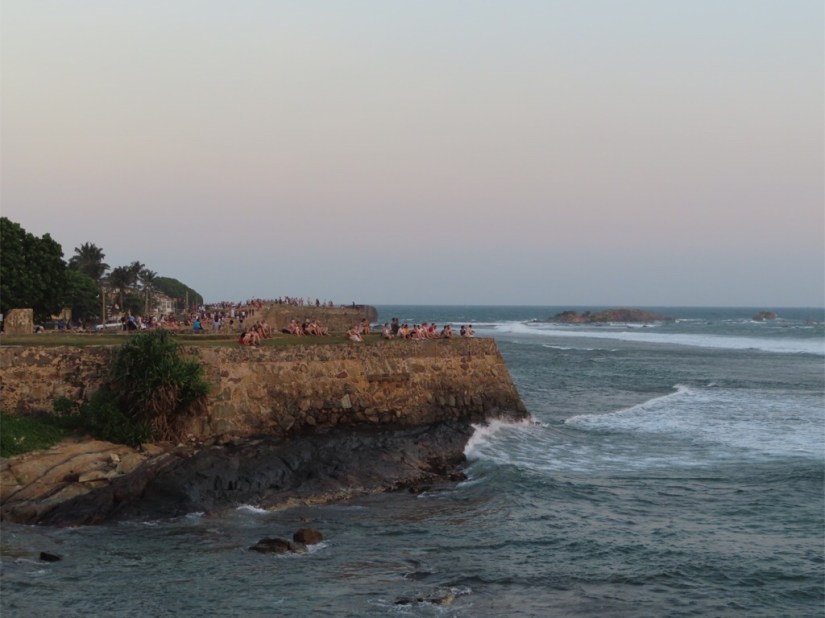
The walls are immense, with huge bastions, gun emplacements and a pretty white lighthouse and we walked round the ramparts one morning before it was too hot and took a few snaps …

We are staying at Seagreen, originally housed a C18th colonial period home but now a comfortable guesthouse owned by a Sri Lankan family who have lived within the Fort for eight generations. The rooms are named for the bastions and the roof terrace has a sea. It’s been a great place to stay with friendly and helpful staff and great breakfasts.

Many of the historic buildings have been restored by expats and the Colombo elite attracting visitors and money giving Galle Fort a cosmopolitan feel, with Dutch-period villas now home to boutique hotels and trendy shopping.

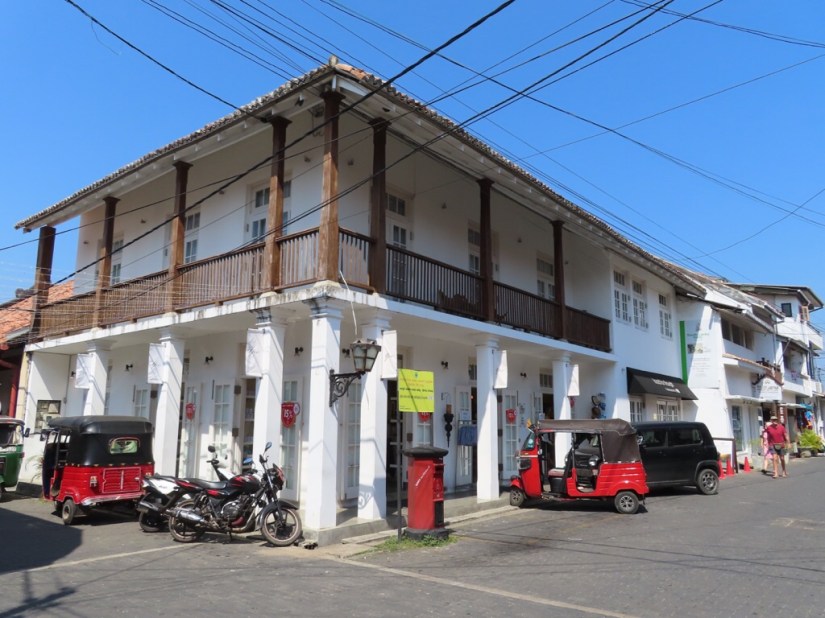
The buildings standing on the junctions were often the most impressive …

We noticed the coat of arms of the VOC or Dutch East India Company one side of the main gate and the British crest on the other …

… the rather uninspiring Anglican Church …

… a C20th Mosque that looks more like a Baroque church till you notice the minarets and crescent moons …

… and a Buddhist temple by our guesthouse.

The Dutch Reformed Church was more interesting with an impressive array of memorials …

… especially this one to the Commander of Galle with a skull, helmet and remains of his baptism shirt.

Many of these commemorate the families of Sri Lanka’s smallest minority, the Dutch Burghers who are Sri Lankan’s of Dutch or Portuguese descent. Many held government posts or ran trading companies under the British, but around half left when Sinhalese nationalist laws were brought in after independence. A couple of notable Burghers include the Canadian-based author Michael Ondaatje who wrote the English Patient and the architect Geoffrey Bawa.

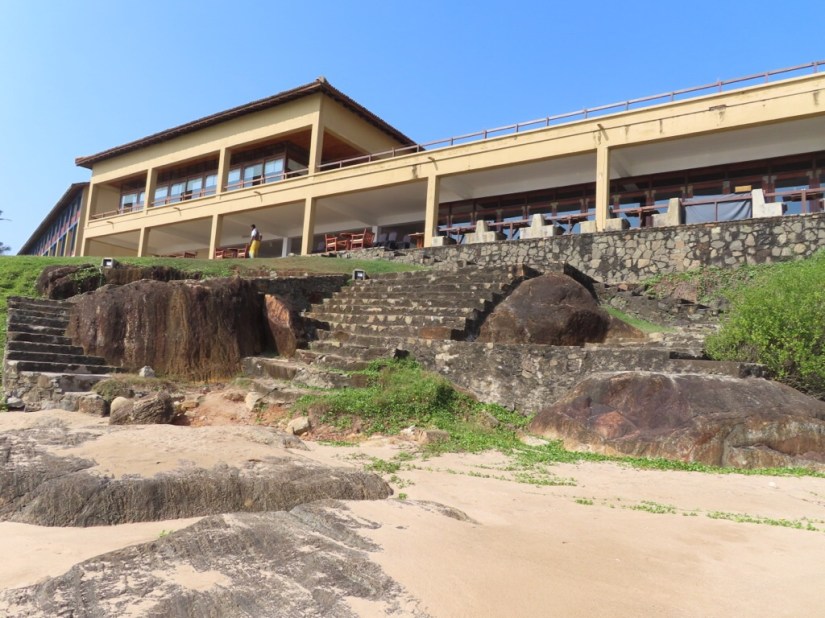
On our last afternoon, we went to look at The Lighthouse Hotel, opened in 1997 and designed by Geoffrey Bawa. We will be learning more about Bawa when we take a tour of his Colombo home, but in a nutshell, he qualified as an architect in London in 1960, heavily influenced by modernism. He soon realised that this didn’t fare well in the tropics – the white walls weathered badly and flat roofs were no good in a monsoon – so adapted his designs using local materials and features, merging his buildings with their surroundings. The Lighthouse was the last of his major projects and is a perfect example, reflecting the 17th-century Dutch fort at Galle which also looks down on the ocean from a rocky promontory.

The facade is unimpressive, but the spiral staircase into the heart of the hotel is jaw-dropping, with intricate bronze and copper sculptured balustrading depicting the Battle of Randeniwela between the Sinhalese and the Portuguese.

The main lobby opens out, with the sunlight shining on the polished concrete floor and is open to the sea beyond.

We ordered drinks and spicy wedges and sat and admired the view before walking round and taking some snaps … sorry rather a lot … but I thought it was so photographic!

Now from high design to absolute kitsch! We have been both charmed and irritated by musical tuk-tuks during our time in Sri Lanka. It started with strains of Für Elise reaching us at the top of Mihintale and trailing us all round Anuradhapura … although we didn’t see where it was coming from. Later we heard a different tune and spotted bread seller driving along – too far away to snap! Since then there have been several that we have heard but not seen and others we haven’t been quick enough to photograph! We did spot this chap in Ella …

… and a couple here in Galle …

… only to amazed to hear this chap playing a tune as he collected the rubbish!

As the afternoon cools, everyone comes out, looking for the best spot to watch the sunset and on the first day, it seemed as though every local school had sent a day trip here, with long lines of children all dressed in white – surely the most impractical colour for a uniform!

Then the sun sets …

… and before the light fades there is just time for football or cricket …

… and once the the sun is up …

… they are at it again!

Our trip is almost at its end … as we return full circle to Colombo.

Map

Mirissa … More Chilling!.

A couple of hours west by tuk-tuk, closer to Colombo and a few degrees more touristy.

We made a couple of stops on the way, firstly at Wewurukannala Temple, home to the largest Buddha statue on the island and built in the 1960s. Each full moon, there is a Poya day, celebrating an event in the Buddha’s life and today was Navam Full Moon Poya which celebrates the appointment of Buddha’s two chief disciples and the first Buddhist Council. Unless it is a major festival, this usually just means people generally have the day off, most shops are closed and many people visit their local temple to make offerings and so the temple was busy.

The main image house contained a collection of Buddhas and other statues, as well as one that looked a bit like a nativity!

There was another, a bit like a chamber of horrors showing what was waiting for you in hell with some rather jolly devils and some eye watering punishments!

Next was Dondra Lighthouse at the most southern point of Sri Lanka …

… next stop Antarctica … 15,000km away!

We are staying at The Secret Guesthouse, hidden up a lane just five minutes from the beach. Our lovely room overlooked the garden, complete with easy chairs on the verandah. There are some lovely extra touches here like a fan on the verandah, mosquito coils set burning every evening by our room, filtered water on demand and even a kettle for a morning cuppa.

We had rice and curry for dinner here our first night which was very good and breakfast has given the option of eggs and a pastry or hoppers and dhal together with fruit and toast.

They also have a spa across the road, and we had very relaxing Ayurvedic massages early one evening, moisturising our sun-kissed skin with aloe vera oil.

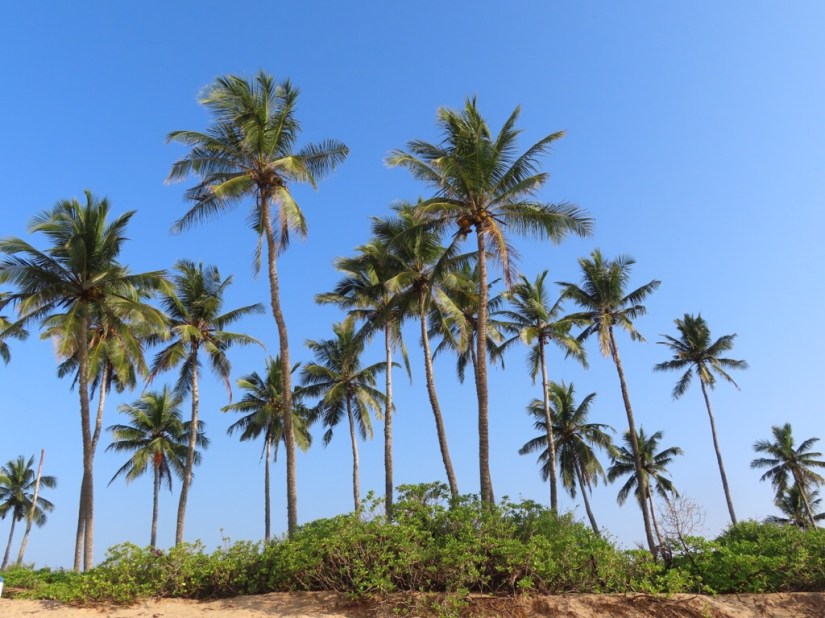
As for Mirissa, it was billed as one of the most appealing places to spend a few days and it certainly was, with a pretty bay backed with coconut palms and a sandy beach good for a dip in sea.

We liked the end by Parrot Rock, a little quieter and more laid back …

…where we could spend the day on a lounger watching the world go by …

… get a cold lunchtime drink …

… and later watch the sunset with a beer.

One morning we were feeling adventurous and climbed Parrot Rock for the view, taking care with the broken steps and rickety handrail!

There were other temptations on offer including water sports and whale watching but with just a couple of days we focused on doing not a lot!

We had dinner on the beach twice, by candlelight while wiggling our toes in the sand, with freshly grilled fish for me and veggie treats for Chris then wandered down to the sparkly end of the beach to admire the lights!

As lovely as this has been, there is more to see and do so we leave in the morning …

Map

Tangalle … Just Chilling!

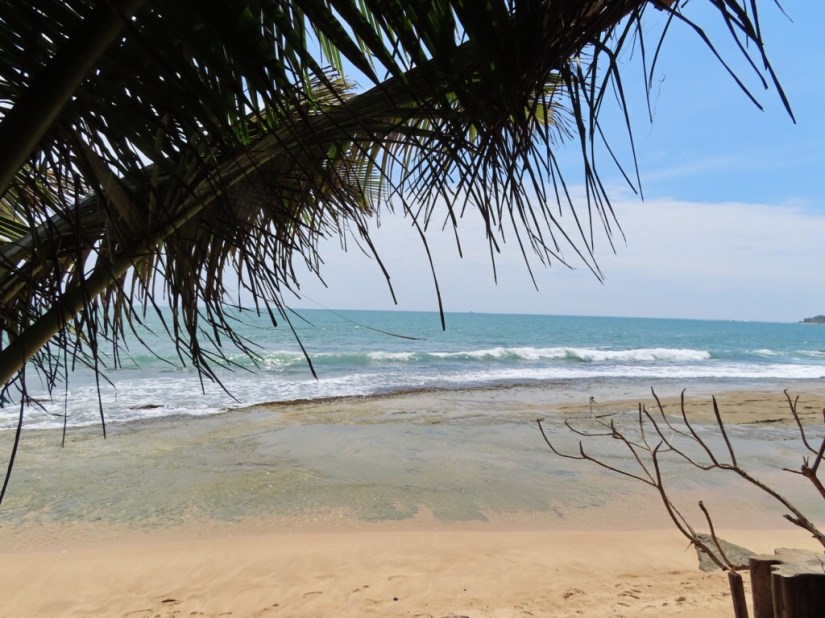
Tangalle, (pronounced Tan-Gaul), is a pretty sleepy place on the south coast and we are staying at Cinnabar Resort, beautifully designed with a rustic laid back feel to it. Here is our first view of the sea as we checked-in.

There are treehouses here …

…but we opted for a cabana which was perfect, complete with a little patio, fishpond and deckchairs.

Everywhere is beautifully swept and raked, with fresh flowers daily.

The restaurant is right by the beach …

… and is magical in the evening with candles and cocktail happy hour. Chris has sampled the pizza and I’ve had fish each night – a nice change from rice and curry!

In the day the sun is strong, and while there are loungers on the beach, there is little shade till later, but there are still hammocks and beanbags for relaxation in the shade.

The beach isn’t suitable for swimming by the guesthouse, although if looks lovely and the waves breaking have provided a constant soundtrack to our stay here. Further down the beach is safer, but there is still a massive undertow which can sweep you off your feet – which it did to me twice!

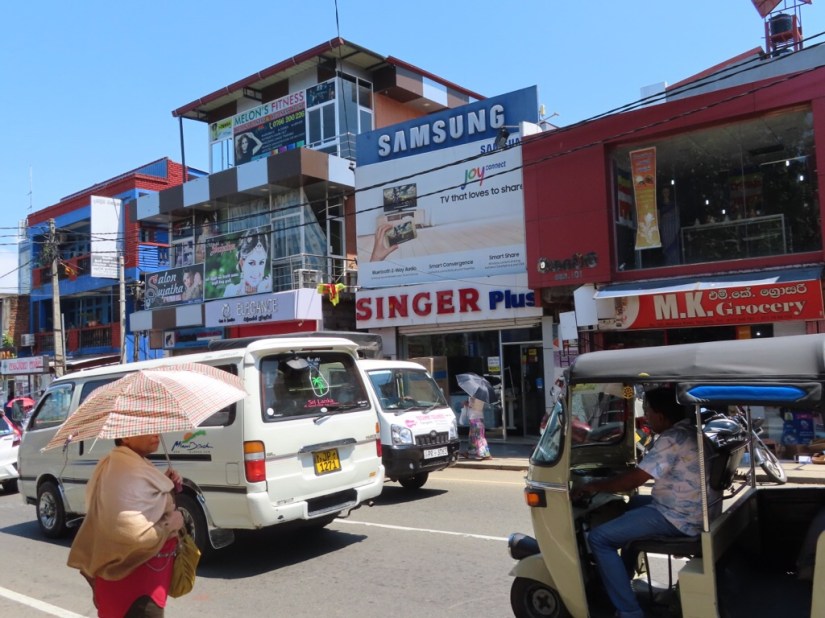
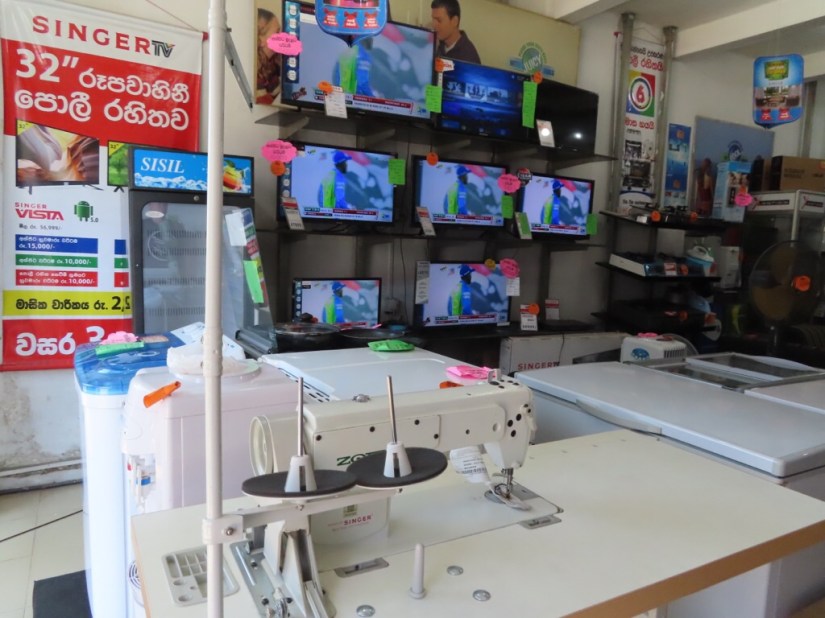
We did take a walk into town to visit the ATM, and while there I bought a souvenir … a pan to make egg hoppers … so that will be a project when we get home! Also noticed that while we know Singer as a sewing machine company …

…here it has expanded into so much more, selling all sorts of household items branded Singer … surprised its not called Curry’s!

On our last morning, I went for a walk before breakfast …

… and even saw a croc in the lagoon!

Anyway, we have been very lazy, just catching up with our reading and enjoying being by the sea and it has been lovely …

… but time to move on!

Map

Uda Walawe … and Lots of Elephants!

It is 100kms from Ella to Uda Walawe so we decided to get a car to take us. As we left Ella we stopped briefly at Rawana Falls …

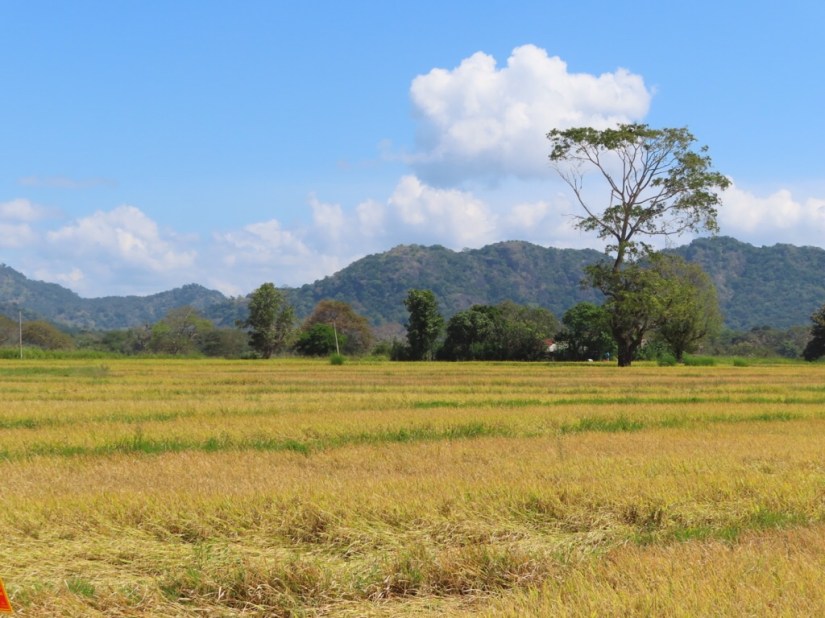
… then the road hugged the hillside as it slowly descended to the valley. All of a sudden the scenery changed … the rice paddies were back and the temperature rose to 30°!

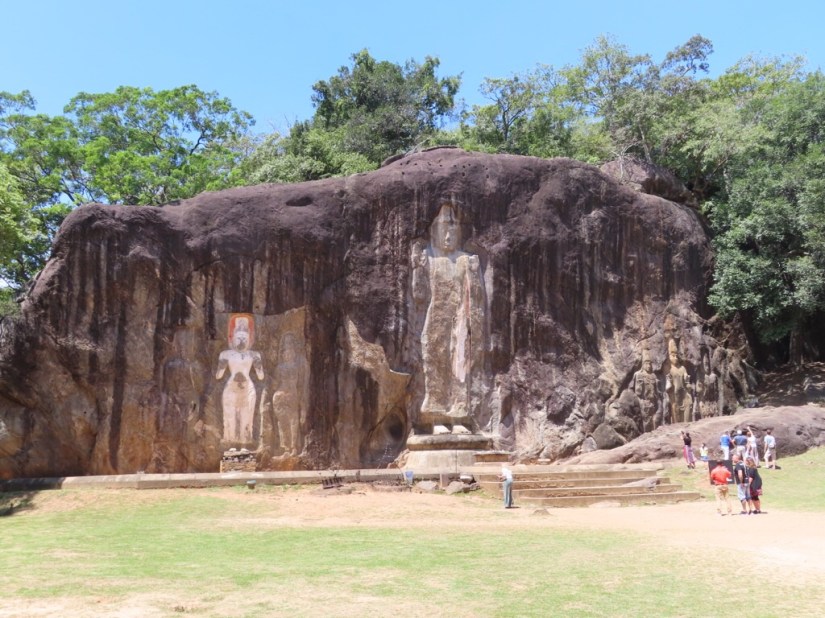
We took a short detour to see the Buduruwagala rock carvings, thought to date from the C10th. The Buddha is 16m together with goddesses, but we liked the Hindu inspired trio best as the carving was more intricate.

The last stretch of road took us alongside the border of Udawalawe National Parks and we stopped twice for elephants standing near the fence …

… until we realised they are there because the cafe the other side of the road throws bananas for them to get tourists to stop, and maybe have a drink!

Our plan had been to chill for the afternoon and take a safari into the park in the morning, but when we arrived at Silent Cottage, we were told that since it is busier in the mornings, we might be best to go straightaway, so with little ado we were heading off again!

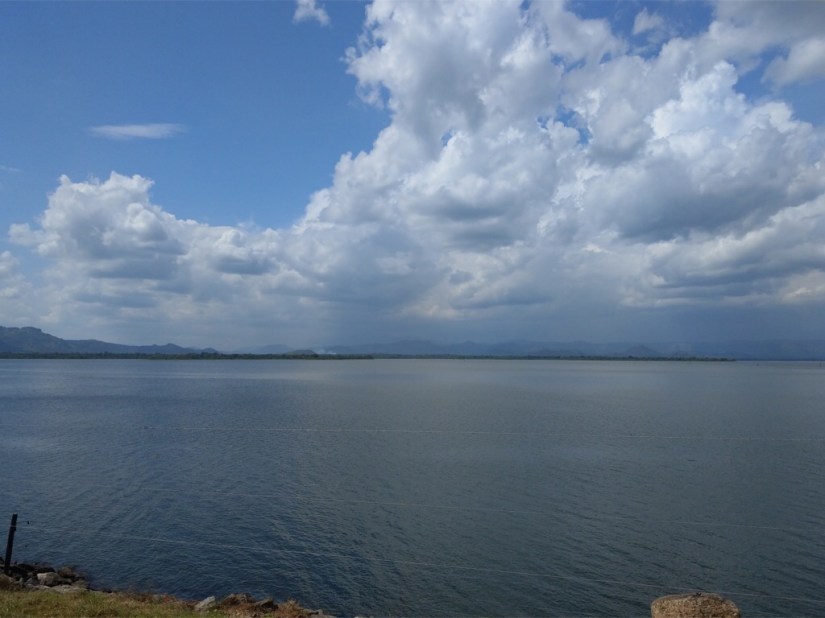
We had already seen the stretches of water from World’s End and we passed the huge reservoir whose catchment area the park was originally set up to protect. Today the park is home to some 600 elephants roaming over 302 sqkm so we have our fingers crossed!

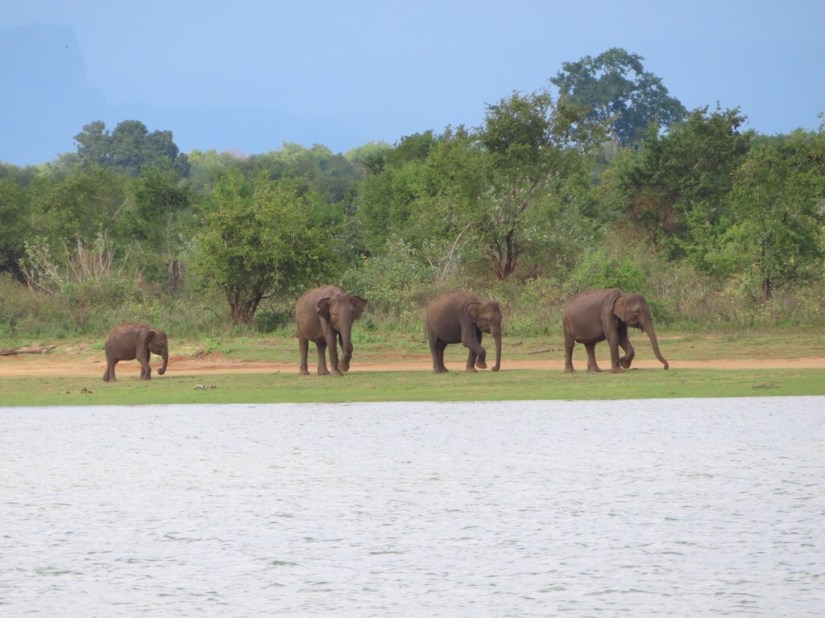
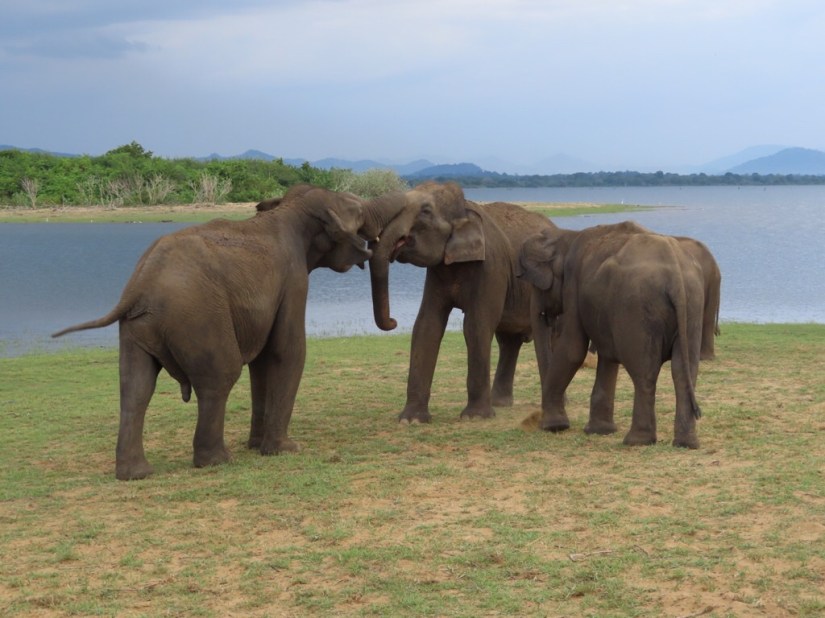
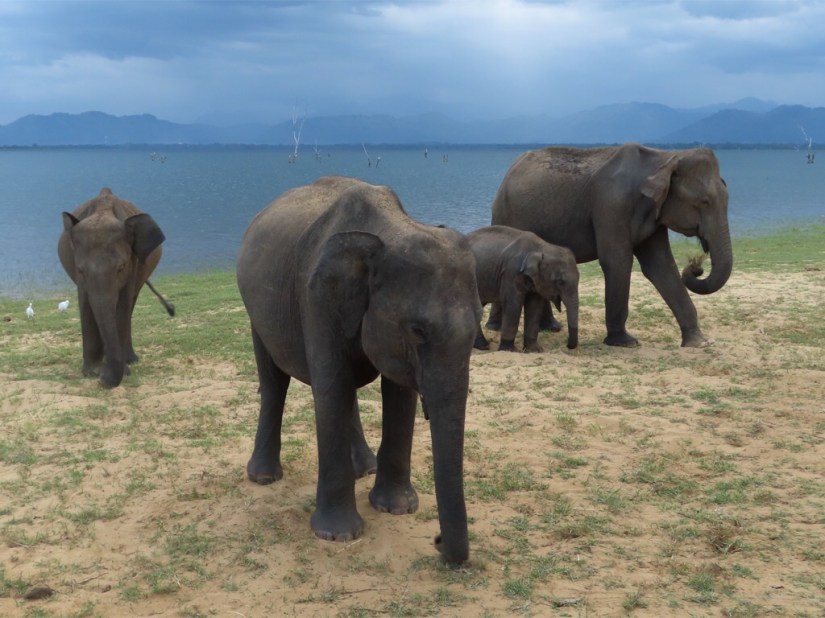
We got lucky quite quickly, seeing this little group on the far side of the lake, and we watched them for a while before seeing what else was around. We have never seen as many wild elephants before in all our travels together so we were thrilled.

The painted storks caught our eye …

… then this little chap on his own.

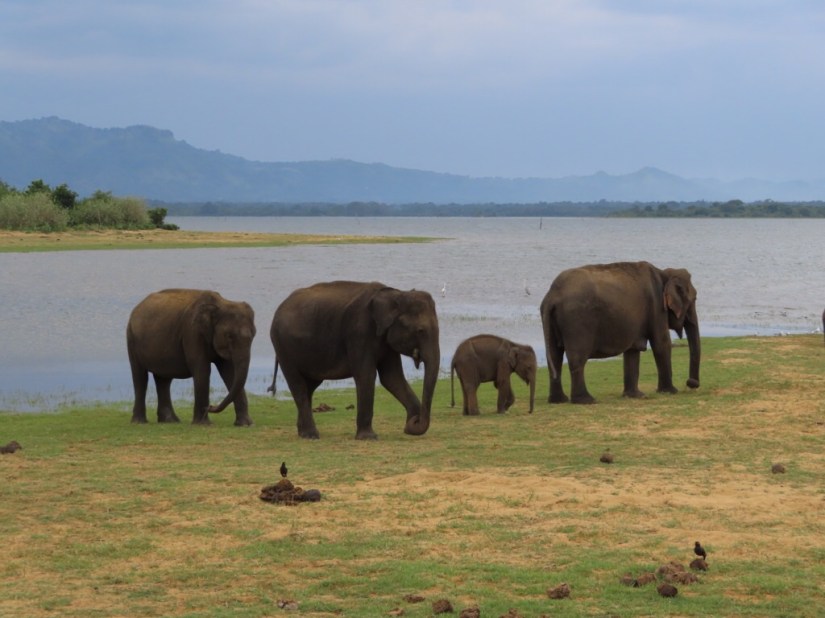
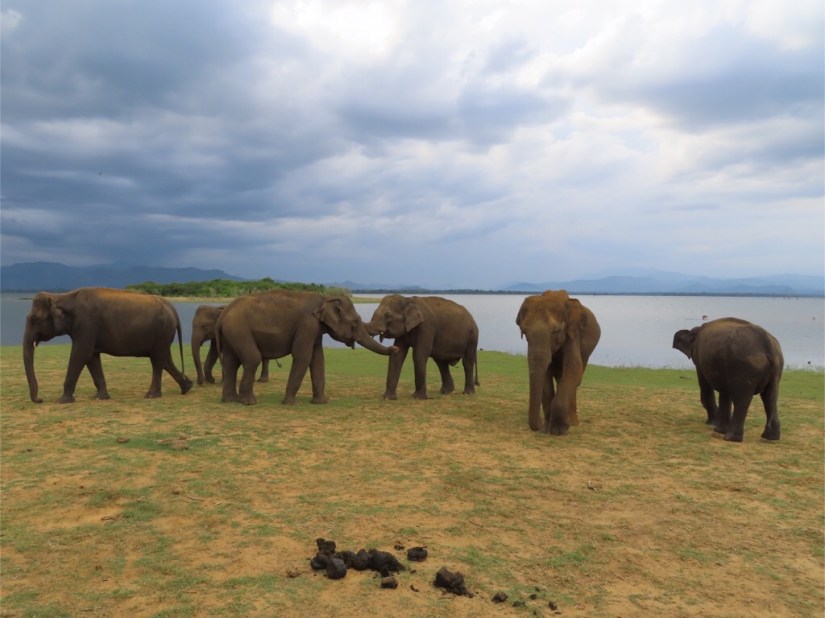
Further on though, we really struck gold with this group although it was a little disconcerting to see how many trucks were watching, in all maybe 30 … but I guess the elephants had the choice to walk off if they wanted and the trucks have to stay on the track.

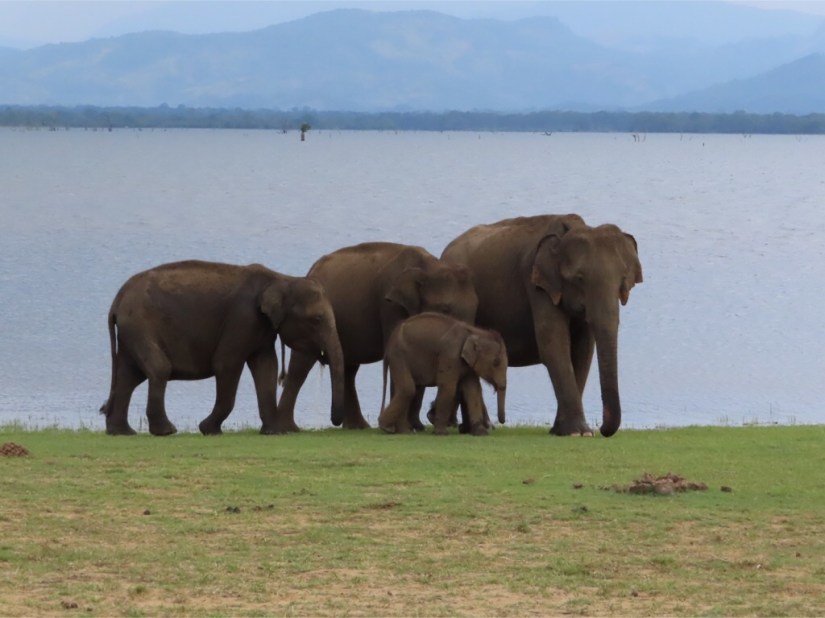
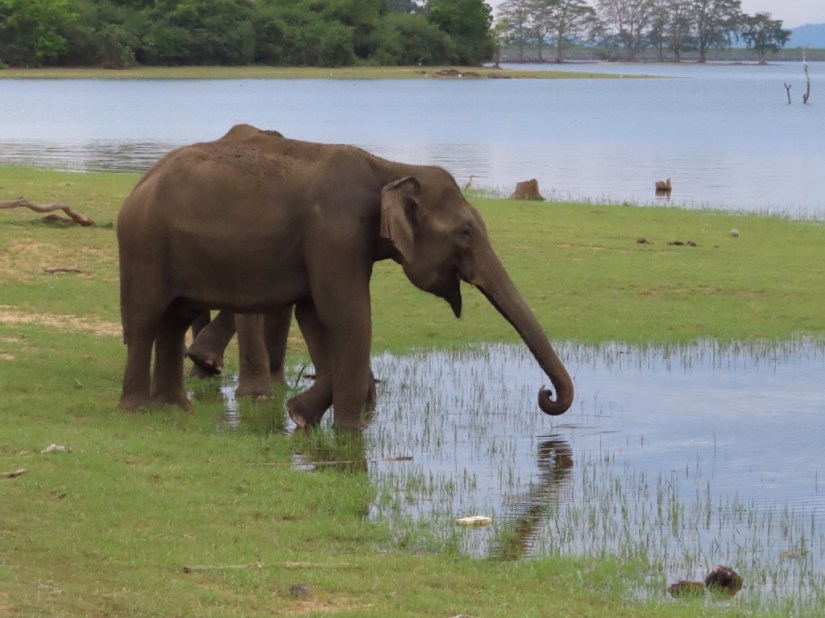
We watched them for quite a while. Seriously snacking was going on. They kicked the grass with their foot to loosen it, used their truck to gather it into a bunch, flicked it against a leg to get the dust off before putting it into their mouth. There was a mother with a baby and a couple of youngsters …

… and the boys!

All this was thirsty work so a drink was in order …

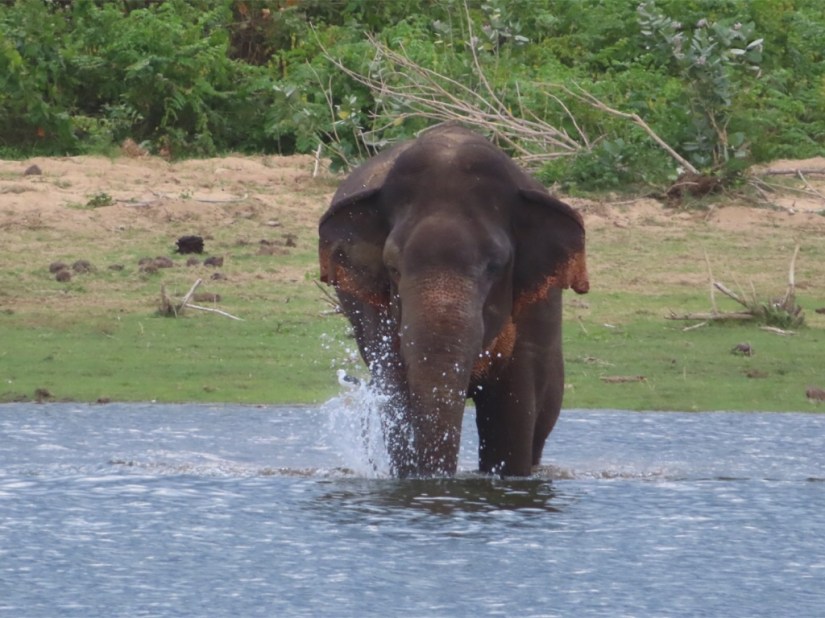
The bull elephant, who had gone for a bit of me-time on the island then decided it was time to swim back …

… and he was huge!

I was amazed that the trucks didn’t disperse, but I guess these elephants are completely used to being watched, and he just walked nonchalantly passed the vehicles … putting his head right against ours and rocking it slightly … I was too surprised to take a photo … but Chris thinks he has a couple of close ups. Then he walked off.

A little late the park warden came and dispersed the vehicles and the show was over, but it was time for us to make our way back anyway, with a couple of final shots as we left.

We returned to a shower and rice and curry served by the guesthouse … and then retired to play UNO with a couple of beers we’d brought with us.

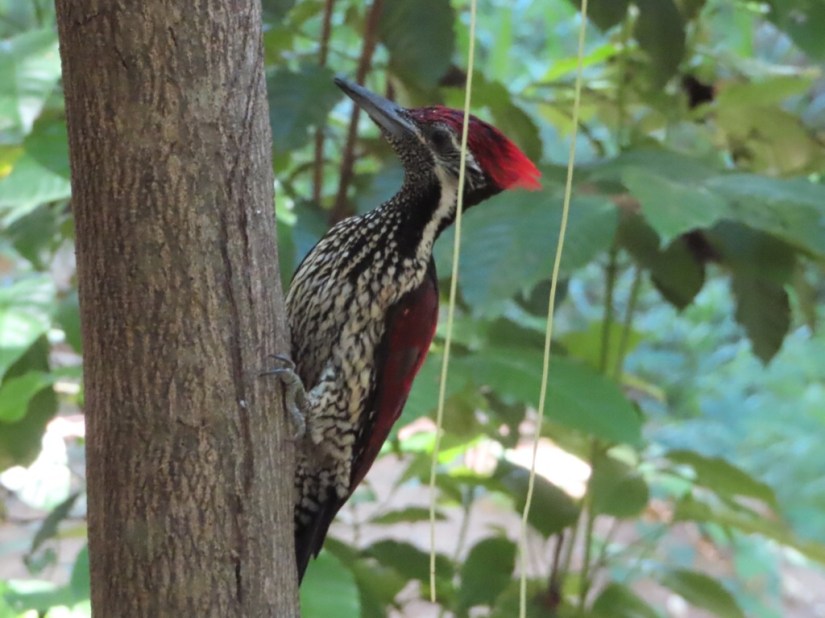
The breakfast entertainment was the bird table attracting all sorts of visitors … the most stunning being this crimson-backed flameback woodpecker.

After all our rushing around, the seaside is now calling …

Map

Ella … Little Adam’s Peak and Demodara Bridge

Often awake early, I can’t resist a peek through the curtains to look at the sunrise, and here’s another!

After a leisurely start and breakfast, we took a tuk-tuk to Ella, about 1000m lower and several degrees warmer! On the way we passed people picking tea and our driver showed us the difference between black tea on the left at 400 rupees/ kg and silver top white leaf tea on the right at 48,000 rupees/kg!

We checked in to Chamodya Homestay, up a narrow road above the town and with a fabulous view of Little Adam’s Peak, Ella Rock and the Rawana Ella Falls,  and were welcomed by Lilu with tea and biscuits.

Later, we took a walk to see the waterfall, although were directed slightly astray and instead of taking the easy option and walking along the railway line, we continued down our road until it reduced to a path that seemed to be entering somebody’s garden. We asked, and a chap said he’d show us the way … all between the crops growing in the valley and a little treacherous in places … not at all what we planned.

Anyway we went with it, got a view of the waterfall and safely back to the road and gave him some rupees for his trouble. A scam … maybe … but another adventure nonetheless!

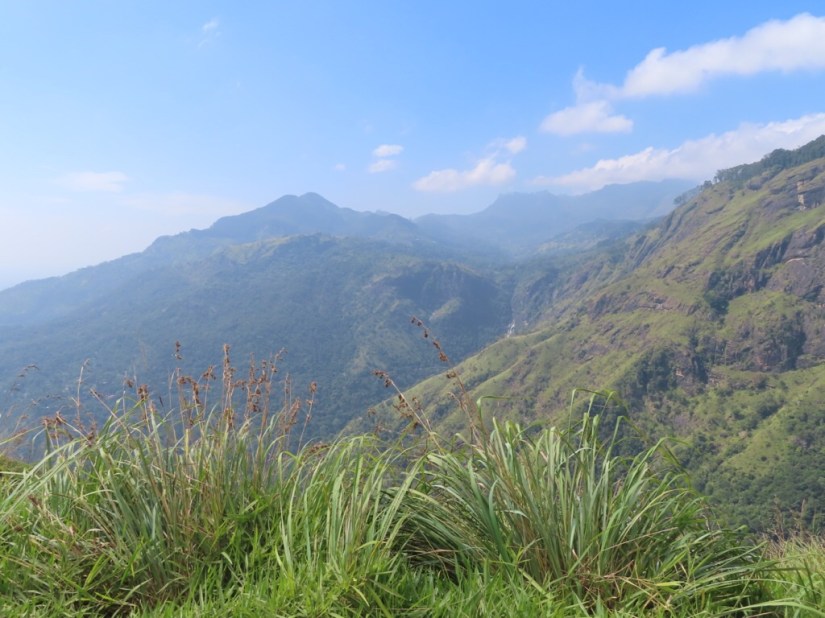
Most of our time here has either been spent walking, sitting or eating! So next day we walked up Little Adam’s Peak, up through a tea plantation on a good path with steps, although it did get a little rougher towards the top. At 1100m it was only half the height of Adam’s Peak, a major pilgrimage destination, traditionally climbed at night to reach the top by dawn … we decided to give this one a miss! Anyway, the views here were lovely, and with a breeze blowing, we just sat on a rock in the shade and enjoyed them.

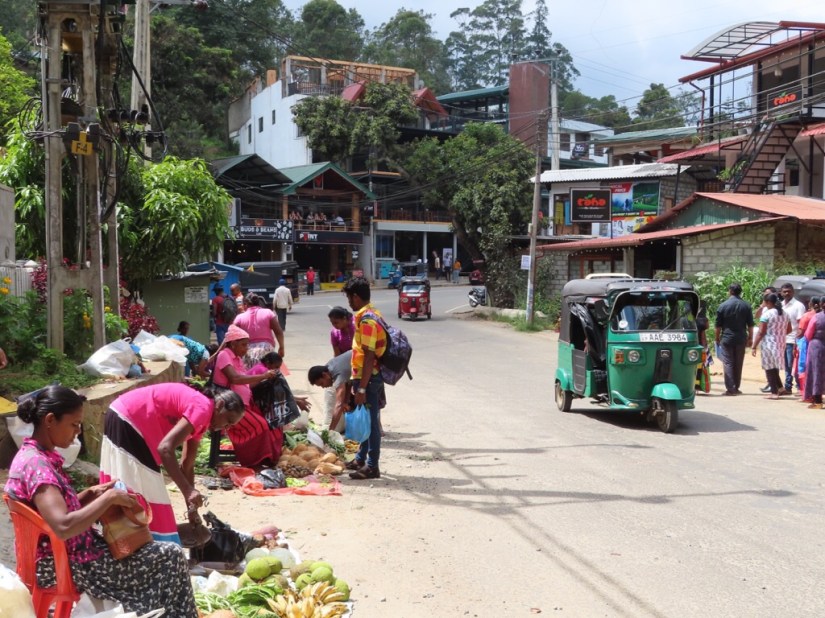
We took a wander round the town on the way back, busy with locals and tourists alike …

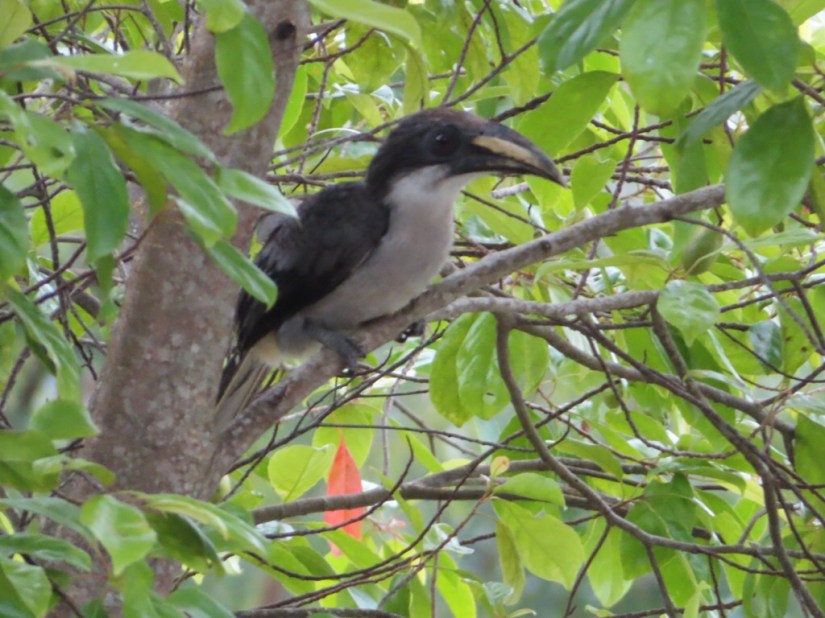
… then spent the rest of the afternoon sitting on our verandah chilling, reading and enjoying the view. We even saw a Sri Lanka grey hornbill …

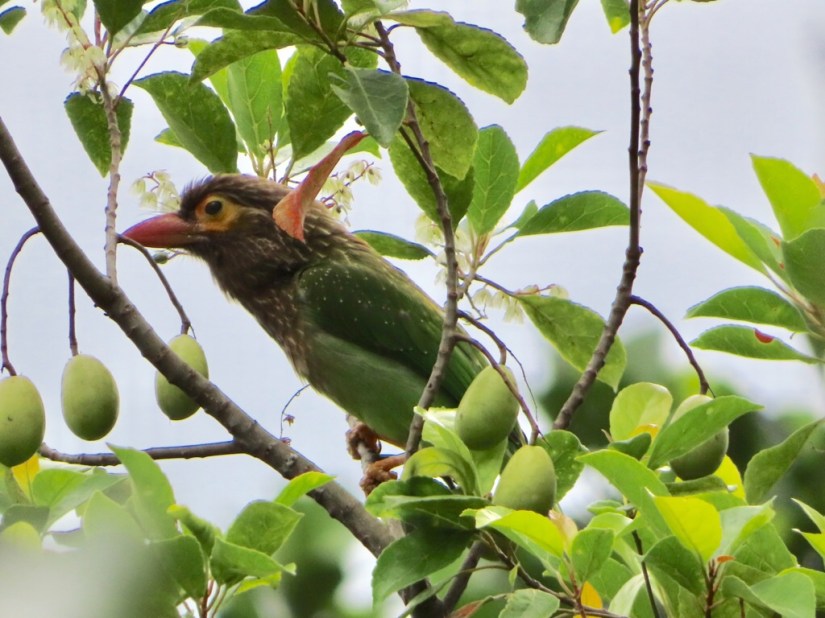
… a brown headed barbet …

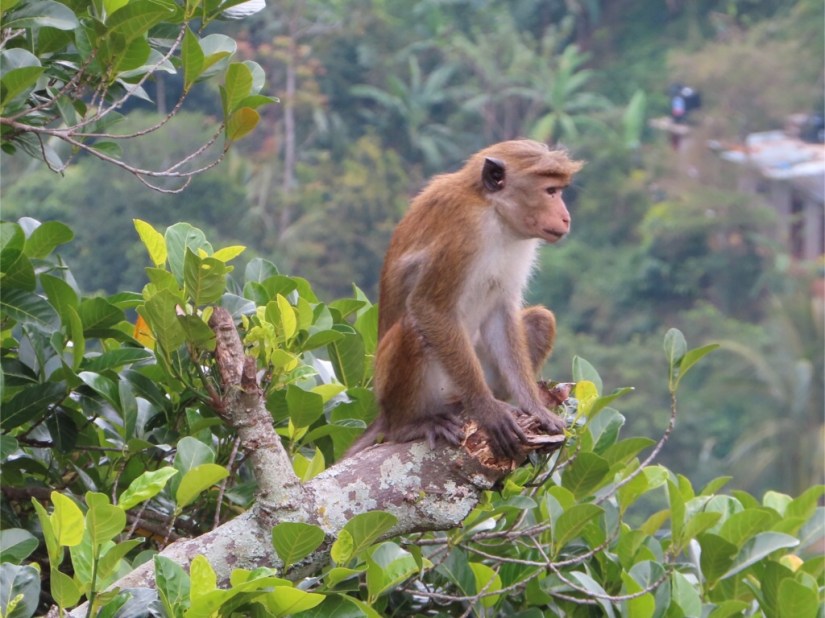
… and a monkey!

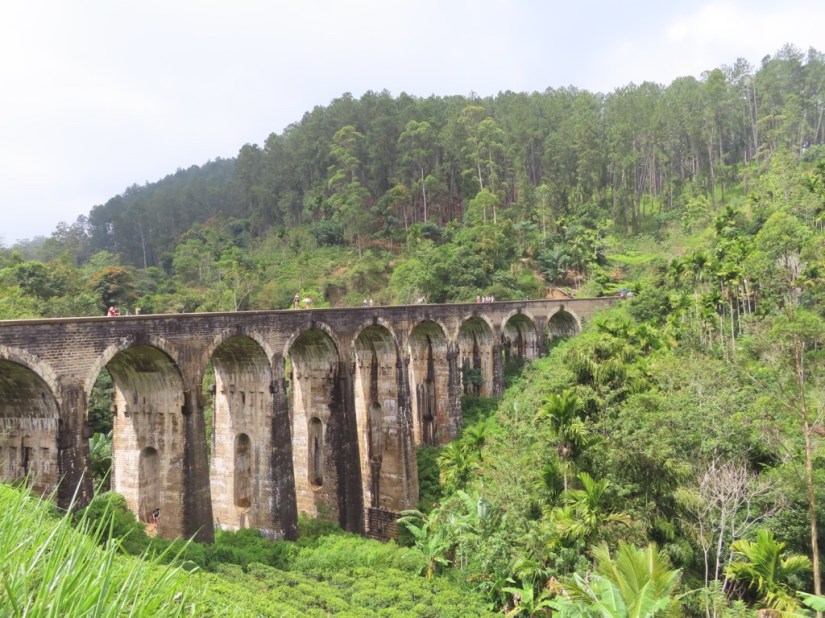
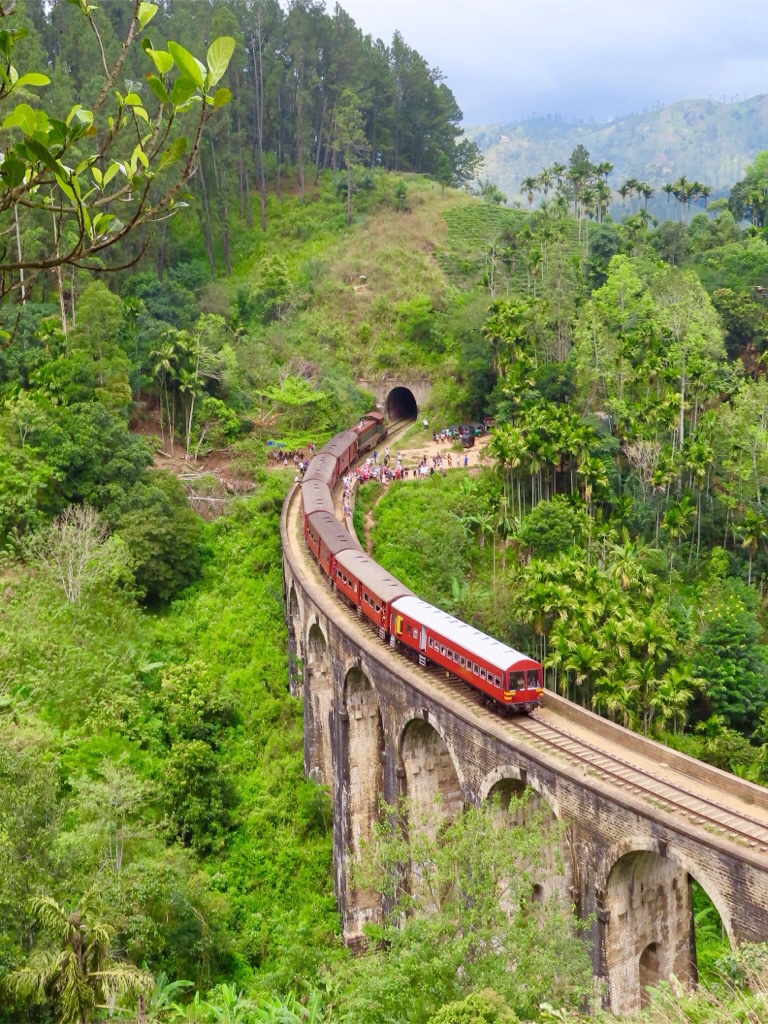
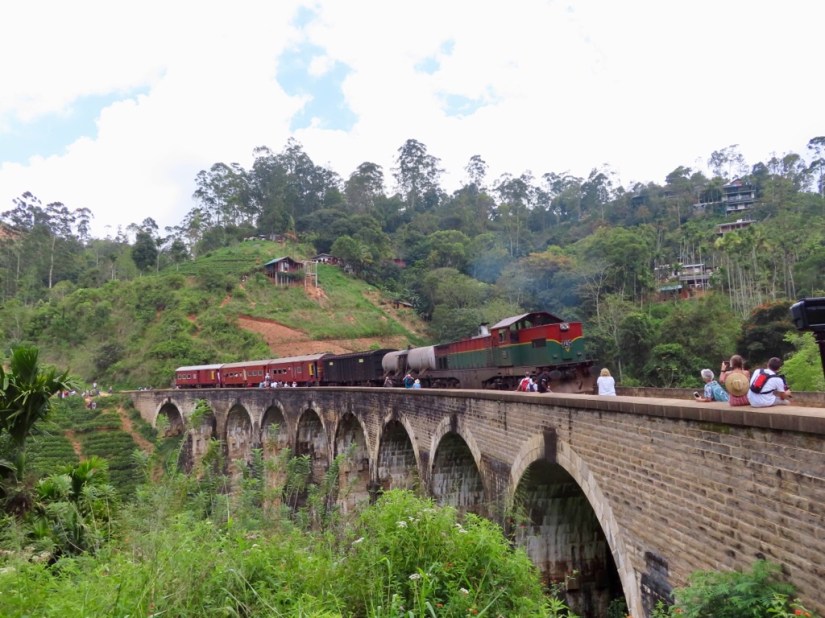
On our last day we walked to the other main Ella attraction … Demodara Bridge, carefully timed to catch the must-have shot complete with the train, and bearing in mind there are only a few each day, this requires careful planning! We walked down through some woodland, coming out above the bridge.

It was certainly popular and a little wet and everyone was checking the best angle … inside curve, outside curve, how many arches, with or without tunnel …

Finally the spot was chosen and here is the train!

We were surprised when a short while later another came the other way …!

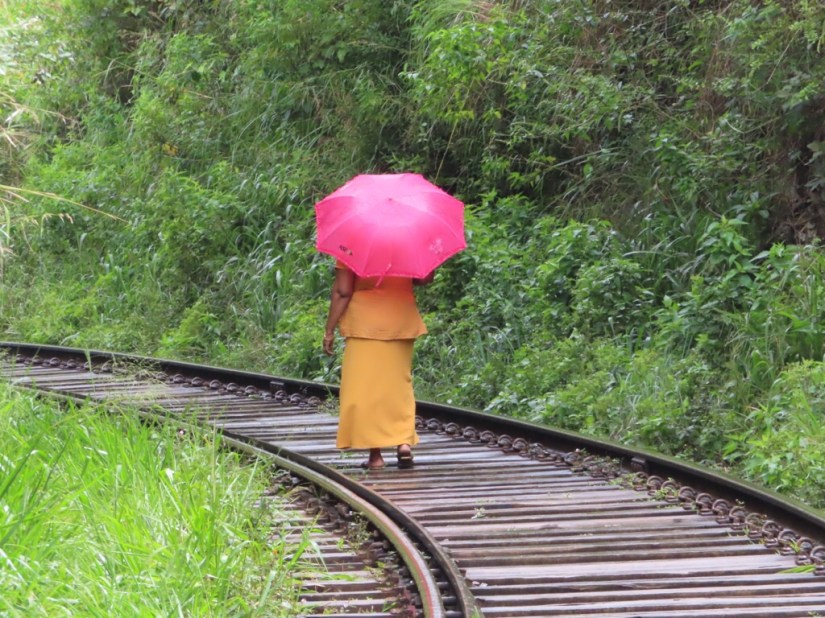
Following the train tracks, we walked back to the guesthouse …

… and not a moment too soon as the heavens opened.

The rain didn’t stay long, and there was another lovely sunrise.

We’ve had all our meals here at the guesthouse, and enjoyed Lilu’s lovely home cooked curries in the evening and splendid breakfasts which have kept us going all day!

But now it’s time to move on, and we have a car picking us up in the morning to drive south …

Map

Haputale … and our Adventure to World’s End

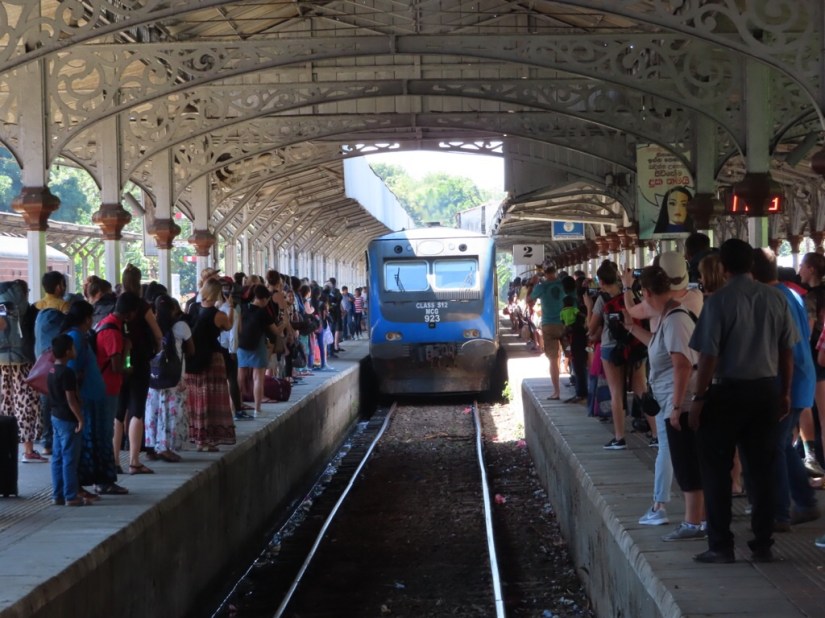
Our train was eagerly awaited, arriving 30 mins late, but we were soon on board and settled into our reserved 2nd class seats for our 4.5hr train ride up into hill country.

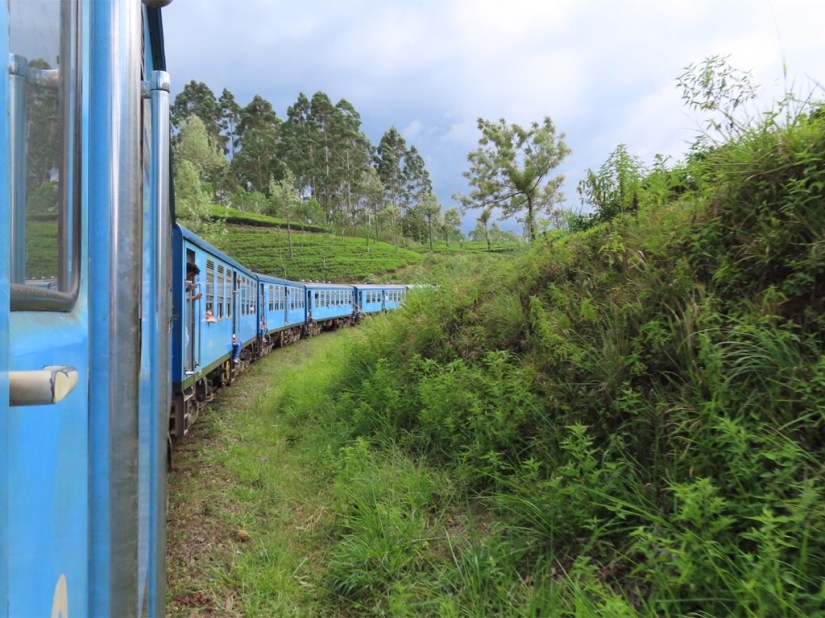
The first part followed the valley of the Mahaweli Ganga, Sri Lanka’s longest river, then started climbing through pine and eucalyptus until we reached tea plantations.

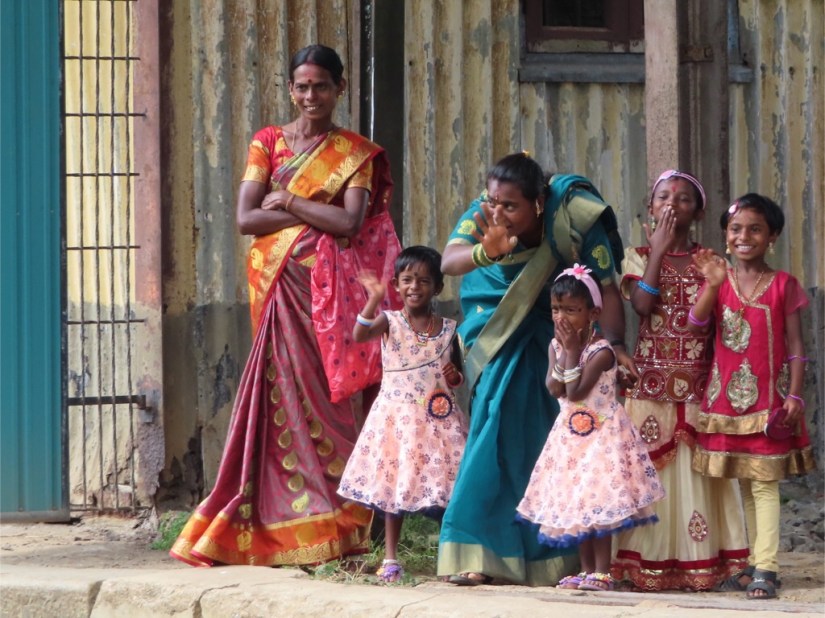
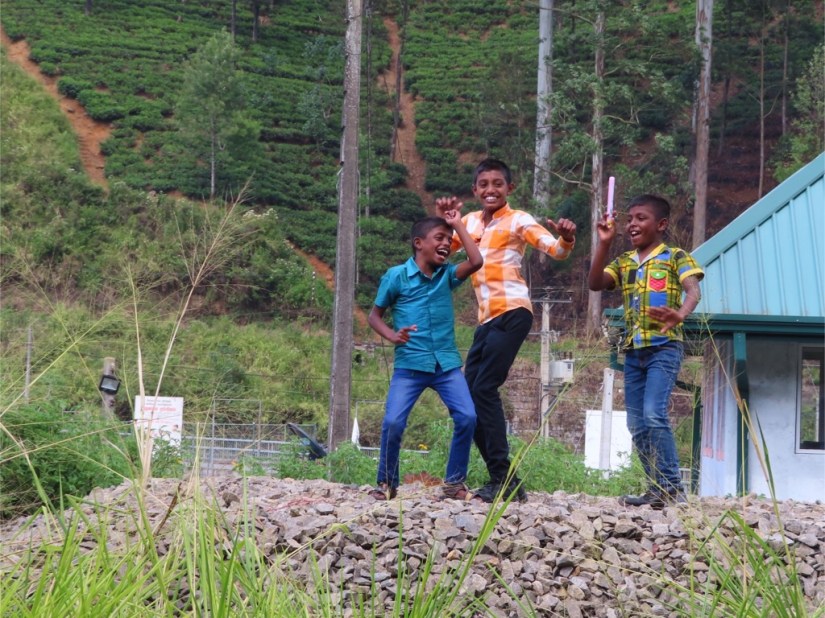
We stopped at several stations with cheerful well wishers …

… and pretty gardens …

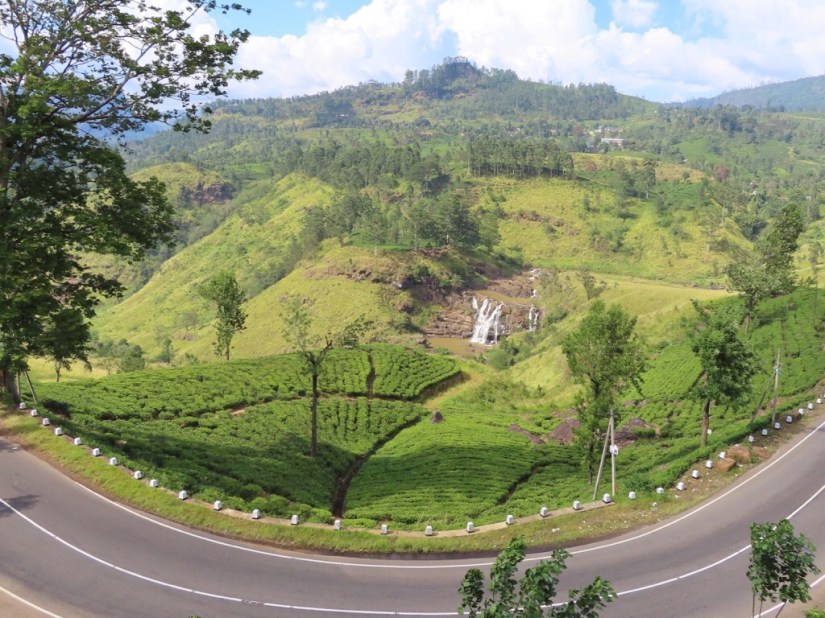
… spotted St Clair Falls …

… and also areas of market gardens.

We were very pleased we had pre-booked our tickets and had seats as we could see people in the next carriage who had stood for the entire journey!

The sun was going down as we arrived in Haputale and the air was distinctly cooler.

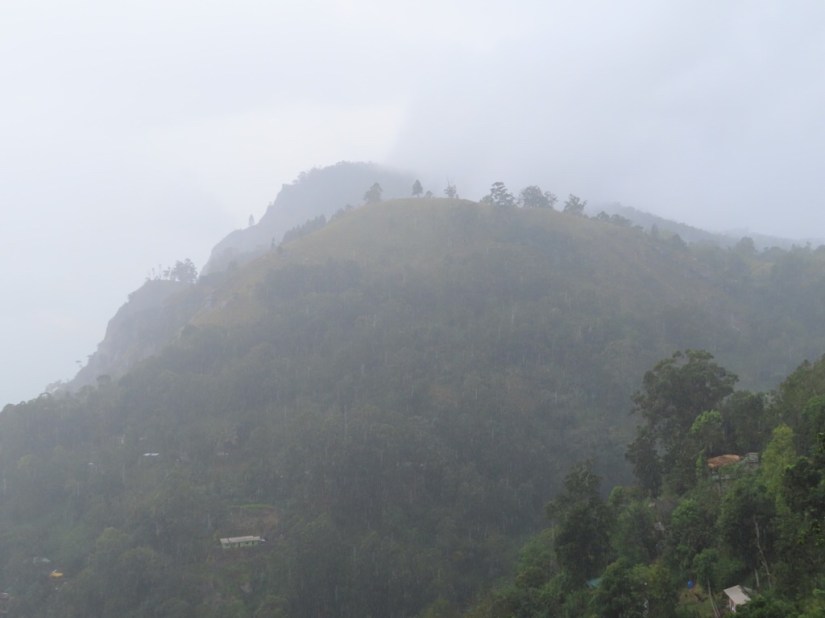
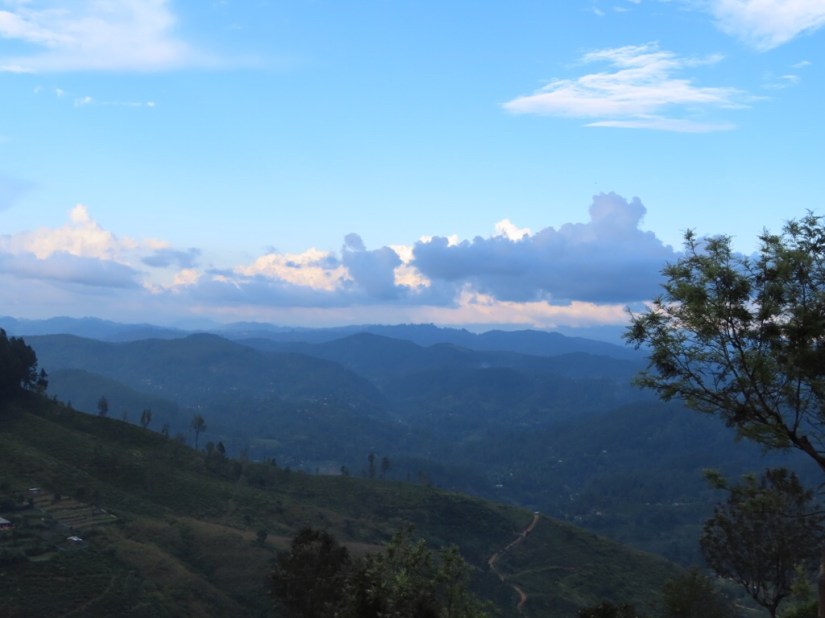
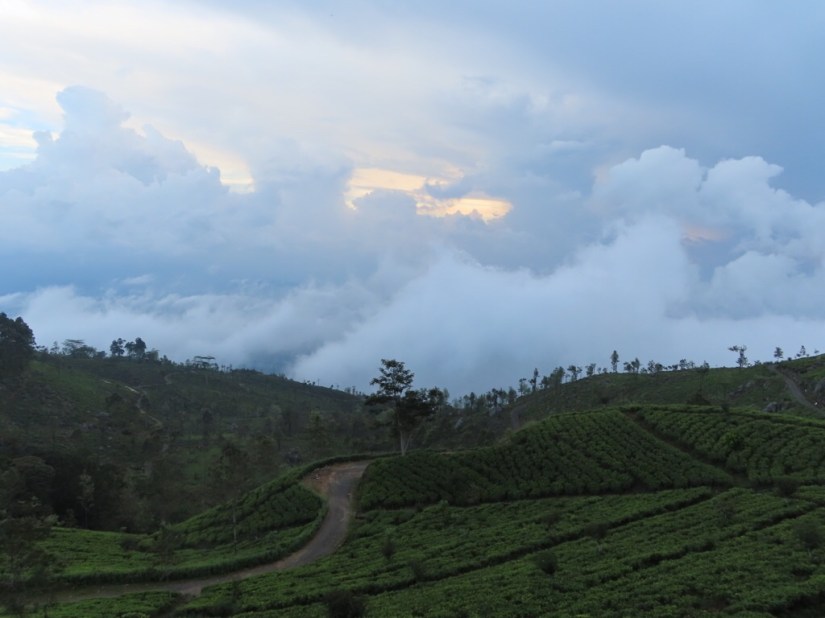
We were pleased to arrive at Leisure Mount View Holiday Inn just outside the town and relax with a cup of tea on our balcony, although were slightly taken aback by the view as the cloud seemed to creep closer to us as we watched!

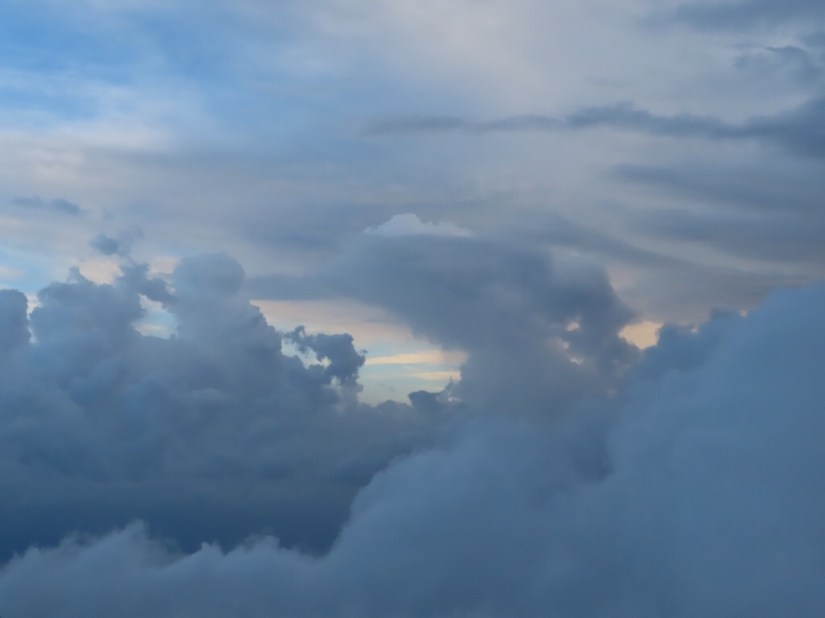
I didn’t realise quite how fascinating clouds could be …

Also, we found our room had a swinging bed! It proved a bit disconcerting actually … every time you turn over there is the potential for sea sickness! We hadn’t chosen this room … we were ‘upgraded’ and I wonder if someone else turned it down!

The guesthouse prepared a vegetarian curry spread for dinner with a huge choice of delicious dishes, adding cauliflower, carrots, green peppers and courgettes to our tally and we had an early night.

The clock was set for 4.40 so we would have time for a quick cup of tea before we left just gone 5.15 to drive 35km in a tuk-tuk to Horton Plains National Park. It was dark, the road was bumpy, it was chilly (16°), there were wafts of mist, and we wondered if we were mad as the tuk-tuk laboured backwards and forwards round hairpin bends, climbing higher and higher. It was getting light as we arrived at the ticket office just before 7.00 and at least we saw that if we were mad, quite a few other people were just as mad which was reassuring! The imperative was to arrive at our viewpoint before it was shrouded in mist which rolls in by 10.00 daily.

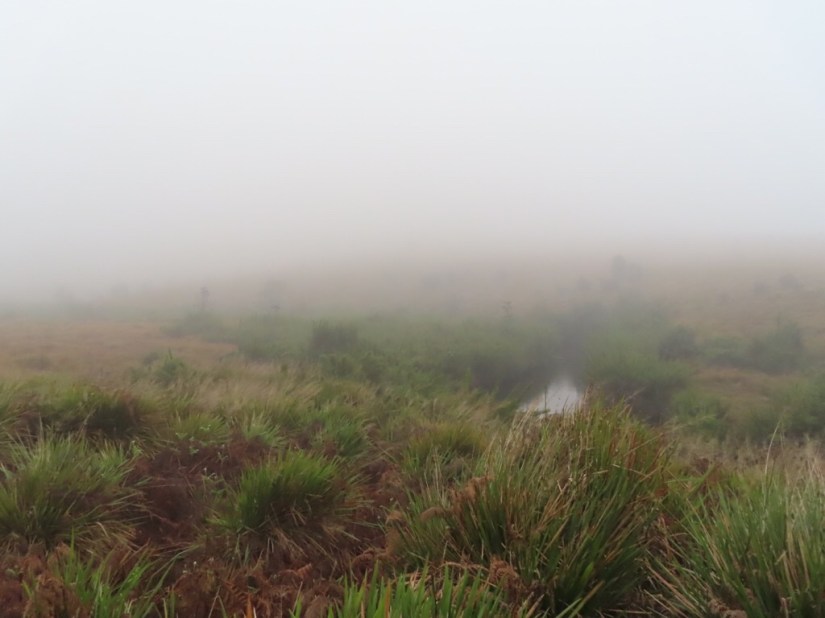
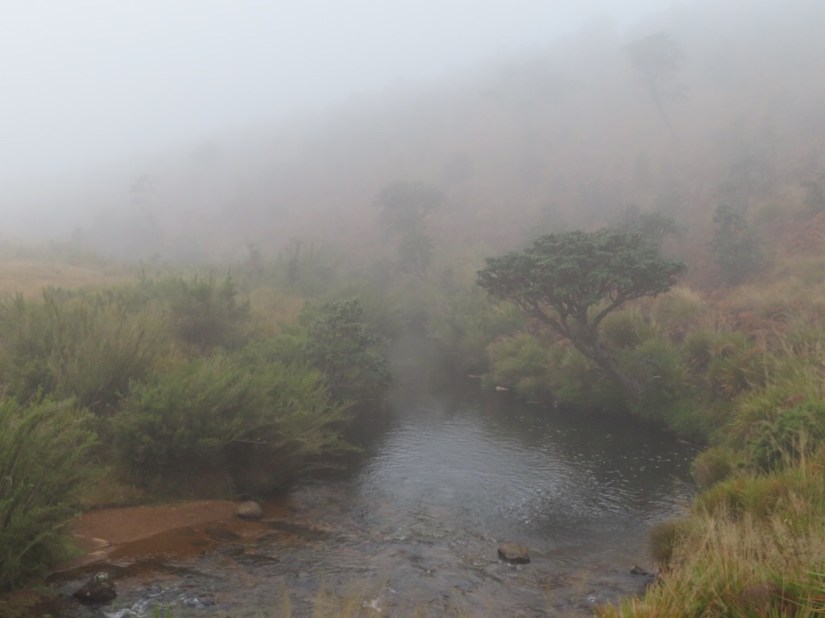
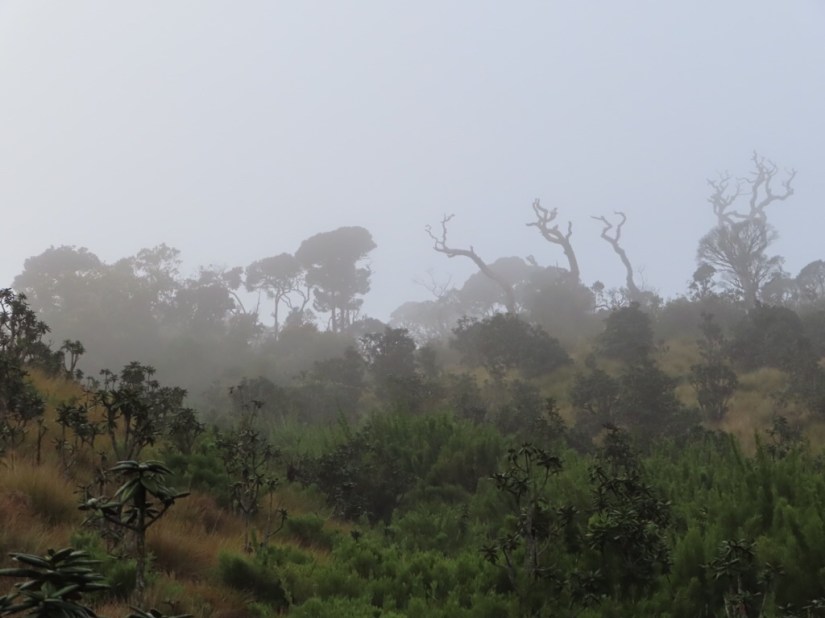
We drove to the start point of a 9km circular trail, raided our packed breakfast for bananas and jam sandwiches and set off, but the amount of mist was a little disconcerting …

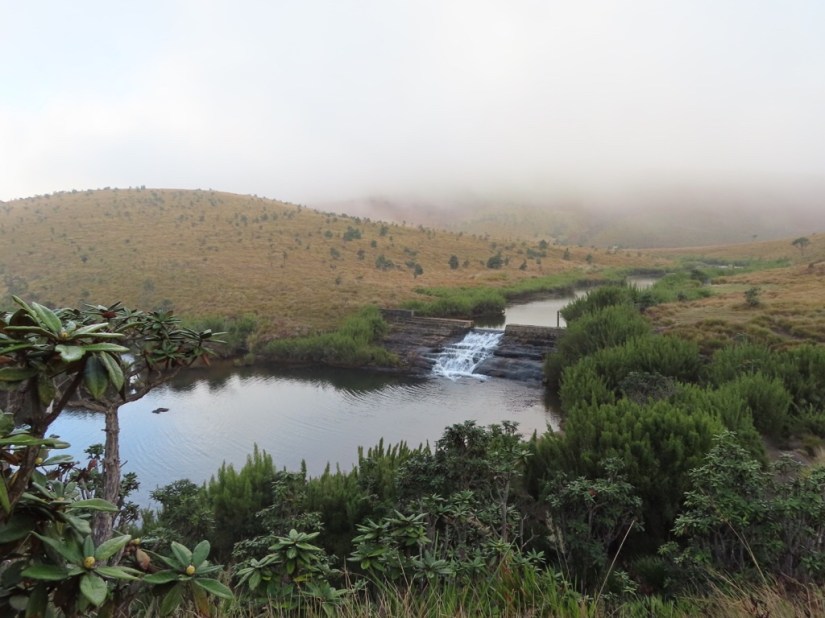
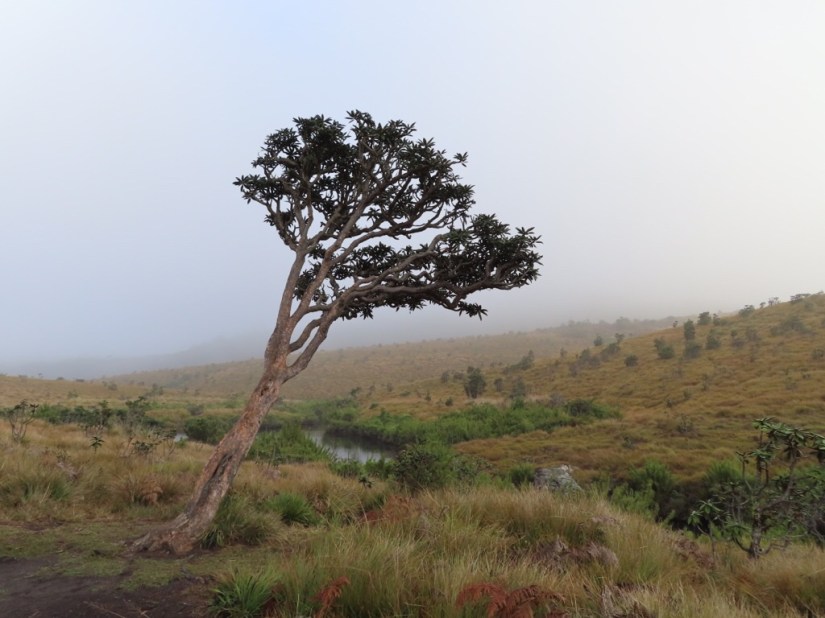
It was hardly a solitary experience as there were quite a few people setting out, but there seemed a sense of camaraderie as we walked along, initially through patina grassland, with dwarf bamboo, rhododendron and keena trees. The plain is around 2000m high and surrounded by cloudforest, often rain swept and usually misty.

It was a bit chilly and having read how unpredictable the weather could be, we had stopped in town the day before to pick up a couple of hopefully waterproof jackets for a fiver eachjust in case, and here is Mr Hayes sporting a smart red number … that he spent all morning complaining was actually pink!

It was quite eerie as the mist swirled in and out and the sun started breaking through.

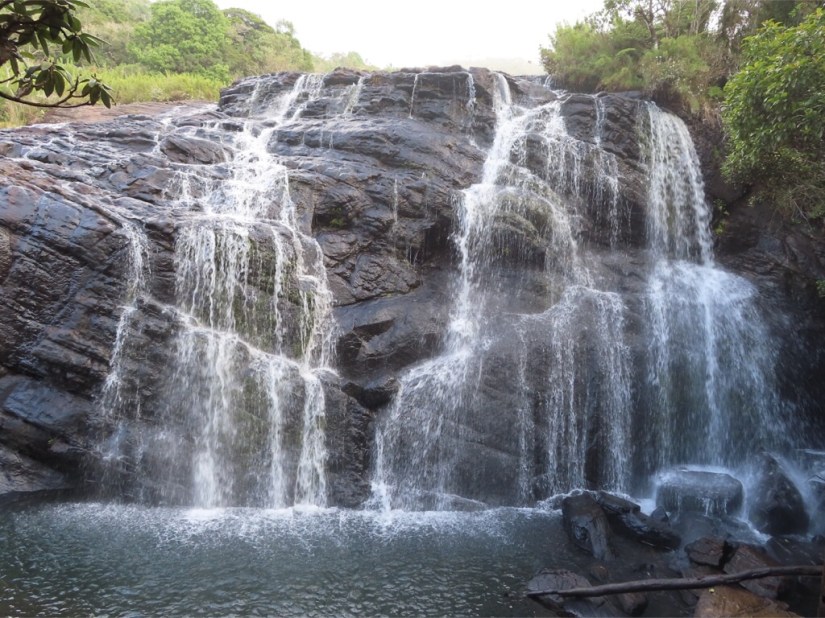
A short diversion took us to Baker Falls …

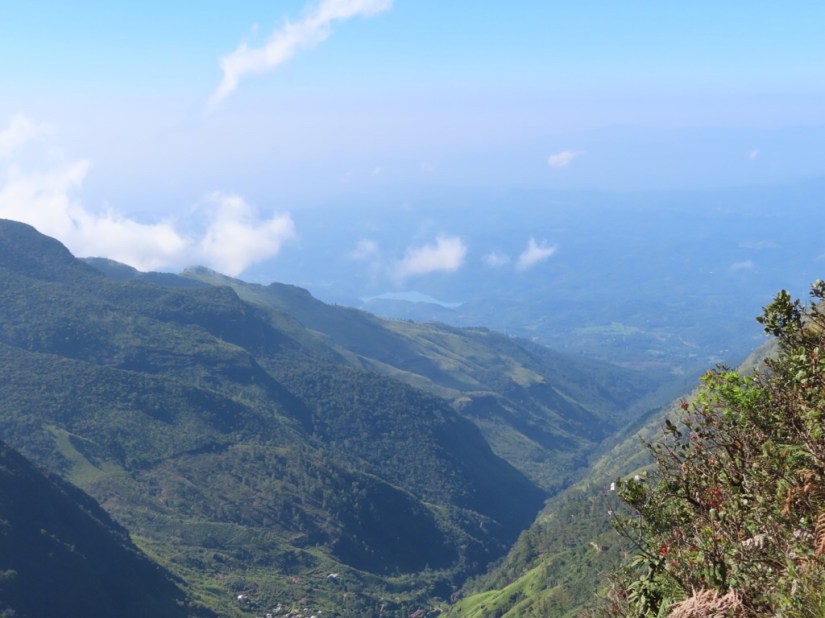
… then we continued to World’s End from which the cliffs plunge 825m, giving views to the south coast on a good day.

The large lake is in Uda Walawe National Park and without the life giving water from the cloudforest, the park wouldn’t be able to support the elephants who we hope to see in a few days time.

There were a few small flowers along the way …

… then I was delighted to see a rhododendron in flower, albeit a very small one!

As for wildlife … well the elephants which once lived on the plain are long gone but we did see a sambar deer and were very lucky to spot a rare purple faced langur.

Walking back, we got chatting to a young couple from Germany, Moritz and Valerie and we enjoyed compared stories of our travels in Sri Lanka and beyond.

There was a final glimpse of the lowlands from a second viewpoint …

… and here we are back at the beginning again!

We drive back was just as interesting, free-wheeling down the mountain for several kms at a time, and when we got back we had a slightly better view from our balcony!

After lunch and a rest, we walked down in front of the guesthouse between the tea plants …

… and I came across this little chap … I looked him up … a red vented barbul!

Tomorrow we get a lie-in before setting off by tuk-tuk to Ella …

Map

Kandy … and the YMBA

34961688-17D5-4D60-B0E2-30CA42DDB2F9After a breakfast of string hoppers – little patties of rice noodles – served with dhal and fried eggs, we went on a tuk-tuk day out.

We had arranged for Sudhahar, the driver who brought us home the night before to take us out of Kandy city, firstly to the Peradeniya Botanical Gardens. Once a royal residence then a park, the British made the gardens in 1821, planting the first tea here.

It was the trees that shone with a number of impressive tree avenues …

… and single specimens …

927A1808-EFB0-4A55-A8AD-4E9105DED8E934544618-3B48-4E2E-8DF7-40580EBDA64E9490B769-A710-4931-8293-7A0EEEEBE026

… lots of fruit bats …

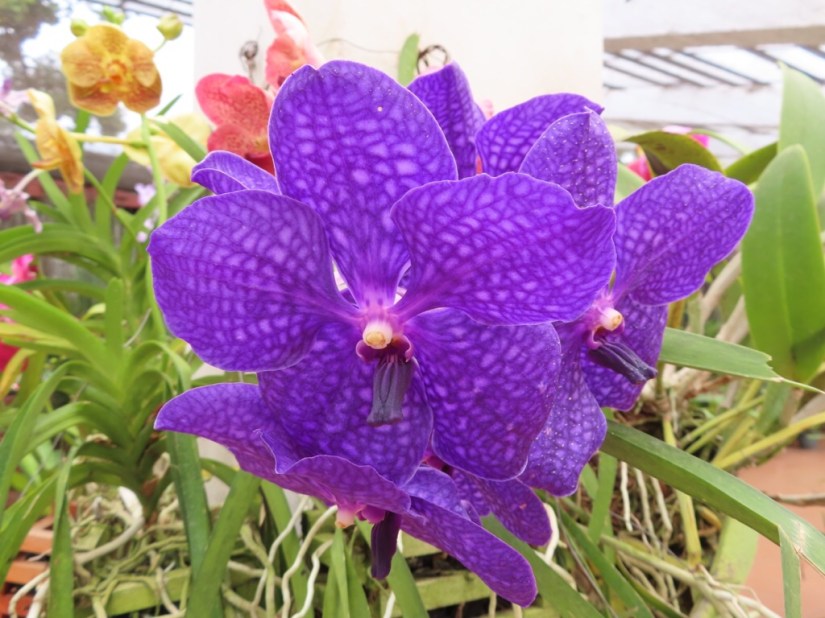
… and lovely orchids.

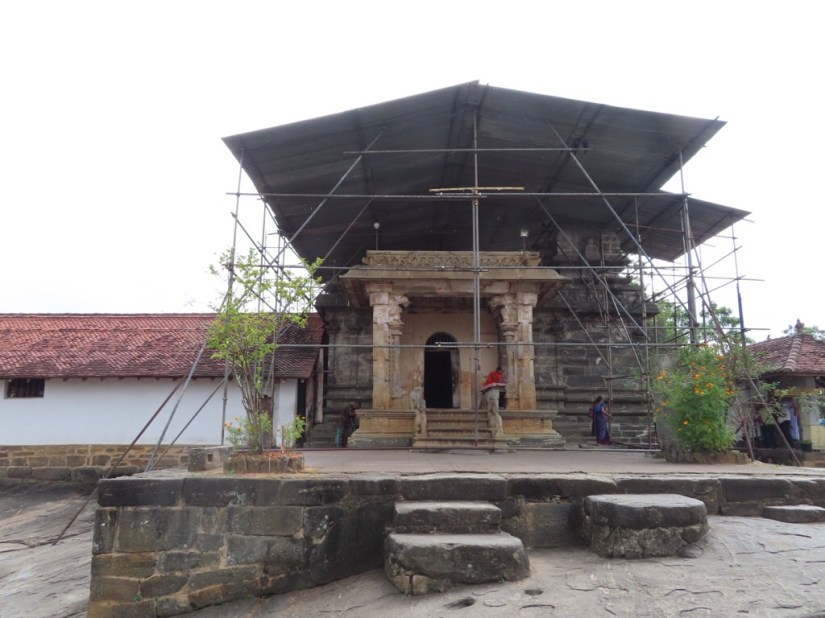
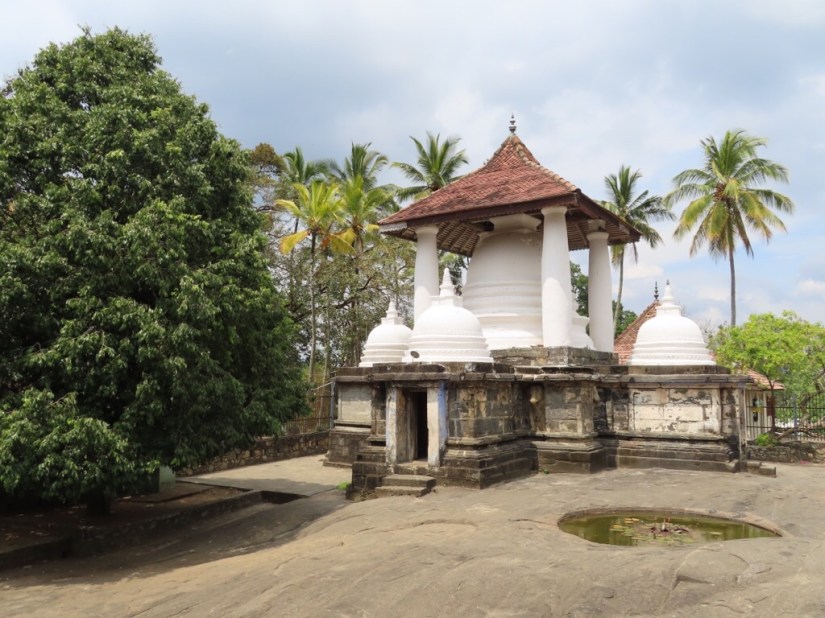
Sudhahar took us to a converted tea factory and we all had tea and cake then we continued on a tour of three C14th temples. Gadaladeniya was covered in scaffolding had a gold Buddha inside and beautifully painted wooden panels on the door. There was also an unusual small shrine outside with a little Buddha in each wing topped with dagobas.

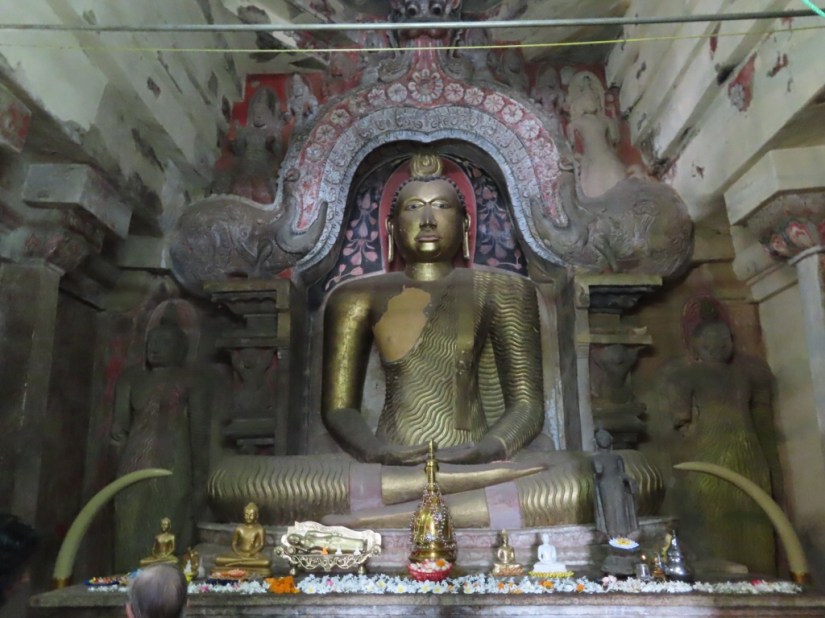
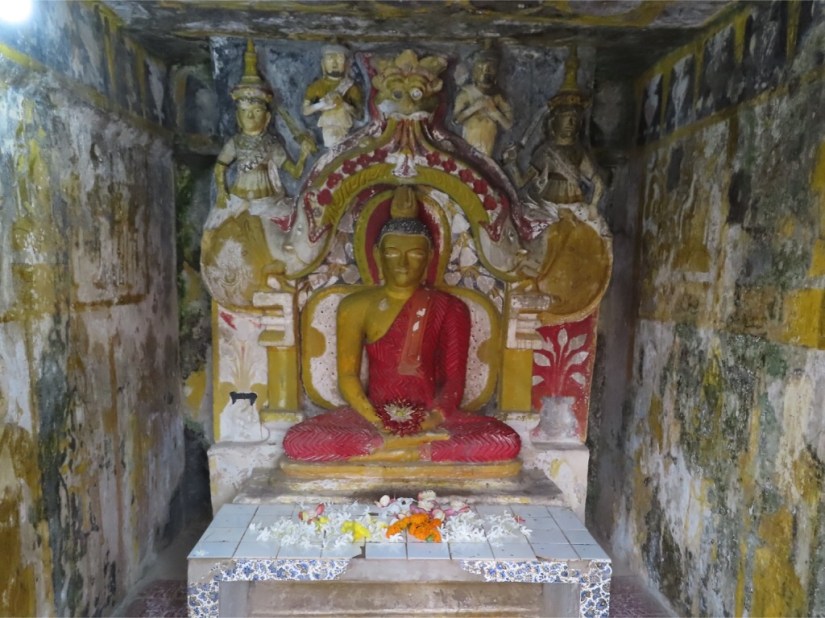
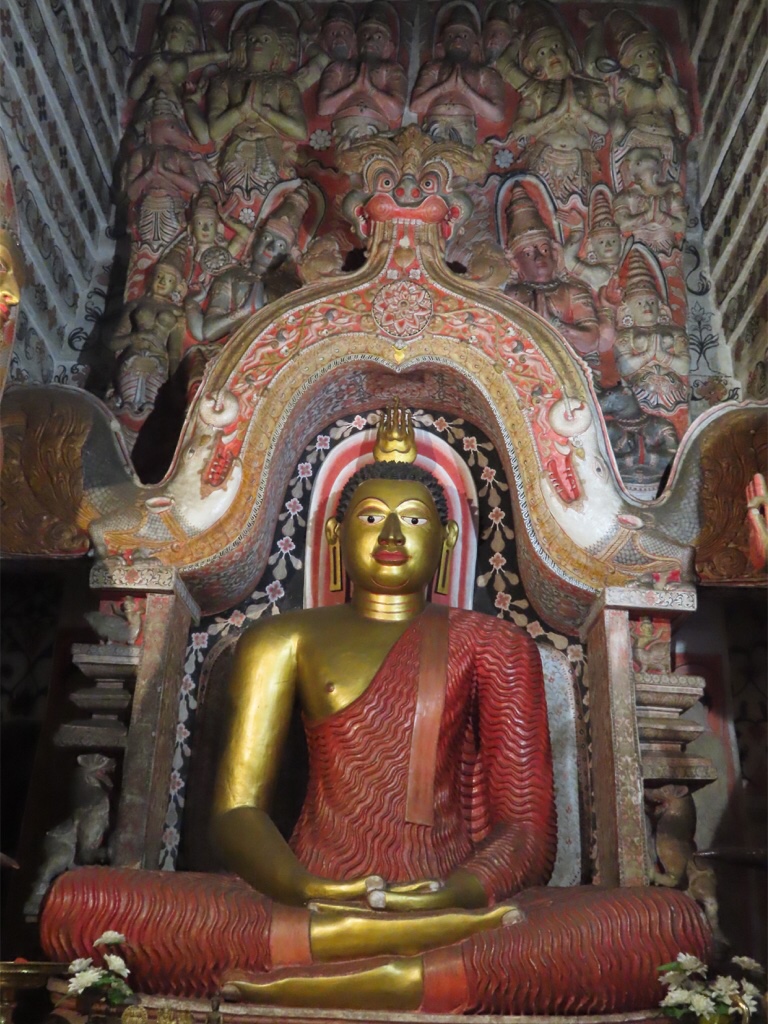
Lankatilake was on a rocky outcrop surveying the countryside. It once had 4 storeys but these had been replaced with a wooden roof. The shrine contains a huge seated Buddha with impressive makara torana above and tiers of gods, many Hindu like Ganesh … spot the elephant!

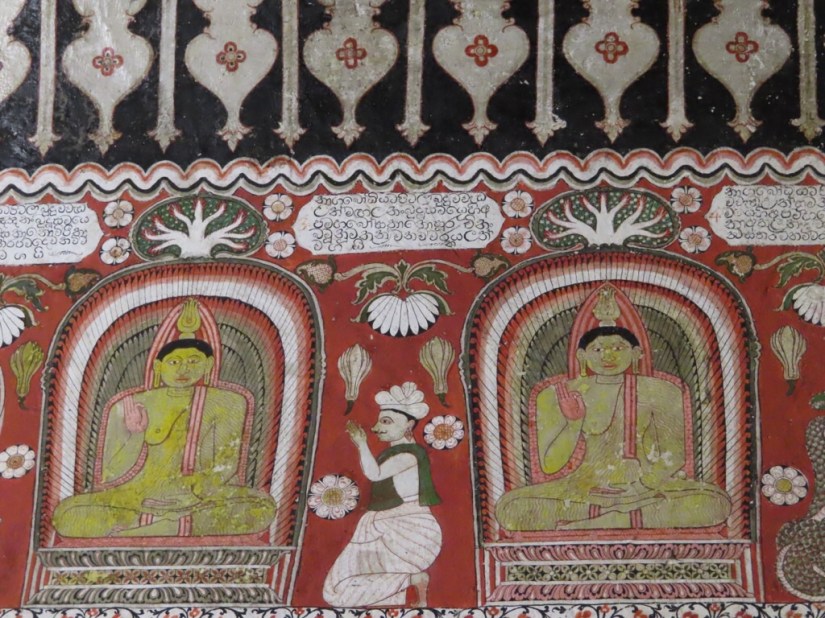
The wall paintings were also colourful, including entwined swans for enduring love.

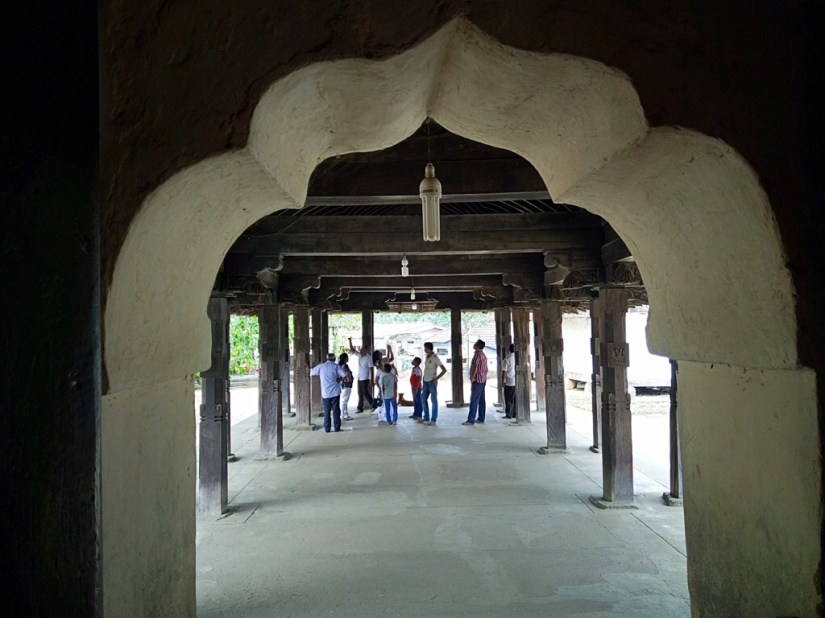
Embekke Devale had a wooden drummers pavilion outside with pillars brought from another temple sporting great designs including entwined swans, a peacock, dancers and wrestlers.

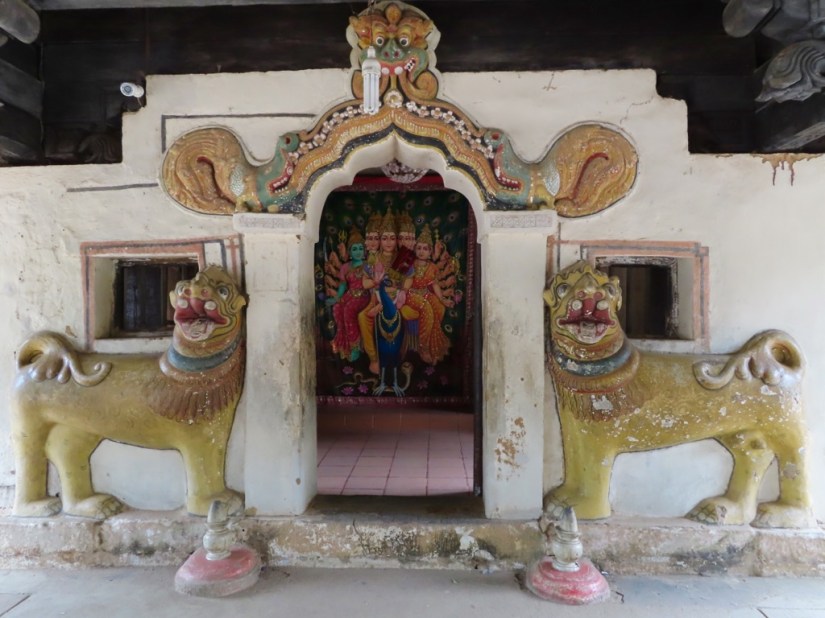
The shrine behind is flanked with lions.

5FBF5DDE-1221-4EE1-A980-41CA51074EE0

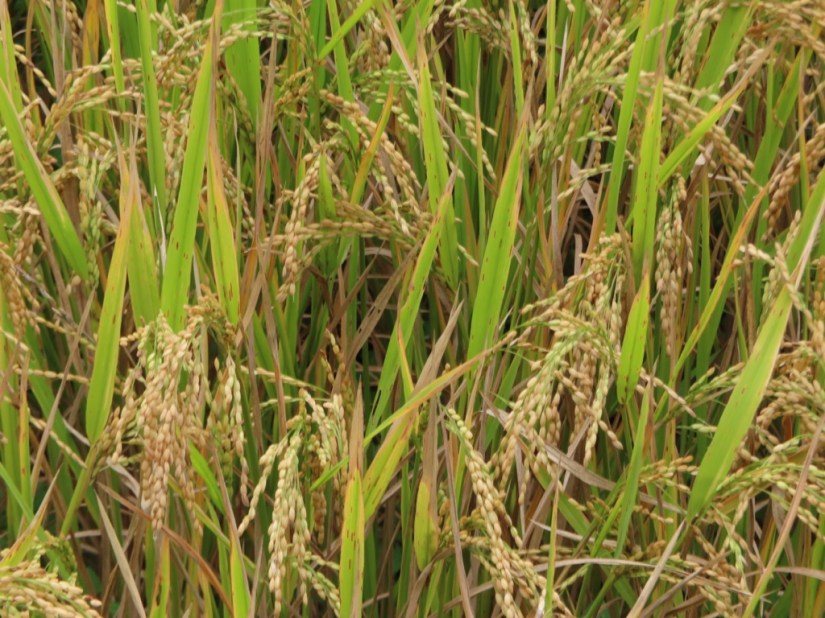
We passed lots of green paddy fields but also one where the rice was turning brown and almost ready to harvest, and we had the chance to stop for Chris to take pictures along the way.

B76DBA0F-E8AB-41BF-BAEB-77E41AE03AE335B20833-2AB9-44E0-8612-758656C7BFA2

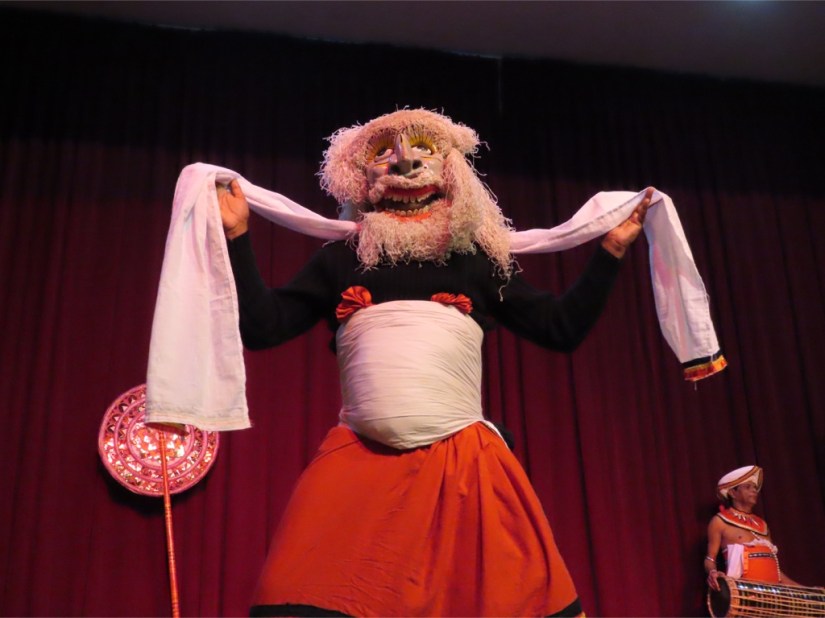
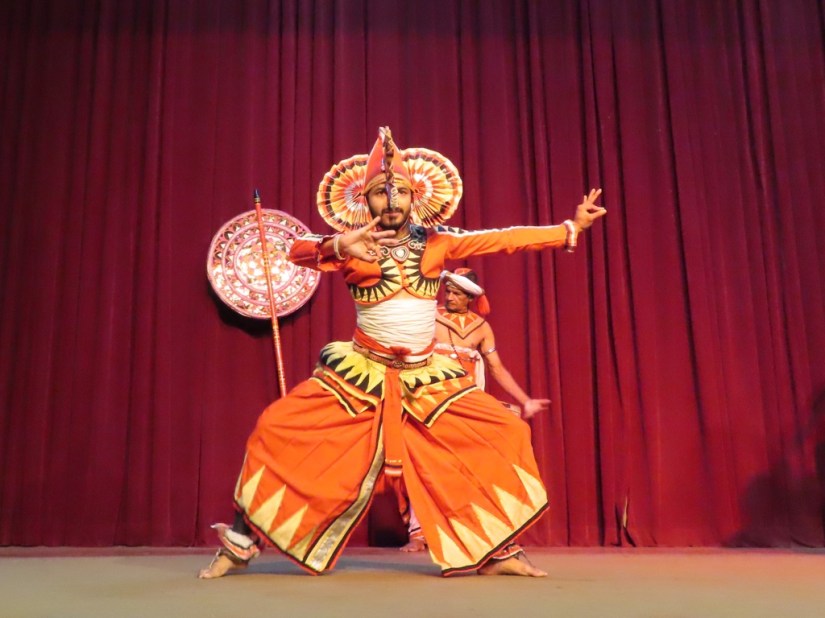
Returning, we barely had time to freshen up and we were back down the hill to the YMBA for a Kandyan Dance and Drumming Show featuring 11 numbers from all over the country. We splashed out got premium seats and sat in the front row of what felt like a church hall, which soon filled up, and we saw one of the best shows we’d seen of this sort. The dancers were very accomplished, the men acrobatic and the costumes colourful while the drummers kept the beat going for the whole hour.

4A882465-5762-4402-9D31-7F9F8B3EBEE9DE851A13-FAEE-4A00-8E8D-1CEAFD4C85A85758A047-7269-4916-8E84-CCE7B6F330F848CCC624-27AE-403F-8900-1F4F78EB67CC34961688-17D5-4D60-B0E2-30CA42DDB2F9

A bit early for dinner, we went for a drink at the Empire Cafe first, then returned to Balaji Dosai for another of their fab masala dosa.

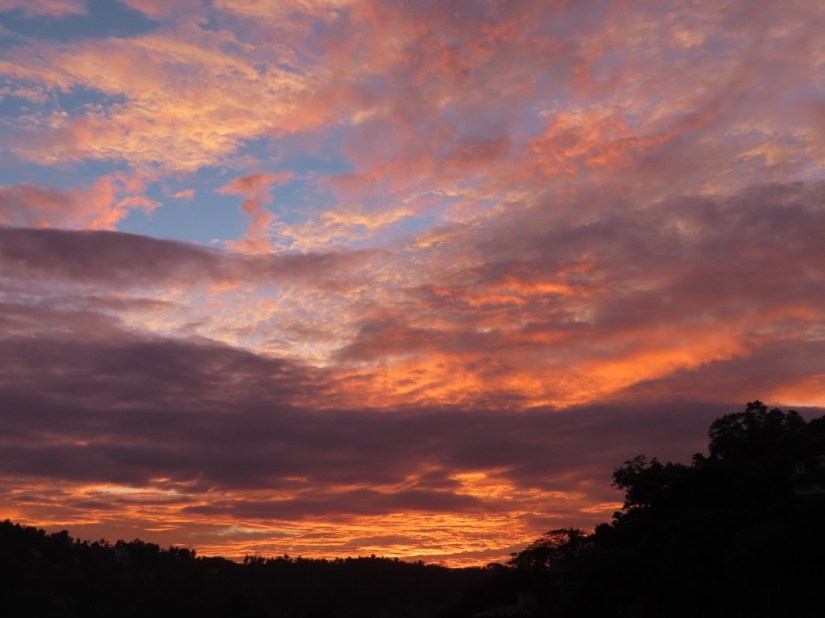
I was awake early and caught candy coloured Kandy before taking the train deep into the hill country …

B58743C2-AE20-4A5B-96F2-7C6A552DA6281ADFF8F4-4FE2-435A-9DAD-E8EA23910C8D

Map

Kandy … and the Tooth

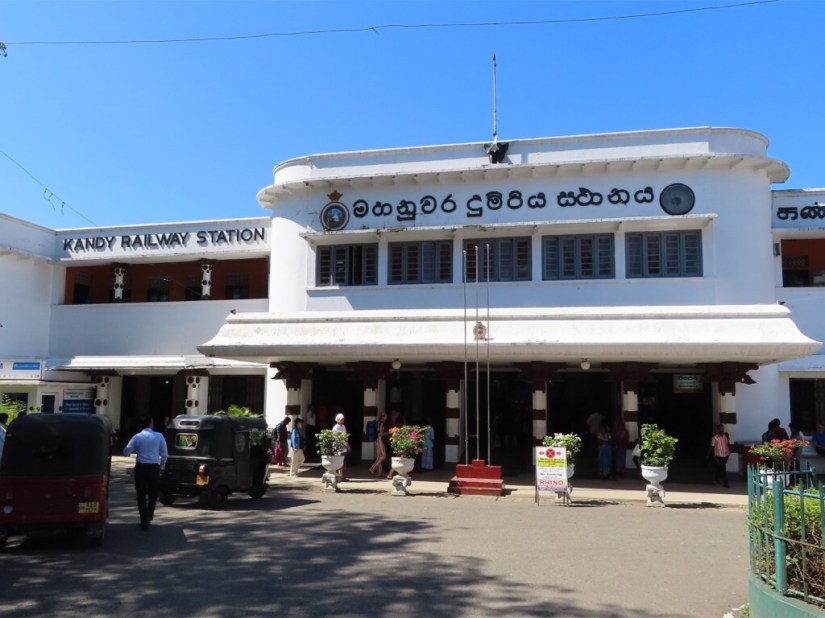
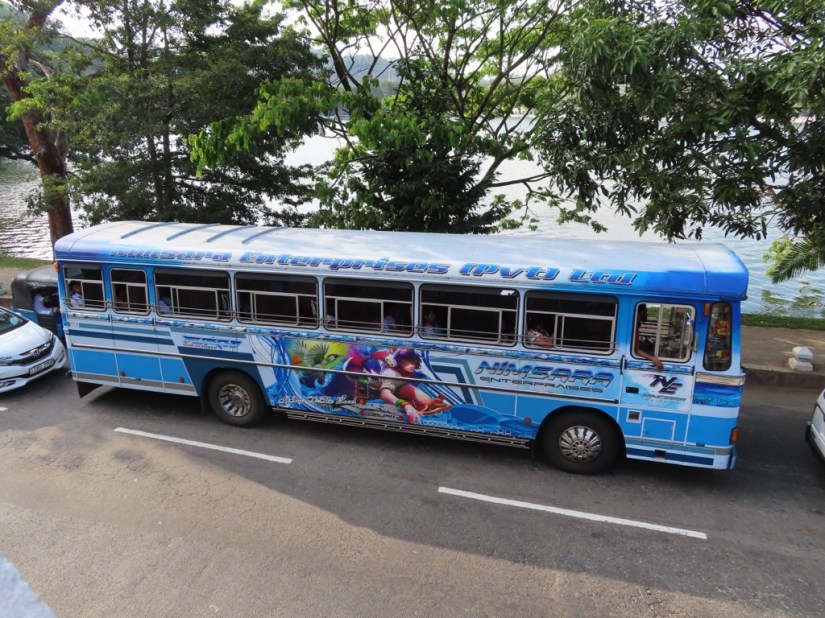
We decided to take a chance on the local bus but got a tuk-tuk to the bus station so we could guarantee seats and get our luggage stowed. The journey took about 4hrs, but the seats were comfy enough and the open windows and door gave a breeze. There were cheerful tunes playing all the way, and every time we braked, a row of shrines at the front lit with flashing lights! Hawkers got on, sold their wares and got off at the next stop but before long there was little standing room left. And the price of the ticket … 203 rupees each or 88p!

So as I said, the Sinhalese established a new capital further south, well they actually tried out several places finally ending up in Kotte near Colombo … meanwhile the Tamils made a capital in Jaffna in the north… and then a member of the Kotte royal family established a third kingdom in Kandy. It remained the last independent bastion of the Sinhalese long after the rest of the island had fallen to the Portuguese and then Dutch. When the British arrived, and due to the cruelty of the last king of Kandy, the Kandyan chiefs handed over sovereignty in 1815 in return for their laws and customs being preserved. A later Kandyan rebellion was subdued and Kandy became an important centre for British rule and trade. Since Independence in 1948, Kandy has thrived as Sri Lanka’s second city and cultural capital.

So we are staying at Blinkbonnie Inn, a 20 minute walk up out of Kandy which is ideal as the streets seem constantly gridlocked with traffic and its good to be out of the noise and bustle, and we have a great view from our balcony.

The first afternoon we took a walk passed the viewpoint …

… round Royal Palace Park, containing of all things a Japanese howitzer captured in Myanmar in WWII and presented to the city by Lord Mountbatten …

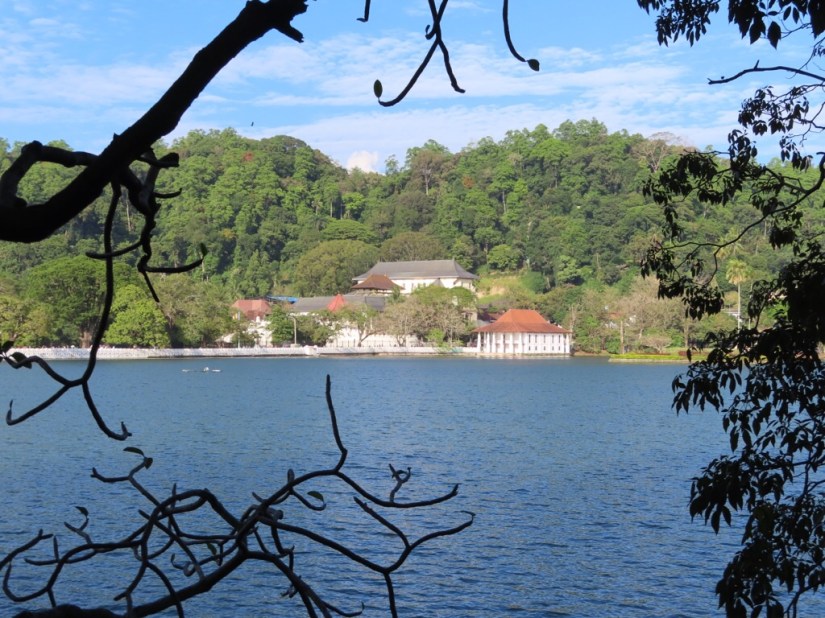
… then down and round Kandy Lake to get our bearings, before having dinner in the guesthouse.

Next morning we made an early start so we could get to the Temple of the Tooth in time for the 9.30 puja (prayers and offerings) ceremony. We bought our ticket, checked our shoes and made our way to the Recitation Hall on the 1st floor and at just after 9.00 there was already a queue of people waiting for the ceremony, but the Hall wasn’t too busy.

Let me tell you about the tooth, which was saved from the fire when the Buddha was cremated, and was smuggled into Sri Lanka in the hair of a princess. It resided wherever the capital was, so moved about a bit, was briefly captured by the South Indian army and taken back to India, but was reclaimed shortly afterwards. The Tooth came to assume political importance as a unique relic but also a symbol of Sri Lankan sovereignty. The Portuguese captured what was claimed to be the Tooth, but either it wasn’t or it miraculously flew back to Sri Lanka. Either way, it arrived in Kandy in 1592, was installed in a specially built temple and became the focus of the huge Esala Perahera. This lavish 10 day festival is held around July culminating in the procession when the Tooth is carried through the city by an elephant. The exact nature and authenticity of the Tooth is unclear as reports from Europeans who saw it in the past suggest it was far larger than a human tooth, but I guess that is rather beside the point, and in fact for security, only a replica is now used in the procession.

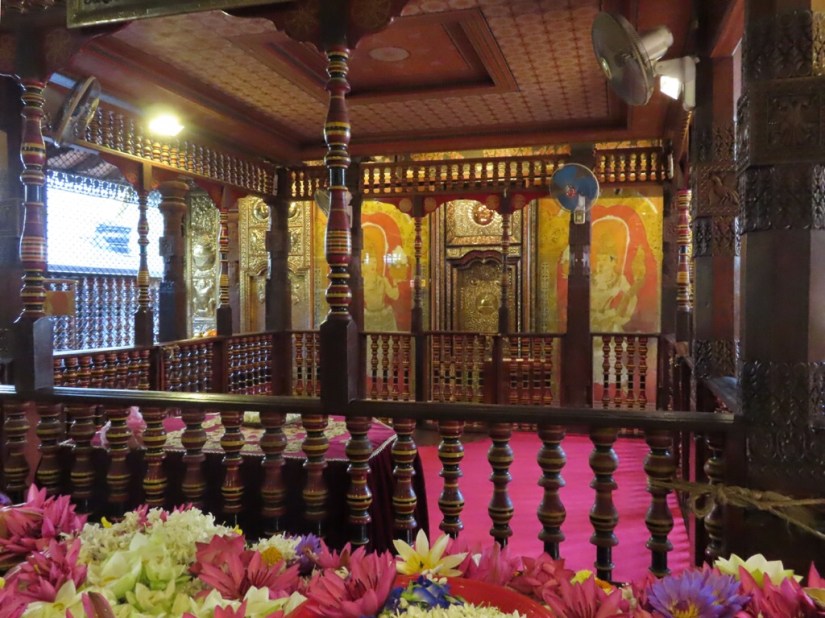
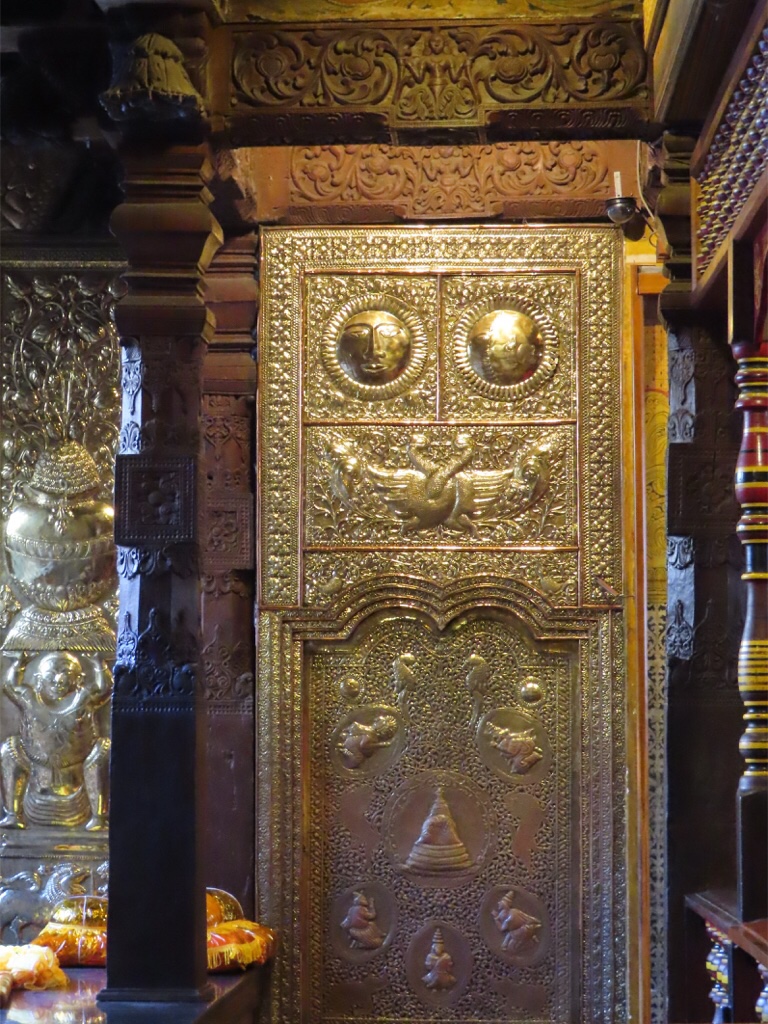
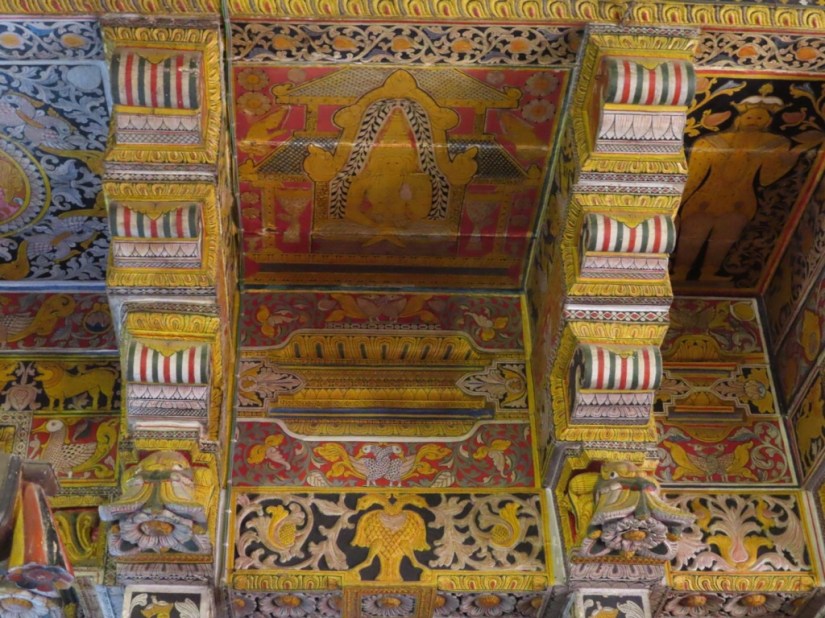
The present temple dates from C18th and this is the entrance to the Chamber with an ornate doorway embossed with suns, moons, entwined geese and dwarfs holding urns of plenty. We waited and when the puja began, we could hear drumming from downstairs, and the door were opened. The queue slowly filed by to get a glimpse of the stunning casket containing the tooth and leaving offerings.

We made our way downstairs past the never ending queue …

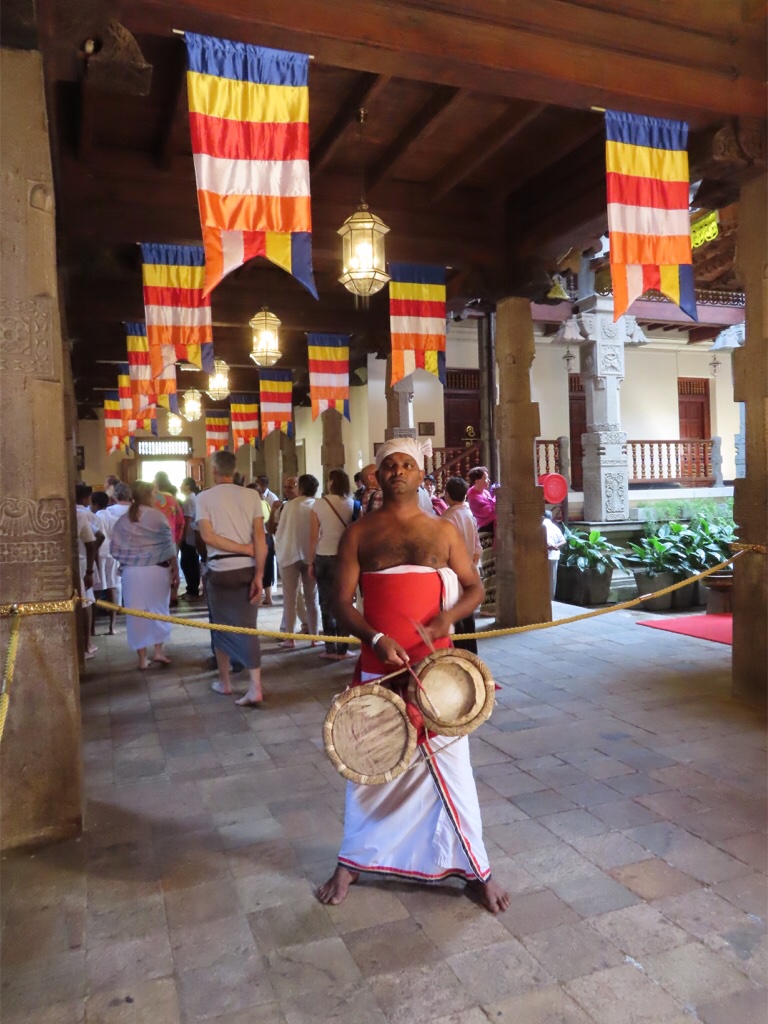
… to see the drummers …

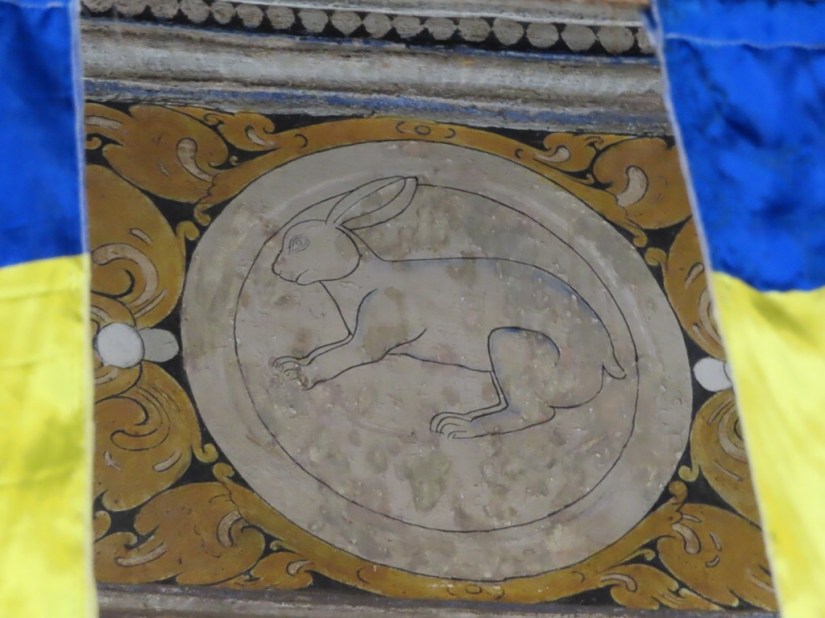
… and to admire the outside of the shrine decorated with elephant tusks, murals, a moonstone and hares in the moon which represent self-sacrifice.

Next was the New Shrine Room contains Buddhas from round the world …

… and the Audience Hall dating from 1784 and a couple of museums.

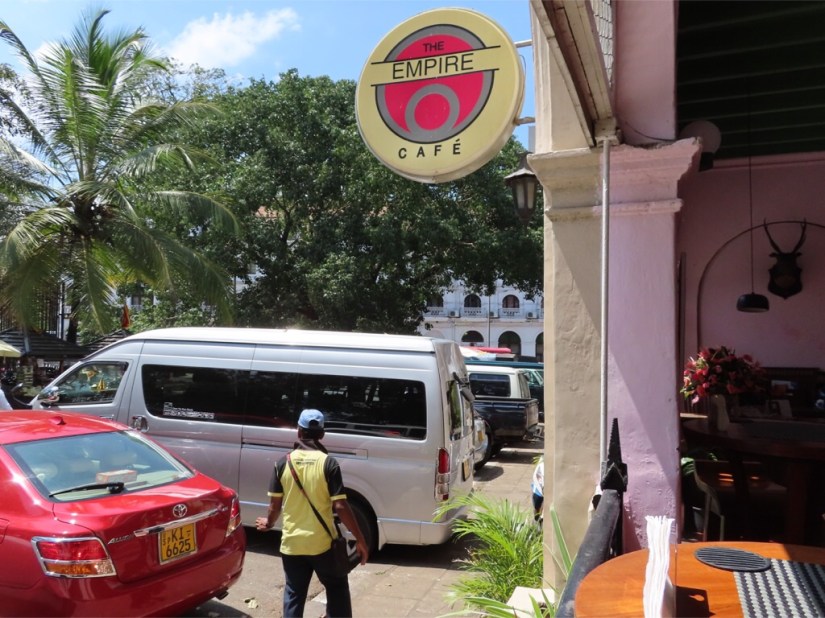
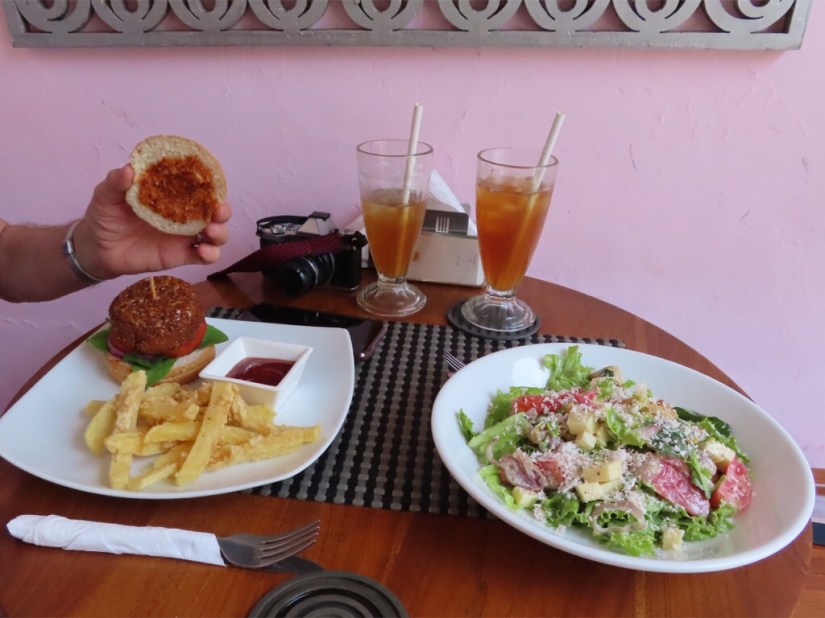
Making our way out and collecting our shoes, we headed for a seat on the breezy verandah of the Empire Cafe to indulge in a change from curried fare! I chose the Empire Salad with gotukola (pennywort), basil, lettuce, grated coconut, tomato, caramelised onion, nuggets of paneer, and golden Vada I (dhal fritters) with mustard and coconut milk dressing … and Chris opted for the Kingdom burger and fries with ginger iced tea … perfect fusion for those missing familiar food!

Refreshed, we went to the Central Market for a look, but only purchased some snacks. We’ve noticed very British looking cake in several places … it must be popular here …

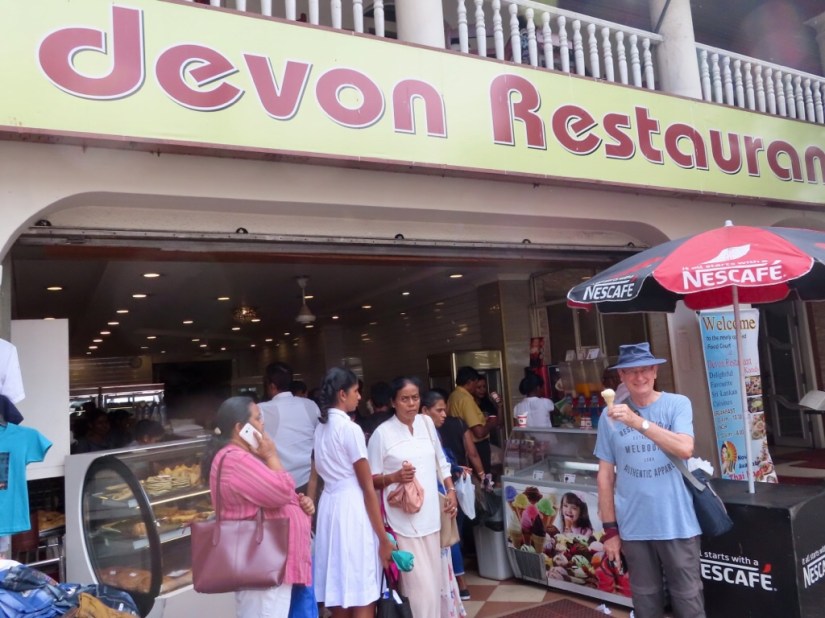
… and we even came across some Devon ice cream … very yummy at 22p each!

Kandy lies under the protection of four gods, each honoured by a temple or devale and we went to have a look. Fortunately they were all close by, and show how Hindu and Buddhist beliefs blend together here as the temples seems to be a mix of both.

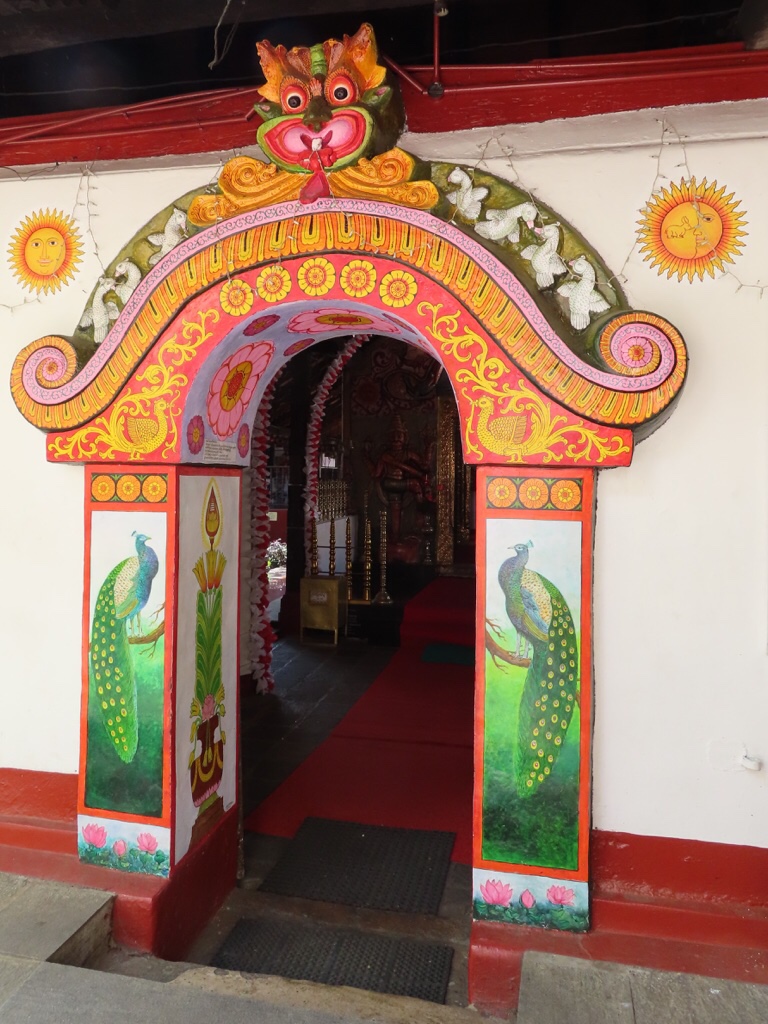
We entered Kararagama Devale between a pair of newly painted peacocks, and is the most Hindu, even with Bramin priests but their is a shrine to Buddha at the back.

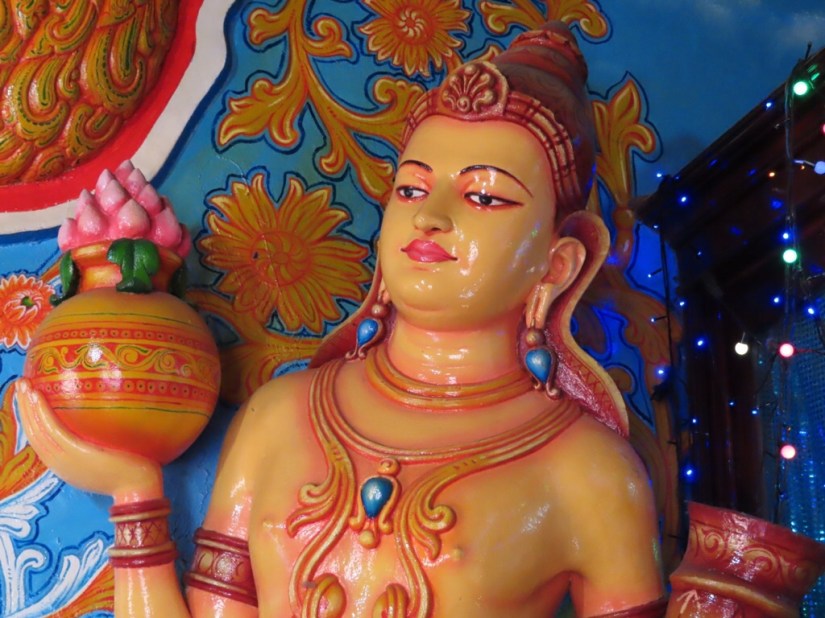
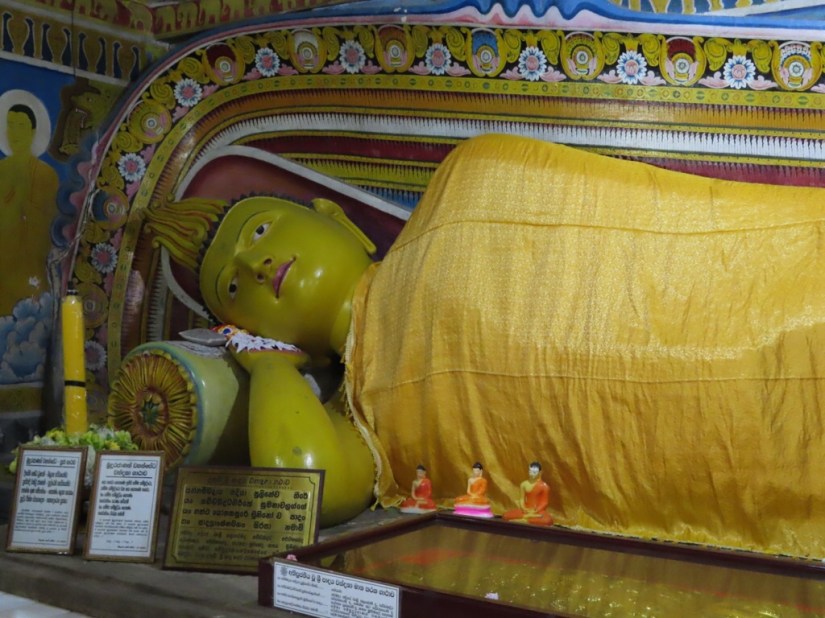
Rain began to threaten as we entered the area containing the last three Devales, each with several shrines and we became confused as to which was which … so here are some images …

The most poignant was visiting the last bo tree and finding a monk chanting prayers as people came with offerings bowls of water to water the tree …

We almost bit off more than we could chew with today’s sightseeing so are looking forward to a slower day tomorrow!

Map

Polonnaruwa … Not Quite so Ancient Ruins!

Travelling again by tuk-tuk, our first stop was at a small roadside shrine to Ganesh, where our driver picked a stem with a few leaves and left it with some coins as an offering for a safe journey. Next stop was an ayurvedic herbal garden where Chris bought some red oil which he hopes will work wonders on his dodgy ankle. We were lucky enough to see a mother with two baby elephants as we passed the edge of Minnetiya Tank in the National Park …

… then stopped at a stall selling orange king coconuts, a variety native to Sri Lanka with no husk. It is used only for the water inside which is high in electrolytes and has long been used in Ayurvedic medicine.

Finally we arrived in Polonnaruwa and checked into our first floor room at the Thisara Guest House.

After the Chola king destroyed Anuradhapura, he made his capital at Polonnaruwa, but just 80 years later in 1070, King Viyajabahu drove out the Chola invaders and re-established a Sinhalese kingdom which began Polonnaruwa’s golden age. His successor, Parakramabahu made it into one of the greatest cities in South Asia, importing architects from India whose influence can be seen in the Hindu shrines and more lavish building continued in the region of spree of Nissankamalla.

Most of the ruins are covered by a $25 tourist day ticket, but we spent the afternoon looking at the rest. We hired a scooter from the guesthouse set out passed Parakrama Samudra, or Sea of Parakramabahu, a huge artificial lake built by the king which irrigated over 90 sq miles of paddy fields, only being restored in the 1950s.

Next, the southern ruins where we found a a circular image house with a central building that would have contained a monastic library surrounded by dagobas and ruins of monastic quarters …

… and also a statue believed to be Parakramabahu himself. He could be holding either a palm leaf manuscript representing law or a yoke representing royalty. Of course it might not be him at all – it might be a sage called Pulasti since it is near the monastic library!

We also looked at Island Park, once pleasure gardens but also containing a council chamber with a very fine lion marking where the throne would have been and inscriptions on the pillars saying who sat where.

Next day dawned bright and sunny so having had breakfast overlooking the paddy fields, we went to the museum to buy our ticket.

Just as we arrived the rear tyre of the scooter went flat, but we rang the guesthouse and in the time it took to see the museum, Mahesh had fixed the tyre and we were set to continue.

The Citadel is at the heart of the ancient city surrounded by walls and containing the Royal Palace which might have stood 7 storeys high, with wooden floors above the brick ones and still retains patches of original plaster.

The Council Chamber has some great sculptural features such as the embellished steps …

… fab lions at the top …

… dwarfs, lions and elephants on the frieze.

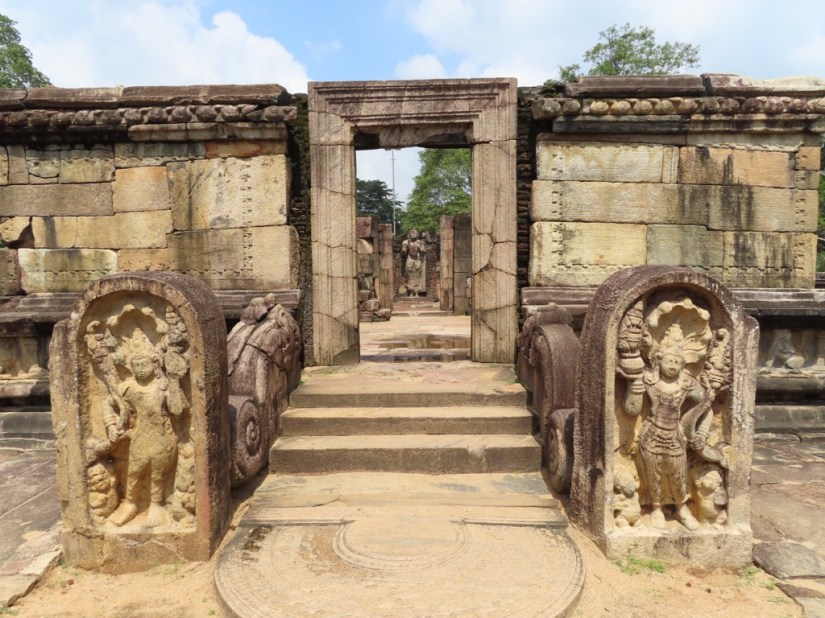
A little further down the road, the Quadrangle or Terrace of the Tooth Relic was the religious heart of the city and contained several impressive buildings. The Vatadage or circular relic house could well have enshrined the Tooth Relic in the small dagoba at the top between the seated Buddhas and is beautifully decorated. There are several features we can now recognise like the guardstones and moonstone at the entrance …

… and the balustrades with lions and makaras – mythical beasts with the body of a fish, foot of a lion, eye of a monkey, trunk or tusk of an elephant, tail of a peacock, ear of a pig and most noticeably the mouth of a crocodile!

As we walked round, the walls were in remarkably good shape …

… there were more guardstones …

… Buddhas in the centre …

… and the rear view.

Other buildings included the Hatadage …

4A295487-3AC7-4AC0-AC0C-A389FBB91343

… actually containing 3 Buddhas …

… the Atadage with just one Buddha …

… a seven storey temple which looks rather Cambodian …

… an open pavilion with pillars shaped as thrice-bent lotus stalks …

… and the Thuparama, a well preserved shrine decorated with vimanas – miniature representations of the dwellings of the gods.

We also liked this image of the Hindu goddess Lashkmi being given a shower by a pair of elephants which is a symbol of wealth.

Moving on, we passed Rankot Vihara, a brick dagoba – the largest here, but we’d seen bigger in Anuradhapura …

… and headed to the last group of ruins. Lankatilaka Vihara or Ornament of Lanka has towering brick walls enclosing a huge, though now headless Buddha. The shrine shows the shift in Buddhist architecture from the abstract symbolic form of the dagoba to the more personal and devotional approach focusing on the Buddha form. The exterior is decorated with vimanas or celestial dwellings of the gods.

The Kiri Vihara is the best preserved of the dagobas here, still with its lime plaster almost intact when it was rescued from the jungle.

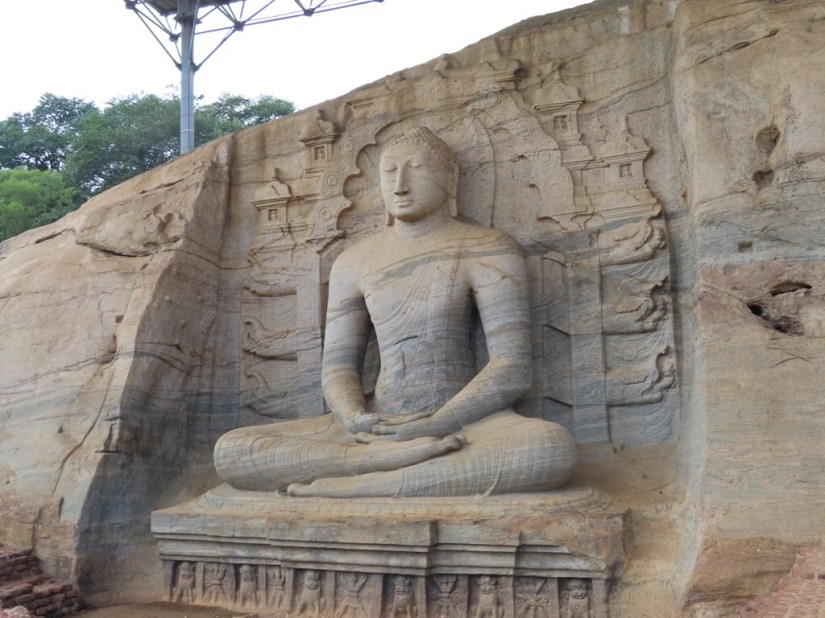
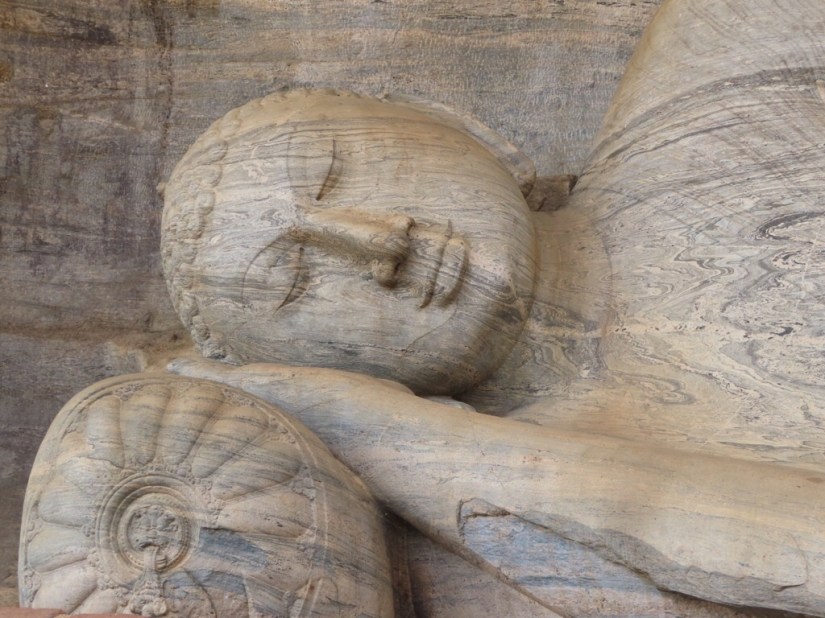
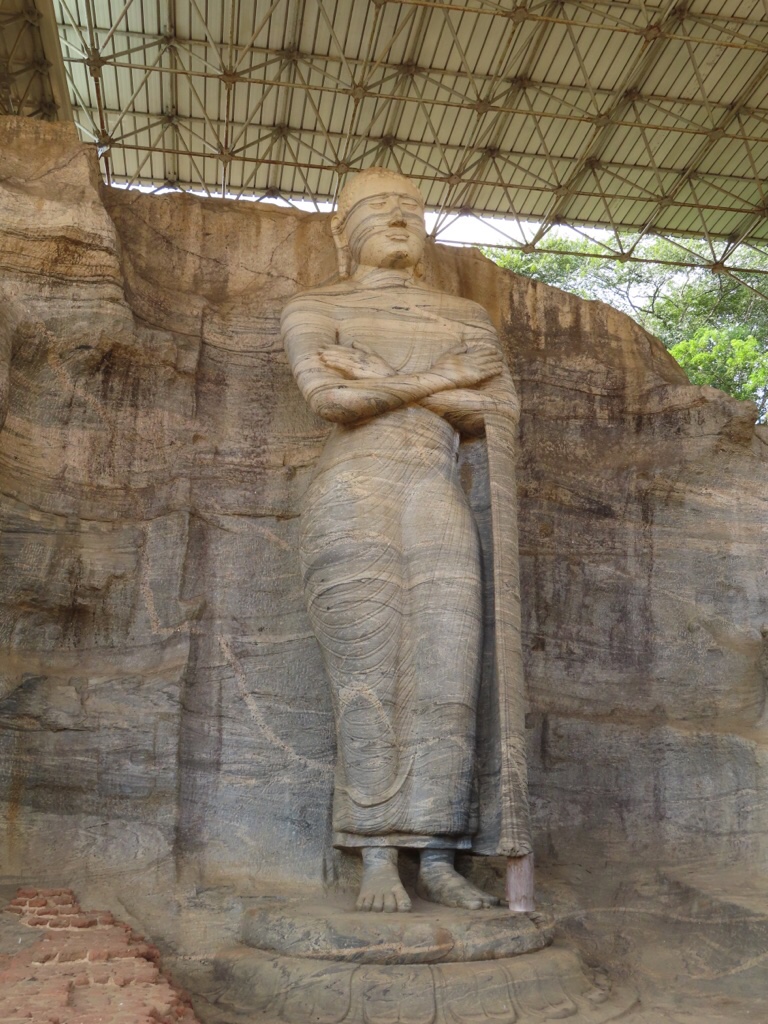
Gal Vihara or Stone Shrine contains four beautiful Buddhas, all carved from the same granite outcrop. The striations of the rock add yet another dimension to these sculptures, but the last is kept almost hidden behind a grill.

Finally the Tivanka-patamaghara Image house is a huge brick structure, decorated with more vimanas and containing a standing Buddha and remains of frescoes but no photos were allowed.

This wonderful city did not last long though. The cost of building and foreign wars pretty much bankrupted the state and opposing Tamil and Sinhalese factions battled for control with 12 rulers in 18 years. This enabled invaders to take hold once more, with a despotic Tamil mercenary called Magha instituting a reign of terror during which the irrigation system fell into ruin, people moved south and Polonnaruwa was abandoned.

While we’ve been here, I’ve been reading a novel called The River of Ink by Paul MM Cooper, about Asanka the court poet in the time of Magha, who managed to undermine him and help lead to his downfall. The tale ends with the Sinhalese establishing a new capital further south … which links in nicely with our next stop … Kandy.

All that remains is to show you a bit of nit-picking!

Map