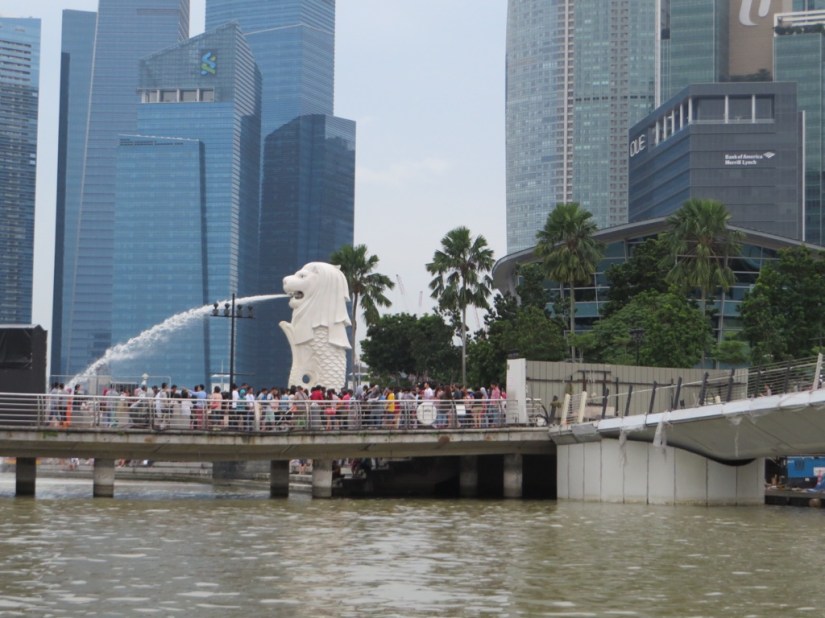
 Having wished each other a Happy New Year while flying over Afghanistan, we arrived in Singapore on a warm but slightly grey New Year’s Day.
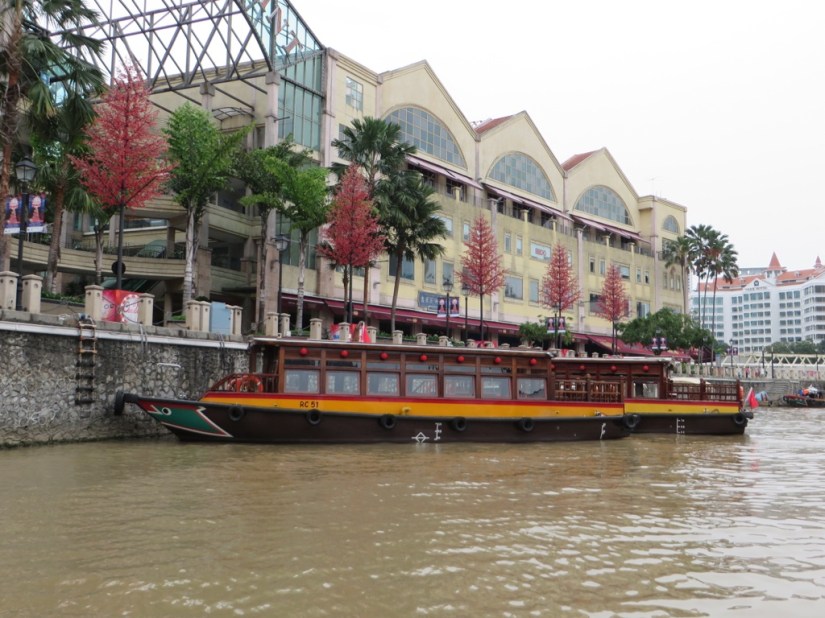
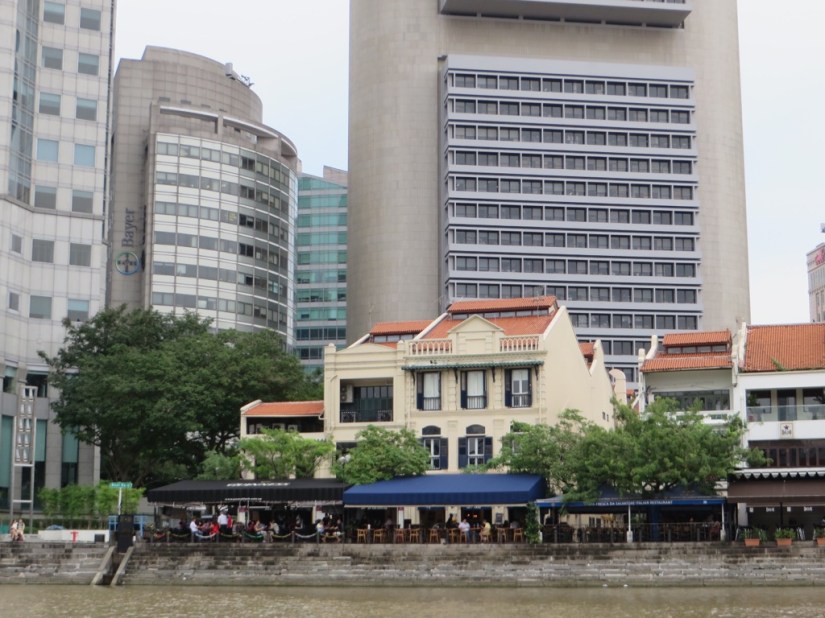
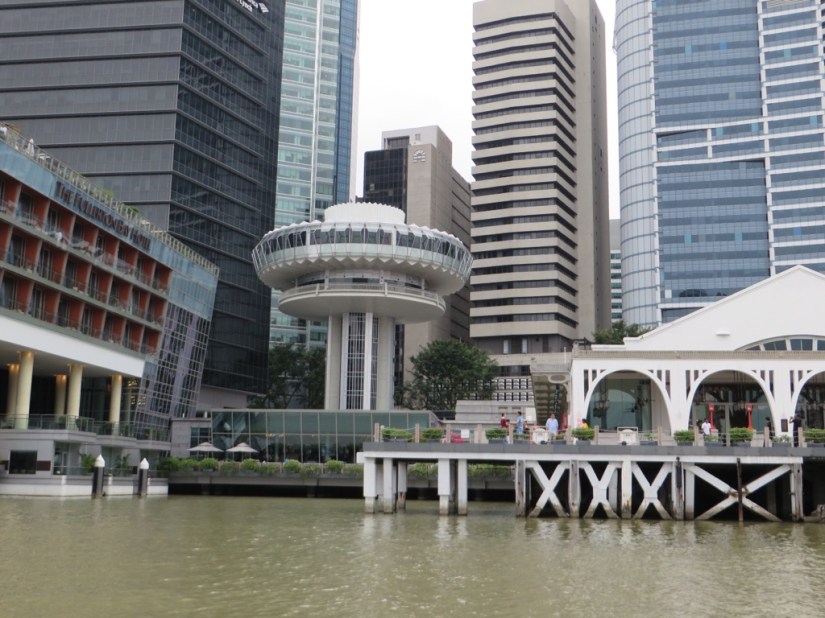
We started our sightseeing by making our way to Clarke Quay to catch a bumboat tour. The river was once the artery of Singapore, busy with boats carrying a myriad of goods including coffee, sugar and rice to the godowns or warehouses and remained a working river until the 1970s when a clean up campaign moved commercial traffic west. This ended the river’s vibrant history as a trade waterway, leaving newly cleaned waiters home only to tourist boats and the godowns of Clarke Quay and the Chinese shophouses of Boat Quay, now just restaurants with a river view.
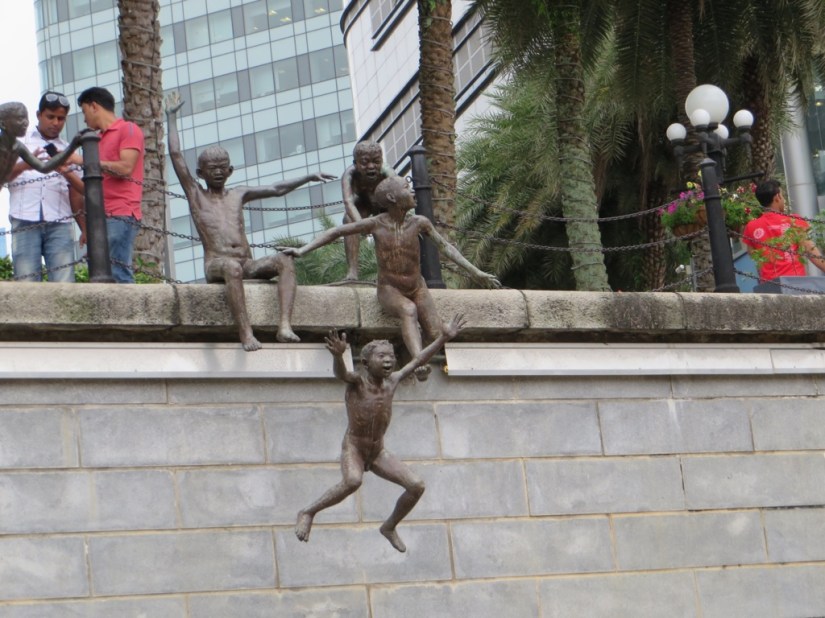
We continued past some lads going for a swim …
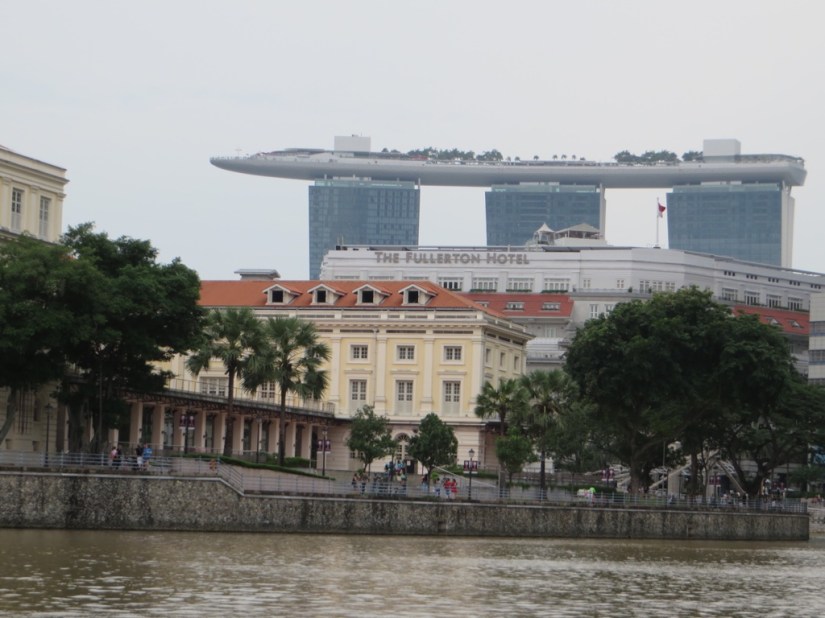
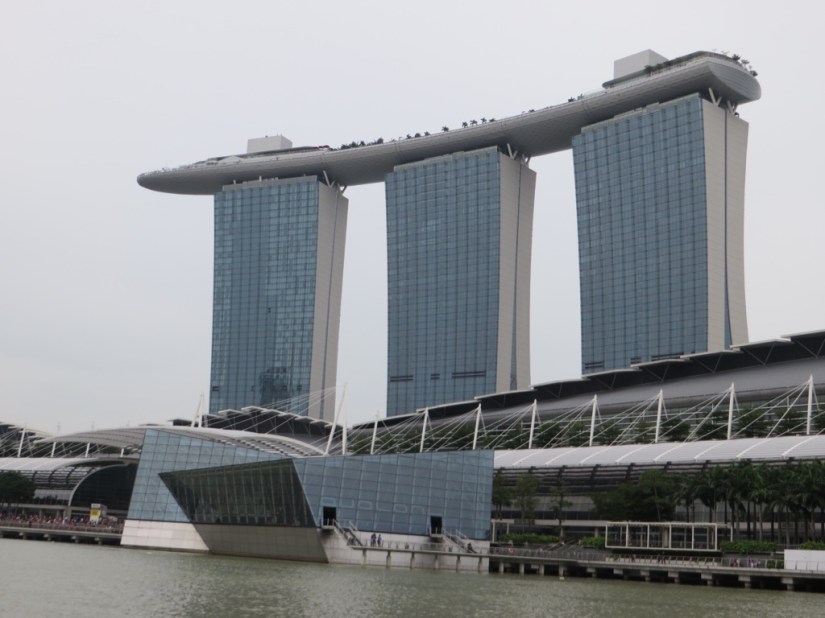
… on to Marina Bay, dominated by the new Marina Bay Sands Hotel looking like a ship stranded on top of three towers …
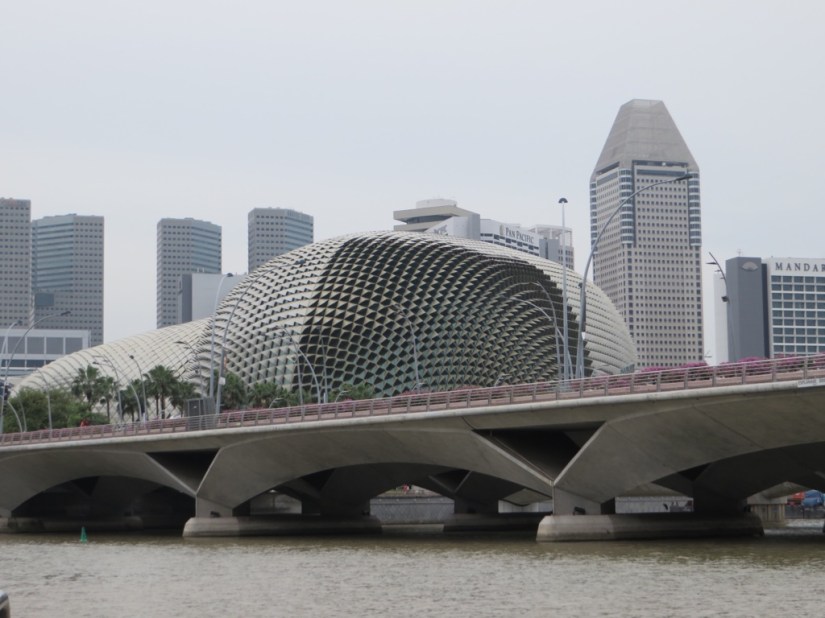
… the Esplanade Theatres affectionately called The Durians by the locals for their resemblance to this smelly fruit …
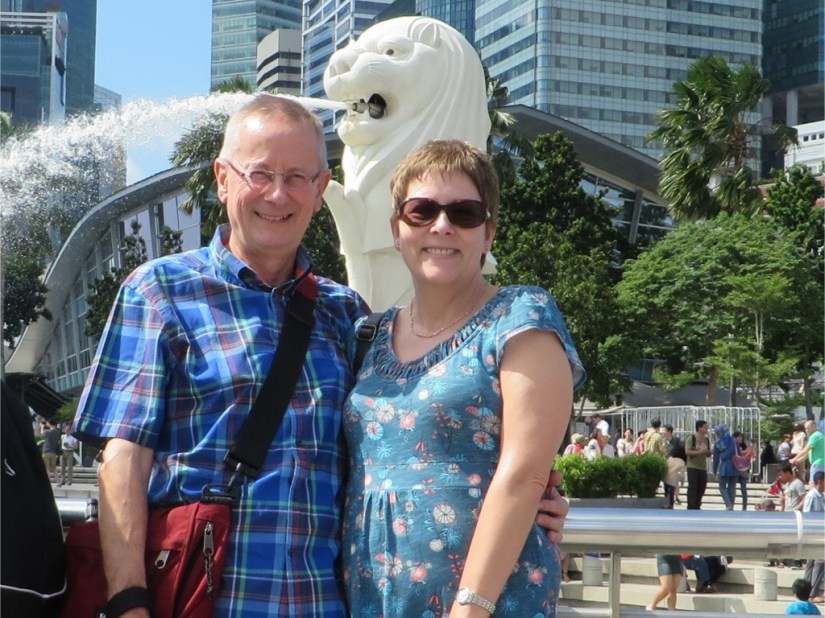
… and the Merlion, the half lion, half fish national symbol of Singapore.
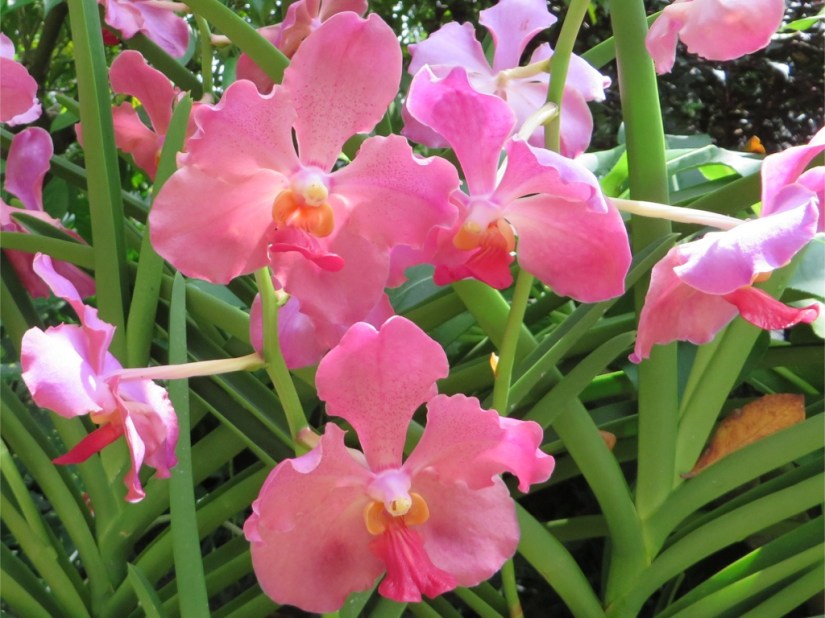
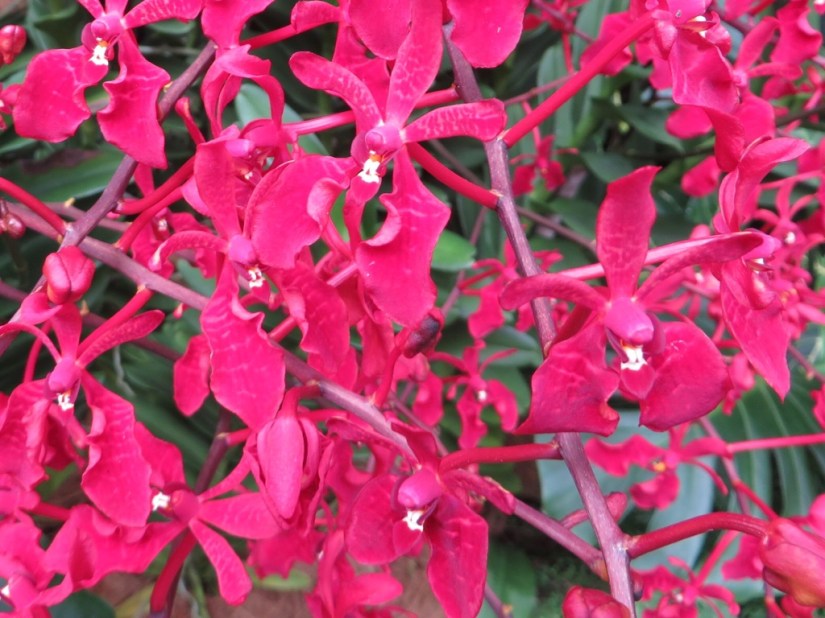
Skyscrapers I was expecting, and shopping malls and concrete, but I wasn’t expecting Singapore to be so green. There are trees lining many of the streets and lots of areas with grass, often shaded and providing a cool place to sit, and even gardens on the side of buildings! Then there are the parks, Fort Canning Park in the centre of the city and the immense Botanic Gardens to the north, where we spent all morning walking a couple of kms from one side to the other, and looking round the world’s largest collection of orchids which can be seen planted out in the gardens, rather than hidden in hothouses. There is also an area of rainforest which is part of the original vegetation that covered Singapore.
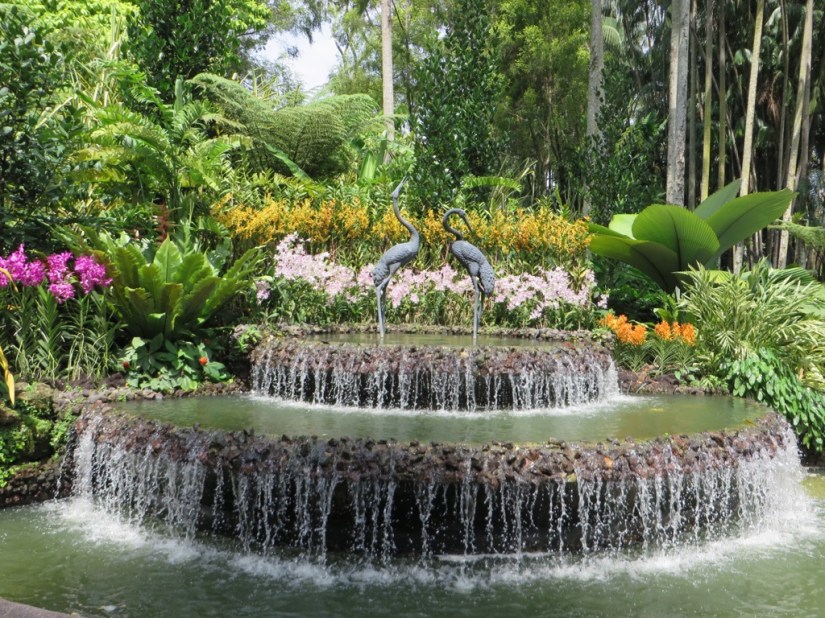
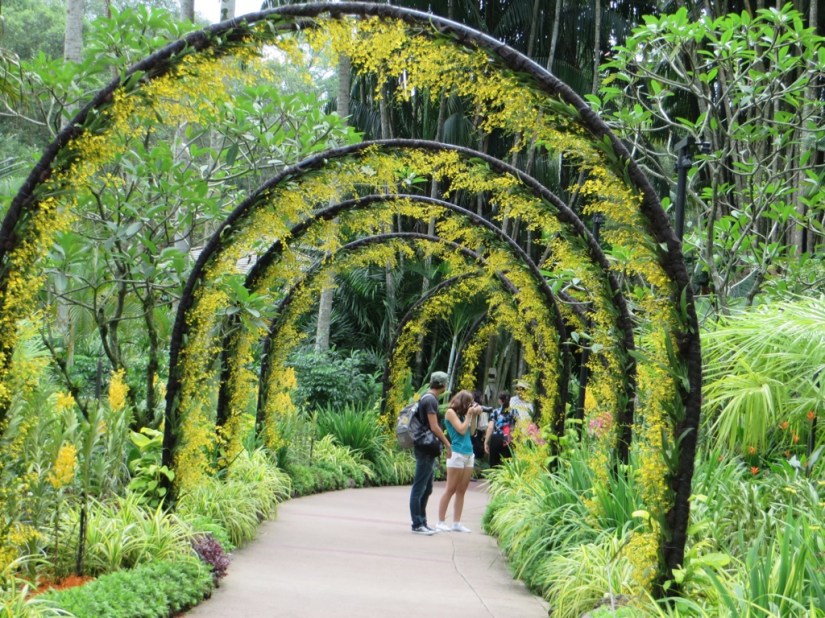
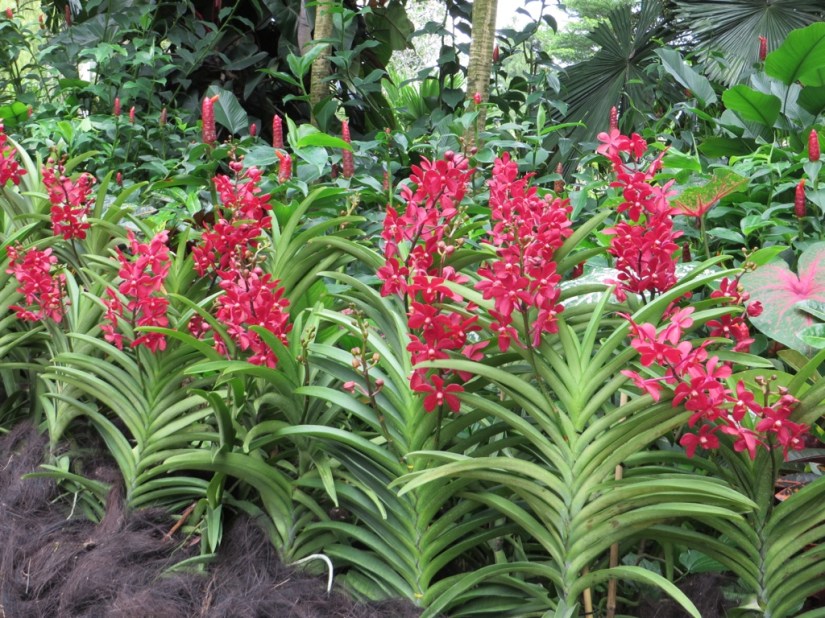
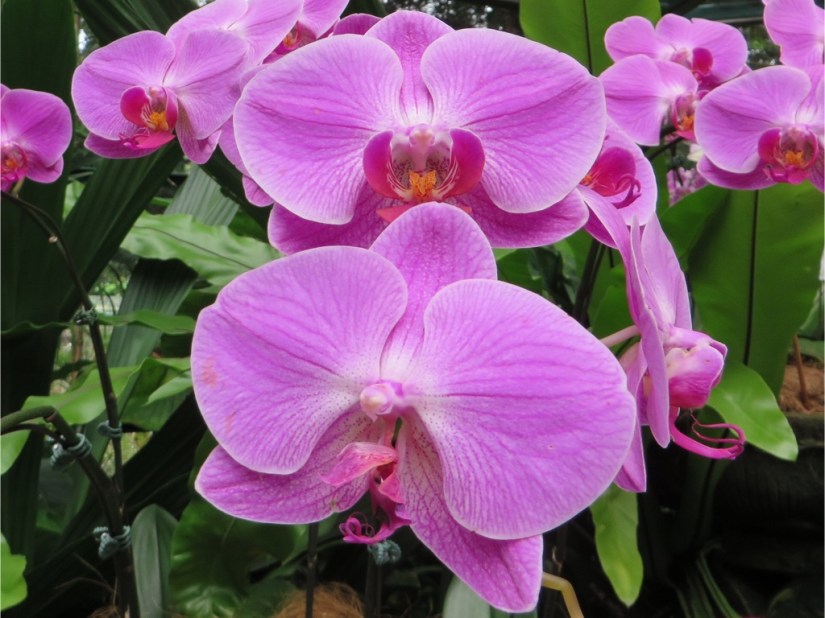
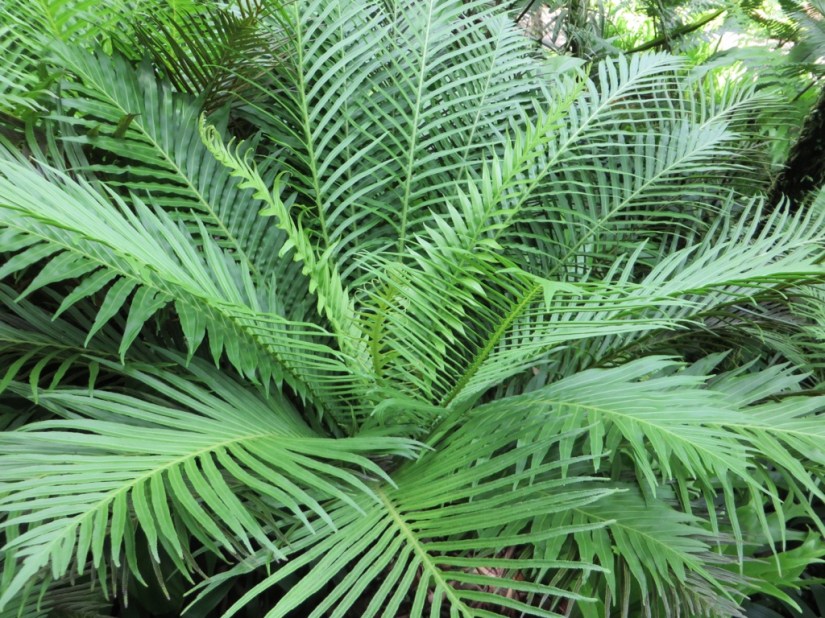
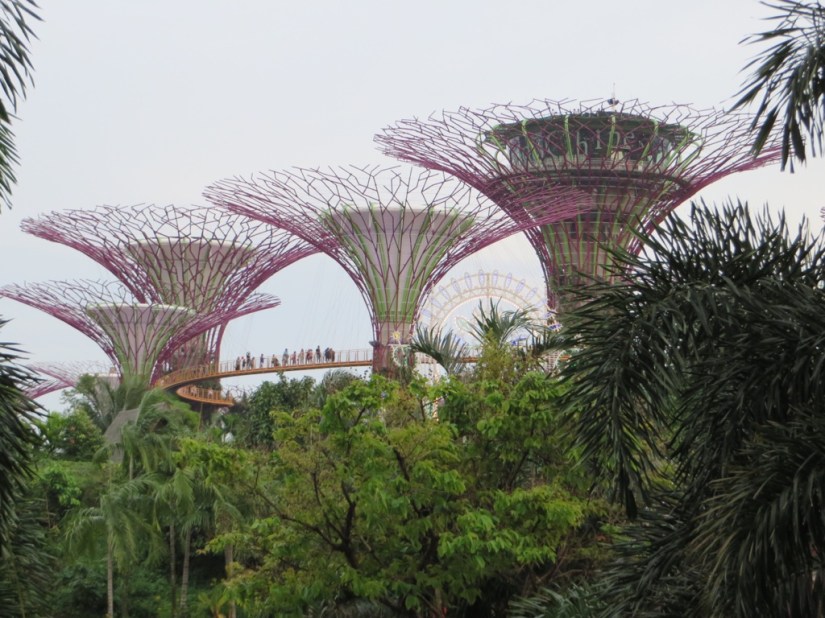
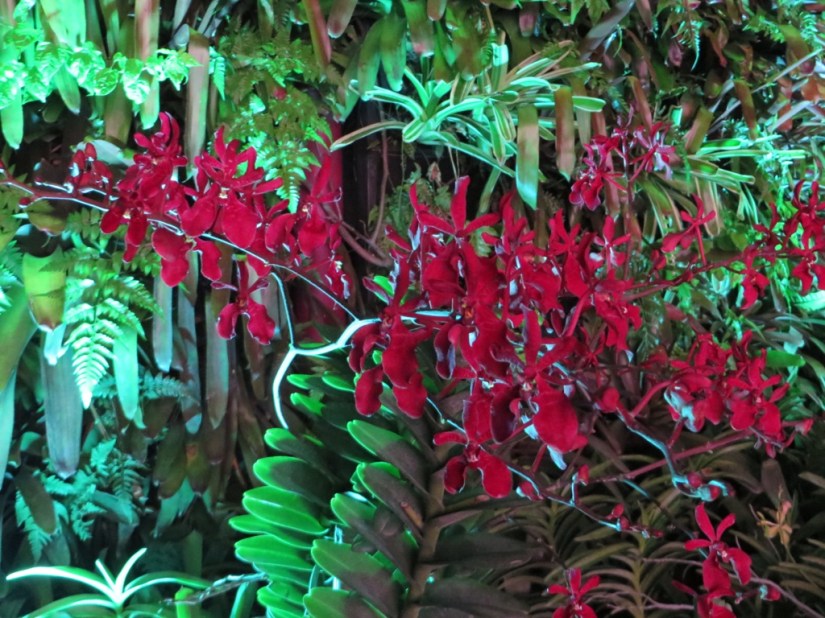
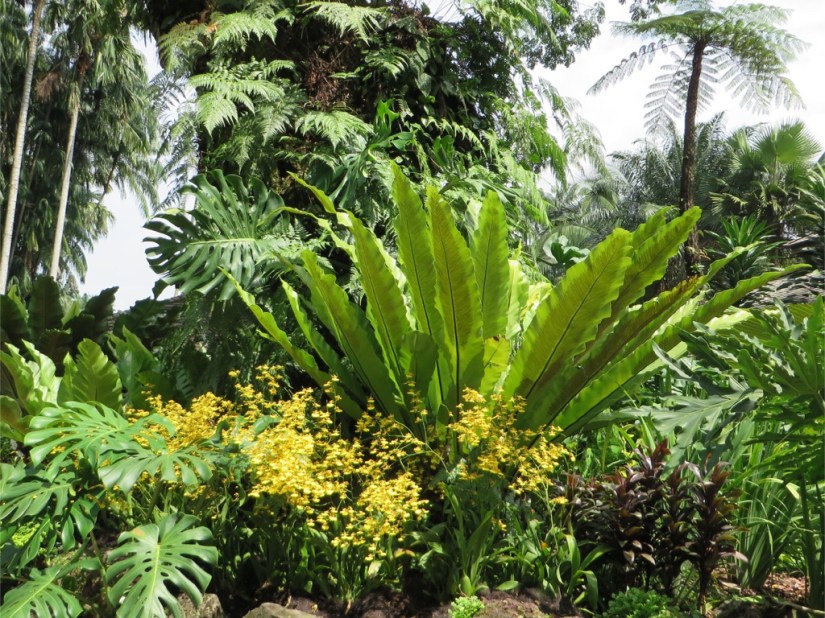 These parks are open from early in the morning till late at night, free and really well used with lots of families visiting and picnicing. The new Gardens by the Bay has a couple of huge domes filled with plants which we didn’t visit, but also Supertree Grove, containing giant tree sculptures planted with ferns and orchids which take centre stage for a free light show each evening.
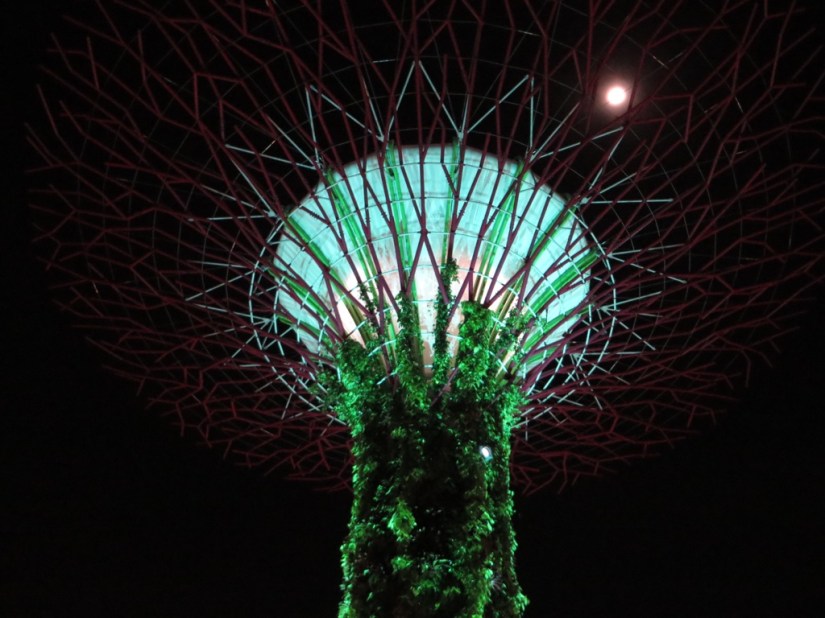
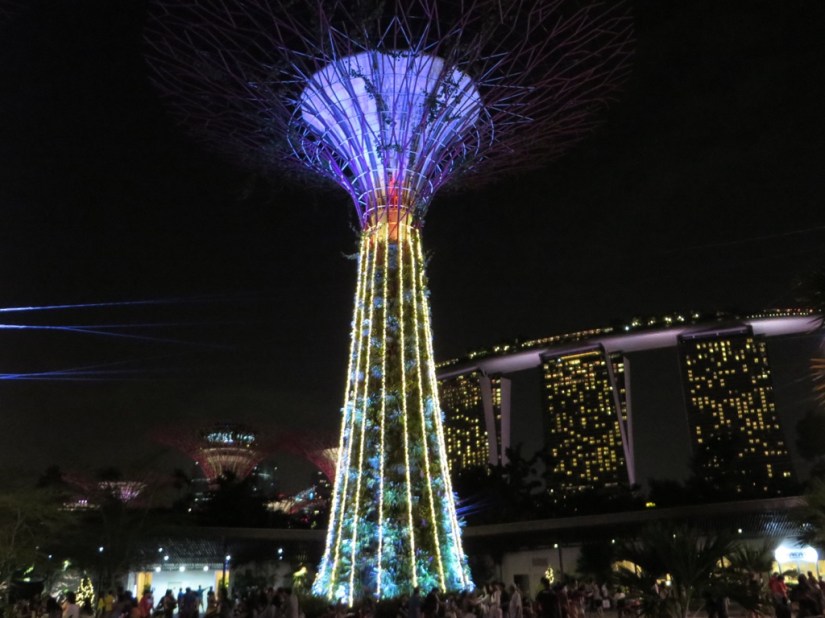
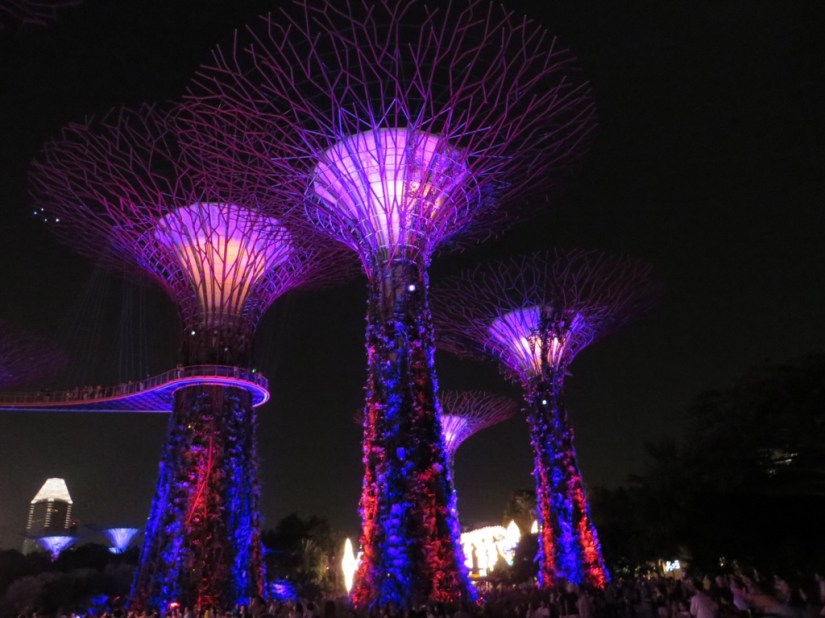
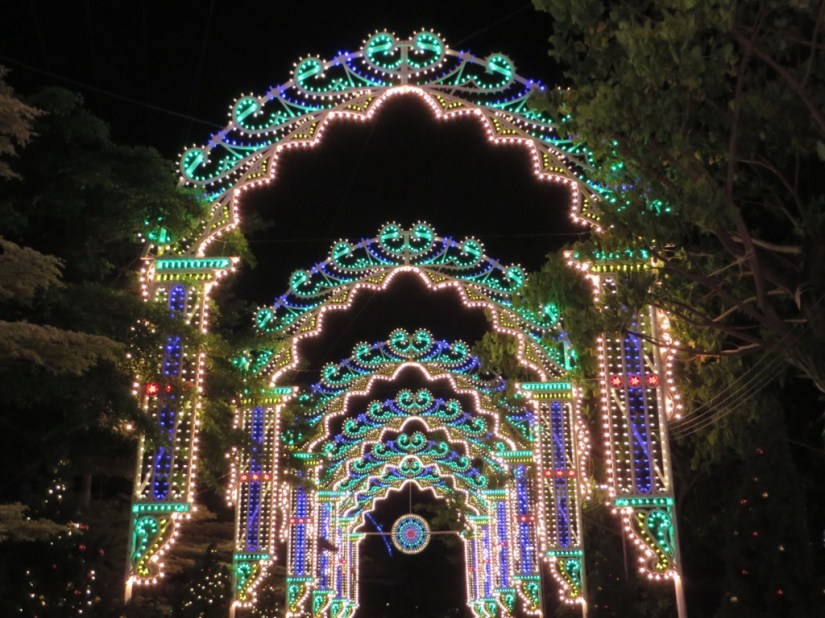
Everywhere is twinkly …
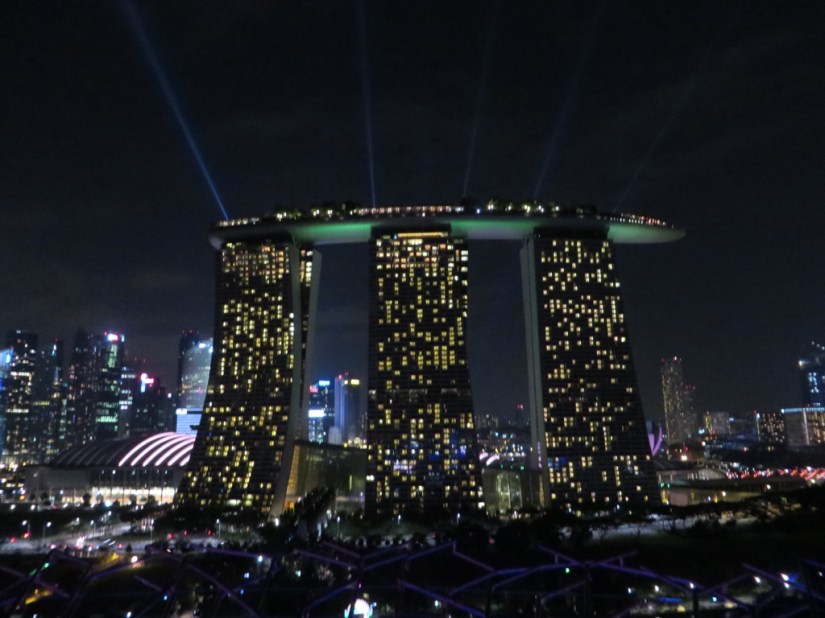
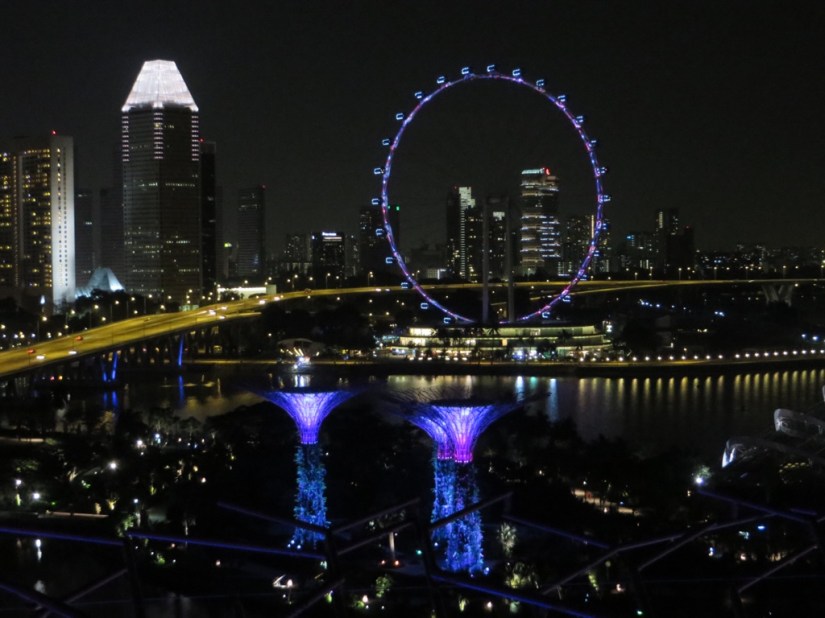
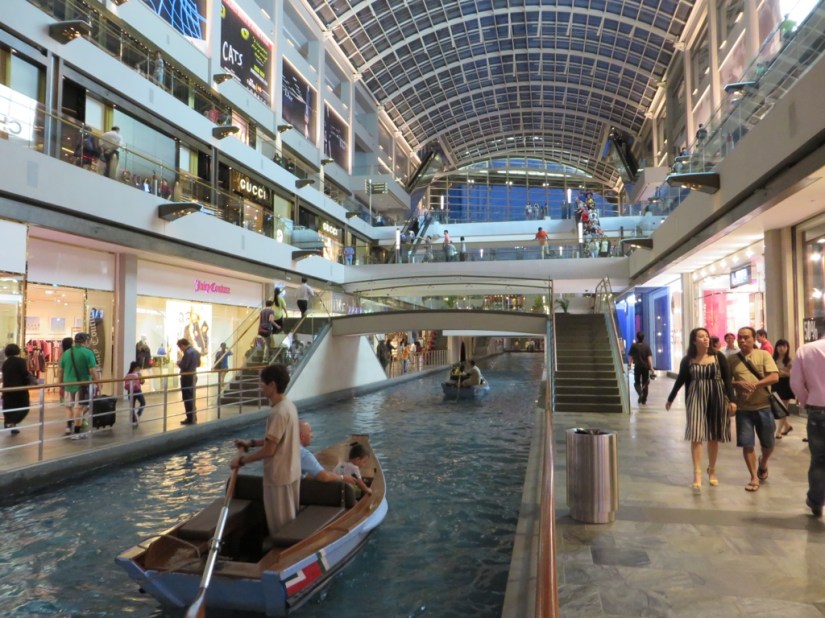
… and there is another free show at the Marina Sands complex and we walked through the huge shopping mall, complete with canal and sampan boat trips, to an outside area facing the bay where we watched Wonder Full, with images projected onto fountains.
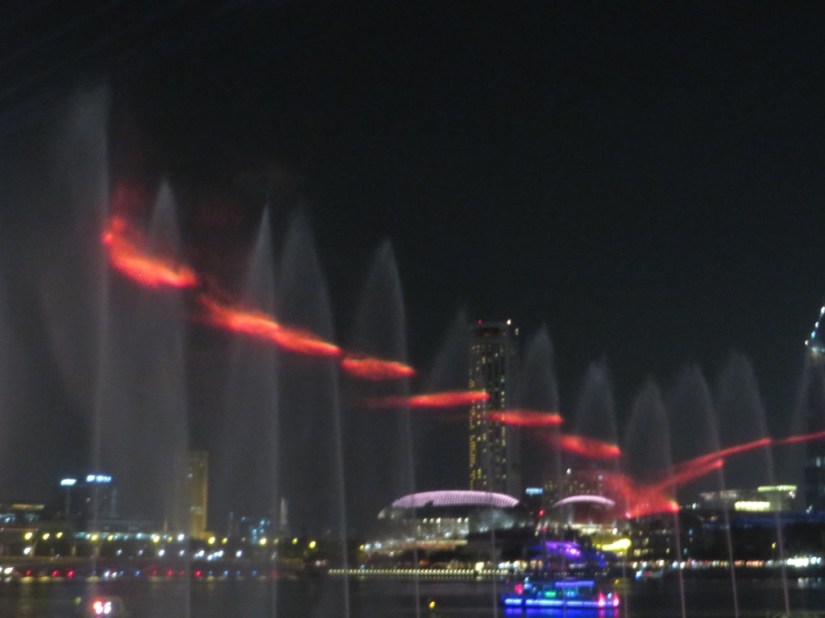
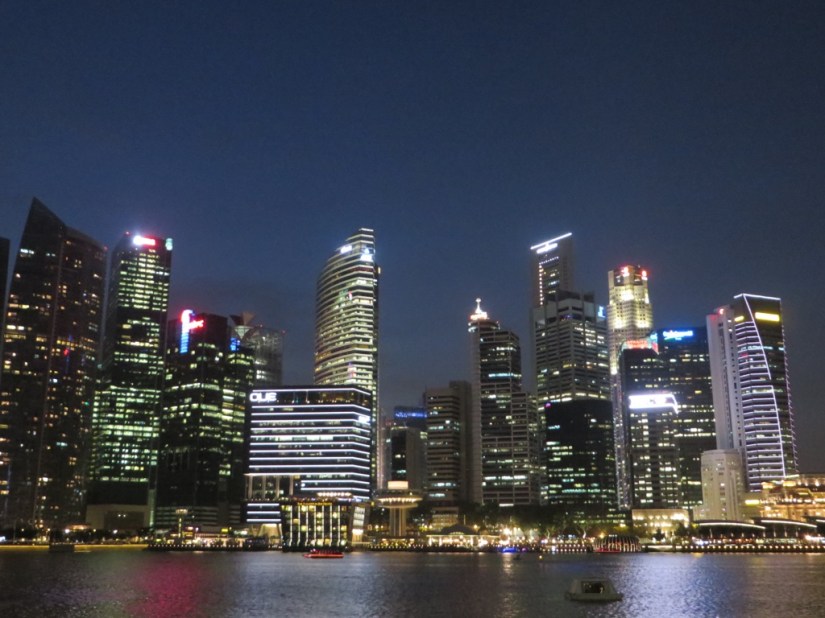
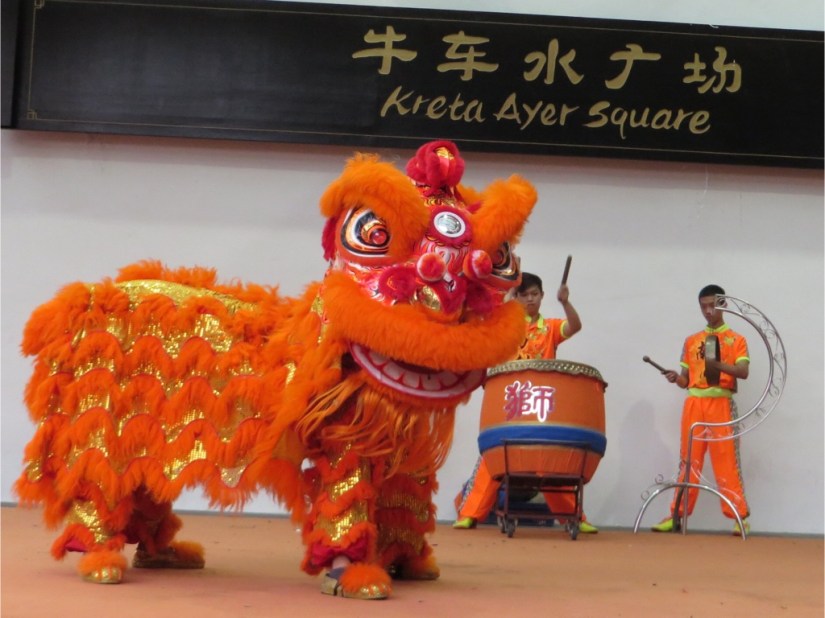
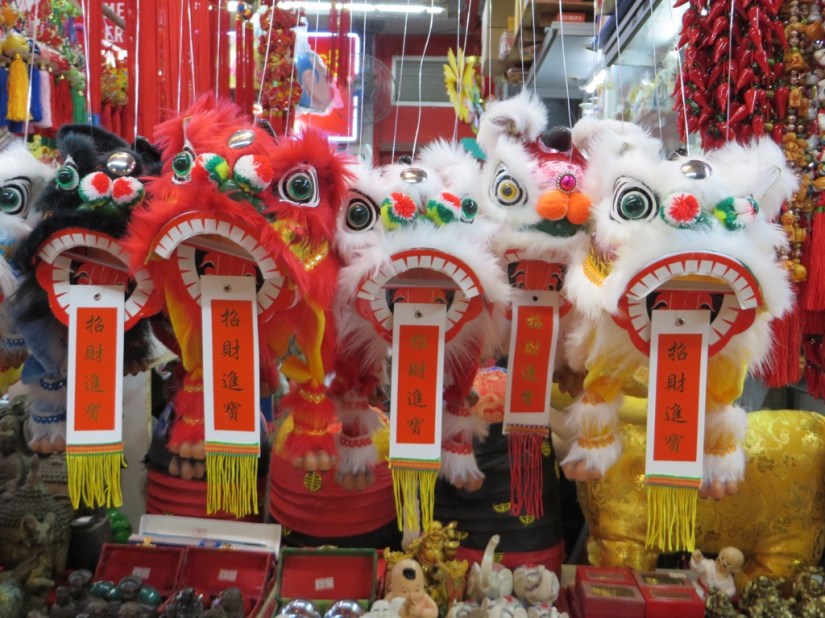
We have seen better, but the view across the bay with the skyscrapers of the Financial district behind was stunning. Chinatown has a display of drumming and lion dancing at the weekends, each lion containing two people who operate a wiggly tail, blinking eyes wagging ears and a mouth that opens and closes giving huge expression to their movement.
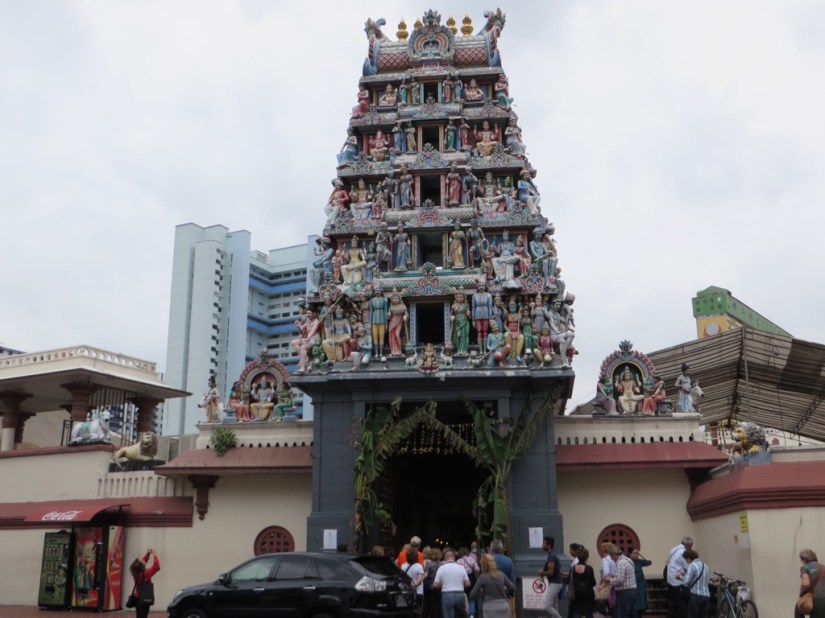
Malays, Chinese, Indians and Europeans all arrived in Singapore searching for work and commercial opportunities, and from the start, they settled in different areas of the city and we took a free bus tour provided by our hotel which helped us find our bearings and dropped us off in Chinatown. We passed the Sri Mariamman Temple, the oldest Hindu shrine founded by the Tamil pioneer who accompanied Raffles to Singapore …
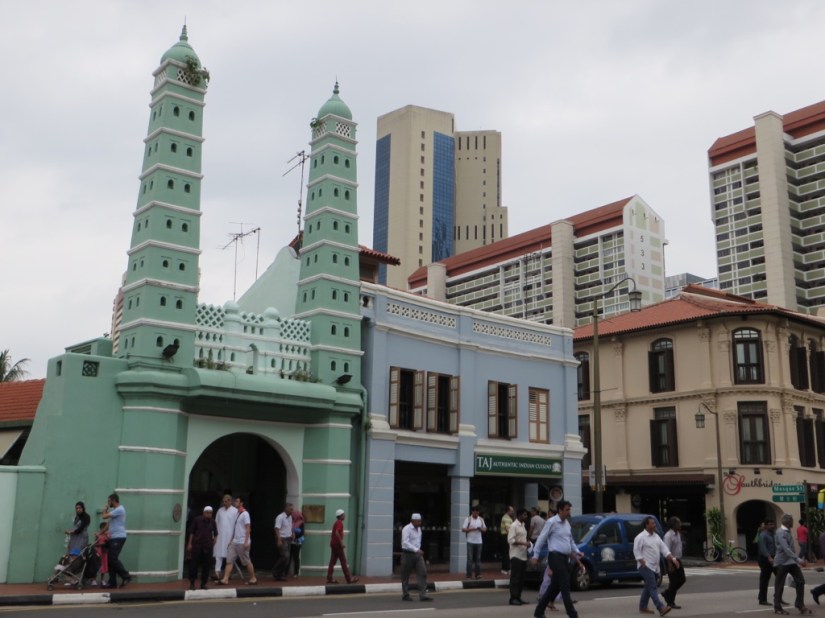
… and almost next door, the Jamae Mosque built by settlers from the Coromandel coast in Southern India.
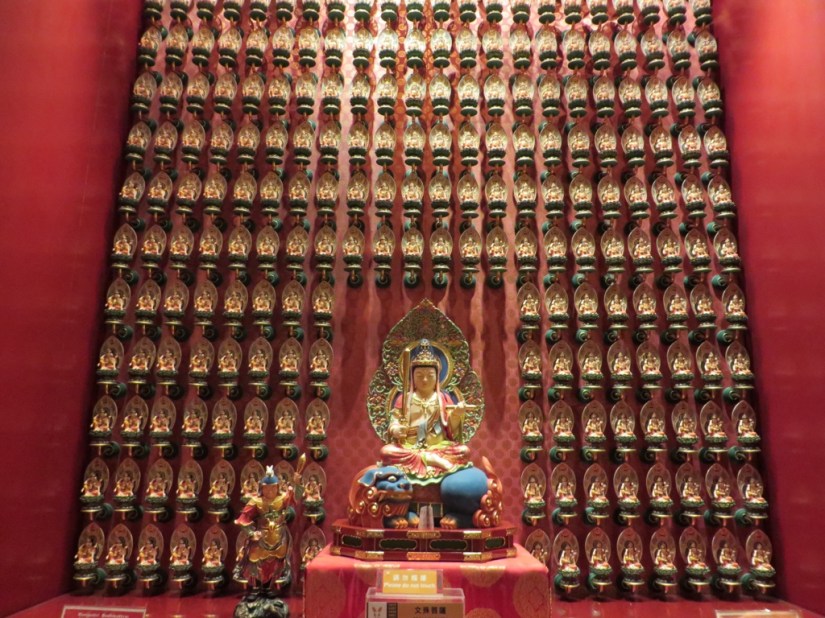
By far the newest and most ostentatious is The Buddha Tooth Relic Temple, built in 2007 to house a tooth of Buddha which was found in a collapsed stupa in a Burmese monastery and donated to Singapore by the abbot. The main hall contains a huge seated Buddha, but round the walls are more statues of Buddhas, surrounded by get more tiny Buddhas, each with a number. They are all available for adoption for a fee which will no doubt bring the donor good karma and recoup the £30m construction bill.
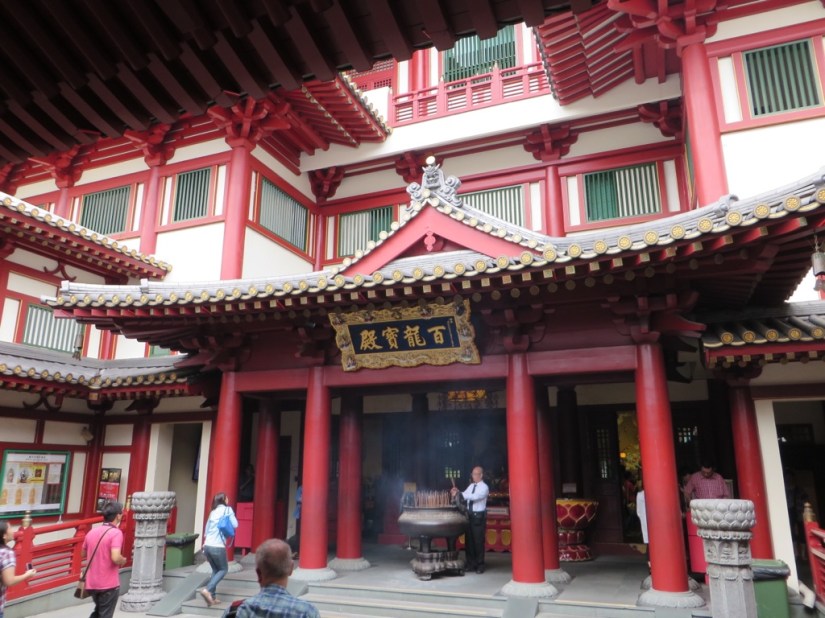
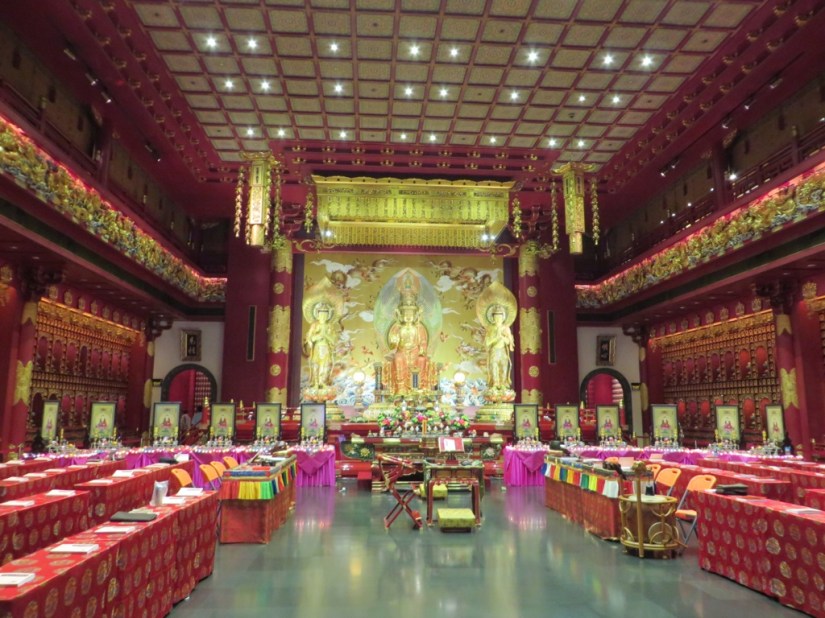
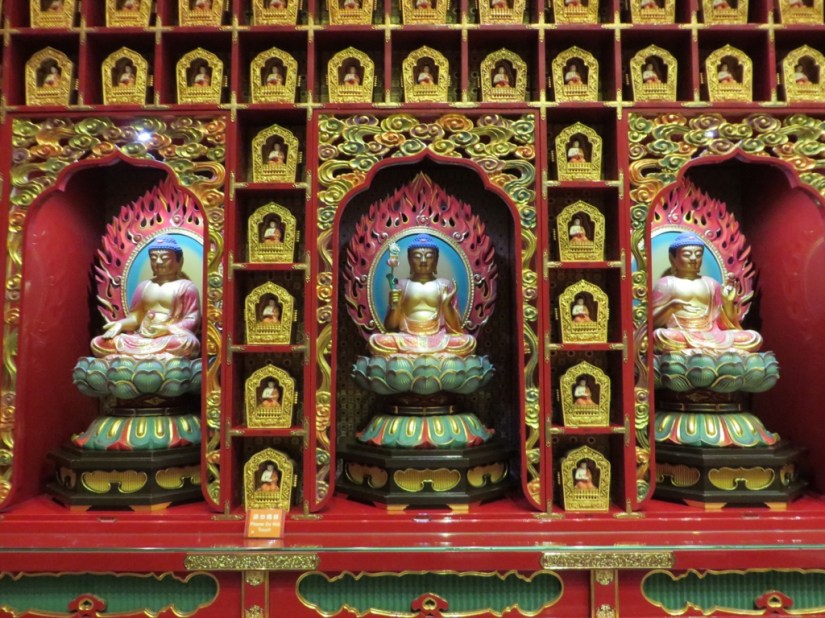
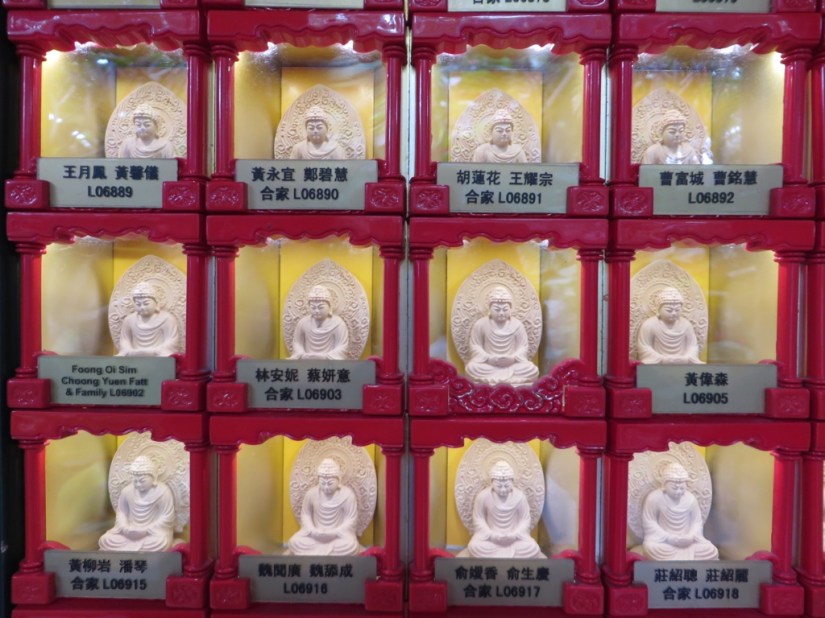
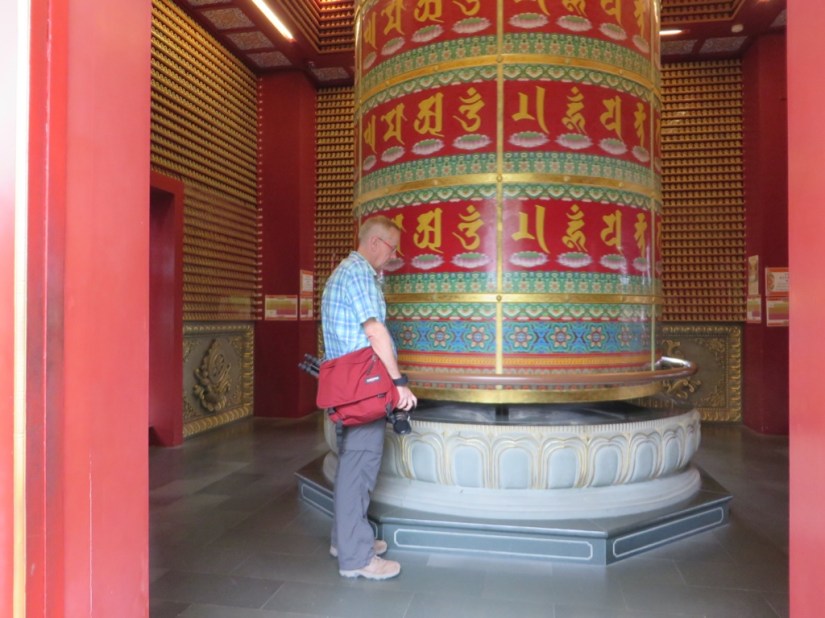
Upstairs is a stupa in its own chamber behind glass panels housing the tooth, together with lots more Buddhas, and finally the roof garden, with the Pavilion of 10,000 more Buddhas and a beautiful cloisonné prayer wheel.
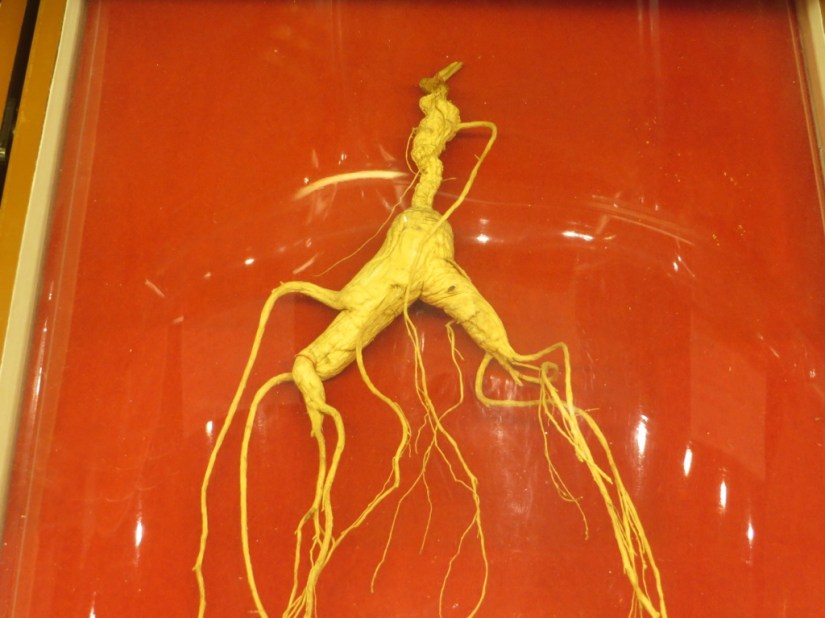
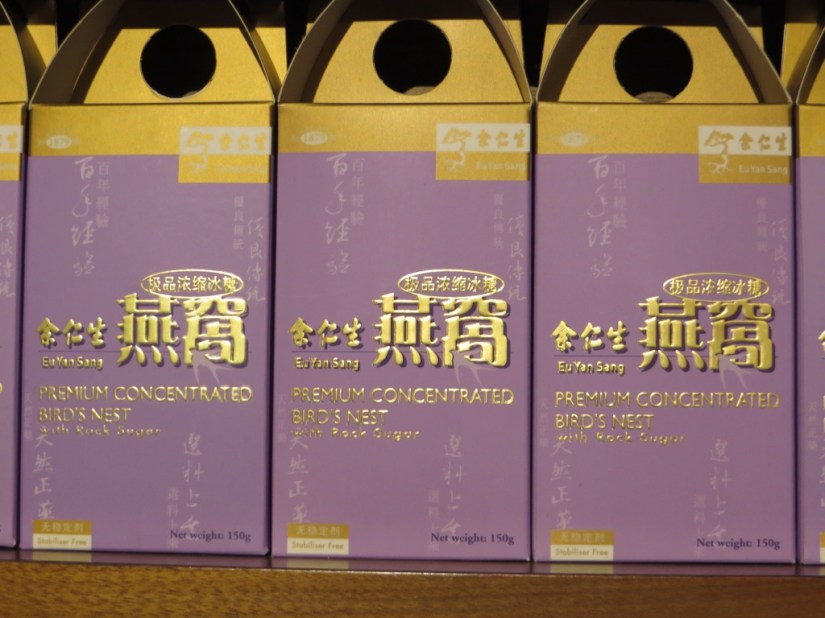
We popped into the Eu Yan Sang medical hall, one the oldest Chinese herbalists here, with the shop smelling like musty leaves, and selling everything from a piece of ginseng costing £9,000 to products made with the nests of swiftlets, specially collected for the purpose and cleaned, crushed up and infused for soup or tea to help to generally boost your health.
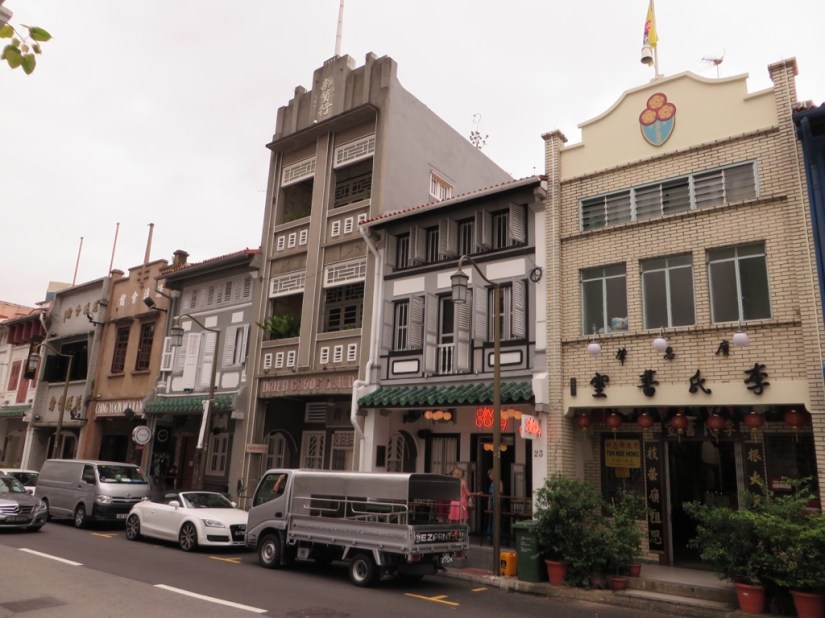
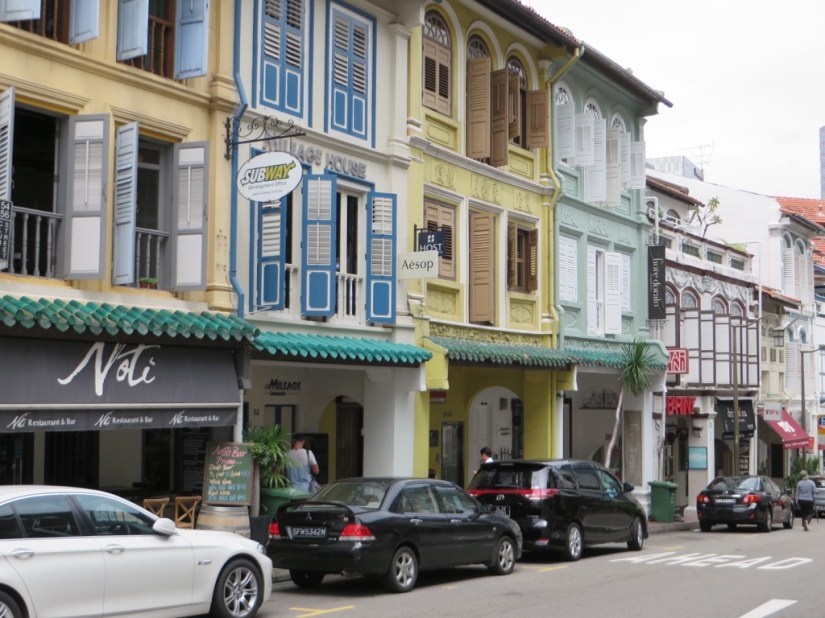
We passed lots of shophouses, most restored and now hotels and restaurants, but also some headquarters for clan or trade associations, looking more original.
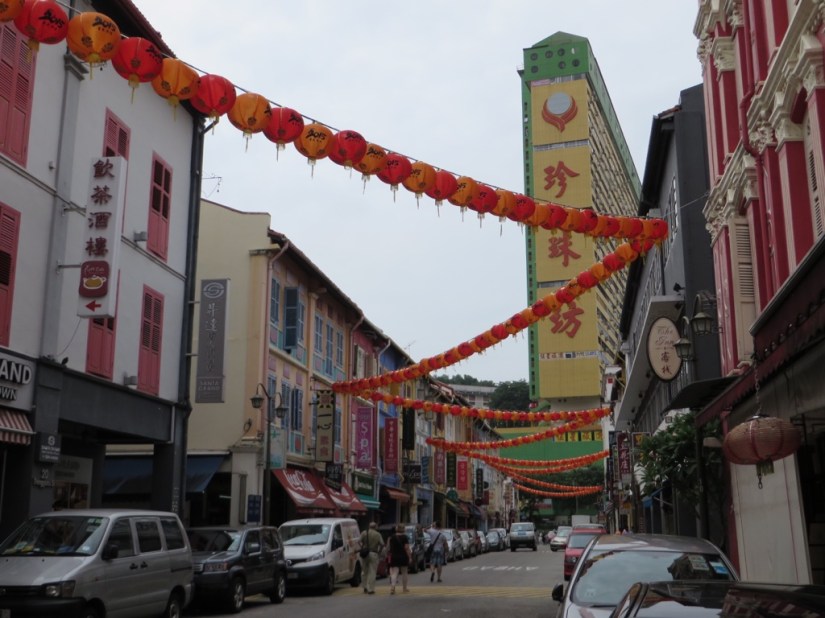
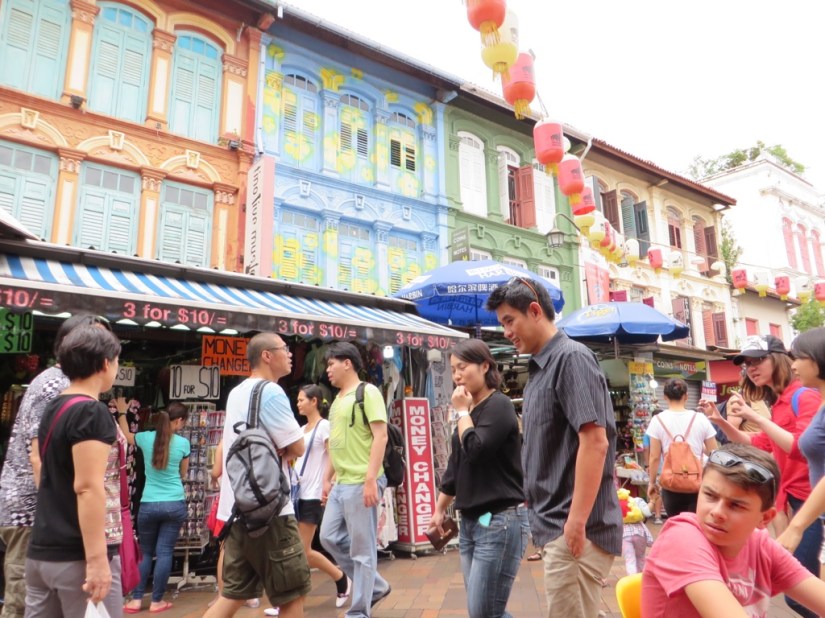
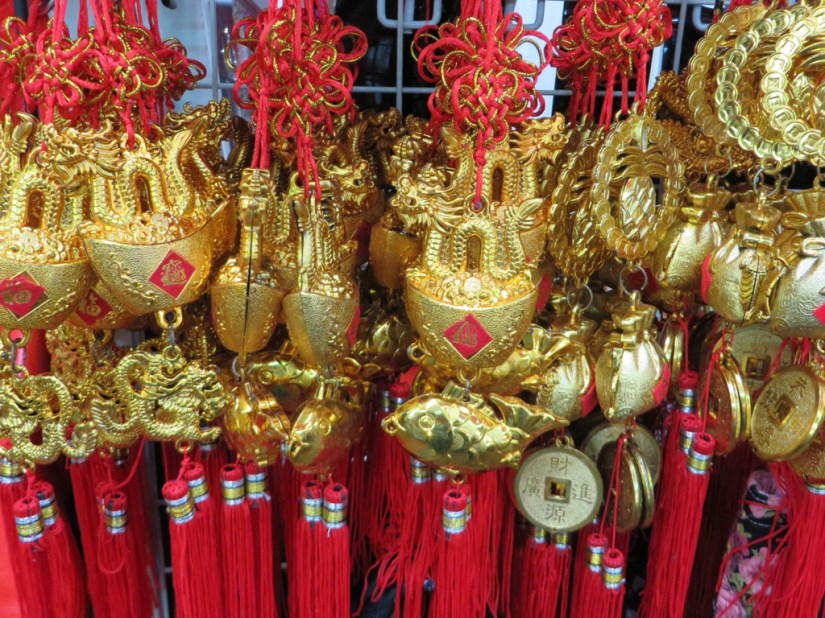
There were lanterns and bunting, Chinese signs and lots of souvenirs and the smell of BBQ pork and wafts of incense, typical of Chinatown everywhere.
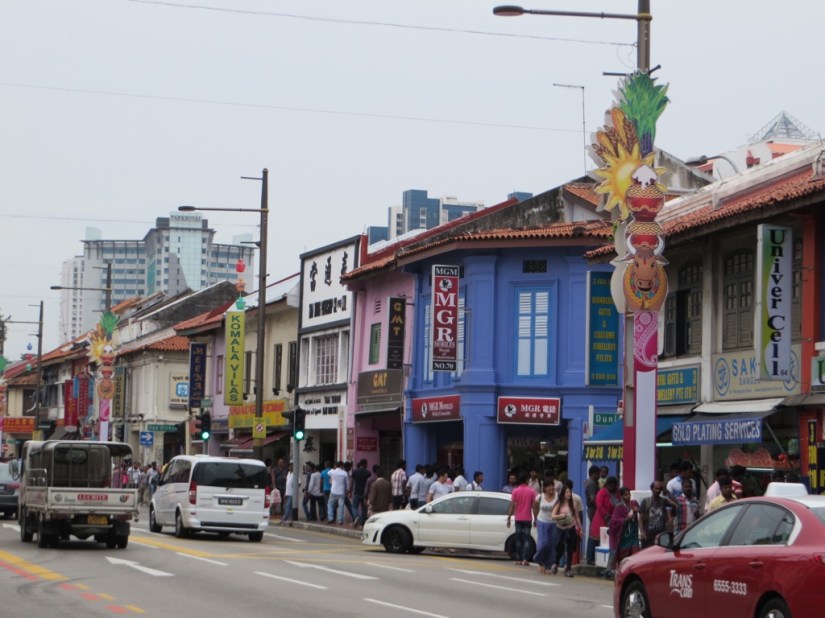
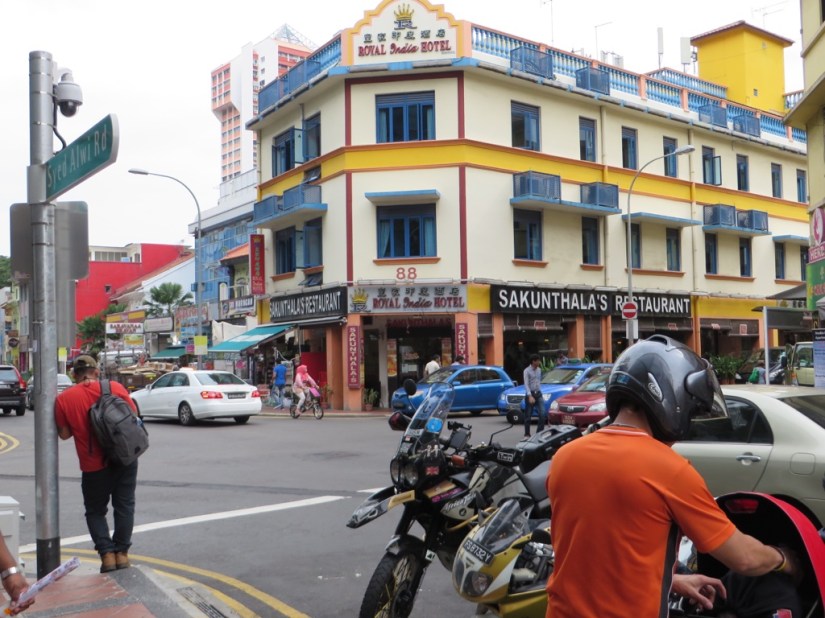
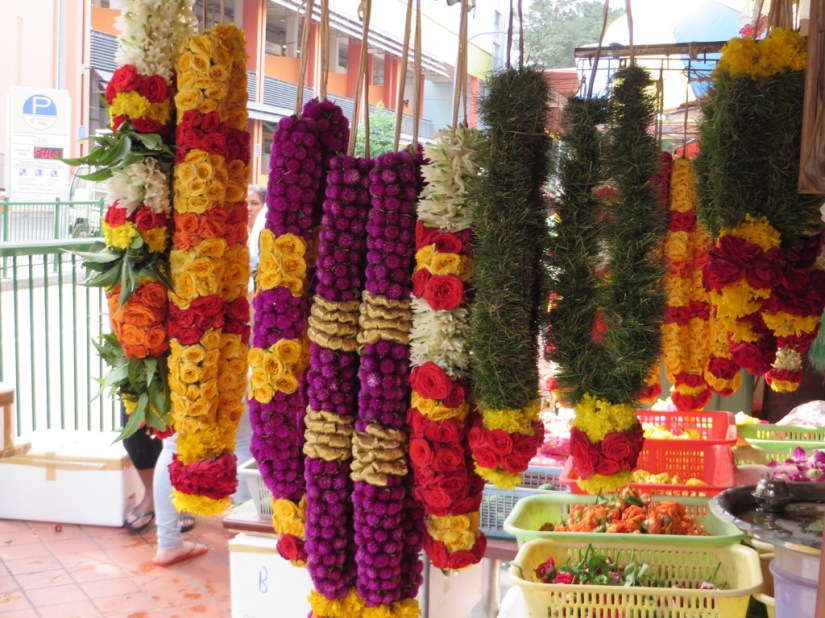
We stopped off in Little India and immediately there was the smell of flowers for temple offerings mixed with spices and the sound of Bollywood pounding out of a speaker. The snake charmers of old may no longer be here to entertain, there are no cows in the street and the pavements are free from rubbish, but it feels like India nonetheless.
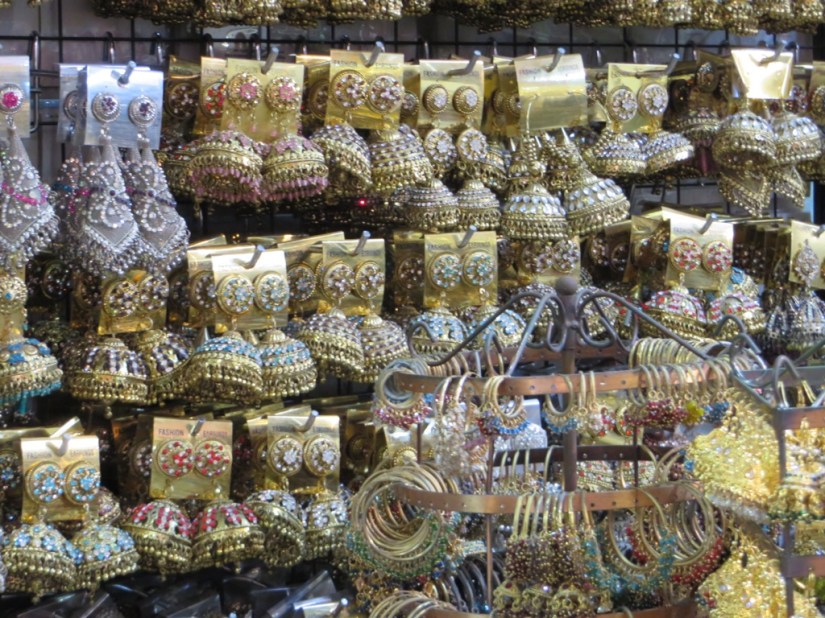
Shopping is a major preoccupation in Singapore, and Orchard Road, named for the spice plantations originally in the area, is now a 2 kilometre stretch of shopping malls containing every shop imaginable, many of them famous designer brands and every one very large, very shiny and very smart, including Tangs, a store that has been on Orchard Road since 1950.
On our last day the sun came out and we revisited the Merlion, this time on foot, then crossed the river to see the statue of Stamford Raffles who arrived in 1819 and struck a treaty to set up a trading colony from which present day Singapore developed.

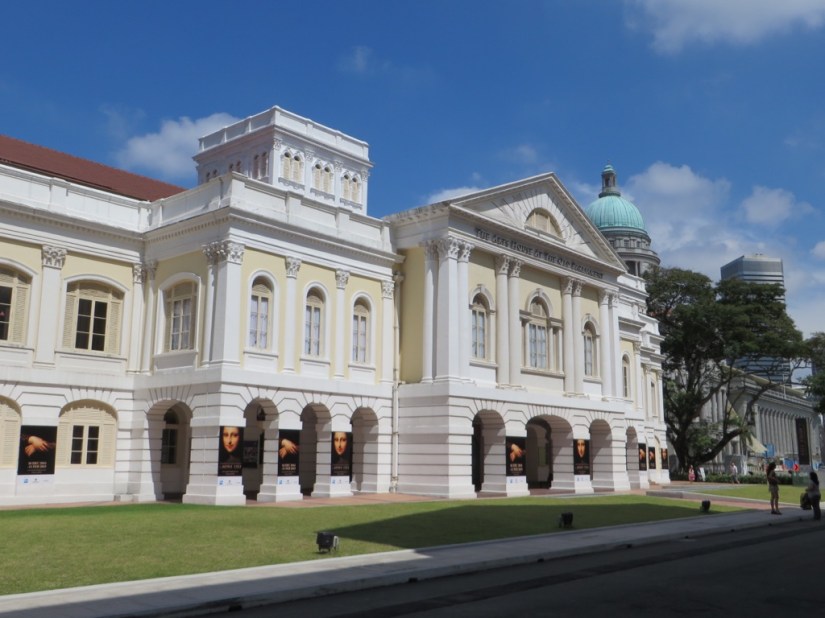
We saw some of the other colonial buildings …
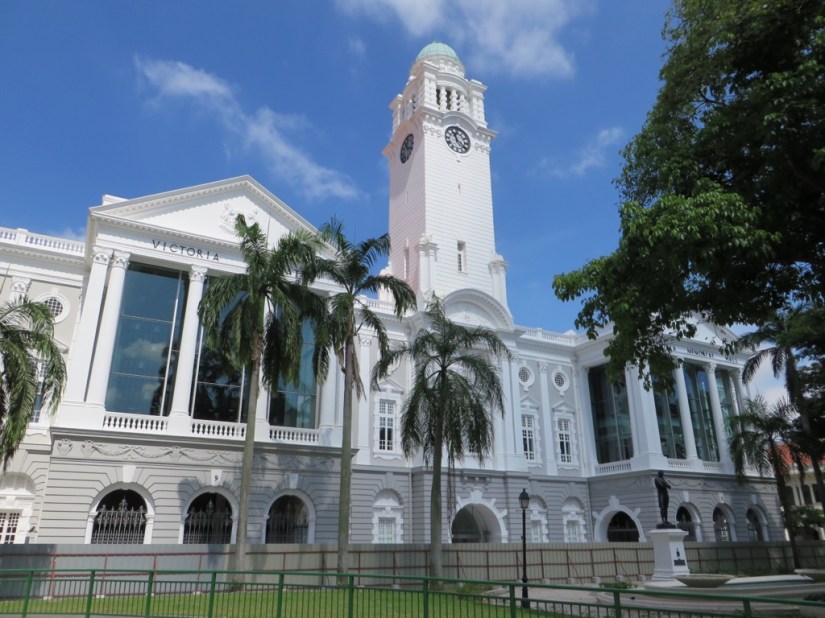
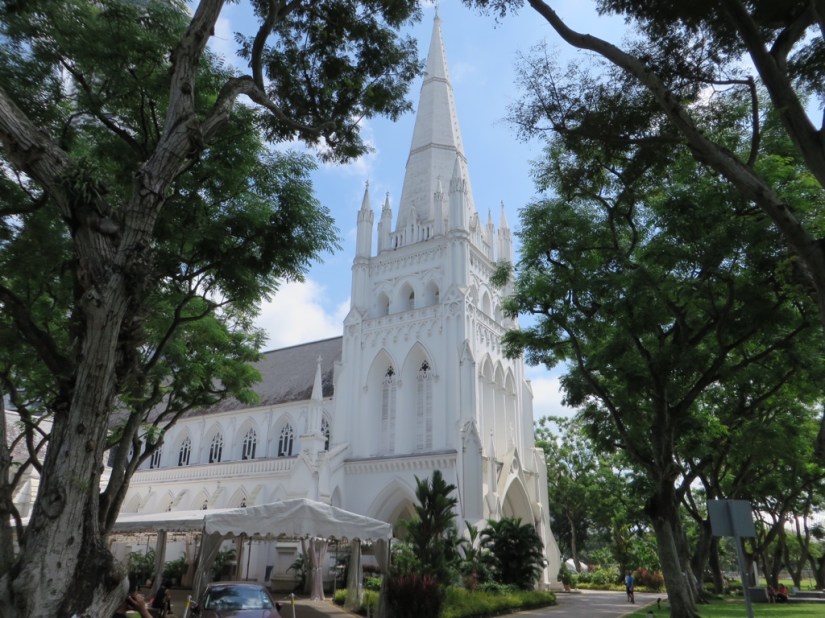
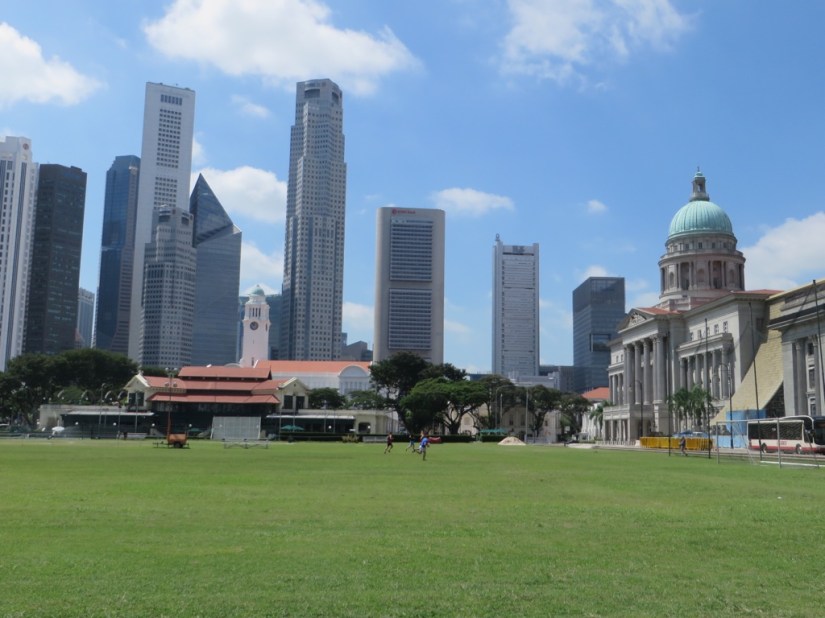
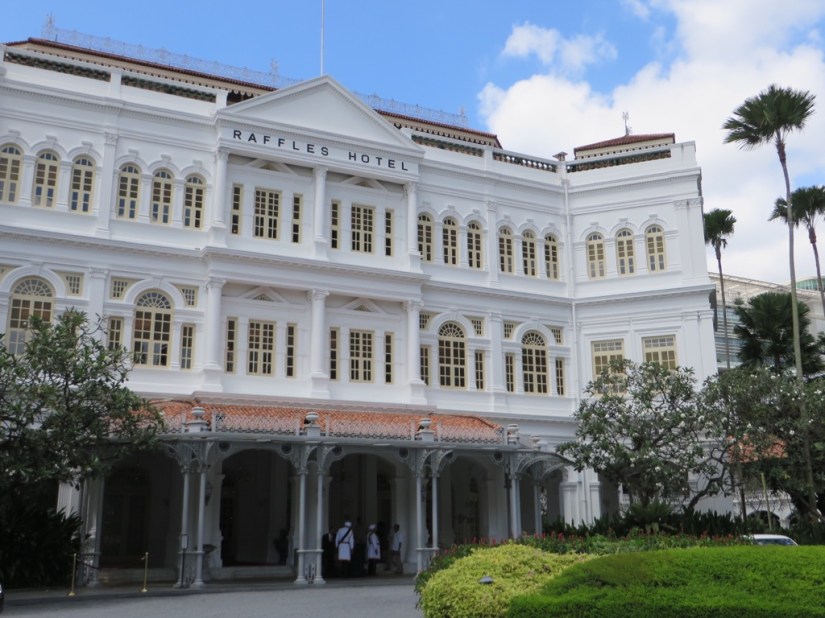
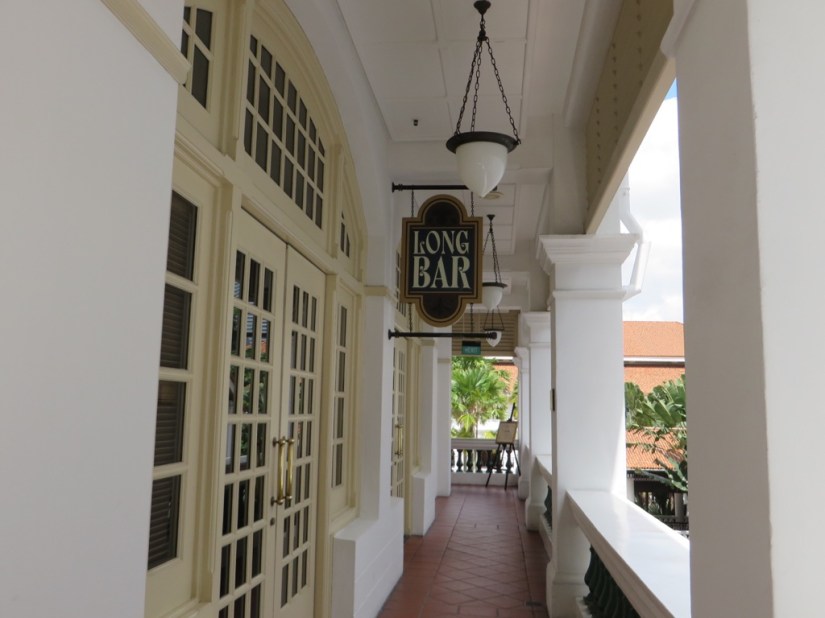
… ending with the Raffles Hotel, where the Long Bar was closed so we left without our Singapore Sling but some $60 better off!
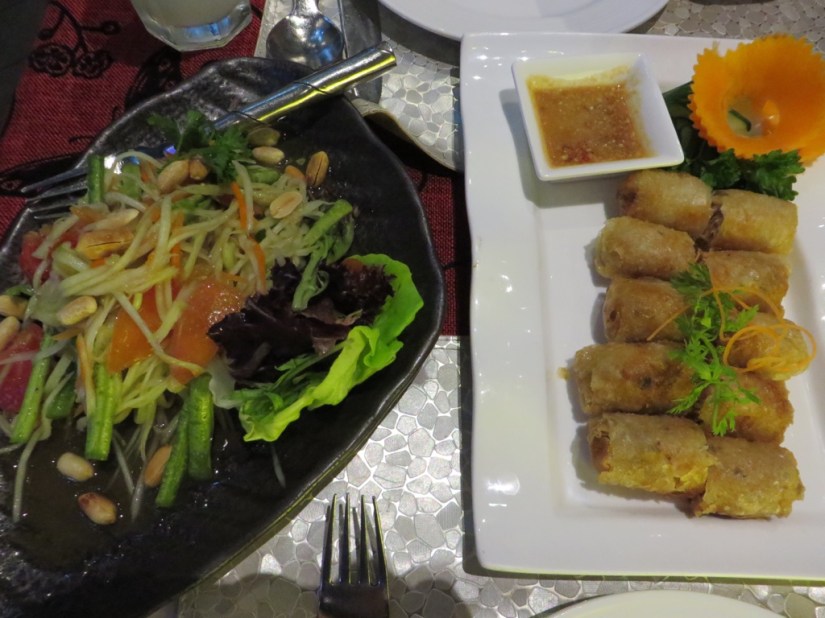
We’ve had a variety of food, starting with crispy spring rolls and green papaya salad at Indochine at the top of a Supertree watching as the sun set and the lights came on.
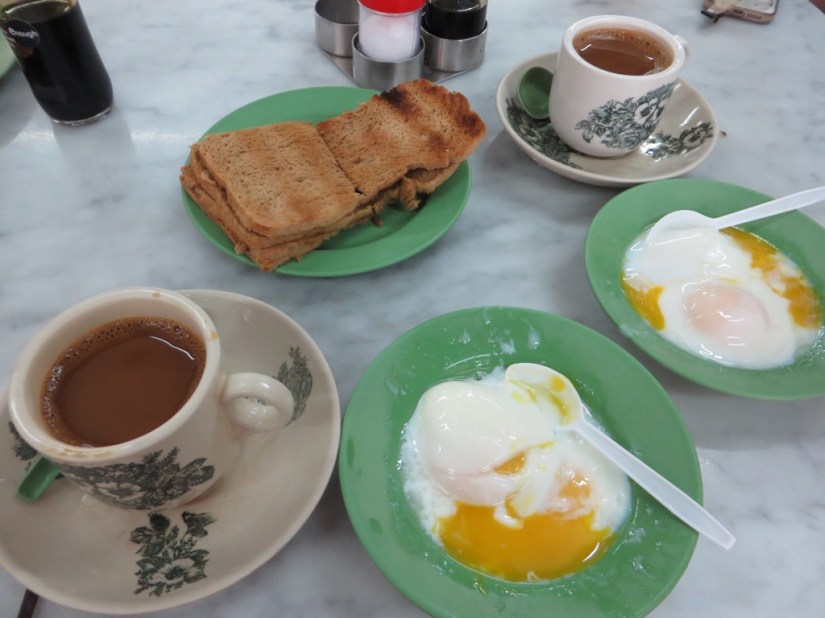
We visited the original Ya Kun Kaya kopitiam or coffee-shop, started in 1944 and still family run, to try kaya toast, a Singaporean delicacy. The kaya is a sweet paste made from coconut and eggs and is served with buttered toast or french toast, which are then dipped into a dish of soft boiled eggs. Always willing to try something new, needless to say we leapt in … the kaya was delicious, but we weren’t sure about serving it with eggs.
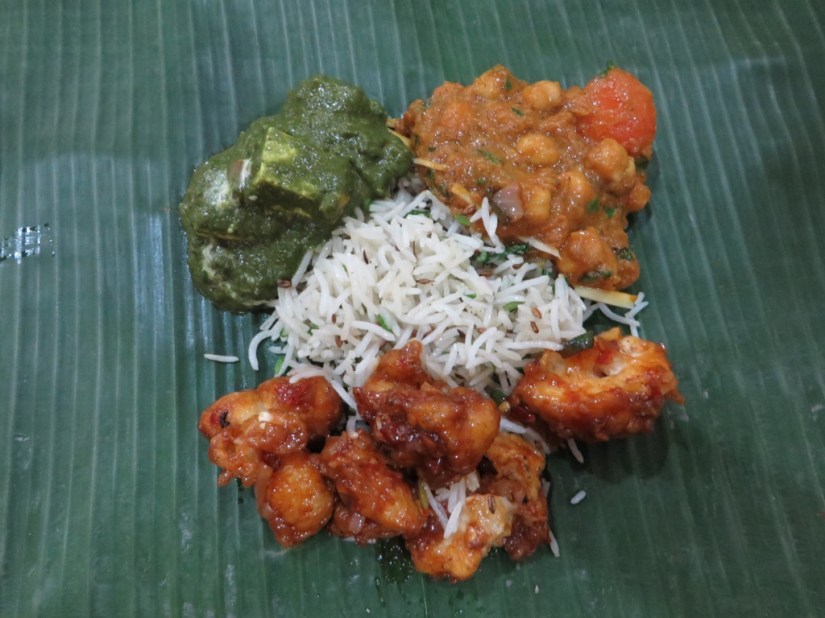
Chris found finding vegetarian fare a little limited apart from Indian and we had masala dosas for lunch in a little Southern Indian restaurant busy with locals for less than £2 each! We also went to Banana Leak Apolo where we had a mixture of vegetarian dishes which we ate off a banana leaf.
We’ve also stopped off at a couple of food halls for lunch where you can eat from anywhere in Asia, including the very popular chicken rice, a Hainanese dish of steamed chicken, rice, broth and greens with oyster sauce. The final treat was chilli crab, the national dish of Singapore, probably the messiest meal I’ve eaten, so I was pleased to be given an attractive bib!
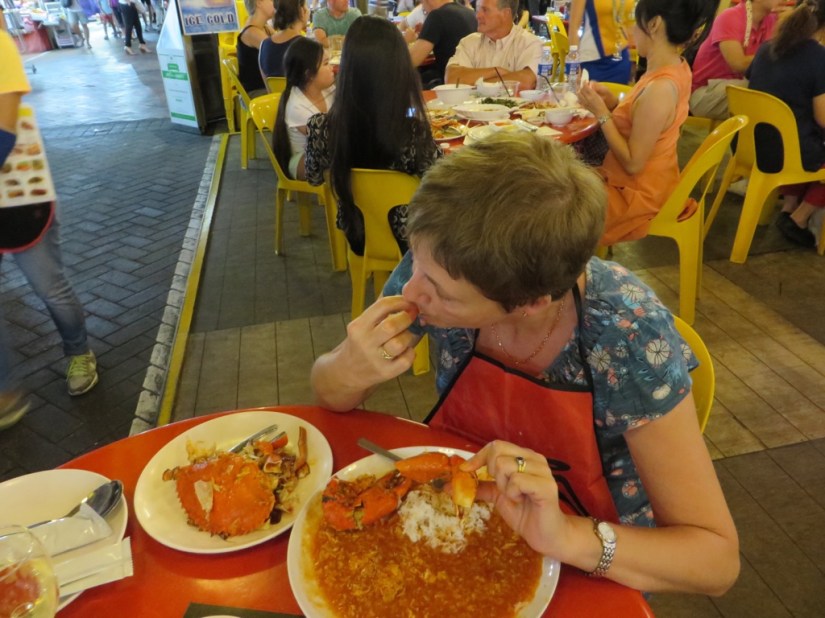
The sauce was delicious as was the crab, but extracting it was quite labour intensive. Chris likes Tiger beer he tells me!
So what is Singapore like? Well it’s very clean and tidy, despite the fact they are building a new MRT line across the city and there are lots of areas of roadwork. Everyone is particularly courteous and helpful with English spoken everywhere. The customer service is so thoughtful such as when we collected our stored luggage to go to the airport we were offered a shower room and towels to freshen up and the man on the airport information desk followed me back to my seat some way down the concourse to make sure my free wifi code worked. All in all we had a great time and with so much more to see, I am sure we will return.
Next stop, visiting with family in Sydney, then more travels when we fly to Auckland on 2nd February.
 Off Travelling Together