 Shakhrisabsz was the birthplace of Timor, the last of the great nomadic conquerors whose Timurid dynasty included most of Mongolia, Central Asia and the Caucasus. Originally called Kesh, once he was ruler Timor renamed the city Shakhrisabz, which means ‘Green city’ in Persian and had Ak-Saray or the White Palace built. This was huge and elaborate and took 25 years to complete and a contemporary source says they were astounded and charmed by the architectural miracle. On the other hand, it is estimated that his military campaigns caused the deaths of 17 million people (that’s 5% of the population at that time) and the destruction of the culture, libraries and historic sites in his wake was incalculable!
The road from Samarkand to Shakhrisabz was once an important branch of the Silk Road called ‘The Emir’s Road’ which leads south towards the Indian Ocean.
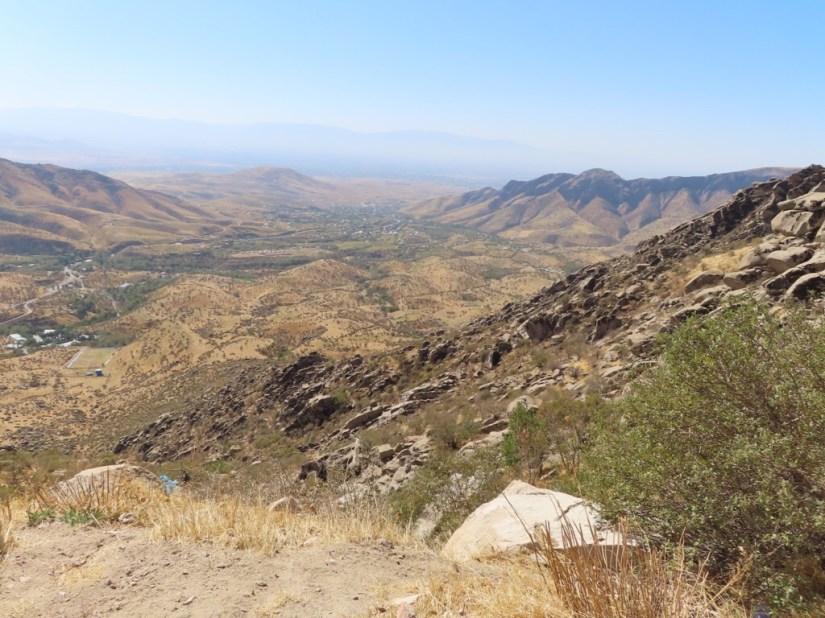
It cuts through the western edge of the Zerafshan mountains via the Takhtakaracha pass at 1676m and gives great views of the valley below.
Having only glimpsed mountains in the distance so far and with such an exotic sounding destination in store, we were enticed us to go for a day out, although the day didn’t turn out quite as expected.
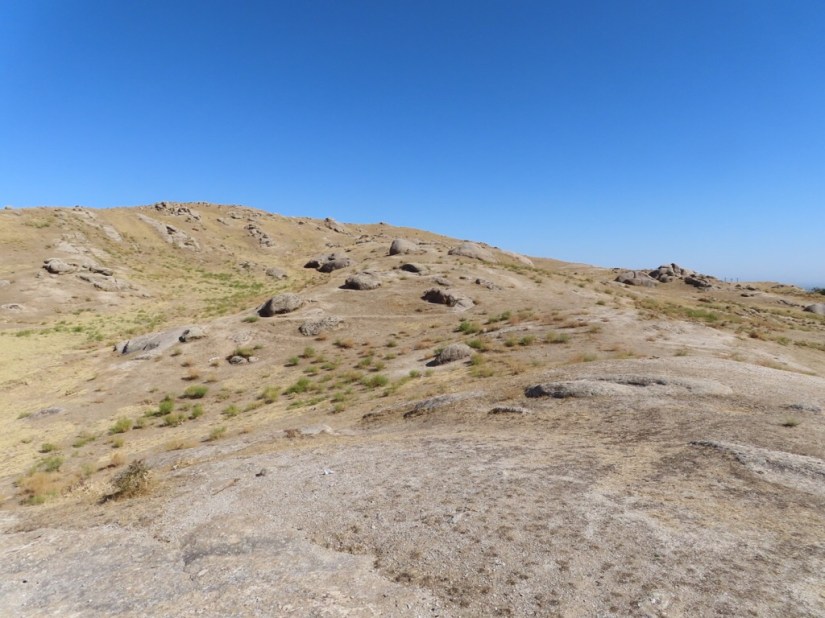
It started well, with some great scenery as we crossed the mountains and we stopped at a couple of viewpoints.


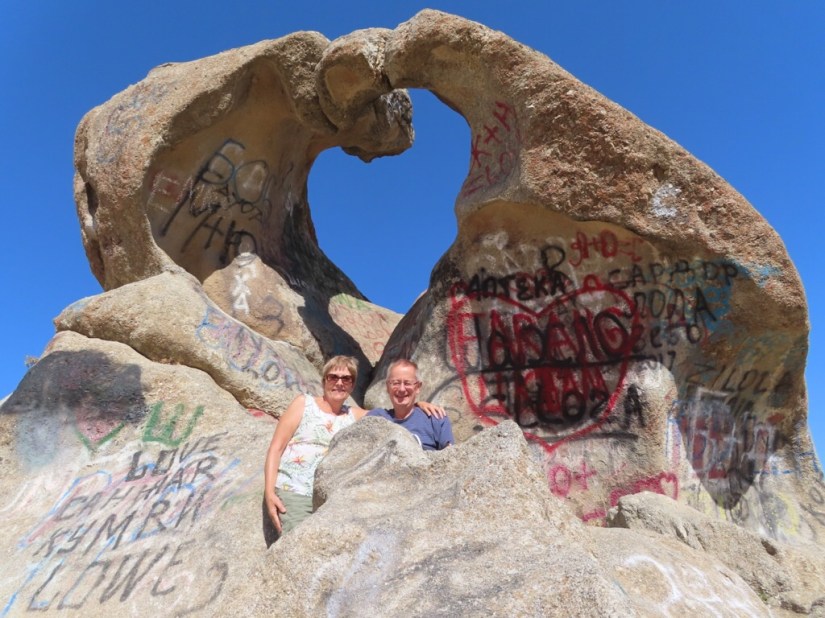
 The liberal decoration with spray paint was unfortunate … but Chris made friends with some local visitors …

… and they took a snap of us!
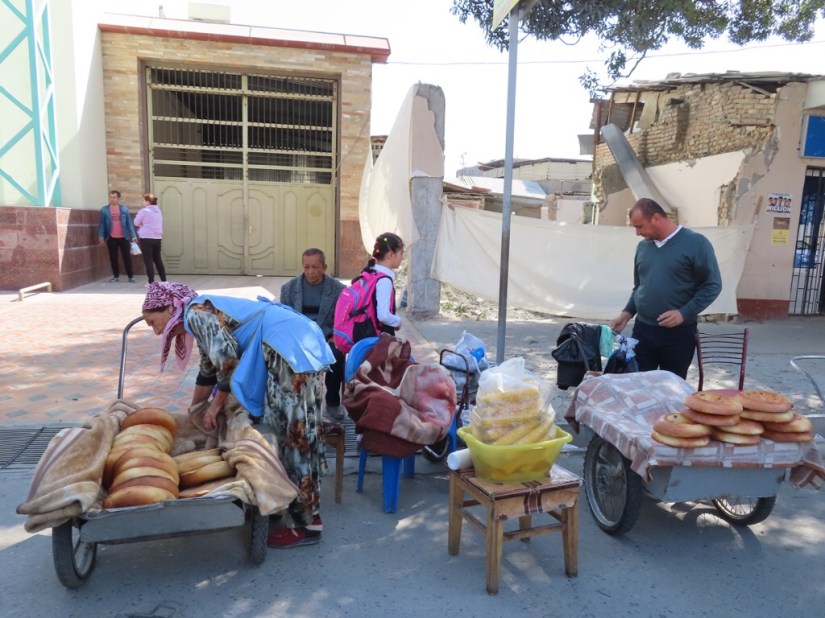
There was a bazaar at the pass selling various dried fruits and nuts and I bought some dried melon which was chewy but surprisingly tasty.


They were also selling a large amount of hard white stuff that we were told was yogurt. I tasted a bit, expecting another sweet treat so was surprised when it was very salty and smelt like cheesy feet … yuk! Apparently it is kurt, which is salted curd cheese, formed into pieces and dried in the sun. They can be found all over Central Asia, can last for years and are apparently as versatile as they are portable, eaten as a snack, dissolved in water or added to soup or stew to add protein and energy. We won’t be bringing any of those home!
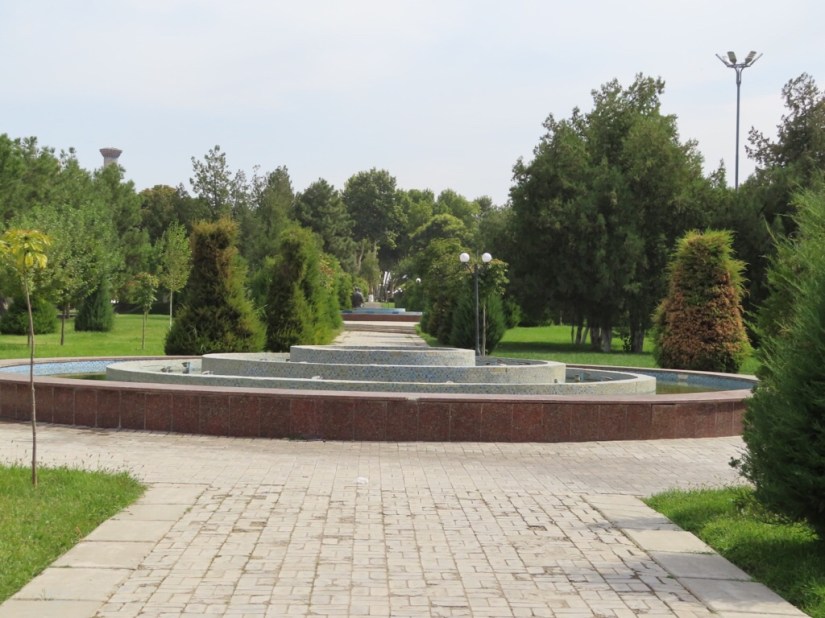
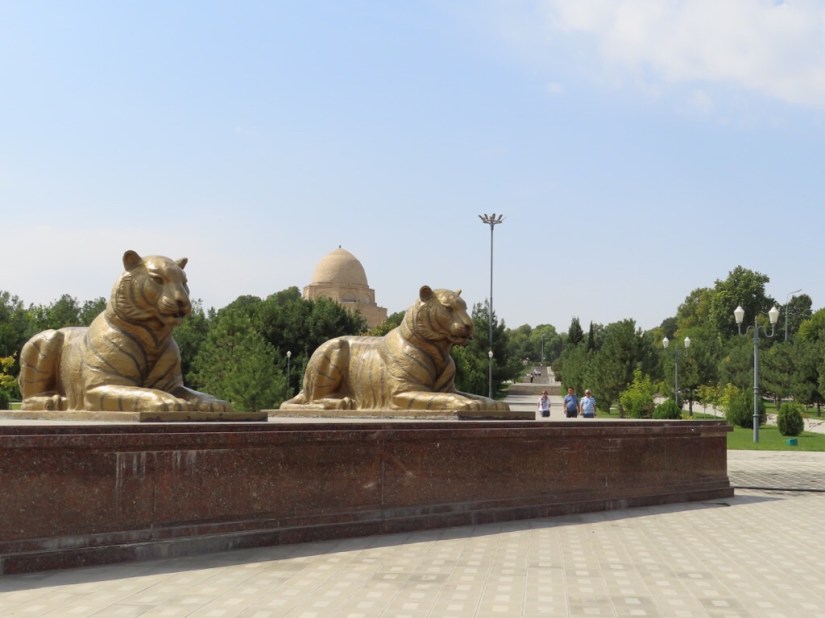
After a couple of hours we arrived in Shakhrisabz and drove down a main street into a large car park. This lead to a huge plaza of pedestrian walkways, and gardens, connecting a small collection of historic remains. On either side were long parades of smart but largely empty shops and an electric golf cart ran visitors up and down.


We walked all the way to the end, which was actually quite warm as the trees need to grow a bit before there is any shade …
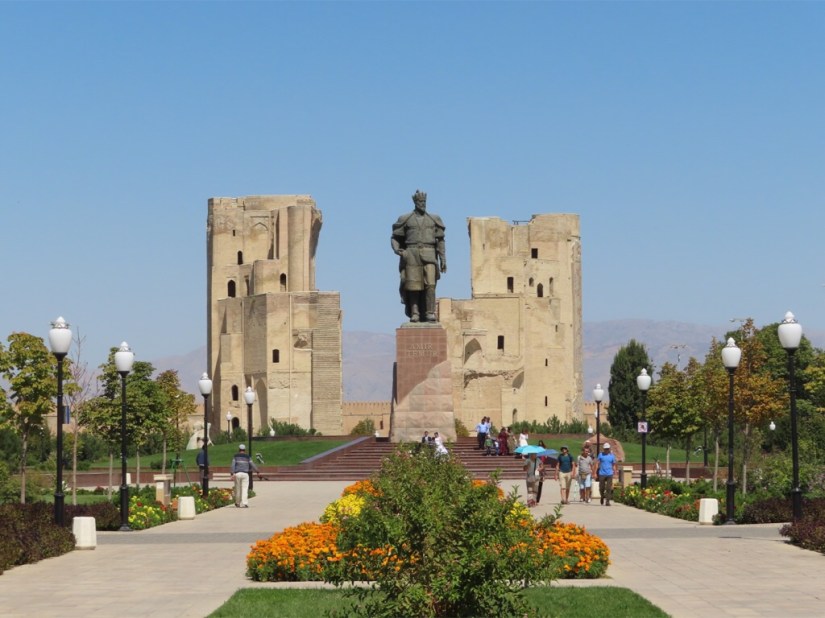
… to the two rather large gateposts which are all that remain of Ak-Saray …
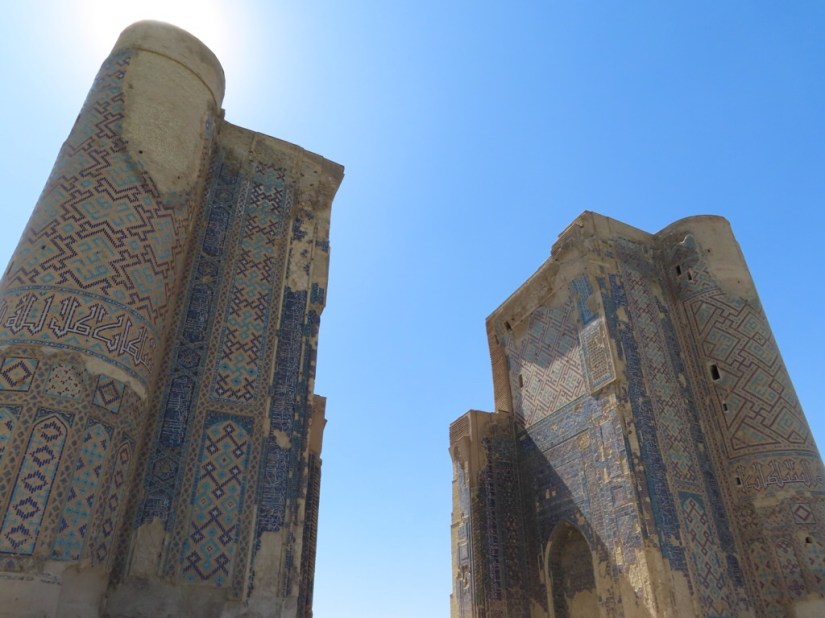 … and a popular place for posing wedding parties.

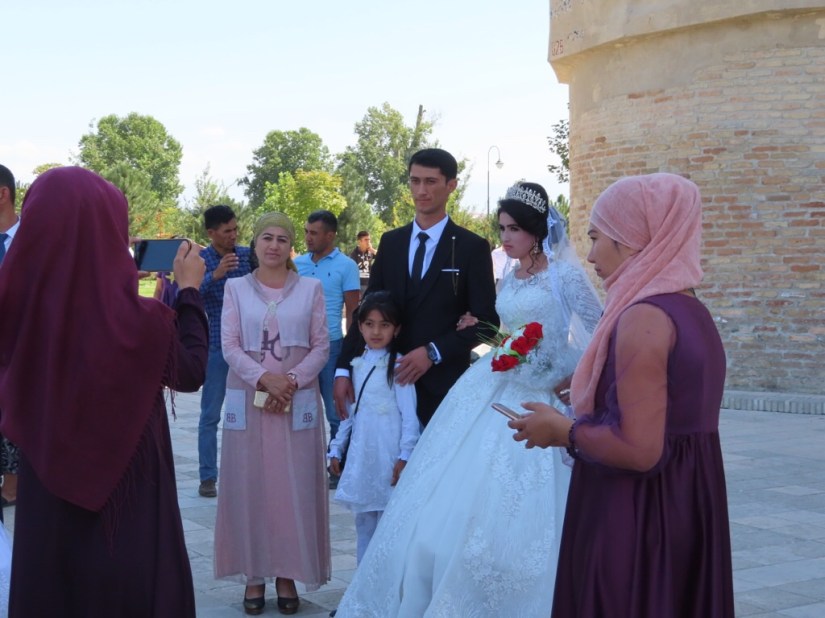
It is definitely wedding season in Uzbekistan, the weather is great and there are savings to be spent having worked the summer. Everywhere we have been we have seen bridal parties progressing through town, in the most attractive spots so the photos look great, greeting friends, neighbours or perfect strangers en route! Here are a couple more of Chris’s bridal collection!
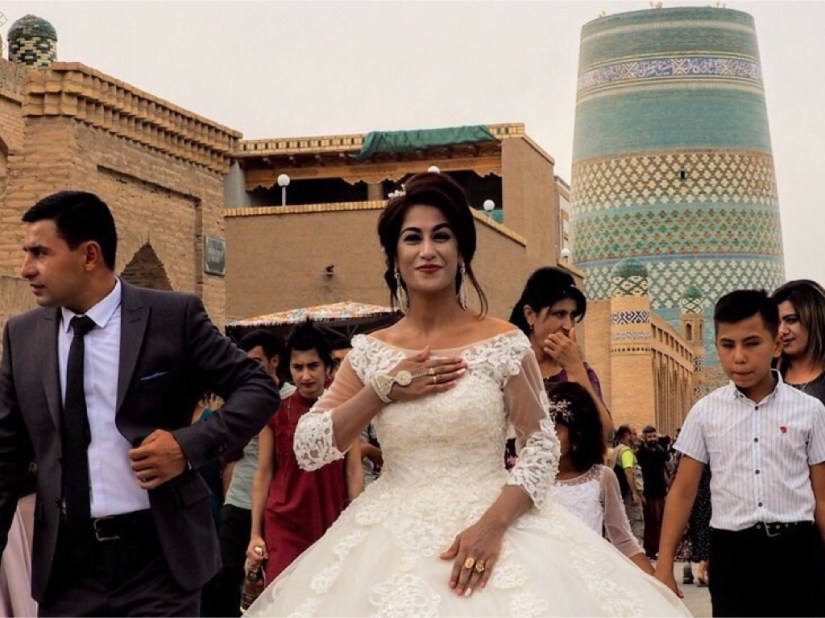
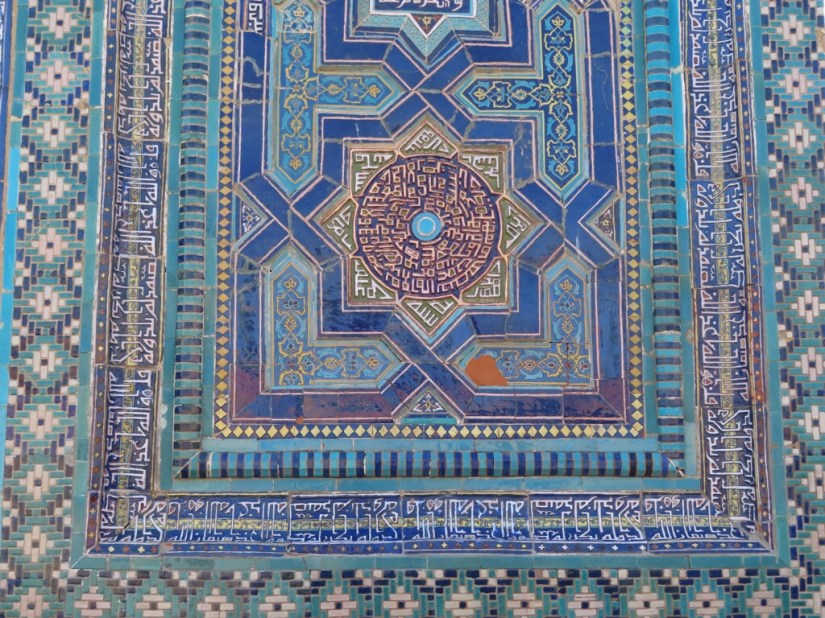
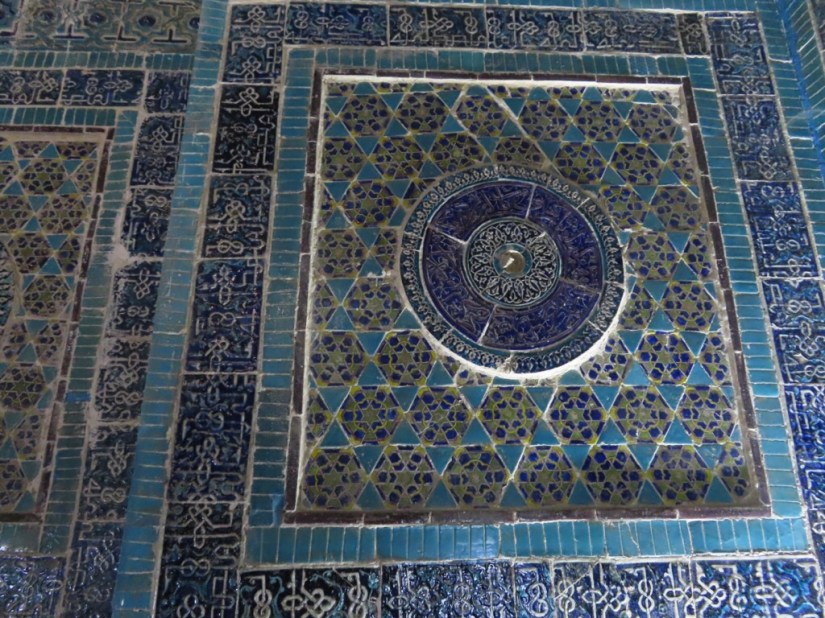
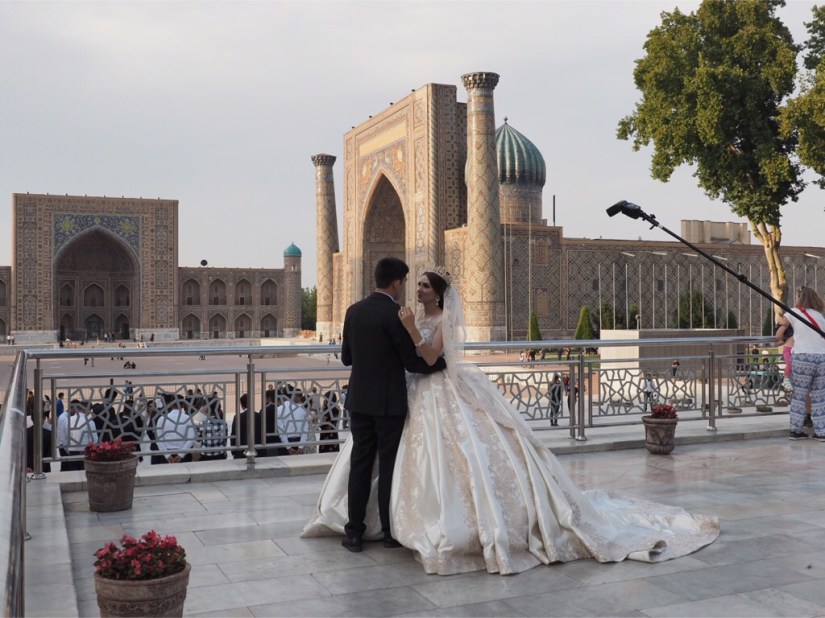 There were a couple of buildings so restored they look brand new …
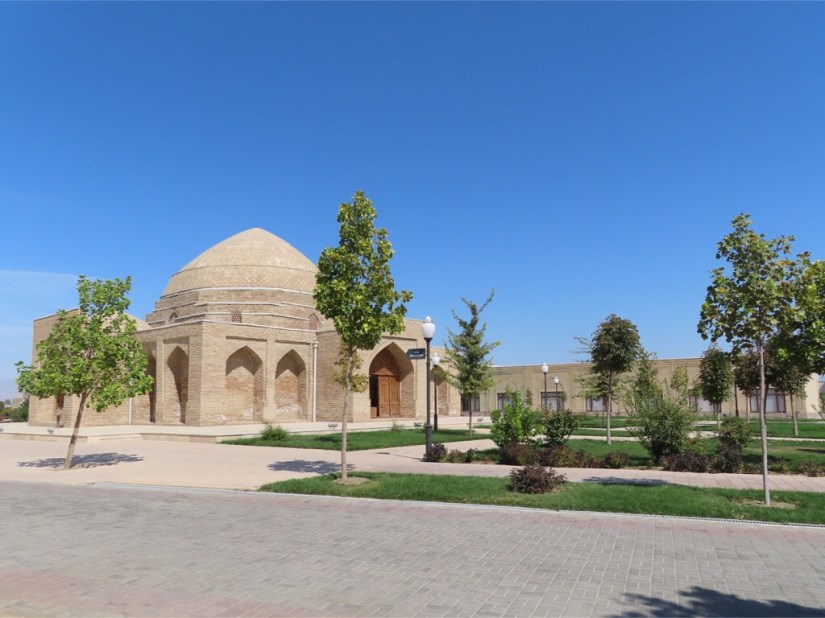
… and a couple of mausoleums.

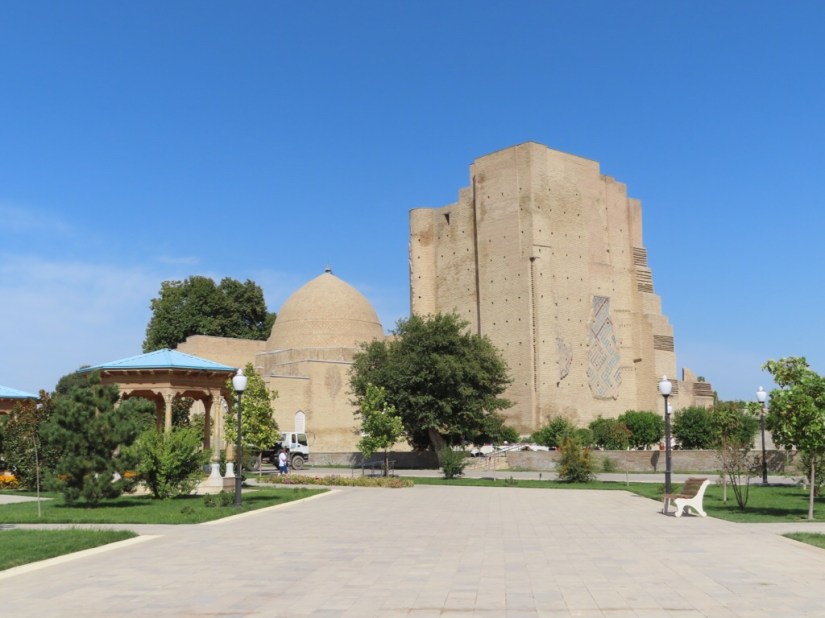
Stopping for some tea, we read the guidebook properly and it said that a few years ago the historic centre, bazaar and some residential areas were bulldozed and replaced with this antiseptic plaza. It looks like Uzbekistan is continuing with the Russian Heritage Status ideal, where tourism is encouraged by concentrating historic buildings in a small area so that the tourist would have the opportunity to experience an ancient city without actually having to visit the real areas in these cities where most people lived. In fact we could see part of the town though an open gate, almost as if it was leading offstage to where the real town was!

At least in Bukhara and Samarkand, while visitors are enticed to follow the convenient pedestrian walkway, it doesn’t feel completely isolated, but this was like a film set or theme park that hasn’t opened yet, because there were hardly any visitors. We did wonder where the huge cleared area that we had seen outside the east gate in Khiva might be converted into just such a plaza.
Over dinner later, we decided it was certainly an interesting day and after all the splendid, but generally restored tiling we have seen, it was quite an eye-opener to see the gateway which had been left as it was. In ten years, as long as they keep it watered, it will be a very nice park indeed!
 We had a short journey on the smart and fast Afrosiyob train to Samarkand and arrived late afternoon.


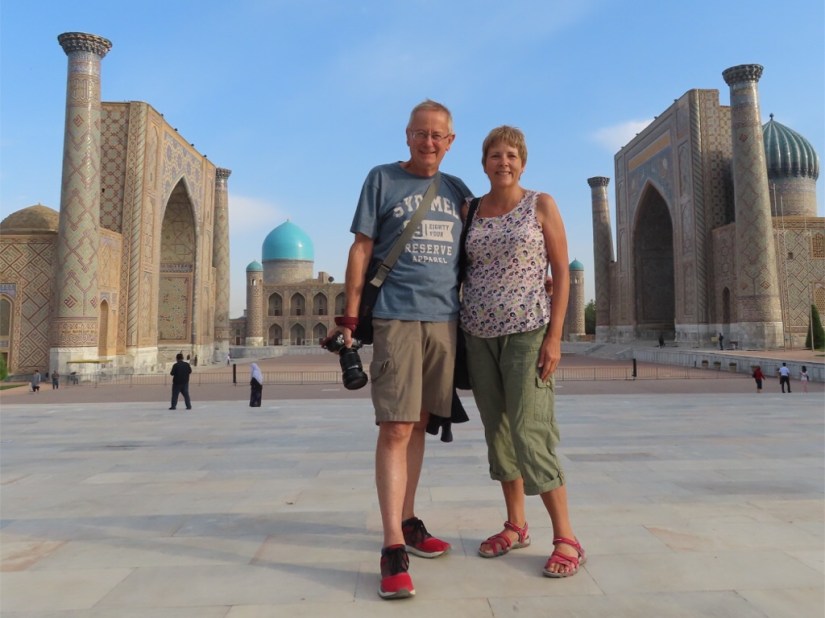


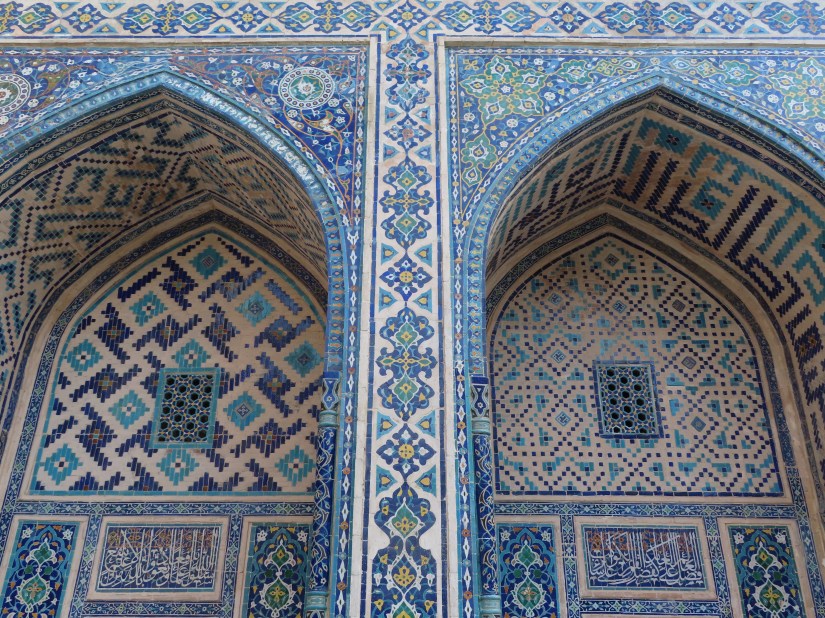
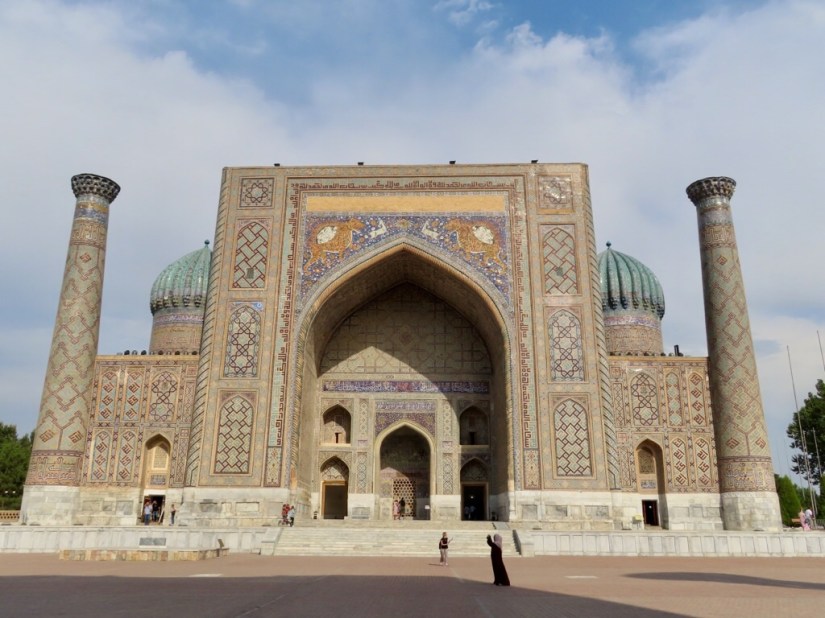


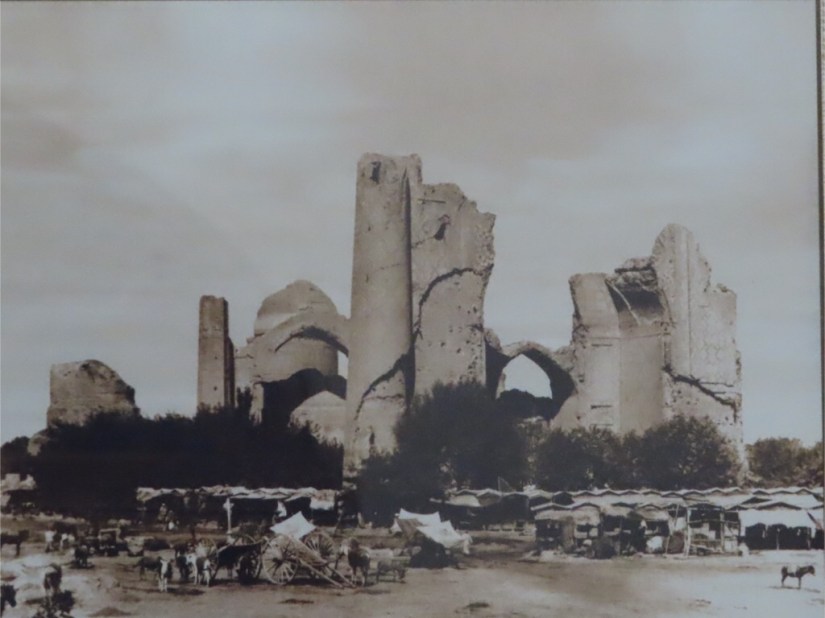
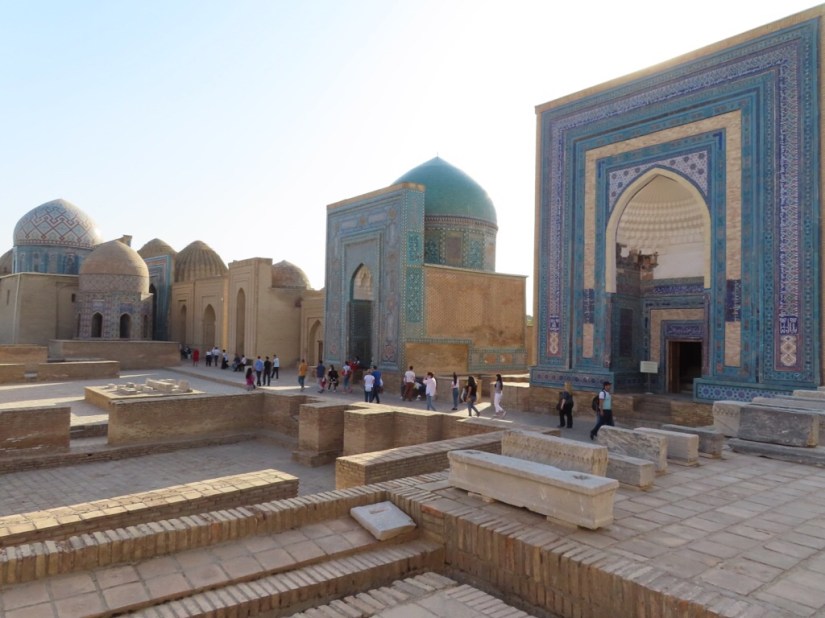
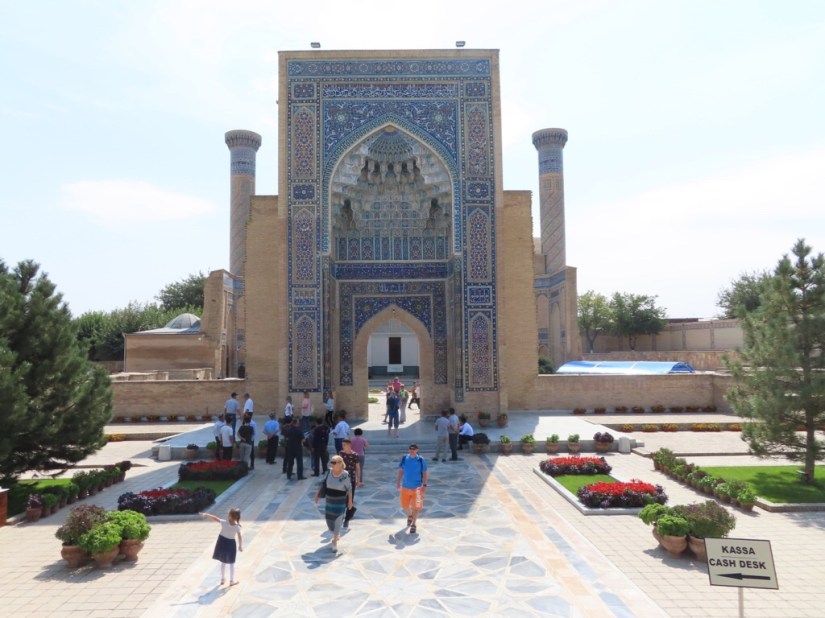
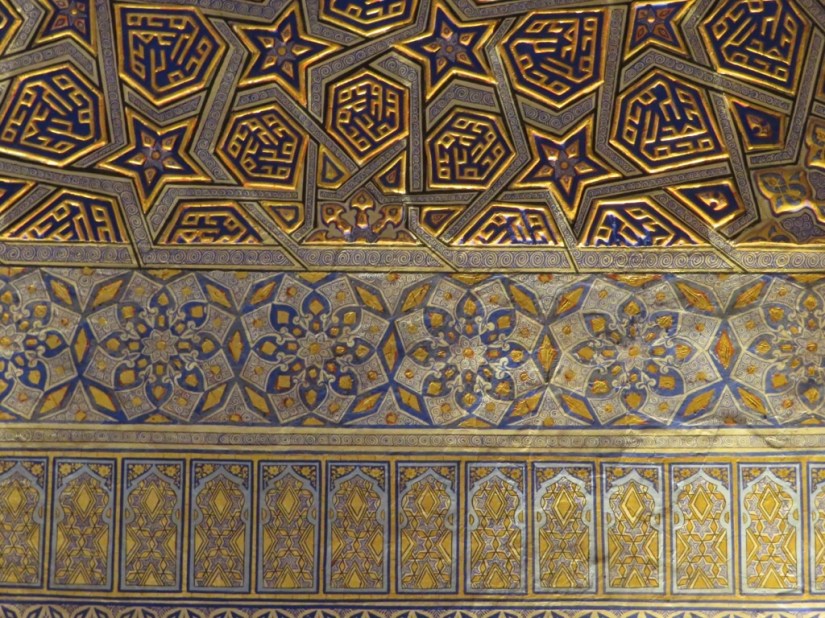
 By the C20th, all these buildings were in a sorry state with much of the cladding and painting being lost through earthquakes, weather and general decline and here are some old photos …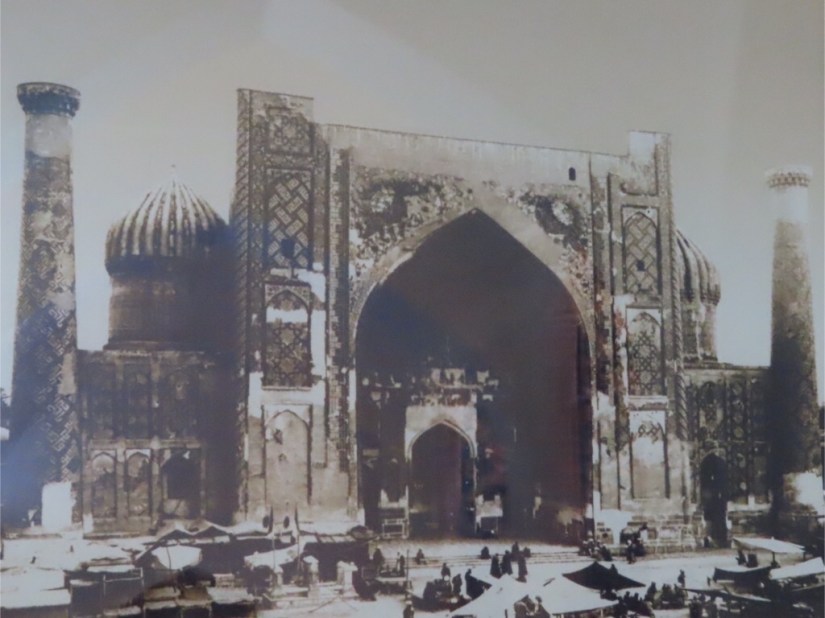

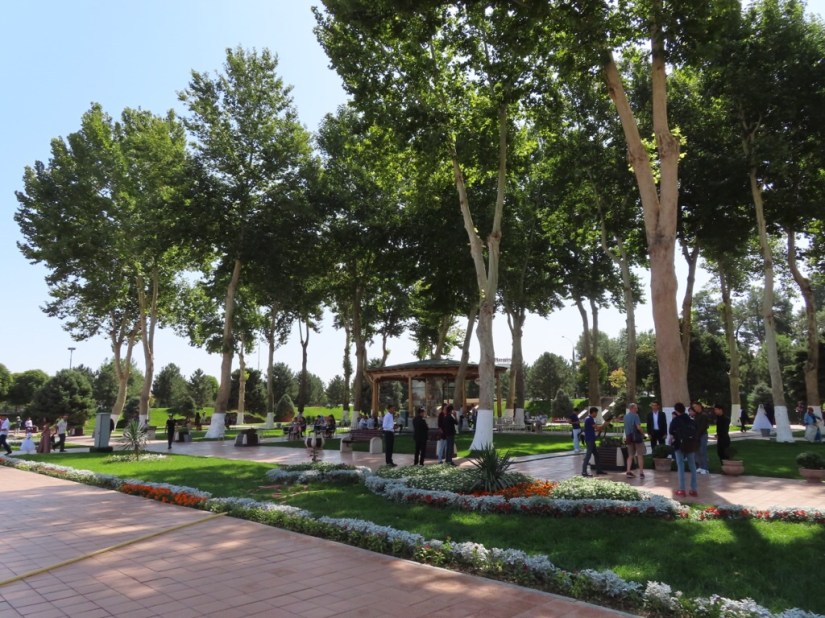 … and a pedestrian walkway leads past a huge statue of Karimov …


 … but before restoration, looked worse.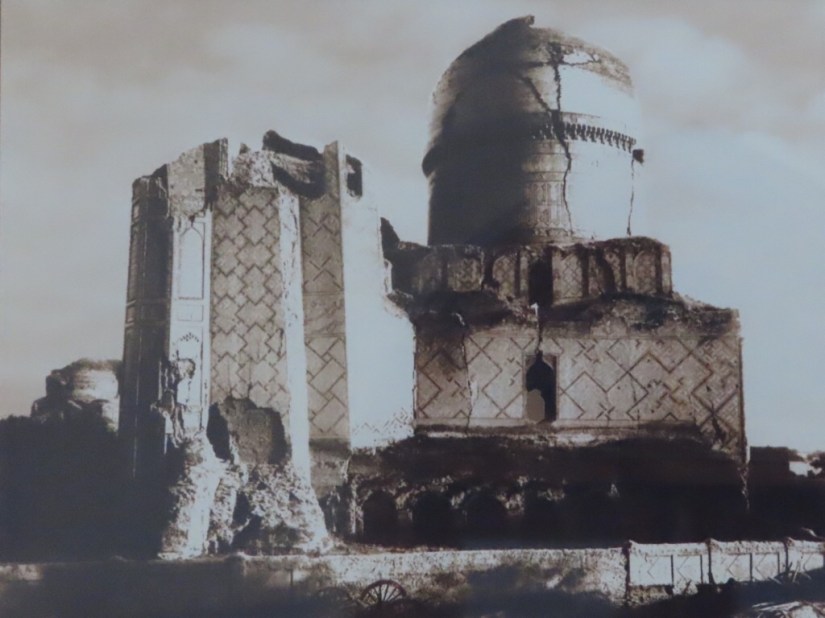















 … but there are also light shows and we caught one on our way back after dinner …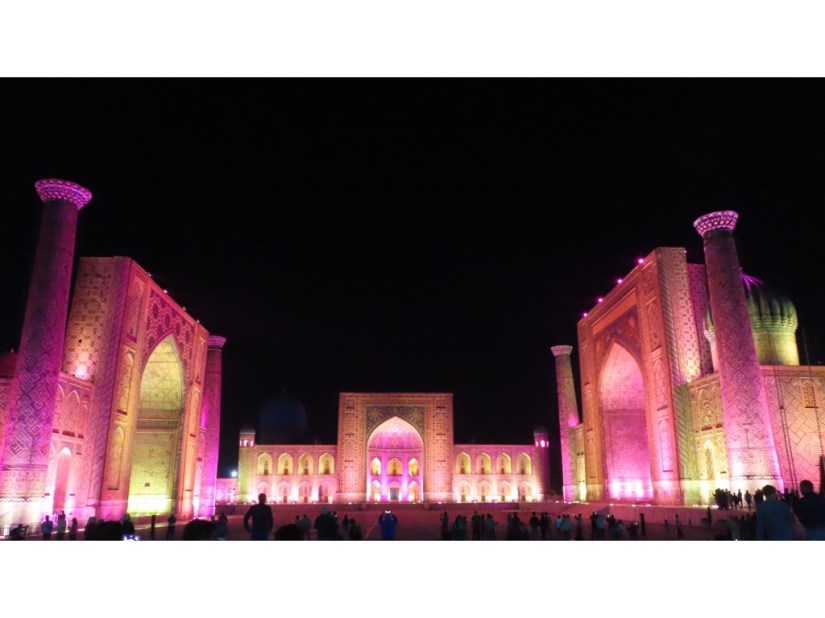

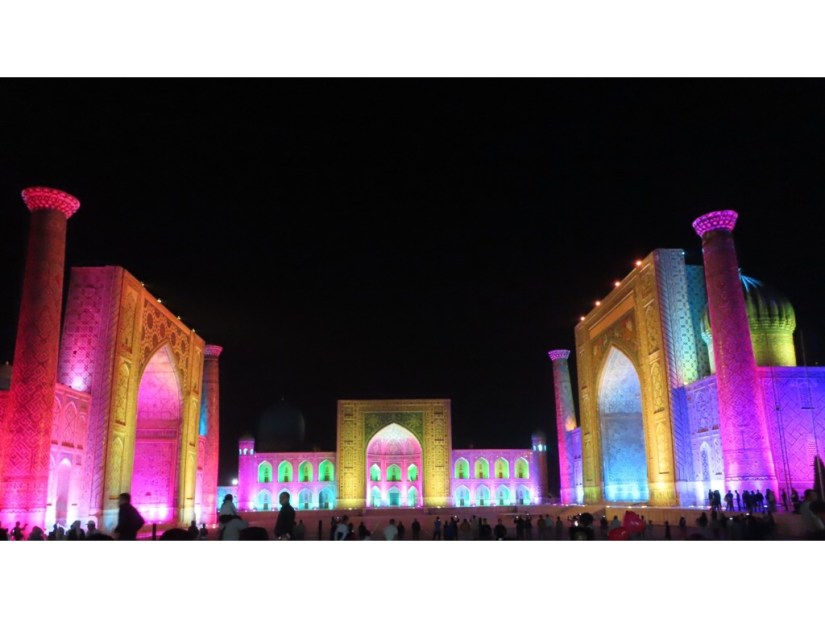 Our last day was spent chilling and shopping … a coffee by the Registan …
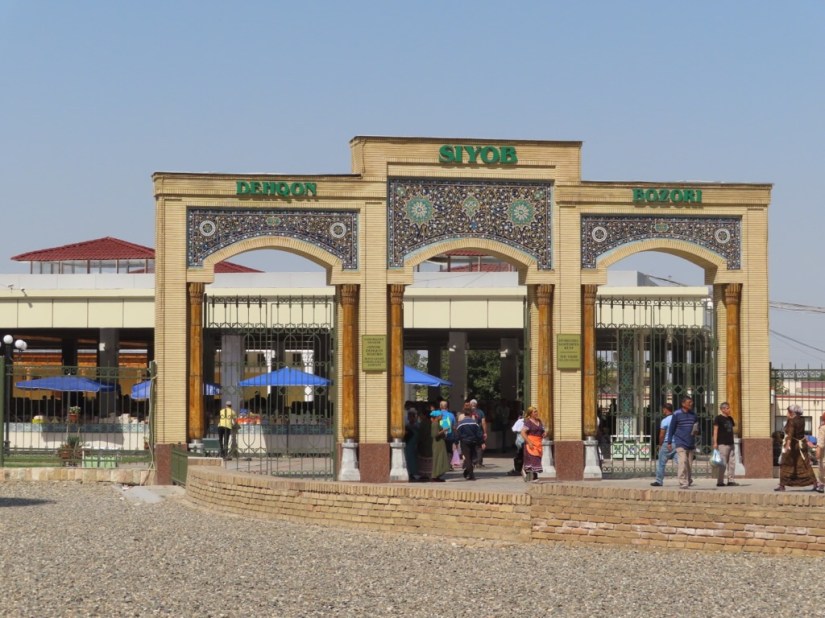
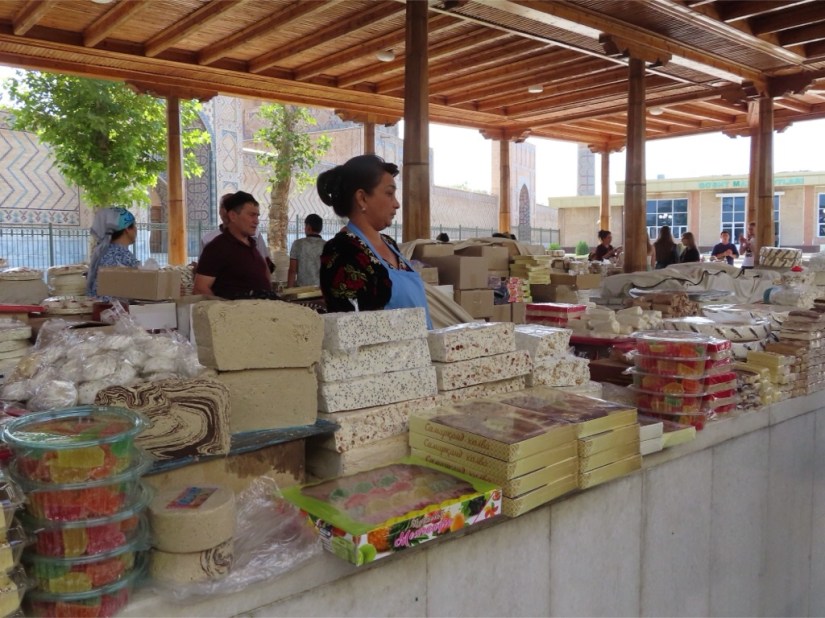
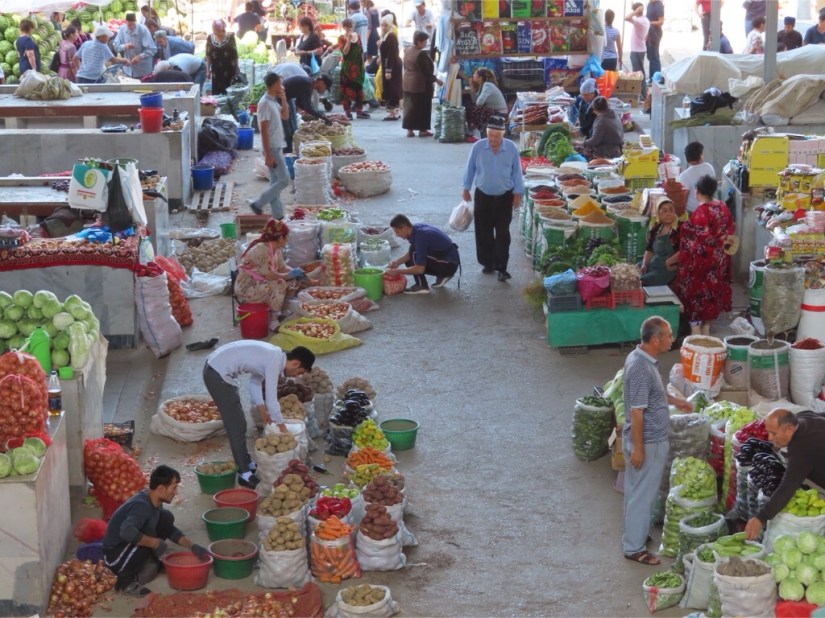
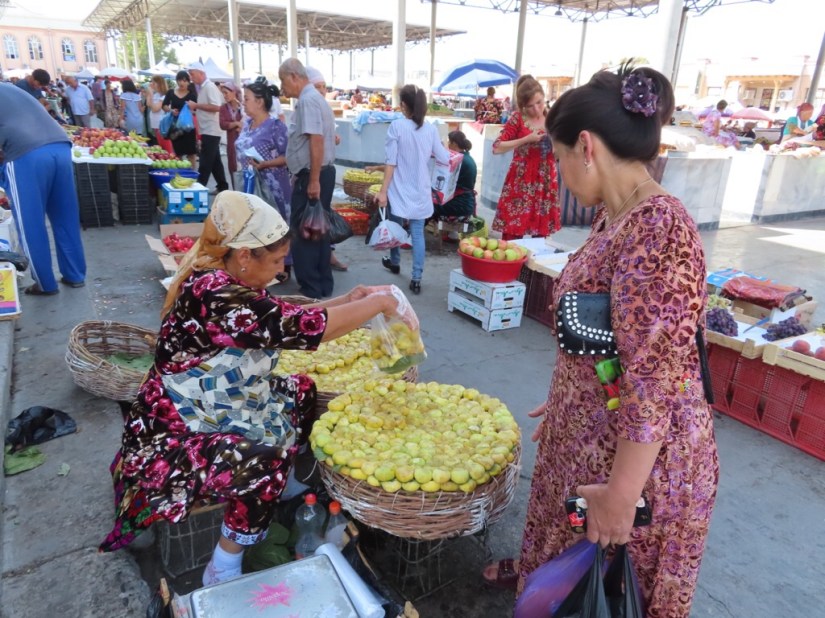
 … the purchase of some cream and pink adras fabric to recover a cushion at home … another T-shirt for Chris … some local snacks at the market including dried melon and walnut stuffed apricots … and finally a teapot and cups to remind us of our trip. We then retired to a tempting tapchan in Bibikhanum Teahouse for a late lunch.

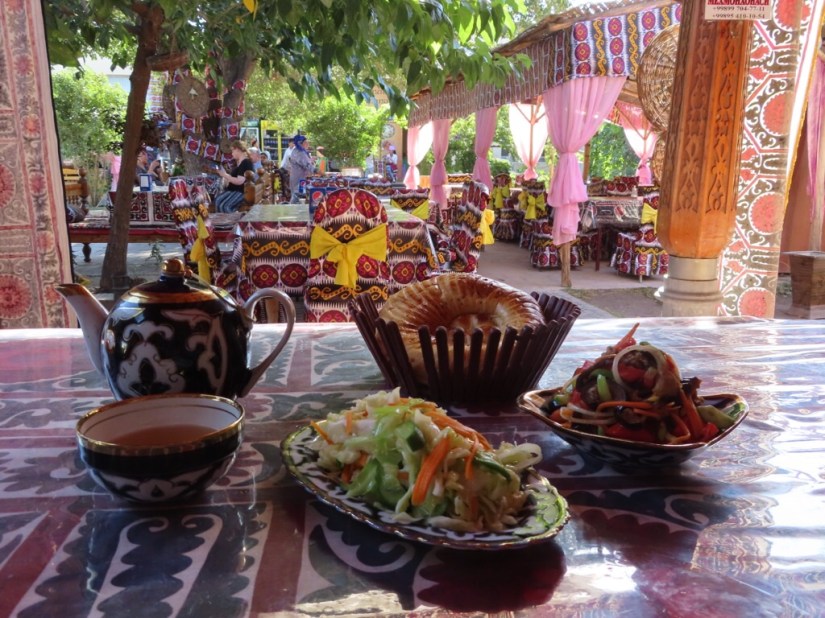 We’ve really loved relaxing on these raised platforms that we first came across in Turkey, they just seem so exotic!
 Off Travelling Together