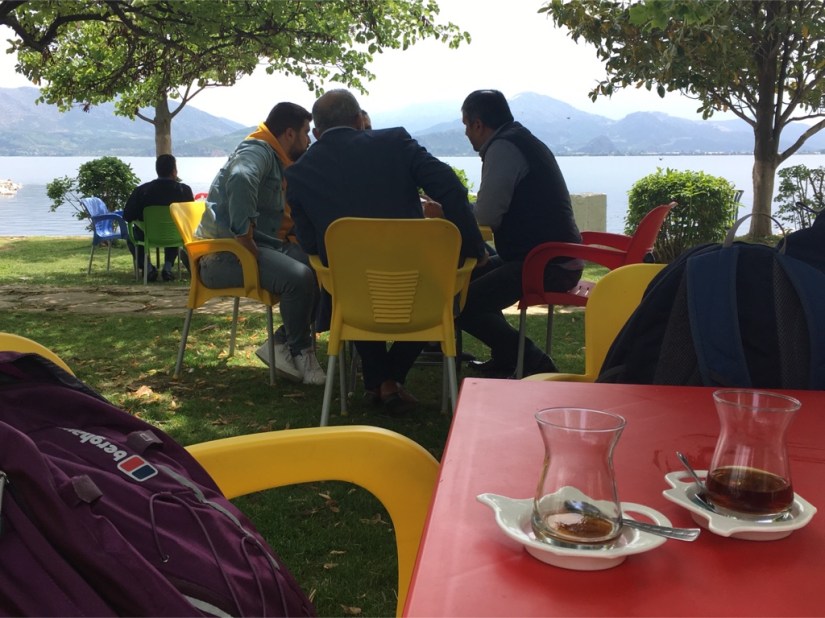
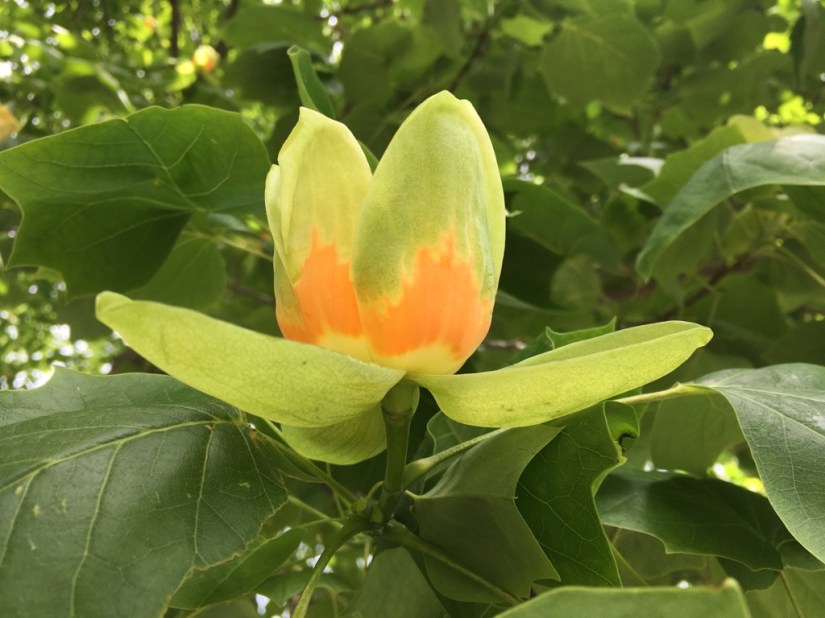
 It seems that sometimes the buses run on Turkish time, which is fine, it gave us time to sit overlooking the lake drinking tea. I also noticed a tree with really pretty tulip-like flowers … and guess what … it’s called a tulip tree!

Anyway, just over 3hrs in another comfy coach brought us to Denizli then straight onto a dolmus for the last 30mins to Pamukkale.
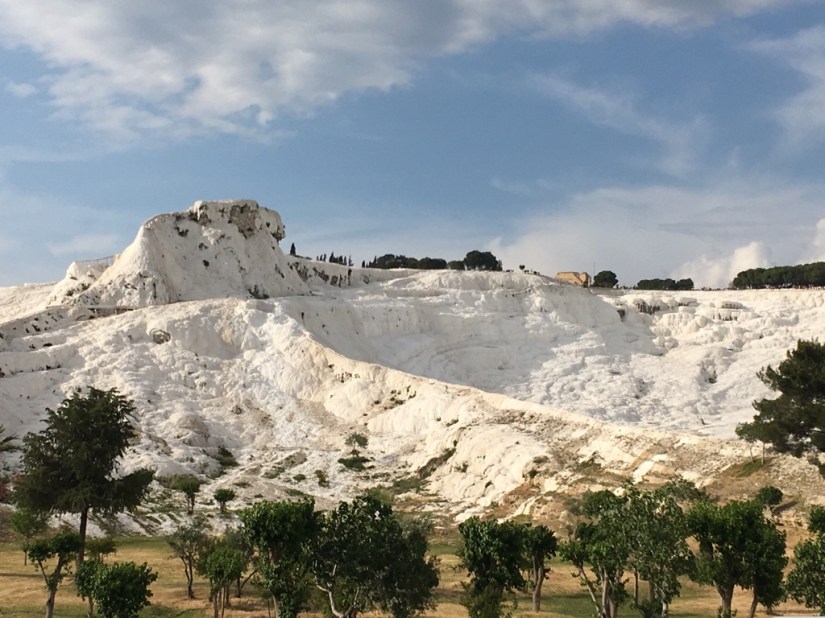
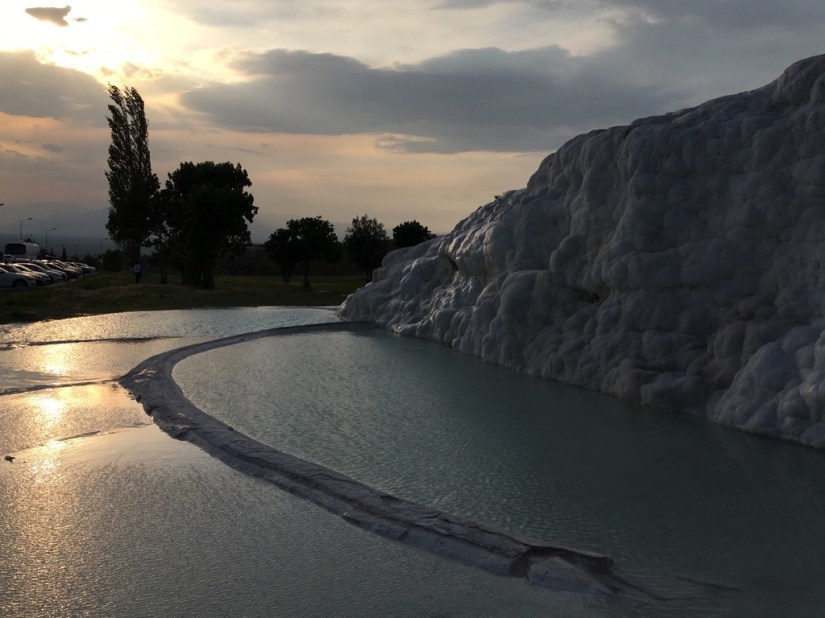
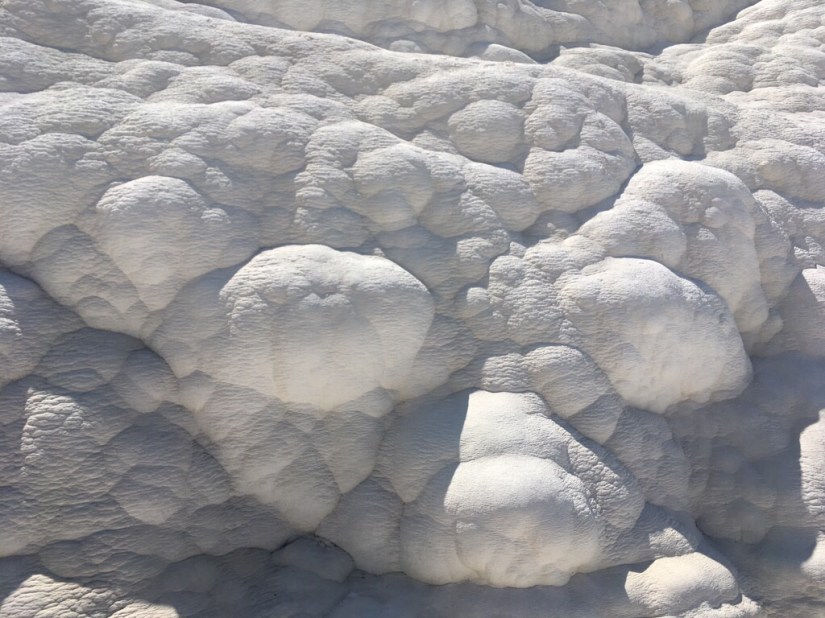
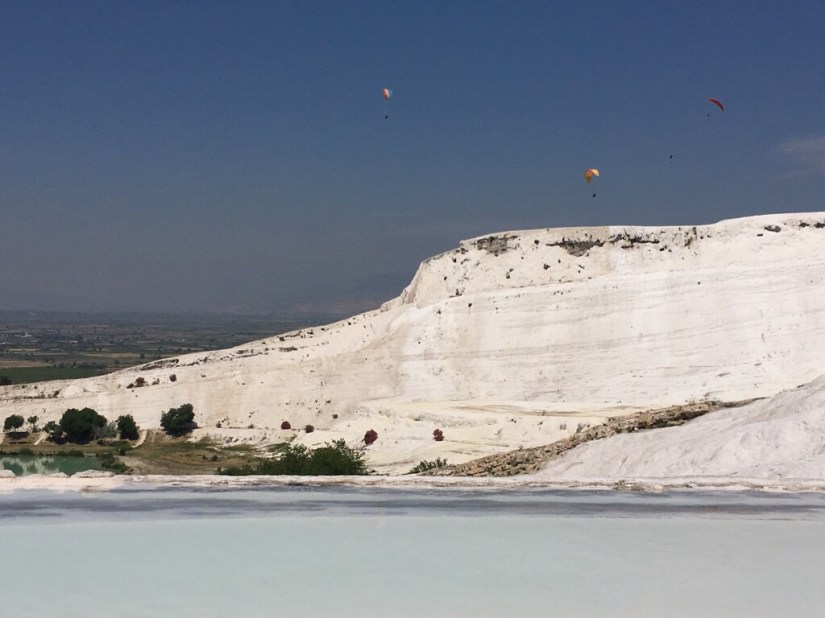
Pamukkale means Cotton Castle in Turkish, their name for the white travertine terraces which have been formed over millennia. Hot water gushes up from a natural spring and as it cools, carbon dioxide is given off and calcium is deposited leaving a smooth white surface with a collection of thermal pools.
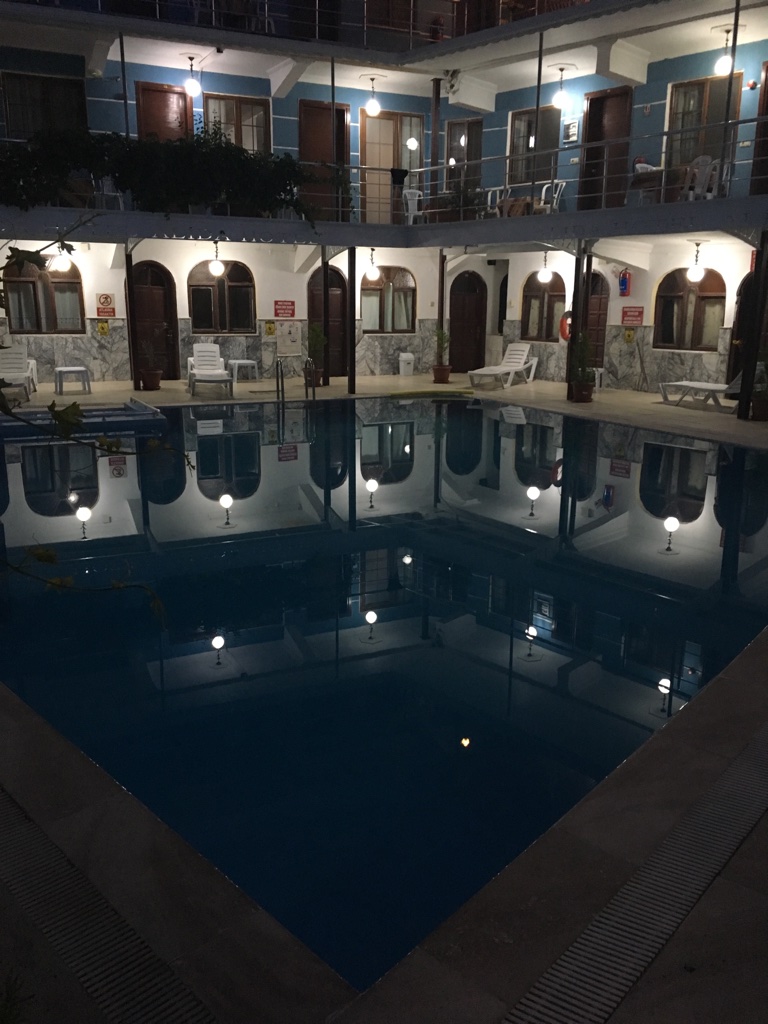
We arrived at the Alida Hotel with its rooms arranged round a courtyard like a caravansarai overlooking the main attraction, and before long we were sitting with the family drinking tea and munching snacks.


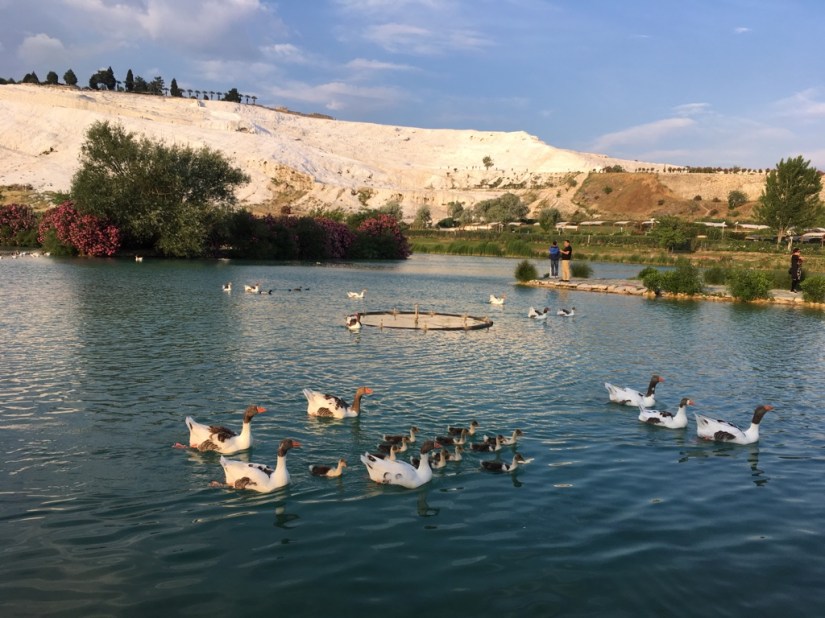
We took a turn round to catch some evening sun and some snaps and later had some dinner. It definitely feels a bit pre-season here, the restaurants are pretty empty and the food fairly basic, but I’m sure it will get busier when the day trippers arrive.

The next day dawned grey, with the promise of rain so rather than checking out the travertine which was also looking a bit grey, we took a taxi to Aphrodisias, one of several cities that was dedicated to Aphrodite, the goddess of love. The city was famed for its sculpture school and one of its characteristics were the ‘peopled scrolls’ which decorated the buildings, and here is a wall made of spare bits …
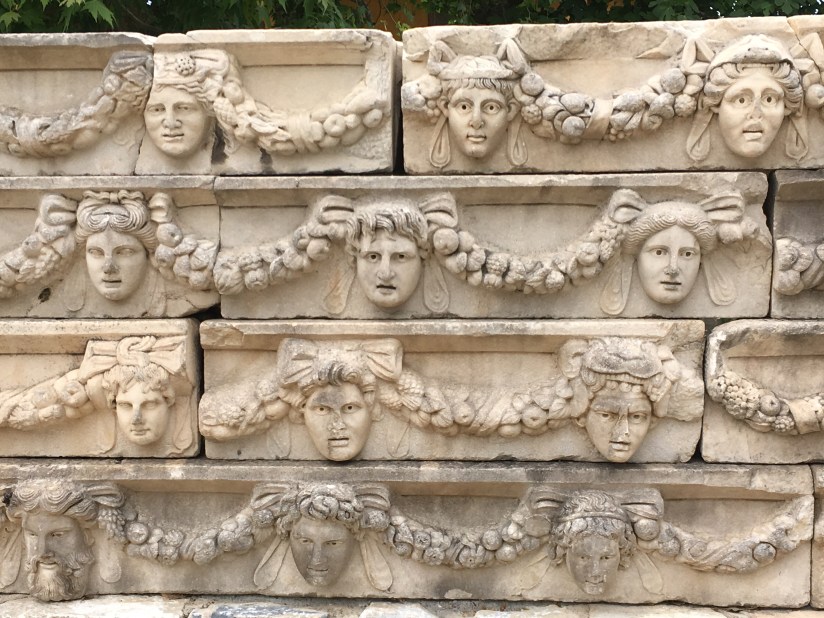
… and there were quite a few heads about!


We followed the route round …


… with the highlights being the theatre where an event was going on …
… probably the best preserved stadium designed for athletics contests …
… yes that’s me! …

… the Tetrapylon, a monumental gateway which greeted pilgrims when they approached the Temple of Aphrodite …
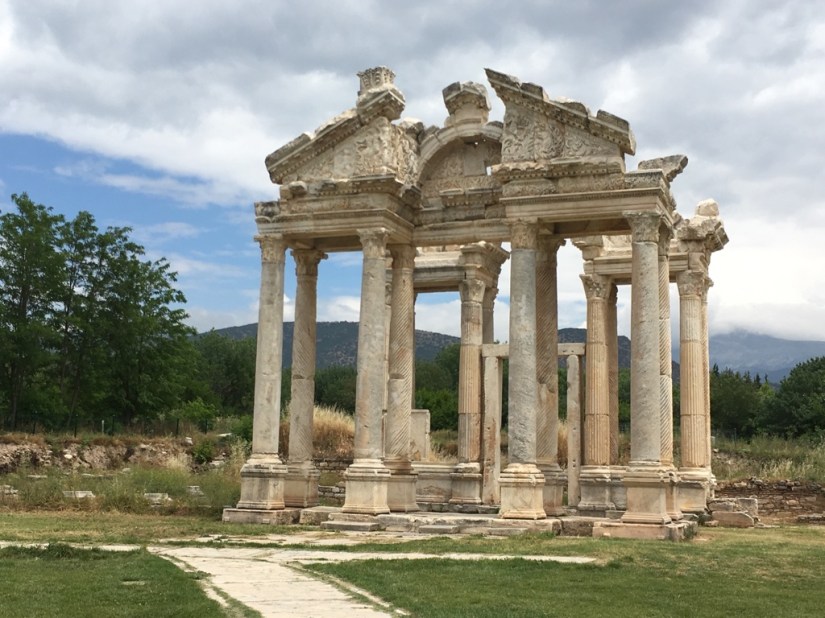
… and the Temple of Aphrodite with just 14 of the original 40 or so columns remaining.

There was also the Sebasteion with two parallel porticoes covered in sculpture. Part has been restored but all the original sculpture is in the museum … and wow is there a lot!


Lots of other sculpture has been retrieved too …


We were very lucky, the sun shone and it was dry … we returned to Pamukkale to find it had been grey all day, then wet, only clearing in the evening. The forecast for the next week is sun, sun, sun!
We ate in the hotel in the evening with a travertine view and a lovely home cooked meal …


… then took a walk and a few snaps before bed.



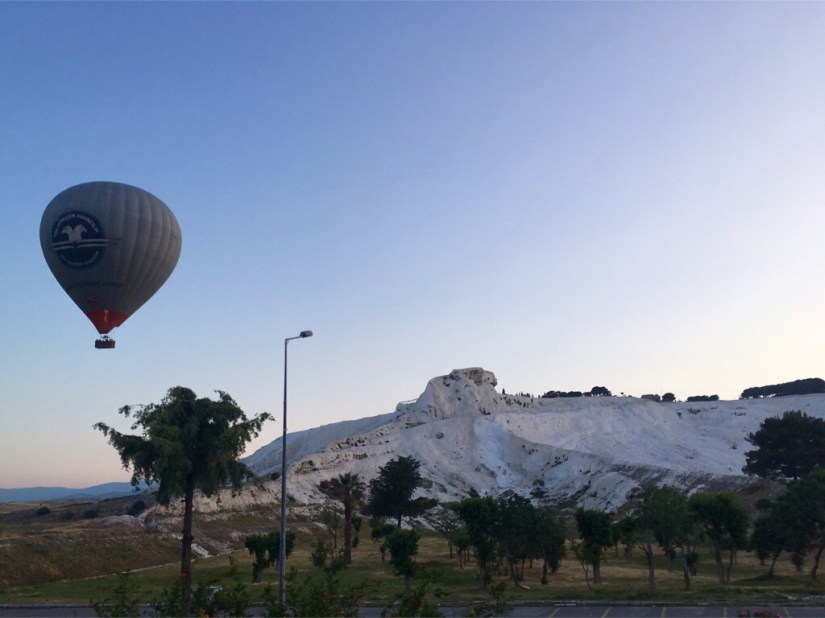
A lovely morning! There are only two places in Turkey you can ride in a hot air balloon, Cappadocia and here, but with just two companies, this is a much more low key affair!
 By 10.30 we had crossed the road, paid for our ticket and started the climb.
At the start of the travertine we had to take off our shoes then headed up the slope.


Its natural beauty was almost lost when hotels sprung up around the area in the 1960s and a road was built to allow motorbikes direct access over the slopes. The hotels drained the thermal waters to fill their swimming pools and the terraces turned a greyish brown. Thankfully, in 1988, UNESCO stepped in and declared Pamukkale a World Heritage Site. The hotels were demolished and a series of artificial pools built over the road to hide the damage. The spring water has been diverted from some terraces to allow them time to recover and there are now strict controls on development and tourism in the area.
We felt surprisingly surefooted walking up as it wasn’t slippery even where wet. The pools had sediment in them, some of which was a little gritty, and some parts of the slope were rougher than others, but it was all fine. We decided paddling would be sufficient, so hadn’t taken swimwear, but others went for total immersion in the pools, some of which were around a metre deep, and it was incongruous seeing Turkish ladies in their pantaloons and scarves beside tourists in their swimmers.


We were taken with the texture of the surfaces …


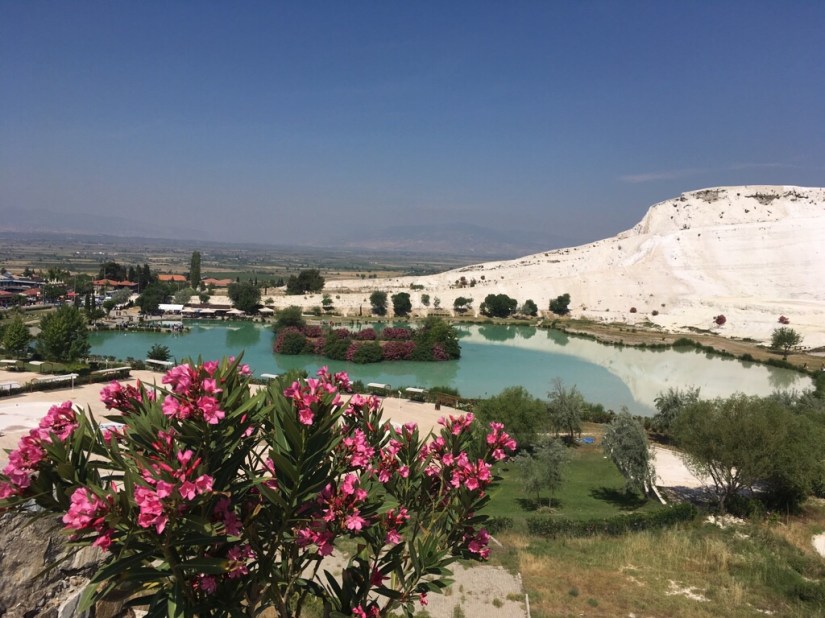
and the views …
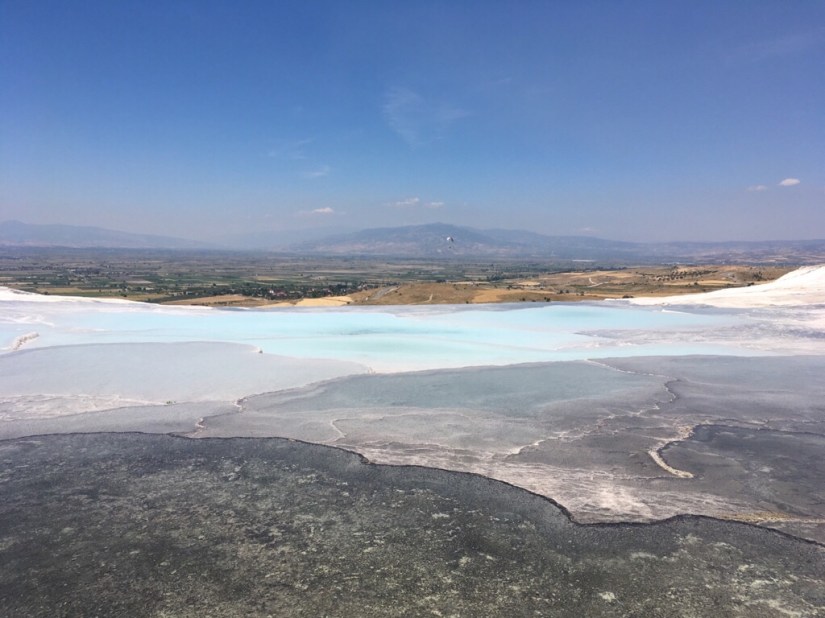

 When we reached the top and started to explore, we realised how extensive the pools were. Most could not be walked on and some contained water and were a lovely blue colour …
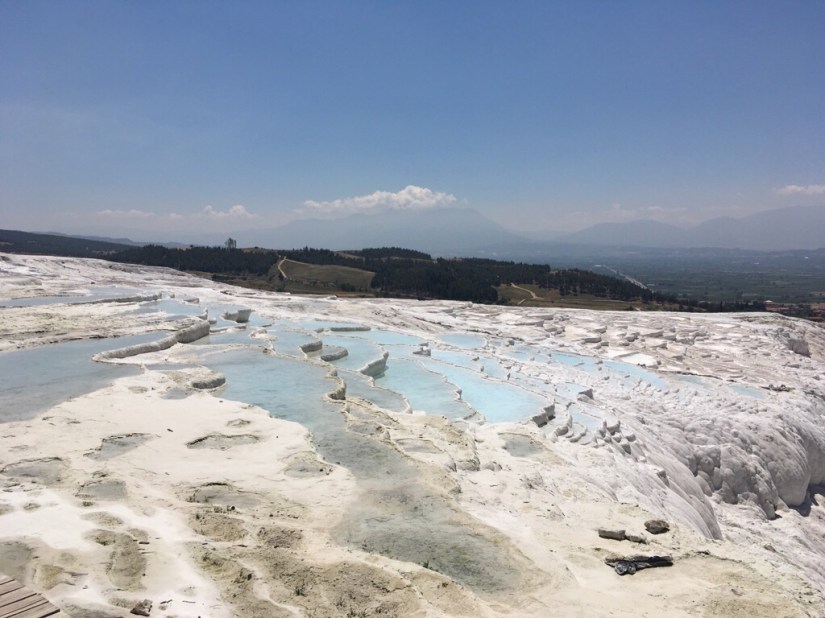

… while others were dry.

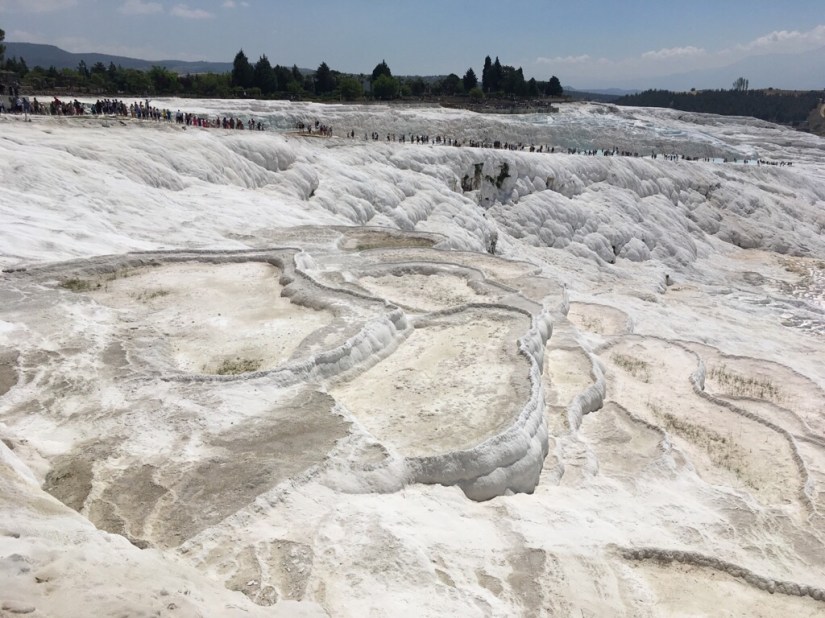
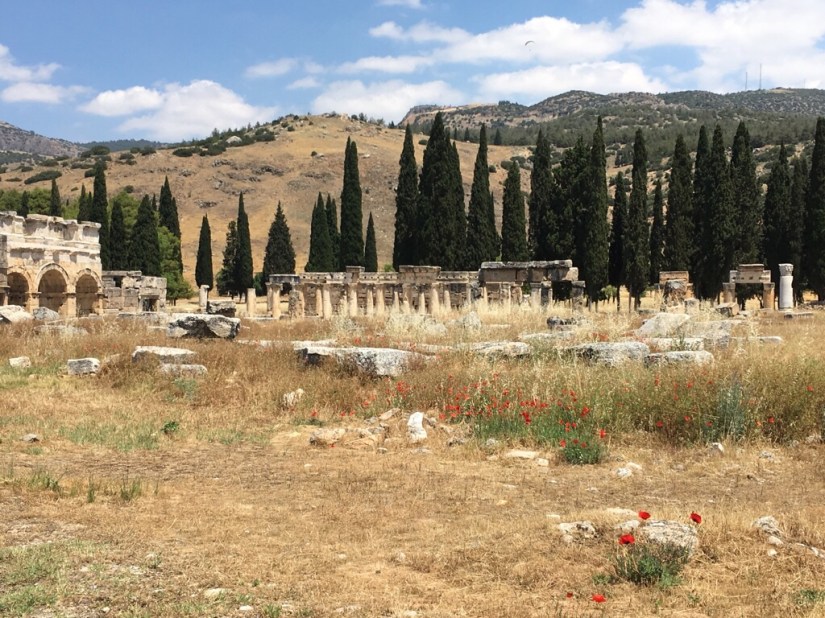
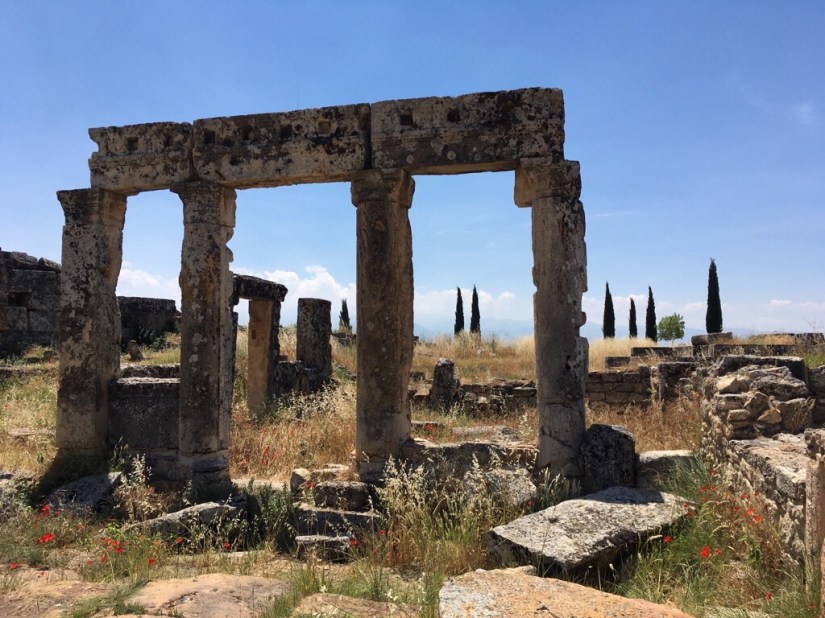
Next was the ruins. Hierapolis was built in the second century BC to take advantage of the therapeutic springs and later was popular with the Roman emperors of the time. It is also mentioned in Paul’s Epistle to the Colossians. The highlights were the North Gate leading to the colonnaded street which was once a kilometre long …


… yet another theatre, this time with a rebuilt scaenaefrons … basically the fancy permanent architectural background of a Roman theatre stage …

… together with various miscellaneous bits among the grass!
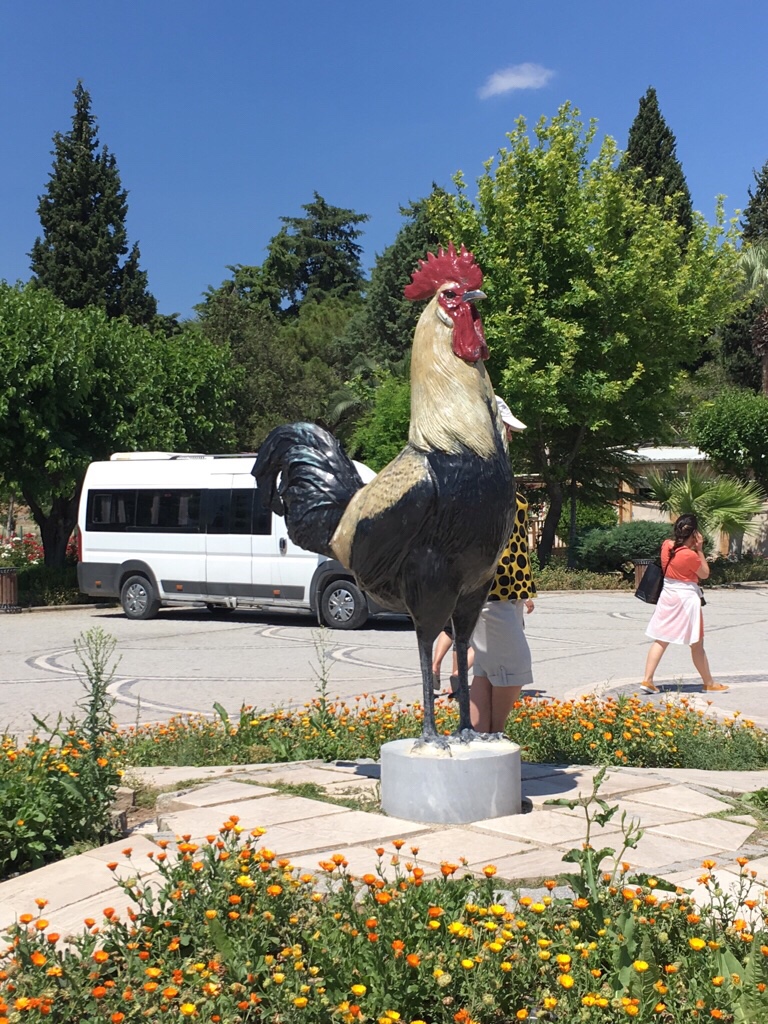
 You might well wonder why we not only came across a large rooster in front of the museum …
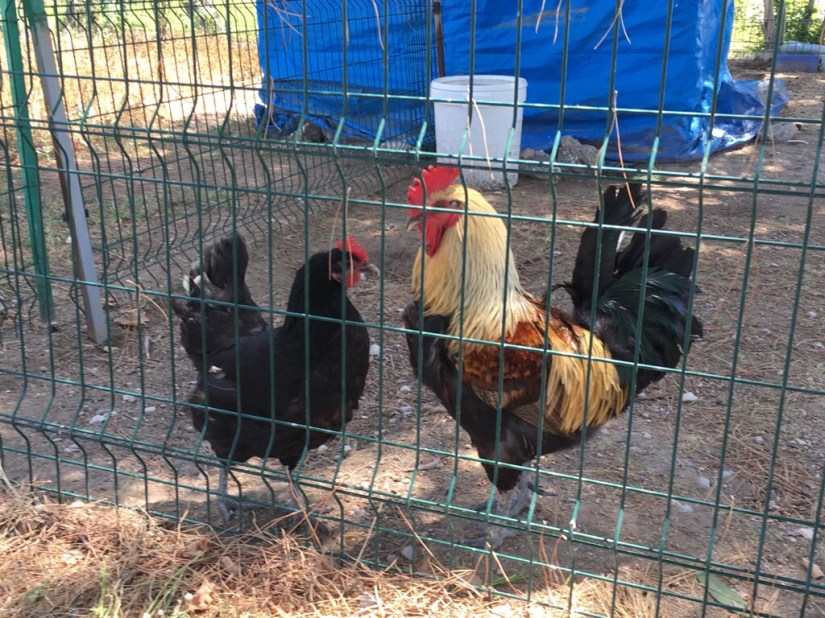
… and also a smaller but living rooster in a cage …
… not to mention lots of plaster roosters for sale in the gift shops so googled it!

The Denizli area is known for the Denizli cock which has been raised here since ancient times and adapted to the harsh environmental conditions. It is characterised by its long-crowing abilities, but fortunately there are none resident near our hotel.
Having seen everything and taken far too many photos, we returned down the slope to the town. It had got rather busy and we were pleased we had arrived early!

Chris is happy that his day has come to an end with Liverpool wining 4:0 to come 4th in the Premiership and qualify for the Champions League next season … go Redmen! Oh and not forgetting the final in Kiev.
Finally I want to share that the name Cotton Castle refers to the similarity between the white rocks and the very popular Turkish cotton candy called pişmaniye. This ancient Turkish sweet dates back to the C15th and while it is similar to cotton candy or candy floss, it tastes more like halva as it contains butter and flour as well as sugar. In the Turkish, pişman means regret so as the Turkish saying goes: ‘Try it once and regret it once. Don’t try it and you’ll regret it a thousand times.’ You’ll regret it the first time because eating ‘pişmaniye’ can be messy. But it’s so delicious, you’ll always regret it if you never try it. Well we had to give it a go … very sweet … very messy …!


Tomorrow we are back on that bus!
 Off Travelling Together