The Final Stretch

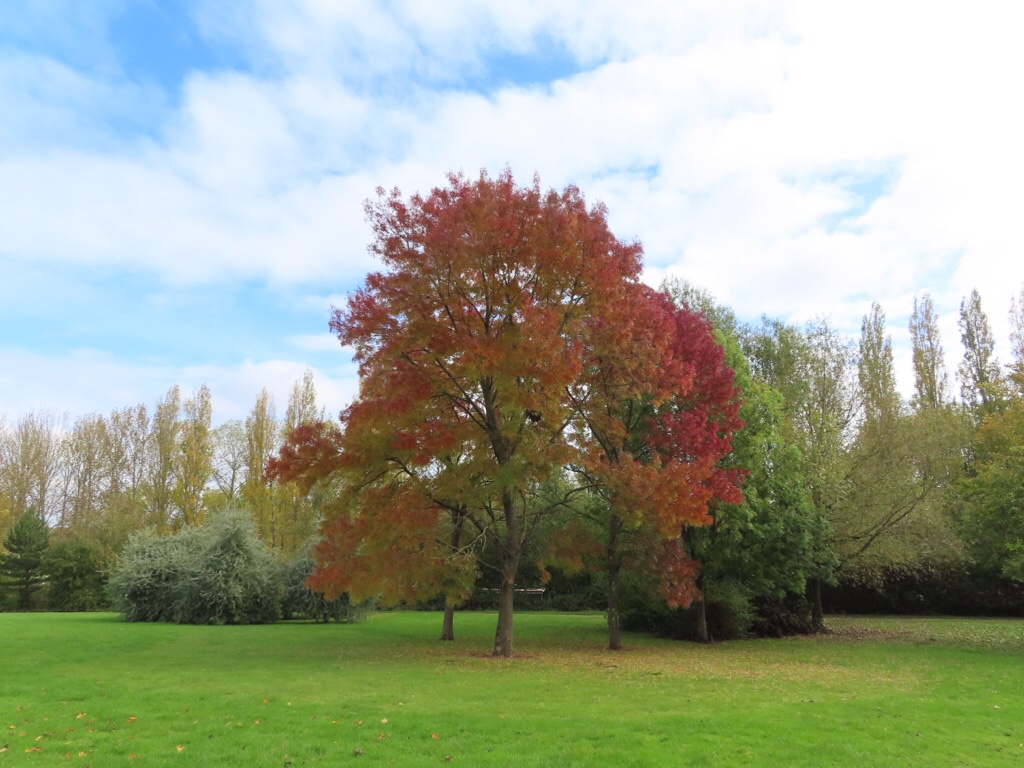
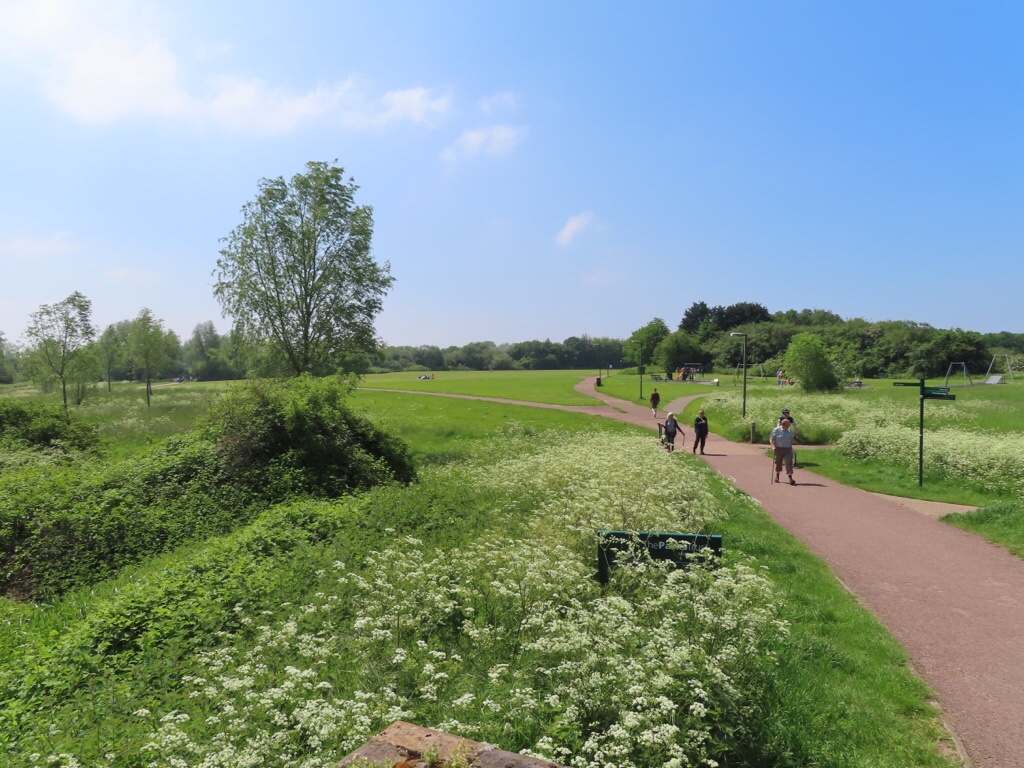
The first day of June and another sunny morning and a quick turn round Waterhall Park. We were surprised how different it looked compared with our last visit in October …

… and even how warm, so decided I should keep Mr Hayes company …
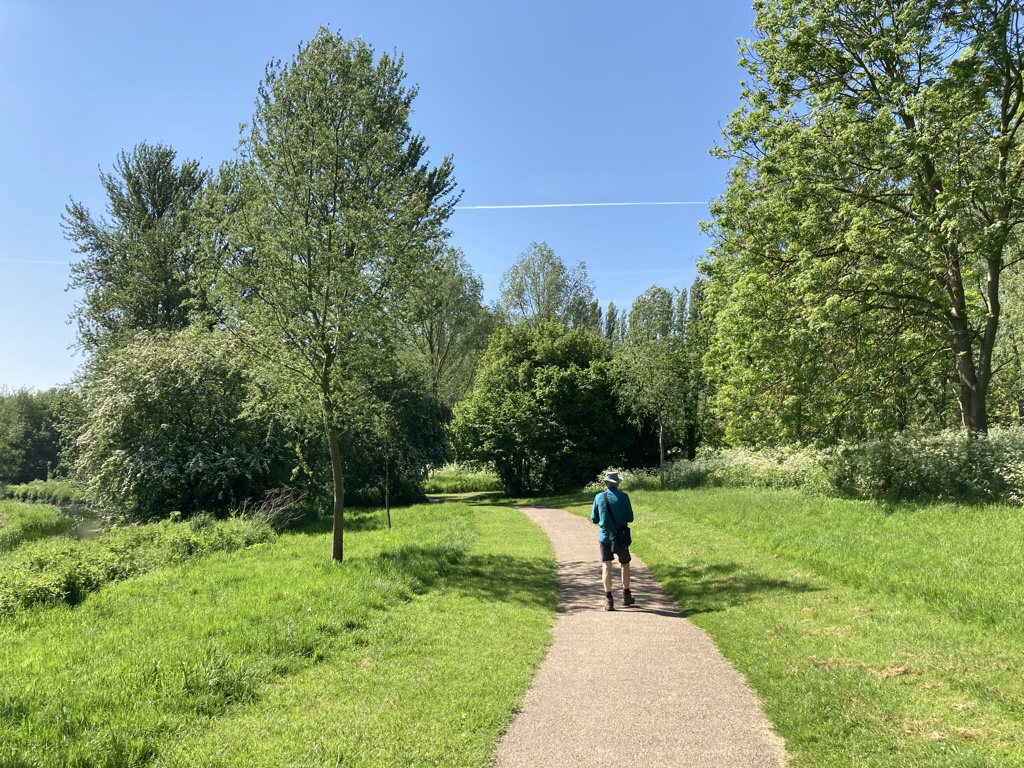
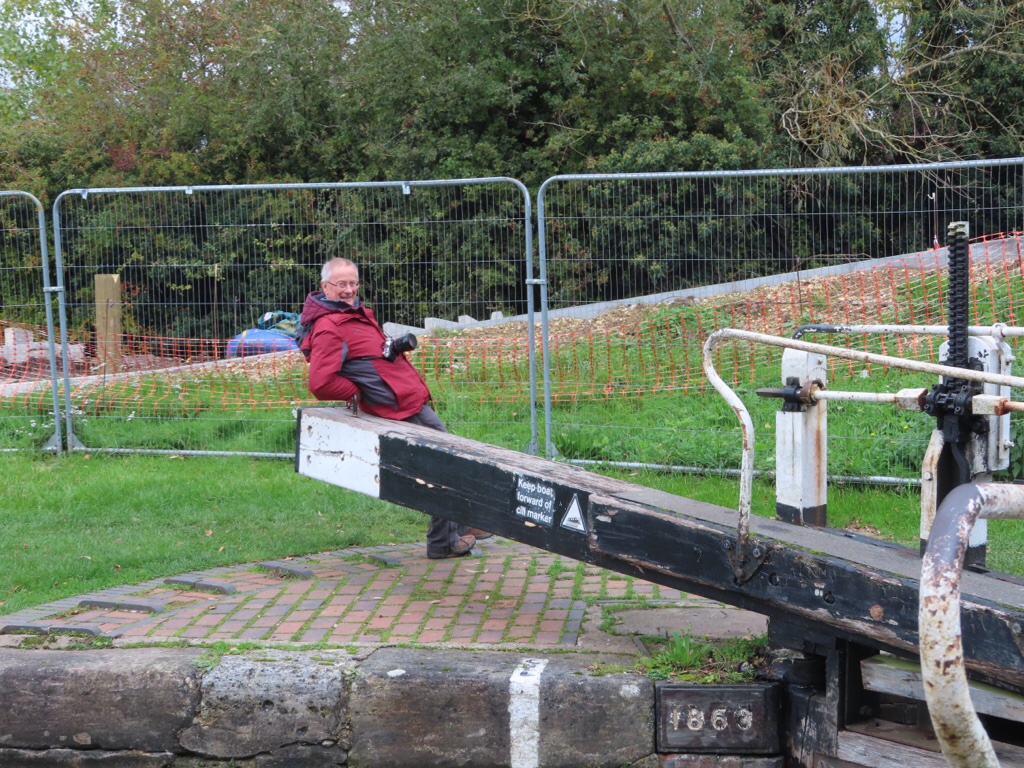
… and there was no time like the present … only to be caught in the act!

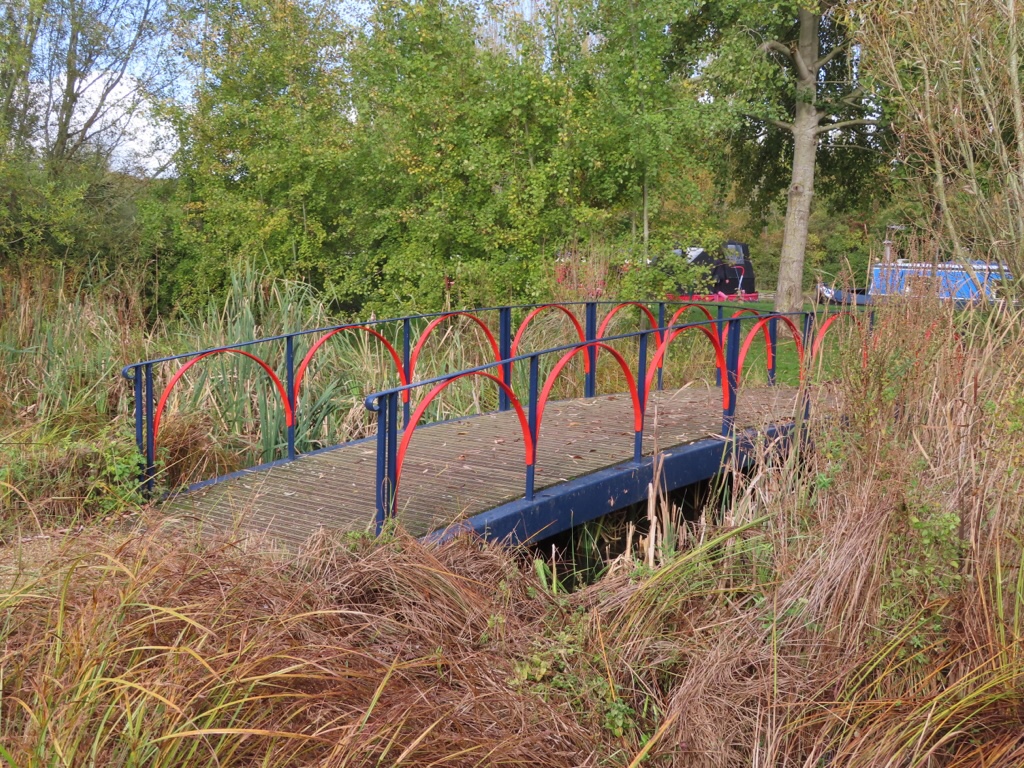
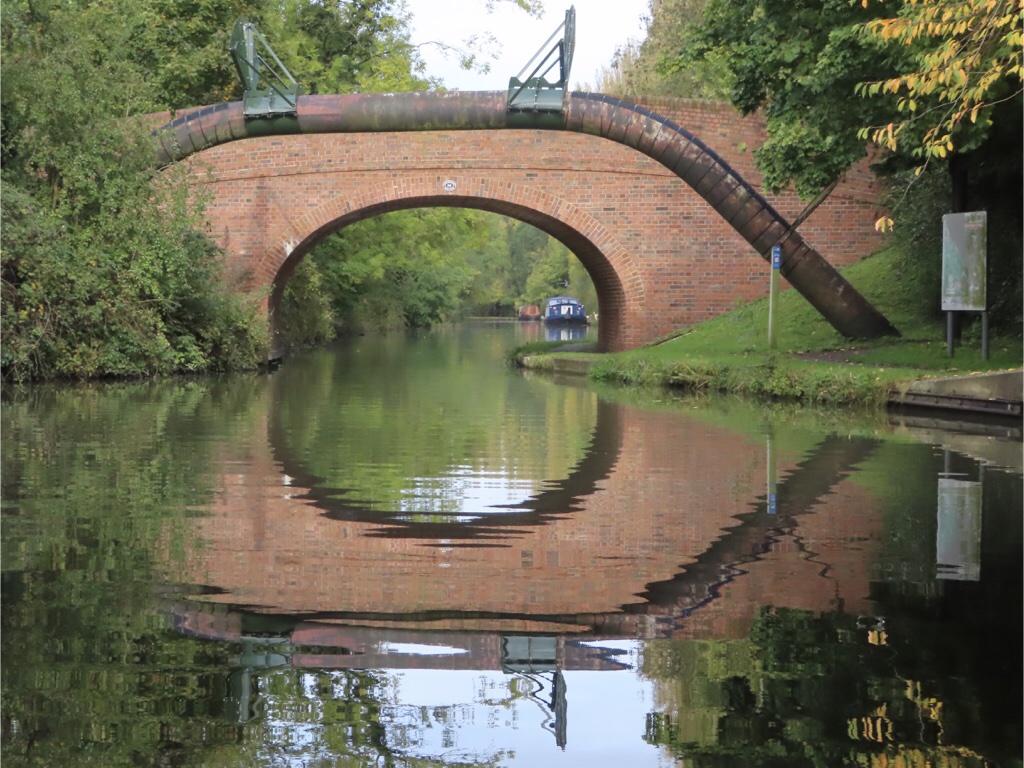
We made our way back, enjoying the sunshine. Just a couple of things we noticed … a pipe bridge so bright we don’t know how we haven’t noticed it before …

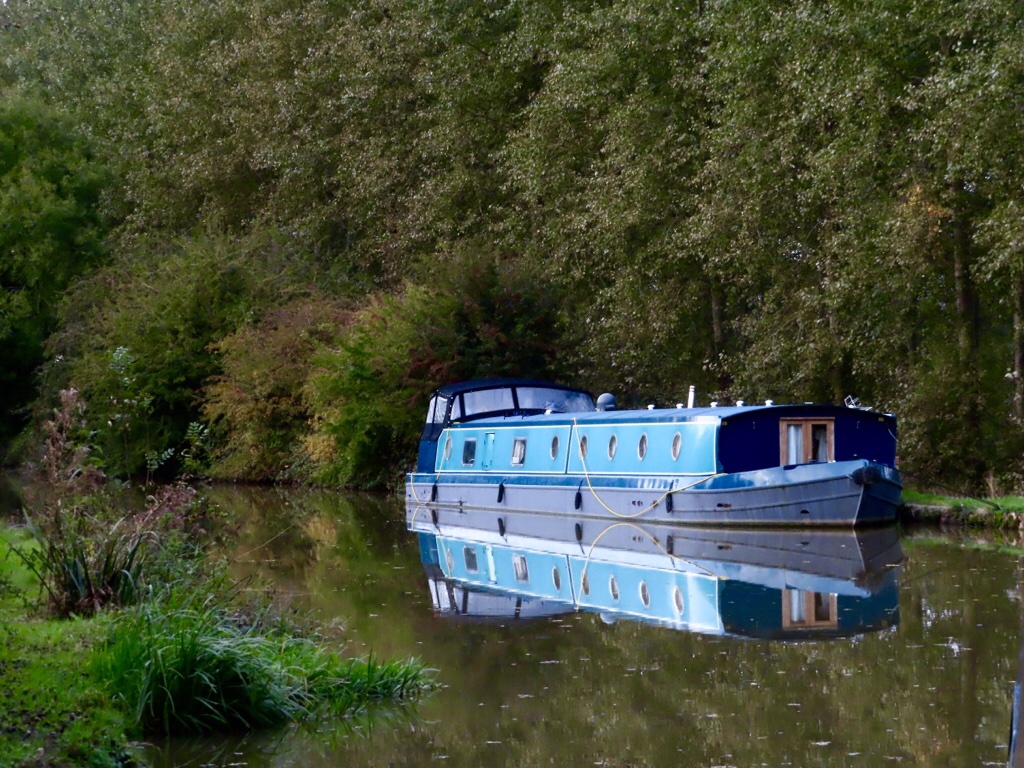
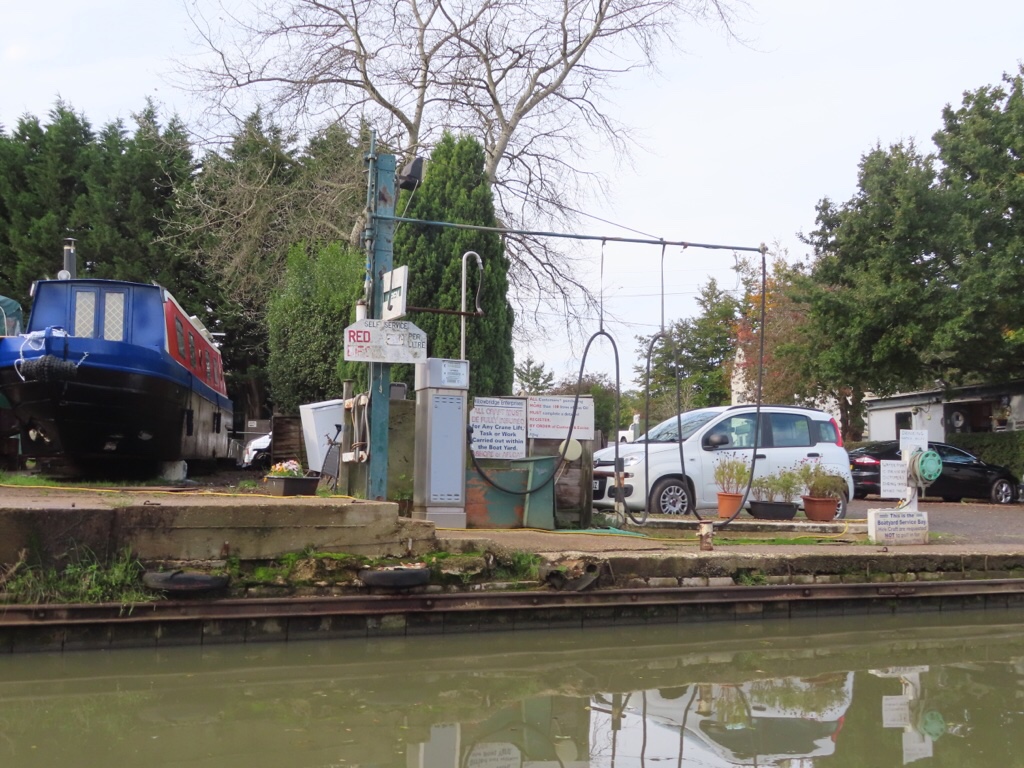
… and another fuel boat moored up – easy when you know what to look for!

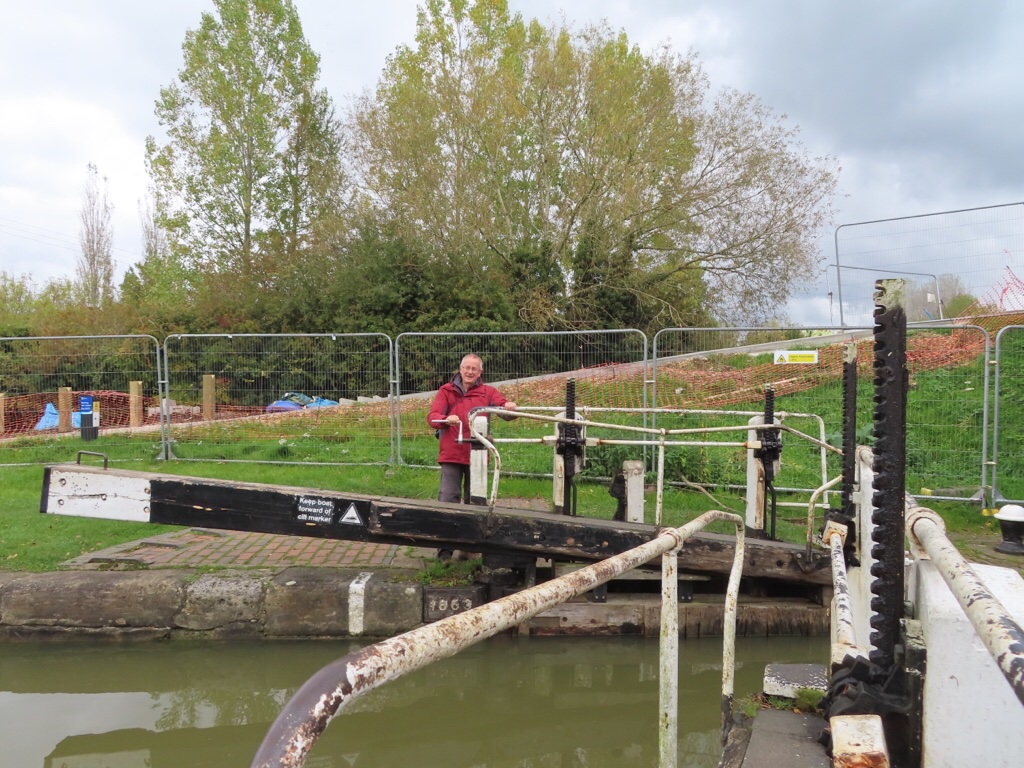
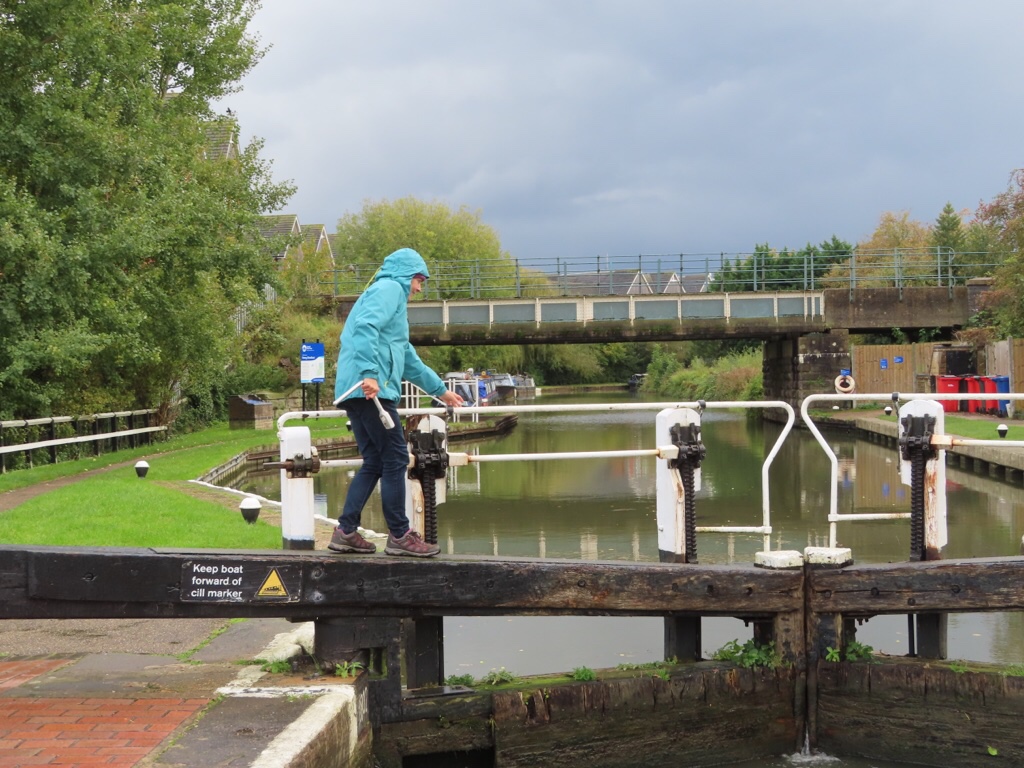
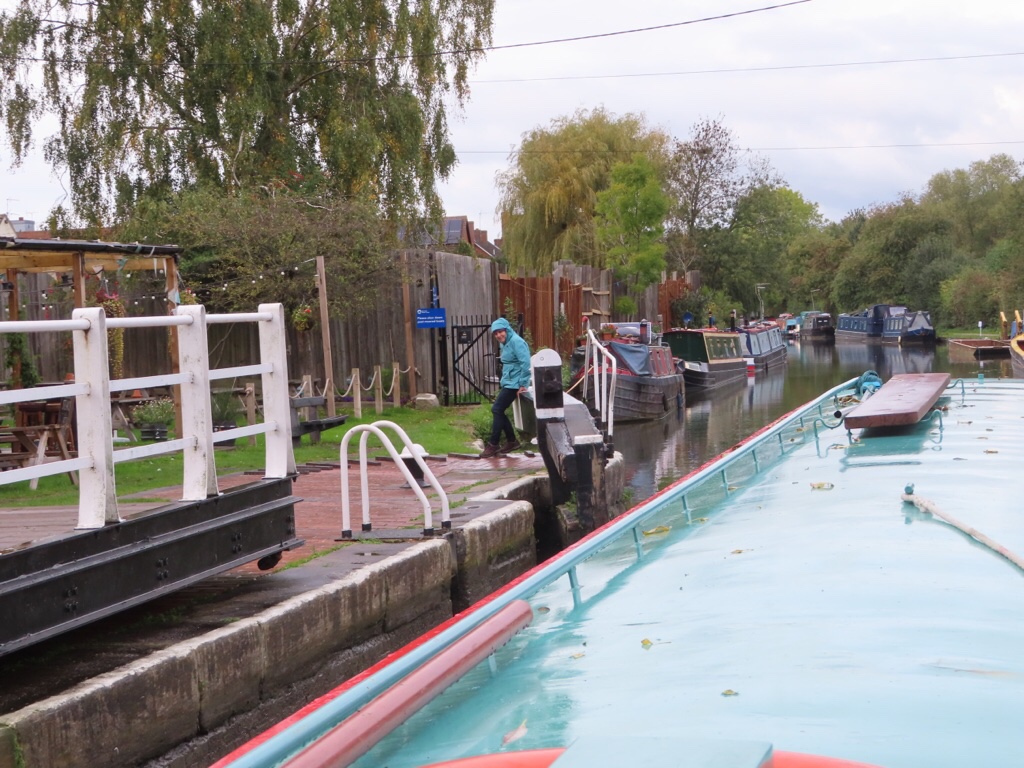
Realising we’d not take many pics of the actual hard work, we took a few at a Stoke Hammond lock as we had it to ourselves.

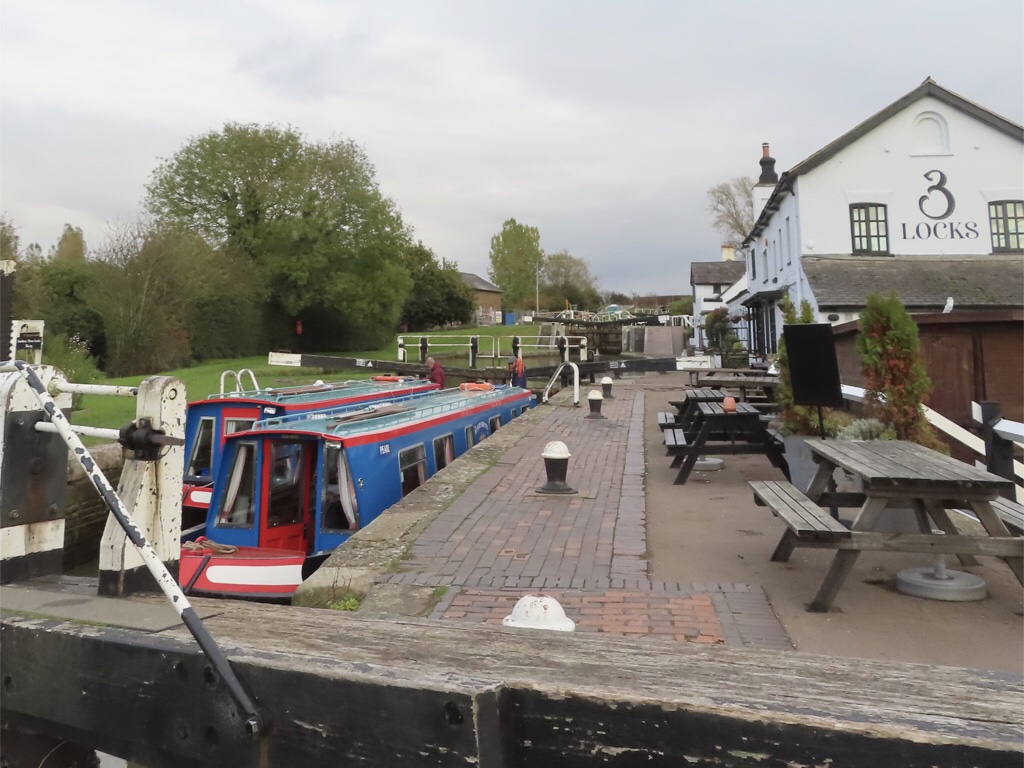
At Soulbury, help was at hand from David and John, Canal Trust volunteers who man the triple lock to try to save water, so we actually had to wait a while for boats to come down before we could up, but at least we had help with the locks.
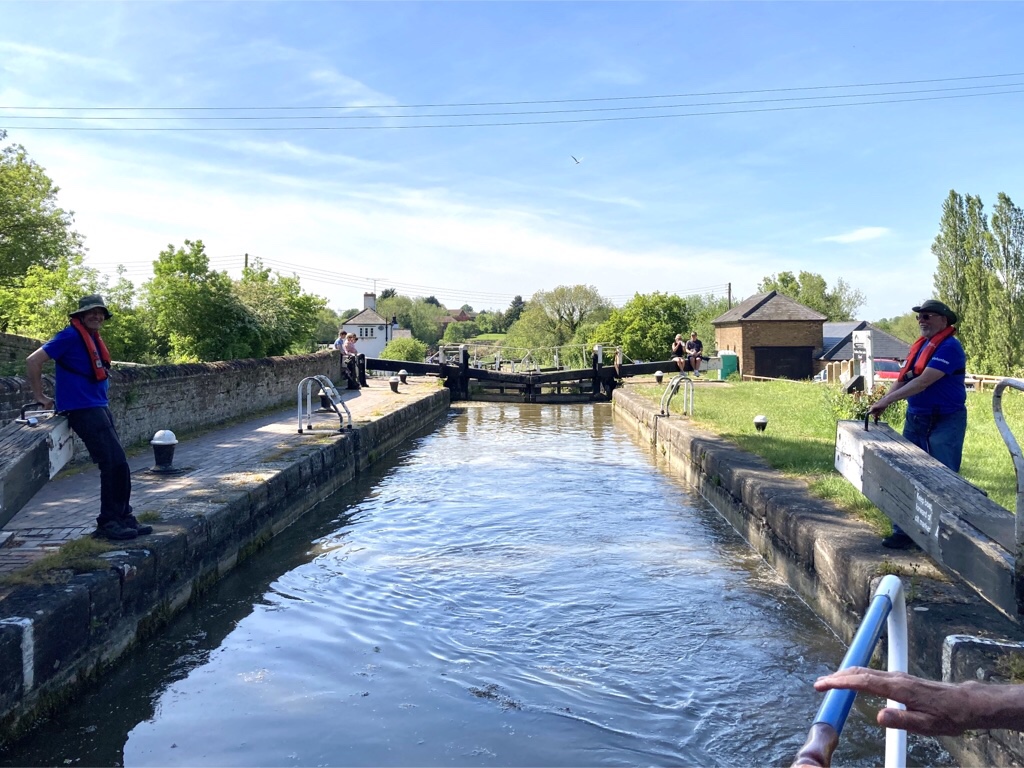
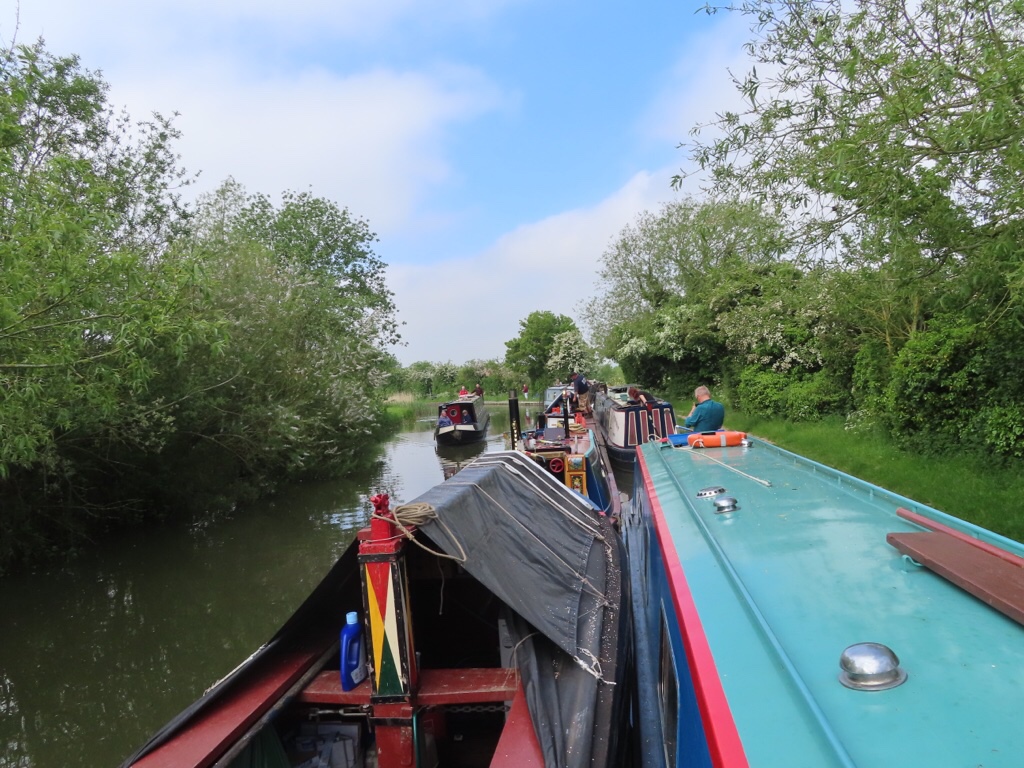
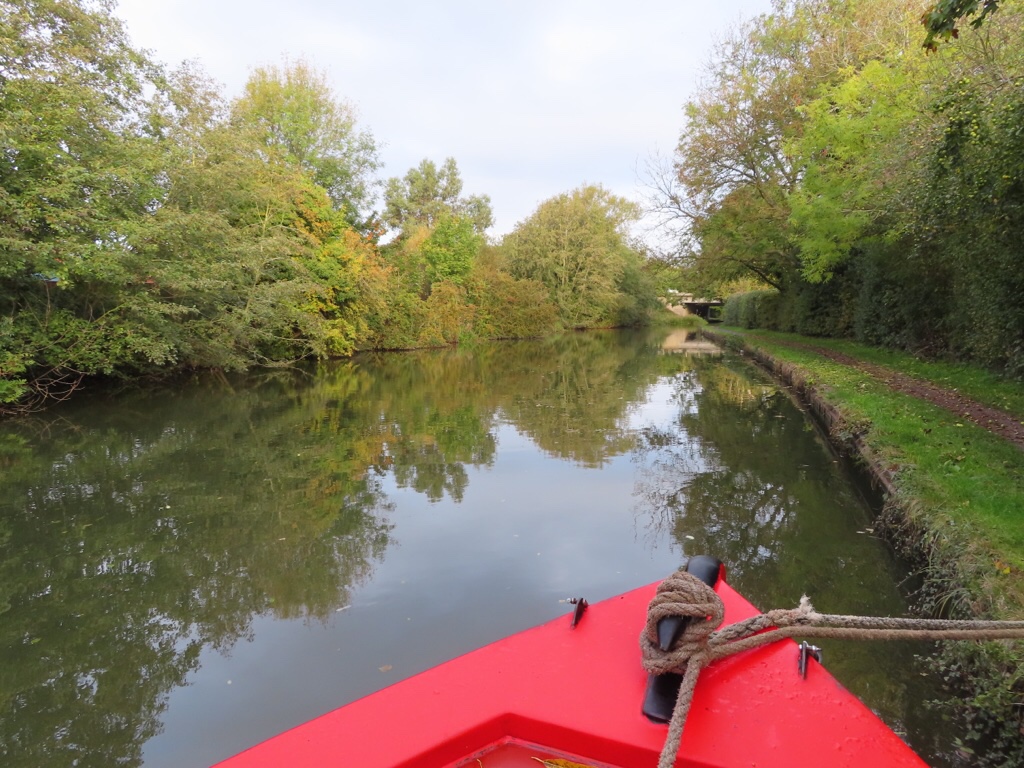
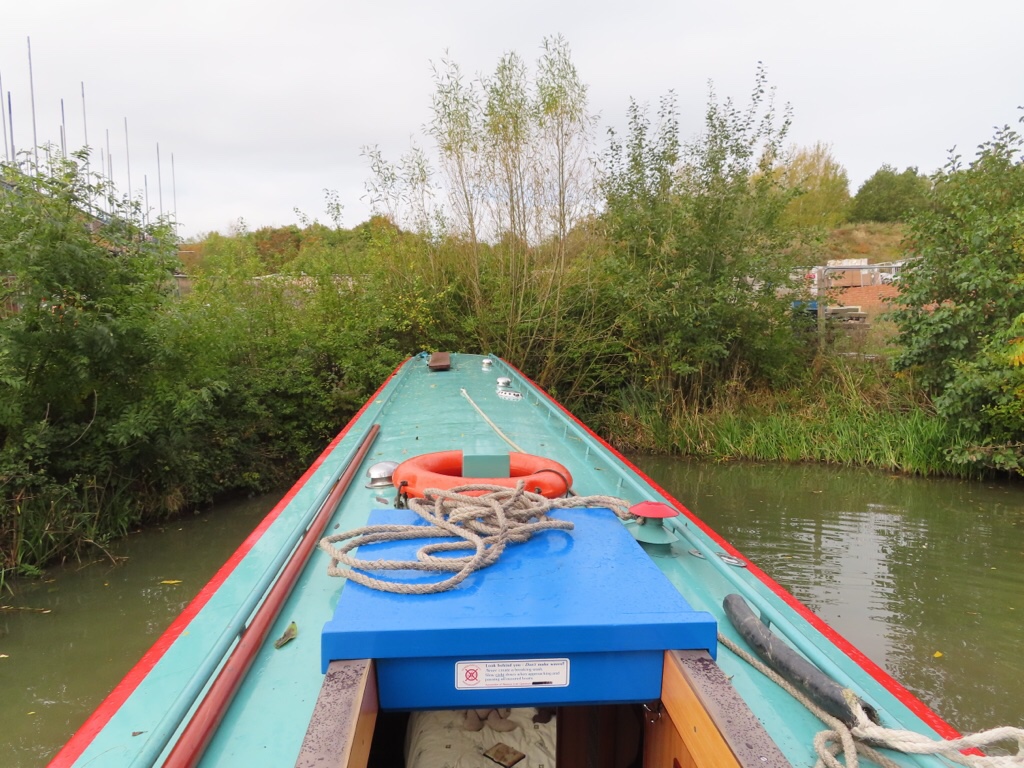
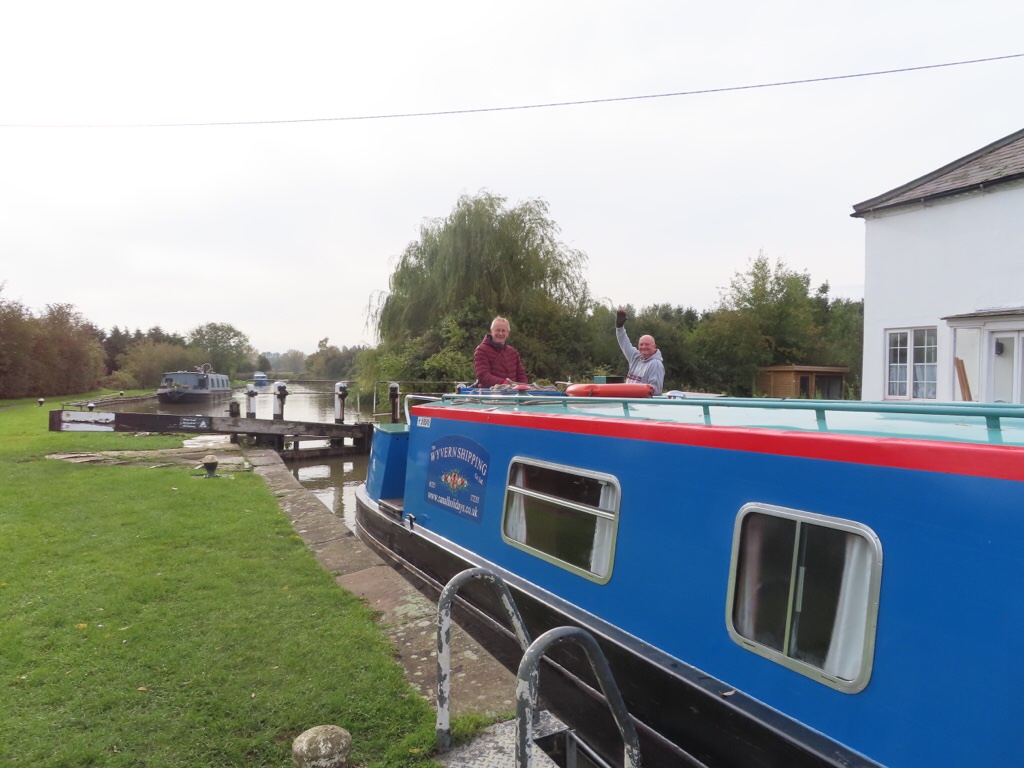
I sat at the front for a while, surprised how quiet it was and watched the world float by, listening to the gentle plink of water. We’ve seen lots of people sitting in the front, usually the women, with the men huddled round the tiller, but since there’s just two of us, we usually sit companionably at the back together. I saw a couple of boats from the Leighton Buzzard Navy, as we’ve heard Wyvern boats described, starting out on their holidays, just as we return from ours.
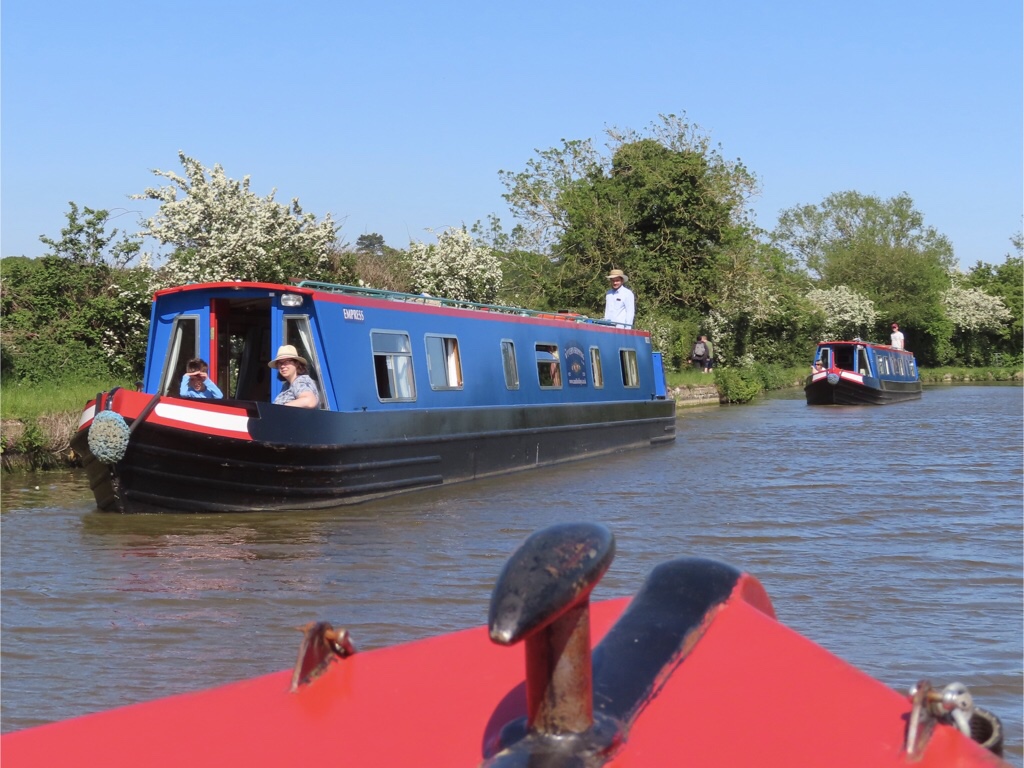
It was soon time to moor up for the night, leaving just a short distance and one lock to navigate in the morning. Dinner tonight is truly gourmet, Tesco tinned vegetable curry with potato wedges and Haloumi! We have a great little freezer compartment in the fridge on Daisy and brought four frozen home cooked stew dinners with us which we’ve mixed up with sausages, pies, pasta and an evening out in the pub. We’ve managed to buy groceries on the way in 7-11 type stores where milk and bread is easy but fresh food is harder to find.

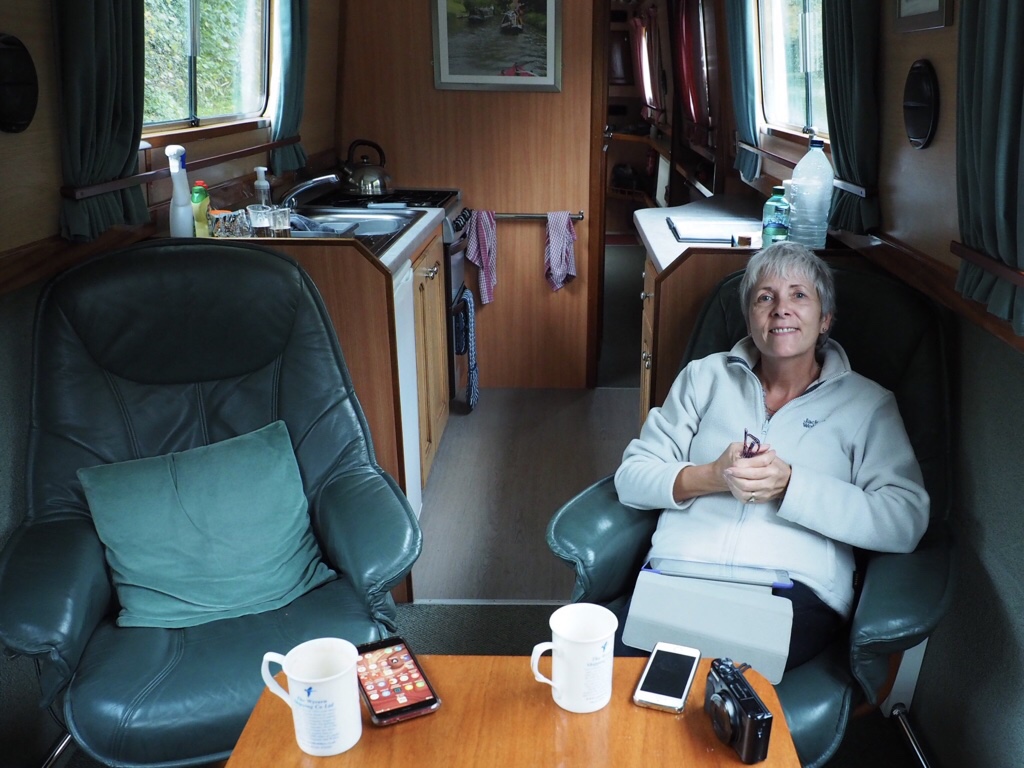
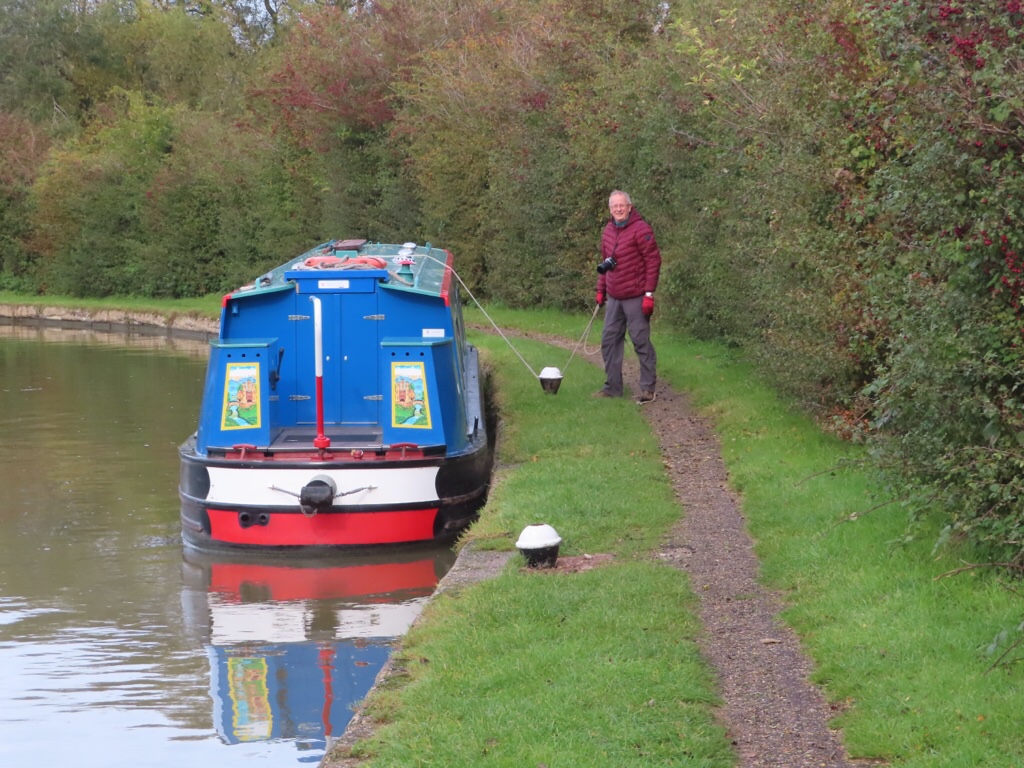
As I was getting this ready, I noticed a well turned calf outside the window, and found Chris recording some video for his next camera club audio visual.
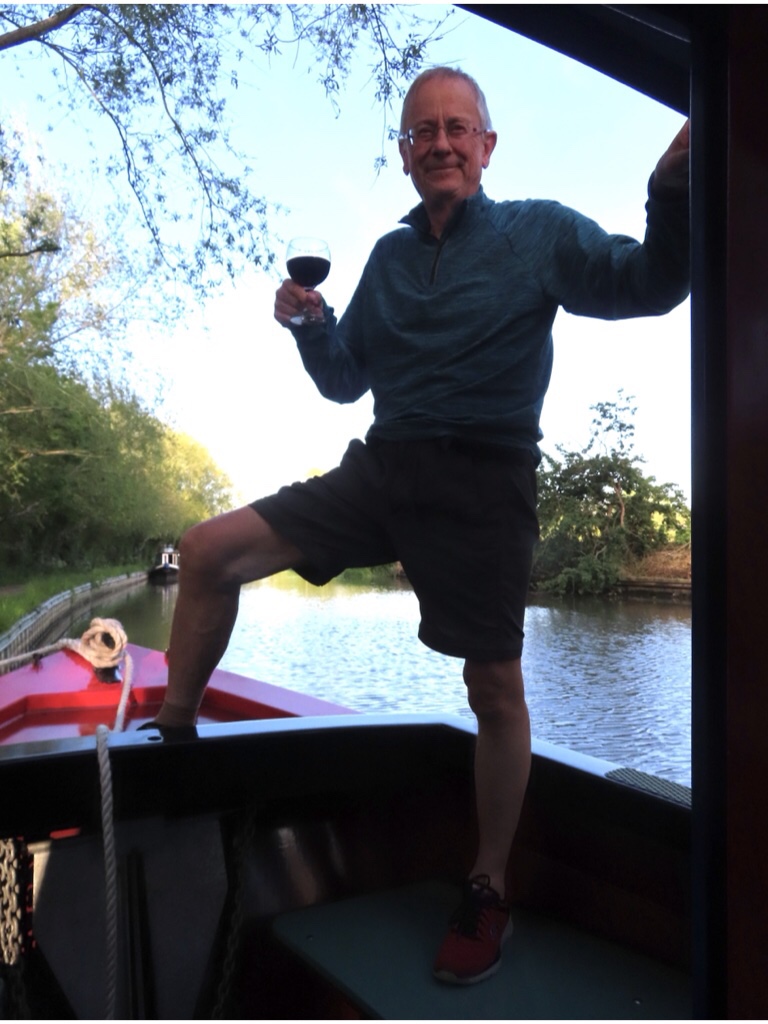
Our trip has turned out just as planned with a total distance of 72 miles, 28 locks and 2 tunnels (since we did them both ways!). We’ve certainly found a pace that suits us, around 6 miles a day, which gives plenty of time to take everything in our stride, stop to explore and walk and not feel we are on a mission. We’re getting better at judging angles and speeds and which bit of bank looks tricky to moor close to. We’ve experienced a tunnel, a flight of locks and a fouled propeller and all were fine, but are mindful getting on and off as while a slip into the canal is unlikely to be fatal, it certainly wouldn’t be pleasant.

All the housekeeping was quite straight forward and we only had a couple of minor bumps along the way. Even though we’ve had the coldest and wettest May in ages, the weather perked up halfway through our trip and the last few days have been glorious. The towpaths are so pretty with the white hawthorn and cow parsley and fields have been full of buttercups, clover and speedwell. I’m not sure another time of year would be so lovely.

I’m sure we’ll give this another go sometime … maybe Daisy south to Kings Langley since our map covers this direction too … or another waterway entirely!

Needless to say, there’s been a fair bit of downtime too and I found some great books to keep me company, a couple of autobiographical accounts, firstly Waterways by Jasper Winn who was sponsored by the Canal & River Trust to travel 1,000 miles round canals by narrowboat, bike and kayak to explore their history and present day life and write a book, then Afloat by Danie Couchman, an account of her six years living on the water, mainly as a constant traveller on a narrowboat but also on a mooring in a wider boat. After that I lightened up a bit and read a couple of novels, Three Women and a Boat by Anne Youngson about Eve and Sally who collide on a towpath and agree to drive Anastasia’s narrowboat to Chester and The Cosy Canal Boat Dream by Christie Barlow which was a feel good romance set in a canal side marina and have just started Murder on the Oxford Canal, investigated by DI Hillary Greene who lives on a narrowboat.

I also brought a bag of yarn scraps and a crochet hook and in odd moments have been making a kaleidoscope of butterflies as a summer makeover for my craft tree once we get home. I’ve got a dozen in the bag and it’s going to look lovely!

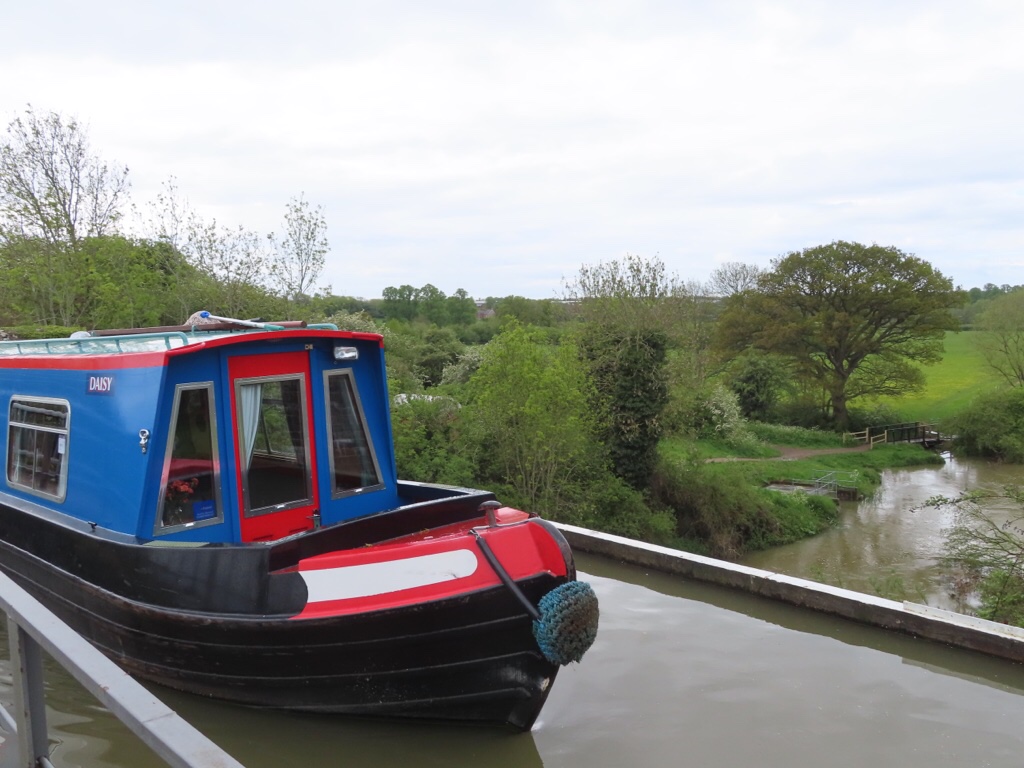
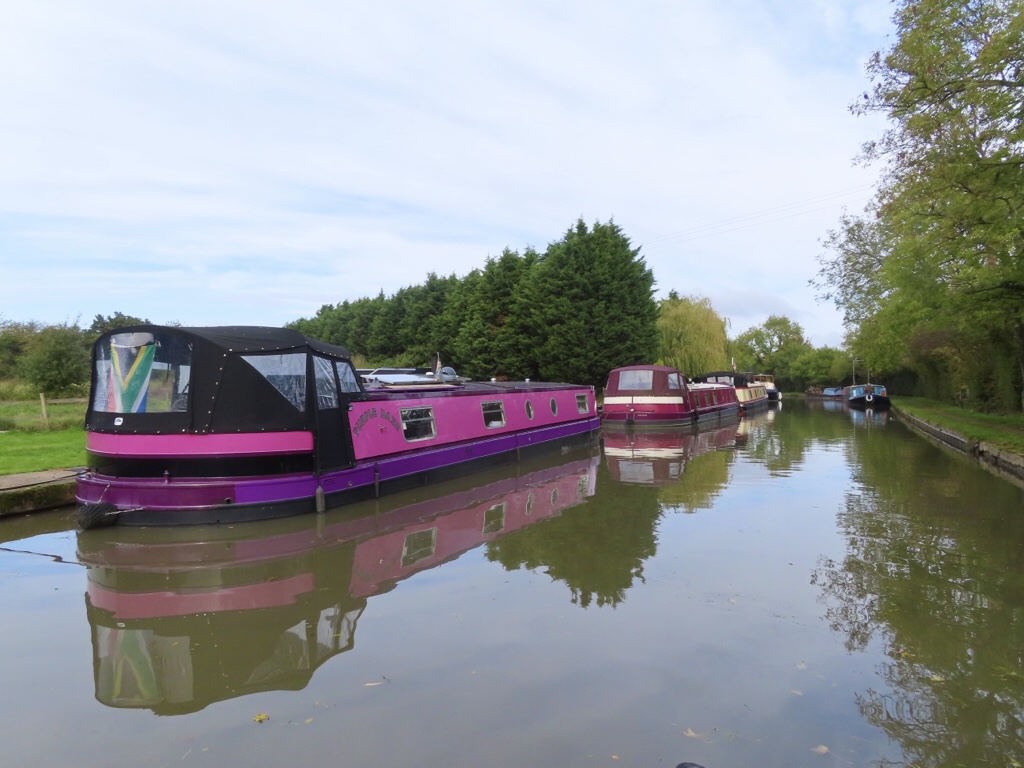
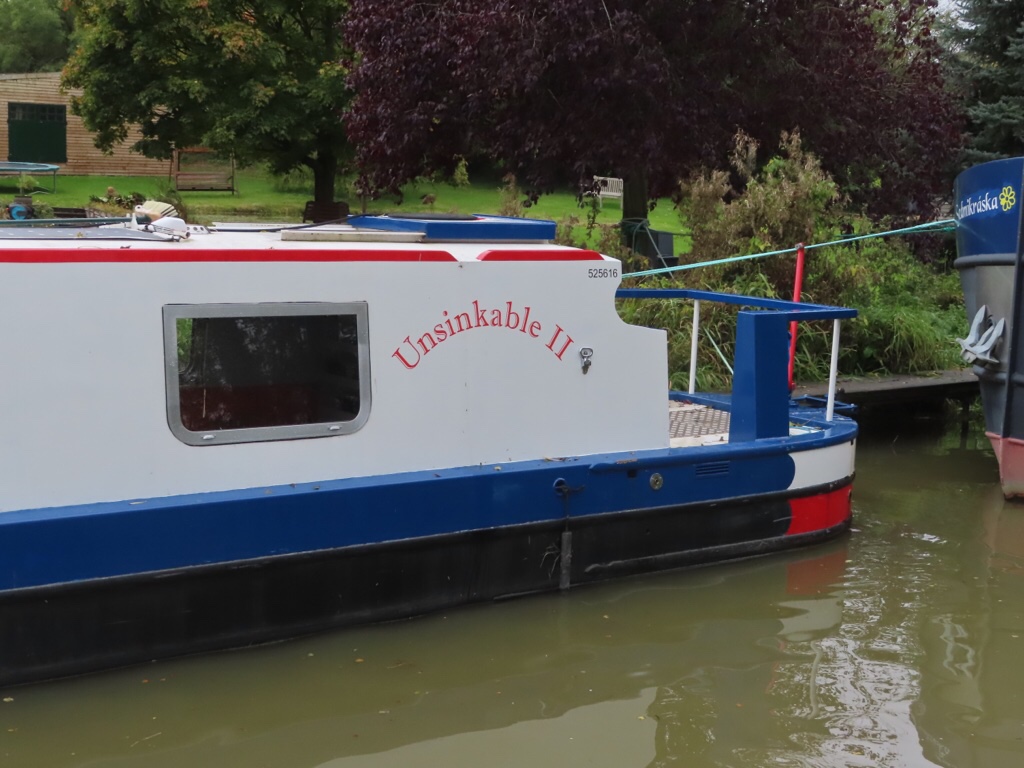
We’ve been checking out boat names all trip, and while many are fairly standard, a few have floated to the top of our list

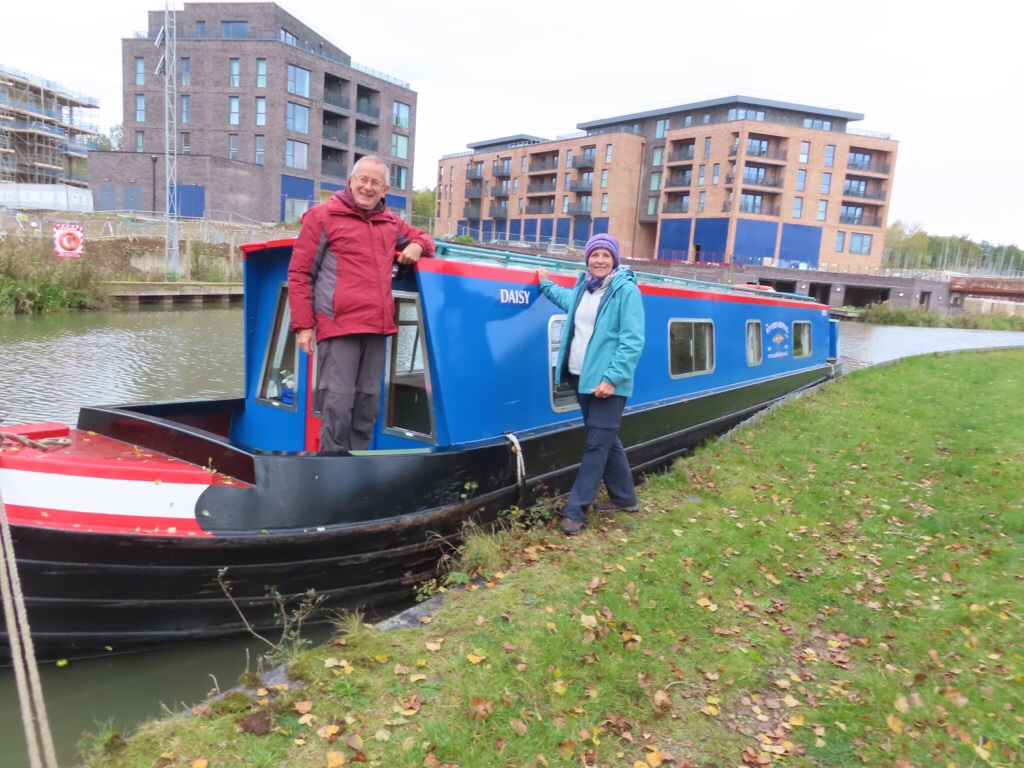
We’re so pleased we’ve been afloat again, seen all we had hoped to see last trip … and more … thank you Daisy!
Map


The Greenest City

Retracing our route back into Milton Keynes, we just enjoyed the countryside on such a lovely day and pottered along slowly, stopping for lunch in the sun.

When we got to New Bradwell, we remembered how we were so busy taking photos of the aqueduct, we missed the windmill entirely so we stopped to find it. Samuel Holman built the mill to grind corn and take advantage of the trade possibilities of the new canal to sell his flour, but may not have proved too successful as it had several owners and was abandoned 60 years later as no longer economic. Surprisingly it is almost completely hidden, in a field, surrounded by a housing estate and I’m not sure which of these views I prefer, so I put them both in.

New Bradwell on a bank holiday – cricket, a packed pub garden and the sound of an ice cream van in the distance.

A recent poll found that Milton Keynes has the largest area of parks per person in Britain and since many of the larger areas can be found either side of the canal, we’ve been visiting many of them with the next being Stanton Low Park, a large green space with grazing animals, wild flowers and an atmospheric ruined church. This was once the centre of Stantonbury village but it fell into decline in the C18th and was later destroyed by quarrying. Today it’s just another green space in Milton Keynes, enjoyed by the housing estate the other side of the canal.

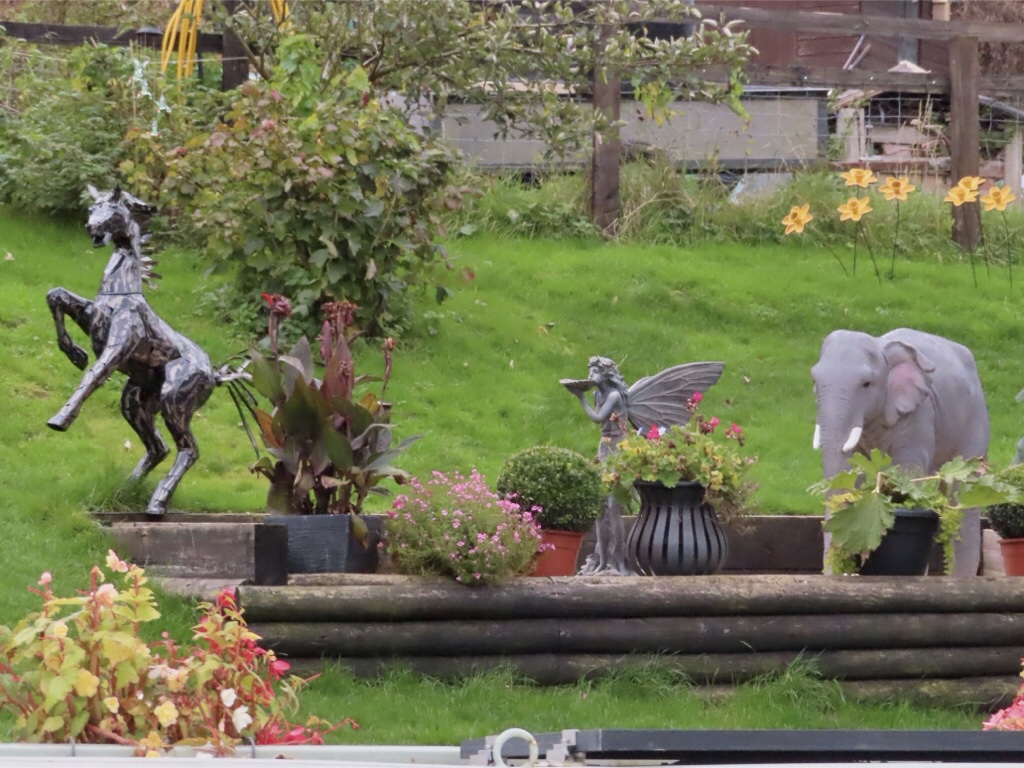
We walked around, Chris had a bit of a photo op with a couple of models …

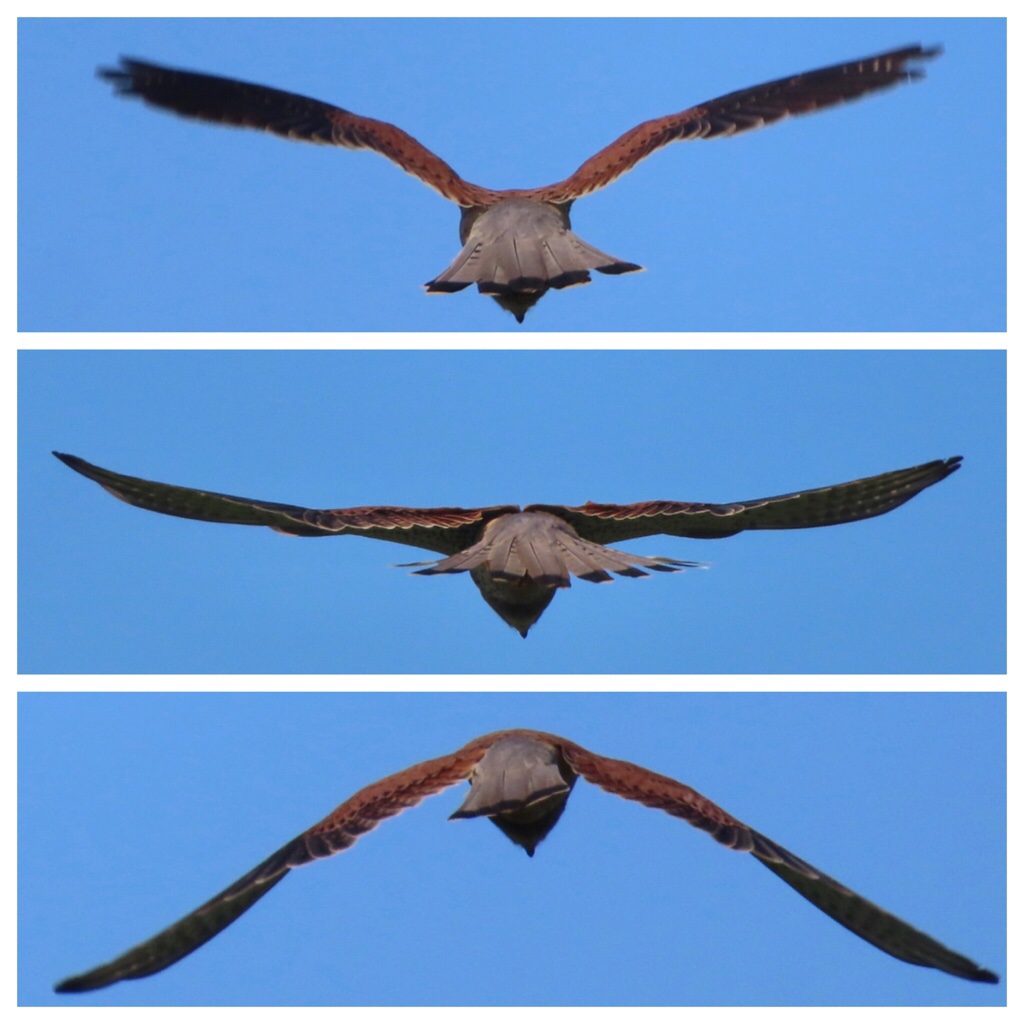
… and I managed to take some pics of a bird on the look out for supper.

We unpacked the little chairs and sat on the canal bank, firstly in the shade with a cup of tea …

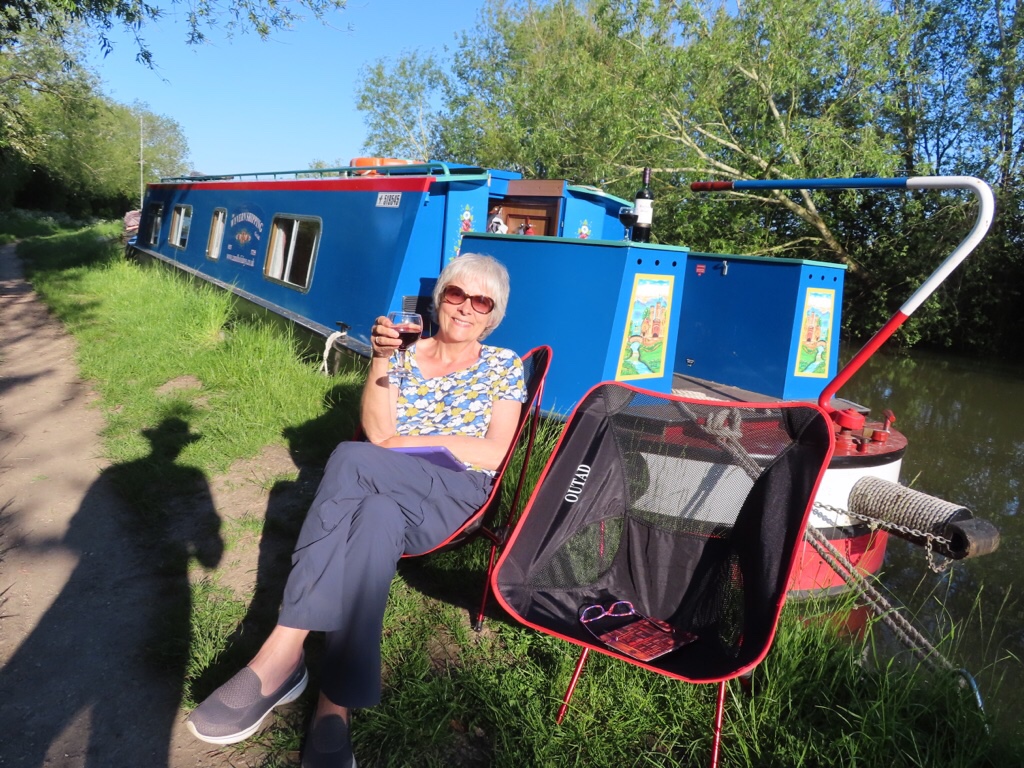
… and later in the sun with a glass of wine …

… and then the sun set!

Next day I was awake early, had a wander down the towpath and watched the mist hovering above the canal, but went back to a cuppa and waited for the day to warm up a bit.

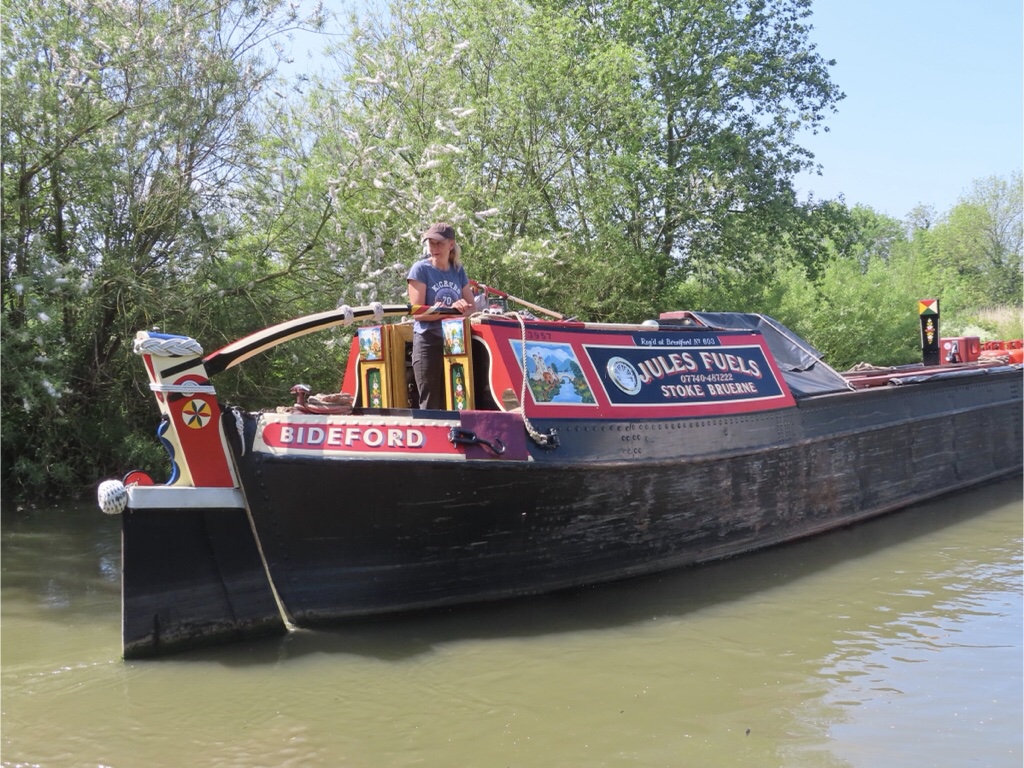
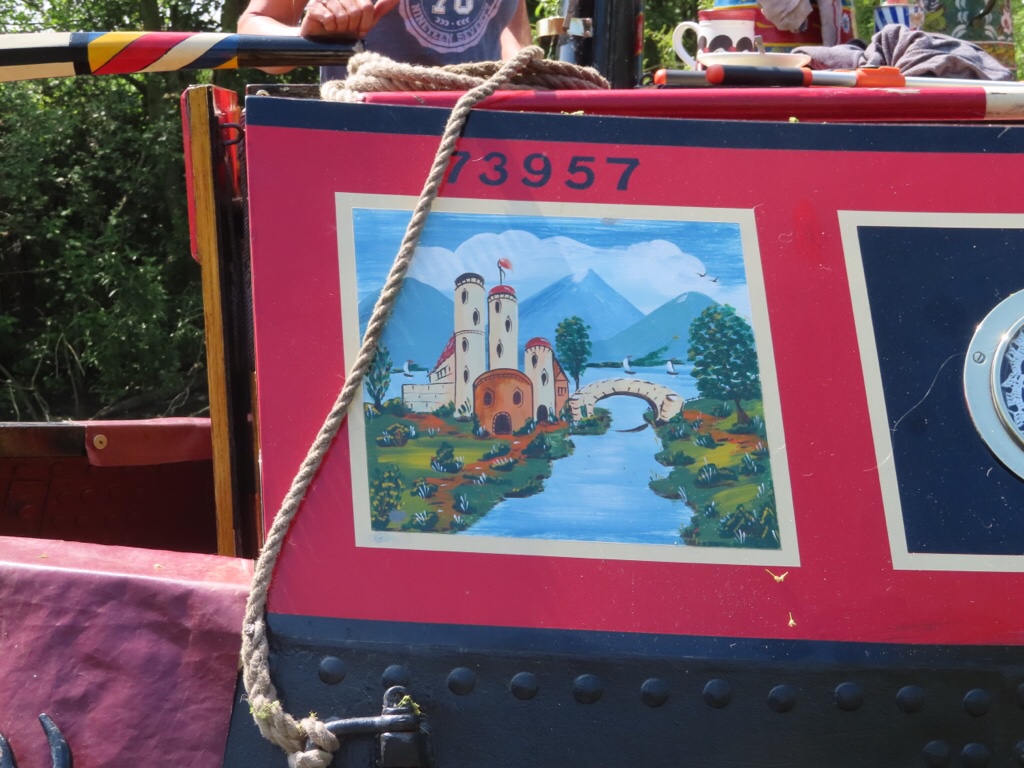
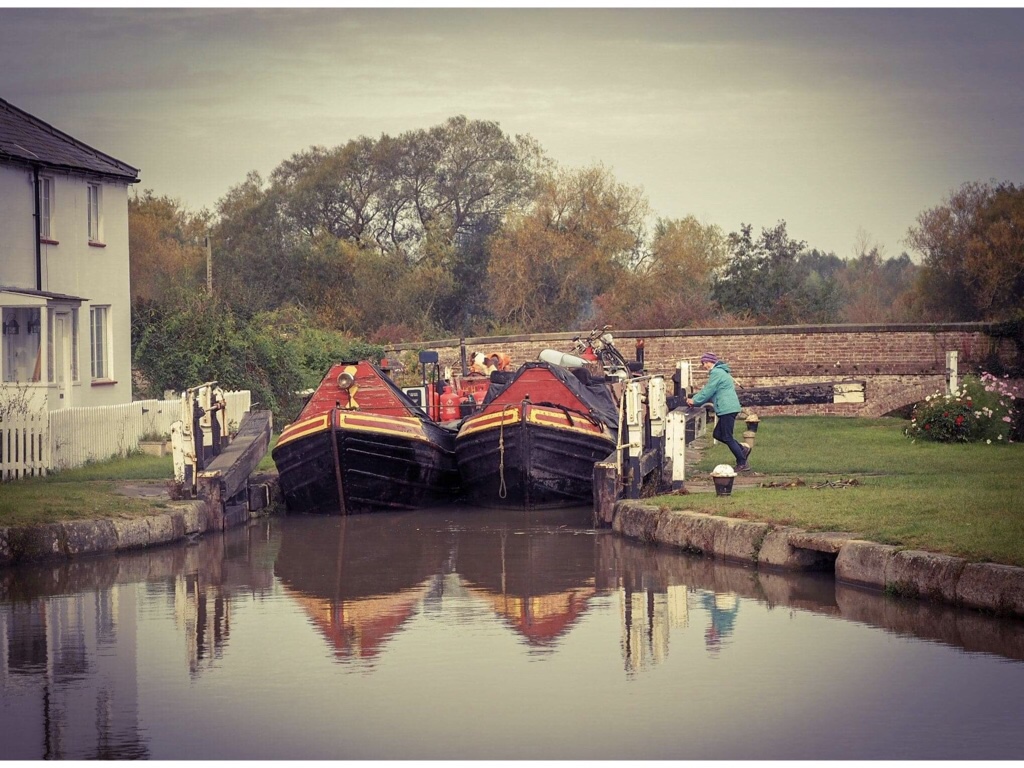
In the end, we had a bit of a slow start, made slower by the arrival of Jules Fuels to deliver diesel to the boat behind us. We were fascinated – the boat and butty are both around 87 years old and beautifully painted with castles and roses and despite being working boats.

They can carry 9,000 litres of diesel, 8 tons of coal and 5 tons of coke as well as wood and gas cylinders. The original proprietors have recently retired, leaving the work to younger folk. There are monthly routes and they use text and Facebook to contact their clients who then place an order and know roughly the time and place they can meet up, but they can also be flagged down.

They tied up mid stream against the boats either end of us and refilled the boat behind who had almost run dry yesterday and borrowed a jerry can of fuel to get here.

Then a woman ran up the towpath saying they were desperate for fuel and they were reversing their boat Klara up for a refill, so we waited for that too.

It’s amazing to think these traditional ways are still relevant, especially now that there are more continuous cruisers than ever on the waterways and we were pleased to have seen them and had the chance to chat.

Once we got going, we kept an eye out for some enamel panels we had missed on the way through, another part of the Gyosei Art Trail, showing local birds using a Japanese aesthetic.

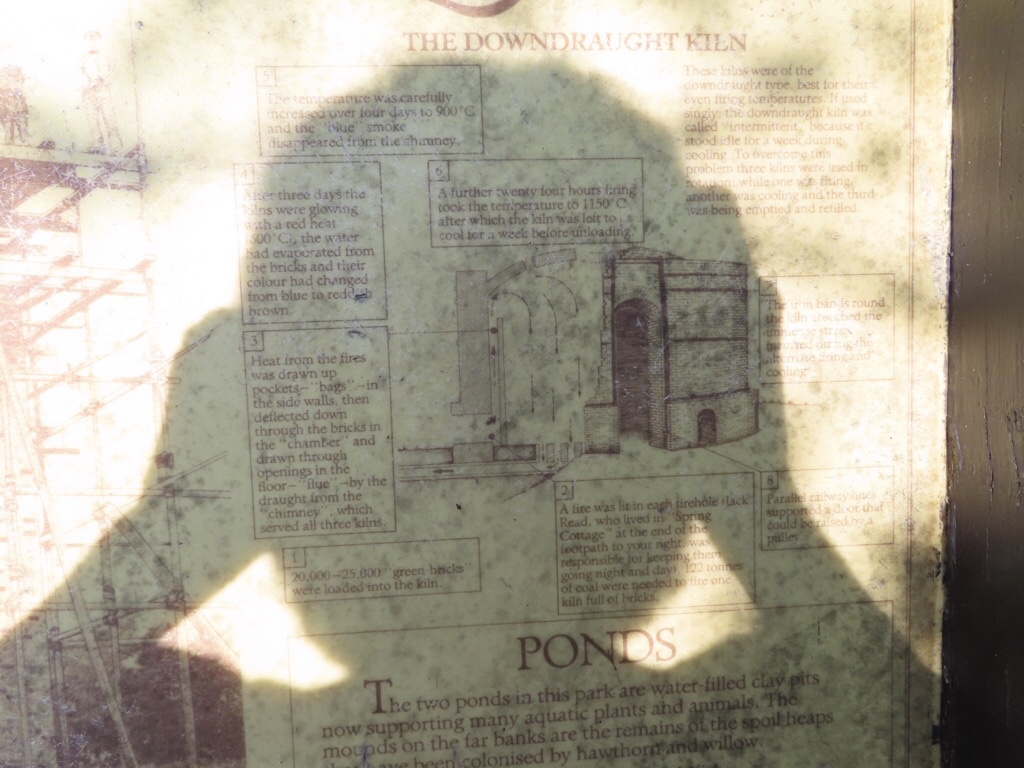
We then made a brief stop to walk into Linford Park to find brick kilns which were in use at the end of the C19th. There was once a tall chimney and the fire would have serviced all three kilns in rotation. They are currently being restored so that the brickwork is safe once more. The information panel had details of the two week firing process which heated the kilns to 1150°C.

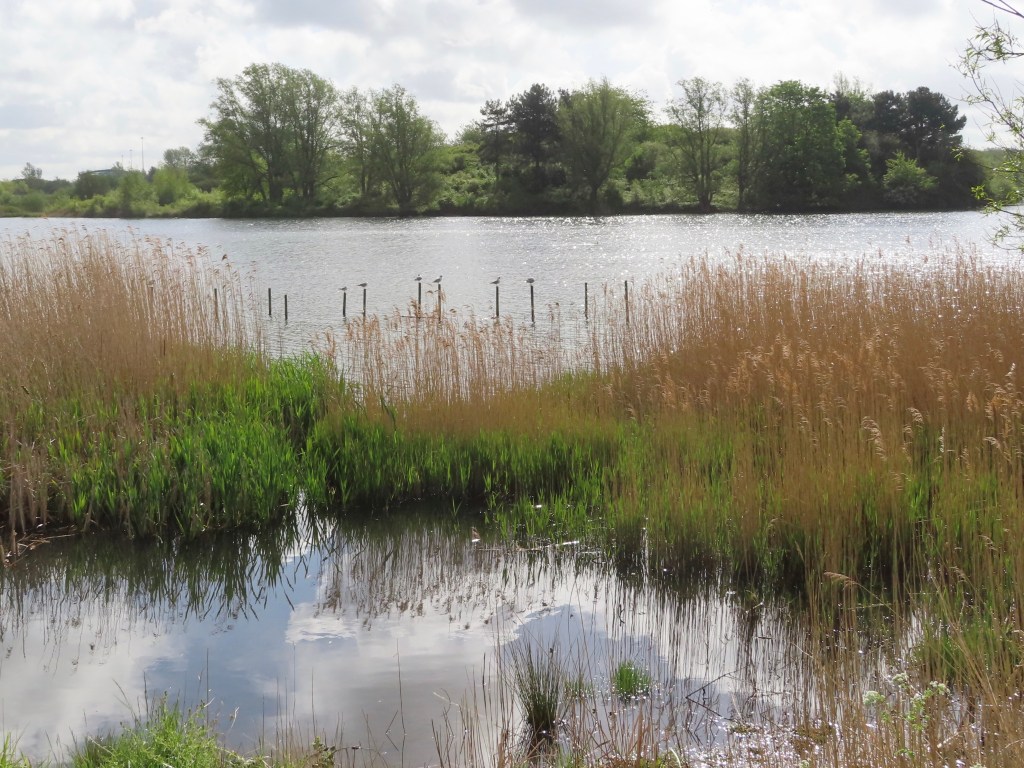
We had lunch in the sun, and took snaps along the way, stopped to refill with water then made a longer stop so we could visit Caldecotte Lake.

This is another of the green spaces in Milton Keynes and this map from their Parks department shows how many there are, with the Grand Union Canal. curving from top left to bottom right joining many of them up. So far we have been to the Ouse Valley Park, Stanton Low Park, Great Linford Park, Willen Lake, Campbell Park, Cauldicotte Lake and Waterhall Park.

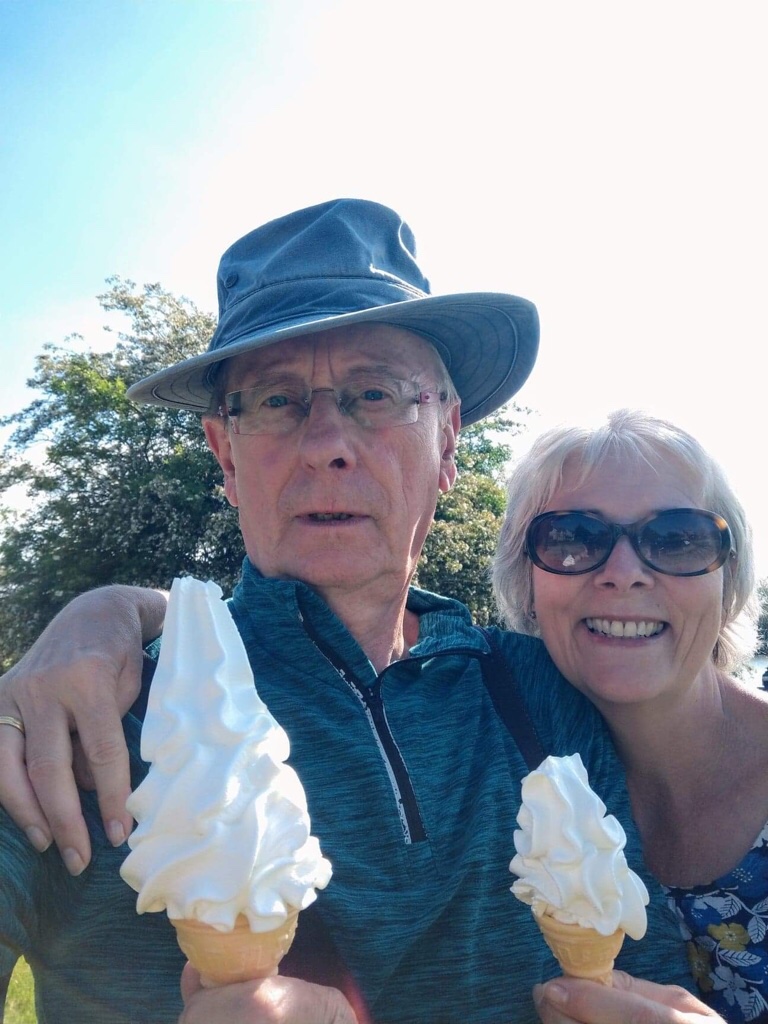
And on a bank holiday Monday with the temperature almost hitting 20°, the park was full of people enjoying themselves in the sun! We walked 3.5 miles on the lakeside path, had Mr Whippy ice creams halfway round …

… spotted a windmill minus the sails …

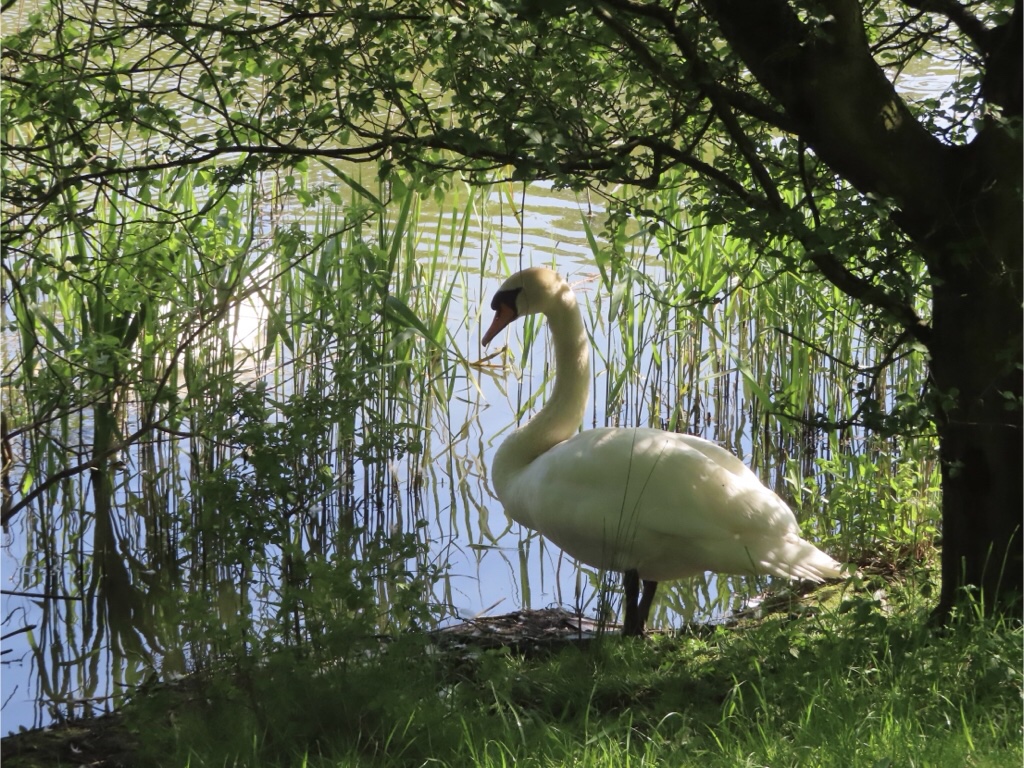
… and a swan keeping a low profile.

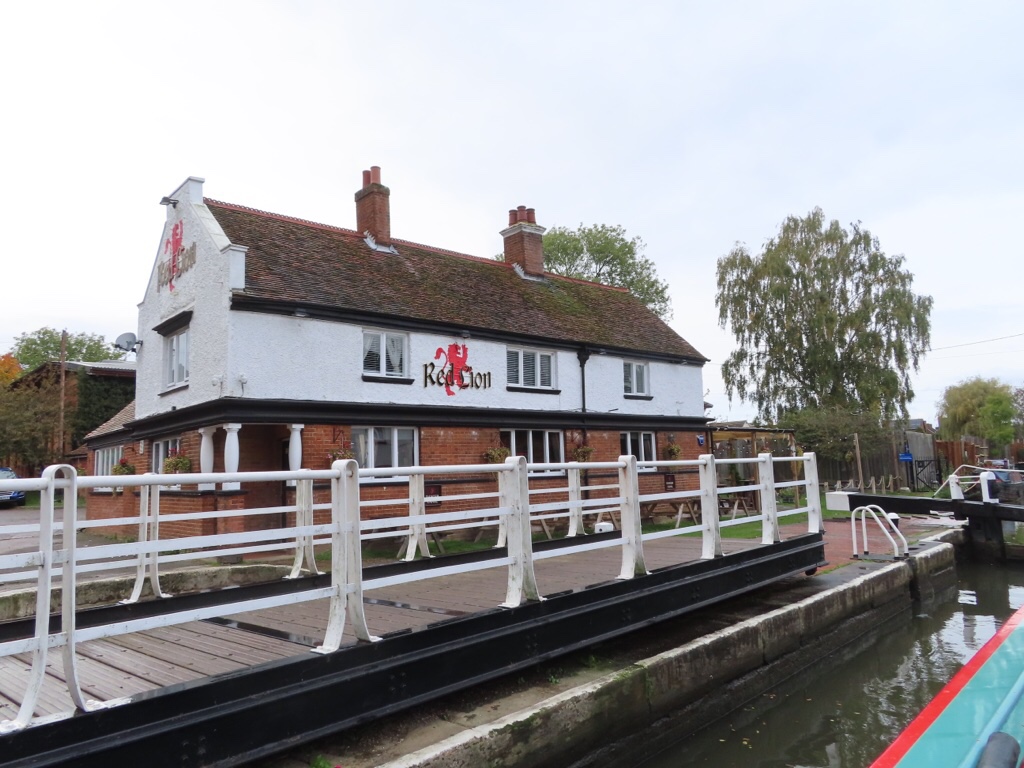
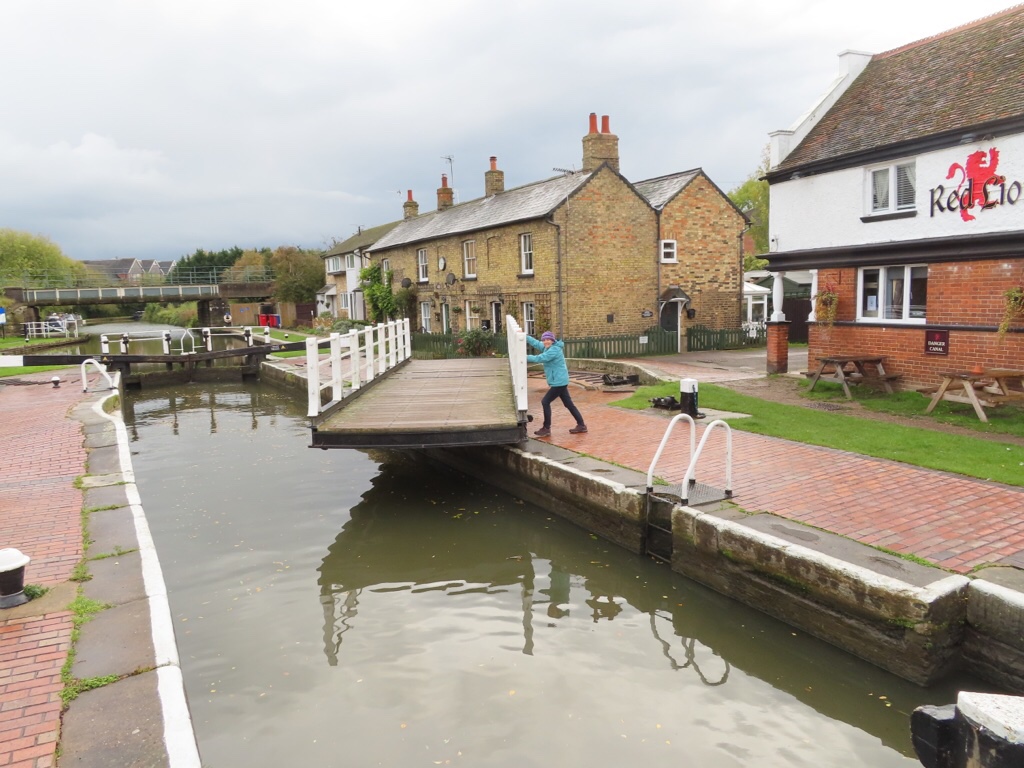
Back onboard, we continued through the lock at Fenny Stratford where a Rod Stewart lookalike who sang more like Tom Jones was pounding out tunes for the busy pub garden audience at the Red Lion. Fortunately a couple of people offered to help with the swing bridge and we were soon on our way, down to Waterhall Park where we’ve moored before.

Tomorrow we move on for our last full day afloat.

Map


A Tale of Two Aqueducts

I was awake at the crack of dawn, not helped by cramp in my foot which made me hop out of bed quickly to relieve it. It was already light and the birds were chirping. Then I started fretting that I only had 0.3GB of data to last 6 days and before I knew it, I was definitely awake. It was 5.30. I lay in bed and read for a while, then got up and crocheted a butterfly, then made tea for us both, telling Chris it was nearly 8.00 Rome time (ie 6.45!).

Anyway, by 8.30 Chris had topped up the engine and were ready to explore Willen Lake.

The public art here has an alternative religious theme, starting with the Peace Pagoda, the first of its kind in the Western hemisphere and built in 1980 by the monks and nuns of the Nipponzan Myohoji, a spiritual movement. It enshrines sacred relics of Lord Buddha presented from Nepal, Sri Lanka and Berlin and the frieze tells the story of Buddha – here he is The first of its kind in the Western hemisphere and built in 1980 by the monks and nuns of the Nipponzan Myohoji, a spiritual movement. It enshrines sacred relics of Lord Buddha presented from Nepal, Sri Lanka and Berlin and the frieze tells the story of Buddha.

The Medicine Wheel was designed by Roy Littlesun in 2000 and consists of two concentric circles of stone inspired by the legends of the Hopi Nation in North America whose prophesies foretell an age of peace when all nations live in peace and harmony. The design pays homage to British traditions of building circles alongside meeting places and important sites. Two extra pairs of stone situated north east and south west of the circle align with the needle stone alongside the lake and join the ‘Midsummer Line’, which follows the Midsummer sunrise that runs through the Tree Cathedral to the Belvedere in Campbell Park, along Midsummer Boulevard in Central Milton Keynes.

The Willen Labyrinth is a turf maze based on an enlarged version of the Saffron Walden Rosicrucian Maze with an oak tree at its centre and bronze faces in its lobes like this one and was laid out in 1988.

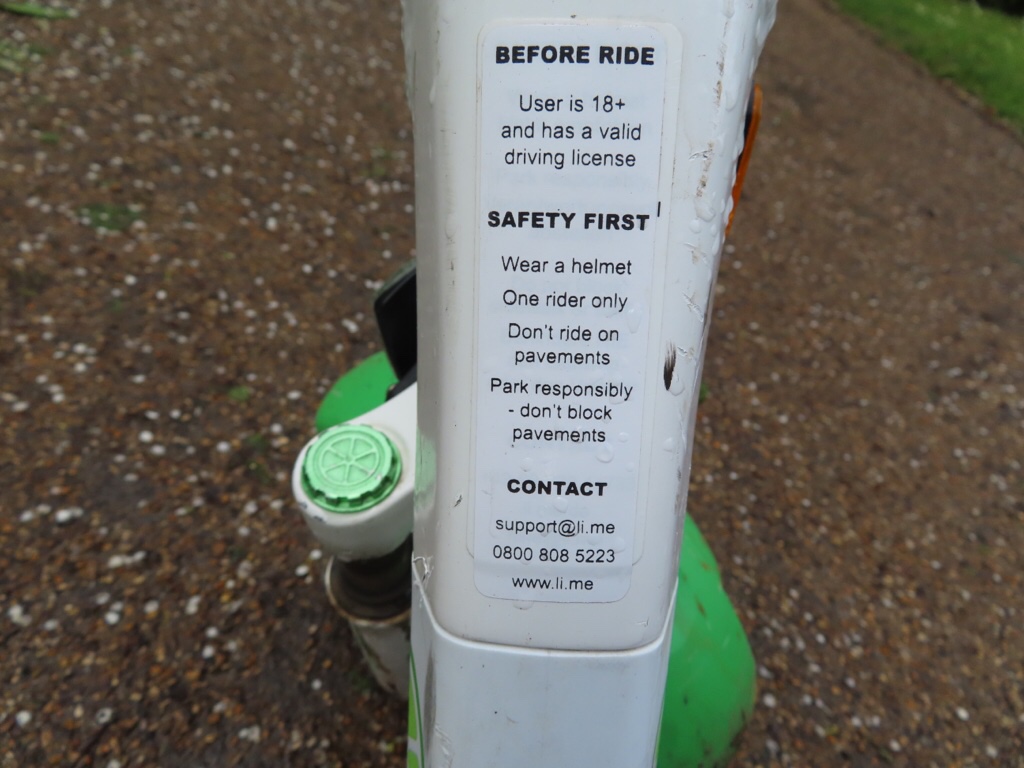
Finally we followed the edge of the lake, past the waterskiing winch and a series of paths and underpasses in search of the Tree Cathedral. We could have picked up a couple of scooters on the way, but unfortunately didn’t have helmets to hand.

The Tree Cathedral initially just looked like a glade of trees and as we entered a couple of bunnies ran across the grass with their pale fluffy tails catching the light. Inside there were aisles of trees forming an arched roof which apparently depicts Norwich Cathedral, peaceful, and certainly different.

Returning to Daisy, we made a start, and saw several more of the Gyosei art works from the canal – a life size steel Shire Horse whose steady toil propelled the barges of yesteryear along the towpaths …

… Three Post Bench illustrating wildlife of the canal such as coarse fish, and water birds but also smaller inhabitants such as water beetles, snails, insect larvae, floral algae and amoebae …

… and finally a beautiful white barn owl in glass mosaic swooping to capture its prey.

We then chugged slowly through Great Linford Park and Stanton Low Park which we hope to see more of on our return, and on to the New Bradwell Aquaduct, which carries the canal over Grafton Street. I’d read it was possible to get off the boat, nip down the towpath and over a parallel footbridge to take a photo of our narrowboat crossing the aqueduct … and it is possible!

Chris was so excited by starring in the photo, his steering briefly went a bit to pot!

Coming into Wolverton there were a few more urban views …

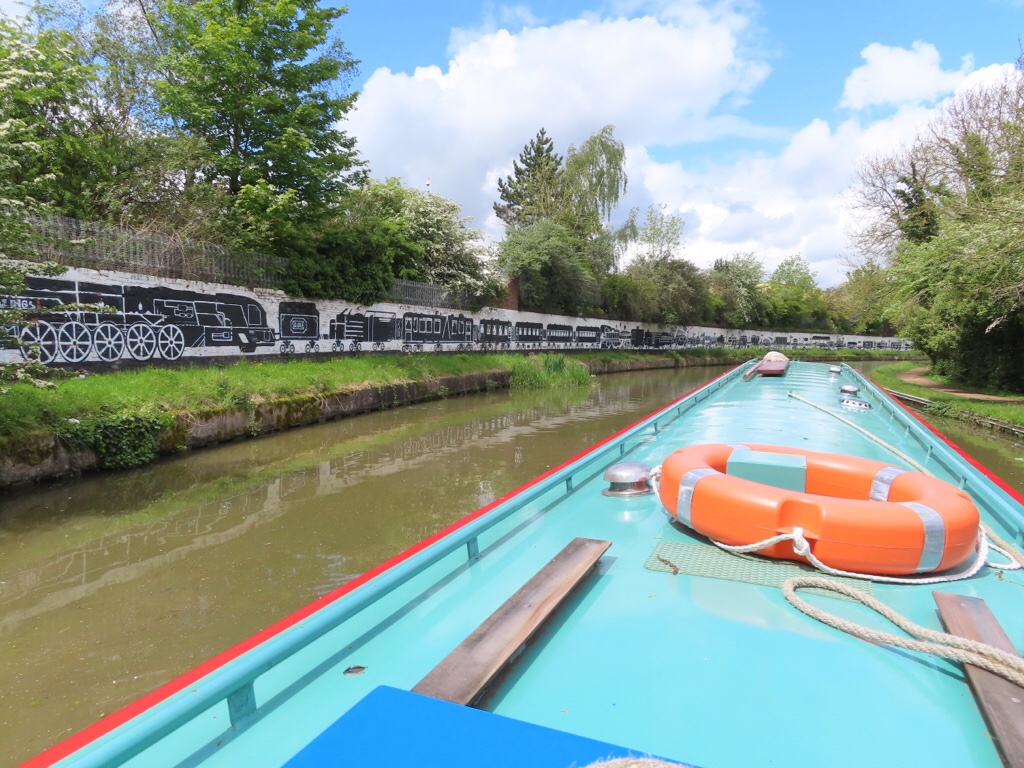
… including a mural alongside the station …

… and several boats moored up beside a wharf development of new houses beside a footbridge which conveniently leads to a good size Tesco, no doubt stocking up on groceries.

Not much further and we arrived at Ouse Valley Park and moored up just before the aquaduct. We’d had a couple of short bursts of rain on our way, but now the sky was getting very dark, and I think we arrived just in time.

After lunch, the sky soon cleared and the sun came out and we went for a walk. Steps took us down beside the Iron Trunk Aqueduct which dates to 1811 and is the oldest broad canal iron trough aqueduct. It was the 4th attempt by the Grand Junction Canal Company to cross the River Great Ouse as earlier attempts collapsed. A horse tunnel leads underneath … so we walked through to get a view from both sides …

We then headed round the park, taking in the river floodplain filled with flowers …

… and grazing ponies …

… until we reached the brick-built Wolverton Viaduct, constructed by Robert Stephenson in 1838, carrying the railway from Euston northwards …

… before looping back as the sky became grey once more and we were back to Daisy for a cuppa and cake before the rain.

We wanted to take a turn round Cosgrove, just a mile away, billed as a typical canal village, but also wanted to make a good start next day, so once the rain stopped we took a chance and set out. This time we weren’t so lucky, so most of our walk was in the drizzle, down to the lock, a snap of the Ornamental Bridge, through another horse tunnel and back, but I’m not sure it would have been much more exciting on a lovely.

We were pleased to get back, dry out and sit in the warm with stew and red wine for supper.

Map


Homeward Bound …

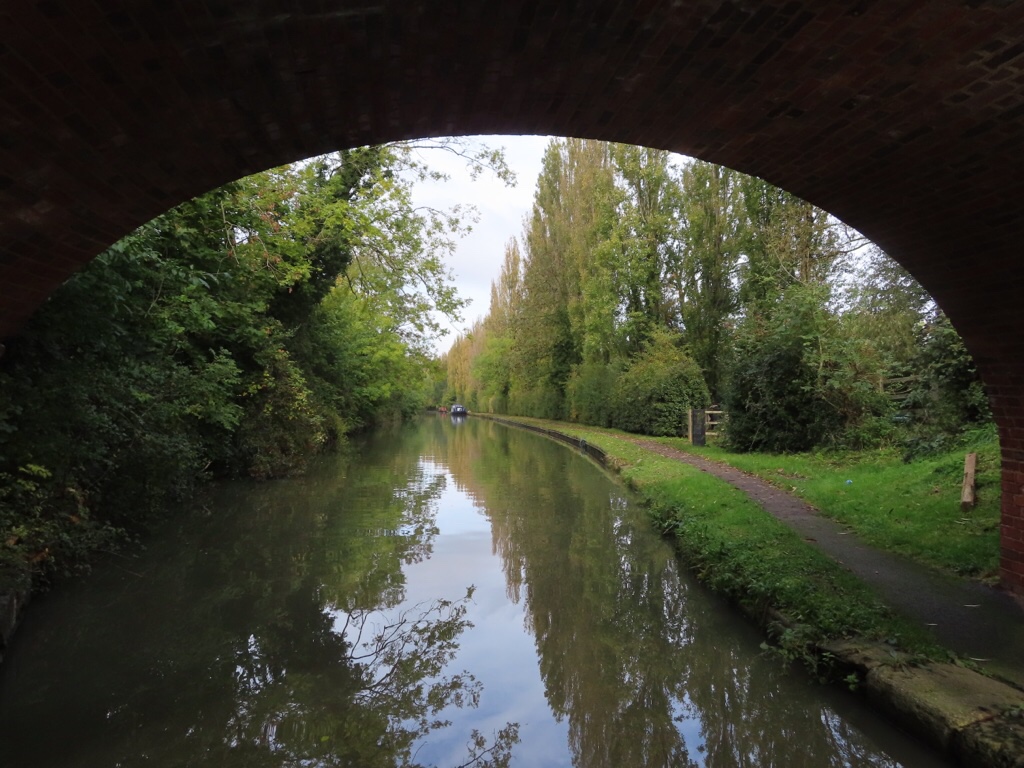
We took a turn round Waterhall Park before we set off. The park seems to mark the end of Milton Keynes and the beginning of the countryside.

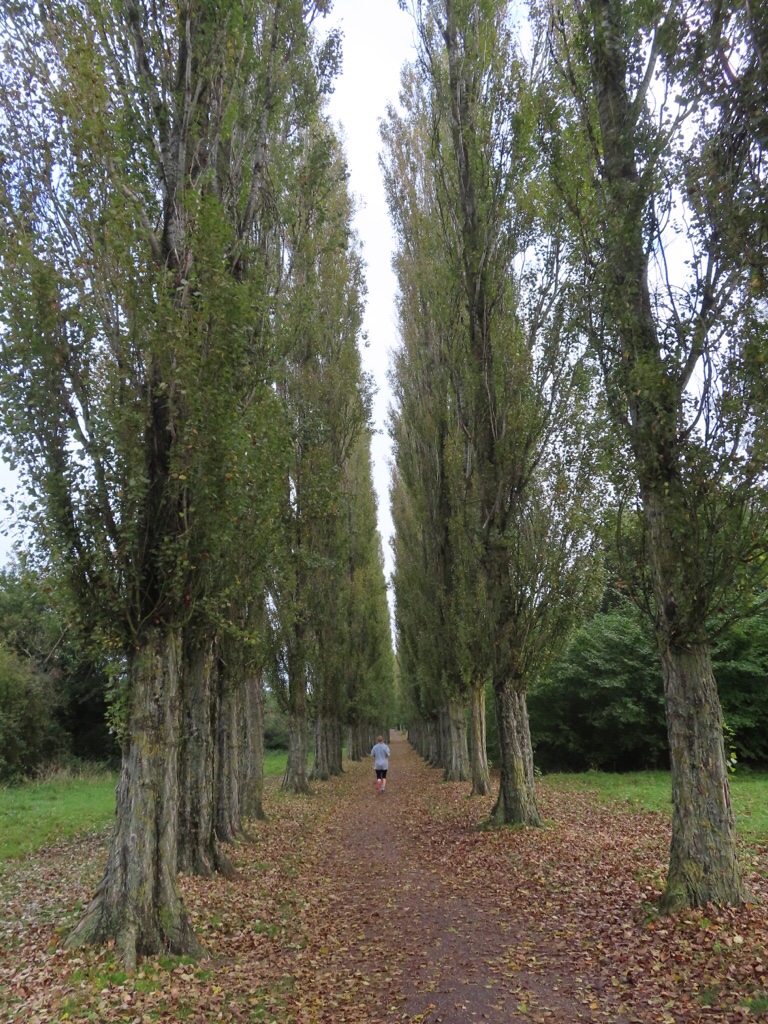
Just the other side of the towpath is an avenue of Lombardy Poplar trees which have been planted either side of a footpath which run from here, all the way through Milton Keynes.

It gives access to an almost uninterrupted stretch of parks which I wish we had explored more fully and we kept catching glimpses of the these tall trees all along the canal.

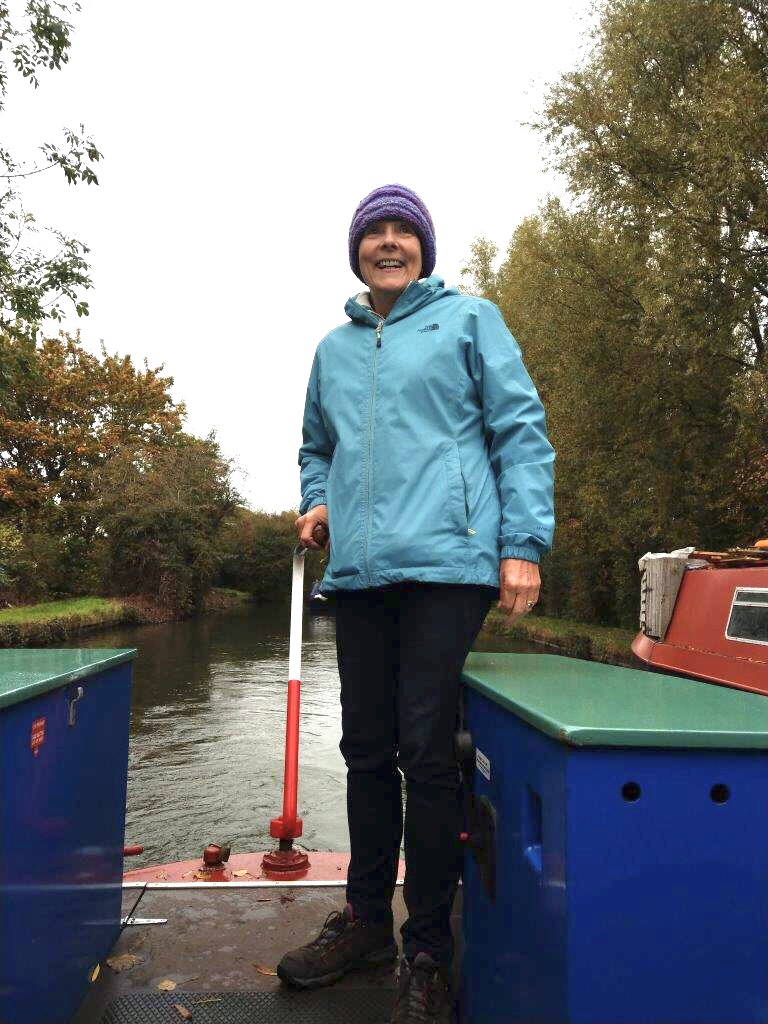
Once we set off, I had another go steering, but still couldn’t get the hang of it and even managed to collide with a parked boat … albeit very gently!

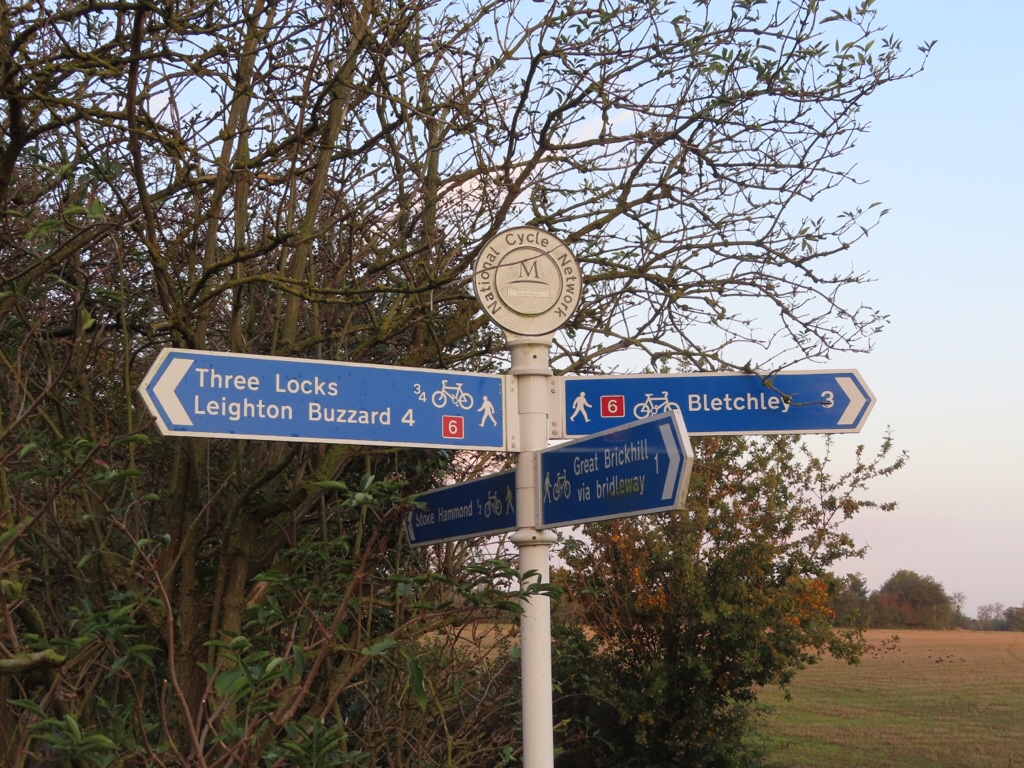
As we approached Stoke Hammond lock, we looked out for the unusual double arched bridge which we’d missed on the way up.

At one point, duplicate narrow locks were built to take smaller boats saving water and time. They have since been filled in but the second arch shows where it was.

We caught up with the boat we had started out with, also making their way back and worked the lock together.

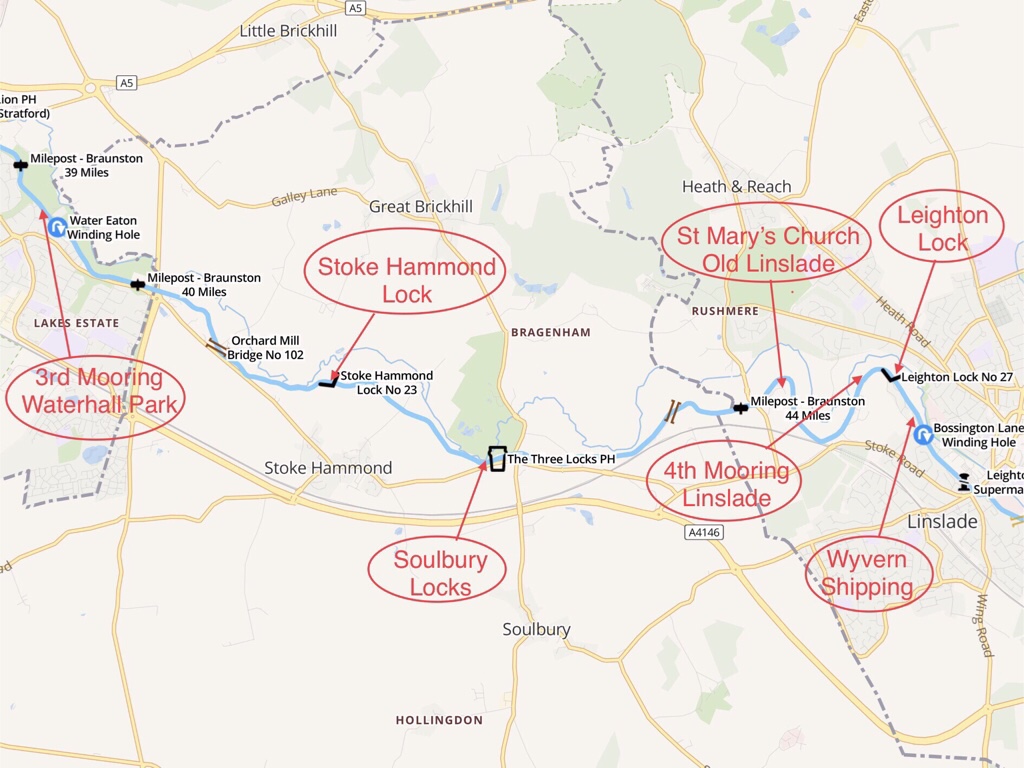
We stopped for lunch then refreshed, continued to Soulbury and the Three Locks. As we arrived another boat had just come through, so they were in our favour, and if they could come through just a single boat, then so could we. It was hard work though, working all three locks on our own, with Chris on the boat steering and me working all the paddles and gates. I did manage to get Chris to close one set though … just so he could have a go! At the end we were quite pleased with ourselves!

A bit later we moored up and went for a short walk past St Mary’s Church in Old Linslade and along the towpath.

We moved a short way further and moored for the night beside the site of Bridge 112, carefully chosen as far from the railway as possible and leaving just a short run back to Wyvern Shipping in the morning, setting a daily record of 6 miles, 31⁄4 furlongs! We polished off the last of the cake and a well deserved cuppa!

We came away, prepared to self cater throughout and brought enough with us so we didn’t need to shop, after all we are only on Daisy for four days and keeping our distance seems sensible at the moment.

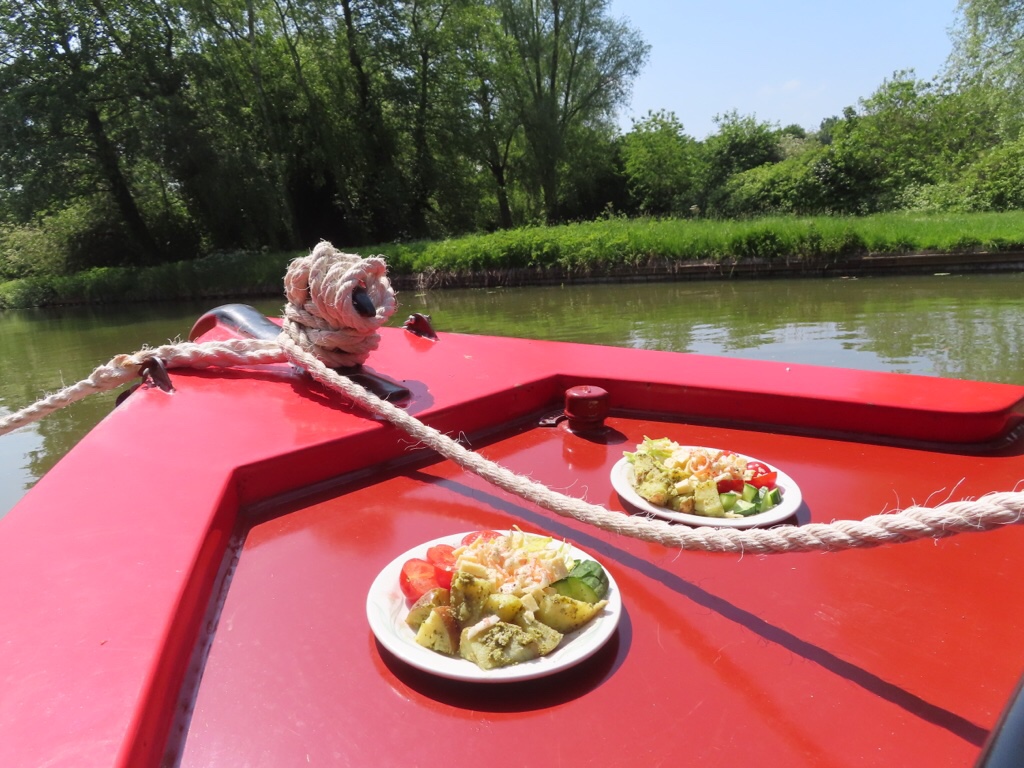
We had thought if we passed an appealing pub at lunchtime we might stop for a bag of chips but it didn’t happen, and by choosing secluded moorings we were too far from a pub for dinner. We’ve had homemade soup, sandwiches and beans on toast for lunches and the dinner menu has comprised sausages with roasted sprouts and potatoes, Higgedy Pies and veg, homemade chilli and on our last night we have pesto pasta. This has worked out really well and meant we could both enjoy the whole experience and spend our time watching the world go by rather than slaving in the galley.

And from galley to gallery, just in case I’ve not included enough photos already, here are a few more, including some of the quirky views from the canal …

Next morning we were out on the water at 8.15 to ensure we were back on time. Just Leighton Lock to go through …

… and 31⁄2 furlongs to travel and we were back at the boat yard, handing Daisy back.

We caught up with others who had been out for a midweek trip like us, some making Cosgrove and the tunnel at Stoke Bruerne beyond, a lady who had dished up a full roast dinner one night and a chap who had backed into the winding hole by mistake, but a good time was had by all.

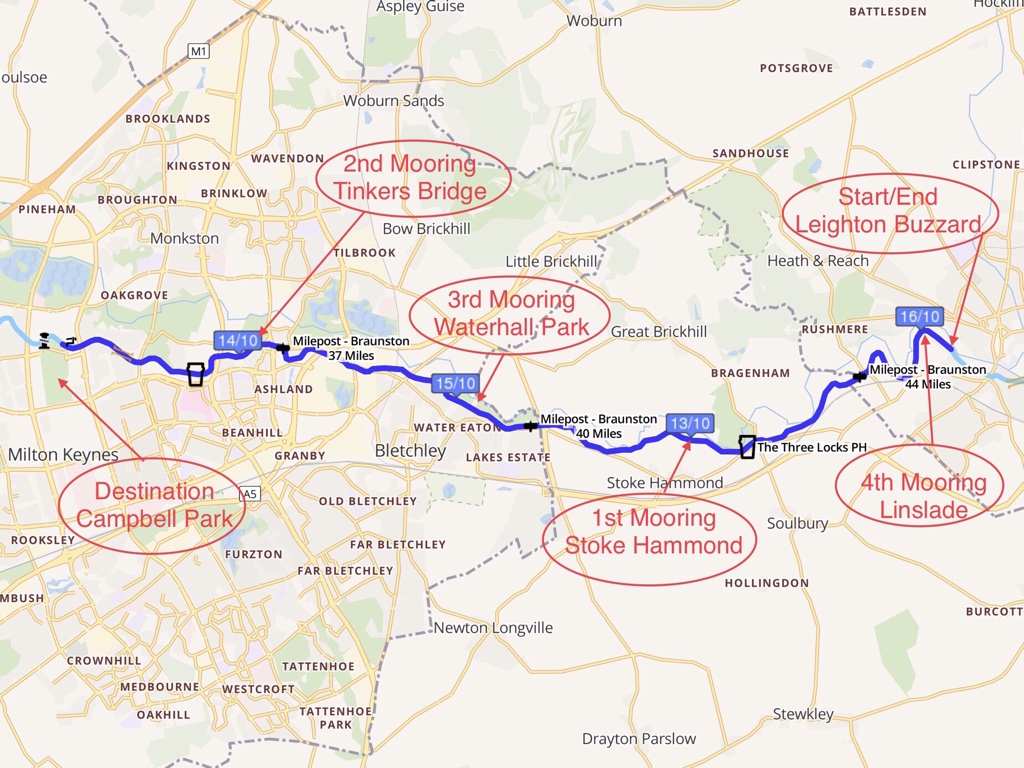
We’ve really enjoyed our first trip afloat and it was a perfect way to celebrate our anniversary, especially this year with options being limited. We may only have travelled a total of 22 miles, 1⁄2 furlongs and 12 locks with a revised destination of Campbell Park but we were obviously a little too ambitious thinking we could get further! Daisy is just lovely and we’ve already told her we hope to see her again soon … maybe we can get to Cosgrove next time and see the aquaduct!

Maps

Actual Route

Celebrating In Campbell Park …

We woke on our anniversary to a lovely morning and exchanged cards and thought how lovely our mooring was, especially so close to Milton Keynes.

Already we are about halfway through our trip so we looked at the map to decide how much further we could get and where we could turn. Needless to say with a 48 foot boat and a canal that’s 30-40 foot wide, you can’t turn round just anywhere! We needed a winding hole (pronounced win-ding) which is a ‘notch’ or specially widened area made for turning. We saw the best one would be 2 miles ahead, just short of Campbell Park in Milton Keynes, otherwise we would need to travel another 45 minutes (and back) so it was important we didn’t overshoot it!

Chris did a grand job, waiting till other boats had passed, heading the bow into the notch and swinging the stern round.

We then moored up across from the noisiest stretch of canal so far …

… and walked to Campbell Park, a huge rectangular green space in the centre of the city, edged by the canal on one side and containing a cricket arena and full of autumn colour.

The Belvedere rises in the centre and offers views across Bedfordshire and there is a wild flower meadow in the middle which is apparently grazed by sheep in the summer! The original vision was that the park would also be the cultural centre of the city and there are a number of works of art and sculptures throughout, the most prominent being the Light Pyramid which replaced the original basket beacon which was destroyed by lightening. It is made of steel and painted white and was first lit for the Queen’s Diamond Jubilee on 4th June 2012 and is still lit to commemorate special local and national events.

The Milton Keynes Rose is a commemorative public space featuring a calendar of days important to the people of Milton Keynes. Pillars are arranged like a flower, many already inscribed and others left for future dedications.

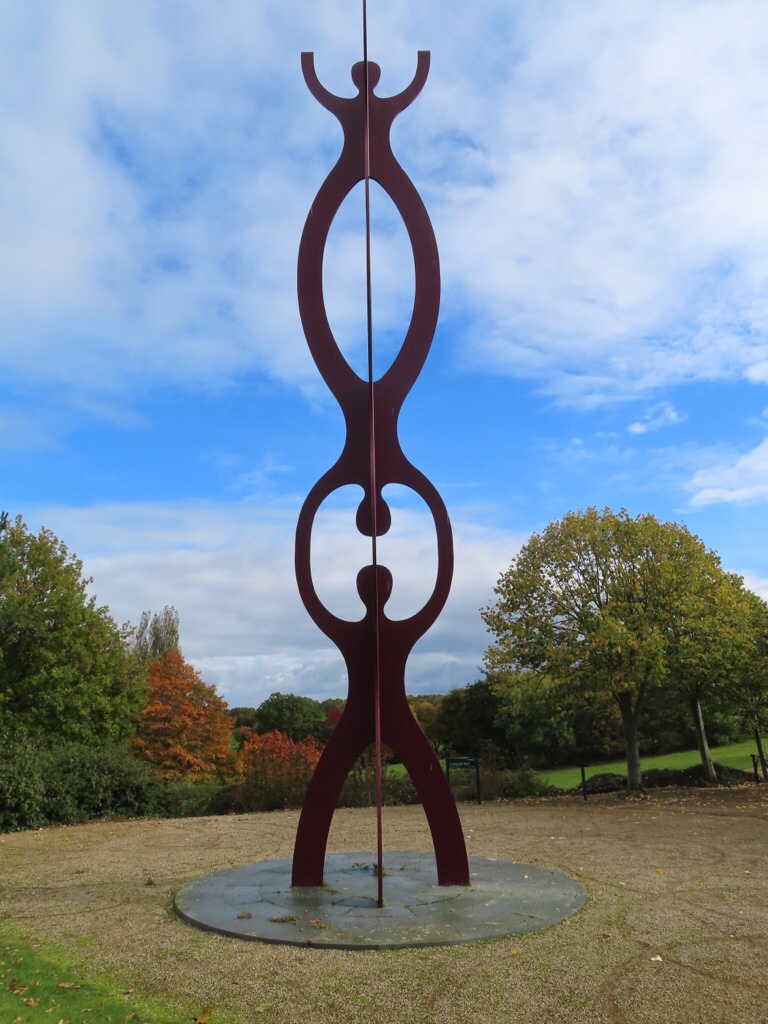
Other pieces include Head …

… Gnomon or Shadow Castor made of Ffestiniog blue grey slate and bronze which casts its shadow just like the arm of a sundial it is named for … but Chris keenly pointed out it is by the cricket pitch and represents wickets and a ball … surely I had realised that … but I hadn’t!

… Onwards and Upwards, carved from a single piece of eight-metre-high sweet chestnut and representing the growth and development of the park and the city …

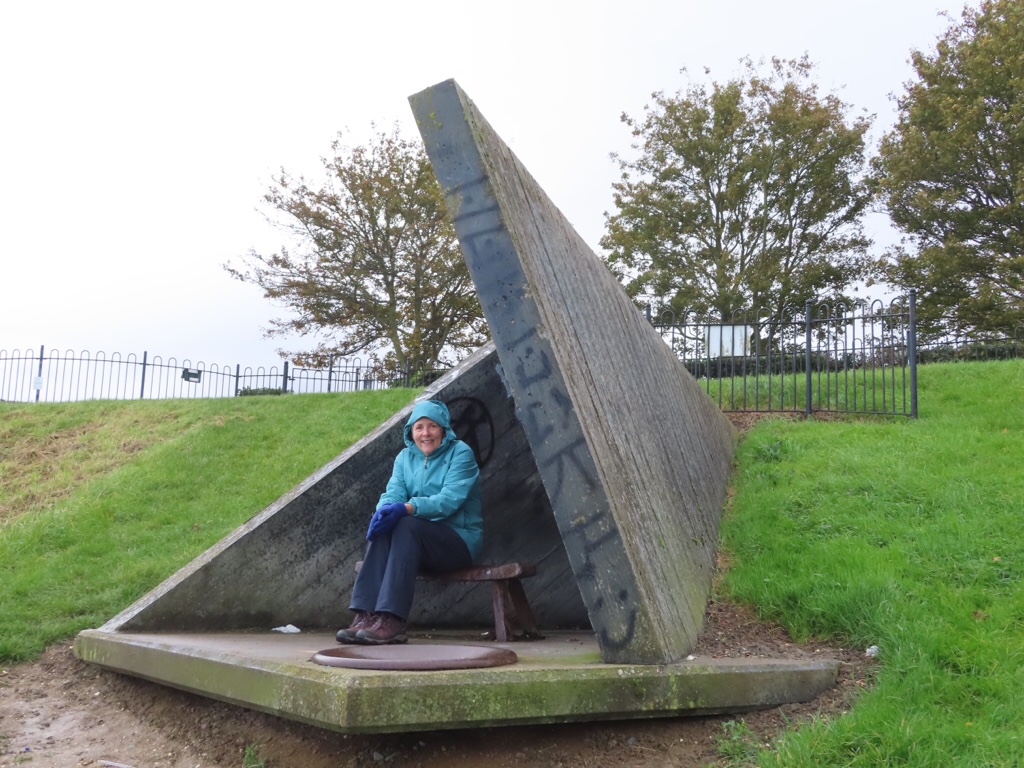
… Cave, supposedly offering shelter in the park, but not much as it doesn’t really have a roof …

… Chain Reaction, a 3D model of figures balanced like acrobats, in an endless chain which changes as it is viewed from different angles …

… and Armillary Sphere in the centre of the Labyrinth to celebrate the 10th anniversary of MK Housing Association.

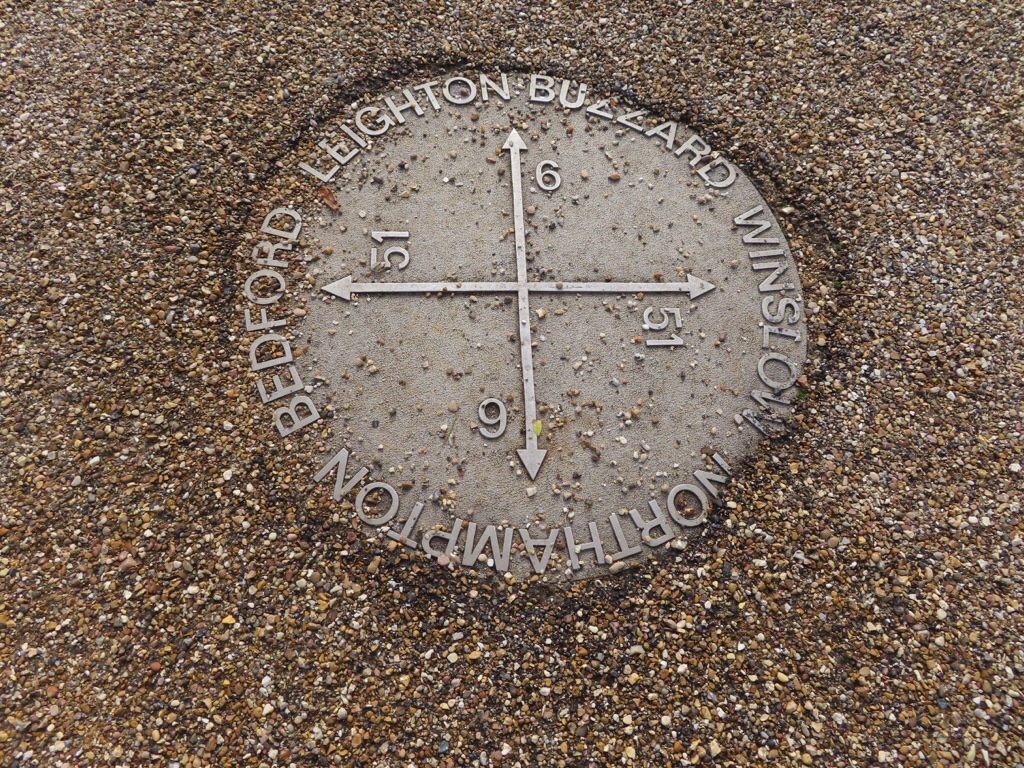
Chris was intrigued by this plaque, confused by the seemingly incorrect distances …

… until I pointed out this post!

We returned to the boat for lunch …

… before beginning our return trip. We barely had to stop at Fenny Stratford Lock with its Swing Bridge as it was in our favour and open. We went through with another boat, and another boat was waiting so we didn’t even need to close it, quite a contrast to the day before! Before we knew it, we were back at Waterhall Park, where we had stopped for lunch the day before and moored up after covering exactly 6 miles for the day.

The sun came out when I made the tea, so we sat on the bow, admiring the canal.

Later we celebrated our anniversary with a bottle of fizz and a very delicious White Chilli made from a Simon Rimmer recipe which I’d brought with us frozen, served with greens, grated cheddar and tortilla chips!

We played several hands of Uno and Chris was pleased to reign once more as Uno Champ!

Maps

Finding Our Feet …

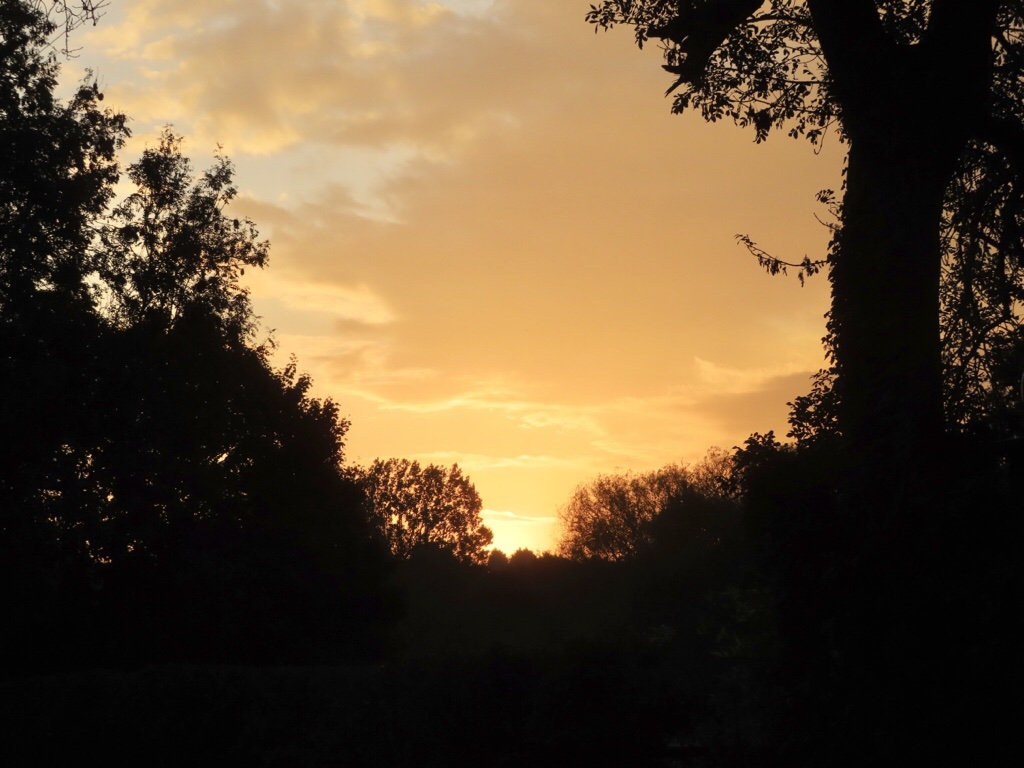
We slept pretty well, despite the snug bed, but both of us woke in the night and were kept awake for a while by unfamiliar nocturnal noises. The sky started turning pink during our first cuppa, so we dressed quickly and walked down the tow path to the bridge and took a few pics …

Over breakfast we were feeling quite pleased with ourselves that we were already further along than we had expected, in fact 3 locks and 1 mile further … but we shouldn’t have been congratulating ourselves so soon …

I found a really interesting website with details about this stretch of the Grand Union Canal and read about Soulbury as I drank my tea. Stating the pretty obvious, when you think about it, when a boat passes down a lock it takes a whole lock of water too, so unless this is replaced, the canal would eventually dry out. When the canal opened in 1800, reservoirs were built to collect water and keep the levels high enough for boats to stay afloat. However this might not be enough with heavy traffic or a drought, so a series of nine pumphouses called the ‘Northern Engines’ were built, including the ones at Soulbury and Stoke Hammond. Each housed a steam powered pump that drew water up from below the lock and pumped it through a tunnel and back above the lock. The buildings had chimneys, few of which survive, and were often decorated with fan lights and ornamental glazing bars which can be seen at Soulbury and Stoke Hammond. At Soulbury, water is still recycled using a pump to keep the canal open and the pumphouse is currently undergoing restoration, which explains all the metal fencing and here’s a closer picture …

Every lock on the canal, like every bridge, has its own number, starting with No1 at Braunston where the Grand Union Canal joins the Oxford Canal. The flight of three locks at Soulbury, No 24, 25 and 26, take the canal 6m further uphill from its lowest stretch across the Ouse Valley in Milton Keynes up to Tring summit at 121m above sea level.

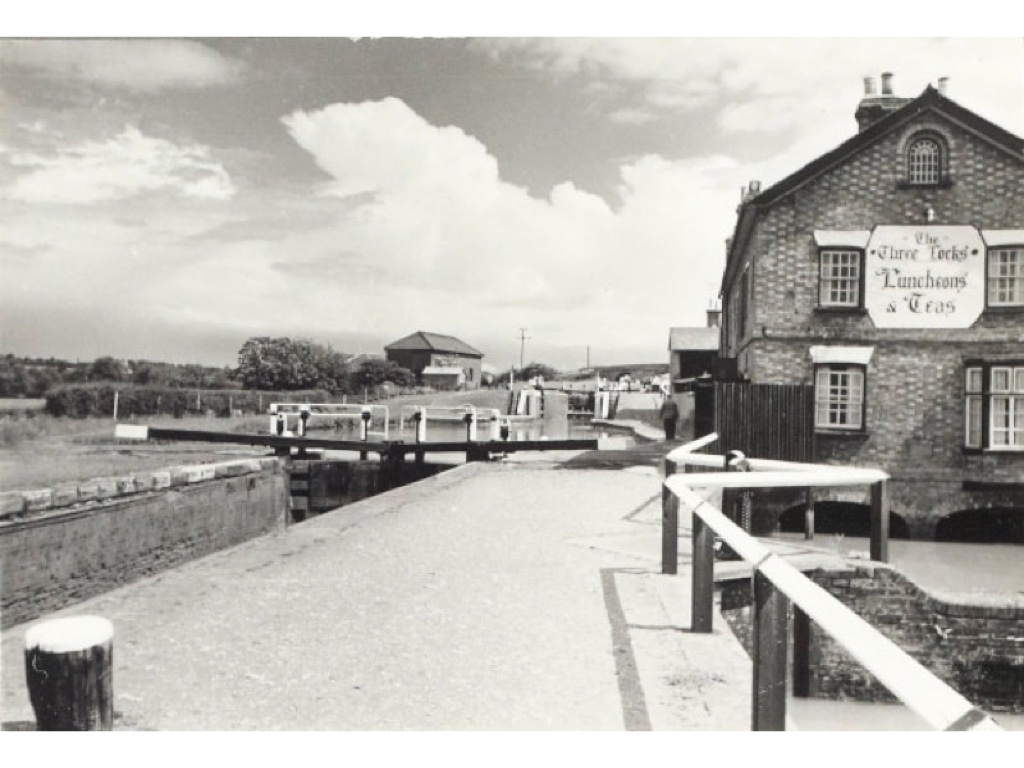
The Three Locks was purpose built as a canalside pub to provide services to travellers on the canal and was originally known as The New Inn. Census records from 1881 list the innkeeper as Mary Faulkner who ran the pub with her two servants, Charles Barron and Mary Curtis. On the night of the census the inn had one guest, Joseph Staige, a retired optician from Birmingham who was perhaps stopping off overnight on his way home from London on a flyboat. Here’s an archive photo from maybe the 1950’s … not much has changed except the colour and the boats in the lock.

Anyway, time to shake a leg and get on with the day!
We set off after breakfast at 10.00 and we soon came to Stoke Hammond Lock. A real Waterman was bringing a pair of boats through the lock towards us which meant the lock was ready for us to take the other way …

… and here’s the pumphouse with its fanlight.

Only one boat had passed us this morning, so we were surprised to see another come up behind us to share the lock. She and I got chatting as we worked the lock … they had renovated their boat and had it for 8 years. I think he shared some tips with Chris, who managed to moor and pick me up perfectly!
Incidently, if you wondered what a pipe bridge is … as we did … here is a prime example, taking a pipe over the canal!

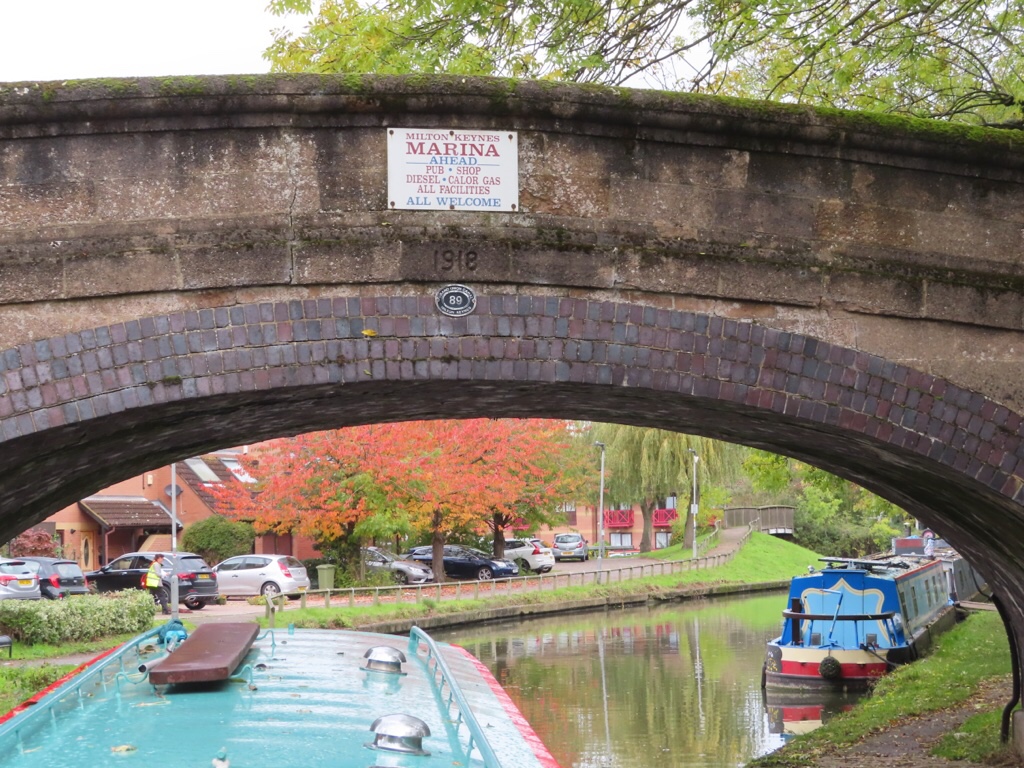
Some time later we passed a marina …

… then decided to stop for a coffee. Easier said than done though as mooring proved quite tricky … we managed to get the bow in … but the stern stuck out … so we tried again … twice … before we had success! I think the lesson learnt is not to leave it too long to stop for a break, as concentration is already waning when it’s most needed. We started with coffee … then I went for a short walk round Waterhall Park, where I saw the River Ouse …

… then we had lunch!

Setting off again was easier said than done as we seemed to have got stuck in the mud. Chris got the pole and despatched me to the other end of the boat in the hope we could push free!

Finally we were free and a mile or so further on we reached Fenny Stratford where Bridge 96 takes the canal beneath the old Roman road of Watling Street and the oldest known gold coin in Britain dating from 200BC-100BC was found here in 1849.

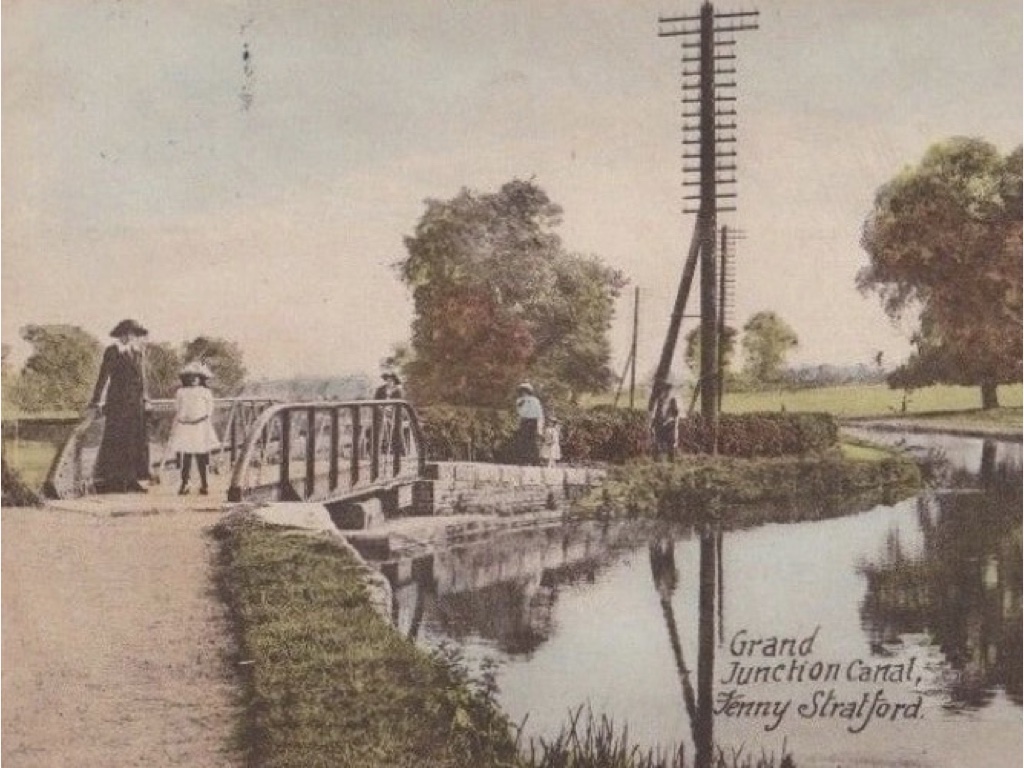
Here are a couple more then and now images of the bridge …

… and houses on the site of a brick kiln and a wharf which was used to load goods from barges.

The towpath was carried over the entrance to the wharf by a swingbridge, since replaced by a liftbridge. There would have been wharves like this all along the canal, providing a transport network. The canal was also useful for other communication and large telegraph poles lined the route. A GPO repeater station amplified signals so they could travel north, or during WWII to the code-breakers at nearby Bletchley Park.
Just past the town is Fenny Stratford Lock, the first lock that raises the level of the canal after it has crossed the long flat plain of the Ouse Valley. We managed to moor up quite easily this time and went to check it out.

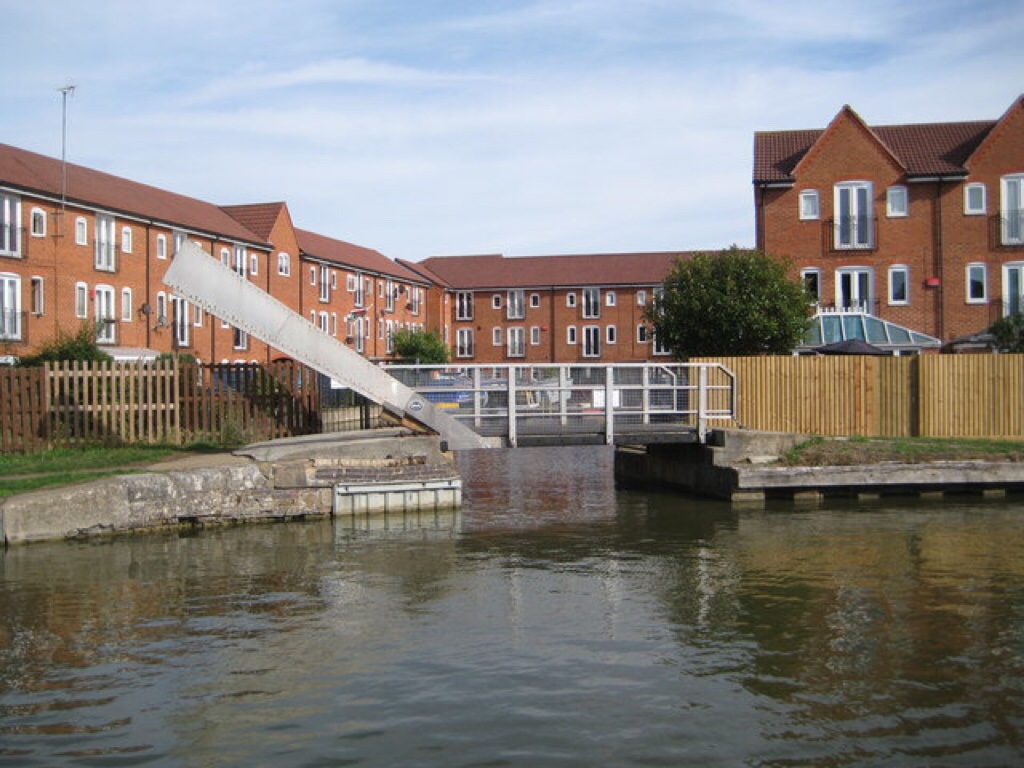
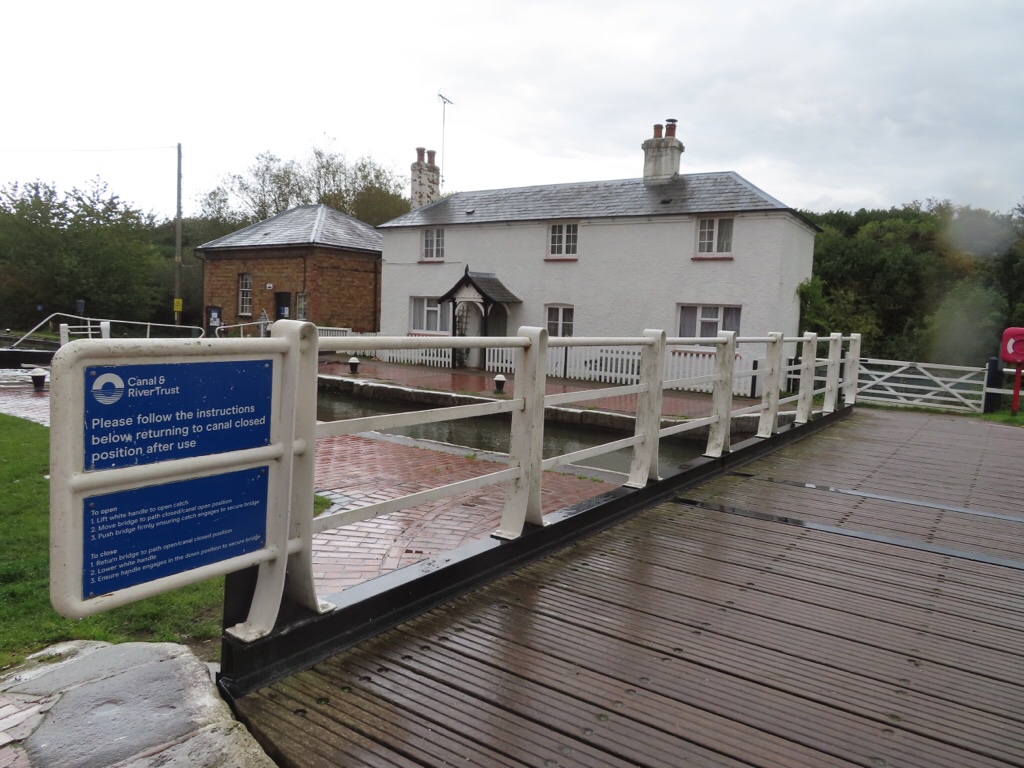
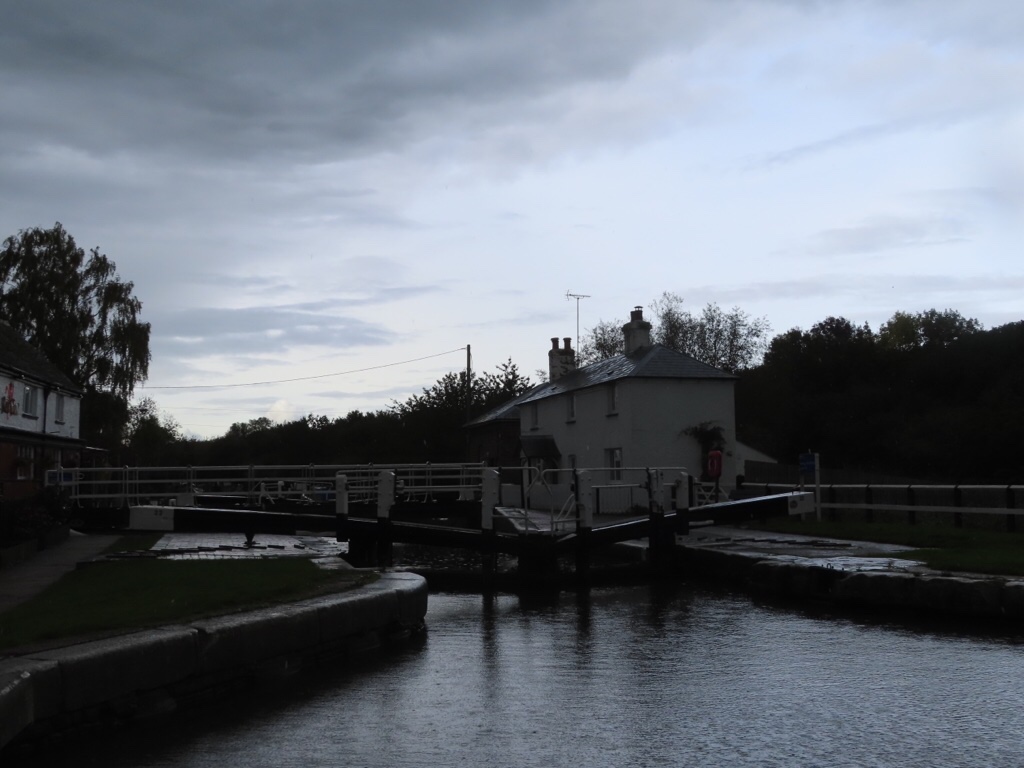
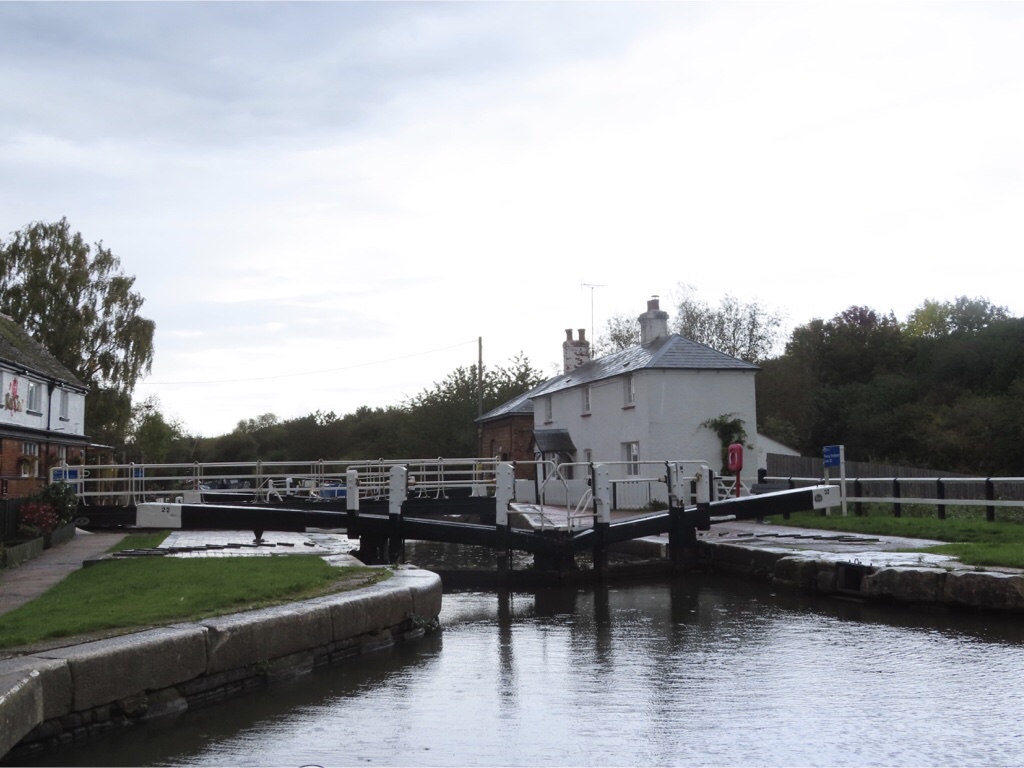
The lock had been left full, so we just needed to open the gates, but as I was taking a few pictures, I noticed an added complication, a swing bridge in the middle of the lock!

The sky darkened and the rain started, so we decided to wait and see if it would blow over.

We didn’t have to wait long, just a passing shower. No other boats had come, so we started to work the lock ourselves. I tried to move the swing bridge, but struggled and Chris came to help … finally he had a chance at some manual labour!

I opened the lock gates, Chris moved the boat into the lock. I closed the gates, opened the paddle on the other gates so the water equalised, then opened the gates. Chris took the boat out and moored while I closed the gates, but he had to help again with the swing bridge. I remembered that so far I had taken a few pics of Chris, but there were none of me, so I handed over the camera to even the score.

We checked we had left the lock as we should, then set off again. I really enjoyed working this lock as we remembered how to do it and managed all on our own … a real sense of achievement!

The sky was getting grey again and if it rains, the skipper gets wet, so we started to keep an eye out for a place to moor up … it’s not as easy as it sounds as you have to be a reasonable distance from hazards like bridges and bends not too close another boat and preferably not right by a noisy road. Coming into Milton Keynes, our options were reduced and we chose to stop just before Tinkers Bridge 90B, which we managed without event.

Sitting over a cuppa, we both felt the day had been quite hard work – the concentration needed to steer, as just a brief lapse has the boat heading for the bank – as well as the physical effort at the locks. We are resigned that as beginners, this is definitely slow travel as we have only travelled 5 miles, 3⁄4 furlongs today, and our idea of getting to Cosgrove is no longer realistic. Instead we will enjoy our tea and cake and take some time out. Chris is busy editing photos of swans …

… while I’m happy to put my feet up and read some more of my carefully chosen getaway reading … Canal Pushers by Andy Griffee, a murder mystery set on a narrowboat called Jumping Jack Flash on the Grand Union Canal no less!

Another tasty supper … this time sausages with roasted sprouts and potatoes with pomegranate molasses and a nice drop of Merlot!

Maps