Valletta … a final salute!

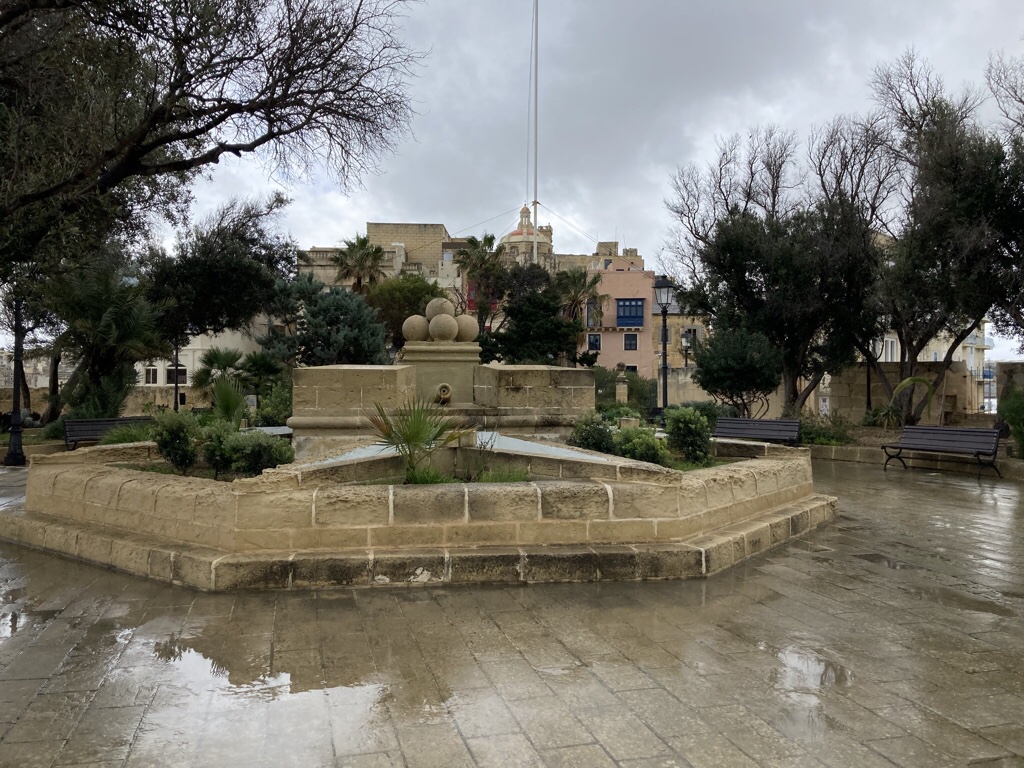
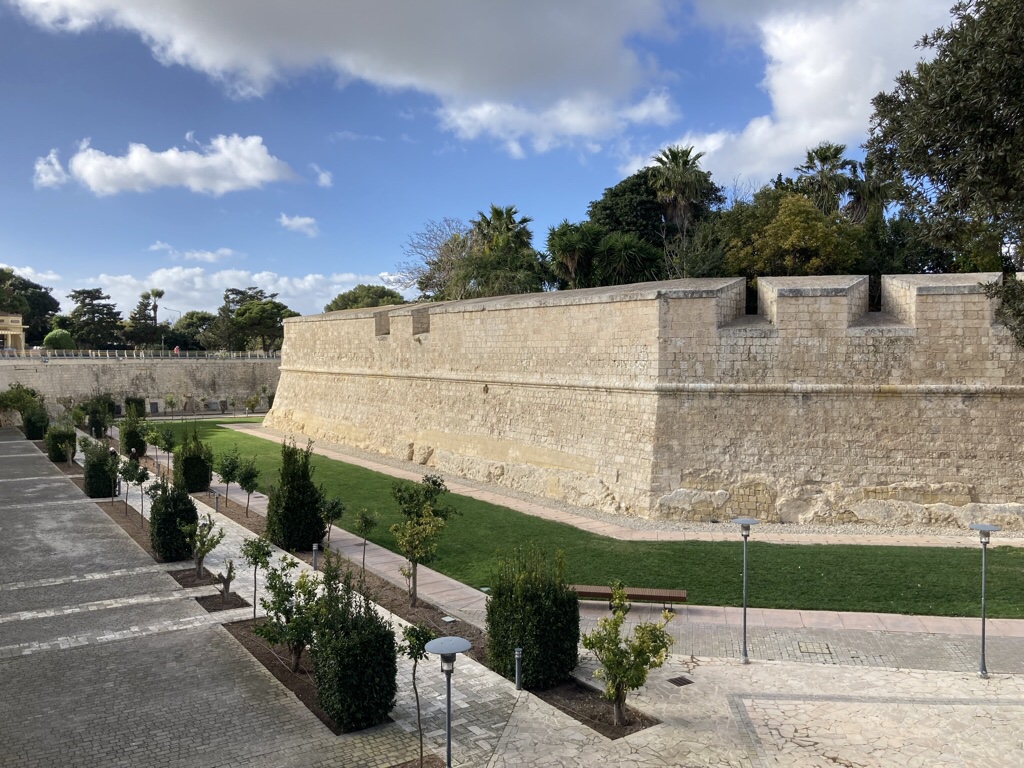
Not a lot more to say but Valletta does have a couple of public gardens with great views towards the Three Cites. Upper Barrakka Gardens also has a saluting battery, a balcony of canon which used to fire salutes to visiting naval vessels. They still fire the gun twice a day for tourists.

Lower Barrakka Gardens was close to our hotel and has a temple to commemorate Sir Alexander Ball, the naval captain who captured Malta from the French in 1800, ending their brief occupation.

It is a good place to watch the sunset as it lights up Fort St Angelo.

Looking out to sea is the Siege Bell Memorial for all those who fought and died for Malta in WWII. It commemorates the 50th anniversary of Malta receiving the George Cross.

After sunset comes dinner and we’ve eaten so incredibly well since we’ve been here. Casa Sotto serve Pinsa Romano, traditional oval flatbreads from Rome, similar to pizza but very light and crispy. The special was soft potato, pistachio cream and crispy fried onions, seasonal with a Maltese flavour and we shared one of these and also a more traditional Norm with tomato, aubergine and ricotta. All was washed down with a carafe of house red and it was full all evening so good job we booked!

Muza is the restaurant within the art museum of the same name which Chris chose for dinner on his birthday. We sat in the Donato Room, decorated in bronze and teal and dominated by a stunning modern chandelier which casts a floral pattern onto the walls, echoing the frieze at the top of the walls.

The art theme continued with our choice of a Chenin Blanc called Caravaggio and then the presentation of picture perfect plates, each a work of art. We began with mushroom tart with a smoked cheese foam and pork belly with pak choi and truffle jus then artichoke and chèvre tortilla i with tomato fondue and pan seared meagre with pickled fennel. A shared chocolate brownie finished the meal sweetly!

D’Office is a cosy bistro, with lace hanging at the window and filled with vintage bits and pieces. We shared a mezze of broad bean dip, sundried tomato, goats cheese, butter beans, olives, capers and crackers. Afterwards, Chris had the parmigiana while I had rabbit braised in wine with dates, served with crispy roast potatoes and vegetables. Far too full to consider dessert!

Legligin is a cosy basement wine bar offering a set seven course tasting menu but happy to offer vegetarian alternatives. Well we had a feast! They helped us choose the perfect Maltese wine to accompany our meal, a fruity red blend called Fenici, which pays tribute to the Phoenicians, who in the first millennium BC, spread the winemaking culture throughout the Mediterranean.

We began with Maltese tapas including olives, fresh Maltese cheese with fig jam, caponata, stuffed vine leaves, tomato and anchovy paste and local sausage in tomato sauce. For the next three courses I had fish cake, with sautéed octopus and cabbage salad, Maltese fish soup called Aljotta then mussels cooked in white wine while Chris had courgette and tomato gratin, mushroom soup and aubergine parmigiana. Pasta was next, both lemony but mine also with pancetta, then salad, both with strawberry dressing my mine with a quail breast and Chris’s with sweet melon. My last course was pork cheek in tomato sauce, while Chris had tiramisu, which he gamely saved till I had finished and shared! It was an epic meal, lasting 2.5 hours and a first for both of us. We thought what a good idea it was and how environmentally friendly it must be to serve what is good that day, only to buy and cook as much food as is needed. Rather than offering a wide choice on the menu, all the effort is put into offering a variety in one meal … fabulous.

The very elegant Cafe Cordina opened in 1837, and in summer most choose to sit in the lovely square but for us, the intimate gilded interior was a perfect. We were spoilt for choice, but I chose the Maltese Kannol Rikotta – a Flaky pastry filled with sweet ricotta, chocolate chips with hazelnuts, pistachios, cinnamon and icing sugar while Chris tucked into Diplomatica – a Rum-soaked sponge, marzipan and cream between two layers of puff pastry, topped with icing sugar

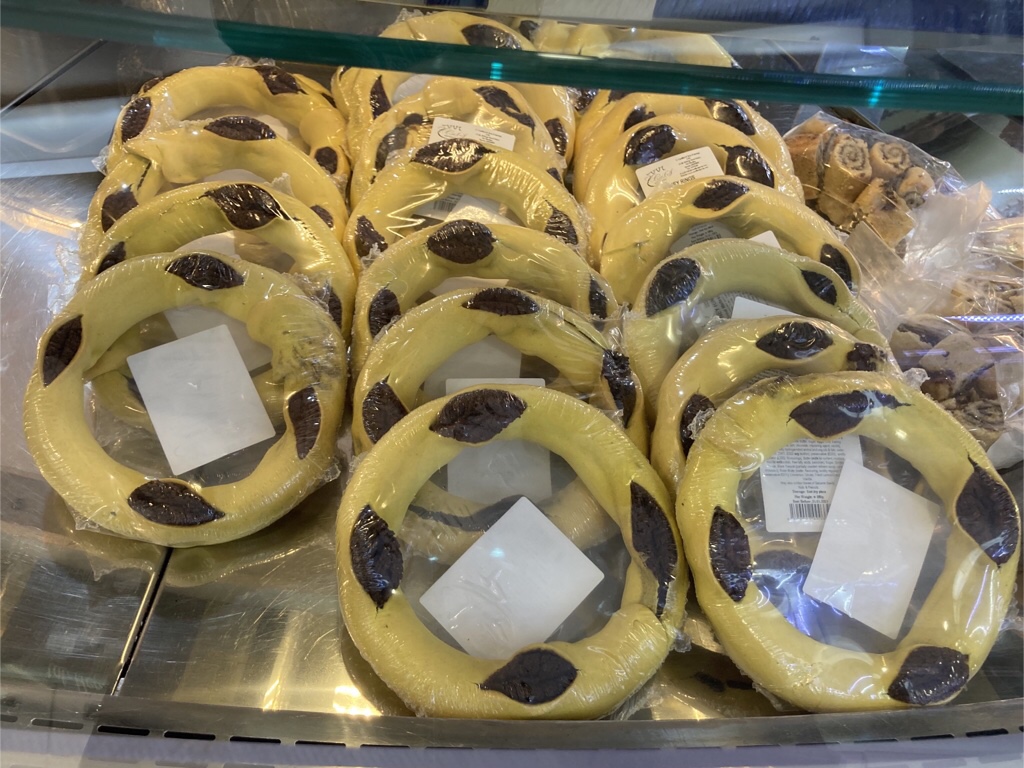
The Maltese certainly have a sweet tooth with several local specialities and this bakery sells them all.

We’ll be eating date pastries on the flight home (top shelf) and have popped a honey ring in the suitcase.

Valletta’s old market has been transformed into a handy food hall which came in handy when we chose not to eat out and could buy nibbles, salad, wine and pizza to go all under one roof.

Cafe Jubilee’s cosy bistro interior welcomed us on several occasions, but it’s only when you look round properly that you notice the quirky touches!

There is something on the menu for any time of day – lunchtime snacks of pastizzi which are small flaky pastry pillows filled with ricotta or mince and peas, or a bagel with roasted squash, Gozo sheep cheese, broad bean and mint – just a glass of wine on the way to dinner elsewhere – or a meal in the middle of the afternoon before our flight. This gave me the chance to have another local speciality, Ftira Bit-Tonn Taż-Żejt, a local bread filled with a tuna, olives, capers and tomato, while Chris chose Roasted Cauliflower with Black Garlic and Mojito-stewed vegetables – who says it’s hard to find good veggie food in Valletta!

Valletta was a perfect destination for Chris’s 70th birthday trip. Despite it being slightly cooler than we had hoped, we managed to dodge the worst of the rain. The hotel was really comfortable, the staff made our stay a real pleasure and the daily jacuzzi did wonders for the knee! And as for the birthday surprise, well that was definitely a success and the new knee coped admirably with the steps and slopes of the city, clocking up a splendid 21 miles.

There was a lot we didn’t do like walk round the city walks and fortifications, learn more about the Knights and WWII or explore the underground city. We’ve only had a taste, not only of Valletta, but certainly of Malta so we can honestly say we plan to return … sometime a little warmer!

Map

An Electric Birthday in the Three Cities

We’ve been staying on Valletta, which is the largest peninsular jutting into the Grand Harbour. Across the water are two more fingers of land called jointly The Three Cities. These were first called Birgu, Birmla and Isla, but after the Great Siege they were renamed, Vittoriosa, Cospicua and Senglea although locals still use the old names.

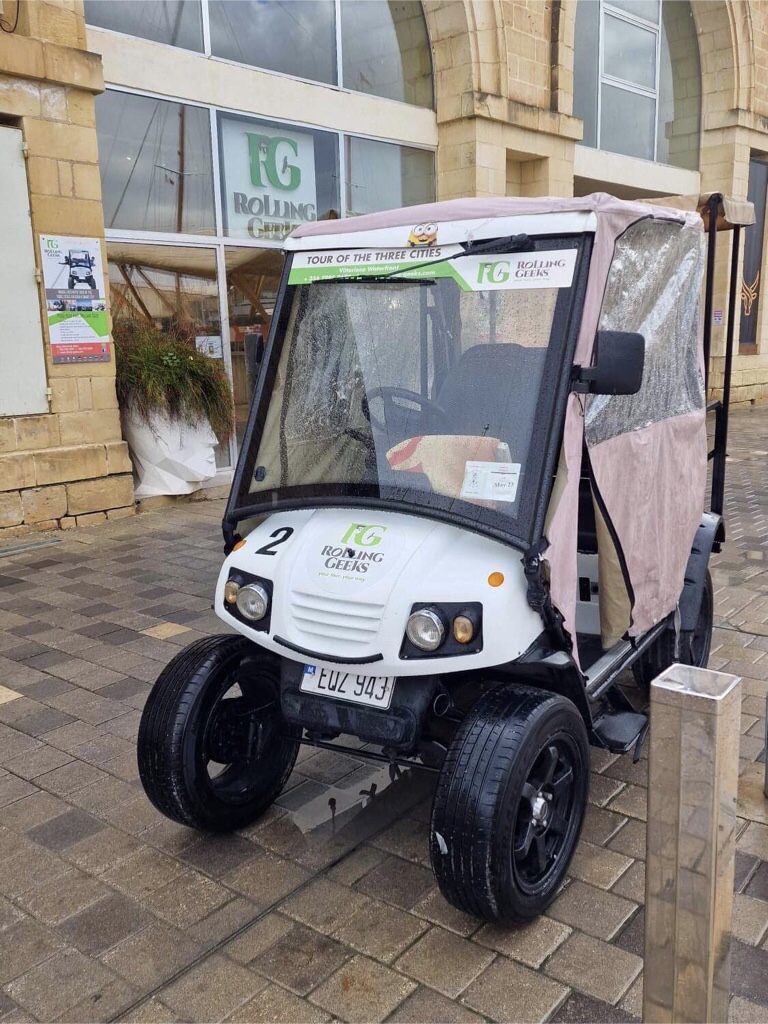
Chris’s birthday treat was a tour with The Rolling Geeks which was an easy way to explore the area with minimal walking and would hopefully prove an adventure!

The sky was grey as far as the eye could see and the rain was pounding down as we crossed on the ferry – so no photos! The rain miraculously stopped as we turned into the harbour, but it remained grey.

Rolling Geeks was just a short walk, and we were introduced to our rolling geek, an electric golf trolley fitted with a pre-programmed GPS and tour commentary, but most importantly as it turned out, with a rain cover!

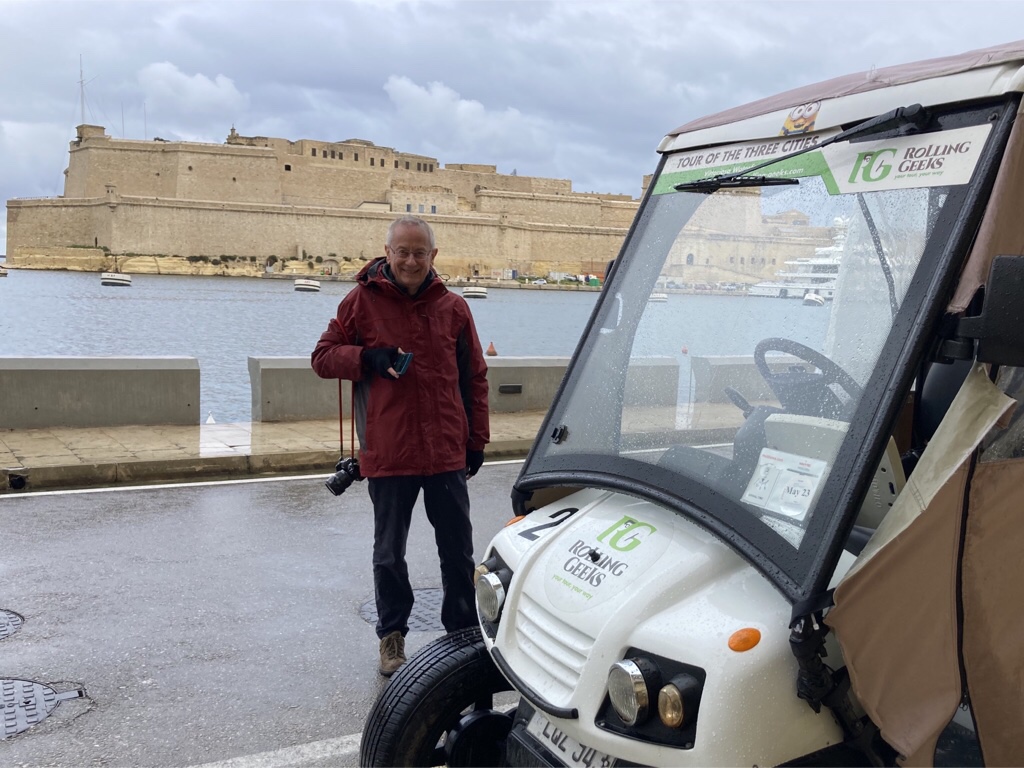
Chris soon got the hang of driving, and at a top speed of 20mph, there was plenty of chance to look around. Our first stop was at Fort Verdala, fortified barracks built by the British within existing C17th bastions.

The fort was used as a prisoner-of-war camp in both World Wars and is now social housing.

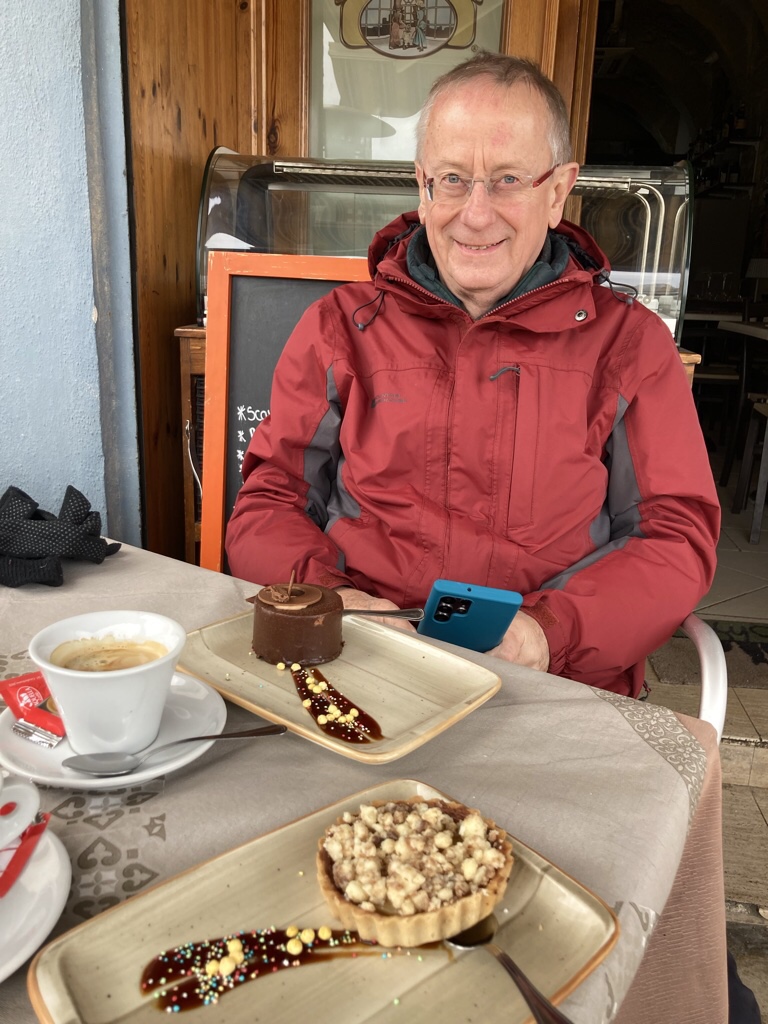
Once at the Senglea waterfront it was time for coffee and cake …

… then on for a good view towards Valletta …

… and birthday boy with Fort Angelo behind …

… then we waited for this huge shop to be guided by the pilot out of the harbour.

While we were stopped, we played with the inbuilt selfie button, and later they sent us the photo.

The rain started again as we stopped at the Gardjola Garden at end of the peninsular …

… but still got this great shot towards Valletta.

The walled part of Vittoriosa was the gem, being able to drive round the narrow streets in the rain. We saw one car that really struggled, finding the steep slippery wet stone a challenge but we were able to roll with it! The rain stopped and we parked and had a wander to take some pics, Chris in his element as he loves a bit of wet shiny stone!

A final stop by the harbour …

… and we were back, perfectly timed so we could get back to the ferry before the next downpour!
It had been such a great idea, as it would have been hard to find a better alternative in the rain on a Sunday when many places are closed. We returned to find our room decorated with a huge cake …

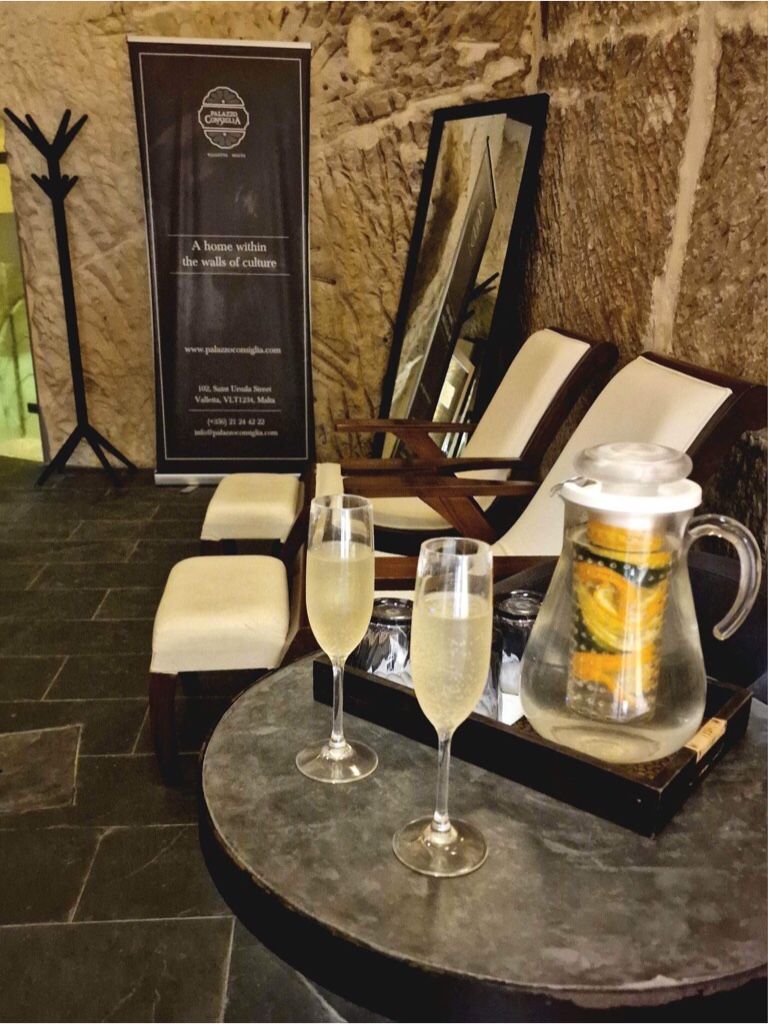
… and glasses of Prosecco to enjoy in the jacuzzi.

Map

Bus to Mdina

By arriving in Malta after dark, we hadn’t seen any of the countryside, so took a bus trip to explore. Driving through the outskirts of Valletta, it was obvious any investment in the city hadn’t made it this far as buildings looked far shabbier in this part of town. There was a band of green cultivated countryside but soon we were on the outskirts of Rabat which sits right beside the walls of Mdina, which was the old capital of Malta before the Knights of St John arrived and established themselves in Valletta. The exodus of people from Mdina at that time gave it the nickname The Silent City.

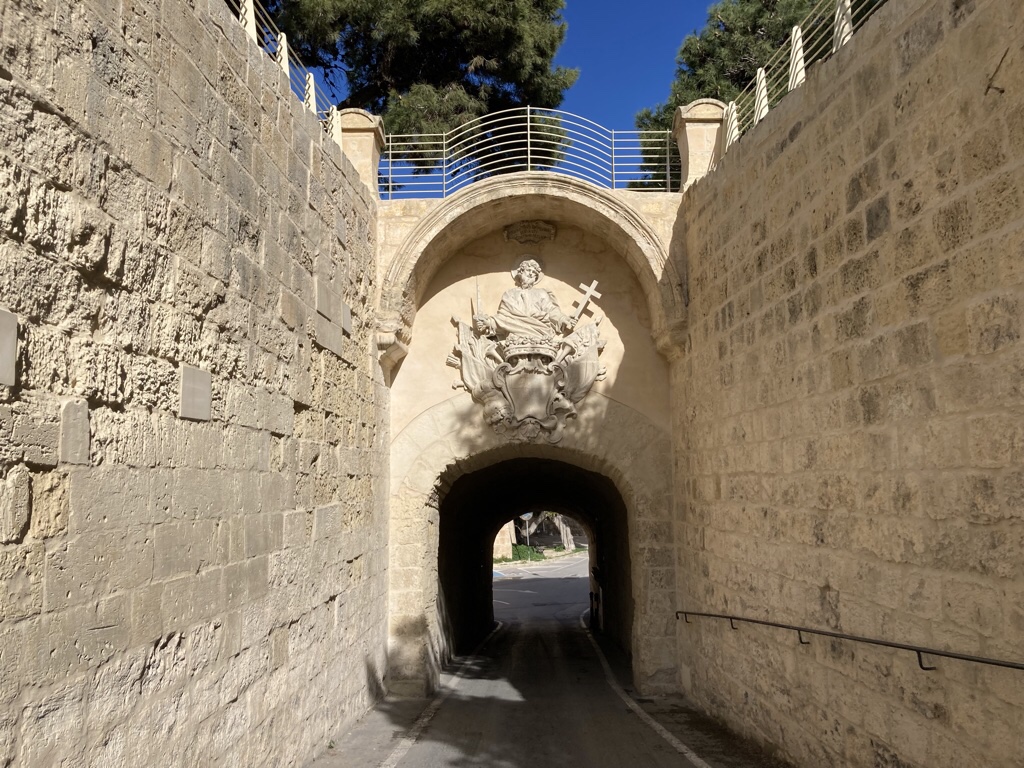
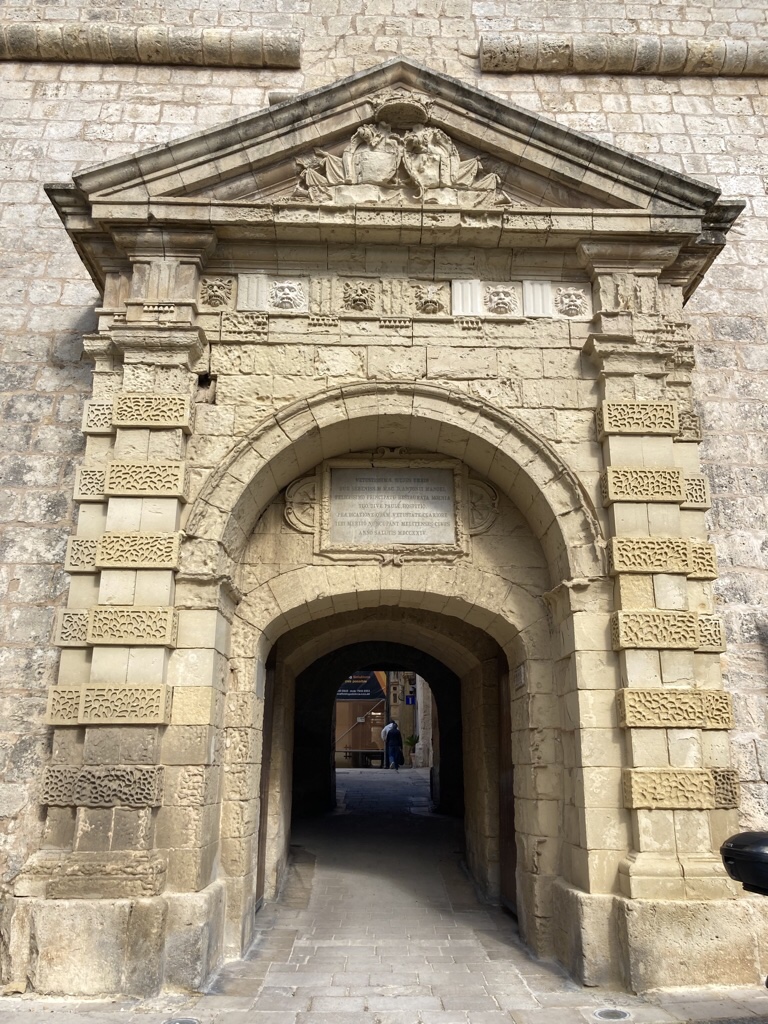
We entered down a tunnel …

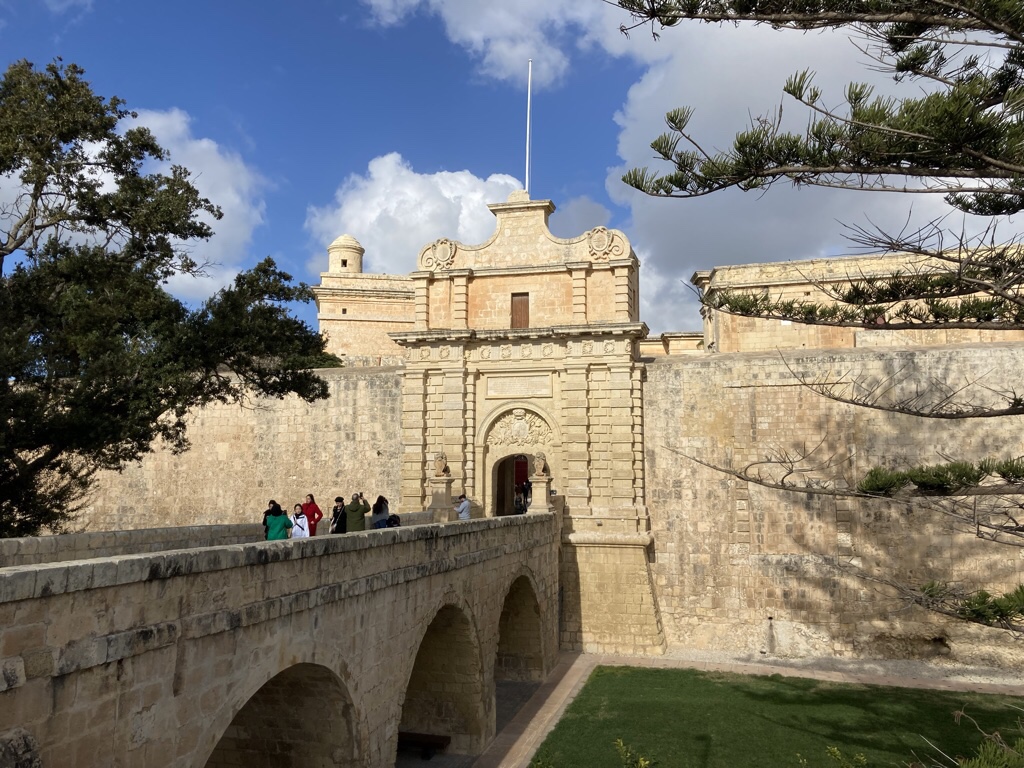
… and through Greek’s Gate

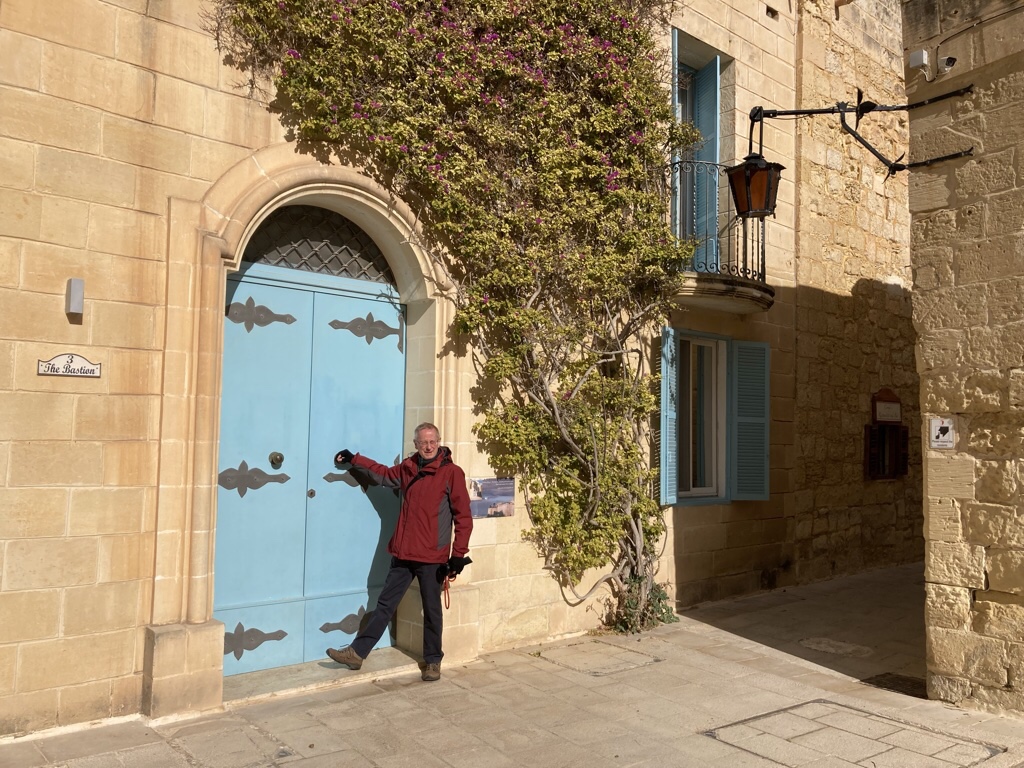
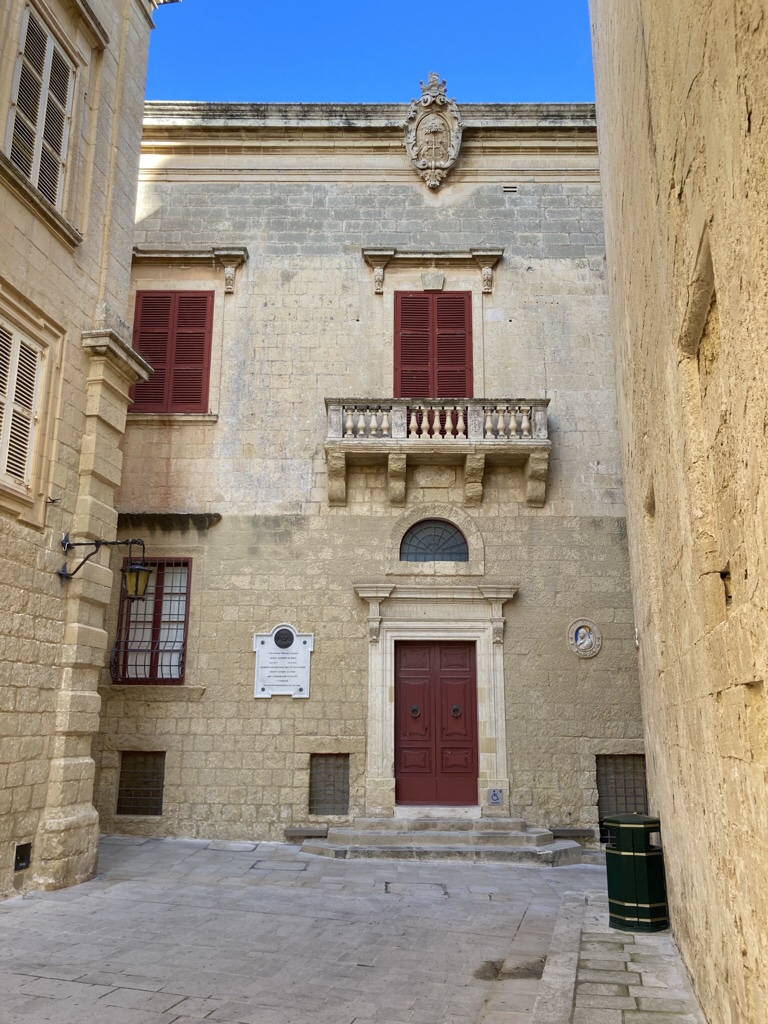
… then wandered the narrow cobbled streets …

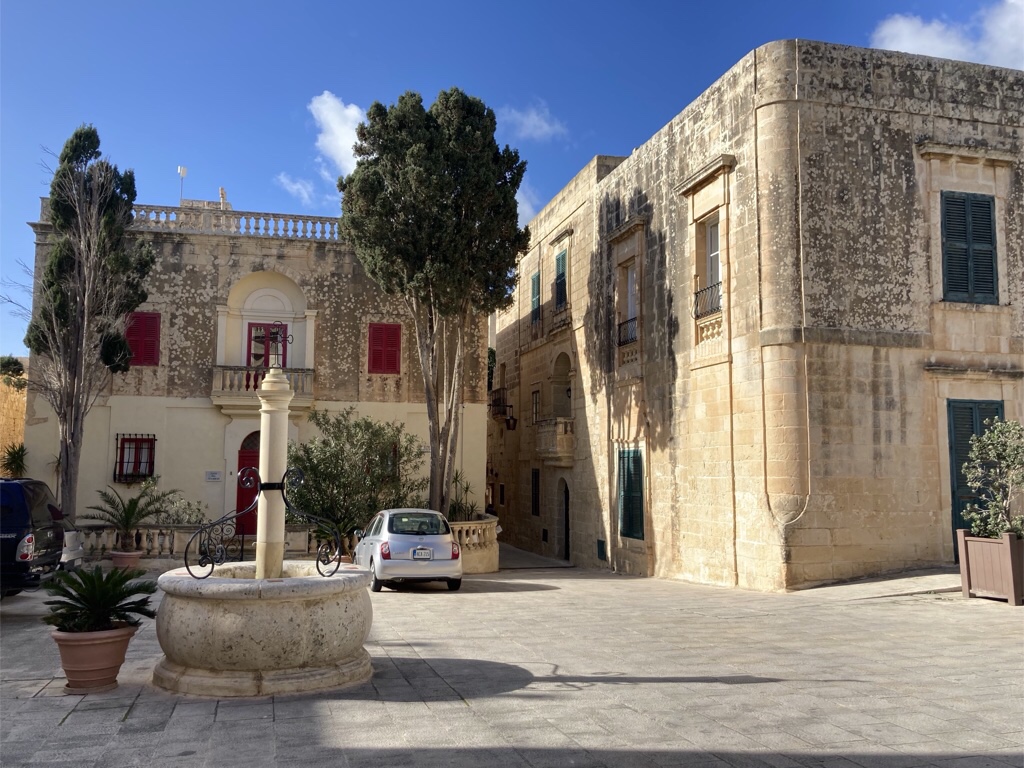
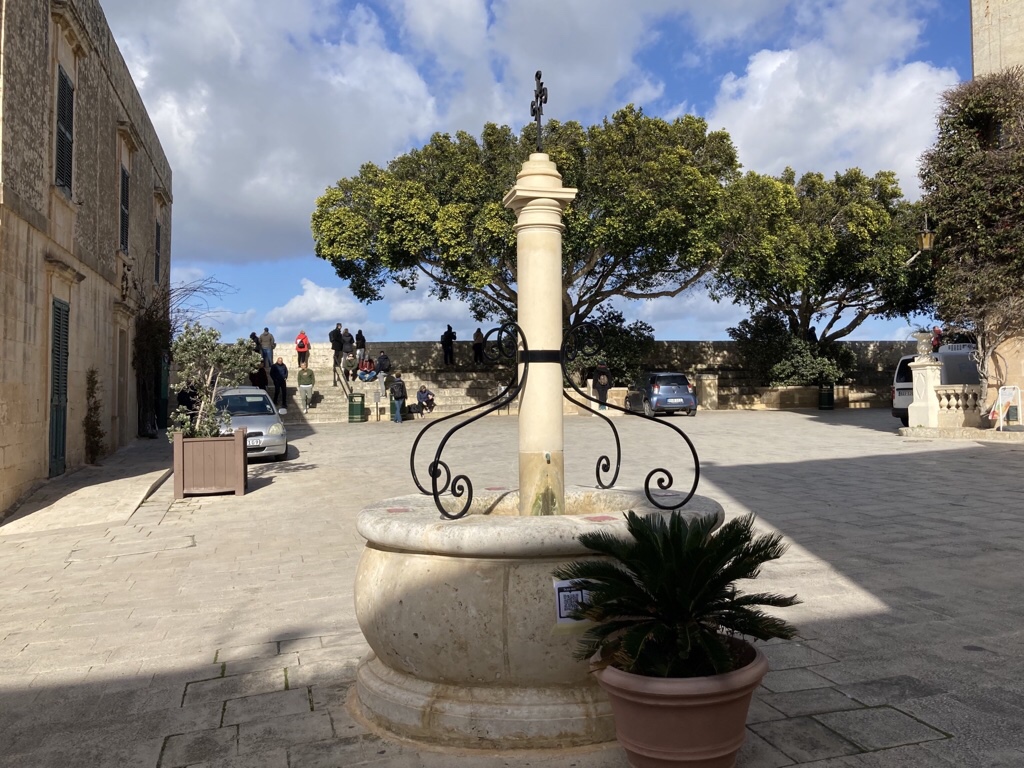
… found Mesquita Square …

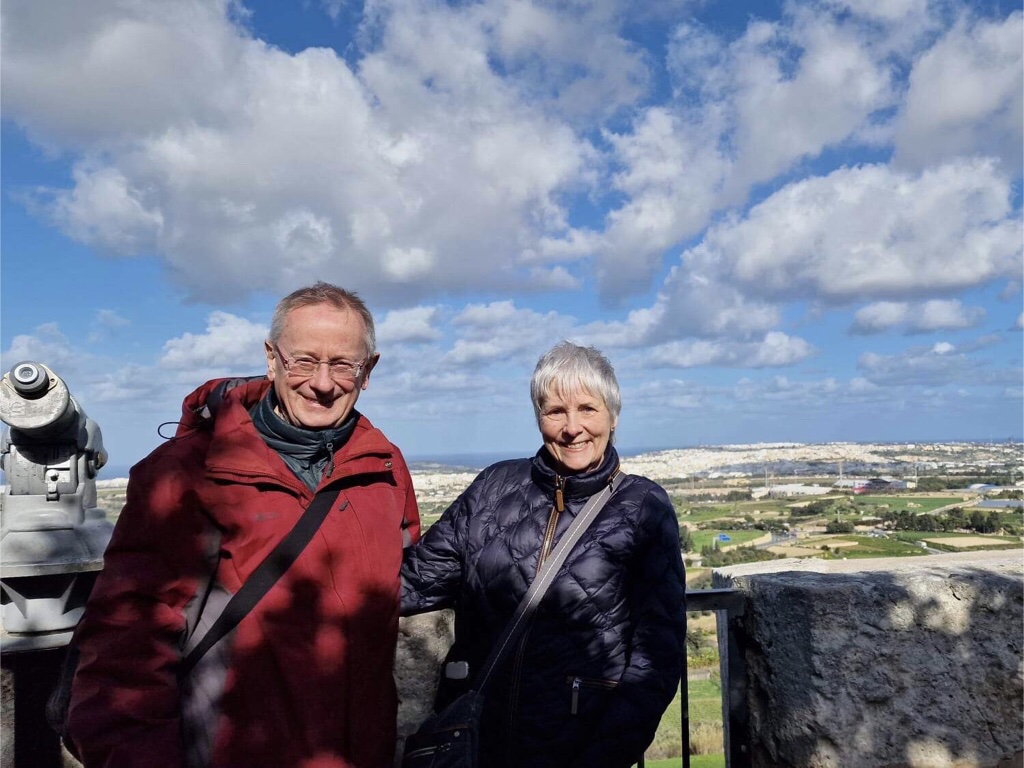
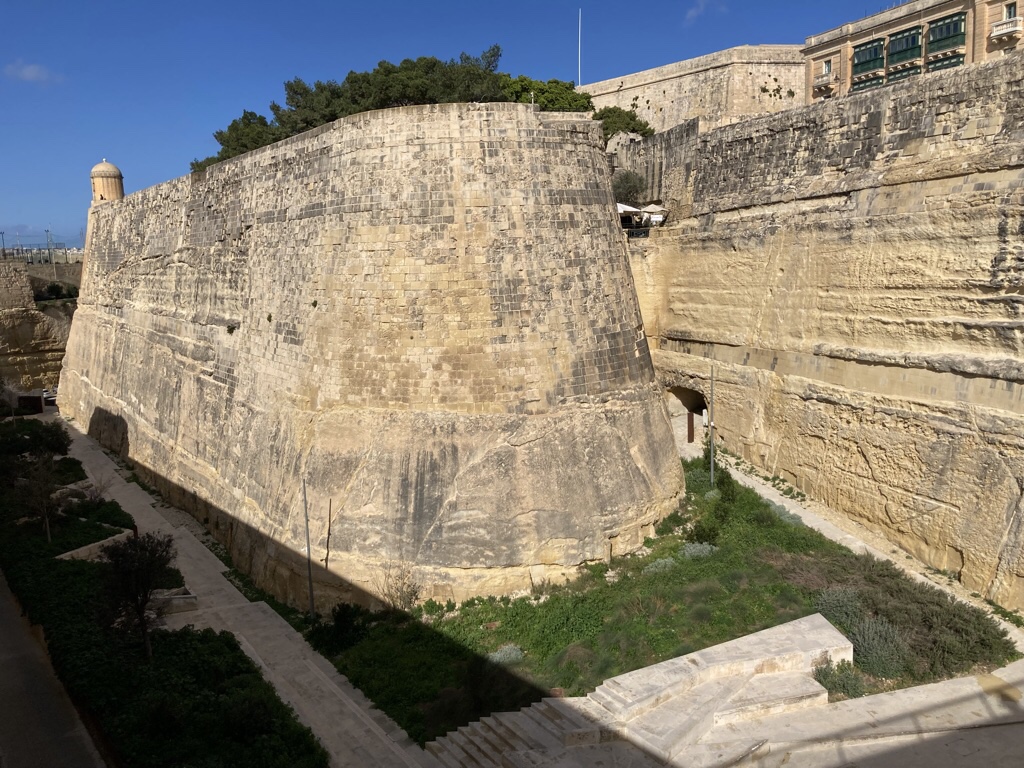
… and looked out over the fortifications back towards Valletta.

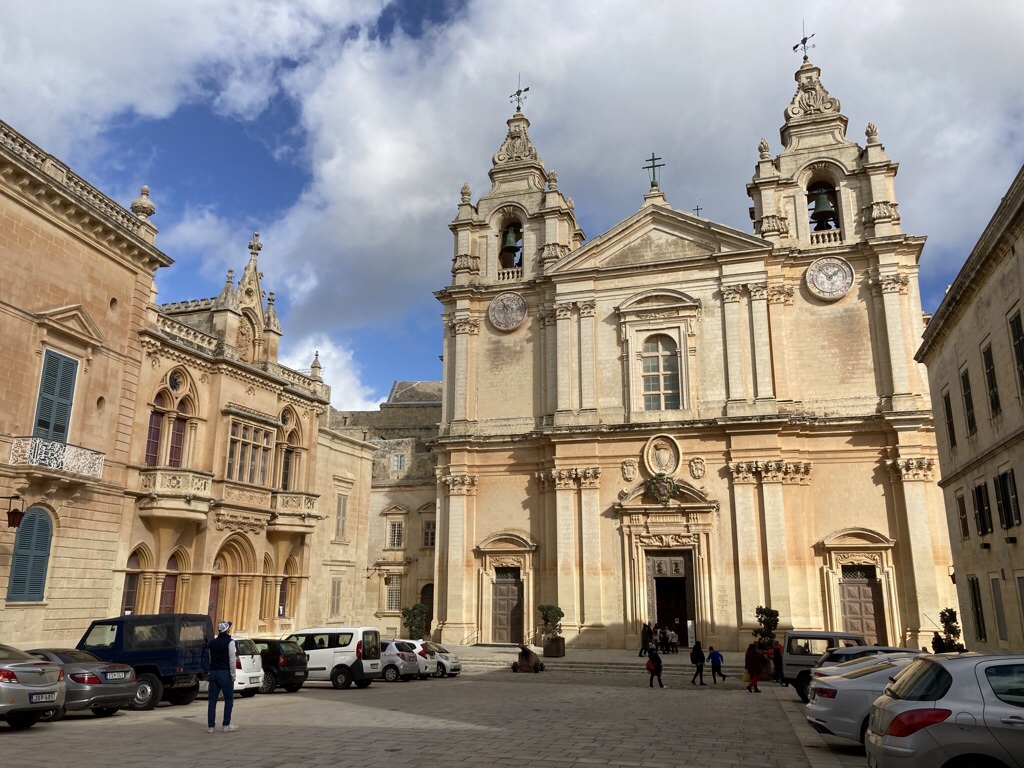
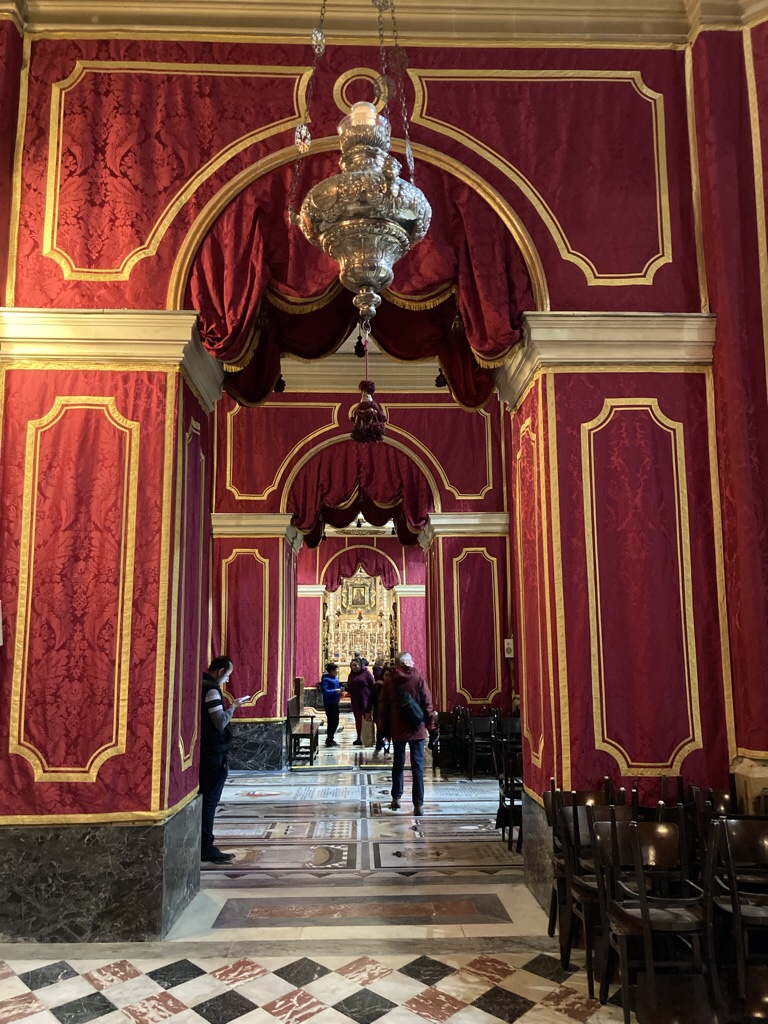
St Paul’s Cathedral echoes the cathedral in Valletta with a similar marble floor and vault painted with scenes from the life of the Saint, but instead of gilding on the walls, these are swathed in rich red brocade.

I particularly liked this tombstone …

Finally we passed Vilhena Palace …

… before leaving through the Mdina Gate.

If any of the views look familiar, you might have seen them in the first season of Game of Thrones which was filmed here and Catelyn Stark and Rodrik Cassel, ride into Kings Landing through this very entrance!

Map

Valletta’s Palaces and Churches

We made our way out of the city to the Triton Fountain …

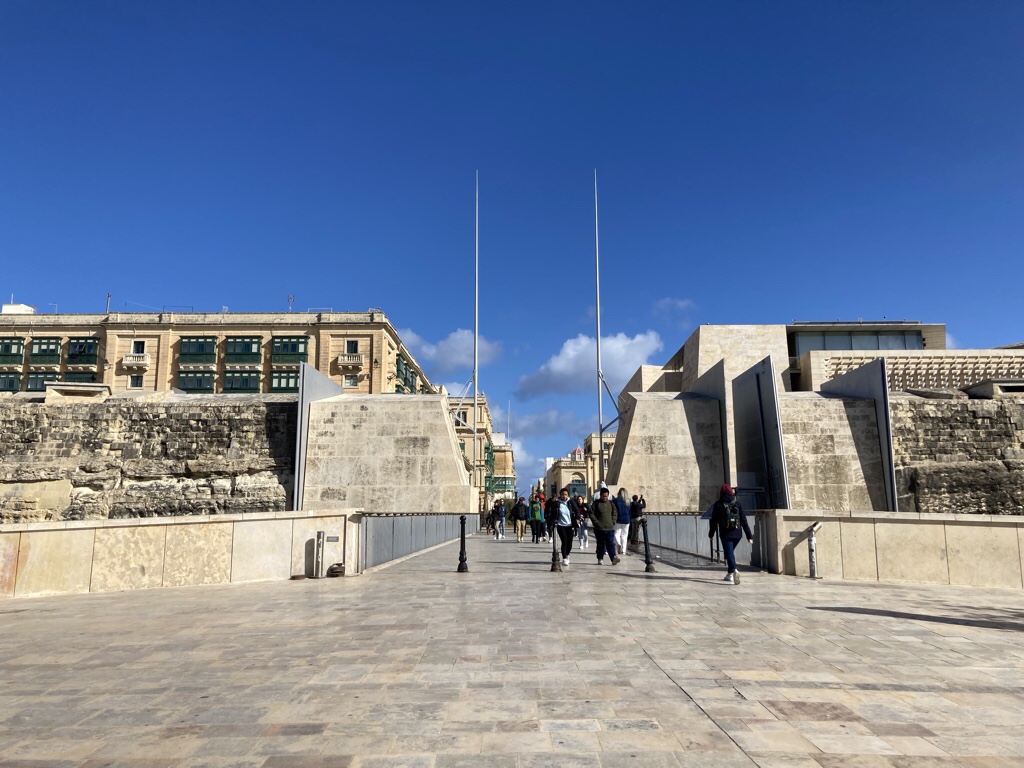
… and turned to look at the controversial new city gate.

It is the fifth to have stood at the entrance to Valletta and was designed in 2011 by Renzo Piano. It echoes the dimensions of the original gate, with entry over a bridge and views of the ditch, rather than the uninspiring modernist 1960s structure which it replaces. It isn’t liked by all, but it’s certainly a statement.

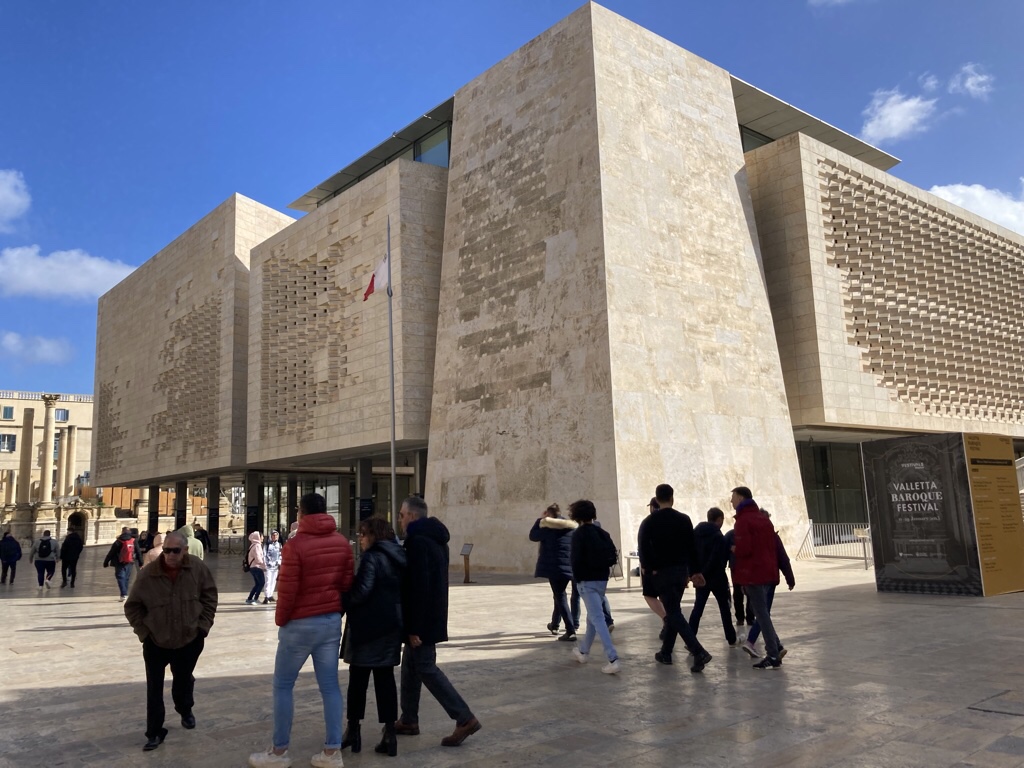
Just inside is the Parliament Building, also designed by Renzo Piano which comprises two buildings with walkways between, situated so that St James Bastion can be seen behind.

The surface is machine cut which reduces solar radiation and lets in daylight and was inspired by the eroded stone of Baroque monuments. It was hard to pick a viewpoint as each had something different to offer, and the colour of the stone changed with the light.

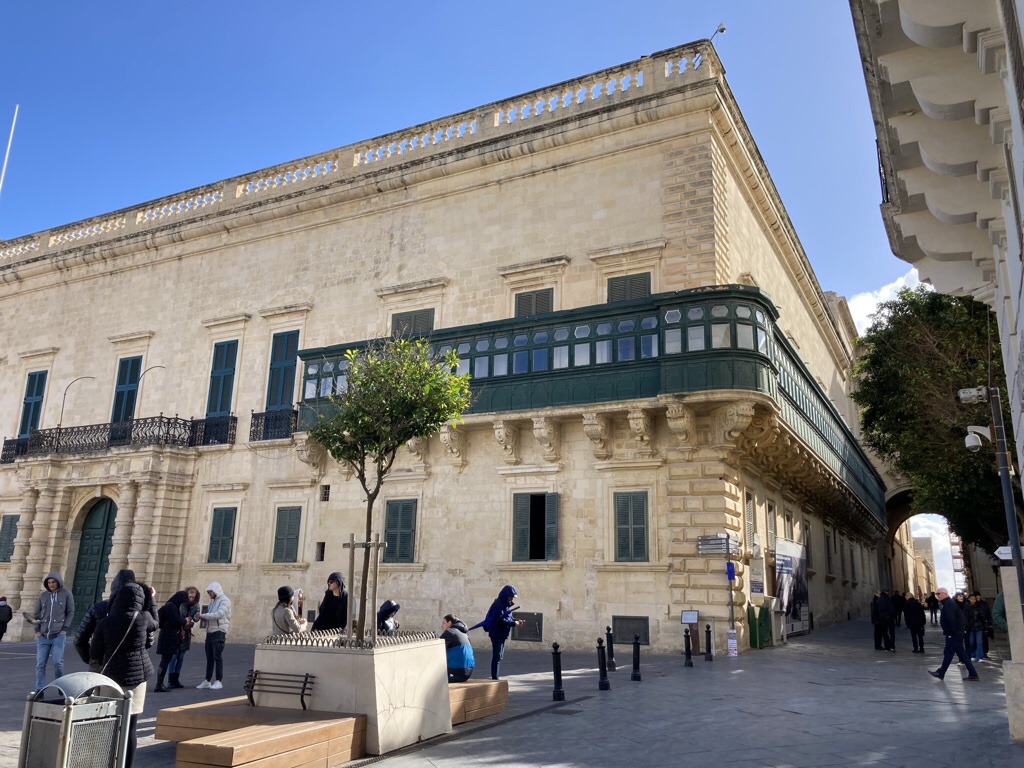
Heading onwards there are large squares surrounded by palaces and churches. The largest palace was once residence to the Grand Masters of the Knights of St John, then later home to Malta’s Parliament until they moved into their new building.

It’s closed for restoration so all we could see was the entrance …

… and this fabulous ceiling. It has a plaque outside stating Malta were awarded the George Cross during WWII.

It also features the first enclosed balcony which was added in the late C17th.

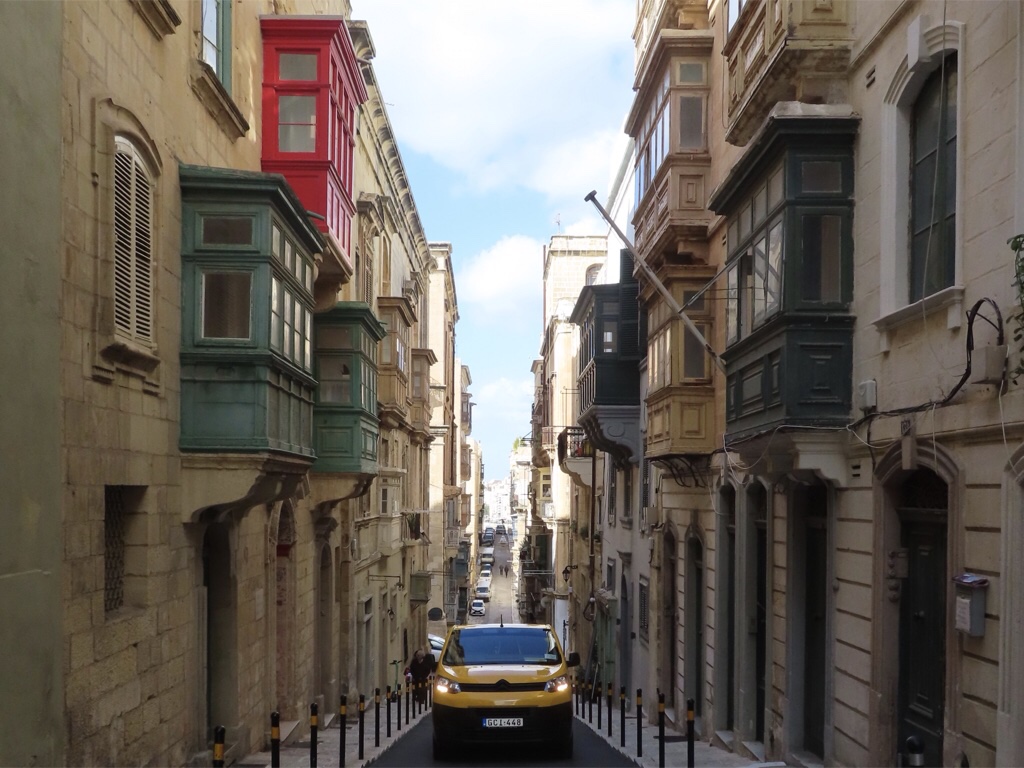
Open balconies had been a popular feature, but this started a trend, firstly just enclosing the top of existing balconies, but later building the Maltese balconies as we see today. They are one of the most prominent features we’ve spotted, often painted in bright colours, but just as likely to be peeled and fading!

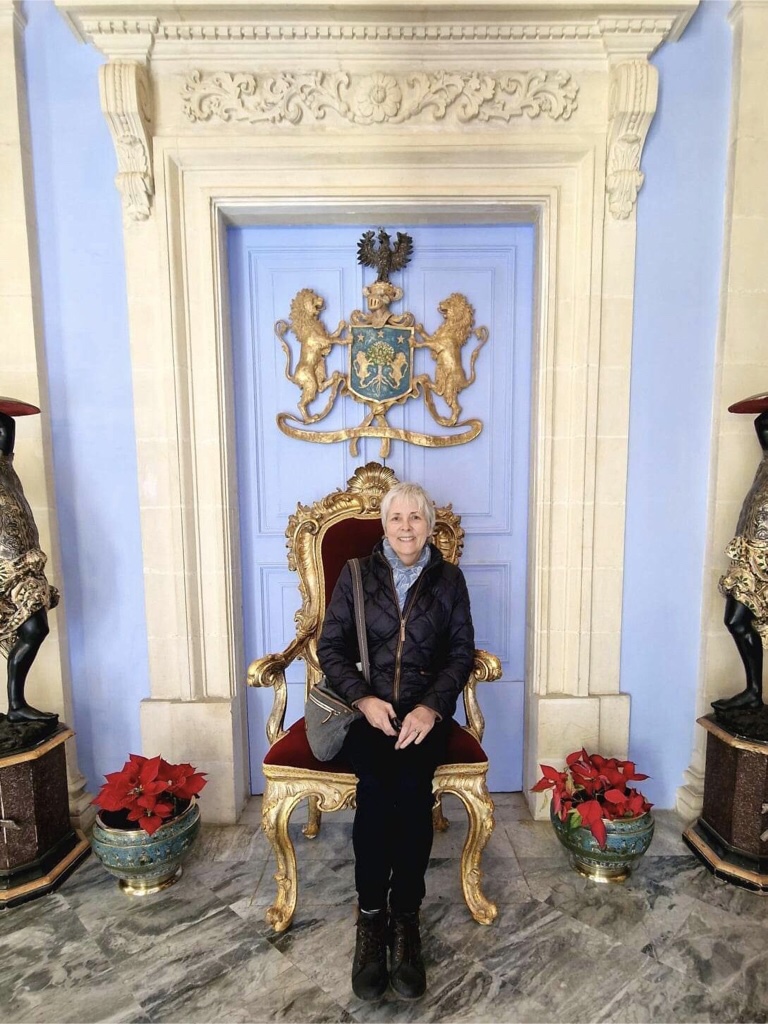
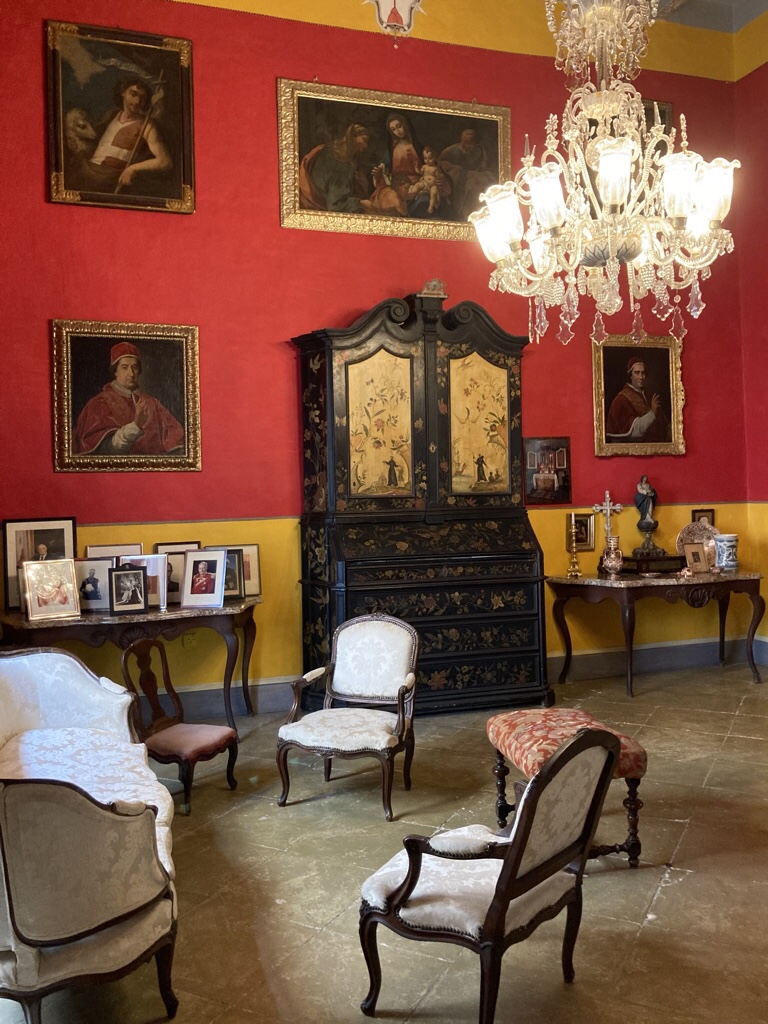
Not all the palaces are quite so grand. Casa Rocco Piccola is a C16th palazzo and the family home of the 9th Marquis de Piro who opens part of it to the public.

The house is full of grand rooms and centuries of accumulated furniture, paintings, family ephemera and various collections which gives a glimpse into the life of the Maltese aristocracy.

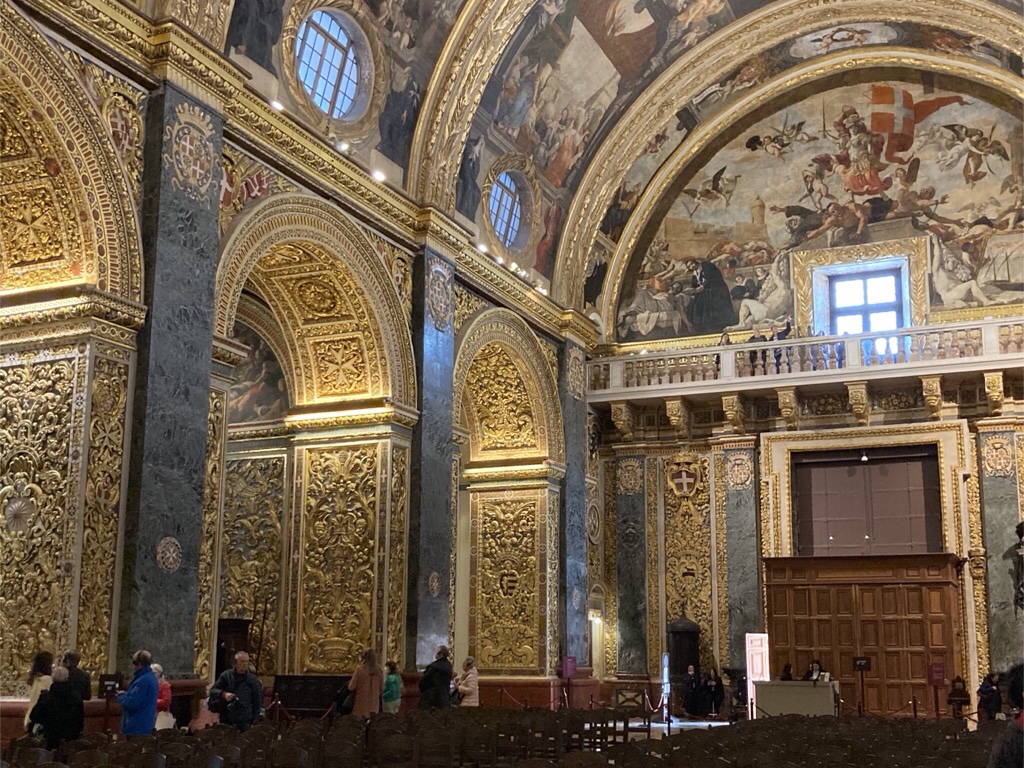
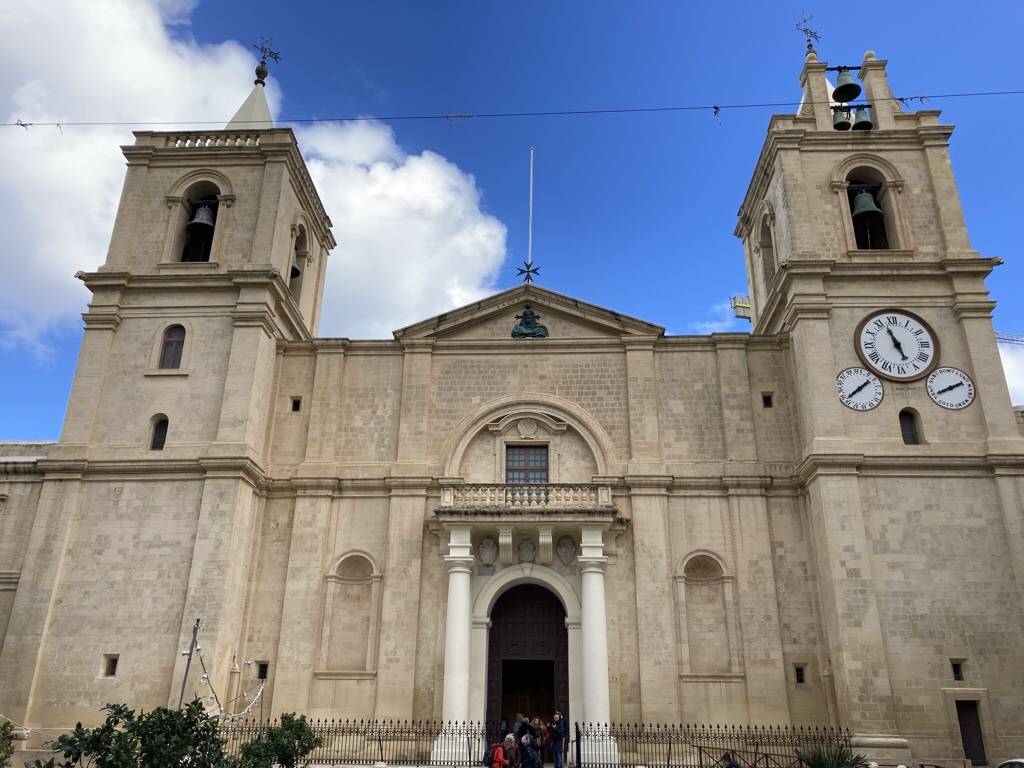
Churches abound, with 28 in Valletta, the largest being St John’s Co-Cathedral, so called because it shares the honour with St Paul’s in Mdina. This C16th building may be quite plain on the outside …

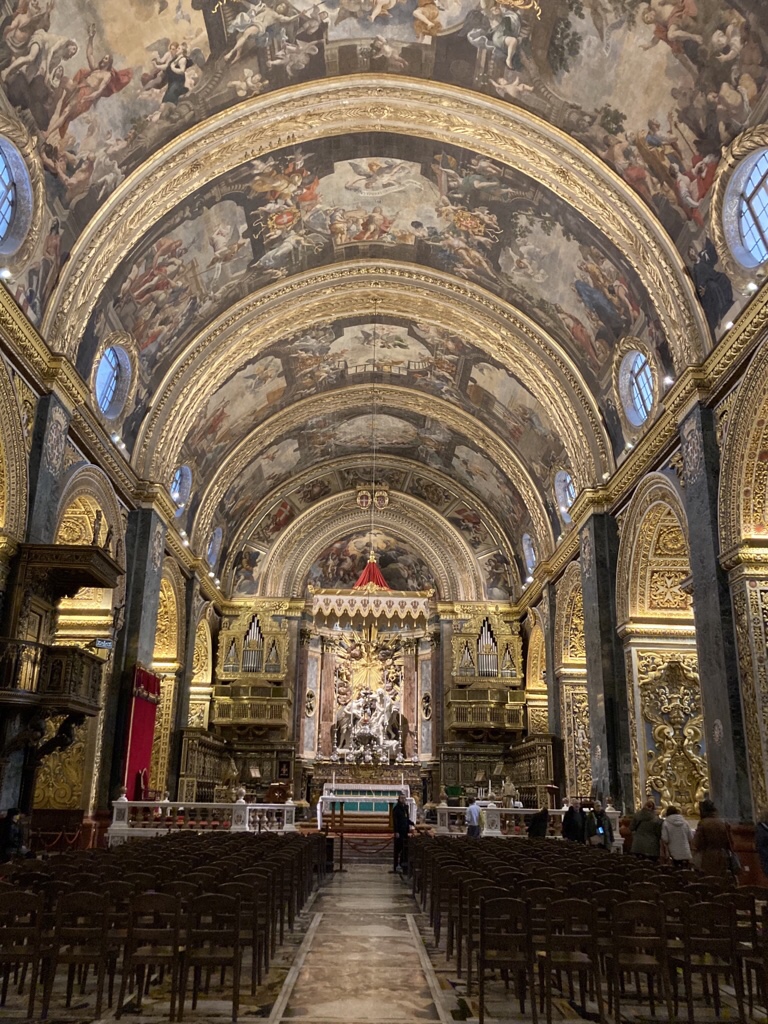
… but it’s exuberant Baroque interior makes up for it!

The walls sparkle with gilded carved stone …

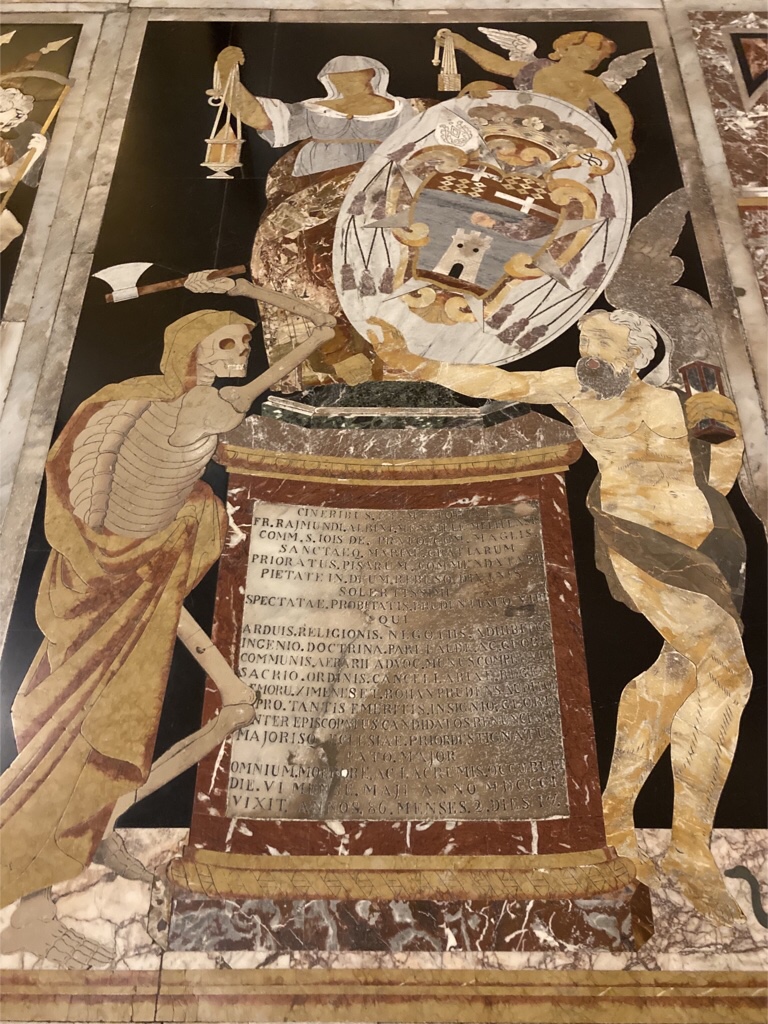
… the ceiling shows the life of St John the Baptist and the floor is a patchwork of inlaid marble tombstones with symbols of victory, fame and mortality.

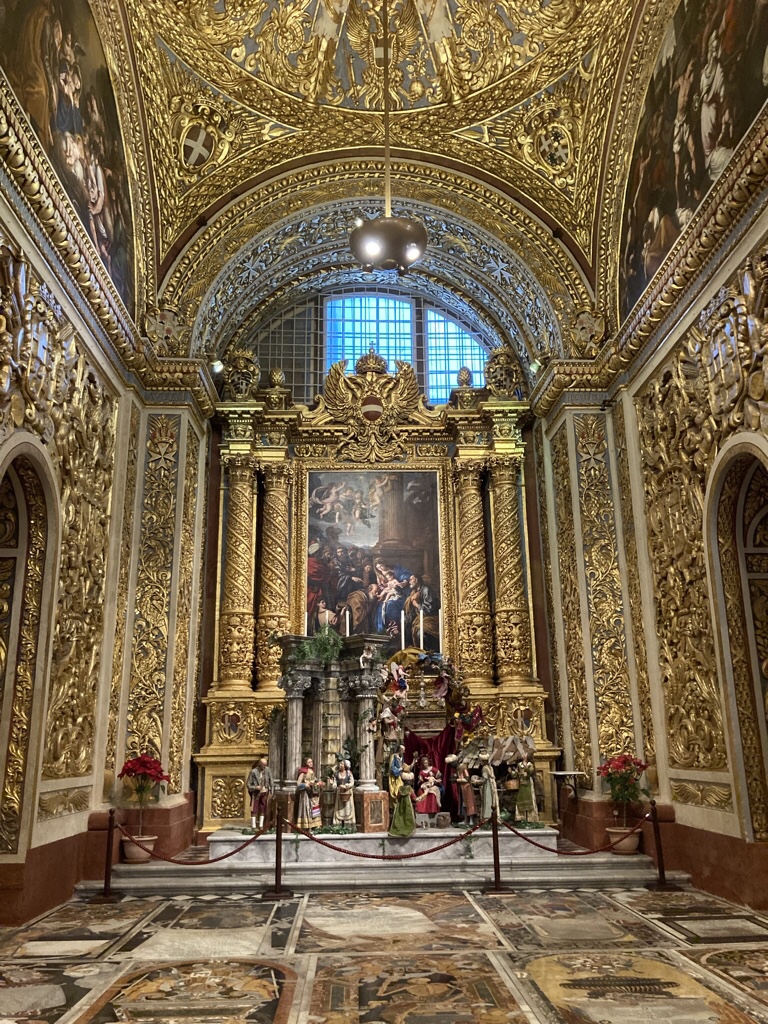
The side chapels are each dedicated to a different nationality represented within the Knights of St John, this one to Germany.

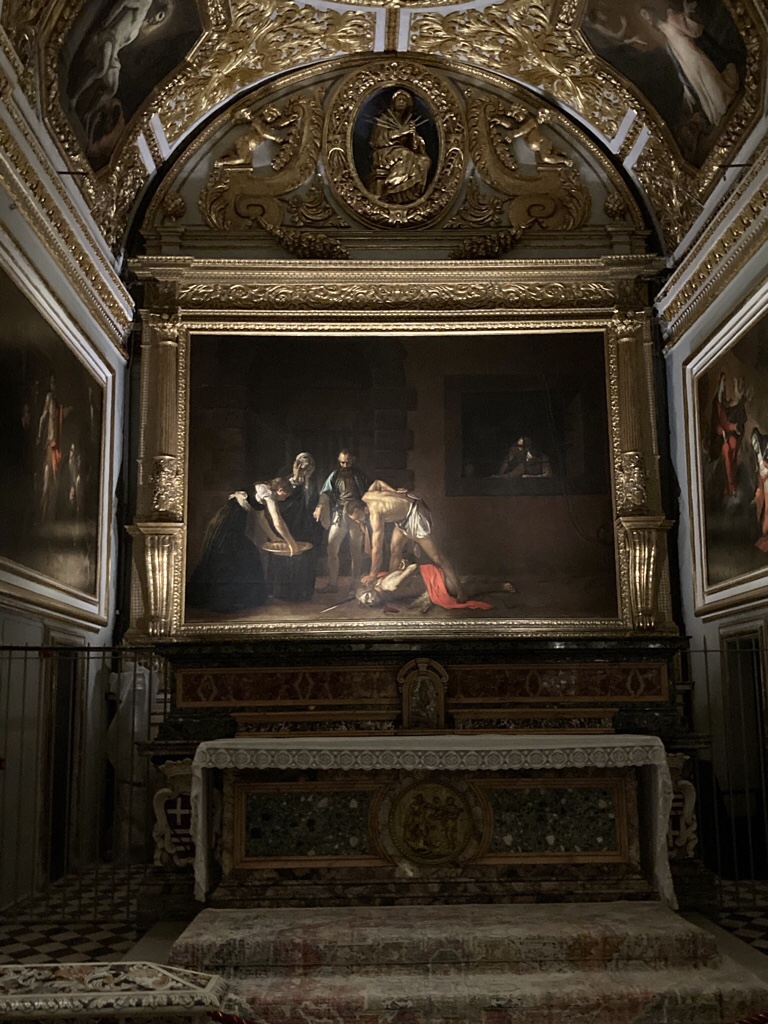
The greatest treasure is the Beheading of John the Baptist by Caravaggio, who spent some time in Malta after he went into hiding having killed a man in a brawl in Rome. He was admitted into the Knights of St John briefly, until he was arrested for some crime, then managed to flee to Sicily. It is the only work that Caravaggio signed.

We came across Our Lady of Victory, and wandered in to find a soprano singing arias as part of the baroque music festival which has been on this week. It was the first church built in Valletta and is on the spot where the inaugural foundation stone of the city was laid and there was a lovely painted ceiling. Of all the churches we’ve been in, this was the one I liked best.

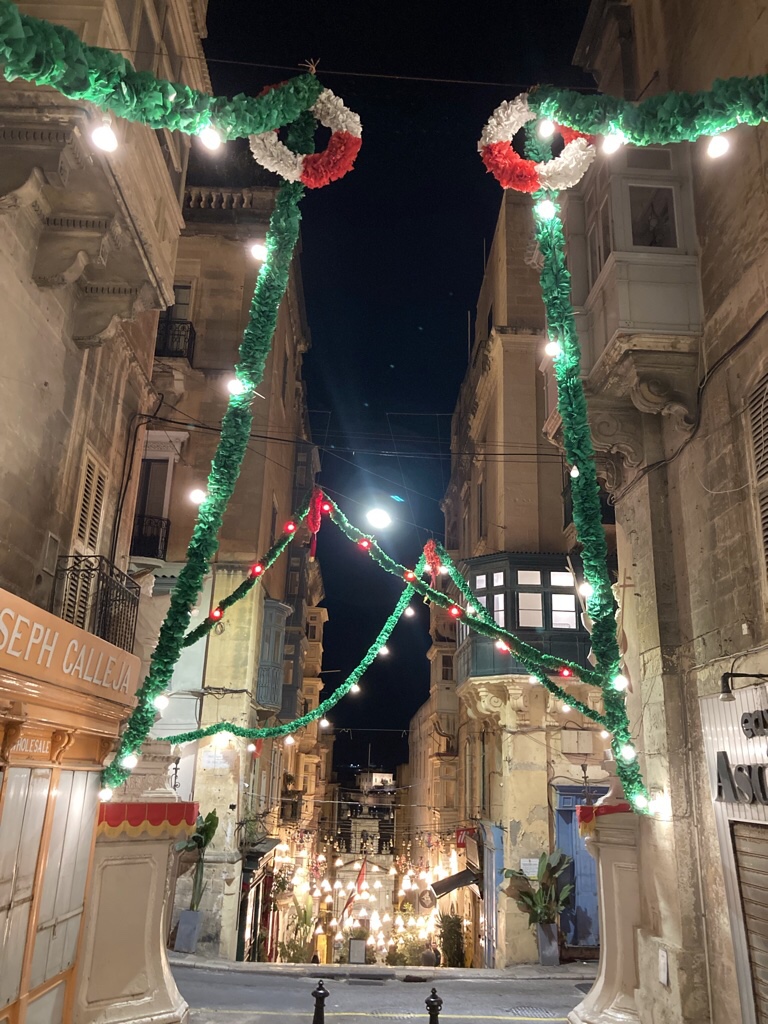
Another church that made an impression was Knisja Nawfraġju San Pawl, just round the corner from our hotel. St Paul’s Street has been adorned with red and green decorations since we arrived and on our way to dinner on Saturday it was lit up like Blackpool pier and fireworks were let off above.

We found out from Caroline in the cake shop that this was a celebration of St Paul’s arrival in Malta. He was on a ship which grounded here during a storm and he and the ship crew stayed in Malta for three months during which the Maltese were told about Christ and the first Christian community was formed on the Islands.

Having spent all our time so far in Valletta, it’s time to explore further afield ..

Map

Greetings from Valletta

Malta’s history goes back forever – megalithic temples, Phoenicians, Romans, Arabs, Normans, the Spanish – then in 1530 the Holy Roman Emperor Charles V ceded the island to the Knights of St John so they could defend it from the Turks. They established a city at Vittoriosa which faces present-day Valletta and started building defences which enabled them to defeat the Turks during the Great Siege of Malta in 1565. Afterwards, The Grand Master, decided to build a citadel on the peninsula on the opposite shore which was named Valletta in his honour. Hospitals, churches and palaces were also built and Malta flourished during their 300 year rule. Napoleon stopped by for a couple of years, but he was routed by the British who then ruled for 150 years, with Malta becoming independent in 1964. Many buildings were damaged especially during WWII, but much restoration has been undertaken since especially preparing for Valletta 2018, Capital of Culture.

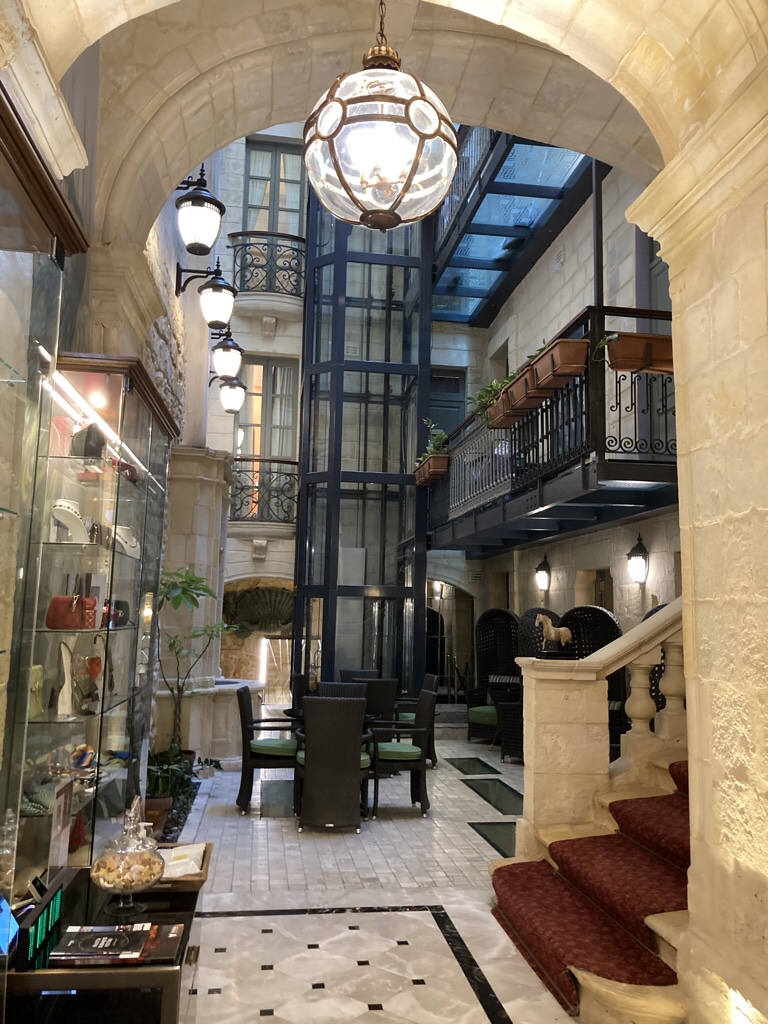
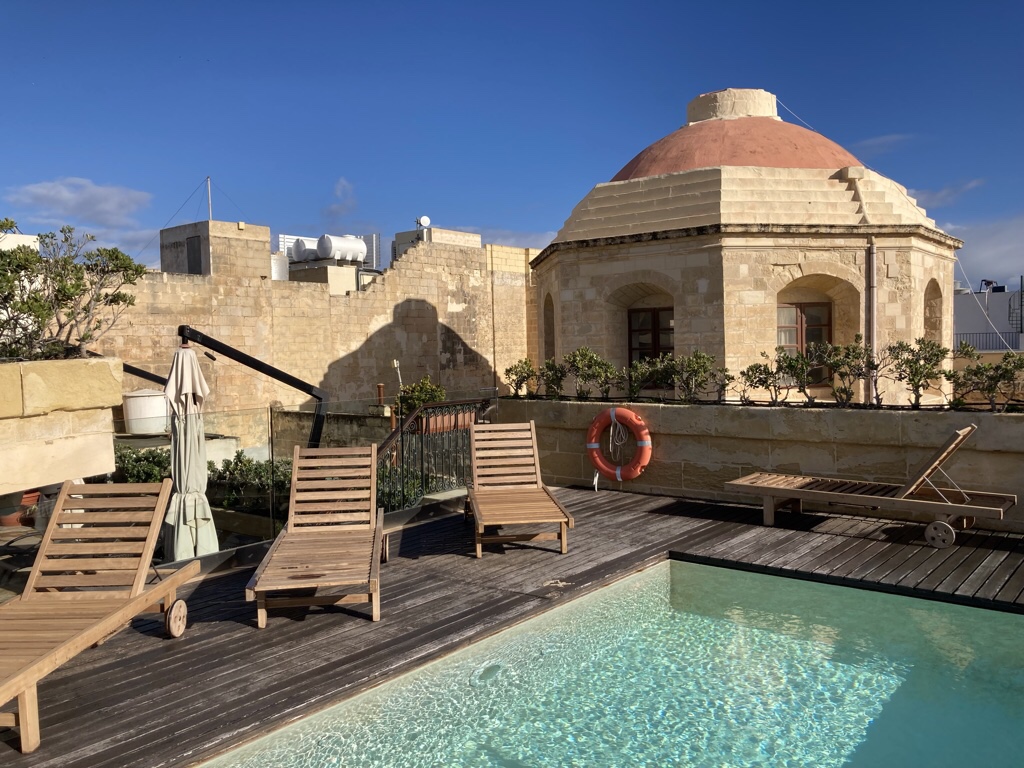
We’ve been staying in Palazzio Consiglia, a 400 year old traditional Maltese townhouse which has been converted into a modern boutique hotel, but still retains character and charm.

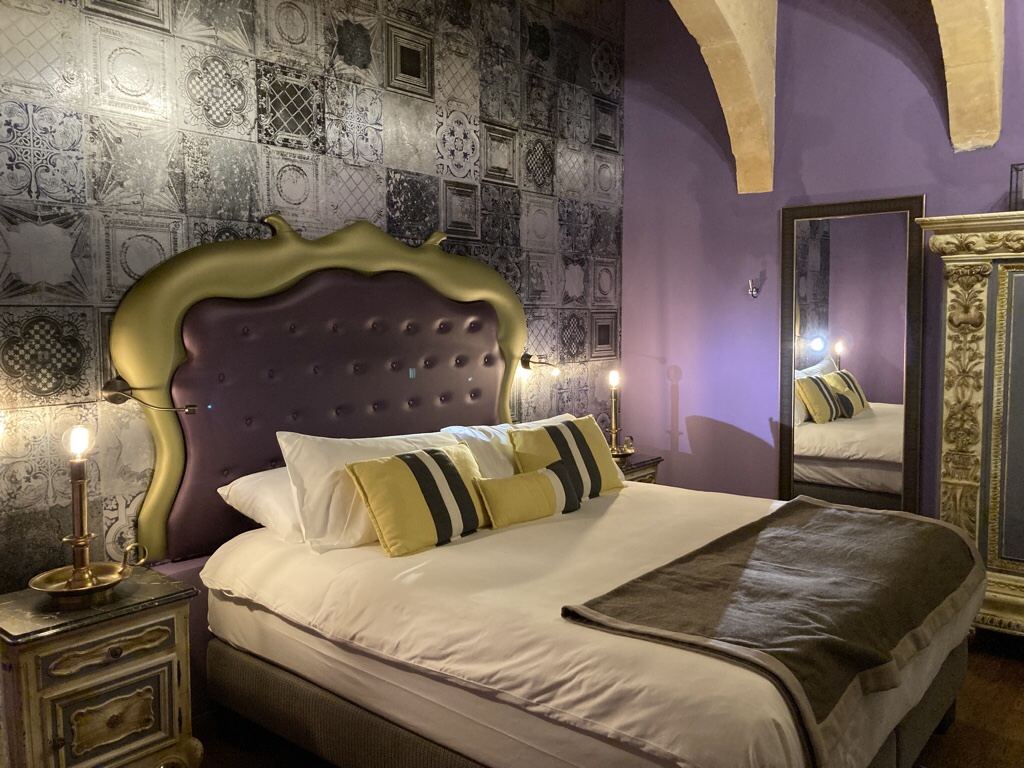
The rooms are all stylish and sumptuous and we chose Zingara …

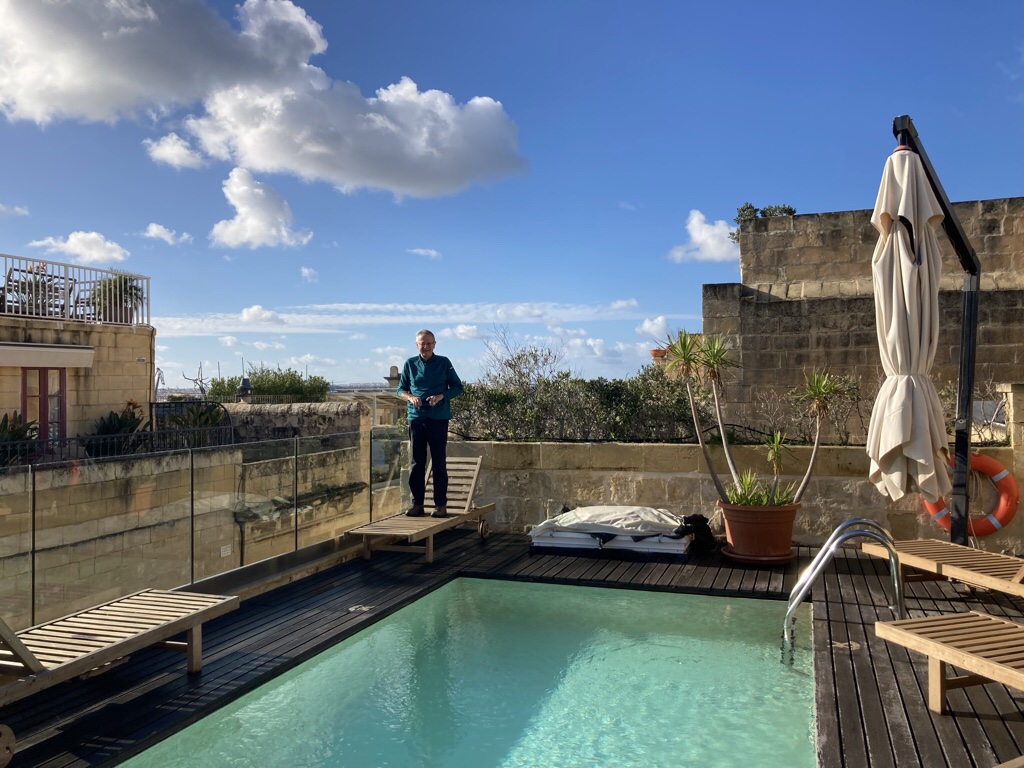
There is a pool on the roof, not that it’s warm enough to swim …

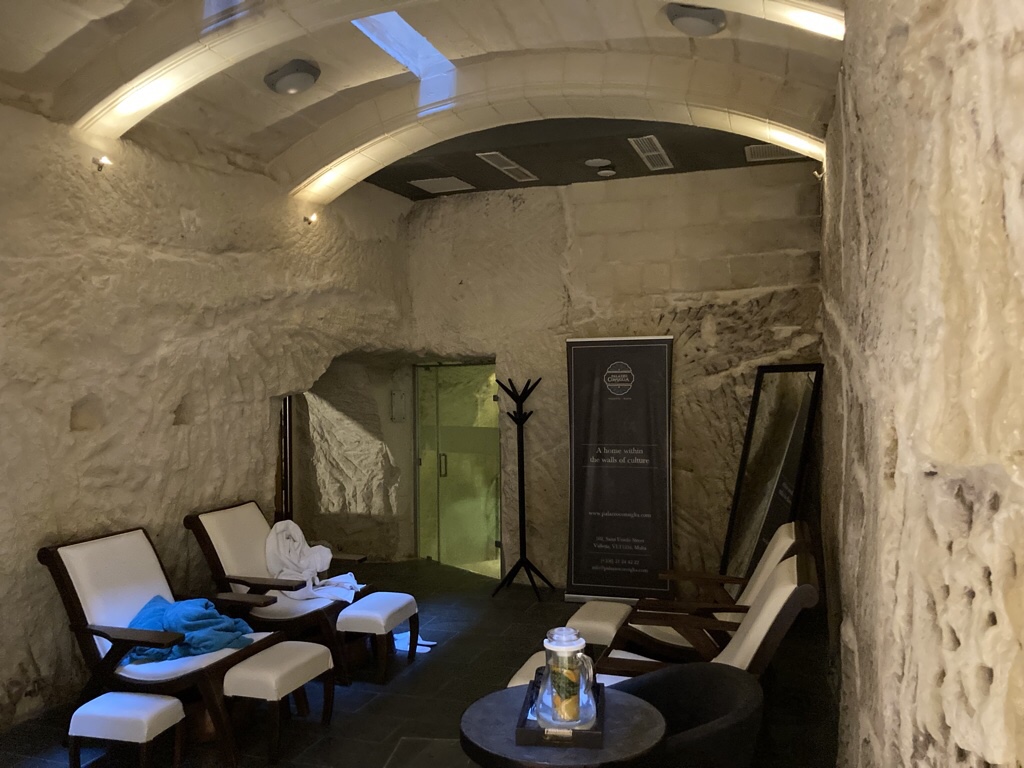
… but also a spa in the basement and time in the jacuzzi and steam room each day has been a real treat.

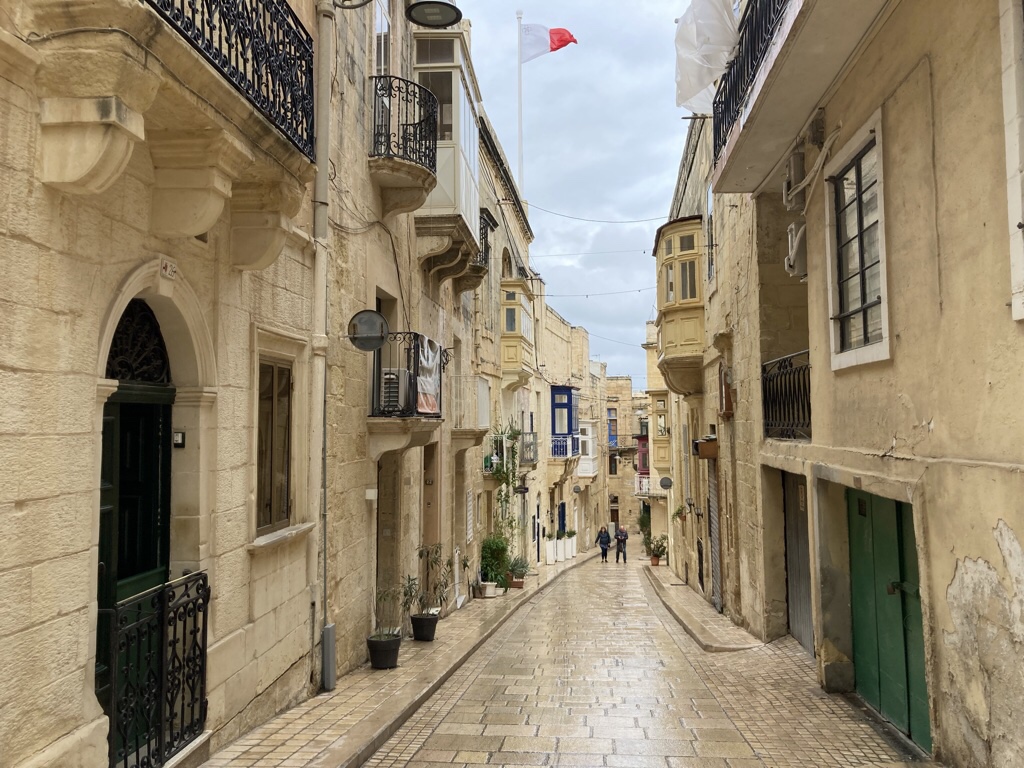
We are in St Ursula Street, right in the middle of Valletta old city, with everywhere just a few minutes walk.

The city was planned and built all in one go and was one of the first modern cities to be based on a grid, with the streets falling steeply towards the edges giving defenders the best position.

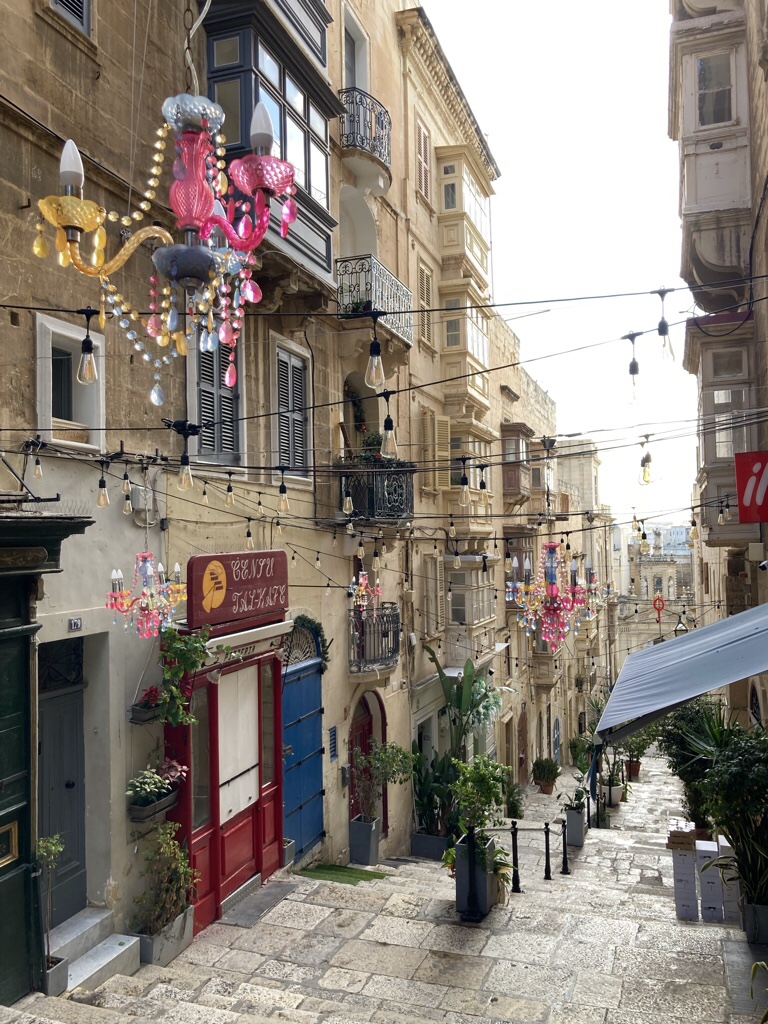
Many streets are narrow and the buildings tall, built with Maltese sandstone which is a warm yellow, often pitted with age, or even WWII gunfire.

Closer to the centre the streets widen and buildings become more grand.

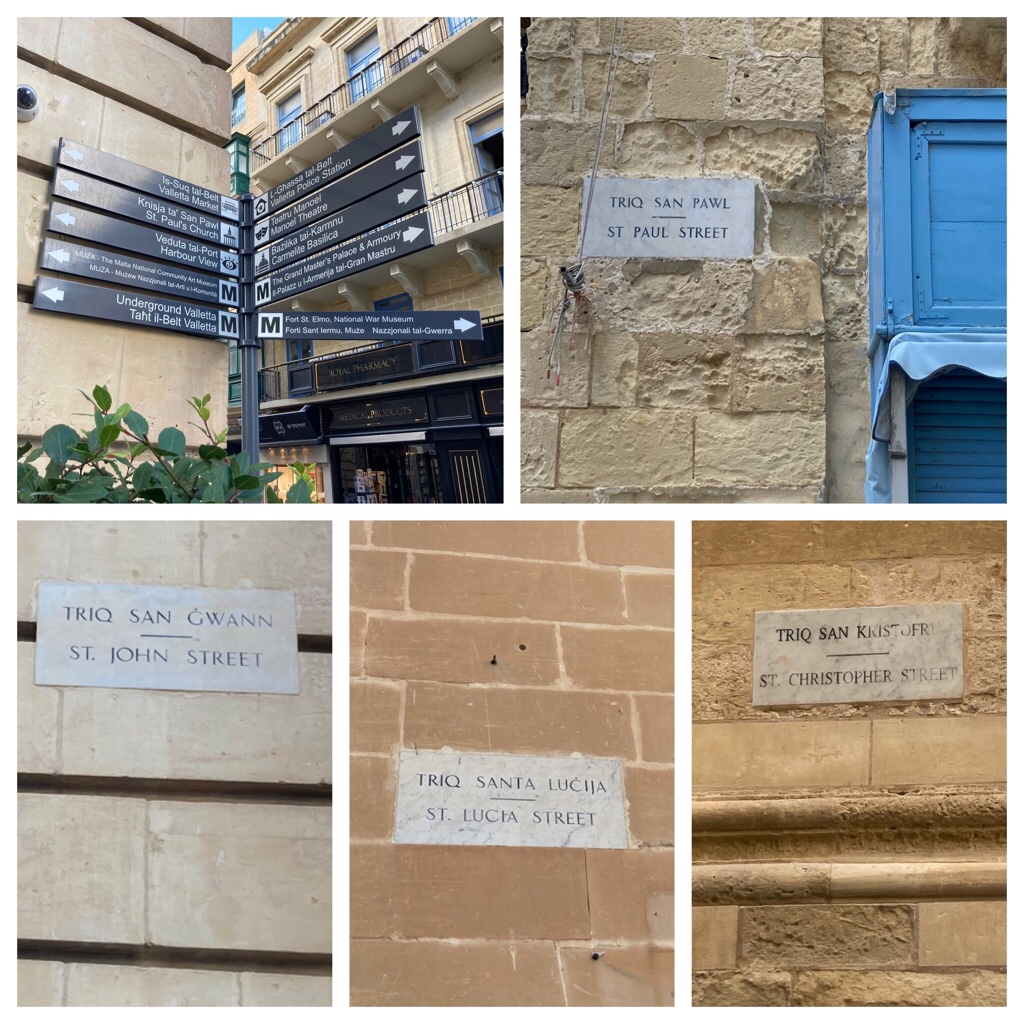
The street signs quickly caught our eye, with the words not looking traditionally European. The native language of Malta is Malti, which is a Semitic language, probably originating in North Africa, related to Hebrew and Arabic. It has Arabic grammar but a vocabulary drawn far more widely and is written in Latin script. Until 1934, Italian was the official language here, even though only the church and aristocracy used it, but then it changed to Malti, although everyone also speaks English.

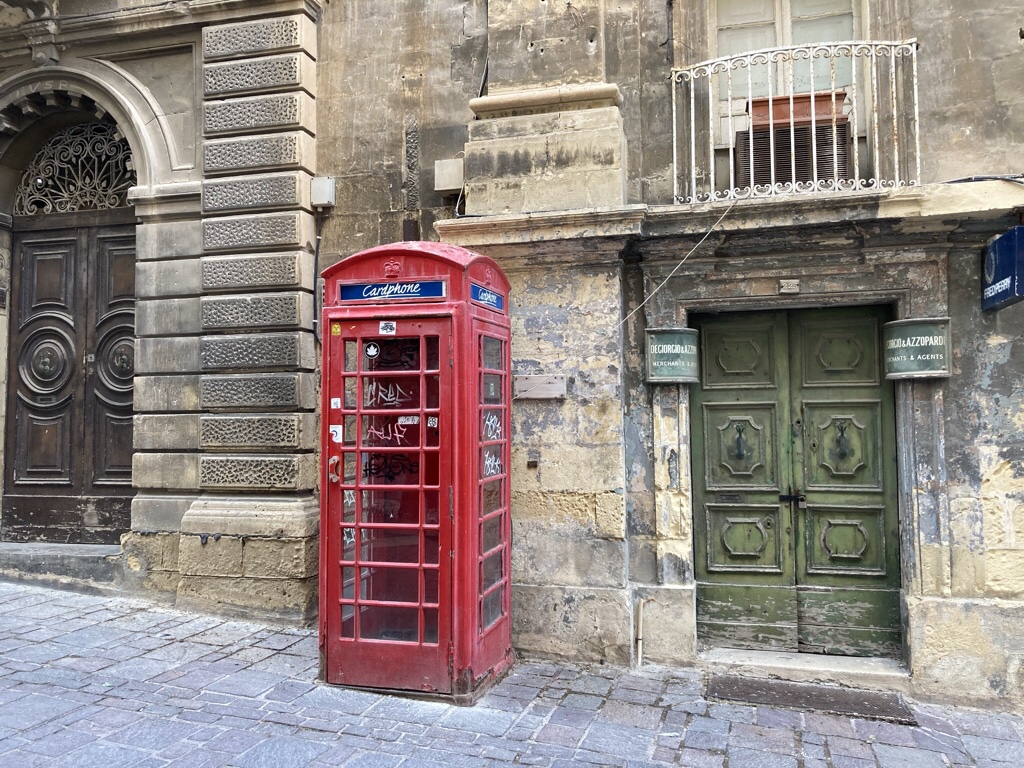
The language isn’t the only reminder of British rule, the Maltese drive on the right and we spotted these …

Another feature we’ve noticed are the statues decorating many street corners … which were built by decree from the Knights of St John when they planned Valletta.

We loved just pottering about. We wandered down side streets which have all sorts of businesses mixed up together, with cafes and bars rubbing shoulders with jewelry shops and haberdashers.

So many photos, but maybe time to get down to so serious sightseeing!

Map

Chris & Elaine’s Letter from Valletta 2023

We started keeping track of our travels in 2013, beginning with our big birthday safari to India. Ten years and 37 trips later, we have another special birthday year!

This time, we’ve each picked a destination starting with Chris’s choice of Malta. The dodgy knee was replaced in October and good recovery means we can now celebrate with a few days in Valletta. We’re looking forward to mild days with some sun, gentle strolls and a sprinkling of history. A photo walk and birthday surprise are also planned so watch this space!
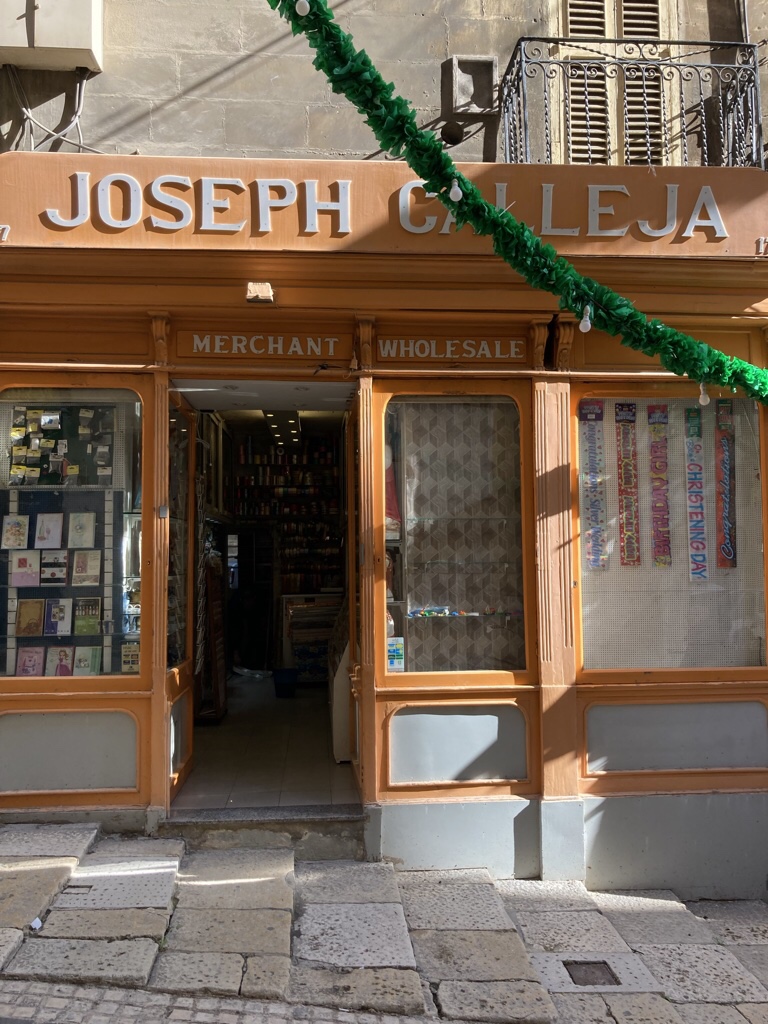
PS … we were struggling for a good title and our friend Mary came up with this winner so thank you very much 😀

Journal Entries

Greetings from Valletta

Valletta’s Palaces and Churches

Bus to Mdina

An Electric Birthday in the Three Cities

Valletta … a final salute!

Map