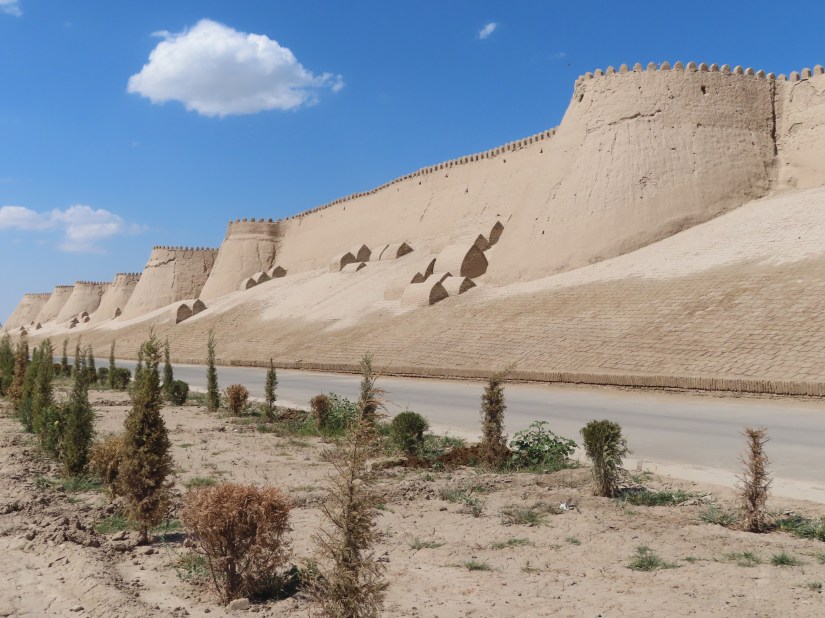
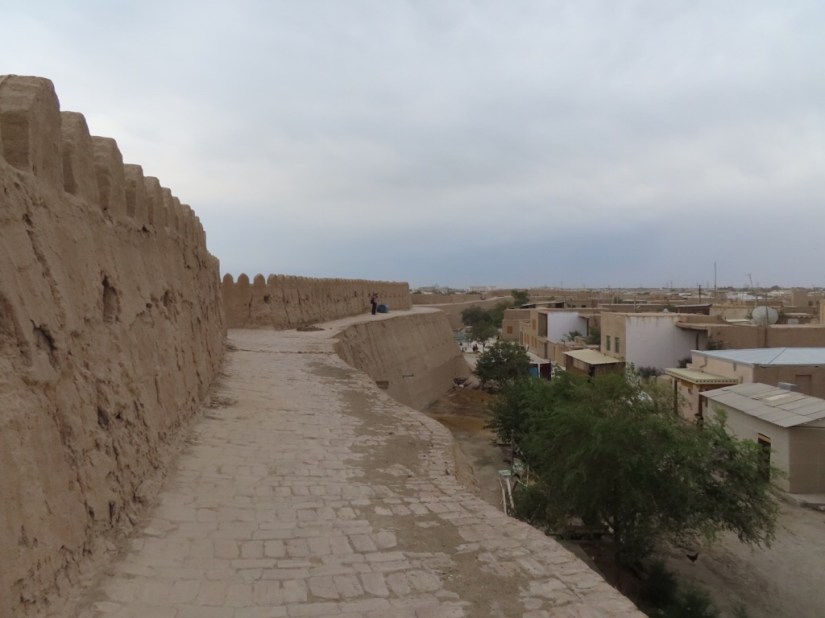
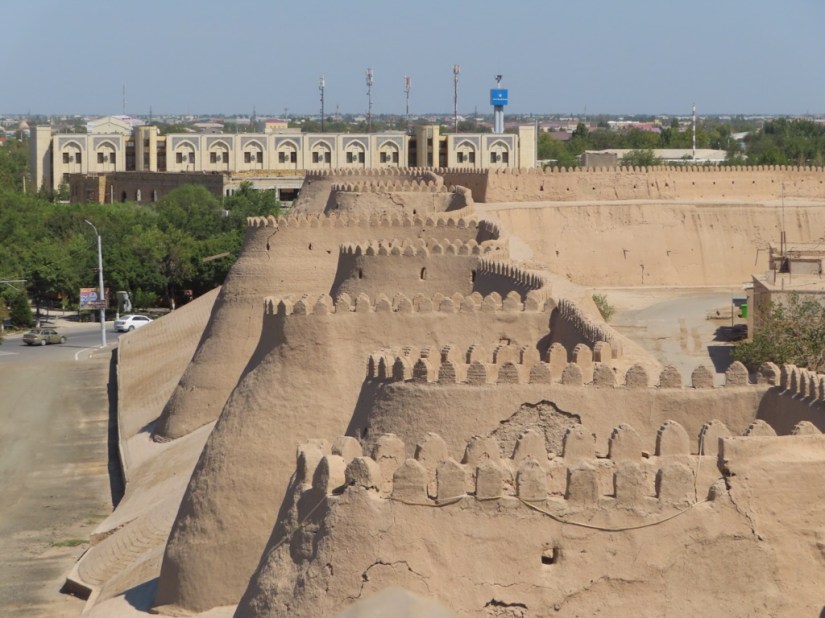
 We knew we had arrived in Khiva when we saw the wall. This huge wall surrounds the city and contains four gates which would seal the town from dusk to dawn and offer protection to a city plagued by nomadic raids and desert storms.
Khiva is one of the cities of ancient Khorezm, 900km west of Tashkent with a population today of 90,000 and the first site in Uzbekistan to be made a World Heritage site.
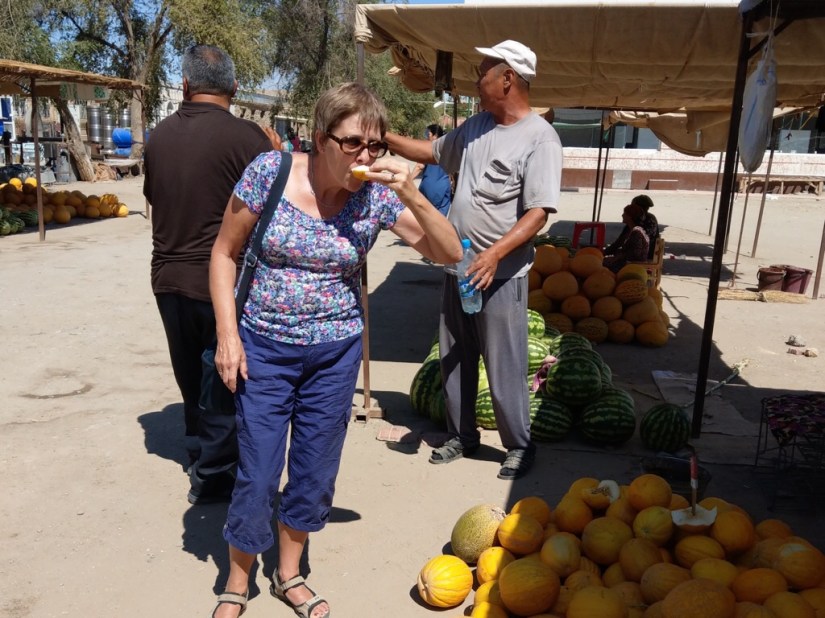
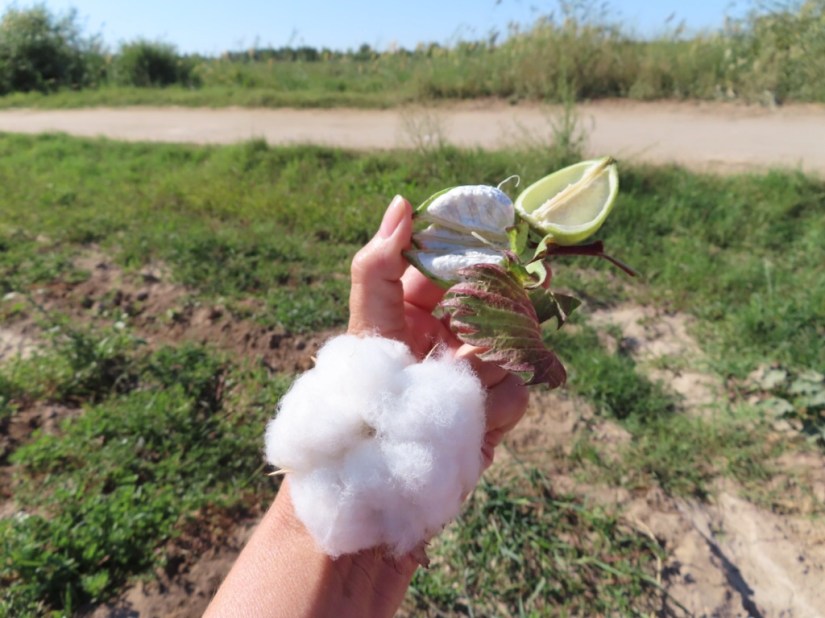
It is in the region of Khorezm which has always been an important area in Central Asia due to the Amu-Darya delta and early irrigation systems enabled agriculture in the villages and then commercial, political, and cultural development in the towns. Today its main crops are cotton and rice as well as being well known for its melons.
According to legends, Khiva was founded by Shem, the elder son of Noah, who dug a well in the middle of the desert which was named Khey-vakh which roughly means sweet water. Beginning as a minor fort and trading post, by the C10th the Arab traveler Al-Istarkhiy wrote that Khiva was among the 30 important cities in Khorezm. All the caravans had to stop here as it was the last resting-place before crossing the desert to Persia and from dawn to dusk, an endless string of camels with baggage passed through the gates.
There was never a single Silk Road, rather a network of different trade routes all linked together joining Xian in China with the Mediterranean, often changing depending on war, weather or robbers. Trade began with China’s desire for horses for which they traded silk, but many other commodities were traded, all light, valuable, exotic and highly desired. Central Asia was the clearing house for much of this trade as caravaners rarely made the whole journey, instead just carrying goods a fraction of the distance, sheltering in a network of caravanserais offering lodgings, stables and stores along the way, then trading it on. The Silk Road also enabled an exchange of culture including ideas on all aspects of religion, art and science being carried with the commercial goods the merchants traded from country to country. By the end of the C15th, the Silk Road began to decline as sea trade flourished.
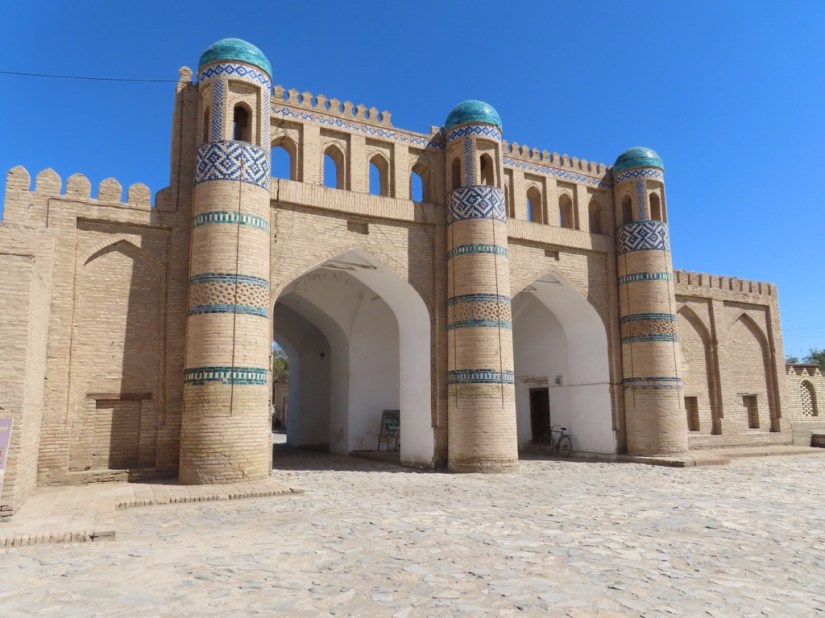
The western Ata Darvoza (Father Gate) was rebuilt in 1975 after the original was pulled down to open the medieval city to motor traffic in 1920s …
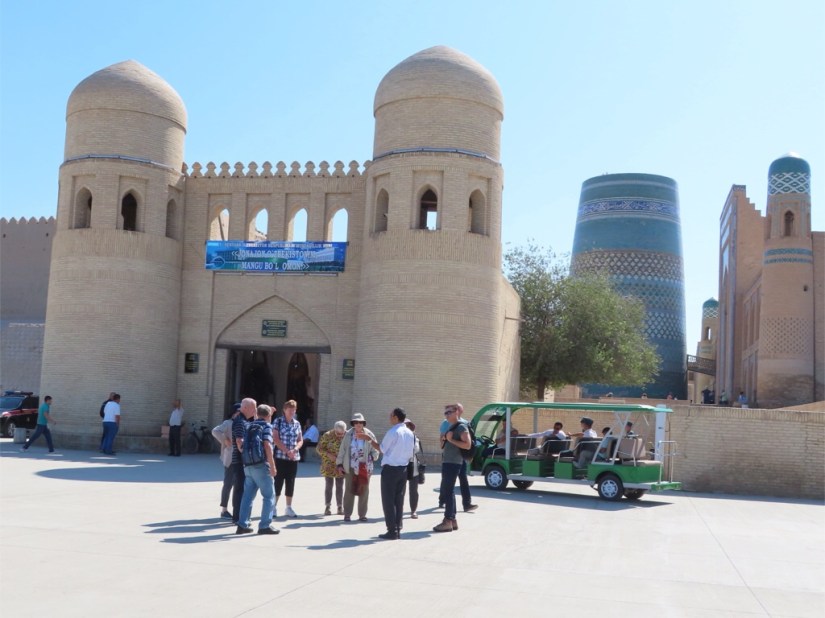
To the north is the double-sided guardrooms of the Bakcha Darvoza or Garden Gate where customs duties would be collected from the caravans arriving from Urgench. At the moment, the road in through this gate is being relaid, paid for by the Chinese who have bought a madrasa which they are converting into a hotel …


To the south is the Tash or Stone Darvoza, the arrival point for caravans from the Caspian area …
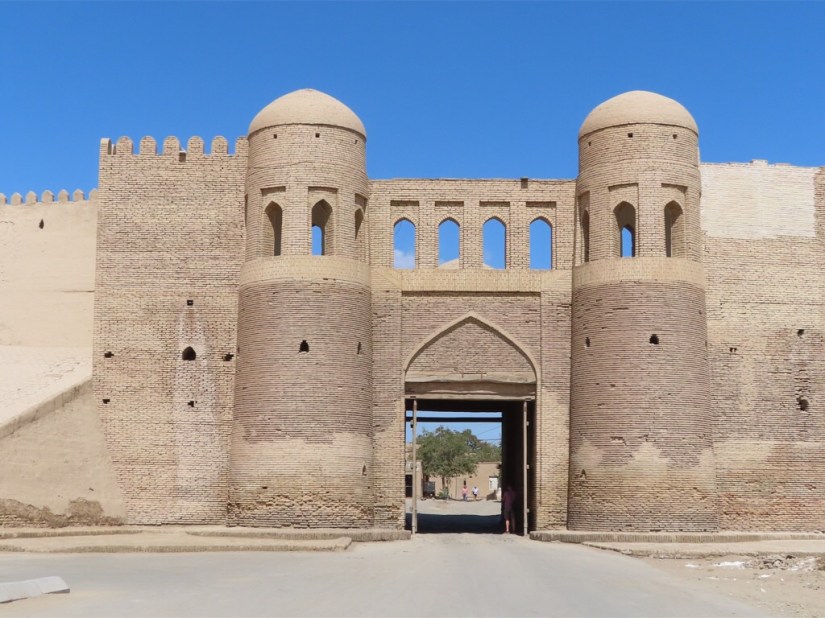
And finally the Polvon Darvoza or Warriors Gate where royal proclamations were announced. It dates from 1806 and was once the entrance to the slave market …
 …and these niches in the tunnel would have been where slaves were kept chained.
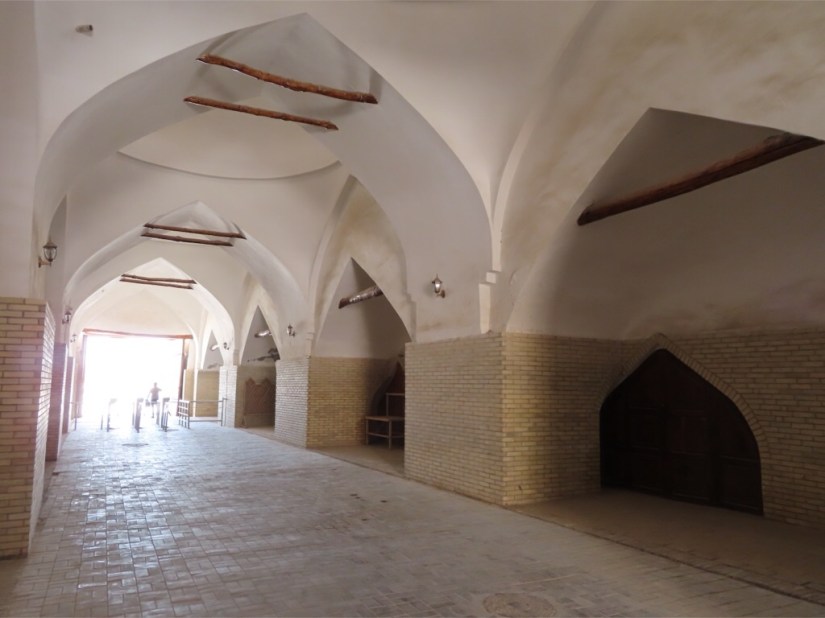
Outside there was a bazaar and local housing which was all cleared by the government a few years ago, but so far nothing more has happened.


We chatted to Nodir who is converting this madrasa to the Polvon Qori Hotel and he proudly showed us round. I’m sure it will be lovely when finished so one to look up if you are tempted to visit.

It is still possible to walk along one section of the city walls …
Just like Tashkent, Khiva was destroyed by Genghis Khan in the C13th, recovered under the Mongols and Timur then prospered under the Shaybanids, who ruled throughout the C16th and made Khiva the capital of Khorezm. Much was destroyed when the Persian Nadir Shah took the city in the C17th, but Persian control only lasted a few years and then Khiva Khanates took power. Mukhammad Amin ruled the area from 1763 to 1790 and began the process of re-populating and restoring the city. His immediate successors such as Mohammed Rahim (r. 1806-25), Alla Kuli (r. 1826-42) and Mohammed Amin (r. 1846-55) continued to strengthen the power of the state by reducing tribal conflict, reforming taxes, minting new coinage, and sponsoring large-scale construction projects. They built up a reputation abroad for their dictatorial style of leadership and the city prospered from the sale of slaves in the large market in the middle of town.
Slavery was the way of life in Central Asia. Nomadic tribes began to depend on Khiva for grain which couldn’t be grown without extra labour so the slave trade became of mutual benefit. Most slaves were brought by Turkmen tribesmen from the desert or Kazakh tribes of the steppes, who raided those unlucky enough to live or travel nearby and most were Kurds and Persians. By 1819, one foreign visitor to Khiva estimated that there were 30,000 slaves in Khiva, including 3,000 Russians and it was said that a Russian male in good health was worth four good camels. The practice of slave trading was to continue up until the beginning of the twentieth century but it was not until the 1920’s that the remaining slaves were freed as part of the People’s Revolution.
The number of Russian citizens held as slaves and the desire to control the trade in the region were two reasons that Russian interest in Central Asia increased in the C19th. Russia also needed to establish a secure source of cotton as The American Civil War had cut off Russia’s cotton supplies.
On the third attempt, Russia managed to annex the Khanate of Khiva in 1873 and make it a Russian protectorate and by 1876 all of modern day Uzbekistan was under Russian control. The Russians substantially increased cotton production which they shipped to Russia, but otherwise they interfered little with the indigenous people and the Khans continued as local leaders.
Following the the Russian Revolution of 1917, Khiva had a revolution too, and in 1920 the Khanate was replaced by the Khorezm People’s Soviet Republic which later became part of the Uzbek Soviet Socialist Republic and then modern Uzbekistan.
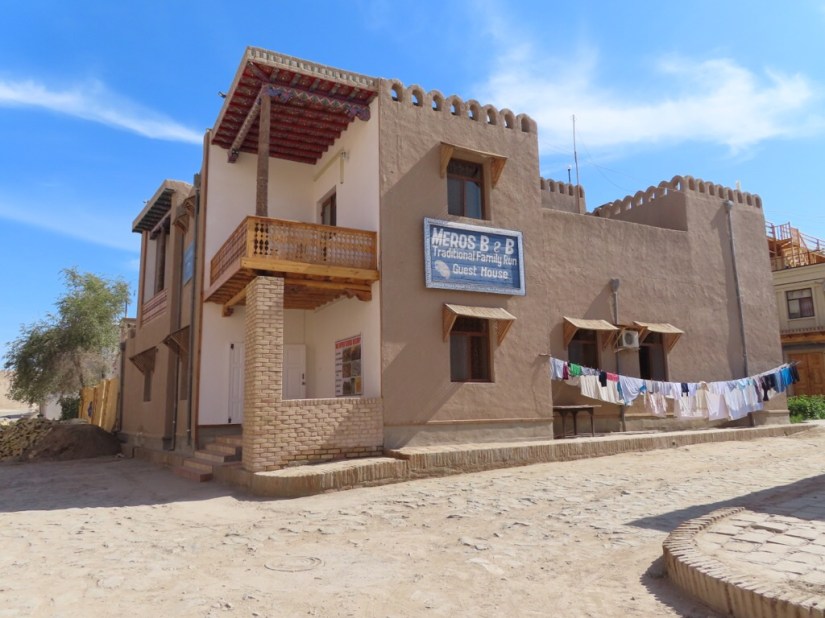
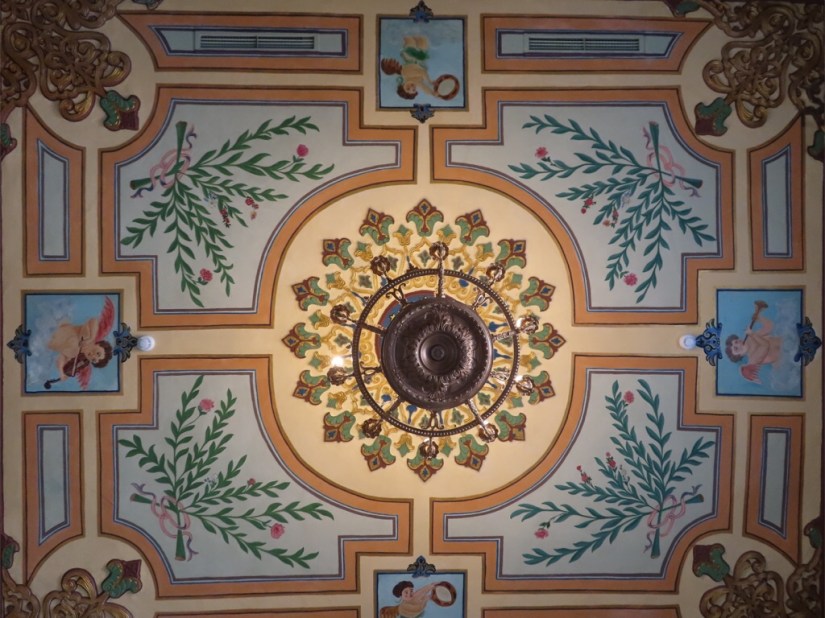
We had chosen to stay in the heart of the old city and were welcomed at the traditional Meros B&B by Jalolladin and his family. Like many of the houses, it is made with brick and rendered with a mud and straw mixture. Our room was decorated with a lovely painted wooden ceiling and local fabrics and had a balcony overlooking the wall where we could sit and drink tea as well as the rooftop where we could enjoy the great view with a beer or dinner.

Khiva was divided into two parts in the C19th, Ichan Kala, the inner city with 10 meters high wall containing the Khan’s palace and where high officials, clergy and rich merchants lived, and Dishan Kala, the outer city where ordinary people, small merchants and craftsmen lived. The old city got UNESCO World Heritage status in 1990 and contains 54 historic buildings.
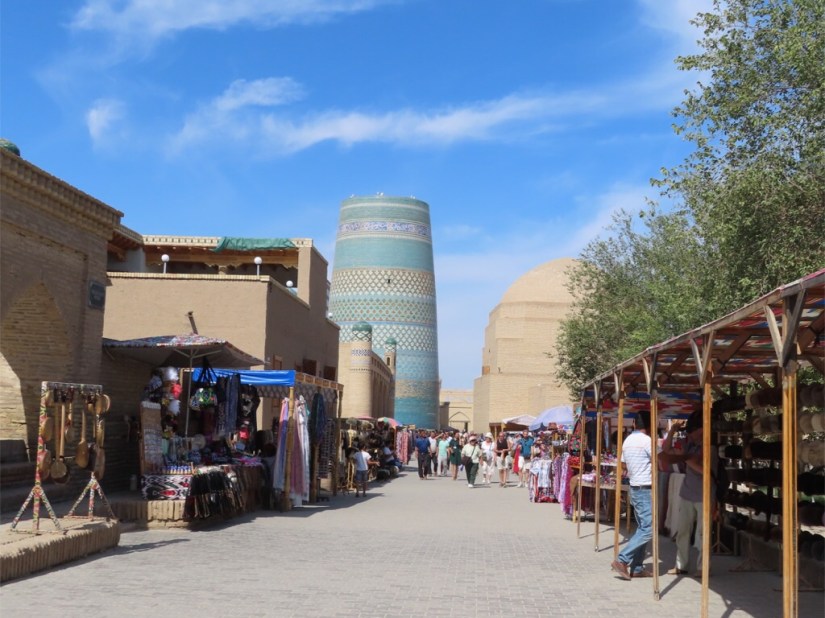
We’ve spent three days soaking up the Ichan Kala, the first day just wandering and then the next two days with the ticket that enables entry to the 54 historic buildings in the city. It seems like a time warp – devoid of cars in its central areas, and with most of the modern infrastructure hidden from view – we especially liked these AC covers!

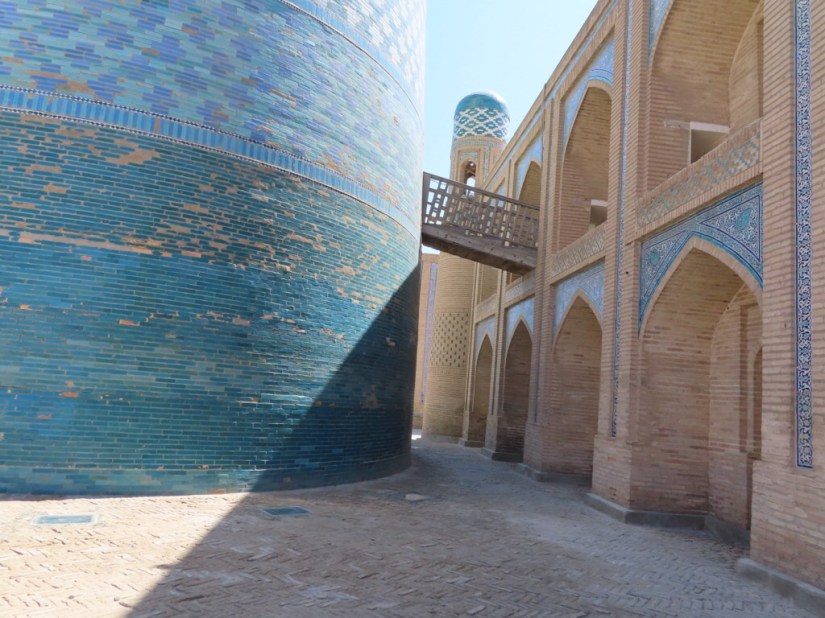
So where to start, maybe with the other most iconic symbol of Khiva, the unfinished Kalta Minor Minaret, commissioned in 1851 by Mohammed Amin Khan but only reaching 26m before the Khan’s untimely death, rather than the 70m planned. Nonetheless, it is still dazzling, covered in turquoise tiles … and now part of a smart hotel.

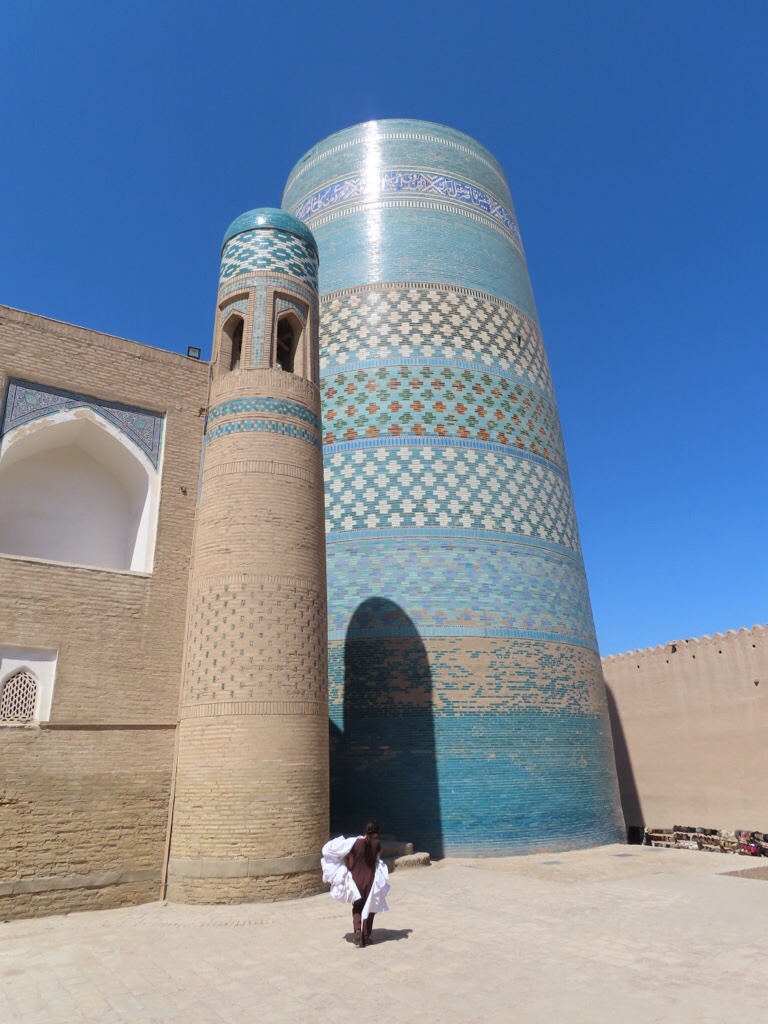
There are a couple of palaces … Kukhna Ark, the Khiva rulers’ own fortress and residence, first built in the 12th century by one Ok Shaykh Bobo, then expanded by the khans in the 17th century. The khans’ harem, mint, stables, arsenal, barracks, mosque and jail were all here.

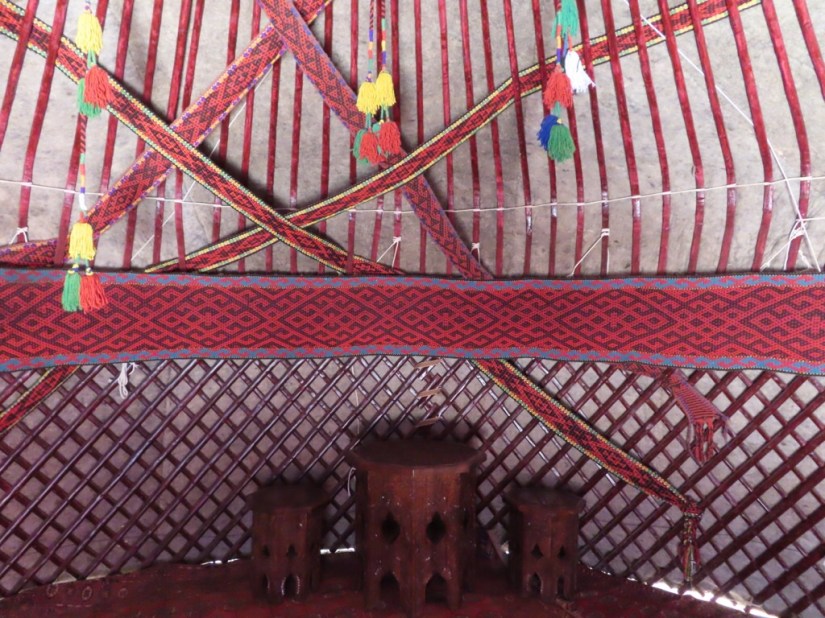
 Remaining is the restored, open-air throne room, where the khan dispensed judgement. The circular area on the ground was for the royal yurt, which the no-longer-nomadic khans still liked to use.
 The tiled iwan or portico is simply stunning.
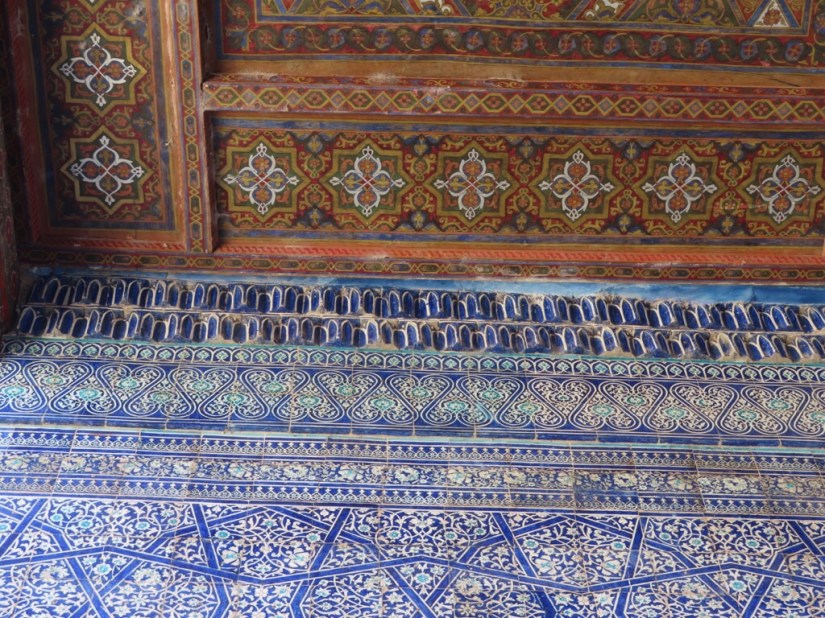 Behind is a beautifully decorated room where the wooden throne of the Khan sat, gilded in silver, but now in St Petersburg Hermitage.

There is also the 19th-century Summer Mosque is open-air and spectacularly ornate with superb blue-and-white plant-motif tiling and a red, orange and gold ceiling …

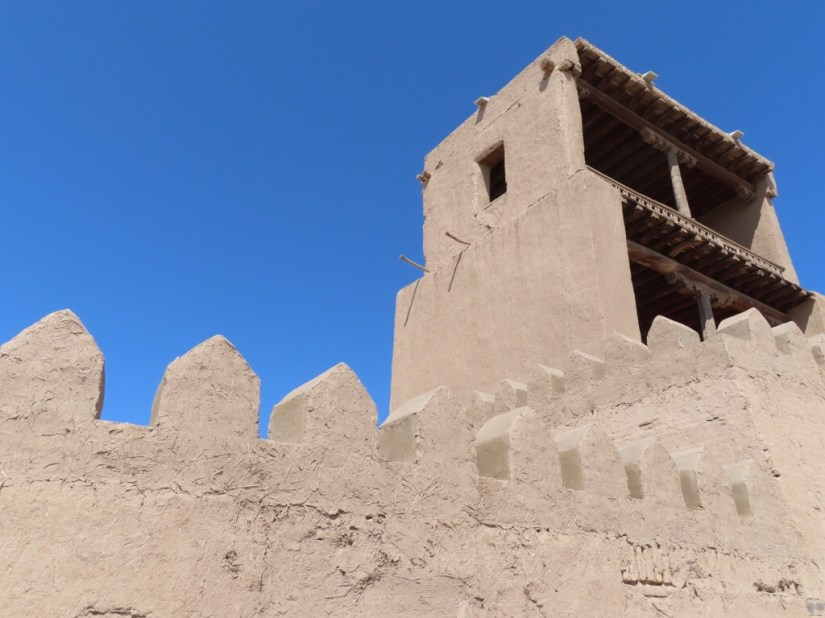
… and a watchtower which gives great views over the city …
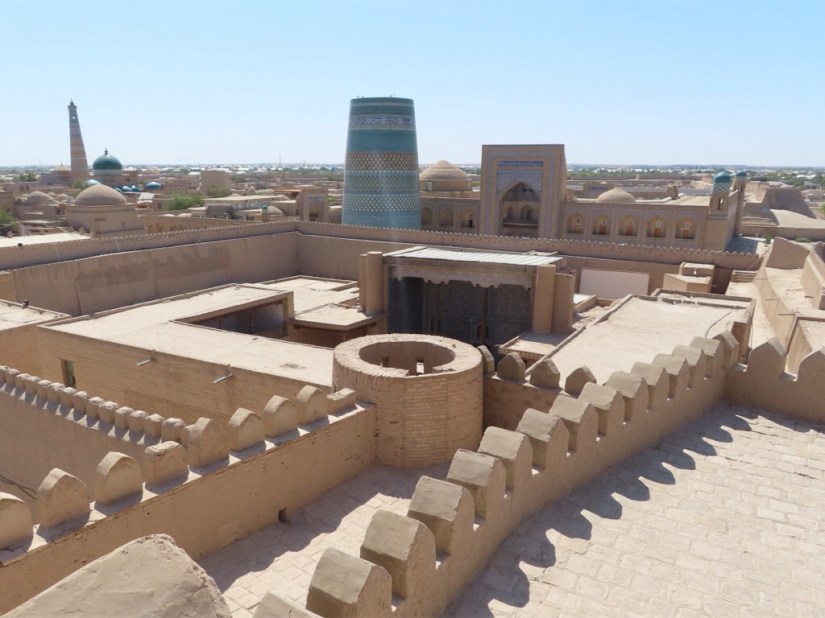
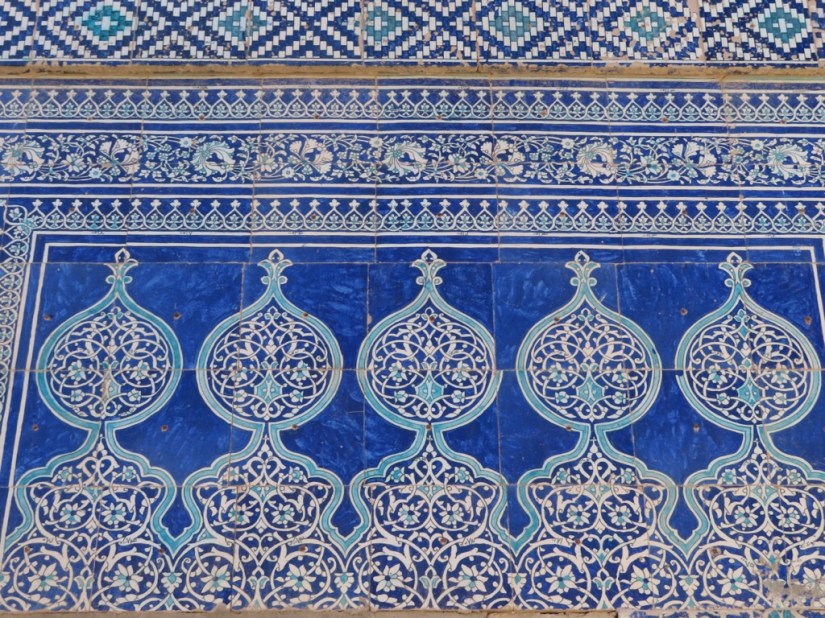
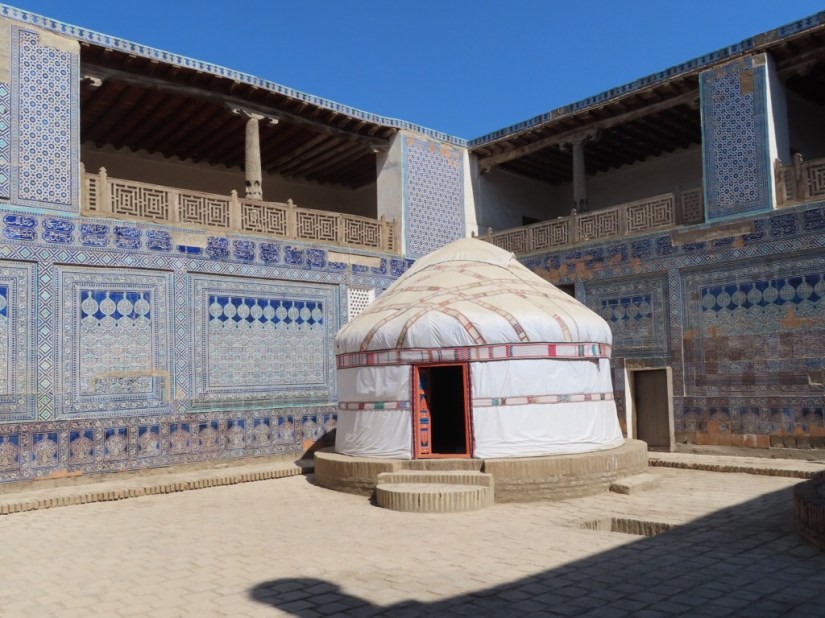
Tosh Hauli means Stone House because it is made of stone-hard bricks rather than clay, and this palace contains Khiva’s most sumptuous interior decoration, dense with blue ceramic tiles, carved wooden pillars and elaborate ghanch. Built by Allakuli Khan between 1832 and 1841 as a more splendid alternative to the Kuhna Ark, it’s said to have more than 150 rooms off nine courtyards, with high ceilings designed to catch the slightest desert breeze.
This is the main harem area with a row of 5 north facing decorated irwans for the Khan and his four official wives.

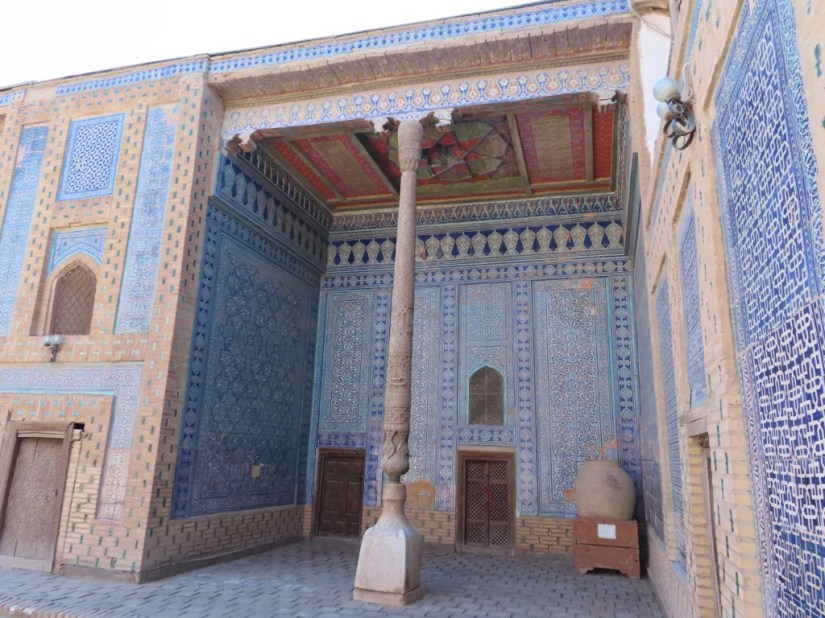


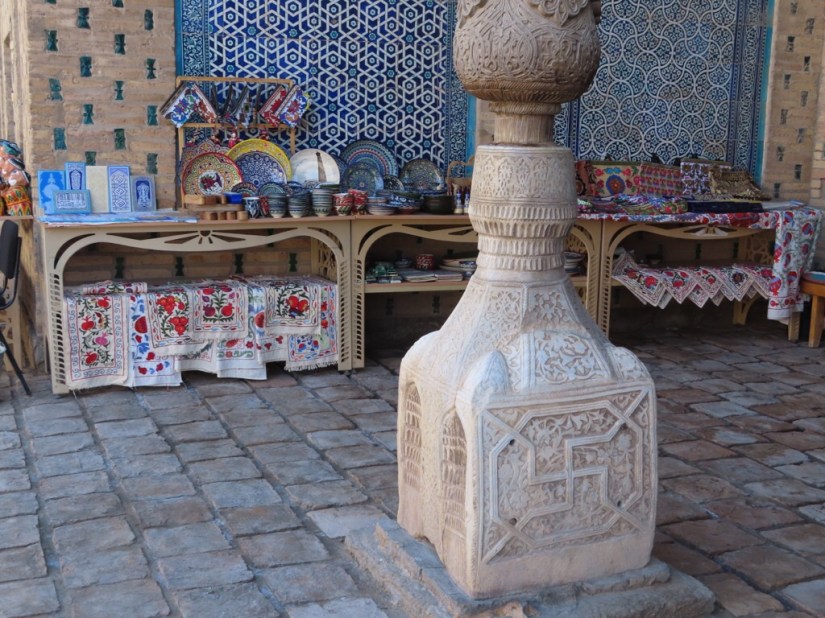
 One pillar has the Zoroastrian emblem which signifies wealth and eternal life.
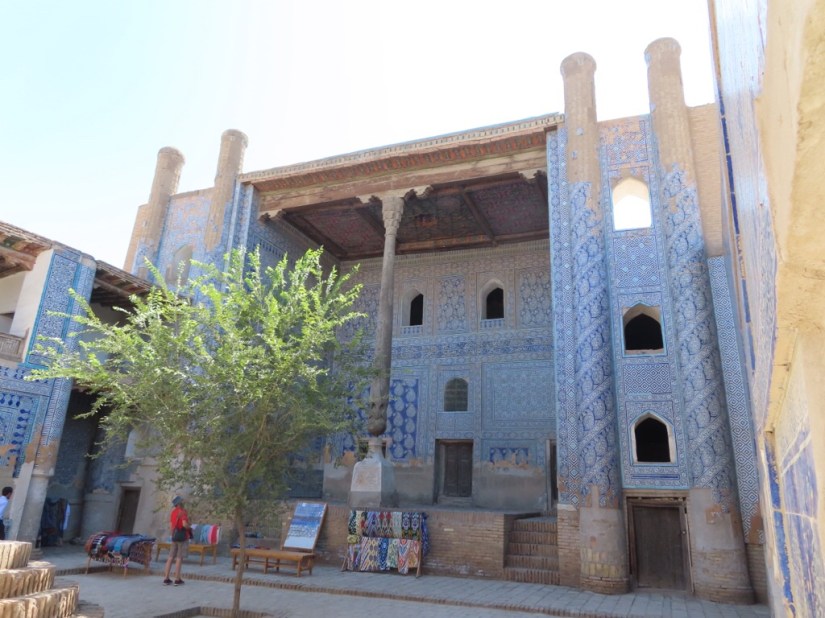
There are also other courtyards, this one complete with yurt …

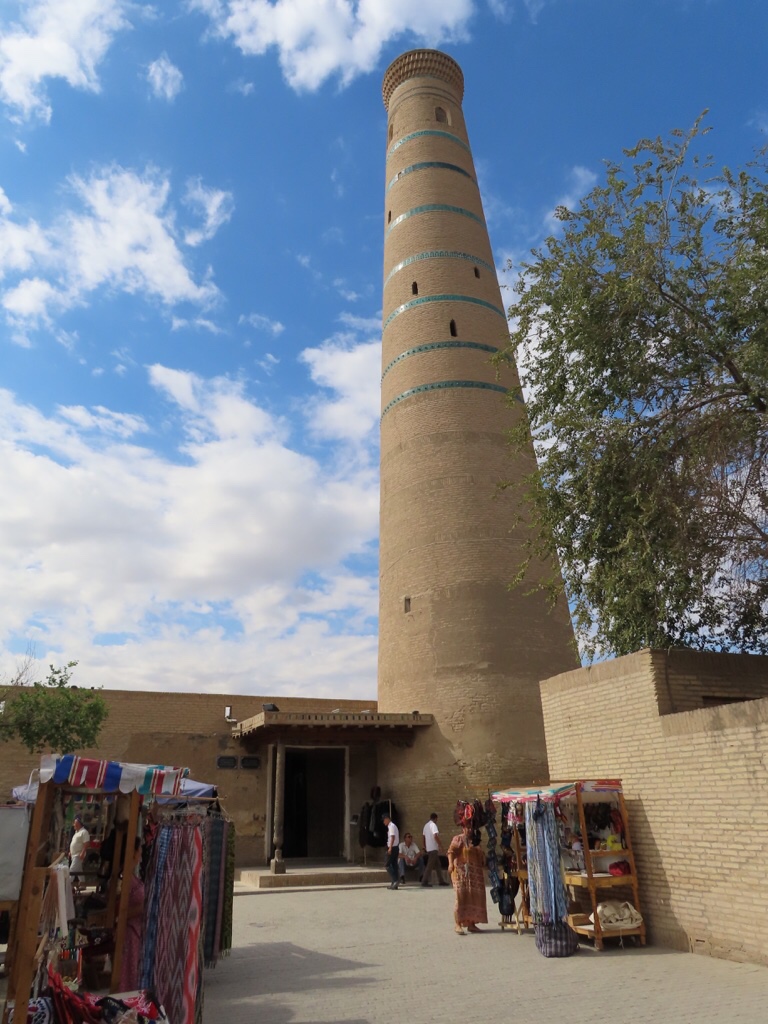
There are two mosques to mention, the C18th Juma or Friday Mosque with a rectangular prayer hall with a roof supported by 213 black elm pillars of various ages, all with carved designs …

…and a 33m minaret …
… and the small district Ak Mosque, unique for its wrap round verandah.

The most revered place in the city is the Pahlavon Mahmud Mausoleum, beneath a turquoise dome, with the tombs of the poet, philosopher and wrestler Pahlavon Mahmud who became Khiva patron saint, as well as several khans.
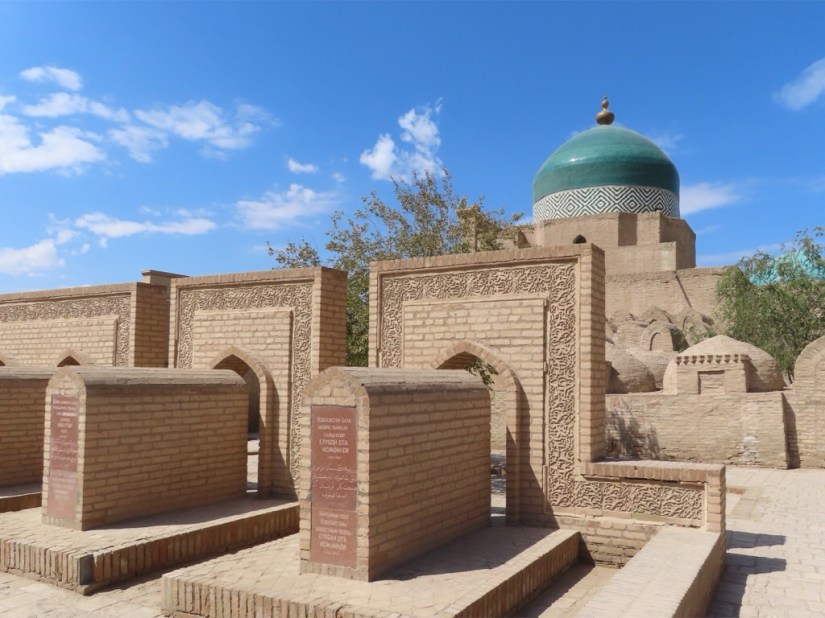

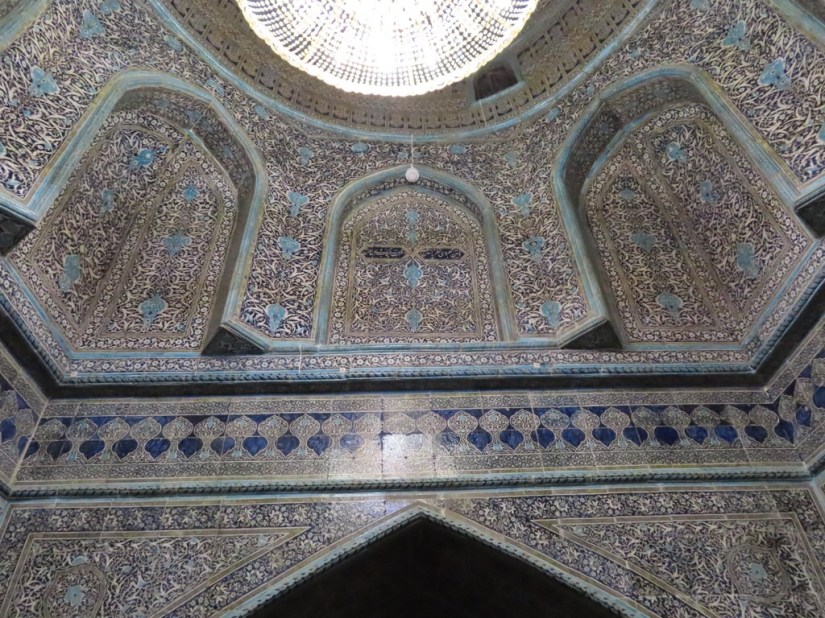

 There are also numerous masdrassas, most now utilised as museums, workshops, shops, restaurants or hotels. The Islam-Khodja complex, built in 1910 comprising a madrasa which introduced modern education, customs, and economic development to the traditionalist Khanate …
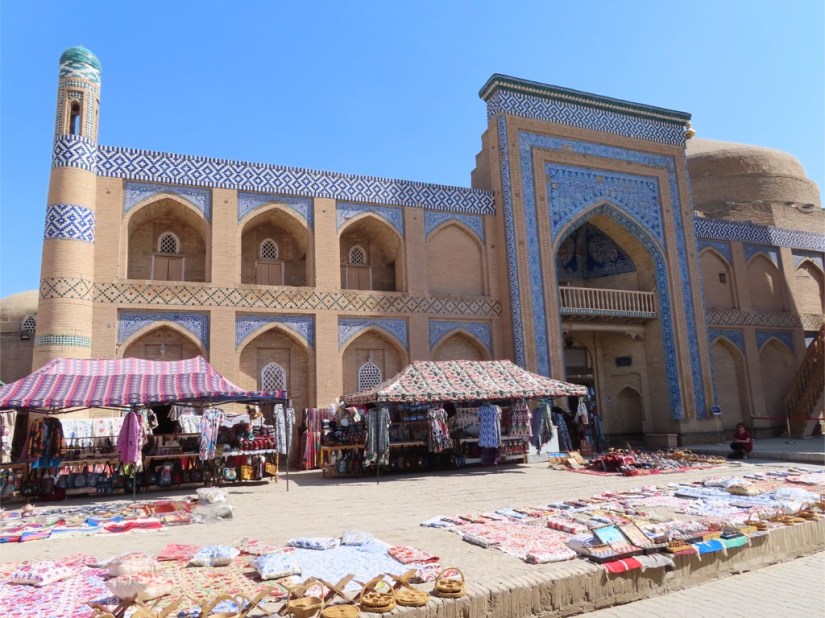
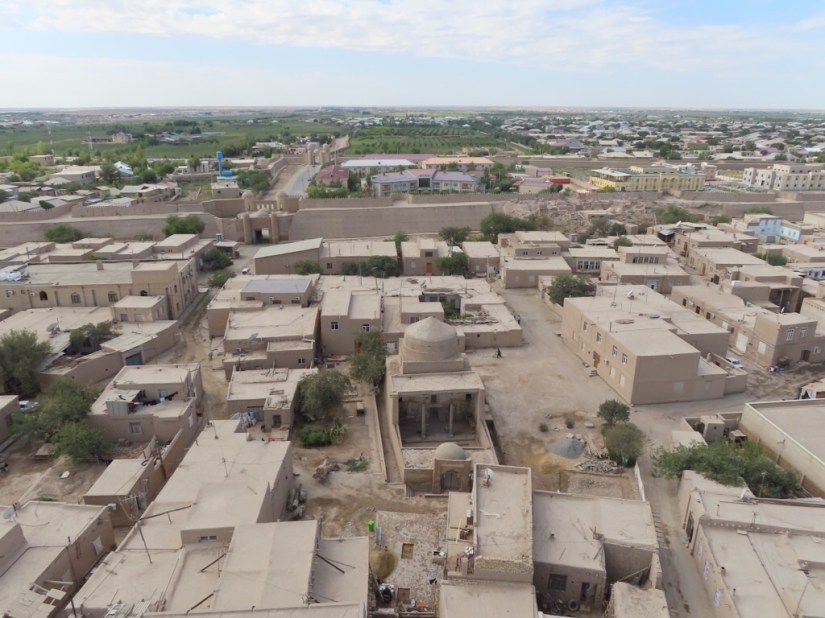
… as well as a 45m minaret …

… which we were able to climb …
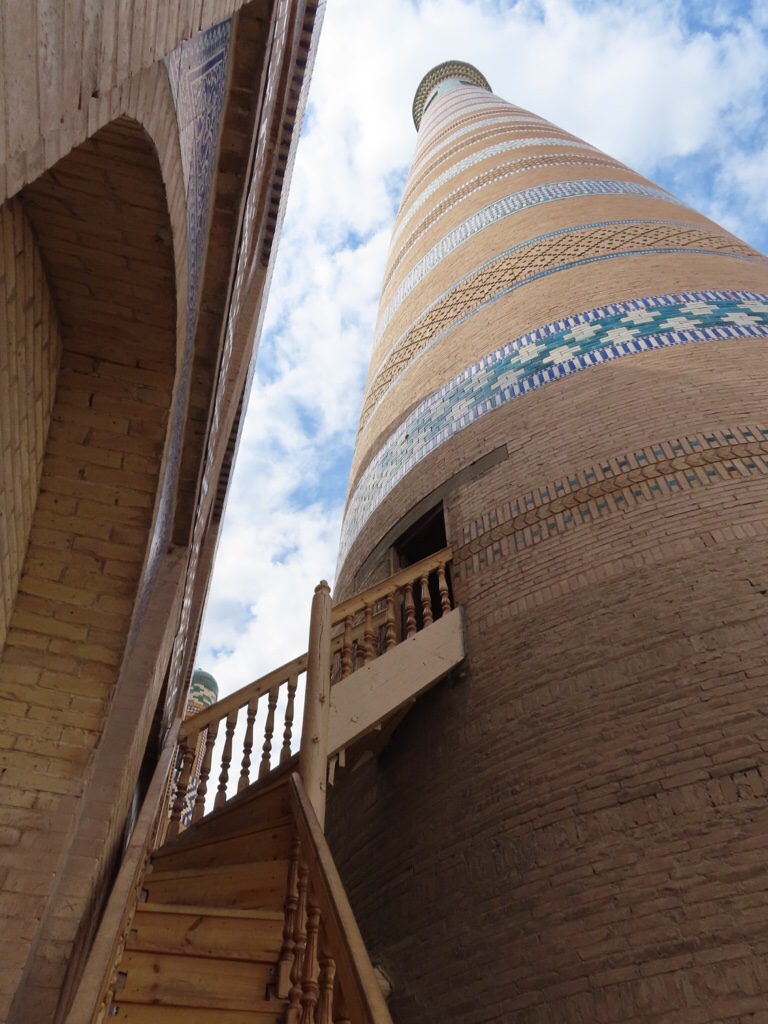
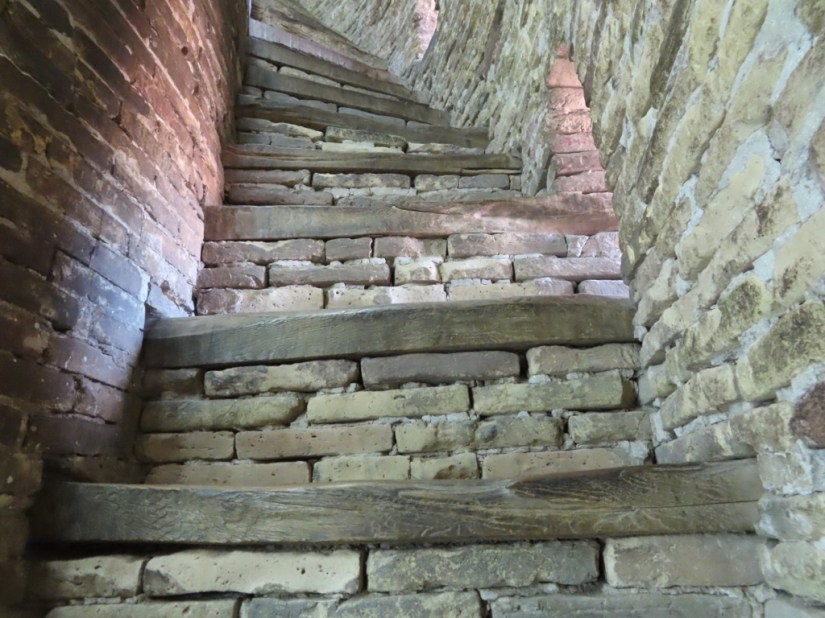
… for a great bird’s eye view of the city.


Opposite, looking slightly incongruous, is the First Russian School, built in 1912. The tall glass windows and lack of courtyard make this design ill-suited to the desert climate, but no doubt it was a sign of the forward thinking curriculum of Russian arithmetic, and world history.

It houses a photography museum which showed the work of a local photographer called Devanov who tried to record a Khiva that was slowly disappearing and here are a couple of photos from the late C19th …


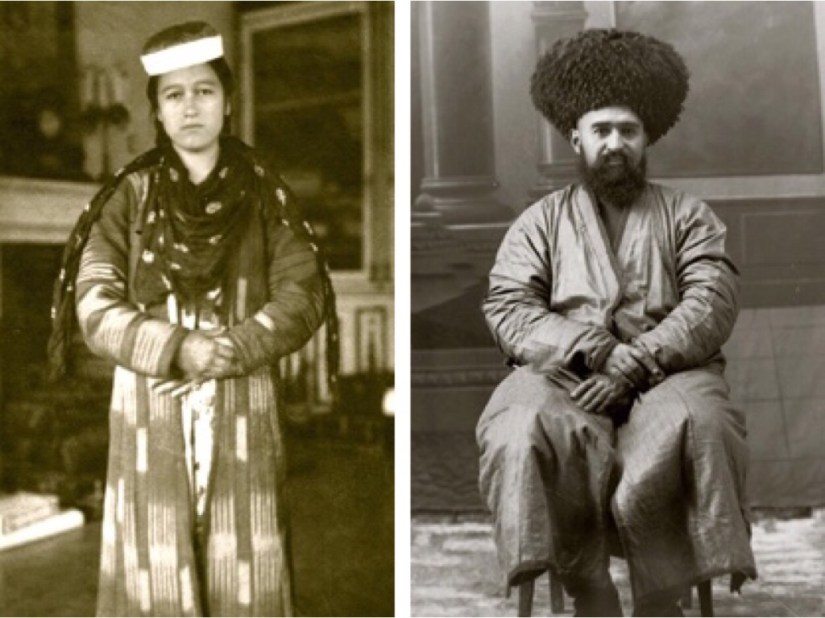
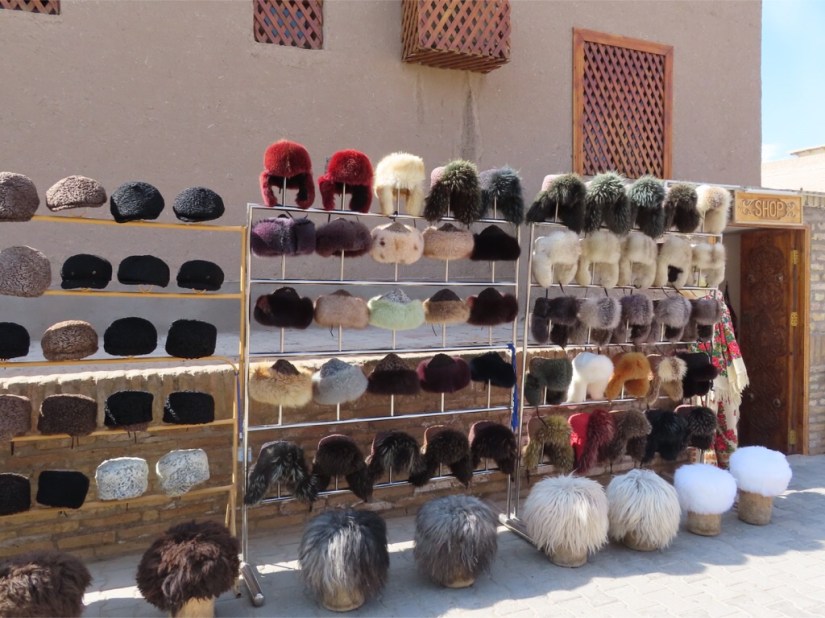
The men are wearing chugirmas which are the historically distinct sheepskin headwear for Khorezmian men, also being worn by the little band of players who have been plying their art in the street …

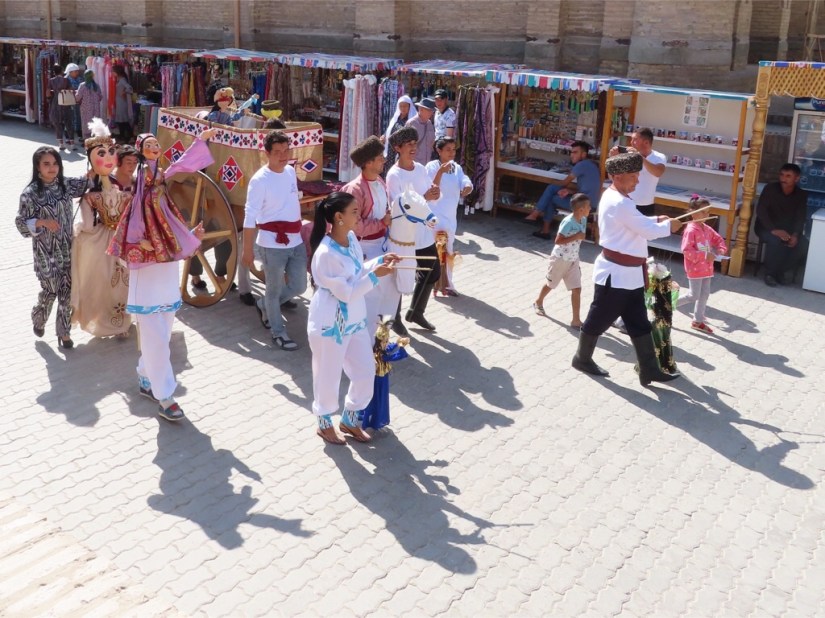
… and which explains the plentiful tourist hat stalls!
There are lots of fabric items for sale, scarves, table linen and also coats and dresses, made to measure in a Uzbeki material called adras which is a 50-50 silk cotton mix often with traditional ikat pattern. The pattern is made by binding individual yarns or bundles of yarns with a tight wrapping applied in the desired pattern. The yarns are then dyed and woven … and I chose one in shades of blue to bring home, which might get modelled during the trip so watch this space!
The Mohammed Rakhim Khan Madrassa was completed in 1876. As the Khan was a ruler with one foot in the historical traditions of the Khiva Khanate, and the other foot in what promised to be a Russian-dominated future, the madrasa taught not only traditional Islamic studies but also secular subjects such as astronomy, geography, and mathematics. The tiles were restored in 1992.


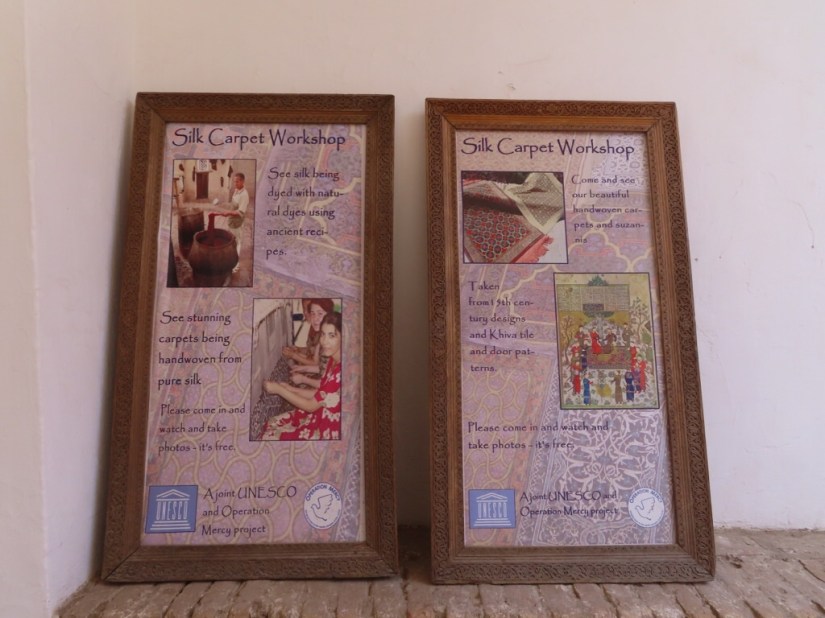
While researching our trip, I discovered a really useful online guidebook (http://www.khiva.info/display.php?site=khiva&page=&lang=en) which was set up a few years ago with help from a charity called Operation Mercy. One of the authors was an English volunteer called Christopher Aslan Alexander who ended up staying 7 years, setting up The Silk Carpet Workshop to train and give work to local people and then wrote A Carpet Ride to Khiva about his time here. We visited and saw carpets being woven.

 We have also taken photos at either end of the day, taking advantage of the good light, so here are early morning shots from Meros roof …
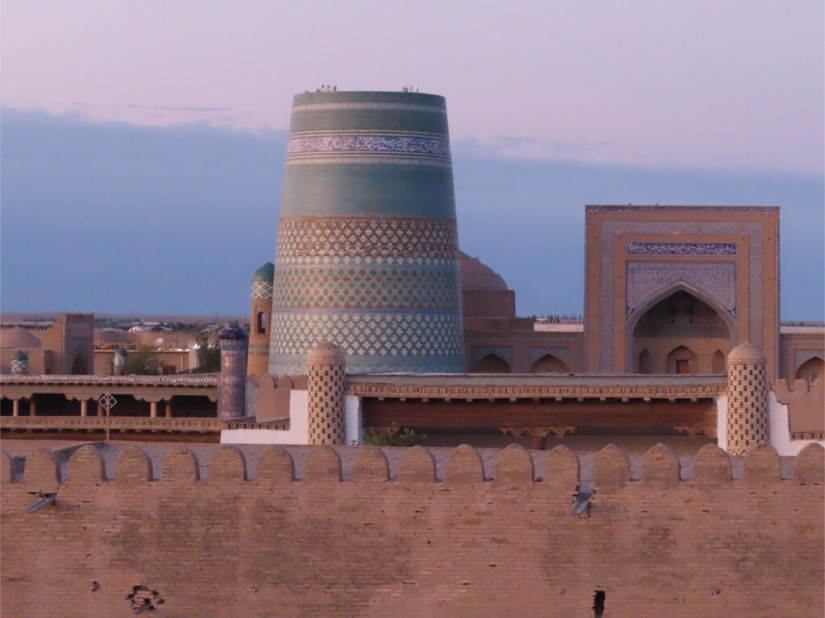
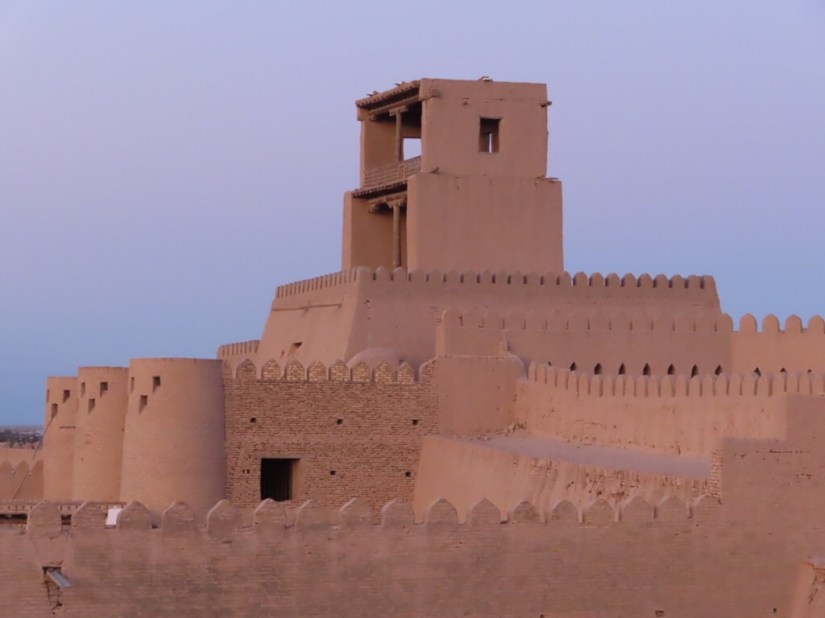

… and others late in the day …


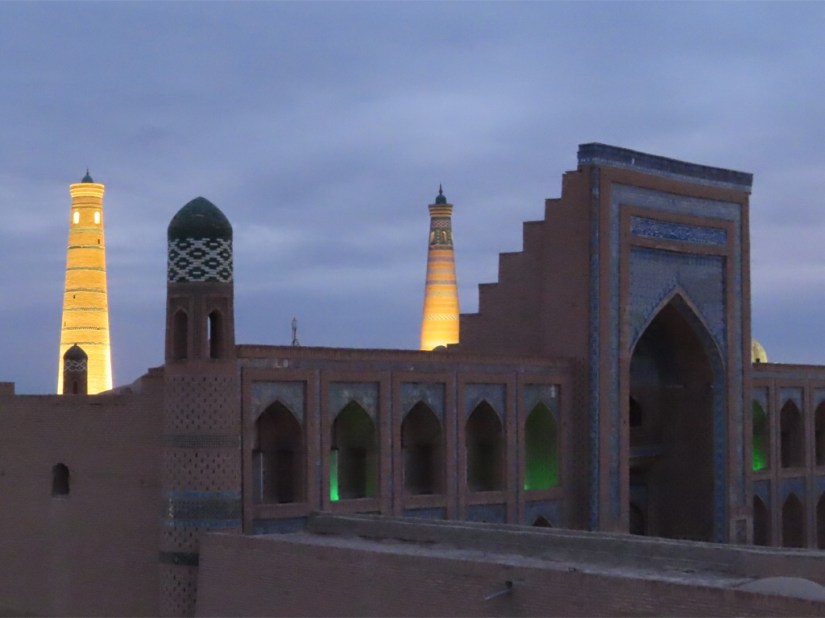
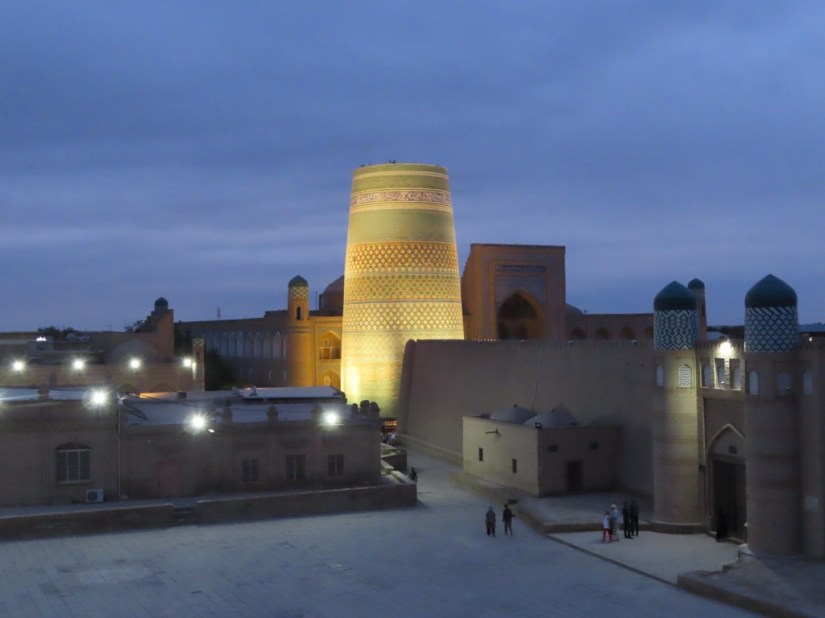
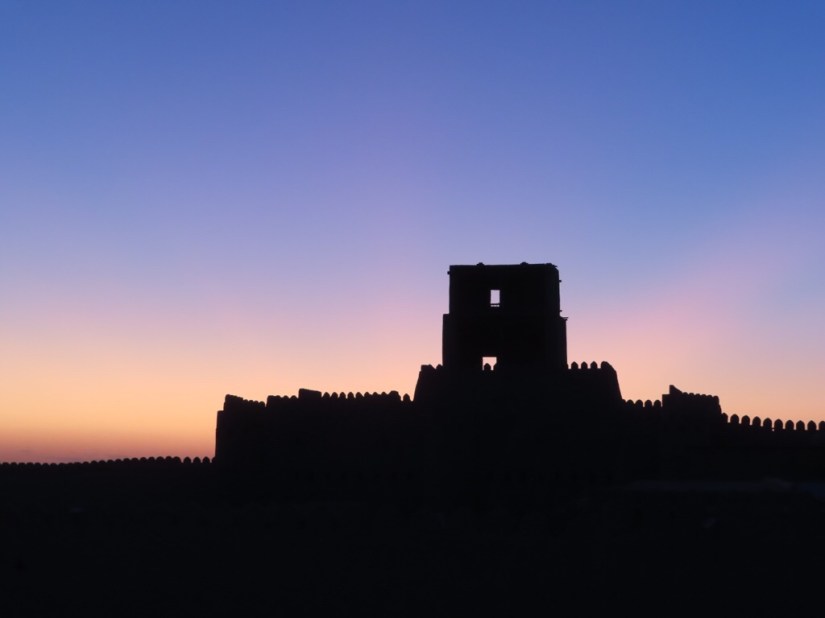
… and also watching the watchers!

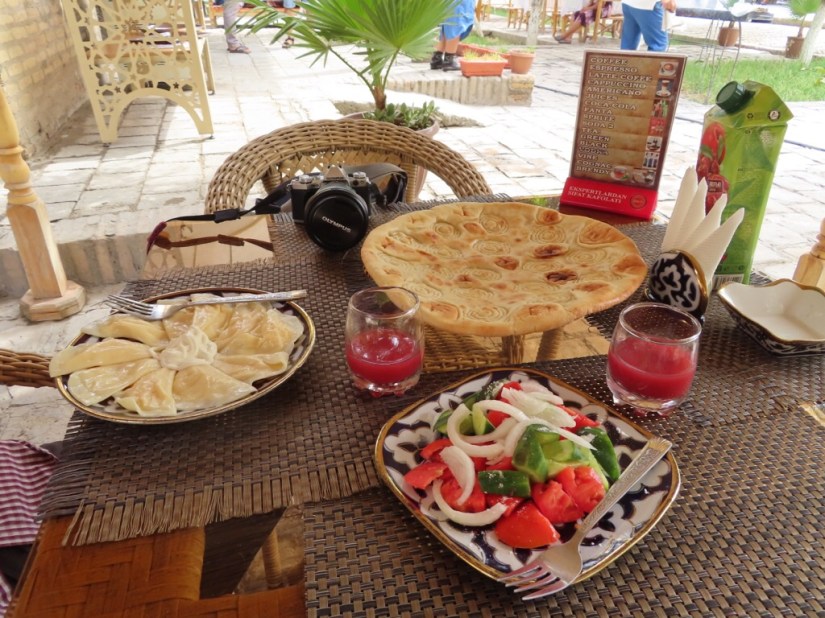
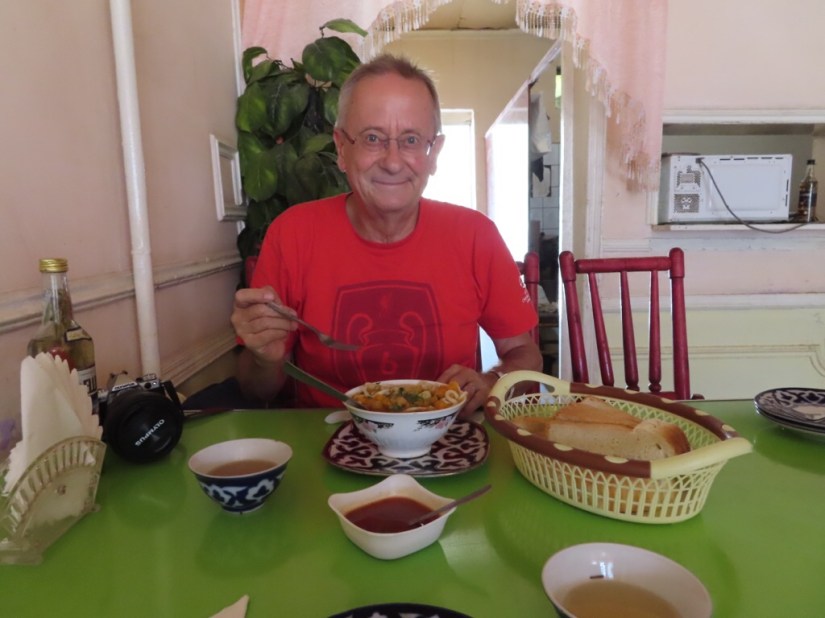
We’ve had a variety of food – generous breakfasts, salads, kebabs, soups, filled dumplings called manty and little pies called samsas … in a variety of spots including home cooked a Meros dinner on the roof, Terrassa Cafe, also with a great view and the friendly Teahouse Bir Gumbaz.
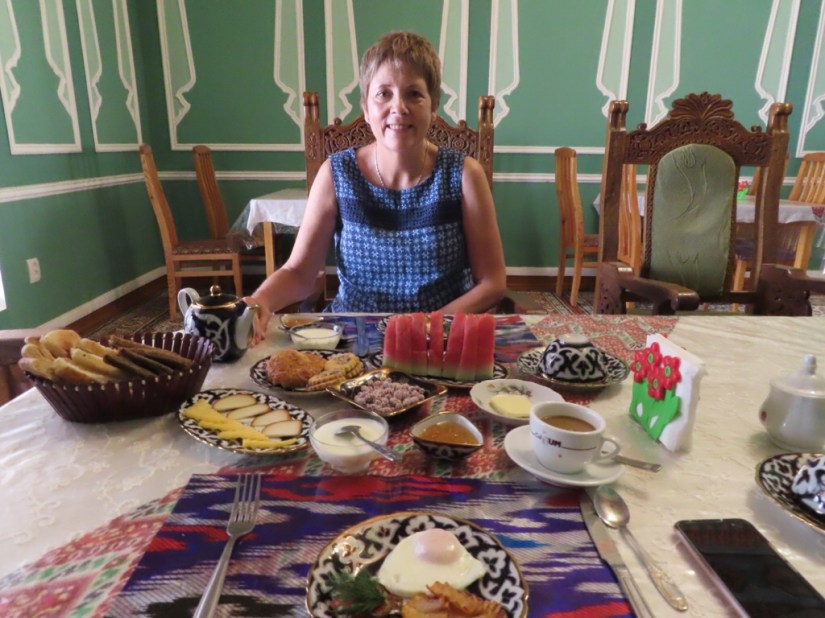

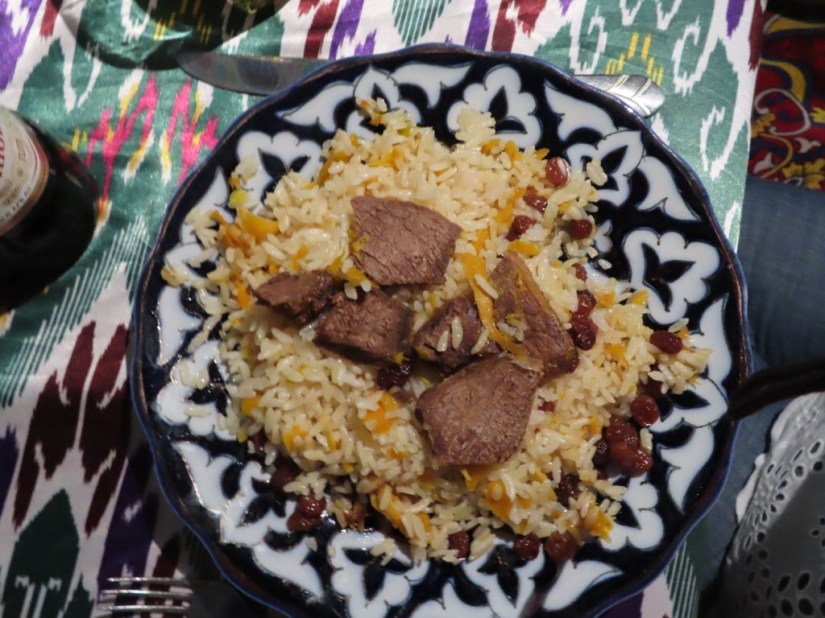
 I’ve tried the plov, which had shards of carrot and raisins in the rice and slices of beef on top and was not nearly as greasy as I expected, but I’m sure it would have been different if I’d tried it in the market! Jokingly it is said the word for foreplay here is plov … as the oil in the bottom of the pan is meant to invigorate!
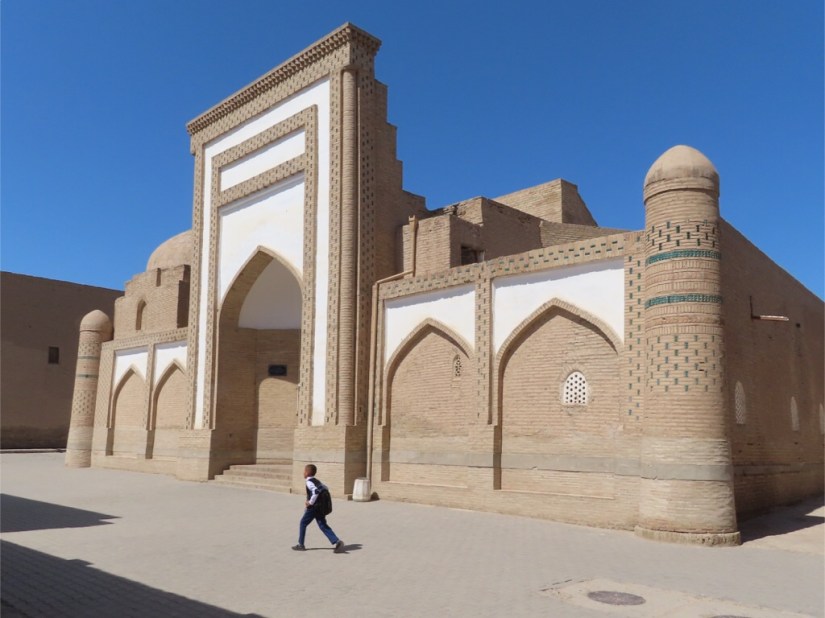
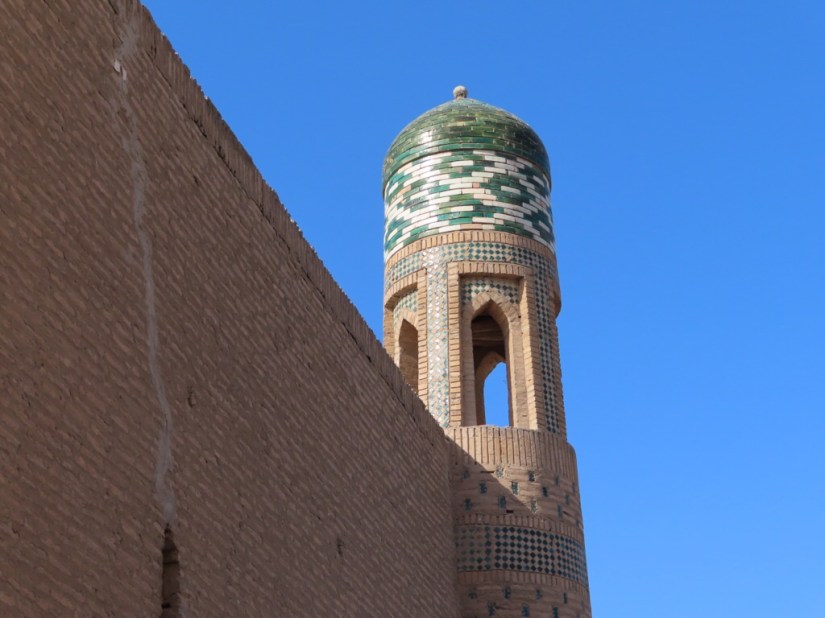
As if there haven’t been enough pics, here are just a few more …



Finally here is Micha, the most famous … and only camel in Khiva who has been posing for photos for 20 years and is somewhat of an institution …

Map


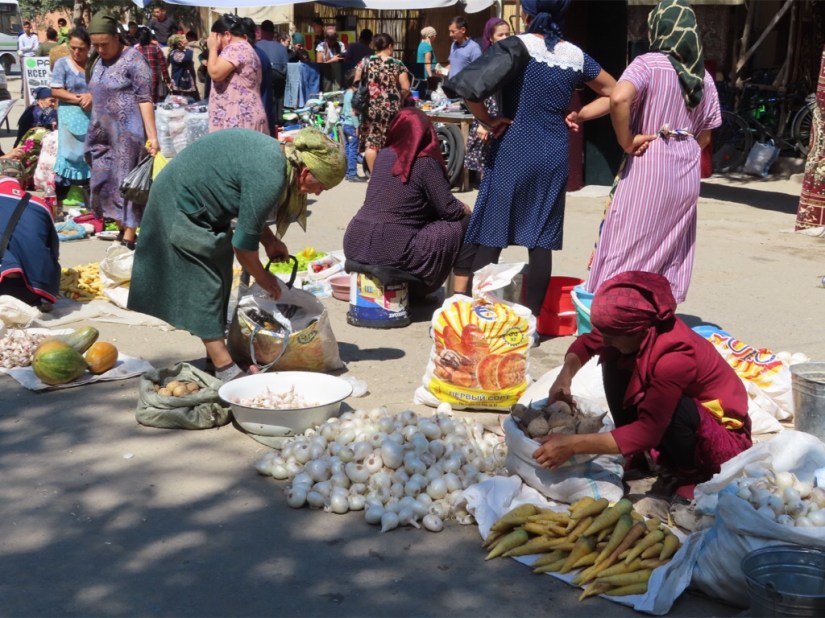
 … a billboard celebrated the city.



 We were most struck by the splendid stoves with brightly coloured tiles which came from St Petersburg …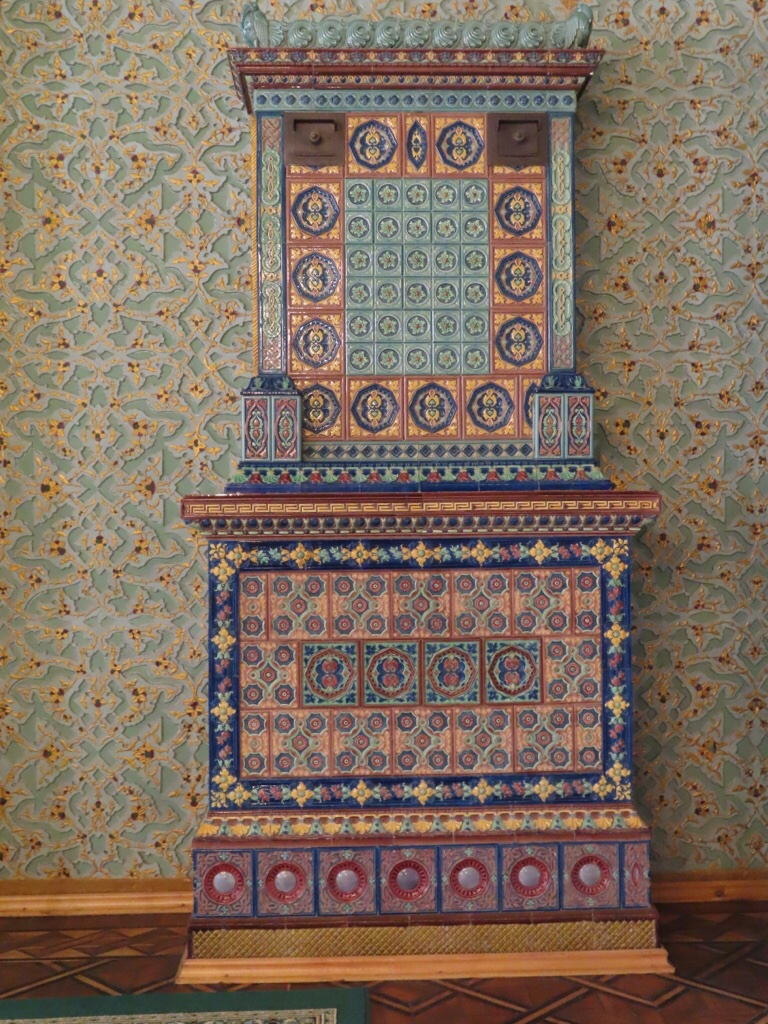









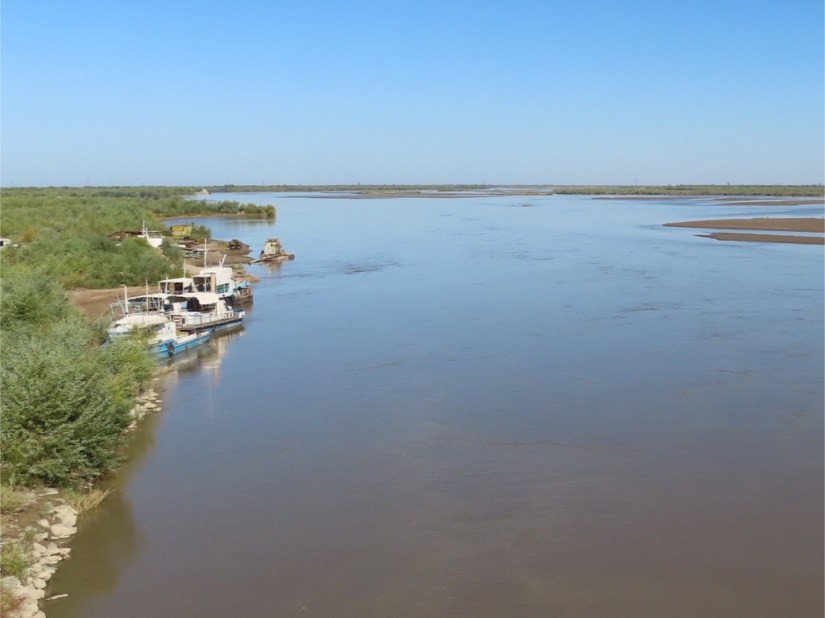
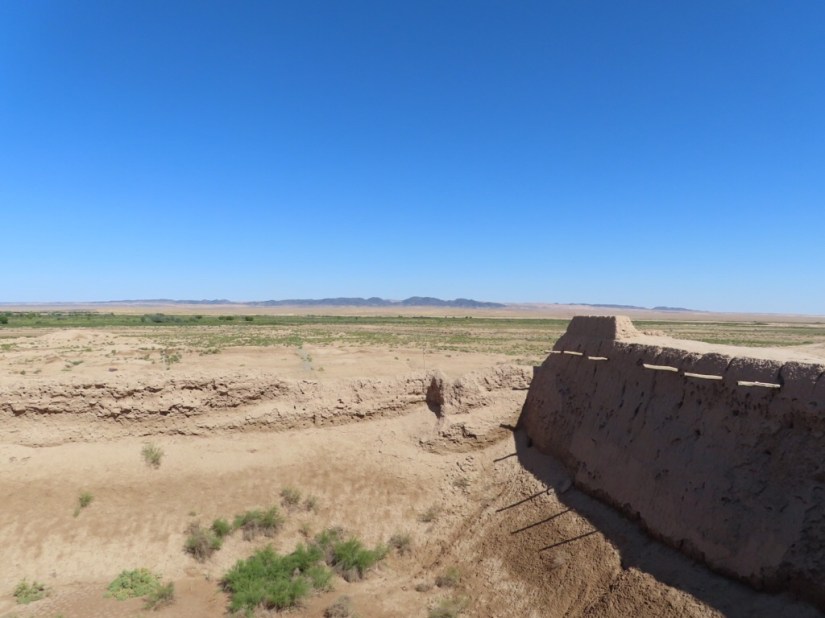
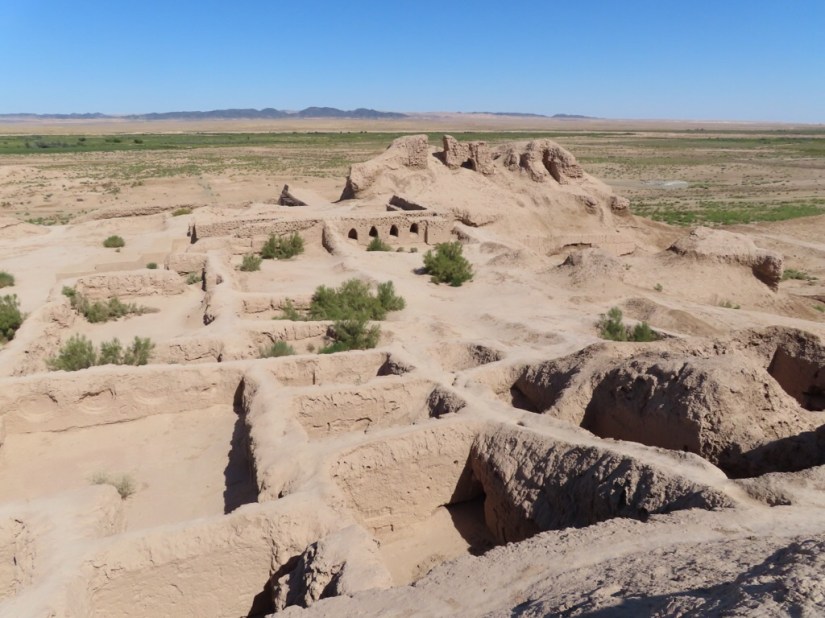
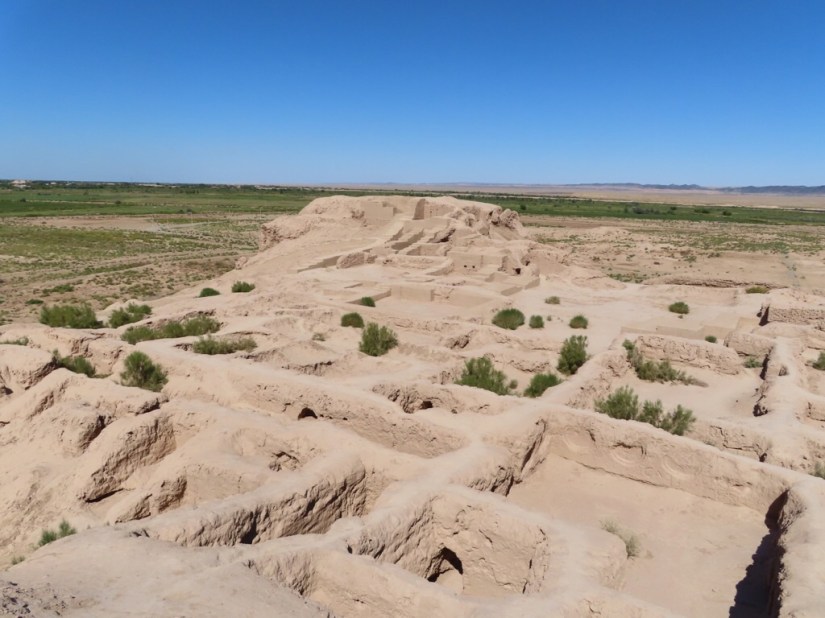
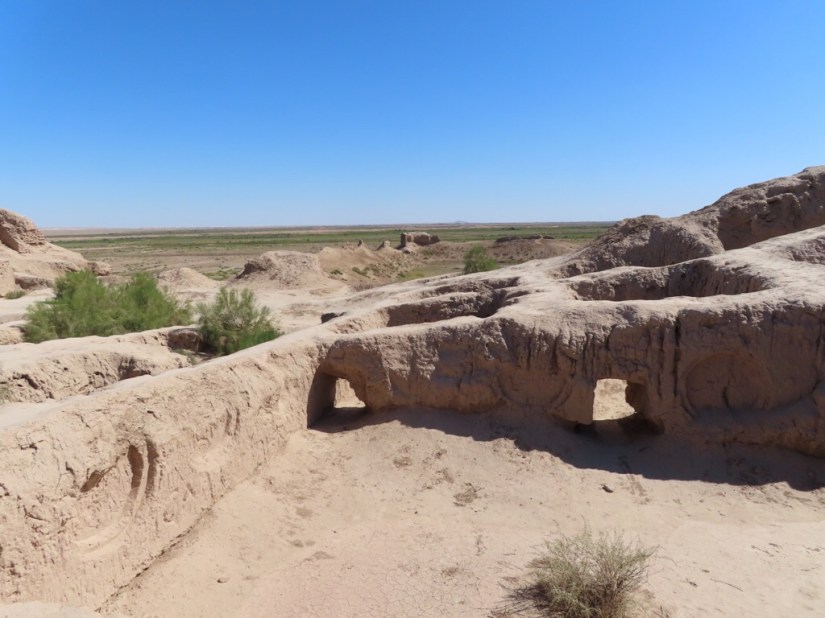
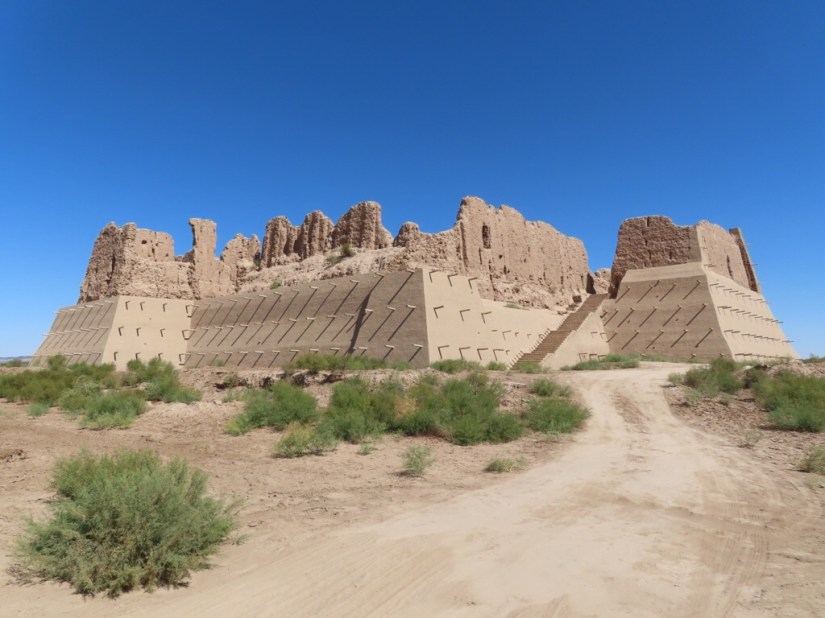
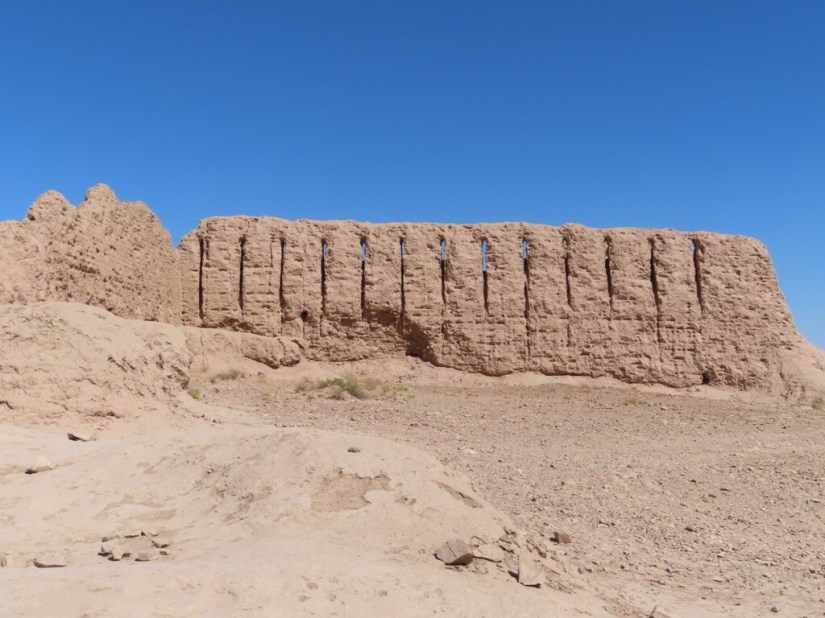
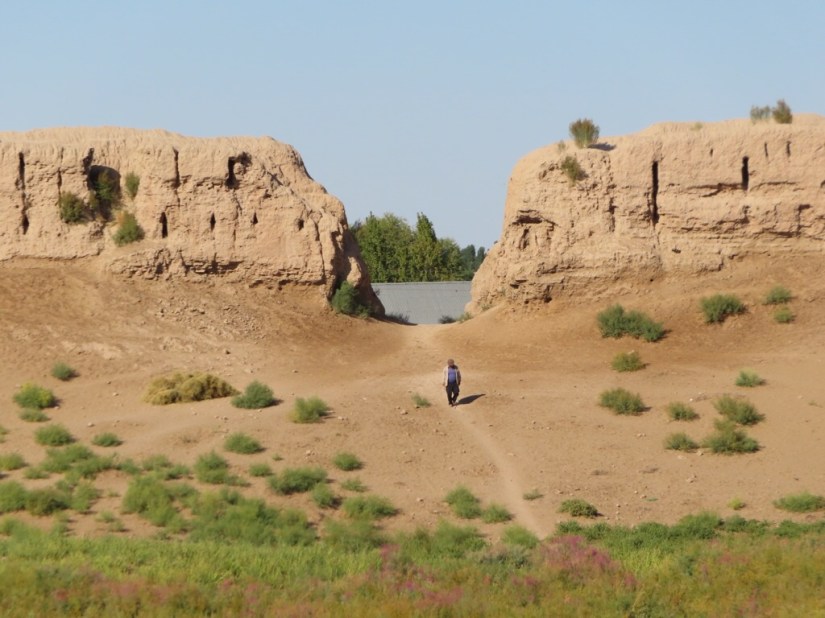
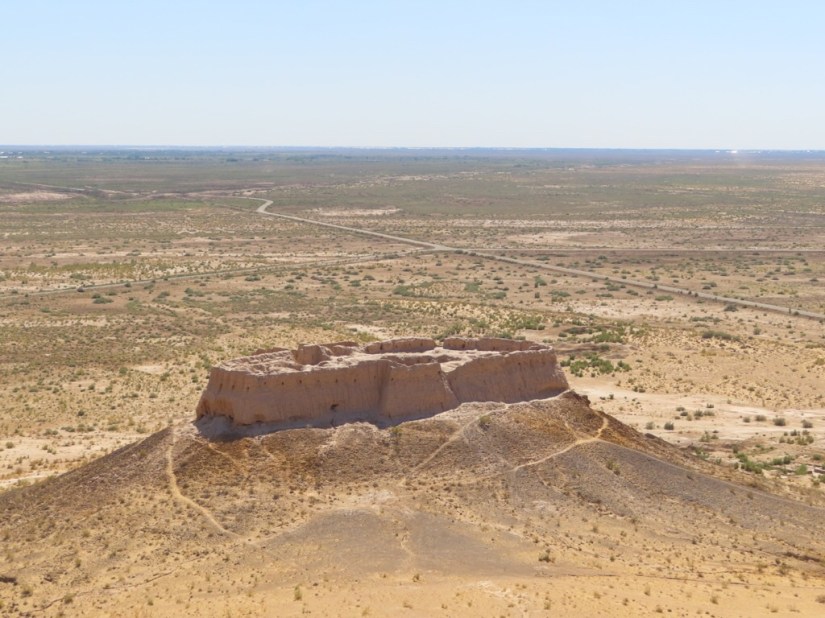 Having spent three days pottering round Khiva, it was time for a change so we arranged a day out through the guesthouse with Ali to drive us. Our main aim was to visit a few of the desert fortresses of ancient Khorezm, but we ended up seeing quite a lot more.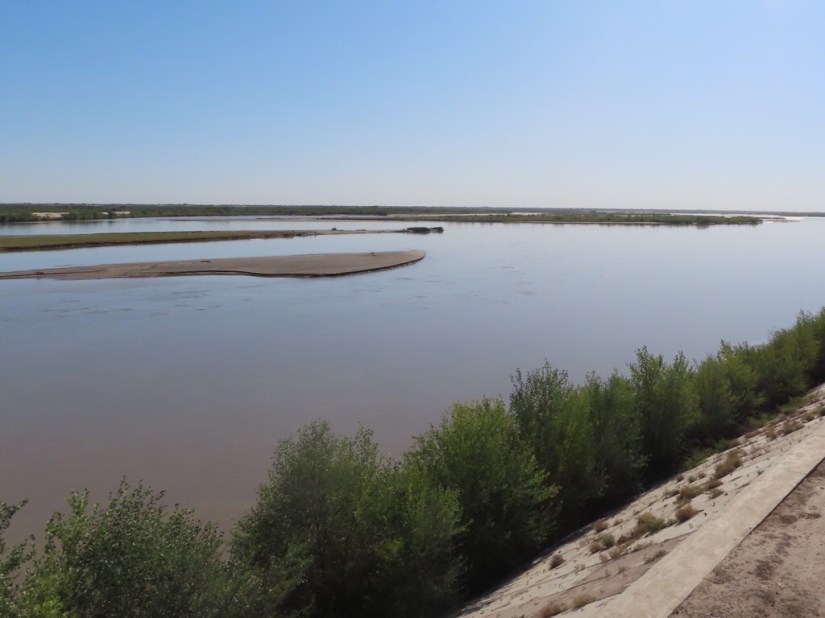




















 Off Travelling Together