 The focus of the next few days is to find out about the Ancestral Pueblo people who started hunting and gathering in the south west 10,000 years ago, and later began to farm the area. Most of the surviving buildings in the area were built in the C13, and then everyone left.
We had a fairly long drive so decided to make it longer, by making a detour to visit Hovenweep, just over the border into our fifth state, Colorado, and 20 miles from anywhere! Hovenweep is a Ute word meaning Deserted Valley, and we spent a couple of hours following the rim trail round Little Ruin Canyon where there are a number of ancestral Puebloan structures.


Many theories attempt to explain the use of the buildings at Hovenweep, particularly the striking towers which might have been celestial observatories, defensive structures, storage facilities, homes or any combination of the above. During our walk, I was surprised by a swift movement on the path and a rattling sound and I don’t know which of us was more surprised – me or the rattlesnake I almost trod on!


Our drive to Cortez took a further hour or so and we are staying at another hand-picked independent motel called Aneth Lodge for three nights. The decor is a little dated, but it’s clean, convenient and friendly! What’s more, it’s right in the centre of town so we can walk to dinner in the evening – to a brewery, a casita and The Farm Bistro for a return visit, where we’ve had the best meal of our trip so far!


Today we are heading to Mesa Verde, which is Spanish for green table, and sits between the Mancos and Montezuma valleys.


Driving into the park, the Point Lookout looms above.

We started with the Chaplin Mesa visitor centre which showed an excellent film about the history of those who lived here, their lifestyle and architecture. The museum contained discover artefacts such as pottery and tools and included some dioramas built in the 1930s showing the development of the buildings here.


The most elaborate groups of ruins are the cliff dwellings, built in alcoves with the mesa top above them, dating from C12-13. Spruce Tree House …

… and Cliff Palace were closed for conservation works, but we were able to see them from overlooks … looking remarkably like dioramas without the people!

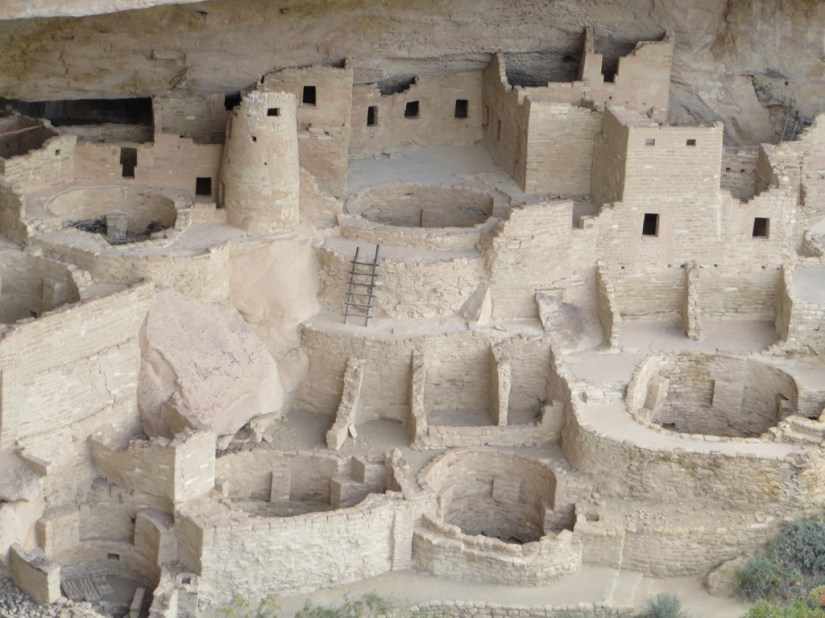
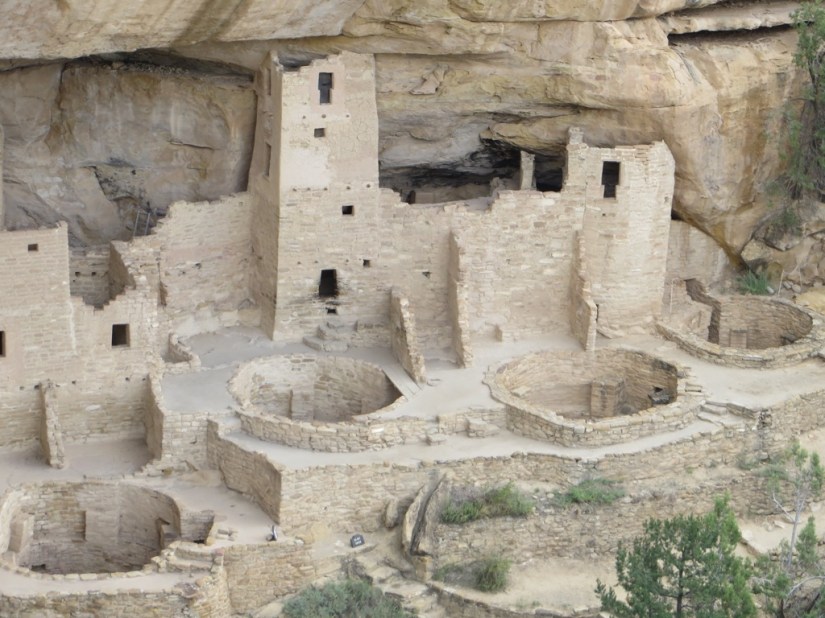
They contain a variety of buildings used for living and storage together with round kivas set into the floor, which would have been covered by a roof giving a flat courtyard above. These kivas were used as communal living spaces and for ceremonial functions and would have been accessed by a ladder down through the roof. With no written records, much is guesswork with some ideas based on present day Pueblo people who still use kivas for ceremonies.
Next we took a tour of Balcony House, billed as the most adventurous tour, which involved some interesting access arrangements, up ladders, and through small gaps and a tunnel.


All was worth it to see the ruins up close, especially when you consider that the builders had no metal tools and shaped the sandstone blocks with tools made from harder stones.

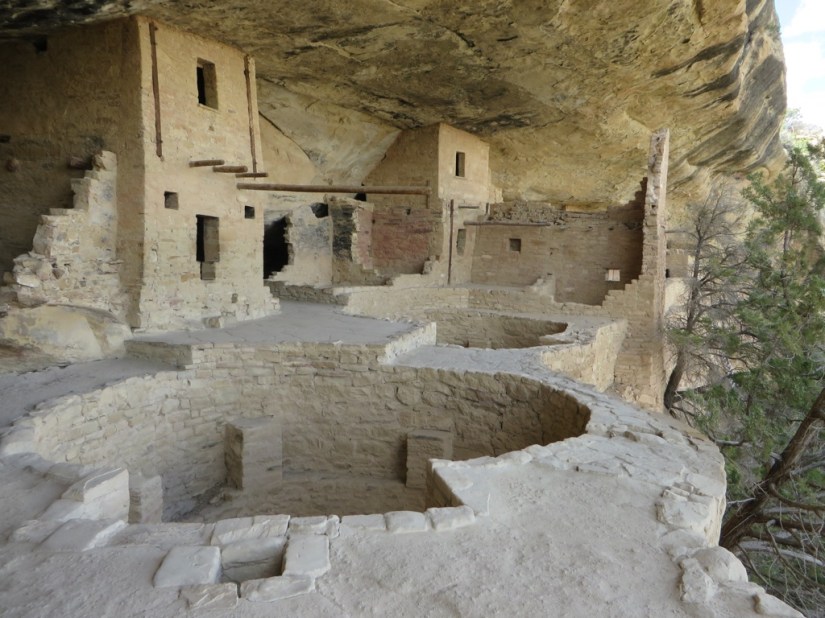
Next day we visited Wetherill Mesa, down an even longer and more windy road! We walked to the Step House first, named for the boulder steps to access the dwellings from above (looking rather like a load of rubble to me). There were several pit houses dating from 600 AD, together with one with a reconstructed roof, and it is possible to see how it was these structures that developed into the kiva once houses started to be built above ground.


Later buildings were built at the right of the alcove, similar to what we saw yesterday.
We also went on a ranger led tour of Long House, which contained much the same features we had already seen, but we got to walk round and see them up close.

There had been much made of why these people ‘suddenly’ chose to build in these alcoves here at Mesa Verde, but ranger Cindy pointed out there were similar buildings all over the mesa top as well – but with water soluble mortar made from mud, these houses have not survived. Maybe with an increase in population, the land on the mesa top was more valuable for planting crops, or maybe they just liked the view, either way, only around 20% of the population lived in these cliff dwellings. As to why they left, the most likely cause was the 20 year drought and over a number of years, the people of Mesa Verde joined thousands of other Ancestral Pueblo people who moved south to New Mexico and Arizona. Today the Hopi of Arizona among many other tribes consider themselves descendants of the builders of Mesa Verde.


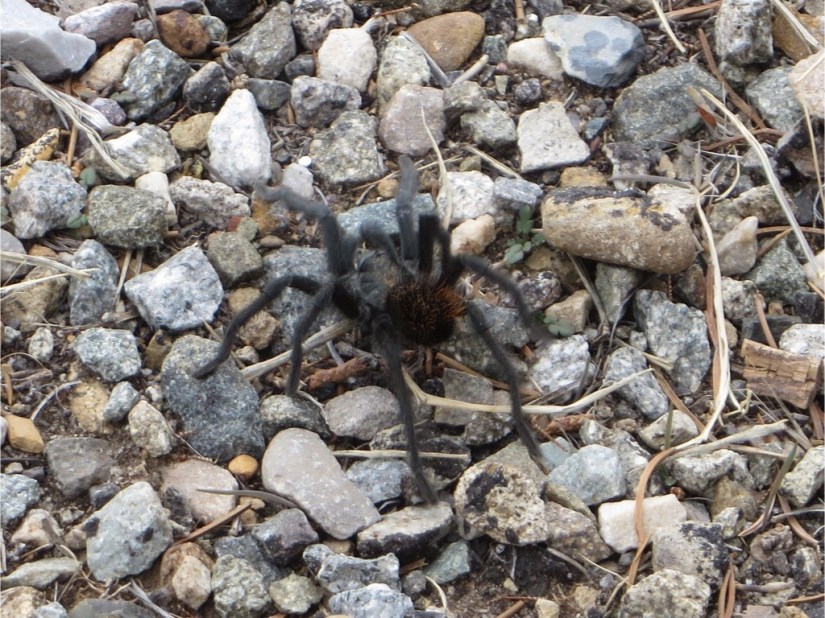
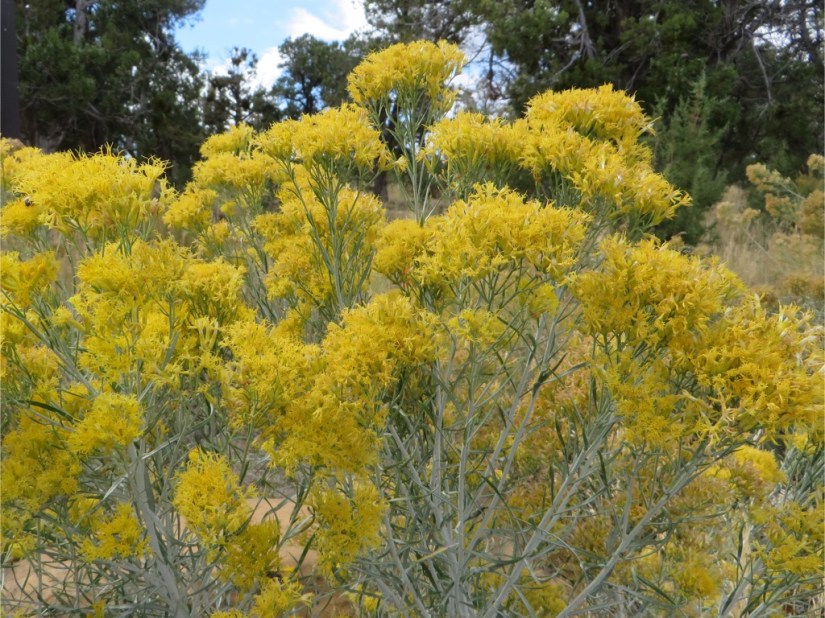
Wouldn’t want to miss out the plants and critters … especially as we saw a tarantula today, and this rabbitbrush is everywhere, although most of it has finished flowering so I was lucky to notice this bit.
Finally, we didn’t need to go to Vegas to see neon lights, as there are a collection here in Cortez.


Tomorrow we leave Colorado and head into Arizona … and to the Grand Canyon.
 Off Travelling Together