 The coast road took us passed several small towns and a number of small beach resorts but the beach was very shallow and nowhere looked as enticing as Tangalle or Mirissa.
According to the guide book, the stilt fishermen seen along this stretch of coast are one of the most iconic sights in Sri Lanka … and having checked out some gift shops, they would agree …

… however the reality is that the best time is sunset between October and December when the currents are flowing in the right direction.
 Not wanting to miss out on a tip, there were several posing with rods first thing on a February morning!

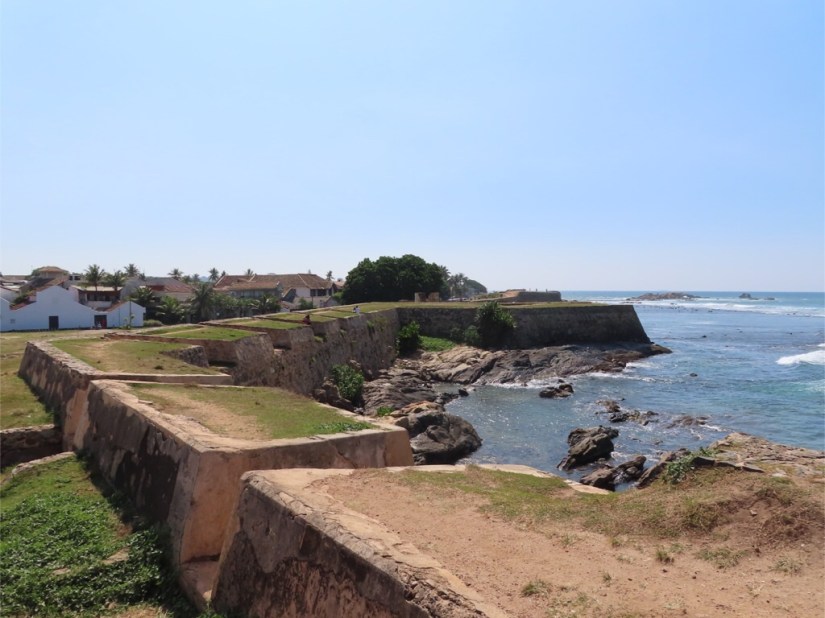
Galle (pronounced Gaul) has grown into Sri Lanka’s fourth largest city, but we just visited the old Dutch quarter, called Galle Fort. The first fortifications were built by the Portuguese in 1589 and were extended by the Dutch after they captured the city in 1640 but when the British took Galle in1796, barely a shot was fired so the fort remained intact.
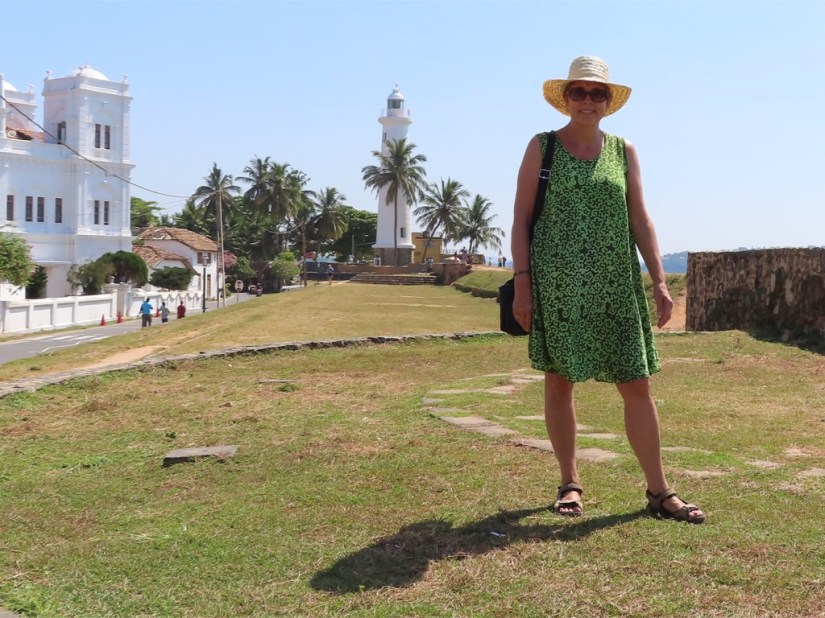
The walls are immense, with huge bastions, gun emplacements and a pretty white lighthouse and we walked round the ramparts one morning before it was too hot and took a few snaps …




We are staying at Seagreen, originally housed a C18th colonial period home but now a comfortable guesthouse owned by a Sri Lankan family who have lived within the Fort for eight generations. The rooms are named for the bastions and the roof terrace has a sea. It’s been a great place to stay with friendly and helpful staff and great breakfasts.


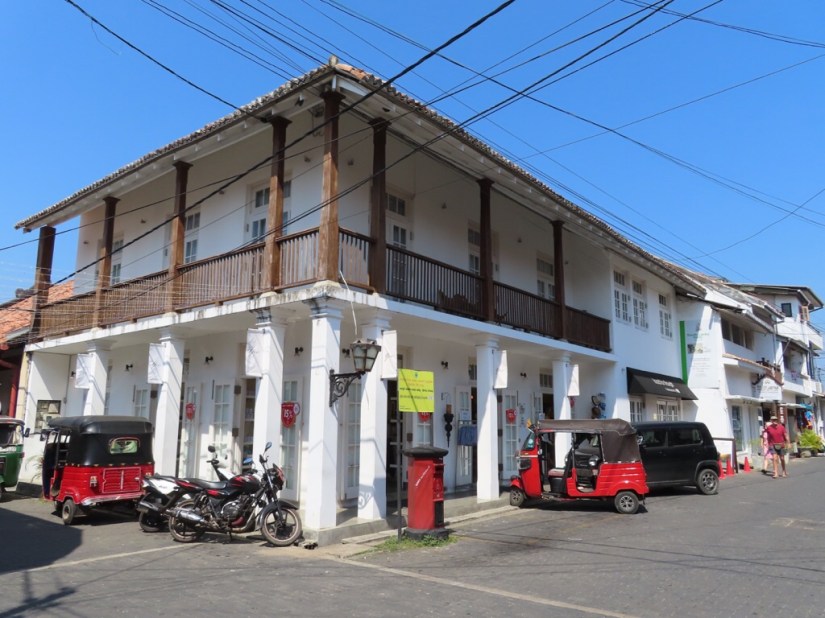
Many of the historic buildings have been restored by expats and the Colombo elite attracting visitors and money giving Galle Fort a cosmopolitan feel, with Dutch-period villas now home to boutique hotels and trendy shopping.


The buildings standing on the junctions were often the most impressive …




We noticed the coat of arms of the VOC or Dutch East India Company one side of the main gate and the British crest on the other …


… the rather uninspiring Anglican Church …

… a C20th Mosque that looks more like a Baroque church till you notice the minarets and crescent moons …

… and a Buddhist temple by our guesthouse.

The Dutch Reformed Church was more interesting with an impressive array of memorials …


Many of these commemorate the families of Sri Lanka’s smallest minority, the Dutch Burghers who are Sri Lankan’s of Dutch or Portuguese descent. Many held government posts or ran trading companies under the British, but around half left when Sinhalese nationalist laws were brought in after independence. A couple of notable Burghers include the Canadian-based author Michael Ondaatje who wrote the English Patient and the architect Geoffrey Bawa.
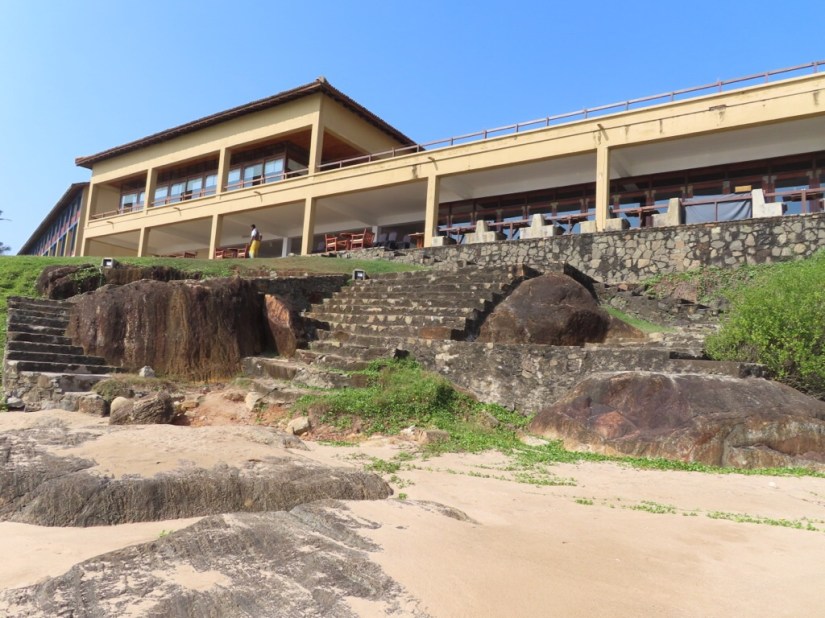
On our last afternoon, we went to look at The Lighthouse Hotel, opened in 1997 and designed by Geoffrey Bawa. We will be learning more about Bawa when we take a tour of his Colombo home, but in a nutshell, he qualified as an architect in London in 1960, heavily influenced by modernism. He soon realised that this didn’t fare well in the tropics – the white walls weathered badly and flat roofs were no good in a monsoon – so adapted his designs using local materials and features, merging his buildings with their surroundings. The Lighthouse was the last of his major projects and is a perfect example, reflecting the 17th-century Dutch fort at Galle which also looks down on the ocean from a rocky promontory.
The facade is unimpressive, but the spiral staircase into the heart of the hotel is jaw-dropping, with intricate bronze and copper sculptured balustrading depicting the Battle of Randeniwela between the Sinhalese and the Portuguese.


The main lobby opens out, with the sunlight shining on the polished concrete floor and is open to the sea beyond.


We ordered drinks and spicy wedges and sat and admired the view before walking round and taking some snaps … sorry rather a lot … but I thought it was so photographic!




Now from high design to absolute kitsch! We have been both charmed and irritated by musical tuk-tuks during our time in Sri Lanka. It started with strains of Für Elise reaching us at the top of Mihintale and trailing us all round Anuradhapura … although we didn’t see where it was coming from. Later we heard a different tune and spotted bread seller driving along – too far away to snap! Since then there have been several that we have heard but not seen and others we haven’t been quick enough to photograph! We did spot this chap in Ella …

… and a couple here in Galle …


… only to amazed to hear this chap playing a tune as he collected the rubbish!

As the afternoon cools, everyone comes out, looking for the best spot to watch the sunset and on the first day, it seemed as though every local school had sent a day trip here, with long lines of children all dressed in white – surely the most impractical colour for a uniform!


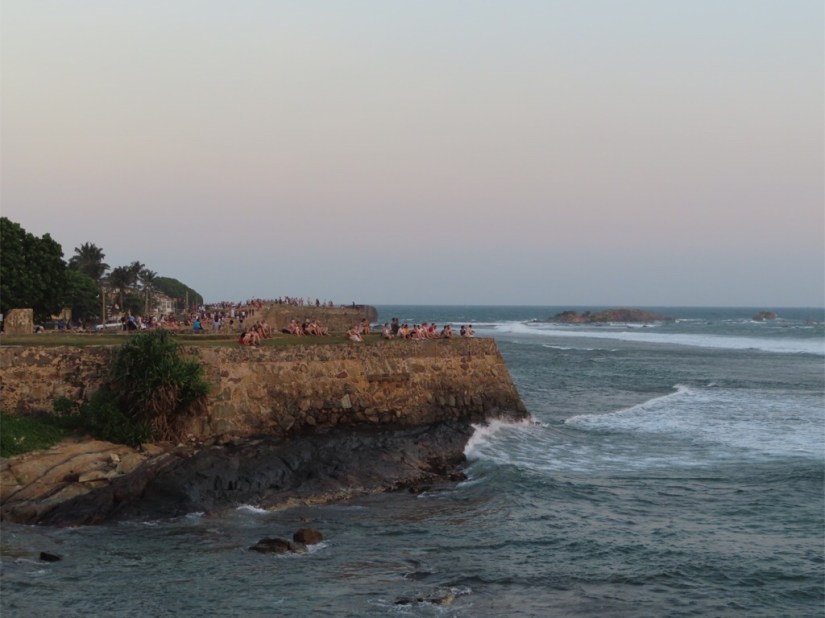
Then the sun sets …


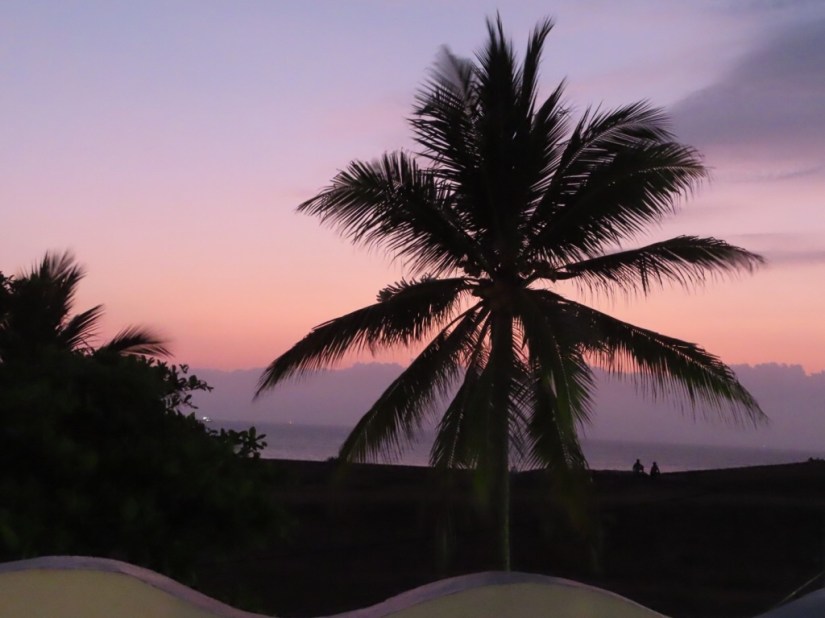
… and before the light fades there is just time for football or cricket …


… and once the the sun is up …

… they are at it again!

Our trip is almost at its end … as we return full circle to Colombo.
 Off Travelling Together