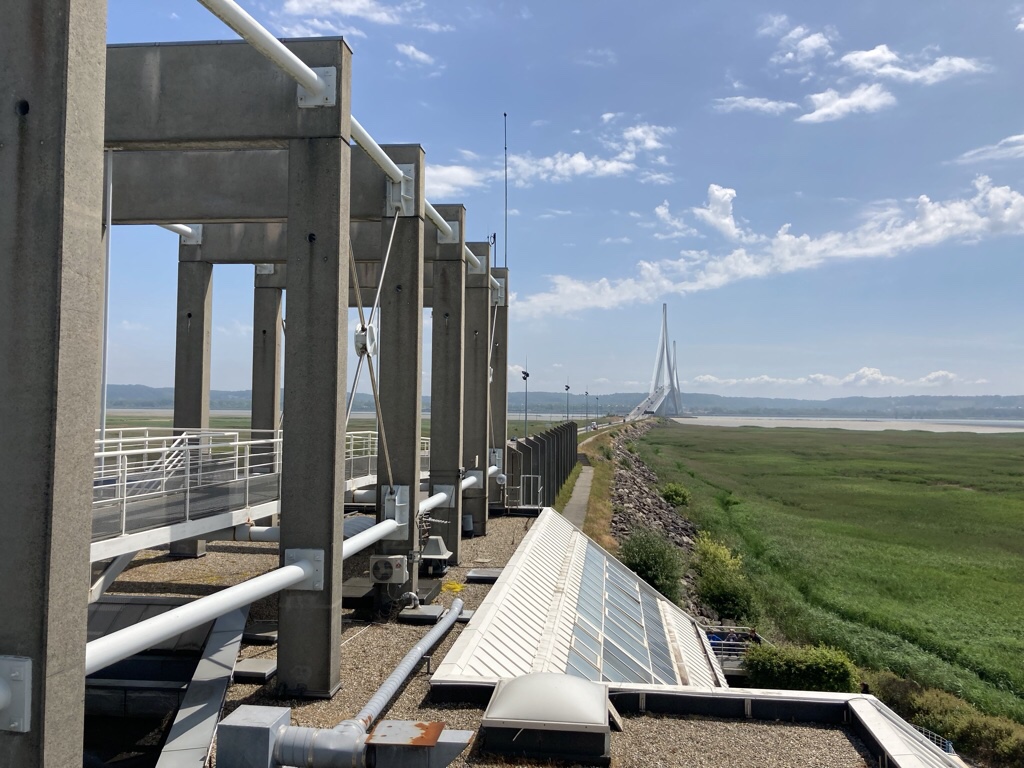
The road to Honfleur took us first over the Pont de Normandy or Normandy Bridge. Completed in 1995, it spans 2km across the Seine and is the second-largest cable-stay bridge in the world. We stopped and took photos from the viewpoint …
… but the best views were as we drove over!
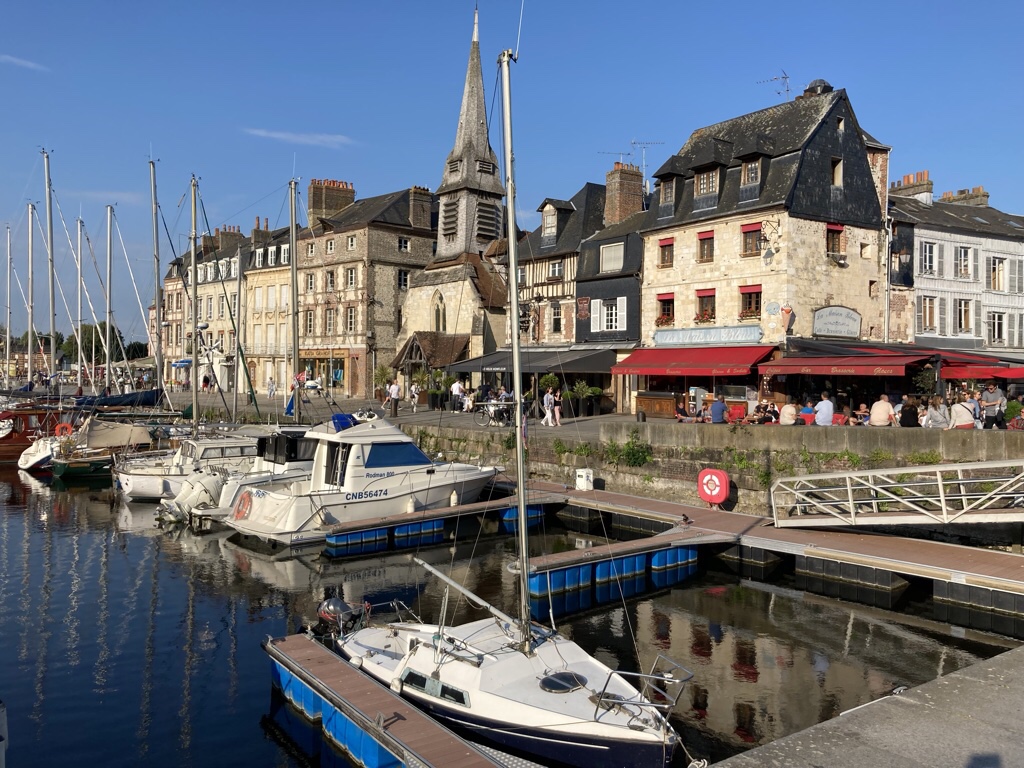
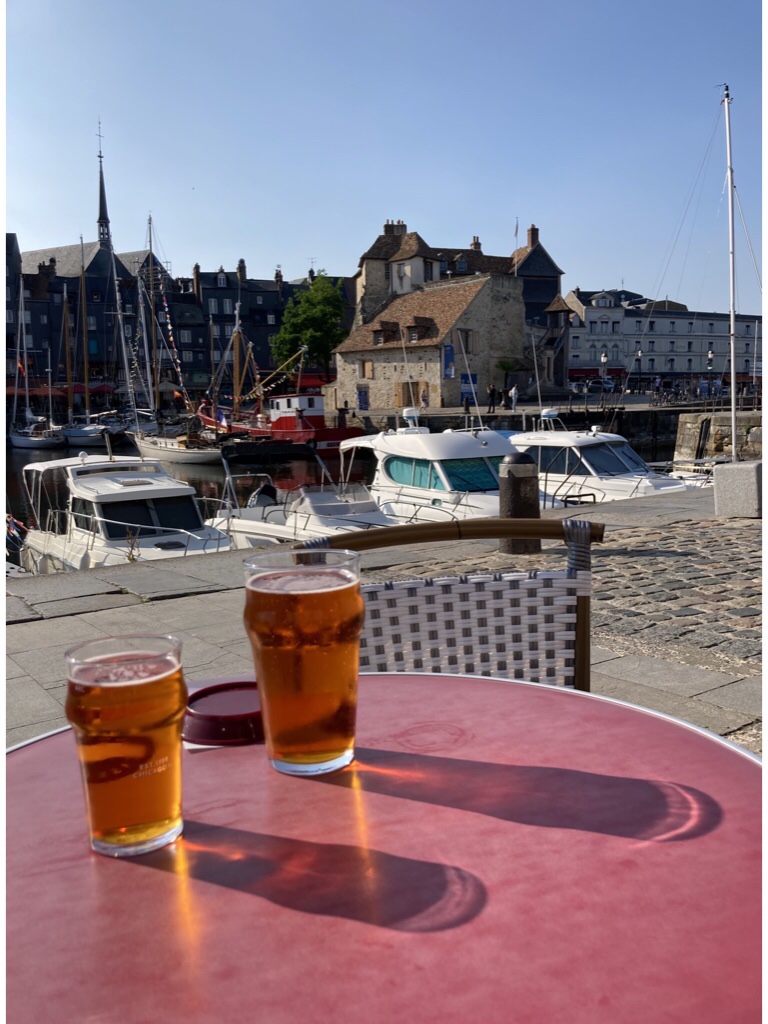
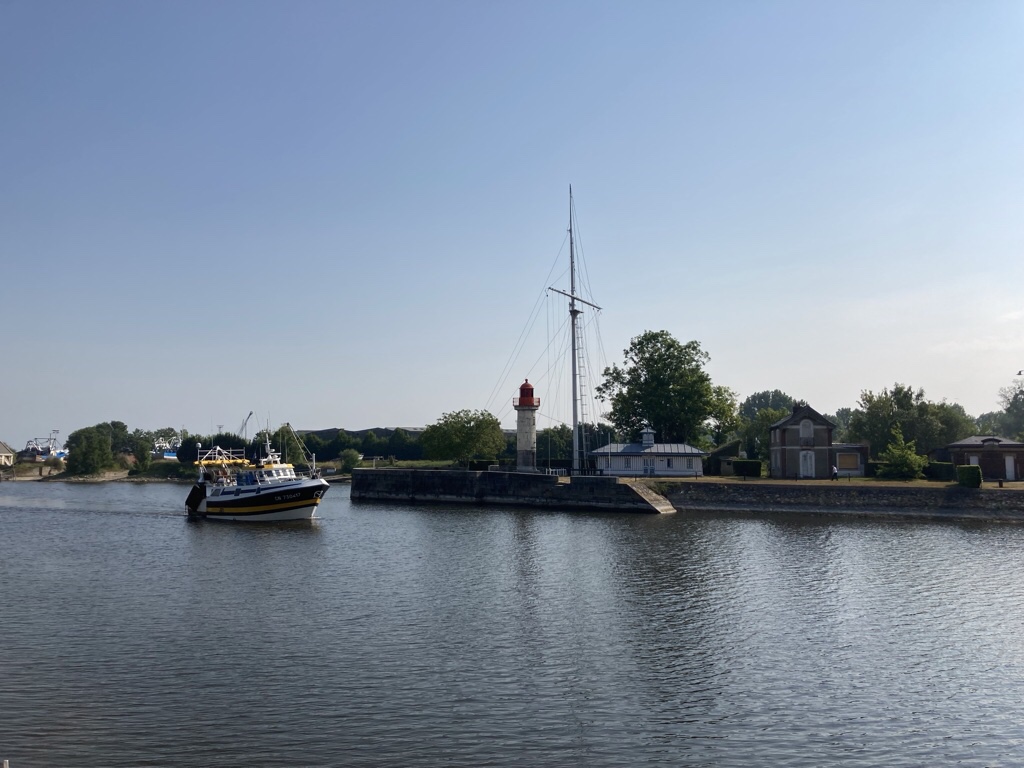
I have often seen pictures of Honfleur and thought it would be a lovely place to visit and finally we are here. The fishing boats may have been largely replaced with yachts, but the C17th Vieux Basin or old dock is still like a painting.
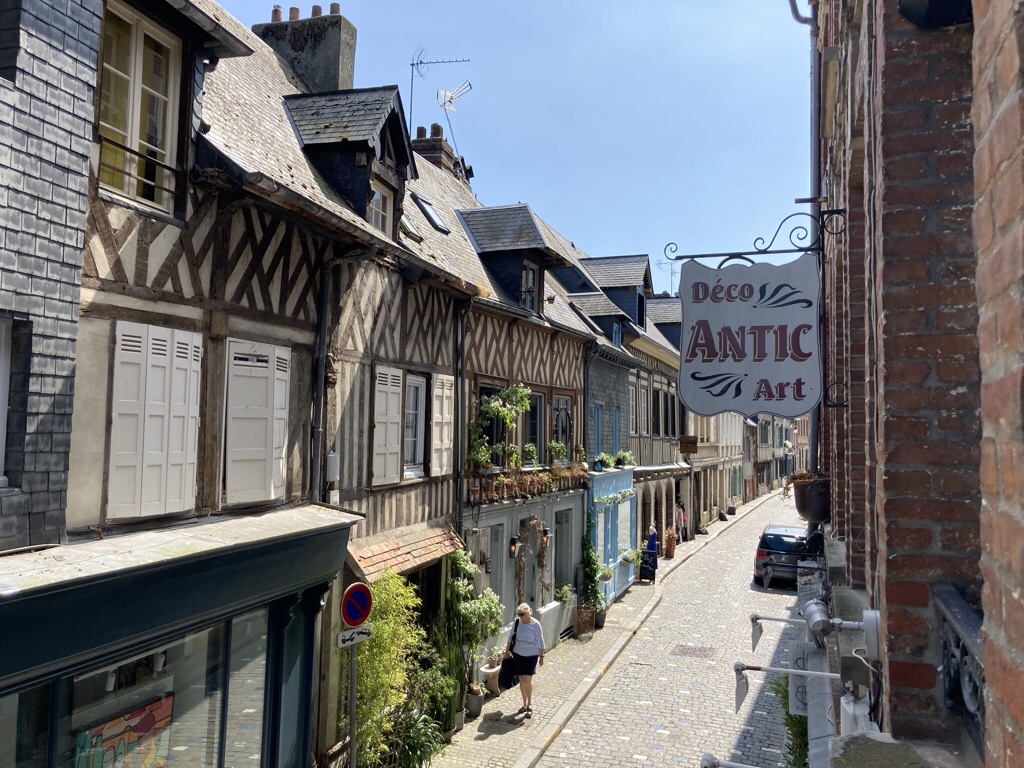
Narrow, tall, timber-framed buildings with slate roofs surround the harbour and a warren of narrow, cobbled streets wind their way into the centre of the town.
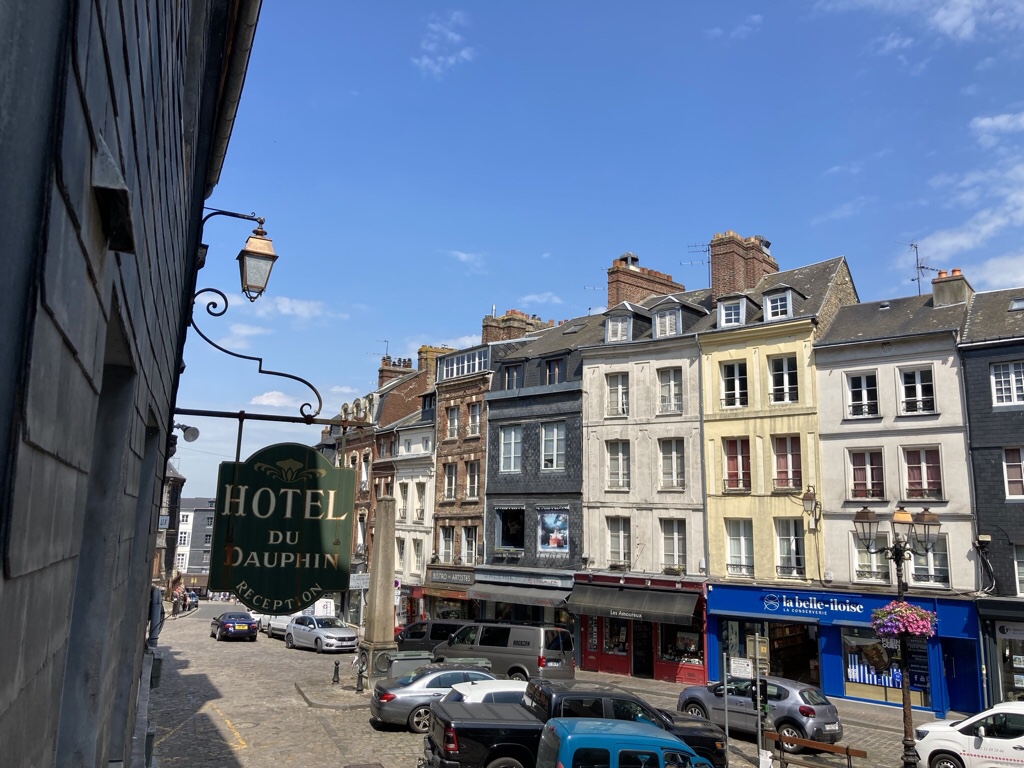
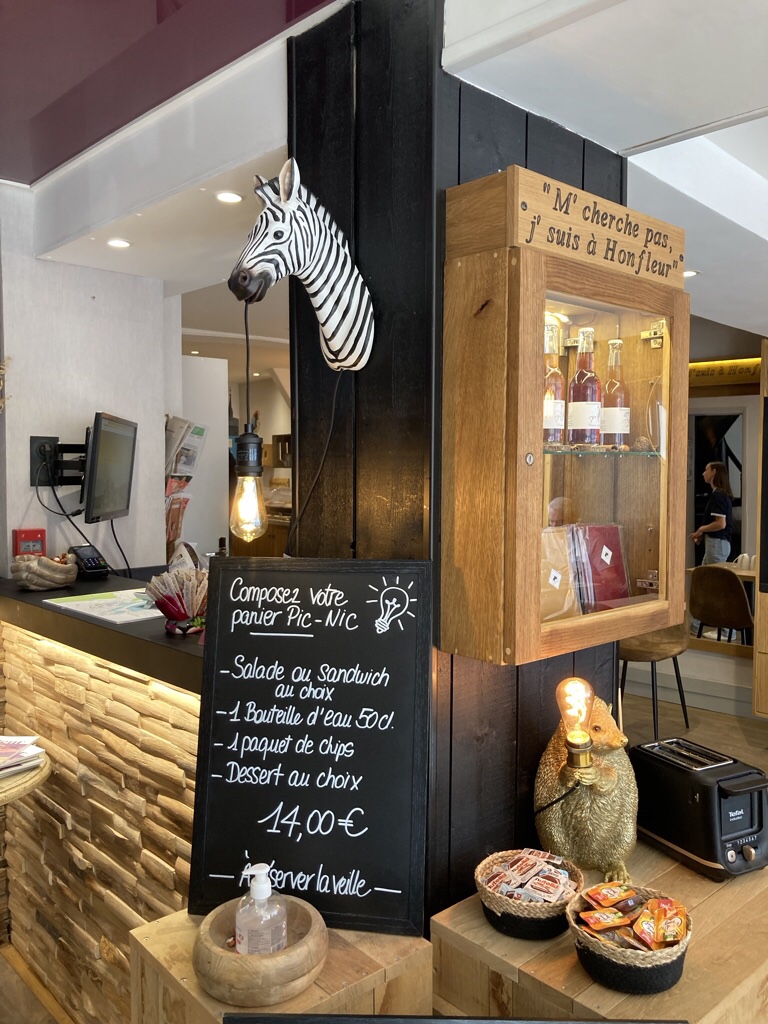
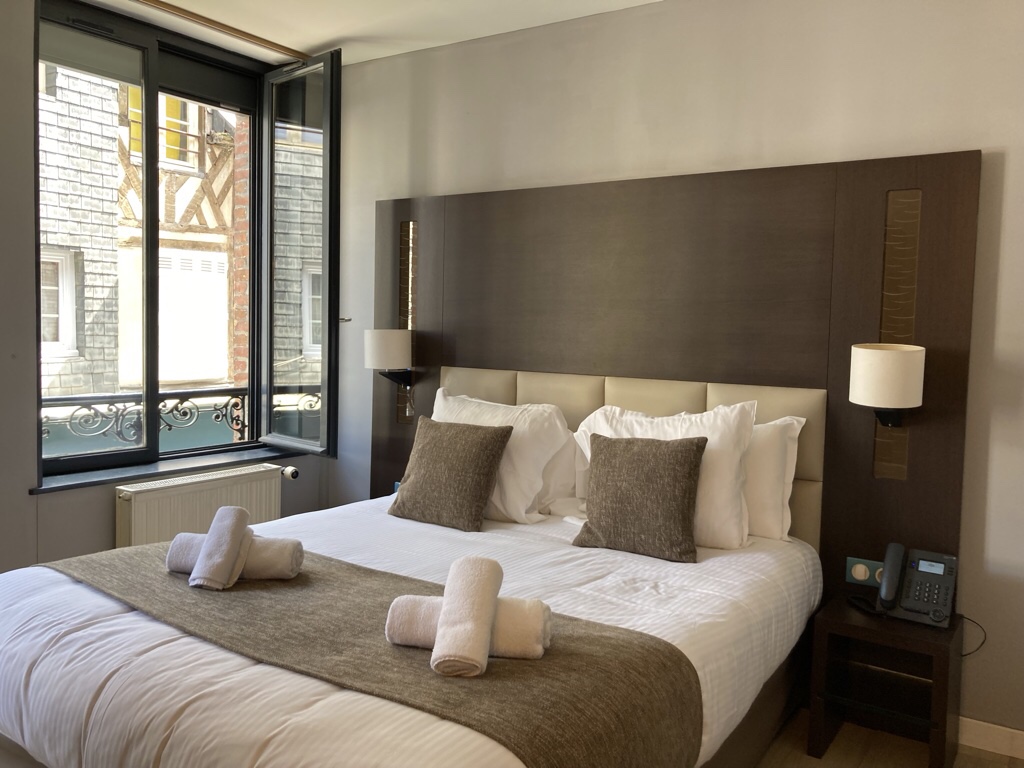
We are staying at the charming The Hotel du Dauphin in the heart of old Honfleur …
… and while the walls may date back to the C12th century, it is a stylish boutique hotel within!
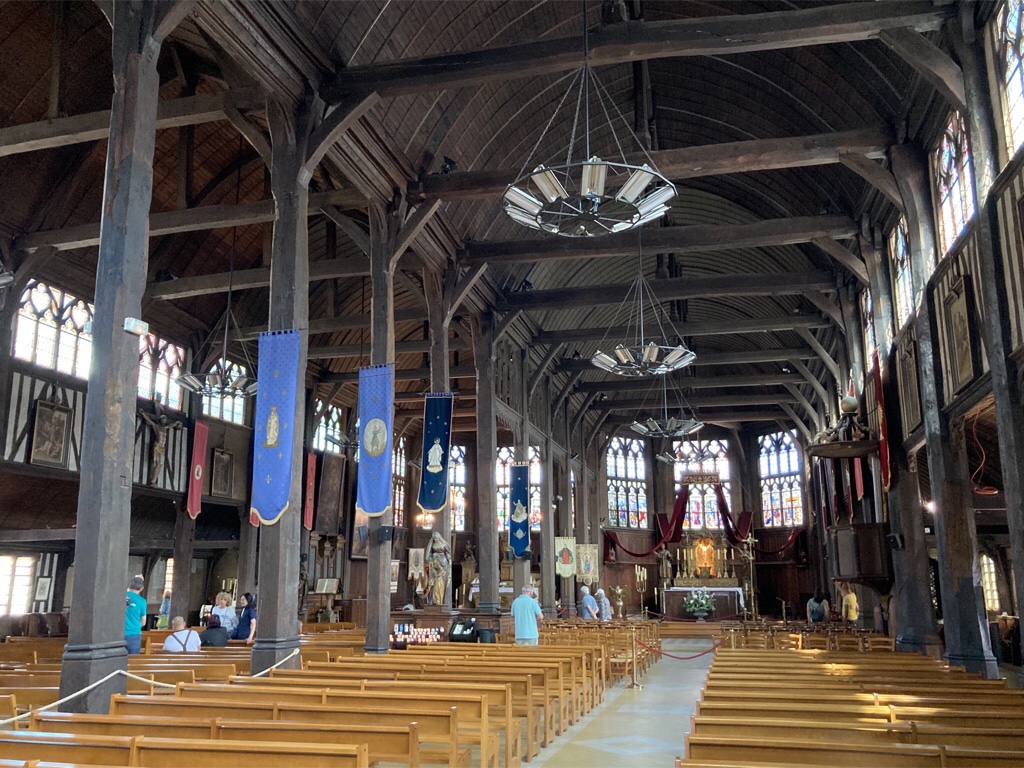
Honfleur’s most famous landmark is the wooden Église Sainte Catherine, which is France’s largest wooden church. Built by a local shipbuilder and intended to be a temporary structure to replace the previous church destroyed in the Hundred Years’ War, it has a ceiling resembling two upside-down ships’ hulls.
It is surprising as the church building looks more like a market hall than a church, especially as the bell tower is completely separate.
We pottered around taking photos and taking a look in the chic French shops before sitting in the sunshine trying out the local cider …
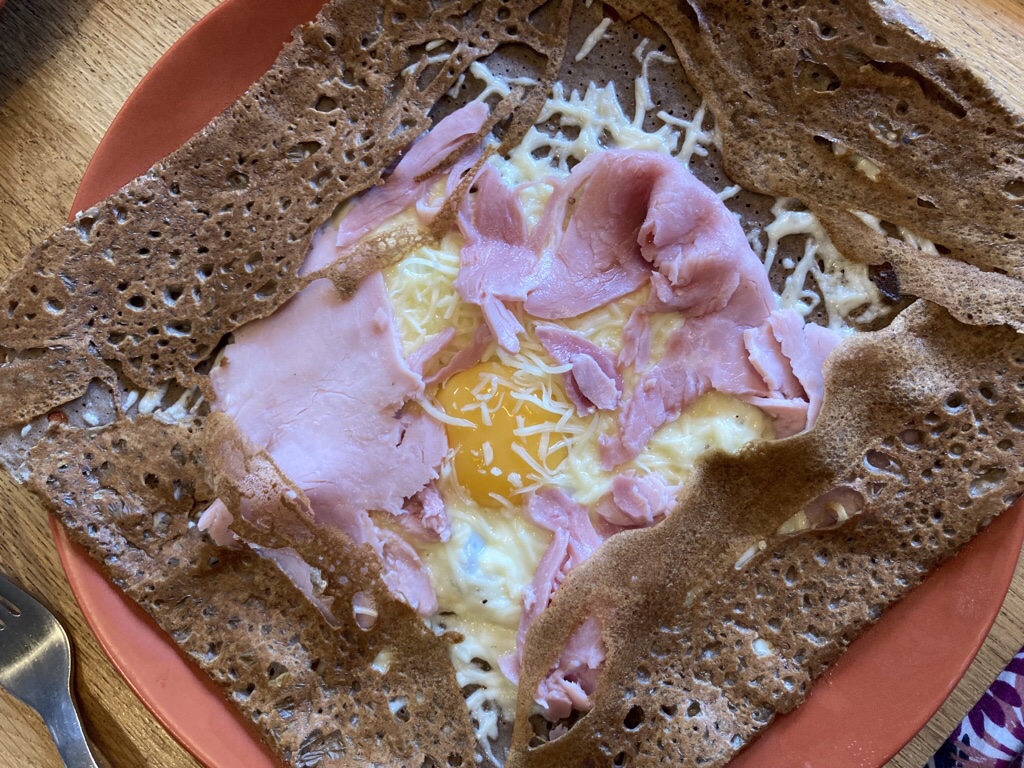
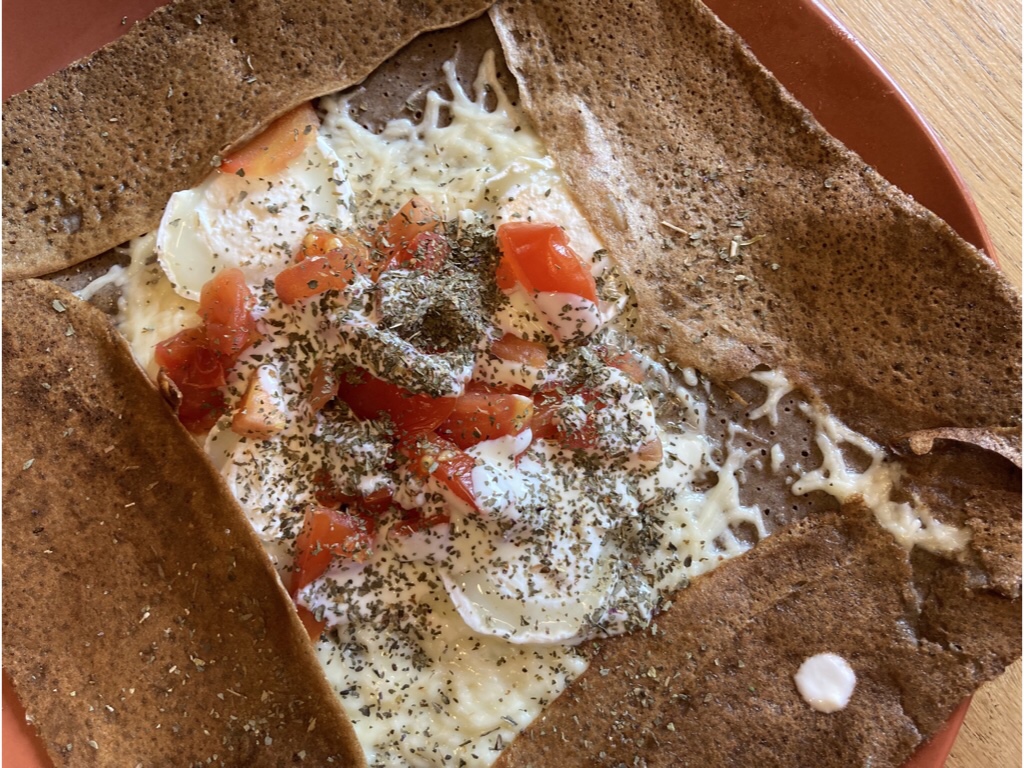
… then visited a creperie for dinner … delicious!
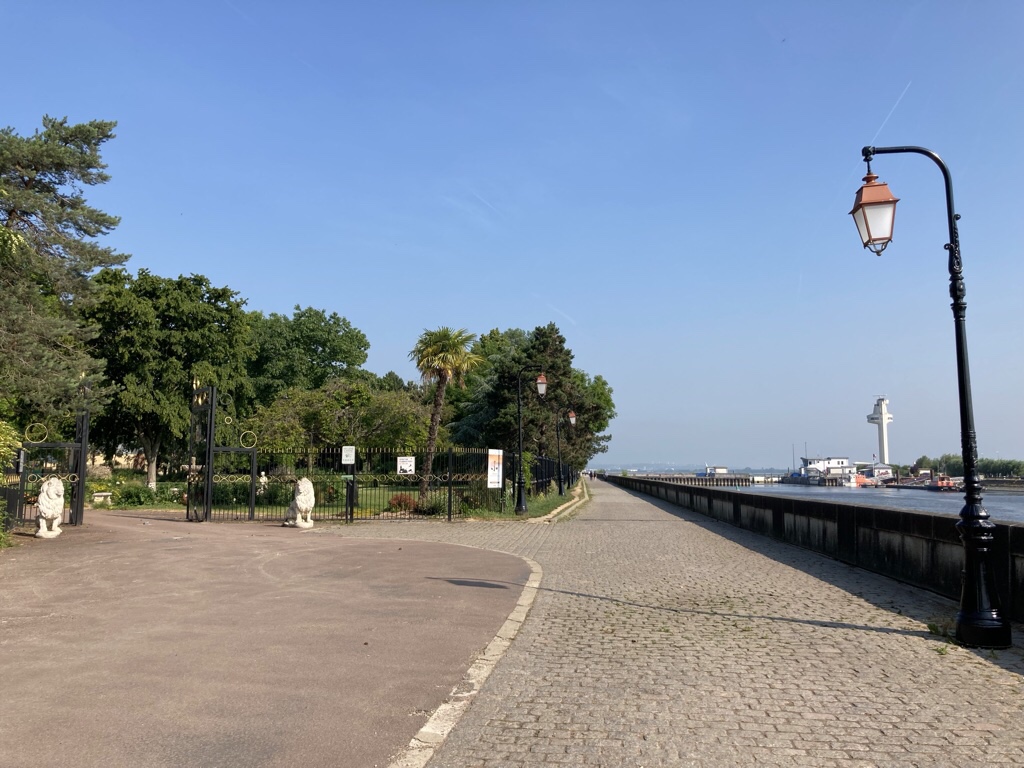
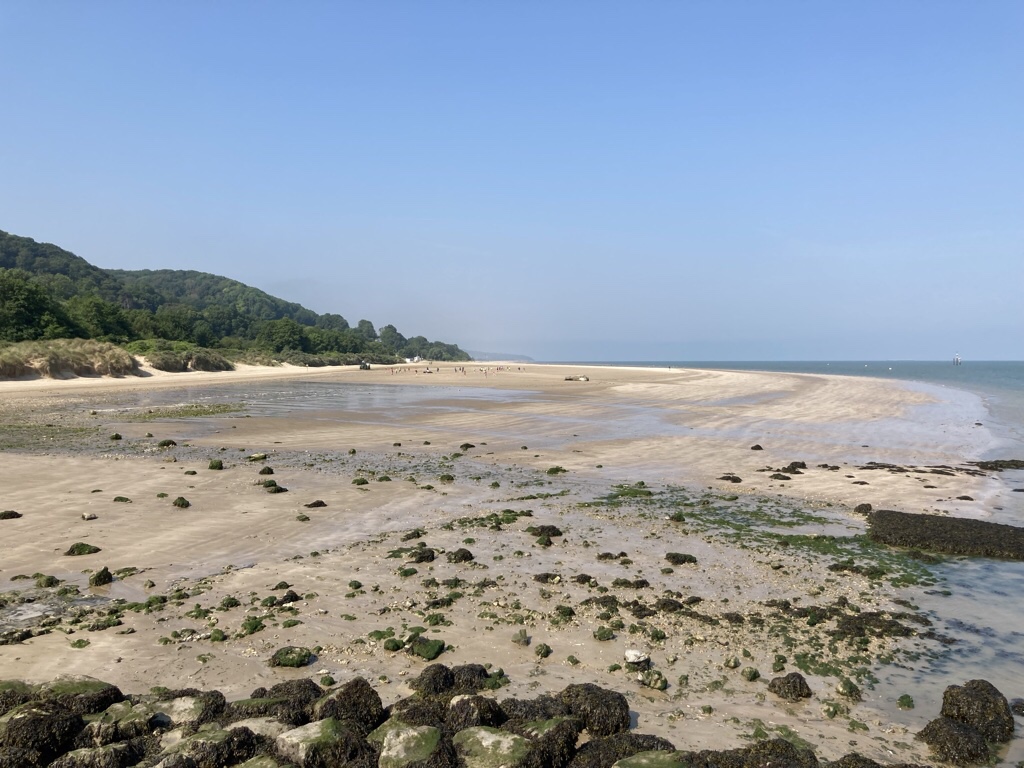
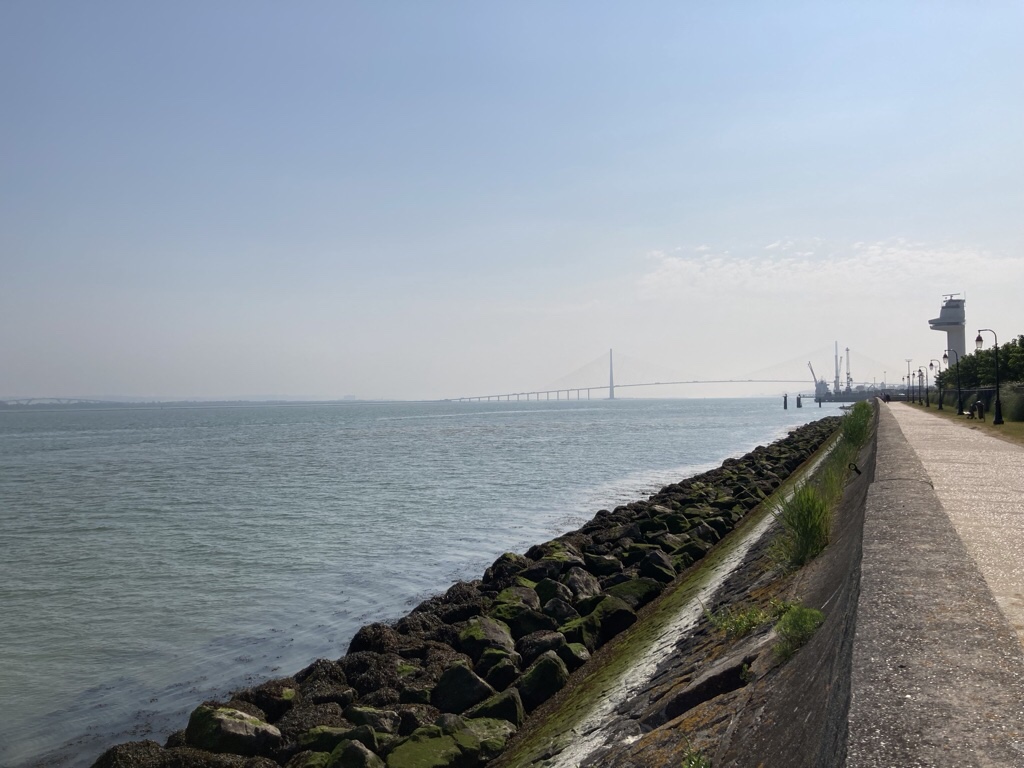
In the morning, we took a walk along the dyke to the beach …
… and also caught a glimpse of the bridge.
Returning through a garden with definite Monet influences …
Many of our trips start with a travel article, and this one began with a picture of Château d’Angers suggesting Angers would make a great destination for a weekend away. Before we knew it, this had grown into a couple of weeks touring the Loire to visit a selection of old chateaux, gardens and maybe the odd vineyard!
Taking our car on the ferry to France is a bit of a retro choice, but it seemed the perfect solution while hire cars remain expensive and packing without a luggage allowance will be a breeze. We’ve booked an overnight sailing to Le Havre and sleeping in a cabin sounds like a bit of an adventure, what’s more, on the way back we can pack in a few bottles of Loire wine, in memory of those booze cruises of yesteryear!
Chris used the need for a new UK number plate and the offer of free Europe assist as perfect justification, if any was needed, to upgrade his car so we will be off in his shiny new red Mazda CX-5, remarkably similar to the last one except for the number plate!
The weather looks set fair and we are eager to be off so watch this space for possible mentions of water lilies, mushrooms, tapestries, pike and Cointreau…
PS – Thanks to Chris for the fab picture of Angers Chateau – I wanted it to look impressive and he managed to get more towers in than I could!
Triana is a vibrant local neighbourhood across the river from Seville, famous for ceramics, bullfighters, flamenco, gypsies and sailors.
We took the San Telmo bridge then walked down Calle Betis beside the river until we reached the Triana or Isabel II bridge.
I was amazed to read that while the original pontoon bridge built by the Arabs in 1171 had been repeatedly repaired, it was still in use until the new iron Triana bridge was built in 1852! This tiled panel from Casa Salinas shows the bridge, together with the castle built to protect it and the archive photo shows it just before demolition.
Here is Capilla del Carmen, a tiny chapel dedicated to Our Lady of the Carmen who is the patron saint of sailors …
… Plaza del Altozano …
… with its monument to the Flamenco Art …
… and also a bronze monument of the bullfighter Juan Belmonte, one of the most famous Sevillian bullfighters (are those Mickey Mouse ears?)
… and the market, always worth a quick look!
Tiles were first made in Triana in the Islamic period, utilising the rich mud and clay depositing by the the Guadalquivir River and wandering around there were lots of ceramic shops, but unfortunately the Ceramic museum was closed.
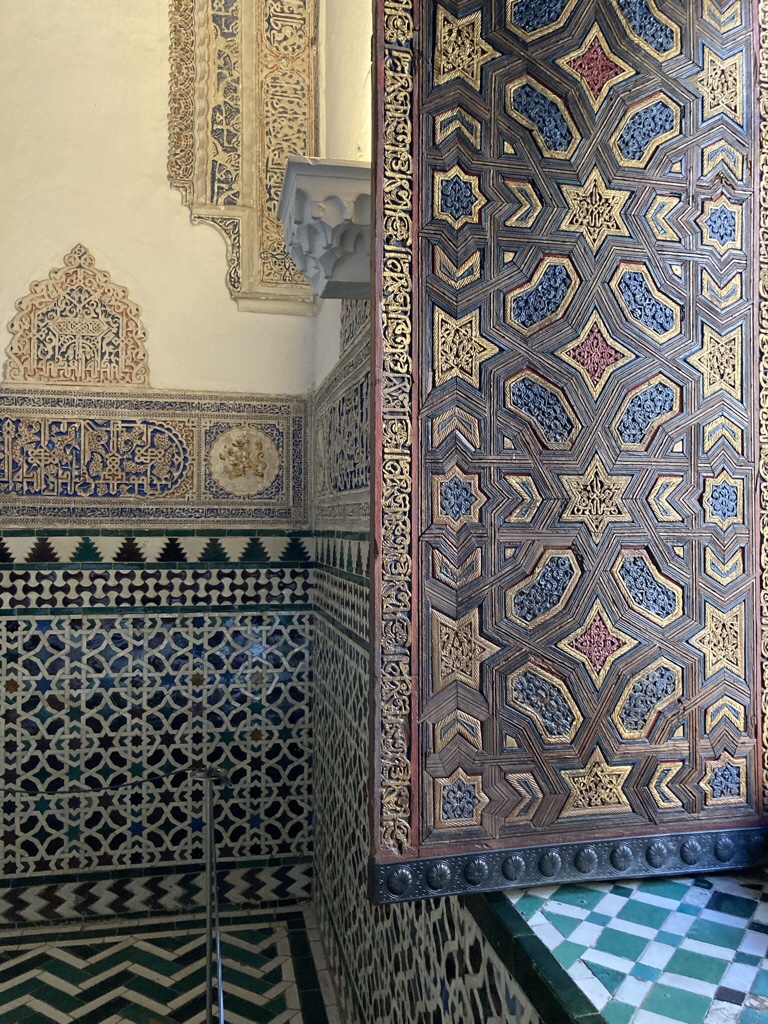
Nonetheless, we have spotted several different types as we’ve been looking round. The earliest tiles in the 13th century were alicatados, where tiles were glazed in a single colour, cut into geometric shapes, and then assembled to form geometric patterns like these in the Alcazar.
Later arista or press-moulded tiles were made by pressing clay against carved wooden or bronze moulds, with the patterns filled with colour when they are glazed, and these are from Casa Pilatos.
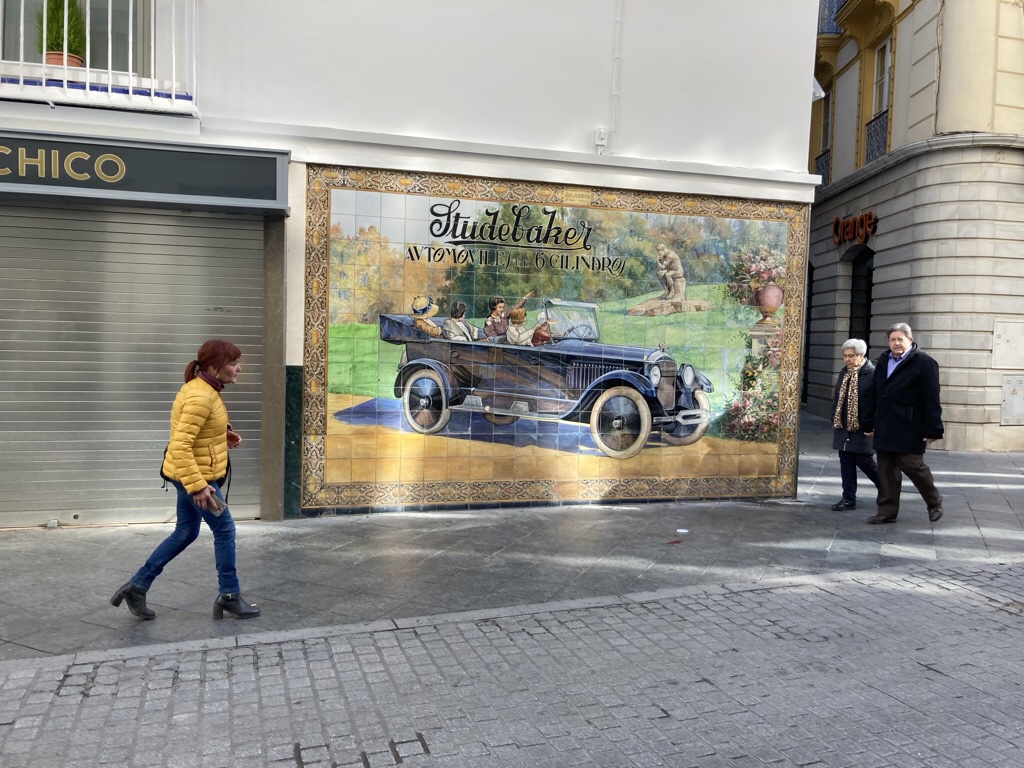
Finally, there are painted tiles which enable far more figurative designs to be made like that fancy car!
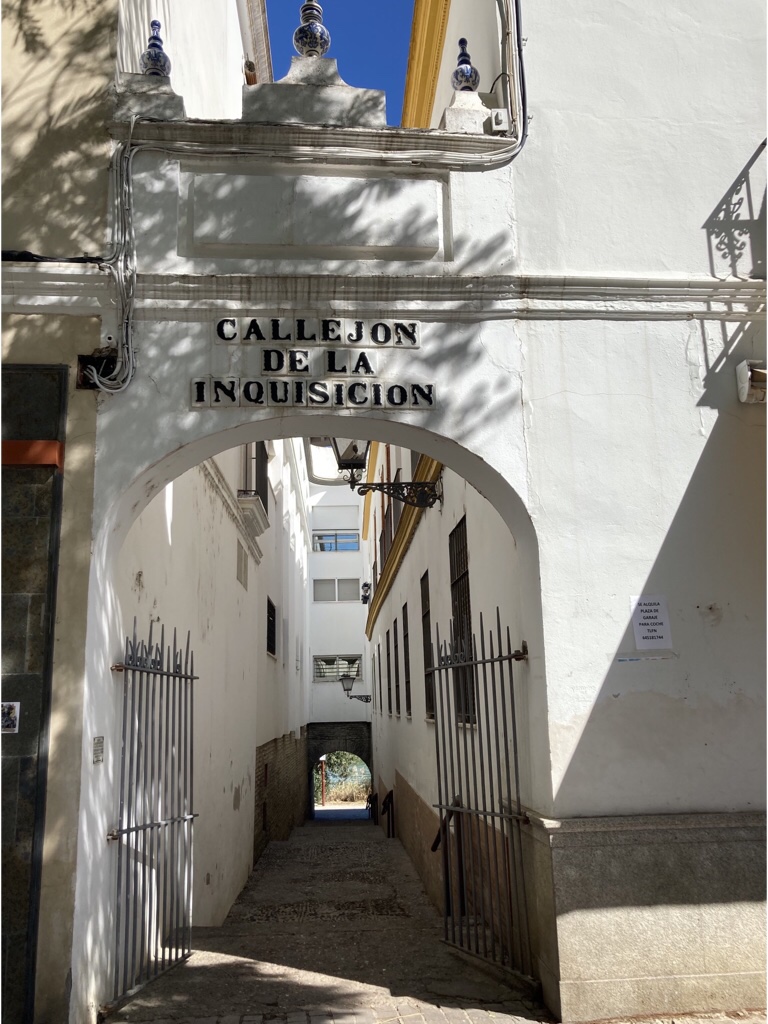
We spotted the Callejón de la Inquisición, a narrow passage once part of the castle where prisoners were led to be judged by the Court of the Inquisition …
… and a neighborhood corrale, one of the communal homes with traditional Sevillian architecture once lived in by gypsy families.
Time for lunch, we were lucky to come across this very traditional style tapas bar, where we were lucky to get a table when it was mainly standing room only, where the spiced peppers and grilled squid were the stars.
After lunch we crossed the river, and walked back the other side …
… which brought us to the Plaza de Toros de La Maestranza, Seville’s famous bullring.
It is certainly a striking building from outside, but we didn’t take a tour and the season only starts in March.
And those supports are not to shade the spectators, instead they hold canvas sheets to reduce the wind from the river so the capes don’t blow around too much and spook the bulls!
On the way to the hotel, I noticed the weathervane on La Giralda was facing our way, so took yet another snap!
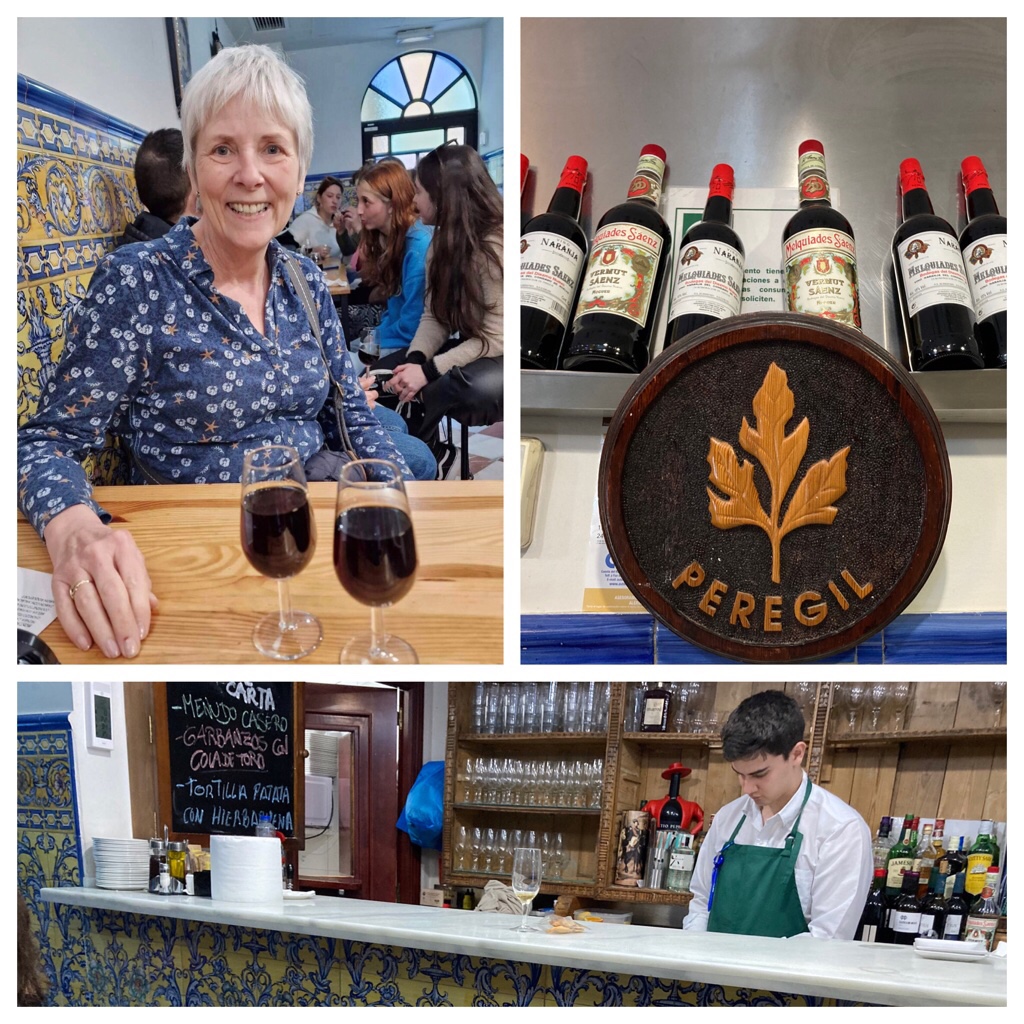
We also stopped at La Goleta, meaning the Schooner, which is is a tiny bar owned by Alvaro Peregil. It was originally founded as a wine store by his grandfather and since it was one of the first places to pioneer the local orange wine we had to stop for a taste, which was very much like a dark, mature marmalade. Chris had tried a glass in a different bar that was more bright and zesty so we might have to do some serious tasting before deciding which to take home!
Next day was Andalusia day, a holiday for everyone in the region, celebrating the referendum that made Andalusia an autonomous region of Spain. It’s a chance to take pride in the cultural identity of Andalusia and to celebrate the diversity and richness of the region.
What better than a holiday for a special treat! It must have been meant, because I saw a sign for churros outside a cafe and we went went inside.
Several people were eating what I guessed were churros, although I’d never seen them this light and fluffy before. They weren’t on the menu and when I looked again they were wrapped in paper, not on a plate! I asked the man behind us and he pointed through the door and said to get them outside.
Next door, I found the churros shop were I bought a portion for €2 and took it back. Chris had asked for eggs, potatoes and coffee so I added hot chocolate to the order.
The rich creamy chocolate was perfect for dipping, coating every surface of the crispy churro for a great chocolatey mouthful!
As we looked round the cafe, there were several paper parcels and happy people munching churros and we were surprised the cafe was so accommodating, and even Chris had a try, dipped in his coffee!
When we left, we returned so I could show Chris the shop and it was then I saw the sign suggesting churros could be taken next door to eat.
Just over the road, the church of Santa Maria la Blanca had just opened and we admired it’s over the top gold and white decoration with filigree stucco on the ceiling, translated into paint below.
Definitely in holiday mood we walked to Plaza de España. Built for the Ibero-American Exposition of 1929, it showcased all the architectural styles that can be seen in Spain such as Baroque, Renaissance and Moorish Revivals.
The central pavilion was used for exhibitions …
… and tiled alcoves around the plaza represent the different provinces of Spain …
and we sat in Castellon to eat our picnic lunch!
It reopened in 2010 after a significant restoration and is the perfect place to enjoy the spring sunshine on Andalucia day, a public holiday … boating, taking a carriage ride …
… or watching the flamenco show!
We spent our last evening at Taverna Belmonte, a tapas bar named for that famous Sevilian bullfighter.
He fought in a record number of bull fights, but his daring style meant he sustained 24 serious wounds and countless minor ones during his career.
The tapas however was a great end to our trip, especially the Spanish omelette and the baked goats cheese with honey …
And just to come full circle, I found out that sadly the parakeets are somewhat a nuisance, once pets imported from South America in the 1970’s, there are now are 200,000 Monk Parakeets in Spain and they are considered an invasive species.
Not just that, but I thought it was inspired to plant orange trees, providing shade in the city, sweet smelling blossom in the spring and delicious fruit. All it not as it seems however, as it is said the Arabs originally planted oranges so they could grind down the skins for explosives!
Fortunately, times have moved on, once with the harvest and export of oranges to England for marmalade, but now a whole range of local artisan producers are being inventive and we were spoilt for choice.
After several tastings, we chose not only orange wine but also orange biscuits, marzipan and truffles!
Seville was a great idea for a February birthday treat and with all the orange goodies tucked away in our suitcase, we are looking forward to recapturing the memories of our stroll in Seville while sitting in our very own courtyard at home!
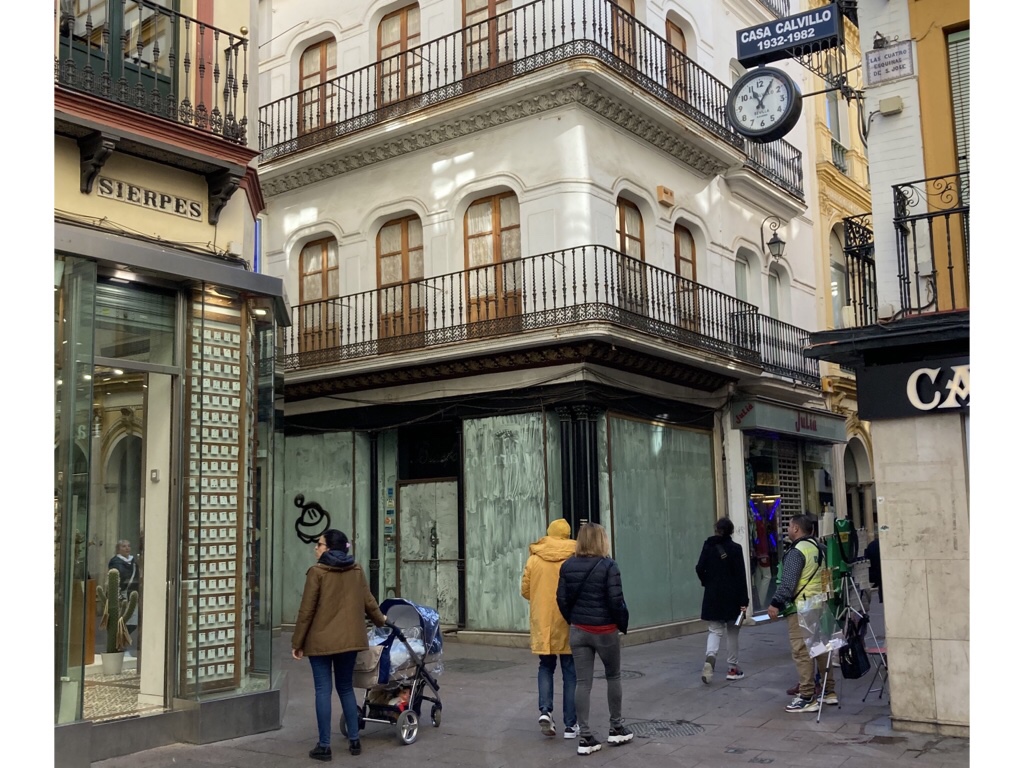
Calle Sierpes is a shop-lined pedestrian street which cuts through the heart of Seville. We’ve seen it bustling on a weekday when the shops are open, but still busy on a Sunday with people stepping out. It begins in Plaza San Fransisco, which once contained a monastery, but now the Ayuntamiento or Town Hall, it’s facade a riot of carved decoration.
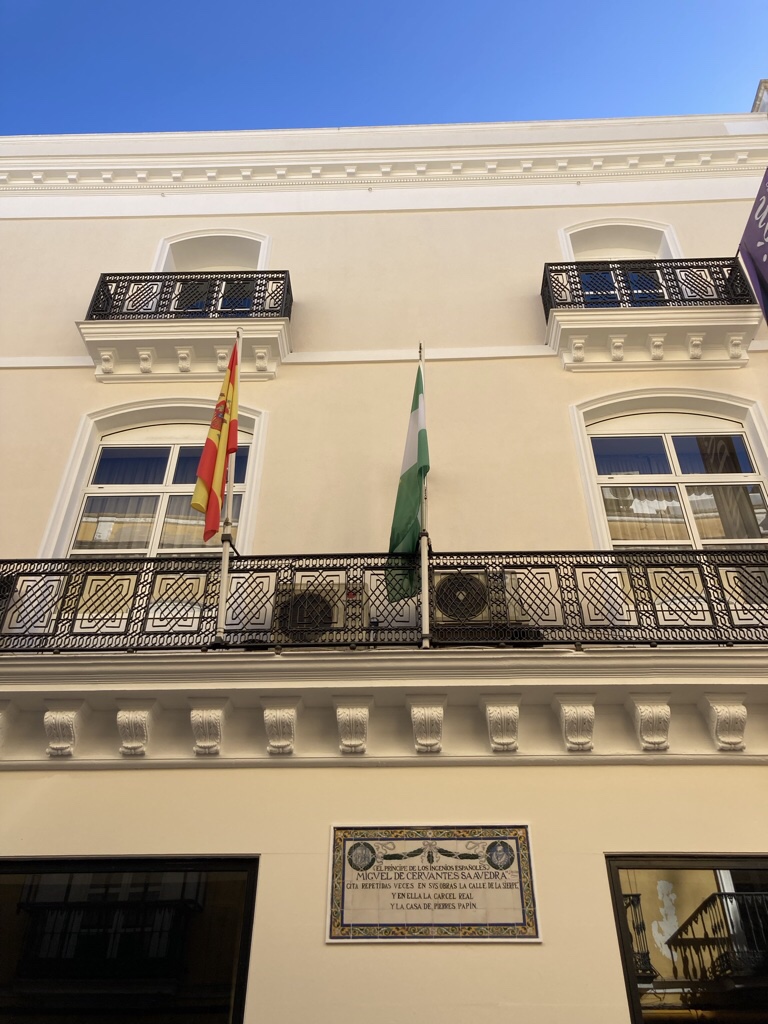
We saw a plaque at number 65, once the royal prison where Cervantes was held …
… the small Capillata de San José tucked down a side street …
… and even surprisingly a tiled billboard for a 1924 Studebaker Special Six convertible, an example of painted tile art at its best.
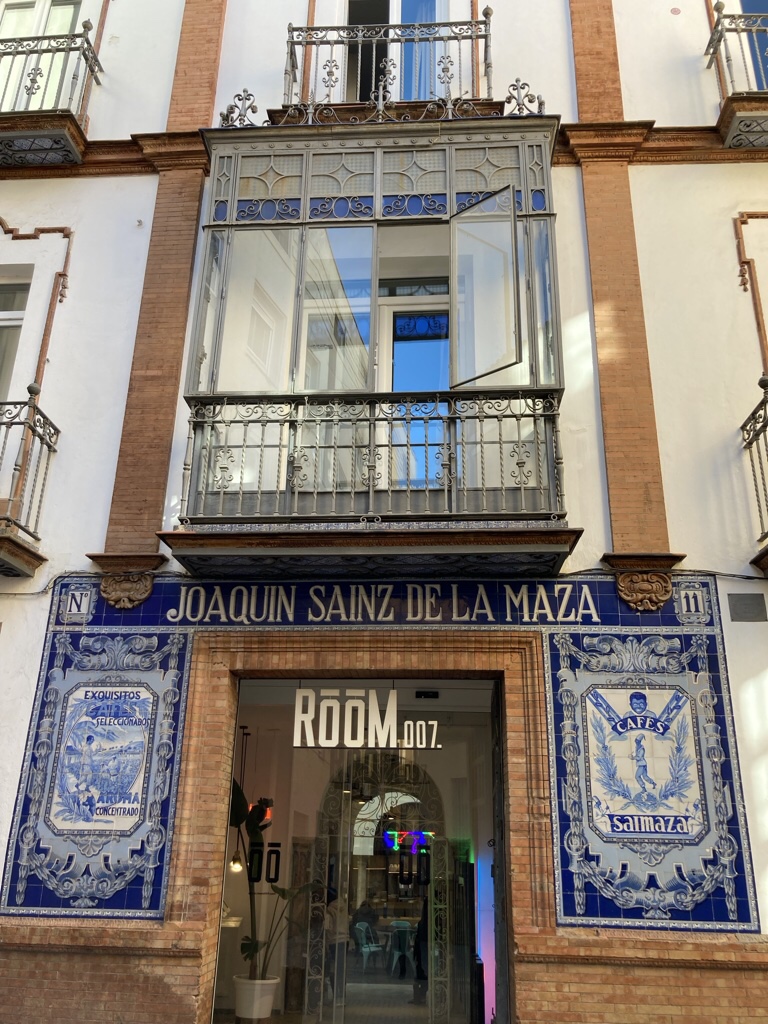
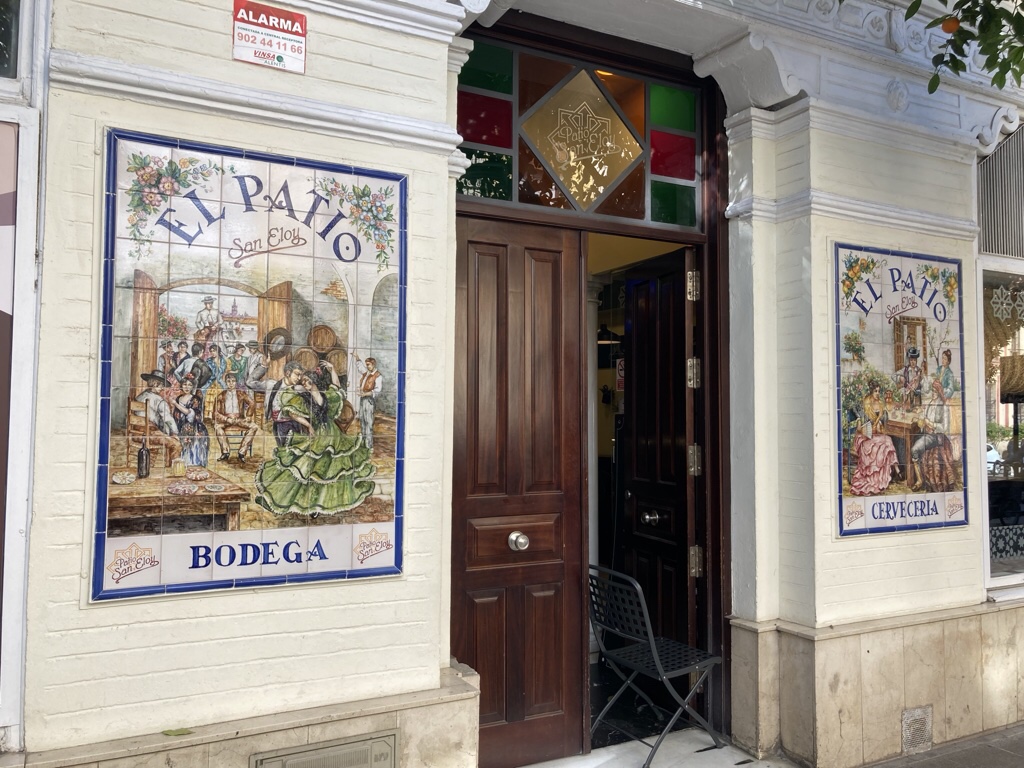
In fact, we’ve seen a number of tiled panels all over the place, advertising everything from wine and tapas bars and even guns!
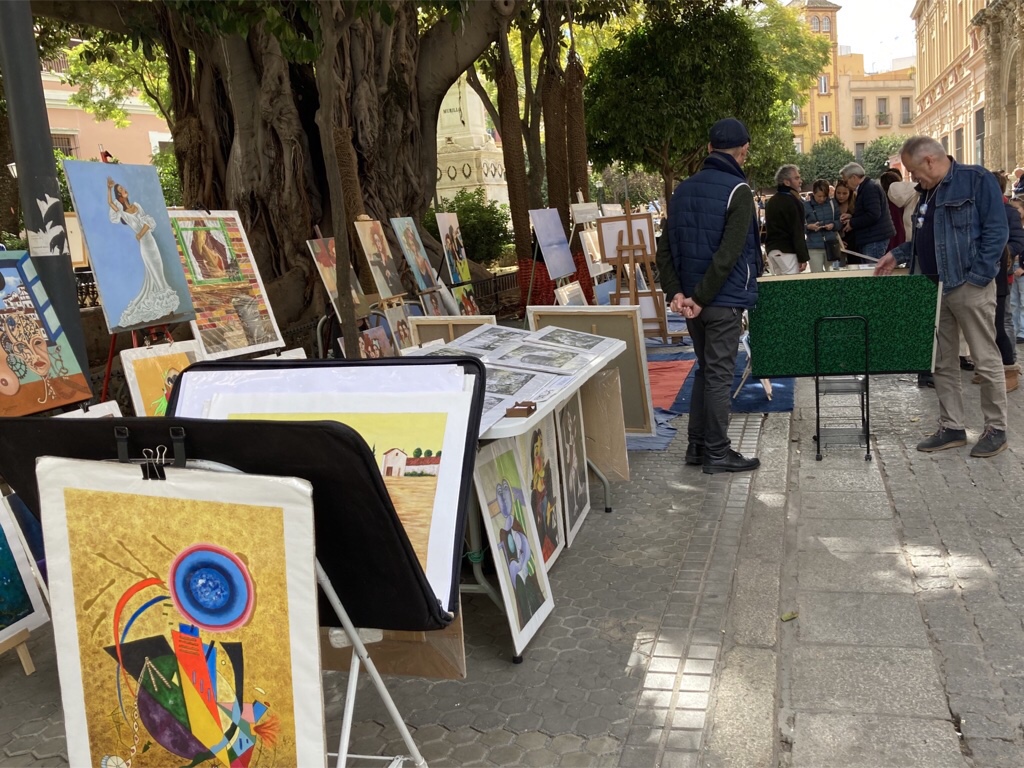
Continuing the art theme, our next stop was the Museo de Bellas Artes, where we browsed the art fair in the square outside first …
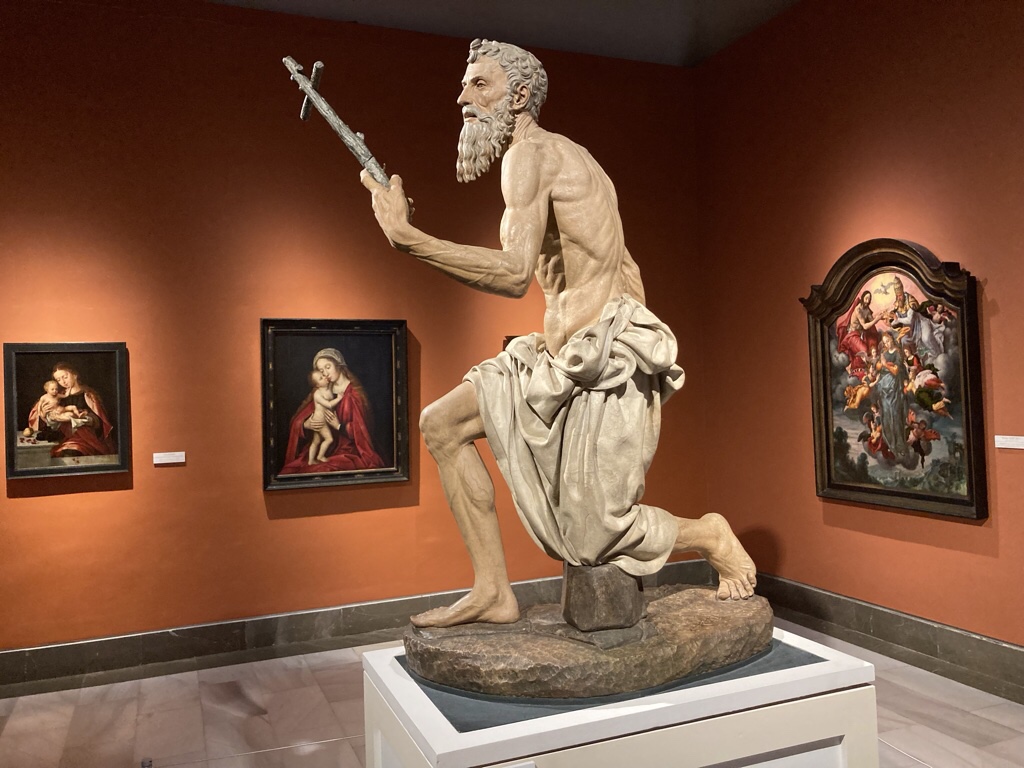
… before taking a tour of the mainly Spanish painting inside …
… arranged chronologically so with the Mediaeval rooms first.
We were especially looking for some works by Murillo who we’ve already discovered is a famous son of Seville and here are just two – the patron saints of the city, Justa and Rufina holding the Giralda between them …
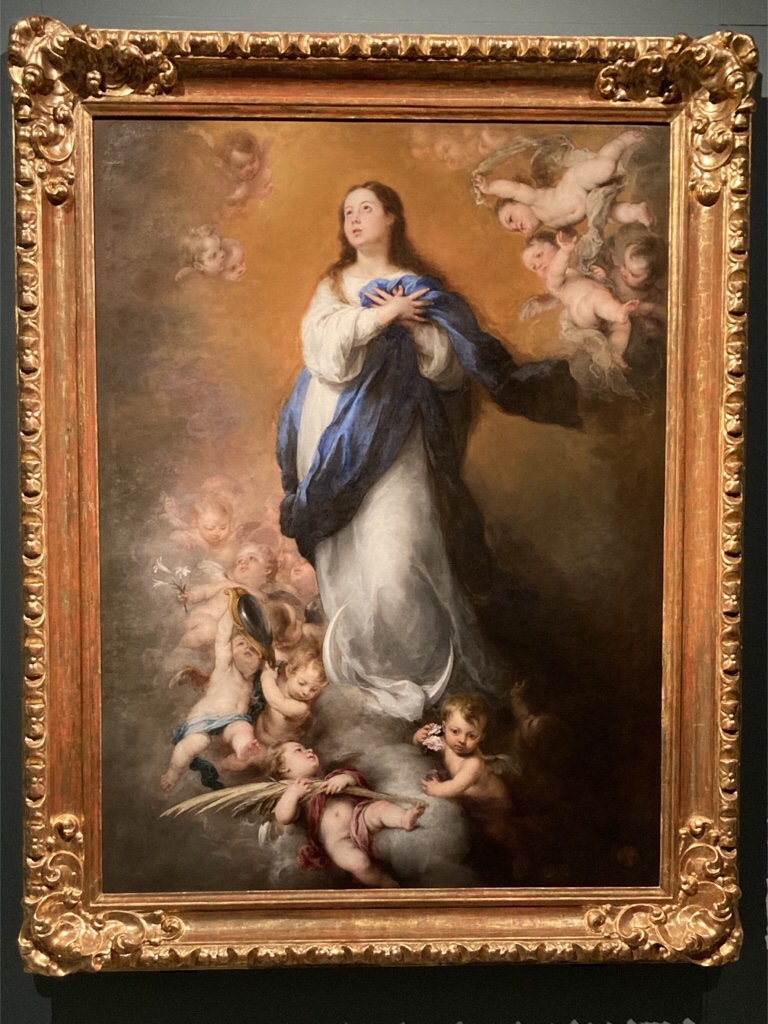
… and this huge Immaculate Conception.
It would be far easier to repeat the museum guide and point out what masterpieces they are, but we didn’t think them anything special, so finding them just pretty, dreamy and soft focus we moved on.
The gallery was arranged around a courtyard, which offered pleasant punctuation to the paintings, but also teased us with the sunny day outside so our remaining visit was short.
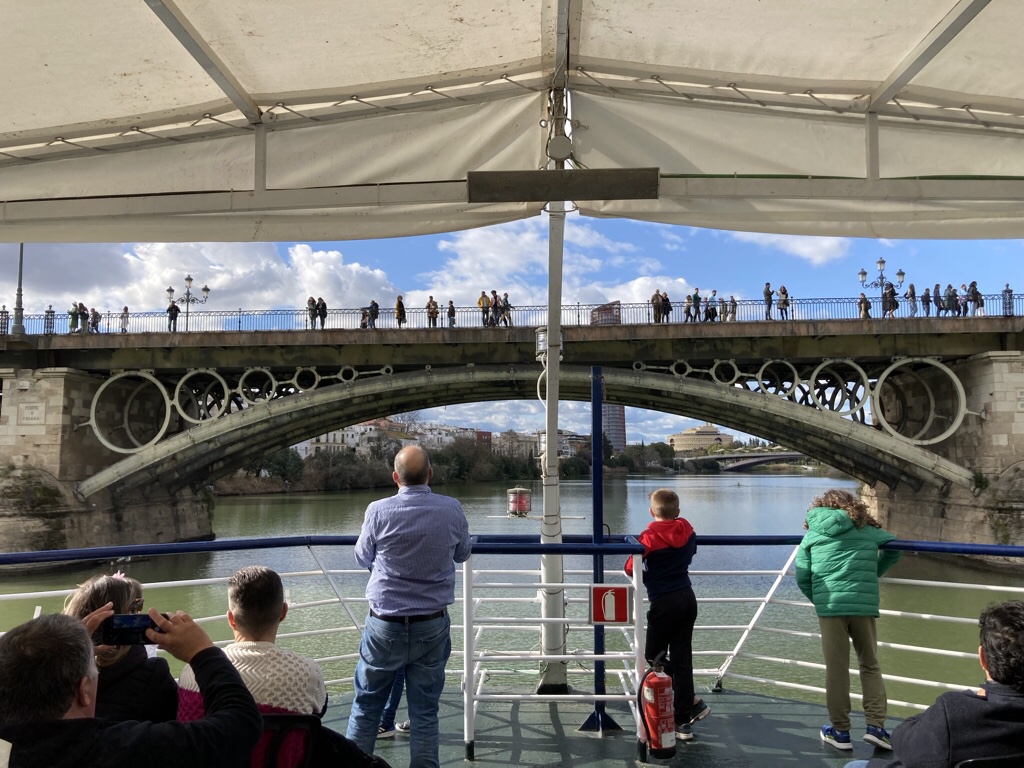
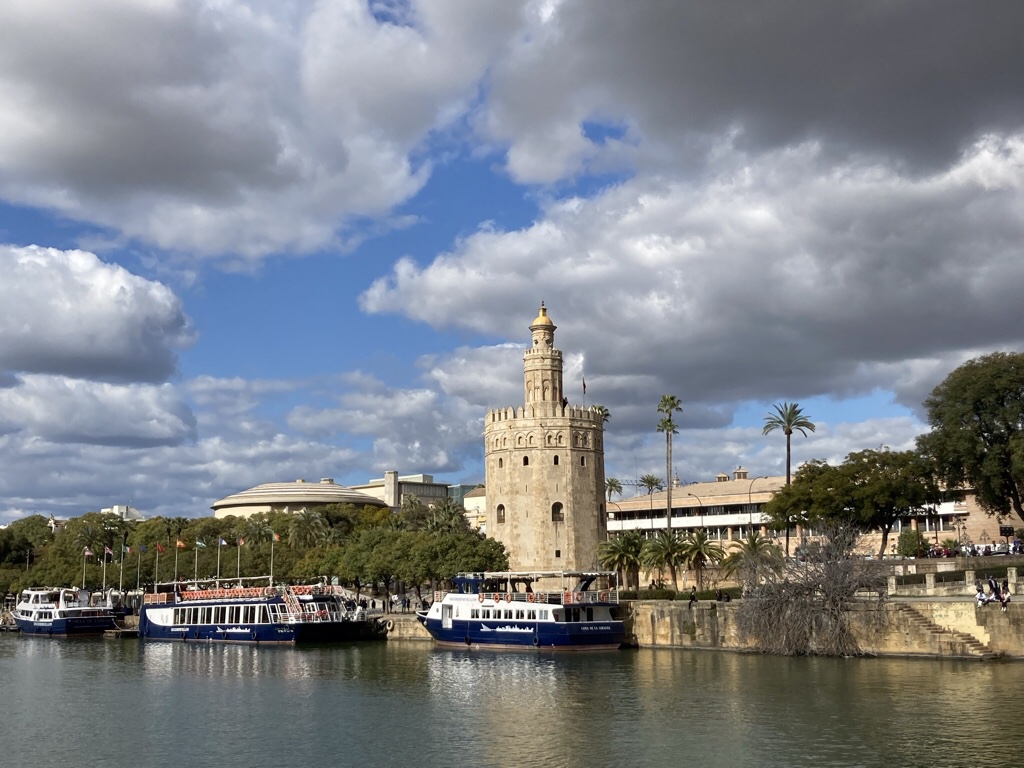
Feeling in need of a sit down, the perfect solution seemed to be an hour’s boat trip along the Guadalquivir River. We boarded just beside the Torre del Oro, built by the Almohads in 1220 as part of the fortifications, and one of the few remaining Islamic structures. It was used store gold from the Americas, hence being called the tower of gold.
The boat took us first upstream …
… then the other way, under the Puenta de Triana, with its striking metalwork …
… and as far as a more modern bridge built for Expo92 before returning.
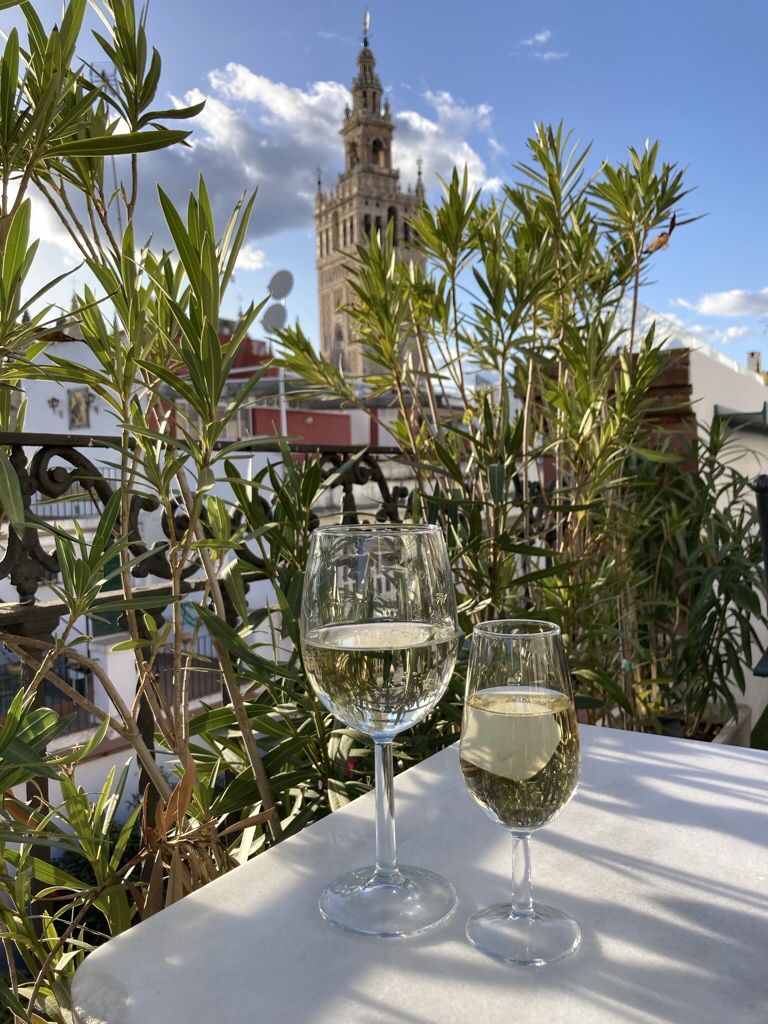
A glass of manzanilla in a rooftop bar seemed a perfect end to the afternoon … oh and sorry about the awful pun, but Mr Hayes insisted!
That evening we swapped tapas for mezzes and enjoyed an Eastern meal at Arabesque.
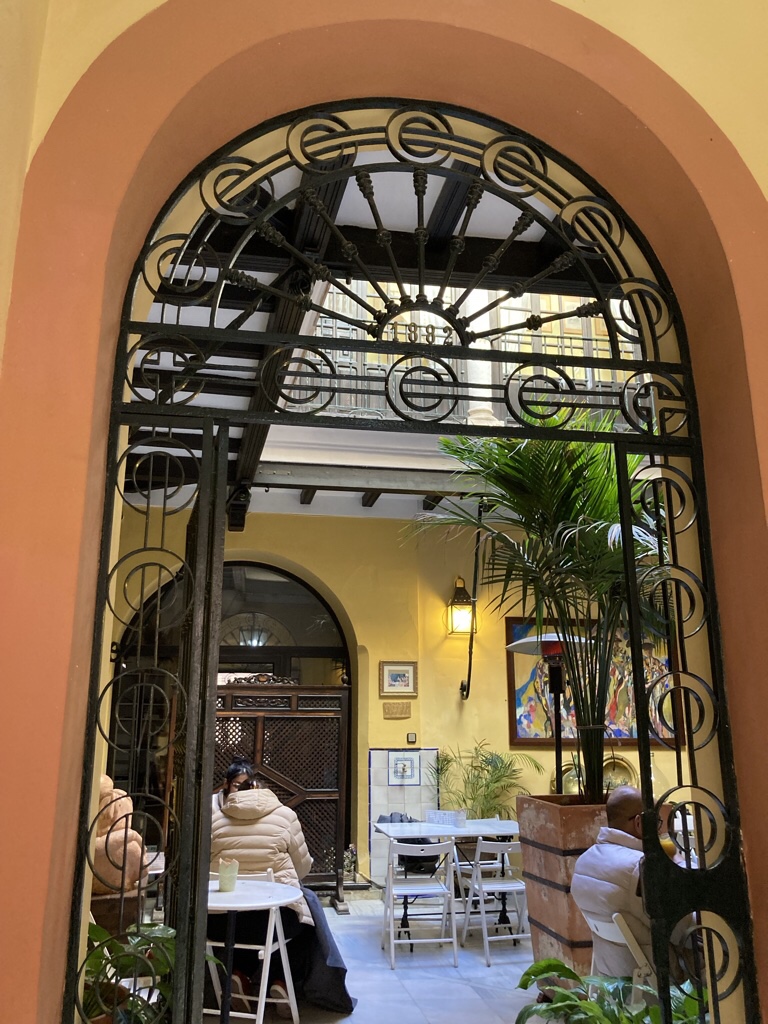
My birthday began with cafe con leche and pan de chocolate at a cute cafe where we sat in our first courtyard of the day, open to the sky above, but fortunately with a heater as it was only 5° at 10.00am!
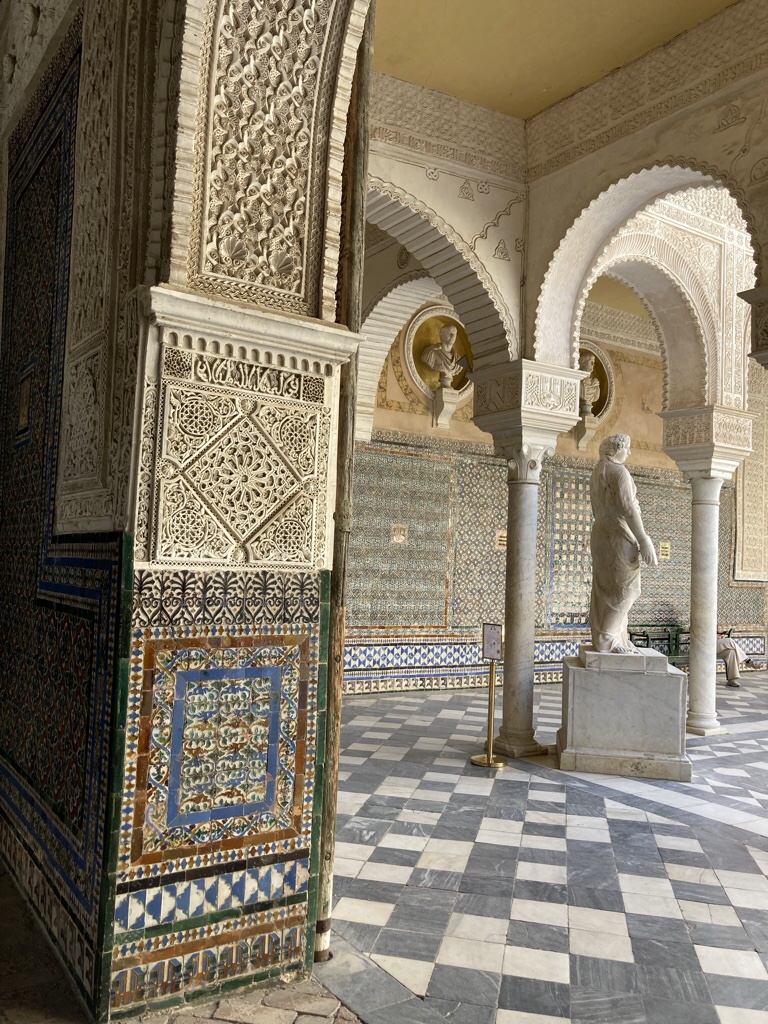
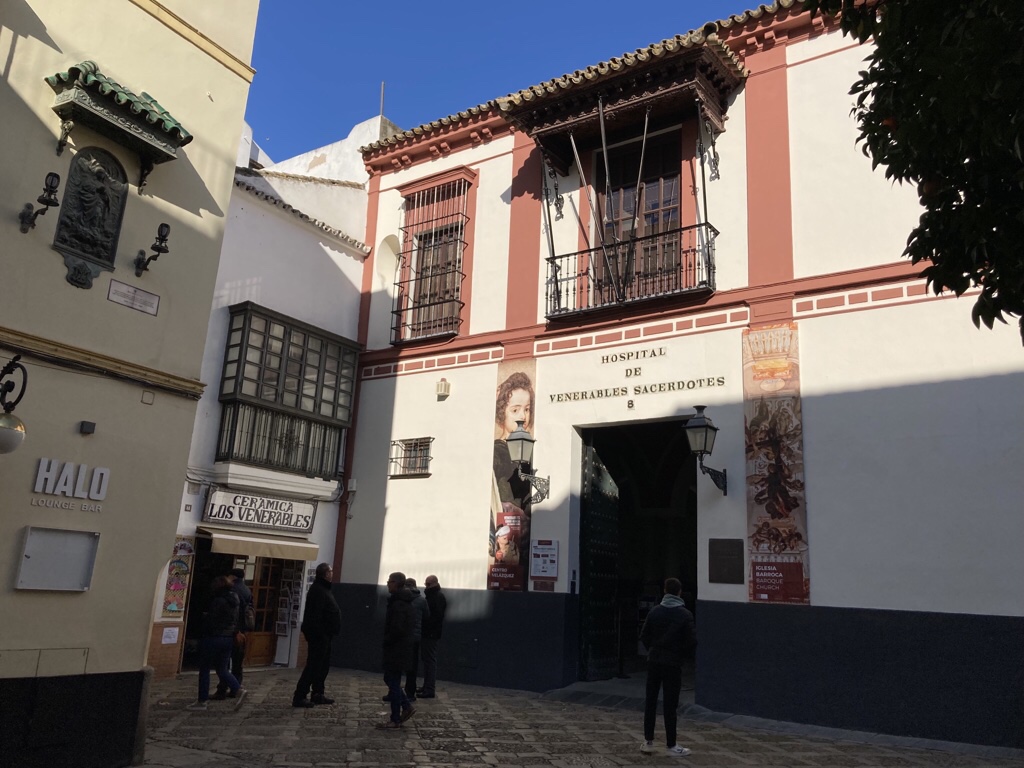
We spent the morning at Casa de Pilatos, probably the finest of the mansions in the city, built in 1519 by the Marqués de Tarifa.
The main courtyard or patio has it all – Muslim elements like the irregular arches covered in intricate plasterwork and beautiful glazed tiles, delicate Gothic tracery on the balustrades and slender Italian Renaissance columns and central fountain.
We were taken on a tour round the upstairs rooms, still partly occupied by the family …
… then wandered round the rest of the ground floor, a maze of interlinked courtyards and gardens, admiring the azulejos tiles, intricate woodwork, statuary and fountains!
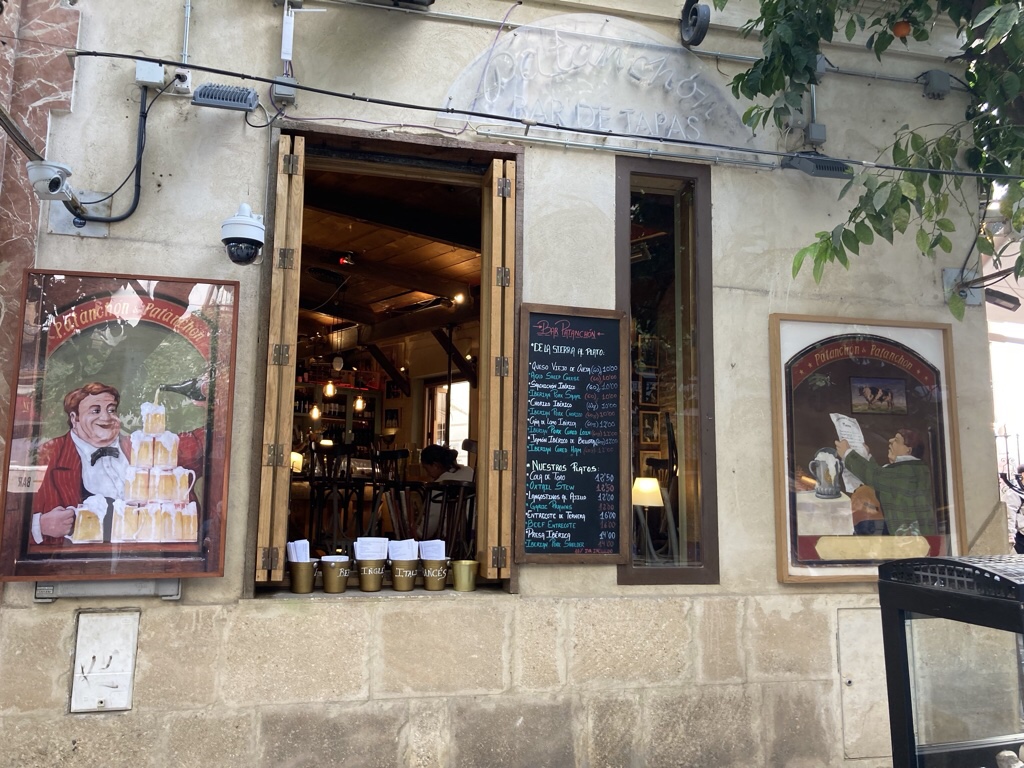
The Main Street in Santa Cruz is called Mateos Gagio and the tapas bars were already filling up by the time we arrived and we wandered along in search of a free table in the sun for lunch. Bar Pantanchon was the winner, where we munched on olives, artichokes, spinach and chickpeas and delicious baked goats cheese with bitter orange.
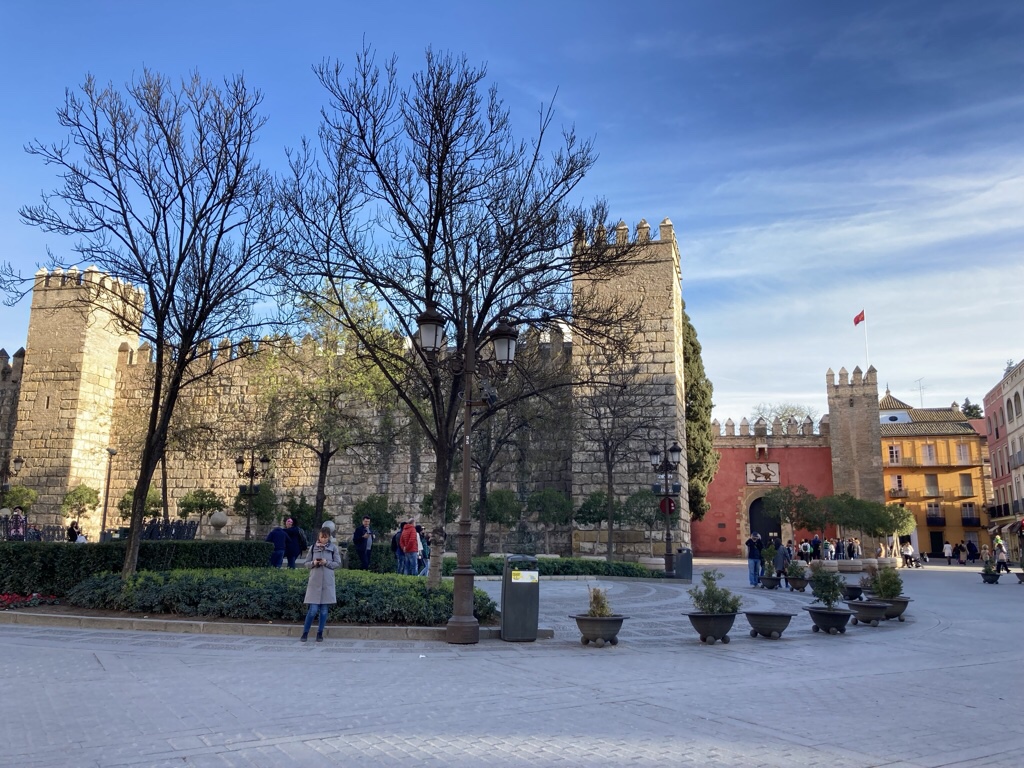
We had booked tickets for the Alcázar in the afternoon, the highlight of the trip. We entered through the Puerto del Léon complete with glazed lion panel above the door …
… and through patios …
… to the main facade, a confection of lacy plasterwork arches, slim columns, tiling and stalactite frieze.
There was a fort here in Roman times, which was expanded in stages by the Abbadids and the Almohads until it became a huge palace complex. At its peak, the ruthless Al Mu’tamid kept a harem of 800 women and decorated the gardens with flowers planted in the skulls of his enemies! When the Spanish conquered Seville in the C13th, King Pedro I completely rebuilt the palace using fragments from Moorish buildings all over Andalucia and today the Real Alcazar provides an excellent example of Mudéjar architecture.
The central courtyard, Patio de Los Doncellas, or Patio of the Maidens recalls the tribute of virgins made annually to Moorish kings and is so tranquil, even with all the visitors, with its lacy arches and reflecting pool.
The Salón de Embajadores, or Salon of Ambassadors is a show stopper, with its intricate decoration …
… and magnificent ceiling …
… and the Patio de las Muñecas courtyard, with its fascinating collection of capitols.
Beyond there was a maze of linked side rooms, patios and gardens …
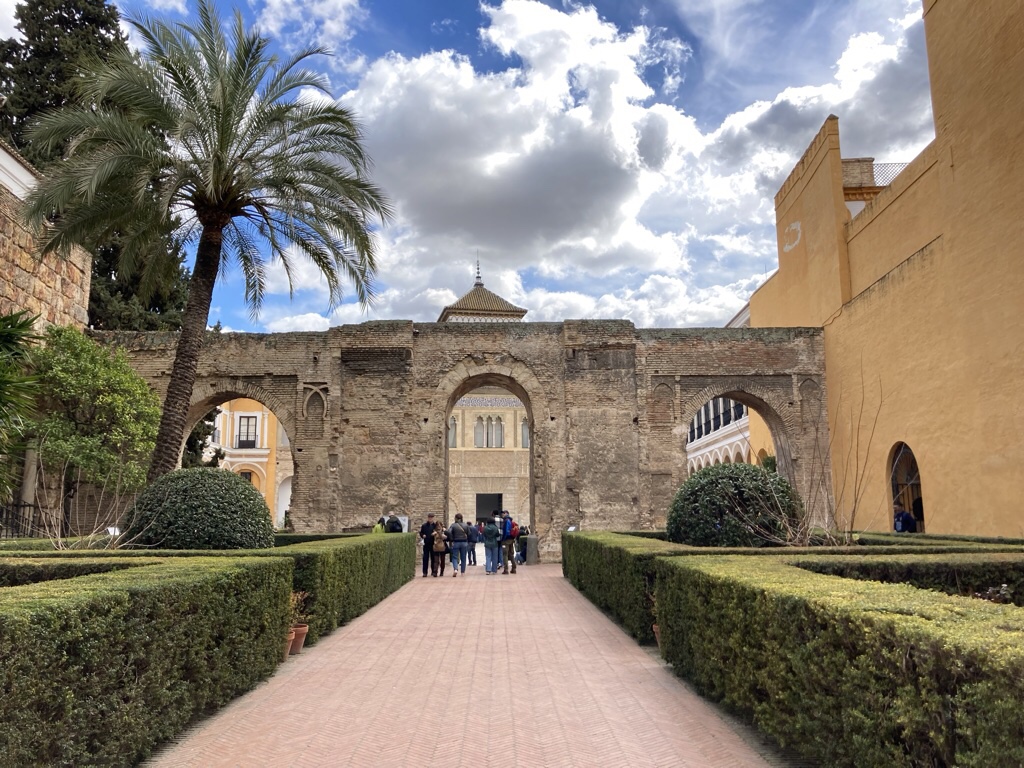
We came out into the extensive gardens but chose to just walk along the raised Galeria del Grutesco so we could get a good view …
… before leaving through the Patio de las Banderas.
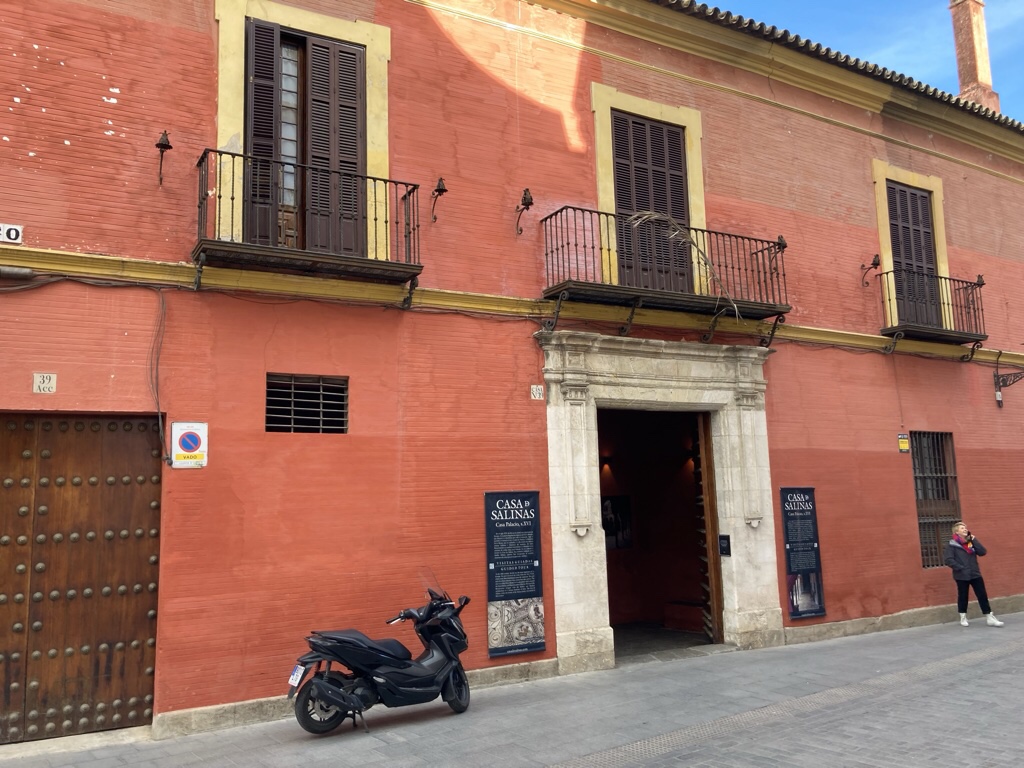
Now, while we didn’t actually visit Casa Salinas on the same day, it just suits the narrative to tell you about it here.
This beautiful C16th palace is privately owned by the Salinas family, who still live there. In the entrance is a tiled panel showing Seville, with the original Arabic floating bridge to Triana.
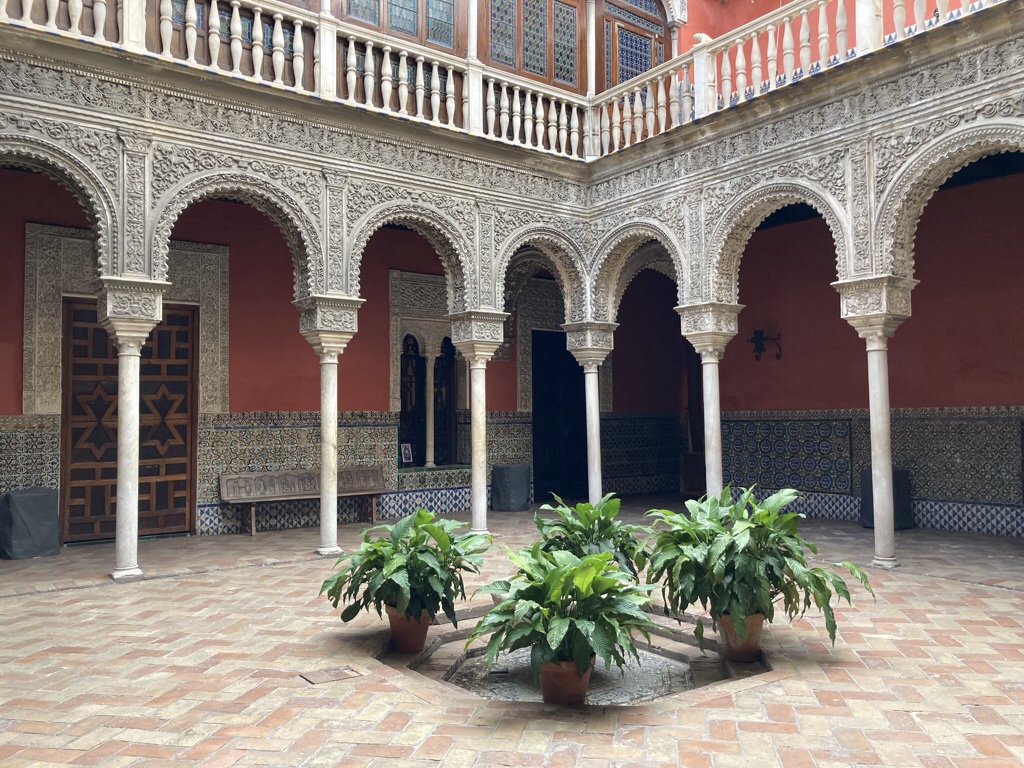
The house displays all the architectural features we had come to expect – courtyards, arches, columns, plasterwork, tiling and carved wooden ceilings.
The second interior patio contains a beautiful mosaic dedicated to Bacchus and other souvenirs taken from the nearby Roman city of Italica.
So it can’t be a birthday without afternoon coffee and cake followed …
… and later dinner at San Marcos …
… where we chose to sit in an area of vaults and arches for a delicious dinner confit of duck for me and pasta for Chris …
… followed by cheesecake with a berry sauce!
It was a lovely birthday, made even more special by all the cards I received, that Chris had tucked away secretly in the suitcase as well as messages and texts from family and friends.
Well we’ve walked around Seville Cathedral and photographed it so now it’s time to go in! We queued outside this doorway for tickets, admiring the bronze replica of the Giraldillo statue made while the original was restored.
Right by the door is the mausoleum of Christopher Columbus, where a mariners coffin is held by figures representing the kingdoms of León, Castile, Aragón and Navarra.
Interestingly, it may or may not contain his remains, which have removed around a bit, from Spain to the Dominican Republic, then Havana and back to Seville. Together with tales of the bones getting mixed up on the way, it’s possibly fitting that his bones may lay on both sides of the Atlantic.
It is impossible to convey the size of the cathedral or how overwhelming it is to be standing in the nave. One side contains the choir …
… and the other the main chapel dominated by a vast golden retablo telling the life of Christ in 45 scenes.
We made our way past umpteen chapels round the outside, filled with paintings until we reached the entrance for La Giralda, where a series of 35 ramps lead up the square tower to the top. There are 24 bells and they certainly make themselves heard, chiming every quarter and for longer on the hour!
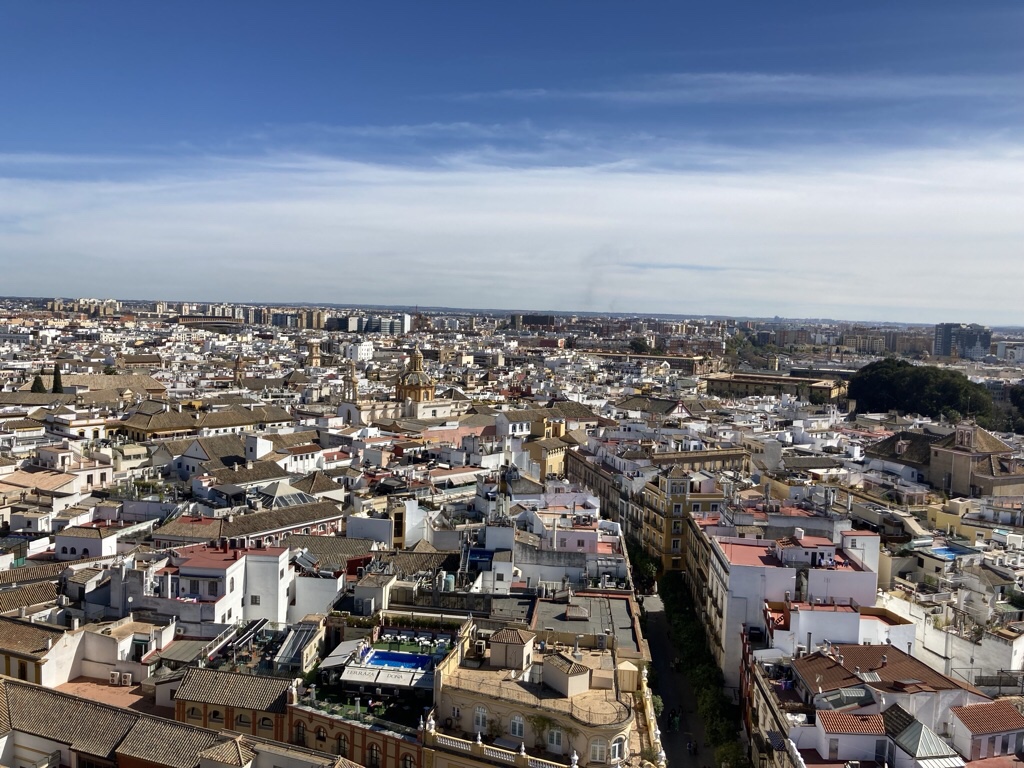
The climb was certainly worth the view, where we could not only admire the buttresses and statuary of the cathedral …
… but also the view over the city.
We left through the Patio de Los Naranjos, once the entrance courtyard for the old mosque where the faithful would have washed before prayer.
Just across the road is the General Archive of the Indies. It once housed the 38,000 documents covering four centuries of Spanish rule, but these have recently been moved elsewhere so the building can be admired in all its splendour.
The Old Tobacco factory is another massive structure, now part of the university, and where Carmen, from a C19th story was made into an opera by Bizet and worked as a cigar maker. At its peak it was the country’s largest single employer with some 10,000 women making cigarettes.
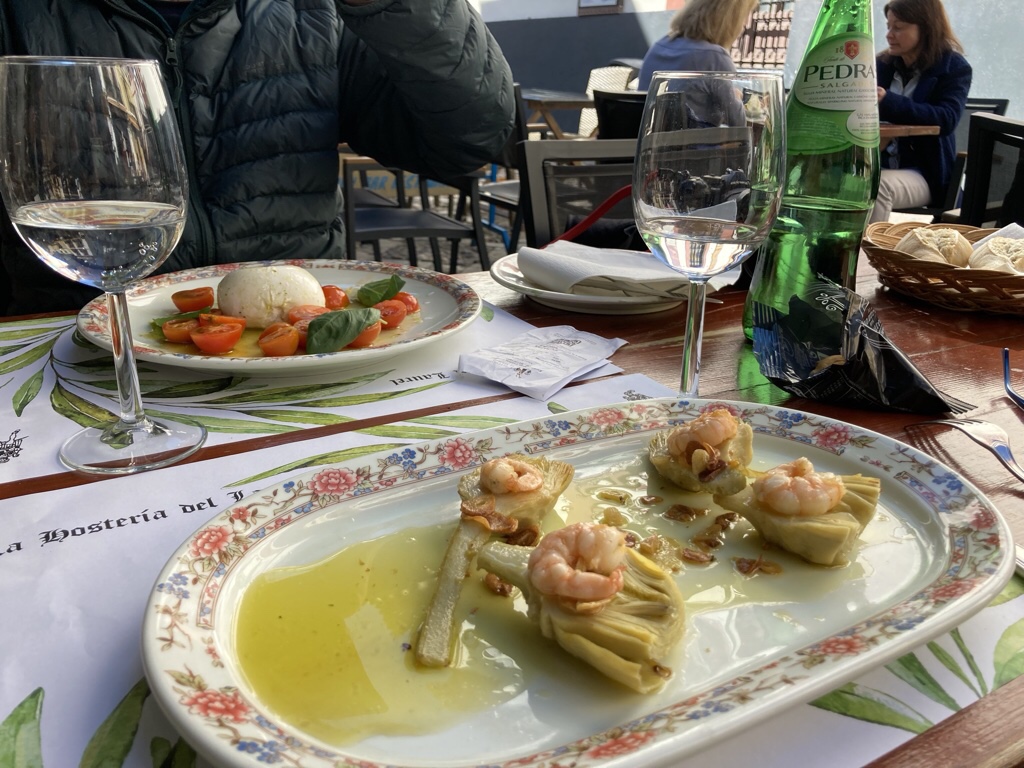
Having spotted the lovely courtyard with people lunching yesterday, we went to eat there ourselves … artichokes with prawns and buratta with tomatoes and even some Spanish tunes!
In the afternoon we headed for Las Setas, not realising that this striking wooden structure formed by six large, mushroom-shaped parasols was inspired by the arches of Seville’s cathedral. It’s proper name is the Metropol Parasol, but everyone soon started calling it The Mushrooms and the name stuck!
Once the site of a market, the land had become derelict and plans for underground parking with a new market area were halted by the discovery of Roman ruins. A competition was held for ideas won by a German architect Jürgen Mayer with a concept to incorporate the ruins, a area for a market and public events as well as a landmark structure with a panoramic view.
It’s free to wander under, but we paid to take the lift which gave us views not only of the structure but also of the city,could have returned later to see the evening light show, although we didn’t.
And it’s made of wood, covered with a protective polyurethane coating!
We both thought it quite striking with interesting shapes and shadows and we watched the world go by with our coffee and cake.
In the evening, we chose a change from tapas, but still with a Spanish connection, enjoying margaritas and Mexican in La Cantina, a selection of tacos, scopes and flautes which brought back memories of our trip to the Yucatan.
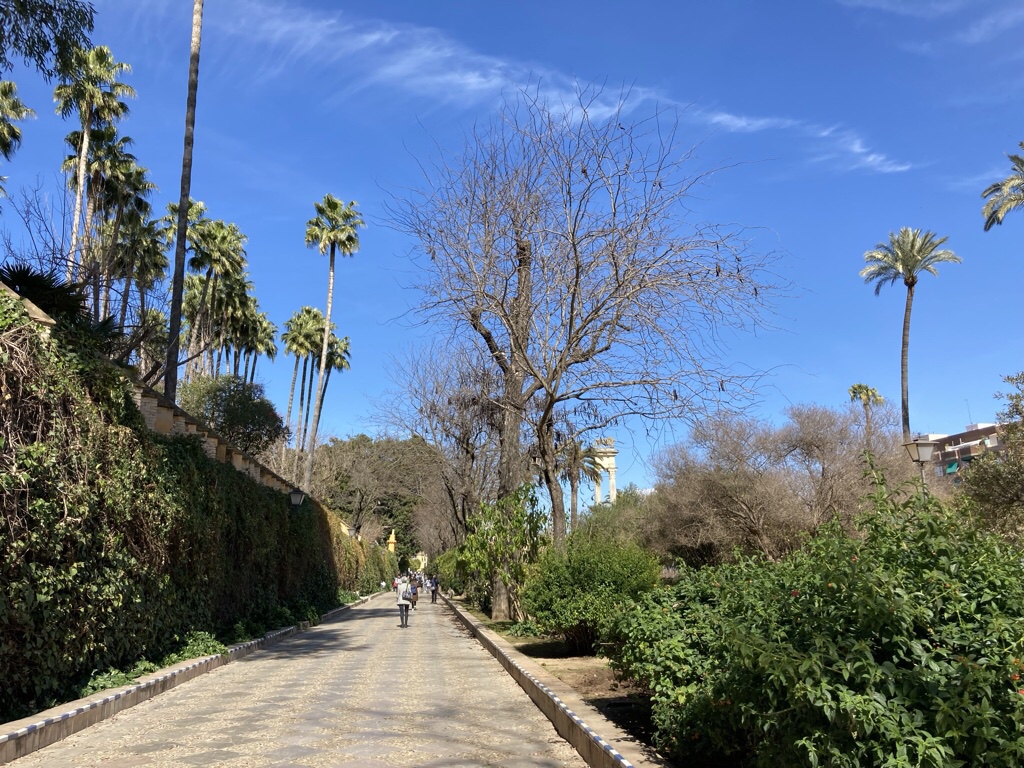
We had only just stepped off the bus from the airport and started walking to our hotel through the Jardins Murillo when we spotted parakeets flying between the trees squawking!
It was so unexpected and brought a smile to our faces as we walked in the warm sunshine through the gardens.
We lingered a little in front of a huge tiled panel …
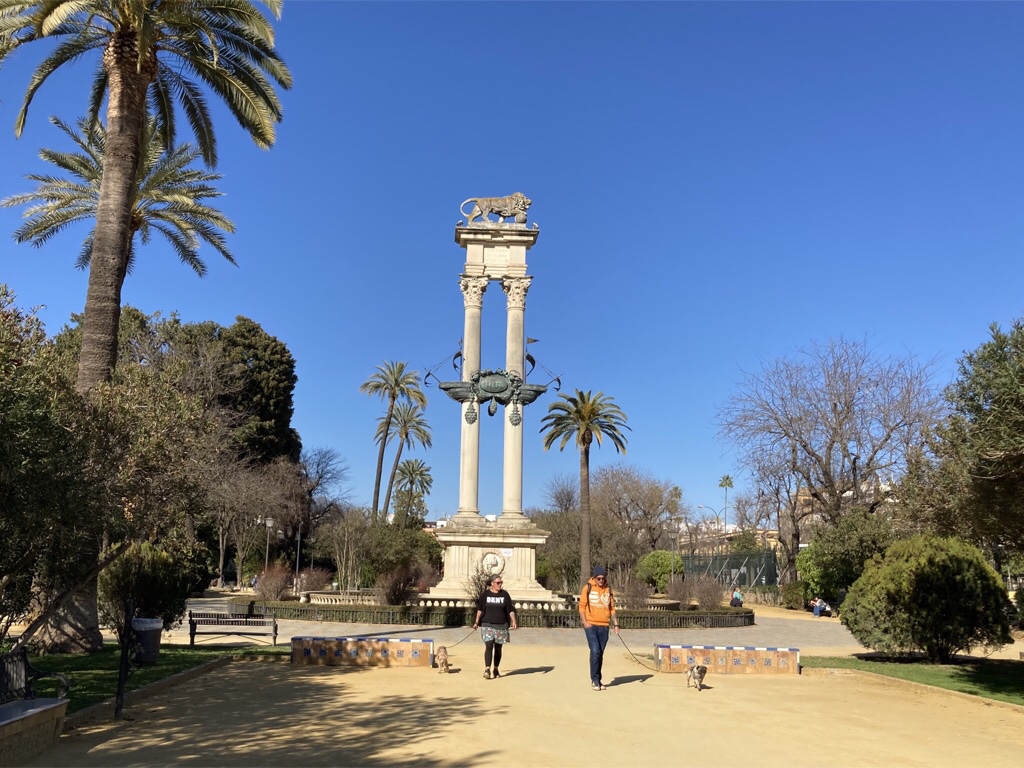
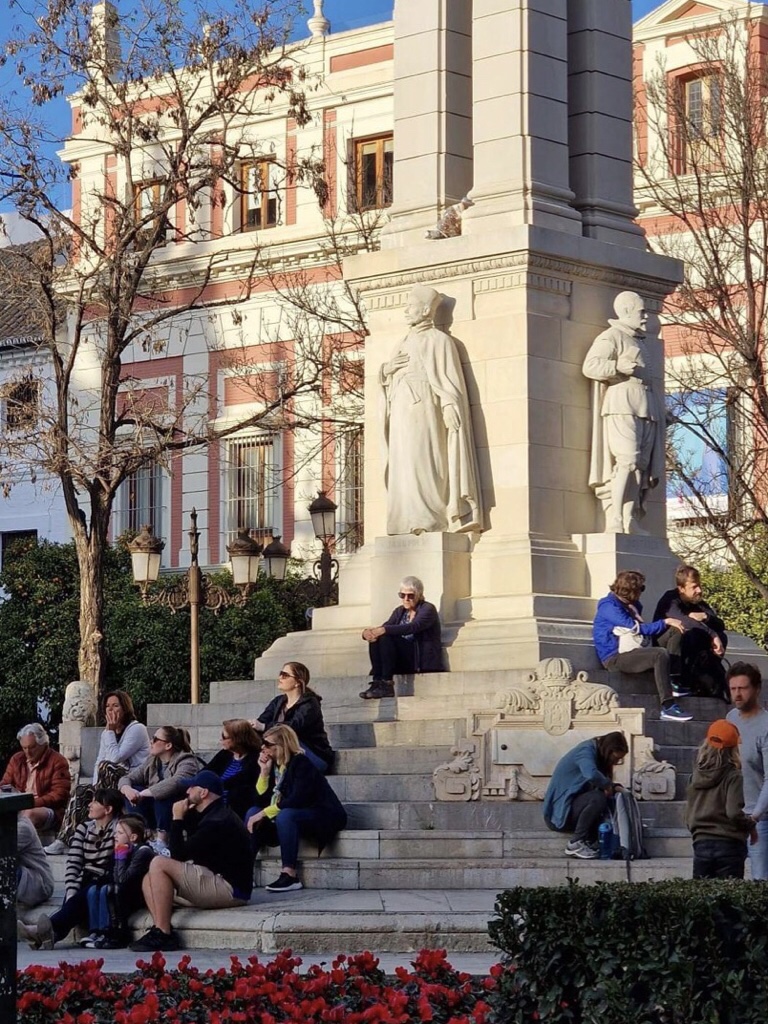
… and a monument to Christopher Columbus …
… and even spotted flowers on the way.
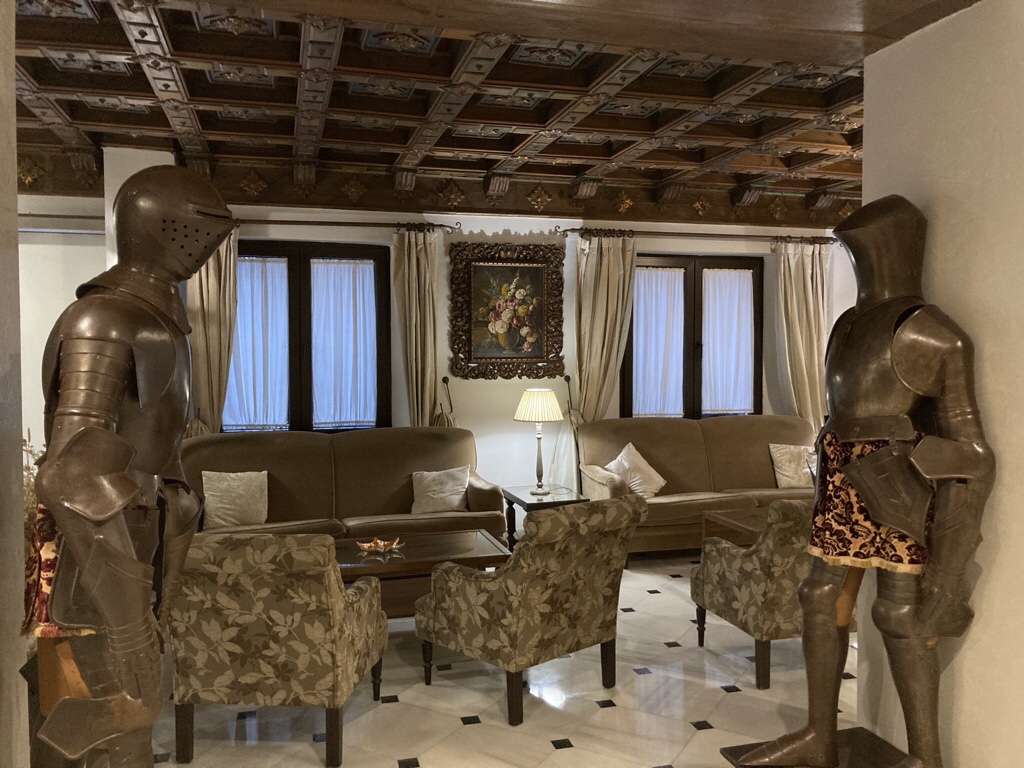
These gardens were once part of the Alcazar. Today they are public gardens named for the famous Sevillian painter Murillo who lived in the Barrio Santa Cruz, which used to be the Jewish quarter of the city. This is where we are staying, at the Hotel Murillo, tucked away down a narrow cobbled alley.
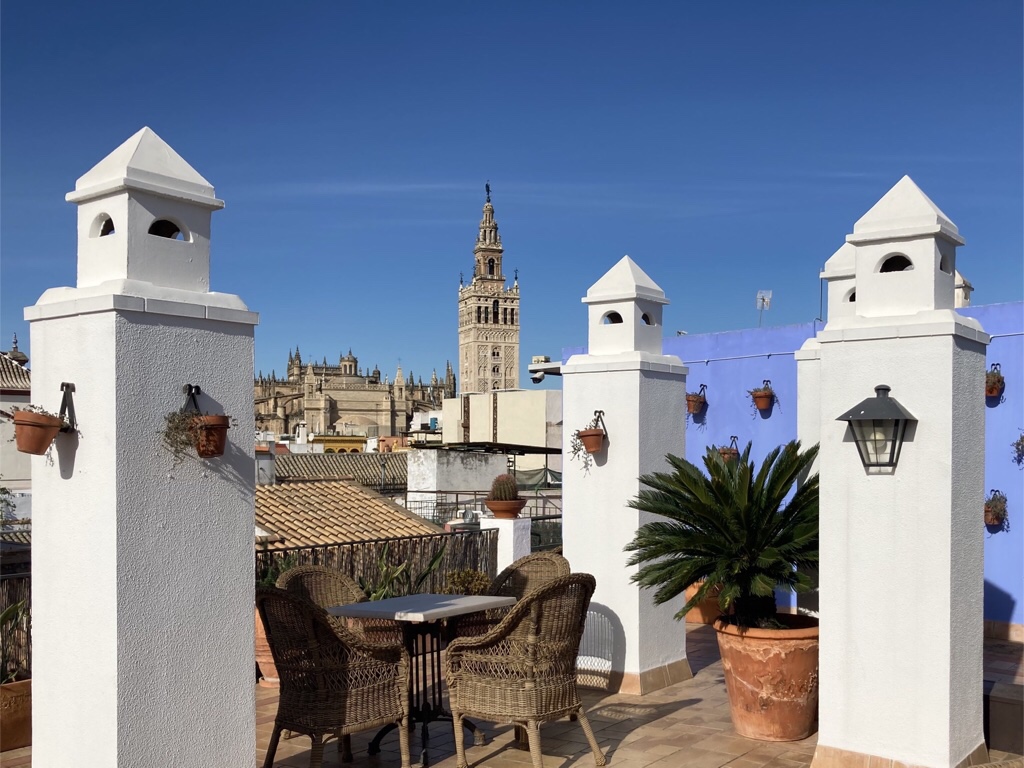
It even has a cathedral view from the roof and proved to be a great choice, right in the centre of the old city.
We were soon out exploring the maze of narrow alleys where the tall whitewashed buildings help to keep out the sun, but getting our bearings was impossible and we soon just gave in to just wandering to see what we could find.
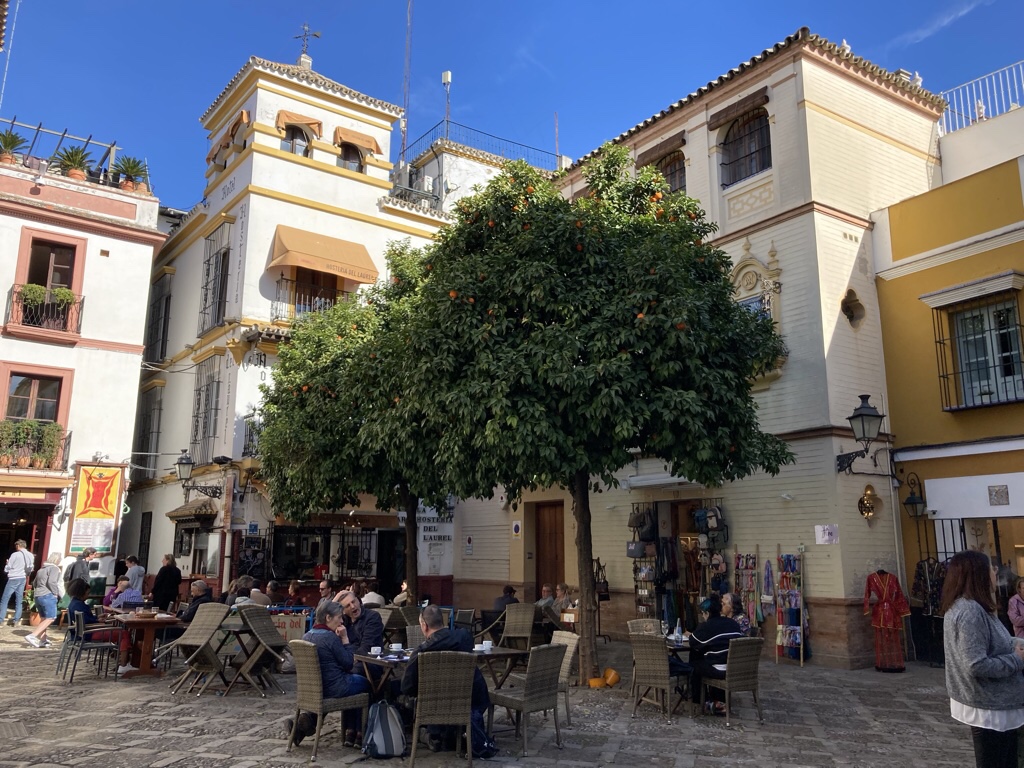
We soon stumbled on this small plaza, where people were browsing for souvenirs or lingering over a late lunch in the sun. There were also orange trees, laden with fruit, which like the parakeets, were everywhere we went.
Before long, we came out into Plaza del Triunfo and saw the entrance to the Alcazar …
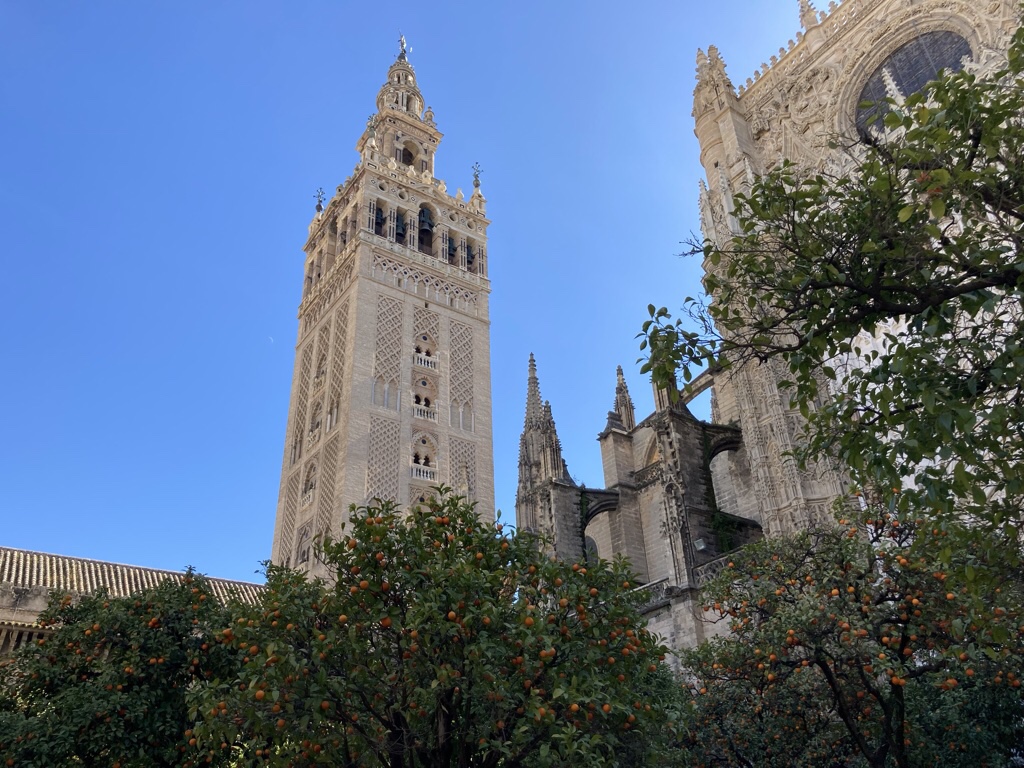
… and saw the cathedral and bell tower with their intricate stonework thrown into relief by the late afternoon sun.
After the Christians conquered Seville in 1248, they converted the large Almohad mosque into the city’s cathedral, but when the wealth of the city increased, it was replaced with what is the largest gothic cathedral in the world. The minaret is all that remains of the original central mosque, today called La Giralda, named for the weathervane at the top, a Renaissance bronze sculpture called Faith but known as the Giraldillo, and the symbol of Seville.
We passed the Palacio Arzobispal …
… on our way to La Cantina for coffee and cake …
… then I sat soaking up the last of the rays while Chris took photos.
As we were walking we noticed these round stones on many of the corners.
Intrigued, when we got back to the hotel we had to ask and were told they were spent mill stones reused to protect the buildings from damage from C16th horse drawn carriages.
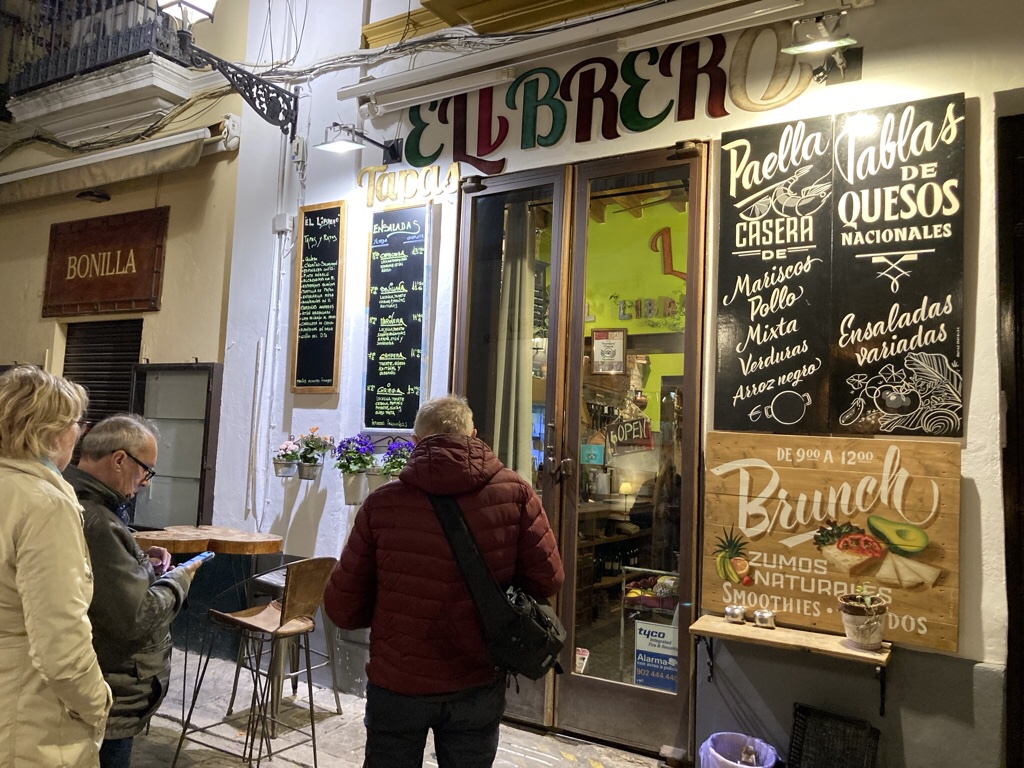
Our first dinner was at El Librero, a family run tapas bar so popular we had to wait outside for a table. It was well worthwhile as we went on to enjoy spiced peppers, spinach and chickpeas, sheep’s cheese and Iberian pork cheeks accompanied by a mellow bottle of red from Cadiz.
Our stroll in Seville has certainly got off to a great start!
It’s now my turn for a birthday trip and always eager for a little sun, I’ve chosen Seville. We are not strangers to Andalusia – one of our first trips together was to Cordoba – and we are looking forward to another opportunity to explore the Moorish influence in this part of Spain.
I’m sure our cameras will be busy as we wander through narrow streets, around palacios and casas and into patios and gardens, with the Real Alćazar being the star attraction.
Seville is also the tapas capital of Andalucia so after dark we are sure to be sampling local specialities and with around 3,000 tapas bars to choose from, I’m not sure our trip will be long enough …. but we’ll try our best!
Not a lot more to say but Valletta does have a couple of public gardens with great views towards the Three Cites. Upper Barrakka Gardens also has a saluting battery, a balcony of canon which used to fire salutes to visiting naval vessels. They still fire the gun twice a day for tourists.
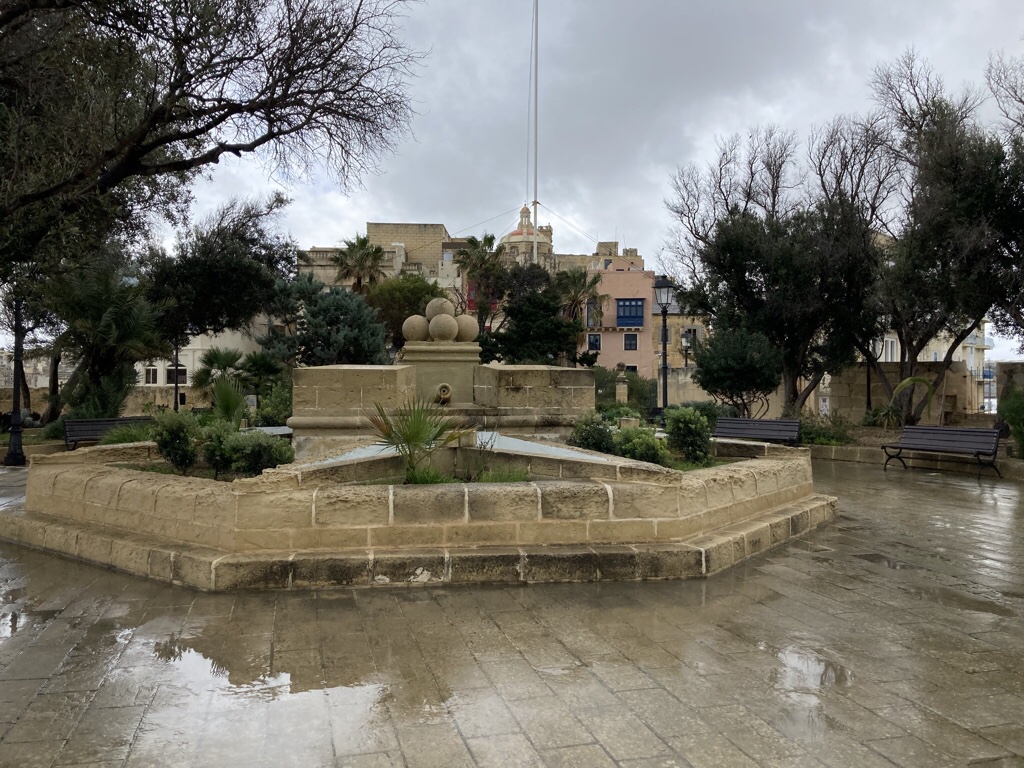
Lower Barrakka Gardens was close to our hotel and has a temple to commemorate Sir Alexander Ball, the naval captain who captured Malta from the French in 1800, ending their brief occupation.
It is a good place to watch the sunset as it lights up Fort St Angelo.
Looking out to sea is the Siege Bell Memorial for all those who fought and died for Malta in WWII. It commemorates the 50th anniversary of Malta receiving the George Cross.
After sunset comes dinner and we’ve eaten so incredibly well since we’ve been here. Casa Sotto serve Pinsa Romano, traditional oval flatbreads from Rome, similar to pizza but very light and crispy. The special was soft potato, pistachio cream and crispy fried onions, seasonal with a Maltese flavour and we shared one of these and also a more traditional Norm with tomato, aubergine and ricotta. All was washed down with a carafe of house red and it was full all evening so good job we booked!
Muza is the restaurant within the art museum of the same name which Chris chose for dinner on his birthday. We sat in the Donato Room, decorated in bronze and teal and dominated by a stunning modern chandelier which casts a floral pattern onto the walls, echoing the frieze at the top of the walls.
The art theme continued with our choice of a Chenin Blanc called Caravaggio and then the presentation of picture perfect plates, each a work of art. We began with mushroom tart with a smoked cheese foam and pork belly with pak choi and truffle jus then artichoke and chèvre tortilla i with tomato fondue and pan seared meagre with pickled fennel. A shared chocolate brownie finished the meal sweetly!
D’Office is a cosy bistro, with lace hanging at the window and filled with vintage bits and pieces. We shared a mezze of broad bean dip, sundried tomato, goats cheese, butter beans, olives, capers and crackers. Afterwards, Chris had the parmigiana while I had rabbit braised in wine with dates, served with crispy roast potatoes and vegetables. Far too full to consider dessert!
Legligin is a cosy basement wine bar offering a set seven course tasting menu but happy to offer vegetarian alternatives. Well we had a feast! They helped us choose the perfect Maltese wine to accompany our meal, a fruity red blend called Fenici, which pays tribute to the Phoenicians, who in the first millennium BC, spread the winemaking culture throughout the Mediterranean.
We began with Maltese tapas including olives, fresh Maltese cheese with fig jam, caponata, stuffed vine leaves, tomato and anchovy paste and local sausage in tomato sauce. For the next three courses I had fish cake, with sautéed octopus and cabbage salad, Maltese fish soup called Aljotta then mussels cooked in white wine while Chris had courgette and tomato gratin, mushroom soup and aubergine parmigiana. Pasta was next, both lemony but mine also with pancetta, then salad, both with strawberry dressing my mine with a quail breast and Chris’s with sweet melon. My last course was pork cheek in tomato sauce, while Chris had tiramisu, which he gamely saved till I had finished and shared! It was an epic meal, lasting 2.5 hours and a first for both of us. We thought what a good idea it was and how environmentally friendly it must be to serve what is good that day, only to buy and cook as much food as is needed. Rather than offering a wide choice on the menu, all the effort is put into offering a variety in one meal … fabulous.
The very elegant Cafe Cordina opened in 1837, and in summer most choose to sit in the lovely square but for us, the intimate gilded interior was a perfect. We were spoilt for choice, but I chose the Maltese Kannol Rikotta – a Flaky pastry filled with sweet ricotta, chocolate chips with hazelnuts, pistachios, cinnamon and icing sugar while Chris tucked into Diplomatica – a Rum-soaked sponge, marzipan and cream between two layers of puff pastry, topped with icing sugar
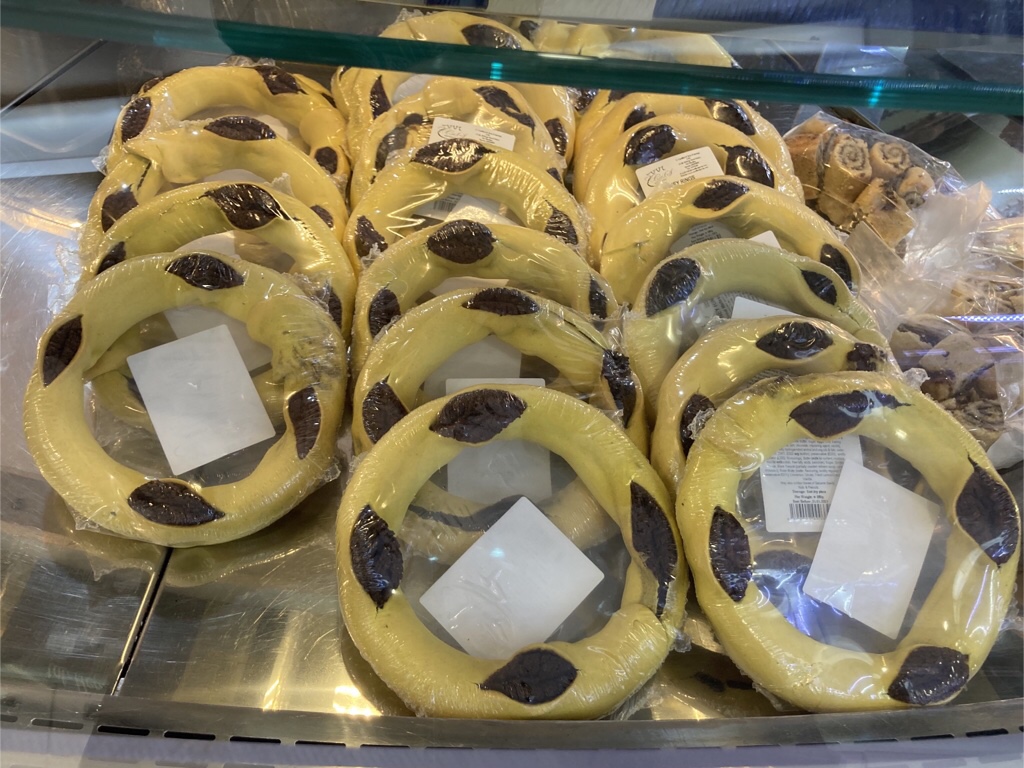
The Maltese certainly have a sweet tooth with several local specialities and this bakery sells them all.
We’ll be eating date pastries on the flight home (top shelf) and have popped a honey ring in the suitcase.
Valletta’s old market has been transformed into a handy food hall which came in handy when we chose not to eat out and could buy nibbles, salad, wine and pizza to go all under one roof.
Cafe Jubilee’s cosy bistro interior welcomed us on several occasions, but it’s only when you look round properly that you notice the quirky touches!
There is something on the menu for any time of day – lunchtime snacks of pastizzi which are small flaky pastry pillows filled with ricotta or mince and peas, or a bagel with roasted squash, Gozo sheep cheese, broad bean and mint – just a glass of wine on the way to dinner elsewhere – or a meal in the middle of the afternoon before our flight. This gave me the chance to have another local speciality, Ftira Bit-Tonn Taż-Żejt, a local bread filled with a tuna, olives, capers and tomato, while Chris chose Roasted Cauliflower with Black Garlic and Mojito-stewed vegetables – who says it’s hard to find good veggie food in Valletta!
Valletta was a perfect destination for Chris’s 70th birthday trip. Despite it being slightly cooler than we had hoped, we managed to dodge the worst of the rain. The hotel was really comfortable, the staff made our stay a real pleasure and the daily jacuzzi did wonders for the knee! And as for the birthday surprise, well that was definitely a success and the new knee coped admirably with the steps and slopes of the city, clocking up a splendid 21 miles.
There was a lot we didn’t do like walk round the city walks and fortifications, learn more about the Knights and WWII or explore the underground city. We’ve only had a taste, not only of Valletta, but certainly of Malta so we can honestly say we plan to return … sometime a little warmer!
We’ve been staying on Valletta, which is the largest peninsular jutting into the Grand Harbour. Across the water are two more fingers of land called jointly The Three Cities. These were first called Birgu, Birmla and Isla, but after the Great Siege they were renamed, Vittoriosa, Cospicua and Senglea although locals still use the old names.
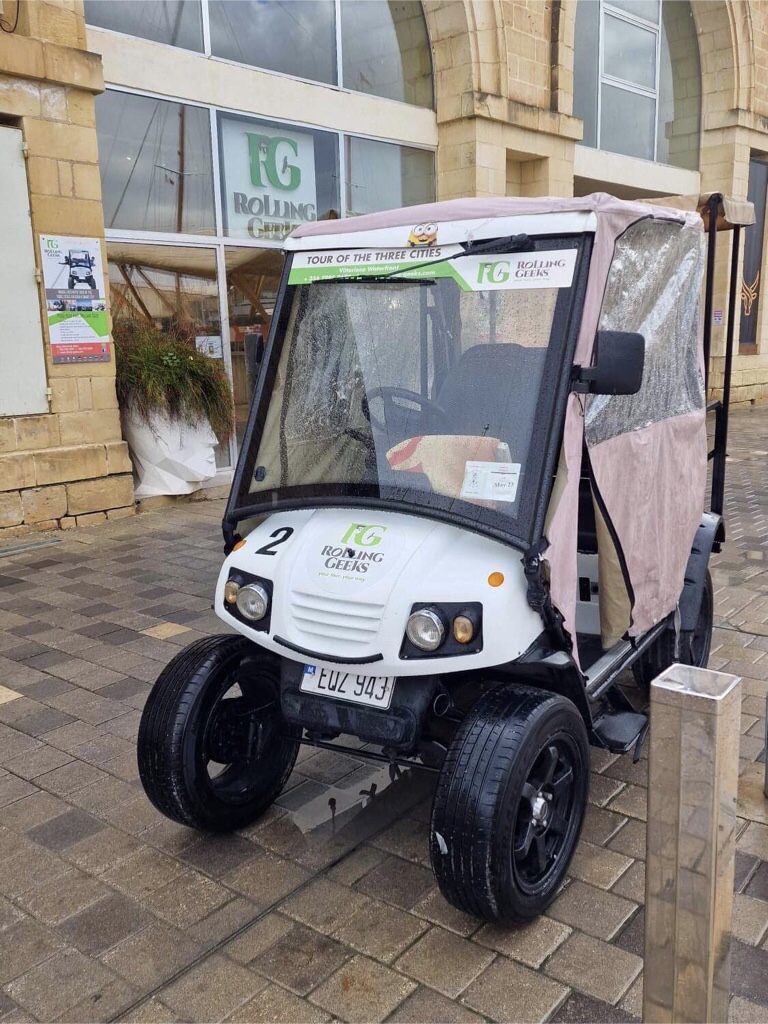
Chris’s birthday treat was a tour with The Rolling Geeks which was an easy way to explore the area with minimal walking and would hopefully prove an adventure!
The sky was grey as far as the eye could see and the rain was pounding down as we crossed on the ferry – so no photos! The rain miraculously stopped as we turned into the harbour, but it remained grey.
Rolling Geeks was just a short walk, and we were introduced to our rolling geek, an electric golf trolley fitted with a pre-programmed GPS and tour commentary, but most importantly as it turned out, with a rain cover!
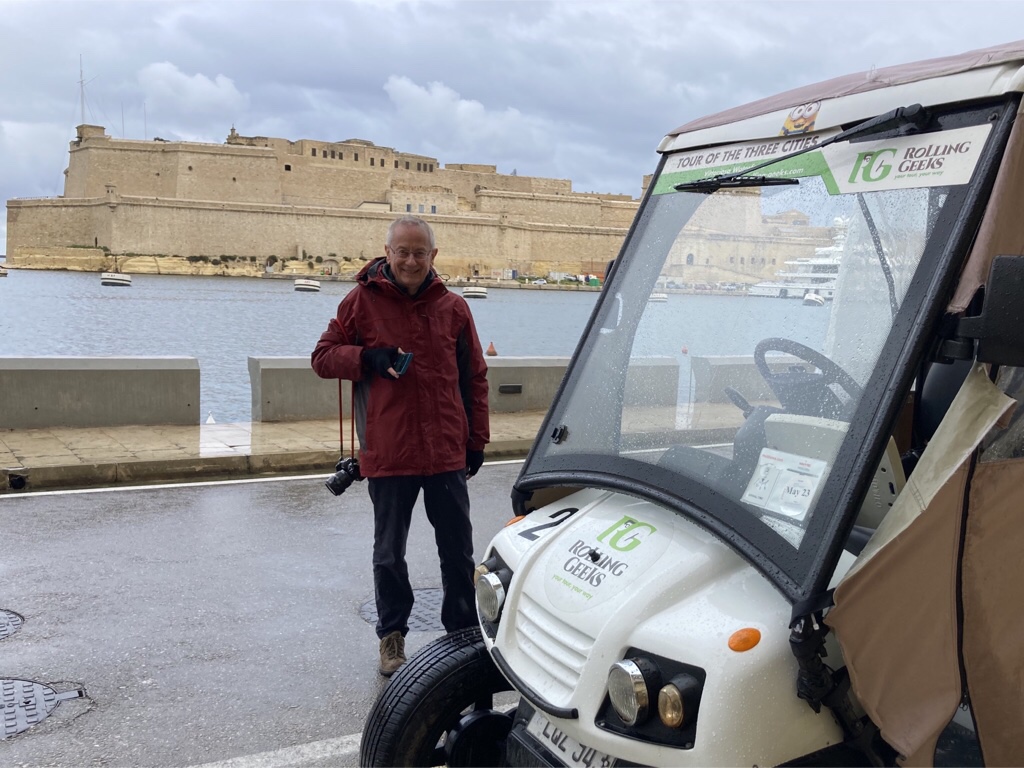
Chris soon got the hang of driving, and at a top speed of 20mph, there was plenty of chance to look around. Our first stop was at Fort Verdala, fortified barracks built by the British within existing C17th bastions.
The fort was used as a prisoner-of-war camp in both World Wars and is now social housing.
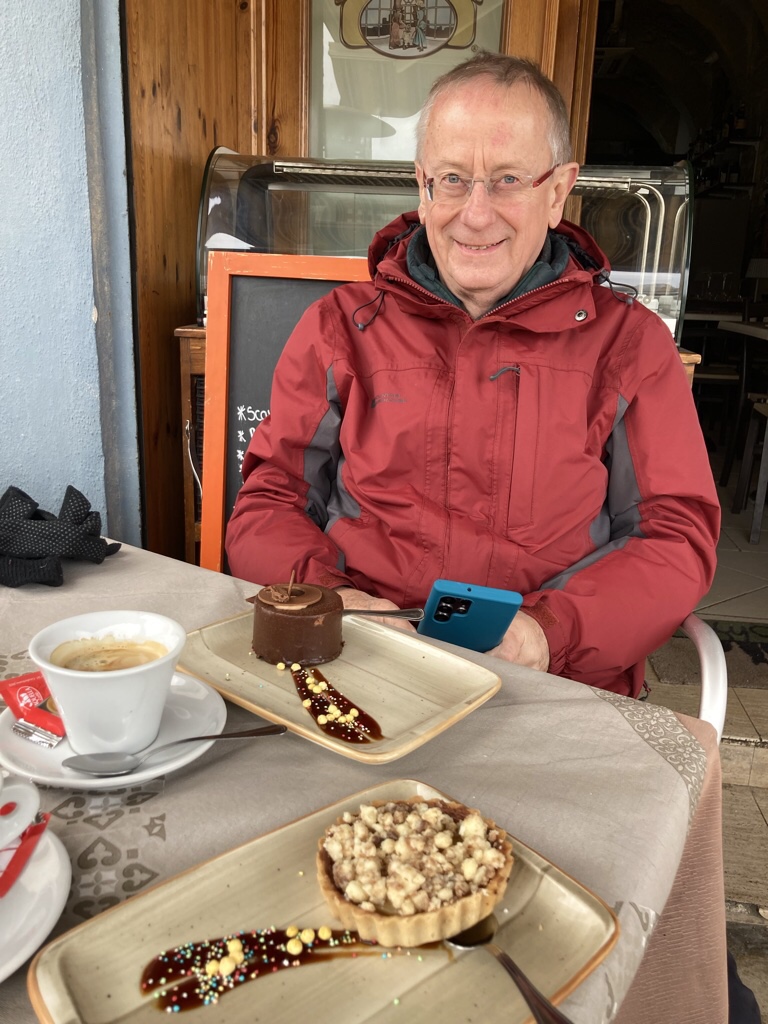
Once at the Senglea waterfront it was time for coffee and cake …
… then on for a good view towards Valletta …
… and birthday boy with Fort Angelo behind …
… then we waited for this huge shop to be guided by the pilot out of the harbour.
While we were stopped, we played with the inbuilt selfie button, and later they sent us the photo.
The rain started again as we stopped at the Gardjola Garden at end of the peninsular …
… but still got this great shot towards Valletta.
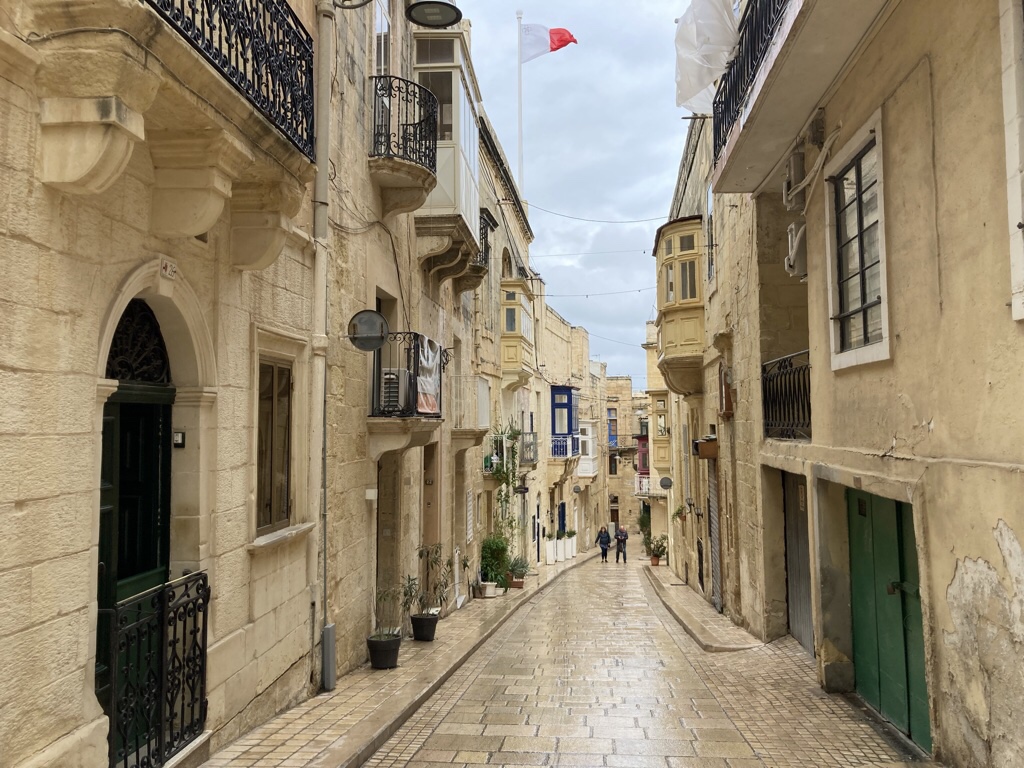
The walled part of Vittoriosa was the gem, being able to drive round the narrow streets in the rain. We saw one car that really struggled, finding the steep slippery wet stone a challenge but we were able to roll with it! The rain stopped and we parked and had a wander to take some pics, Chris in his element as he loves a bit of wet shiny stone!
A final stop by the harbour …
… and we were back, perfectly timed so we could get back to the ferry before the next downpour!
It had been such a great idea, as it would have been hard to find a better alternative in the rain on a Sunday when many places are closed. We returned to find our room decorated with a huge cake …
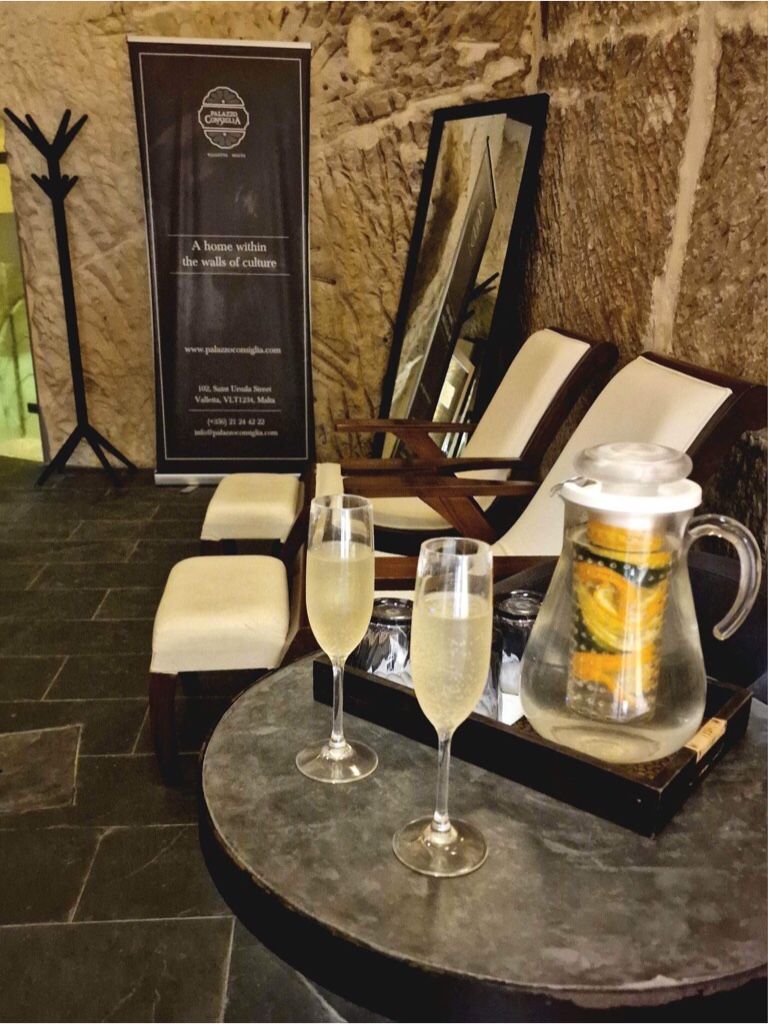
… and glasses of Prosecco to enjoy in the jacuzzi.



































































 Off Travelling Together