Riding the waves …

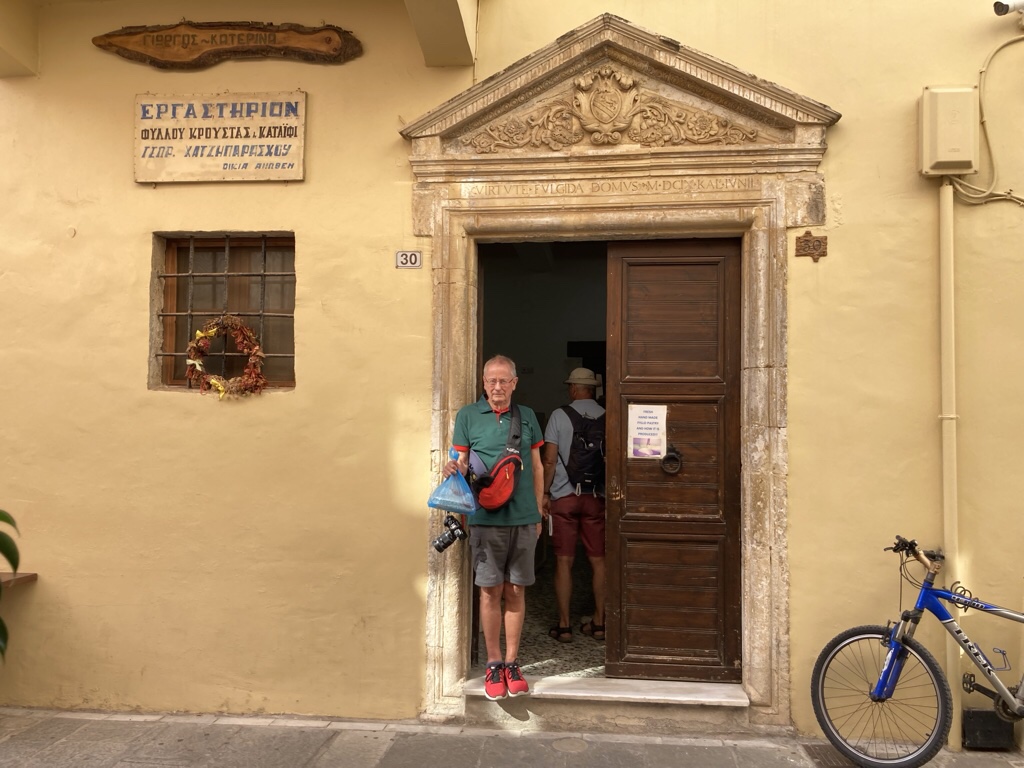
We spent our 13th wedding anniversary quietly, beginning with a visit to a phyllo studio, one of only 5 left on Greece where phyllo pastry is handmade.  Paraskevas has taken over from his father who opened the shop 60 years ago and makes traditional phyllo with his son. 

He takes a piece of dough, spins it in the air until it forms a large flat disc then lets it float down to the table, trapping air underneath forming a bubble.

It is then slowly stretched to cover the table, covered with burlap to allow the phyllo to breathe and another sheet prepared on top. Once dry, it is cut into squares and boxed up.  

To make kantaifi, the liquid dough is poured through tiny holes onto the hot spinning bronze plate which dries and crisps it into thin hair-looking strings. We didn’t see this being made but here is a photo and the machine.

Needless to say, we came away with some to take home, especially when we were told it would last for a fortnight … no chance!
I went for a walk all the way round the outside of the fortress while Chris sat in a cafe taking snaps, then we returned and spent the afternoon at the pool. 

Early evening, we took a gentle walk to the port for our anniversary boat trip, a sunset cruise on the Captain Hook pirate boat round the bay. 

Once we left the harbour the sea was certainly a bit choppy, but it was just a short trip.

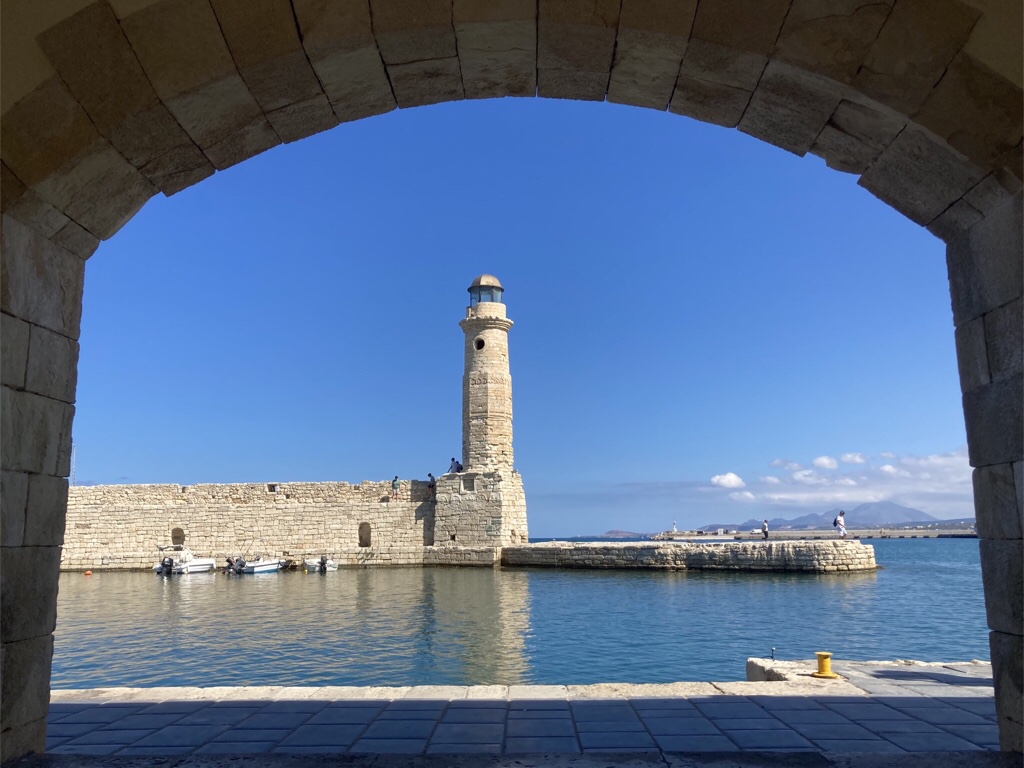
We entered the calm waters of the Venetian harbour to take pictures …

… and then returned to port.

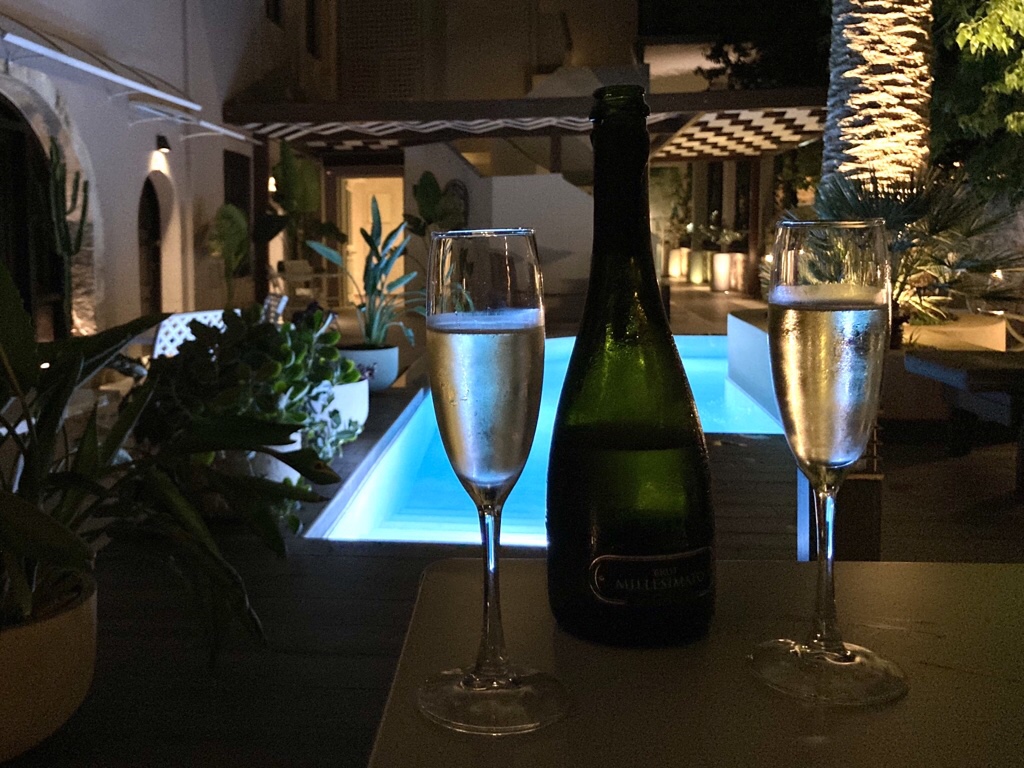
The hotel had very kindly left us a celebratory bottle of fizz in our room …

… which we sipped by the pool before heading out for dinner.
Castello came well recommended …

… and we sat on the first floor balcony surrounded by warm buttery stone walls and climbing plants with the starry sky above. 
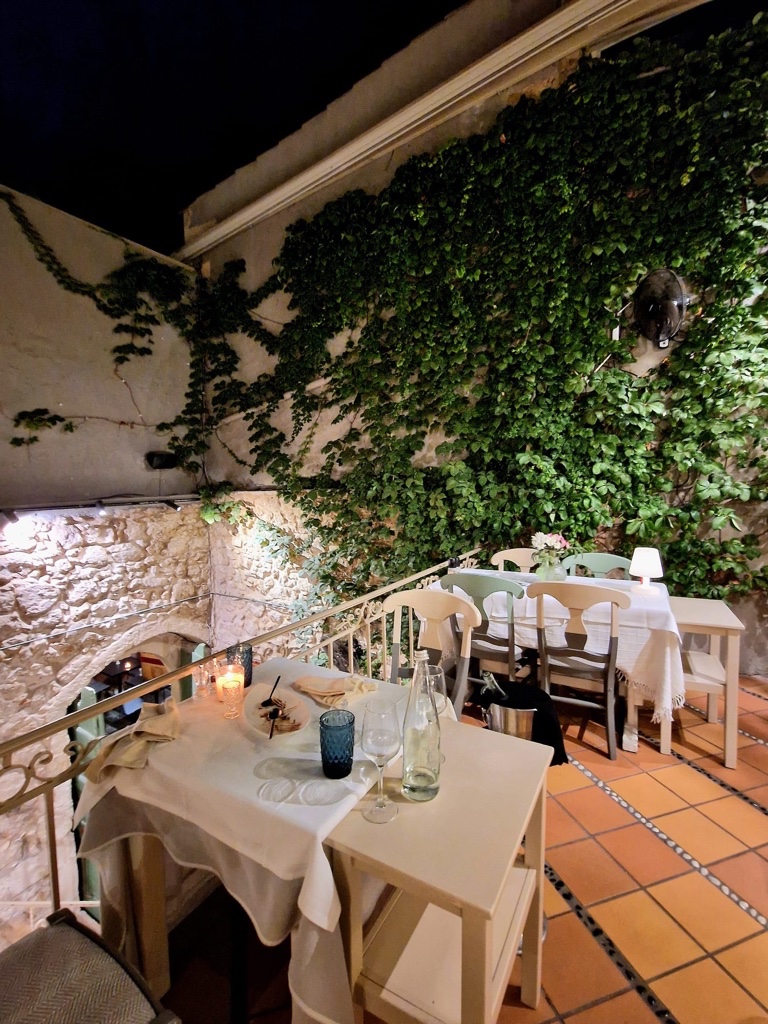
We started sharing a mushroom carpaccio with parmesan sauce and an amazing greek salad, followed by courgette stuffed with rice, mushrooms, herbs and lemon sauce for and caramelised pork belly with smoked aubergine puree and feta mousse.

All the food looked and tasted amazing and the bottle of Pink Blackbird was delicious. Such a lovely meal – the ambience, the food, the friendly waiters and obviously the company! 💕💕💕

The next day was our last and we began by visiting a workshop where three generations of the Stagakis family have been making handmade Cretian lyres in Rethymno. It was explained how important the wood selection is to the final sound of the instrument, with the front panel made of ancient cedar of Lebanon reclaimed from supporting beams  of old local houses. The instruments take around 10 days to make and and here is Manolis playing. 

They also sell other Greek instruments and played a couple so we could hear the different sounds. 

We spent the rest of the day relaxing by the pool, and reflected that Rethymno has really ticked all the boxes for our trip, which is great as we’ve never stayed for so long in one place.  Not only have we been especially lucky with the weather, which has been far warmer than we expected, but the hotel has proved a perfect oasis.  The steps are deliberately down, (26miles in 10 days) but with regular icepacks, Chris’s ankle has coped admirably.

The last ice cream was coffee for me and pistachio and biscuit for Chris, eaten in the square overlooking the minaret.  

In the evening, we took the remains of last nights fizz in a flask down to the sea and watched the Captain Hook take a turn round the harbour. 

We bumped into Nikolina and Rebecca, the girls from Switzerland who had kindly taken photos for us yesterday and like us they have had a great trip and are off home tomorrow.

Once dark, the harbour looked quite magical with all the twinkly lights.

We ended as we started, in Rakodikio in the shadow of the minaret, for a delicious dinner of mezzes – zucchini flowers stuffed with feta and mint, vine leaves filled with rice and herbs, spiced cheese dip, baked potatoes and mushrooms stuffed with smoked pork, onion and cream. 

After eating, we got chatting to Christian and Sinje on the next table and as the waiter decided we were getting on so well brought extra raki to celebrate!

The boys bonded over football and we were even invited to Cologne for a match, lovely but chilly in the winter so we’ll see!

Rethymno has been perfect, with plenty of rest & relaxation, time for recuperation & rehabilitation, as well as reconnoitring & recreation leaving us refreshed & restored!  It doesn’t matter what the R&R stands for … we’ve done it!

Map

Revealing the past …

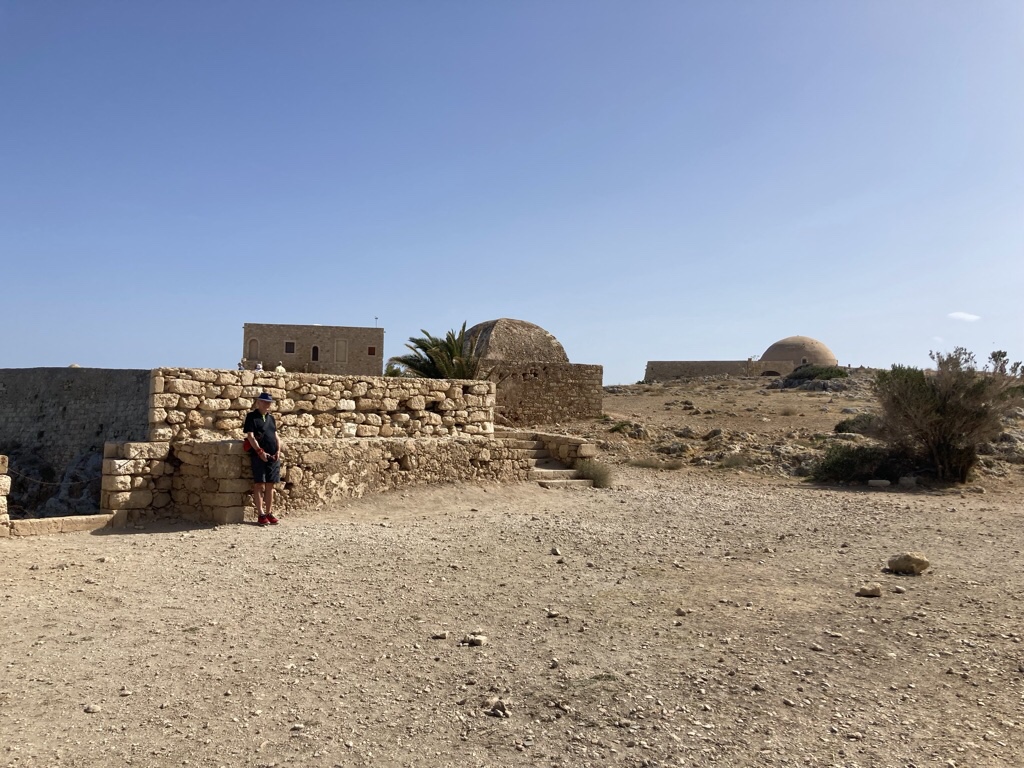
The fortress dominates Rethymno,, built at the end of the C16th by the Venetians to provide defence against Turkish pirates. 

While it provided an adequate garrison for troops, it was not strong enough to withstand an attack so was easily conquered by the Turks in 23 days in 1646. Few buildings remain inside the walls …

… but there is a small mosque … 

… Ekaterini church …

… and some good views from the walls.

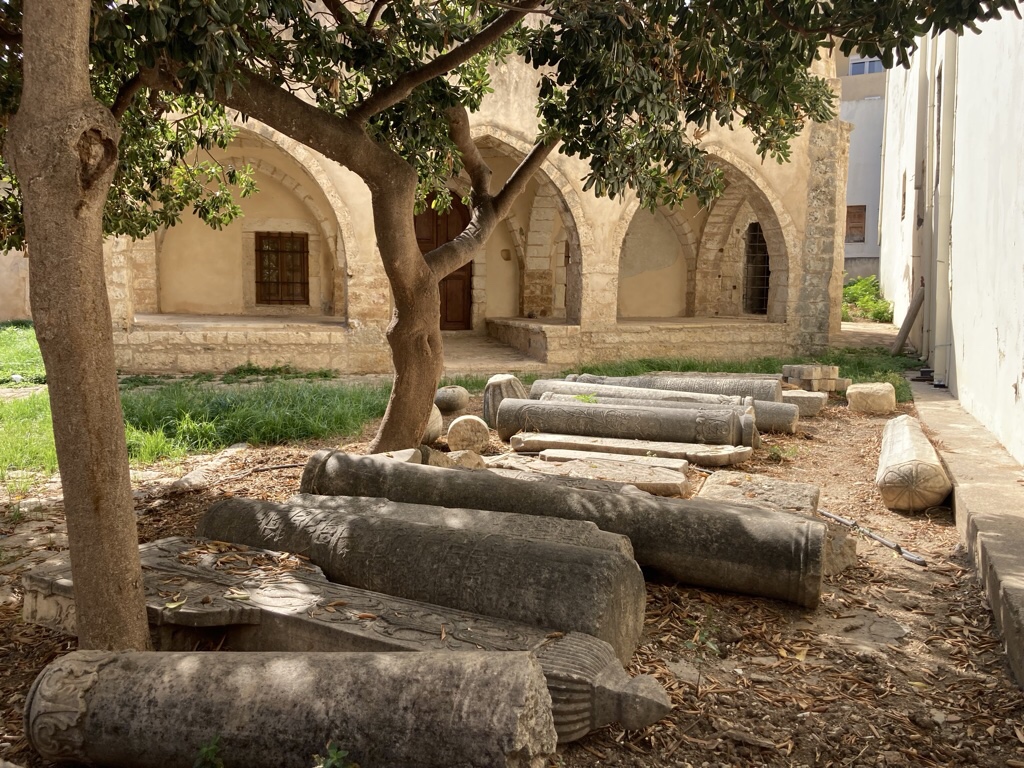
Back in the centre of the old town, The Archeology Museum is housed in the church of St Francis which was part of a Venetian monastery until the Ottomans incorporated it into the mosque, but there is still an arch supported by Venetian lions outside …

.. and an impressive doorway. 

Quite small, the collection contains a huge range of items found in the local area …

… but the most striking were the especially well preserved clay larnakes, chest shaped coffins, found at the Minoan Cemetery at Armeni.  

I loved the striking designs of squid and plants that decorated them …

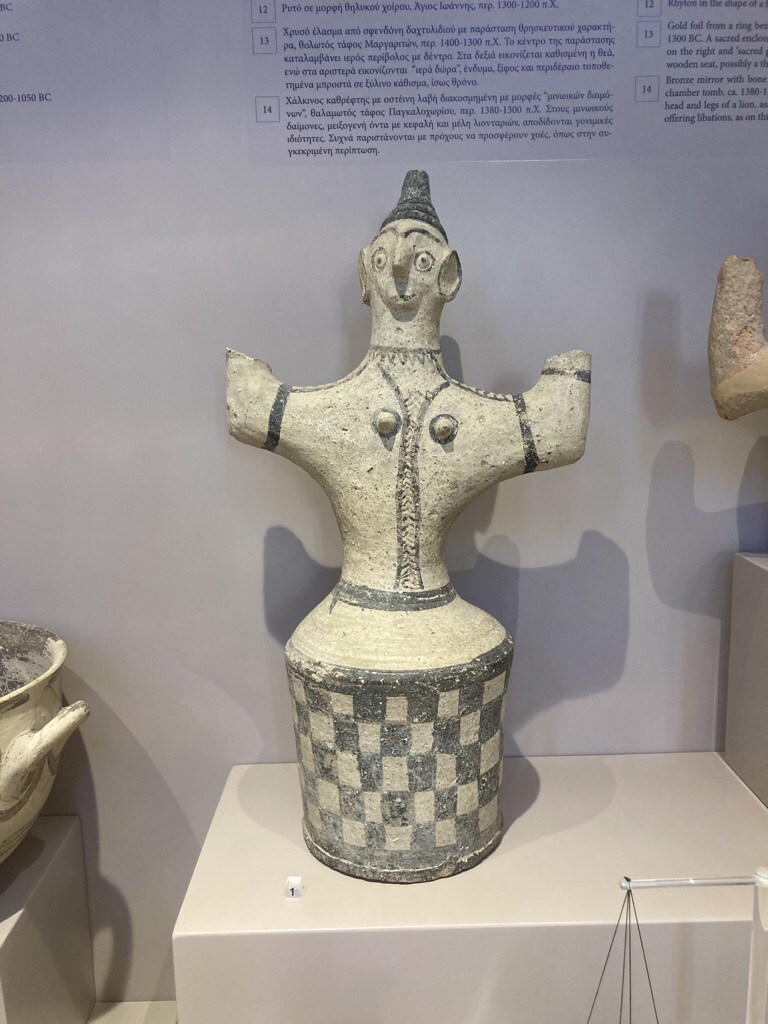
… as well as this Minoan goddess.  

During our visit, the guide mentioned the site where these tombs had been excavated was only 15 minutes drive out of town, so we decided to take a cab and have a look.

We enjoyed exploring the little visited site …

… wandering between the scrub oaks …

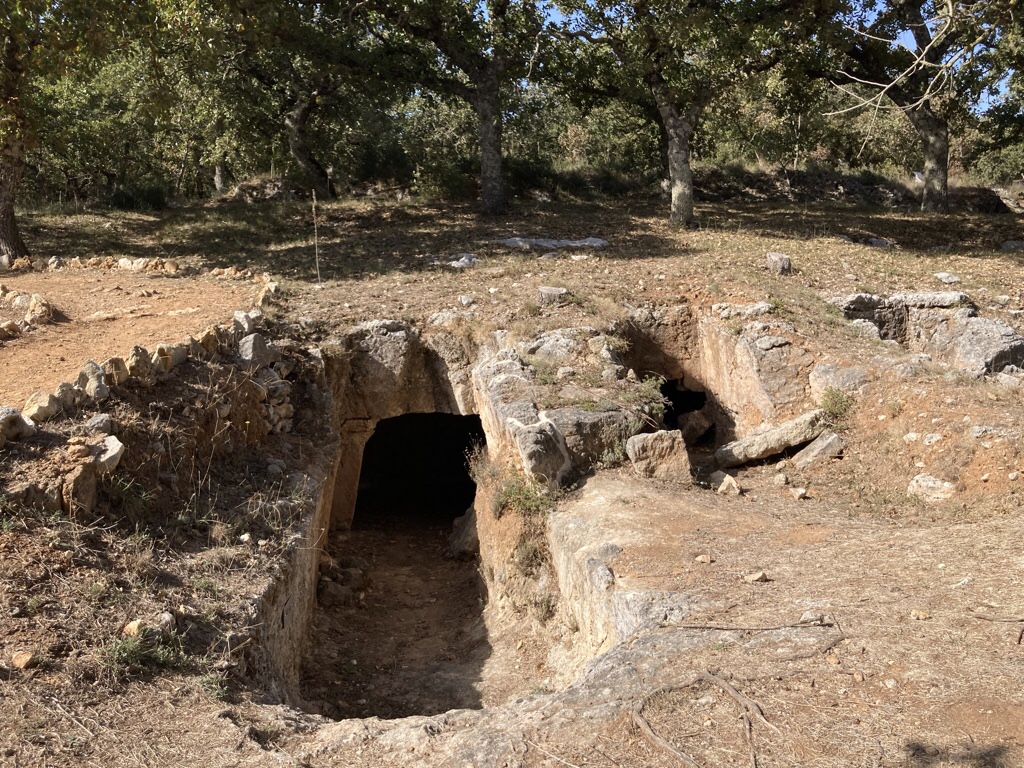
… and being able to descend into several of the tombs. 

A deep sided passage or dromos led from the steps to the entrance, which would have been sealed by a large stone. 

Inside, most were just a small semi circular space where the remains had been found laid on the ground, but a couple of the larger tombs were rectangular …

… with a low bench along the walls and even had a pillar.

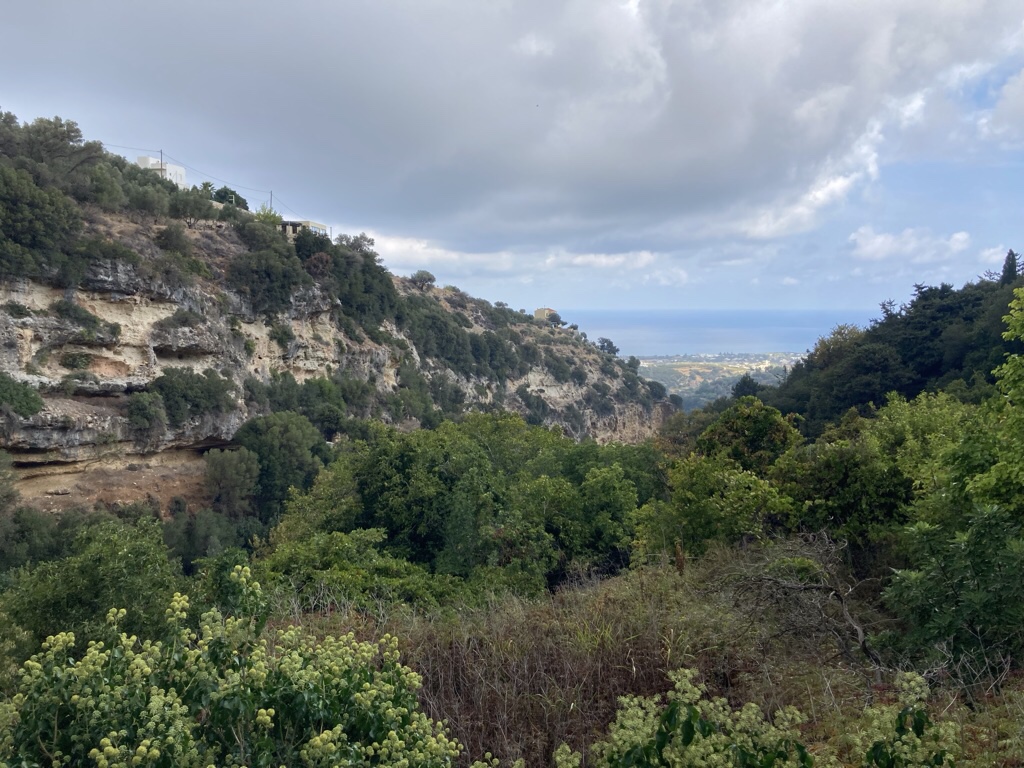
We were so pleased we made the effort to visit – it was very atmospheric actually standing in the tombs which were so old (1300BC) and carved out by hand using bronze tools. As an extra bonus, we stopped at a viewpoint on the way back and got a birds eye view of Rethymno.

One way to get a look at the countryside without hiring a car is on the Rethymno City Tour, aka the Hop On – Hop Off bus.

It begins by driving round the outside of the old town while telling its history, then heads off into the hills. We got off at each of the stops beginning with the Panagia Chalevi Monastery, now just a church dedicated to the Holy Virgin surrounded by a garden and the ruins of monastic buildings. 

Next up was Myli Gorge and on another occasion we would have been up for hiking the 3 mile length, but this time we just walked a short way. 

Some 30 mills worked the waters of the Mili Gorge from the C17th, supplying flour to the whole area but today the buildings are all in ruins, overtaken by the abundant greenery, and very photographic!

There are several churches along the route and the first of these, Agios Antonios, is built into the rock face. 

In the hamlet of Pano Mili, a small enterprising café has a terrace offering a view back across the gorge …

… but it doesn’t take long to see why the gorge wasn’t up to the rigours of modern industry when we saw the cafe supplies delivered in a crate by zip wire across the valley!

We walked on to a viewpoint beside another church …

… then retraced our steps and had a coffee before getting back on the bus.

The last two stops were the Military Museum, housed in an old Venetian summer villa …

… and the C14th Monastery of Aghia Irini which had become dilapidated but was restored in 1990 as a nunnery.  The foundations may be old, but everything else is new, including the icons and murals in the church which had been painted by the nuns, but which we couldn’t photograph!

Back to Rethymno, tomorrow is a day for celebration …

Map

Roaming the town …

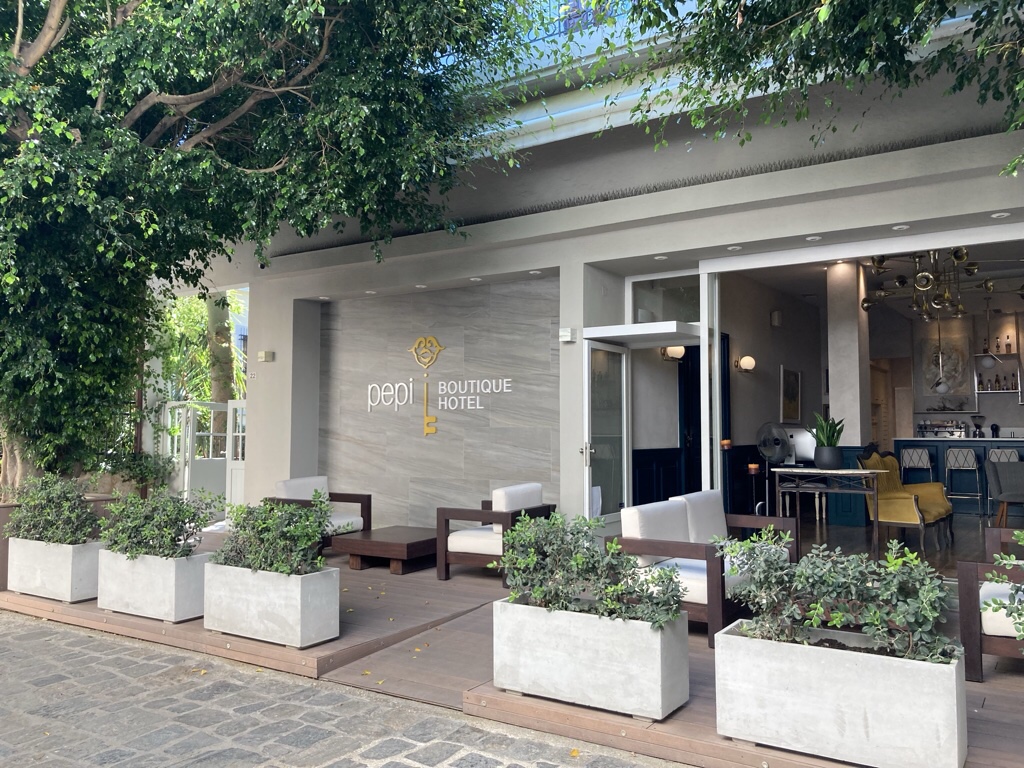
Our hotel is as lovely as the photographs suggested and has charmed us both, remarkably tranquil despite being just a few steps from the bustling main street of the old town.

The building was originally home to one of the oldest public primary schools named Athena for the goddess of wisdom, but has since been transformed over three generations into a hotel. 

Our downstairs room is large, cool and decorated in calming neutrals …

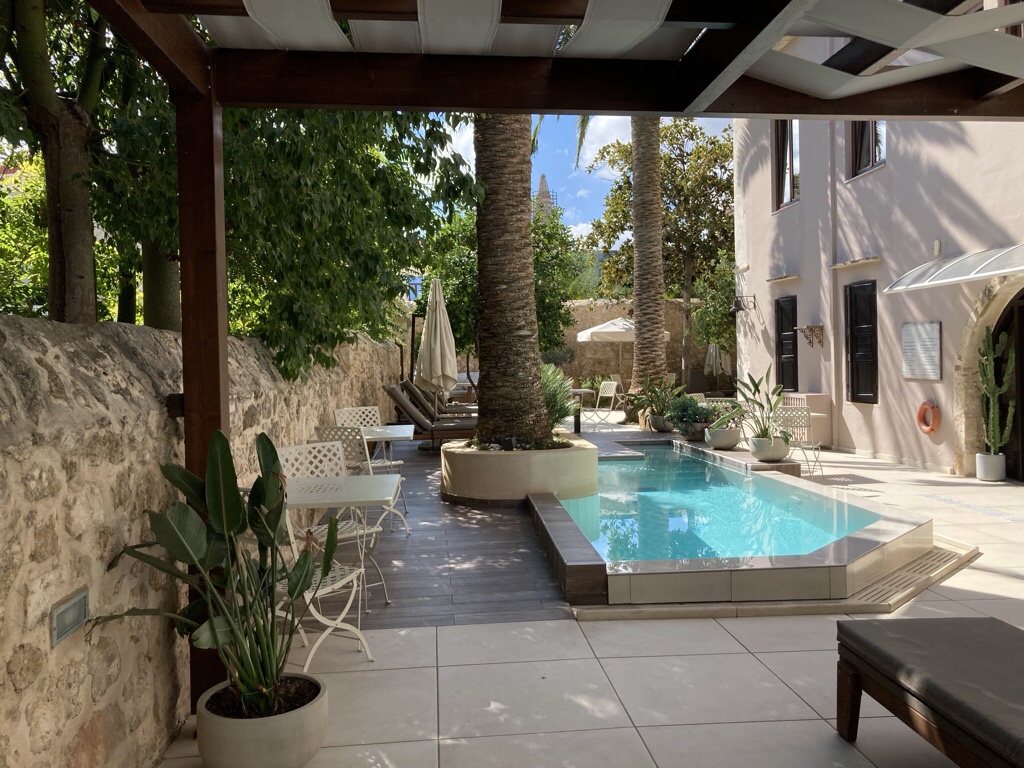
… and opens out onto a tree filled courtyard where breakfast is served in the morning.  The attention to detail is excellent, with fresh orange juice, chunks of watermelon, Cretian baked treats and a thoughtful egg menu providing plenty of choice. 

The staff have all been very welcoming, friendly and helpful and regular entertainment has been provided by the antics of a very feisty kitten who may look cute but most definitely isn’t sweet!

Sunloungers around the pool provide a perfect retreat from the heat which has surprised us with most days reaching 30° at midday. 

The pool is perfect, just large enough to swim several strokes before turning and capable to reducing your body temperature in moments! 

The town beach is just a short walk …

… with lovely soft sand, warm sea and comfy loungers where the convenience far outweighed our desire for somewhere more picturesque.

The promenade was a good place to get some steps in, and I walked a couple of miles before returning.

It took a couple of days to settle and find our way around the old town, with its maze of streets and alleys filled with tavernas, cafes and shops.  Browsing did provide dividends though, as I have a new dress, a couple of bikinis and some stocking fillers for Christmas.

The sun starting to cool was the cue to go in search of our afternoon ice cream.  Meli was our first find, with homemade icecream made from local goats milk and amareno, pistachio and bitter chocolate all got the thumbs up.  Feeling we should spread the love, we tried Gelato di Nona, where we found out the ice cream was made by her grandfather in a nearby village. He also makes desserts including Portokolopita or Greek Orange Pie, a traditional cake made with dry leftover filo which is crumbled instead of using flour.   Orange Pie ice cream had to be the pick of the day – amazing … and a piece of the cake, when we found it, was pretty good too!  Cow’s Cream was needless to say screaming for a visit, but the ice cream was much softer and melted too fast, so after that, we went full circle and returned to Meli!

Having chosen our icecream flavour for the day … the next highlight was to choose where to eat in the evening and we have been spoilt for choice.  Soon realising that the menu was similar in most of the tavernas, the ones that caught our eye most were often down a backstreet where serving a meal involved the entire family. We tried a different one every night, enjoying how each serves their own twist on local favourites.

We found a great cocktail spot overlooking the harbour called Drink N Roll where we tried several of their Greek inspired cocktails, and favourites were Nostos with raki, passionfruit, gardenia and lime and Aegean Twist with raki, masticha liquer, fig and lemongrass.

This makes it sound like all we did was lie around and eat, but the mornings were spent exploring. As we walked the streets of the town, from the Venetian Harbour to the Fortezza we took snaps, browsed the shops and popped inside the odd church.

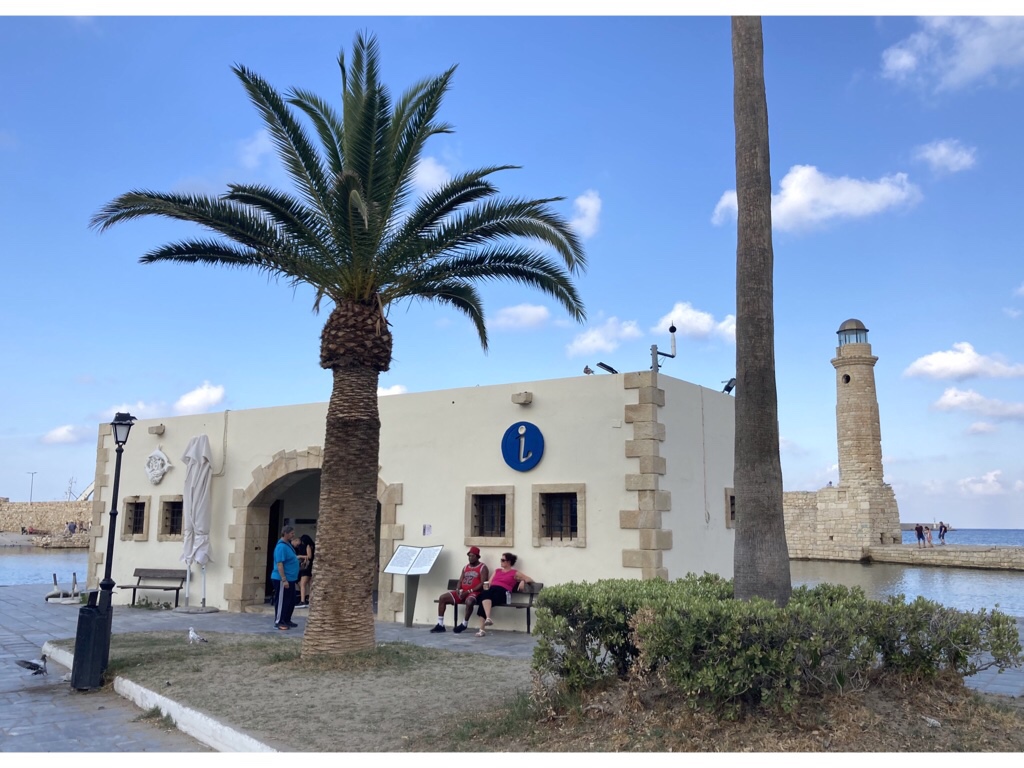
The harbour is quite a gem, built in the C14th by the Venetians, the port has been a busy hub for trade and commerce and is still used by local fishermen who bring in their catch, adding to its charm.  We walked down to the lighthouse that sits at its entrance and took photos back to the tavernas and cafes round its edge.

There is also a larger marina filled with swanky yachts …

… and a statue of two dolphins which was adopted as the symbol for the town. 

The Ottoman Neratze Mosque in the centre of the old town, was originally constructed as a church by the Venetians dedicated to Santa Maria …

… and like the smaller Kara Miss Pasha Mosque is now used for cultural events but both look a little unloved.  

Other highlights include the Venetian Loggia which was originally a meeting place for town officials but seems to be going through restoration  …

… the Rimondi fountain, named after the Venetian governor providing a must-have snap of the town …

… and Porta Guora, the main entrance through the Venetian city walls that protected the city of Rethymno.

Outside the gate, the new church of the Four Martyrs was built in 1977 to honour four local Christian farmers who were beheaded by the Ottoman Turks in 1824 for not converting to Islam and were later sainted. 

Next up, exploring a little further afield …

Map

Chris & Elaine go to Rethymno for R&R 2024

A strange year for us without travels as Chris has been recovering from an ankle replacement since May and still has to take it easy.  After a summer with more cloud than sunshine, we were eager to escape for some warmth before settling into winter.

We have chosen Rethymno on the north coast of Crete as the days should generally be warm even if it’s cooler in the evening, and are staying at the Pepe Boutique hotel, in the heart of the old town with a sunny courtyard around a small pool, just in case we fancy a dip!  

Everything is right on our doorstep including a scattering of museums and churches, the Venetian harbour with its promenade and a selection of tavernas so we can keep walking within limits.  If we decide to hire a car, we can explore a little further afield, but the plan is just to take each day as it comes and enjoy.

Roaming the town …

Revealing the past …

Riding the waves …

Map

Chris & Elaine’s Bus Trip Round Albania 2023

Albania has been near the top of Chris’s list for some time, with its Roman, Ottoman, Fascist and Communist history as well as its natural beauty. It has been possible to travel here since 1990 when Albania opened its borders, but it remains challenging to get around for the independent traveller, especially one with a dodgy ankle, so we were delighted to be introduced to Exoticca Holidays by a friend. Their small group tour includes all the places we wanted to see as well as flights, accommodation and transport so with no planning needed, we can sit back and enjoy the ride.

It is our wedding anniversary while we are away, on the one day that we will be staying at the seaside, so we have our fingers crossed that we will be able to arrange a short boat ride to celebrate in the usual way!

This is a first for us, to go away on an organised tour, but as Chris pointed out, otherwise we wouldn’t be going to Albania at all so off we go!

Itinerary

Krujë and Skanderbeg Castle

Scenic Shkodër

Windows of Berat

Albania’s Apollonia

Afloat in Albania

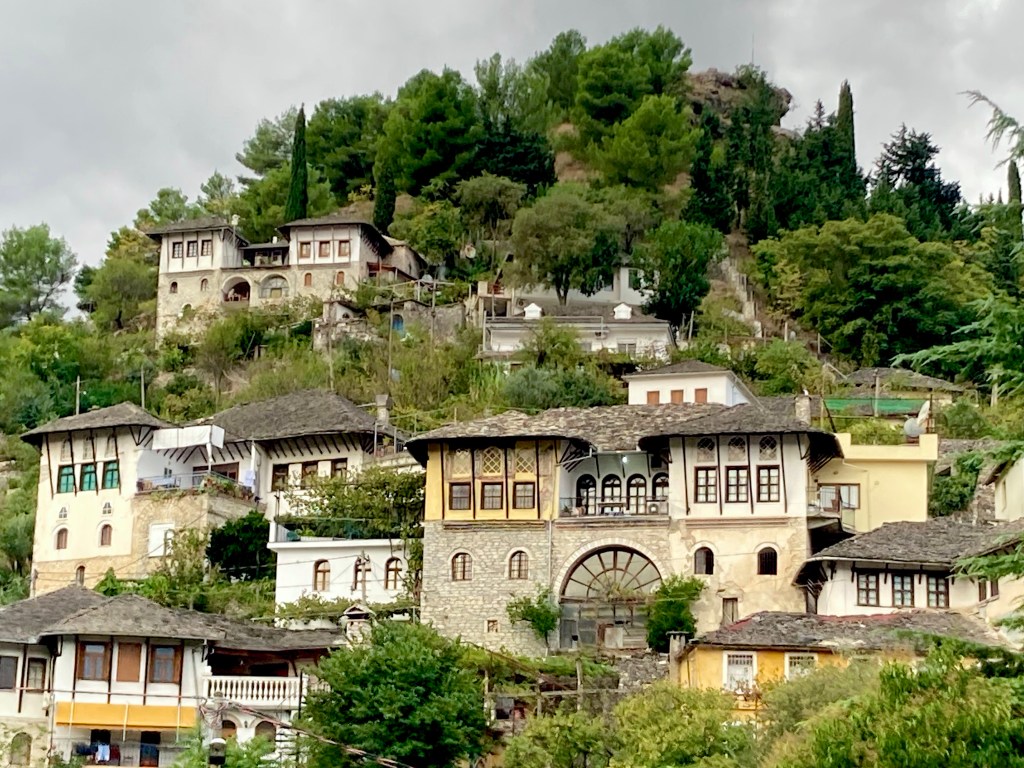
The Stone City of Gjirokaster

Churches of Korcë

Tirana … Around Skanderbeg Square

Tirana and Hoxha’s Legacy

Map

Chris & Elaine Go Island Hopping in Croatia 2023

The two biggest attractions in Croatia are at opposite ends of the country and we’ve chosen the natural beauty of Plitvice Lakes National Park over the architectural splendour of Dubrovnik this time round.

We are flying to Reikja on the Kvarner Bay and have planned a trip hopping between small islands like Cres, Krk and Pag, driving inland for waterfalls and lakes then back along the coast.

As ever, the trips we like best are those with plenty of variety so as well as medieval walled towns, Roman ruins and secluded beaches we are looking forward to riding ferries and ziplines and even spotting bears!

The scorching temperatures of summer are over, leaving sunny days and warm sea and we are all ready go and enjoy!

Journal Entries

Opatija … Grandeur-on-sea

Cres & Losinj … and the Channel Crossing!

Zipping round Krk

On a Bear Hunt in Kuterevo

Plitvička Jezera … a Turquoise Jewel!

Zadar … and the Sunset

Bridging the Gap to Pag

Full Circle in Crickvenica

Map

Puy du Fou … spectacular!

Chris discovered the Puy du Fou website quite by chance and said we had to go, especially after friends at camera club gave it the thumbs up. I was a little sceptical, not sure how great a historical theme park in French would be, but we booked tickets to fit in with our ferry home. I left the rest to Chris to sort and he booked us into the Ibis in Les Herbiers for a couple of nights so we were close by.

Showtimes were added to their app a couple of days before and using the map we tried to plan our day to include the events we most wanted to see without walking from one end of the park to another. The app also provided simultaneous translation for some events if you took earphones, and it was going to be warm so water, hats and suncream went into the bag as well as a power pack just in case.

We were lucky to have a perfect day with some cloud and hazy sunshine and we were ready to enter the park as it opened … and had a truly wonderful time!

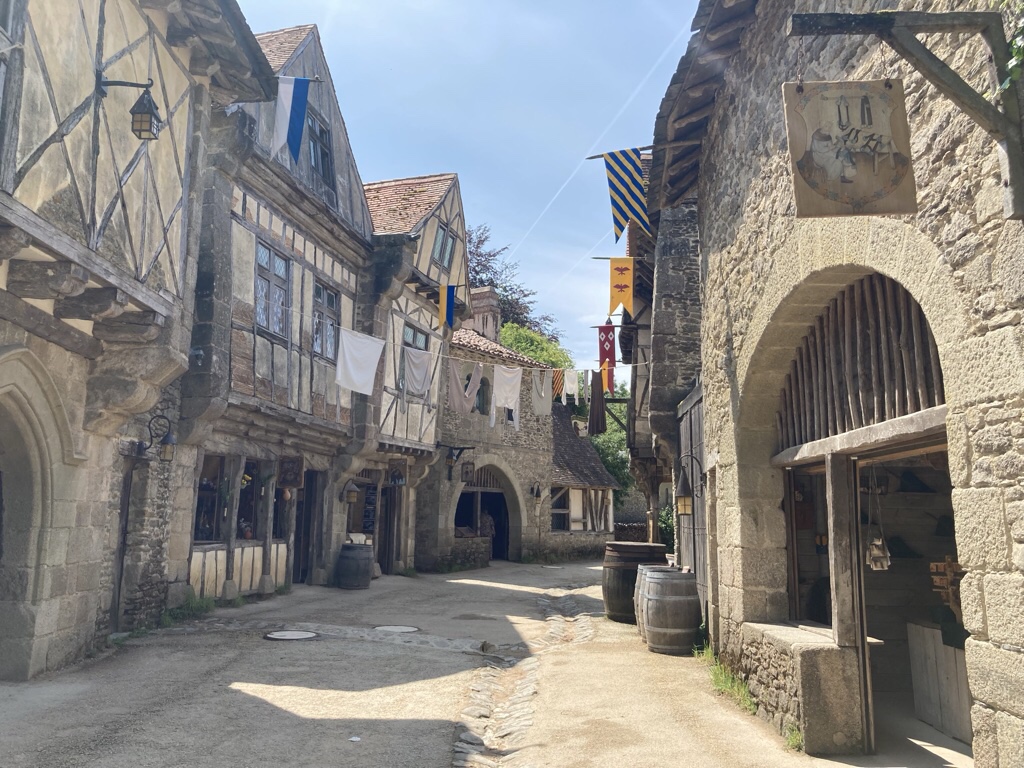
The park is made up of arenas presenting shows based on different historic events and also immersive shows that you walk through. These are linked with shady walkways and gardens and three theme villages of different periods with refreshments, craftsmen making things and souvenir shops.

In fact, for much of the time I was so busy enjoying it all that I hardly took any photos!

We entered by the the Belle Epoch Village …

… and our first short show was The Carrillion, with lots of bell ringing and acrobatics ….

The first epic was The Vikings, the story of a peasant girl who saves village from Viking raiders starring a ship which rises from the lake, acrobatics, explosions, horsemanship, animal handling, falconry and with a happy ending.

We saw three of the immersive shows, but being inside, it was hard to get photos. La Perouse told the tale about about a French voyage of exploration as we walked through the hull of the ship, there was a chateau with talking portraits, and the life of a really earl French king called Clovis.

Here’s the village of Fort-Rognou where we had lunch … ye olde burgers …

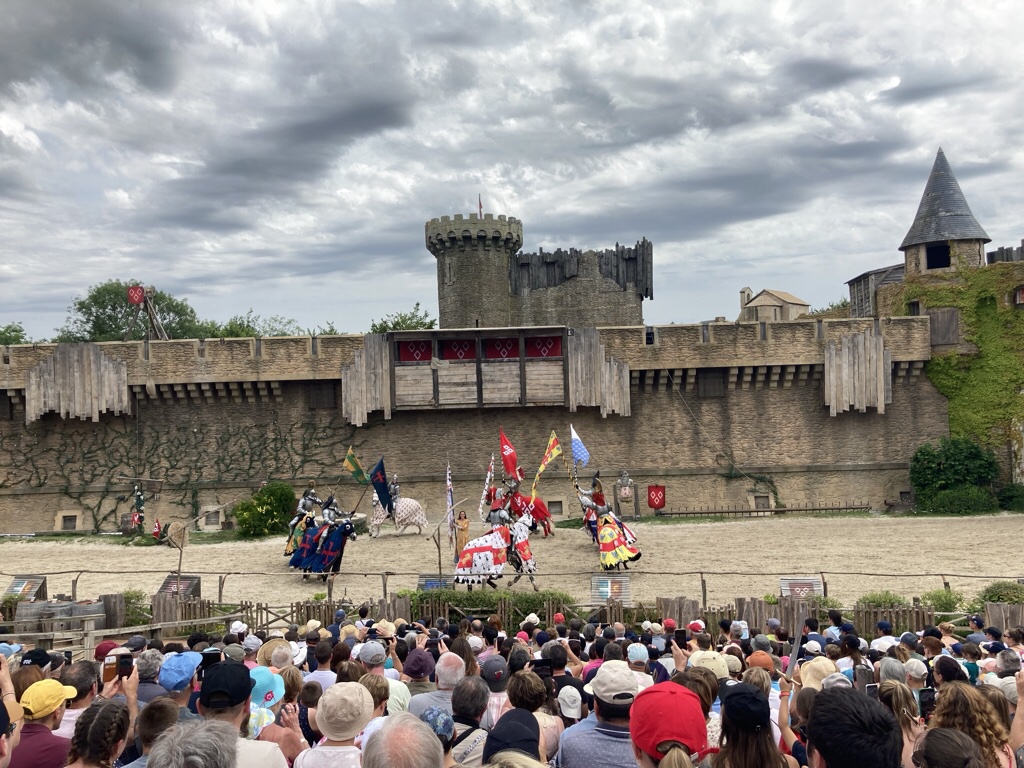
The next was The Secret of the Lance, a story of a shepherdess who helps save the castle with the help of Joan of Arc starring a huge lowering castle wall, acrobatics, explosions, horsemanship with a happy ending.

… and the finale, a tale of Richelieu’s Musketeers with swash-buckling sword fighting and Spanish gypsy girls dancing flamenco in water.

By early evening, there was another show we could have stayed for, but we decided to call it a day! Tired but happy, we stopped off for snacks on the way back, and sat on the terrace at the Ibis in the evening sunshine talking about how great the day had been. Well spotted Mr Hayes … his inner child was released!

Just for info, Puy du Fou began when a student had an idea to promote the history of the region and increase employment. The show Cinéscénie was born in 1978 and now has 1200 actors, hundreds of horses and lots of fireworks and is just shown during the peak season. In 1989 the Grand Parc of Puy du Fou was opened and it gets over 2 million visitors a year and it also has firework shows some evenings … but fortunately not this evening!

Tomorrow we head back towards the coast …

Map

Angers … a tale of two tapestries

Having left a little late by browsing the brocante, we unfortunately didn’t have time to explore any of the troglodyte dwellings along the next stretch of the Loire. Some date from prehistoric times and others utilised the caves left after mining the tufa for chateaux, but we didn’t worry as we have seen such dwellings before in Matera in Italy and also Cappadocia in Turkey.

Instead, we stopped at Le Saut aux Loups, a mushroom farm which shows the history and method of mushroom production, which began underground in Paris in the time of Louis XIV.

Later it moved out of the city and artisanal methods utilised the constant temperature and darkness of caves although today most are grown industrially in refrigerated sheds.

We also saw shiitake and pink, yellow and grey pleurotes or oyster mushrooms growing on plastic covered bales and even spotted some of them releasing their spores into the air, rising as a white mist and accounting for the white dust underneath them.

They also run a cafe and were busy filling mushrooms ready to go in the oven for lunch, stuffed with a variety of fillings such as pork rilettes, snail butter and cream cheese and salmon.

These are called galipettes, too big to be sold as button mushrooms, their hats have become too large so the stem breaks and the mushroom makes a somersault or a galipette! Looking at these it was a shame we were too early for lunch, but bought a jar of mushroom paste instead to take home.

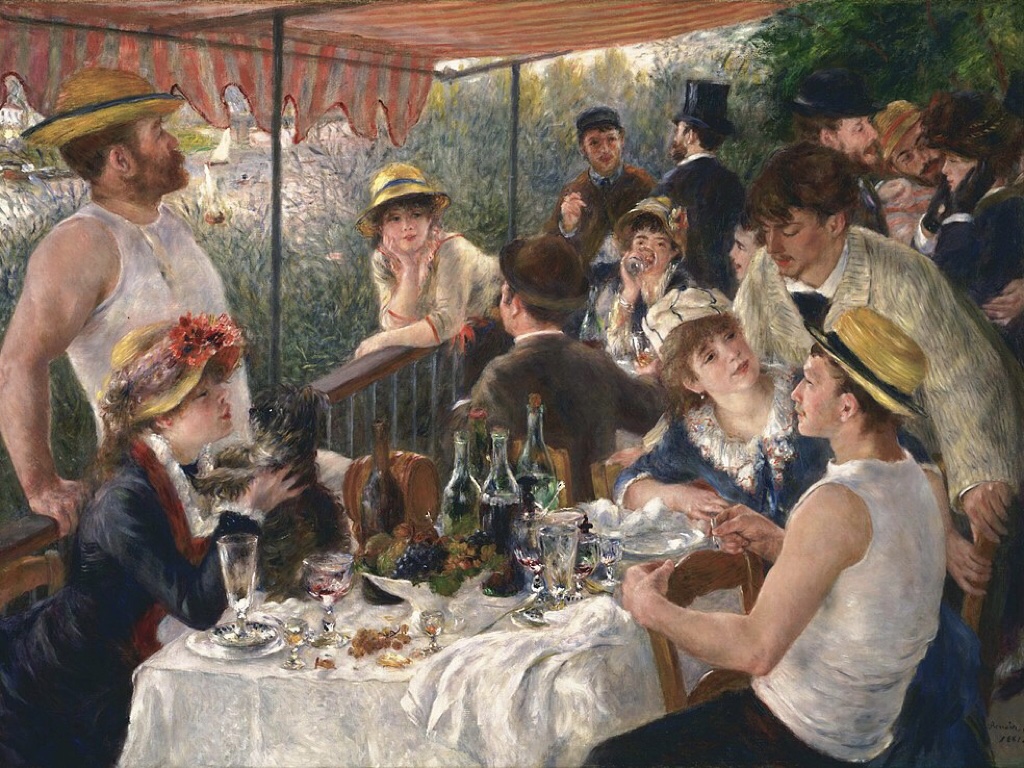
When planning our route, I read about La Guingette a JoJo, a riverside summer bar and restaurant which made me think we could walk into our very own ‘Luncheon of the Boating Party’! As we got nearer, the sky got greyer and we saw rain falling in the distance. It didn’t bode well, but the car park was full and despite the fact it was far from the ideal sunny afternoon, we approached the gate, surrounded by twinkling lights.

The reality was that the rain had passed through already …

… and everyone was squeezed under one small covered area, trying to finish their lunch!

On another day, there would be been a table for us to stay, but today it was impossible, so we left remembering Renoir!

The sky remained grey and by the time we got to Angers, the heavens had opened and the roads were deluged, with gutters running with water like rivers. We parked and waited it out looking round a museum and emerged to a clear sky and even some sun.

We are staying in a charming B&B called L’Oisellerie which translates as The Bird Shop.

It is one of the oldest houses in Angers, originally build by a wealthy butcher in 1580 and most recently converted from a family residence into a B&B in 2018 by Marlène and Johanna.

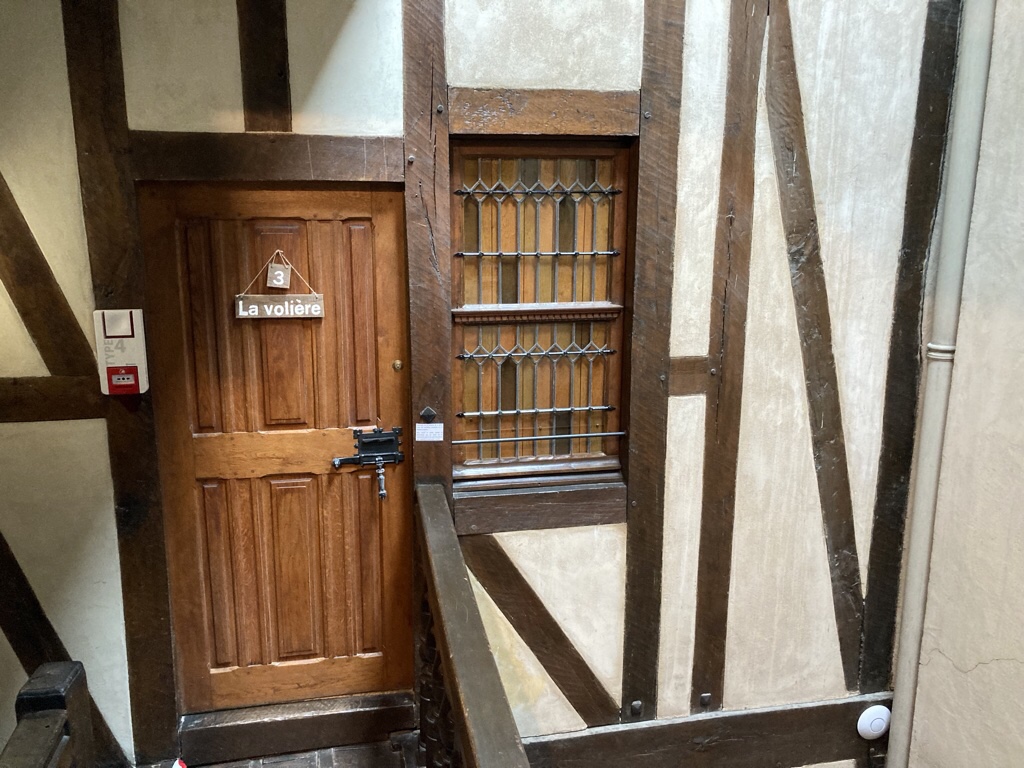
Our room La Voliére, or The Aviary has views of the Episcopal Palace.

Breakfast was served in the kitchen, and our hosts took turns to make guests feel welcome by cooking crepes and giving sightseeing tips. The yogurt is homemade and when Marlène explained how easy it was, I decided to give it a go when I get home. It was also a chance to chat to other guests and we met Josh and his daughter Lucy from Little Rock, Arkansas who were having a great time in France for their first visit.

Full of crepes and yogurt we set off to the C13th chateau, a hugely imposing fortification surrounded by 17 towers and an impressive ditch.

We were surprised by more extensive gardens inside …

… and also saw the interior courtyard where the Dukes of Anjou had private quarters …

… and walked round the battlements.

The chateau is also home to the Apocalypse Tapestry, the largest surviving medieval tapestry, commissioned by Louis I, Duke of Anjou in 1375, and now displayed in a special gallery.

It took 7 years to make and illustrates the Apocalypse according to St John from the Book of Revelation, a struggle of good versus evil with Christ emerging triumphant at the end.

The C14th was a turbulent time, with the Hundred Years War and the Black Death and essentially, it provides certainty in unpredictable times. It also features Anjou heraldry and the fleur-de-lis so would have been a status symbol promoting the Anjou dukes.

There was a detailed commentary about each panel and here are my favourites, the fourth horseman, Death, looking rather too smiley …

… some scary multi-headed monsters …

… The Fall of Babylon …

… and New Jerusalem.

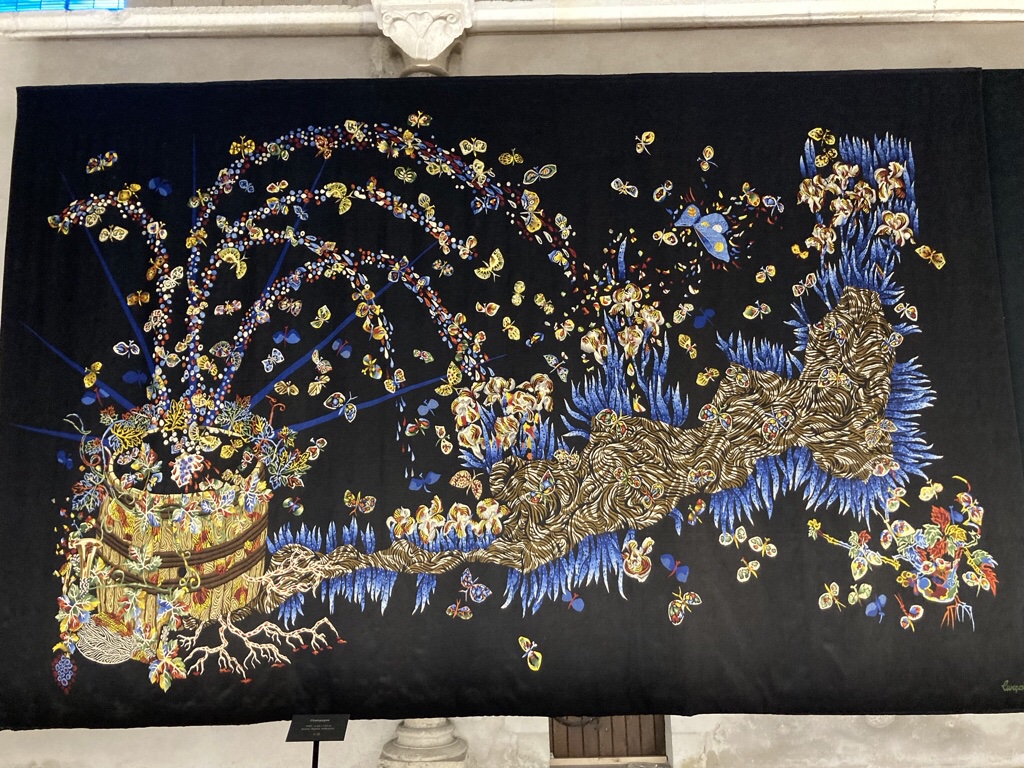
It’s not surprising that this tapestry has inspired others, one of them Jean Lurçat saw it in 1937 and subsequently became a leader in the French tapestry making revival. In 1957 he began his masterpiece, Le Chant du Monde or The Song of the World, conceived as a modern version of the Apocalypse Tapestry.

The series begins with disaster and chaos such as The Great Threat referring to the atomic bomb destroying the world and a modern Noah taking animals to safety…

… and The Mass Grave, a vivid evocation of the horrors of war.

Man in Glory at Peace shows rebirth after disaster …

… and my favourite Champagne showing bubbles and butterflies bursting across the image!

Both these huge cycles of tapestries made quite an impression on us, and we spent quite a while taking in the narratives, spotting small details in the compositions, seeing how colours and shading were used to such good effect and being quite overwhelmed by the vast undertaking of each.

Of course Angers had much more to offer including a cathedral, views of the river, quaint streets and strawberry tart, and here are a few snaps.

I had been looking forward to trying the Loire’s signature dish of pike-perch in beurre blanc sauce, but having realised we were in Angers on Sunday and Monday nights when most restaurants close, I’ve run out of time and this is a delicacy yet to be sampled. Instead we went to Chez Point on the first night, with a busy terrace in the evening sun, in fact it has been quite a surprise that the sun doesn’t set till around 10pm …

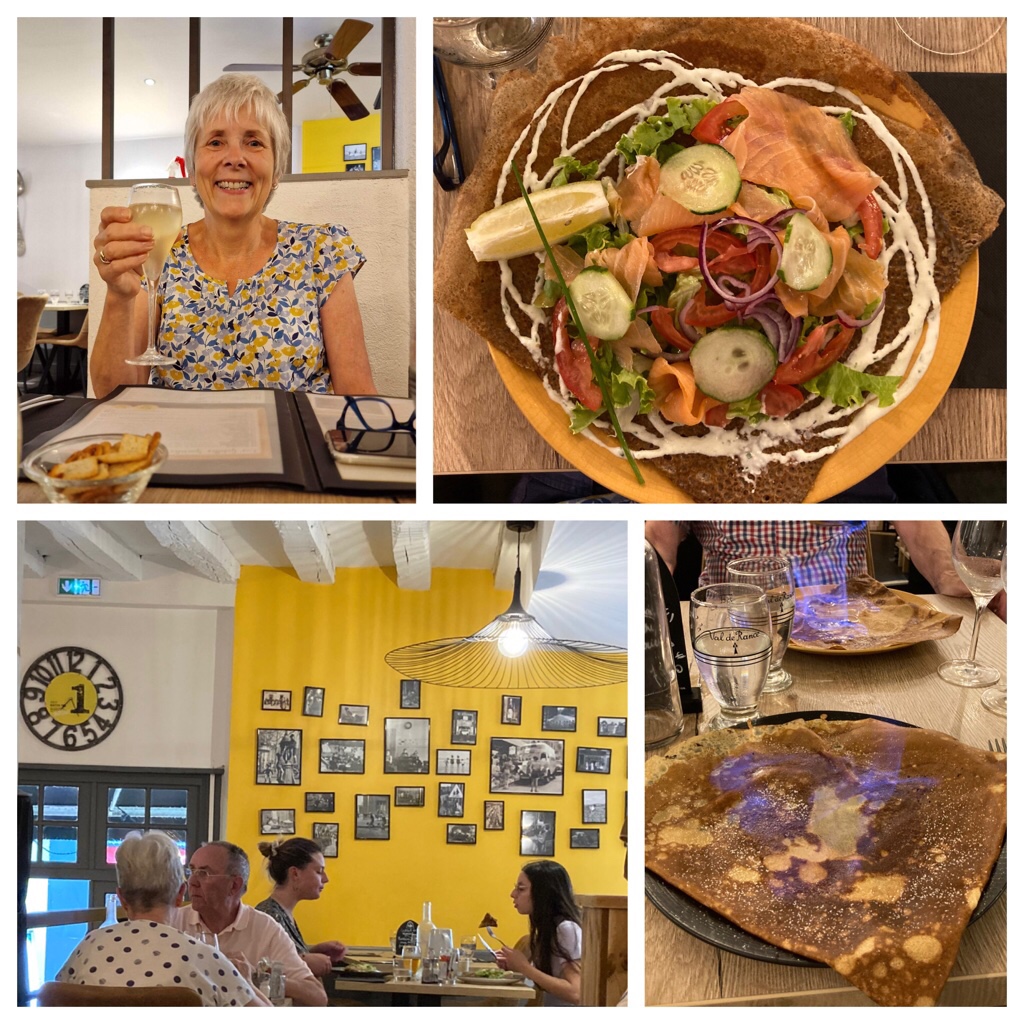
The following night we went to Le Connétable, a creperie with a little modern flair. Cointreau liqueur has been distilled in Angers since it was created by Edouard Cointreau in 1849 and I began with Soupe Angevin, an aperitif with Cointreau, lemon and sparking wine … yum, and my galette with smoked salmon, chèvre cream and salad was just perfect. PS: we both had flambéed crepes for desert!

Next stop … a spectacular

Map

Chinon … a trio of chateaux!

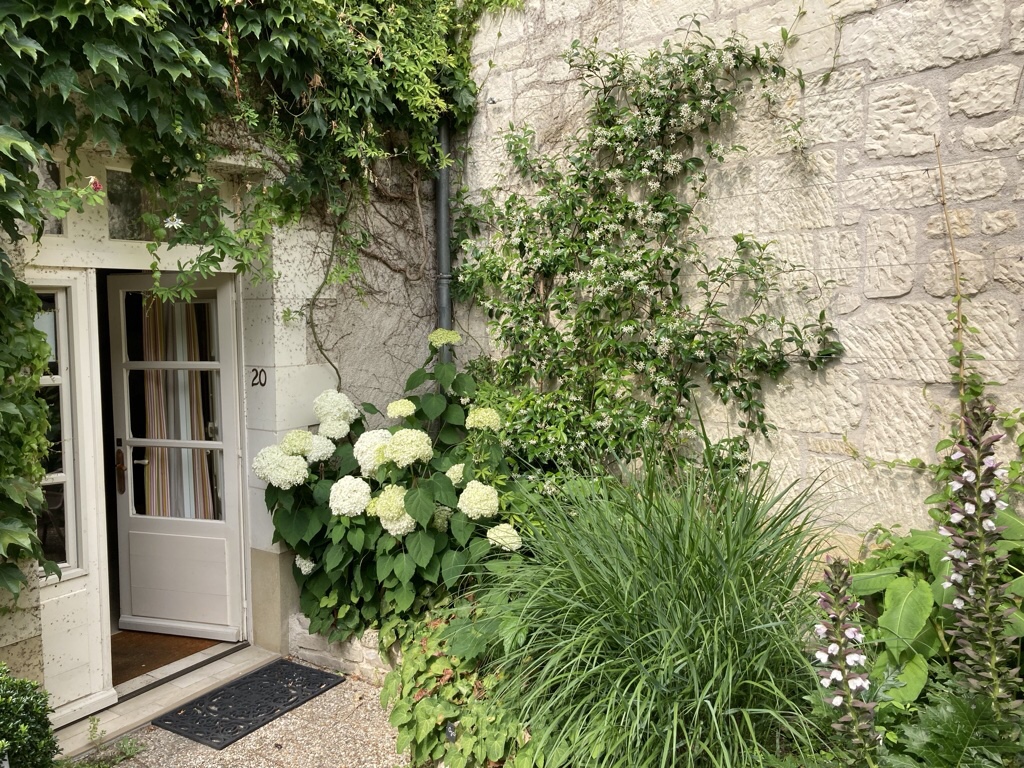
The weather here has been beautiful with warm sunny days, just perfect for wandering round chateaux and gardens. We ended our day in Chinon, at the Hotel Diderot, which proved to be just what I’d hoped, my idea of a perfect small hotel in France! Our room had jasmine climbing the wall outside which fragranced the air …

… and inside was so pretty and cool due to the thick stone walls.

The terrace proved a perfect spot for breakfast, with thick slices of toasted brioche as light as love and homemade preserves that were especially delicious.

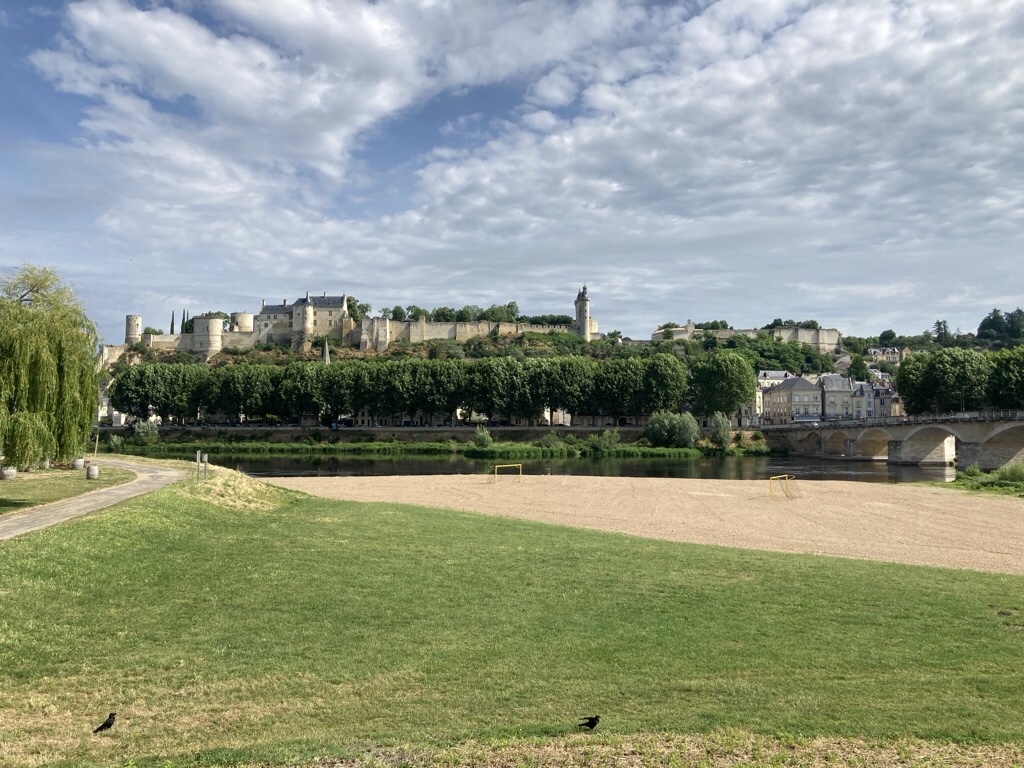
The Chateau de Chinon is high above the town, overlooking the river Vivienne and extensive vineyards and comprises a restored fortress, built by King Henry II of England in the C12th.

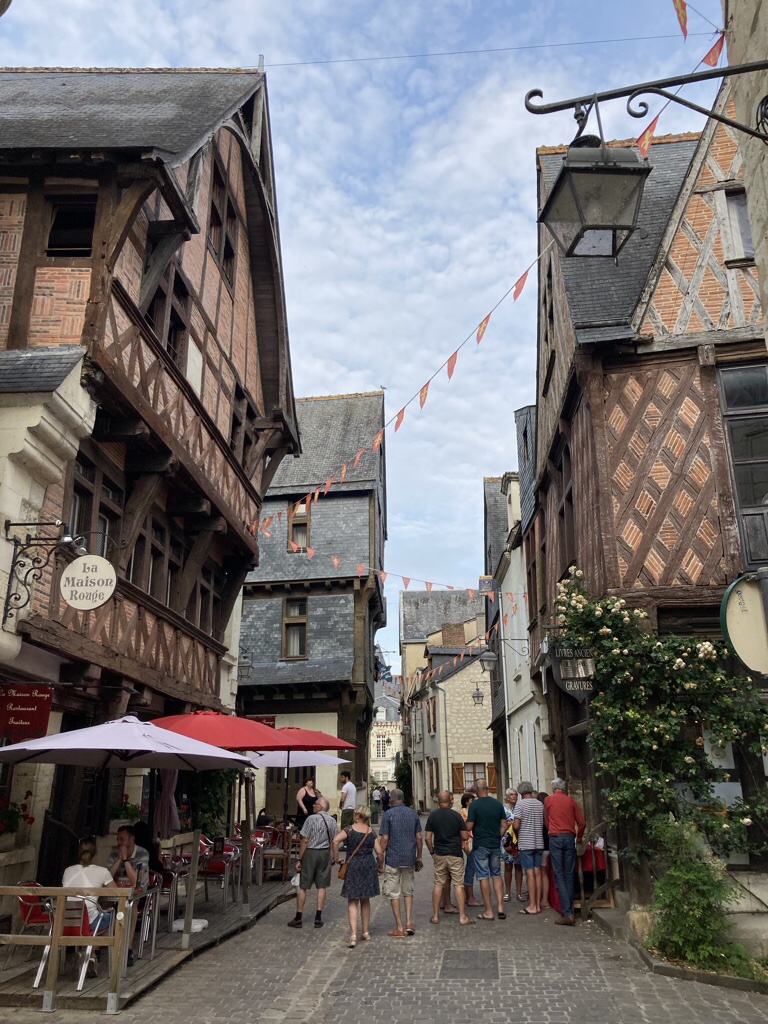
As we walked through the pretty medieval town …

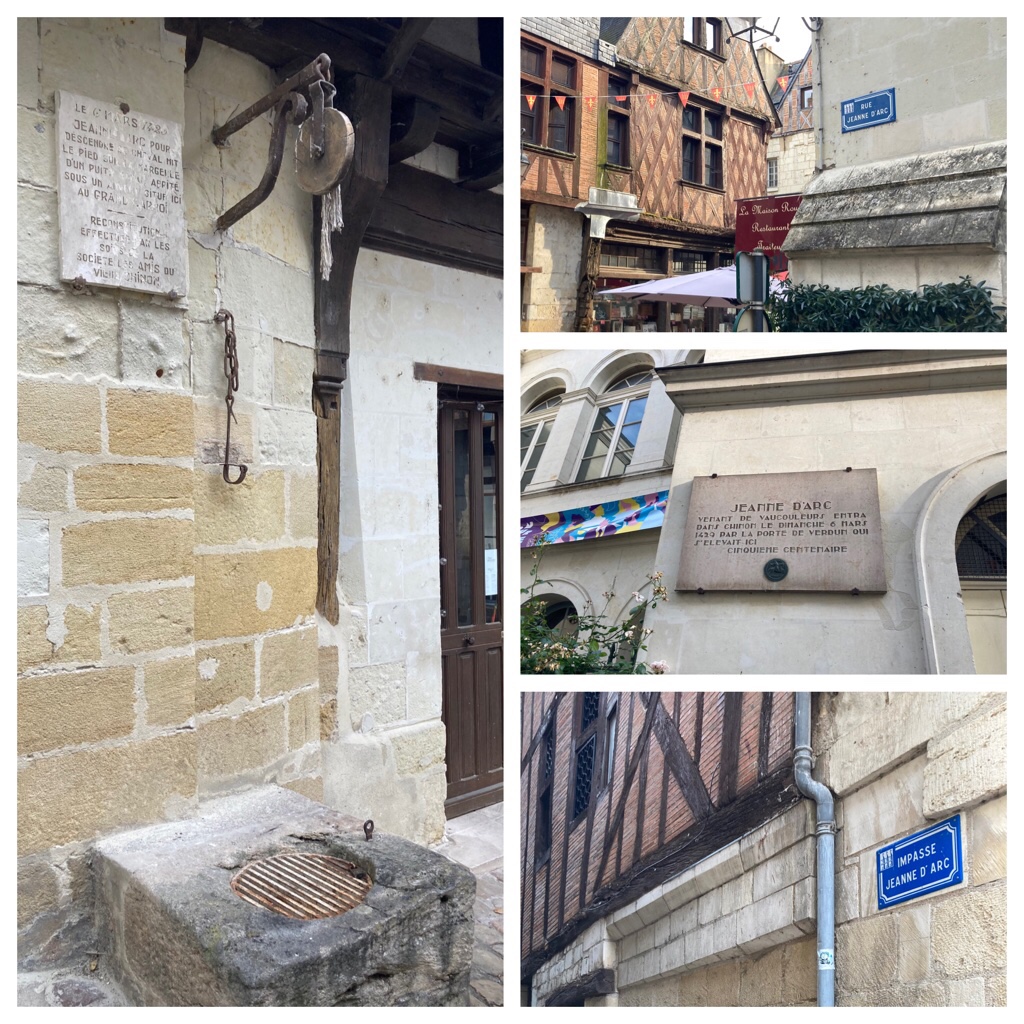
… we noticed several references to Joan of Arc, and one suggested she may have dismounted her horse in that very spot!

Having checked, we found that after her vision that she must free Orleans from the English, she came to Chinon in 1429 for her first meeting with Charles VII who was living in the chateau.

The day ended with another creperie …

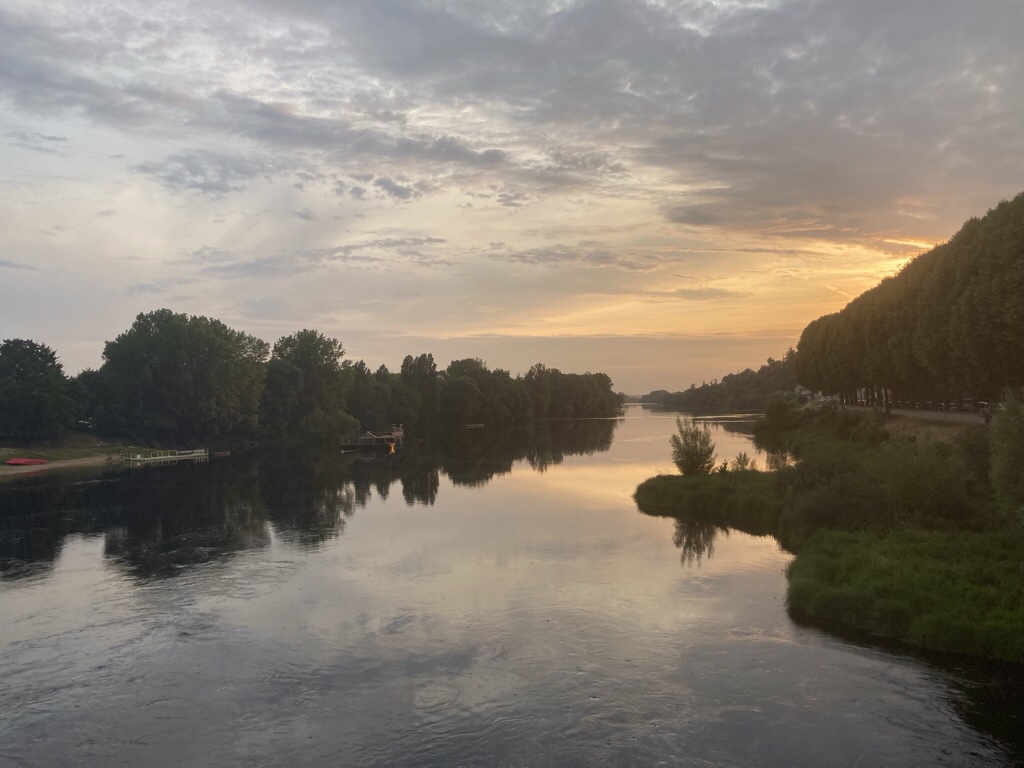
… and another sunset!

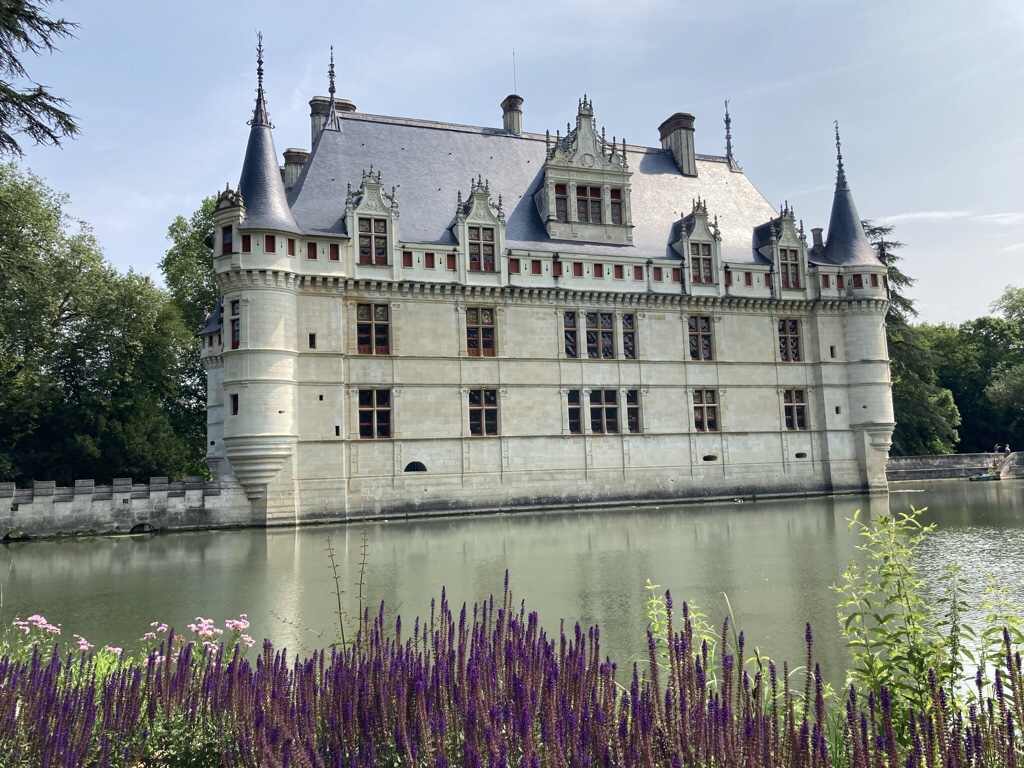
It was so hard to choose which of the chateaux to visit as there are so many, but our next choice was Chateau D’Azay-le-Rideau, one of the loveliest, with soaring turrets right out of a fairytale.

We walked round the garden first and waited to see if the water would settle to give a good reflection. I was out of luck, but was rewarded instead by a chorus from tiny frogs sitting on the lilies!

The interior was less interesting, although since it was built during the reign of Francis I, there were more salamanders to spot.

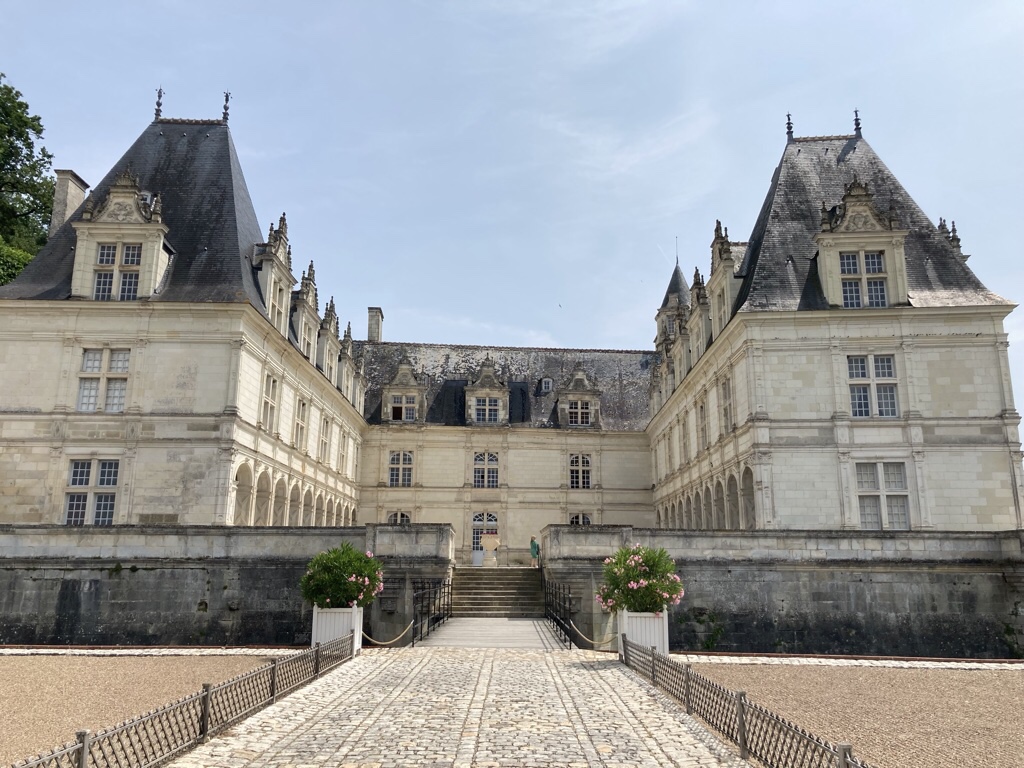
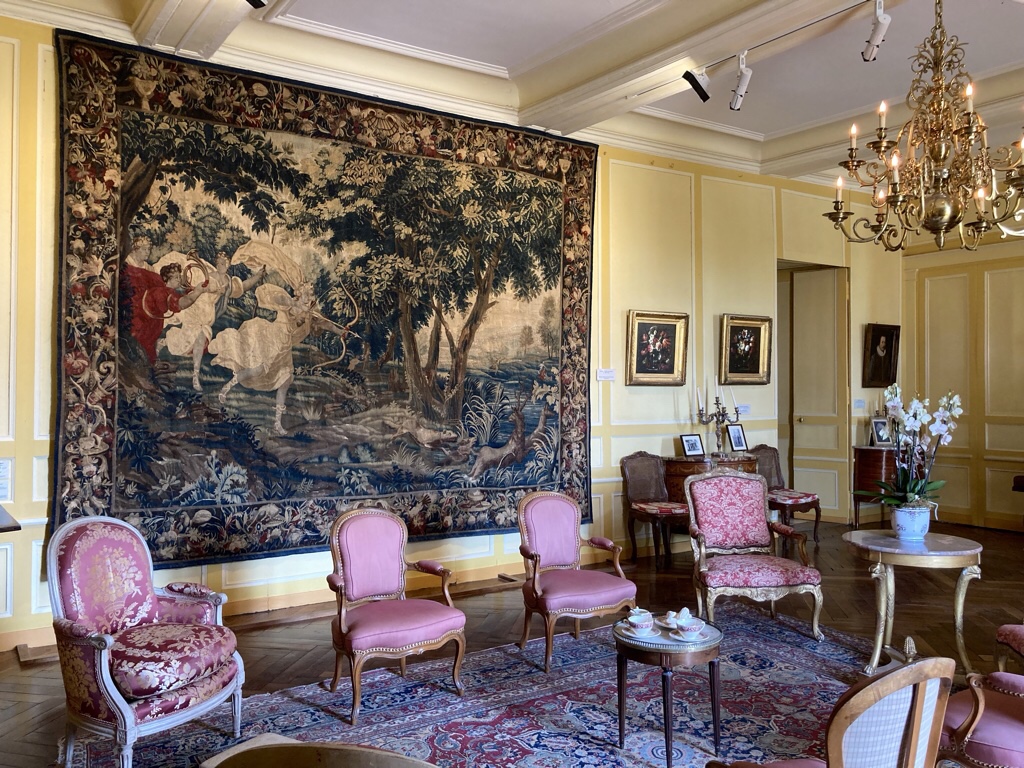
Chateau de Villandry was just close by, another C16th building, with a redesigned C18th interior, including some fine tapestries and very pretty fabrics.

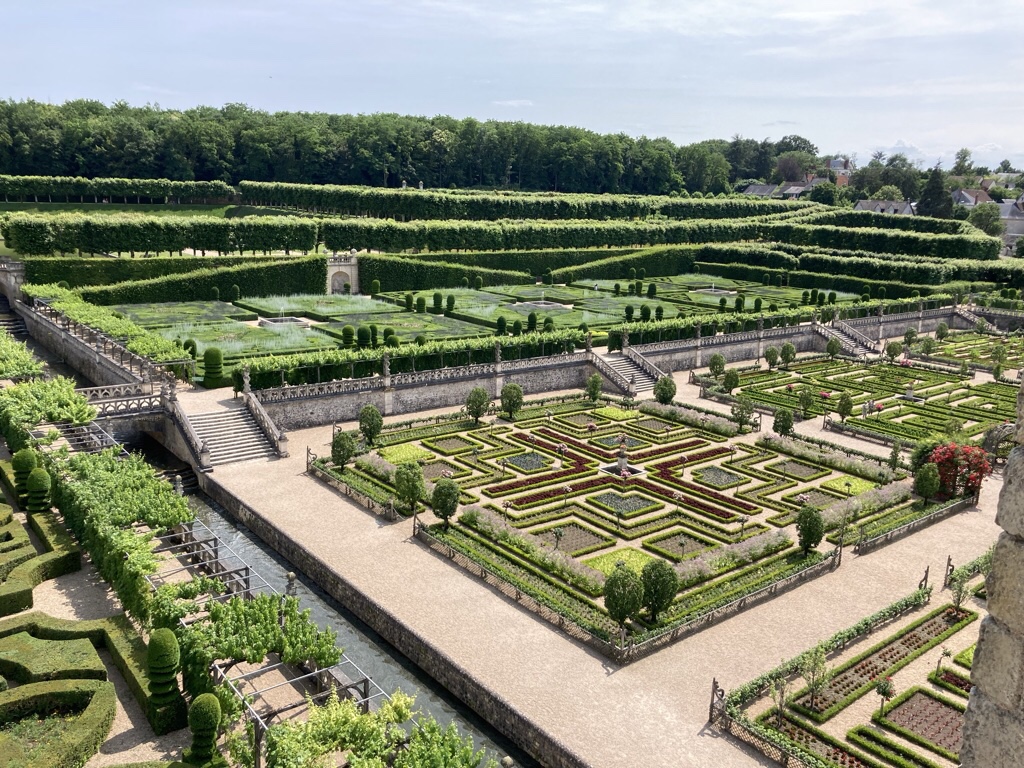
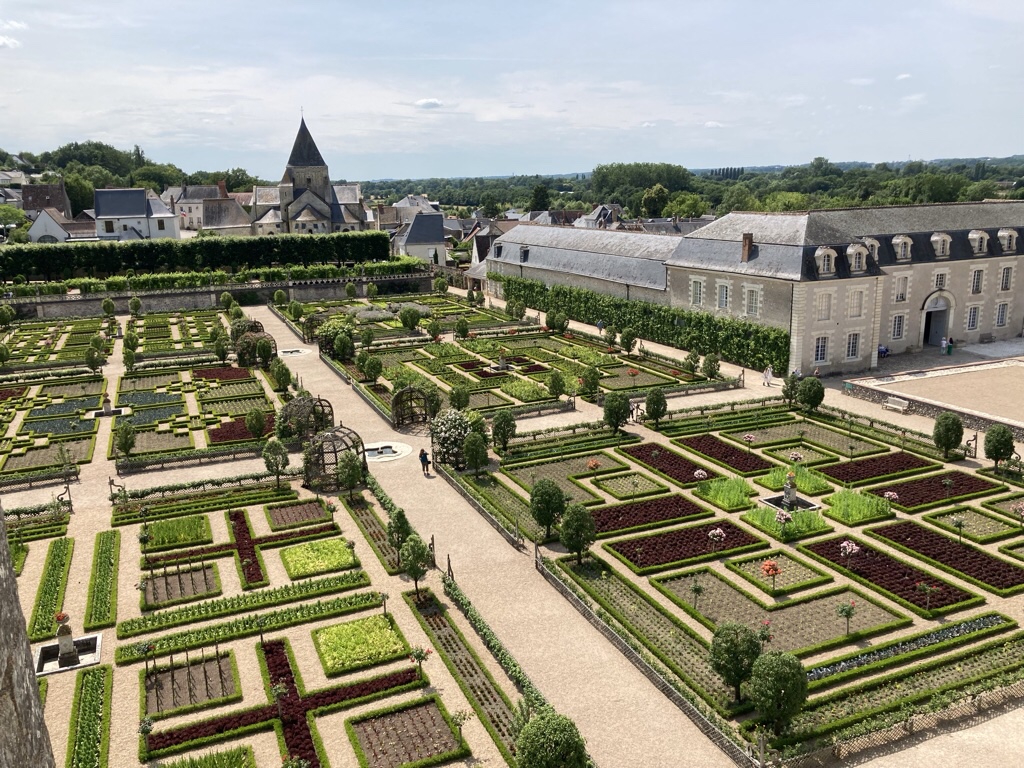
As the tour took us to the first floor, we got the best views of the garden which were recreated in the C16th style starting in 1908. The shapes of these box beds are picked out with tulips in spring and begonias in the summer.

The ornamental kitchen garden is carefully planned with around 40 species in crop rotation as necessary, maintained organically with underground watering.

Together with the 1000 lime trees and 30km of box which all need pruning, it is managed by just 10 gardeners!

We were very much looking forward to our dinner at La Table Jeanne with traditional homemade cuisine and local specialities especially when they confirmed that they would be pleased to offer a vegetarian menu. The reality unfortunately fell a little short and when asked for details of the vegetarian choice, we were told it would be up to the kitchen! Even my lemon tart proved a disappointment …

Having said all that, we met Dalus and Karen who were on an extended trip to Europe from Auckland and had a lovely evening chatting about life and travels.

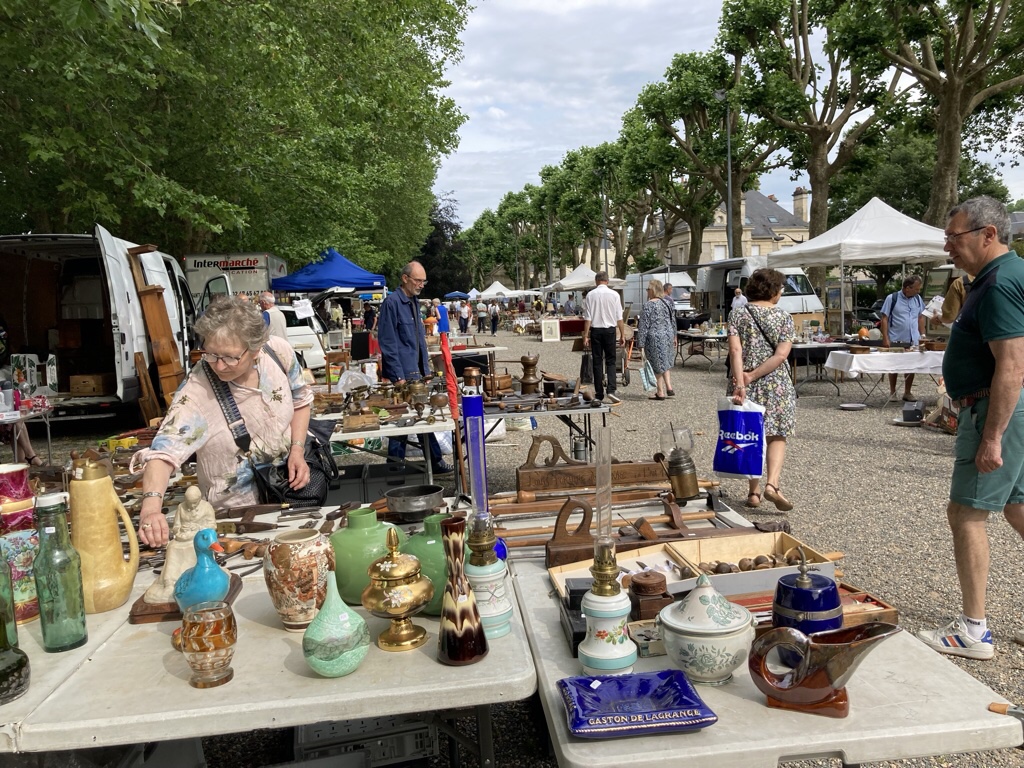
As we checked out of Hotel Diderot, we were told about the monthly brocante down by the river and couldn’t miss the chance to join in this very French activity! We parked in Place de Jeanne of Arc …

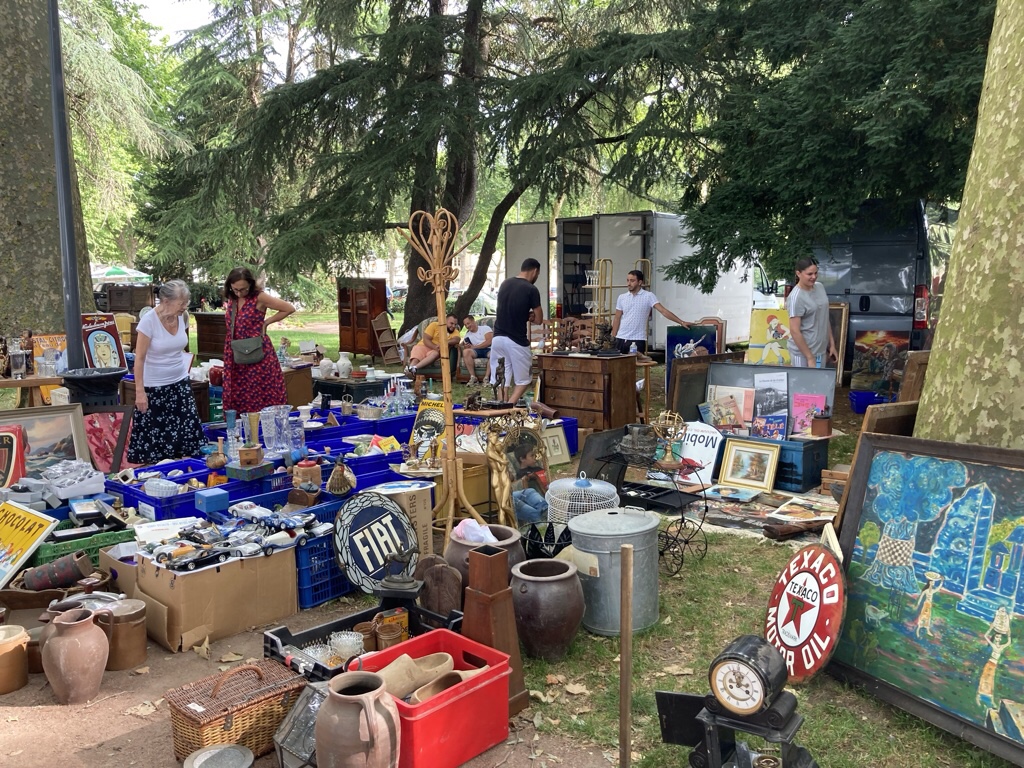
… then browsed the stalls of vintage offerings …

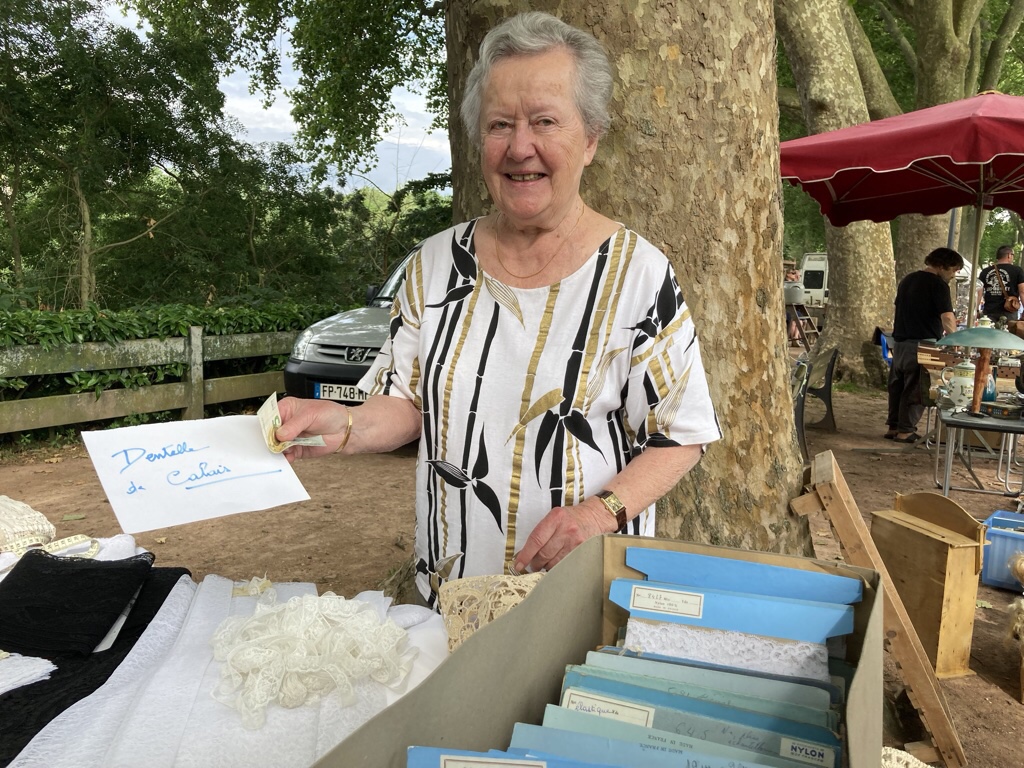
… similar to a car boot, but so French and so much more classy! I was delighted to buy a selection of vintage lace and mother of pearl buttons from this lovely lady!

But we had dallied too long and it was time to get back on the road so we crossed the river Vienne and waved goodbye to Chinon.

Map

Chambord & Chenonceau

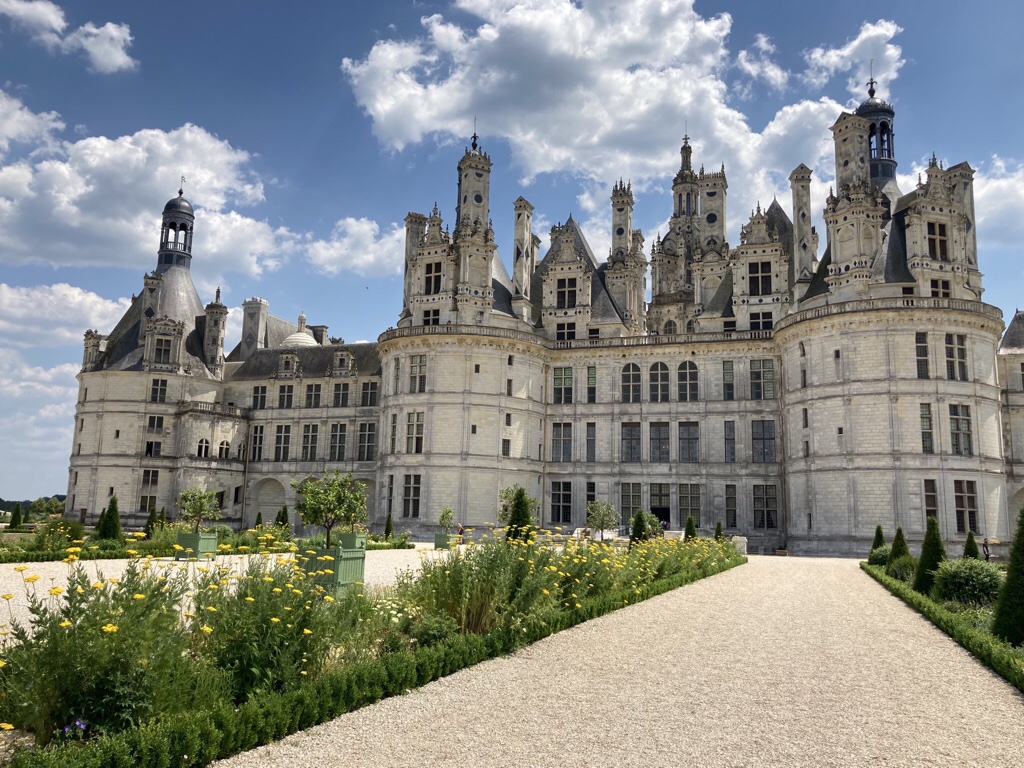
We picked the most direct route south from Chartres which zig zagged through acres of farmland with barely a village to be seen. We crossed the Loire river and reached the Chateau de Chambord, which is maybe the finest expression of Renaissance architecture, as well as being the largest, grandest and most visited chateau in the Loire valley.

Begun in 1519 for Francis I as a hunting lodge, it ended up with 426 rooms, 282 fireplaces and 77 staircases!

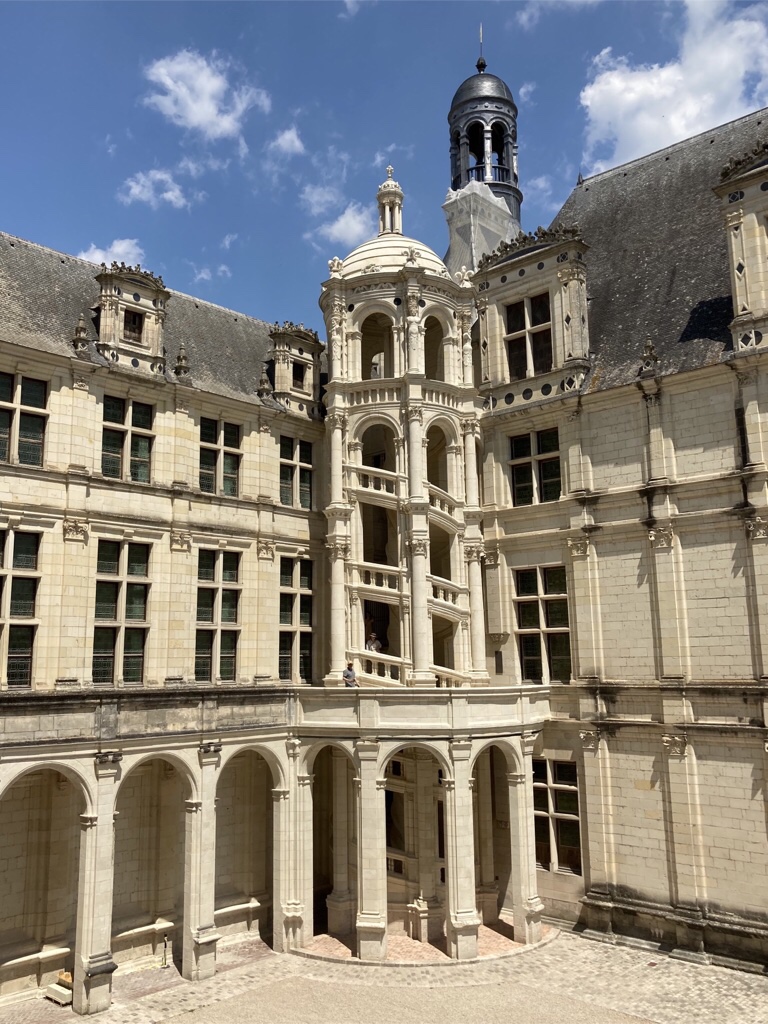
At its centre is a double spiral staircase, possibly based on drawings by Leonardo da Vinci …

…such that one person can go up and another go down and all that meets are your eyes across the void!

The design is modular with each corner section containing the same layout and an external staircase so all guests were treated equally …

… and some rooms were beautifully restored with period furniture.

Francis had his own wing and his emblem is the salamander, which can be seen throughout.

Later kings came to stay with their courts and made additions such as this suite of ceremonial apartments for Louis XIV with this audience chamber, complete with bed.

Walking round the terraces gave a good view of the intricacy of the roof architecture (spot more salamanders) …

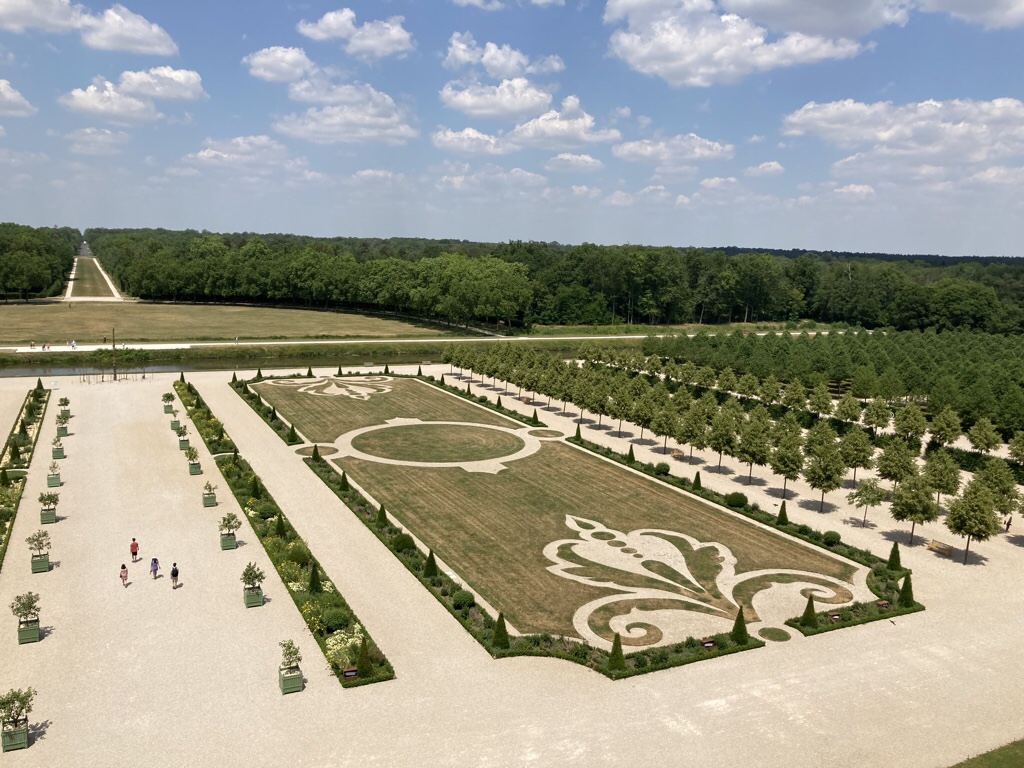
and a lovely view of the gardens …

… which were just as lovely at ground level …

… although there was too much breeze to get a perfect reflection.

We continued to Blois where we stayed at the family-run Hotel Anne De Bretagne for the night …

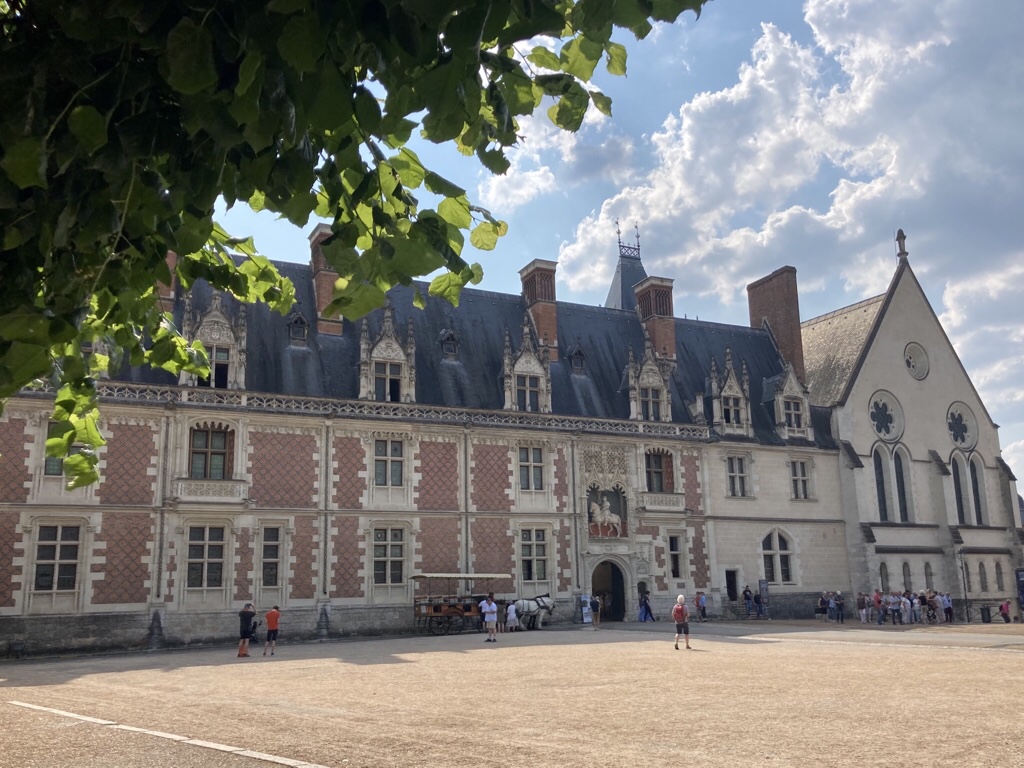
… and later went to explore and found the Chateau de Blois which looked larger from the side …

… than the front, but we didn’t have time to visit.

After a wander and a drink in the artistic quarter …

… we went to Le Castelet for dinner as they promised a menu of artisanal produce prepared with homemade flair and a vegetarian option.

We were truly treated! An amuse bouche of spicy pepper gazpacho got us started …

… then gravalax of pollock and sweet potato chutney with ginger, and tenderloin of pork with cider cream sauce with sweet potato, truffle and shiitake mushrooms for me …

… and for Chris mushroom crumble and roasted tofu then dahl of lentils with seasonal vegetables.

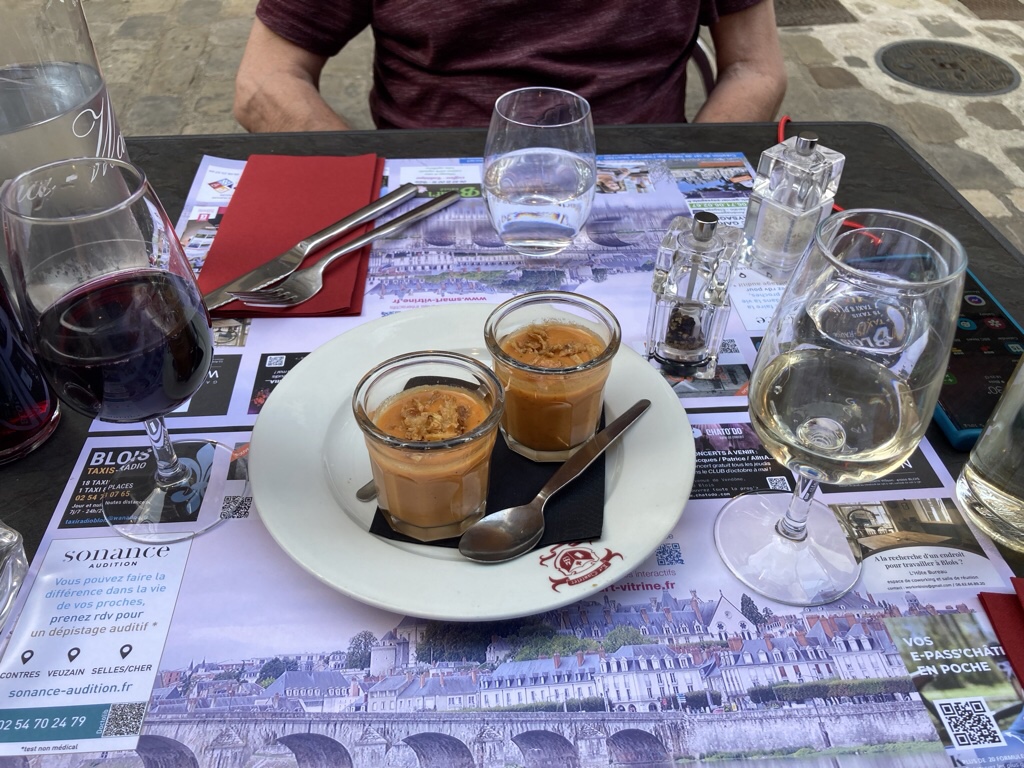
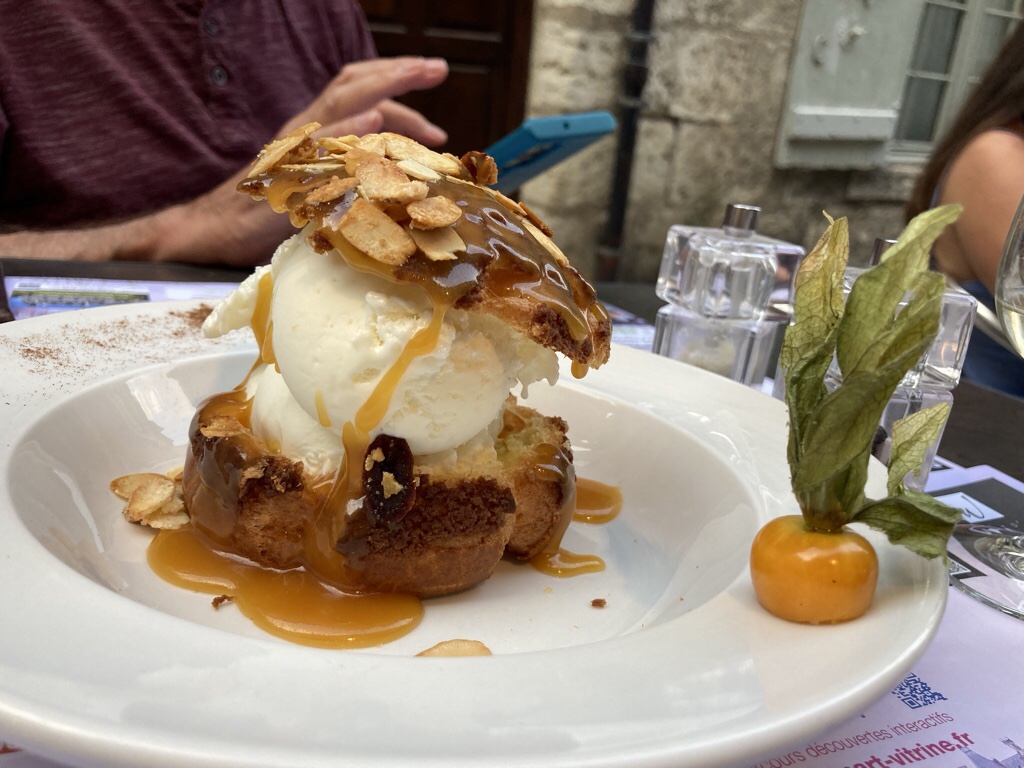
We had two spoons for the Croq’ chou of yogurt ice cream and passionfruit caramel!

Next day, Caves Monmousseau was our first stop, despite it only being 10.30, as they are renowned for their method traditionelle sparkling wines such as Cremant de Loire. Their cellars are built into the limestone cliff, using the tunnels left once the tufa stone was mined to build the local chateaux, perfect for storing wine as they remain a constant 12° all year round.

The tour showed how the tufa was mined …

… and also explained the double fermentation process and a handy little trick of freezing the neck of the bottle so a frozen plug of wine can be removed containing the sediment.

There was also a light show which evoked various chateau by certain features such as the maze at Villandry and the spiral stairs at Chambord.

We then had a tasting of their various wines, spitting as necessary for the driver, but managed to settle on our favourite, and have several bottles to bring home!

Next up was the most visited chateau in France, Chenonceau …

… which was built in the C16th on the foundations of an old mill and later extended to span the River Cher. It was given by King Henri II to his mistress Diane de Poitiers, painted here as Diane the Huntress.

After his death, his widow Queen Catherine d’Medici …

… had Chenonceau given to her in a chateaux swap with Diane! These two women each designed one of the huge square gardens at the front of the chateau – this is Diane’s Garden …

… and this is Catherine’s …

We were amused that the portraits and gardens seemed so mismatched!

There was also a splendid cutting garden which no doubt provided many of the blooms for the beautiful floral displays in every room.

There was also a splendid cutting garden which no doubt provided many of the blooms for the beautiful floral displays in every room.

The best views of the chateau were from the gardens.

Just time for a picnic …

… before heading on … to Chinon.

Map