Havana – Plaza de la Revolucion

Havana Plaza (7)

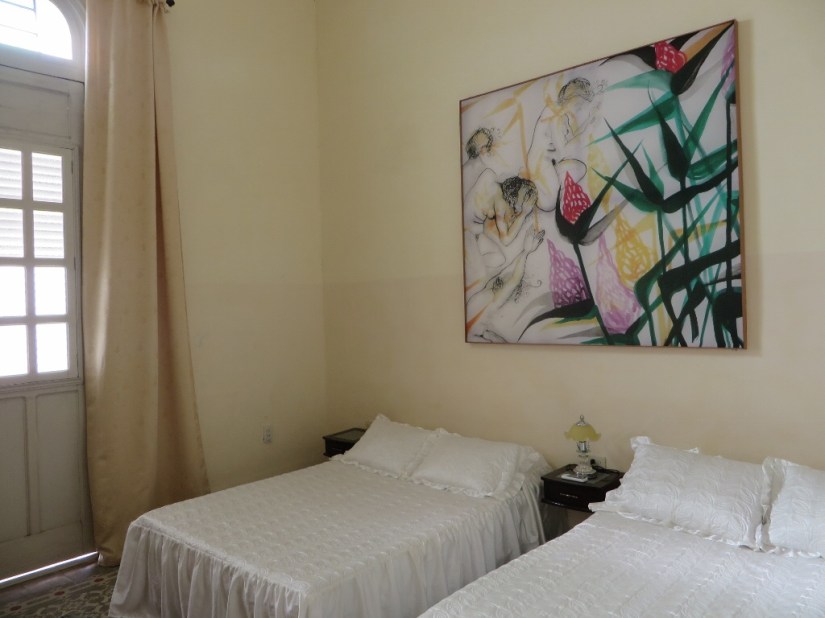
Returning to Havana, we stayed at Casa Leticia in Vedado for our last night in Cuba.

With a flight at 8pm, we had time next day to walk to the Plaza de la Revolution, through modern Vedado sporting plenty of concrete, including street markers.

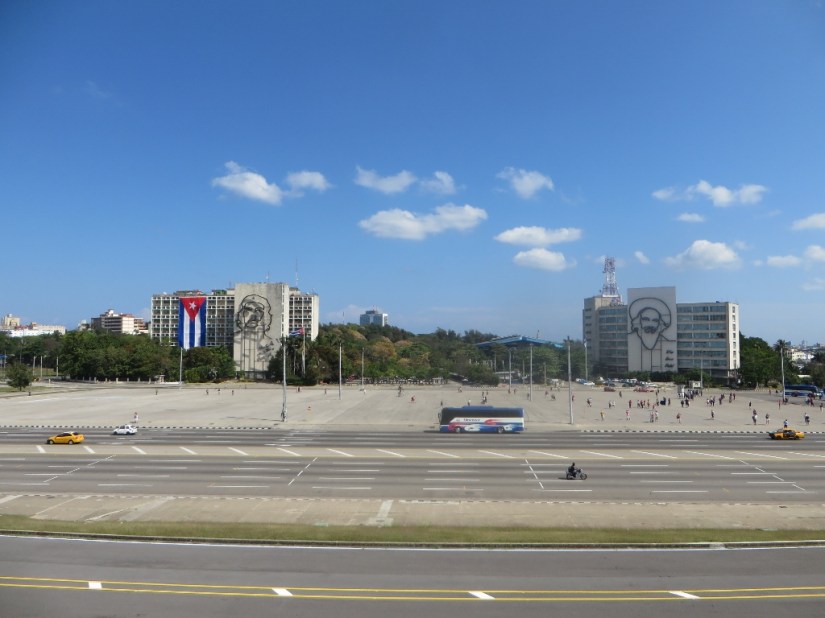
The plaza is huge, dominated by the huge Jose Marti memorial tower and statue on one side …

Havana Plaza (9)Havana Plaza (11)

Havana Plaza (12)
Spot the Roman cap!

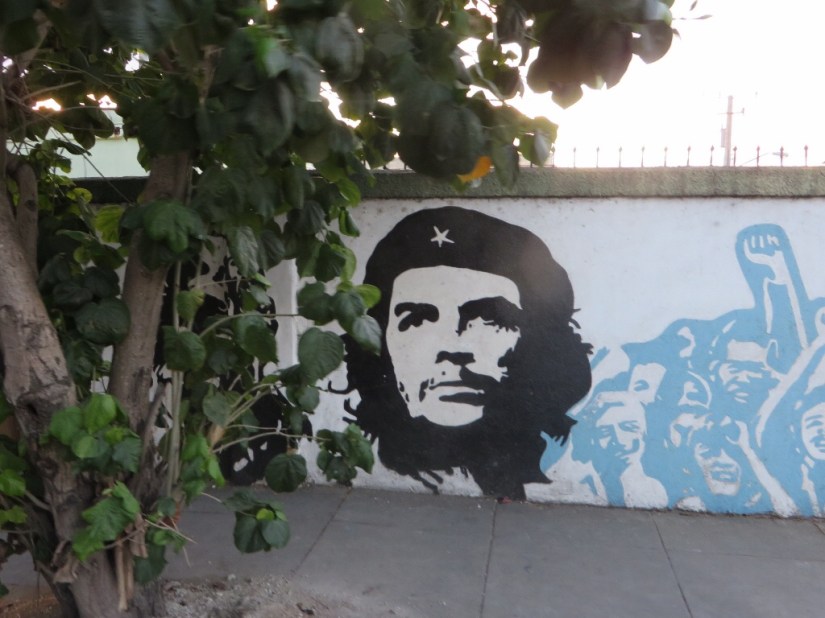
,.. and the Che Guevara memorial on the other with the widely recognised photo of him reproduced as a stylised steel frieze.

Havana Plaza (10)Havana Plaza (7)

Nearby is a sculpture of Camilo Cienfuegos in a similar style.

Havana Plaza (8)

We continued to the Necropolis de Colon, Havana’s huge cemetery where some two million people have been buried.

Time for lunch, we returned to La Rampa and had tacos in Waoo while we relaxed and watched the world go by.

Havana Plaza (21)

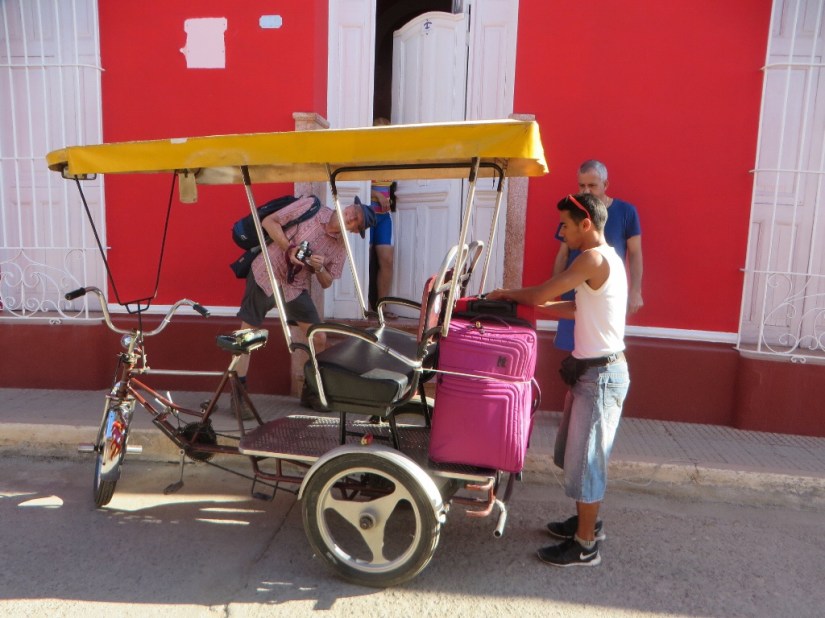
Our last trip to the airport was in a cranky Lada, with some great 50s tunes playing. Strangely though, the music in Cuban taxis always seems to return to 80s power ballads, appealing no doubt to the Cuban romantic streak! It started to rain, and we realised that the single windscreen wiper was non-operational, requiring the driver to hop out and wipe the screen at each set of lights, but we expected nothing else … this is Cuba!

Havana Plaza (24)Havana Plaza (25)

Our month is over and we’ve had a great time here in Cuba with each town having its own character so travelling round was definitely worth it. On the whole, things have gone very smoothly. Having booked buses and our internal flight online from home and reserved our casas direct by email, we only had a couple of travel delays and all the casas were excellent. The most time consuming thing was queuing at the bank to change our sterling, but with plenty of ATMs everywhere, there was actually no need to have brought sterling at all, and accessing the public wifi was generally easier than we expected.

We had hoped to get a bit more under the skin of Cuba, find out more about daily life, how it works and what it means for Cuban people but our lack of Spanish made detailed conversations impossible so we are relying on the photographs to tell the story.

Thanks for checking out Cuba with us and adios till next time.

Vinales – Mogotes & Cigars

We arrived at the bus station to find we had been listed for the 2.30 bus rather than the 11.15 as booked, possibly due to a computer error, but we weren’t too sure, but this is Cuba, so had to wait! The only consolation was the bus was quicker, so we only arrived two hours later than expected. Marilyn was there to meet us beside the church …

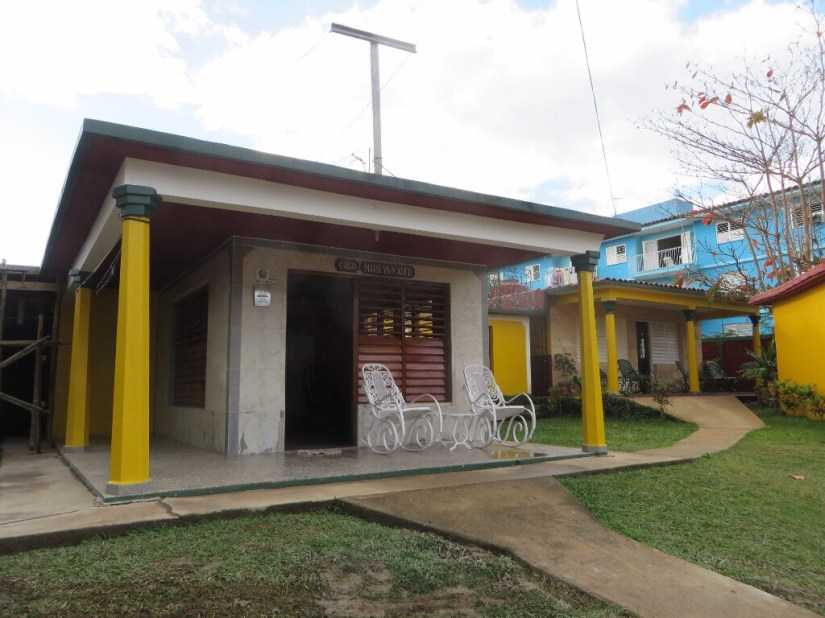
… and took us to her casa, in fact the only modern house we have stayed in during our trip, with a purpose built annex with two comfortable guest rooms with the best hot water in Cuba! Marilyn also spoke excellent English and soon explained what there was to see.


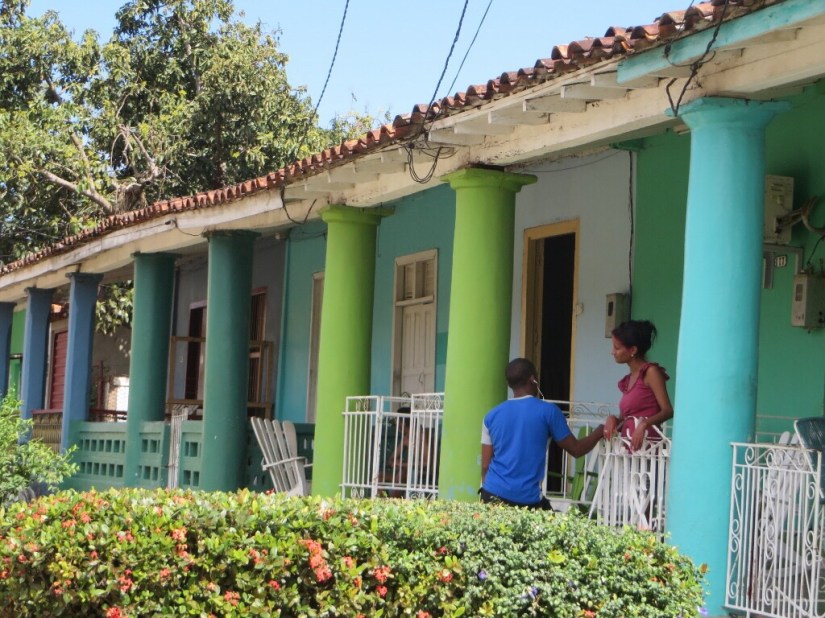
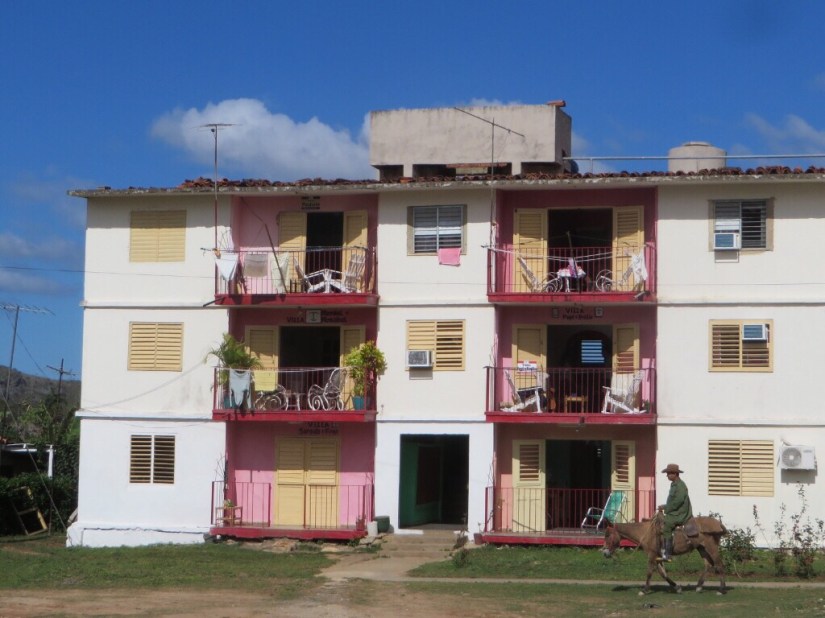
We had a wander round the village, which is growing as more people build casas to serve the tourist trade.

In fact, nearly every house in town is a casa with the main streets lined with restaurants and Marilyn told us that the increased demand for food has raised prices for the locals too, so it is difficult to make ends meet without a way to earn CUCs from the tourists.

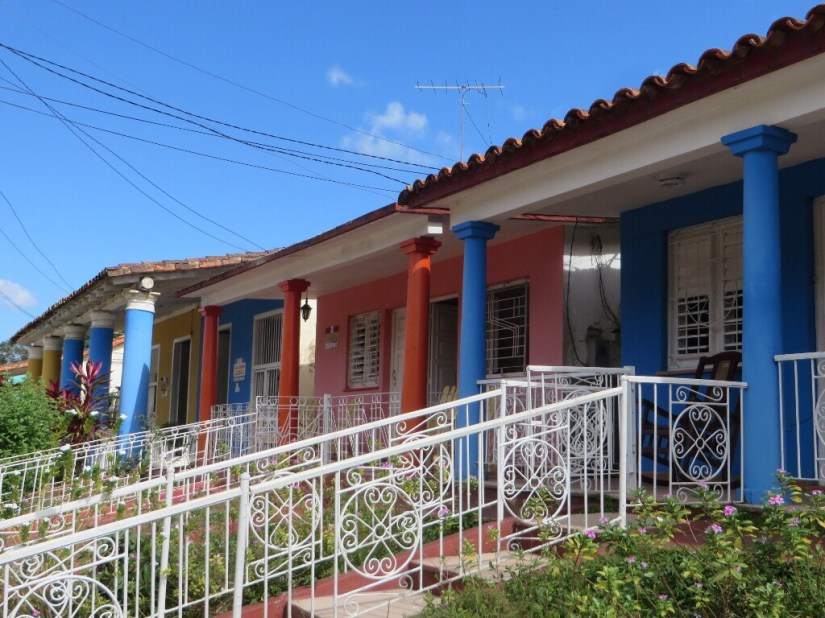
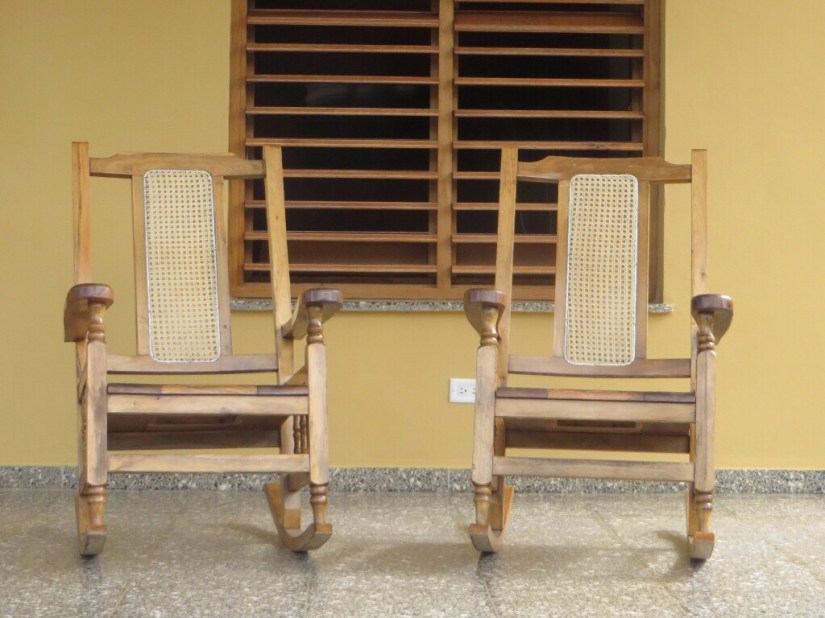
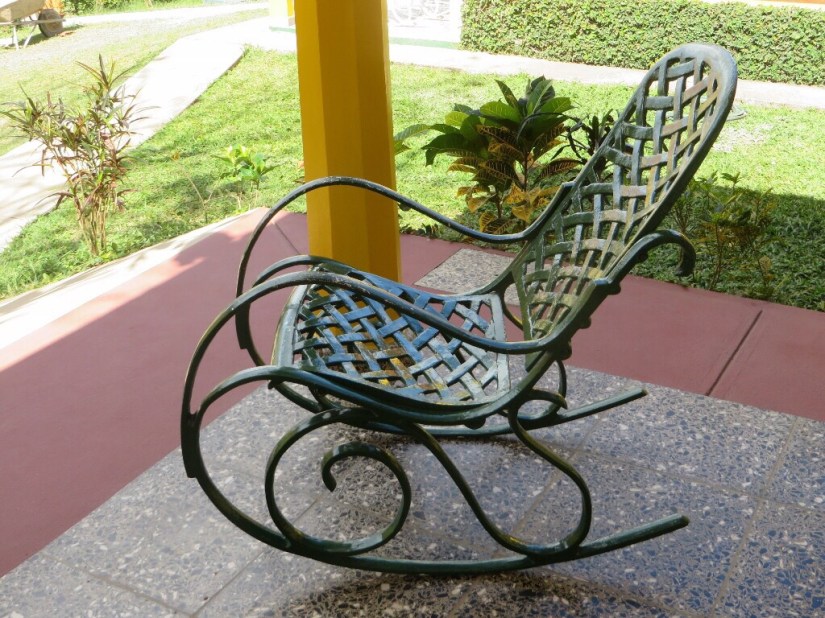
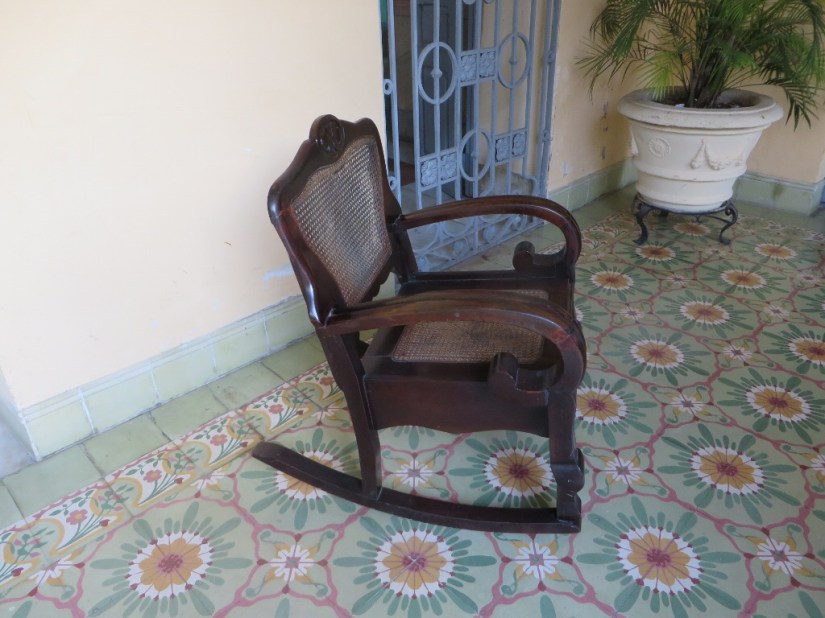
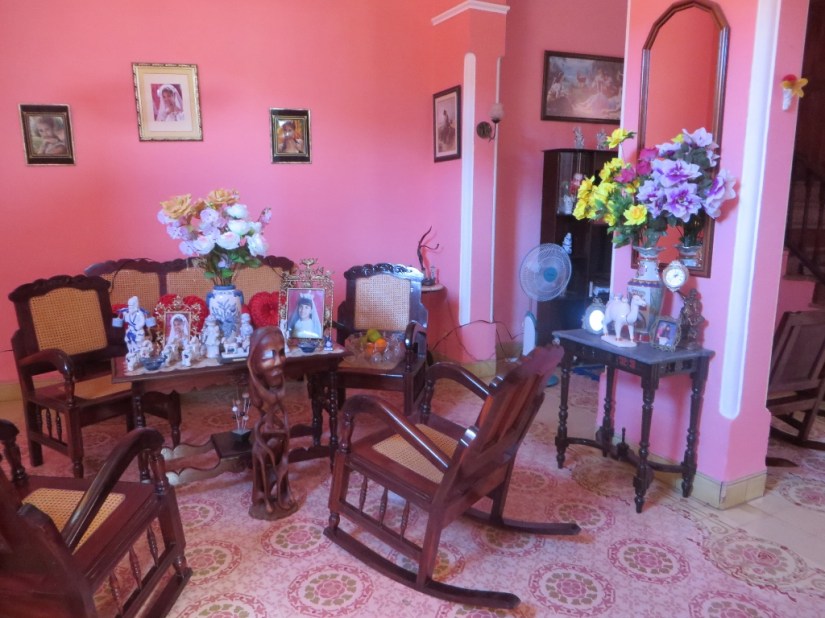
Nearly every house had rocking chairs …


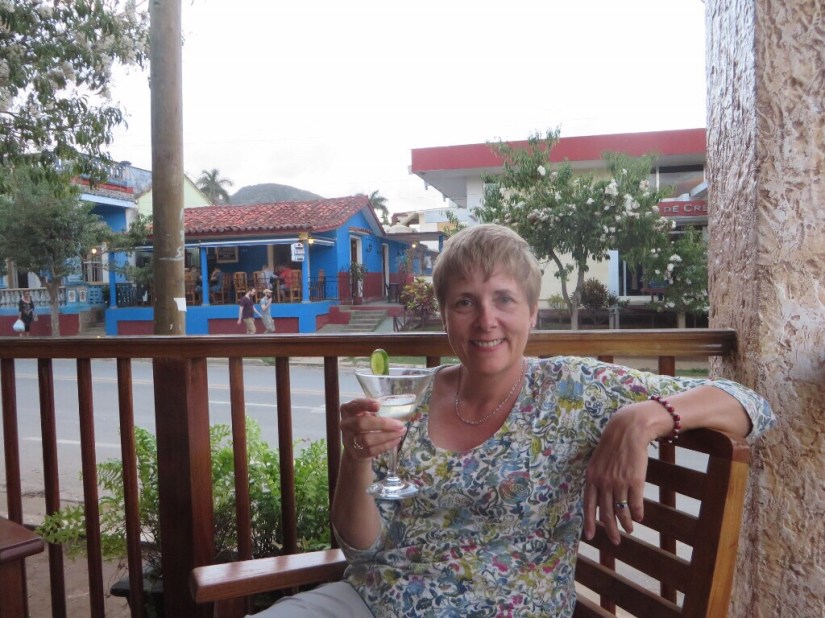
We found a bar called Tres Jotas with a great people-watching verandah and amazing Daiquiris, in our view better than those in El Floridita, and we managed to stop by each evening, just to check they really were as lovely as the day before!

 Marilyn cooked for us one evening and produced a lovely spread with lobster for me and spiced pumpkin for Chris. Generally the food in Cuba has been simply cooked, mostly pork, chicken, fish and shellfish served with rice, beans, salad and some sort of root vegetable. In most places vegetarian means just eating the side dishes, and while Chris has not gone hungry, it did become a little monotonous after a week or two. Fortunately, in a handful of places he had a real result with several inventive dishes and also managed to find pizza and pasta. There are few green vegetables here, just cucumber, some green beans, the odd bit of green pepper and the occasional lettuce leaf but salad is usually served with shredded white cabbage instead. In fact, the more I think about it, I’ve probably had more mint in mojitos than green vegetables!

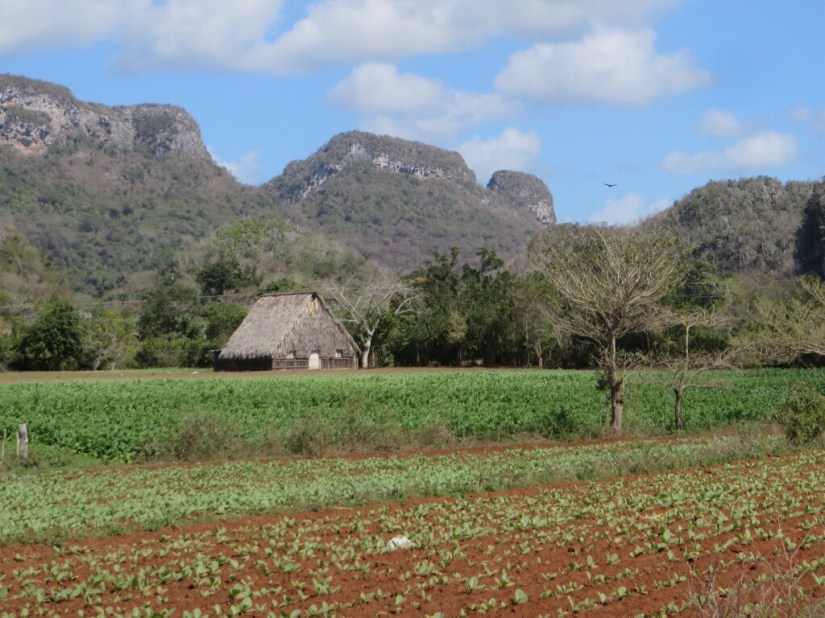
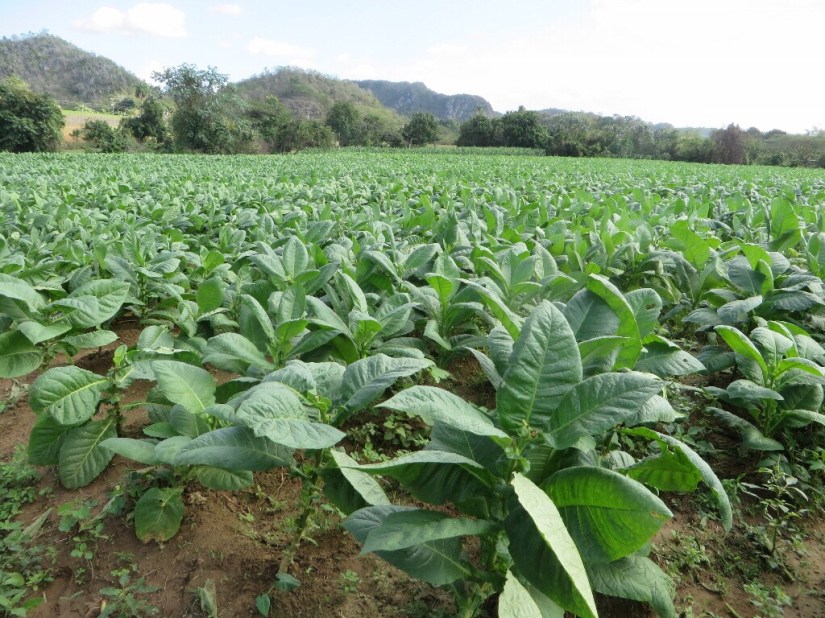
In the Vinales valley, huge limestone outcrops called mogotes loom over lush tobacco fields. Europeans mainly from the Canary Islands came in the 17th and 18th centuries to settle and grow what they claim is the best tobacco in the world.

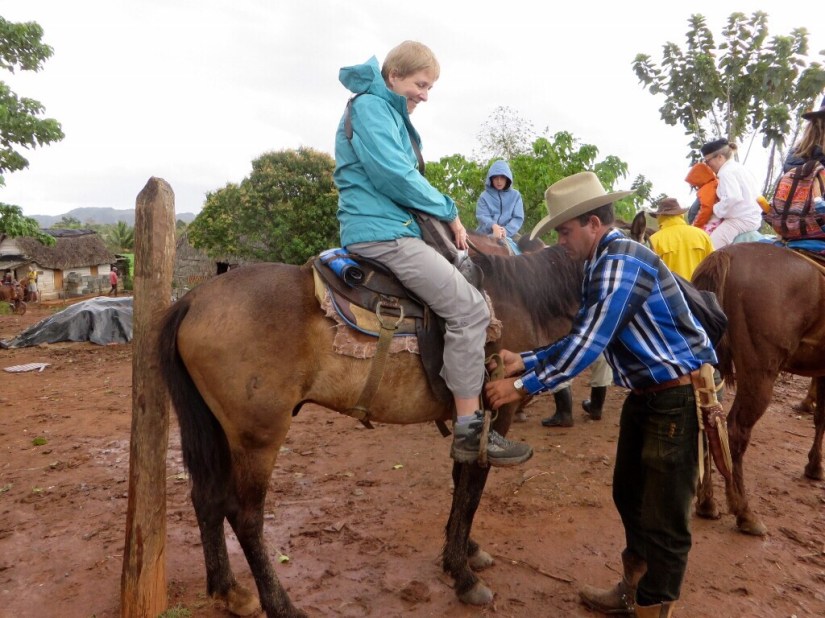
Marilyn arranged for us to go on a horse riding tour of the El Palmarito valley with her friend Roberto, and we were joined by Camille from Marseille. We had thought it would be around 3 hours, and I was a bit apprehensive as my last riding experience was not a happy memory, but all was fine.

My steed Chocolat was docile and well behaved as we left the houses of Vinales behind us and walked on well-trodden paths, between fields until our first stop, a small tobacco farm.

We saw the tobacco growing, which takes 2-3 months, then the leaves are harvested by hand in February before being dried for a couple of months hung on poles in storehouses where they turn from green to brown.

They are they are packed into a bundle with cinnamon, citrus peel and other flavourings and rehydrated so the leaves are flexible once more. We saw a cigar being rolled by hand, with the tobacco for the core laid on the binder leaf and rolled together, then being finished with the wrapper leaf. Camille was a smoker and was first up when offered one to try, then Chris took up the challenge too. The end of the cigar is cut and dipped in honey before smoking, and while I had a puff … when in Cuba … that was more than enough!

Chris enjoyed the experience, especially once he was back on his horse Cococola, pretending to be John Wayne!

We also stopped at a coffee farm where Camille and I tried the Coco Loco and were offered coffee for sale …

… and a mirador where more refreshments were available…

… but the tobacco farm was the highlight, and around 5 hours later we returned to Vinales …

… fortunately not nearly as saddlesore as I expected, although it did take a couple of days to wear off!

We used the hop-on tourist bus which took us to a network of limestone caves called the Cueva del Indio, which we walked partway through, then were taken the remaining way by boat, then into the Valle del Silencio to see the view of the Mogote dos Hermanas, or twin sisters.

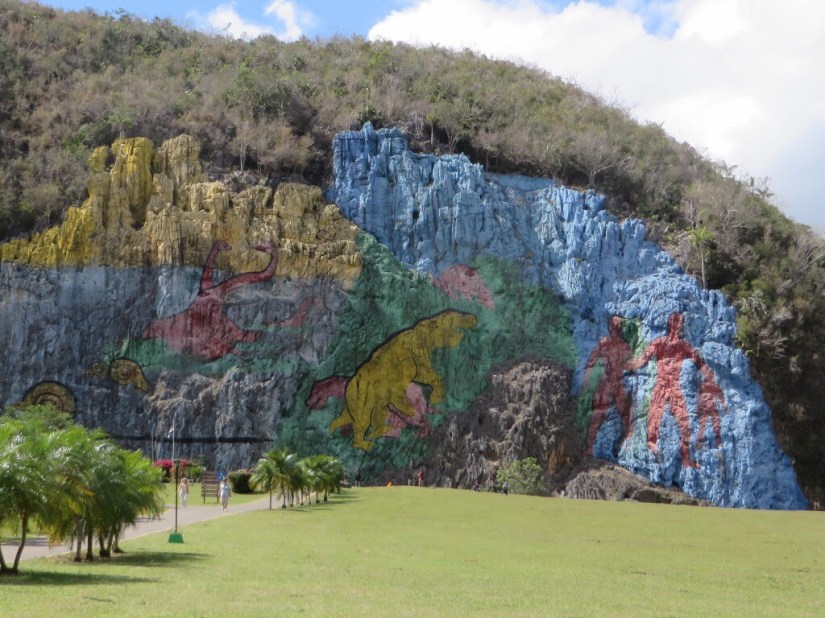
The final stop was a mural commissioned by Fidel Castro in the 1960s depicting evolution on the island from molluscs to man, called the Mural de la Prehistoria. It was very garish and out of place and we hopped straight back on the bus having taken a picture.

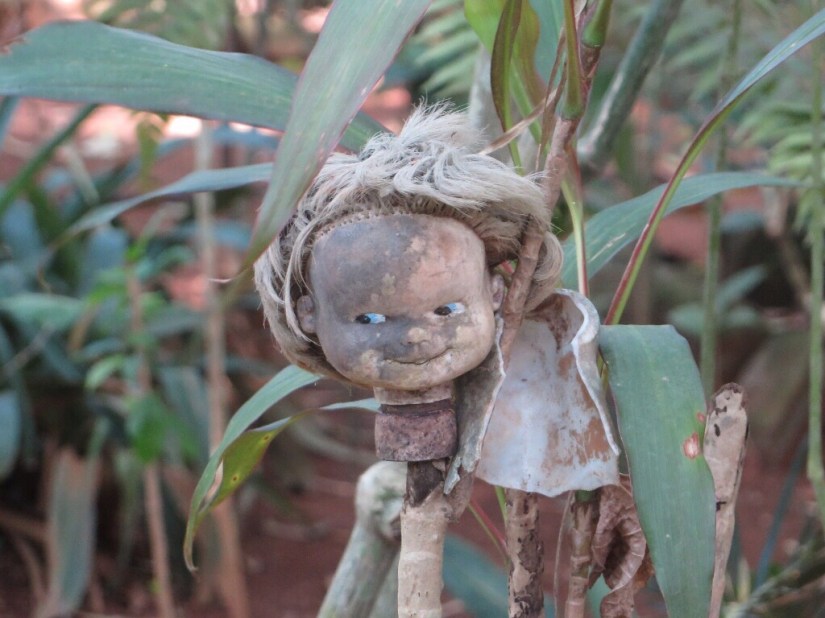
The last attraction was a small botanic garden made by two sisters, which had few plants in bloom as it is wintertime, but strange faces peered out from the greenery …


We had thought we might go hiking in the valley, but it became obvious that whether by horse or foot, we would need a guide to take us to tobacco and coffee growers on route, and having done this once already, we spent the last day, my birthday, at the beach.

The day began with a surprise birthday cake with my name on it for breakfast!

We have been spotting these elaborately iced cakes all over Cuba, in every colour! I can tell you the icing seemed to be like uncooked meringue, so I guess egg white and icing sugar, and nearly an inch thick. Underneath is a sponge cake with jam in the middle, and just in case it isn’t sweet enough, it is then saturated in sugar syrup!

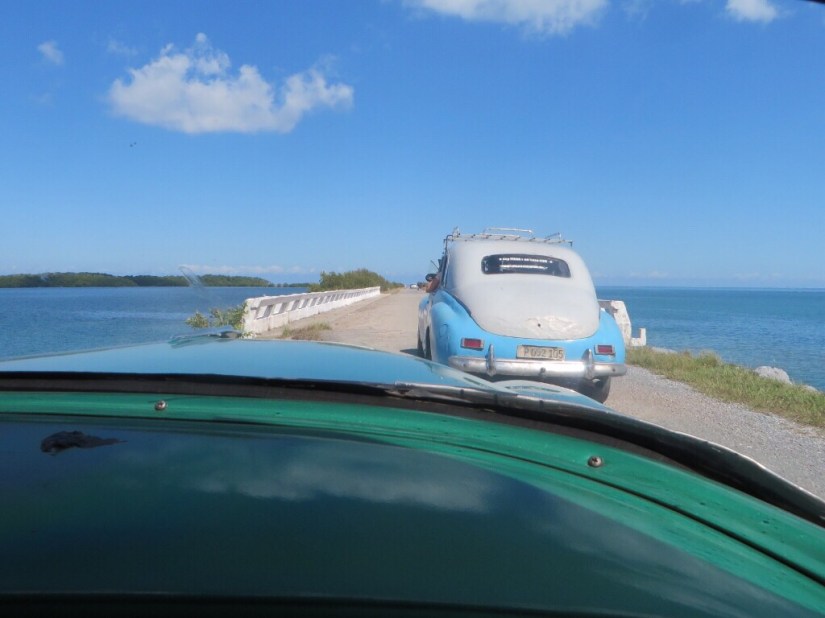
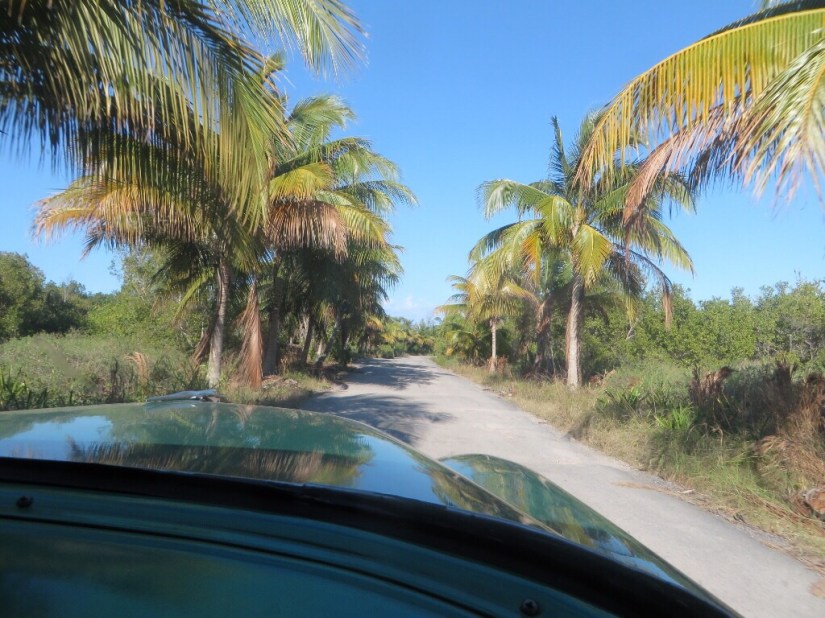
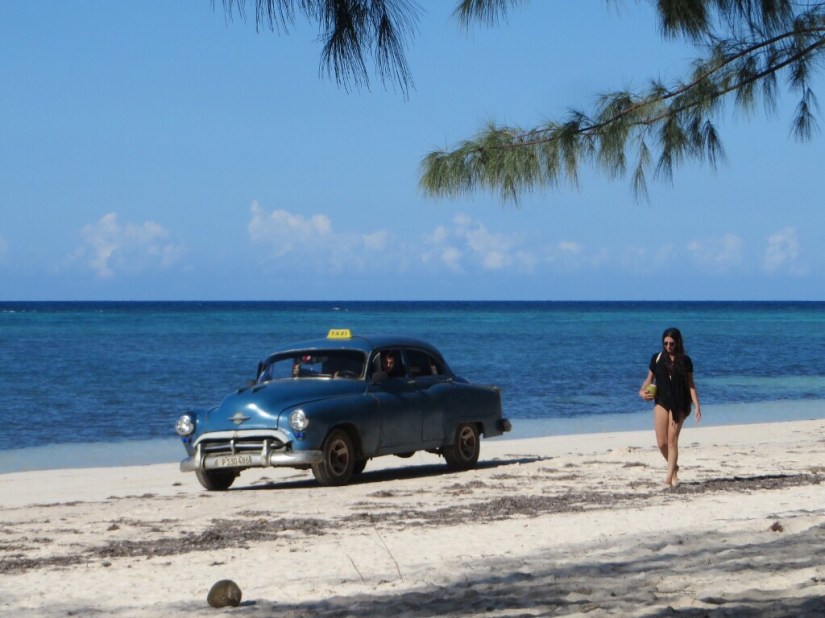
Marilyn arranged a collectivo, a Cuban shared taxi, to take us the 60km to Cayo Jutias, a secluded island connected to the mainland by a causeway.

It took around 90 minutes for the driver to negotiate the pot-holed road which deteriorated the closer we got, and we shared the huge Chevrolet with four Germans and a couple from the Netherlands.

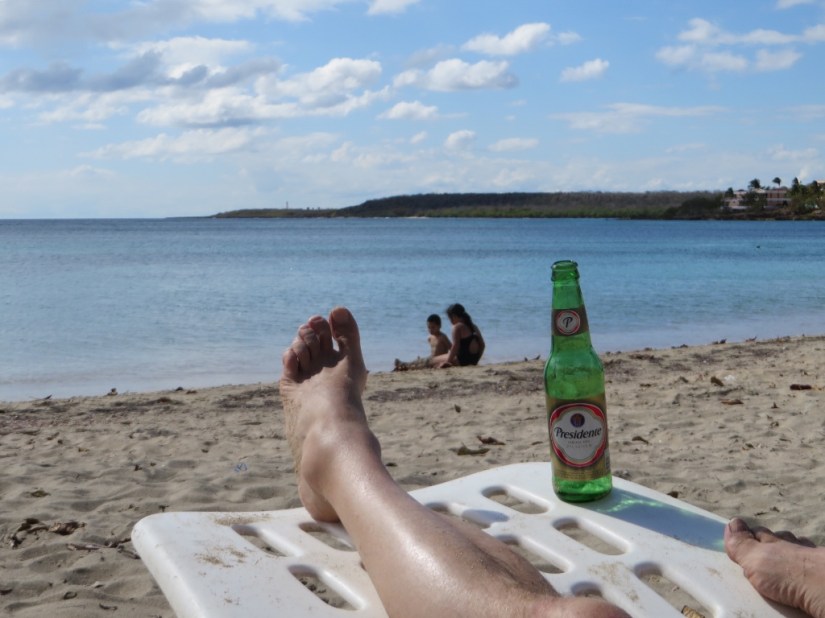
The beach certainly was idyllic, although being pretty unspoilt with just a couple of beach bars, by the time we arrived the sun loungers were taken, but the sand was soft and the sea was azure blue and very warm.

Our trip is drawing to an end, and tomorrow we take the bus back to Havana …

Havana – Vieja and Vedado

Havana Vieja (53)

Well that was a long day, travelling from Baracoa to Havana. We enjoyed a leisurely start, and chatted to Adrian who told us he was a cameraman for the tv company and gave us a copy of a documentary he made about Hurricane Matthew which was very interesting. The flight ended up being delayed by a couple of hours but the waiting room was breezy …

Havana Vieja (4)

… and the plane finally arrived!

Havana Vieja (5)

It was 7.30pm before we got back to Reservas El Cristo in Havana where we were greeted by Fidel as old friends! We found Lamparilla tapas bar just down the road and enjoyed a fusion meal of peanut pesto dip, veggie lasagne, meatballs and roasted veg which made a nice change from rice, beans and salad and returned a second night for burritos and a Cuban dish called Ropa Vieja of shredded beef with peppers and onion which was delicious.

With just two days here, we spent the first continuing to explore Habana Vieja or the old town. The four main squares have been restored as well as most of the buildings down a couple of thoroughfares linking them, with a selection of hotels, bars, restaurants, souvenir shops and small museums.

Plaza Armas is the oldest square, with a leafy centre surrounded by grand buildings, including an incongruous Greek style temple called El Templete on the site of the foundation of Havana and the first mass in 1519 as well as a couple of Cuban Baroque Palacios.

Plaza Vieja is the largest square, with a huge fountain and surrounding buildings including a museum, arts centre, shops and cafes as well as a yet to be restored art Nouveau Palacio in the corner. Children from the school were using the shady part to run races!

Plaza San Francisco was nearest the dock and dominated by a huge convent church and as for the fourth square, we had already visited Plaza de la Catedral at the beginning of our trip.

There are three restored pharmacies in the old town, the oldest and by far the most impressive was La Reunion, opened in 1853 and the largest of its kind in the Americas, remaining in business until 1959. The wooden cabinets, rows of jars and stained glass were impressive and there were cases of old medical equipment too.

Another impressive edifice built on the edge of the old town is the Edificio Barcardi, an amazing 12-storey Art Deco building built in 1930 as a symbol of the wealth of the Bacardi dynasty and crowned with a bat.

Beyond this everyday life continues along roads lined with pretty dilapidated buildings, with people working and shopping.

We saw signs of further restoration, with boards saying works were either sponsored by the state or with foreign investment.

There is so much to do, I can’t believe it will change overnight, but there are signs showing that Havana will be 500 years old in 2019 so no doubt there is a push towards this date.

Hemingway links are everywhere and attract huge crowds of tourists. La Bodeguita del Medio was one of his favourite haunts, the best spot for a mojito, but everyone else thinks so too so we gave it a miss especially as there didn’t seem to be space on the wall for our names …

… but we did pop into the Hotel Ambos Mundos where he lived for a while …

… went up in the original 1920s lift to the roof for the view then left, unwilling to pay £2 each just to see inside his room.

Whenever we travel, I like to check out any films or books to set the scene and never having read Hemingway, I chose a slim one, called The Old Man of the Sea about an old fisherman’s battle with a huge Marlin off the Cuba shores, no doubt drawing on Hemingway’s own experiences as a keen game fisherman. I then read Adios Hemingway, a modern mystery about a dead body found in the garden of Hemingway’s house, years after his death where the detective is an aspiring author and Hemingway fan which was really good. We also watched Cuba with Sean Connery and Havana with Robert Redford, pretty dire films, but both set around the time of the revolution, showing scenes of Cuba and how some of the swanky hotels in Havana would have looked And there were similar references in Our Man in Havana by Graham Greene. Since I arrived, my reading has lightened up – Distant Marvels about Maria Sirena, born during the Wars of Independence with the Spanish and stretching to Fidel Castro’s victorious revolution. Next up Ghost Heart, a tale of two cousins, one who remained in Cuba after the revolution and the other who went to America and their contrasting lives and I have just started Last Dance in Havana ….

Our second day began at the Museo Nacional de Bellas Artes, just in the Cuban section to see how the C20 had shaped the country’s art.

The building itself was a surprise, a very stylish modern space and here is our pick of the collection including Wilfred Lam’s Third World exploring the Afro- Cuban spirit and a Cuban take on pop art from Raul Martinez.

We then crossed El Prado into Centro Habana, which had its heyday in the C18-19, and once contained famous shopping streets. The streets are wider than in the old town, and the buildings far more dilapidated, and in places, the word slum would not be inappropriate. It is hard to be sure if the insides are as bad as the outside, although in places, glimpses suggest they are. We both felt sadly voyeuristic walking through the streets taking pictures.

We headed to the Callejon de Hamel, billed as a public space dedicated to Afro-Cuba with a mural painted by Salvador Gonzalez. It also has shrines and images and references to Santeria, but has also been decorated with reclaimed items in a style similar to a Budapest ruin bar, especially with its cafe at one end. On Sundays there are Santeria ceremonies and rumba put on for the tourists, and we would have visited then if our plane had not been late. We learned no more of Santeria on our visit, but the cold drink was welcome and the alley photogenic!

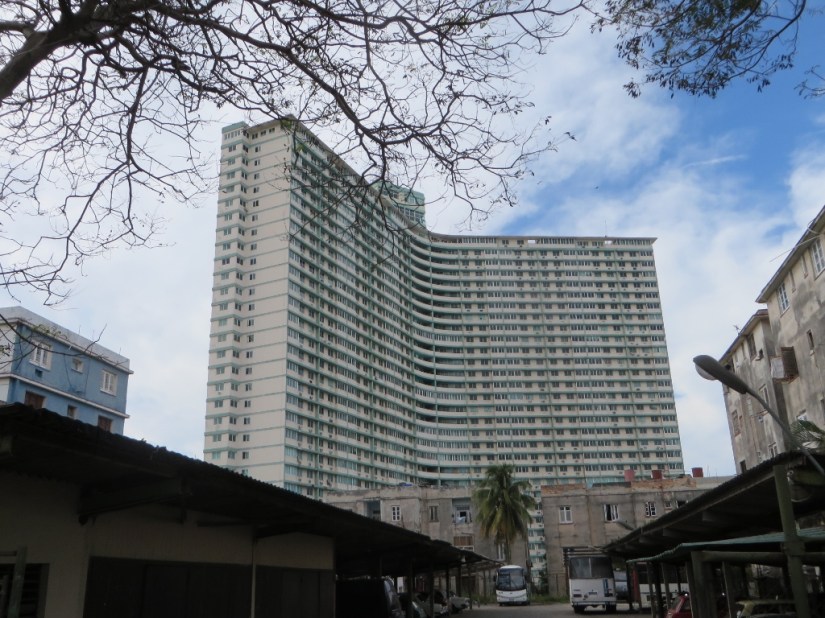
Continuing further we reached Vedado, with tall 1950s buildings …

… one of the tallest being Edificio FOSCA, a Y shaped apartment building which dominates the area …

Havana Vieja (59)

… and La Rampa leading to the sea.

Havana Vieja (60)

This is also home to the flagship branch of Coppelia, a national chain of ice cream parlours. It is like a spaceship which has landed in the middle of a leafy park, and was designed in 1966 to be within the price range of every Cuban. It serves over a thousand customers a day, and people queue for an hour to be served. We walked round and took some pictures but this area was only for those with national pesos … despite its egalitarian aims, tourists have to use the fast track queue, pay in CUC and sit apart!

On balance, the ice-cream at Helad’oro, a tiny parlour in the old town offering Cuban flavours at a CUC a scoop, including pina colada and mojito as well as exotic fruit like guanabana was far better.

For years Havana was America’s tropical playground and most of the fabulous hotels built by the Mob still exist here in their original splendour, due to benign neglect and recent restoration. These include the The Hotel Nacional de Cuba overlooking the sea and built in 1930, which blends Spanish, Moorish, classical, and Art Deco elements in its imposing design …

Havana Vieja (53)

Havana Vieja (54)… The Havana Libre, once the Havana Hilton which was the largest hotel in Havana when it was built …

Havana Vieja (64)

Havana Vieja (61)

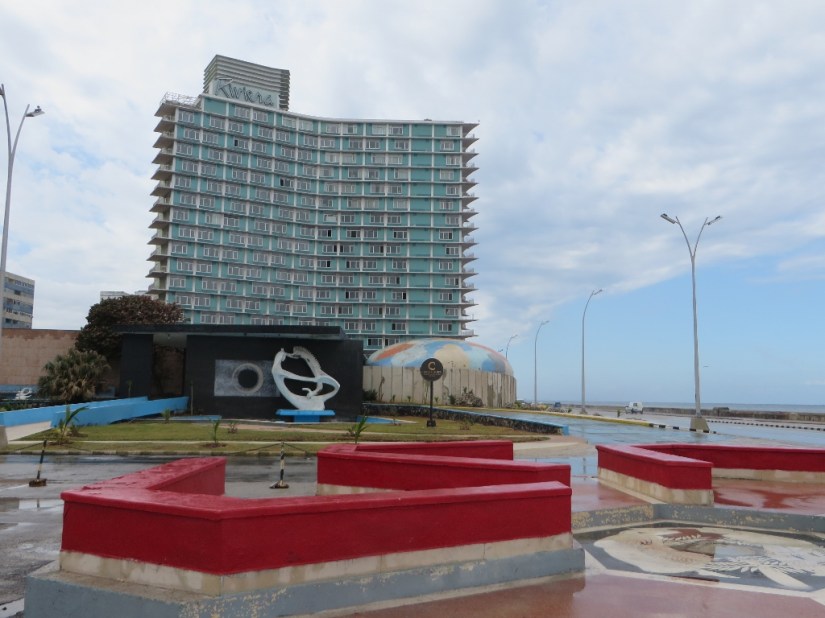
… and The Havana Riviera which is now the best-preserved example of a swank 1950s resort hotel in the world.

Havana Vieja (84)

Havana Vieja (83)

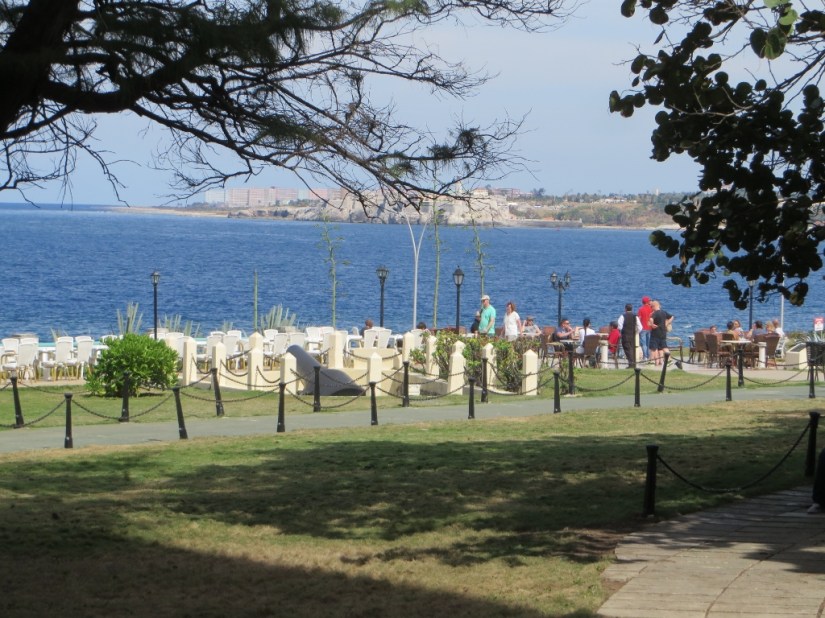
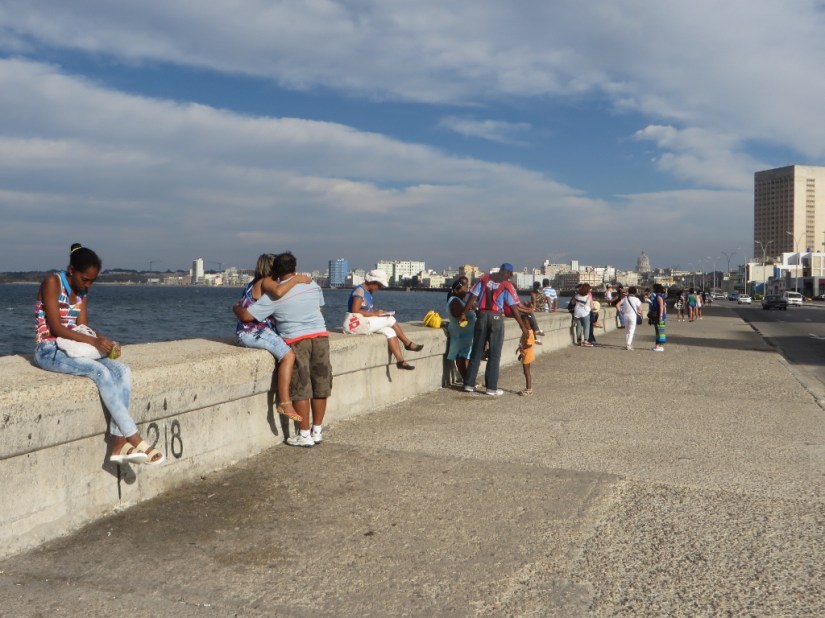
Several times, we were offered an hour touring the city in a convertible American car for CUC$50, but having already had several great American car experiences, we decided to stick to walking and ended the afternoon with a stroll back along the Malecon from the Hotel Nacional to La Punta. It is lined with sections of Neo-classical buildings, once colourful maybe, but now more candy-coloured and some more weather-beaten than others, punctuated with a park, a couple of inventive cafes and the odd 1950s tower. As we walked, we watched people enjoying the sunshine, the cars whizzing by and a cruise ship leaving port.

Havana Vieja (70)

Havana Vieja (76)Havana Vieja (73)

Next day, we awoke to pouring rain, but it stopped after breakfast. The Lada which took us to the bus station drove along the Malecon, so we got our classic car experience in Havana after all!

This time, we are travelling westwards!

Baracoa – Christopher Landed Here

We had to be up early for our bus which left at 08.00 … not the best plan after having spent too good an evening with ron the night before! The road took us across to Guantanamo, close to the Bay and controversial US military prison and Naval Base. Quite why tourists want to make a 25km detour to get a glimpse of a base another 20km away across the bay with binoculars is beyond us, so we will not be making a stop here! We then went along the rocky southern coast for a while, before turning inland and up over the mountains, travelling quite a long way round steep switchbacks.

We are staying at Casa Adrian, and have a first floor room with a balcony and chairs at the front overlooking the street as well as a rear terrace interestingly decorated with a mural where we’ve enjoyed some lovely meals.

The windows have louvred shutters and no glass and with two doors as well, there is a good breeze. The family are so friendly and while we are managing with a bit of Spanish and a bit of English, it would be nice to be able to chat properly. They too have been able to charge the iPad during our stay and the wifi in the plaza works well.

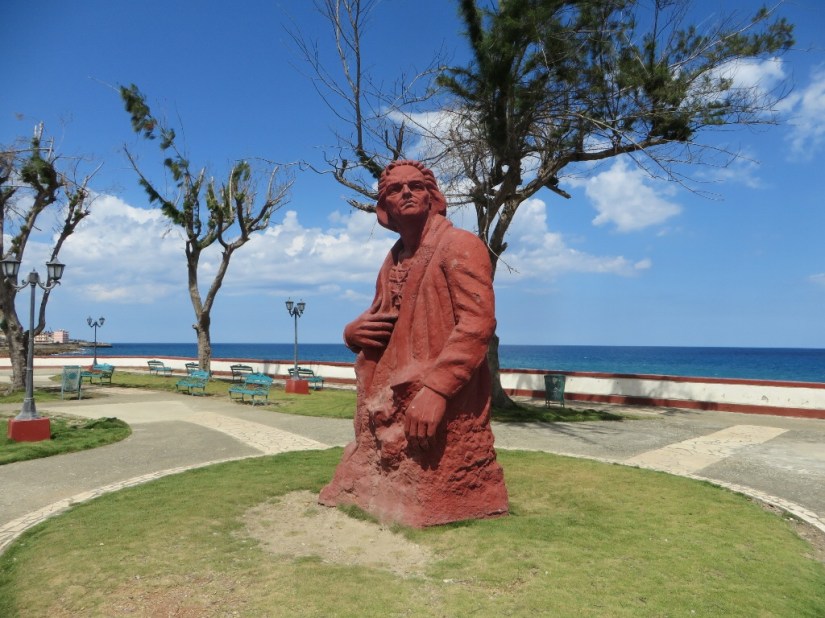
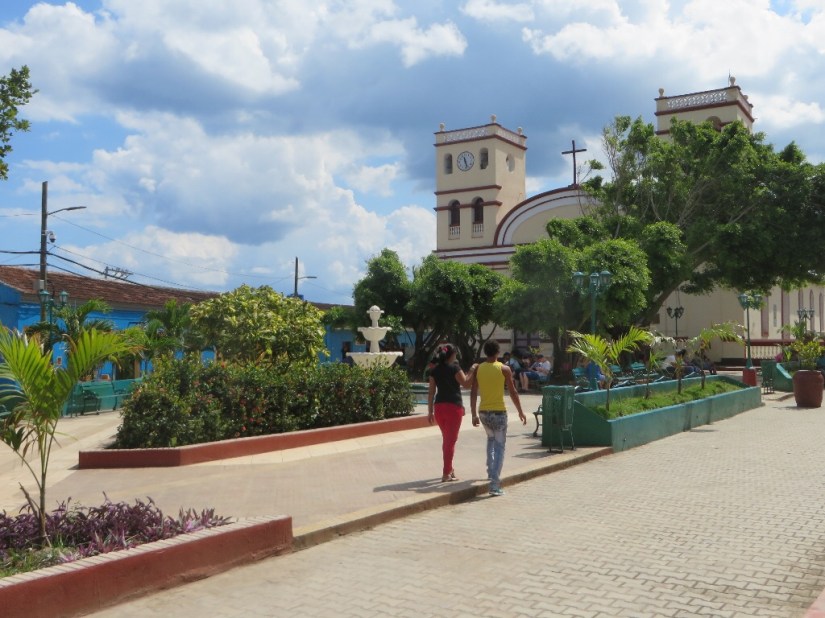
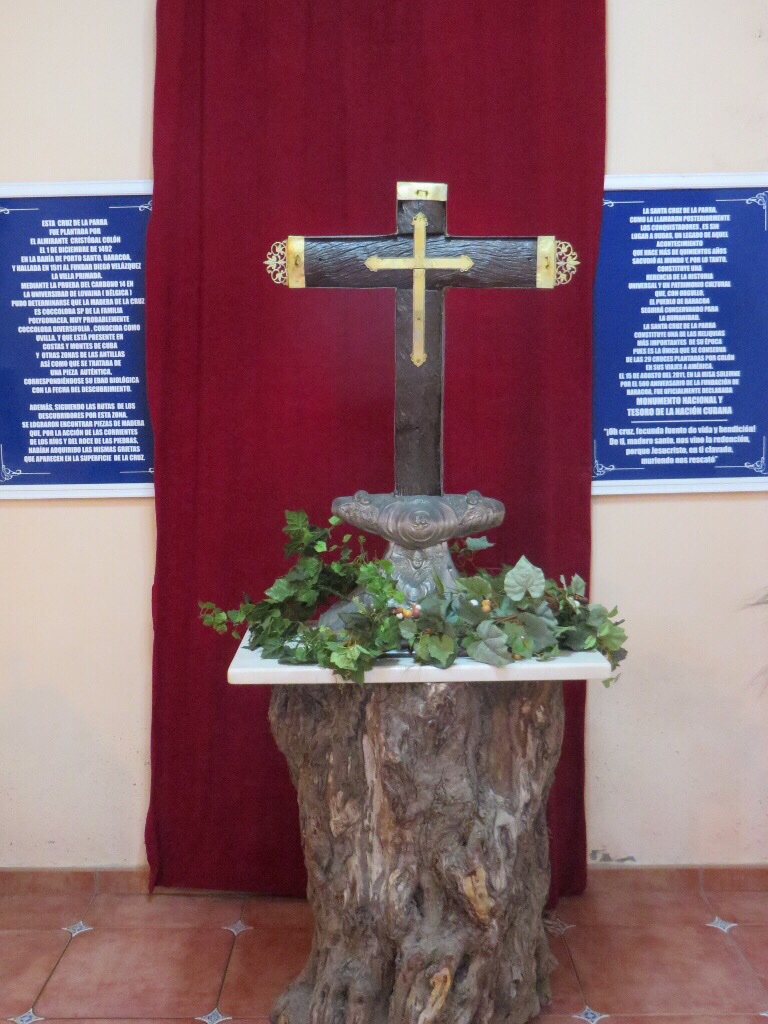
Baracoa was the first town to be established in Cuba, founded by Diego Velazquez in 1511 on the spot christened Port Santo by Christopher Columbus in 1492 and where legend says he planted a cross called La Cruz de la Parra, an antique cross brought from Spain and the most important religious relic in Latin America, which is on display in the cathedral.

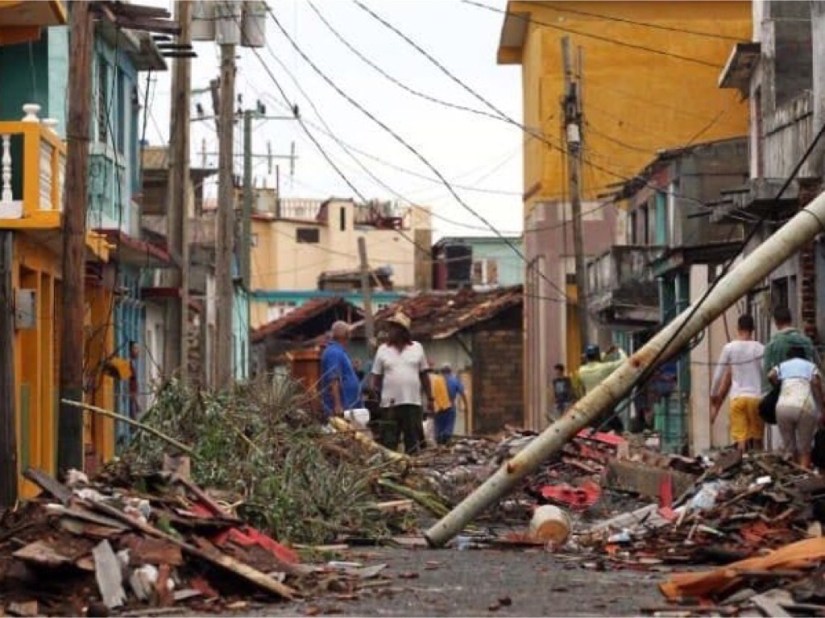
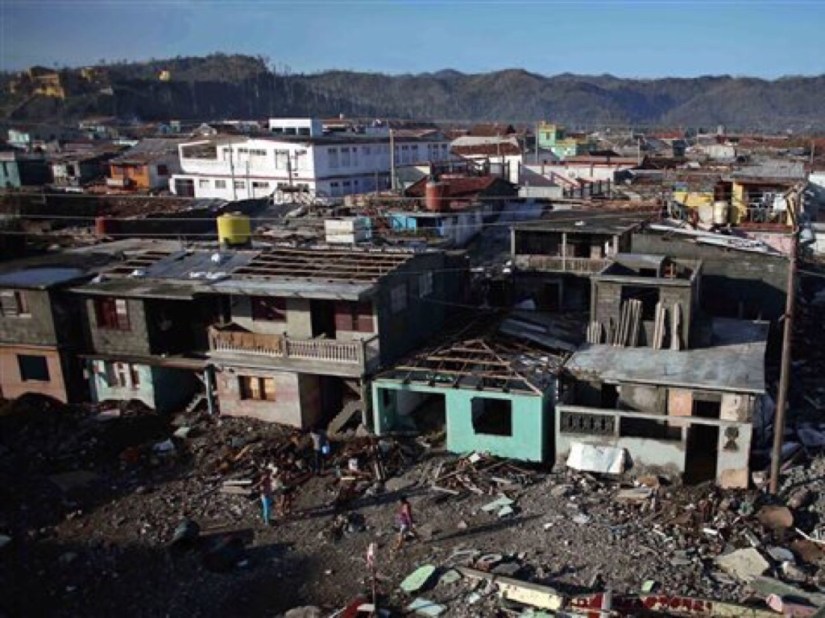
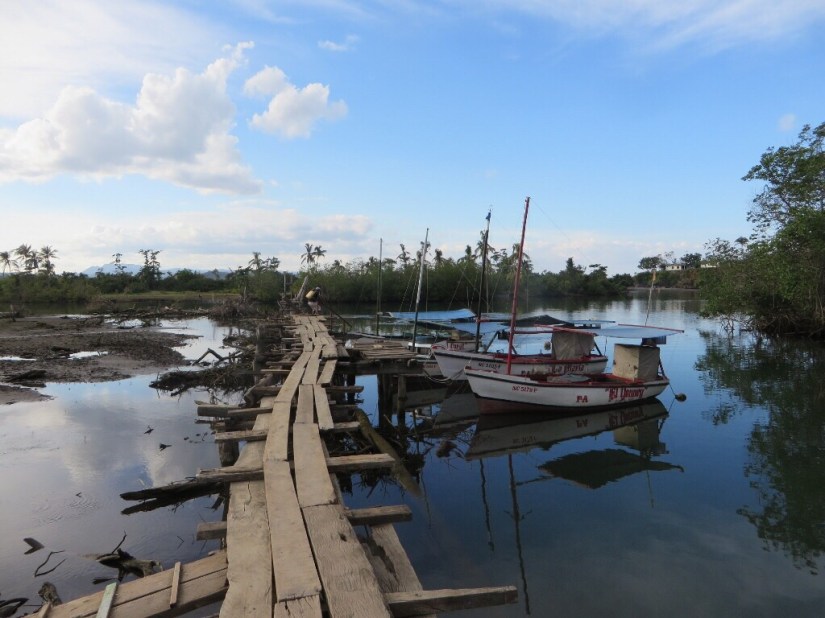
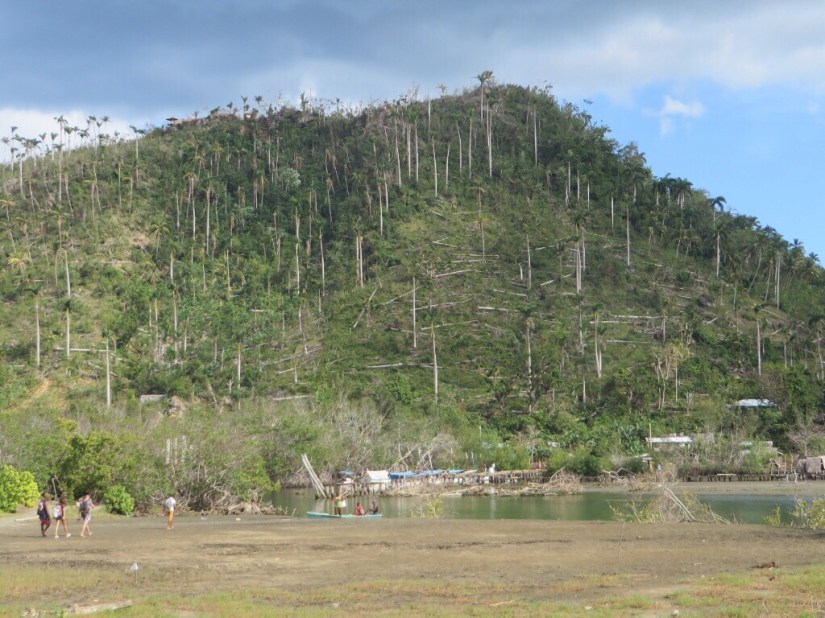
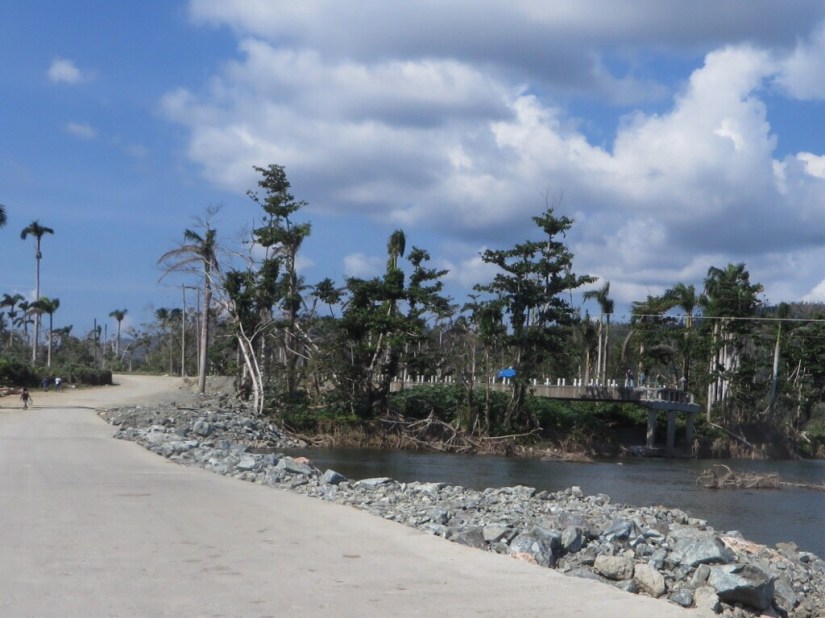
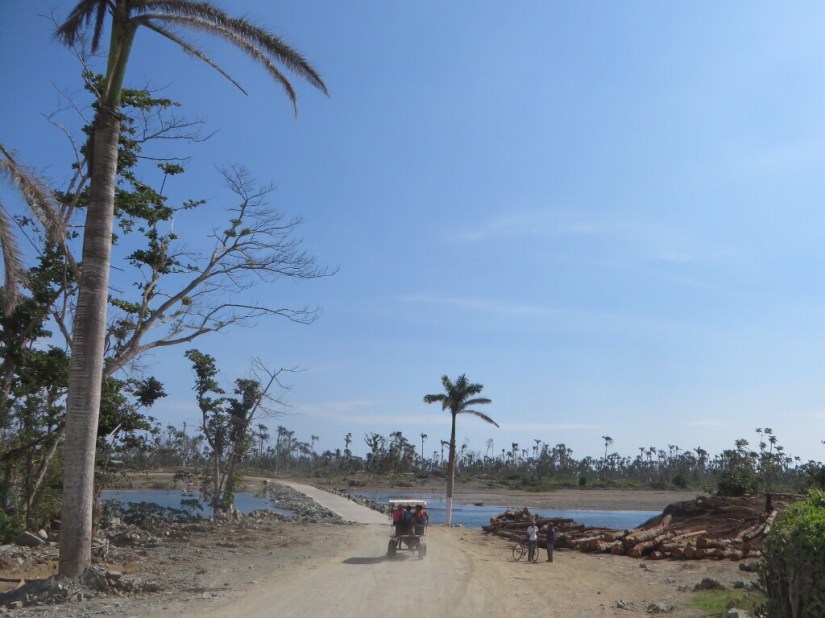
In October last year, Baracoa was hit by Hurricane Matthew, with winds of 140mph and 16ft waves.

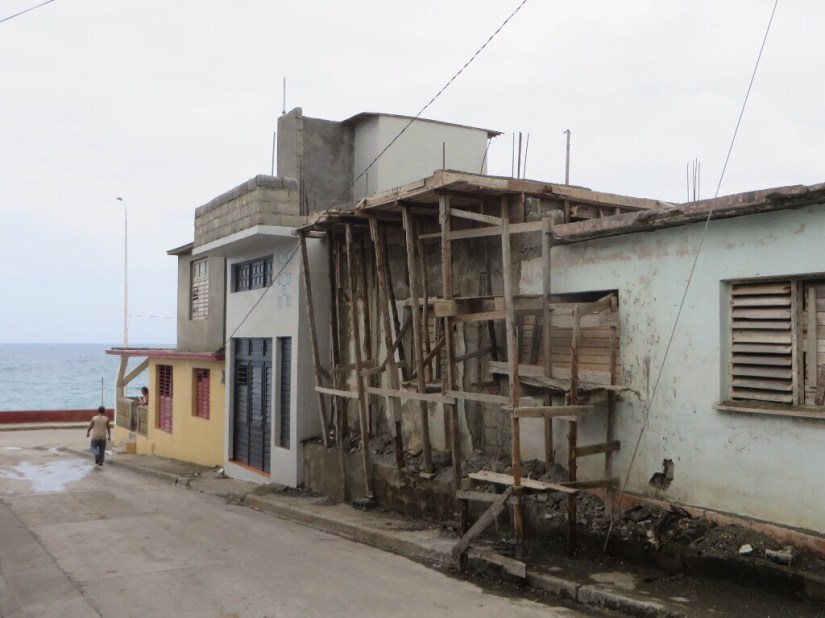
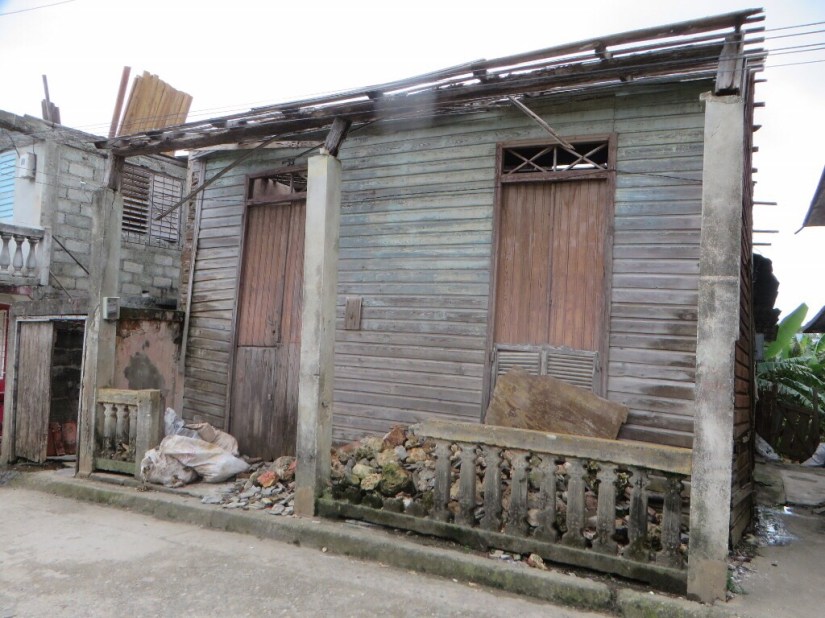
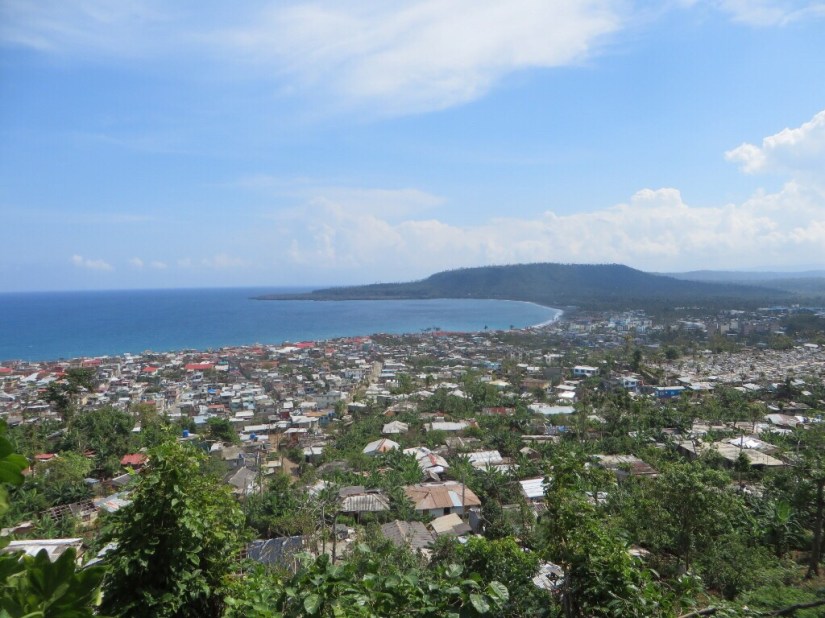
A rigorous evacuation scheme meant no lives were lost here, but most of the buildings were damaged, many losing their roofs, and plantations and fields were damaged, only adding to damage from a previous hurricane in 2008.

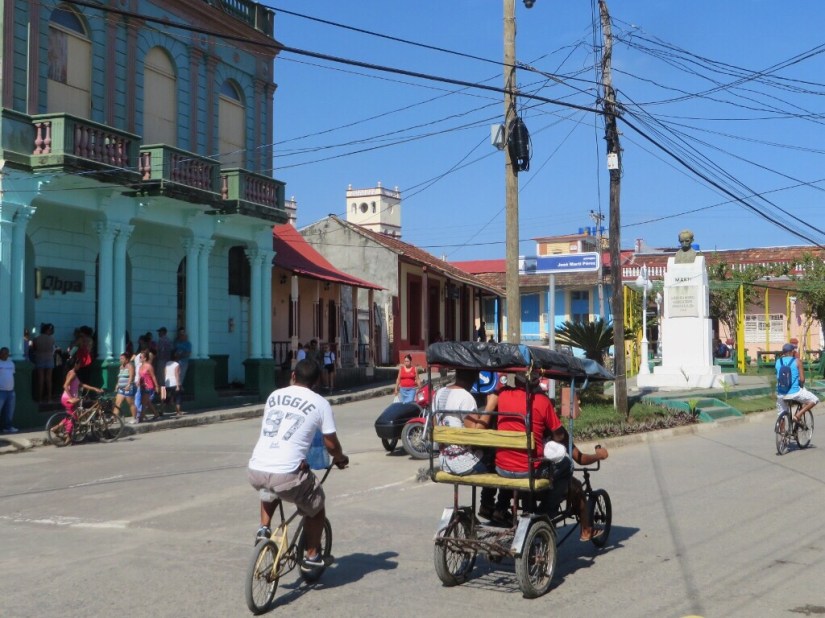
The centre of town is pretty recovered, and freshly painted with references to the Taino, the indigenous people, who came originally from South America, including a bust of the chief Hatuey, billed as The First Cuban Rebel, who fought against the Spanish conquistadors and was killed by them!

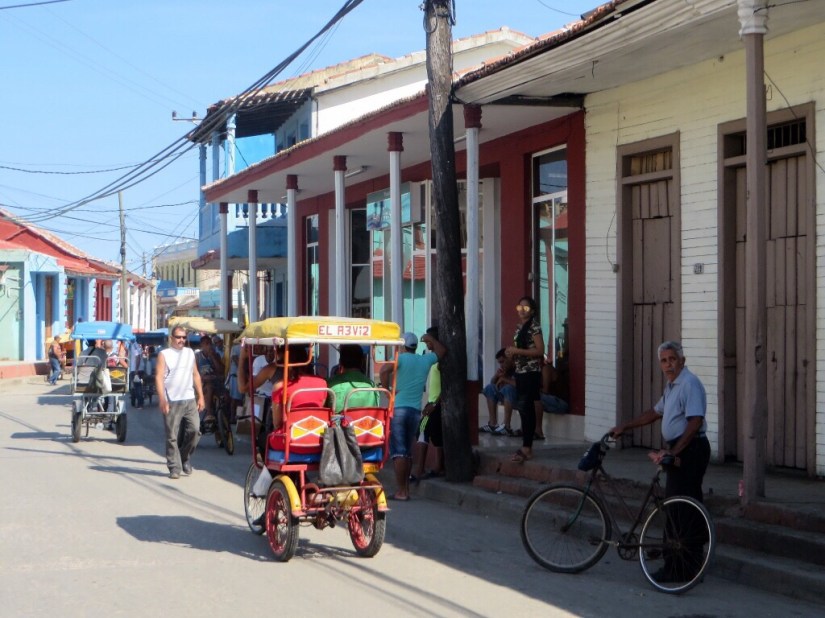
Encircled by mountains and so far from Havana, Baracoa is a sleepy place, where the inhabitants pace themselves slowly in the heat. The town is quite flat so there is far more pedal power rather than motorised transport.

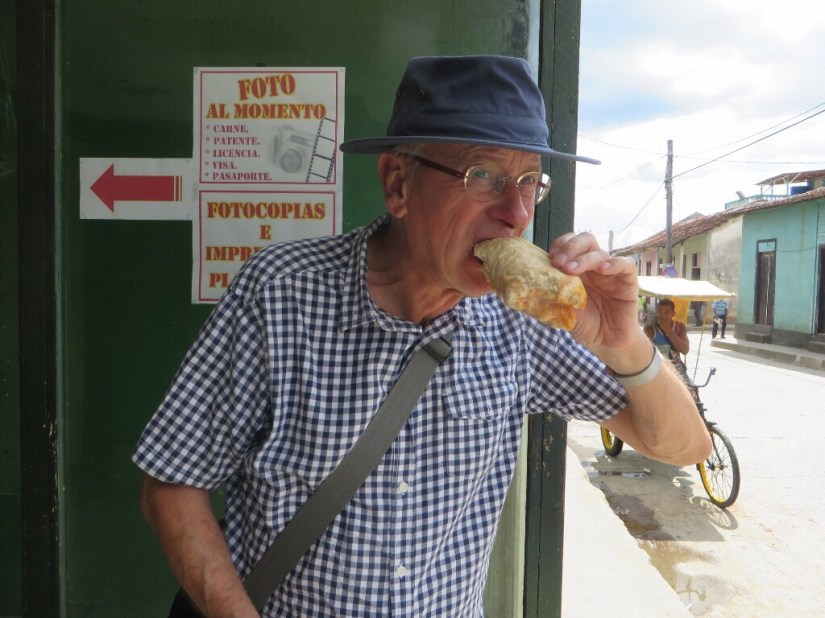
Chris was delighted to see several places offering pizza, the size of your hand, with cheese and tomato sold in a fold of paper from a kiosk, for which he really needed local currency, but having paid 1CUC$, he received 18CUP$ back, so his pizza was less than 25p!

The houses are close together, and with freely ventilated homes, noise travels easily … voices, music, cats, dogs and chickens and people starting their chores early. nonetheless, the sound was generally soothing and constant. In the evenings, the main draw is the Casa de Trova for music and the Plaza generally for gathering. The more we wandered down side streets, the more devastated homes we discovered.

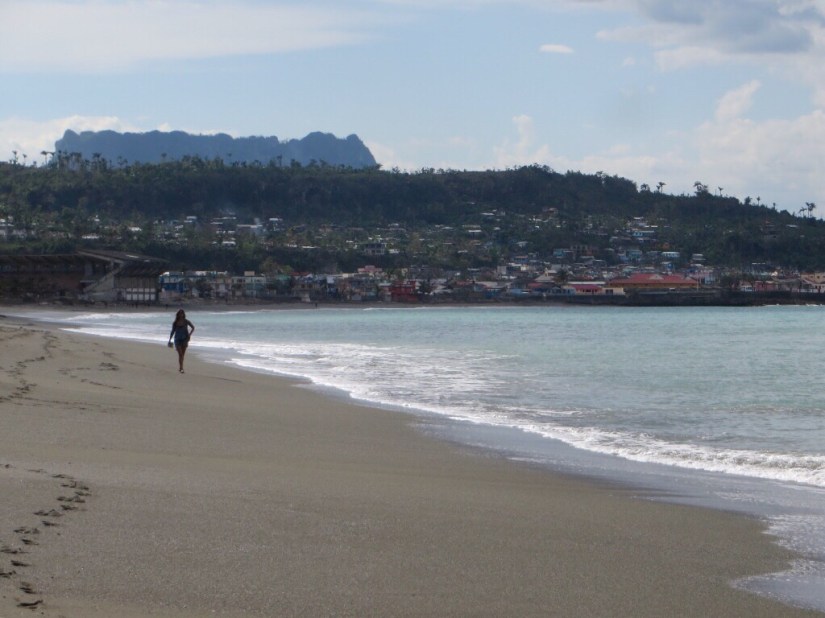
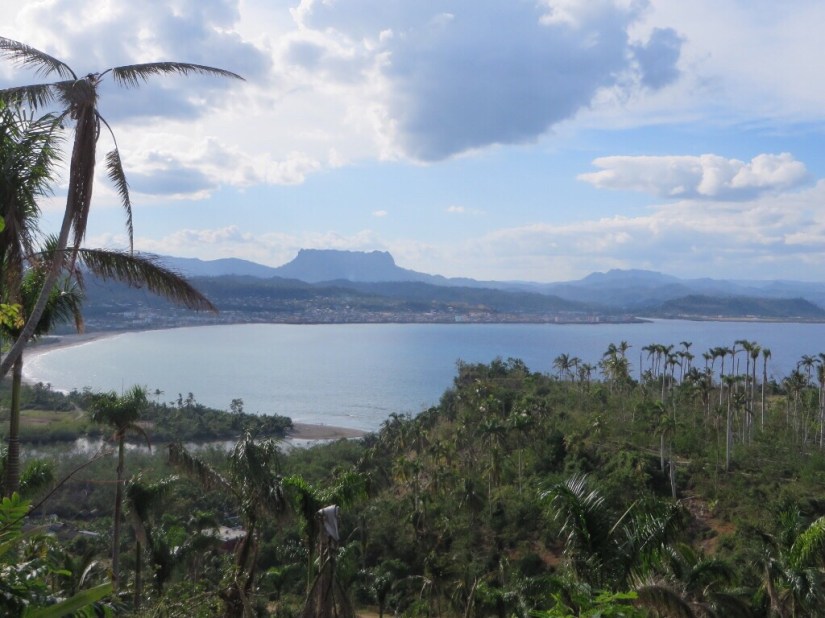
Onwards is the Playa Boca de Miel, a stretch of dark but clean sand extending towards the headland. We followed some people down a path at the back of the beach to a small inlet where a man in a rowboat was ferrying people to the other side. Intrepid as ever, we took the boat and then paid to visit the mirador above, but halfway up we reckoned we had a good enough view, with El Yunque, the symbol of Baracoa, a huge slab of a mountain rising up behind the town. Even Columbus noted it ‘a high square mountain which seemed to be an island’.

Later we walked up to another mirador with a view the other way, across to the headland.

We had another amazing American car, this time a 1953 Cadillac, to take us to Playa Maguana for the day, the same vintage as Chris!

The road was pretty rough, and took us over several bridges over inlets and we continued to see more broken palms and debris in the fields.

The bridge over the Toa was destroyed by Hurricane Matthew and a temporary one has been constructed until the bridge is rebuilt.

The beach was beautiful. There was a small cafe providing sunbeds and drinks and they took our lunch order for later on!

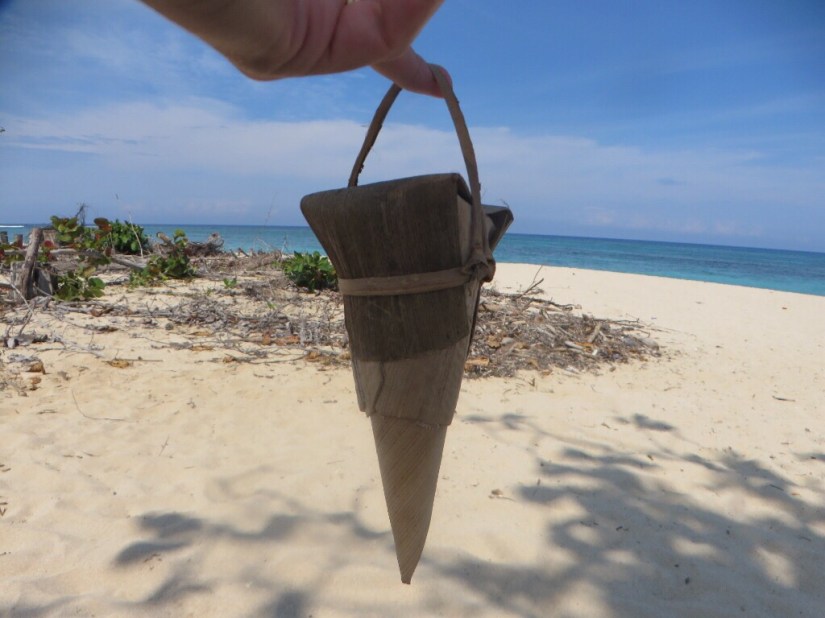
We wandered along the beach and were sold a couple of local delicacies, one a coconut and chocolate bar made from local cocoa which was very nice and cucurucho, a mixture of orange, coconut, guava and lots of sugar which was horrid but sold in a very cute palm wrapper!

Our lunch and a table was brought to the beach and we had huge prawns with salad and a perfect sea view.

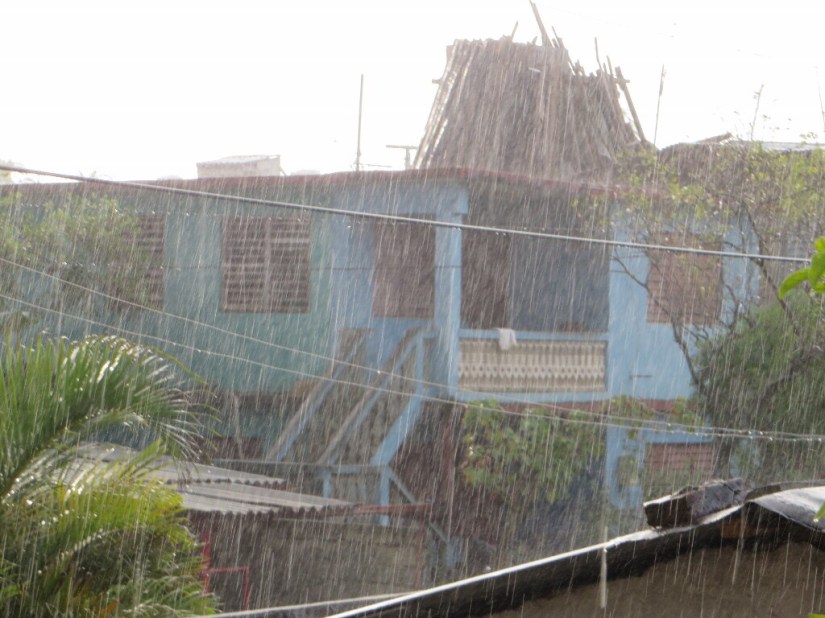
Plans for our last day were changed slightly by the weather, which up until now has pretty much been sunny with a little cloud and warm everyday. It is certainly more humid here in Baracoa and a tropical downpour during the night and this morning was hardly a surprise.

It looked like there might be more rain and in any case, the ground was very wet, so we decided not to go hiking round El Yunque. Instead we photographed rain and drank hot chocolate made from local cocoa beans then once it stopped, went into town to photograph puddles!

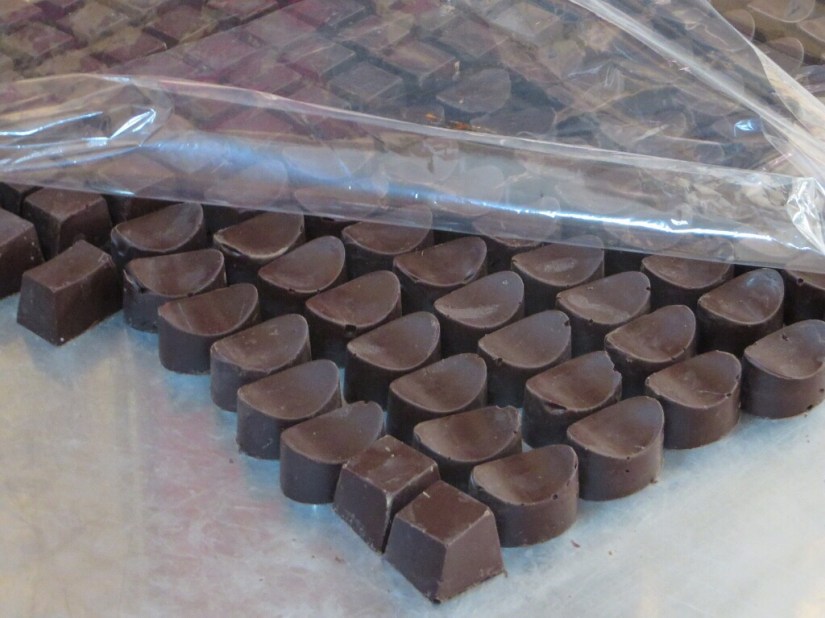
We visited the chocolate shop, where we bought some cubes of chocolate in a twist of paper … very good chocolate flavour, but not really packaged for souvenirs … obviously missing a trick there!

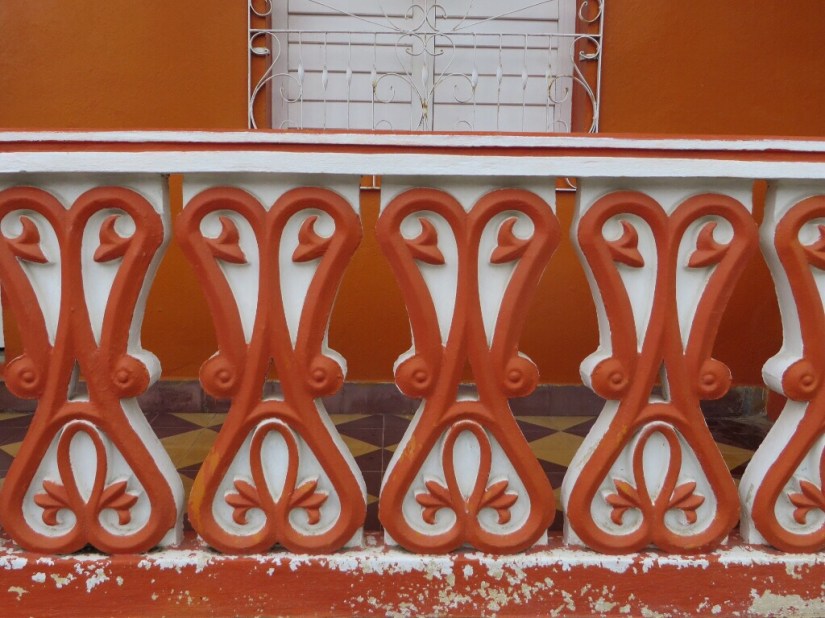
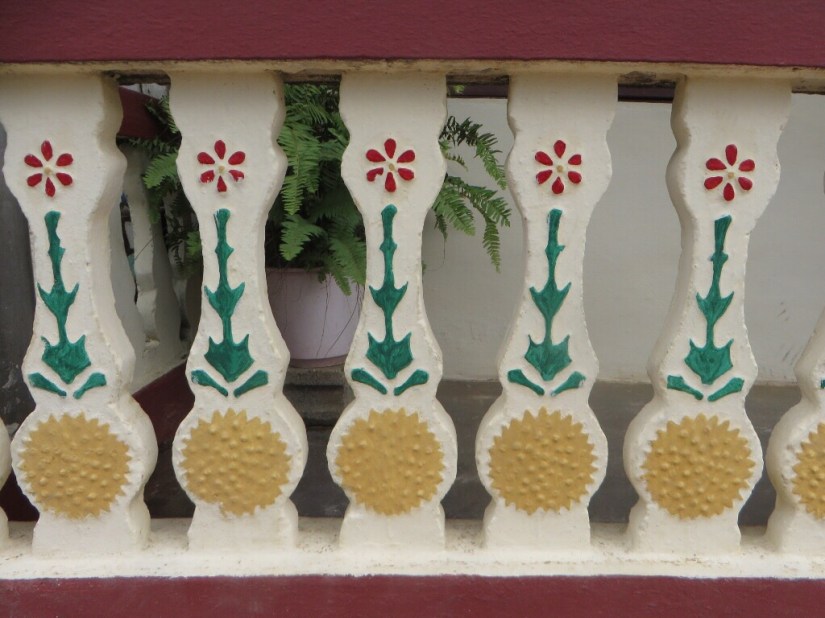
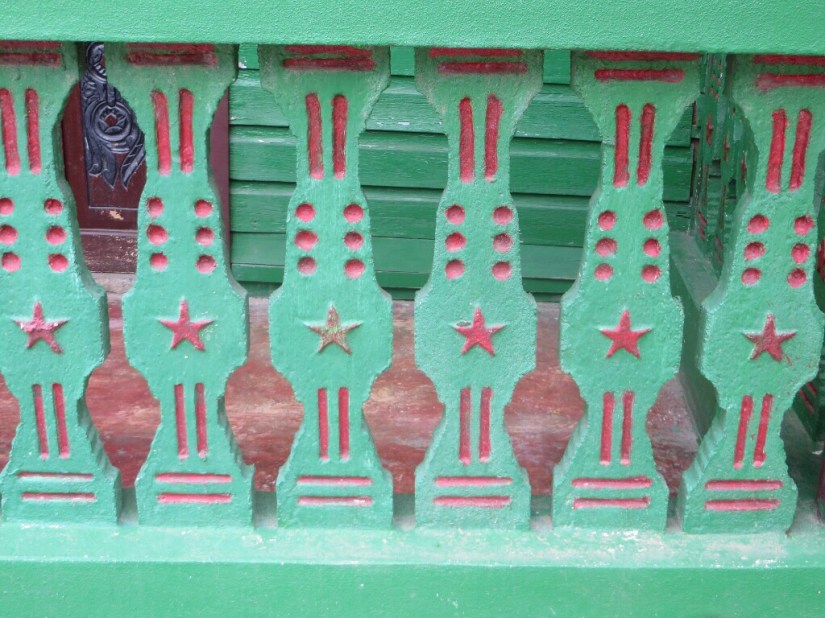
Just shows, sometimes you need a little time on our hands to notice things … a little like the variety of painted concrete balustrades I found in town on the way back!


We confirmed our flight back to Havana tomorrow, which is leaving a bit later than we expected, but that just gives us a lie in rather than an early start so that’s nice. Between now and then maybe a visit to the Casa de Trova and a mojito, dinner at the Casa … another mojito … !

Santiago – Cradle of the Revolution

Santiago (6)

Seven hours is a very long time to sit in a bus … even if it is comfortable! On our way east, about halfway, the land looked richer and everything greener. Fields were encircled by hedges of cactus and there were more palms. The land was irrigated and cultivated with a variety of crops including huge swathes of sugarcane punctuated by fields of bananas. The sun set around 6pm and we didn’t arrive in Santiago till 9pm so the last part of the journey was in the dark.

We were met by a taxi driver with a 1956 green and white Cadillac and as we drove down the street, we thought we saw the Danish couple we had chatted to on the bus in the little red Lada in front. At Casa La Ceiba, we met Orestes and his wife who showed us our apartment and then took us over the road to their restaurant for dinner, only to find this was where the Danes had ended up! We chatted over dinner and I had slow-cooked lamb for the first time in Cuba and it was delicious.

Santiago (20)

In fact we spent two more evenings eating here, one with Nethe and Johnny who were visiting from Copenhagen and celebrating their 12.5 year wedding anniversary, when we downed rather too many rum cocktails, and also our last night and all the food was very good, including the lobster.

Santiago (25)

The other evening we went to Roy’s Terrace which was recommended in Rough Guide, and found ourselves entering a house, being introduced to Mama in the kitchen then being shown up to a beautiful roof terrace adorned wIth ferns, orchids and lanterns which was really magical. We had the veggie and chicken set menus which were very good.

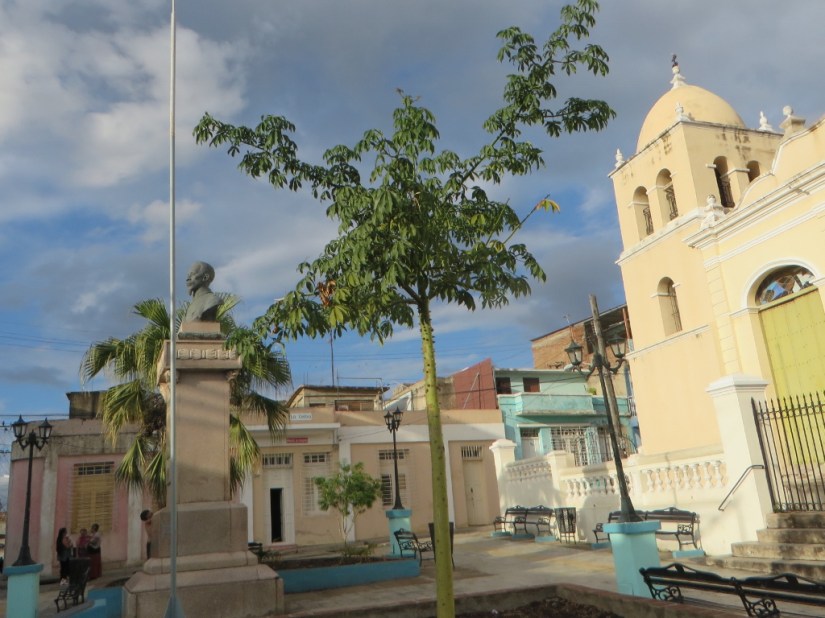
The Casa is named for the ceiba or kapok tree in the square outside, which has Cuban religious significance and been worshipped with rites and offering since the C18.
Santiago (23)

The original tree was some 300 years old, and recently died of old age, now replaced by a young sapling. The other room in the Casa isn’t taken, so we are very lucky to have the lounge and courtyard to ourselves, as well as our room. The other serious bit of luck was that Orestes has lent us a cable adapter to charge the iPad so for the time being at least, we are all systems go!

One afternoon, the heavens opened and the rain poured, but before long it was over, the street was dry and the local children were back playing in the square.

Santiago (21)

Santiago is maybe the most Caribbean part of Cuba, and Afro-Cuban culture with its music myths and rituals has its roots here. Added to that were the French planters and their slaves who moved here after the revolution in Haiti in C18 and found the mountain slopes perfect for growing coffee. This has created a city with a rich mix of inhabitants.

The city was hit by Hurricane Sandy in 2012, which wreaked havoc. Some 200,000 homes were damaged, 15,000 people lost their homes and 11 people were killed. While recovery was pretty fast, especially in the historic centre, even now it is obvious that the city lost most of its mature trees.

Santiago played a major part in the wars of independence from the Spanish and continued to be a centre of dissension. In 1953 Fidel Castro chose Santiago for his debut battle against the Moncada barracks in Santiago, which proved a fiasco but brutal reprisals and the imprisonment of 32 rebels including Castro, led him on the path to leadership of the Revolution. In 1959, the victorious Casto delivered his maiden speech from the town hall in Parque Cespedes. When Castro died in November aged 90, there was a nine-day mourning period then his ashes were interred in Santiago – The Cradle of the Cuban Revolution.

We wandered down the main shopping street, where for the first time we saw Puma and Reebok shops rather than just Cuban stores, although I shouldn’t think the trainers would be within the reach of many at CUC$75 a pair.

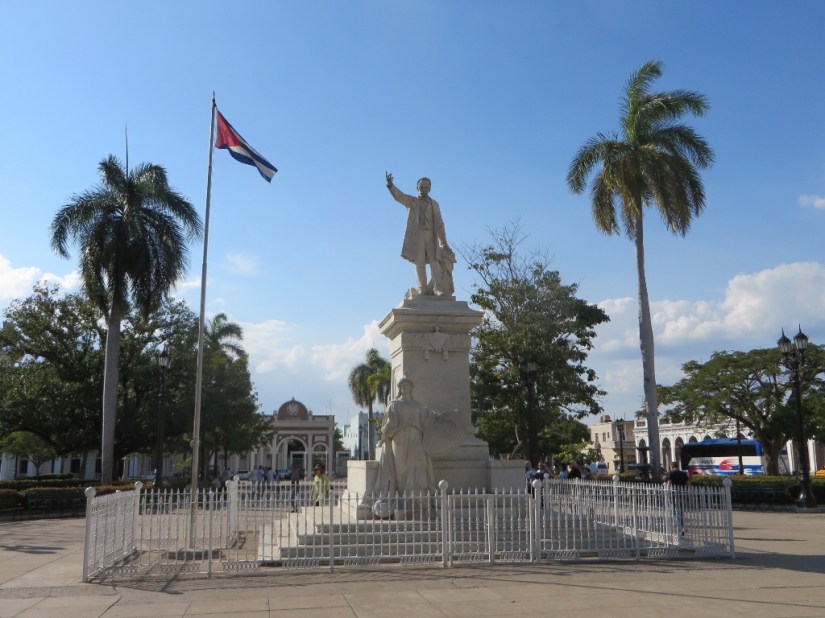
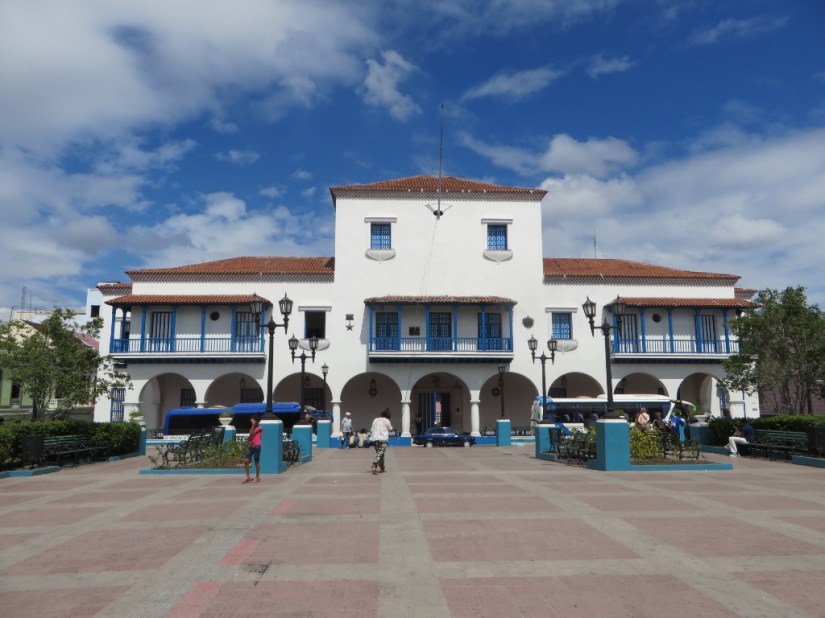
Reaching Parque Cespedes there was the Cathedral on one side and the town hall on the other where Fidel Castro made his first speech to the Cuban people from balcony announcing the fall of the Batista regime.
Santiago (8)

The C16 Mudejar style house once belonging to Velazquez, the first conquistador of Cuba, contained a courtyard round a well, wooden screens, frescos and beautiful cedar ceilings called Alfarjes.

The Balcon Valazquez gave views across to the sea.

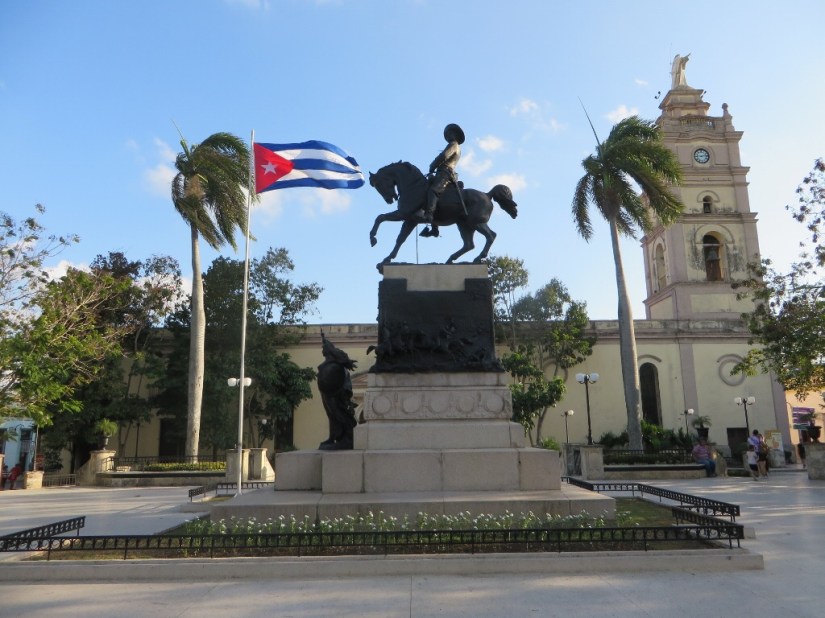
We walked through a less touristy part of town to Plaza Marie, the previous site of executions by the Spanish and now the site of a monument to veterans of the Wars of Independence. The smurf-like cap is actually the gorro frigio, given to slaves of Ancient Rome when they were granted their freedom and a traditional symbol of Cuban independence. We continued to the site of the Moncada Barracks, now a school, but still with a castellated and turreted wall surrounding it.

Carnavel in Santiago is a huge extravaganza, with four days of processions with floats, costumes, music, dancing and conga parades. Since we won’t be here in July, it was good to look round the the Museo del Carnavel which contained various photos and exhibits from previous years.

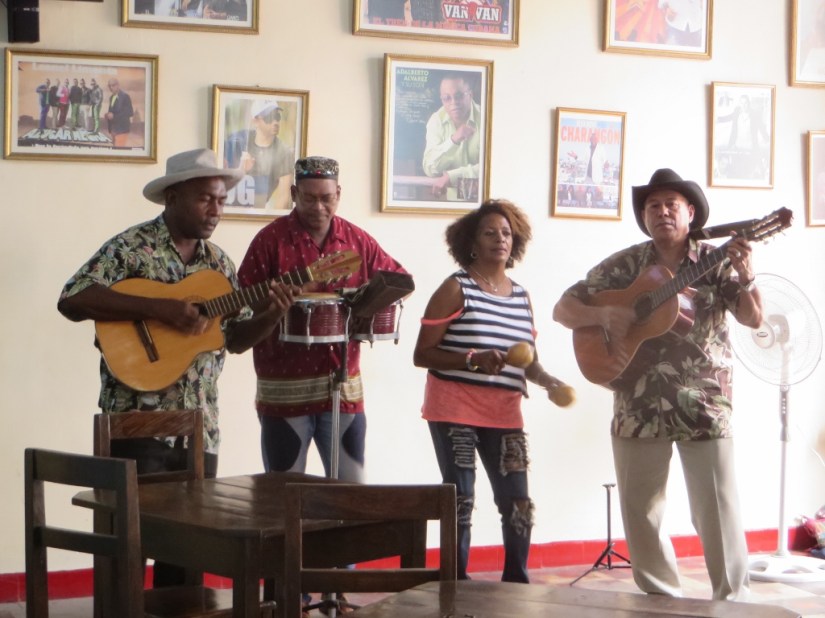
Needless to say, you can hear music everywhere here and we were drawn into the Artex bar by the sound of son and stayed for a beer.
Santiago (13)

Strangely, there was a mural of Parque Cespedes with polar bears, but we couldn’t get an explanation except it was crazy! We also returned another day for the early evening set, played by a band of women, and watched a group who had obviously been learning to salsa for much longer than us, try out their moves to the music!

Santiago (14)

Rum dates to the early 1500’s but it was pretty rough stuff, however a new technique of distillation introduced by Facundo Bacardi in Santiago in the 1860s involving filtering it through charcoal and then ageing it in oak barrels made it eminently more drinkable. Bacardi’s wife suggested the bat insignia which signifies good luck in local folklore and proved a good marketing tool as illiterate Cubans could recognise the brand.

Santiago (41)

The company and the family went from strength to strength and their politics went in tandem with their business needs. They pushed for independence from Spain, allied themselves with America and later opened office in New York. The Revolution, with its aim of redistributing wealth to the poor, was not in their interests at all and in1960 their main distillery was nationalised and their Cuban assets seized so the company shipped out of Cuba to the Bahamas where it remains today. Havana Club is now the most noticeable brand of rum in Cuba, with the youngest called Silver Dry used for cocktails and more aged rum drunk neat and highly prized. There is a Museo de Ron which explained the process and we looked round, seeing some production equipment and we were given a taster of the local 7 year old Santiago de Cuba rum.

Like all museums here, there is barely a word of English, but the charge to look round most places is only a $CUC or two. The one place you can still see the word Bacardi in Santiago, is on the front of the huge museum one of the Bacardi sons built to house his collection of art and artefacts.

Santiago (15)

Since we arrived in Santiago in the dark, we hadn’t realised how magnificent the surrounding Sierra de las Gran Piedra mountains were! We took a taxi some 15km up switchbacks, with a stop halfway to check the car wasn’t overheating!

We then climbed 459 steps to reach The Big Rock, some 1234m above the city, where there were slightly misty views in every direction, and the freshness of the air was really noticable.

Santiago (28)Santiago (29)

Talking of fresh air, I seem to have caught a bit of a cold, maybe from the AC in the bus, but returning to town, it was even more noticeable than usual the price to be paid for all these cute classic cars … the horrendous pollution. You can just see huge clouds of black smoke puffing out of the back of many of the vehicles and the fumes seem even worse in the centre of Santiago, maybe because it is hilly and there are more vehicles, or the humidity or just my extra sensitive nose but whichever, I’m sneezing at every turn!

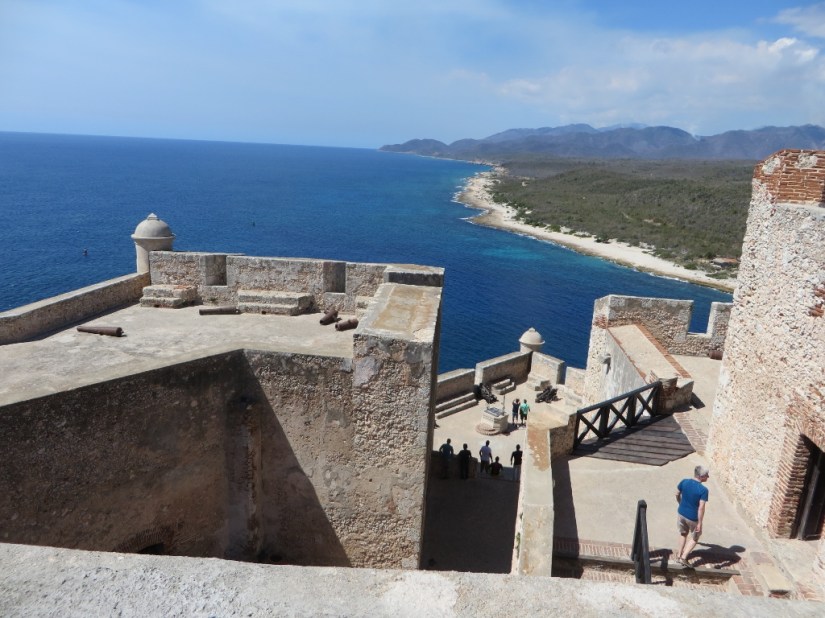
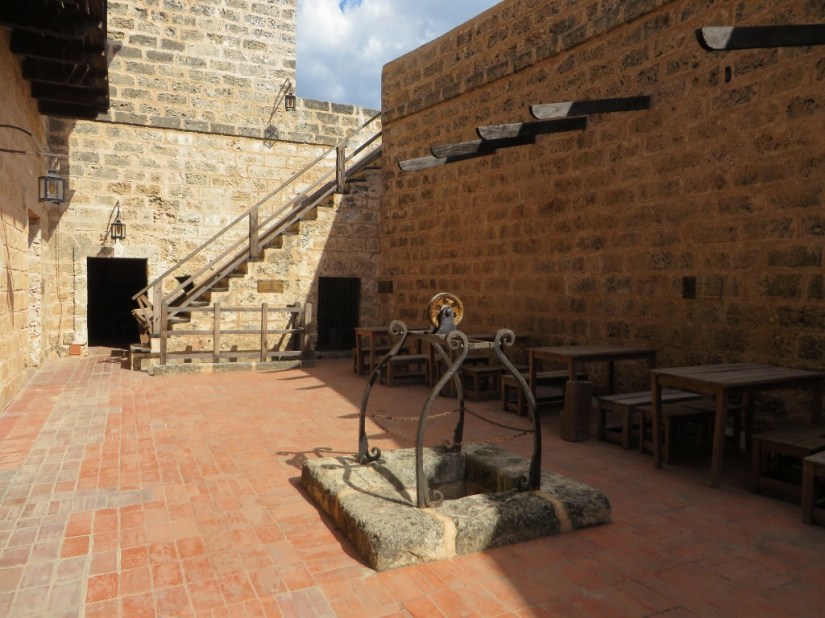
Our last day in Santiago we took a taxi to El Castillo del Morro which was built in the C17 to ward off pirates. It’s huge, with a drawbridge, moat and thick walls … seemingly impregnable, however an English pirate called Christopher Myngs captured it when he found it left unguarded … they’d obviously all gone down the local for some ron!

Santiago (49)Santiago (50)Santiago (52)Santiago (53)

We then drove round the headland and took the 15 minute ferry to Cayo Granma, an island that takes just 20 minutes to walk round.

We found a small terrace restaurant for a romantic lunch …

… wandered around and got the ferry back.

Fortunately the taxi was still waiting for us …

Santiago (54)

… and on our return to the main square, Valentine’s Day was in full swing … although he had spotted some clues through the day …

Tomorrow we travel eastwards again …

Camaguey – City of Legends

We arrived at the bus station by tricycle for our first time on a Viazul bus … a long journey of 5.5hrs … so fortunately the bus was comfortable and the roads reasonable!

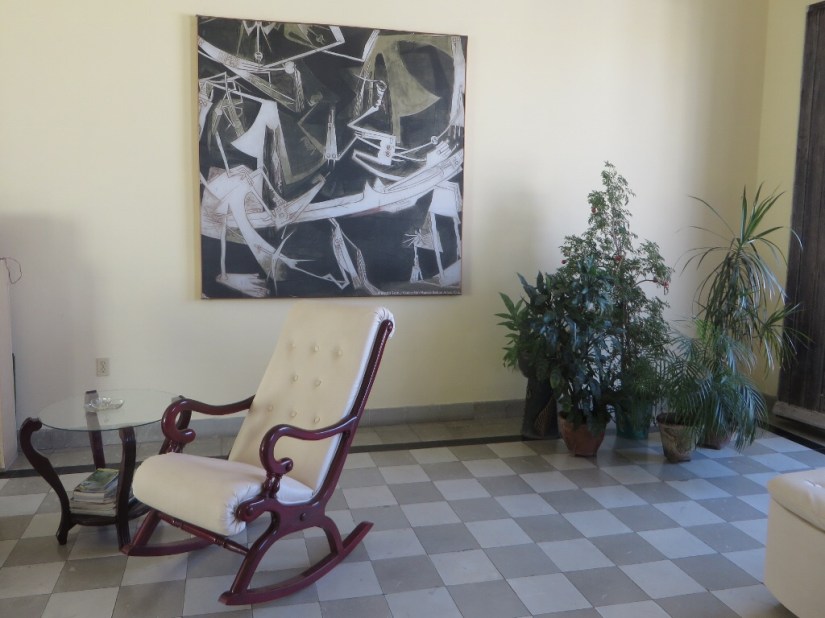
We drove eastwards, along the line of the Sierra del Escambray mountains until Sancti Spiritus where they stopped, and from here on the country was completely flat, with grazing and agricultural land, farms and the odd town. We stopped halfway for 30 minutes to stretch our legs and arrived in Camaguey at 15.30. A taxi collected us and took us to CasaAlta, where Orlando and his wife, both professors, were waiting for us in their lovely colonial home and showed us our huge comfortable room. Obviously fans of modern art they have a picture by Wilfred Lam, a famous Cuban artist born in 1902, on the wall in the lounge.

They prepared us a lovely meal of eggs, prawns, salad and rice and beans, and later we had a couple of mojitos while listening to the band at the Case de Trova.

Camaguey has a maze of narrow cobbled streets, built in an attempt to confuse marauding pirates who plagued the rich city, including Henry Morgan – the terror of the Caribbean seas – who actually occupied the city for several days and locked the town elders in the cathedral to starve them into revealing where there riches were hidden.

There are a couple of churches, each with creation legends. One day a cart got stuck in the mud and in an attempt to free it, a box fell off and smashed revealing a statue of the Virgin and Iglesias de la Soldad was built on the very spot.

As for Iglesias Nuestra Senora de la Merced, it just emerged one day, shimmering from the lake, complete with priest beckoning from the portal! It stands in a plaza with a ceiba tree outside.

The town’s main social centre is Parque Ignacio Agramente, named after one of the local heroes of the first War of Independence with the Spanish and the palm trees in each corner were planted as a secret tribute to him and three of his compatriots.

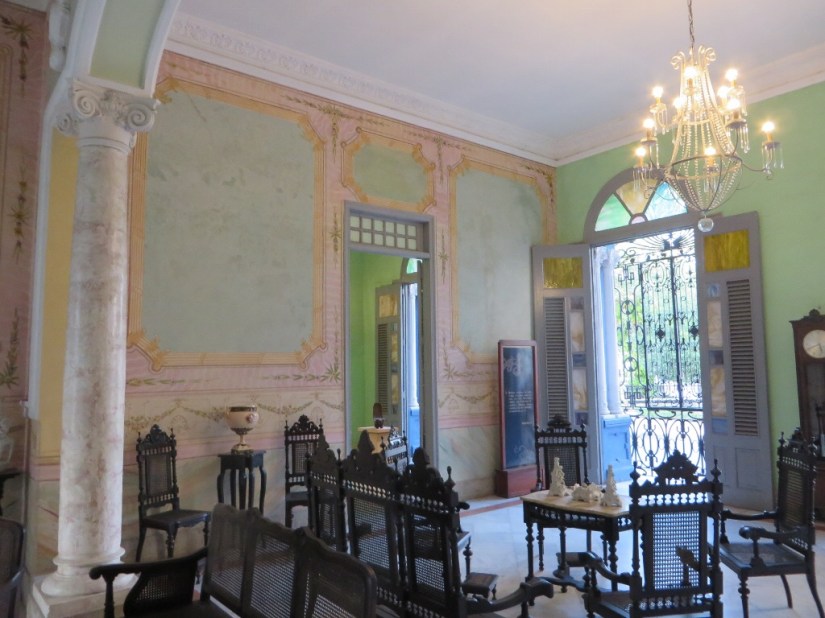
On one side of the plaza is the Casa de la Diversidad, yet another pretty colonial building!

We also wandered through Plaza de Los Trabajadores …

… to Plaza de San Juan de Dios, a very pretty square surrounded with pretty buildings, a church and the old Hospital de San Juan de Dios, now a museum.

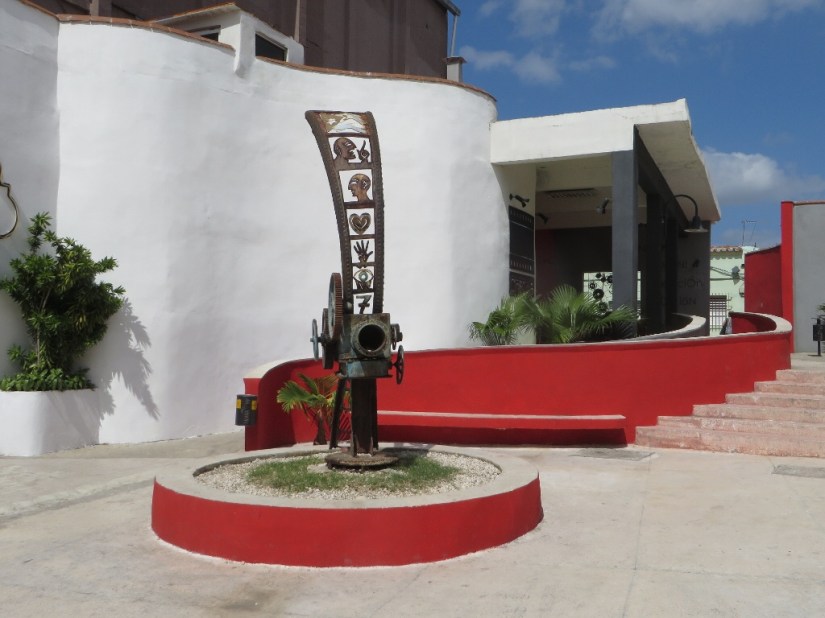
There is also quite an arty vibe in town with an annual film festival which explains cine everywhere …

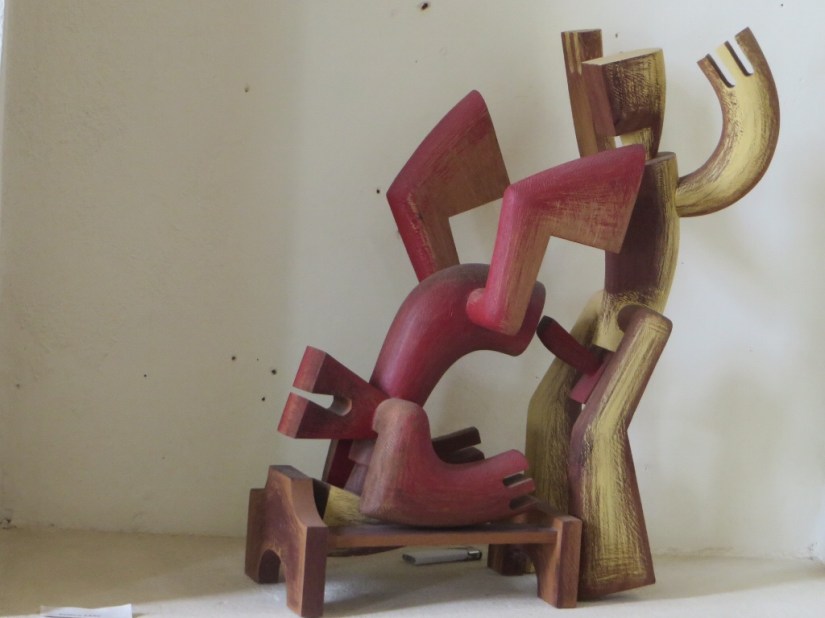
… and studios and galleries, including Magdiel which had huge wooden sculptures including a musical box and something a little ruder. Unfortunately even the little hummingbird was $250 so did not become part of my souvenir collection!

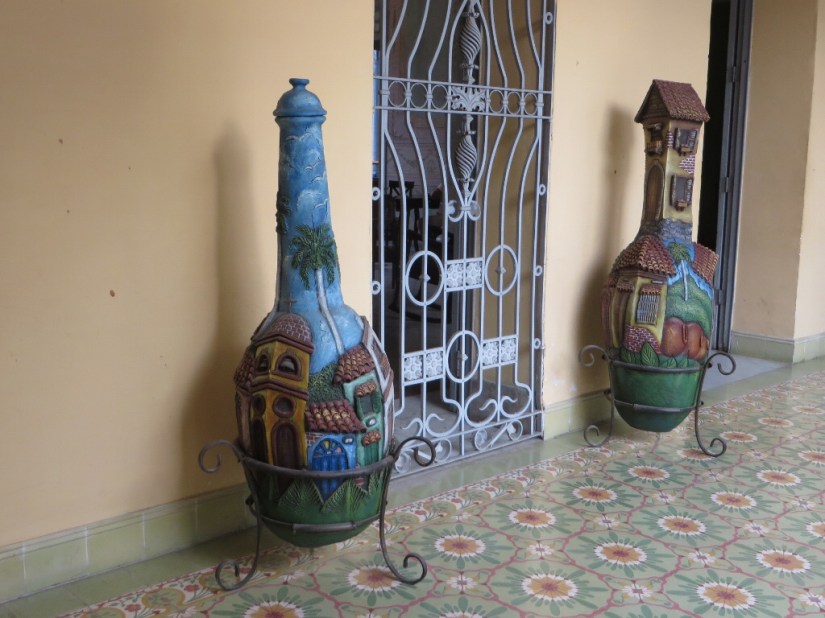
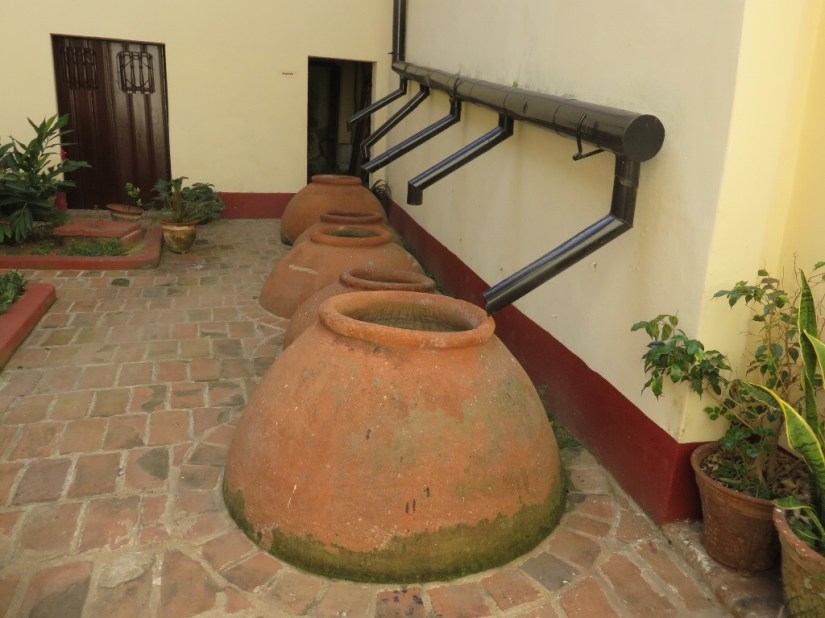
Have you spotted the pots? Tinajones are symbols of the city and can be seen everywhere, in parks, gardens and courtyards. These large jars up to two metres tall are made of local clay and were introduced by Catalonian immigrants for water collection and storing food.

They were first used in Camaguey to collect water beneath gutters during a water shortage, and soon every home had one, and size and quality started to matter as they became status symbols.

We have had less than a day here are we are back on the bus this afternoon … eastwards again!.

Trinidad – Cars & Cobbles

We were a little sad to say goodbye to Olga, as we couldn’t have been made more welcome anywhere else! We set off by taxi to Parque El Nicho, about an hour away, initially on good roads, but as we got closer, the road got rougher and we weren’t sure the car was going to make the climb into the Sierra del Escambray mountains without overheating … but all was well. We then hiked the short Reino de las Aquas, a trail through the woodlands, across streams on little bridges to the Poceta de los Enamorados …

Trinidad (0)

… the Desparramaderos Falls …

Trinidad (1)

… and the Poceta Crystal where I swim in the lovely and clear but also very chilly water but Chris wasn’t up to the challenge!

The return route took us to a mirador with a great view. Back in taxi, we continued to Trinidad another couple of hours away.

We are staying at Casa Bianca, a neocolonial house of 1940, as guests of Bianca and her family.

Trinidad (14)Trinidad (15)

We have a huge room on the first floor, with wooden shutters opening onto the courtyard and views over the roofs. Just outside the official old town, we couldn’t have picked a better spot.

The Trinidad wifi spot is in Parque Cespedes, just down the road, and as we walked down and saw the huge mast, we thought we might be in luck! Connecting was no problem, we were able to check the football scores (but unfortunately Liverpool seem a little challenged at the moment), download emails and message with Joanna although we couldn’t speak.

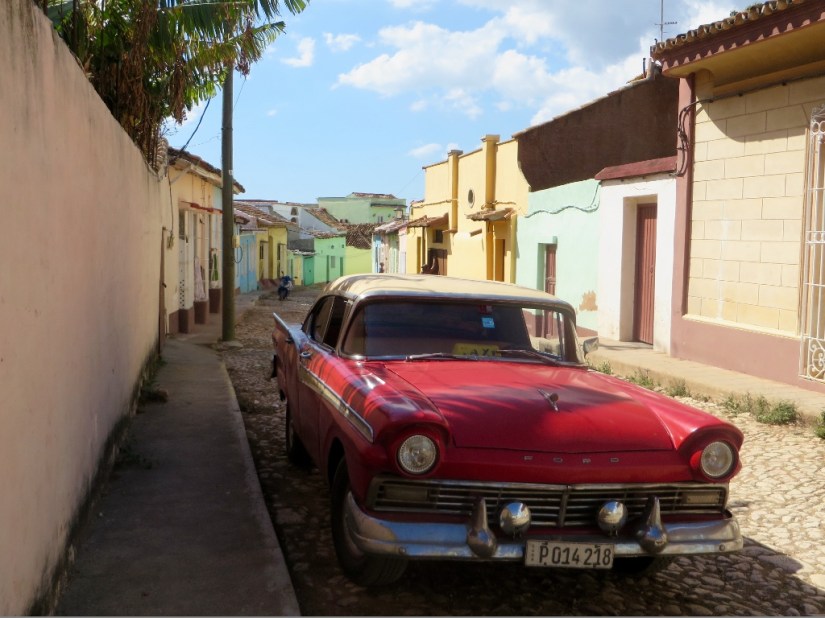
Trinidad is a photographer’s dream!

Trinidad (20)

Trinidad (21)

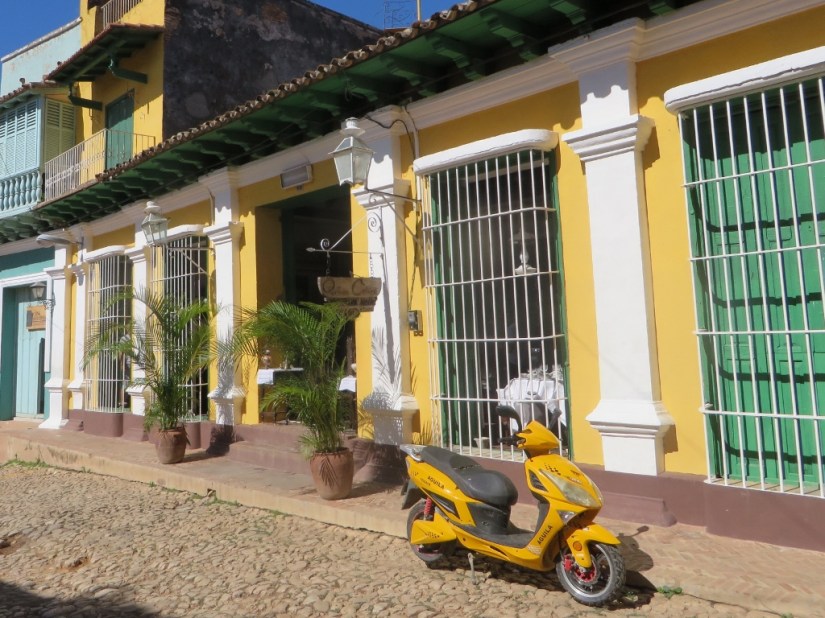
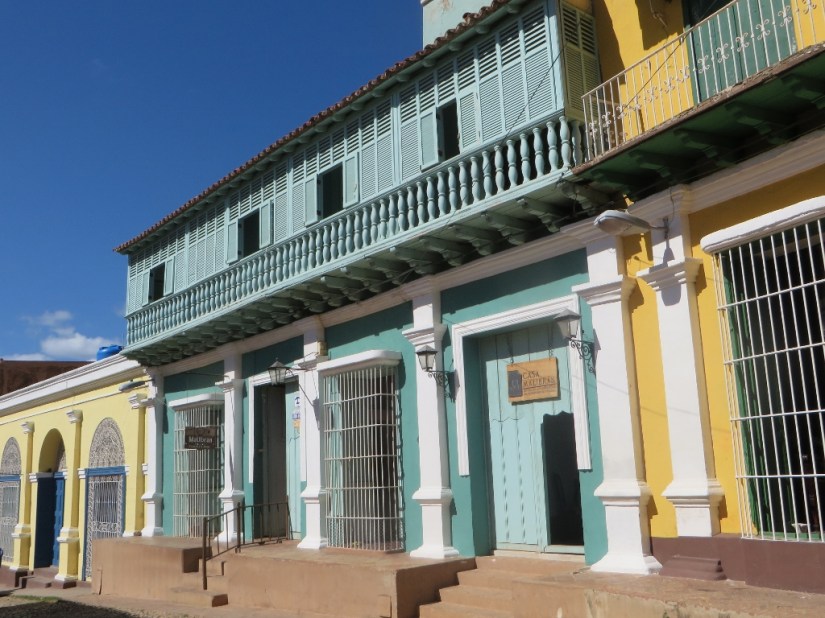
The original cobblestones and pastel-coloured houses give the impression that time has barely moved on since colonial times.

Trinidad (12)

Trinidad (41)

From the 17th to 19th century, the city was a major central for trade in sugar and slaves and the buildings round the main square show how wealthy the landowners were. A long period of isolation protected the city from new building and there has been skilful restoration.

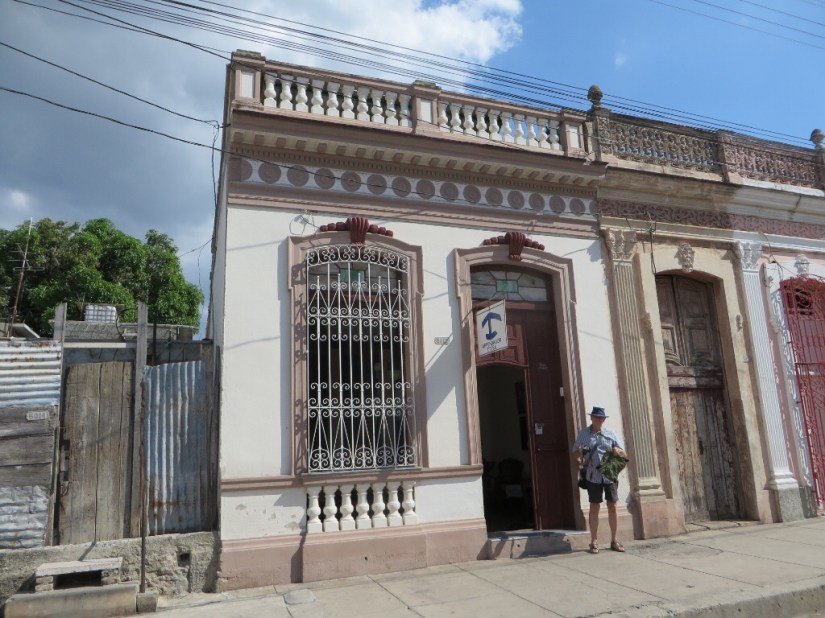
Key architectural features include a facade with a large central door surrounded by pilasters or columns , small turned wooden columns called barrotes covering the windows …

… and arched windows with ornate metal grills.

We have also come across some beautiful original tiling in the casa, shops and paladars.

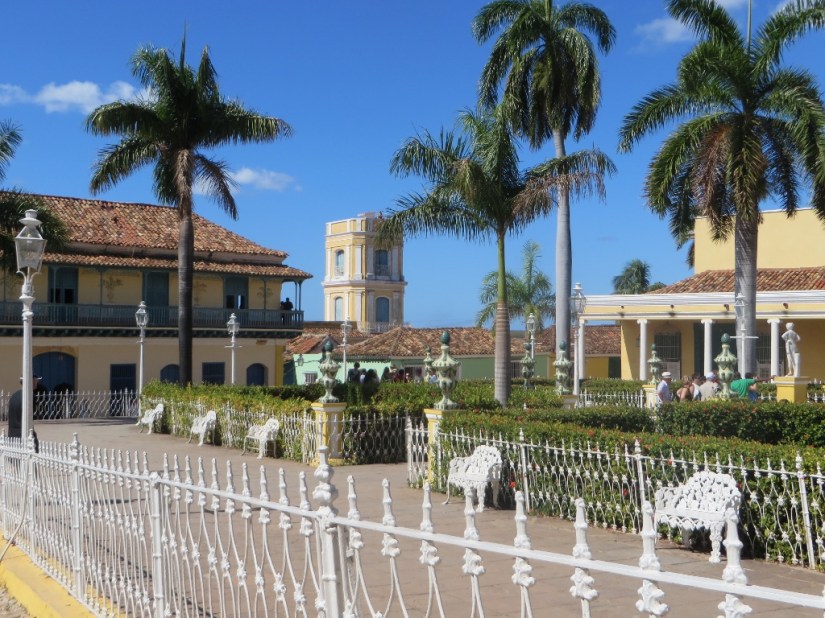
The heart of the old town is Plaza Mayor, surrounded by the church and several colonial mansions, now museums displaying Trinidad’s history.

Trinidad (28)

One has a tower which we climbed for the view. Many of the houses in the centre are renovated and freshly painted and often casa particulars of which there are around a thousand, or paladars, bars or shops.

As we made our way towards the outskirts of town and the little dilapidated church called La Popa, the streets were much more run-down, although the little church is being dwarfed by the new 5 star hotel being built beside it.

Trinidad (24)

Trinidad is lovely and obviously draws visitors … to the point that in the middle of the day while the tours are here, there are tourists at every turn!

Tapas seem popular here, and are great for a lunch snack when breakfast has been very generous! We’ve tried tomato bruschetta, little canapés with sliced egg and prawns that I thought were yummy and crispy plantain stuffed with veg and cheese. One choice that was less successful was the Kermato drink, which is tomato juice in a can … unfortunately on closer inspection, flavoured with almeja … or clams so no good for Mr Hayes after all … he should have stuck to the beer!

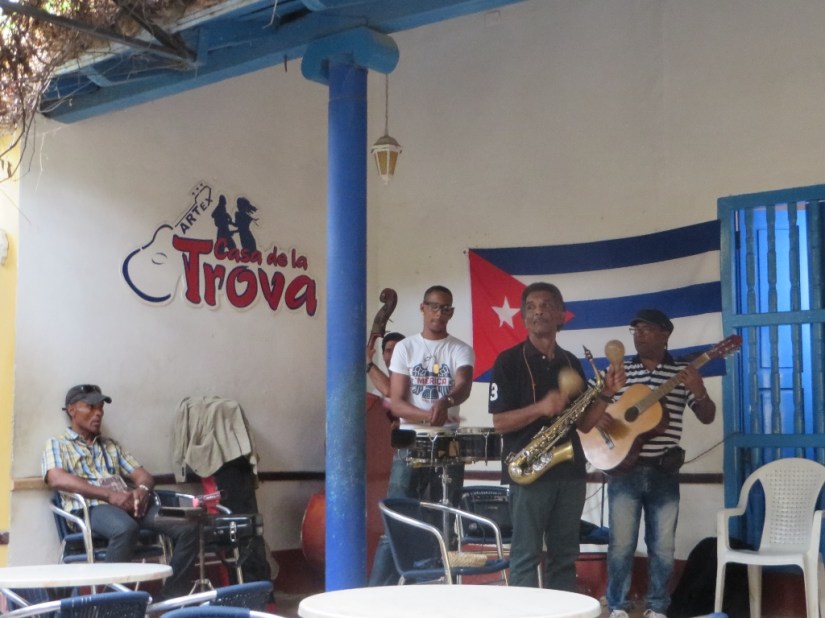
There seems to be music playing all town! Many restaurants and bars have a band playing a short set a couple of times an hour during lunch, the afternoon, dinner and later!

There is also the Casa de Trova and Casa de Musica which are more dedicated music venues with a succession of bands playing a set each for tips.

Trinidad (43)

We seem to have the knack of hearing some music, buying a drink, then the band taking a break! In the evening the Casa de Musica charges an admission, but the music still floods the square so we bought mojitos from a booth and sat on the steps to listen.

We stopped for a sundowner one day and tried Canchancharas, a cocktail made of rum, honey and lemon which is served in little earthenware cups, in the bar of the same name. It was very tasty … almost as good as the mojitos, but we might have to try a couple more to be sure!

We had dinner at La Redaccion, which means The Editorial Team, so named as the newspaper El Liberal was edited here, and the table mats are made of pages from this week’s Cuban press. Chris had a pepper and tomato stuffed with savoury rice and I had slow roast pork belly which came with a really amazing tangy gravy and great sweet potato mash.

Taberna la Botija, set in a stone-walled house with wooden benches, has a huge tapas menu but we also came in the evening as their pizza was recommended and Chris has lasted a whole week with no pizza and not a proper chip either! Cuba’s history was brought home to us seeing the slave chains on the walls.

One evening we ate at Paladar San Jose and got chatting in the queue to another couple. When they were called, they found they had a table for four and kindly asked if we would like to join them so we had a very enjoyable meal chatting with Maureen and Martin about our respective travels.

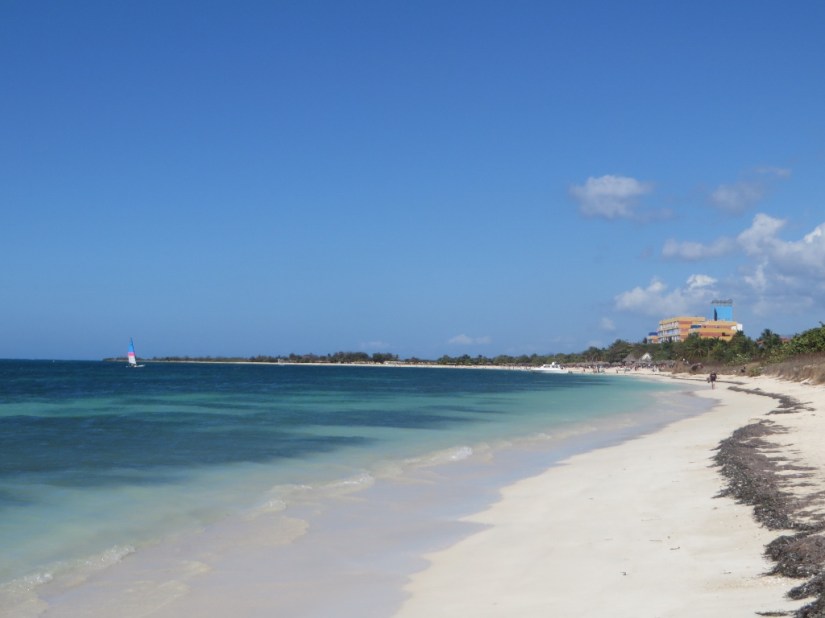
After exploring the town, we had several days out, firstly to Playa Ancon, billed as the best beach on the south coast, and it was lovely, with a constant breeze. We arrive on the Trinibus around 11.30, and were having such a lovely time, we missed the 3.30 bus back in favour of the bus at 6.00 and got to see the sunset from the bus on the way back.

Trinidad (46)

Trinidad (49)

There was a well-used network of railway tracks over Cuba in the C19 when it was the easiest way to move goods to and from the sugar plantations. Since then, many have fallen into disrepair or were deliberately pulled up during the 1959 revolution. Today a tourist train with open-sided carriages runs from the modest station in town, into the Valle de los Ingenios complete with in train entertainment!

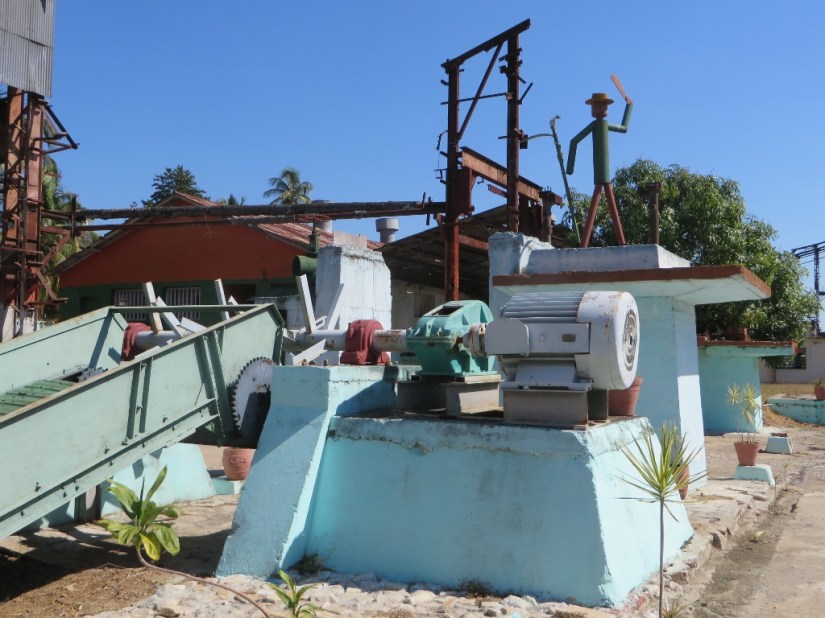
We visited a sugar refinery, abandoned since the 1960s when sugar cane production was no longer profitable and enjoyed wandering round the remaining plant and equipment taking photos then tried squeezed sugar cane juice, which was needless to say pretty sweet, while listening to the band.

Trinidad (60)Trinidad (59)

The train also stopped at the Manaca Iznaga estate, built by one of the most successful plantation owners. Looming above is a 45m tower, which on an English country estate would belong to the local church, but here it is the tower from which overseers kept an eye on the slaves working in the fields below.

There was plenty of opportunity to buy souvenirs before returning through the countryside to Trinidad.

Our last outing was back into the Sierra del Escambray and this time our hike was a little more challenging.

Trinidad (78)Trinidad (80)Trinidad (79)

We chose the Sendero Salto del Caburni in the Gran Parque Topes de Collantes, just over an hour of descent passed farmland and through shady woodland to the 62m high Caburni waterfall.

I had a swim in the natural pool which was jolly chilly, perfect after the hike down, but by the time we had climbed back to the top, all the cooling benefits of the swim were a distant memory!

On our last afternoon we did a little souvenir shopping and in the evening returned to La Redaccion for another lovely meal.

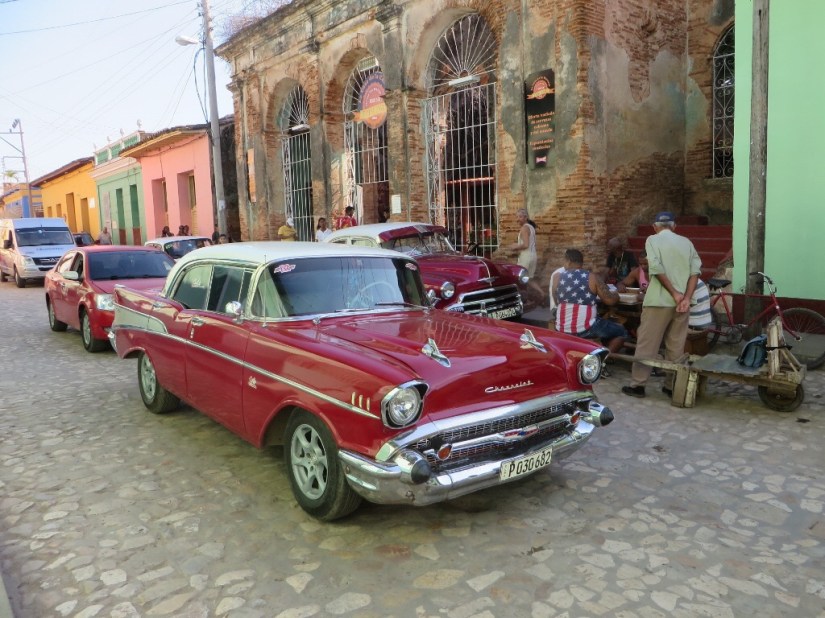
Just had to squeeze in a couple more cars!

Tomorrow we move on … eastwards again!

Cienfuegos – The Pearl of the South

Having confirmed our return to Fidel’s later in our trip, we set off early to catch our bus … but buses here obviously run on Cuban time so we waited a while. The bus was comfortable and we stopped at 104km from Havana at a rest stop for a lovely cup of cafe con leche, served with a short length of sugar cane … to stir or to suck, we weren’t sure, but we did both!

The roads were generally pretty good, but there were a couple of rough areas we had to slow down to negotiate. At a place called Australia, we passed the turn off to the Bay of Pigs, which was the site of a failed military invasion of Cuba by a CIA-sponsored paramilitary force in 1961, attempting to overthrow Fidel Castro. Some tourists visit to see the bay and the beach or to bird-watch in the nature reserve or scuba dive the coral reefs, but we decided to give this a miss.

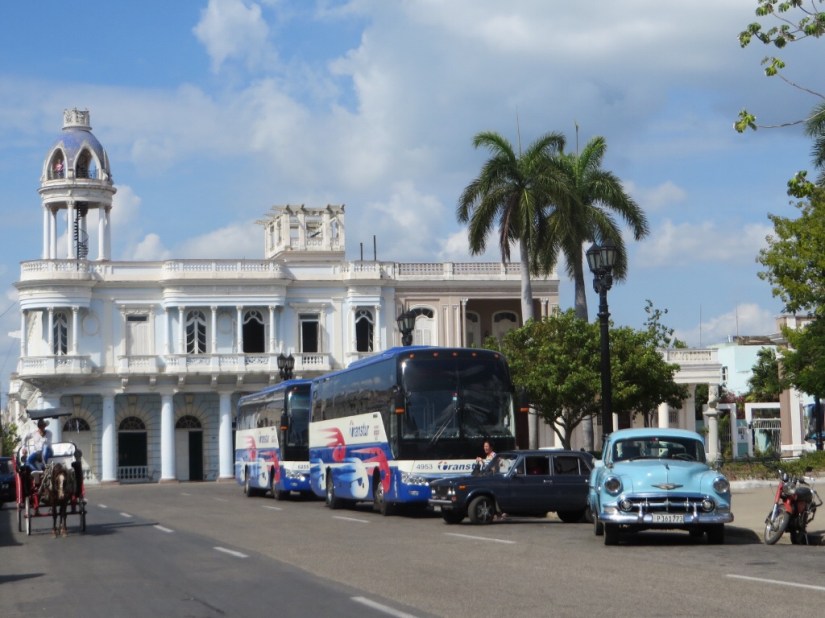
Cienfuegos, often called The Pearl of the South because of the impressive beauty of its bay, was founded by French settlers who brought elegance to its architecture. The city became wealthy trading sugar, coffee and tobacco grown all around and is still doing well today thanks to its shipyard, thermoelectric plant and petrochemical hub.

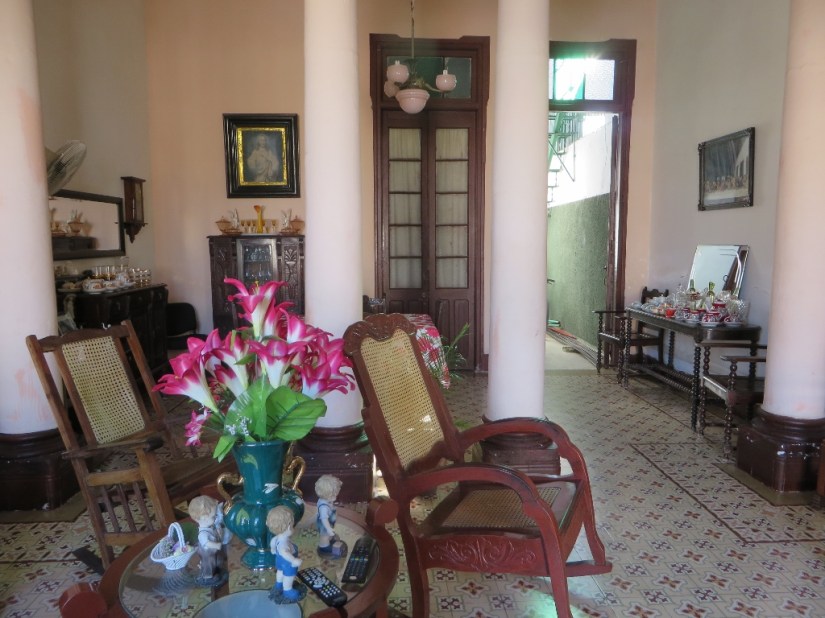
There wasn’t much traffic so we made good time and were met in Cienfuegos by Olga, with our name on a board … to ensure we reached her casa safely and were not sidetracked by tricking jineteros into staying elsewhere! The casa is lovely, and typical of many of the houses here. We guess it’s originally C19 with plenty of original features as an estate agent would say!

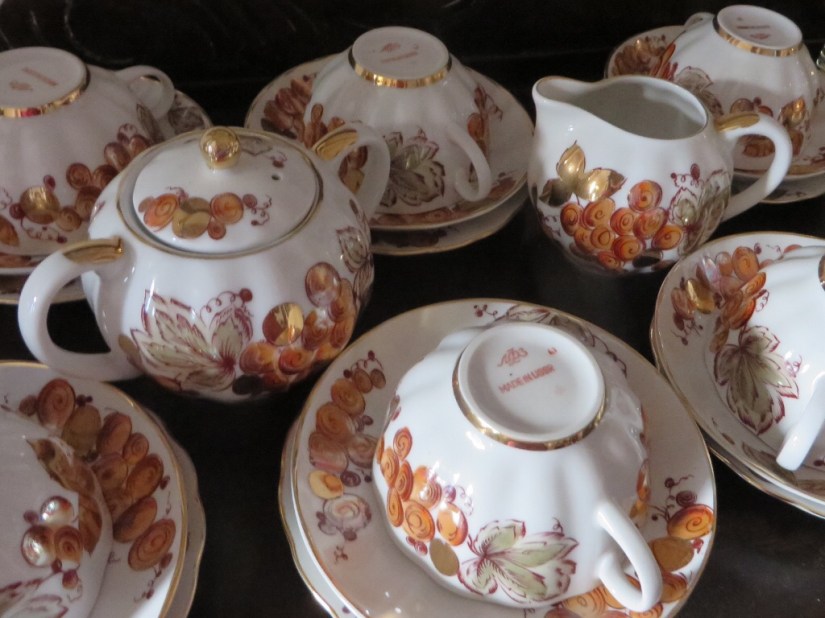
The front room is kept as a kind of front parlour …

Cienfuegos (65)… with several tea sets from the USSR and other china proudly displayed.

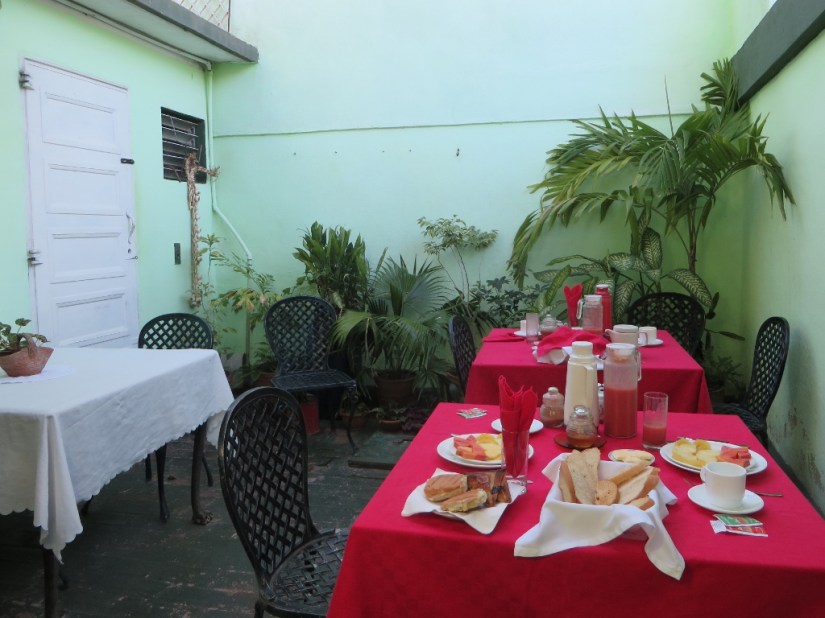
Then there is a passage running down one side, open to the sky, beside what are now 3 B&B rooms, but would probably have been living rooms originally, running back to the kitchen and an outside courtyard.

Cienfuegos (64)

Above there are more rooms where the family live and then the roof space with tables and chairs.

Cienfuegos (63)

Our room has AC but it’s not that hot and the room is ventilated with high windows with bars for security.

Olga’s English is far better than our Spanish, which was great as she managed to organise all we wanted to see and do without resort to a tour operator and we are all for local enterprise! We spent the afternoon exploring in town. First stop, to buy a wifi card CUC$2 for an hour and try and get online … well the telephone company had no cards and said to try Hotel La Union opposite …

… the hotel suggested the telephone company … the hotel doorman said there was a local chico in the bar opposite who would probably sell us a card for CUC$3 … which he did and we thought it a result … until we visited the public wifi spot in Parque Marti, logged on with the card and spent 30 minutes hanging and getting nowhere … not the chico’s fault I hasten to add, just the system is so overloaded … maybe tomorrow! There is no private wifi in Cuban homes, just a system of public access wifi in selected places in each town, so demand is high.

Cienfuegos (6)

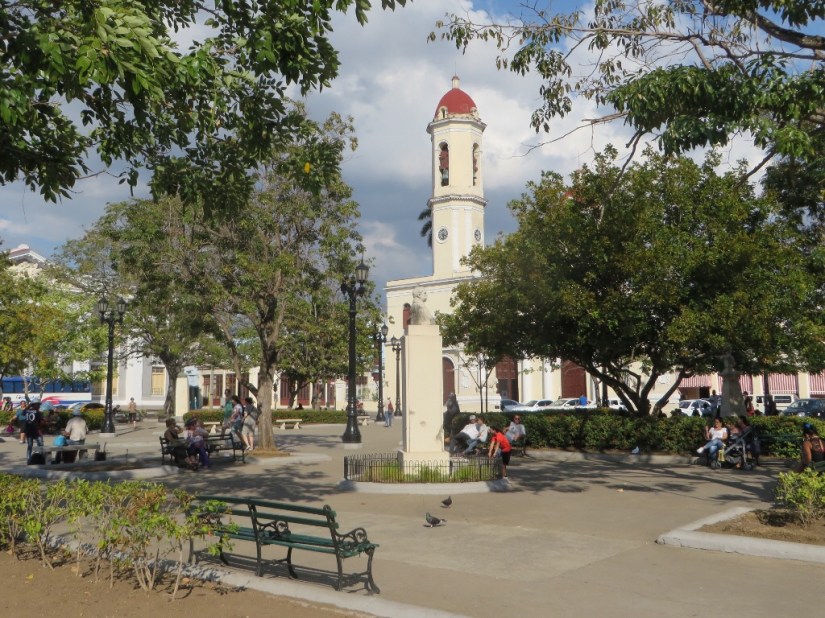
We wandered round Parque Marti …

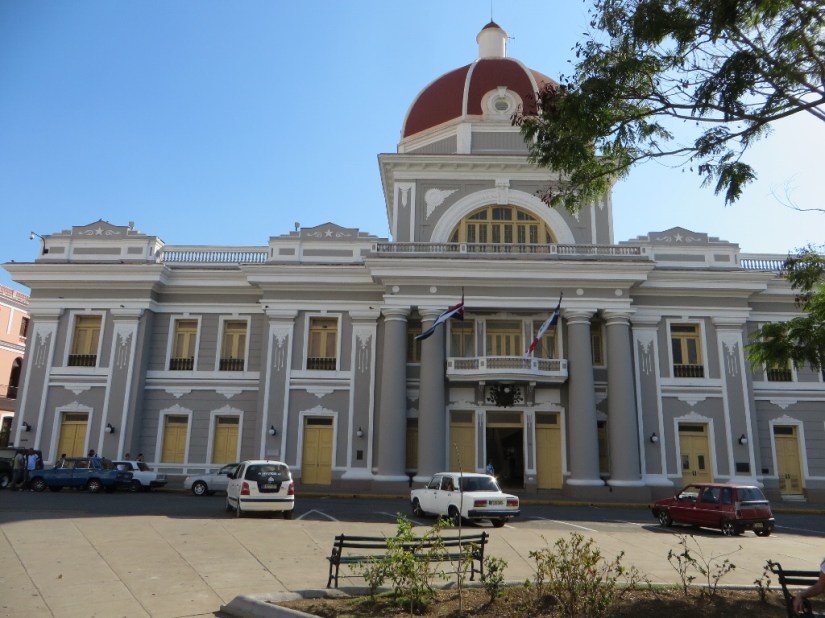
… admired the government building and Palacio Ferrer …

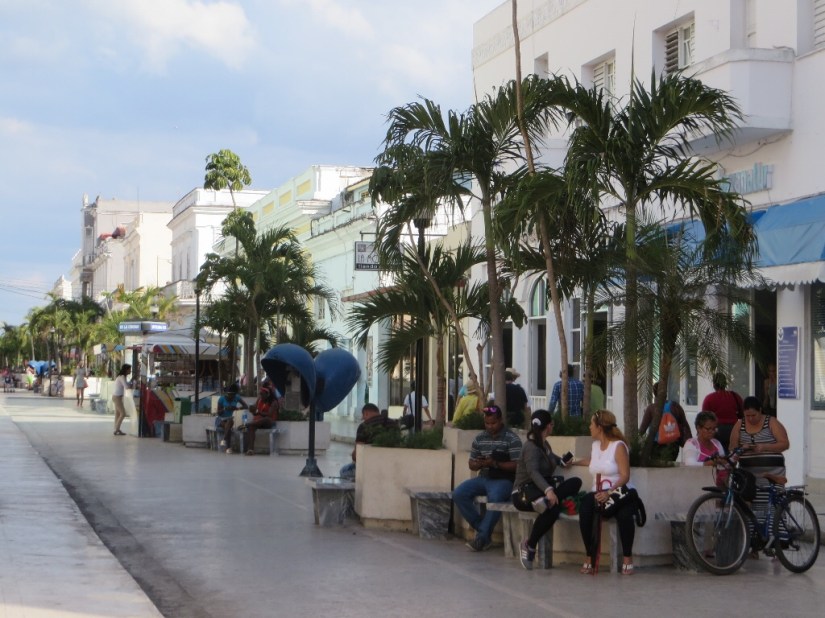
then headed down El Boulevard, a bustling pedestrianised street with shops aplenty, but not a huge amount for sale, along a street with a craft market …

… and on to the bay.

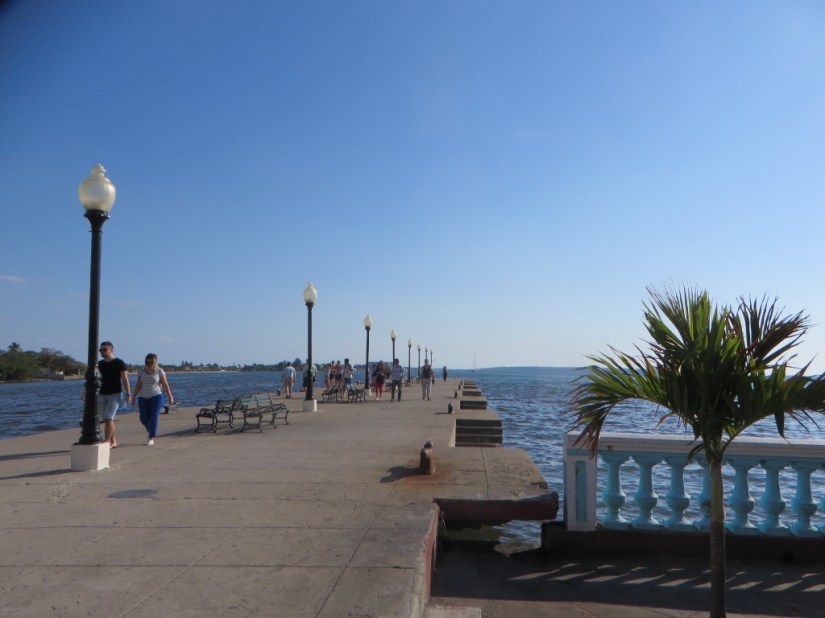
More exercise followed with the 2km walk along the Malecon to Punta Gorda, a peninsular jutting into Cienfuegos bay …

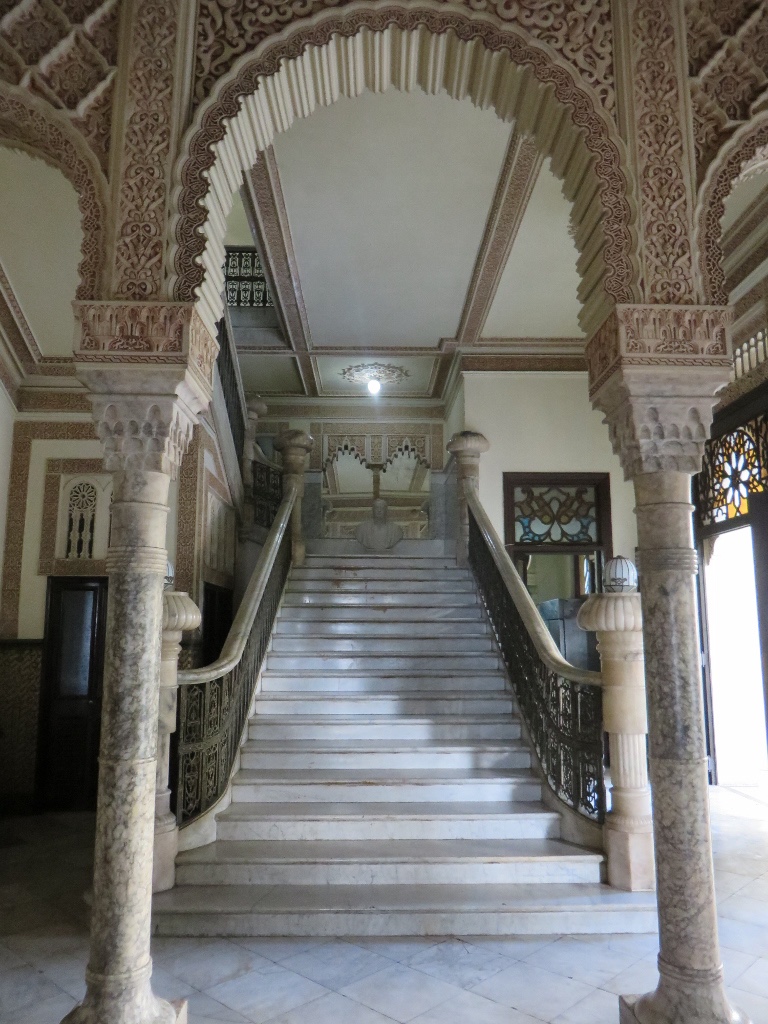
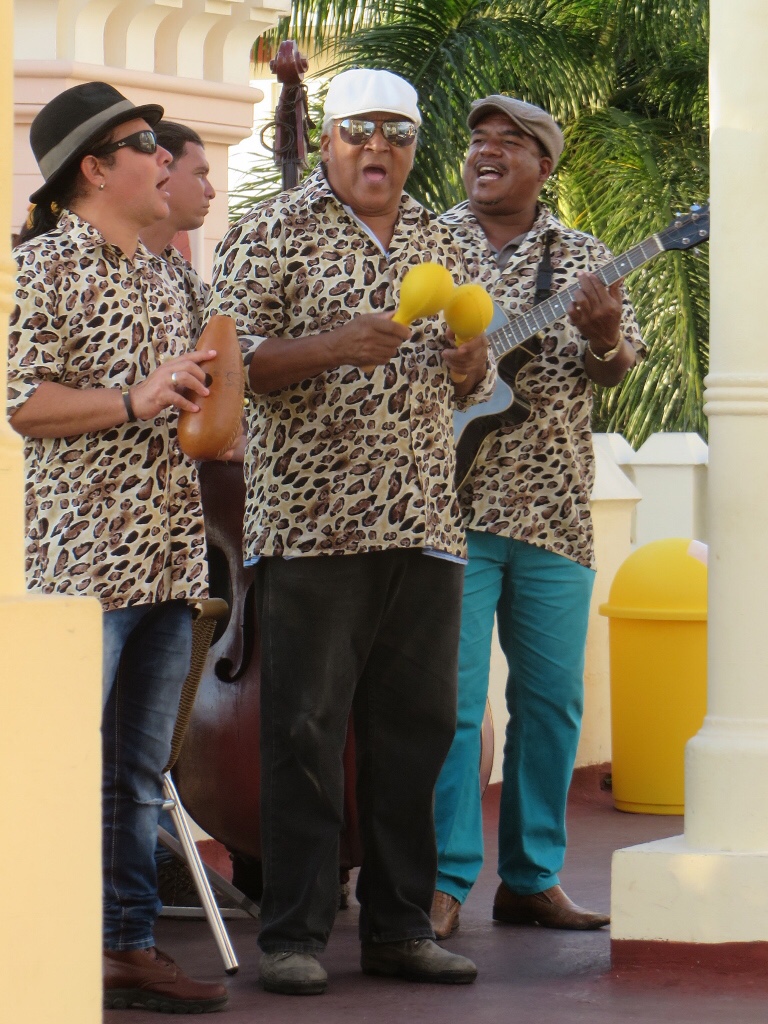
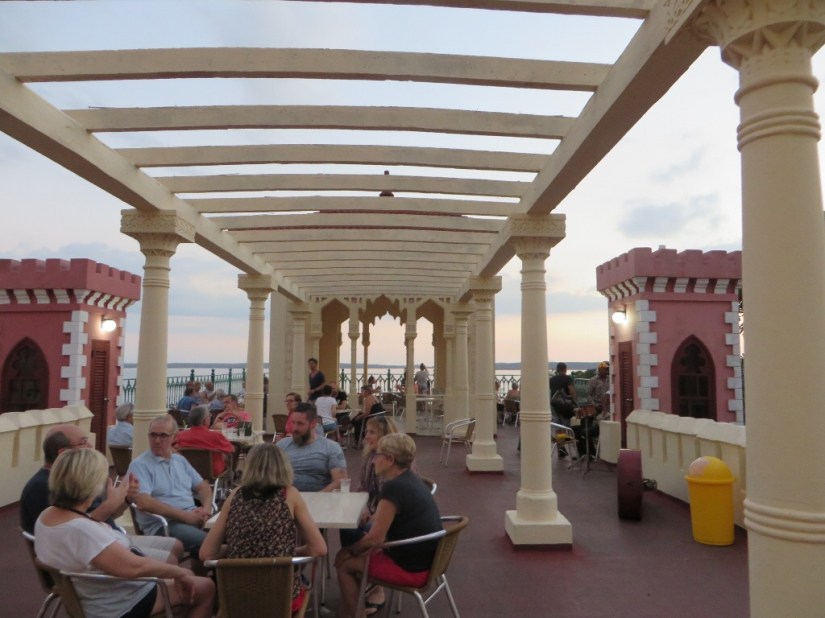
… and we then sat in the roof bar of the Palacio de Valle, a Neo-Moorish confection of cupolas and arches, listening to salsa and son from the band, Perla del Sur, drinking mojitos and watching the sun go down!

We took a cranky old blue Chevy back to the casa were we were served a delicious dinner of bean soup, then stuffed eggs for Chris and grilled swordfish for me with rice and salad and flan de huevos which is similar to creme caramel for dessert. After winning several games of uno it was time for bed.

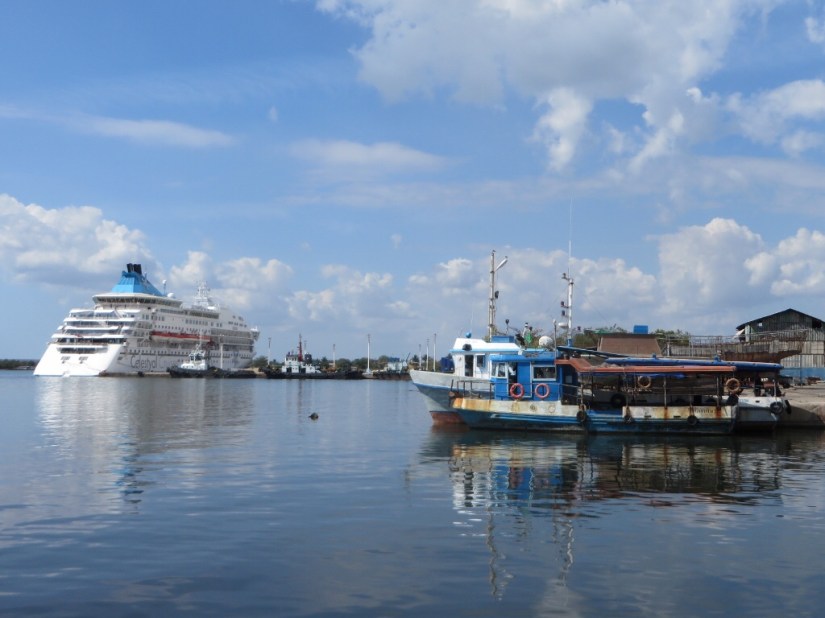
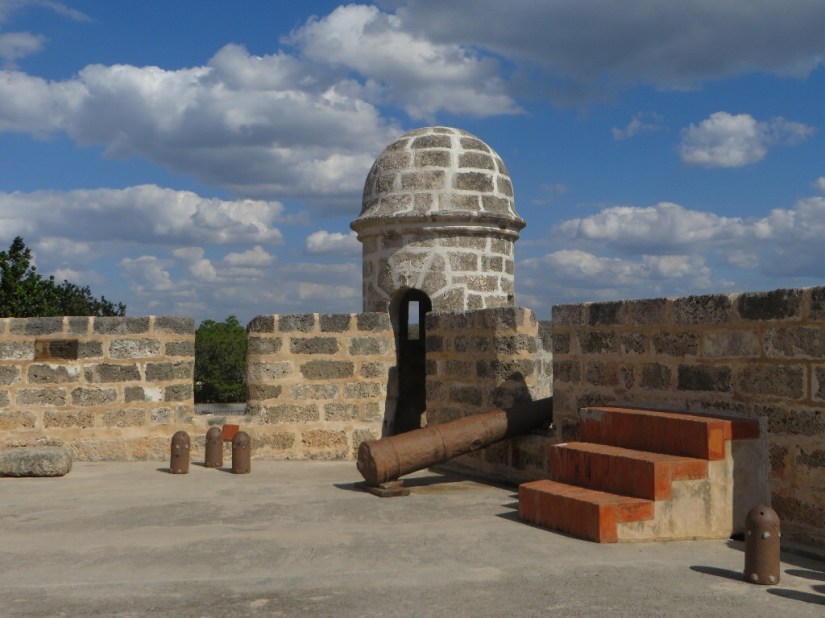
We took several trips out of town over the next few days, firstly by local ferry across the bay to a C17 Spanish fortress called Castillo de Jagua. Olga said we should get there early to ensure a seat for the hour crossing, so we followed her advice, paid a CUC$ each and got the last couple of seats on a boat that ended up packed to the gunnels!

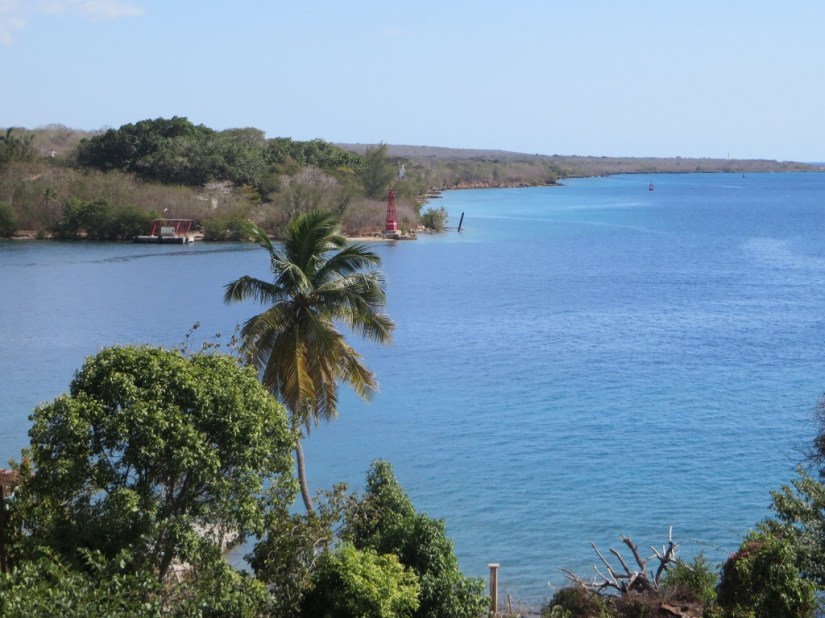
We chatted to the Portuguese girl sitting beside us as the ferry made its way across the bay and passed several small cays to the fort.

All the information in the fort was in Spanish, but we took some great snaps of the fort, the view and also the surroundings …

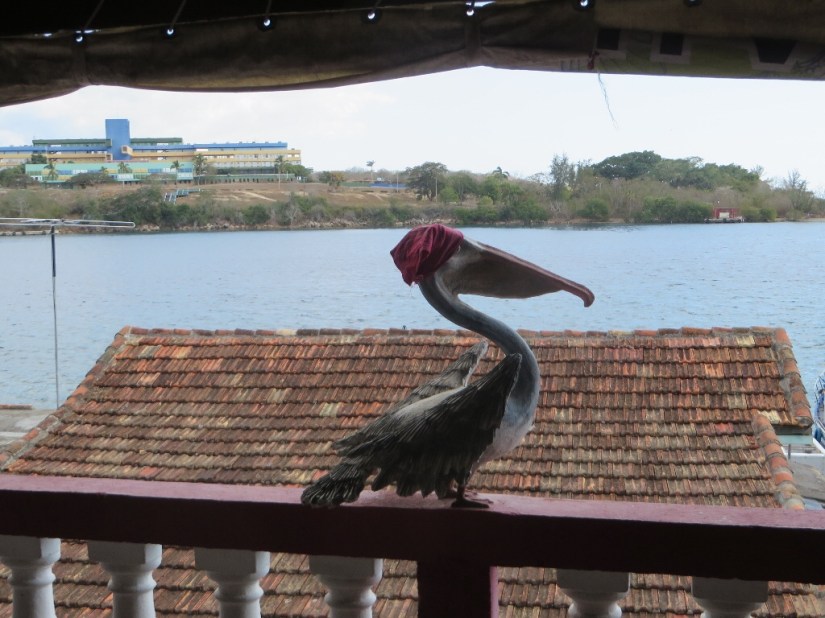
… then found a little cafe called the Pelican where we had beer and sandwiches before catching the ferry back.

Our return was more comfortable as there was plenty of space and we were able to enjoy the views on the way.

Another trip was to the Jardin Botanicio, about 15km away. We had organised the taxi through Olga and we were delighted when a battered blue Cadillac turned up to take us out!

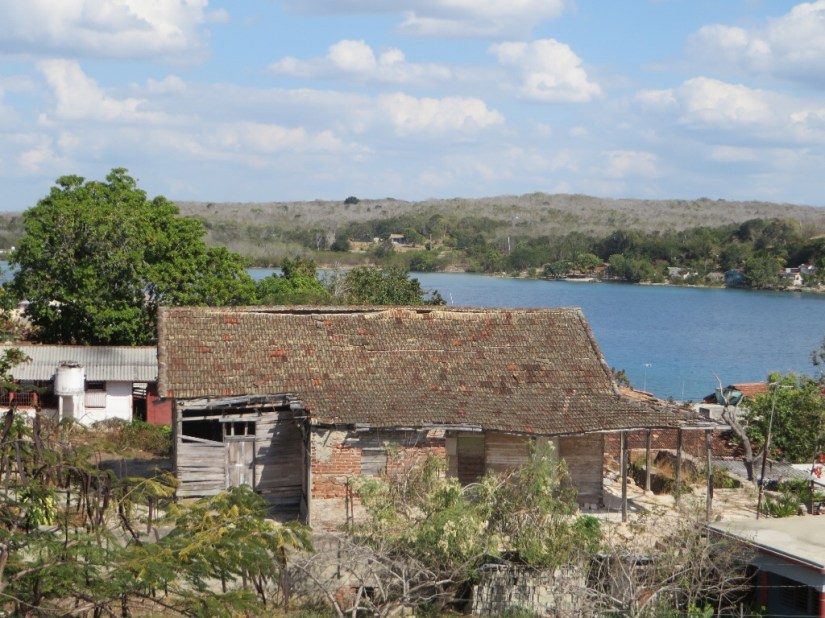
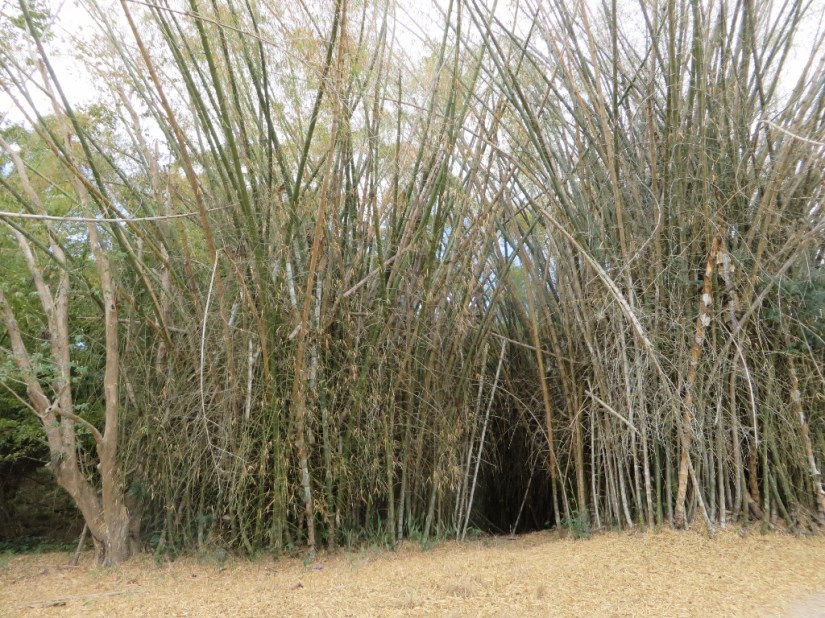
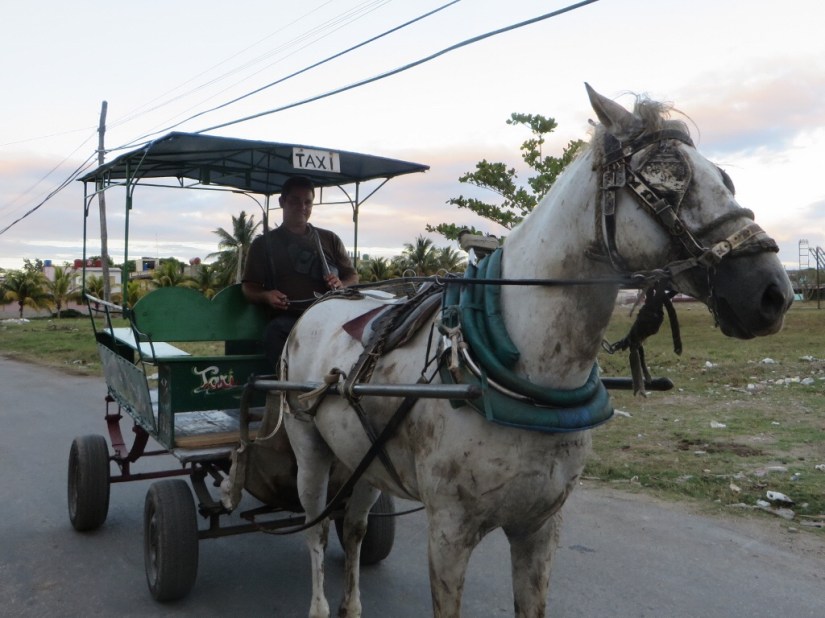
The drive through the outskirts of the city and then the countryside to the garden was interesting. As we moved out of the old town the Spanish colonial architecture was replaced by concrete blocks of flats from the Communist era. It became obvious that the picturesque horse-drawn carts that take tourists down the Malecon are actually essential transportation for local people who need to get home from the bus stop on the main road. We saw livestock grazing, crops growing and men riding horses checking out the fields. Many people were hanging about junctions, hoping to hitch a lift to their destination. We arrived at the garden, paid our entrance and drove up to the cafe, then followed the rough tracks round for 90 minutes or so and saw huge stands of bamboo, palms and even a furry tree!

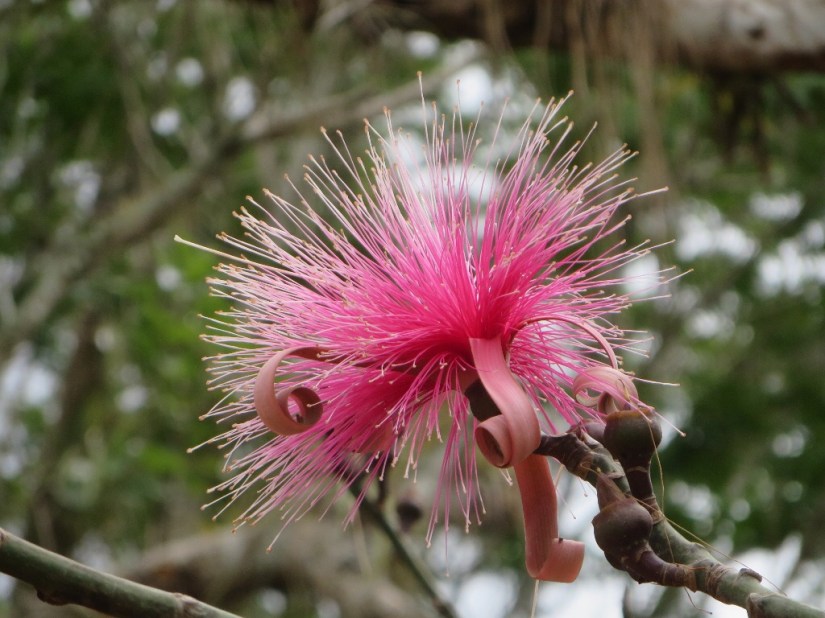
So it certainly isn’t Kew or Wisley and we don’t know how the garden was started, but it has the largest collection of tropical plants in Cuba and despite having had minimal maintenance for some years, we saw lots of exotic flowers.

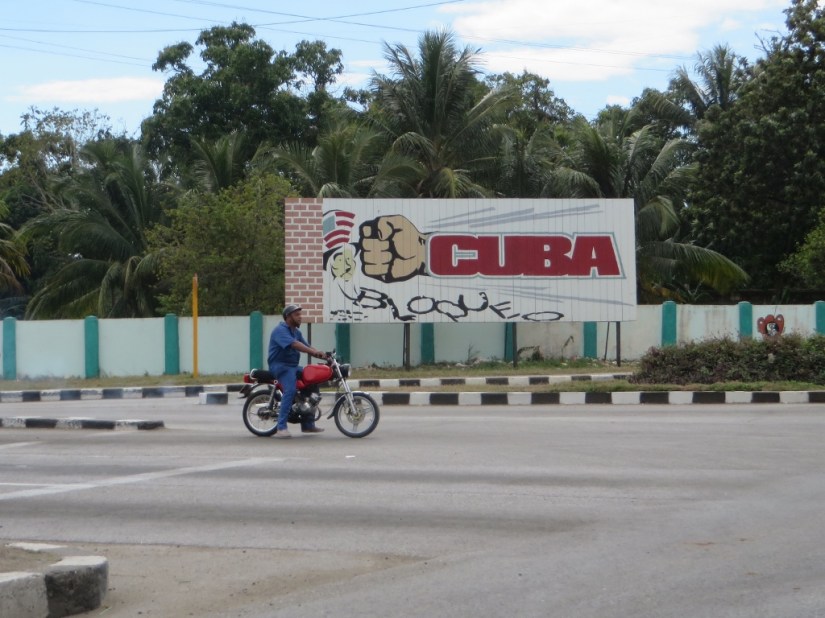
While out and about, we’ve come across quite a lot of revolution propaganda which is unlikely to be around for much longer … but what we haven’t seen is any product advertising for anything, which is quite refreshing.

Cienfuegos (62)

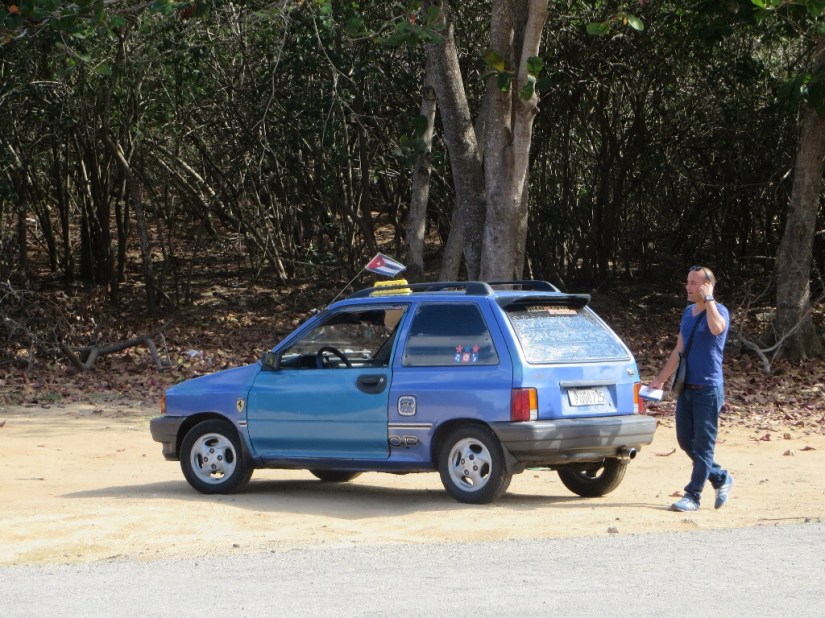
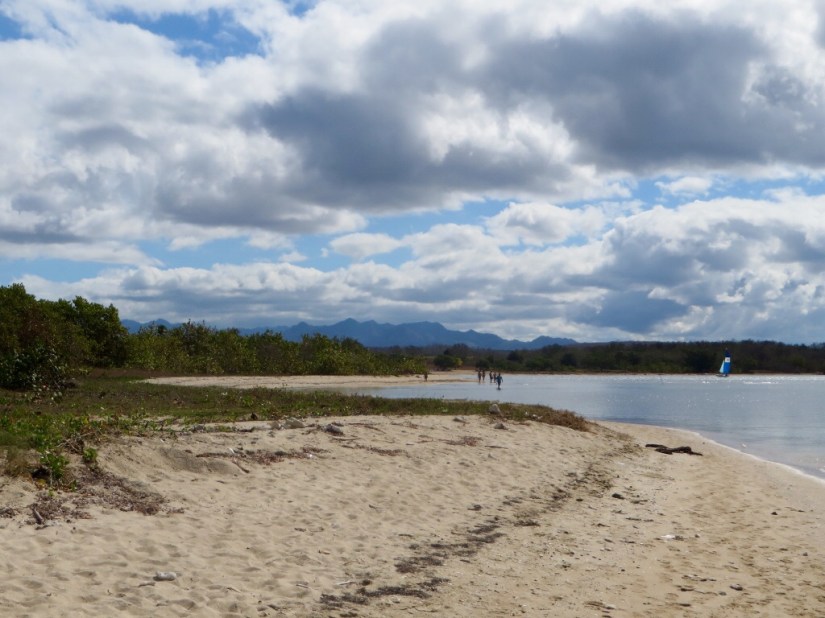
Finally, we spent a day at Playa Rancho Luna, just 20 minutes away. We aren’t quite sure how the taxi lottery works but today we won a souped up Kia which had a speedo that remained on zero … whatever the speed! The beach wasn’t huge and we began by being concerned that it was a bit overcast, but the sun was so hot when it was out, it was probably a good thing! We had a walk and admired the Sierra del Escambray mountains …

… lay on the beach watching the people going by and the children playing, had a swim and a beer and it was time to go!

Cienfuegos (70)Cienfuegos (72)

We didn’t have time to visit is Santa Clara an hour away, the final resting place of Che Guevara, a much-loved hero of the 1958 revolution. It was a toss up between all we have seen here and a memorial and museum … and El Che didn’t win!

Just to let you know we have tried to log on to the wifi in the plaza several times, using up a whole hour of credit with nothing to show for it, so will wait and see if we have more joy in Trinidad. Would be nice to let Joanna know we are here and Chris is itching to know how by many goals Liverpool beat Chelsea …!

Must also mention the food as we had another great meal at the casa and also had dinner at a couple of paladars, the first called Las Mamparas, located in house just like Olga’s, where we both had fabulous paella and beer for CUC$15. On our last evening we returned, by horse-drawn cart, to the roof bar of the Palacio de Valle for sunset and a mojito, then went on to the Finca del Mar for dinner, which was actually more like a regular restaurant than a paladar.

We had stuffed peppers, a chickpea dish, some fried fish for me, rice, beans in a soup and salad with a bottle of Chilean Merlot which was all very lovely, together with twinkly lights in a courtyard and a fountain! All in all a lovely end to our time in Cienfuegos, as tomorrow we move on.

Havana – Walking El Prado

Havana El Prado (21)

Our flight left Gatwick at 12.30 and we arrived 10 hours later at 17.30. We were surprised that within a couple of hours of landing, we had collected our luggage and cleared the airport, changed some money and got a taxi to our first casa particular, Reservas El Cristo. Arriving after dark meant we could make much out during our drive to the city. We were welcomed by Fidel who showed us our room with a balcony overlooking Plaza el Cristo which we saw in the morning.

Havana El Prado (29)

We took a quick turn round the block to stretch our legs and the evening was positively balmy after England. We returned for a home cooked dinner of pumpkin and eggs for Chris and marinated and grilled pork for me, served with salad and plantain fritters called tostones. We also had beans and rice called moros y cristianos – the black bean for the Moors and the white rice for the Christians and washed it all down with a beer. After our long day, we called it a night and dropped off to sleep listening to live music coming from the bar over the road.

We both slept well, easy I suppose after so many hours up and a comfortable bed. Breakfast was mixed fruit then scrambled eggs and bread and we shared it with a couple of ladies from California heading home after a great stay in Cuba.

Our first priority next morning was to change some money, as we only changed a small amount at the airport and then to buy our bus tickets to leave Havana the next day. There was quite a queue at the bank, with several people already waiting outside. After 20 minutes we were able to go inside and another 20 minutes before it was our turn. There were five clerks serving, but it just seemed to take ages. There are two currencies here, the CUC$ or Cuban Convertible Peso, which is pegged against the US$ so of the same value, and the CUP$ which are National Pesos used by the locals and worth much less. Solvent with a supply of CUCs we headed to the Cubanacan desk in the lovely Hotel Ingleterra …

Havana El Prado (20)

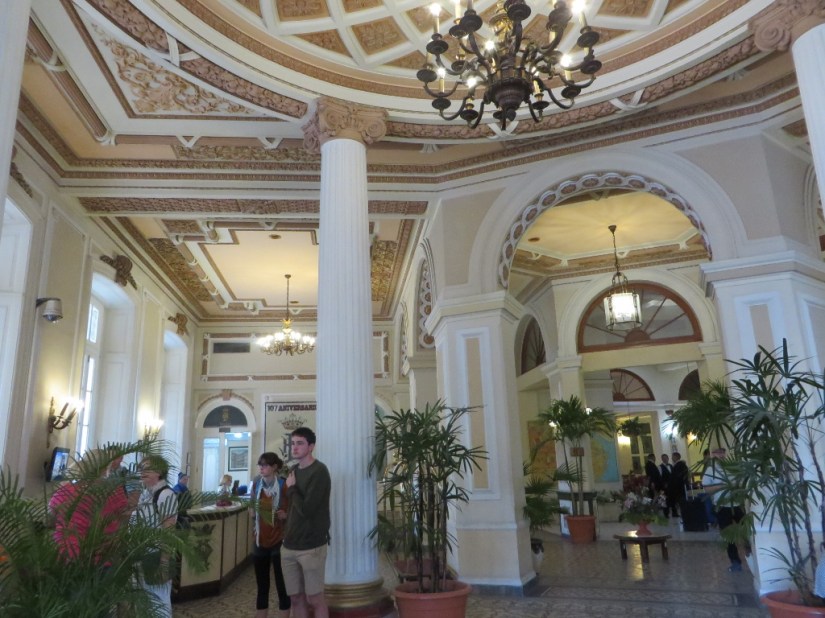
… only to be told it had moved to the the almost as lovely Hotel Plaza across the square.

Havana El Prado (24)

We were a little concerned that all the tickets might be sold, but our worries were unfounded, and we left with bus tickets in hand!

We spent a while watching the cars cruising …

Havana El Prado (13)Havana El Prado (15)

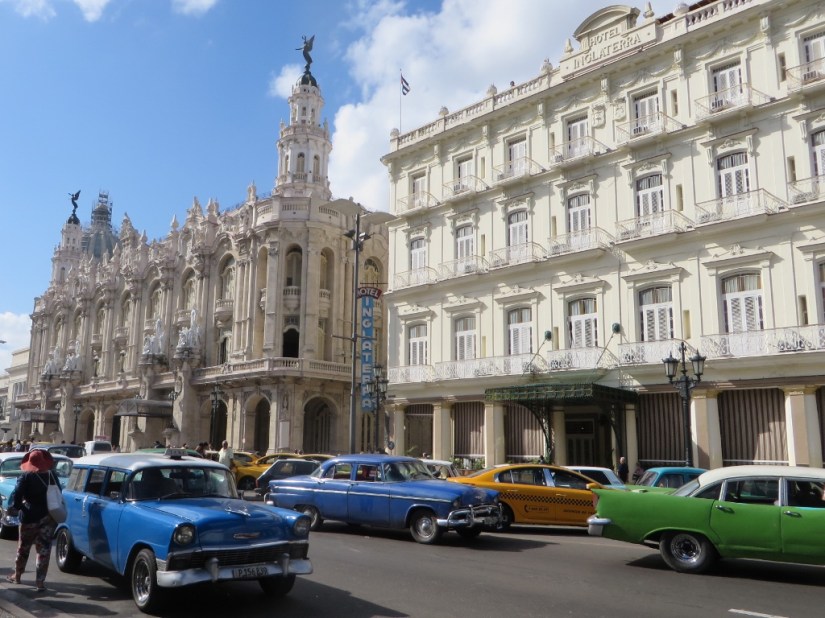
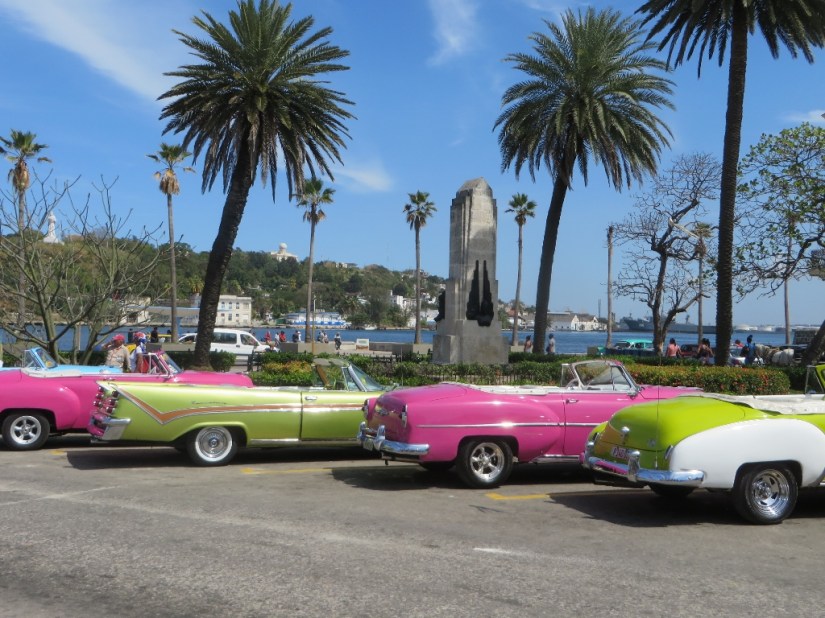
Returning to Parque Central, we we able to relax and take in the view, with the Gran Teatro and Hotel Inglaterra ahead, and a huge number of vintage American cars in an array of colours, jockeying for position and eager for business taking tourists round the city.

Havana El Prado (21)

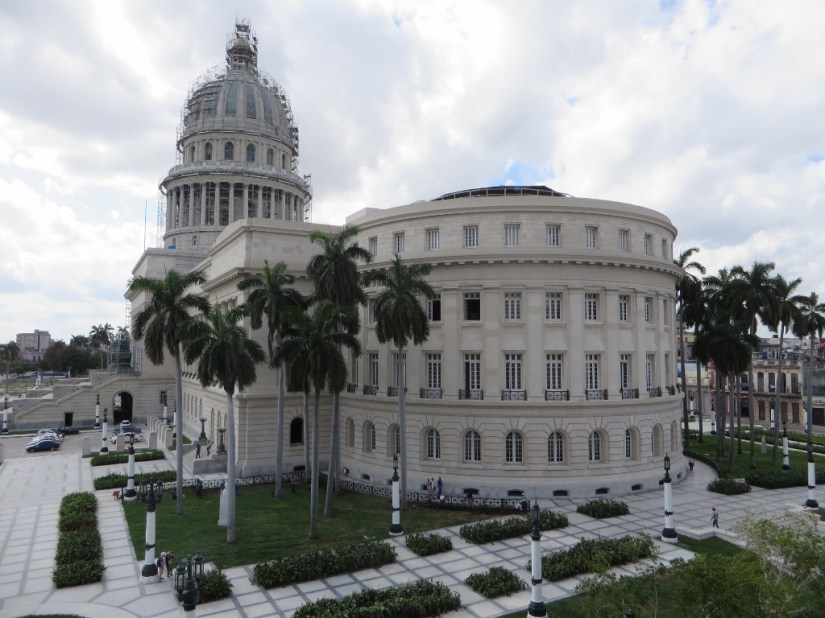
We asked in the theatre about a tour and we shown round the newly restored building which contains not only a theatre hall dating from 1837 and home to the Cuban National Ballet, but also lavish space once used for socialising and dancing. We looked out of the balcony on the Capitolio building which is undergoing similar treatment and houses the National Assembly.

Havana El Prado (9)

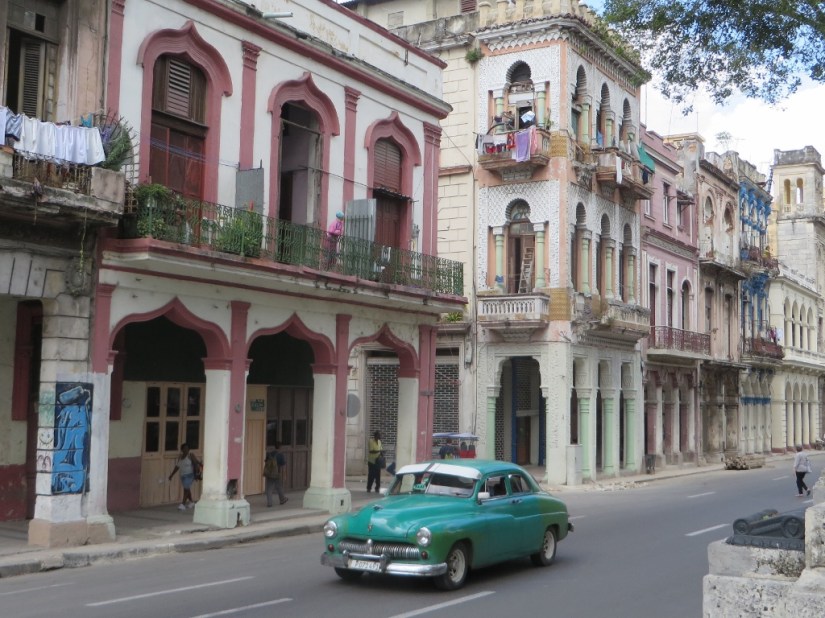
We started walking down the Paseo del Prado, fondly just called El Prado, an elegant boulevard with a tree-lined pavement down the centre and residential neo-classical buildings in a variety of colours and degrees of delapidation either side …

Havana El Prado (25)

… and watched more cars cruising by.

Havana El Prado (26)

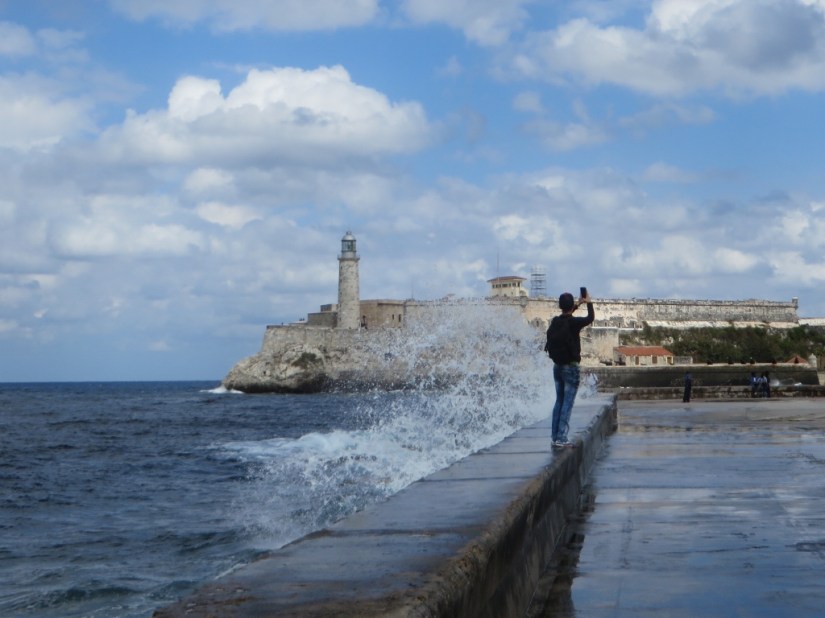
Reaching the end at La Punta, we looked one way and see the Malecon or sea wall in an elegant curve towards the district of Havana called Vedado punctuated with skyscrapers …

Havana El Prado (3)

… and the other way towards the Castillo de les Tres Reyes del Morro.

Havana El Prado (1)

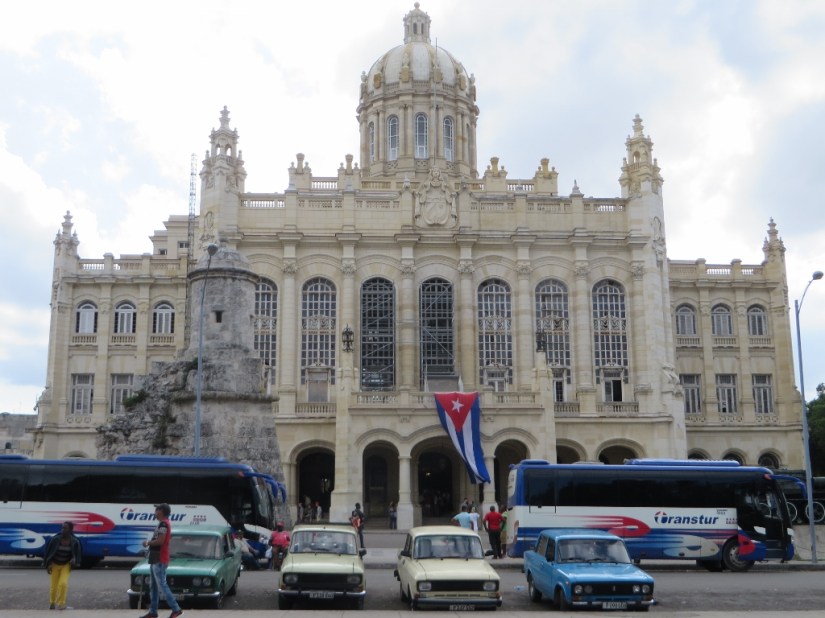
We turned back and thought it was time for some history to help give our time in Cuba a little structure and we went into the Museo de la Revolucion, housed in the sumptuous presidential palace of the 1950s dictator Batista …

Havana El Prado (4)

… with memorial outside to the Heroes of the Revolution, Castro, Cienfuegos, & Che Guevara.

We walked round the displays which were almost entirely in Spanish, with the odd caption in English. There was one small part about the reforms made after the revolution which looked like it had been newly curated and was ok, but for the rest, there were a lot of black and white photos of men in fatigues with guns, battle plans and various personal bits and pieces. There are still sprays of bullet holes in the courtyard …

Havana El Prado (2)

… which leads to the Granma Memorial, named after and displaying the boat Castro and his men took from Mexico to begin the revolution, a flame burning to the fallen and various relics including a couple of home made armoured vehicles.

Havana El Prado (31)

Having learnt so little about the history in the museum, I did some reading and here is the history spot which you may wish to pass over, but is as concise as I could make it to introduce a couple of the main men and events.

Christopher Columbus landed in Cuba in 1492 and claimed it for the Spanish. Colonisation followed with settlers from Europe and slaves from Africa working to cultivate tobacco and sugar making Havana a strategic port in the Caribbean. The British conquered Havana in 1763, enabling Cuba to trade with countries other than Spain, then swapped Havana for Florida a year later, but free trade in Cuba remained when the Spanish returned.

The struggle for Cuban independence began in 1868 when a landowner ‘called Cespedes freed his slaves, beginning the Ten Years War which ended in failure. Slavery in Cuba was abolished in 1886 and the Second War of Independence began in 1895, led by Jose Marti. The Spanish-American War resulted in a Spanish withdrawal from the island in 1898 and following a period of US military rule, Cuba became independent in 1902 but still under domination of the US.

Several governments followed, and while there was some social reform and modernisation, there was also corruption and discontent. In 1933, a young sergeant called Batista staged a coup and brought military support to several successive presidents, and was also president himself, but in 1952, fearing he would not win the election, Batista took control in a military coup. He seemed to have lost any zeal for social change, organised crime became ingrained and this period of leadership became a violent dictatorship.

Fidel Castro led the subsequent revolutionary movement which succeeded in 1959 and there was a period of reform with education and healthcare, but the regime became intolerant of opposition, and many tried to leave Cuba. Cuban-US relations soured, and the US tried to regain power at the Bay of Pigs but failed so declared a trade embargo. Castro entered a pact with the Soviet Union and introduced a repressive Communist regime. As a result of the Cuban Missile Crisis, the US stated they would not invade Cuba and tightened the trade embargo. Cuba became economically dependent on the USSR so when the Soviet Union broke up in 1991 the situation in Communist Cuba became desperate so Castro was forced to allow some free enterprise and also opened up Cuba to tourism. Fidel Castro resigned in 2008 and his brother Raoul Castro took over, bringing more reforms and restoring diplomatic ties with the US in 2015, however Cuba remains a dictatorship.

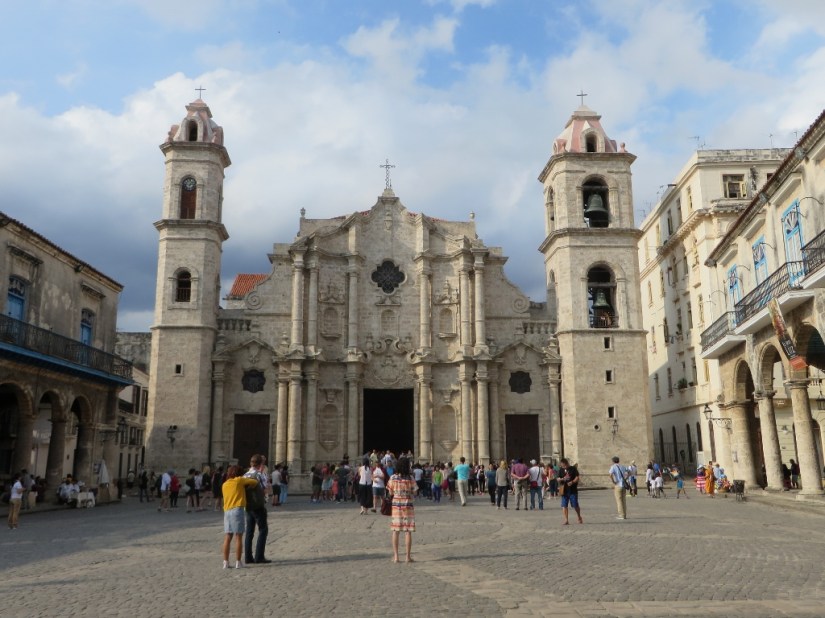
Next we headed into Habana Vieja, the old town, arriving first in Plaza de la Catedral, dominated by the best example of Cuban Baroque style, the cathedral, and surrounded by aristocratic residences.

Havana El Prado (12)Havana El Prado (8)

Santeria is the most widespread of the faiths imported by African slaves and is still an important part of the national identity today, happily sitting side by side in the same plaza as the cathedral. Practitioners dress all in white, with a coloured bead necklace and we saw such a woman sitting at a table, presumably waiting for someone to request help and advice.

Havana El Prado (28)

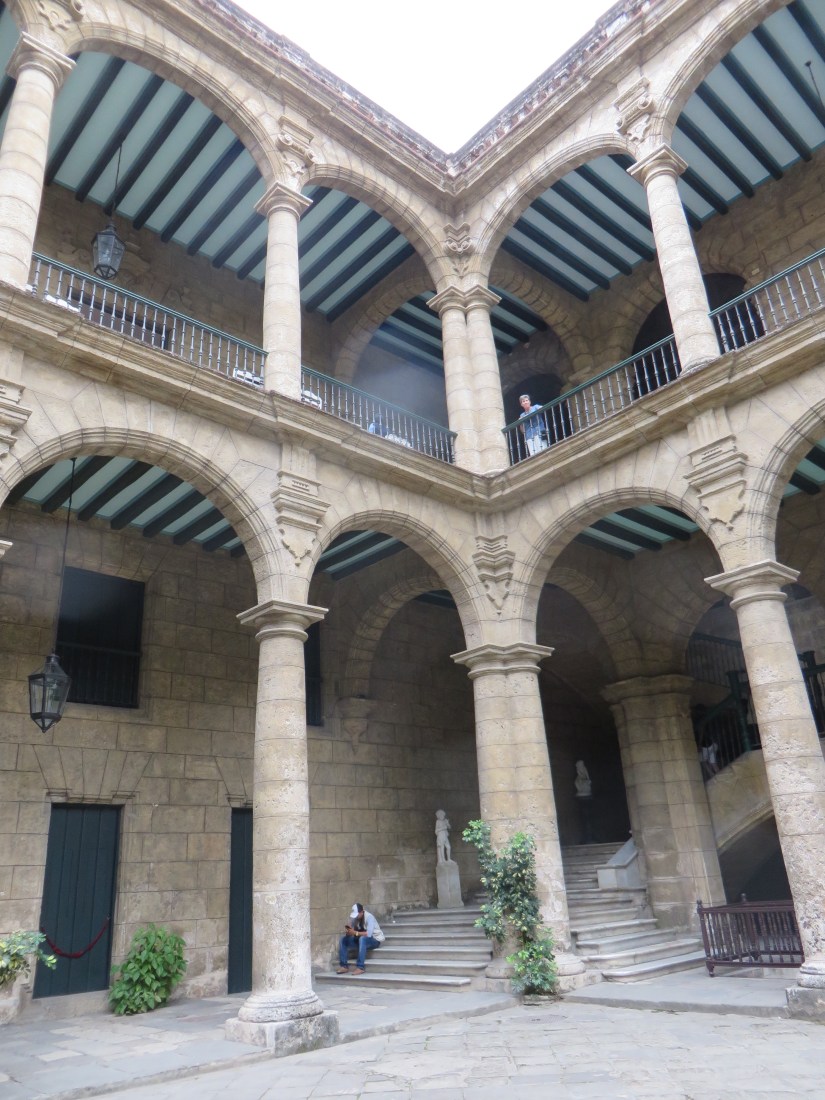
There are four squares in the old town, and after wandering down an alley, we found ourselves in the Plaza de Armas, the oldest square, and took a look in the Museo de la Ciudad housed in one of the lovely old colonial buildings with Columbus taking central stage in the courtyard.

Havana El Prado (18)

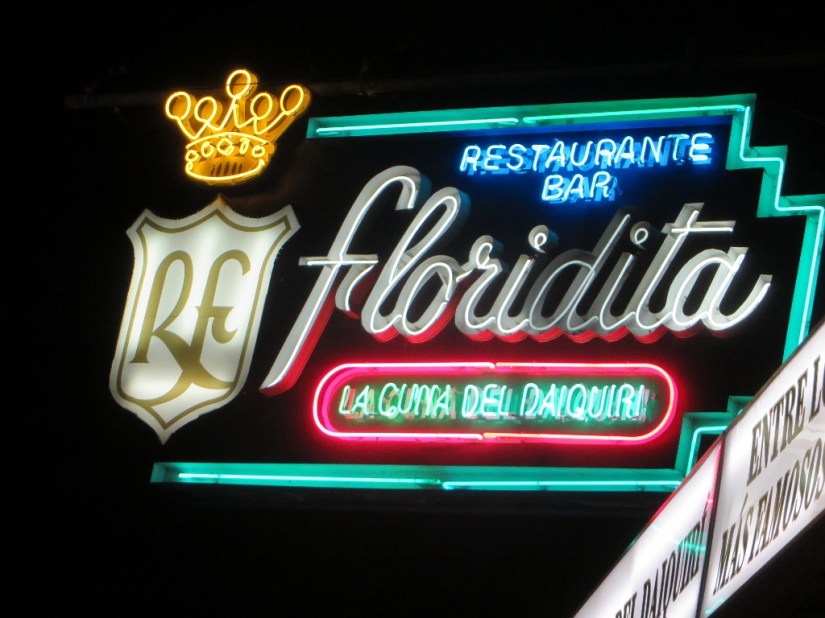
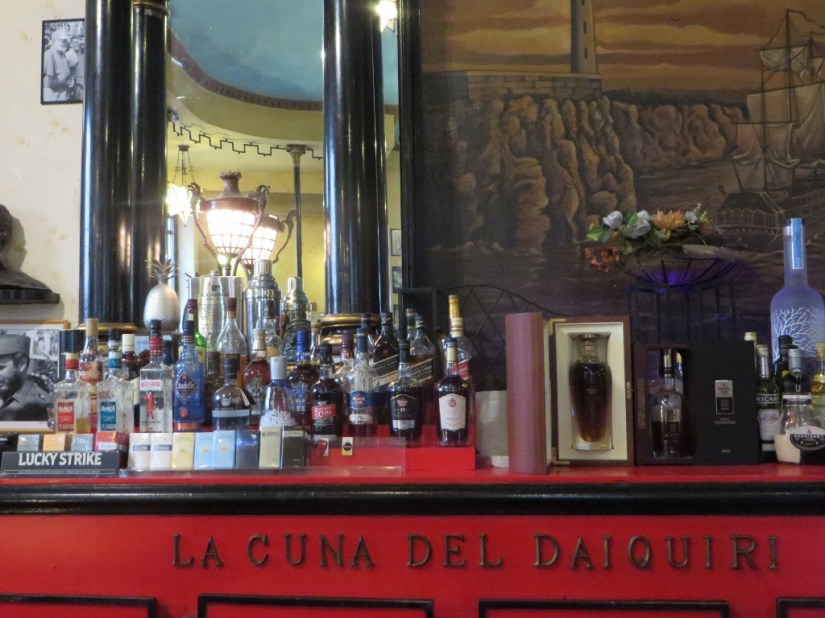
We decided we had walked far enough and since we were conveniently passing El Floridita, home of the Cuban daiquiri and famous Hemingway haunt, we thought we’d try one out.

Havana El Prado (5)

Havana El Prado (14)

It was really busy and we were lucky to get stools at the bar but it meant we had ringside seats as we watched the barman pouring cocktails.

Havana El Prado (19)

Our first daiquiris were delicious …

Havana El Prado (10)

… and we sat listening to the band …

Havana El Prado (6)

… under the eagle eye of Hemingway, propping up the bar in the corner!

Havana El Prado (7)
Later we had dinner in a small paladar, which in the 1990s were small restaurants offering home-cooking often in people’s homes. With a recent relaxation of restrictions, paladars are more widespread but are still small private restaurants. We chose Hanoi as it offered a vegetarian set menu of beans, rice and salad for Chris, and I had camarones empilados or prawns in a tangy tomato sauce, with rice and salad. We also had our first mojitos … and they were very good and very generous with the rum!

Havana El Prado (16)

Tomorrow we are moving on but we will be seeing more of Havana later …
Chris & Elaine Check Out Cuba 2017

Havana Vieja (21)Everybody’s talking about visiting Cuba now, while it is still possible to step back in time to see the faded glamour of pre-revolution Havana and an island where little has changed since Castro swept to power in 1959. Reforms brought in by Raul Castro when he became president in 2008 and restoration of diplomatic ties with the US in 2015 mean times are definitely changing and we are eager to catch this moment before it passes and Cuba becomes modern and shiny like everywhere else.

Cuba is 780 miles long and we will be travelling most of it by coach stopping at Cienfuegos, Trinidad, Camaguey and Santiago di Cuba on the way to Baracoa on the east coast, before flying back to Havana to check out the city. We will then spend a few days in the countryside of Vinales before returning home.

We are looking forward to staying in Casa Particulares, private rooms rented out by Cuban families, who also provide home-cooked meals and a real taste of Cuban life.

Chris is eagerly looking forward to the photographic possibilities the trip offers and we have even taken a few salsa classes so we can go dancing. As well as the attractions of the towns, there are national parks to walk in and beautiful beaches to relax on and we may even catch a baseball game as it is the national obsession!

We are hoping for warm and sunny weather so come and spend February with us in Cuba!

Journal Entries

Havana – Walking El Prado – 30 January 2017

Cienfuegos – The Pearl of the South – 1 February 2017

Trinidad – Cars & Cobbles – 5 February 2017

Camaguey – City of Legends – 10 February 2017

Santiago – Cradle of the Revolution – 11 February 2017

Baracoa – Christopher Landed Here – 15 February 2017

Havana – Vieja and Vedado – 19 February 2017

Vinales – Mogotes & Cigars – 22 February 2017

Havana – Plaza de la Revolucion – 26 February 2017

Map