BBC Bristol …

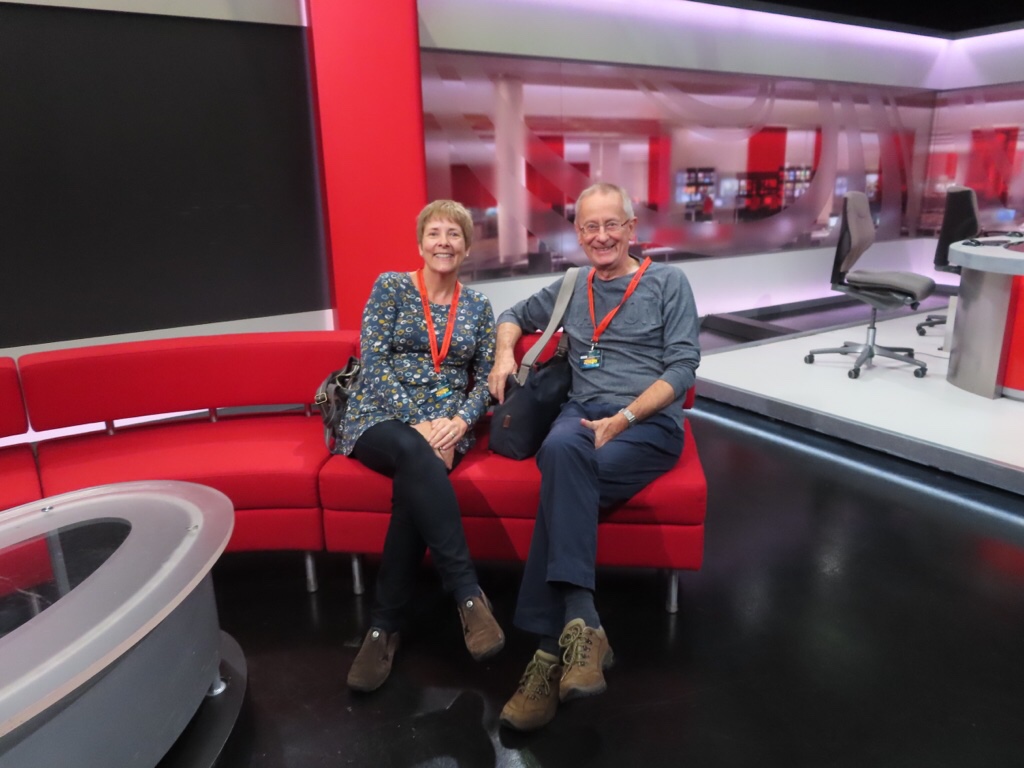
On our last morning we checked out, leaving our bag to collect later, stopped for breakfast at Wapping Wharf then walked up through the city to BBC Bristol for a tour.

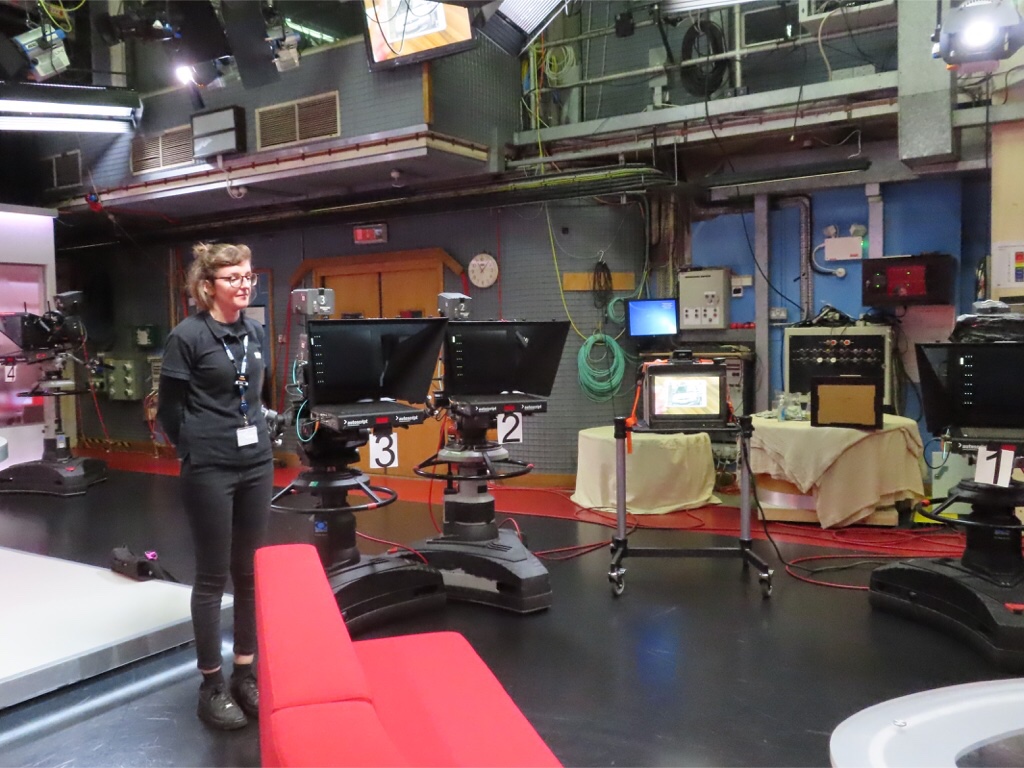
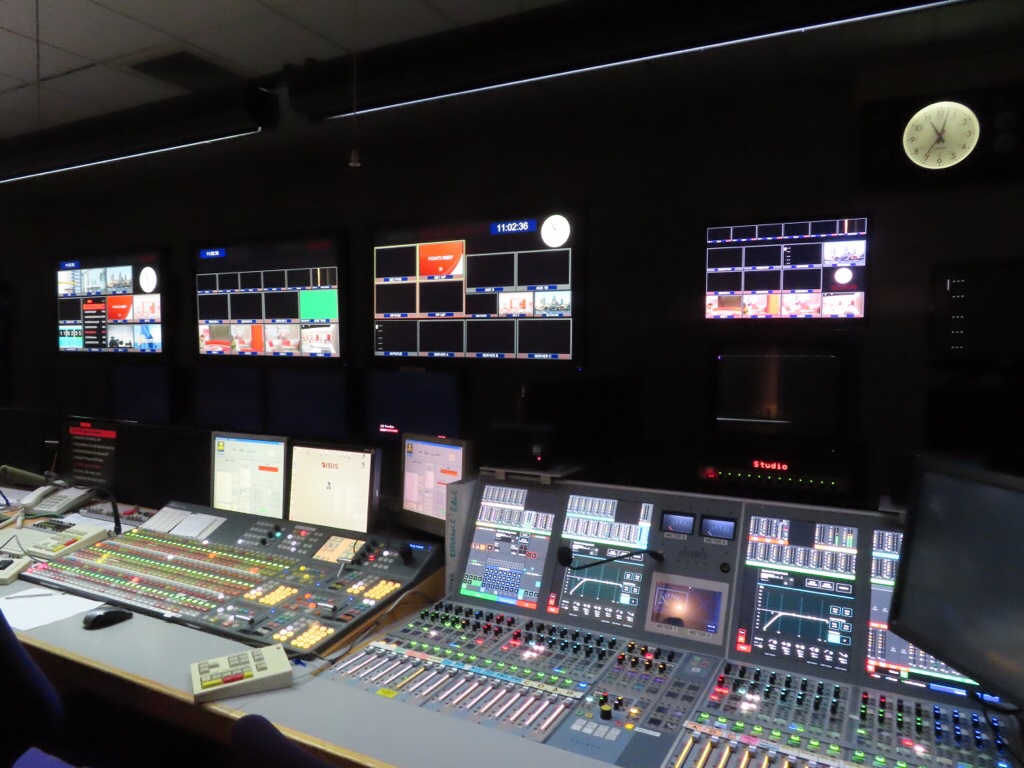
We looked round reception and could see the kind of programmes made here like Antiques Roadshow, Gardeners World and Countryfile. Their pride and joy is the Natural History Unit which have made all the best known wildlife programmes from Life on Earth to Seven Worlds, One Planet that will be shown this autumn. The technical developments during this time have been immense, enabling the camera to get closer and closer to the action, nowadays often using drones to disturb the animals as little as possible. BBC Bristol also make the local news programme Points West and our tour showed us the BBC Wildlife Garden where the weather is filmed and the main news studio – both behind the scenes, and in front of the camera!

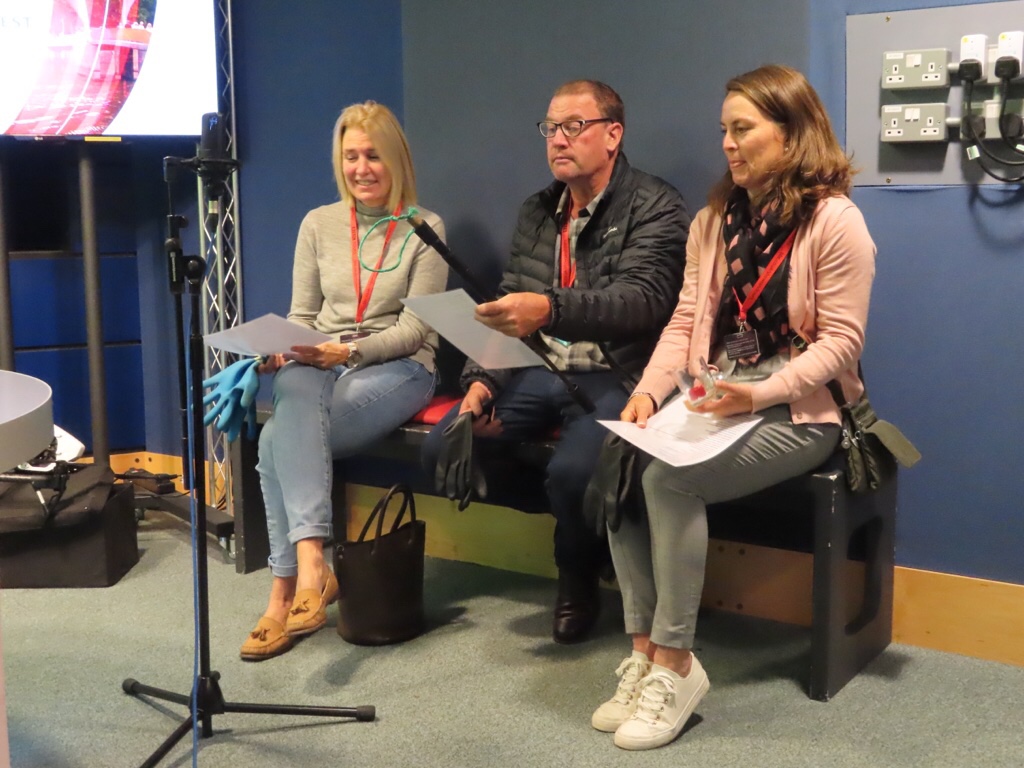
Afterwards, we had a go recording our own radio play with special sound effects including rubber gloves for bats, a bicycle pump for a champagne cork …
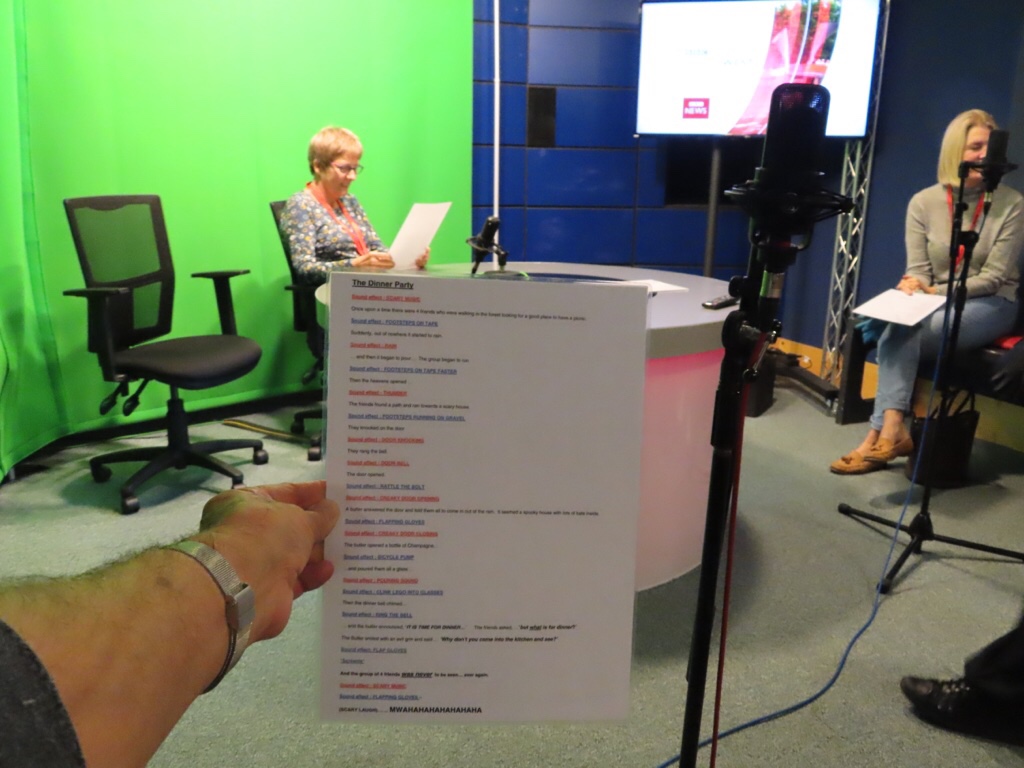
… and then filming a news and sport bulletin with a weather slot which certainly helped us see there is a lot more to this tv lark than meets the eye!

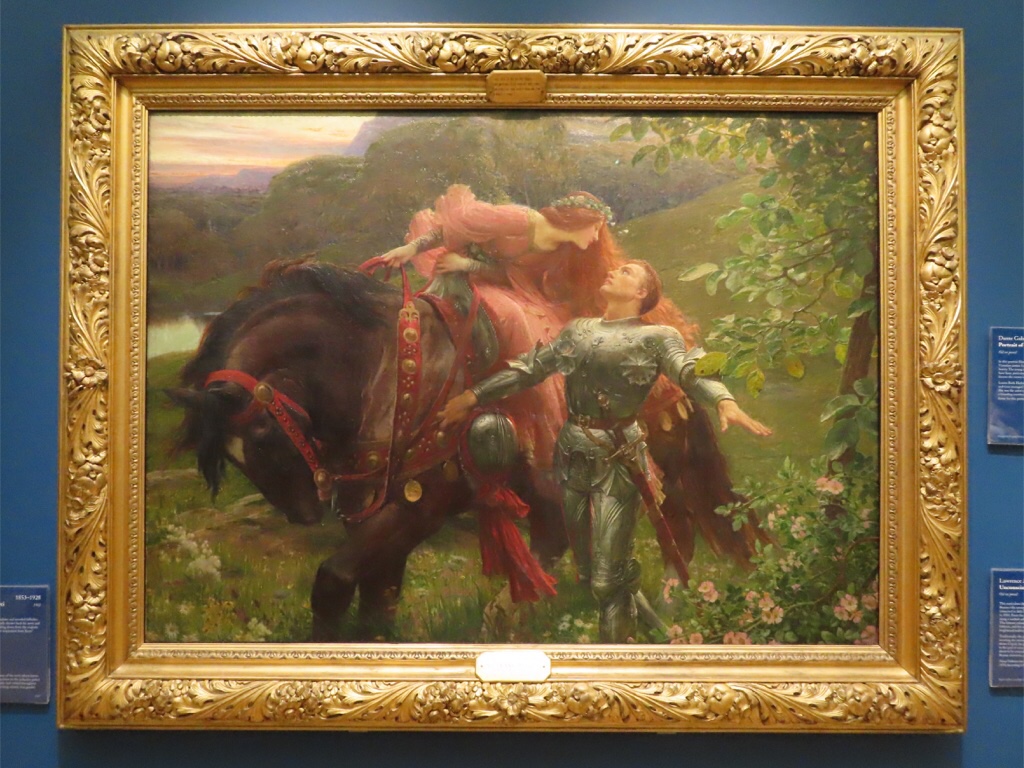
Walking back, we popped into the Bristol Museum and Art Gallery, really just to see Banksy’s Paint-Pot Angel, but it was out on loan … so we’ll have to see that next time. Once inside though, we took a turn round their Pre-Raphaelites and really liked this one …
… saw this view of the bridge …

… and this replica of the first plane built in Bristol – the Bristol Boxkite.

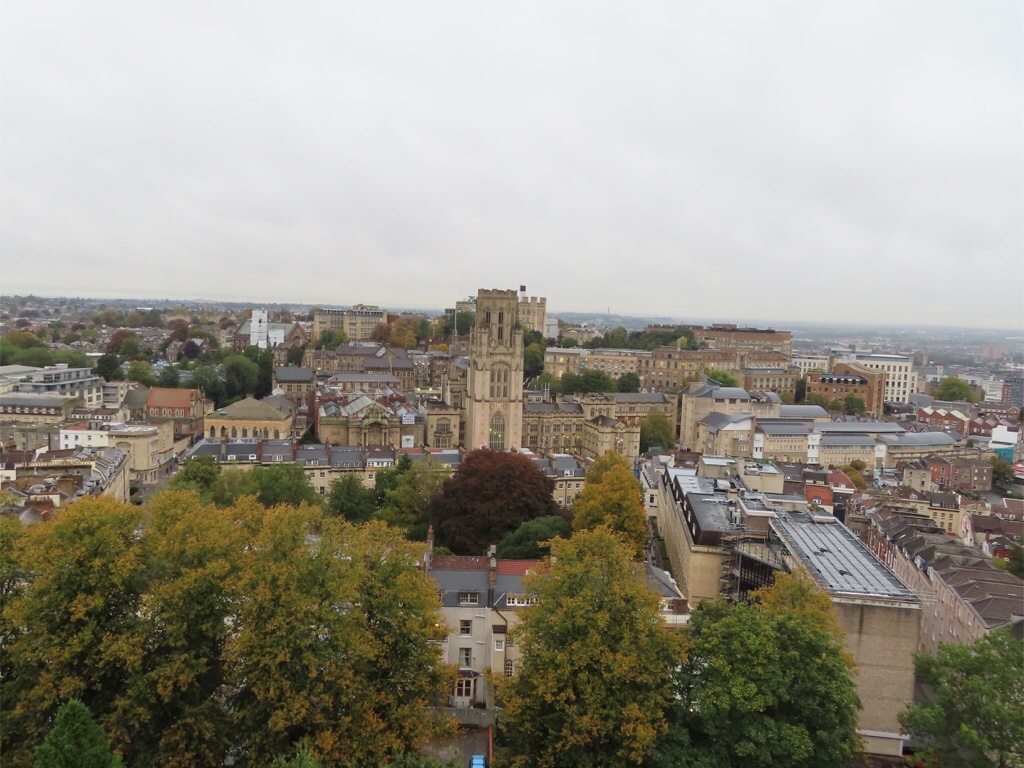
The tower of the Wills Memorial Building dominates the city and is considered one of the last great Gothic buildings to be built in England. It is part of the University of Bristol and we just looked inside the entrance hall …
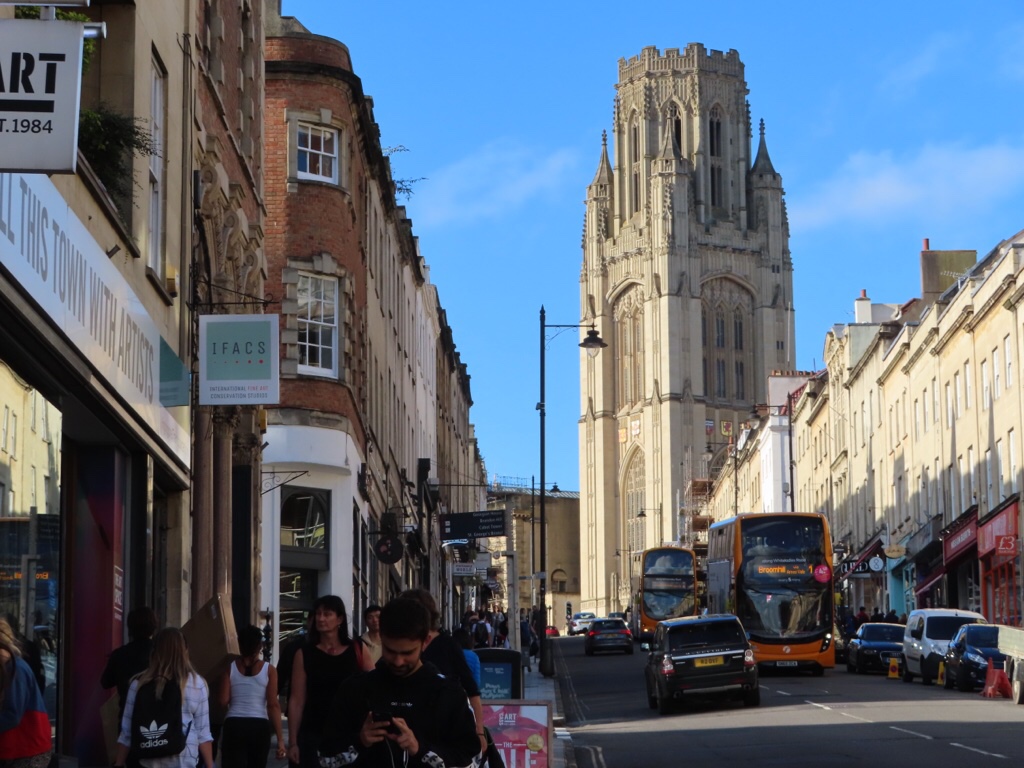
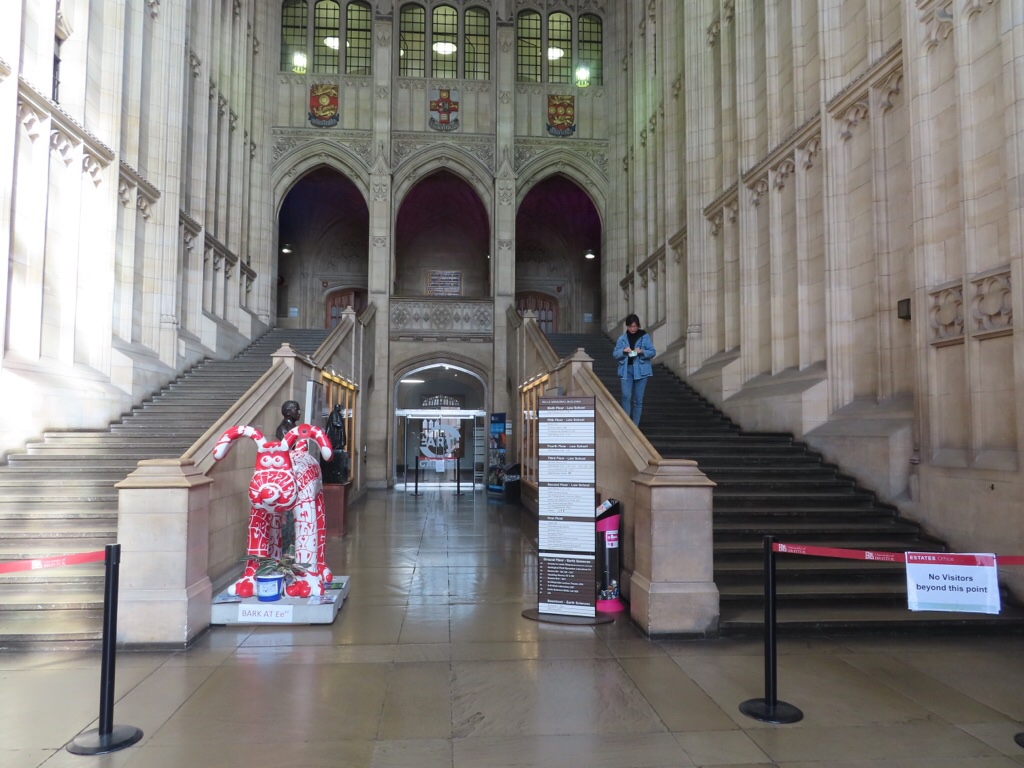
… then headed passed the Cathedral and we were done.

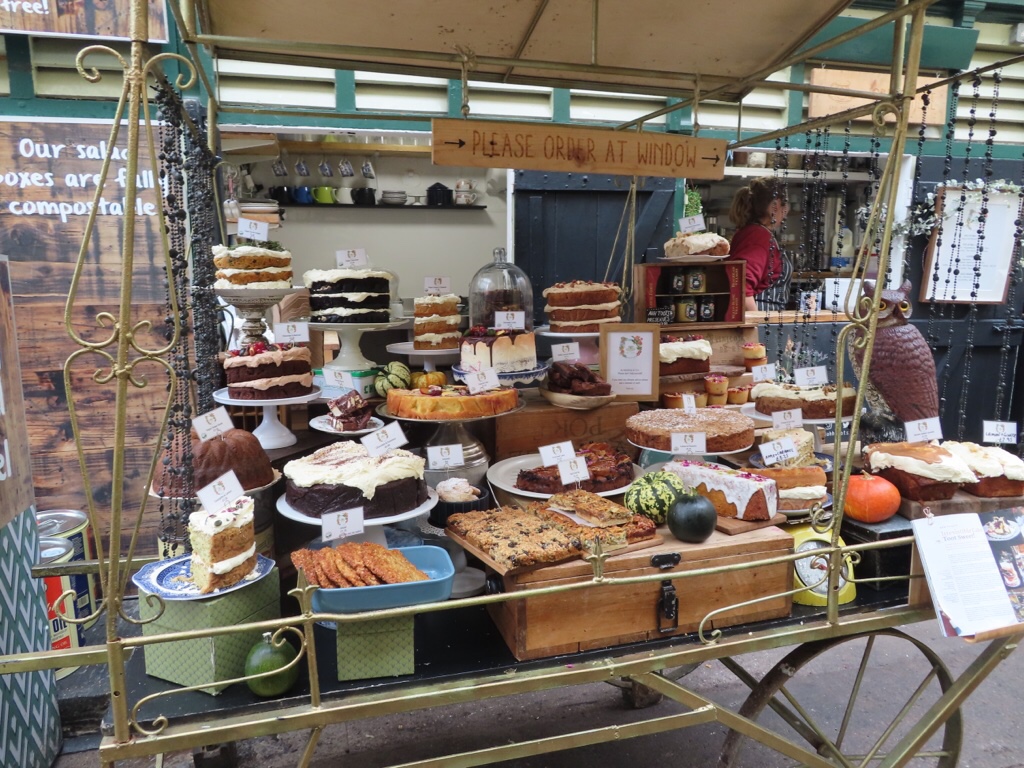
We had watched the quiches and salads being prepared while we ate our breakfast this morning and returned to Mokoko to try them out!

Chatting over lunch, we thought we would probably be back sometime, after all there’s definitely more to see, it would be nice to see the city with a little more sunshine and there are lots more restaurants to try!

On that happy note, the ferry took us back to Temple Meads and our train home.

Map

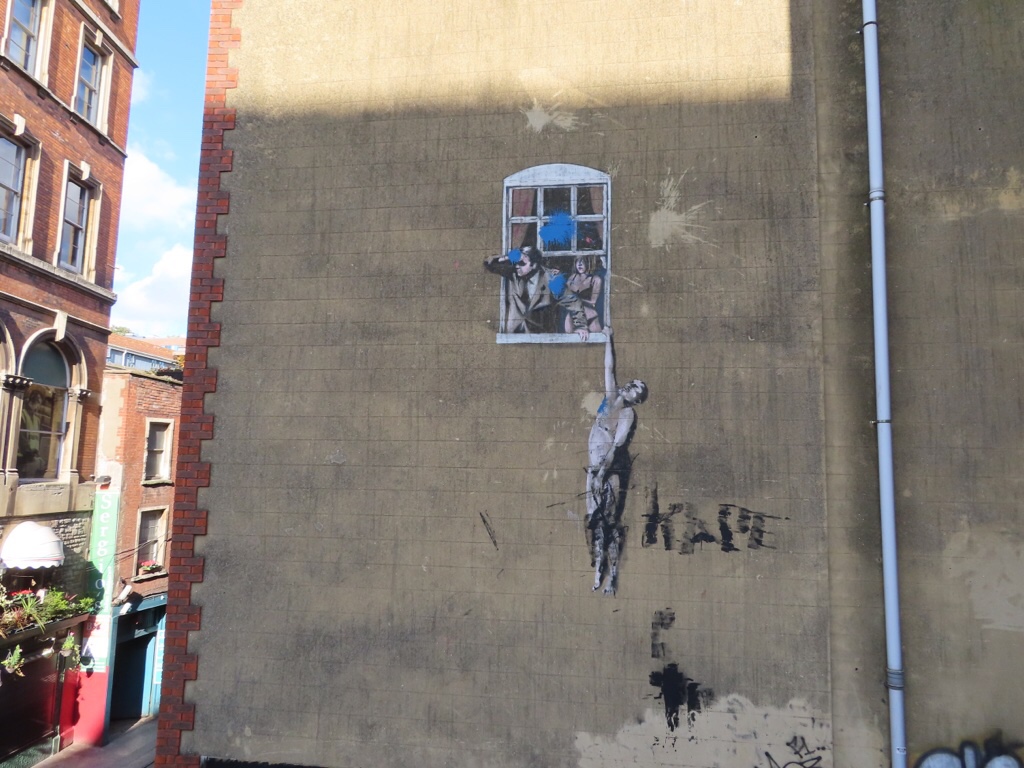
Lots of Banksy …

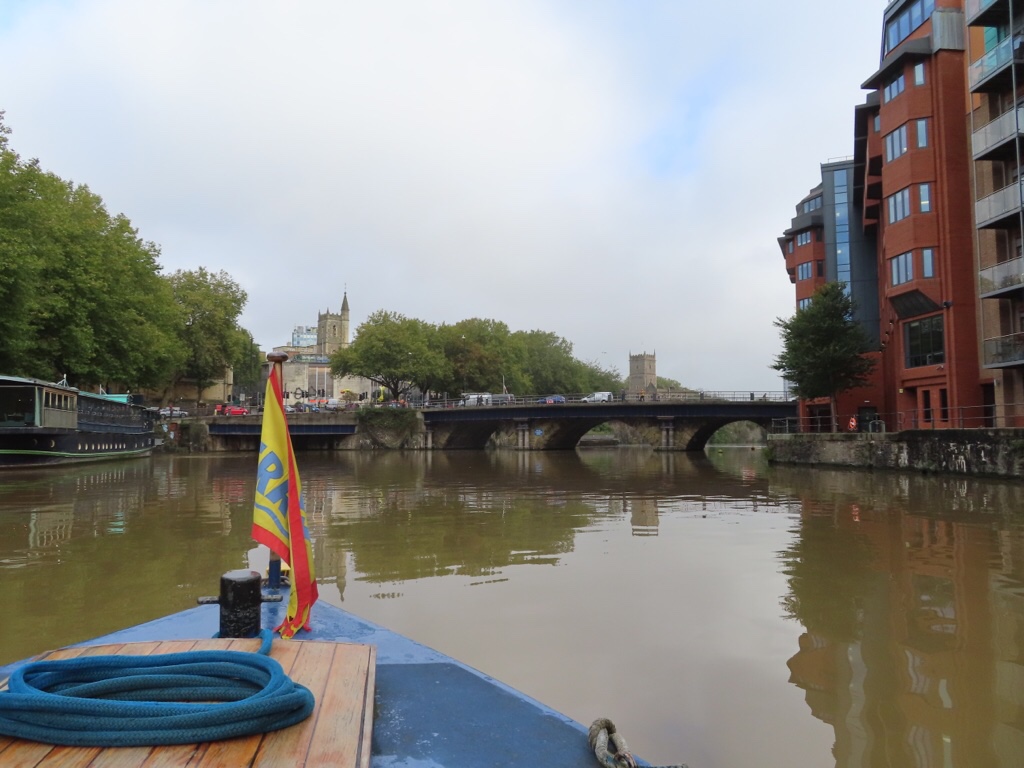
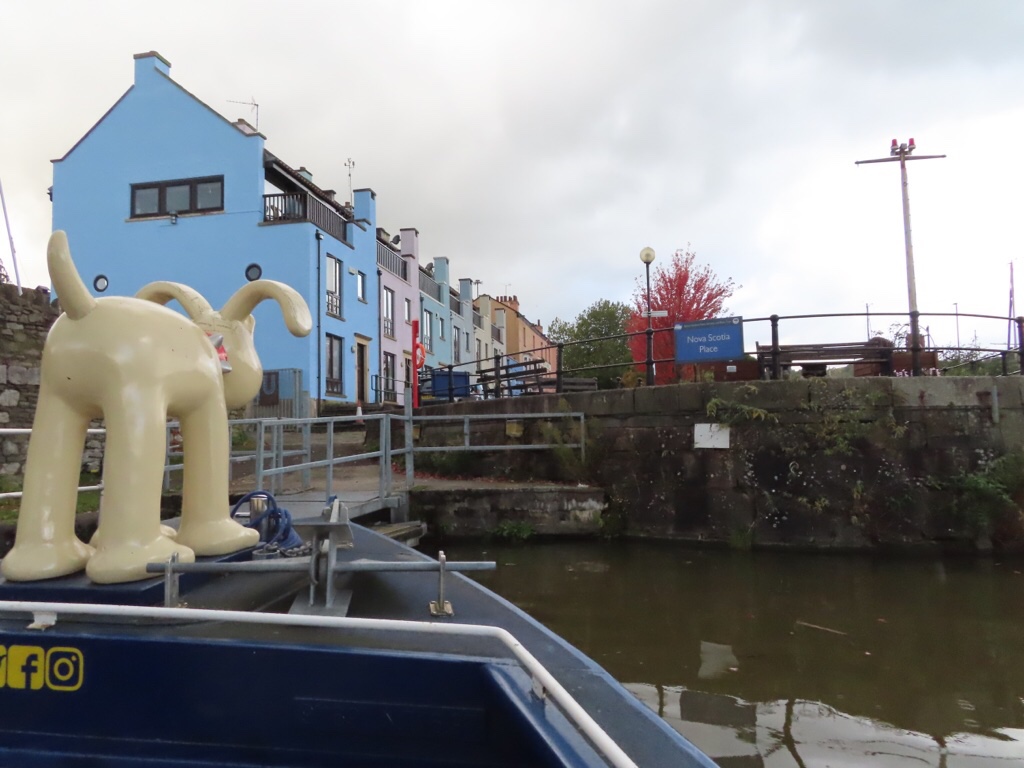
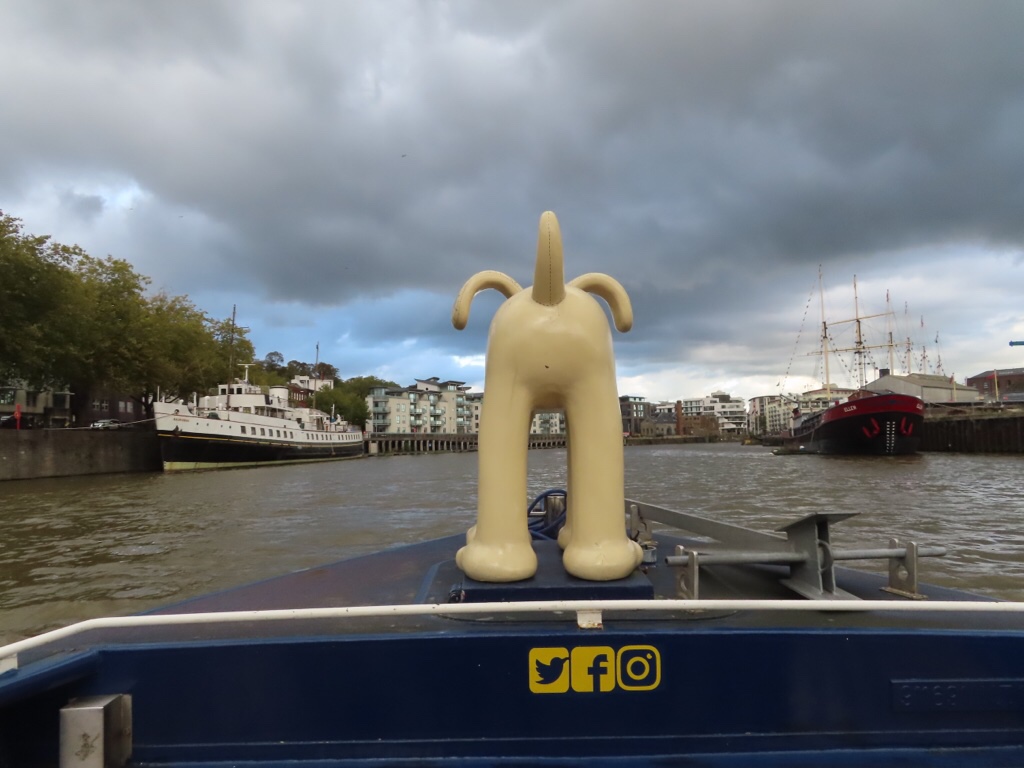
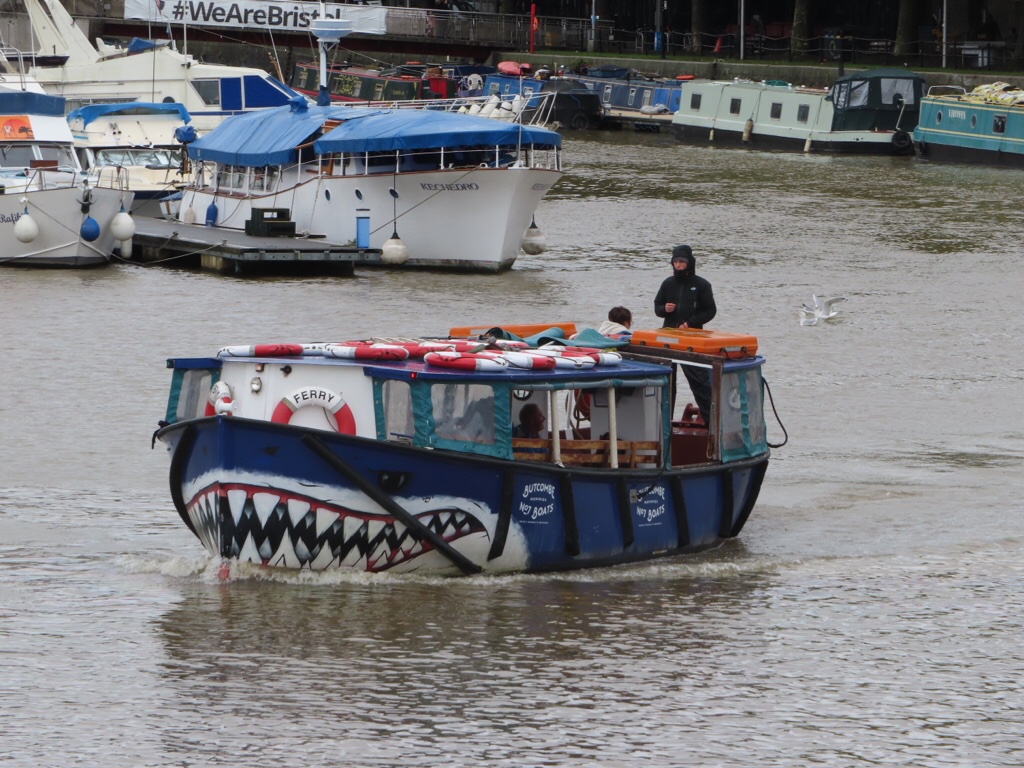
Today is our wedding anniversary, and we picked Bristol so we could celebrate with a boat trip. There are a pair of ferries who have a figure of eight route round the harbour and we really fancied having Grommit at the helm but he was going the wrong way … maybe later!

We passed wharf buildings converted into apartments …

… under Bristol Bridge …

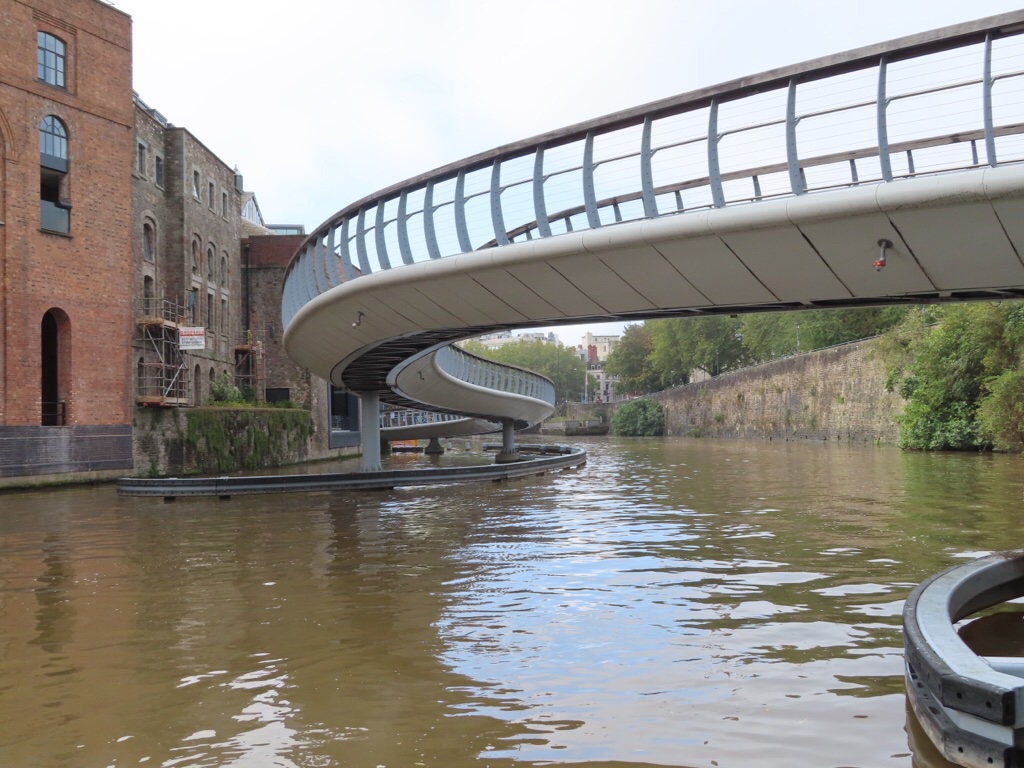
… and an interesting new pedestrian bridge …

… until we could see Cheese Lane Shot Tower. William Watts invented the tower process for making lead shot whereby molten lead was dropped into cold water below. The original tower was built in 1782 and used until demolished for road widening in 1968. It was rebuilt the following year in this modern design and continued to be used to make lead shot till 1980. It can now be hired as a penthouse boardroom!

We got off at Castle Park which contains St Peter’s church, bombed in the Blitz and left as a monument …

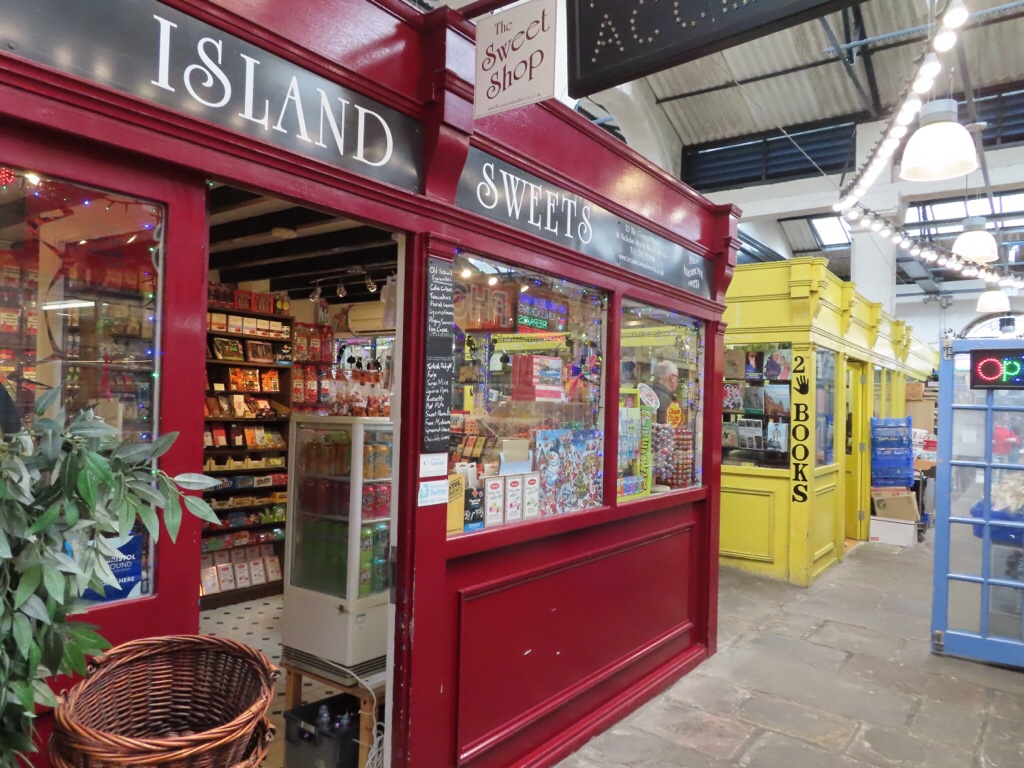
… then followed a route through the city, picking off the main attractions starting with St Nicolas Market …

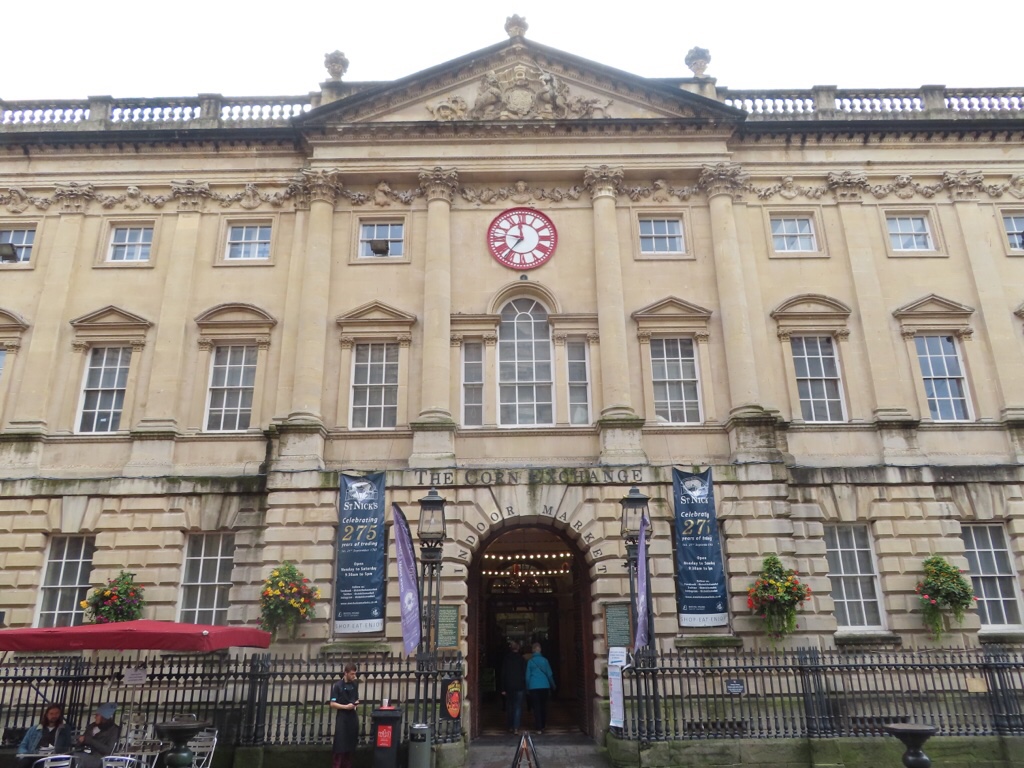
We exited the market in Corn Street where the C18th Corn Exchange was built to house the merchants who were blocking the streets. They settled their debts on the four flat-topped brass pillars called Nails – hence the expression to ‘pay on the nail’.

The clock above the entrance has two minute hands, the red hand shows Bristol Time and just over ten minutes ahead is the black hand showing Railway Time (or GMT) used before time was standardised across the UK to accomodate railway schedules in 1852.

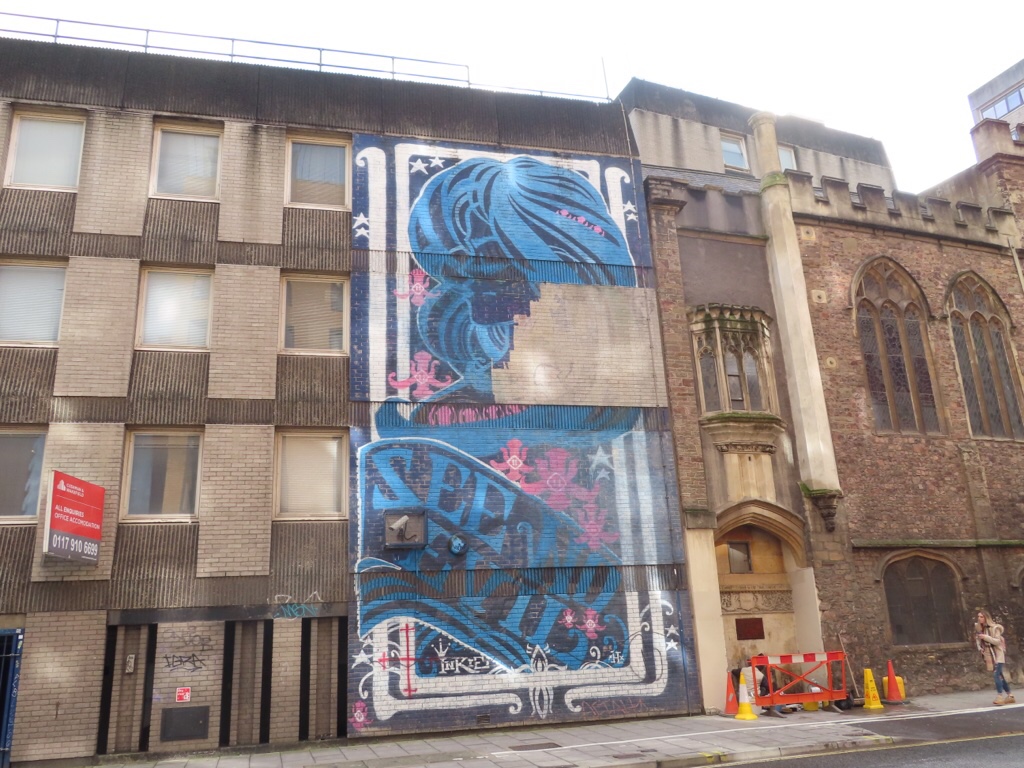
Everards Printing Works has a colourful Art Noveau facade with Carrara-ware tiles and murals of Johannesburg Gutenberg and William Morris, the fathers of modern printing, separated by the Spirit of Literature and presided over by a woman holding a lamp and mirror representing light and truth … it just needs a little tlc so I hope somebody restores it.

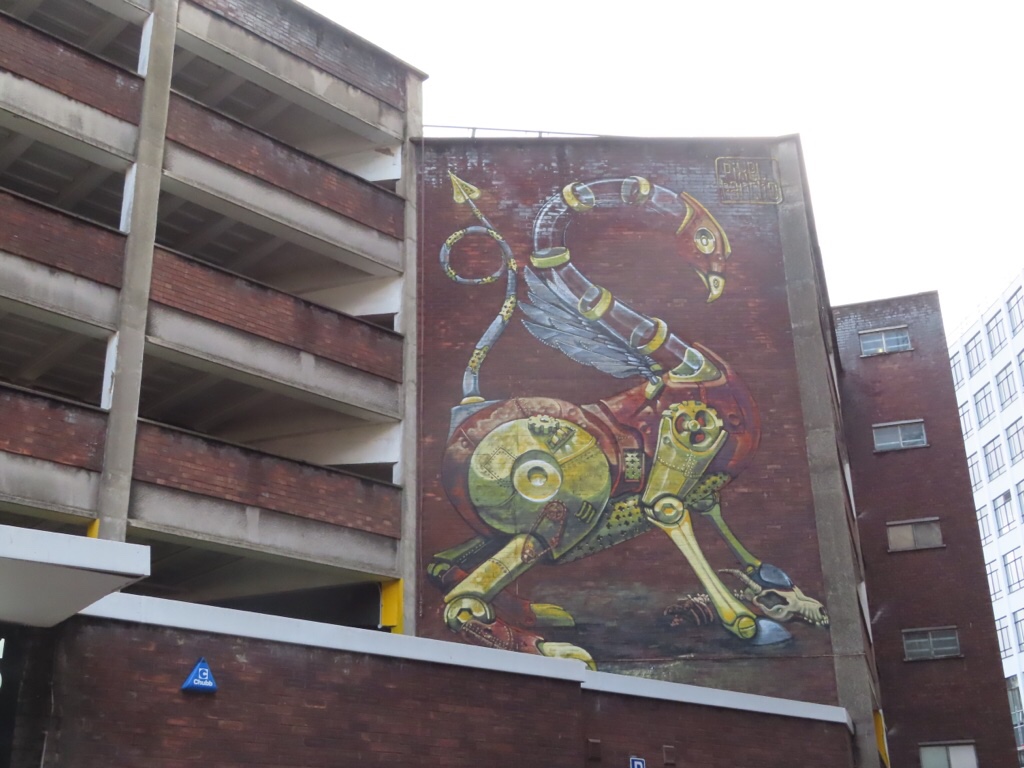
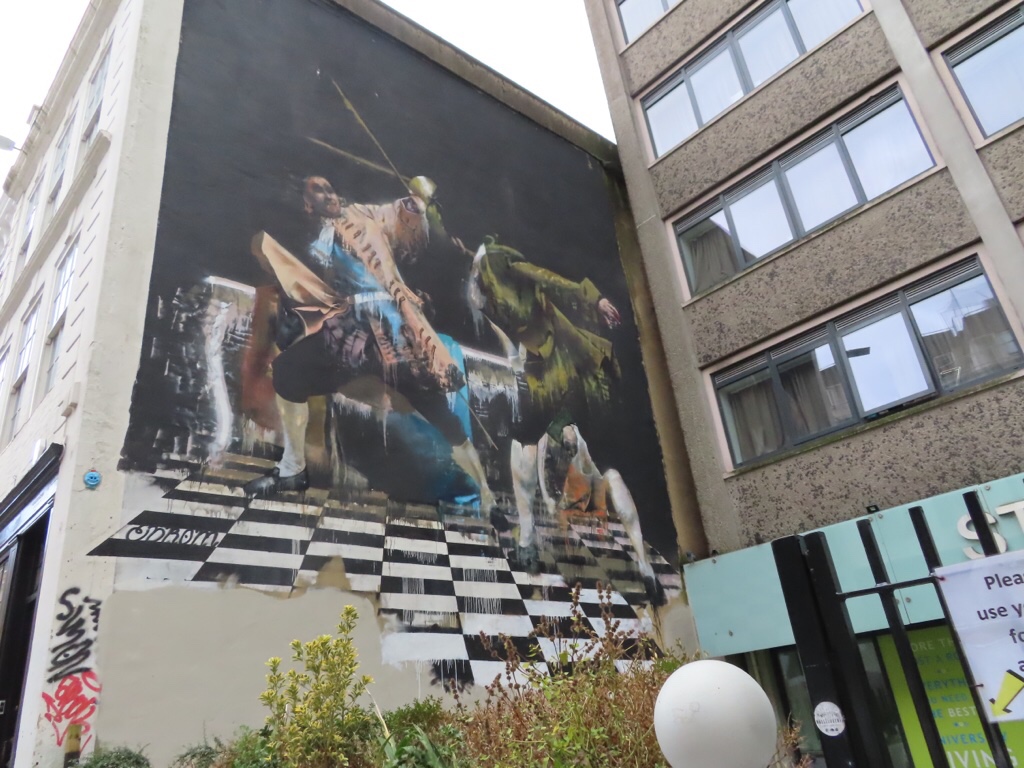
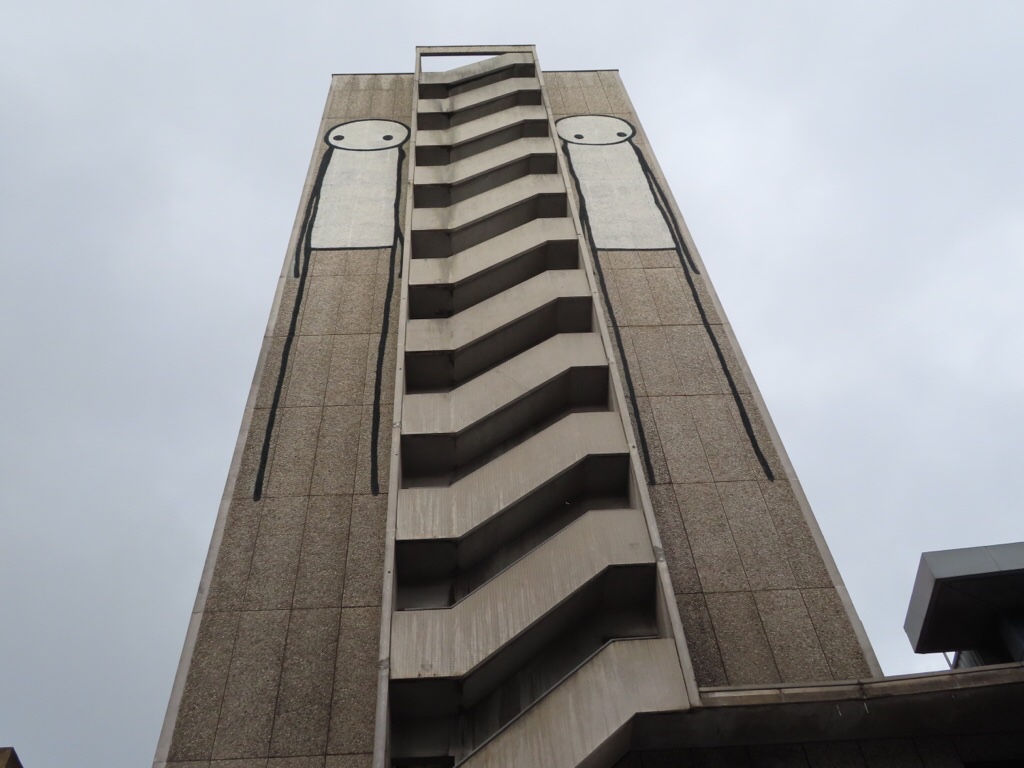
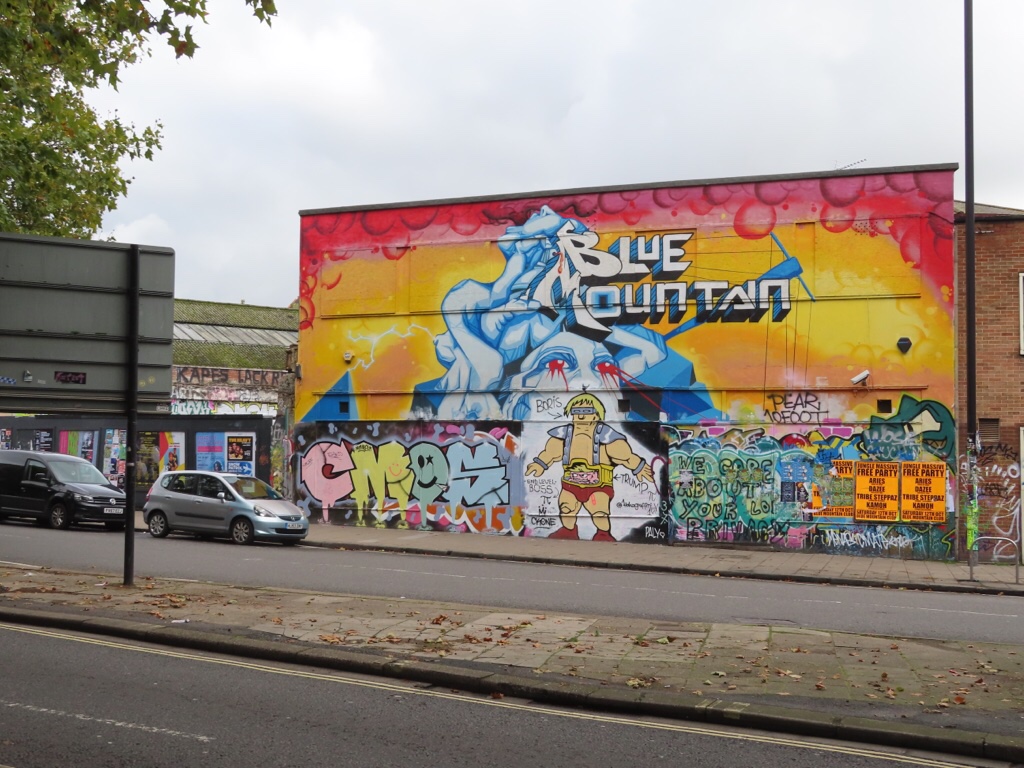
We then headed down Nelson Street to see remaining street art from the See No Evil festival in 2011-12. There is a huge amount of information online about who painted what, but here are just some images.

New Room was built by John Wesley in 1743, initially as meeting room but also used as a soup kitchen, a school, a dispensary and the first Methodist chapel.

Next stop is the neighbourhood of Stokes Croft, where the People’s Republic of Stokes Croft promote art in the community.

It seems quite a rundown area and the aroma of pot and drying spray paint was definitely in the air as we checked out some of the of street art …

… including a couple of Banksy’s – The Mild Mild West and The Rose Trap …

… and Well Hung Lover nearer the city centre.

The city have several free museums including Red Lodge which was once a C16th merchants house and later England’s first girls reform school with a splendid Tudor Oak Room …

… and The Georgian House, former home of local sugar merchant John Pitney with faithfully restored rooms and the story of the family’s dealings in the West Indies. Their slave Pero was commemorated by the Pero bridge in 1999.

Back at the harbour, Grommit was ready to take us round the other side of the harbour.

We passed the reconstruction of the Matthew, the ship in which the Italian navigator Giovanni Caboto or John Cabot, sailed west from Bristol in 1497 in search of Asia. Instead he found North America, landing on the banks of what he named Newfoundland, which he claimed for England.

We continued to Nova Scotia Point …

… before returning to the SS Great Britain and got off.

We went in search of Banksy’s take on Vermeer. It’s a good job Google Maps has a note of these or we would never have found it tucked between a couple of dock buildings … Girl with the Pierced Eardrum …

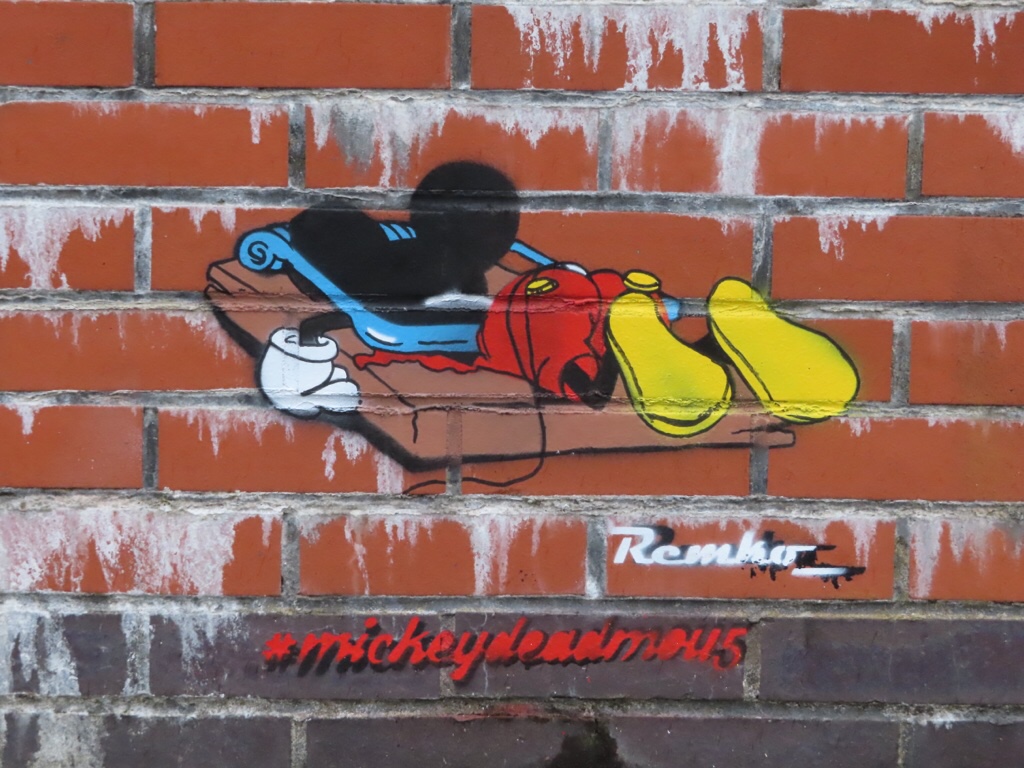
… and finally, a rather squashed Mickey reminding us of Rose Trap earlier

With such a multi-cultural heritage in Bristol, we’ve managed to revisit all our favourite cuisines in one short break, and tonight was no different with Souk Kitchen decorated with bold colours and flickering candles and offering a fusion of Middle Eastern flavours. Yum!

Map

Mainly Brunel …

With rain forecast later, we made an early start so we could walk to Clifton along the bank of the River Avon. We would have started along the Chocolate Path, named for the appearance of its paving slabs laid in 1906, but it is slowly crumbling into the canal and has been closed awaiting repairs.

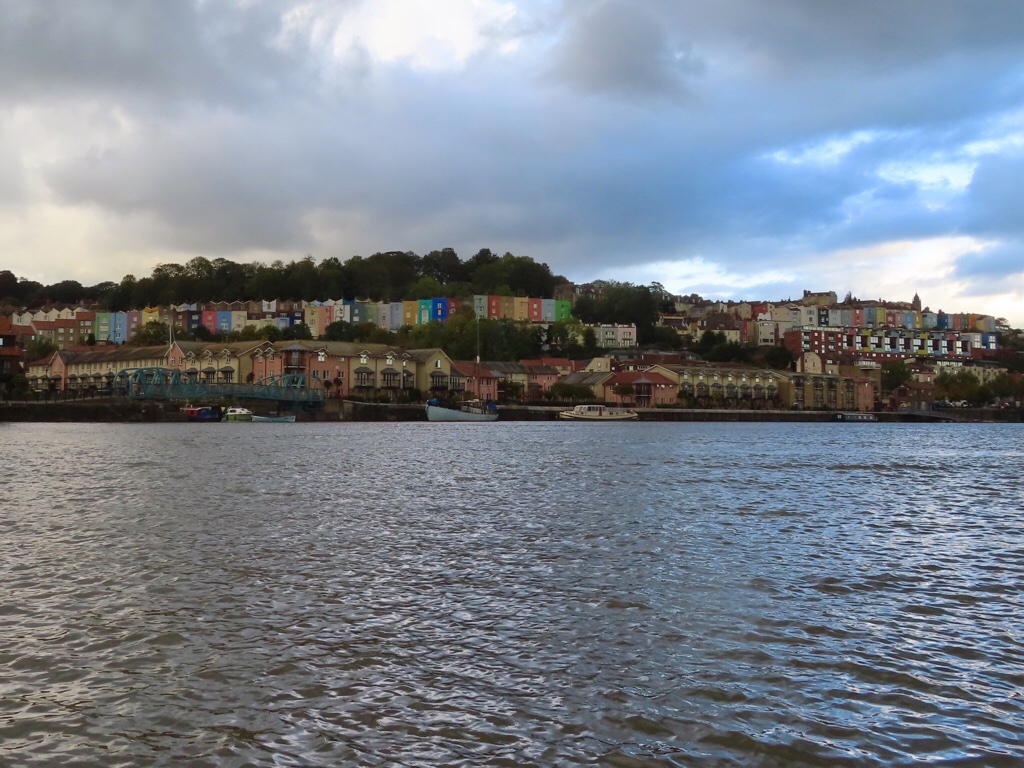
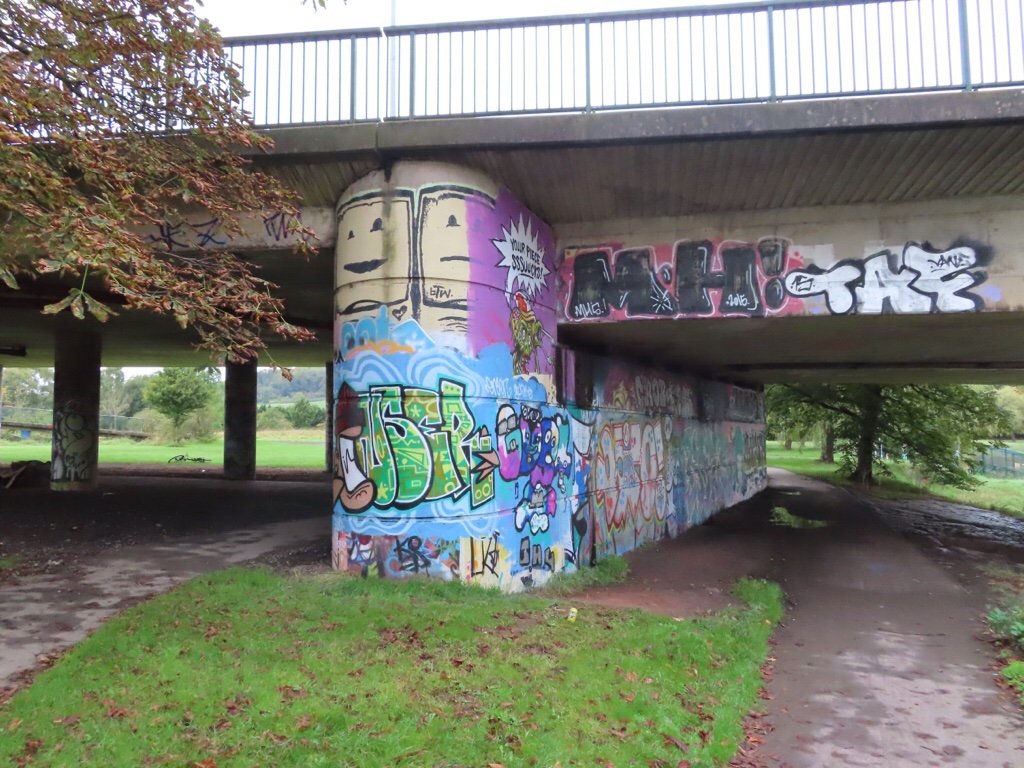
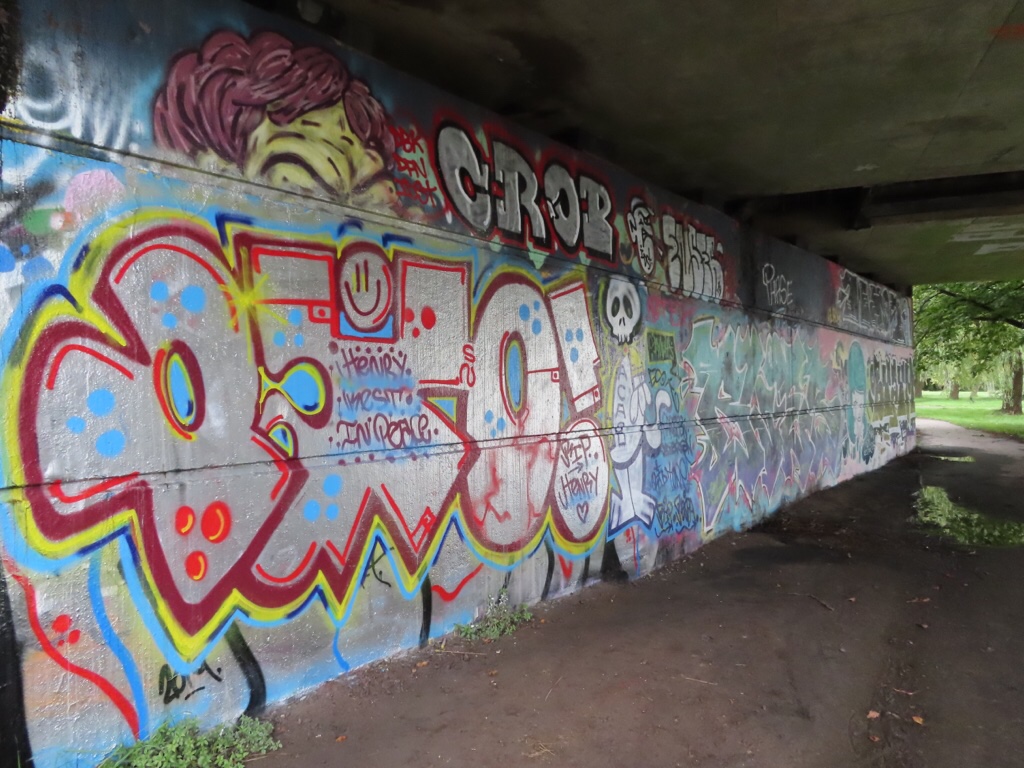
On such a grey morning even the graffiti and brightly painted houses did little to lift the mood …

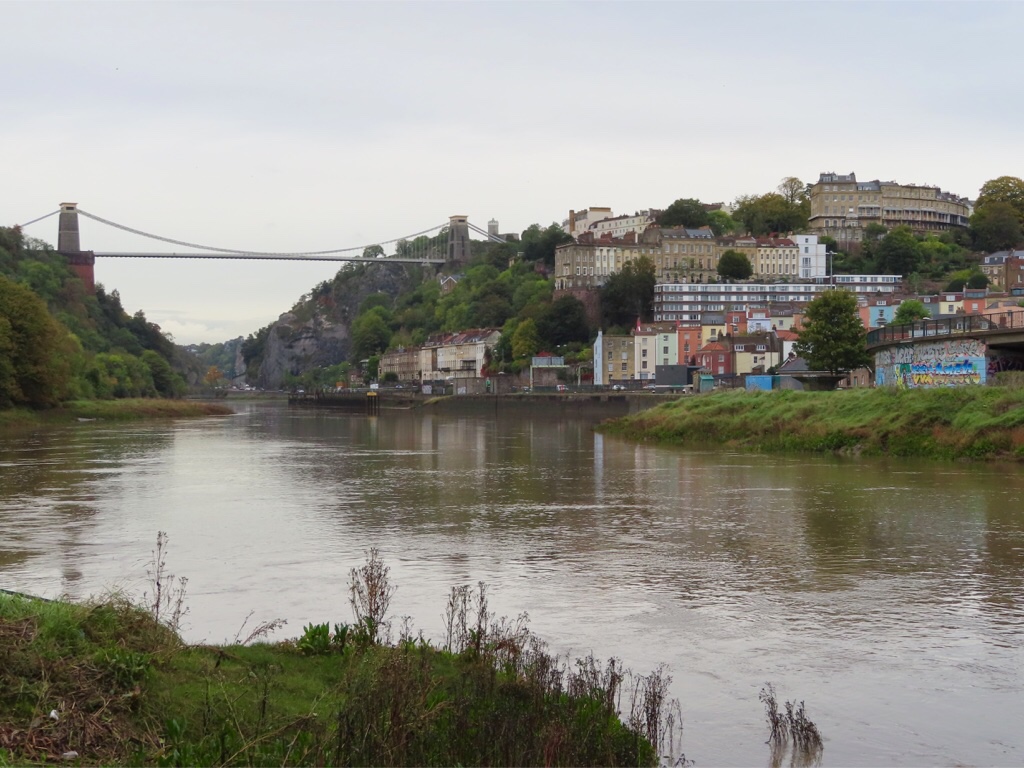
… but The Clifton Suspension Bridge came into view and still looked impressive.

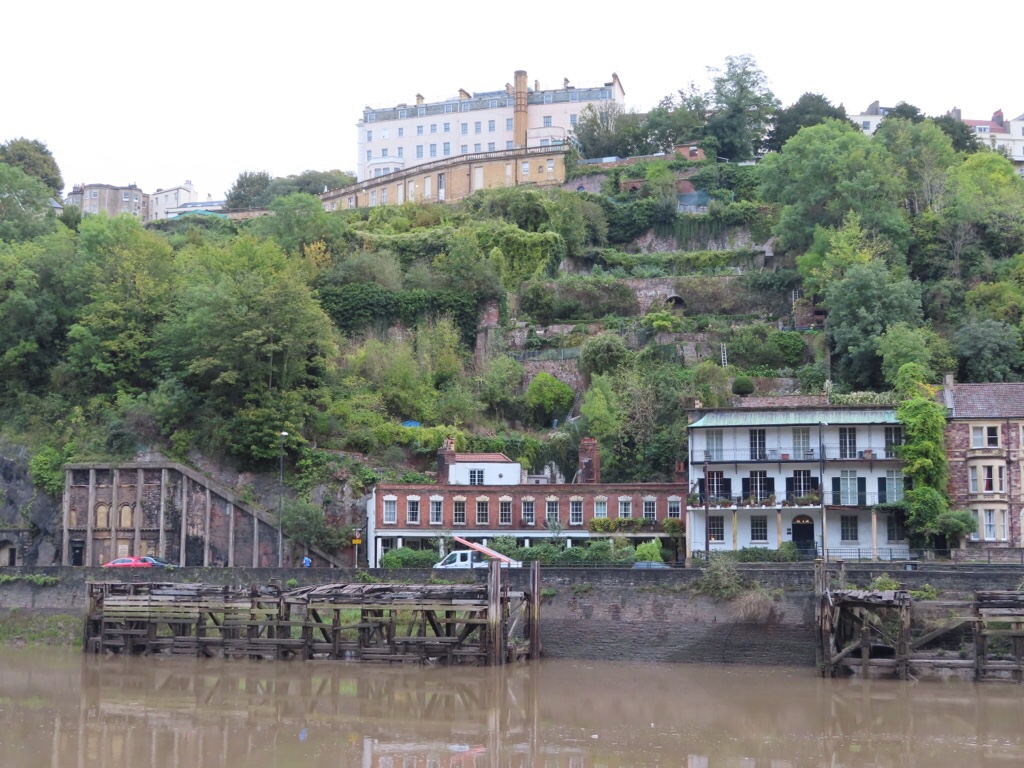
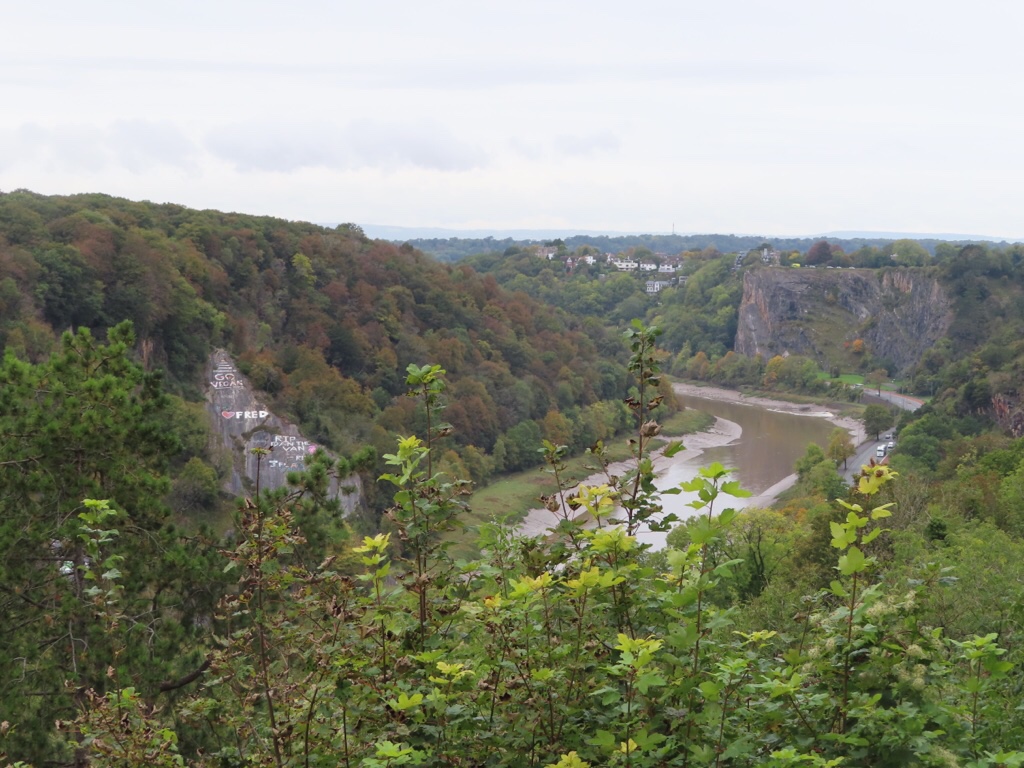
Looking across the river, we could see the area called Hotwells, named for the hot springs which bubble up through the rocks of the Avon Gorge. In the C18th, the spring was enclosed and its water pumped up into a new Hotwell House, which combined a pump room with lodgings in an attempt to compete with Bath. Elegant Georgian terraces were built as well as assembly rooms, hotels and lodging houses and Hotwells became crowded with nobility and gentry. Development up the green slopes of Clifton continued with much speculative property development, which was hit hard by the uncertainty of the war with France in 1793. By the time peace came, spas were giving way to seaside resorts as fashionable retreats, but Clifton developed into a perfect suburb for the rich merchants of the city and could even be reached by the Clifton Rocks Railway, a funicular railway built in a tunnel through the cliffs.

It started drizzling as we took the footpath up through Leigh Woods to the visitor centre by the bridge.

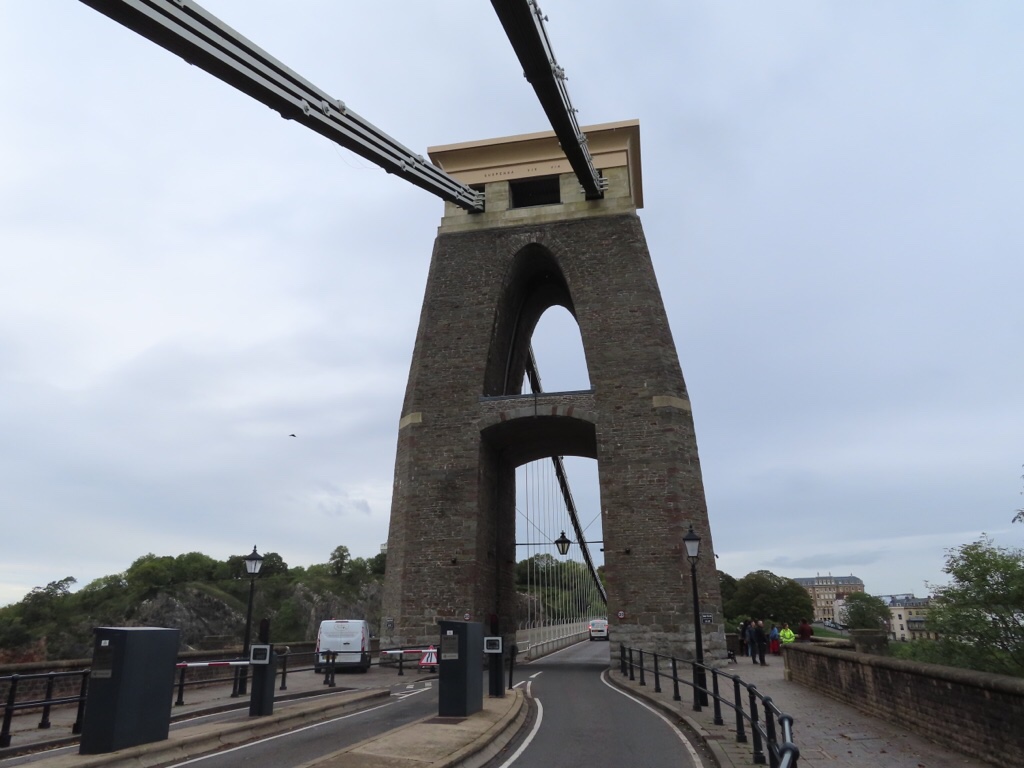
Having read about its construction, it’s surprising that this symbol of Bristol got completed at all. The idea of building a bridge across the Avon Gorge originated in 1753 but it was difficult to find a design which would fit the budget and even once Brunel’s design was chosen, there were delays, cost cuts and changes which meant the planned Egyptian style towers and sphinxes were omitted. It wasn’t completed till after Brunel’s death and was finally opened in 1864. It has always been a toll bridge, with a charge of £1 per car and was also the location of the first ever bungee jump by members of the Oxford University Dangerous Sports Club 1979.

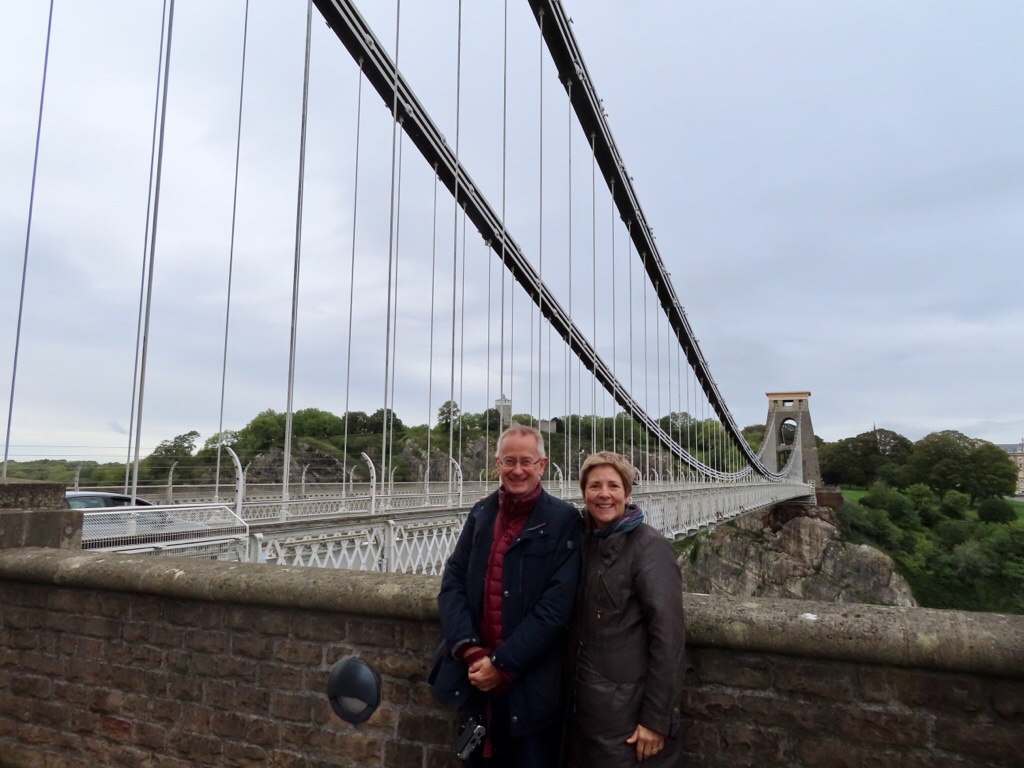
We walked across, looked back to the city and continued to the observatory which we had seen from the other side but the camera obscura was not working on such a grey day and we had no great ambition to climb down through the cliff to the Giants cave below. After a couple of snaps, a coffee and a chance encounter, we continued into Clifton.

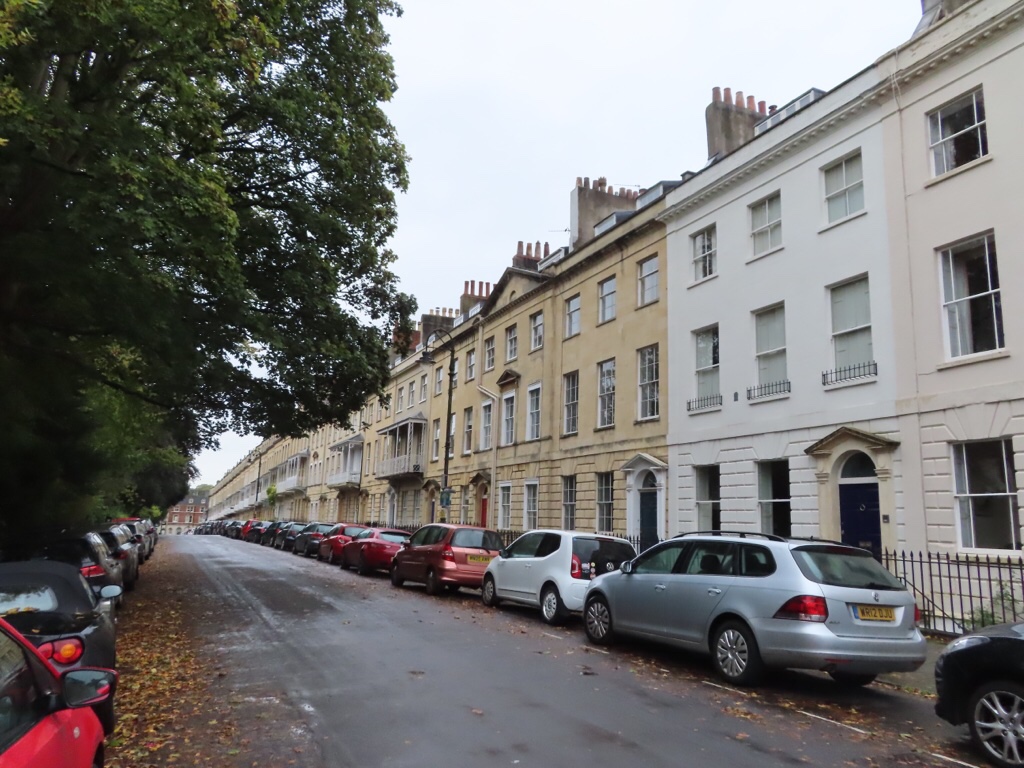
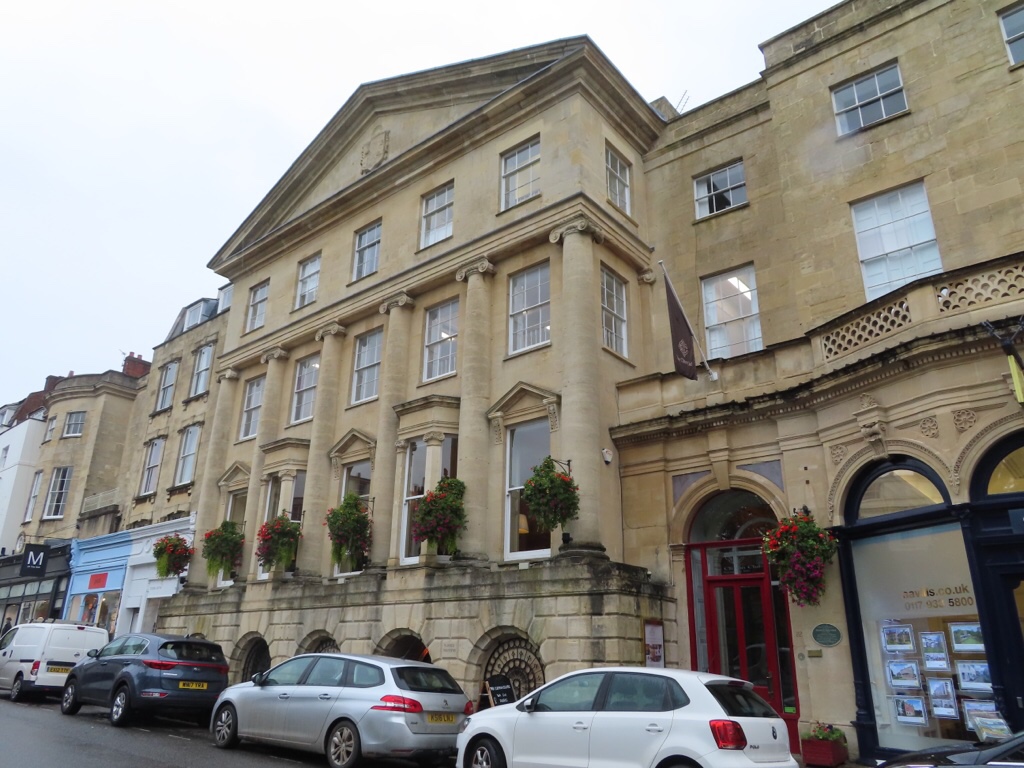
I’m sure it would have been far more appealing on a dry day, and while we did take a look at a couple of the elegant streets and terraces …

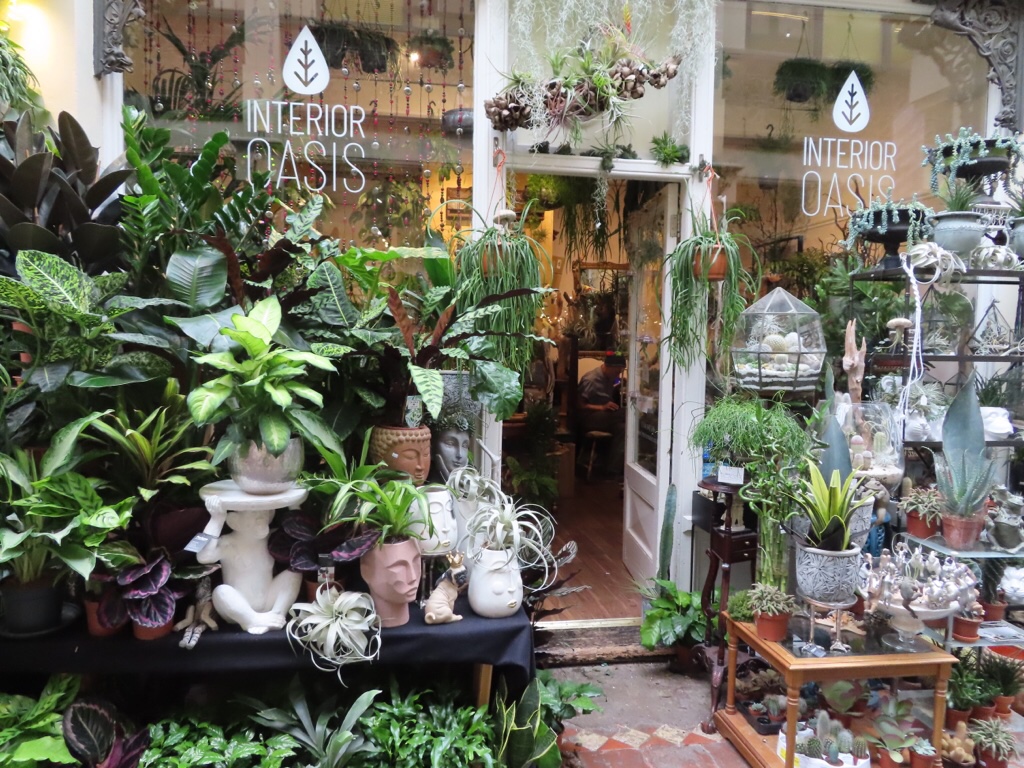
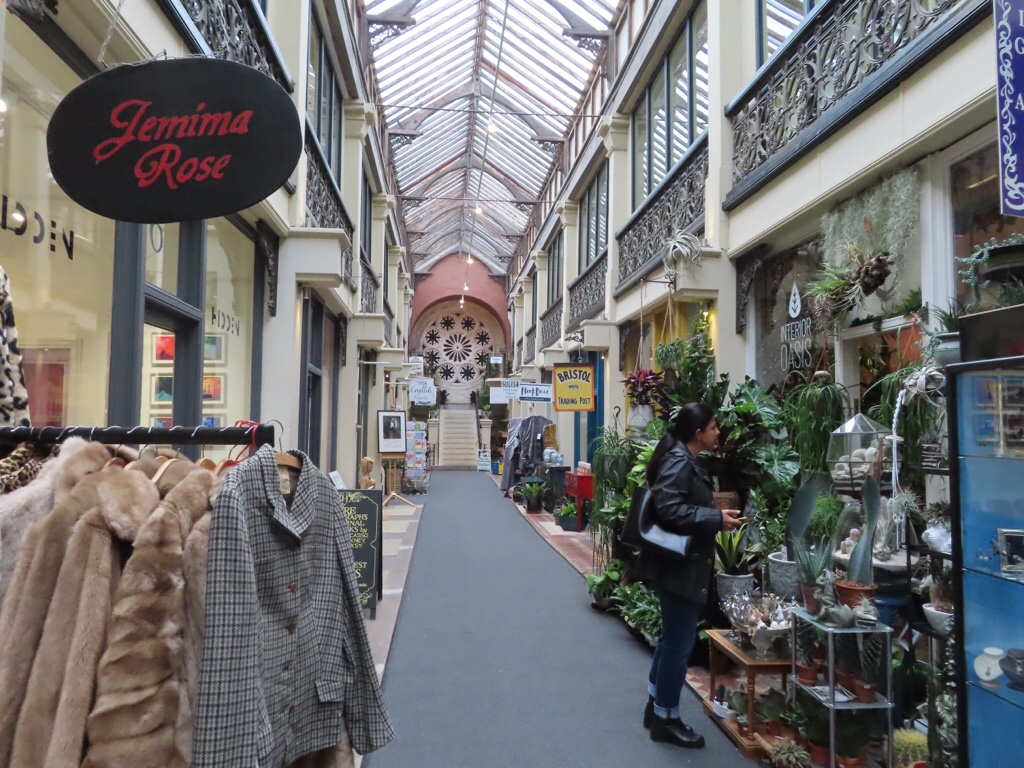
… and also the Clifton Arcade, it was all a bit damp.

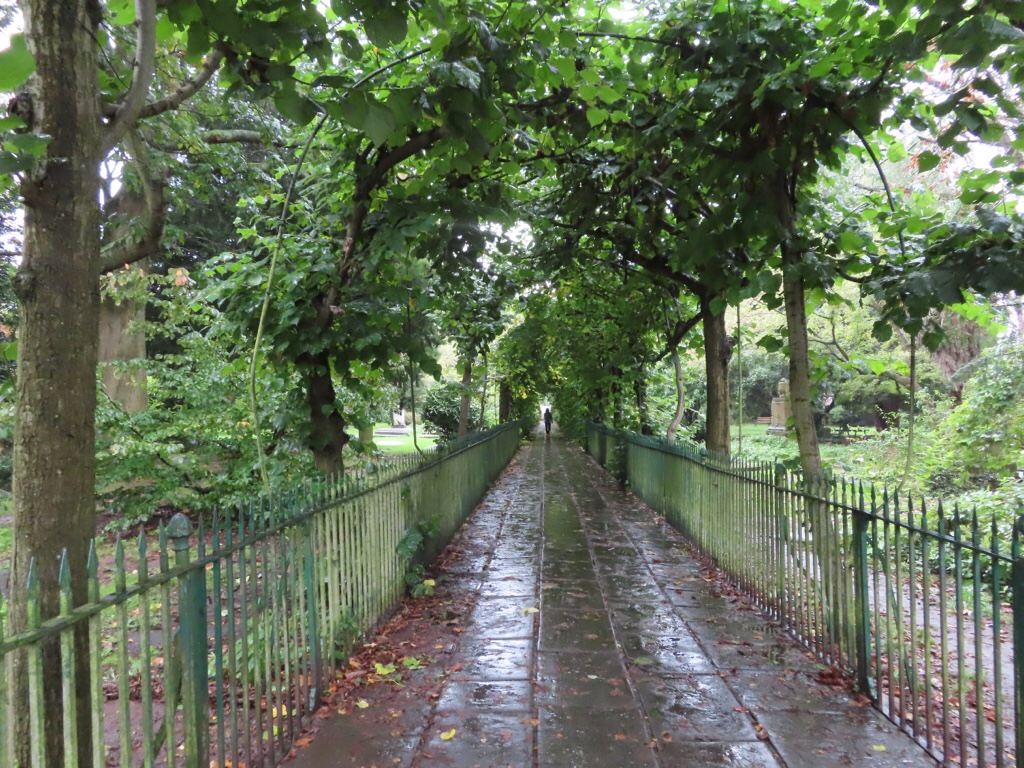
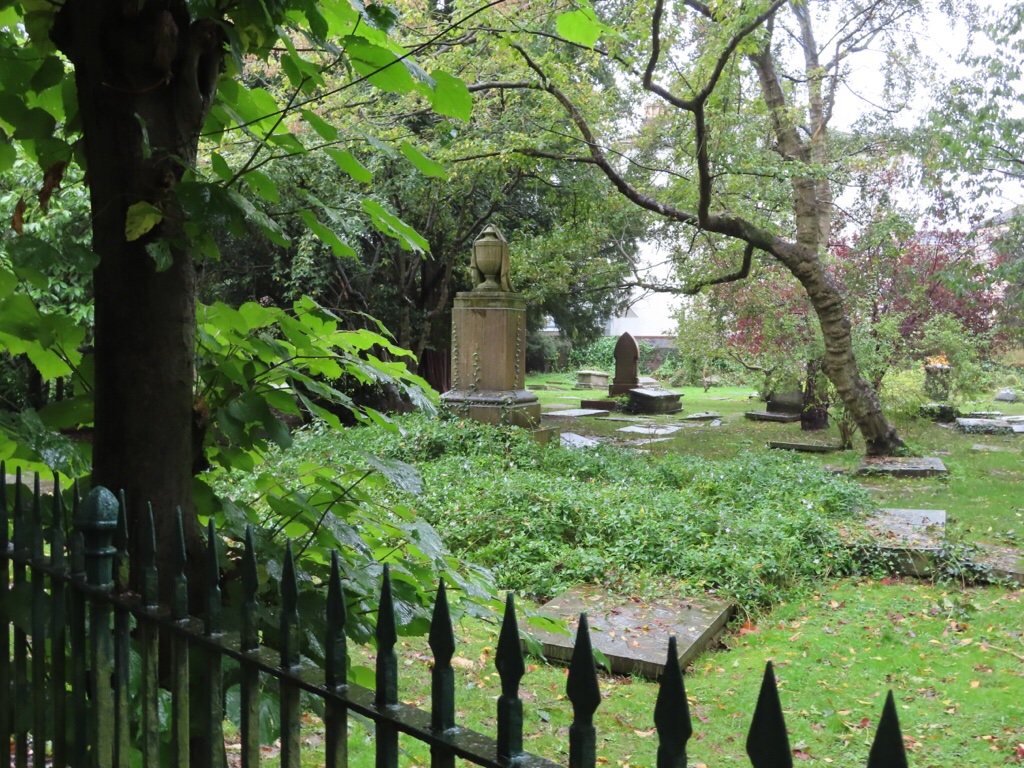
I had been reading Birdcage Walk by Helen Dunmore to immerse myself in Bristol, named for a footpath through a graveyard where one of the gravestones leads the reader into a story of the very speculative property development I mentioned earlier woven together with radical activists … so of course we had to check it out and it was certainly very atmospheric, especially in the rain!
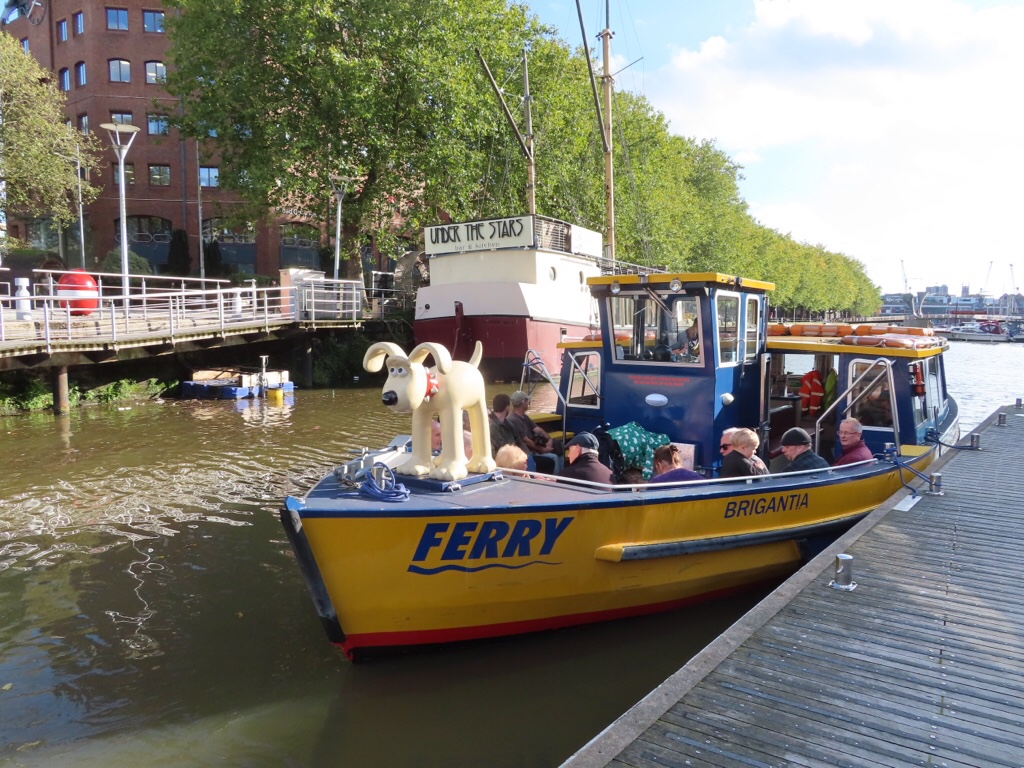
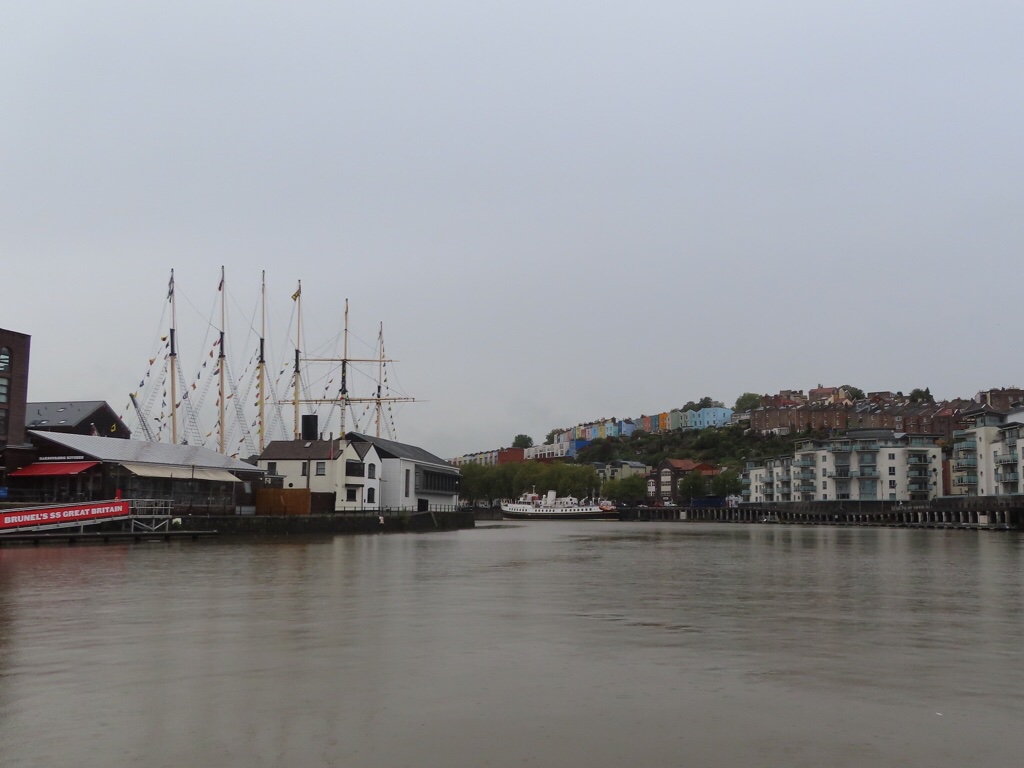
At this point enough was enough, and rather than taking our time admiring more architecture and checking out the coloured houses of Hotwells, we took the most direct route back to the city, followed by a small ferry that takes passengers across the river for £1 and took refuge in the SS Great Britain.

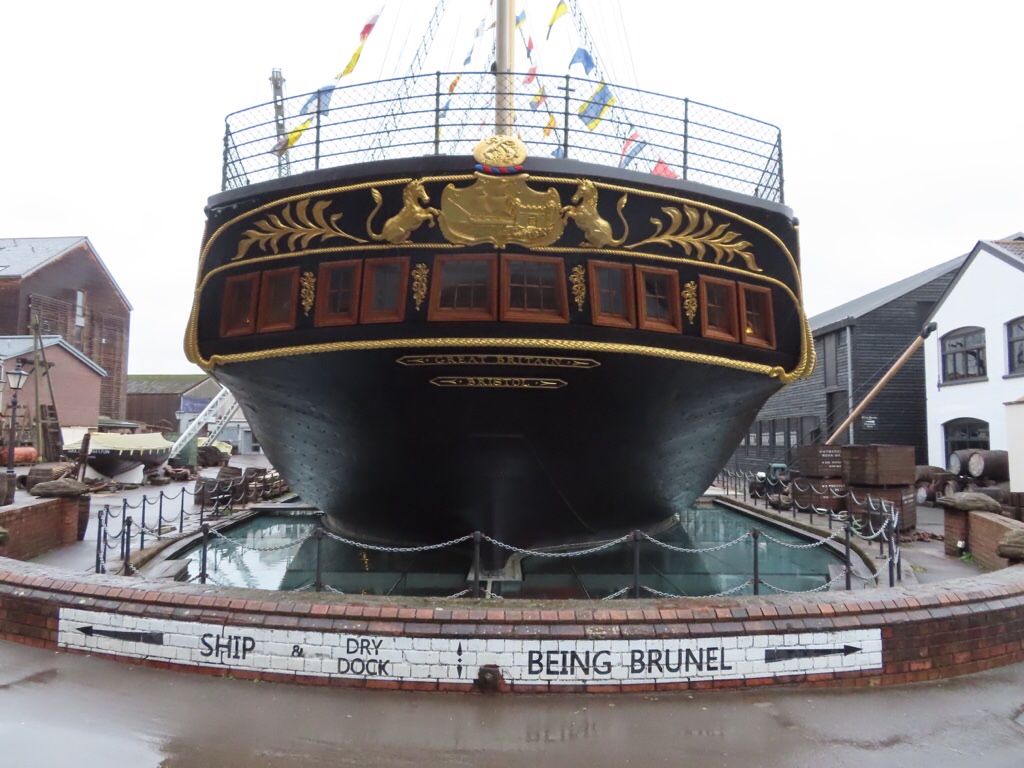
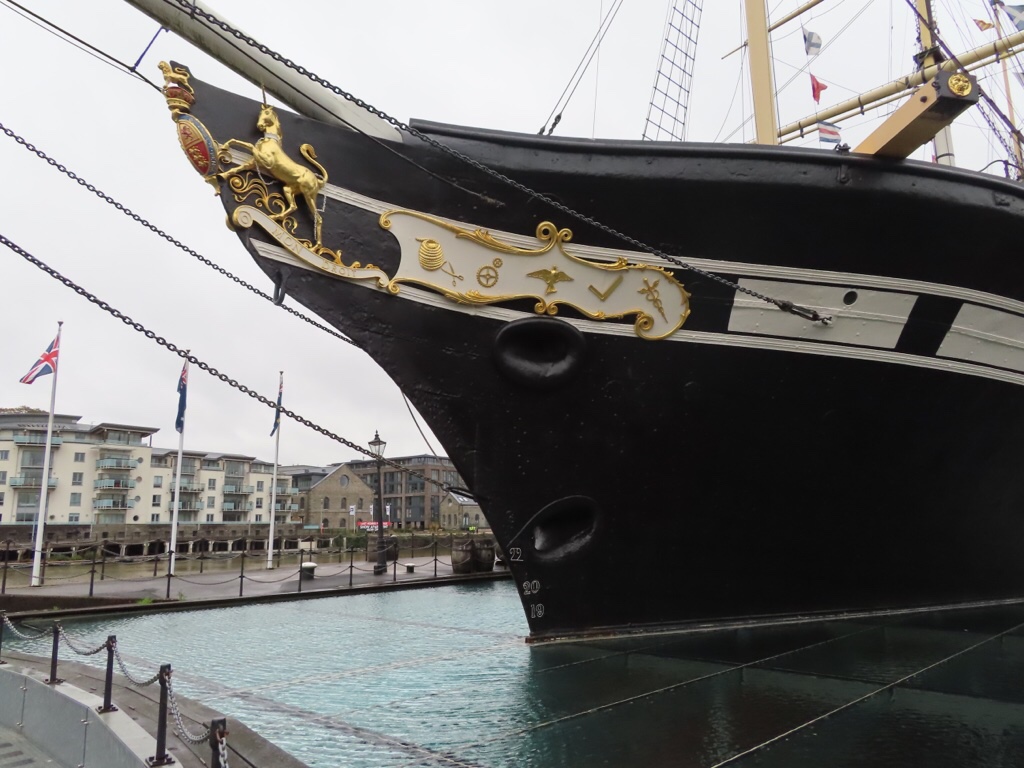
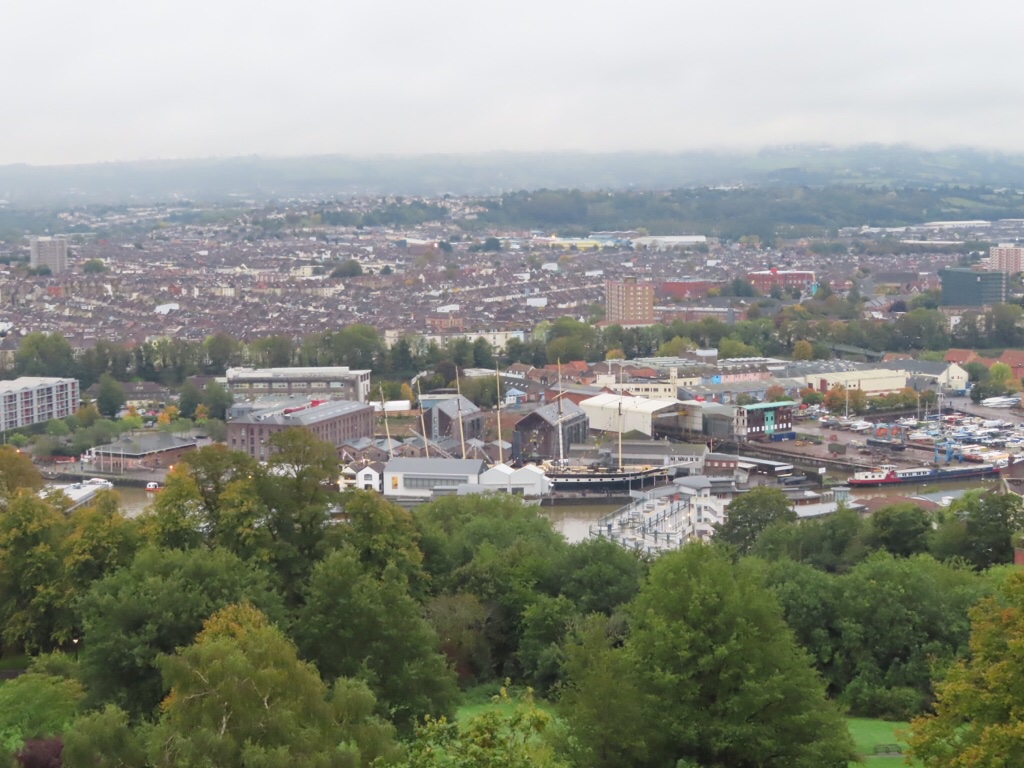
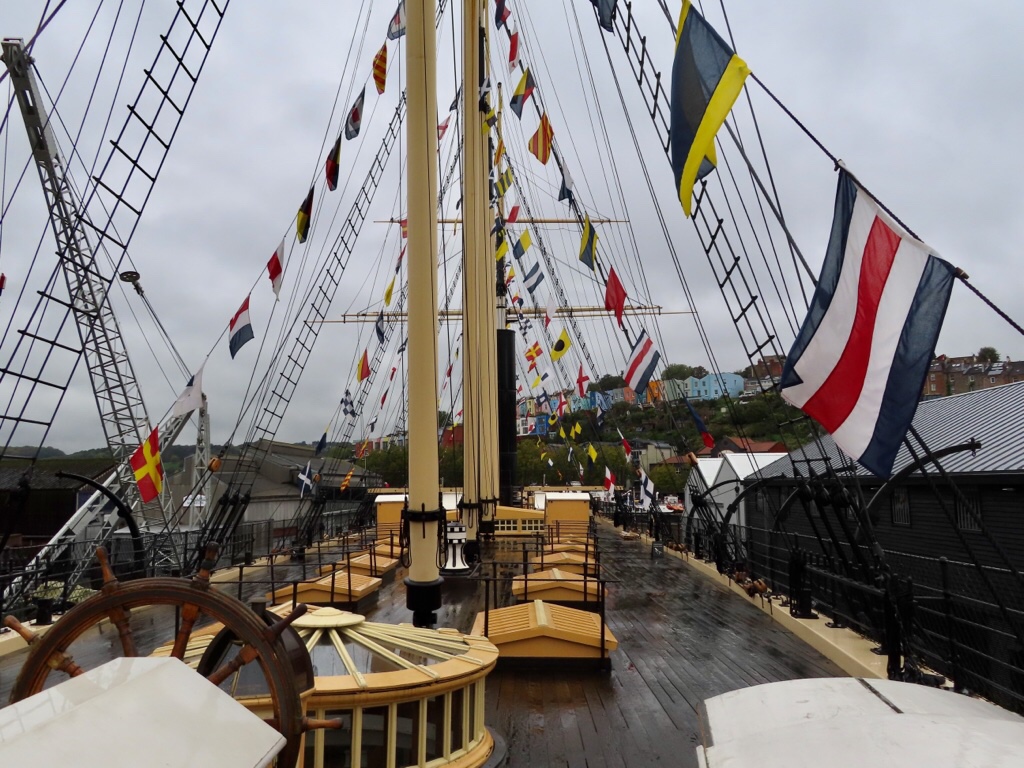
She was designed by Brunel and built in 1843, the first iron-hulled, propeller-driven ship to cross the Atlantic to New York. Subsequently she was fitted with an extra deck and made voyages to Australia, then was used for freight and did a stint carrying troops during the Crimean war. At the end of her life she was sunk as offshore storage in the Falklands before being rescued in 1970 and returned to the same dry dock she was built in and preserved. She stands giving the impression she is in water …

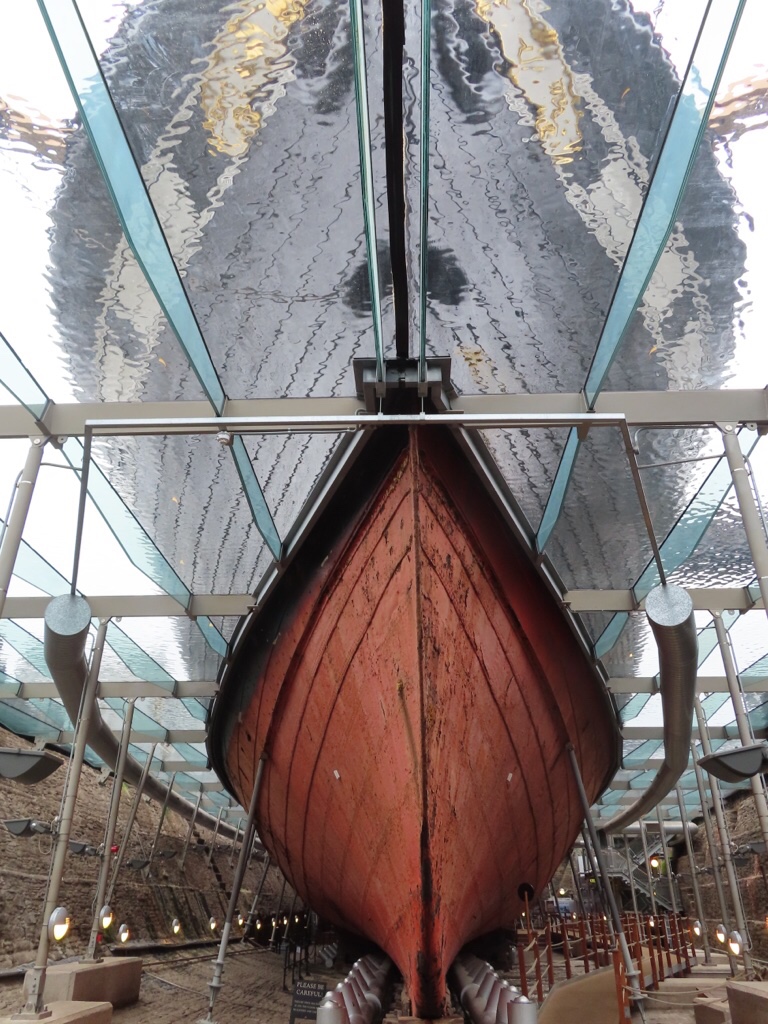
… but the truth can be seen below in the dry dock which contains warm air to prevent the hull from rusting further.

From the main deck she looks very smart …

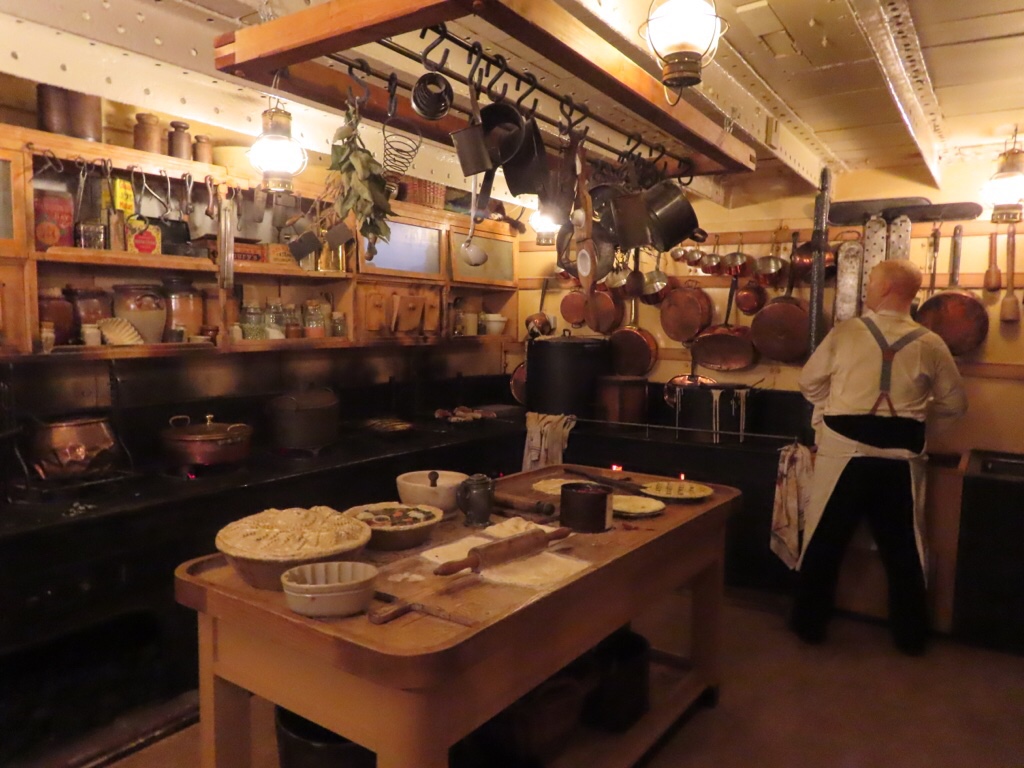
… and inside she has been partially refitted to show how she would have looked when first built complete with rats in the galley and rattling lids on the boiling stew!

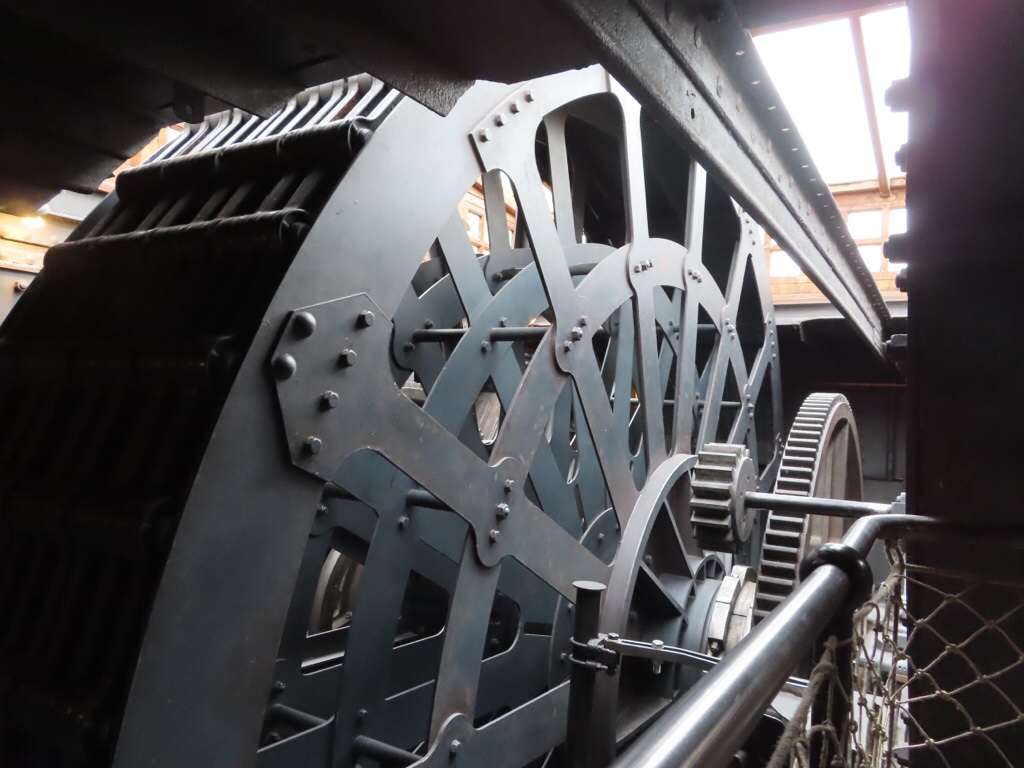
This was a great way to spend a wet afternoon and there was so much more including letters and diaries from passengers, details of the engineering design and how they have preserved her … good job our ticket enables to return for another visit!

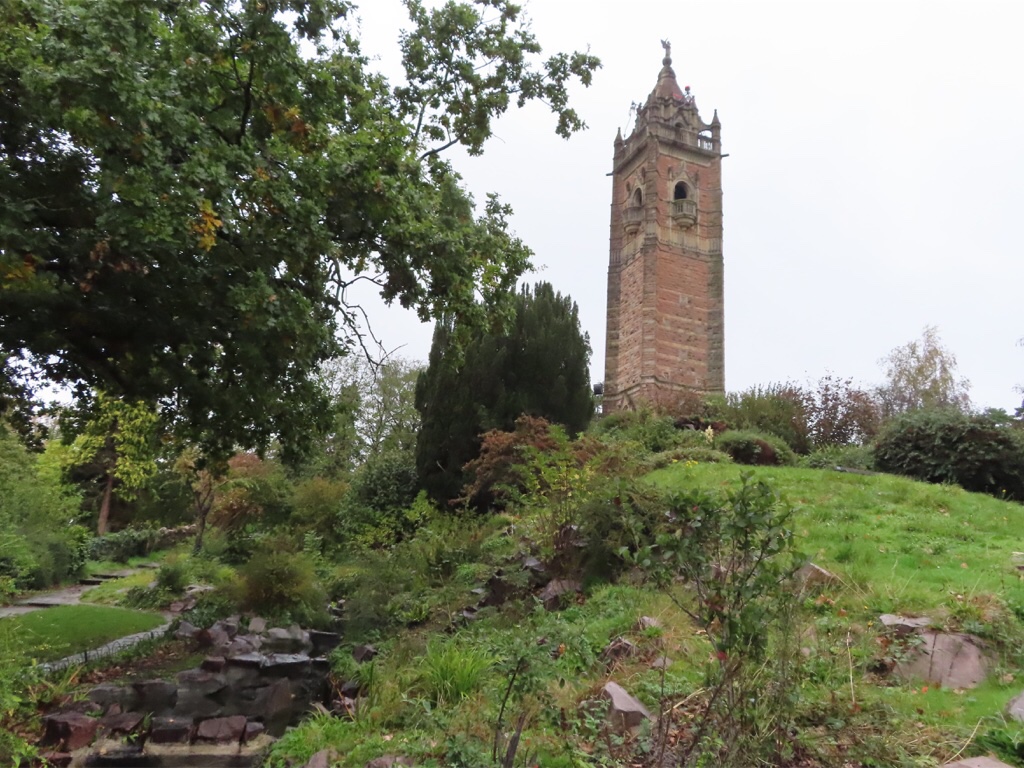
Just when we felt quite ready to call it a day, we set off back into the city to meet our niece Abi. Walking through Brandon Park, I climbed Cabot Tower but only got murky views.

A Sri Lankan restaurant called the Coconut Tree was a great choice for dinner and we caught up on news, chatting about all we had seen and what she was up to over white wine, hoppers and curry.

Map

Hello Bristol …

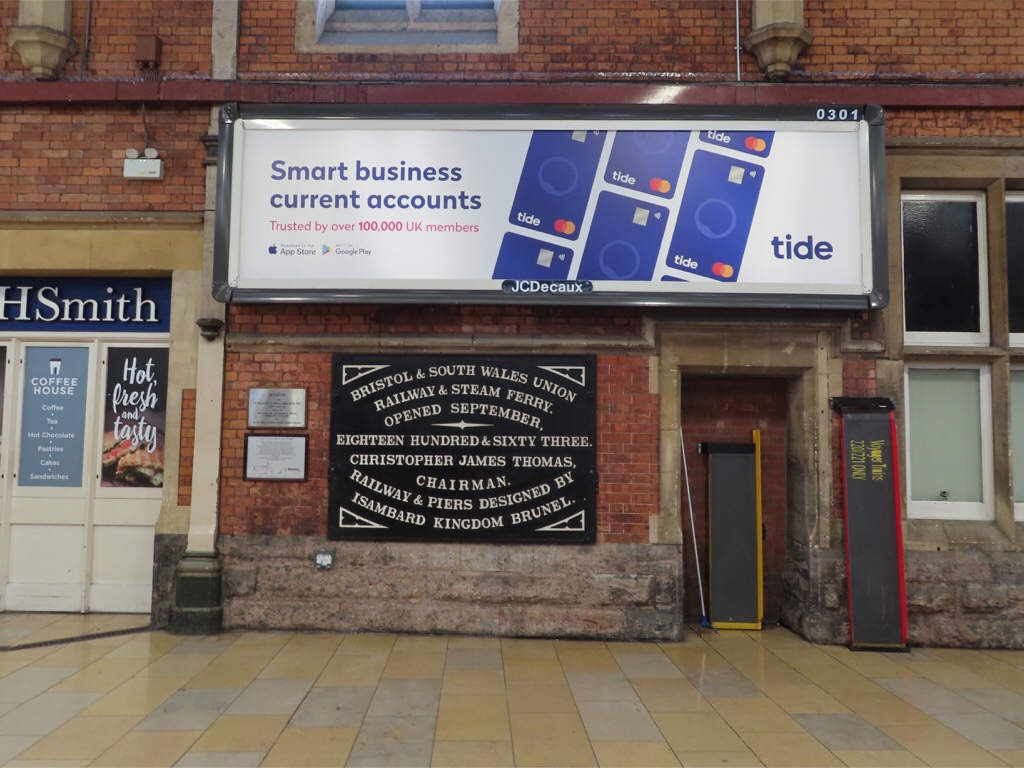
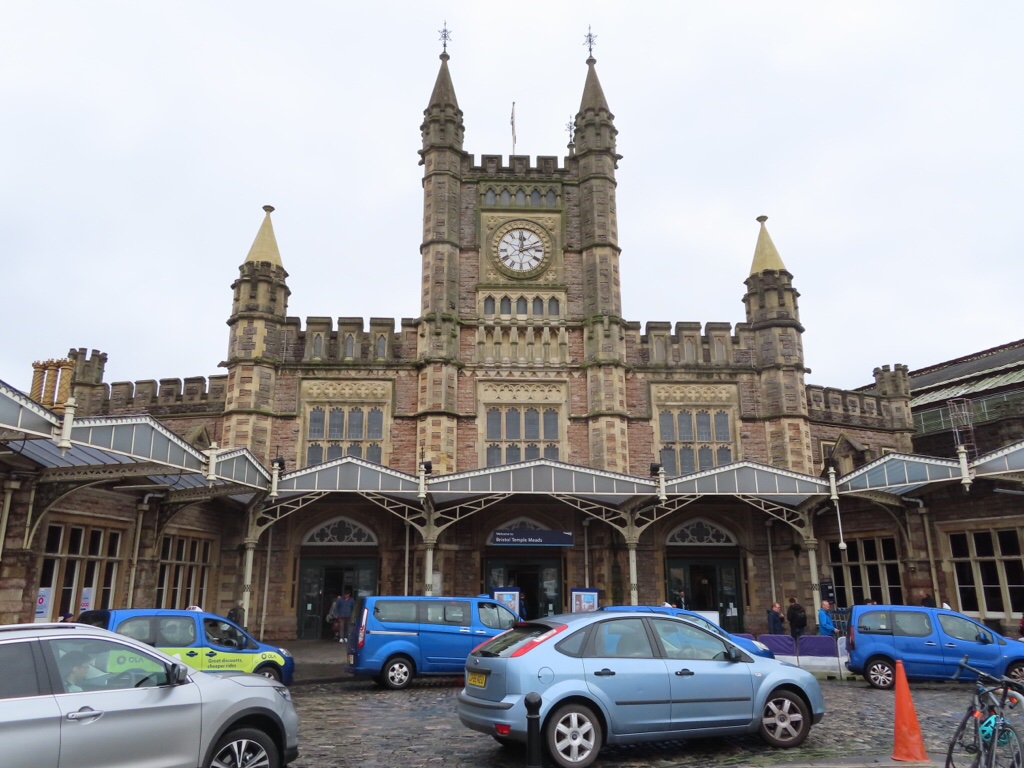
We arrived, like many visitors since 1840, on a Great Western Train at Temple Meads Station designed by Isambard Kingdom Brunel.

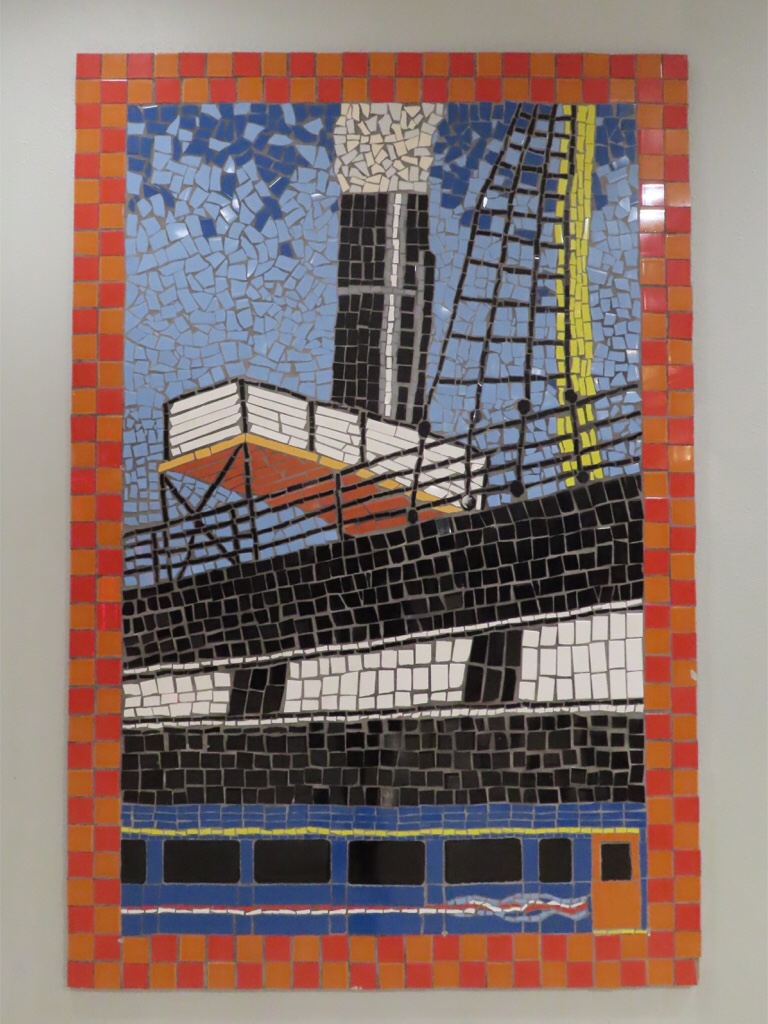
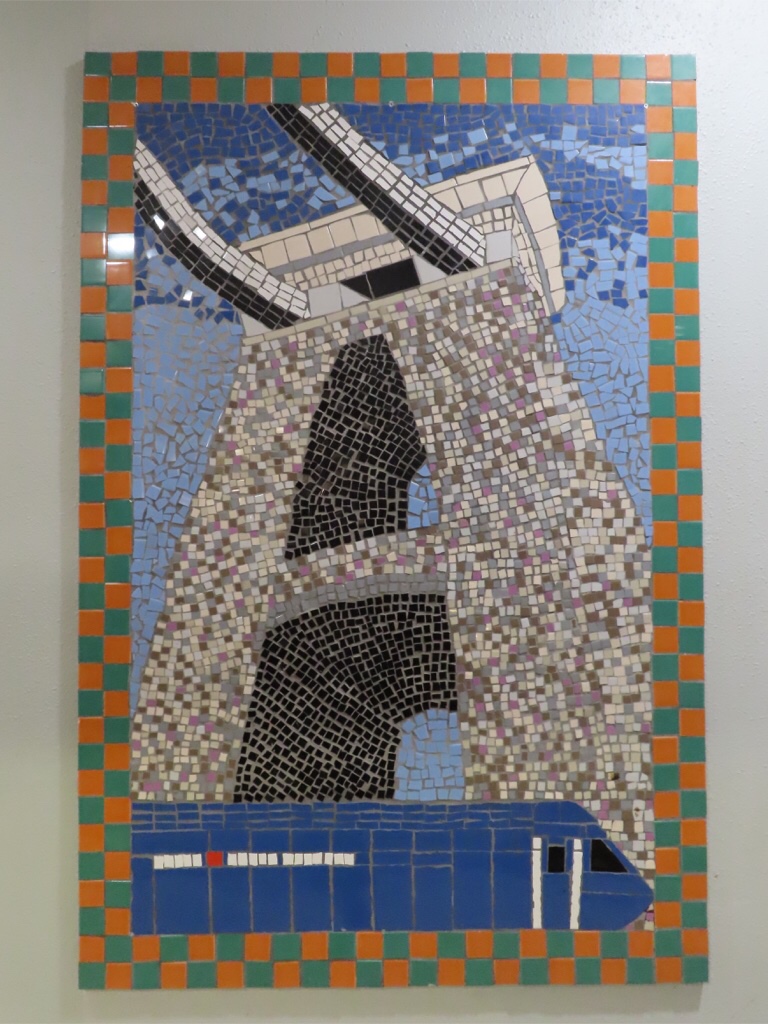
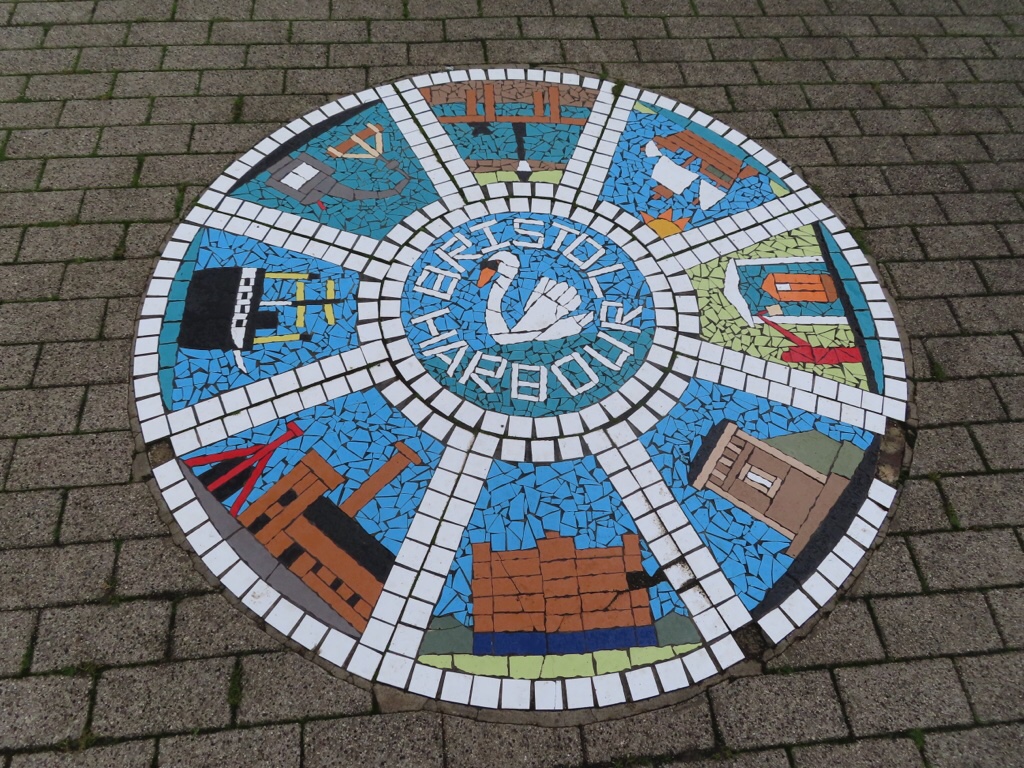
There were a couple of cheery mosaics, even though the day was rather grey.

The terminus soon needed expanding so here is the new Gothic station from 1870 …

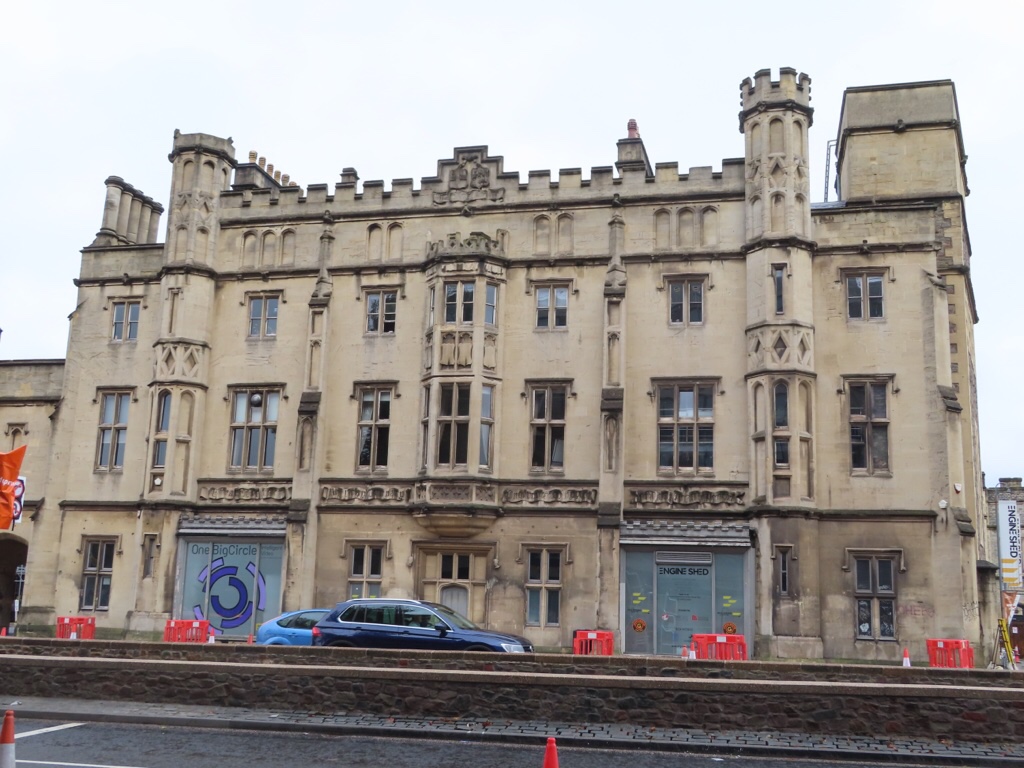
… and here is Brunel’s Old Station building across the forecourt.

We are staying a short walk away in Southville, at the cute and cosy Ibrox Hotel where we left our luggage before heading out for lunch.

Bristol has a long maritime history so we thought we would start with the harbour. A short walk brought us to Spike Island which was created in 1809 when the Floating Harbour was constructed. Previously, the high tidal range meant that ships moored in the harbour would be aground at low tide and tip to one side so if everything was not stowed away ‘Ship Shape and Bristol Fashion’ cargo could be spoiled. The Floating Harbour was a lock system which trapped water in the city’s central harbour and allowed ships and boats to stay afloat without being affected by the changing tides.

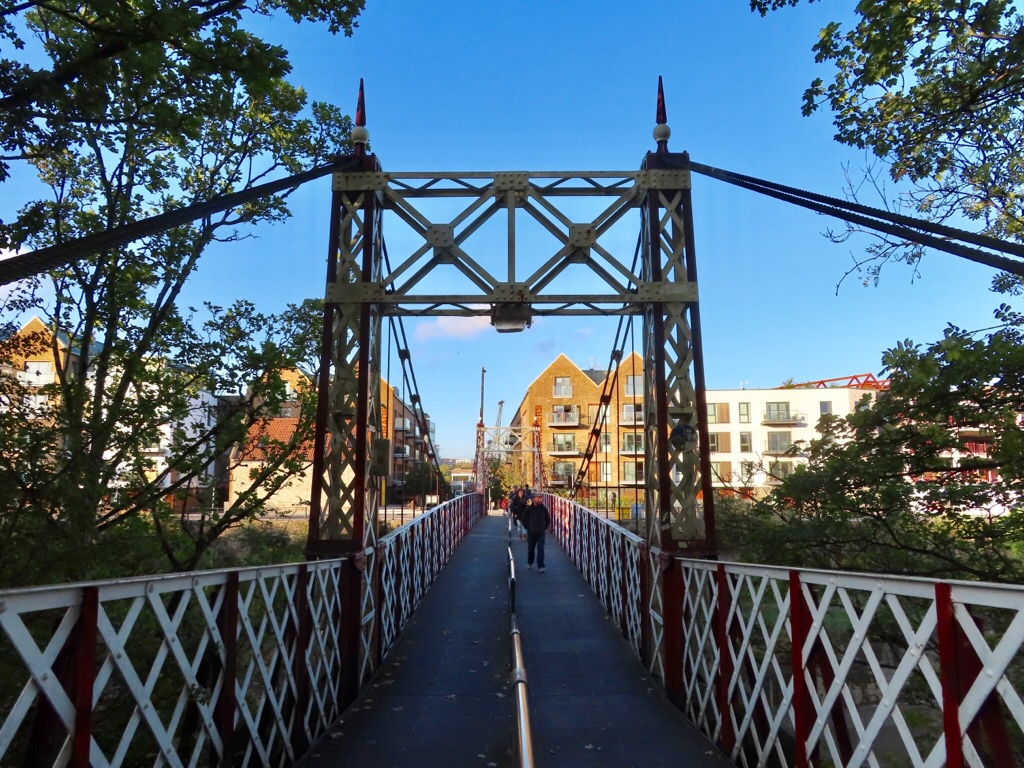
Gaol Ferry Bridge crosses New Cut to Wapping Wharf which was once home to the Victorian prison, but is now a regenerated area of cafes and shops.

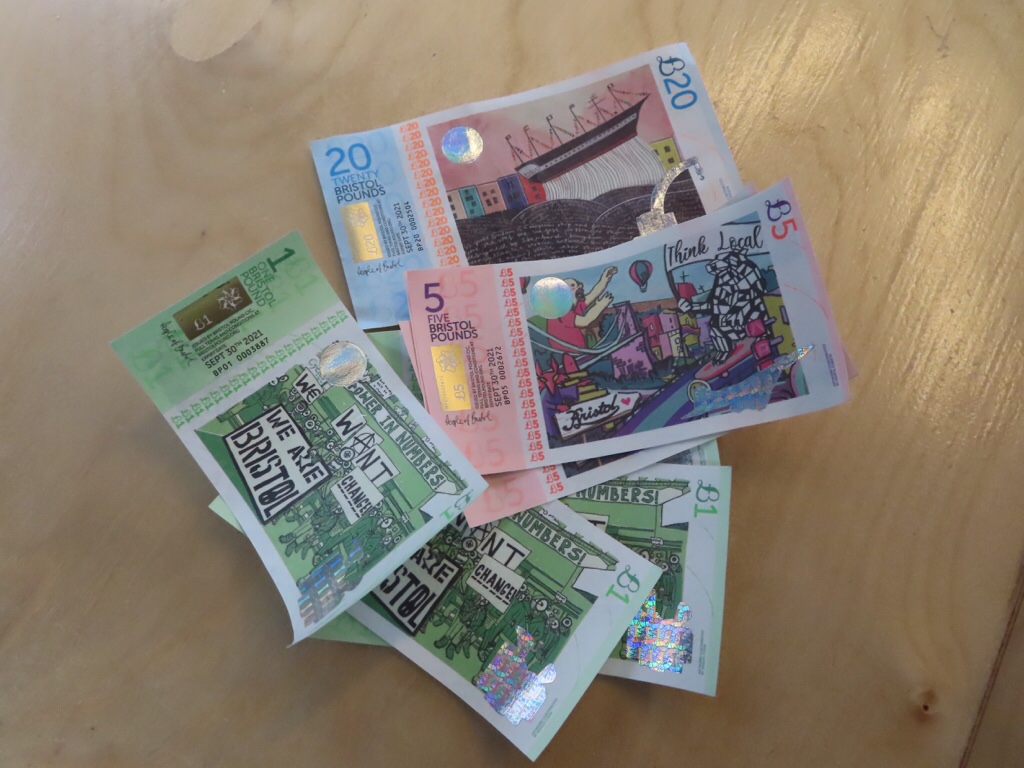
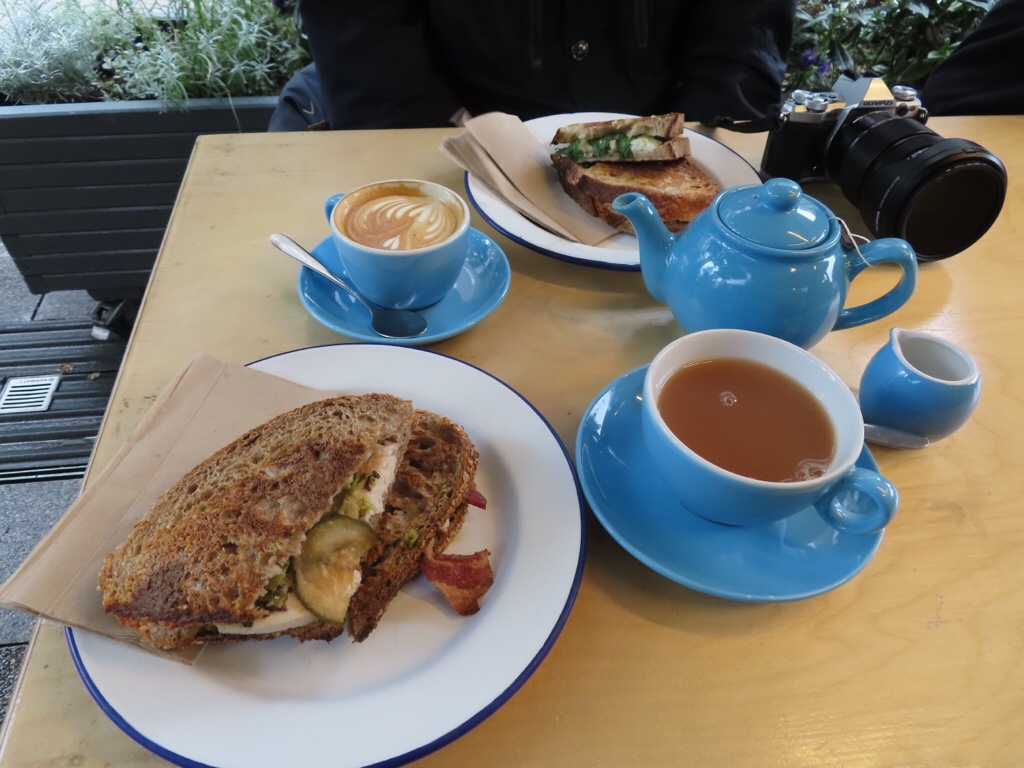
In Little Victories, to Chris’s amazement, we were able to change some money into Bristol Pounds, a community currency that began in 2012 and is used in various shops and cafes in the city. Having spent a few minutes admiring the notes, with their striking designs of Bristol including the suspension bridge, coloured houses, hot air balloons, ships and Concorde we spent a few on a couple of toasties for lunch.

Yesterday in the newspaper, we saw a photo of a sound and light installation in Bristol so went to have a look. It was in the Redcliff Caves, man-made caves, originally dug to provide sand for glass and pottery making extending for over an acre under the city. ‘We are Warriors’ marks 100 years since the first women were allowed to vote and on the way in, we each made a tiny light with a battery and bulb stuck together with tape, then added them to the array of lights inside the caves. It was very atmospheric, especially with the slightly eerie soundtrack. Unfortunately it was too dark to get a photo we could share … you had to be there!

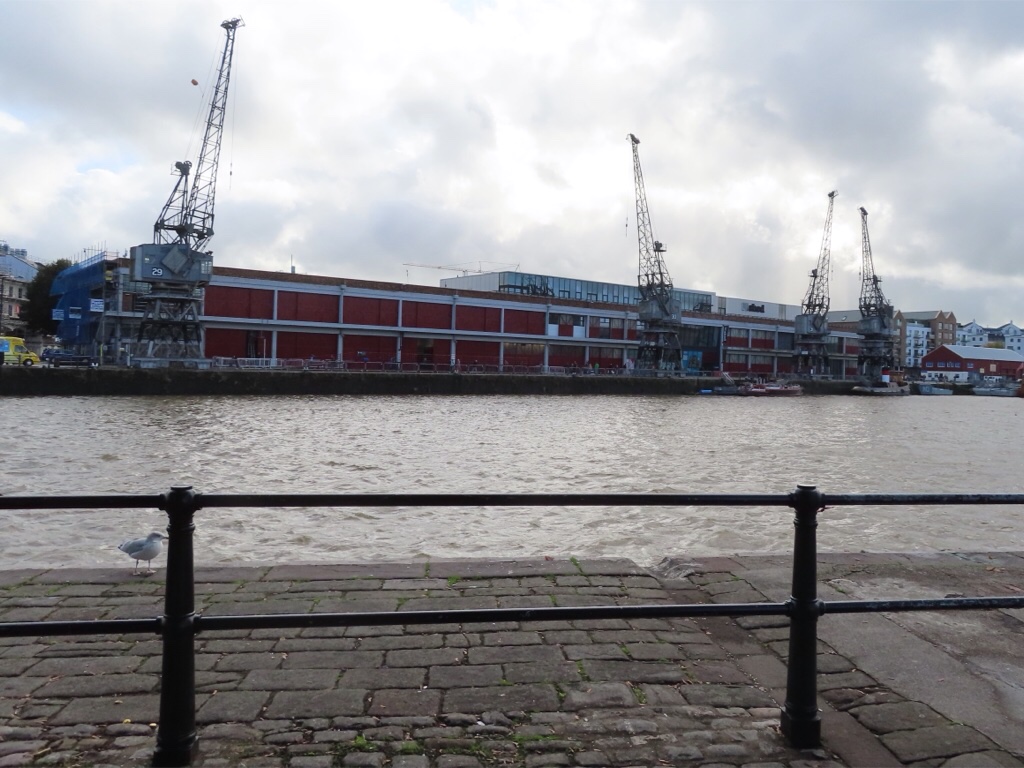
We got several views of the harbour on the way back …

…including four huge electric cranes dating from the 1950’s when there were over 40 in the docks …

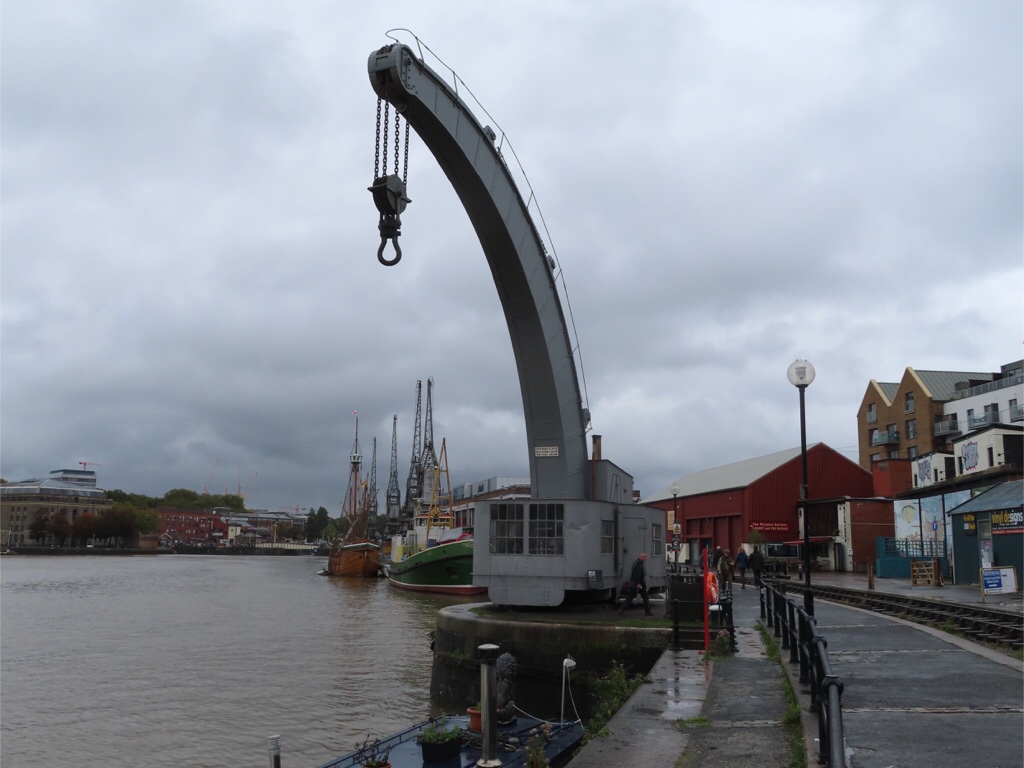
… and the striking banana-shaped crane is the Fairbairn Steam crane which could lift loads of 35 tons.
Next stop was M Shed, a really interesting museum all about the life and times of Bristol. It seemed to cover everything from voyages of discovery and trade to the development of technology and the arts. It was the wealth from the trade of tobacco, sugar and slaves which made Bristol prosper and funded the elegant buildings of Bristol such as Temple Meads Station, the Georgian houses in Clifton, the Suspension bridge, as well as many buildings in centre of the city which were lost to bombing in WWII.

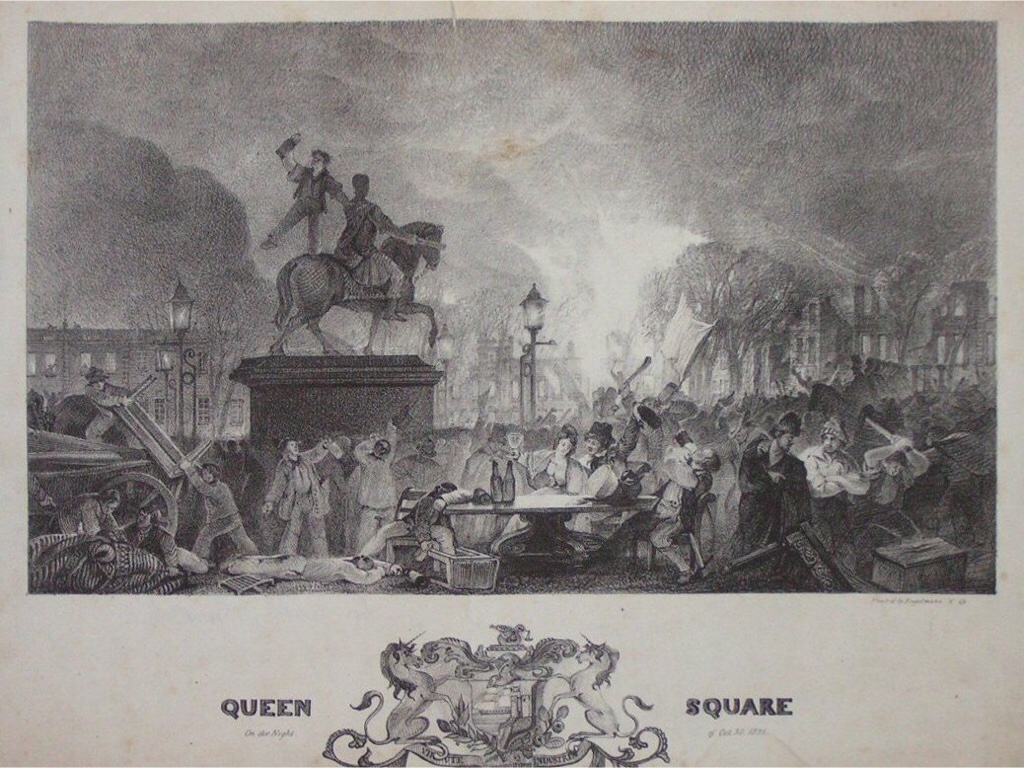
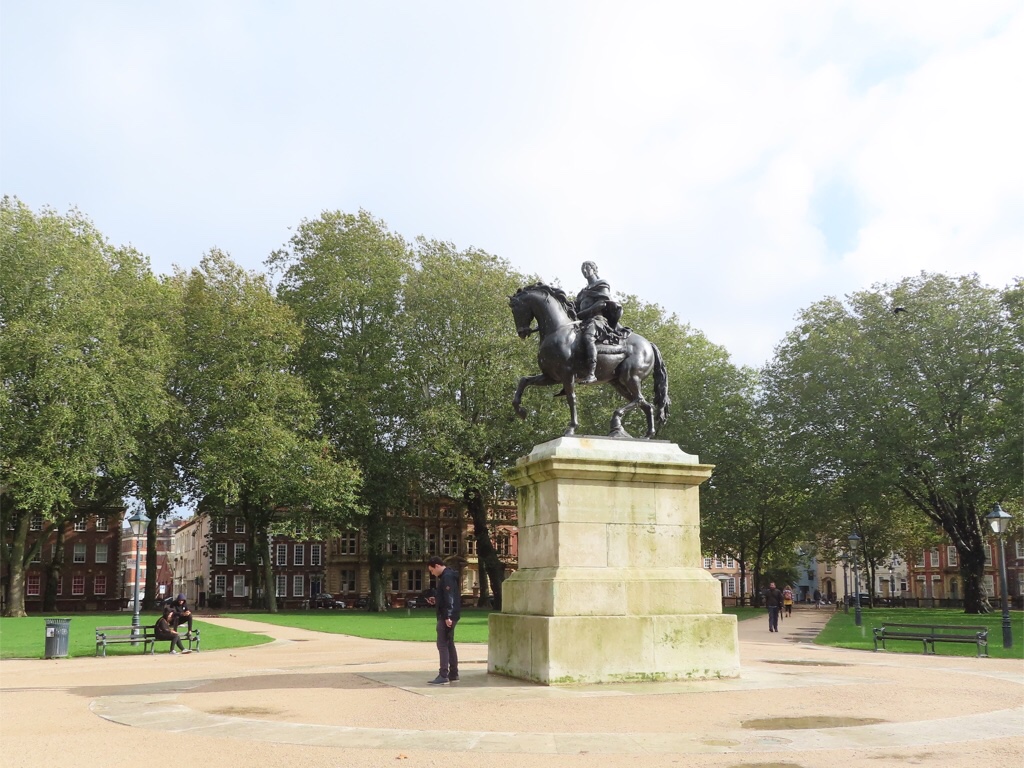
Bristol has also long boasted a proud history of civil insurrection. During the C18th there were riots over bread, wage cuts for weavers and, most frequently, toll-booths. In 1831, Queen Square was once the scene of some of the worst rioting in Britain. The Bristol Riots broke out after the House of Lords the rejected the second Reform Bill which would have given greater representation in the House of Commons, shown here in a lithograph from the time as well as how it looks today.

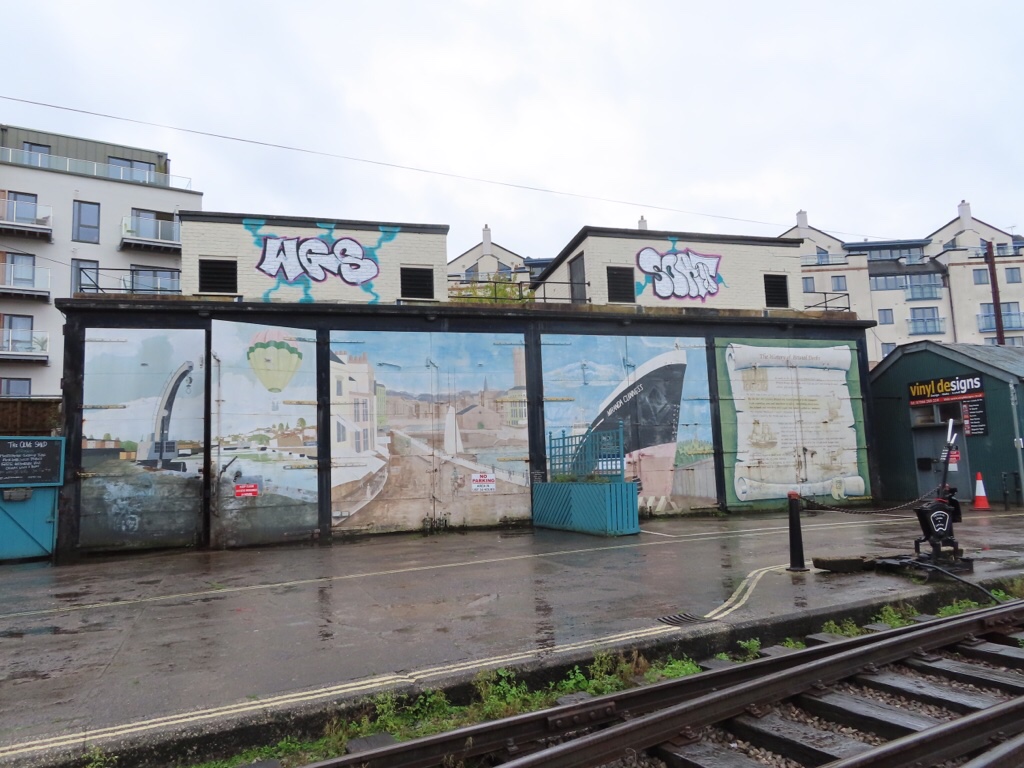
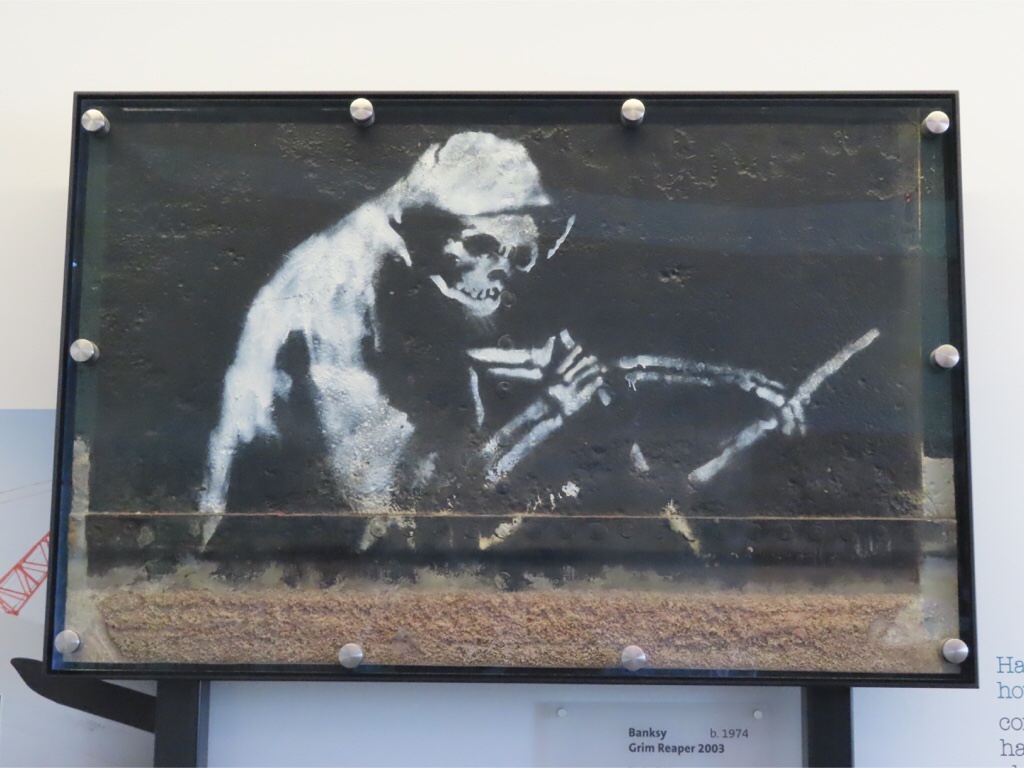
One area where dissent and art come together is the street art for which Bristol has become famous, especially being the home town of Banksy – the anonymous graffiti artist well known for his satirical and anti-establishment street art. There are quite a few pics around the city and the first is here – the Grim Reaper, which was originally painted on the side of the Thekla Social boat moored in Bristol harbour but later removed to protect it from damage. Bristol City Council has a formal street-art policy which seeks to define and support the display of public art and give the public a vote as to whether it should be preserved or scrubbed clean following a hugely popular Banksy’s exhibition in the Bristol Museum in 2009. There is also the Upfest festival which has been running for 10 years and draws artists and visitors from far and wide. We will be seeing a lot more examples as we wander round the city.

Bristol is the home of Aardman Animations, makers of Wallace & Gromit and Chicken Run and an exhibition showed the process of film making using using stop-motion clay animation techniques with their last film Early Man as an example. It was fascinating to see what a labour of love it must be and how time consuming just to achieve a short sequence of film. We will certainly be looking out for the Shaun the Sheep Movie: Farmageddon which will be in a cinema near us at the end of October.

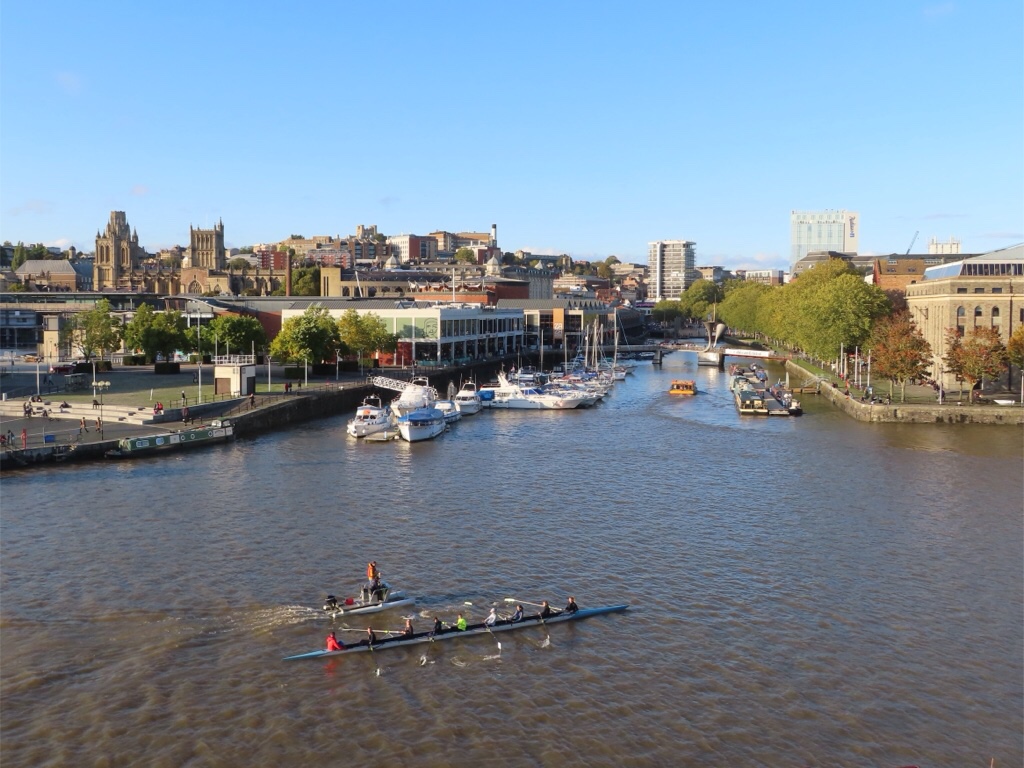
While we were inside, the sky had cleared and we were able to take a couple of great pics of the harbour in late afternoon sunshine, before heading back for a rest and dinner at Ganesha down the road in Bedminster where we munched dosas and veggie curry.

Map

Chris & Elaine in Bristol 2019 – Brunel, Banksy & The BBC …

We met our niece for lunch in Bristol last year and thought it a city worth a better look, so when it came to planning a couple of days away to celebrate our wedding anniversary, Bristol won.

The only real prerequisite was a boat for our annual anniversary boat trip, and with a ferry serving the harbour daily, that should be easily done.

The more we read about Bristol, the more we found to do so it will be an action packed trip … so here we go Brunel, Banksy & The BBC in 72 hours!

Journal Entries

Hello Bristol …

Mainly Brunel …

Lots of Banksy …

BBC Bristol …

Map