 The coach followed the coast south through the night, then turned inland and started climbing till we reached Arequipa at 2335m, with the volcano El Misti standing behind. Arequipa was a stronghold of colonial Spain and one of the few major settlements of Peru that wasn’t first founded by the Inca people. It then became wealthy again in the 19C from the wool trade with England and today is a mining centre. It still has fine colonial building made from white volcanic sillar rock cut locally and often flecked with black ash which give the city its striking appearance.
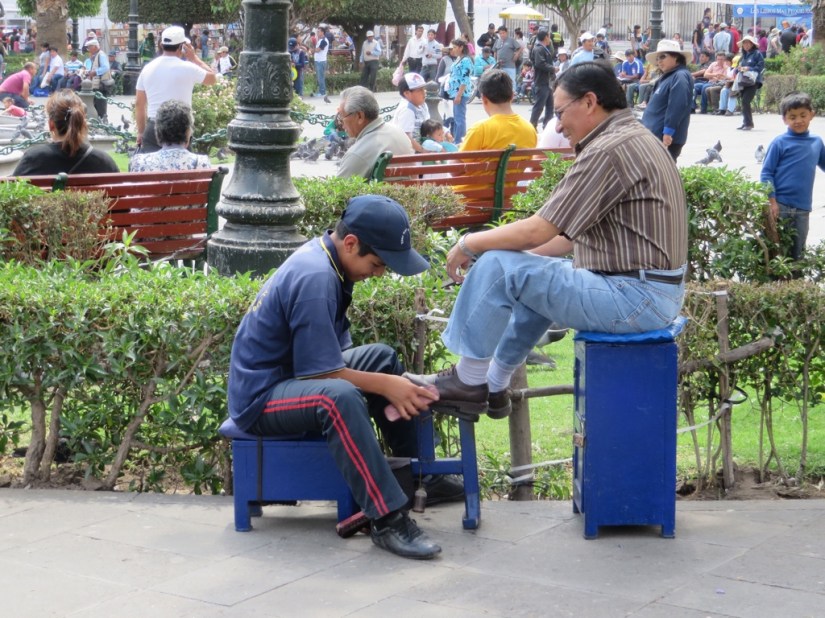
The Plaza de Armas is dominated by the cathedral, with arcades running round the rest of the square with balconies above and a lovely park in the centre busy with everyday life including show shining …
… portrait drawing …

… letter typing …

… bird feeding …

… and ice cream selling.

There are several churches with fabulous carved doorways and cloisters in a local Baroque meets mestizo style – Iglesia San Domingo which has an Indian face and cacti included in the carving …


… Iglesia San Agustin

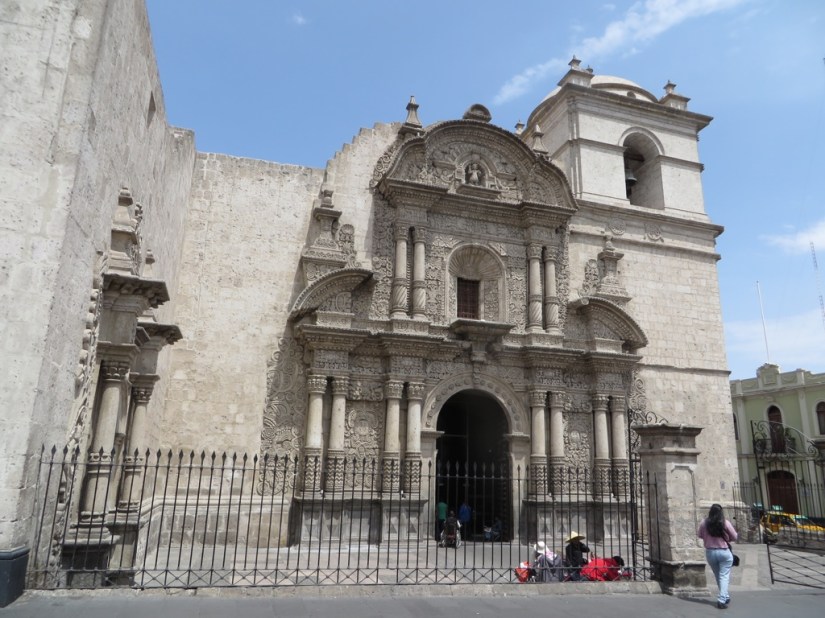
… Iglesia Compania …


The mirador at Yanahuara is well known for its views, but El Misti, the volcano that stands behind Arequipa has been just that … misty so the photo was a bit disappointing, more so for the fact that despite being winter, there is no snowy cap. Ironically, it doesn’t rain in the winter in the mountains, so gradually the snow melts until it is replenished during the summer rains which begin in November.

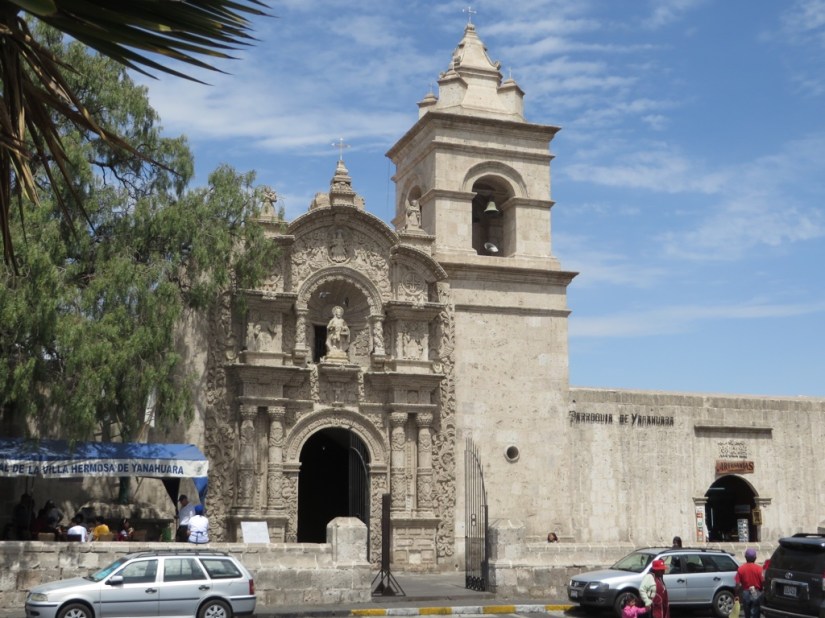
There was another pretty church, with some lovely carvings.


Talking snow, in 1995 the snowcap on Mount Ampato melted due to volcanic ash from the nearby erupting volcano of Sabancaya, enabling the discovery of an Inca grave marked by a circle of stones that had previously been buried under snow. The frozen body was found to be a young teenage girl of high birth who had been sacrificed by the Inca in the late 1400s and was given the name Juanita. We saw her frozen body in the Museo Santuarios Andinos, together with various grave goods and textiles found with her … a museum Chris would have been pleased to have missed. I felt torn between thinking it interesting and appreciating all that has been learnt from her discovery, but wonder if it wouldn’t be kinder to bury her again and leave her in peace.
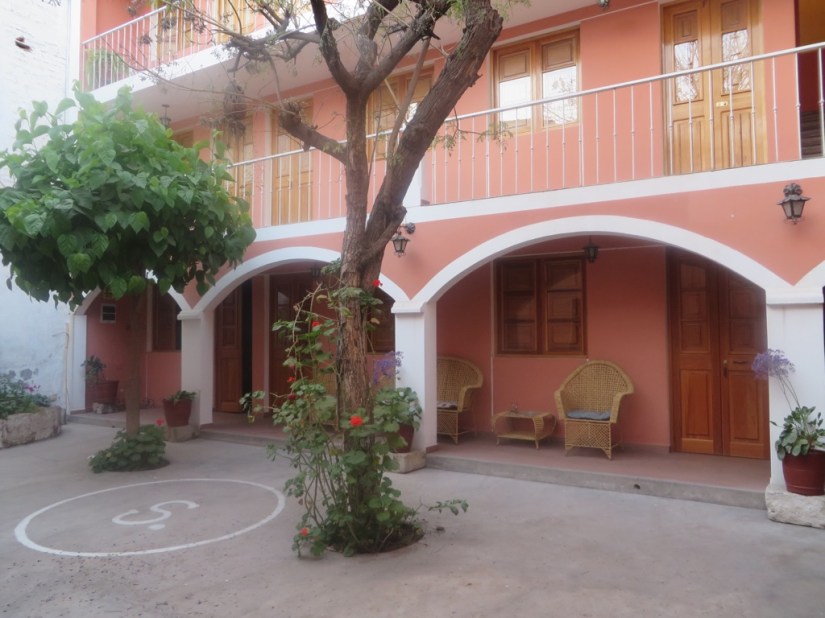
We stayed in a colonial style posada, with rooms set around two courtyards. S marks the spot to stand in case of an earthquake!

Having cooked on previous trips, we couldn’t miss the chance in Peru, so went for a class that we shared with 5 other travellers to South America. We shared the veg prep …

… then cooked in a couple of groups, with Chris cooking his very own veggie version.


We started with a salad called soltero andino, a bit like a tomato salsa with cooked broad beans, giant corn kernels and cheese dressed with lime juice, and were encouraged to garnish with flair.

This was followed by rocoto relleno or chillis stuffed with either a diced meat filling with raisins and chilli or diced vegetables in the same sauce, topped with a slice of cheese. The accompaniment was pastel de papa, a kind of potato dauphinoise with a soufflé topping sprinkled with fennel.

Everything was all delicious, and we intend trying as close an approximation as we can manage once we get home. We also had chicha morada, a soft drink made from purple maize flavoured with spices which was lovely and lucuma ice cream which contains a bright orange local fruit and was far too sweet for me.
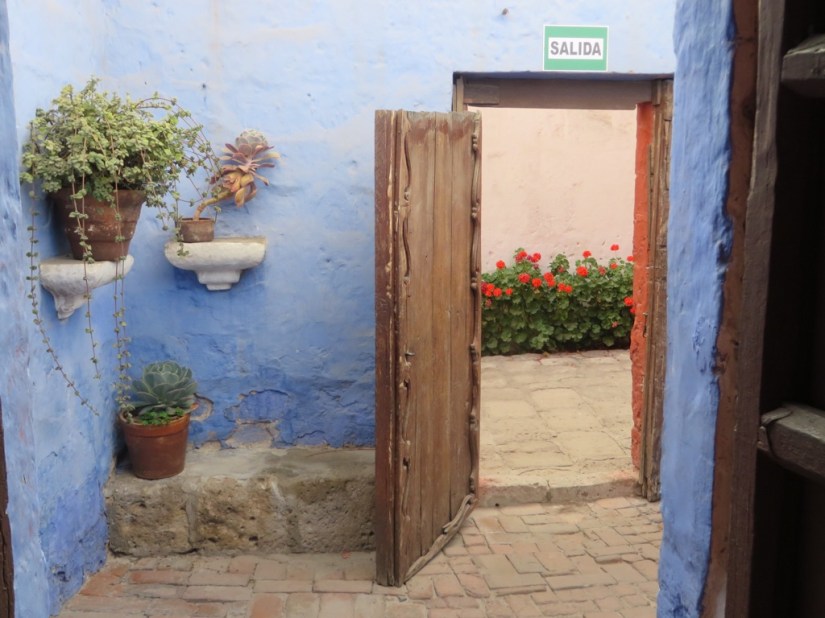
We also visited the Monastery of Santa Catalina, the most important religious building in Peru which was begun in 1579 and housed 200 nuns and 300 servants. It was converted to a museum in 1970 when the remaining 30 nuns moved to a new building within the complex following earthquake damage.

Sister Ana lived her life in the monastery till her death in 1686 and was beatified in 1985.

The afternoon sun really brought out the colours of the walls, and at every turn there was another geranium and another photo.




One our last night we followed the sound of fireworks and music and found ourselves at a celebration outside a church with a band playing Andean music with panpipes, competing with a brass combo in the courtyard which seemed to start up whenever there was a gap! We were made welcome and plied with pisco punch and sweet biscuits as we listened to the music … not the first time we’ve gate crashed a party on our travels! We had a lovely dinner on a balcony overlooking the main square of roast pork and elderberry sauce for me and a potato, tomato and chilli salad for Chris, while watching the world go by.


Early start in the morning, on a minibus over the Andes.
 Off Travelling Together