
Triana is a vibrant local neighbourhood across the river from Seville, famous for ceramics, bullfighters, flamenco, gypsies and sailors.
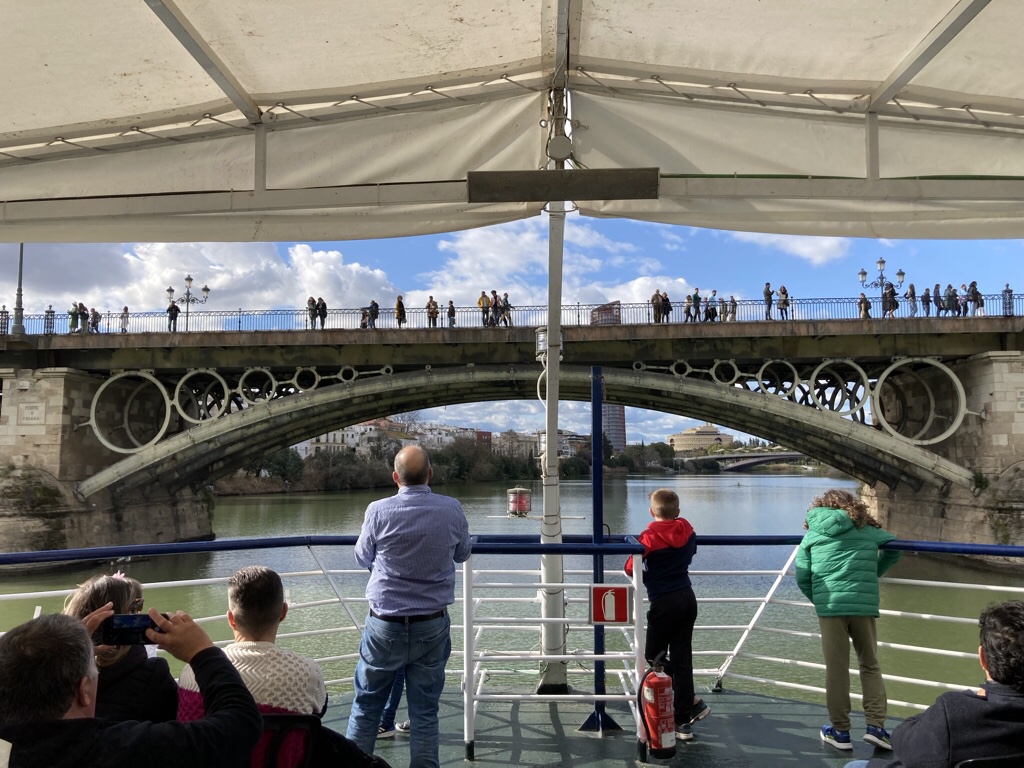
We took the San Telmo bridge then walked down Calle Betis beside the river until we reached the Triana or Isabel II bridge.


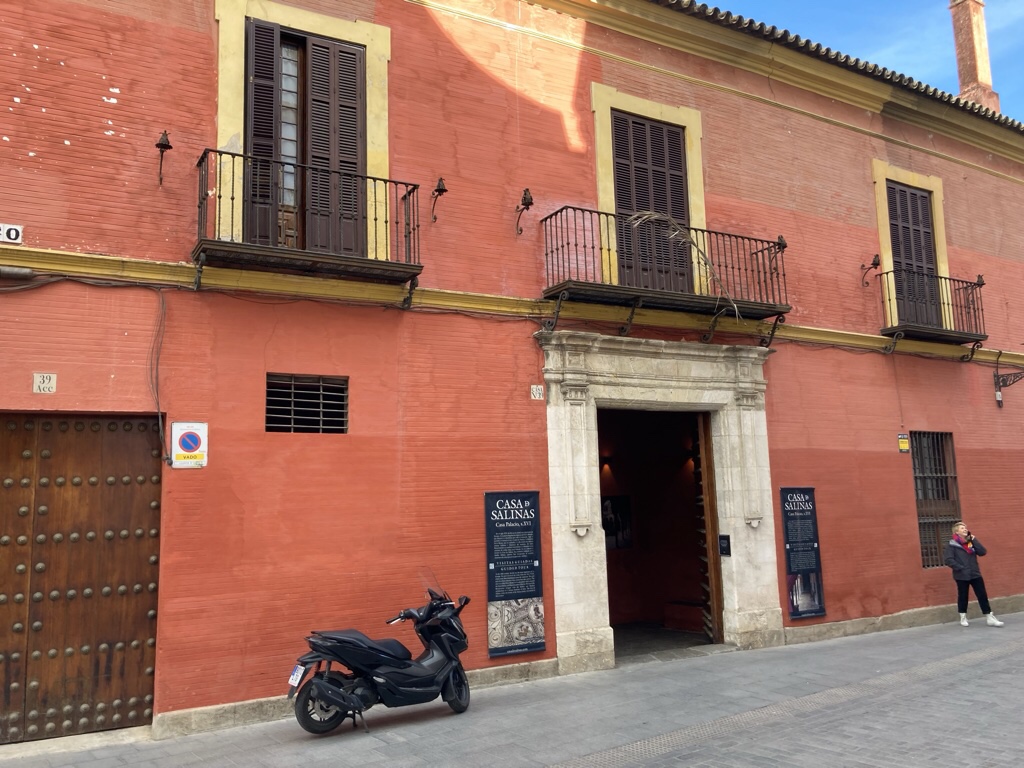
I was amazed to read that while the original pontoon bridge built by the Arabs in 1171 had been repeatedly repaired, it was still in use until the new iron Triana bridge was built in 1852! This tiled panel from Casa Salinas shows the bridge, together with the castle built to protect it and the archive photo shows it just before demolition.

Here is Capilla del Carmen, a tiny chapel dedicated to Our Lady of the Carmen who is the patron saint of sailors …

… Plaza del Altozano …

… with its monument to the Flamenco Art …

… and also a bronze monument of the bullfighter Juan Belmonte, one of the most famous Sevillian bullfighters (are those Mickey Mouse ears?)

… and the market, always worth a quick look!


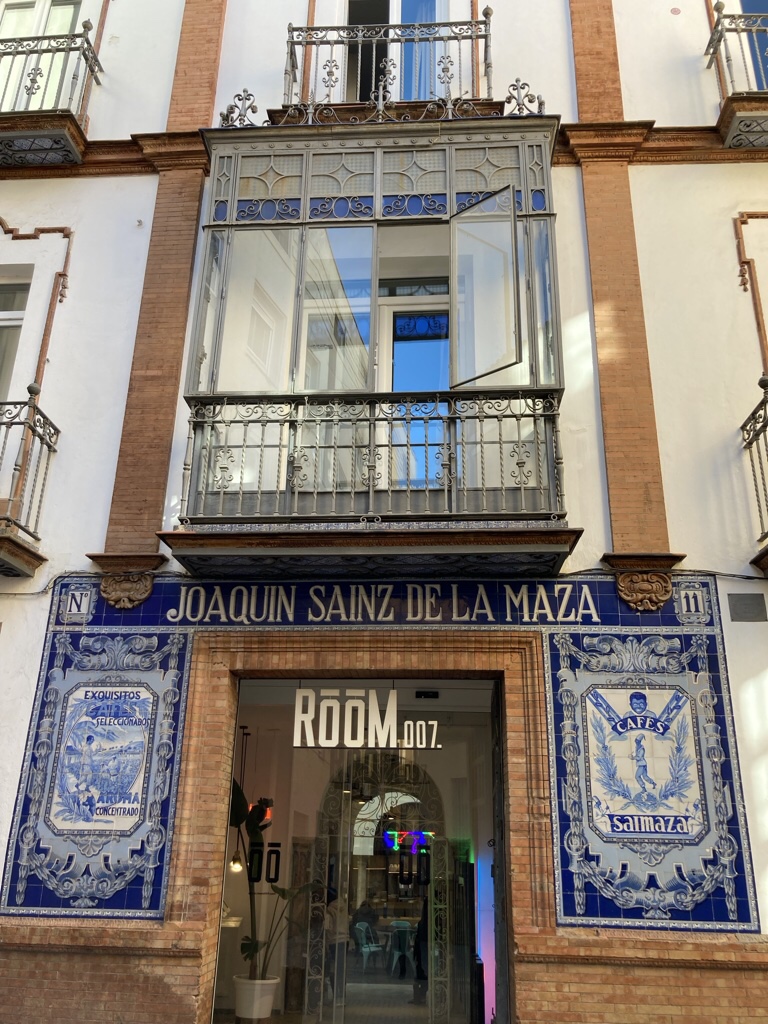
Tiles were first made in Triana in the Islamic period, utilising the rich mud and clay depositing by the the Guadalquivir River and wandering around there were lots of ceramic shops, but unfortunately the Ceramic museum was closed.

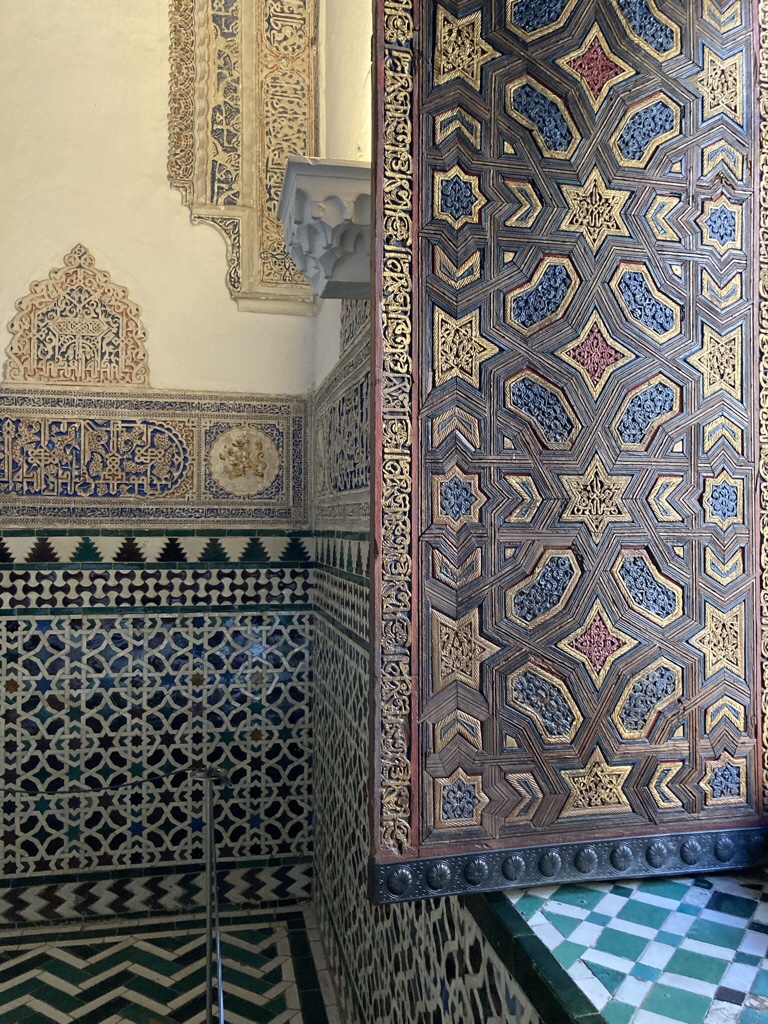
Nonetheless, we have spotted several different types as we’ve been looking round. The earliest tiles in the 13th century were alicatados, where tiles were glazed in a single colour, cut into geometric shapes, and then assembled to form geometric patterns like these in the Alcazar.

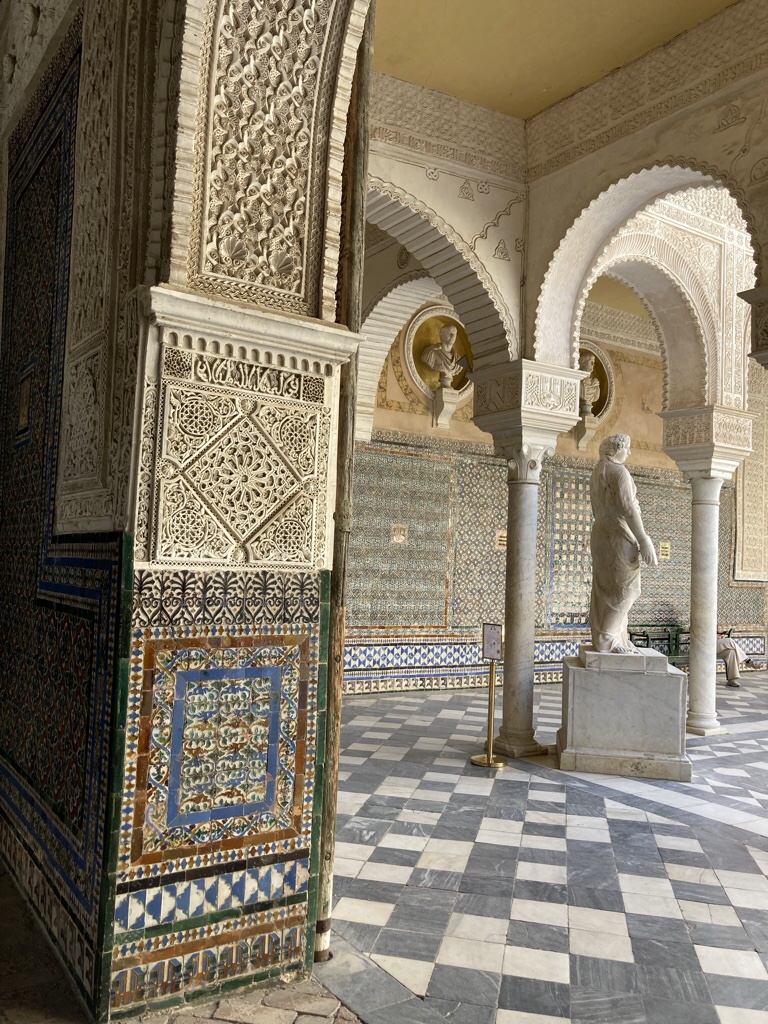
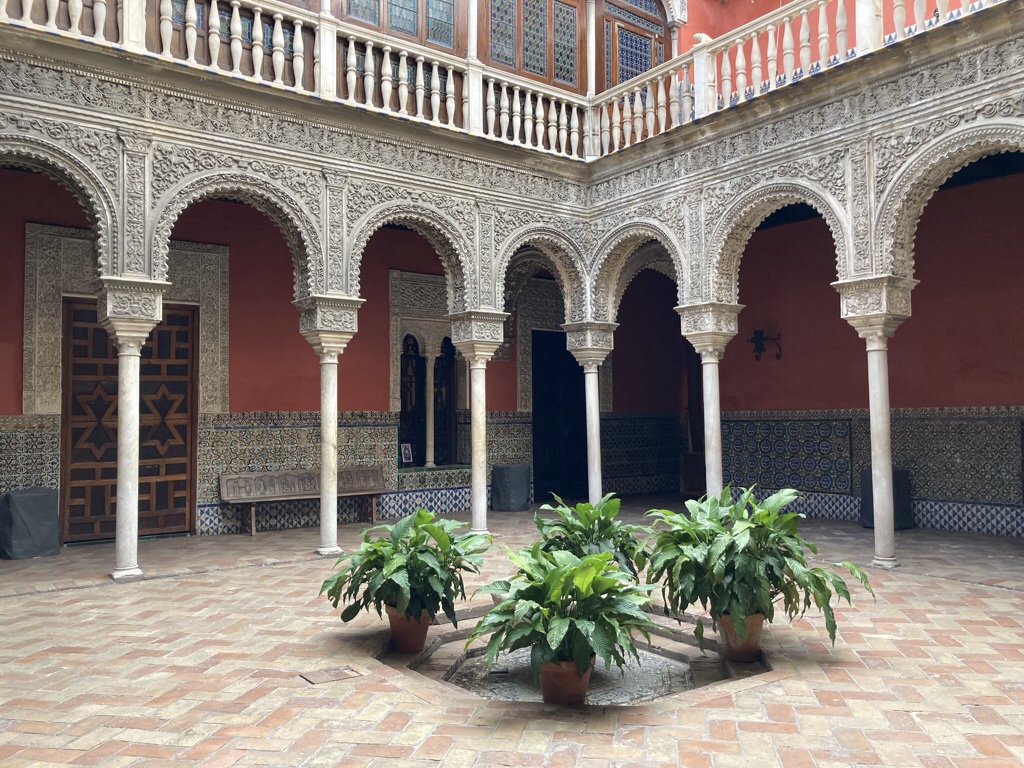
Later arista or press-moulded tiles were made by pressing clay against carved wooden or bronze moulds, with the patterns filled with colour when they are glazed, and these are from Casa Pilatos.

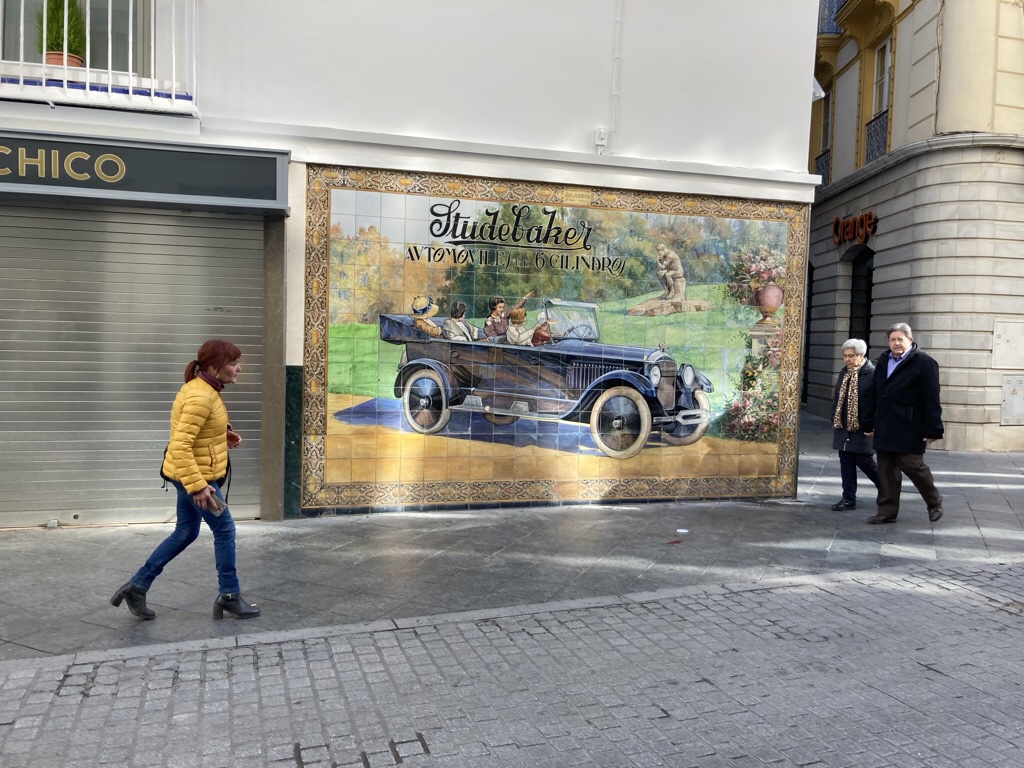
Finally, there are painted tiles which enable far more figurative designs to be made like that fancy car!

We spotted the Callejón de la Inquisición, a narrow passage once part of the castle where prisoners were led to be judged by the Court of the Inquisition …
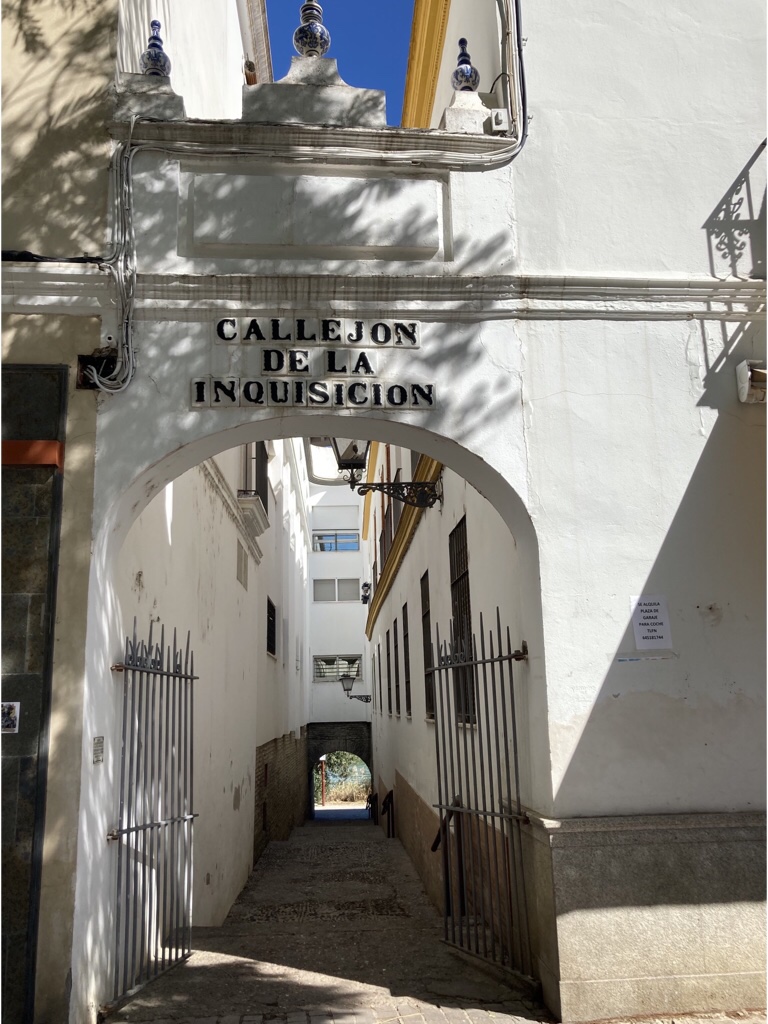
… and a neighborhood corrale, one of the communal homes with traditional Sevillian architecture once lived in by gypsy families.

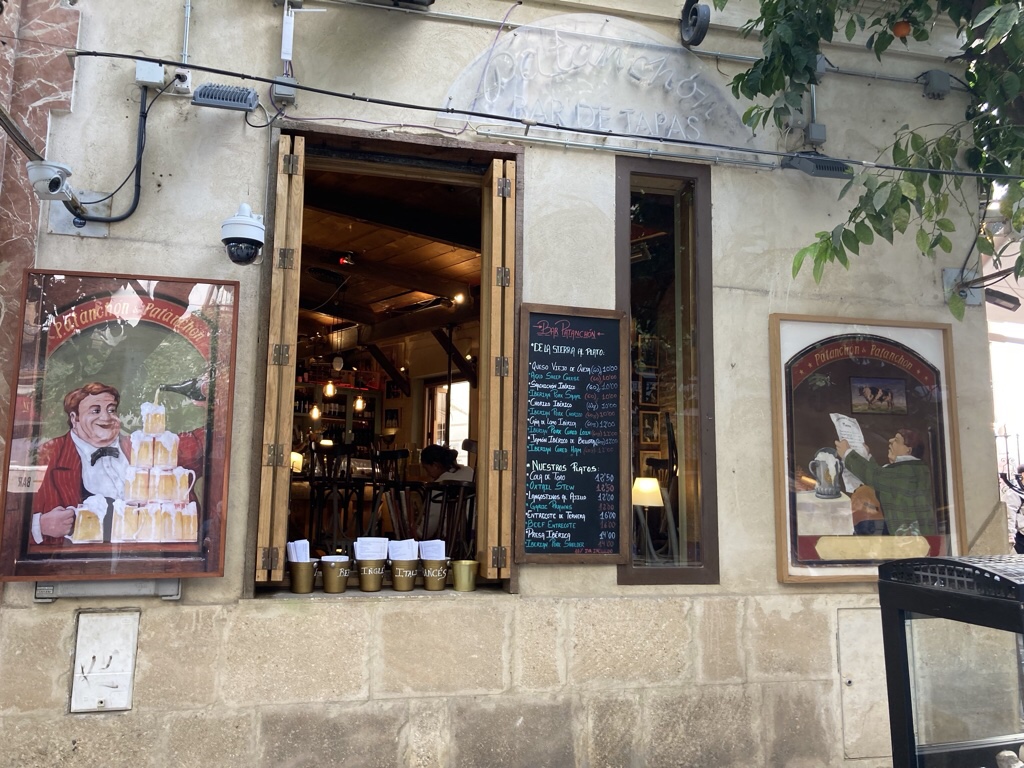
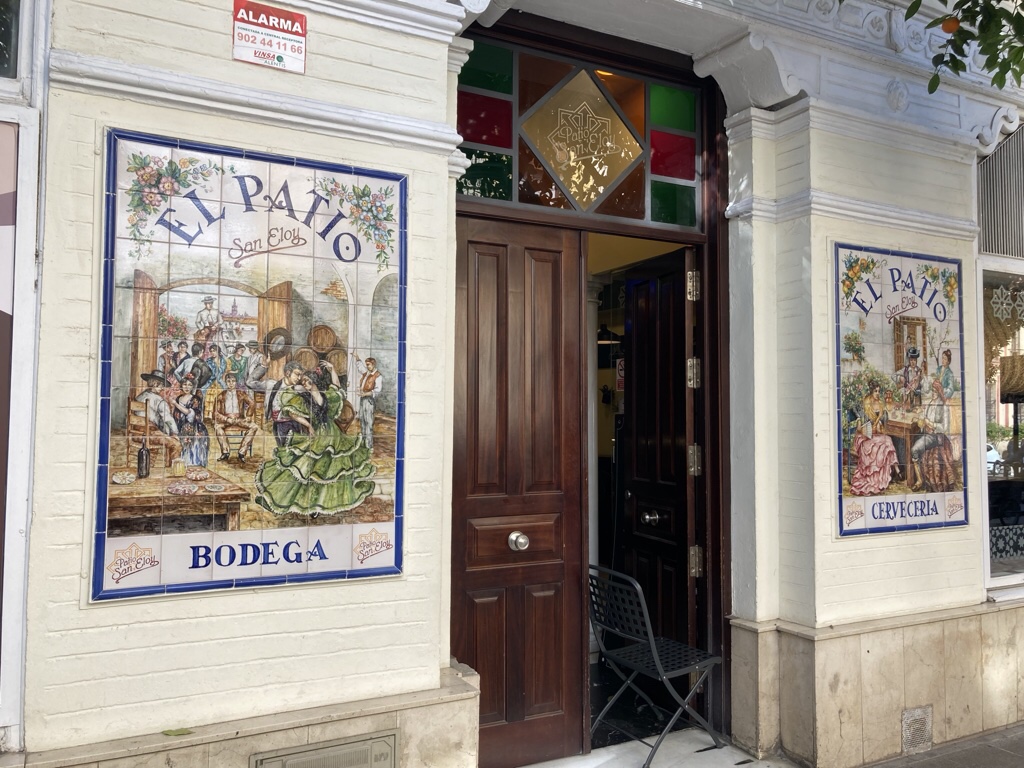
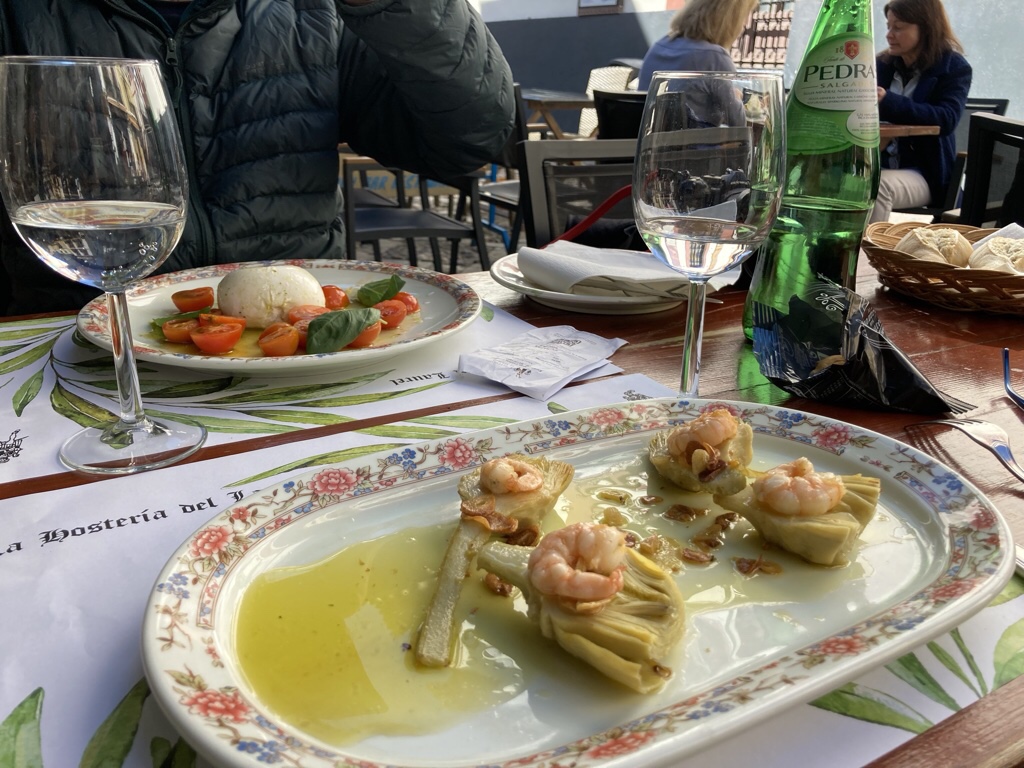
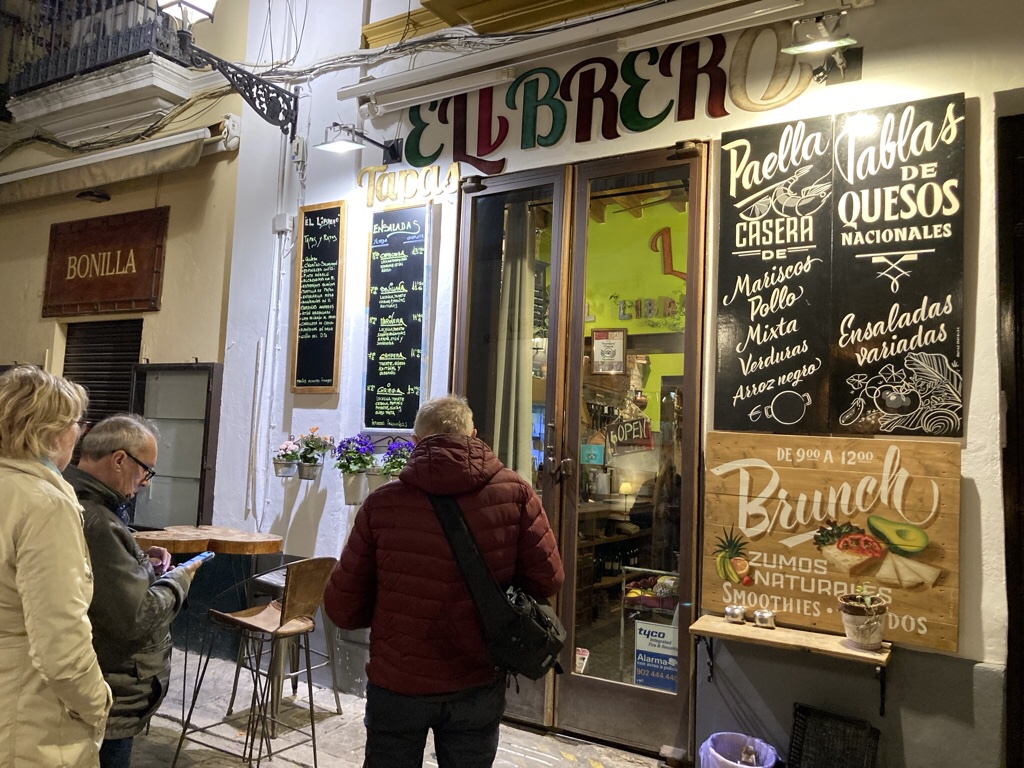
Time for lunch, we were lucky to come across this very traditional style tapas bar, where we were lucky to get a table when it was mainly standing room only, where the spiced peppers and grilled squid were the stars.

After lunch we crossed the river, and walked back the other side …

… which brought us to the Plaza de Toros de La Maestranza, Seville’s famous bullring.


It is certainly a striking building from outside, but we didn’t take a tour and the season only starts in March.

And those supports are not to shade the spectators, instead they hold canvas sheets to reduce the wind from the river so the capes don’t blow around too much and spook the bulls!

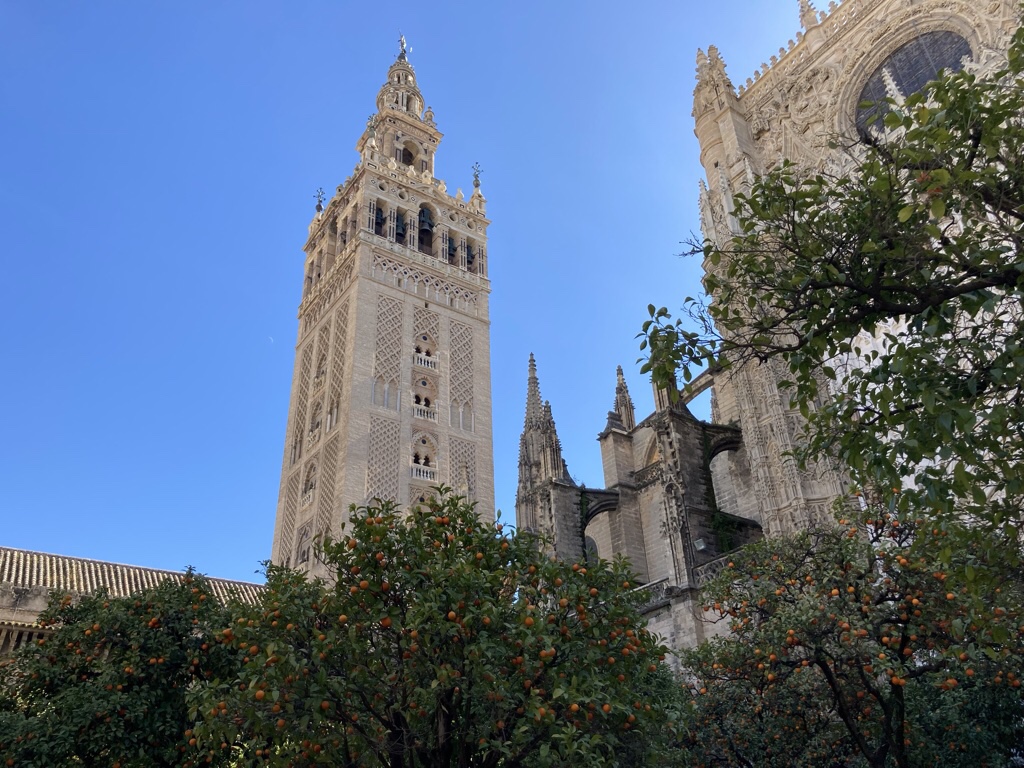
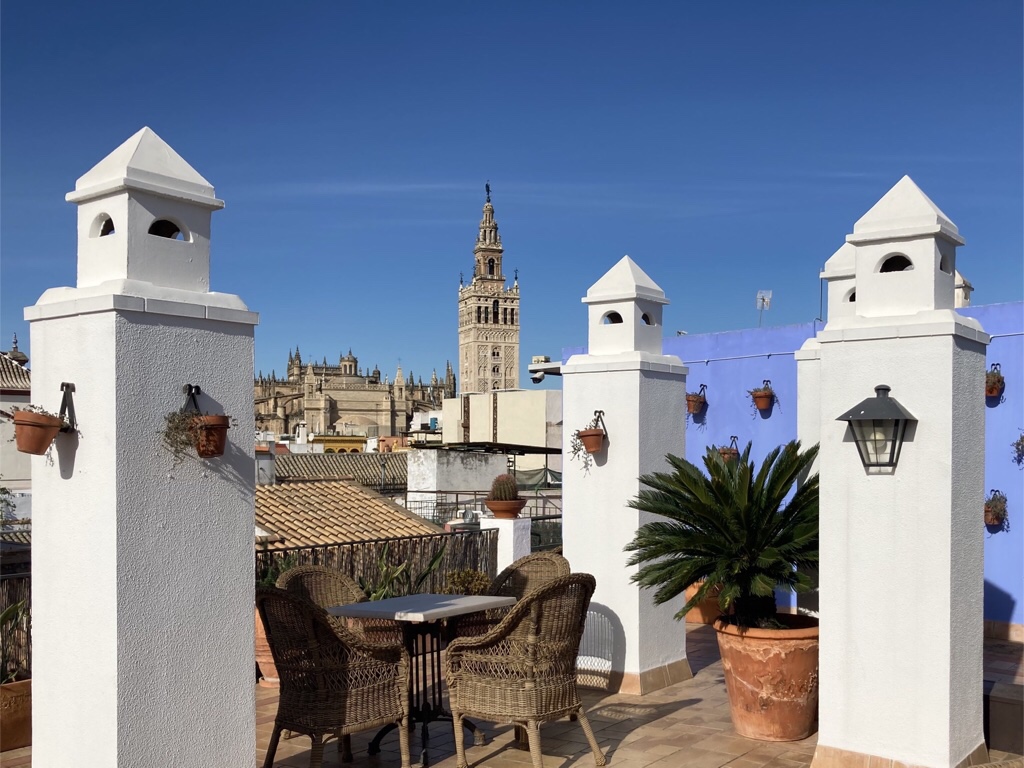
On the way to the hotel, I noticed the weathervane on La Giralda was facing our way, so took yet another snap!

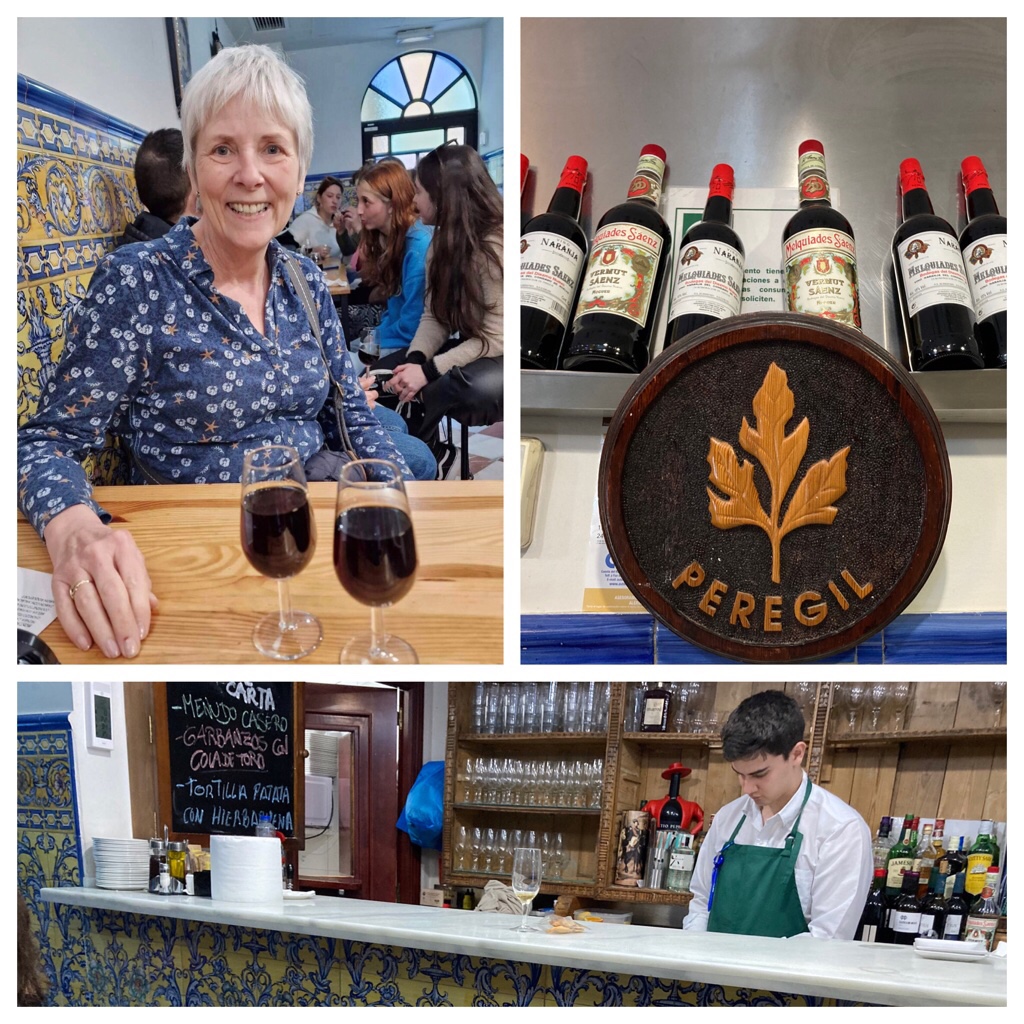
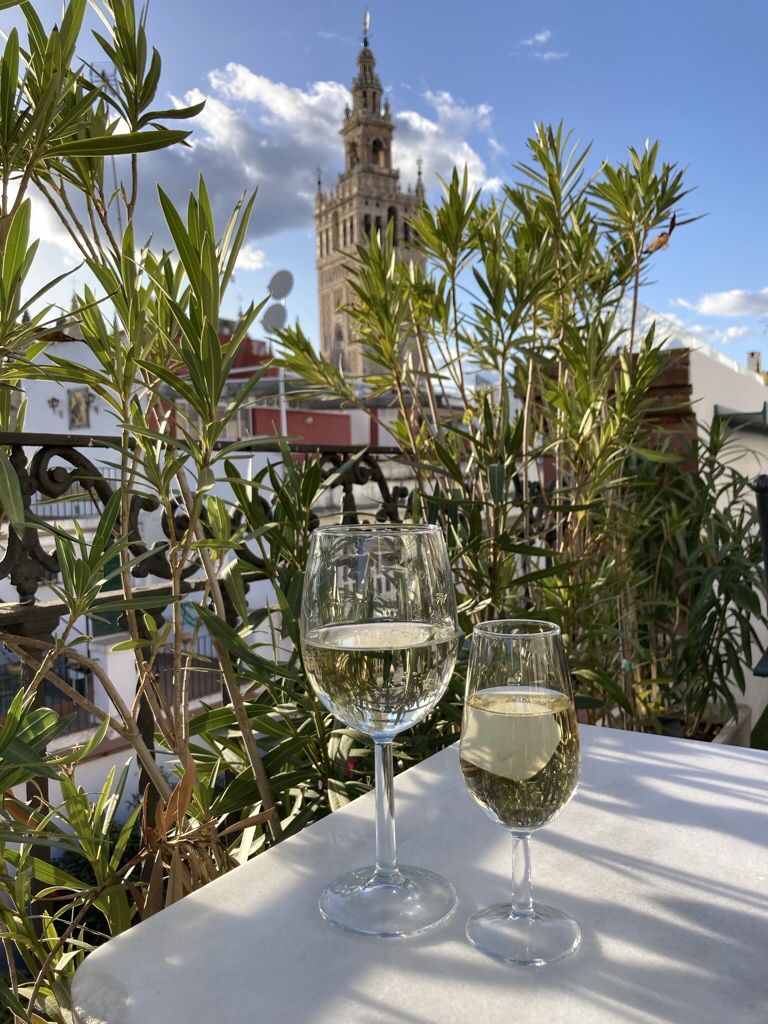
We also stopped at La Goleta, meaning the Schooner, which is is a tiny bar owned by Alvaro Peregil. It was originally founded as a wine store by his grandfather and since it was one of the first places to pioneer the local orange wine we had to stop for a taste, which was very much like a dark, mature marmalade. Chris had tried a glass in a different bar that was more bright and zesty so we might have to do some serious tasting before deciding which to take home!

Next day was Andalusia day, a holiday for everyone in the region, celebrating the referendum that made Andalusia an autonomous region of Spain. It’s a chance to take pride in the cultural identity of Andalusia and to celebrate the diversity and richness of the region.
What better than a holiday for a special treat! It must have been meant, because I saw a sign for churros outside a cafe and we went went inside.

Several people were eating what I guessed were churros, although I’d never seen them this light and fluffy before. They weren’t on the menu and when I looked again they were wrapped in paper, not on a plate! I asked the man behind us and he pointed through the door and said to get them outside.
Next door, I found the churros shop were I bought a portion for €2 and took it back. Chris had asked for eggs, potatoes and coffee so I added hot chocolate to the order.

The rich creamy chocolate was perfect for dipping, coating every surface of the crispy churro for a great chocolatey mouthful!

As we looked round the cafe, there were several paper parcels and happy people munching churros and we were surprised the cafe was so accommodating, and even Chris had a try, dipped in his coffee!

When we left, we returned so I could show Chris the shop and it was then I saw the sign suggesting churros could be taken next door to eat.

Just over the road, the church of Santa Maria la Blanca had just opened and we admired it’s over the top gold and white decoration with filigree stucco on the ceiling, translated into paint below.


Definitely in holiday mood we walked to Plaza de España. Built for the Ibero-American Exposition of 1929, it showcased all the architectural styles that can be seen in Spain such as Baroque, Renaissance and Moorish Revivals.

The central pavilion was used for exhibitions …

… and tiled alcoves around the plaza represent the different provinces of Spain …


and we sat in Castellon to eat our picnic lunch!


It reopened in 2010 after a significant restoration and is the perfect place to enjoy the spring sunshine on Andalucia day, a public holiday … boating, taking a carriage ride …


… or watching the flamenco show!

We spent our last evening at Taverna Belmonte, a tapas bar named for that famous Sevilian bullfighter.

He fought in a record number of bull fights, but his daring style meant he sustained 24 serious wounds and countless minor ones during his career.

The tapas however was a great end to our trip, especially the Spanish omelette and the baked goats cheese with honey …


And just to come full circle, I found out that sadly the parakeets are somewhat a nuisance, once pets imported from South America in the 1970’s, there are now are 200,000 Monk Parakeets in Spain and they are considered an invasive species.
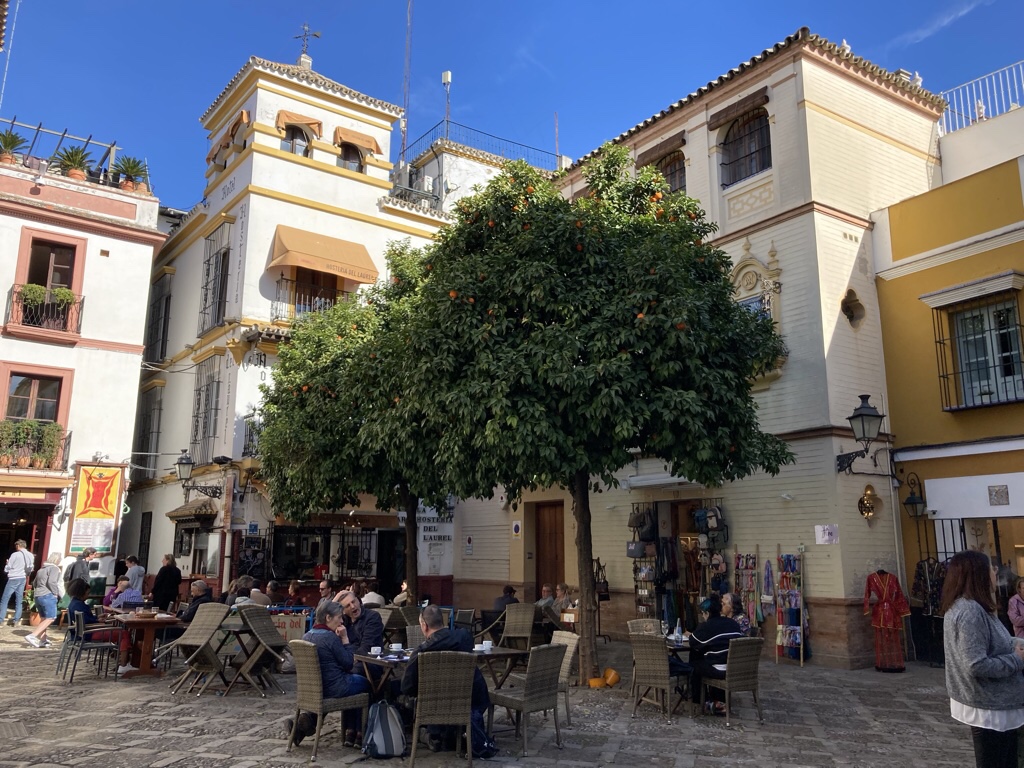
Not just that, but I thought it was inspired to plant orange trees, providing shade in the city, sweet smelling blossom in the spring and delicious fruit. All it not as it seems however, as it is said the Arabs originally planted oranges so they could grind down the skins for explosives!

Fortunately, times have moved on, once with the harvest and export of oranges to England for marmalade, but now a whole range of local artisan producers are being inventive and we were spoilt for choice.

After several tastings, we chose not only orange wine but also orange biscuits, marzipan and truffles!
Seville was a great idea for a February birthday treat and with all the orange goodies tucked away in our suitcase, we are looking forward to recapturing the memories of our stroll in Seville while sitting in our very own courtyard at home!








































 Off Travelling Together