Blog

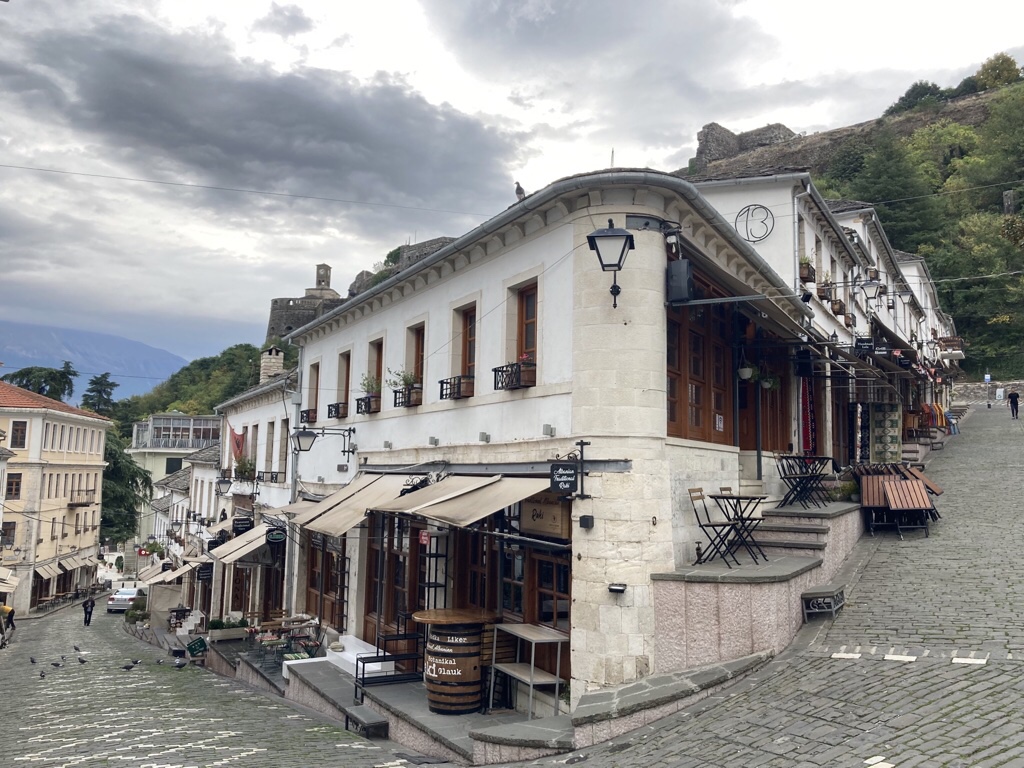
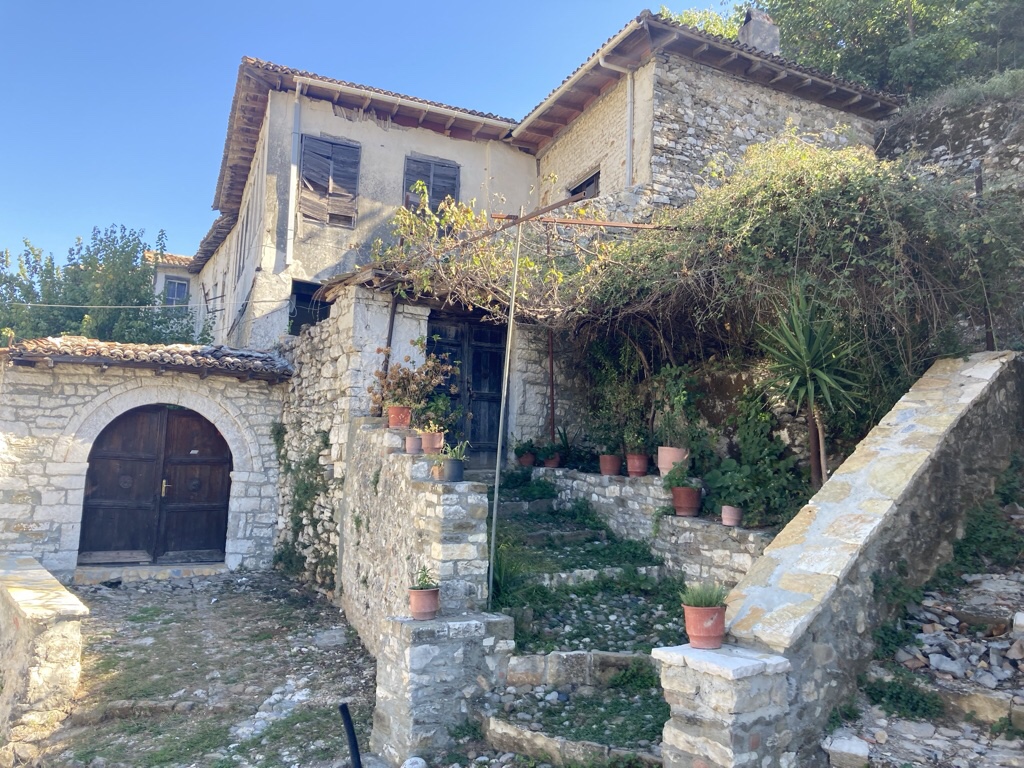
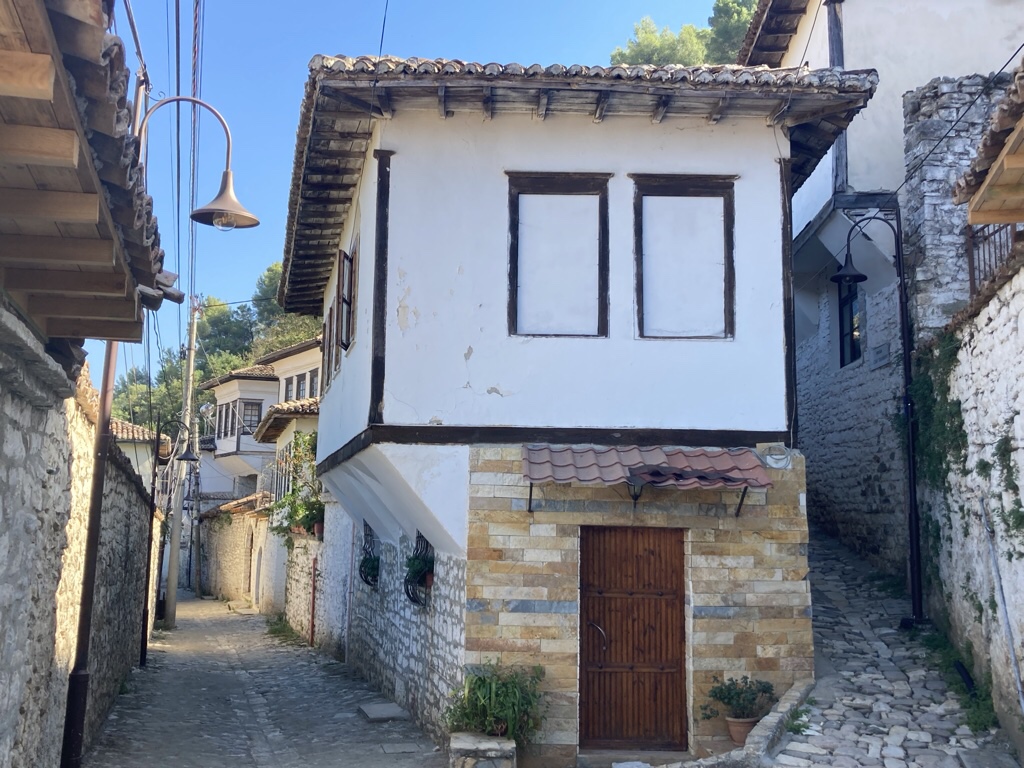
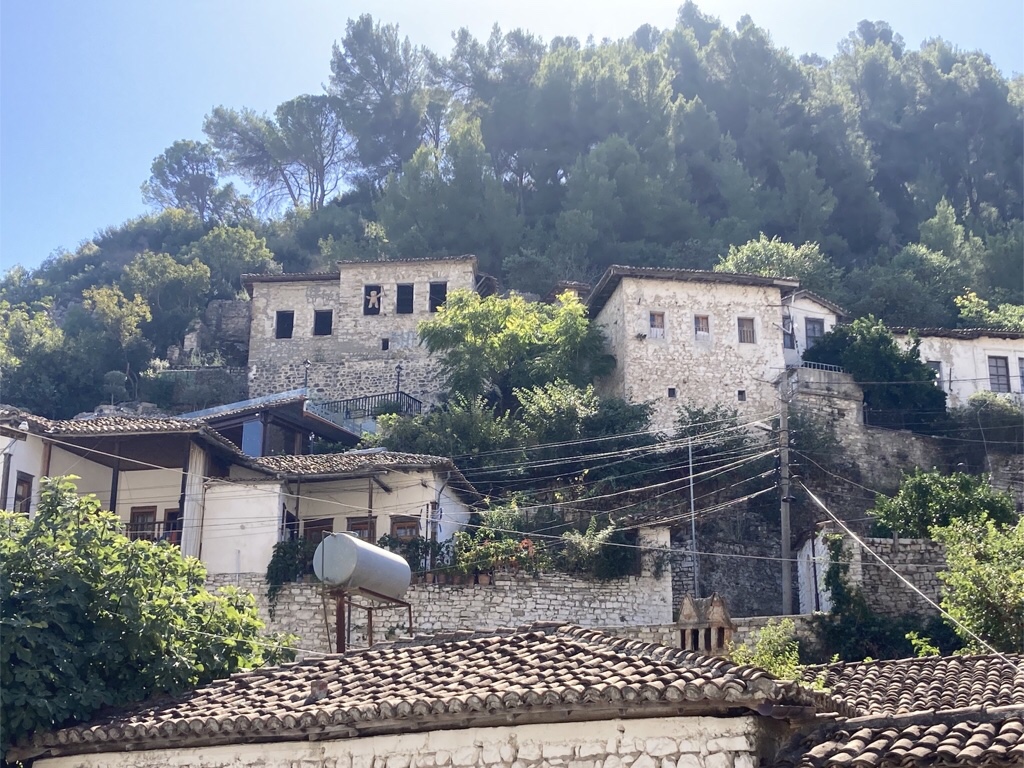
Windows of Berat

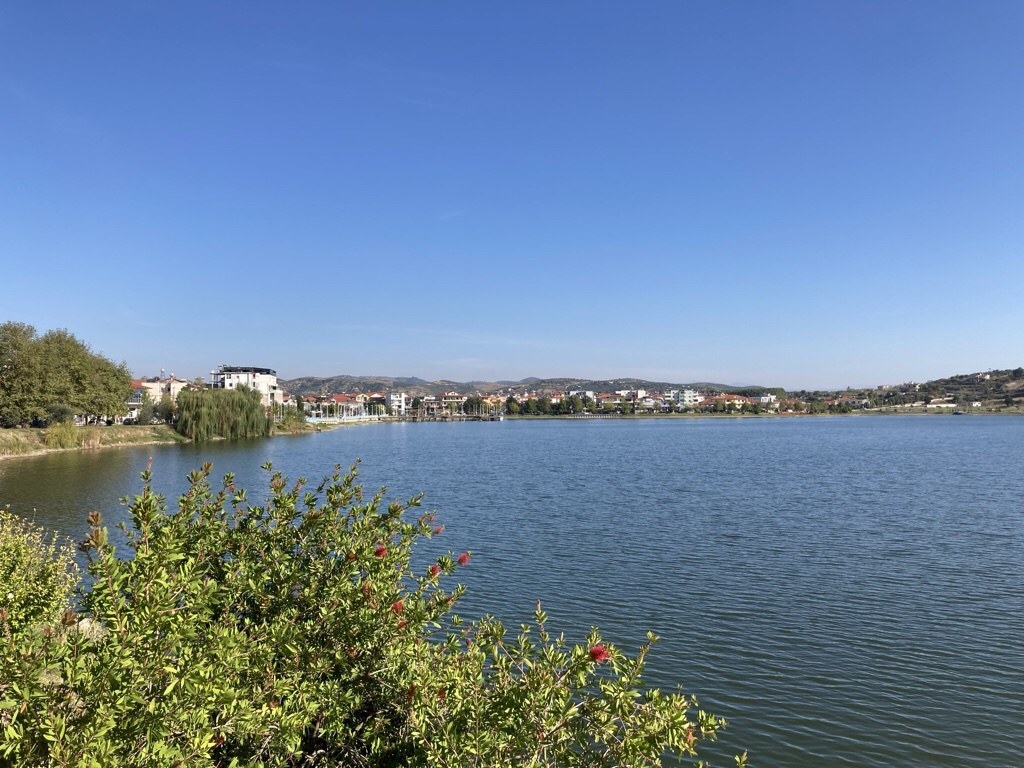
After a brief stop at Belsh Lake …

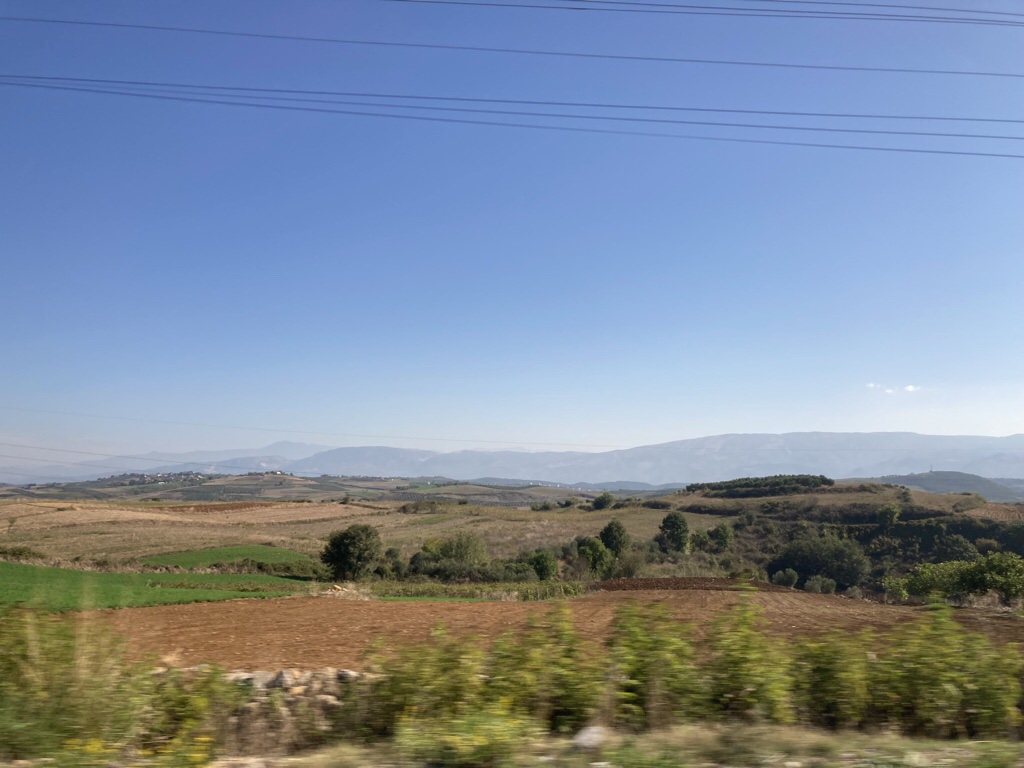
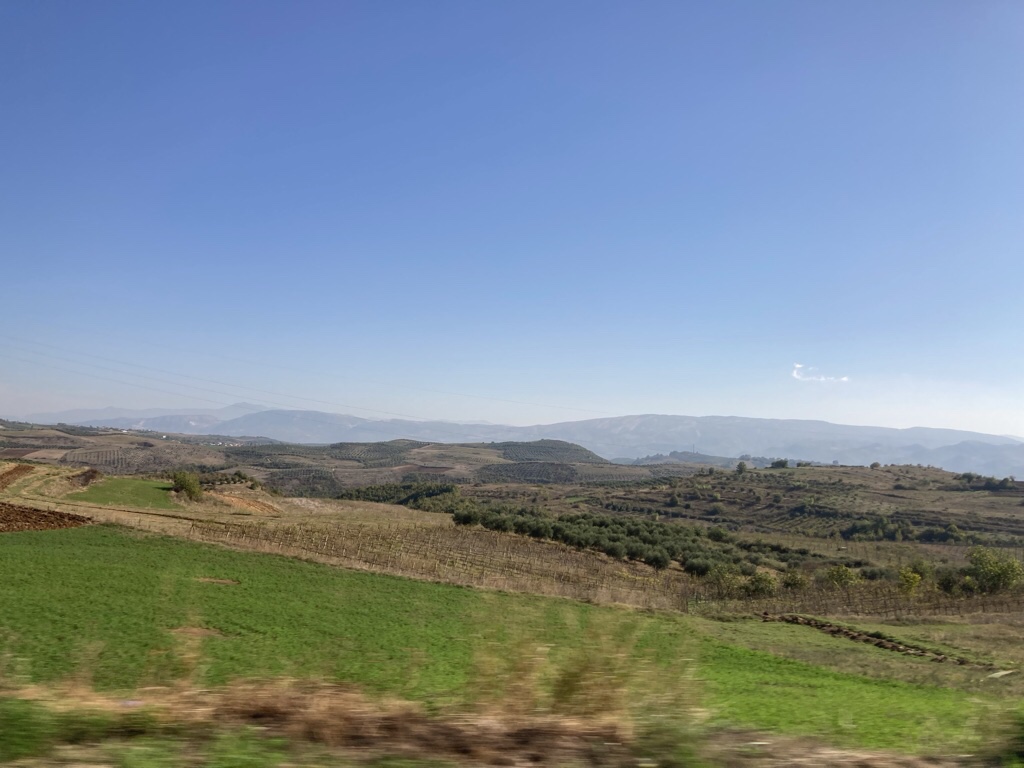
… we continued through countryside …

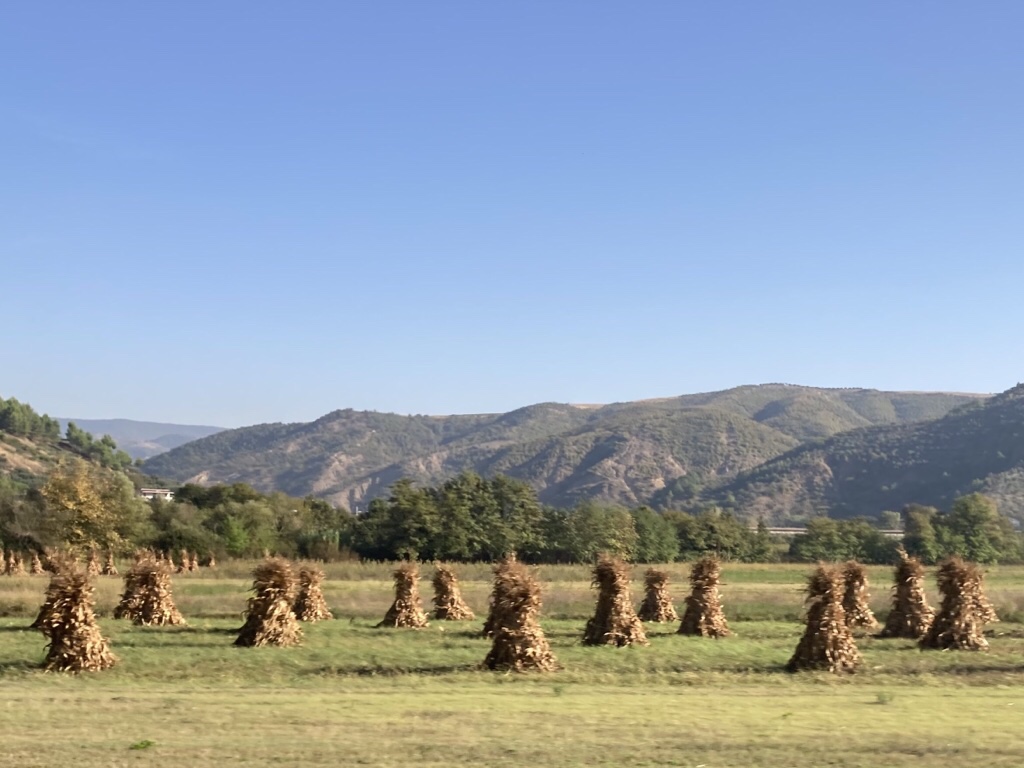
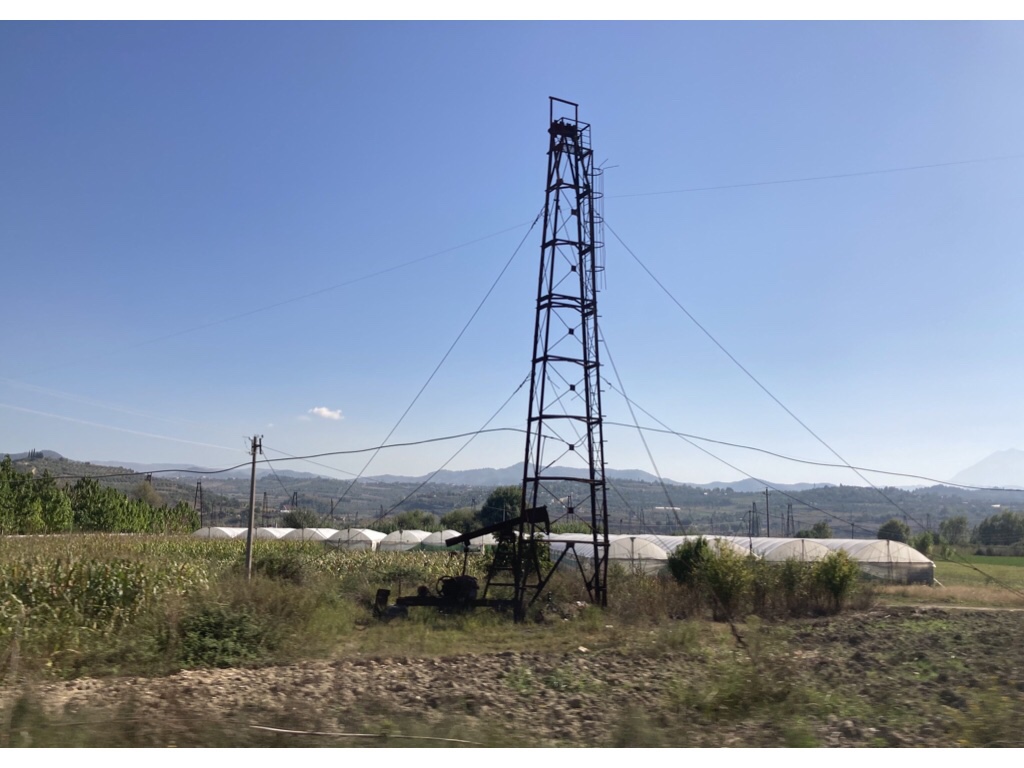
… passing Kuçovë, home to the second largest onshore oil field in Albania, which was discovered in 1928 with the pumps installed by Italian investment …

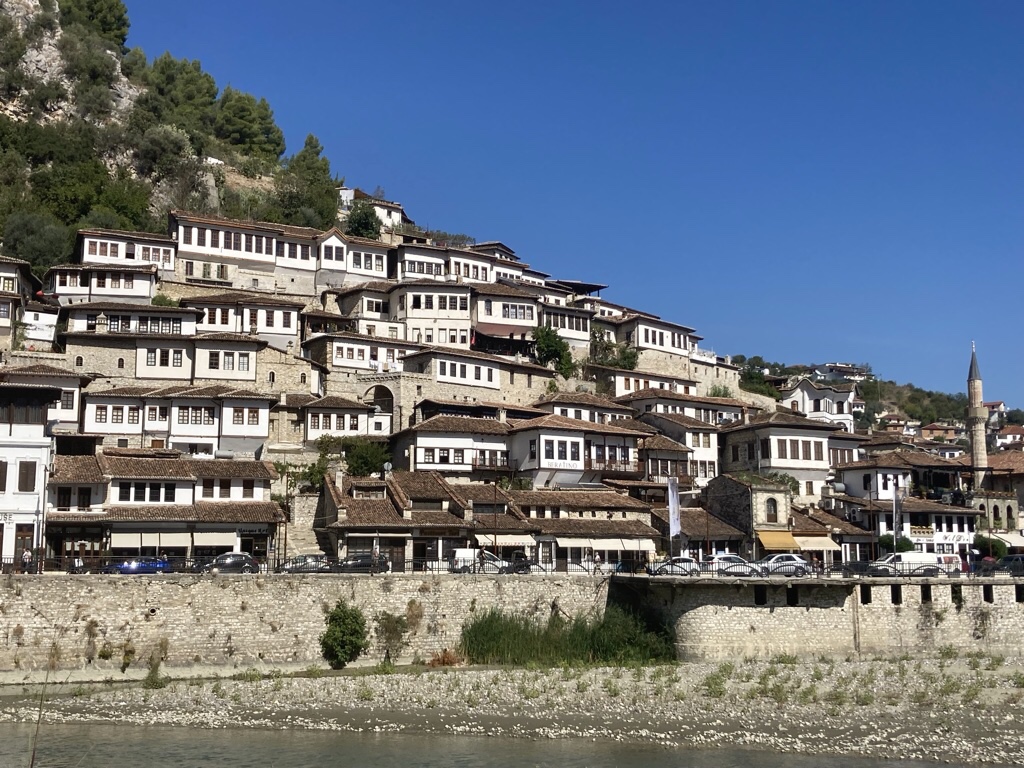
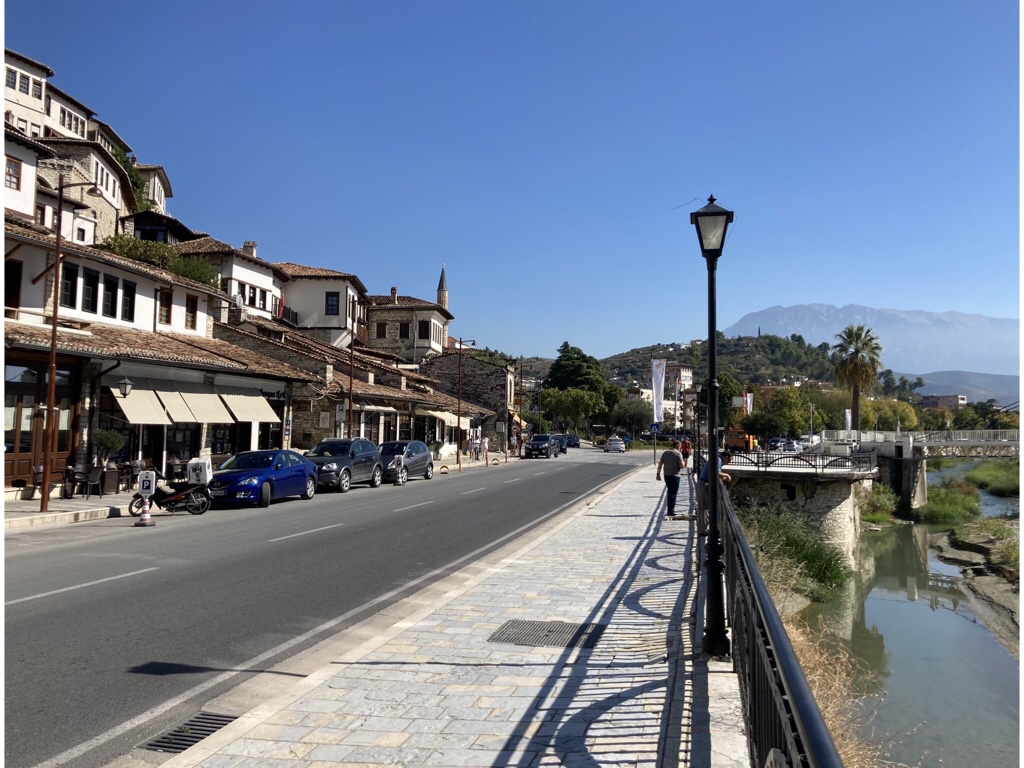
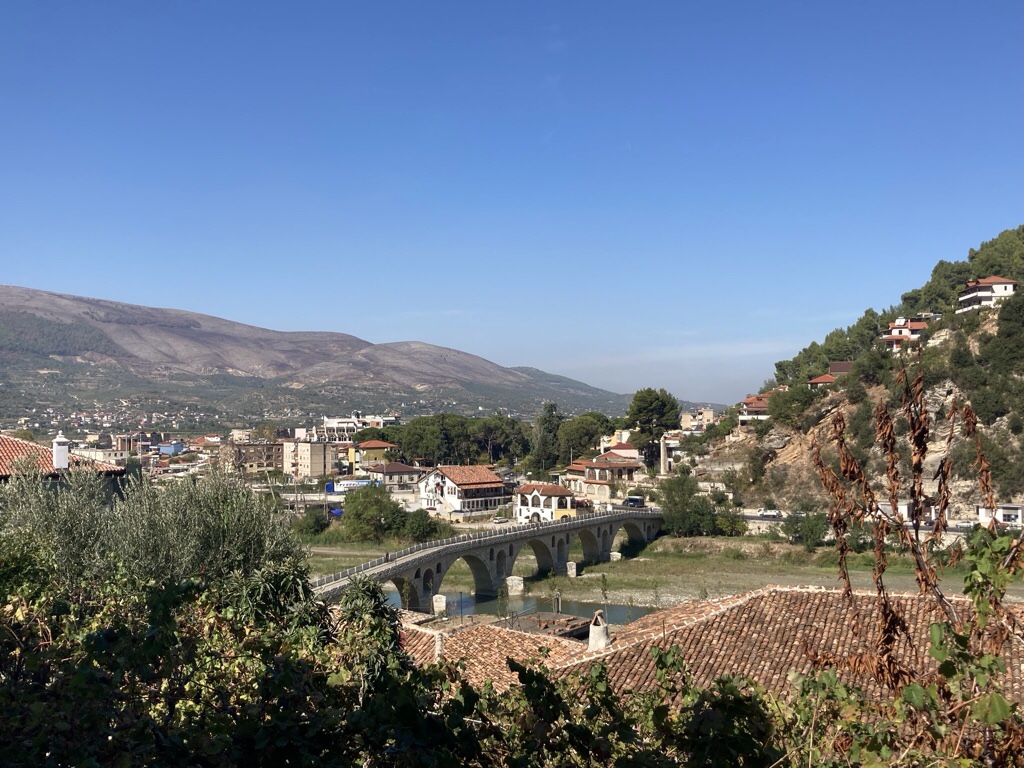
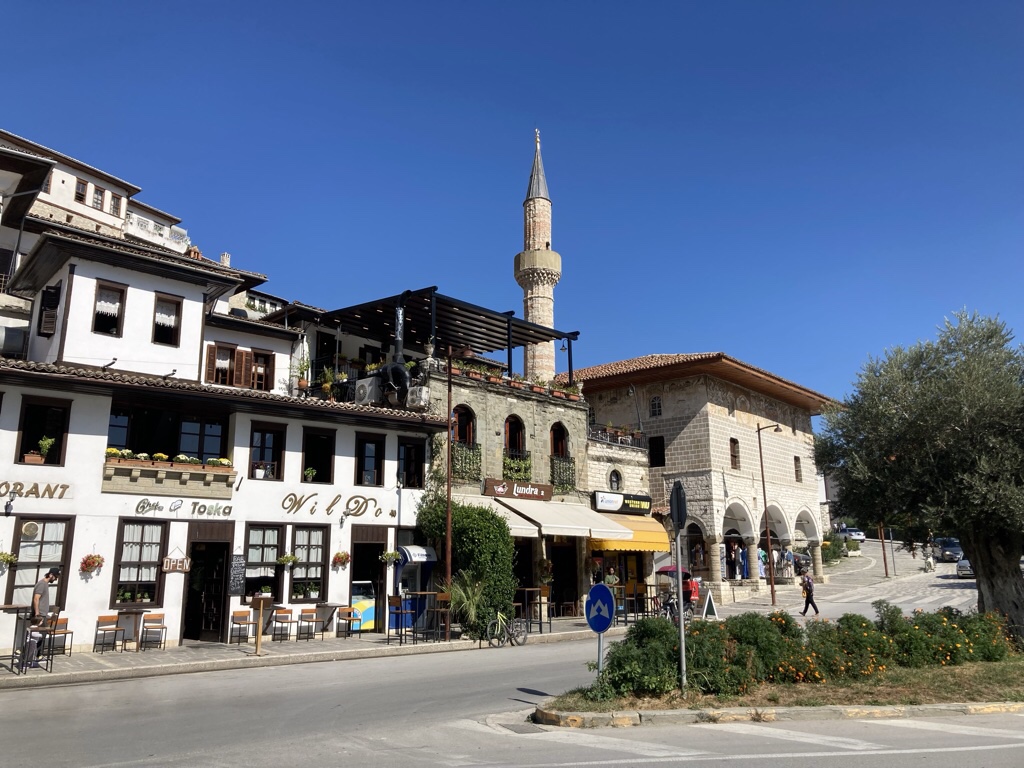
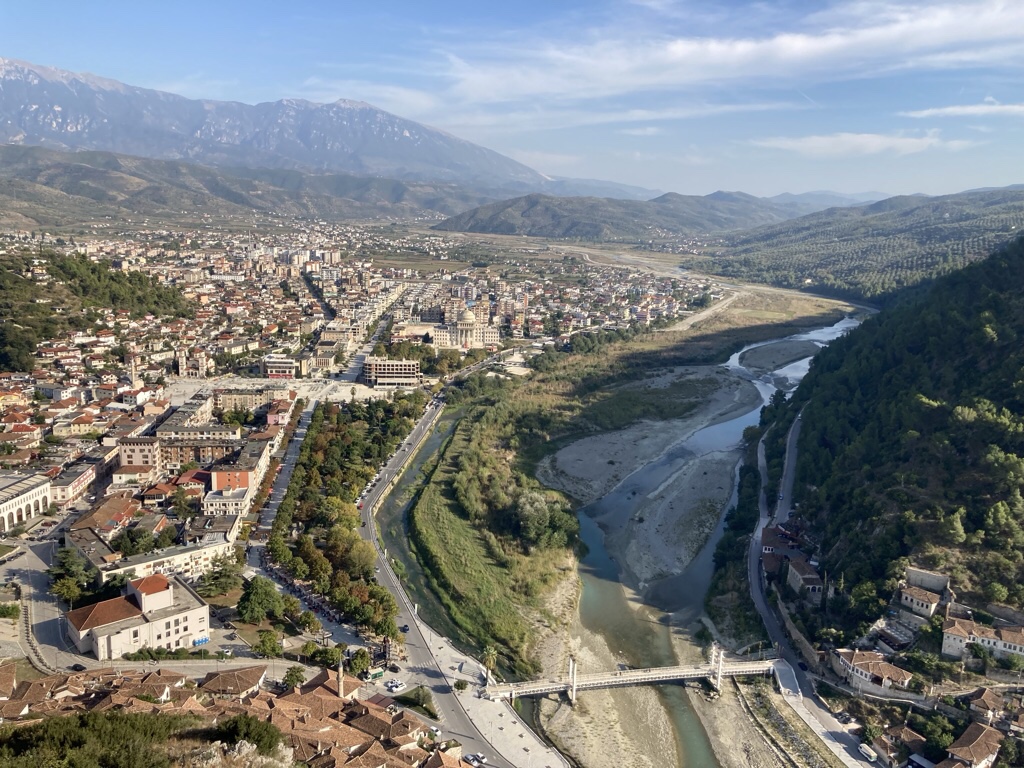
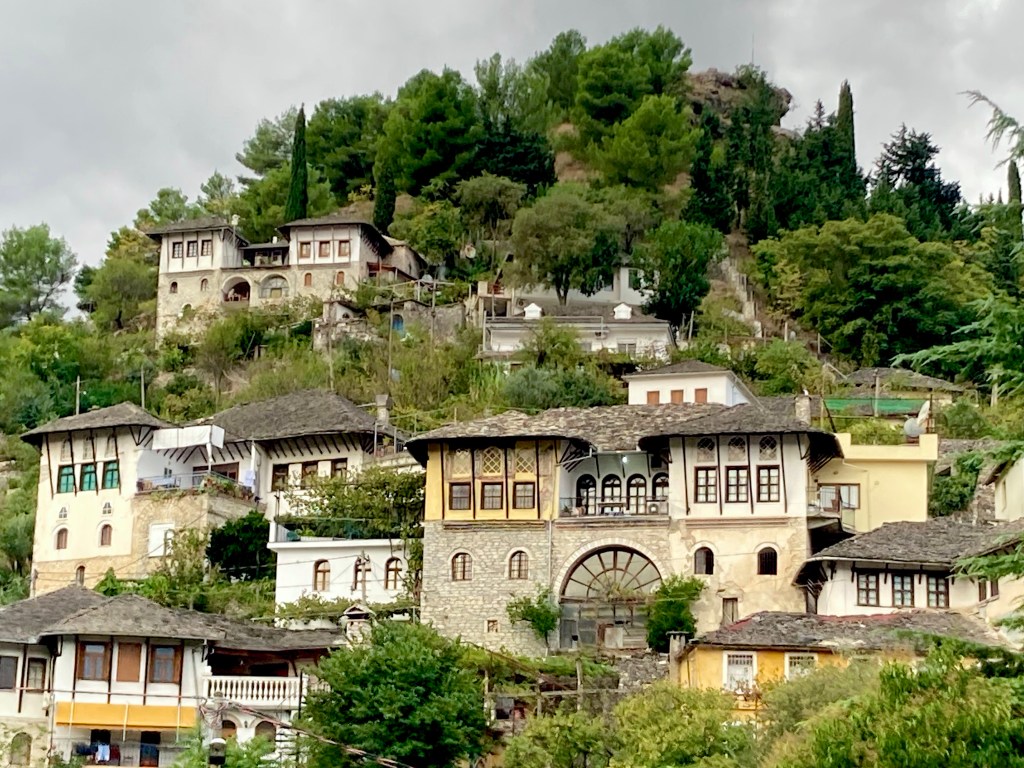
… to the city of Berat. Not only is this Saimir’s home town of which he is naturally very proud, but it is also one of the oldest inhabited settlements in Albania with special status from UNESCO protecting its white Ottoman houses, Berat is separated into two by the Osum River …

… with Mangalem below the castle, traditionally of smaller houses …

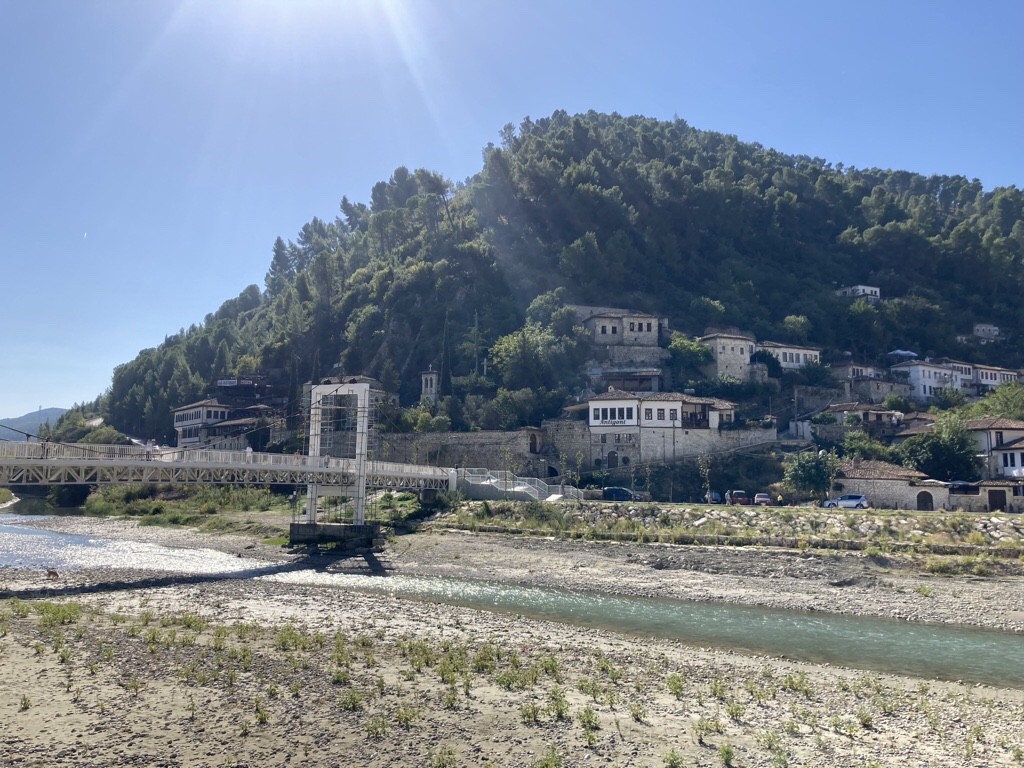
… and Gorica on the opposite side comprising grander houses.

Over time Mangalem became more popular and is a maze of guesthouses and shops while Gorica, always less sunny and often damp has fallen somewhat into disrepair. We crossed the bridge for a quick look …

… and spotted this little fellow, keeping guard …

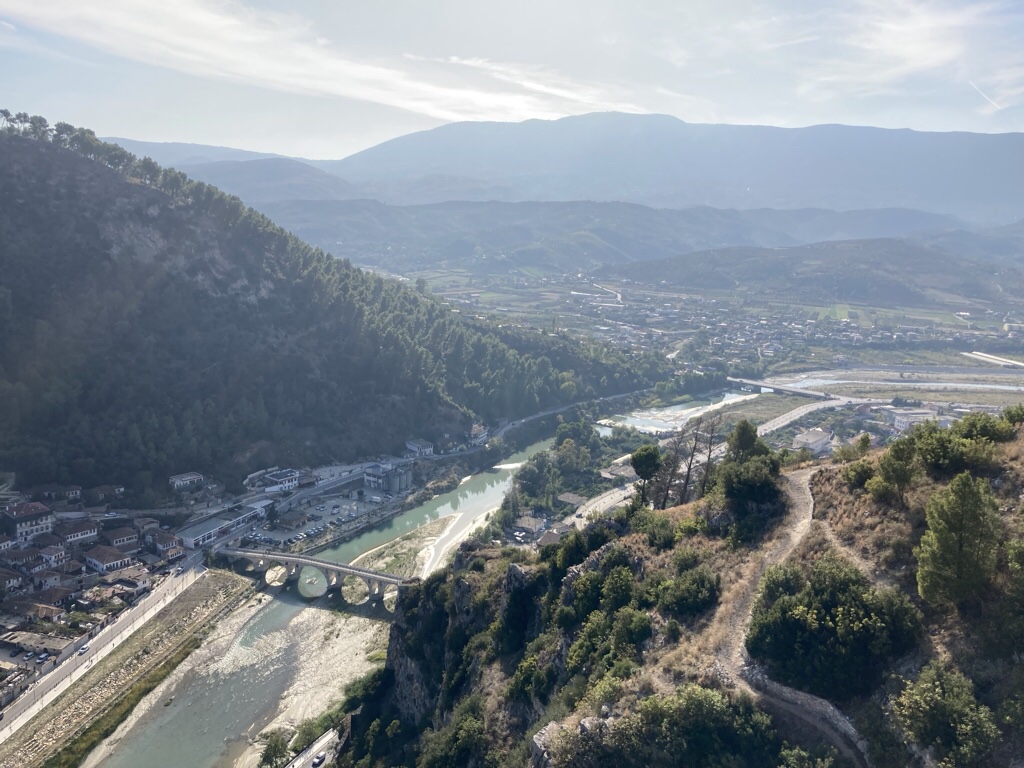
… and also the Bridge of Gorica, built in wood by the Ottomans in 1780 and rebuilt with stone in the 1920s.

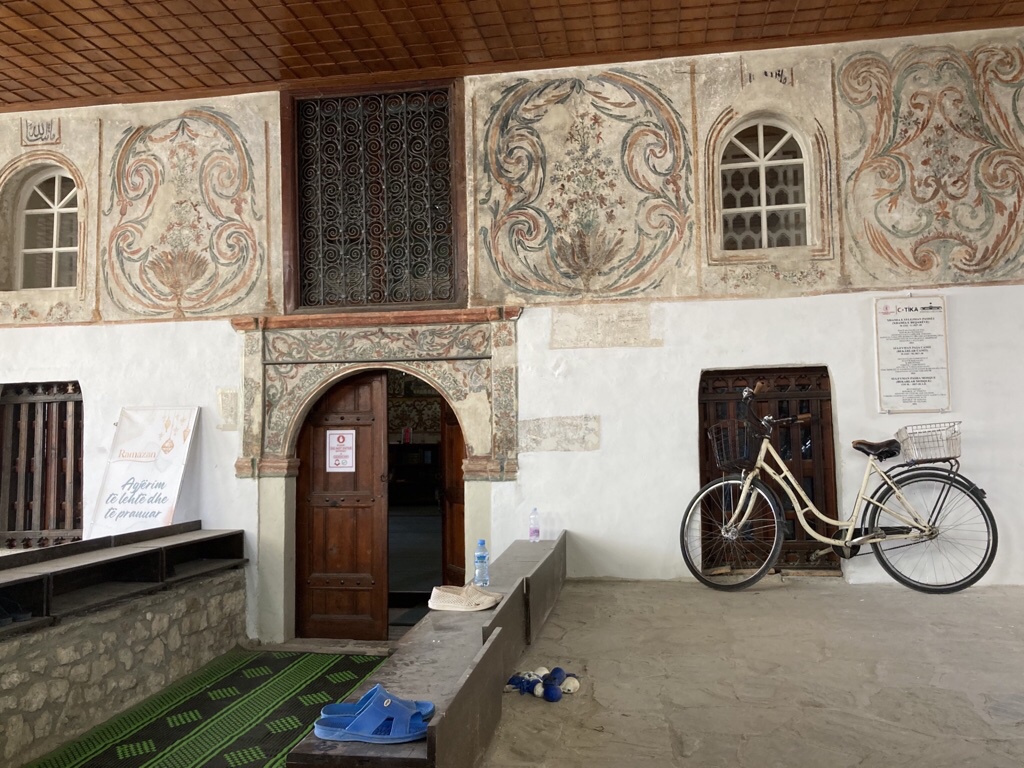
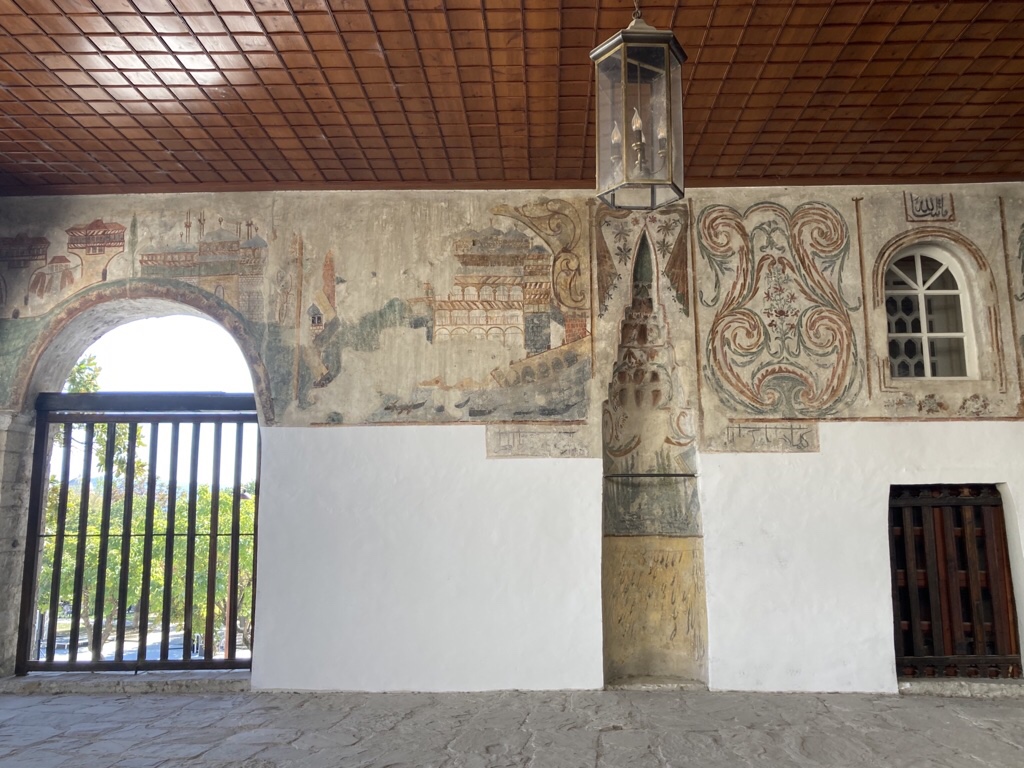
We also explored The Batchelors’ Mosque with wall paintings dating from the 1920’s …

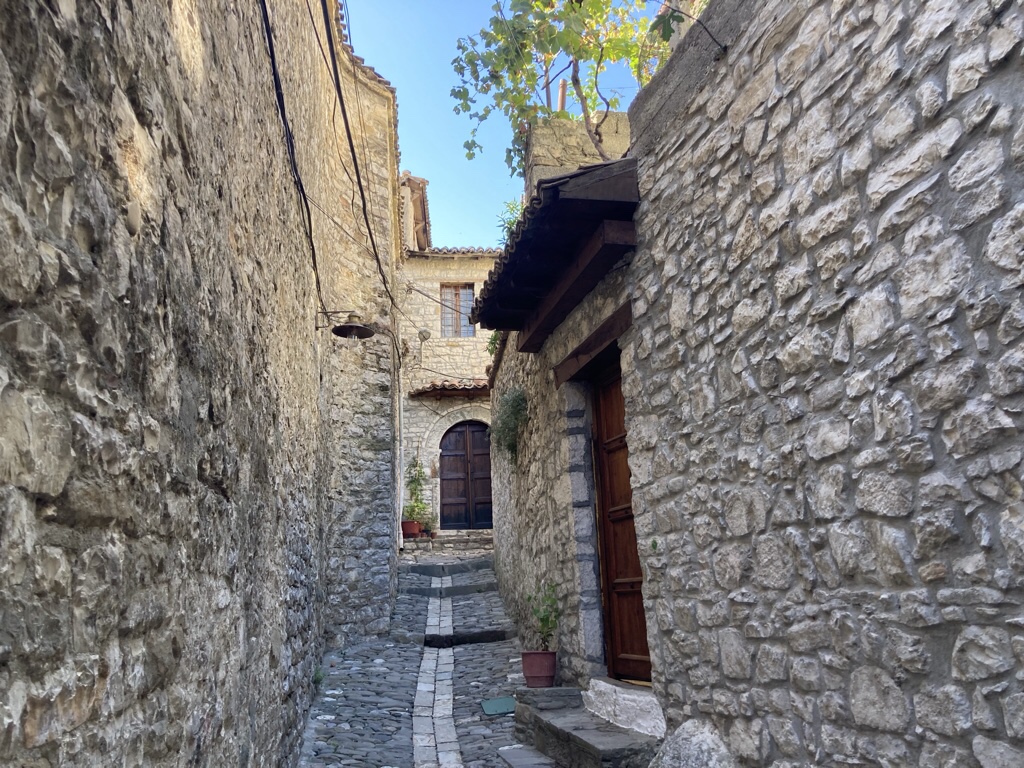
… and the alleys behind.

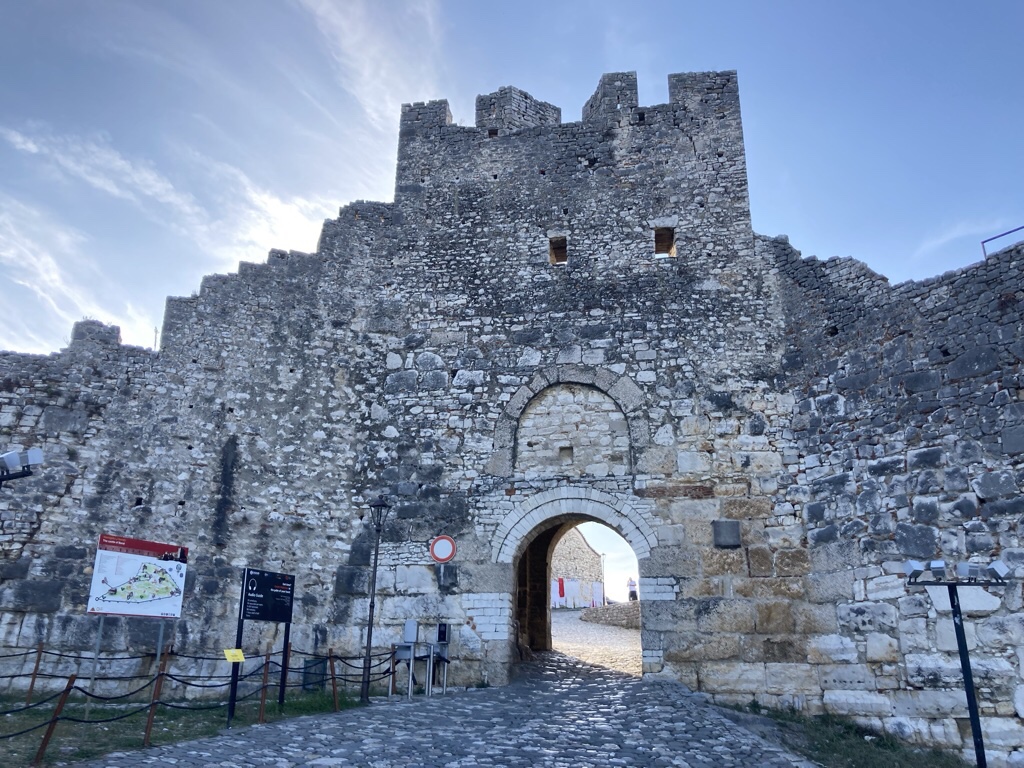
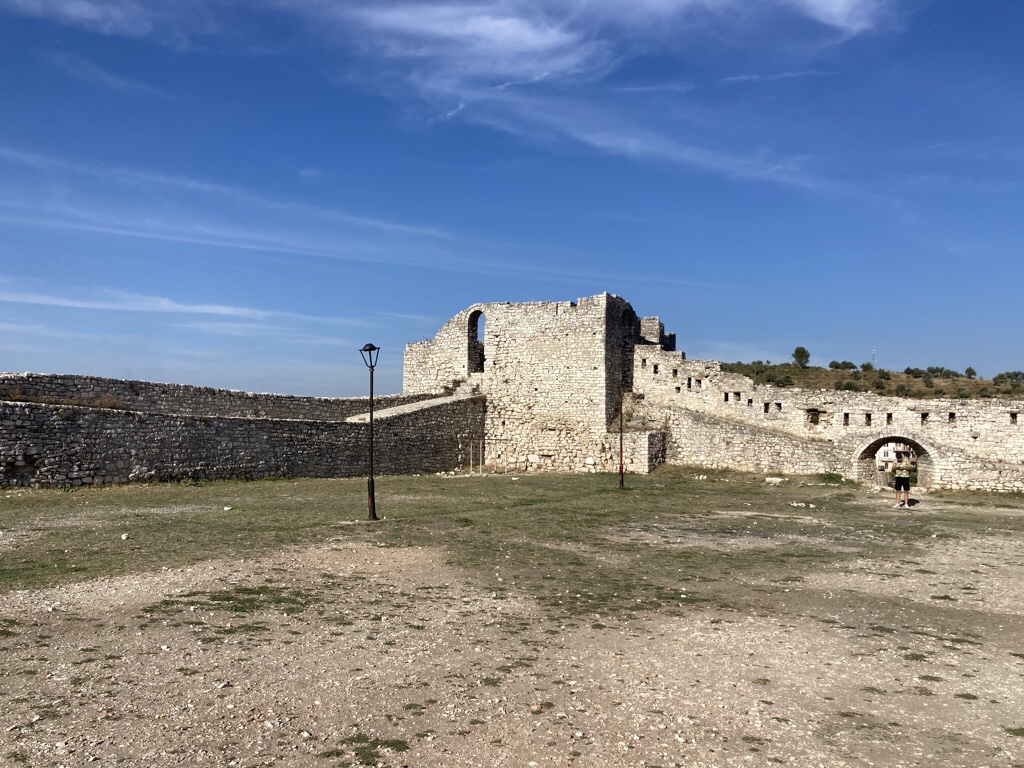
Next we visited Berat Castle, with quite a climb from the parking, paved with killer cobbles and again covering a huge area with buildings dating from the C13th many still inhabited and others converted to restaurants and gift shops.

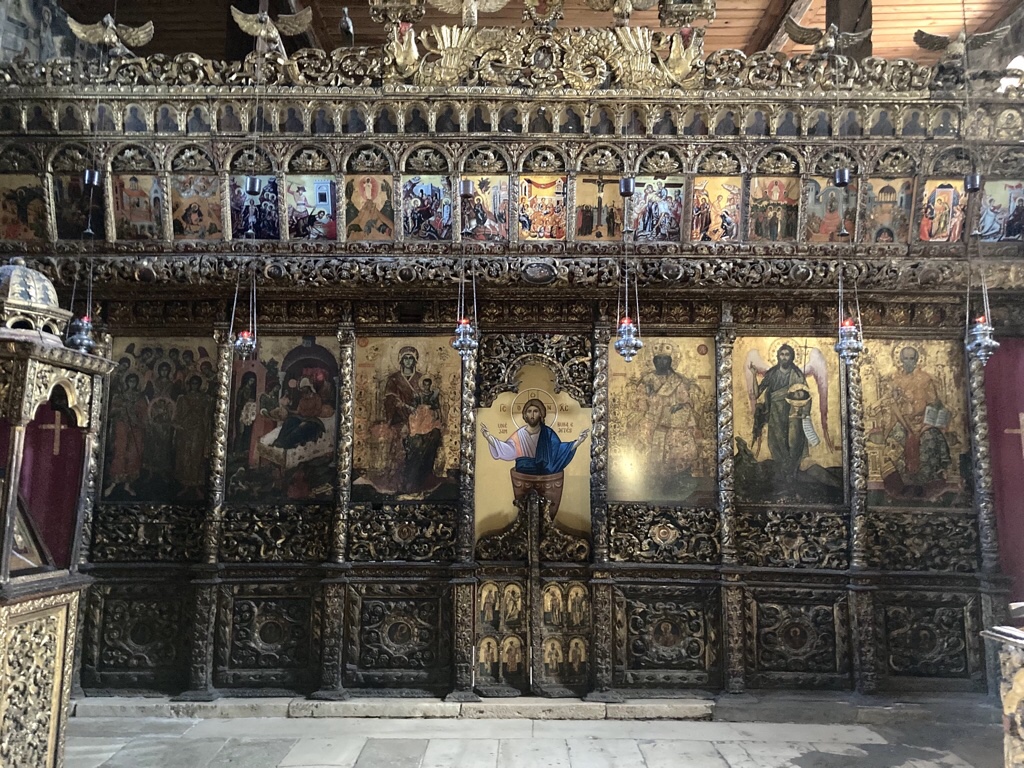
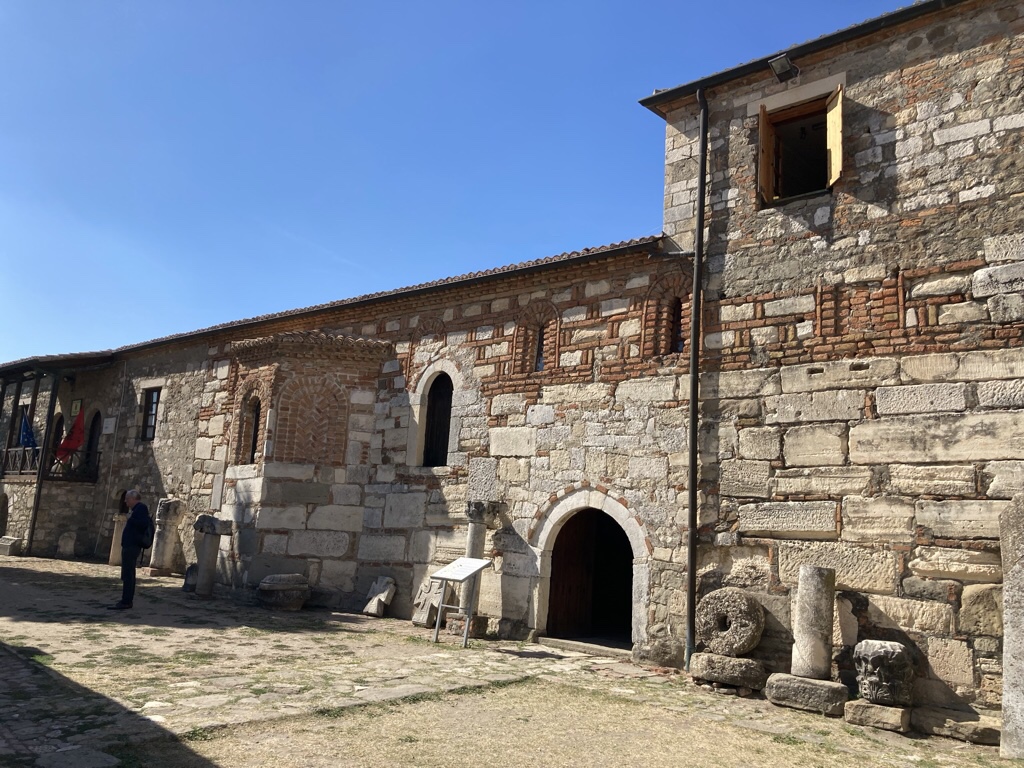
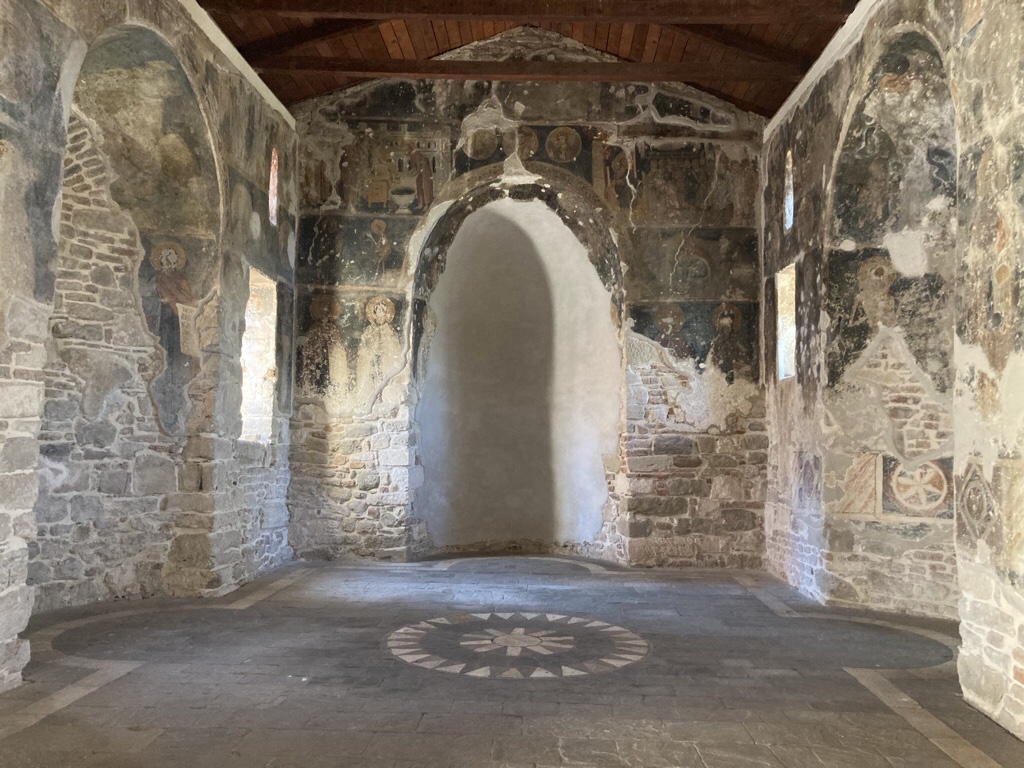
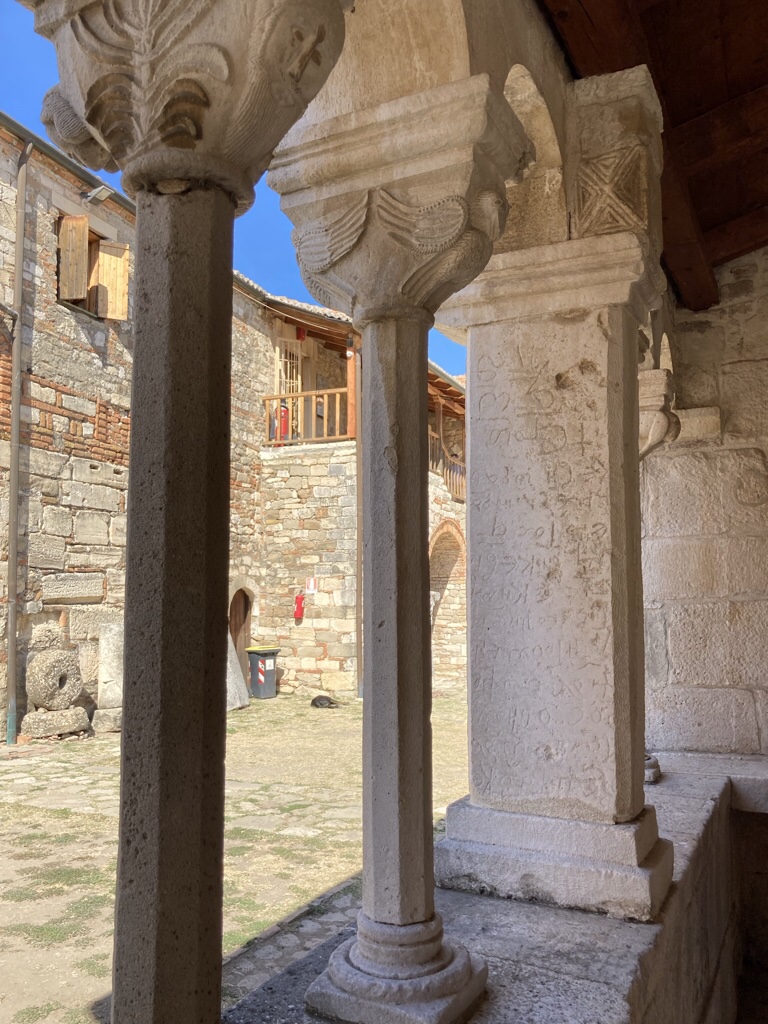
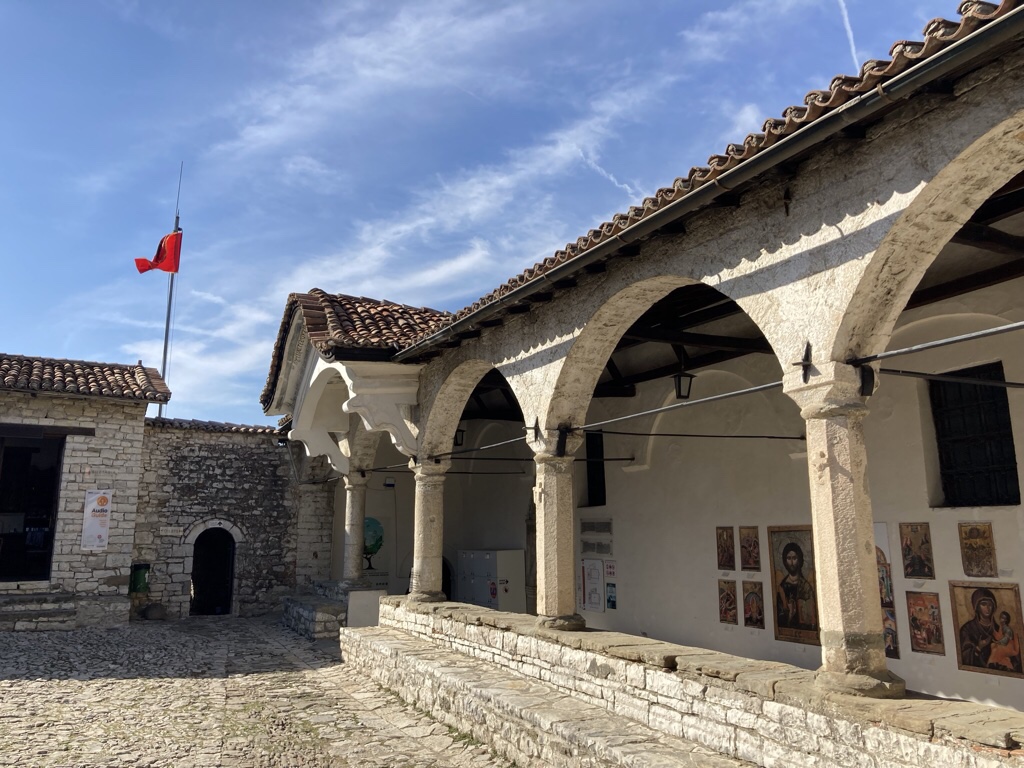
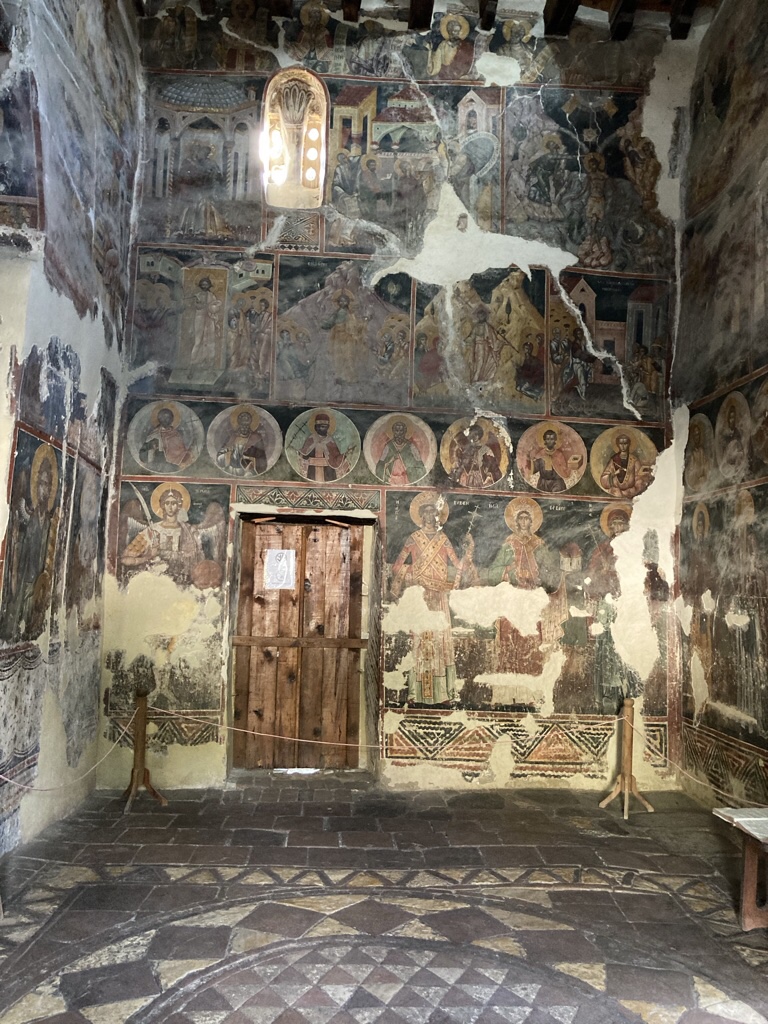
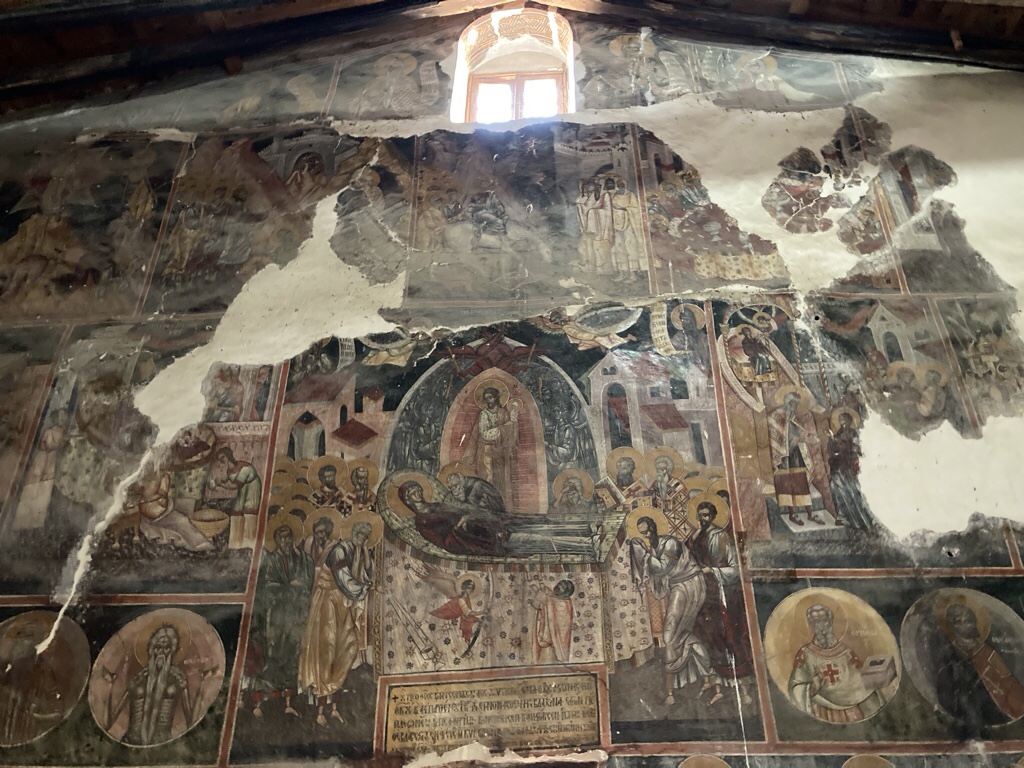
Berat once contained 35 churches within the walls of the castle, although only 10 survive and after a lunch of traditional dishes we visited several.

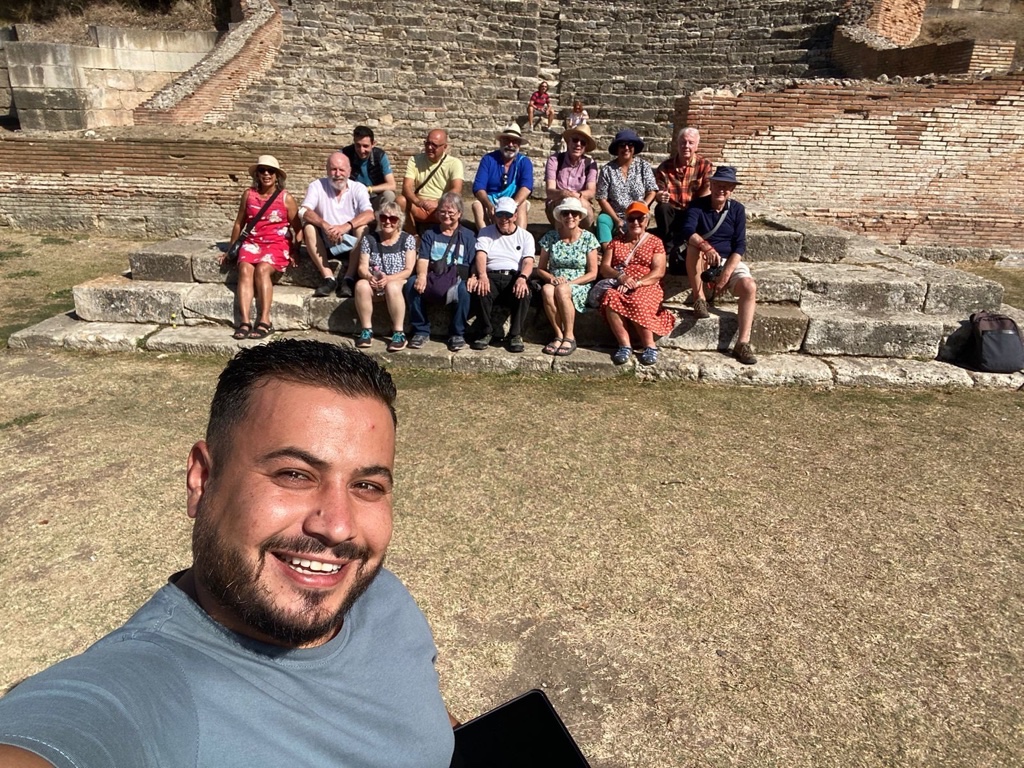
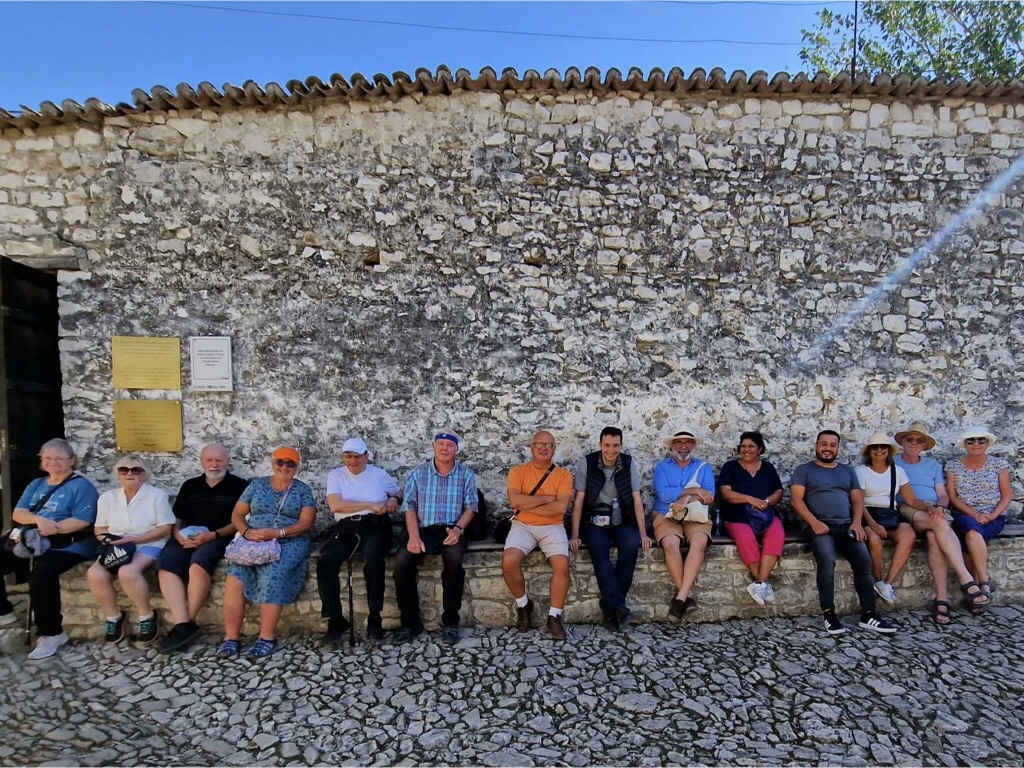
As we waited to enter the Cathedral of Dormition of St. Mary, there was time for a quick team pic!

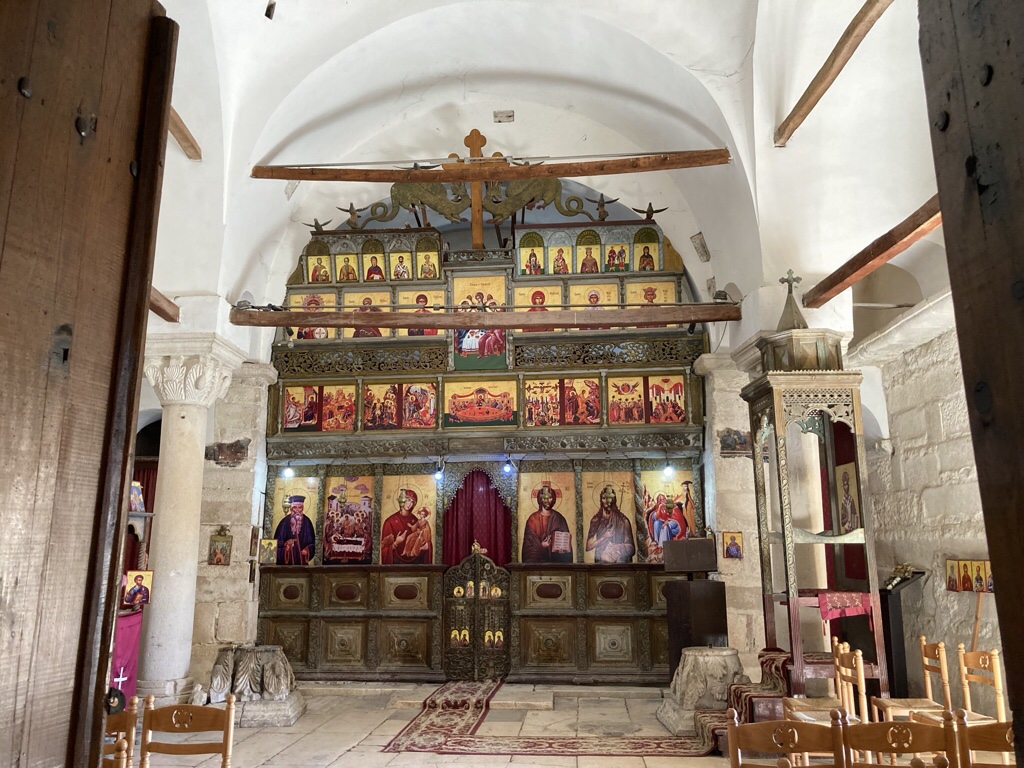
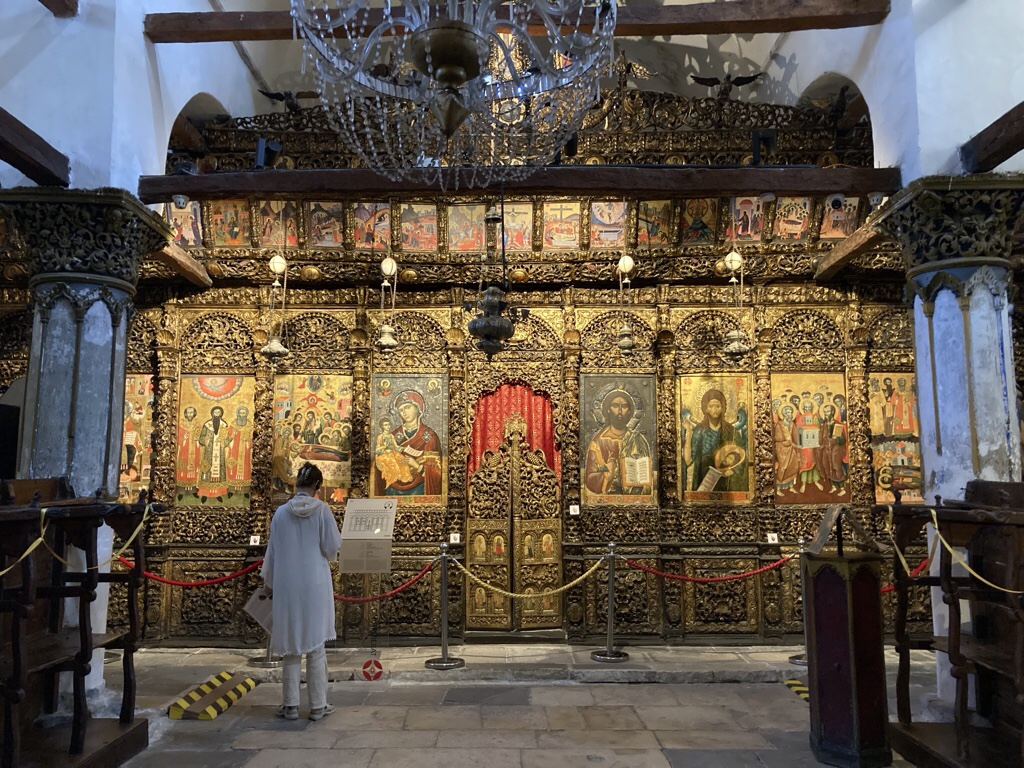
It is still used for prayer at one end …

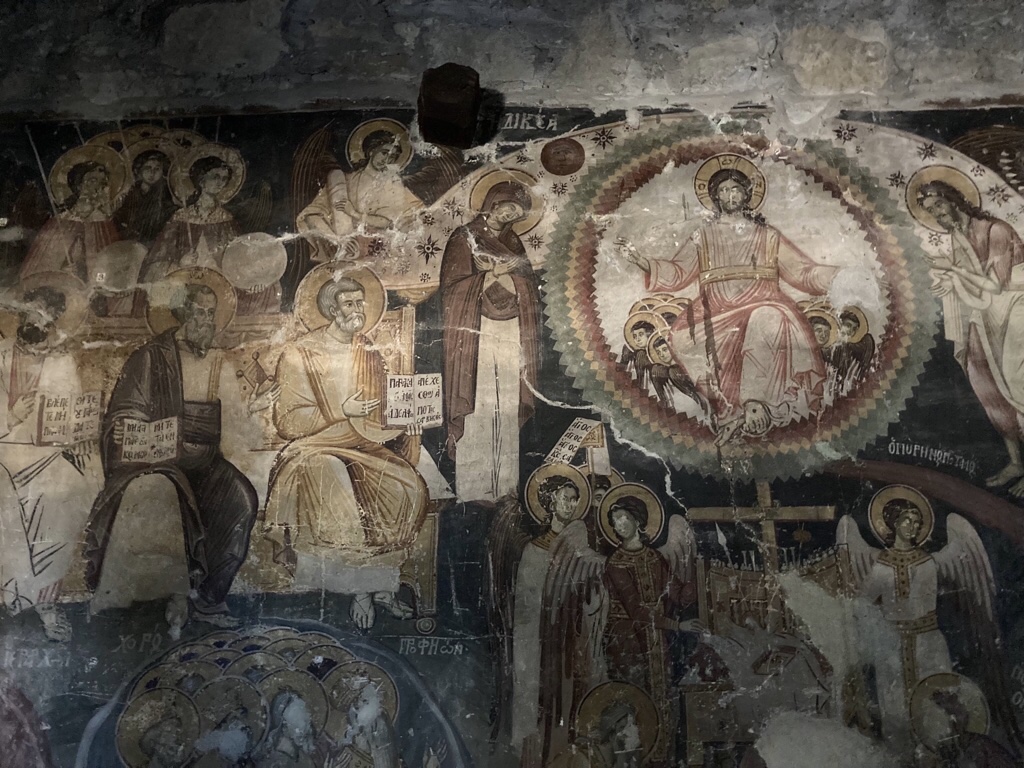
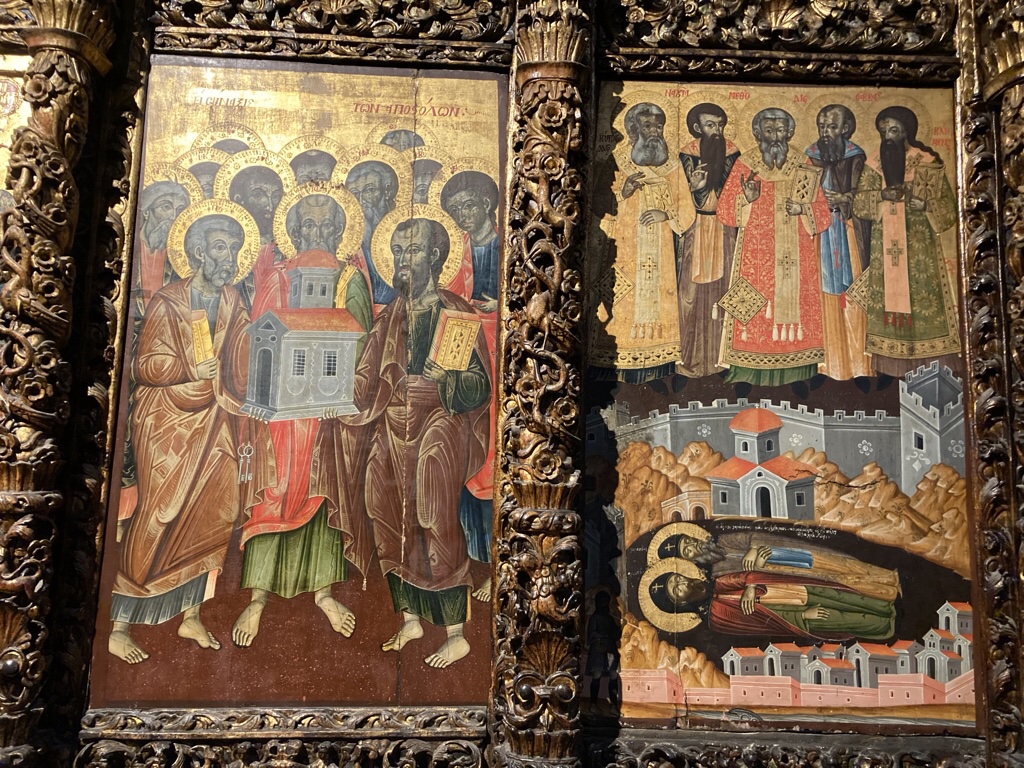
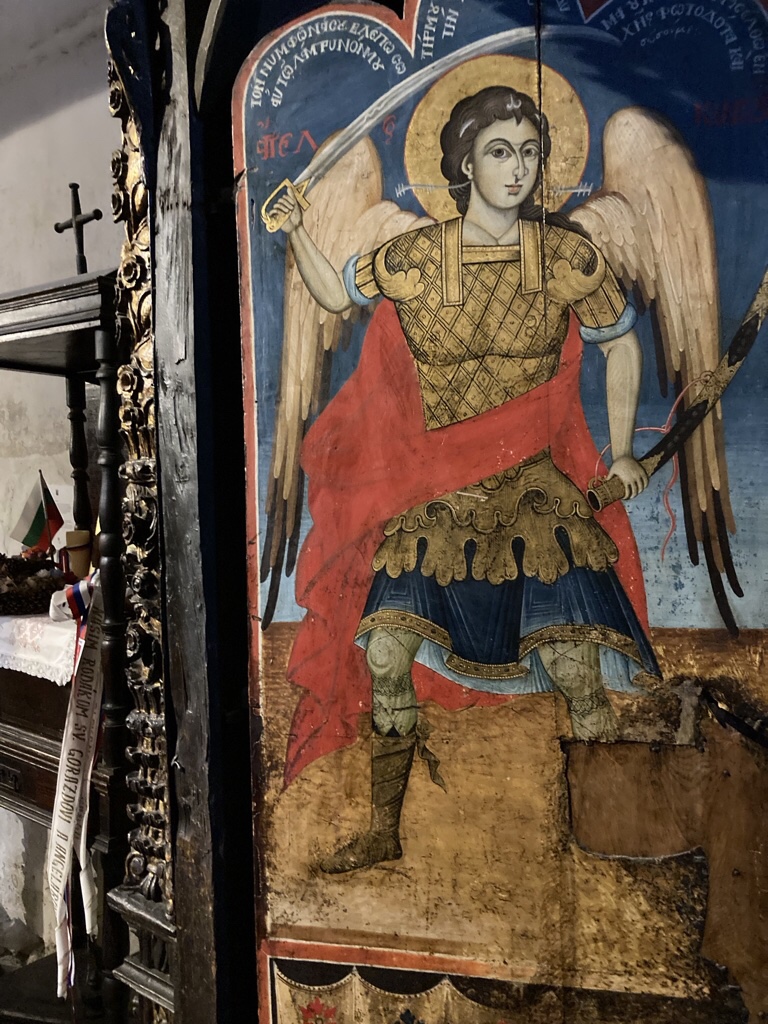
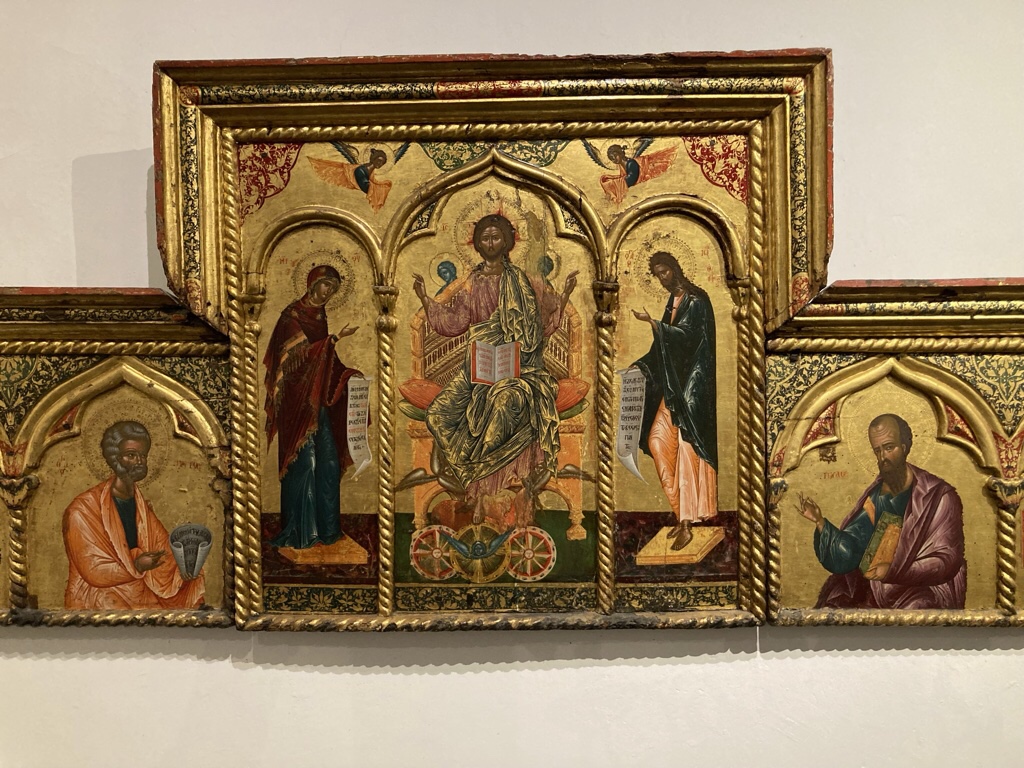
… while the other side is a museum dedicated to Onufri, the greatest of the C16th painters in Albania. A master of fresco and icons, he introduced a new shiny red pigment now known as ‘Onufri’s Red’ and gave his figures more realism and individuality.

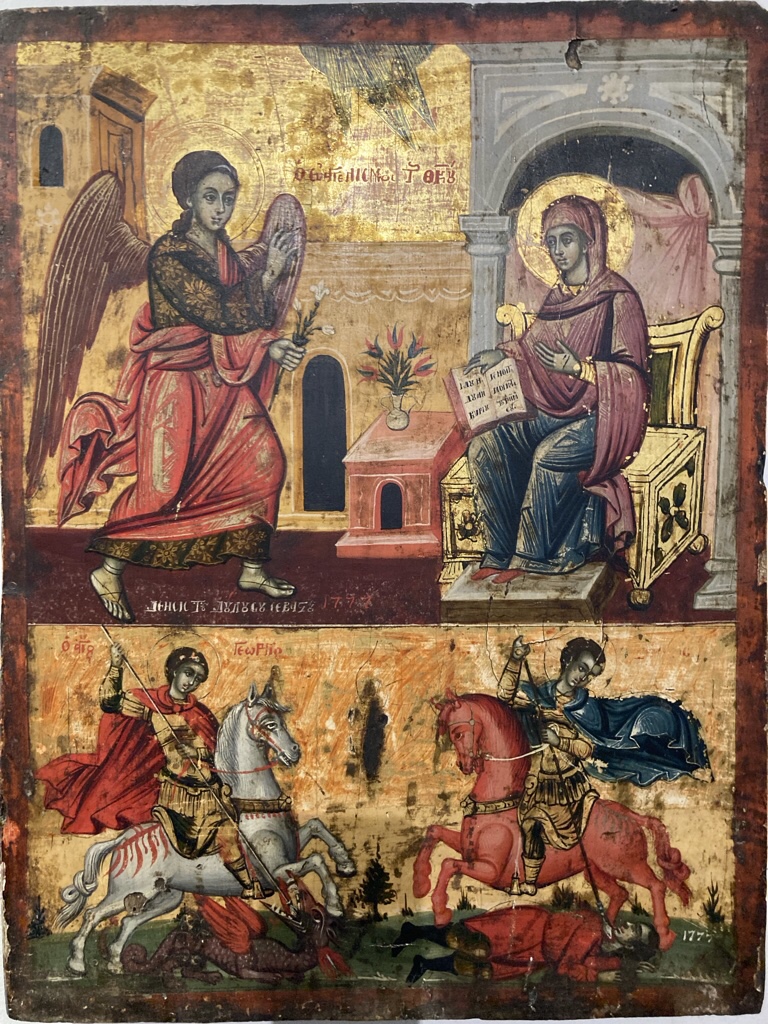
I also spotted an Annunciation …

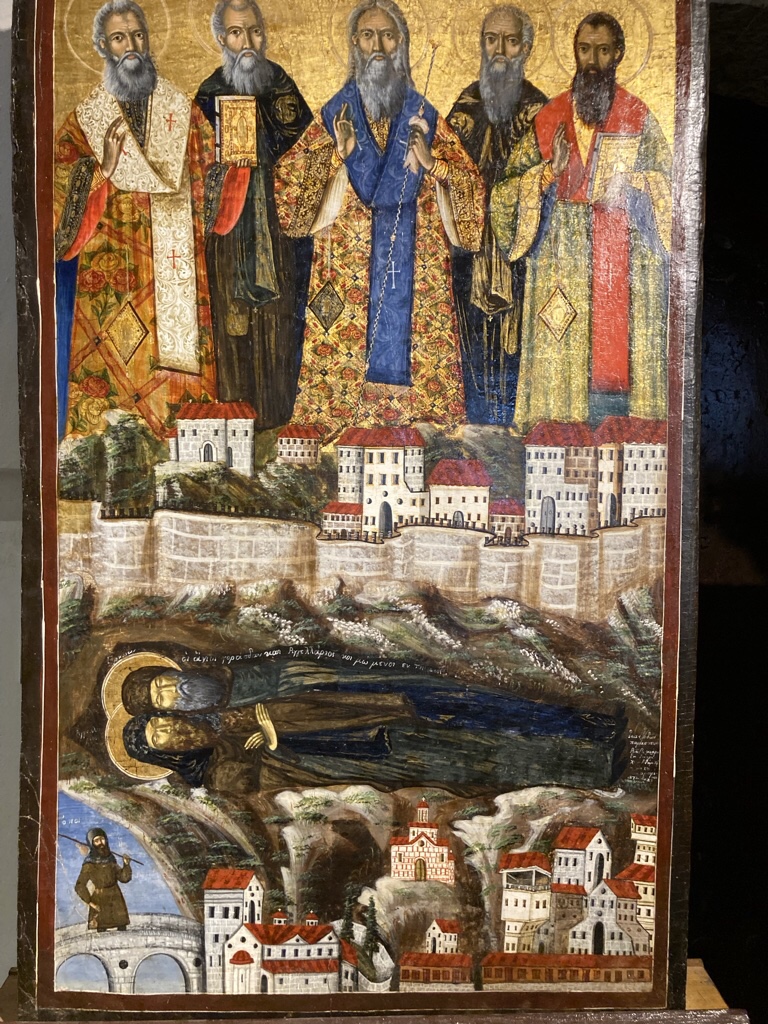
… and this which shows saints and the city of Berat, complete with Gorica Bridge.

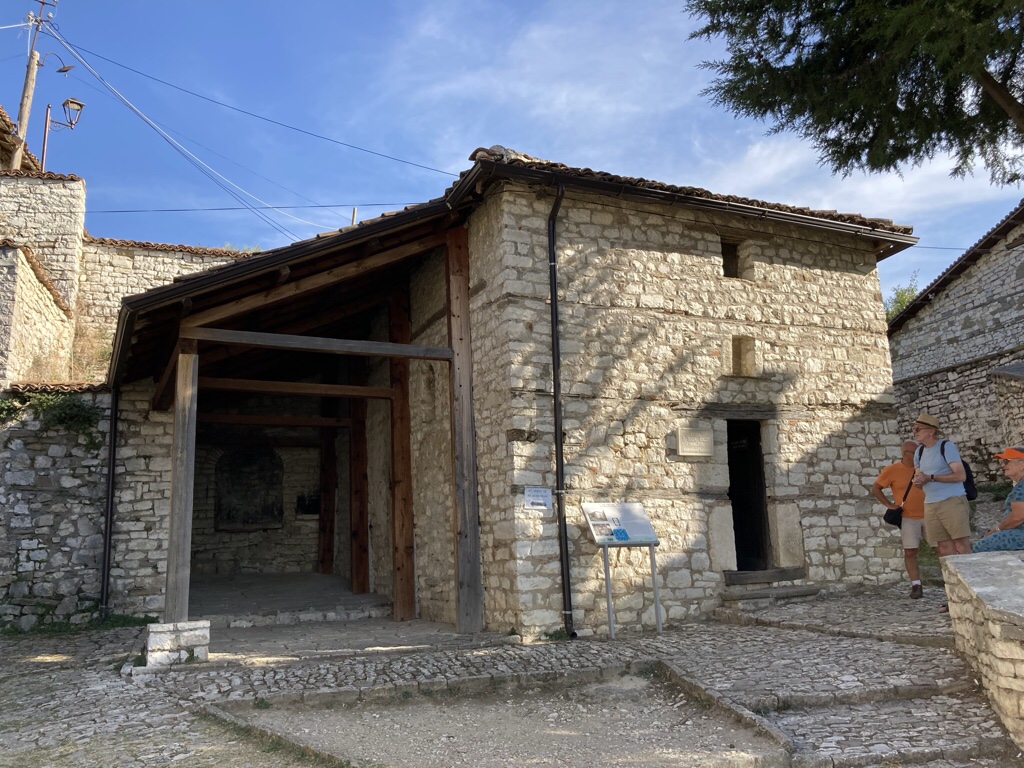
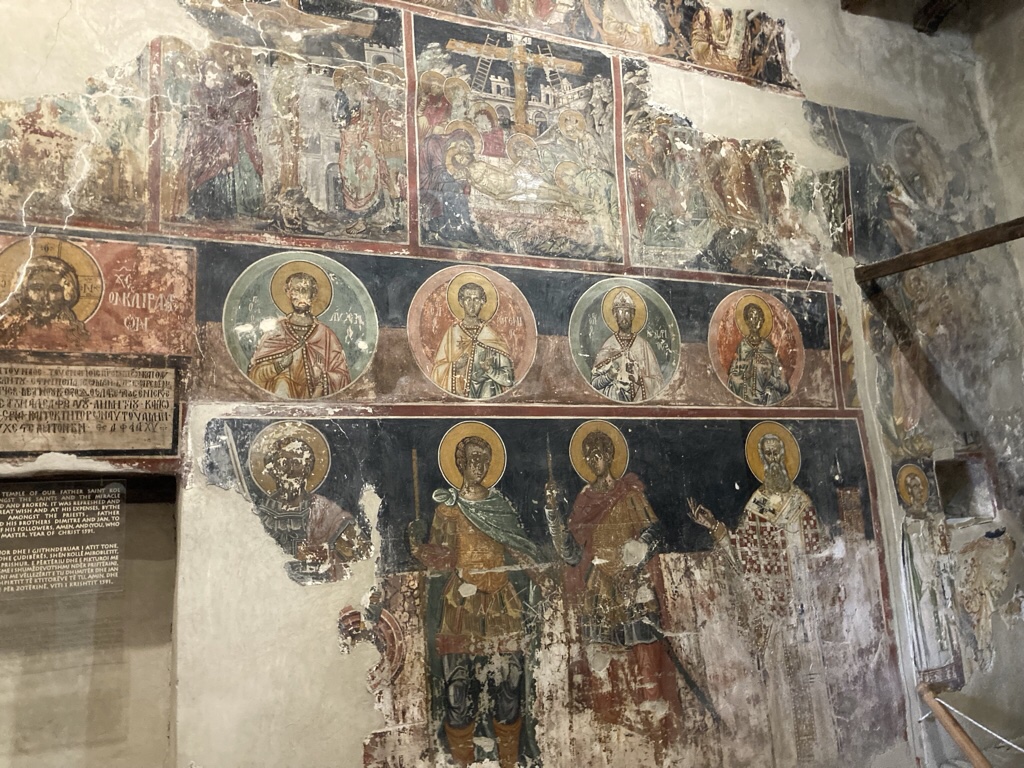
We saw C16th murals in St Nicholas church …

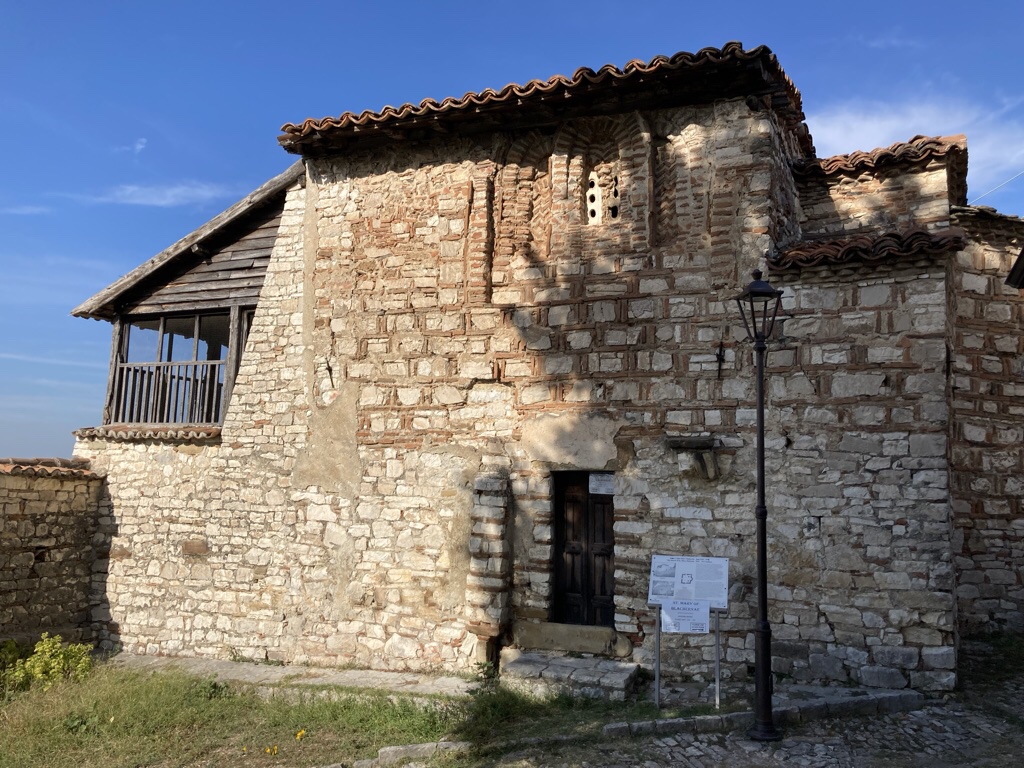
… and the Church of St. Mary of Blachernae …

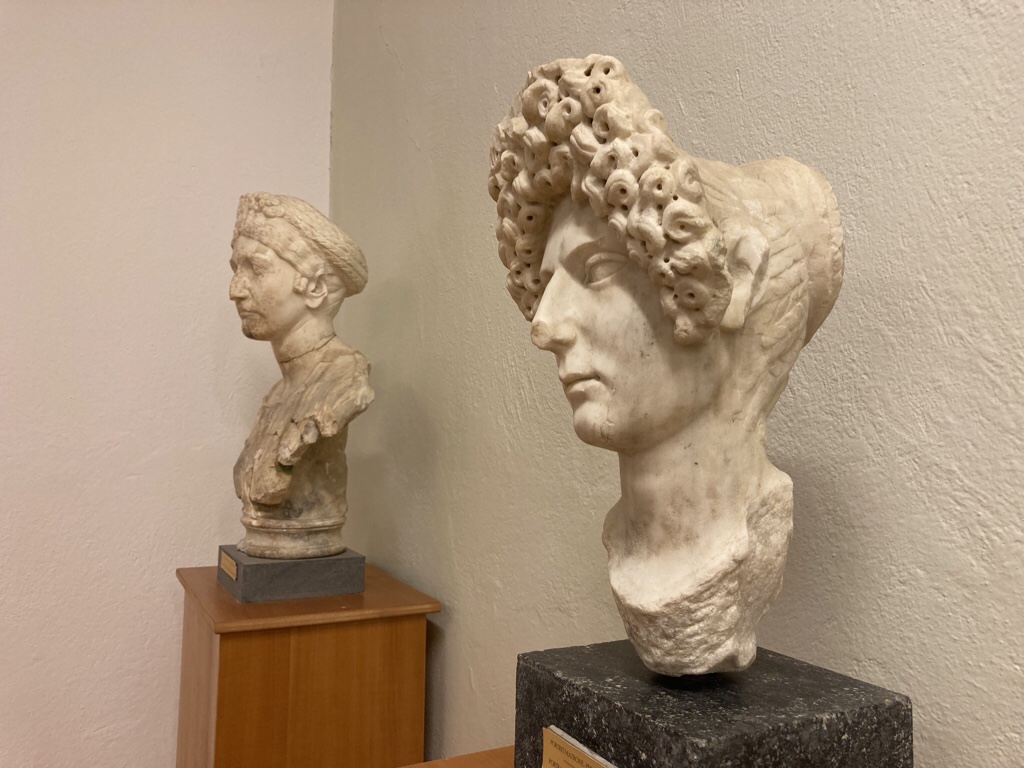
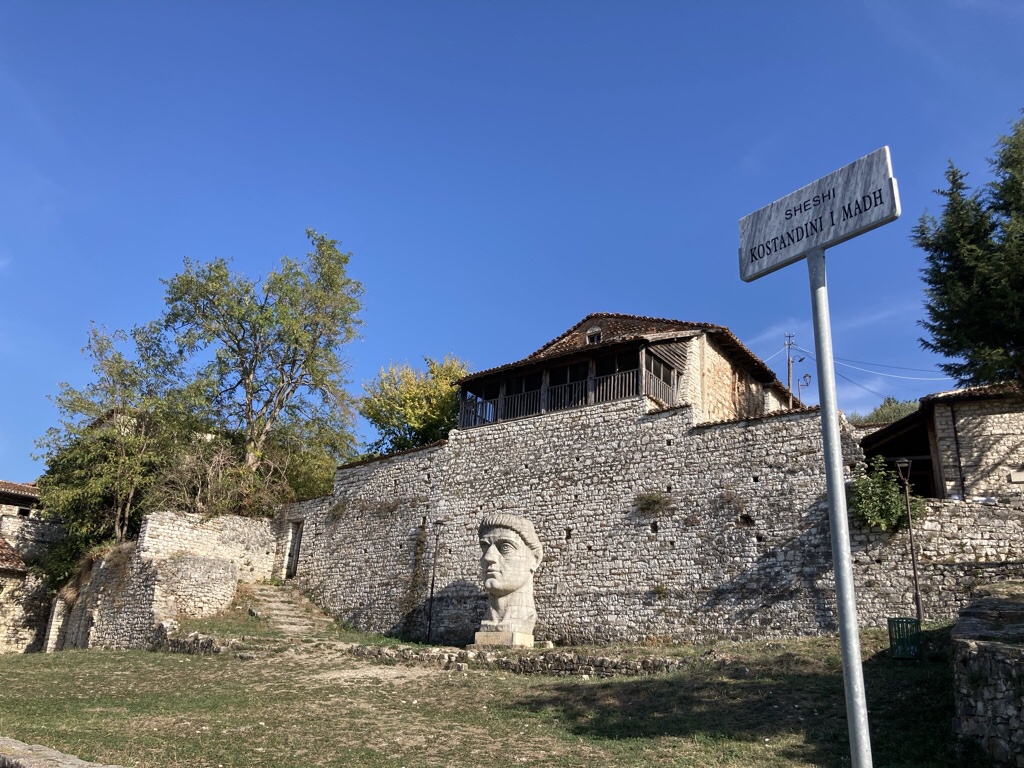
… a bust of Constantine in a square named for him …

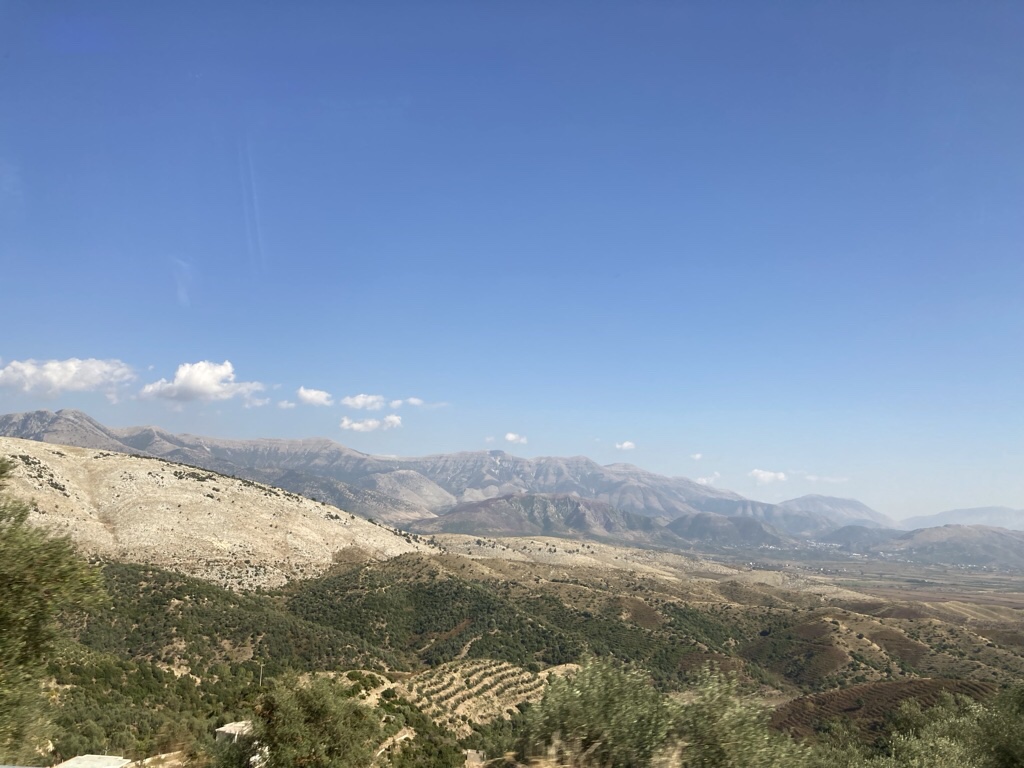
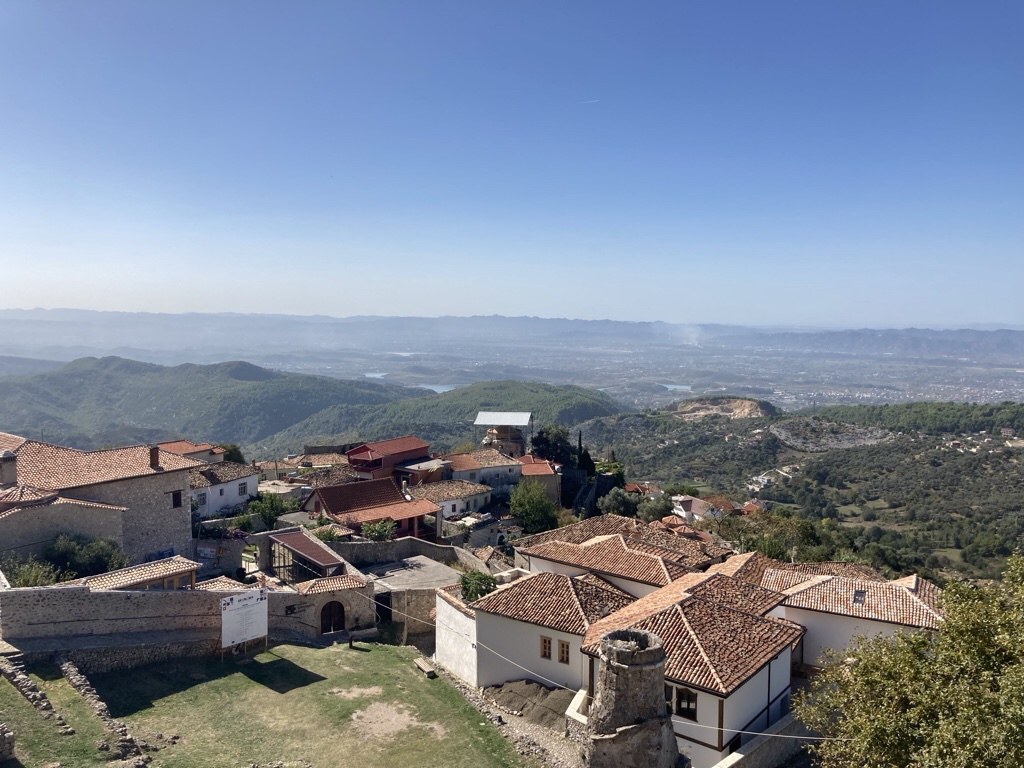
Finally, there were good views across the valley in both directions from the viewpoint above the town.

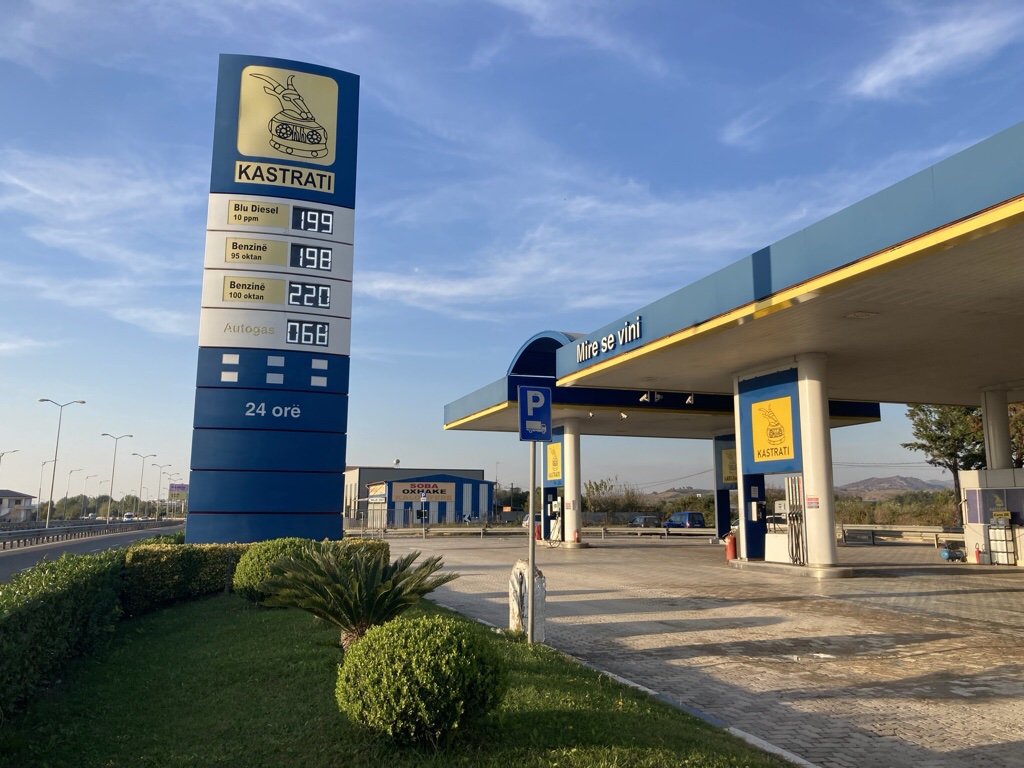
We made a quick rest stop on the way back at one of the many Kastrati petrol stations which use possibly the most recognisable motif in Albania as their logo – a bit of clever marketing when your name is so similar to Skanderbeg’s!

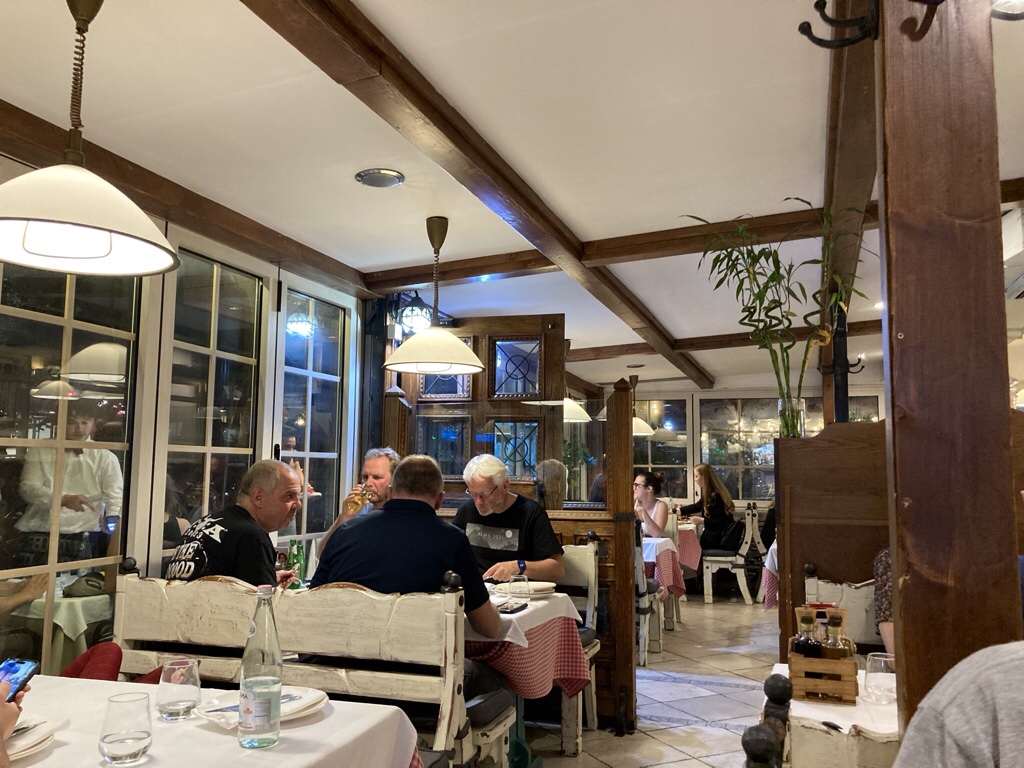
Back in Tirana, we spent another evening at Era before packing ready to move on in the morning.

Map

Scenic Shkodër

Next day we went further north, stopping first at Lezhë, which is dominated by the ruins of the city castle first built in the Illyrian era, then rebuilt by the Venetians in the 1440s and the Ottomans in 1522.

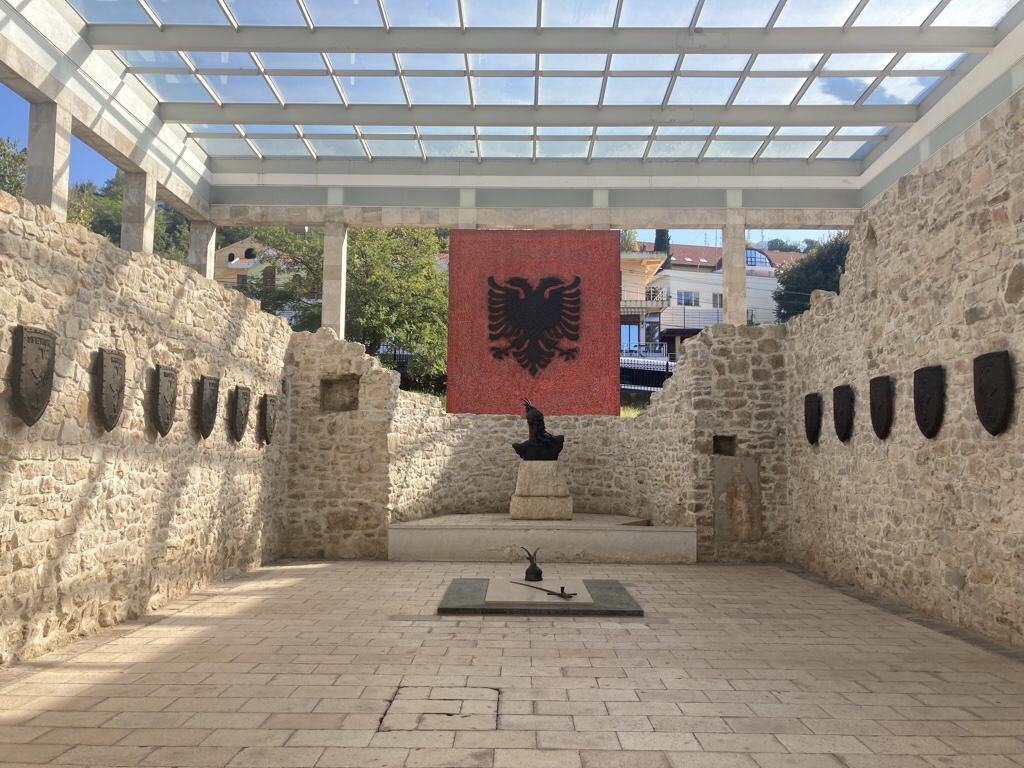
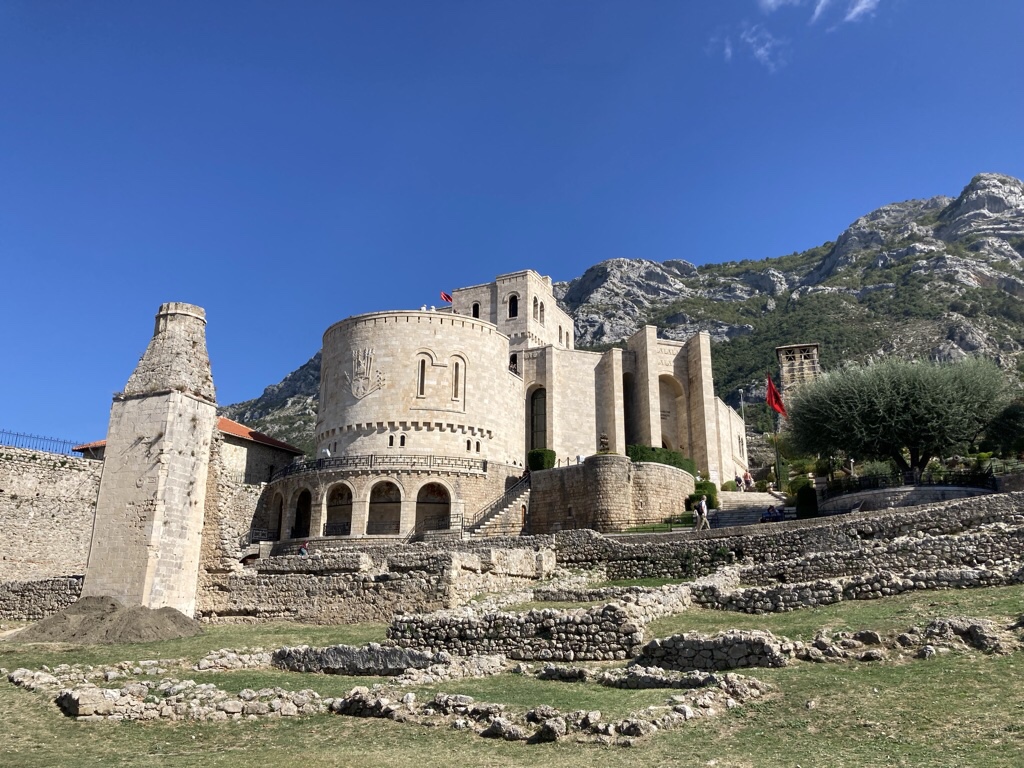
Our visit was to the Mausoleum of Skanderbeg, an impressive modern structure protecting the ruins of St Nicholas cathedral where he was buried in 1468 but which was later converted to a mosque by the Ottomans, ruined then finished off by the 1979 earthquake.

The symbolic tomb has a copy of Skanderbeg’s sword and his famous goat-head helmet, while the originals are in a museum in Vienna. Plaques on the walls record all his battles.

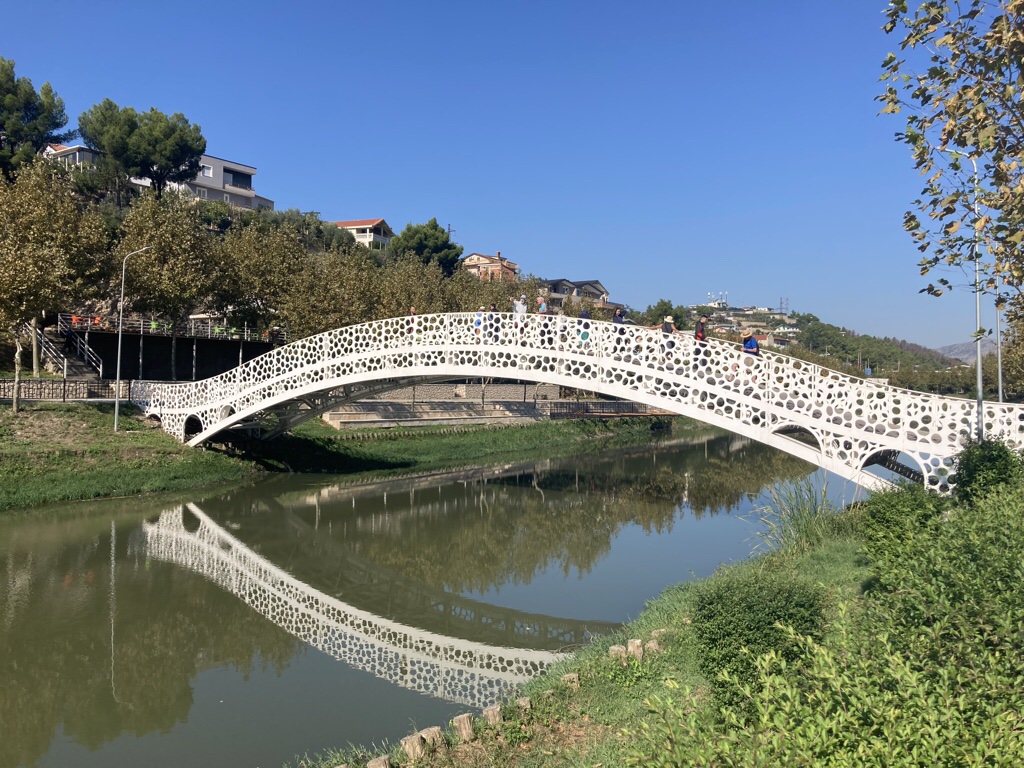
After a short walk along the river …

… we continued north to Shkodër, a city in the northwest of Albania known for its stunning landscapes best viewed from Roxafa Castle.

Originally an Illyrian fortification, its remains are mostly Venetian built during their 300 year occupation from the C13th.

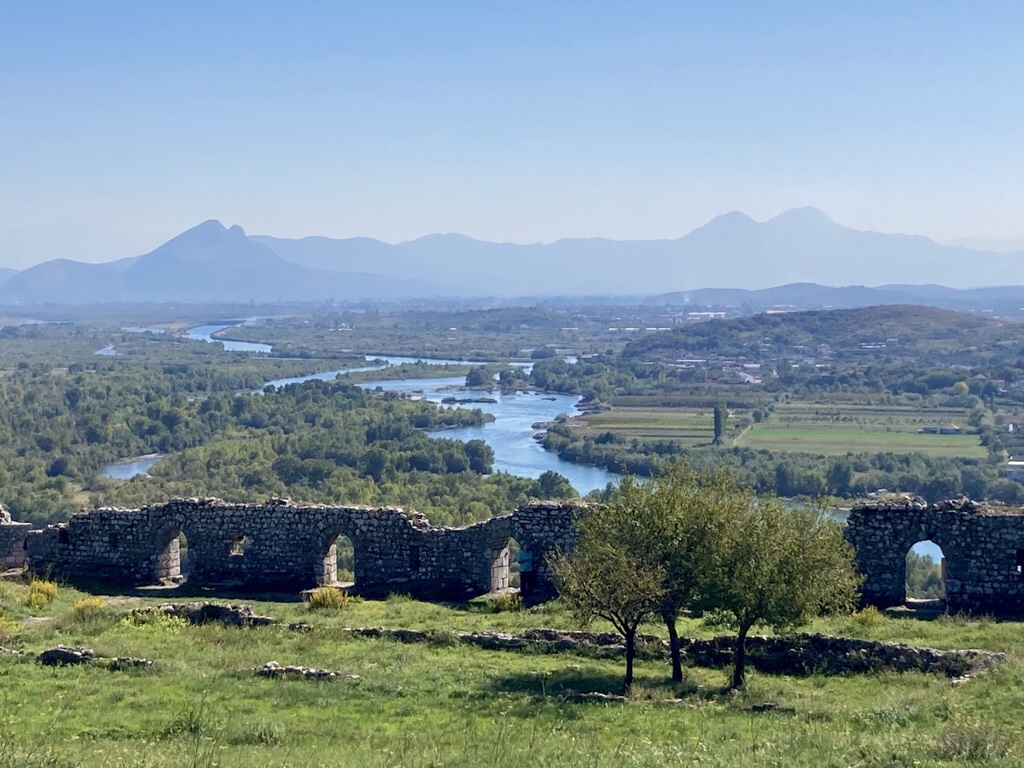
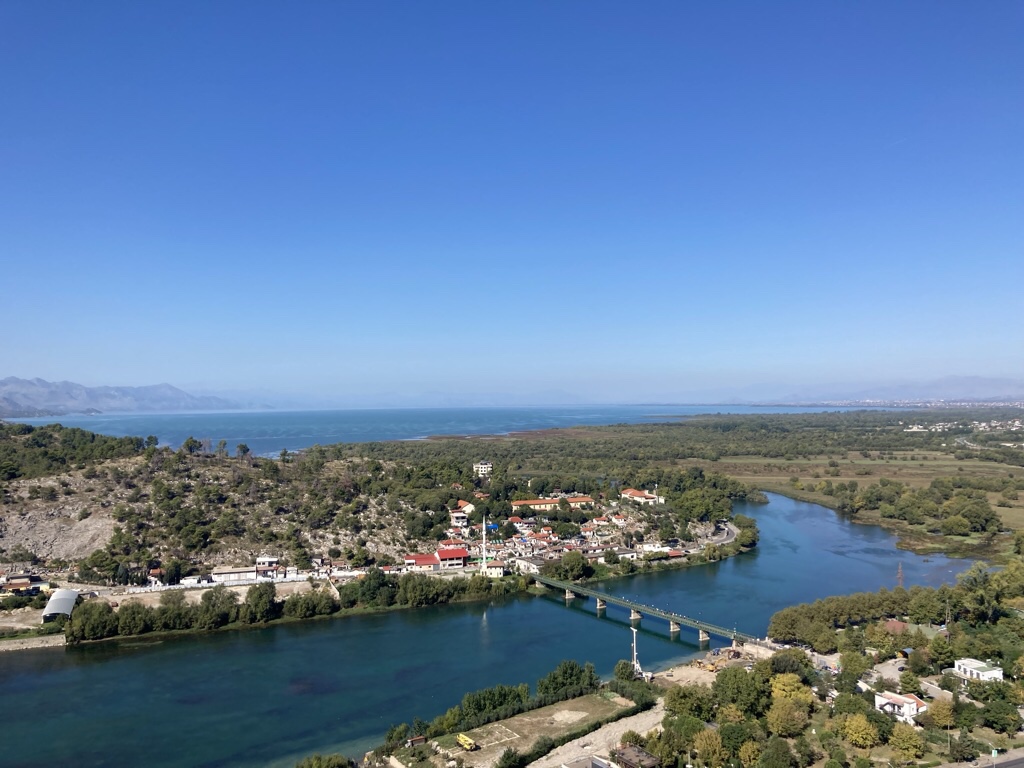
There are views of the city of Shkodër and the lake beyond …

… and also across the plain to the Albanian Alps in the distance.

A quick stop at the picturesque Ottoman Mes bridge …

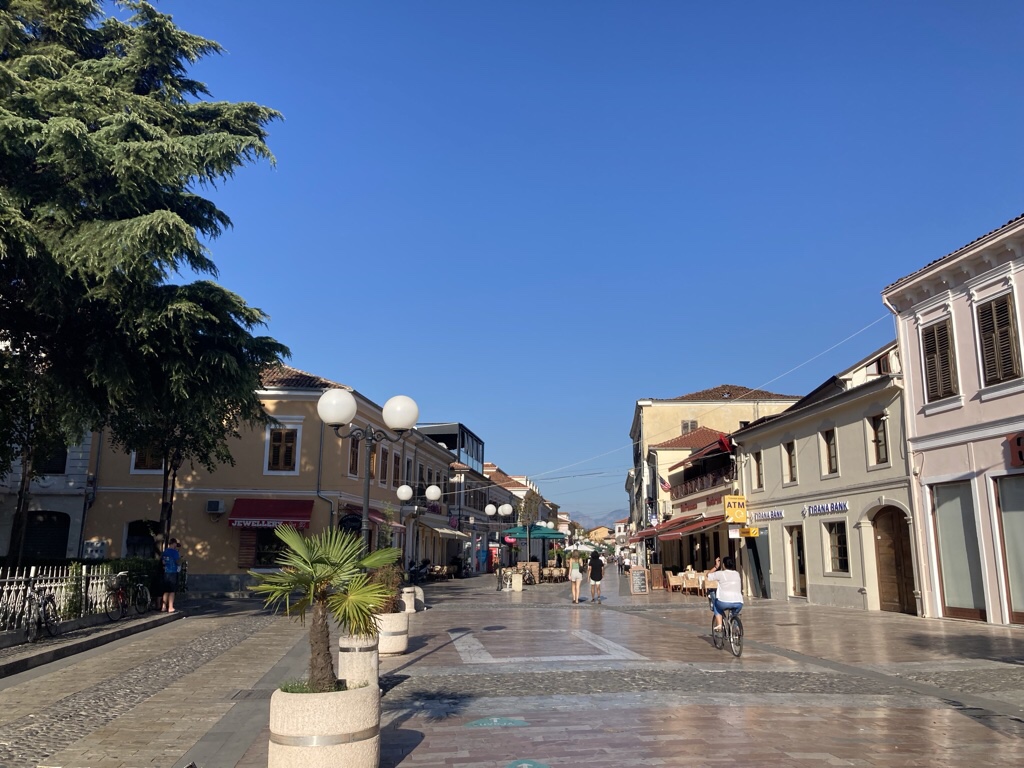
… then we returned to the city for lunch.

Following the end of the Communist era in 1991, the whole community came together and jointly rebuilt each of the places of worship – the Orthodox cathedral, the mosque and Roman Catholic Church, an example of how easily the different religions co exist in Albania.

As we returned to Tirana, the traffic was even worse as people came to support Albania playing the Czech Republic in the Euro qualifiers. Saimir had already explained that many Albanians actually live outside Albania and the present Albanian team represents them all including players from Kosovo, Macedonia, Greece and North Macedonia.

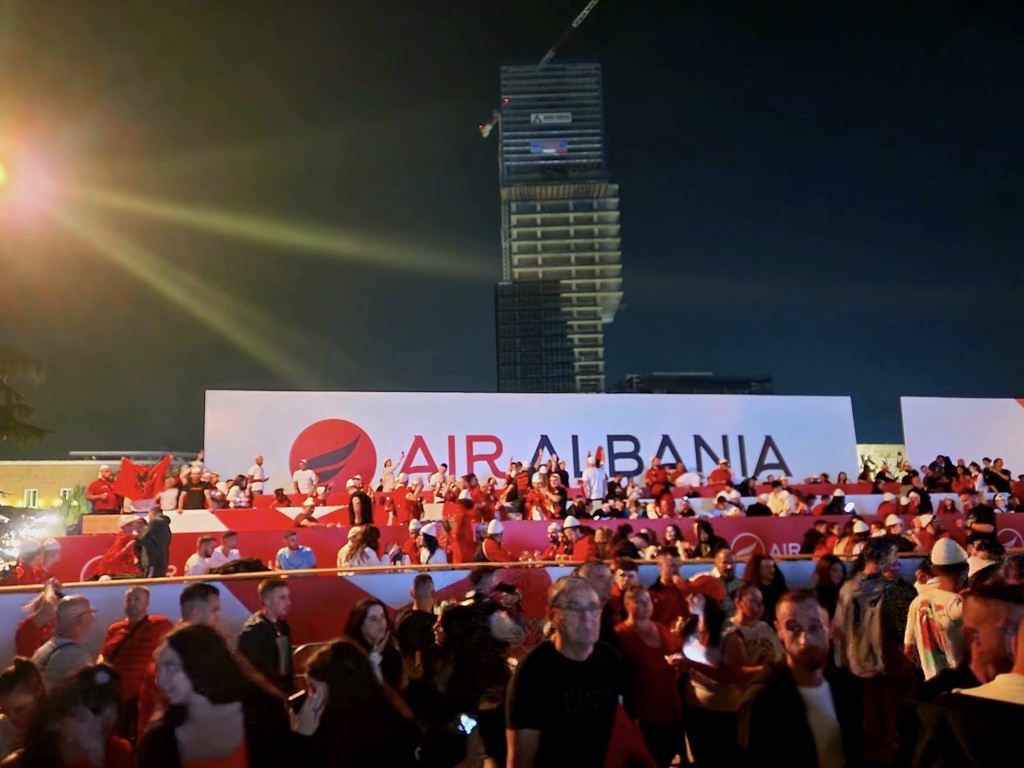
There was a huge screen set up in the main square and we saw the crowds before the match.

Tired after a long day, we returned to Tymi for dinner, keeping an eye on the match …

… which Albania won 3:0. There were celebrations on the city till the early hours but we slept through it all!

Map

Krujë and Skanderbeg Castle

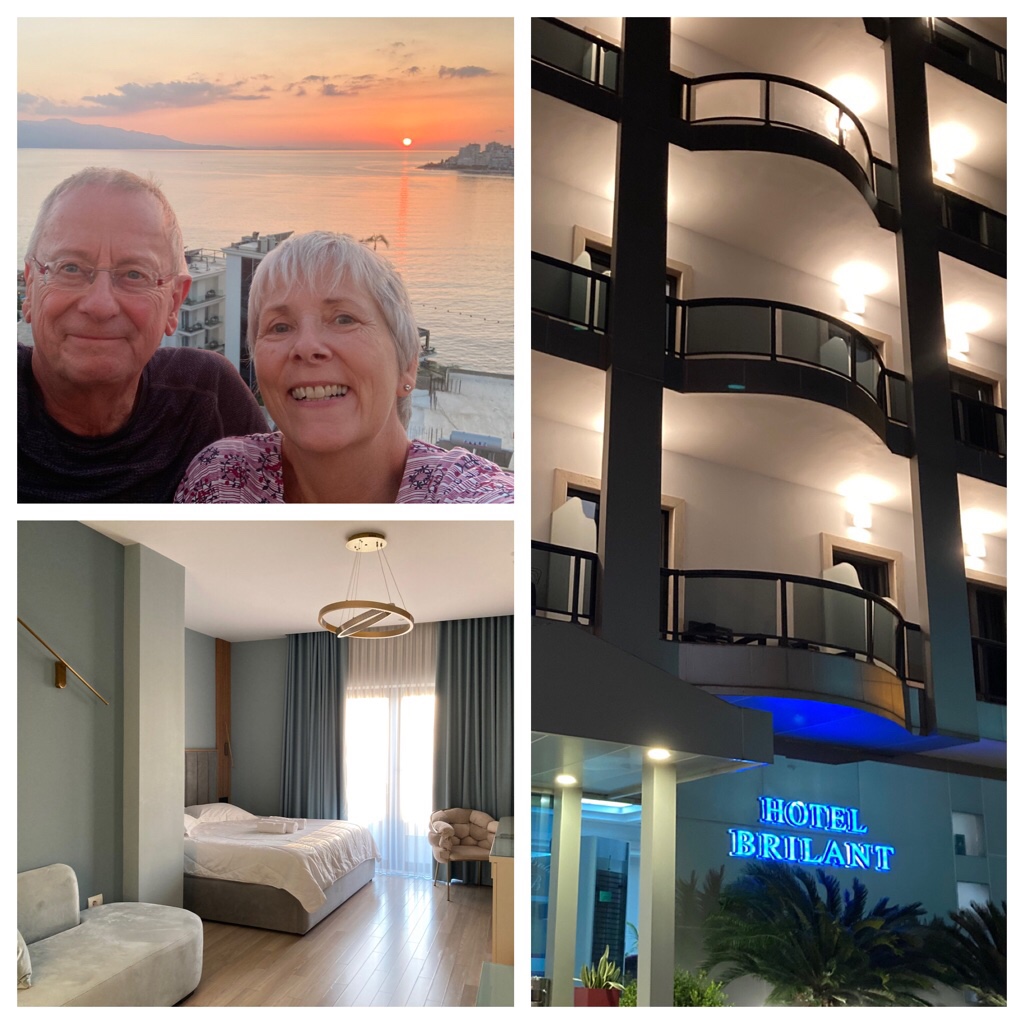
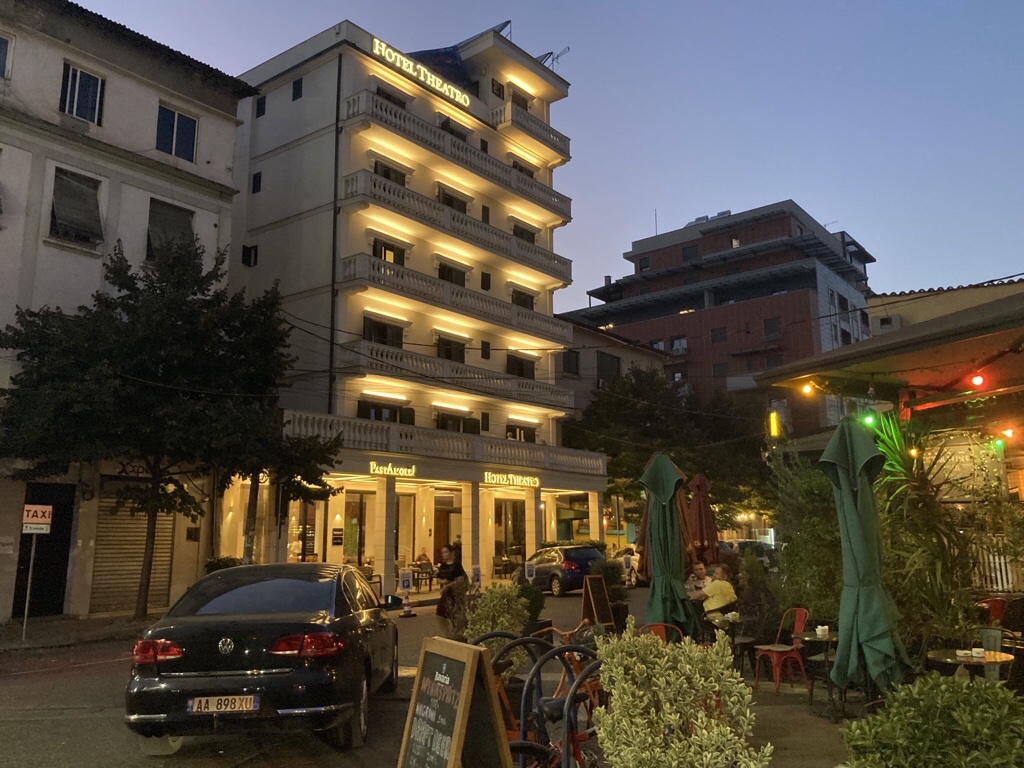
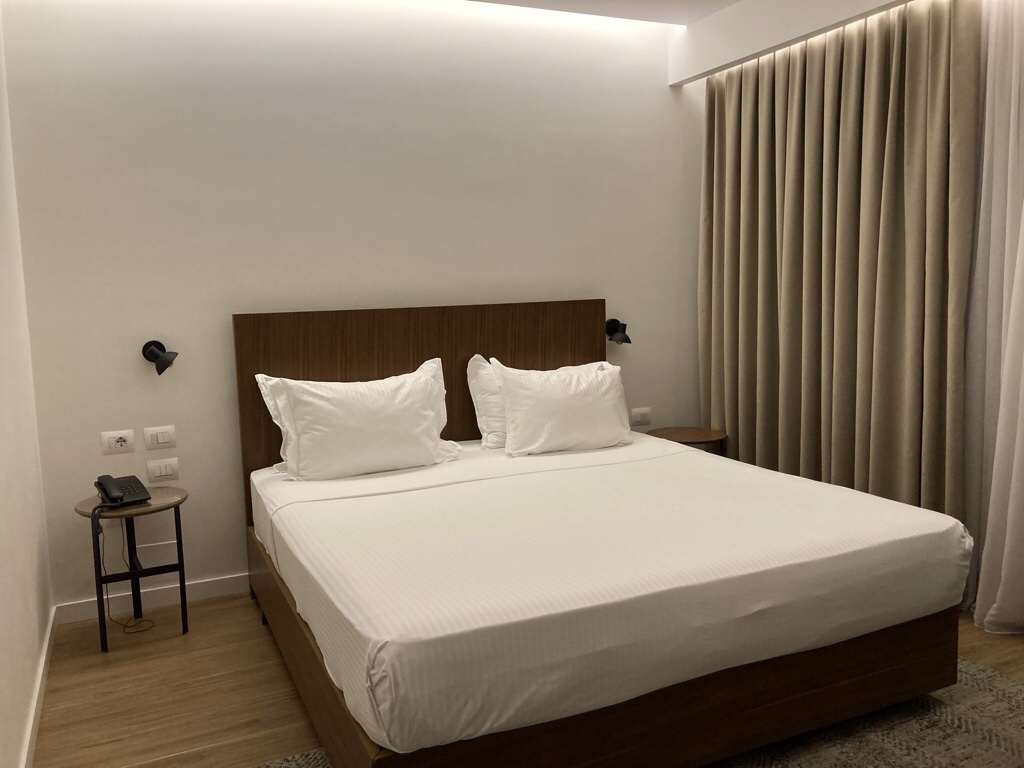
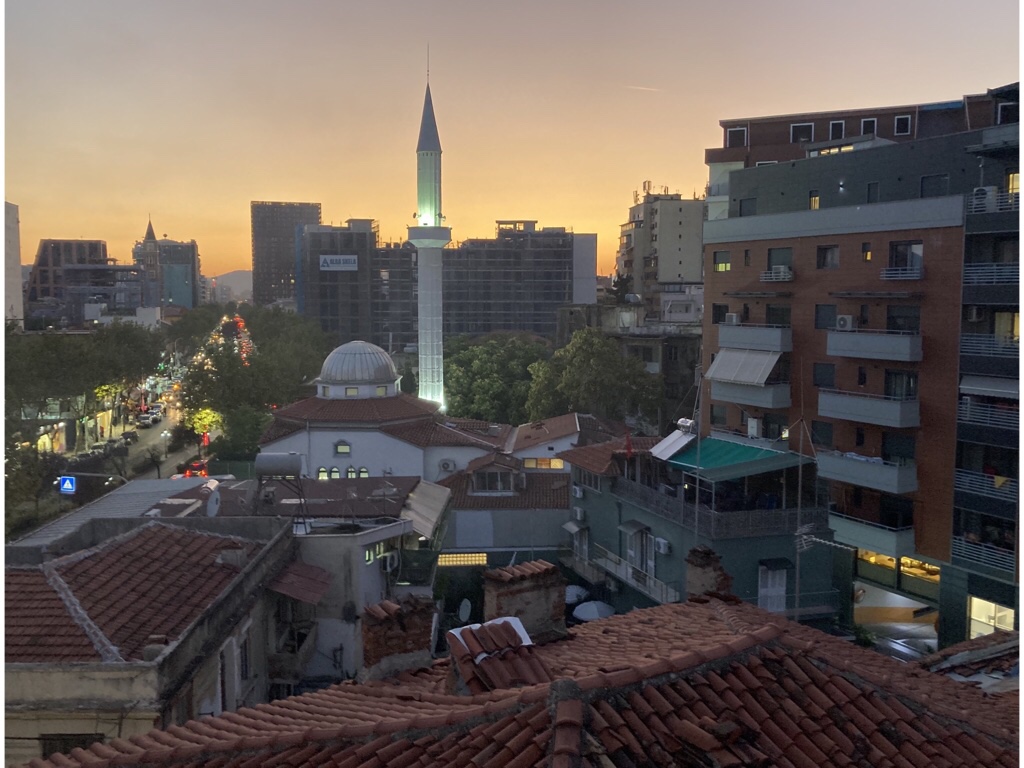
The sun set as we drove from the airport into the city of Tirana and we arrived at Hotel Theatro which is comfortable with welcoming staff speaking excellent English …

… and a balcony with a view of the local mosque and streets below.

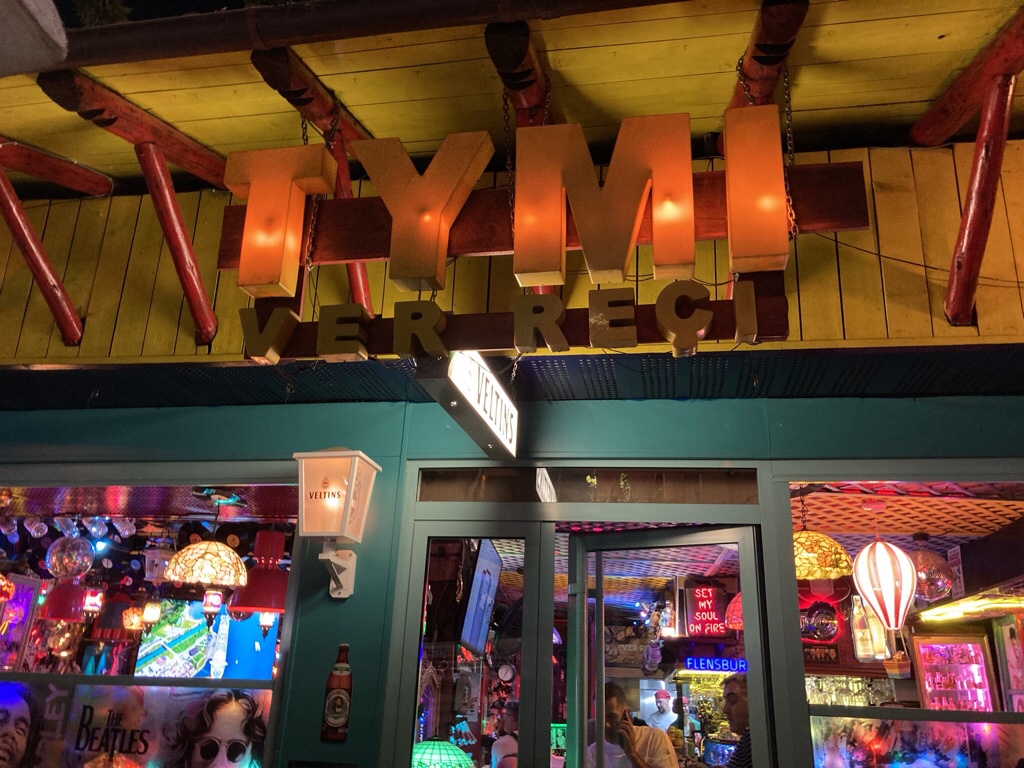
We walked round the corner to Tymi for dinner, a treasure box of musical and miscellaneous memorabilia offering mezze and grills.

After a good night’s sleep and an excellent breakfast, we met our our guide Saimir and driver Vladimir and together with our fellow travellers we make a band of 17.

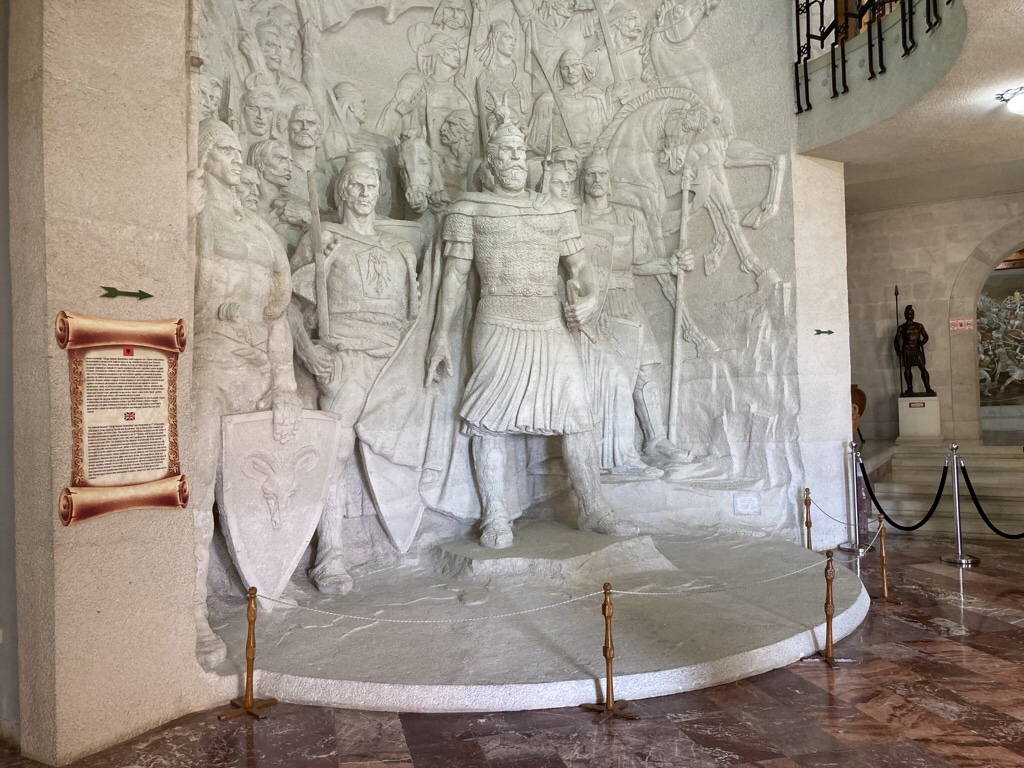
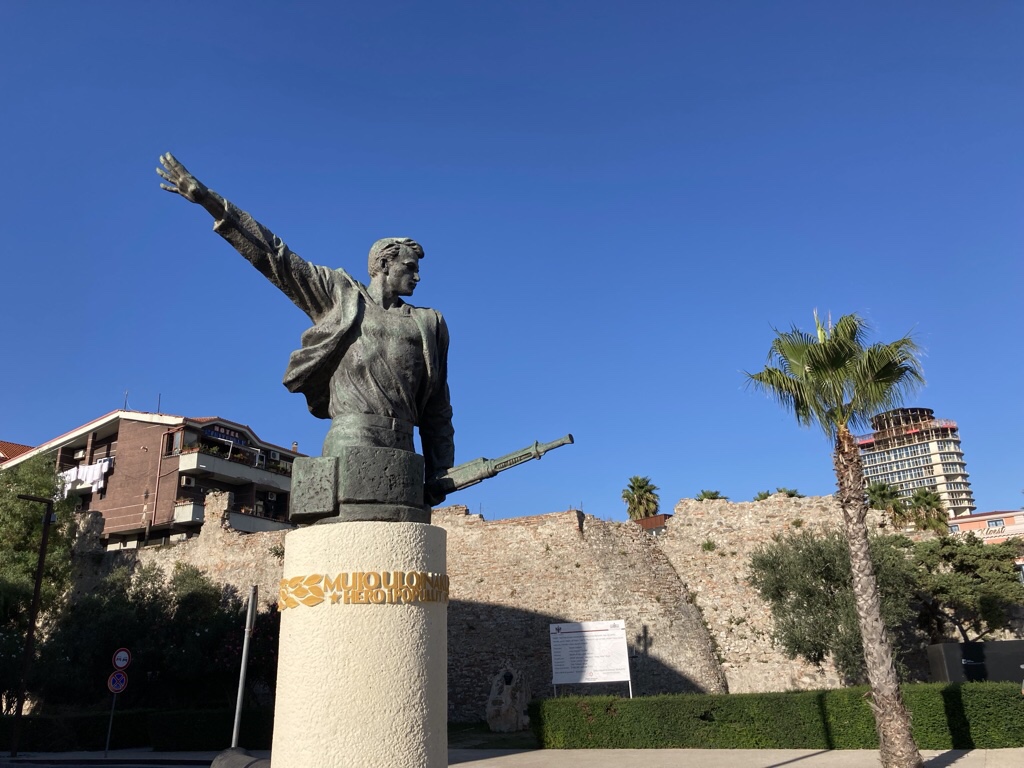
We began with three day trips from the city, the first north to Krujë, important for its part in the resistance against the Ottomans and home of Skanderbeg, the national hero, portrayed here with his warriors.

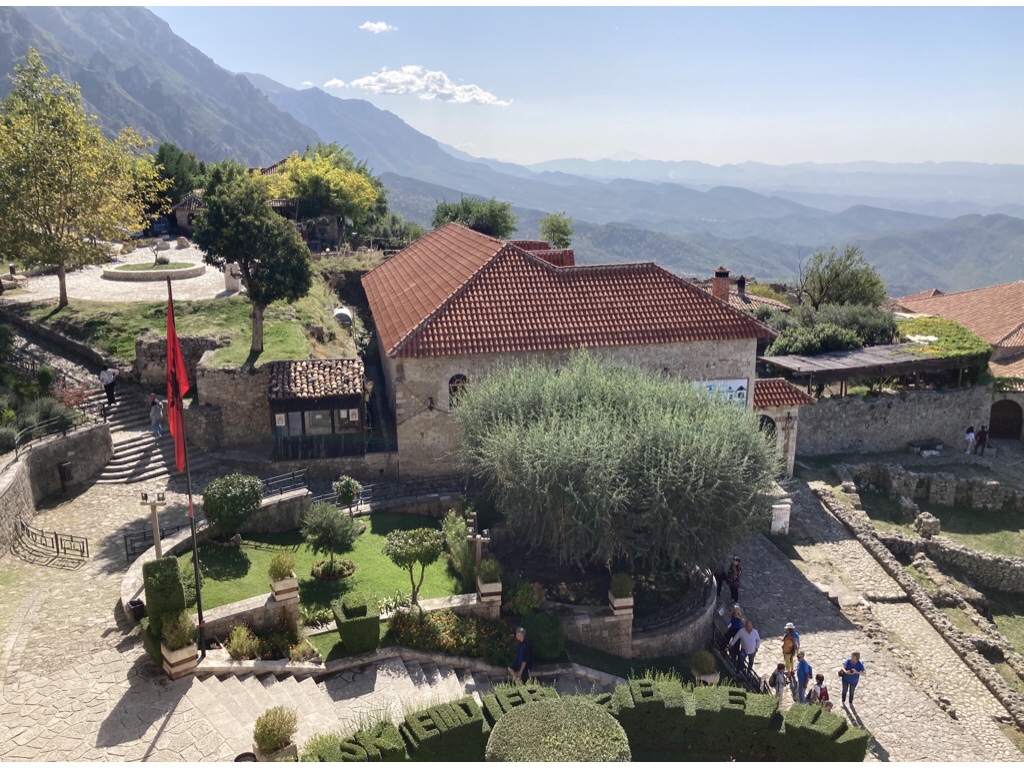
We visited the largely ruined castle which was once the headquarters of the resistance and offers views across the whole valley.

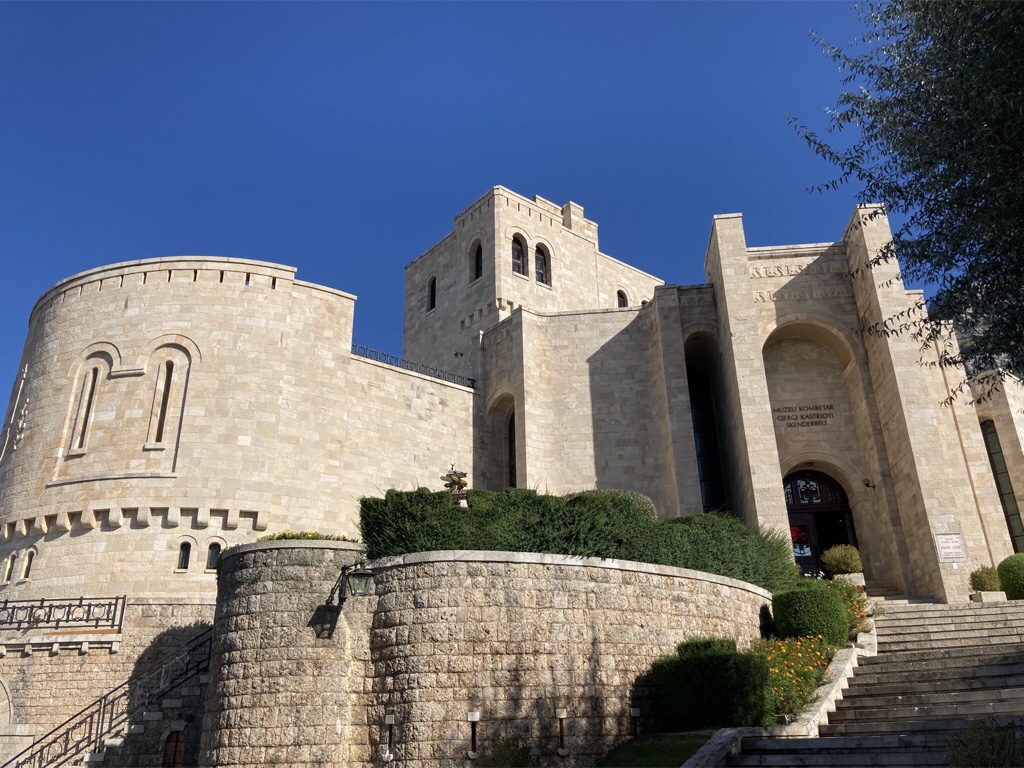
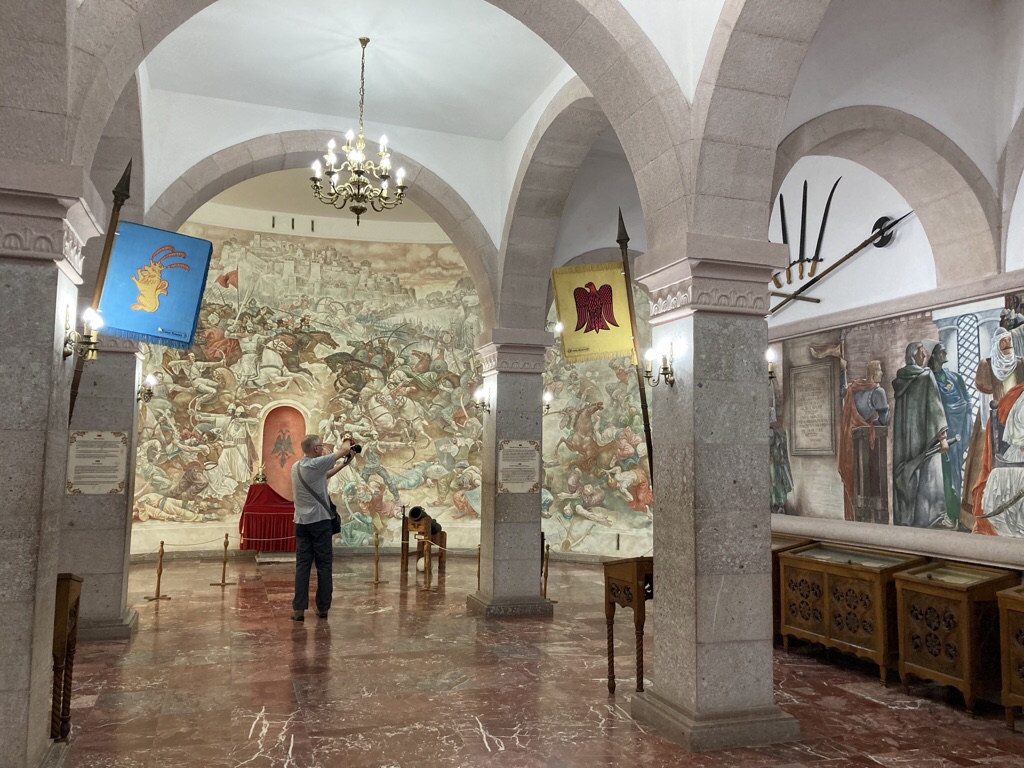
It contains an impressive new museum, built in the style of the castle, which tells the story of Skanderbeg and how he is remembered as an Albanian national hero and a symbol of the struggle of Christendom against the Ottoman Empire.

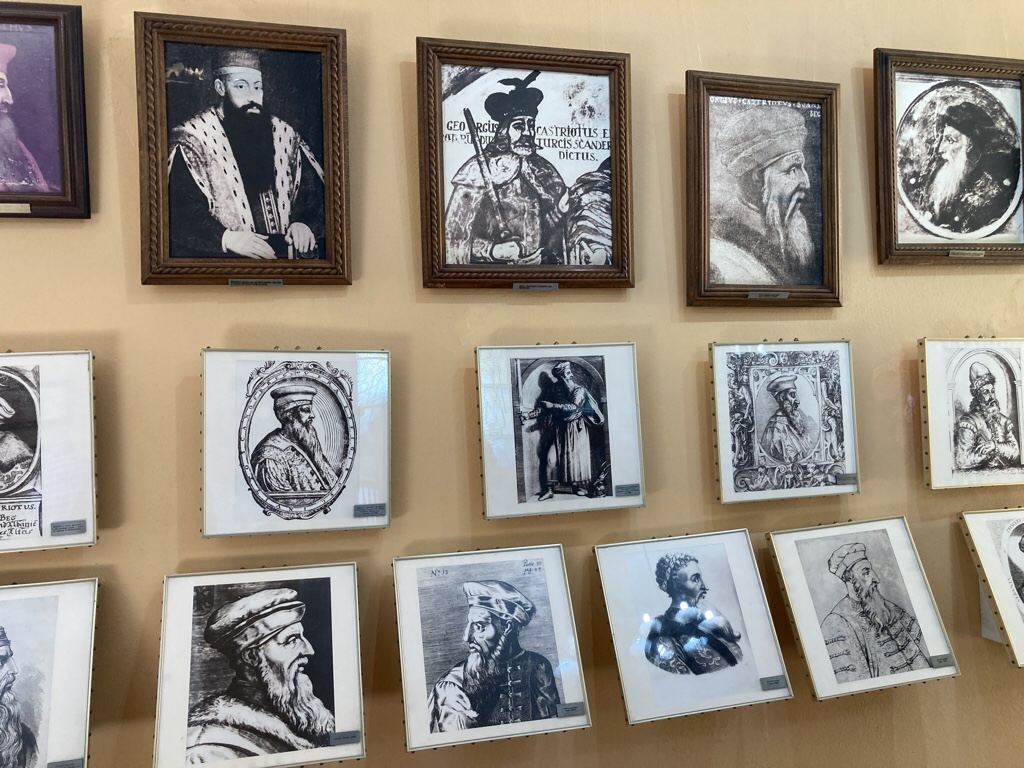
Gjergj Kastrioti was born into a noble Albanian family and went as a hostage into the Ottoman court where he was raised and educated then taken into the service of the Sultan. During 20 years of military service he was given the name Skanderbeg by the Ottomans, which compared his military prowess to that of Alexander the Great. In 1443, he deserted the Ottomans and returned to Albania where, with backing from the pope and other Italian states, he formed an alliance of Albanian principalities and waged a successful resistance against further Ottoman invasion until his death in 1479.

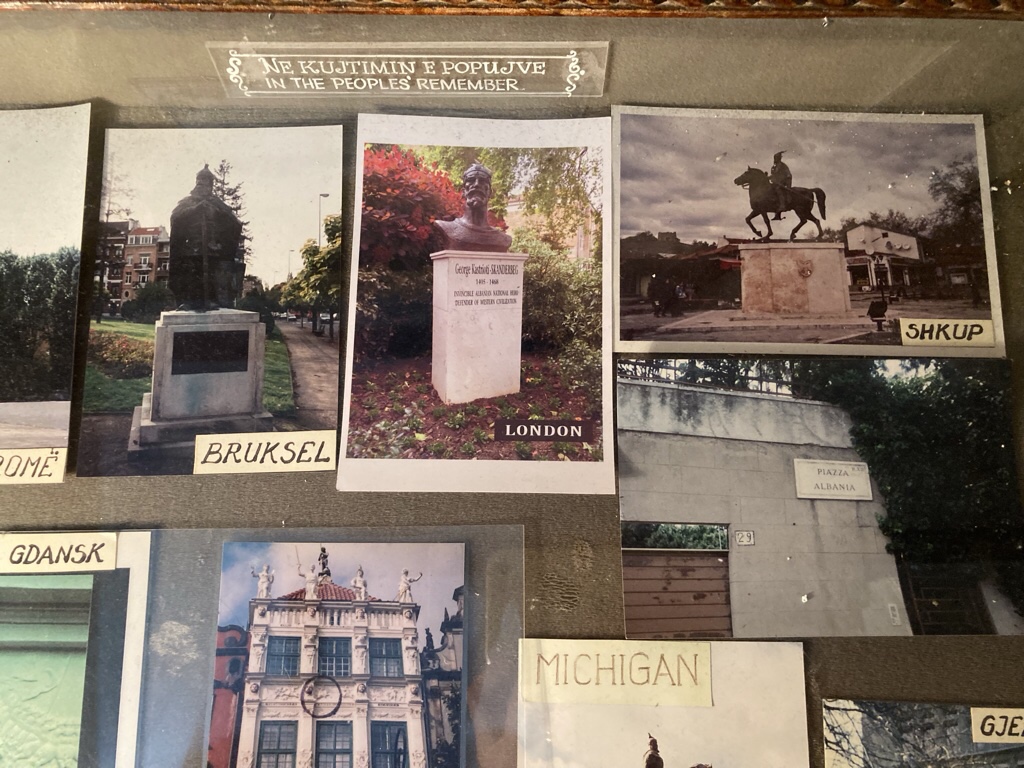
There are memorials to him worldwide, including London, and Vivaldi even wrote an opera about him.

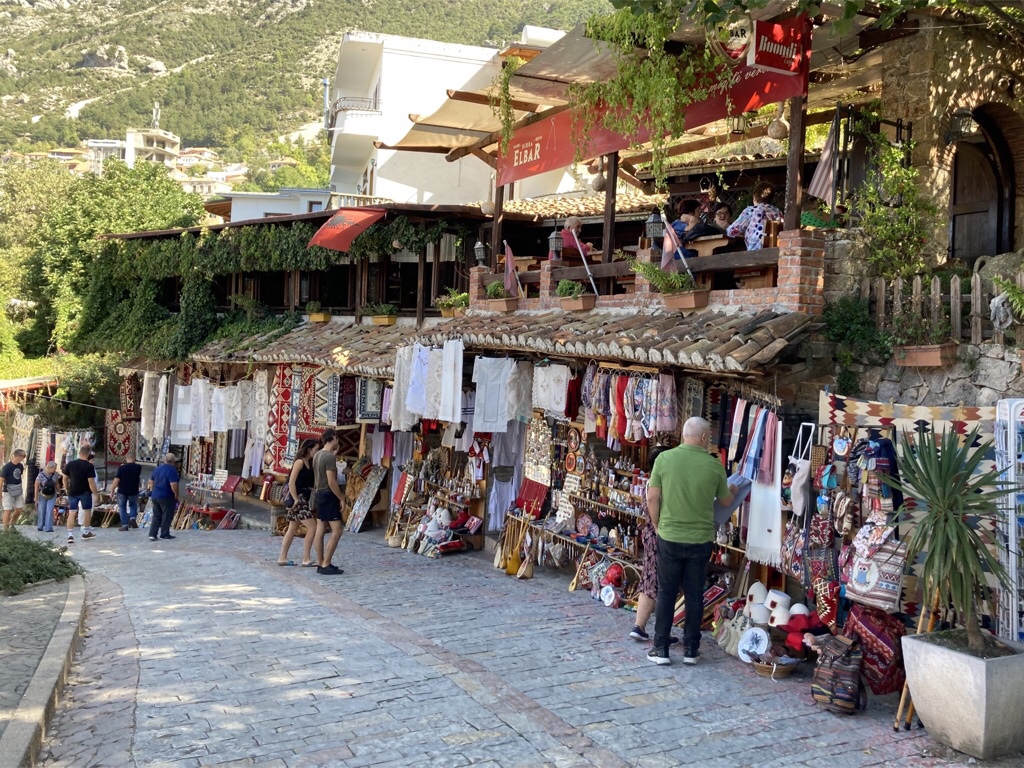
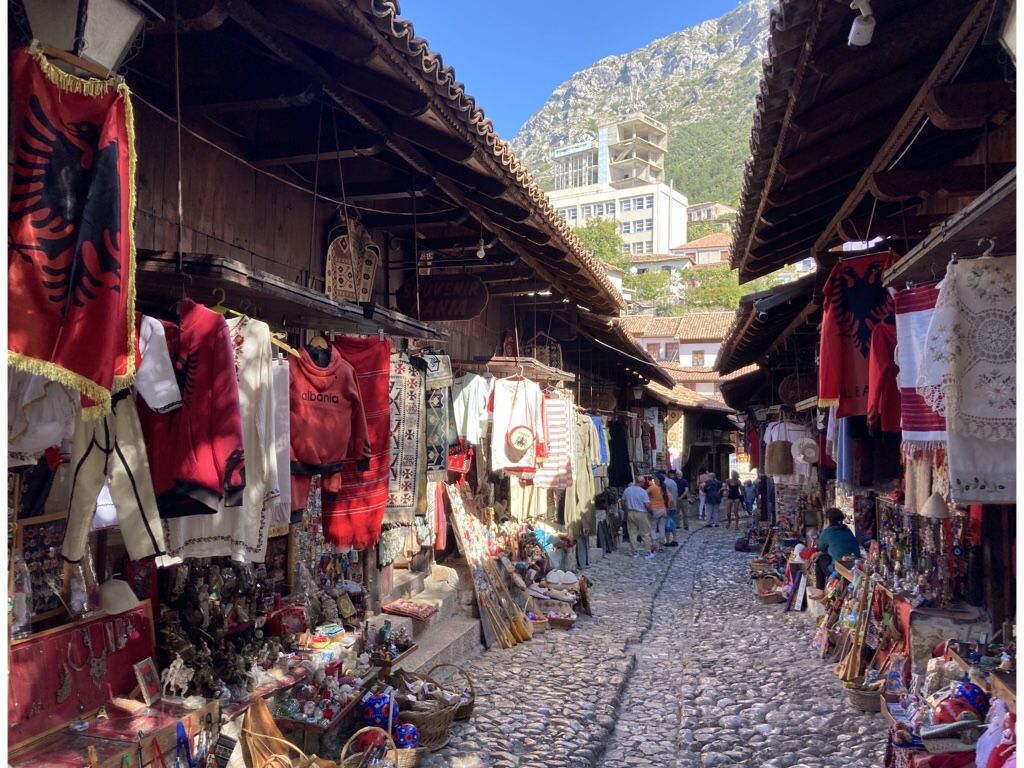
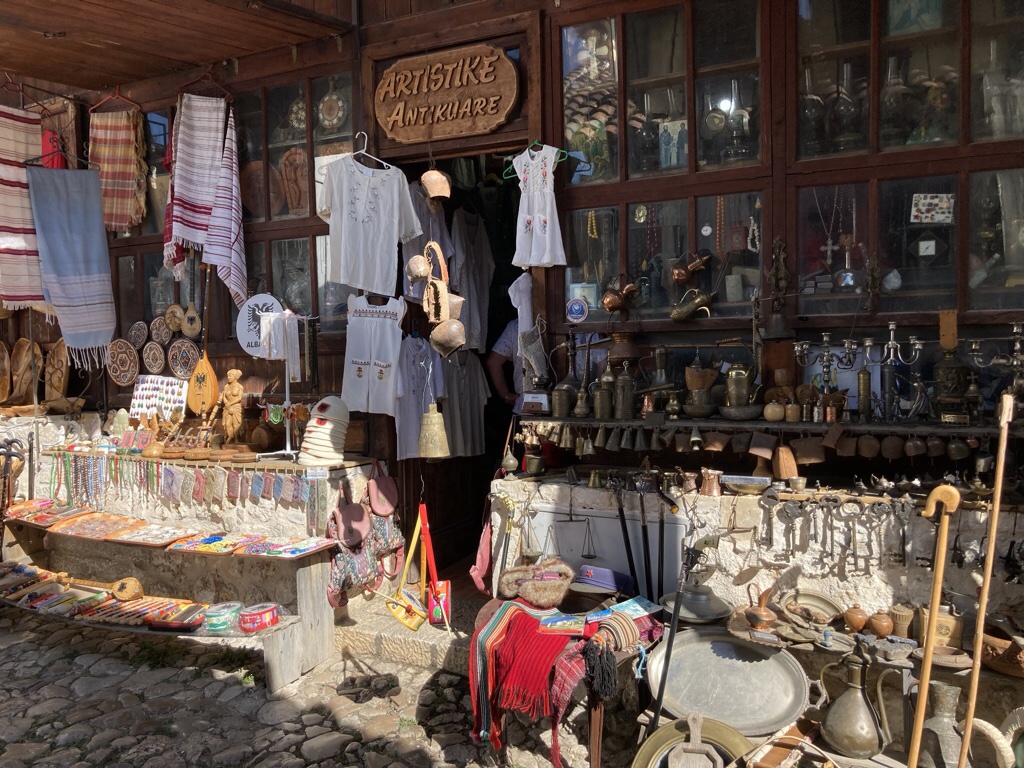
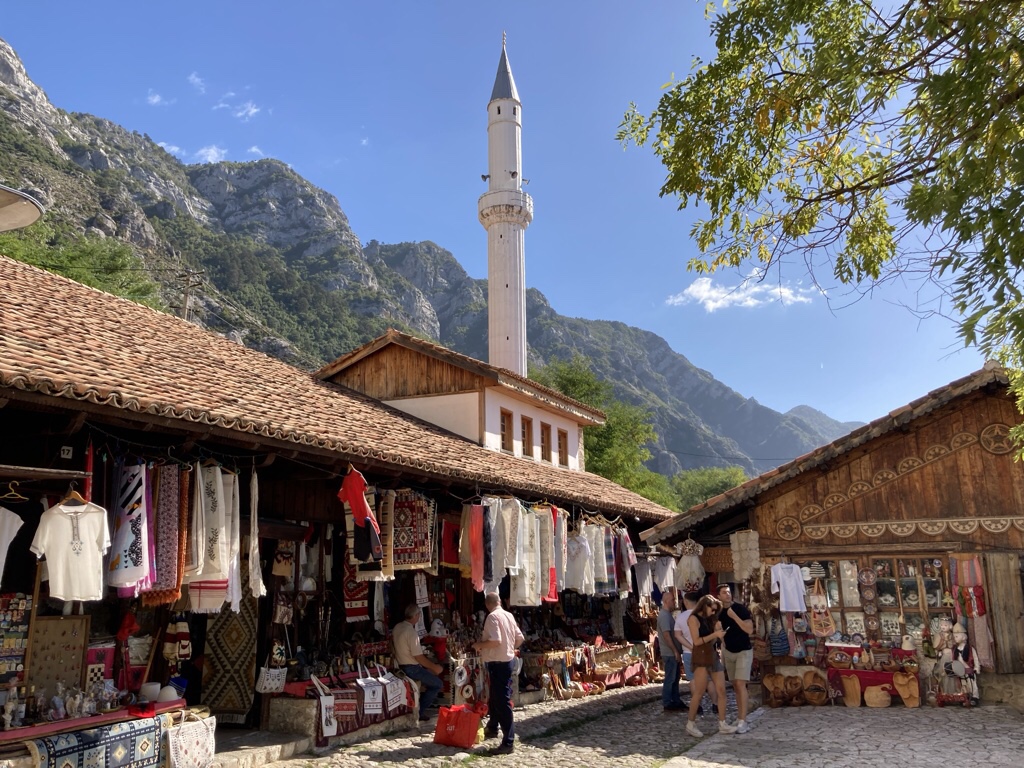
We also wandered through the old bazaar, now a maze of souvenir and antique shops …

… before heading to the port city of Durrës for lunch.

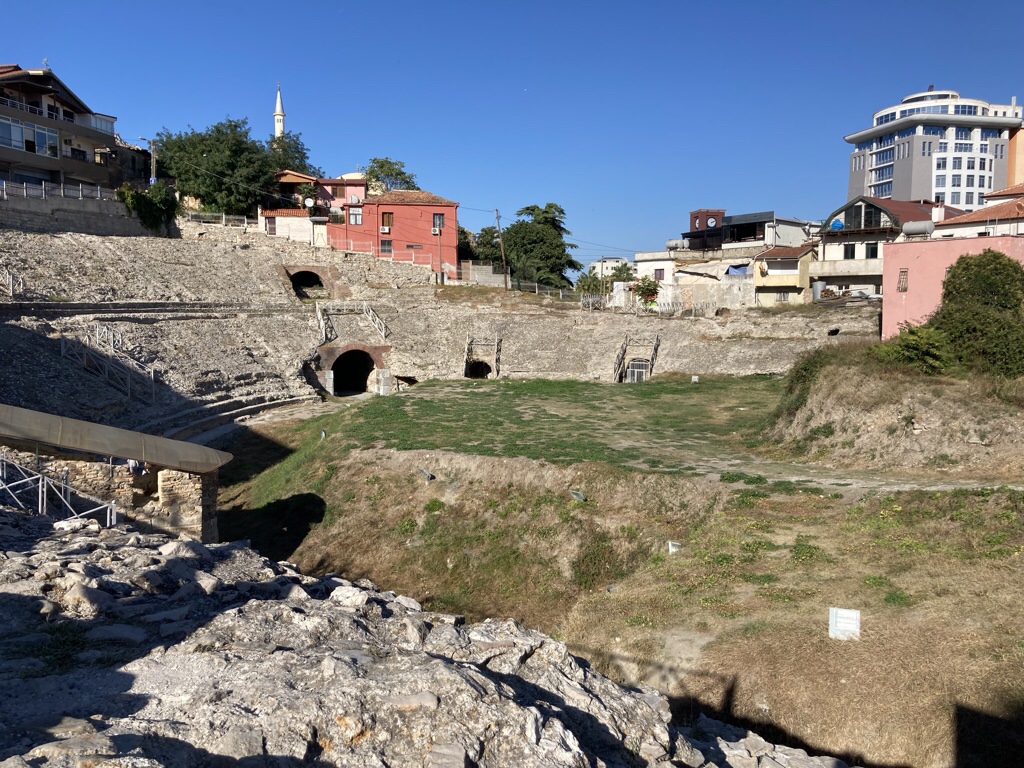
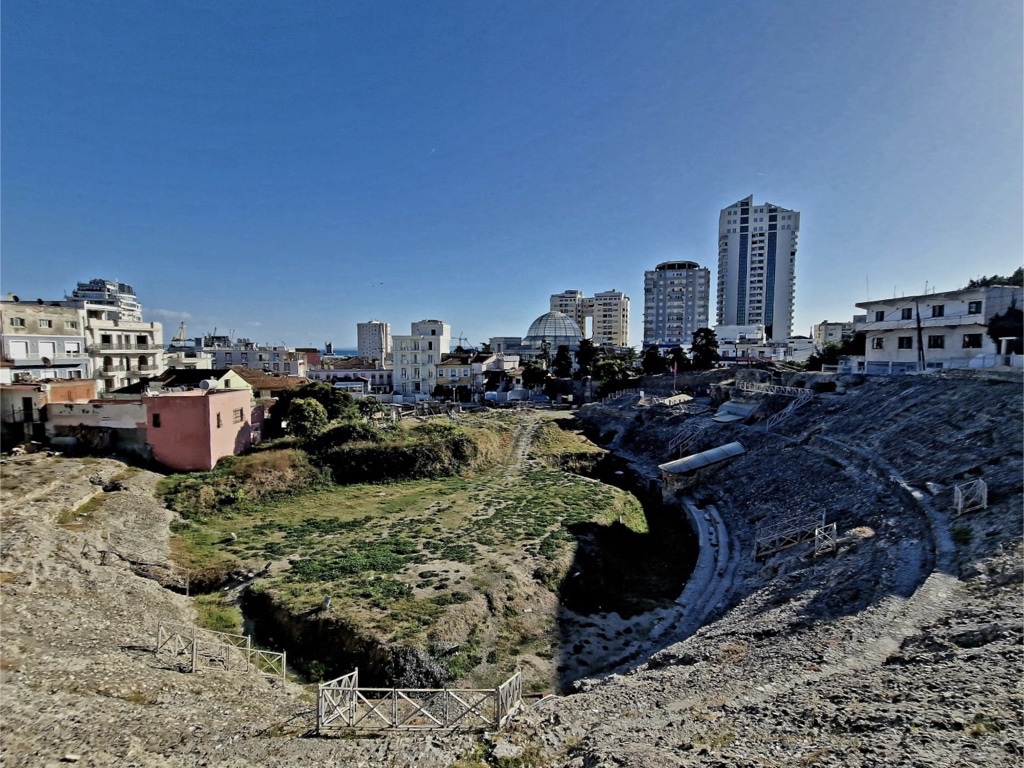
In medieval times, Durrës was an important ancient central mediterranean metropol and it has the largest Roman amphitheater in the Balkan region which has only been partially excavated …

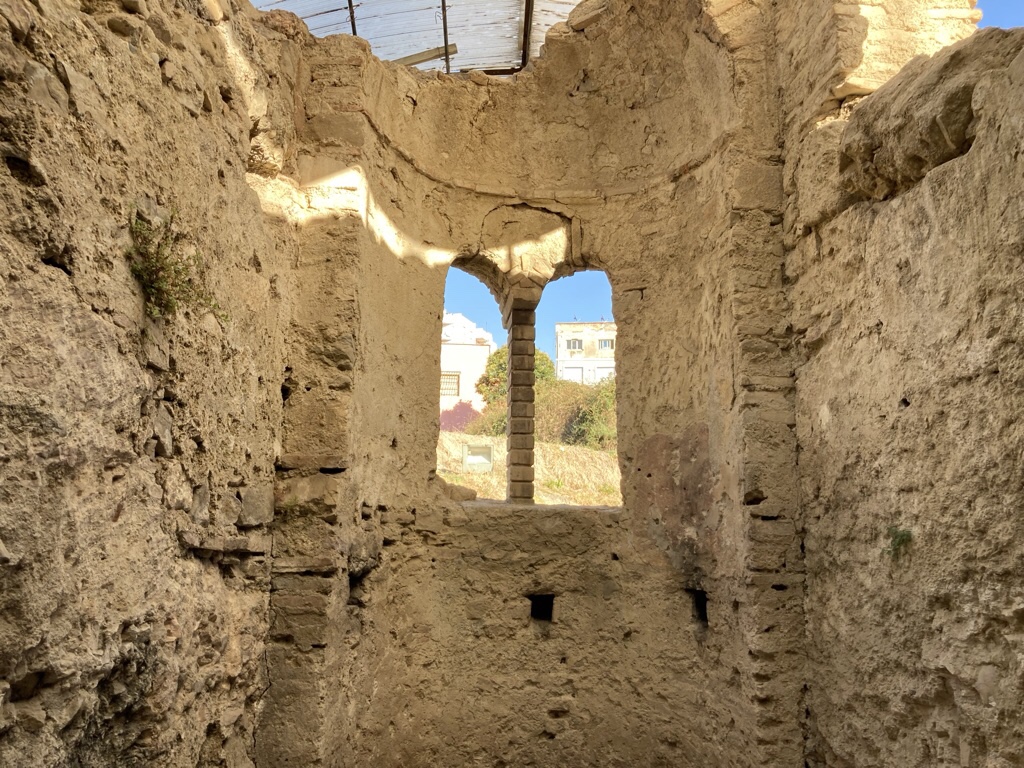
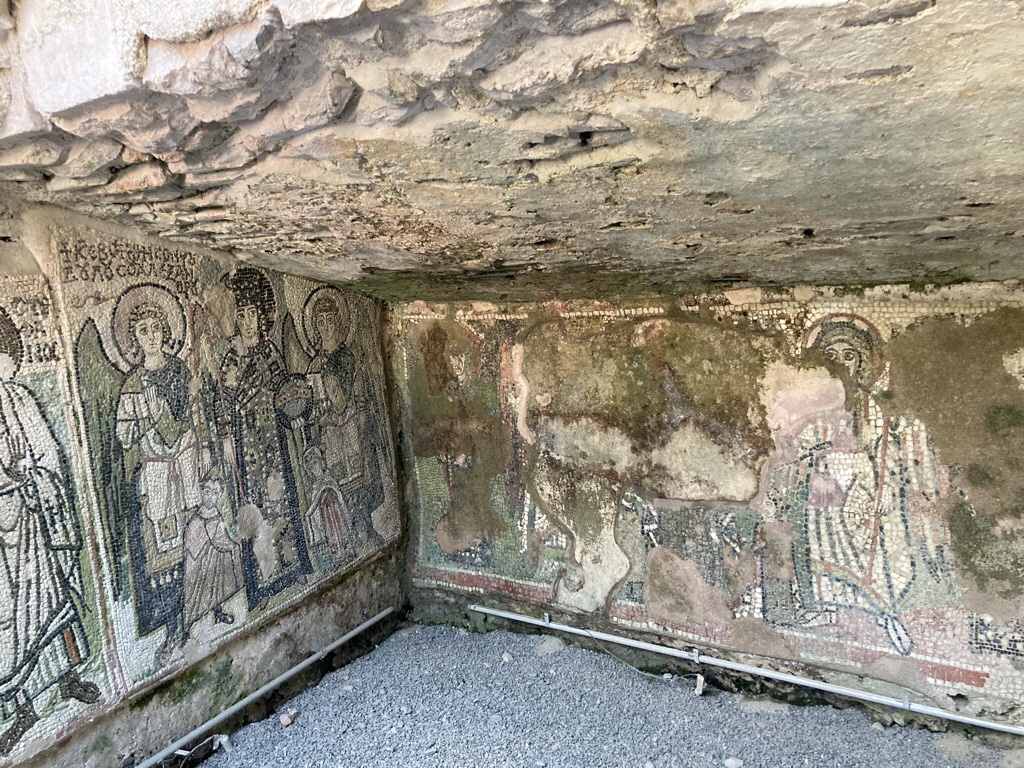
… containing a tiny ruined church and mosaics.

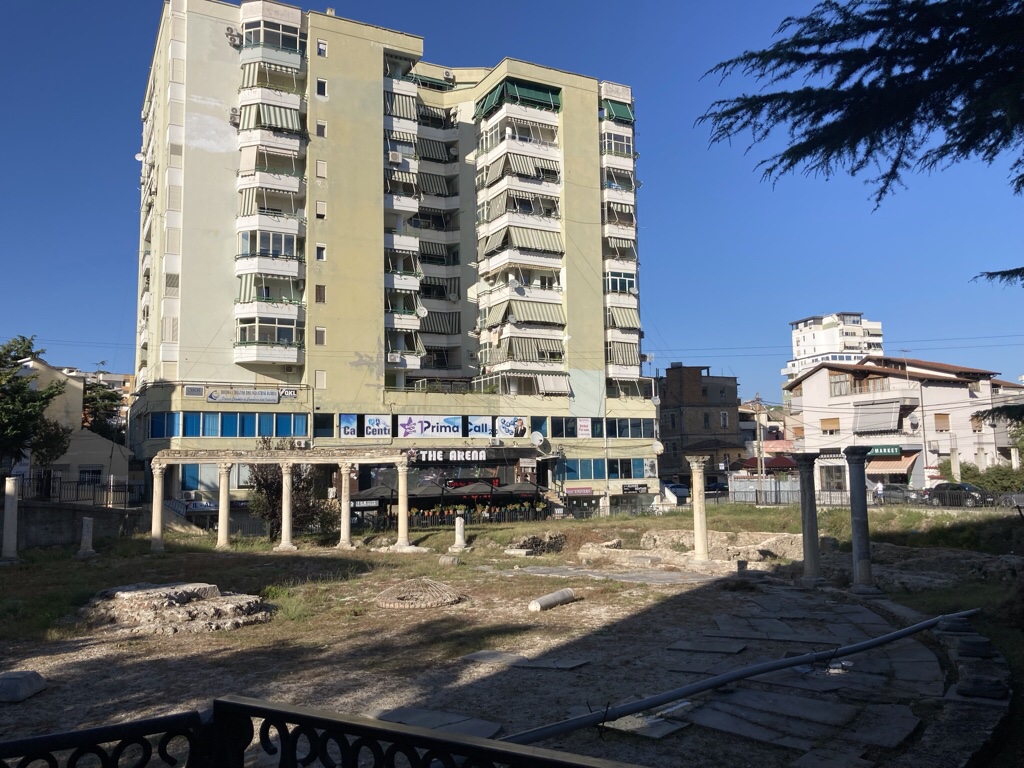
There was also the Roman forum …

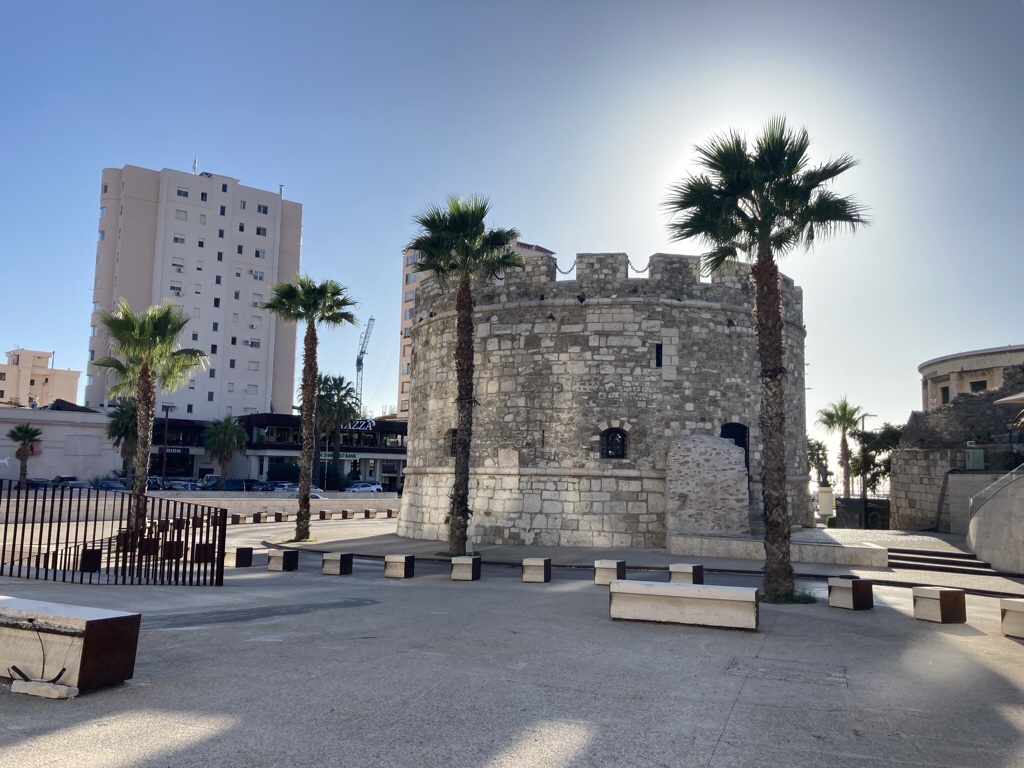
… and the old Venetian tower, once part of the city walls.

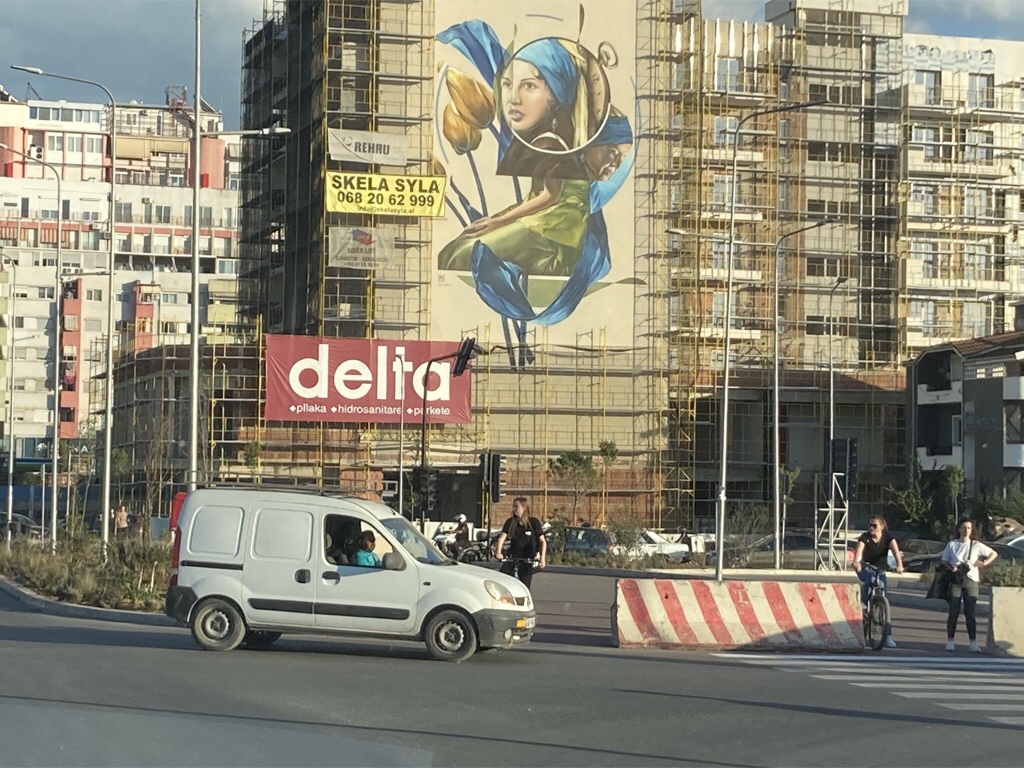
The traffic returning to the city is always heavy in rush hour, which gave us time to spot this lovely mural …

… and also a teddy bear, high up on this building, apparently put there as a good luck charm during the construction.

In the evening we walked through the local neighbourhood of Blloku went to the Era restaurant …

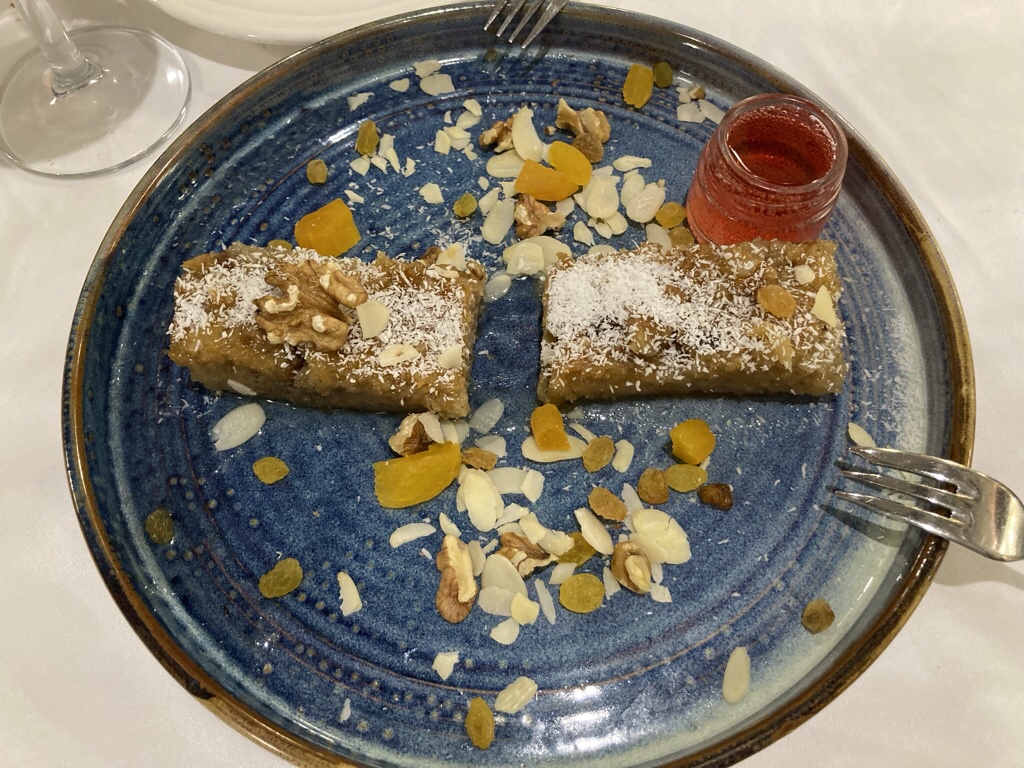
… where we had another selection of Albanian dishes including Lima beans cooked in a clay pot, tzaziki and cornbread made with greens, eggs and cheese before ending top with this lovely Kosovo pastry filled with nuts and dried fruit and soaked in syrup called Tespishte.

Throughout the day, Saimir has been slowly building up our knowledge of Albanian history and giving us an insight into life in Albania with far too much information to share, so here’s just one thought to end the day.

The Illyrians lived in this area 4000 years ago and near to Krujë are the ruins of Albanopolis, the capital of the Illyrian tribe Alban. They were mentioned by Ptolemy in the C1st AD and the land started to be called Albania.

Map

Chris & Elaine’s Bus Trip Round Albania 2023

Albania has been near the top of Chris’s list for some time, with its Roman, Ottoman, Fascist and Communist history as well as its natural beauty. It has been possible to travel here since 1990 when Albania opened its borders, but it remains challenging to get around for the independent traveller, especially one with a dodgy ankle, so we were delighted to be introduced to Exoticca Holidays by a friend. Their small group tour includes all the places we wanted to see as well as flights, accommodation and transport so with no planning needed, we can sit back and enjoy the ride.

It is our wedding anniversary while we are away, on the one day that we will be staying at the seaside, so we have our fingers crossed that we will be able to arrange a short boat ride to celebrate in the usual way!

This is a first for us, to go away on an organised tour, but as Chris pointed out, otherwise we wouldn’t be going to Albania at all so off we go!

Itinerary

Krujë and Skanderbeg Castle

Scenic Shkodër

Windows of Berat

Albania’s Apollonia

Afloat in Albania

The Stone City of Gjirokaster

Churches of Korcë

Tirana … Around Skanderbeg Square

Tirana and Hoxha’s Legacy

Map

Full Circle in Crickvenica

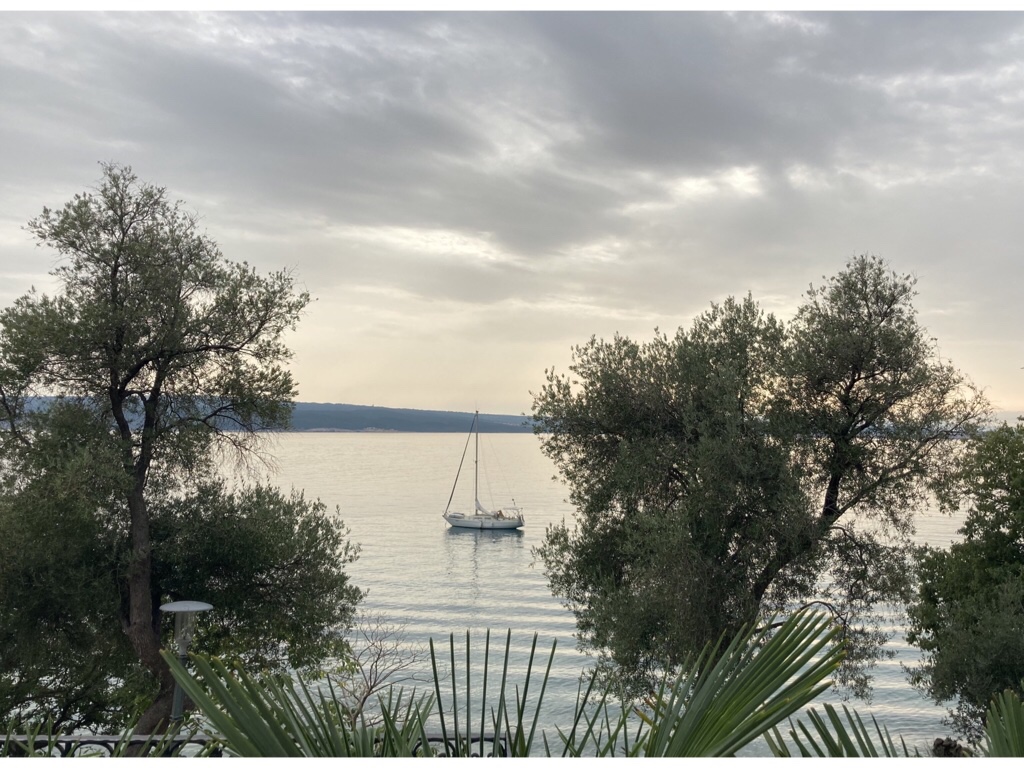
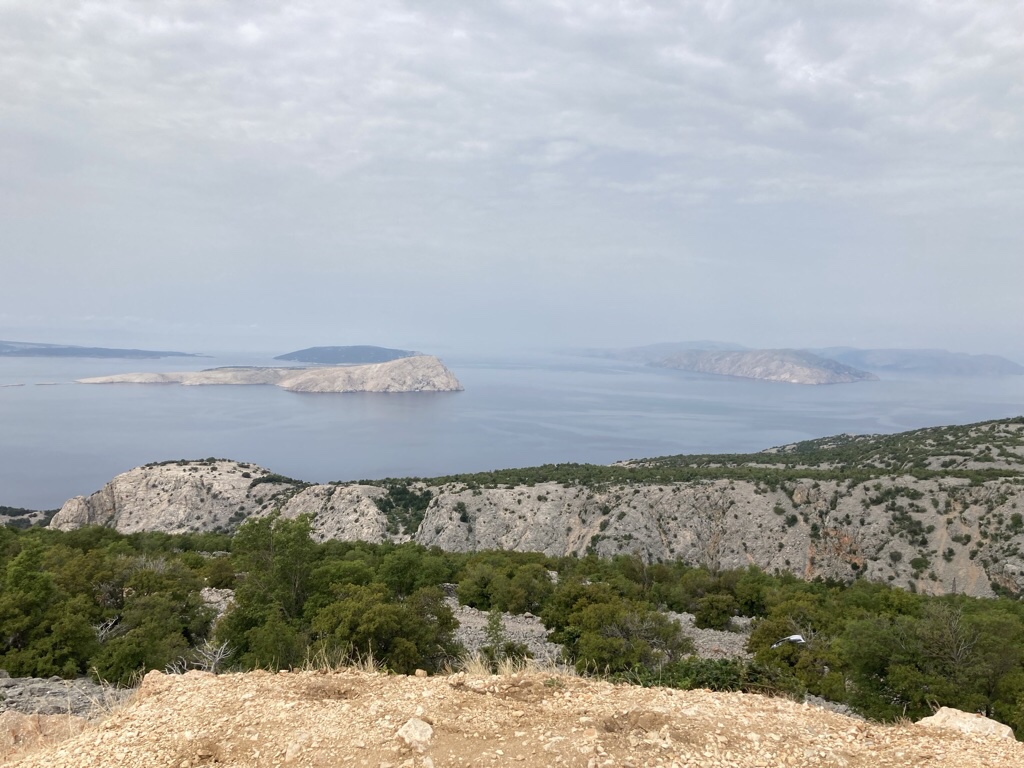
Crikvenica is our last stop, chosen for being close to the airport but also for its lovely stone architecture and art noveau buildings. Having driven along the pretty winding coast road enjoying the view …

… we then passed a nasty accident, a reminder of the perils of single lane traffic, bends and motorbikes, and felt we’d done enough exploring.

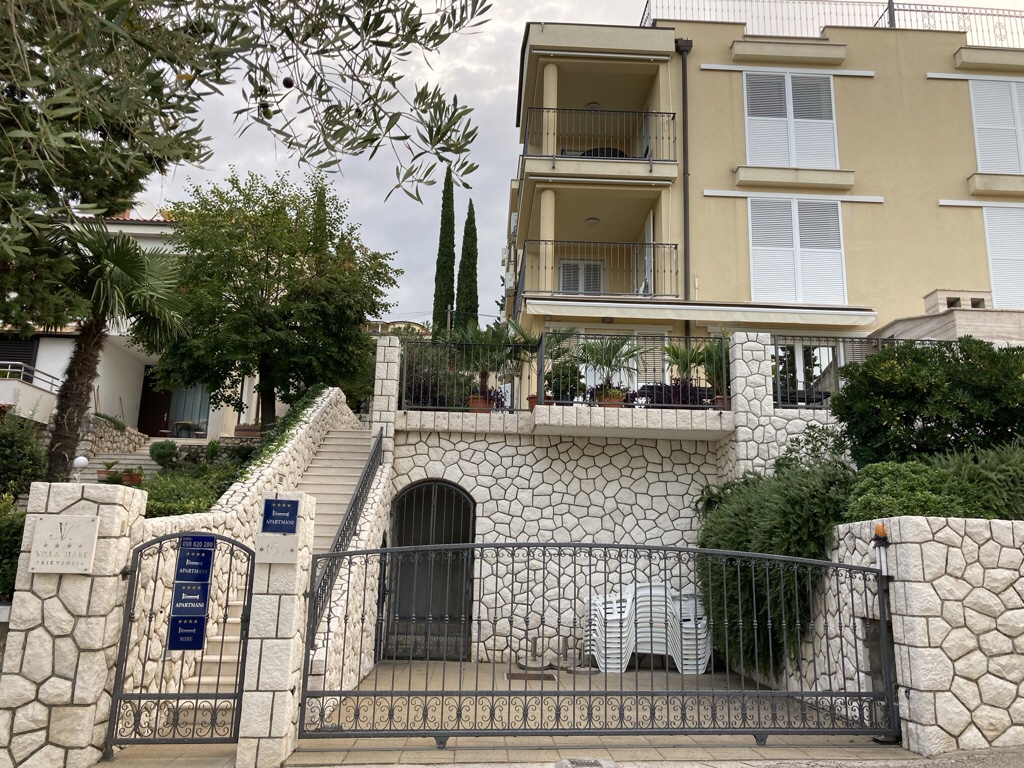
Villa Mare, is a family run apartment building, a little out of town, but right on the front with its own swimming platform and loungers and a bistro a few steps away.

Enjoying a final opportunity to relax, I had a swim and we spent the afternoon reading.

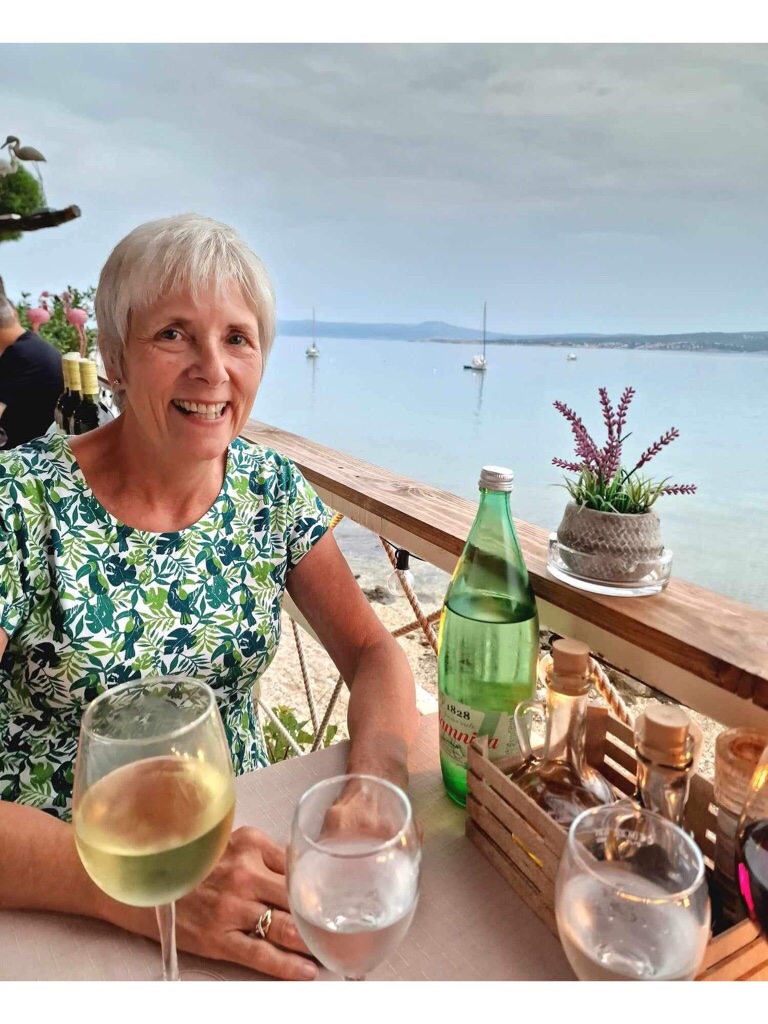
After reorganising our packing ready for an early departure in the morning, we walked down to Bistro Loran, complete with sparkly lights and sea view.

We might have seen the sunset, but clouds had been building all day with rain forecast tomorrow, and the sun just slipped quietly away.

Croatia has been great and we’ve seen and done all we hoped. The driving was easy, the roads good, all the accommodation comfortable and the food tasty. I’ve eaten lots of fish and Chris found plenty of veggie choice among the Italian influenced menus.

Chris loves the numbers, so we’ve driven a round trip of 720 miles in two weeks. We walked around 40 miles – and while Chris’s new knee coped admirably, his increasingly dodgy ankle did complain a little.

As for the islands, I thought we were up to 5 – Krk, Cres, Losinj, Vir and Pag – but on the way to the airport I noticed the bridge to Krk first crossed the end of Otočić Sveti Marko so that makes 6!

A croissant and coffee in an al fresco airport cafe …

…and we are off home. Fortunately there will just be time to do the laundry before we go off travelling together again!

Map

Bridging the Gap to Pag

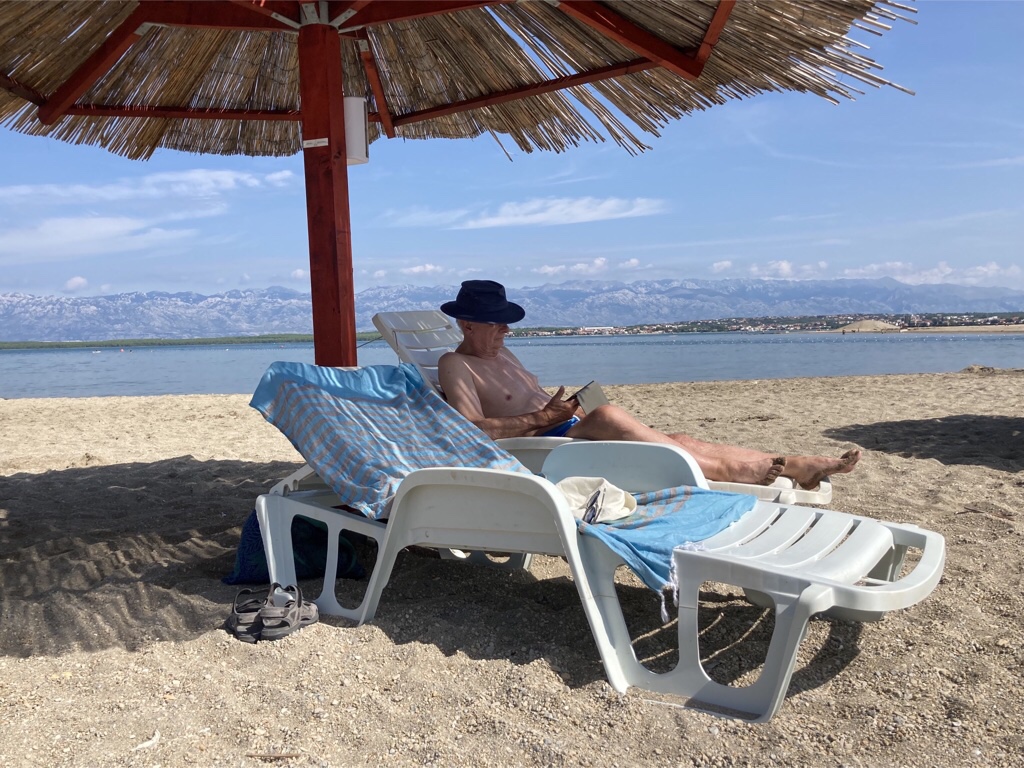
Another sunny, warm day was ahead, and we decided the best thing to do was to find a beach with sun loungers and enjoy the day.

We chose Queens beach, so called because tradition says that the wife of the first Croatian king, Tomislav, was especially attracted by its beauty, and so whenever the royal family came to Nin, they would visit this beach to enjoy a few rare and relaxing moments.

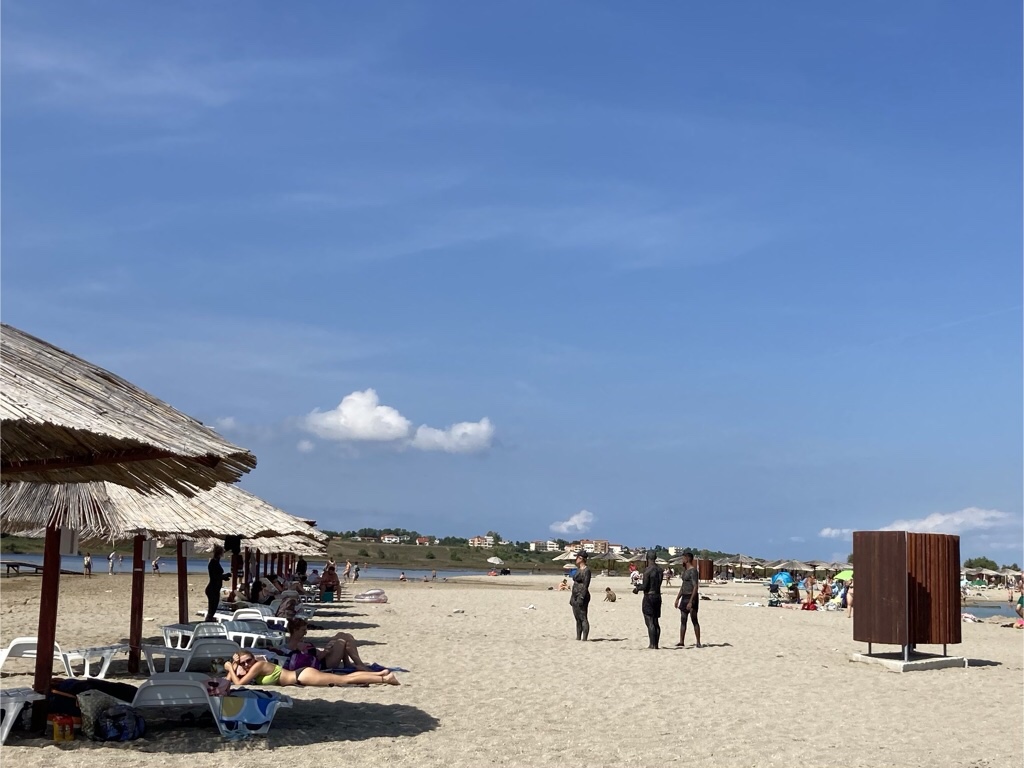
The water is extremely shallow and it is sandy so it’s popular with families, especially on a Sunday.

The sea was fine for cooling off, but barely reached the top of my legs so not ideal for swimming, but we still spent a happy day here.

Nearby is medicinal mud which has apparently been used to treat various ailments such as rheumatic diseases, spinal deformities, muscular and skeletal problems and skin issues for decades. The therapy, which usually lasts from ten to twenty days, involves covering the body with the mud, sunbathing on the sandy beach, then rinsing off the mud with warm sea water. This is done in the morning during July and August. We felt pleased this let us off the hook – only one day spare and the wrong month … although some seemed happy to give it a go!

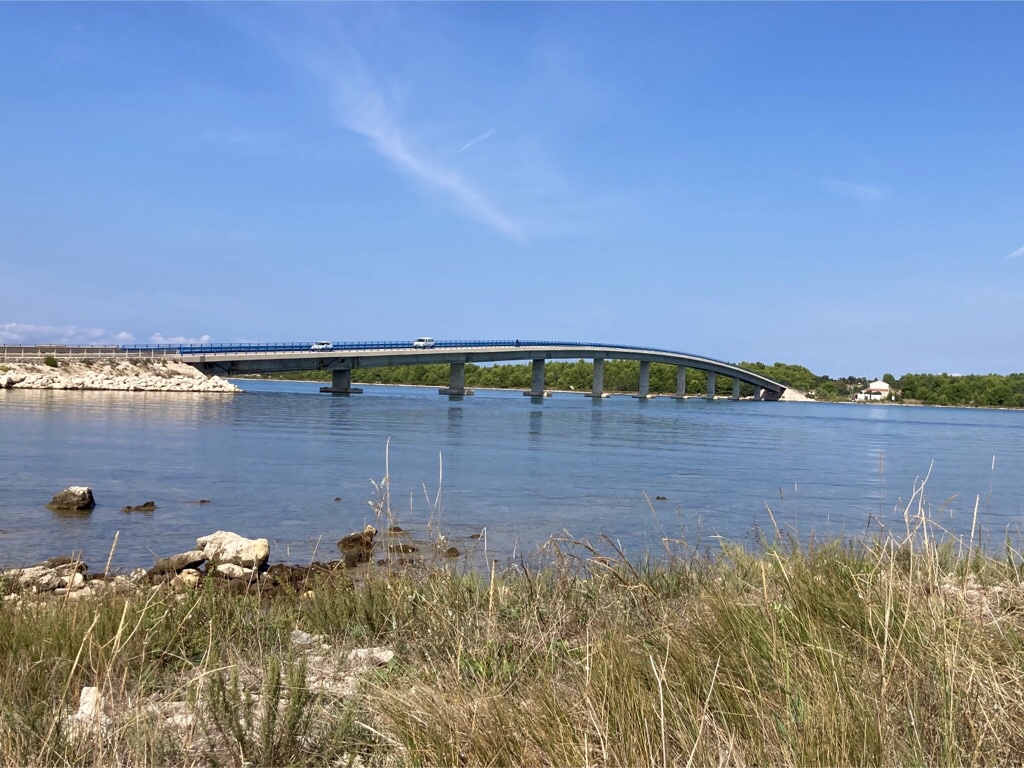
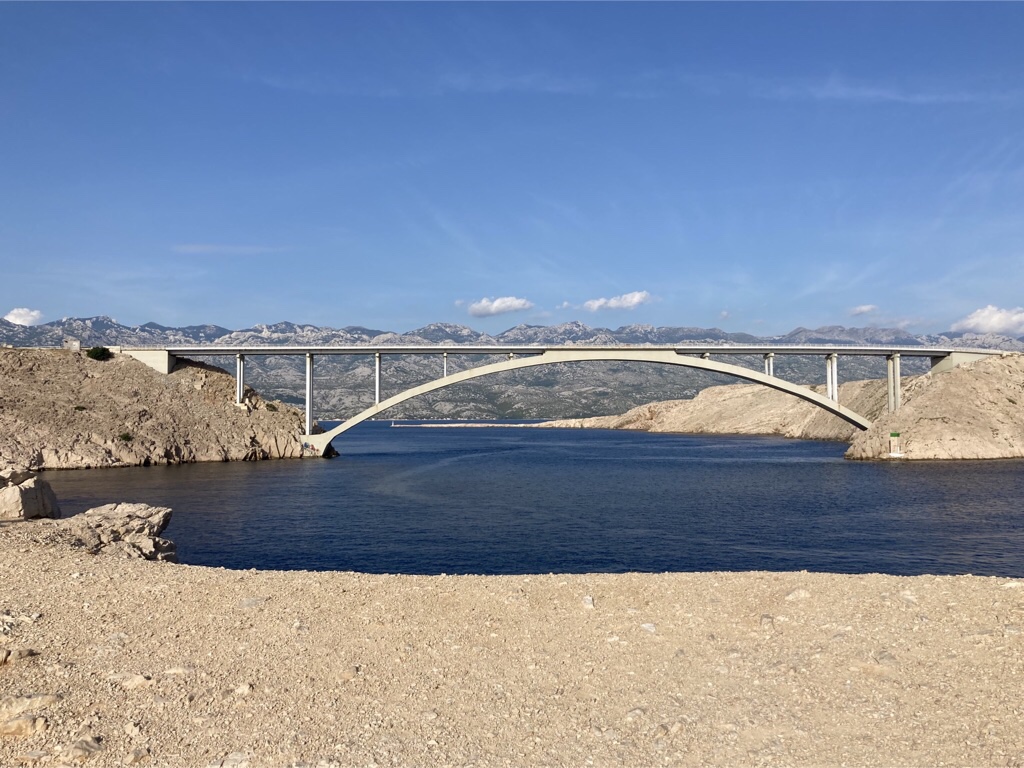
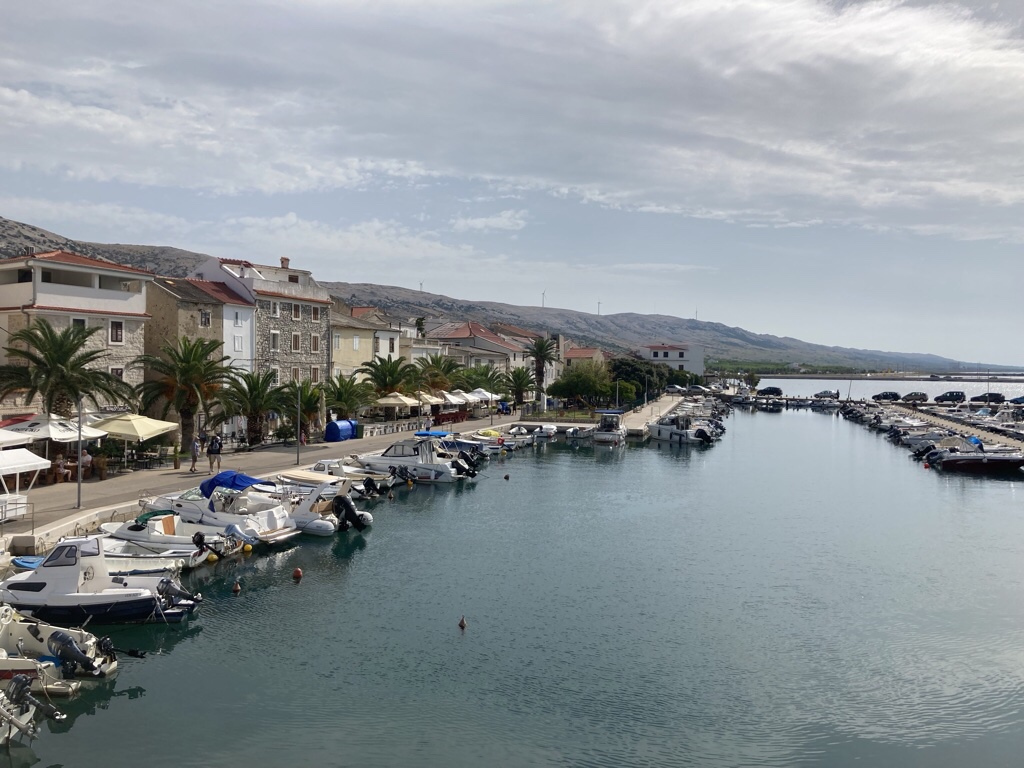
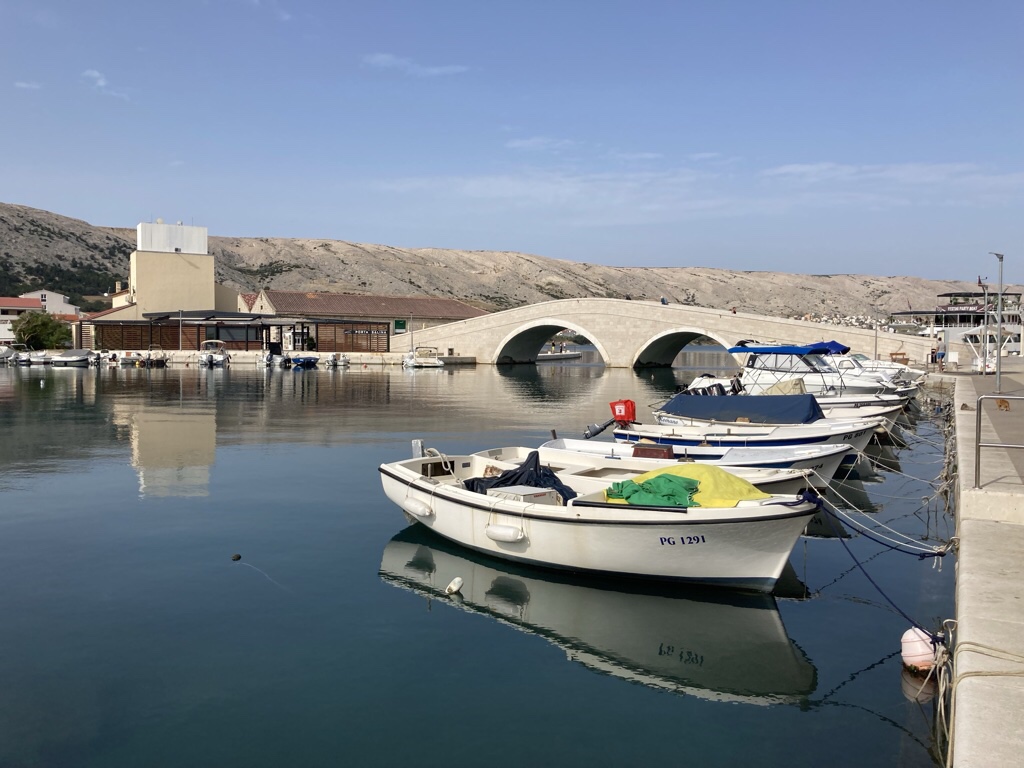
Late afternoon, and we thought we better move on to Pag, the last island on our trip and easy to include as it can be reached by bridge, which we photographed from both sides …

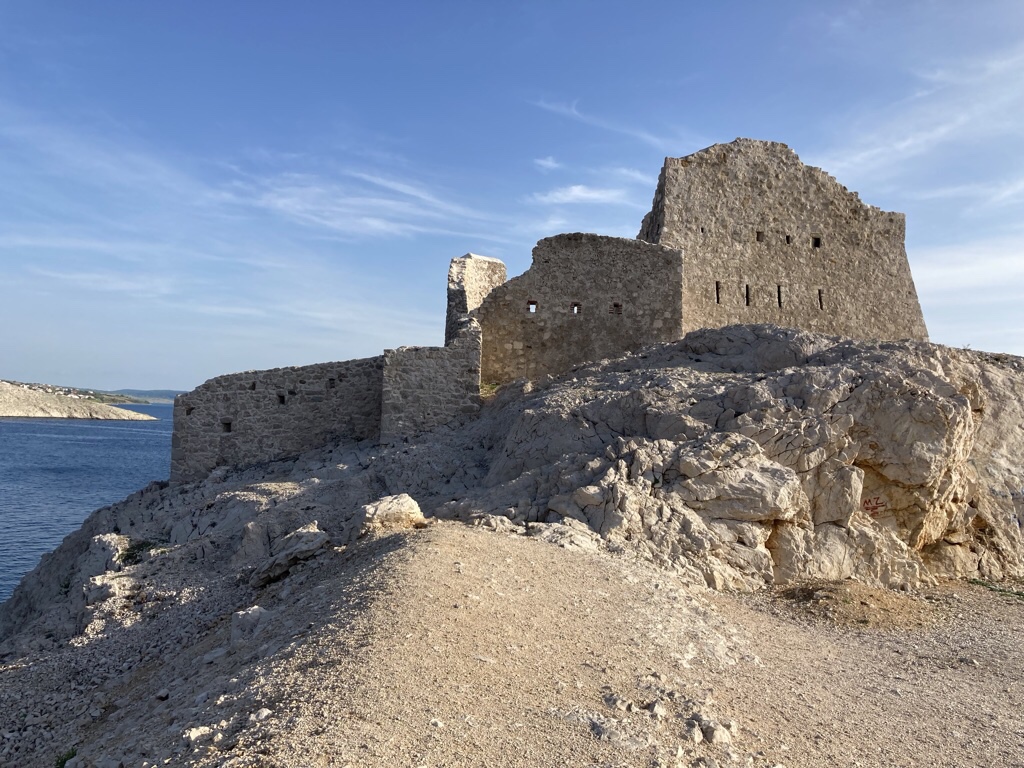
… as well as Fortica, the fort which has been standing over the narrow straight between Pag and the mainland since the Middle Ages.

As we drove across Pag, we could just see a dry landscape with stone walls but little vegetation …

… although there must be sheep here somewhere as the island is famous for its local cheese called paski sir, meaning Pag cheese, which obviously has good marketing as it’s been on the menu everywhere we’ve been. Pag is also famed for its lace and salt production.

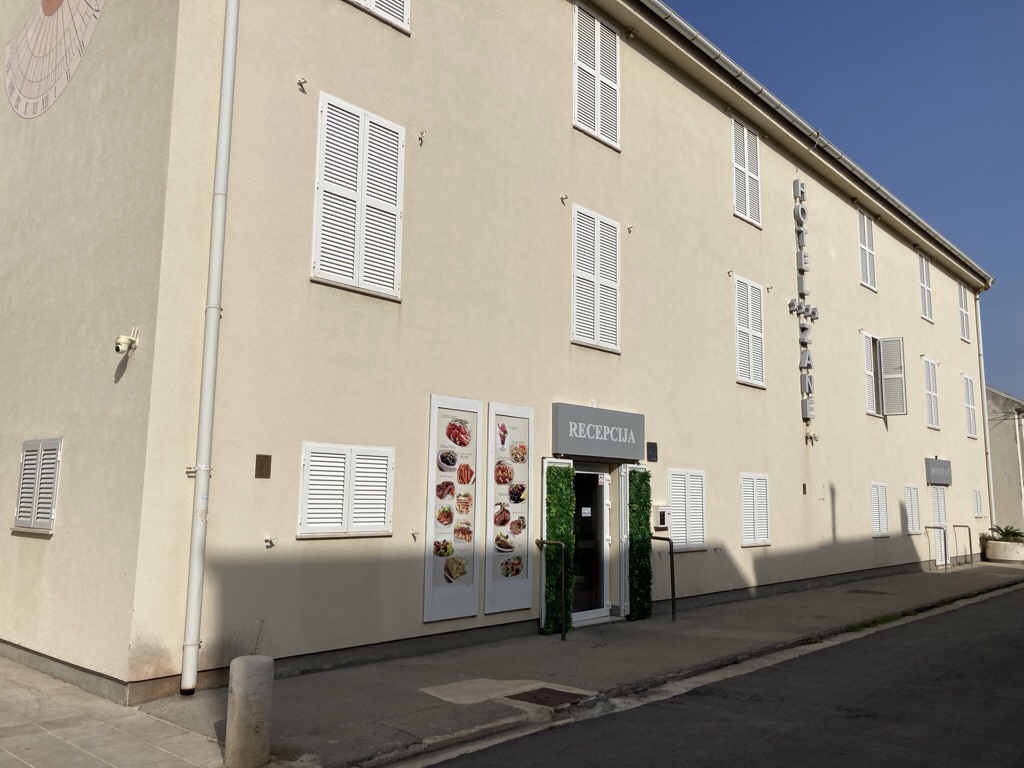
We reached Pag Town and I had difficulty spotting our hotel … until I realised is was the quite large one we were parked outside!

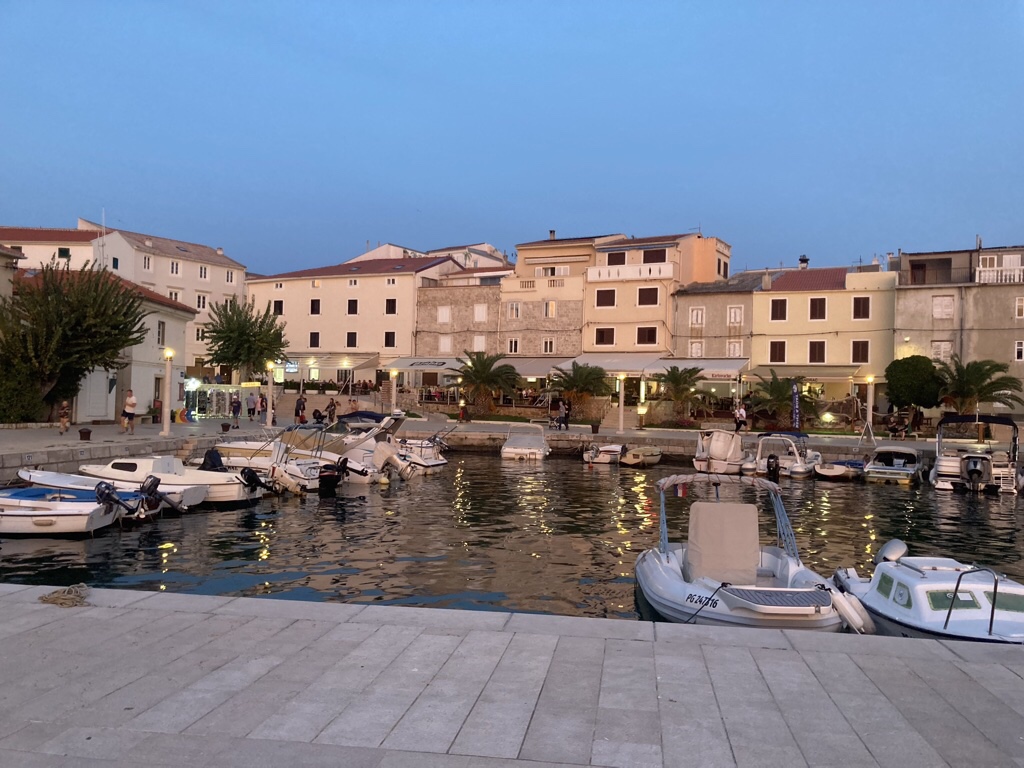
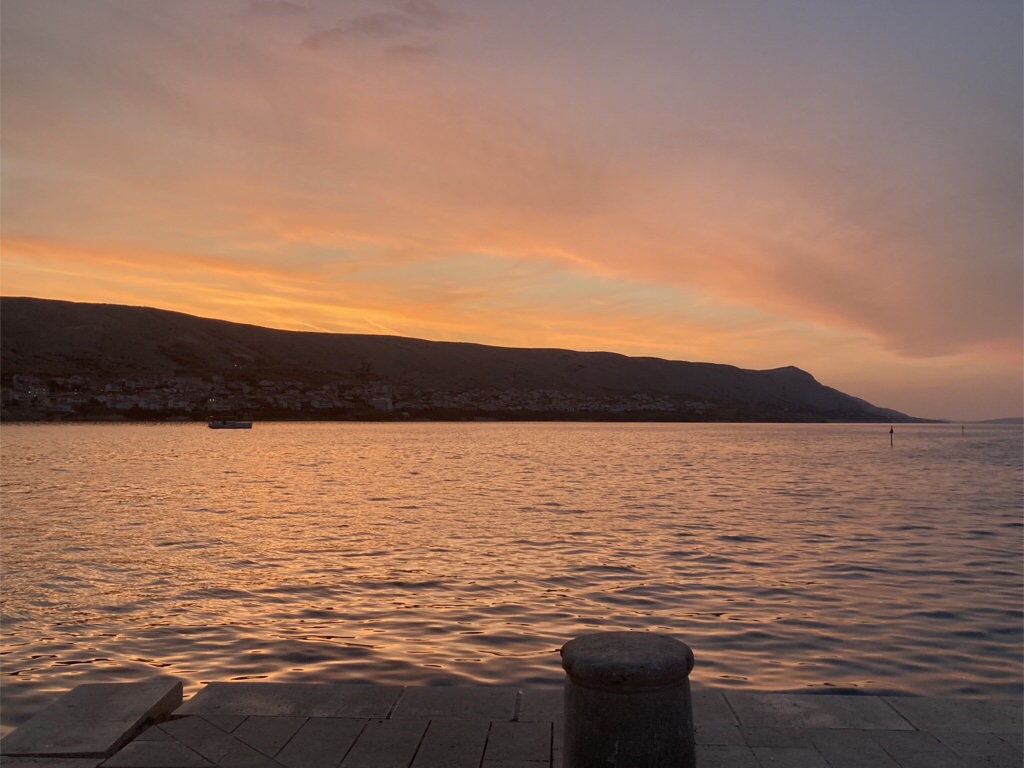
We were eager to get inside and wash away the salt and sand of the day, before exploring the town as the sun set …

… then had dinner in a restaurant on the harbour.

In the morning we discovered we were the last visitors at Hotel Zane this season and that they were closing once we had left.

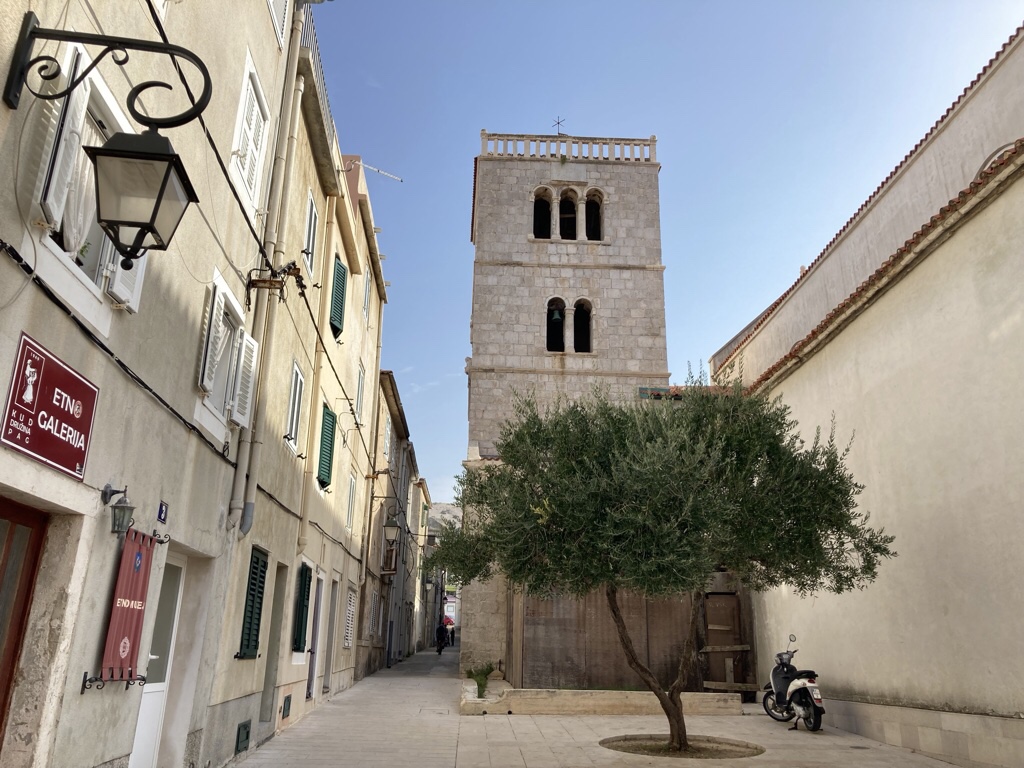
We had time to potter round the town in the daylight …

Maybe it was the rough hewn limestone, the beautifully carved capitols or the lovely painted organ or just the feel of the place, but it struck us that this was the church we liked best all trip.

Suddenly realising the time, we made a bit of a dash for the ferry, just pausing to take a last photo of the town with the salt pans in the distance …

… and ending up the last car to drive onboard before waving Pag, our fifth and final island, goodbye.

Map

Zadar … and the Sunset

We woke to a grey morning but we only had a drive ahead so it was perfectly timed. Say Tesla and I immediately think of electric cars, but I hadn’t realised they were named after an inventor called Nikola Tesla, so we visited the memorial centre in his birthplace of Smiljan to find out more.

The site includes the restored church where his father was priest and the house where he was born. We also saw a demonstration of the wireless transfer of electric energy from a Tesla Coil to the florescent tubes that we were given to hold – I definitely felt like I had been handed a light sabre!

Looking round, it became obvious he was dedicated to the point of obsession and experimented with various concepts including neon lights, wireless, X rays, hydro electric power and turbines. He registered loads of patents, but others often converted his research into actual workable inventions. Nonetheless, he is best known for designing the modern alternating current electricity supply we all have in our homes today..

From here, we took the toll road literally through the mountains, with several tunnels, one over 5km long and emerged into the middle of the clouds!

We arrived in Zadar, the main city in North Dalmatia, and most famous for its old town set on the tip of a narrow peninsula and surrounded by city walls.

We are staying at its heart and successfully negotiated our way into the city and located not only a handy parking space but also the Greta Residence through the gate at No9 where we will be for a couple of nights.

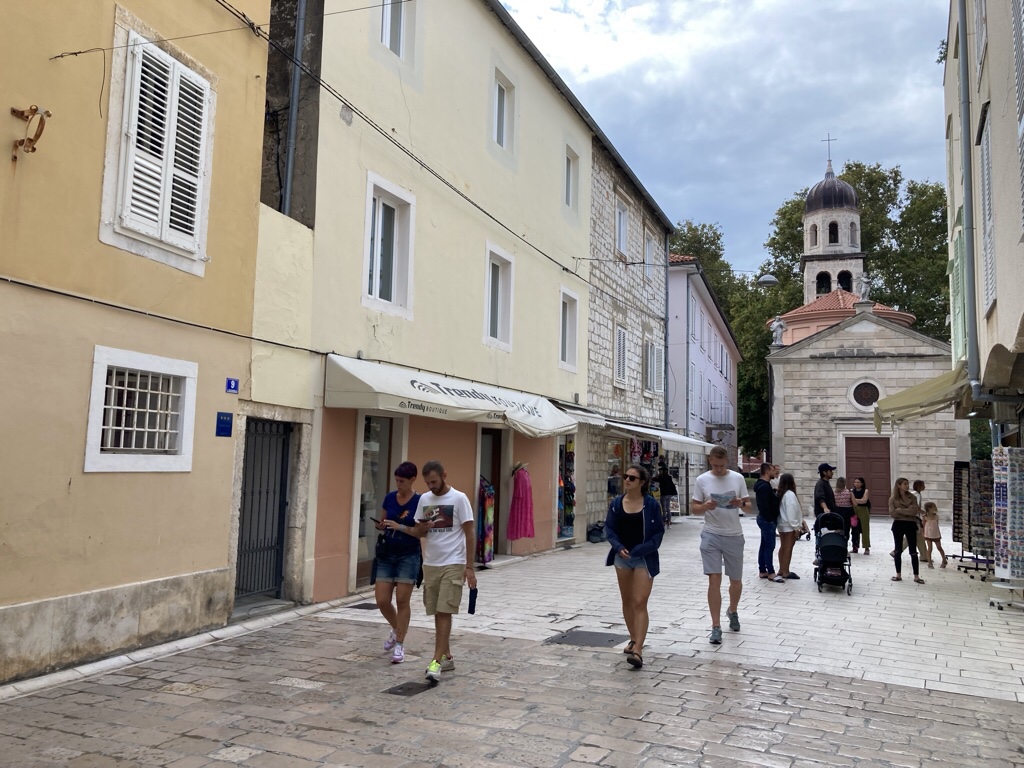
We’ve had a lovely time pottering round the narrow streets exploring. Zadar was bombed heavily in WWII so there is a mixture of old and new, restored bits and ancient Roman bits all mixed in together.

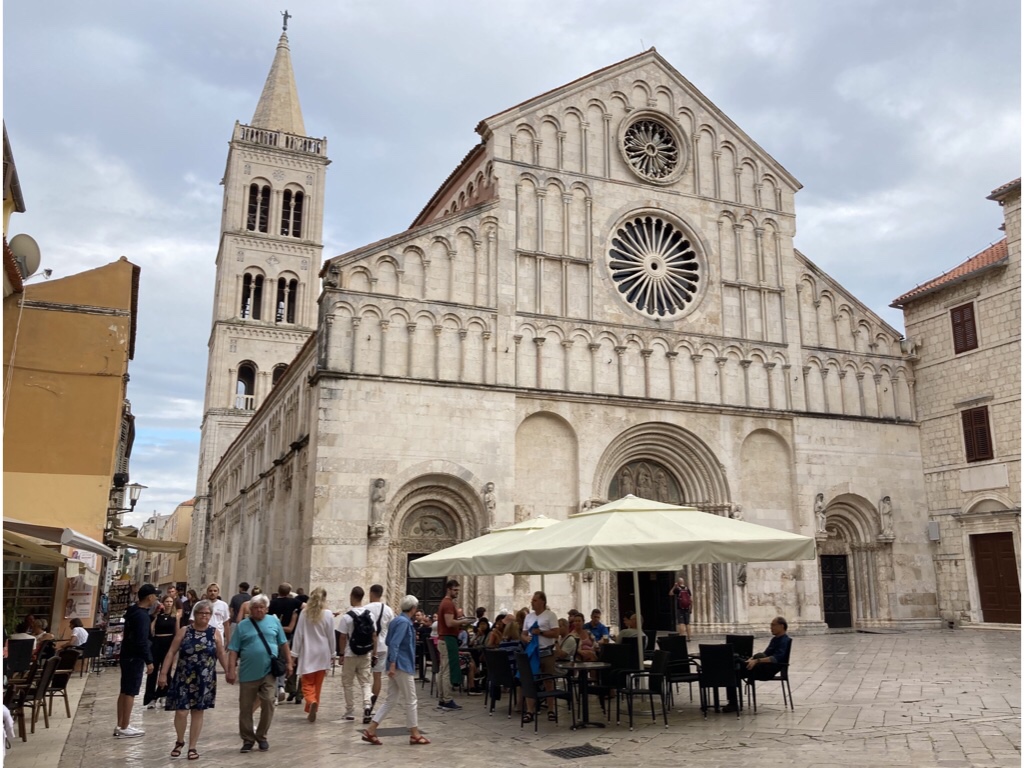
Kalelarga is the main thoroughfare, leading to the Cathedral of St Anastasia with her bell tower.

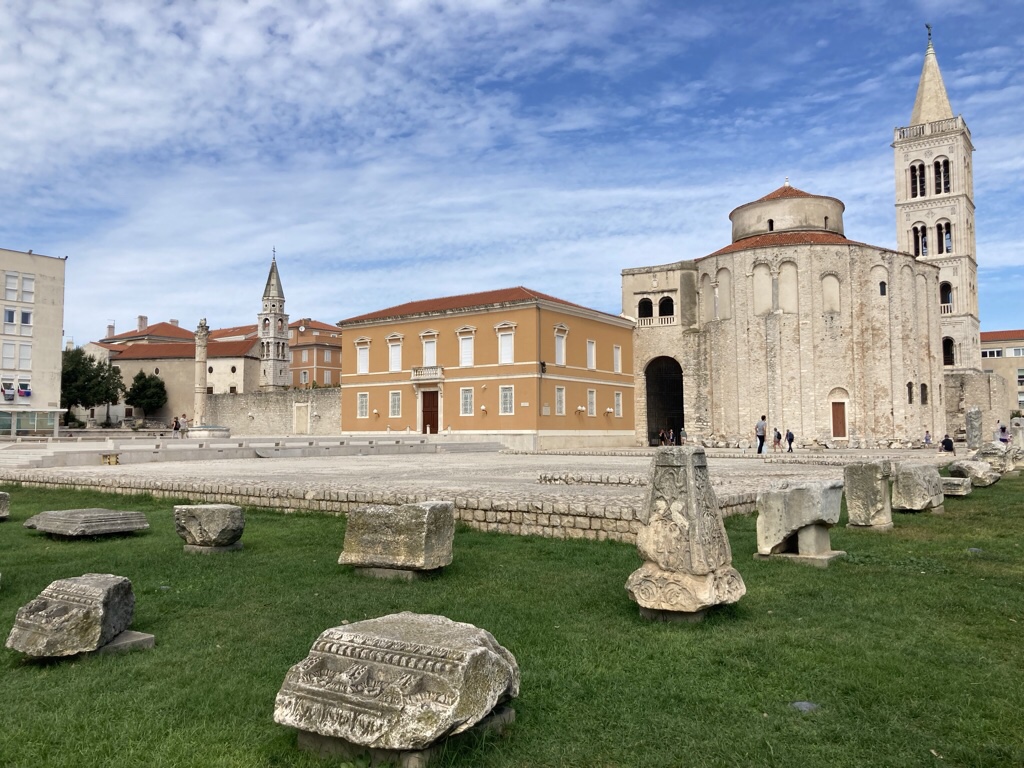
Zeleni Trg is the bustling central square and was once the Roman Forum, although very little of it remains apart from the paving stones and some walls.

Behind is the circular, Byzantine-style church of St Donatus, built using some stone from the Forum.

There is also a 14m high column to which, up until 1840, the town’s offenders were chained to suffer public humiliation.

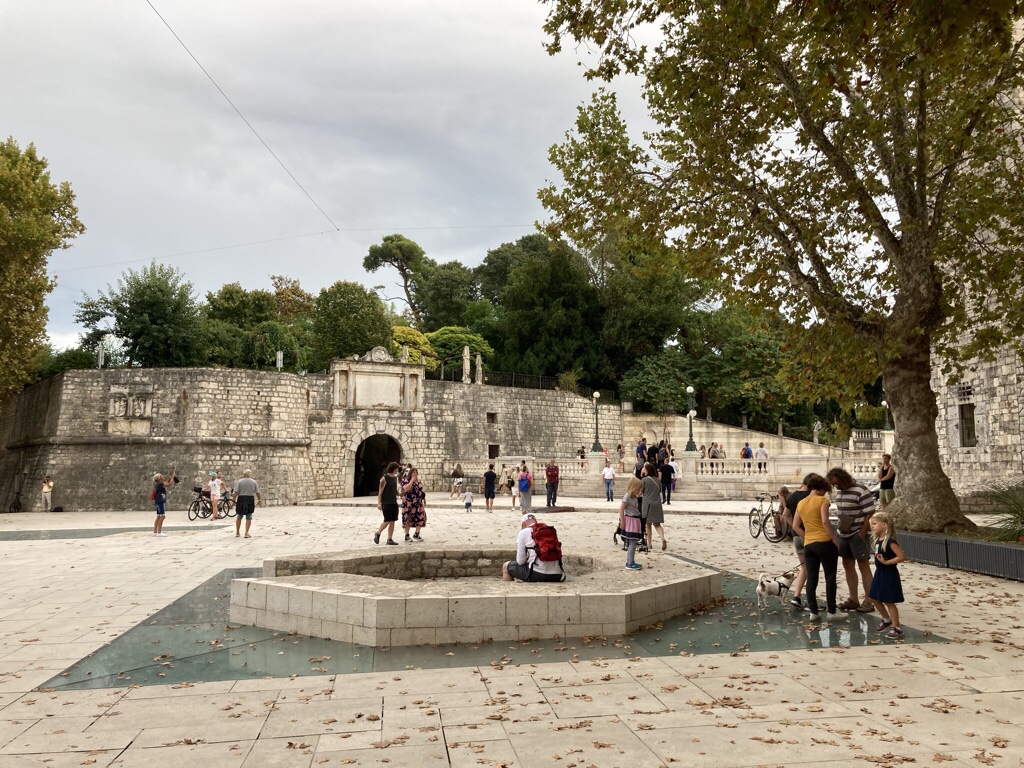
At the east end is a park at the top of the bastions …

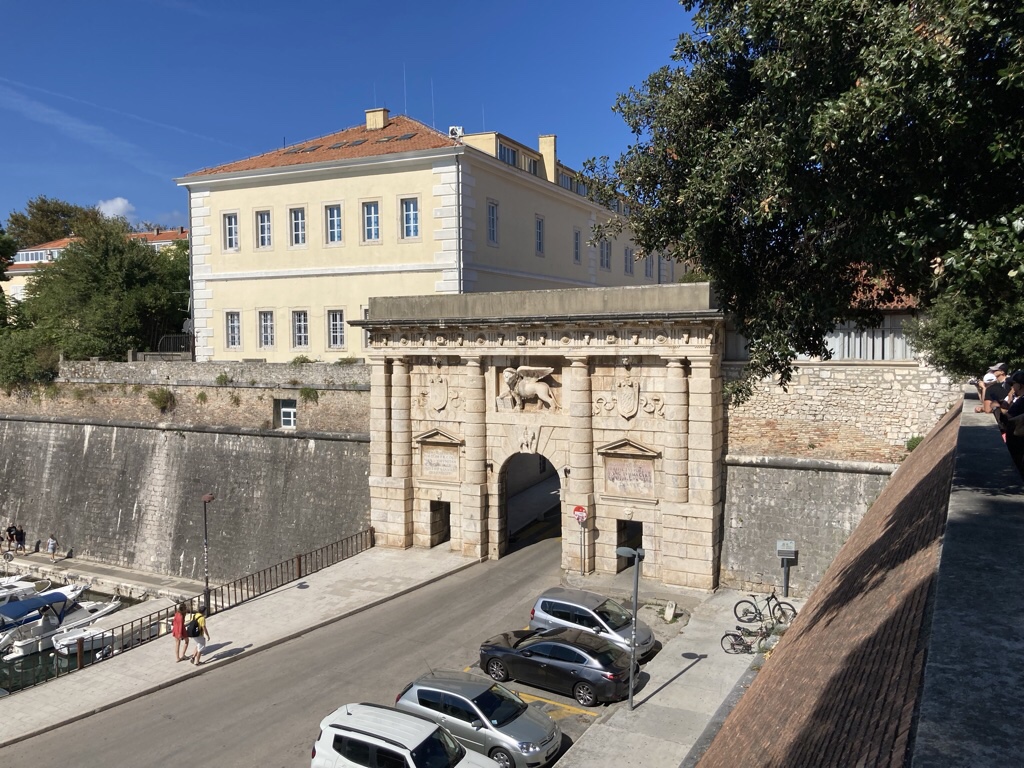
… with a view down to the Mainland Gate …

… and a harbour…

… and Trg pet bunara, a square containing pet bunara or five wells built as the original city water supply with the Captain’s Tower behind.

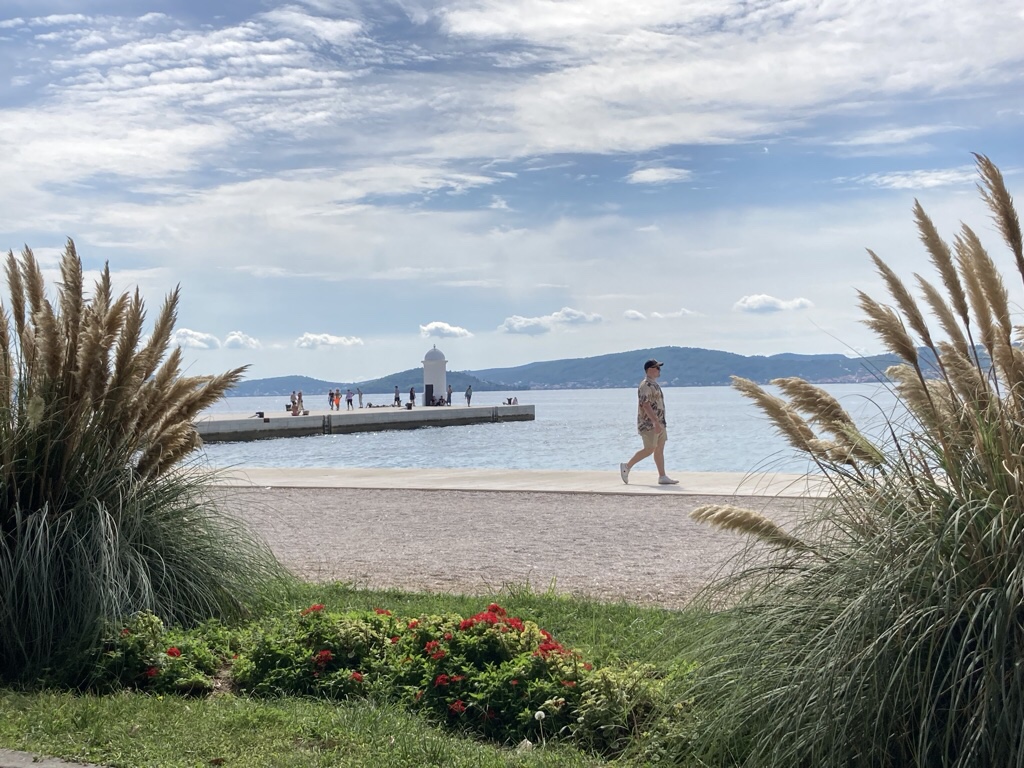
When it got a bit warm in the centre, we found the sea …

… and walked till we reached a couple of modern installations designed by local architect Nikola Bašić. We particularly loved the Sea Organ.

As the sea laps, air is pushed through the a series of pipes and set into the steps to make random, but strangely harmonic sounds, which can become louder and more strident with the wake of a passing boat.

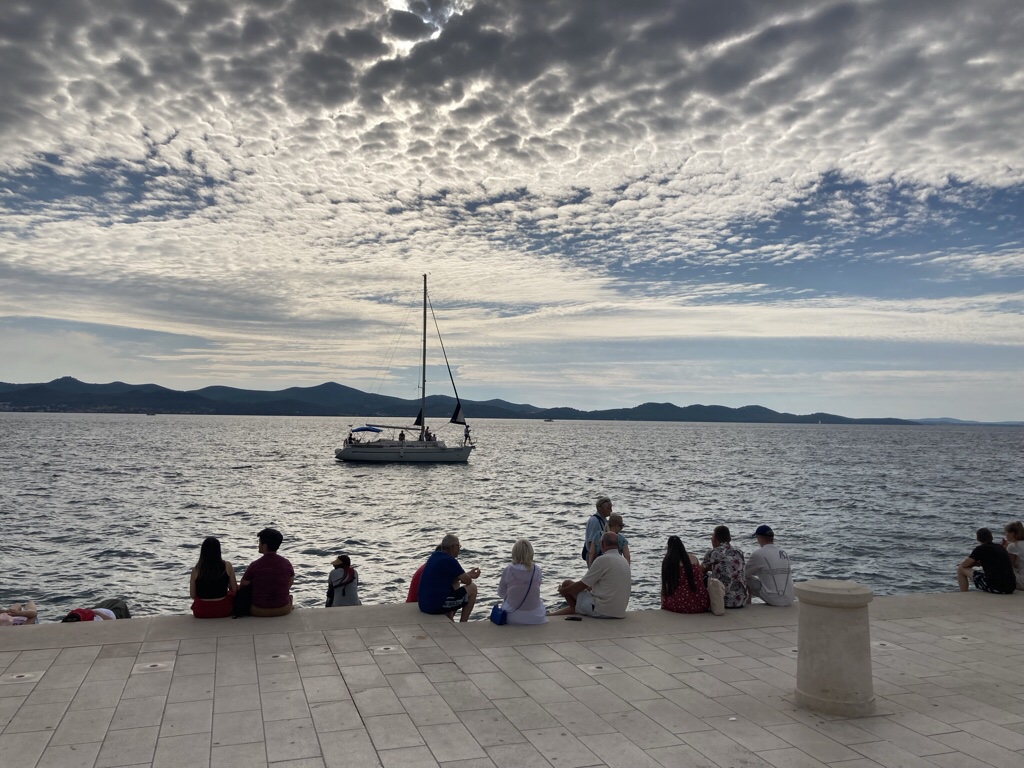
Watching the sun set in Zadar has become a bit of a thing so we returned later, as did everyone else! There’s something quite special about sharing sunset with a group of people who have come together just to watch the sun sink below the horizon …

… and the sound of the sea organ made it memorable.

To listen, click here.

Nearby is Sun Salutation, made of glass panels that capture sunlight during the day …

…which then powers its own light show – conceived as a tribute to the solar system. It also collects enough energy to power the entire harbour-front lighting system.

We had noticed a small restaurant in a courtyard tucked behind a wall called Konoba Dalmacija and we went for dinner on our last night in the city, finally getting to try blitva, the Croatian side dish of chard and potatoes which is supposed to be ubiquitous but has so far evaded us. Cooked with lots of garlic and lemon, it went perfectly with my bream, while Chris had lovely grilled veg with his gnocchi.

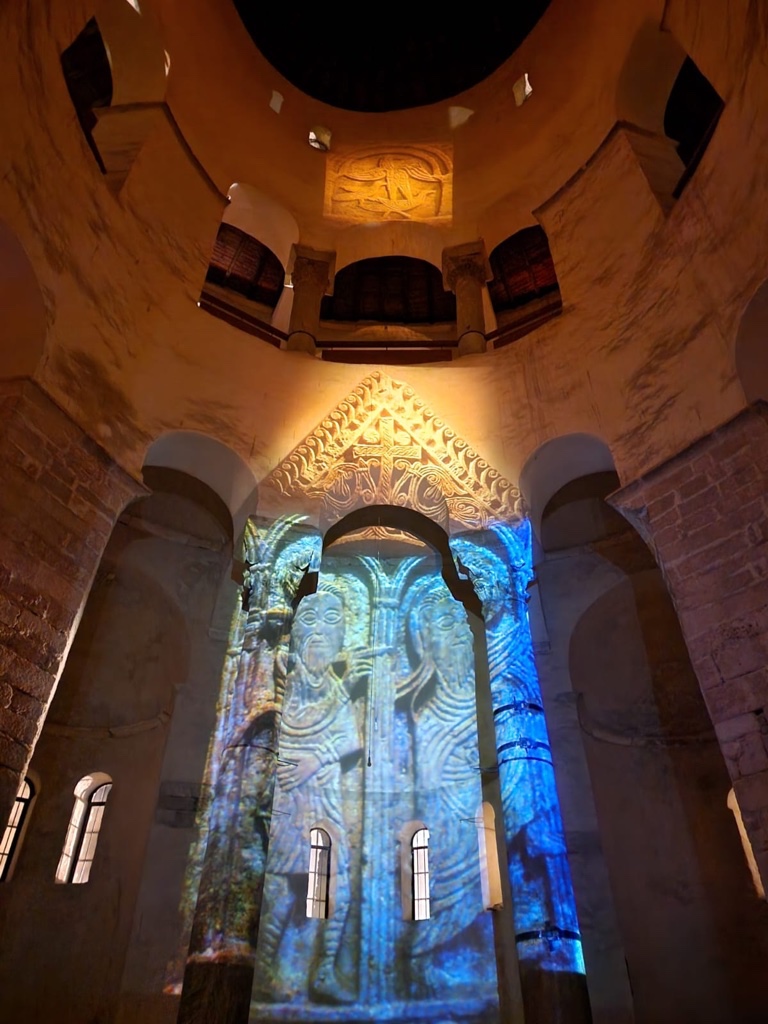
On the way back, we stopped at St Donatus to see the lightshow, atmospherically illuminating the old stone church.

The Sunday morning church bells ensured we were awake and we were on the road once more.

Map

Plitvička Jezera … a Turquoise Jewel!

The road wound its way out of one valley into another and after an hour or so we reached the Plitvička area. First we took a detour to Rastoke, a village where the Slunjčica River flows dramatically into the Korana River. I’d read it was home to a number of old water mills and worth a visit to see the waterfalls. Having navigated the less than clear map which suggested we needed a ticket to make a circuit of the village using a new bridge, we bought our ticket and walked down into Rastoke.

We stopped at this restaurant for a cold drink and to take some pictures and was glad we hadn’t been hungry when I saw the menu … I may have eaten all sorts of meat, but I’m not sure I could eat bear, especially after having just m

It became apparent that most of the old mills had been converted into private homes and holiday accommodation and although one was still active, it wasn’t possible to see inside. We managed a few snaps …

… but decided it hadn’t really been worth the detour – some you win and some you lose!

Back to Plitvička and the Mirić Inn where we are staying for three nights.

Not only do we have this lovely room with all mod cons, but we are just across the road from Angelo’s Bistro, with a pizzeria nearby.

The Plitvice Lakes National Park is the oldest and largest national park in Croatia, famous for its numerous turquoise-coloured lakes separated by tufa barriers and its series of waterfalls. The length of the water line is 9km and the drop 133m and the volume of water 30 million cubic metres.

There are two main areas, the upper and lower lakes with around 22km of trails as well as a shuttle and a boat to enable visitors of all abilities to enjoy the park.

On the first day we took the shuttle bus to the top of the Upper Lakes and followed the trail down …

… with Veliki Prštavac being by far the most impressive waterfall …

… and yes readers, we were there!

A little R&R back at the guesthouse was well deserved and I read that in 1991, the civil war actually began here when rebel Serbs took control of the park headquarters and installed barracks. The Croatian army retook the park in 1995 and facilities were restored.

Once the day had cooled, we returned. Our ticket allowed a trip across Kozjak Lake each day, so we took the electric boat across the largest and deepest lake …

… then caught the shuttle bus back to the car, and ended the day with pizza!

Next morning, we entered at the Lower lakes and were greeted with this view lit up with the morning sun.

The trail wound down and across the lake …

… to Veliki Slap, which at 78m is the tallest waterfall in Croatia …

… where everyone want a snap!

These chestnut wood boardwalks have become something of a motif of the park …

… linking the cascades …

… and I spotted a dice snake in one of the pools.

At Kozjak Lake once more, we took the boat one way and then walked the trail back …

… and ended with a climb to a higher path to take in a few viewpoints from the top …

Here we are, back at the beginning around 4 hours later, just as the sky started rumbling and the first drops of rain fell … perfect timing!

We were pleased to have started around 9.00 both mornings, not only to miss the crowds as day trippers generally arrive at lunchtime, but also as we were able to walk in the cool of the morning and avoid a huge thunderstorm! There certainly were busy sections, but it was also possible to just enjoy walking with such lovely views.

Chris used the thunderstorm to tweak his snaps and was pleased with the Olympus in built ND filters …

We had a lovely meal in Angelo‘s on the first night – a welcome schnapps and appetiser followed by grilled platters, then strudel and ice cream.

We returned on the last night and got chatting to Alison and Mark from Sydney (who live just down the road from where my sister used to live) and have just come from England visiting Windsor (just down the road from where we live) … small world! Chances are we’ll meet again as we are all off to Zadar next!

Map

On a Bear Hunt in Kuterevo

We crossed the bridge from Krk again but this time turned right and headed an hour south to the historic walled town of Senj. We are just here for one night and Barbara made us very welcome at Apartment Prpic.

It was a short walk to explore the Nehaj Fortress which dominates the town and was built in the C16th to defend against Ottoman and Venetian invasion.

It became the stronghold of Uskoks, men driven from their homes by the Ottomans who became feared for their successful guerrilla warfare and are honoured as national heroes on the Days of the Uskoks.

A wedding reception was in full swing with plenty of drinking, dancing and singing, but we were still waved inside.

The museum had lots more about the Uskoks and the roof had great views …

… and a loo!

We walked into town in time to see the sun set and then had mussels and pizza for dinner.

Next day, we had a slow start then breakfast pastries from Mlinar, a bakery chain with a store in every town, which we ate sitting on the harbour.

Leaving Senj and the Kvarner Gulf behind, we turned inland to the region of Lika which covers a swathe of the Northern Dalmatian interior. There’s a mix of farmland, forests and craggy uplands in a limestone landscape which also contains caves, lakes and waterfalls. As we climbed upwards, the views back to the coast were great.

An hour later, we bought our ticket for the Velebit National Park so we could visit the Velebit Botanical Garden. We weren’t sure what to expect, but after 7km drive along a gravel road to a car park and a 15 minute walk past a small chapel …

… we reached this beautiful alpine meadow 1480m above sea level.

There are some 300 species of plants here and most had finished flowering, but after a picnic admiring the view …

… I walked the short circular trail to see what I could find while Chris took photos.

Afterwards, we went on to the Butina Guest House in the village of Kuterevo where we are staying for two nights.

Dubravka and Tomas welcomed us into their home with shots of a homemade fruity liqueur and some bread and cheese then showed to our very cute studio with gingham trim and even a balcony.

Meals are served in the open sided barn with wooden furniture and rustic decorations and quite a few bears!

Communication was a little sketchy and there wasn’t a written menu, but we managed fine with a little help from google translate and dinner was great, a veg platter for Chris and a local trout platter for me with plum fritters for dessert.

Breakfast was another feast …

… and then we went for a walk into the village, taking pics and just enjoying the view …

… but also keeping our eyes peeled for bears …

… and reminders that Kuterevo is home to a bear sanctuary came thick and fast!

Kuterevo has been welcoming international volunteers since 1978 and the Bear Refuge was founded in 2002 with helpers still coming from all round the world. Andjela was knowledgable and enthusiastic and answered all our questions.

There are around 1000 brown bears left in Croatia and while we didn’t see one, the Refuge keep track of numbers and there are 15 females living in the area and here is a poo sample found the day before, showing they’ve been eating the red dogwood berries that are abundant right now.

The refuge has 9 bears at the moment, 3 came from zoos and the rest were orphaned young and cannot survive on their own in the wild. They live in three enclosures, one for the younger bears, one for older bears and the last for the oldest female who was born in 1984.

The enclosures were all large, with plenty of vegetation. They are fed corn, bread and seeds which are sprinkled over areas of dry sticks so they can forage for it as they would in the wild, and they are surrounded by the mountains. They all look in good shape, and while it might not be ideal, it’s a lot better than where they came from.

There is no entrance fee, but we left a donation and actually visited twice, returning early evening when it was cooler and the bears were more active when Chris snapped these two.

Back to the guesthouse, we had another great dinner, this time vegetable risotto served with grilled cheese for Chris and chicken fillet for me. Dubravka brought us walnut liqueur to finish, homemade by Tomas and very delicious.

Before we left, I couldn’t resist the shelf of little bears, no doubt whittled by one of the family and chose a couple that will easily fit in the suitcase and remind us of our visit.

We were also sent on our way with gifts of quince preserve and a huge bunch of the sweetest dessert grapes and felt sad to be on our way … but the lakes are calling!

Map

Zipping round Krk

Another day, another ferry but well before we reached the port, the queue of vehicles snaked down the hill before us and we wondered if we’d get on! In the end, they laid on an extra sailing to cope with demand and we relaxed as we said farewell to Cres.

Only 20 minutes afloat and we arrived on the island of Krk and drove to the main town of the same name, entering the old town through the Mala Vrata or Small Gate.

From the early part of the 12th century, Krk was ruled by a succession of Croatian counts, whose power and influence rose considerably over the next few centuries. The main noble family during this time were the Frankopans who built the castle which stands on Kamplin Square.

Here’s Vela Place with the Torrion which once housed the town hall and courtroom and a well with a plaque to St. Quirinus, the town’s patron saint.

Krk Cathedral is the most recognisable building of the town, a mix of Romanesque, Gothic, Renaissance and Baroque styles on a C5th Christian basilica built on the site of Roman thermae! It has been heavily restored, noticable in the mixture of capitals.

… and building work continues …

… so finding an angle for the photo across the harbour without the crane was a miracle!

There are various Roman bits and pieces here including a mosaic which was closed and remains of the temple of Venus cleverly incorporated into a sportswear shop.

As we walked back round the harbour, we spotted glass bottom boats, cunningly disguised as submarines, maybe in a bid to make them look more exciting!

We could have lingered, but after running out of time for a dip yesterday, the beach is calling this afternoon! We drove across the island to Baska which is famed for the Baska tablet, found here in 1934. The stone dates to the C11th and is written in Glagolitic script, recording King Zvonimir’s donation of a piece of land to a Benedictine abbey and how the church was built by the abbot and nine monks.

This huge statue stands at the entrance to the valley, overlooking the town below.

It is the first of the Baška Glagolitic Path, made up of 34 stone statues displaying the letters of the Glagolitic alphabet have been placed in a trail to lead visitors to historical and cultural points of interest. Naturally, it is the letter A.

Today there is a replica at St Lucy’s where it was found. Unfortunately, the church was closed, but here is a snap of the plaque and the other letters we spotted.

We are staying at Pension Burin, a small family run restaurant with rooms where we swiftly checked in …

… before walking down to the beach. It was busy …

… but we found loungers by the edge of incredibly turquoise sea.

The breakers were pretty fierce and we were pleased to have packed our shoes to save our feet from the stones. Chris paddled and did actually swim properly too!

Later, we had sundowners and I can recommend the local white wine, made from Žlahtina grapes grown on Krk.

Next morning we drove back to the beginning of the valley for a bit of an adventure.

We love a zip line and have been on several during our travels and couldn’t miss this one, especially as it will give us mountain views without the hiking!

We were in a group with 8 young men and a couple of intrepid youngsters with their dad and were taken to the top of the mountain in the minibus.
A quick training session and we were good to go.

Here is the starting block …

… and looking down!

There were 8 separate lines of different lengths and speeds so plenty of opportunity for snaps …

… and just admiring the views.
The longest lasted a minute and was 700m long and the fastest was around 70kph if you didn’t use the brake! Whizzing through the air was amazing and the views were stunning so thanks to Angelo and Donj of Zip Edison who were great.
Our last stop on Krk was the pretty town of Vrbnik where we stopped for a well deserved coffee break before driving back to the mainland.

Map