Blog

A Bit of Belgian Waffle …

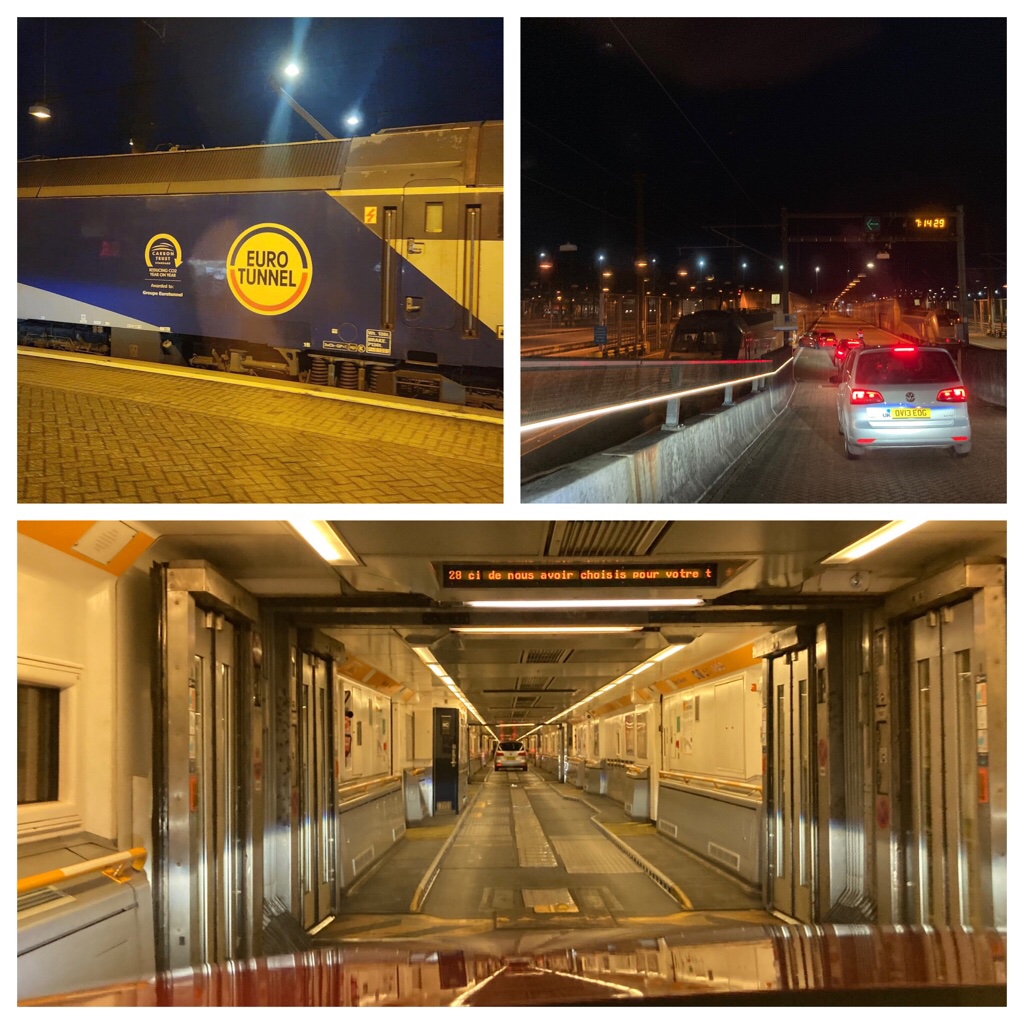
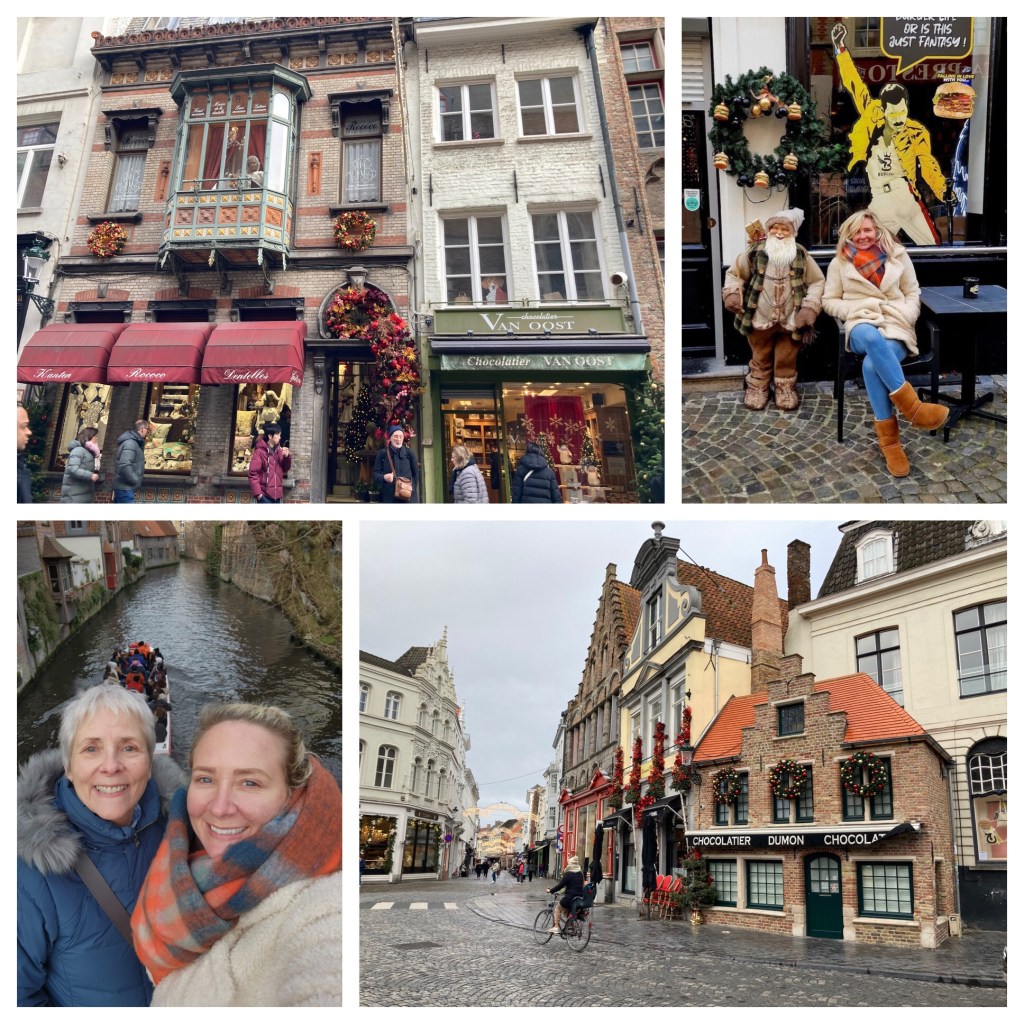
We weren’t sure what to expect, but unsurprisingly the shuttle terminal is like motorway services, an airport and ferry terminal all in one!

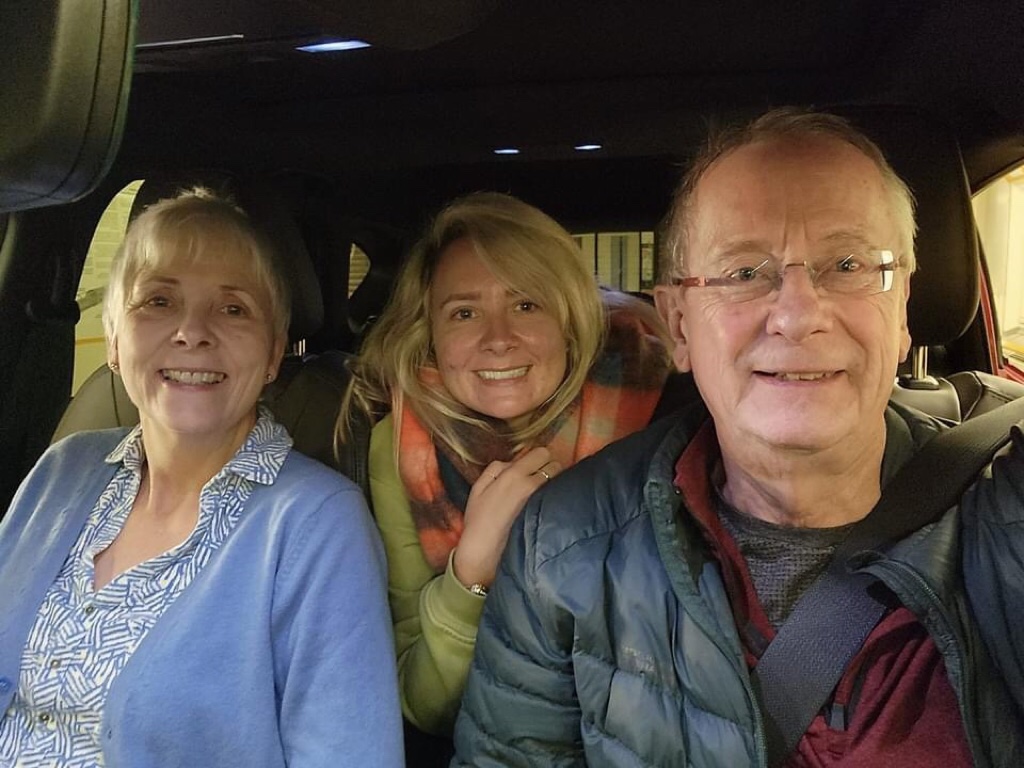
We arrived in plenty of time and were offered the earlier train so by 7.30 we were aboard munching breakfast sandwiches in the car as the train set off.

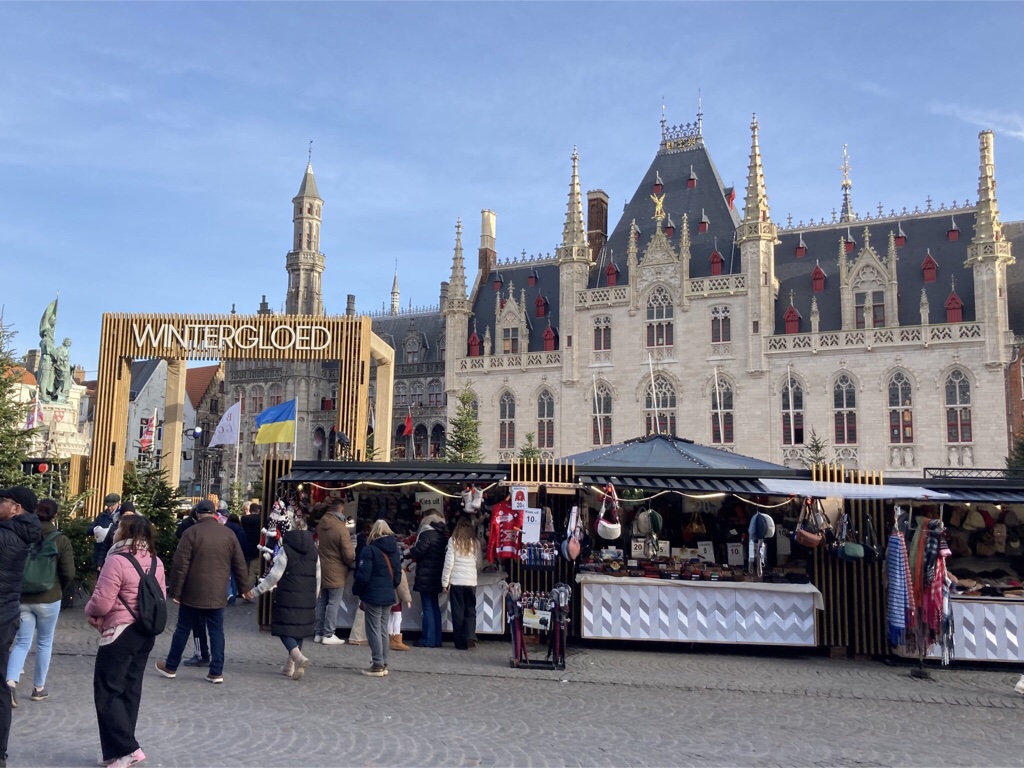
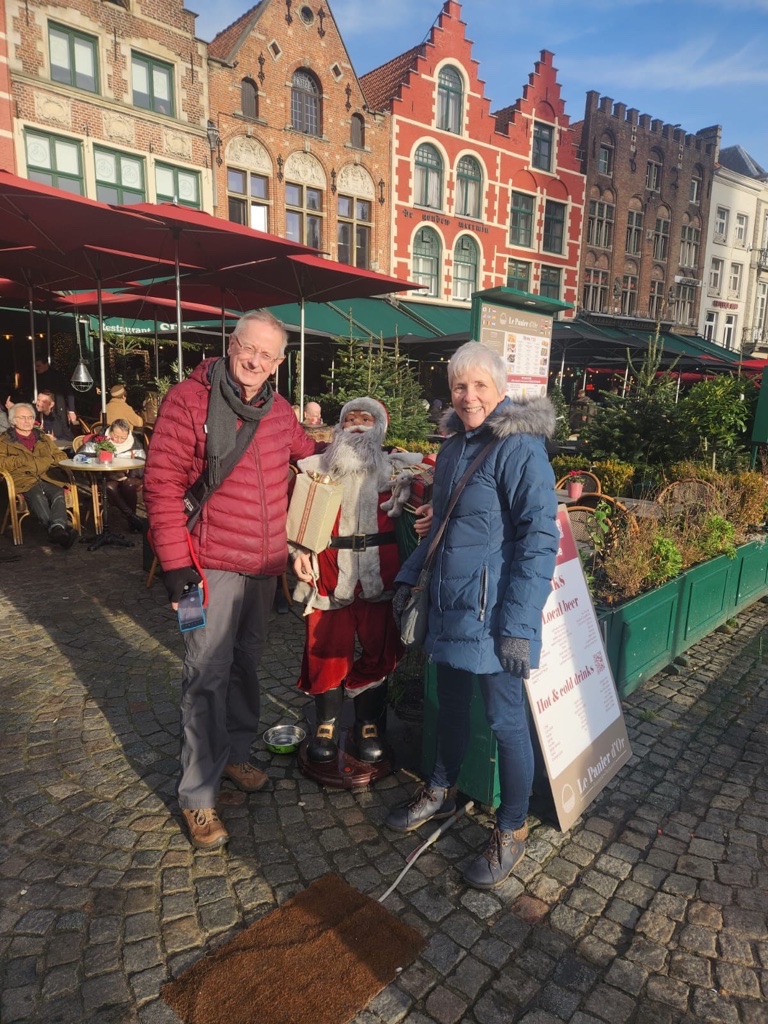
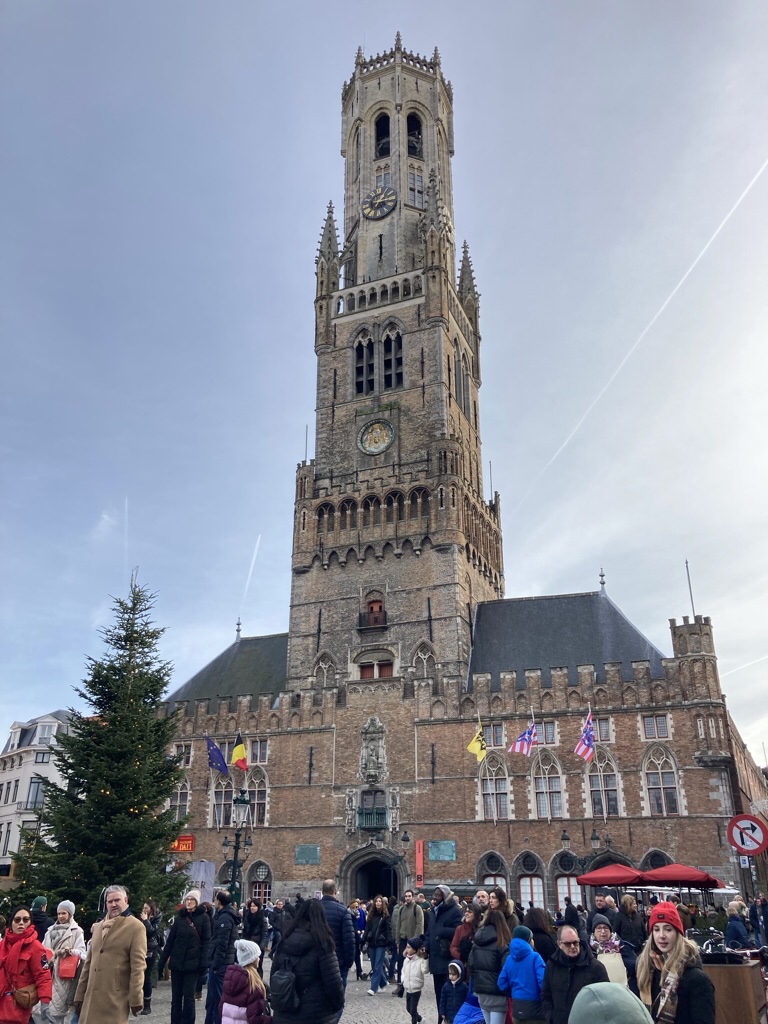
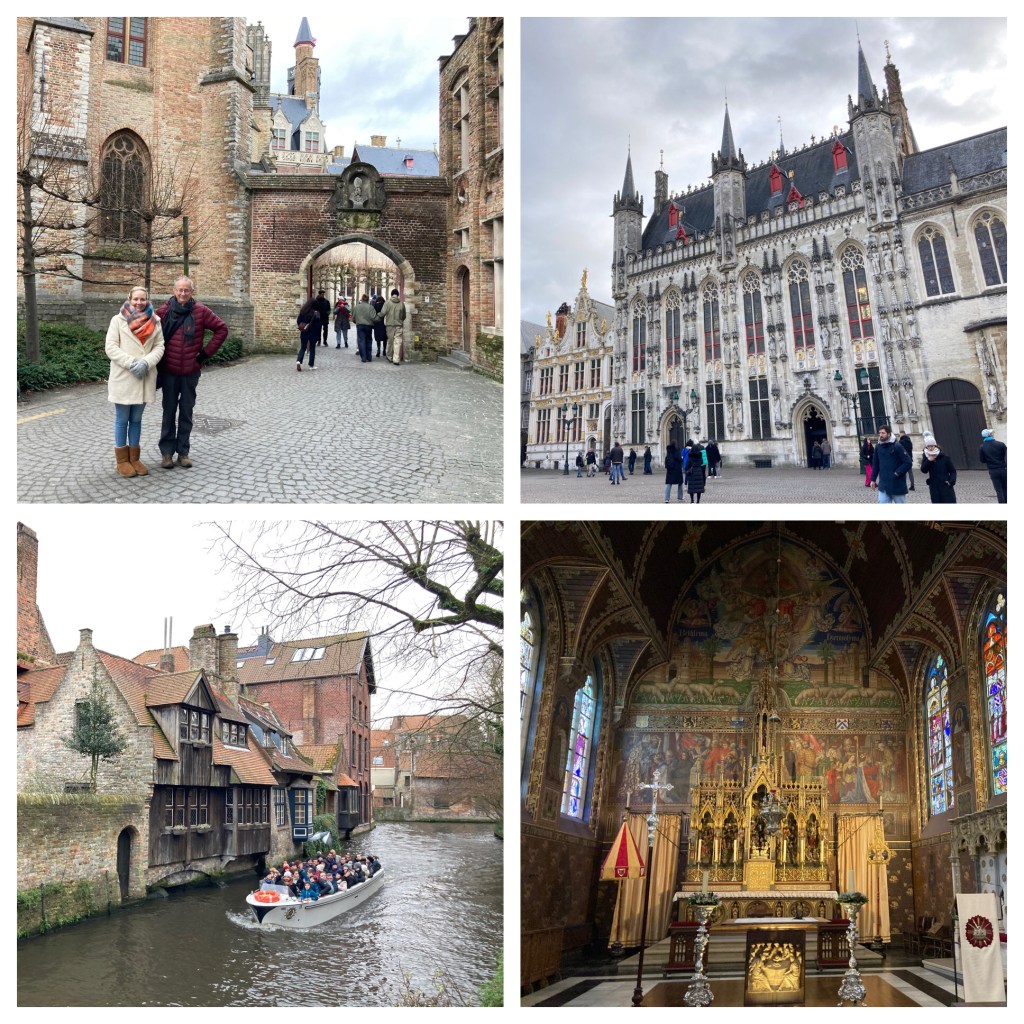
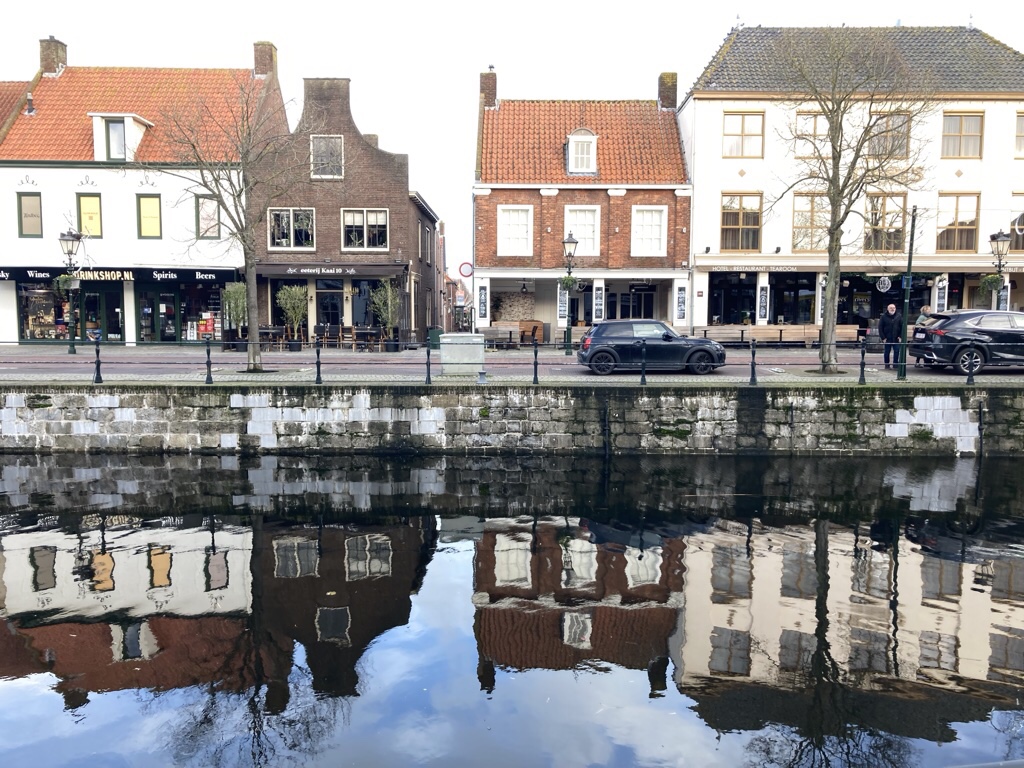
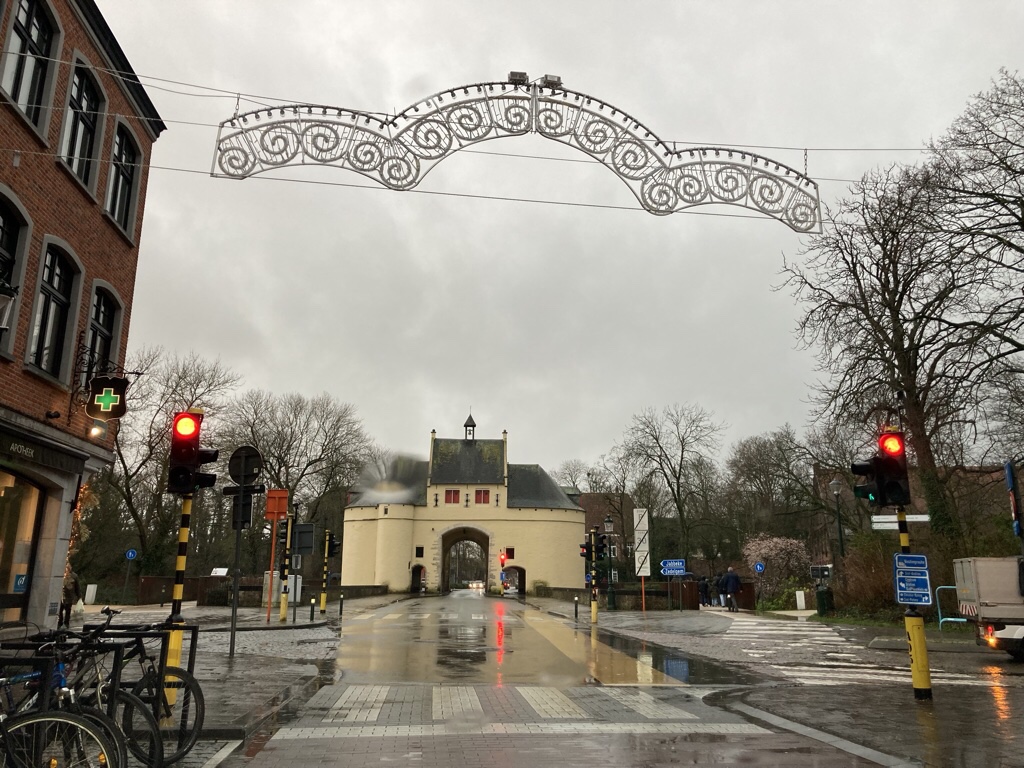
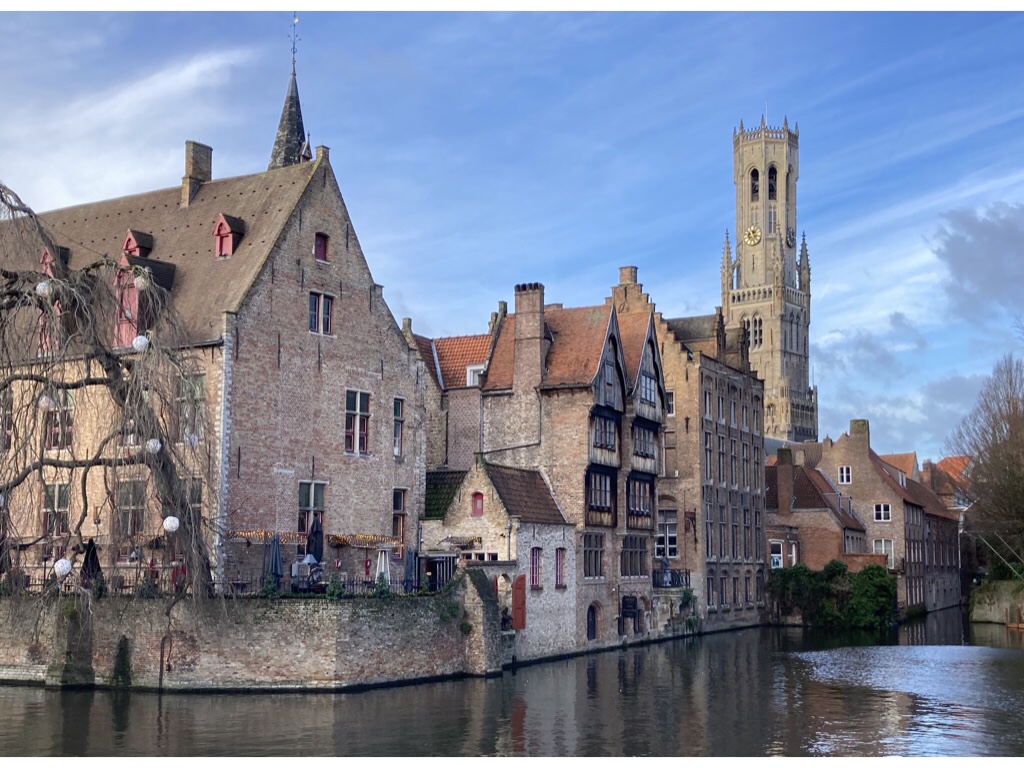
In less than half an hour we were in France, and then on to Bruges. We stayed at Hotel Maraboe, just a few minutes walk from the centre and after taking a turn round the square …

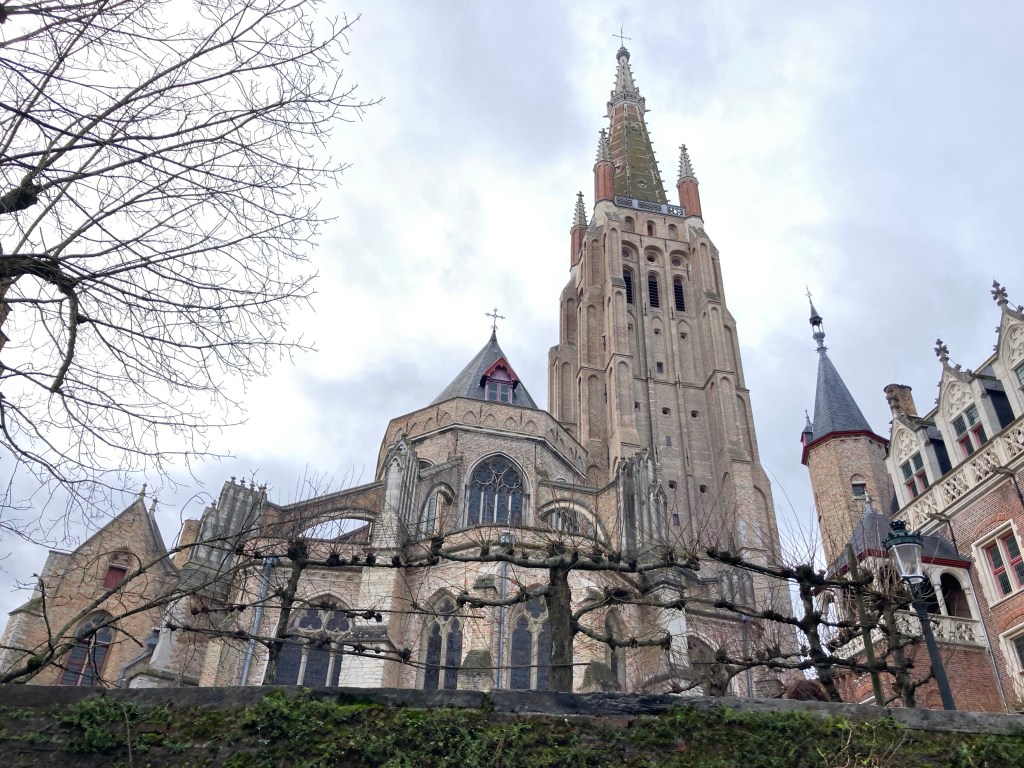
… complete with impressive belfry …

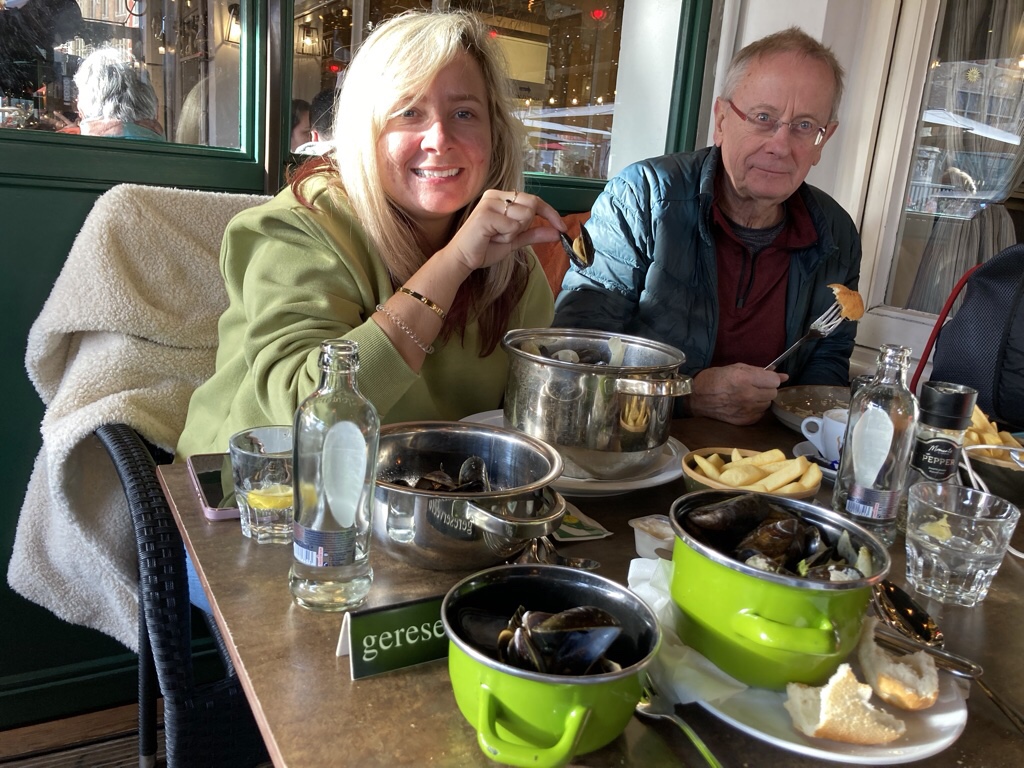
… Joanna and I tucked into our first bowl of mussels!

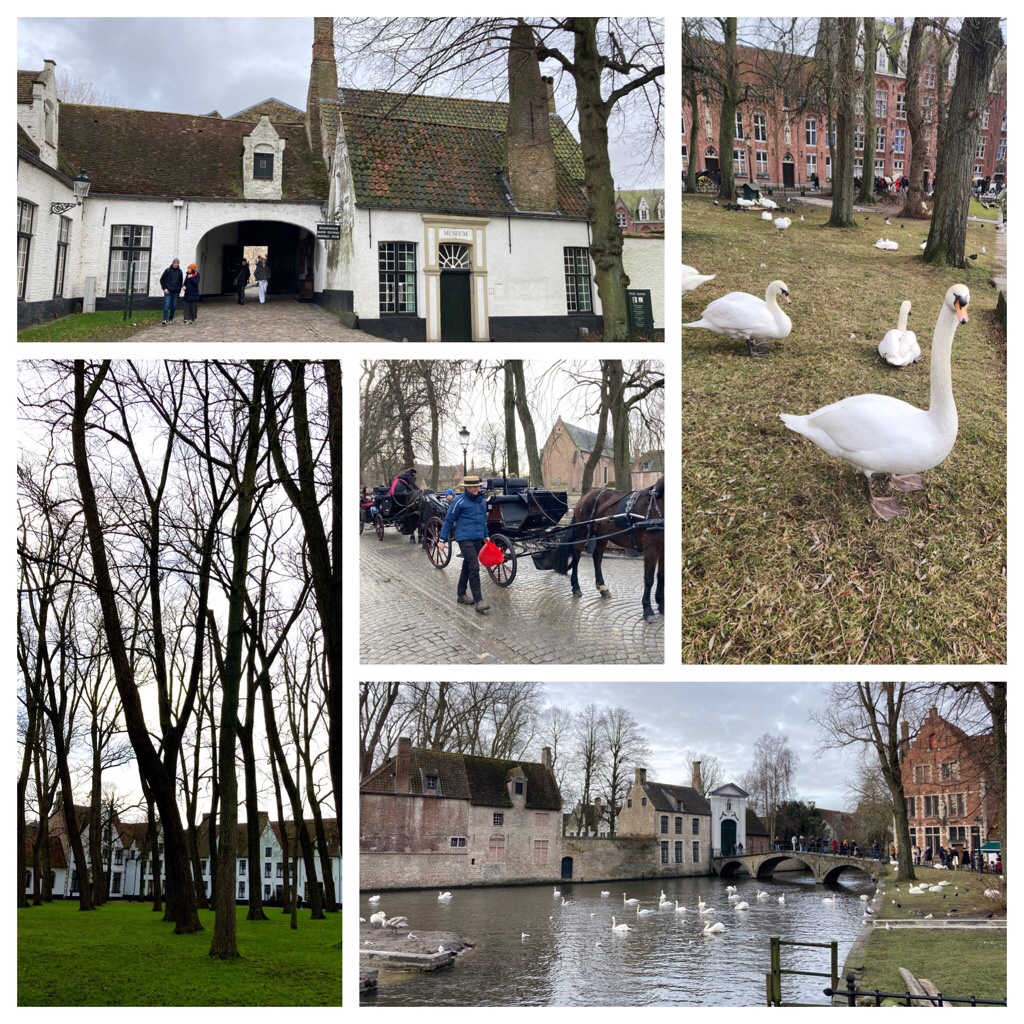
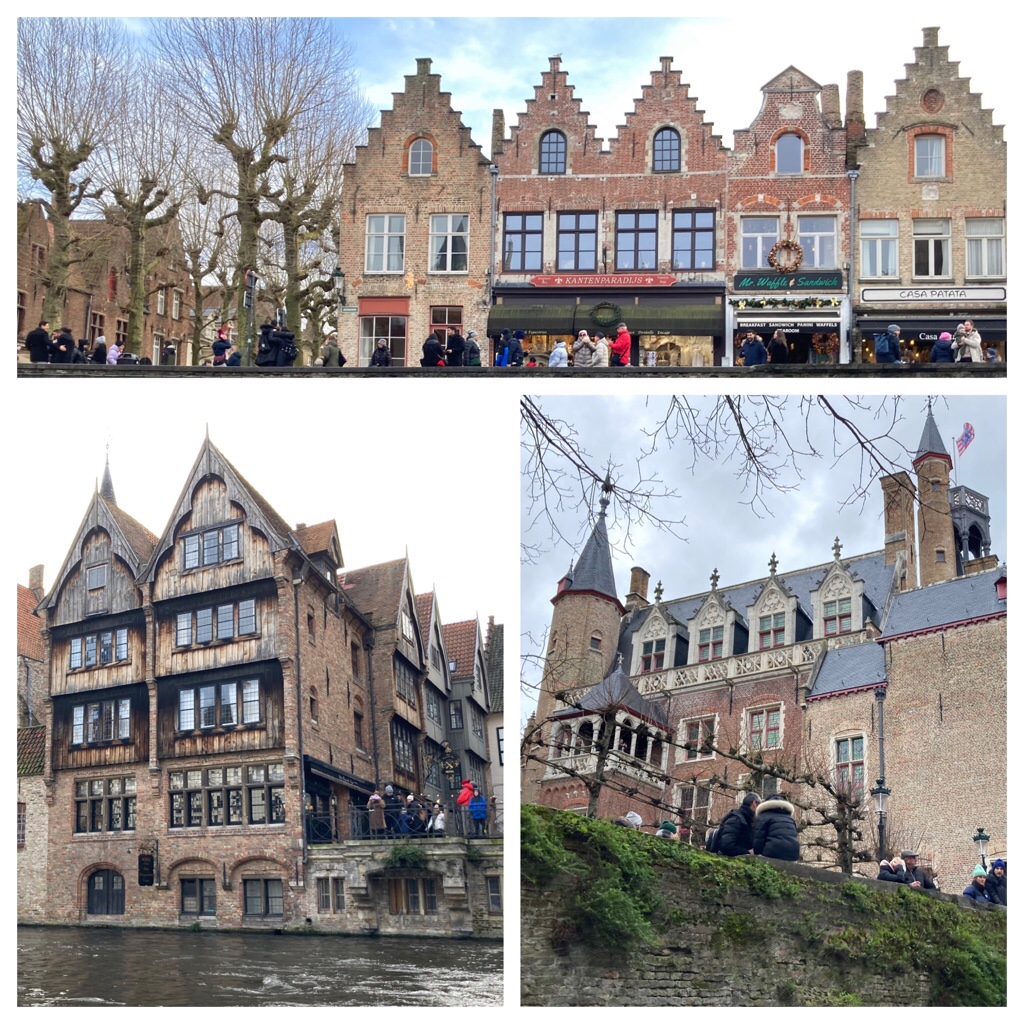
The weather was certainly mixed as we walked round the medieval streets and parks …

… and along the way, we ducked into museums to dodge the showers!

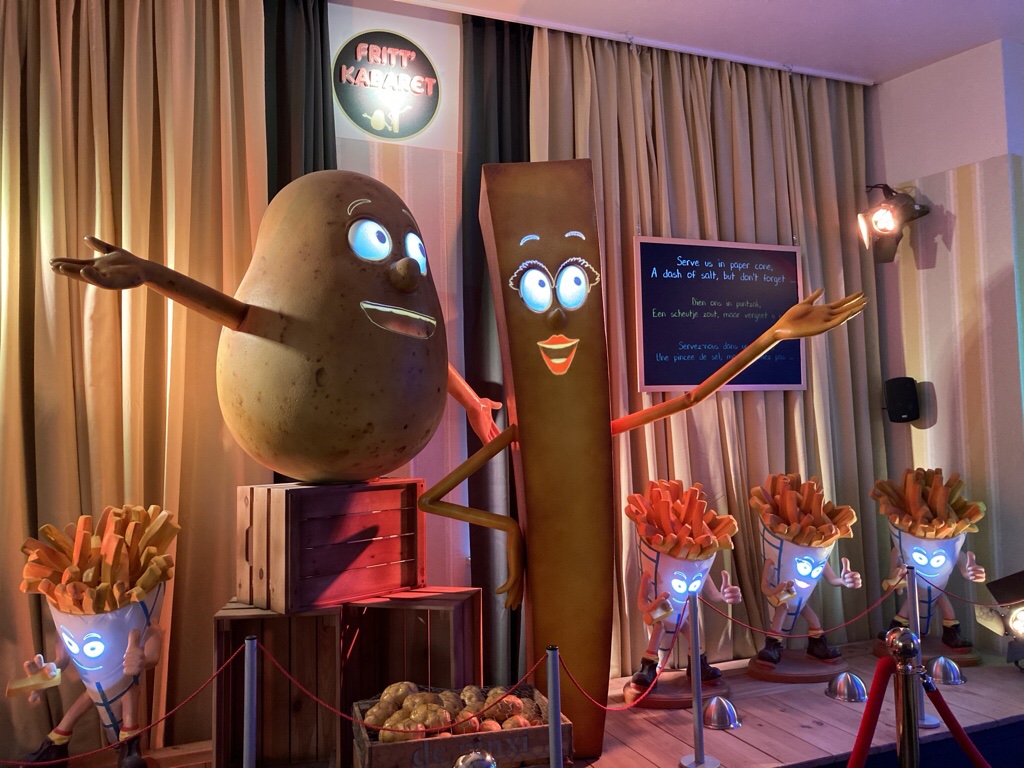
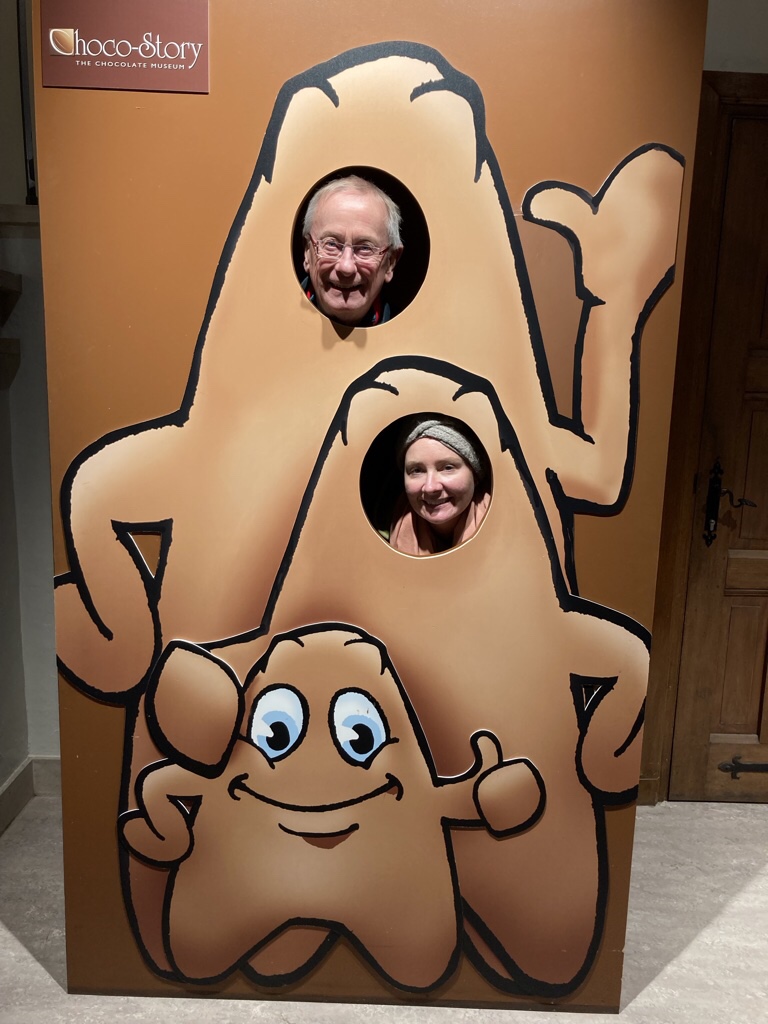
The Frietmuseum and ChocoStory were very welcome stops, interesting and with tasting samples, although Chris was disappointed to learn that Belgian frites are traditionally cooked in beef fat so he’ll have to take care! The similarity between a waving potato and a waving cocoa bean was also noted!

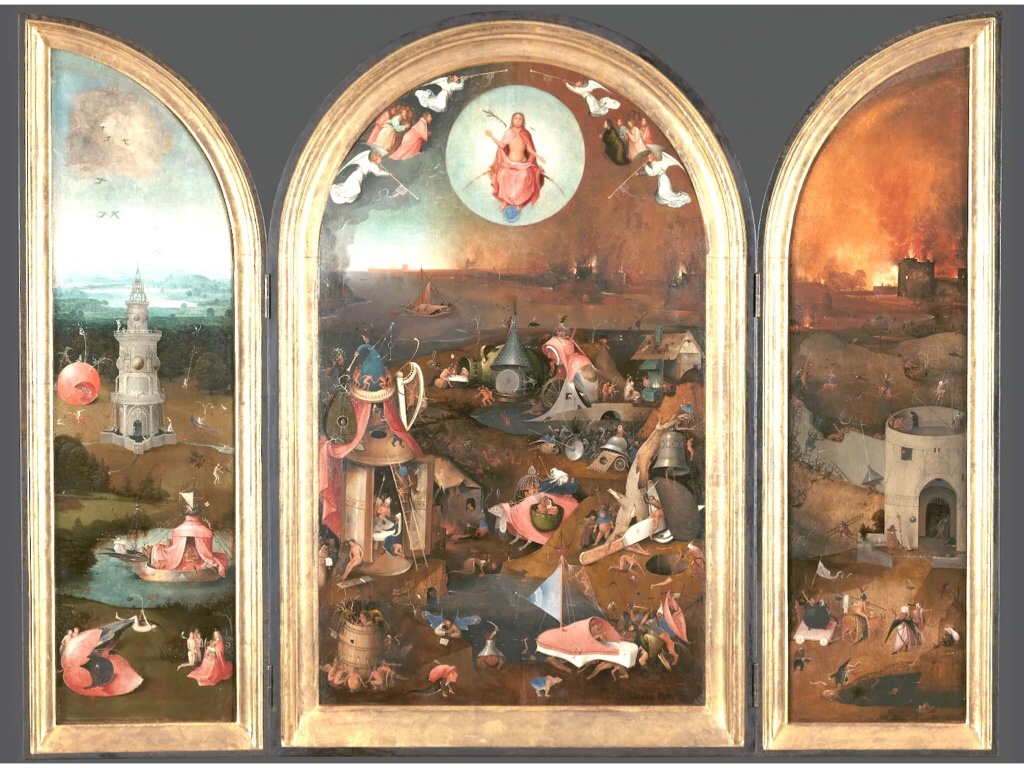
We even took a turn round the Groeninge Museum where Hieronymus Bosch made the biggest impact on Joanna, with his quirky vision of the Last Judgement.

With picked a dry spell to take a boat trip round the canals, interested to see the city from another perspective was lovely.

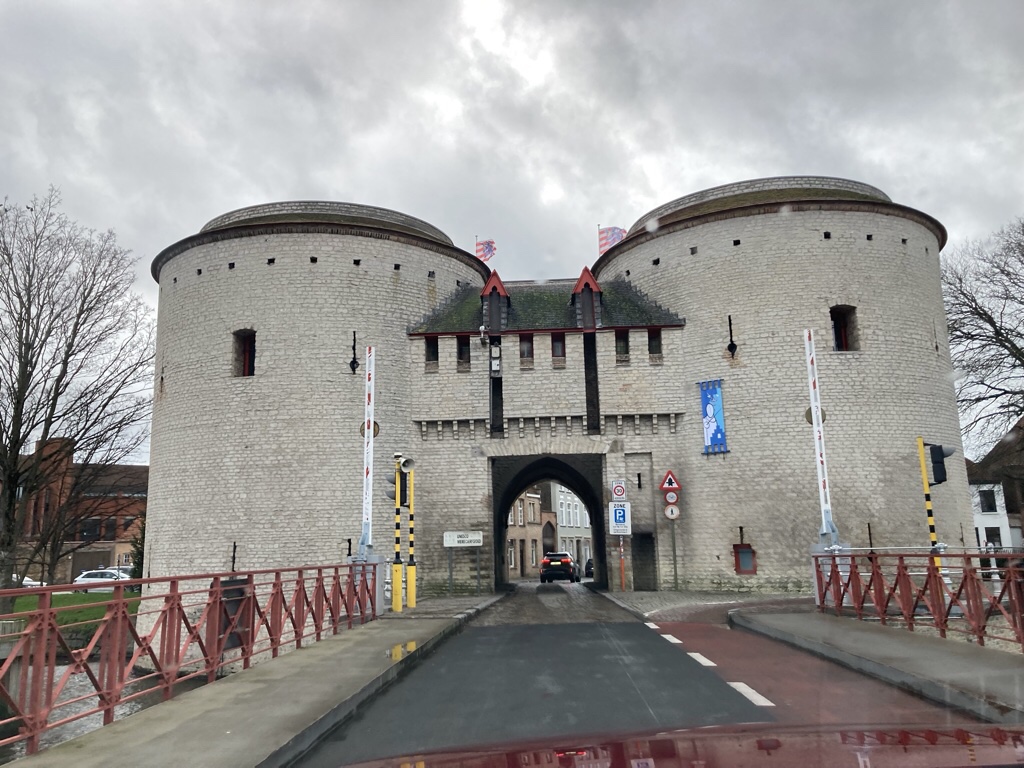
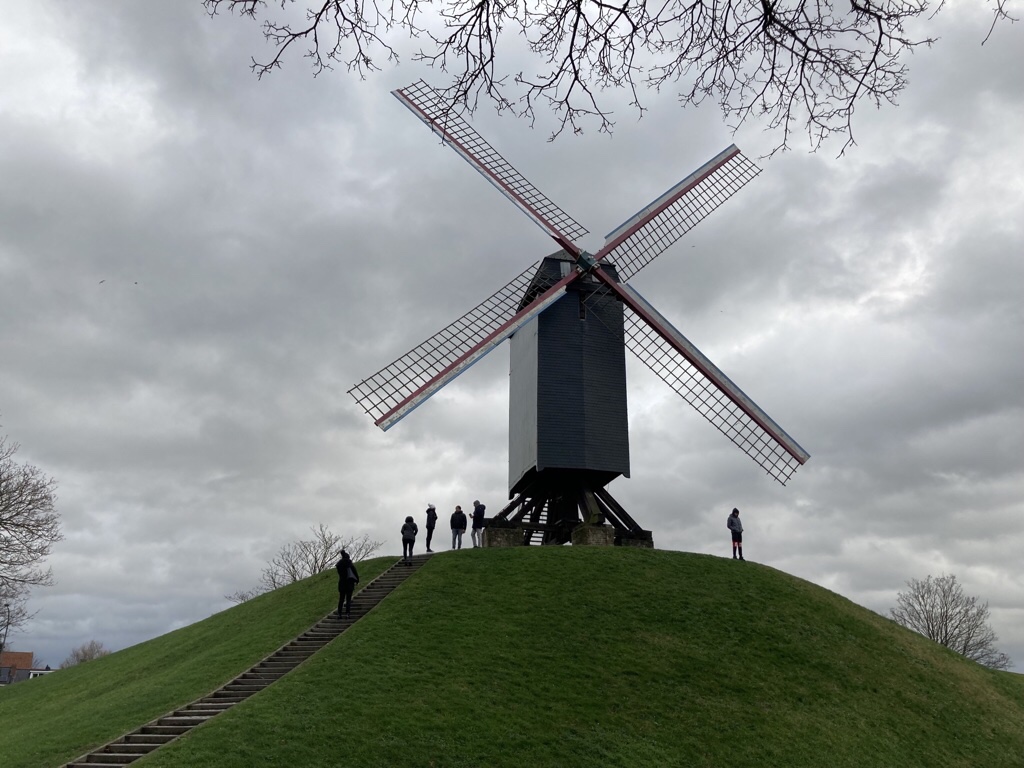
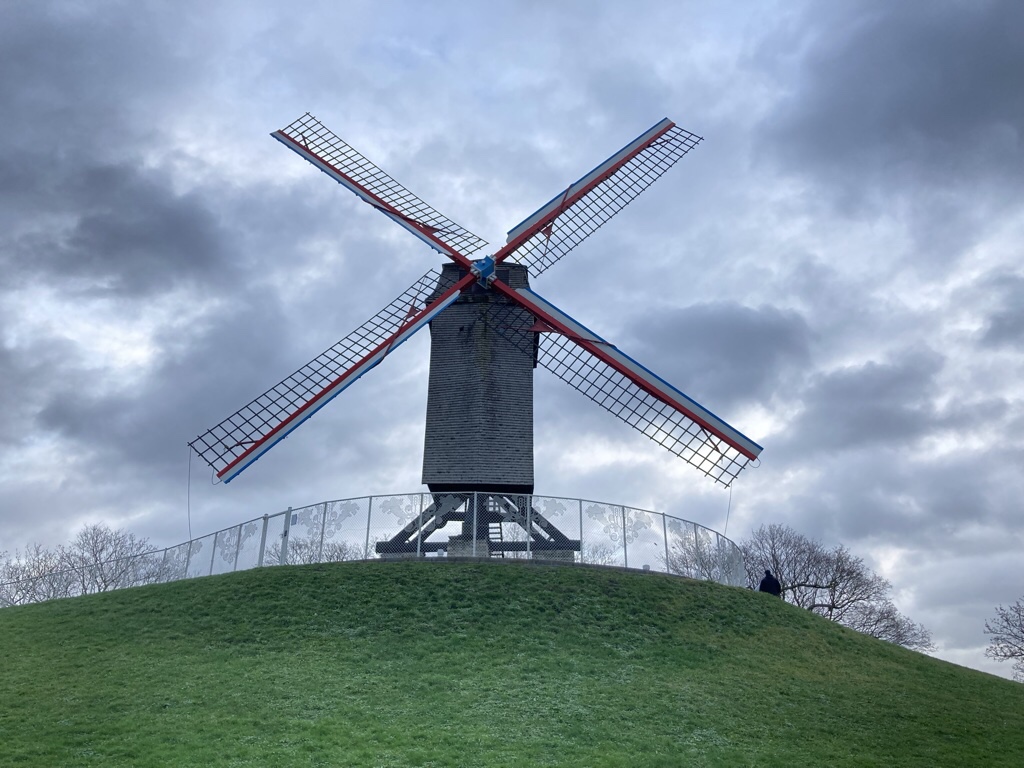
Late one afternoon, we made our way to one of the town gates, where a couple of windmills looked quite atmospheric against a moody sky.

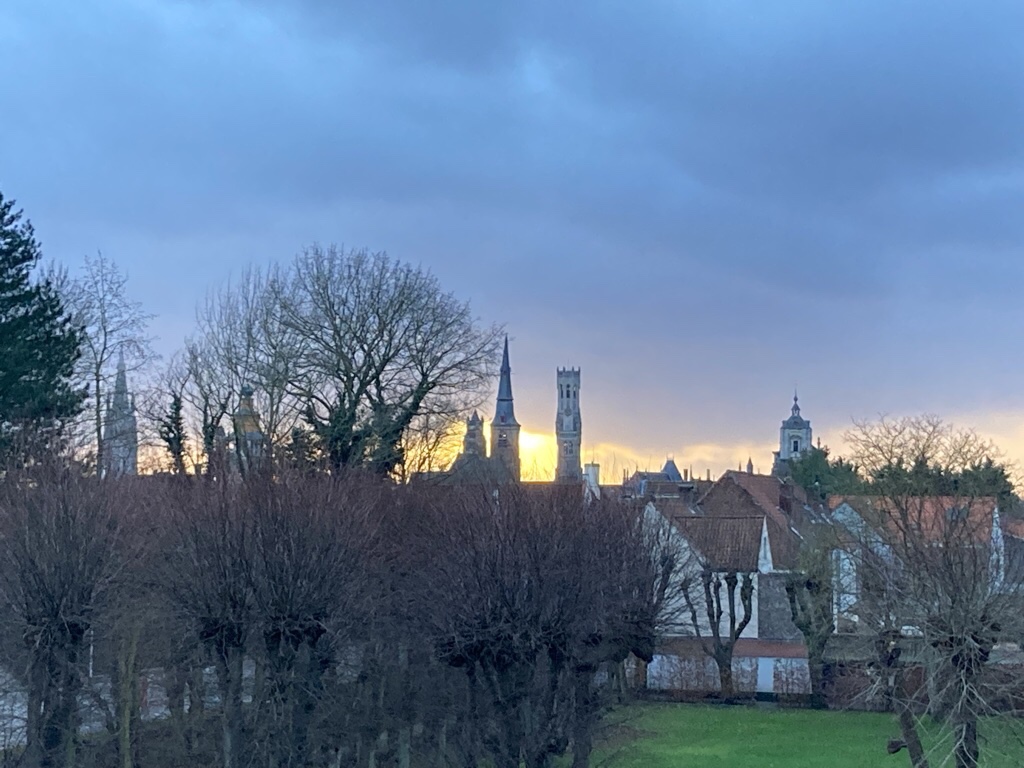
… and we saw the city skyline against the setting sun.

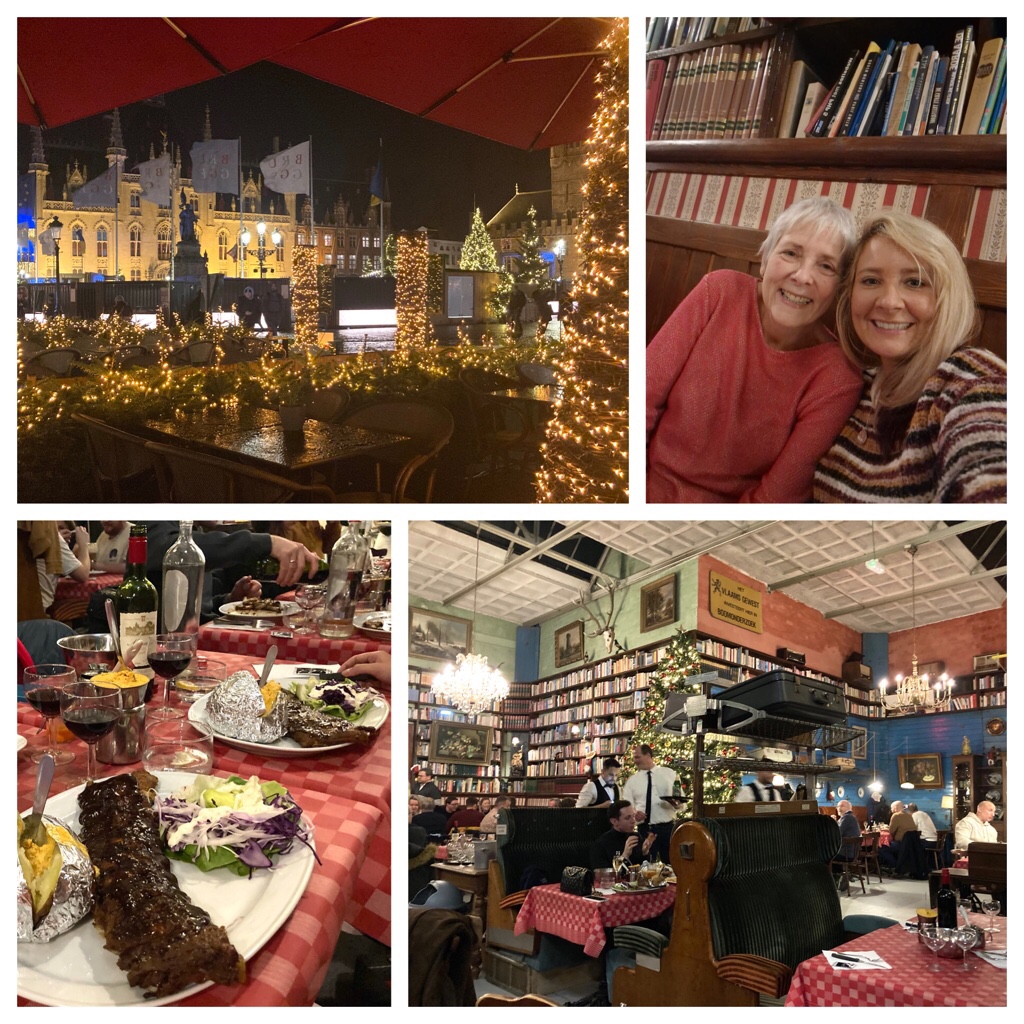
Expecting New Year’s Eve to be busy, I had booked a table for dinner but on arrival found I’d booked at the Brussels branch by mistake! Luckily there was a cancellation and they fitted us in later.

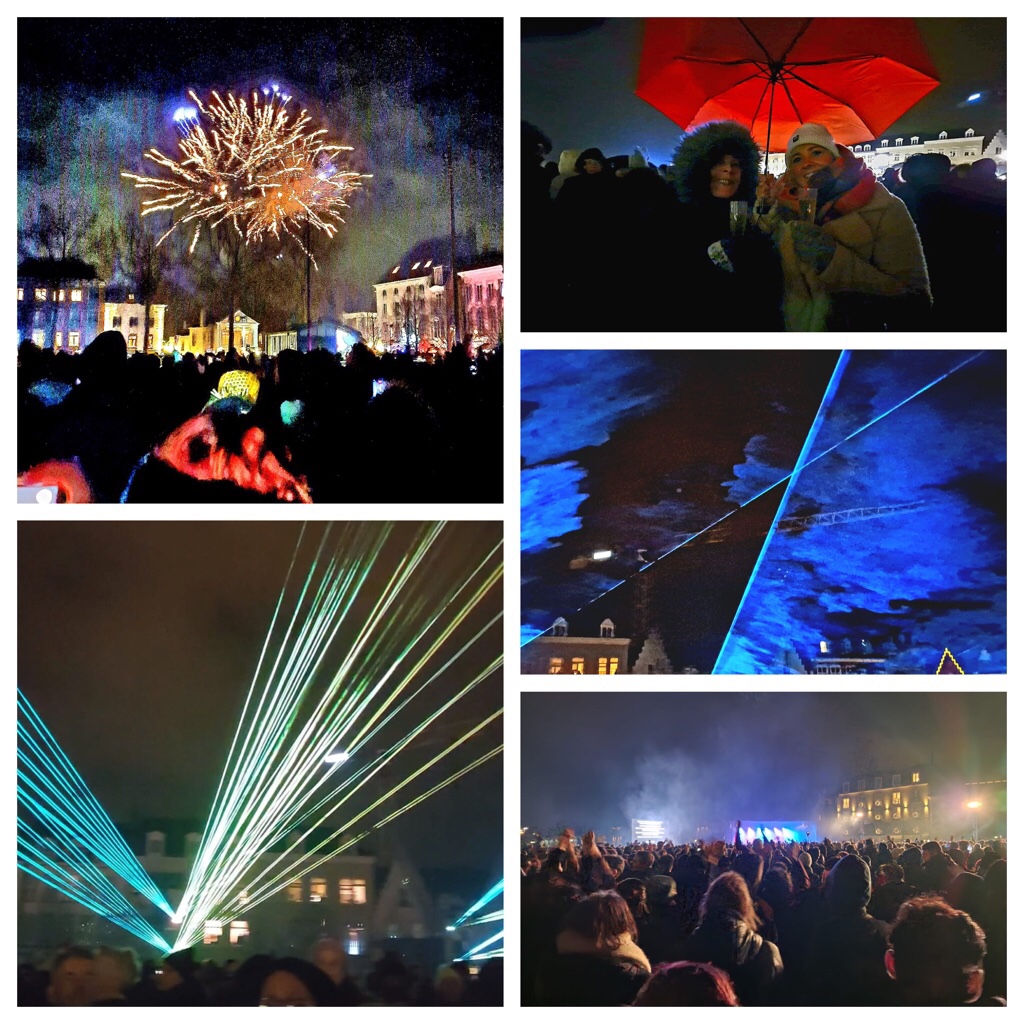
After huge plates of sticky ribs and a lovely homemade veggie tart for Chris, we walked back to the hotel, put on an extra layer and went to ‘t Zand square across from the hotel which was filling up with people. The rain stopped as they played popular singalong tunes and there was a countdown at midnight.

Fireworks and a laser show followed and we reckoned most of Bruges had turned out to join in and celebrate.

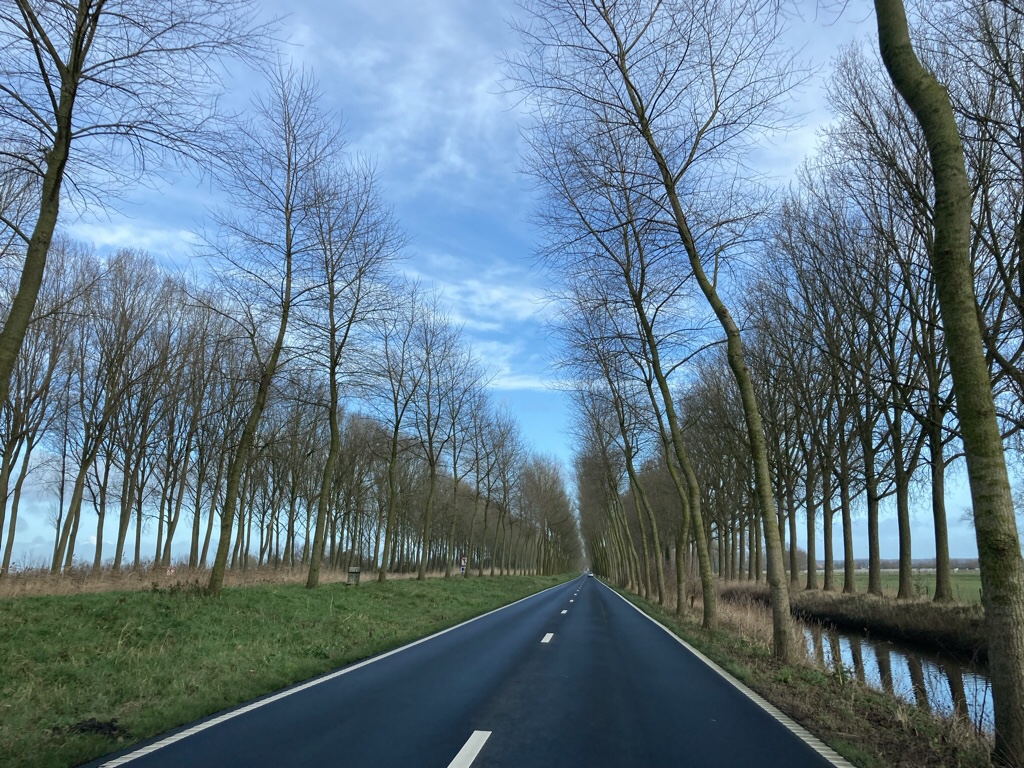
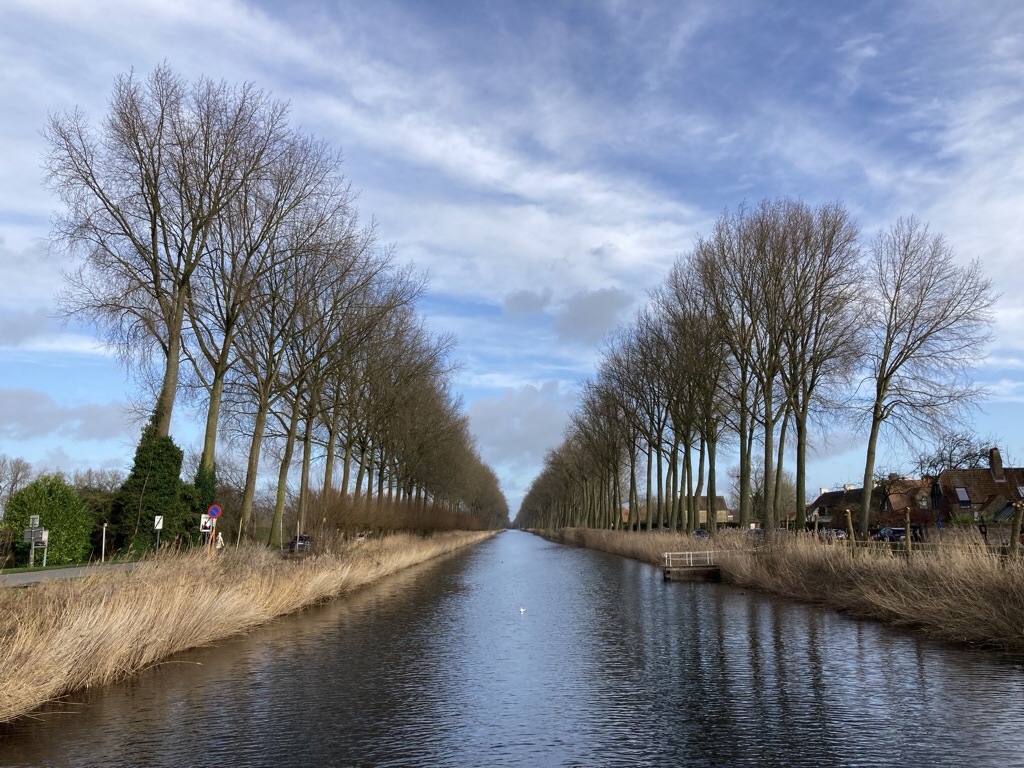
On New Years Day, we knew most places would be closed, at least until lunchtime and had prepared by buying a lovely chocolate brioche loaf from the baker the day before which was a perfect start to our day. We were taking the chance to explore further afield and decided to nip to the Netherlands for lunch! We enjoyed driving through the landscape of polders and canals …

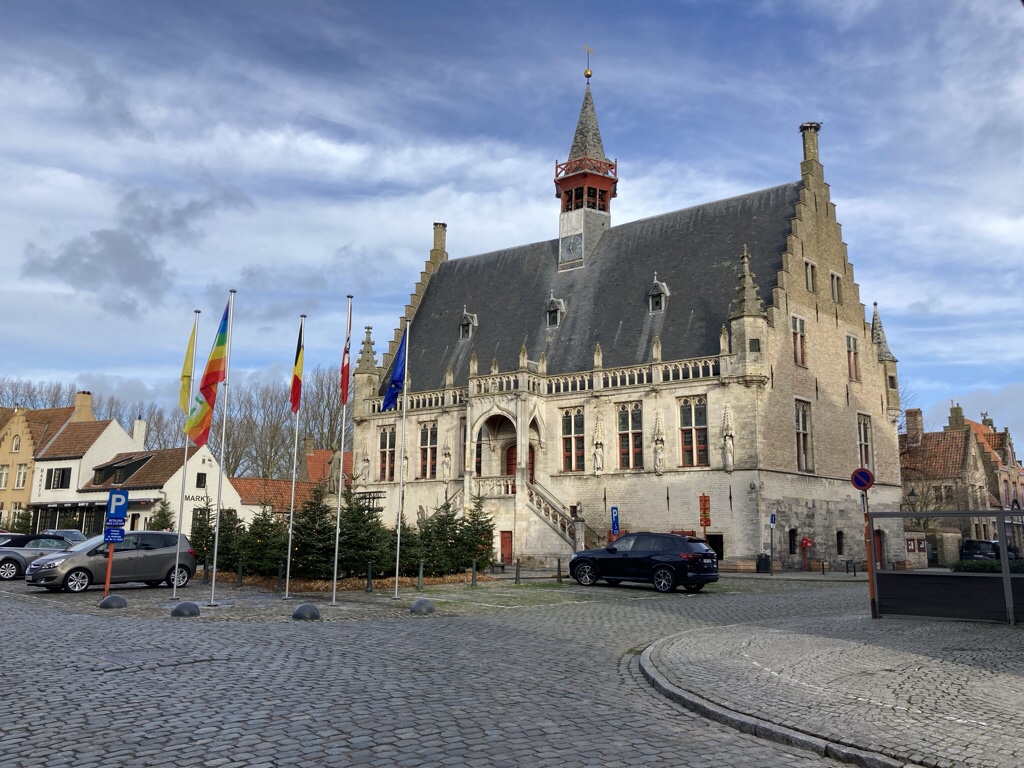
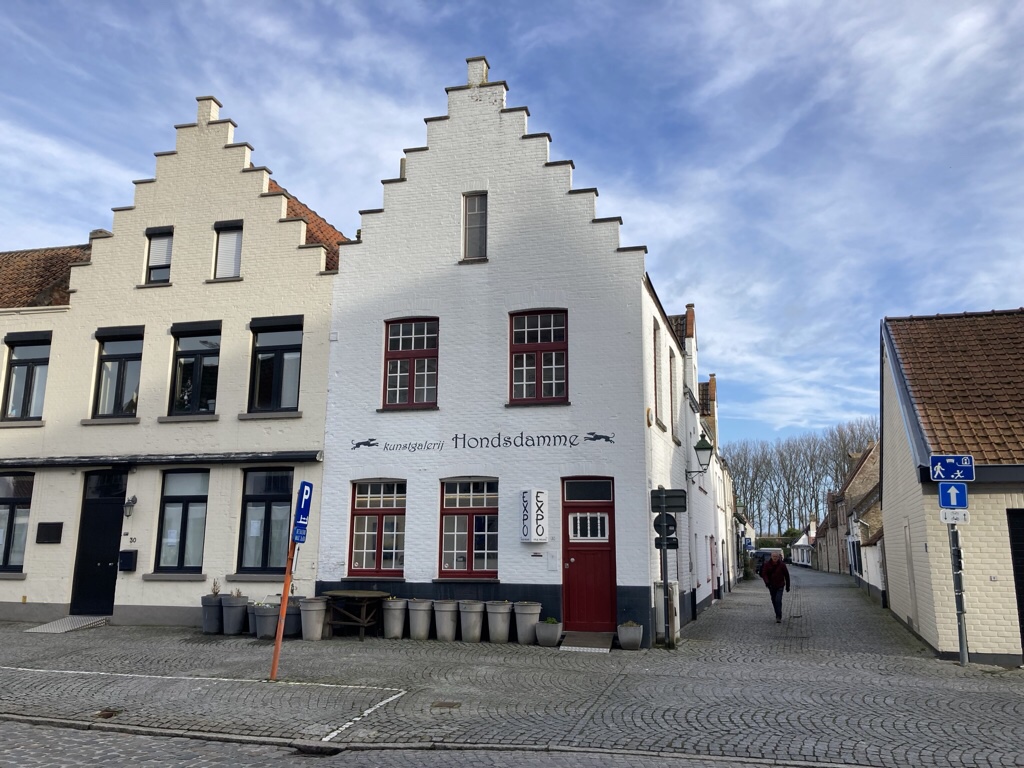
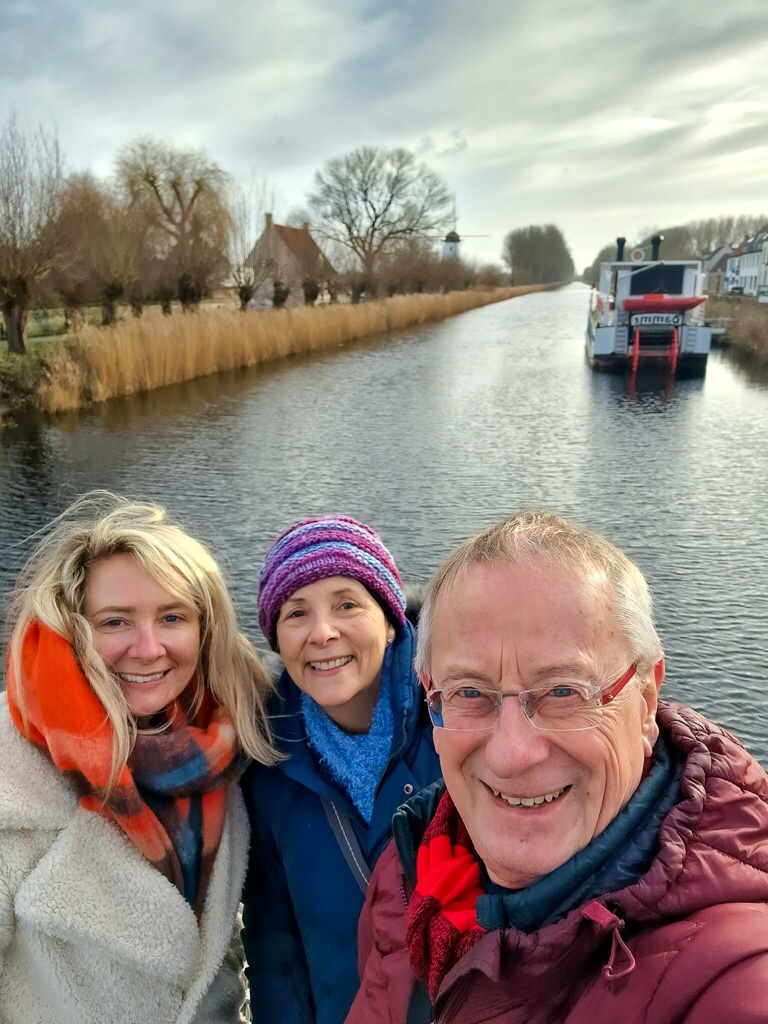
…stopping first in Damme and saw quite a few people out cycling and walking along the canal.

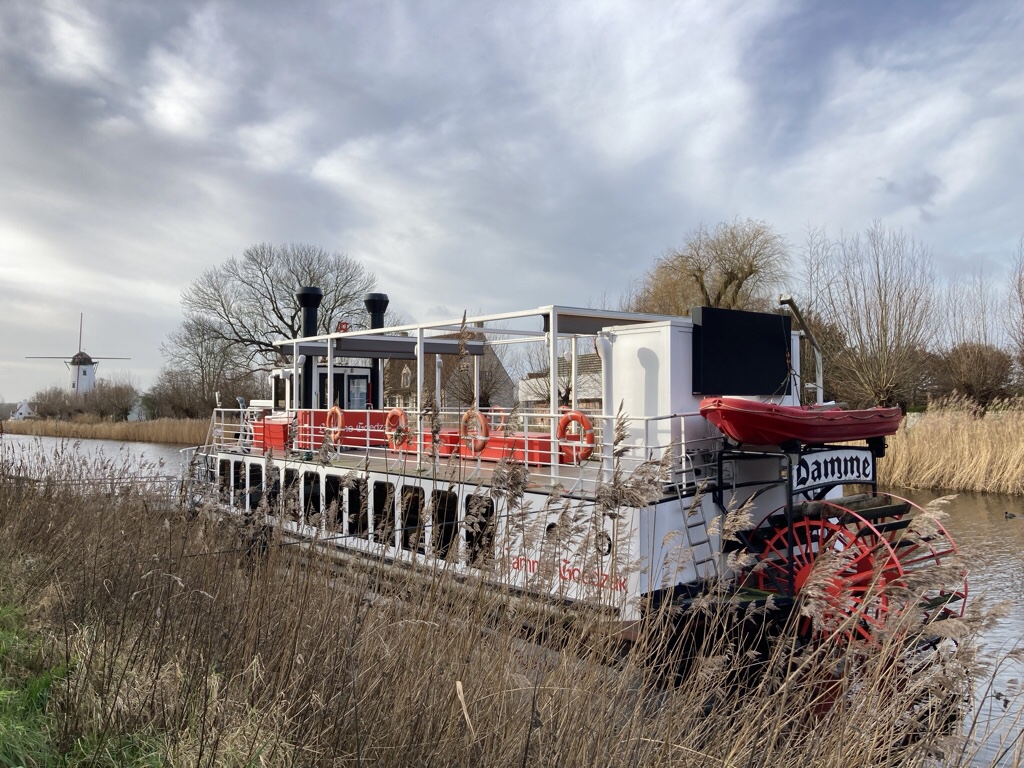
On another day we could have taken a trip on the paddle steamer or visited the windmill and city hall … next time!

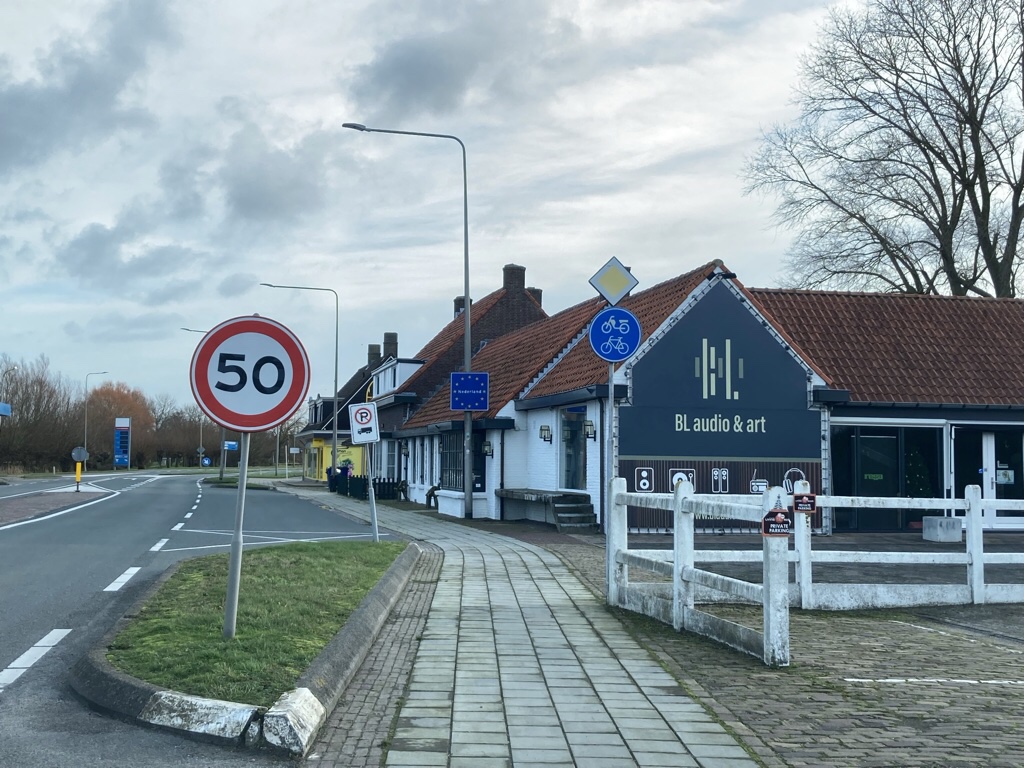
We drove on and could have missed the small blue sign marking the border between Belgium and the Netherlands if we hadn’t been looking out for it …

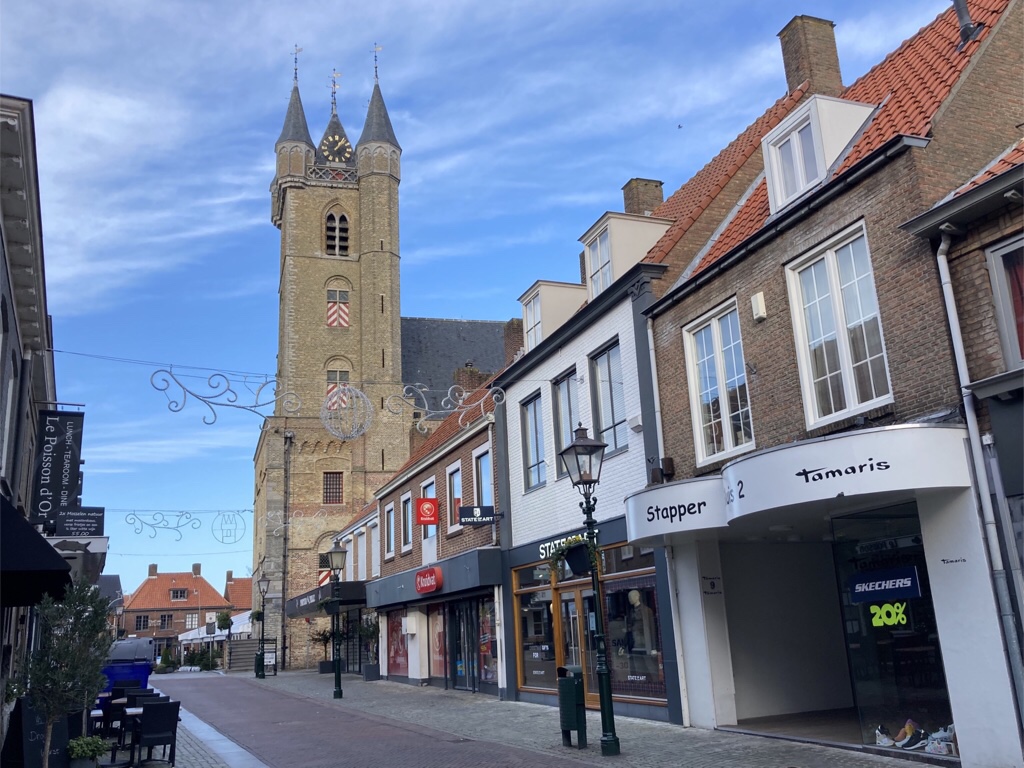
… and continued to Sluis. All shops were closed …

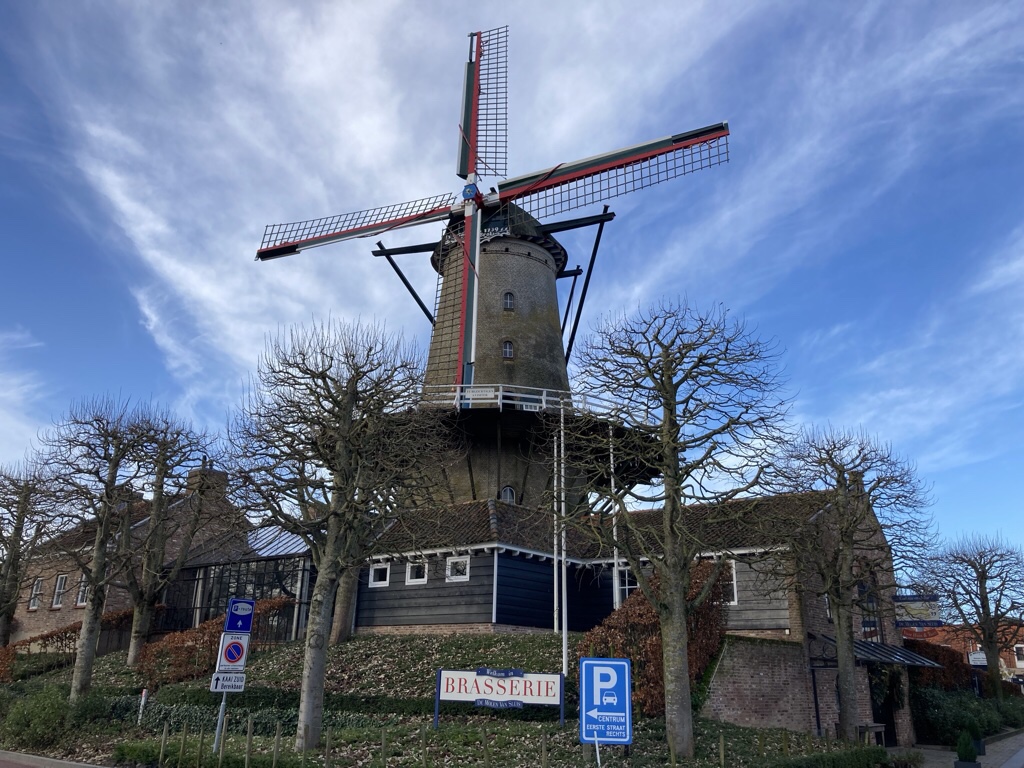
… but there was a windmill …

… and we found a cafe for fish soup and and a veggie burger before returning along the quay to the car.

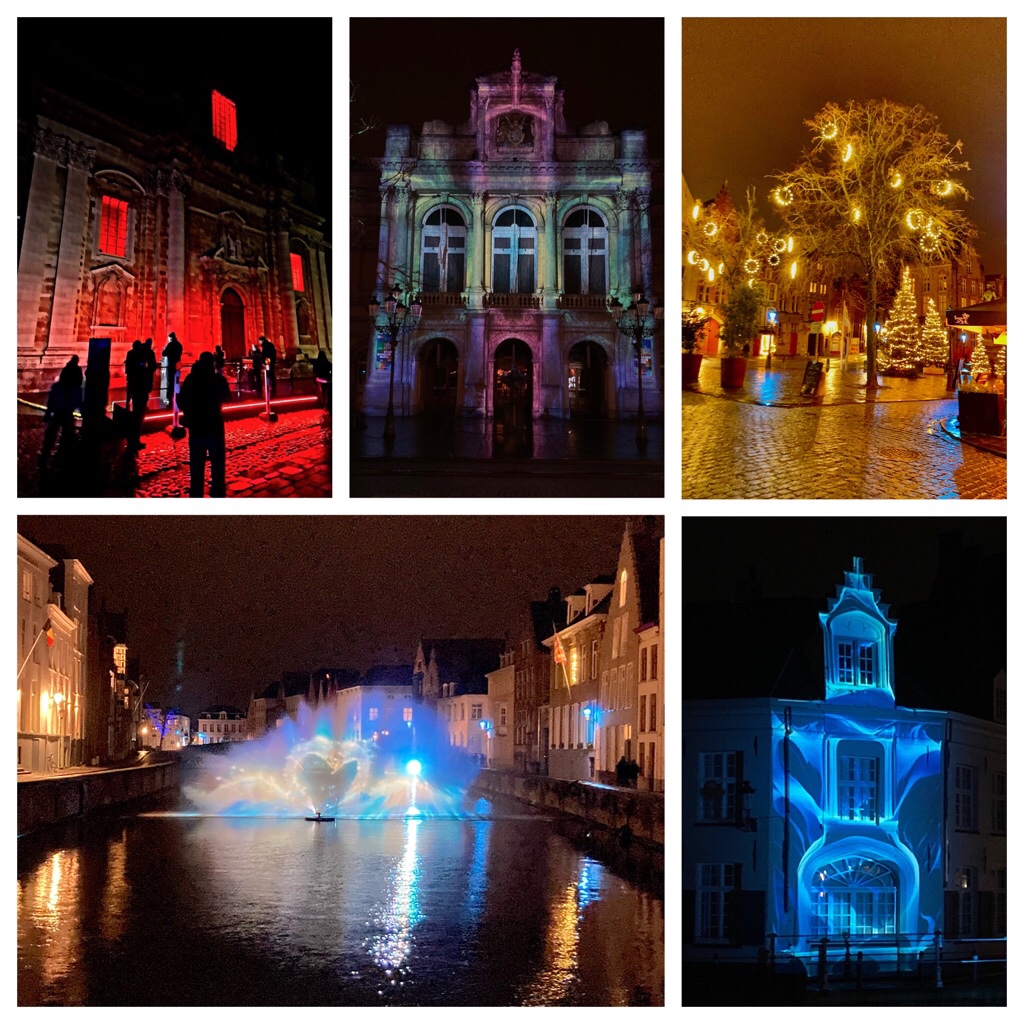
That evening was dry, and we walked round a few of the Winterglow Illuminations, set on a trail round the city.

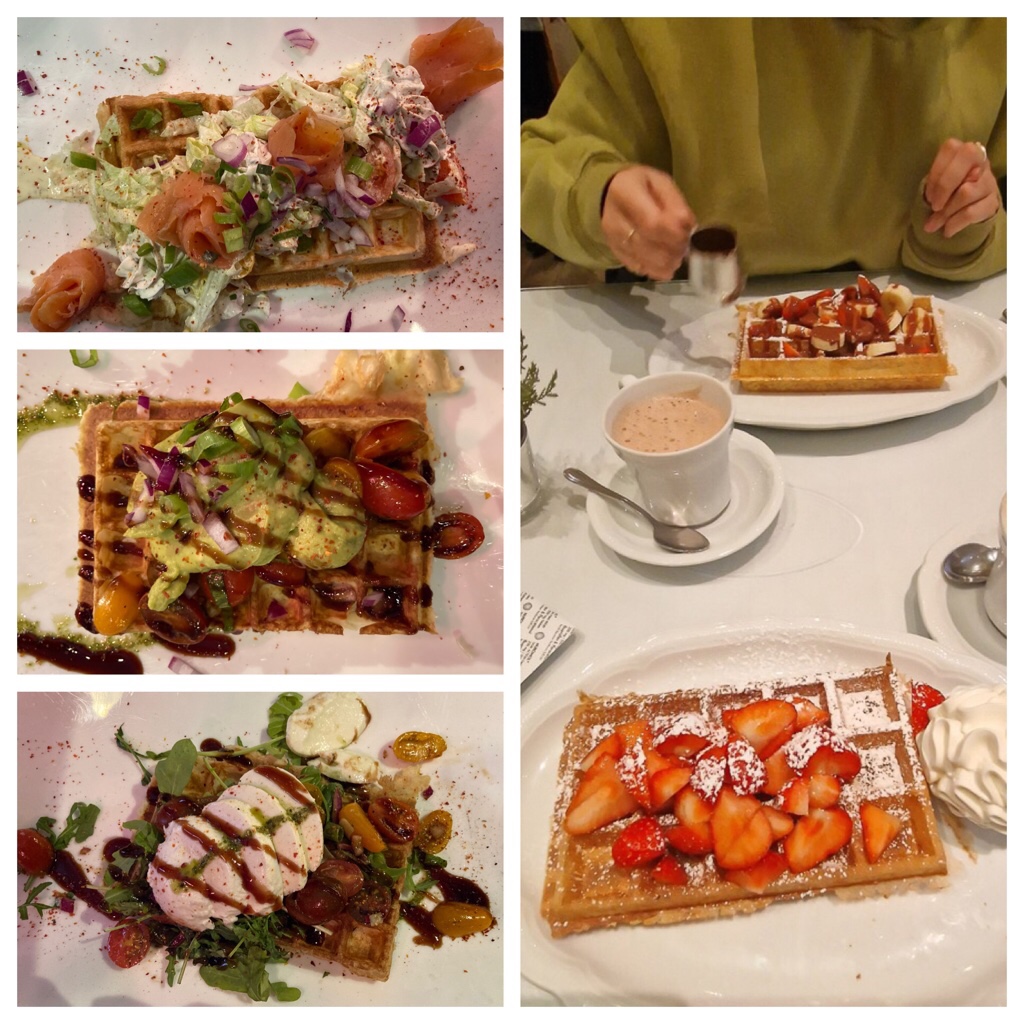
We tried lots of local treats during our stay, including waffles with international savoury toppings for brunch (Norwegian, Mexican, Italian!) and again with fruit and cream in the afternoon.

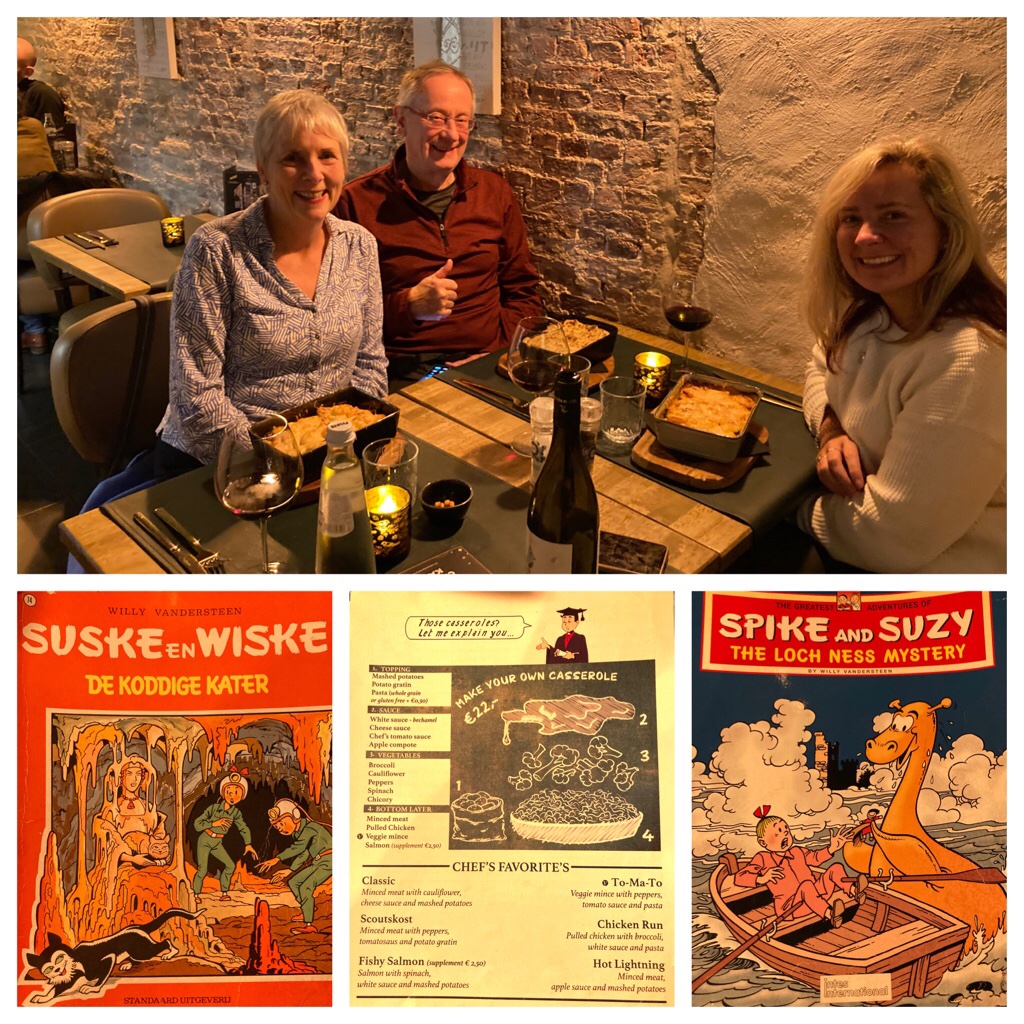
Dinners have been a little more tricky to find as traditional Belgian fare is not vegetarian, but we had our very own pick and mix dinner at Monsieur Casserole …

… pizza night and a final evening in the main square surrounded by twinkly lights where Chris had veggie lasagne while Joanna and I tried the local Flemish beef stew. Hot chocolate, gluwein and cake have also featured!

Having stocked up with plenty of Belgian chocolate to take home, we checked out on our last morning in pouring rain and headed back to Calais.

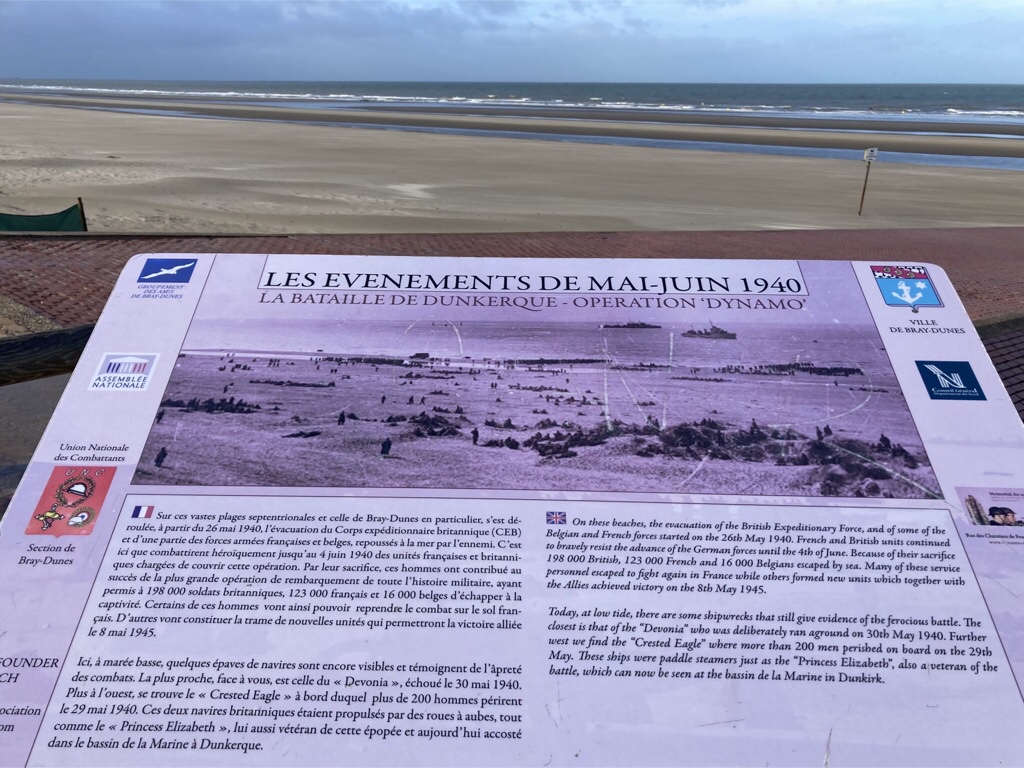
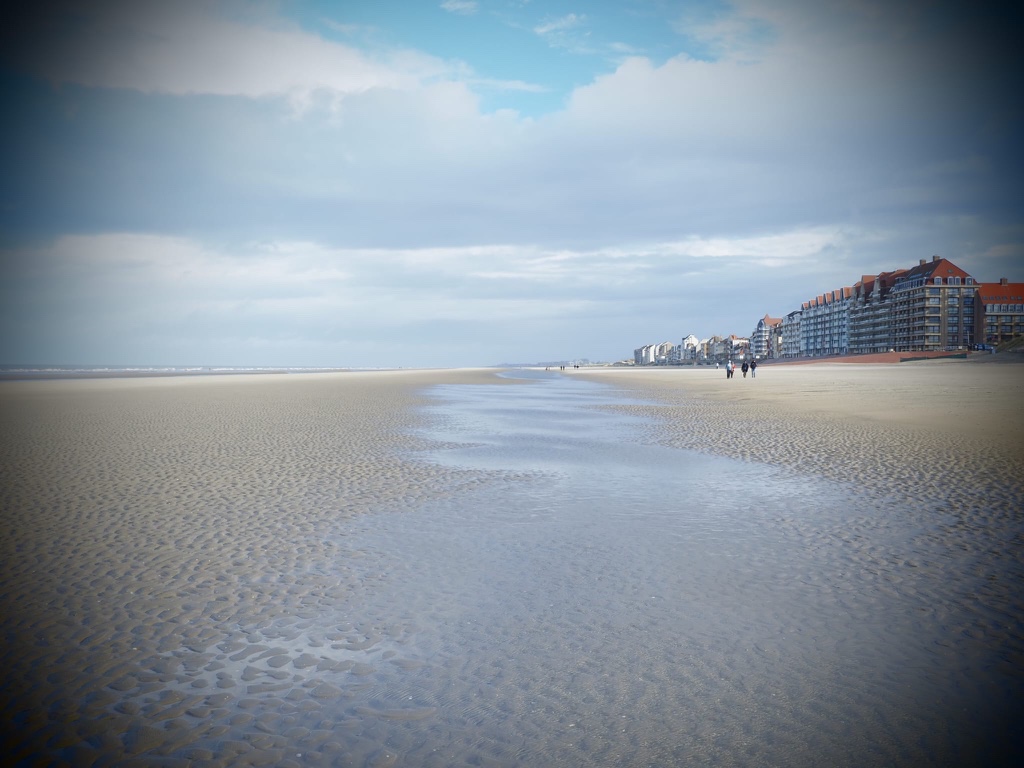
The weather has been changeable throughout our stay, so it was no surprise that the rain stopped as we reached Bray Dunes, just along the coast from Dunkirk and site of the WWII troop evacuation.

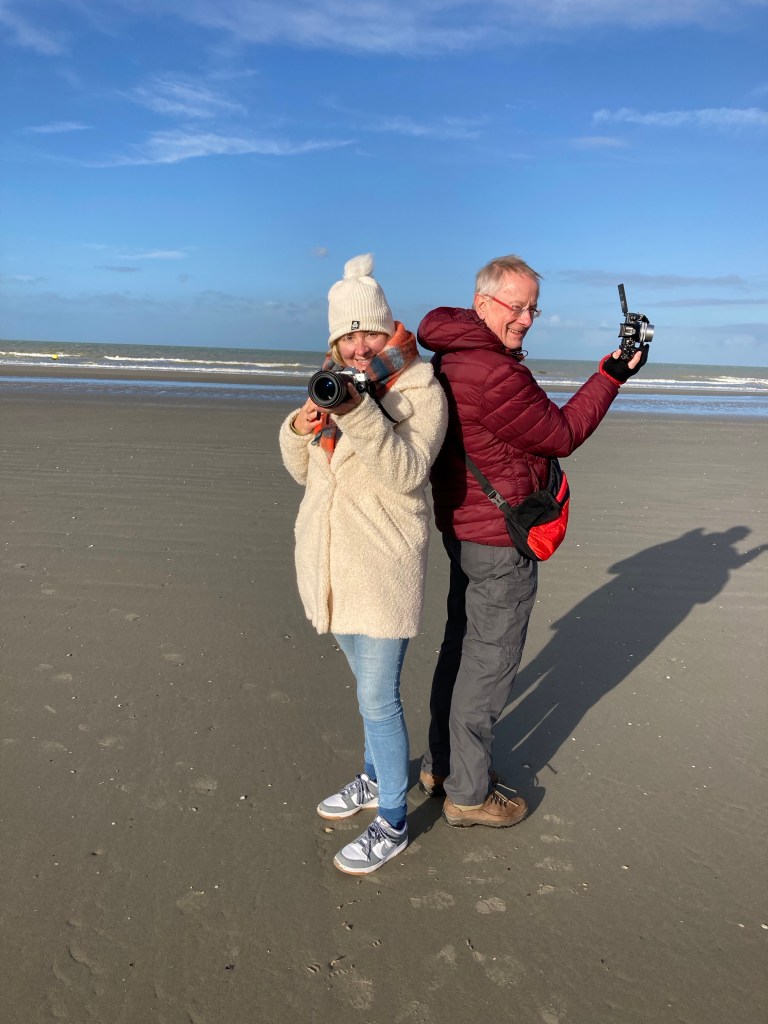
The sun came out and we all walked and took photos.

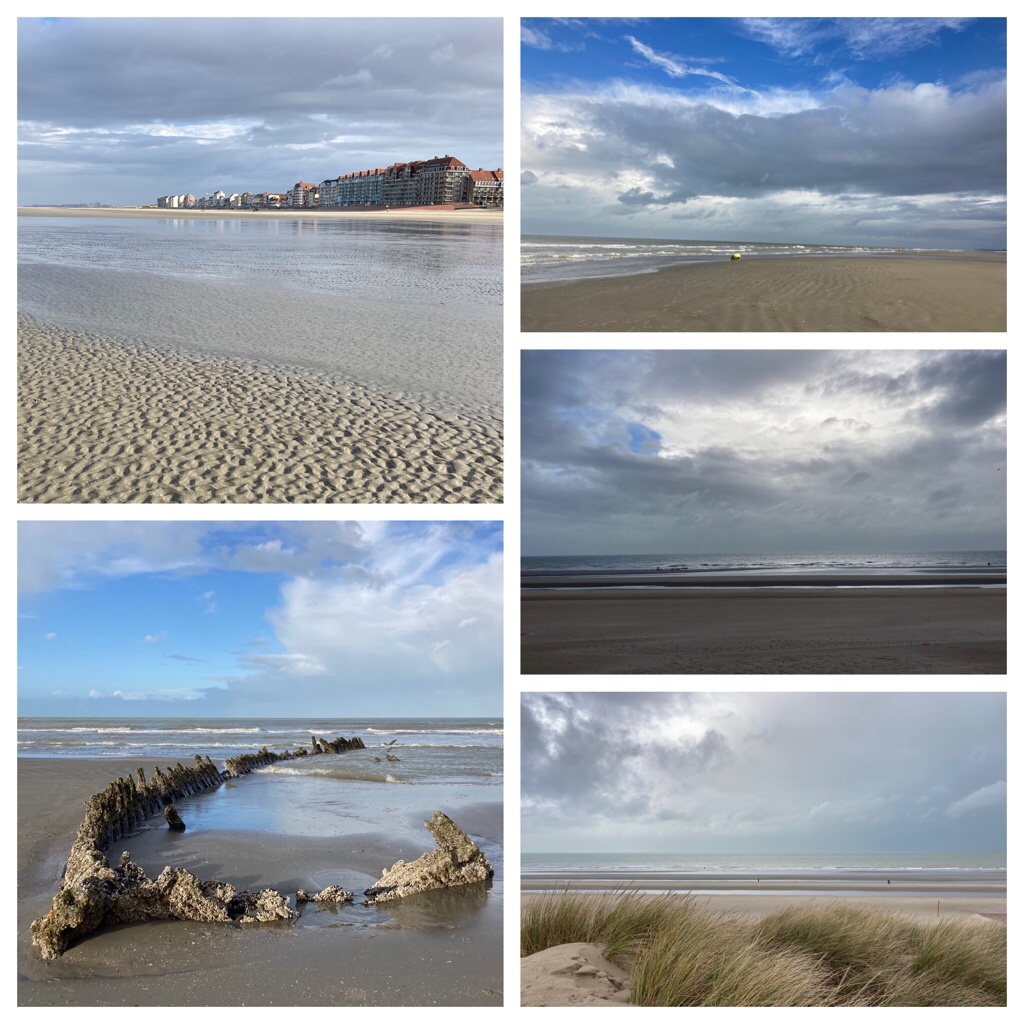
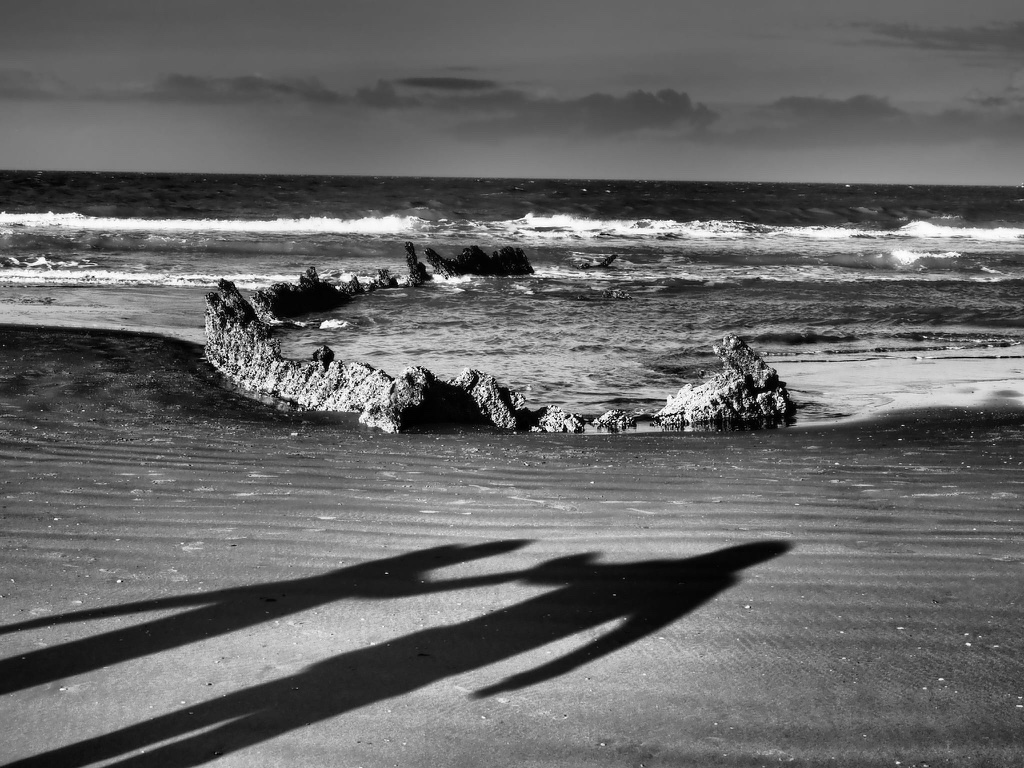
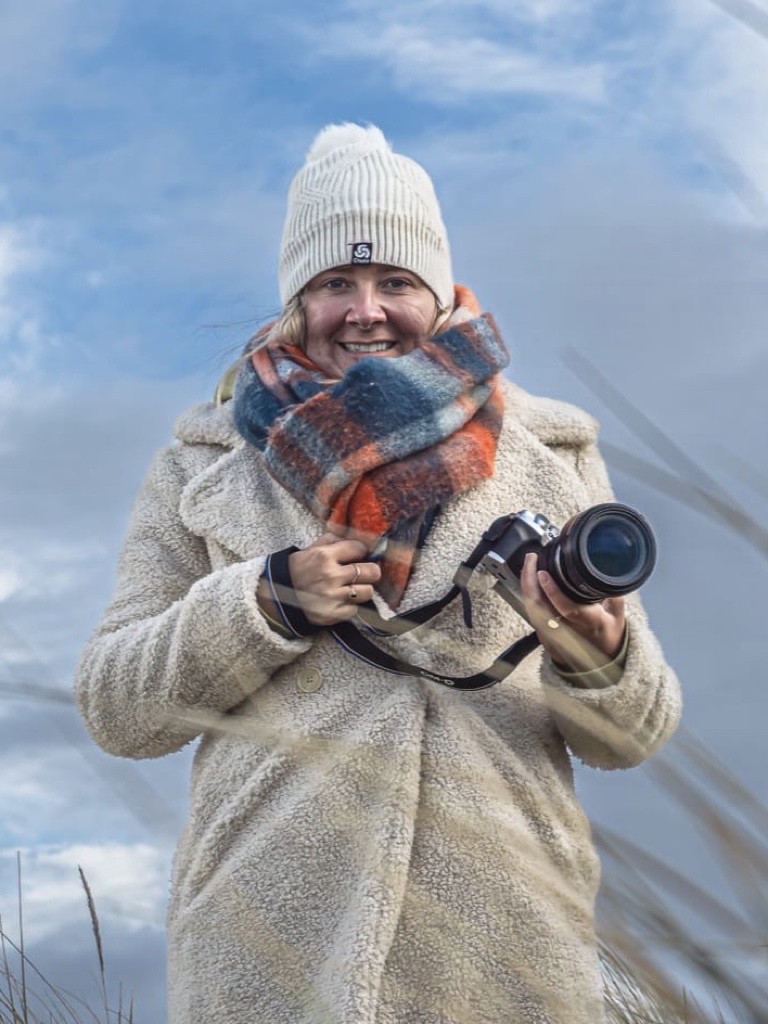
Joanna took the chance to experiment a bit with her new camera and took these …

… and Chris took this lovely pic.

Now with an appetite, Joanna and I ended as we began, with a bowl of moules frites while Chris bravely chose a plate of cheese with his fries. The rain was back as we left, so we headed straight for le Shuttle and home.

Despite the rain, the trip has been a huge success and we’ve all had a great time with memories as well chocolate to bring home!

Map

Chris & Elaine Shuttle off to Bruges with Joanna 2023

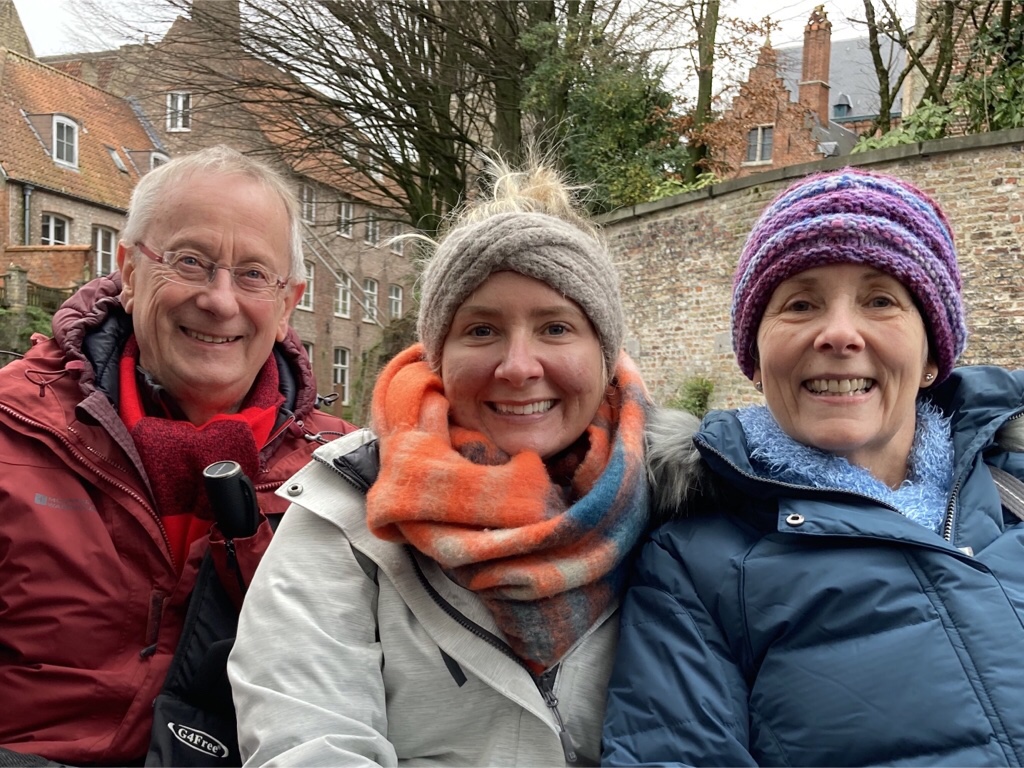
With Joanna visiting all the way from Sydney, we wanted her trip to be a holiday as well as a family Christmas so we are off to celebrate New Year in Bruges.

Taking our car on le shuttle to Calais will be a first for us and then it’s just a two hour drive to Bruges, a medieval city of cobbles, canals and chocolate with the added bonus of Christmas markets and lights for the Winter Glow festival.

So we are looking forward to spending time together and hope it’s not too cold or too wet to enjoy exploring. Fortunately we can chuck the entire contents of our wardrobes into the back of the car and be prepared for anything!

So here goes, three off travelling together!

A Bit of Belgian Waffle …

Map

Our Week in Kampong Glam

Singapore proved the perfect backdrop as we chatted our way round the city, slowly filling in all those details of our lives we don’t get time to mention and reconnecting over our shared memories.

We stayed in Kampong Glam a neighbourhood of Malay heritage dominated by the Sultan Mosque in a street of Middle Eastern restaurants…

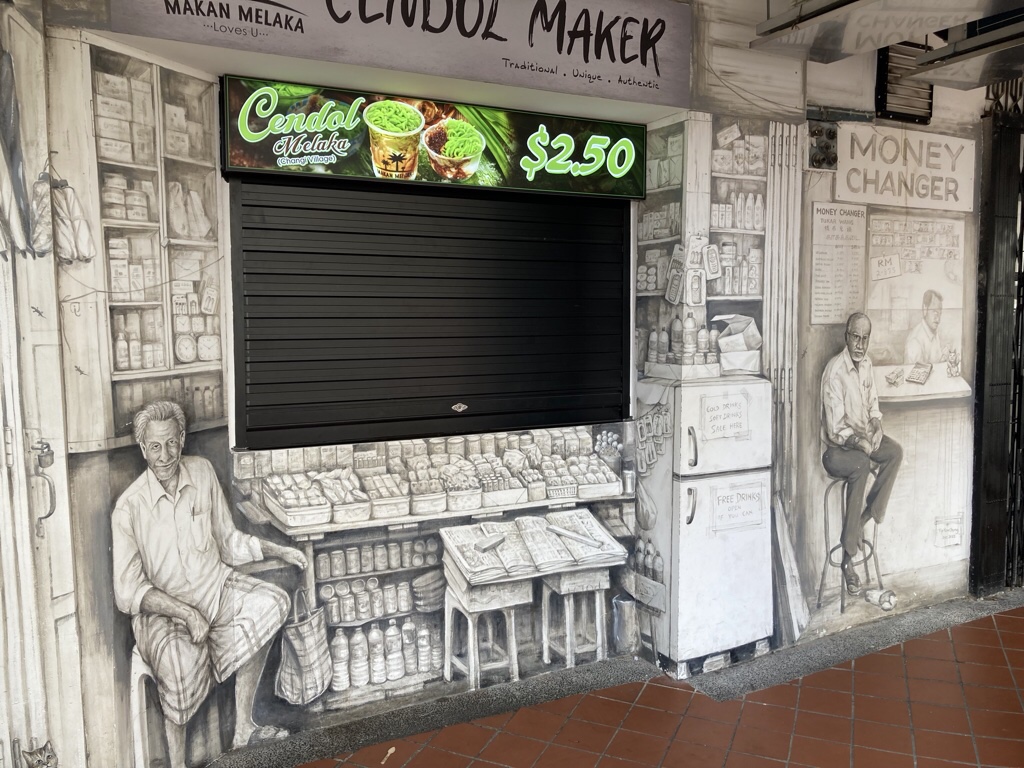
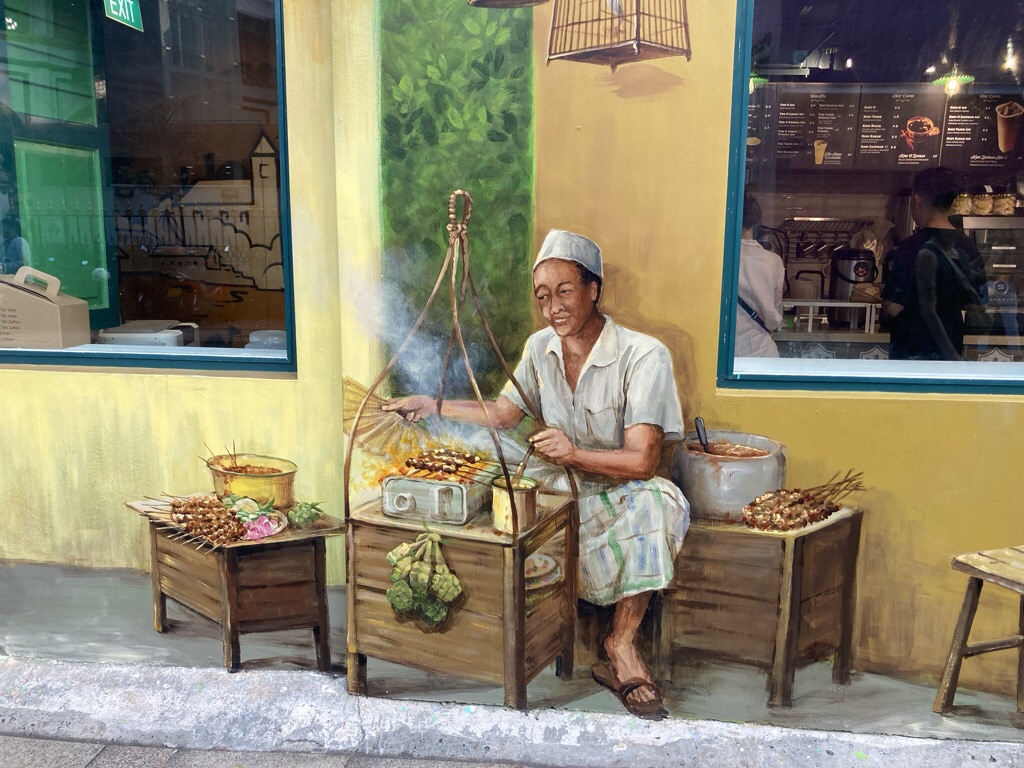
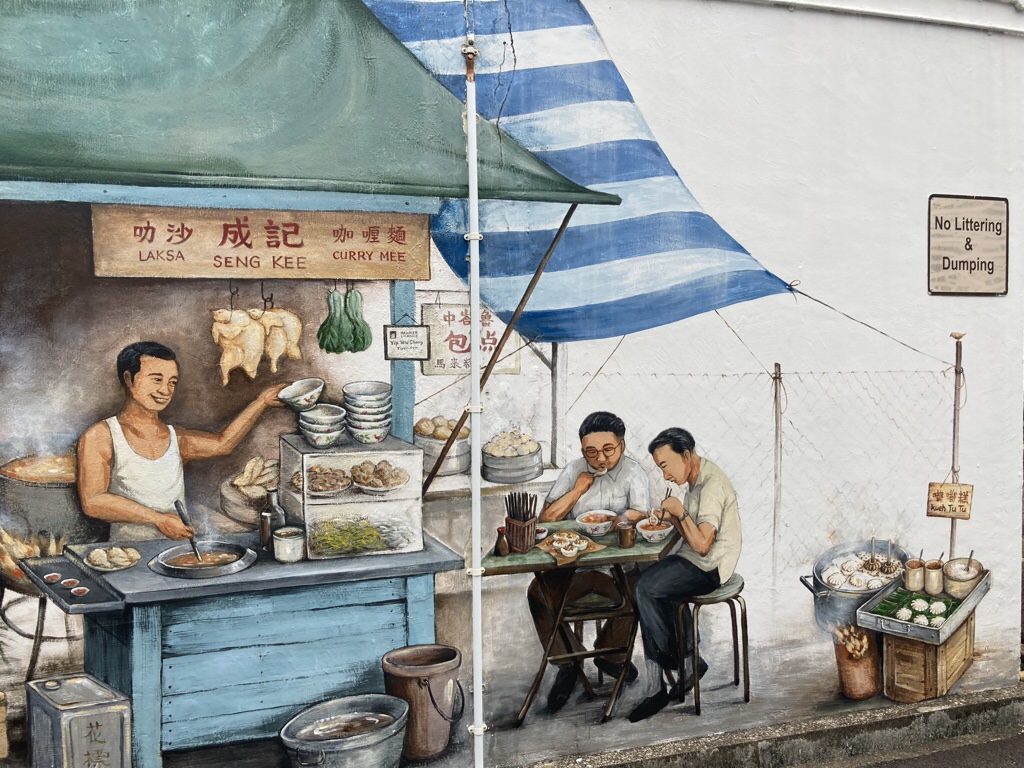
… where we spotted the first of many murals showing details of times past.

In complete contrast, round the corner Haji and Bali Lanes are full of brightly painted modern street art, hip cafes and boutiques which come alive at night.

Our first evening was spent here chatting over Aperol Spritz at Blu Jazz before moving to the Good Luck Beerhouse for a dim sum bundle and a carafe of sake. During the week we explored fully, loving the outside atmosphere. We sampled cocktails and shish kebabs, discovered pistachio cube croissants …

… and spent our last night here, this time Mexican with guacamole and tacos!

It was the perfect central location from which to explore the various neighbourhoods of the city, each with its own character.

Marina Bay surrounded by striking buildings was best viewed from a bumboat …

… or the Lantern Bar at The Fullerton Hotel with sundowners …

… before dinner dinner at Satay Street in Lau Pa Sat, just one of the several hawkers centres we visited.

Nearby are the Gardens by the Bay with the supertrees, inconveniently being converted to a Christmas market, so not especially photogenic …

… the cloud forest …

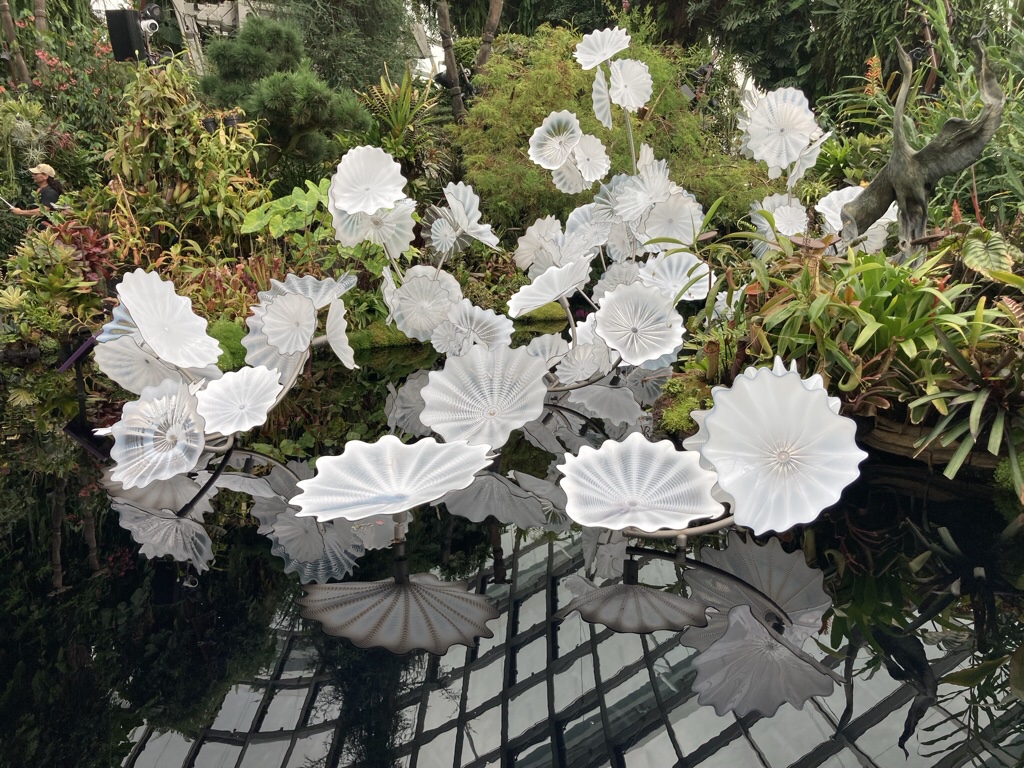
… complete with some lovely Dale Chihuly glass …

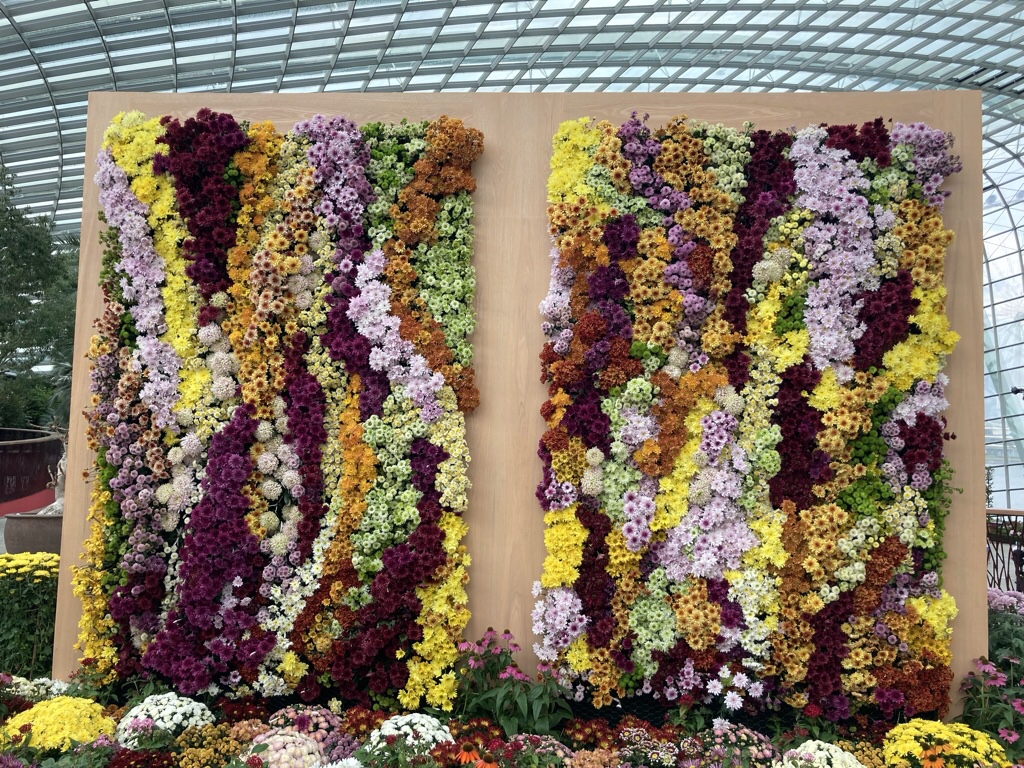
… and chrysanthemums in the Flower Dome …

Fortunately we were inside when the heavens opened, enjoying a delicious lunch of taramasalata and falafel in Hortus.

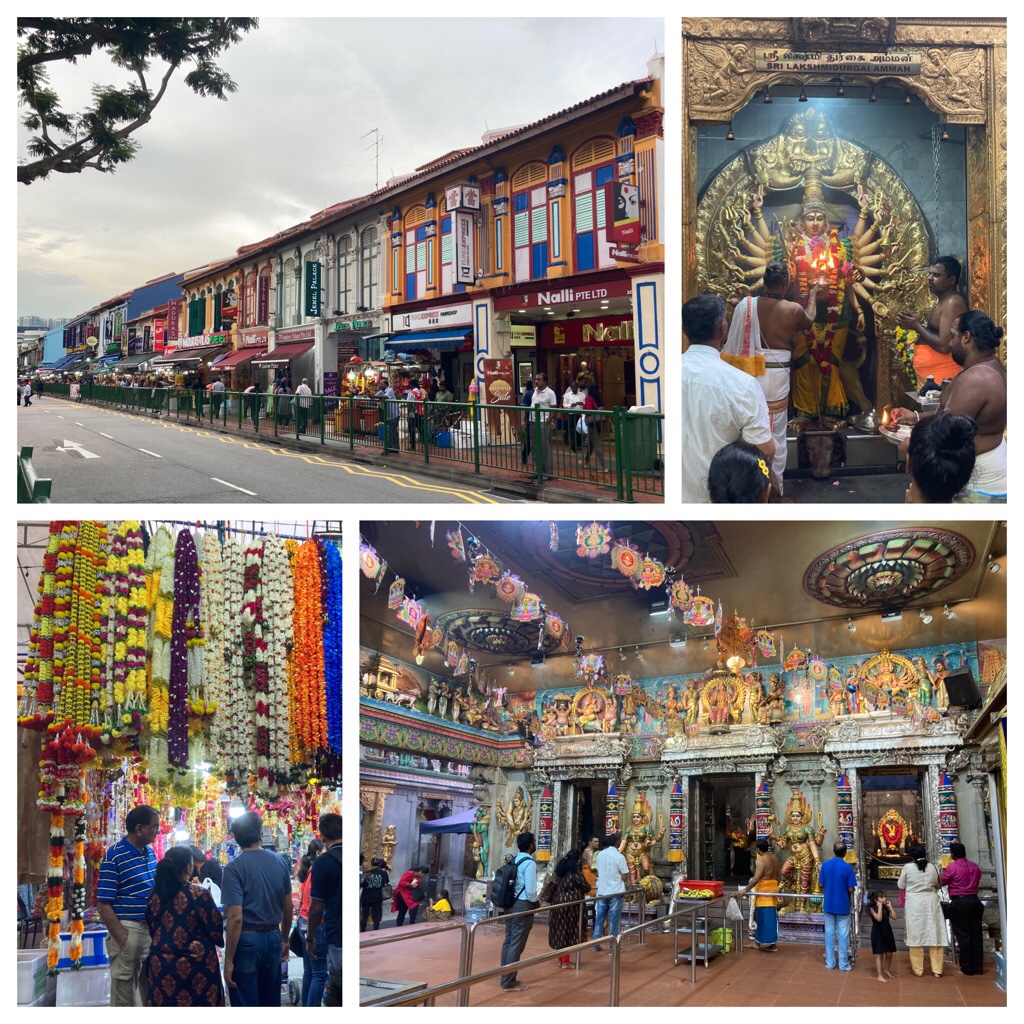
Little India and the surrounds had a mix of Hindu temples …

… and was decorated for Deepavali which was celebrated over the weekend.

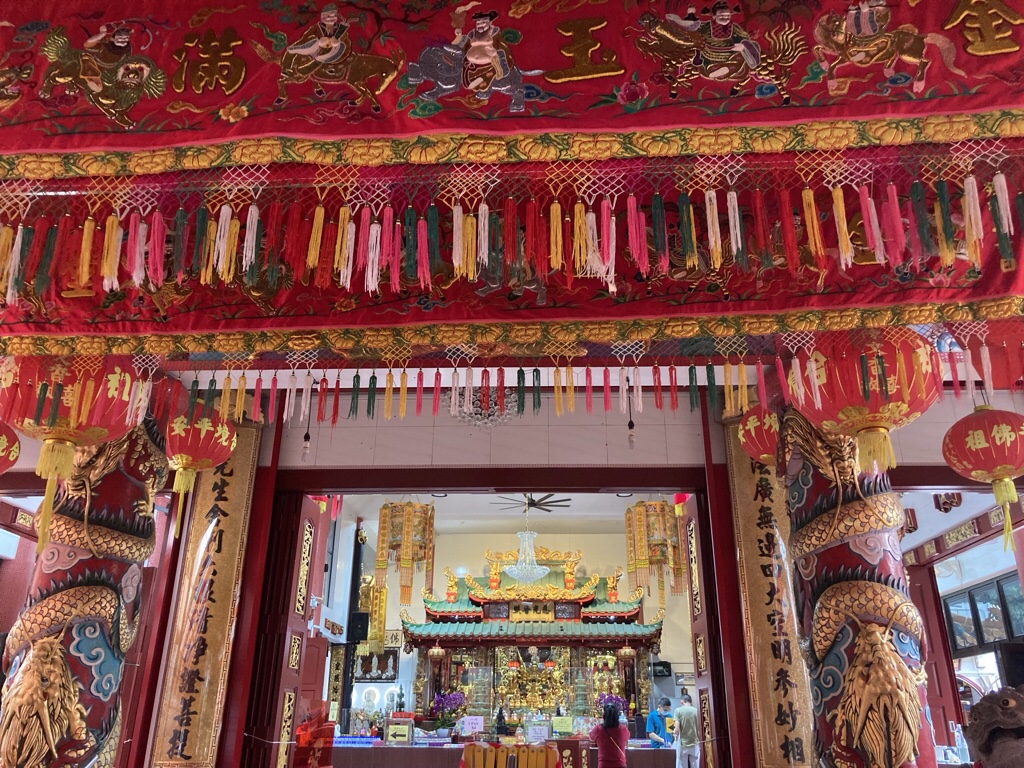
Chinatown was certainly colourful …

… and highlights were the Buddhist Tooth Temple …

… the Thian Hock Keng Temple …

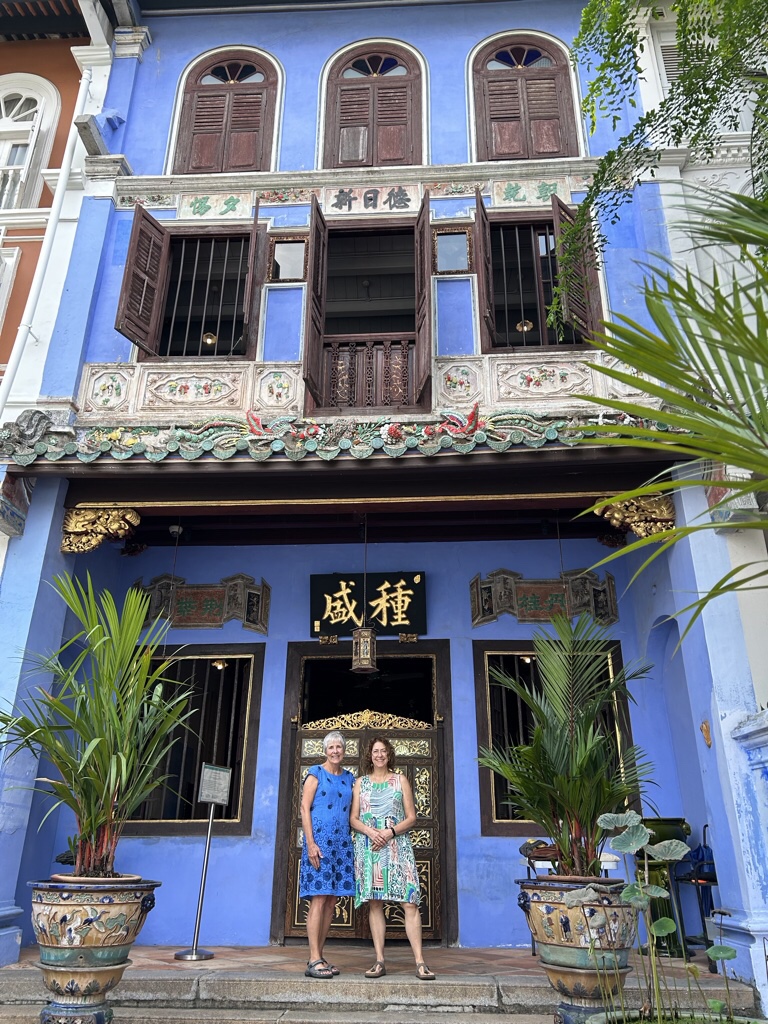
… and NUS Baba House, a heritage property which showcases Peranakan history and culture.

We checked out the Paranakan Museum to find out more about the various hybrid cultures created when merchants from China, India, the Middle East and Europe married into the local communities in Singapore …

… and we both fell in love with the striking colours used in tiling, ceramics and beading.

A video about Peranaken food inspired us to seek out The House of Peranakan for dinner one evening so we could try ayam buah keluak, a traditional dish of chicken and buah keluak nuts which give it a rich flavour of chocolate crossed with coffee. Later we discovered the raw nuts contain hydrogen cyanide and are poisonous until they are specially prepared so not only did we survive our dinner that evening, but also being completely drenched in a sudden downpour, and standing freezing in the air conditioned train on the way back!

Singapore is so diverse, a melting pot of cultures, religions and the juxtaposition of old and new. We’ve seen rows of shophouses in every neighbourhood with a variety of decoration, some run down and others well preserved and beautifully painted. In 1822, Sir Stamford Raffles defined the building type he wanted in the new city of Singapore and these shophouses continued to be built till 1960, based on the Chinese courtyard house with open stairwells and skylights, and an open verandah at the front called five-foot ways to protect pedestrians from the sun and rain.

Over time as the population increased, these neighbourhoods became cramped and less sanitary, so many areas of shophouses were demolished to make way for better transport links and modern and fresh apartment blocks. In 1936, the village of Tiong Bahru was redeveloped and the modern apartment blocks were built in the new art deco style …

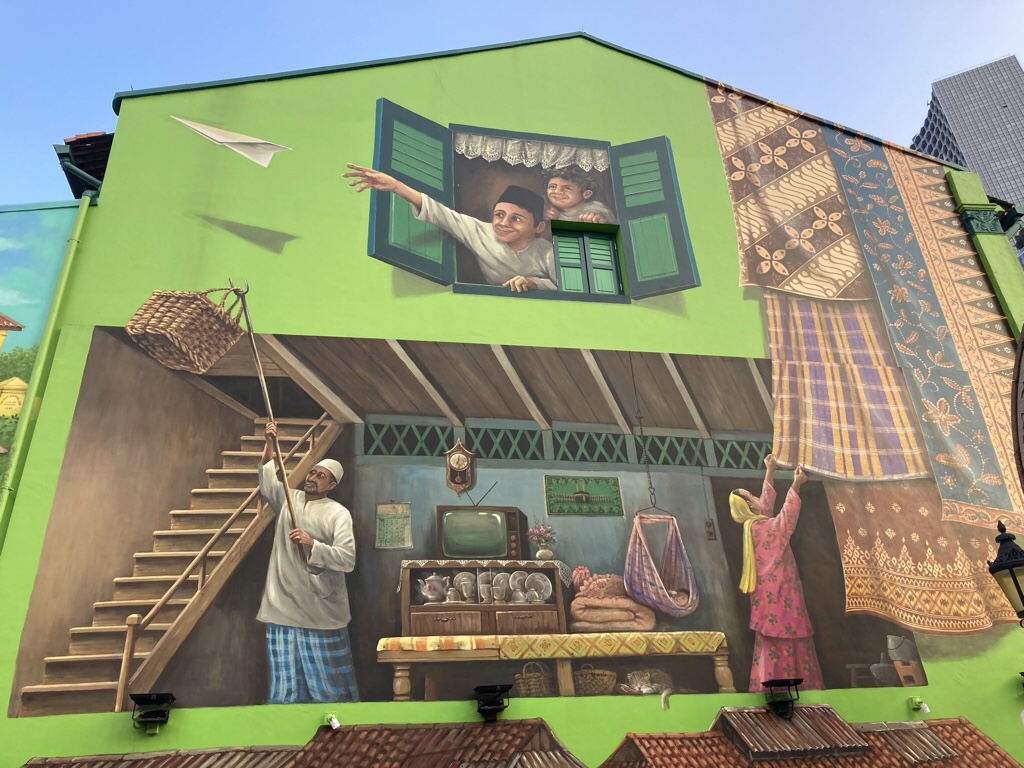
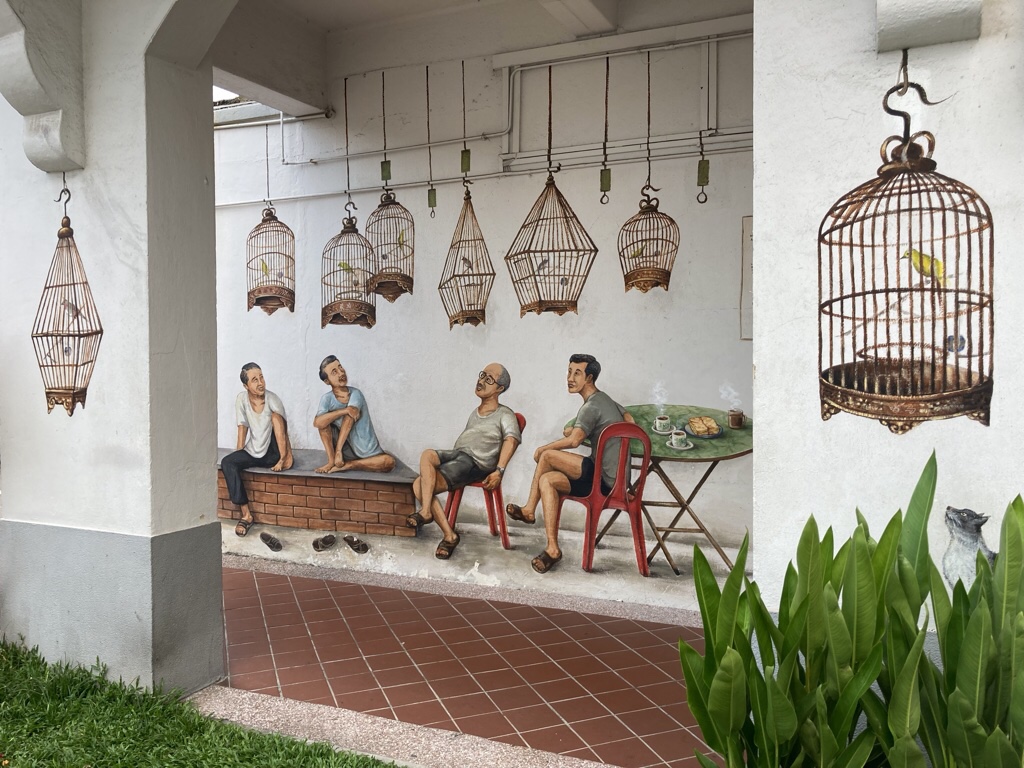
… but the area has a number of nostalgic murals to remember times gone by …

… like when the old men used to meet with their bird cages so that the men and birds could each chat together.

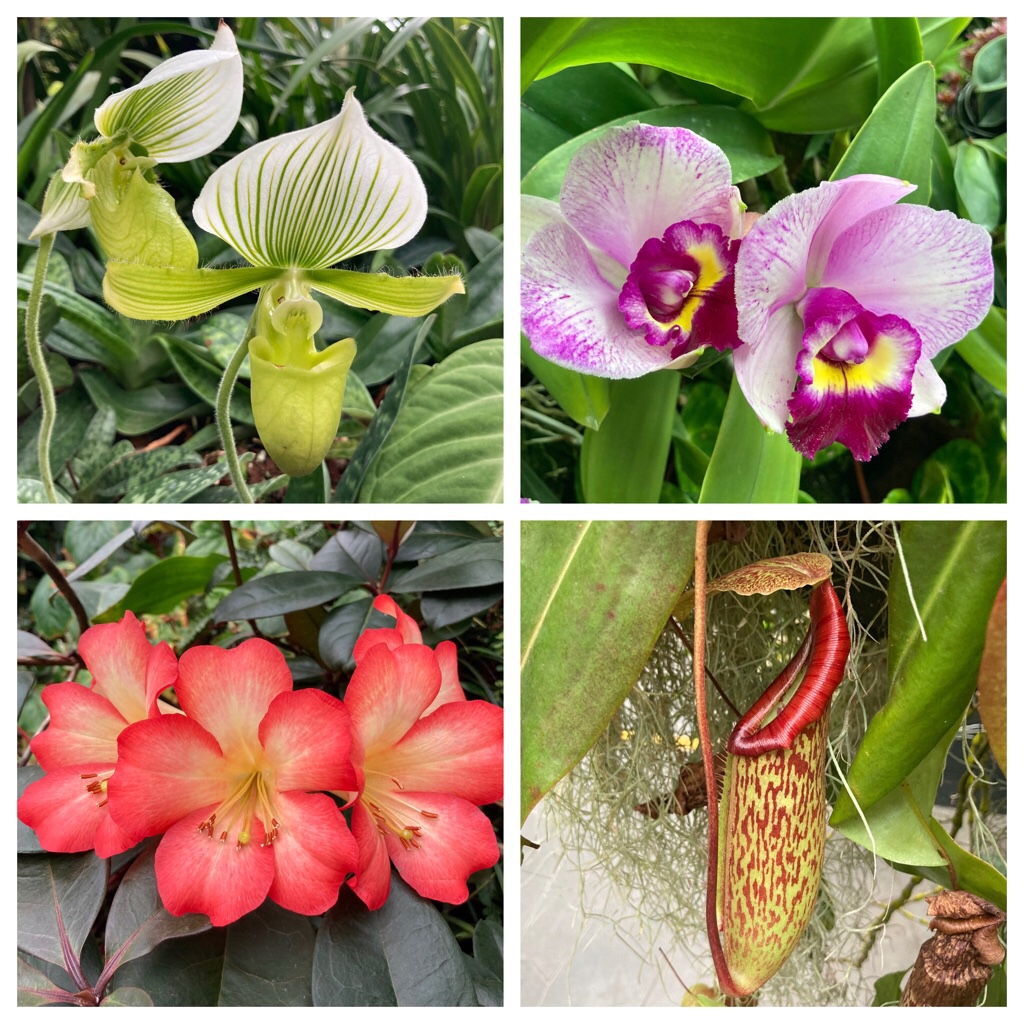
Singapore is one of the greenest cities in the world and we visited the very formal botanic gardens with its fabulous collection of orchids …

… and also took a 10km hike along the MacRitchie trails …

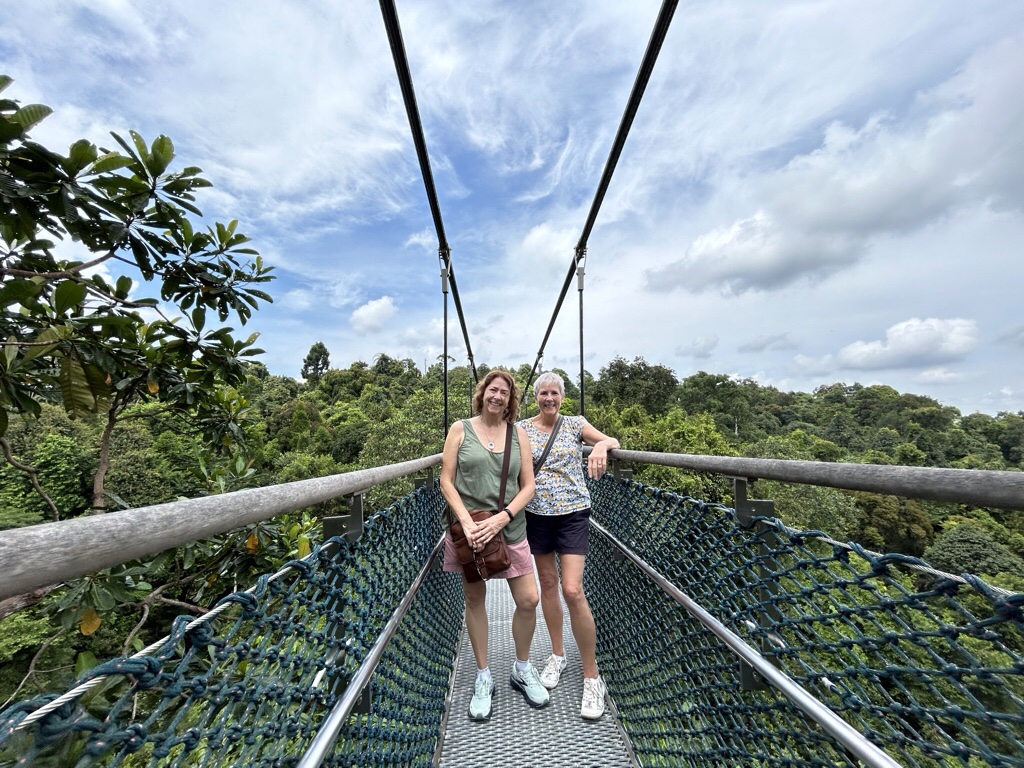
to this treetop suspension bridge which gives a bird’s eye view the forest canopy …

… and came across several groups of monkeys along the way.

All in all we walked miles, only really got wet once although there was a shower most afternoons, ate food from all over the world and made lots of new memories of our time together.

Needless to say it was hard to say farewell at Changi, especially as we have no plans to meet again any time soon, but we still have our daily souvenir snaps … until sisters go off travelling together once more!

Map

Sisters in Singapore 2023

Jan and I haven’t been together since before Covid so a catch up is long overdue and we’ve chosen to meet in Singapore, halfway between Bracknell and Brisbane but also warm in November.

We have each spent a few days there before so we aren’t travelling into the unknown but it will be quite different as we can focus on just being together and take it as it comes. It will be the longest we’ve spent alone together since we were youngsters and the excitement has increased as we’ve counted down the sleeps!

On this occasion, journaling could well be limited to making a few notes till I’m home, but something will certainly get written to go with the inevitable selfies to remind us of our trip.

Meanwhile, Chris will be at home binging on Ted Lasso and pizza while Jan has taken his place to go off travelling together!

Our Week in Kampong Glam

Map

Tirana and Hoxha’s Legacy

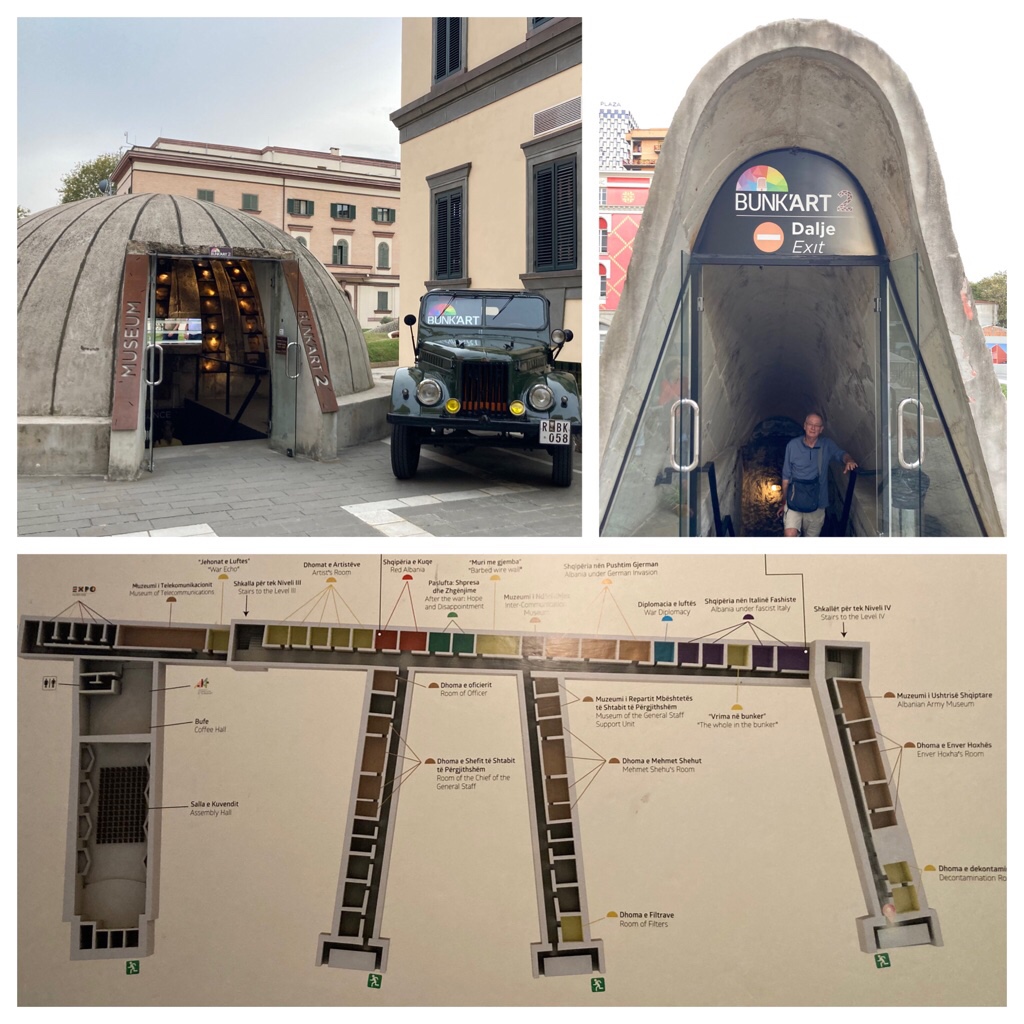
Mount Dajti is to the east of the city, and Saimir had told us which bus we could catch, which all went very smoothly. We started with Bunk’Art1, a museum dedicated to the history of the Albanian communist army and to the daily lives of Albanians during the regime situated in the atomic bunker of the dictator Enver Hoxha.

It was quite eerie to enter, down a tunnel …

… into corridors with concrete doors a foot thick …

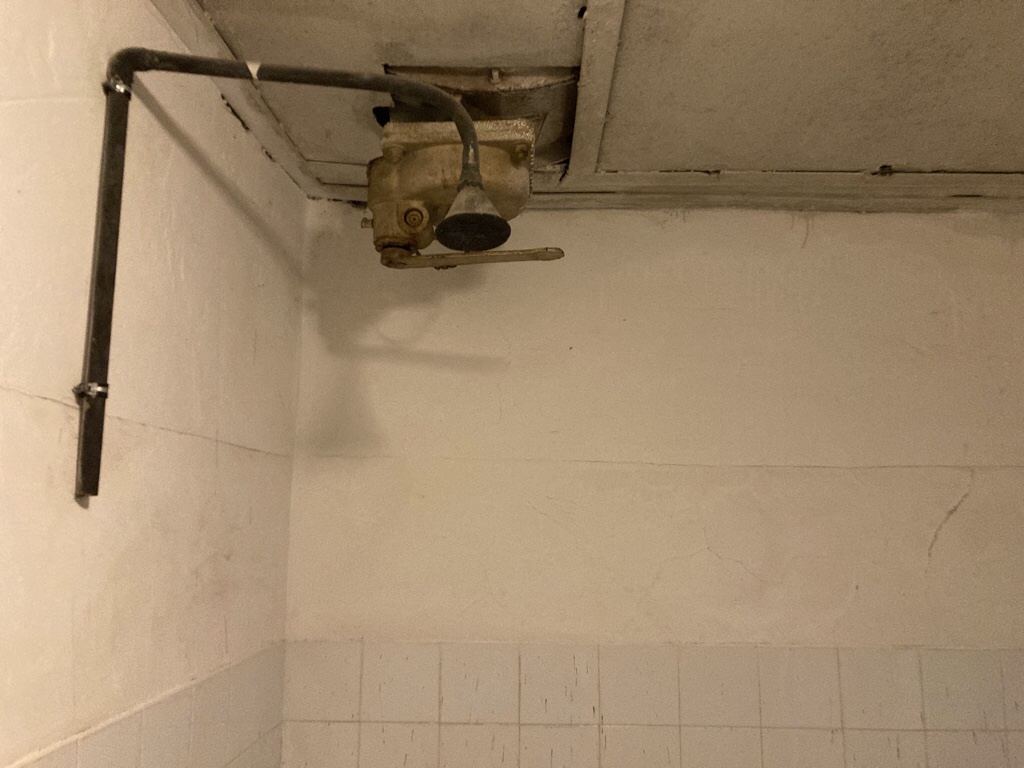
… past safety valves to protect the ventilation system against an external explosion …

… into the decontamination room with a sound recording of dripping water to add to the unease.

It took 6 years to build and was finished in 1978 with 5 floors, 106 offices with corridor that went on and on …

… an assembly hall to be used by the government in time of war …

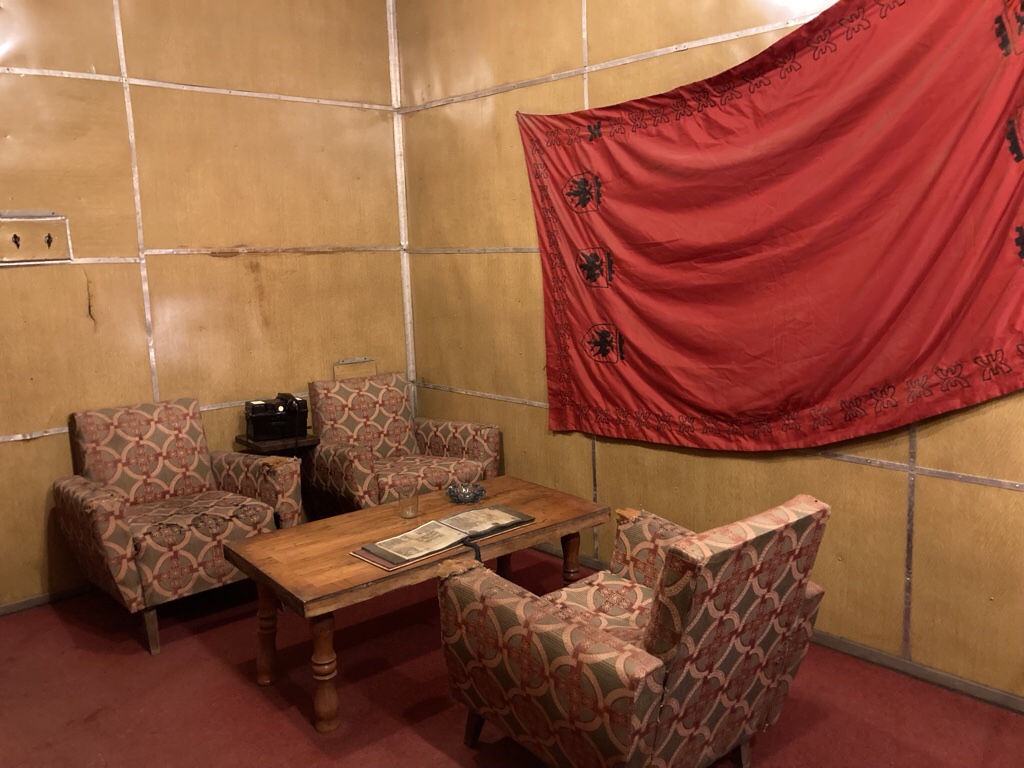
… and Hoxha’s hideaway!

It was only ever used for a couple of drills. Today the rooms cover history from the invasion of Albania by Mussolini in 1939 to the end of the Communist regime in 1991.

At the end were a couple of installations to warrant the word Art – one showing how mirrors disintegrate the bunker without weapons …

… and the other about those who live away from their homeland.

There was a definite musty smell throughout, despite detectable air freshener and we were pleased to finish and return to the warm sunshine. We made our way to the cable car …

… which took 20mins to whisk us 4.5km along and 1000m up …

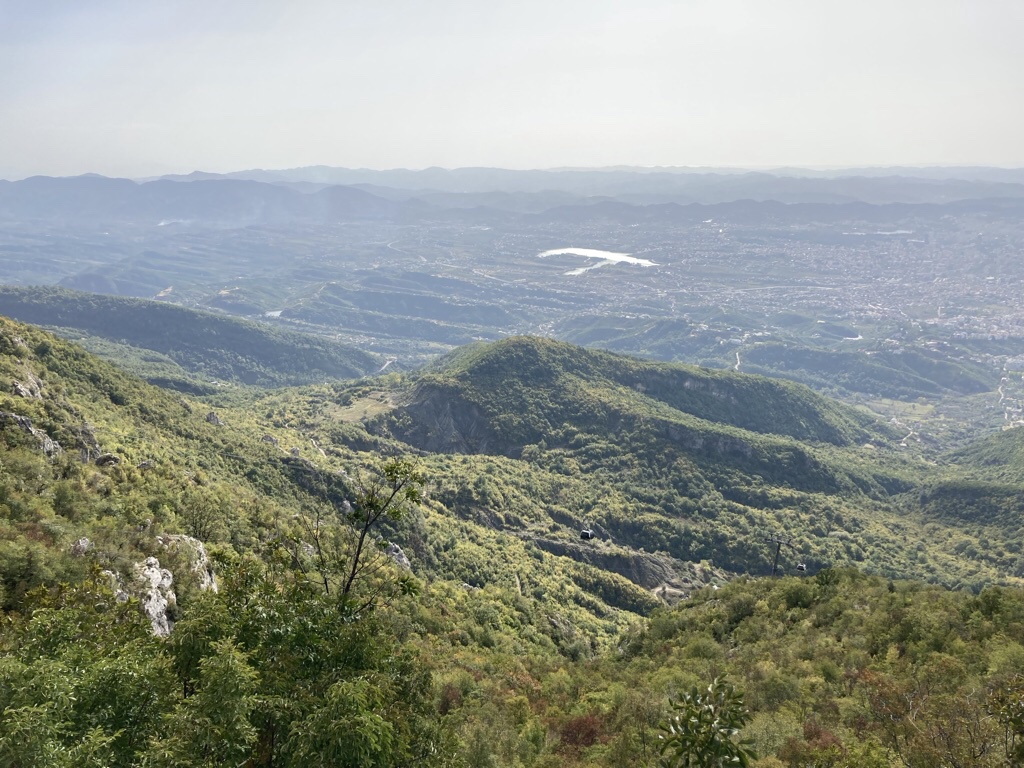
… for a view over the city …

… where the lake in Grand Park was easy to spot.

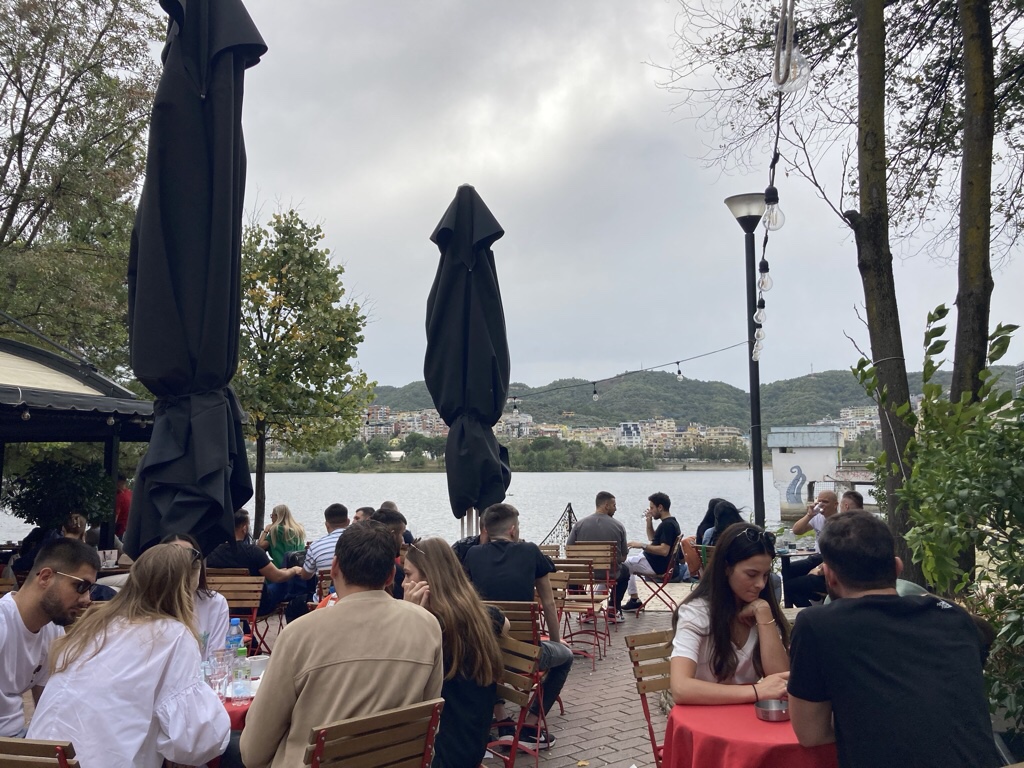
Later we visited the lake, a good walk from the centre of Tirana, but on a grey day it probably didn’t look its best.

We thought we could have a lakeside lunch, but all we found was a cafe serving uninspiring sandwiches.

On our return we walked through Blloku, not realising that it had been a closed-off precinct for the party elite in the Communist era, which probably explains why Enver Hoxha’s villa is here …

… and this memorial.

After 1991, what had been prohibited became attractive and today it’s a leafy residential area and popular with the young Albanian elite.

Talking Hoxha, The Pyramid of Tirana was built in 1988 as a museum dedicated to Enver Hoxha. After 1991 it had varied uses but then became derelict until a recent project has transformed it into a youth cultural and IT hub.

It is surrounded by colourful boxes to provide multi-use work spaces …

… and steps to allow the people of Albania to walk all over the former dictator’s memorial!

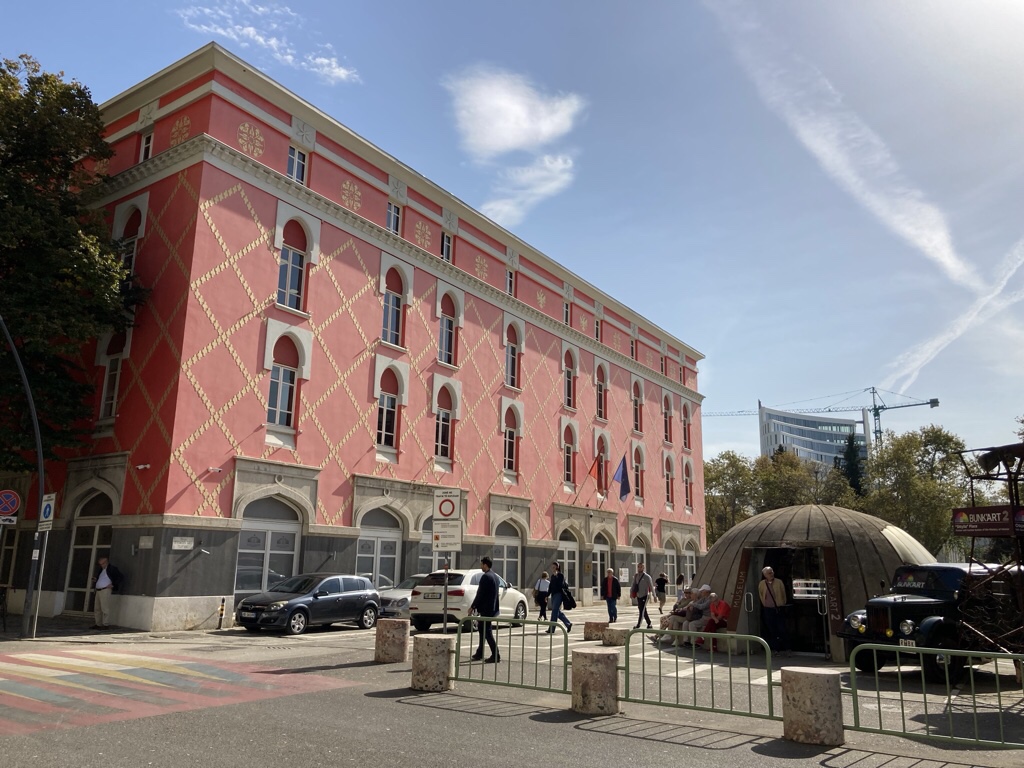
Finally Bunk’Art2 was included on our ticket focusing on the Sigurimi or political police. It is in a smaller nuclear bunker in central Tirana and gives a glimpse to those who couldn’t visit the larger museum as we did. It was very crowded and our visit was swift.

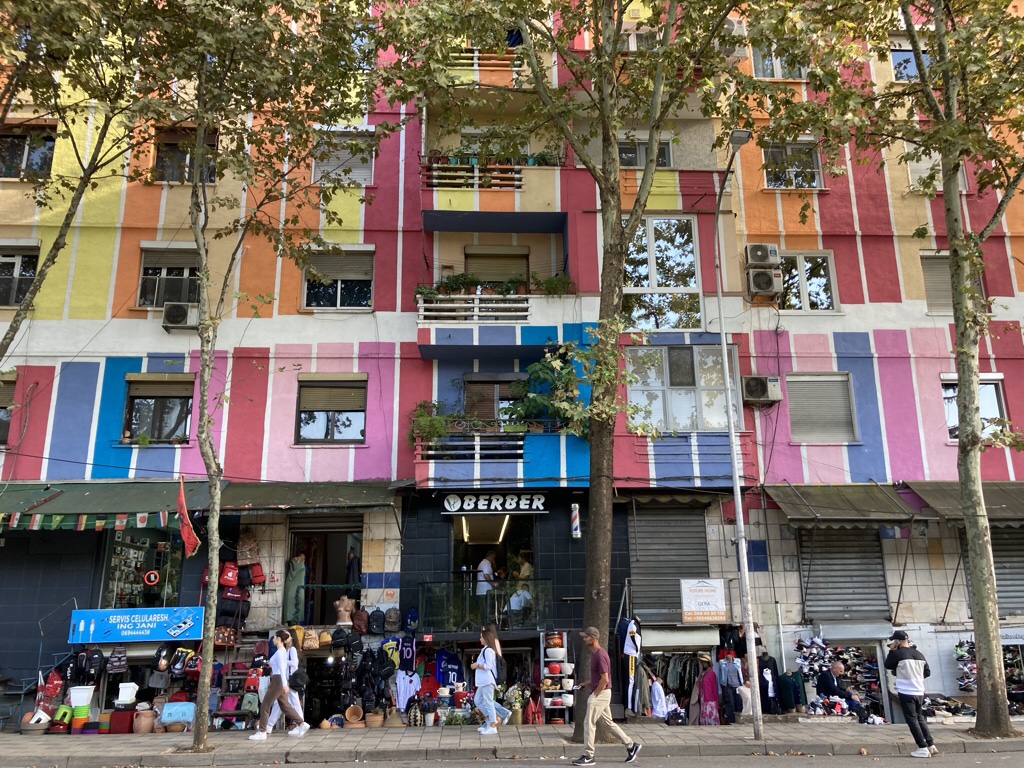
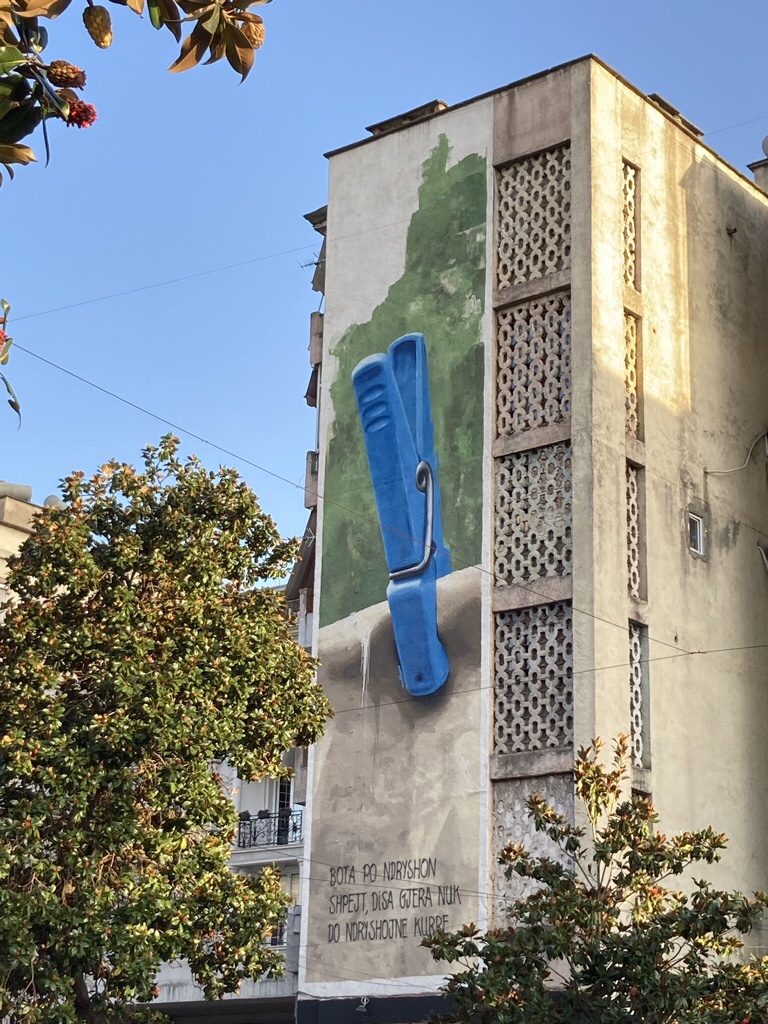
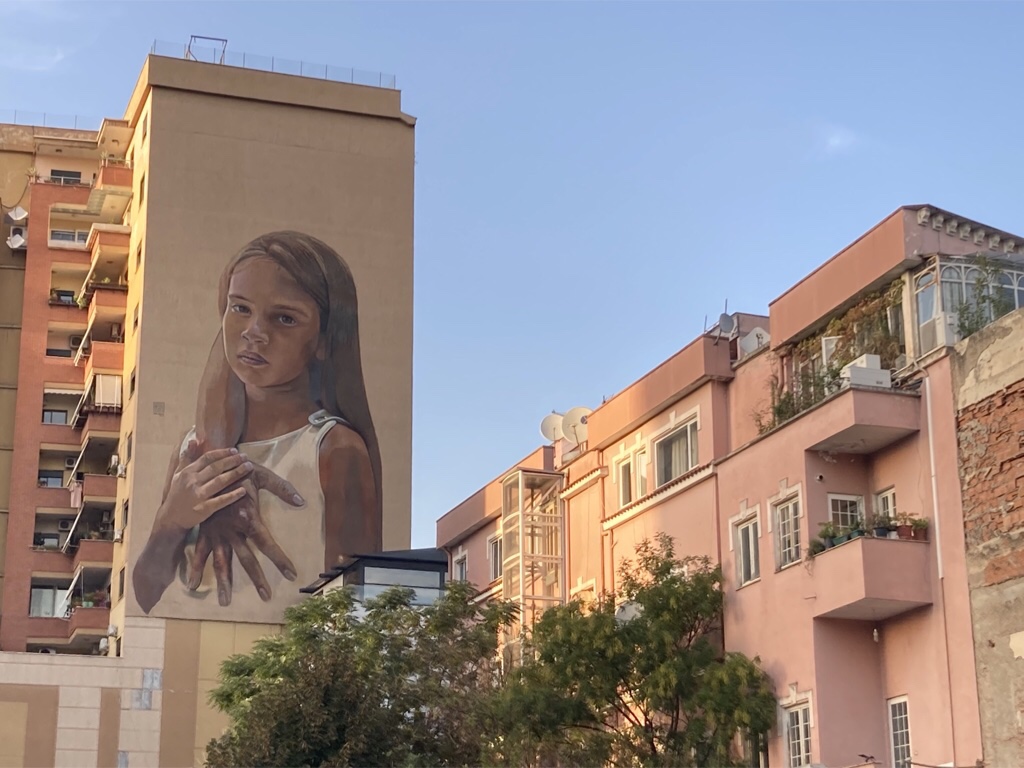
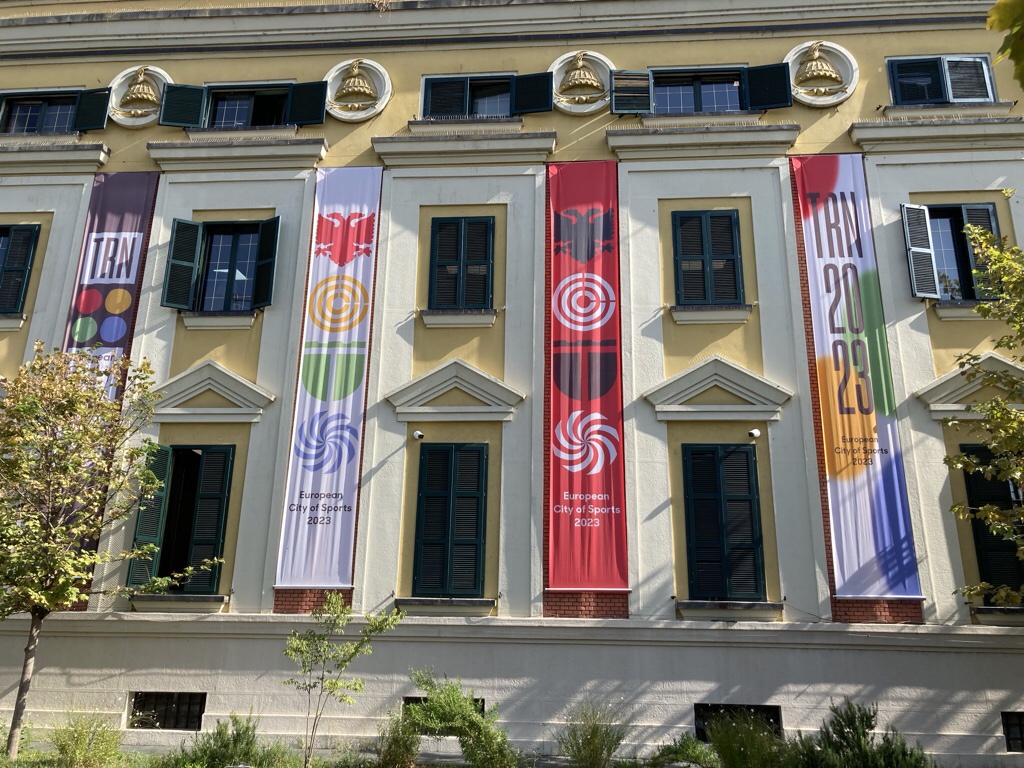
Walking round the city there are many buildings brightened up with a lick of paint or a mural, part of an incentive begun by the mayor. Some are named and mapped like the Rainbow Building …

… and Titanic Building …

… but others just surprise you when you turn a corner!

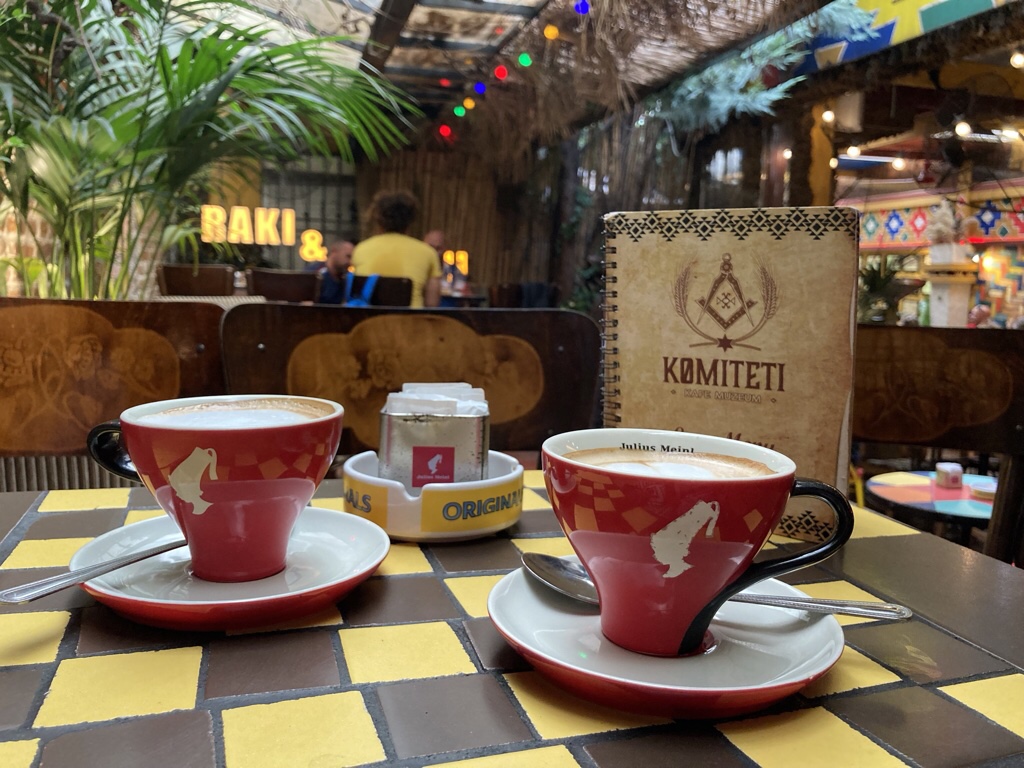
Continuing the post-Communist theme, we had read about Café-Museum Komiteti so we stopped by for a coffee.

The name refers to the Central Committee of the Communist period, an especially significant word throughout Albania’s story, originating in the Latin word meaning to gather together for a special purpose. It was conceived by Arbër Çepani as a place to store and display his collection of communist era memorabilia, with antiques, furniture, costumes, valuable collectibles and just cute stuff!

The coffee was great and having seen the choice of cocktails and raki, we knew we’d be back!

Our last evening began with raki cocktails at Kometiti, mine called a First Night and Chris’s with chilli raki!

Next, just two doors down was Artigiano, recommended by our very helpful receptionist Irini.

Despite all the Albanian specialities we’ve eaten, Chris chose the traditional spinach & feta pie but I had chateaubriand, the best steak I’ve had in ages!

Back to Kometiti for raki shots… our last night, it had to be done! Chris picked plum, one of the strongest while I had the waiter’s recommendation of of psimeni or ‘baked’ raki, actually a liqueur with a flavoring of honey, cinnamon and cloves which was delicious!

Incidently, Raki & Dashi means Raki & Love!

Flying home on the morning of the Tirana marathon wasn’t ideal as the taxi picked us up 45 minutes late, but despite the heavy traffic, we were at the gate an hour before take off.

So what did we think of the organised tour? Everything ran pretty smoothly, the hotels and bus were comfortable, we had a great bunch of people to share it with and the information and insight from our guide really made a difference to our appreciation of Albania. The downside was the very full schedule and not always having enough time to see everything. Views from the bus meant we saw much more than we photographed. Exoticca have come up trumps with a good value tour and we would certainly consider travelling with them again.

Albania is full of friendly welcoming people. The country is making huge strides to embrace tourism and move towards being accepted into the EU, and while investment is needed to develop their historical attractions, hopefully it won’t spoil the natural beauty.

Albanians are gregarious and love to be outside, sitting in coffee shops with family and friends. The food was great with huge portions of mezzes, salads, grilled meat & fish and plenty of pasta and pizza, all very reasonably priced.

We found the roads generally good, but Albanians like to break the rules so no need to indicate, park where you like and ignore the speed limit! Having said that, drivers were very accommodating and there were few scrapes on cars, with the only accident being on the M23 on our way home! Nonetheless it was good not to have to drive and at least we didn’t add to the Tirana traffic and air pollution.

So that’s it … the suitcase is unpacked while the memories are neatly packaged into a journal … until next time!

Map

Tirana … Around Skanderbeg Square

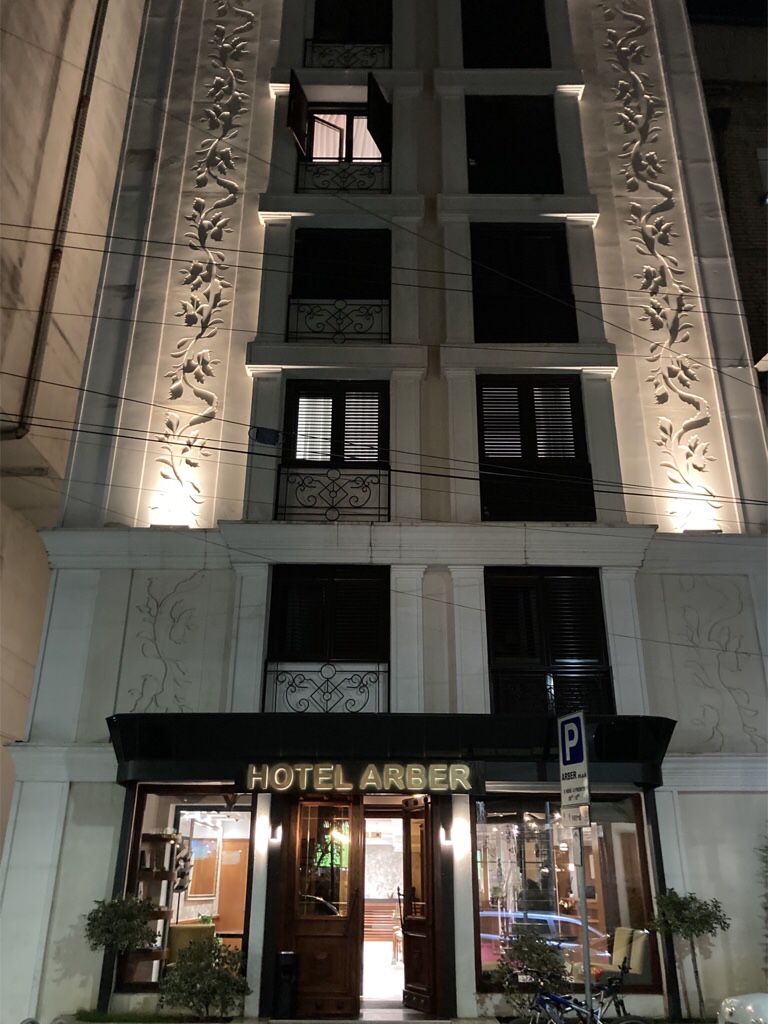
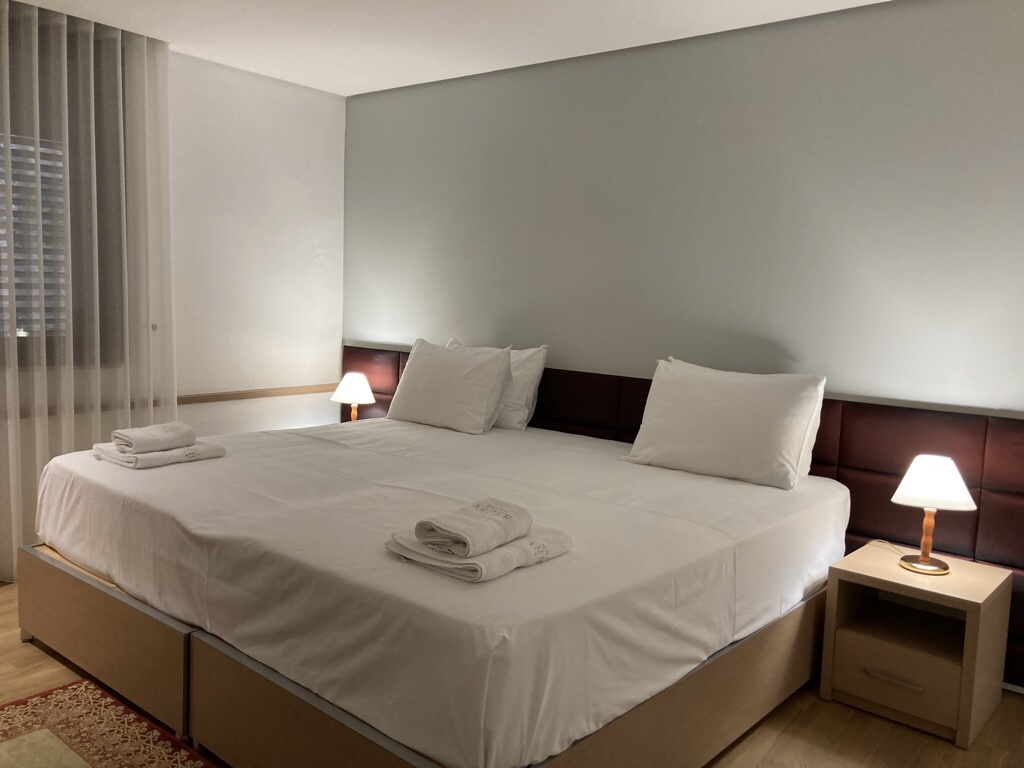
Our last three nights in Tirana were in Hotel Arber …

…which was a good opportunity to be in a different part of the city. Having transferred we were eager to explore as we hadn’t seen any of the city in daylight until then.

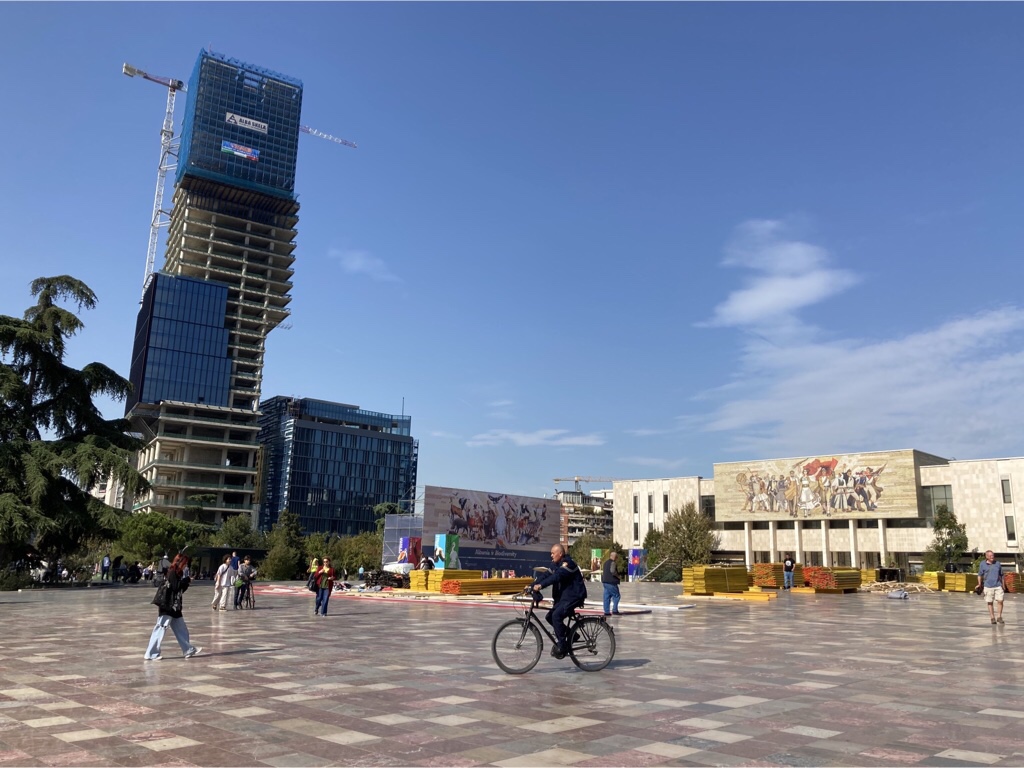
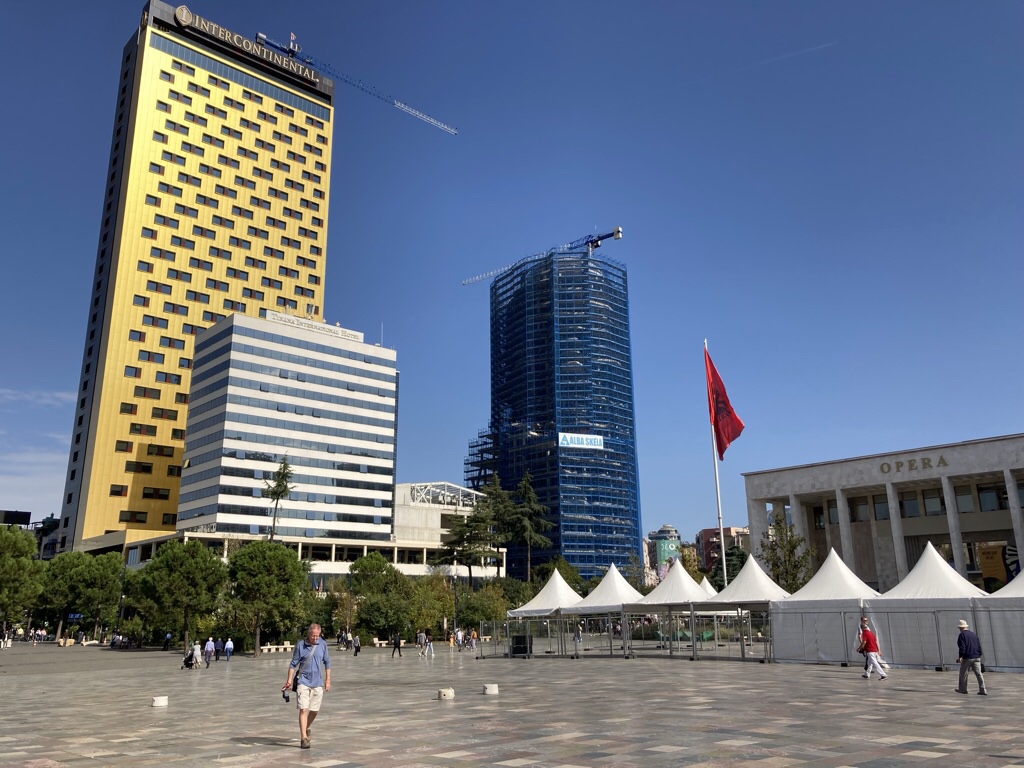
Skanderbeg Square is a massive public space in the centre of the city …

… with a statue of the man himself on his horse, which replaced an earlier statue of Stalin when the square was modernised and enlarged.

Surrounded by buildings …

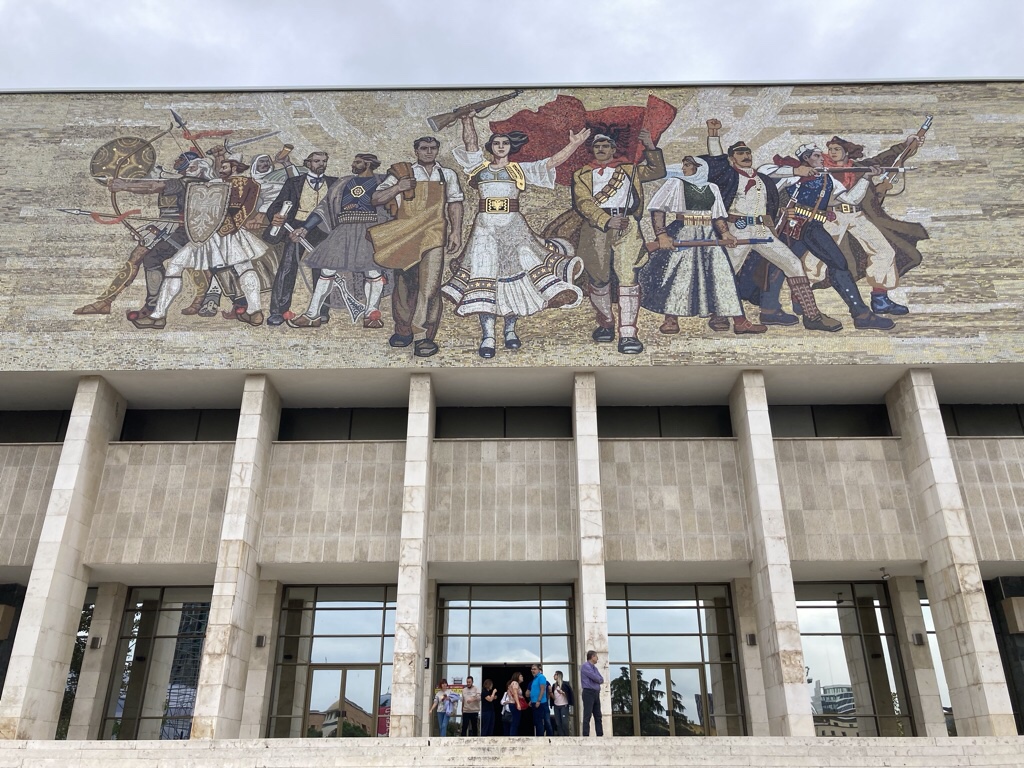
… the most striking being the National Museum, built in 1981 with a large mural mosaic showing figures from Albania’s history …

… and our visit helped us to link all we have learnt together. No wonder it’s been hard to get a handle on it all with Illyrians, Greeks, Romans, Albanian princes, Skanderbeg, The Ottomans, the 1912 Independence led by Ismail Qemali , WW1, Ahmet Zogu as president then king, Italian invasion followed by WWII, the Communist regime led by Enva Hoxha and then finally the end of Communism in 1991! Of course even that was over 30 years ago now, and Albania has certainly moved on, not least when you notice all the new construction in the city.

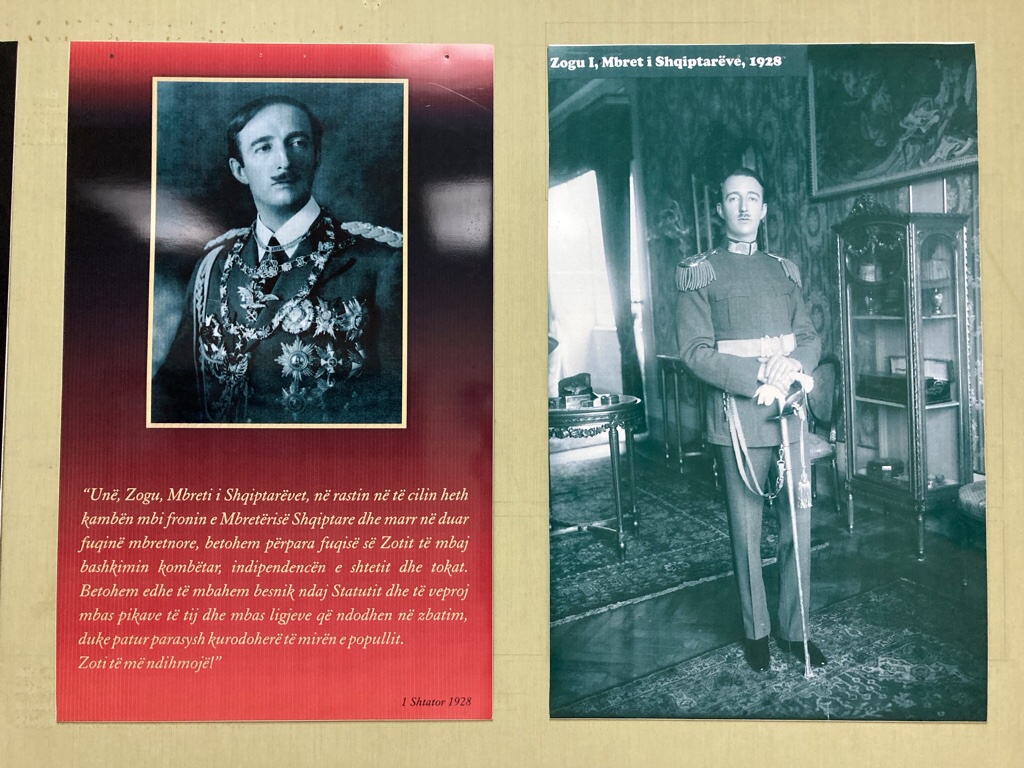
Just a couple of pics, firstly Ahmet Zogu, who hasn’t had a mention yet, who made himself king when his term of office ended then fled the country when Italy invaded …

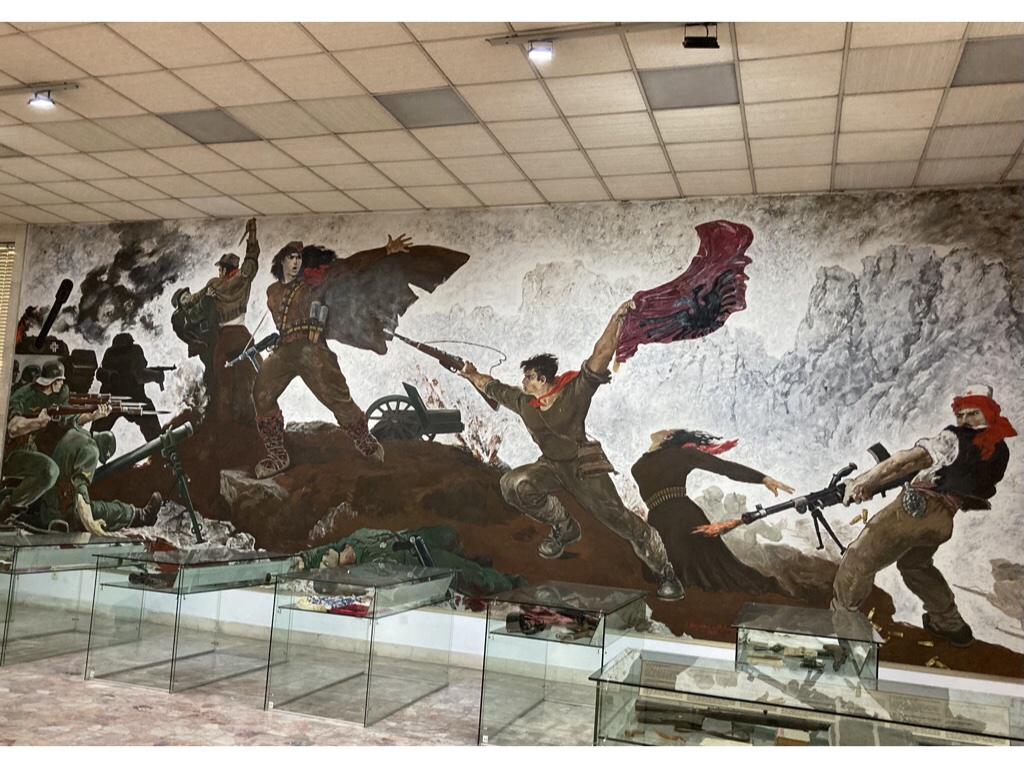
… a striking image of the partisan struggle …

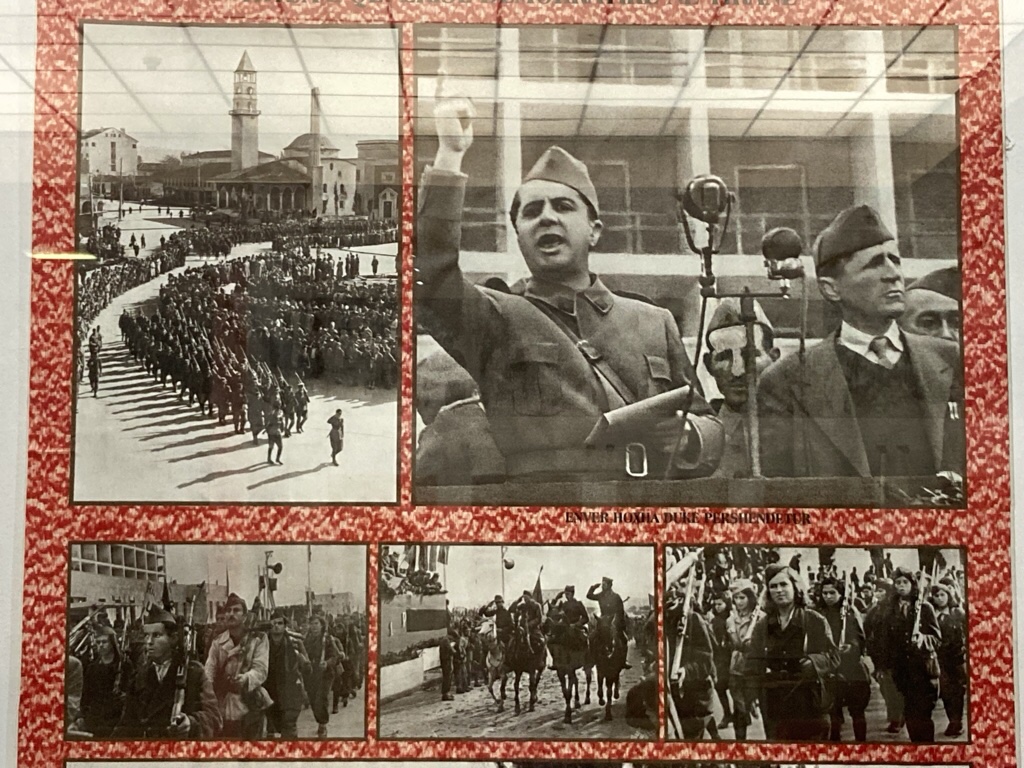
… and Enva Hoxha whose brand of Communism held the country in fear.

As always, the best bits end up in a national museum, so I’ve also made my own iconostasis with some of the icons that started off in churches we’ve visited – clockwise: St George, Ardenica Monastery, Baptism of Christ, St Nicholas Church, Gjirokaster, John the Baptist, St Nicholas Church, Berat, Holy Mother & Christ, St Nicholas Church, Gjirokaster, St Nicholas, St Nicholas Church, Berat. Love the details, especially the chap in the water below Christ shrugging his shoulders, maybe Neptune?

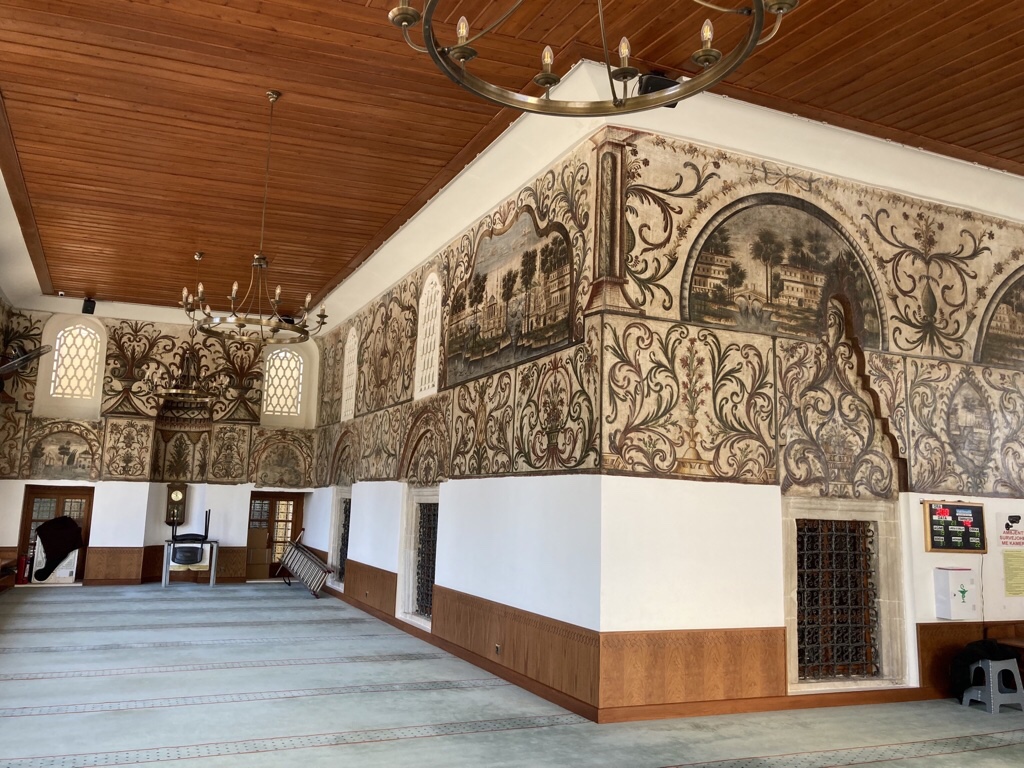
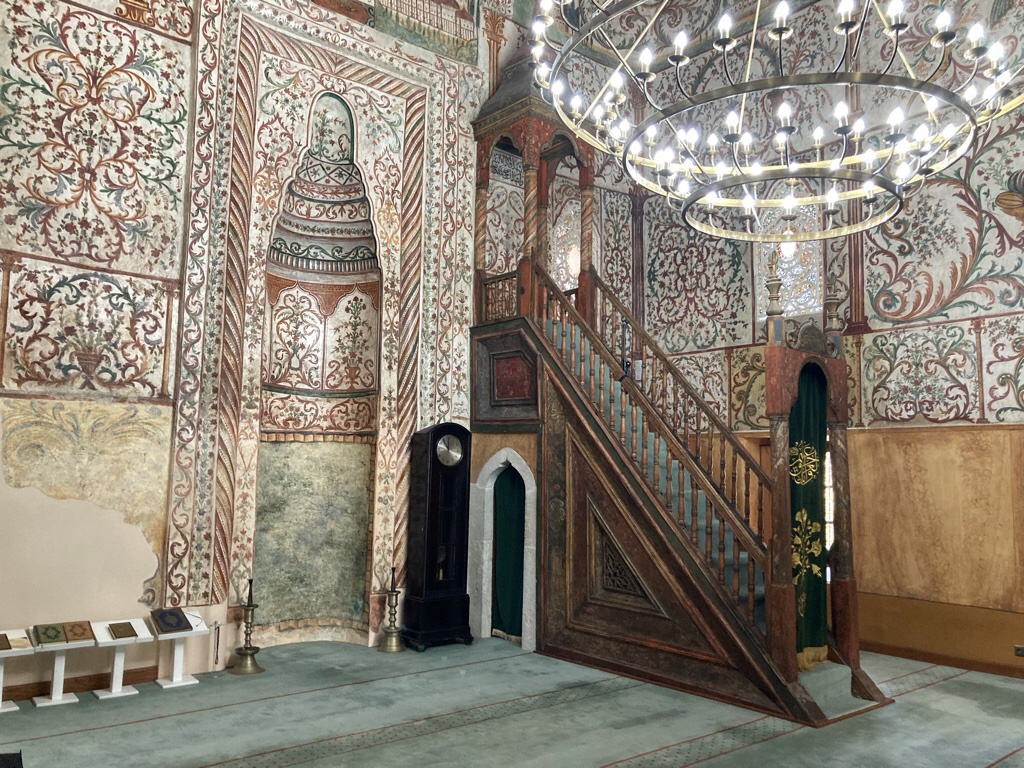
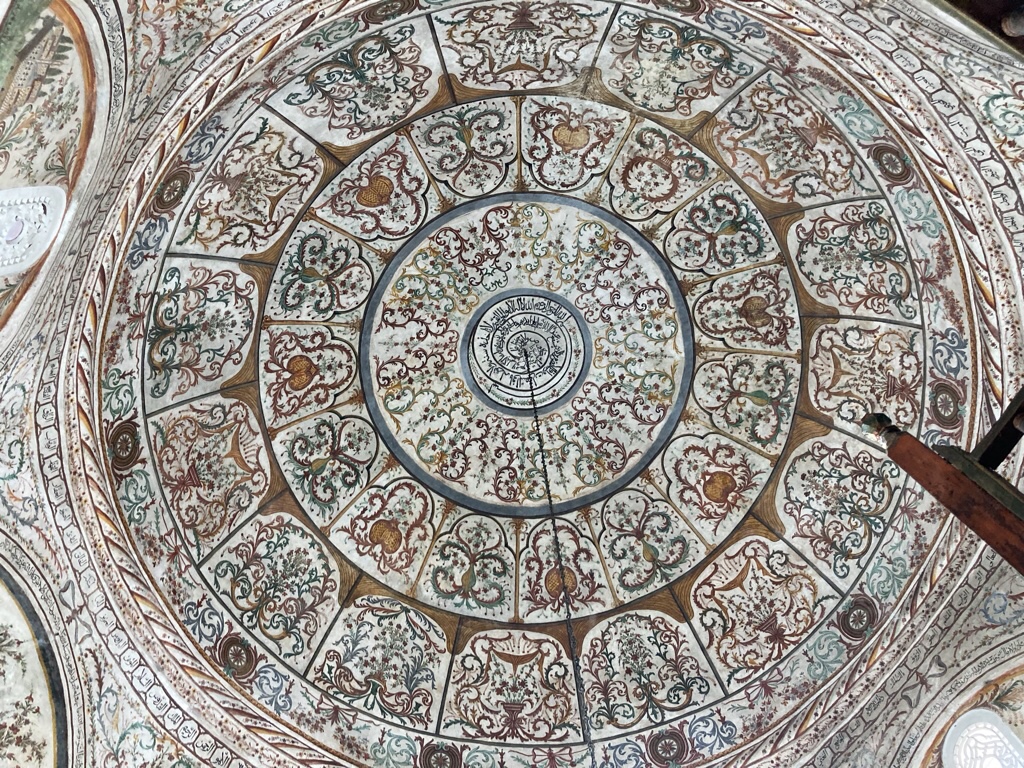
The C18th Et’hem Bej Mosque was probably the most impressive on this trip with the most beautiful murals decorating every wall, with imaginary landscapes with flowers, trees and waterfalls …

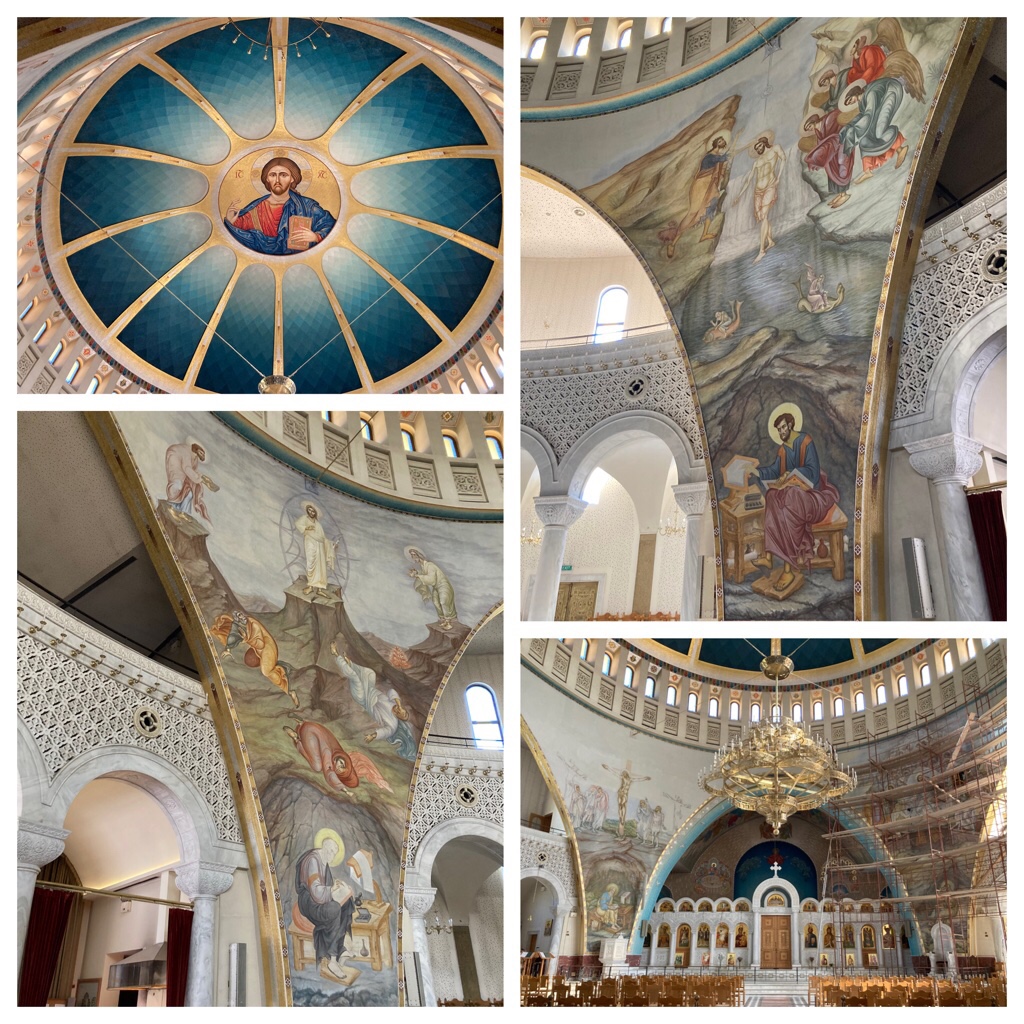
… and the Resurrection Cathedral was opened in 2012, to celebrate the 20th anniversary of the revival of the Albanian Orthodox Church and was designed by New York architects.

It is strikingly modern …

… with a bell tower decorated with paschal candles representing the four evangelists which lit up red at night.

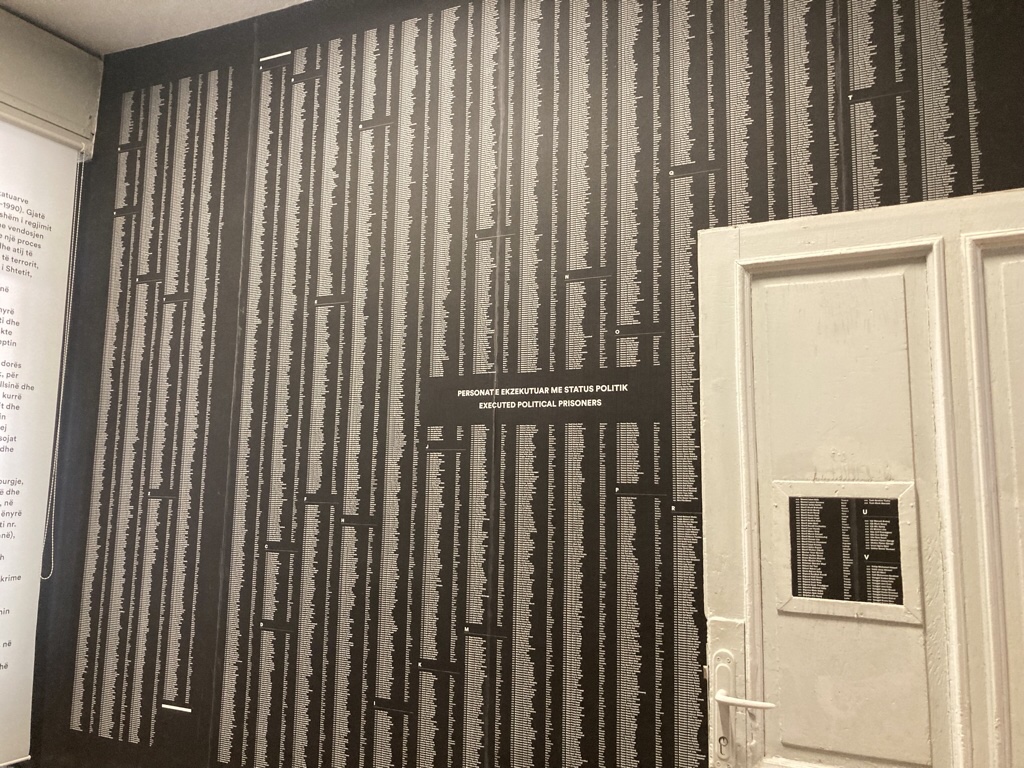
We found ourselves beside The House of Leaves, a museum dedicated to the innocent people who were spied upon, arrested, imprisoned or executed during the military regime.

Built as a maternity hospital in 1931, it was first used as an investigation centre, then later dealt with all forms of surveillance amongst both Albanians and foreigners …

… which led to a some 18,000 people being imprisoned for political reasons and over 5500 people being executed during the dictatorship.

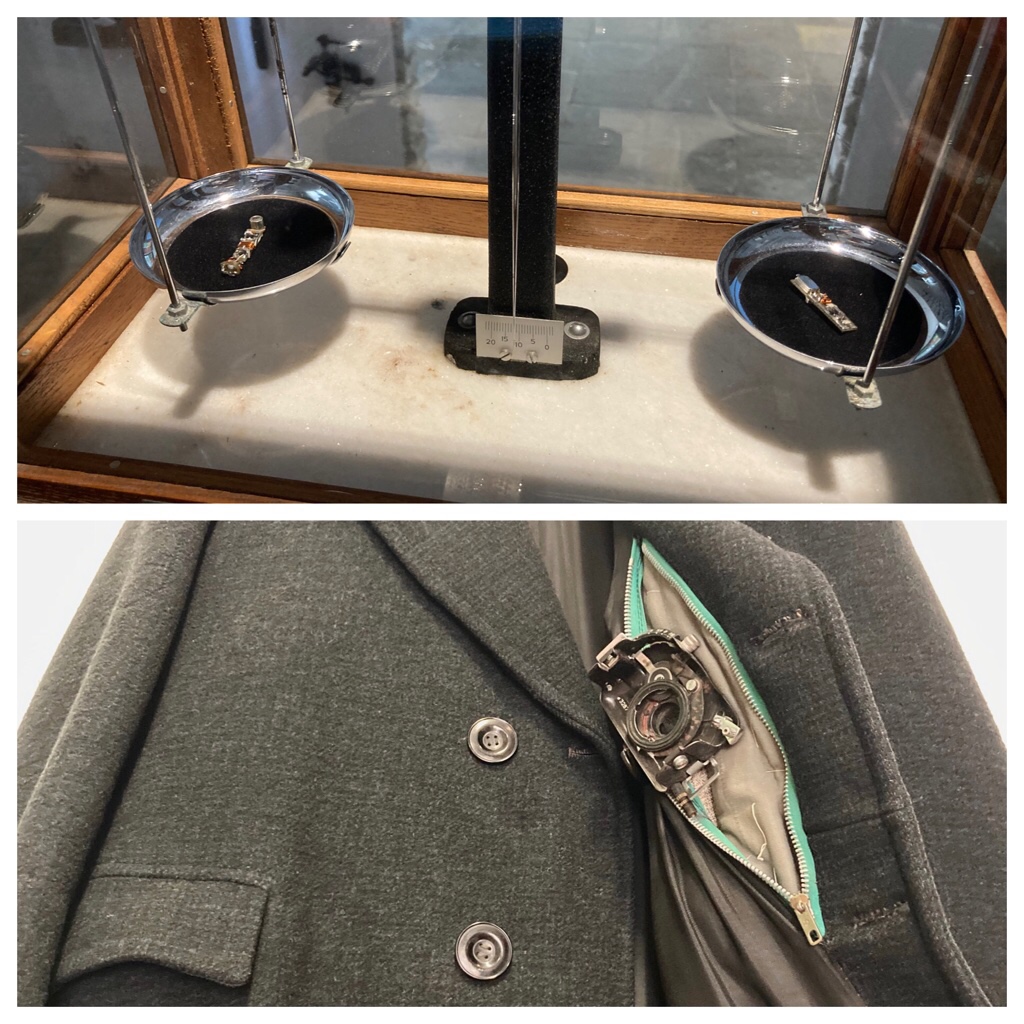
Despite having seen bugs and things in spy films, seeing the equipment like this was something else. The museum was well put together and very thought provoking.

Back outside in the sunshine we passed Tirana Castle where just a short section of remaining Byzantine wall has been incorporated into an area of cafes and restaurants …

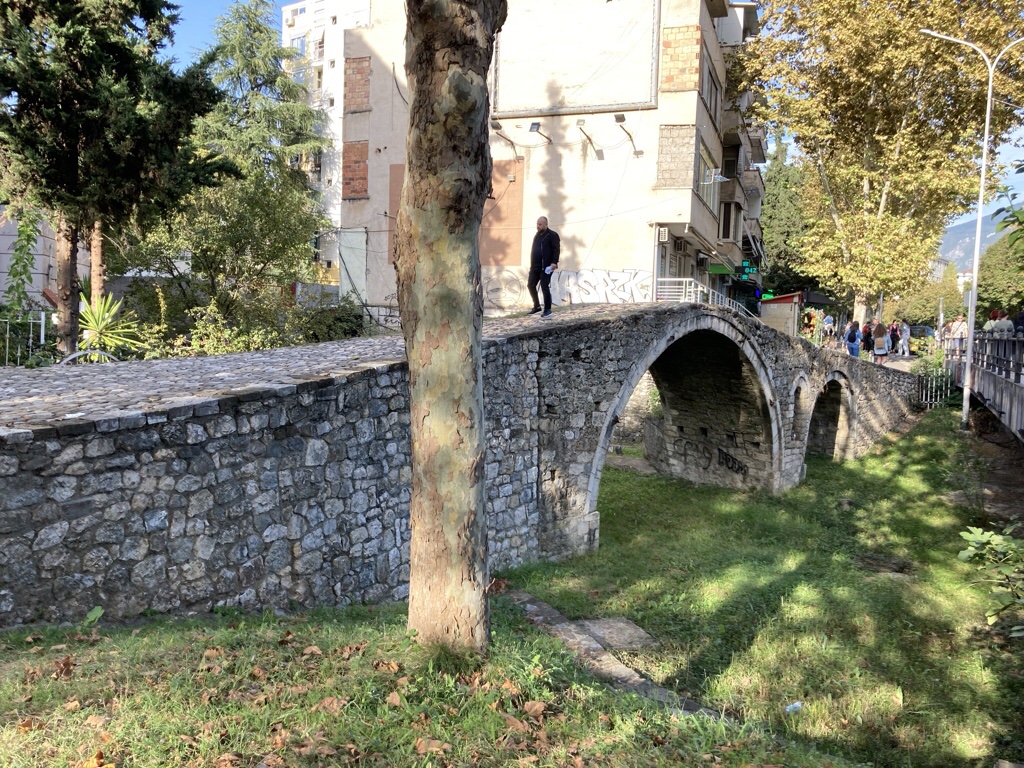
… the Ottoman Tanners Bridge, squeezed in to a gap beside the main road …

… and the New Market offering everything from raspberries to rugs.

… continued …!

Map

Churches of Korcë

We had our longest day ahead, punctuated first by a couple of scenic viewpoints …

… and an unscheduled stop especially for those who had packed a swimsuit!

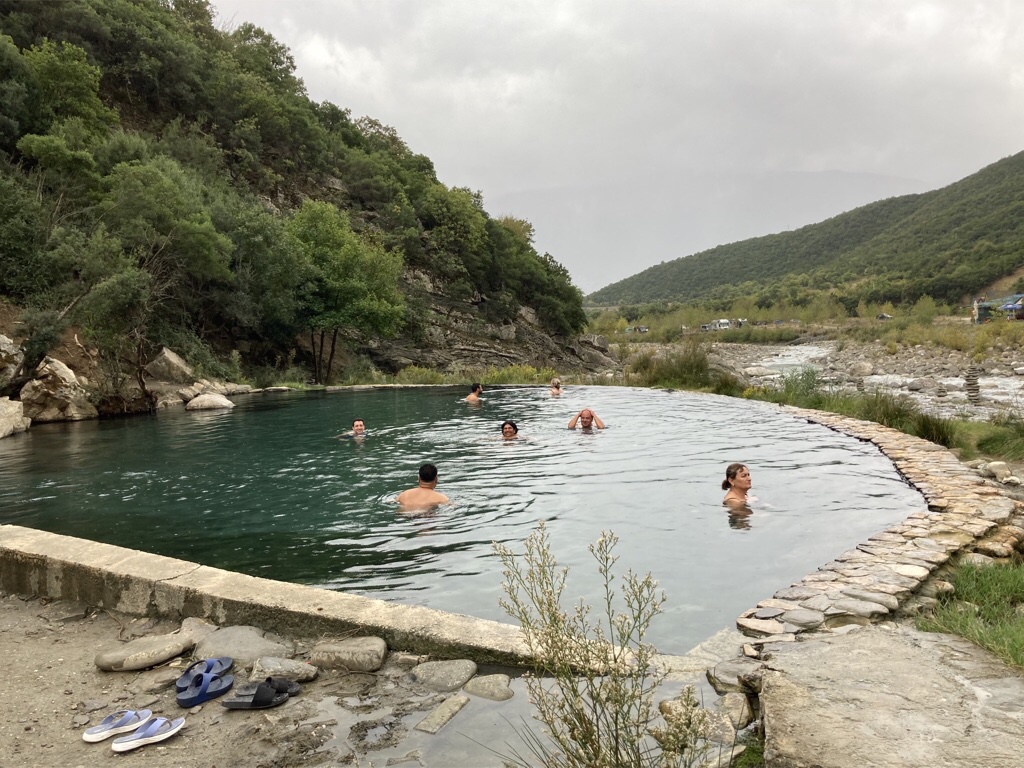
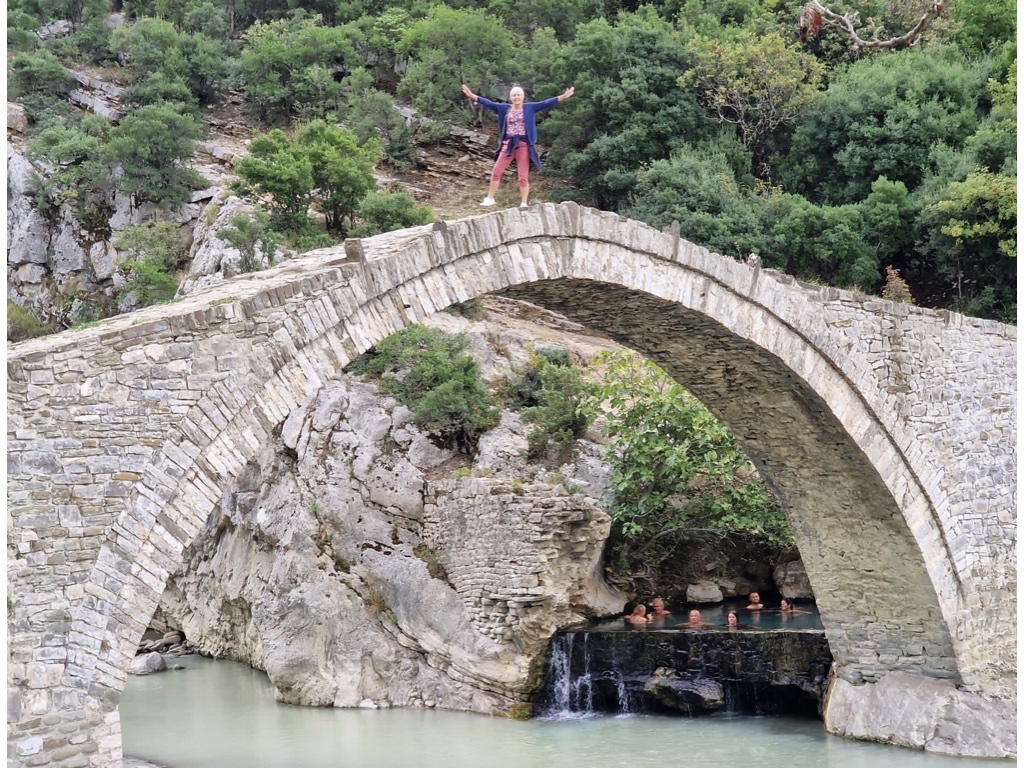
A medieval Ottoman bridge led to the Bënjës Thermal Baths and several of the group swam in the sulphur rich geothermal waters.

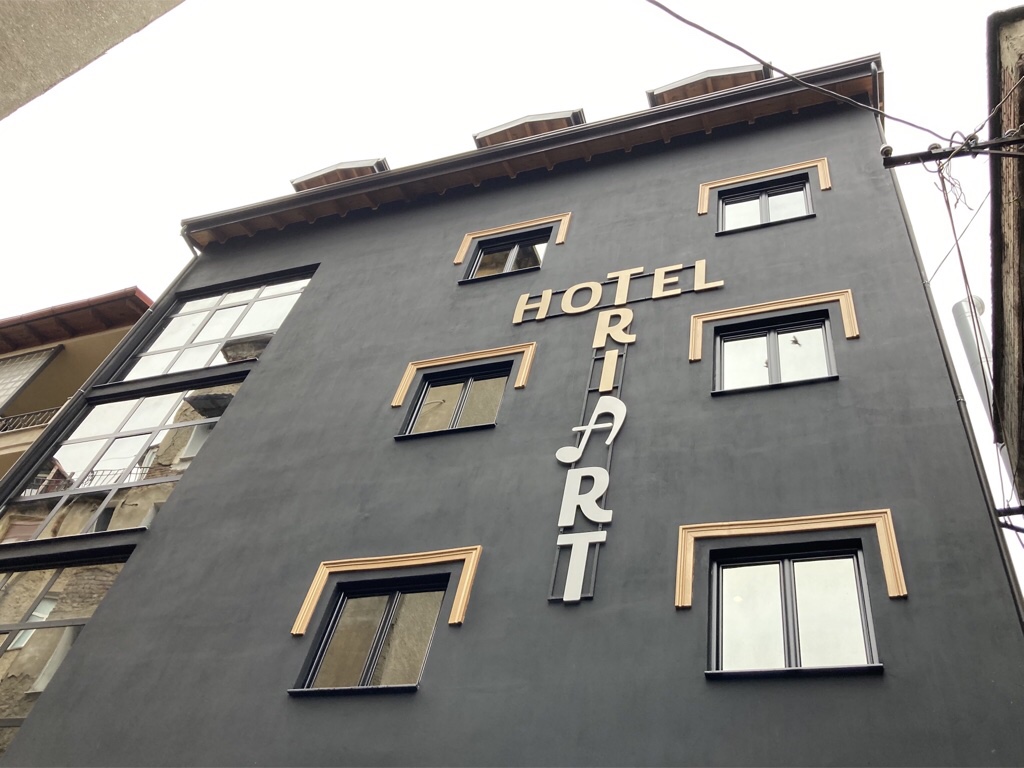
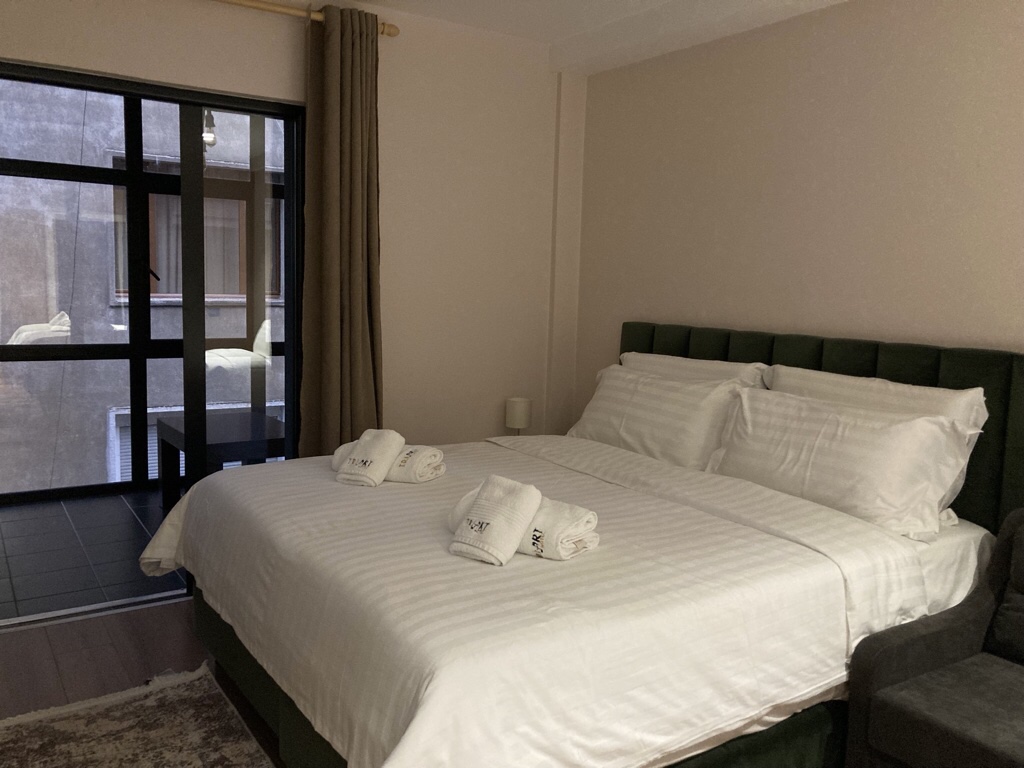
Just as the bathers were finishing, the rain refused to hold off any longer and kept us company for the rest of the day, which was made longer by a long stretch of road under repair. We finally arrived in Korcë at sunset. It was a shock to get out of the warm bus into the drizzle, but we checked at our hotel …

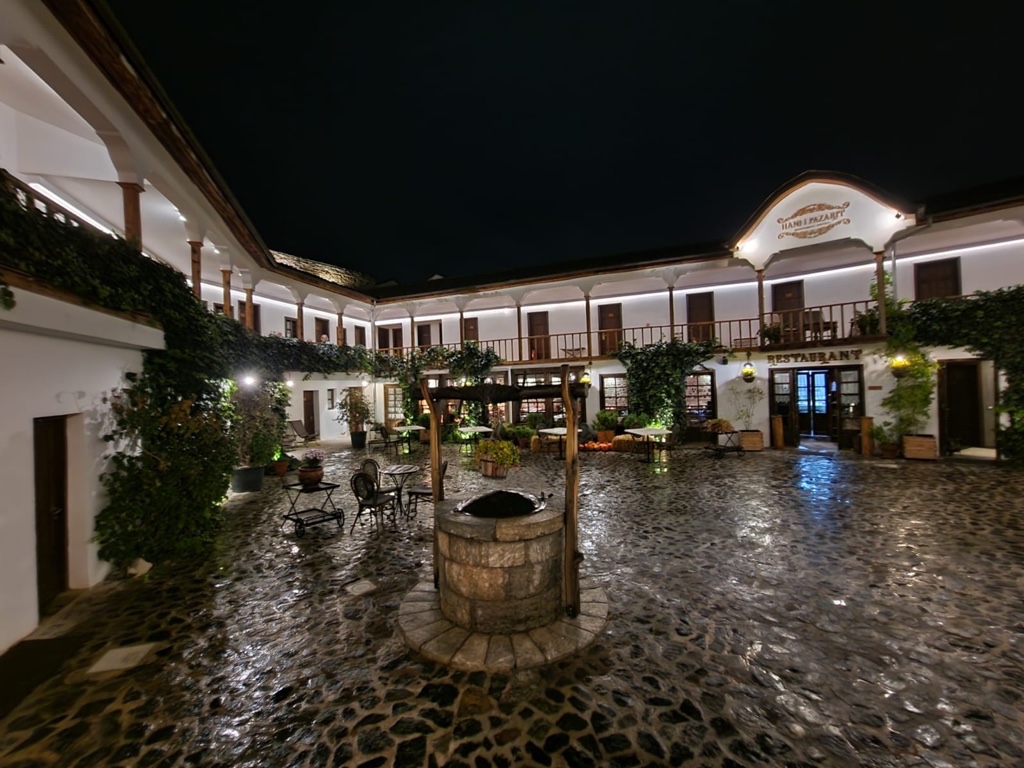
… and then walked down to see the bazaar. A restored traditional inn built round a courtyard with a cosy restaurant beckoned and a group of us had a great dinner in the warm!

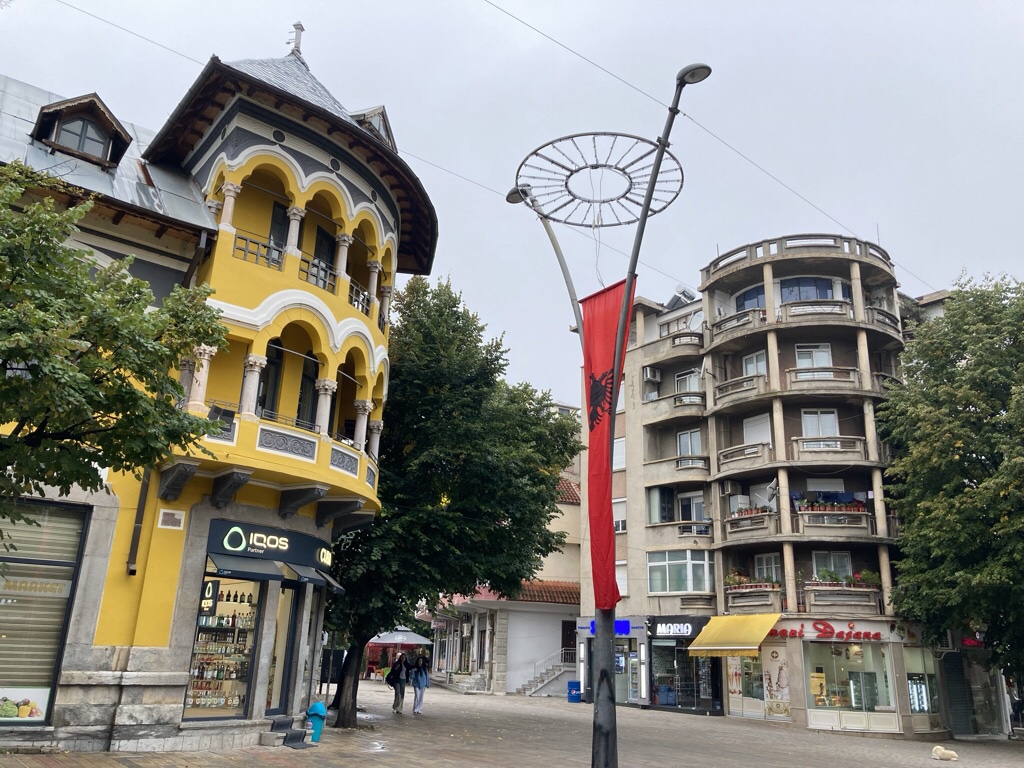
In the morning we had a quick look round before breakfast …

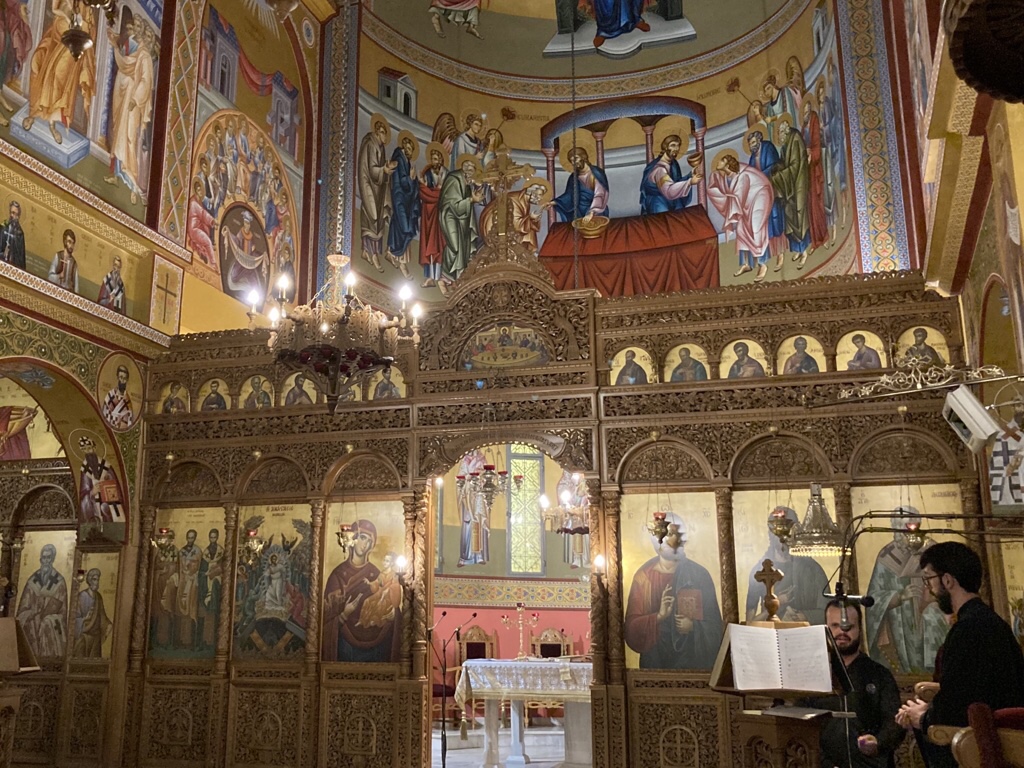
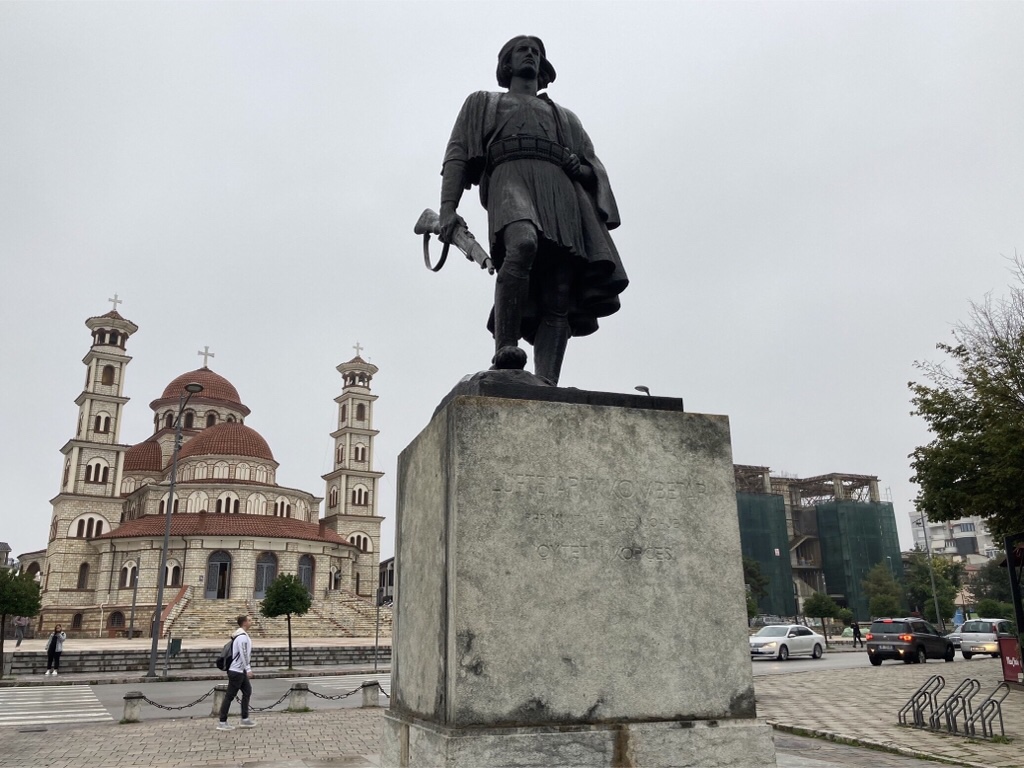
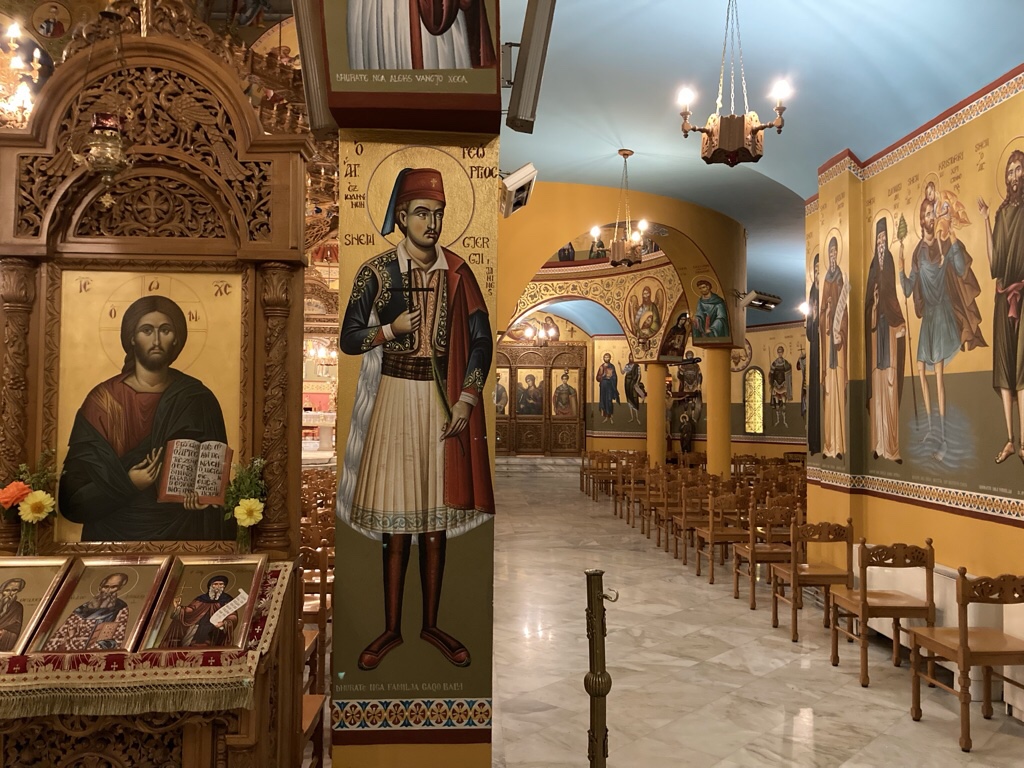
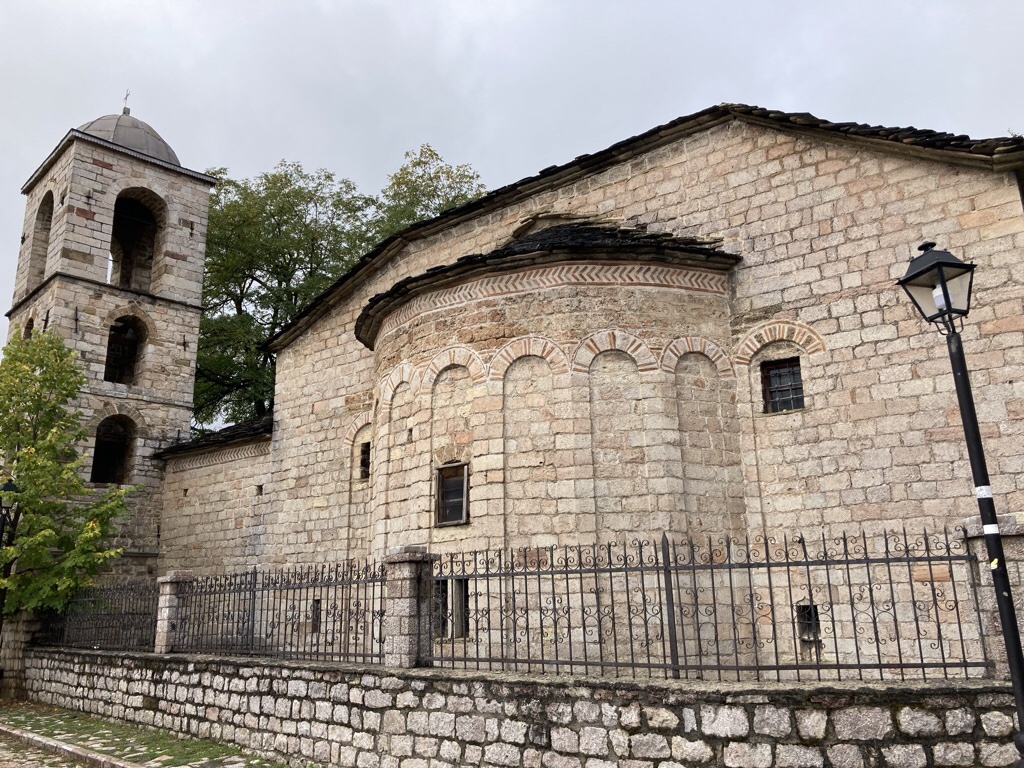
… and we were particularly struck by the modern the Orthodox Resurrection Cathedral, built in 1995. The chanted responses of the service rang round the church as we looked at the murals, and the smell of incense heightened the atmosphere.

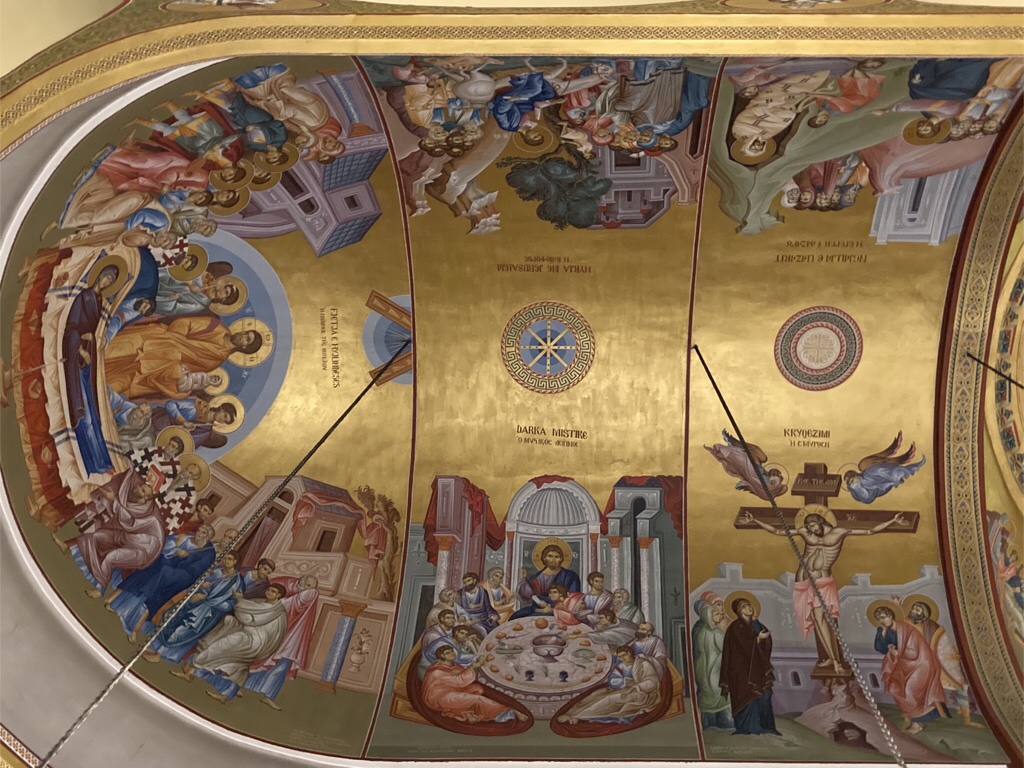
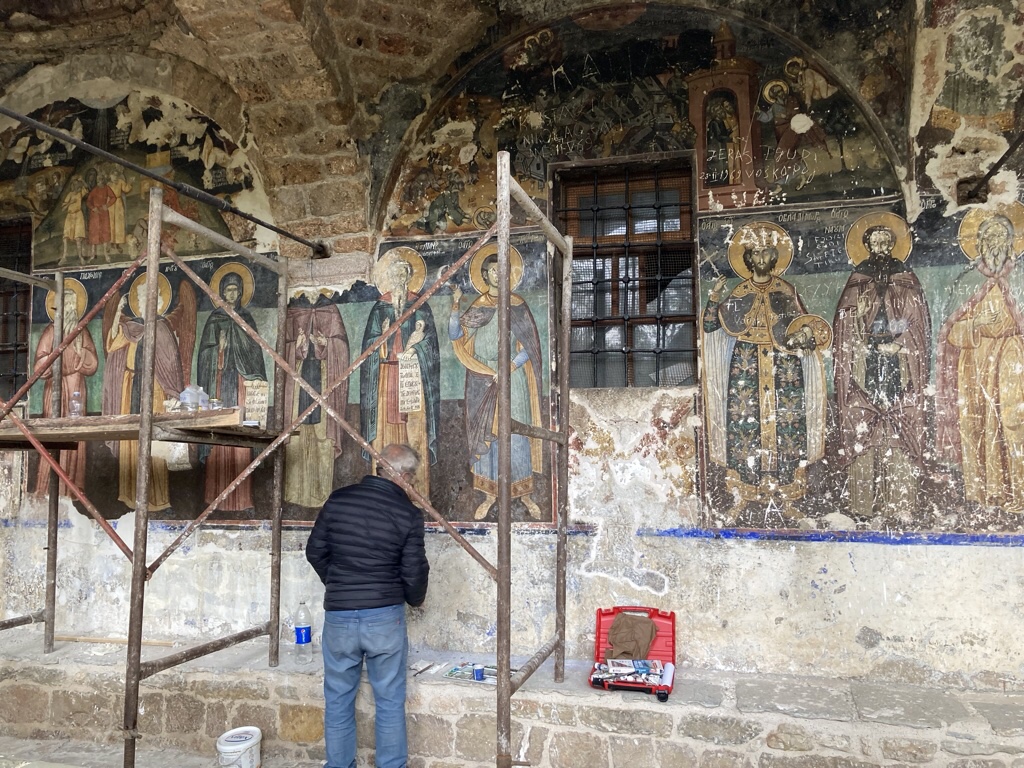
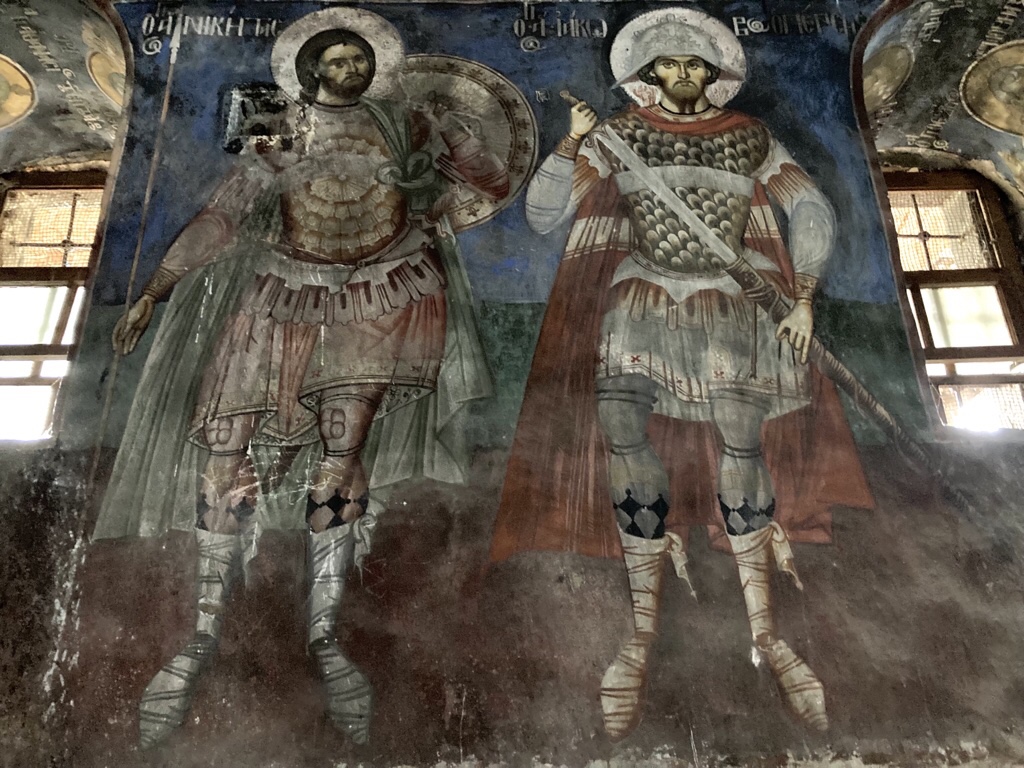
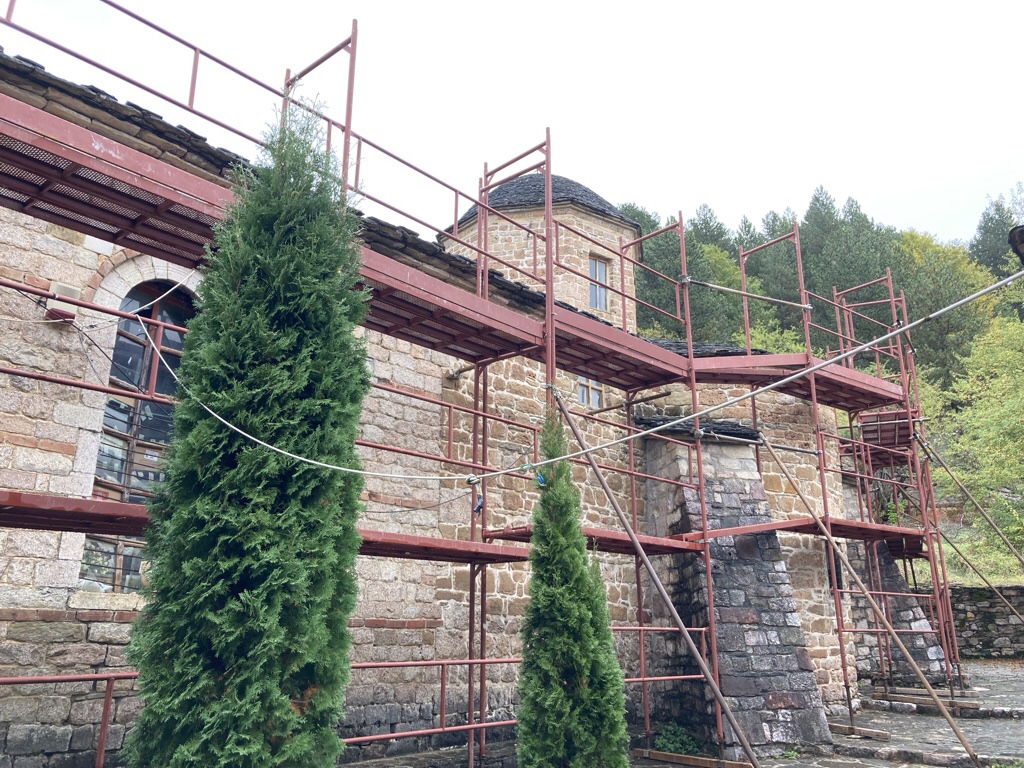
Next was nearby Voskopoje once a center of economic, cultural and artistic development and one of largest commercial towns in the Balkans. Today it’s a sleepy village and Saimir located the priest who opened up St Nicholas Church for us, where the C18th cloister murals were undergoing restoration following damage during the Communist era …

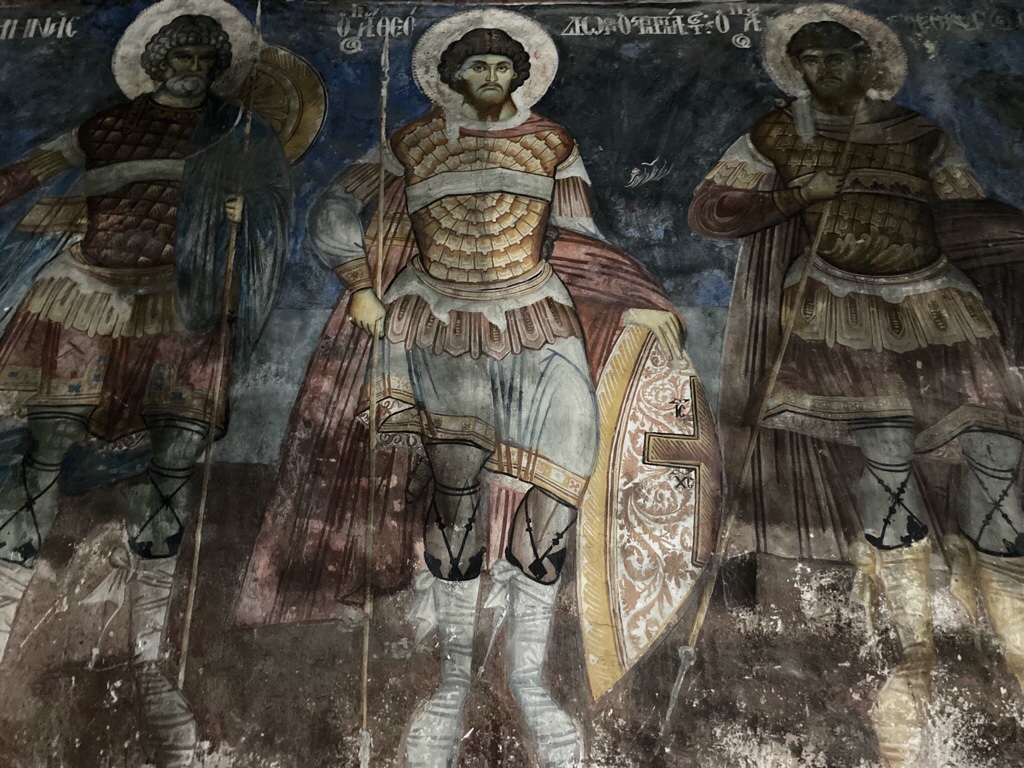
… but the saints inside were in better shape.

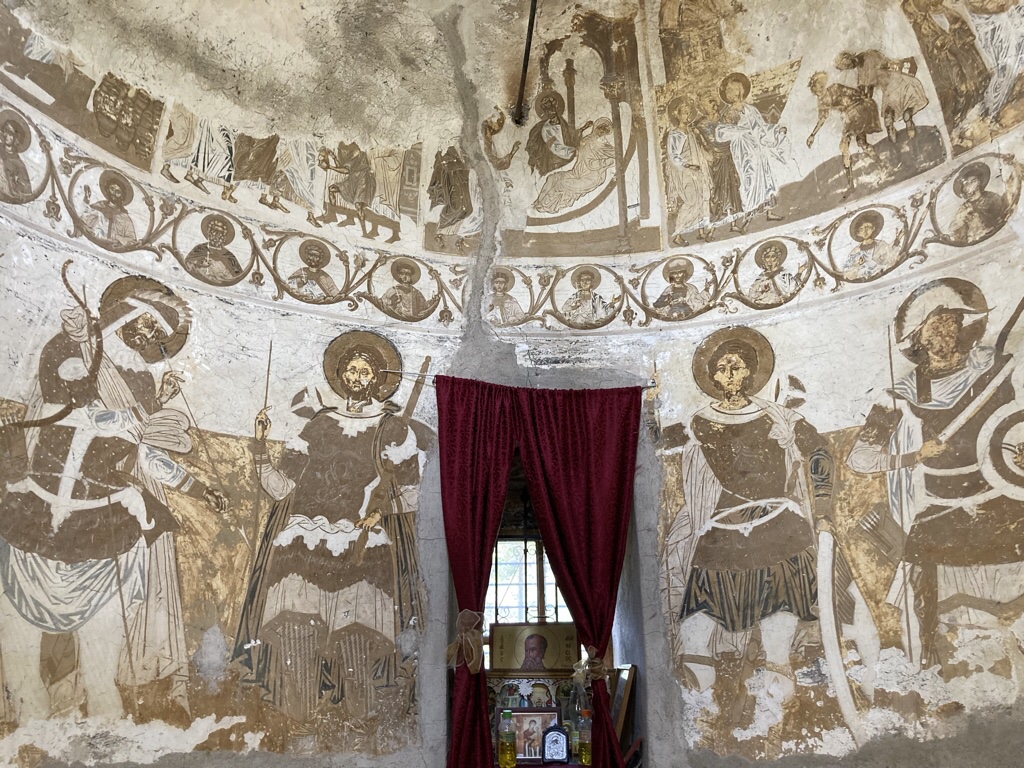
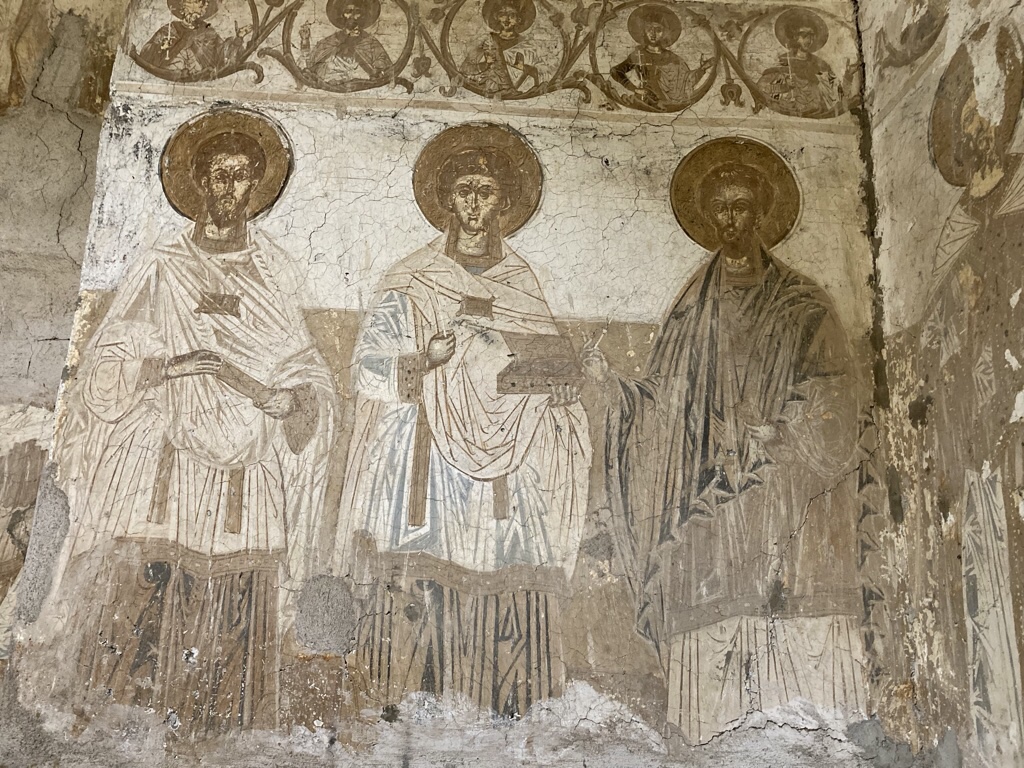
The C17th Monastery of St John was also undergoing repair …

… and the murals here were painted differently to any others we saw.

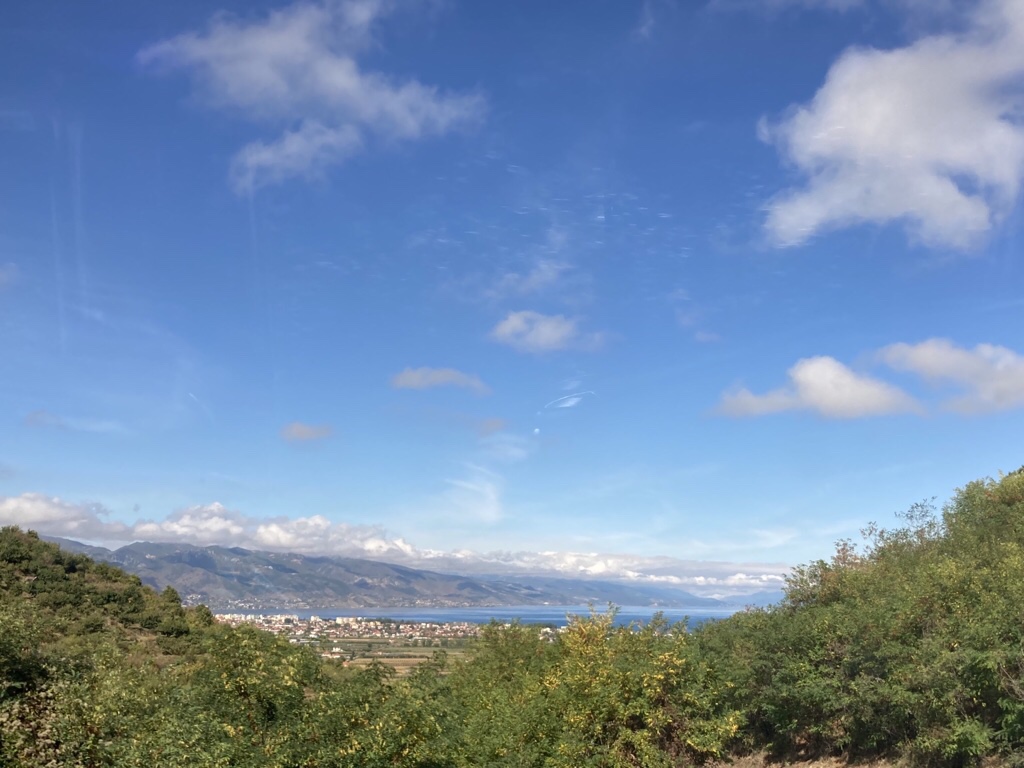
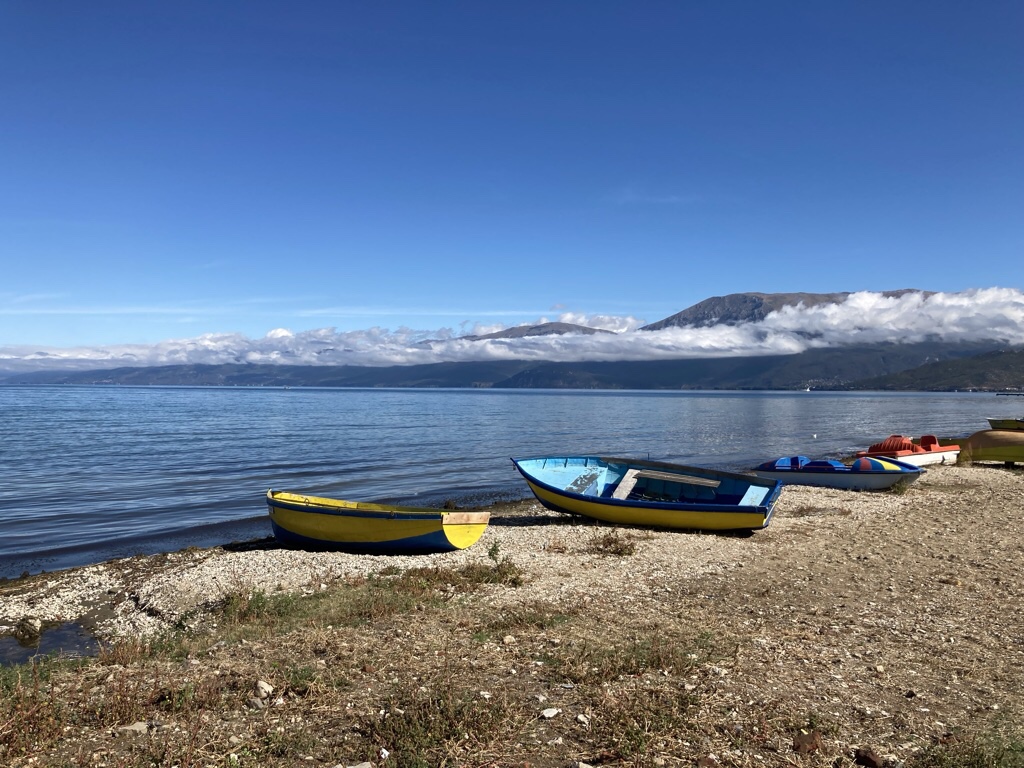
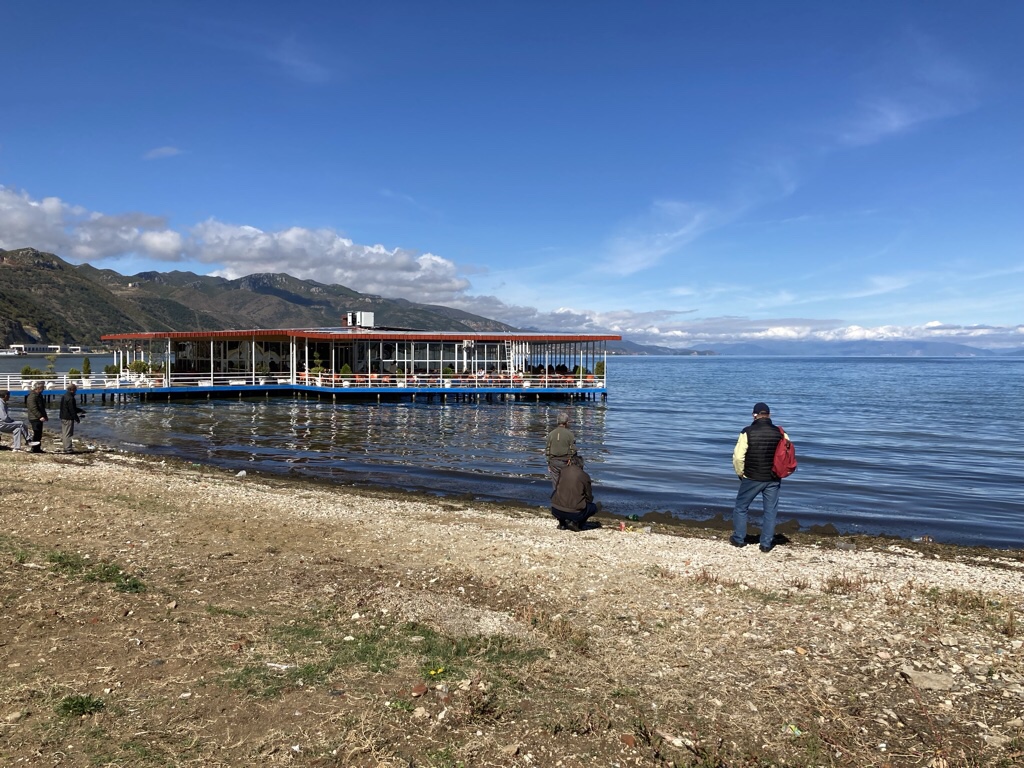
A couple of hours later we reached the shore of Lake Ohrid, one of Europe’s oldest and deepest lakes which straddles the border between Albania and North Macedonia. We stopped at Pogradec to stretch our legs …

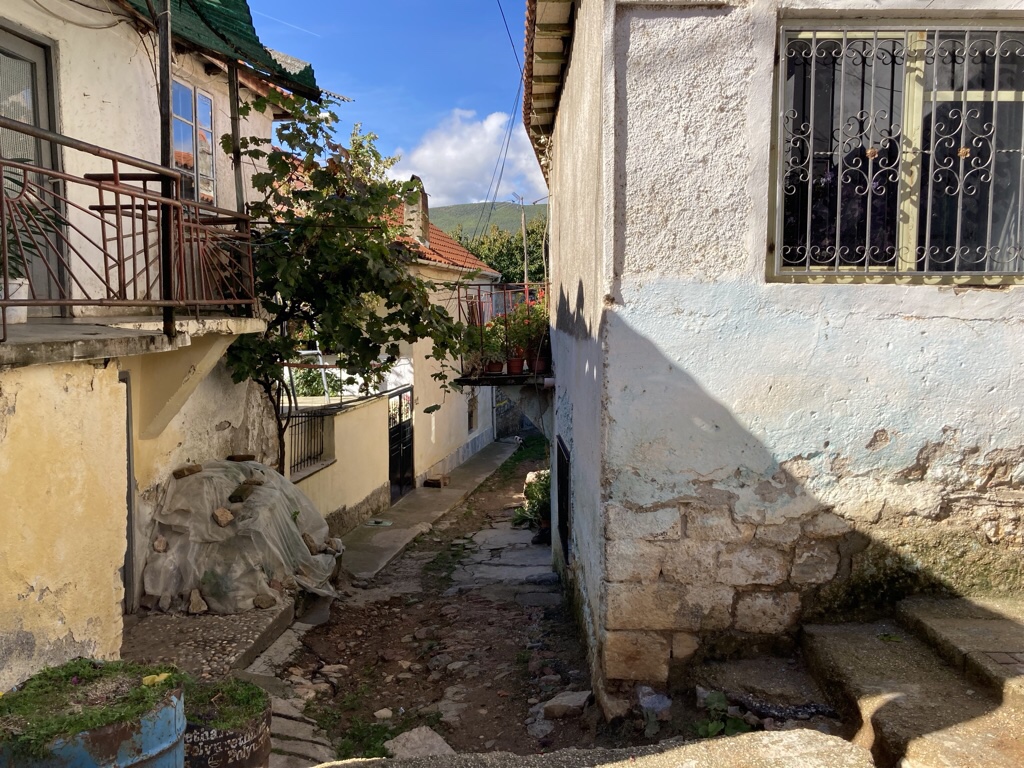
… then on to Lin where we wandered round the village …

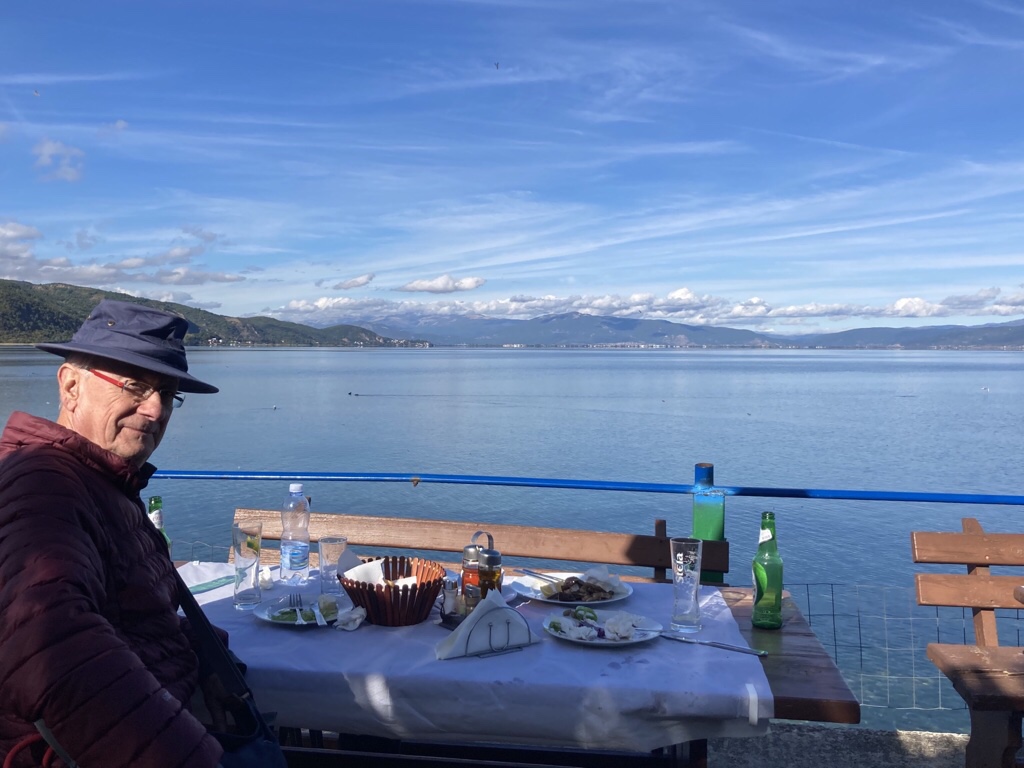
… and had lunch overlooking the water.

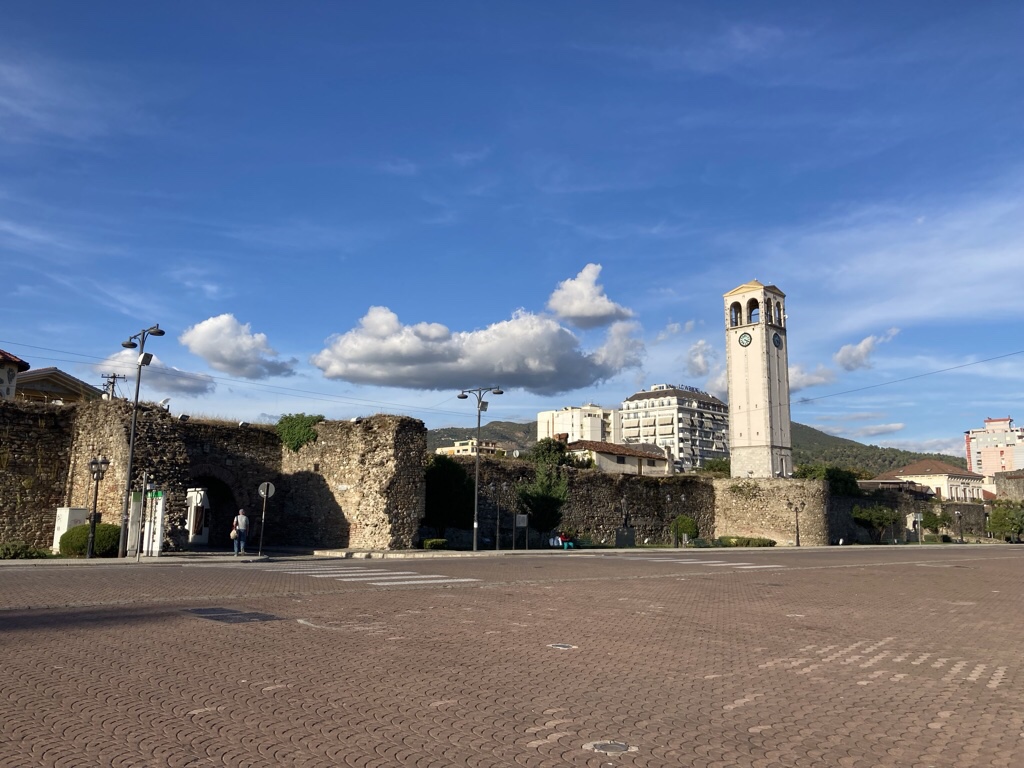
In the afternoon we returned to Tirana with a final stop in Elbasan, but the Ethnological Museum and church were closed so we went inside the old city walls …

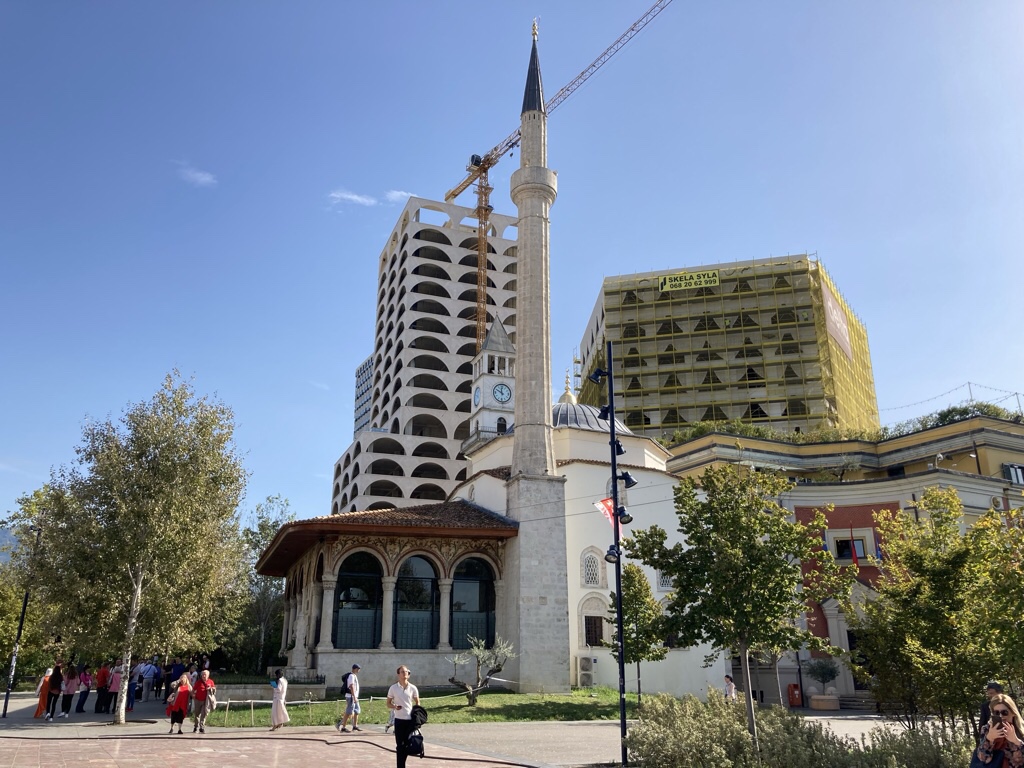
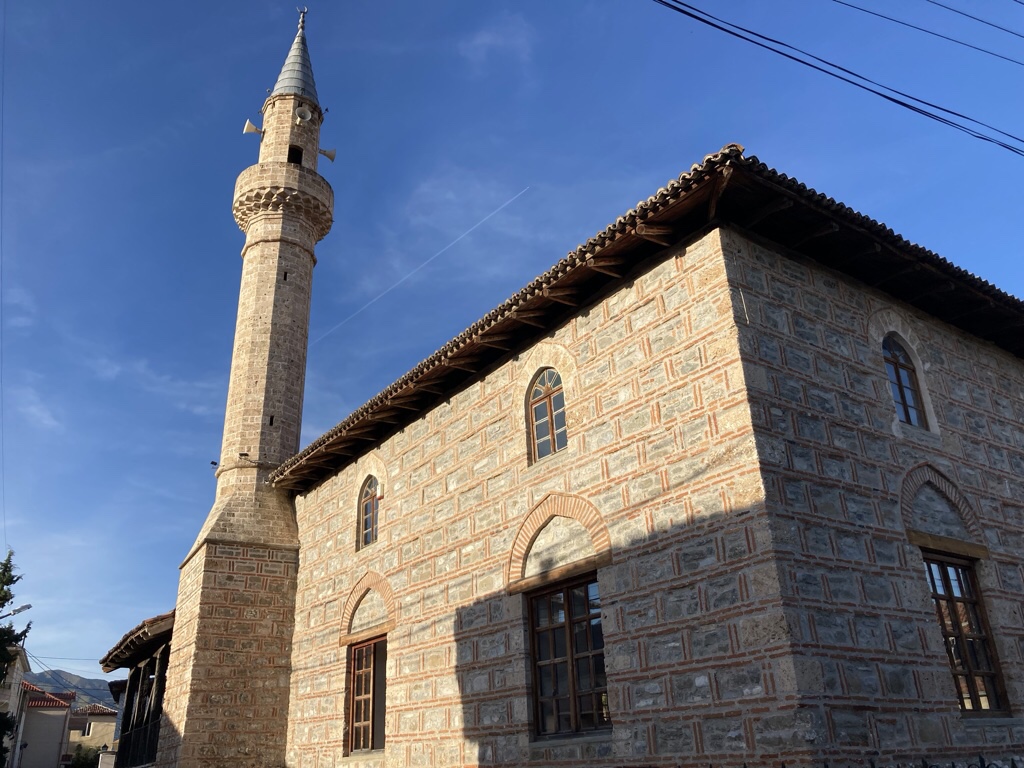
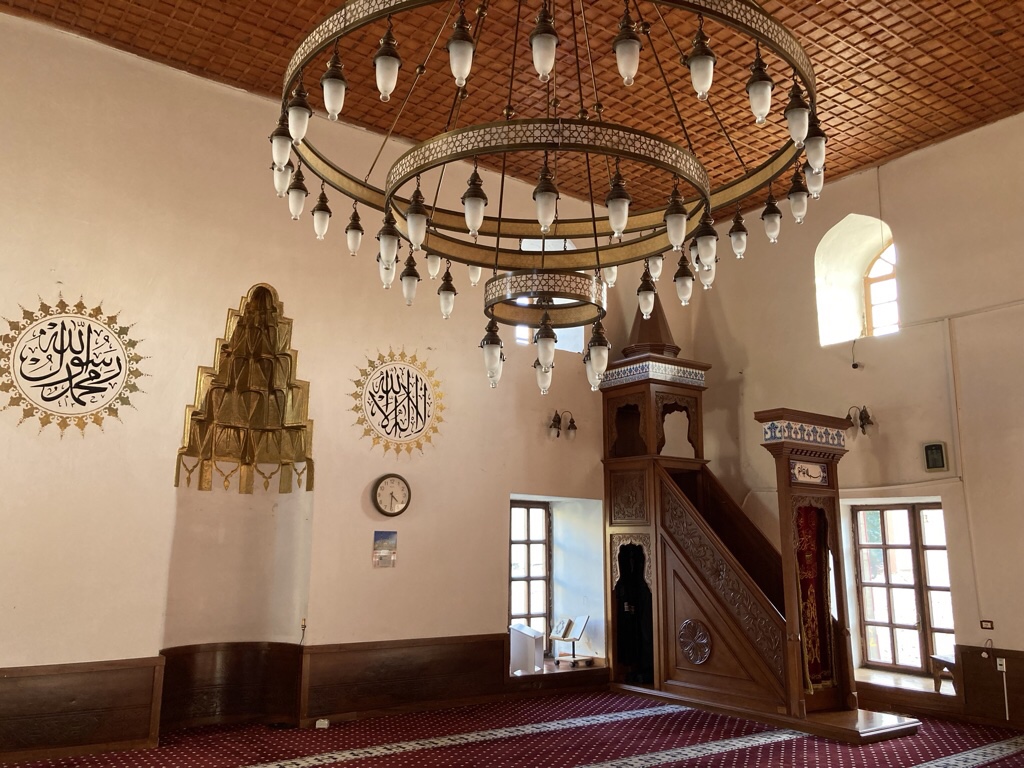
… and visited the King Mosque which is one of the oldest active mosques in Albania.

Once back in Tirana, we returned to Hotel Theatro for the final night and there was a flurry of thank yous and goodbyes as we retrieved our luggage from the bus. We seemed to disperse very quickly for a group who had been together for just over a week, but many had an early start in the morning.

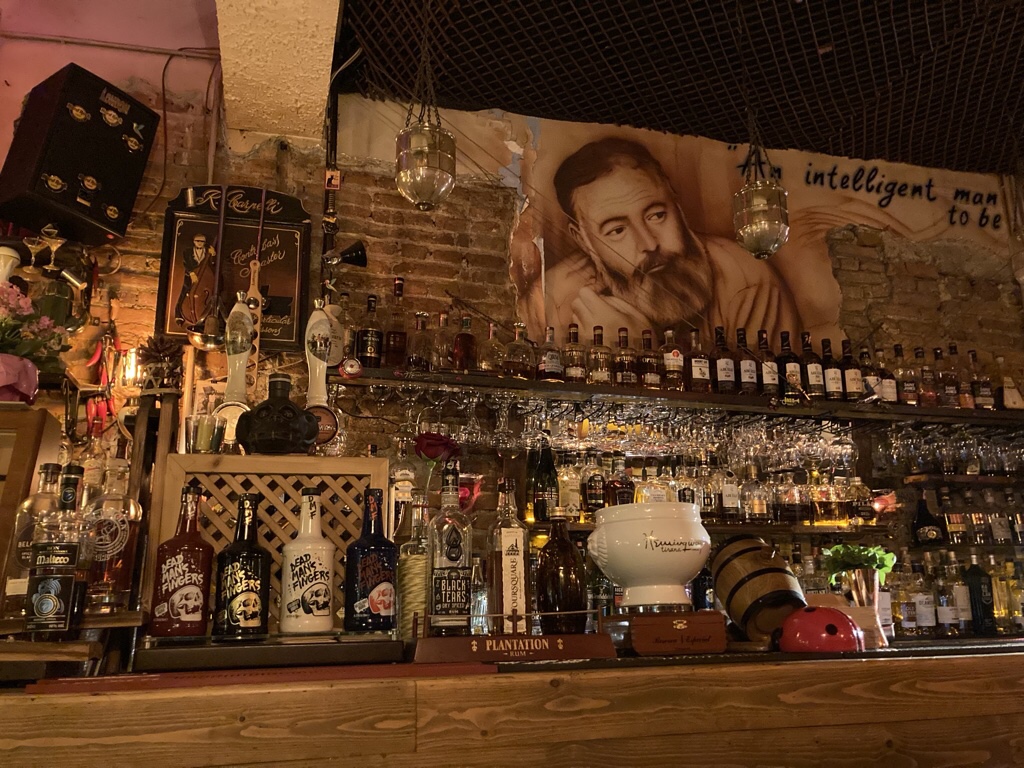
Others had mentioned The Hemingway Bar behind the hotel so we started our evening here, with mean daiquiris …

… then ate at Tymi … again … bumping into others who had the same idea. We all ended with one for the road at Hemingways and we are pleased we’d been part of such an interesting bunch of people.

Map

The Stone City of Gjirokaster

Leaving the coast behind us, we visited another Hellenic hilltop settlement called Finiq, with only a few ruins and an amphitheatre so far excavated.

More interesting however was this series of 5 linked bunkers on the hilltop. Following WWII, the communist government of Enver Hoxha took control and thus began a regime that lasted until 1991. During this time 168,000 bunkers were built of the originally planned 208,000 to protect against possible invasion, although they were never used.

We were able to enter and walk through …

… and look out through the small openings to the valley below.

The next attraction was the natural spring called The Blue Eye of Sarandë, reached by quite a long walk, but it did have very blue water as it bubbled up through the ground.

One more morning stop was at the C13th Orthodox Church of St Nicholas in Mesopotam …

…which incorporates some Hellenic temple walls with carvings of a lion and serpent dragon linked to the Finiq site.

Quite a long drive across the plain and through the mountains …

… brought us to the main attraction of the day, Gjirokaster, another UNESCO listed town and known as the Stone City.

We shared a spinach filled byrek pastry and took a quick look in the mosque …

… then wandered the quaint cobblestone streets of the Bazaar with their cafes and giftshops and chose one of the many ceramic pomegranates which will look perfect on our kitchen windowsill to remind us of our trip.

In the afternoon we had a tour of Gjirokaster castle which was huge, with this hall filled with old guns and canons …

… a courtyard used for various festivals in the summer …

… and a clock tower

From the castle, it was possible to see the distinctive style of the stone houses clinging to the hillside …

… and also the distinctive slate roofs radiating from the centre of the bazaar.

The Bineti Hotel was family run and our room had a castle view and was traditionally decorated.

Gjirokaster is also birthplace of the author Ismail Kadare who has written several novels set in Albania, and I was recommended one called The Fall of the Stone City set during WWII by one of the group and now just need a chance to read it!

The evening was distinctly cooler than by the coast and all the travel was catching up with us so we found a cosy little restaurant for dinner where we could sit indoors then had an early night.

In the morning, the atmosphere was quite different as on an October morning the town is slow to wake up as we headed back to the bus.

Map

Afloat in Albania

Today began with a drive south through the Llogara National Park …

… where we stopped for coffee …

… catching a glimpse of the coast through the clouds.

Construction has begun on a direct road through the mountains to link the new airport being built in Vlorë with the Albanian Riviera.

Meanwhile, our route wound up and down through the mountains and villages …

… until we returned to the coast …

… and stopped at the very picturesque seaside village of Ksamil for lunch right on the beach.

Today is our 12th wedding anniversary and having held our reception on a boat on The Thames, we have managed to celebrate with a boat trip every year since. When we booked the trip we knew we would be by the sea today and just had our fingers crossed. Chris was quick to spot an opportunity, and as our group were placing their orders, he waved me over to a small boat tied up to the jetty!

He explained why we only had time for a very short trip round the bay but how important it was and the captain grinned and waved us aboard. It was perfect. He took us round the small island in the bay and back to shore and even recorded the moment! Meanwhile, Chris had messaged our lunch order to the group, and it was awaiting our return.

… with enough time to paddle and have a quick lunch!

The late afternoon was spent exploring the ruins of Butrint, Albania’s most important archaeological UNESCO site which began as a Greek settlement in the C7th BC and then became an important Roman colony. Later it fell under the sway of the Venetians and Turks.

The most recognisable remains are those of the theatre…

… the baptistery …

… the grand basilica.

Walking round the ruins in the late afternoon sunshine gave romantic views in every direction …

… and we even spotted swathes of cyclamen which we had at our wedding …

… and also hearts in the mosaic!
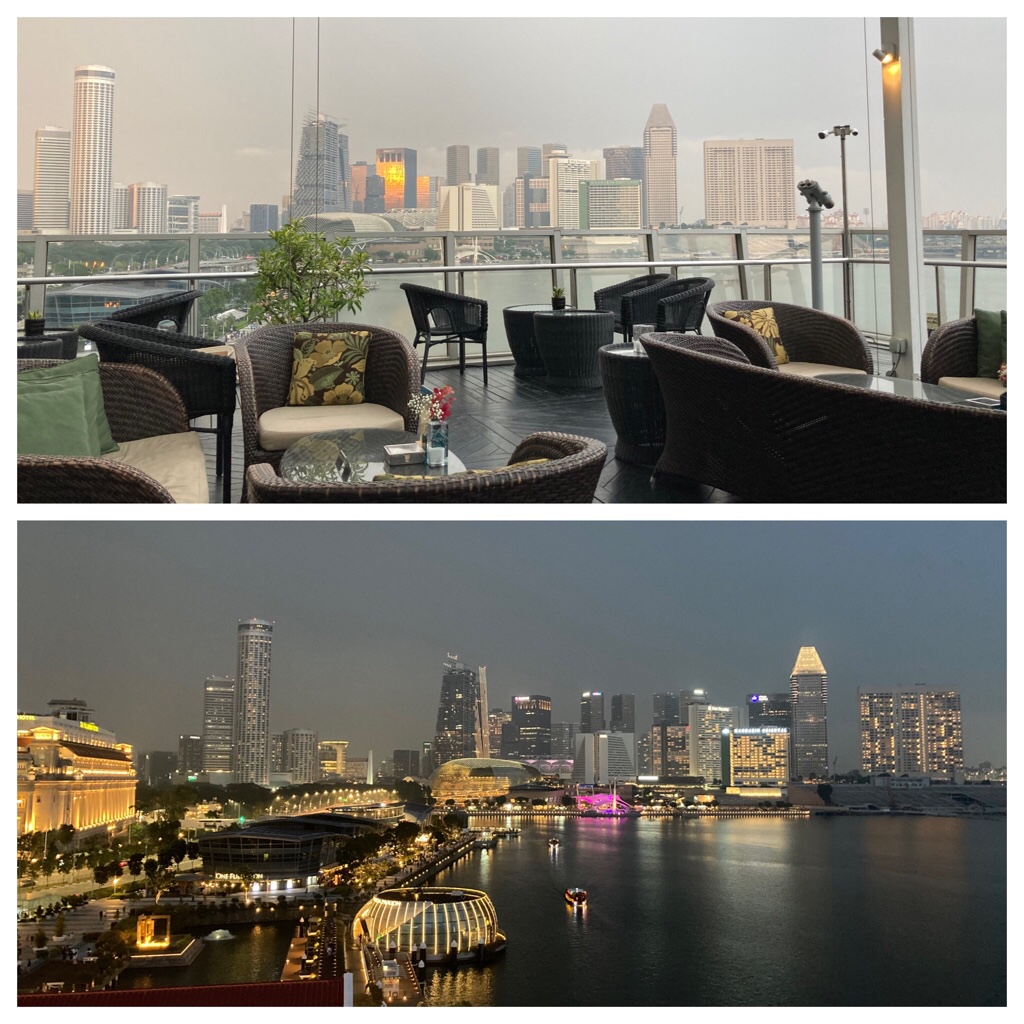
Returning to Sarandë for the night, our room at the Brilant Hotel came with a sunset view from the balcony …
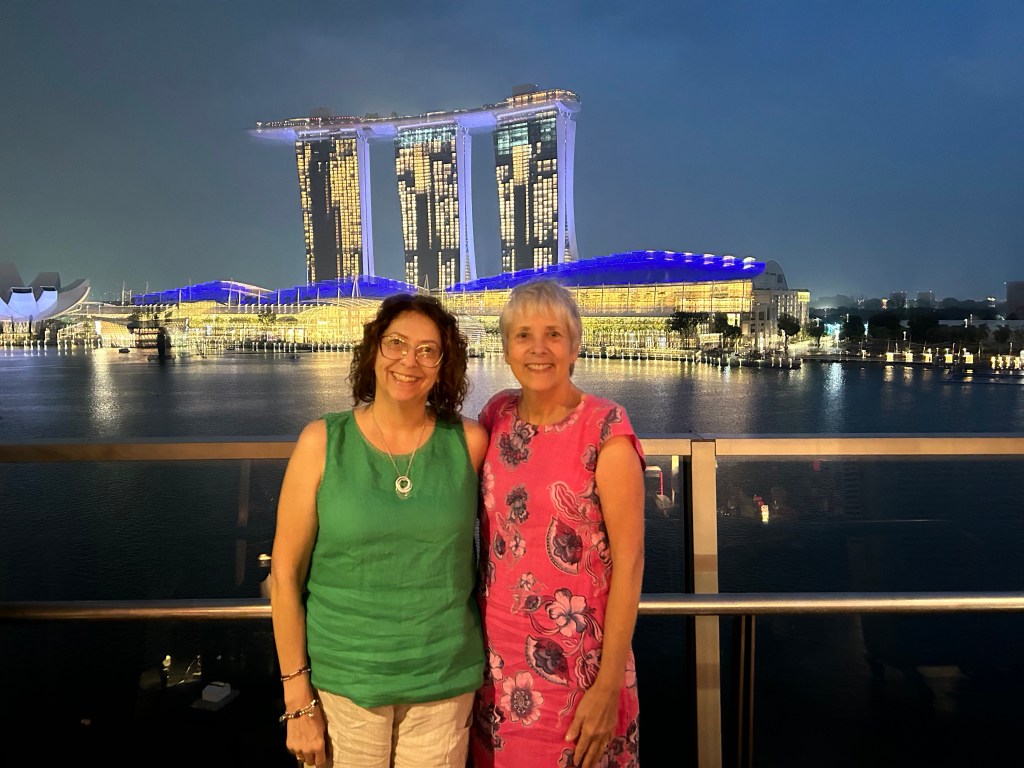
… and a romantic dinner on the seafront was a perfect end to our anniversary.

Map

Albania’s Apollonia

We packed up and left Tirana behind to travel south. Our first visit was to the Ardenica Monastery, built by a Byzantine Emperor in the C13th. It lies just beside the Via Egnatia, part of an important route from Rome to Constantinople and would have been a welcome refuge for travellers.

It is also said to be the place where Skanderbeg was married, a fact which may have protected the site during the Communist era, although it was converted to a barracks and was later restored.

The iconostasis inside the C18th Church of St Mary was impressive …

… and also the frescoes by the Zografi brothers who came from Korça.

We continued to Apollonia, one of 24 cities in the Ancient Greek world named after the god Apollo by the Greeks. This one was founded around 600BC and remained important in Roman times, with a school of philosophy attended by Augustus in C2ndAD. The city began to decline a century later when an earthquake changed the course of the river and was later abandoned.

The most impressive area was the seating used for civic meetings which would have been housed in a rectangular roofed building …

… and here we all are again!

There were also shops …

… and a huge library.

Due to its strategic position, there was a Communist era bunker overlooking the plain, the first one we had seen up close.

The C13th Church of St Mary and monastery were built with recycled bricks and stones from Apolonia …

… and now contains the museum with all the archaeological finds. I especially liked this lady who looks like a Jane Austen heroine with her elaborate hairstyle!

It had obviously been a hard morning’s sightseeing, but this gives me a chance to introduce our comfy bus!

The coastal city of Vlorë was our next destination and we had a late lunch on the front before our visit to this small building, now a museum.

It was here that the Albanian Declaration of Independence from the Ottomans was proclaimed on 28th November 1912 and the Albanian flag raised by Ismail Kemal, the first Prime Minister.

The day was chosen to coincide with the day that Skanderbeg raised the flag in Krujë in 1443.

A quick check in at Hotel Partner …

… meant we could join others in the Albanian ‘zhiro’ or evening walk along the lungomare enjoyed once the air is cooler, just in time to see the sun set.

Walking out later, we ended up eating in a very small side street Piceria, but we chose well with delicious seafood linguine and Chris said the pizza was the best pizza so far!

Map