 We drove to Coimbatore railway station and said farewell to our driver.
 We boarded our train to Kochi … comfy reserved seats for 4 hr journey, £3 each … British Rail please take note!

We arrived late afternoon and came to Saj Home by tuk-tuk. We had chosen to stay 5 nights here as a bit of a rest mid trip, a chance to unpack and take it easy.
 Our first day was spent following the walking trail of things to see in Fort Kochi, including the church where Vasco da Gama was buried (although he was later dug up and taken to Portugal, so maybe not so interesting), but it did have fabric fans called punkahs, that still work to keep the congregation cool, operated by punkah wallahs.
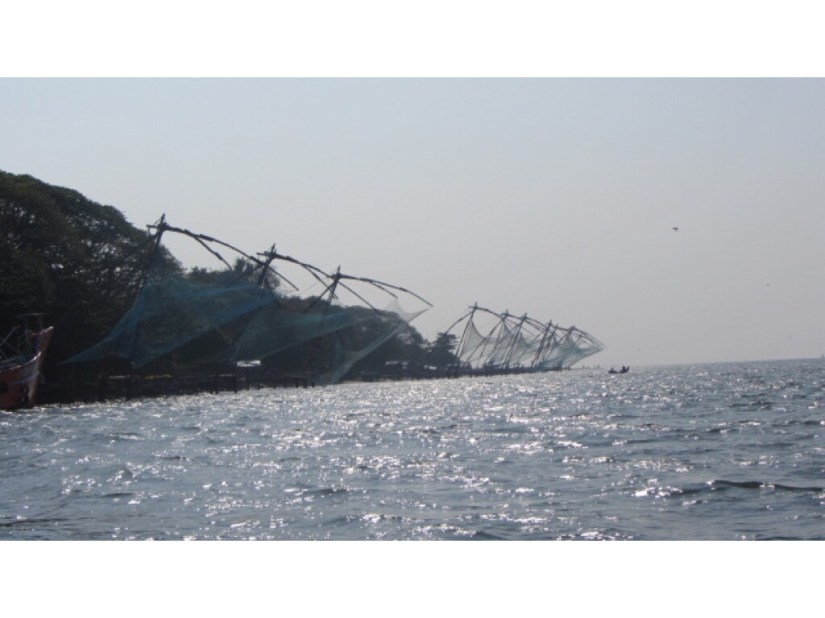
 We also saw the Chinese fishing nets, supposedly brought by traders from the court of the Kublai Khan, and which feature in more ads for Kerala than anything else, although usually at sunset.
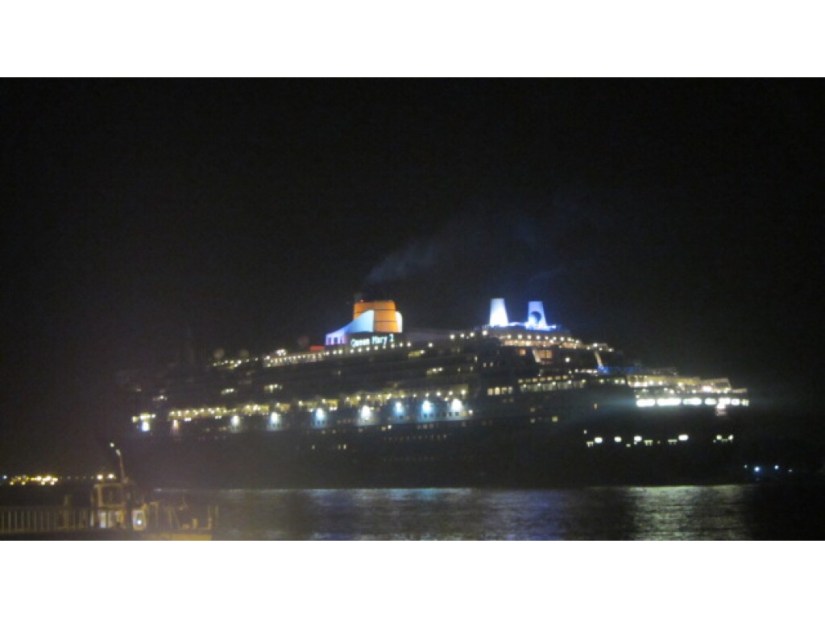
 The Queen Mary II was here for a day, and all day we saw Cunard crocodiles of cruisers making whistlestop visits to the sights … this was India in a day! The ship did look huge and sparkly as,it left port in the evening.
 Very few places are licensed in Kochi, and less serve wine, but Friday night we really fancied a bottle with dinner so booked a table at the swanky Malabar House Hotel.
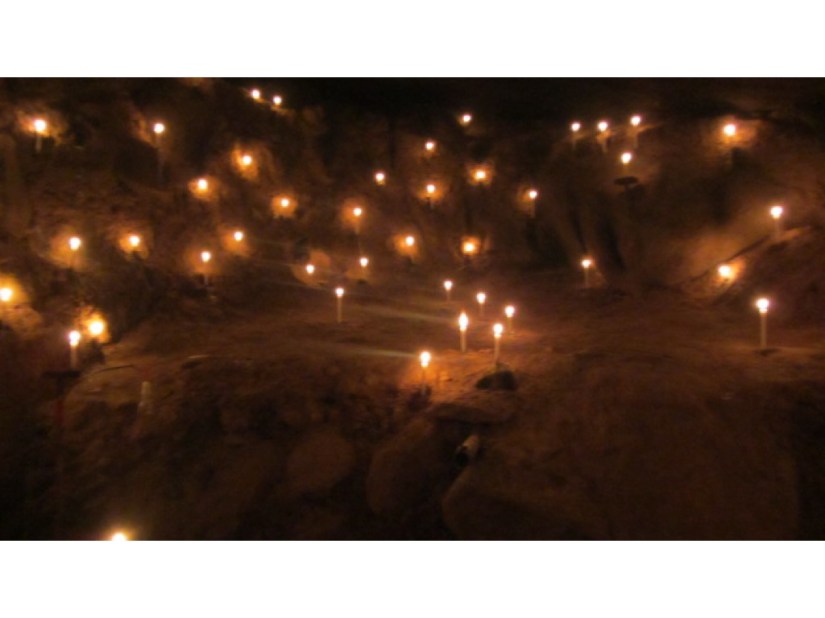
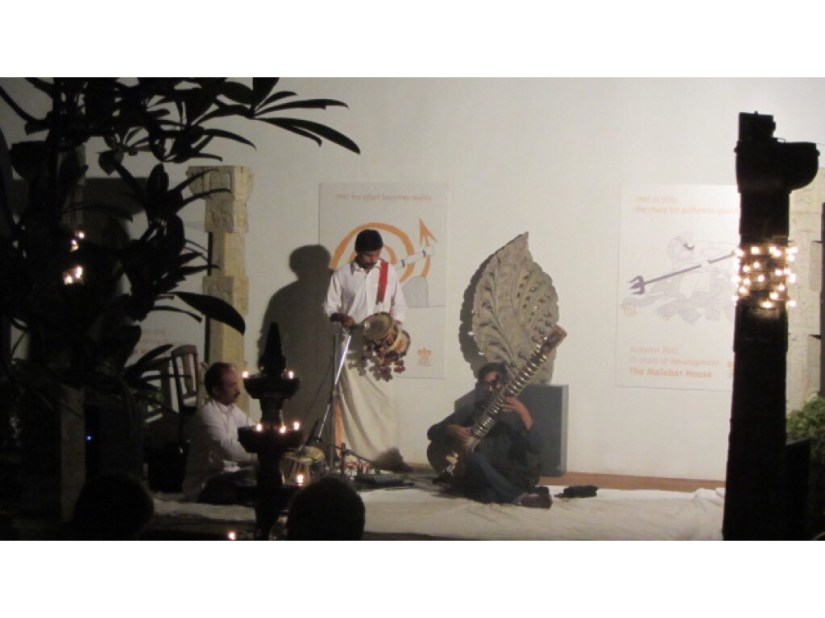 We were shown to the candelit courtyard, where three men were playing Indian music. We ordered our food, and remained very calm when the waiter told us they couldn’t serve alcohol as the first day of the month is a dry day in Kerala … only in India! Nonetheless the food and the ambience couldn’t be faulted. Other lovely spots for dinner were the Fort House and Killian House hotels and we also had a good meal at Casa Linda. Must also mention the Kashi cafe where we went for lunch, which proved so lovely, we popped in each day.
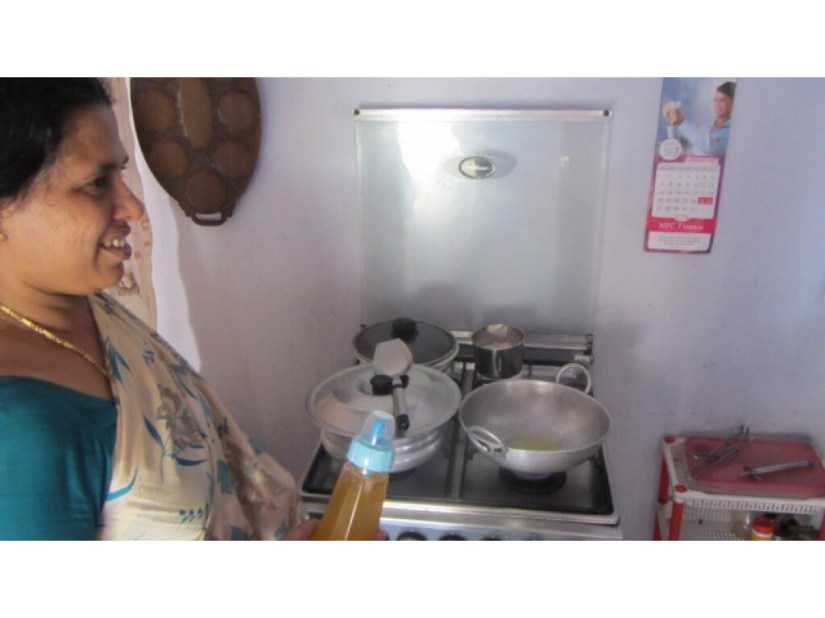
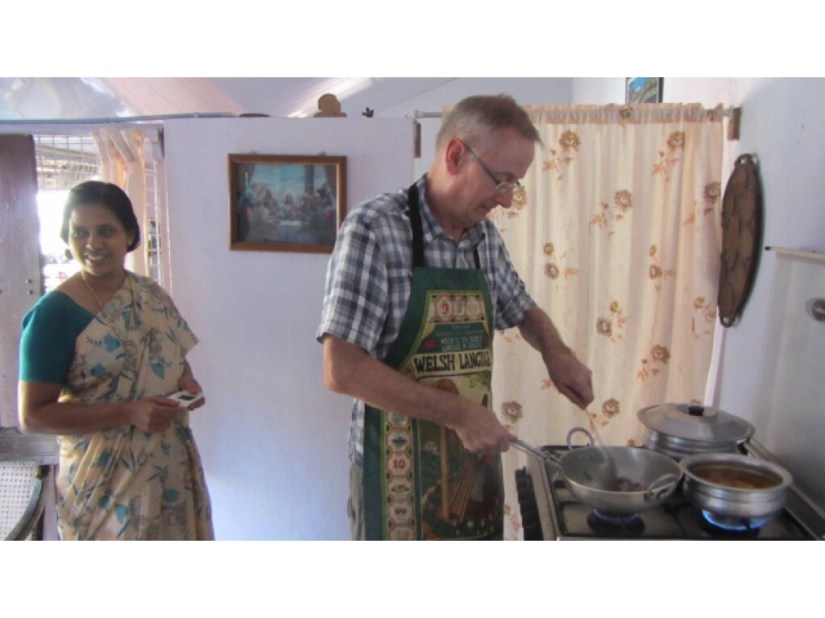
Second day, we looked round a museum housed in the old Bishop’s Palace, then on to a cooking class with Maria. She welcomed us into her kitchen where she had done the preparation in advance, then explained about the use of spices in Keralan cooking. We wrote down the recipes as we went, and made a dry beetroot curry, a pumpkin and coconut curry, and dahl with a tadka. Maria made a mint and coriander chutney in the blender, and told us how to make the spiced rice which was already prepared. Our role was a bit of stirring, so not as hands on as some classes we have done, but we are still eager to return home and try out the dishes. Also met Maria’s husband, who was breaking up a jackfruit from their garden and offered us a piece to taste – really sweet!



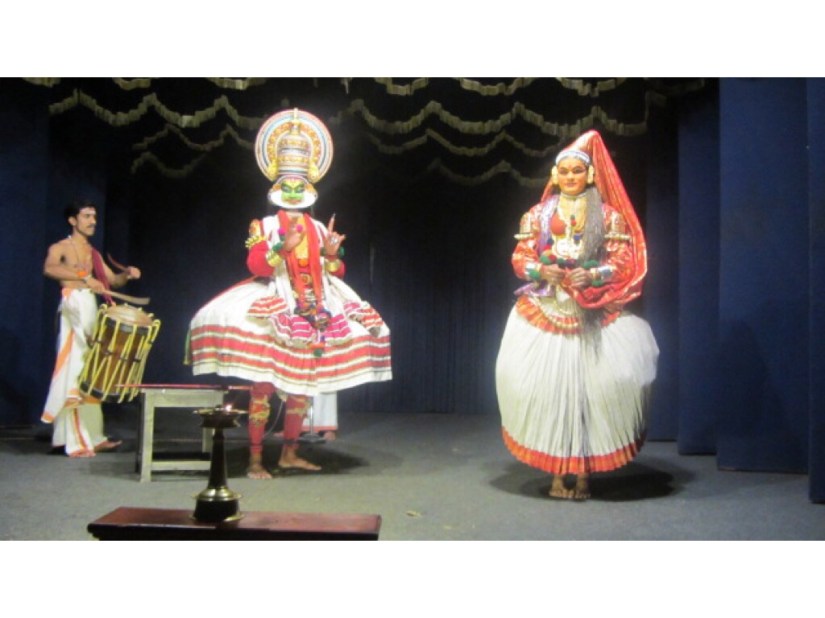
 Went to a theatre to see dance and kathakali, a form of ritualised theatre unique to Kerala. Arrived early so we could see the actors put on their make up. The Kathakali relies on eye movements and hand gestures to explain the story, and the costumes are hugely elaborate.

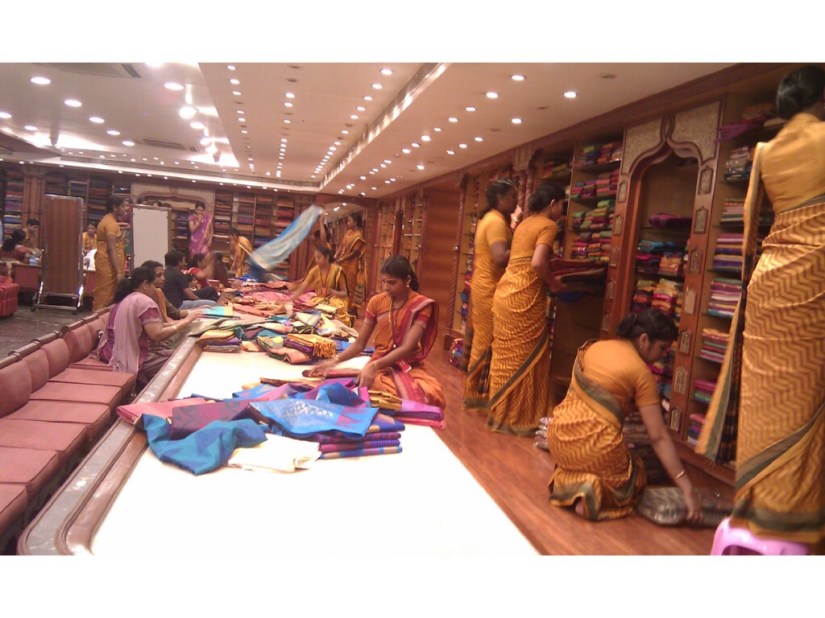
 The last couple of days were slow days. We went to the Jewish part of town and saw the synagogue, which was very interesting but no photos, as was the Mantancherry Palace, built by the Portuguese for the local raja, then added to by the Dutch, with exotic murals of scenes from the Ramayana. We took a couple of ferries, one to Vypeen Island, just for a walk and a different view of the fishing nets and another to modern Ernaculam to wander round the shops, including a department store with serious customer service.


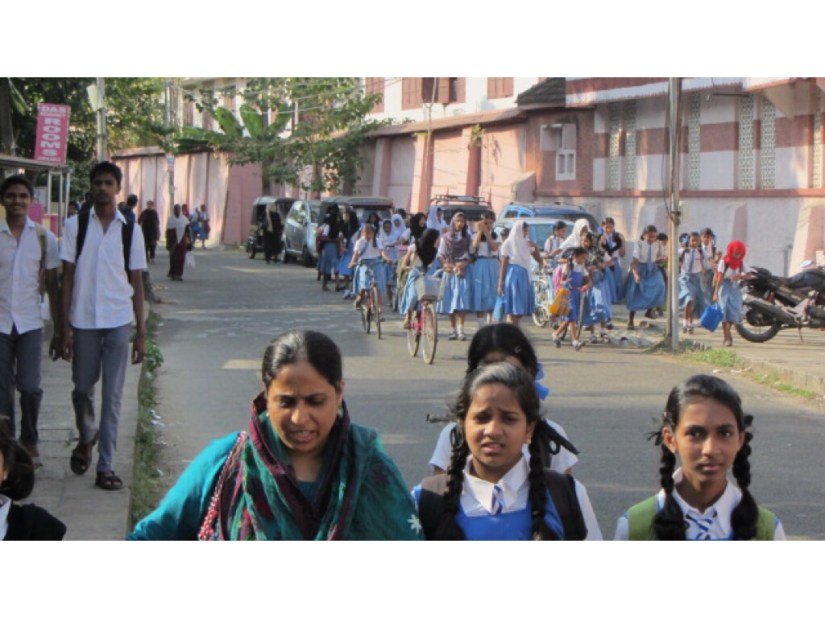
We had a great stay with Saj and will miss his helpfulness, his signature pineapple shakes and a different Kerala breakfast dish every day, but our room faces the street and India wakes early with Hindu temple music, the muezzin, birds and traffic, so maybe the countryside will be quieter.
So now we’re off on our second road trip, a loop inland for six days.
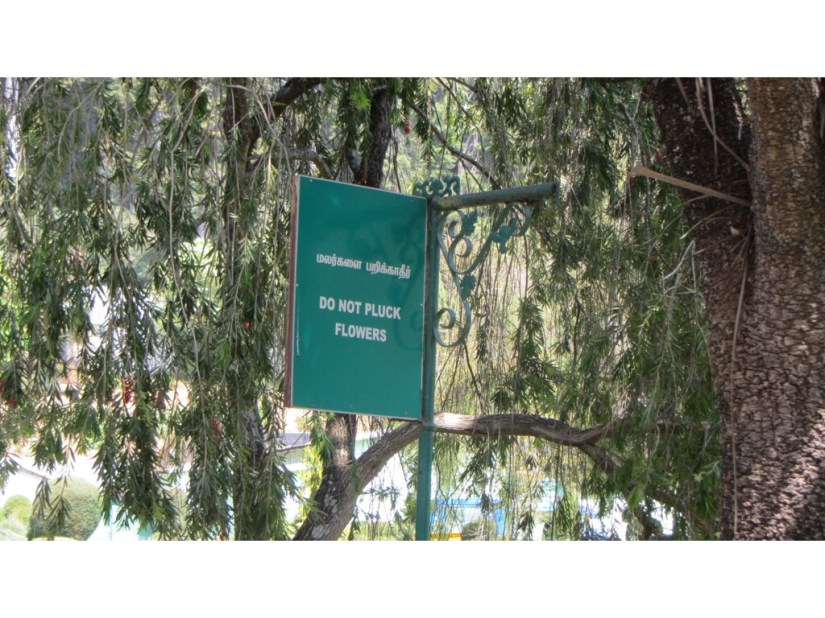
 We had an amazing drive up to Ooty, the queen of hillstations, via 36 hairpin bends, with no place to stop, so unfortunately no pics. We spent a little while recovering in the lovely botanic gardens.



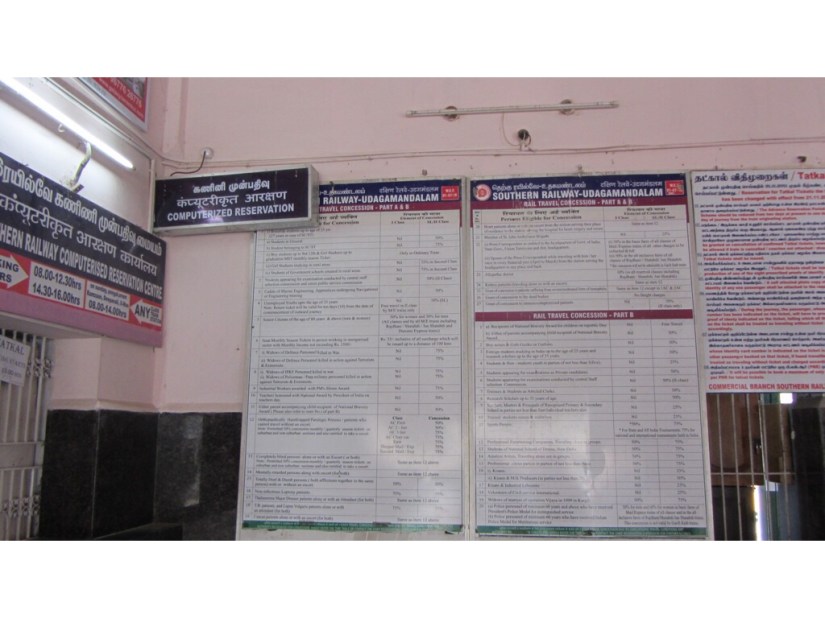
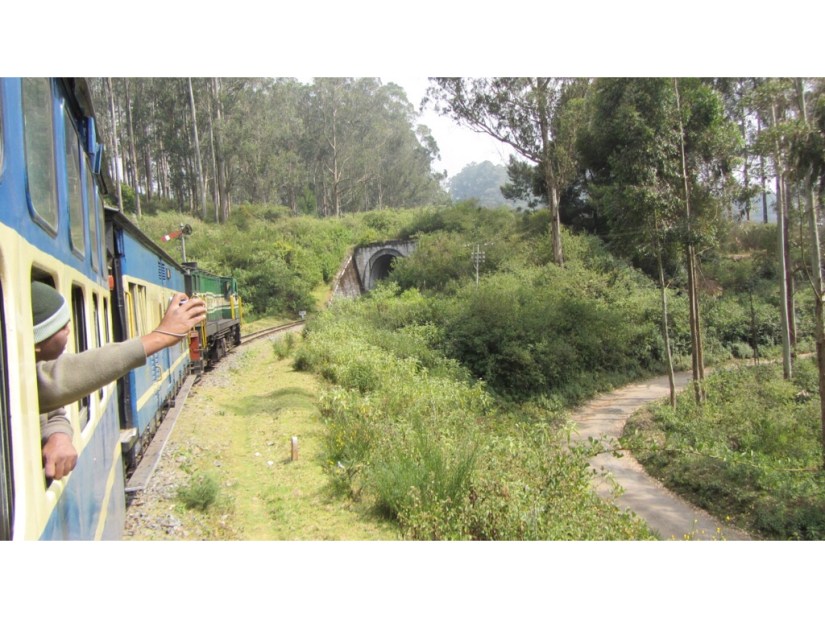
 We then caught the toy train that connects it with Coonoor, an hour away. Our tickets were 5 rupees each, about 6p, and amazingly, if Chris had filled out a form, he could have had 30% off for being over 60!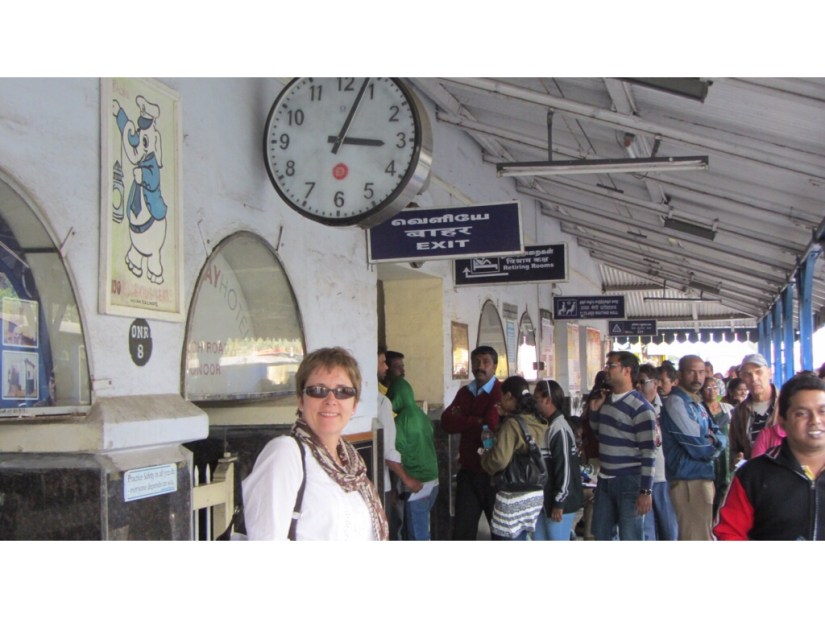


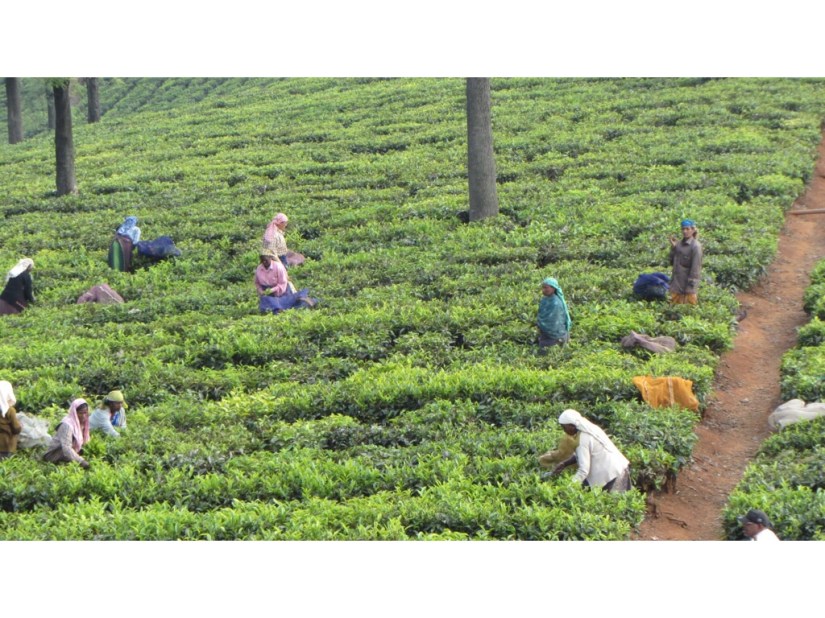
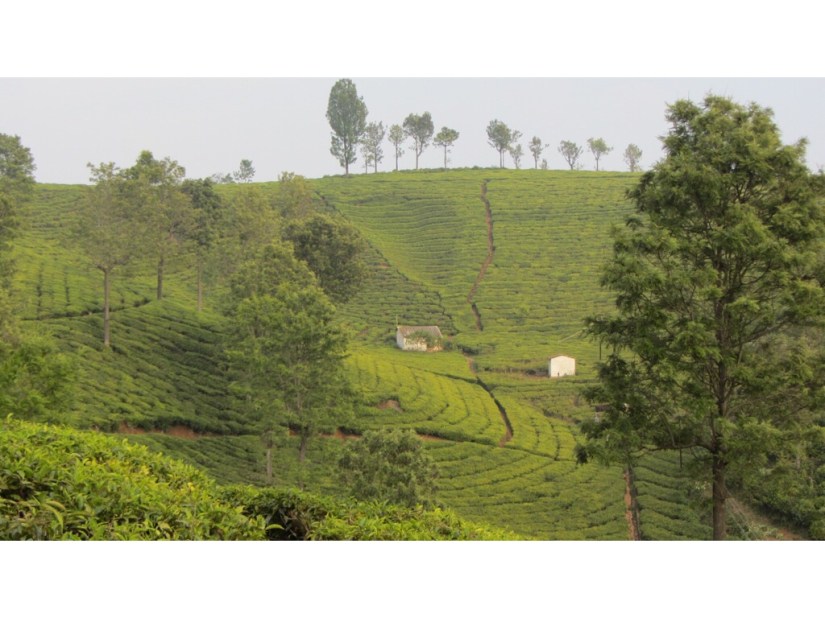
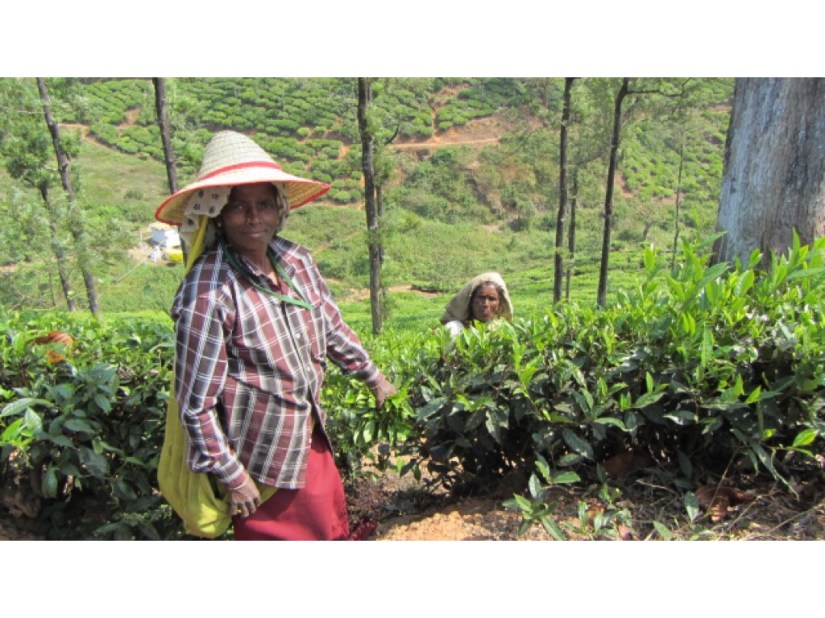
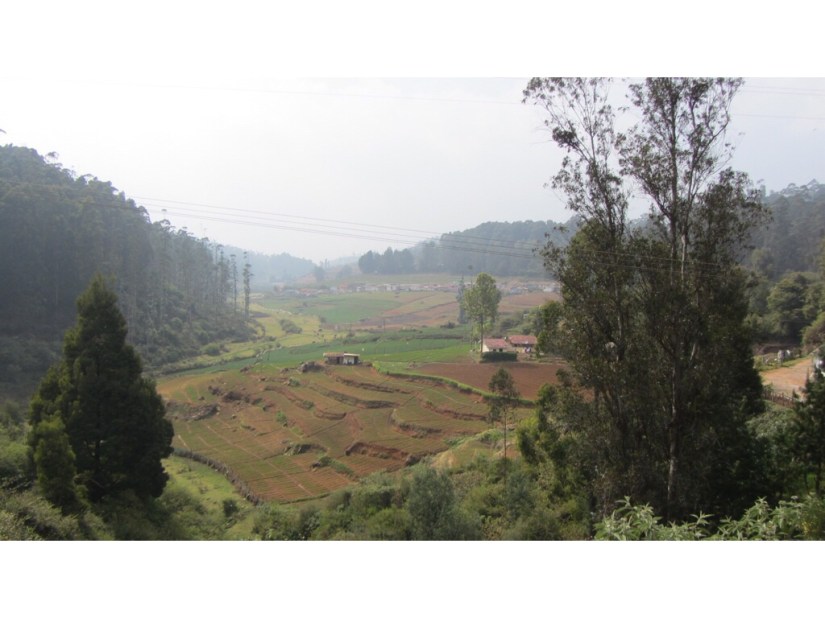 The fourth homestay was Sun Valley tea plantation with a wonderful view. The trees are planted between the tea to stop soil erosion, and the ladies are out picking by hand all day.

 Next stop, the train to Fort Kochi.
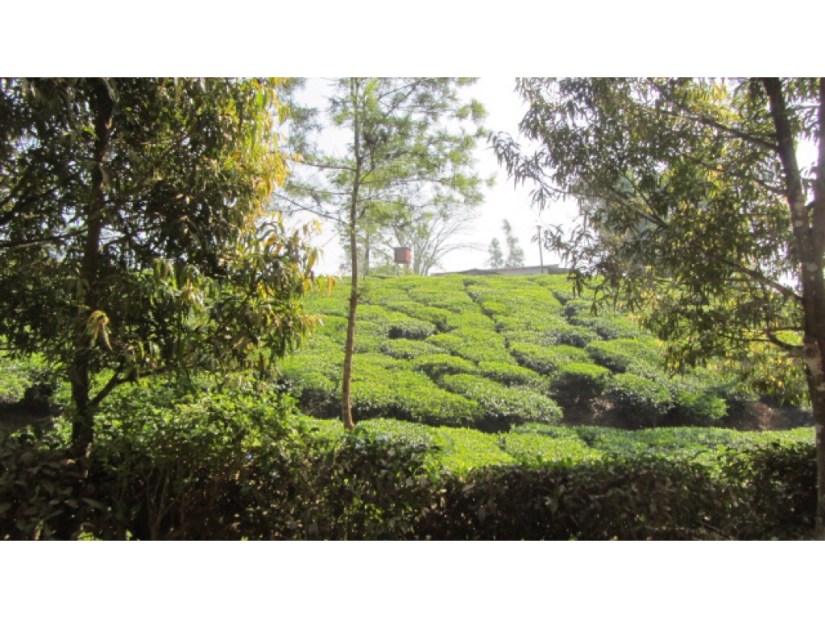 We drove through tea plantations and saw ladies picking tea at the side of the road on our way to our next homestay, which was over the border into Tamil Nadu.
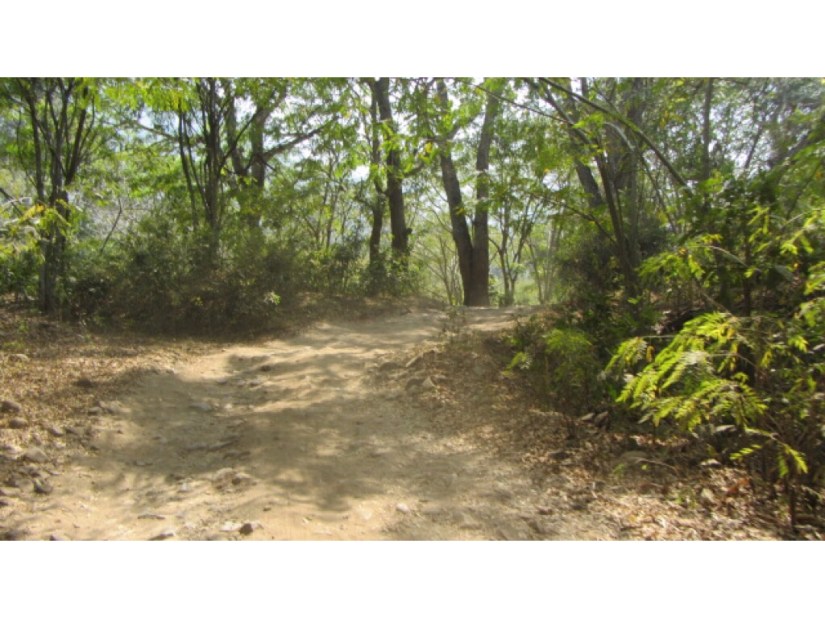
 The third homestay was The Wilds at Northern Hay, another homestay on a coffee plantation, but this time on the edge of Mudumalai Forest. We were picked up by jeep as the road was rough!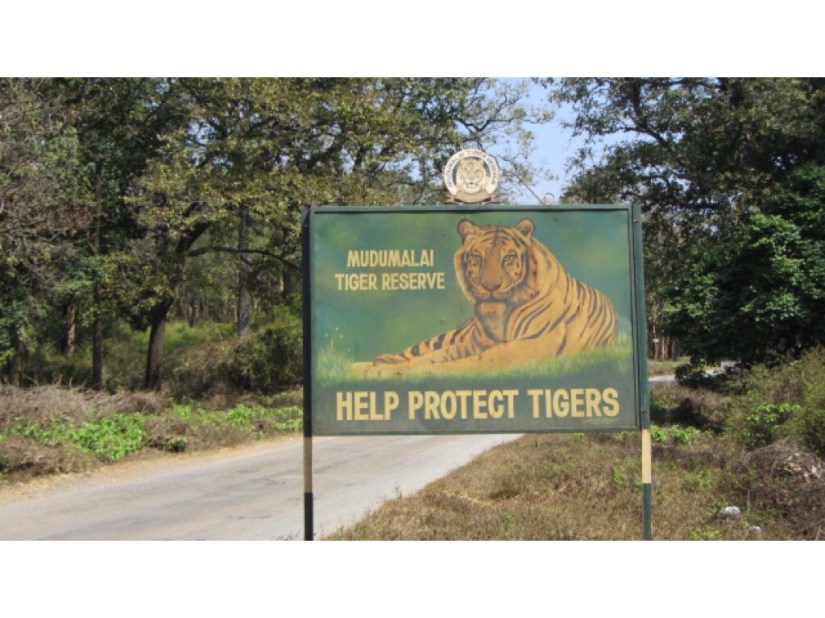



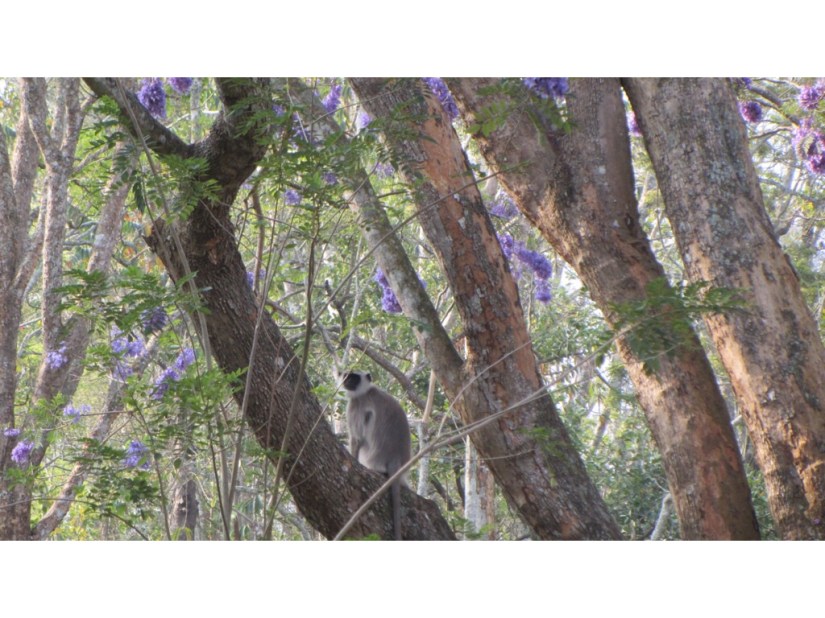
 We sat watching black faced langur monkeys playing in the garden.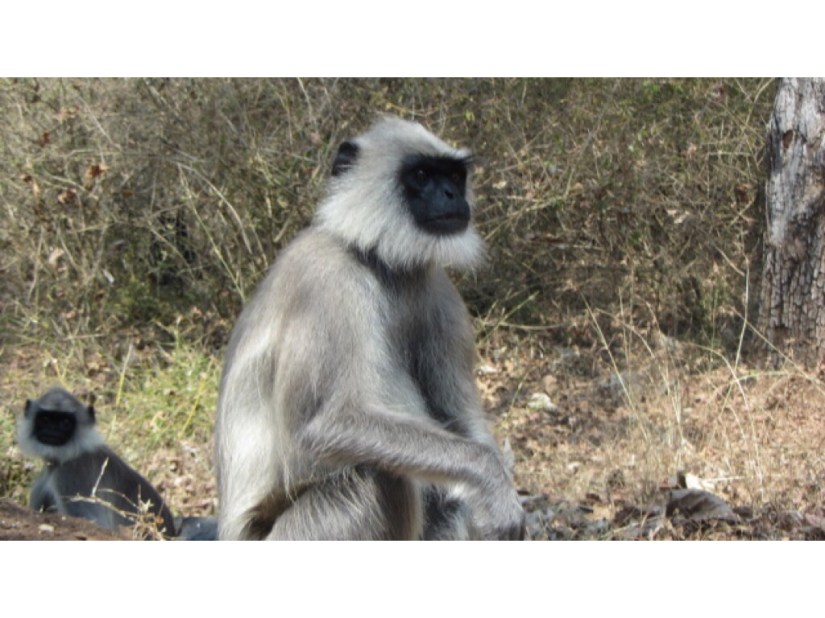
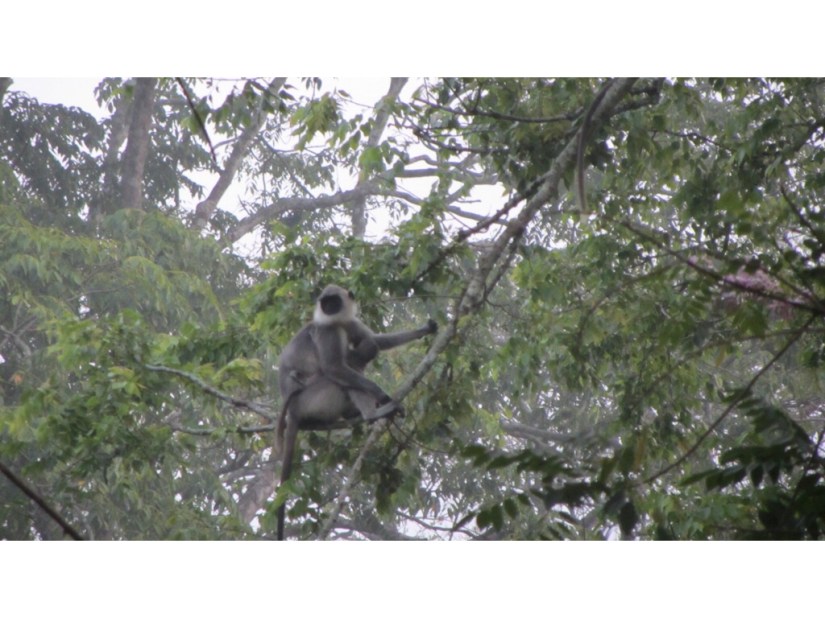 We went for a plantation walk in the afternoon, a jeep safari in the early evening and a forest trek in the morning and we saw more deer, peacocks, wild boar, a giant squirrel, a flame-backed woodpecker, malabar and plum-headed paraqueets, a chestnut-headed bee-eater …


 … and finally the back of a retreating elephant, but because we were on foot, it would have been dangerous to pursue him and he didn’t stop to have his pic taken!
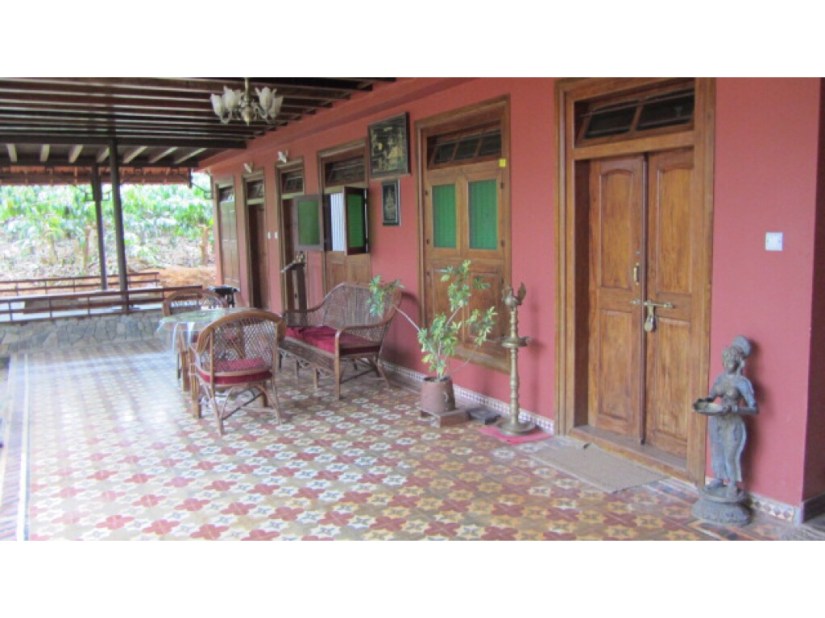
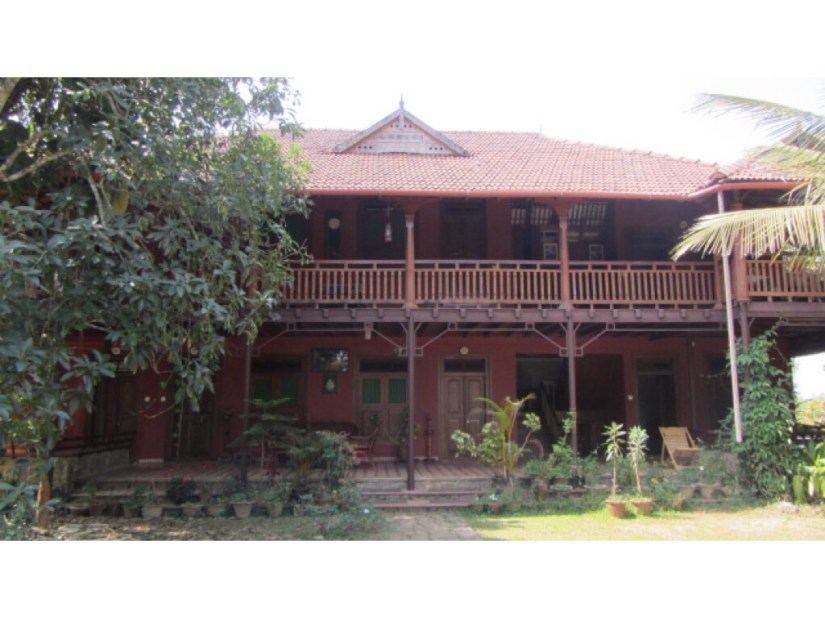 Our second homestay was Aranyakam, a homestay in a Keralyan bungalow surrounded by a coffee plantation. The veranda was a perfect spot to settle with a book.
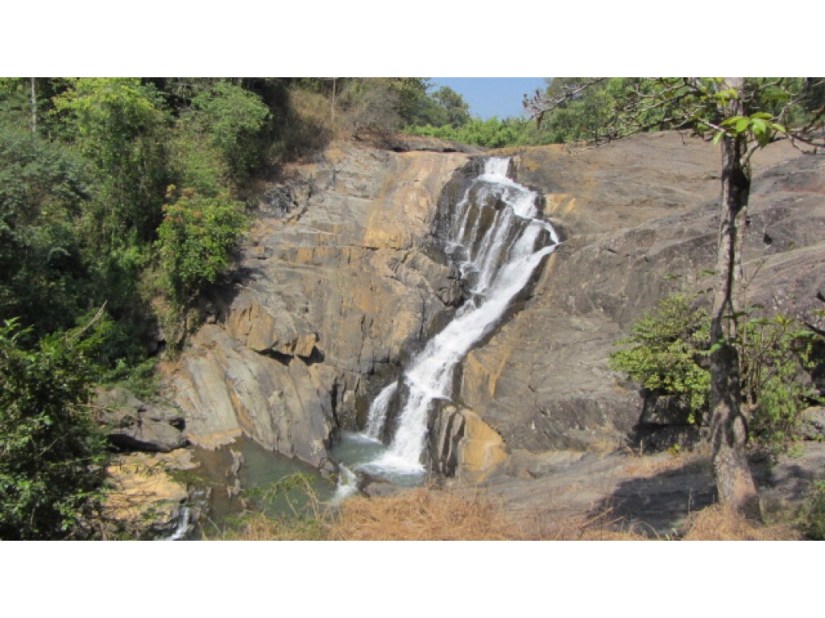
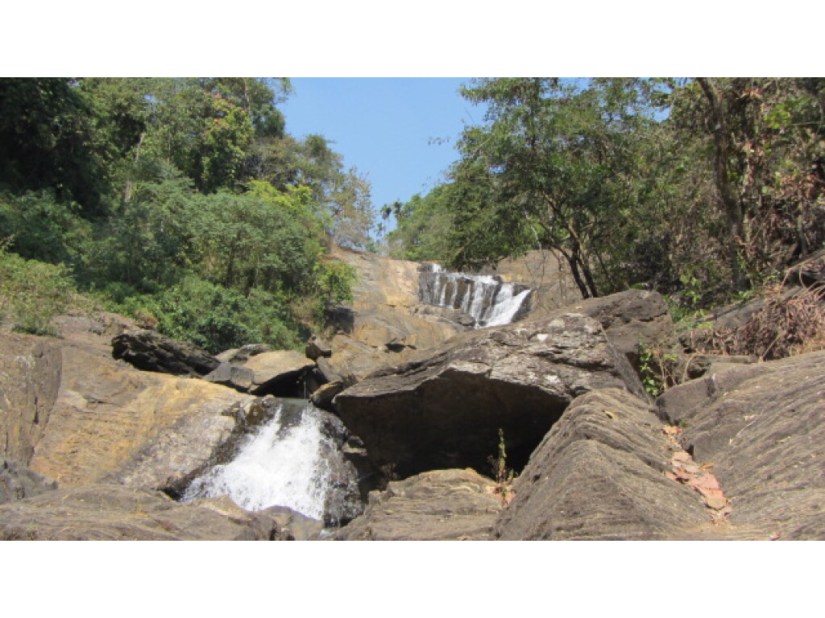
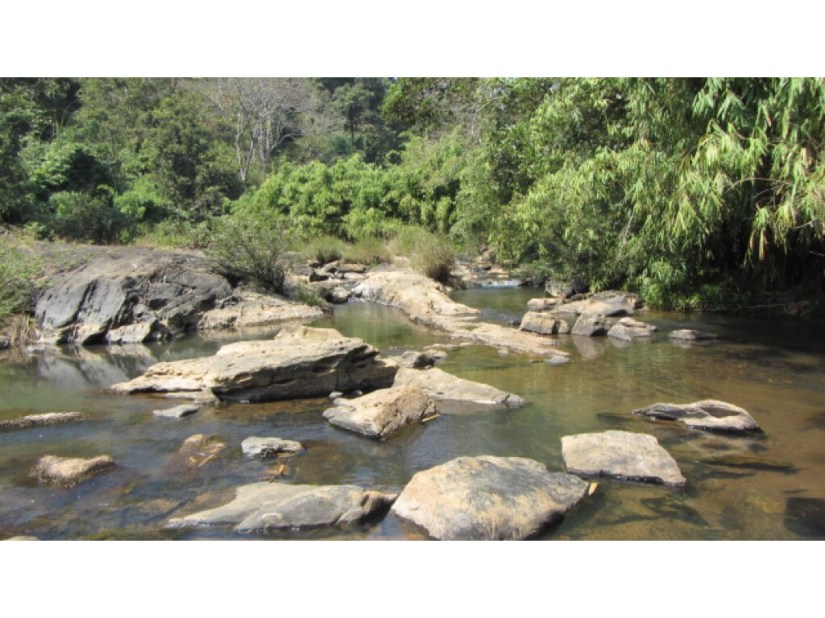
 After lunch we drove to Kanthampara waterfall where we went walking, and was pretty, but not as dramatic as it would be with more water flowing.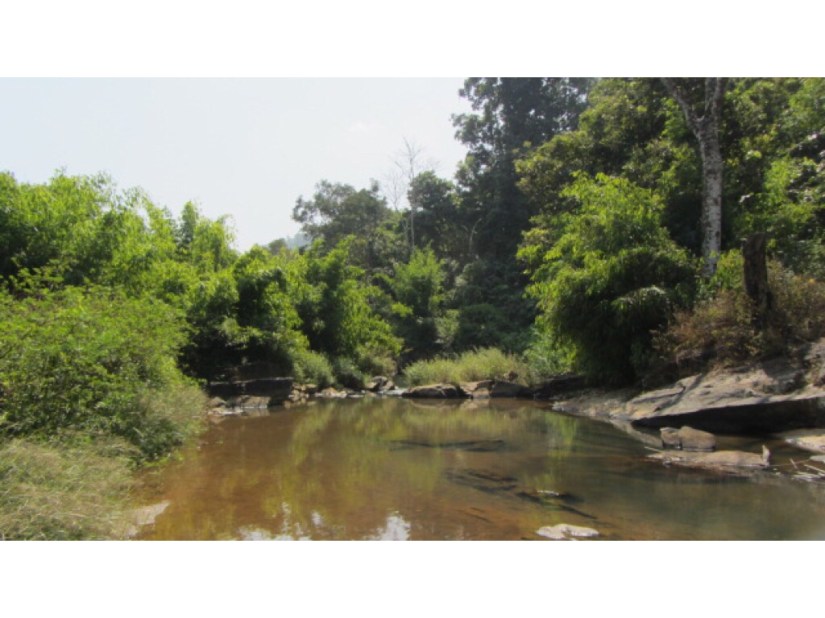
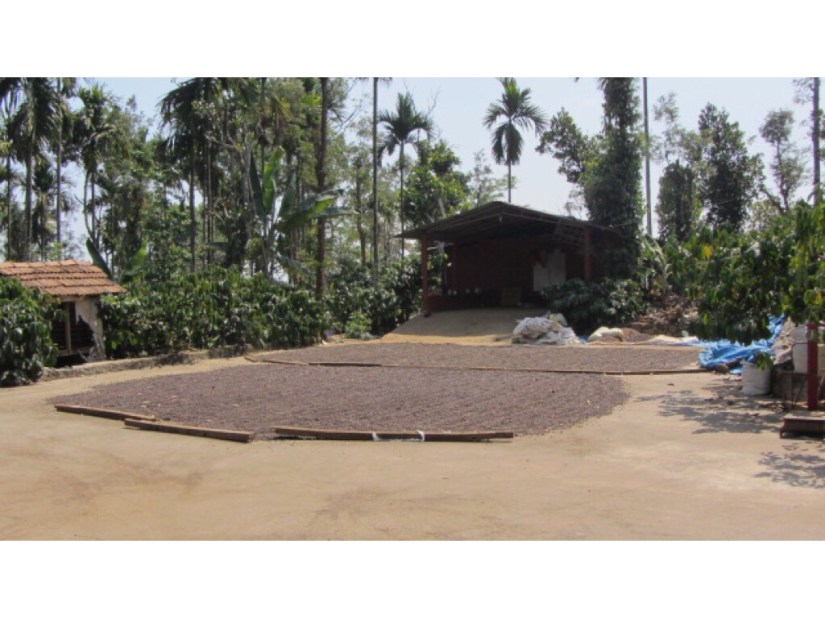
 We also went for a walk down the narrow road, passed coffee bushes and also saw the beans drying.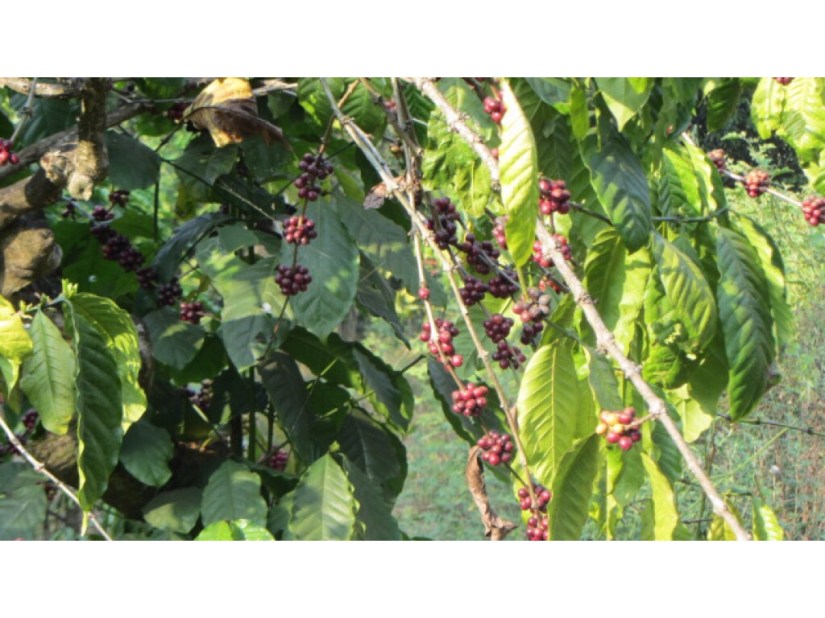
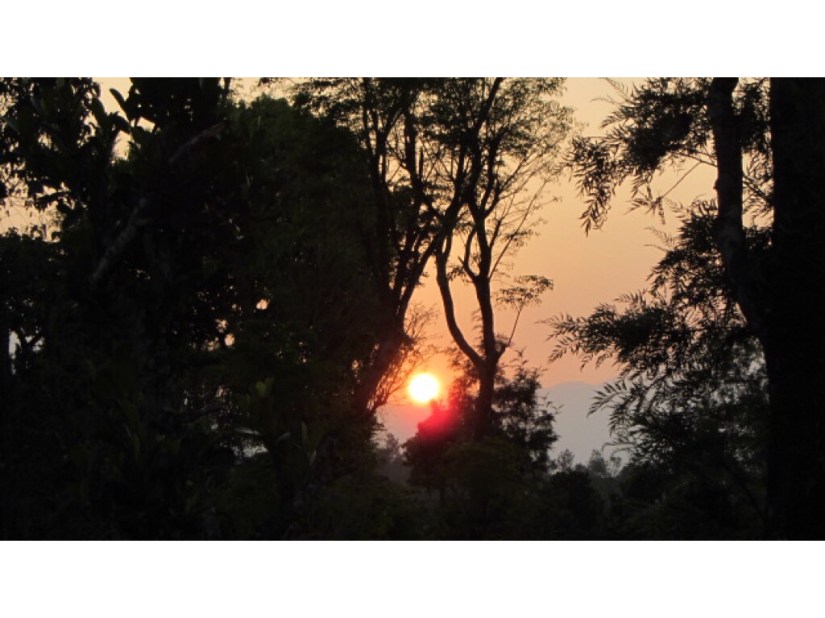
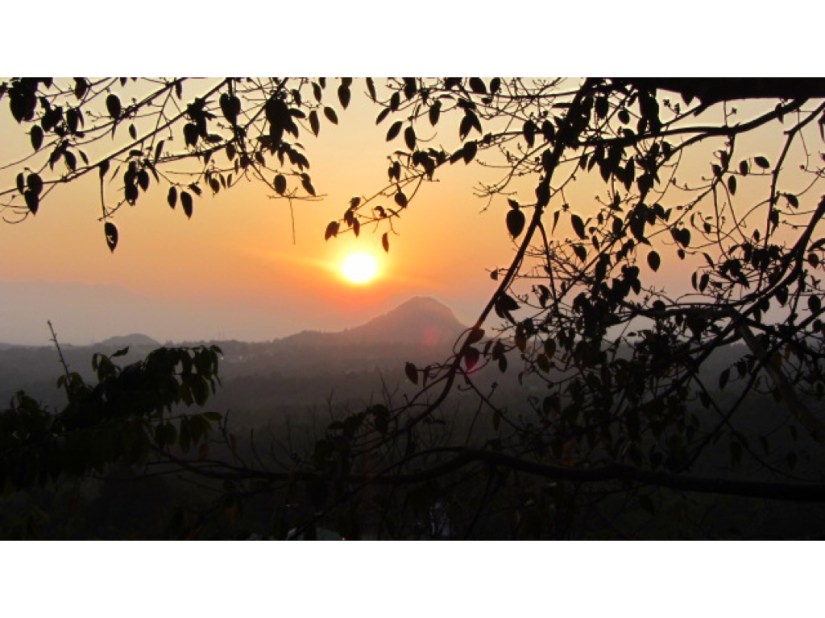
 Another sunset and another day done.
 Next stop, maybe elephants …
 Leaving Mysore, we were heading for four homestays over four nights.


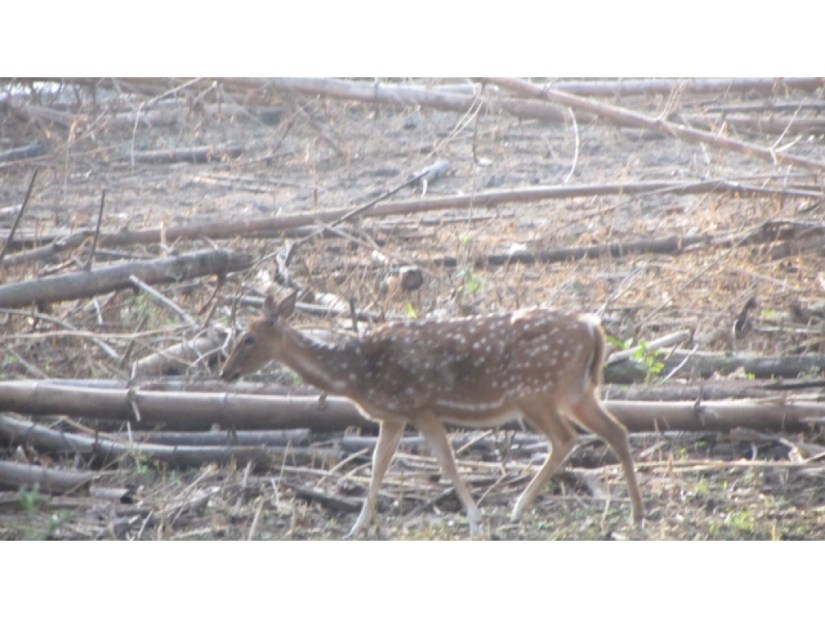
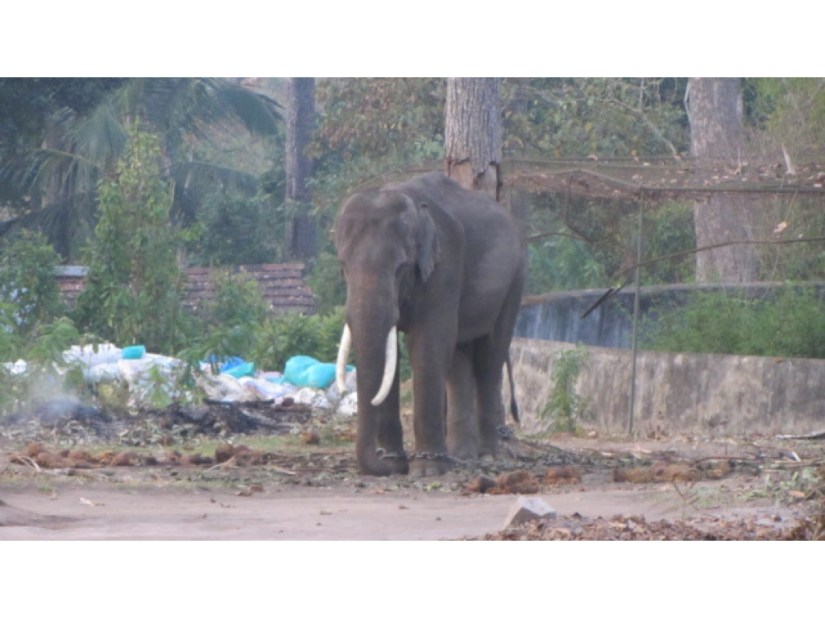
 We began our day with a 7am safari in a jeep round Muthanga National Park, but unfortunately the elephants eluded us and the most impressive wildlife was a giant squirrel, peacock and cheetal deer …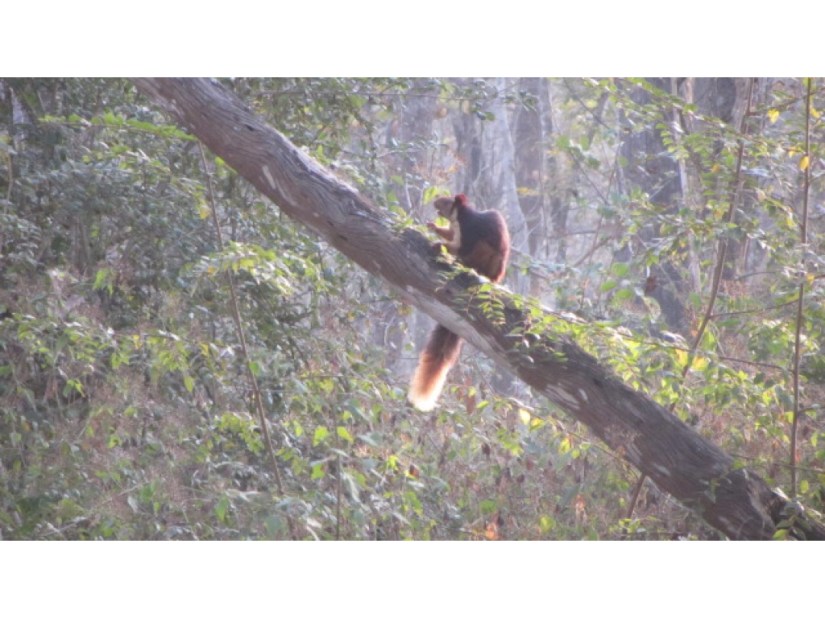
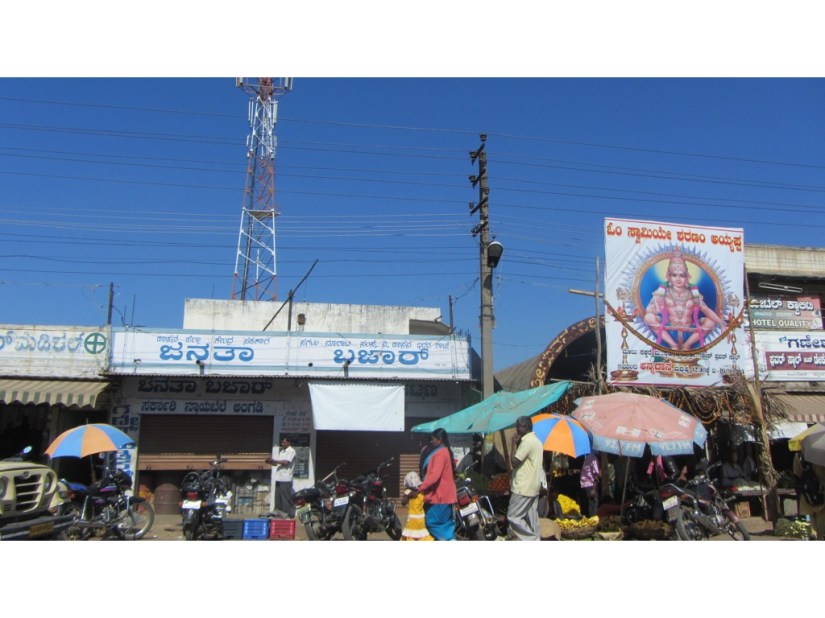



 Next stop, coffee plantations.
 We stayed, no expense spared, at The Park Lane Hotel … for £25/night, nice room, and bustling terrace restaurant with sliding roof and good food.

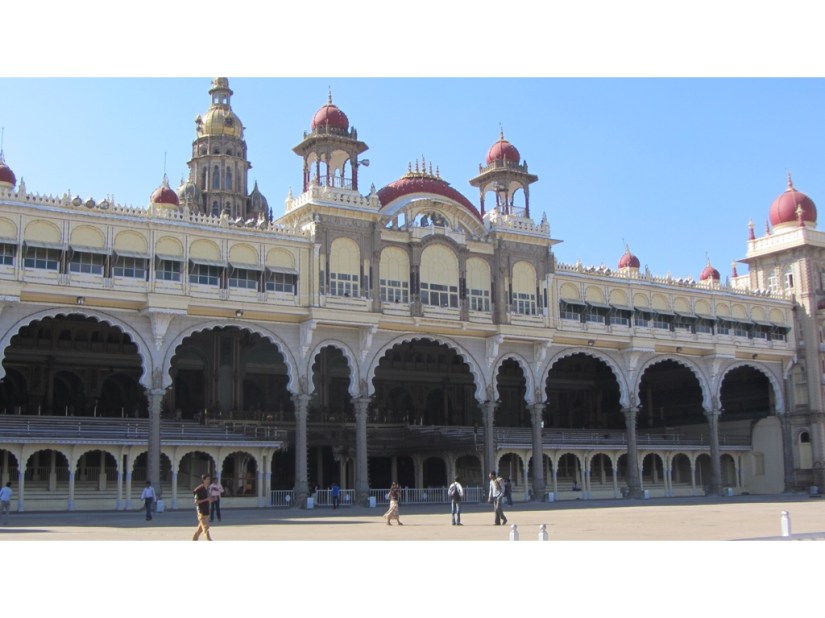 We climbed Chamundi Hill to the temple. According to legend, the demon Mahishasura was king of the area and was killed by the Goddess Chamundeswari after a fierce battle and there is a statue of him.

 The temple might be very important religiously, but was singularly disappointing to view, but we were amazed at the huge numbers of people visiting, a bit like a rugby scrum.

 On the way down was a Nandi bull statue, and we saw our first monkeys.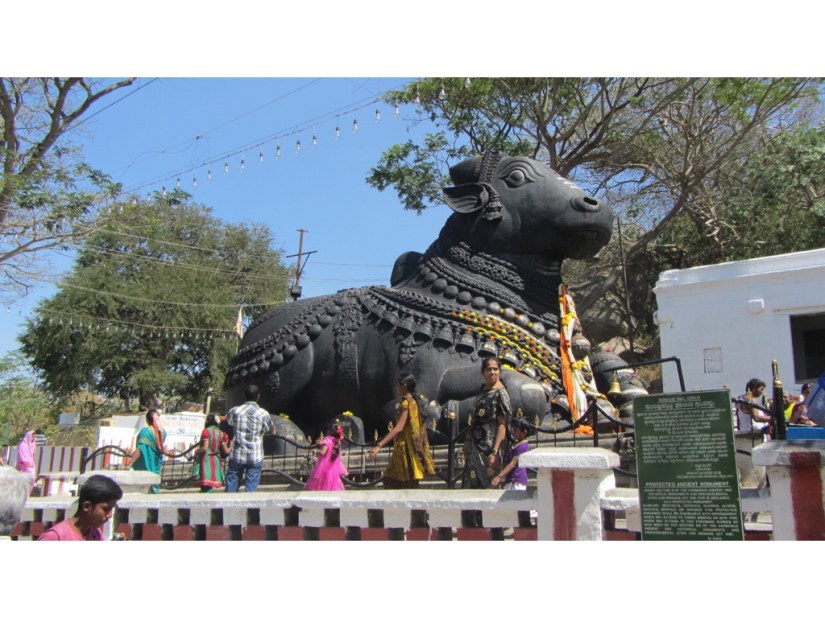
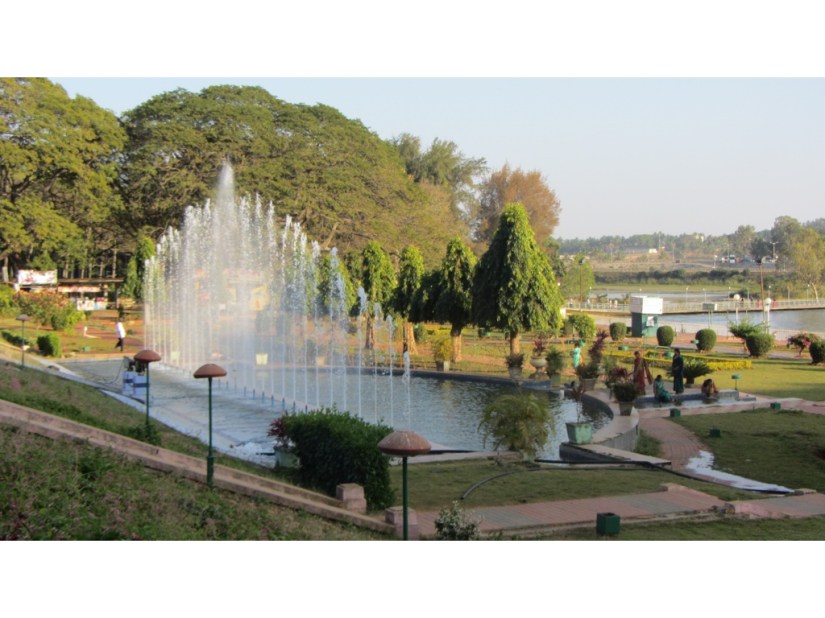
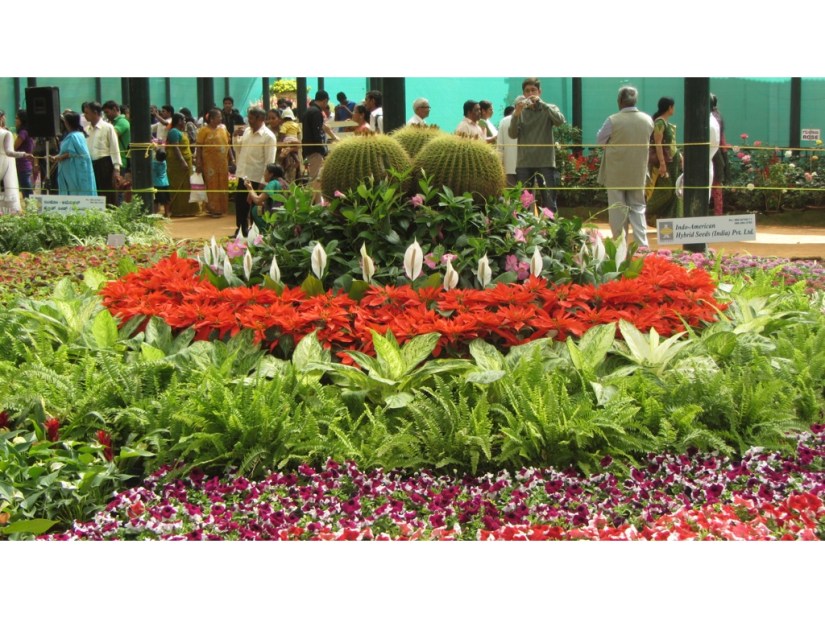
 One afternoon we went to Brindavan Gardens which were laid out when the dam was built, backdrop apparently to many a Bolleywood movie, which were lovely to wander round, but we didn’t stay for the musical lightshow as the road back was full of potholes and we didn’t fancy it after dark.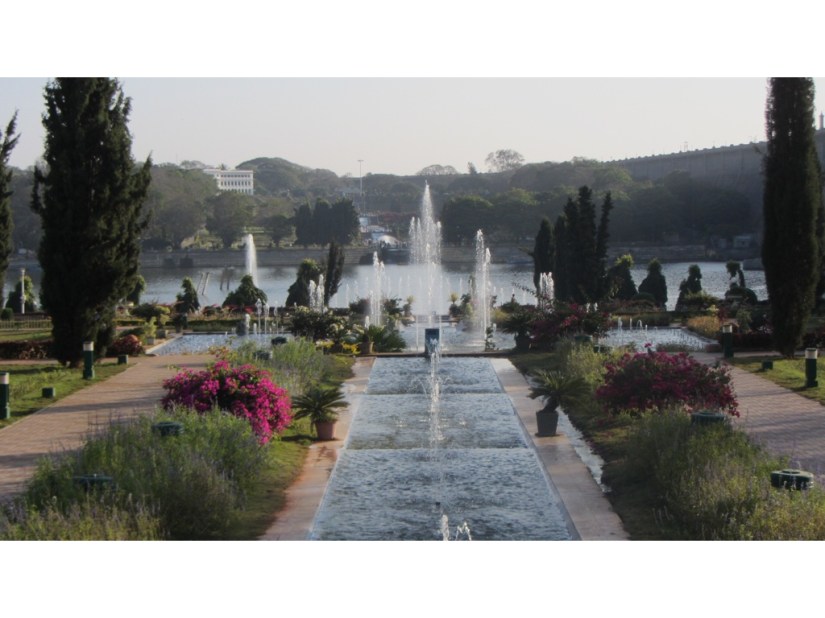
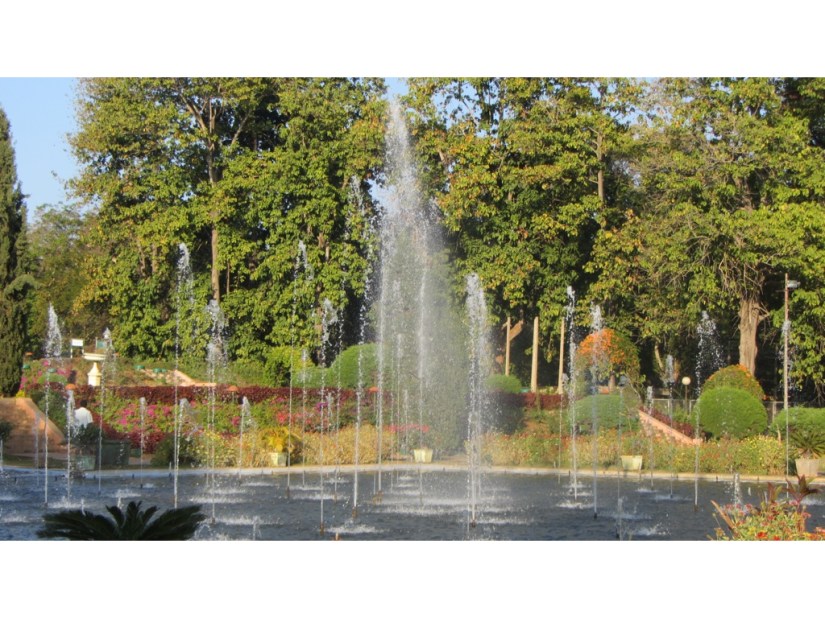
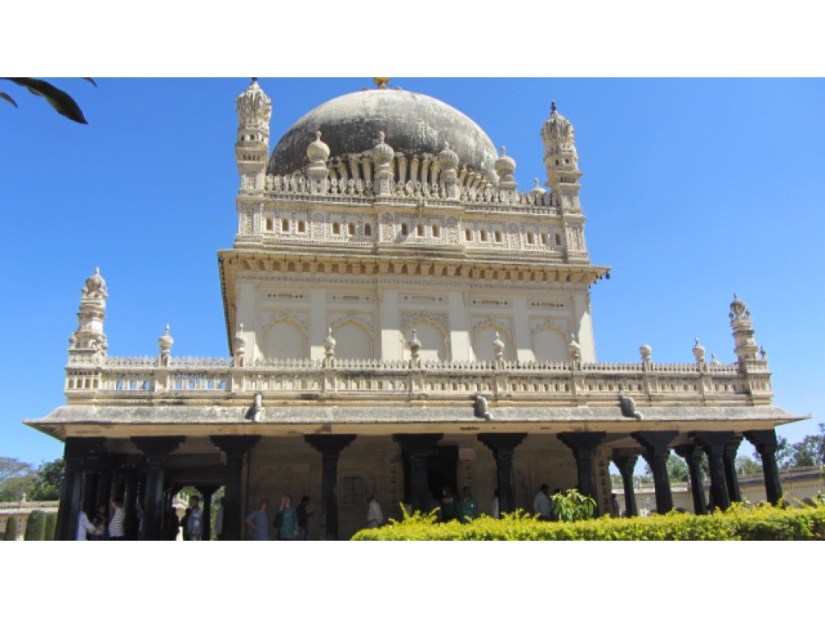
 Finally, we spent a lovely day nearby at Srirangapatum where the highlights were another of Tipu Sultan’s summer palaces, built of wood, with every inch covered in painted decoration, unfortunately no photos allowed, his tomb …
 … and a Ranganathittu bird sanctuary, where we had a boat trip and saw crocs, bats, pelicans, storks, cormorants, spoonbills …


 One evening, rather than eating at Park Lane, we went to the Tiger Trail at the Royal Orchid Hotel for dinner. The restaurant is set in an open courtyard with trees and twinkly lights and looks very pretty. Service was friendly but rather slow, but this was more than made up for by the food which was delicious.
 We then set off on an 8 day tour by car heading south.
 First stop was a 57ft statue of Gommateshvara on a hill at Sravanabelagola. Every twelve years, thousands of devotees congregate to perform Mahamastakabhisheka, a ceremony where the statue is covered in milk, curds, ghee, saffron and gold coins, next to happen in 2018. We had to climb the 614 steps without shoes but could wear socks and there was a great view from the top.


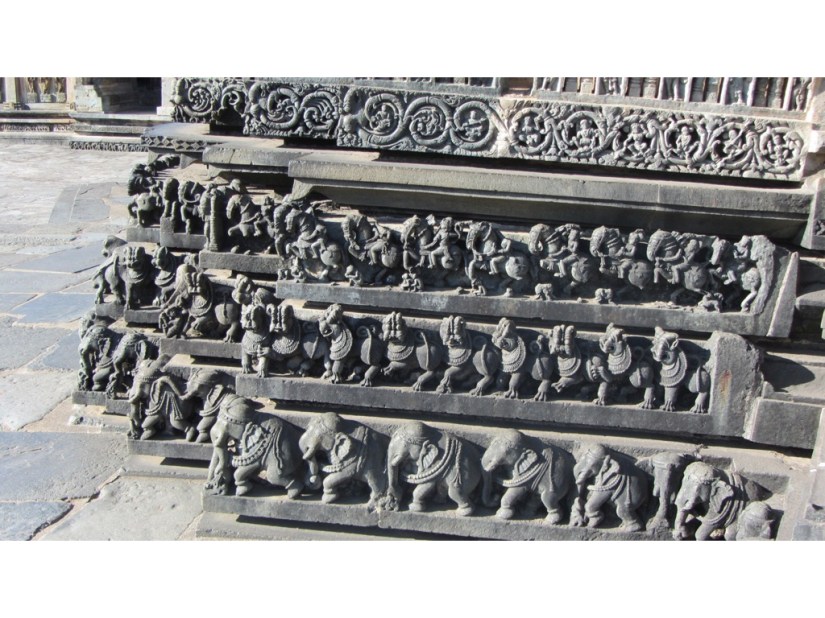
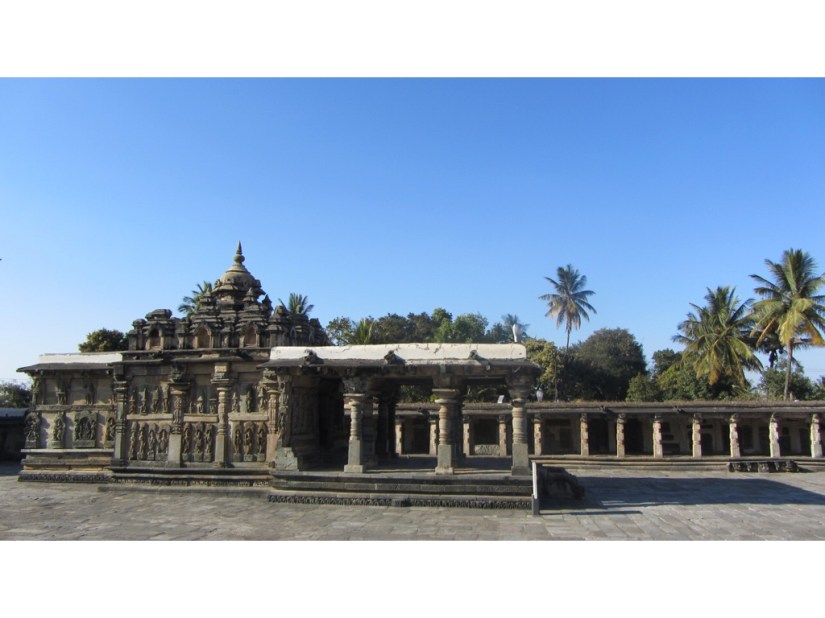


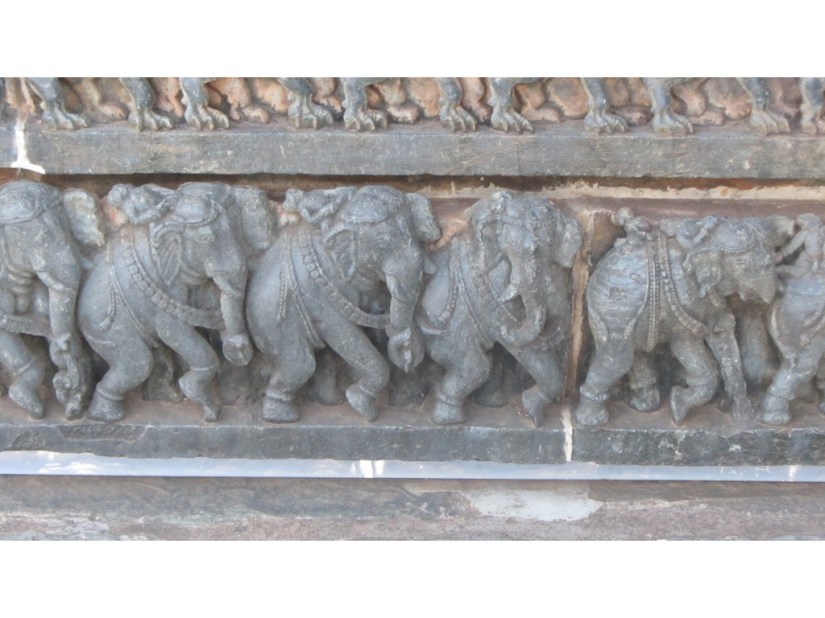

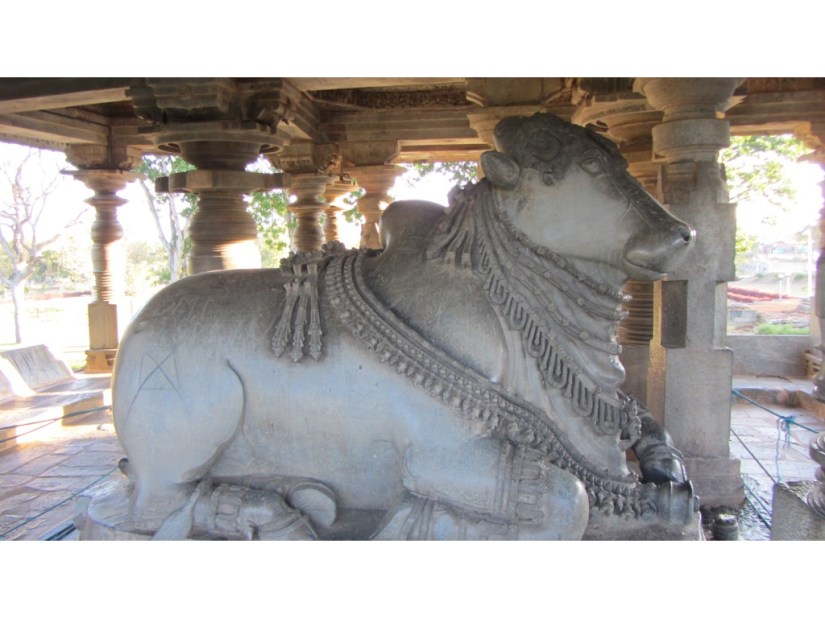

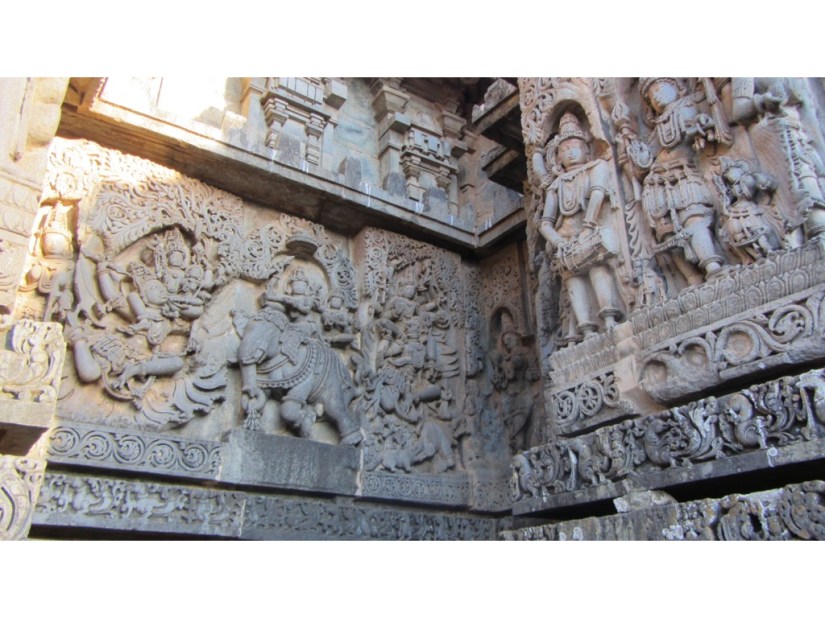
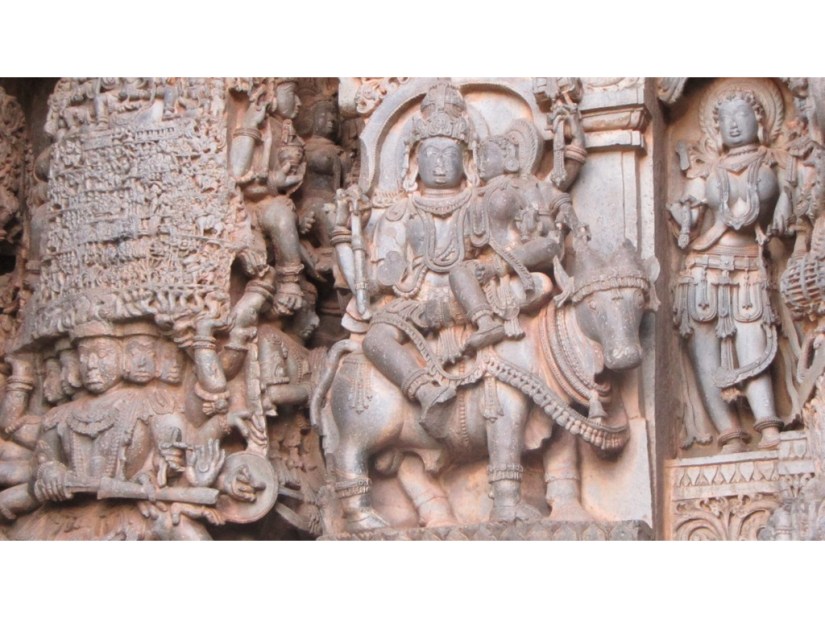 The interiors of both these temples was also fabulous, each carved pillar being different, and with sculpted ceilings, but they were quite dark and hard to photograph.
 After sitting on the plane for two and a half hours at Delhi, finally we took off and arrived in Bangalore in the evening (a delay certainly, but nothing like the Punjab Mail Train which was 17 hours late into Delhi earlier in the week with Lorraine and her husband from Spalding).
 Bangalore feels a more modern city than Delhi from the bits we’ve seen, with familiar landmarks … and unusual signs!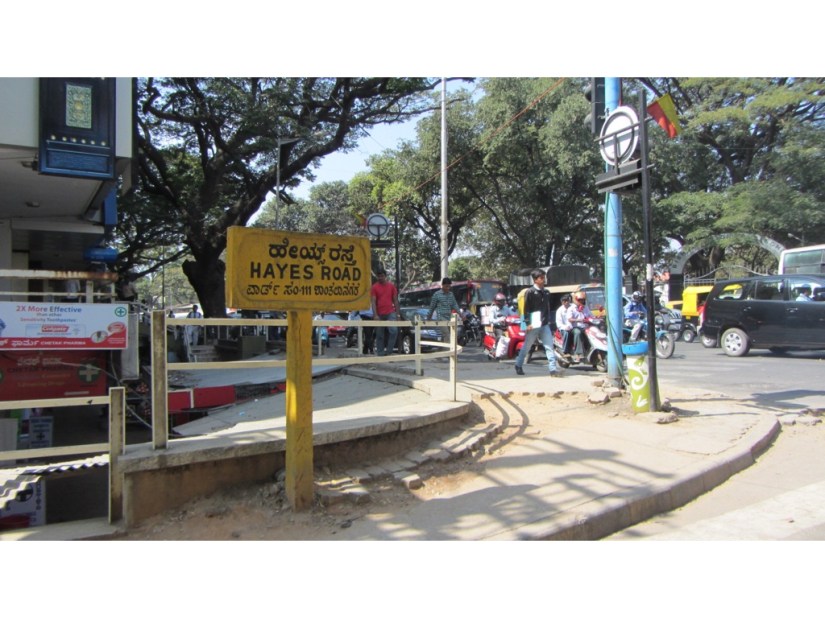
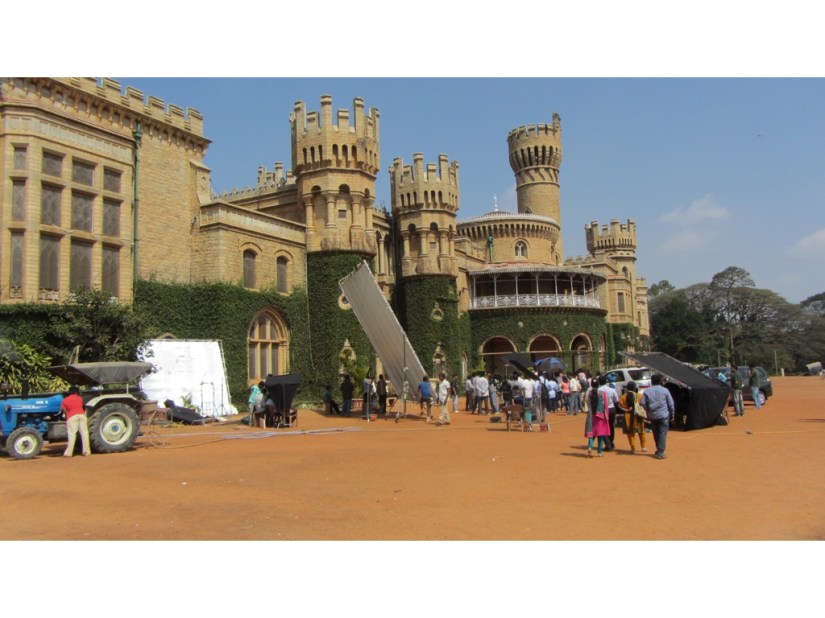
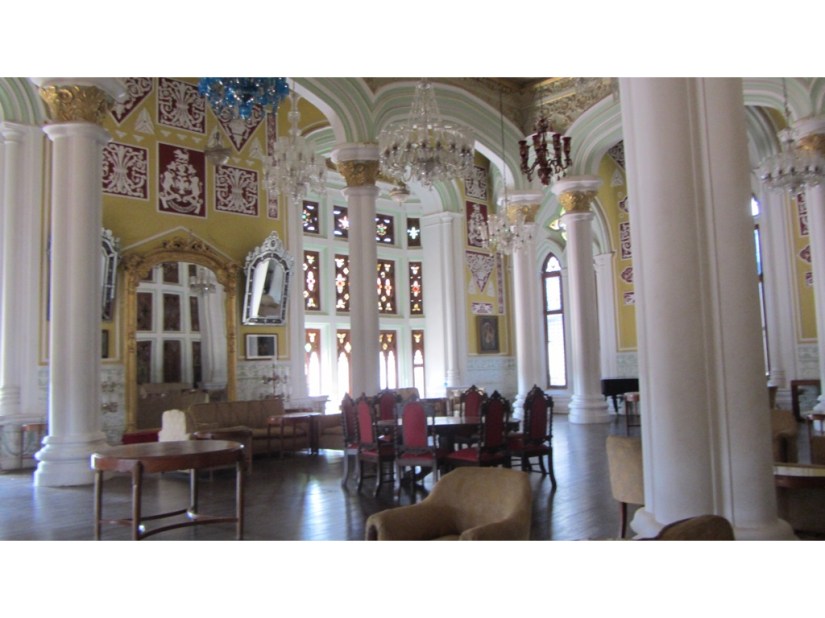
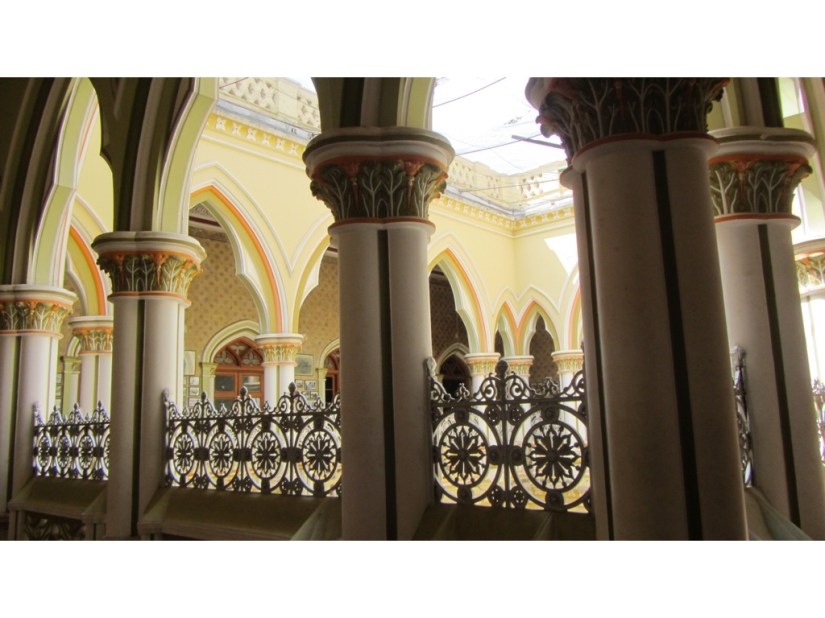
 We started on the trail of Banjamin and Katherine, firstly at Bangalore Palace, a victorian built gothic/tudor mansion which is home to the Mysore royal family, also the venue for B&K’s pre-wedding party in a huge flower adorned marquee, and film set for a Bollywood movie.
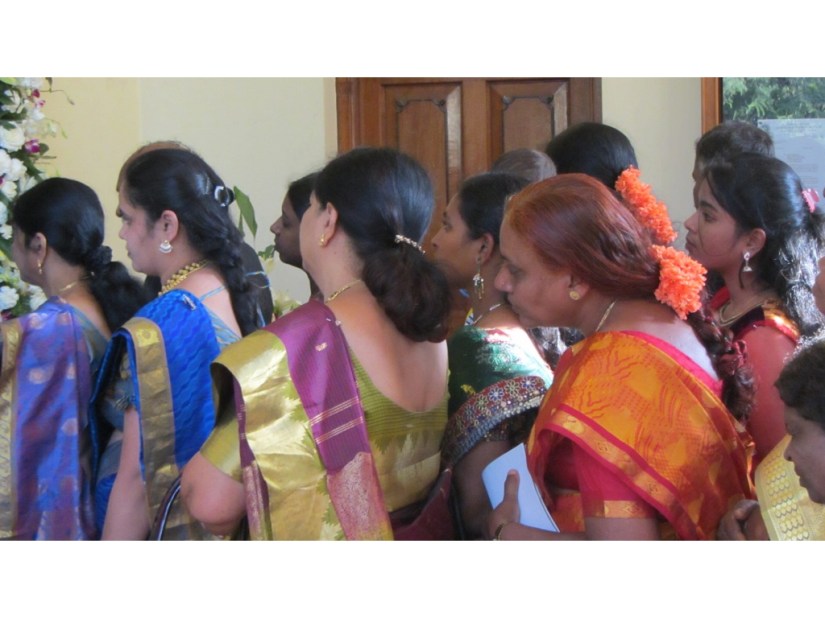
 We then bumped into B&K again at St Mark’s Cathedral for the wedding, and caught a glimpse of Katherine in a meringue and the guests in stunning saris. The church was full of guests, with the same number again seated outside watching on a tv screen.
 We also saw the Nandi Bull temple, built by the founder of Bangalore in the 16th century, with one of the largest Nandi statues inside … and nandi in Sanskrit means joyful …
 … the Tipu Sultans Summer Palace …
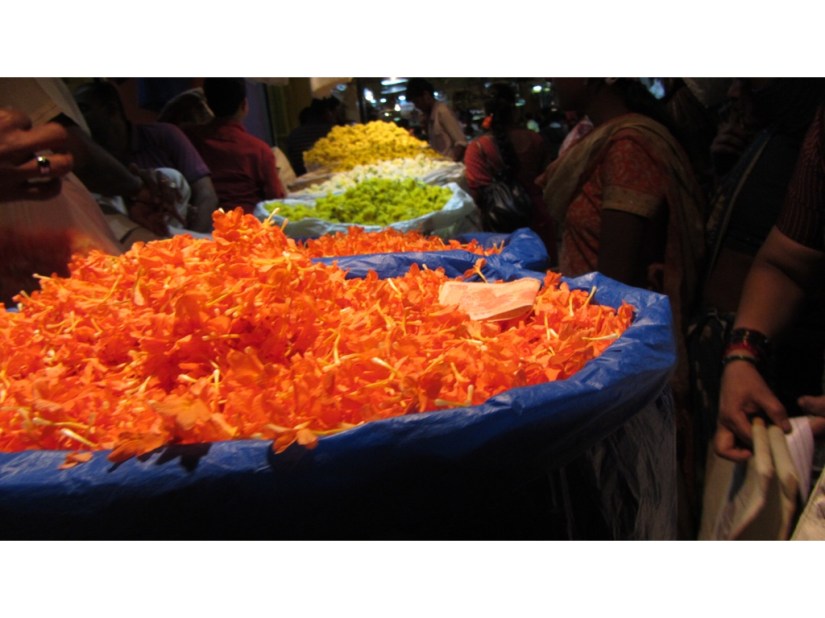
 … and the city market where the flowers are sold by the yard or the pound …

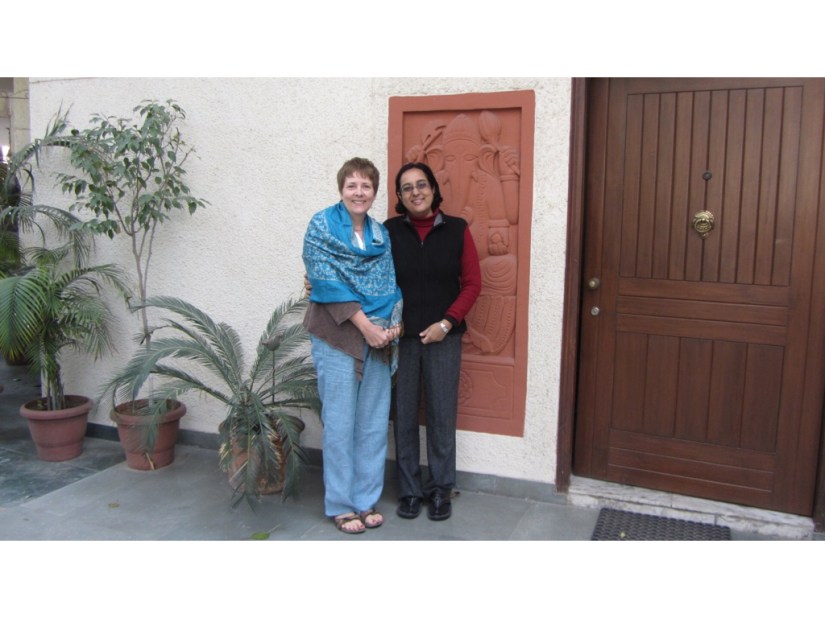
 We arrived safely and spent two days in Delhi. The Homestay is great, and Meera has looked after us really well – cooked us dinner, taken us out for dosas and showed us where to shop!
 As we have been to Delhi before, our sightseeing didn’t follow the usual route. Starting with the ‘new’, we went to the largest Hindu temple in the world which was completed in 2005 … the temple is supported by 148 elephants round the plinth, and there is also a robotic history of the guru and a Disney-style boatride of Indian history … Yes India can certainly do cheesy!!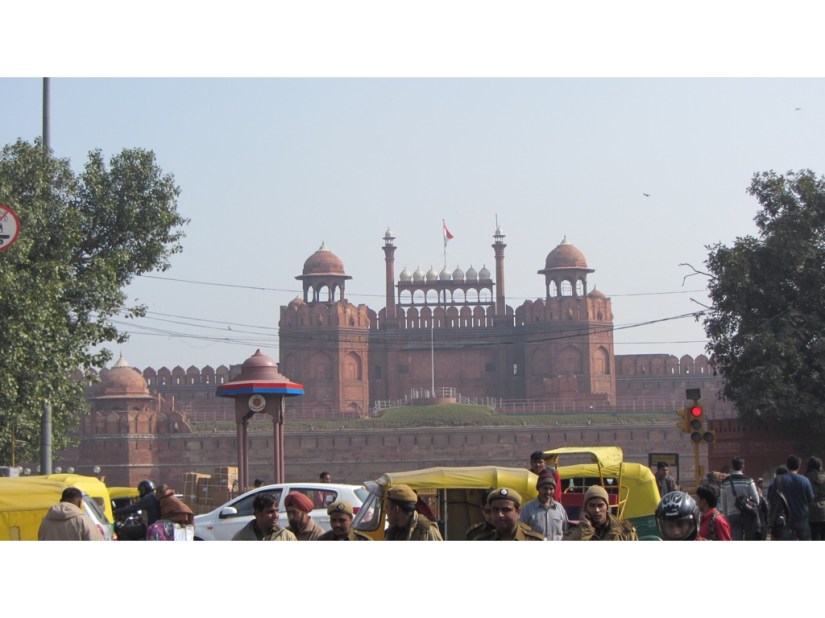
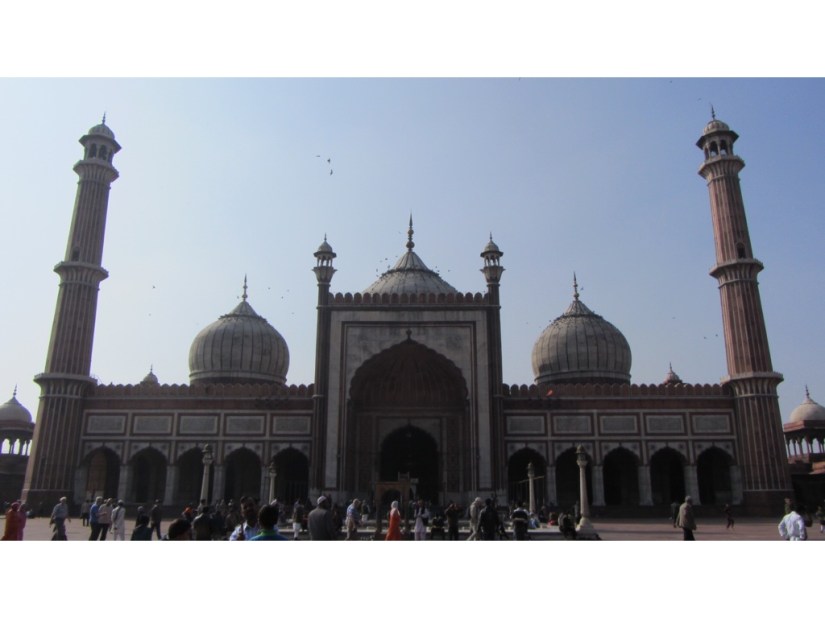
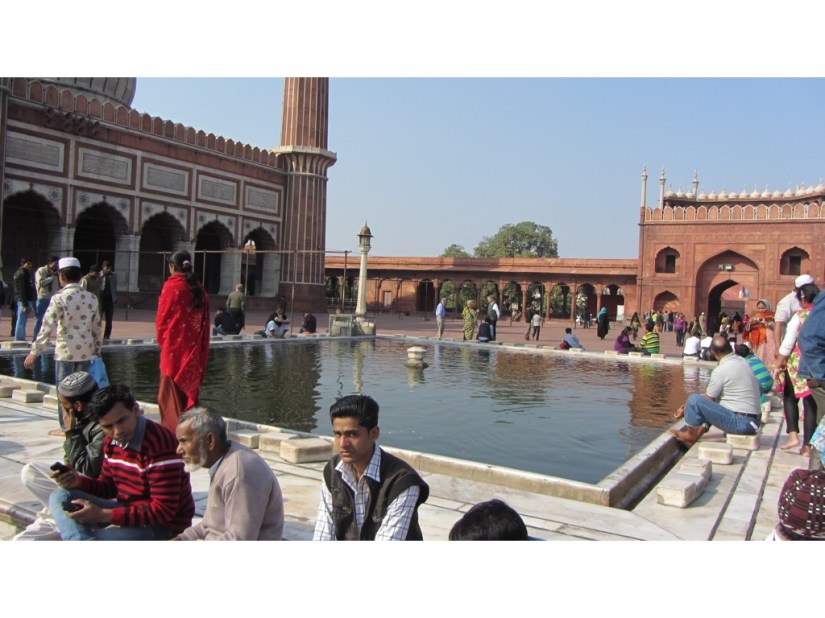
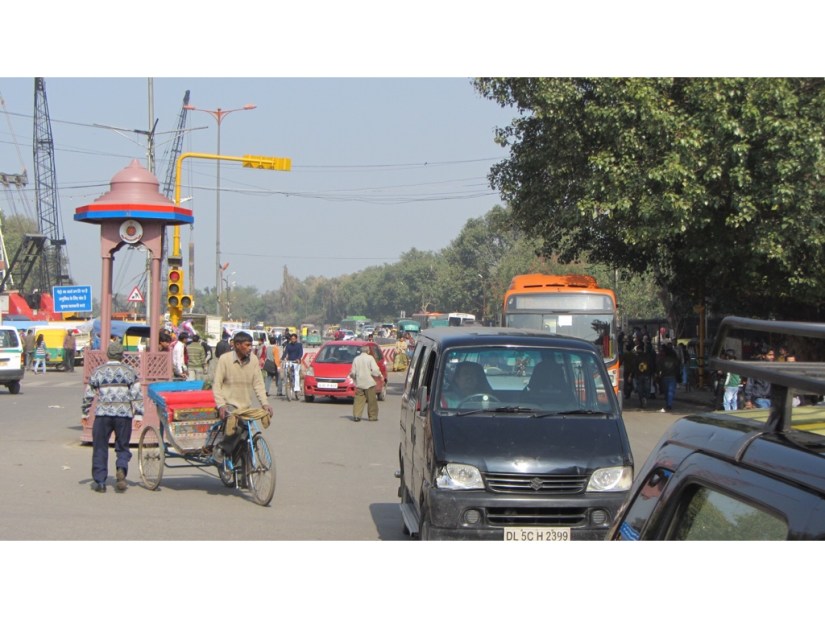
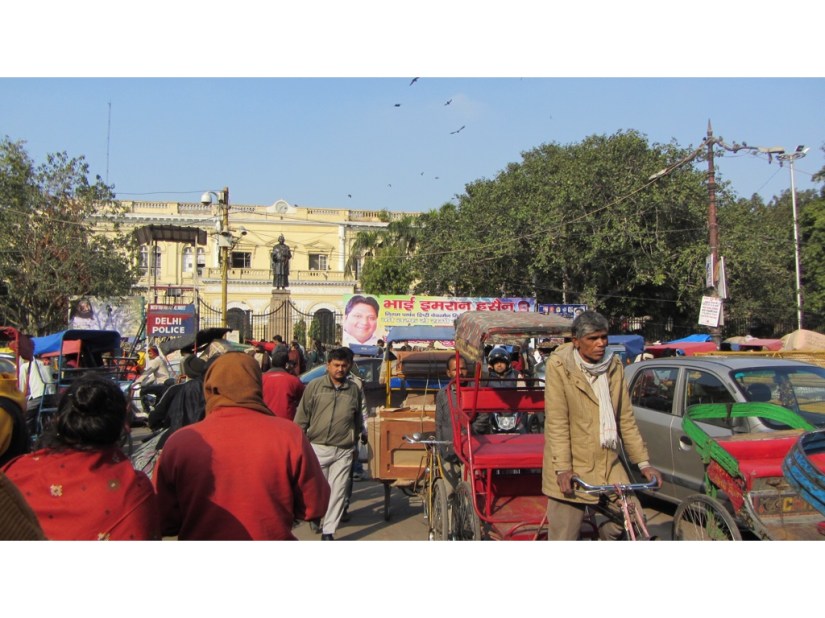
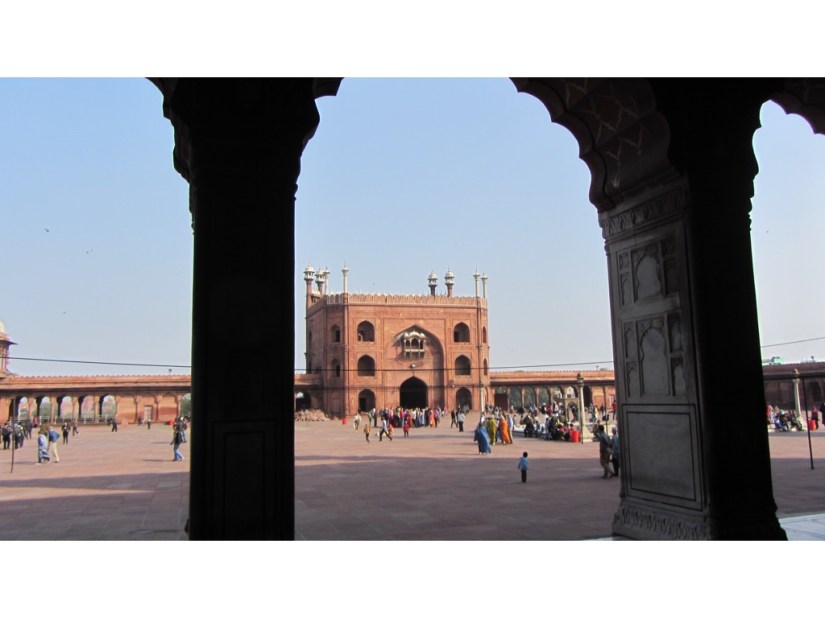 … then a rickshaw ride around the Chandni Chowk market.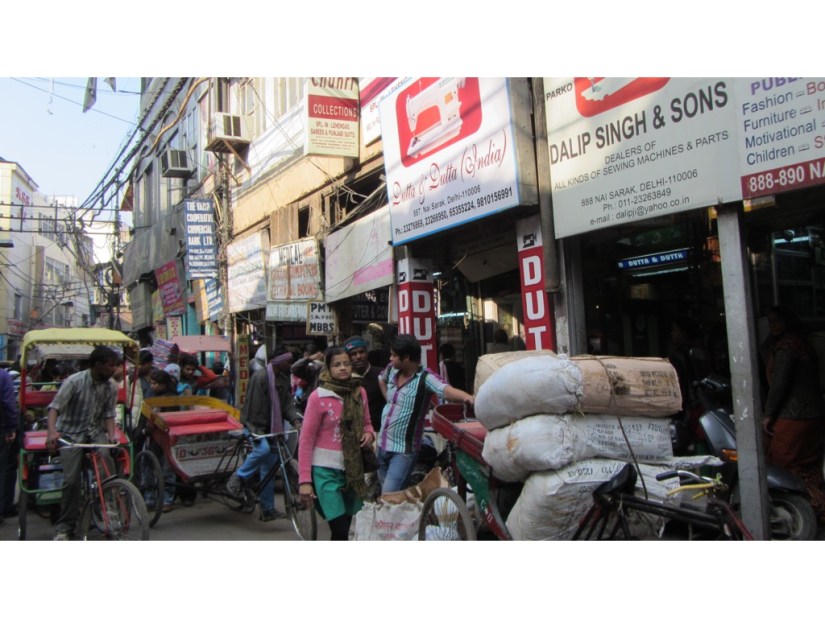
 … and now we are off to Bangalore.
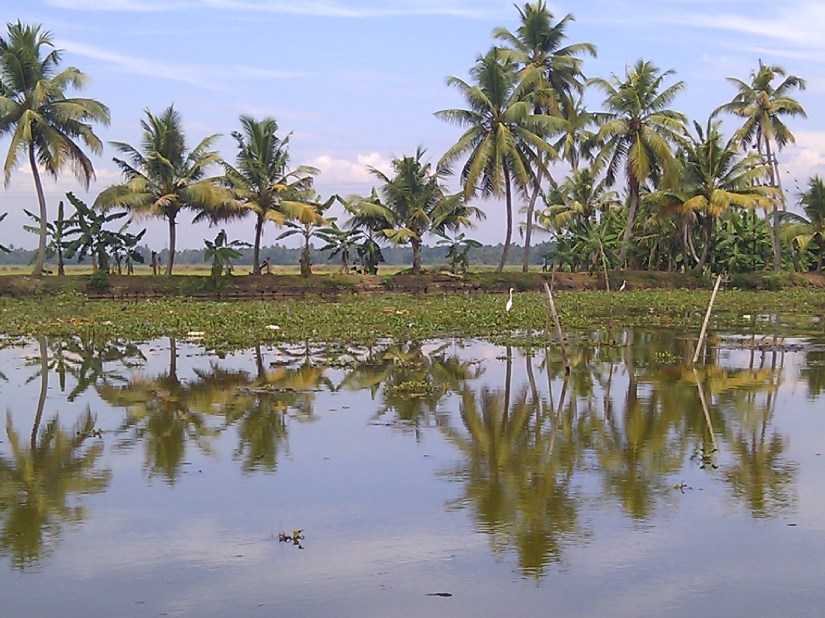 My husband Chris and I decided to go away to celebrate our two big birthdays which meant we needed to be away six weeks to take them both in … and since funds aren’t unlimited, where better to go when it’s chilly in England than Southern India.
