Blog

Finding our Feet in Tashkent

It has taken a couple of days to adjust to being away this time so I’m writing this sitting in Tashkent airport as we are about to move on!

While in Tashkent, we had hoped to visit a couple of museums to get a grounding in things Uzbeki and a look at the old parts of the city, maybe looking closer at the Soviet architecture when we return at the end of our trip. But of course nothing is that simple, everything is mixed up together. There is an excellent metro system, but there is quite a distance between stops so once we started walking, we found everything was further than we’d expected and we clocked up 11 miles on our second day! By day three we had embraced 21st century technology and the wonders of Y-taxi, the local taxi app with fares under £2 for a short hop and instantly everything became easier.

So Tashkent is the capital of Uzbekistan and is a metropolis of over 2.5 million people but it is also an old city which began as a settlement beside a fertile oasis. When the Arabs conquered the area in the C8th, it was already a major caravan crossroads on the Great Silk Road linking China with the Middle East and Europe and by the C11th it was called Tashkent, meaning City of Stone in Turkic. The city was destroyed by Genghis Khan in the C13th, recovered under the Mongols and Timur then prospered under the Shaybanids, the founding dynasty of modern Uzbekistan who ruled from the C15-17th.

They built the Kukeldash Madrasa or Islamic School, which had fallen into disrepair, but is now restored and back in use as a college for the study of Islam. The exterior has large Iranian-style iwan gates flanked by two levels of miniature iwan with pointed arches and small minaret-like towers called guldasta. Stylistically, apparently all madrasas in Uzbekistan are similar, whatever their age, although they can be decorated differently, and here there are lots of colourful majolica tiles.

Inside is a central courtyard with garden and fountain, surrounded with cells used as classrooms and dormitories for the students.

It was very peaceful walking round, yet so close to the bustle of the city just outside.

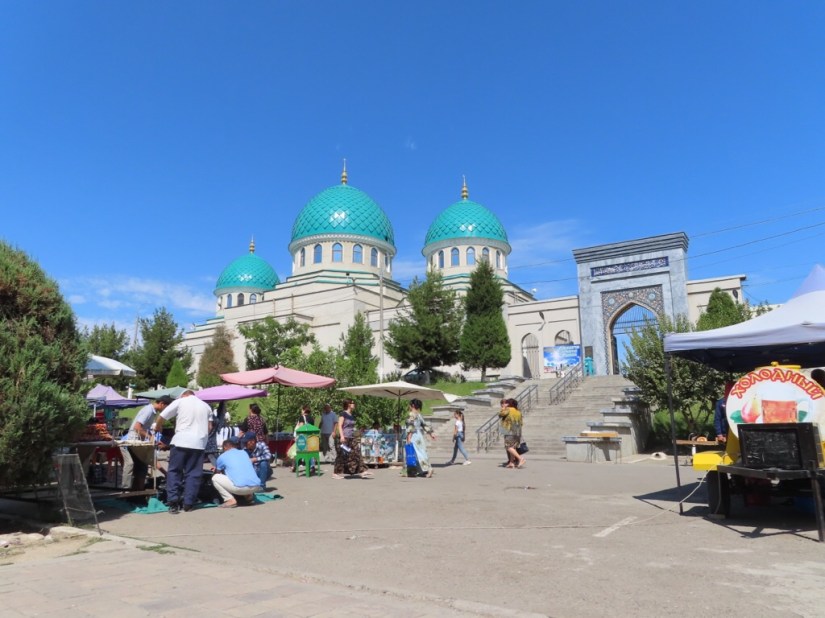
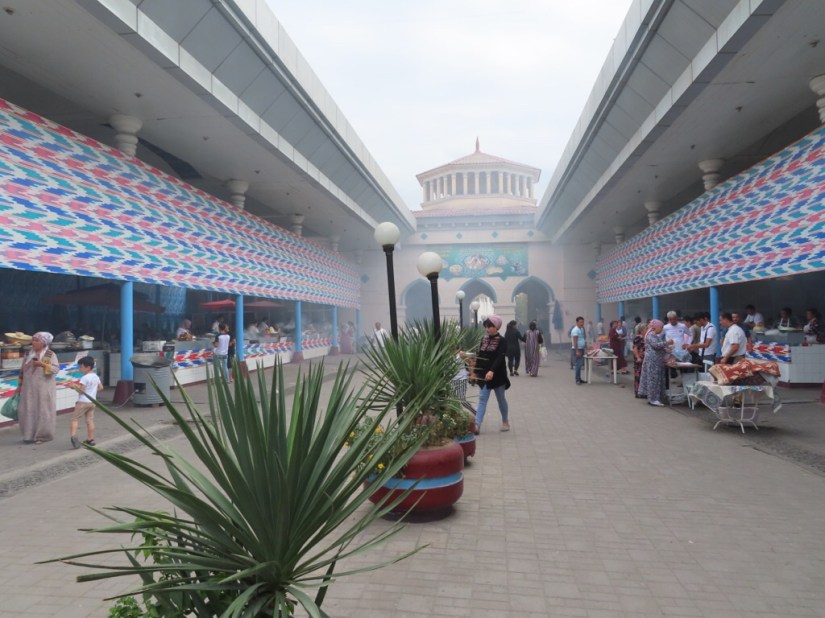
In the C9th roads led from all city gates to the Chorsu Bazaar, bringing traffic and trade to the center of the city. The surrounds would have been a warren of mud-walled houses and workshops, crowded bazaars, mosques, madrassahs and mausoleums. This is Chorsu Bazaar today …
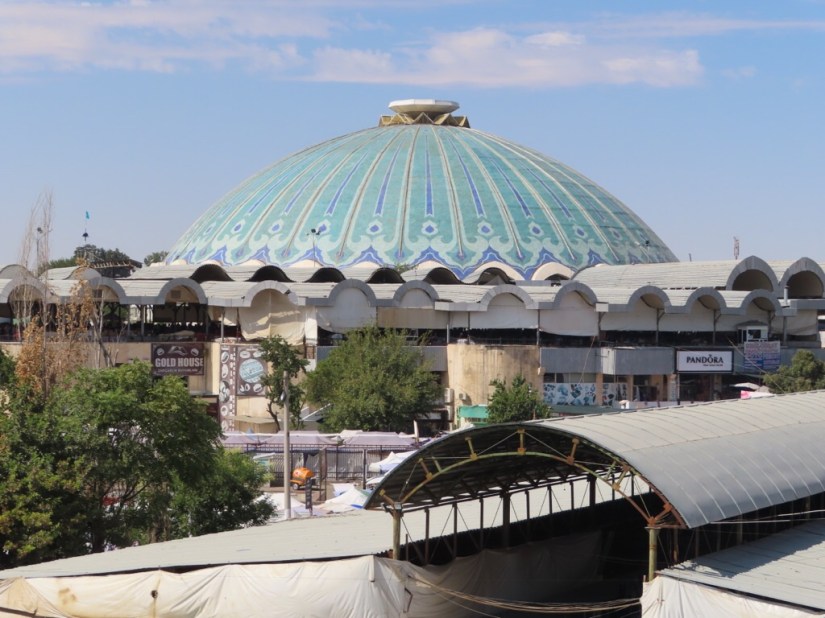
… still a market and still hectic and filled with smoke from grilling kebabs!
Nearby is the Khast Imam Square with the beautiful C16th Barak Khan Madrassah at one end, now containing souvenir shops in the original student rooms.

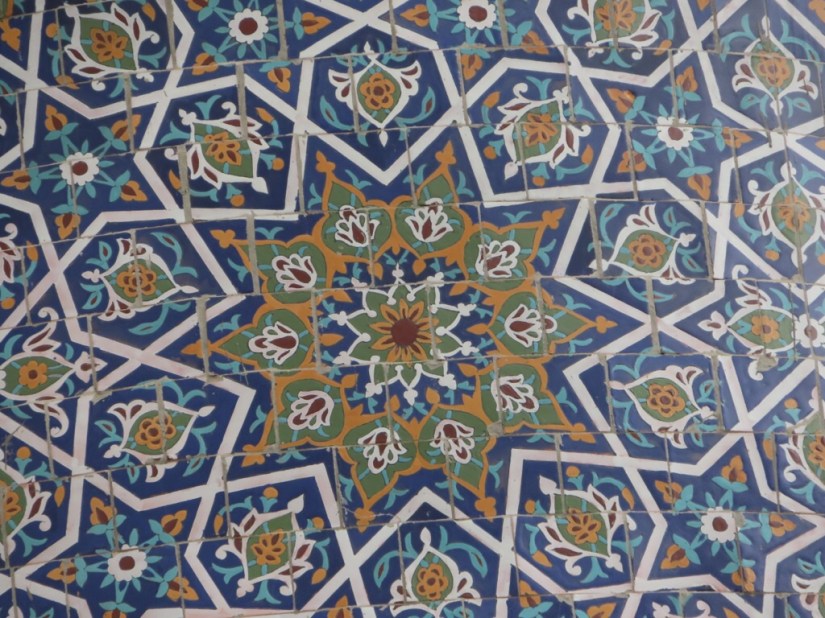
There is also a variety of patterned tiles … all in shades of blue!

The other end of the square, flanked by a pair of 50m-high minarets, is the Hazrat Imam mosque.

This is the largest place of worship in Tashkent and was built in 2007 in a record-breaking 4 months using sandalwood columns from India, green marble from Turkey and blue tiles from Iran.

The C18th Muyi Mubarak Madrasa is in the centre of the square holding what once was thought to be the oldest Quran in the world and also ‘the sacred hair’ believed to have belonged to the Prophet Muhammad. Unfortunately, it was closed when we visited so we missed these treasures.
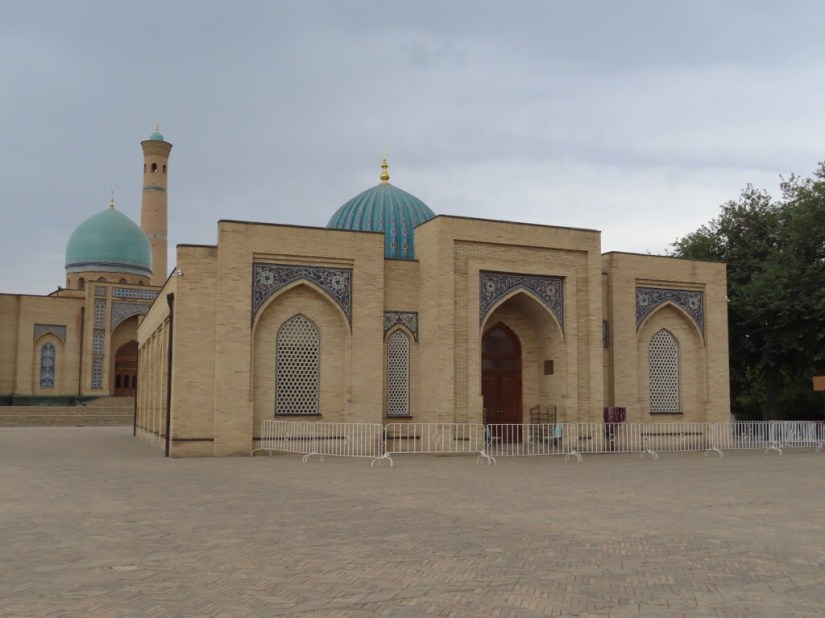
As we left we saw the mausoleum of the scoholar and poet Abu Bakr Kaffal Shashi …
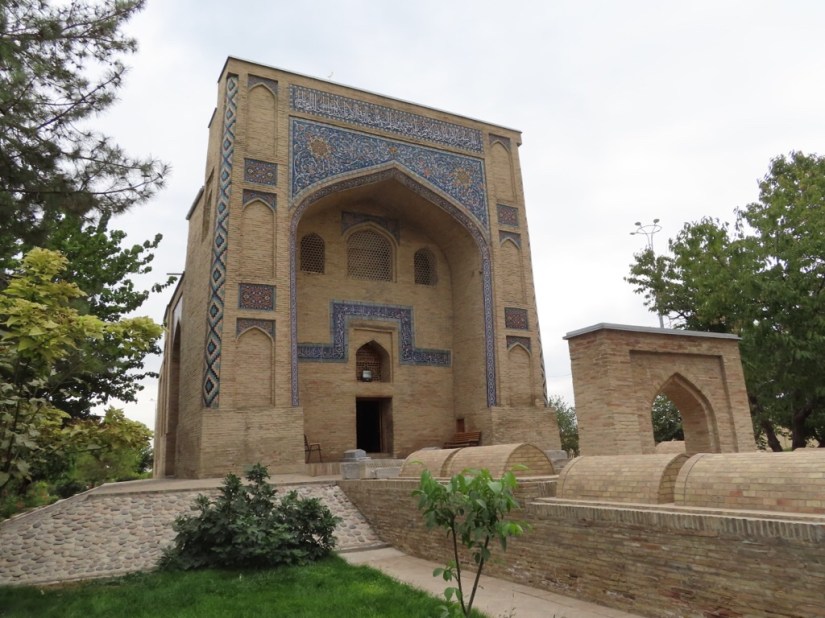
… and a brand new mosque, coming soon!

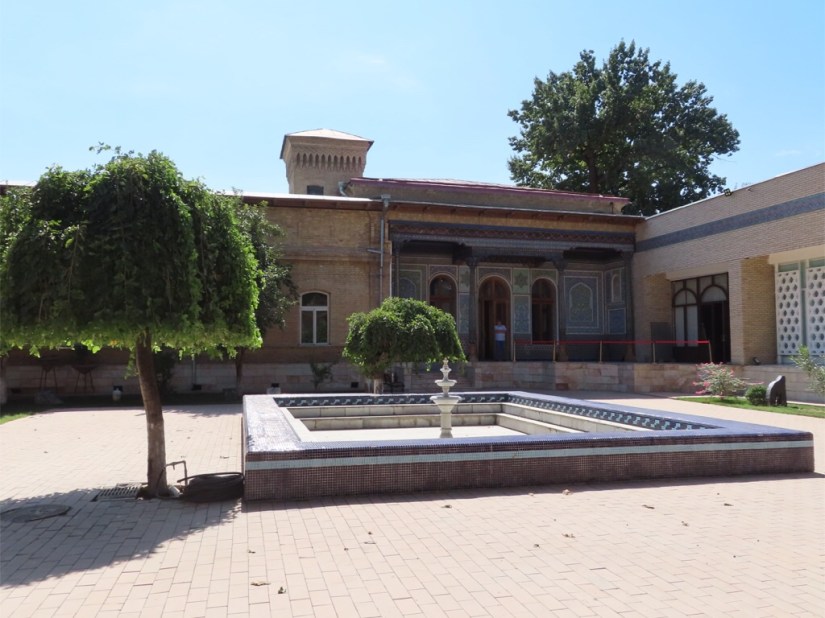
The other real treasure we found in Tashkent was the Museum of Applied Art, situated in the former home of Imperial Russian diplomat Alexander Polovtsev. This grand mansion was built in 1930 and decorated in traditional Uzbek style, using master craftsmen and contains a superb collection of applied arts, many collected by Polovtsev.

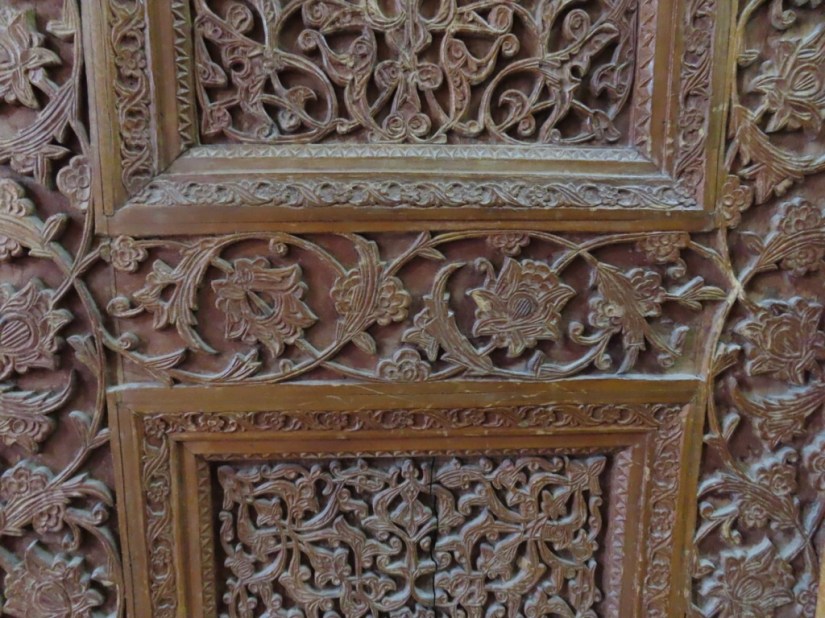
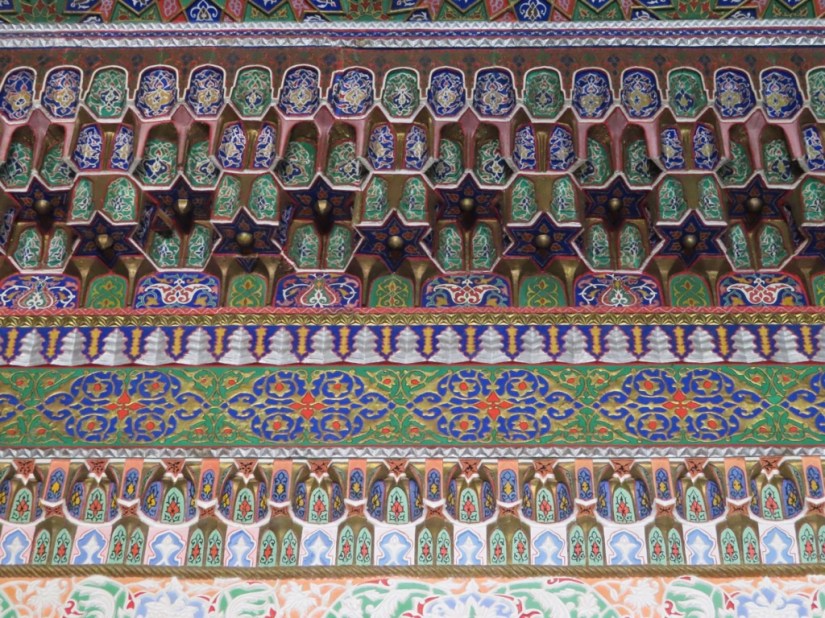
The decoration comprises panels of carved and painted plasterwork called ghanch and ceramic tiles on the walls and typical Tajik style wooden ceilings, also carved and painted. These started in the porch …

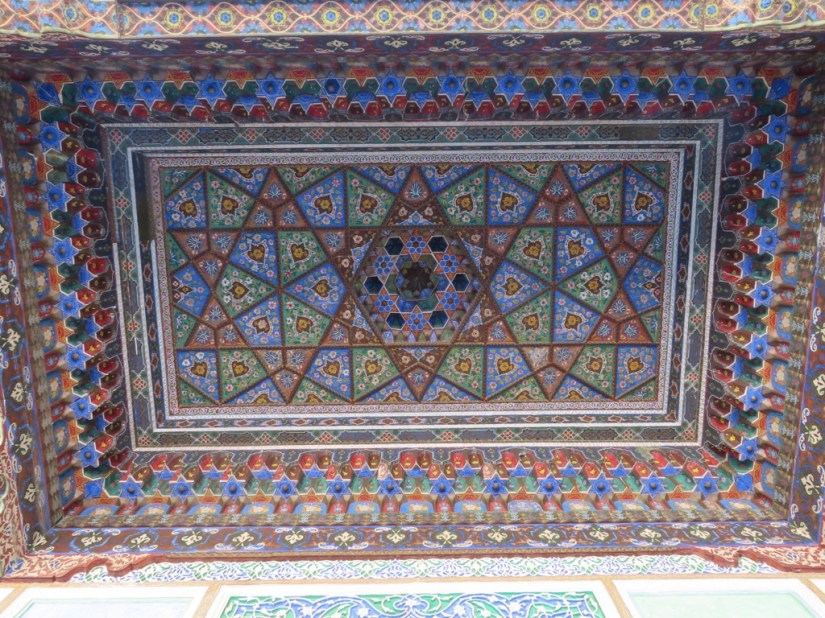
and continued into the central hall …

… and here are some details …

The collection included ceramics, metalwork, painted wood, jewellery and textiles including clothing, beadwork as well as printed and embroidered fabric.

Suzanis are large, hand-embroidered textile panels with the word coming from the Persian word suzan, which means needle.

Some were luxurious with gold thread on velvet …

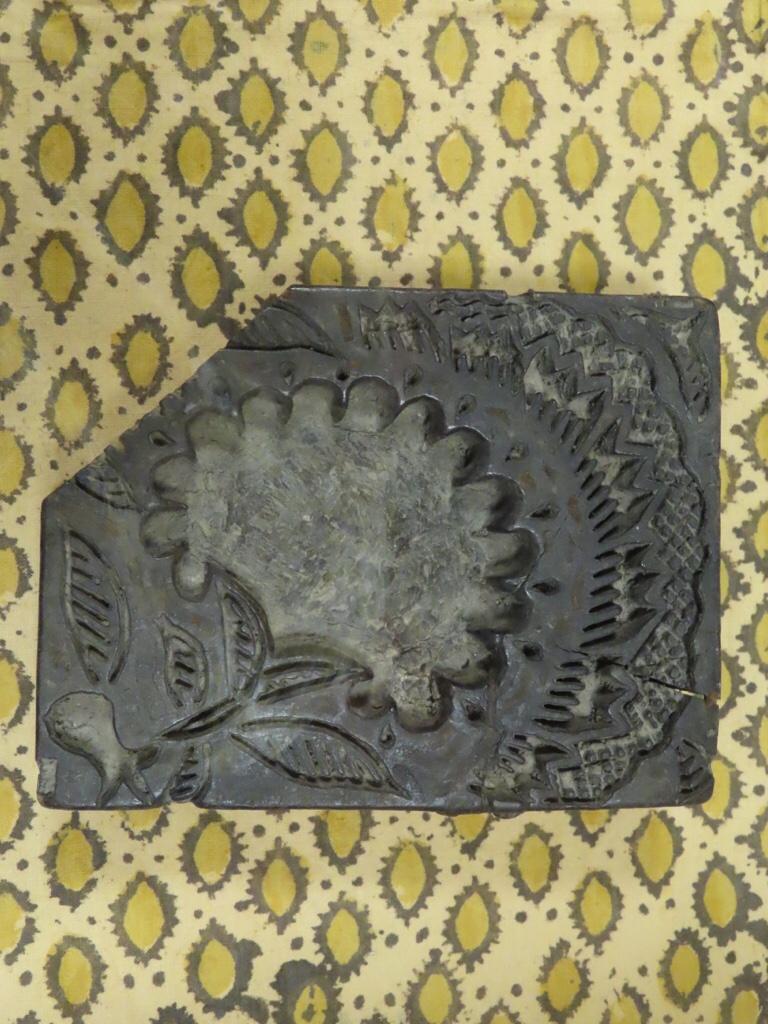
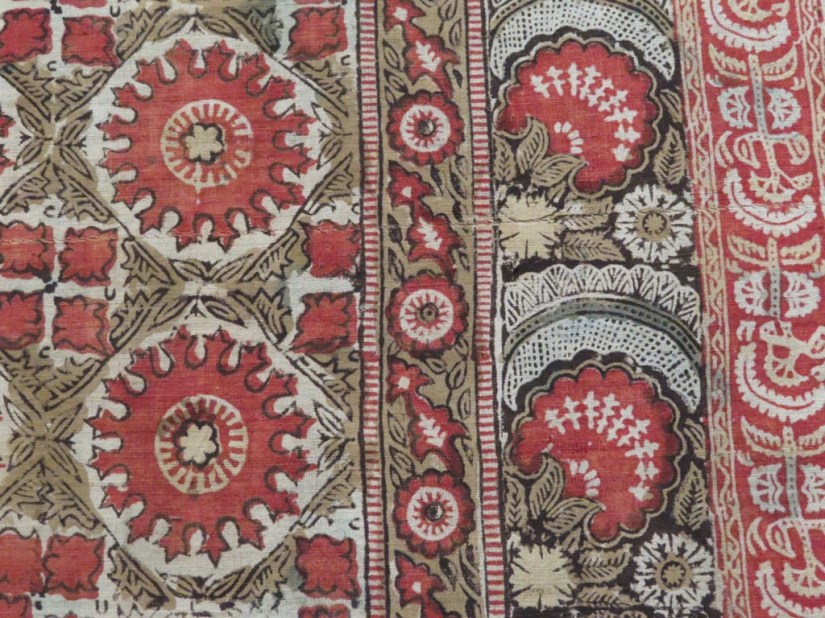
… and here is a wooden block and printed fabric …
The State History Museum links the old with the new as it is housed in a building dedicated to Lenin and completed in 1970 to mark the centennial of his birth. It took history from prehistoric times to the present day on one floor while the top floor detailed the virtues of the independent Uzbekistan, in every aspect, but it wasn’t very engaging and we didn’t stay long. The best part was the facade which is decorated in oriental modernist style with patterned window grilles called pandzhara, a motif that became increasingly familiar during our sightseeing here.

So the Russian army arrived in 1865 and made Tashkent the capital of its Turkestan Province, incorporating vast areas of Central Asia. Amir Timur Square was built to form the center of a new Tashkent and once contained statues of the first Russian governor of Tashkent, followed later by statues of Lenin, Stalin, and Karl Marx but it’s now Amir Timur and his horse who occupy the centre of the capital.

It also has a couple of the city’s iconic buildings – the Uzbekistan Hotel, generally looking a little tired but with a great facade …
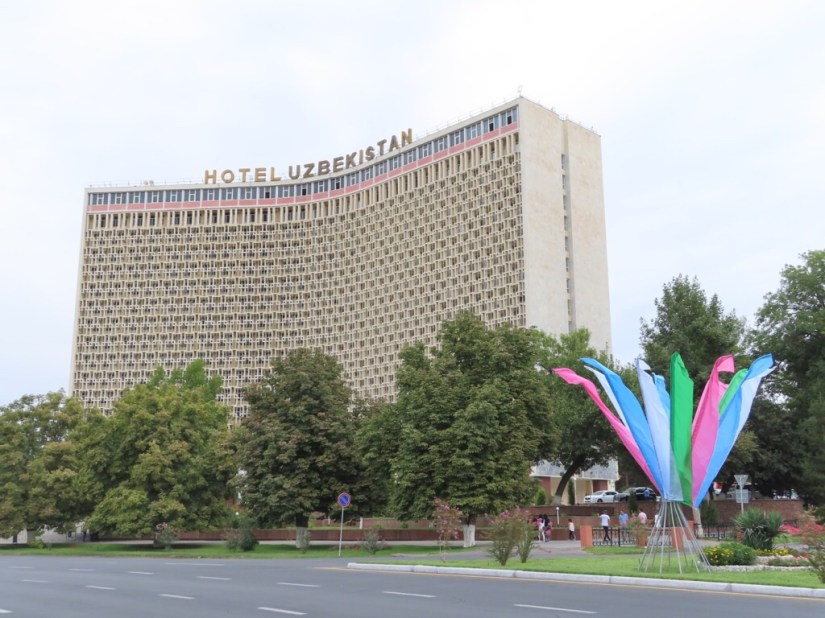
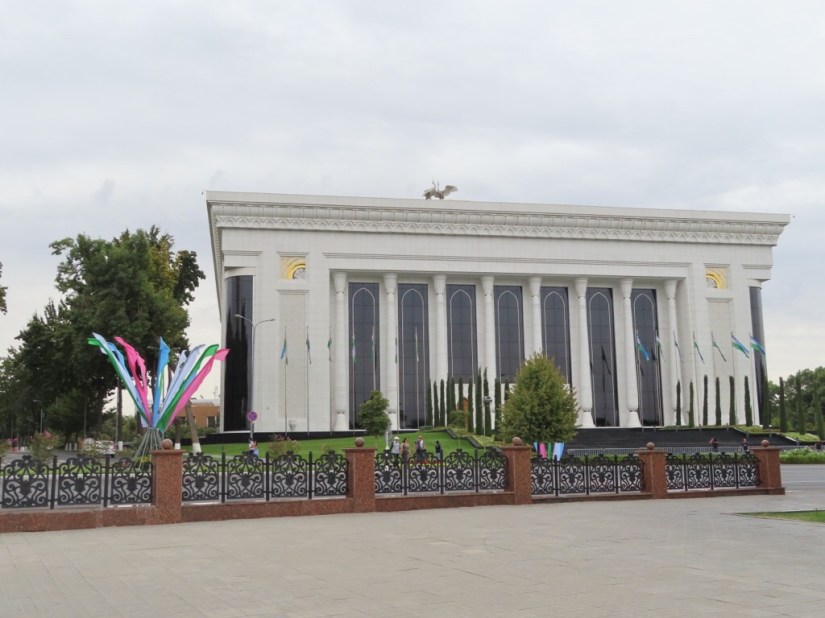
… and the more modern Forums Palace, built in autumn 2009 to hold important state and international events.
There is also the Tashkent Chime a symbol of the city since its construction in 1947, mirrored by a second chime since 2009.

Following the Russian Revolution in 1917, Tashkent emerged as capital of the Uzbek Soviet Socialist Republic and began to industrialize in the 1930s with scientific and engineering facilities being established in the postwar years.

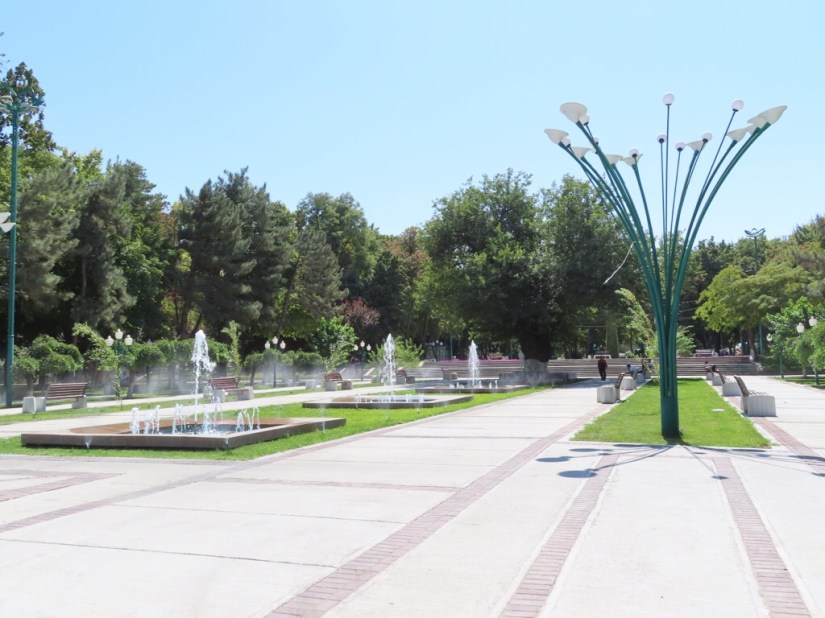
The largest park in the capital was built on the site of an old quarry by Komosol Youth in the 1930s and is named after Alisher Navoi, the great Turkic poet and thinker.

It also contains The Istiqlol Palace, an events hall, once called the People’s Friendship Palace …

… complete with decorative facade …

… and also a boating lake with Oliy Majlis, the Uzbek Parliament building behind.
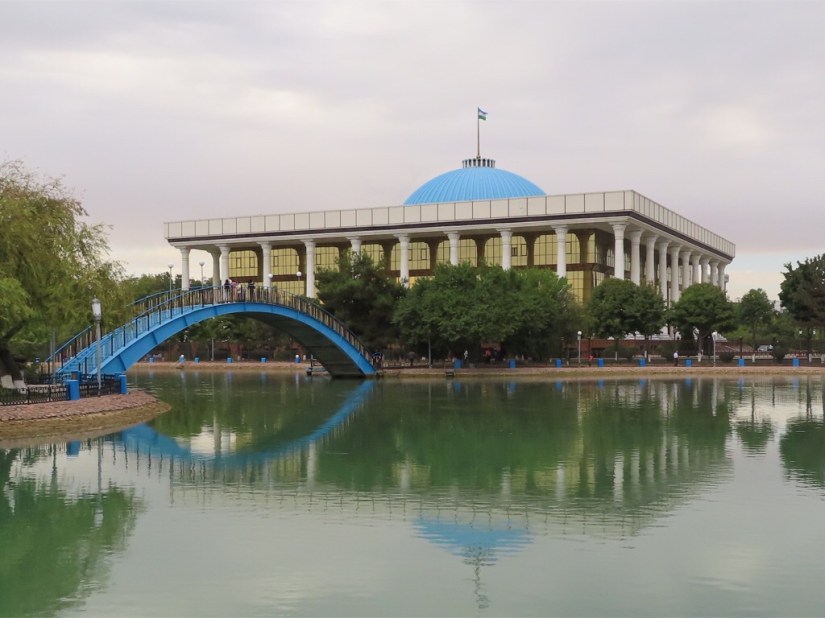
Other parts of the park look a bit run down and less loved …

… but there were more fountains …

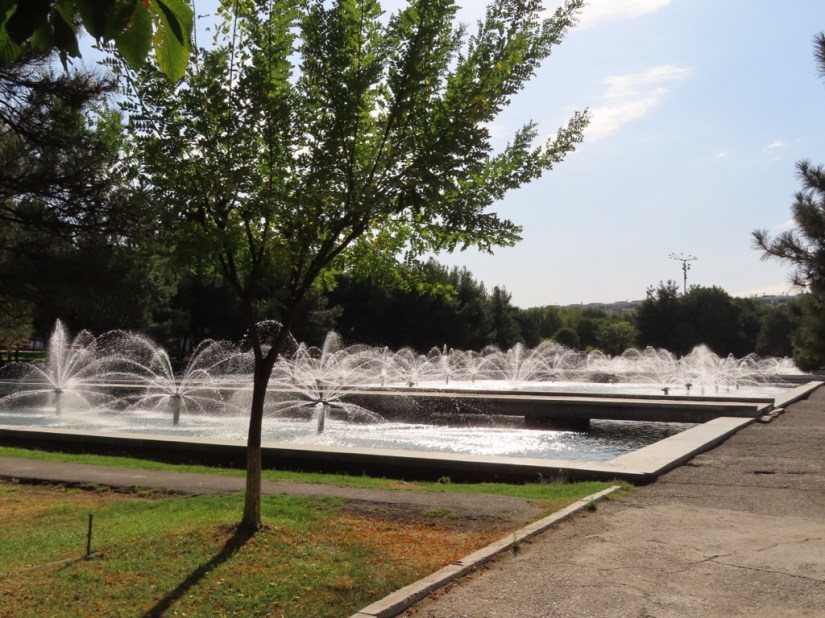
… and the Navruz Wedding Palace which is usually crowded with brides, grooms, camera men, drones, Hummer limos … in fact all the essentials of an Uzbek wedding, but quiet on Independence Day.

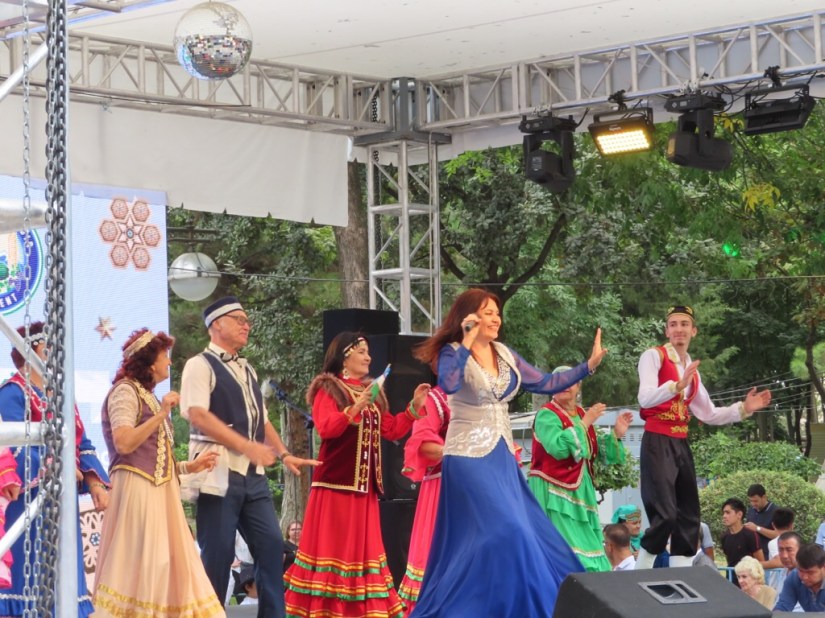
Independence Day brought various local celebrations in public places and fireworks later.
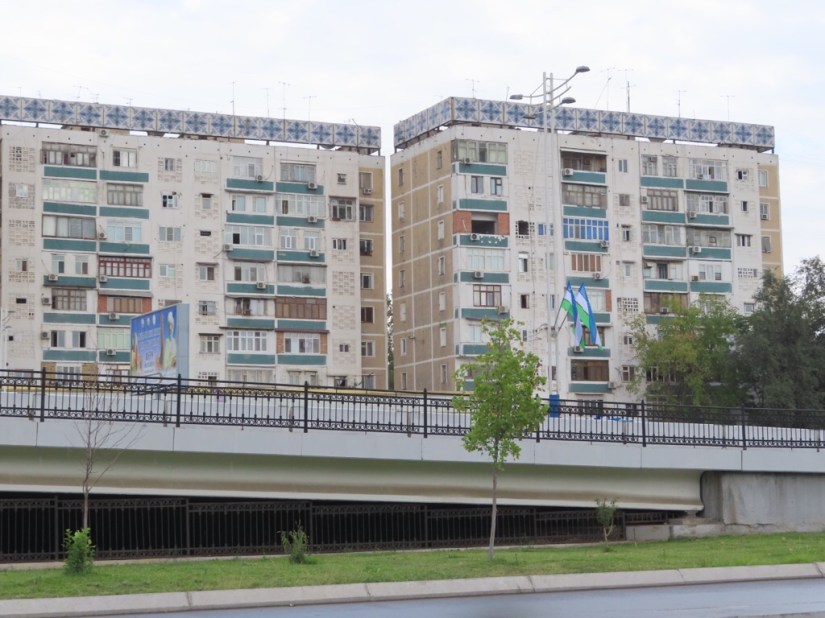
In 1966 Tashkent was hit by a massive earthquake which levelled much of the city which was rebuilt as a model Soviet city with wide streets planted with shade trees, parks, immense plazas for parades, fountains, monuments, acres of apartment blocks and served by the Tashkent metro system. At the collapse of the Soviet Union in 1991, Tashkent was the fourth-largest city in the USSR and a center of learning in the fields of science and engineering. Following independence in 1991, President Islam Karimov remained in power for 25 years until his death in 2016 when he was replaced by his long serving prime minister Shavkat Mirziyoyev.

So here’s a selection of other buildings, first the Central Exhibition Hall of the Academy of Arts …
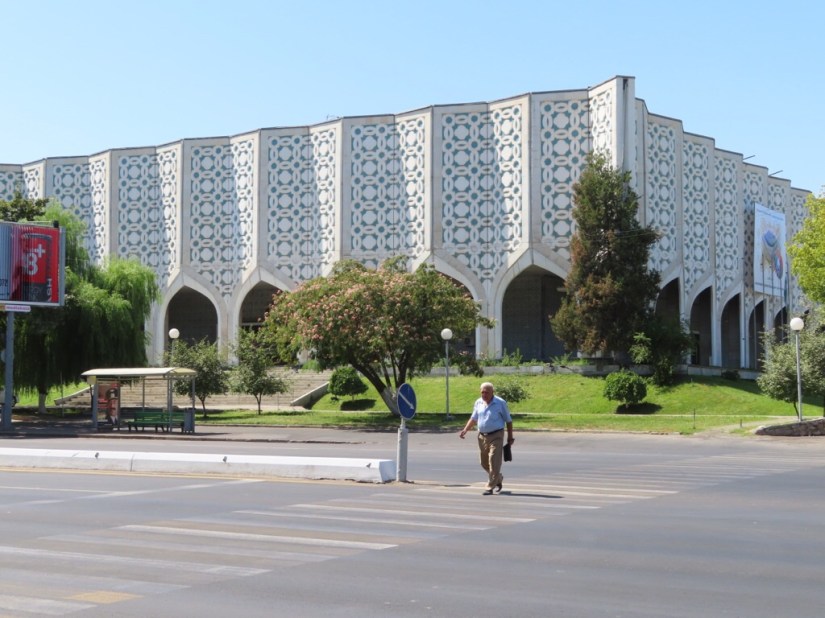
… and also a mixture of apartment blocks, office buildings, boulevards and plazas.

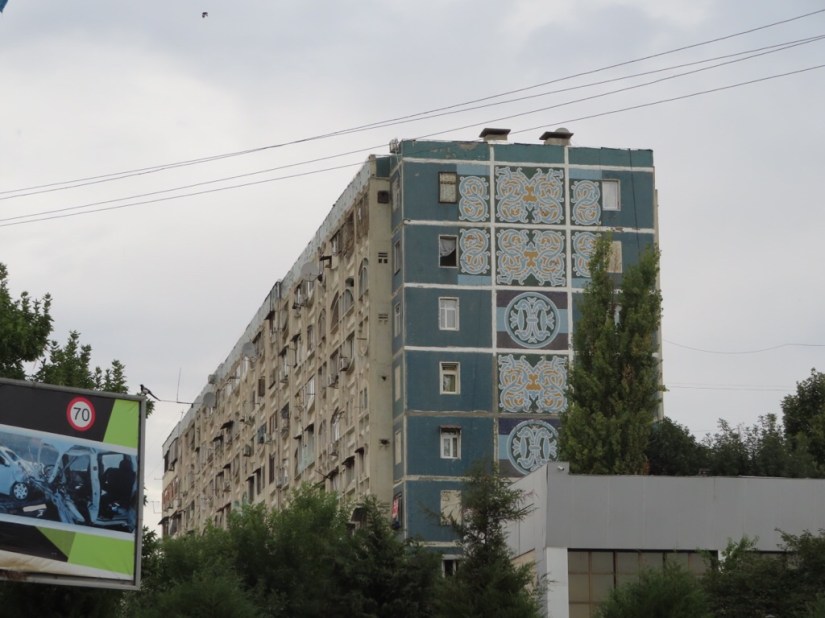
You can see how we got a bit overwhelmed!

Anyway, it’s been lovely and sunny, 25-30° with a breeze and low humidity … although there was a brief shower one day. We’ve been staying at Trip.le guesthouse, in a quiet residential area, but close to the metro and restaurants. It is set round a courtyard with private rooms, dorms, a kitchen with buffet breakfast and friendly staff.

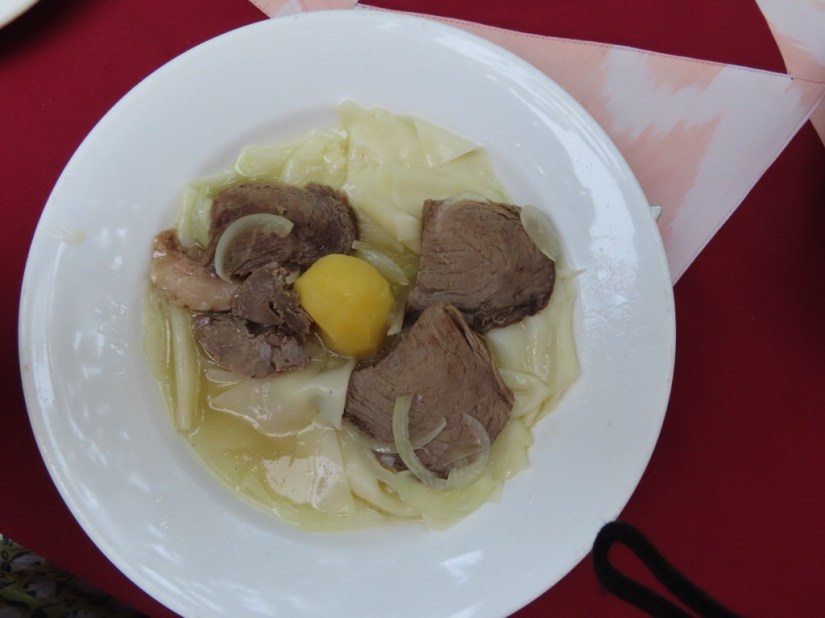
We’ve tried three restaurants – Jumani, Caravan for Uzbek food and Gruzinskiy Dvorak with a Georgian menu – and eaten well in all of them. We’ve begun our meals with various mezze and salads then Chris has dined on tofu, vegetable stew, cheese filled pastries and vegetable kebab. I’ve had a traditional Georgian dish of lamb stew with tomatoes and aubergines, spicy chicken with mushrooms and walnuts and also Beshbarmak, a national dish of nomadic Turkic peoples in Central Asia, with sheets of pasta, stewed horsemeat and a broth with sliced onions which was surprisingly delicious.

So that was Tashkent … we will be returning for a couple of days at the end of our trip, but meanwhile, it’s time to board the early morning plane and take a trip back in time to Khiva …

Map

Chris & Elaine’s Uzbekistan Silk Road 2019

The allure of the Silk Road for many is to take the path of adventurers and travellers like Marco Polo who followed its network between the Mediterranean and China and visited places mentioned in the lives of Alexander the Great, Ghengis Khan and Tamerlane.
For us, the architectural heritage with stunning Islamic tiling and intricately decorated mosques, madrasas and mausoleums is the biggest attraction, so we’ve focused our visit on Uzbekistan, home to Samarkand, Bukhara and Khiva, all great cities on the Silk Road and all filled with architectural treasures.

Uzbekistan is a doubly landlocked country in Central Asia, with mountains and steppes but comprised mainly of arid desert. A former Soviet republic, it retained a highly authoritarian regime after independence in 1991, but a change of president in 2016 has now made travel here more accessible. We will be arriving in the capital Tashkent and look forward to seeing the more recent remnants of Soviet rule before catching a flight back in time to Khiva, our most remote destination.

The train will then take us 1100km along the Silk Road back to Tashkent. We’ll be staying in guest houses, hoping there will be vegetarian alternatives to the national dish of rice and mutton called plov and with 10,000 Som to the £, feeling like millionaires. Chris is eager to play with his new Oly 12-100 Pro lens and back-button focus, whatever that is! There’s no rush, so we have plenty of time to soak up the atmosphere, take photos, browse in bazaars, drink tea and enjoy the sunshine …

Itinerary

Finding our Feet in Tashkent

Khiva … Within the Walls

Fifty Fortresses of Elliq Kala

Khiva … Beyond the Walls

Bukhara … Silk Road City of the Shaybanids

Samarkand … Timur’s Capital

Over the Mountains to Shakhrisabz

Tashkent Finale

Map

Chihuly: Reflections on Nature – Kew

Like a magpie, I love anything sparkly which definitely includes glass and our day out to Kew was so exciting, I had to share!
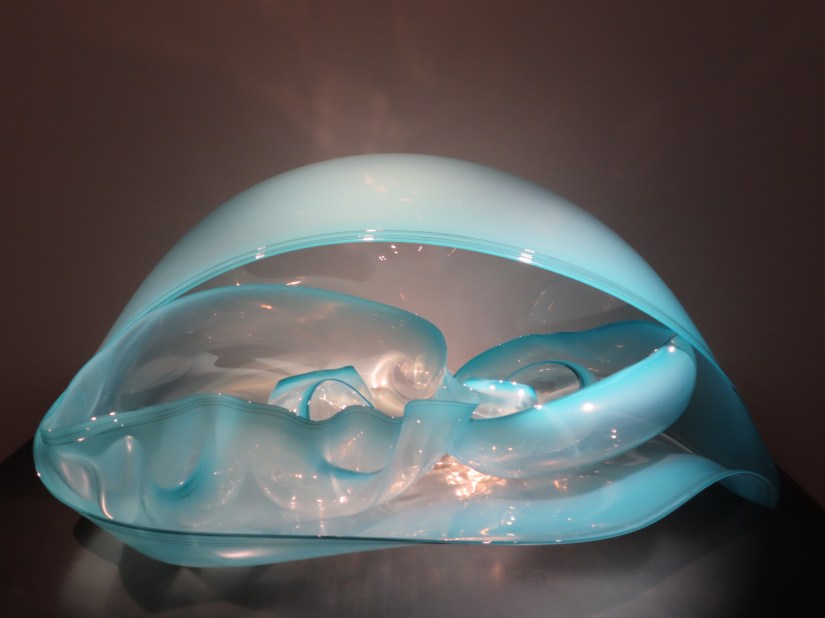
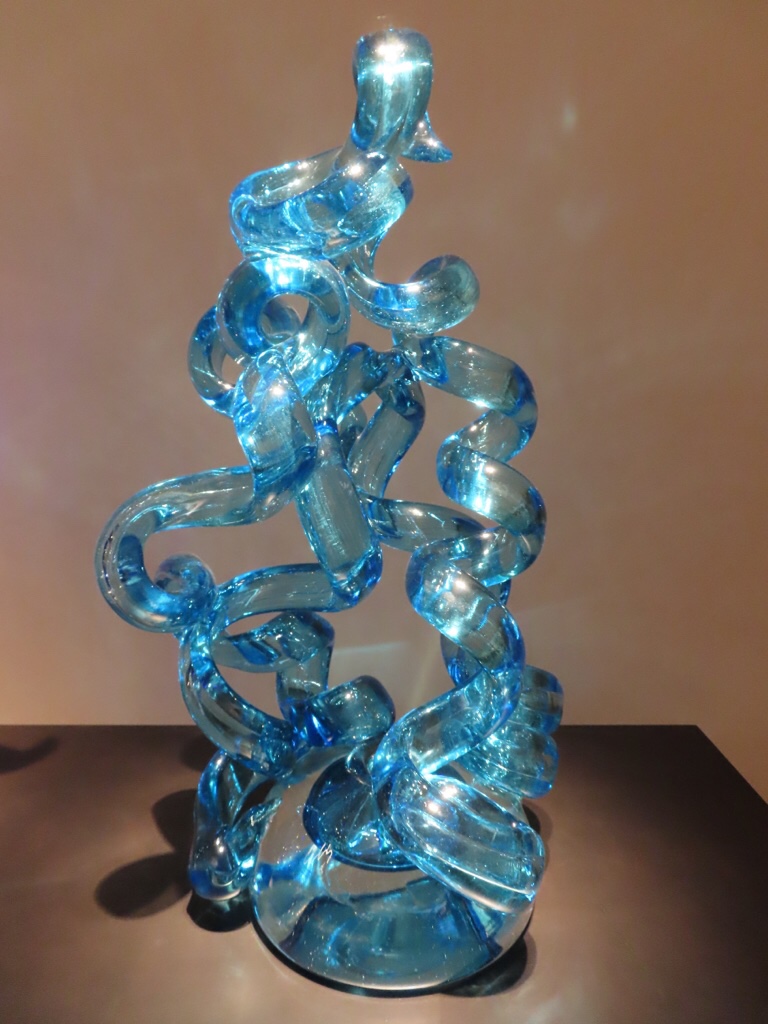
Dale Chihuly is possibly the most famous artist working in contemporary glass today and together with his team in Seattle, produces a range of beautiful glass.

The Shirley Sherwood Gallery was our first stop, where a film explained about Chihuly’s life and working methods and how his work has evolved over the last 50 years.

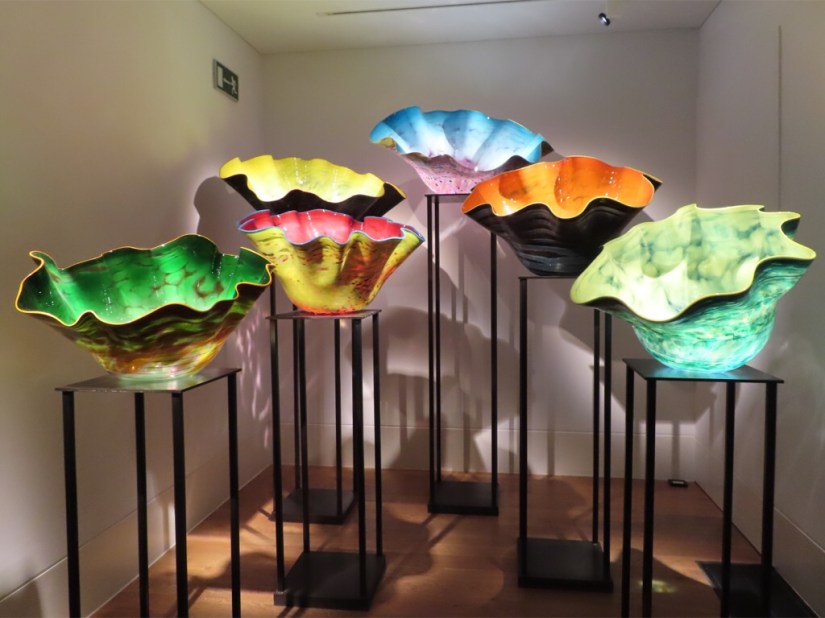
A stunning collection of smaller pieces were on display here including Baskets inspired by the slumped shape of Northwest Coast Indian baskets …

… Rotolo which unsurprisingly means coil in Italian …

… pieces from a series called Macchia which means spotted in Italian …

… and Cylinder vases with decoration inspired by designs on Navajo blankets.

I want my work to appear like it came from nature, so that if someone found it on a beach or in the forest they might think it belonged there. Dale Chihuly

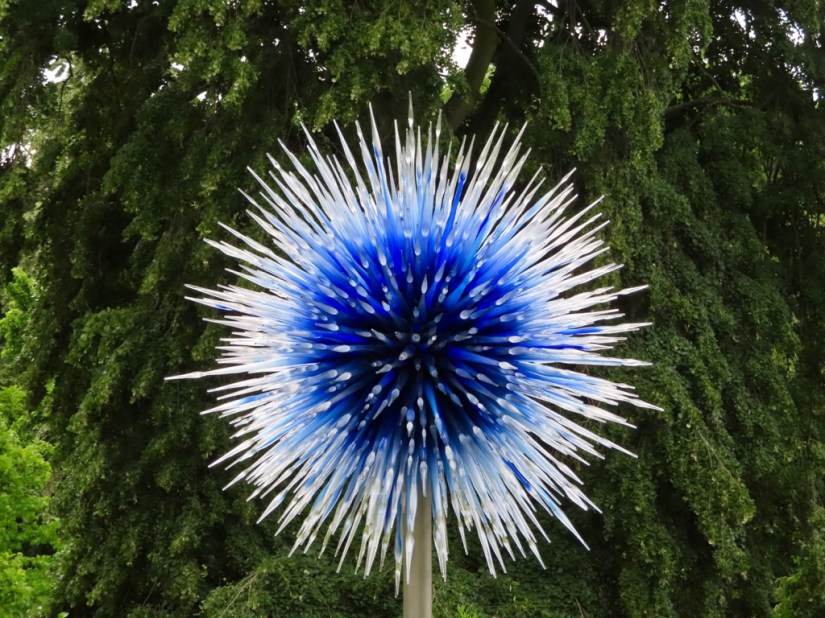
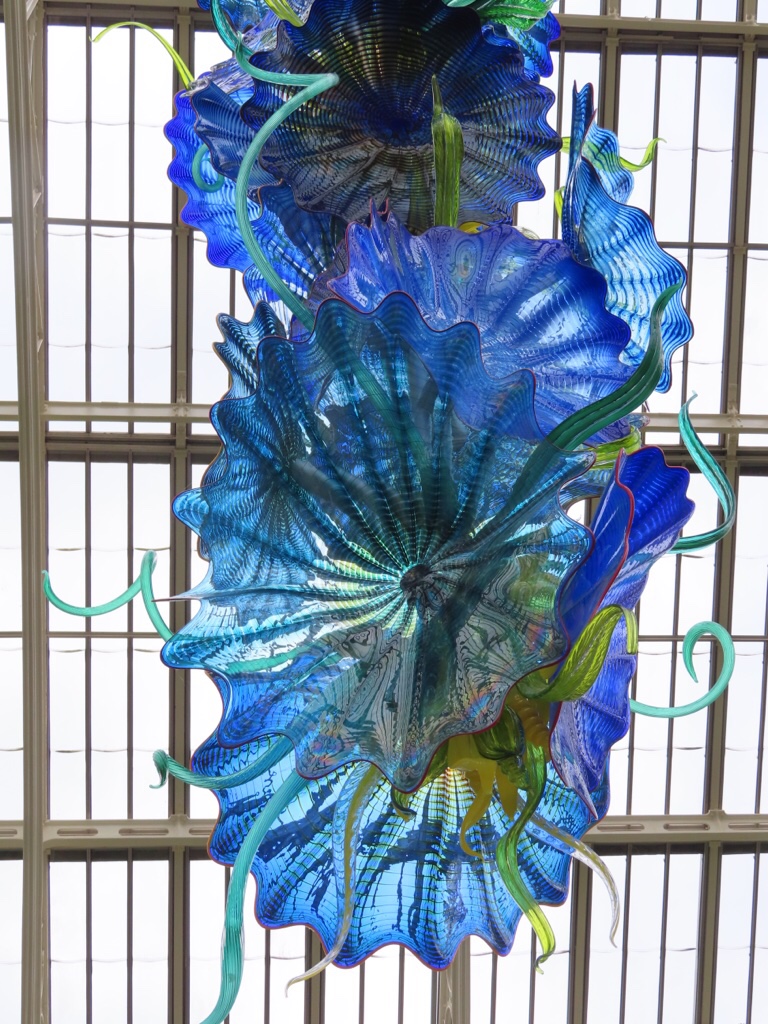
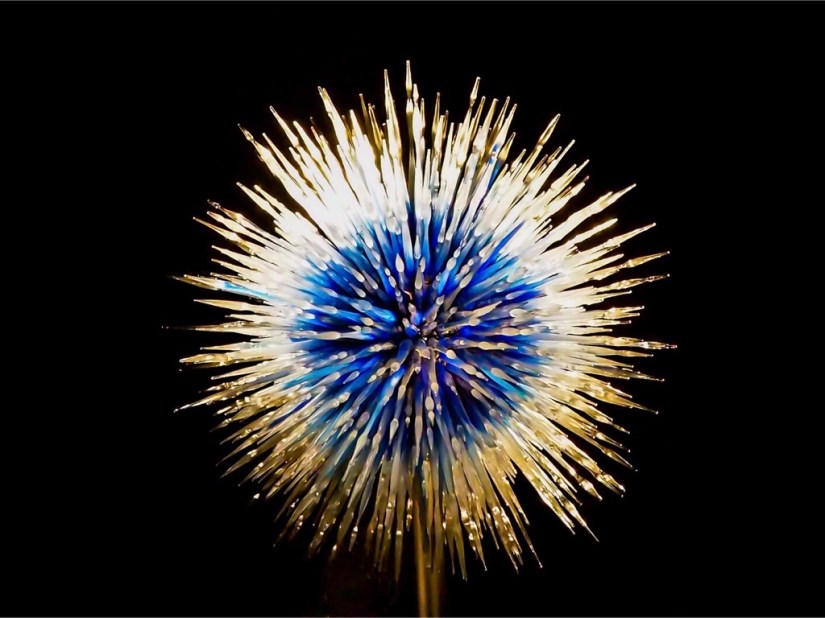
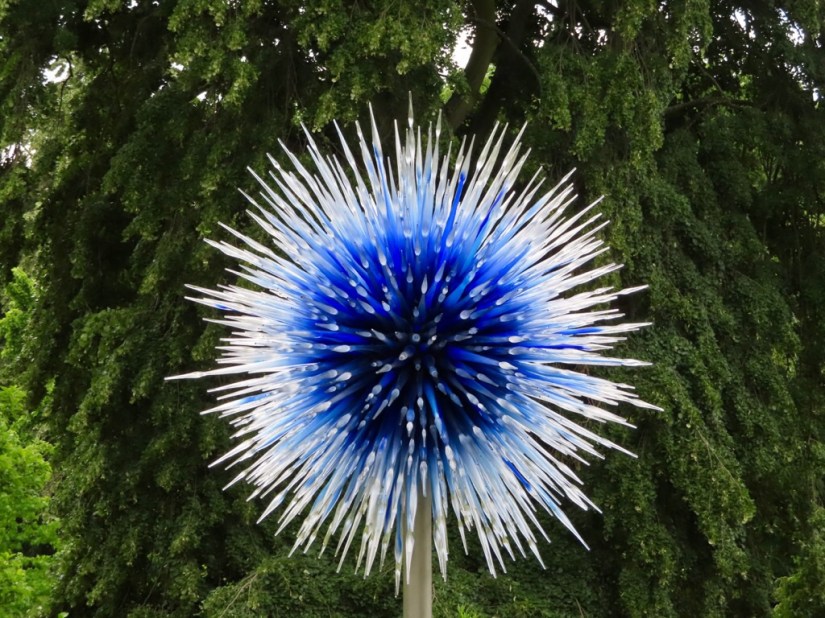
So with that in mind we explored the gardens, firstly with the free tour then again on our own and the sun occasionally came from behind a cloud and lit up the glass. We were so impressed with the glass sculptures especially the showstoppers like Sapphire Star …

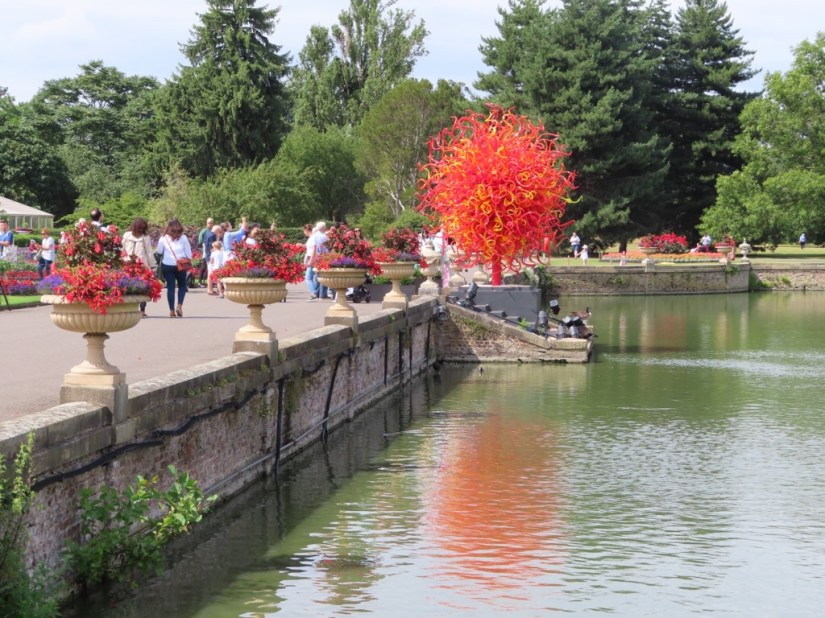
… Summer Sun …

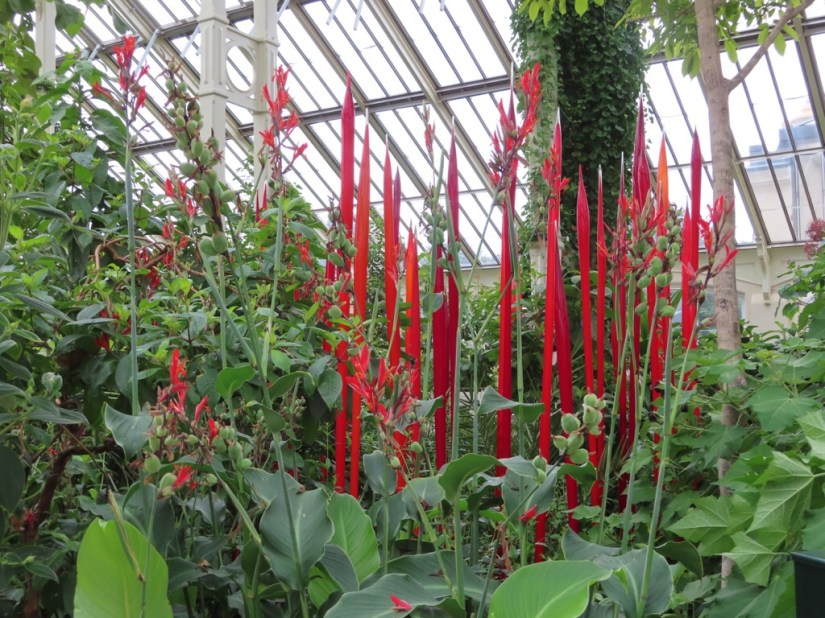
… Scarlet and Yellow Icicle Tower …

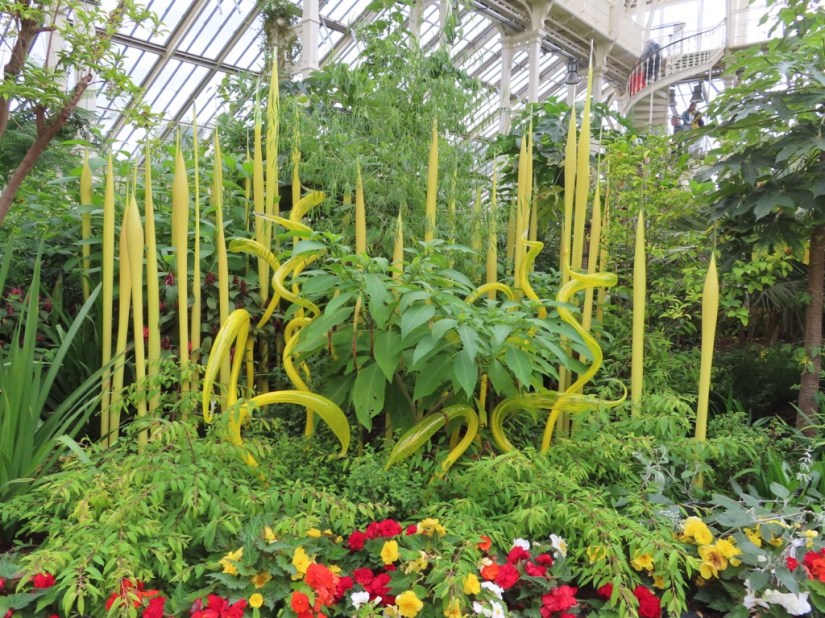
… and Lime Tower, all constructed a little like an artificial Xmas tree with up to 1800 glass pieces fitted onto a metal core.

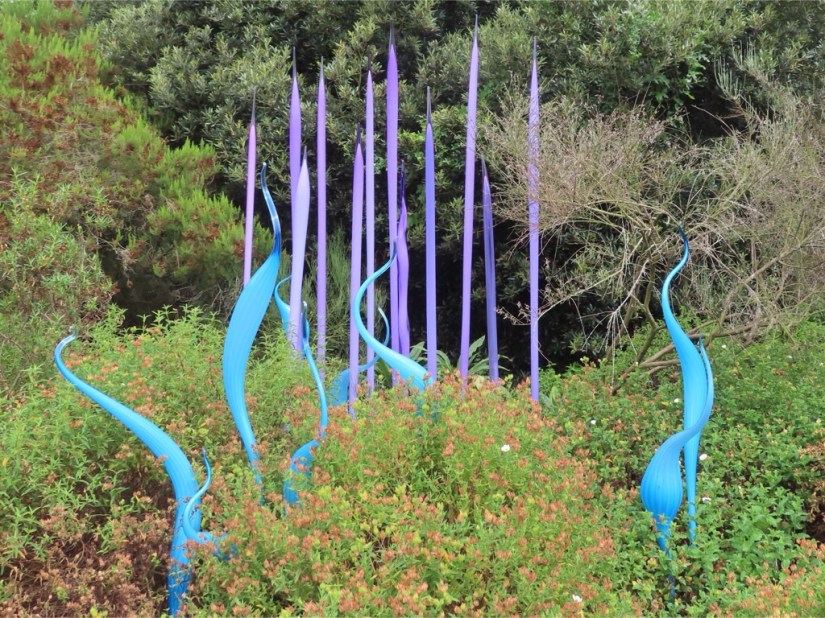
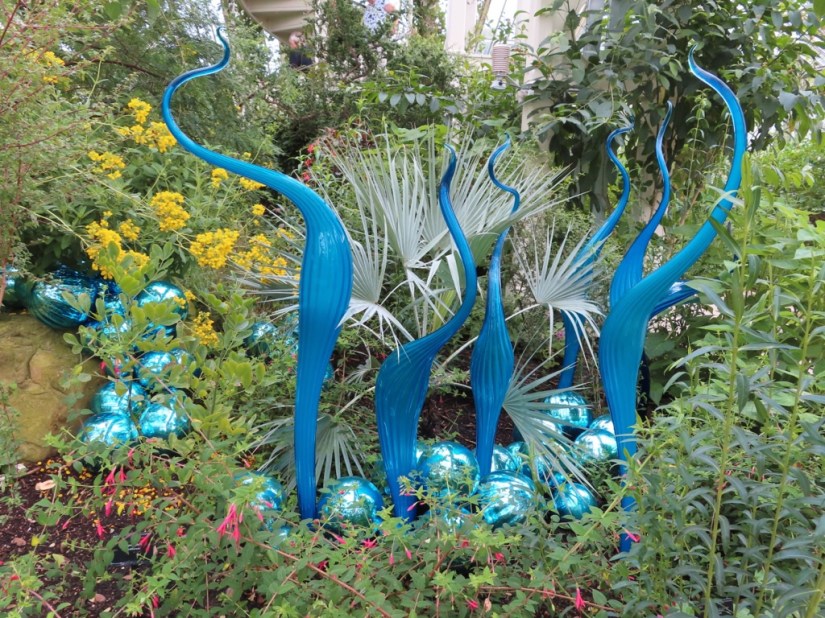
There were others that seemed to be growing out of the ground like the Neodymium Reeds and Turquoise Marlins in the Mediterranean Garden …

…the Cattails and Copper Birch Reeds within the long grass of an orchard …

… and Paintbrushes, inspired by the plant called Indian Paintbrush that we saw growing in Utah.

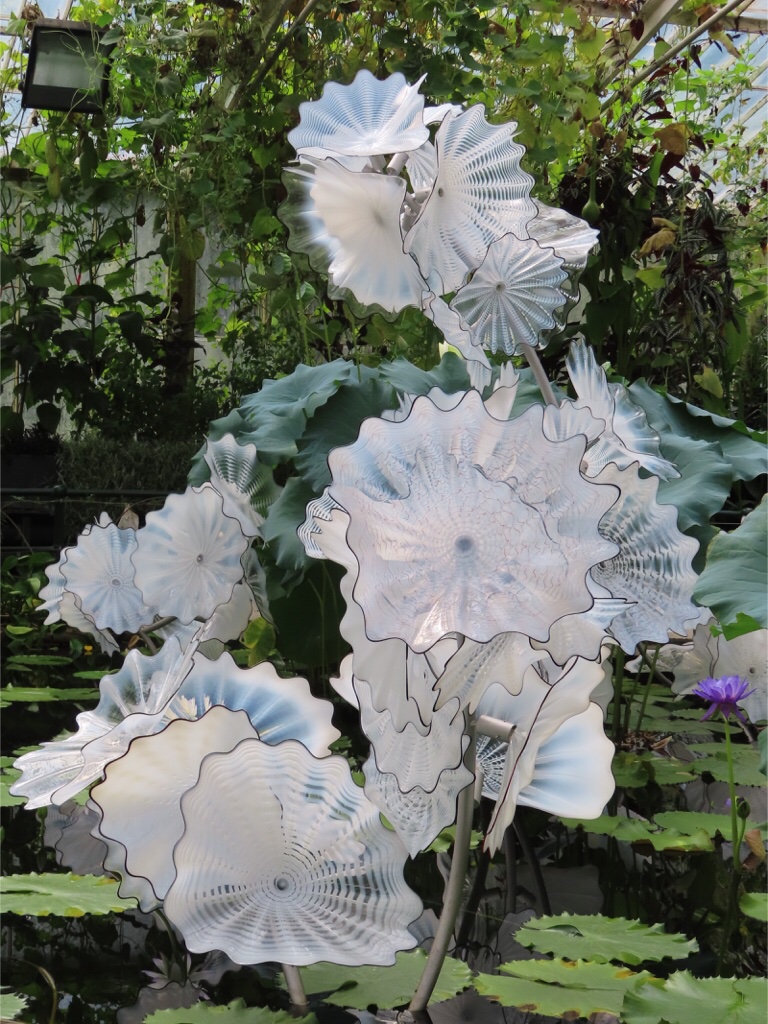
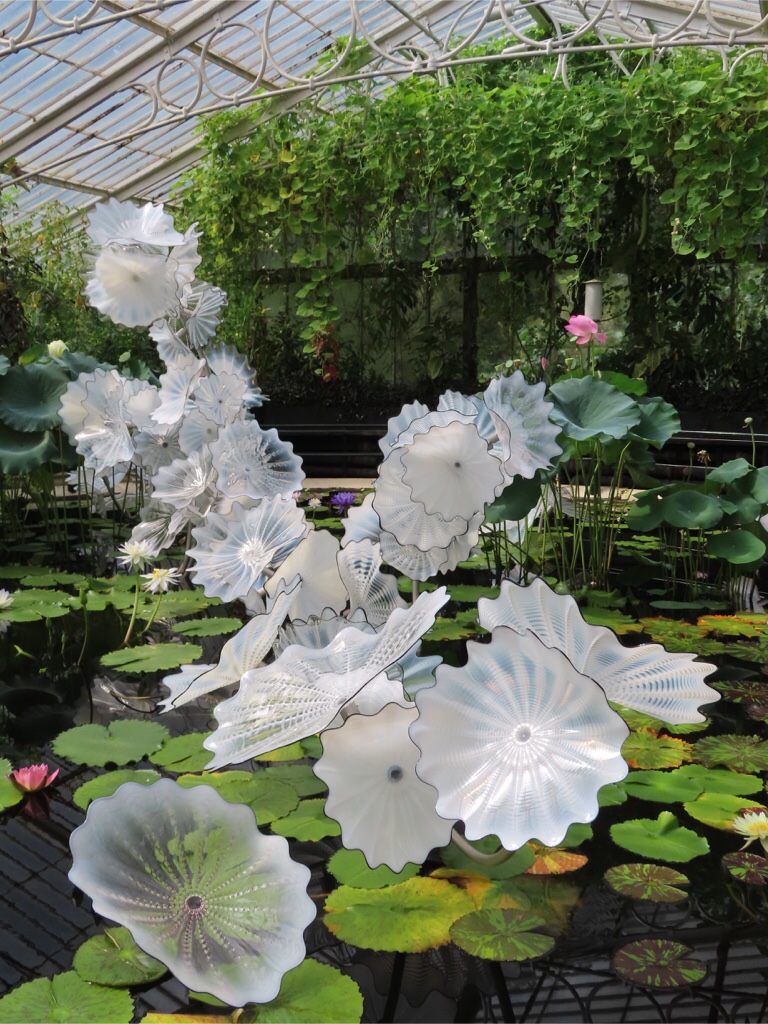
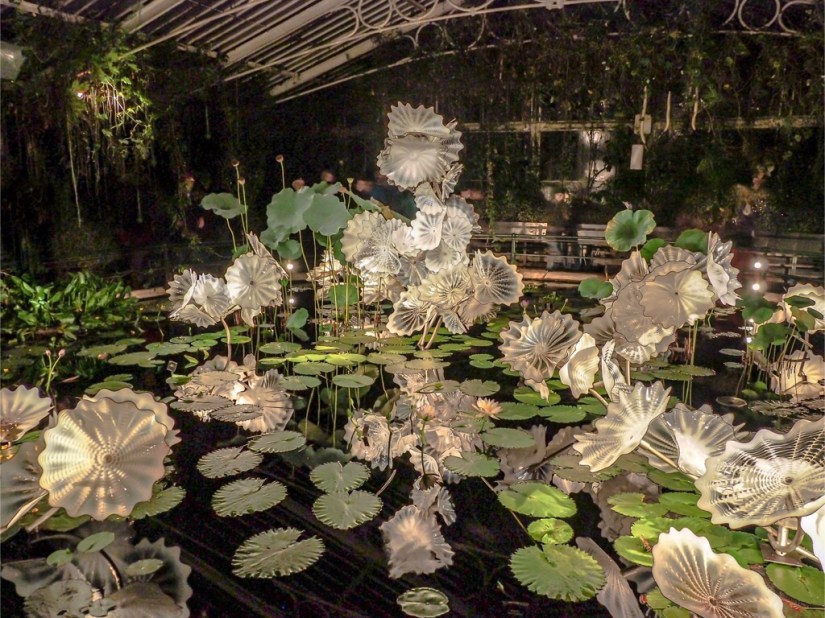
Glass was also installed in the conservatories with the very beautiful Ethereal White Persian Pond in the centre of the Waterlily House.

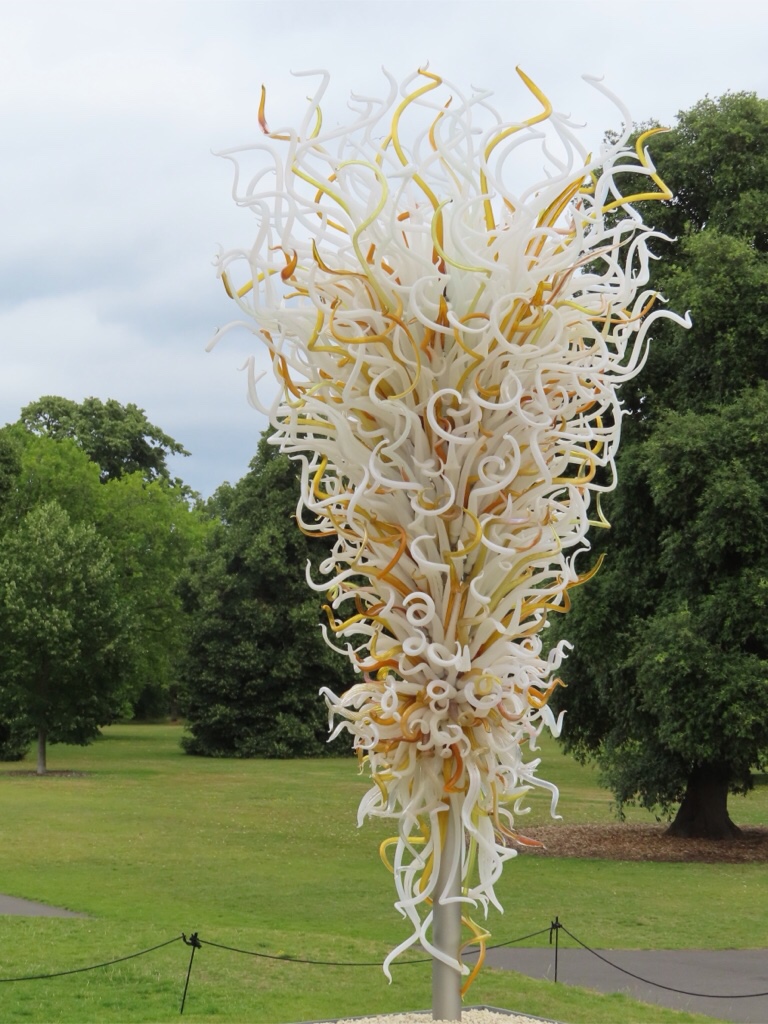
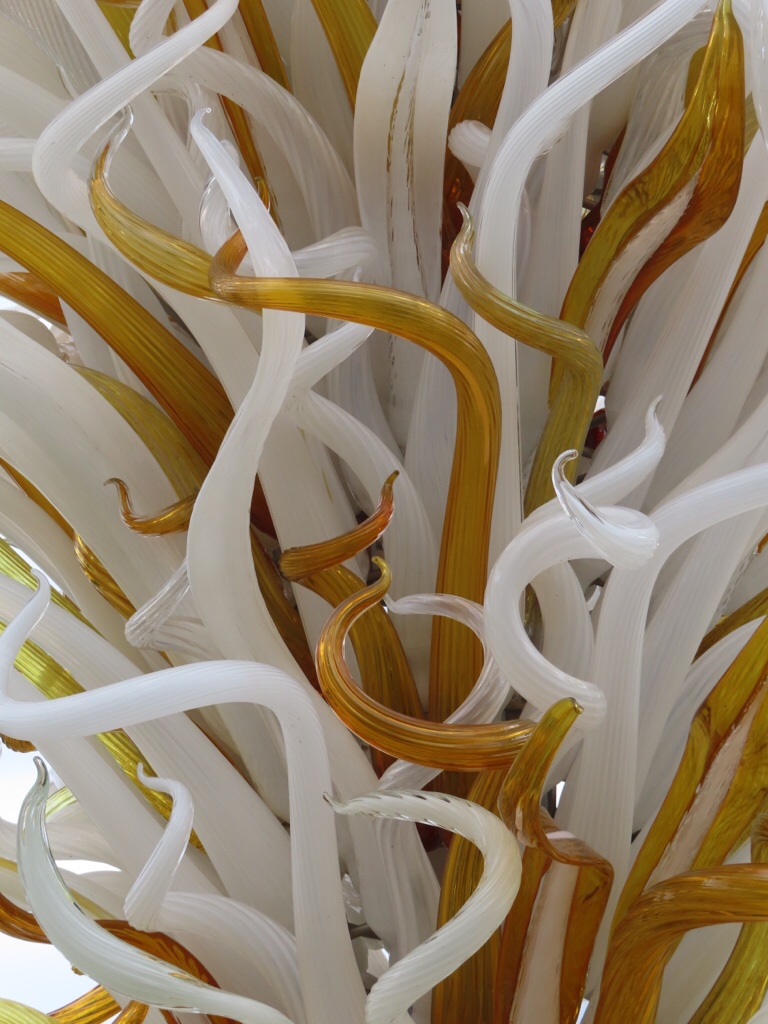
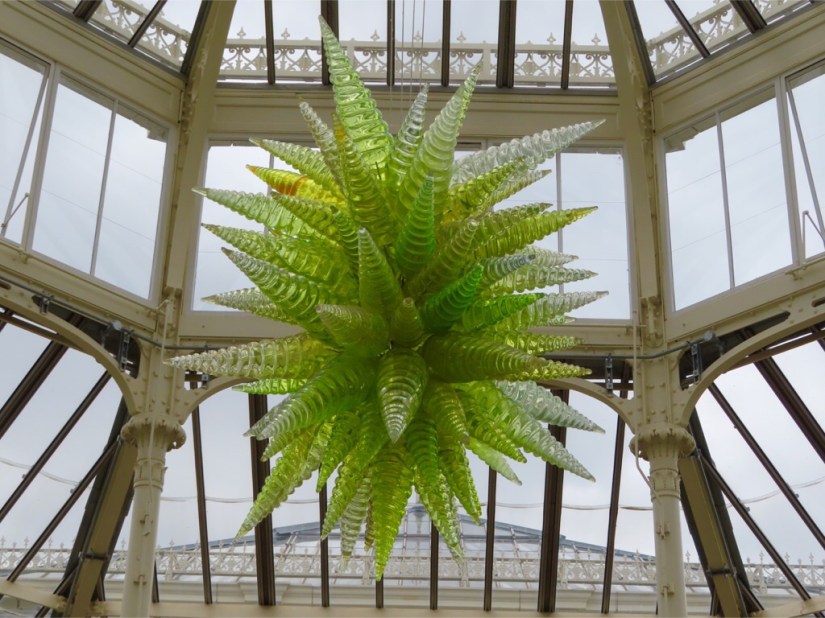
The newly restored Temperate House had Opal and Amber Towers flanking the entrance …

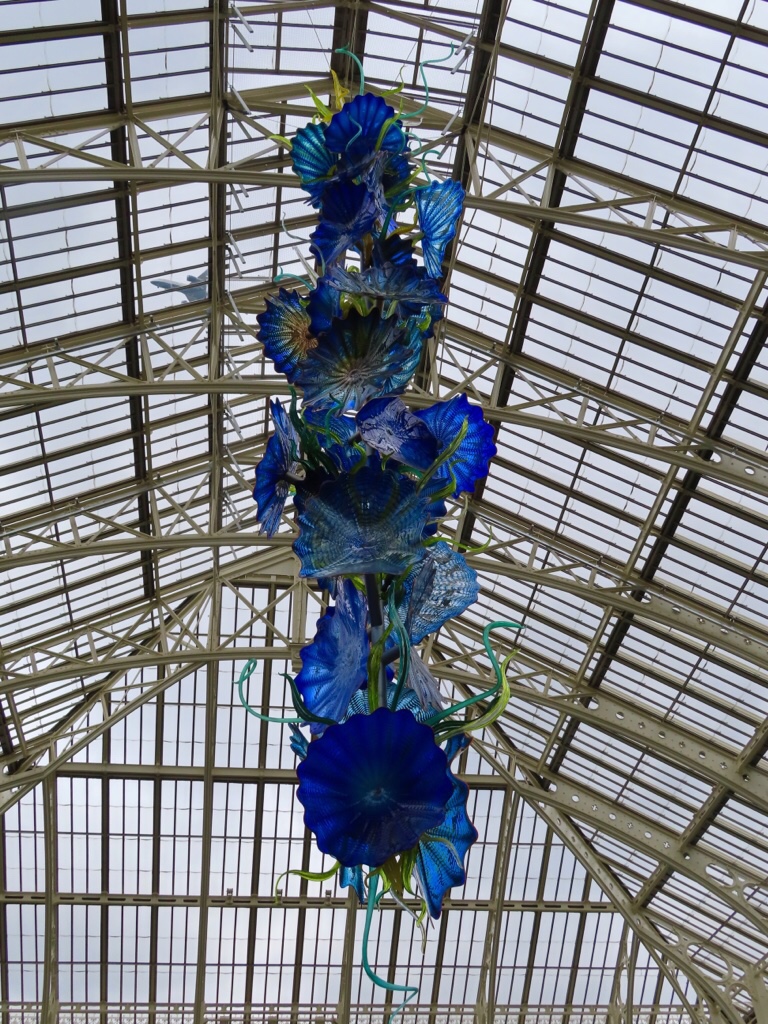
… and Persian Column suspended from the roof …

… and climbing the wrought iron spiral staircase to the balcony gave an opportunity for a close up.

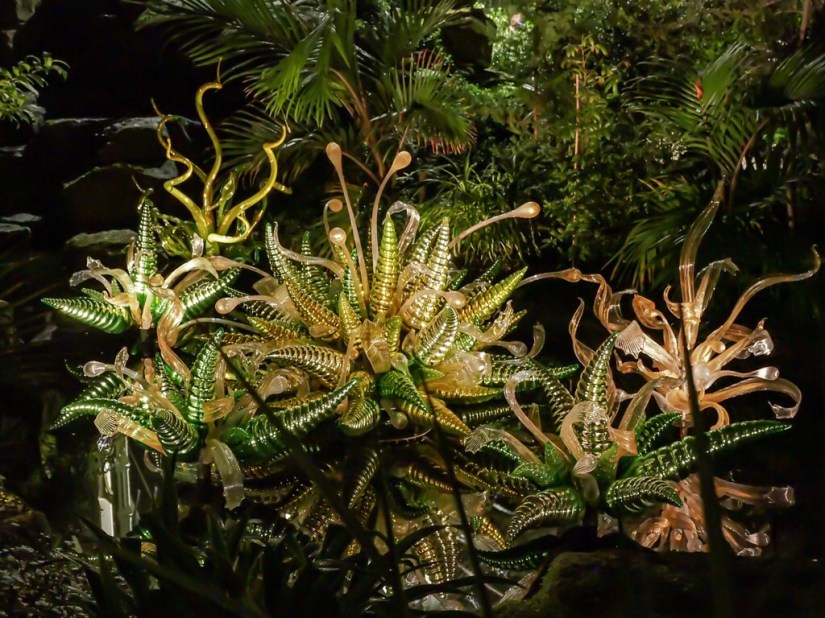
There were also smaller pieces within the planting …

… and a final chandelier on the way out.

We were so inspired by our visit that we exchanged our tickets for a year’s membership … which is lucky, as when we got home we realised we had missed one of the exhibits called Nijima Floats … a treat for next time!
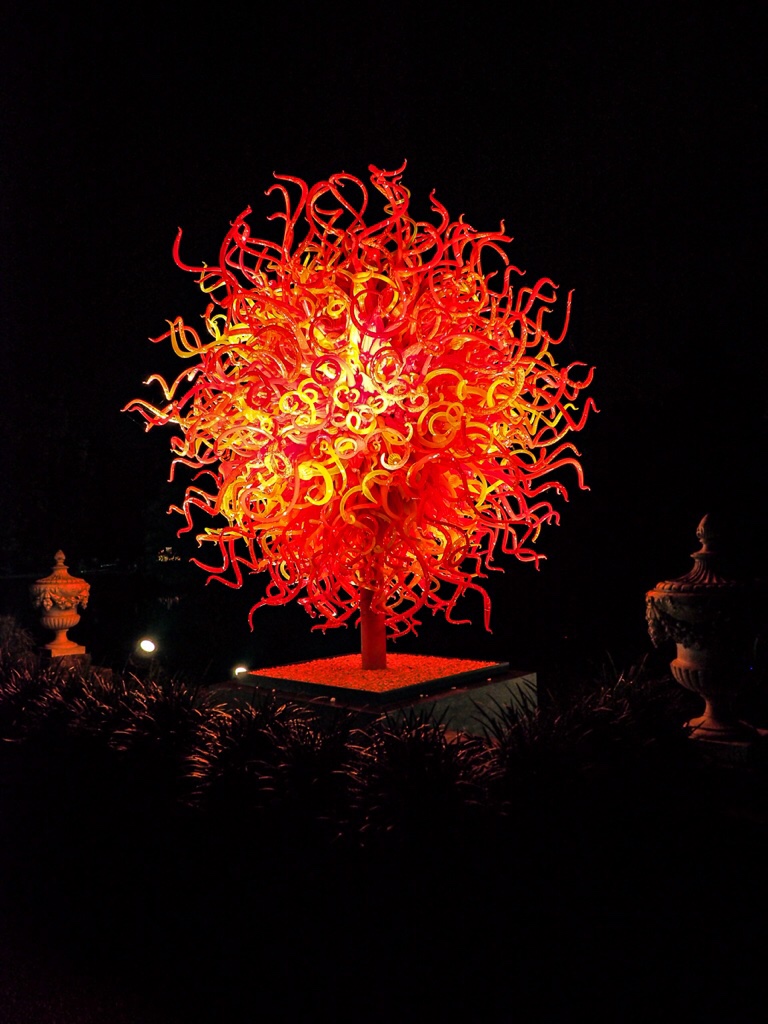
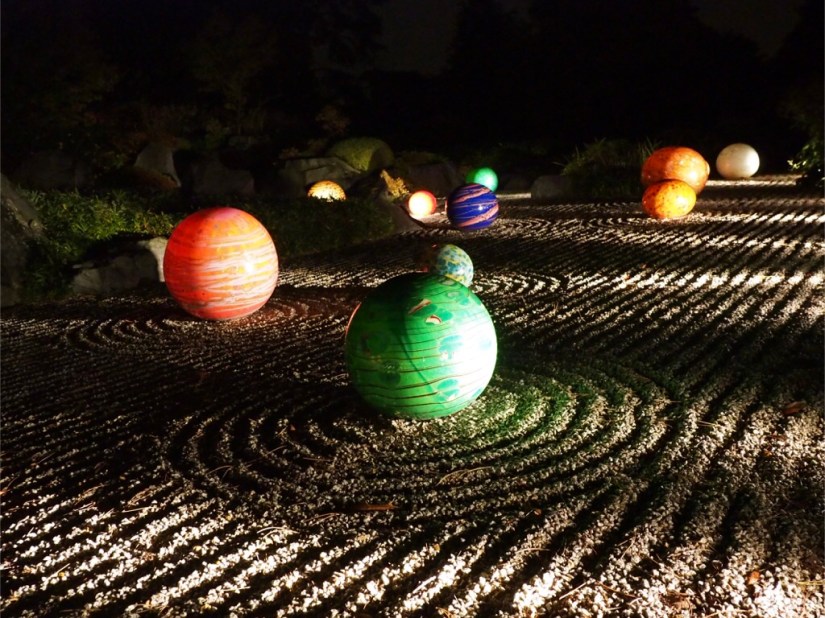
We made a return visit when the glass was lit up at night and Chris took these great pics …

… and this time we saw the floats!
https://www.kew.org

https://www.chihuly.com

Pisa and Home

We made our way back to Pisa this morning by train which passed Carrara, famous for the marble quarries that we had seen in the distance yesterday …
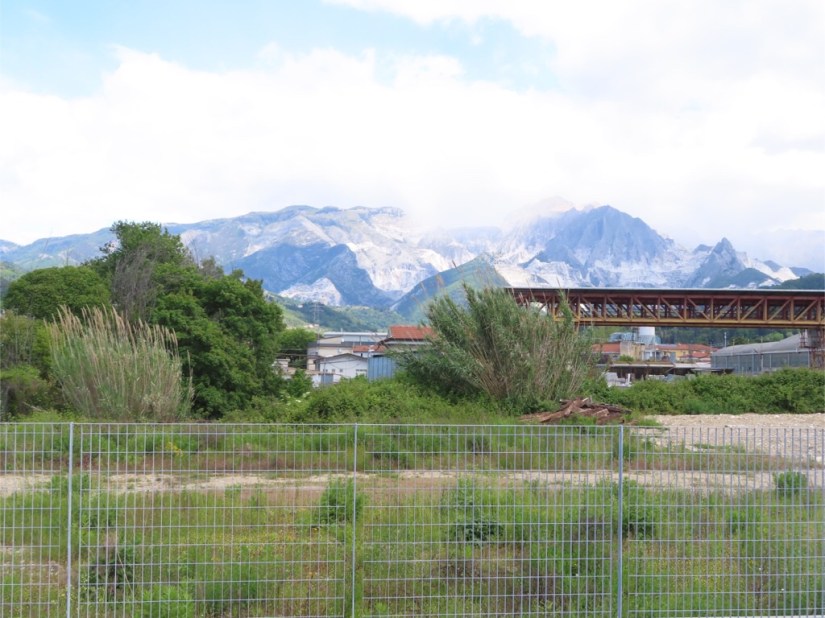
… and also Viareggio, a popular seaside town which I can remember visiting on a family holiday with my father and sister years ago.

Arriving a little early to head to the airport, we first went in search of a place for some lunch and ended up at Osteria il Capodaglio where we had a lovely Tuscan meal to end our holiday.

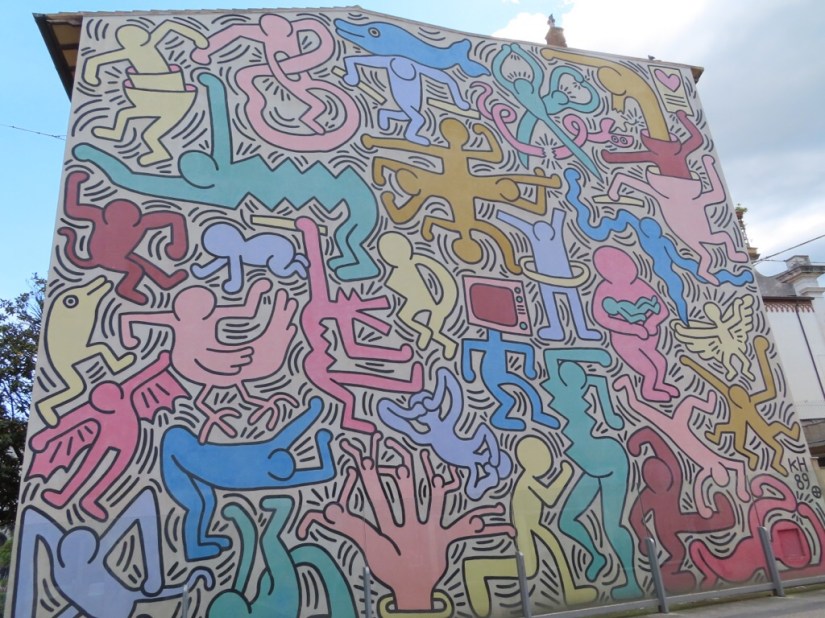
Walking back to the station, we passed a mural called Tuttomondo by an American artist called Keith Haring who we hadn’t heard of, but there is an exhibition of his ‘vibrant, graffiti-like painting’ at Tate Liverpool later this year.

Before we knew it the PisaMover shuttle was dropping us at the airport and as we waited for our flight, there was time for a little reflection …

We’ve had another great trip and while all the villages have proved very similar … clinging to rocks in some degree or another, tall slim houses painted in shades of orange with narrow cobbled streets, little harbours and churches with pretty towers … we were surprised by how different they all felt to visit.

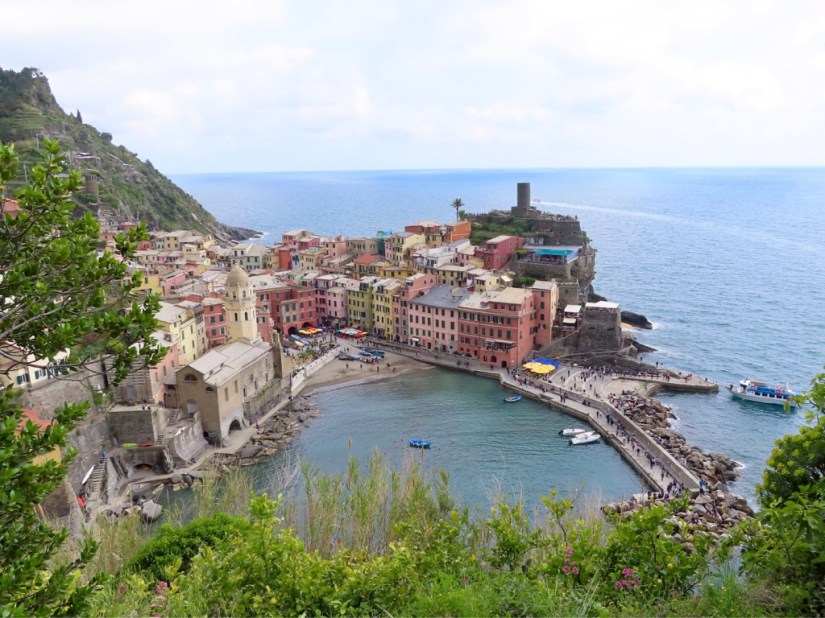
Of the Cinque Terre, Vernazza and Manarola were our favourites, maybe we stayed in Vernazza and saw it from every angle, with and without the crowds …

… and Manarola because as we walked down into the village, the views kept coming, saving the best till last.

Camogli was the real surprise, as I had chosen it as an affordable alternative to a Portofino rather than expecting it to be so statuesque as villages go!

Portofino had to be the jewel, but was maybe just a little too perfect.

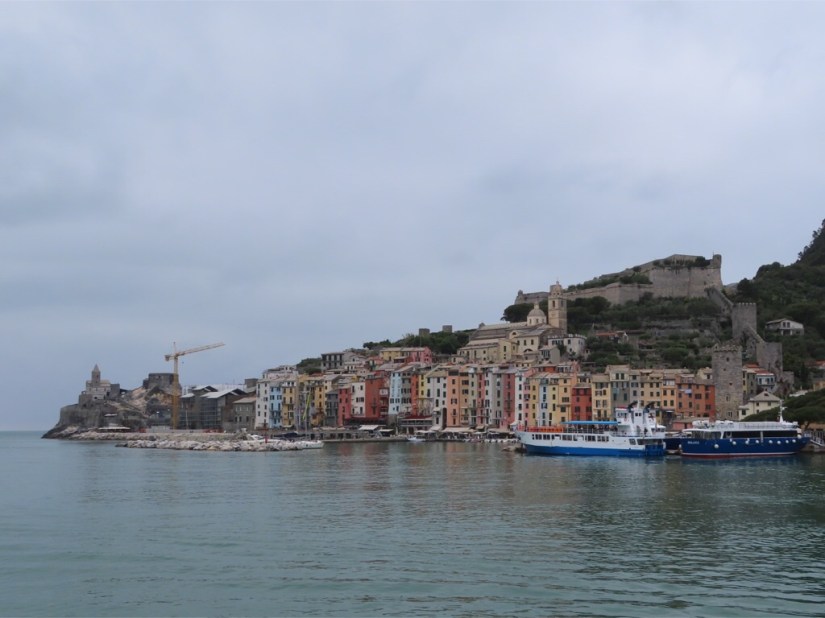
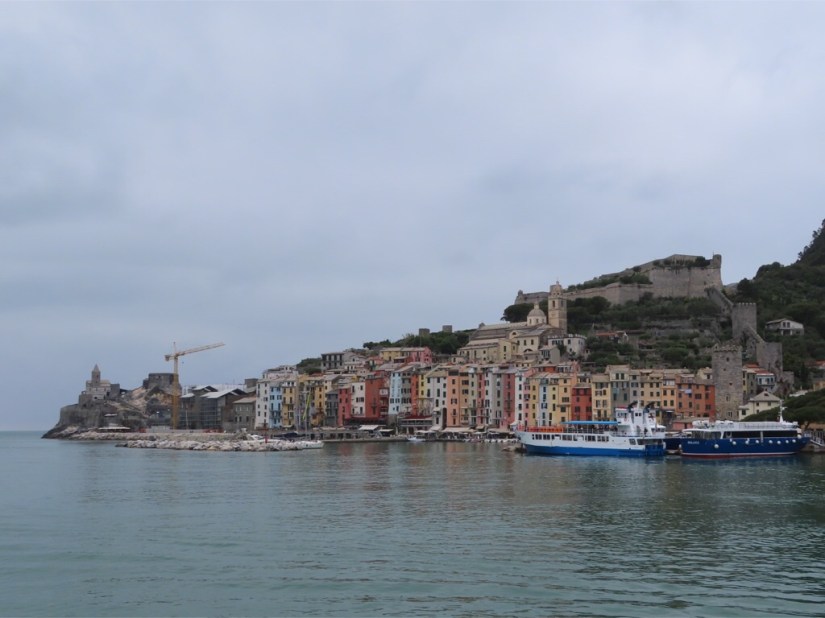
We didn’t see Portovenere at its best on such a gloomy day, but it was perfect for an afternoon, with lots too see and fun to travel by boat.

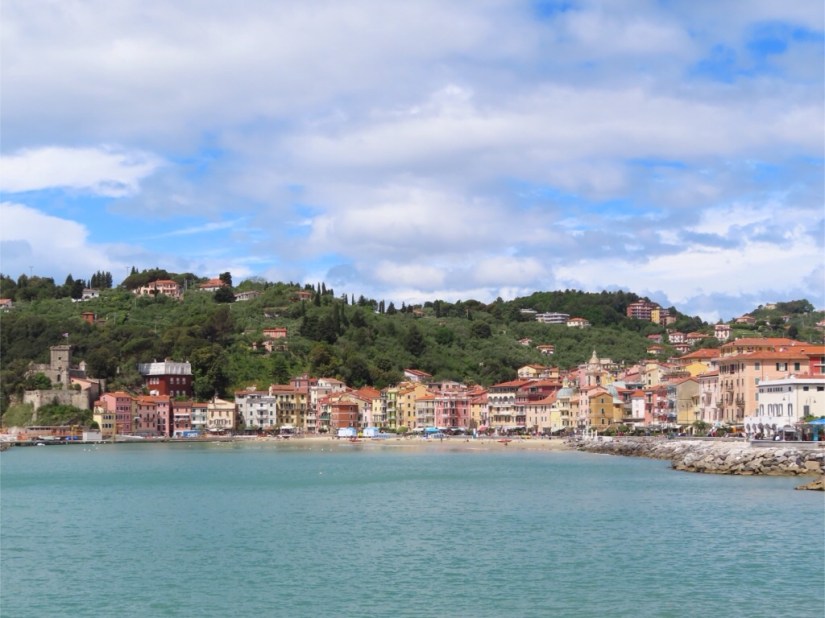
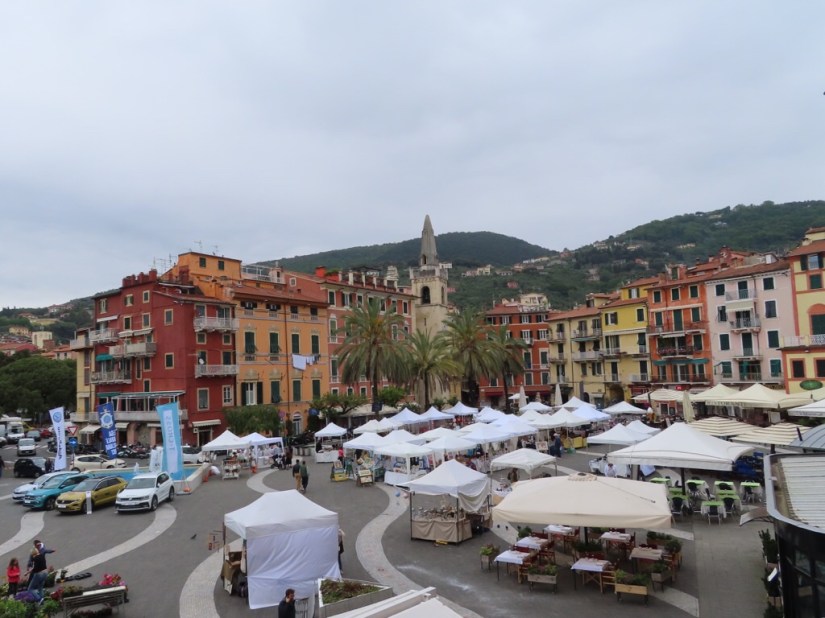
We have also become quite attached to Lerici, with our room overlooking all that is happening in the square and it is quite noticeable that the visitors are mainly Italian.

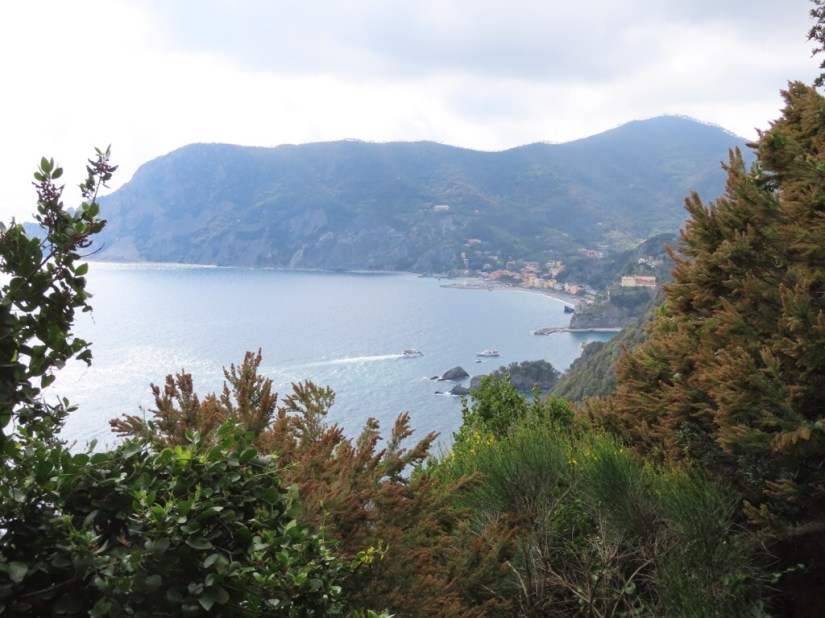
Finally Terrano, yet another of the most beautiful villages in Italy, but a little grey …

The walking has been great, getting away from the busiest tracks and finding some wonderful views of the coast, but usually with more ups and downs than we were expecting! We’ve used the Sunflower walking guide which has suggested good routes with accurate instructions – we only took the wrong path once – and the waymarking has been excellent everywhere.

The weather has been a bit chilly for May – few days hit 20° and only a couple got warmer. Fortunately we’ve dodged most of the showers except for the one really rainy day in Vernazza so for walking it’s turned out ok.

Just a quick mention here of the food. We have certainly had some very delicious dinners (with lots of local fish for me) and also tried a selection of local specialities including the walnut sauce and pesto with local pasta such as pansotti and trofie, savoury pies with vegetable and herb fillings, focaccia with a selection of toppings or fillings, and sweet treats like the gelato and panedolce. Then there were our fab picnics …

What we have really missed is vegetables, which may be arrayed in plenty in the markets, but never seem to make their way onto a restaurant menu, where side dishes are limited to mixed salad and maybe grilled veg or spinach if you are very lucky! So despite the claims for the healthy Mediterranean diet and on average the 8 miles we’ve walked every day, we’re not sure we’ll be trimmer than when we left … but we have had a good time!
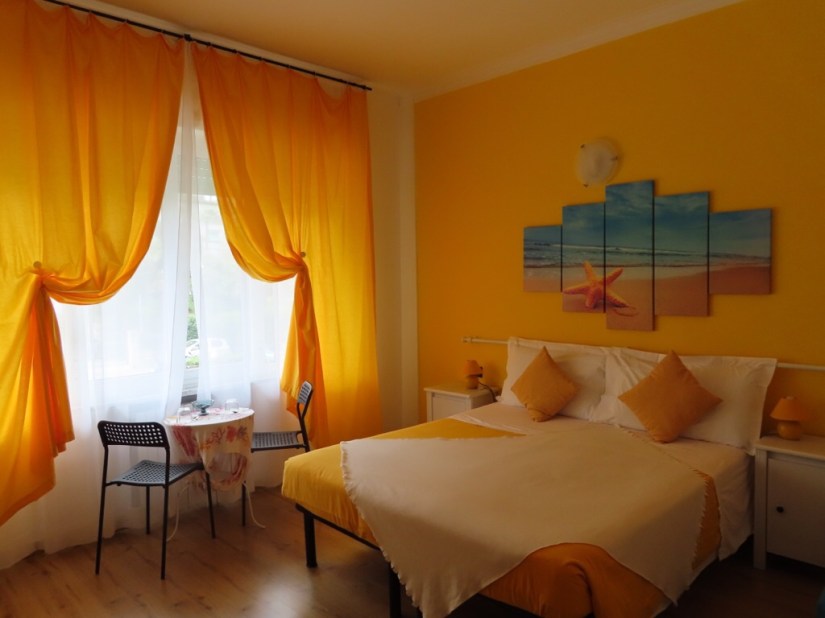
All our arrangements have gone smoothly – the trains and buses were easy to use and our accommodation has been great – rooms with all mod cons including kettles and coffee makers, often a view and a breakfast basket … even if there were stairs to climb!

So there we have it, time to go home and our flight is being called so ciao until next time!

Map

Golfo dei Poeti – Lerici to Ameglia

We took the bus Zanego and found the start of the walk by a small altar.
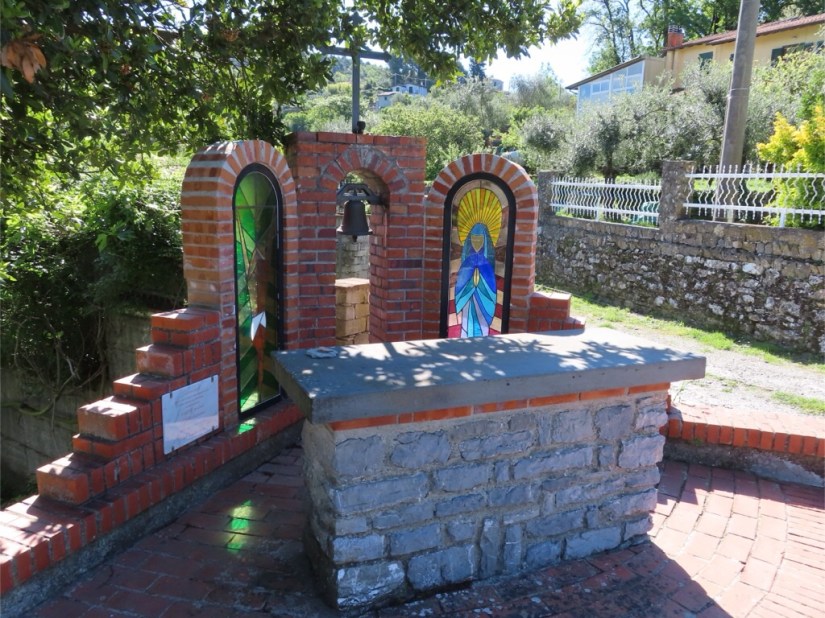
Most of the route was through a regional park which protects the area from overdevelopment and our track started through a green valley with wild flowers and the sound of birdsong, including a cuckoo.

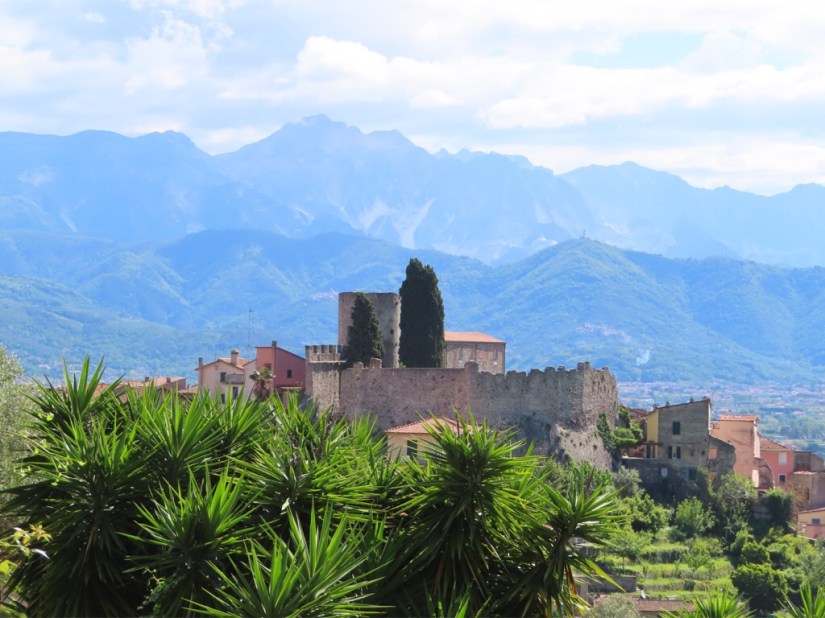
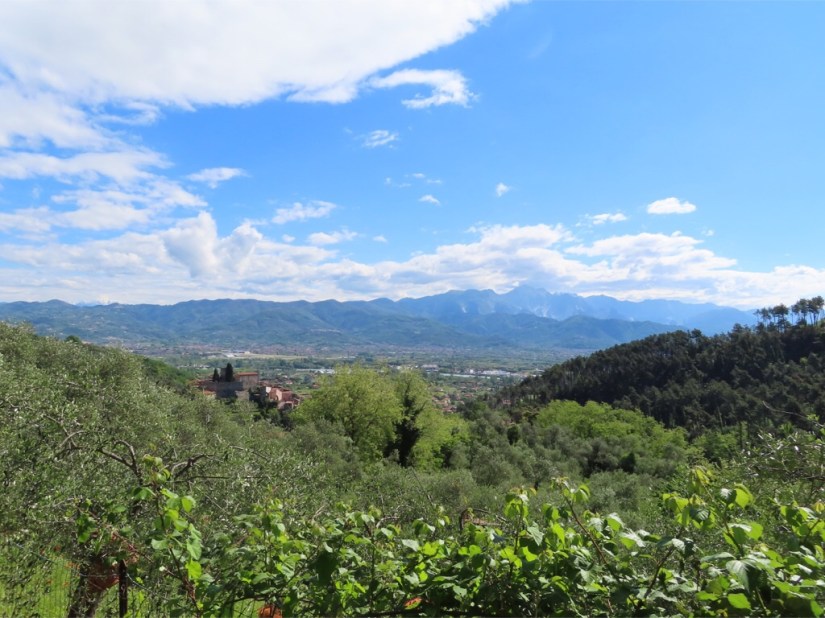
We got a great view across the Magra plain, with what looked like snow topped mountains to the left, the Apuan Alps in Tuscany to the right and the medieval castle of Ameglia in the foreground.

We walked down to Ameglia for a look round and to buy a couple of rolls for lunch.

The path then climbed steeply through woodland with views of the Magra estuary …

… before descending with views across to La Spezia …

… and to Portovenere and the islands.

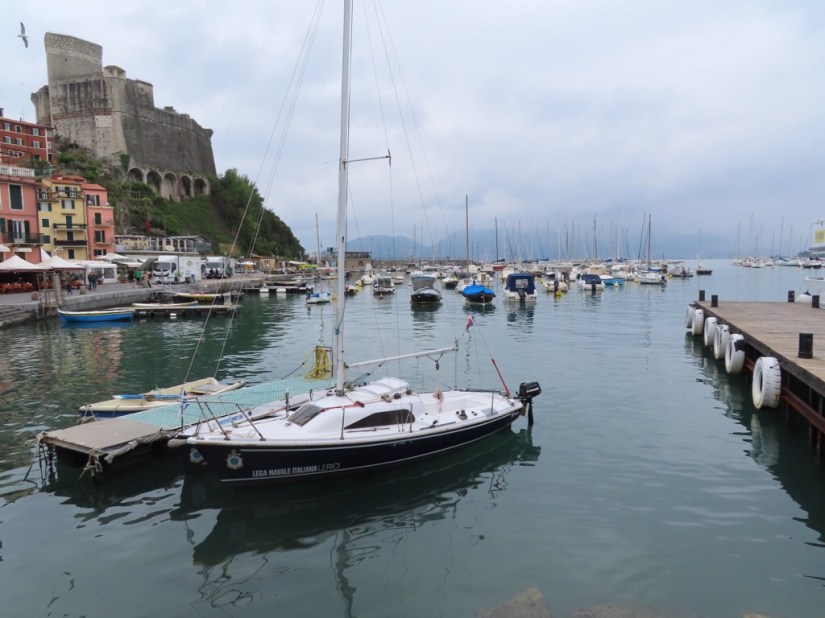
A final descent through the village of Serra and we were back in Lerici, with one last stop … the castle. It is such a landmark from the harbour, but there isn’t much inside, except a selection of viewpoints.

Our final afternoon – gelato, a rest and then dinner … this trip has flown by and we are back to Pisa for our flight tomorrow!

Map

Golfo dei Poeti – Lerici to Tellaro

Today’s walk was a climb out of Lerici for views across the gulf then a descent to the picturesque fishing village of Tellaro.

We started off ok, but were not sure if we’d taken the right path … maybe all the orange tape should have told us something …

… but we managed to get over the stream so just continued …

… which was fine for a while …

… until the path deteriorated into a steep slope covered in loose rubble …

… but we saw a waymark, so kept on going …

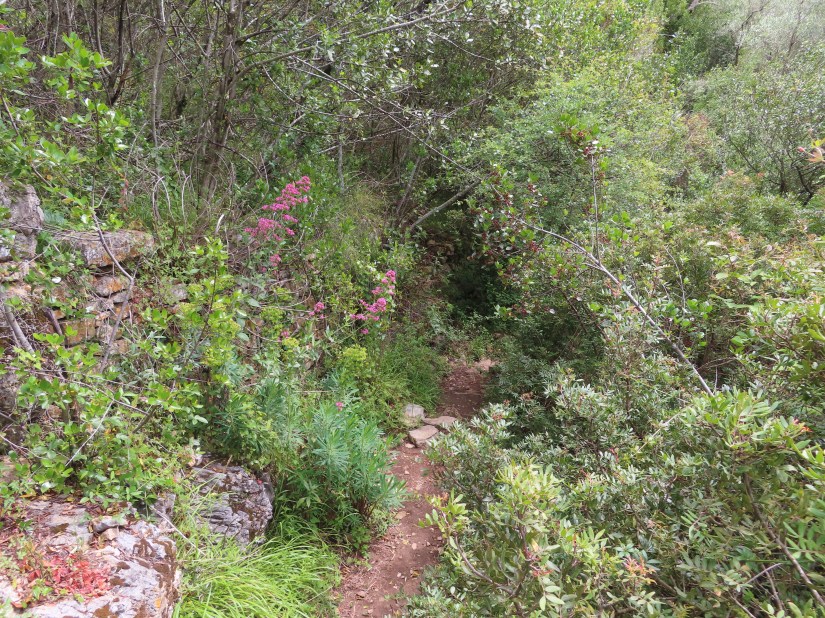
… and the path became increasingly overgrown!

Intrepid adventurers that we are, we finally made it, reaching a main path, with a big sign … annotated by previous walkers … shame they were at the wrong end for us!

Realising we had now reached the path we should have been on, we continued the rest of the walk without drama, with a view across the bay as promised …

… ruins of a C16th deserted plague village called Portesone …

… then the descent to Tellaro.

It was a little grey, so not at its best but we took some snaps then retreated to a warm bar for coffee and bruschetta.

The bus was imminent, with a long wait for the next one, so we didn’t linger and returned to Lerici, which was pretty deserted now the weekend is over. Fortunately the gelateria was open!

Back to Mani de Fatima for dinner for another delicious dinner and tiramisu for dessert!

A quick turn round the square for the lights then off to bed.
Map

Golfo dei Poeti – Lerici to San Terenzo

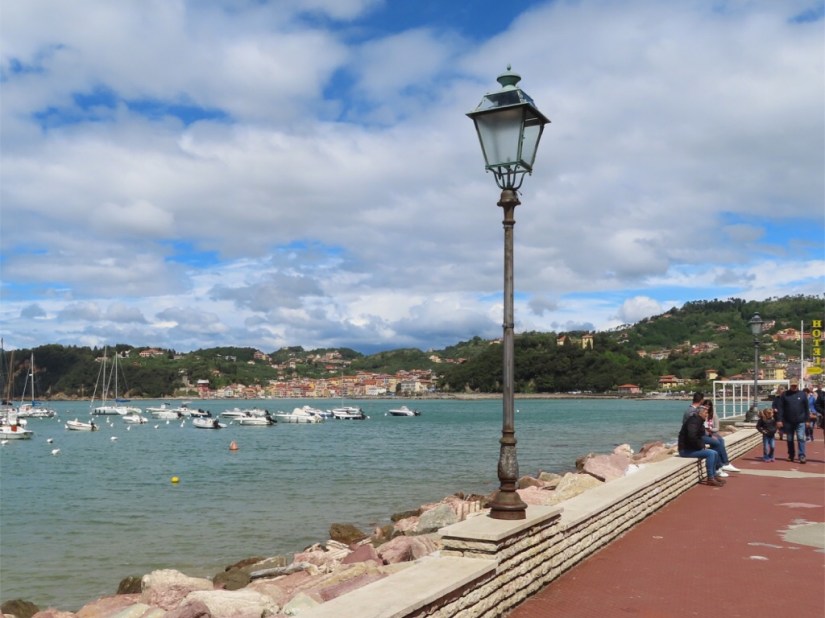
It was a bright but blowy morning here in Lerici and we set off along the coastal promenade which runs all the way to San Terenzo.

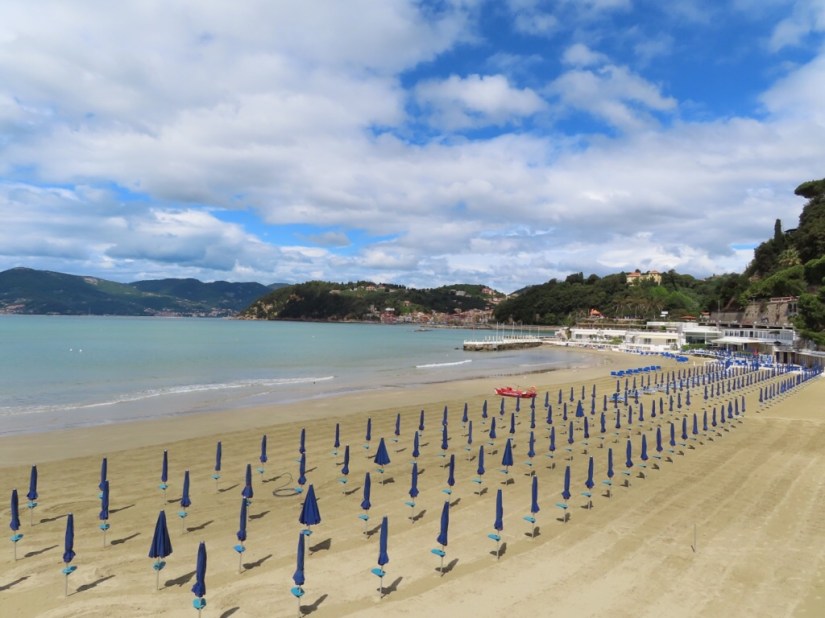
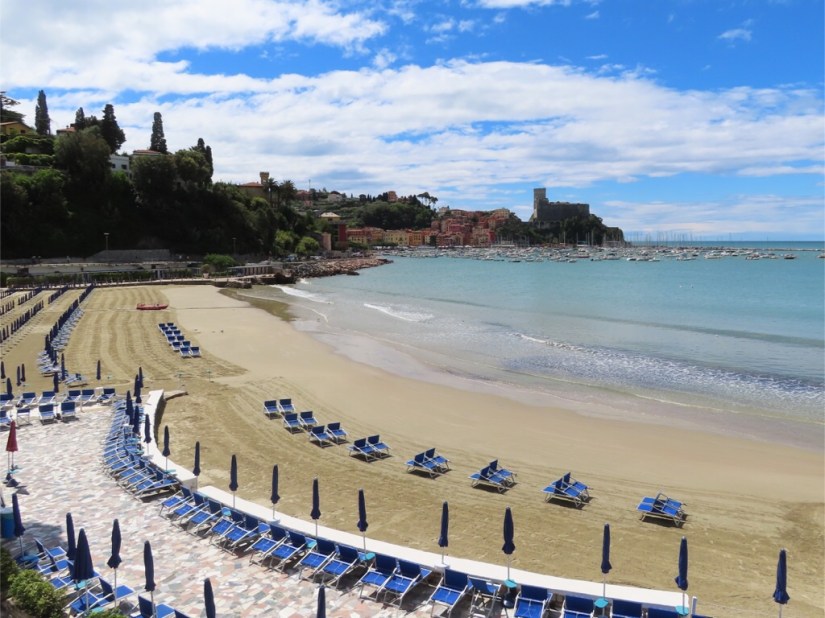
The lidos were getting ready for their summer visitors – a snip at €36/day for 2 people with sun beds and an umbrella – but this does include the convenience of changing rooms, toilets and showers, and perfectly clean and raked sand!

One of the beaches was hosting an event on the International Beach Tennis circuit …

… and while it was too chilly for most to paddle, there were a couple of brave souls!

San Terenzo was bustling on a Sunday morning and we passed Casa Magni- the house Shelley lived in with his wife, the local church and the castle.

We took a footpath up through the back of the village … and you can guess, a mixture of mule track, earthen track and paved path and more ups and downs than we were expecting! It was all worthwhile for the views – leftwards to Lerici …

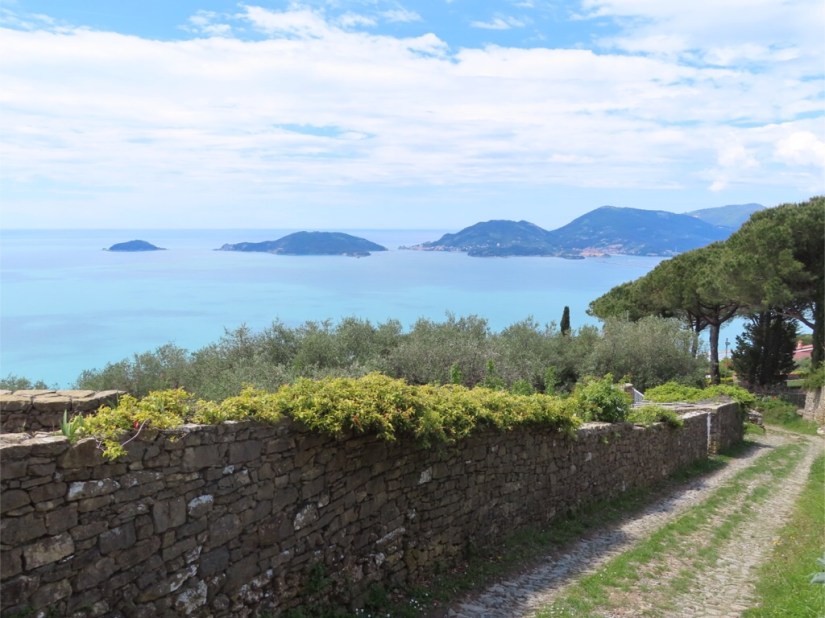
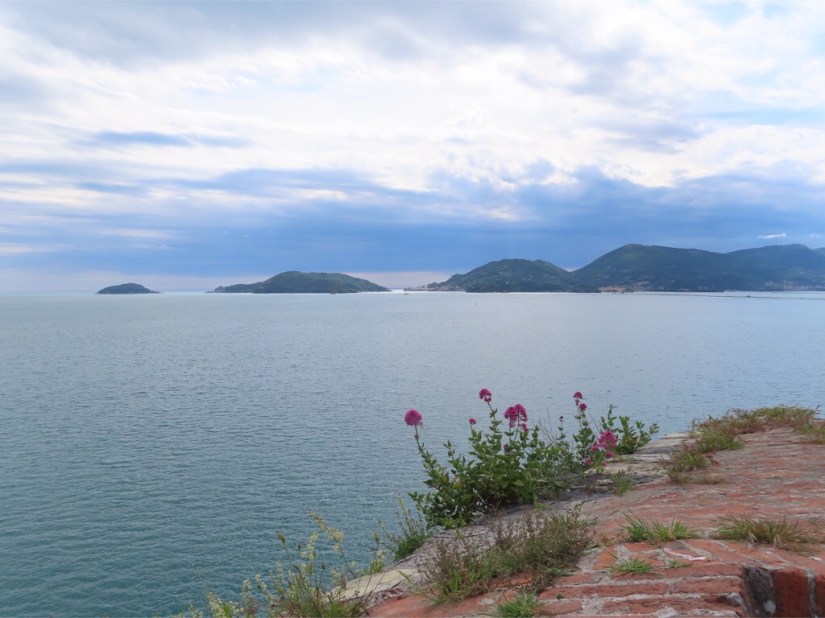
… and rightwards to San Terenzo, with Portovenere and the islands of Palmaria and Tino in the distance.

Back in Lerici, then sun had gone in and the wind had got up so we just chilled for the rest of the afternoon, then went for pizza later.

Map

Golfo dei Poeti – Portovenere

The natural beauty of this bay has inspired writers and artists as far back as Petrarch and Dante. Later it was popular with a number of Italian writers as well as DH Lawrence and Virginia Wolf. Shelley lived in the village of San Terenzo with his wife Mary and Byron famously swam across the bay from Portovenere to visit them. But the sea here is not always kind and tragedy struck a month before Shelley’s 30th birthday when a sudden storm in the Bay of Spezia caused him to drown during his journey back to Lerici in his sailing boat.

We are staying in Affittacamere Vittorio in Lerici, a lovely room with dark green shutters above a gelateria with a view of the square …

… and from here we will be exploring the coast around the bay. It’s another of those grey days and having travelled on two trains and a bus, we arrived at lunchtime and quickly checked in, grabbed a bite for lunch …

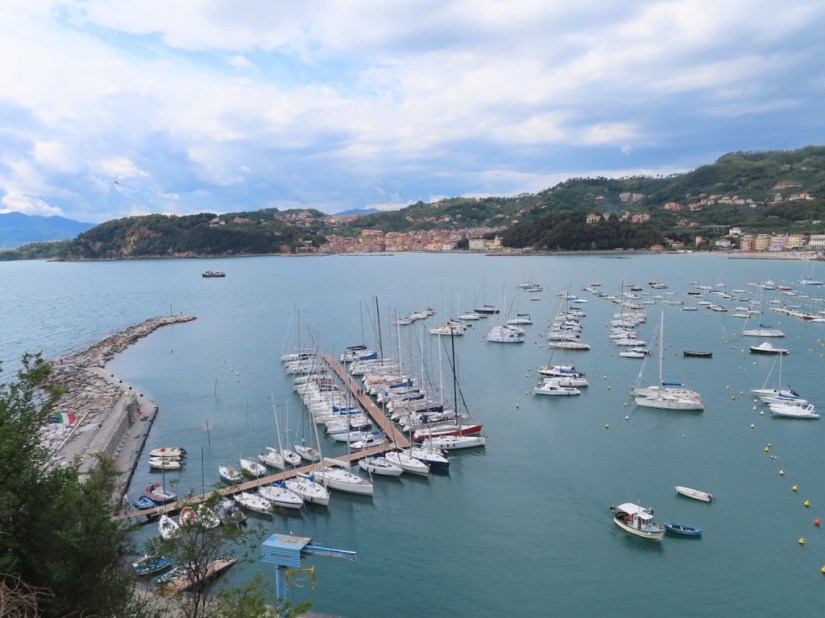
… walked to the pier …

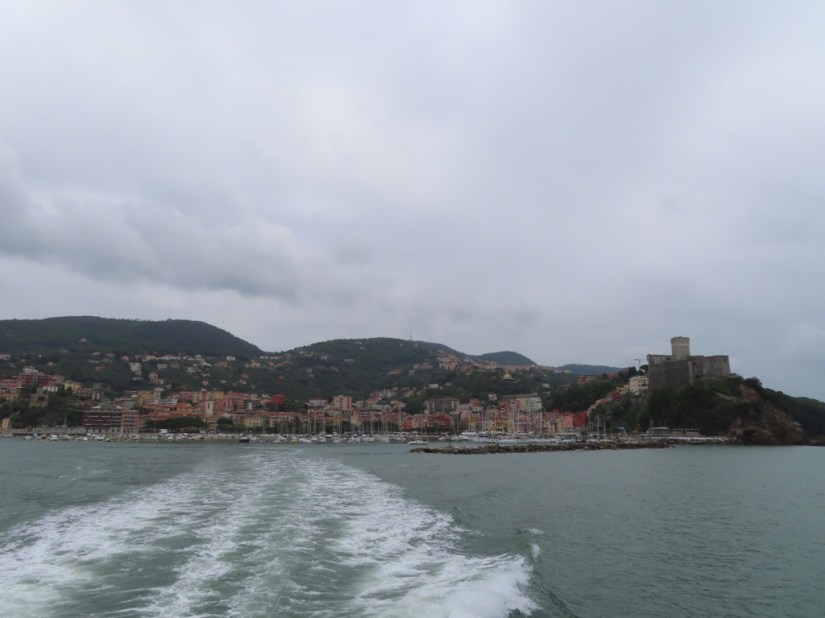
… and left Lerici behind …

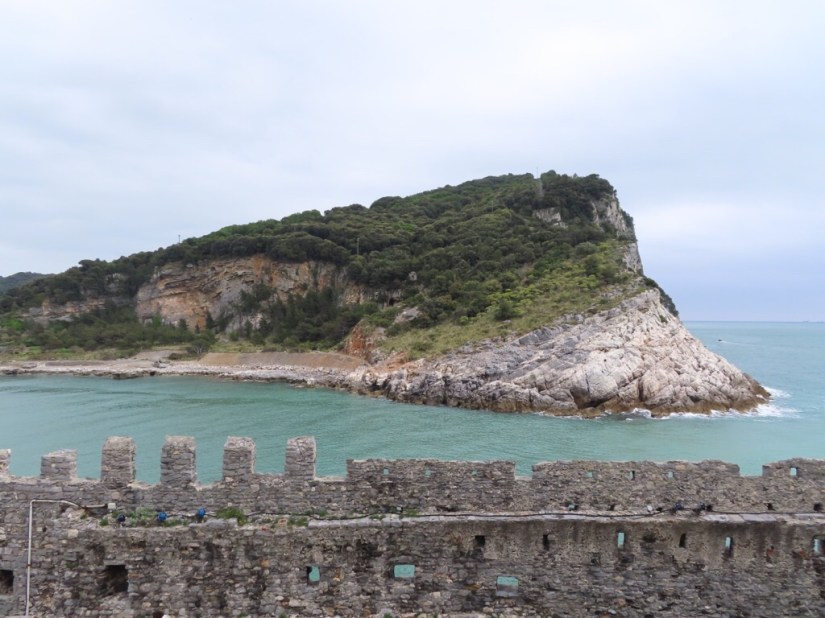
… as we took the boat to Portovenere, ahead with Palmaria and Tino islands to the left …

… while clouds lurked over La Spezia.

Once a fortified fishing village, Portovenere is now a popular tourist destination and we spent the afternoon exploring.

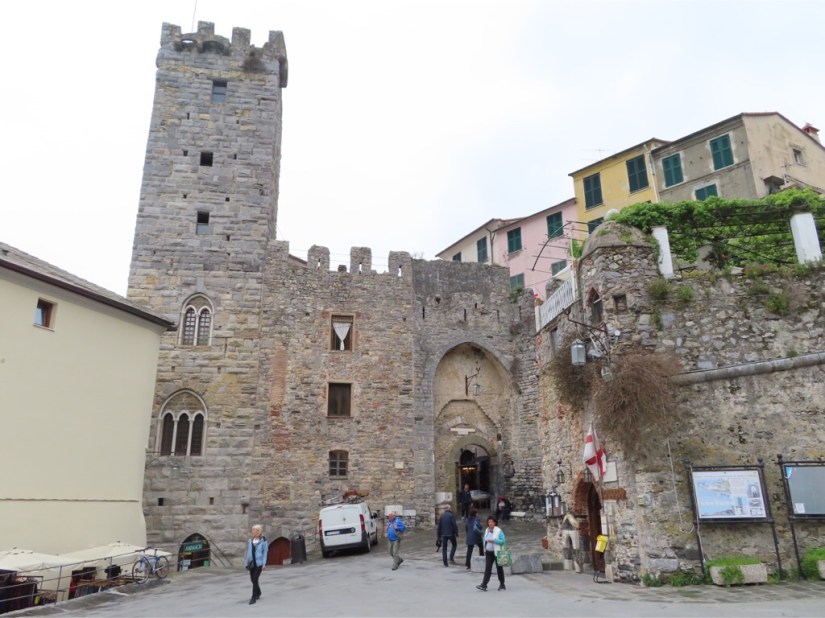
We started with the town gate and tower, leading to a narrow street filled with tourist shops selling souvenirs, snacks and local foodie specialities to take home.

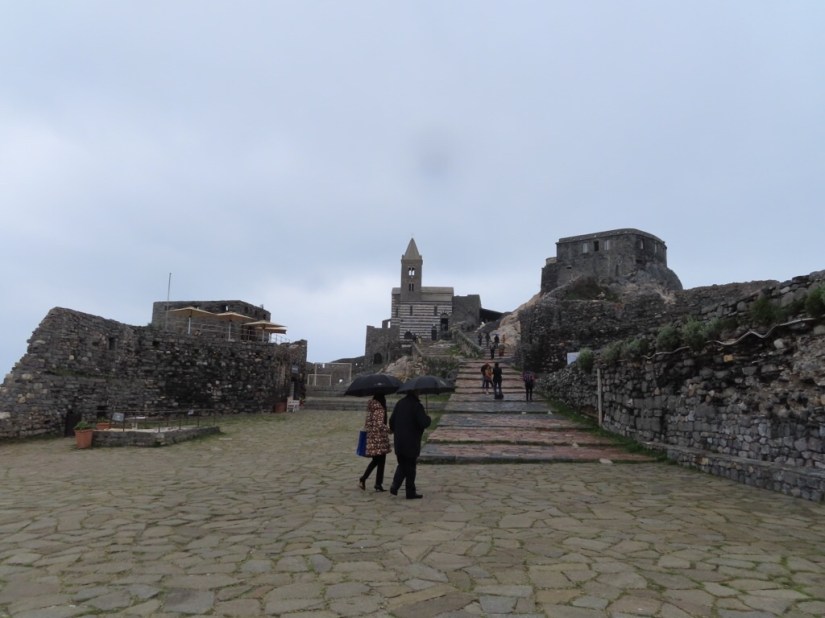
We continued to the Church of San Pietro, standing here since the C12th …

… and Cave Arpaia, one of many caves in the area, but specifically the one in which Byron recited poetry, as stated on the sign!

Climbing up, we passed the ruins of two cylindrical structures which used to be both mills and guard towers …

… then on to the C12th Church of San Lorenzo, containing the White Madonna. As the story goes, in 1399 Portovenere was being devastated by a plague and when Lucciardo, a local devout man, was praying in front of an image of the Virgin Mary asking for his village to be freed from the terrible disease, suddenly, the colors of the painting lit up, gleaming and the plague disappeared.

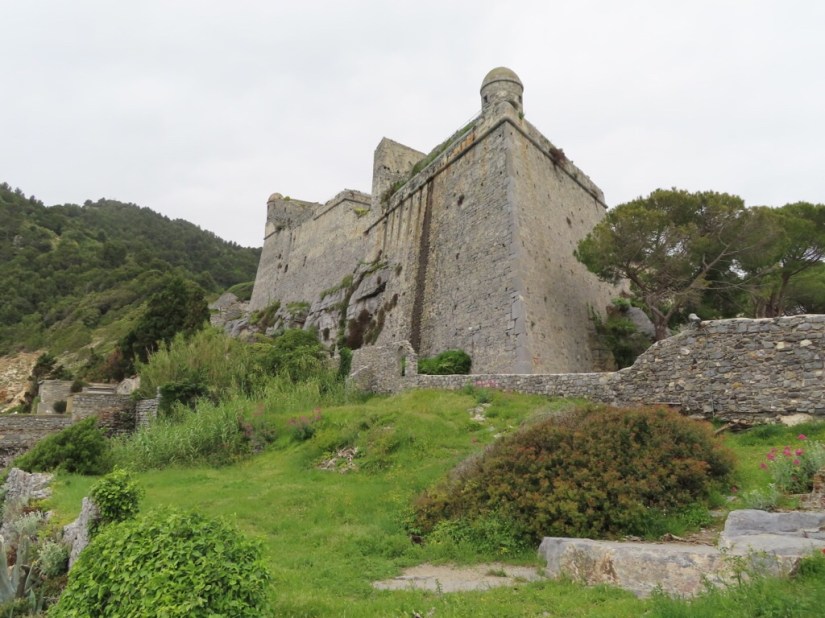
A bit more of a climb to the Doria Castle … those Dorias get everywhere … once a defensive structure, now converted to tourist attraction, concert arena, exhibition space and wedding venue!

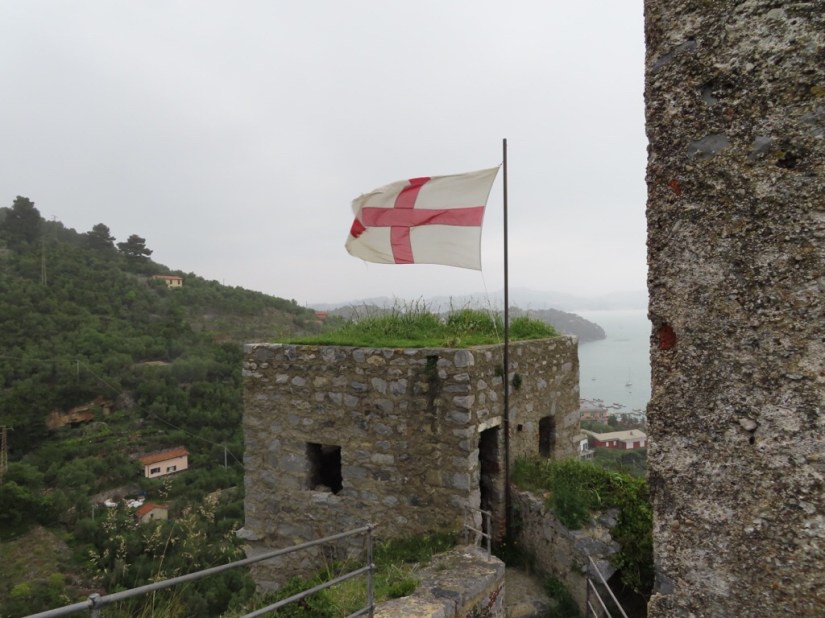
You might we wondering about the white flag with the red cross which has been flying from many of the buildings … it is the city flag of Genova, derived from the Cross of Ambrose adopted by Milan and popular in much of northern Italy … and also predating the Crusades, the St George’s Cross and the flag of England!

Too chilly for ice cream or aperol, we took the boat back for a nice cup of tea!

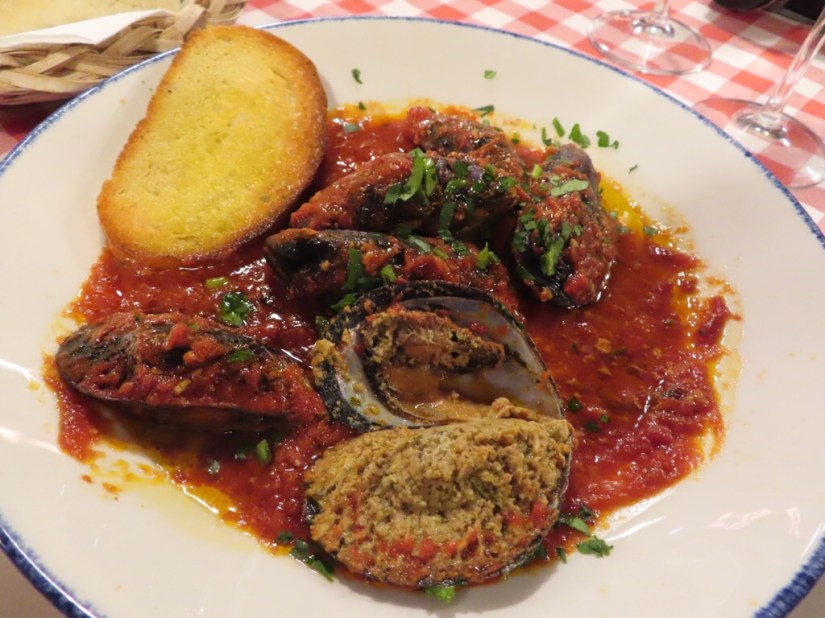
I had stuffed mussels for dinner, maybe the best dish of the holiday, so Trattoria Mani di Fatima deserve a mention!

Map

Portofino Peninsula – Camogli to Portofino

Another sunny day for walking so we took the train one stop to the chic resort of Santa Marguerite Ligure, popular with wealthy Milanese, with its castle and seafront studded with smart hotels.

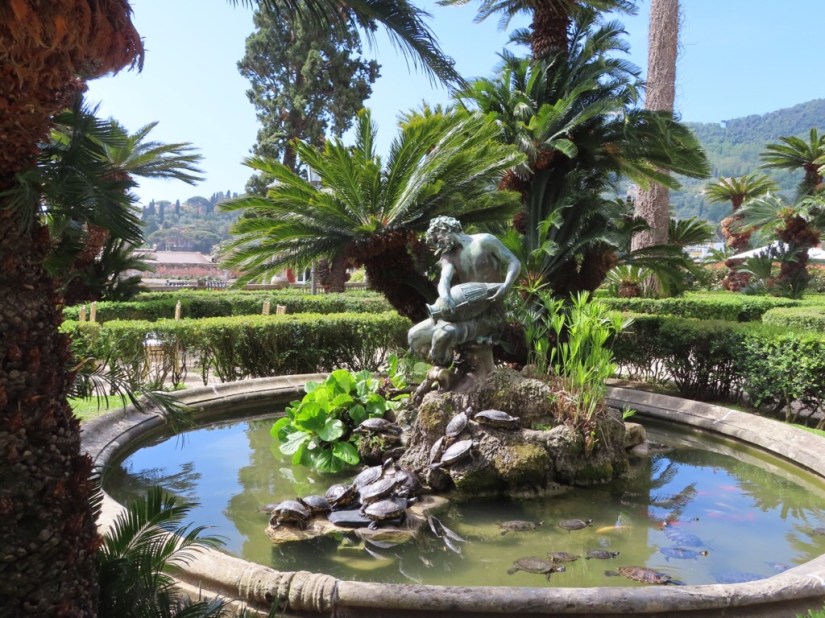
We walked up to the Baroque Church of San Giacomo Di Corte then walked round the gardens of the Renaissance Palazzo Durazzo, typical of the villas in this area, complete with statuary and fine views.

We picked up rolls for a picnic at the supermarket and set off past the harbour …

… and up a narrow path winding upwards. It was another walk though the countryside, on a mule track, with glimpses of the sea and more ups and downs than we were expecting!

We found another picnic stop with a distant view of our destination …

… and some time later, the path became quite a bit smarter …

… as it made its final descent into Portofino.

It really is as one might imagine a perfect Italian fishing village to be!

Having said that, it still has working fishing boats moored beside immense luxury cruisers.

We took the path first to the church of San Giorgio, then higher to Castello Brown, built as a coastal defence in C16th, then bought in the C19th by the British Consul to Genova, Montague Yeats-Brown, and converted into a comfortable villa, hence its name. It is now open to the public and we went to look round and get a great view of Portofino.

Time enough for an ice cream … at €3.50 each well over the going rate but still yummy … the ferry back to SM Ligure and the train home.

Slight technical hitch in that we got on the wrong train and went whizzing past our stop … fortunately we only overshot by one stop … but owned up and bought new tickets to return to Camogli.

Friday night and the town was buzzing, especially with the festival tomorrow. All the restaurants we open and we picked an osteria with pizza for Chris and fish of the day for me.

Darkness had fallen while we were eating and all the buildings were lit up and twinkly …

… not that we will be there to sample the fish fest as we are off in the morning to our final destination … Lerici.

Map

Portofino Peninsula – Camogli to San Fruttuoso

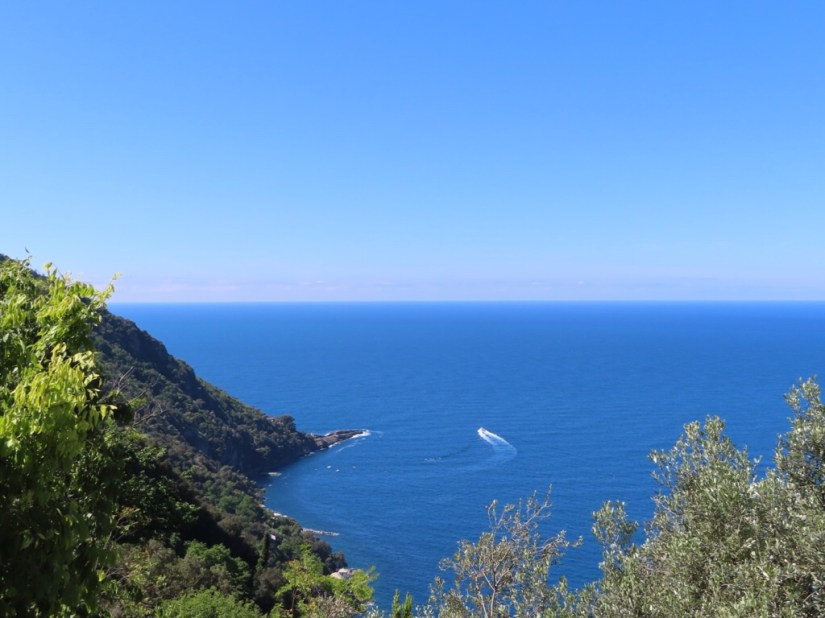
It was definitely a walking day today and we had a route planned. We followed a path out of town and climbed up between gardens and villas on an old mule track to the hamlet of San Rocco. A huge group of teenagers were out on a school trip and while we waited for them to move on, took a great photo of the coast as far as Genova.

We bought some bits for a picnic in the local shop …

… then set off, getting a great view of Camogli and San Rocco.

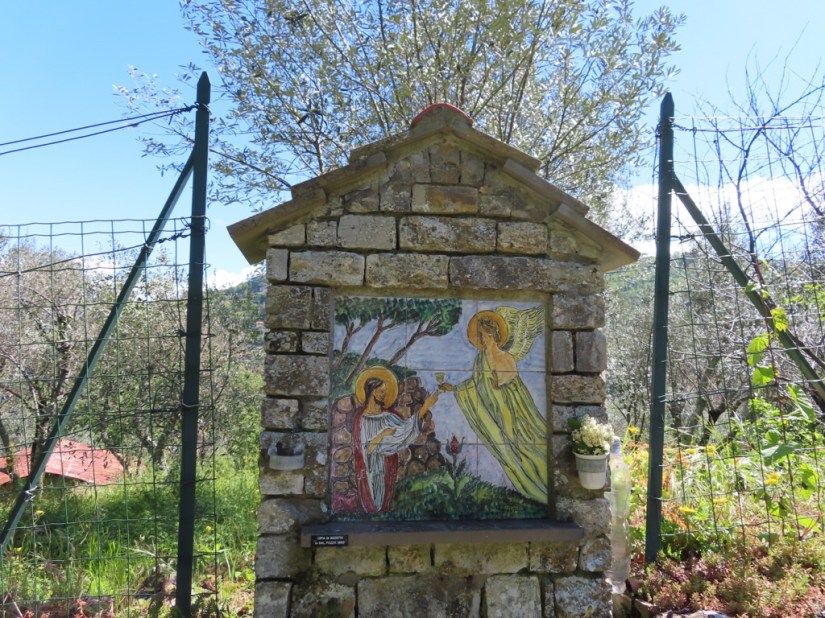
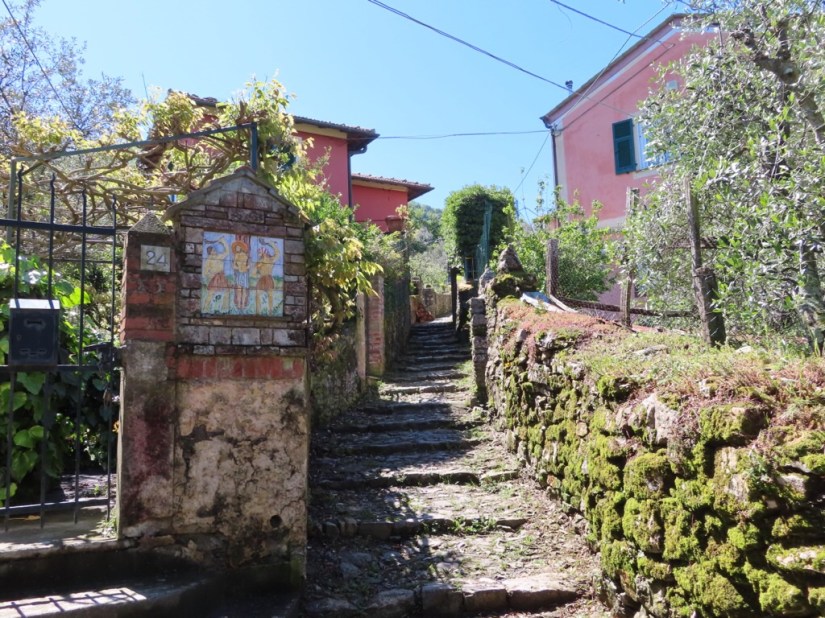
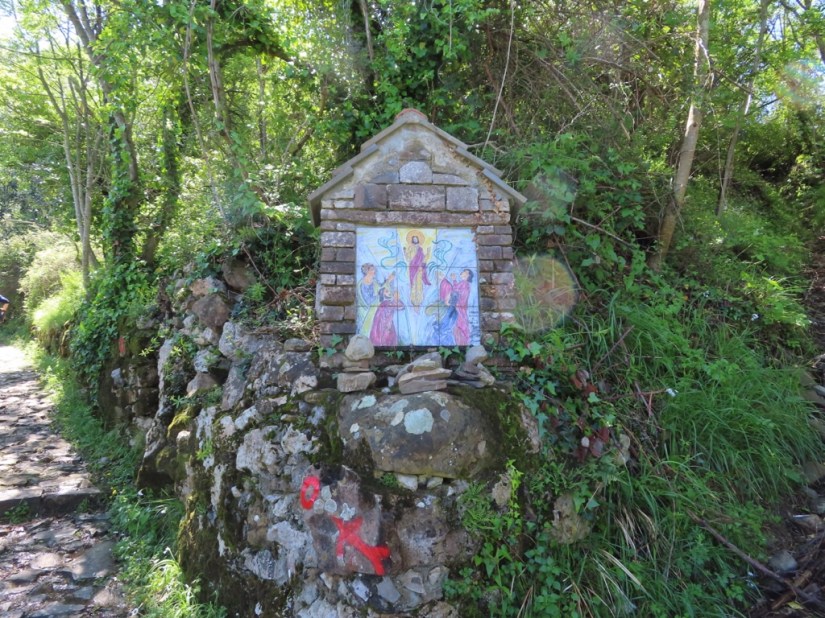
There were stations of the cross made of colourful ceramics as the path climbed.

We took a detour round Monte di Portofino offering snatches of sea views …

… then a perfect picnic spot, complete with back rests and a view and tucked into a torte made of rice flavoured with cheese, onion focaccia and the vegetable torte filled with greens sold everywhere here.

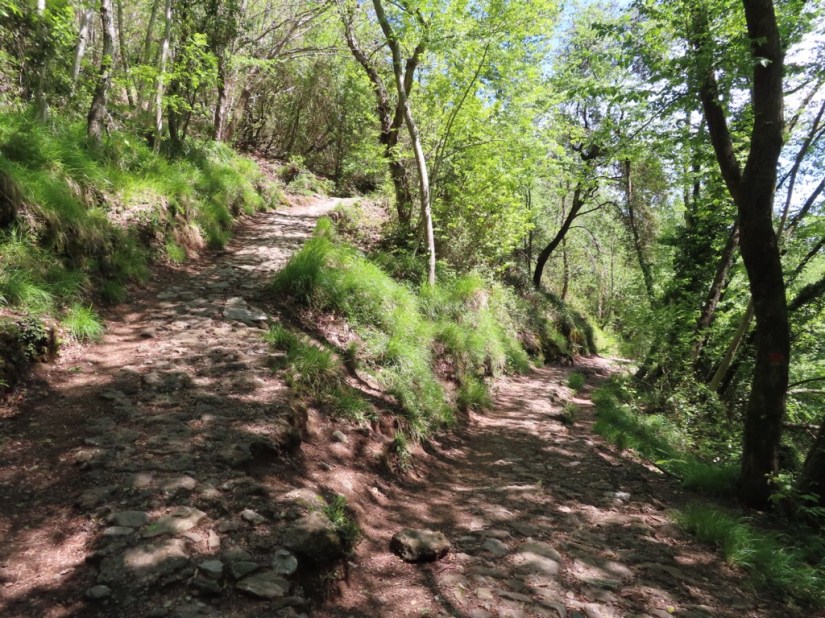
A bit further and we went down on a cobbled mule track through the woods.

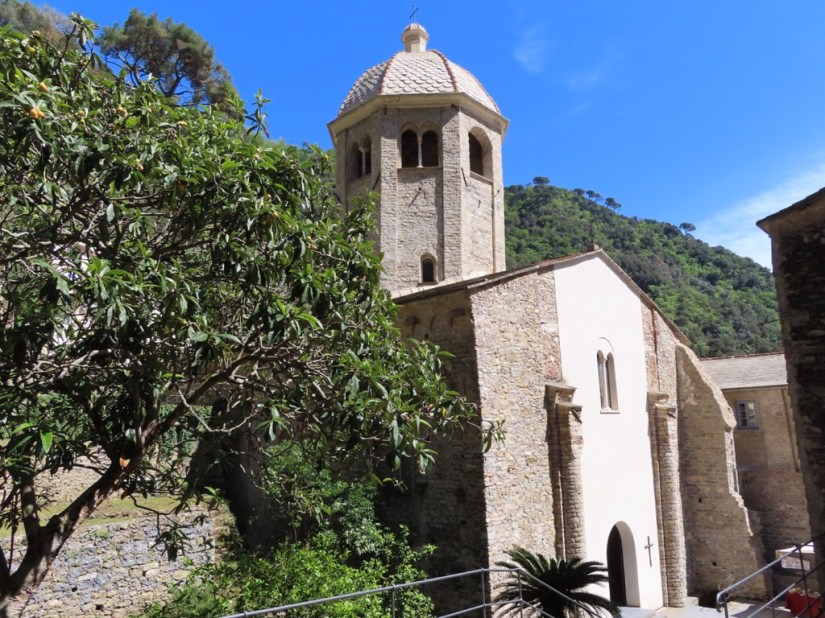
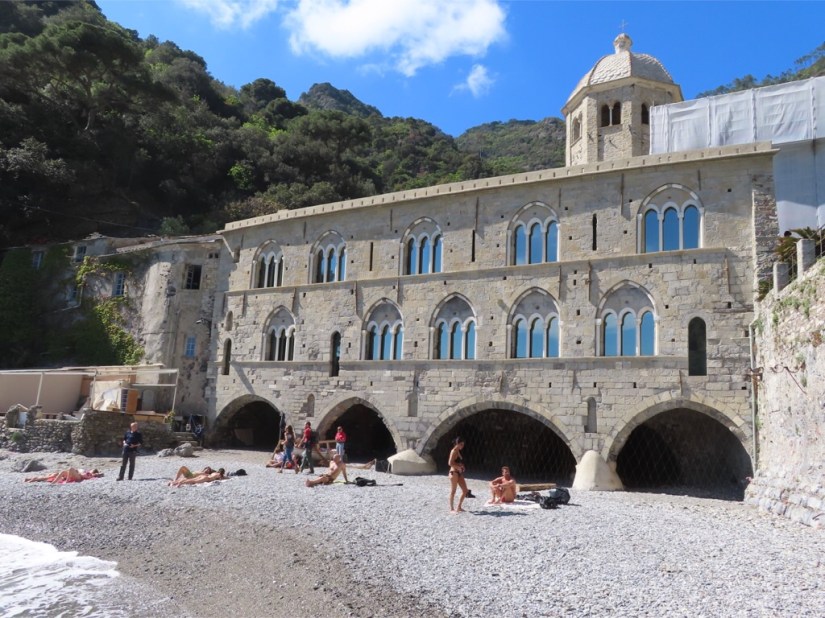
The track zig zagged back and forth and it seemed to go on forever … but finally we reached the monastery and hamlet of San Fruttuoso. How the remains of this saint were buried here is unknown, but there has been a monastery here since at least 984. In 1200 the Abbey was given some land and became connected with the Doria family who were allowed to bury their dead here in exchange for paying to extend the buildings. Over time, there were periods of disrepair then renovation and finally in 1983 the Doria Pamphili family gave the site to the FAI, the Italian National Trust enabling us to visit for free with our NT cards.

We took various pics of the church, tombs of the Doria family and a painting of Andrea Doria.

Luckily we didn’t have long to wait for the ferry … the only other way out of the bay … and 15 minutes later we were back in Camogli.

The book said the route was 7.5 miles although my step counter suggested 11 for the whole day … either way, we deserved our bowls of pasta for dinner!

Map