Blog

Homeward Bound …

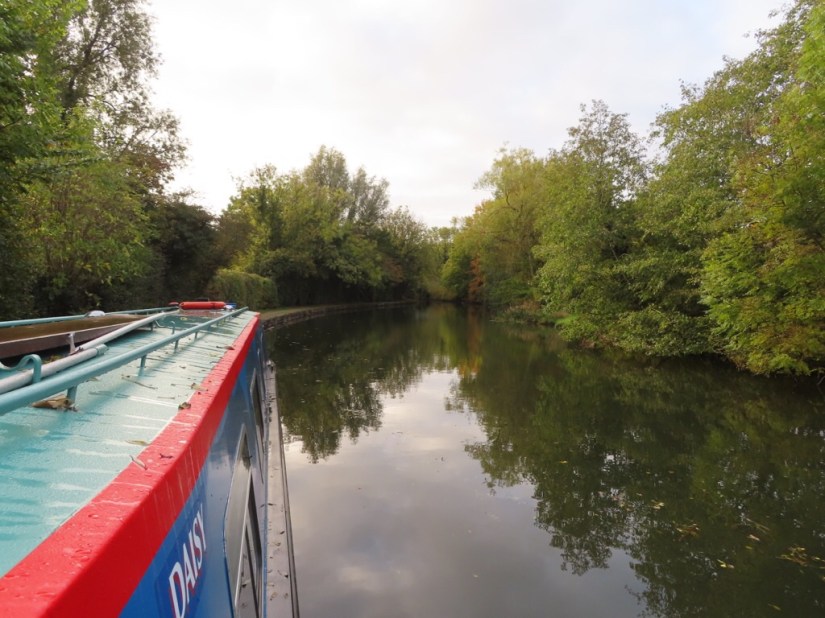
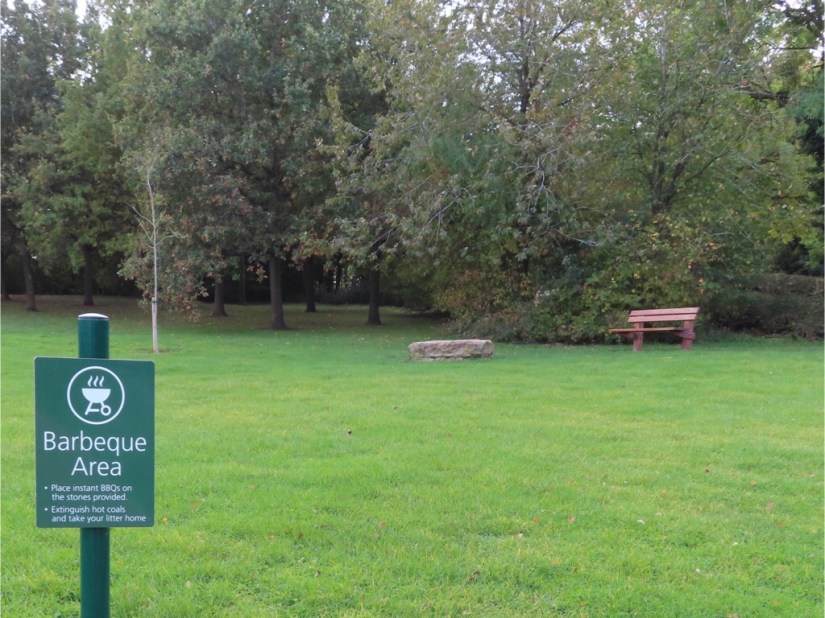
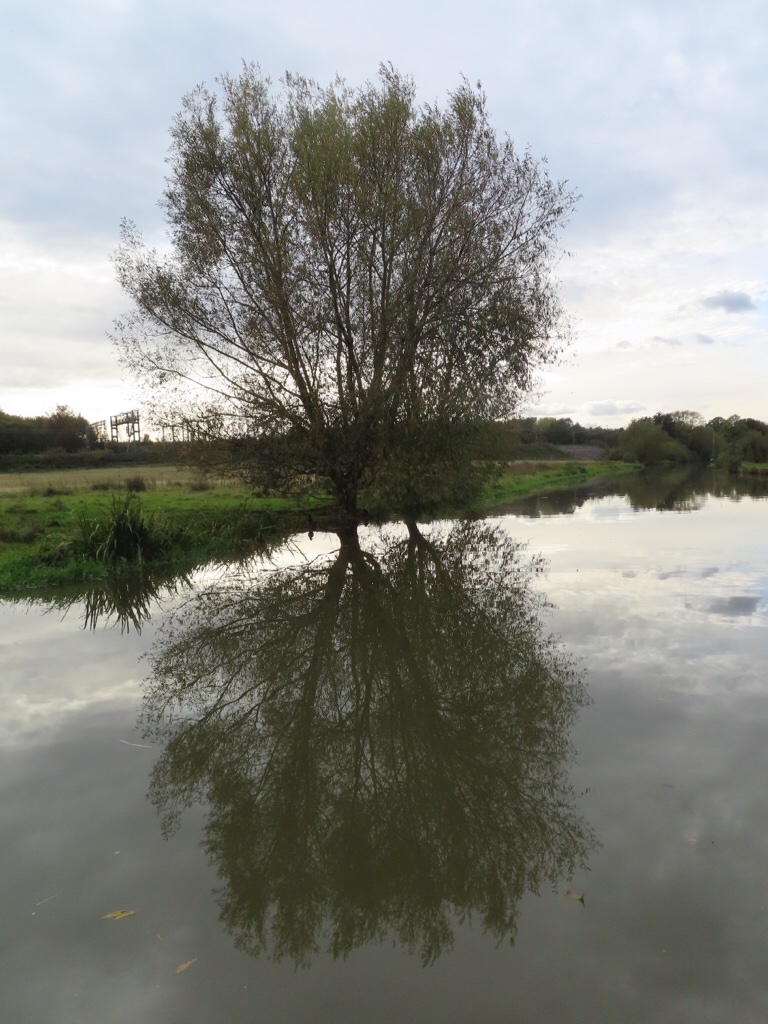
We took a turn round Waterhall Park before we set off. The park seems to mark the end of Milton Keynes and the beginning of the countryside.

Just the other side of the towpath is an avenue of Lombardy Poplar trees which have been planted either side of a footpath which run from here, all the way through Milton Keynes.

It gives access to an almost uninterrupted stretch of parks which I wish we had explored more fully and we kept catching glimpses of the these tall trees all along the canal.

Once we set off, I had another go steering, but still couldn’t get the hang of it and even managed to collide with a parked boat … albeit very gently!

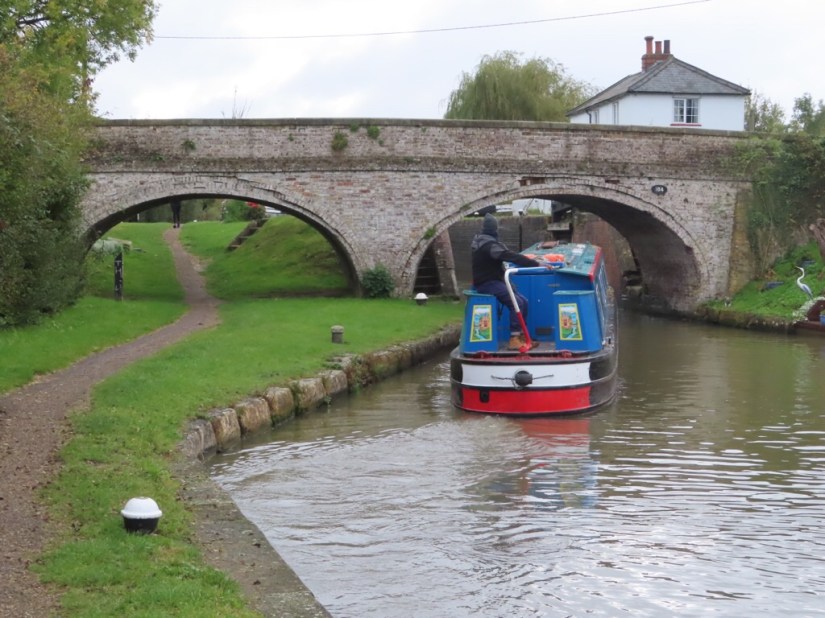
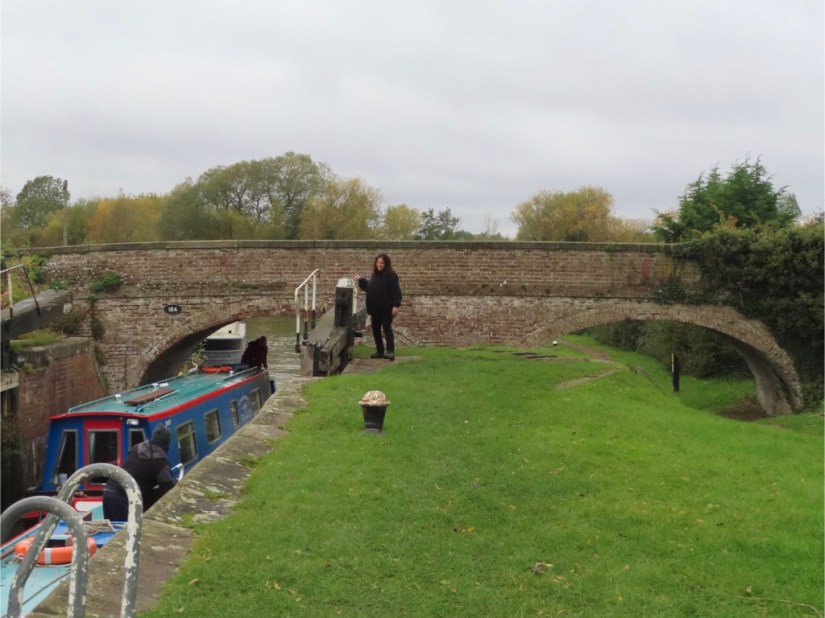
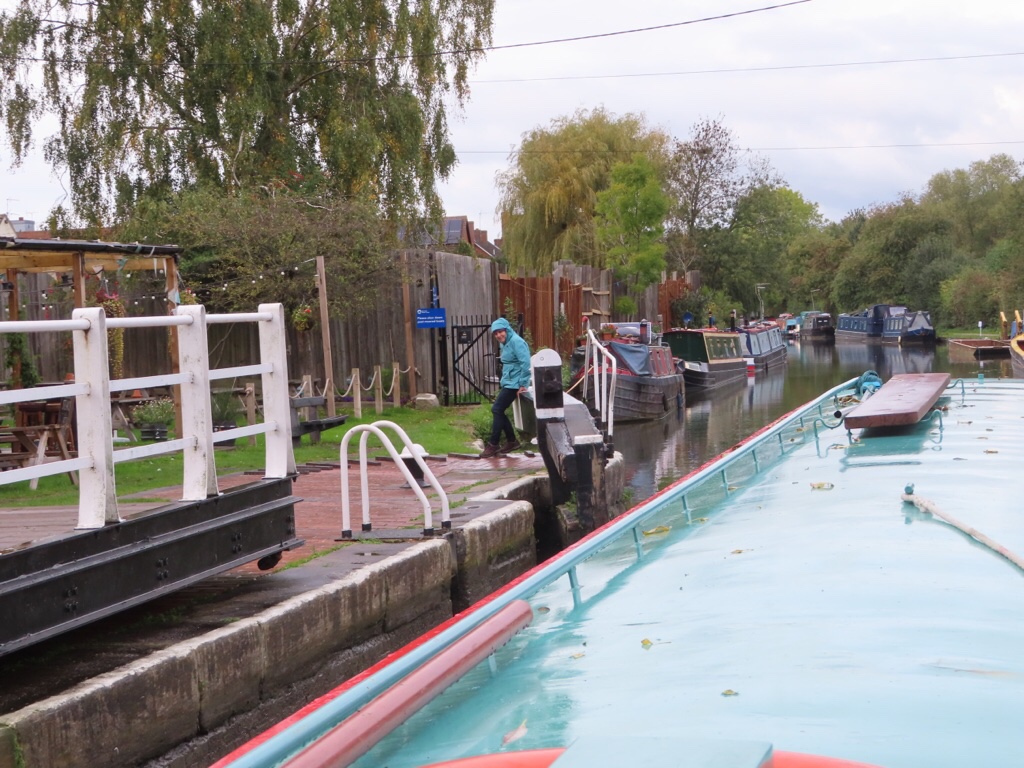
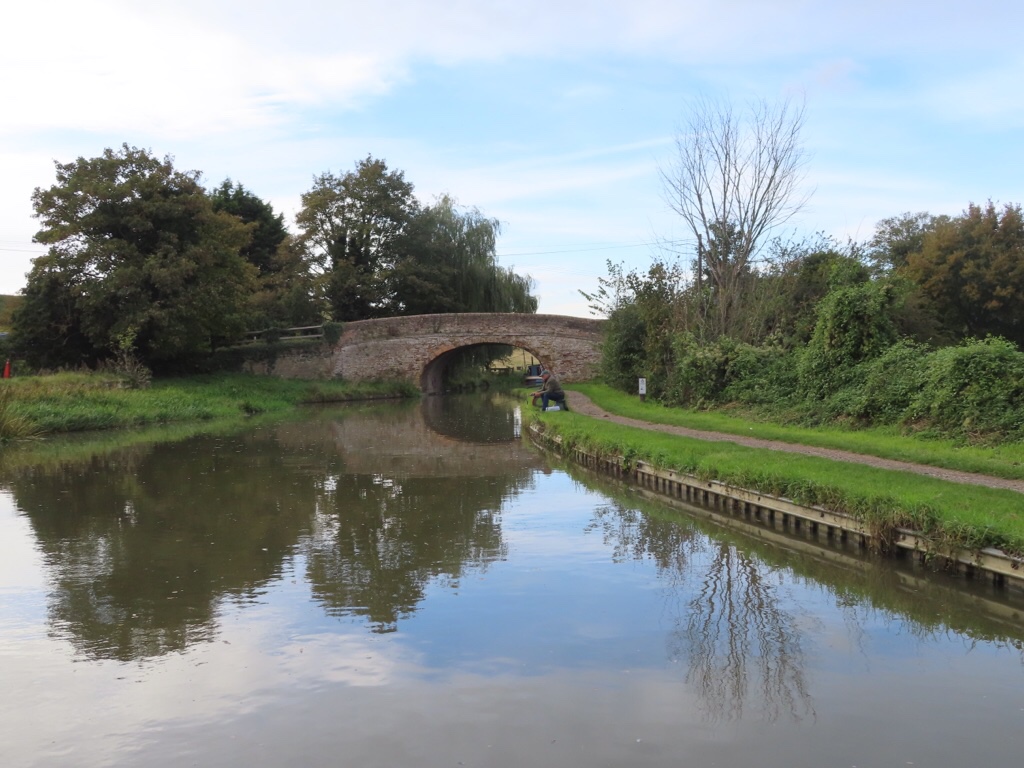
As we approached Stoke Hammond lock, we looked out for the unusual double arched bridge which we’d missed on the way up.

At one point, duplicate narrow locks were built to take smaller boats saving water and time. They have since been filled in but the second arch shows where it was.

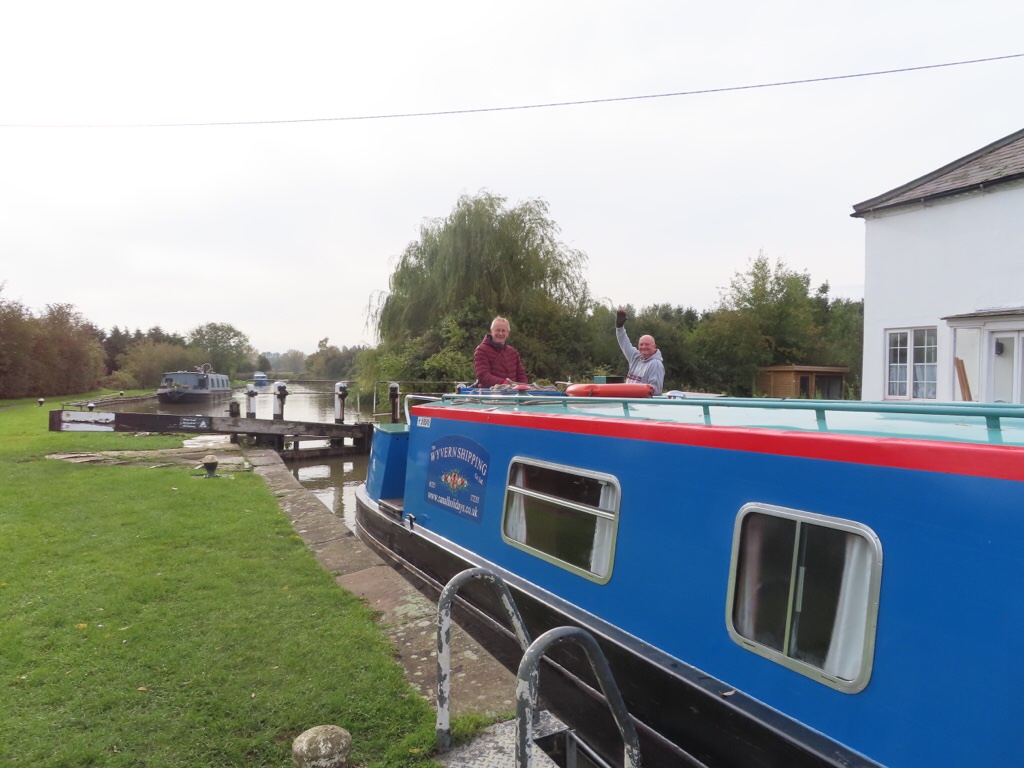
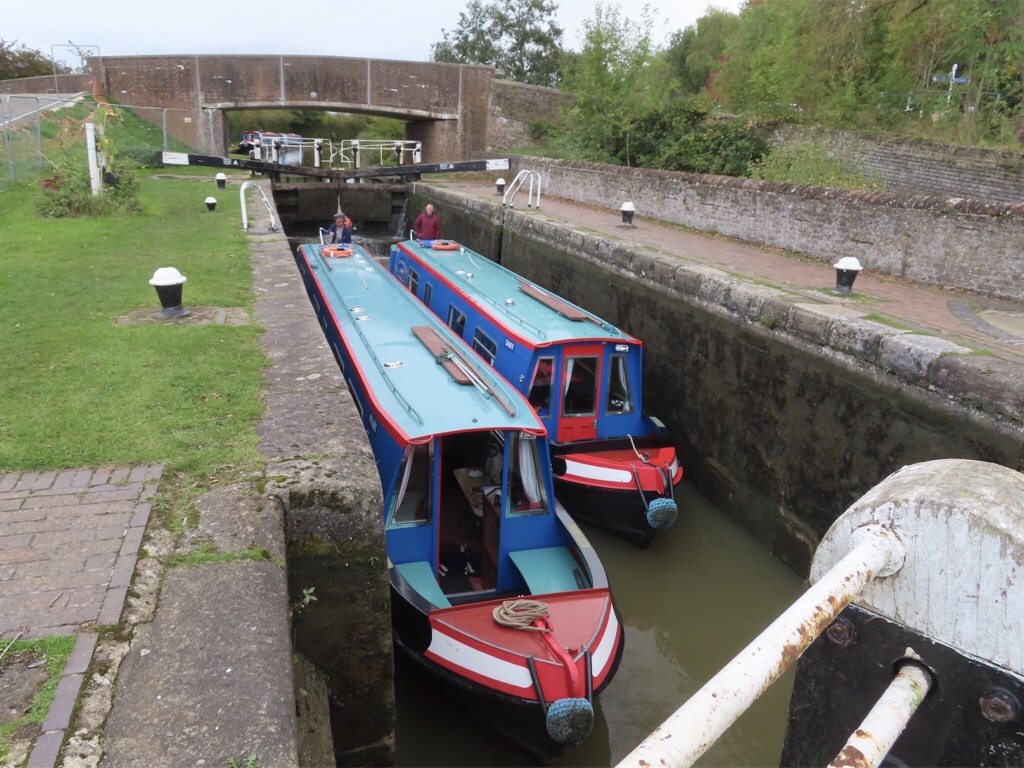
We caught up with the boat we had started out with, also making their way back and worked the lock together.

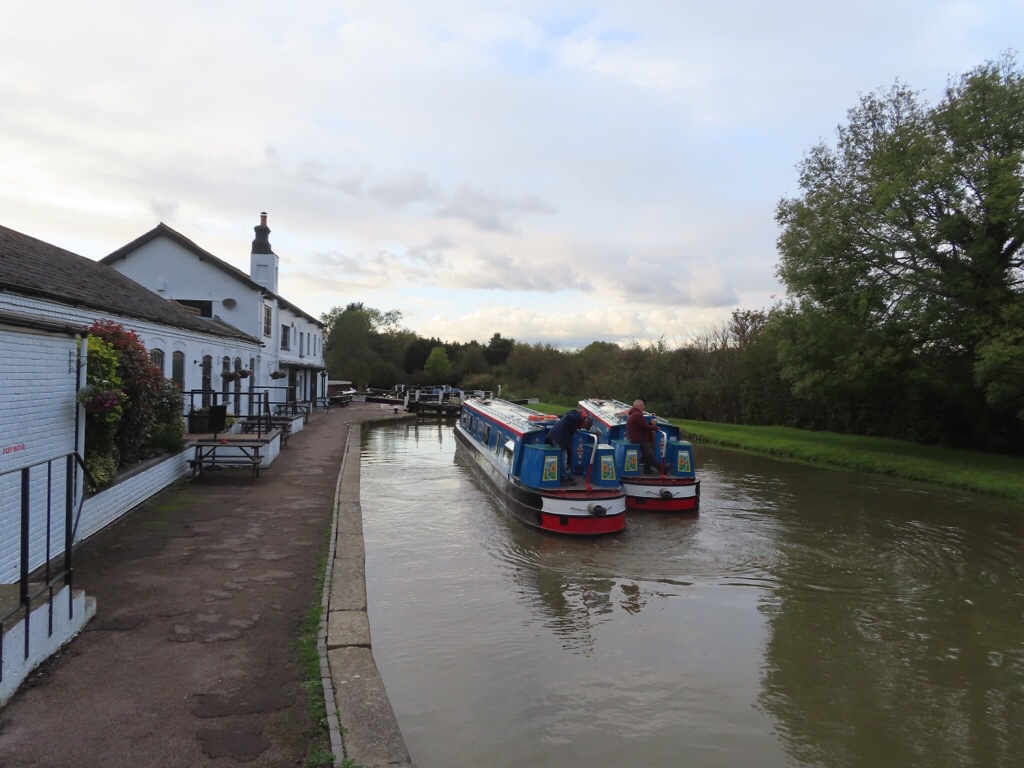
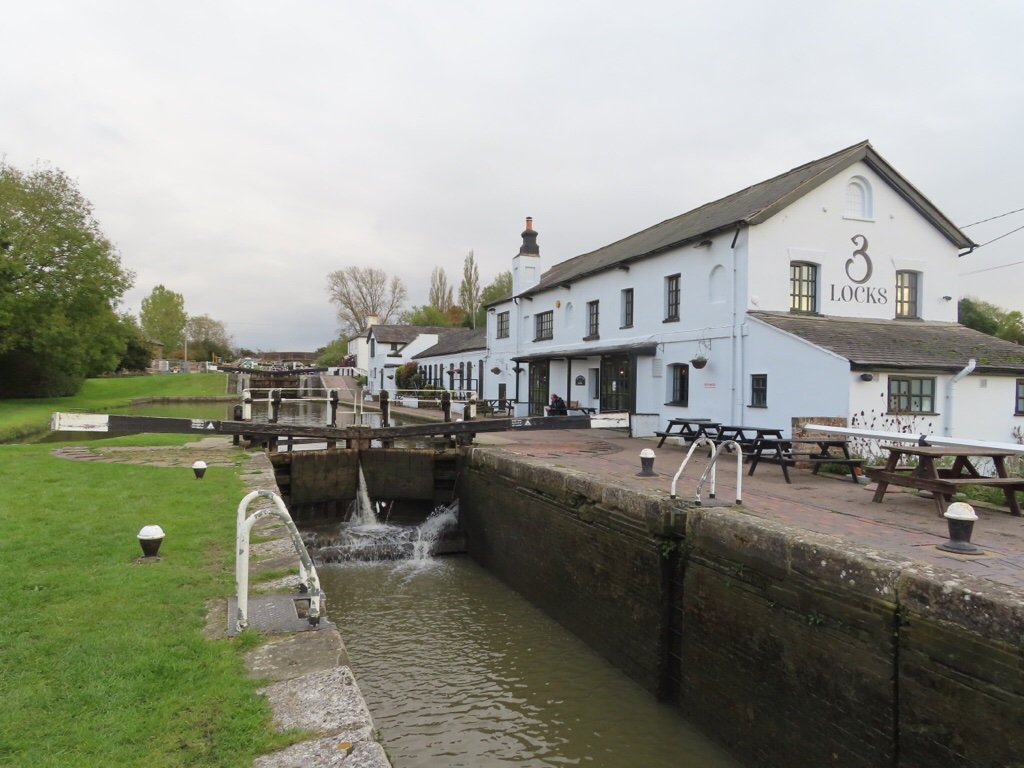
We stopped for lunch then refreshed, continued to Soulbury and the Three Locks. As we arrived another boat had just come through, so they were in our favour, and if they could come through just a single boat, then so could we. It was hard work though, working all three locks on our own, with Chris on the boat steering and me working all the paddles and gates. I did manage to get Chris to close one set though … just so he could have a go! At the end we were quite pleased with ourselves!

A bit later we moored up and went for a short walk past St Mary’s Church in Old Linslade and along the towpath.

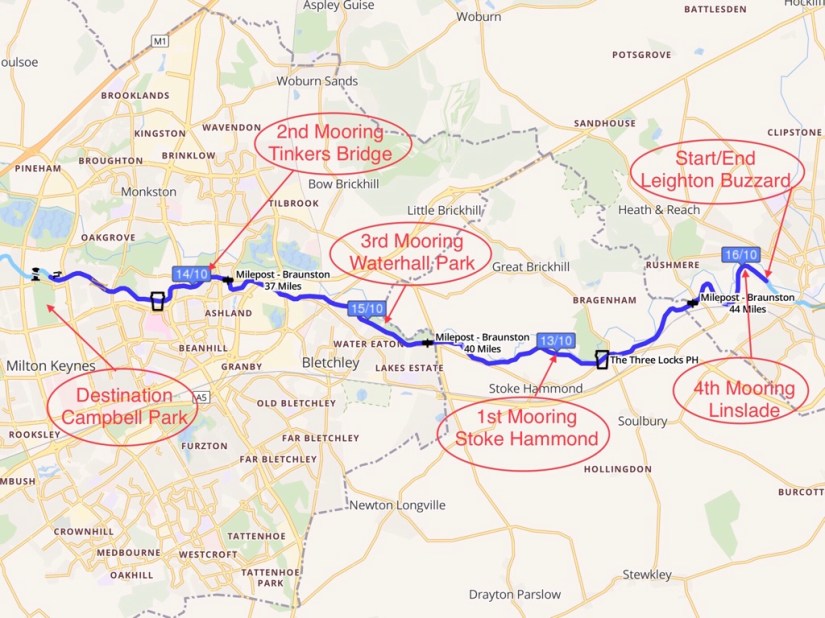
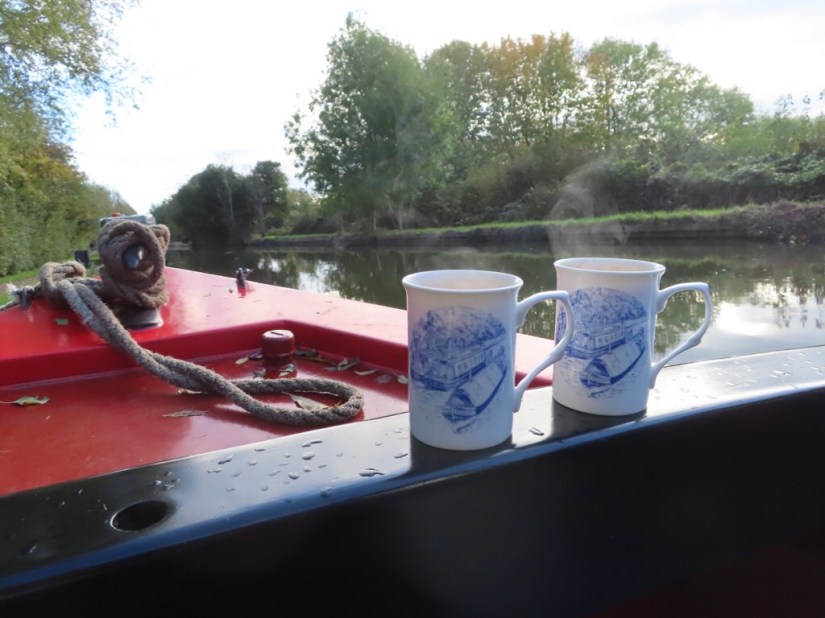
We moved a short way further and moored for the night beside the site of Bridge 112, carefully chosen as far from the railway as possible and leaving just a short run back to Wyvern Shipping in the morning, setting a daily record of 6 miles, 31⁄4 furlongs! We polished off the last of the cake and a well deserved cuppa!

We came away, prepared to self cater throughout and brought enough with us so we didn’t need to shop, after all we are only on Daisy for four days and keeping our distance seems sensible at the moment.

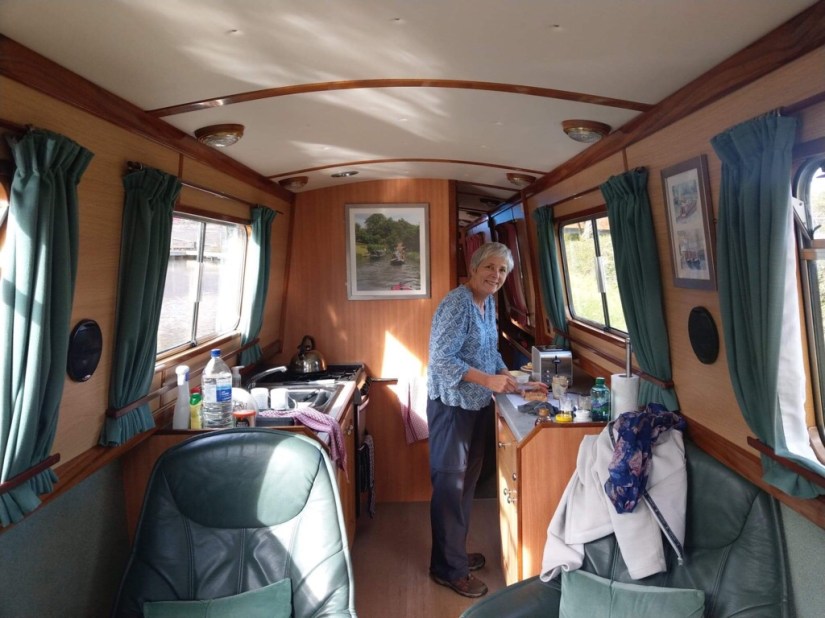
We had thought if we passed an appealing pub at lunchtime we might stop for a bag of chips but it didn’t happen, and by choosing secluded moorings we were too far from a pub for dinner. We’ve had homemade soup, sandwiches and beans on toast for lunches and the dinner menu has comprised sausages with roasted sprouts and potatoes, Higgedy Pies and veg, homemade chilli and on our last night we have pesto pasta. This has worked out really well and meant we could both enjoy the whole experience and spend our time watching the world go by rather than slaving in the galley.

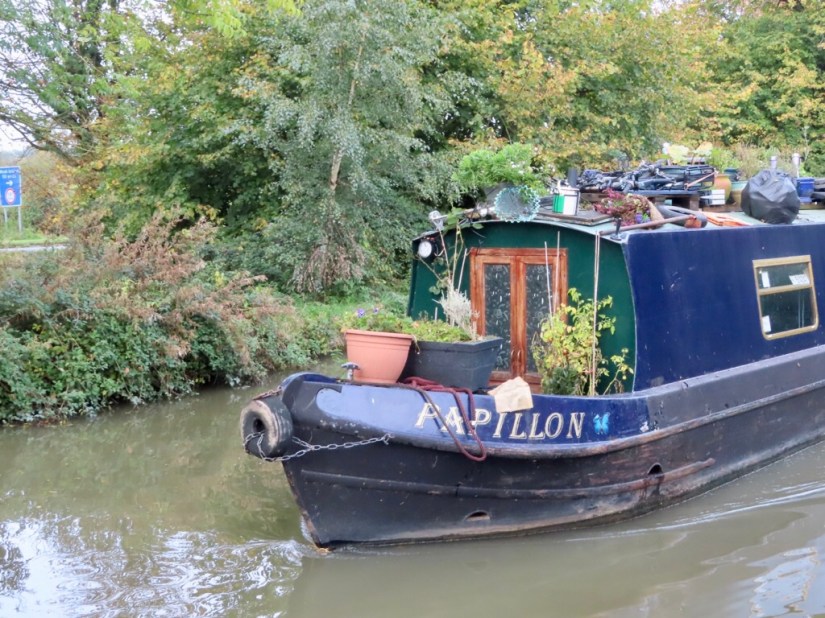
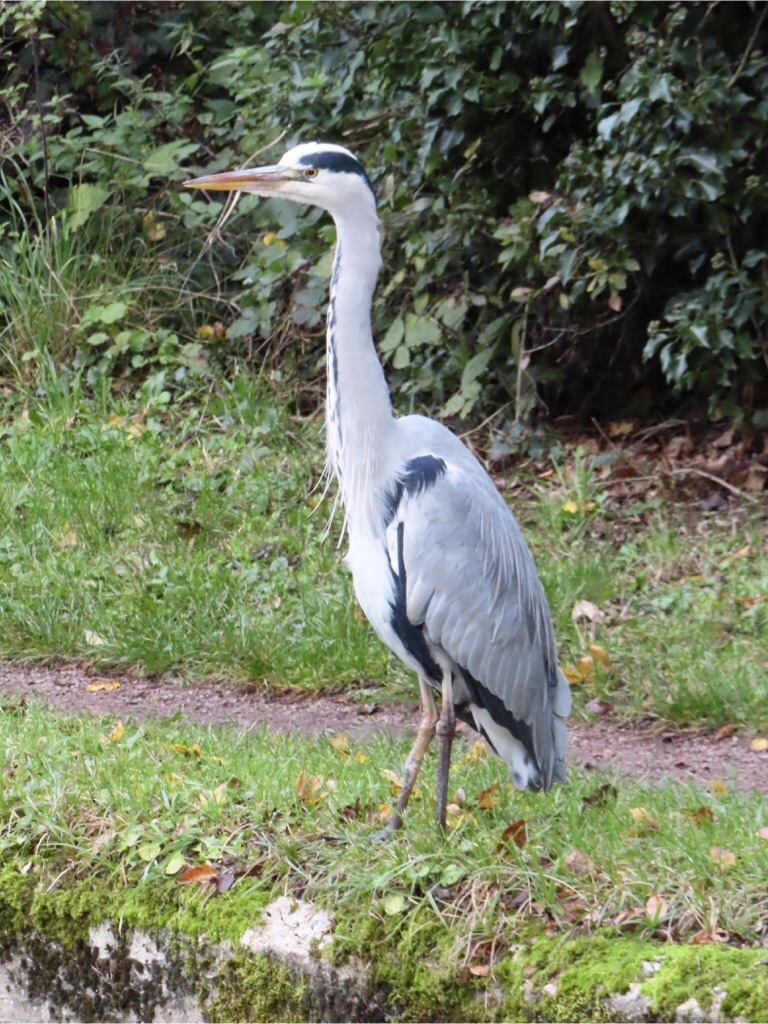
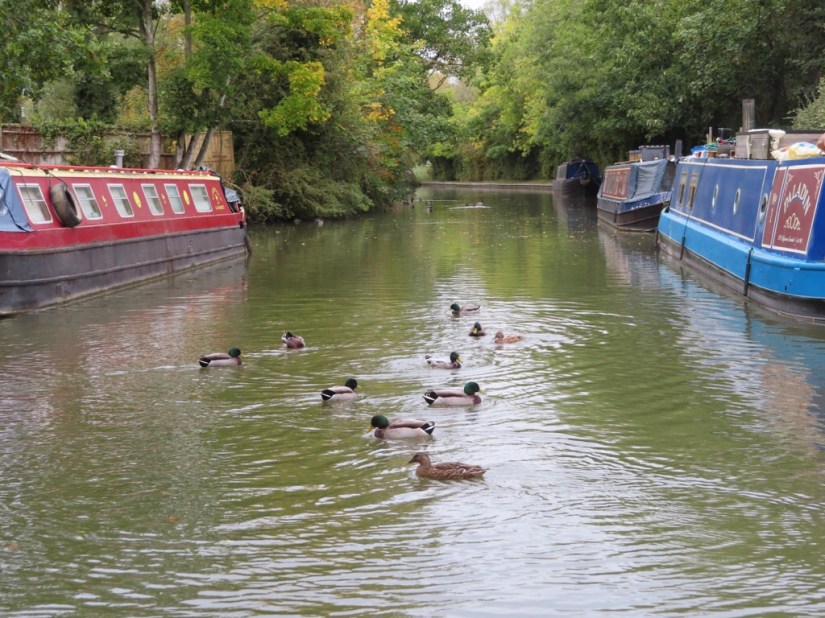
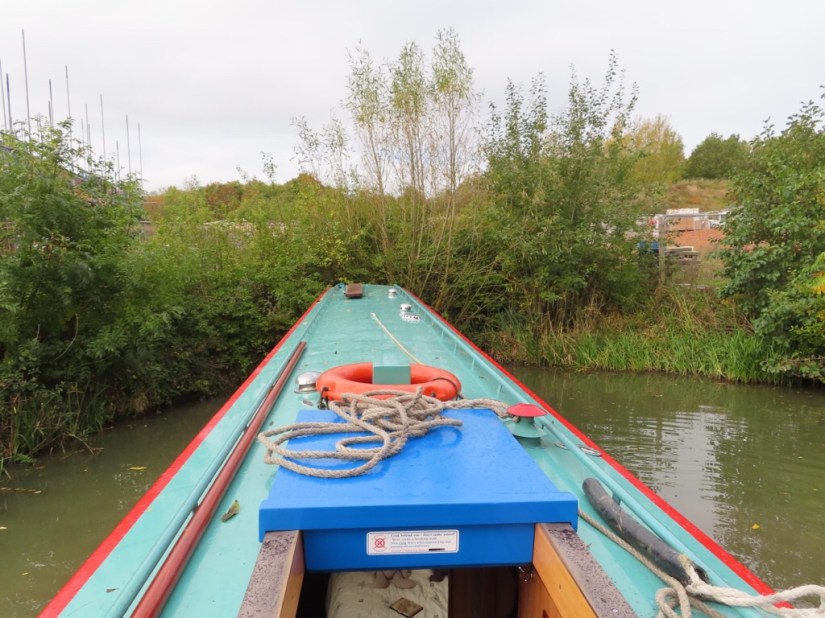
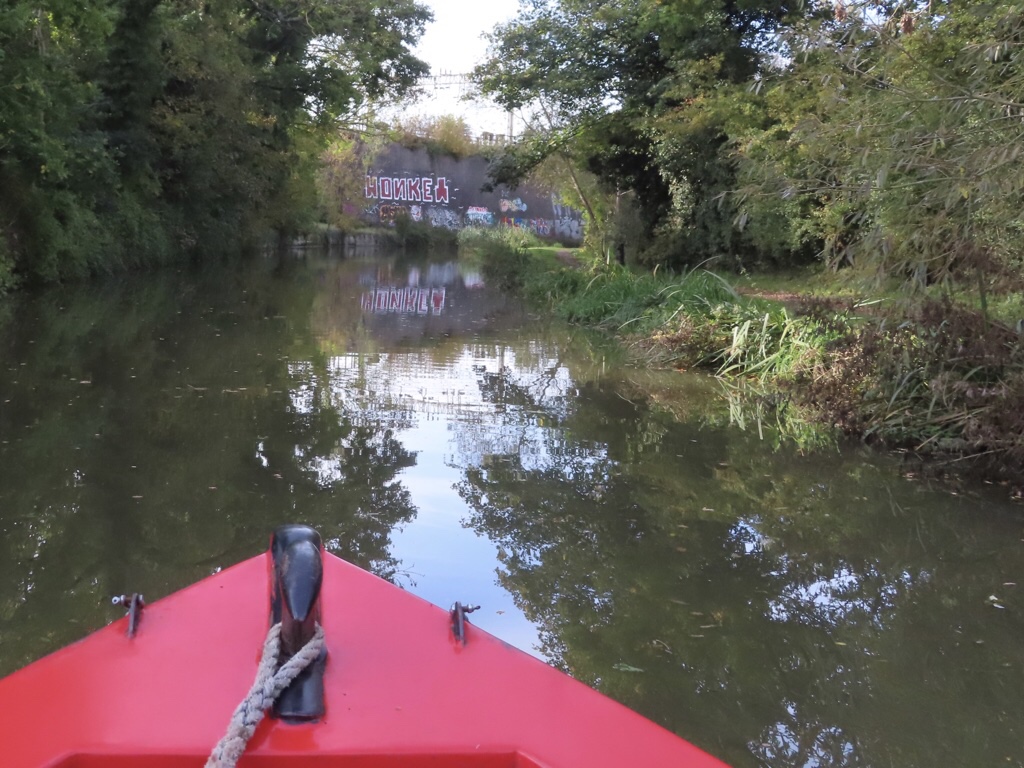
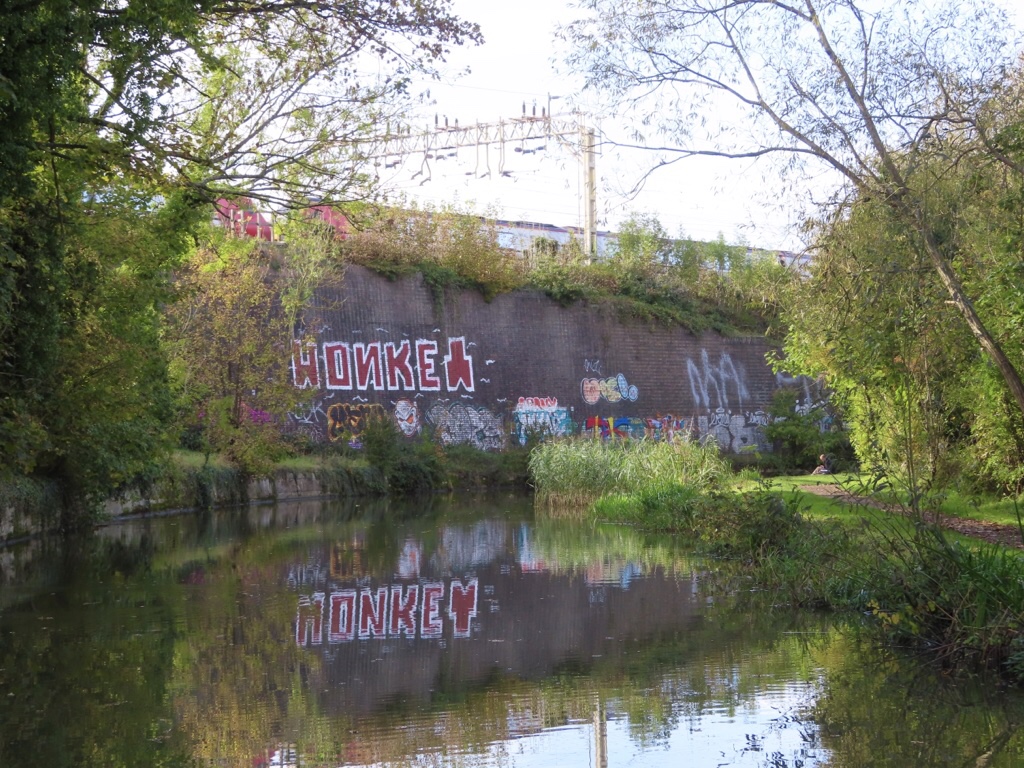
And from galley to gallery, just in case I’ve not included enough photos already, here are a few more, including some of the quirky views from the canal …

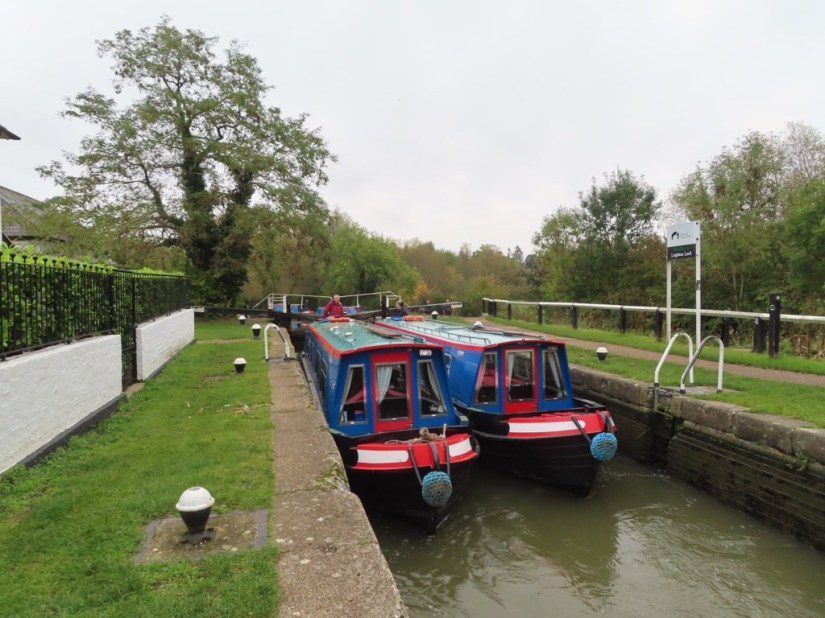
Next morning we were out on the water at 8.15 to ensure we were back on time. Just Leighton Lock to go through …

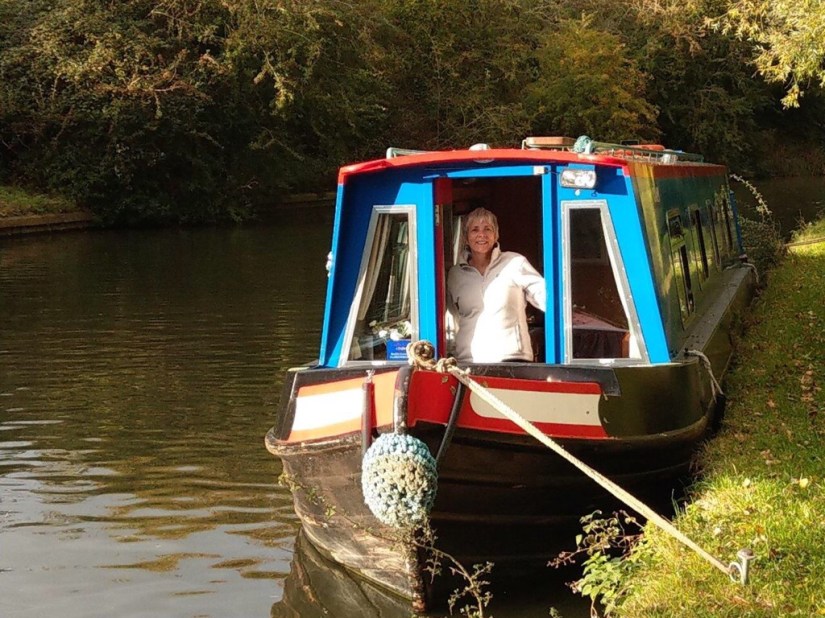
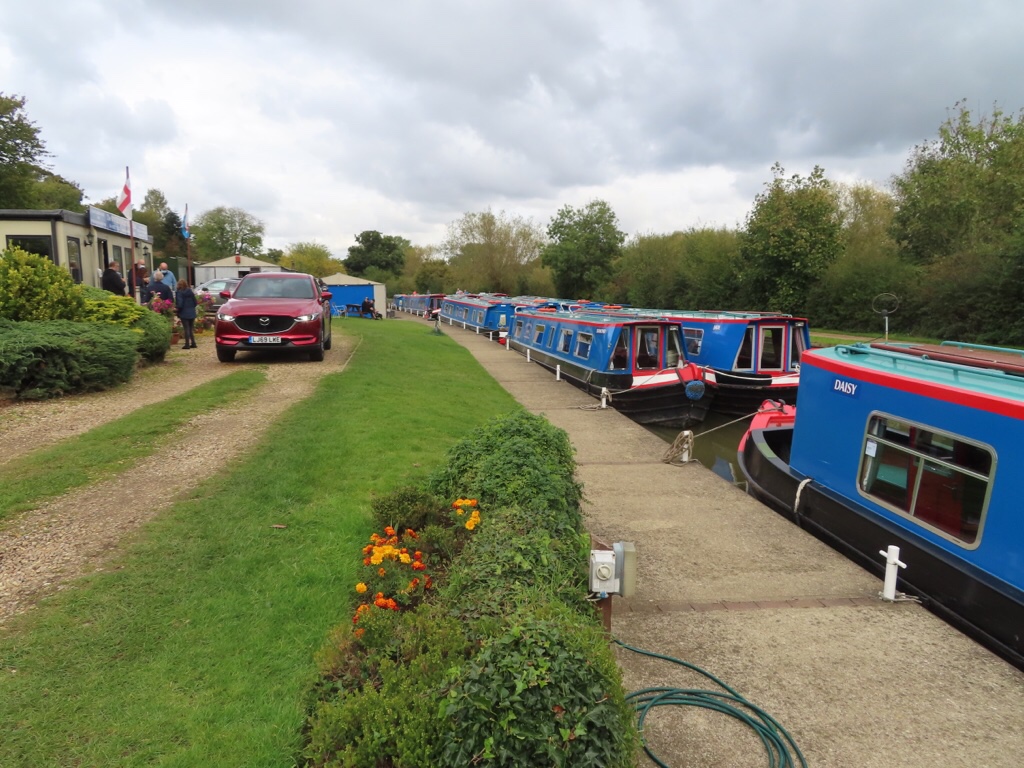
… and 31⁄2 furlongs to travel and we were back at the boat yard, handing Daisy back.

We caught up with others who had been out for a midweek trip like us, some making Cosgrove and the tunnel at Stoke Bruerne beyond, a lady who had dished up a full roast dinner one night and a chap who had backed into the winding hole by mistake, but a good time was had by all.

We’ve really enjoyed our first trip afloat and it was a perfect way to celebrate our anniversary, especially this year with options being limited. We may only have travelled a total of 22 miles, 1⁄2 furlongs and 12 locks with a revised destination of Campbell Park but we were obviously a little too ambitious thinking we could get further! Daisy is just lovely and we’ve already told her we hope to see her again soon … maybe we can get to Cosgrove next time and see the aquaduct!

Maps

Actual Route

Celebrating In Campbell Park …

We woke on our anniversary to a lovely morning and exchanged cards and thought how lovely our mooring was, especially so close to Milton Keynes.

Already we are about halfway through our trip so we looked at the map to decide how much further we could get and where we could turn. Needless to say with a 48 foot boat and a canal that’s 30-40 foot wide, you can’t turn round just anywhere! We needed a winding hole (pronounced win-ding) which is a ‘notch’ or specially widened area made for turning. We saw the best one would be 2 miles ahead, just short of Campbell Park in Milton Keynes, otherwise we would need to travel another 45 minutes (and back) so it was important we didn’t overshoot it!

Chris did a grand job, waiting till other boats had passed, heading the bow into the notch and swinging the stern round.

We then moored up across from the noisiest stretch of canal so far …

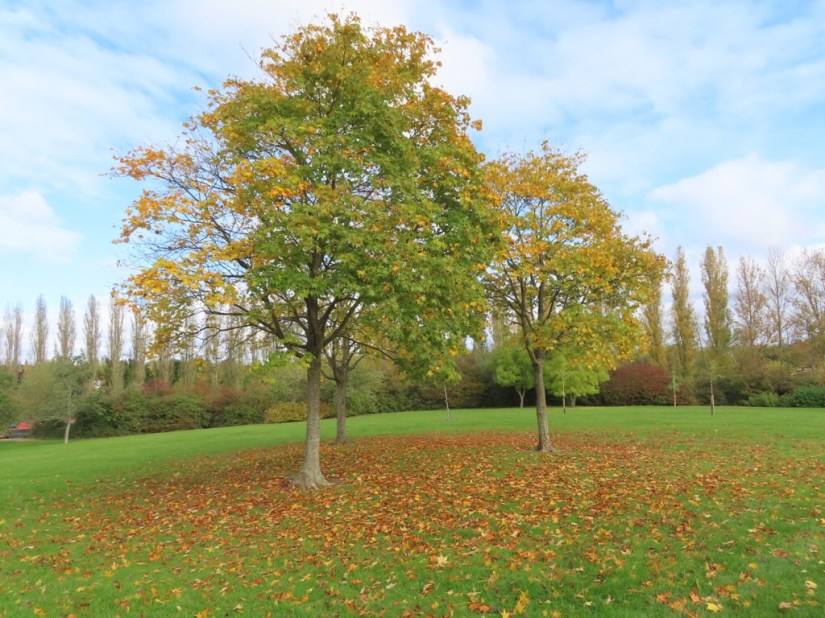
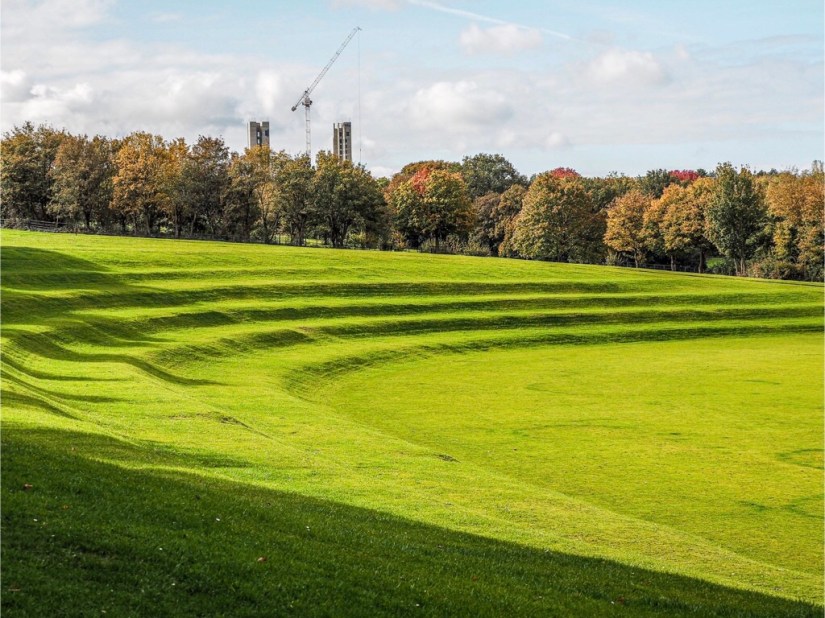
… and walked to Campbell Park, a huge rectangular green space in the centre of the city, edged by the canal on one side and containing a cricket arena and full of autumn colour.

The Belvedere rises in the centre and offers views across Bedfordshire and there is a wild flower meadow in the middle which is apparently grazed by sheep in the summer! The original vision was that the park would also be the cultural centre of the city and there are a number of works of art and sculptures throughout, the most prominent being the Light Pyramid which replaced the original basket beacon which was destroyed by lightening. It is made of steel and painted white and was first lit for the Queen’s Diamond Jubilee on 4th June 2012 and is still lit to commemorate special local and national events.

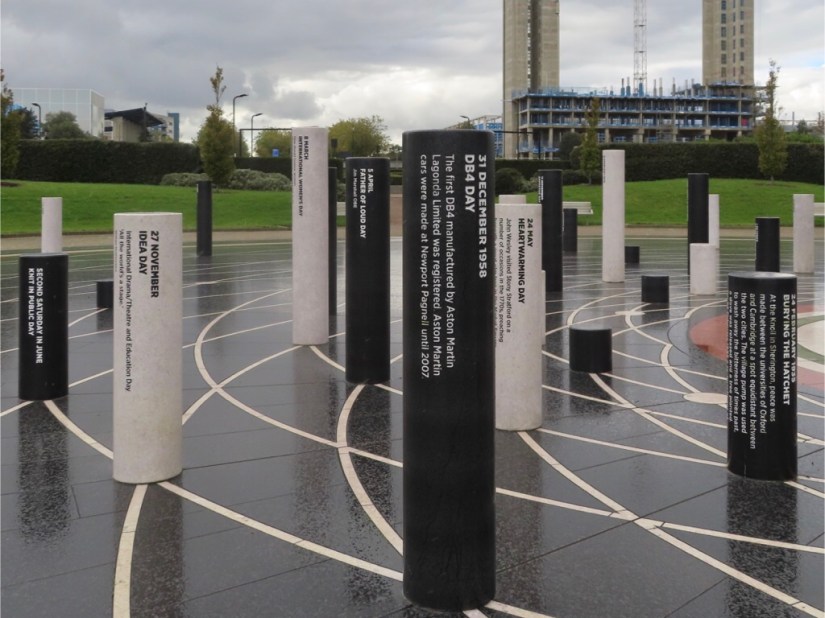
The Milton Keynes Rose is a commemorative public space featuring a calendar of days important to the people of Milton Keynes. Pillars are arranged like a flower, many already inscribed and others left for future dedications.

Other pieces include Head …

… Gnomon or Shadow Castor made of Ffestiniog blue grey slate and bronze which casts its shadow just like the arm of a sundial it is named for … but Chris keenly pointed out it is by the cricket pitch and represents wickets and a ball … surely I had realised that … but I hadn’t!

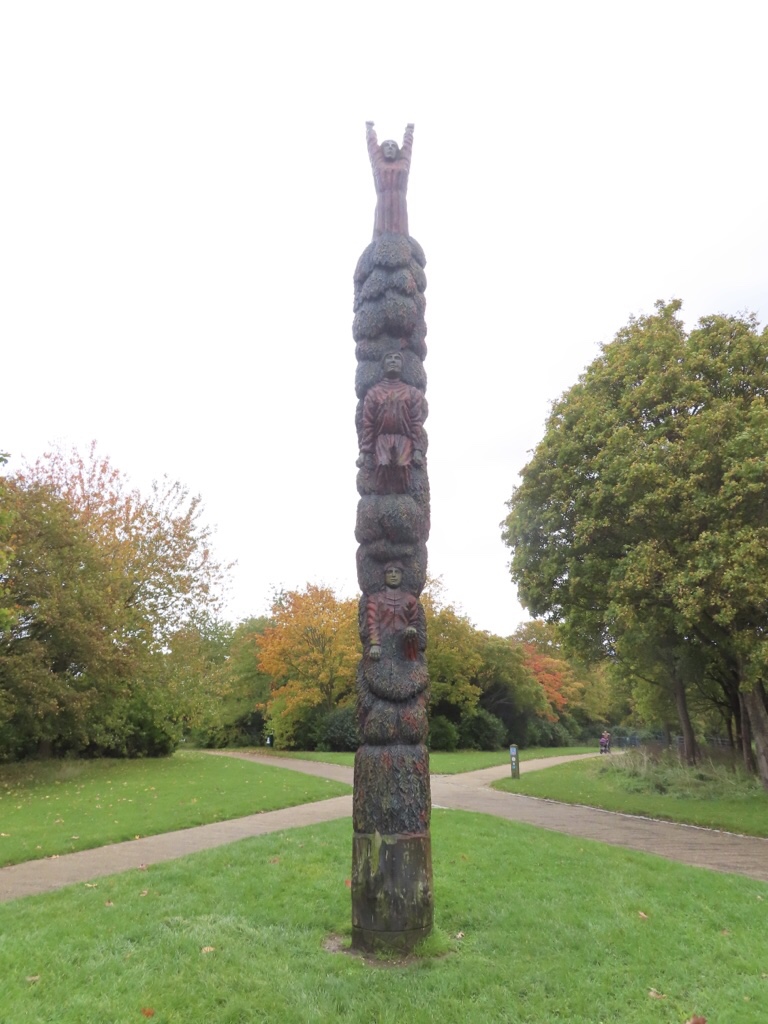
… Onwards and Upwards, carved from a single piece of eight-metre-high sweet chestnut and representing the growth and development of the park and the city …

… Cave, supposedly offering shelter in the park, but not much as it doesn’t really have a roof …

… Chain Reaction, a 3D model of figures balanced like acrobats, in an endless chain which changes as it is viewed from different angles …

… and Armillary Sphere in the centre of the Labyrinth to celebrate the 10th anniversary of MK Housing Association.

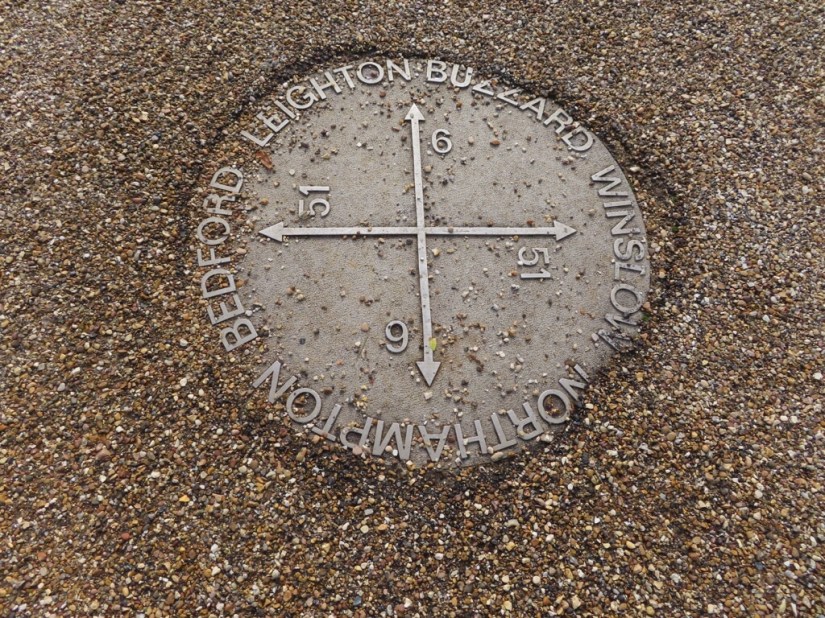
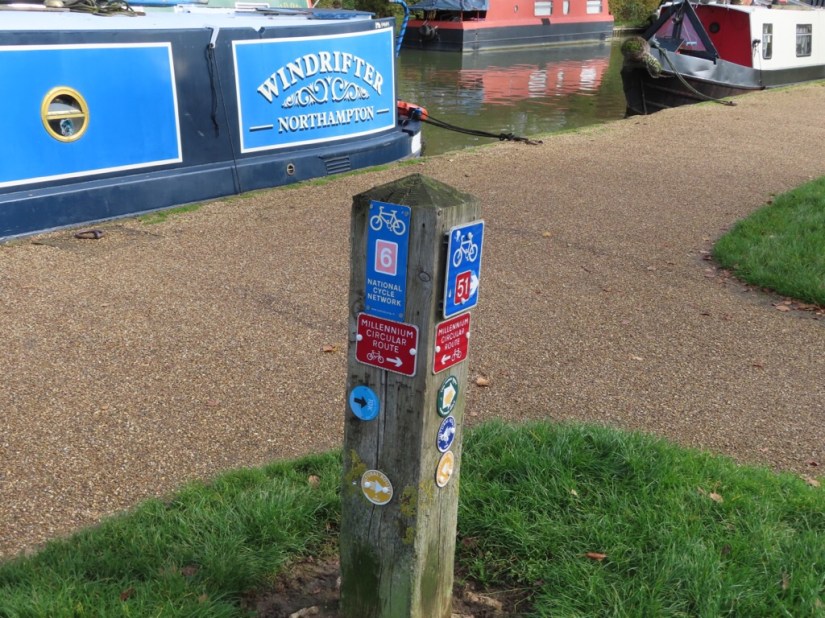
Chris was intrigued by this plaque, confused by the seemingly incorrect distances …

… until I pointed out this post!

We returned to the boat for lunch …

… before beginning our return trip. We barely had to stop at Fenny Stratford Lock with its Swing Bridge as it was in our favour and open. We went through with another boat, and another boat was waiting so we didn’t even need to close it, quite a contrast to the day before! Before we knew it, we were back at Waterhall Park, where we had stopped for lunch the day before and moored up after covering exactly 6 miles for the day.

The sun came out when I made the tea, so we sat on the bow, admiring the canal.

Later we celebrated our anniversary with a bottle of fizz and a very delicious White Chilli made from a Simon Rimmer recipe which I’d brought with us frozen, served with greens, grated cheddar and tortilla chips!

We played several hands of Uno and Chris was pleased to reign once more as Uno Champ!

Maps

Finding Our Feet …

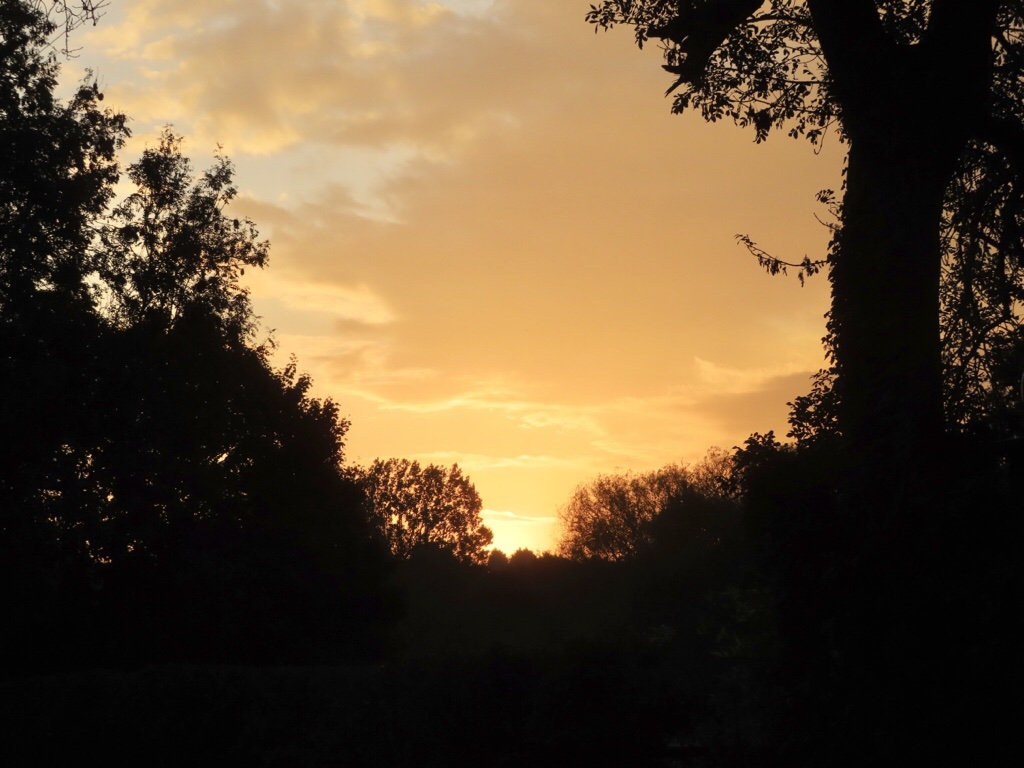
We slept pretty well, despite the snug bed, but both of us woke in the night and were kept awake for a while by unfamiliar nocturnal noises. The sky started turning pink during our first cuppa, so we dressed quickly and walked down the tow path to the bridge and took a few pics …

Over breakfast we were feeling quite pleased with ourselves that we were already further along than we had expected, in fact 3 locks and 1 mile further … but we shouldn’t have been congratulating ourselves so soon …

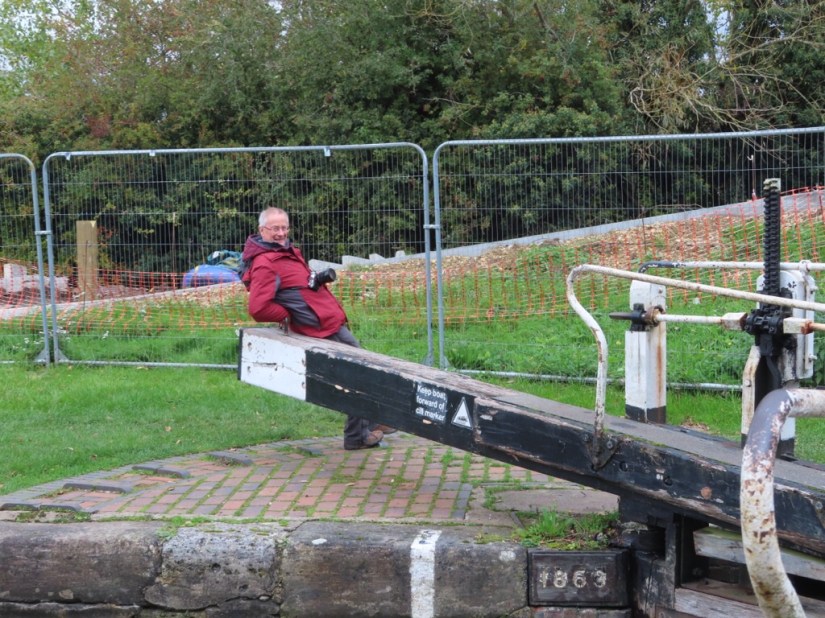
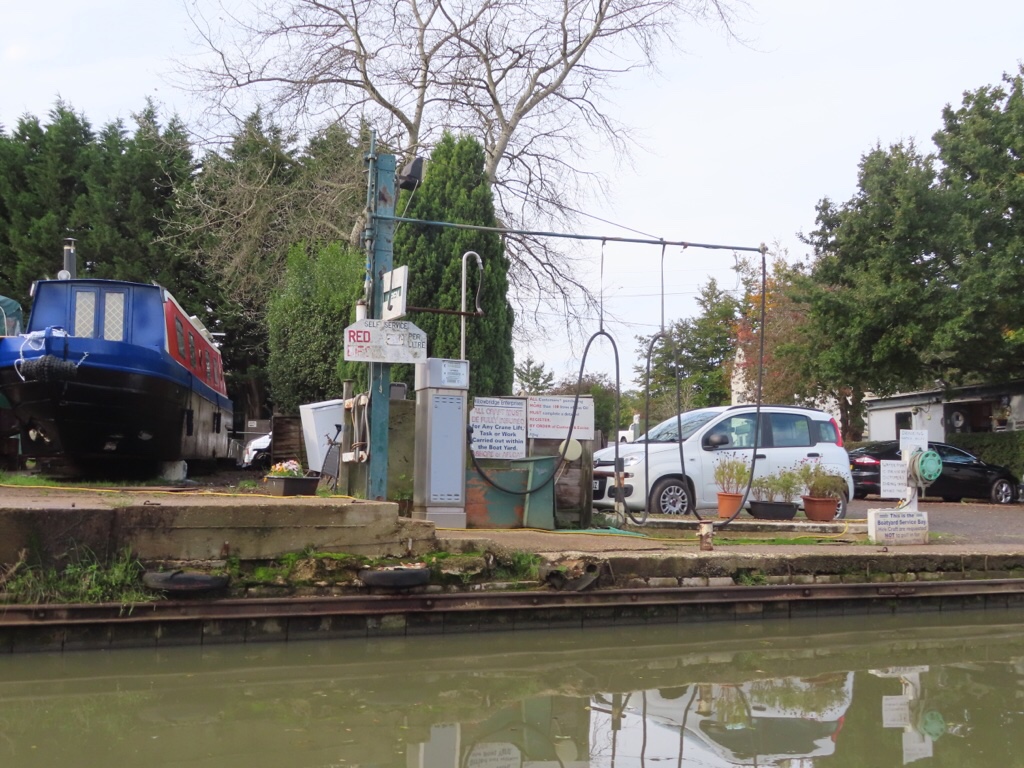
I found a really interesting website with details about this stretch of the Grand Union Canal and read about Soulbury as I drank my tea. Stating the pretty obvious, when you think about it, when a boat passes down a lock it takes a whole lock of water too, so unless this is replaced, the canal would eventually dry out. When the canal opened in 1800, reservoirs were built to collect water and keep the levels high enough for boats to stay afloat. However this might not be enough with heavy traffic or a drought, so a series of nine pumphouses called the ‘Northern Engines’ were built, including the ones at Soulbury and Stoke Hammond. Each housed a steam powered pump that drew water up from below the lock and pumped it through a tunnel and back above the lock. The buildings had chimneys, few of which survive, and were often decorated with fan lights and ornamental glazing bars which can be seen at Soulbury and Stoke Hammond. At Soulbury, water is still recycled using a pump to keep the canal open and the pumphouse is currently undergoing restoration, which explains all the metal fencing and here’s a closer picture …

Every lock on the canal, like every bridge, has its own number, starting with No1 at Braunston where the Grand Union Canal joins the Oxford Canal. The flight of three locks at Soulbury, No 24, 25 and 26, take the canal 6m further uphill from its lowest stretch across the Ouse Valley in Milton Keynes up to Tring summit at 121m above sea level.

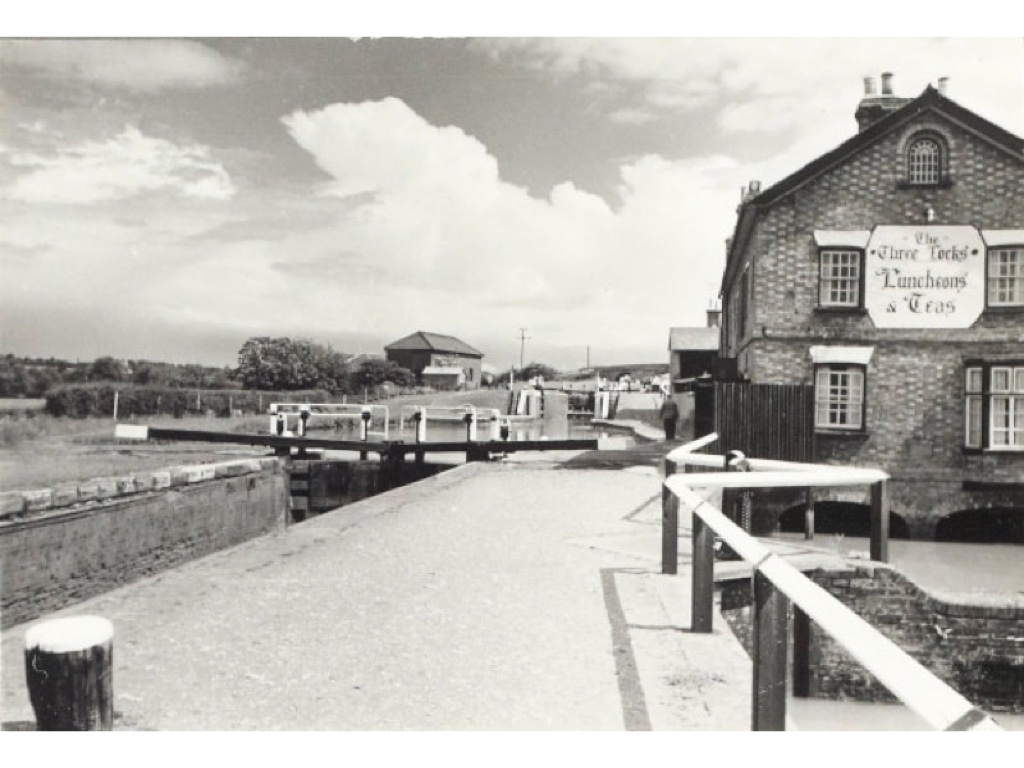
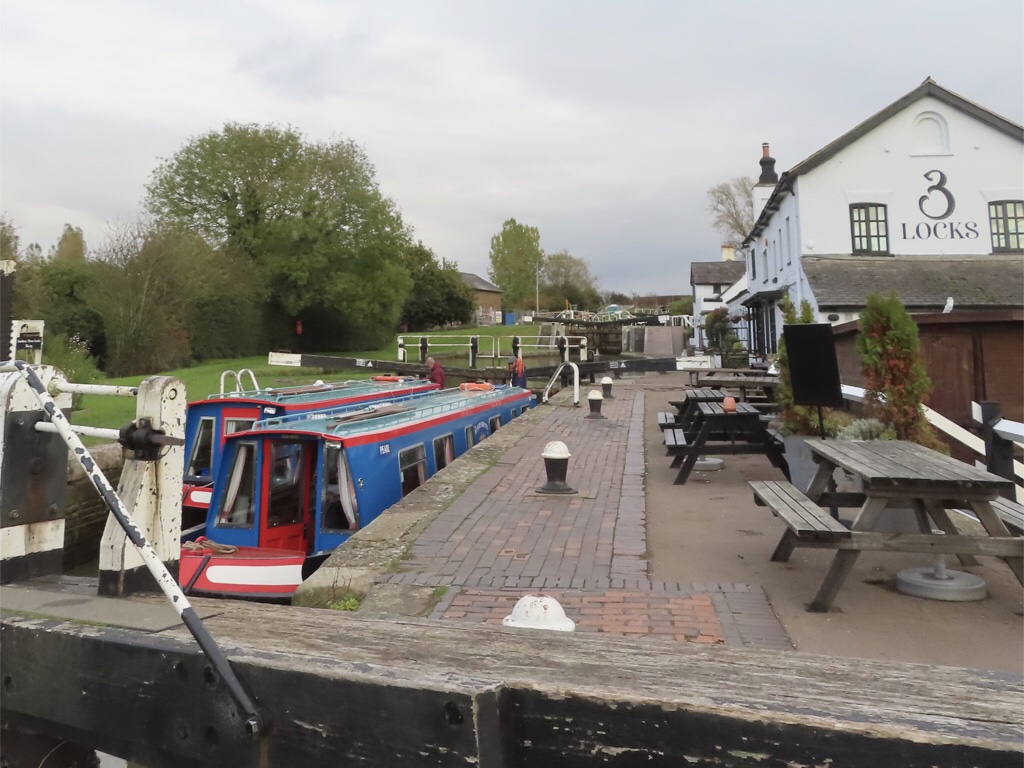
The Three Locks was purpose built as a canalside pub to provide services to travellers on the canal and was originally known as The New Inn. Census records from 1881 list the innkeeper as Mary Faulkner who ran the pub with her two servants, Charles Barron and Mary Curtis. On the night of the census the inn had one guest, Joseph Staige, a retired optician from Birmingham who was perhaps stopping off overnight on his way home from London on a flyboat. Here’s an archive photo from maybe the 1950’s … not much has changed except the colour and the boats in the lock.

Anyway, time to shake a leg and get on with the day!

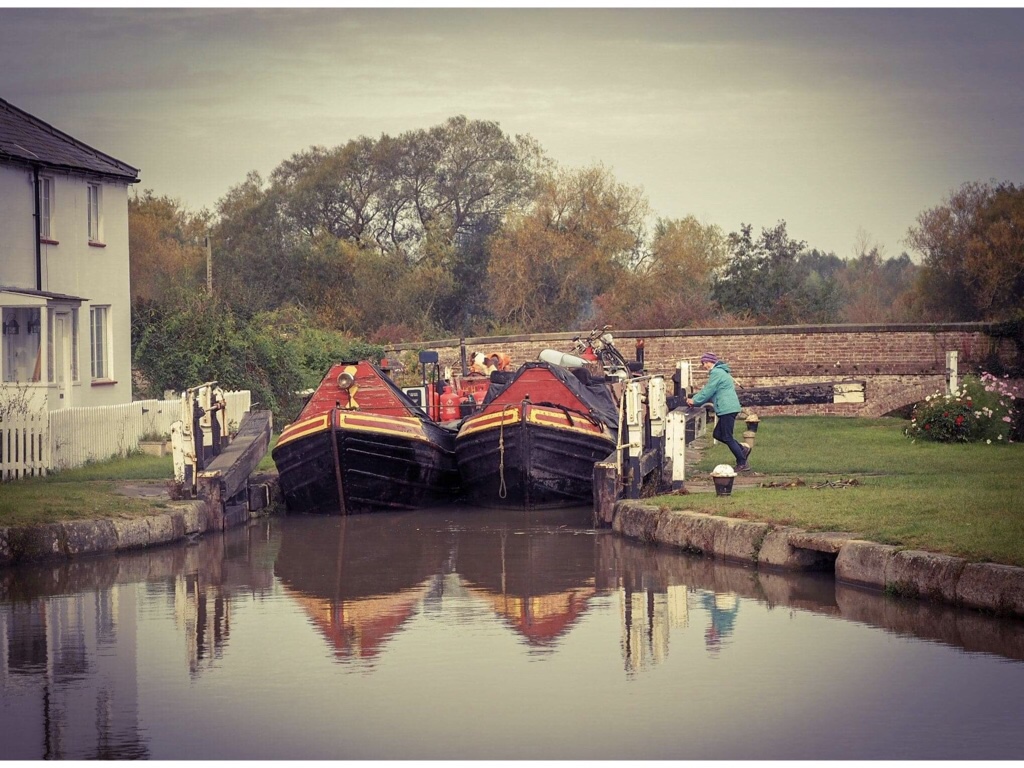
We set off after breakfast at 10.00 and we soon came to Stoke Hammond Lock. A real Waterman was bringing a pair of boats through the lock towards us which meant the lock was ready for us to take the other way …

… and here’s the pumphouse with its fanlight.

Only one boat had passed us this morning, so we were surprised to see another come up behind us to share the lock. She and I got chatting as we worked the lock … they had renovated their boat and had it for 8 years. I think he shared some tips with Chris, who managed to moor and pick me up perfectly!

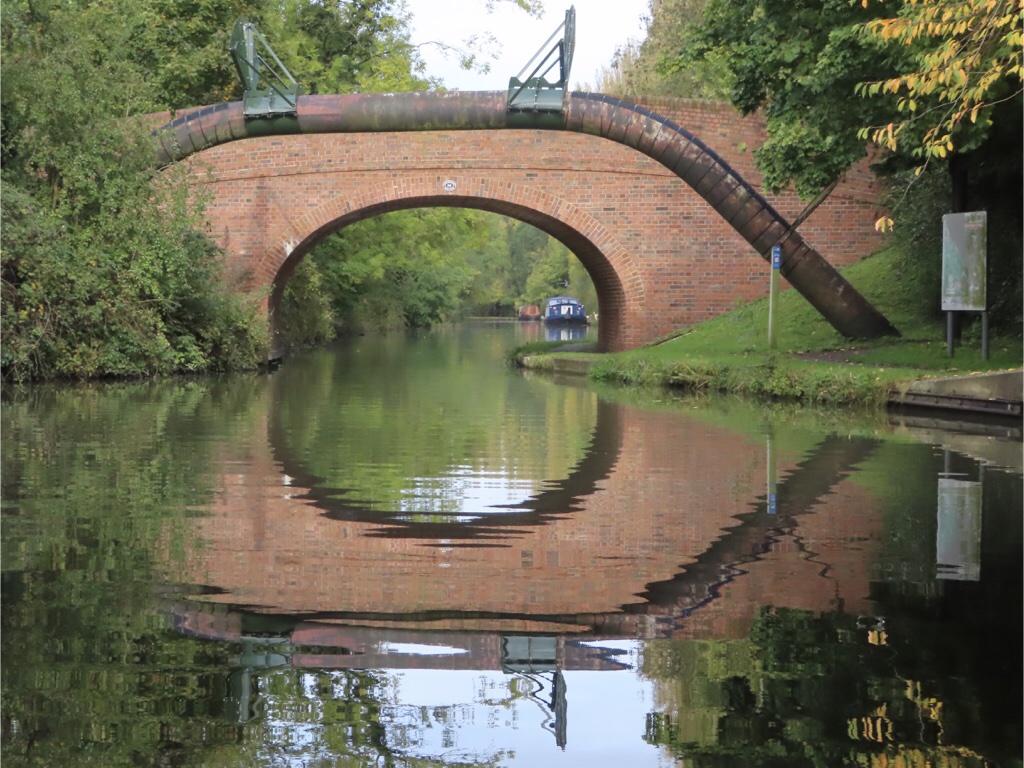
Incidently, if you wondered what a pipe bridge is … as we did … here is a prime example, taking a pipe over the canal!

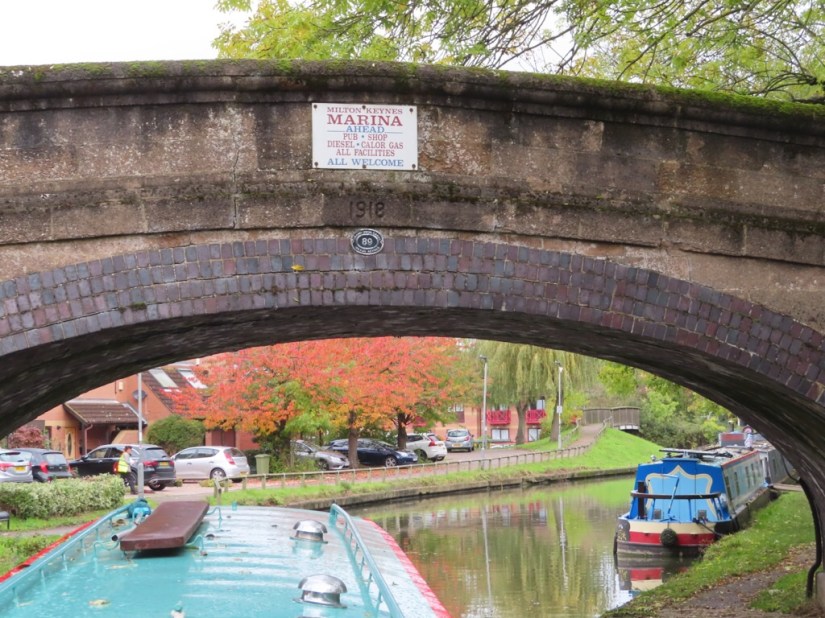
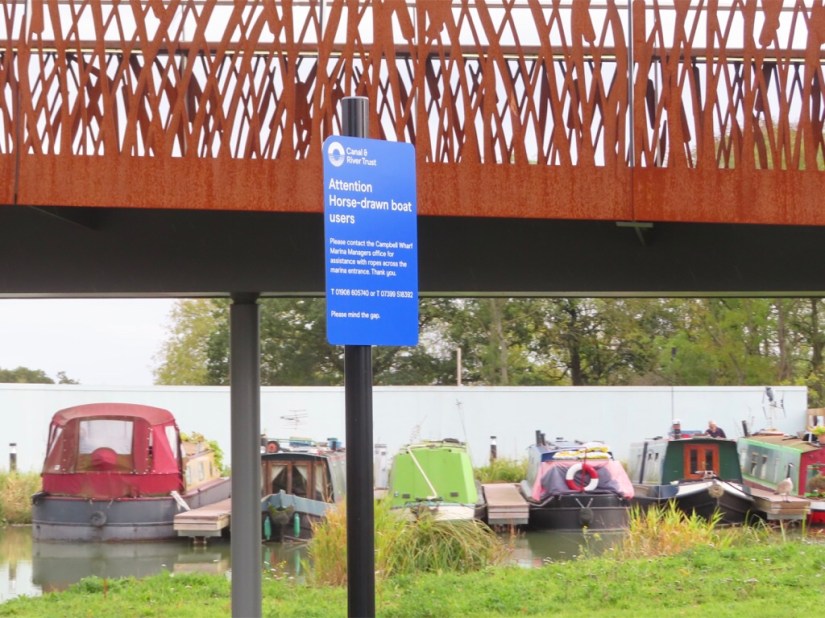
Some time later we passed a marina …

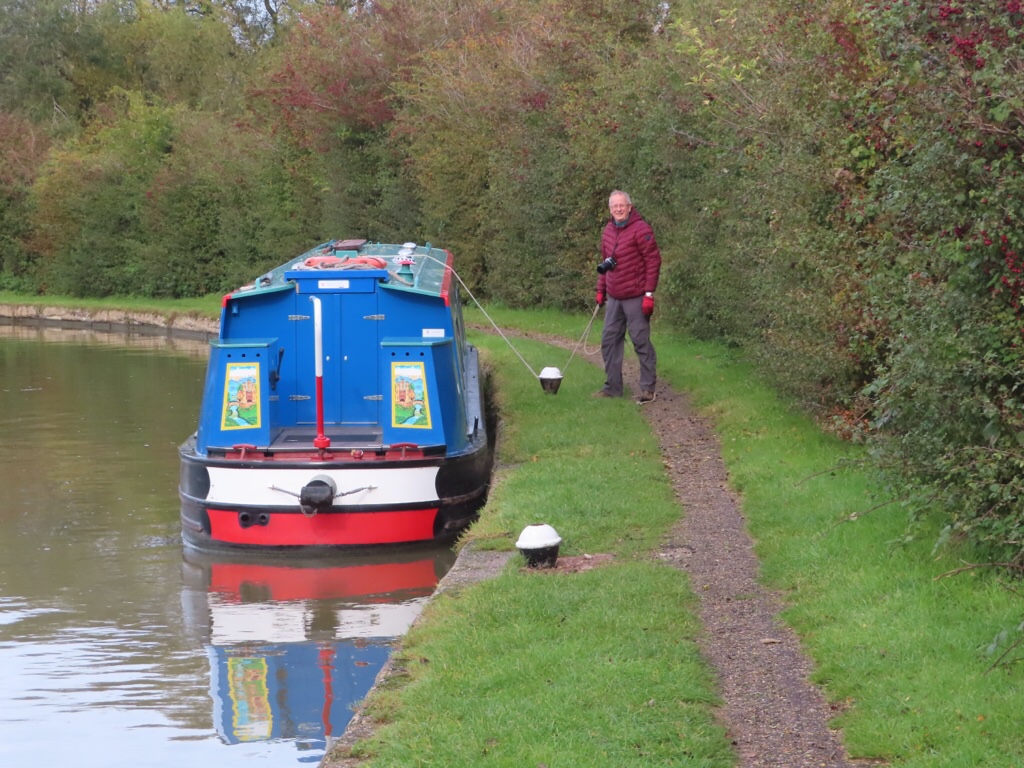
… then decided to stop for a coffee. Easier said than done though as mooring proved quite tricky … we managed to get the bow in … but the stern stuck out … so we tried again … twice … before we had success! I think the lesson learnt is not to leave it too long to stop for a break, as concentration is already waning when it’s most needed. We started with coffee … then I went for a short walk round Waterhall Park, where I saw the River Ouse …

… then we had lunch!

Setting off again was easier said than done as we seemed to have got stuck in the mud. Chris got the pole and despatched me to the other end of the boat in the hope we could push free!

Finally we were free and a mile or so further on we reached Fenny Stratford where Bridge 96 takes the canal beneath the old Roman road of Watling Street and the oldest known gold coin in Britain dating from 200BC-100BC was found here in 1849.

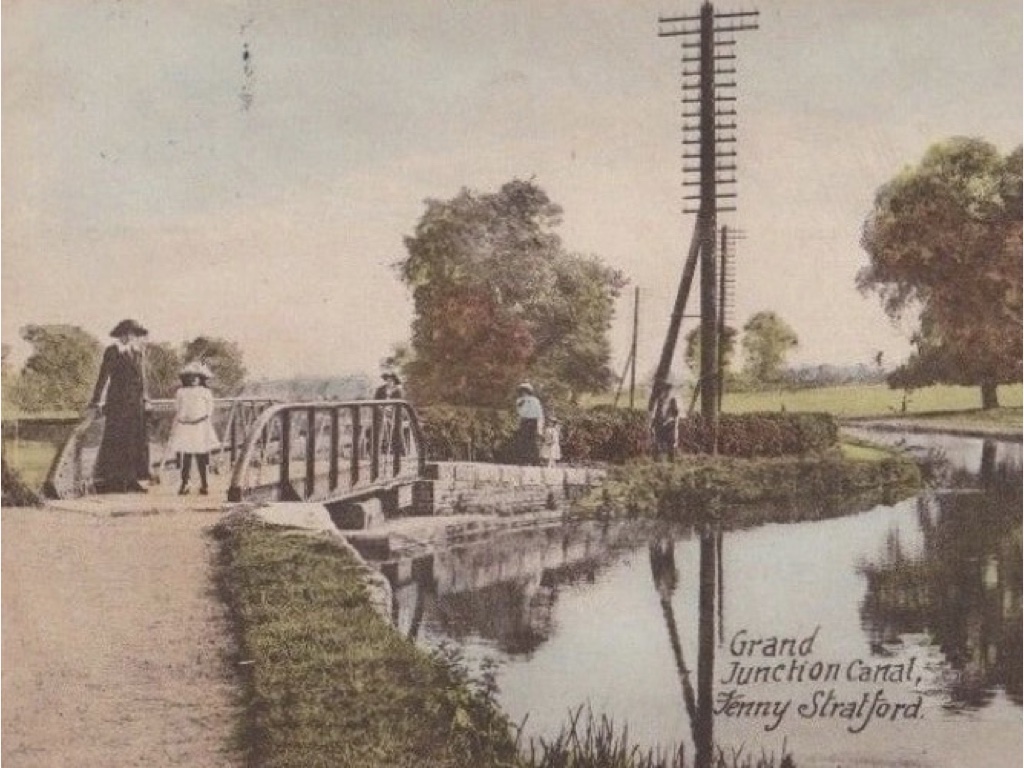
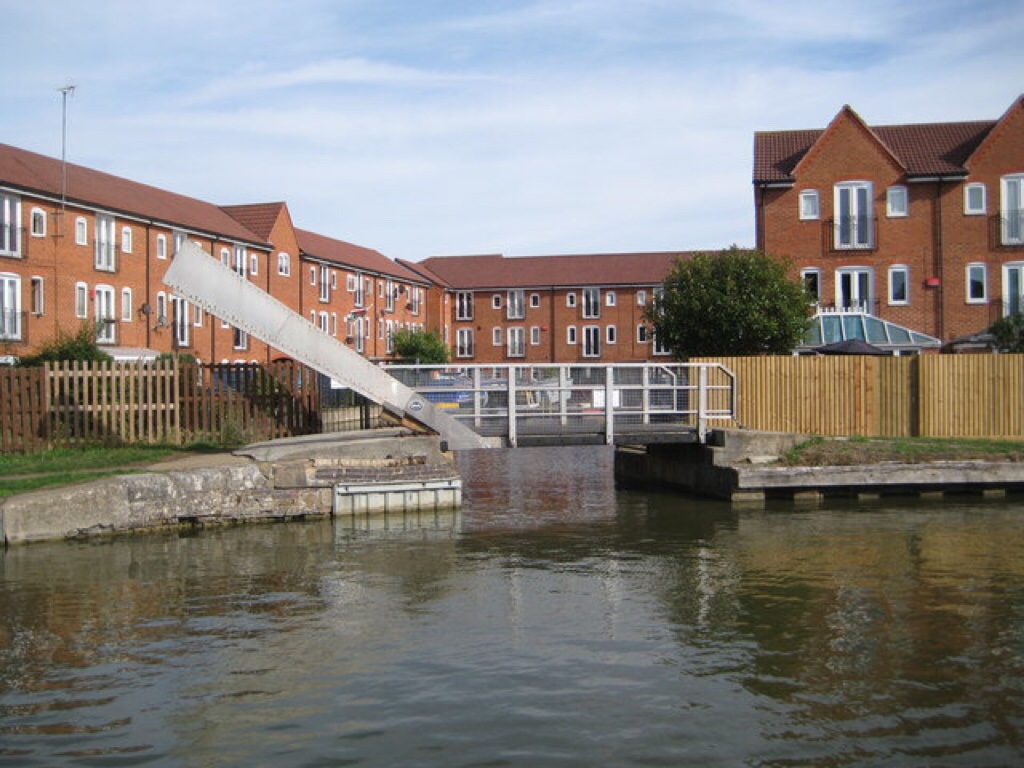
Here are a couple more then and now images of the bridge …

… and houses on the site of a brick kiln and a wharf which was used to load goods from barges.

The towpath was carried over the entrance to the wharf by a swingbridge, since replaced by a liftbridge. There would have been wharves like this all along the canal, providing a transport network. The canal was also useful for other communication and large telegraph poles lined the route. A GPO repeater station amplified signals so they could travel north, or during WWII to the code-breakers at nearby Bletchley Park.

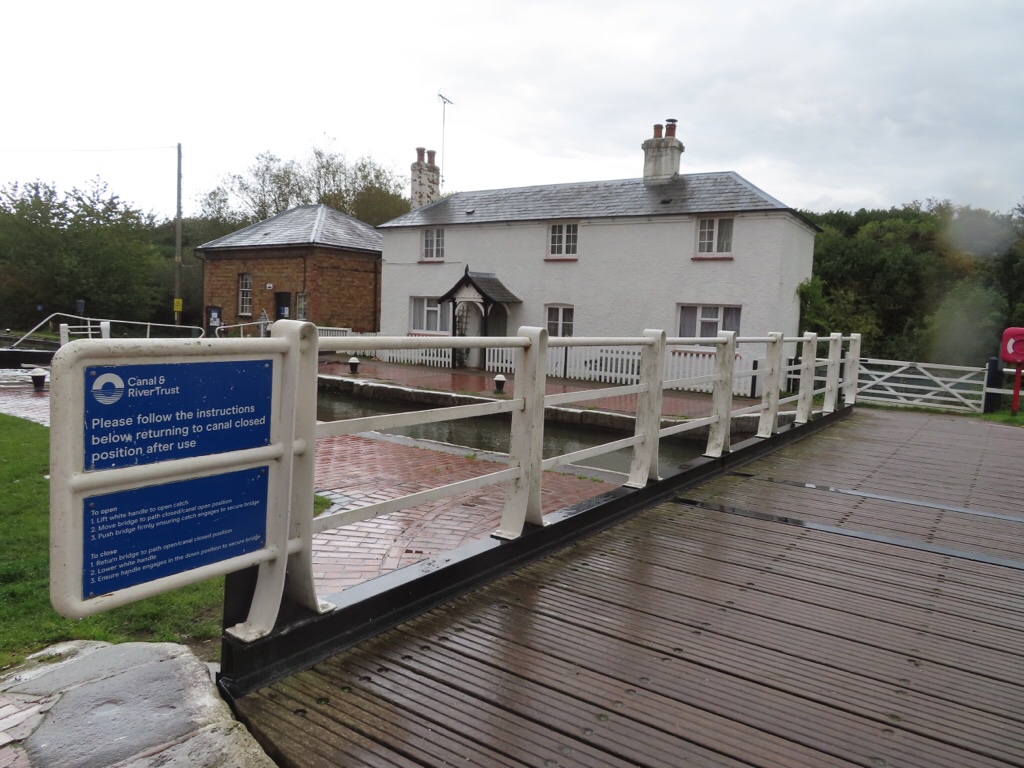
Just past the town is Fenny Stratford Lock, the first lock that raises the level of the canal after it has crossed the long flat plain of the Ouse Valley. We managed to moor up quite easily this time and went to check it out.

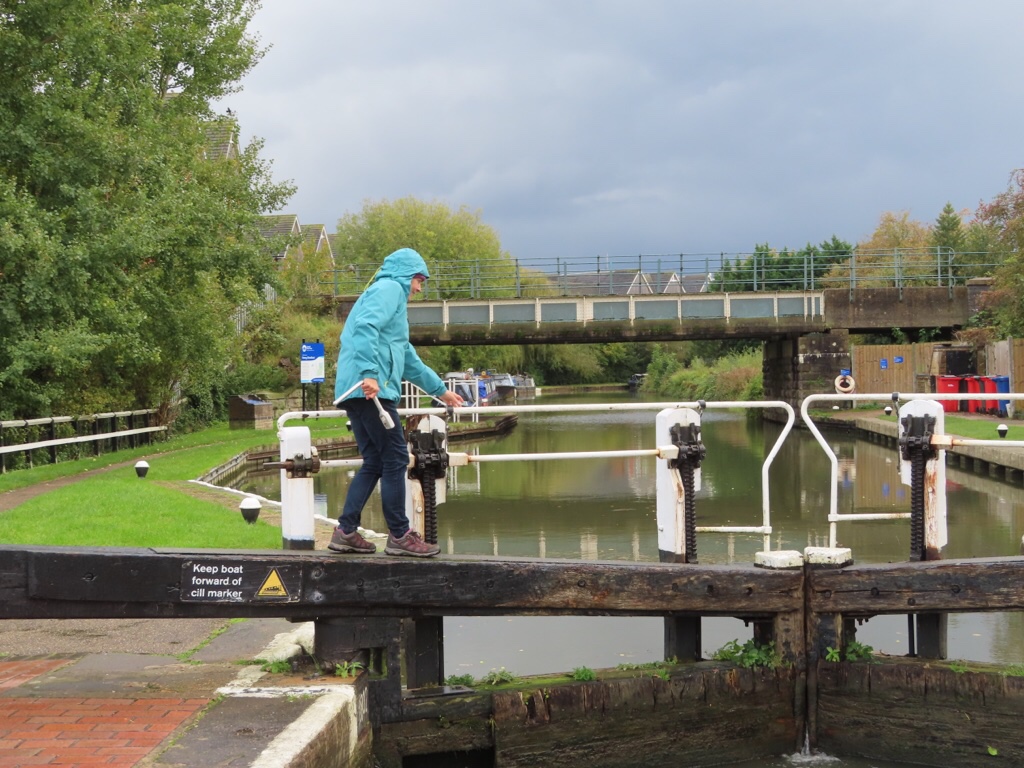
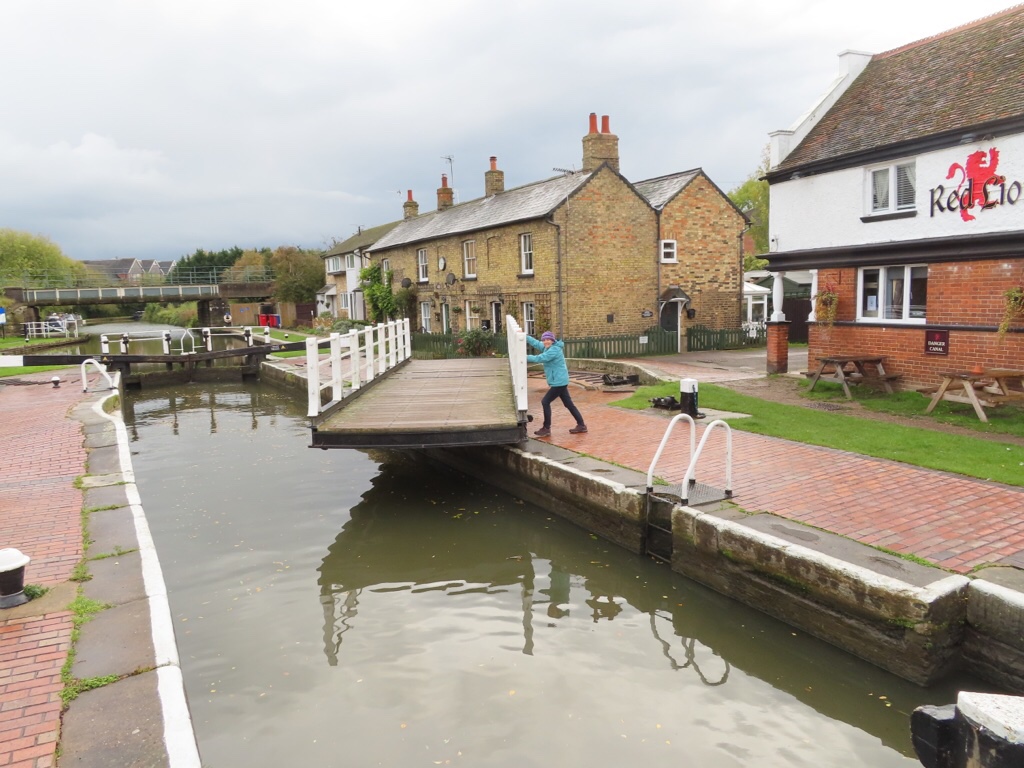
The lock had been left full, so we just needed to open the gates, but as I was taking a few pictures, I noticed an added complication, a swing bridge in the middle of the lock!

The sky darkened and the rain started, so we decided to wait and see if it would blow over.

We didn’t have to wait long, just a passing shower. No other boats had come, so we started to work the lock ourselves. I tried to move the swing bridge, but struggled and Chris came to help … finally he had a chance at some manual labour!

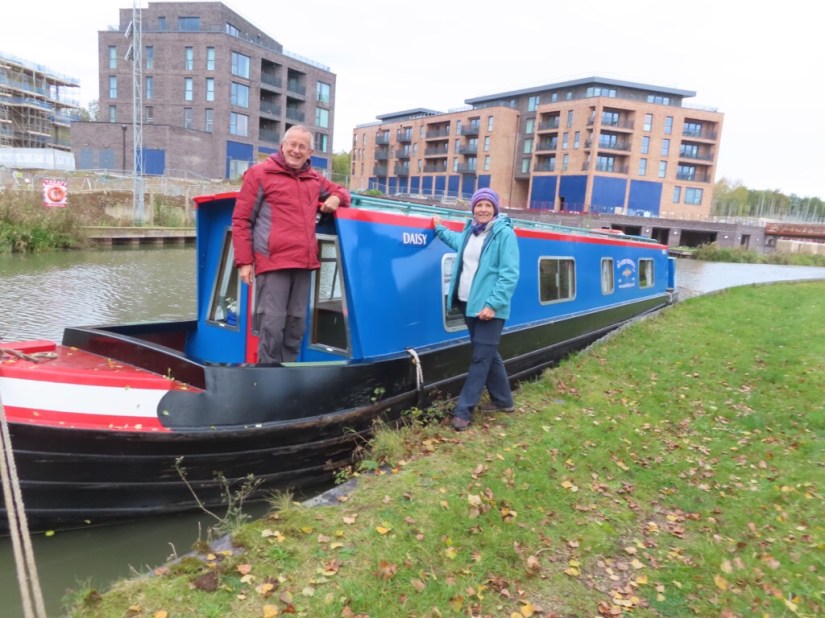
I opened the lock gates, Chris moved the boat into the lock. I closed the gates, opened the paddle on the other gates so the water equalised, then opened the gates. Chris took the boat out and moored while I closed the gates, but he had to help again with the swing bridge. I remembered that so far I had taken a few pics of Chris, but there were none of me, so I handed over the camera to even the score.

We checked we had left the lock as we should, then set off again. I really enjoyed working this lock as we remembered how to do it and managed all on our own … a real sense of achievement!

The sky was getting grey again and if it rains, the skipper gets wet, so we started to keep an eye out for a place to moor up … it’s not as easy as it sounds as you have to be a reasonable distance from hazards like bridges and bends not too close another boat and preferably not right by a noisy road. Coming into Milton Keynes, our options were reduced and we chose to stop just before Tinkers Bridge 90B, which we managed without event.

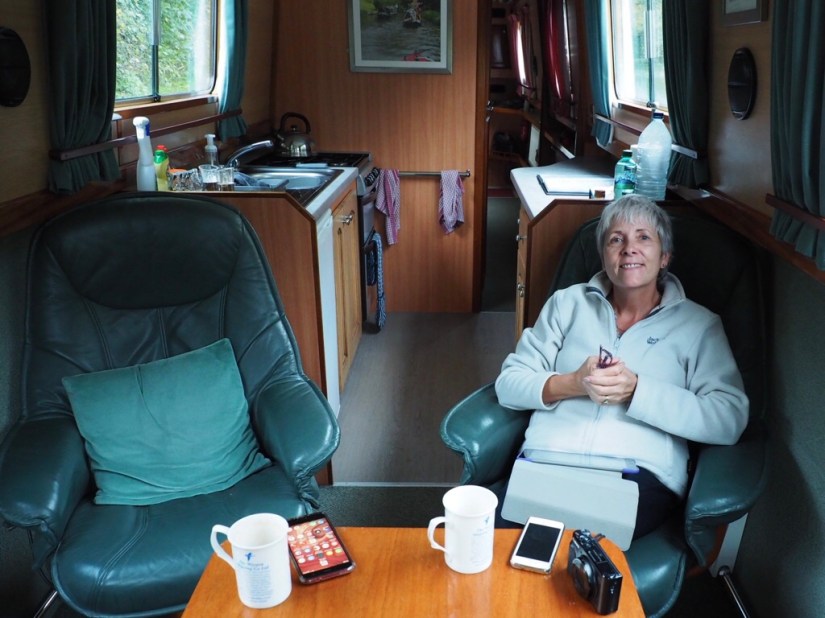
Sitting over a cuppa, we both felt the day had been quite hard work – the concentration needed to steer, as just a brief lapse has the boat heading for the bank – as well as the physical effort at the locks. We are resigned that as beginners, this is definitely slow travel as we have only travelled 5 miles, 3⁄4 furlongs today, and our idea of getting to Cosgrove is no longer realistic. Instead we will enjoy our tea and cake and take some time out. Chris is busy editing photos of swans …

… while I’m happy to put my feet up and read some more of my carefully chosen getaway reading … Canal Pushers by Andy Griffee, a murder mystery set on a narrowboat called Jumping Jack Flash on the Grand Union Canal no less!

Another tasty supper … this time sausages with roasted sprouts and potatoes with pomegranate molasses and a nice drop of Merlot!

Maps

The Adventure Begins …

We enjoyed our 90 minute drive to Leighton Buzzard, noticing how some of the leaves are turning already. We stopped briefly at Tiddenfoot Waterside Park to stretch our legs and eat our sandwiches …

… and caught the first glimpse of the Grand Union Canal.

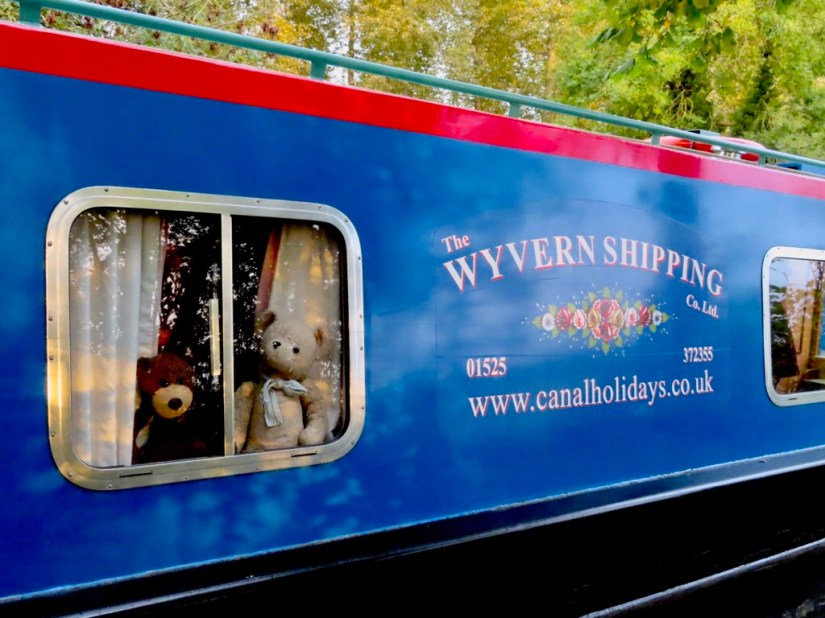
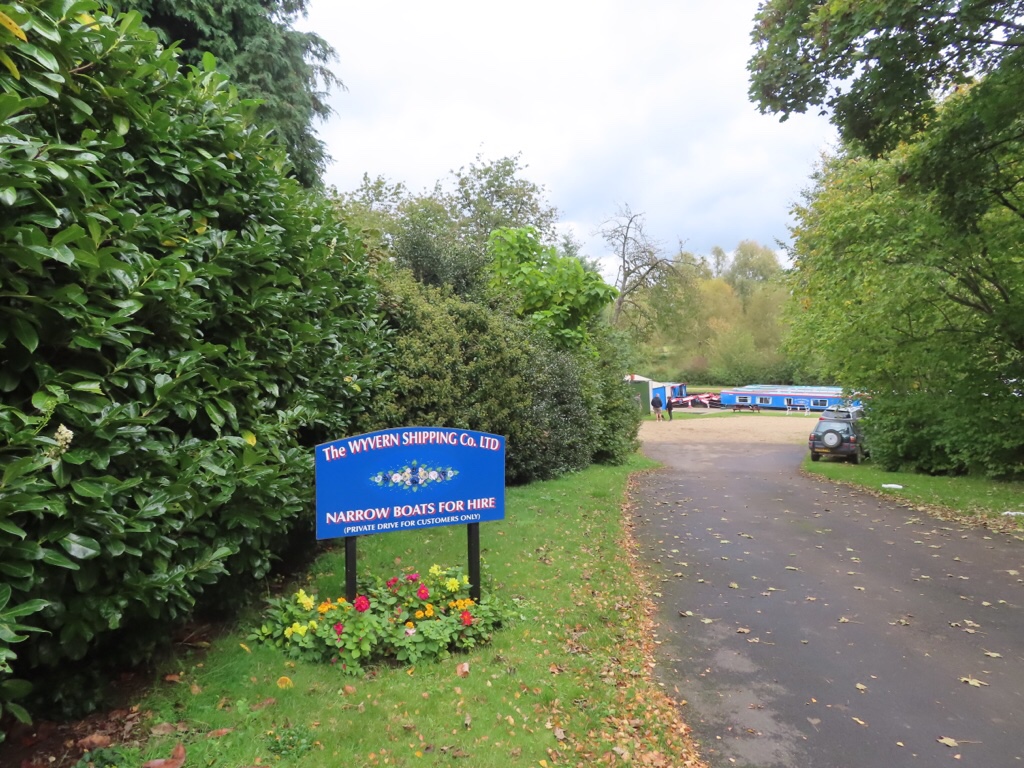
We were at Wyvern Shipping at 1.30 on the dot to collect Daisy, and were quite surprised to see lots of other boats were going out as well.

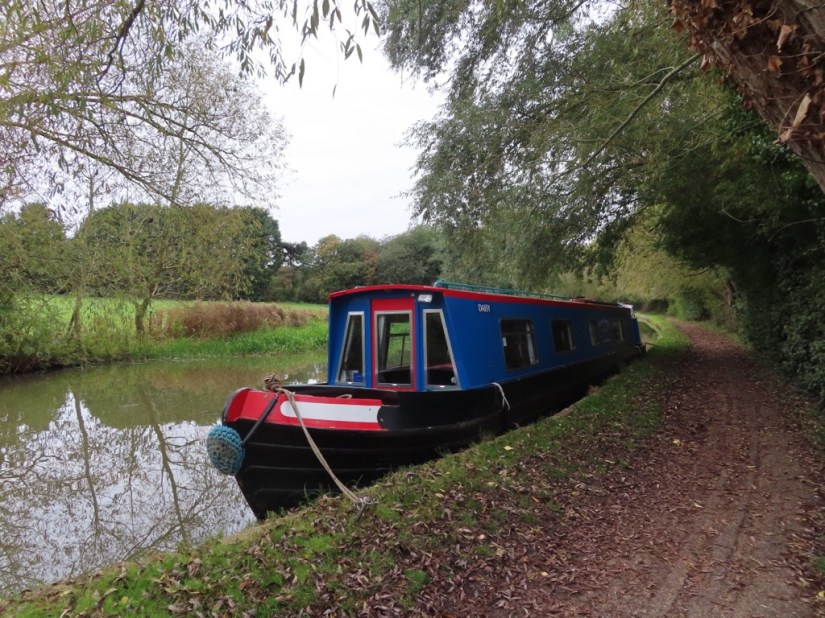
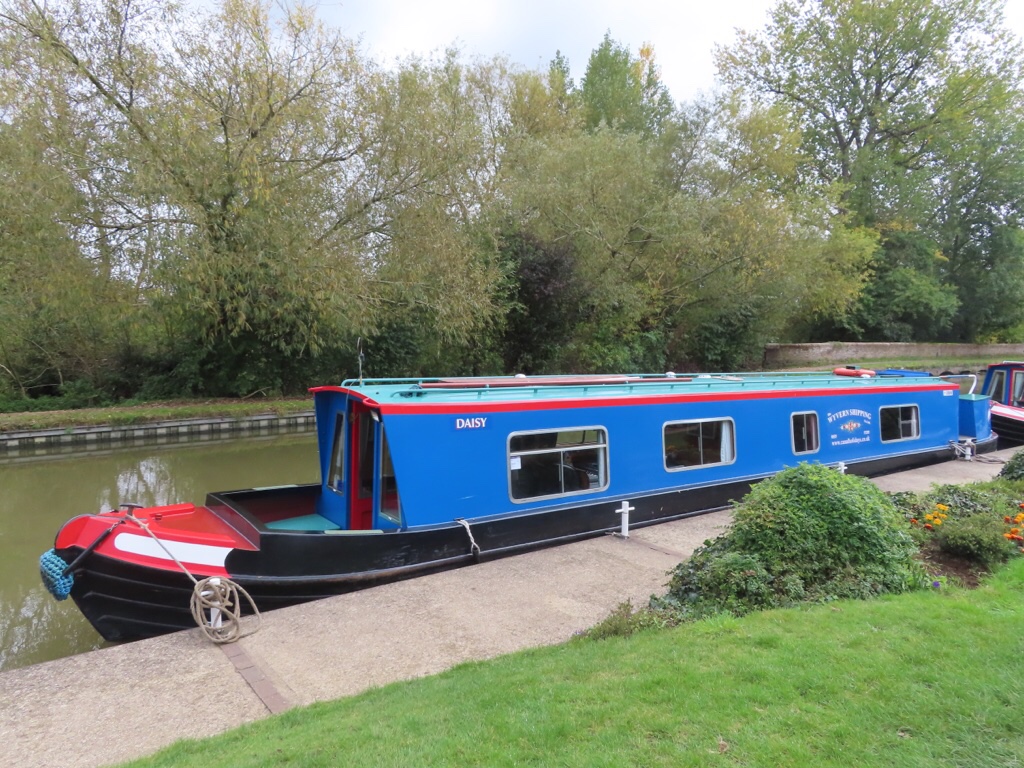
While Chris brought the car over to load our things, I quickly took some snaps of Daisy.

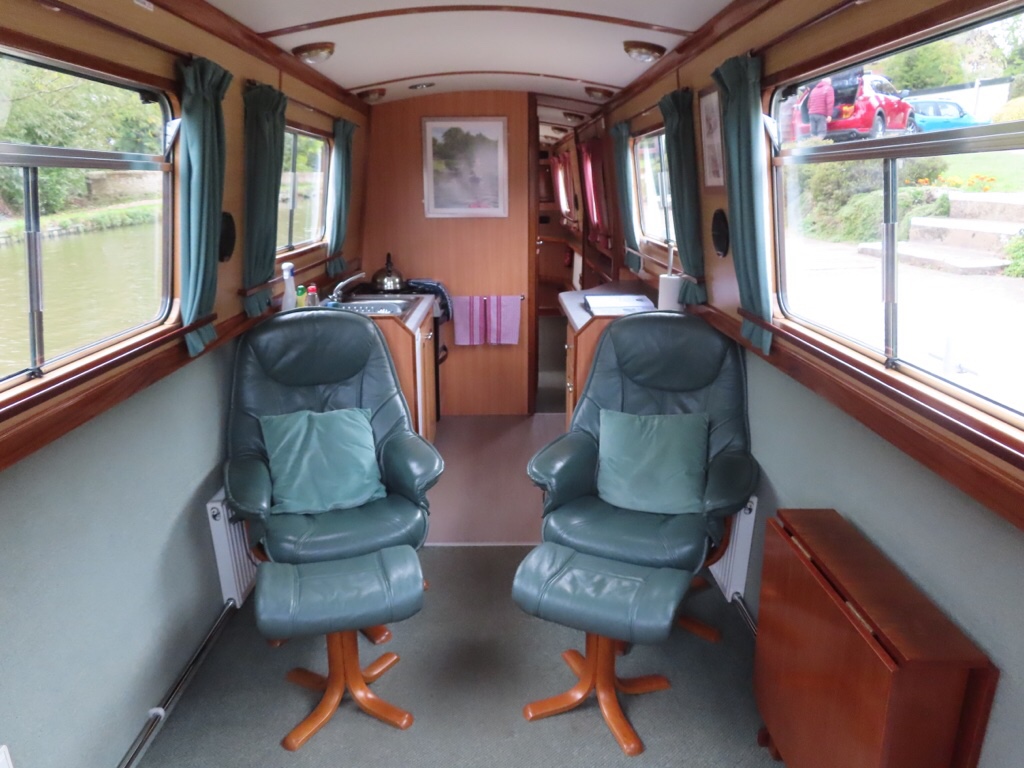
Simon gave us a full tour inside and out, together with operating details and safety. It seemed a lot to remember. Then we set off with Simon showing Chris how to manoeuvre the boat and me how to work the first lock, Leighton Lock. The locks here are big enough to take two boats, and another of the Wyvern boats had come down the canal behind us so we went through together. Chris might have the most technical task but I seem to have the most active, having to use the windlass to raise and lower paddles and my back to push the gate open and closed. Simon suggested we proceed to the three locks at Soulbury and go those together with the other boat and with all the instructions fresh in our mind, it seemed a good idea. We had thought we might moor short of the locks for the night and do them fresh in the morning, but it is best not to do this set of 3 locks on your own, and we could end up waiting a while for another boat the next day.

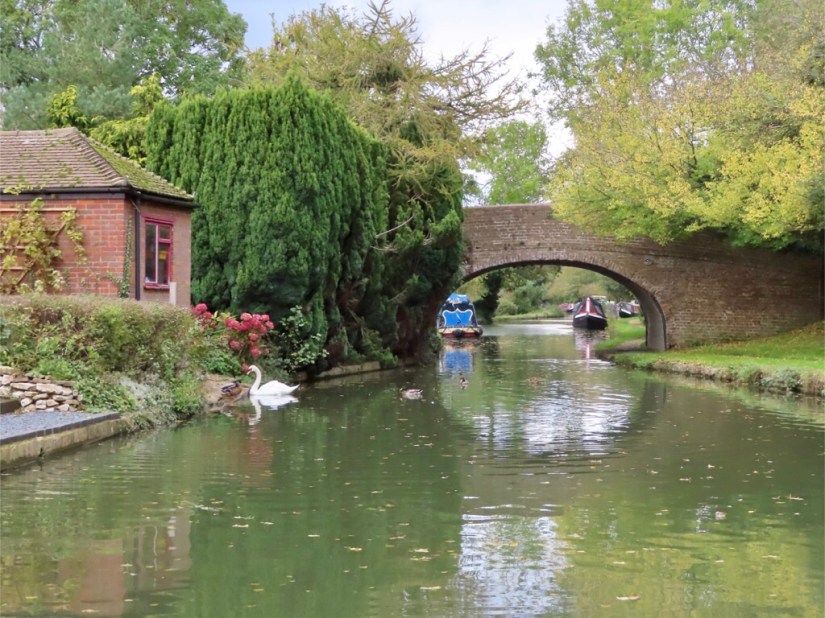
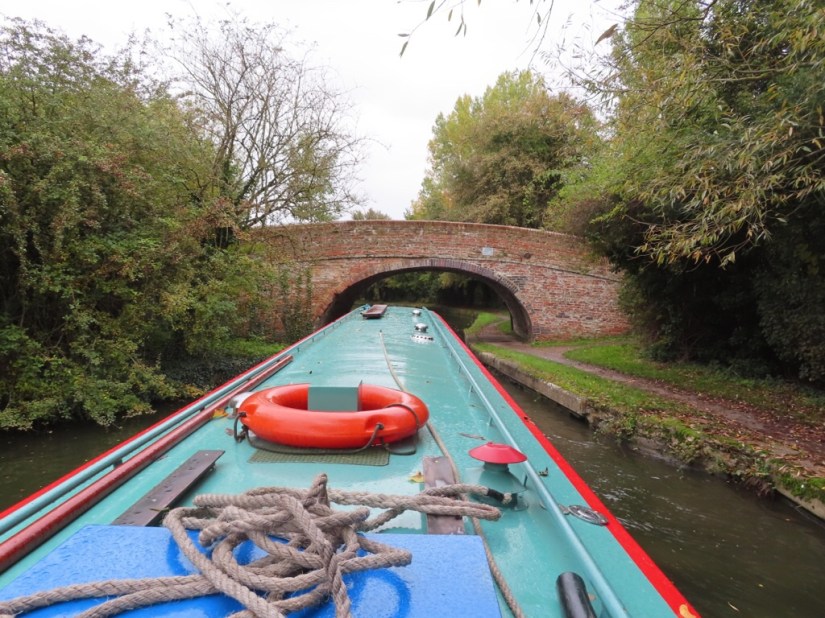
Our induction complete, Simon returned to the boatyard and I put the kettle on for a cuppa. The canal meandered through the Ouzel Valley past farmland & woodland and under several bridges …

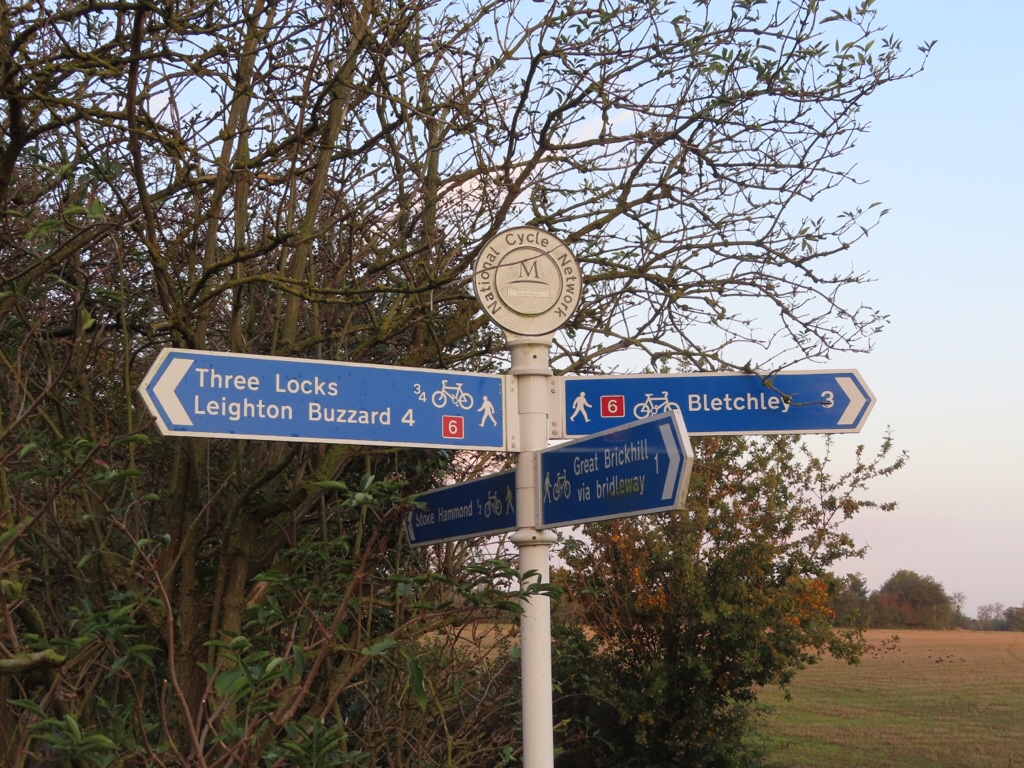
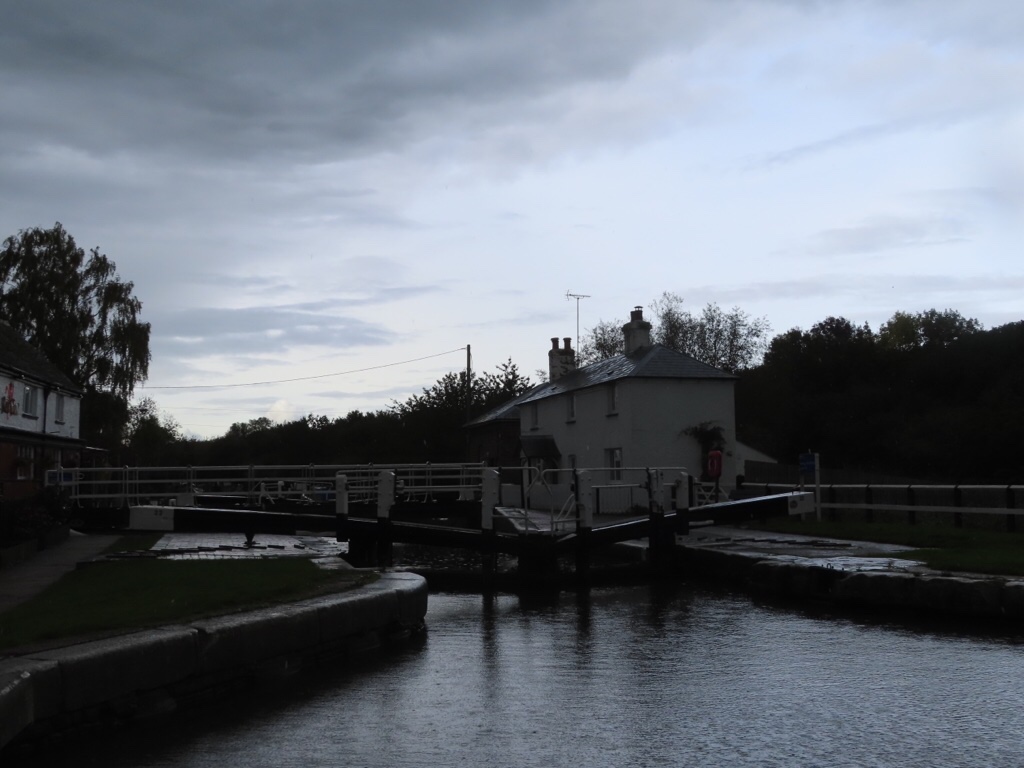
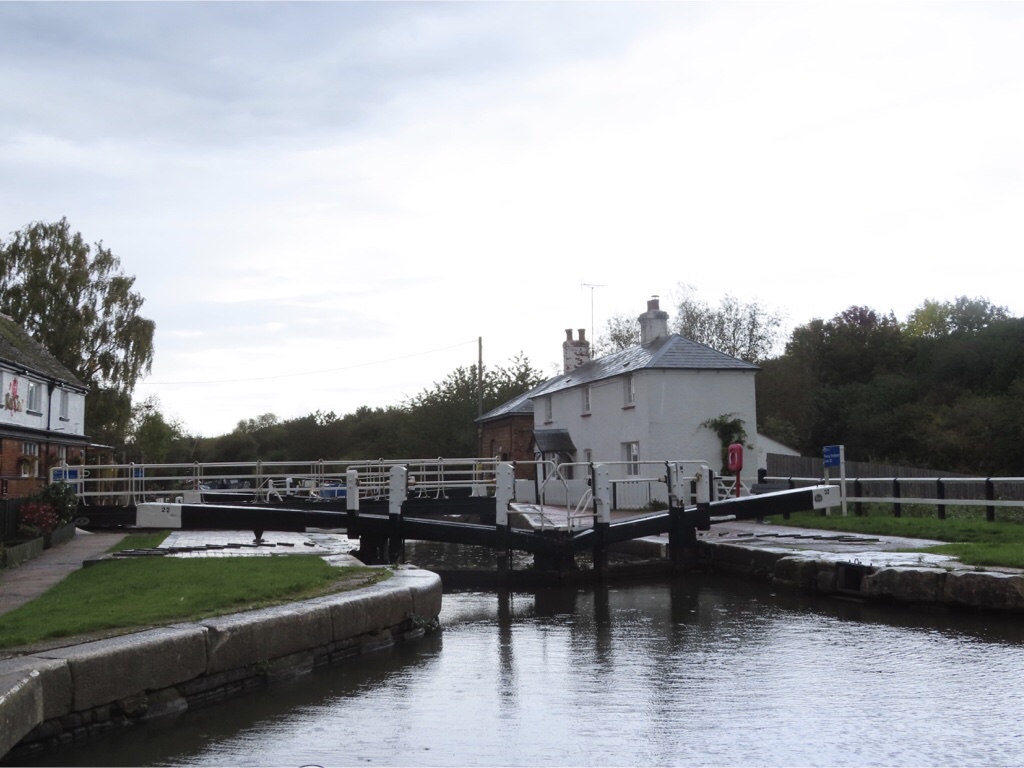
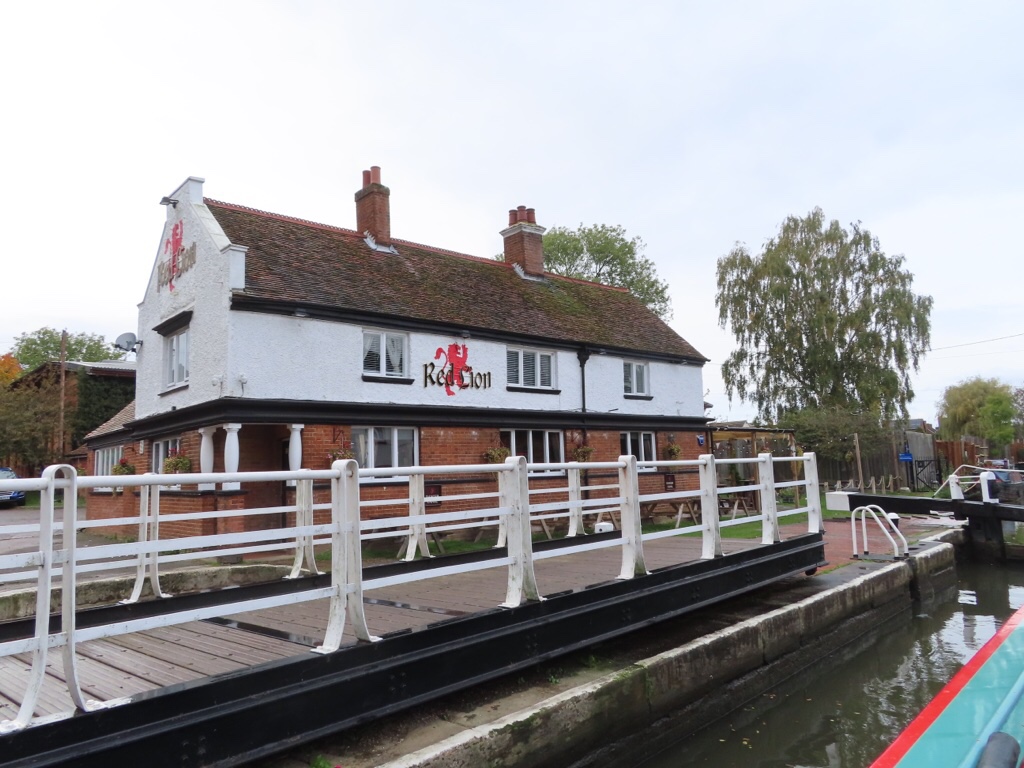
After around 3 miles, we approached Soulbury and moored up to survey the scene, with the flight of three locks ahead, a road bridge, a historic cottage and pub on the left and the old pumping station on the right.

Even this was easier said than done as drawing the boat in to the bank at the right angle to end up alongside in one go looks like it will take a little practice! I went with the chap from the other boat to look at the lock and figure out what we needed to do and we quickly established we weren’t too confident at all! A couple of other boats had moored up behind us and Jim came forward to rescue the situation. He had also hired his boat from Wyvern, but had done this before and got us organised as to who should do what when and I even managed to take a few pictures along the way …

Relieved that we had survived the three lock ordeal, we looked for a safe spot to moor for the night as it had started to spit with rain and ended up stopping quite soon,just short of Bridge 106 and a total of 4 miles, 11⁄4 furlongs from Wyvern. After a little backwards and forwards, the hefty hammering in of stakes and tightening of ropes, we were securely moored and we scuttled in to the dry.

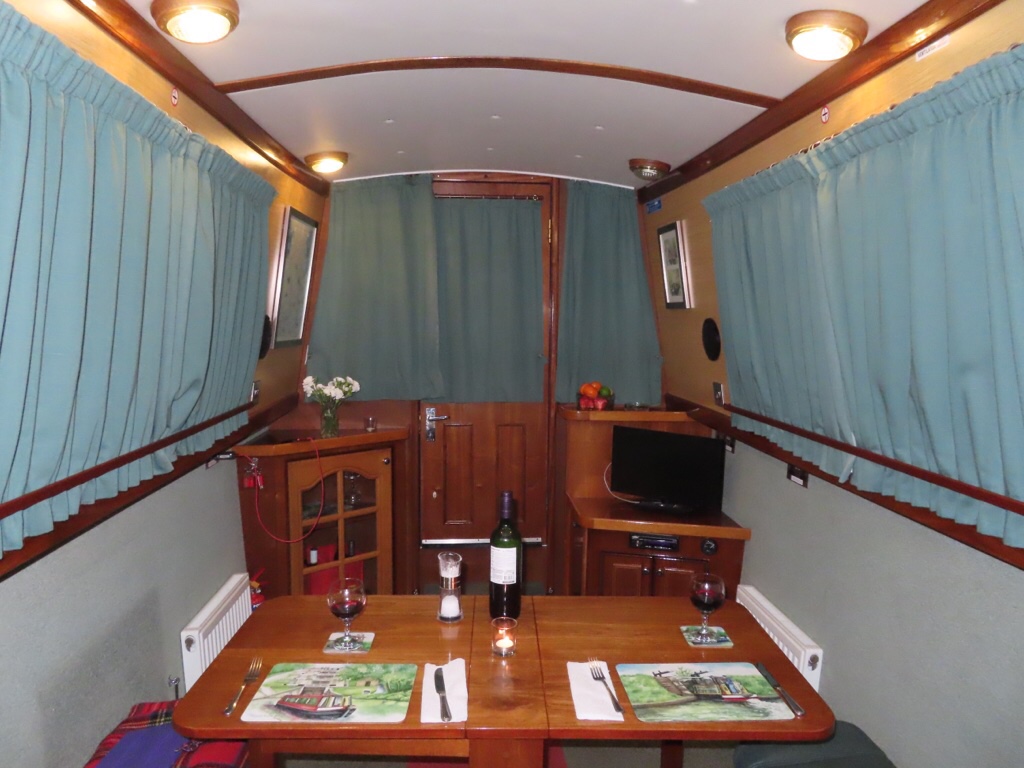
We did a bit of unpacking, made more tea and put the oven on for dinner then tucked in to pies and veg and a bottle of red wine in our cosy cabin. Any worries we had that it would be chilly were unfounded as the heating is very efficient. After all the excitement, we had an early night and could hearing the rain falling on the roof of the boat as we fell asleep.

Maps

Chris & Elaine Celebrate Afloat 2020

Covid 19 has stopped us all in our tracks this year and we’ve stayed at home, cancelling or postponing all the travels we had planned. In August we thought a modest little trip might be possible and an article in the newspaper gave us the idea to book a narrowboat for our wedding anniversary. It ticked all the boxes, one of the most important being to celebrate our wedding anniversary on a boat as we have every year, while still keeping our distance and having a bit of an adventure.

Daisy is moored on the Grand Union Canal near Leighton Buzzard and we hope to travel north as far as the Ouse Valley Park in Cosgrove, so we can admire the viaduct and aqueduct, before returning … just 37 miles and 1⁄4 furlongs with 12 locks in total … not a very demanding route as we are new to this lark and goodness knows what the weather will be like.

We’ve not wanted to plan, look at a map or make a list to early, just in case this trip also had to be delayed … but so far so good and fingers crossed!

So this is the plan, but anything could happen along the way … join us and find out!

Journal Entries

The Adventure Begins …

Finding Our Feet …

Celebrating In Campbell Park …

Homeward Bound …


Maps

Cebu City … Once More!

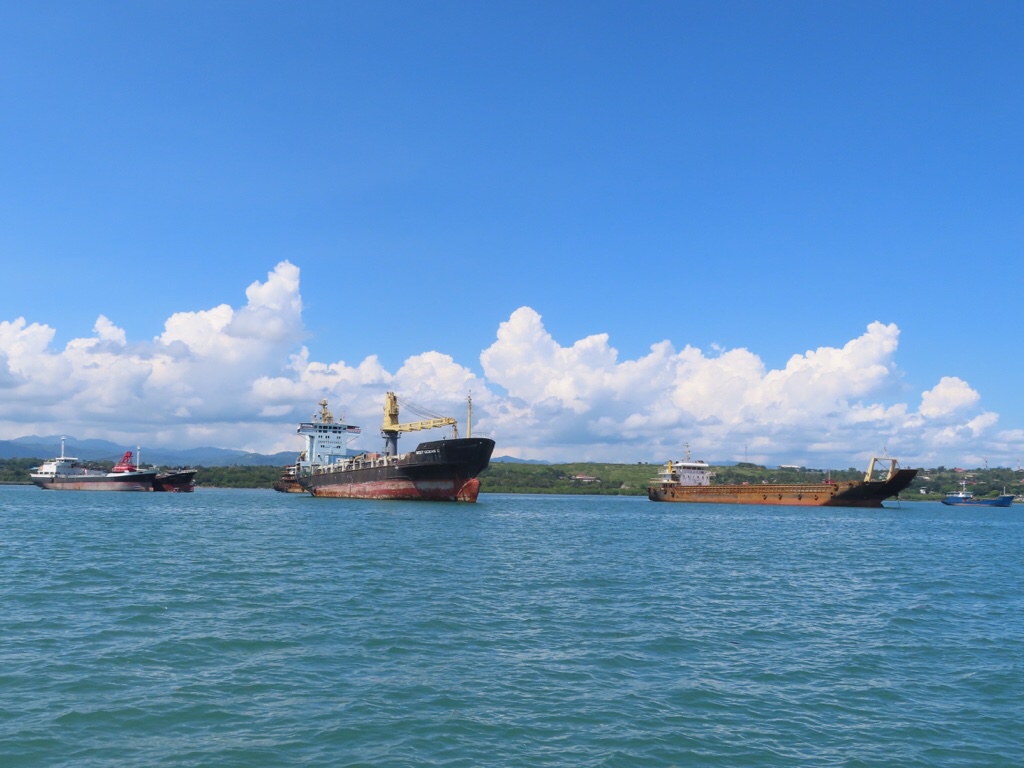
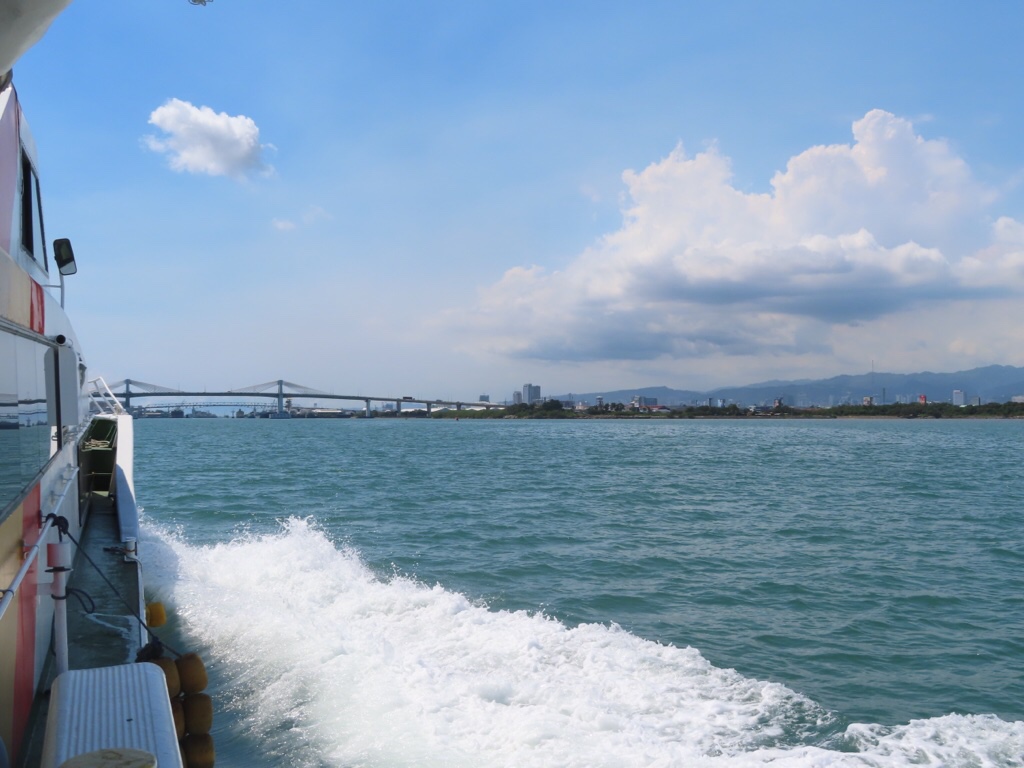
The only time I’ve worn a fleece this trip, was on the air conditioned ferry, so this time we opted for economy instead, not realising that this meant sitting outside at the back!
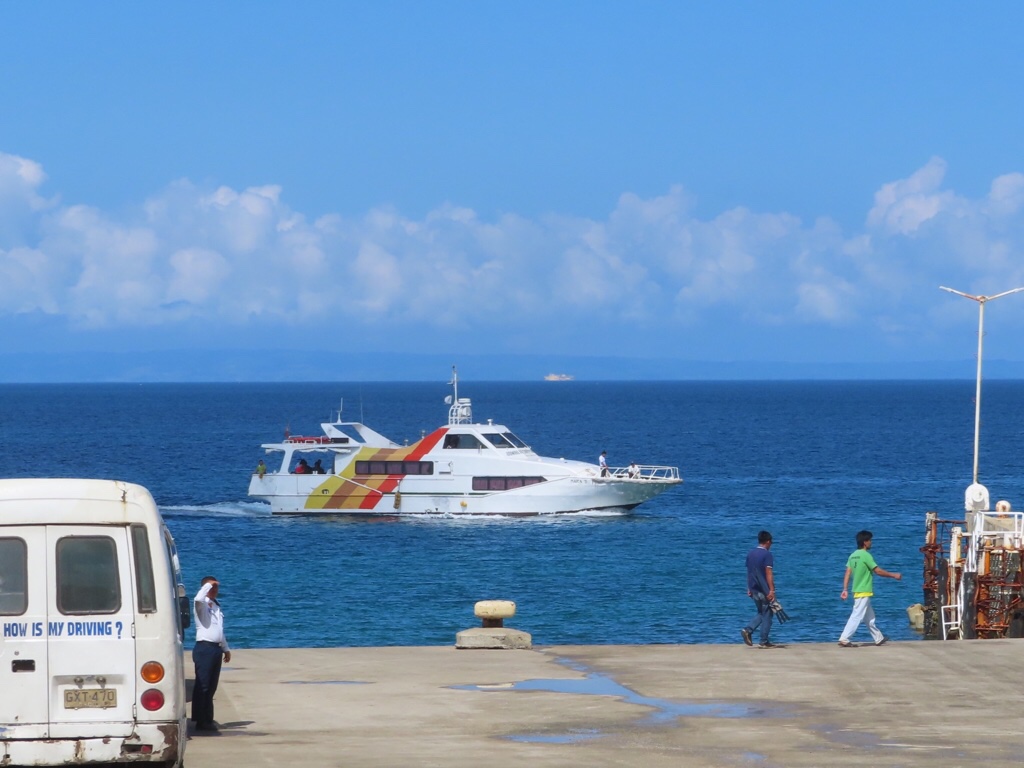
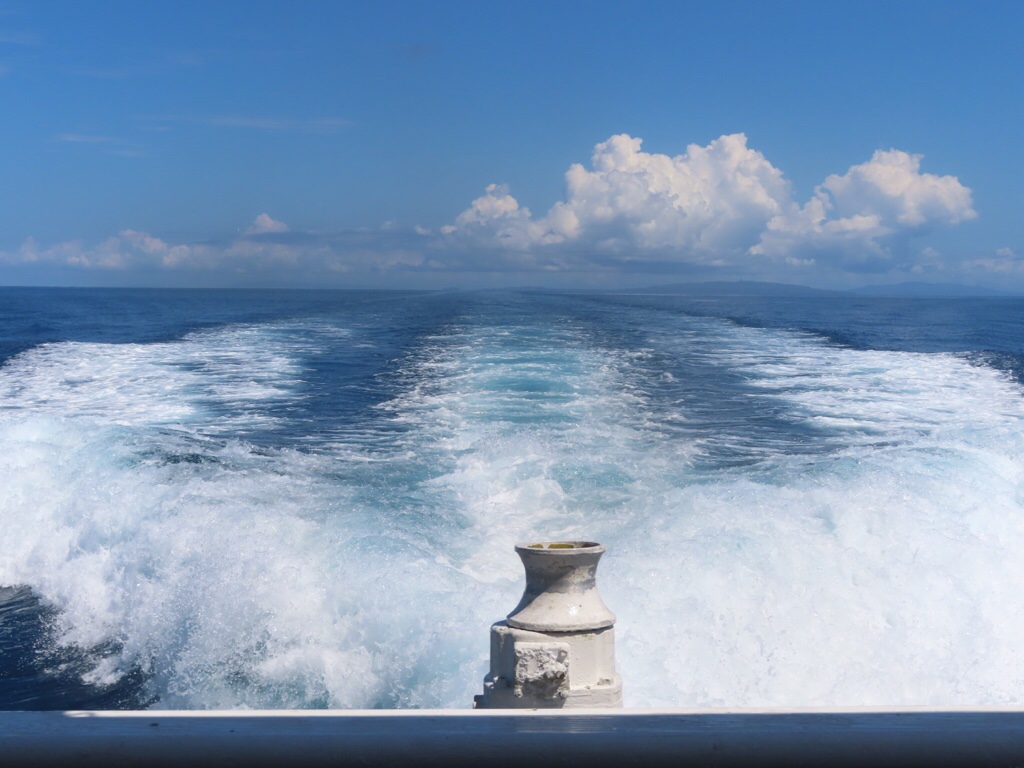
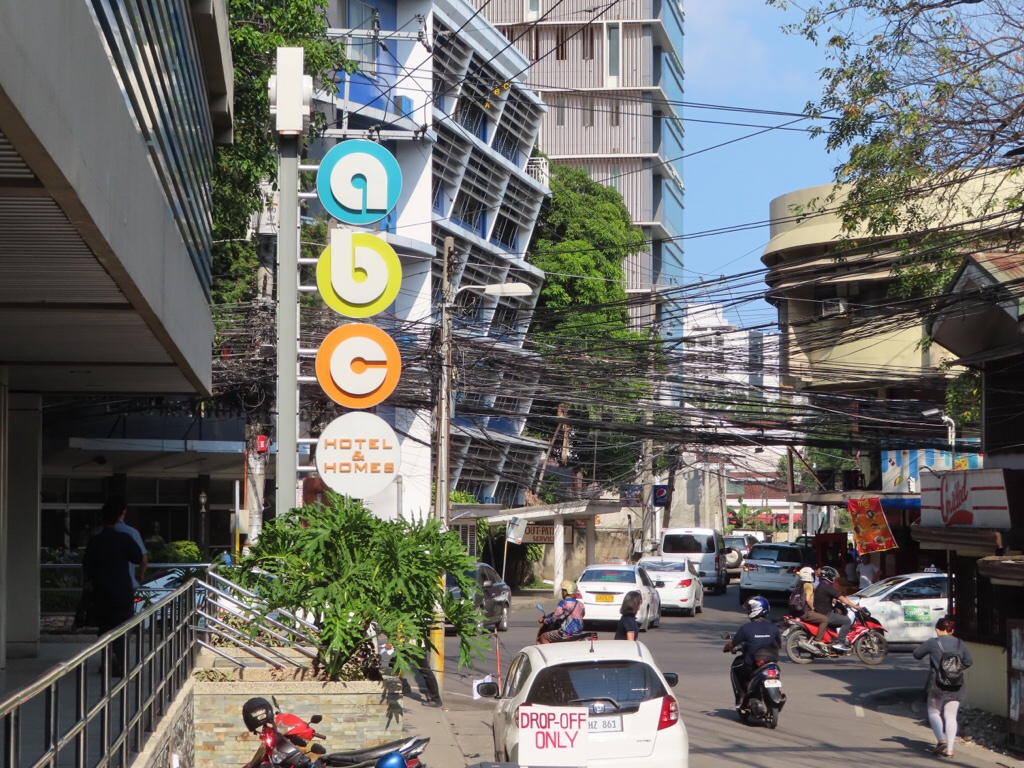
It would have been fine, but Chris was sitting right by the engine exhaust so ended up standing at the back, and while the spray wasn’t noticeable, we arrived almost caked in salt, so took a shower as soon as we arrived at ABC Hotel.
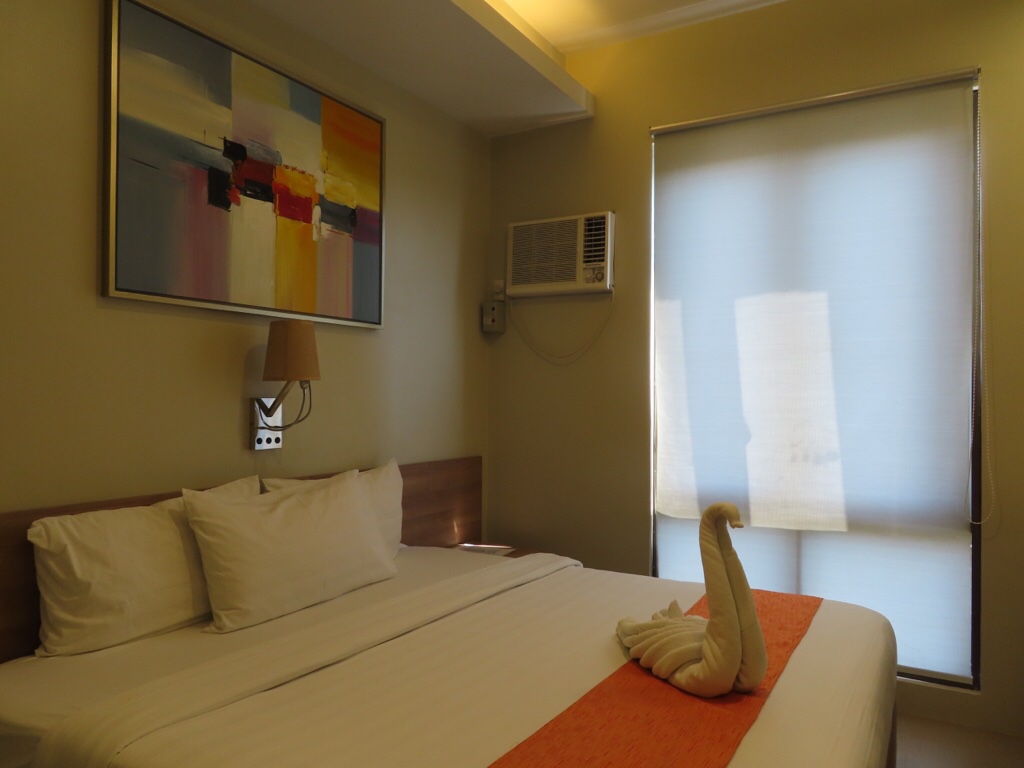
History hasn’t played a particularly big part in this trip so far as apart from some churches, there are few historical sites. Now we are back in Cebu city there are a few more so this seems the best time to mention the history of the Philippines … another area missed completely in my school education! I knew before we came it was Christian … a legacy of the Spanish … that it was called The Philippines after King Philip of Spain … and Imelda Marcos had a lot of shoes … but that was about it.

So most Filipinos are descended from Malay settlers, who were influenced by nearby Hindu kingdoms and trade with the Chinese and then Arab traders who brought Islam to the islands.

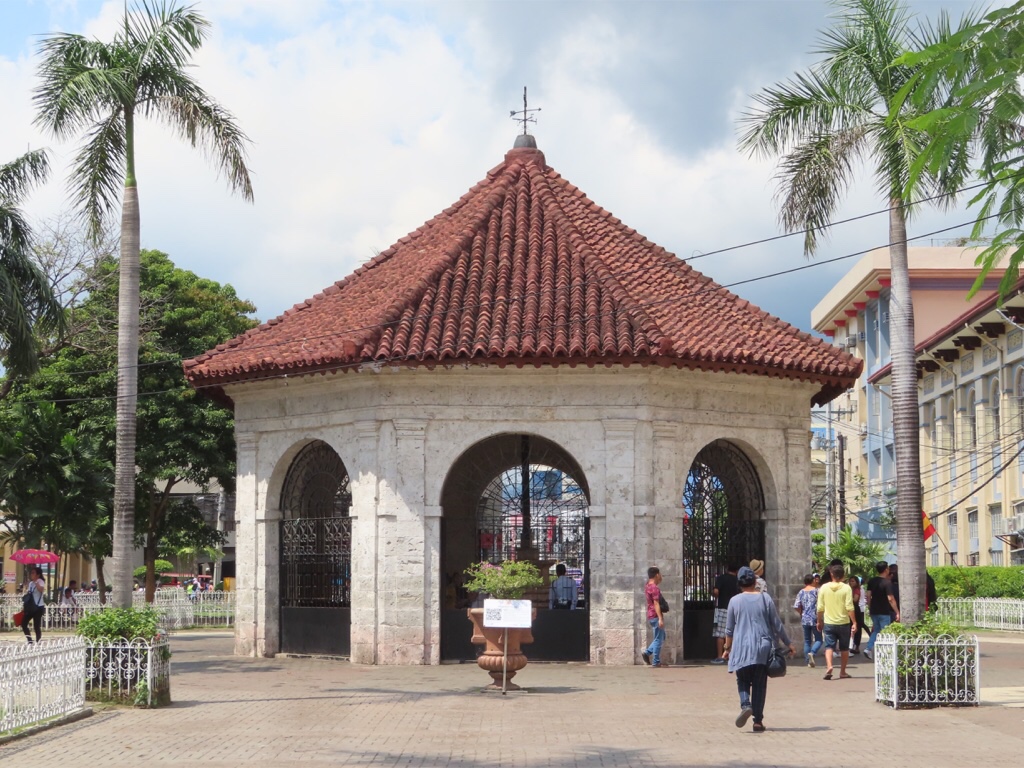
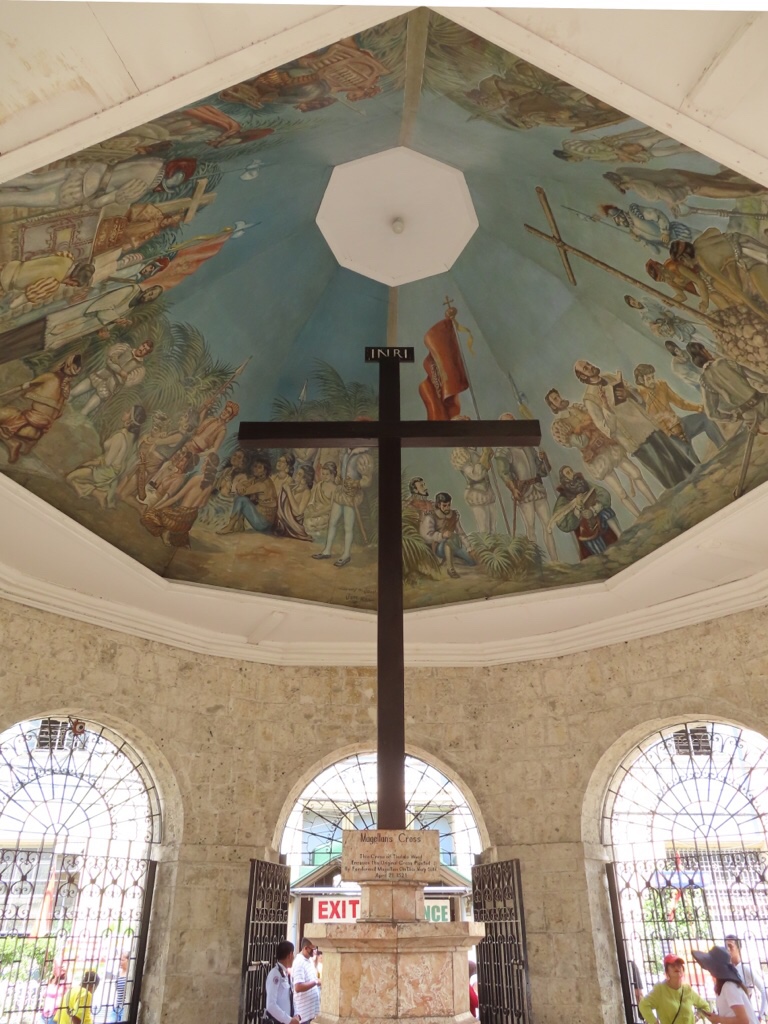
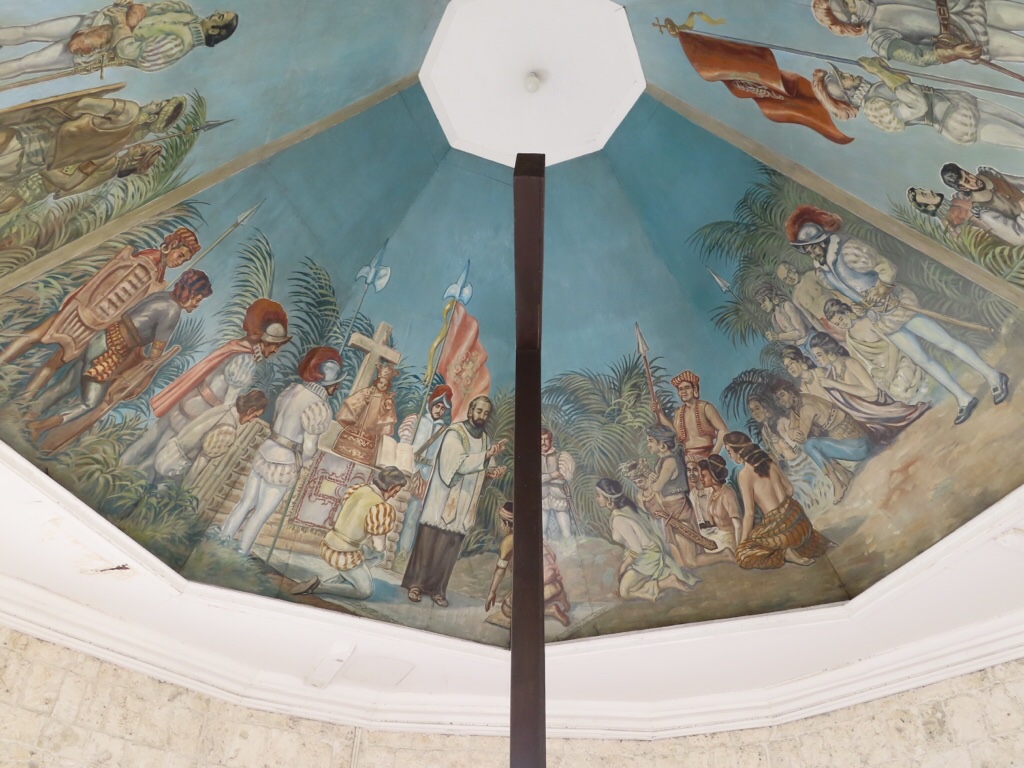
In 1521 Ferdinand Magellan sailed across the Pacific, landed in the Philippines and planted a wooden cross to claim them for Spain. The original cross was believed to have miraculous healing powers so they started chipping bits off, so it was encased in another wooden cross made from tindalo, although rumours say the original cross was destroyed or disappeared after the death of Magellan. Either way, it’s a symbol that marks the birth of Christianity in the land and is housed in Plaza Sugbo, between the Colegio Santo Nino and City Hall in a stone rotunda.
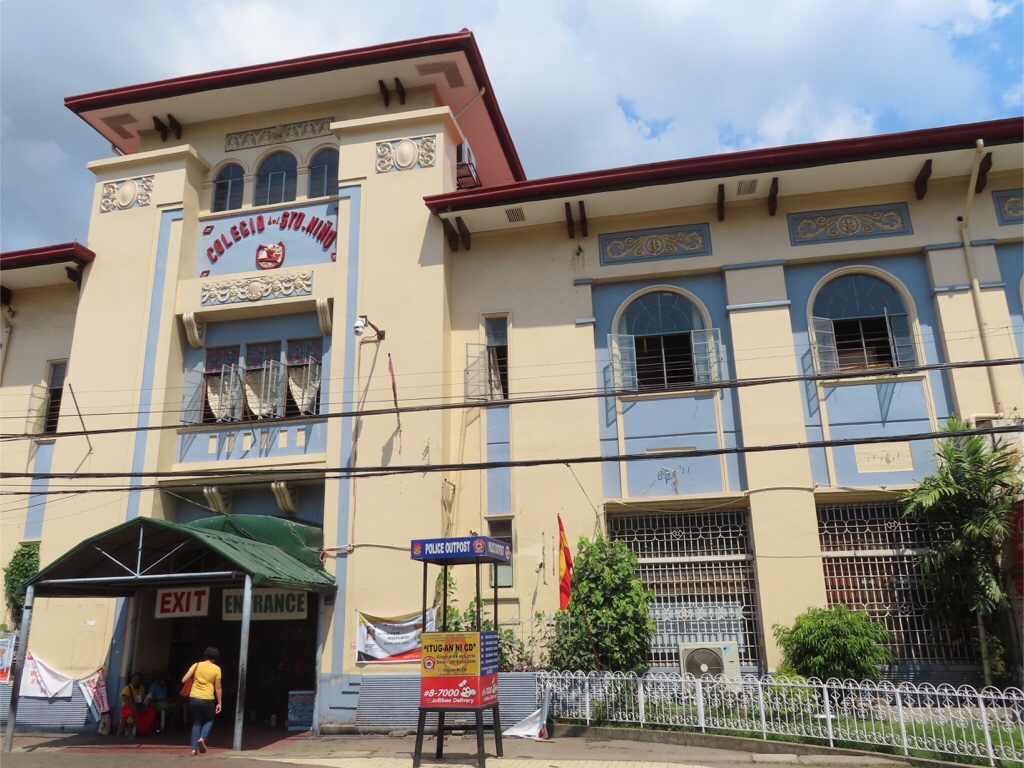
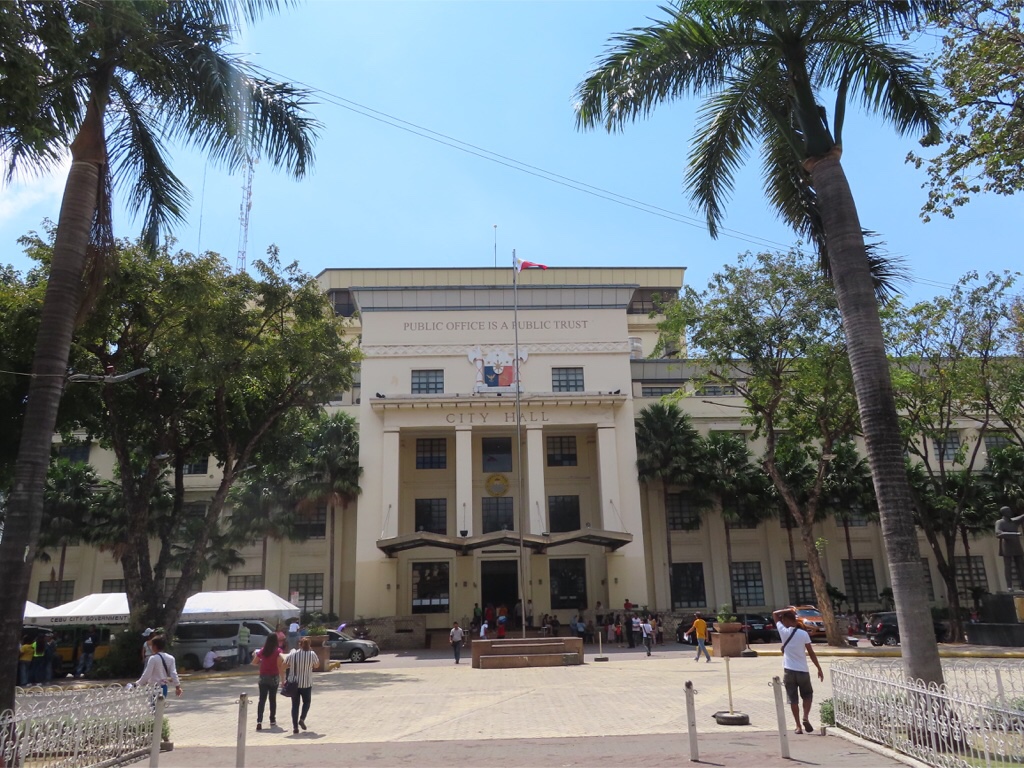
The ceiling is painted with scenes showing the arrival of Magellan and the planting of the cross …
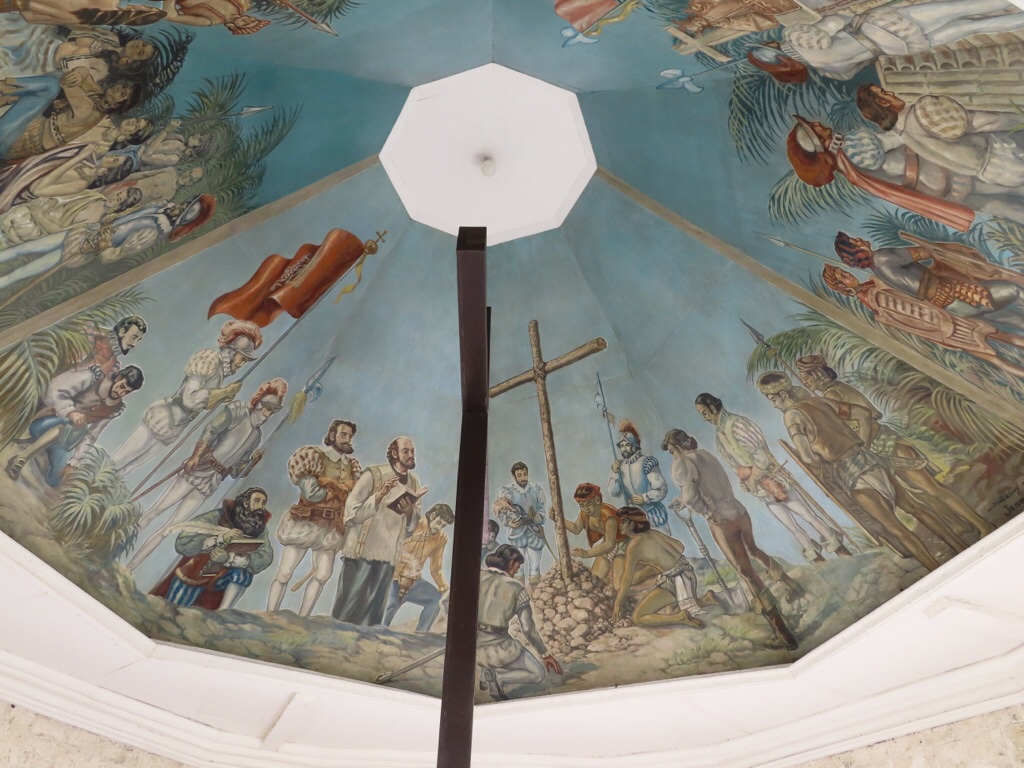
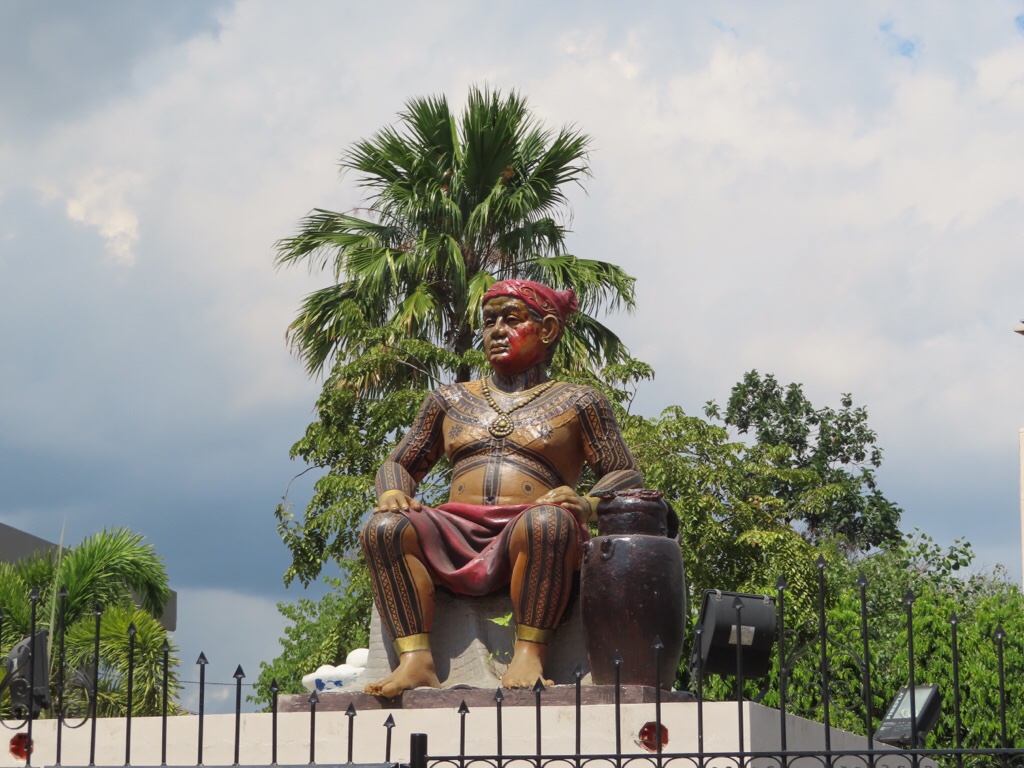
… and the subsequent baptism of King Humabon of Cebu, his Queen Juana and their subjects …
… and here’s a statue of Humabon.
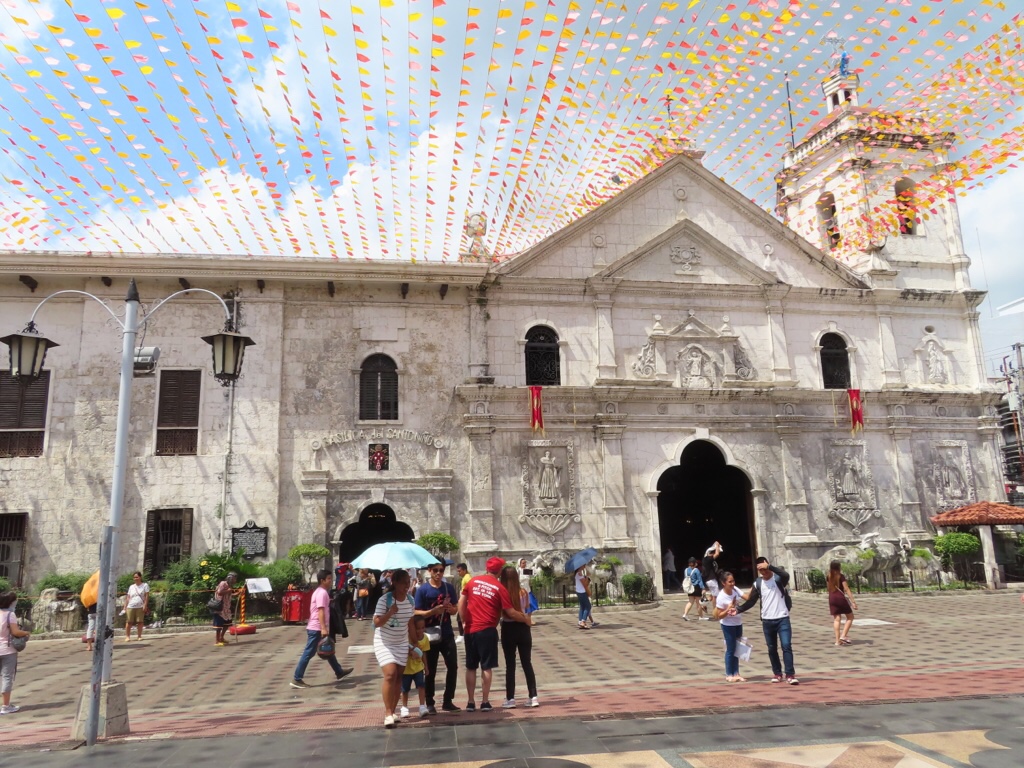
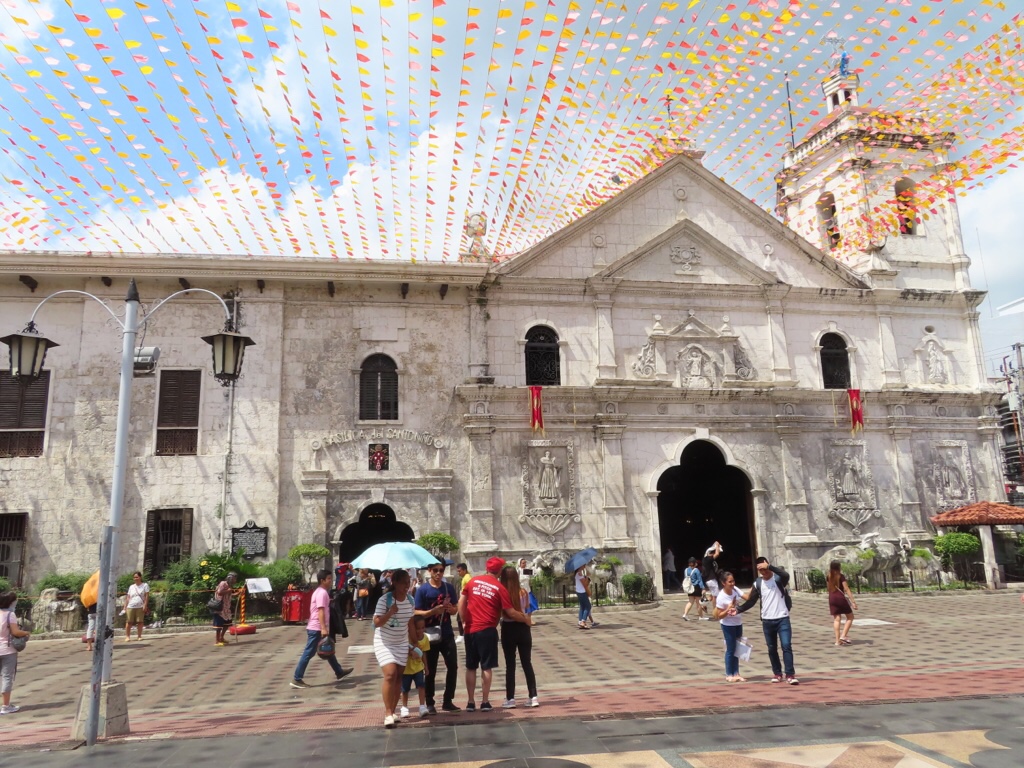
The most famous religious icon in the Philippines, the statue of Santo Nino, is said to have been given to Queen Juana by Magellan after her baptism and is kept in the oldest church in the country, the Basilica Del Santo Nino founded in 1565.
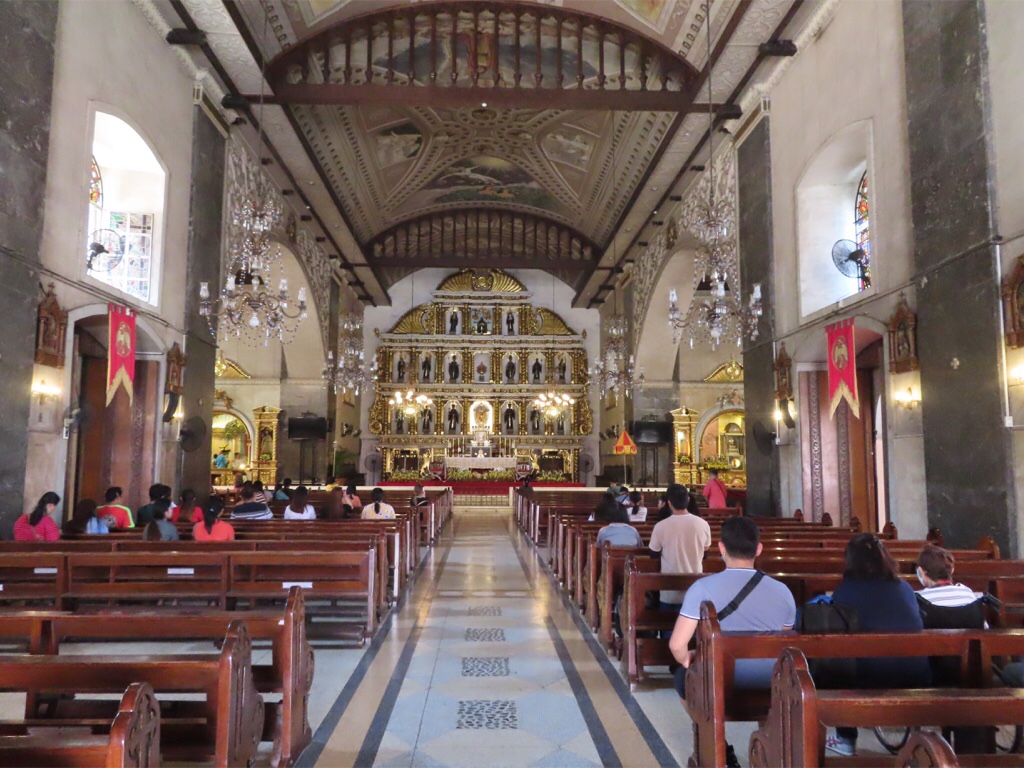
We took photos from afar as the devotees filed past the statue.
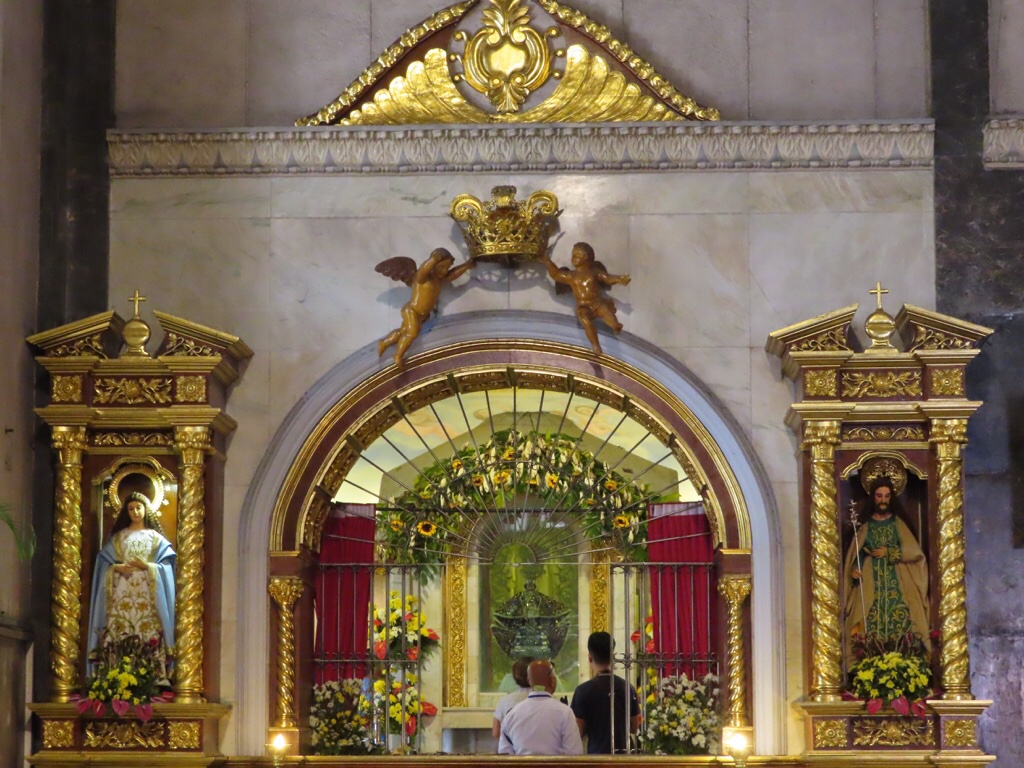
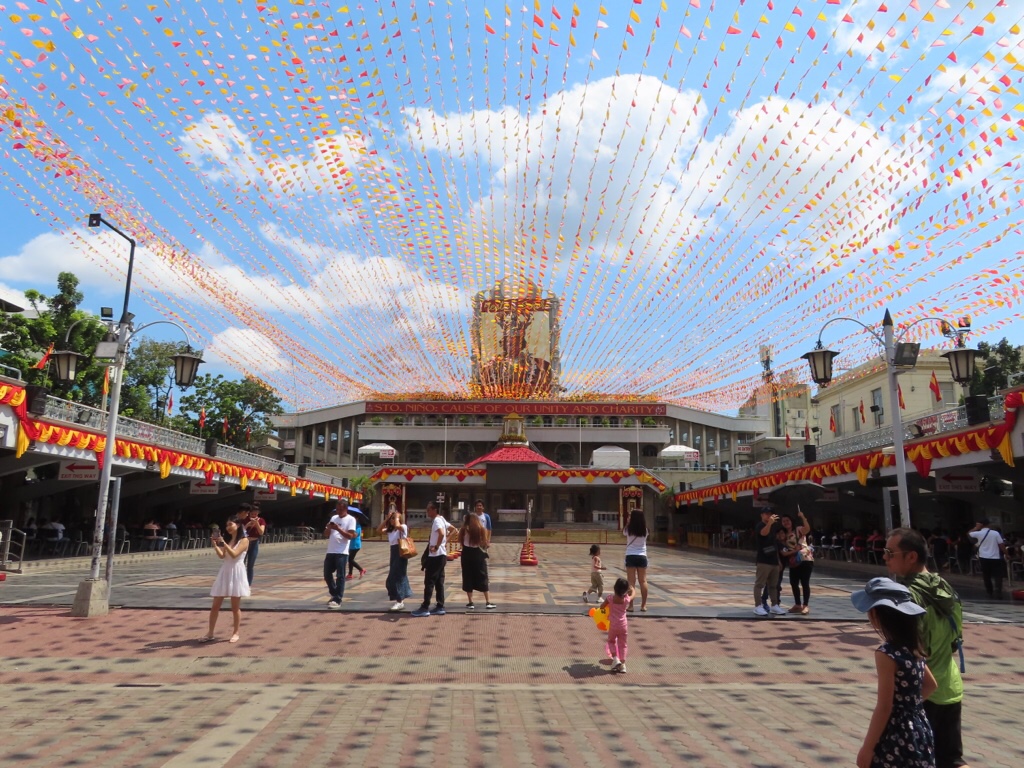
We had a pretty good idea what it looked like up close as there were images all over the city in the run up to Sinulog, the festival honouring Santo Nino and there were still decorations remaining from the festivities last weekend.
Magellan had hoped to make Humabon a puppet ruler on behalf of the Spanish crown and demanded the other chiefs to submit. Lapu Lapu refused so Magellan led a force to crush him but Magellan was killed and the Spanish conquest was put on hold.

Miguel López de Legazpi arrived in 1565, established the first permanent settlement in Cebu and built Fort San Pedro and here he is outside.
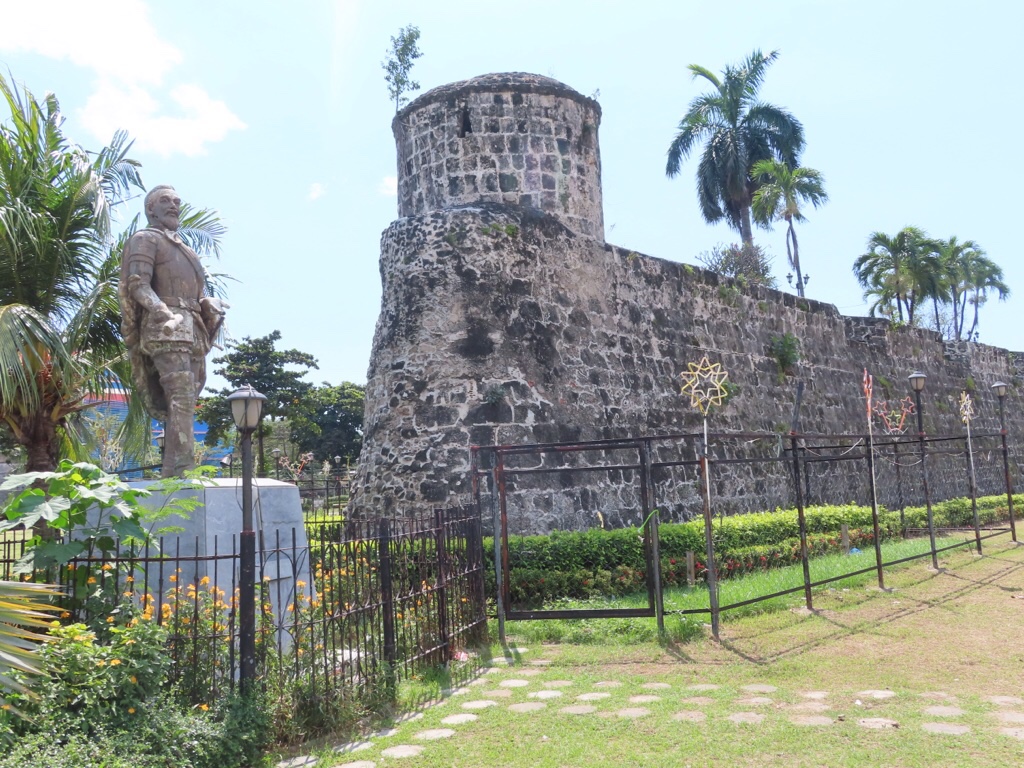
Originally it was made of wood …
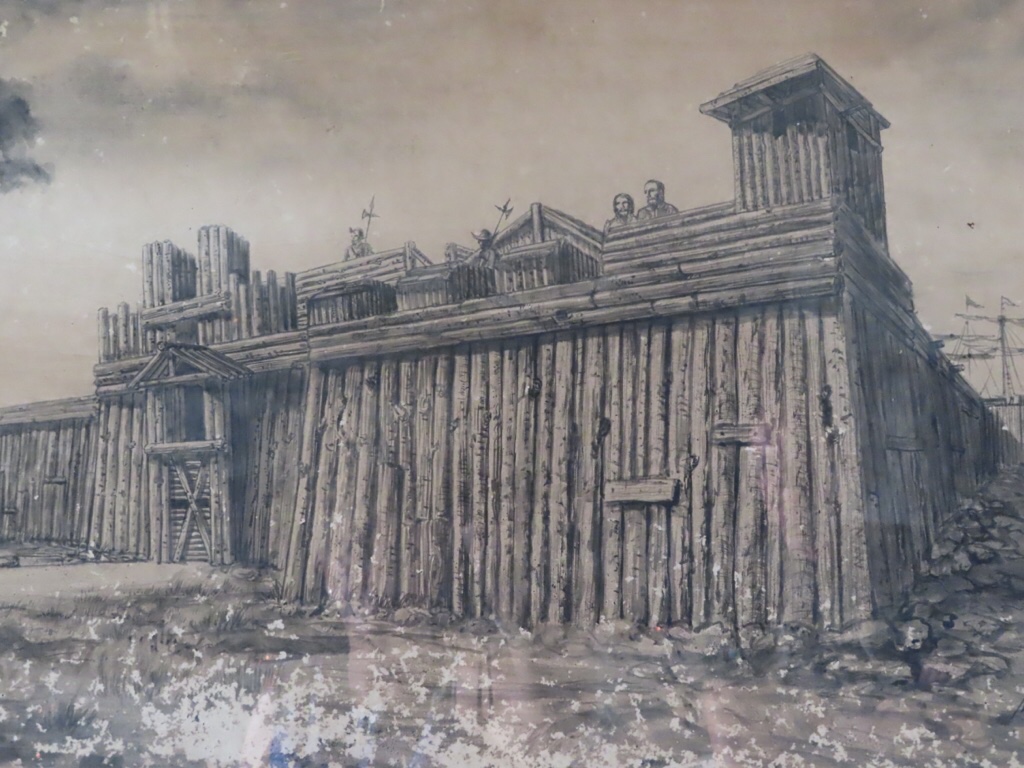
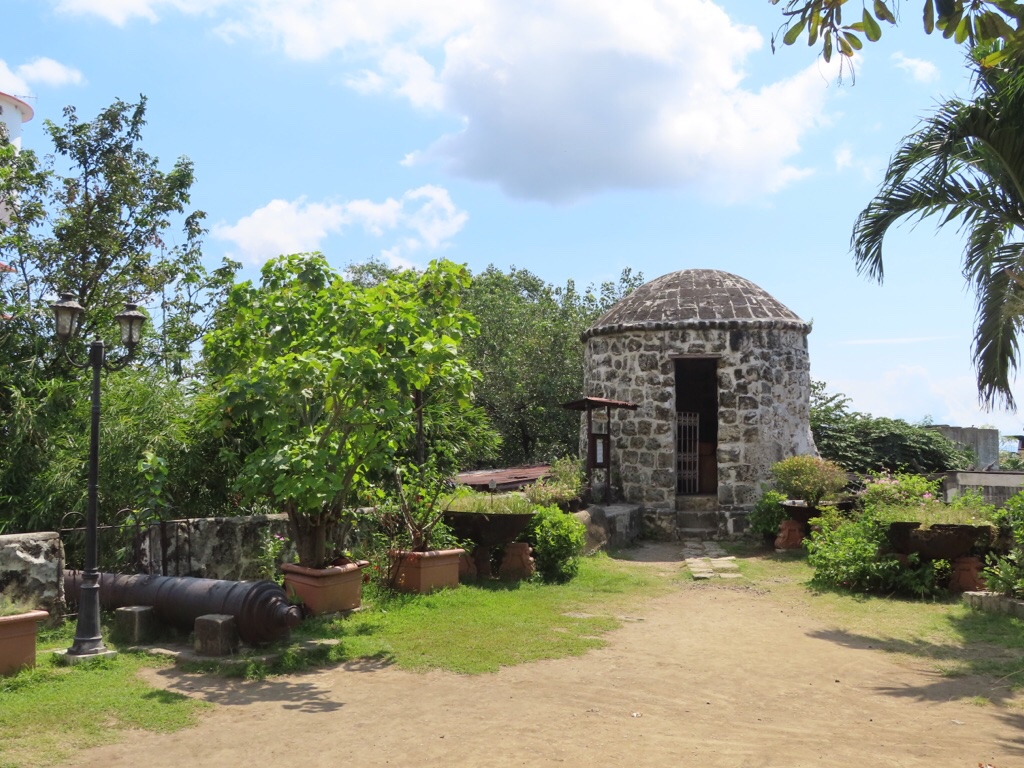
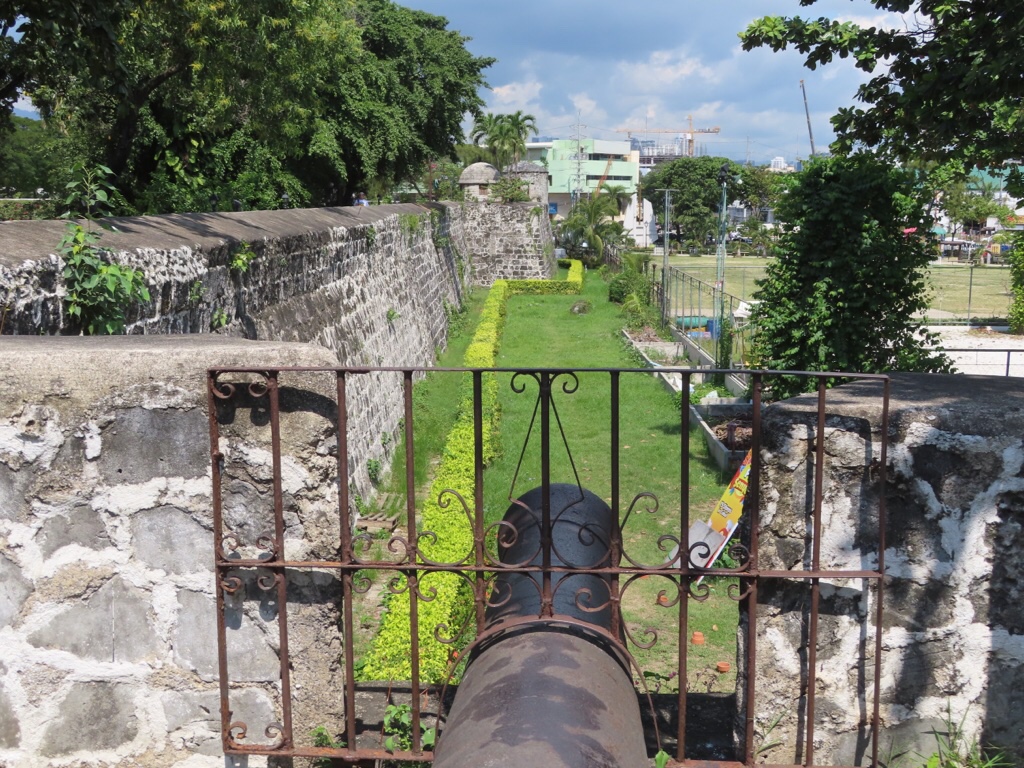
… but was replaced in the C17th with a stone fort to repel Muslim raiders. Today’s fort was built in 1738 and is the oldest triangular bastion fort in the country, still with most of its cannon.
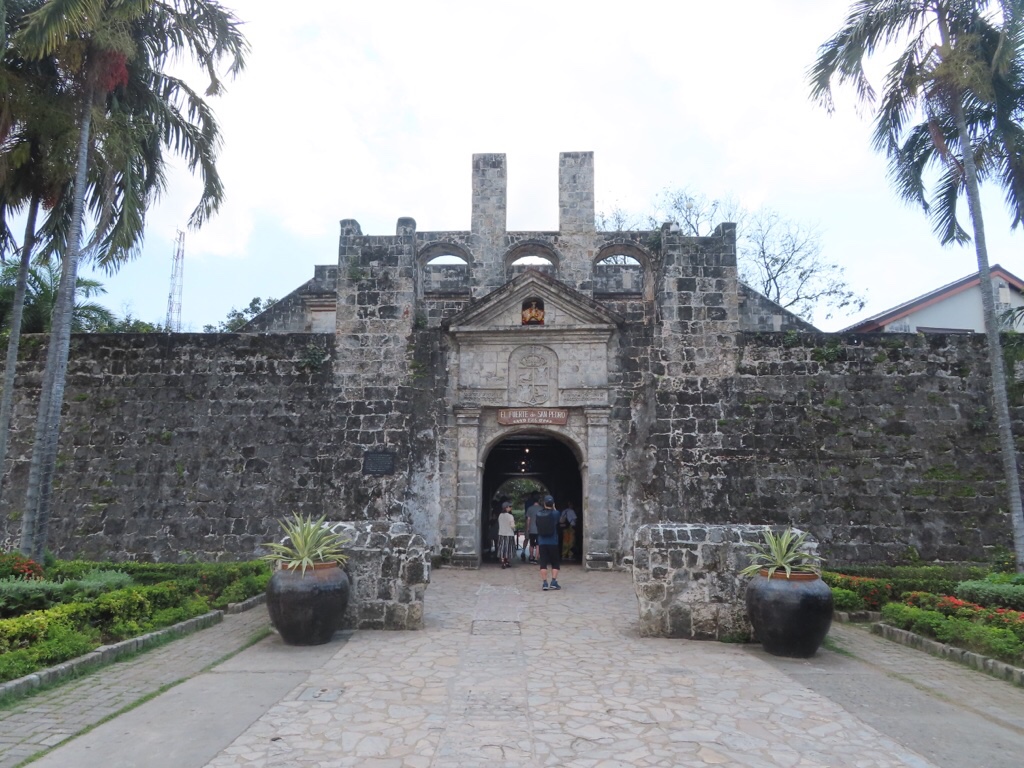
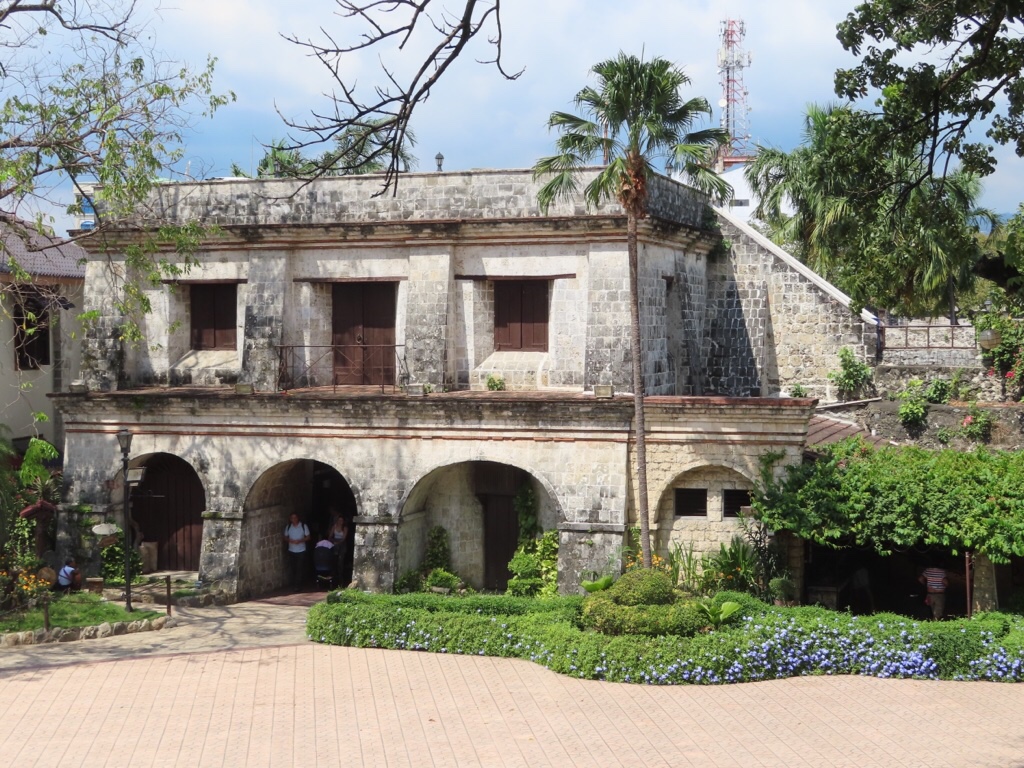
Much of the archipelago came under Spanish rule, creating the first unified political structure known as the Philippines and introduced the code of law but also a feudal system with Spaniards owning vast estates worked by Filipinos. Along with conquistadors went friars who converted the Filipinos to Catholicism. The friars also built schools and universities including the oldest modern university in Asia.

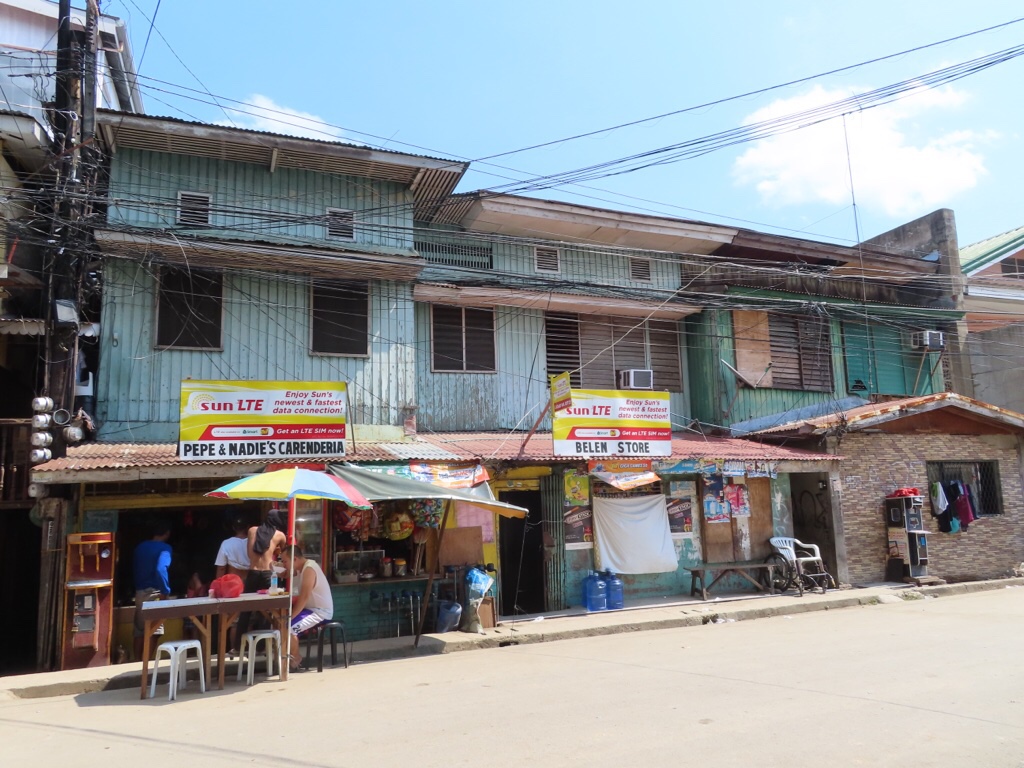
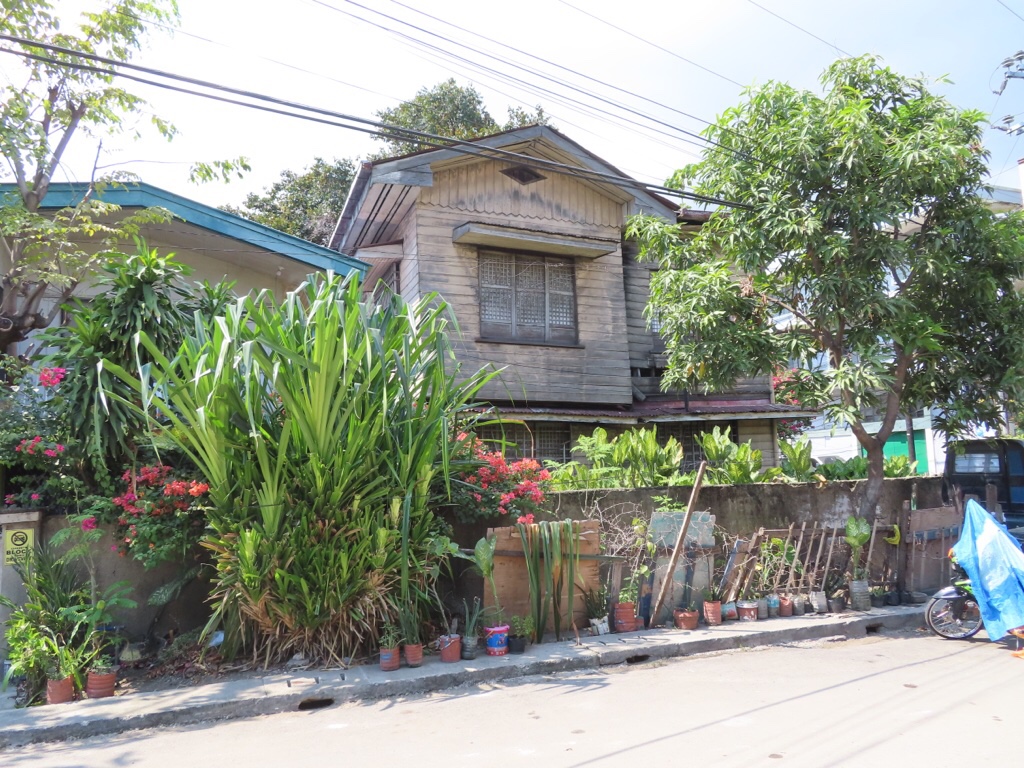
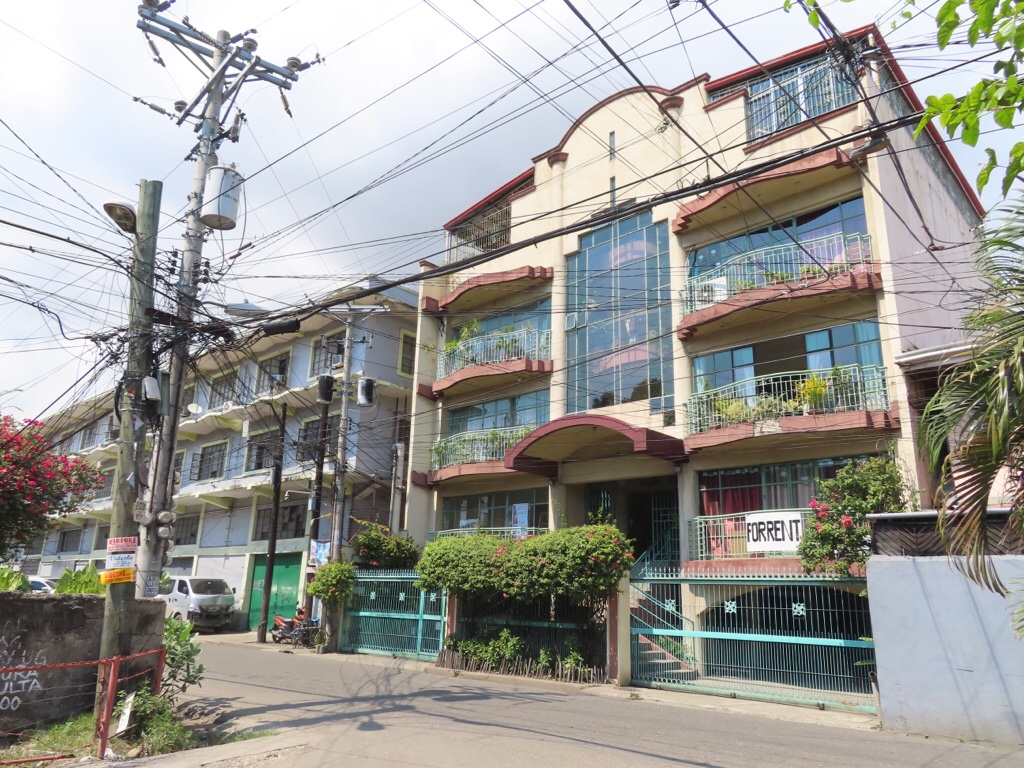
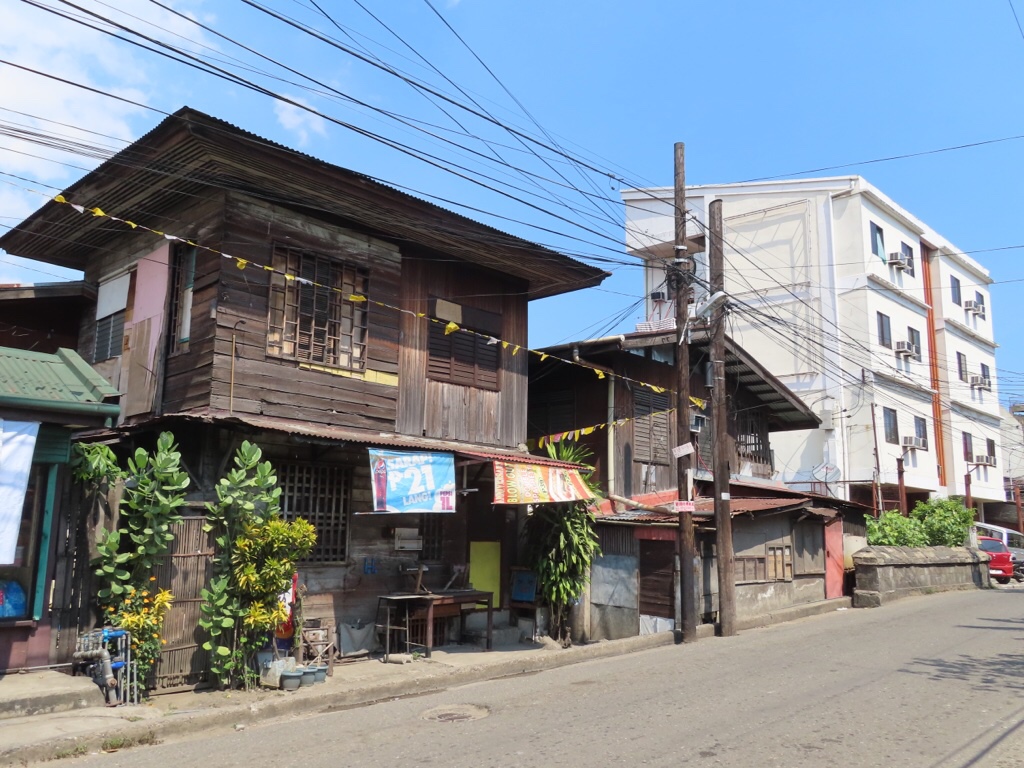
We headed to The Parian, the area of Cebu which contained the residences of the most prominent families in Cebu during the Spanish Period. It also used to be the center of trade, the word “parian” being derived from the word “pari-pari” meaning to barter or trade. There are still a real mix of buildings in this old quarter.
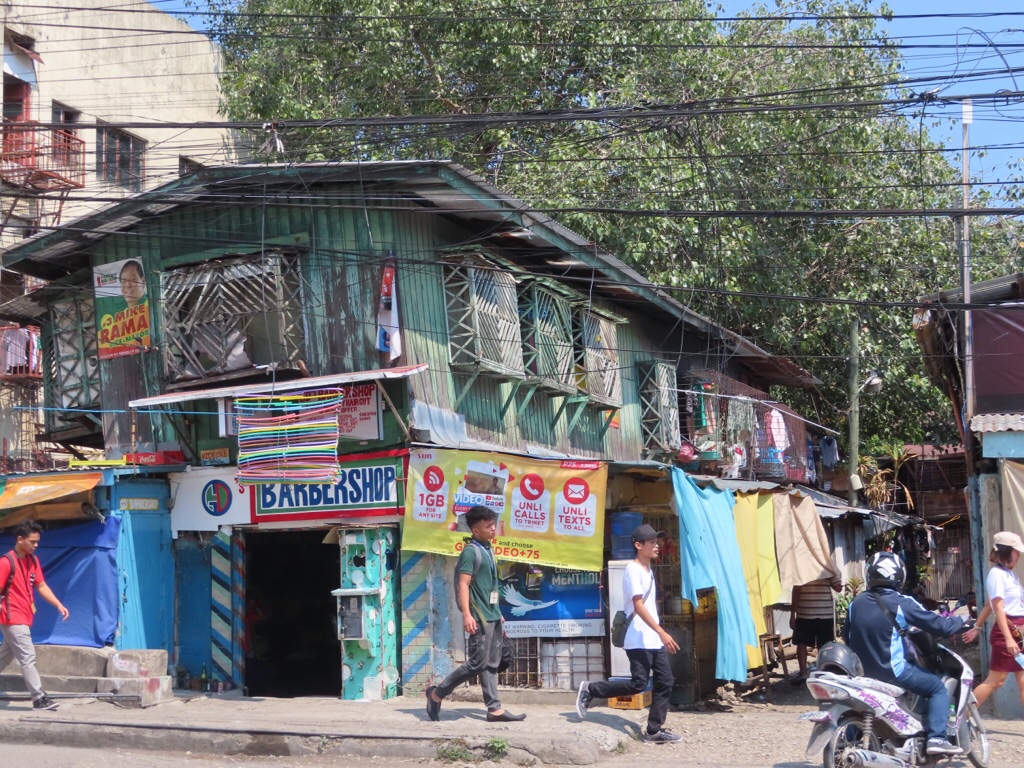
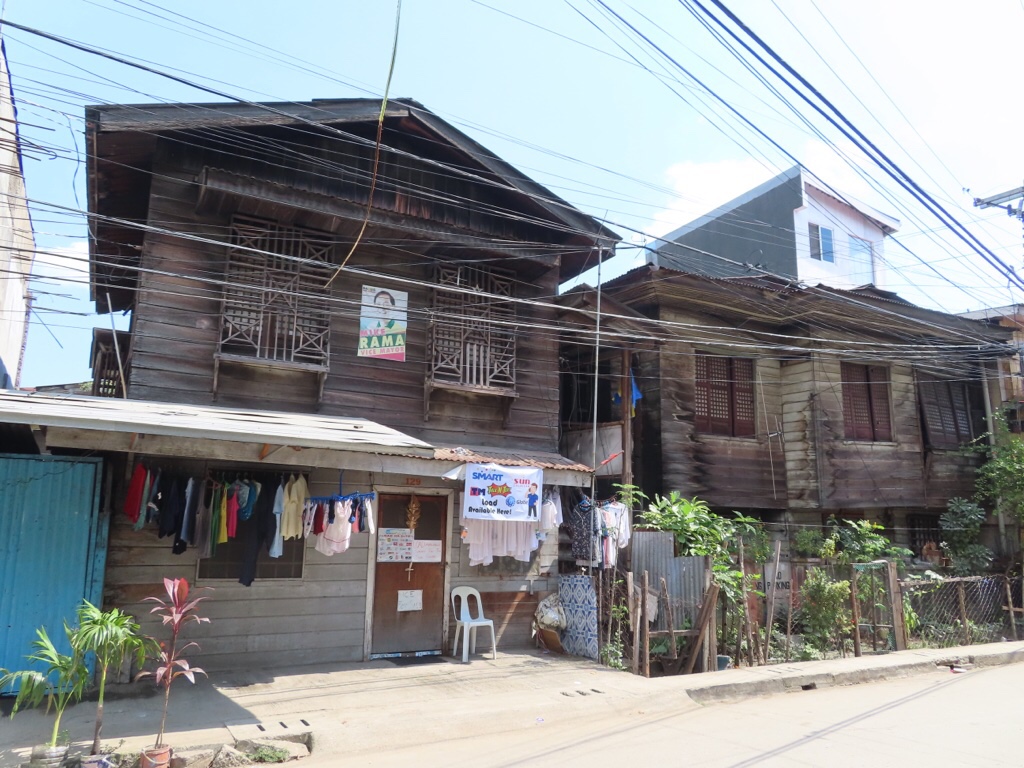
We learnt about life in Cebu at that time, how the Chinese were welcomed into the city to trade as long as they converted to Christianity and adopted Westernised names and how over time intermarriage between Filipino, Spanish and Chinese established communities of Mestizos meaning mixed blood. The Spanish colony in the Philippines brought prosperity for the rich who profited from the galleon trade with goods such as silk, porcelain and lacquer imported to the Philippines from China then on to Mexico.

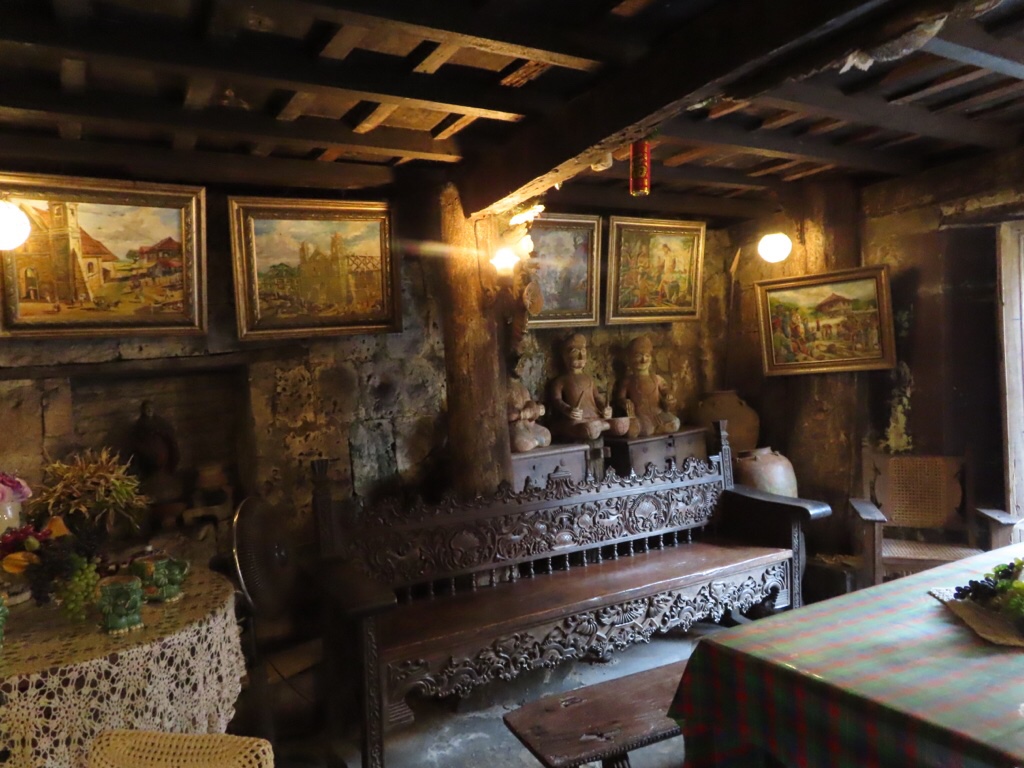
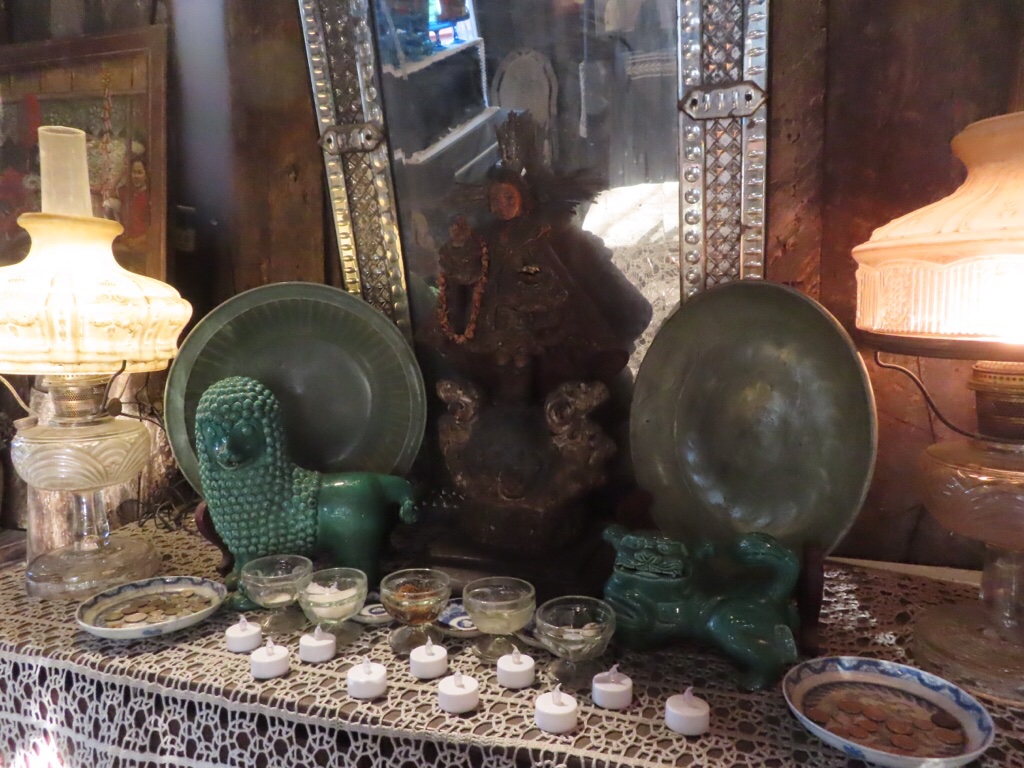
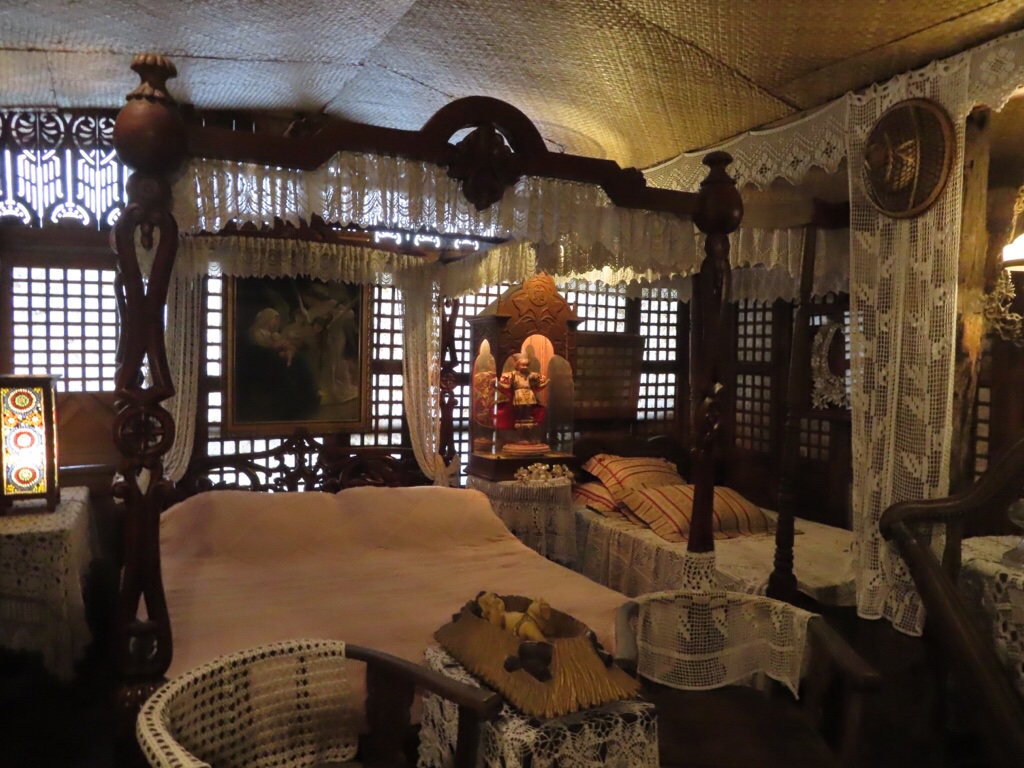
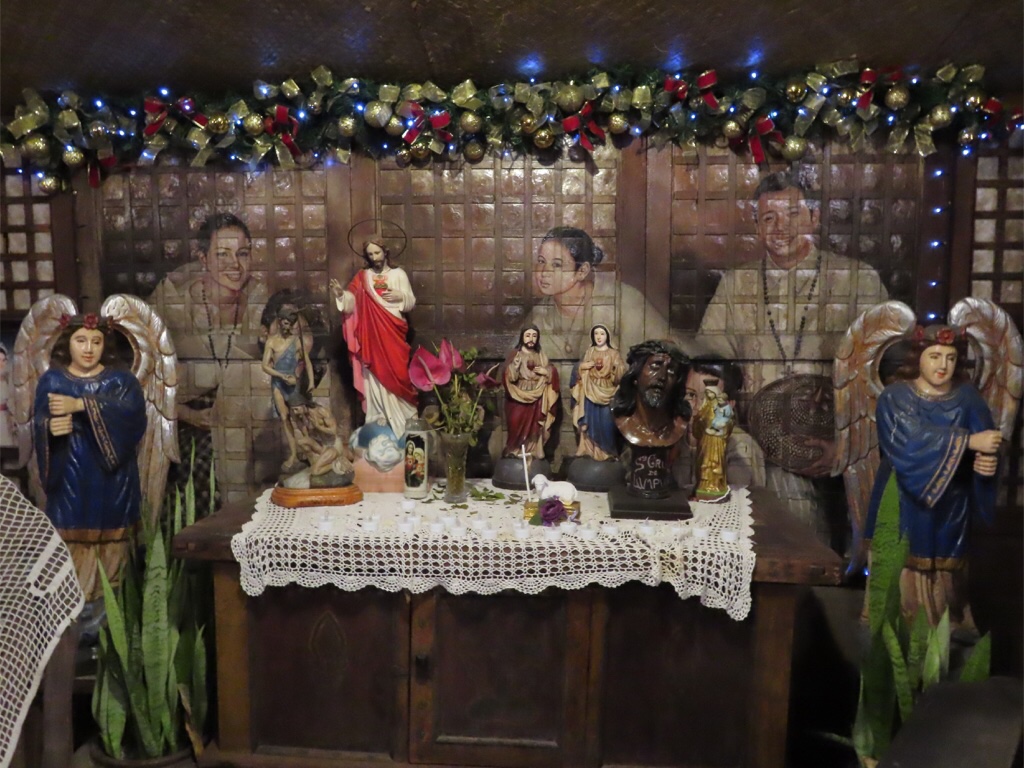
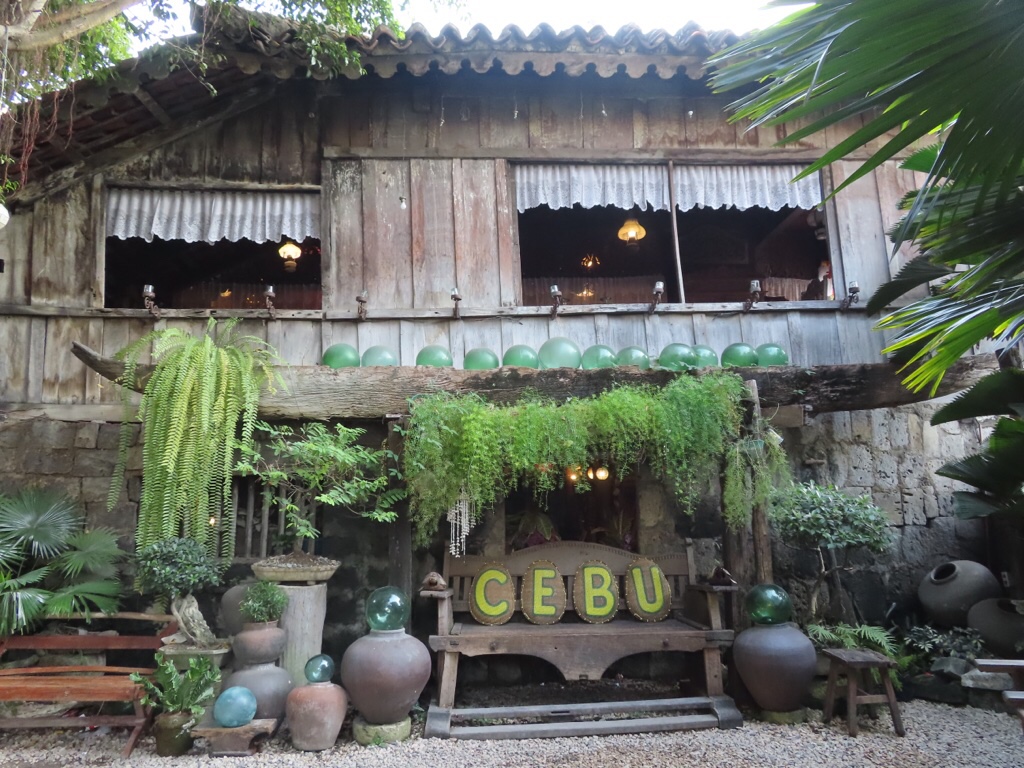
The Yap-Sandiego Heritage House was built at the end of the C17th and is one of the oldest homes in Cebu. It is owned by a descendant of the original residents and is rather dark, and filled with dusty antiques and religious items.
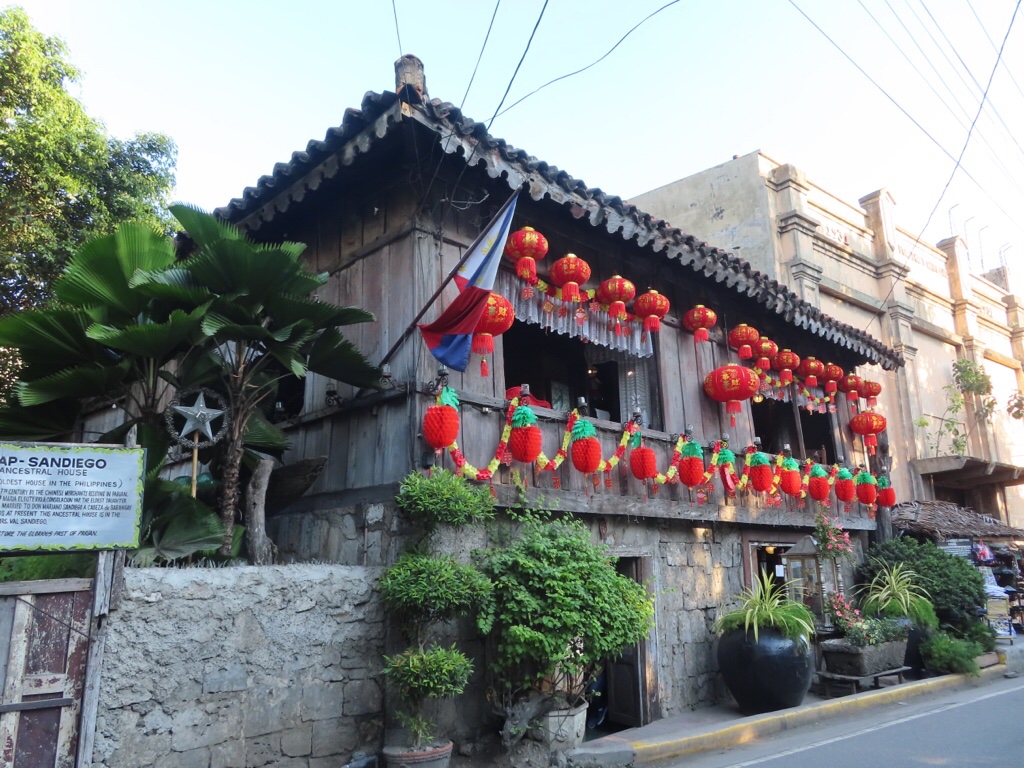
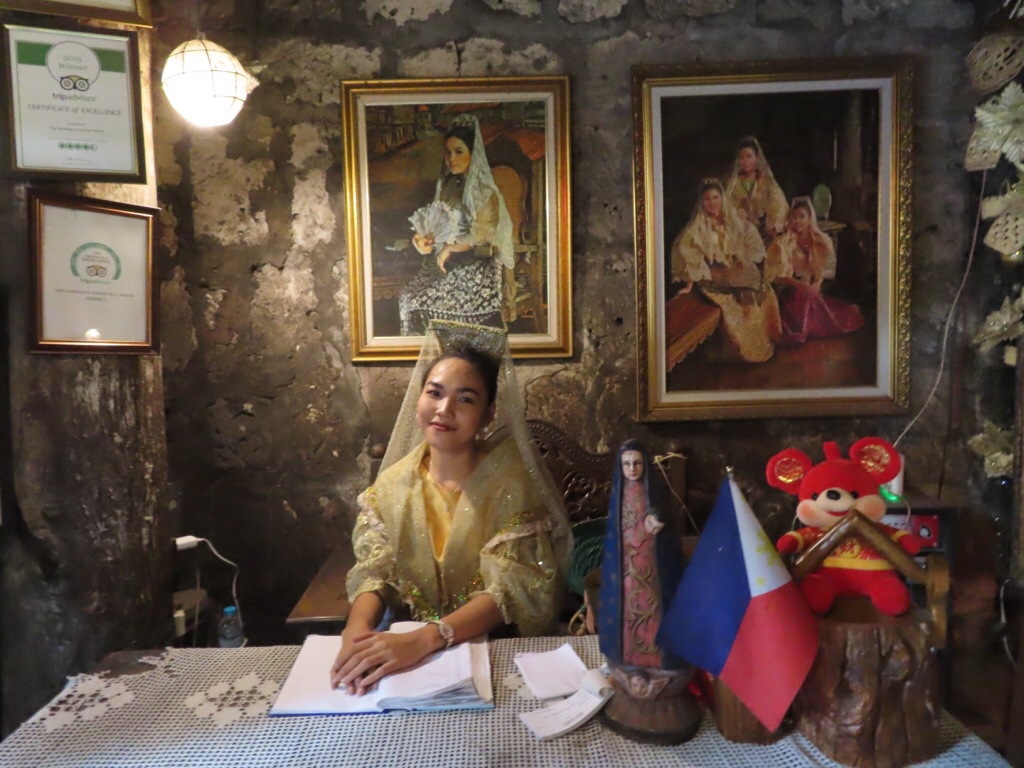
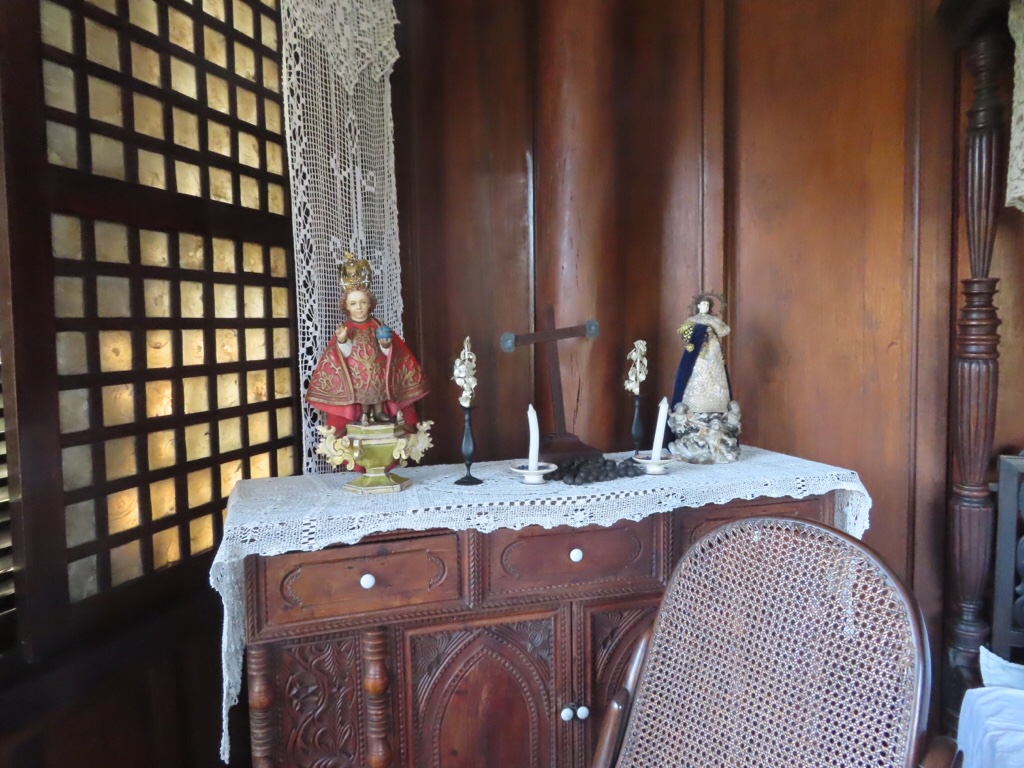
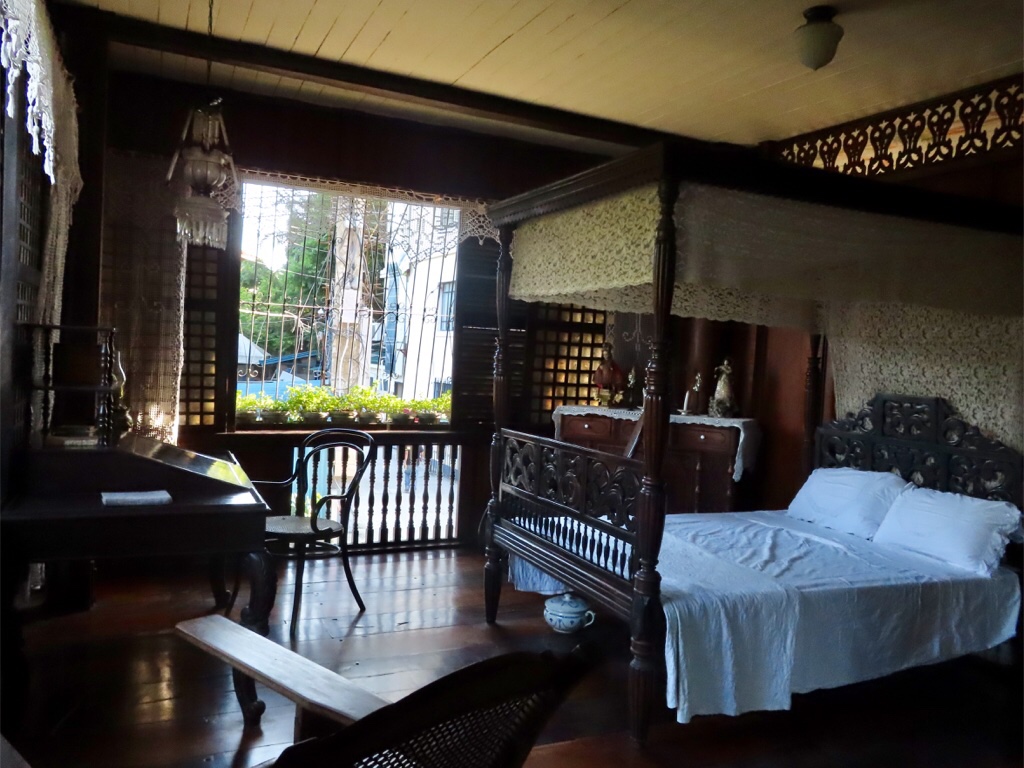
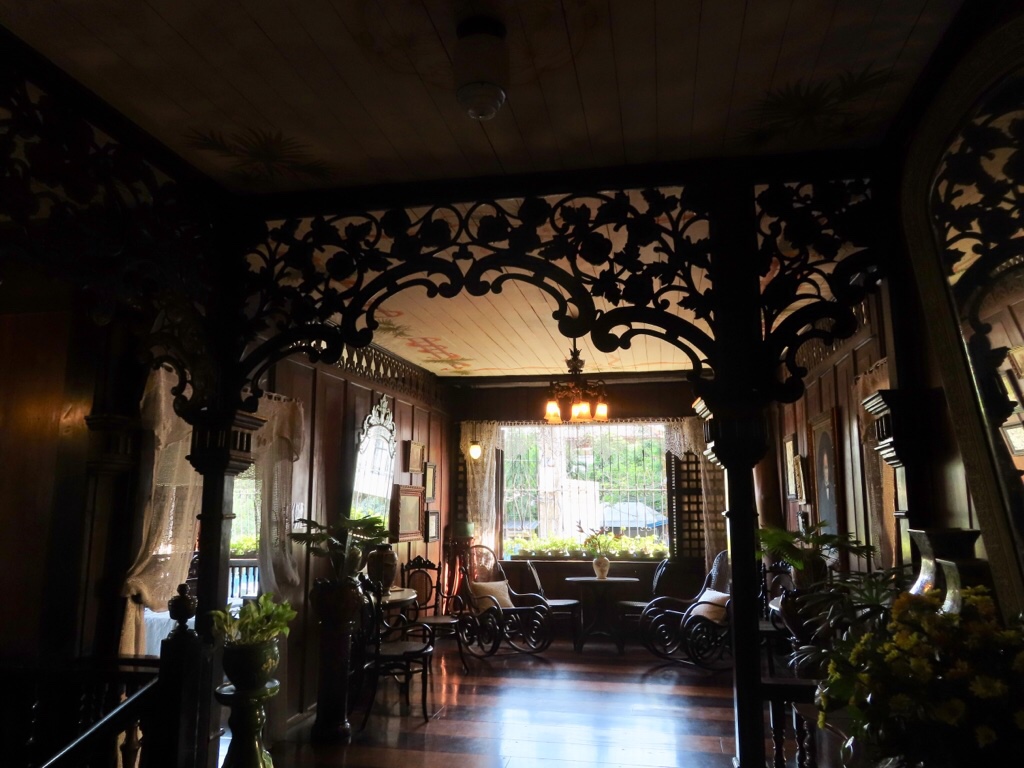
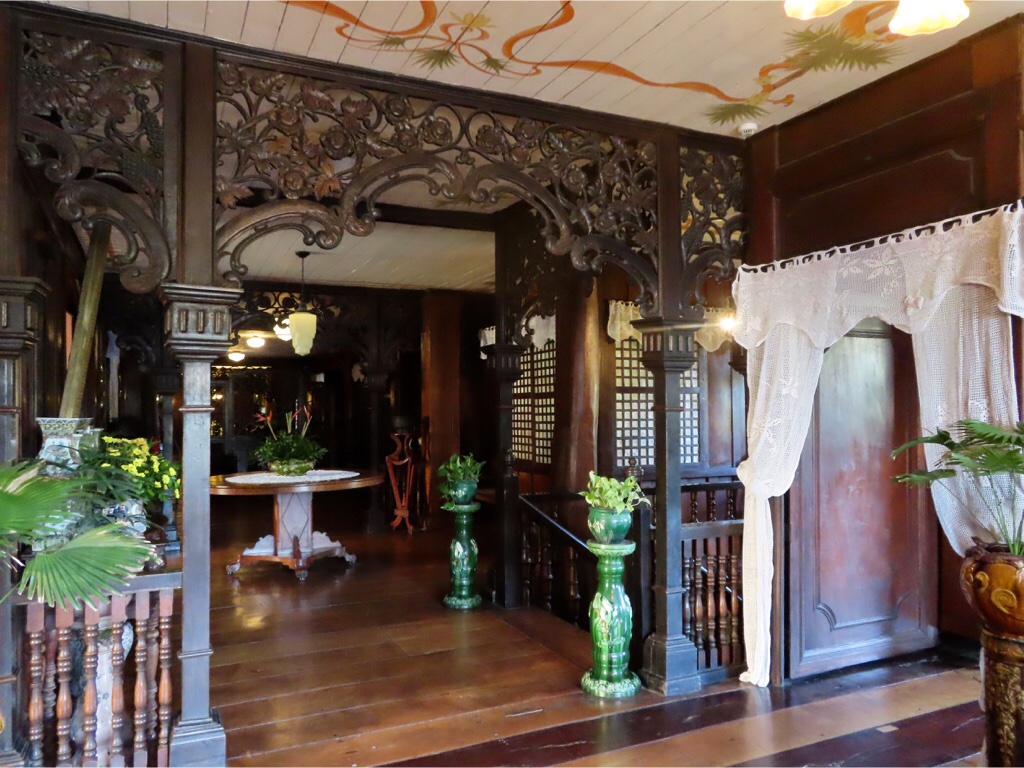
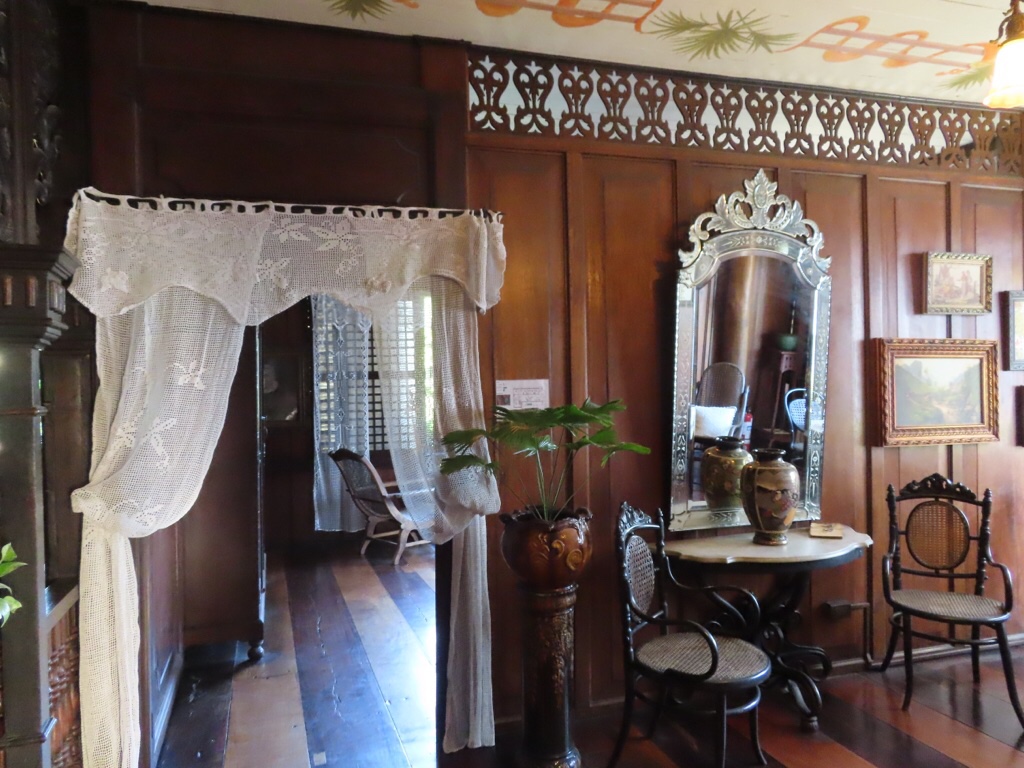
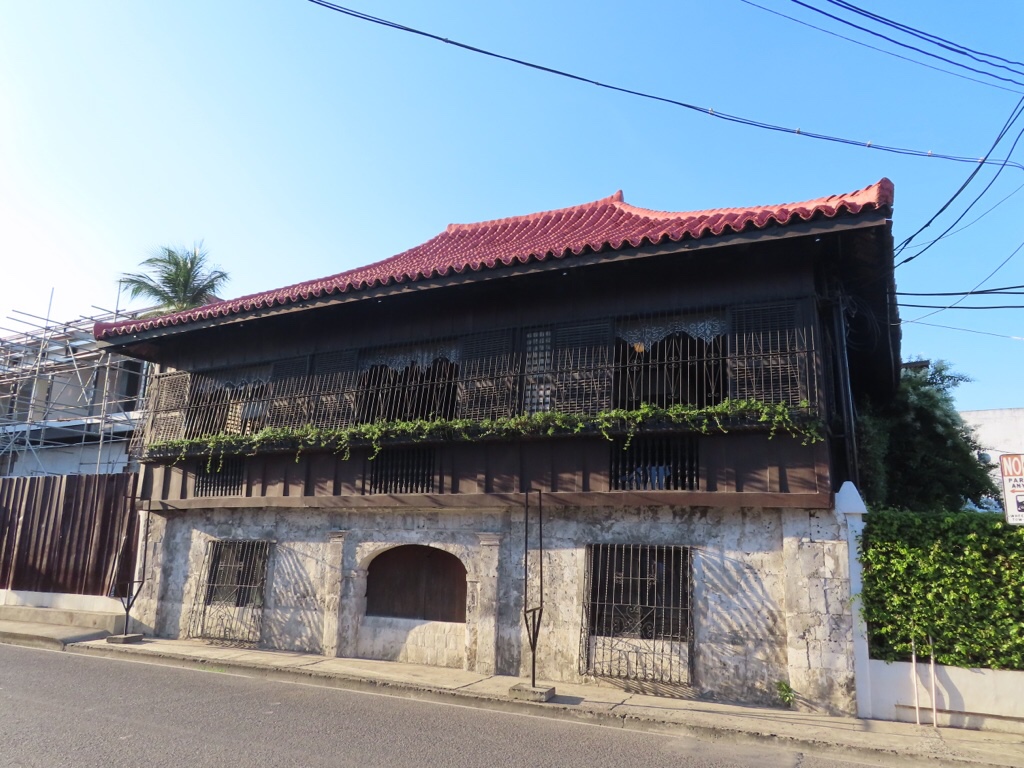
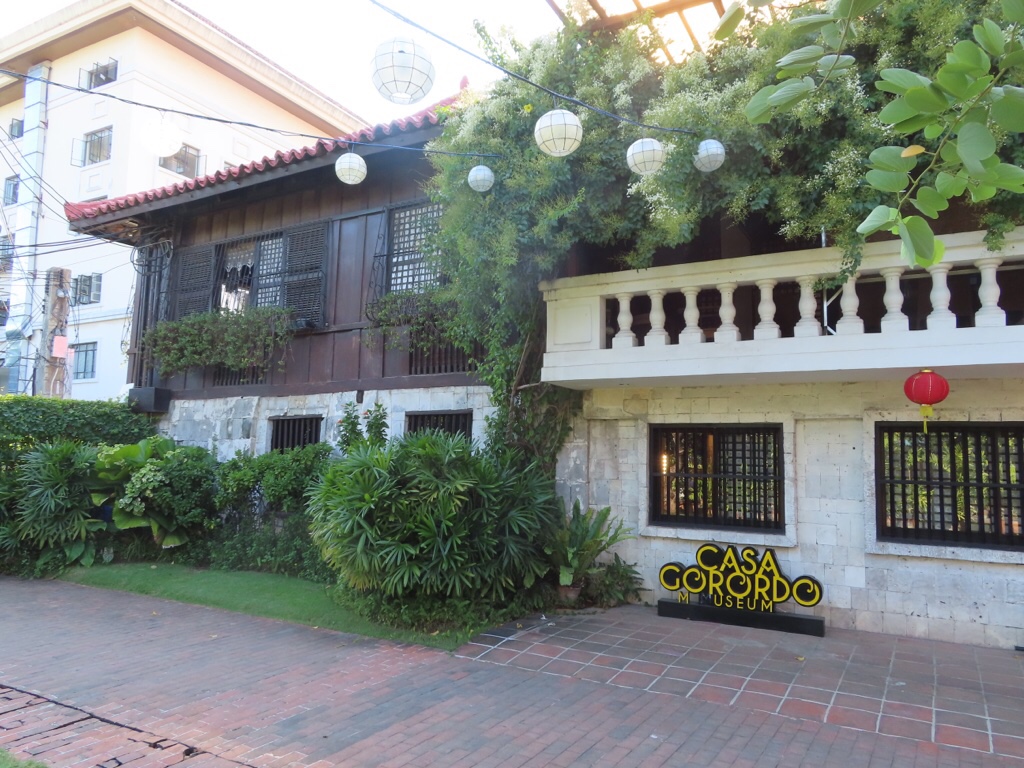
The Casa Gorordo was built in 1850s by a wealthy merchant and was once owned by the first Filipino Bishop of Cebu. It is an interesting mix of Spanish and native building techniques with lower walls of coral stone and the upper floor of hardwood fixed with wooden pegs. The interior gives an idea how the rich lived but also shows how the house was kept cool by large windows, an open-plan interior with only curtains rather than doors and pierced woodwork to allow air circulation.
Towards the end of the C19th, nationalist feeling started to grow and José Rizal, the most celebrated intellectual and radical ilustrado of the era, wrote the novels ‘Noli Me Tángere’ and ‘El filibusterismo’ which greatly inspired the movement for independence. He also founded a movement called Liga Filipina, which called for reform rather than revolution and as a result Rizal was arrested and exiled. Meanwhile Andres Bonifacio formed a more extreme organisation called the Katipunan and began a revolution. Rizal was accused of supporting the revolution, although he did not and he was executed and remains a national hero with his statue in every town.
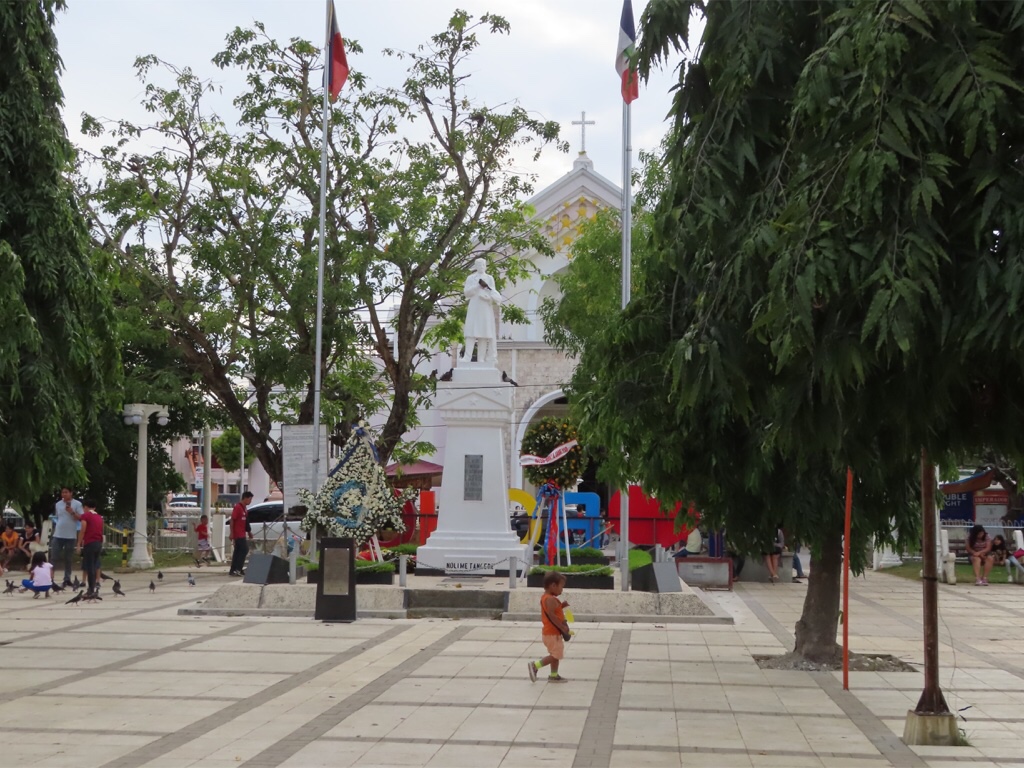
Just to confuse matters, in 1898 war broke out between the USA and Spain and the Americans defeated the Spanish fleet in Manila Bay. Meanwhile Filipino revolutionaries had surrounded Manila. Their leader, Emilio Aguinaldo declared the Philippines independent, however as part of the peace treaty Spain ceded the Philippines to the USA. The Filipino-American War between the revolutionary force and the American troops lasted until 1902 when Aguinaldo was captured.

The US policy in The Philippines was one of ‘beneficial assimilation’ with an aim to educate, establish American ethics and prepare the country to rule itself as a democracy. Filipinos learned to behave, dress and eat like Americans, sing American songs and speak American English. They also got their love of basketball and the iconic jeepneys but we did find the very polite greeting of Ma’am slightly dated and it began to grate after just a day or two, however well meant.

Japan occupied the Philippines during WWII and very few historical buildings remain, and although the original C16th baroque Cathedral was destroyed it has been rebuilt.
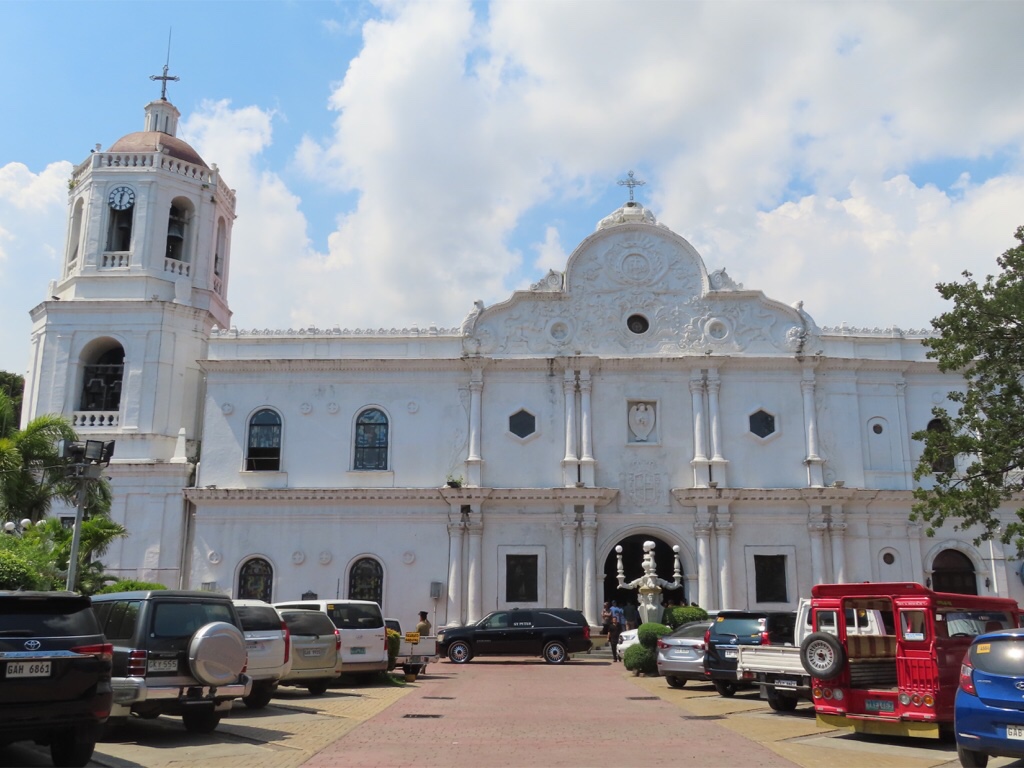
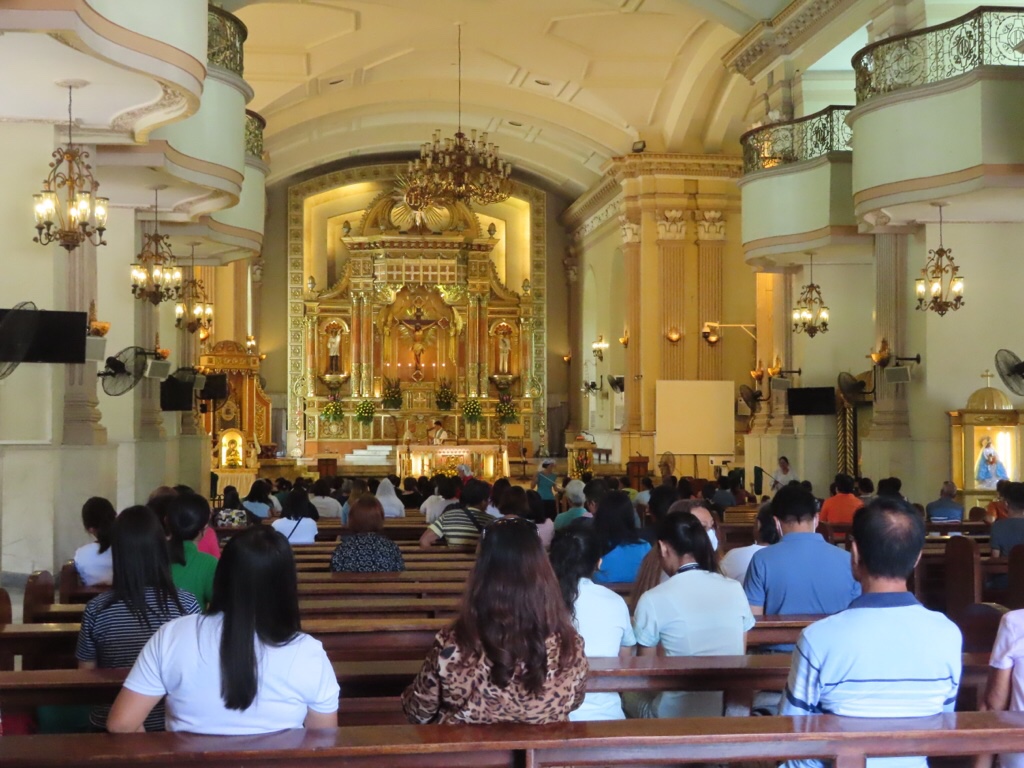
In 1946 The Philippines became independent and I realise there has been more history since, including that famous shoe collection, but this seems a good place to stop.

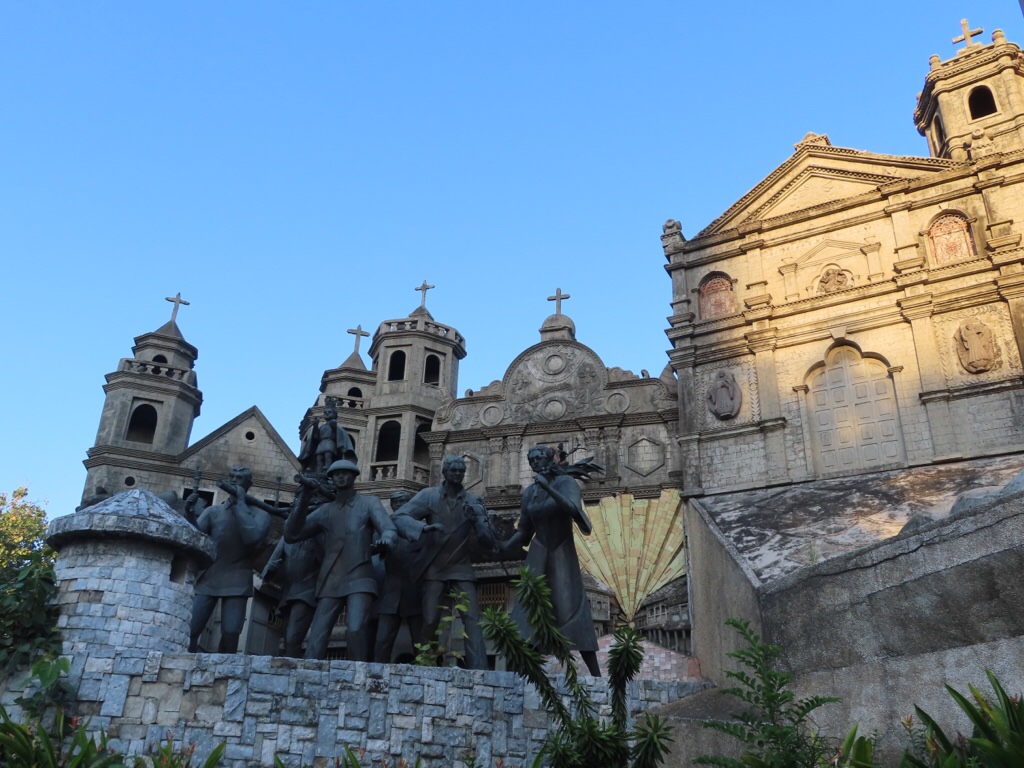
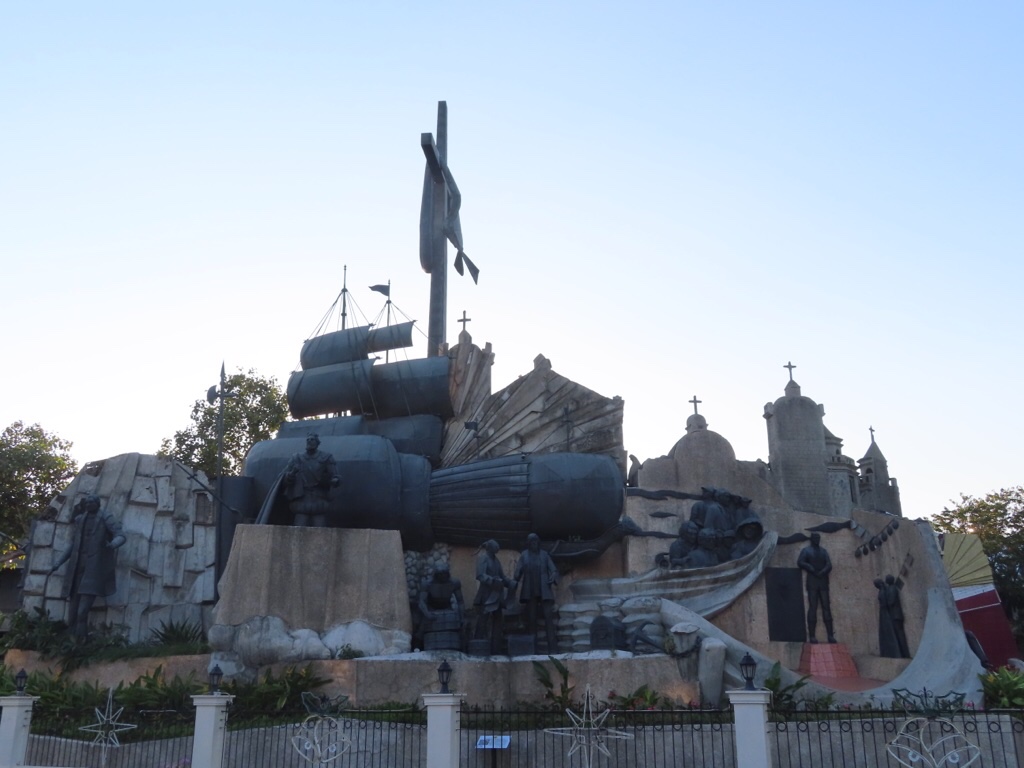
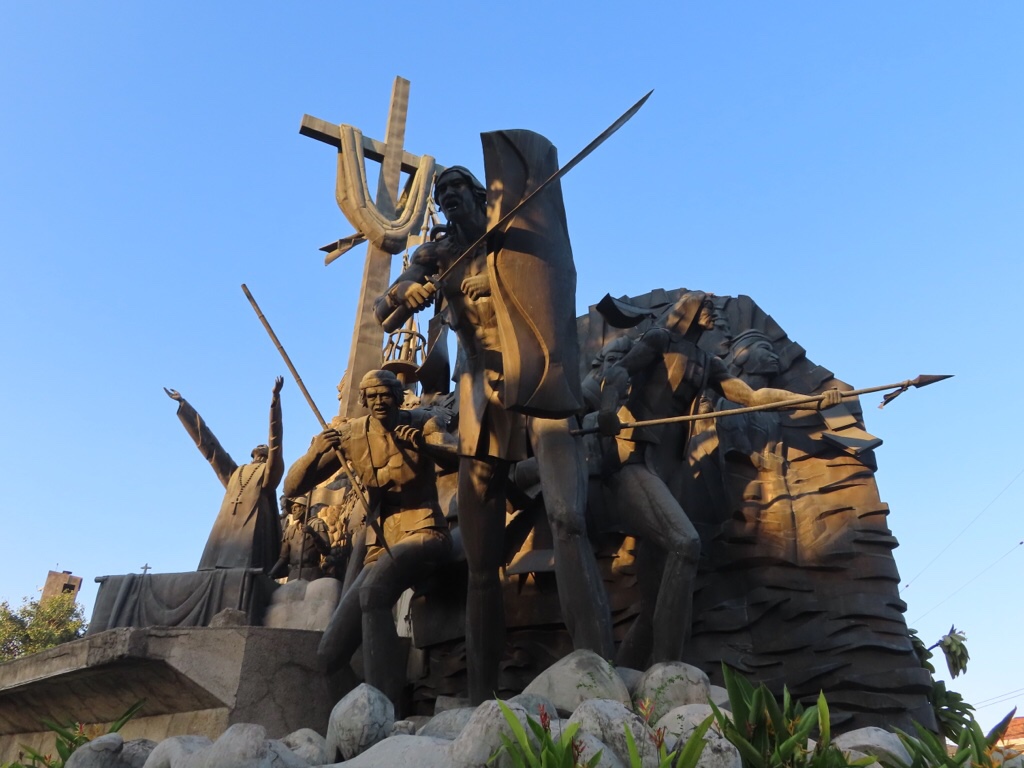
The most modern monument here is The Heritage of Cebu Monument, a huge sculpture in the round unveiled in 2000, showing significant and symbolic events in the history of Cebu.
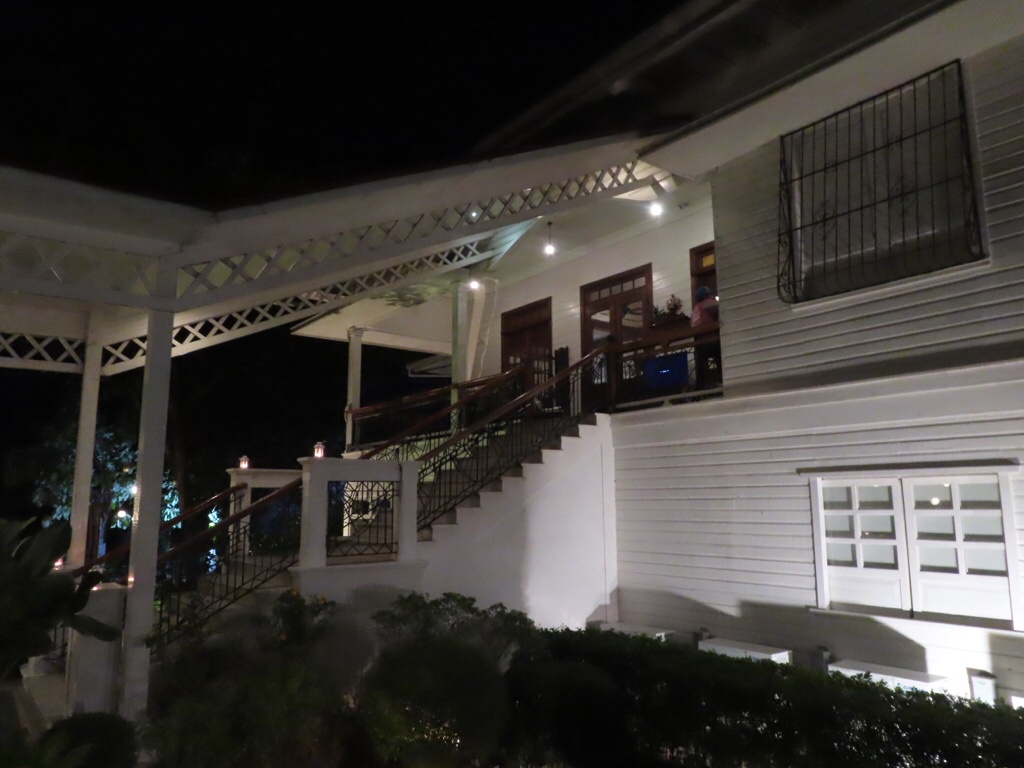
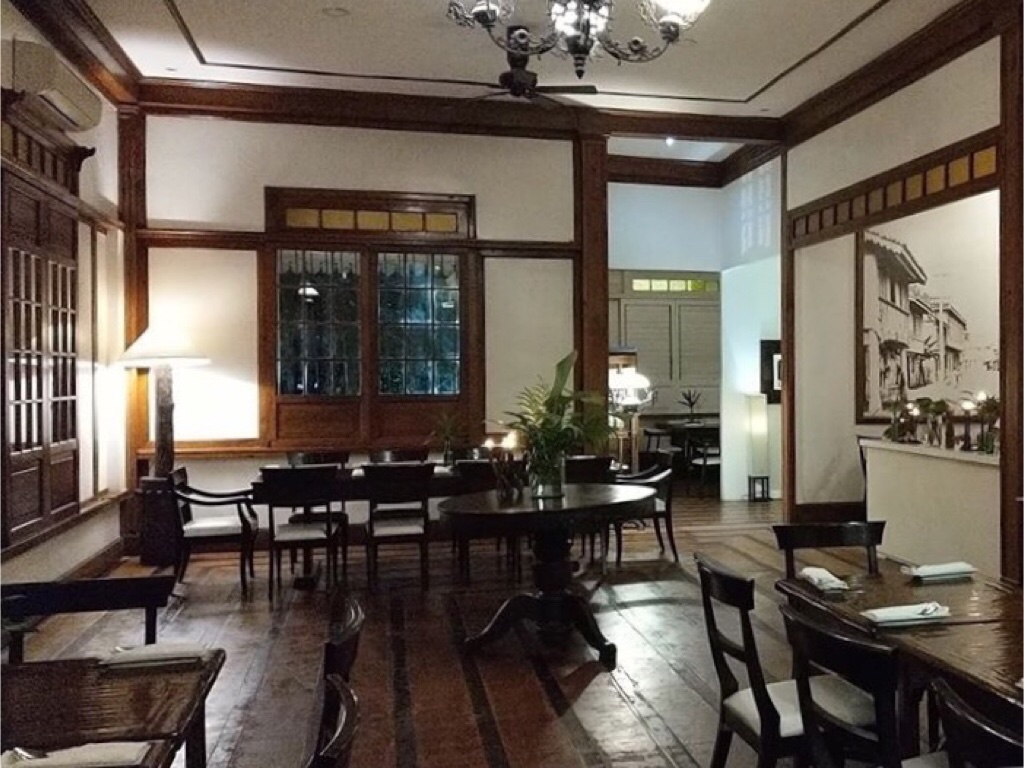
Keeping the history theme going, we went to Circa 1900 for dinner, a fine dining restaurant in a beautiful colonial period house, with great service, the best veggie choices Chris has seen all trip and delicious lechon for me!
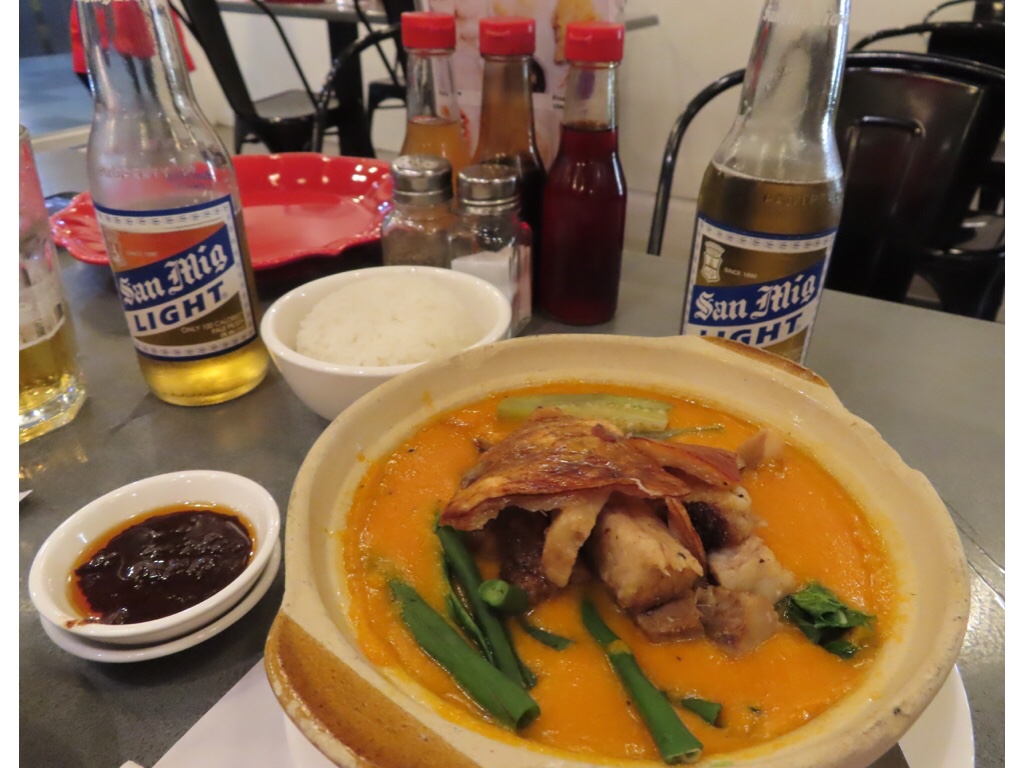
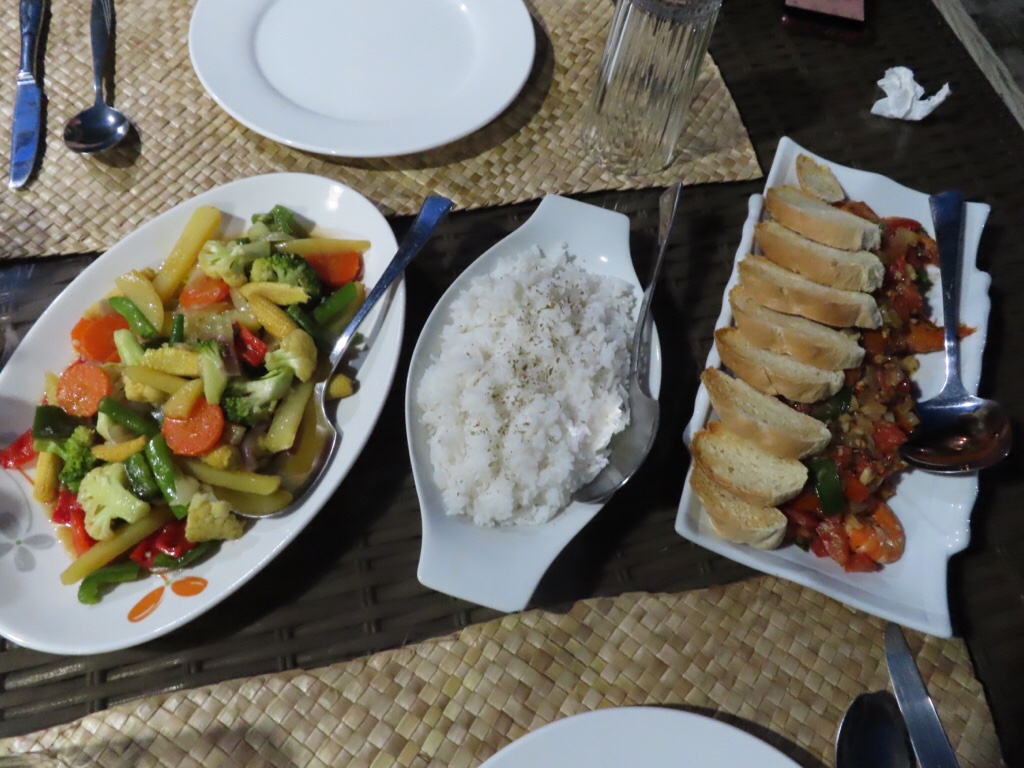
Talking food, it has been generally ok with a lots of pork dishes as well as fish and veg for me, but the veggie options became rather monotonous for Chris who has been starting every day with an omelette and resorting to pasta and pizza or more than one occasion! It’s been hard to really work out what is typical Filipino cuisine as there seems to be such a melting-pot with influences from all over. There is definitely a sweet and salty thing going on and also anything that helps preserve food like using vinegar in adobo stews and dried fish as flavouring. The kalamansi or Philippines lime is a small juicy citrus fruit and is everywhere, in marinades, dipping sauces, drinks and to squeeze over grilled food and even papaya! Grilled meat or fish served with rice is common, but there are also stews and stir fries like pinakbet – steamed veg with a local fish sauce (veggies beware), kare-kare – a stew with peanut sauce, humba – a pork stew with black beans and soy, tinola – chicken and veg in a ginger broth, sinigang – stew cooked in a sour broth, chop suey made of stir fried veg with soy sauce and Filipino style curry with coconut milk but not very spicy.

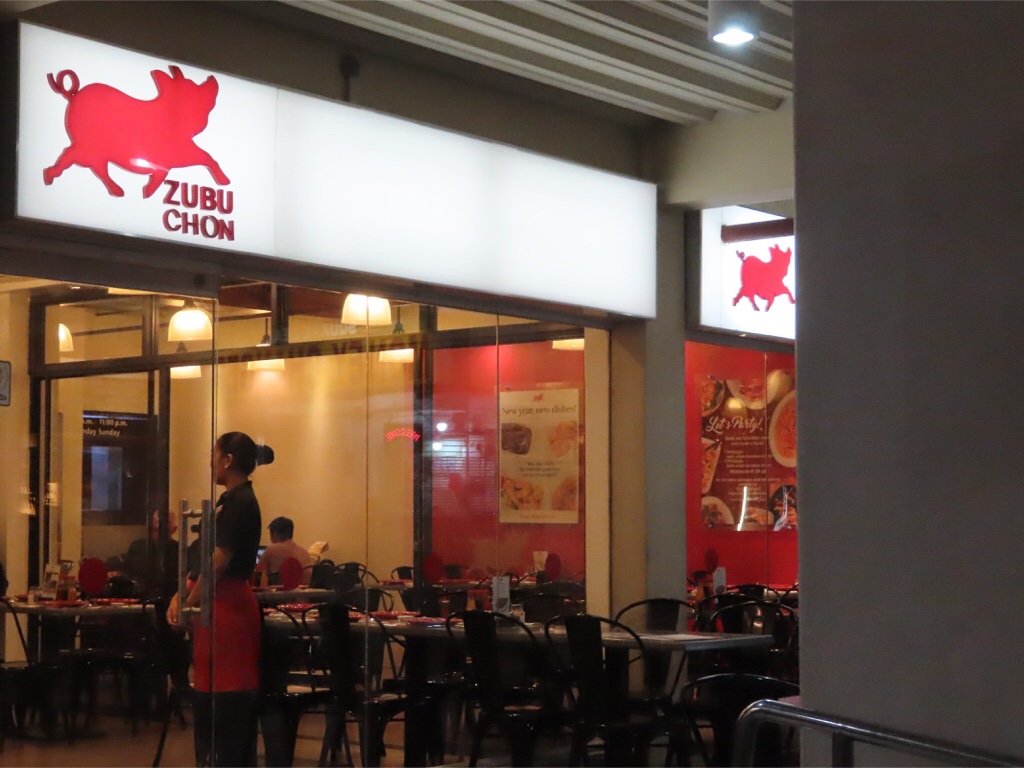
On our last night we had an early dinner at Zubuchon, mainly as there was a branch round the corner from our hotel, but also as it seemed a fitting end to the trip, especially as they also offer ensaladang talong, a grilled eggplant salad.
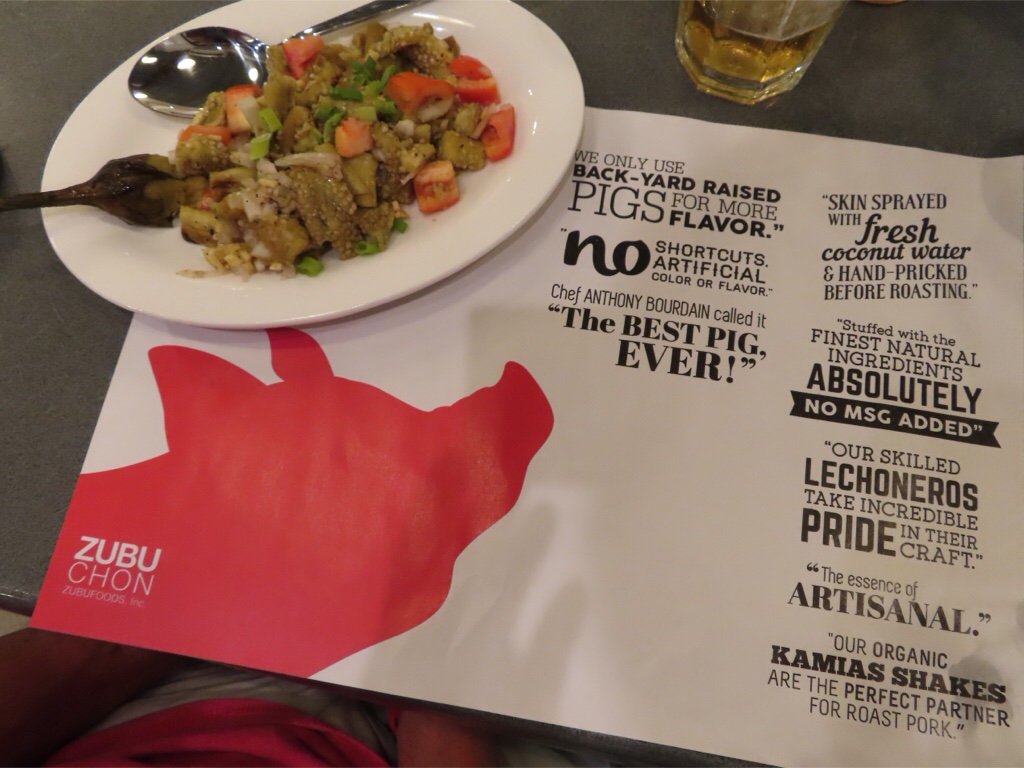
With the temperature rising and the humidity becoming more apparent, we are actually looking forward to going home tomorrow.

Finally,

  • The Filipino people are very friendly and we’ve been made very welcome but there are a lot of them and poverty is noticeable everywhere, especially in the towns. Despite this, it is the cleanest Asian country we’ve visited.
  • The pollution in towns from jeepneys and scooters is dreadful
  • Attempts at plastic reduction and recycling are noticeable and impressive
  • Travelling around was surprisingly easy and transport is cheap
  • The only place we didn’t hear cockerels crowing was in our 5th floor room in Cebu City
  • We’ve had a great trip and it would have been worth it for the snorkelling alone, but there was so much more
  • Our final island count is 9 … but out of 7,641 that still leaves scope for a return visit one day!

Map
The Camotes Islands … and their Churches

It was quite a long journey to get here … a ferry from Siquijor, via Bohol to Cebu, then a taxi to Danao where we stayed the night …

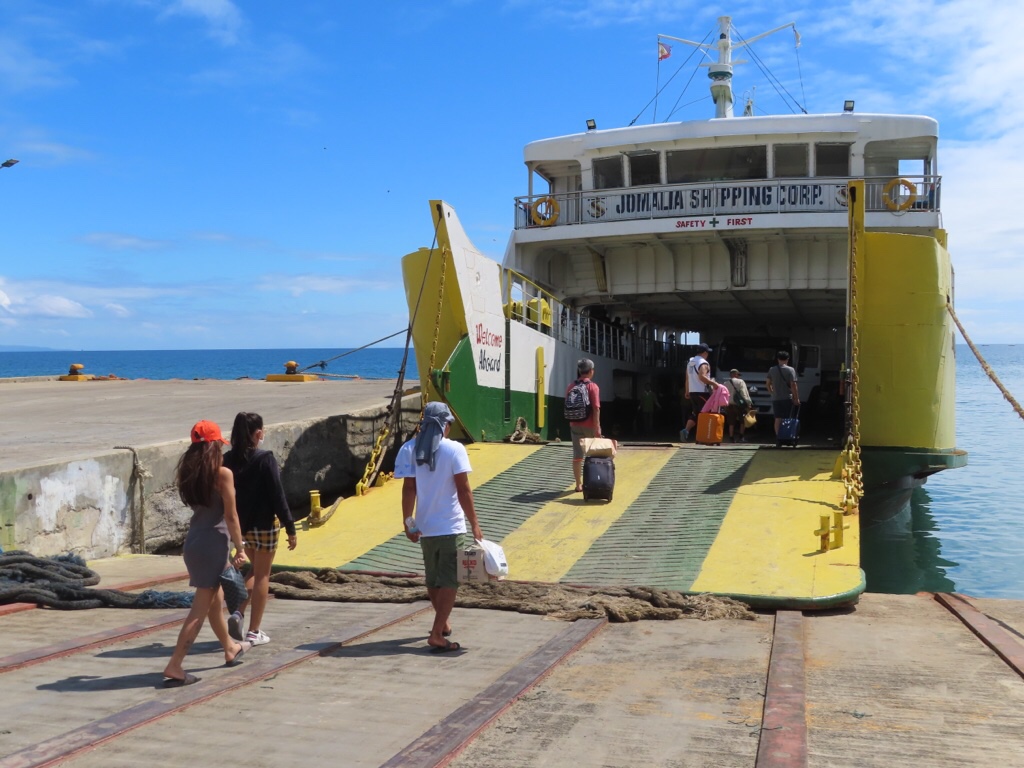
… before catching another ferry to The Camotes Islands.

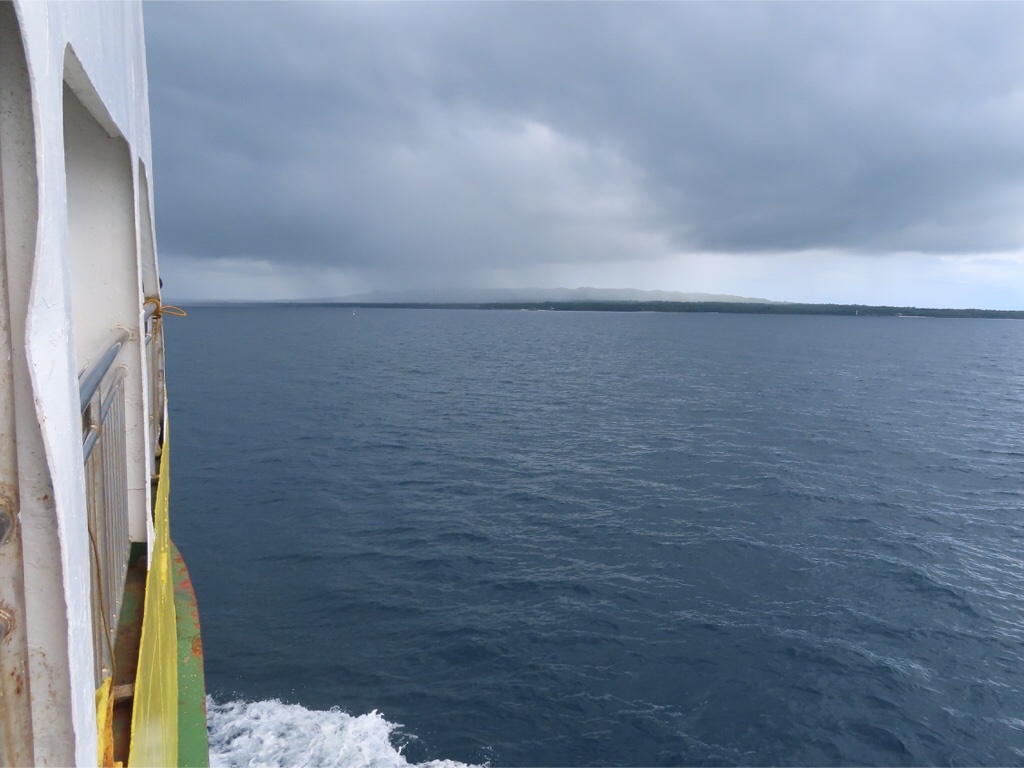
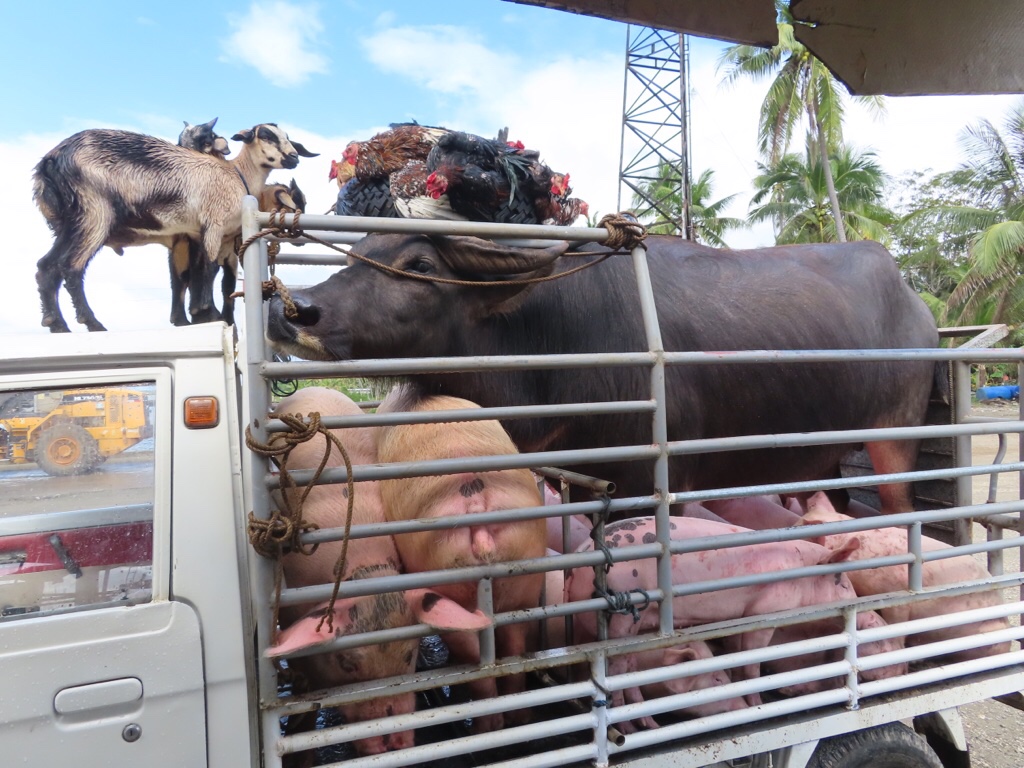
There was a large grey cloud hanging over our destination, but it didn’t stay long, and we missed the shower … but we did see these passengers awaiting the return crossing!

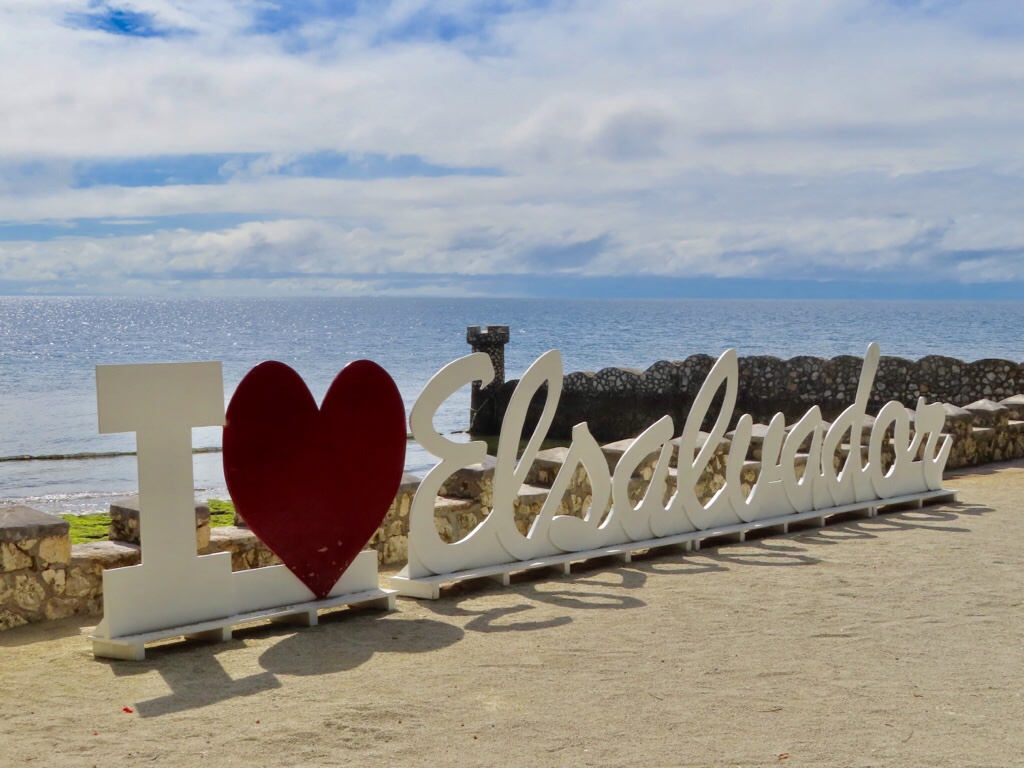
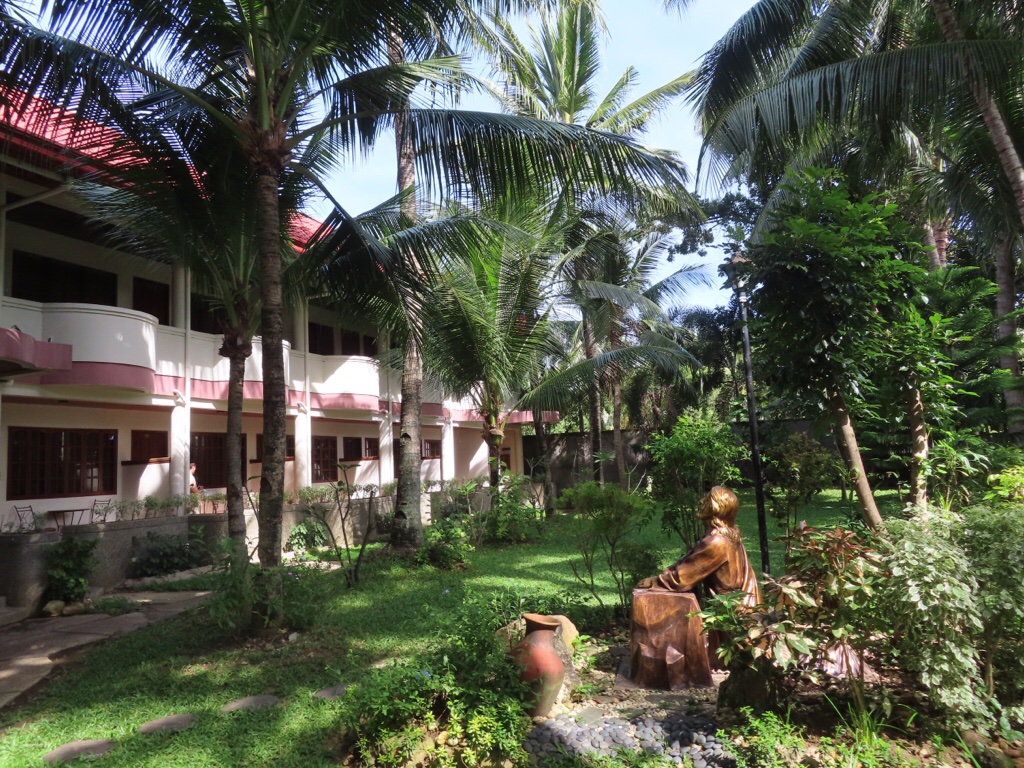
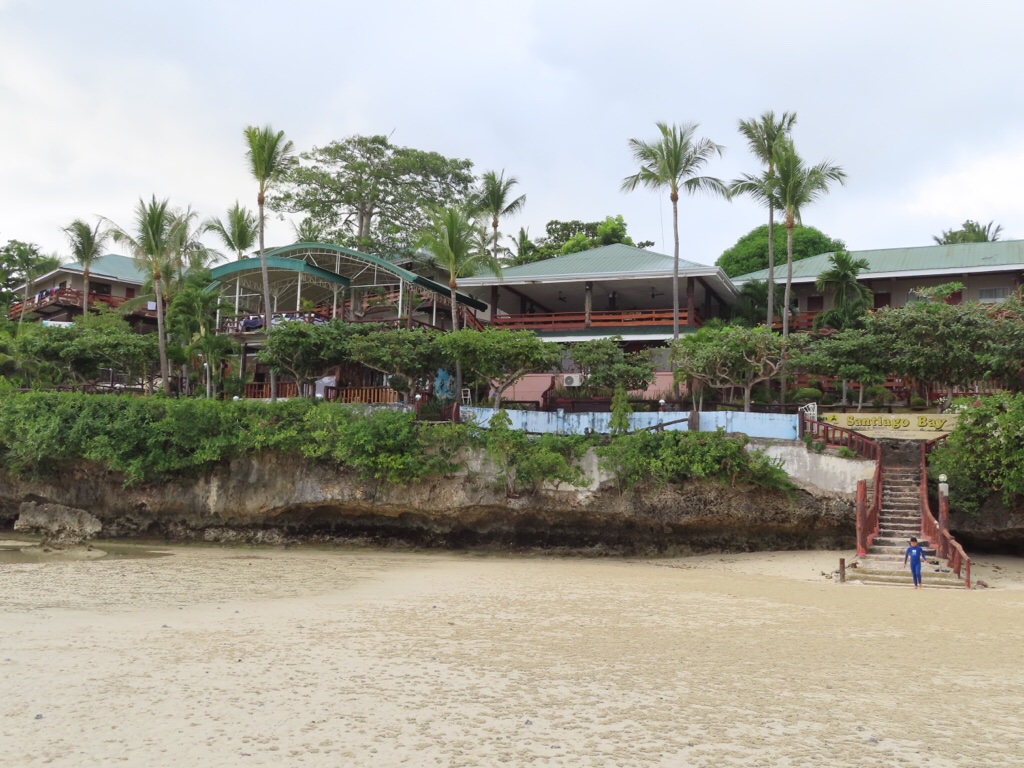
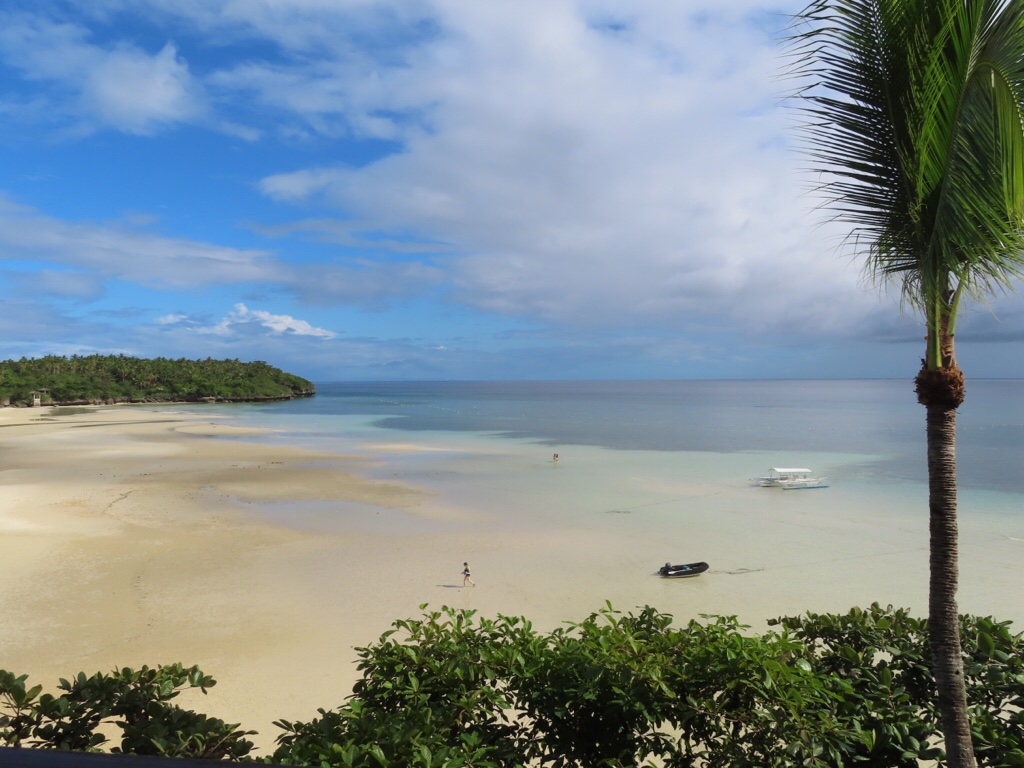
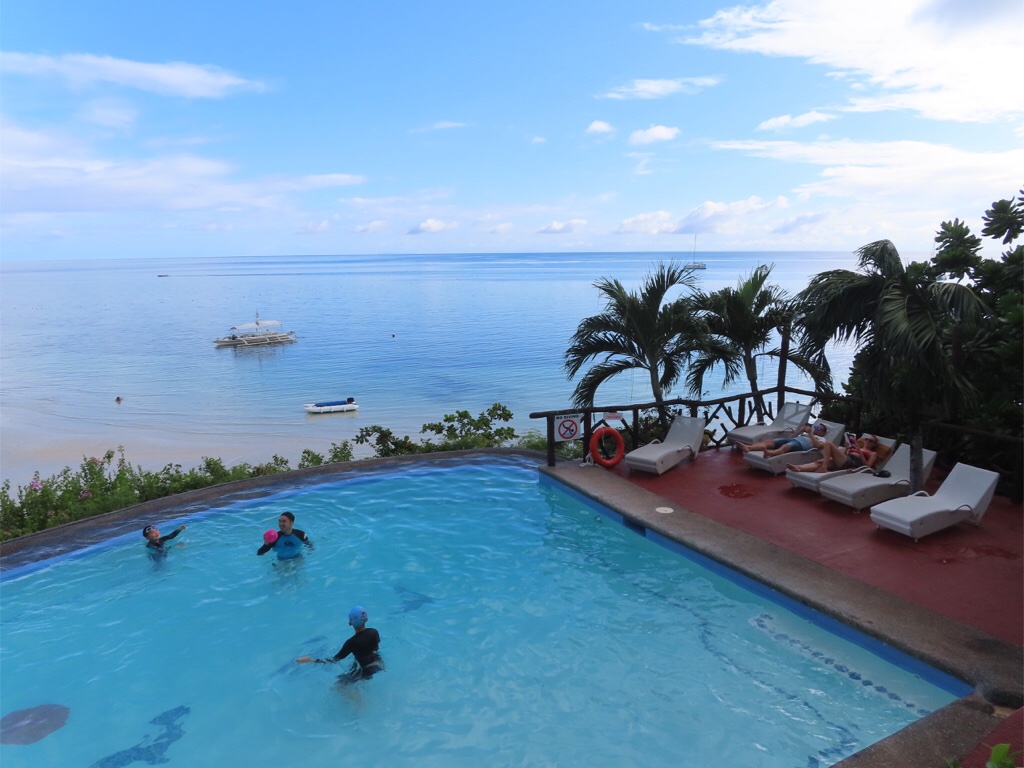
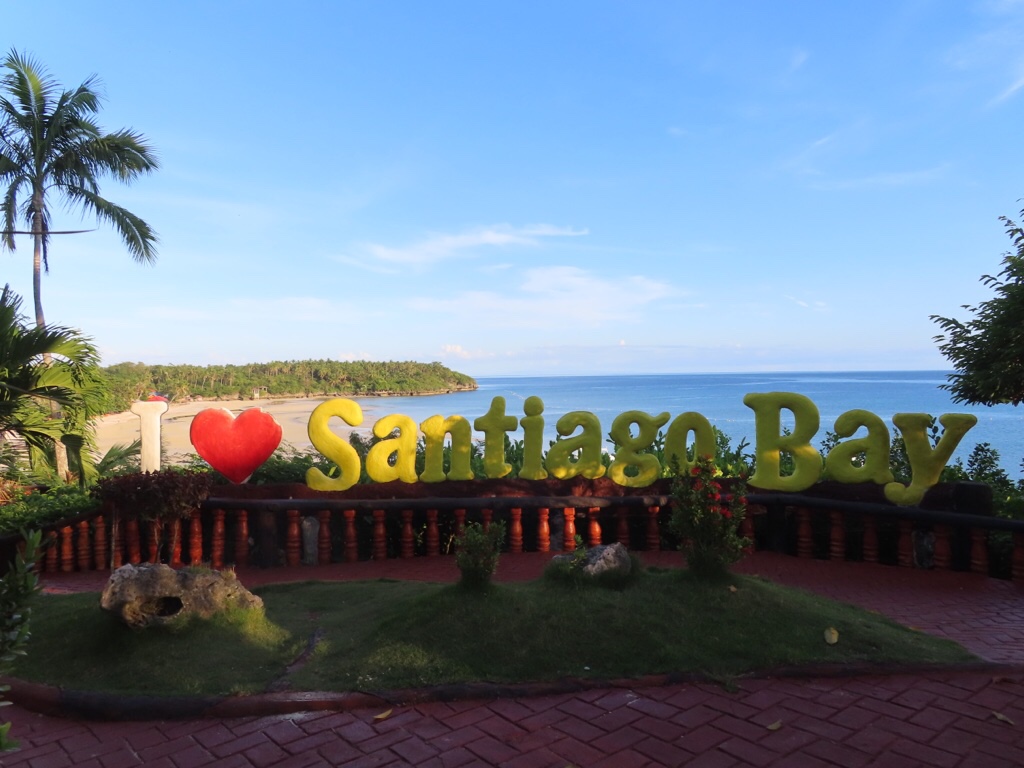
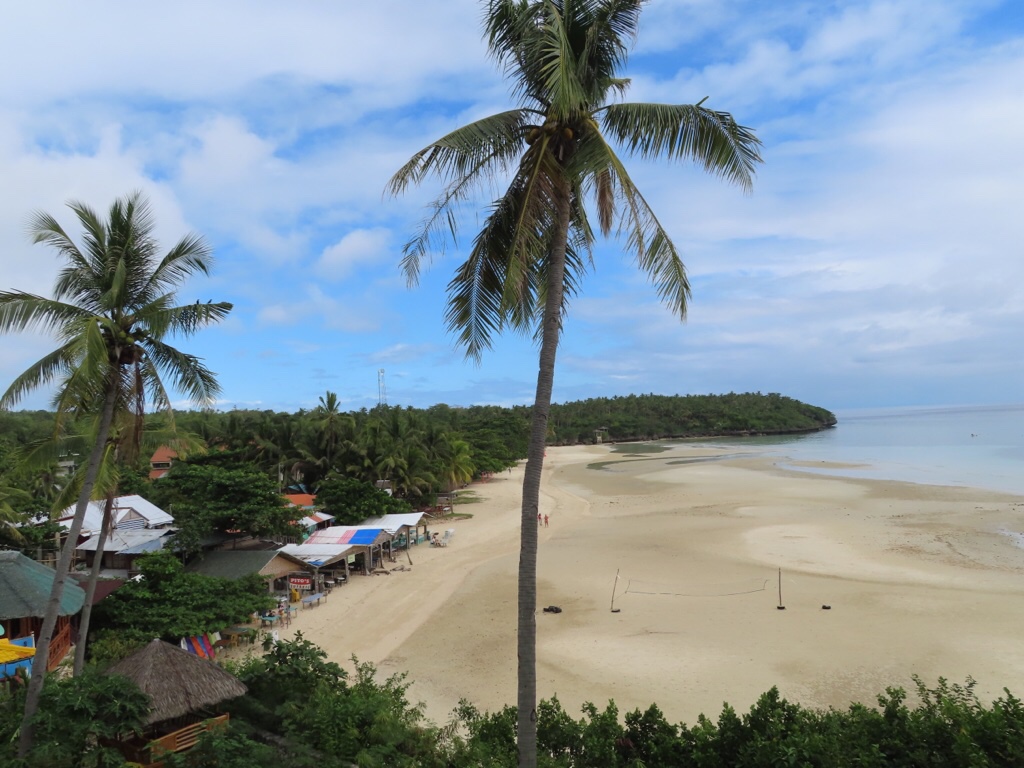
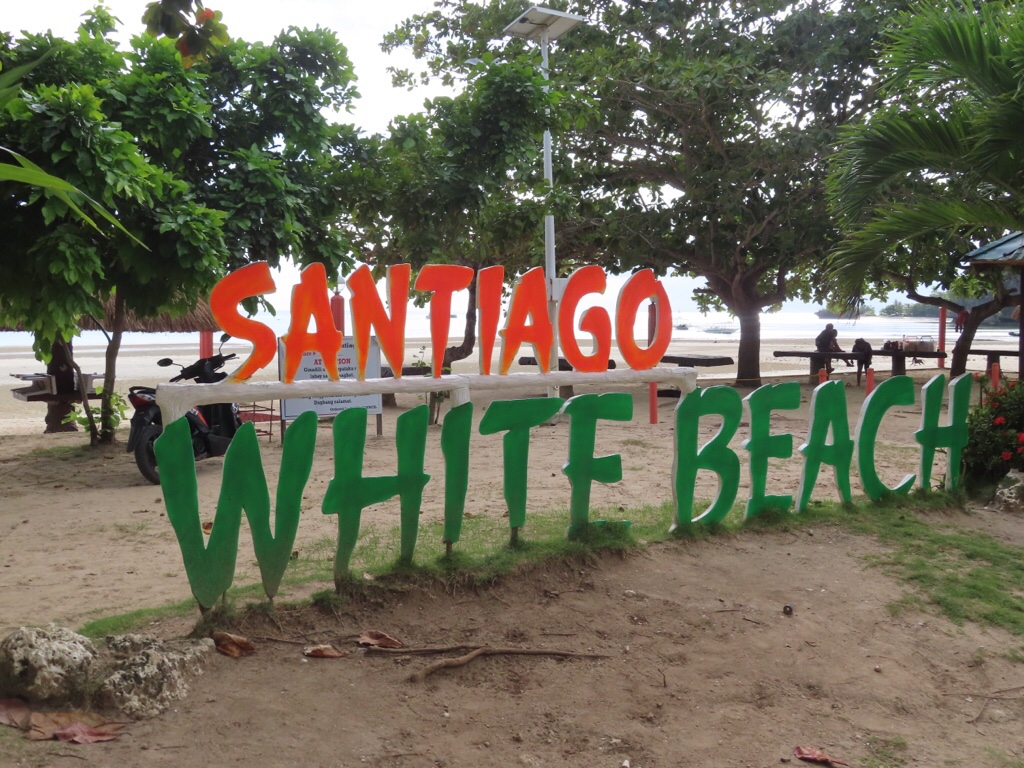
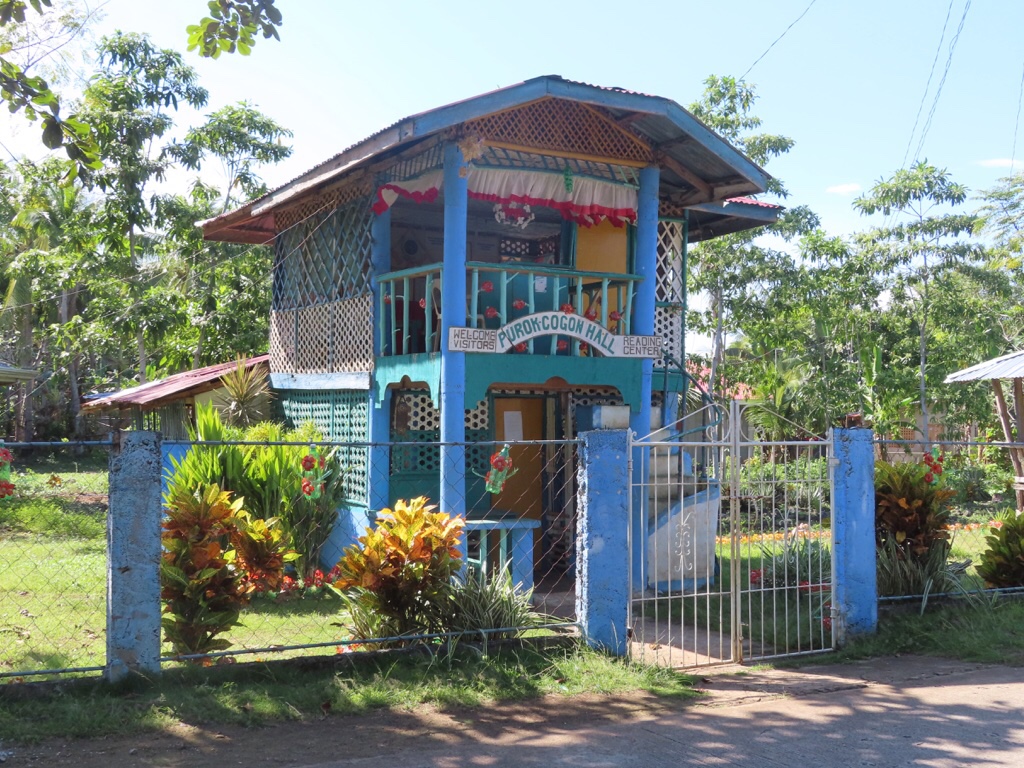
The islands are named for the camotes or sweet potatoes which thrive on the rocky topsoil here. We arrived on Pacijan, the largest of the four islands and are staying at Santiago Bay Garden Resort, an older hotel built into the cliff overlooking the white sands of Santiago Bay with an interesting aesthetic which relies on painted concrete. We arrived on the Chinese New Year and there were lots of Filipino and Korean families there for the weekend, with the shallow waters of the bay ideal for small children.

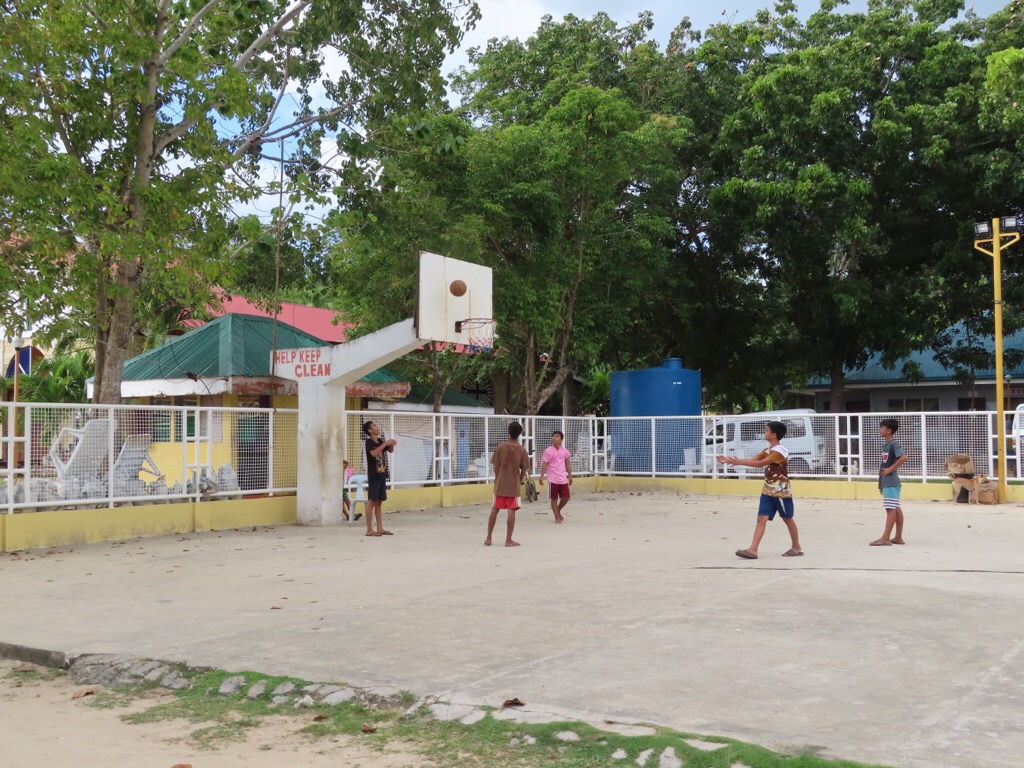
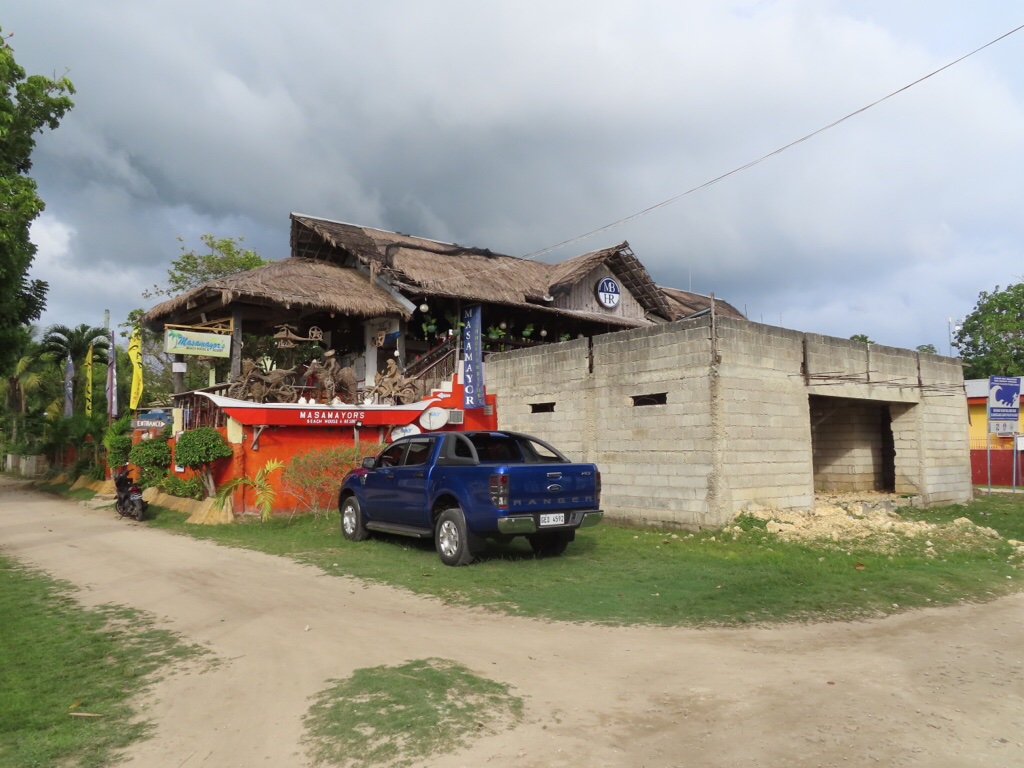
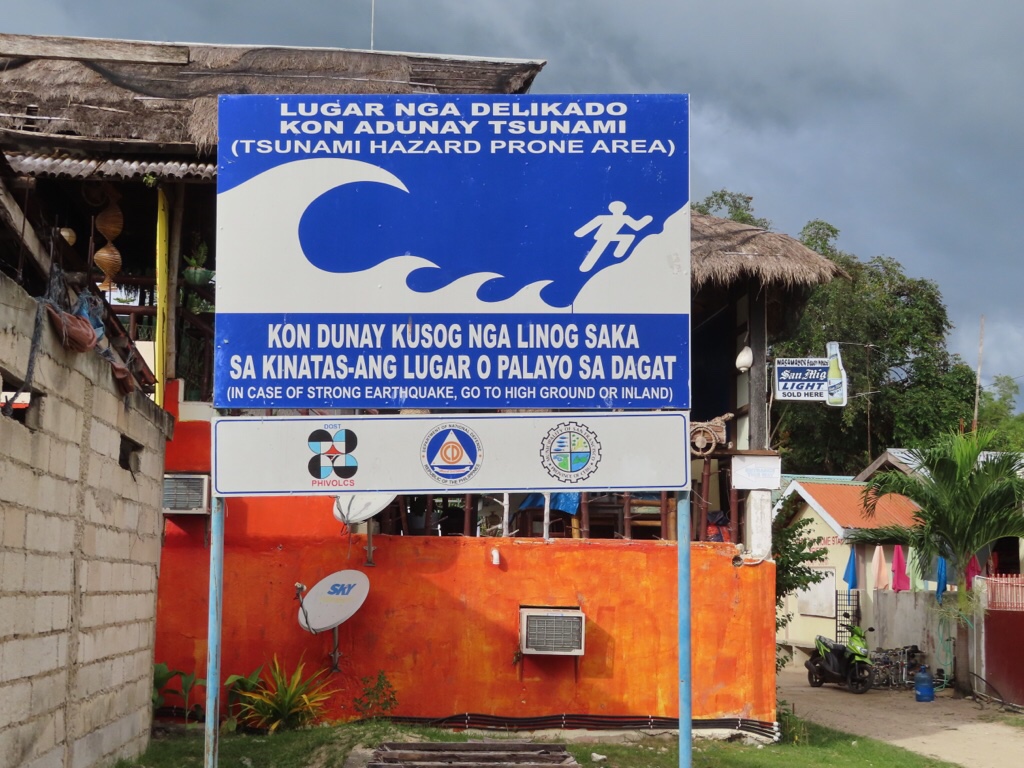
We wandered down the the beach, and round the small town behind, but the day remained a bit grey.

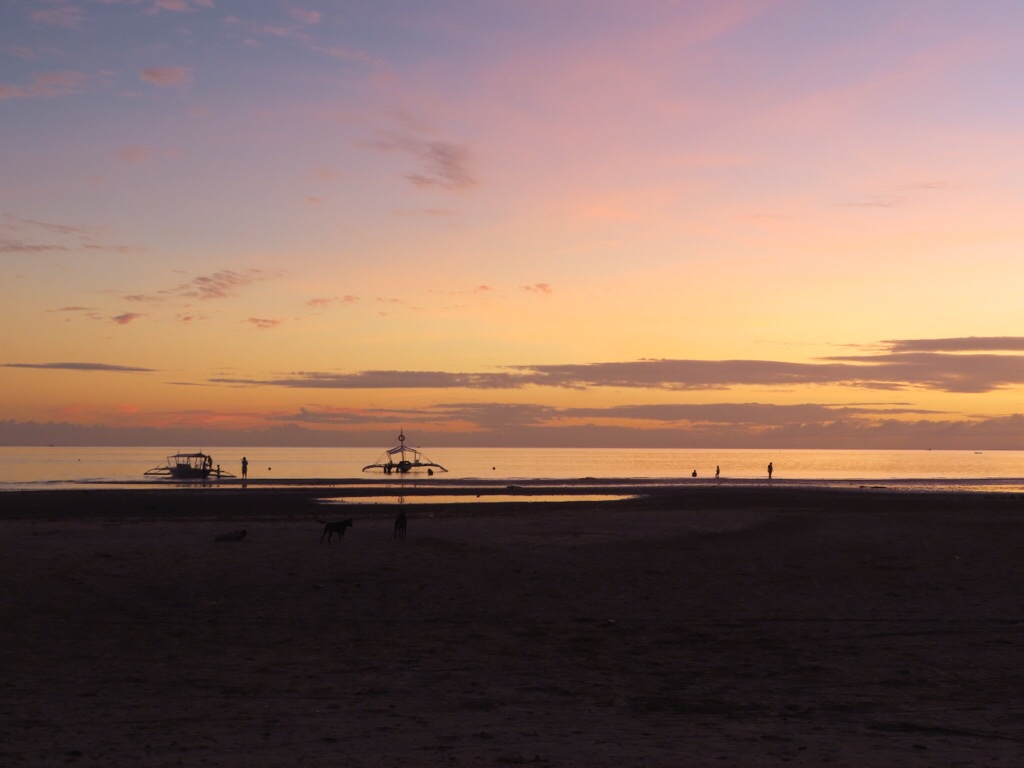
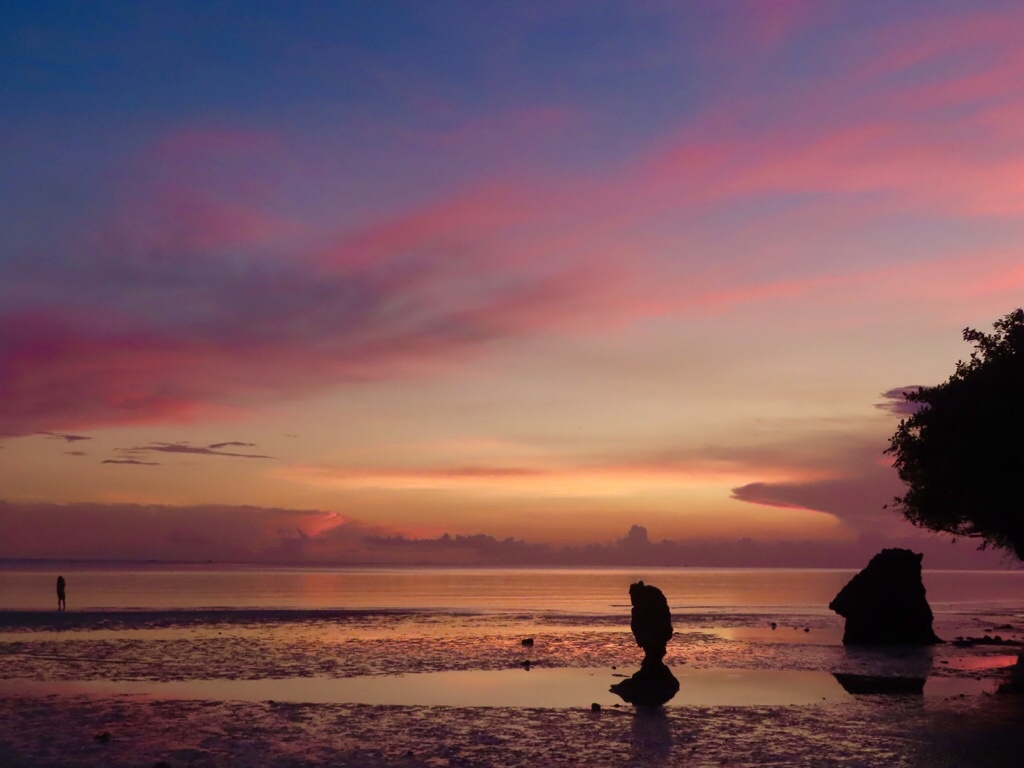
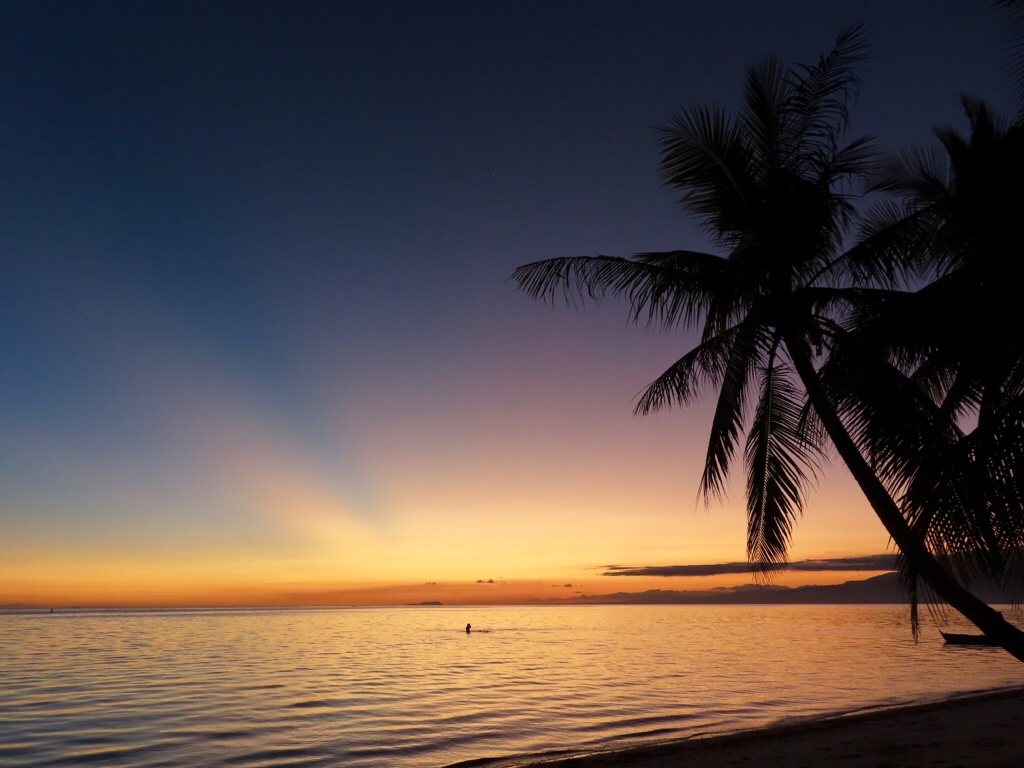
Sunset the next evening was a stunner though …

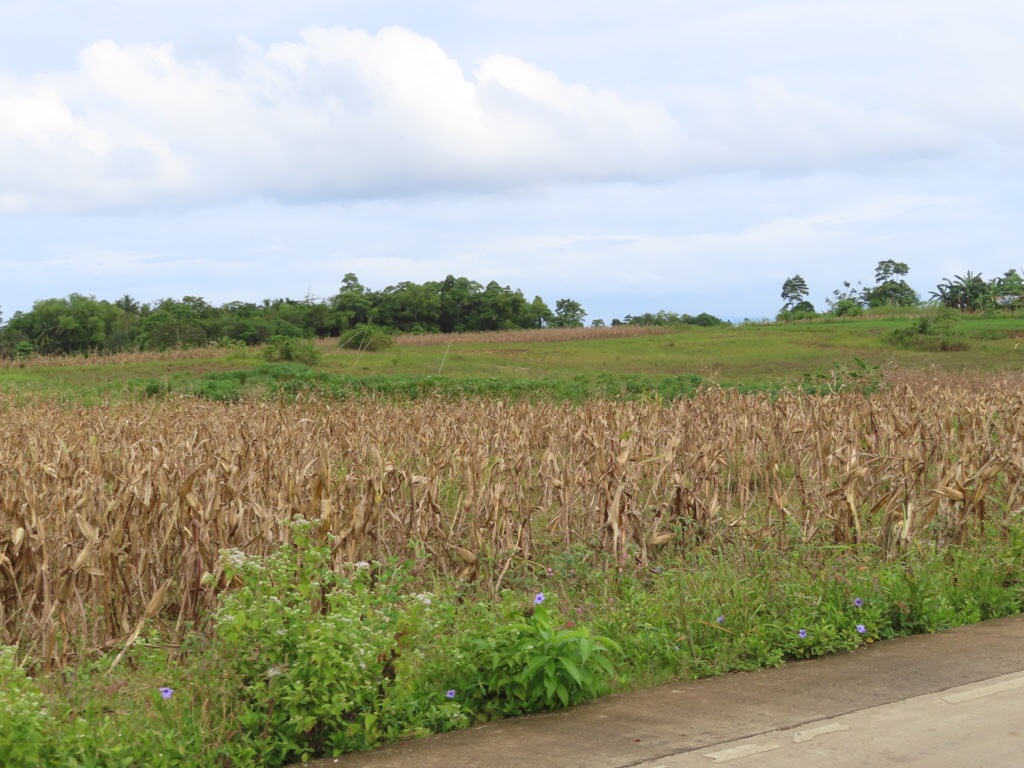
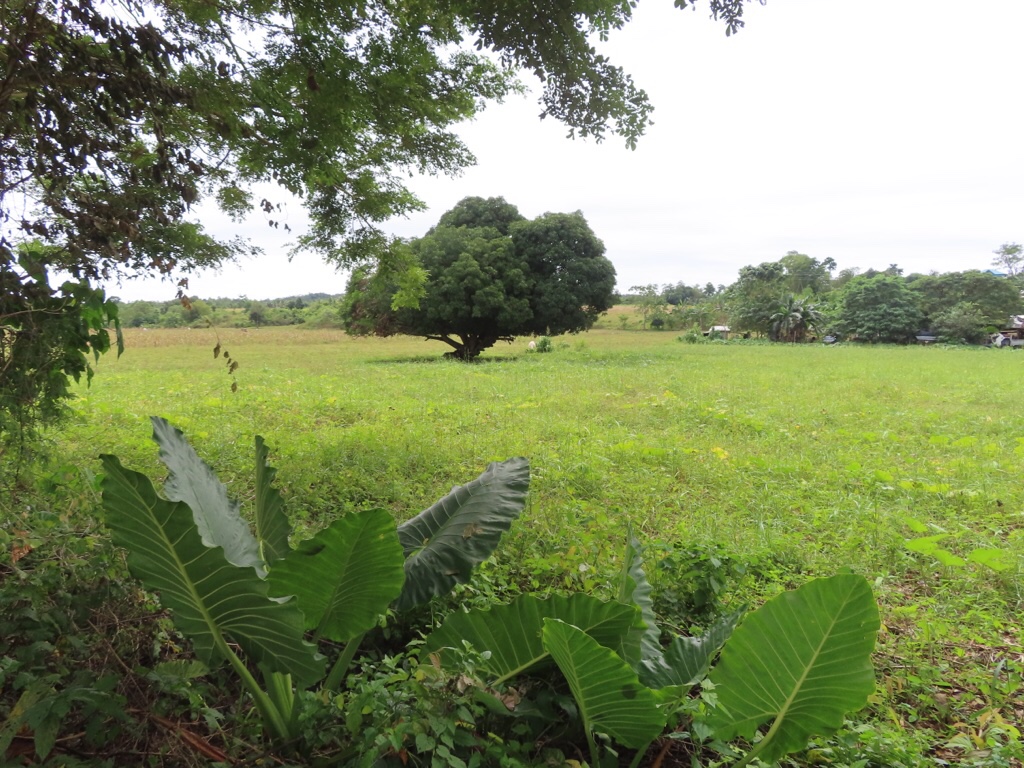
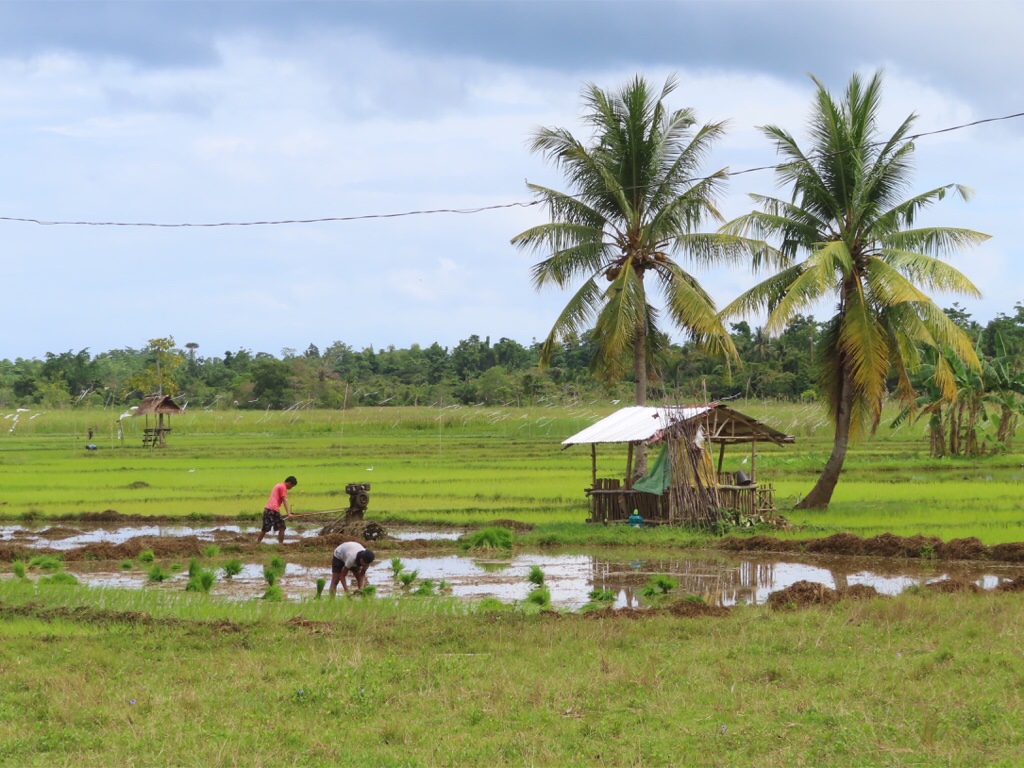
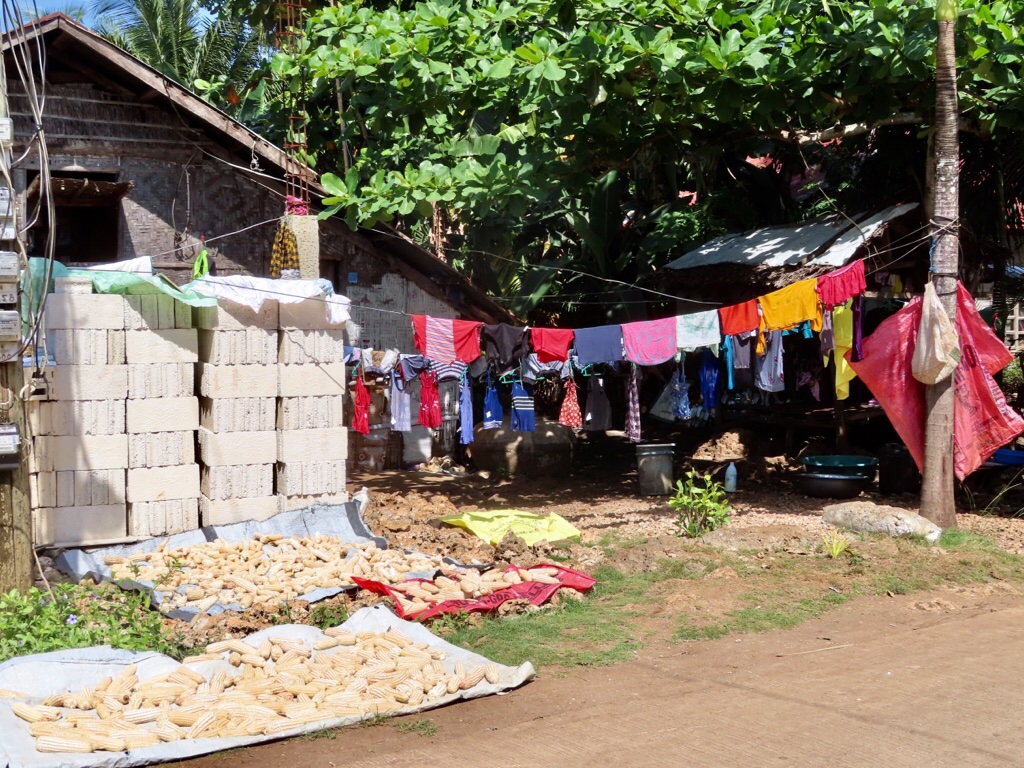
We hired another scooter for a couple of days to explore and realised that these islands are the most rural and least touristy of all we have visited. We passed smallholdings and farmland growing maize, vegetables, bananas, rice …

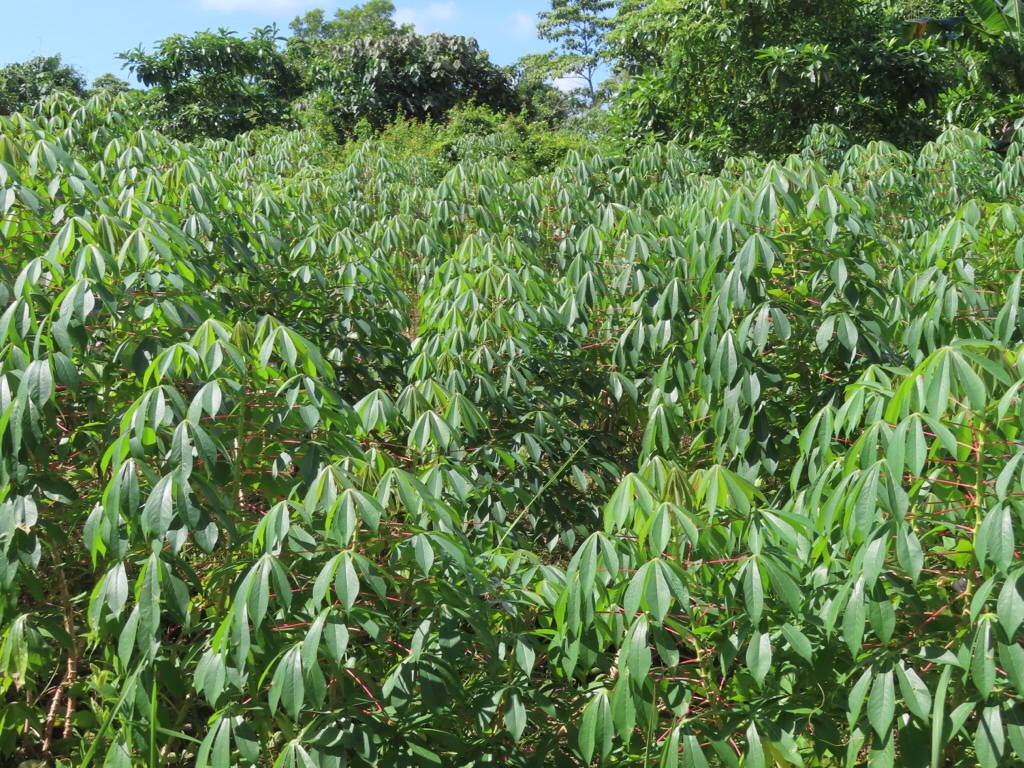
… and also camotes!

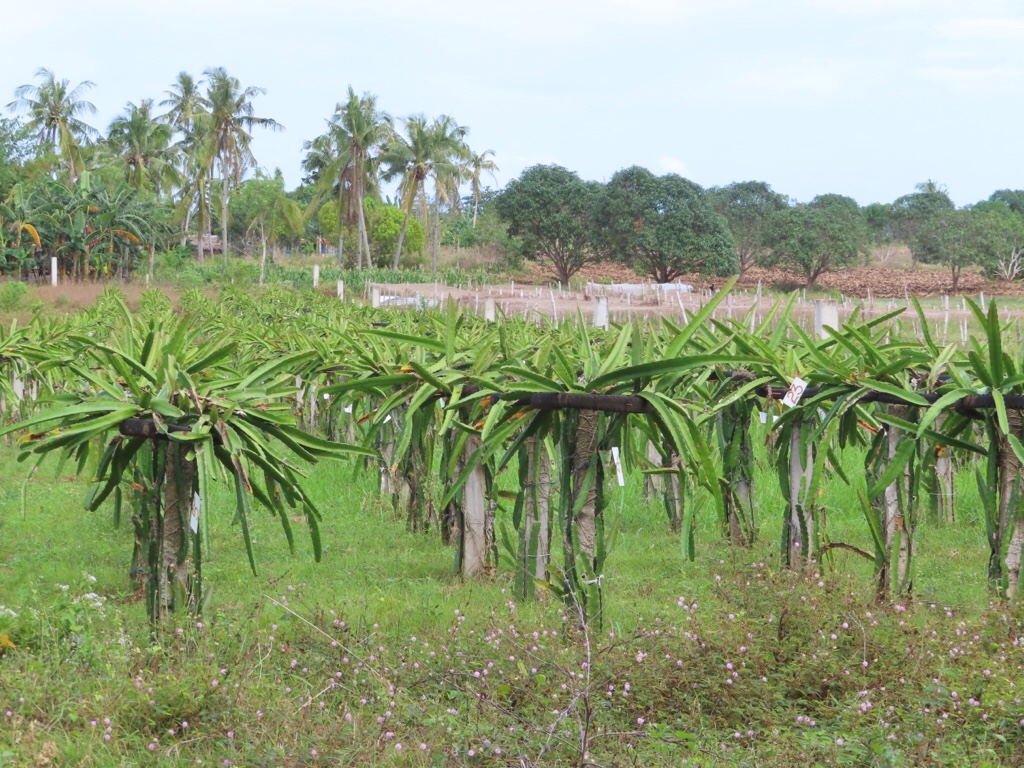
We even saw what looked like cacti, and while we mused briefly that maybe they make local tequila for those marguerites we’ve been drinking, we realised it was the wrong sort of cactus … and found out later they were growing dragon fruit.

Just as an aside, during the time of Spanish rule, The Philippines were administered from the Spanish colony of Mexico and many grew rich on the galleon trade, exporting Chinese goods from Manila to Mexico and it is possible that the original alembic stills and the technology which enabled the distillation of mezcal came from Filipino immigrants to Mexico.

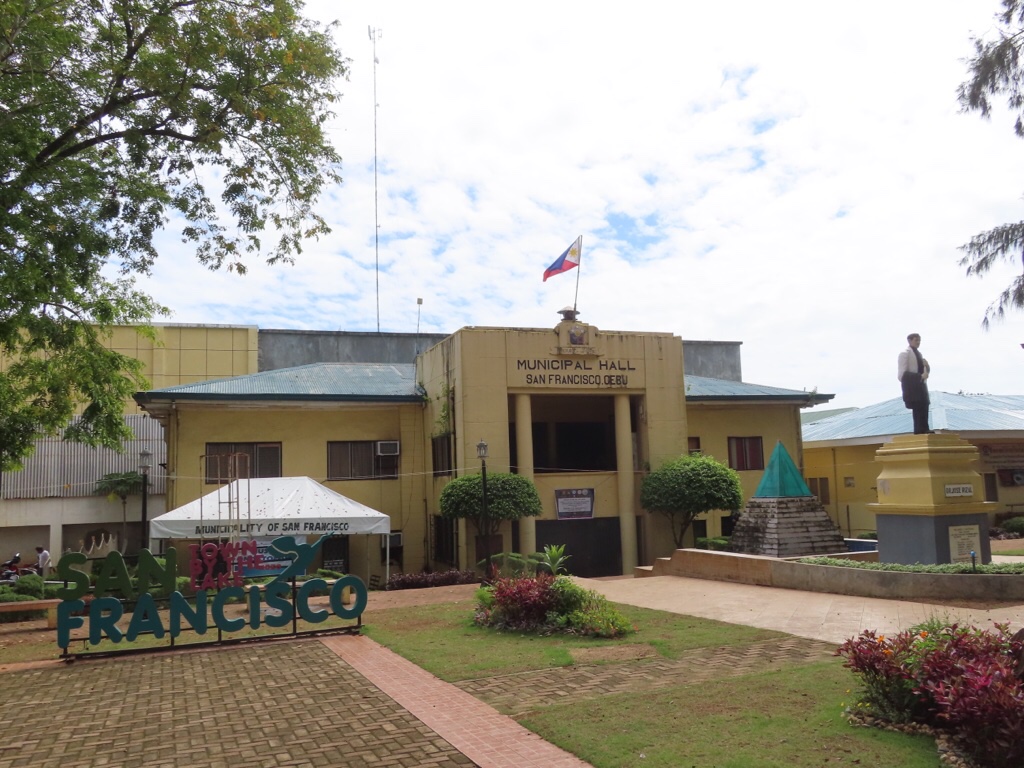
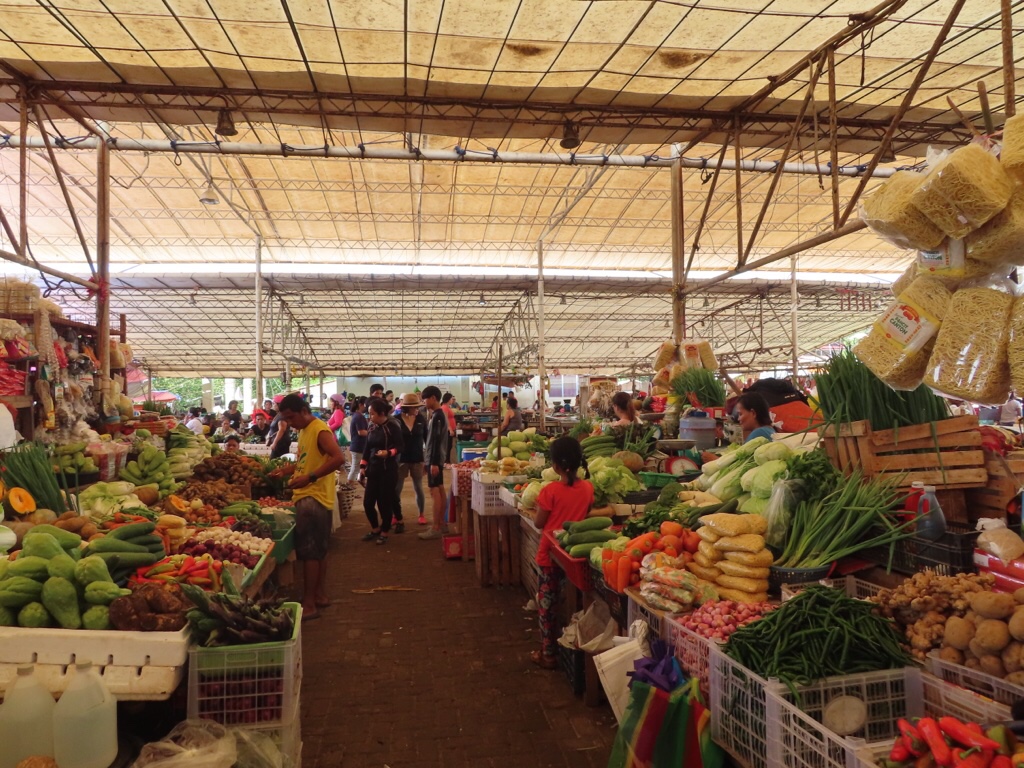
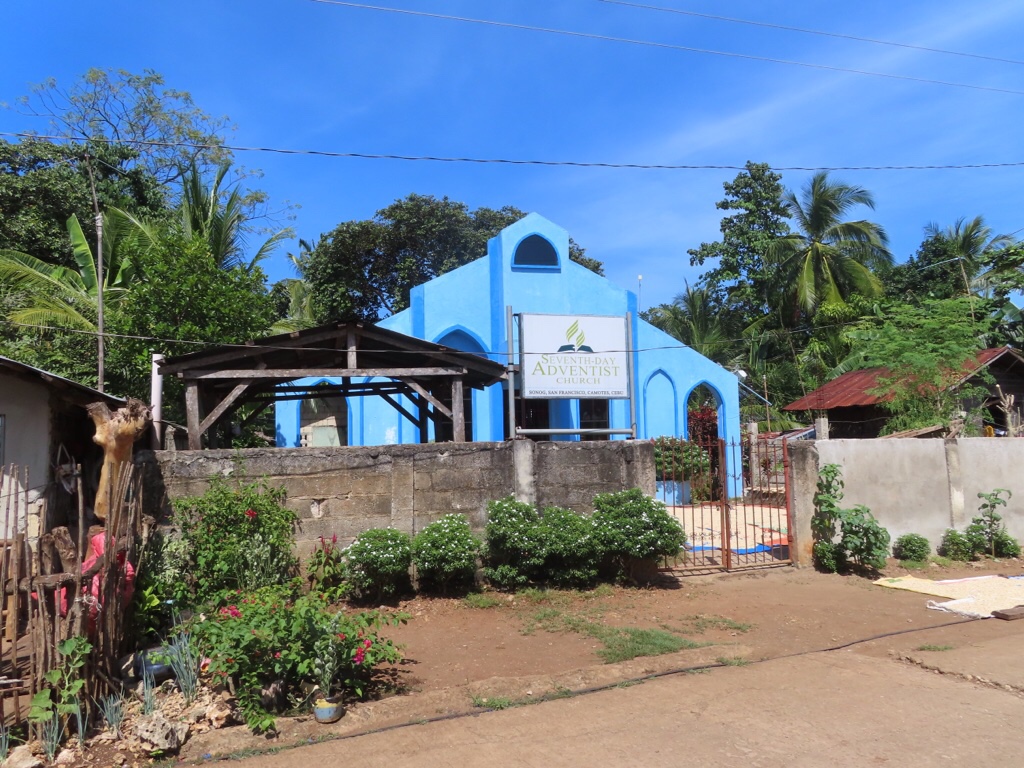
San Francisco is the main town on Pacijan and we stopped to look round the church and the market.

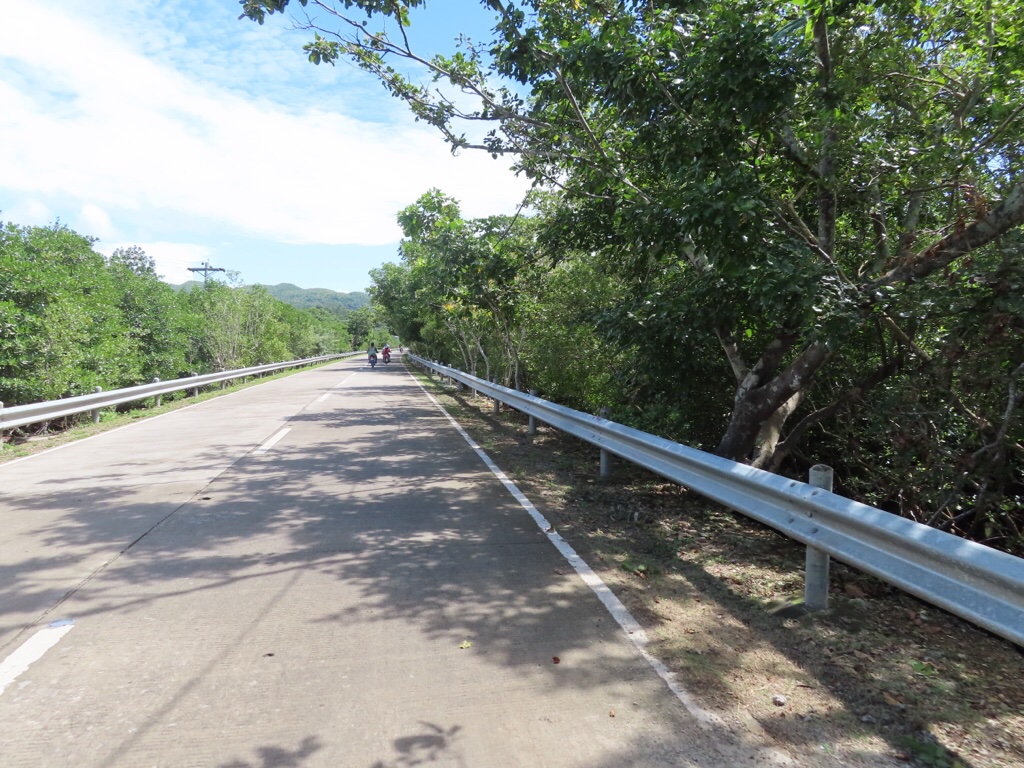
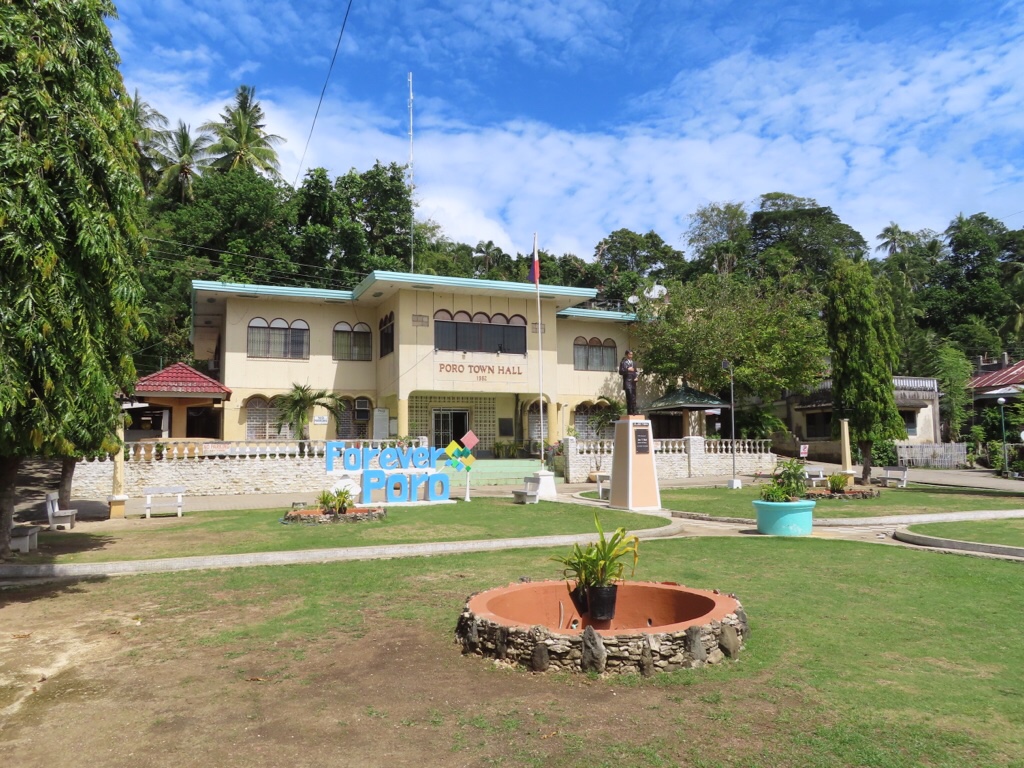
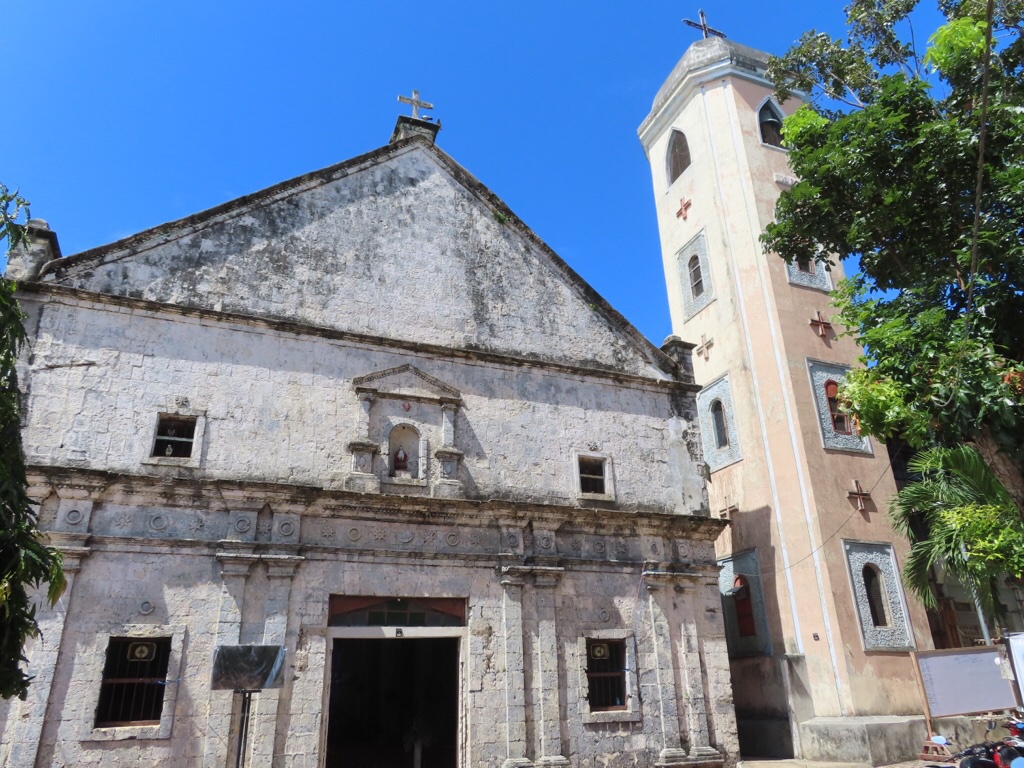
We then crossed the 1.5km causeway surrounded on both sides with mangrove trees to the second island, Poro, home to Santo Niño de Cebu, the oldest church in The Camotes.

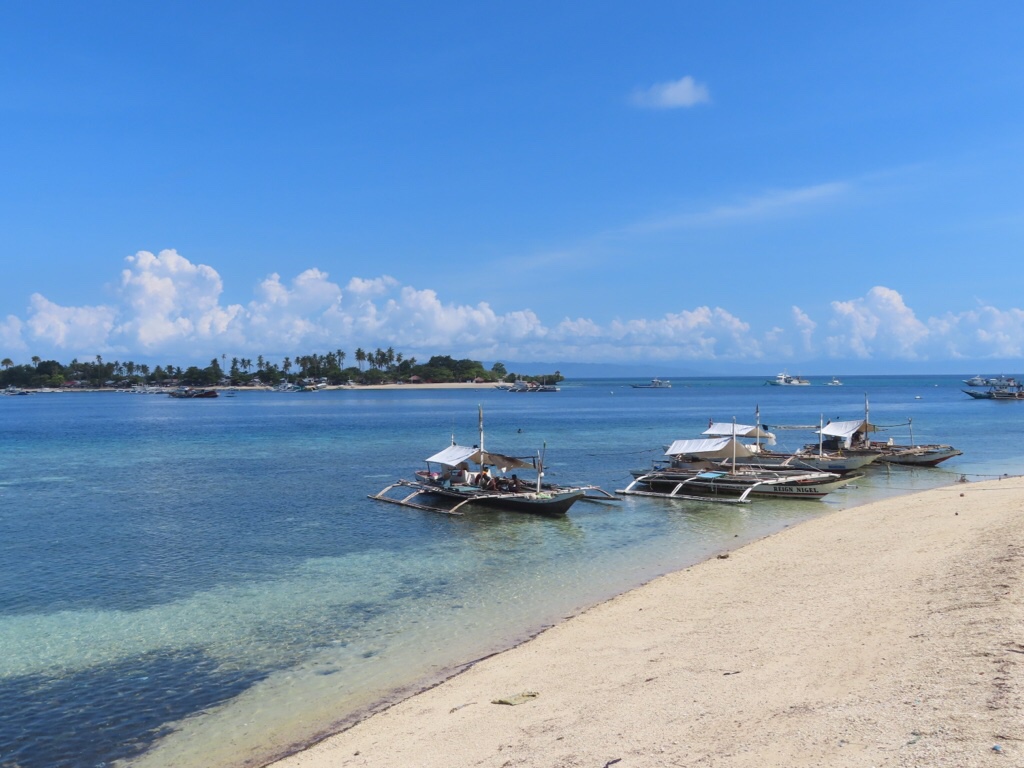
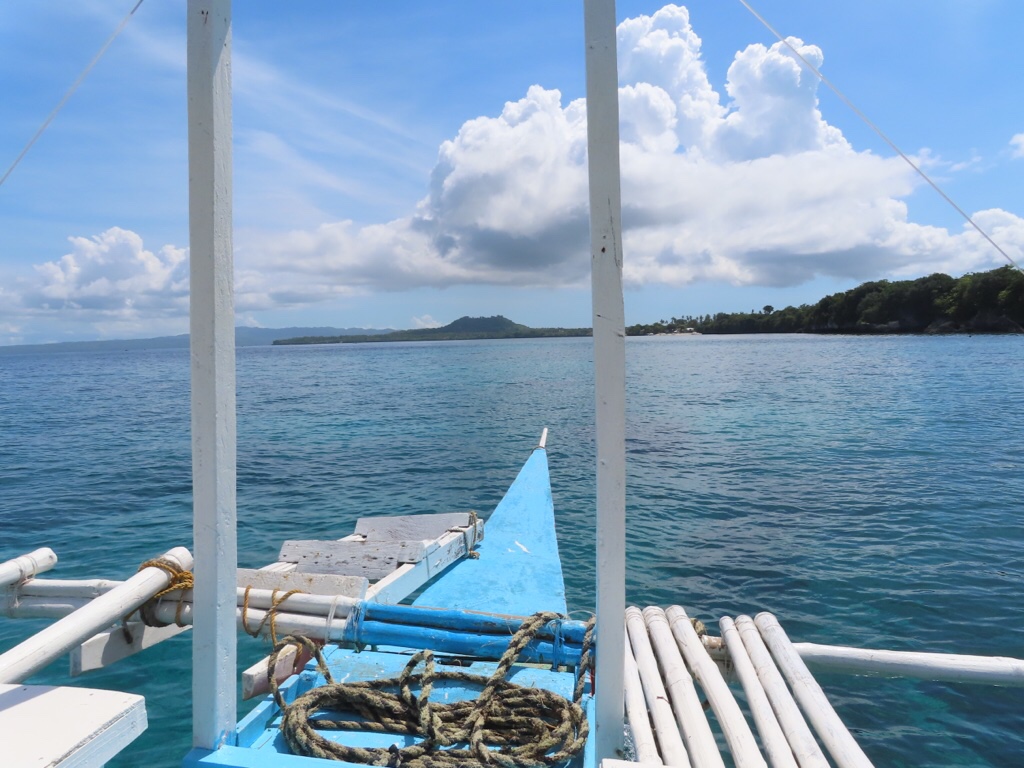
We also headed north to Esperanza where we hired a boat to take us snorkelling.

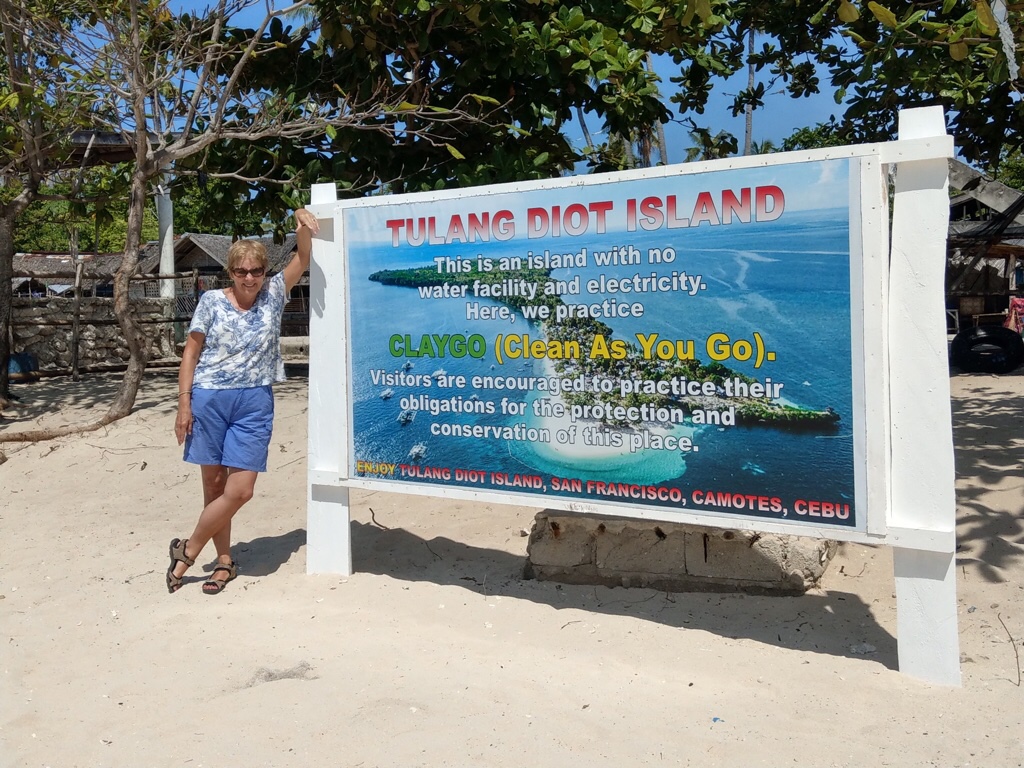
It took us all the way round the smallest of the islands, Tulang Dyot, meaning ‘Little Tulang’ which is certainly appropriate at less than 1 sqkm, stopping twice. Another great experience, lots of fish, as well as a blue striped sea snake and towards the end a jellyfish, which was a little scary after last time. At the second stop, there were huge shoals of tiny silver fish all around us, catching the light, as well as a large shoal of bigger fish much deeper.

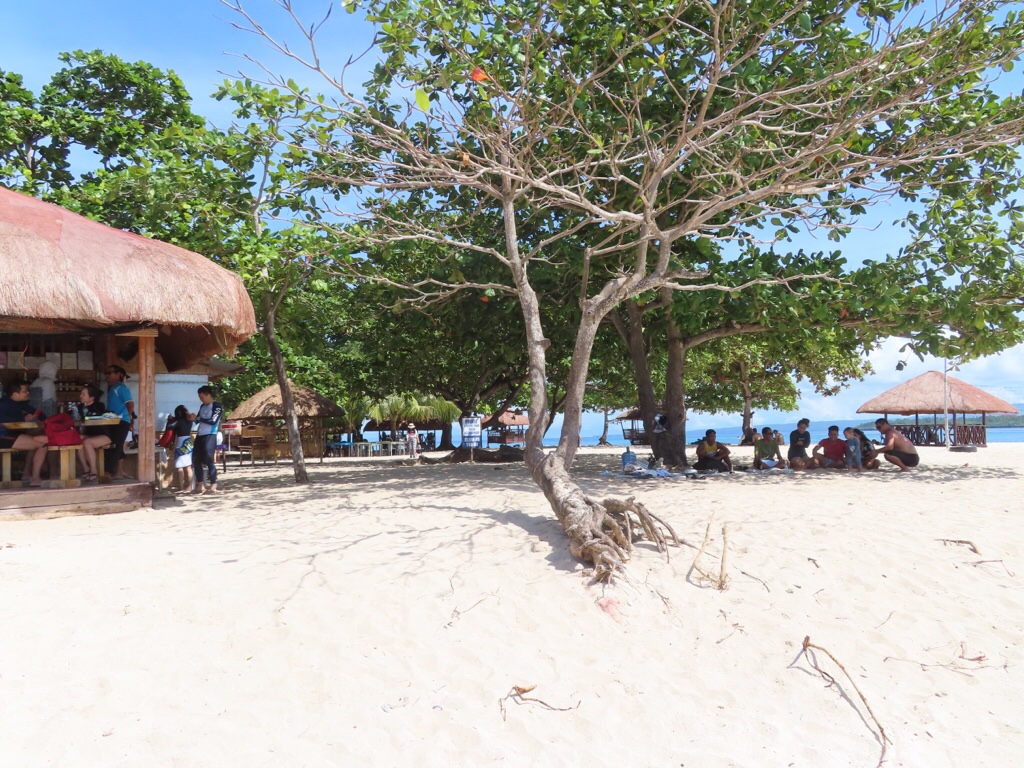
We stopped briefly at the beach at Tulang Dyot, but there wasn’t much there and it was too hot to linger.

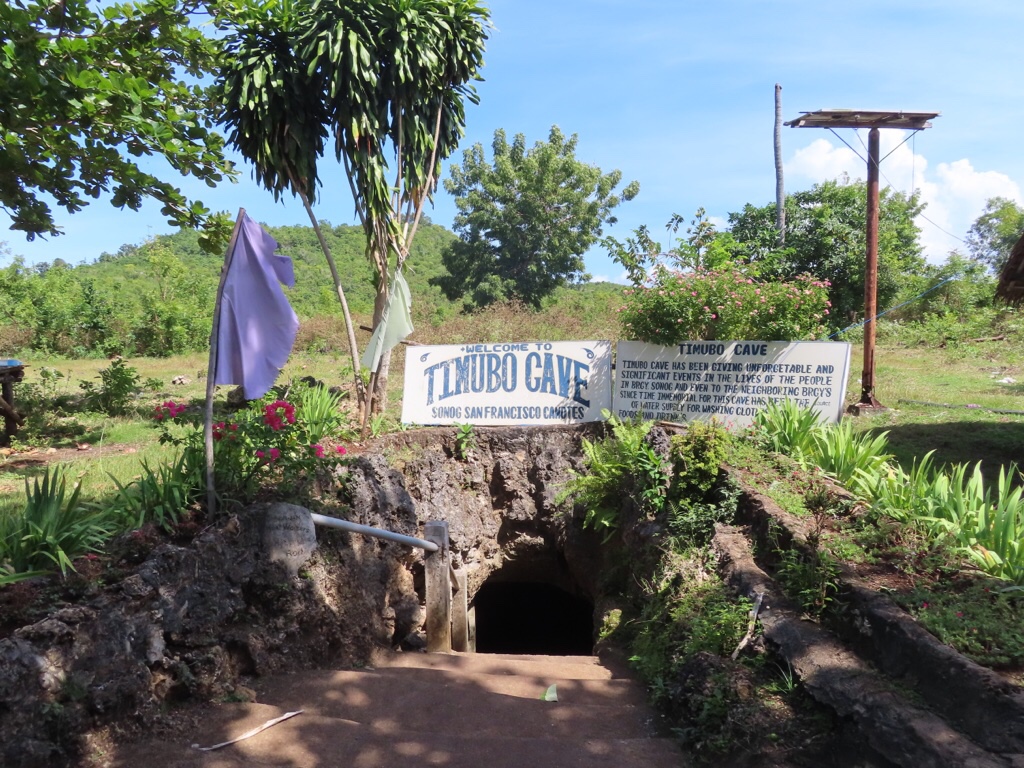
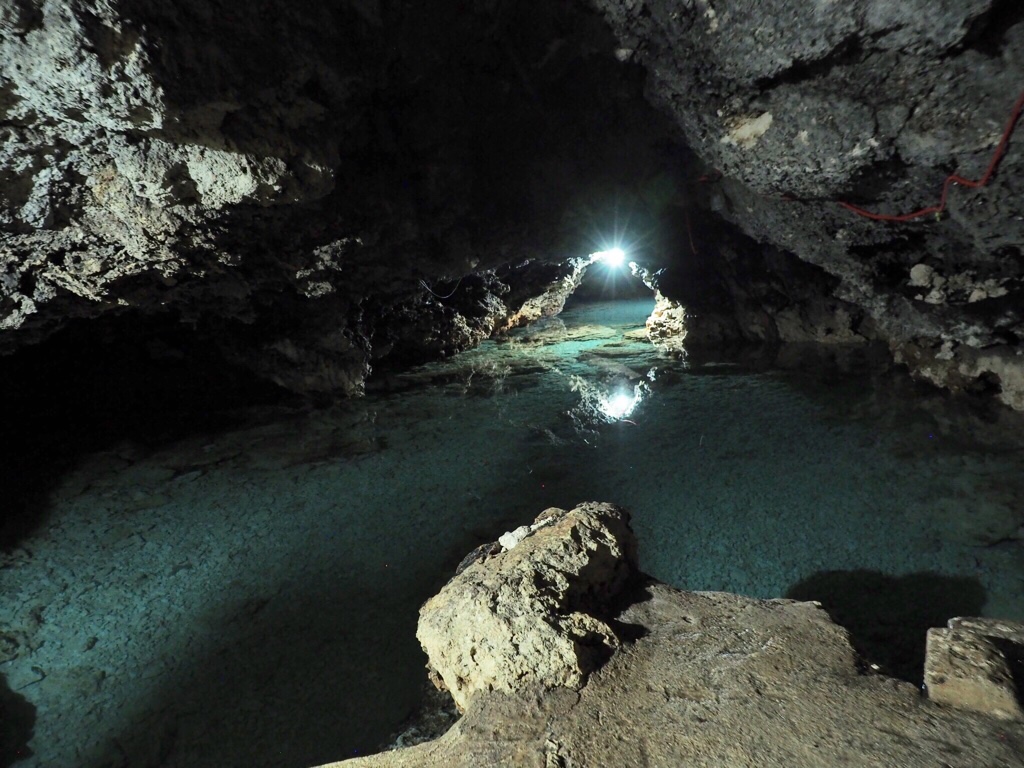
The islands have several caves with stalagmites and stalactites as well as swimming holes, definitely just like the cenotes in Mexico, and we stopped at Timubo Cave, not maybe the most impressive, but also not touristy.

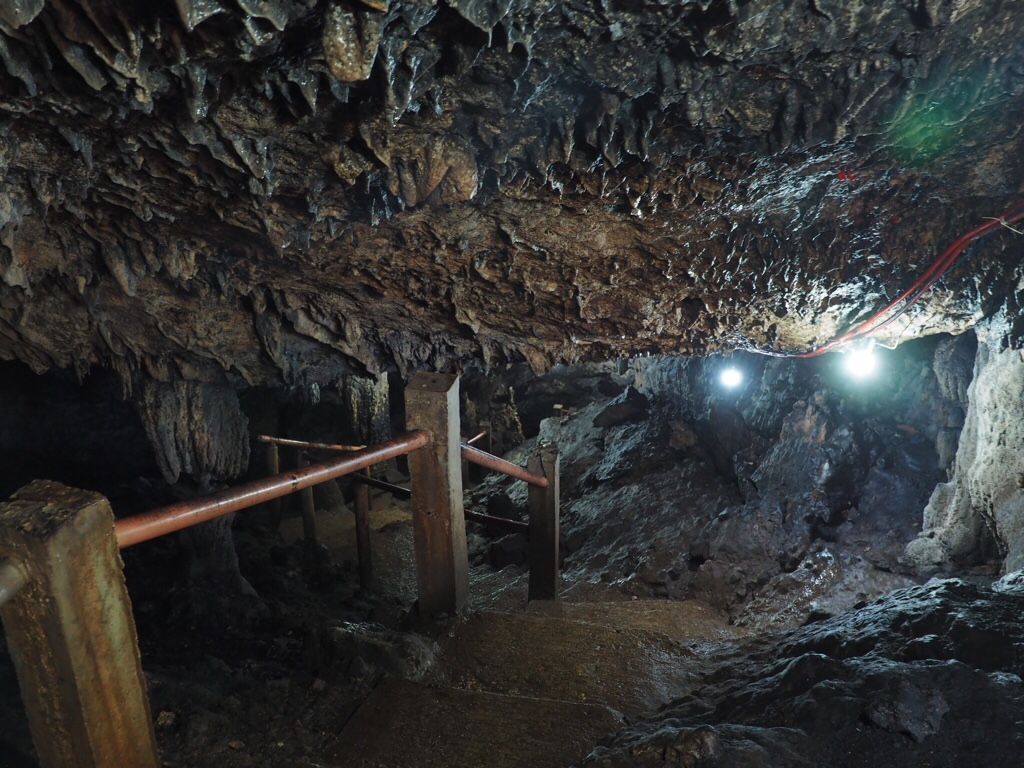
We were given hard hats and descended a number of concrete steps, took off our sandals to wade through some water, then reached the cave itself.

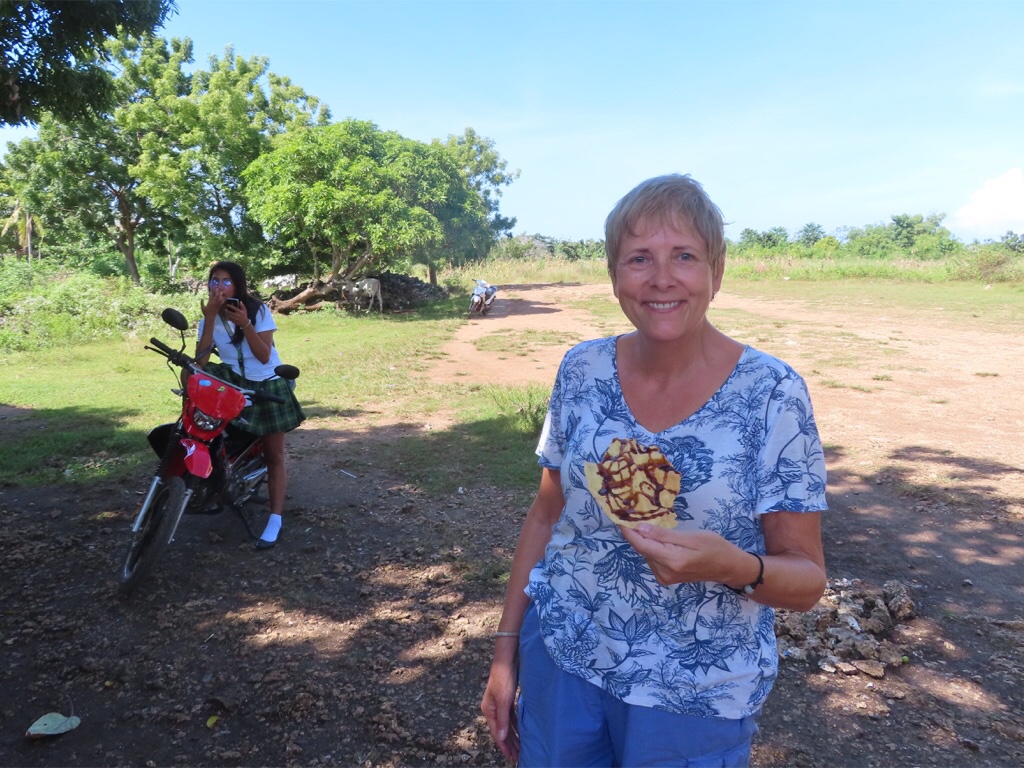
Unsurprisingly, Chris chose not to swim and I couldn’t resist! As we emerged, some schoolgirls were tucking into a post-school snack of a crispy disc with what looked like chocolate sauce, but was coconut syrup … yum!

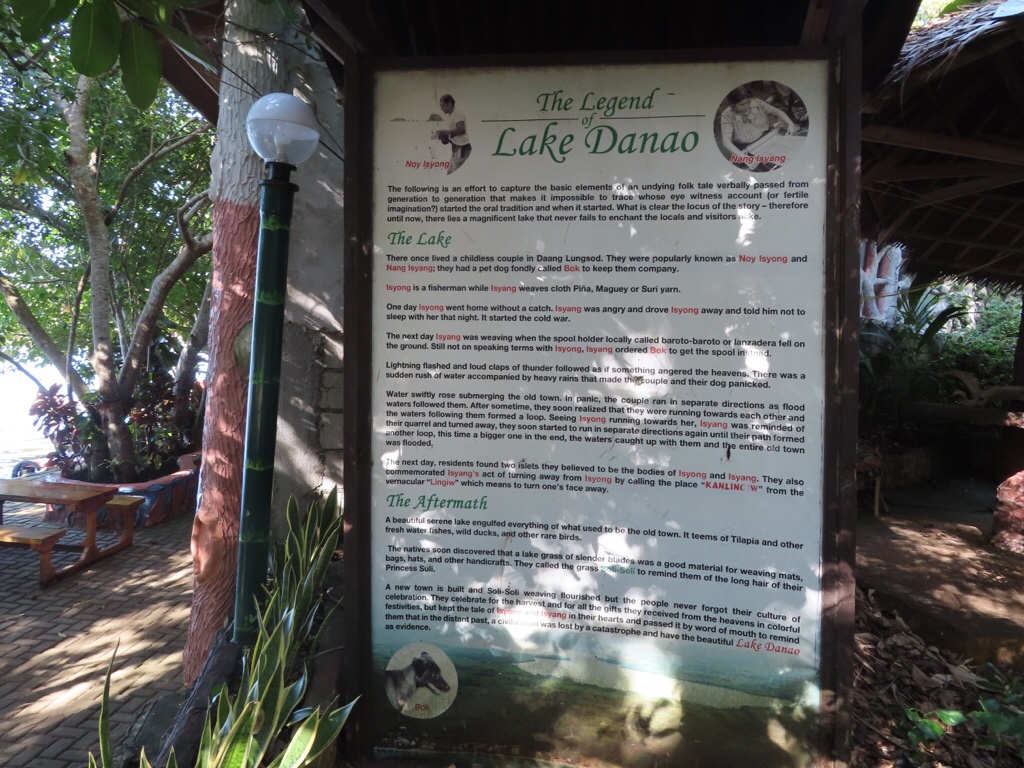
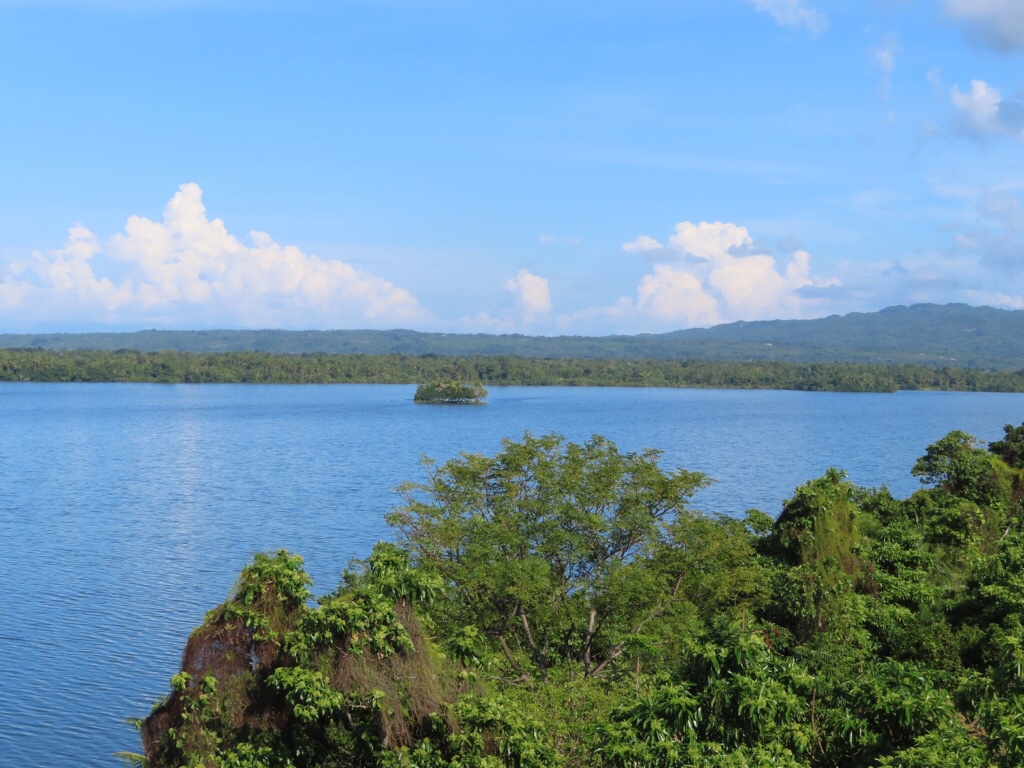
Danao Lake is a large guitar shaped lake, containing two islets with a legend that explains these are the remains of Isyong and Isyang …

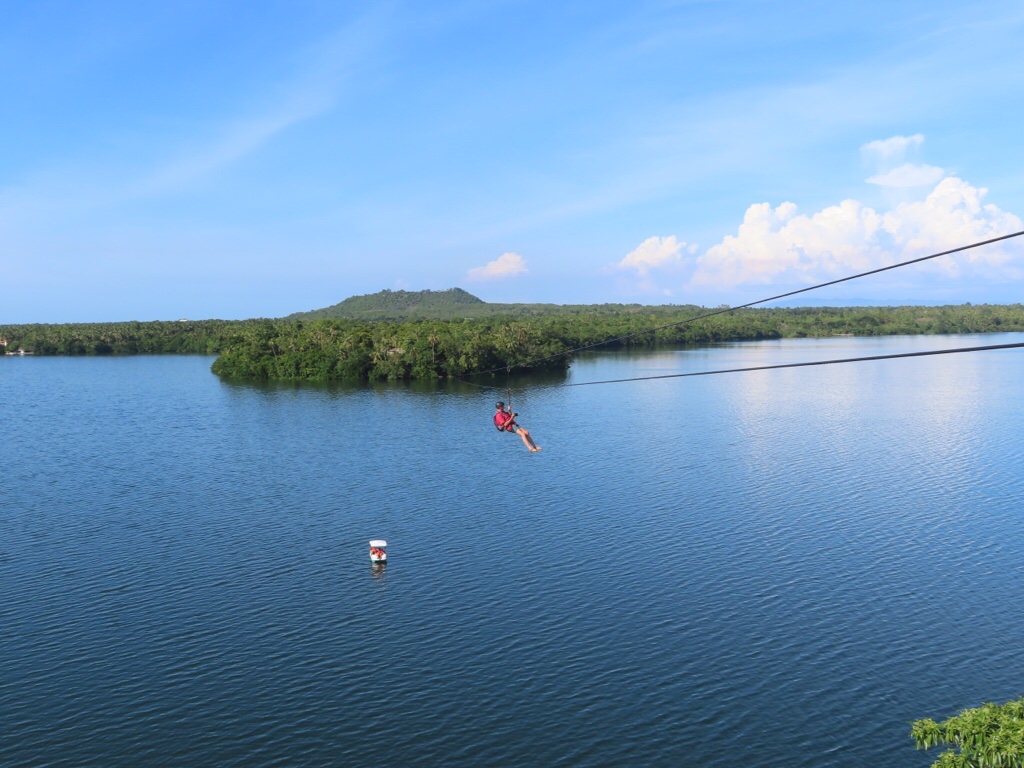
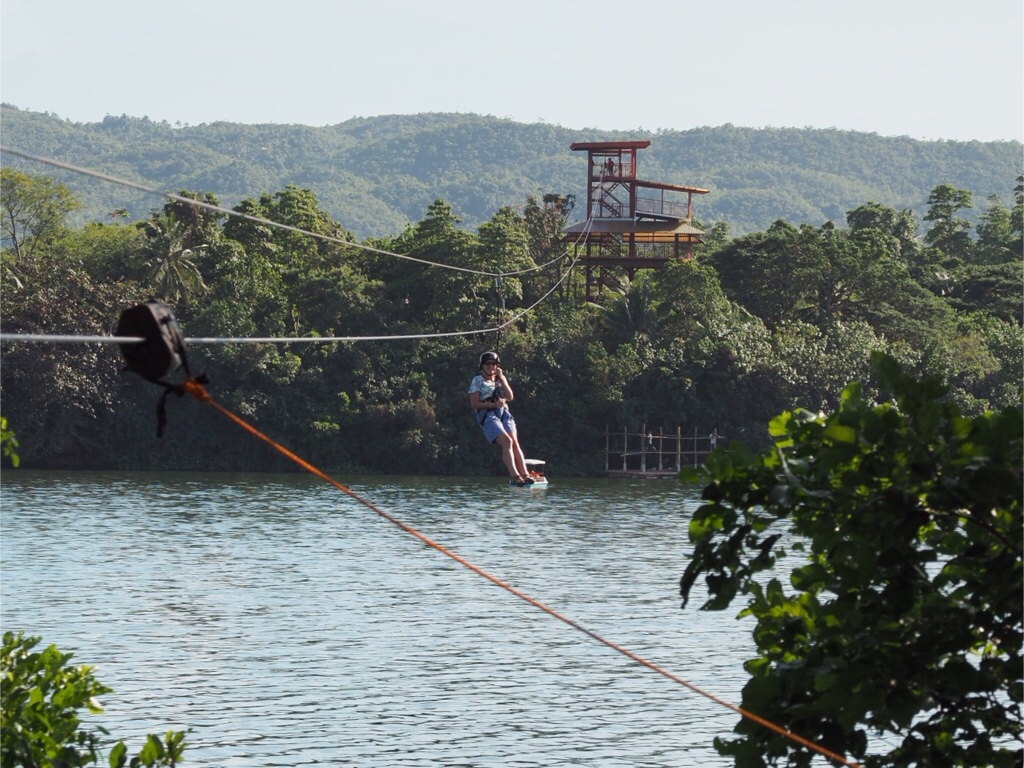
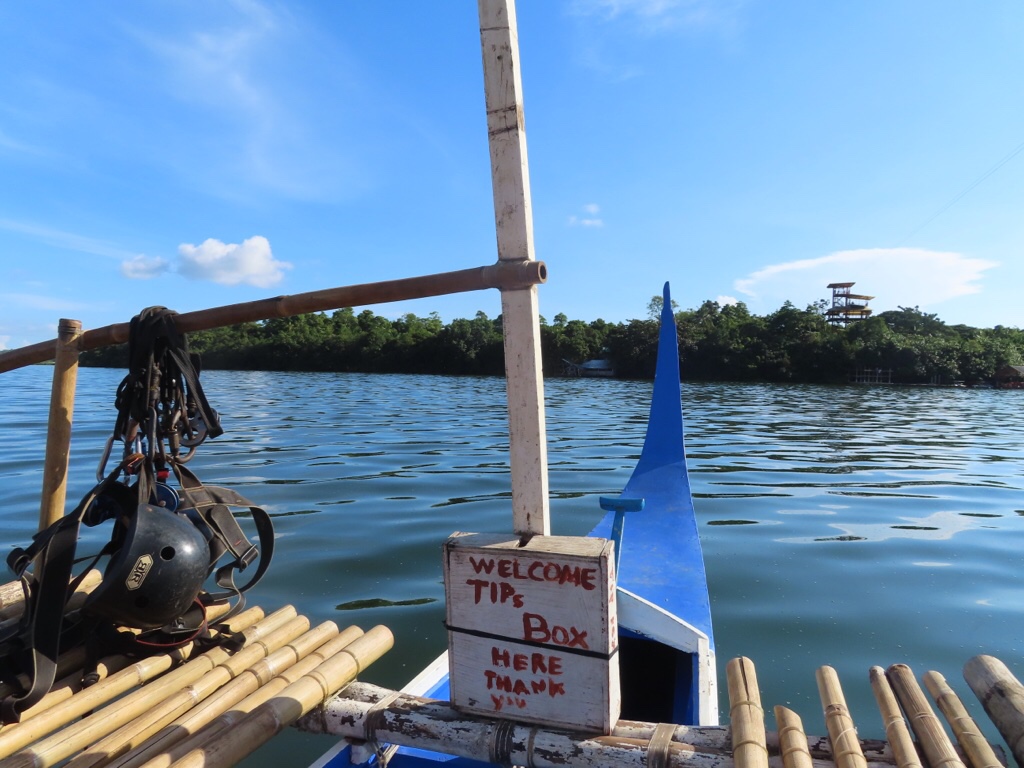
After a visit to the cafe, we explored further and decided to have a go on the zip-line. Having climbed to the top of the tower, Chris got fitted out first, and made the trip to the island in the middle of the lake. I was second and was surprised how sedate the ride was compared with the last zip-line in Bohol! We made our way back on a small boat.

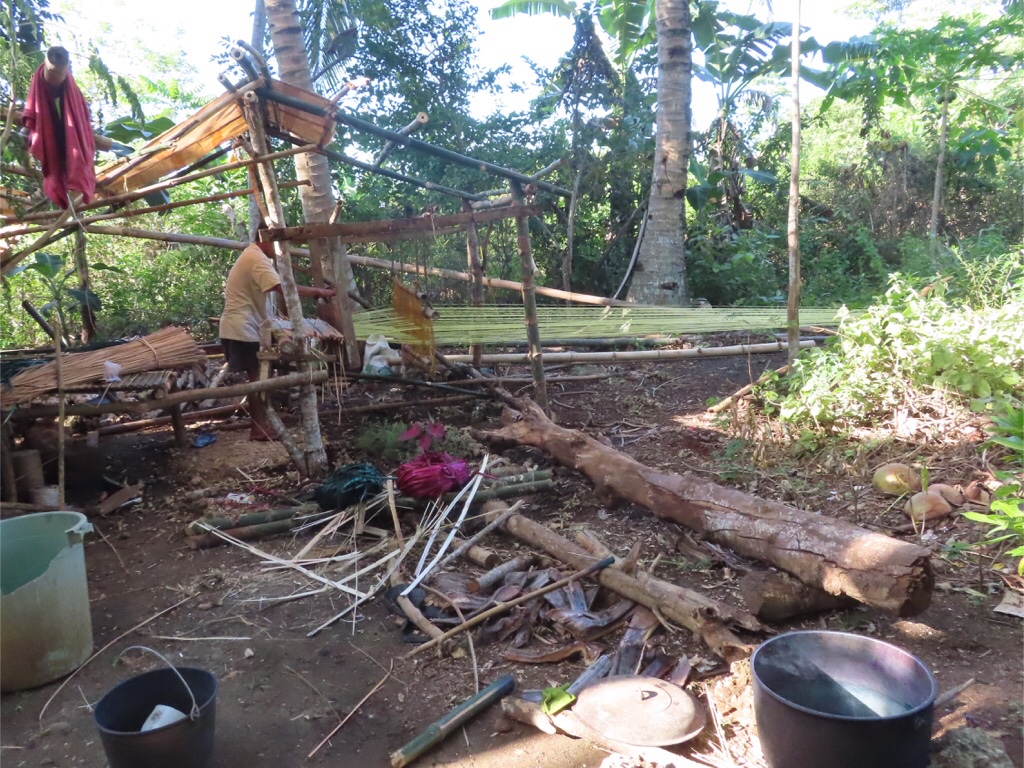
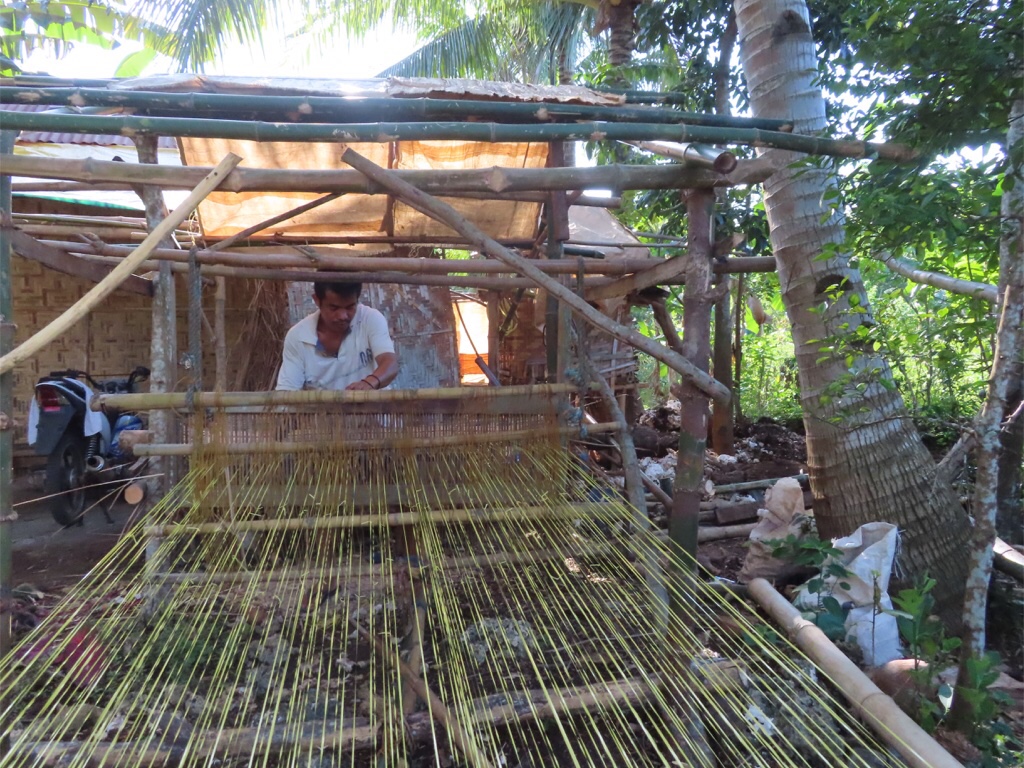
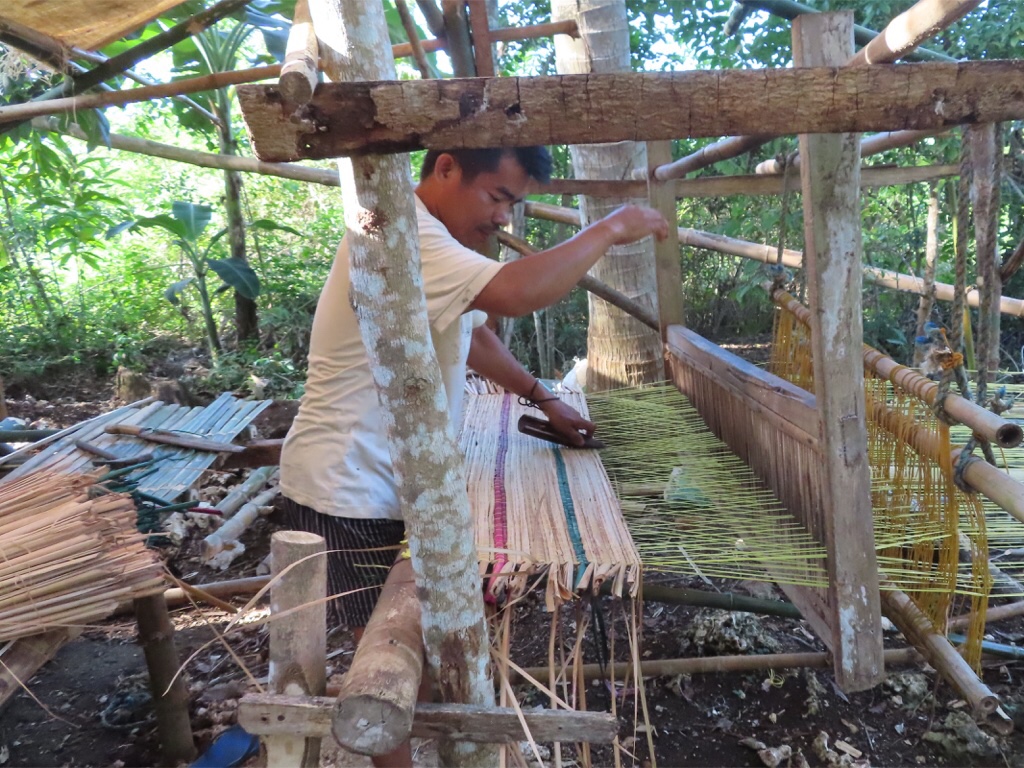
Weaving is still done locally, and we passed a chap with a loom in his yard. He had a dye pot on the fire and incorporated pink and green stripes into the mat and said he could make about a metre an hour.

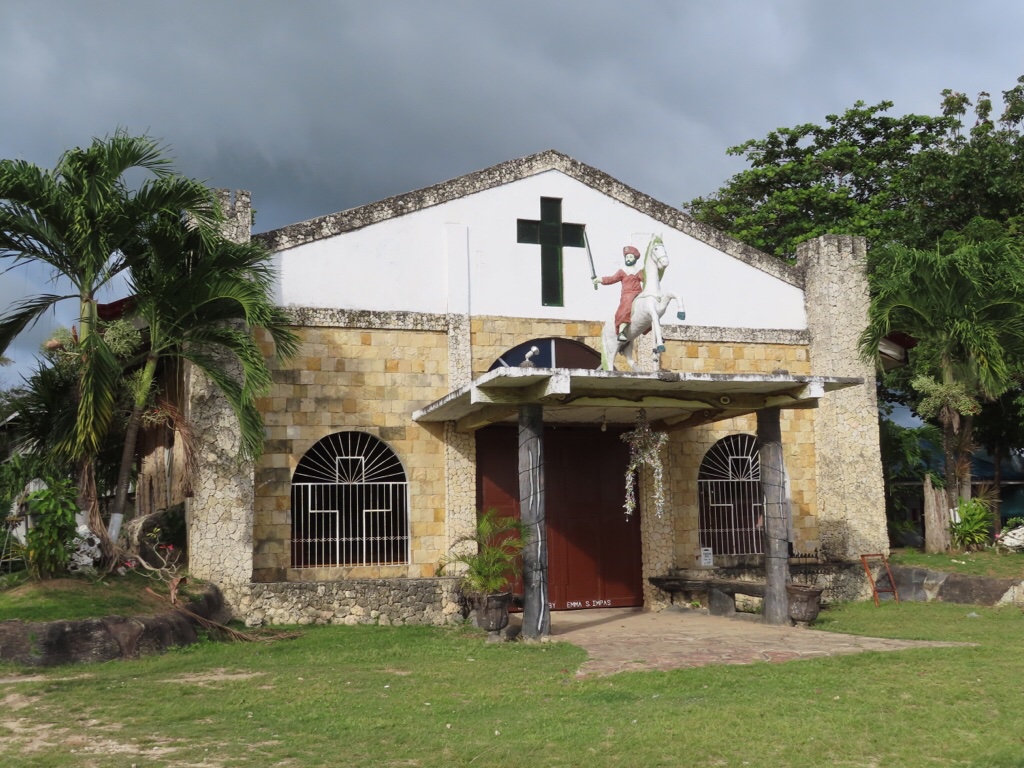
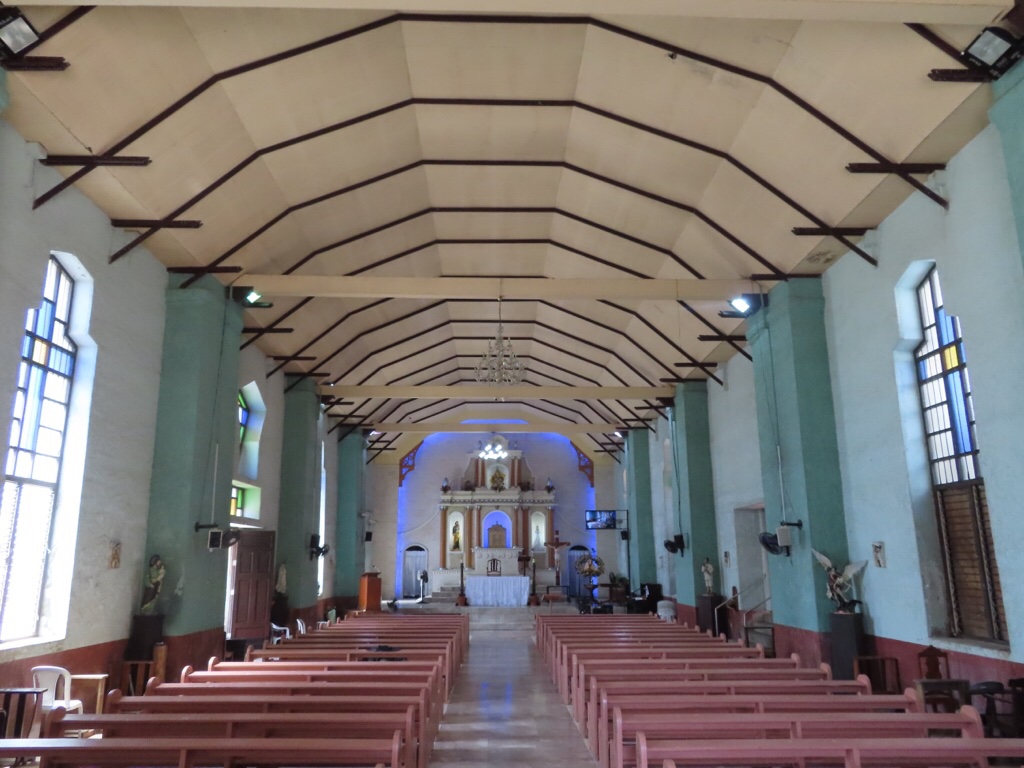
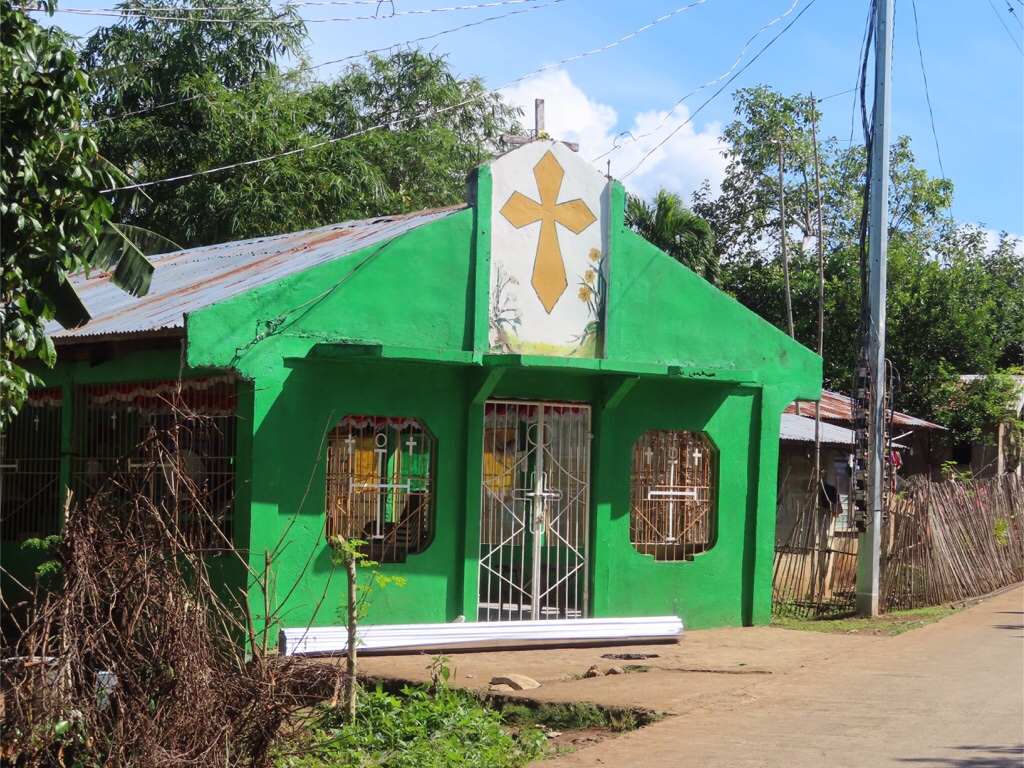
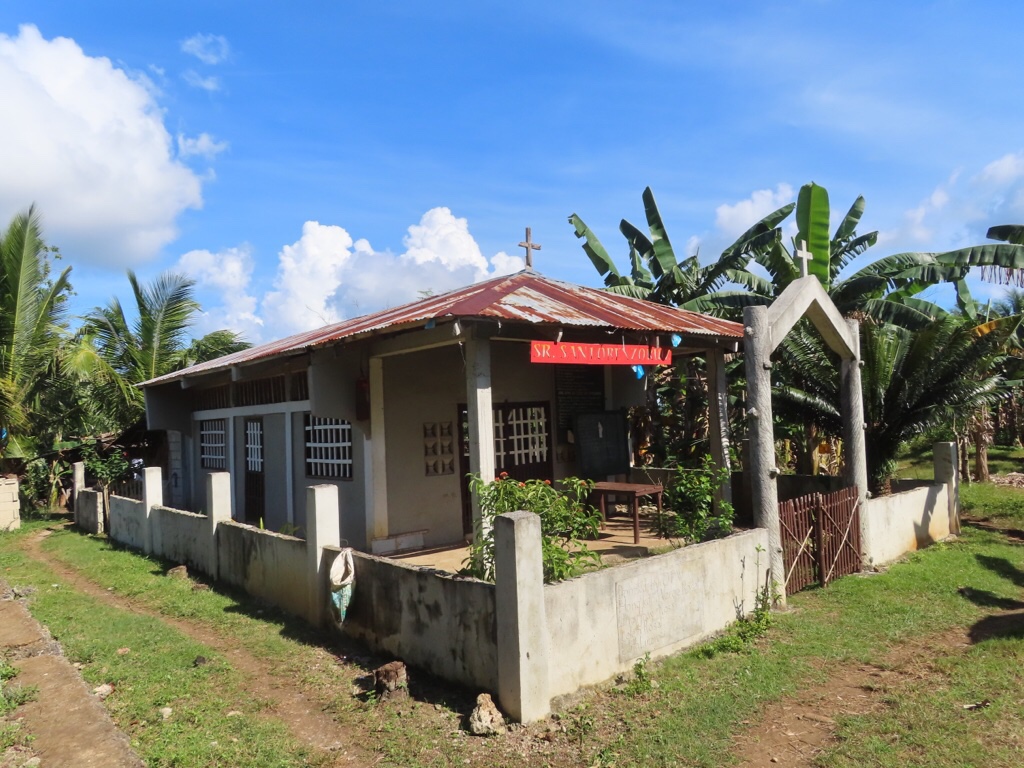
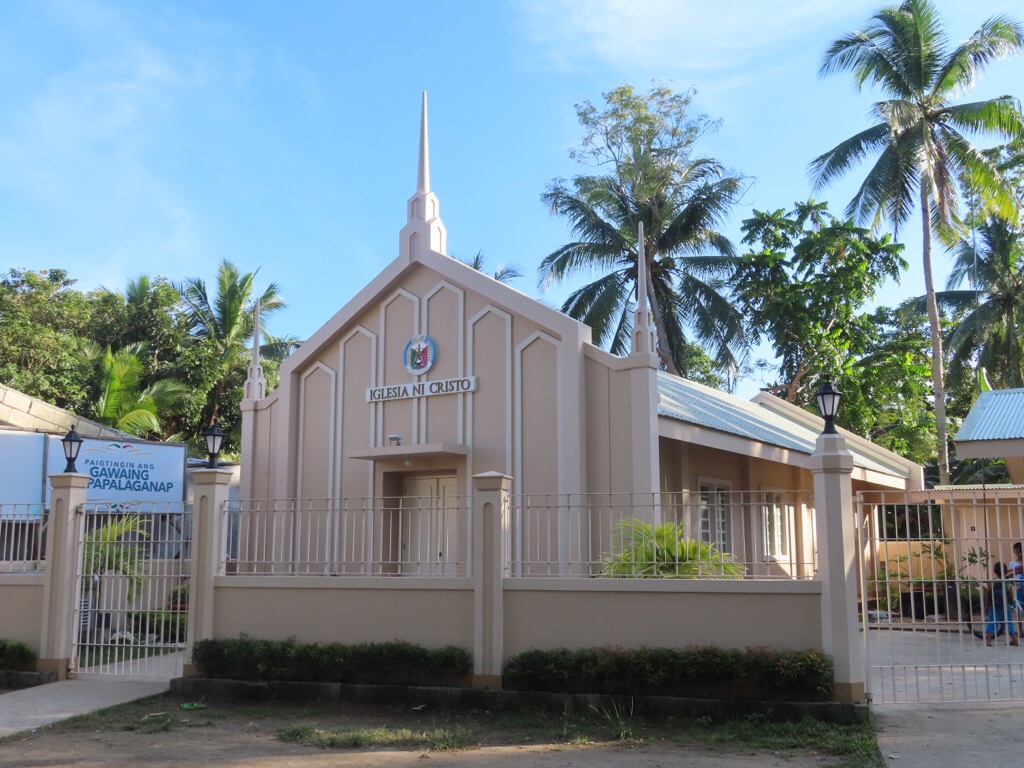
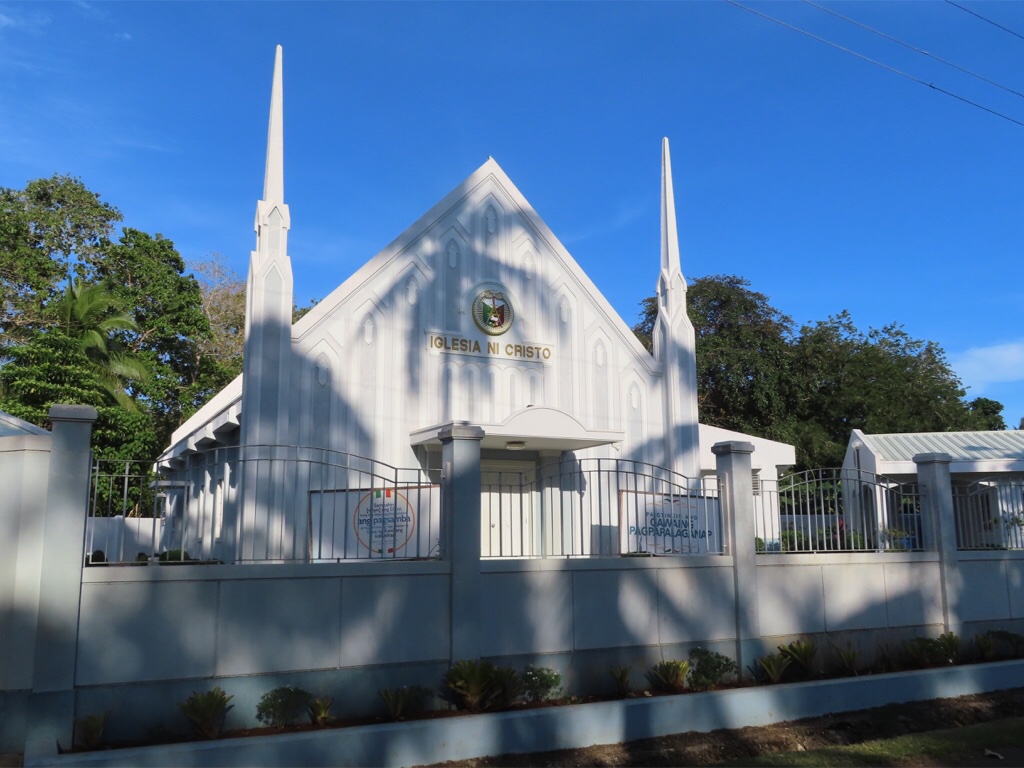
With over 90% Christians in the Philippines, this remains the biggest legacy left by the Spanish. The only change has been a slight reduction in main stream Catholicism and an increase in a variety of other Christian churches and sects. We were surprised how many churches we passed of all denominations, including those of the Iglesias ni Cristo, an independent nontrinitarian Christian sect founded in the Philippines in 1914, and here are just a few …

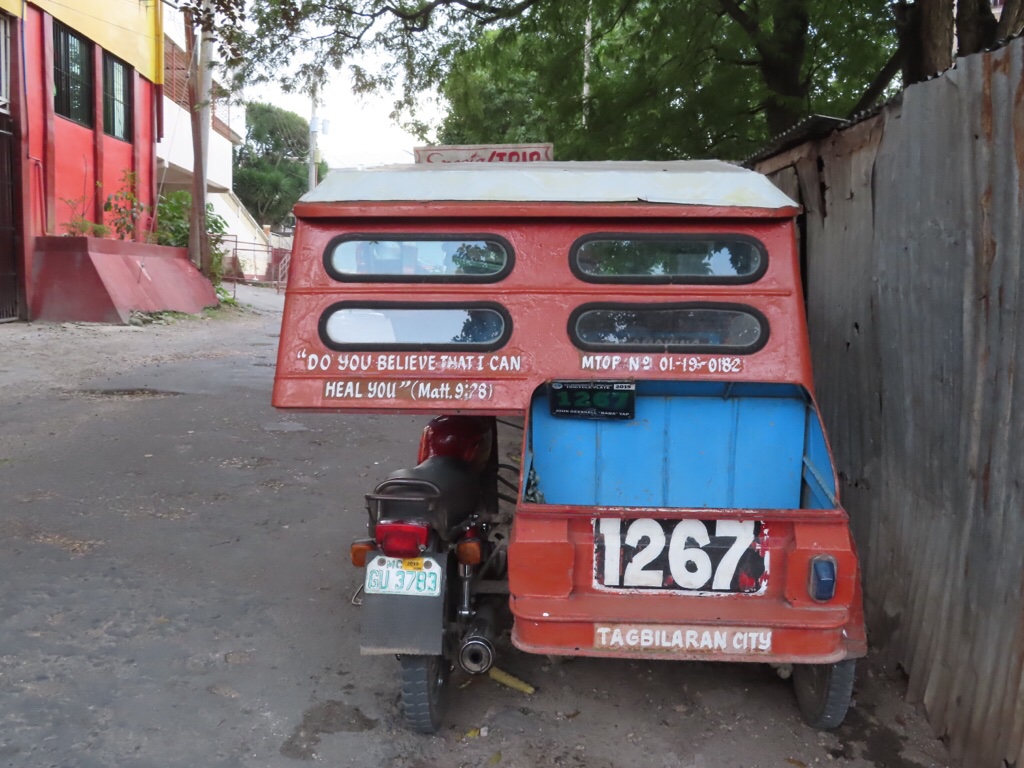
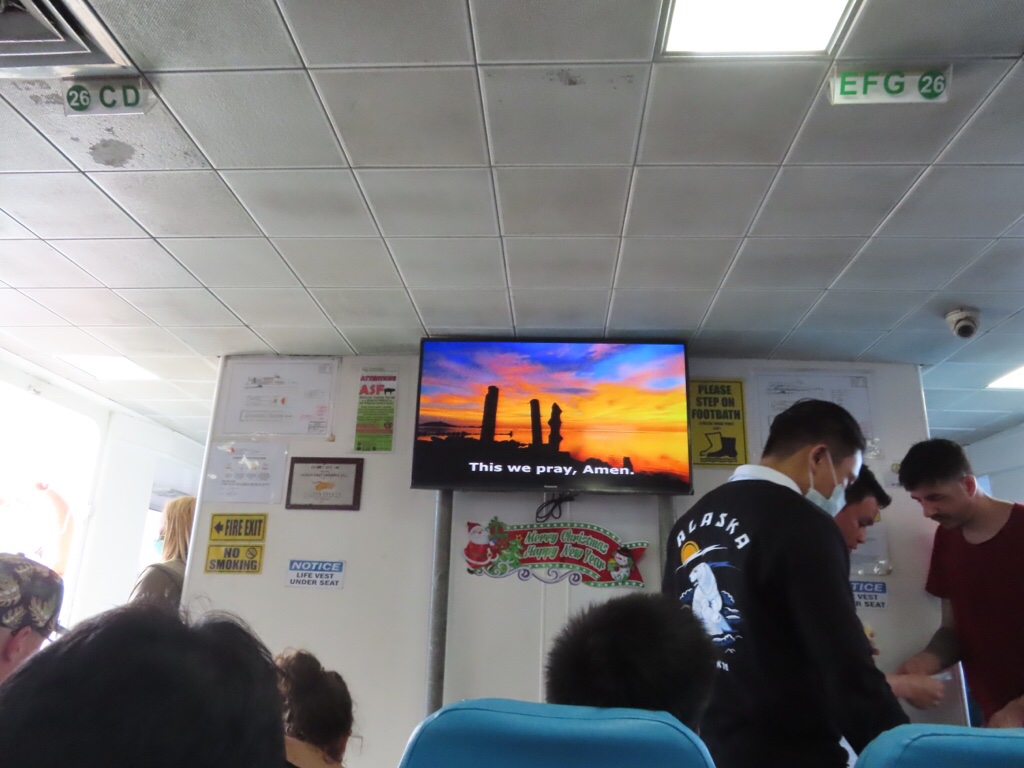
Faith is very noticeable in everyday life, everything from the bible quotes on the back of tricycles to the prayer said at the beginning of an Oceanjet crossing.

Here are some other snaps …

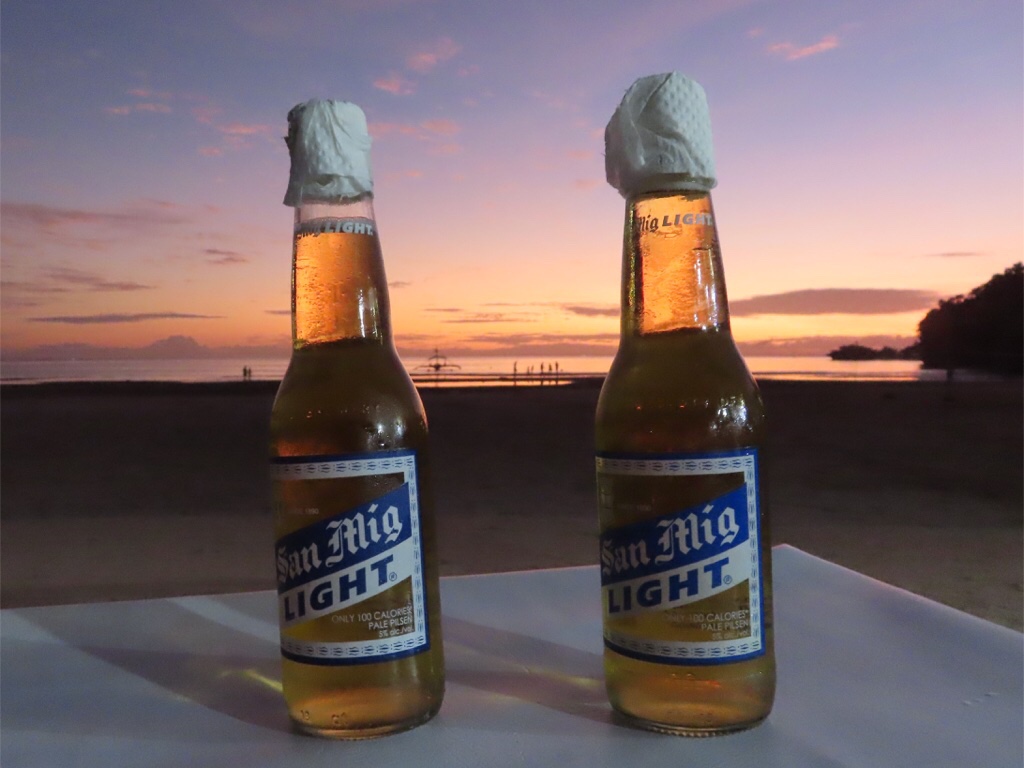
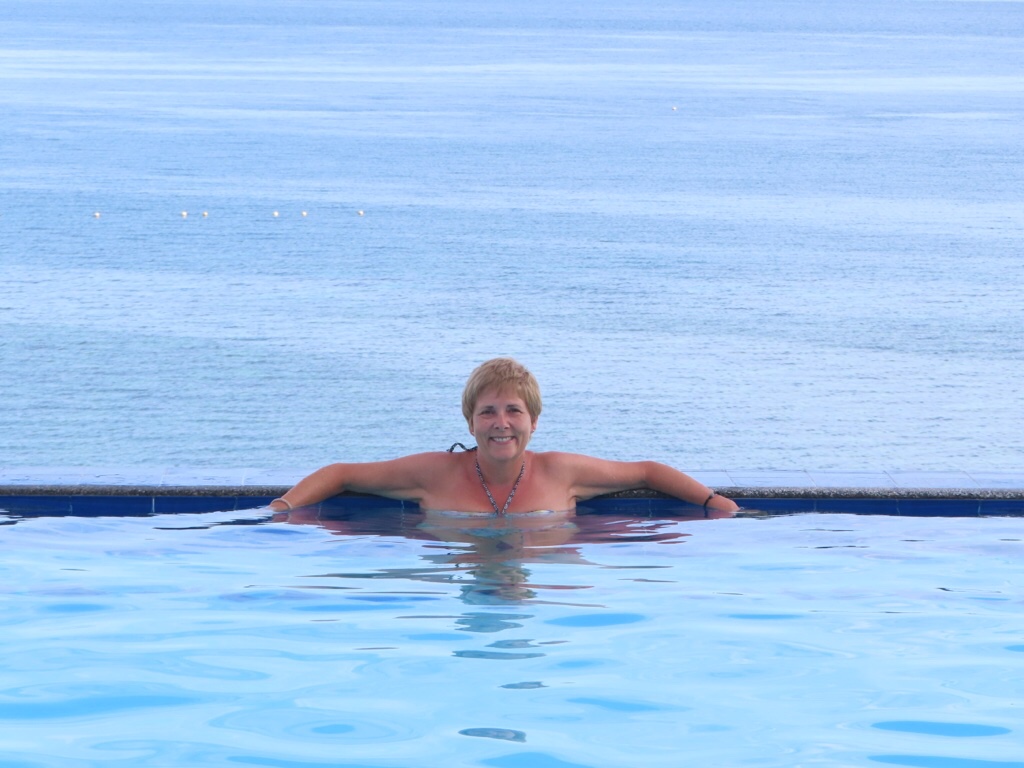
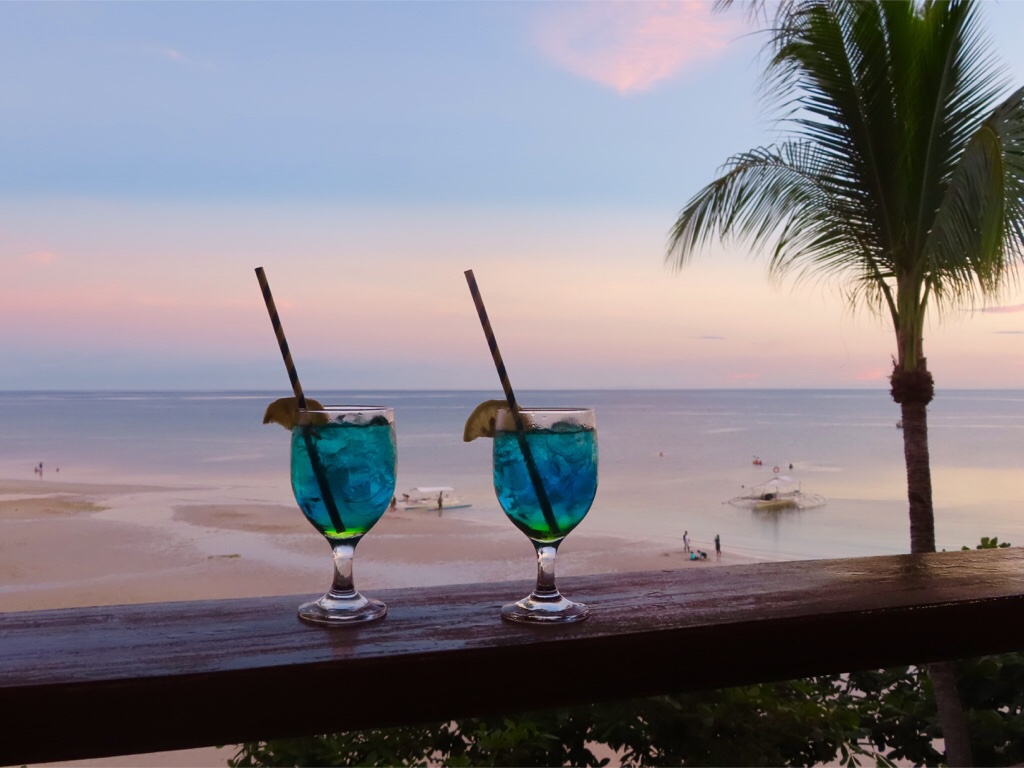
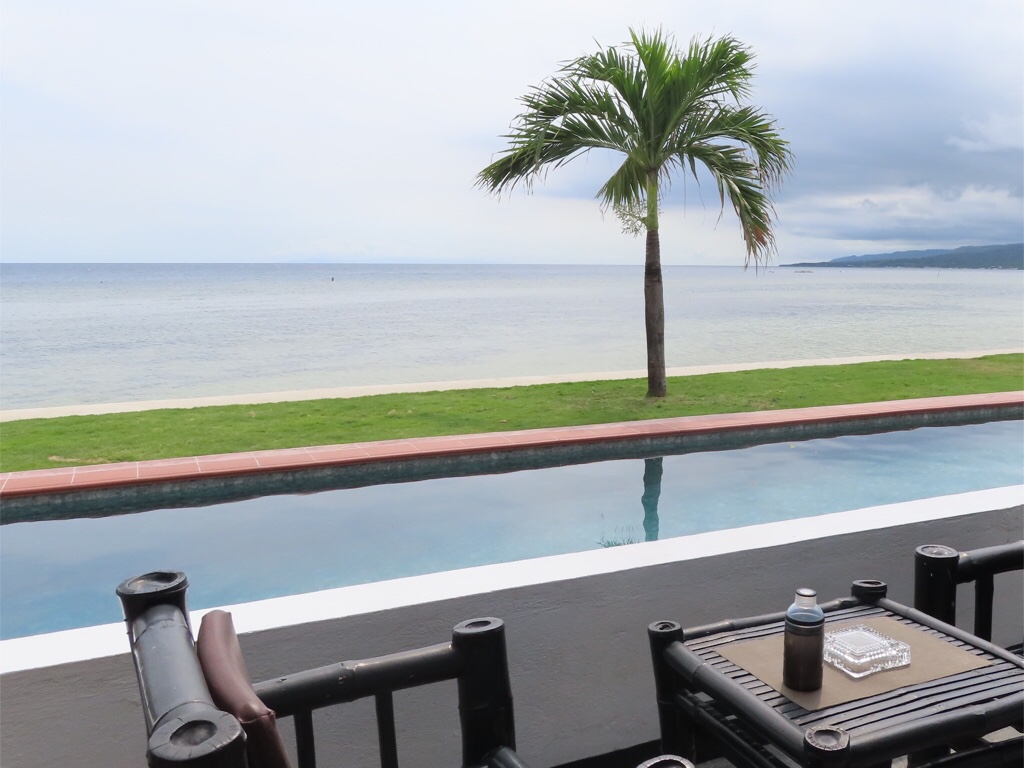
Out trip is coming to a close, but time for a final swim in the infinity pool, blue margaritas, sunset, dinner, card games and bed.

Tomorrow we return to Cebu City …

Map

Siquijor … Stunning Sunsets!

We’ve headed to the Coral Cay Resort in San Juan on the island of Siquijor (pronounced like a poorly donkey … Sick-Eeyore!) and as the website advises ‘getting here is part of the adventure’.

A Siquijor legend tells of a great storm which once engulfed the region, followed by a strong earthquake which caused the island to be raised from the sea.

The island was first sighted by the Spaniards in 1565 and they called it Isla del Fuego or Island of Fire, because the island gave off an eerie glow, from the great swarms of fireflies that lived in the numerous Molave trees on the island. The dense, durable wood was once used extensively in furniture, boats and building but the trees are now endangered.

Siquijor also has a reputation as a place of magic and sorcery and is well known for its festivals that focus on healing rituals where incantations are sung while the old folks make potions out of herbs, roots, insects and tree barks.

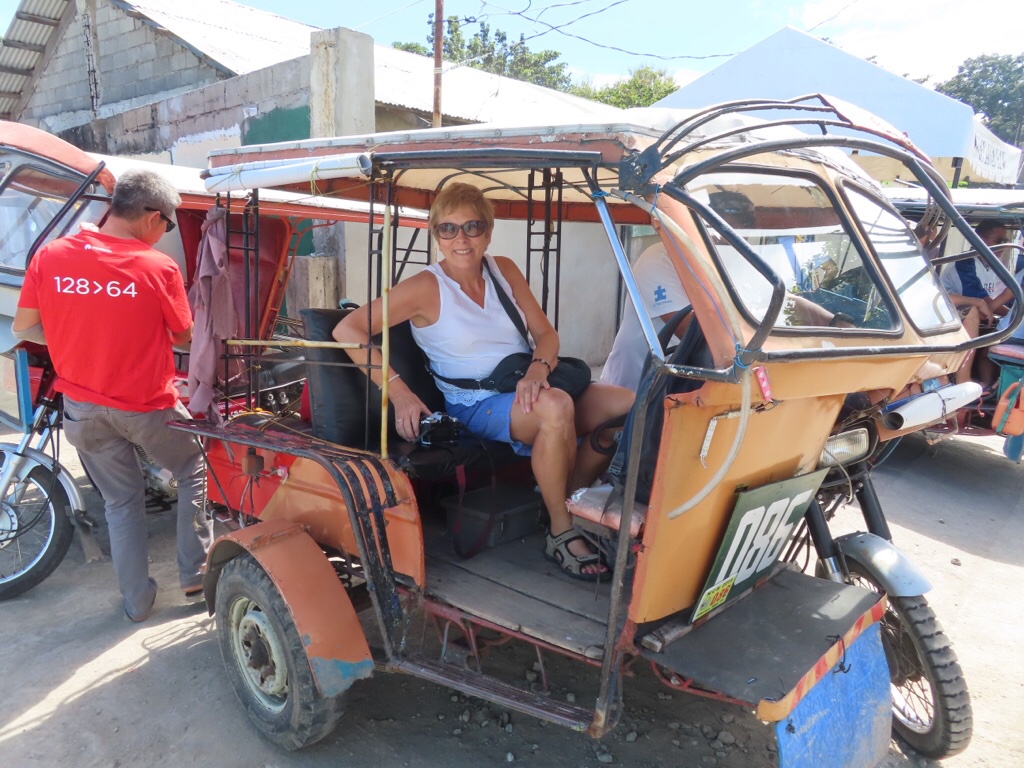
We began with a tricycle for 20 mins to Liloan Port …

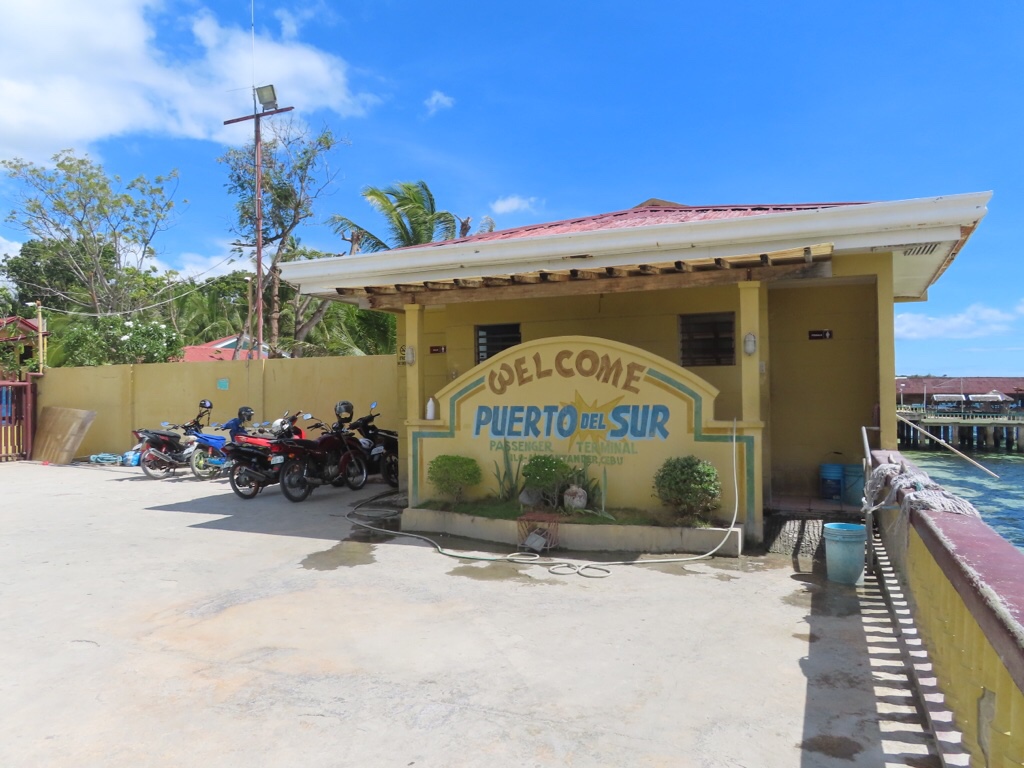
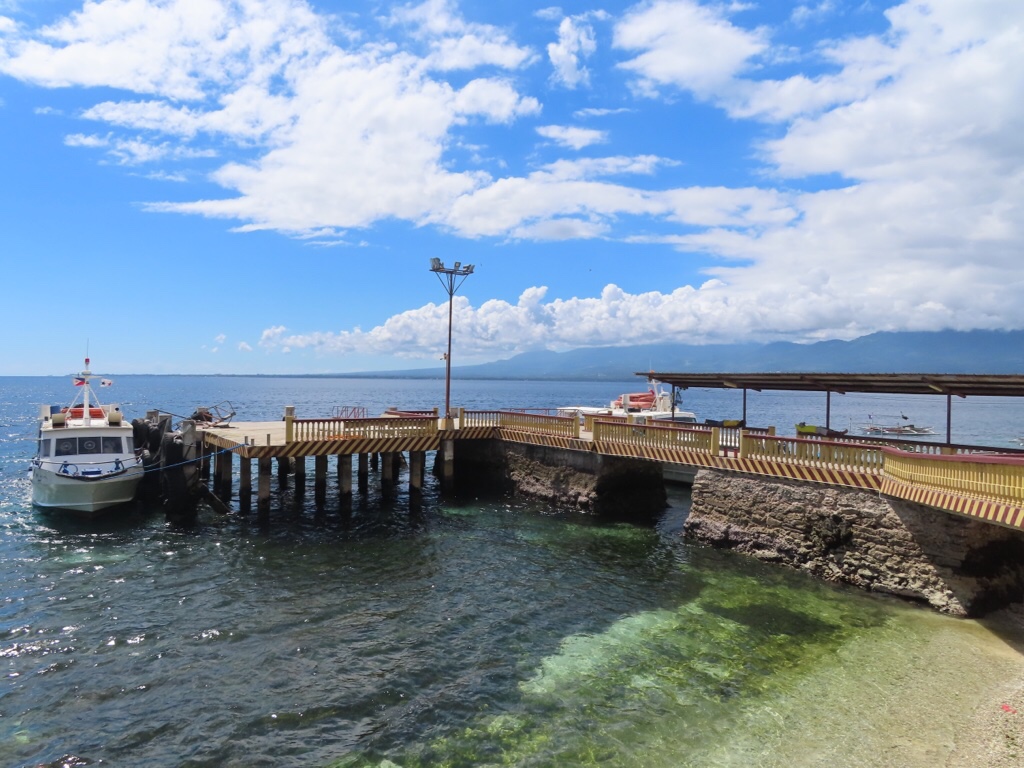
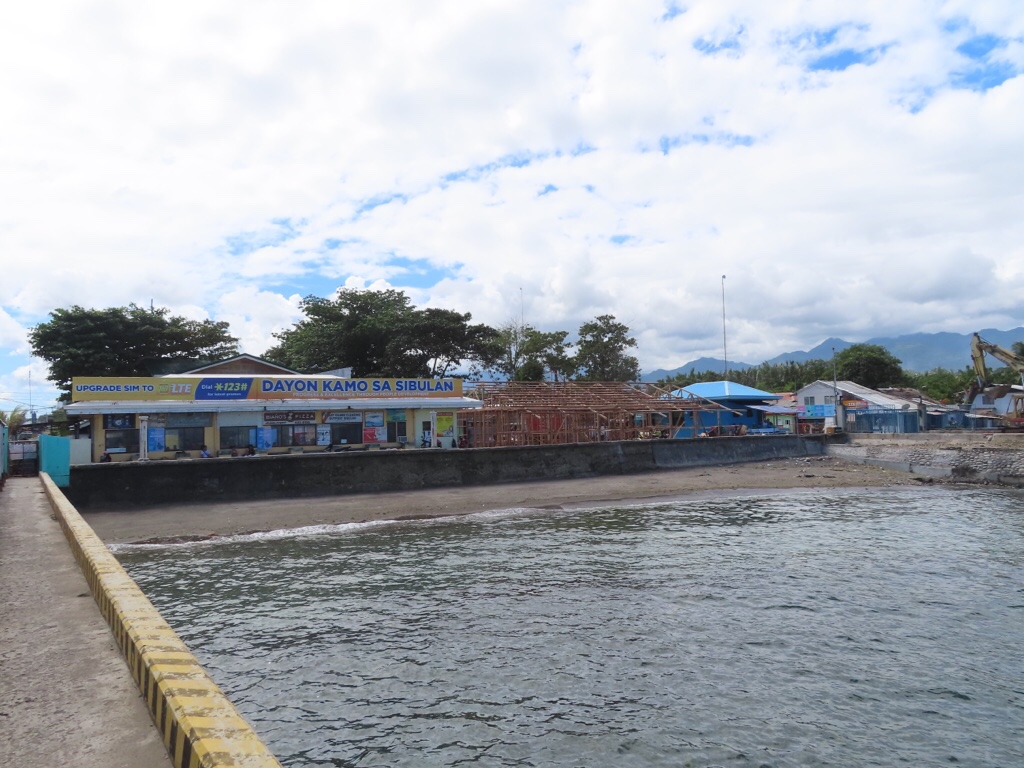
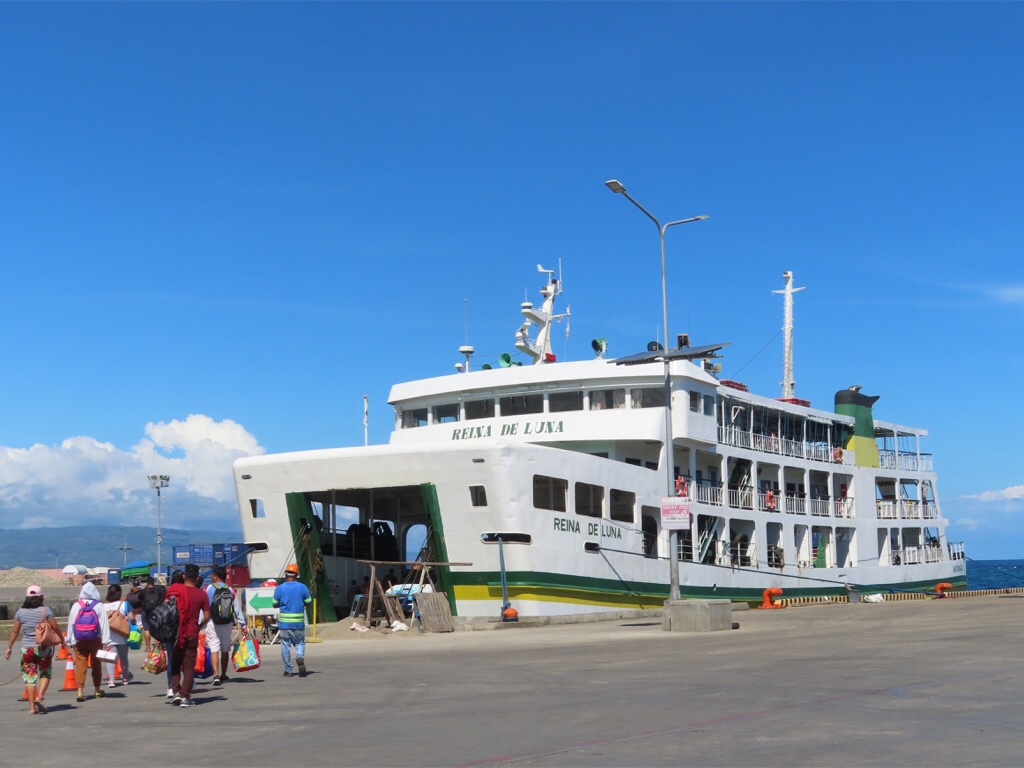
… where a small ferry took 30 mins to cross to Sibulan Port.

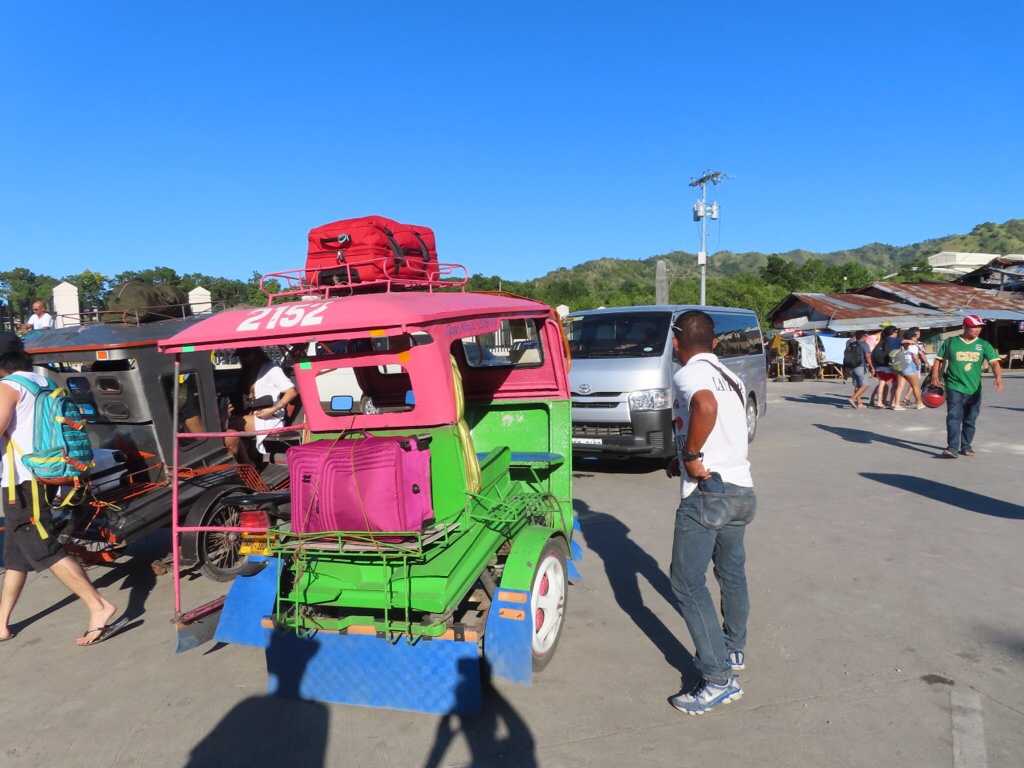
Another 20 min tricycle ride …

… took us to Dumaguete Port, where we found the 50 min Oceanjet fast cat ferry was broken, so we took the Montenegro Line, a big but slow boat taking 2 hours.

A final tricycle transfer to our resort took another 30 mins …

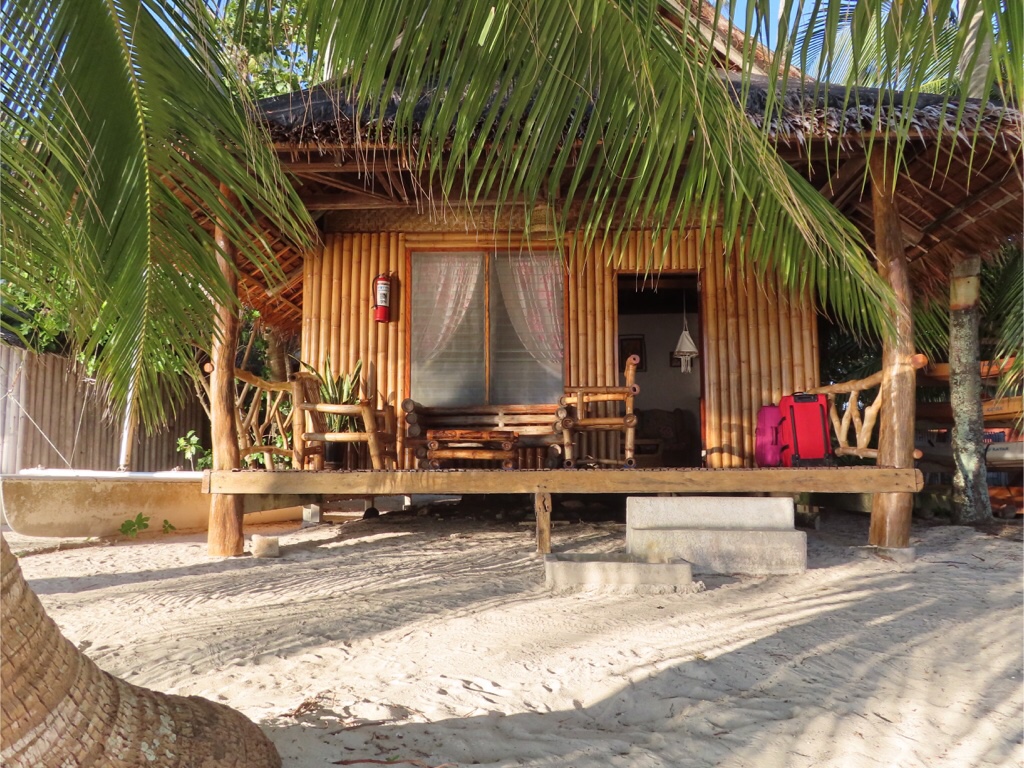
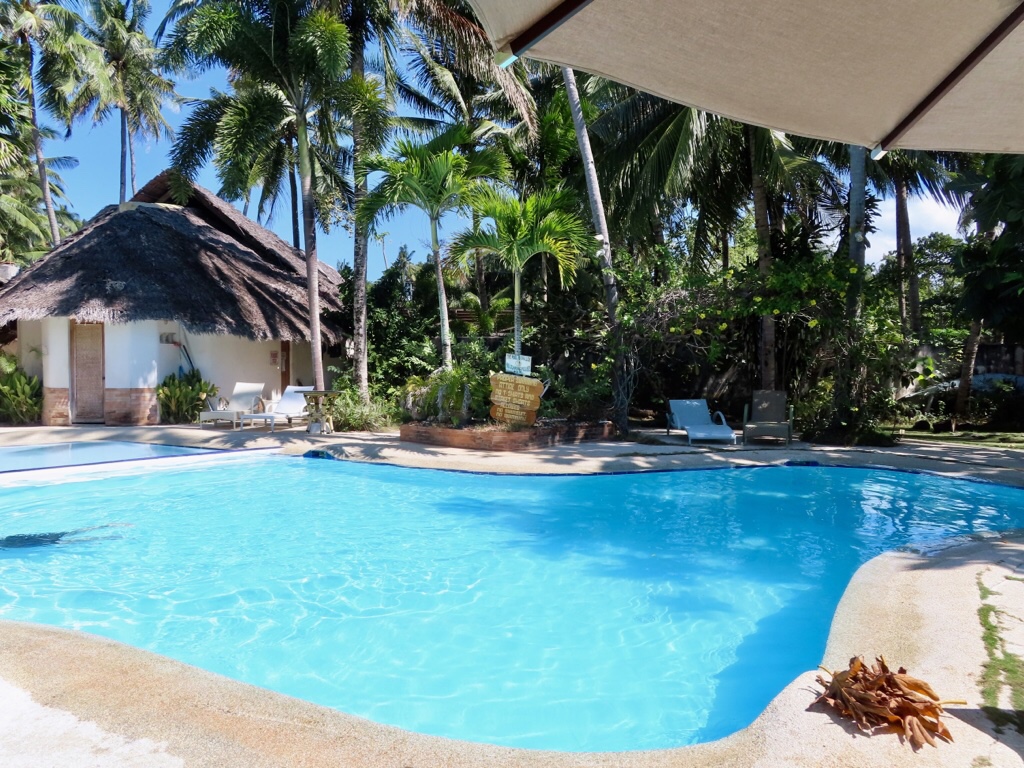
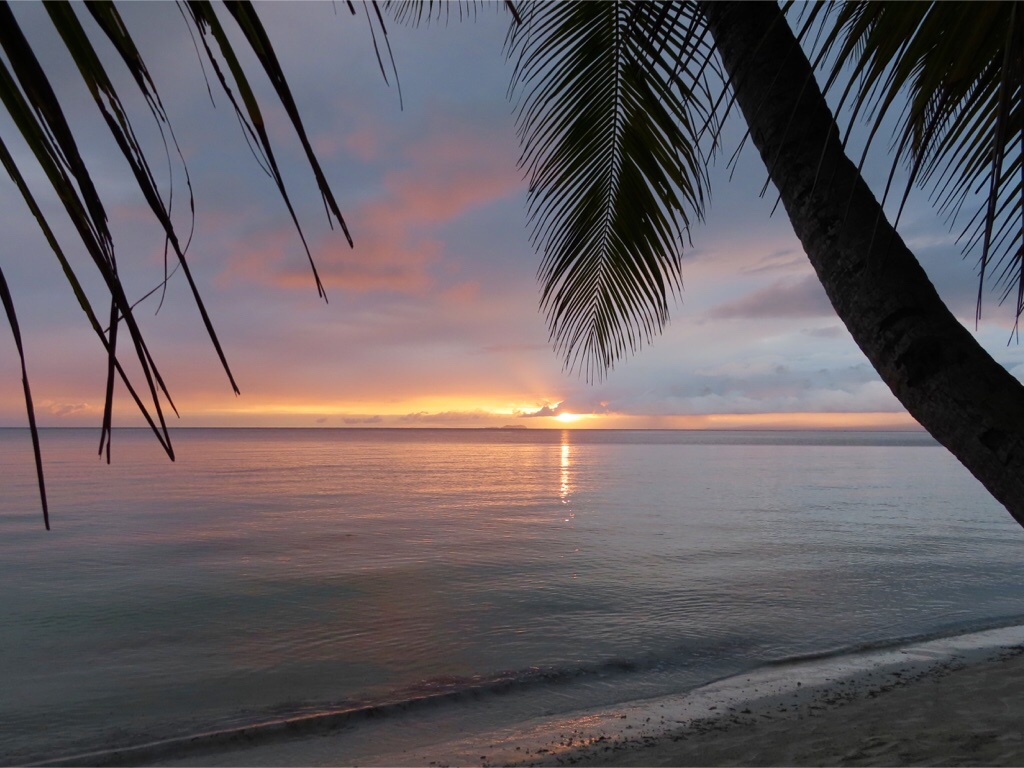
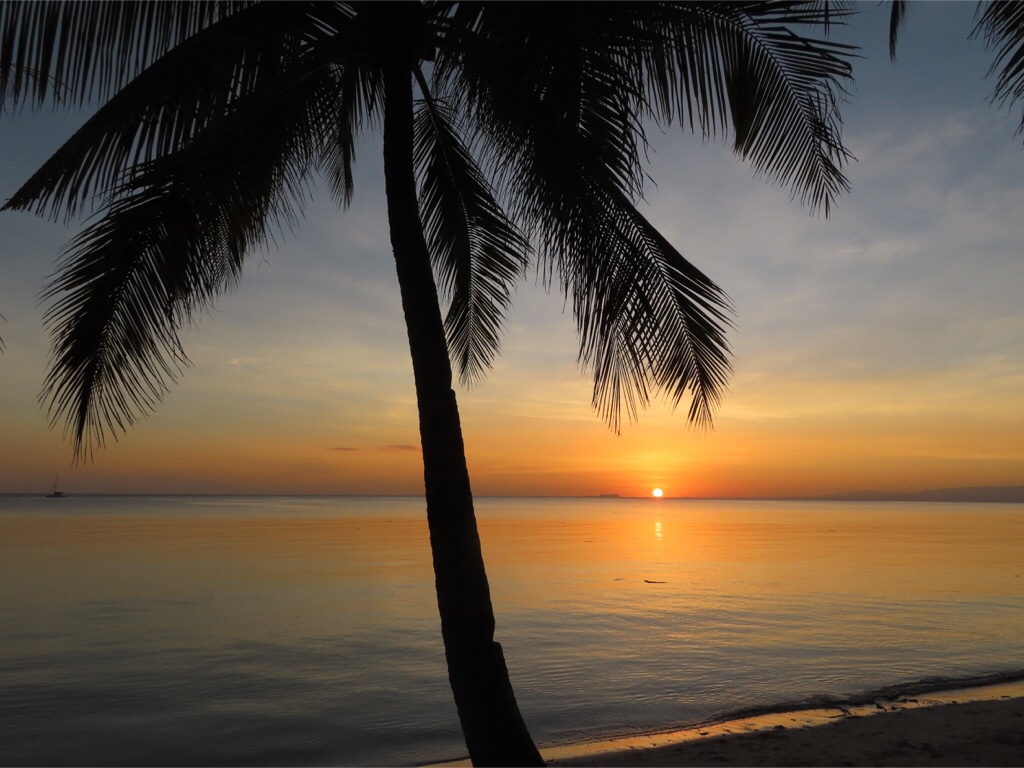
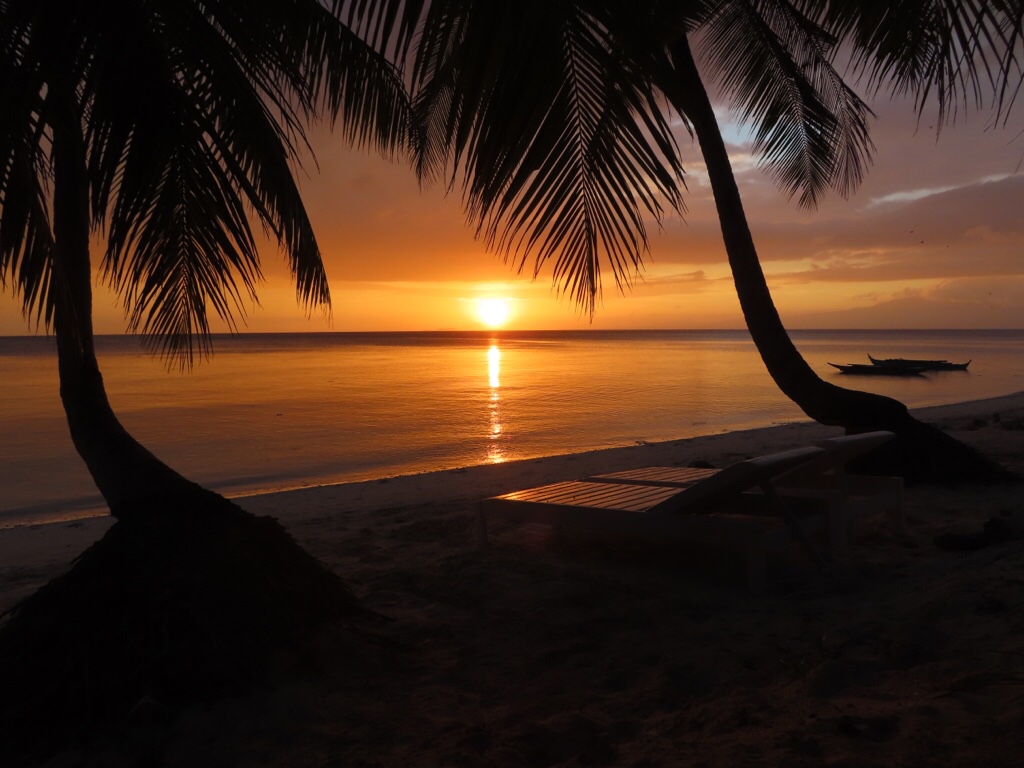
Here’s Coral Cay … and we definitely reckon it was worth it! We have a little thatched hut with a fan which sits right on the beach, within a few feet of the sea and the sun sets just there!

Admittedly, while the sea looks lovely, it’s quite shallow most of the day, with the reef close to the shore so not ideal for swimming …

… but there’s a pool for that!

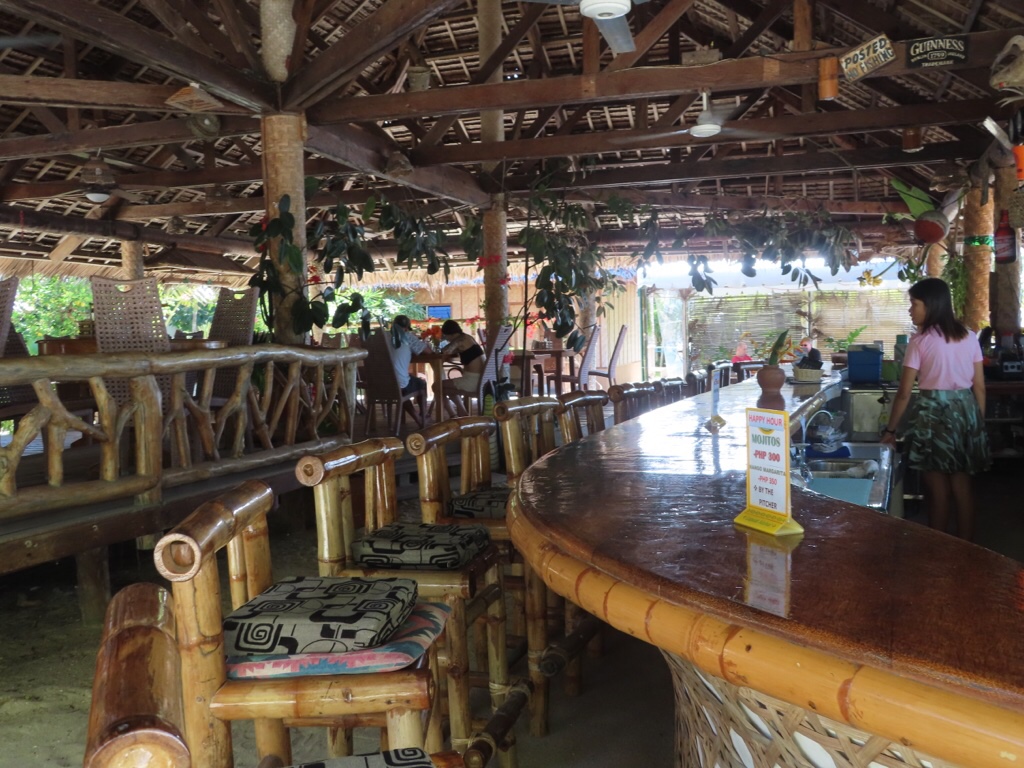
A bar with smashing margueritas and tasty food and that’s all the bases covered.

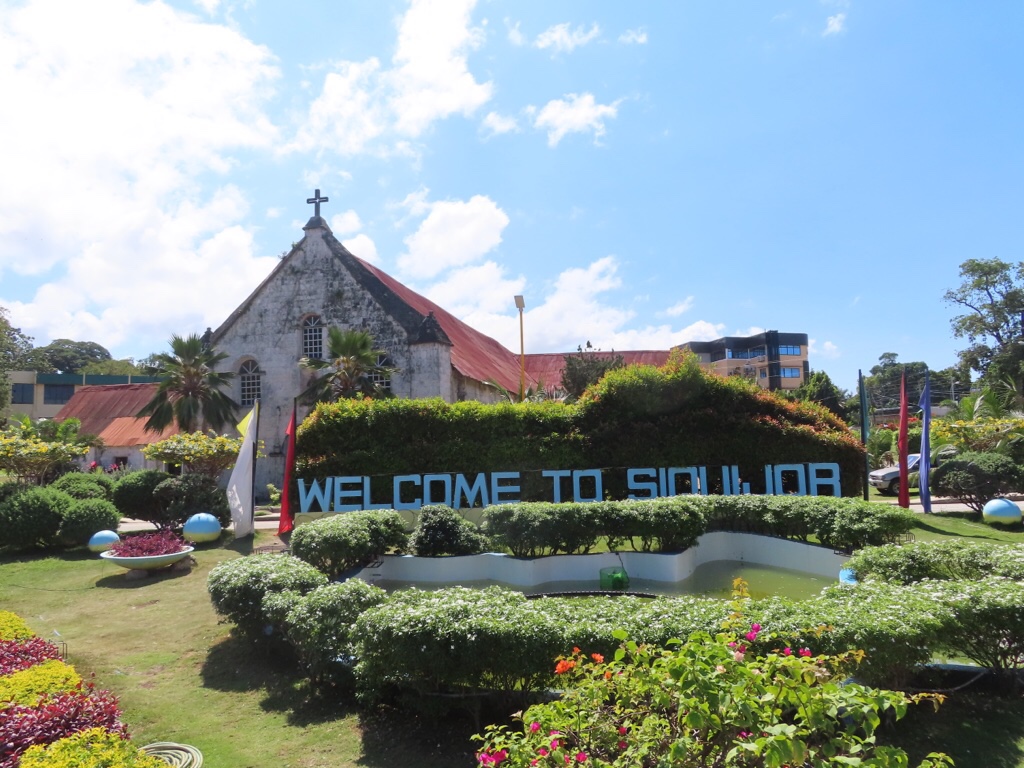
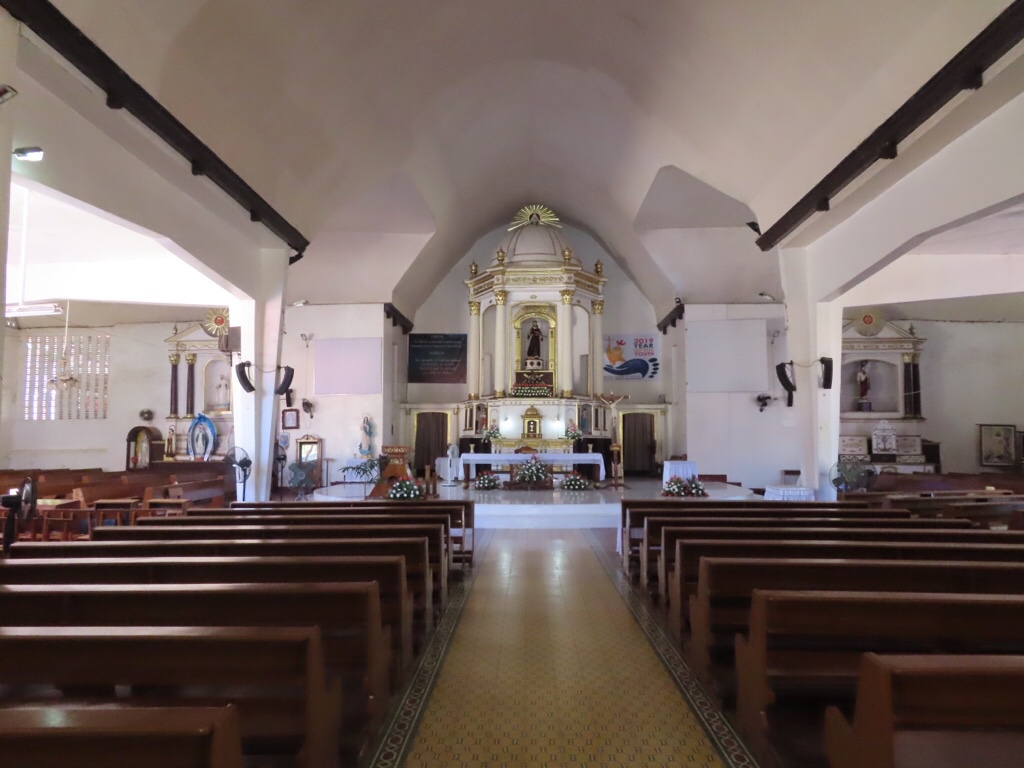
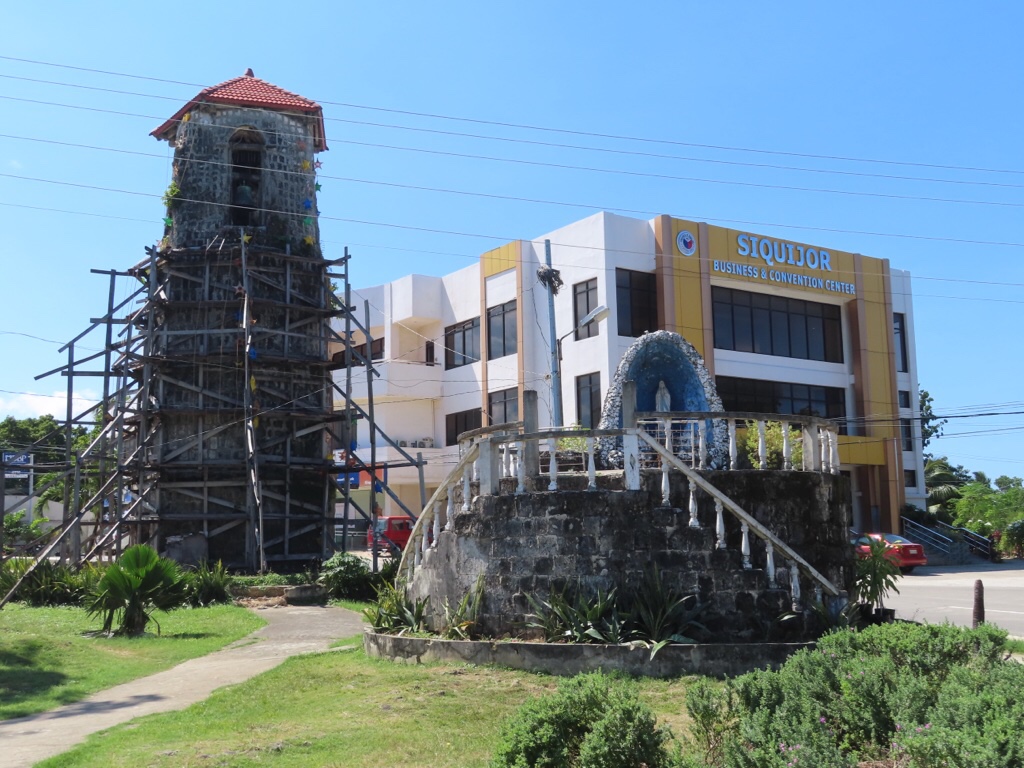
We have made a few forays out though – to Siquijor town to book our departure ferry ticket as there is only one sailing a day back to Cebu and while we can’t guarantee it’s running, we want to make sure we have seats if it is! We had to wait for the ticket office to open so wandered round the church while we waited.

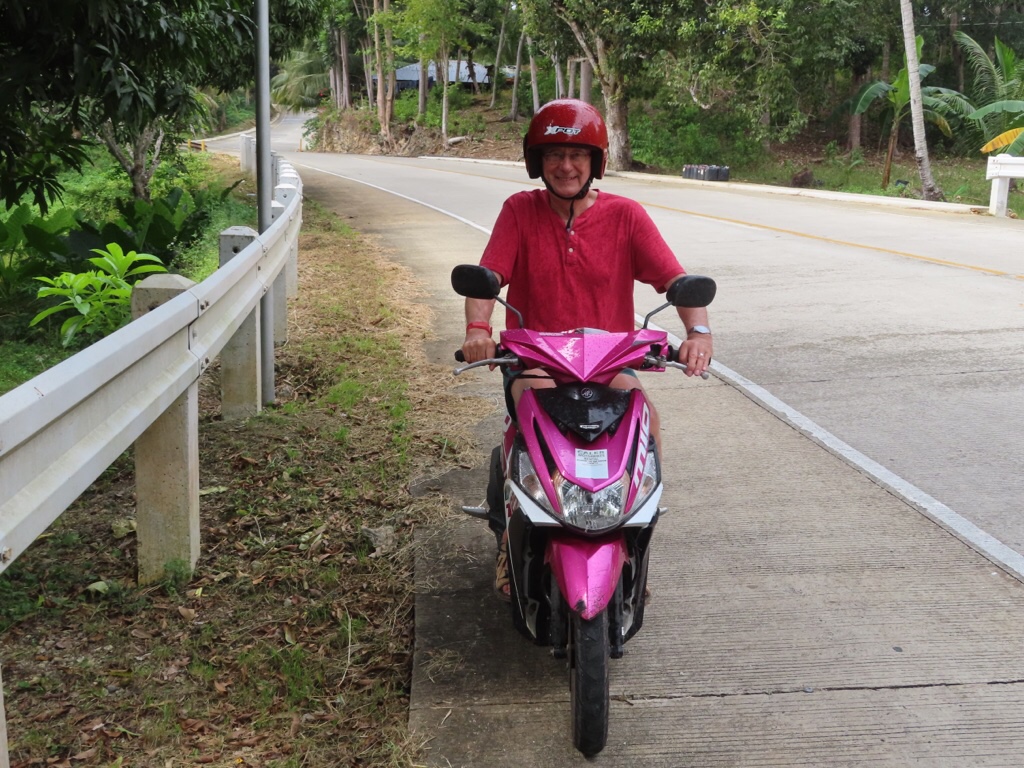
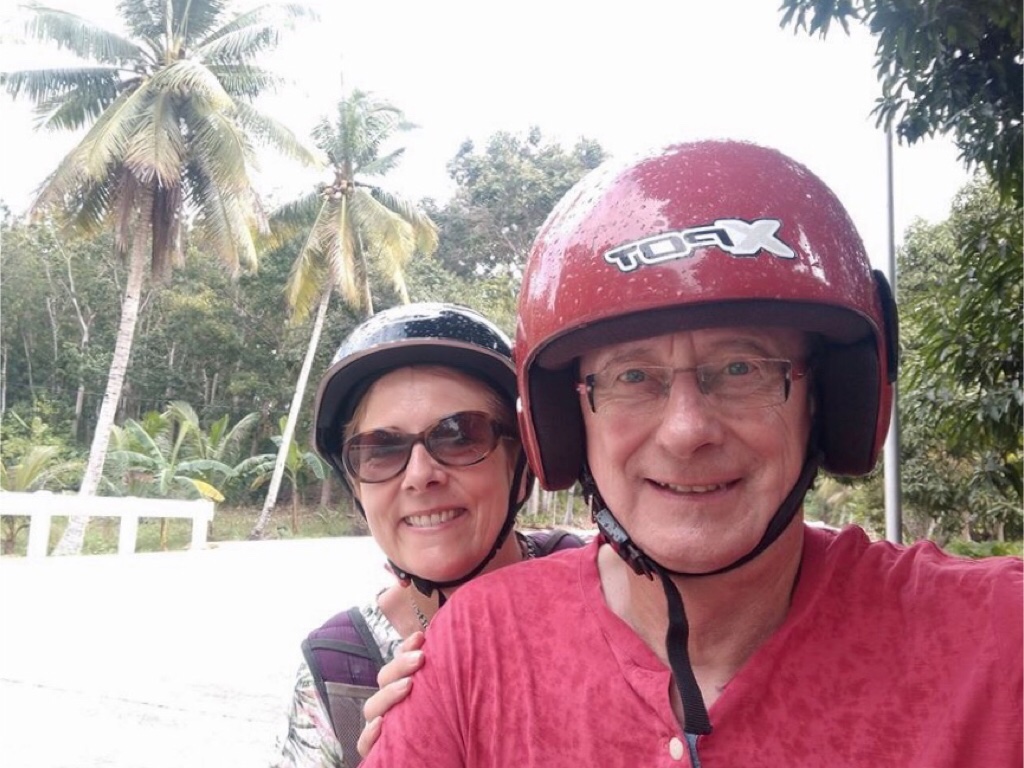
Chris was eager to have another bike riding experience so we hired a scooter for a couple of days.

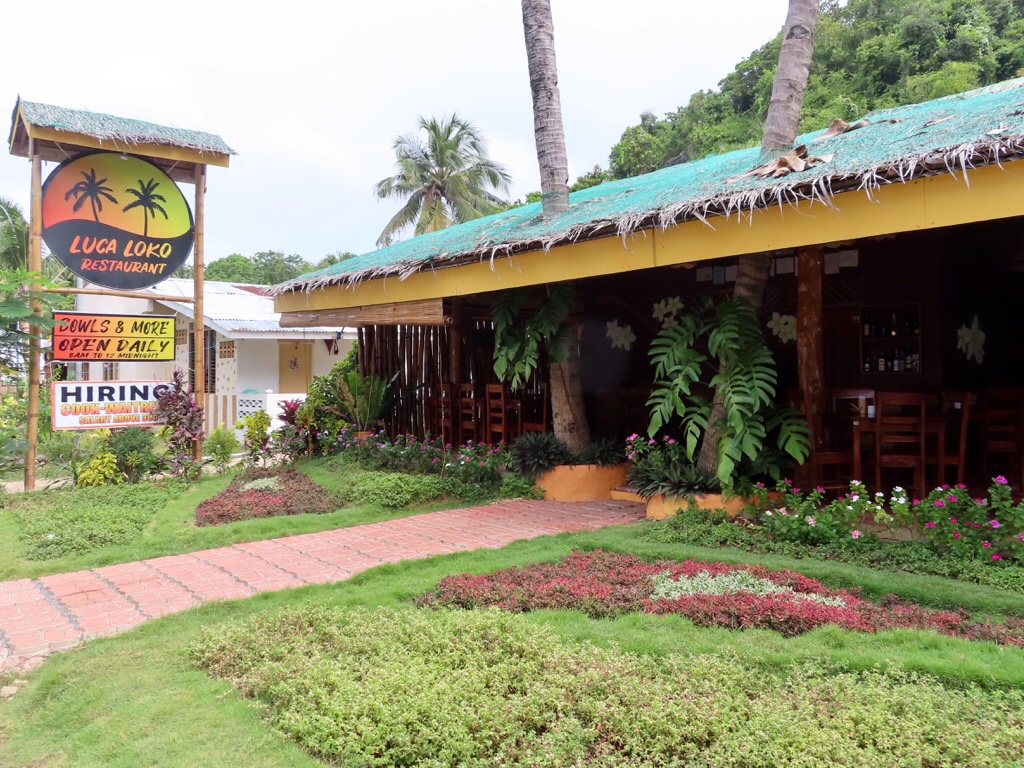
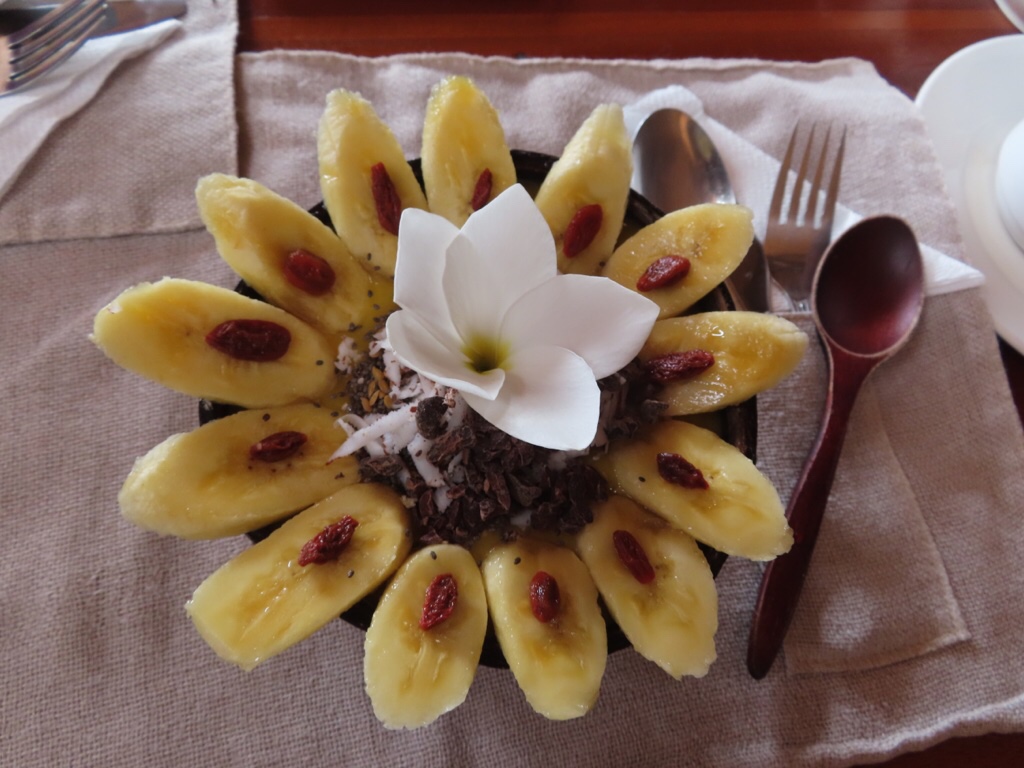
The first day was a bit overcast and we began by taking the chance to have breakfast somewhere different … a mango smoothie bowl and eggs shakshouka at Luca Loko … yum …

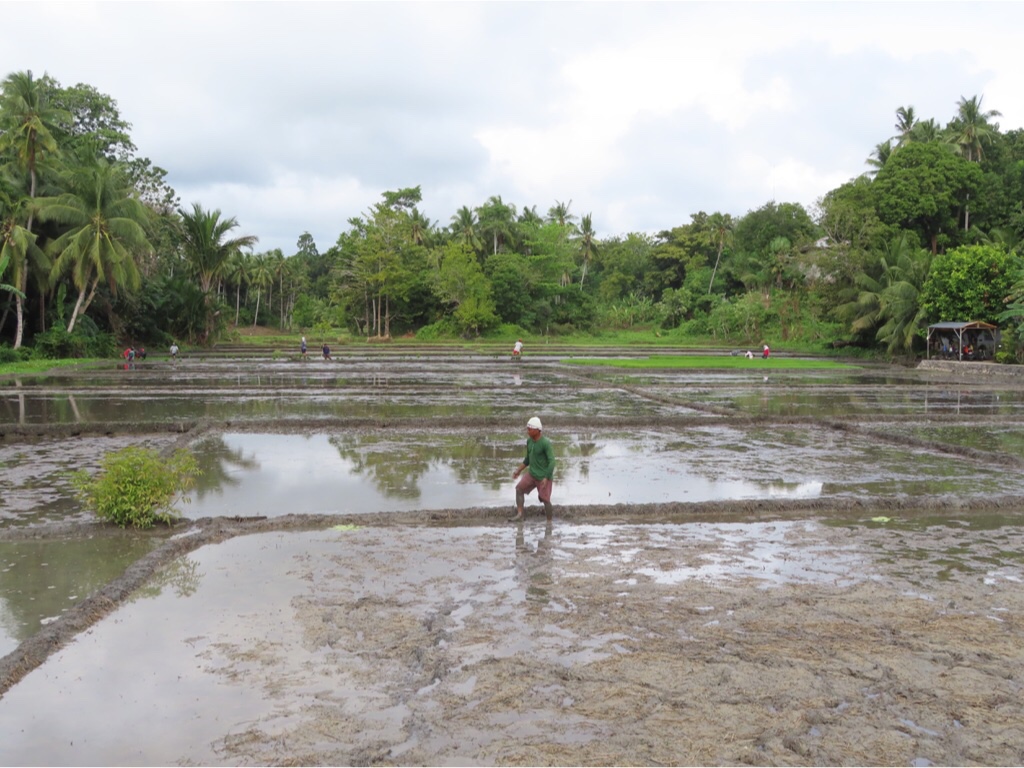
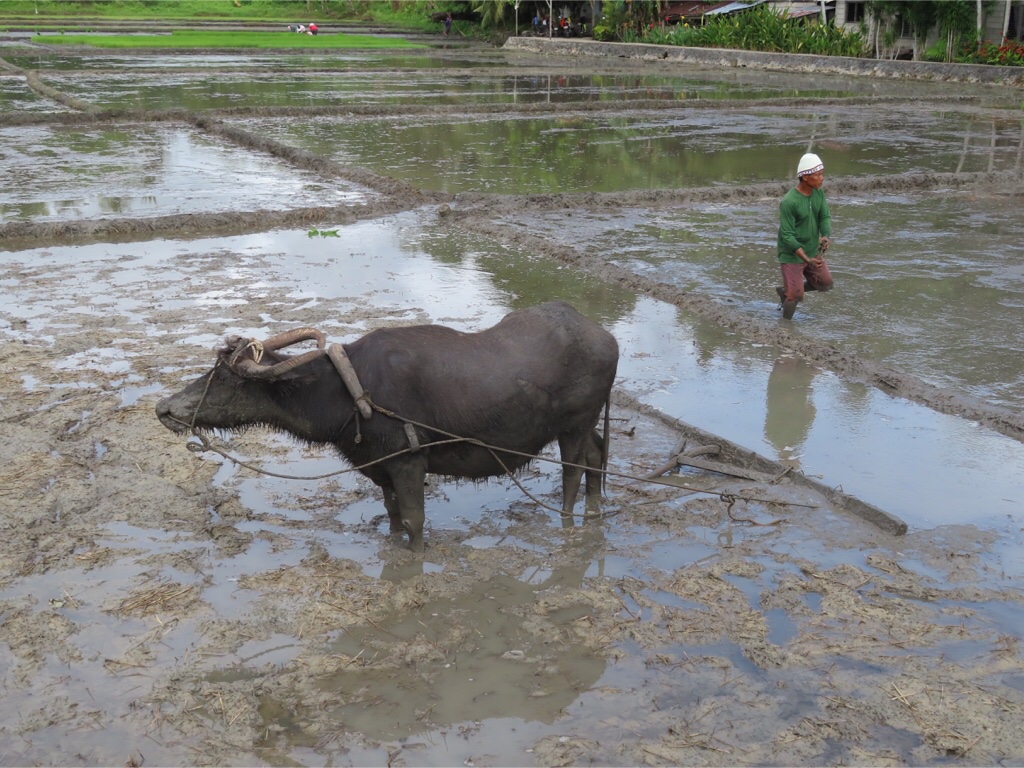
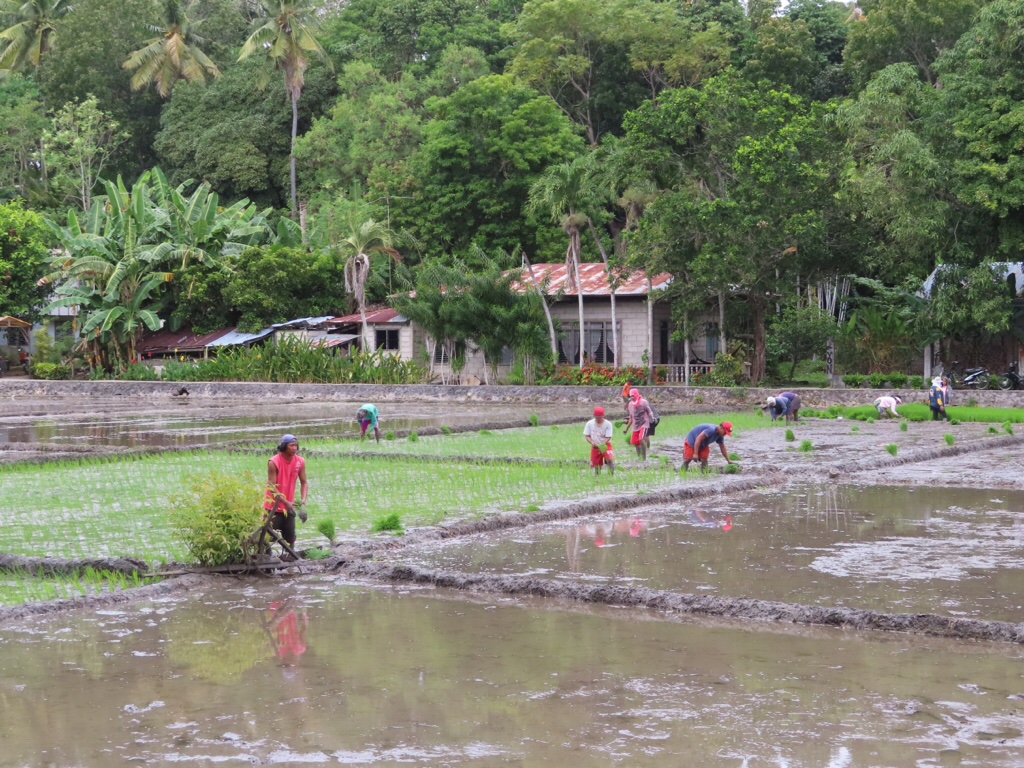
We passed a rice paddy with this chap doing some ploughing …

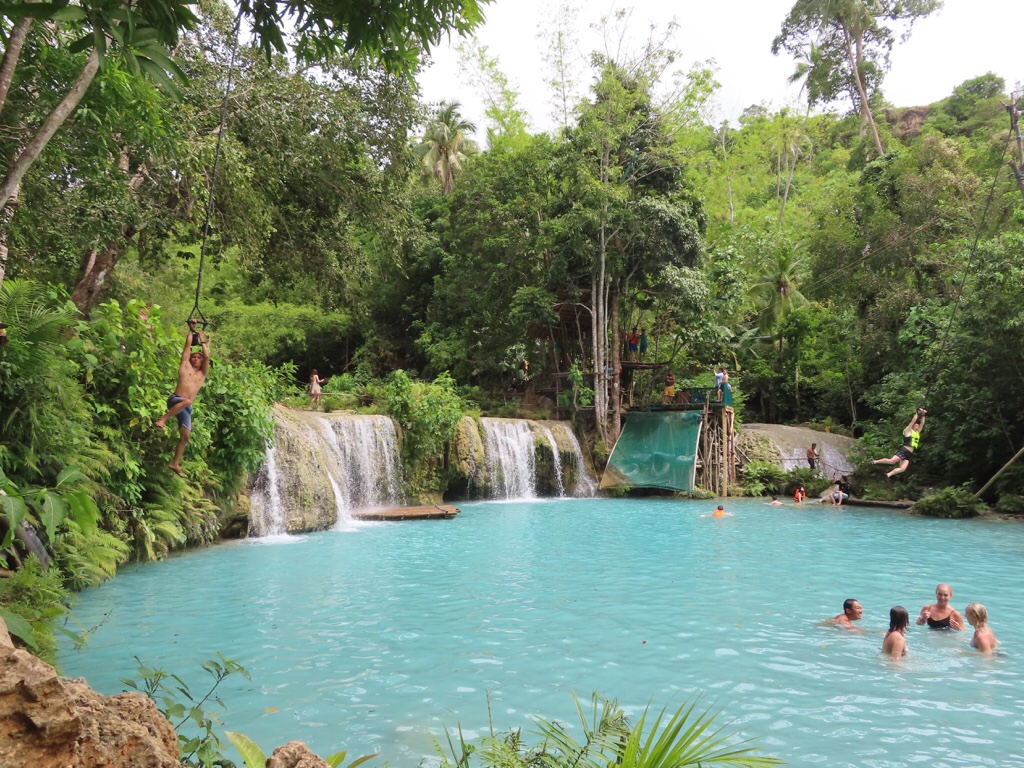
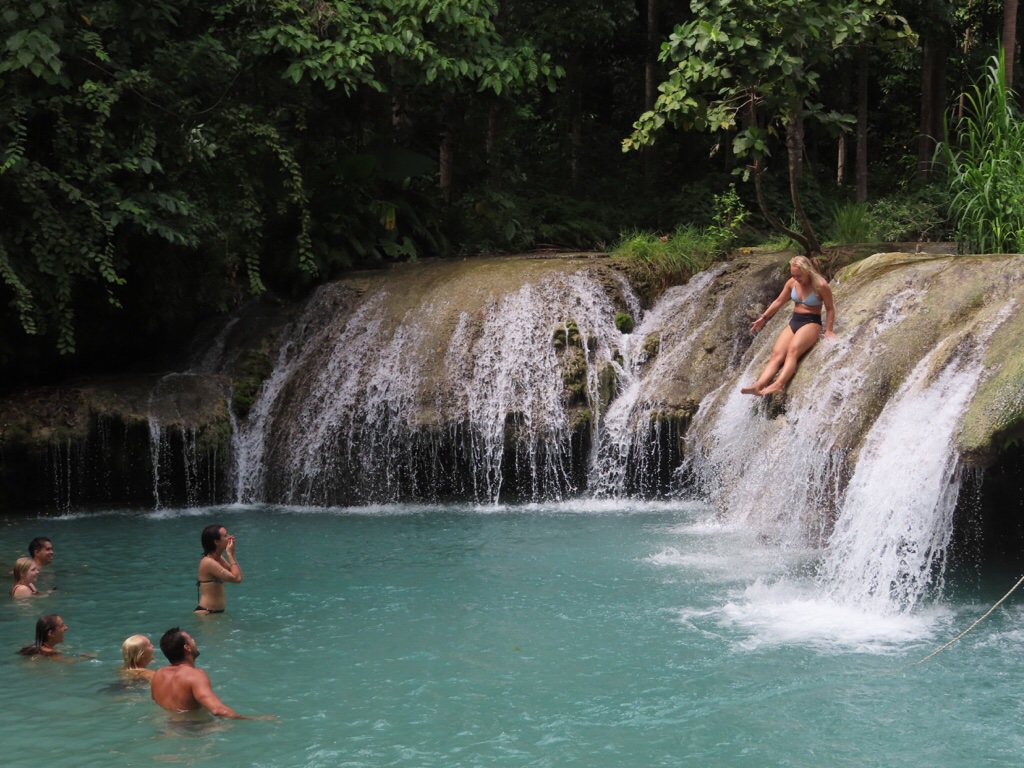
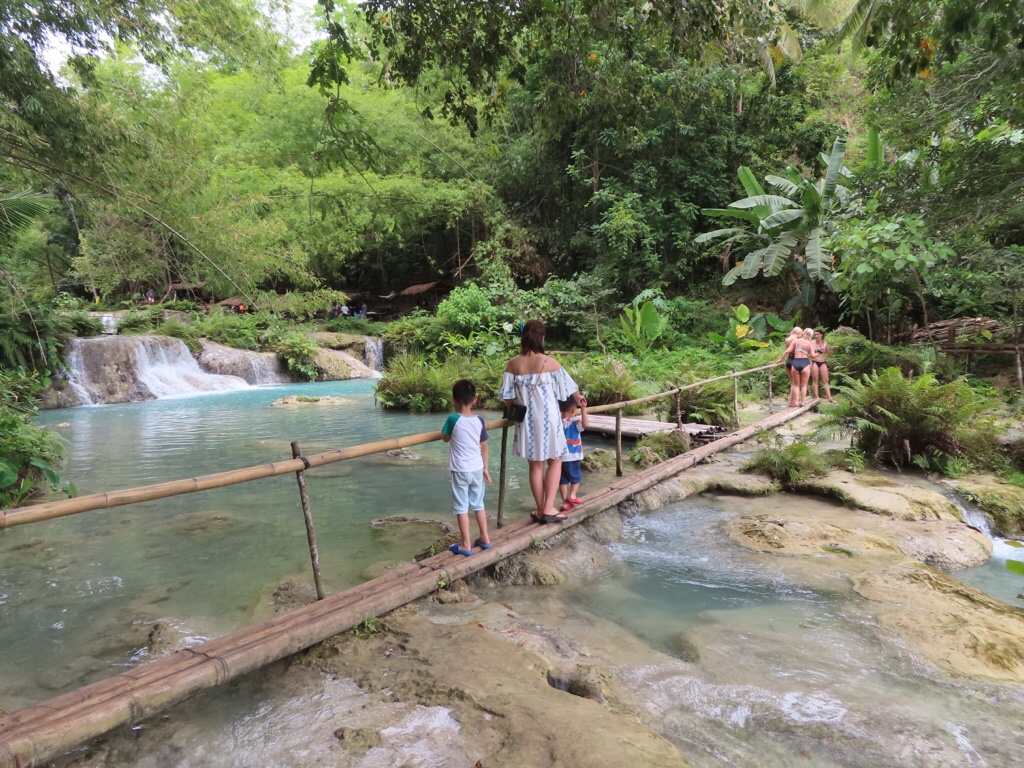
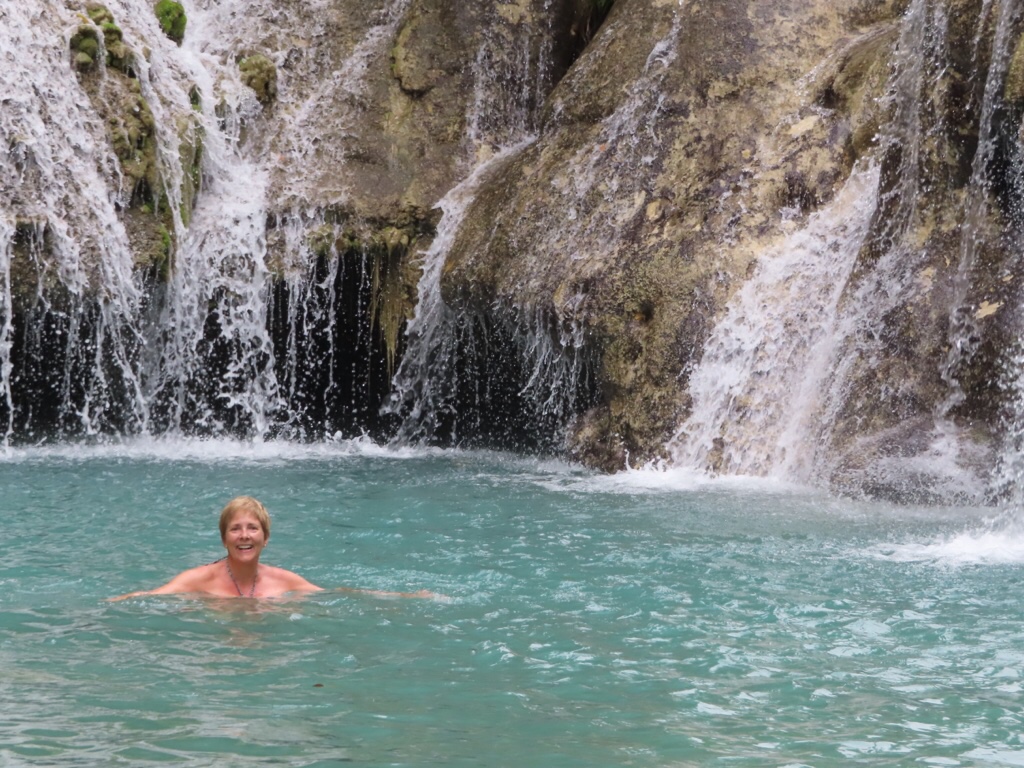
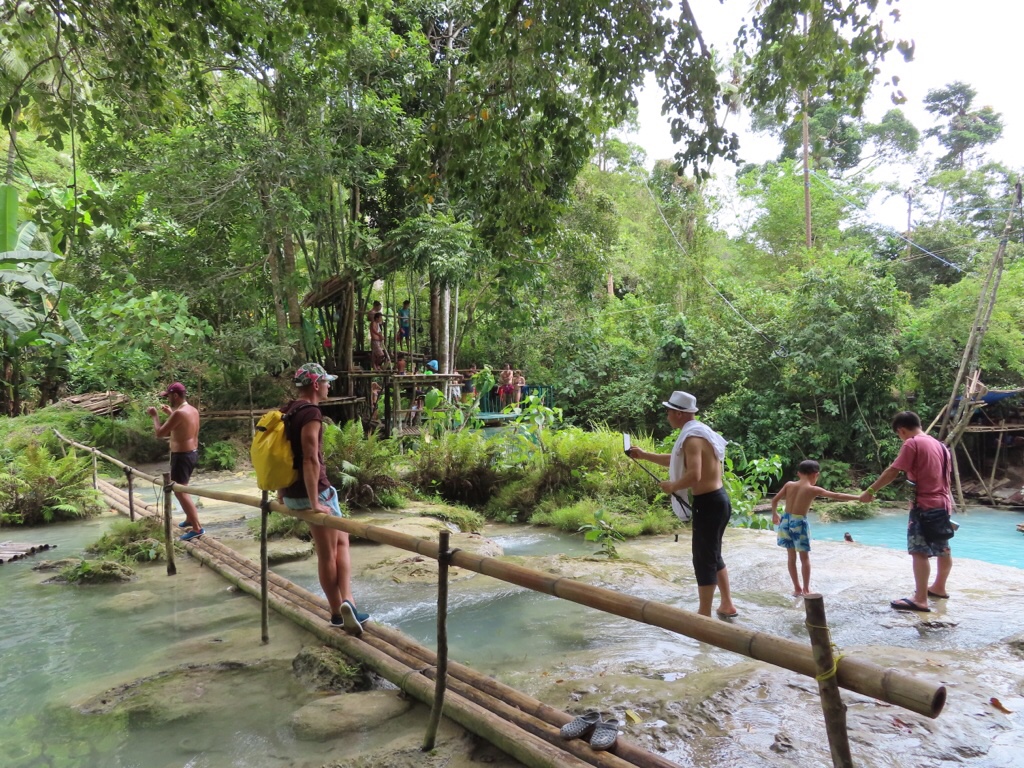
Then on to Cambugahay Falls, the most popular swimming hole on the island, popular with locals and visitors alike. This is a water park, Filipino style with two small waterfalls with large swimming holes at the base of each.

There are small several rope swings from which you can jump into the water for a small charge …

… a water slide …

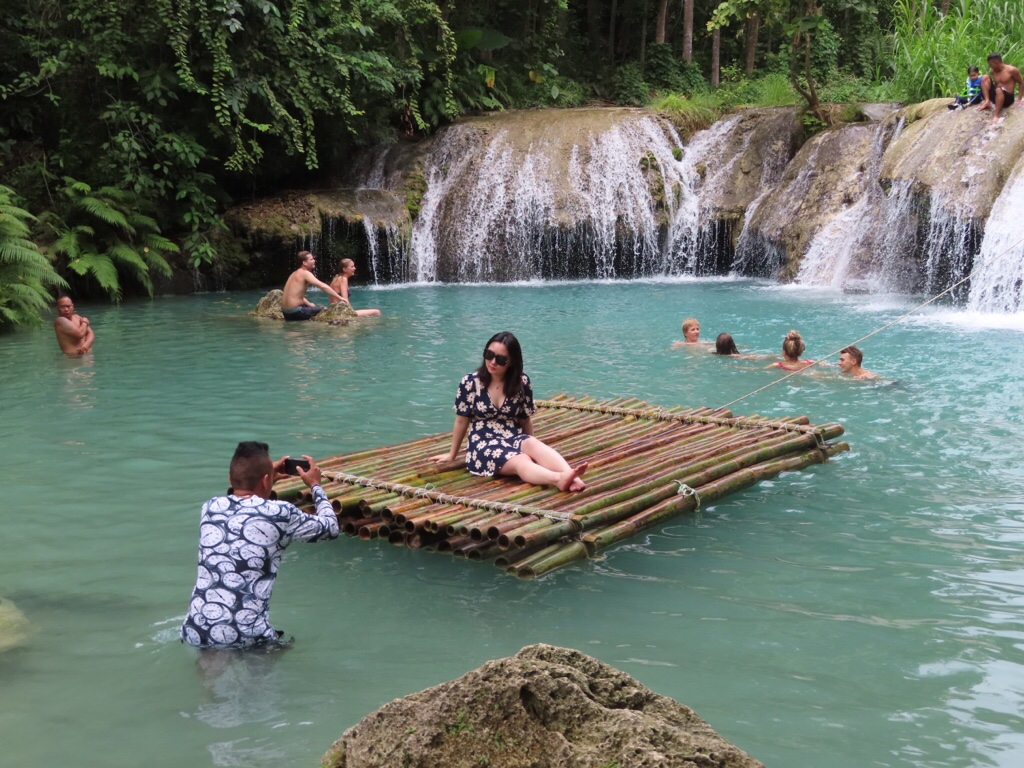
… and if you want to just pose without getting wet, you can be pulled out on a raft and have photos taken in front of the waterfall!

I can understand why this is one of the most Instagrammable places on the island and yes it’s a bit kitch, but everyone of all ages was having such a lovely time … all for 10 pesos each!

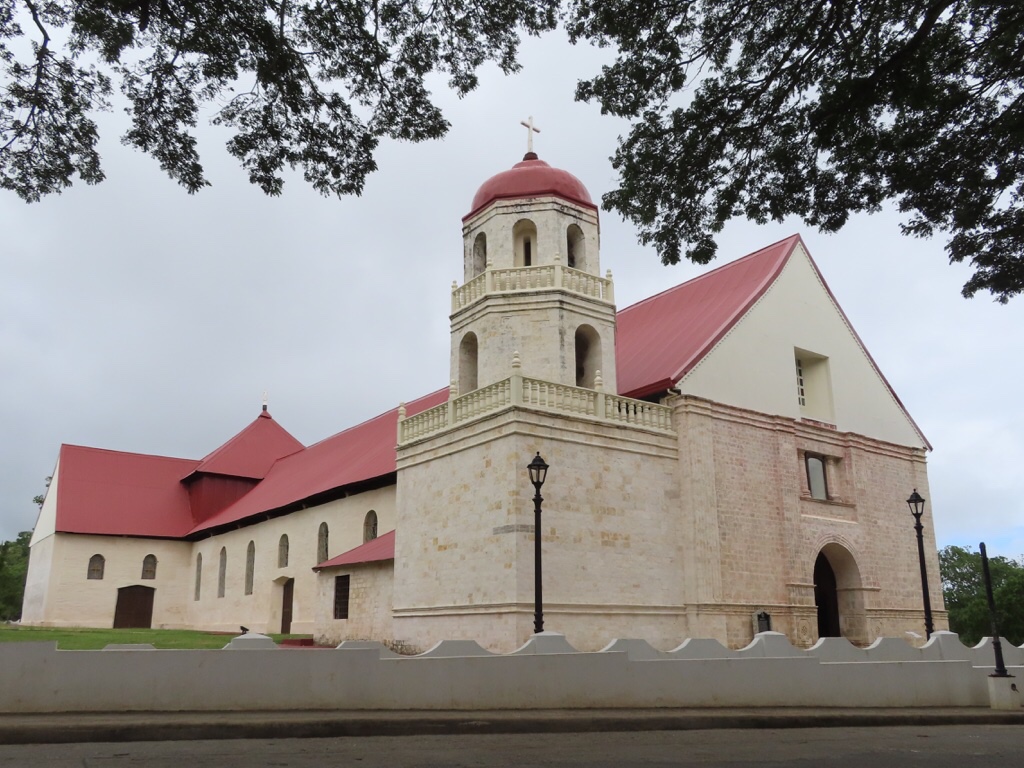
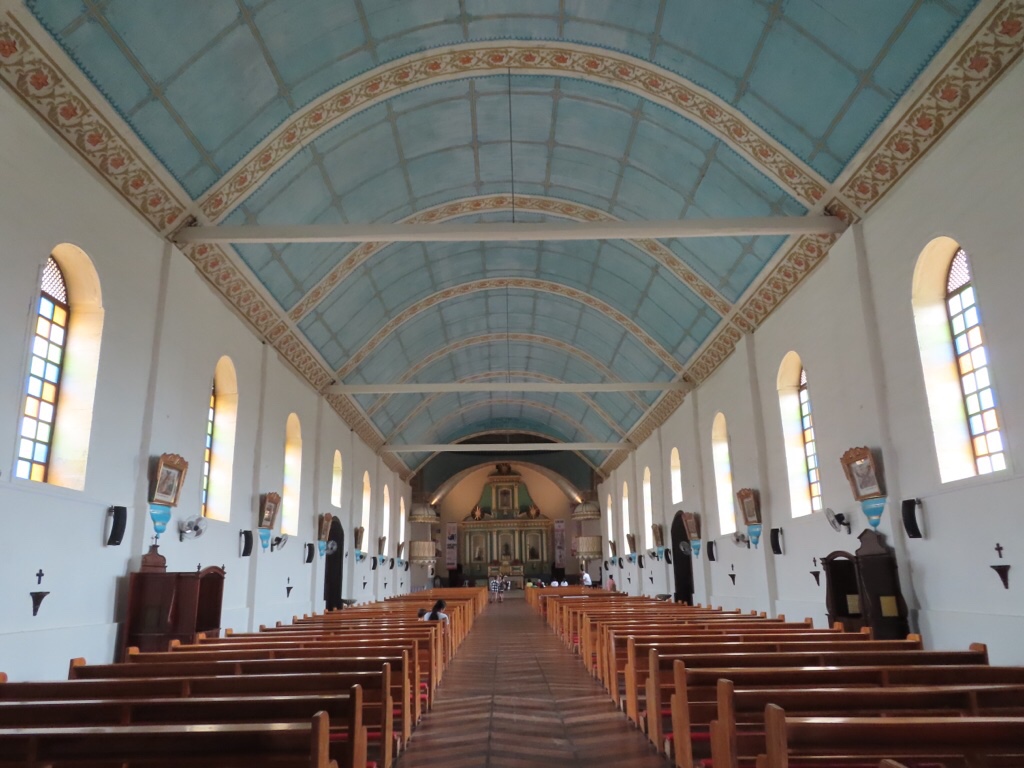
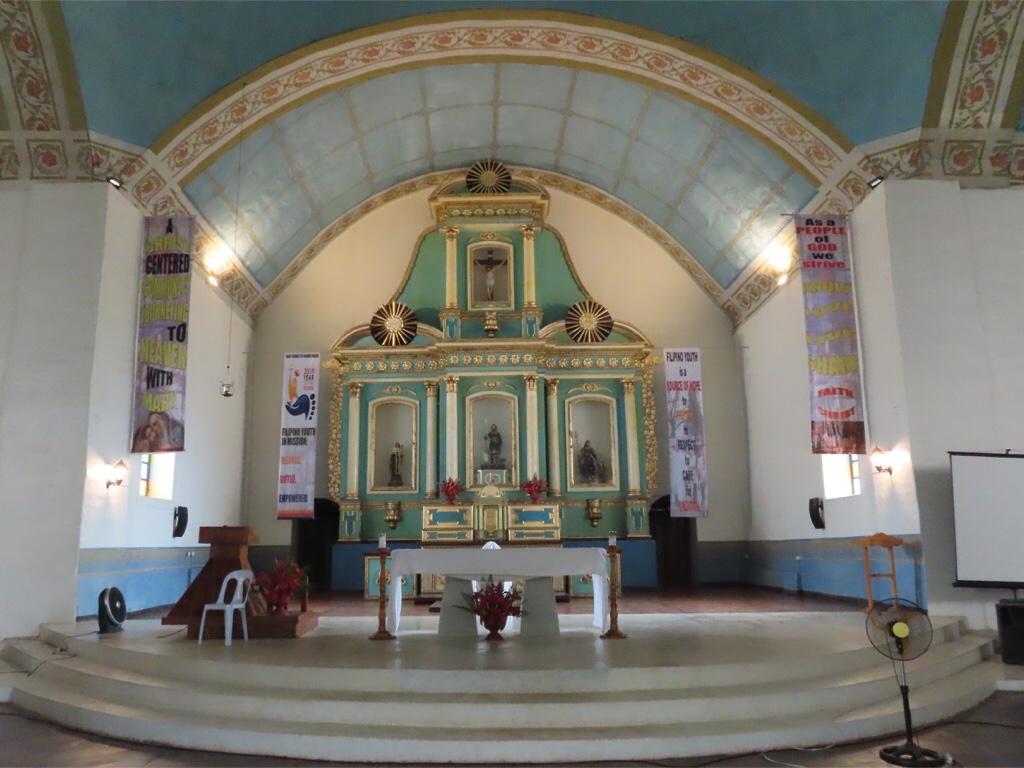
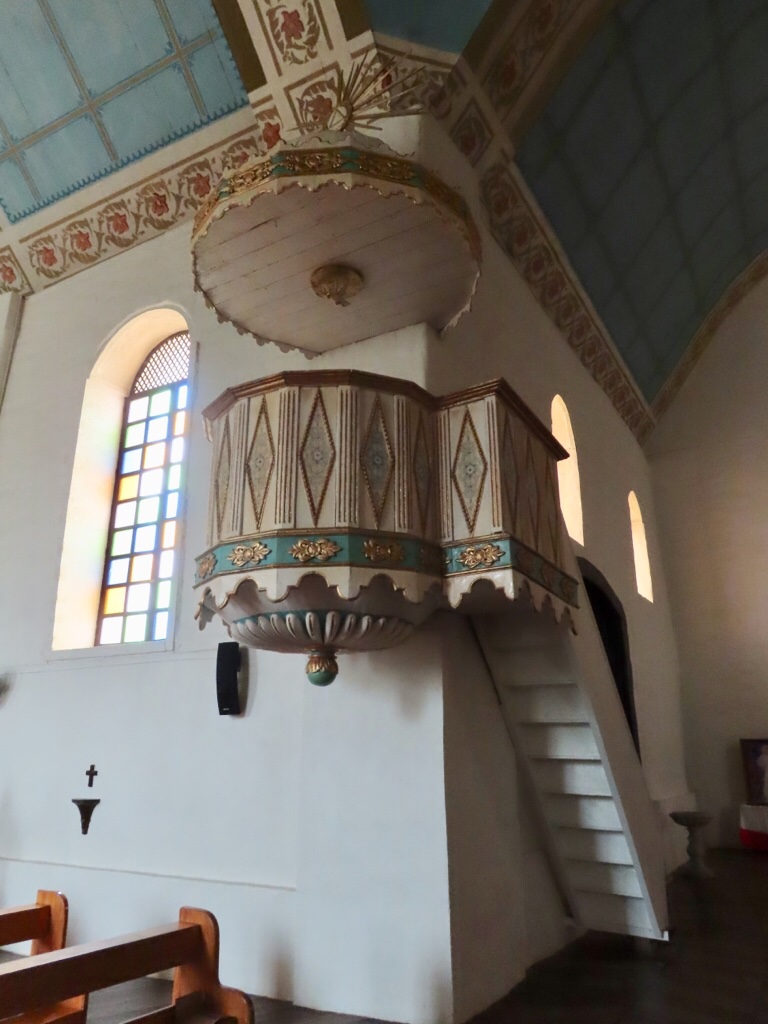
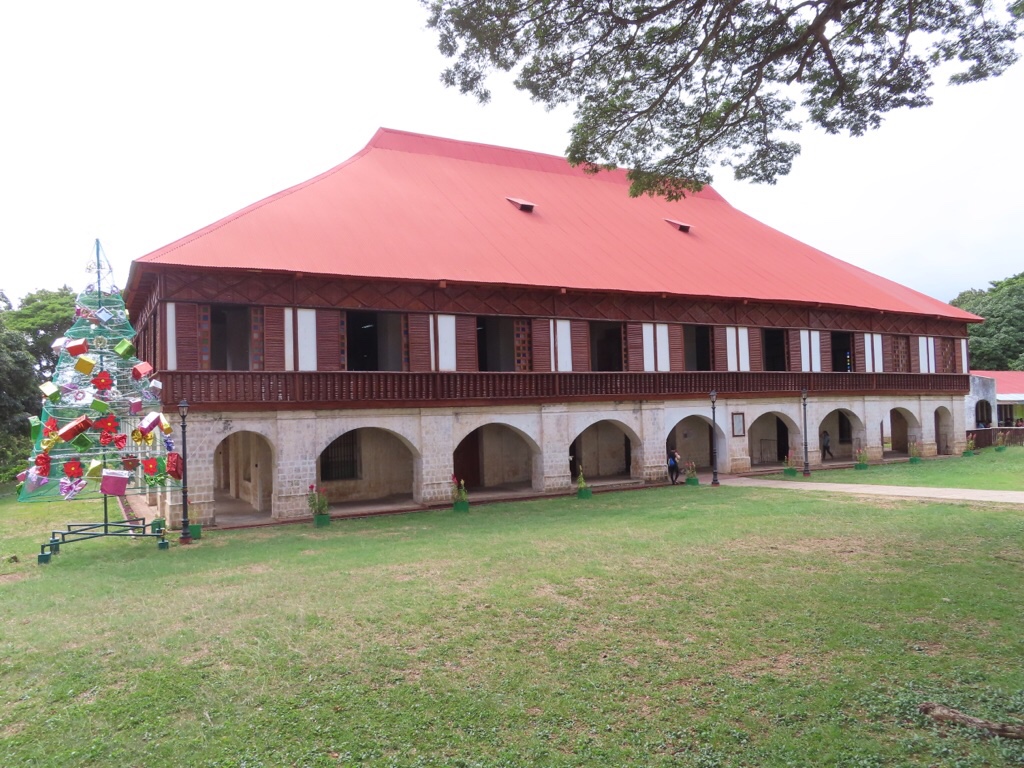
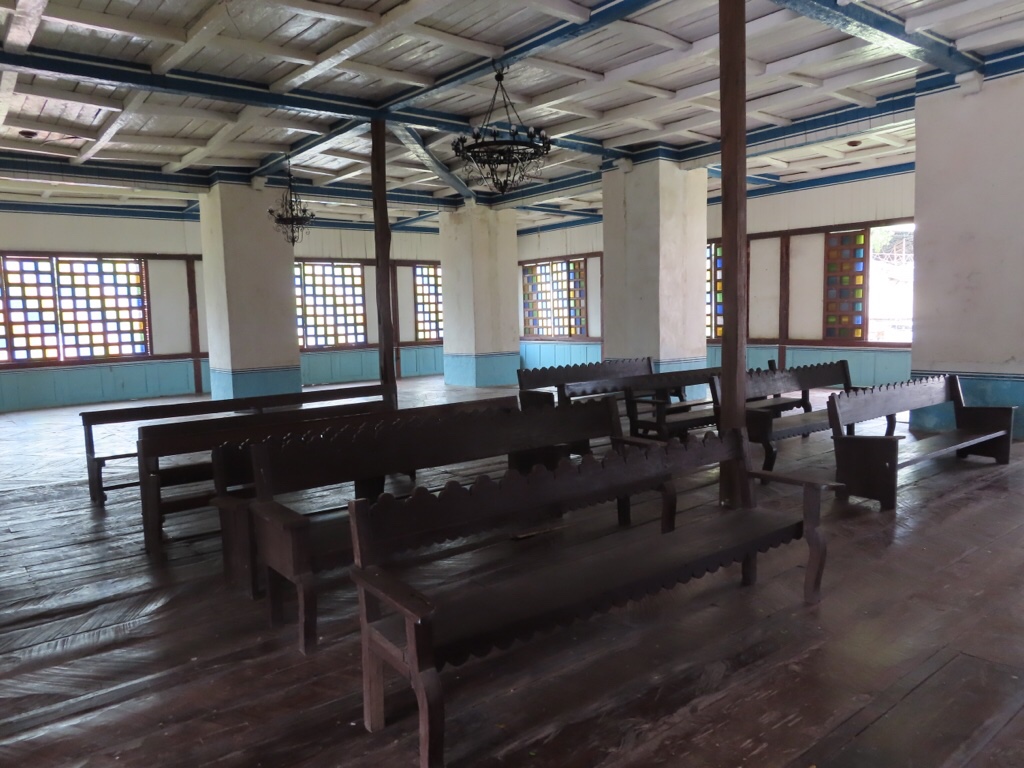
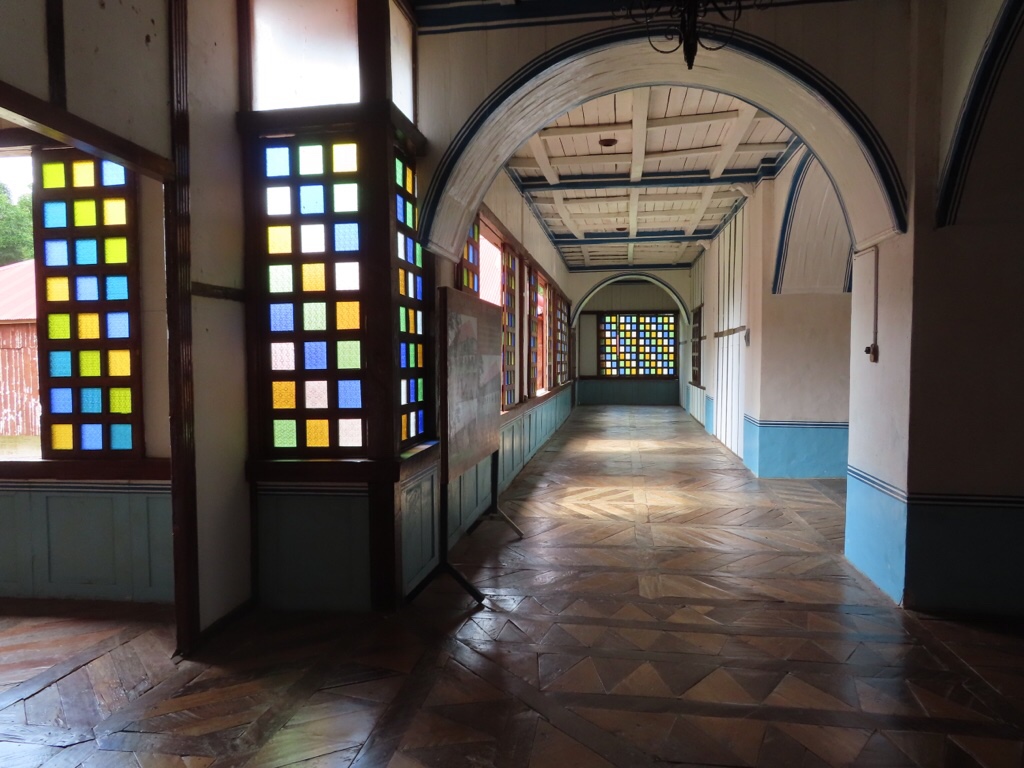
Next stop was a cafe in Lazi for lunch, then a look round the two most important historical buildings on the island, the San Isidro Labrador Parish Church and Lazi Convent, both completed in 1891 and recently renovated. The church is huge with seating for 1000, a very blue ceiling and cute pulpits.

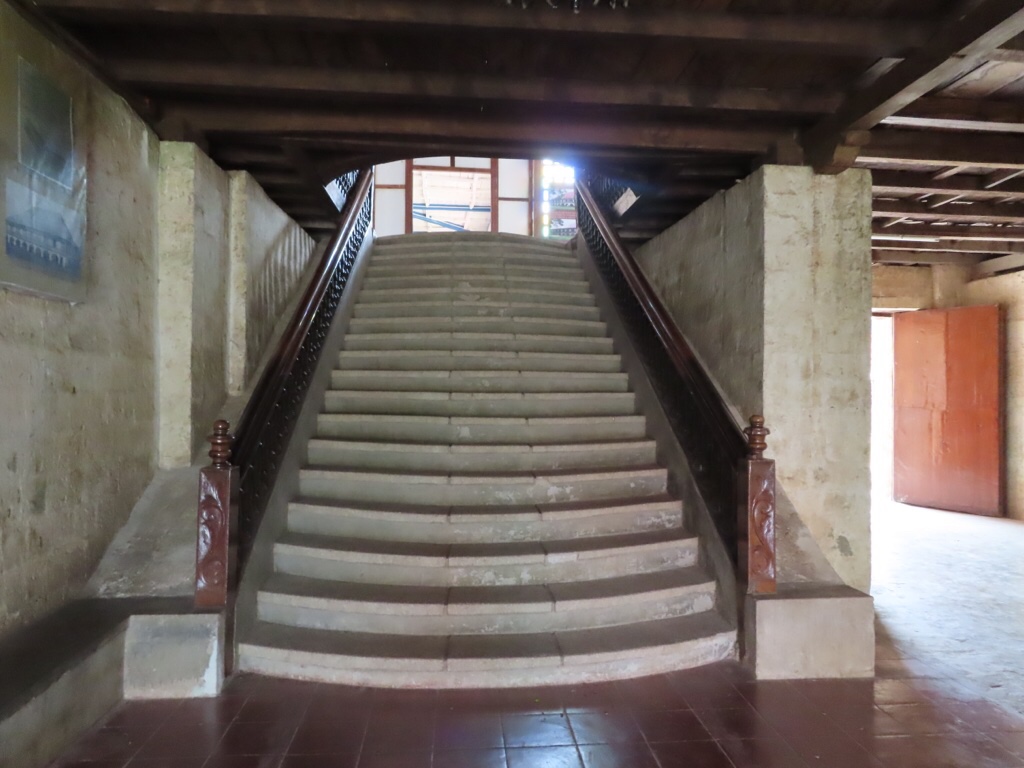
The convent is said to be the biggest and oldest convent in Asia. Nothing has been said about the nuns, but it was certainly used as a holiday home for the local priests! The restoration was pretty good, we could see how efficient the design was with the huge sliding windows making the large rooms inside very cool.

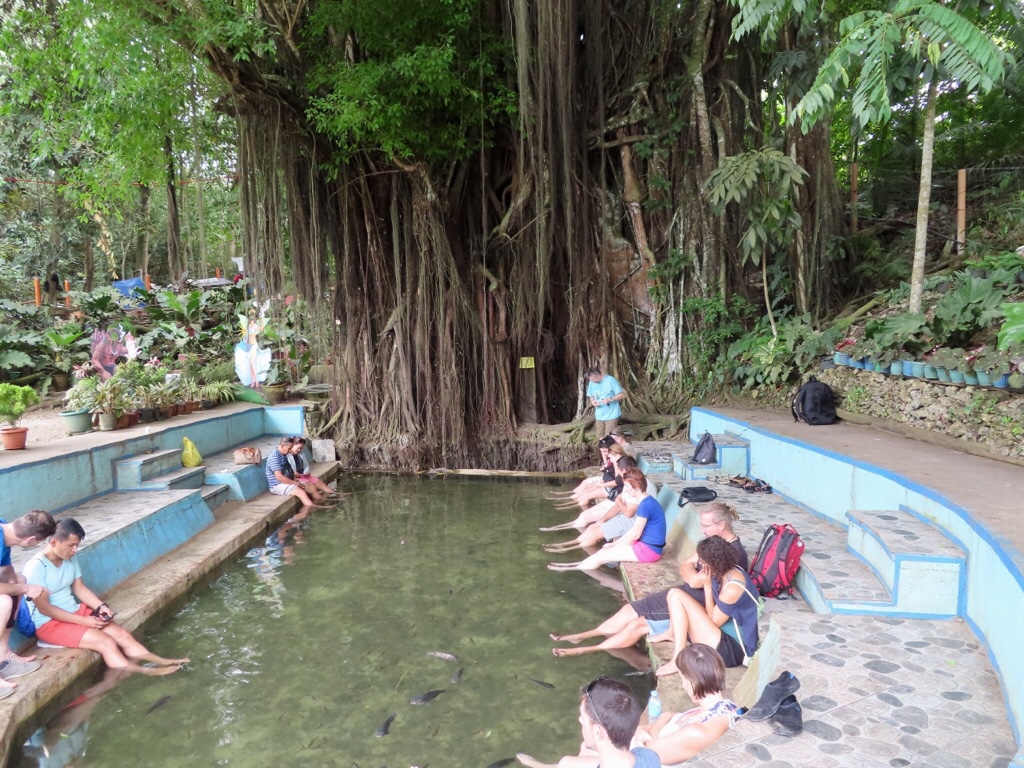
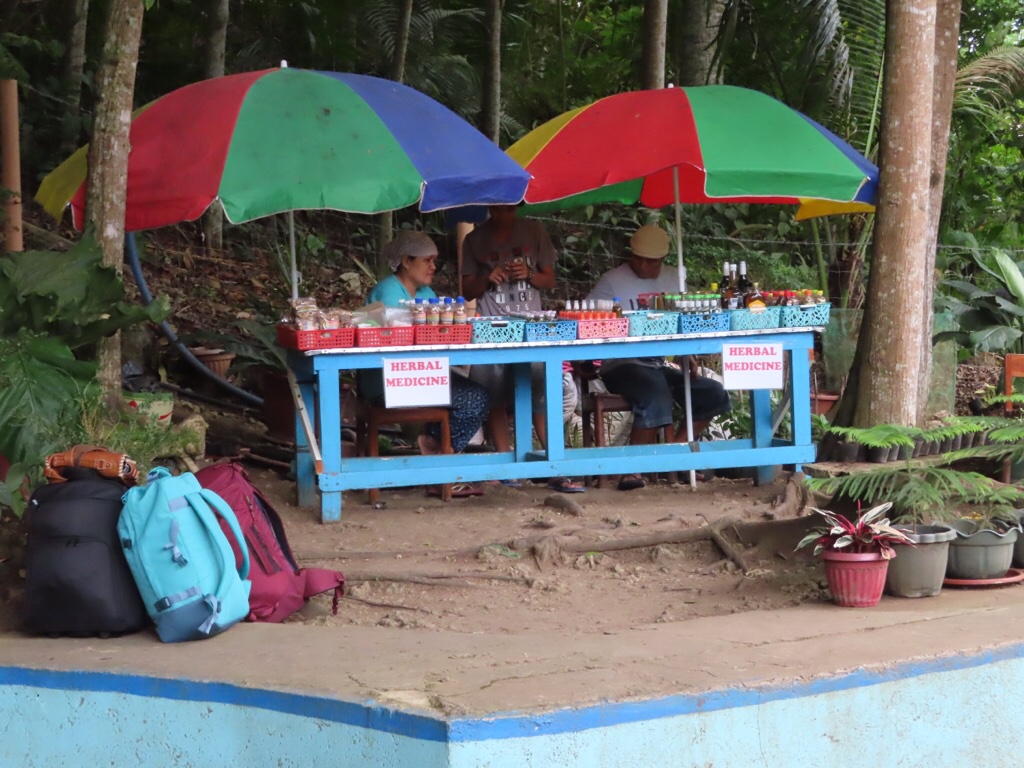
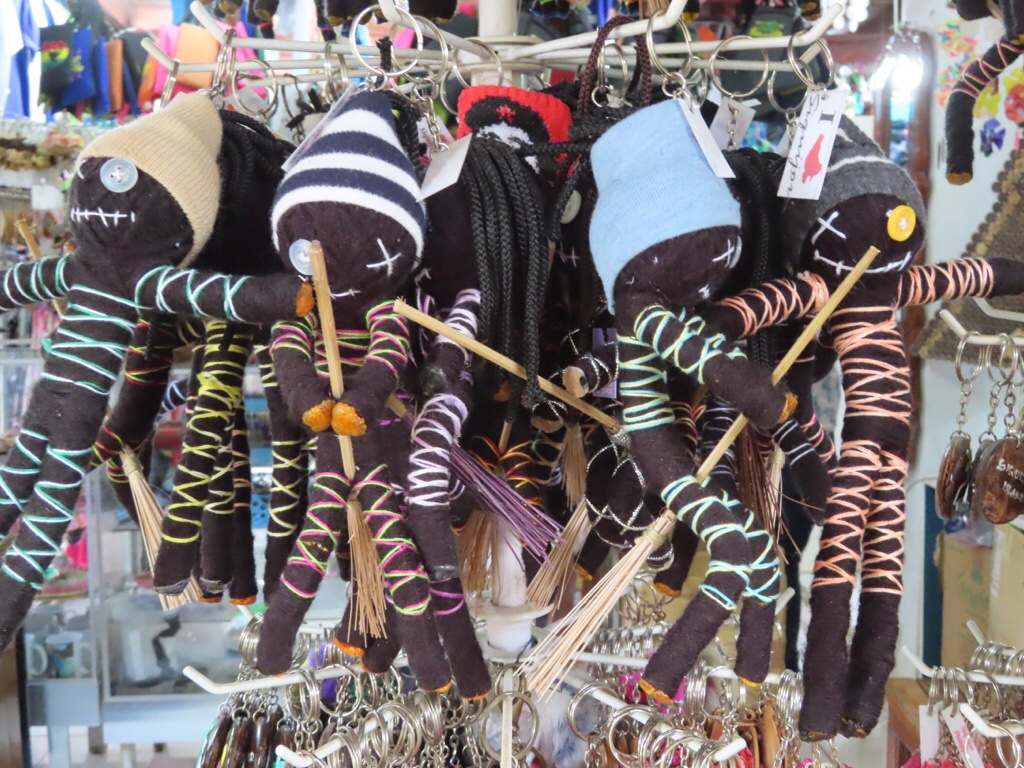
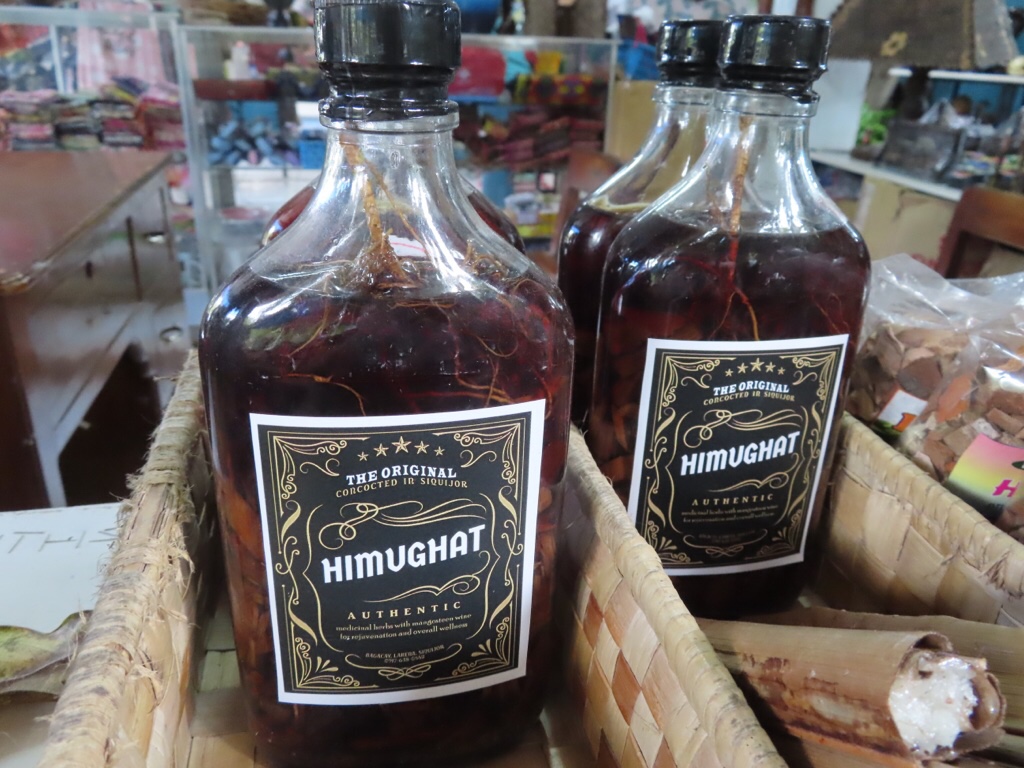
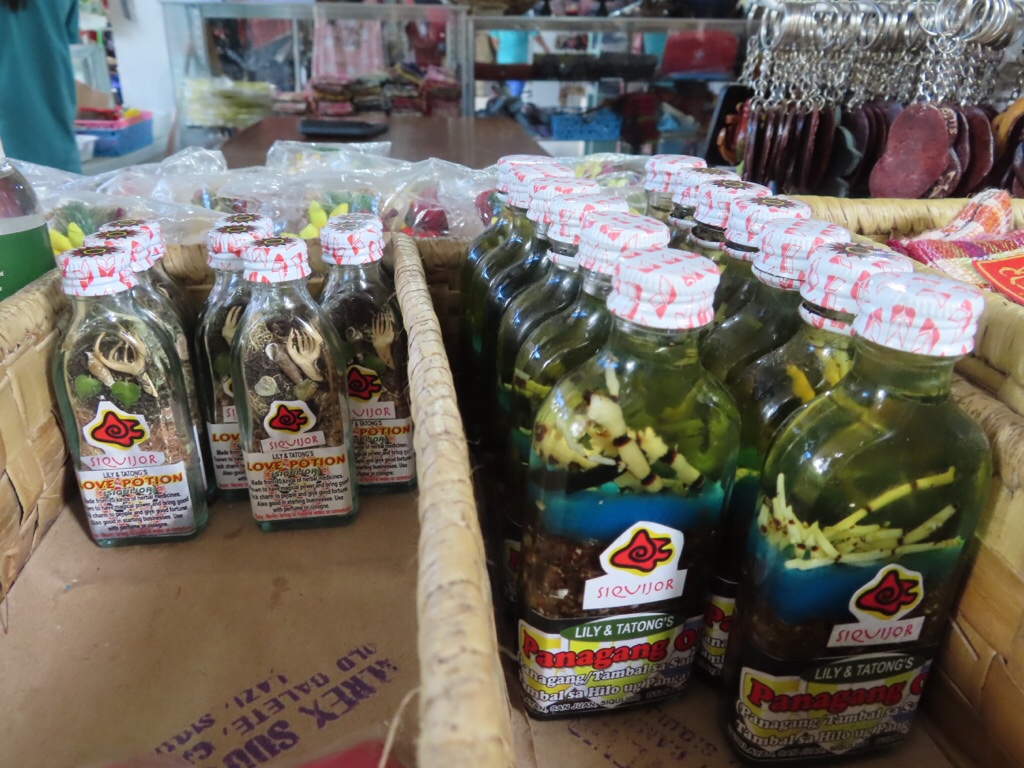
Final stop was the reputedly century old Balete Tree, cannily made into a tourist attraction by the owning family, with small entrance fee to the tree and surrounding fish foot spa (no, we didn’t have a go), cafe and shop capitalising on the love potions and other voodoo-style souvenirs being sold here as the locals believe this tree has mystical powers!

Back passed the rice paddy and we were amazed to see progress …

On the way back it got a bit drizzly so we decided to cut our losses for the day.

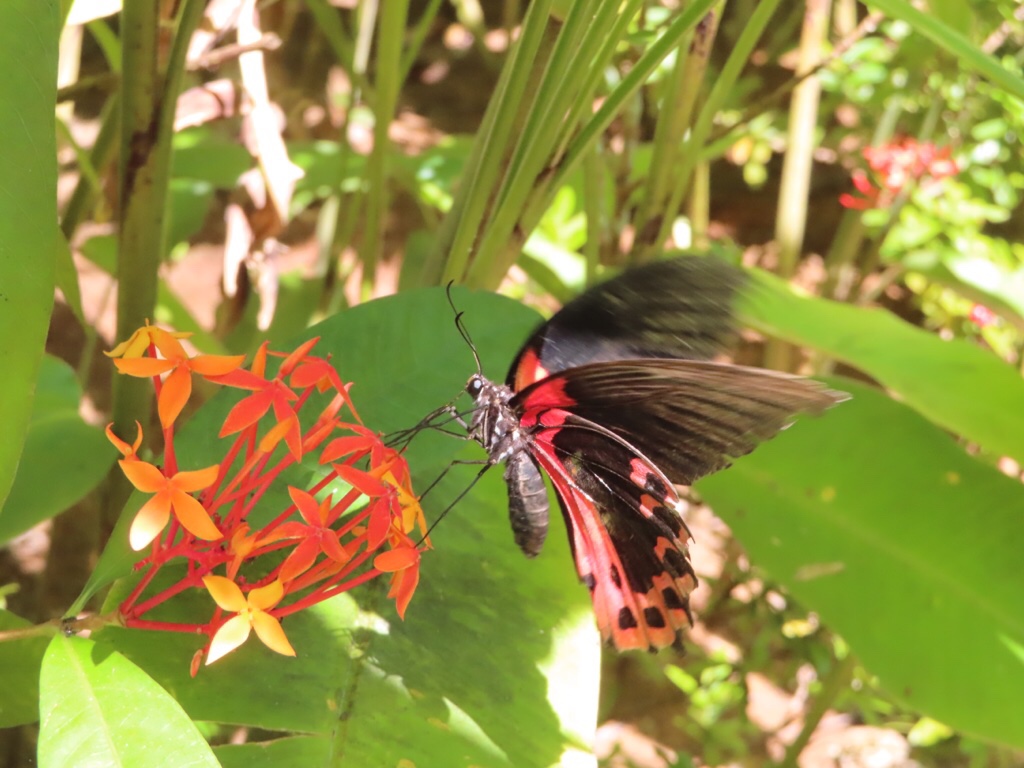
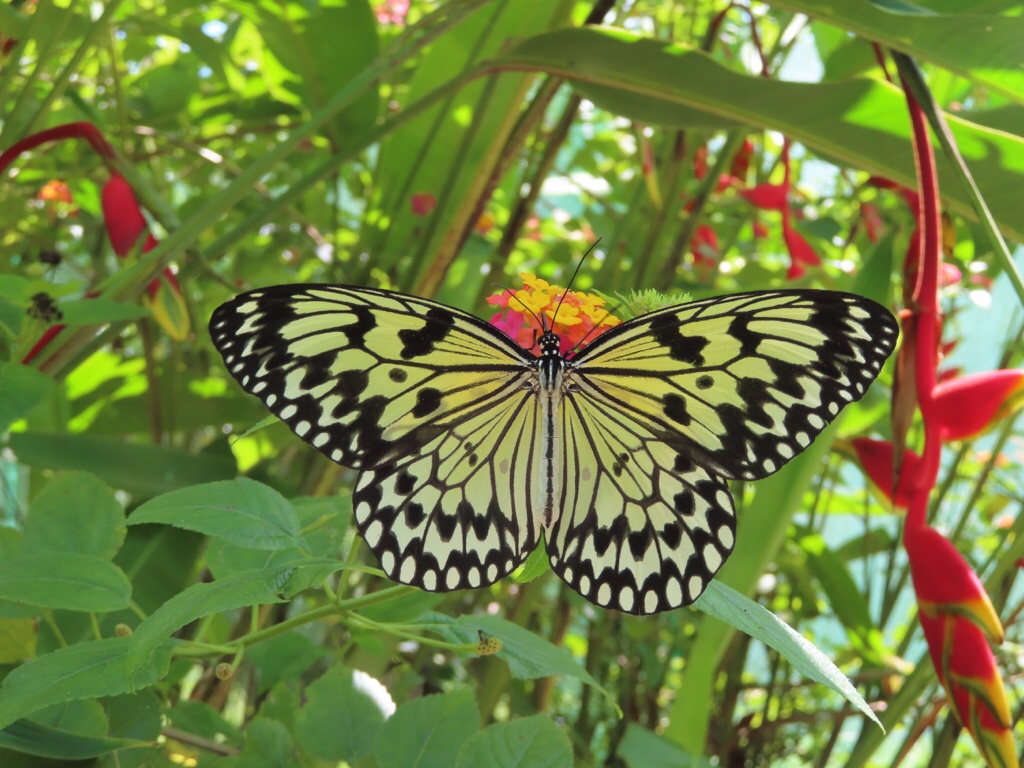
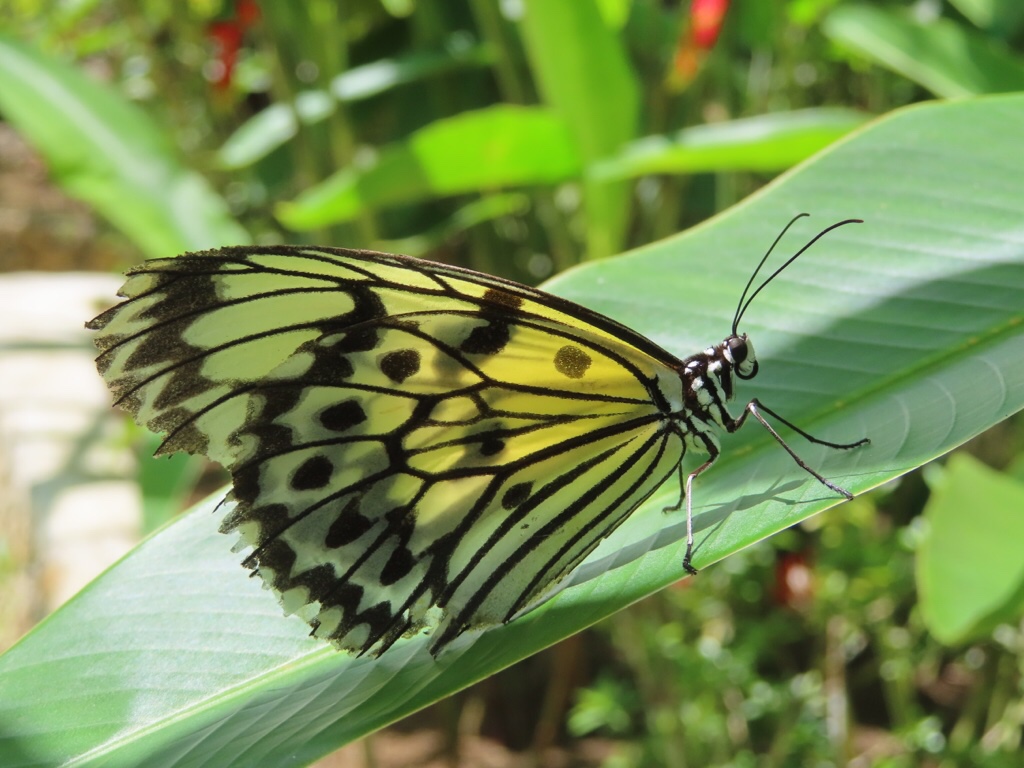
Next day we just had to repeat our breakfast at Luca Loko, then went in search of butterflies. Chris got chatting to a couple on the beach and they said the butterfly sanctuary was worth a visit, so despite being a little sceptical after our last butterfly experience, we thought we’d give it a go. We took a road up into the mountains in the centre of the island …

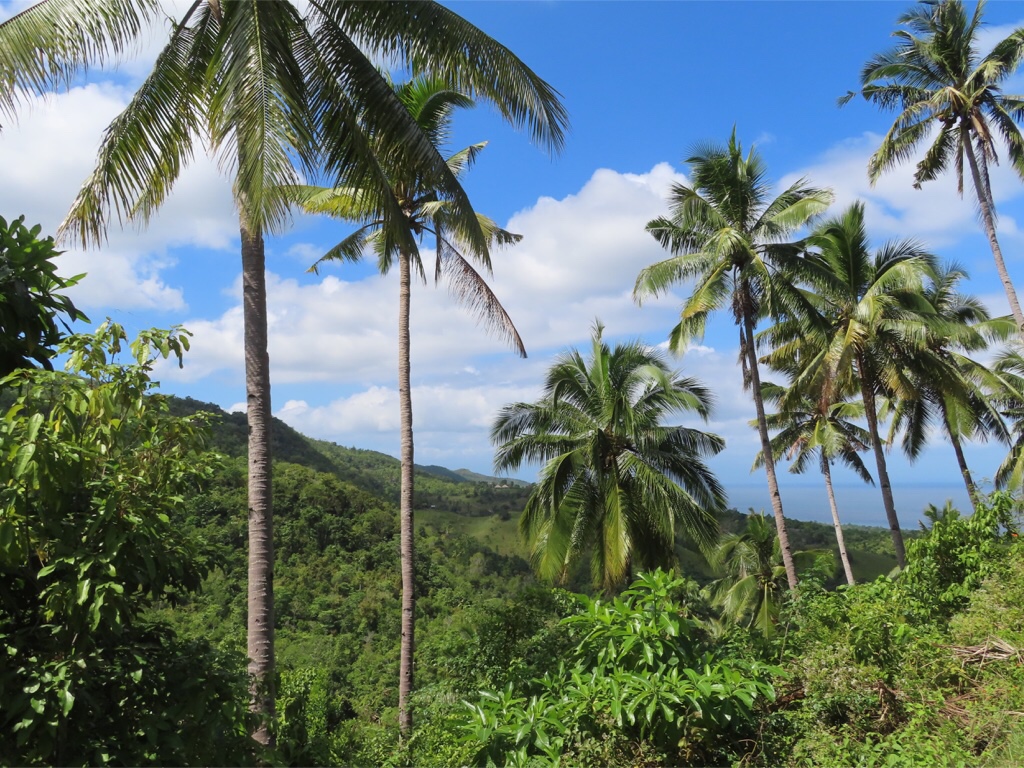
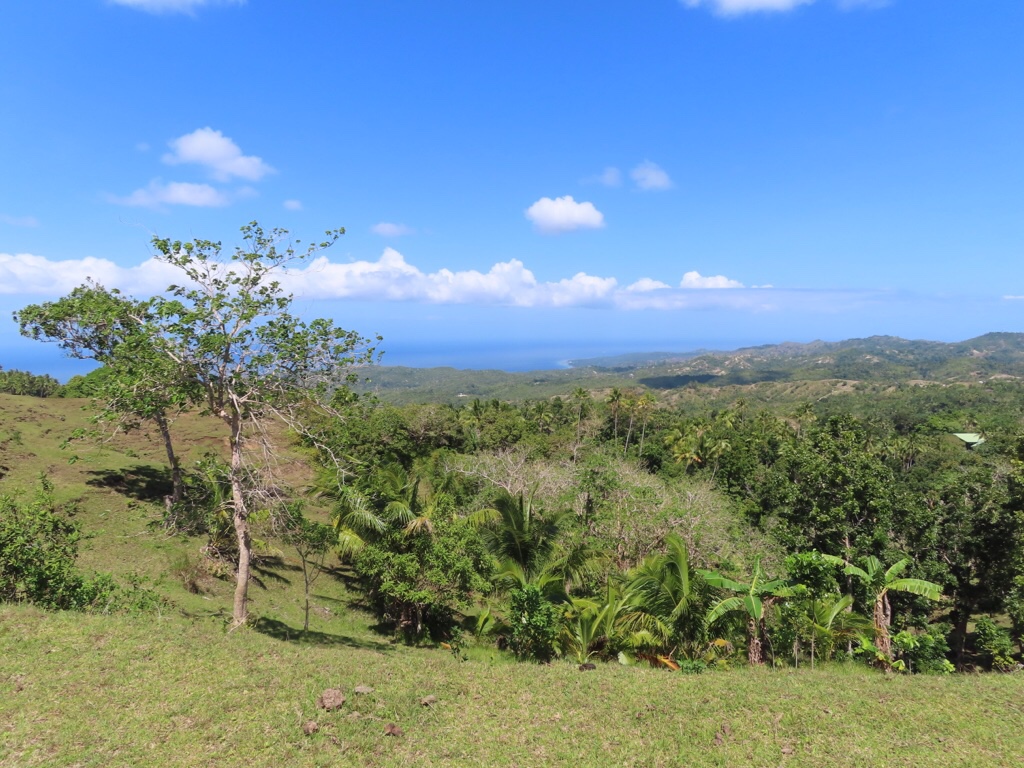
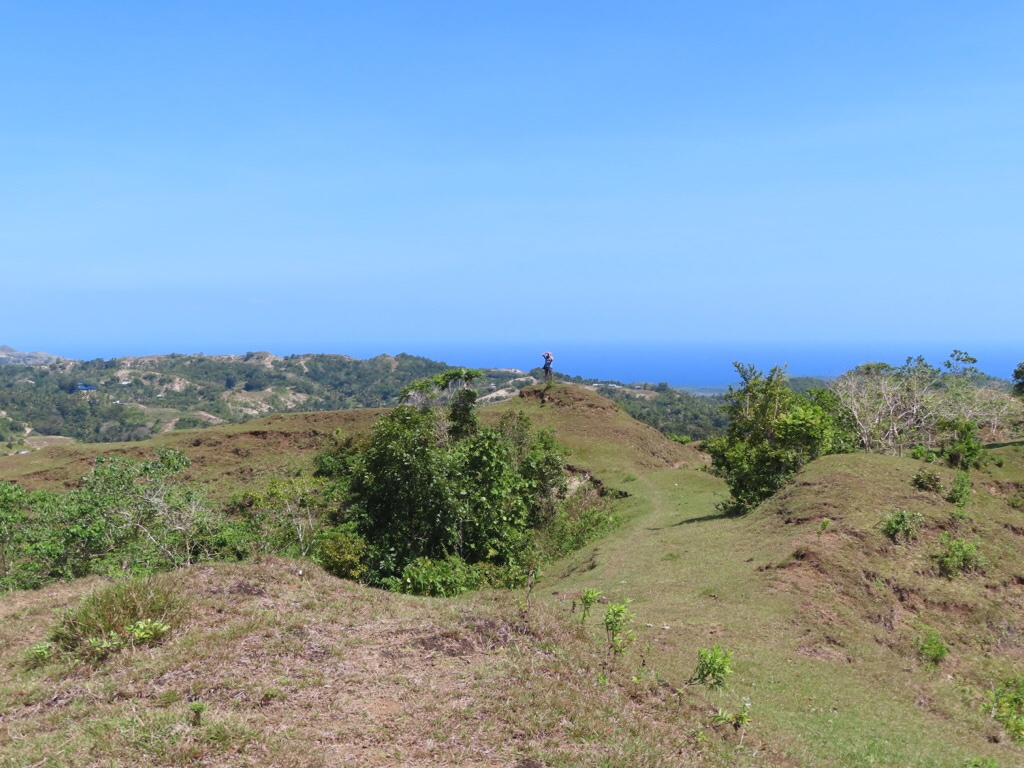
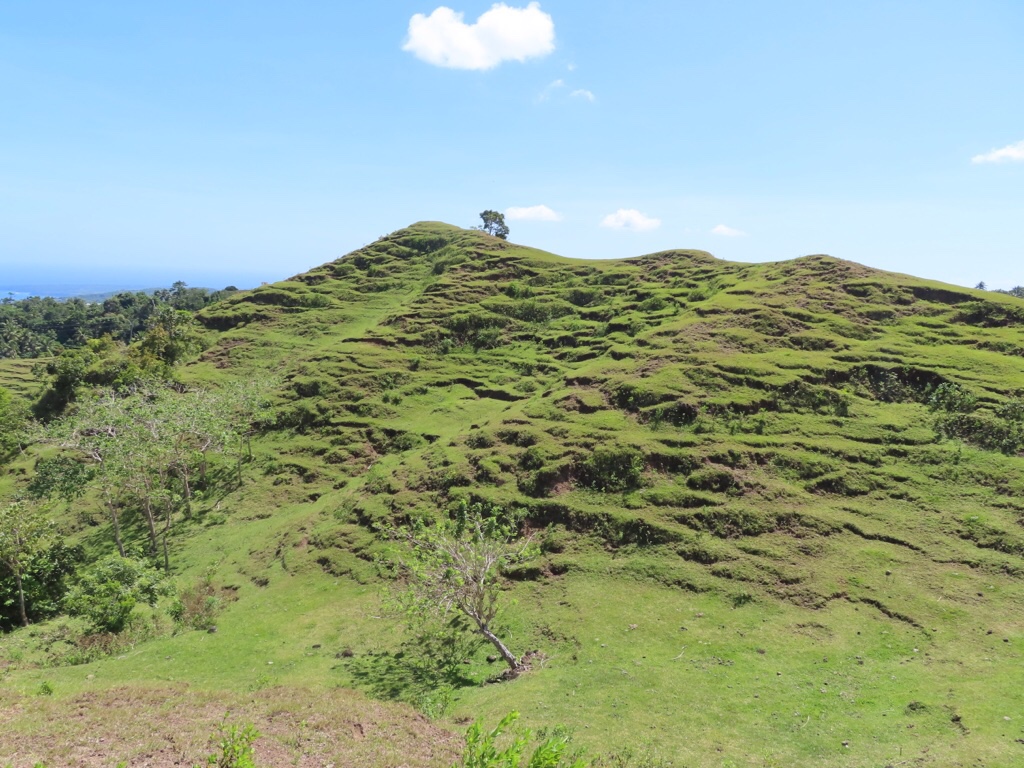
… stopped at a viewpoint and were able to go for a bit of a walk taking pictures …

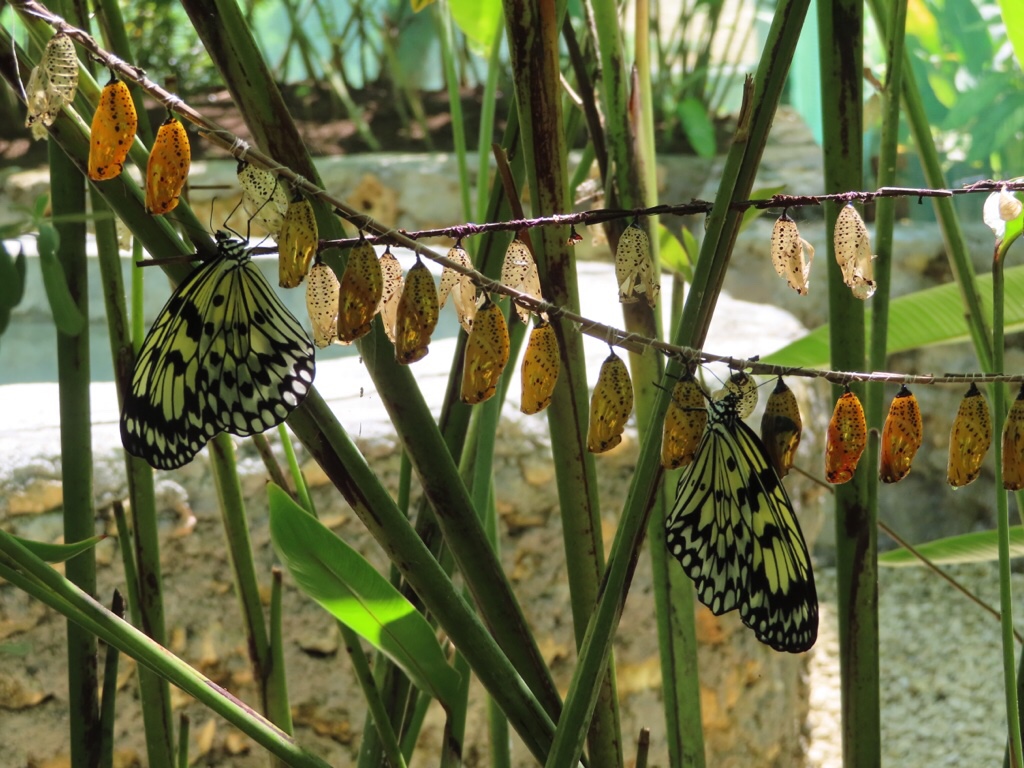
… then on to the butterfly sanctuary, started by a man who breeds butterflies in his garden then releases them into the wild. We spent quite a while watching the butterflies and photographing them.

Our last day here was also Chris’s birthday and while we had only planned a chilled day … it turned out a bit overcast with a couple of showers. There were still birthday cards, breakfast overlooking the beach, some time by the pool, pizza for lunch, cake, sunset, cocktails and Chips for dinner … perfect says 67 year old Mr Hayes!

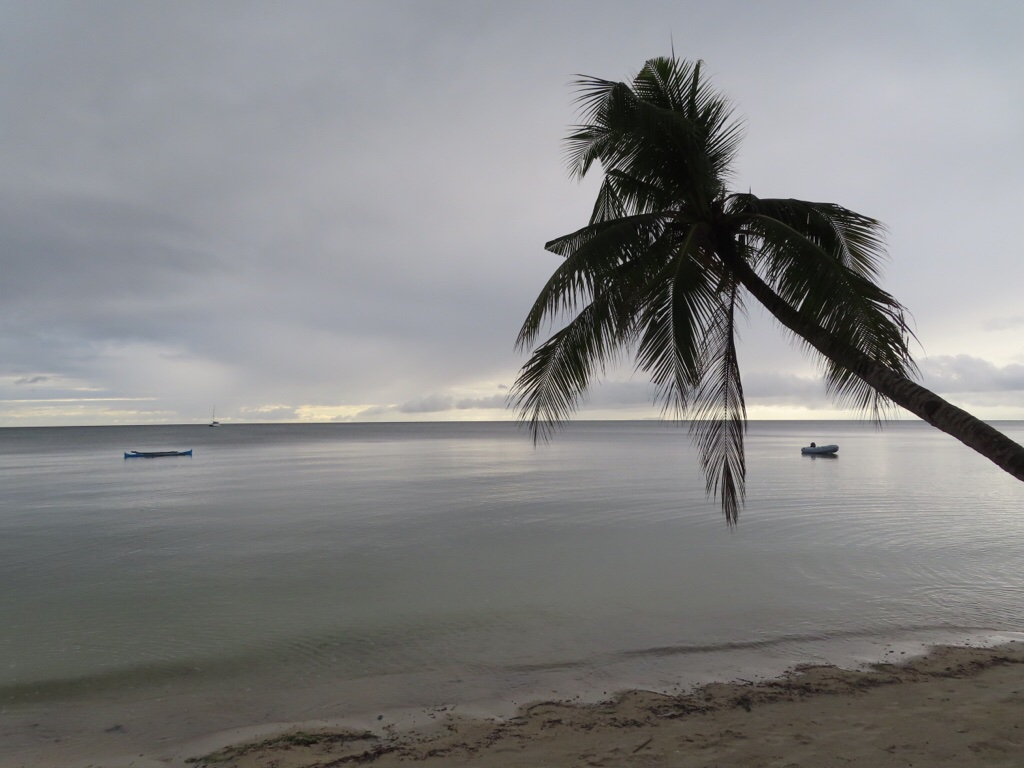
The highlight of our stay has definitely been the beach … stunning in the early morning …

… but even better at sunset, so here’s the gallery!

Tomorrow we have a busy day, returning to Cebu city by ferry then carrying on northwards …

Map
Cebu … Samboan – Portrait of a Filipino Town

Having said our goodbyes to Tim and Ann, we walked out of their gate and the Ceres Bus was there … largely luck as the timetable is just a concept … and while there are several buses an hour, this one was going exactly where we wanted! The only downside was that it was possibly the oldest, most cranky bus still in service! Nonetheless, having followed the coast road, we arrived at Bato Port a couple of hours later.

A final 4km by tricycle brought us to Fantasy Lodge, a small guesthouse which had caught my eye when I first started researching our trip, and I knew I wanted to include it if possible. We weren’t disappointed – the lodge is quite bijou, built round a small swimming pool with decking and gardens that give views across the Tanon Strait.

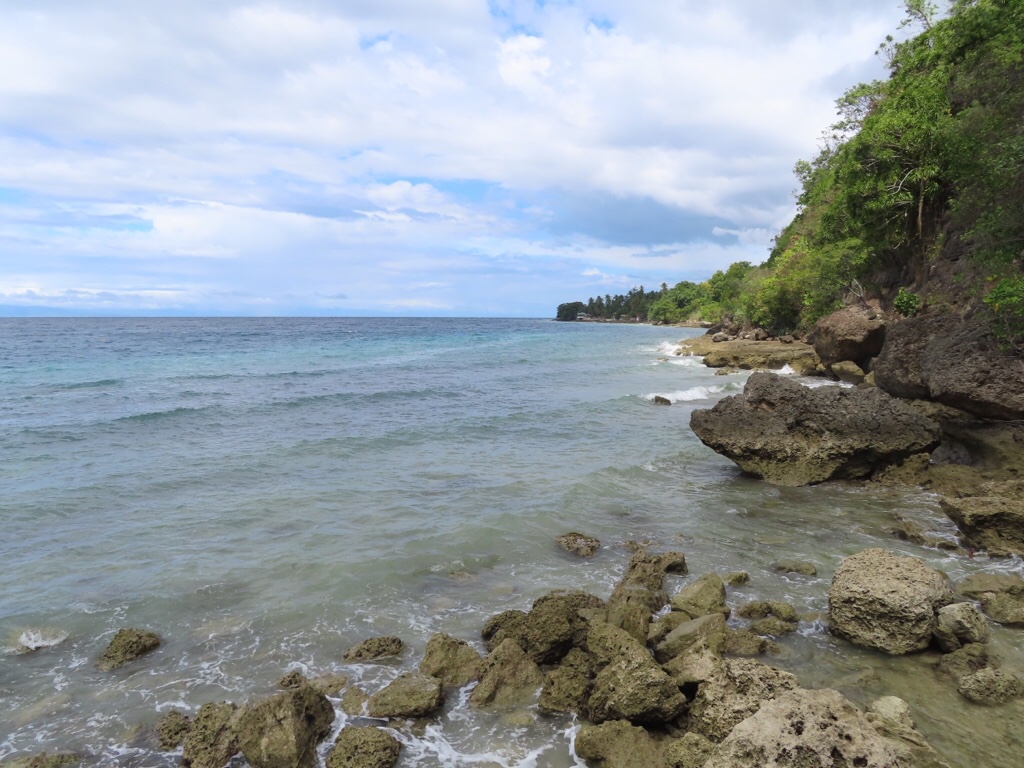
Steps lead down to more seating areas with a small rocky beach.

The first day we just settled in, sat, swam, had massages to the sound of the sea below, and drank cocktails before dinner. The menu has a good choice including several veggie choices for Chris, which is handy as we are a little way from anywhere else!

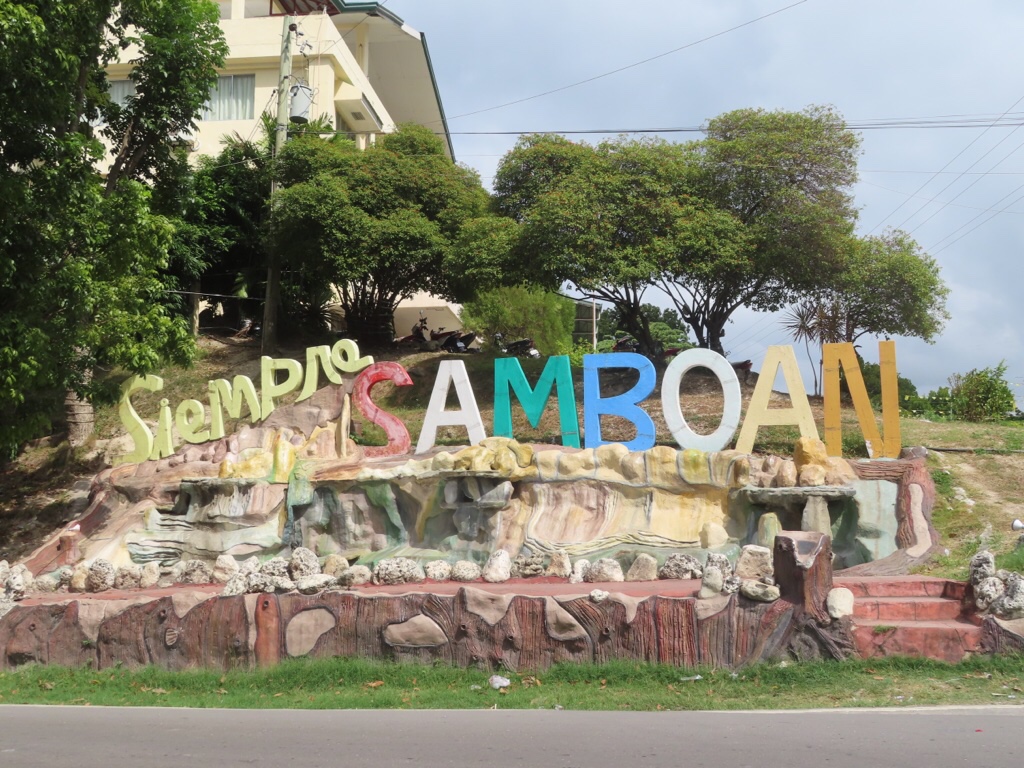
Next morning we decided to explore Samboan, the small town just up the road. We waited outside for a tricycle and we joined other passengers. By the time we reached the town, there were six of us and the fare was 30p each!

Philippines towns are divided into barangays which started as relatively small communities of around 50 to 100 families, although in some areas they are now larger. Samboan has 15 barangays, with Poblacion being the main town centre, although the others often have their own neighbourhood centre, church, shop and fiestas!

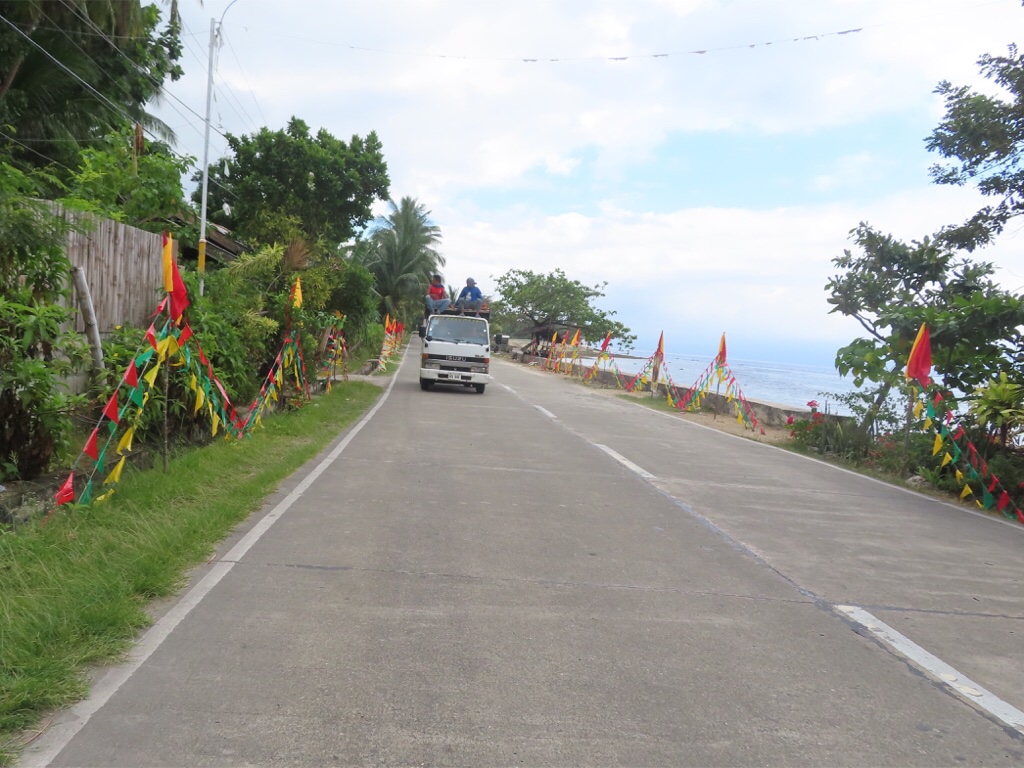
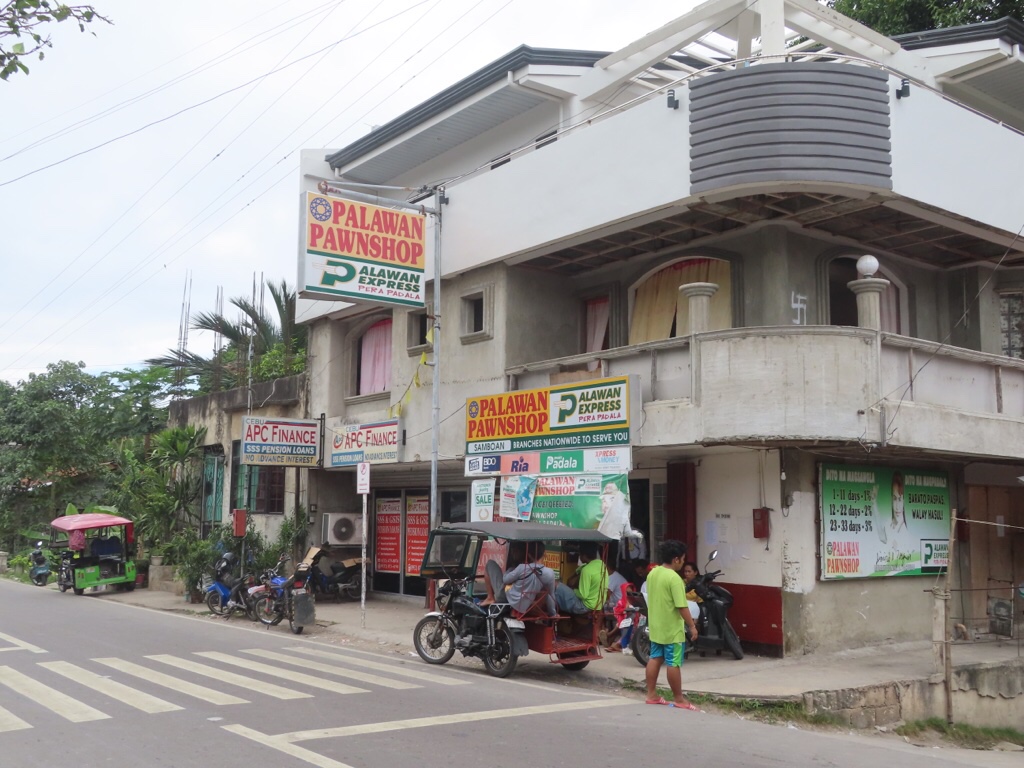
So far, we have travelled on the bus through lots of small towns just like Samboan and we have already noticed several characteristics they all share.

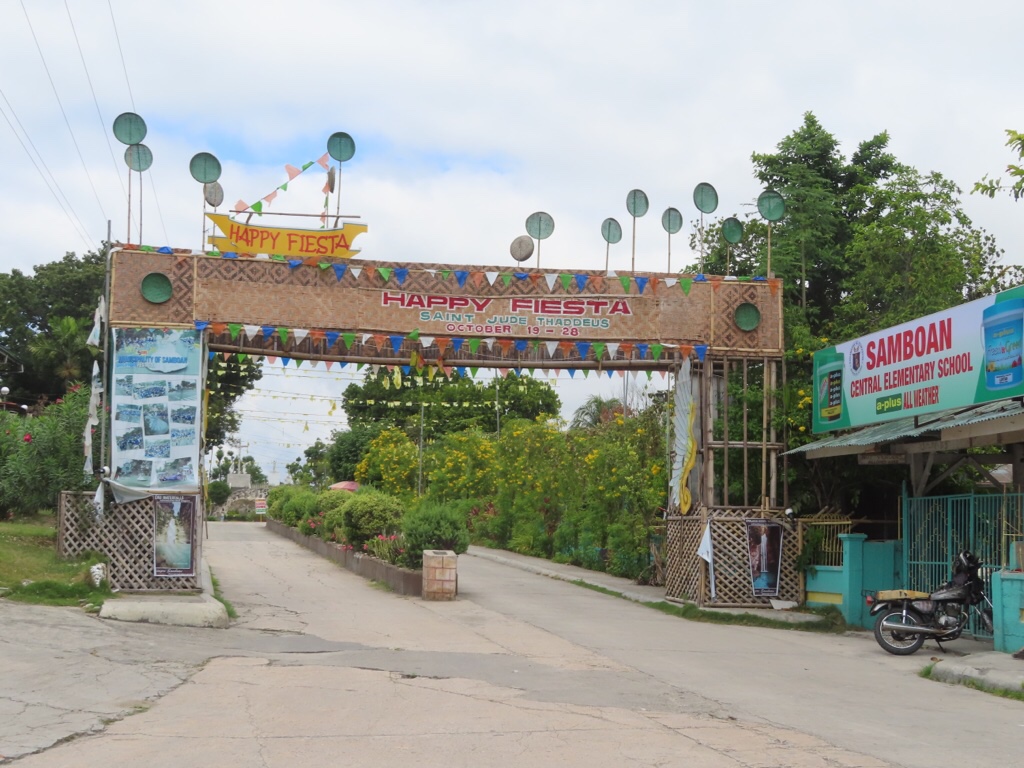
Firstly, there is often bunting of some sort decorating the approach, after all there is bound to be another festa soon …

Every main street has at least a couple of pawnbrokers, which still make loans on goods like jewellery and luxury items, but have expanded into money remittance and short term loans …

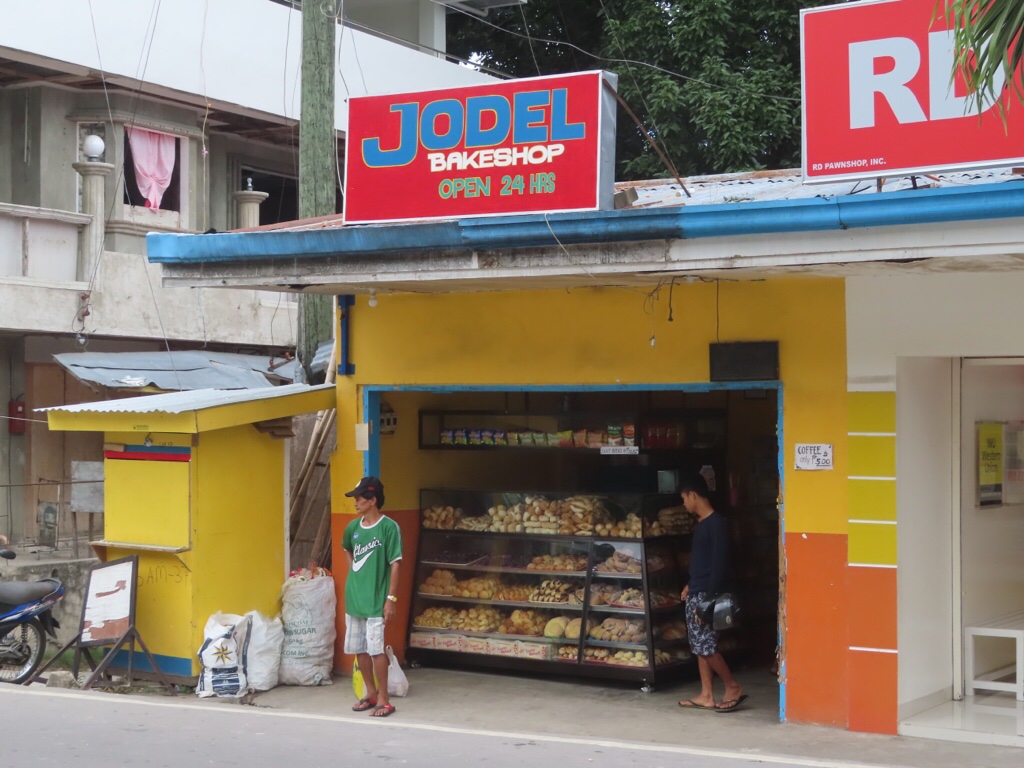
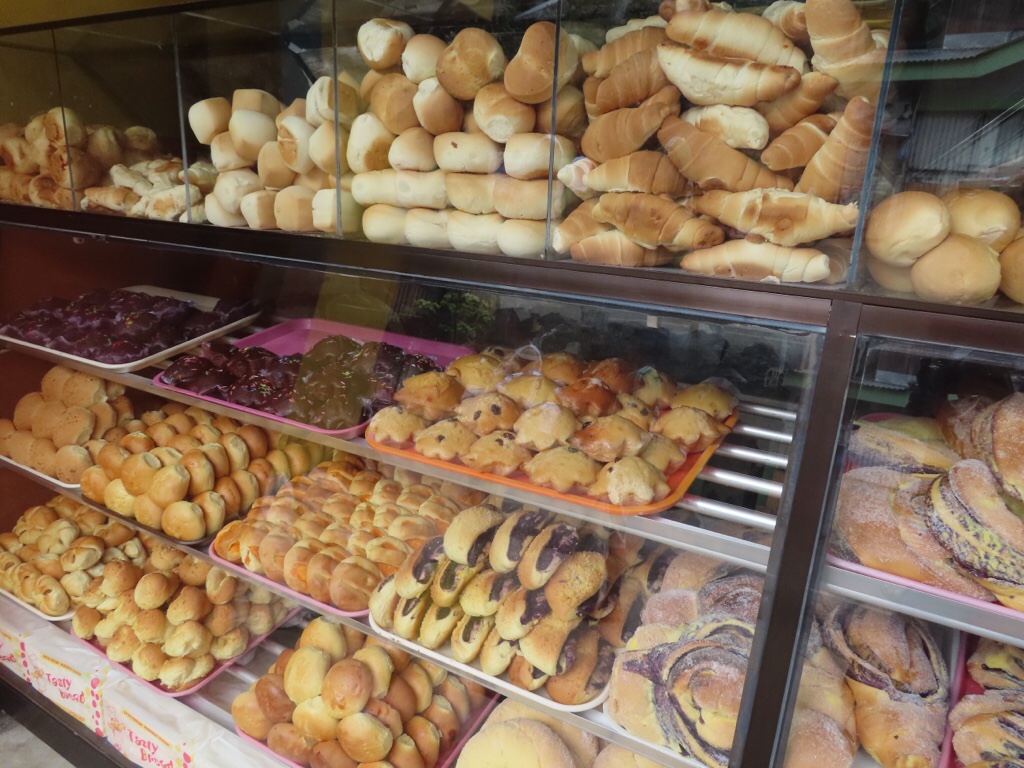
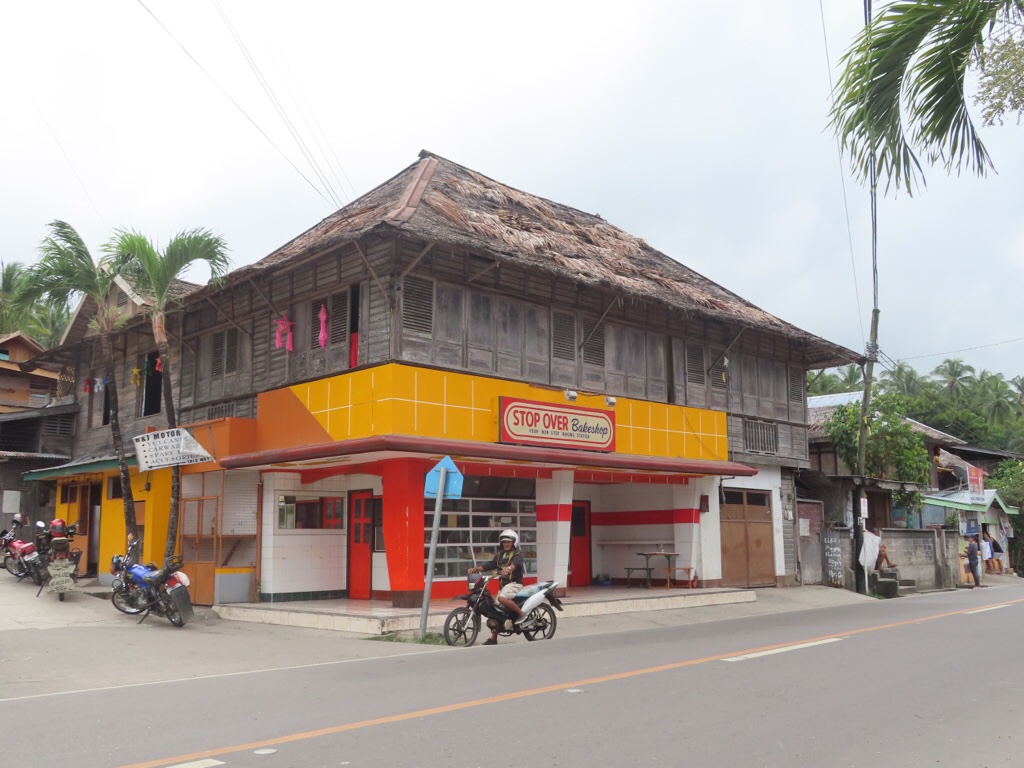
Several bake shops, each selling a huge variety of rolls, many sweet covered in sugar and only 4 pesos (6p) each, because we bought some …

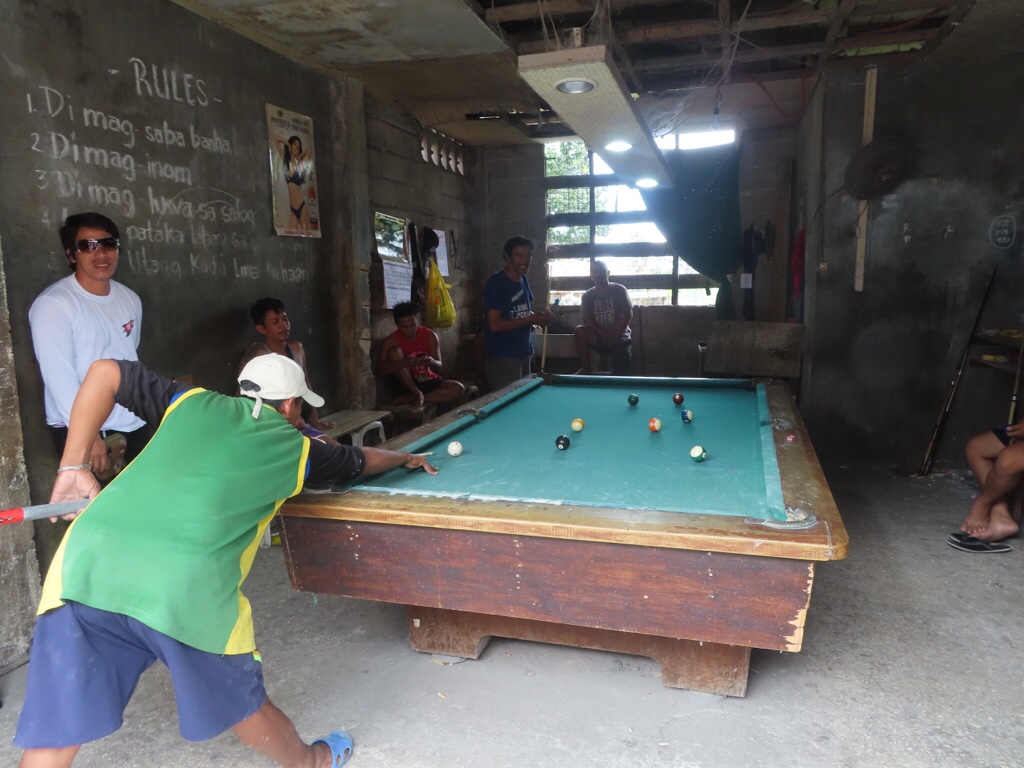
…and a pool table, set up somewhere in the shade, and always busy!

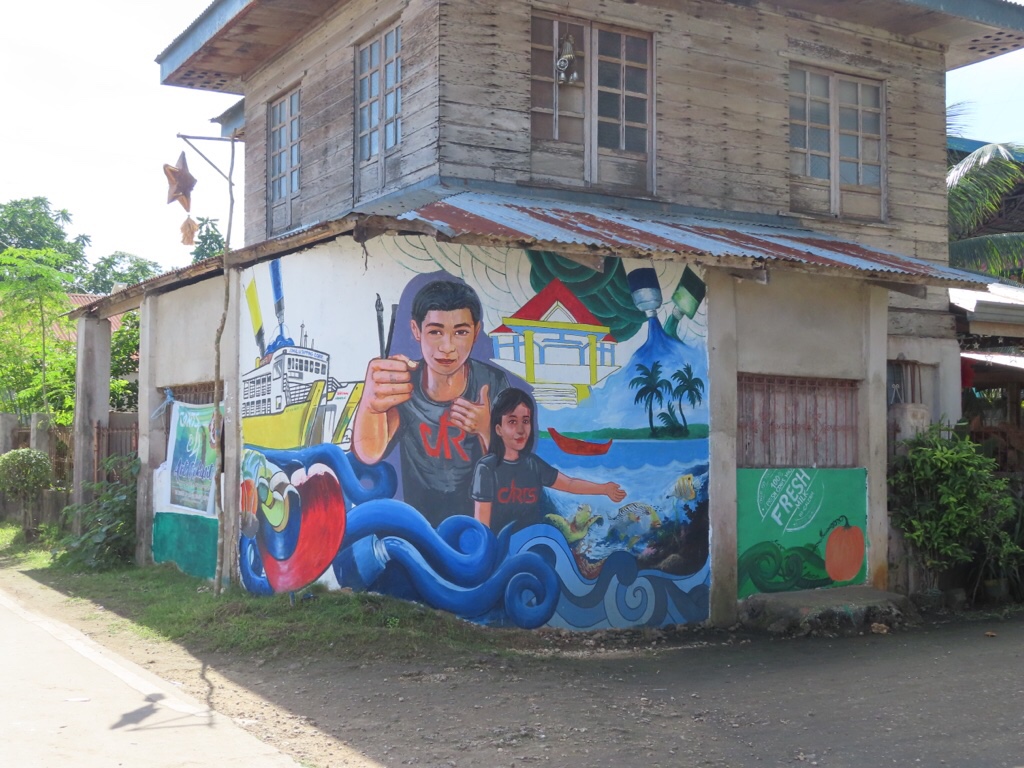
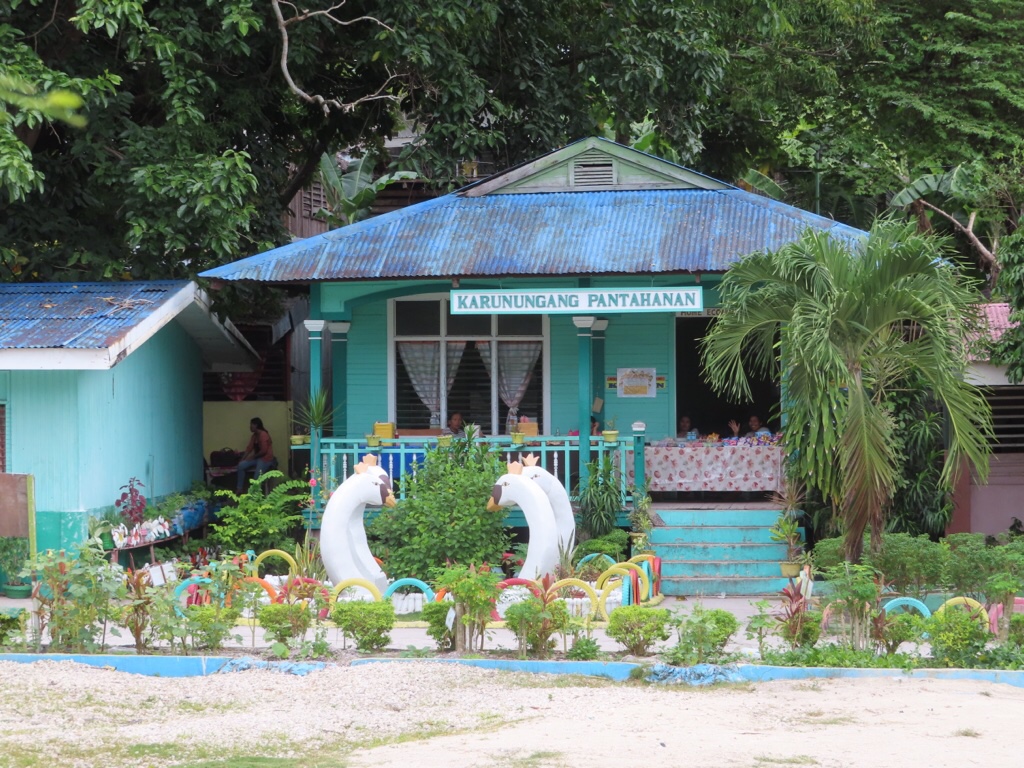
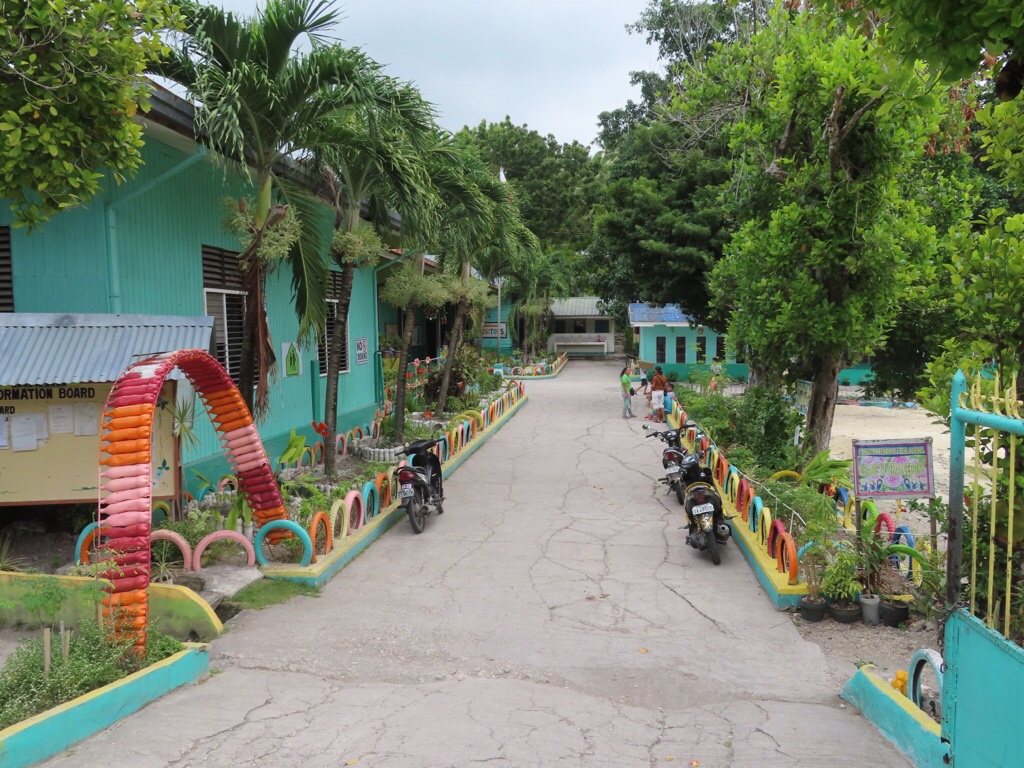
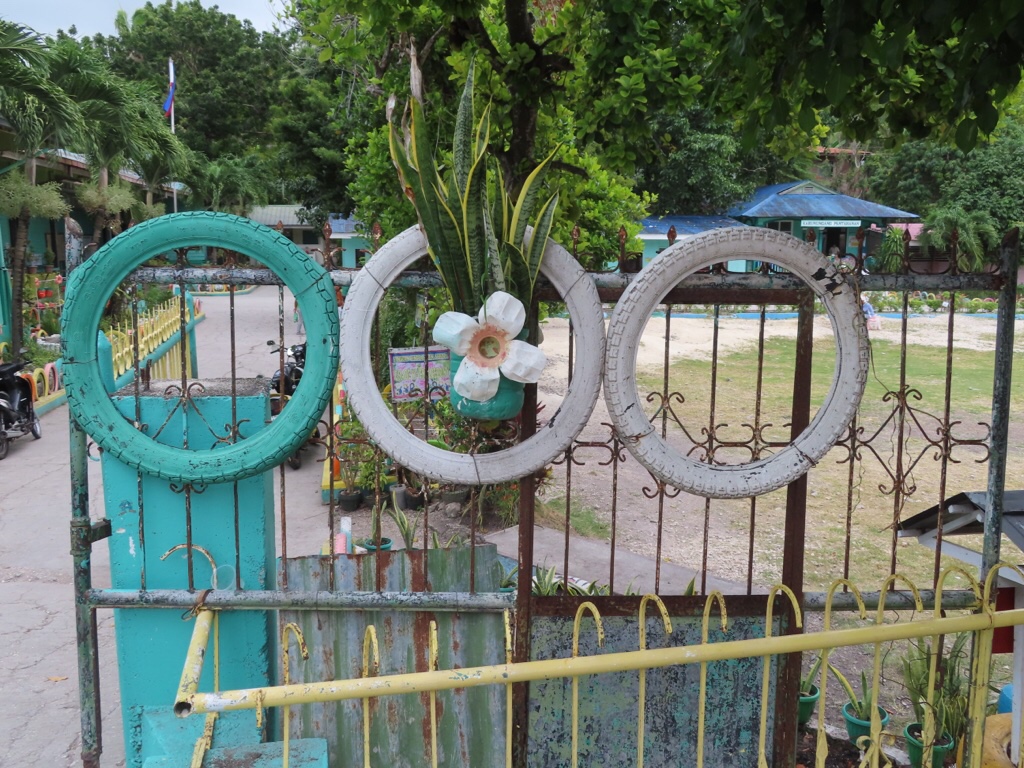
There also seems to be lots of civic pride and the most colourful building is the town school, often decorated with brightly painted recycled items.

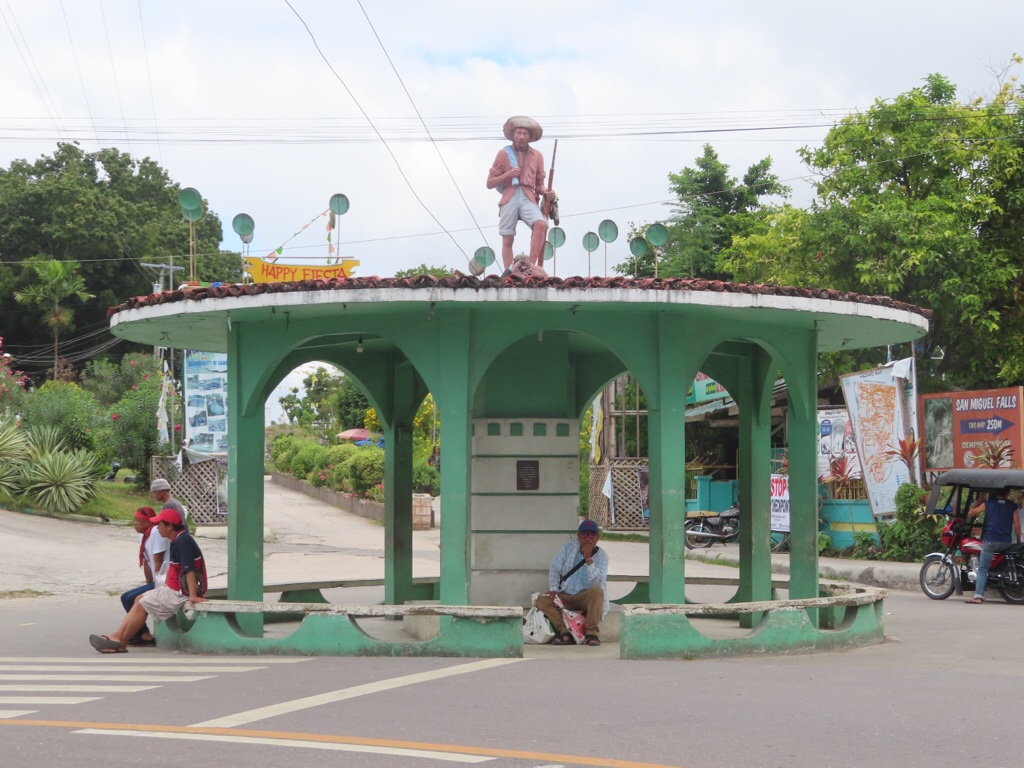
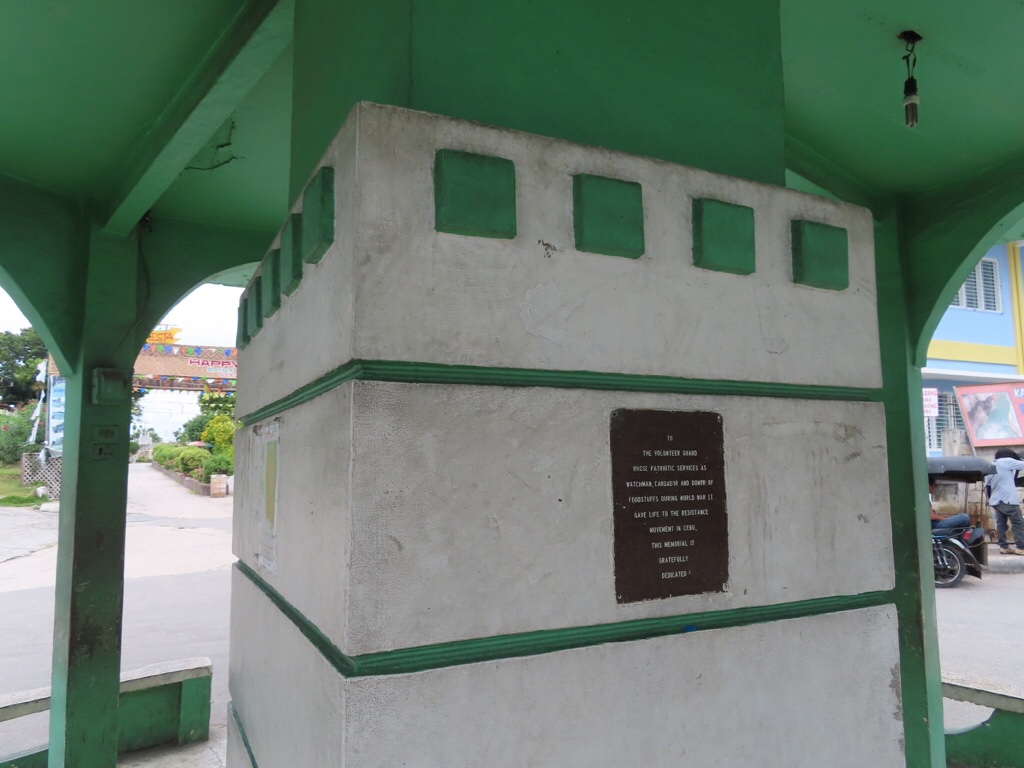
Here there is also the Boluntaryo Monument, a central shady kiosk dedicated to the volunteer guards during World War II.

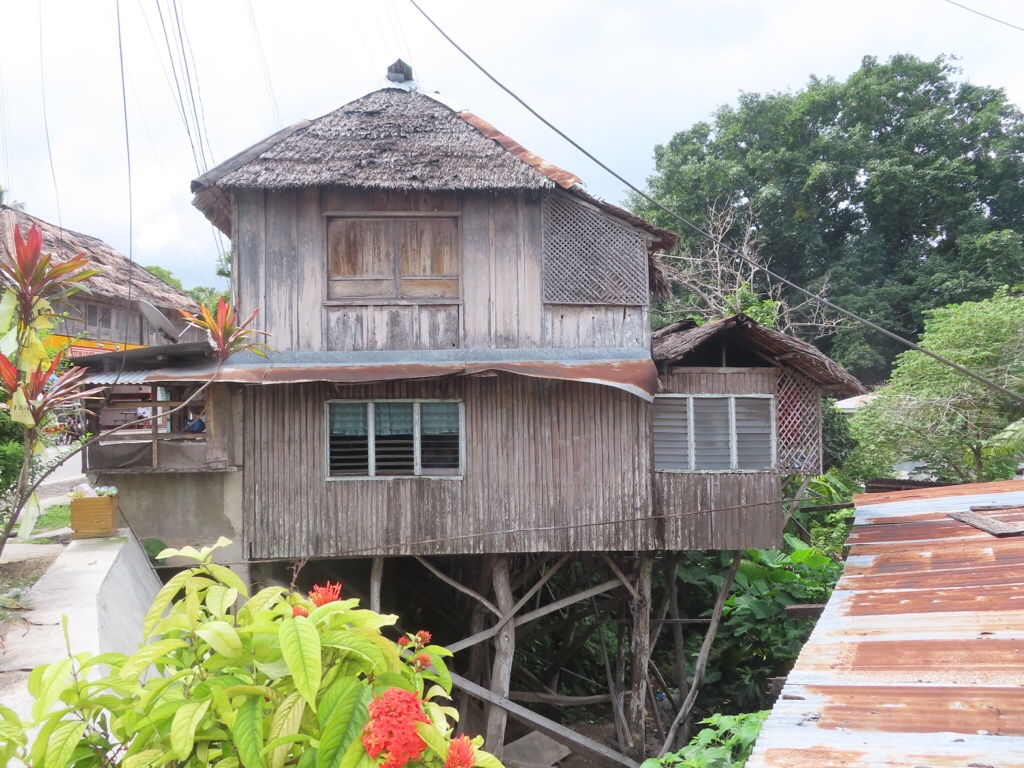
Buildings range from the original country houses, built on stilts of wood and bamboo, adapted to the climate and easy to rebuild if damaged in a storm or earthquake …

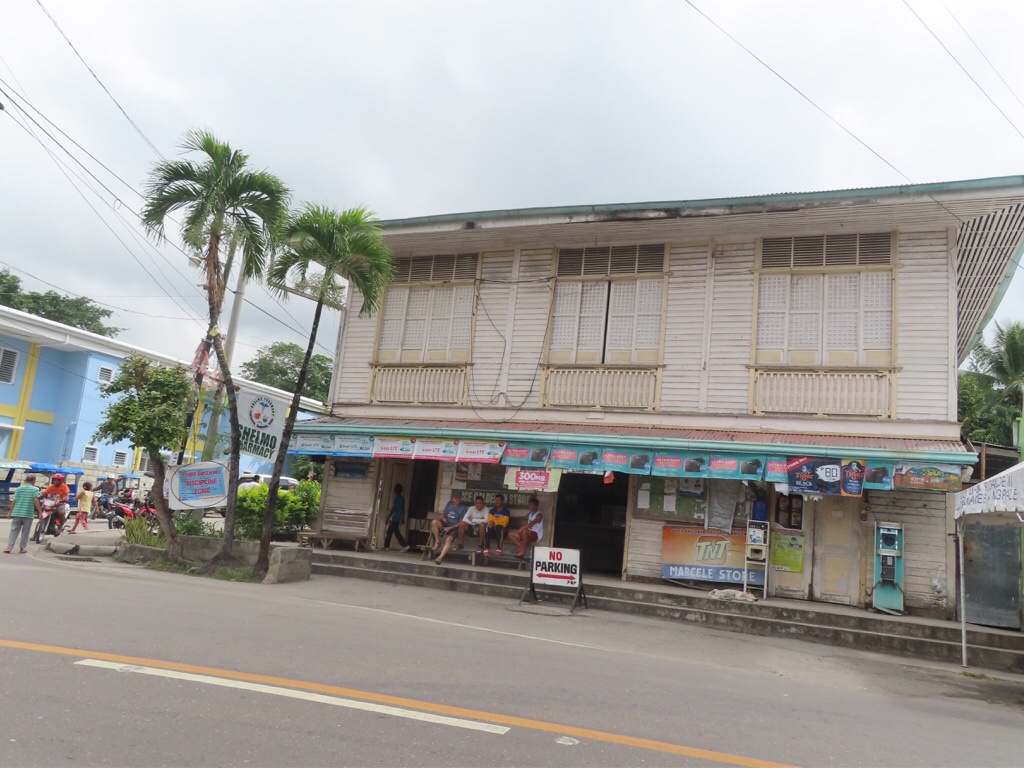
… to a design adapted by the Spanish using a stone or brick base with overhanging, wooden upper stories with balustrades, small window openings called ventanillas, sliding panels fitted with capiz shell and a nipa thatched or Chinese tiled roof. Inside there was open ventilation and elevated apartments used as living space with the ground floor used for storerooms, cellars, and other business purposes.

Today many buildings have a galvanised roof, are often completely concrete, often painted in a range of colours, but still have some of the original design features.

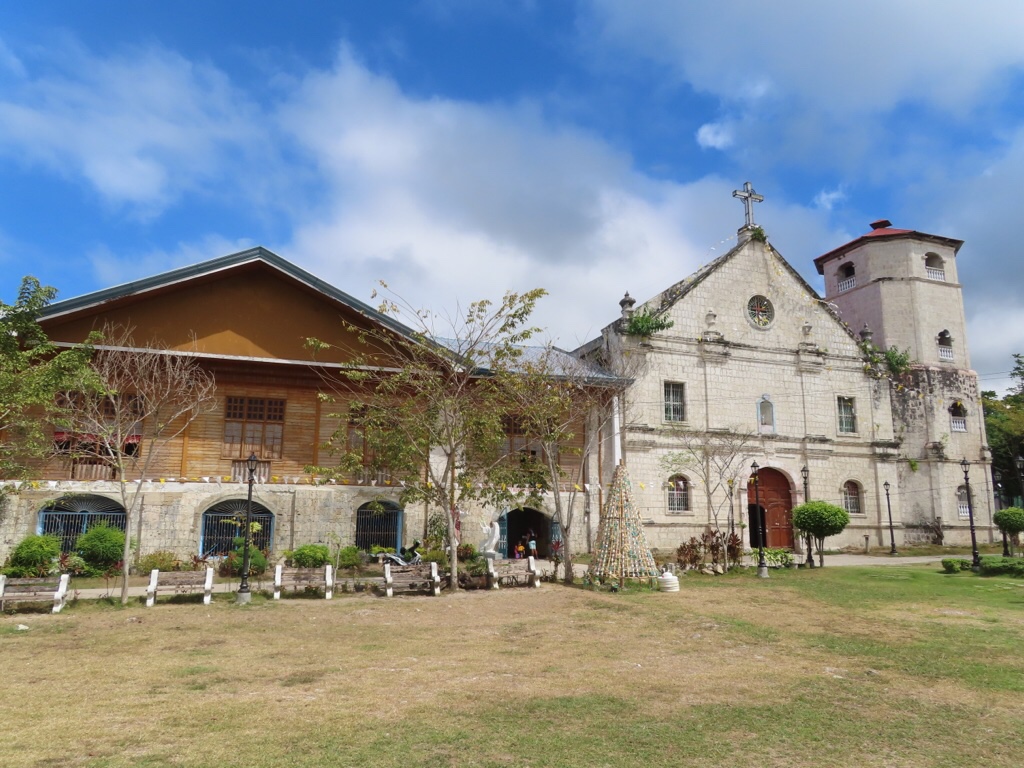
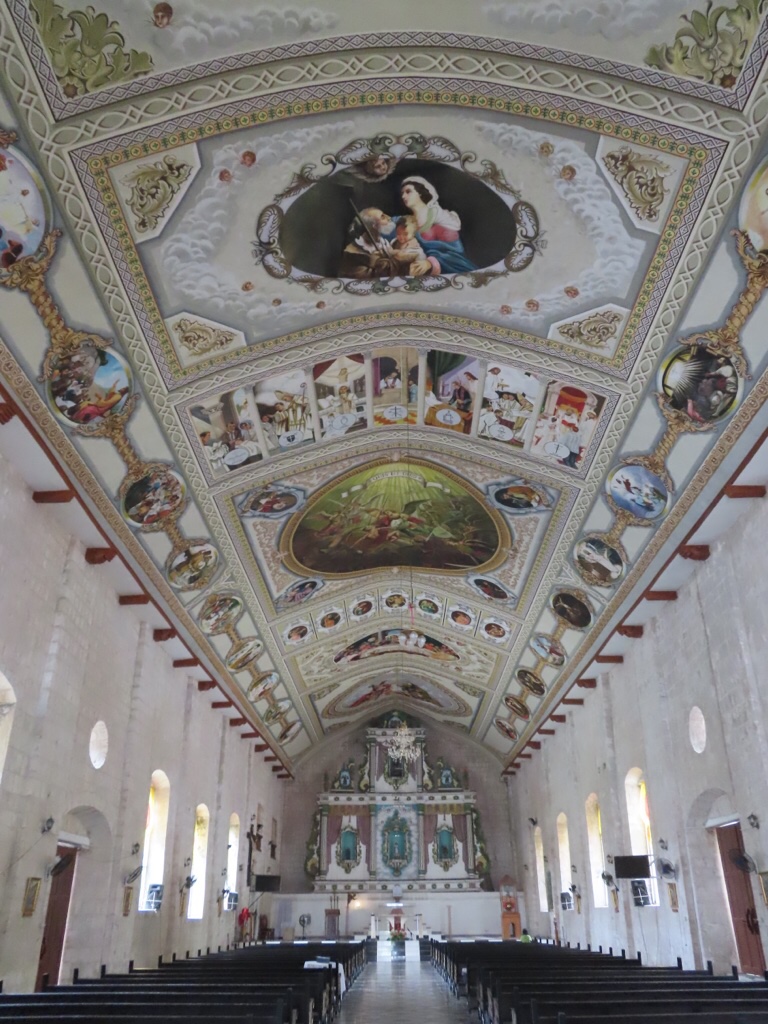
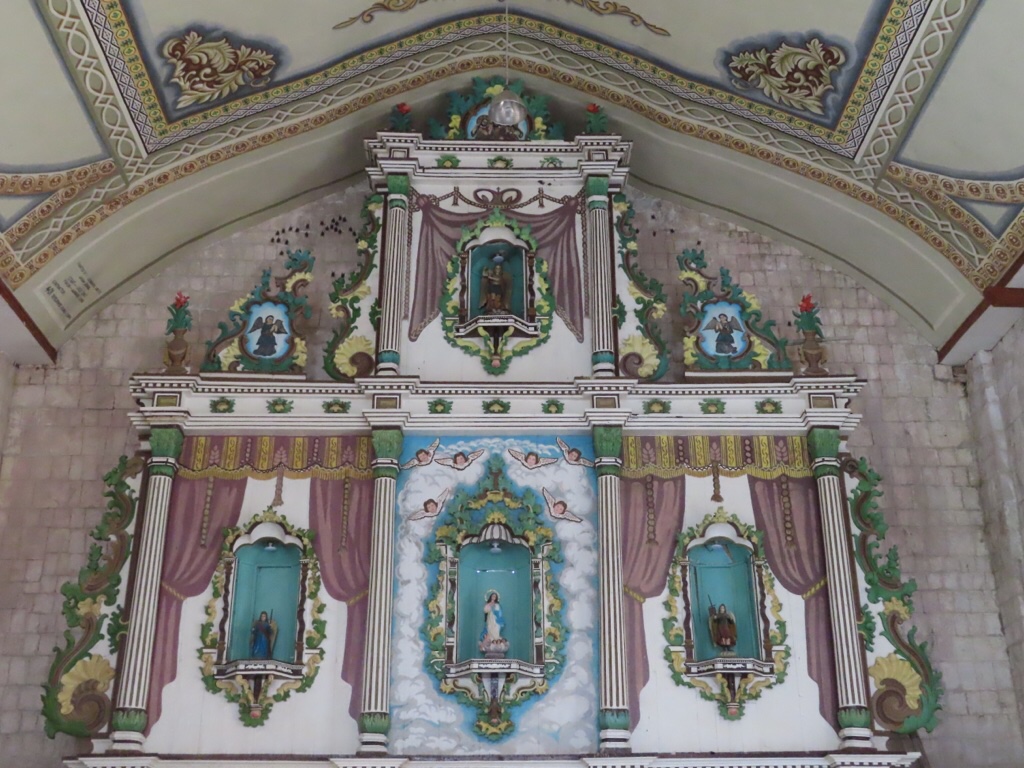
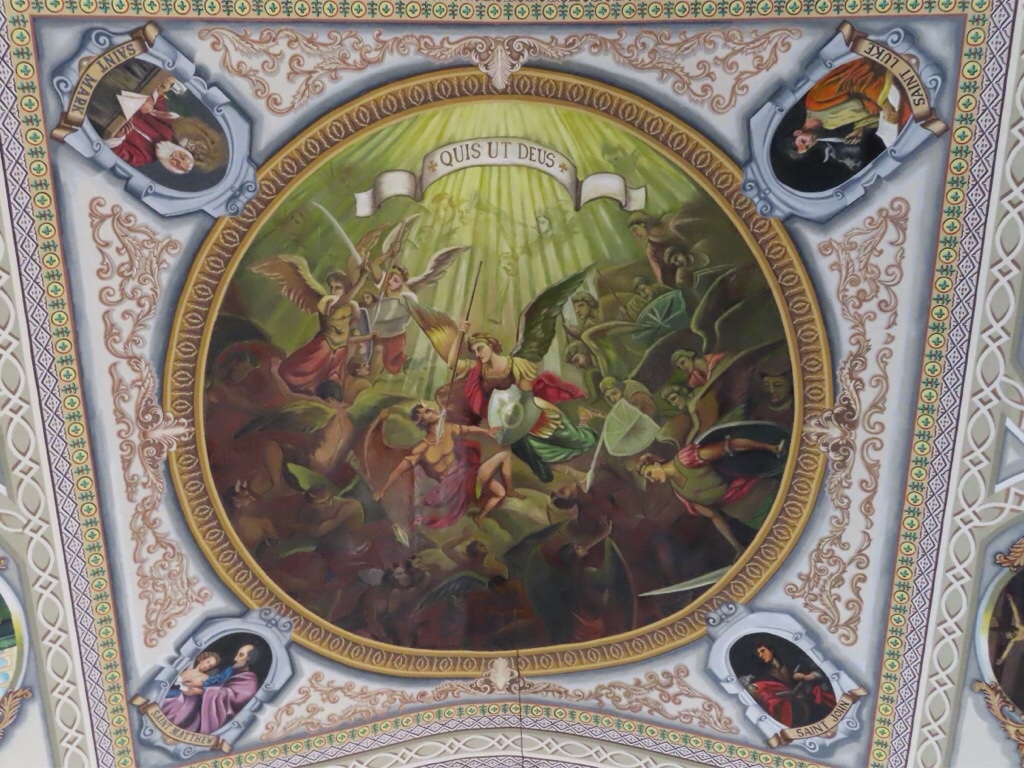
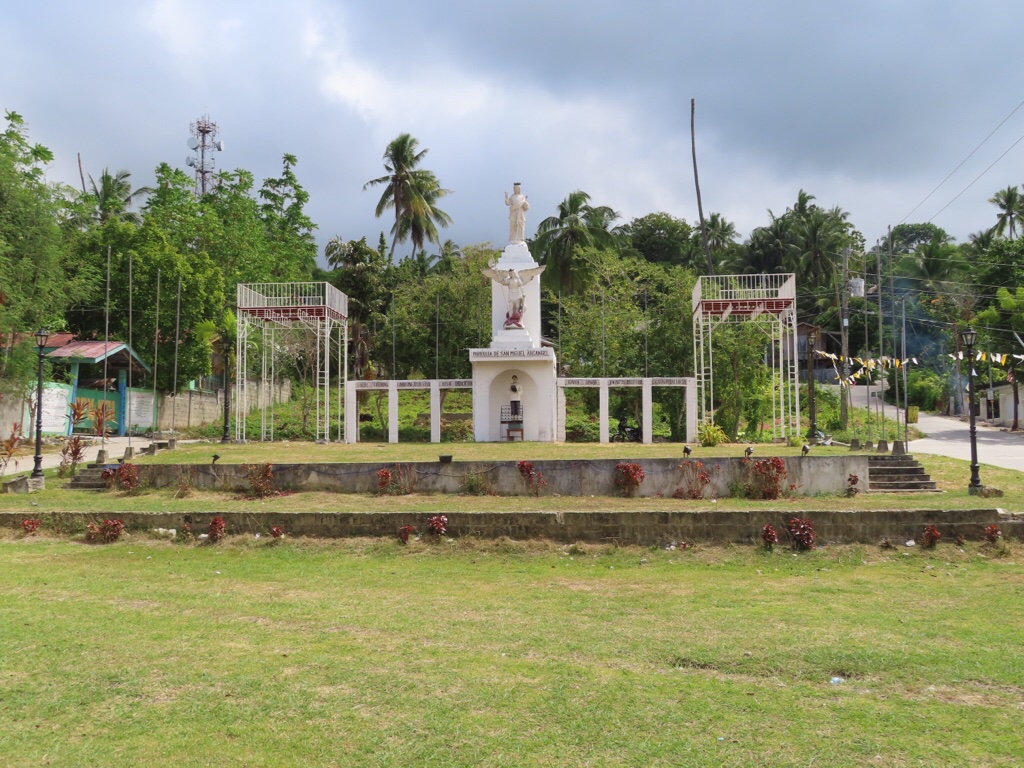
We head towards the church, St. Michael Archangel Church which was built by Augustinians and is one of the oldest Spanish-built churches in Cebu, made of coral stones.

It is set in a huge plaza which would be large enough for the whole town to gather and has a raised area one end …

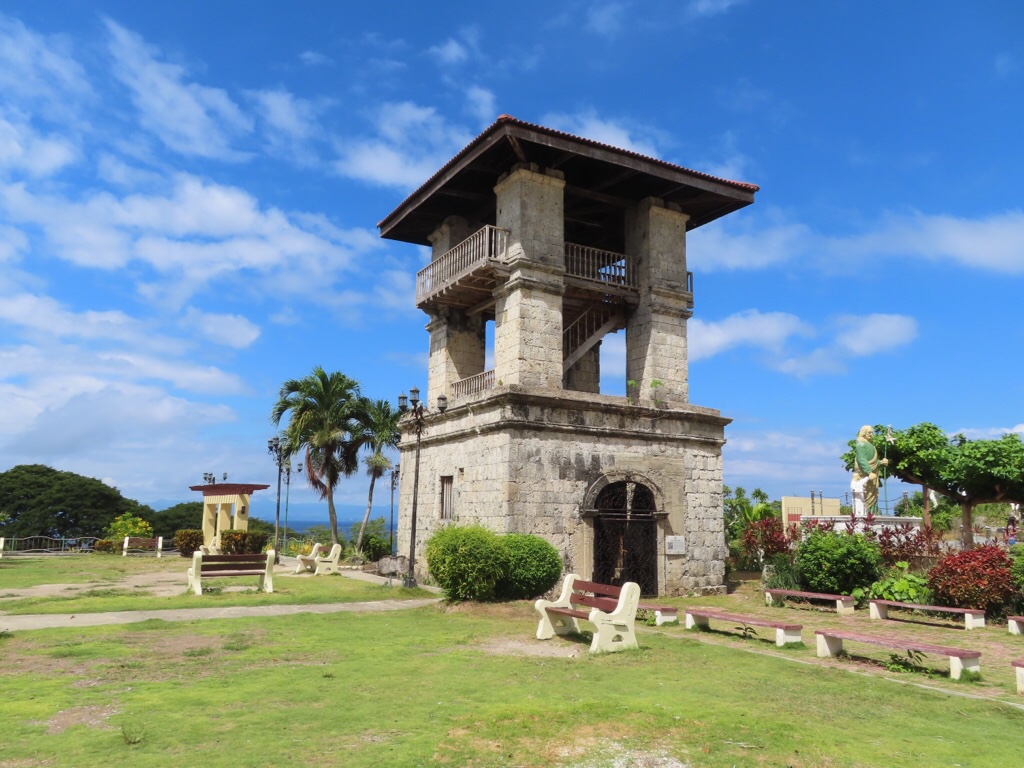
… and at the other the tallest and best preserved watch tower in Cebu, built of coral stone by the Spanish as a lookout for Moro pirates.

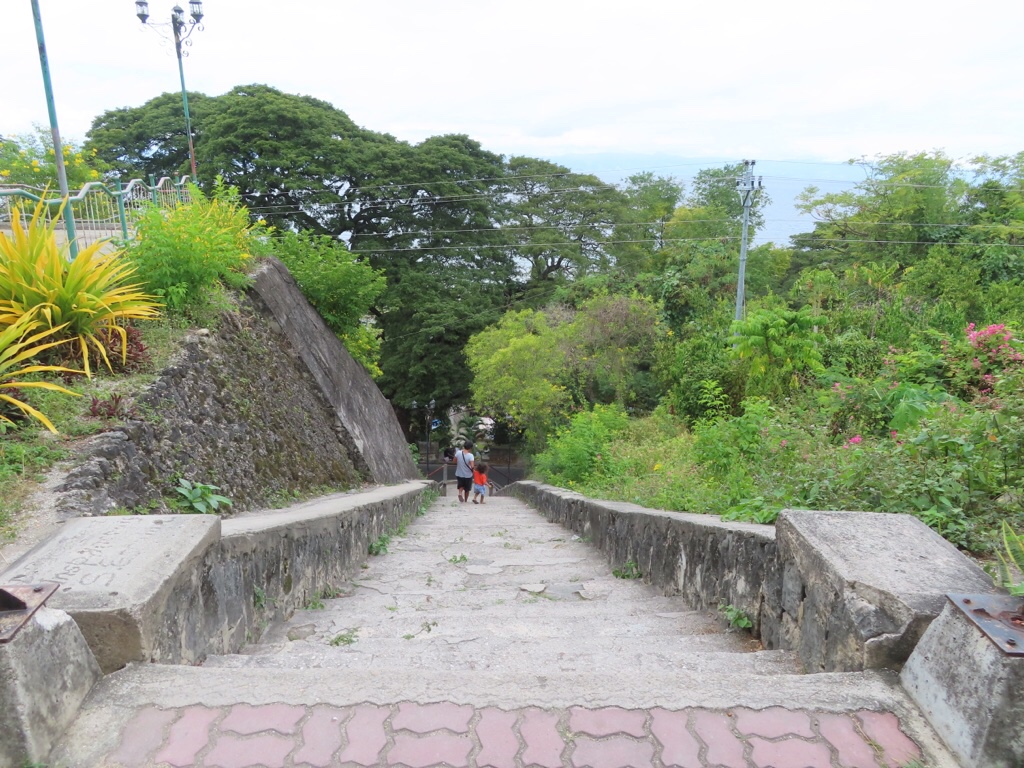
From there a flight of 147 stone steps called St Jacob’s Ladder, leads downwards, originally to the beach. It was instigated by the parish priest in 1878 to make it easier for parishioners to attend mass.

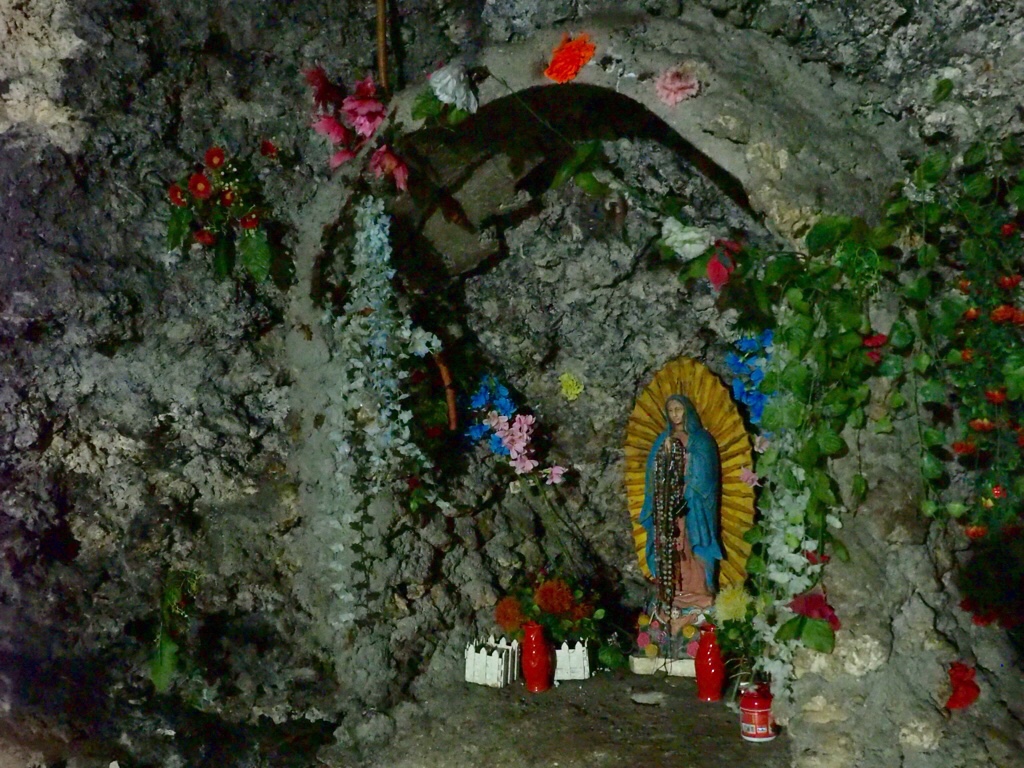
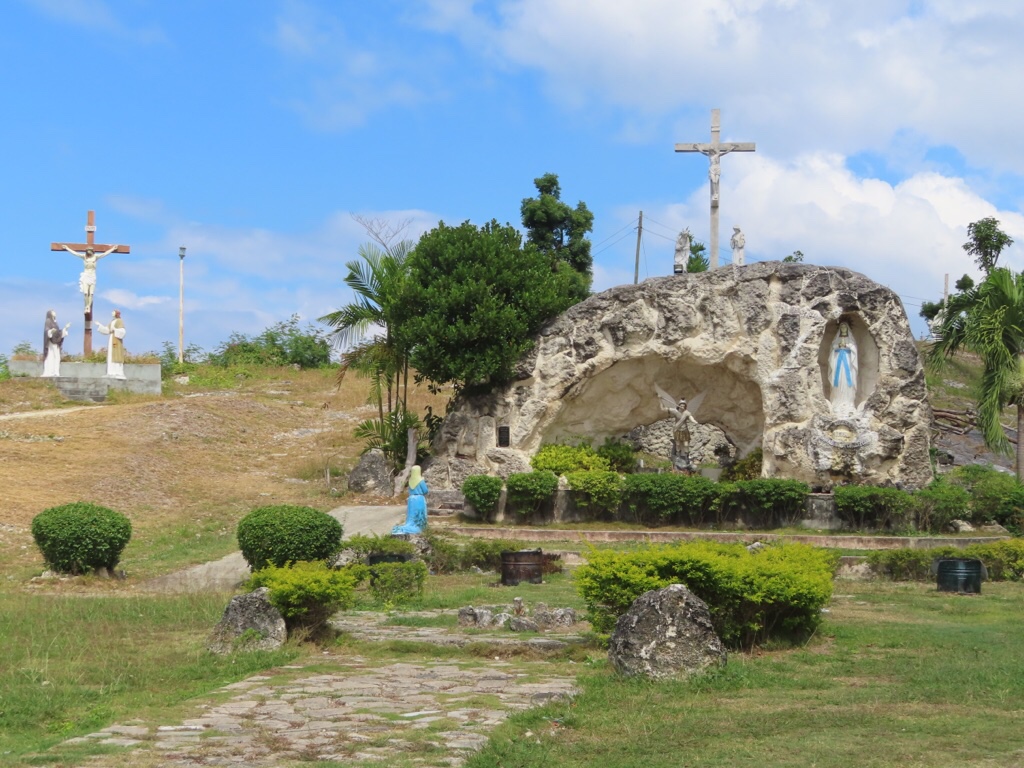
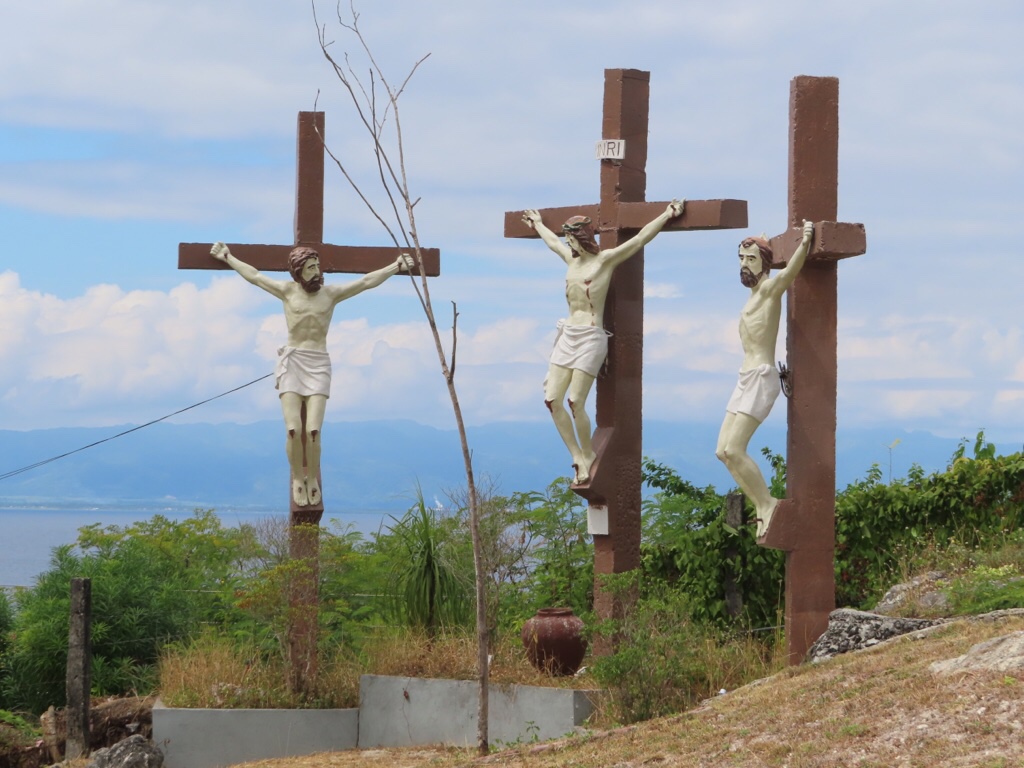
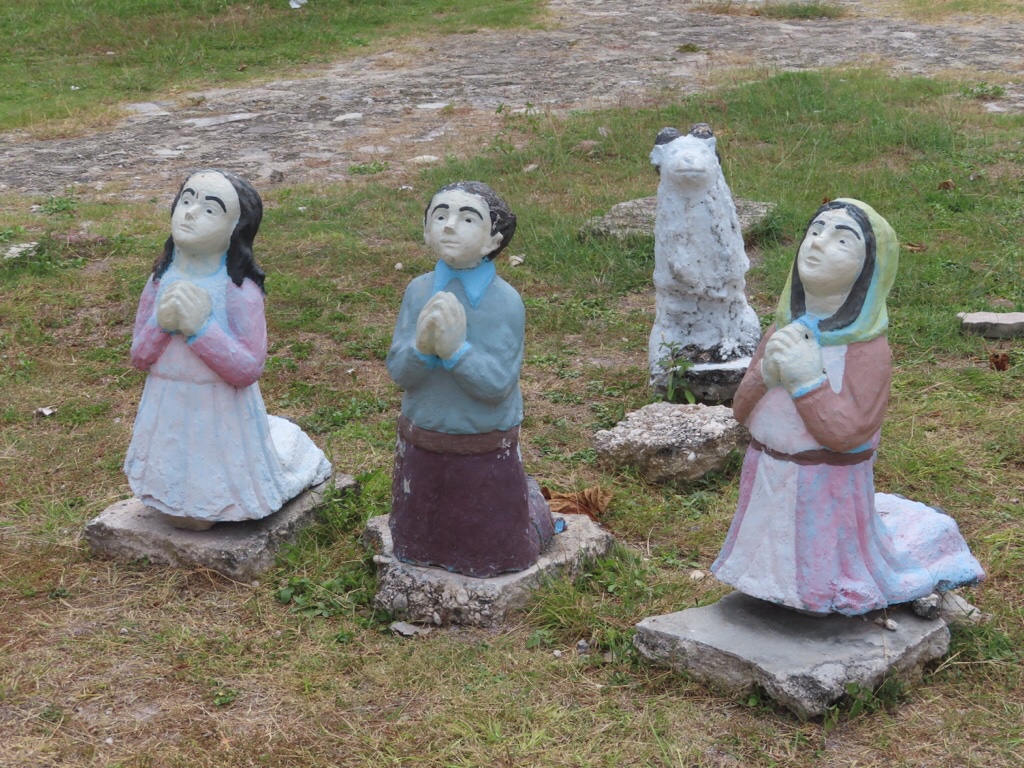
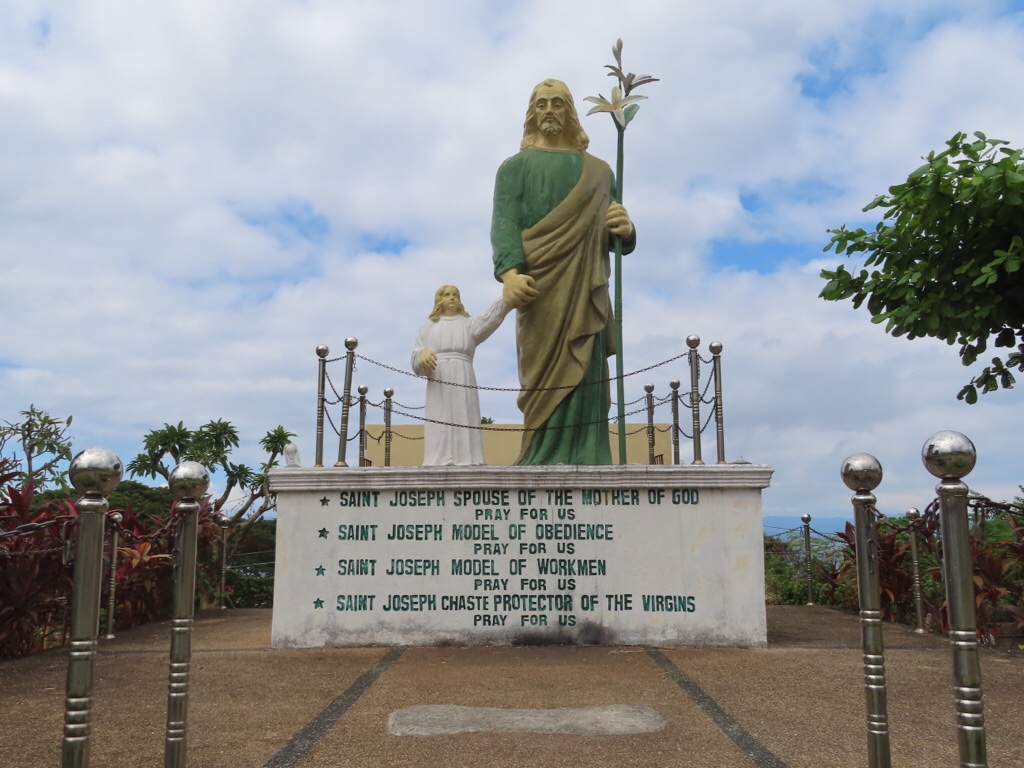
There is also a park containing a Grotto and sculptures of the Stations of the showing the Passion of Christ where churchgoers flock during Holy Week for penance.

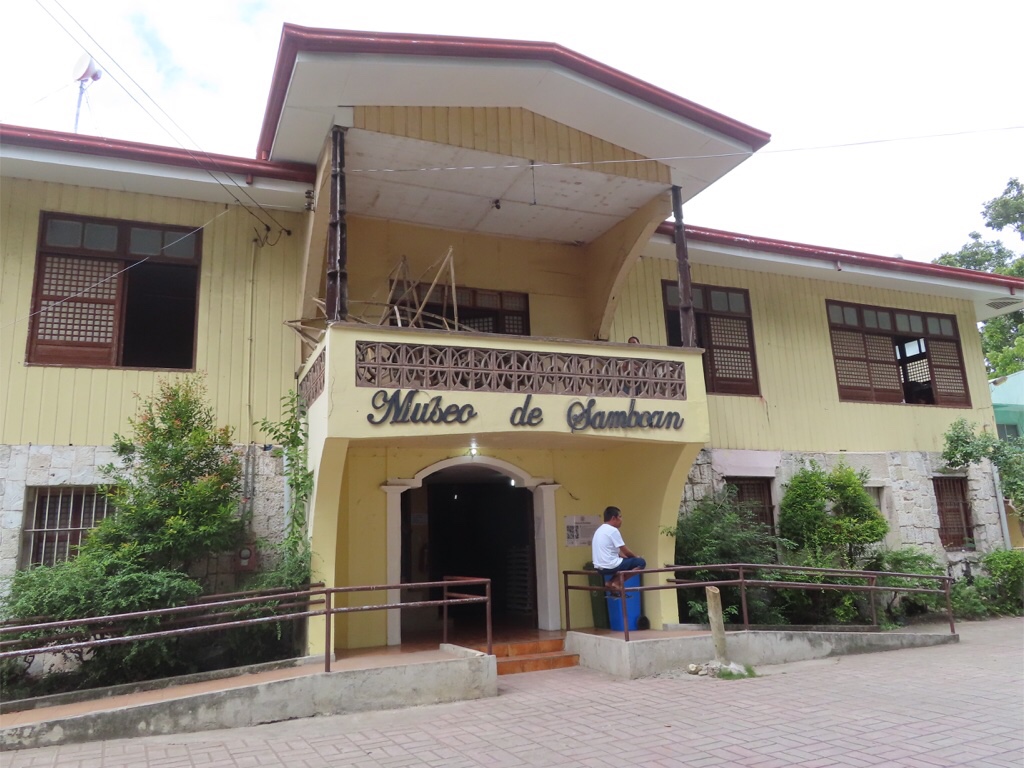
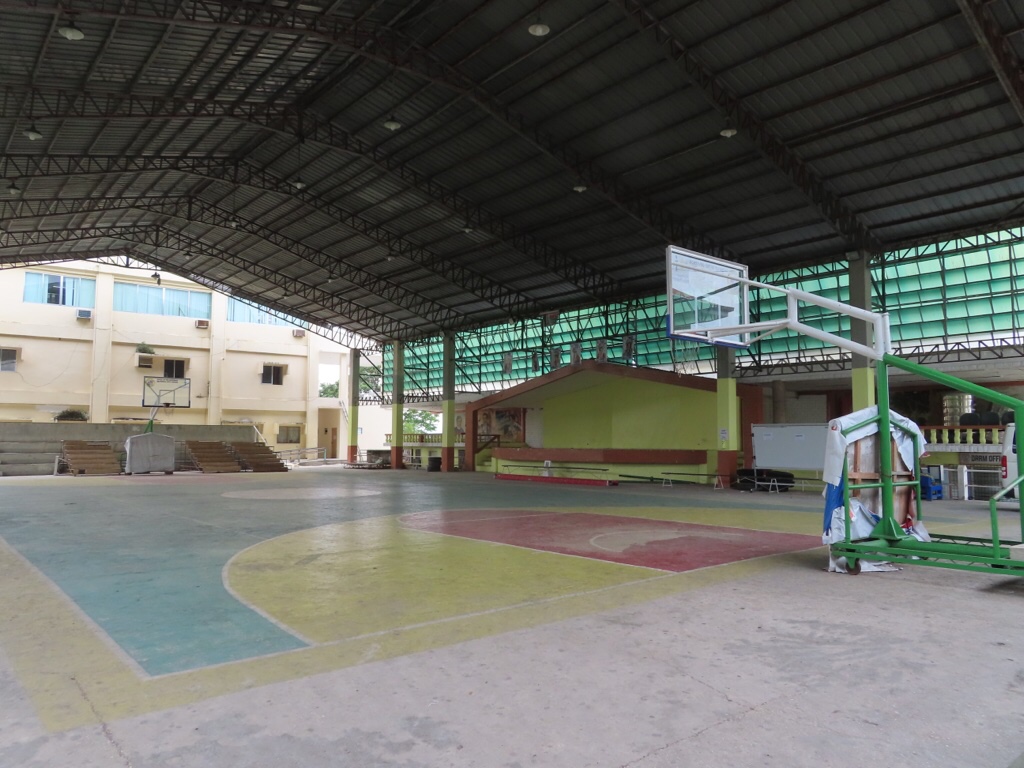
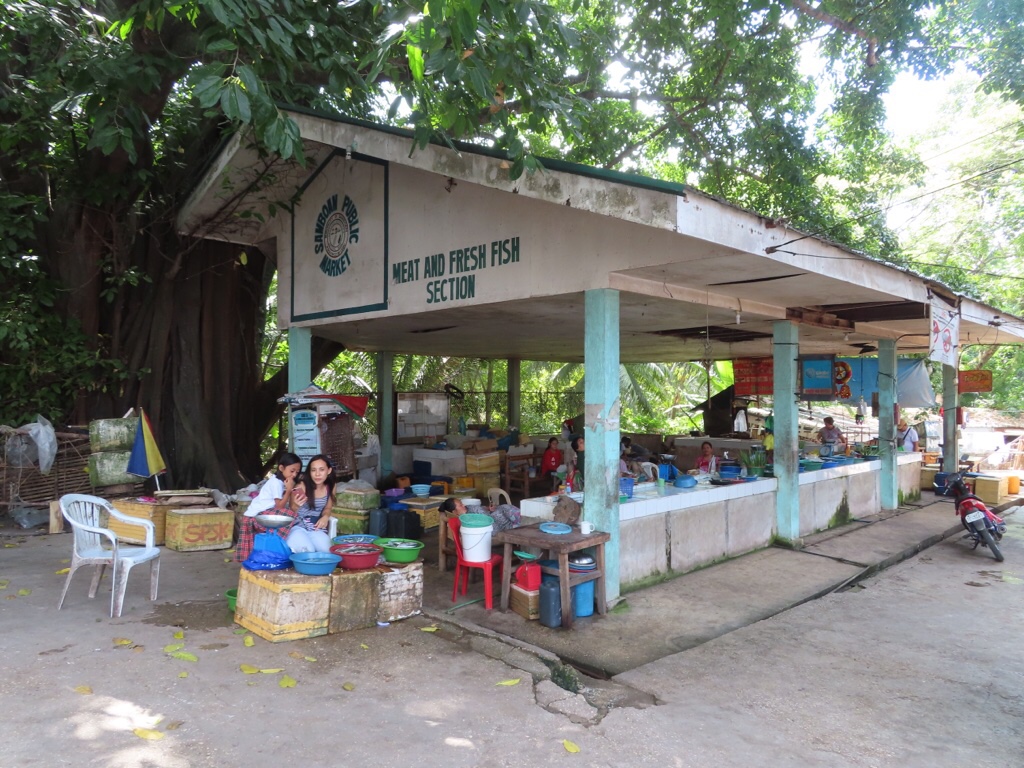
Heading back, we passed the Municipal Mueseum and also the basketball court, another essential in a country that has adopted this as their national sport, despite having few people over 5ft tall, and of course the market.

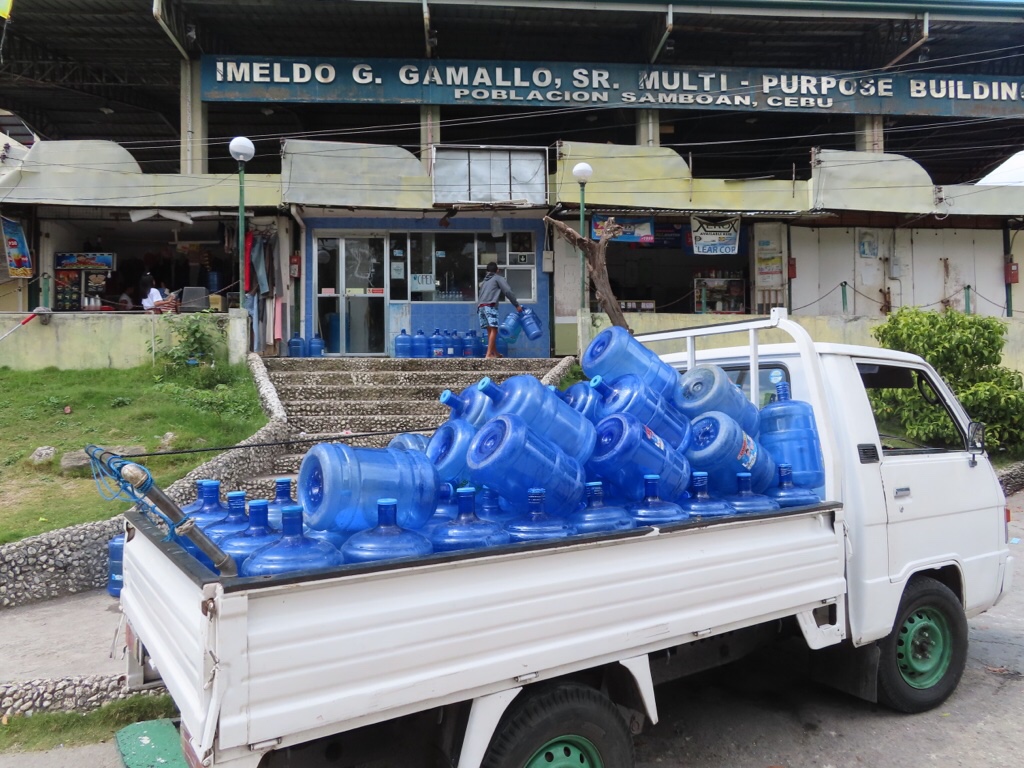
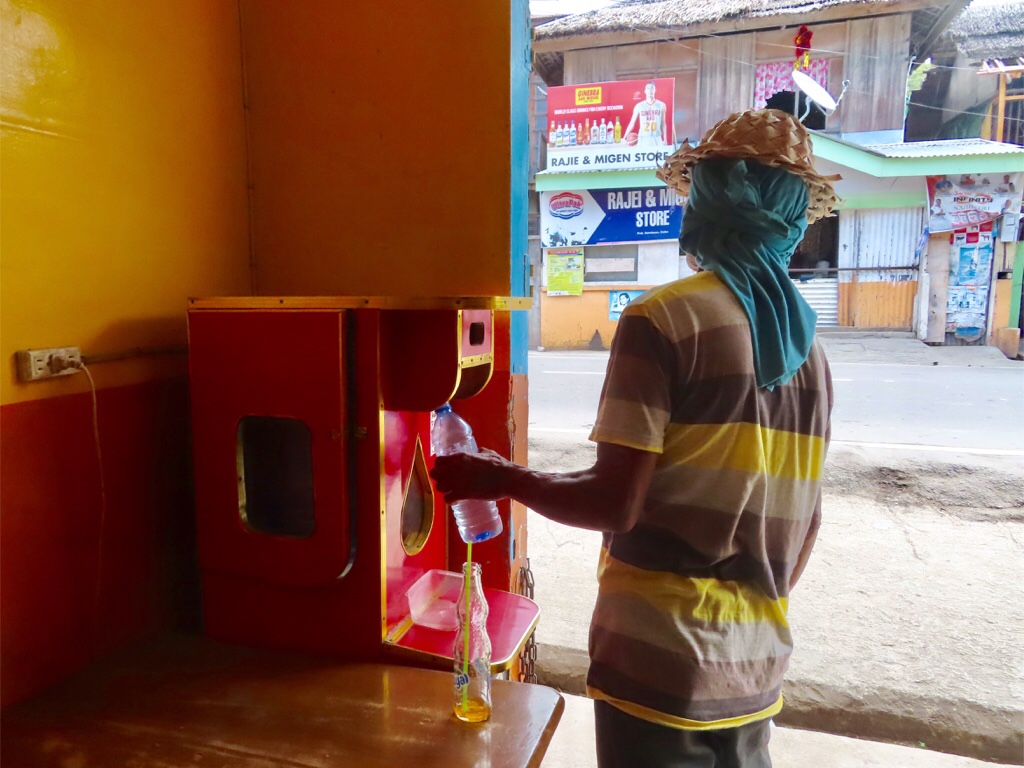
I mentioned recycling, and we are so pleased to see these huge refillable containers for water.

There is one in the hotel we can use to refill our bottles. But we have never seen a water vending machine before … costing just a few pesos to fill a litre bottle.

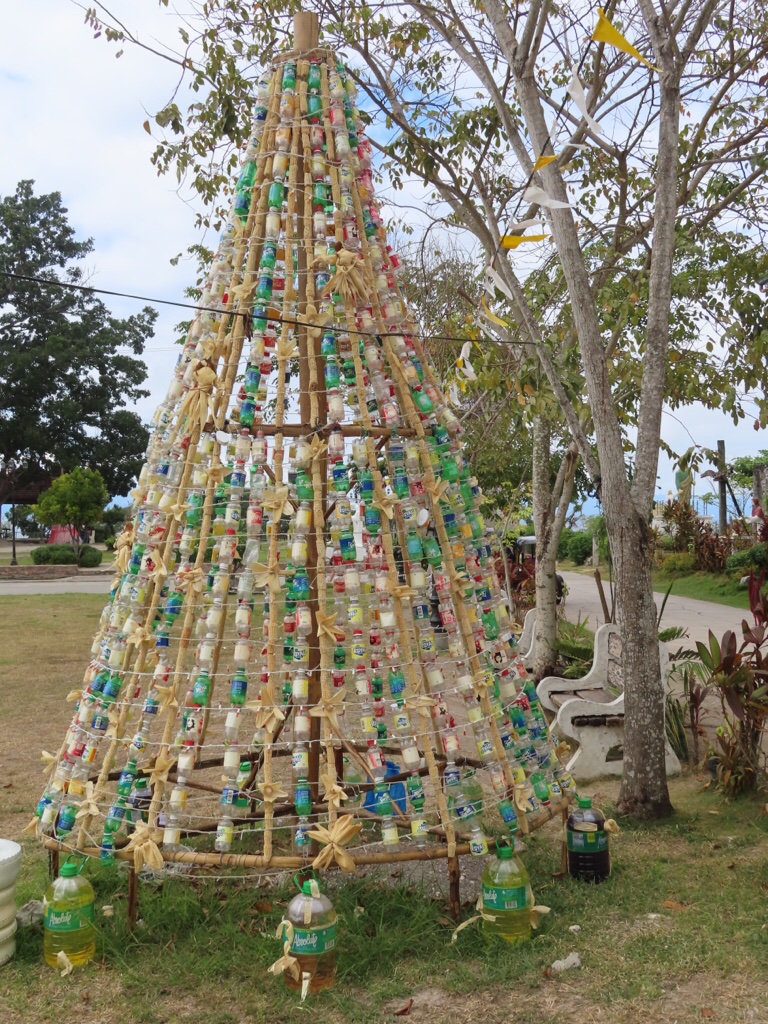
And another of those inventive Christmas Trees we have seen all over, using recycled items.

There are a number of waterfalls to visit, all within a few kms, but having already had such a great experience at Cambais Falls, we weren’t in a rush to try another. So instead, next day we took snorkelling stuff just down the road to the Samboan Marine Sanctuary, which was a far more casual affair than we were expecting as we couldn’t see anyone to pay the small fee to, so we just walked down the beach and into the water. We were able to wade out on sand till waist deep, then just lay on the surface to watch the coral and fish. The water wasn’t very deep and there was plenty of coral, some of it swishing backwards and forwards in the water. In between were a variety of fish including huge brightly coloured parrot fish, tiny bright blue ones and even a couple of Nemos. The experience was cut short when I felt my arm stinging, but I hadn’t been aware of touching anything and I’d not seen anything. I got out, and my arm came up in a raised red splodge … the consensus was jellyfish, and I soon recovered with an anti-histamine tablet and some white vinegar, but we didn’t feel like chancing it again.

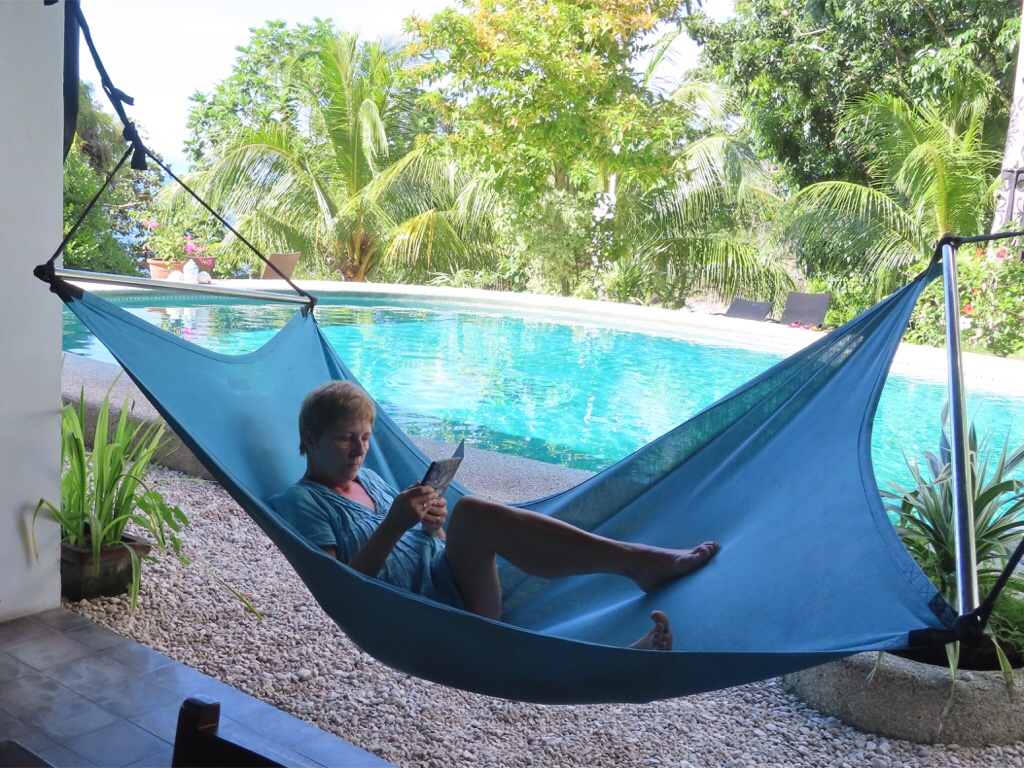
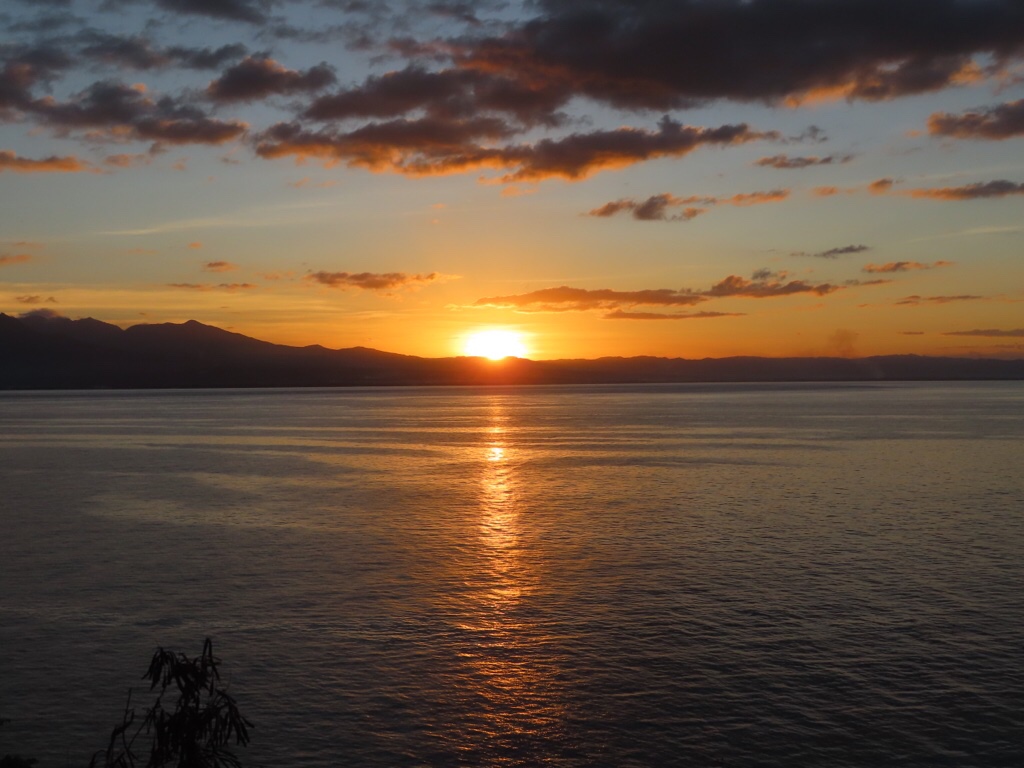
There was nothing else for it … some time in a hammock, blogging and reading, a swim, sunset … you know the drill!

Tomorrow we move on and get to clock up 2 more islands …

Map
Cebu … Our Day in the Mountains!

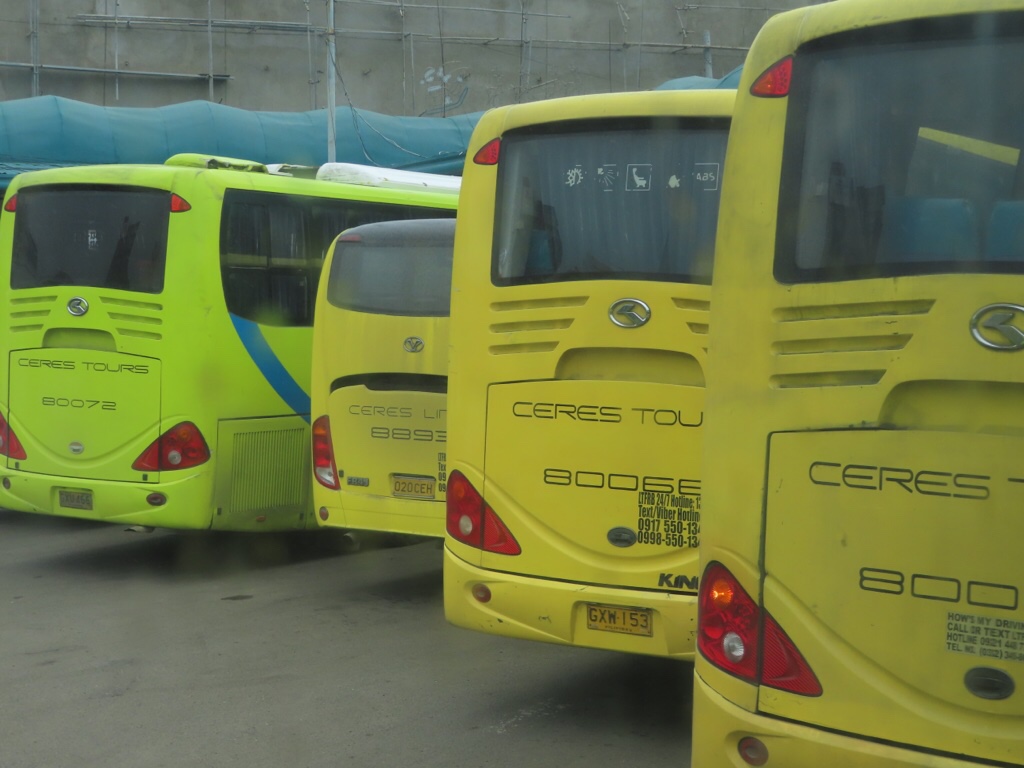
We took the Ceres Bus … a proper AC coach, not a jeepney … 100km south along the coast road to Dalaguete. Transport is slow in the Philippines, where the roads are narrow and very busy with scooters, tricycles, jeepneys and lorries and it took three hours. Joanna had generously shared her cold as she left, so I was feeling pretty rough all trip.

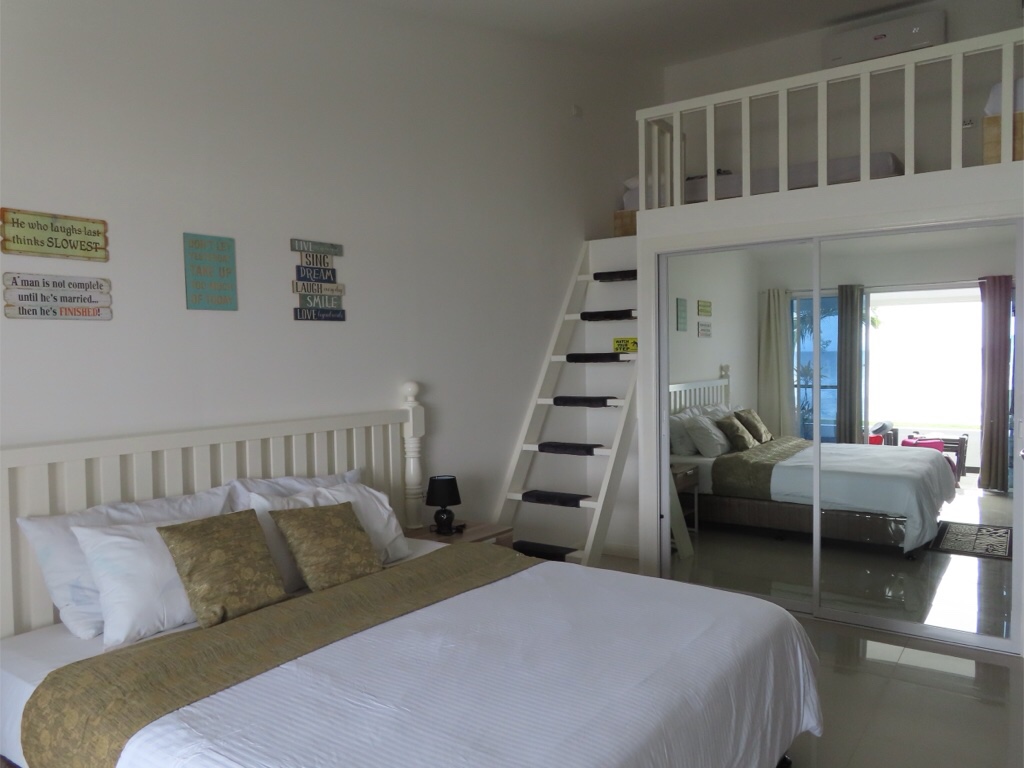
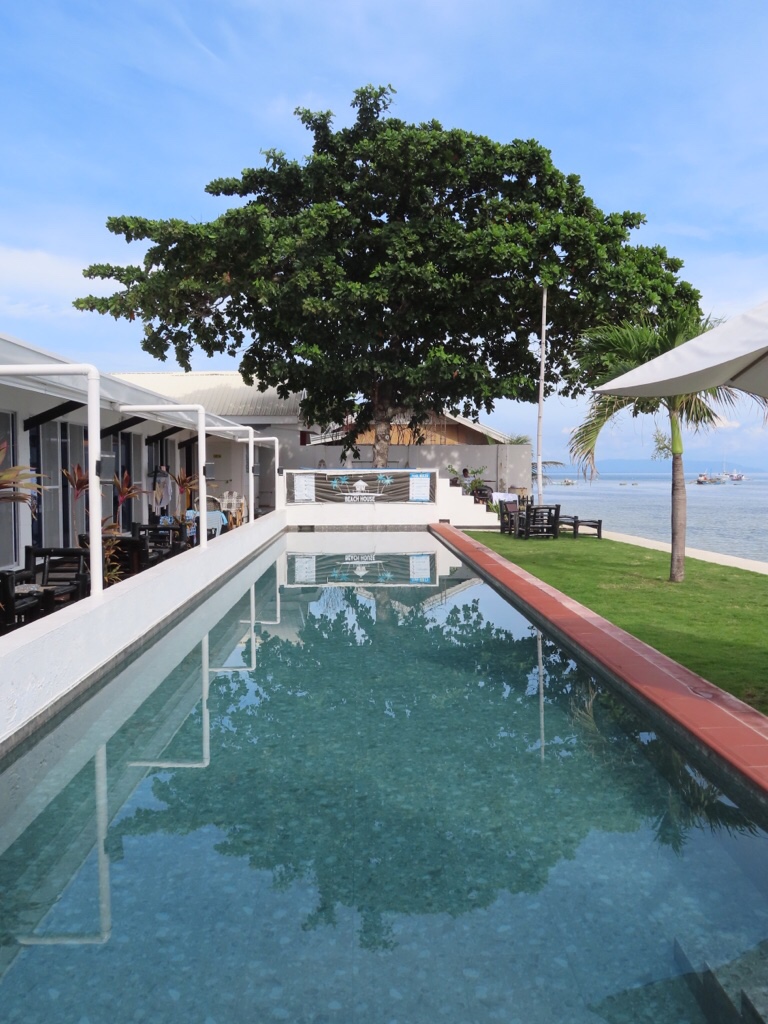
We arrived at The Beachhouse, conveniently just beside the bus stop, and checked in to a little oasis. Tim and Ann made us very welcome to their small resort with four luxury rooms overlooking a swimming pool and the sea.

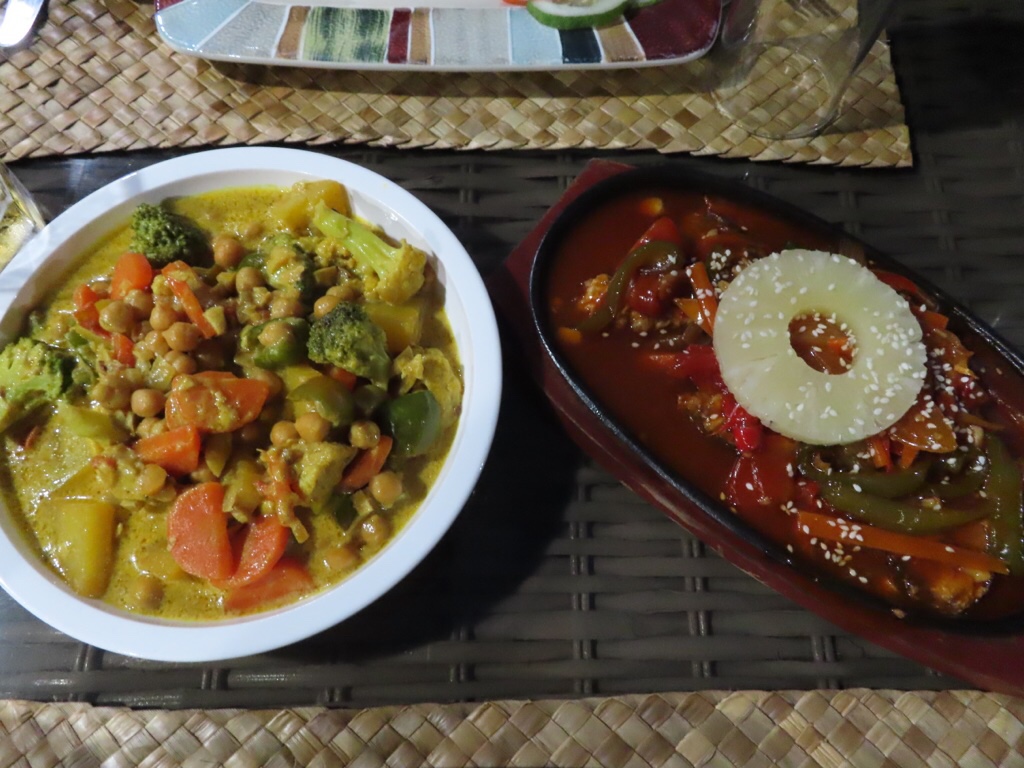
We walked down the road for some lunch and a comfort pizza made me feel ready for a nap. I couldn’t have been in a better spot to feel under the weather with a comfy bed and a cool room. I mustered for dinner, which was good as reports of the excellent food here had encouraged us to book! Sweet and sour fish for me and a veggie curry for Chris, a few hands of Uno and Dobble and early to bed.

In the morning we heard news about a volcano which had erupted just south of Manila so it was lucky Joanna had flown the day before and missed it. Apparently it is the smallest volcano in the Philippines and hasn’t erupted for 80 years.

https://www.bbc.co.uk/news/world-asia-51083515

I was feeling a bit better but still not ready to do any more than sit under an umbrella, dip in the pool, walk out for a salad lunch, return for a nap … then have another lovely dinner – this time spicy shrimp and chop suey.
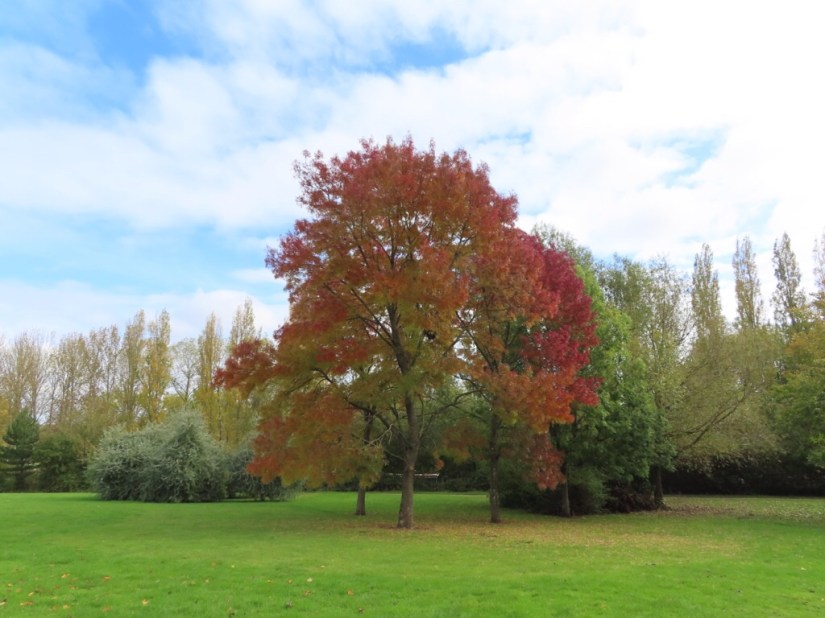
But we did take a few photos …

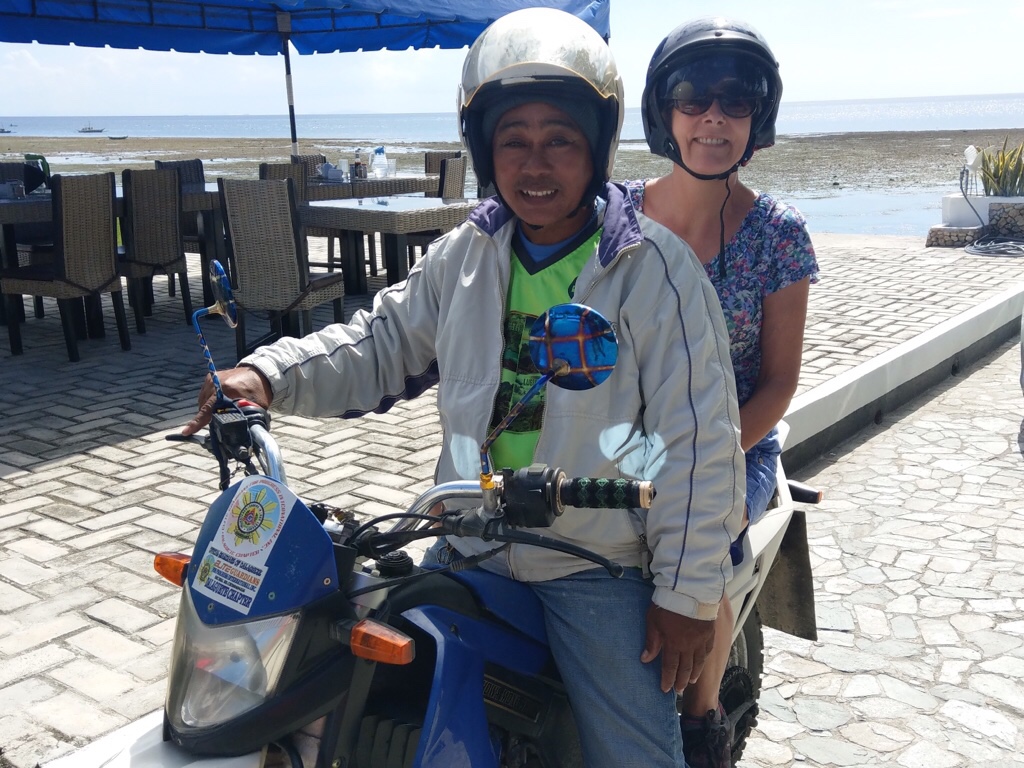
On our last day here we thought we better do something, so Tim arranged for habal habal drivers to take us into the mountains for the day. We had first done this in Thailand a couple of years ago and a motorbike with driver for rent seems quite the norm in Asia. We reasoned it was probably safer and less trouble with an experienced local rider than hiring our own moped.

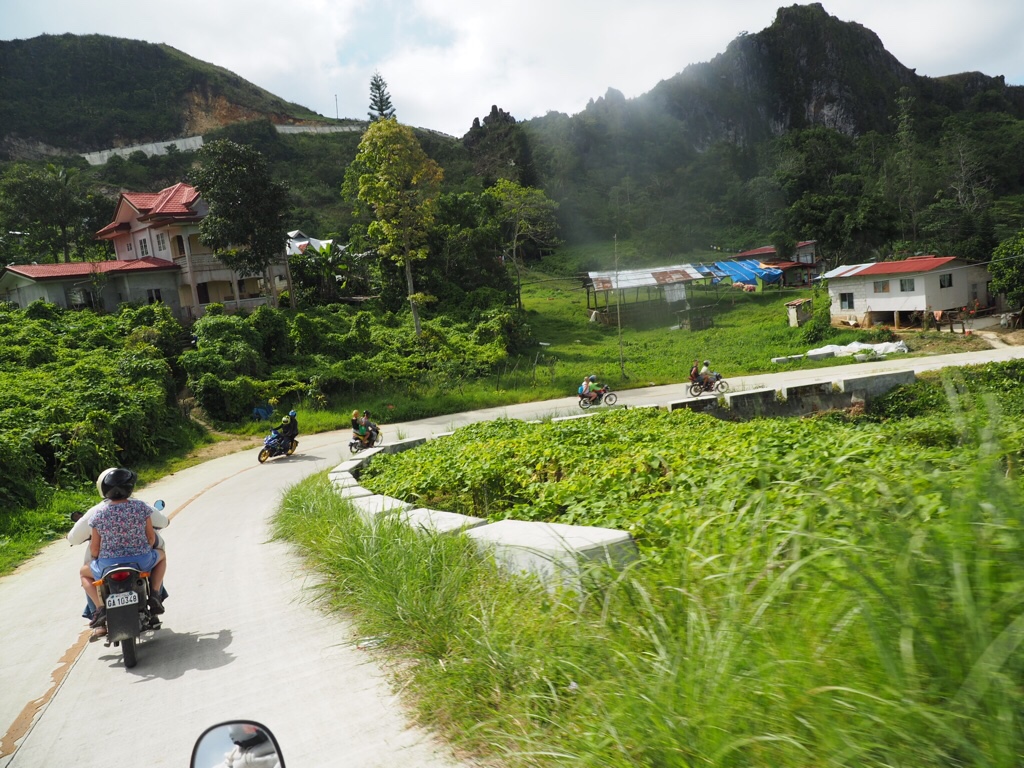
The four Russian visitors also staying at The Beachhouse joined us, so a ride out of six bikes headed inland.

Having climbed steadily upwards, passing farms, lush undergrowth and a couple of villages, we stopped to take photos …

… then continued to Cambais Falls where a couple of local guides, James and Carlos offered to guide us to the best swimming spot.

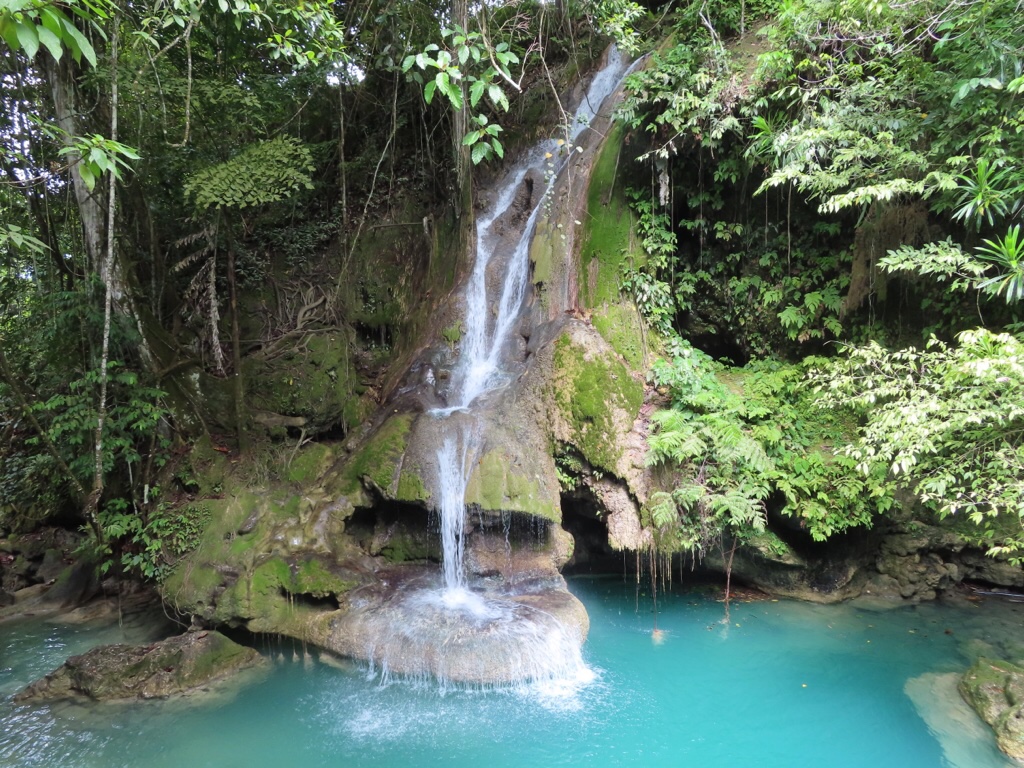
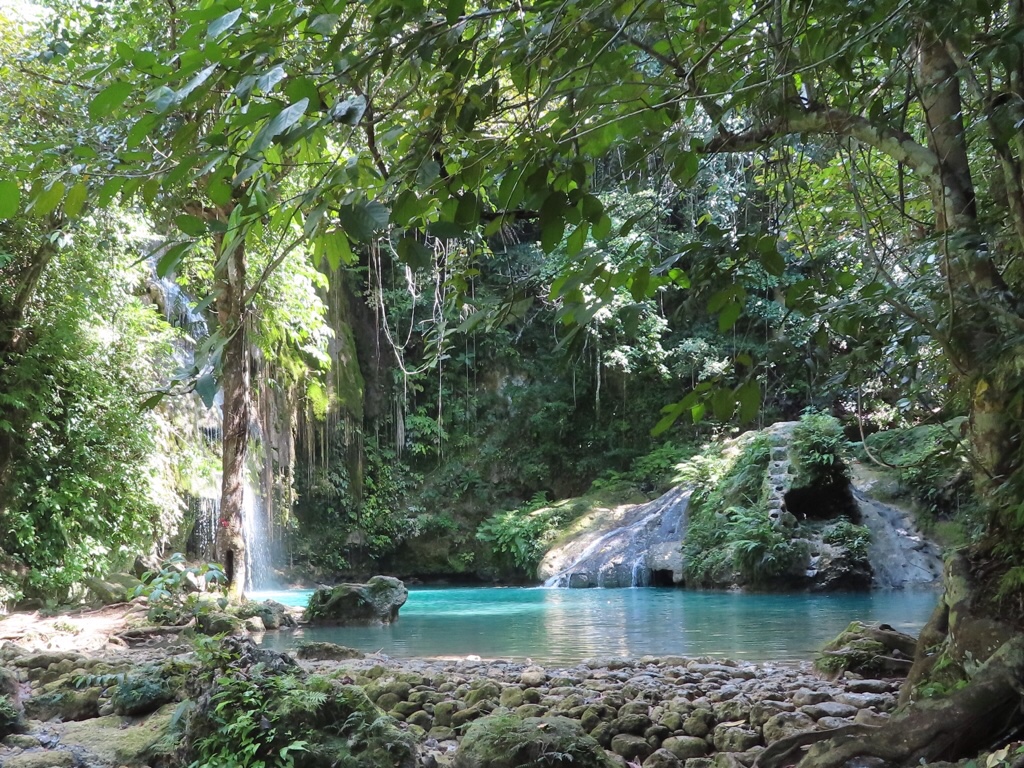
We walked a while until we reached the higher waterfall ….

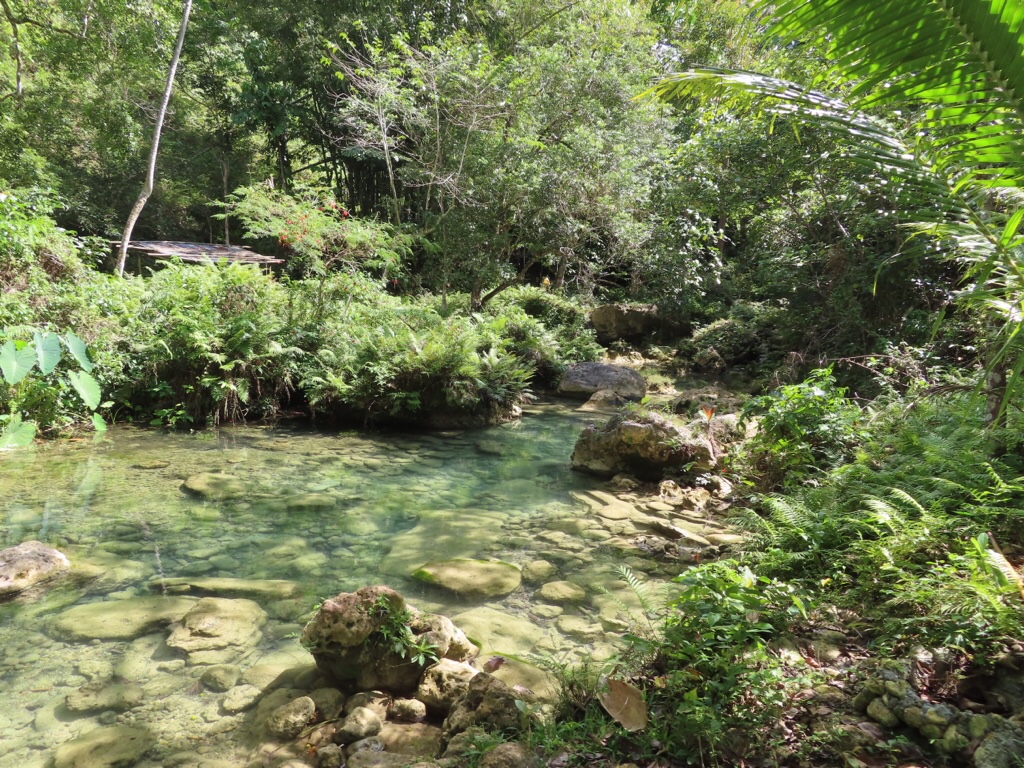
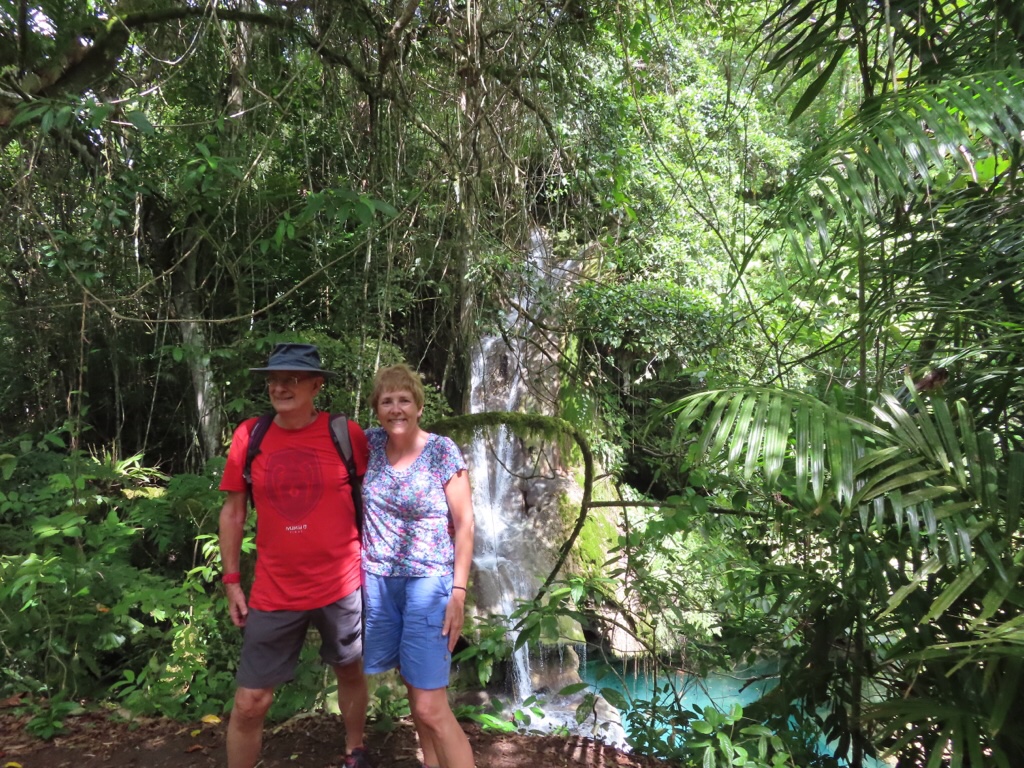
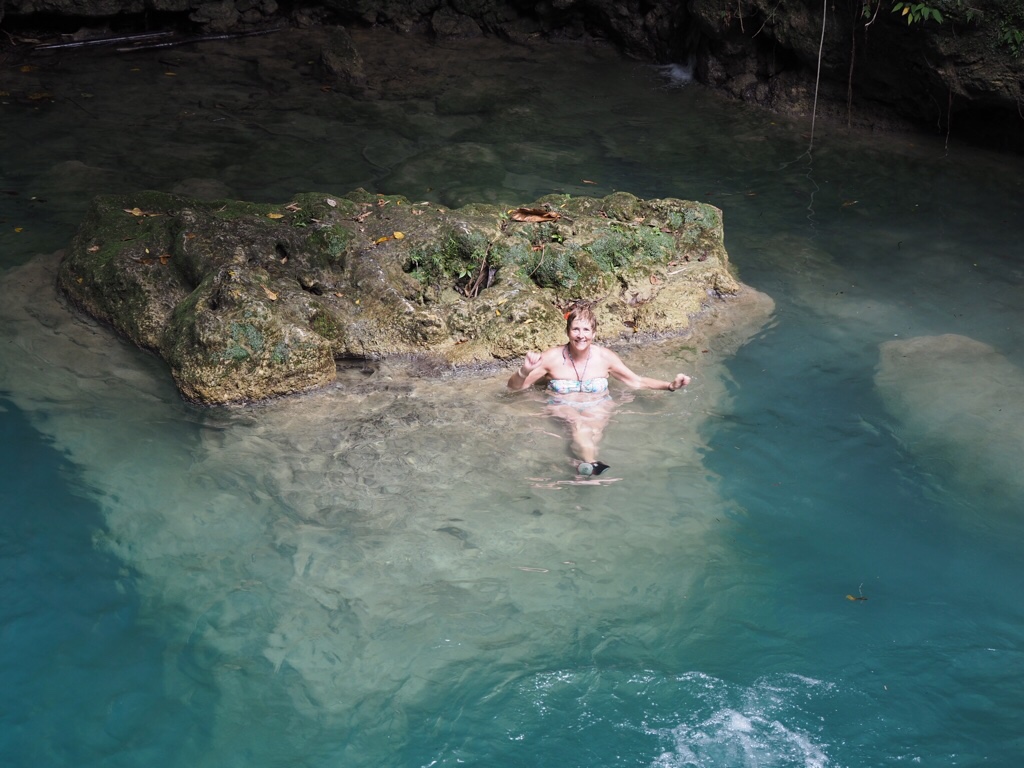
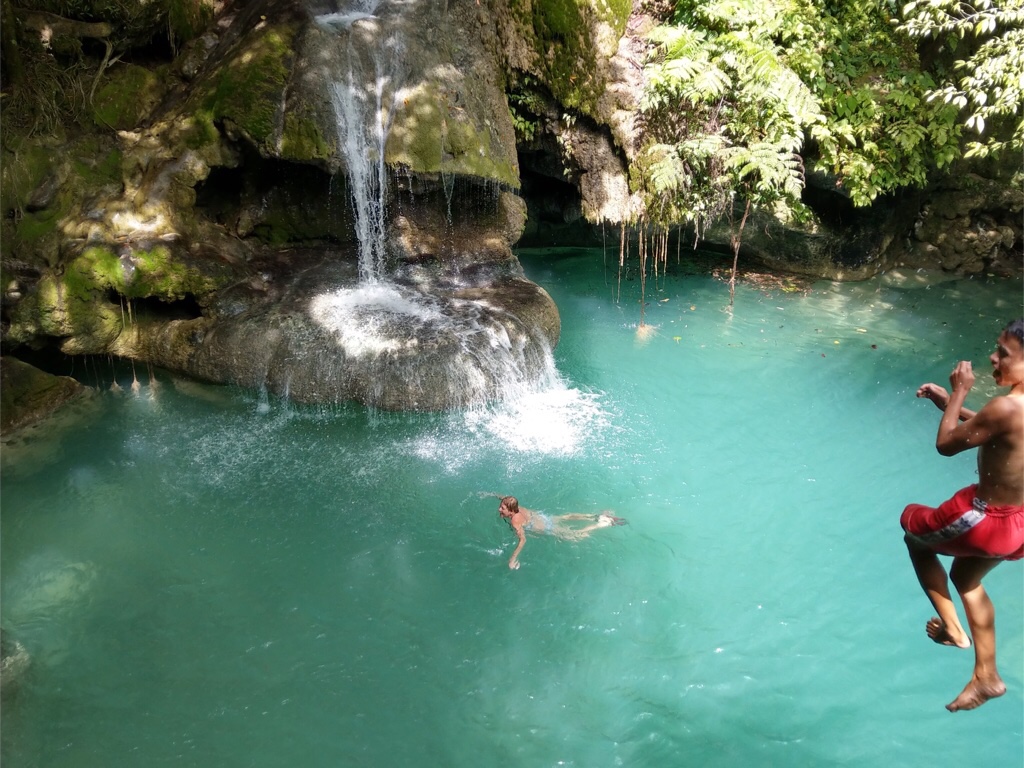
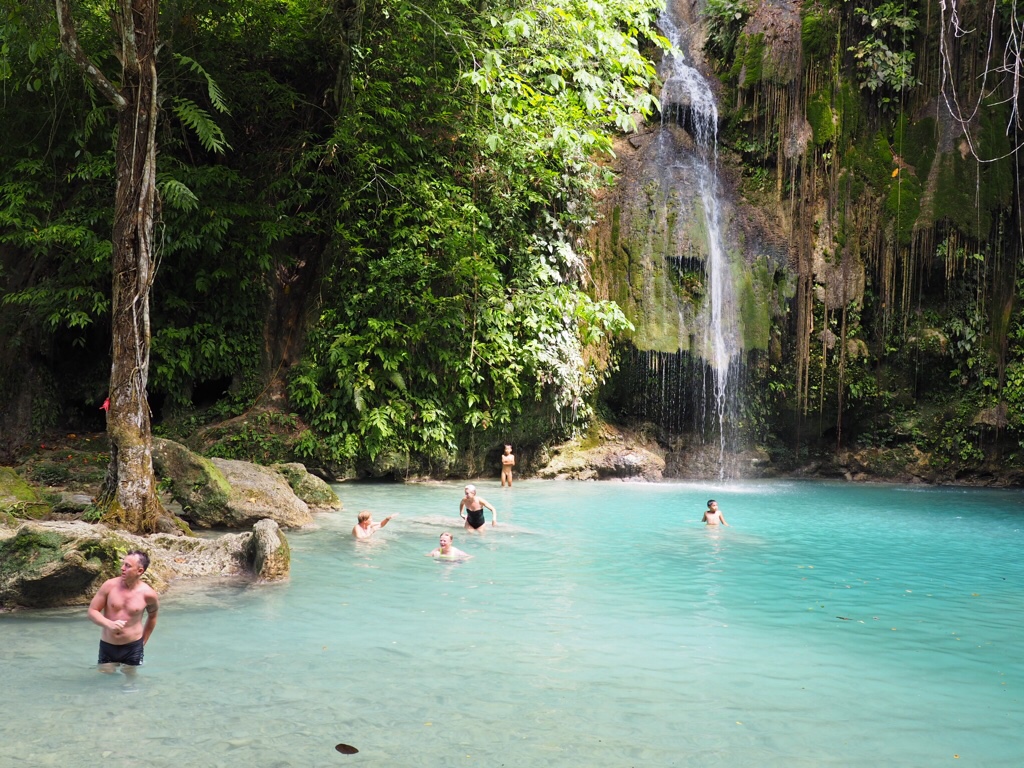
… some chose to jump in from the cliff! Chris stayed to take photos and I clambered down and entered the water more sedately. It was really lovely – clear, cool and just our small group there.

Our guides helped carry bags so we could concentrate on making our way safely – the Filipinos all seem related to mountain goats! We made our way to the lower pool, where there was a waterfall we could swim behind.

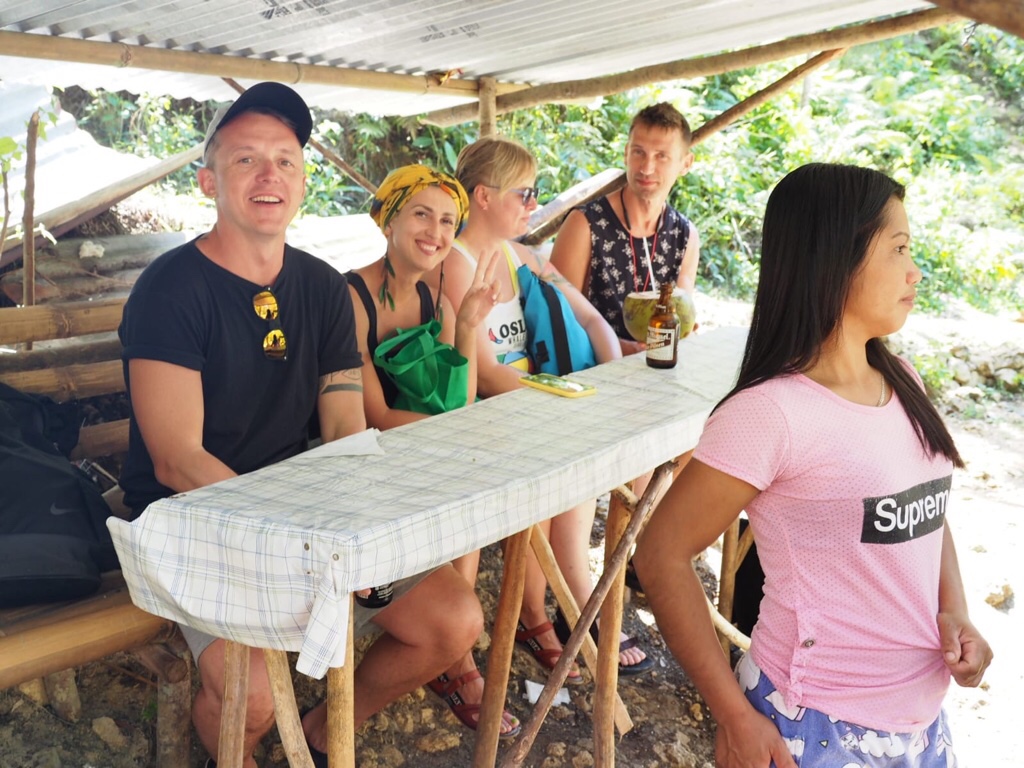
It was a great experience, and as another group arrived, we packed up and returned to the bikes.

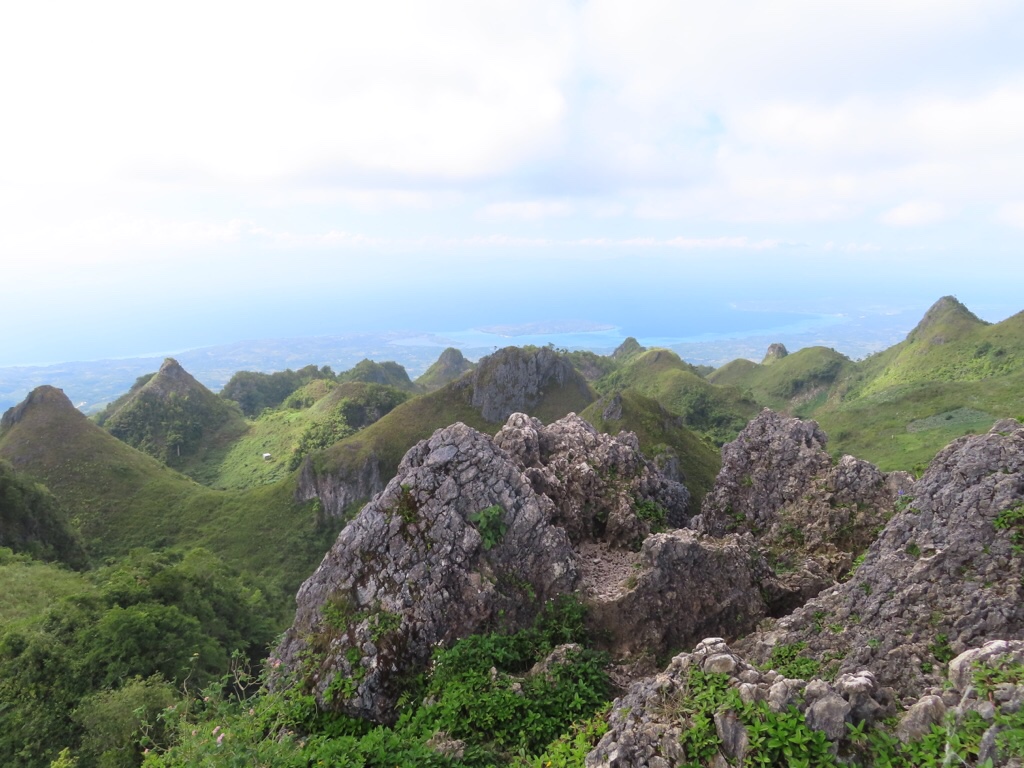
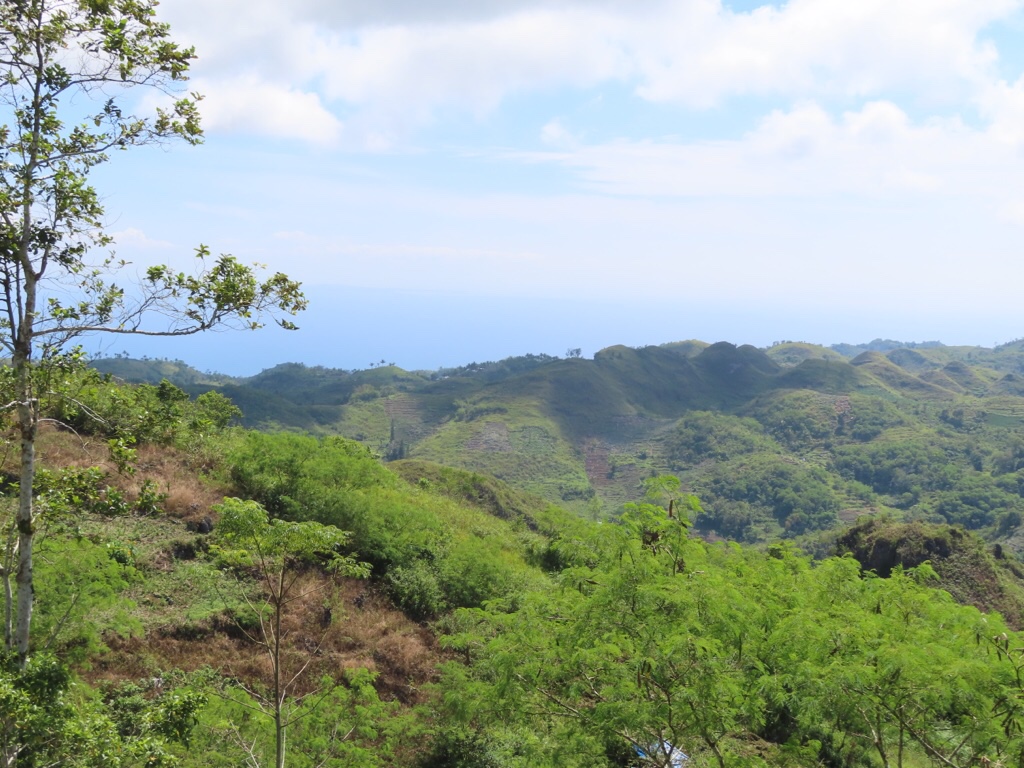
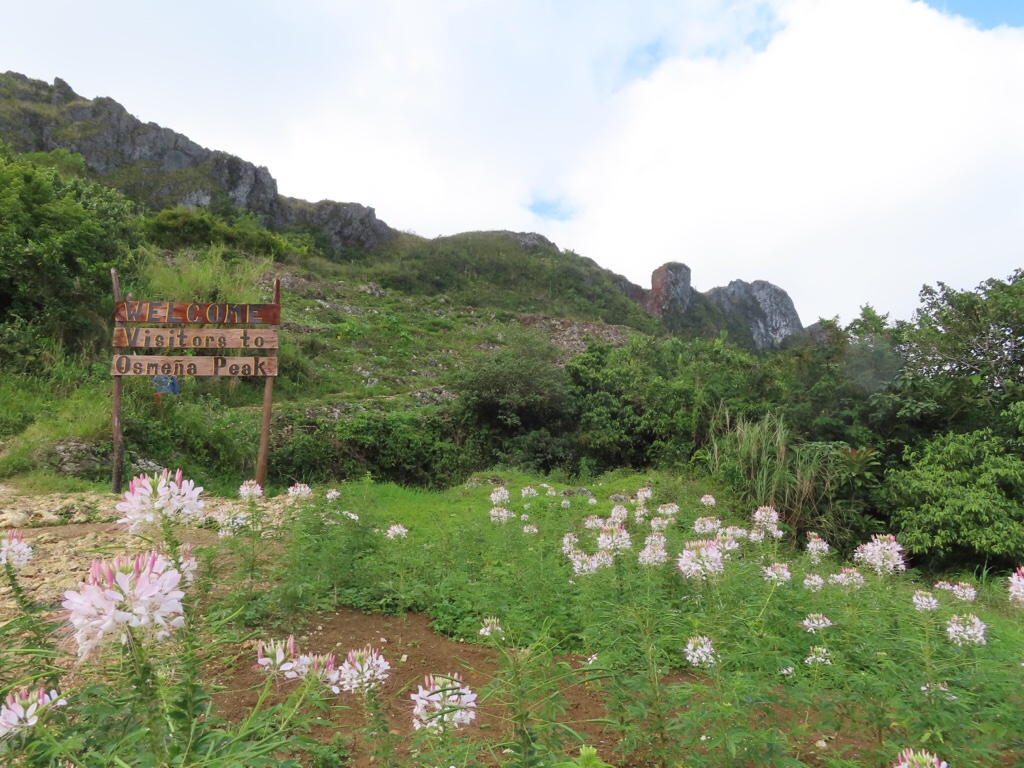
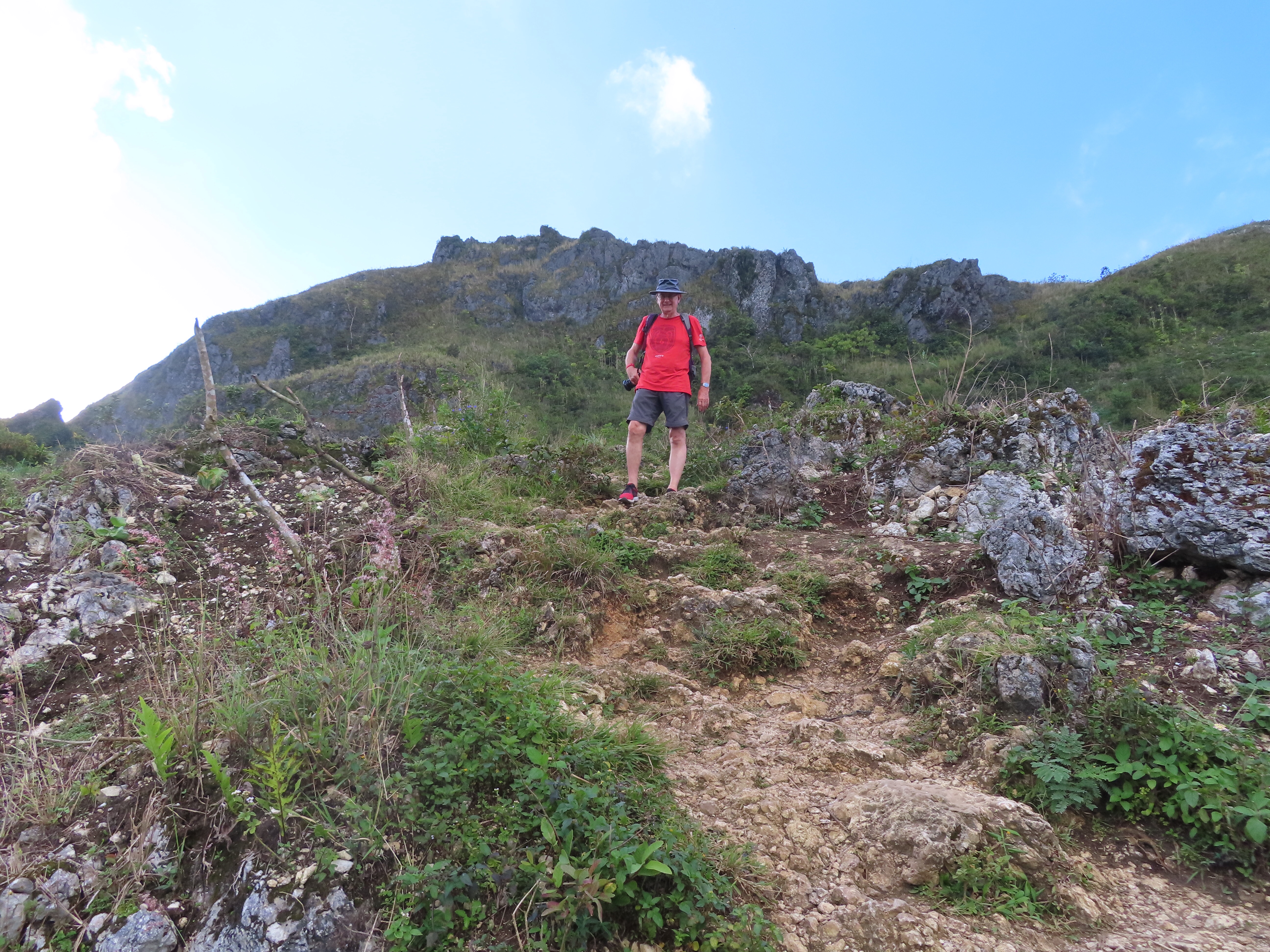
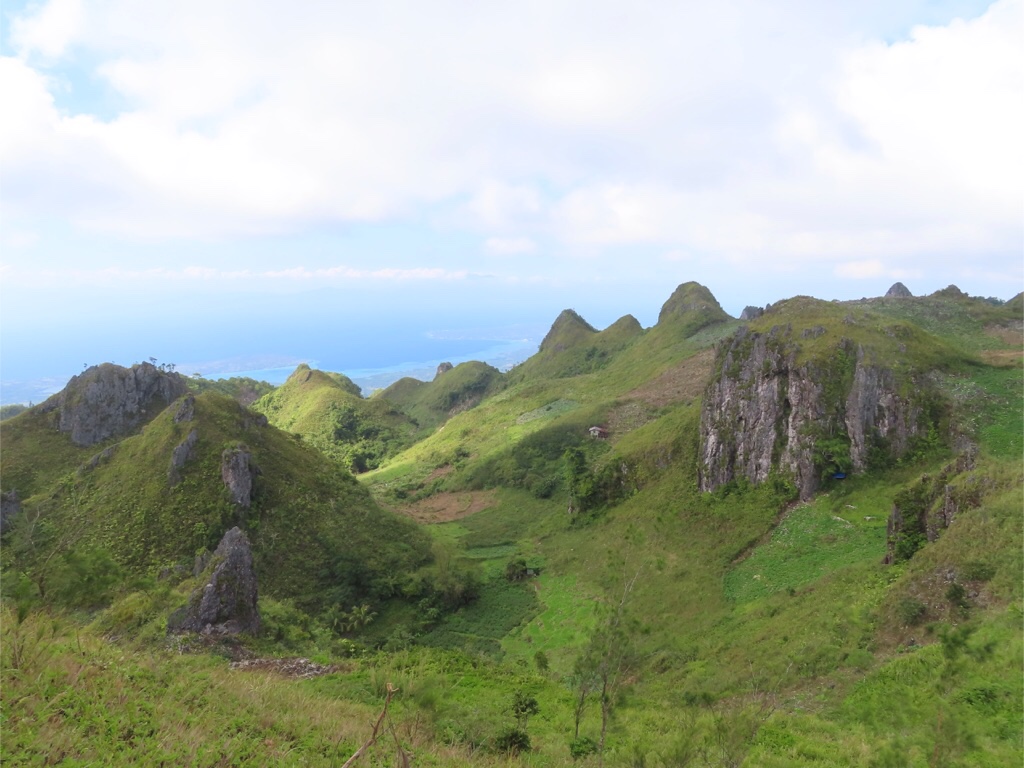
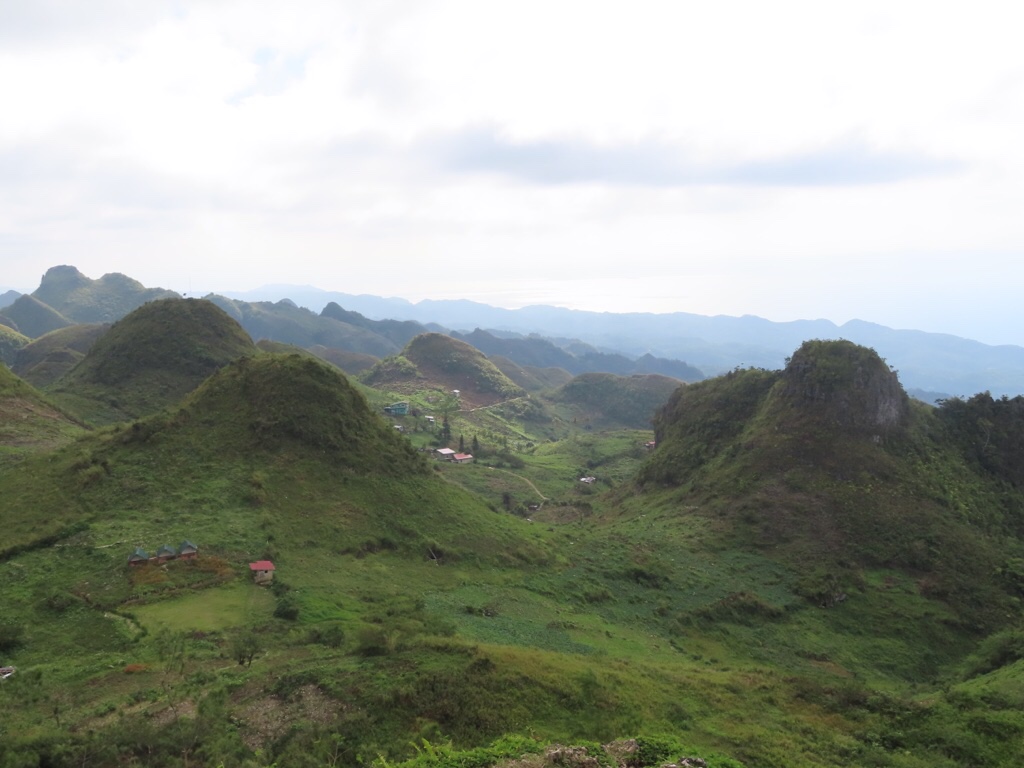
Next stop was Osmena Peak, and it became obvious that there wasn’t anything particularly special about the Chocolate Hills in Bohol – there are limestone hills and outcrops everywhere … and some a lot less crowded!

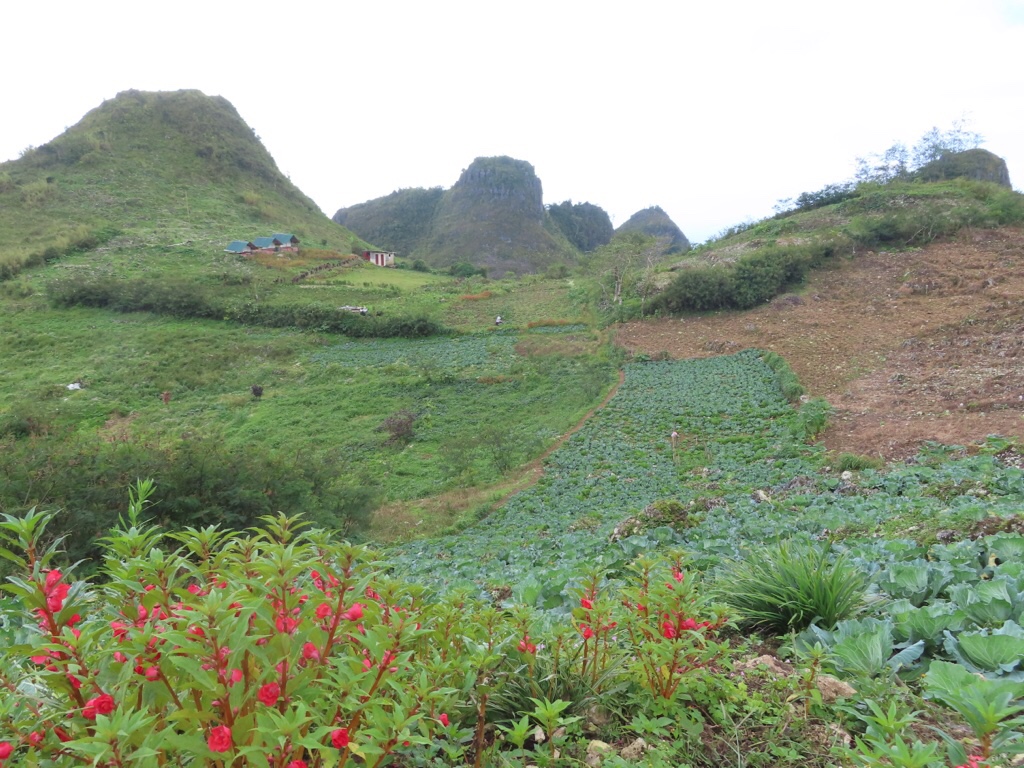
The lower slopes of the peak were being cultivated for vegetables …

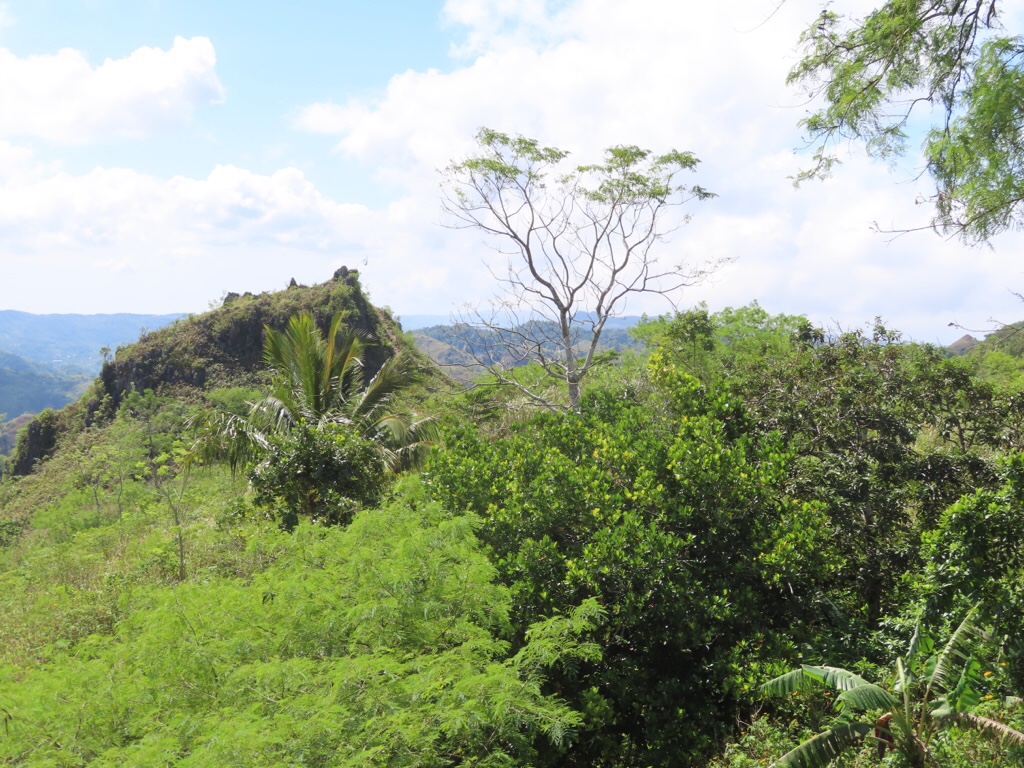
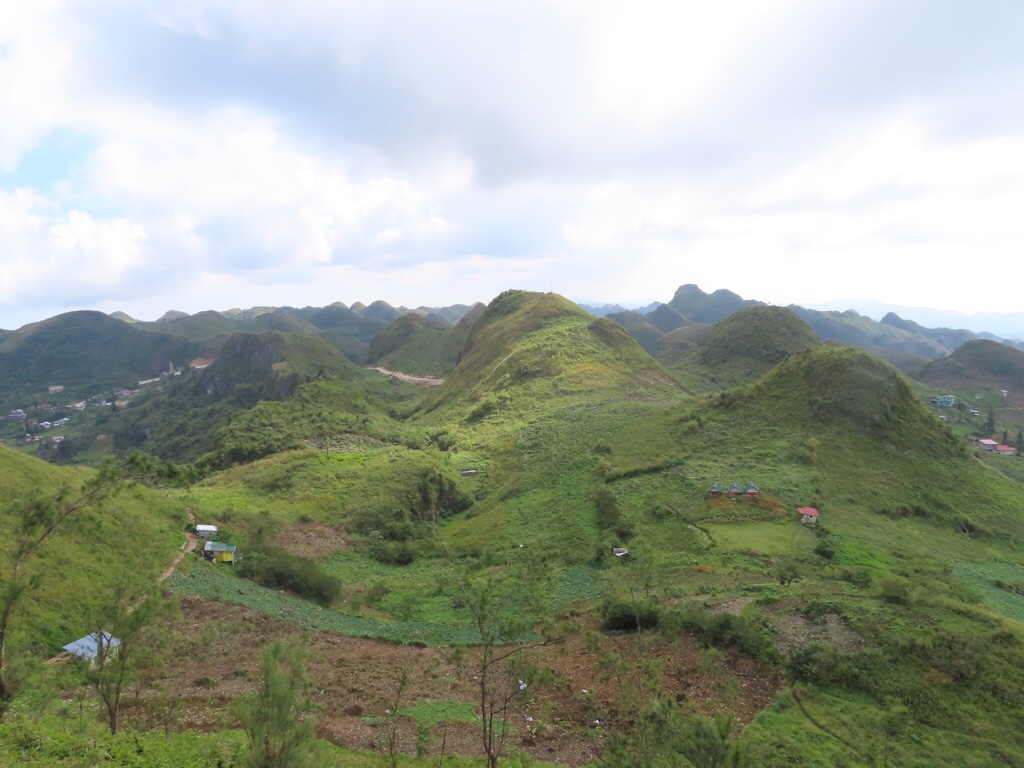
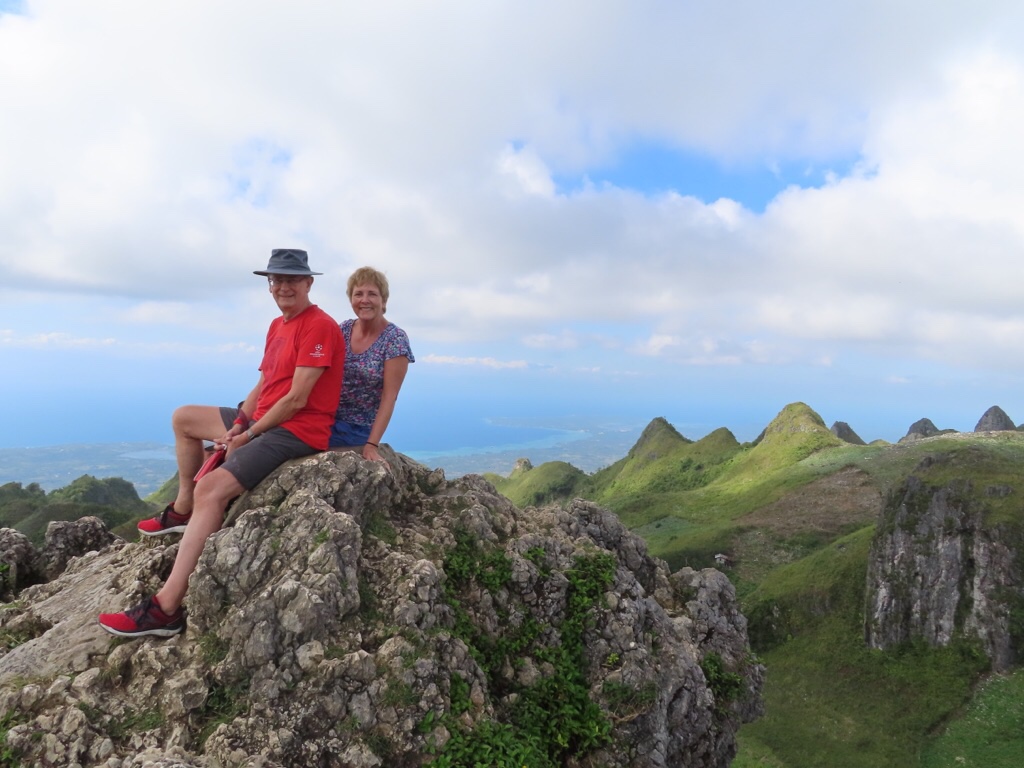
… and it took around 20 mins to get to the top where we rested, enjoyed the view and ate snacks, then took photos of the view northwards towards Moalboal and Zaragosa Island …

… and the other way as well!

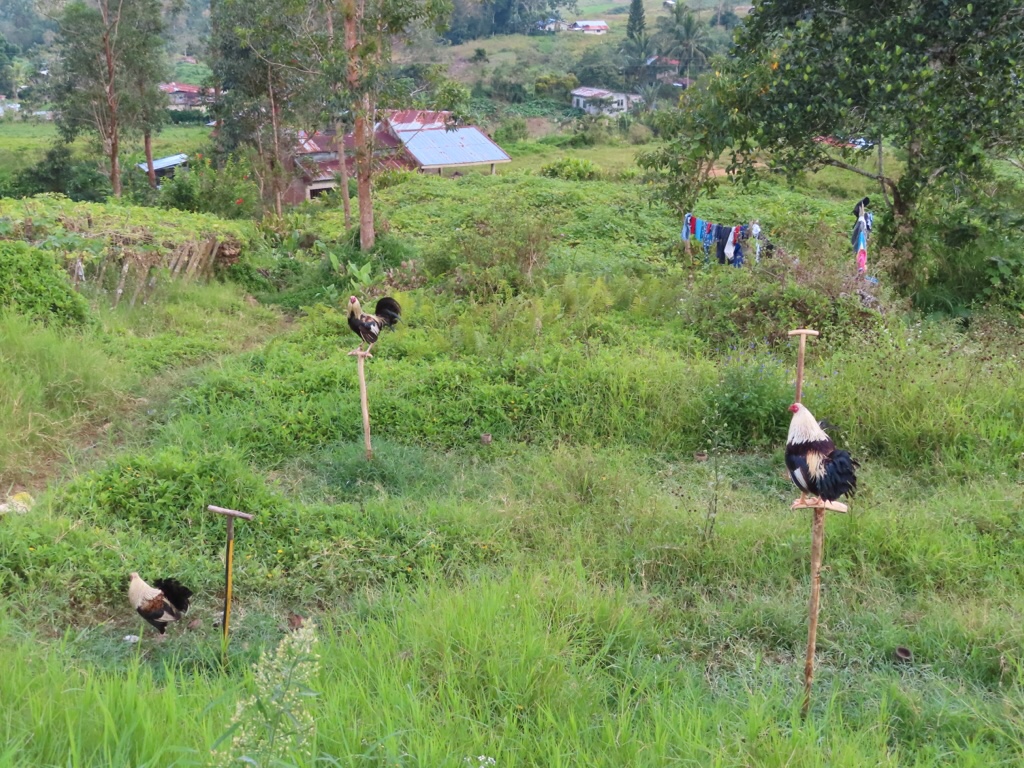
Back at the road, we passed roosters on their perches …

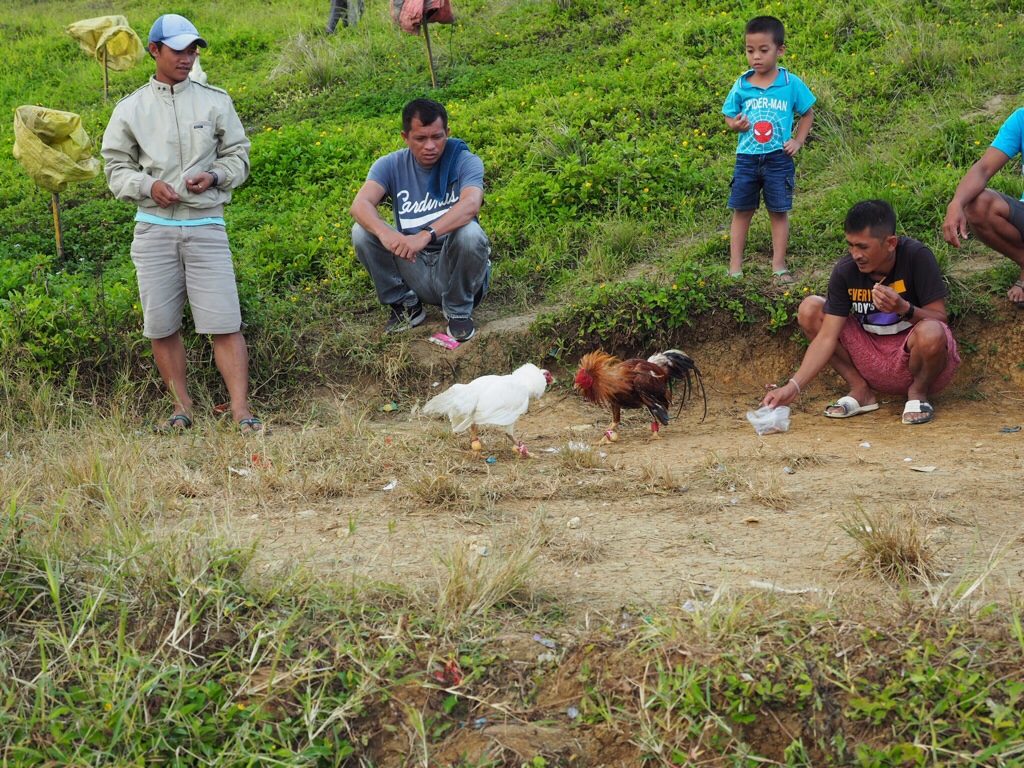
… and having been talking about cockfighting with Tim the previous day, we weren’t surprised to see a bit of a practise bout going on …

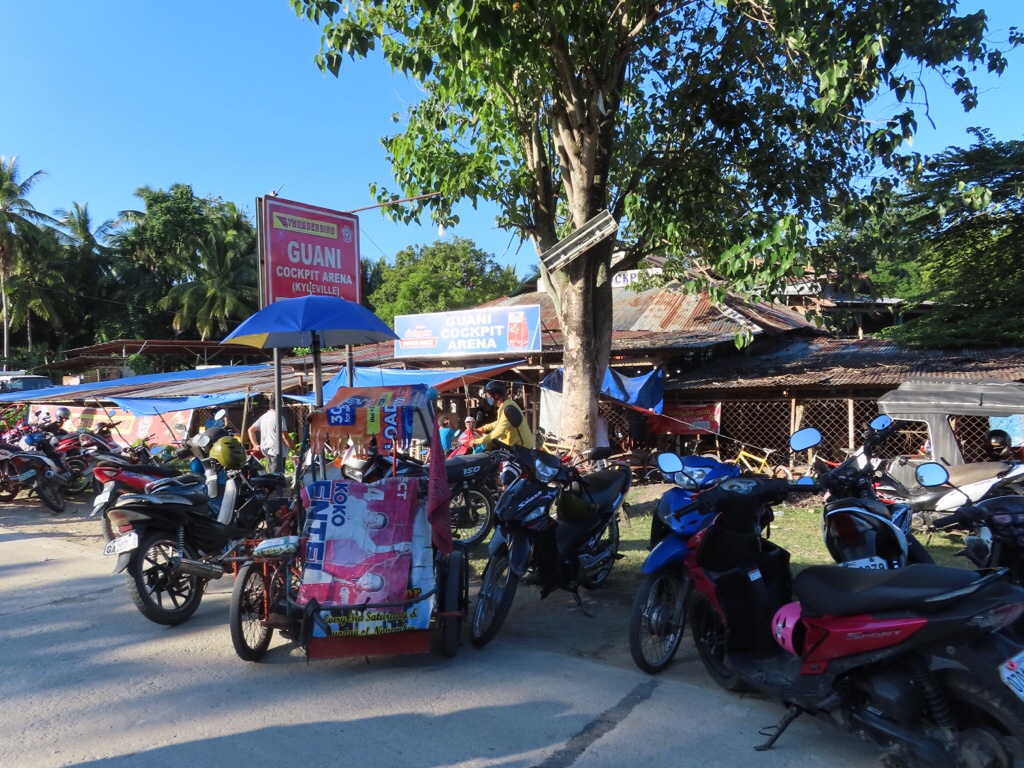
Everywhere we have stayed, even in Cebu City, we woke to the sound of roosters. Having been here a little longer, we now know why – they are bred for fighting. Cockfighting is legal and a national obsession among all levels of society with some 2500 stadiums across the country and some 30 million roosters being killed each year. It has an ancient history here and was mentioned in the report of Magellan’s voyage of discovery of the Philippines in 1521. Fighting roosters are specially bred for their aggressiveness and usually fed better food like grain or minced meat. The rich even have veterinarians and trainers to build up the muscles of the birds. Having said that, with blades attached to their legs, Filipino roosters usually only live to fight one or two matches before death or injuries retire them from the sport. For the Filipinos, cockfighting is a form of entertainment to relieve the stress of life, but the betting also draws them in, a chance for a quick peso, or if the wining bird is yours, a way of earning money when jobs are scarce. We even passed the local stadium on the way back, and no, we won’t be going!
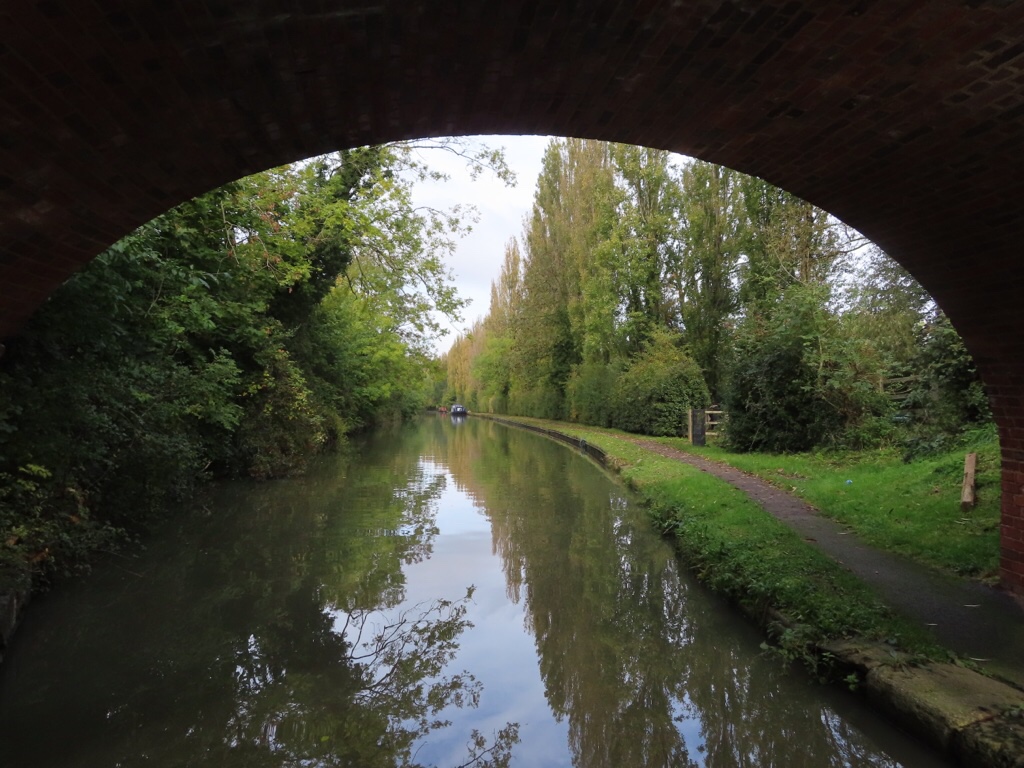
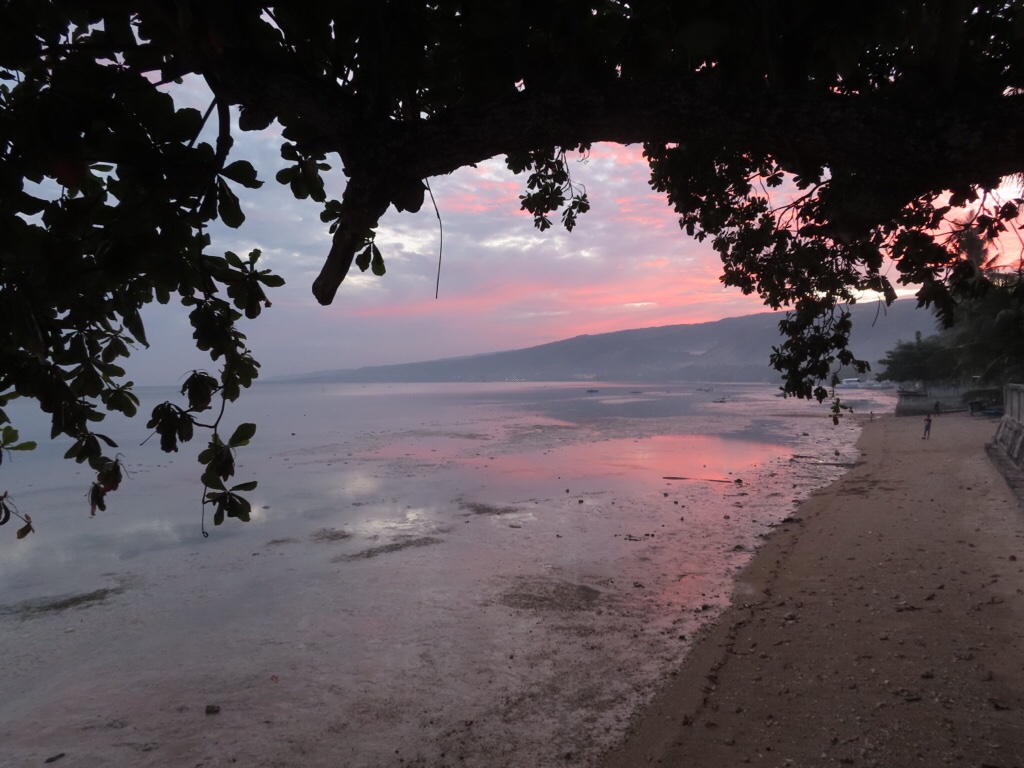
A dip in the pool, a pretty sunset and pizza and pasta night has brought our stay at The Beachhouse to an end and tomorrow we get back on the Ceres Bus and go further south …
Map