Greetings from Valletta

Malta’s history goes back forever – megalithic temples, Phoenicians, Romans, Arabs, Normans, the Spanish – then in 1530 the Holy Roman Emperor Charles V ceded the island to the Knights of St John so they could defend it from the Turks. They established a city at Vittoriosa which faces present-day Valletta and started building defences which enabled them to defeat the Turks during the Great Siege of Malta in 1565. Afterwards, The Grand Master, decided to build a citadel on the peninsula on the opposite shore which was named Valletta in his honour. Hospitals, churches and palaces were also built and Malta flourished during their 300 year rule. Napoleon stopped by for a couple of years, but he was routed by the British who then ruled for 150 years, with Malta becoming independent in 1964. Many buildings were damaged especially during WWII, but much restoration has been undertaken since especially preparing for Valletta 2018, Capital of Culture.

We’ve been staying in Palazzio Consiglia, a 400 year old traditional Maltese townhouse which has been converted into a modern boutique hotel, but still retains character and charm.

The rooms are all stylish and sumptuous and we chose Zingara …

There is a pool on the roof, not that it’s warm enough to swim …

… but also a spa in the basement and time in the jacuzzi and steam room each day has been a real treat.

We are in St Ursula Street, right in the middle of Valletta old city, with everywhere just a few minutes walk.

The city was planned and built all in one go and was one of the first modern cities to be based on a grid, with the streets falling steeply towards the edges giving defenders the best position.
Many streets are narrow and the buildings tall, built with Maltese sandstone which is a warm yellow, often pitted with age, or even WWII gunfire.

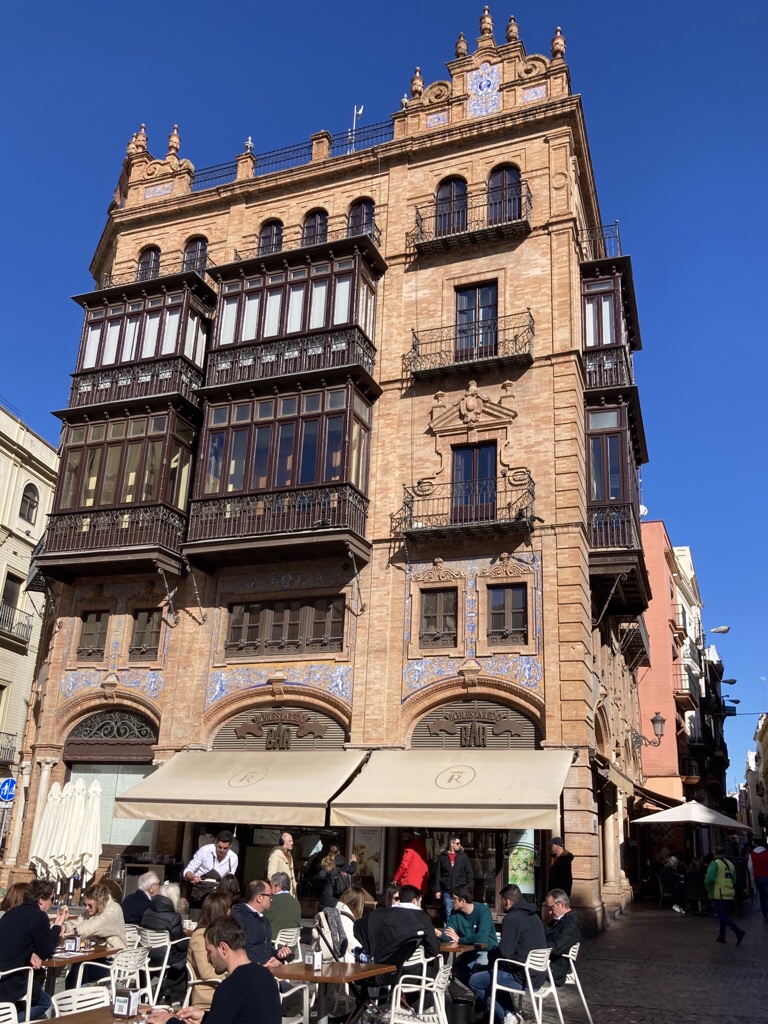
Closer to the centre the streets widen and buildings become more grand.

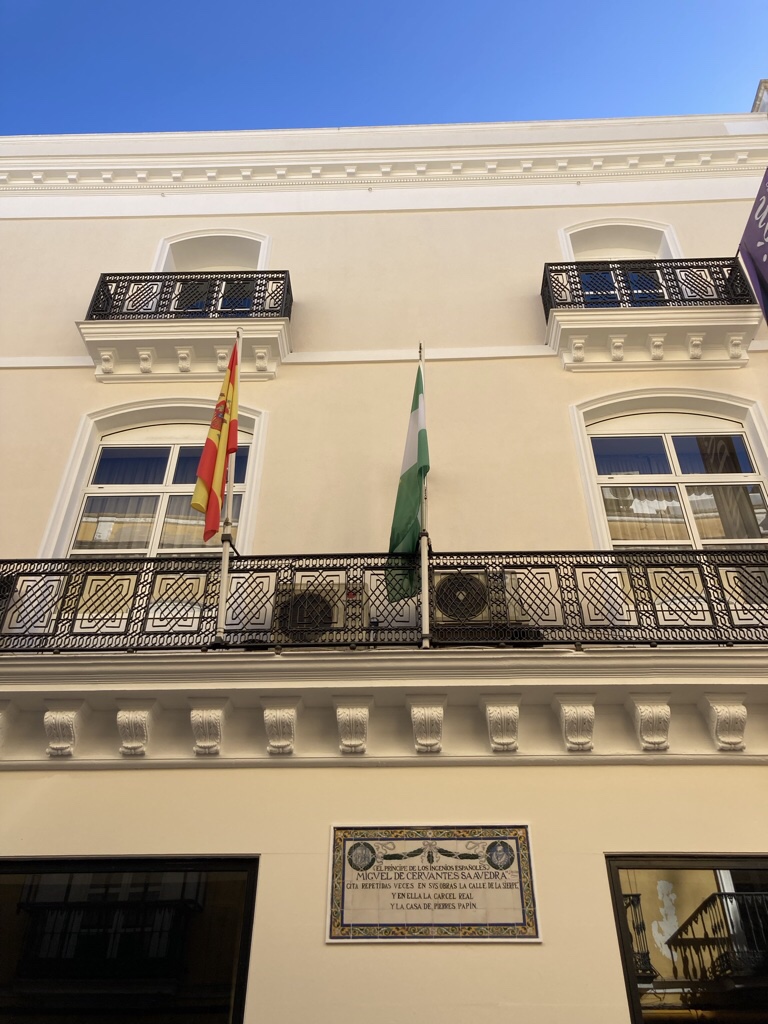
The street signs quickly caught our eye, with the words not looking traditionally European. The native language of Malta is Malti, which is a Semitic language, probably originating in North Africa, related to Hebrew and Arabic. It has Arabic grammar but a vocabulary drawn far more widely and is written in Latin script. Until 1934, Italian was the official language here, even though only the church and aristocracy used it, but then it changed to Malti, although everyone also speaks English.
The language isn’t the only reminder of British rule, the Maltese drive on the right and we spotted these …

Another feature we’ve noticed are the statues decorating many street corners … which were built by decree from the Knights of St John when they planned Valletta.

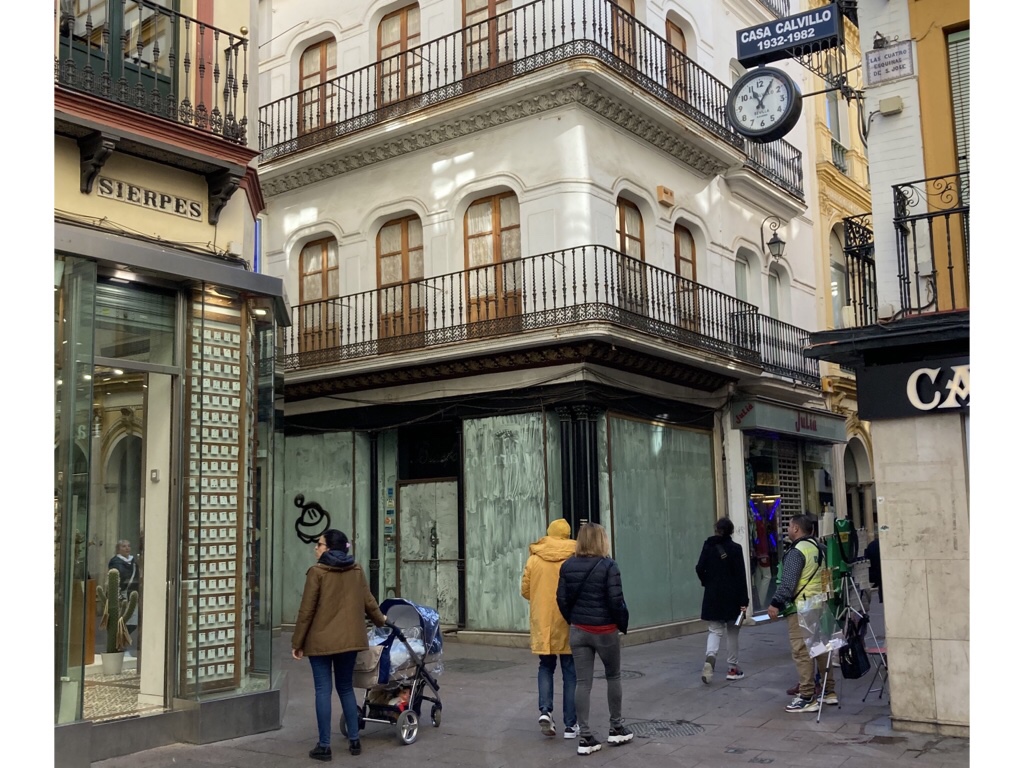
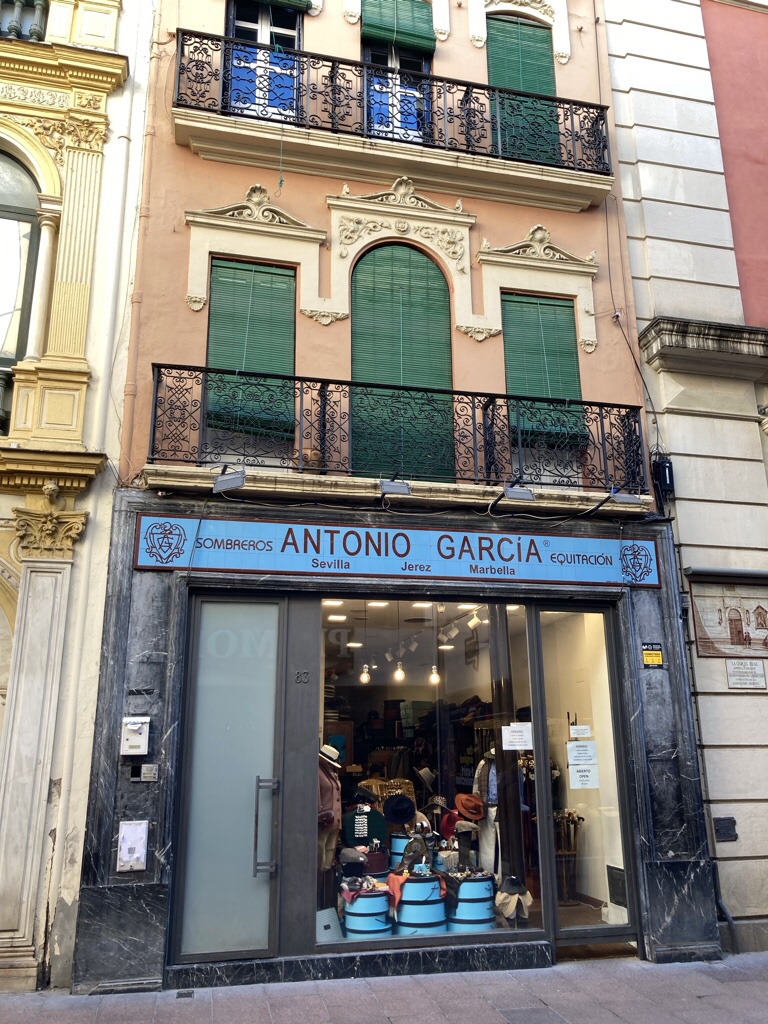
We loved just pottering about. We wandered down side streets which have all sorts of businesses mixed up together, with cafes and bars rubbing shoulders with jewelry shops and haberdashers.

So many photos, but maybe time to get down to so serious sightseeing!

Map

Chris & Elaine’s Letter from Valletta 2023

We started keeping track of our travels in 2013, beginning with our big birthday safari to India. Ten years and 37 trips later, we have another special birthday year!

This time, we’ve each picked a destination starting with Chris’s choice of Malta. The dodgy knee was replaced in October and good recovery means we can now celebrate with a few days in Valletta. We’re looking forward to mild days with some sun, gentle strolls and a sprinkling of history. A photo walk and birthday surprise are also planned so watch this space!

PS … we were struggling for a good title and our friend Mary came up with this winner so thank you very much 😀

Journal Entries

Greetings from Valletta

Valletta’s Palaces and Churches

Bus to Mdina

An Electric Birthday in the Three Cities

Valletta … a final salute!

Map

Another Halfway House … Canons Ashby

We checked out after breakfast and decided that popping into The Shed for a coffee with Anne before heading home was just too lovely an invitation to miss! We found her at work stitching and were made very welcome as we chatted about all sorts. I really hope to be back soon, hopefully for an actual workshop!

After a good couple of hours, we left the motorway in search of our halfway stop. The sat nav took us cross country, and as we drew up to crossroads in a village it looked familiar. We realised we had been here before, in fact bought groceries in that very shop, while we had been aboard Daisy on the Grand Union Canal last year!

Anyway, a little further we got to Canons Ashby which proved another gem.

John Dryden was given the estate by his father-in-law in the C16th and using masonry from the fallen priory buildings, he built the Tower House, a style more usually found further north. The house has been much altered by later Drydens who have lived here for 400 years. The most famous was a later John Dryden who was the first Poet Laureate in 1668.

We only had time for a quick tour of the house, but treasures included a splendid room with this grand fireplace. Apparently at one time it was painted white, at which point the beautiful Delft tiles were added, but now the white paint has been removed, they look a little incongruous but just show another layer in the history of the house.

During restoration in 1990, these painted murals showing a scene from the story of Jeroboam which date to around 1600 were revealed.

Also, rooms which had been used by the family decorated with coats of arms later became the servants dining room!

After tea and cake and a short drive to the M40, we found we were only about an hour from home, so we will definitely be back for a better look.

One last thing, I’ve just finished The Vanished Bride by Bella Ellis in which the Brontë sisters go sleuthing to solve a mystery. I love the way fiction can make history more accessible and having been to the Parsonage, I could imagine them sitting in the dining room talking over their strategy. Bearing in mind the sisters felt themselves just as capable as men given half a chance, I thought storyline seemed perfectly possible and it was a pretty good yarn.

So that’s it, our Yorkshire Tea Break is over, can’t stop to natter, it’s time to get on!

Map

Peaks and Dales

All the rooms in the hotel are named after local places and ours is Digley, named after the nearby reservoir. It was the perfect spot for a bit of fresh air after breakfast, and I managed to walk round in half an hour.

In the early 1800s the view would have been quite different, with four mills in the valley, but in 1852 a flood collapsed Bilberry dam and the mills were damaged. This present reservoir was built in 1954 on the site of two of the old mills.

Walking round, it is quite worrying to see how low the water level is after such a hot dry summer.

We spent the rest of the day on a little drive round the Peak District, admiring the scenery and taking the odd snap along the way. We’d chosen a route to include a few viewpoints, but were thwarted when we tried to drive through Snake Pass as they closed the road yesterday for four weeks to investigate a land slip.

Nonetheless, here are Winnats Pass …

… complete with sheep crossing!

Stanage Edge where we remember walking a few years ago …

… and the other way towards Hathersage …

… the viaduct at Monsal Dale …

… and a couple from the Cat & Fiddle road.

Our last evening, and another excellent meal. I’ve resisted food shots all week, but the roast pineapple with boozy berry smoothie, maple syrup and vanilla ice cream was a great end to our trip!

Map

Bolton Abbey Blues

A sunny morning with a beautiful blue sky and today we are moving on, but first a quick detour to the romantic ruins of Bolton Abbey.

Scottish raiders began the destruction of the monastery and Henry VIII dissolution did the rest, but the body of the church survived as a parish church.

We had a look inside and particularly liked the painting behind the altar by a local artist depicting Madonna lilies as the church is dedicated to St Mary as well as barley, olive, vine, Passion flower, wild rose and palm, all of which symbolise the passion.

There are also windows by Pugin, telling the life of Christ.

I was looking forward to using the stepping stones, first laid as a crossing point for the lay workers at the Priory, but some have recently been dislodged by trees so we had to use the bridge. I left Chris taking photos while I went for a walk through the woods …

… and along the river, down one side and back the other.

Our other stop of the day was Shibden Hall, just outside Halifax, a Tudor Manor House which had been home to the Lister family from the C17th, set on a hill overlooking the valley.

Anne Lister was born in 1791 and is sometimes described as the first modern lesbian. She was a successful woman entrepreneur and landowner and her full story was revealed when her diary was unearthed in an archive.

We watched a short film where Helena Whitbread described how she found the diary when looking for source material for a research project. She then managed to decode secret sections revealing Anne’s lesbian sexuality, as well as her views on men, money, business, and the society in which she lived.

Her subsequent book formed the basis of the script for the TV series Gentleman Jack which has brought quite a number of visitors recently, including us, interested to learn more about Anne Lister and to see where she lived.

Anne Lister was eager to improve the house and grounds and made several alterations to the house such as removing the ceiling here to give the impression of an open medieval manor hall, complete with gallery and striking staircase.

She also added the mock gothic tower which she made into a library and landscaped the grounds which still offers walks and a boating lake open to the public, but we didn’t explore these.

Another short drive found us pulling up in the car park of The Huntsman, an independent country pub with rooms on Saddleworth Moor, high above Holmfirth village.

We settled into our cosy room and later had dinner in the restaurant.

Map

Steaming Round Haworth

On Sunday we decided to let the train take the strain, but first we drove over the tops to Haworth before it got too busy. We began in the Brontë Museum, in the parsonage where the family lived from 1860.

We learnt all about their lives and literary achievements, and the large number of personal items including Charlottes dresses, scarves and bonnets displayed in rooms they actually inhabited was quite moving.

Here is the dining room where much of the writing would have been done …

… and Branwell’s room, presented as it might have looked to convey the chaotic character of his mind.

We were also reminded how very fragile life was, with their father out living them all.

Chris was happy to sit for a bit, so we parked at Penistone Country Park and I took a short walk across the moor …

… and down to the Brontë Waterfall to take a few pics.

It’s amazing how quickly the weather can change as I had a strong wind with a slight drizzle in my face all the way but by the time I walked back, the wind had gone and my coat was round my waist!

Finally to the train. The Keighley and Worth Valley Railway which once carried coal and textiles to the local mills is now the only complete, preserved standard gauge branch line in the world and they regularly run steam trains. We were just buying our return tickets at Oxonhope as the announcement said the train was about to arrive, which it did!

The station looks really authentic in its burgundy and cream livery, but no time for a cuppa now, let’s get aboard.

Inside, the carriages are just as I remembered on the trains from Kenton to Wembley as a child, although they were diesel.

The route took us back through Haworth, then on Oakworth which was used as a location both Railway Children films and has prompted us to watch the newer one when we get home.

A lucky bend offered a good view of the engine …

The end of the line is Keighley and we got out for a look while they moved the engine round to pull us back, and got Yorkshire Tea and flapjacks to eat on the way back.

Appropriately, we went just round the corner to The Railway for dinner and we’re glad we booked as it was full of people tucking into huge plates of roast dinner. We’ve eaten incredibly well in Skipton with visits to Le Bistro des Amis and Elsworth Kitchen on previous evenings, all showcasing good local produce and great home cooking, and Chris has been impressed with the varied vegetarian choices.

Map

Wonderfully Woolly Yarndale

Next day was Yarndale … and having learned that giddy is a good Yorkshire word, I think that perfectly sums up how I was feeling! During Covid, I took up slow stitching, particularly following the textile artist Anne Brooke and have taken part in her year long tag and flag projects. She is exhibiting at Yarndale which will give me the opportunity to meet her, but also to shop for bits and pieces to add to my slowly expanding stash of stitching goodies!

After breakfast, Chris decided to spend the day driving round and about, taking photos while I set off on foot to find Yarndale by following the woolly trail of crocheted markers along the Yarn Walk …

… which took me over the canal …

… and through a park to the Auction Mart, a huge shed decorated with woolly bunting …

… and separated into pens, usually occupied by livestock, but today all things woolly instead.

I wandered round and found Anne’s pen and it was lovely to meet her properly after all this time, and her friend Jane who often joins the online Stitch & Chat sessions. I was able to see some of her stitching on display and also share some of mine, and left after a little retail therapy well as the offer of a coffee at The Shed, her workshop in Brighouse, if I had time to stop on our way home.

Slowly I worked my way through some 200 exhibitors, quite a lot selling wool of one sort or another, maybe raised from specific breeds or hand dyed, or specially for felting/weaving/knitting.

I was very successful in my search for woolly bits and roving for a new macraweave wall hanging and it was good to have purpose to my browsing.

Once I was done, Chris picked me up and we drove to Grassington for a quick look, mainly as it is the filming location for Darrowby in the current production of All Creatures Great and Small. Once you look carefully, you realise how different the place looks when the film crew dresses the location for filming, adding pillars and fencing and removing the cars.

Nonetheless, we did spot the pub and the vet practise and a couple of premises getting in on the act! We had hoped for a cuppa somewhere but we’d left it too late, so had another excellent mug of Yorkshire Tea back at Highfield House. Chris told me he’d had a good day driving around the dales enjoying the views, taking a short walk to Linton Falls and sampling cake but he’d left his photo head behind!

Map

See Ewe in Skipton

So here we are in Skipton, which grew as a prosperous market town, trading sheep and woollen goods with its name deriving from “sceap”, meaning sheep and “tun” meaning town. In the C19th it developed into a small mill town, connected to the major cities by the Leeds and Liverpool Canal. The mill buildings remain, a testament to the hundreds of looms that once wove here, but many have been converted to flats and shops. Today, it’s more about tourism and with the Yorkshire Dales rising up just behind the town, they are on the doorstep.

We learnt quite a bit about the history during our hour long cruise along the canal, complete with comedic commentary from Skipton Boats.

Later we wandered a little in the town and down the High Street where the market is unusual as stall holders can just pitch up in any available spot.

After coffee and cake we went to the town hall, unfortunately covered in scaffolding, but look at the poster outside!

Inside, we looked round the interesting little museum. You can see from this display that Sylko thread was made here in Skipton by the Dewhurst mill, and I’ve still got a couple of old wooden spools just like these!

There were also mill pattern books, and this one shows cotton shirt fabrics of the 1900’s made at Fareys Mill.

I also took a photo of this chap, mainly because of the amazing story!

I left Chris taking photos, and took a walk in Skipton Castle Woods.

I caught a glimpse of the castle high above, apparently well preserved and worth seeing, but we didn’t visit.

The waters of Eller Brook run through the woods …

… and a dam was built …

… to power all the mills.

Afterwards, I walked along the canal …

… to our B&B to meet Chris and we checked in to Highfield House, a tall Yorkshire house …

… where our room had a little Yorkshire sparkle …

… a view of the dales …

… and our first mug of Yorkshire Tea!

Map

Our Halfway House … Baddesley Clinton

So we’re off! Today was a long drive, but that in itself was a change of pace and the road was fairly clear. The highlight was our lunchtime stop, a National Trust house conveniently chosen just off the motorway, complete with coffee shop.

According to the website, Baddesley Clinton is a charming moated manor house which was home to the Ferrers family for 500 years passing from father to son for 12 generations. The family was catholic with their fortunes rising and falling and while changes were made to the house, including a priest hole, it has retained many of its original features and character.

As soon as we got there we realised it hadn’t been oversold, it really was lovely, and the volunteers were eager to show us round.

There are always little gems to learn like the straw or thresh laid on the floor is kept in place by the piece of wood or threshold in the doorway. Also, I won’t think of Solihull the same way again having been told it is named for the soil hill it’s built on – no doubt ensuring excellent gardens!

There were several elaborate carved fireplace surrounds, including these.

We heard about The Quartet, four friends who lived a life of rural bliss here in the mid c19th.

Marmion Ferriers had inherited the house, married Rebecca Orpen and two years later they were joined at Baddesley by her aunt, Lady Georgiana Chatterton, and her second husband, Edward Dering. Georgiana wrote novels and other books and became a highly successful author, leaving the equivalent of some £4m in her will; Dering tried his hand at writing but was nowhere near as successful as his wife; Rebecca took up painting and there are lots of her pictures round the house and Marmion played the part of a rural squire ensuring the welfare of his tenants and staff. The house felt so homely, they could just have been out for a walk.

There were beautiful flowers in all the rooms …

… which was hardly surprising when we saw the lovely garden …

… including a well stocked cutting garden.

Time to move on, and we had intended another stop on the way, but the traffic was heavier and the rain started and we decided to cut our losses, pick up a packet of biscuits in Sainsbury’s and retreat to the Premier Inn when we arrived in Burnley. We had dinner a few steps away at the convenient Brewers Fayre and got an early night.

It was a beautiful morning and when we checked out, we noticed the photo behind the desk of a sculpture made of metal pipes resembling a windswept tree on the top of a hill. This is Burnley’s Singing Ringing Tree and we began with a detour to see it.

The idea is that the wind enters the tubes and makes whistling sounds although while we were there, there was only a slight breeze so it was hardly noticeable. Nonetheless, we got a great view and enjoyed watching a shepherd and his dog herding sheep, before setting off for Skipton.

Map

Chris & Elaine’s Yorkshire Tea Break 2022

It all began with Yarndale!

I started sewing during Covid and had heard about this great textile show full of all things wonderful and woolly in Skipton, so we’ve decided to go, and this year is the 10th anniversary.

Of course there are lots of other good reasons to visit Skipton as it is a pretty market town at the foot of the Yorkshire Dales with a rich heritage. The Brontë Parsonage is nearby at Haworth and Holmfirth where Last of the Summer Wine was filmed, is on the road home.

Since the dodgy knee is still with us, we’ll take every opportunity to have a cup of Yorkshire’s best while we soak up the view and are really looking forward to a few days away.

Journal Entries

Our Halfway House … Baddesley Clinton

See Ewe in Skipton

Wonderfully Woolly Yarndale

Steaming Round Haworth

Bolton Abbey Blues

Peaks and Dales

Another Halfway House … Canons Ashby

Map