Chris & Elaine Go Island Hopping in Croatia 2023

The two biggest attractions in Croatia are at opposite ends of the country and we’ve chosen the natural beauty of Plitvice Lakes National Park over the architectural splendour of Dubrovnik this time round.

We are flying to Reikja on the Kvarner Bay and have planned a trip hopping between small islands like Cres, Krk and Pag, driving inland for waterfalls and lakes then back along the coast.

As ever, the trips we like best are those with plenty of variety so as well as medieval walled towns, Roman ruins and secluded beaches we are looking forward to riding ferries and ziplines and even spotting bears!

The scorching temperatures of summer are over, leaving sunny days and warm sea and we are all ready go and enjoy!

Journal Entries

Opatija … Grandeur-on-sea

Cres & Losinj … and the Channel Crossing!

Zipping round Krk

On a Bear Hunt in Kuterevo

Plitvička Jezera … a Turquoise Jewel!

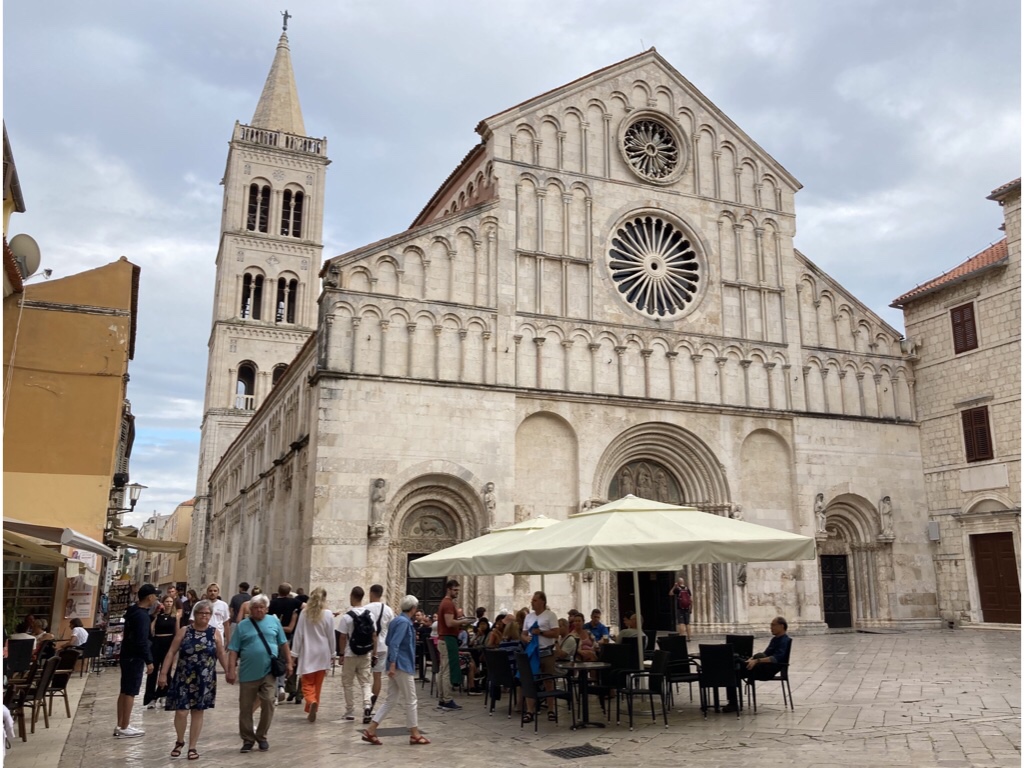
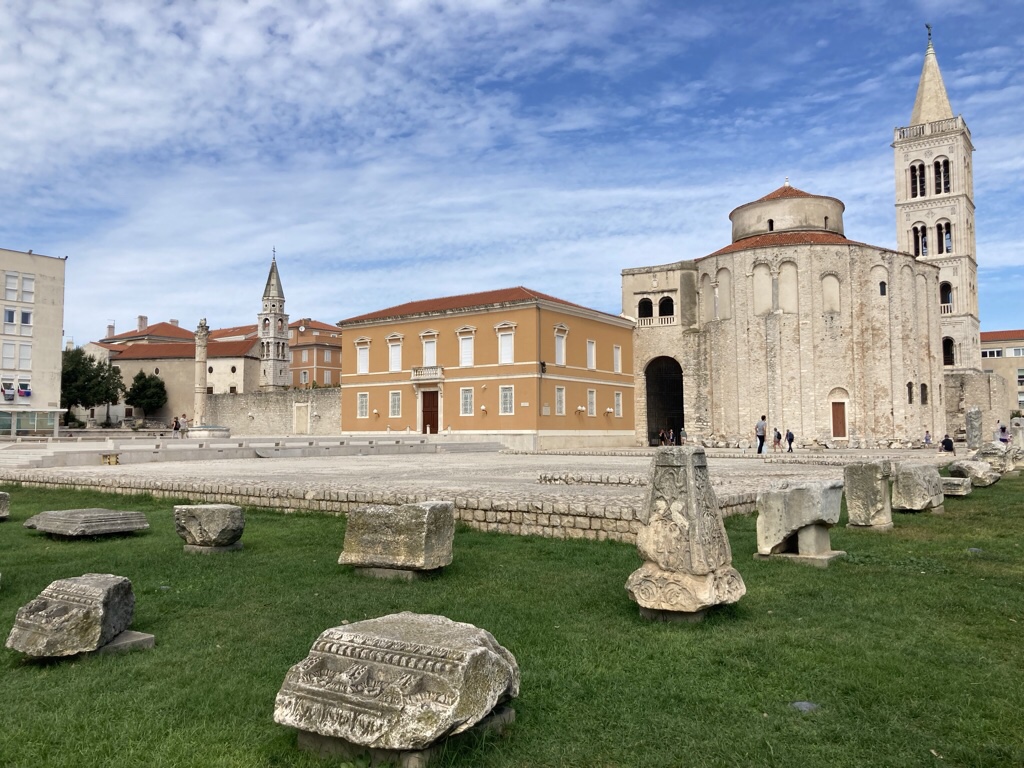
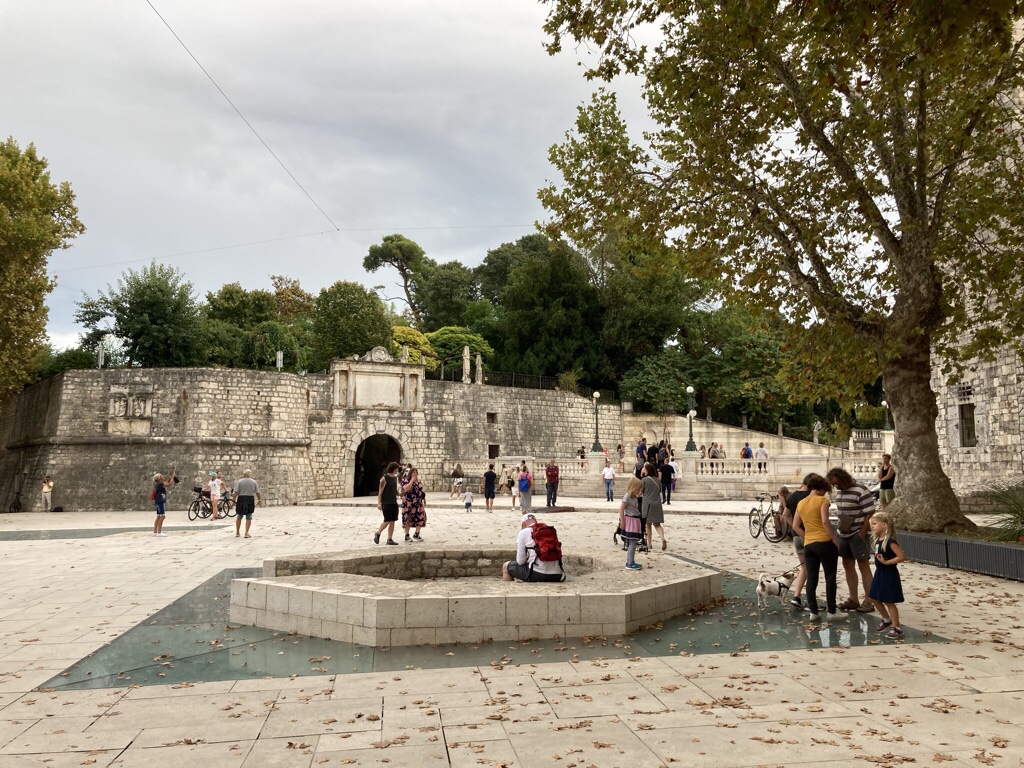
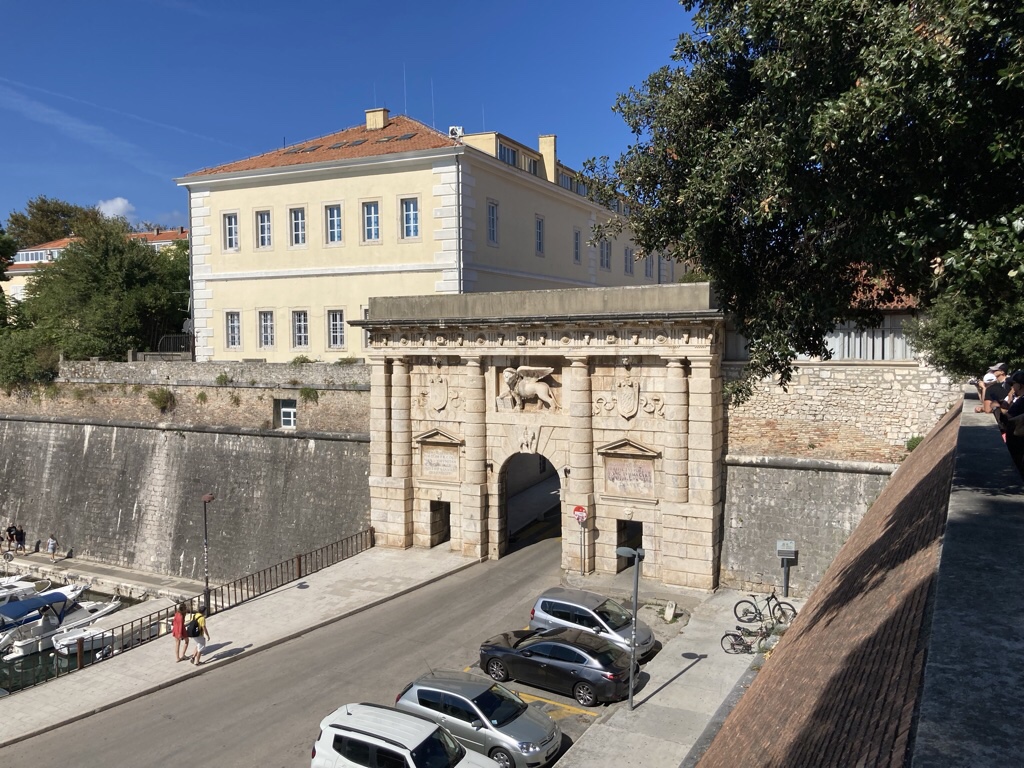
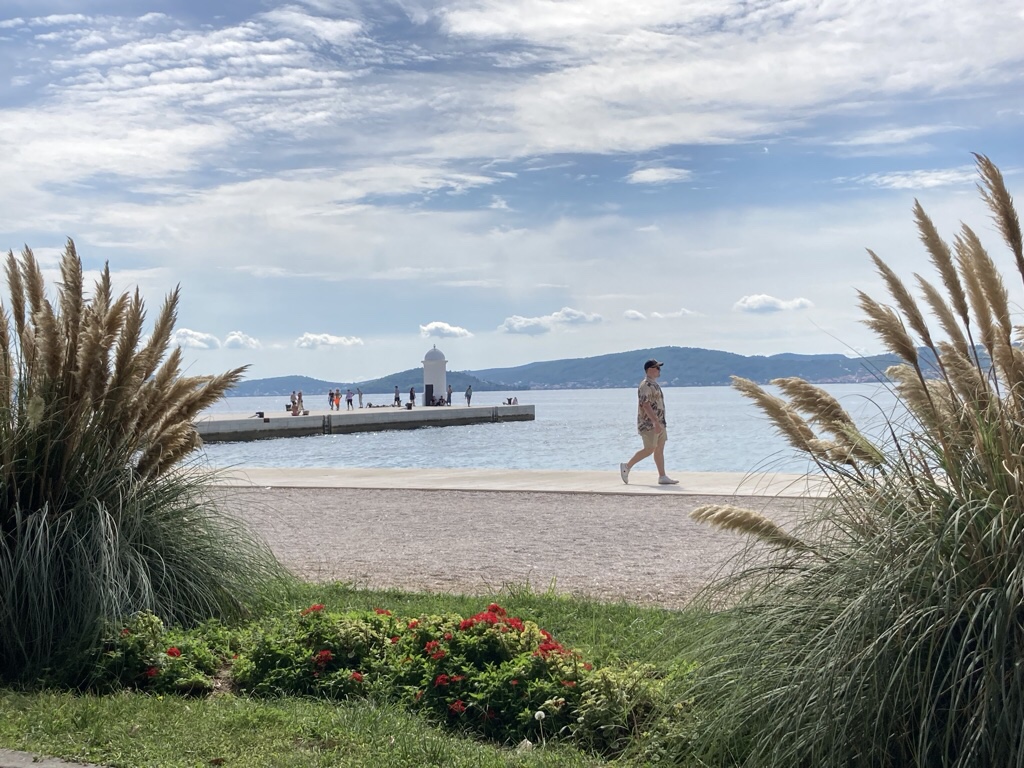
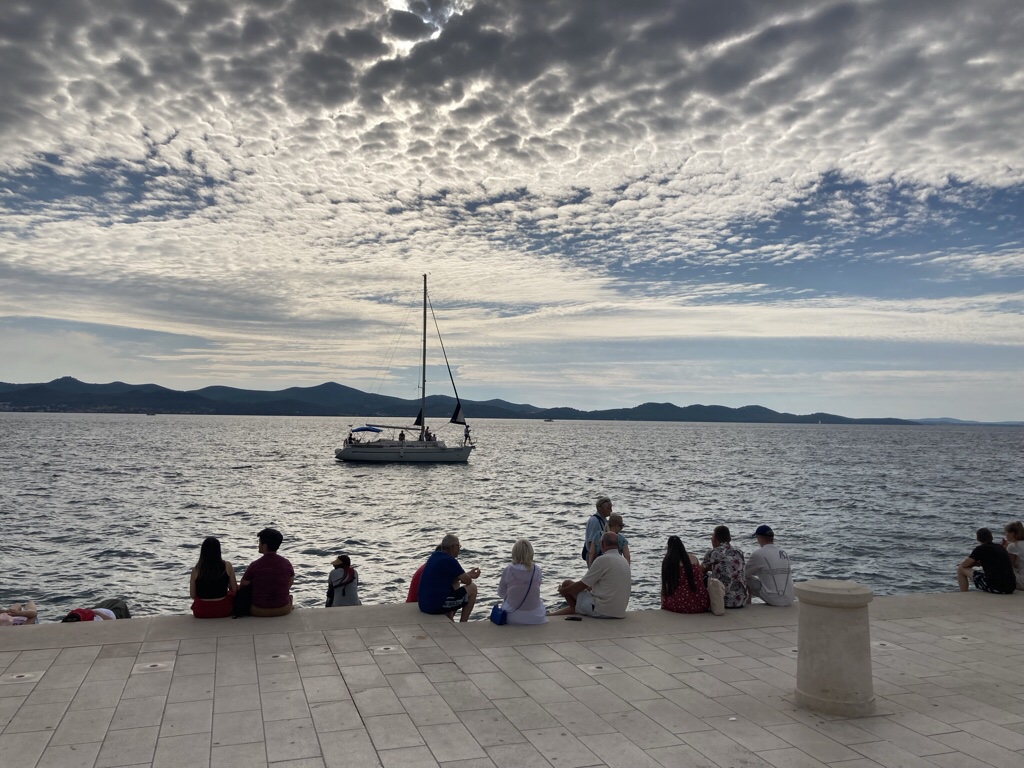
Zadar … and the Sunset

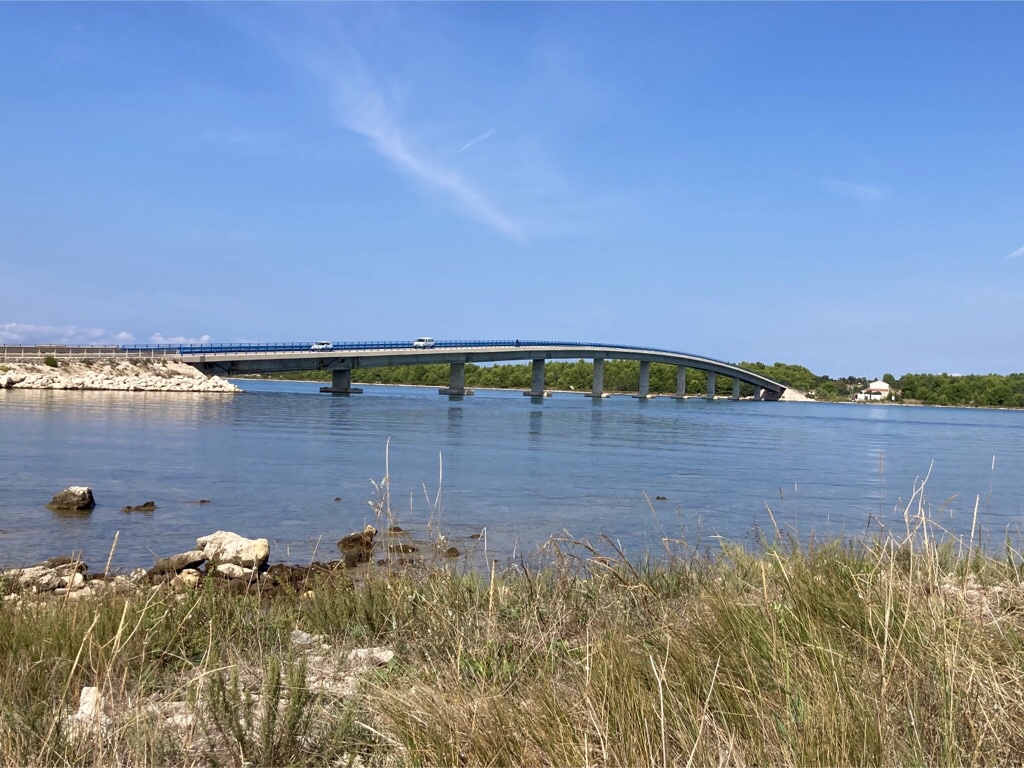
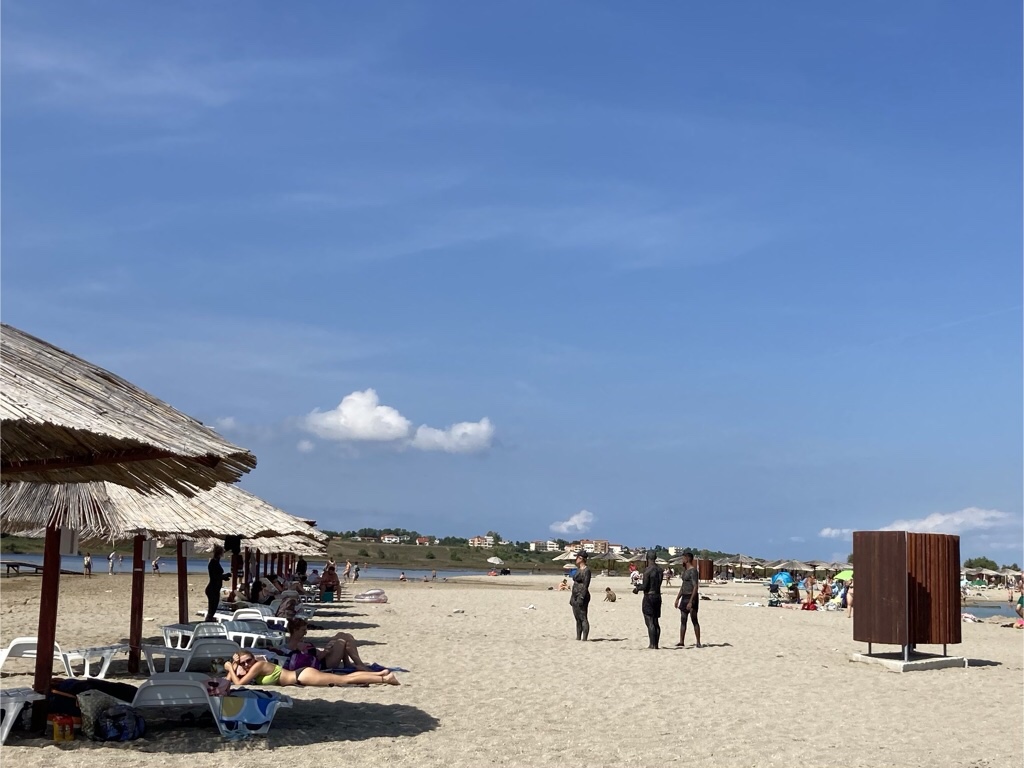
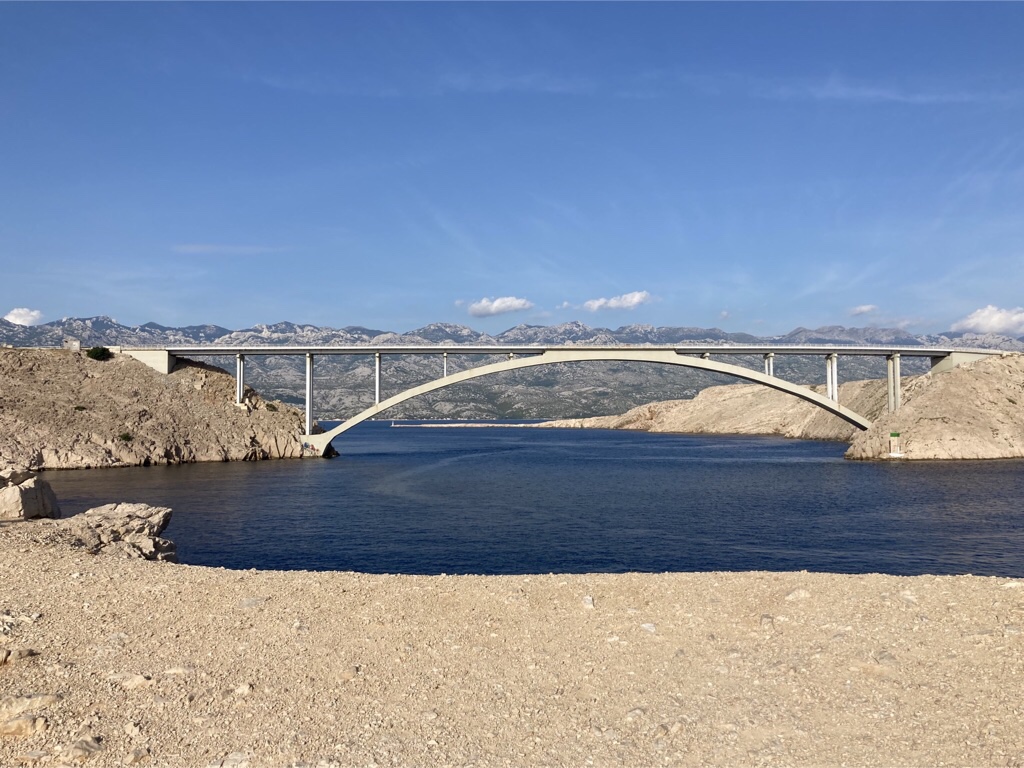
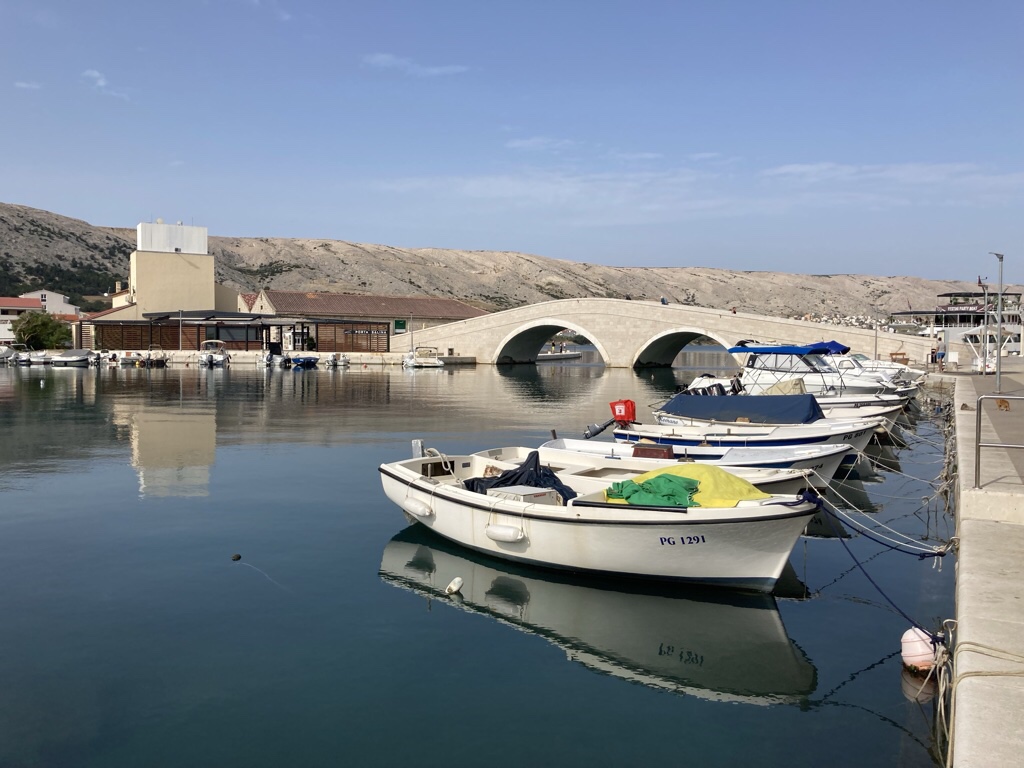
Bridging the Gap to Pag

Full Circle in Crickvenica

Map

Caen … and William the Conquerer’s Chateau

We had over 300km to drive so took the péage – I’m not sure what was more unsettling, to see 130 on the speedo or the toll of £34! Nonetheless, by lunchtime we were in Livarot to visit a family run dairy in the heart of the Pays d’Auge.

We had missed most of the action as cheese is made in the morning, but saw cheeses ripening in cool rooms …

… and also the Livarot cheese being wrapped in reeds, originally done to stop the soft cheese collapsing when transported by train to Paris.

We had hoped their cheese bar might have been open, in order to enjoy a selection of cheese, but had to make to with tasters instead. It was interesting to compare cheese made from raw milk to pasteurised as see how much richer the flavour was and would have loved to bring some home but it needs to stay chilled.

We are spending our last night in Caen which features the last chateau on our list. It was built around 1060 by William the Conqueror and became one of the largest castles in Europe.

The walls, gatehouse and views are impressive but the grounds inside are undergoing renovation.

William also built his and hers abbeys, as penance for defying the pope and marrying his cousin Matilda of Flanders.

Here is Abbaye aux Hommes where William is buried …

… and Abbaye aux Dames where Matilda rests.

Our dinner at Le P’tit B that evening was excellent, everything from the amuse bouché to the last empty plate, thus bringing our trip to a lovely end.

That just left the journey home on this very ferry!

It’s been great, and all went smoothly, especially the driving as there wasn’t a pot hole to be seen and Chris loved taking his car on a trip! I loved being able to chuck stuff in the boot … and bring things home!

So here we are, sipping Crémant de Loire in the garden and reflecting that we visited only 8 of the 300 chateau in the Loire, so you never know, we might be back!

Map

Puy du Fou … spectacular!

Chris discovered the Puy du Fou website quite by chance and said we had to go, especially after friends at camera club gave it the thumbs up. I was a little sceptical, not sure how great a historical theme park in French would be, but we booked tickets to fit in with our ferry home. I left the rest to Chris to sort and he booked us into the Ibis in Les Herbiers for a couple of nights so we were close by.

Showtimes were added to their app a couple of days before and using the map we tried to plan our day to include the events we most wanted to see without walking from one end of the park to another. The app also provided simultaneous translation for some events if you took earphones, and it was going to be warm so water, hats and suncream went into the bag as well as a power pack just in case.

We were lucky to have a perfect day with some cloud and hazy sunshine and we were ready to enter the park as it opened … and had a truly wonderful time!

The park is made up of arenas presenting shows based on different historic events and also immersive shows that you walk through. These are linked with shady walkways and gardens and three theme villages of different periods with refreshments, craftsmen making things and souvenir shops.

In fact, for much of the time I was so busy enjoying it all that I hardly took any photos!

We entered by the the Belle Epoch Village …

… and our first short show was The Carrillion, with lots of bell ringing and acrobatics ….

The first epic was The Vikings, the story of a peasant girl who saves village from Viking raiders starring a ship which rises from the lake, acrobatics, explosions, horsemanship, animal handling, falconry and with a happy ending.

We saw three of the immersive shows, but being inside, it was hard to get photos. La Perouse told the tale about about a French voyage of exploration as we walked through the hull of the ship, there was a chateau with talking portraits, and the life of a really earl French king called Clovis.

Here’s the village of Fort-Rognou where we had lunch … ye olde burgers …

The next was The Secret of the Lance, a story of a shepherdess who helps save the castle with the help of Joan of Arc starring a huge lowering castle wall, acrobatics, explosions, horsemanship with a happy ending.

… and the finale, a tale of Richelieu’s Musketeers with swash-buckling sword fighting and Spanish gypsy girls dancing flamenco in water.

By early evening, there was another show we could have stayed for, but we decided to call it a day! Tired but happy, we stopped off for snacks on the way back, and sat on the terrace at the Ibis in the evening sunshine talking about how great the day had been. Well spotted Mr Hayes … his inner child was released!

Just for info, Puy du Fou began when a student had an idea to promote the history of the region and increase employment. The show Cinéscénie was born in 1978 and now has 1200 actors, hundreds of horses and lots of fireworks and is just shown during the peak season. In 1989 the Grand Parc of Puy du Fou was opened and it gets over 2 million visitors a year and it also has firework shows some evenings … but fortunately not this evening!

Tomorrow we head back towards the coast …

Map

Angers … a tale of two tapestries

Having left a little late by browsing the brocante, we unfortunately didn’t have time to explore any of the troglodyte dwellings along the next stretch of the Loire. Some date from prehistoric times and others utilised the caves left after mining the tufa for chateaux, but we didn’t worry as we have seen such dwellings before in Matera in Italy and also Cappadocia in Turkey.

Instead, we stopped at Le Saut aux Loups, a mushroom farm which shows the history and method of mushroom production, which began underground in Paris in the time of Louis XIV.

Later it moved out of the city and artisanal methods utilised the constant temperature and darkness of caves although today most are grown industrially in refrigerated sheds.

We also saw shiitake and pink, yellow and grey pleurotes or oyster mushrooms growing on plastic covered bales and even spotted some of them releasing their spores into the air, rising as a white mist and accounting for the white dust underneath them.

They also run a cafe and were busy filling mushrooms ready to go in the oven for lunch, stuffed with a variety of fillings such as pork rilettes, snail butter and cream cheese and salmon.

These are called galipettes, too big to be sold as button mushrooms, their hats have become too large so the stem breaks and the mushroom makes a somersault or a galipette! Looking at these it was a shame we were too early for lunch, but bought a jar of mushroom paste instead to take home.

When planning our route, I read about La Guingette a JoJo, a riverside summer bar and restaurant which made me think we could walk into our very own ‘Luncheon of the Boating Party’! As we got nearer, the sky got greyer and we saw rain falling in the distance. It didn’t bode well, but the car park was full and despite the fact it was far from the ideal sunny afternoon, we approached the gate, surrounded by twinkling lights.

The reality was that the rain had passed through already …

… and everyone was squeezed under one small covered area, trying to finish their lunch!

On another day, there would be been a table for us to stay, but today it was impossible, so we left remembering Renoir!

The sky remained grey and by the time we got to Angers, the heavens had opened and the roads were deluged, with gutters running with water like rivers. We parked and waited it out looking round a museum and emerged to a clear sky and even some sun.

We are staying in a charming B&B called L’Oisellerie which translates as The Bird Shop.

It is one of the oldest houses in Angers, originally build by a wealthy butcher in 1580 and most recently converted from a family residence into a B&B in 2018 by Marlène and Johanna.

Our room La Voliére, or The Aviary has views of the Episcopal Palace.

Breakfast was served in the kitchen, and our hosts took turns to make guests feel welcome by cooking crepes and giving sightseeing tips. The yogurt is homemade and when Marlène explained how easy it was, I decided to give it a go when I get home. It was also a chance to chat to other guests and we met Josh and his daughter Lucy from Little Rock, Arkansas who were having a great time in France for their first visit.

Full of crepes and yogurt we set off to the C13th chateau, a hugely imposing fortification surrounded by 17 towers and an impressive ditch.

We were surprised by more extensive gardens inside …

… and also saw the interior courtyard where the Dukes of Anjou had private quarters …

… and walked round the battlements.

The chateau is also home to the Apocalypse Tapestry, the largest surviving medieval tapestry, commissioned by Louis I, Duke of Anjou in 1375, and now displayed in a special gallery.

It took 7 years to make and illustrates the Apocalypse according to St John from the Book of Revelation, a struggle of good versus evil with Christ emerging triumphant at the end.

The C14th was a turbulent time, with the Hundred Years War and the Black Death and essentially, it provides certainty in unpredictable times. It also features Anjou heraldry and the fleur-de-lis so would have been a status symbol promoting the Anjou dukes.

There was a detailed commentary about each panel and here are my favourites, the fourth horseman, Death, looking rather too smiley …

… some scary multi-headed monsters …

… The Fall of Babylon …

… and New Jerusalem.

It’s not surprising that this tapestry has inspired others, one of them Jean Lurçat saw it in 1937 and subsequently became a leader in the French tapestry making revival. In 1957 he began his masterpiece, Le Chant du Monde or The Song of the World, conceived as a modern version of the Apocalypse Tapestry.

The series begins with disaster and chaos such as The Great Threat referring to the atomic bomb destroying the world and a modern Noah taking animals to safety…

… and The Mass Grave, a vivid evocation of the horrors of war.

Man in Glory at Peace shows rebirth after disaster …

… and my favourite Champagne showing bubbles and butterflies bursting across the image!

Both these huge cycles of tapestries made quite an impression on us, and we spent quite a while taking in the narratives, spotting small details in the compositions, seeing how colours and shading were used to such good effect and being quite overwhelmed by the vast undertaking of each.

Of course Angers had much more to offer including a cathedral, views of the river, quaint streets and strawberry tart, and here are a few snaps.

I had been looking forward to trying the Loire’s signature dish of pike-perch in beurre blanc sauce, but having realised we were in Angers on Sunday and Monday nights when most restaurants close, I’ve run out of time and this is a delicacy yet to be sampled. Instead we went to Chez Point on the first night, with a busy terrace in the evening sun, in fact it has been quite a surprise that the sun doesn’t set till around 10pm …

The following night we went to Le Connétable, a creperie with a little modern flair. Cointreau liqueur has been distilled in Angers since it was created by Edouard Cointreau in 1849 and I began with Soupe Angevin, an aperitif with Cointreau, lemon and sparking wine … yum, and my galette with smoked salmon, chèvre cream and salad was just perfect. PS: we both had flambéed crepes for desert!

Next stop … a spectacular

Map

Chinon … a trio of chateaux!

The weather here has been beautiful with warm sunny days, just perfect for wandering round chateaux and gardens. We ended our day in Chinon, at the Hotel Diderot, which proved to be just what I’d hoped, my idea of a perfect small hotel in France! Our room had jasmine climbing the wall outside which fragranced the air …

… and inside was so pretty and cool due to the thick stone walls.

The terrace proved a perfect spot for breakfast, with thick slices of toasted brioche as light as love and homemade preserves that were especially delicious.
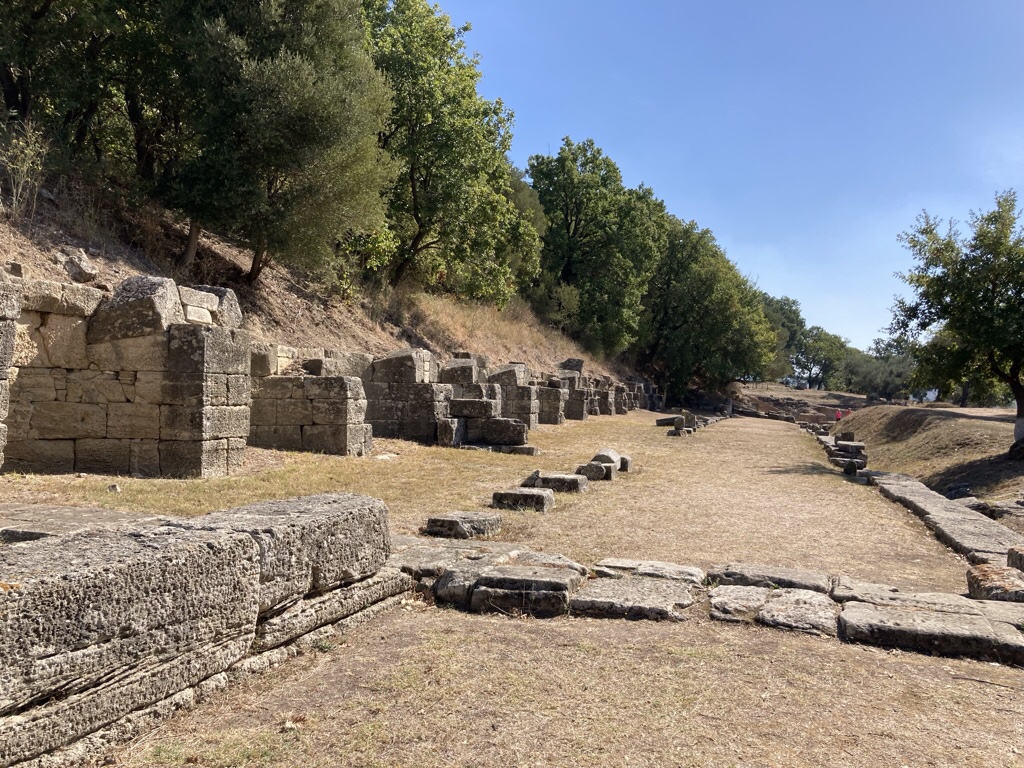
The Chateau de Chinon is high above the town, overlooking the river Vivienne and extensive vineyards and comprises a restored fortress, built by King Henry II of England in the C12th.

As we walked through the pretty medieval town …

… we noticed several references to Joan of Arc, and one suggested she may have dismounted her horse in that very spot!

Having checked, we found that after her vision that she must free Orleans from the English, she came to Chinon in 1429 for her first meeting with Charles VII who was living in the chateau.

The day ended with another creperie …

… and another sunset!

It was so hard to choose which of the chateaux to visit as there are so many, but our next choice was Chateau D’Azay-le-Rideau, one of the loveliest, with soaring turrets right out of a fairytale.

We walked round the garden first and waited to see if the water would settle to give a good reflection. I was out of luck, but was rewarded instead by a chorus from tiny frogs sitting on the lilies!

The interior was less interesting, although since it was built during the reign of Francis I, there were more salamanders to spot.

Chateau de Villandry was just close by, another C16th building, with a redesigned C18th interior, including some fine tapestries and very pretty fabrics.
As the tour took us to the first floor, we got the best views of the garden which were recreated in the C16th style starting in 1908. The shapes of these box beds are picked out with tulips in spring and begonias in the summer.
The ornamental kitchen garden is carefully planned with around 40 species in crop rotation as necessary, maintained organically with underground watering.

Together with the 1000 lime trees and 30km of box which all need pruning, it is managed by just 10 gardeners!

We were very much looking forward to our dinner at La Table Jeanne with traditional homemade cuisine and local specialities especially when they confirmed that they would be pleased to offer a vegetarian menu. The reality unfortunately fell a little short and when asked for details of the vegetarian choice, we were told it would be up to the kitchen! Even my lemon tart proved a disappointment …

Having said all that, we met Dalus and Karen who were on an extended trip to Europe from Auckland and had a lovely evening chatting about life and travels.
As we checked out of Hotel Diderot, we were told about the monthly brocante down by the river and couldn’t miss the chance to join in this very French activity! We parked in Place de Jeanne of Arc …

… then browsed the stalls of vintage offerings …

… similar to a car boot, but so French and so much more classy! I was delighted to buy a selection of vintage lace and mother of pearl buttons from this lovely lady!

But we had dallied too long and it was time to get back on the road so we crossed the river Vienne and waved goodbye to Chinon.

Map

Chambord & Chenonceau

We picked the most direct route south from Chartres which zig zagged through acres of farmland with barely a village to be seen. We crossed the Loire river and reached the Chateau de Chambord, which is maybe the finest expression of Renaissance architecture, as well as being the largest, grandest and most visited chateau in the Loire valley.

Begun in 1519 for Francis I as a hunting lodge, it ended up with 426 rooms, 282 fireplaces and 77 staircases!

At its centre is a double spiral staircase, possibly based on drawings by Leonardo da Vinci …

…such that one person can go up and another go down and all that meets are your eyes across the void!

The design is modular with each corner section containing the same layout and an external staircase so all guests were treated equally …

… and some rooms were beautifully restored with period furniture.

Francis had his own wing and his emblem is the salamander, which can be seen throughout.

Later kings came to stay with their courts and made additions such as this suite of ceremonial apartments for Louis XIV with this audience chamber, complete with bed.

Walking round the terraces gave a good view of the intricacy of the roof architecture (spot more salamanders) …

and a lovely view of the gardens …

… which were just as lovely at ground level …

… although there was too much breeze to get a perfect reflection.

We continued to Blois where we stayed at the family-run Hotel Anne De Bretagne for the night …

… and later went to explore and found the Chateau de Blois which looked larger from the side …

… than the front, but we didn’t have time to visit.

After a wander and a drink in the artistic quarter …

… we went to Le Castelet for dinner as they promised a menu of artisanal produce prepared with homemade flair and a vegetarian option.

We were truly treated! An amuse bouche of spicy pepper gazpacho got us started …

… then gravalax of pollock and sweet potato chutney with ginger, and tenderloin of pork with cider cream sauce with sweet potato, truffle and shiitake mushrooms for me …

… and for Chris mushroom crumble and roasted tofu then dahl of lentils with seasonal vegetables.

We had two spoons for the Croq’ chou of yogurt ice cream and passionfruit caramel!

Next day, Caves Monmousseau was our first stop, despite it only being 10.30, as they are renowned for their method traditionelle sparkling wines such as Cremant de Loire. Their cellars are built into the limestone cliff, using the tunnels left once the tufa stone was mined to build the local chateaux, perfect for storing wine as they remain a constant 12° all year round.

The tour showed how the tufa was mined …

… and also explained the double fermentation process and a handy little trick of freezing the neck of the bottle so a frozen plug of wine can be removed containing the sediment.

There was also a light show which evoked various chateau by certain features such as the maze at Villandry and the spiral stairs at Chambord.

We then had a tasting of their various wines, spitting as necessary for the driver, but managed to settle on our favourite, and have several bottles to bring home!

Next up was the most visited chateau in France, Chenonceau …

… which was built in the C16th on the foundations of an old mill and later extended to span the River Cher. It was given by King Henri II to his mistress Diane de Poitiers, painted here as Diane the Huntress.

After his death, his widow Queen Catherine d’Medici …

… had Chenonceau given to her in a chateaux swap with Diane! These two women each designed one of the huge square gardens at the front of the chateau – this is Diane’s Garden …

… and this is Catherine’s …

We were amused that the portraits and gardens seemed so mismatched!

There was also a splendid cutting garden which no doubt provided many of the blooms for the beautiful floral displays in every room.

There was also a splendid cutting garden which no doubt provided many of the blooms for the beautiful floral displays in every room.

The best views of the chateau were from the gardens.

Just time for a picnic …

… before heading on … to Chinon.

Map

Giverney … and Monet’s garden

Back in the car, we continued on the Monet trail …

It was an interesting drive as the plan was to avoid the toll road and take quieter roads instead, but they led through so many villages, we couldn’t keep up and the journey seemed to be taking longer and longer! In the end, we got on the peage and accepted this was probably a lesson learnt!

Finally we reached Vernon and parked up to visit the old mill, painted by many including Monet.

A bridge was built here in the C12th by King Philip II to move troops during the war against the English led by Richard I who reigned over half of France. The fortress was built to protect the bridge!

When the war was won, Philip recouped the cost of the bridge by selling rights to establish mills, although only one remains and slowly the bridge fell into disrepair and was later replaced by another nearby.

Continuing, we soon reached Giverney and stopped to check out the village.

It became obvious that it had been completely overtaken by the legacy of Claude Monet who settled here in 1883 with his companion Alice Hoschedé and their respective children, living in Clos Normand until his death in 1926.

The village is very picturesque but filled with galleries, cafes and shops and even a place offering painting classes.

We visited the church and saw Monet’s grave and saw the Museum of Impressionism, but it was too late in the day to want to visit.

Exploring done, we continued to La Ruche for the night. A Logis hotel and bakery, we had a delicious home cooked dinner overlooking the Seine, enjoying salad entrées – smoked salmon and lentil and Greek salad …

… then following with pollack and ratatouille for me and a veggie pizza for Chris.

… while a variety of boats chugged by.

After sampling the excellent bakery items further for breakfast, we returned to Giverney for our 10.30 entrance to Monet’s home and garden. We didn’t quite beat the crowds, but someone mentioned it was a quiet day and we took it all in our stride. The route led us first under the road to the extra piece of land Monet purchased in order to make his water garden. Immediately, there is a lushness and an oriental feel with bamboo and willow providing a background for vivid orange lilies …

… then there are roses …

… finally the lily pond!

At first glance, the planting looks uncontrived, but looking closer, the repeat of certain plants gave it a natural rhythm. The day lilies and roses give the most colour now, but it was obvious there would be a progression of blooms through the summer. The water lilies had only just started flowering, but there were just enough to make our day.

Monet’s bridge was overwhelmed by wisteria and visitors but then there was no chance that any image we could make would come close to Monet’s painting!

I did however stand on it!

A garden needs constant care and the pond was being tidied and several gardeners were busy adding trays of fresh plants to the beds.

The garden in front of the house is a riot of colour …

… with lots of roses many grown up supports to give height to the beds.

There was quite a queue to enter the house …

… and we started with Monet’s studio which has hardly changed and we even spotted a painting of Etratat on the wall!

The house was charming, bright and airy with paintings everywhere, most copies of originals that were known to have been in the house painted by his friends, as well as lots of Japanese prints which inspired both his painting and garden.

It had been hard to find a good angle to capture the garden and maybe from the house was best.

As we walked back to the car, we both agreed it was well worth a visit and even with the crowds, it was still possible to find tranquil corners.

We spent the afternoon driving to Chartres, picnicking on the way …

… and spent the night at The Boeuf Couronné, another hotel with a touch of French chic.

We took a turn round the cathedral, apparently France’s best preserved medieval cathedral.

The west entrance has a Romanesque bell tower on one side and a Gothic spire on the other and between some superb statues round the door.

Inside, the roof soars … the stained glass glistens and we noted the carving on the choir screens and the labyrinth on the floor.

Later we went for dinner at Cafe Bleu, on their terrace overlooking the cathedral before watching the free nightly light show.

Tomorrow, we reach the Loire …

Map

Honfleur … a harbour and more!

The road to Honfleur took us first over the Pont de Normandy or Normandy Bridge. Completed in 1995, it spans 2km across the Seine and is the second-largest cable-stay bridge in the world. We stopped and took photos from the viewpoint …

… but the best views were as we drove over!

I have often seen pictures of Honfleur and thought it would be a lovely place to visit and finally we are here. The fishing boats may have been largely replaced with yachts, but the C17th Vieux Basin or old dock is still like a painting.

Narrow, tall, timber-framed buildings with slate roofs surround the harbour and a warren of narrow, cobbled streets wind their way into the centre of the town.

We are staying at the charming The Hotel du Dauphin in the heart of old Honfleur …

… and while the walls may date back to the C12th century, it is a stylish boutique hotel within!

Honfleur’s most famous landmark is the wooden Église Sainte Catherine, which is France’s largest wooden church. Built by a local shipbuilder and intended to be a temporary structure to replace the previous church destroyed in the Hundred Years’ War, it has a ceiling resembling two upside-down ships’ hulls.

It is surprising as the church building looks more like a market hall than a church, especially as the bell tower is completely separate.

We pottered around taking photos and taking a look in the chic French shops before sitting in the sunshine trying out the local cider …

… then visited a creperie for dinner … delicious!

In the morning, we took a walk along the dyke to the beach …

… and also caught a glimpse of the bridge.

Returning through a garden with definite Monet influences …

…. reminded us where we were heading next! …

Map

Étretat … fab in the fog!

We awoke surrounded by fog!

Arriving in Portsmouth last night ridiculously early, before our check-in lane even existed, meant a lot of hanging about, but we finally we drove onboard, found our cabin and went straight to sleep. After a croissant and a cuppa, we watched as the ferry backed into the port of Le Havre, guided by the pilot boat and thought the fog had lifted a bit.

We were surprised how empty the ferry was, only 30 or so cars with room for 100, so it only took moments to get our passports stamped and we were off.

The fog was patchy, hanging low over the fields as we drove to Étratat. Once an oyster fishing village, the railway then brought holidaying Parisians to La Côte d’Albâtre or Alabaster Coast, attracted by the steep, chalk cliffs carved into arches by erosion.

Today, the fog made the scene somewhat more ethereal, with Falaise D’Aval to the left of the beach …

… and Falaise D’Amont to the right.

The tide was too high to walk along the beach and through the arches so we climbed the cliff instead and visited Les Jardins d’Étretat. The original garden here was created in 1903 by a renowned French actress called Madame Thébault, who was inspired by Monet and had a love for orchids. In 2015 it was redesigned by Alexandre Grivko who has combined a selection of mainly evergreen shrubs which have been meticulously pruned to echo the Normandy coast, resembling the ebb and tide of the sea, landscapes of the undersea world and the rock formations and arches of the coastline.

The greenery was very lush, and slopes of gently mounded greenery reminded us of tea plantations. It also provided the perfect background for a selection of sculpture such as a tree with a key which winds to play a tune …

… Until the Word is Gone which look like turned wooden spindles but are terracotta sculptures shaped like the sound waves of the word “art” spoken in different languages created by Sergey Katran …

… and these sculpted faces by Samuel Salcedo which depict the entire range of emotions symbolising the many moods of the ocean.

There were also surprising splashes of colour from blowsy white blooms …

… and striking orchids …

and banks of budding agapanthus promise swathes of blue very soon.

Leaving the garden, we saw the arrow-like monument dedicated to Nungesser and Coli, two French pilots who attempted the first non-stop flight from Paris to New York in 1927 and the tiny Chapelle Norte Dame de La Garde on the summit.

Returning to the beach, a couple of signs reminded us this was a popular haunt of the Impressionists including Monet, kindly pointing out images of his painted views.

Further along, Chris recognised the car park and cliff from the Netflix series Lupin which we had watched last year. The main character was inspired by the detective stories by Maurice Leblanc featuring a gentleman thief called Arsène Lupin who had his lair inside the rock stack known as the L’Aiguille Creuse or Hollow Needle, just at the end of the headland. We could have visited LeBlanc’s house, but it was closed on Mondays!

We left the beach behind and went in search of lunch. Fortunately, not only did the Hotel La Residence offer moules frites with a choice of sauces, there was also oven baked Camembert with salad which suited Chris fine.

My moules Normandy were delicious!

Next stop, Honfleur!

Map

Chris & Elaine Go Chateau Spotting 2023

Many of our trips start with a travel article, and this one began with a picture of Château d’Angers suggesting Angers would make a great destination for a weekend away. Before we knew it, this had grown into a couple of weeks touring the Loire to visit a selection of old chateaux, gardens and maybe the odd vineyard!

Taking our car on the ferry to France is a bit of a retro choice, but it seemed the perfect solution while hire cars remain expensive and packing without a luggage allowance will be a breeze. We’ve booked an overnight sailing to Le Havre and sleeping in a cabin sounds like a bit of an adventure, what’s more, on the way back we can pack in a few bottles of Loire wine, in memory of those booze cruises of yesteryear!

Chris used the need for a new UK number plate and the offer of free Europe assist as perfect justification, if any was needed, to upgrade his car so we will be off in his shiny new red Mazda CX-5, remarkably similar to the last one except for the number plate!

The weather looks set fair and we are eager to be off so watch this space for possible mentions of water lilies, mushrooms, tapestries, pike and Cointreau…

PS – Thanks to Chris for the fab picture of Angers Chateau – I wanted it to look impressive and he managed to get more towers in than I could!

Journal Entries

Étretat … fab in the fog!

Honfleur … a harbour and more!

Giverney … and Monet’s garden

Chambord & Chenonceau

Chinon … a trio of chateaux!

Angers … a tale of two tapestries

Puy du Fou … spectacular!

Caen … and William the Conquerer’s Chateau

Map