We first considered a trip to Romania in 2015, inspired by images of painted churches and medieval towns but weren’t confident we could do it independently. Then, during a recent trip to the dentist, the nurse insisted to Chris it was perfectly possible to drive round Romania without speaking Romanian, and this trip was set in motion. Of course it will all be fine …
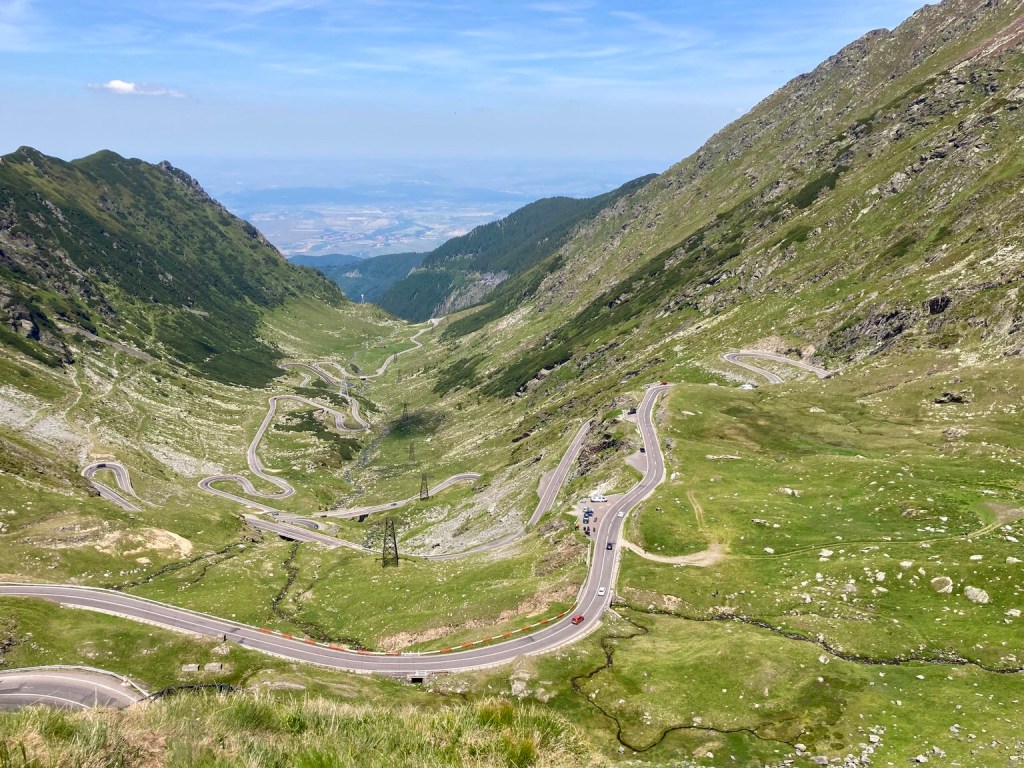
Travelling slowly, we are staying in a mixture of apartments and homestays as we explore Transylvania, Moldavia and Maramures. The Transfagarasan highway will also be one of the highlights, and if we are lucky, we might even spot bears!
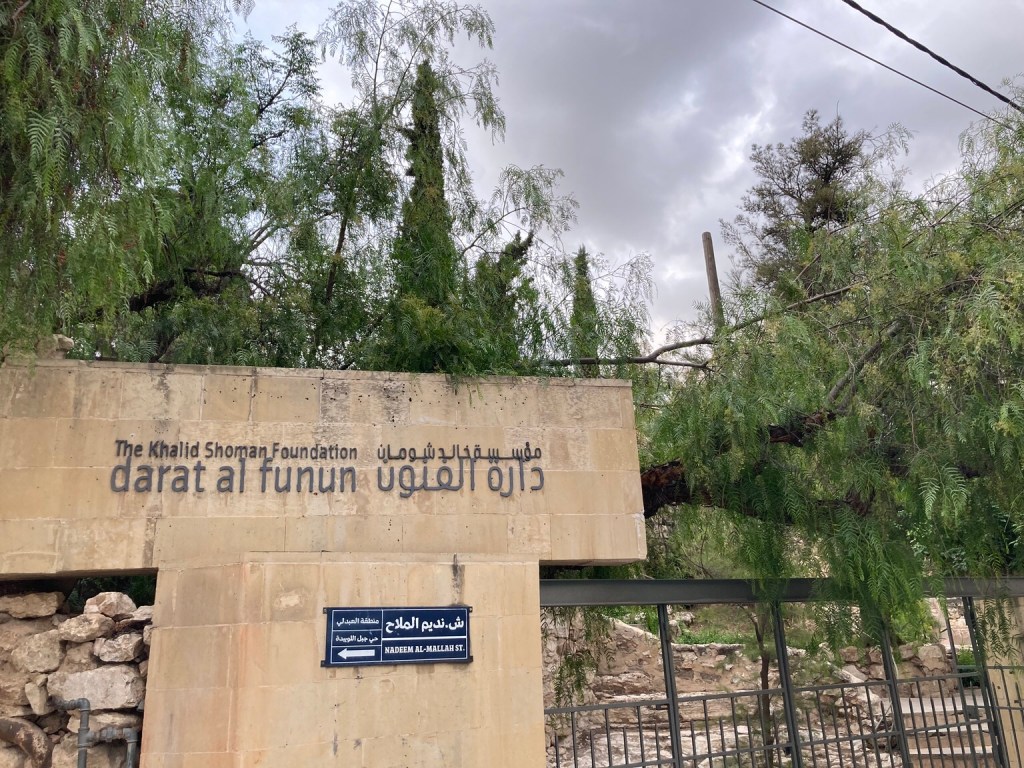
It was a long drive back from Aqaba, but podcasts passed the time and we got to the hotel around 4pm. Eager to stretch our legs, we took an Uber to Darat Al Funan, an initiative to support the arts and artists of Jordan and the Arab world.
It is housed on a hillside, in six renovated buildings which were built in the 1920’s as homes for prominent families.
Most of the pieces highlighted the struggles in the Middle East like these from Abdul Hay Mossalem. On a base of glue and sawdust they look cheerful with their bright colours until a closer look reveals the subject matter. Here is Gaza and Martyr …
The watermelon is a motif we have seen time and again during our trip, having been adopted as a symbol of Palestinian resistance, particularly against the Israeli occupation, and here is Story of a Water Melon by Khaled Hourani.
There was also a display of drawings by artists in Gaza including this by Basil Al Maqousi which made the horror of Gaza too real.
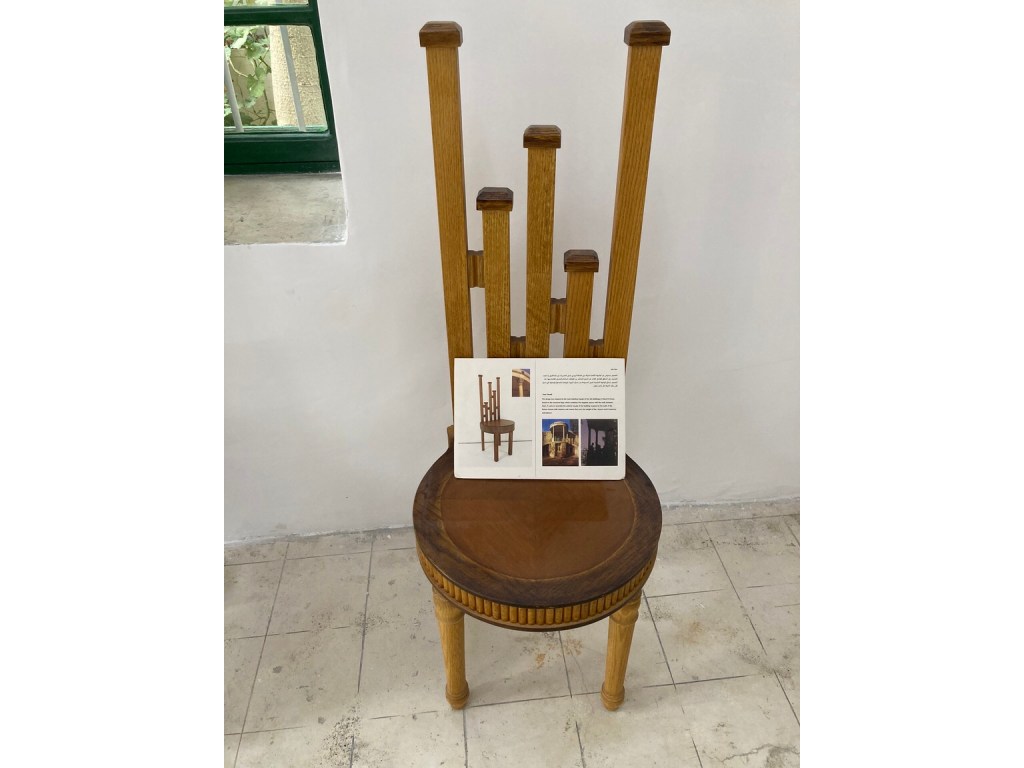
On a lighter note, students from Jordan University have been designed chairs using architectural details of the building as inspiration …
… and here are a couple of the buildings …
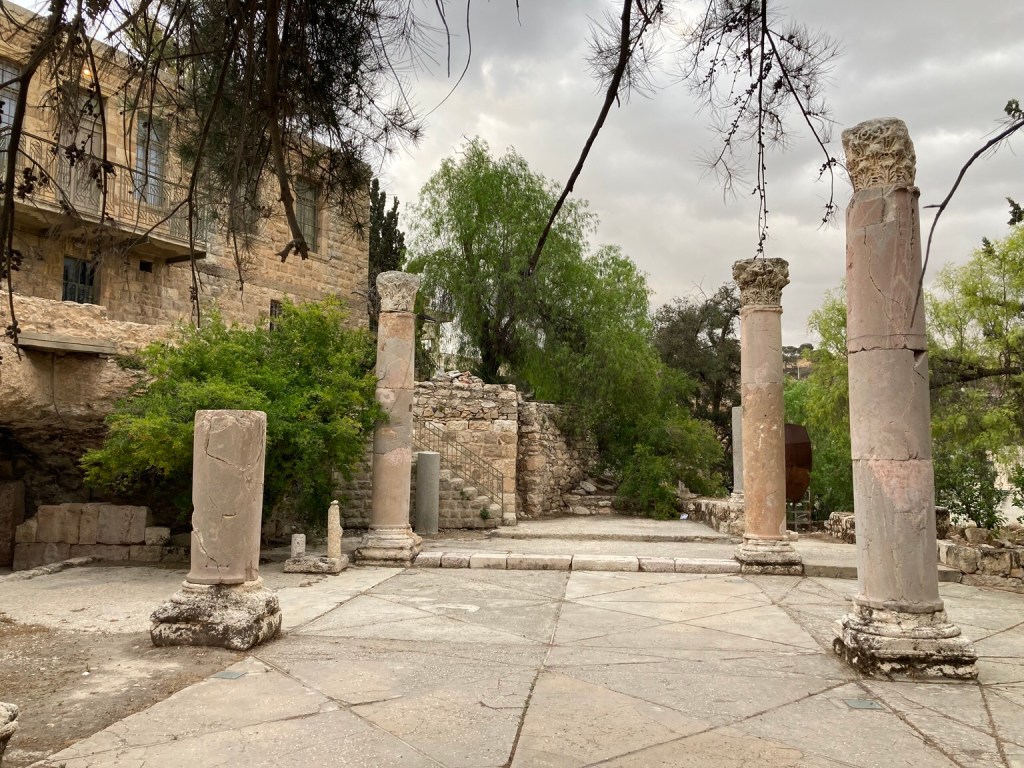
… and the renovated Roman temple in the garden!
As we set off to find something to eat, the heavens opened, but fortunately we took cover and then an Uber to stay dry and enjoyed the opportunity to eat away from the hotel at Shams El Balad, a family run cafe in an old villa.
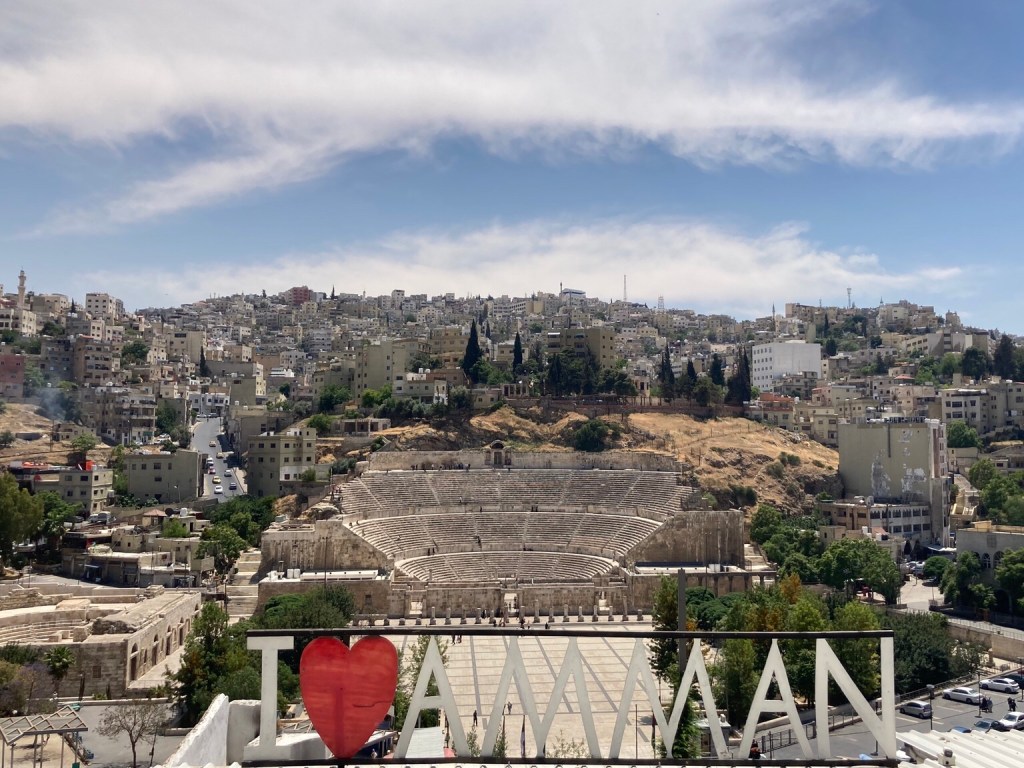
Although we had a short drive through Amman on our first day, it wasn’t until the end of our trip that we had a better look. Amman is named for the Ammonites who lived here in the C3rd BC and is today capital of the Hashemite kingdom of Jordan. We began at the citadel where there are Roman, Byzantine and Umayyad remains. The Roman Temple of Hercules dominates …
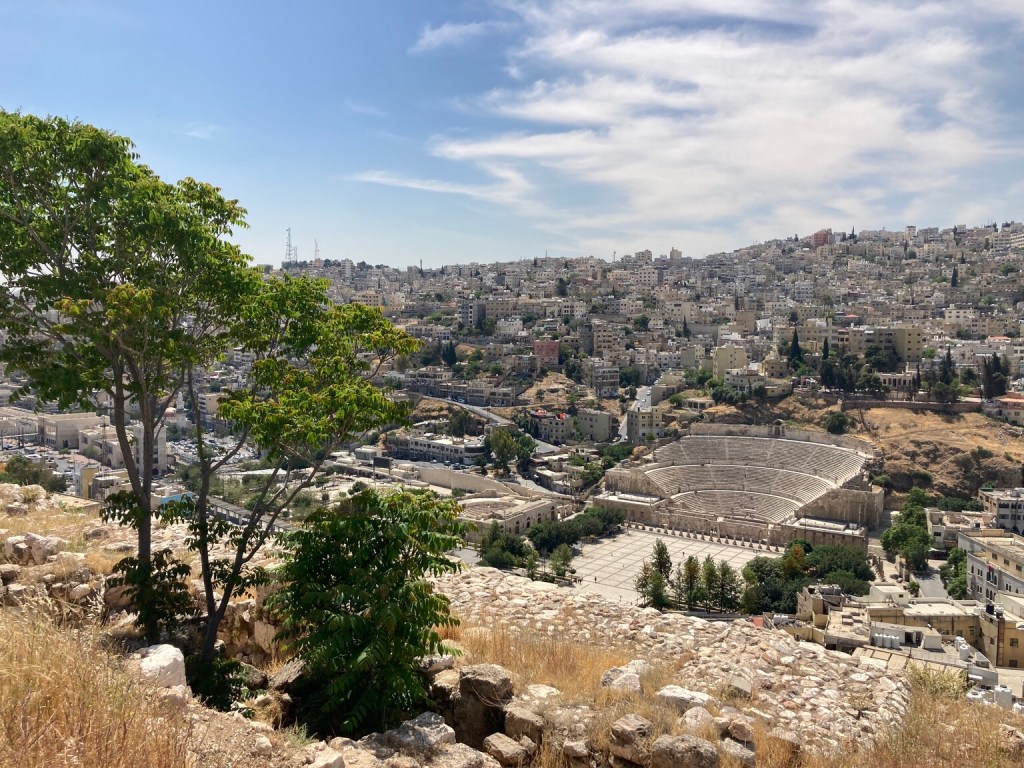
… built at the same time as the theatre down the hill …
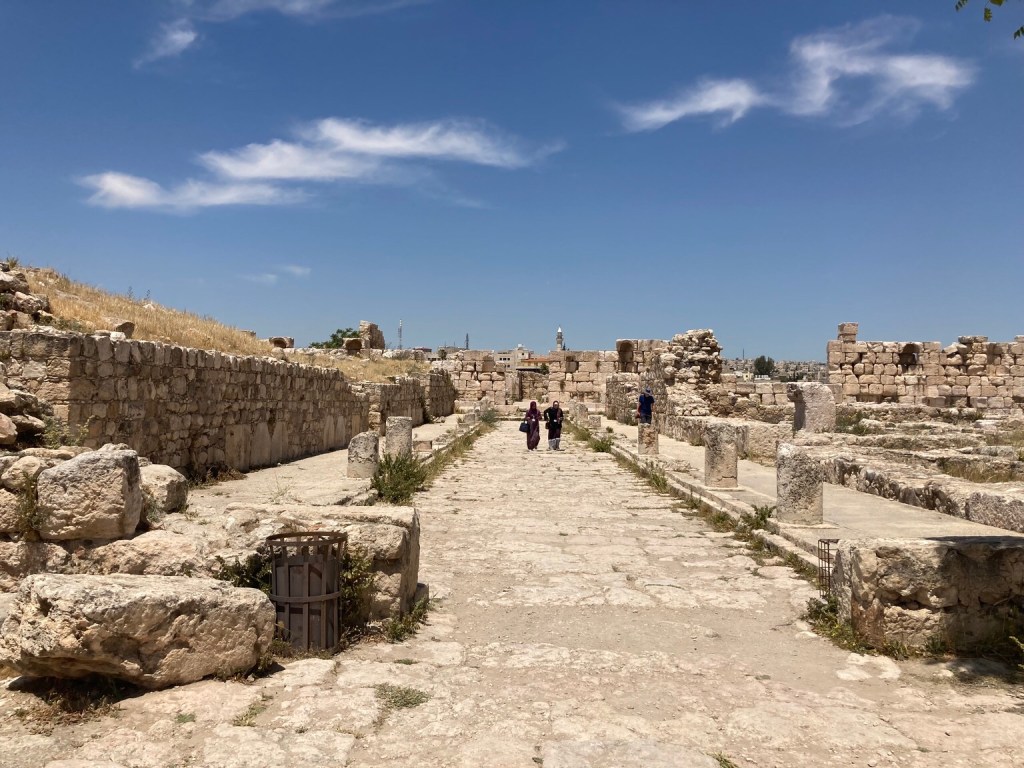
… and the Corsa Maximus or Main Street …
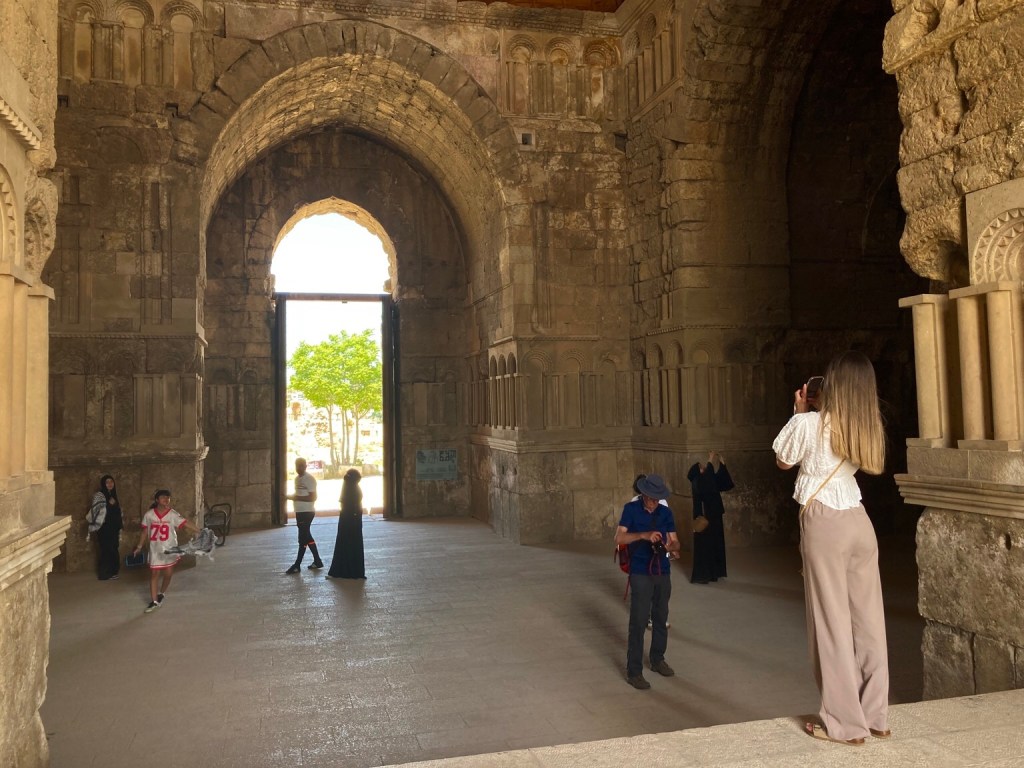
… also used later by the Umayyads and leading to the Umayyad palace.
We didn’t spend long in the museum which contained lots of bits of old pottery, but did look at the Neolithic statues left in a buried cache by the earliest settlers 9,0000 years ago, known as the Ain Ghazal statues.
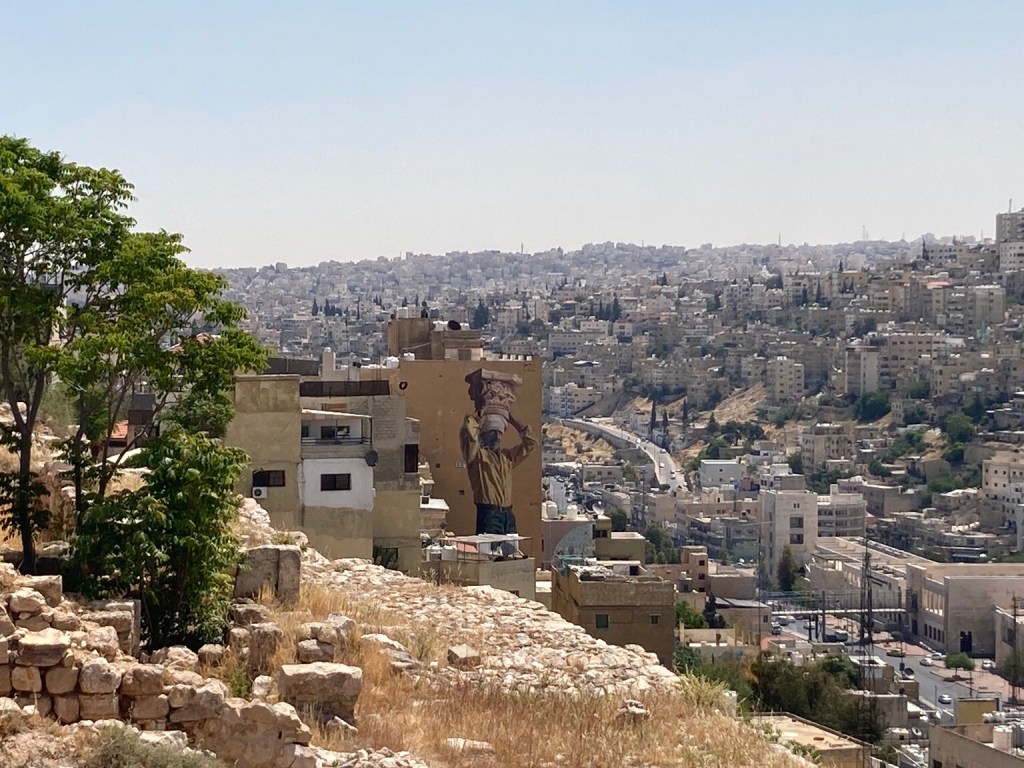
Afterwards we headed down the hill past colourful murals …
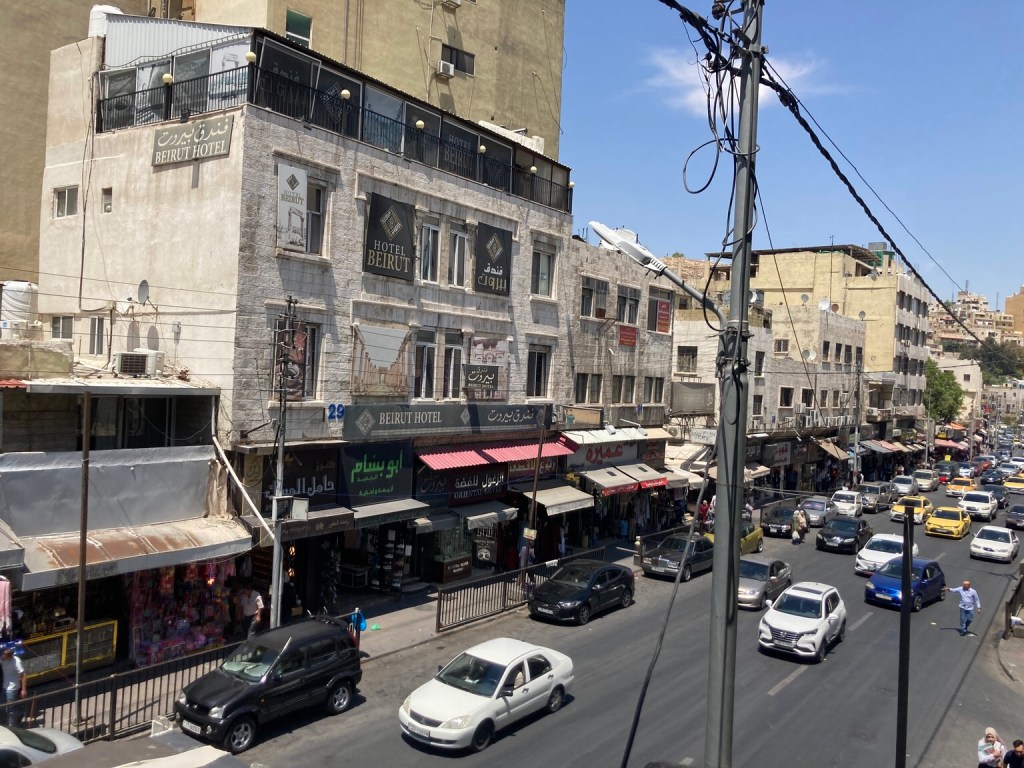
to the hustle and bustle of downtown Amman …
… with vibrant veggies hidden down a side street.
We ordered a glass of lemon and mint in a first floor cafe …
… and watched the world go by until it was time to be off to the airport.
It’s been a quite a workout this trip, in both mind and body! Standing overlooking the Holy Land was moving, the desert was beautiful but also inhospitable and Petra was every bit as impressive as we had hoped and we were so lucky to miss the flooding.
We’ve enjoyed learning not just the history, but also issues that affect modern Jordan and the political tightrope the country treads … and talking of treads, we walked around 50 miles in 10 days!
Our tour certainly packed everything in and ticked all the boxes, but we are looking forward to returning to a much slower pace next time we go off travelling together … very soon!
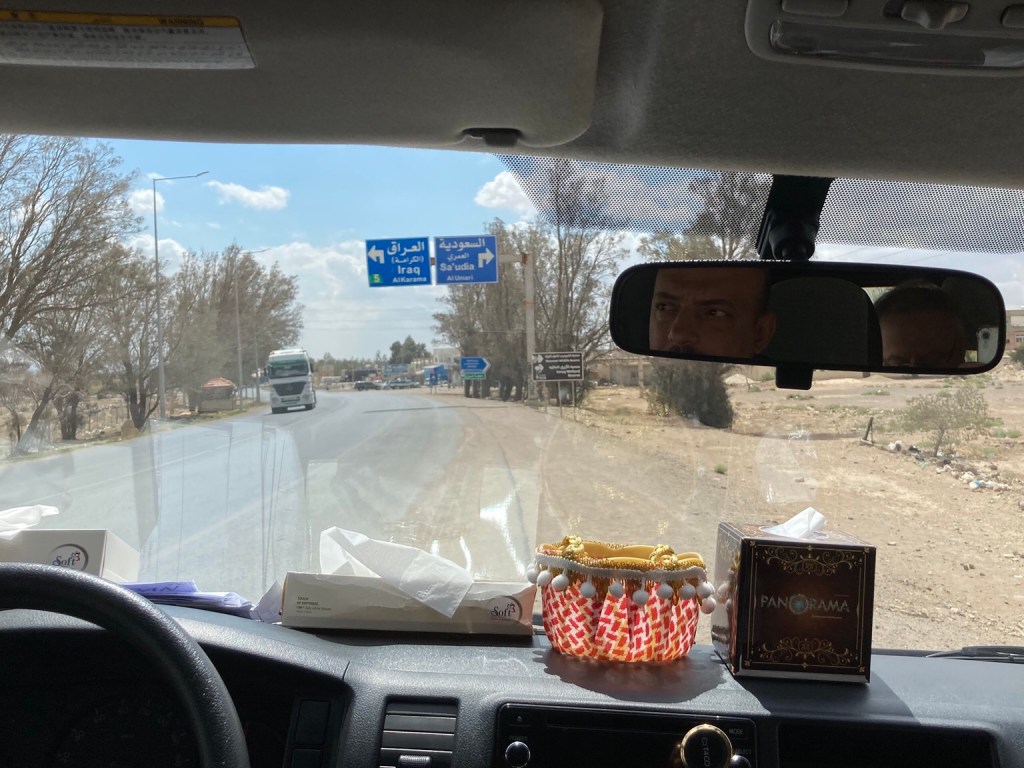
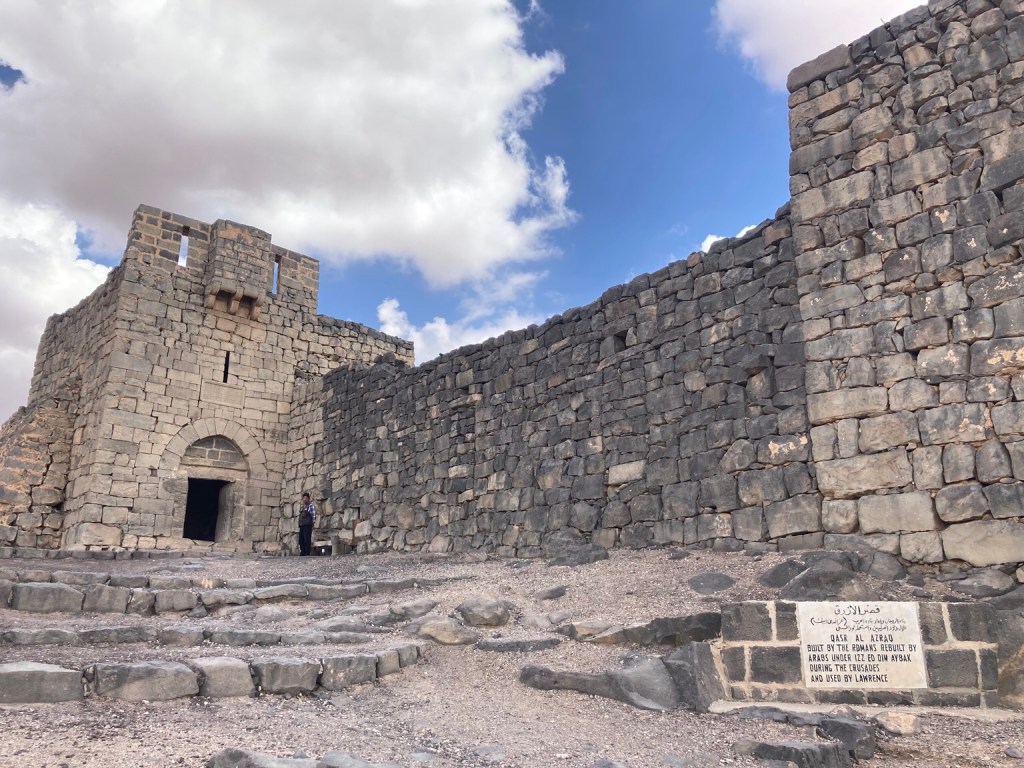
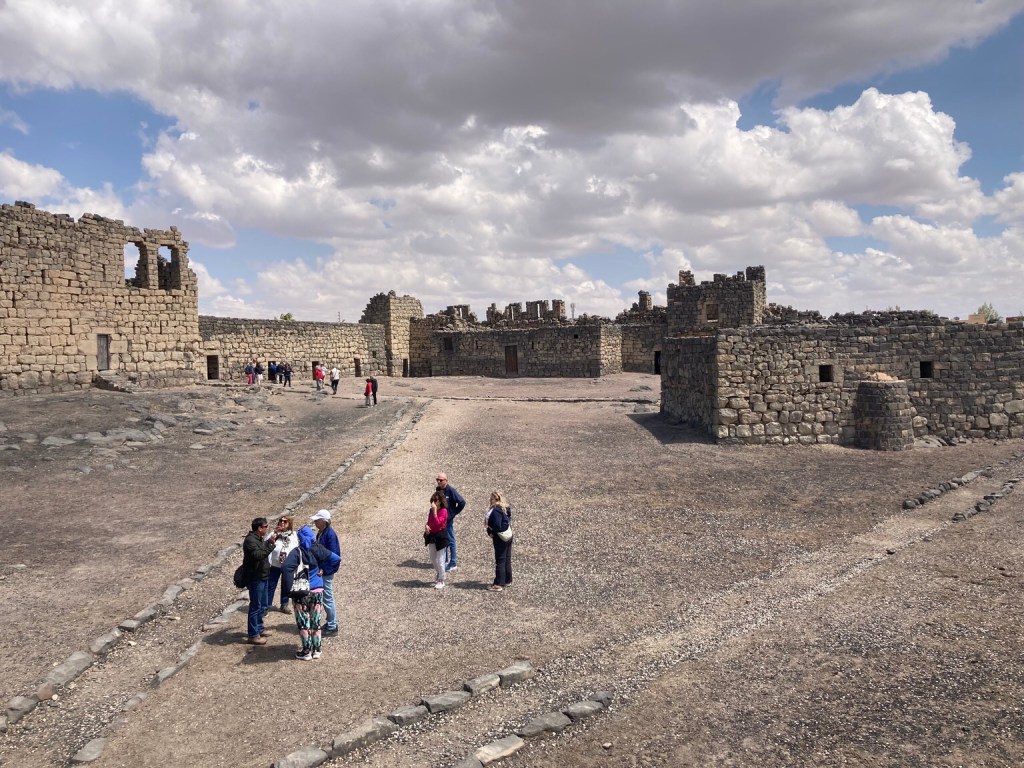
The day began with a drive out into the desert to discover the Desert Castles of Azraq, Kharanah and Amra which are located on a strip of Jordan between Iraq and Saudi.
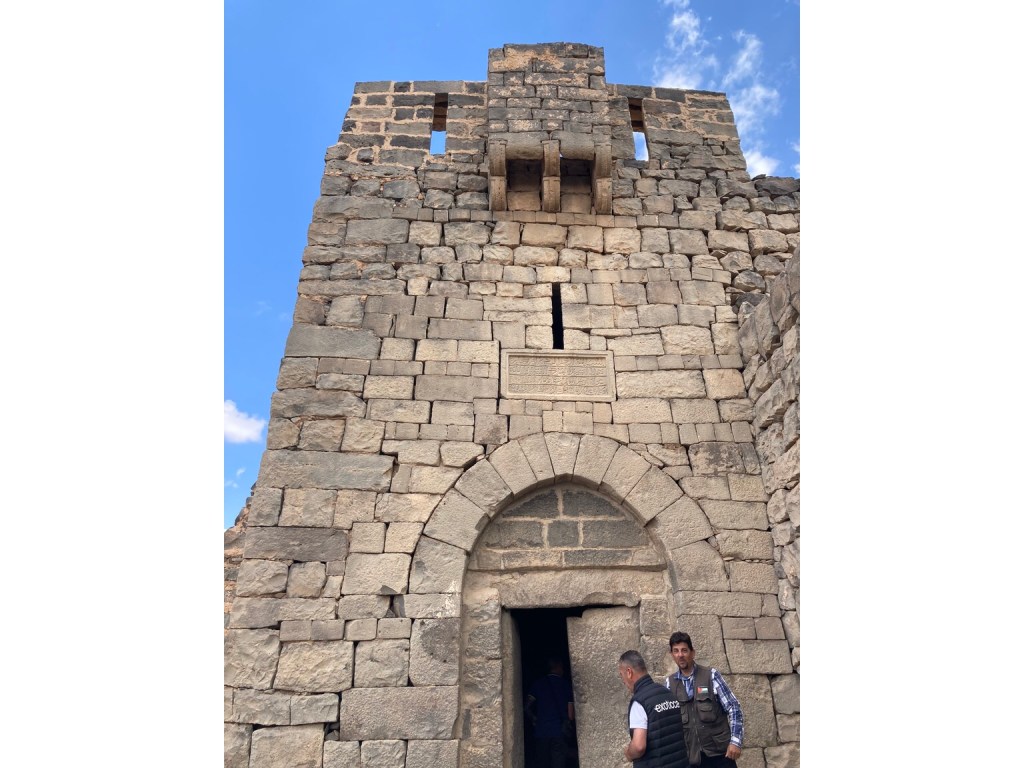
They date from the early Islamic era and were built as retreats for the Caliphs of the time. Qsar al-Azraq is a crusader castle, first built by the Romans, and more recently home to a Lawrence during the Arab Revolt in 1917.
The huge basalt doors were heavy to open, turning slowly on basalt pivots, lubricated with palm oil.
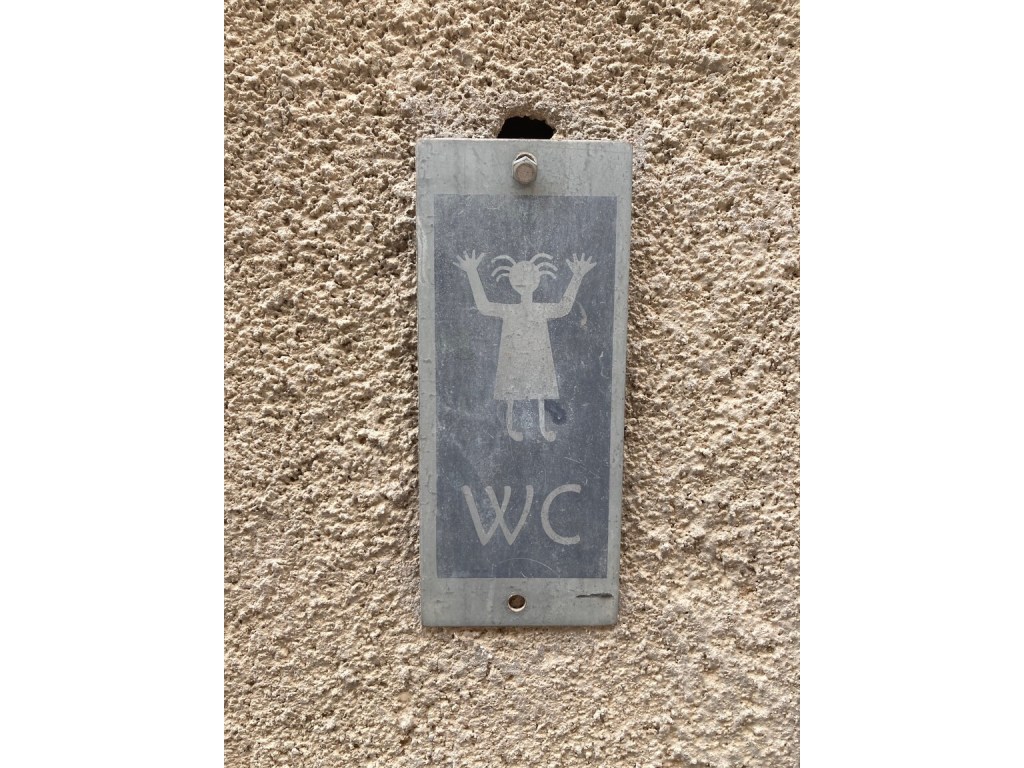
We were pleased to have a comfort stop, but should have taken the sign as a warning!
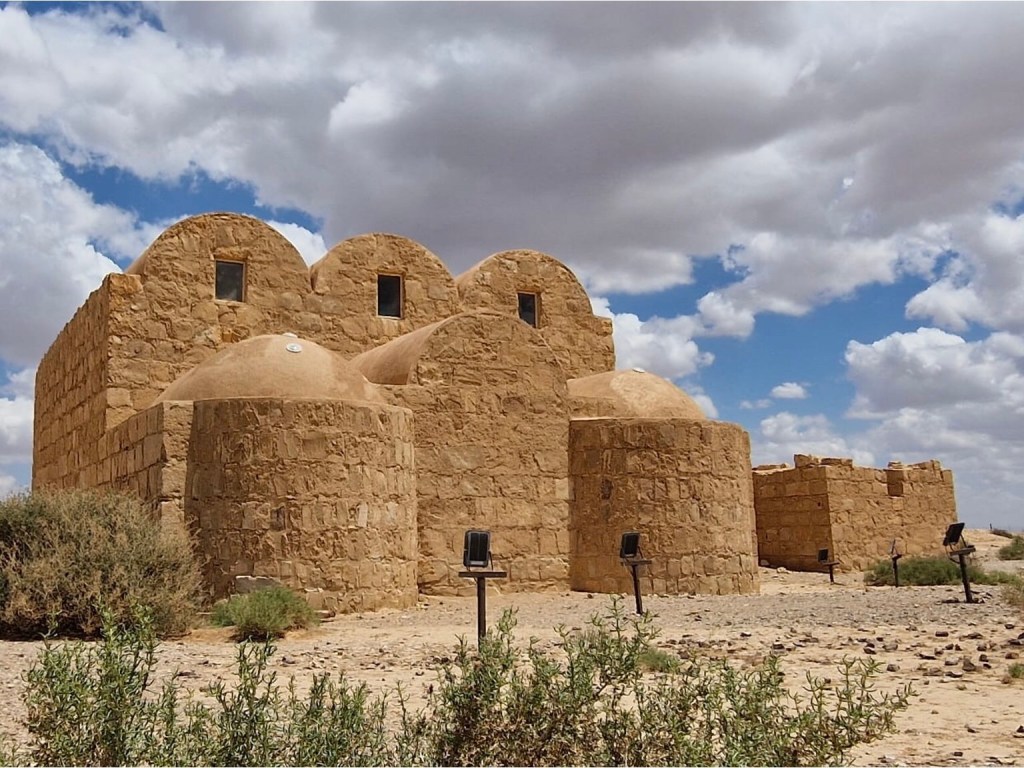
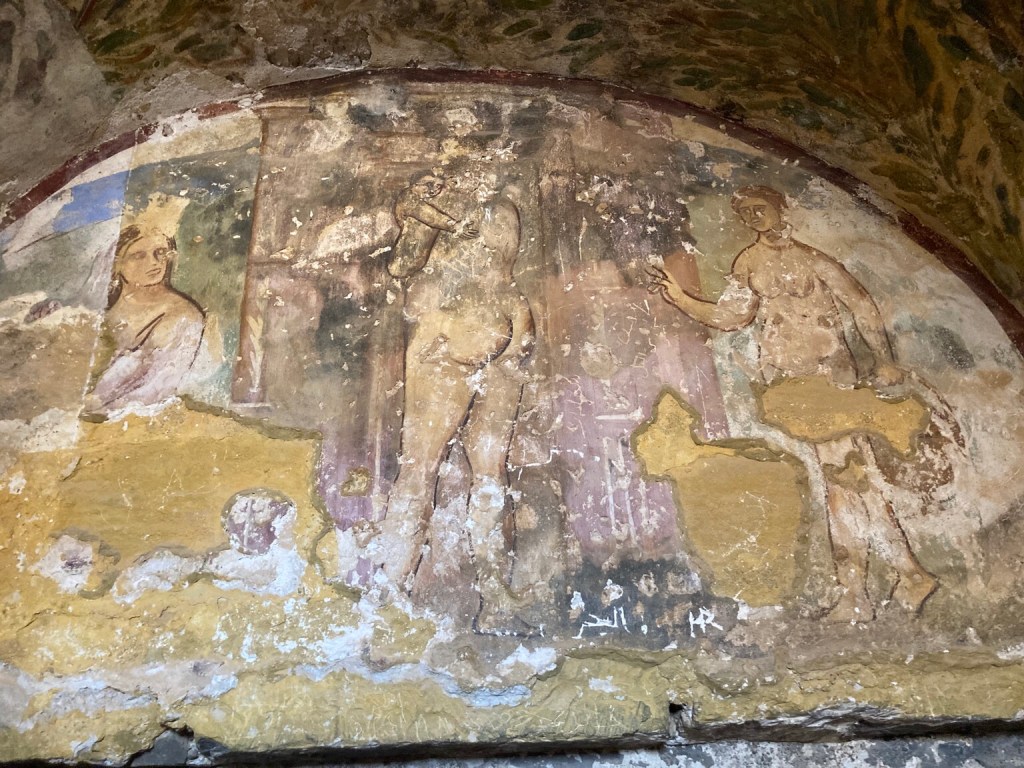
Next was Qusayr Amra, which formed part a large Umayyad complex which included a bathhouse, hunting lodge, roadside inn and also a castle which no longer exists.
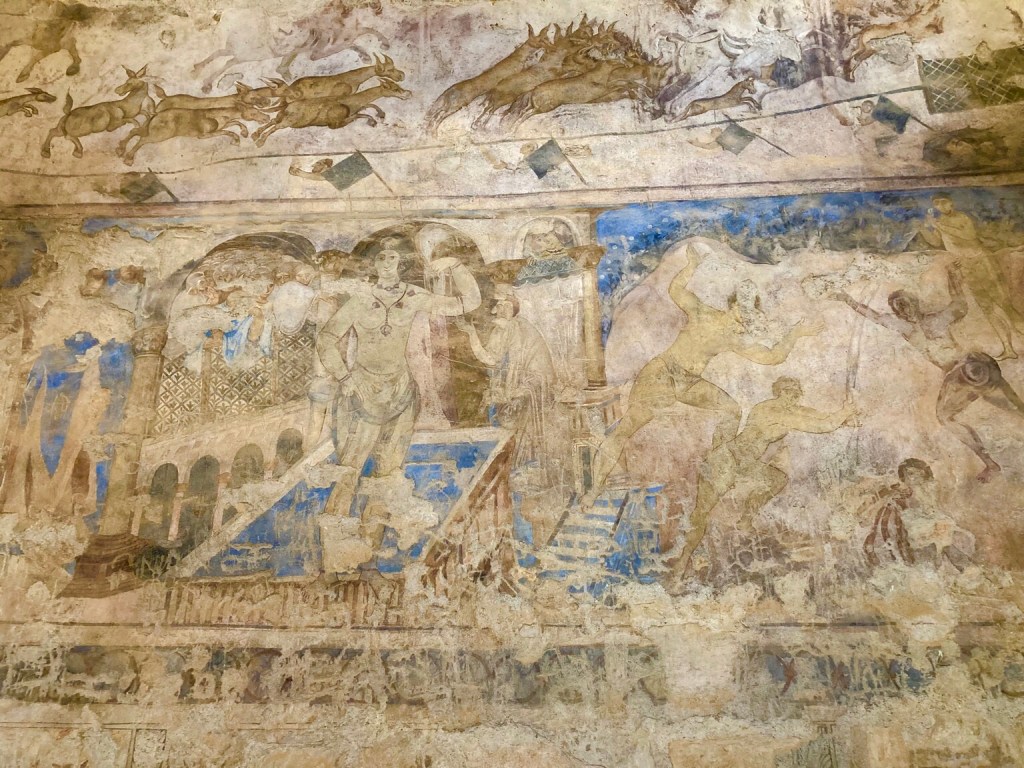
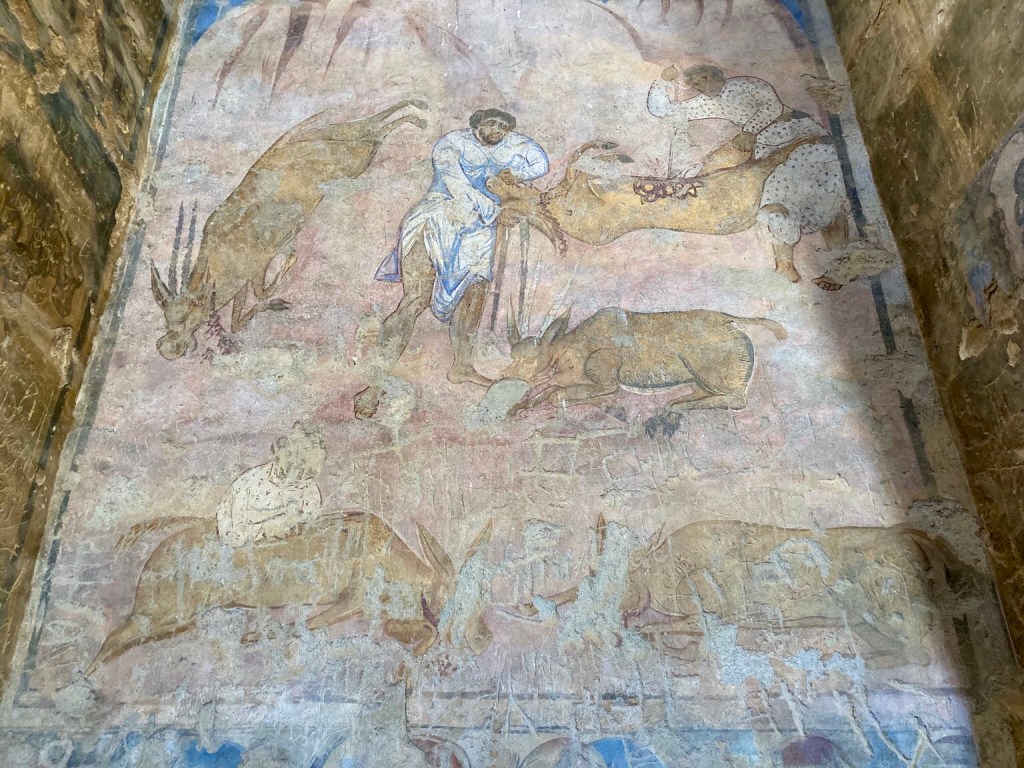
Renowned for being a pleasure palace, the walls are adorned with frescoes that reflected early Islamic life with images of wrestlers, half-naked women, dog races and hunting.
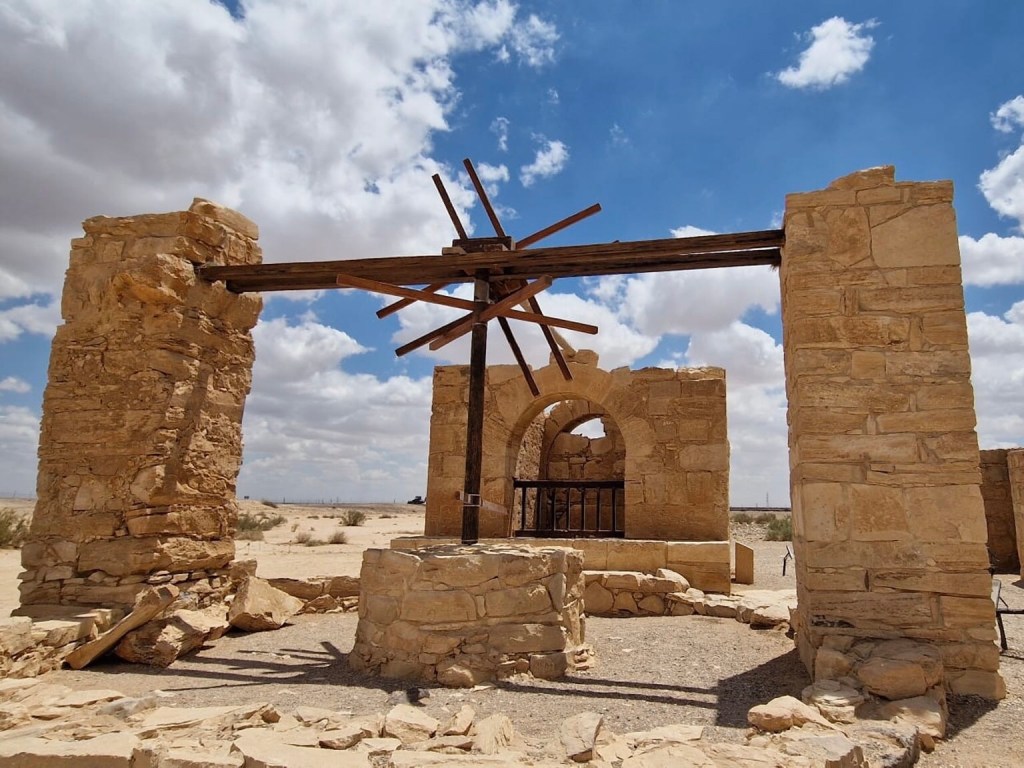
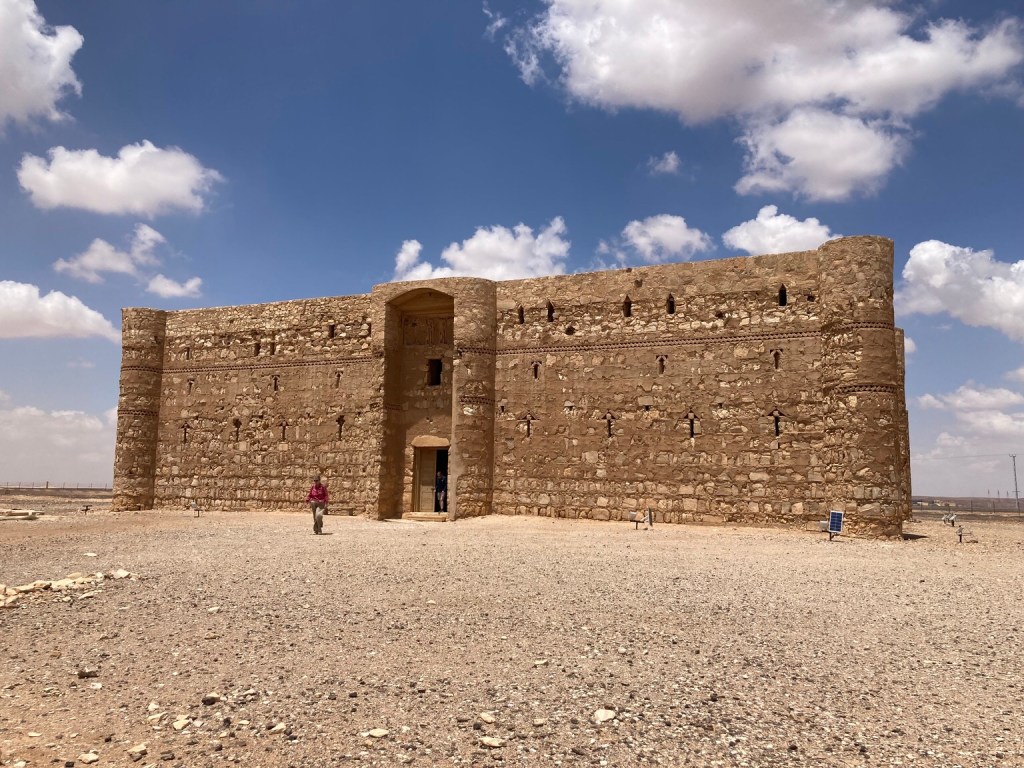
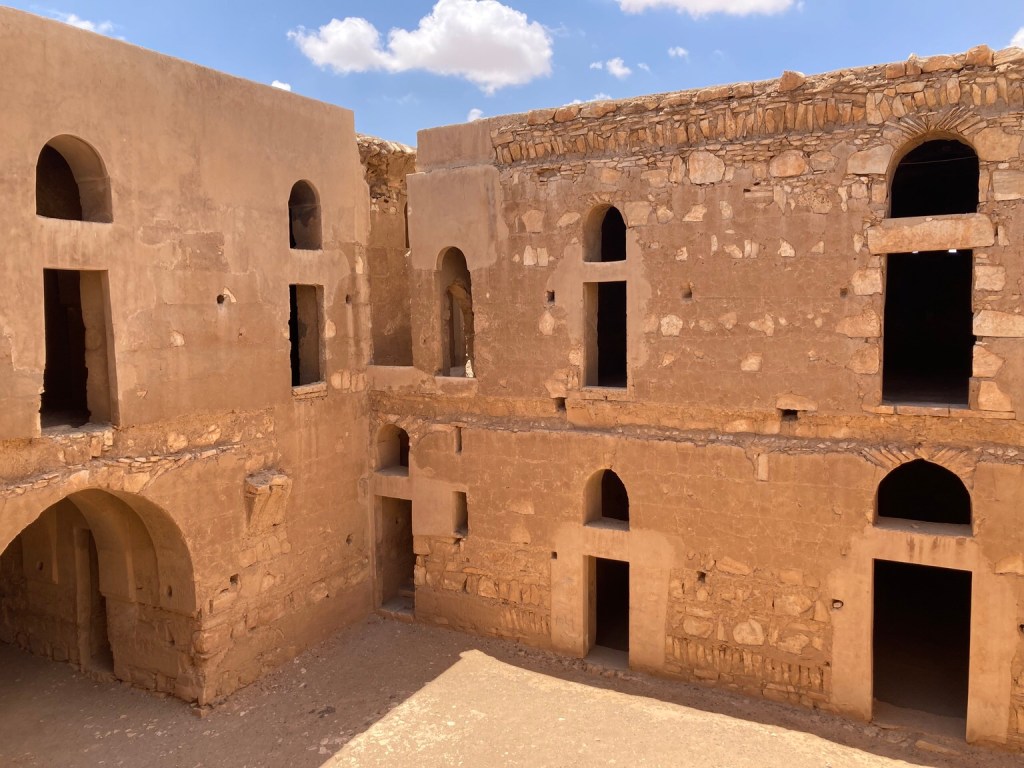
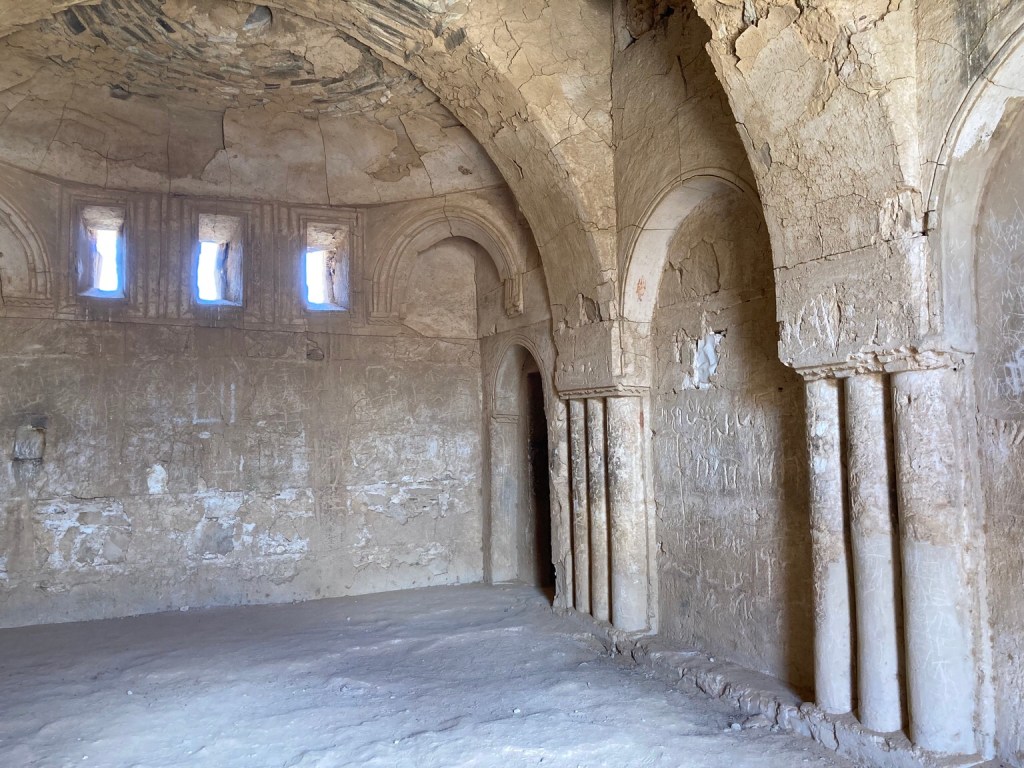
Next was Qasr al-Kharanah, named for the surrounding harra or gravel plains.
Despite its fortified appearance, it does not seem to have served a military function as the towers and arrow slits are ornamental, so quite probably it served as a meeting place with the local tribes to gain their support for the Umayyad dynasty.
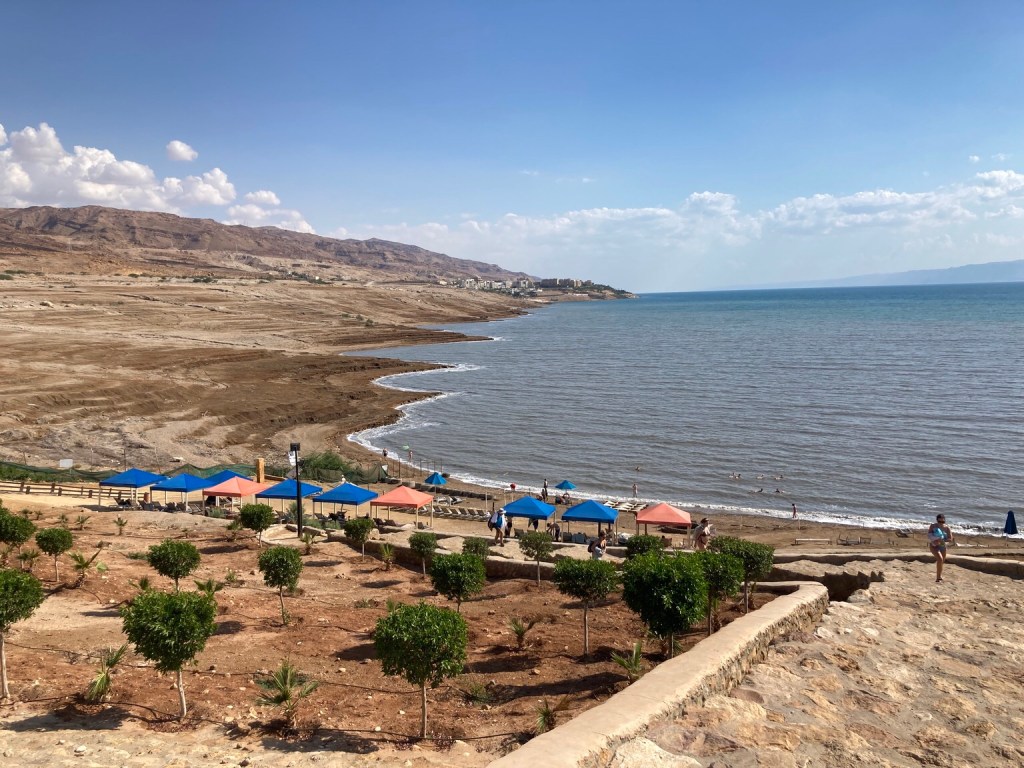
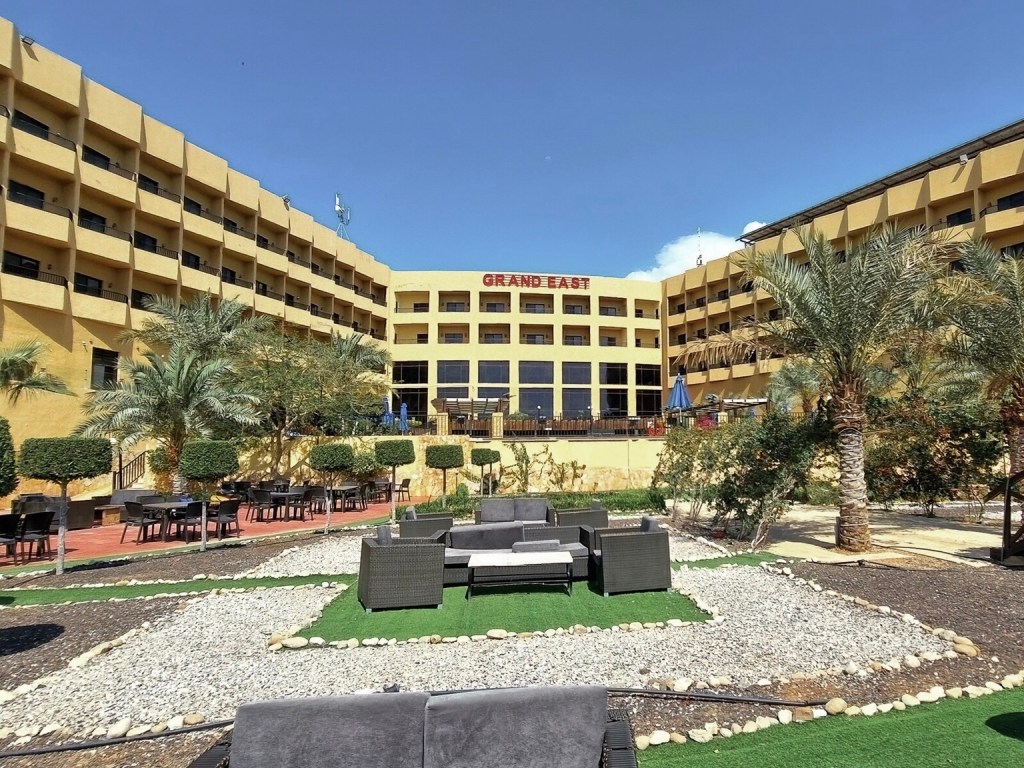
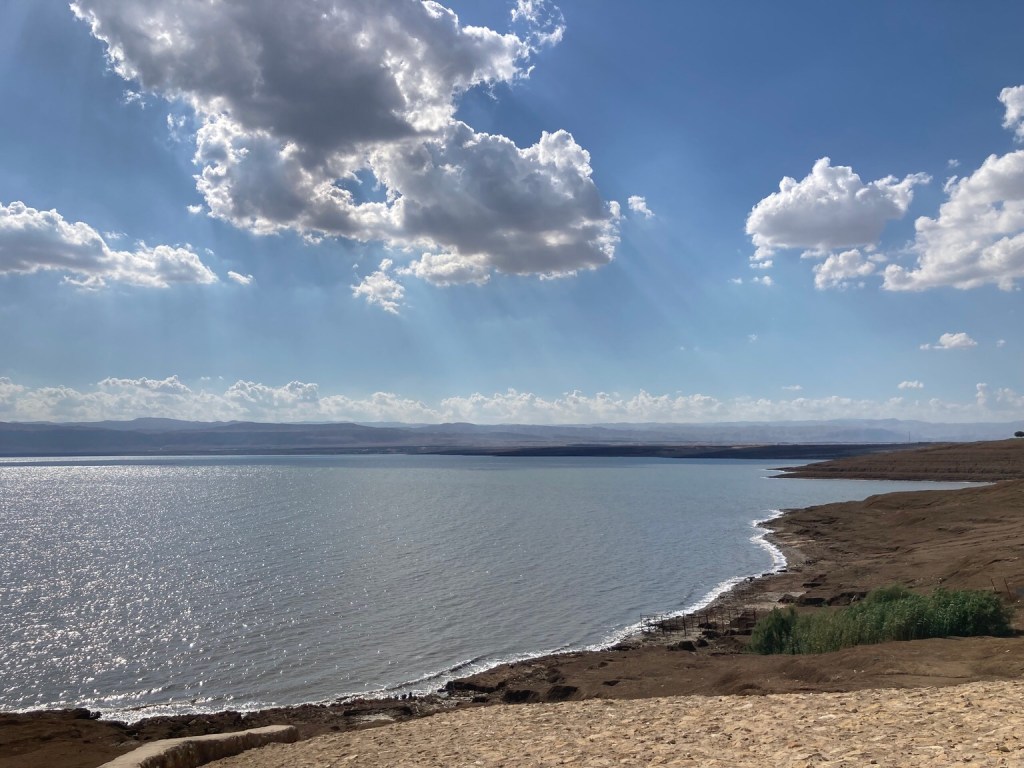
After a very long morning, we continued to the Dead Sea, the lowest point on earth at 400m below sea level. Actually a landlocked lake, it is bordered by the Israeli-occupied West Bank to the west and Israel to the southwest. We stopped at a resort hotel where we could change and have a quick bite to eat …
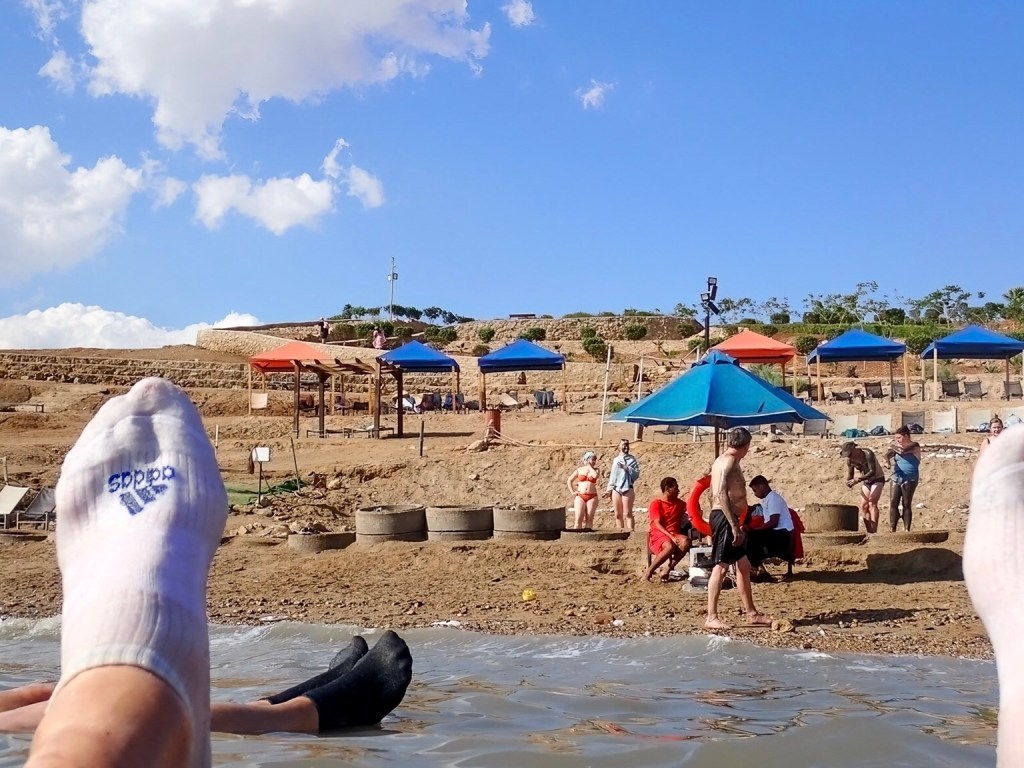
… then walked down to the shore, fortunately warned the ground was hot and stony, so we elegantly wore our socks!
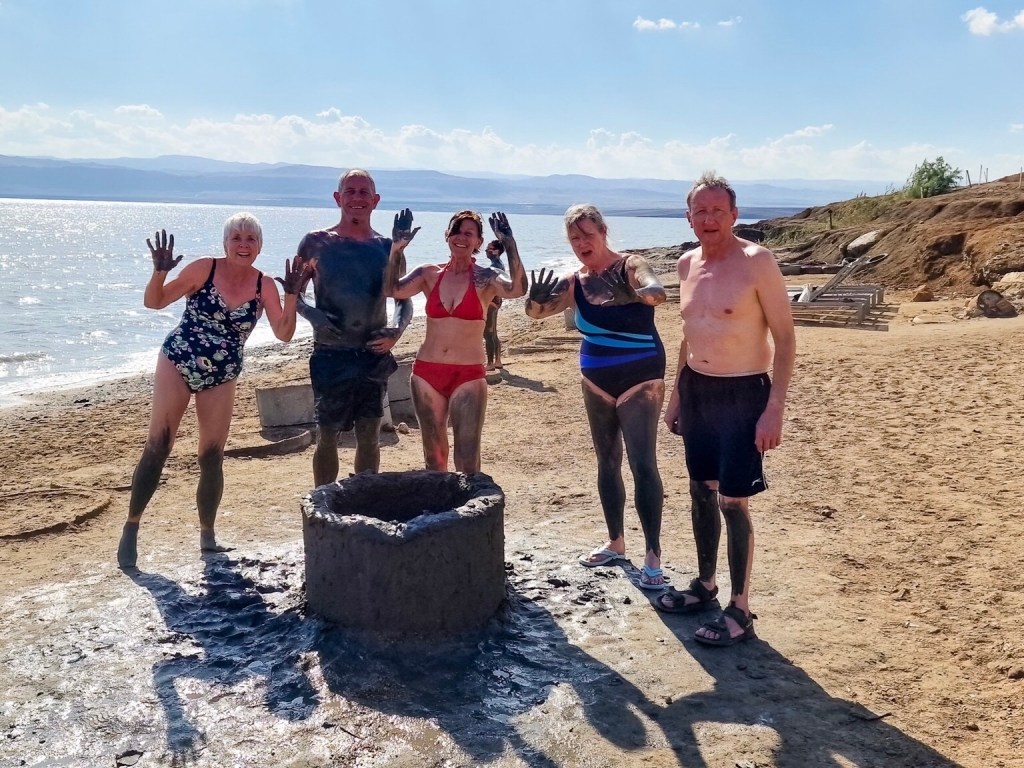
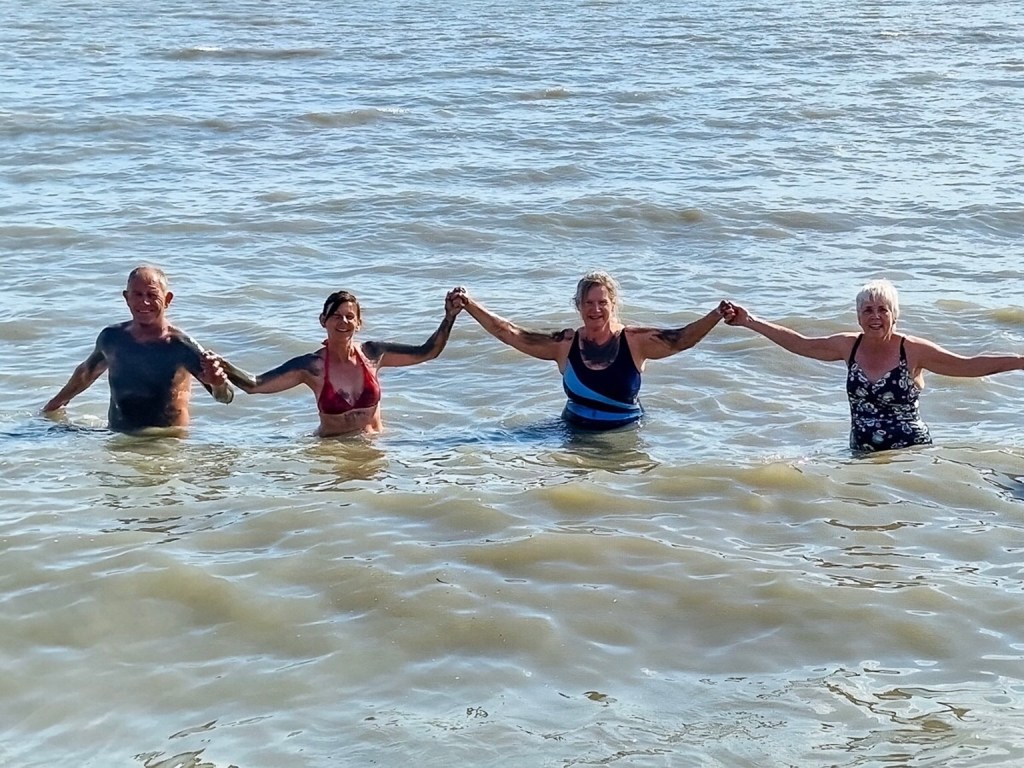
The mineral-rich mud is said to be therapeutic so game for anything, we slapped some on …
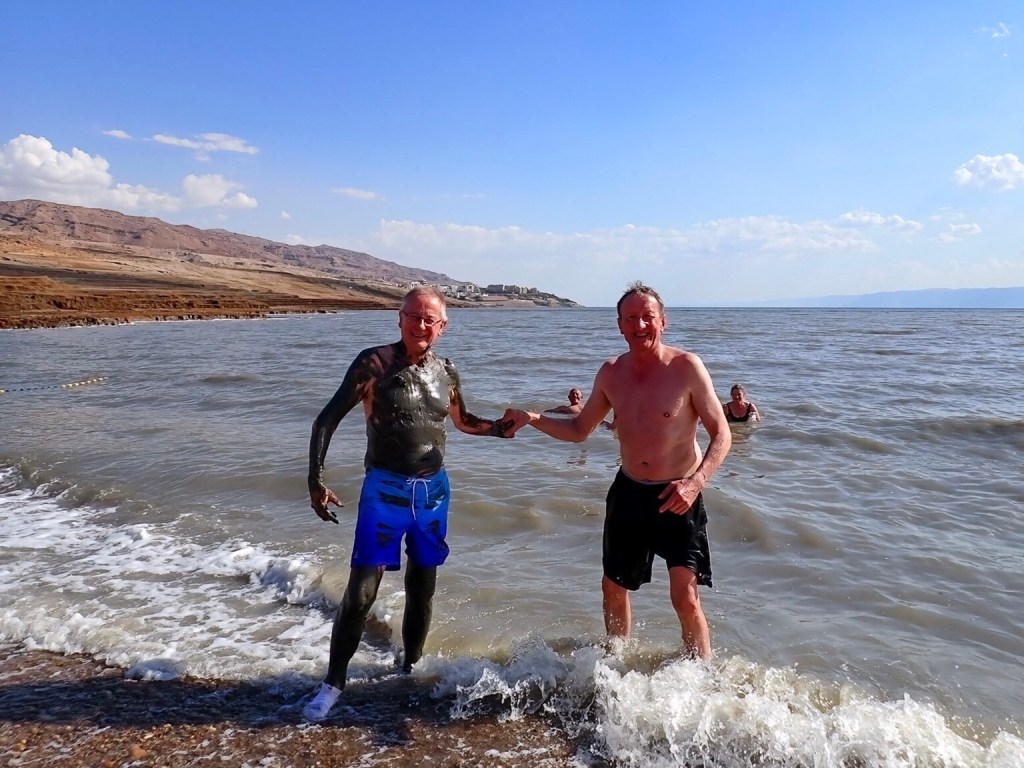
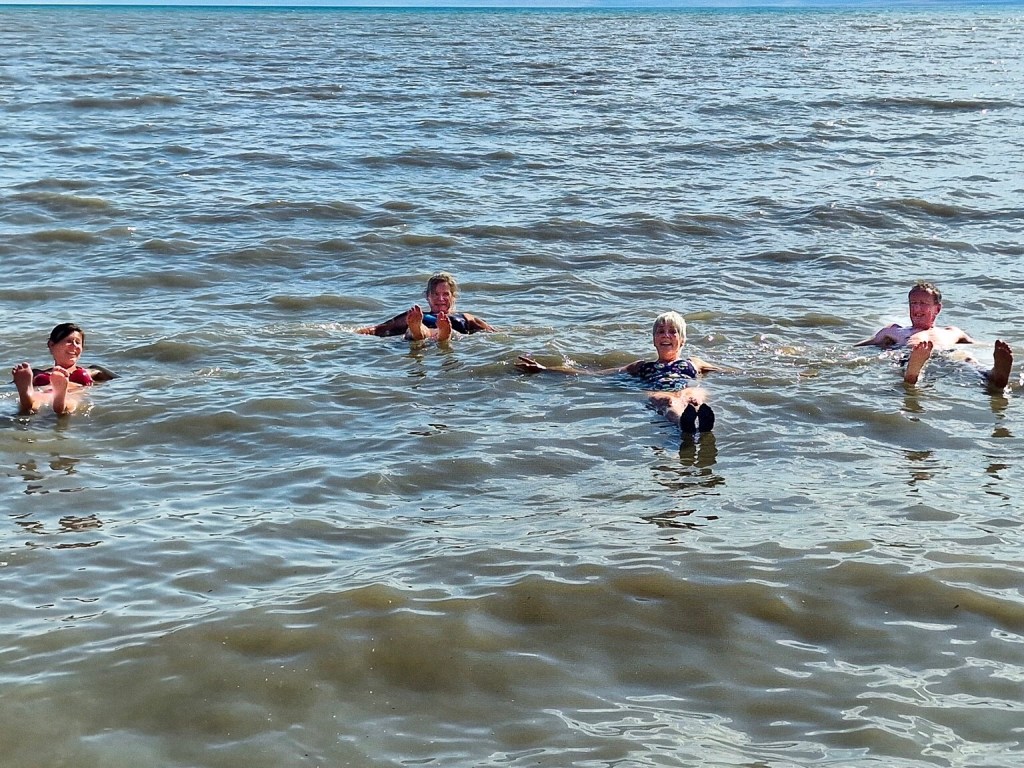
… then floated in the salty waters, careful not to splash our faces or get the water in our eyes as it is 10 times saltier than the sea …
… and here are our feet!
All too soon it was time to shower and change and return to Amman.
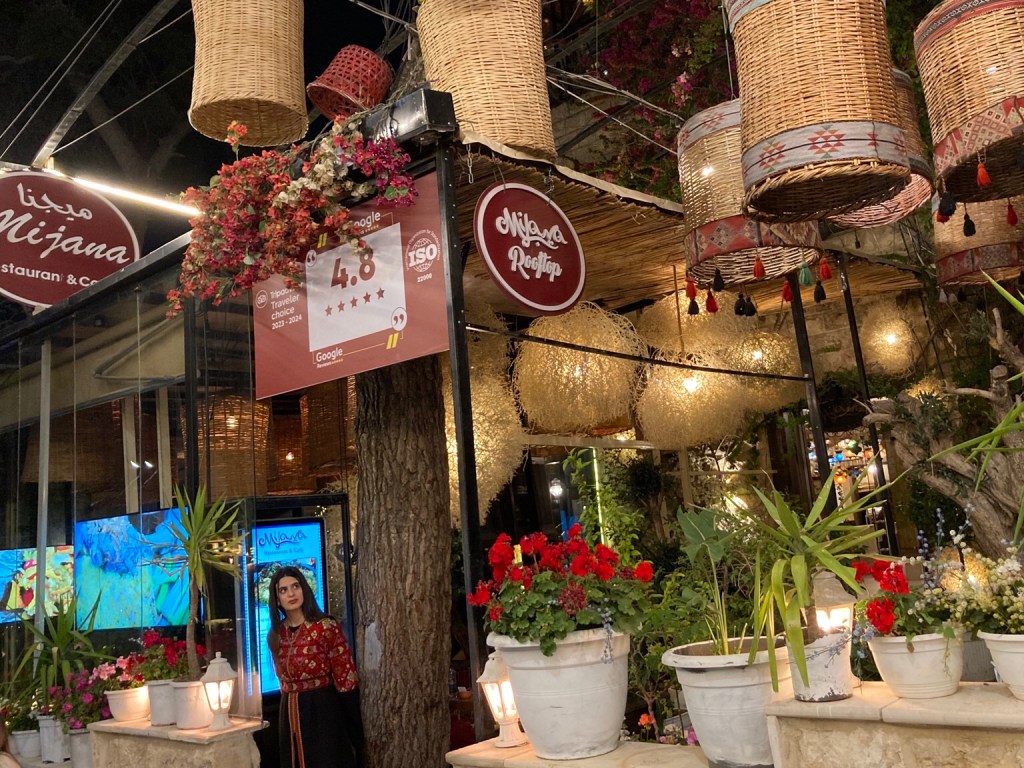
Once more we ventured out for dinner to Mijana, a family run restaurant just off Rainbow Street.
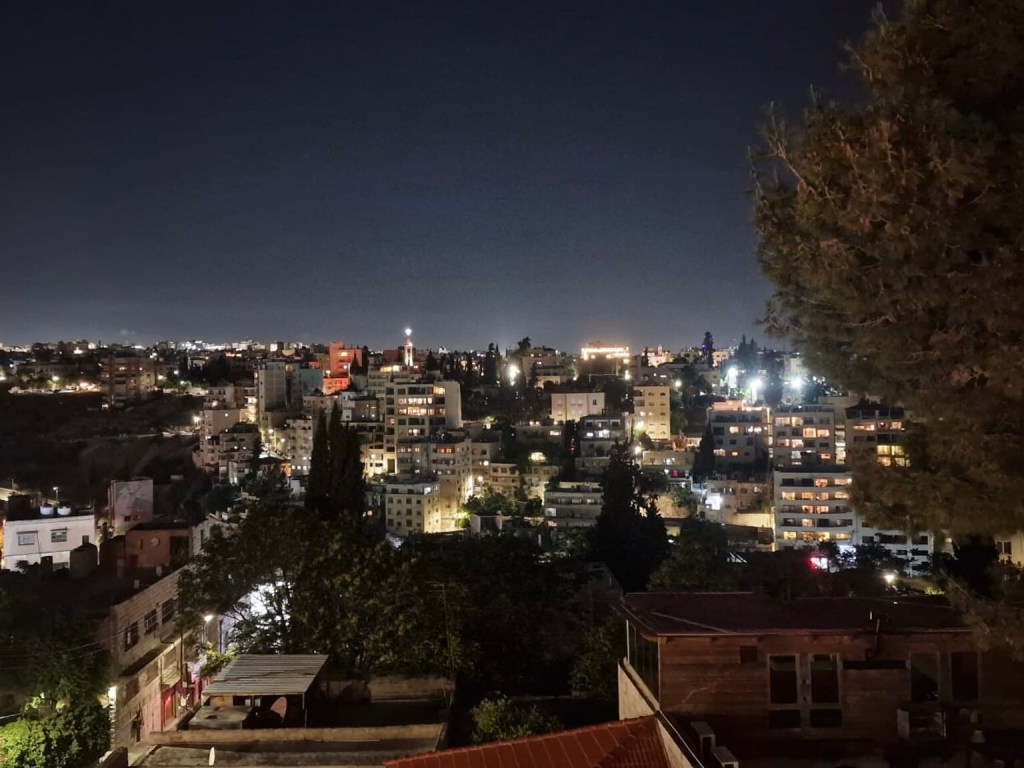
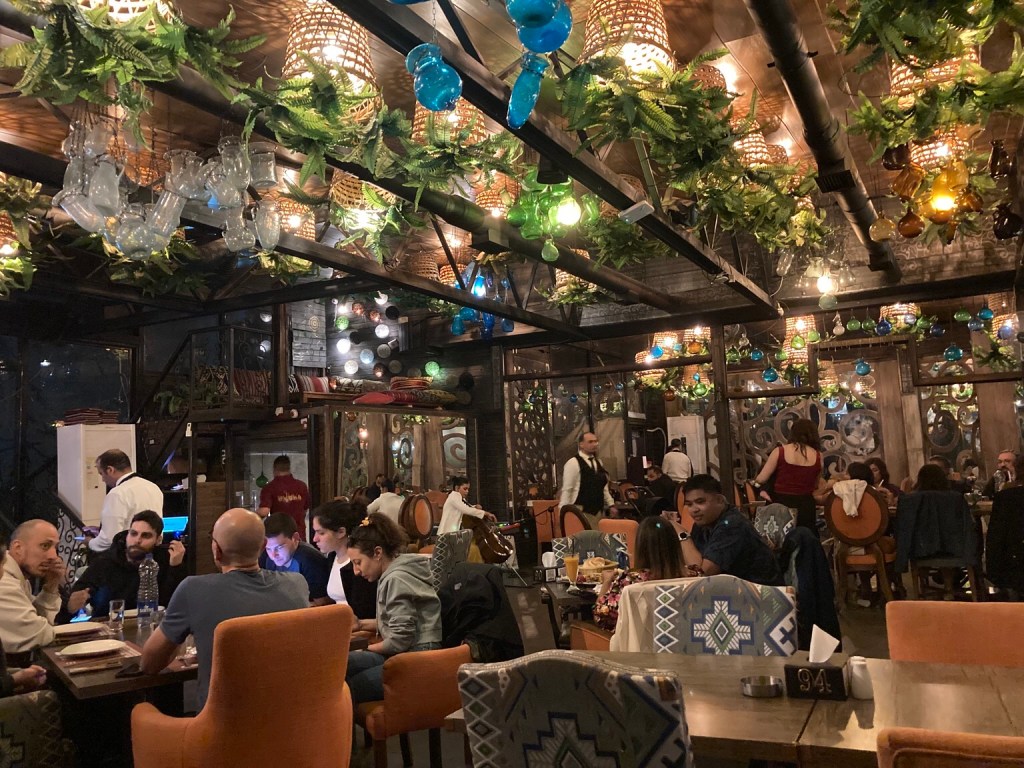
It was a little chilly for the garden so we sat in the rooftop restaurant, overlooking the city …
… with warm twinkly lights inside and a cellist accompanying our meal.
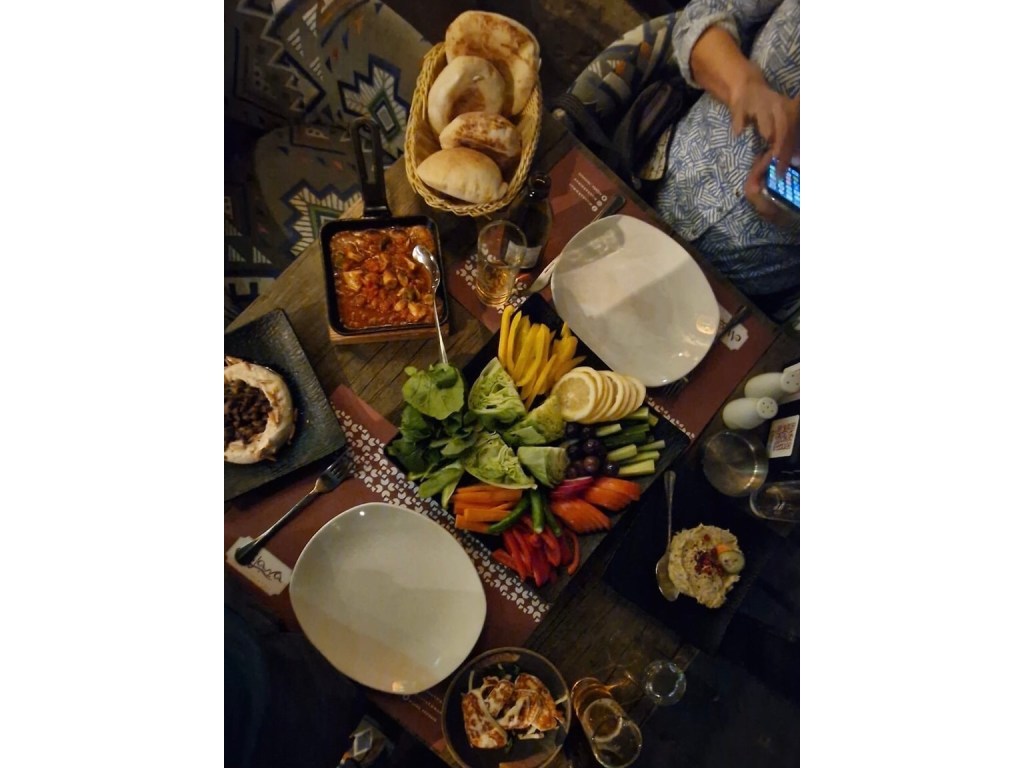
We ordered a selection of mezze including haloumi for Chris and hummus with meat for me and a selection of vegetables and ended up with this …
Needless to say we just couldn’t finish the salad!
This morning we bid farewell to Michael and most of the group as they continued to Amman having dropped just eight of us off in Aqaba.
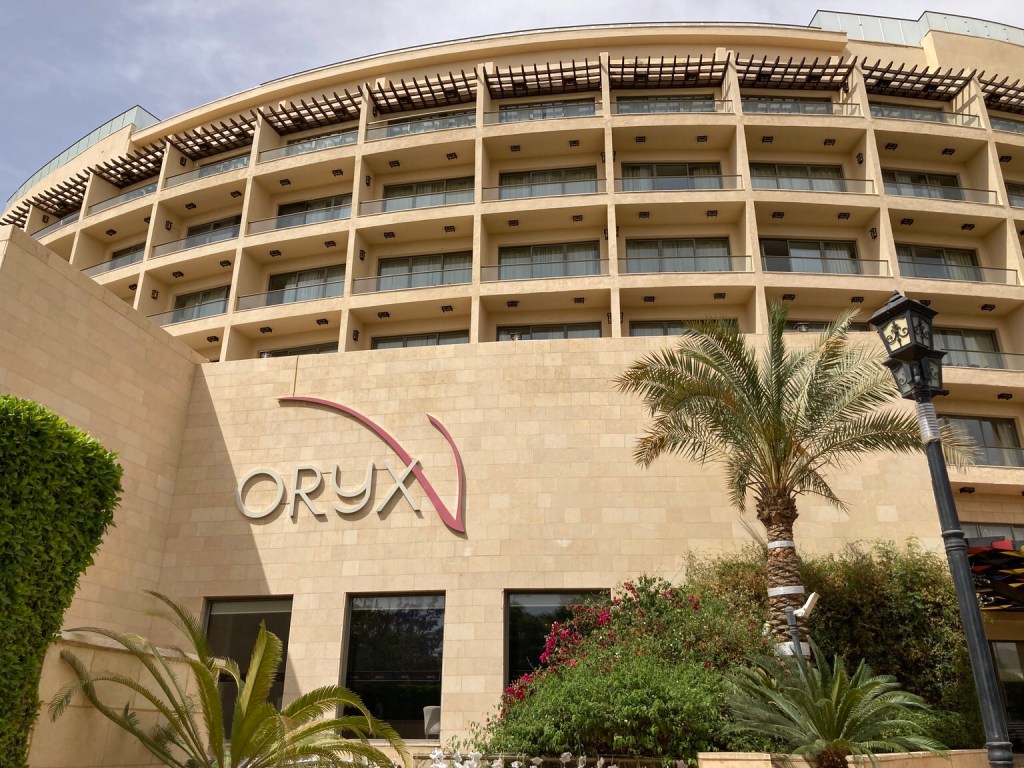
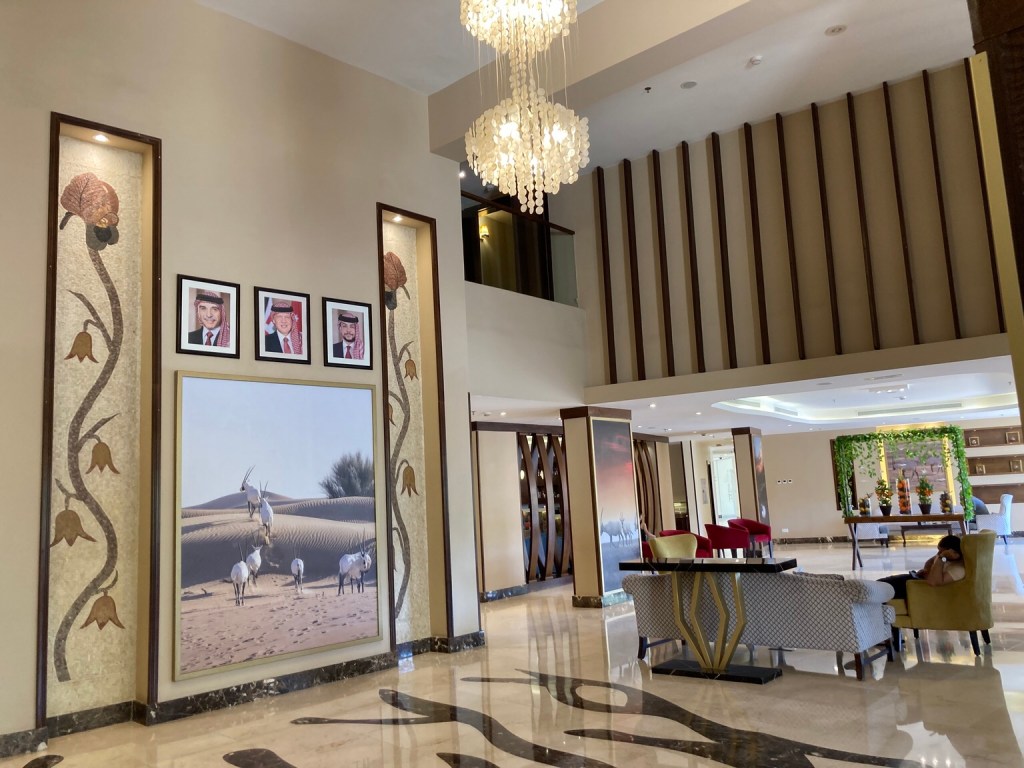
Aqaba is a coastal city on the Red Sea, close to the border with Israel. After checking in to the rather smart Oryx hotel …
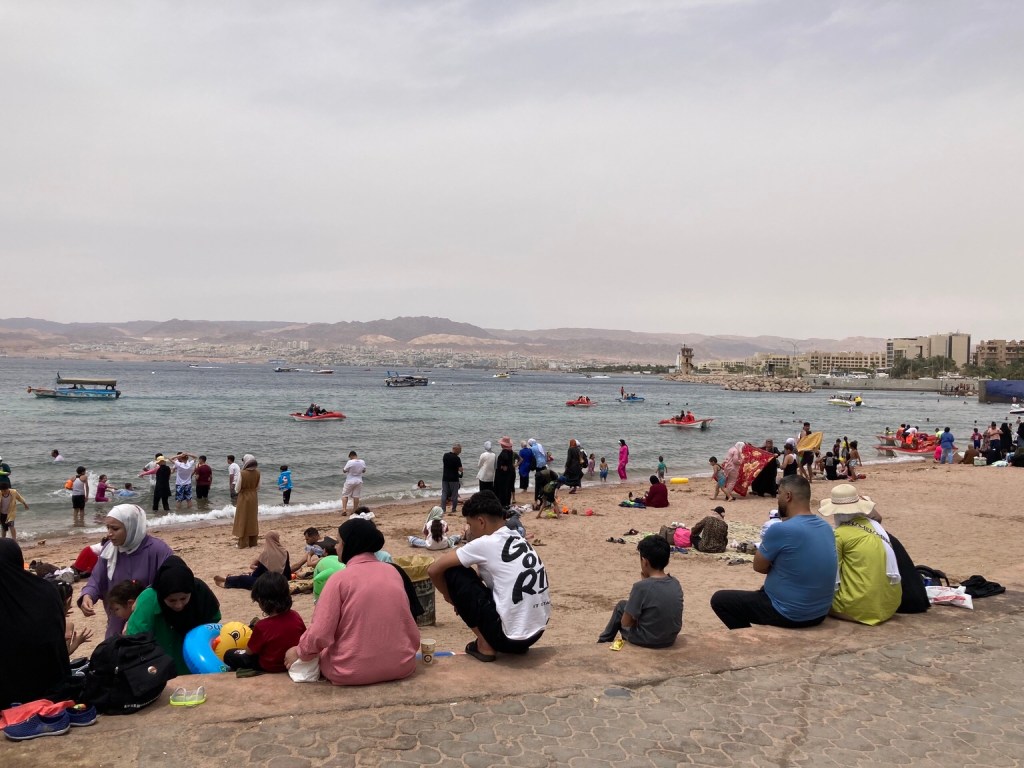
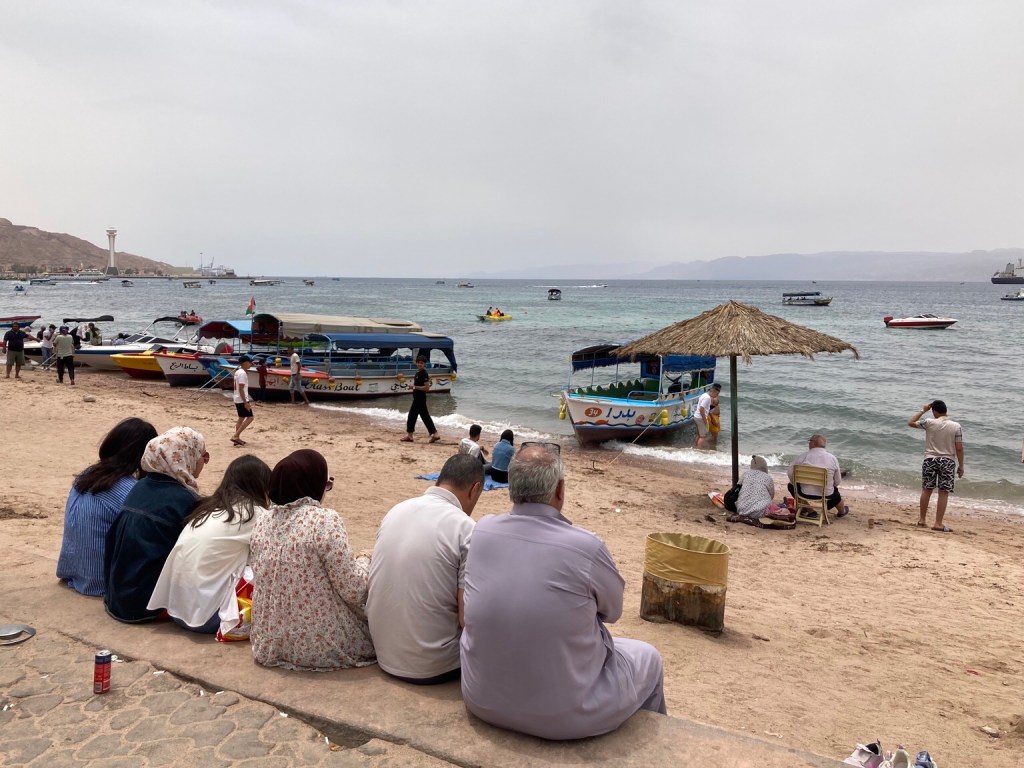
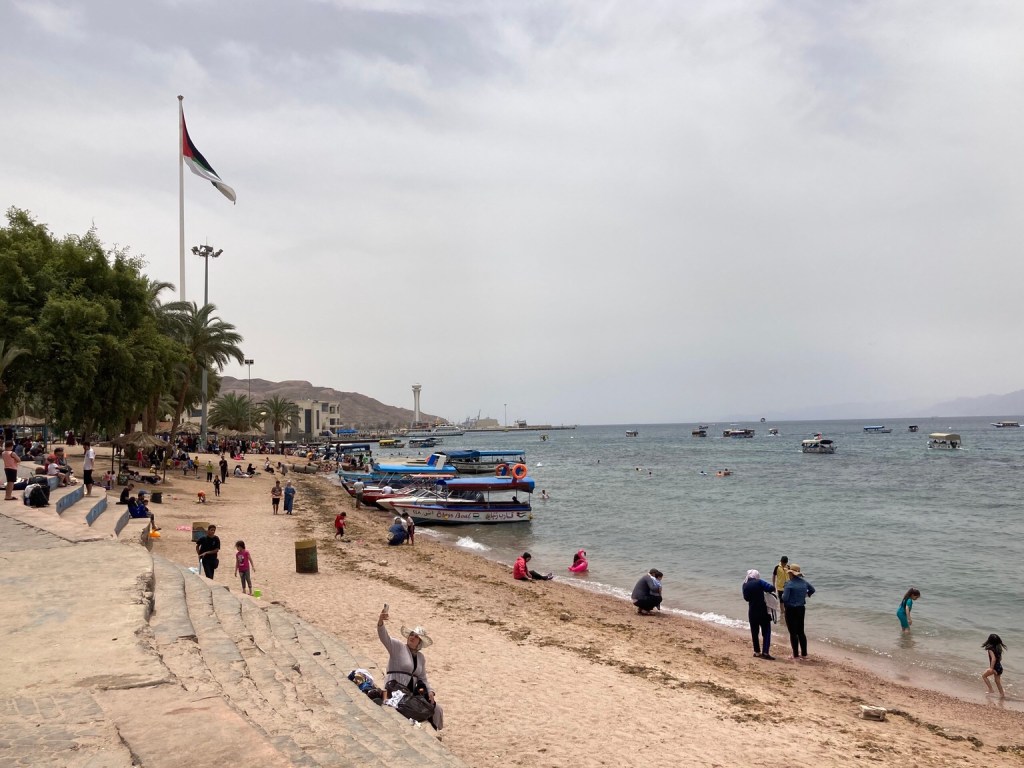
… several of us set out to explore, heading towards the beach, where we saw families enjoying the holiday weekend.
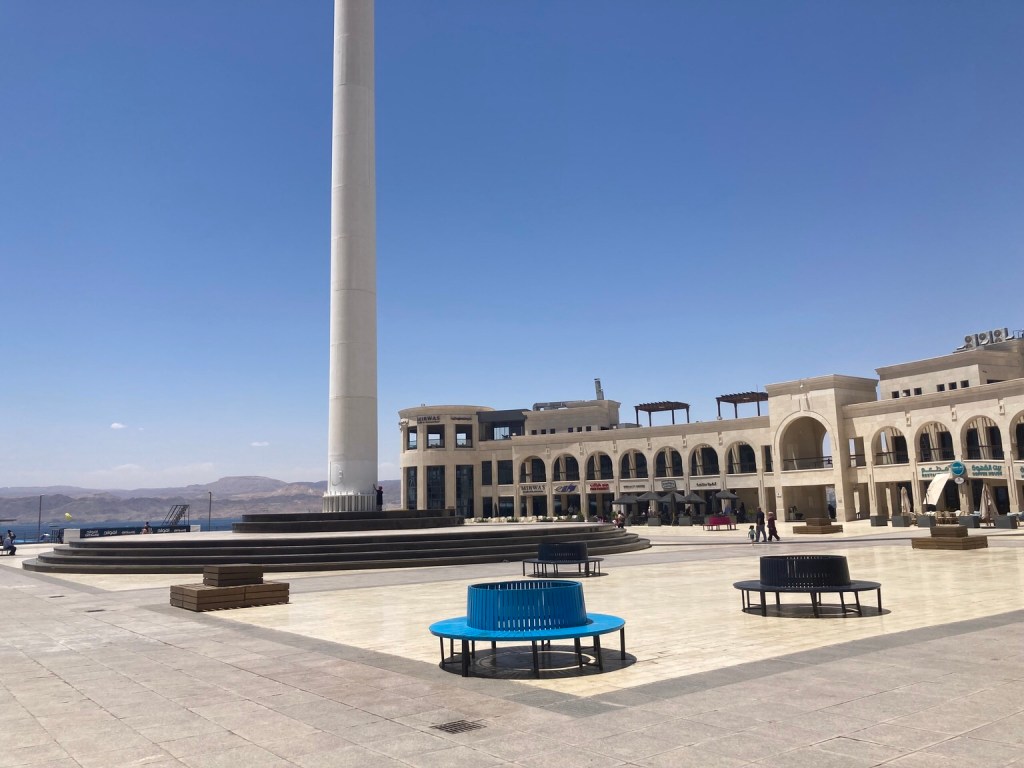
In the background is a huge flag, but looking closer, it isn’t Jordanian as you might expect. Instead, it’s the banner of the Great Arab Revolt, commemorating the Battle of Aqaba in 1917. The capture of Aqaba was a key moment in the revolt against Ottoman rule in the Middle East and the flagpole was the tallest in the world when it was erected in 2004.
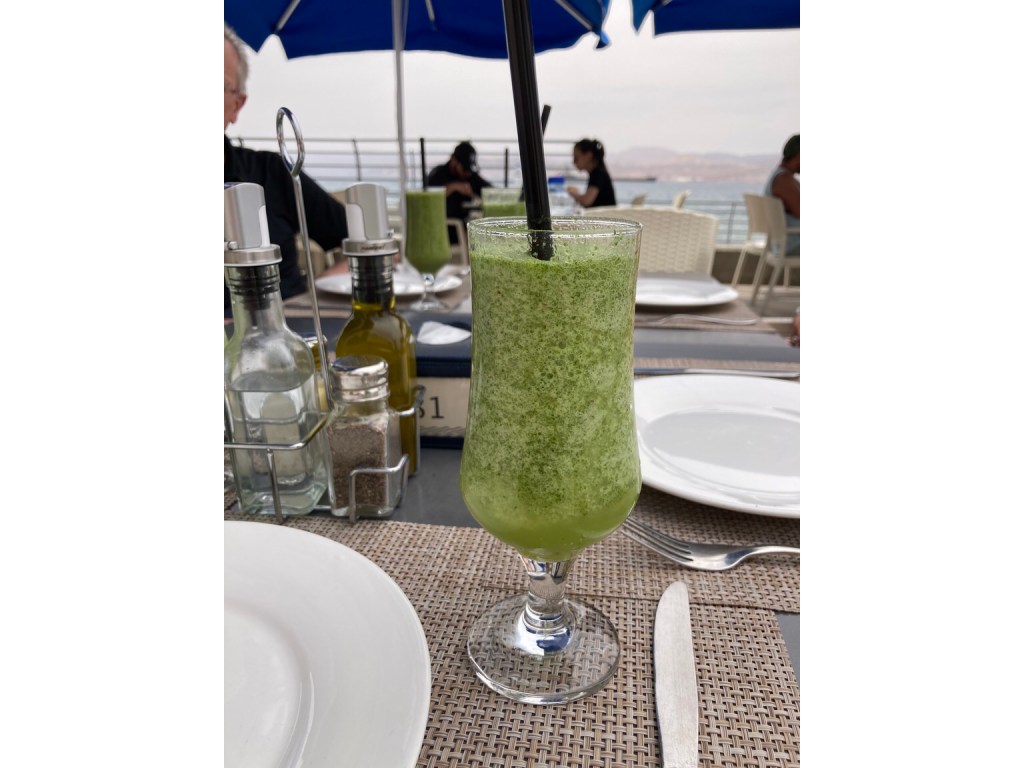
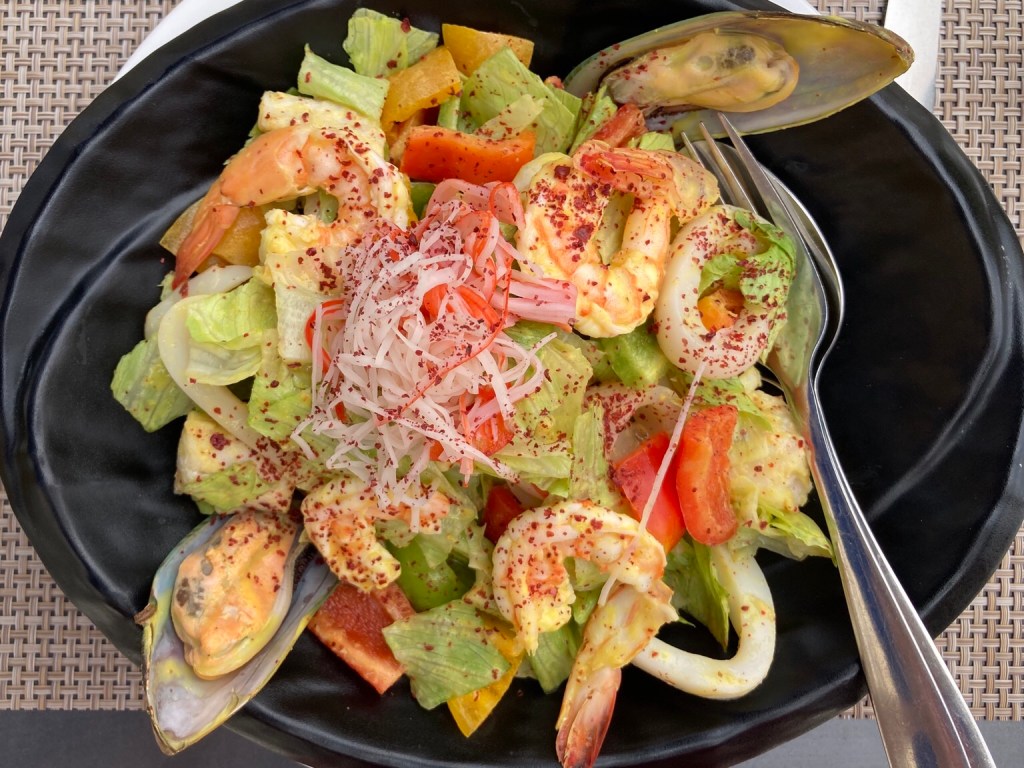
We took the chance to relax and enjoy a seafood lunch with a delicious lemon & mint smoothies.
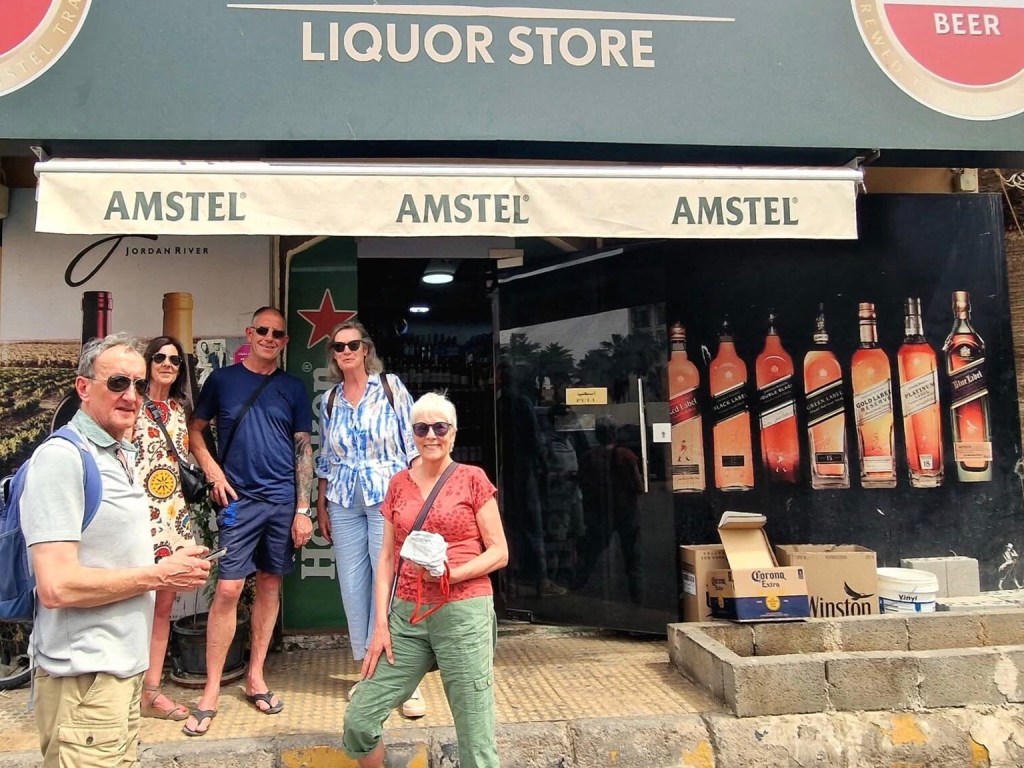
We passed a liquor store on our walk back and a couple of us picked up some wine.
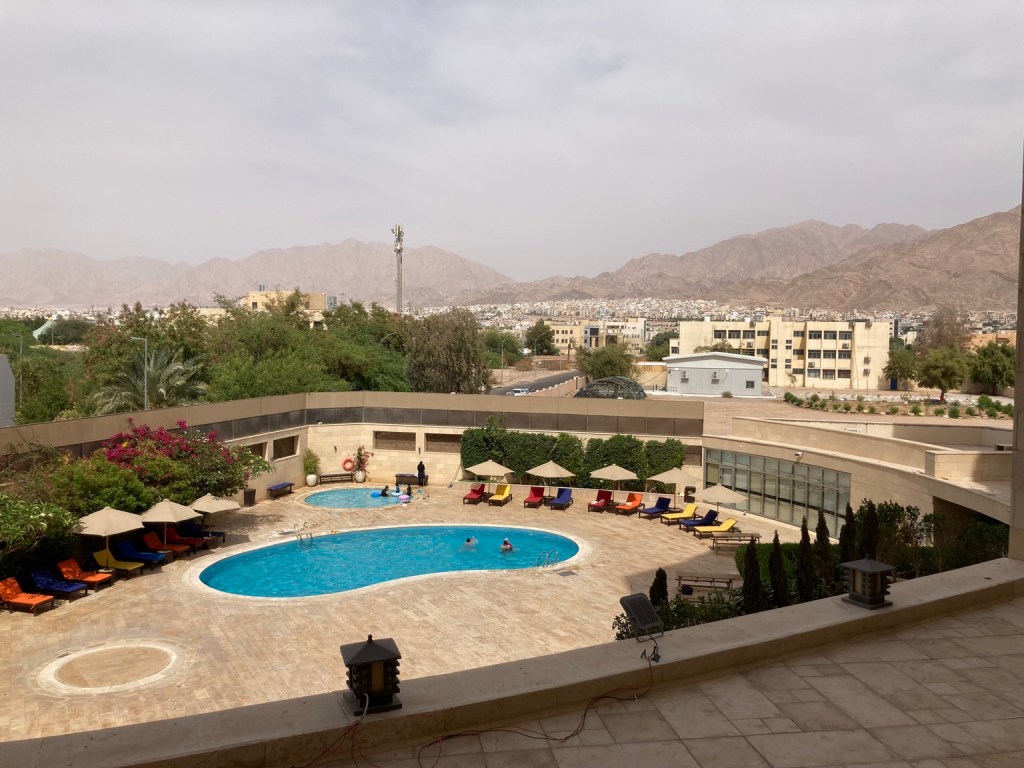
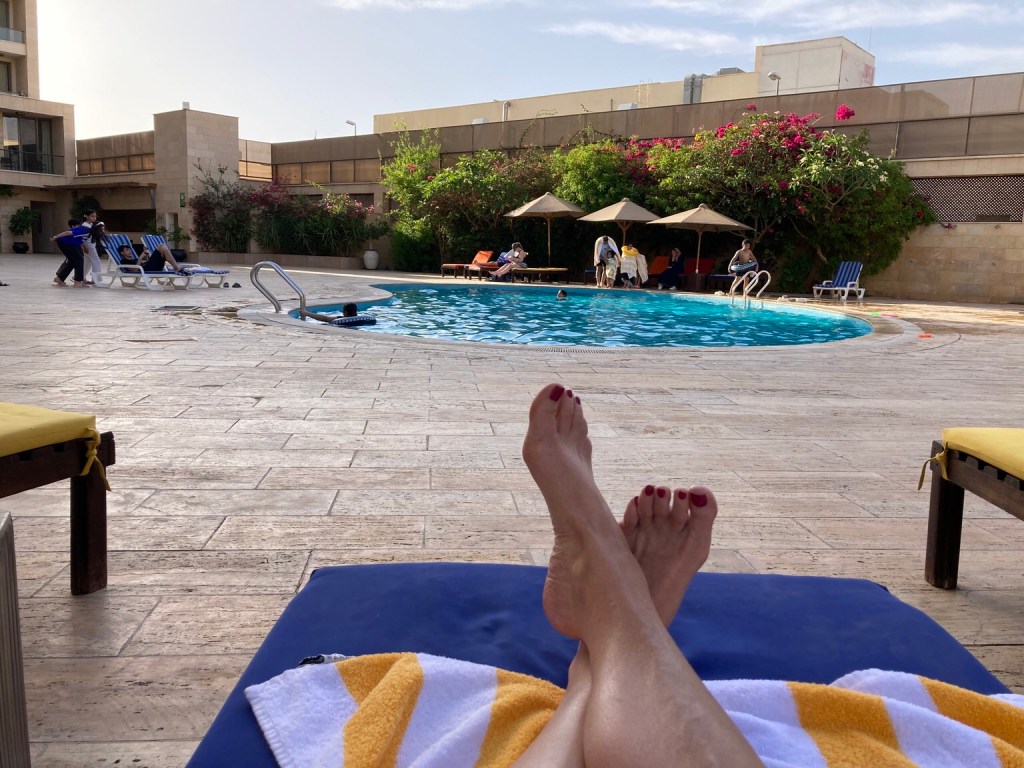
Despite the hotel sign saying no external food or drink, we’ve never known a place to actually scan for contraband and one chap got charged corkage, although Chris managed to slip by unnoticed. After the excitement, we spent the afternoon relaxing by the pool.
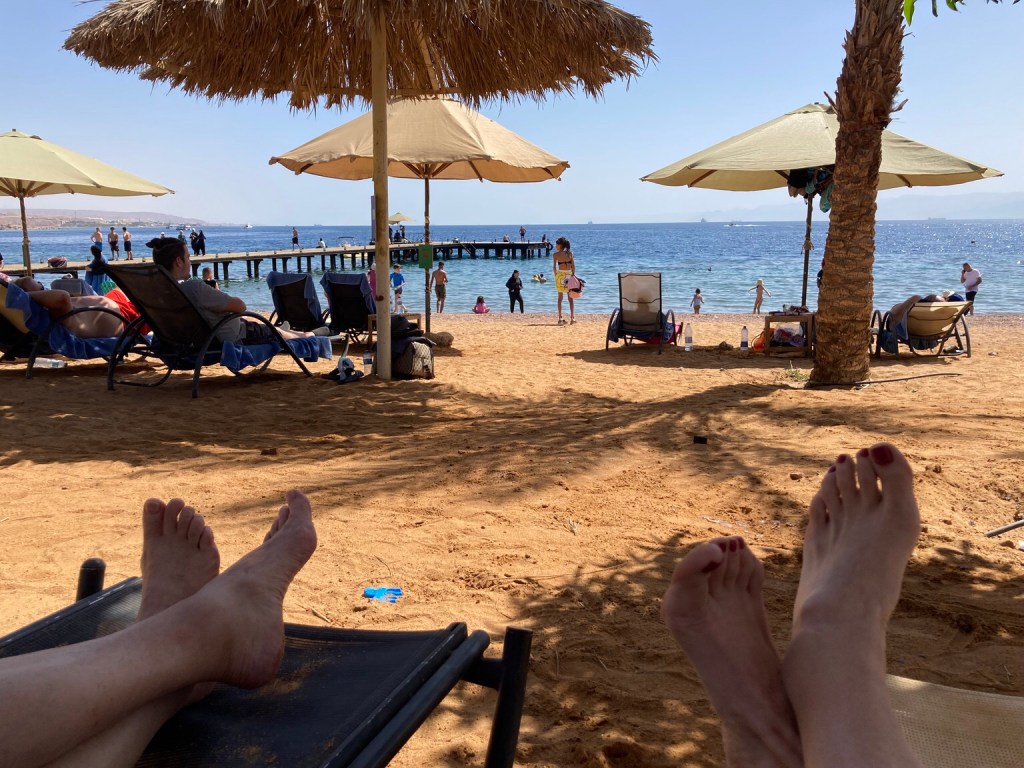
Next day we went to the Berenice Beach Club, and after a short shuttle ride, we soon settled ourselves on loungers admiring the Red Sea.
Our ticket also included a brief trip in a glass bottom boat with an opportunity to snorkel.
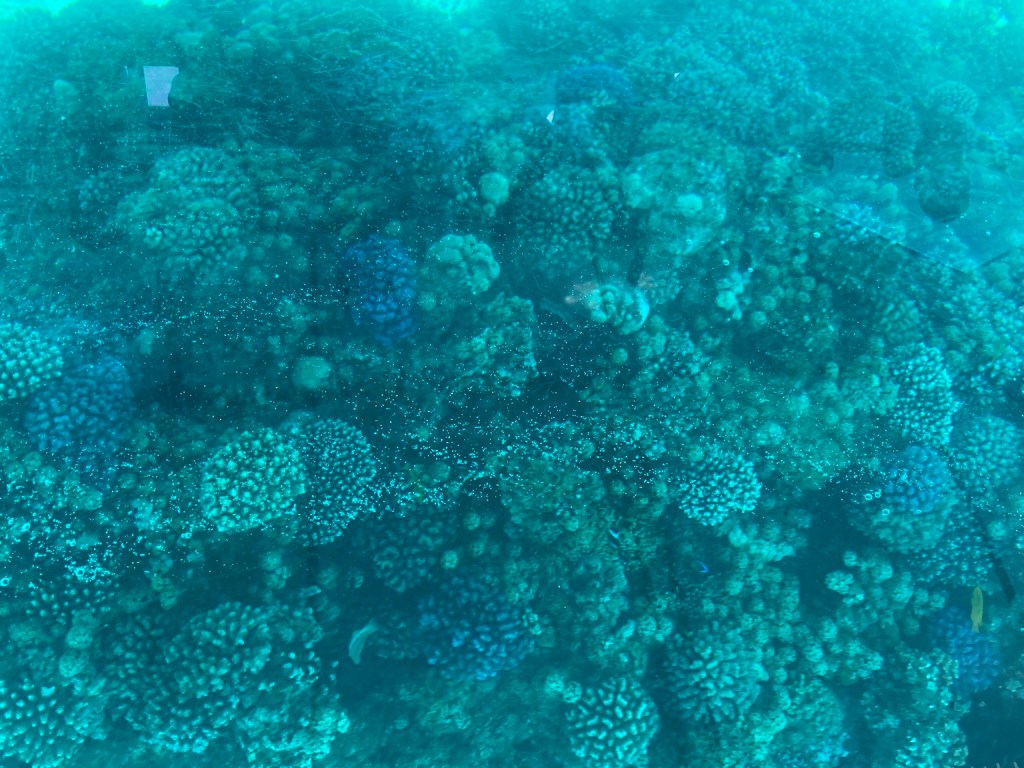
We saw lots of jellyfish and some areas of coral through the glass.
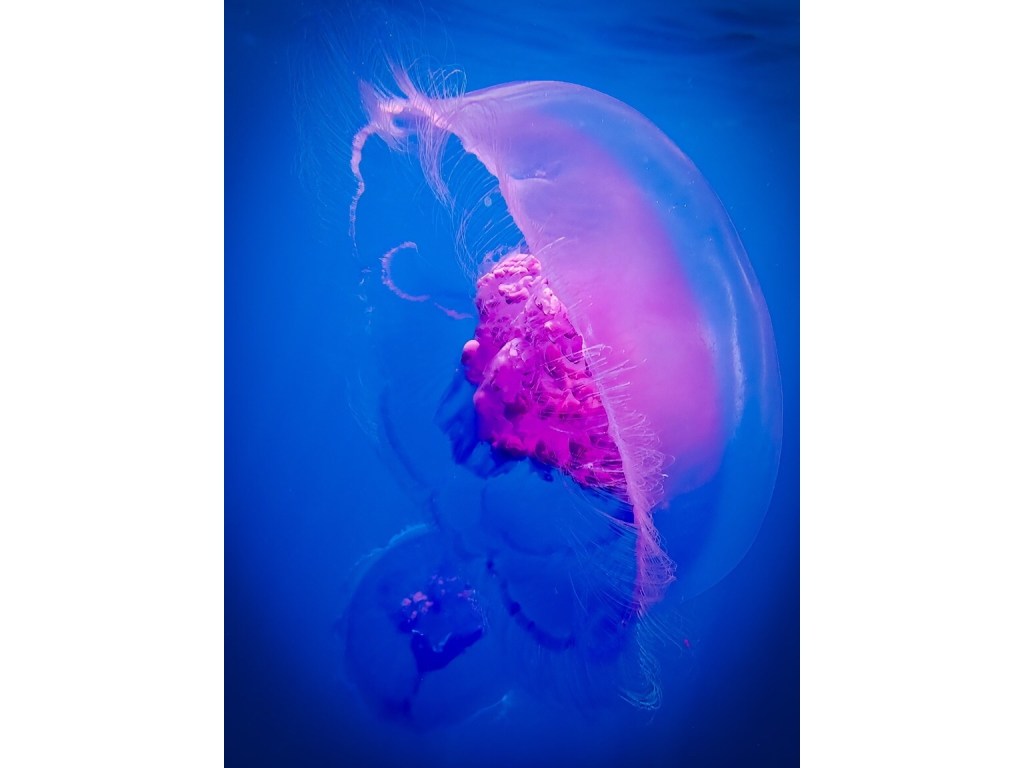
Chris had brought some prescription goggles and also his new waterproof camera, so was eager to try them out. Unfortunately where we stopped, we couldn’t see coral or fish, just more jellyfish, but Chris was delighted with this picture.
On the last day, we returned to the old part of Aqaba town …
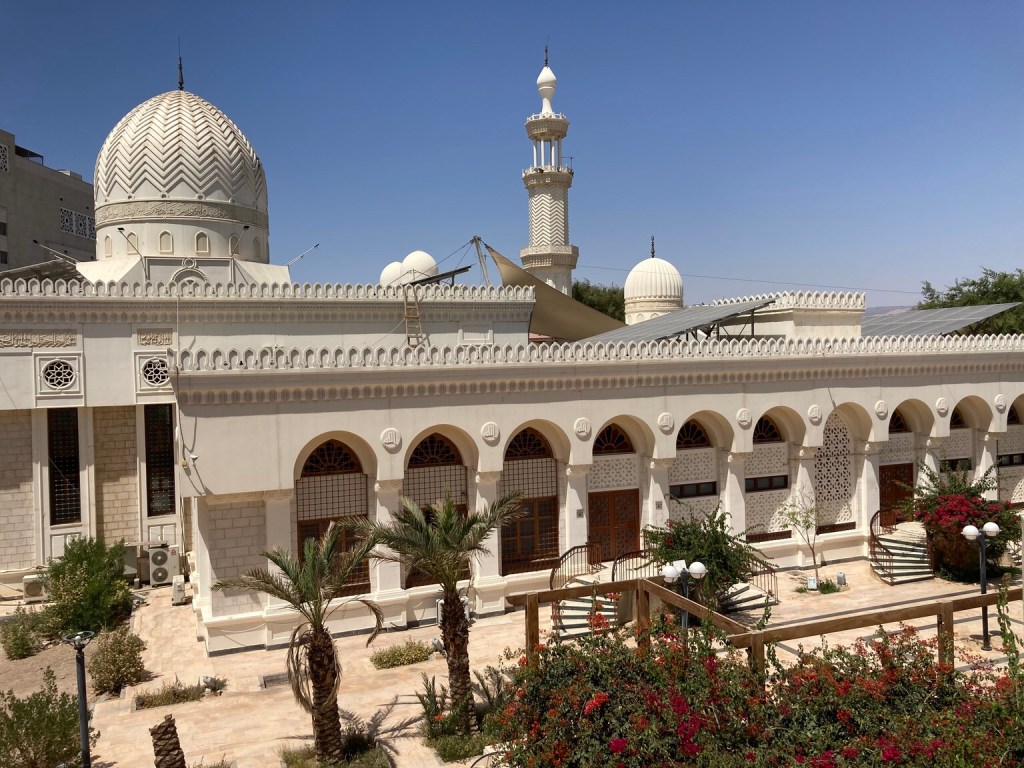
… past a mosque …
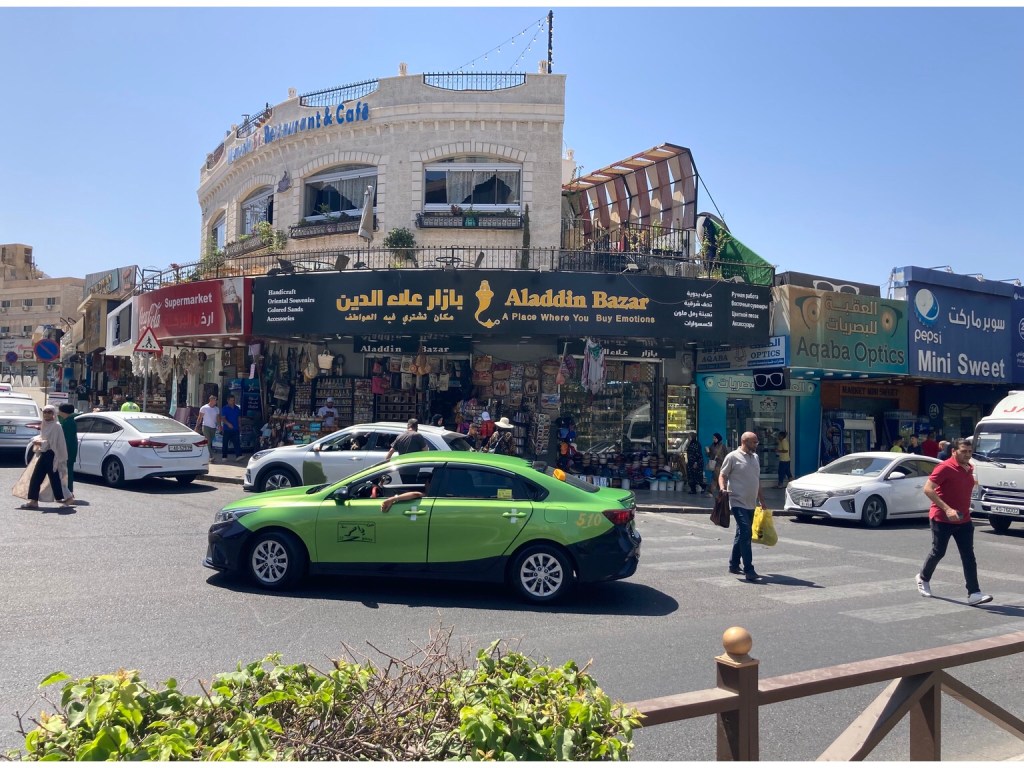
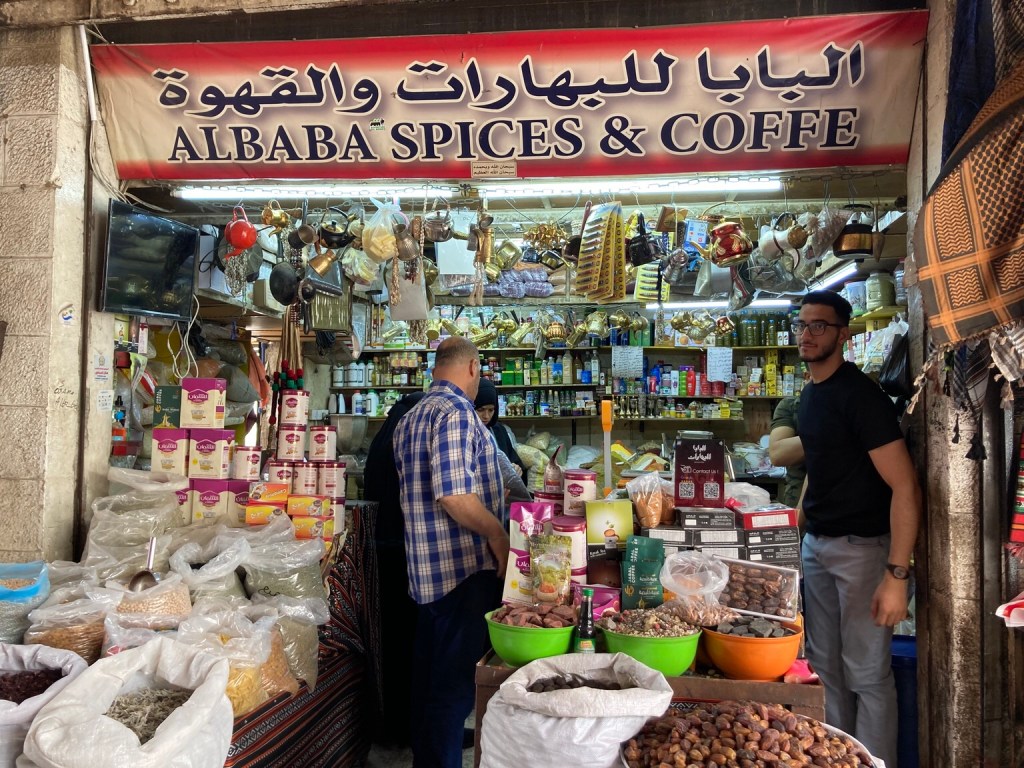
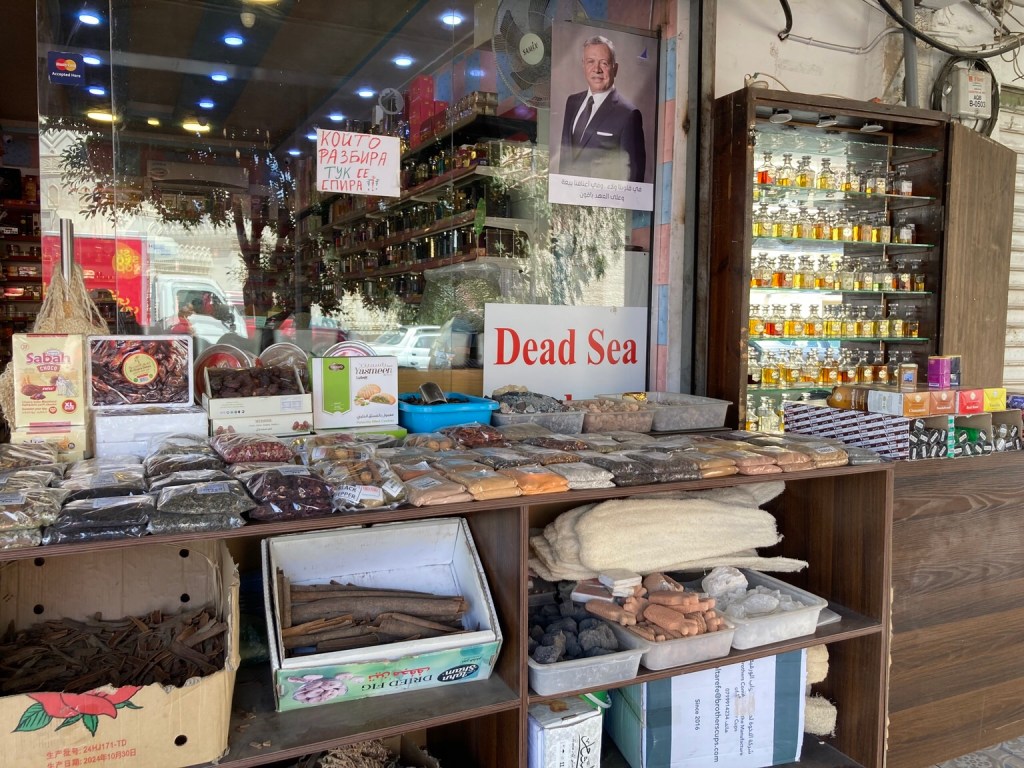
… and through the colourful Souk …
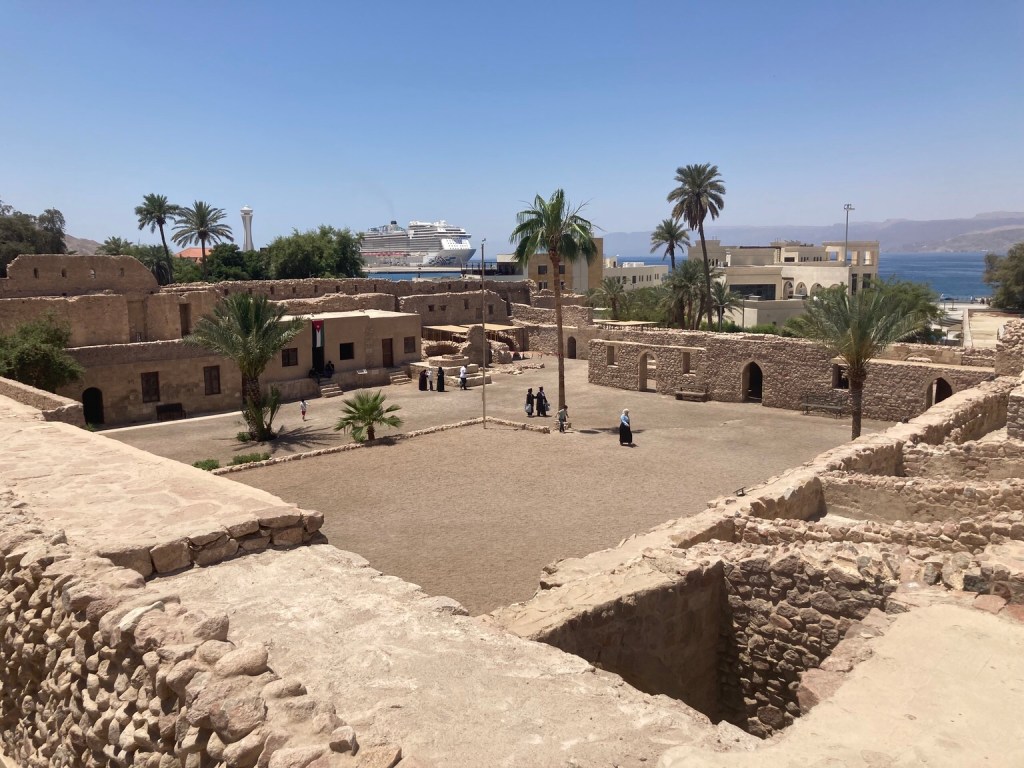
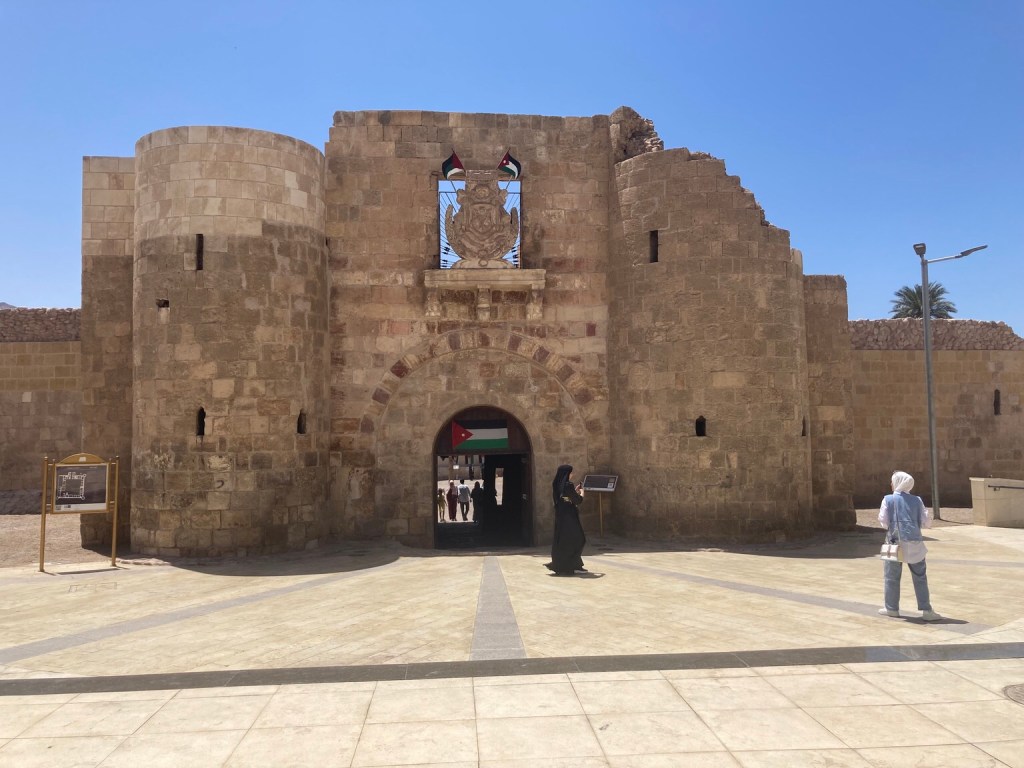
… to Aqaba Fort.
Next door was a museum filled with black and white images, telling the story of the Arab Revolt and interestingly, despite the prominent part Hollywood gave Lawrence in the affair, he was only mentioned twice, but then there are always several sides to any story.
And here is the great Arab Revolt Plaza, with a flagpole so tall, you cannot see the flag …
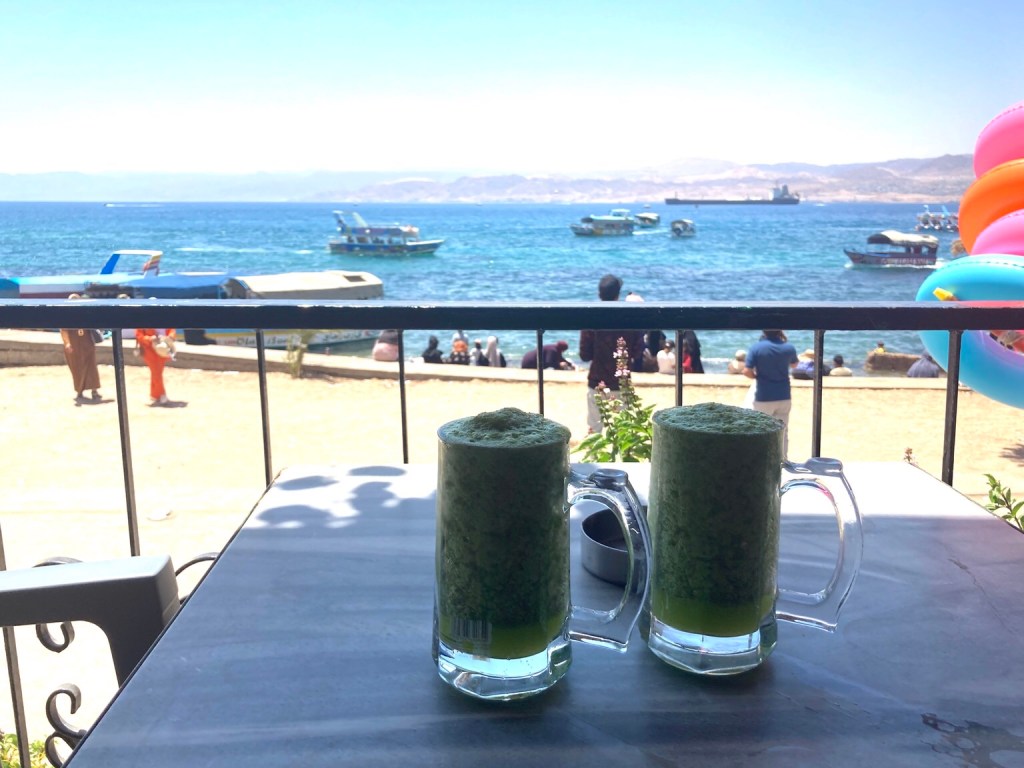
… and then we found a cafe overlooking the beach for another refreshing lemon & mint …
… as the girls on the next table puffed on their shisha. They are everywhere, often smoked by young women and apparently usually contain tobacco, albeit fruit flavoured.
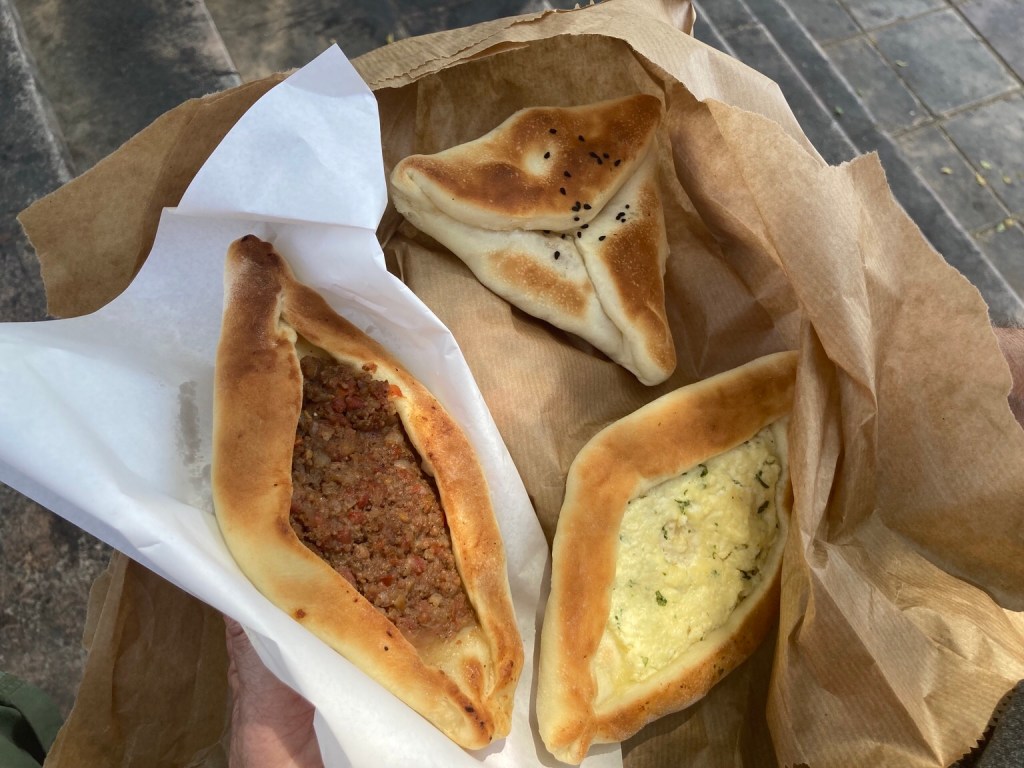
Unfortunately, by the time we were ready to eat, Hashems, the most famous falafel cafe in Aqaba, even visited by the King of Jordan, was closing. Instead we stopped a couple of doors down at a bakery selling small Middle Eastern pies with different fillings – meat, cheese and hot potato among others, some open and others closed, that are heated up in the bread oven – a bargain, 3 for 75p!
We took the hotel shuttle back and spent the rest of the afternoon quietly by the pool.
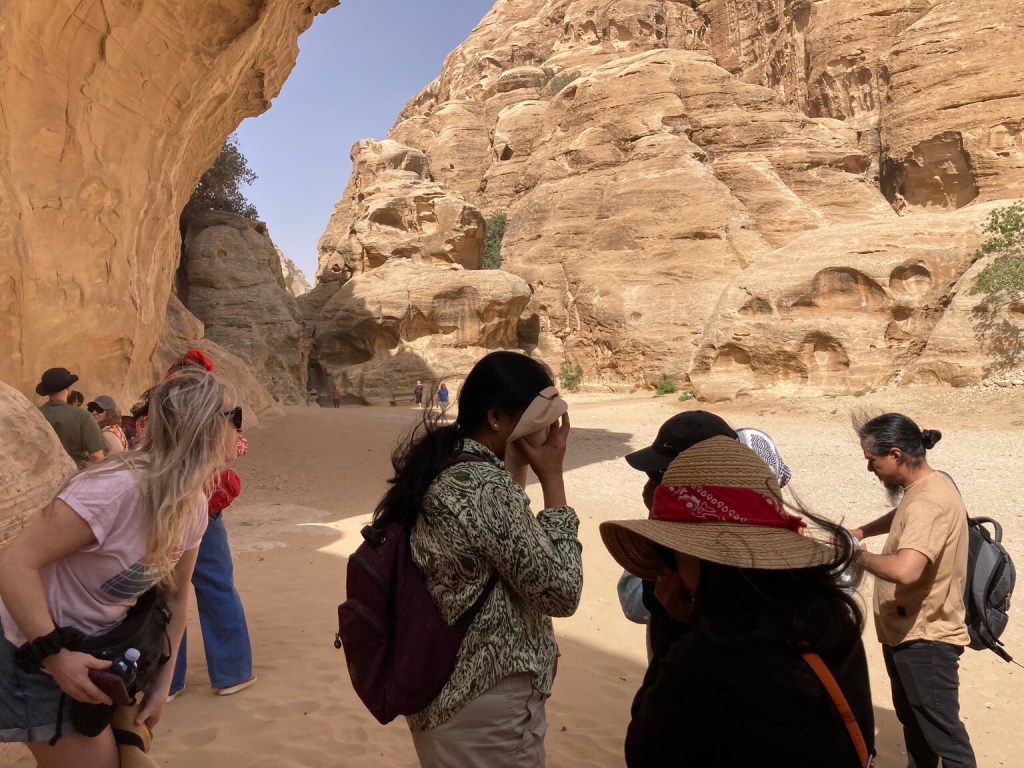
The wind had got up today, a warm wind from Egypt which whipped the sand up into flurries as we approached the small gorge at Little Petra which was likely to have been used as a caravanserai for visiting traders on the Silk Road.
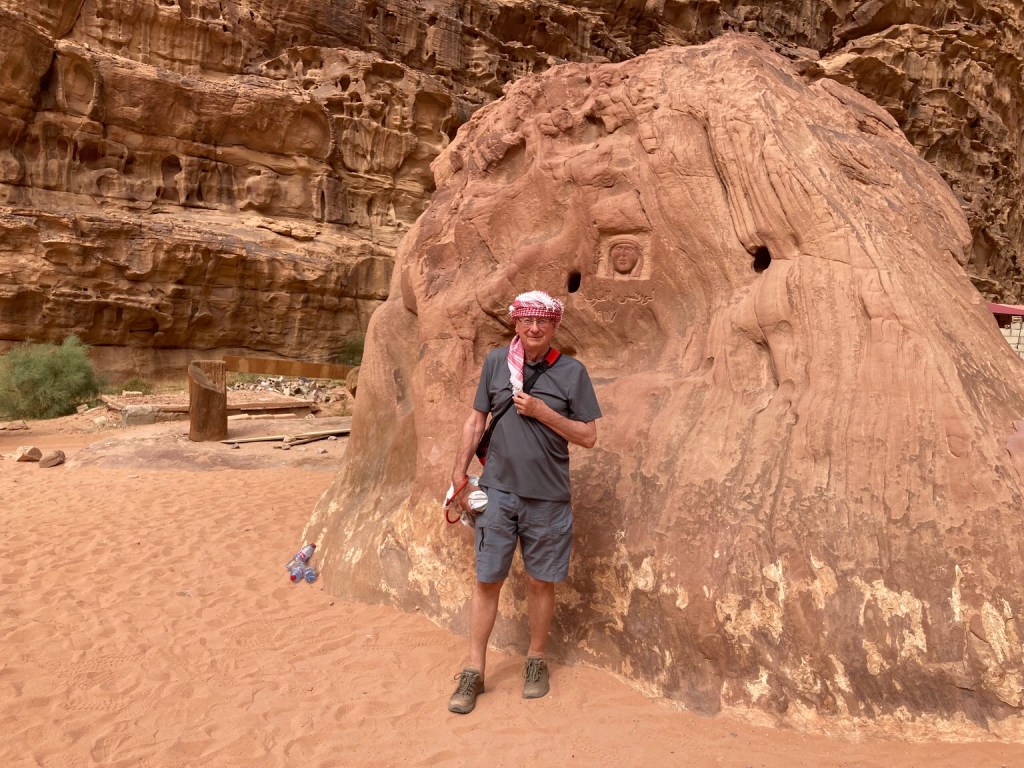
Chris had been eager to buy a scarf and today was the day. After bartering for his purchase, a young lad showed him how to wear it! I could certainly feel the sand as it managed to sting any bit of exposed flesh and fortunately once inside the gorge we escaped!
Very dashing!
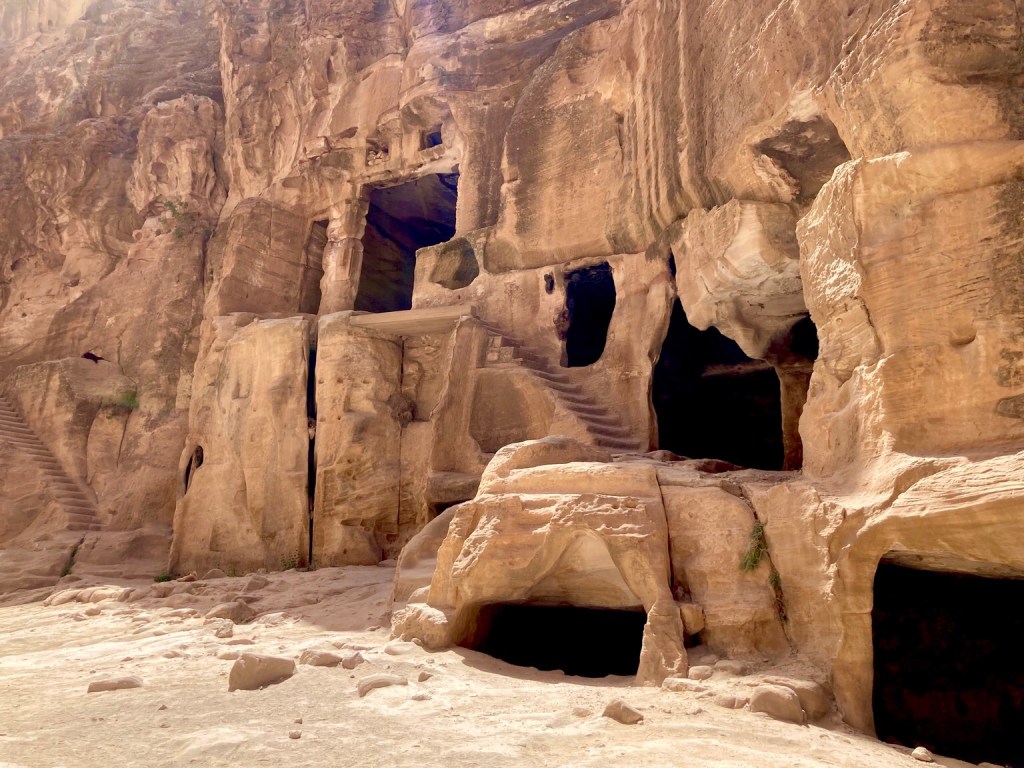
The two most impressive buildings at Little Petra are thought to be dining rooms as they contained stone benches for reclining. The first had three benches, hence Triclinium …
… and the Painted Biclinium with, you guessed it, two stone benches, and also well preserved wall paintings, although we were discouraged from trying to see them, which was a shame.
The gorge ended in a gift shop …
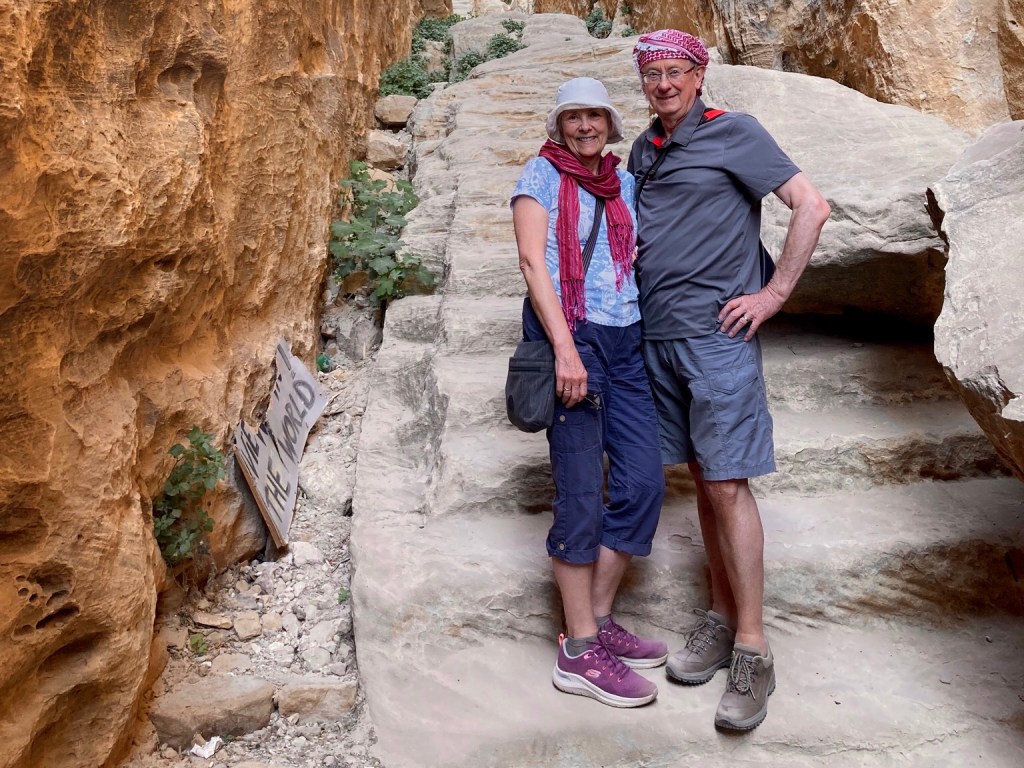
… and steps up to a trail ahead giving a perfect photo op …
The wind persisted, as we drove towards Wadi Rum.
The desert was made famous by the film Lawrence of Arabia which told the tale of the exploits of the charismatic T E Lawrence during the Arab Revolt in true epic style. We watched it before we came away and enjoyed the stunning vistas and stirring music, but later realised there was less focus on historical accuracy.
Thomas Edward Lawrence was an archaeologist, diplomat and writer. An officer in the British Army, he was posted to the Arab Bureau during the First World War and was assigned as liaison to Faisal, a leader of the Arab revolt against Ottoman rule. He participated in the capture of Aqaba as well as attacks on the Hejaz Railway which disrupted the Ottomans and eventually lead to their surrender.
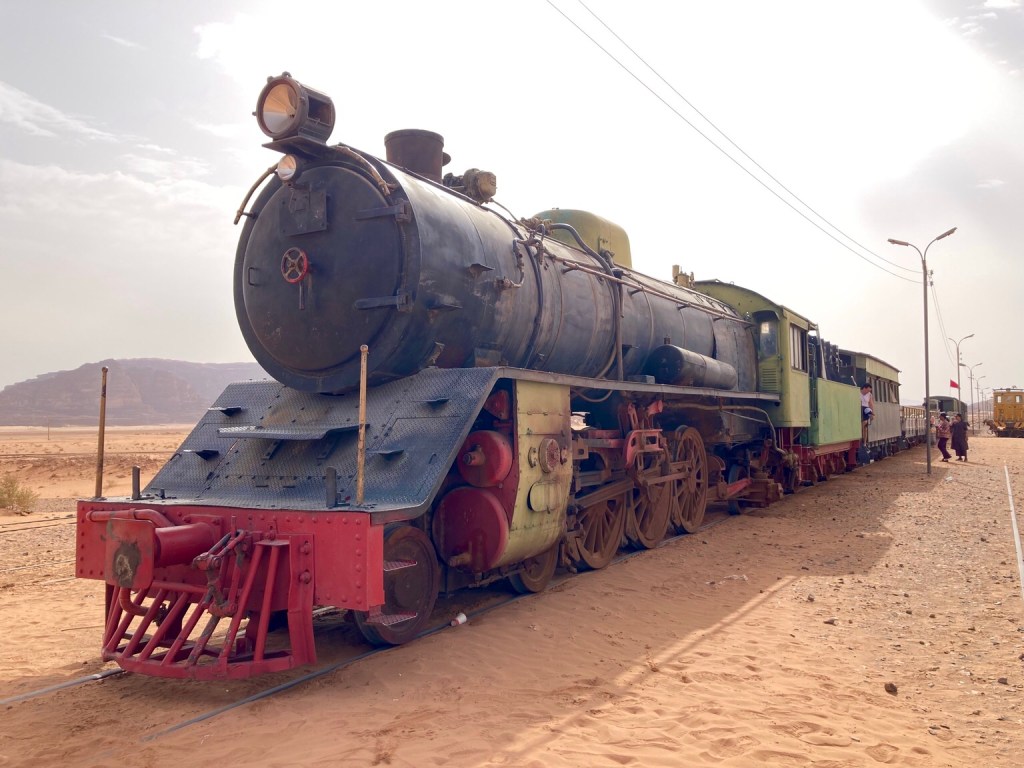
As we entered Wadi Rum, we saw part of the Hejaz railway which was built by the Ottomans to transport pilgrims from Damascus in Syria to Medina in Saudi Arabia.
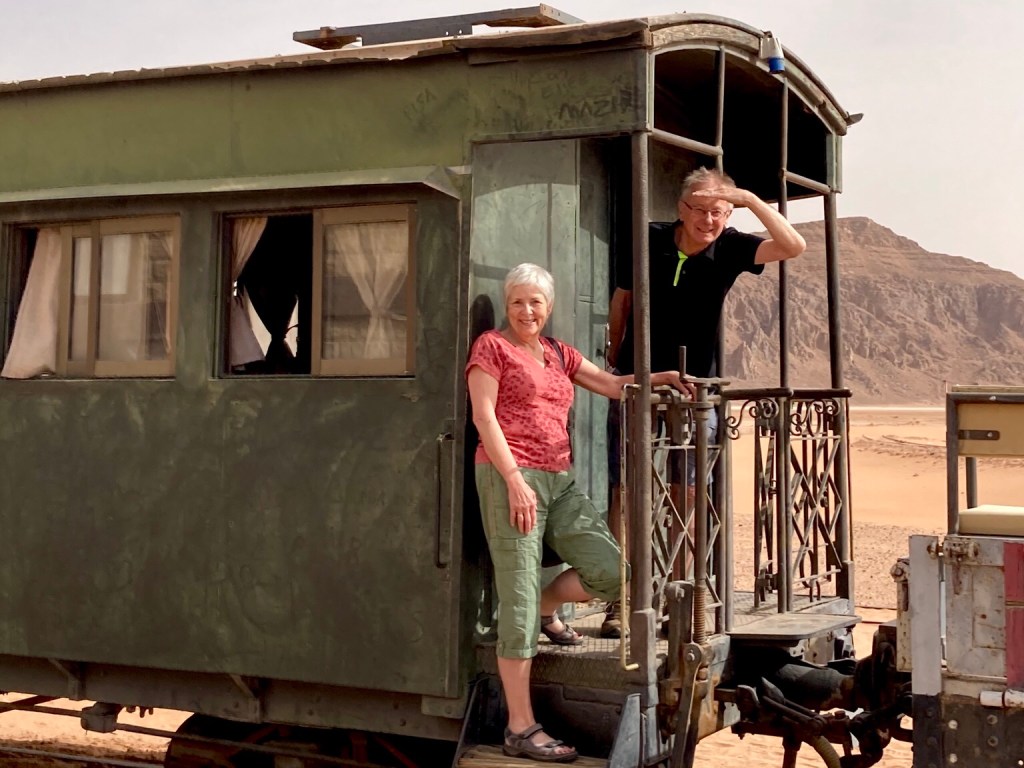
Donations from Muslims worldwide helped fund the project as it was considered a religious symbol as well as an important military feature and the trees felled for sleepers and fuel made a significant impact on deforestation along its route. We stopped nearby to look at some carriages, restored complete with an ottoman flag.
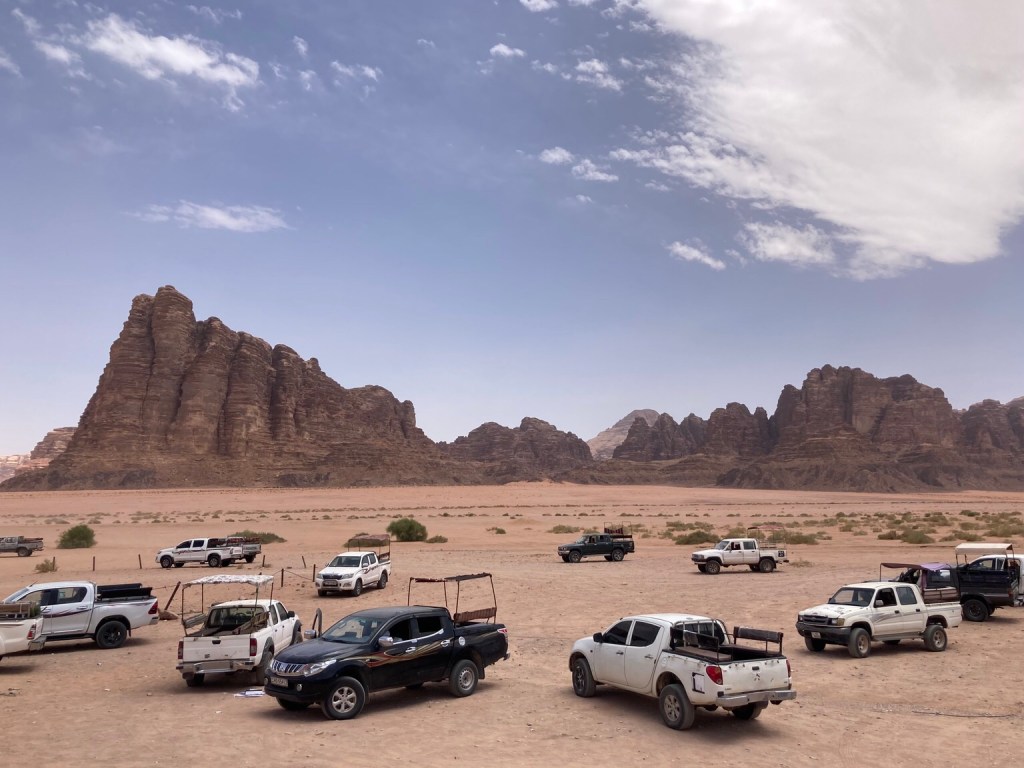
We had lunch at the visitor centre which is right beside a large rocky outcrop named the Seven Pillars of Wisdom after Lawrence’s memoir of his time in the desert. Though only five of these pillars are immediately visible, the other two are around the side.
After lunch we boarded a fleet of ancient trucks to take us on an excursion through the desert.
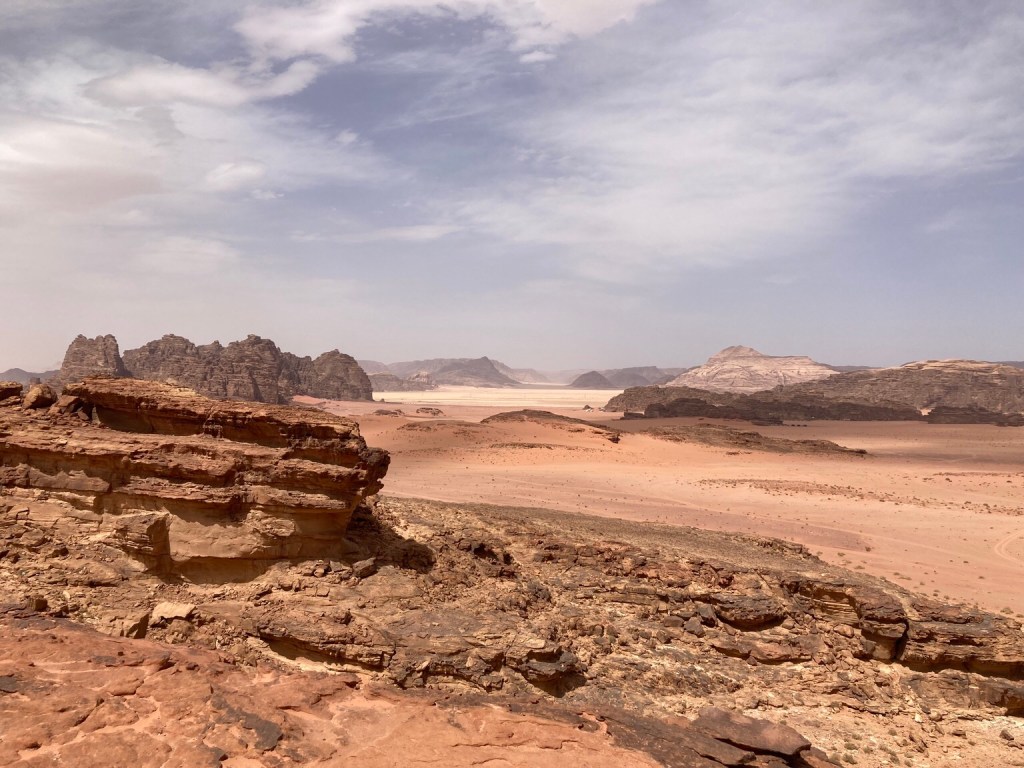
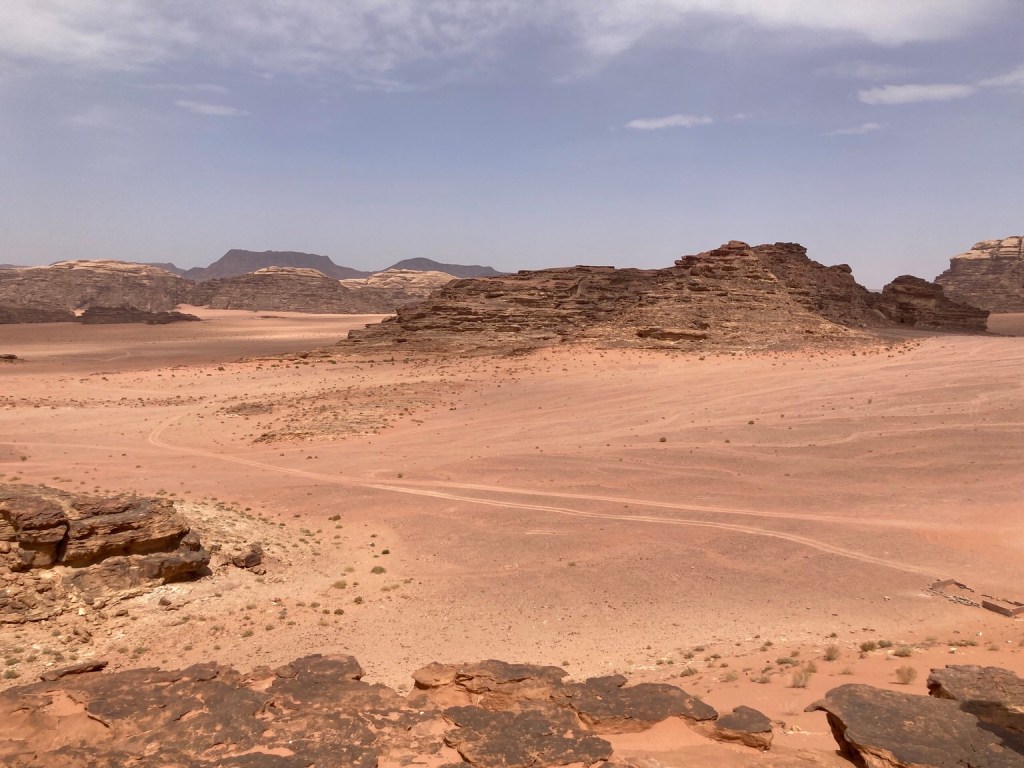
Our first stop was at a huge dune, which we climbed for a view …
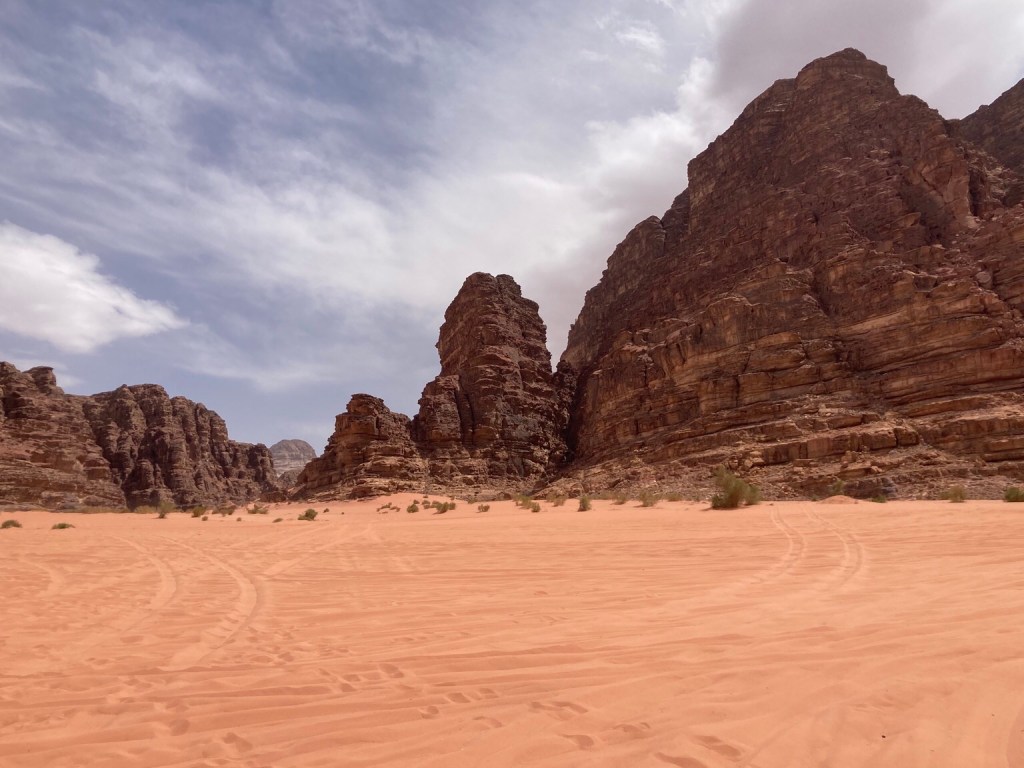
… and the landscape is truly beautiful.
Some 25,000 petroglyphs have been found in the Wadi Rum desert as well as 20,000 inscriptions in four different scripts showing the development of alphabetical writing in the peninsula, which is why UNESCO put it on the World Heritage List. We saw only a small example, with camels, ostriches and men.
We also stopped at the site of the Bedouin Camp where Prince Abdullah first met Lawrence in the early 1900s. A rock with a small memorial to each of them records the occasion …
… and then we were served Bedouin tea, flavoured with thyme, cardamon and cinnamon.
The jeeps then took us to the camp where we would spend the night.
The romantic notion of a traditional Bedouin tent where everyone sleeps communally on mats on the floor has to be reconciled with the modern need for creature comforts so most camps have settled on Bedouin ‘tents’ with breeze block walls covered in matting, AC and a bathroom, set around a central area with dining tents and a camp fire and here is ours.
There was an offer of a camel ride to see the sunset, but having been on camels, we chose to just stay at the camp and take a wander on foot, realising quickly how busy the neighbourhood was!
Typically, the sun retreated behind a bank of cloud way before sunset and even the later stargazing was cancelled. I asked if the camel ride had been a peaceful experience, at one with the desert, and was told it was fine, until they stopped near a zip wire with everyone screaming as they descended!
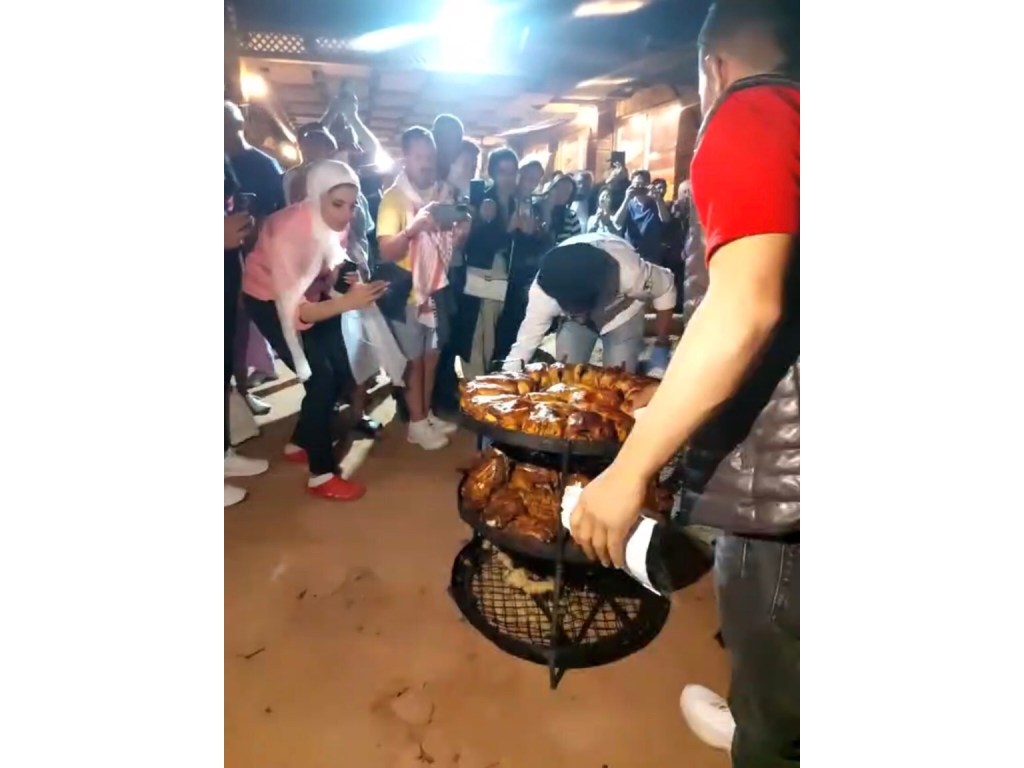
Dinner was cooked in a traditional underground oven, called a Zarb and great ceremony was made of removing the sand and revealing the metal stand with meat and vegetables which were served with the buffet.
Afterwards, there was music and dancing round the campfire, led by a group of very enthusiastic teenage girls, eager to enjoy every minute of their group trip!
We went to sleep to the sound of the breeze ruffling the curtains but the night did not remain peaceful, at least to me, as Chris slept throughout! I woke thinking I had expected the desert to be quiet, but there was a racket going on somewhere. I looked in the bathroom with my phone and couldn’t see anything, but it sounded like a generator or ac unit but ours was off. I went back to bed and eventually dropped of again till morning, but when I got up, the bathroom was hot, steamy and noisy and I could see why. There was a hole in of the pipes and hot water was spraying hard against the glass screen making a racket.
It was soon mended by reception, but it could have been quite different if one of us had slipped on the wet floor or been scalded by hot water.
Today, everyone wants to follow in the footsteps of Lawrence of Arabia and have the romantic desert experience conjured up just for them, so much so that there are now 400 camps in Wadi Rum alone, offering every experience from sleeping outside under the stars to a luxury Martian style dome tent with hot and cold running water, but with jeeps whizzing back and forth and party music over loudspeakers into the night, getting a feel of isolation and inner peace can prove a challenge.
Visiting Petra is definitely the reason we are here in Jordan. The area was settled by a nomadic Arab people called the Nabataeans more than 2,000 years ago and Petra later became the capital of their kingdom as it grew rich through trade in frankincense, myrrh, and spices on the nearby Silk Road. They were used to living in barren deserts and skilled in stone carving, leaving a legacy of tombs, temples and an ingenious system of dams and water channels.
Petra was later annexed to the Roman Empire and thrived until an earthquake destroyed much of the city in the C4th. Combined with changes in trade routes, this led to the city’s downfall, and it was ultimately abandoned. Petra appears to have been largely deserted by C7th and was then lost to all except local Bedouin until rediscovered by a Swiss explorer named Johannes Burckhardt in 1812. It is now one of Jordan’s national treasures, a UNESCO World Heritage Site made iconic by its visit from Indiana Jones and voted one of the new Seven Wonders of the World.
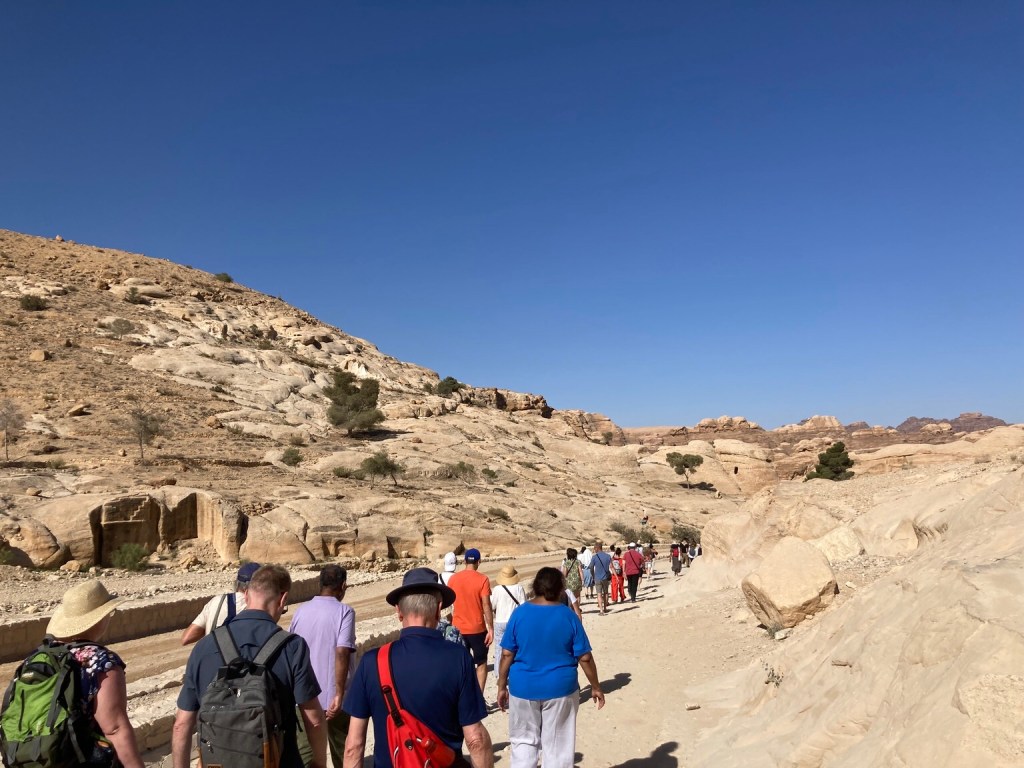
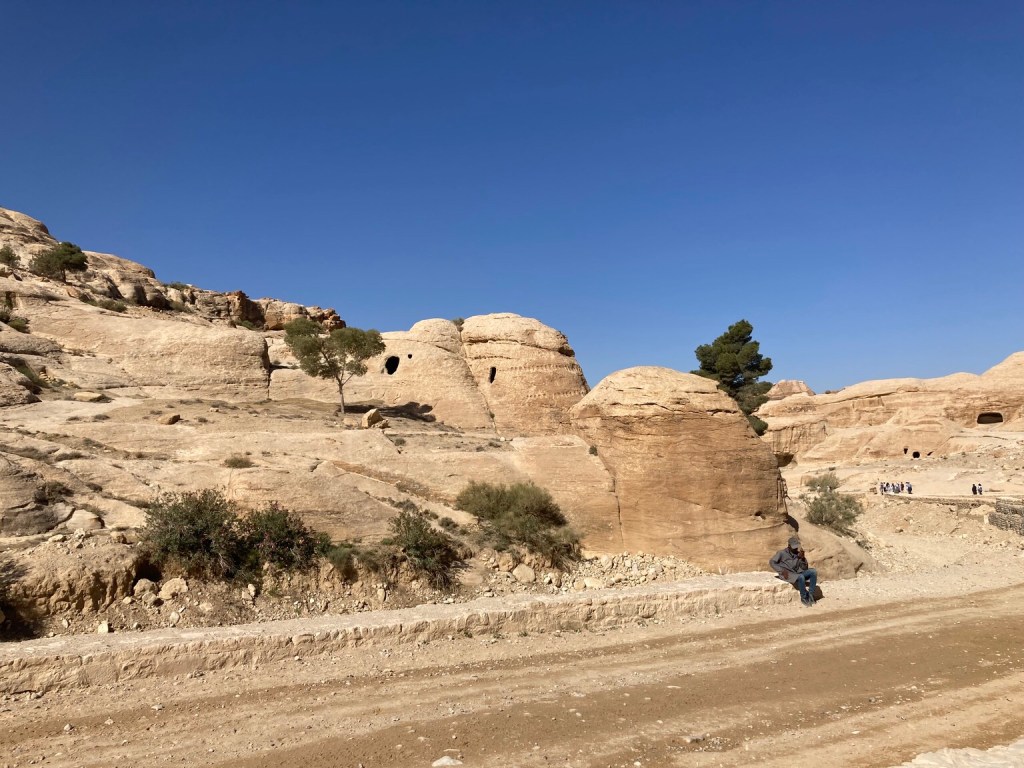
The site is huge, and in fact as much as 90% has yet to be discovered. Michael led us down the main trail, telling us of the history.
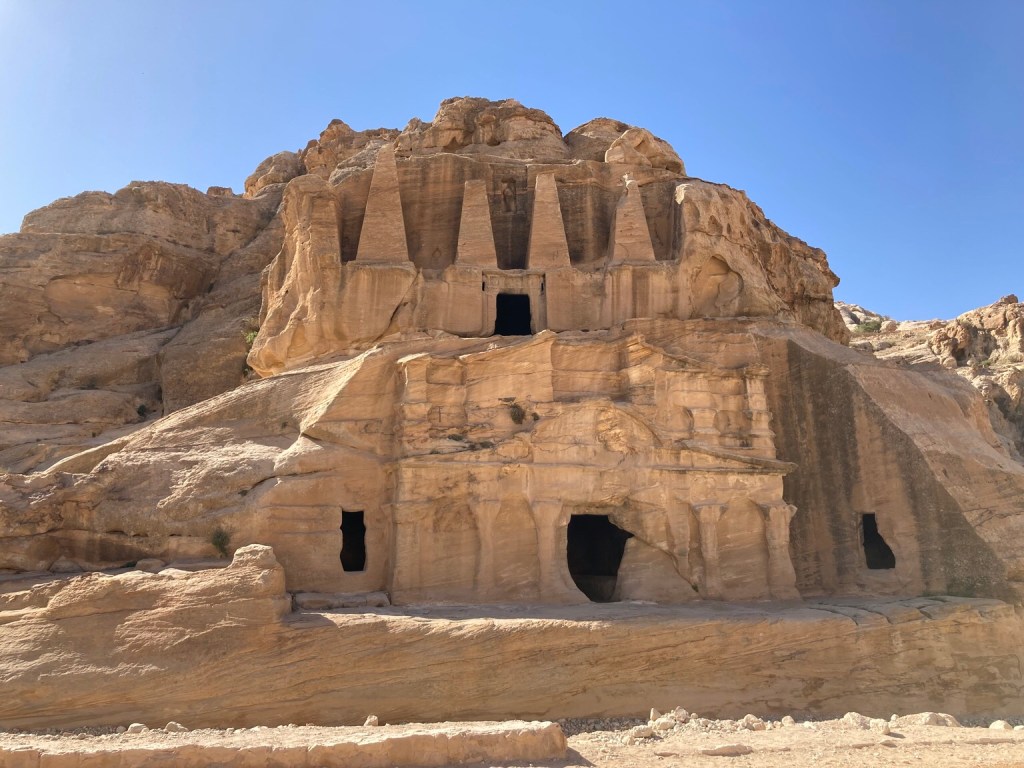
Here is the first tomb we saw with obelisks carved above.
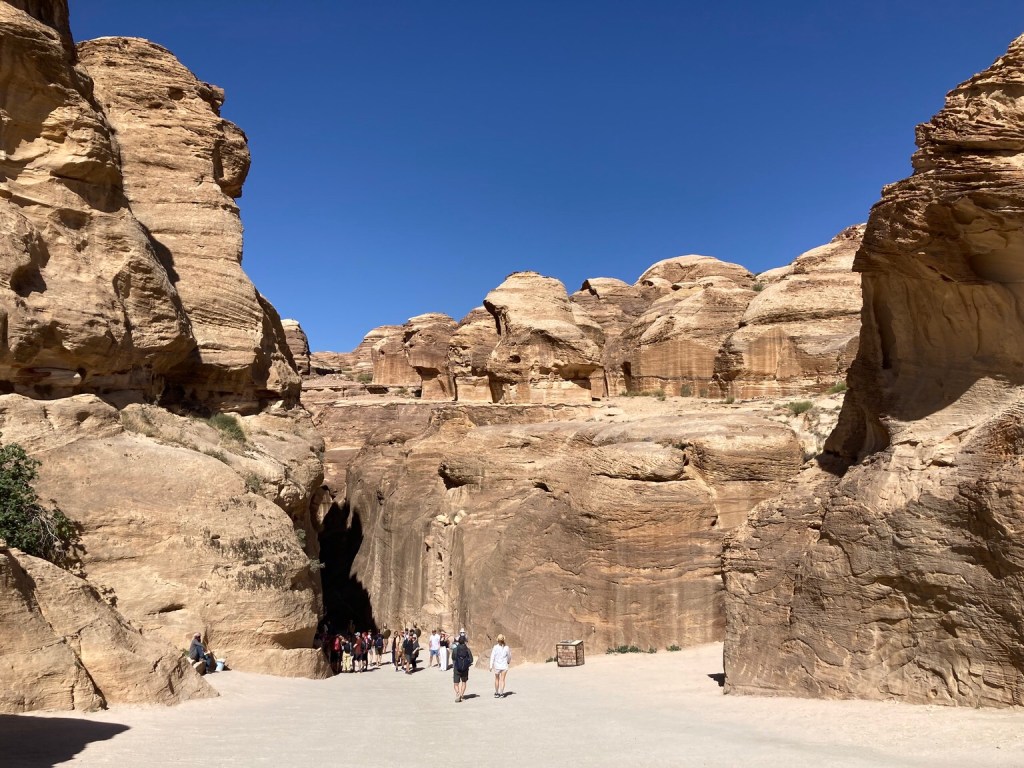
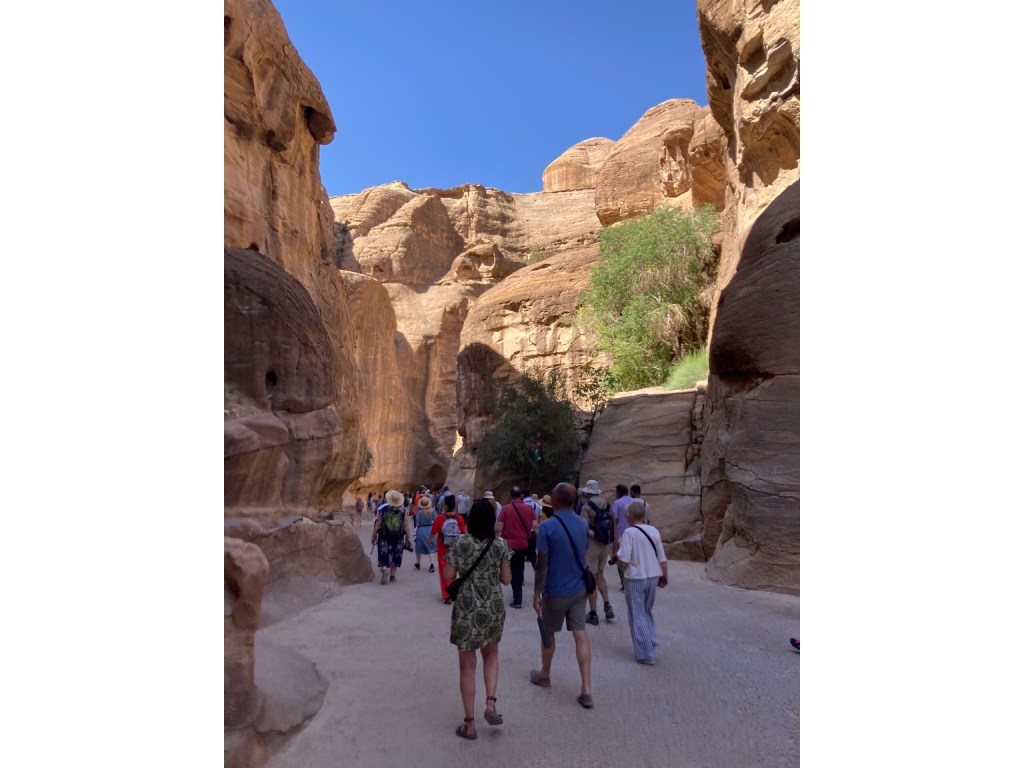
We continued to the beginning of the Siq or gorge which was the main entrance to the city, but almost hidden from view.
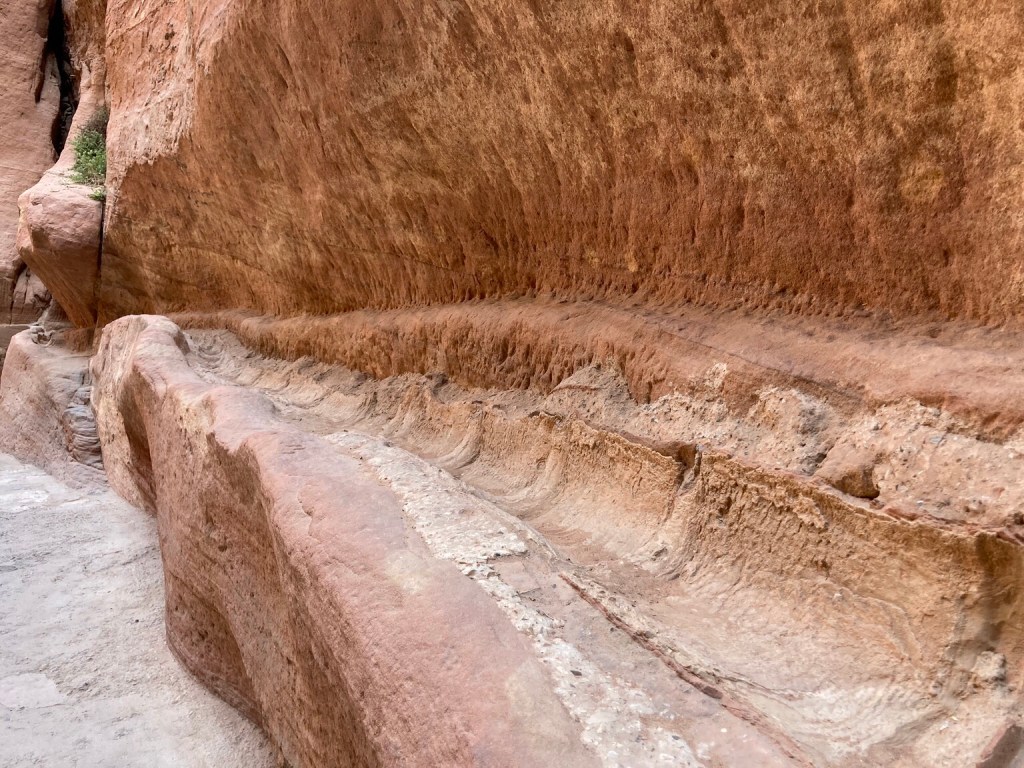
We noticed the inventive water technology – the channel lined with ceramic which runs the length of the Siq …
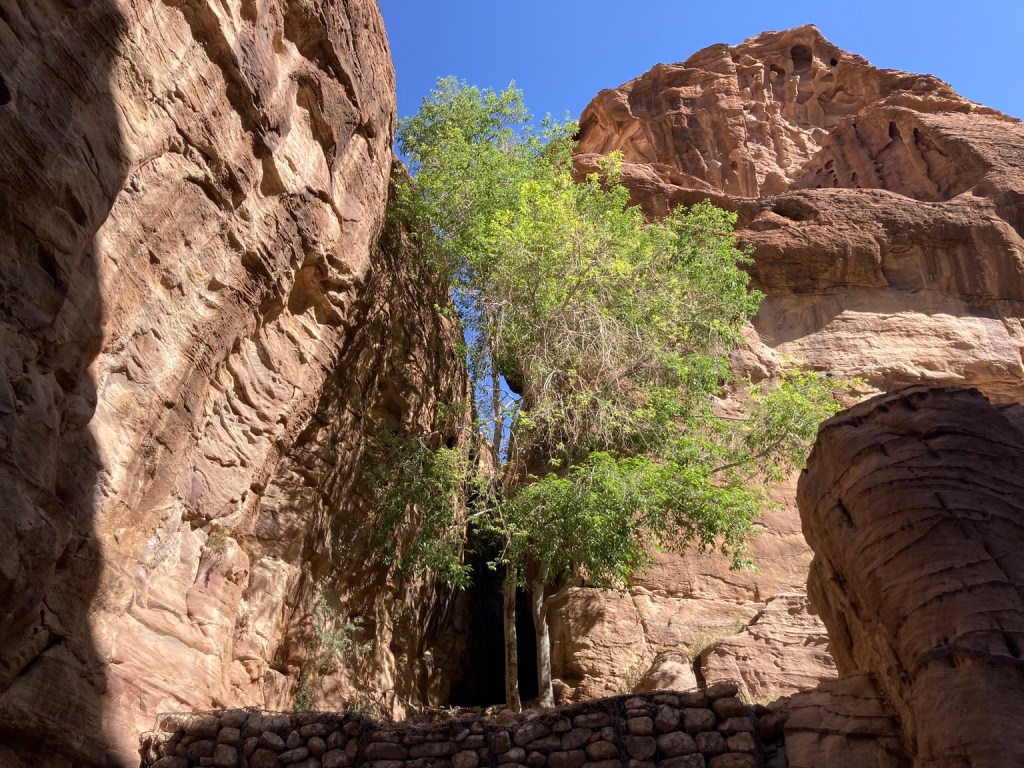
… and one of the three dams within the gorge which help keep it safe from flooding.
Michael mentioned that with a sudden downpour, flash floods can easily occur making the gorge dangerous, especially as the outer dams have fallen into disrepair.
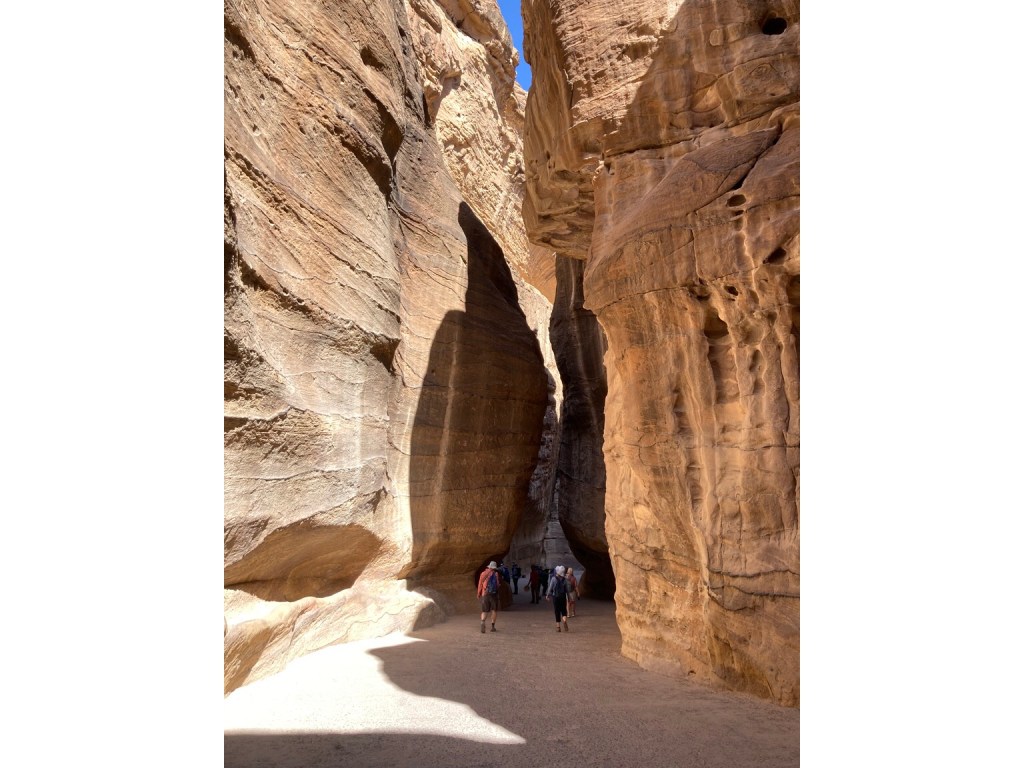
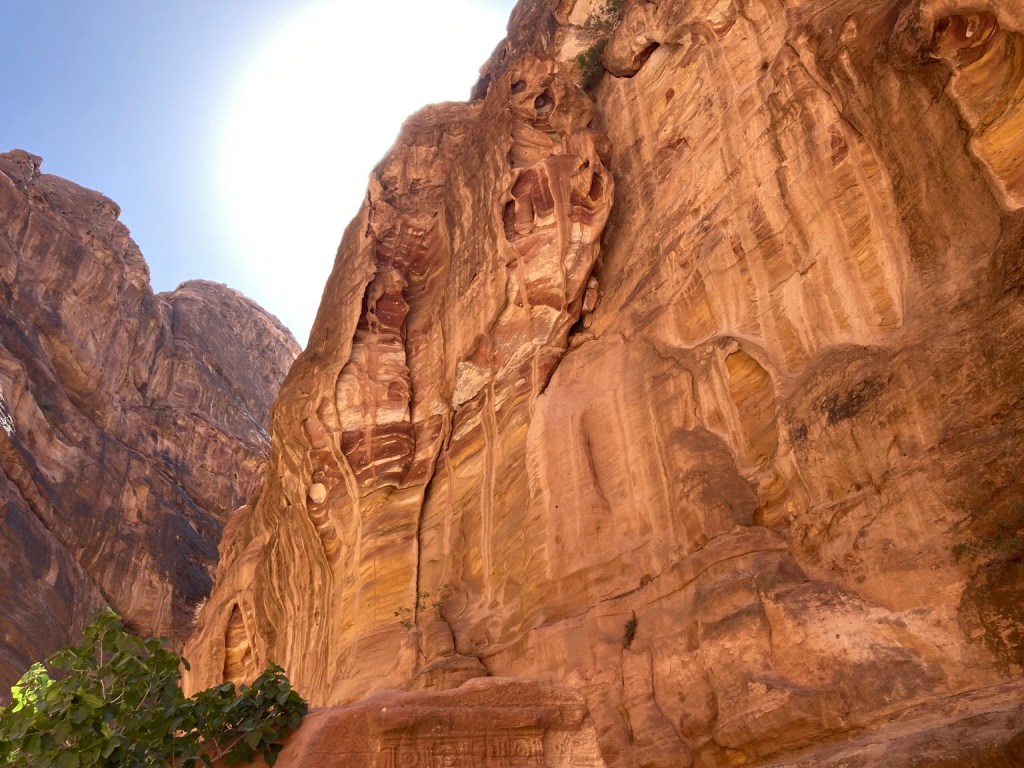
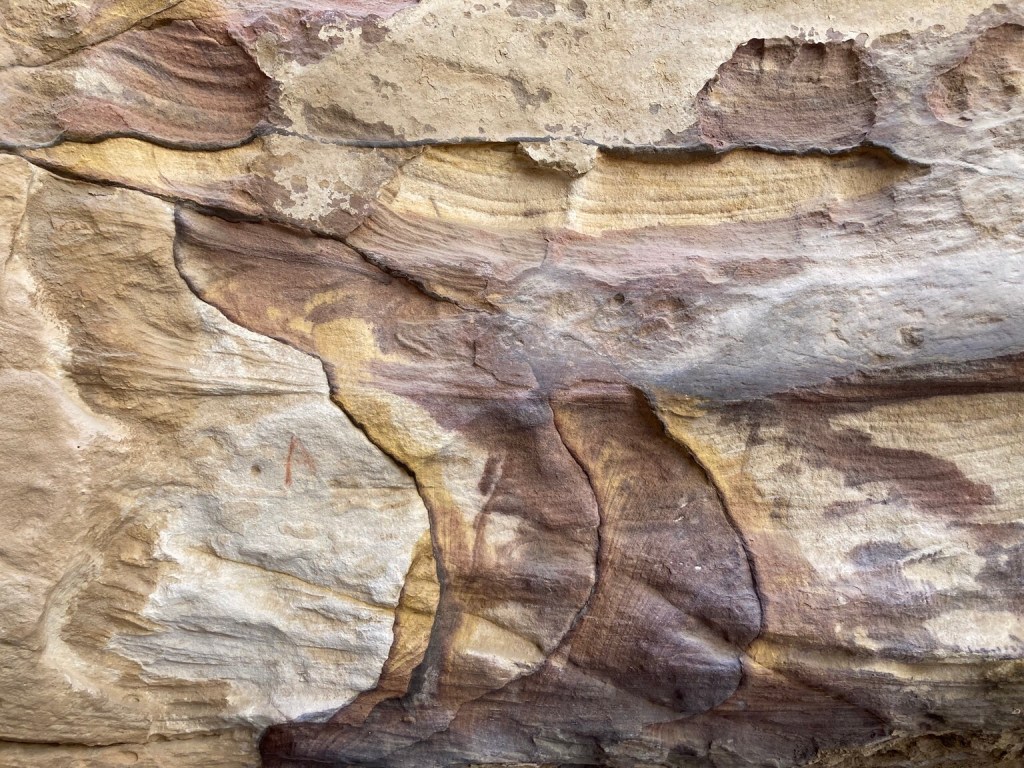
We also marvelled at the natural beauty of the coloured rock which had once lain under the sea until moved by tectonic activity and then eroded smooth by wind and water …
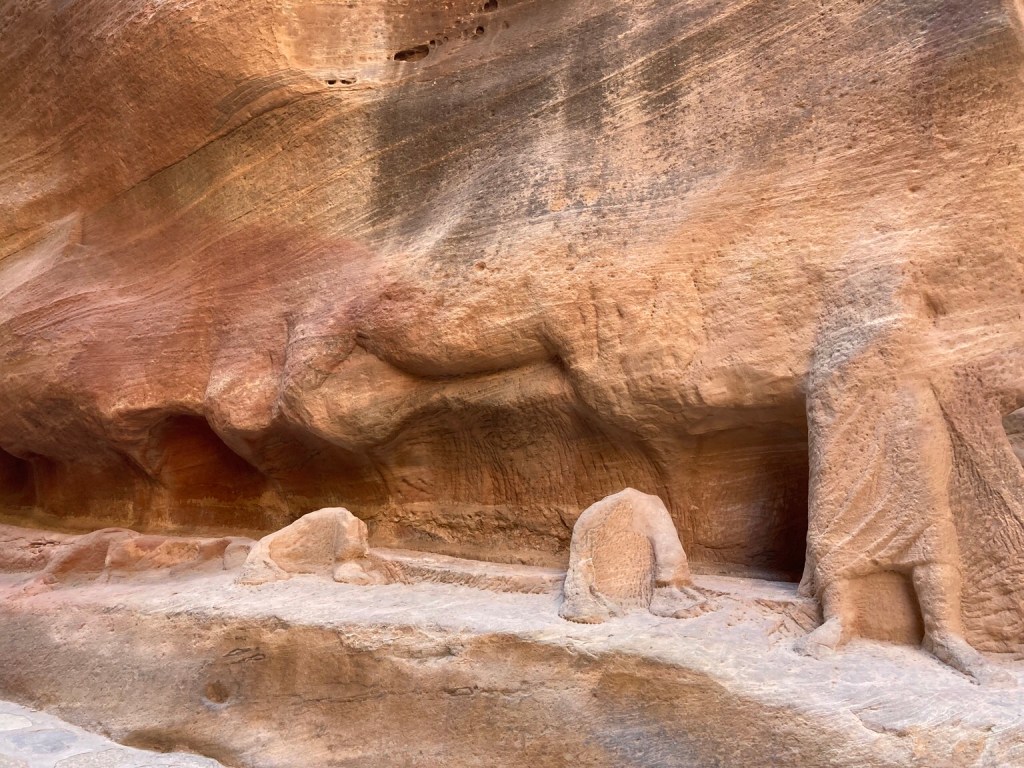
… and even came across the remains of a man leading a camel!
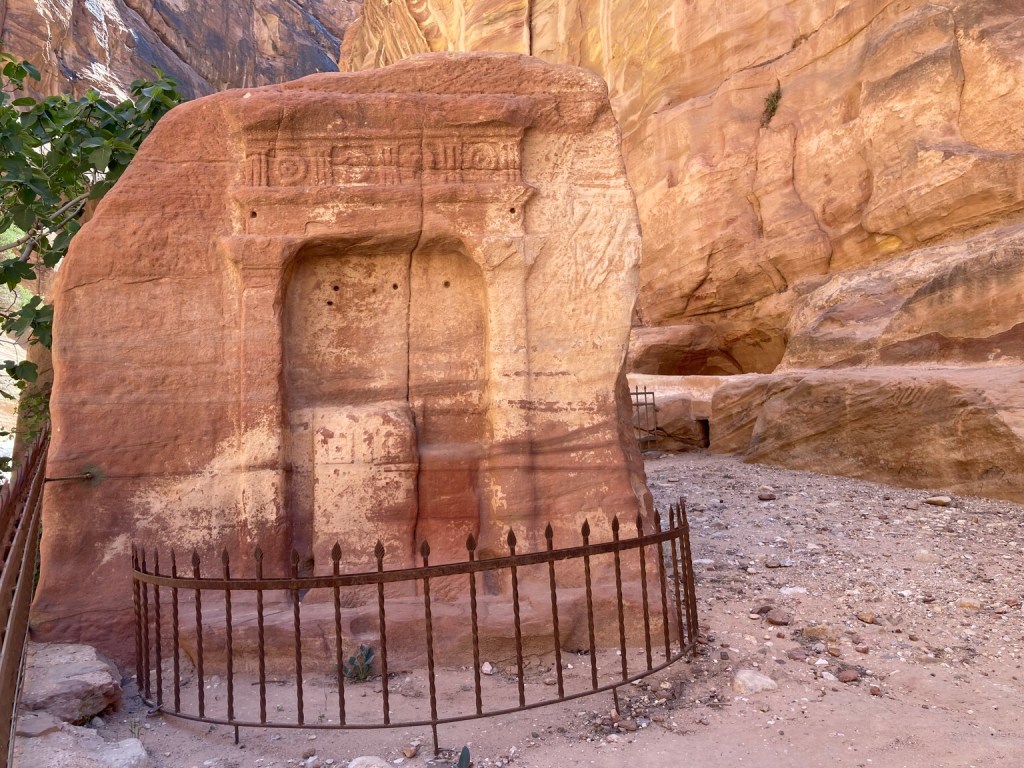
The Nabataeans worshipped a variety of gods and goddesses and their practice included sacrifices, rituals, and a belief in an afterlife. They also honoured Dushara, the god of the sun.
This small votive niche resembles full size tombs and contains two baetyls or standing stones each representing a god. The left one has two carved squares to show its eyes, and was the largest of many such niches.
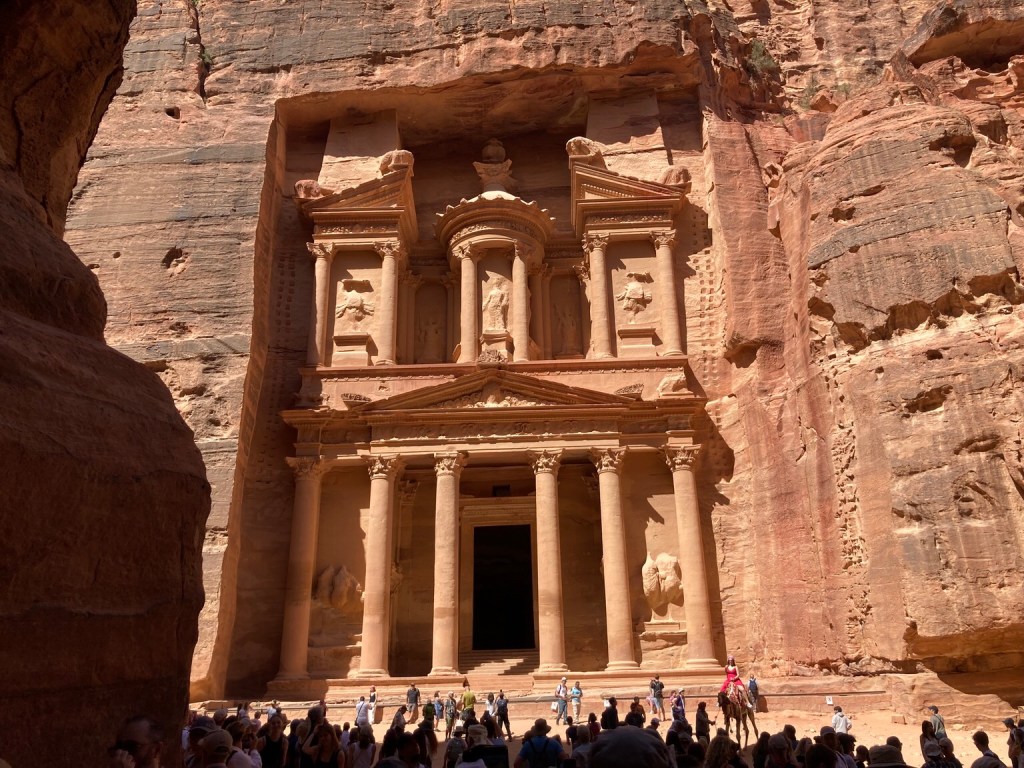
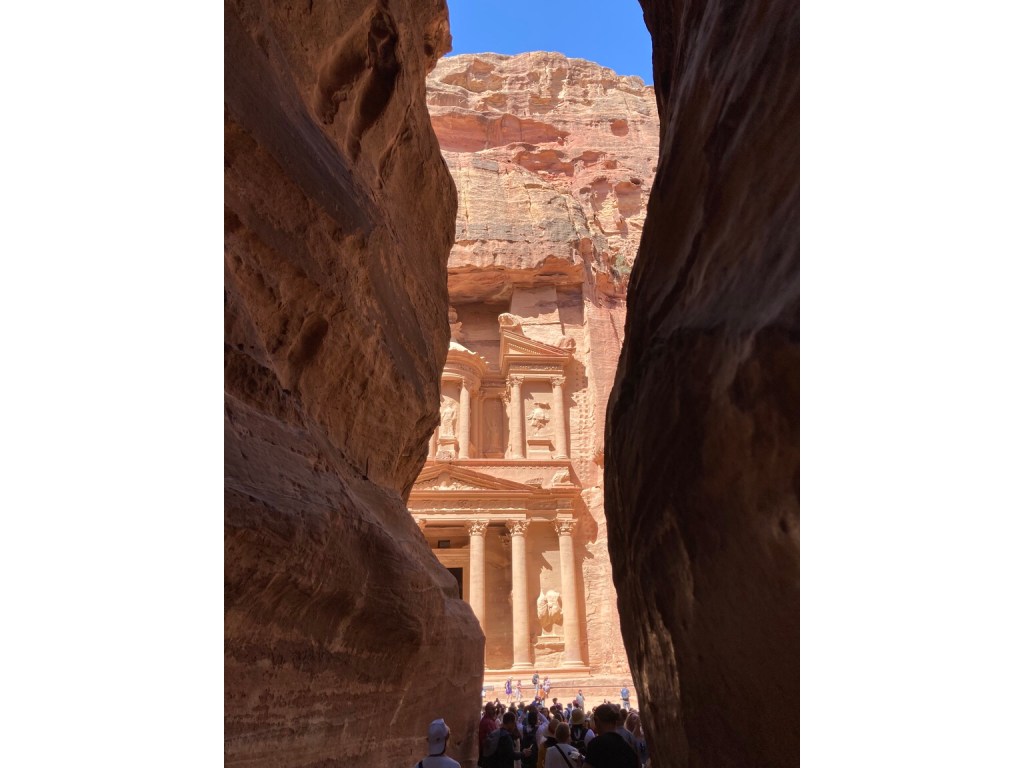
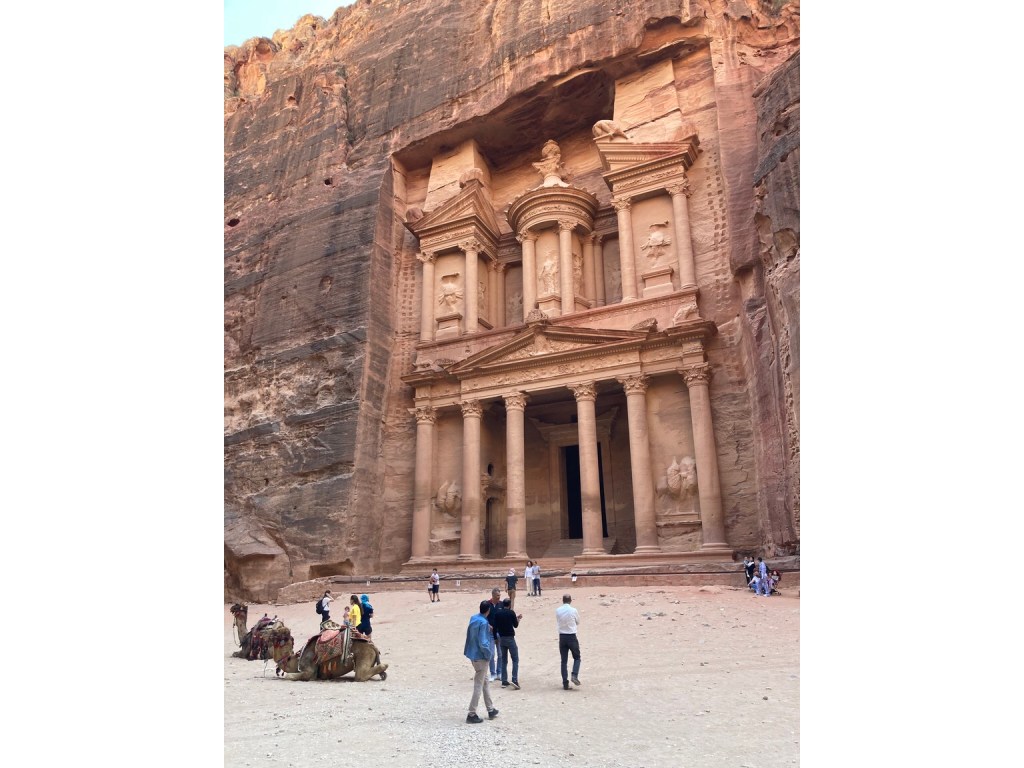
Finally we emerged from the narrow gorge into a large space with The Treasury before us, lit by the morning sun.
It was carved out of the rock face, beginning at the top, and hand holds can be seen either side. It is believed to have been built as a mausoleum and crypt with four eagles at the top to carry away the souls. The figures on the upper level are dancing Amazons with axes and Castor and Pollux flank the entrance.Having taken in the magnitude of the building and taken several pictures, we moved on as tourists are no longer allowed inside.
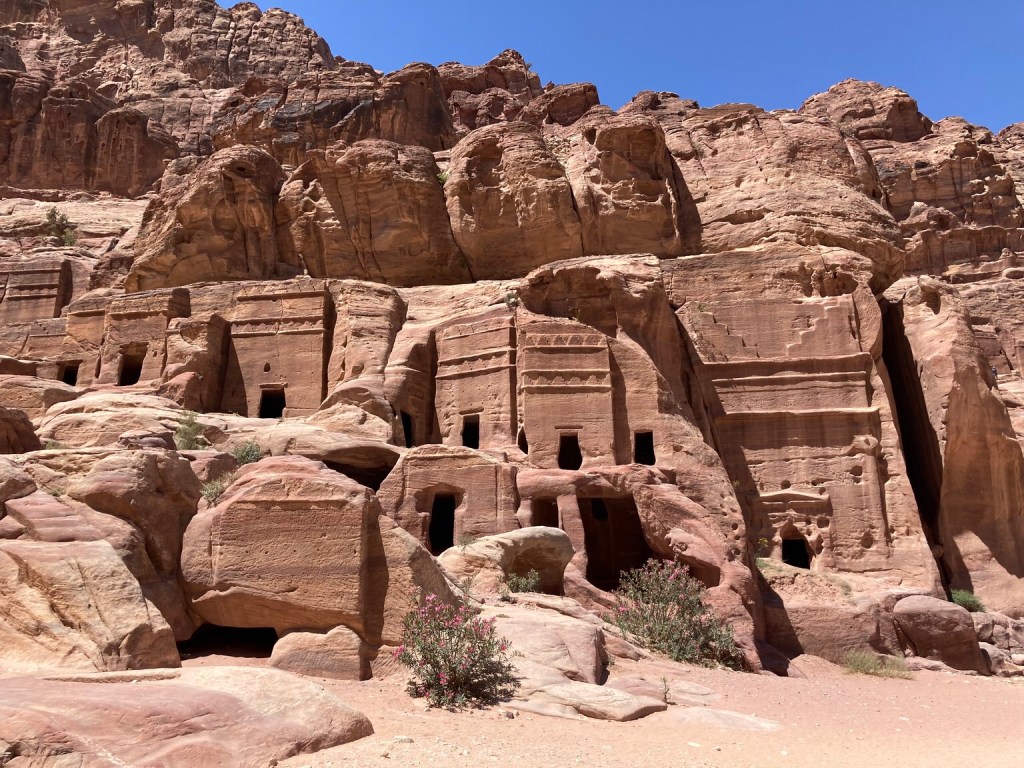
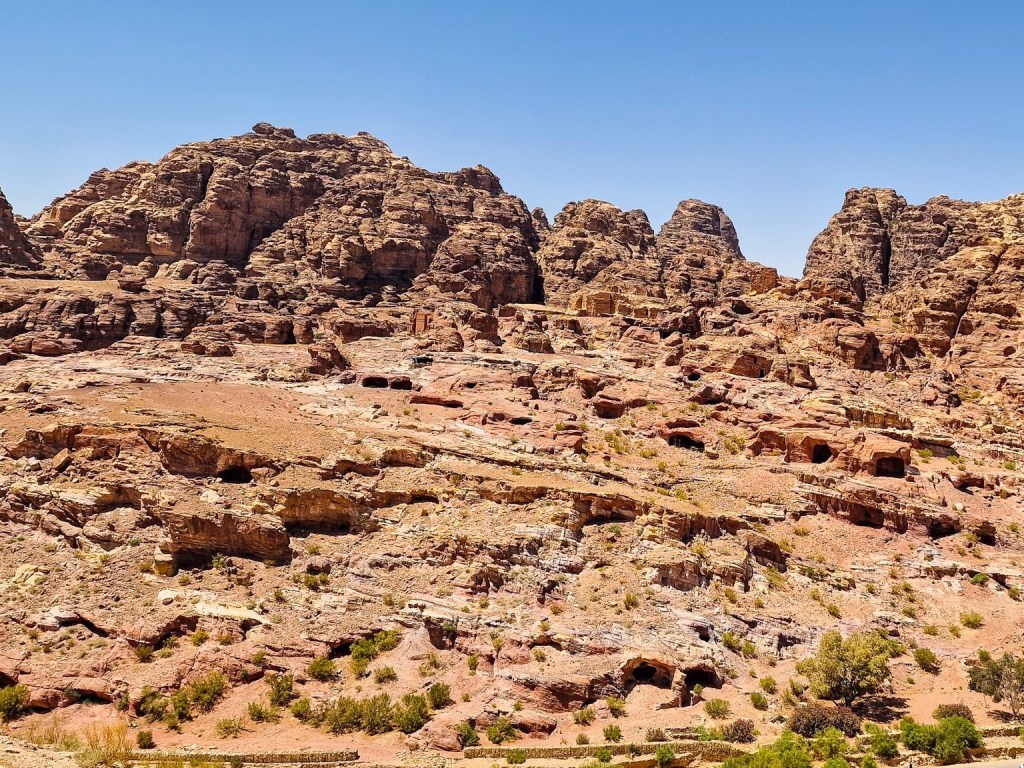
There was a lot more to see – in The Street of Facades, many of the tombs show a stepped decoration which possibly eludes to ascending to the afterlife …
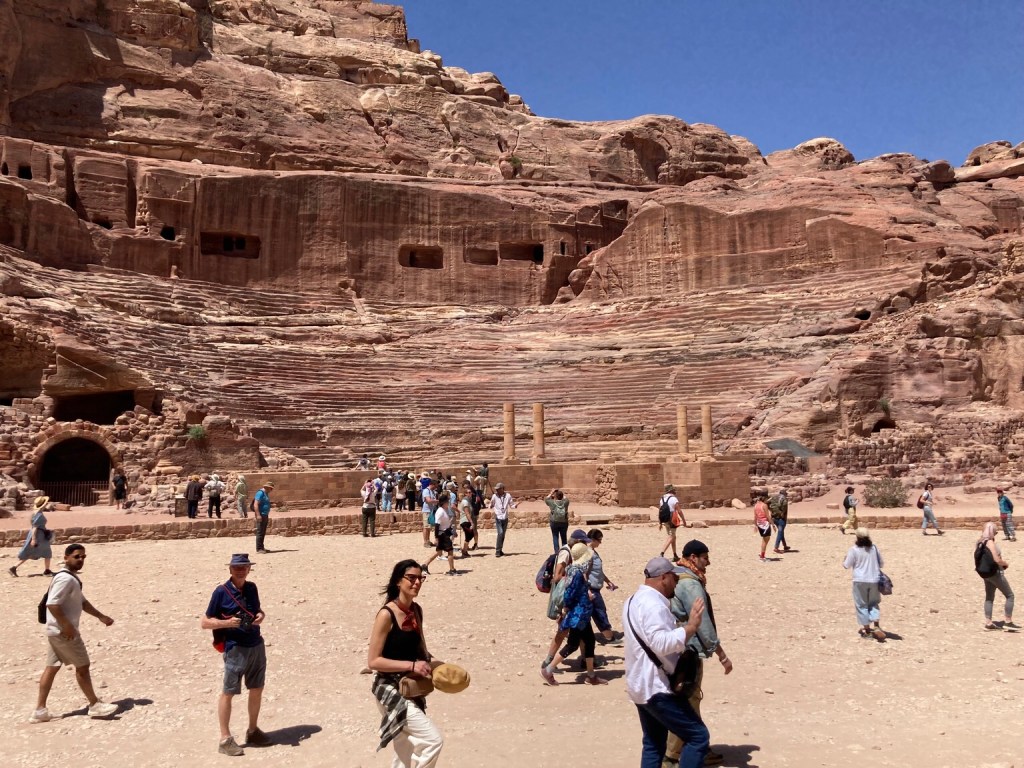
… the Theatre is in the heart of the city, built first by the Nabataeans but then enlarged by the Romans much later …
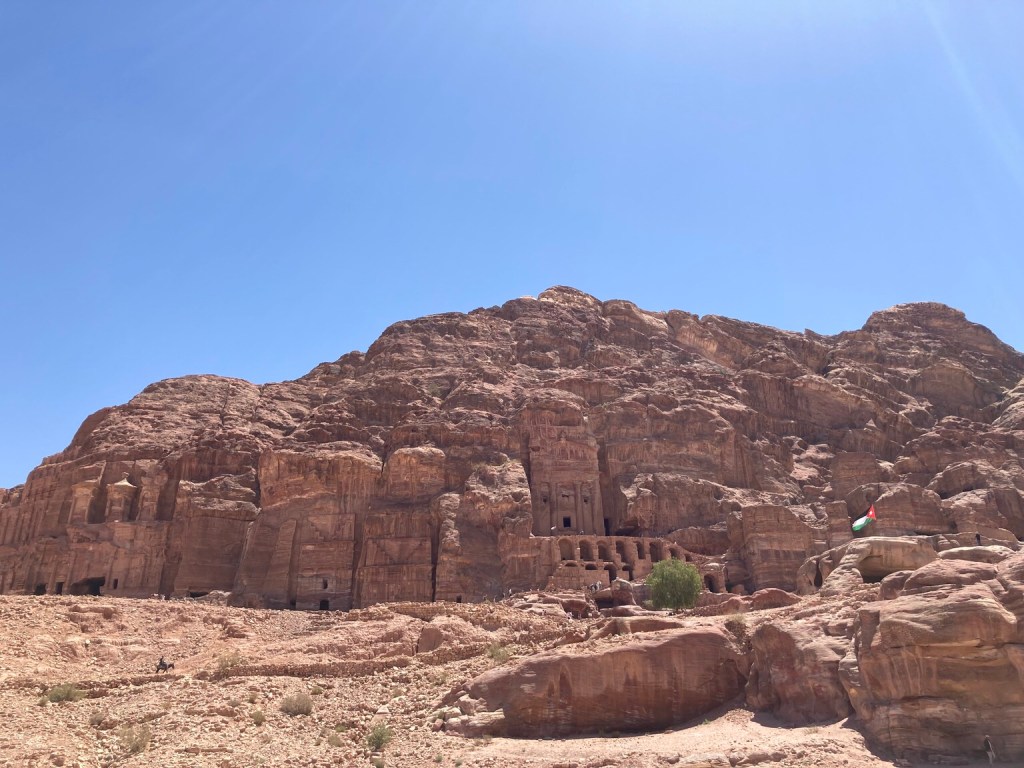
… the Royal Tombs which deserved a closer look, but we were moved swiftly on …
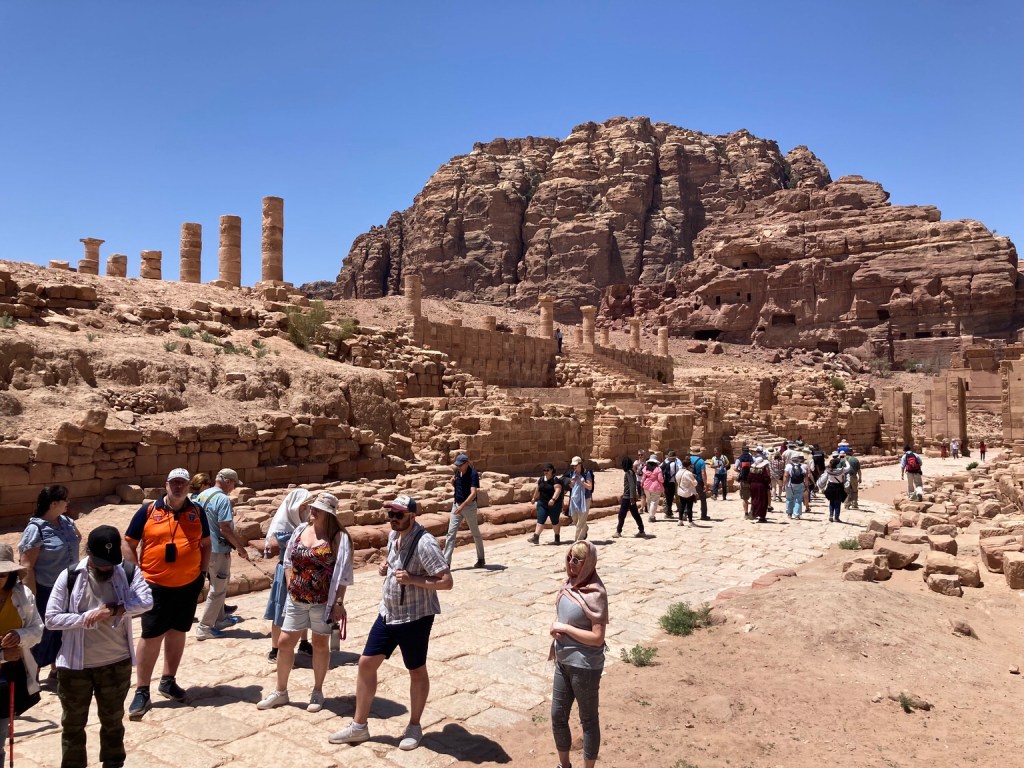
… down the colonnaded street …
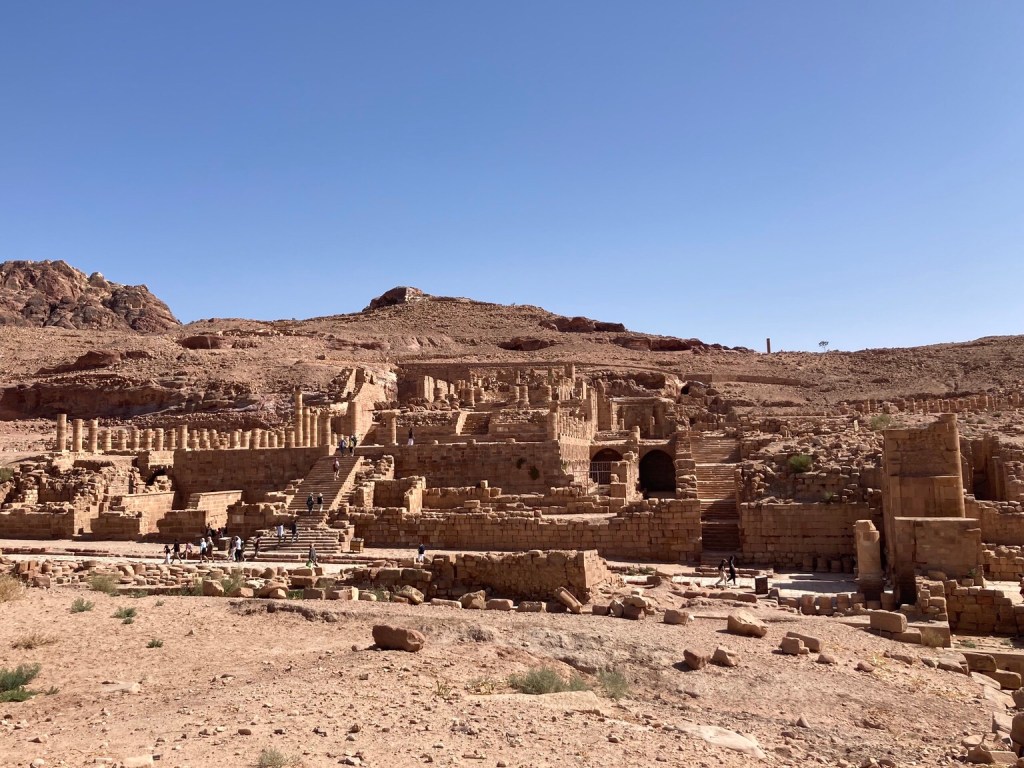
… with the Great Temple behind …
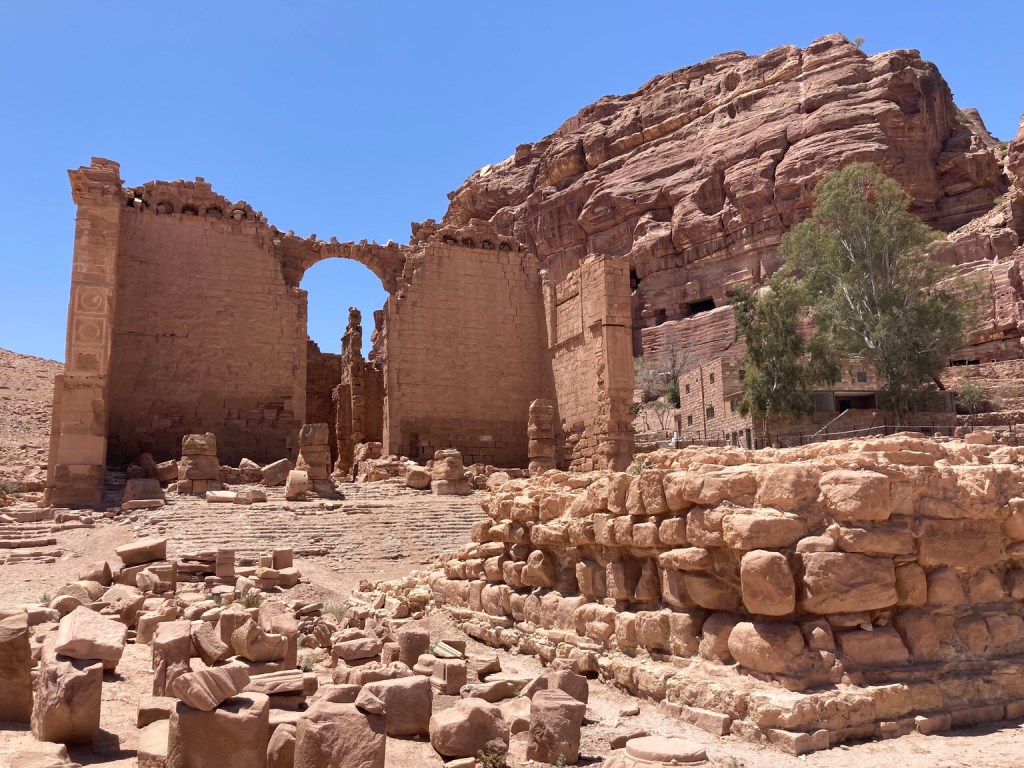
… and to Qasr Al-Bint, the most important temple dedicated to Dushara.
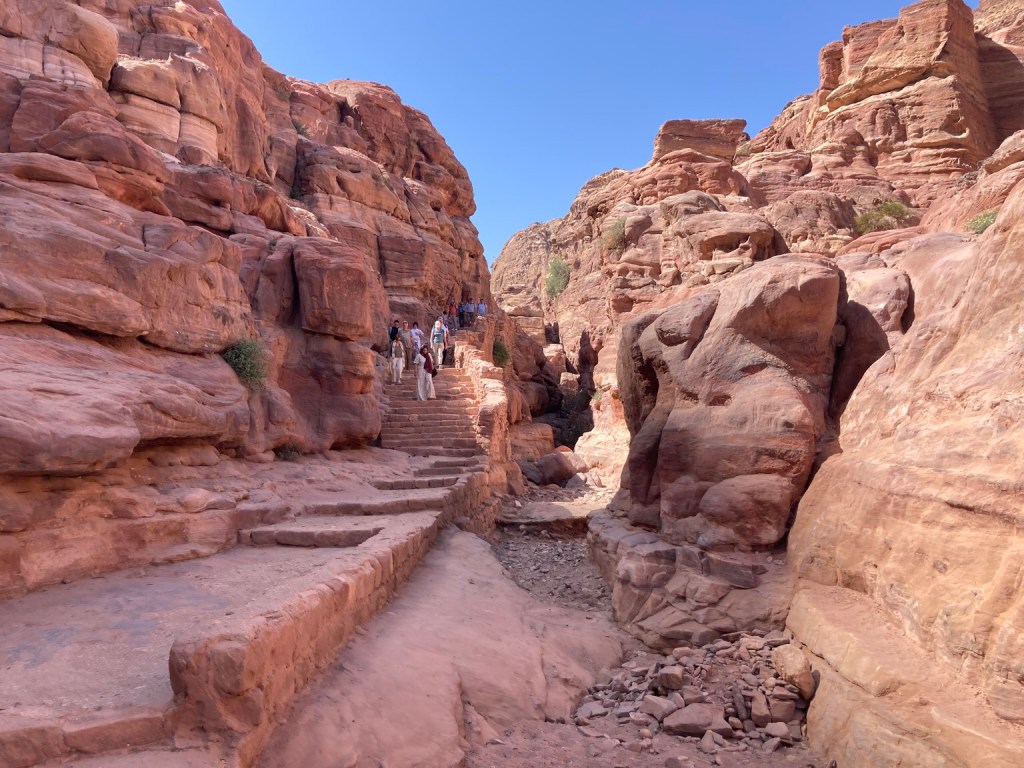
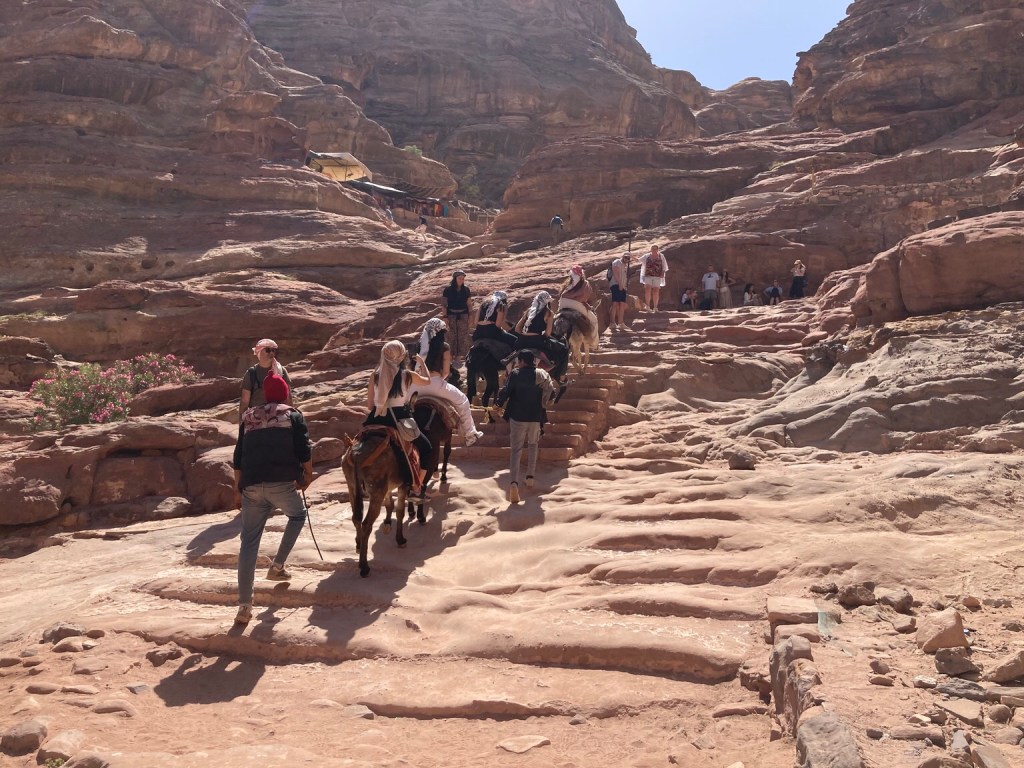
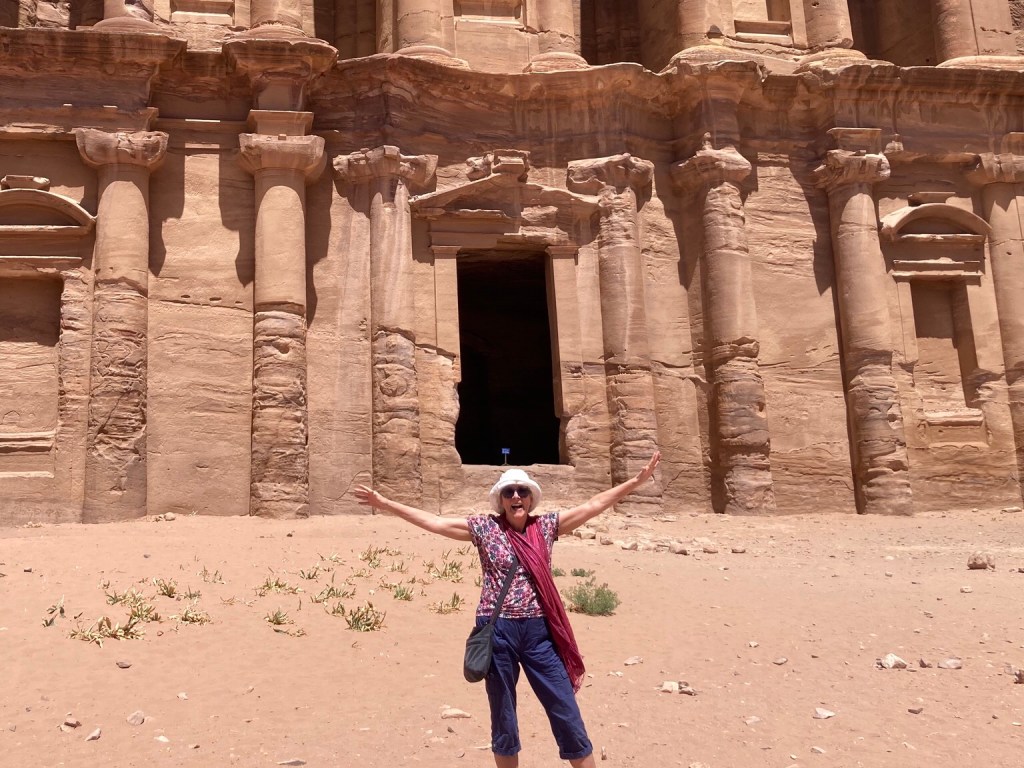
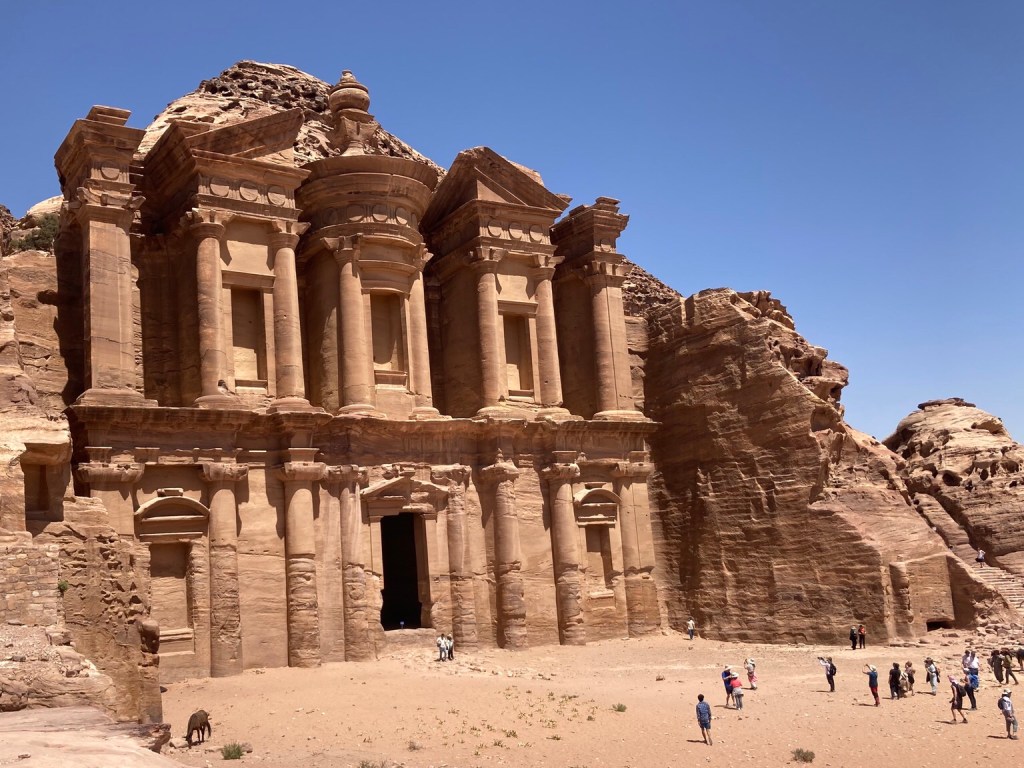
At this point we stopped for lunch having already walked 5 miles! In the afternoon, we could choose what to see. Several of our group were making the climb up 800 steps to Ad Deir, or the Monastery, the largest monument in Petra and thought to be used for religious meetings and Chris encouraged me to go if I wanted to.
It was certainly a challenge, but I was delighted to reach the top!
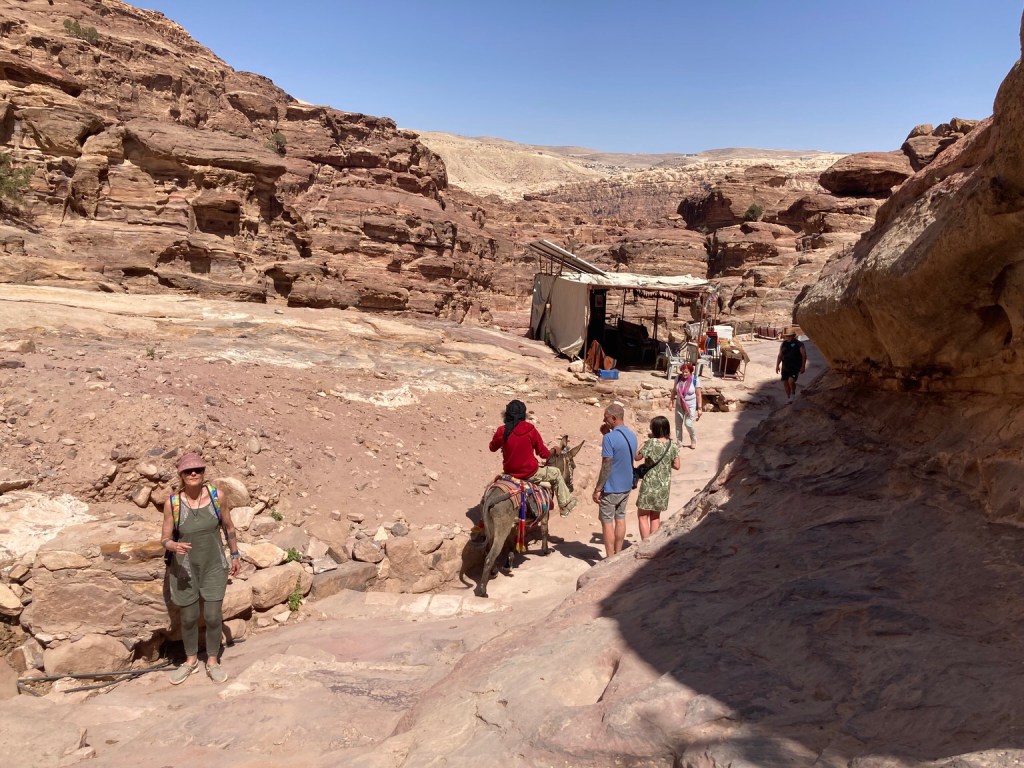
The walk down was almost as difficult, dodging donkeys and donkey poo and being careful on slippery stretches of stone.
It was time to start making our way back, past the Treasury, looking a little more subdued in shadow, and back to the start.
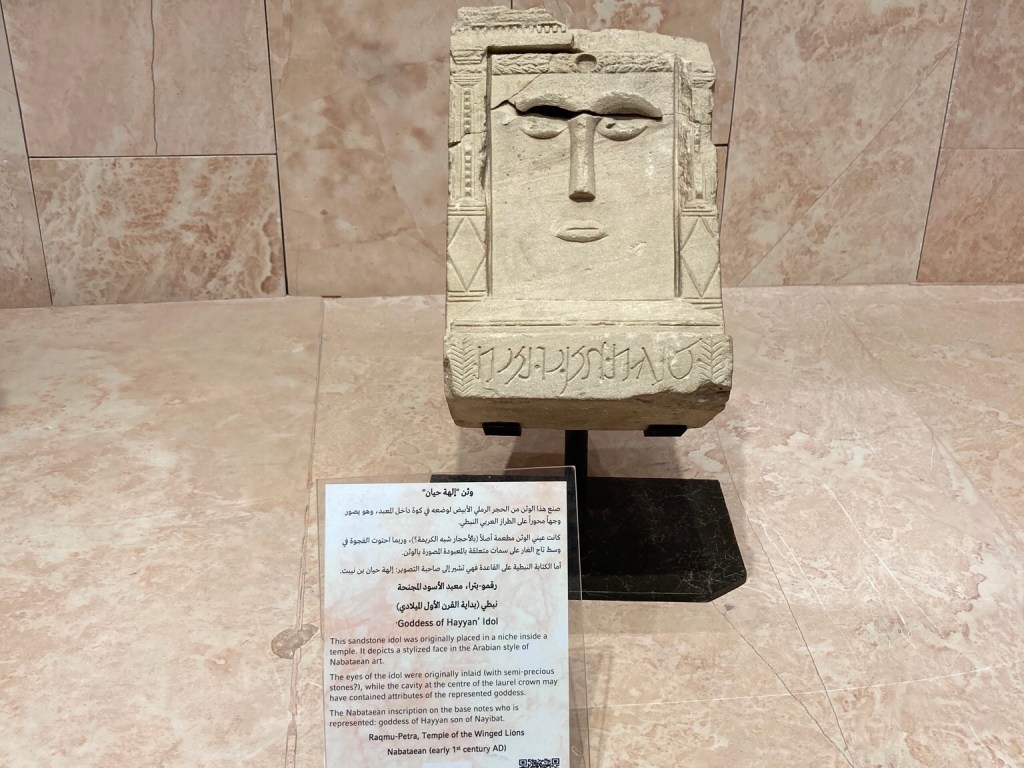
I met Chris in the Museum, but to be honest, after 10 miles I was exhausted and not really taking anything in, but here is an example of one of the temple idols in far better condition and with much finer decoration.
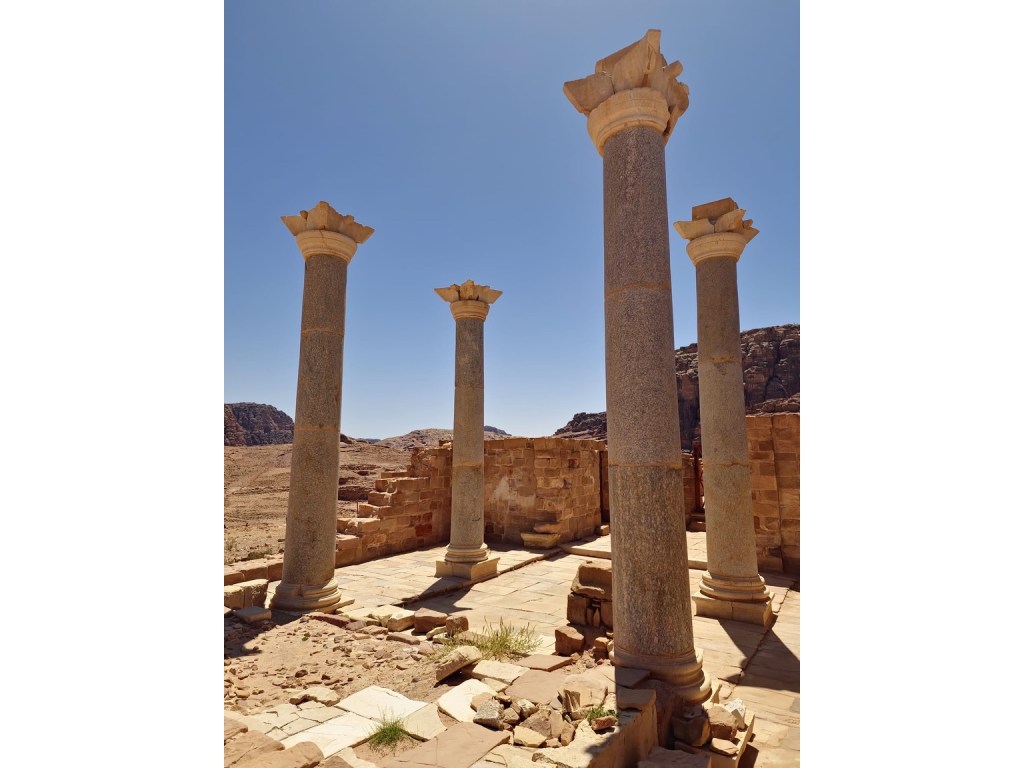
Later, Chris told me about his afternoon exploring, how he came across remains of the C5th Blue Chapel, with splendid granite columns …
… and then wandered further, continually tempted by the the next rise, and finding himself all alone.
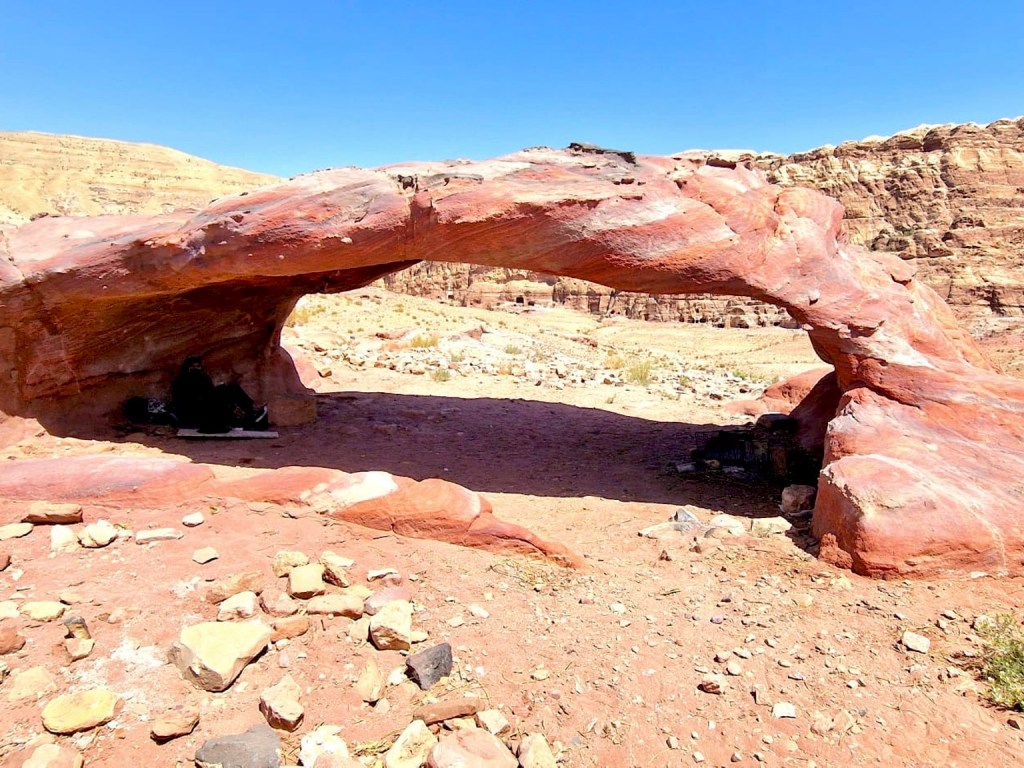
He took a photo of this stone arch …
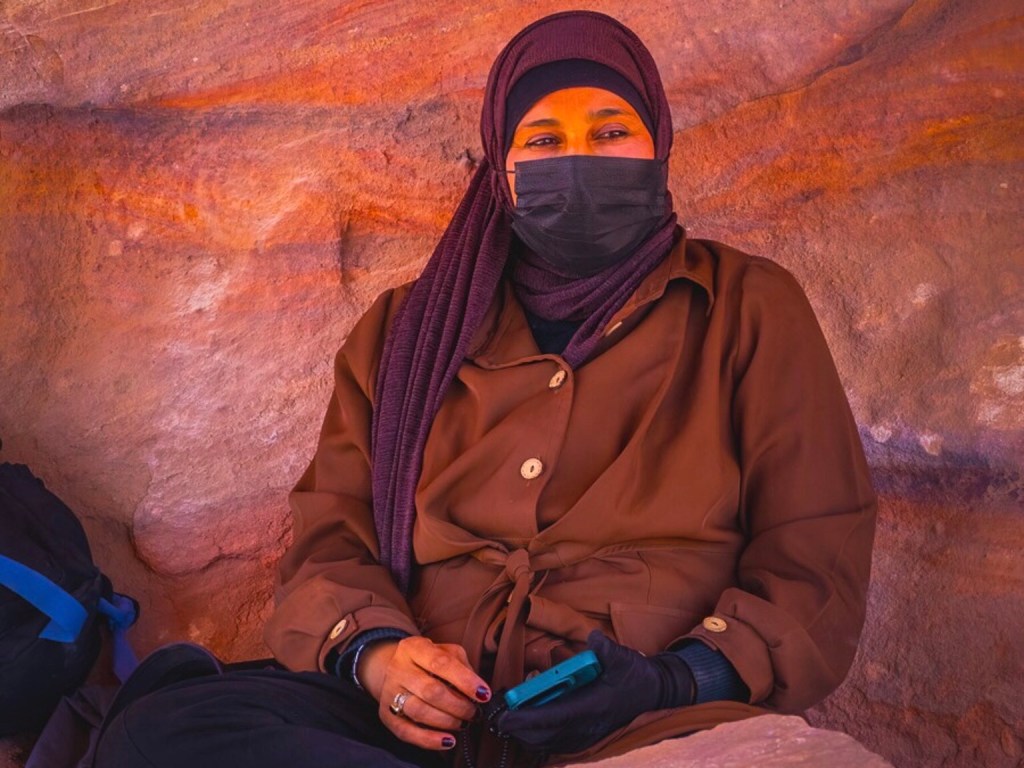
… and was surprised to hear a voice say ‘hello, welcome’ and he realised there was someone inside. The woman beckoned him in and to sit down on a stone and used kindling from her backpack to get the fire going and make them some tea.
Her English was far better than his Arabic, and she asked where he came from and about his time in Jordan. After a while, a young lad appeared with a donkey asking if he wanted a ride to the Monastery, but he declined. Finishing his tea, he thanked her and set off once more. Such a lovely experience which easy beats my hike to the monastery!
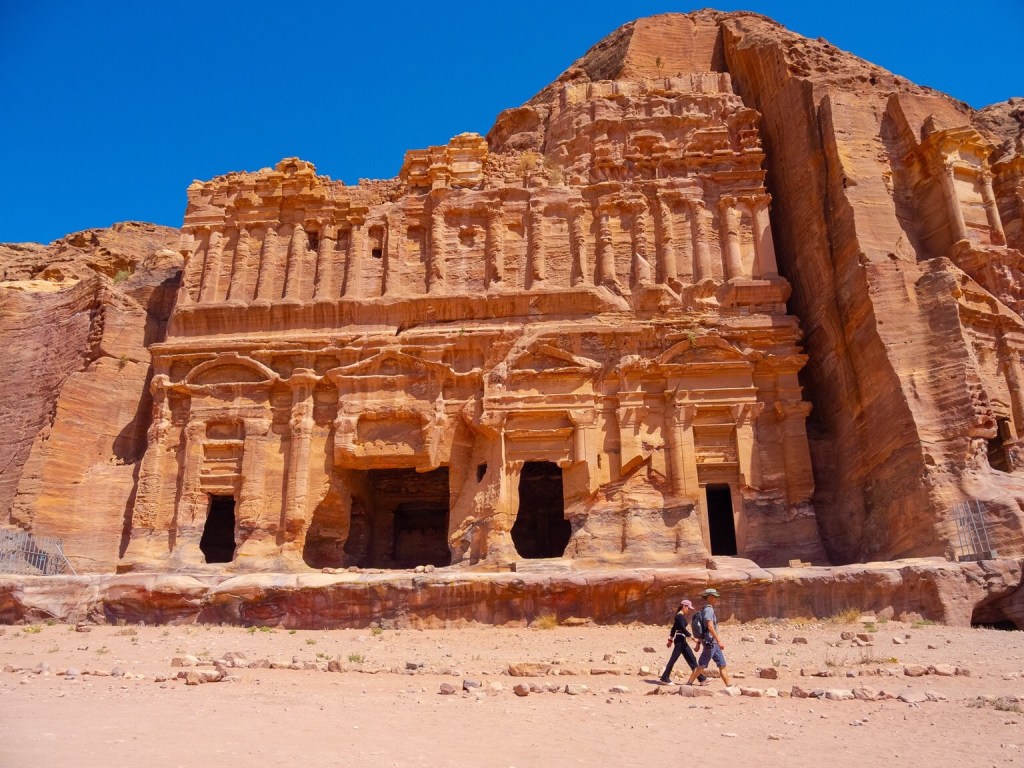
Returning via the Royal Tombs, here is the Palace Tomb, with its impressive 5 storey facade …
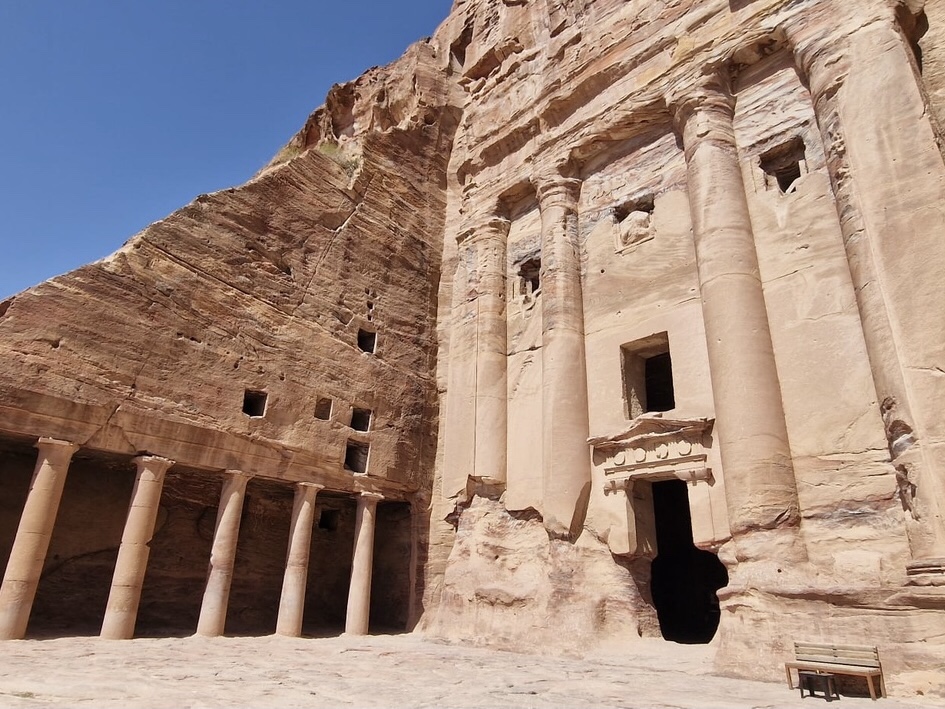
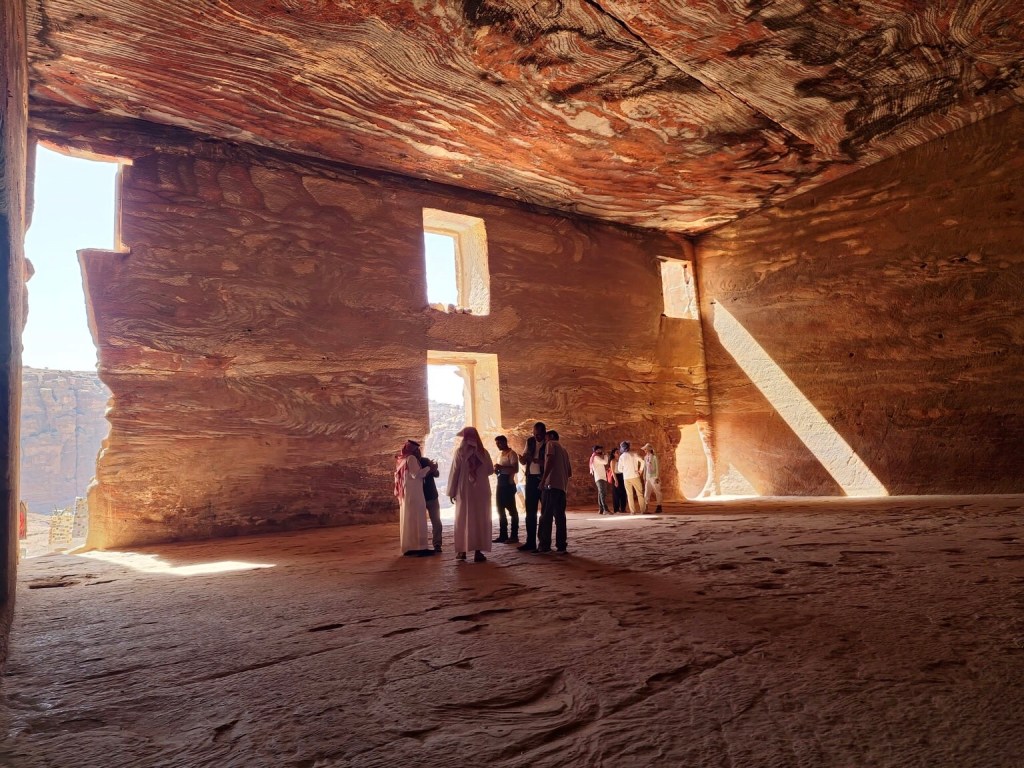
… and The Urn Tomb with its colonnade …
… and its multi coloured ceiling.
Petra certainly exceeded all expectations for both of us, if anything, it’s a shame we weren’t there for longer!
PS – 5 days after we were there, Jordanian authorities evacuated nearly 1,800 tourists from the ancient city after the area was hit by flash flooding and sadly a woman and her son died …
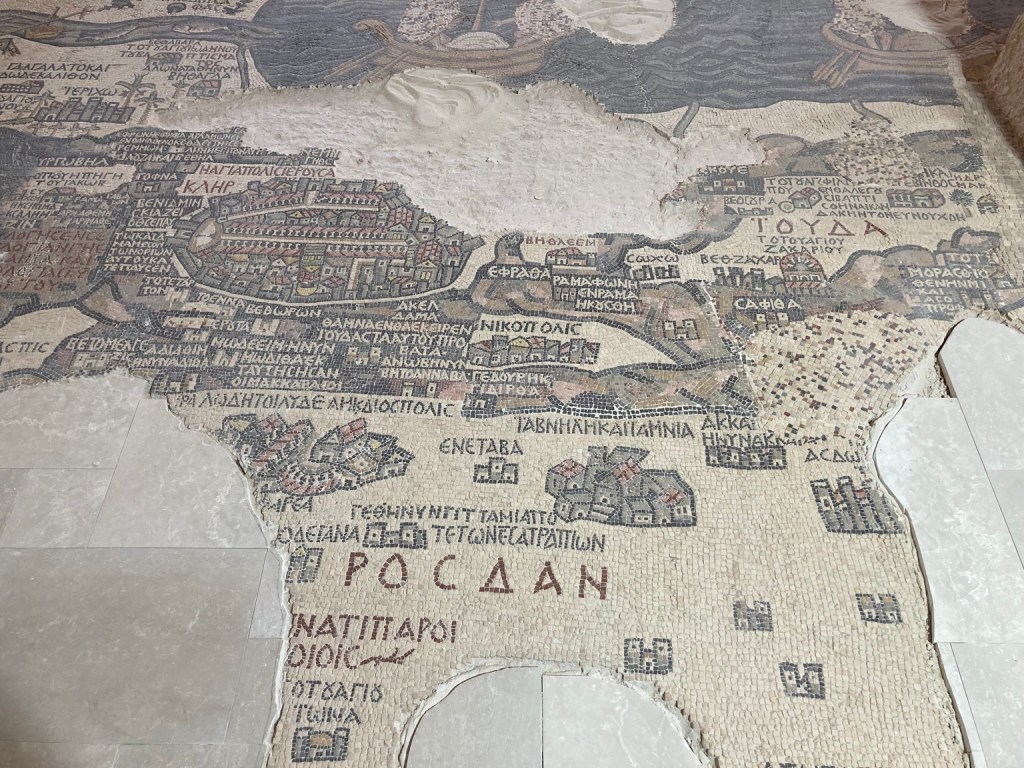
This morning we packed our bags and set off for Madaba to see the oldest mosaic map in the world. In Byzantine times, there was a large Christian community in Madaba and St George’s Church was built with an impressive mosaic floor. This building was long gone when a new church was to be built in the C19th and the mosaic map was discovered, unfortunately damaged.
Nonetheless, Jerusalem is easy to spot with its oval city walls and Cardo Maximus running through the centre. Above you also just make out the Dead Sea and the Jordan river to the left, with fish swimming away from the salty water!
On the way back to the bus, we had a chance to try the local coffee, boiled up like Turkish coffee, but flavoured with cardamom, and usually drunk sweetened, but I found it a little bitter without sugar.
Having got our bearings, we continued to Mount Nebo, overlooking the Jordan Valley and the Dead Sea, believed to be the place where Moses was granted a view of the Promised Land and later buried.
It was quite profound to look at the same view as Moses, across the Holy Land and the Dead Sea, towards Jericho, the Jordan River, Bethlehem and Jerusalem on a clear day.
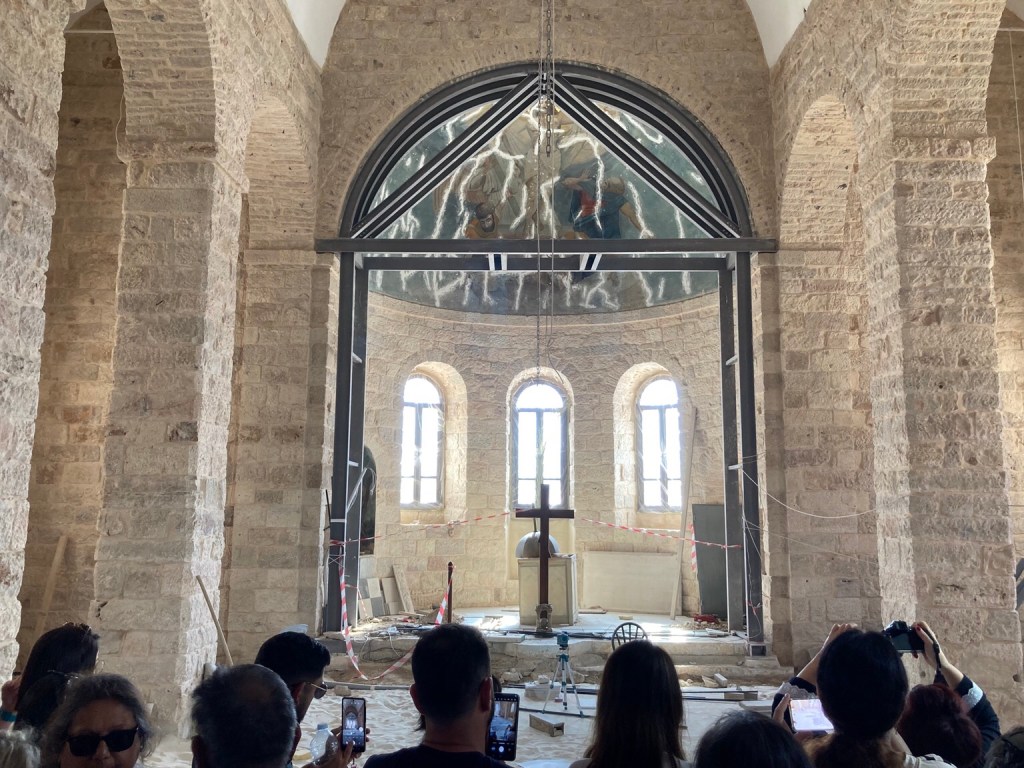
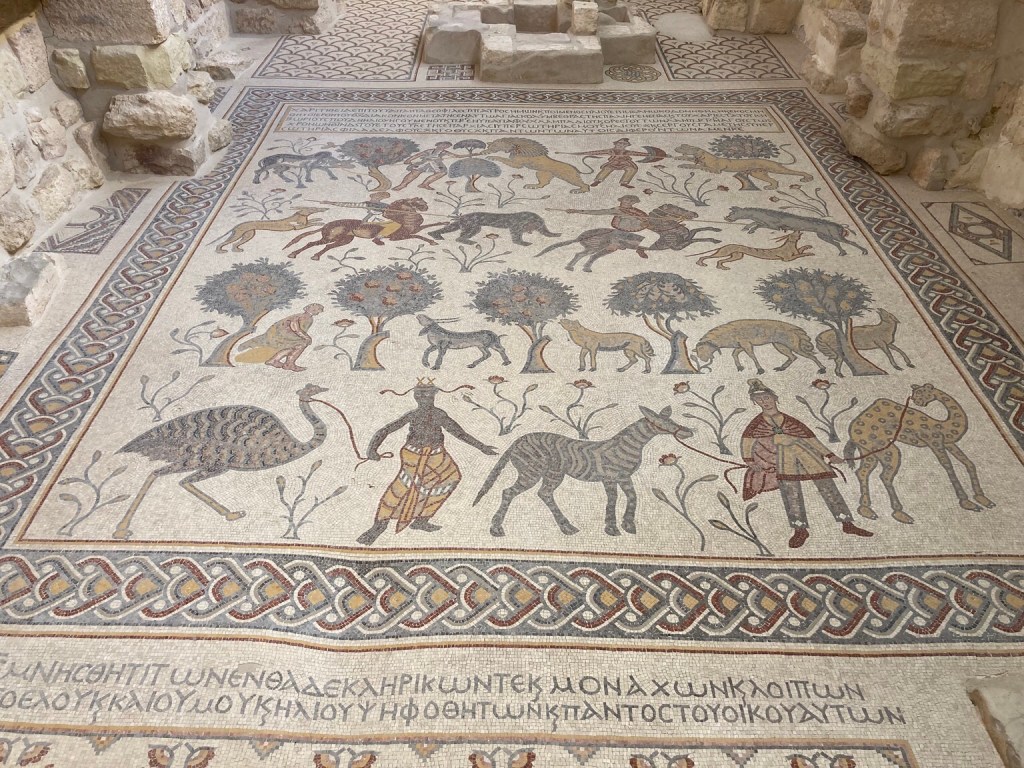
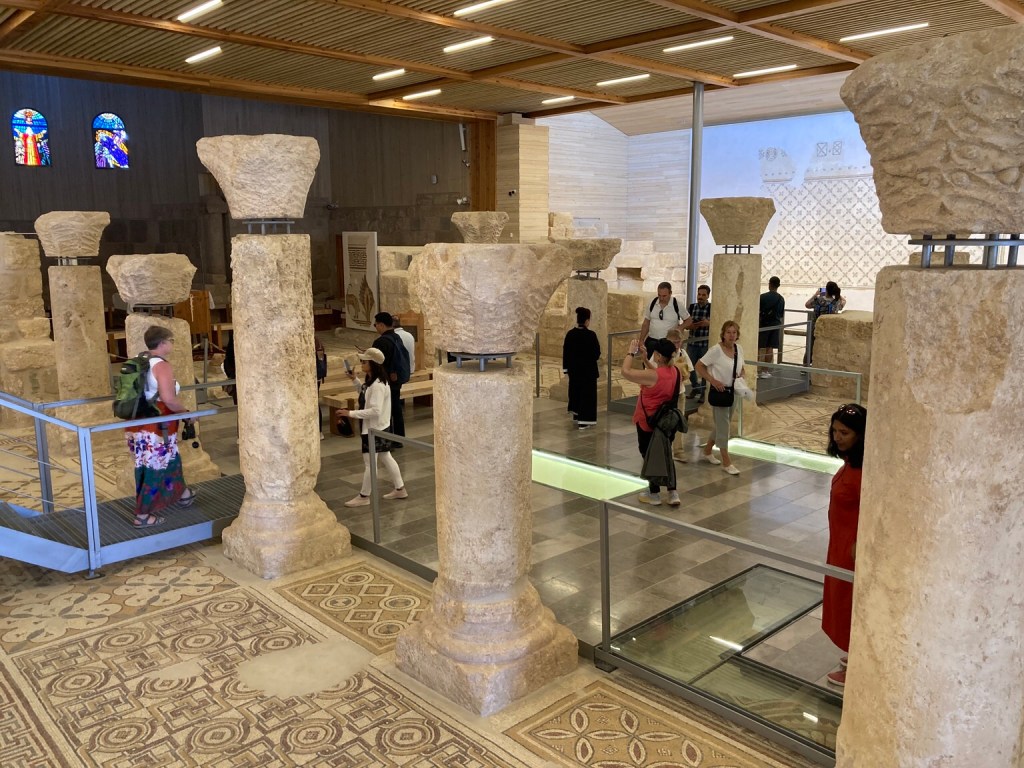
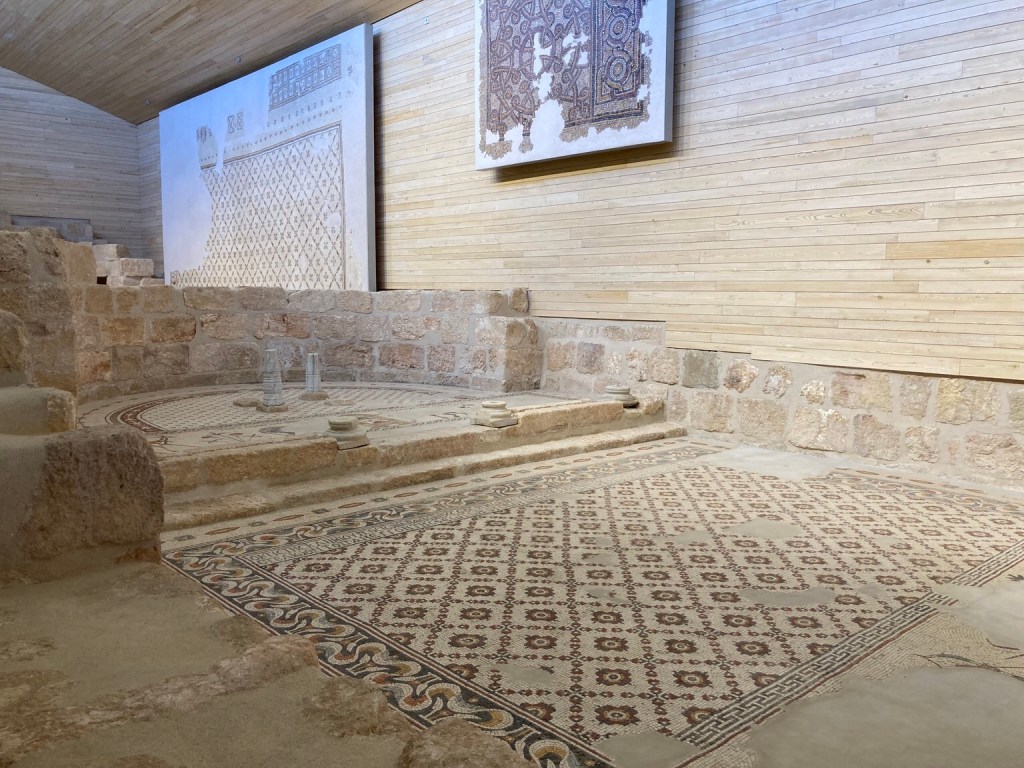
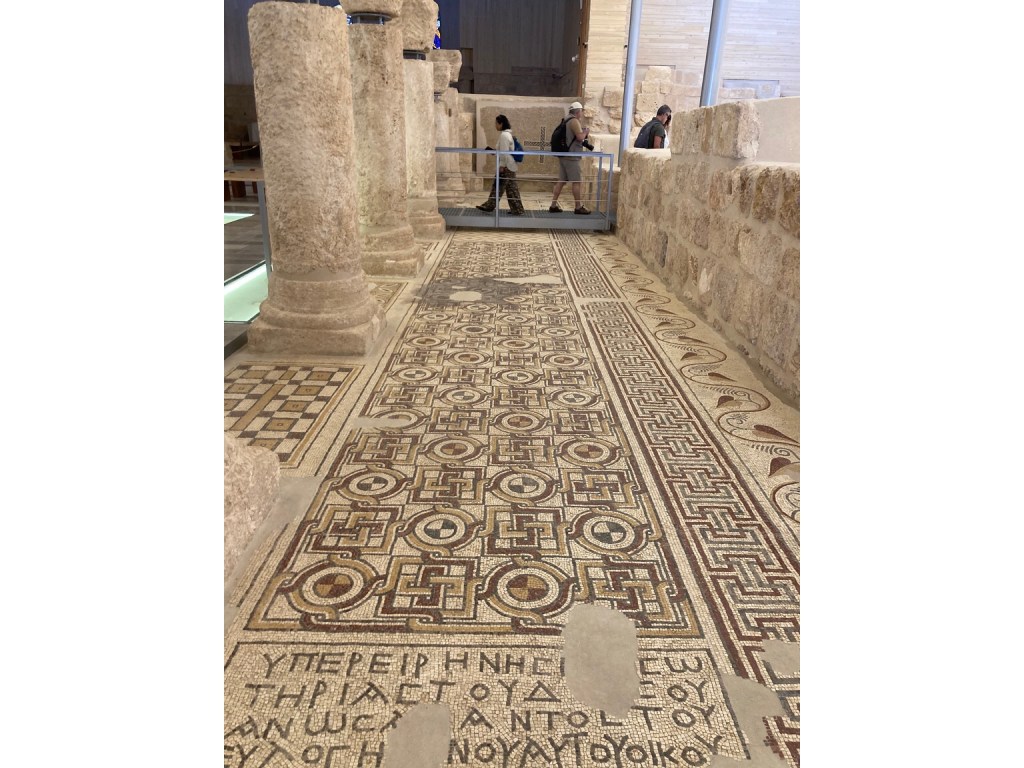
A place of pilgrimage for early Christians from Jerusalem, a small church was built here in the C4th, which was then expanded but much later abandoned and hidden until the Franciscans excavated the site and built a modern church to protect the site and the mosaics found inside.
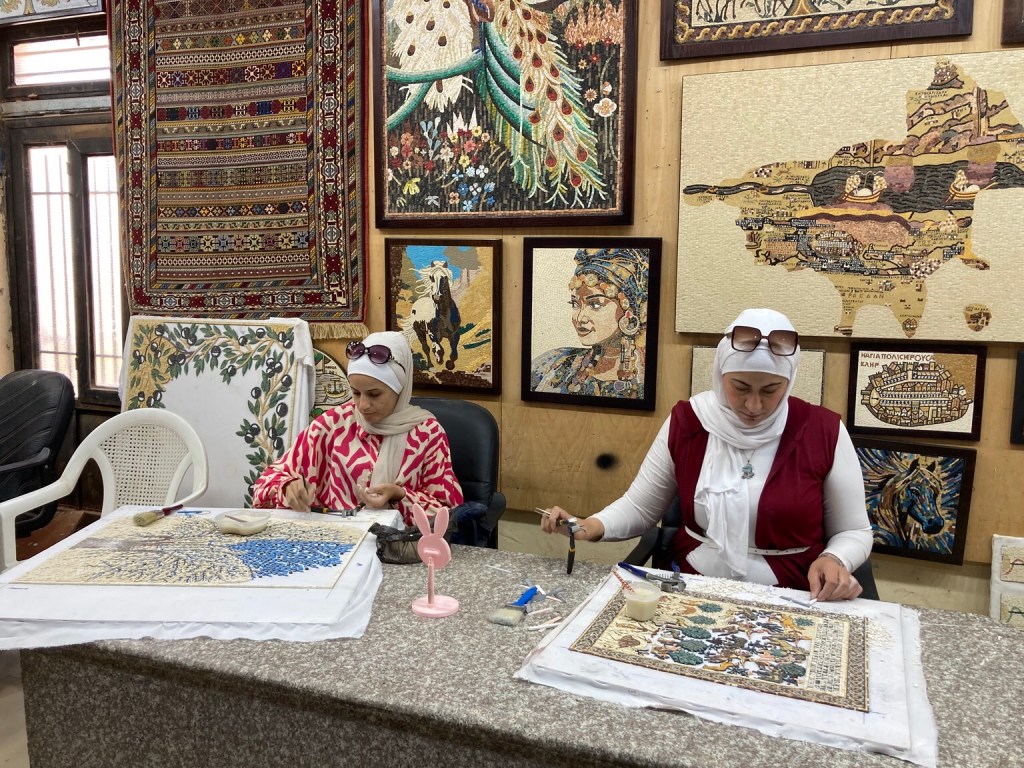
Queen Noor, one of the wives of the late king, began a school that teaches mosaic art and provides jobs particularly for women, and we stopped off at a workshop … but resisted a purchase!
About 20% of Jordanians are Bedouin, which means desert dweller. They once lived a nomad lifestyle, in tents, grazing their herds through the desert, but in 1965 they were given incentives to settle so children could be educated. Today most have settled in villages and cultivate crops and only 1% retain the nomadic lifestyle, but we saw several tents during our drives.
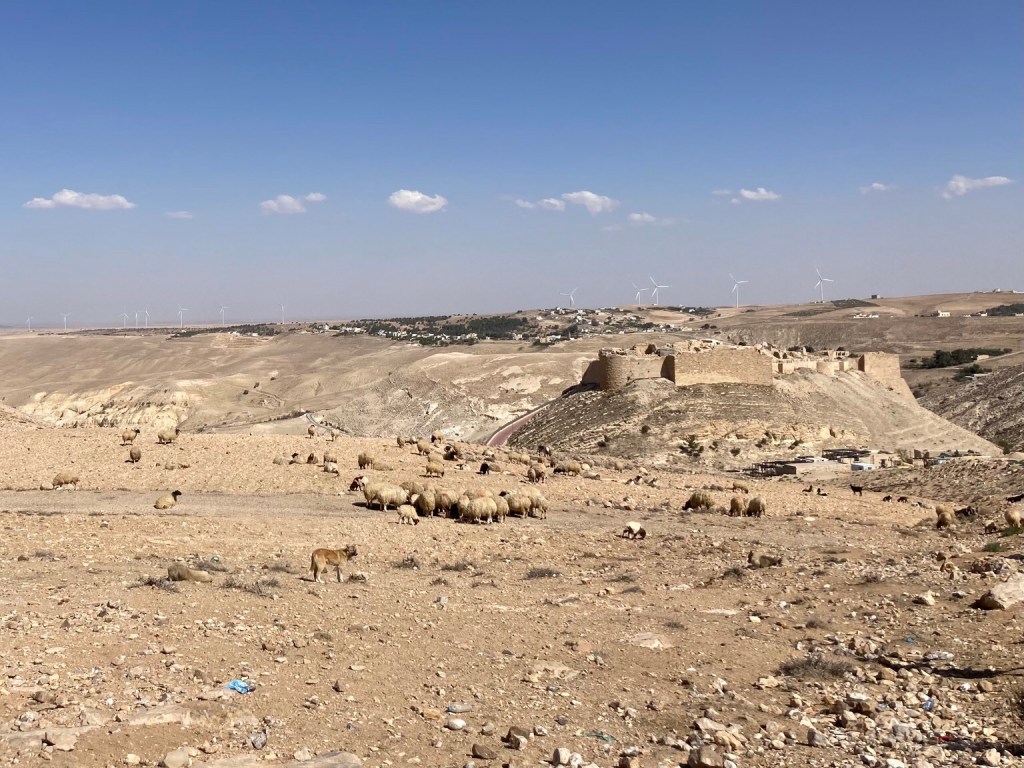
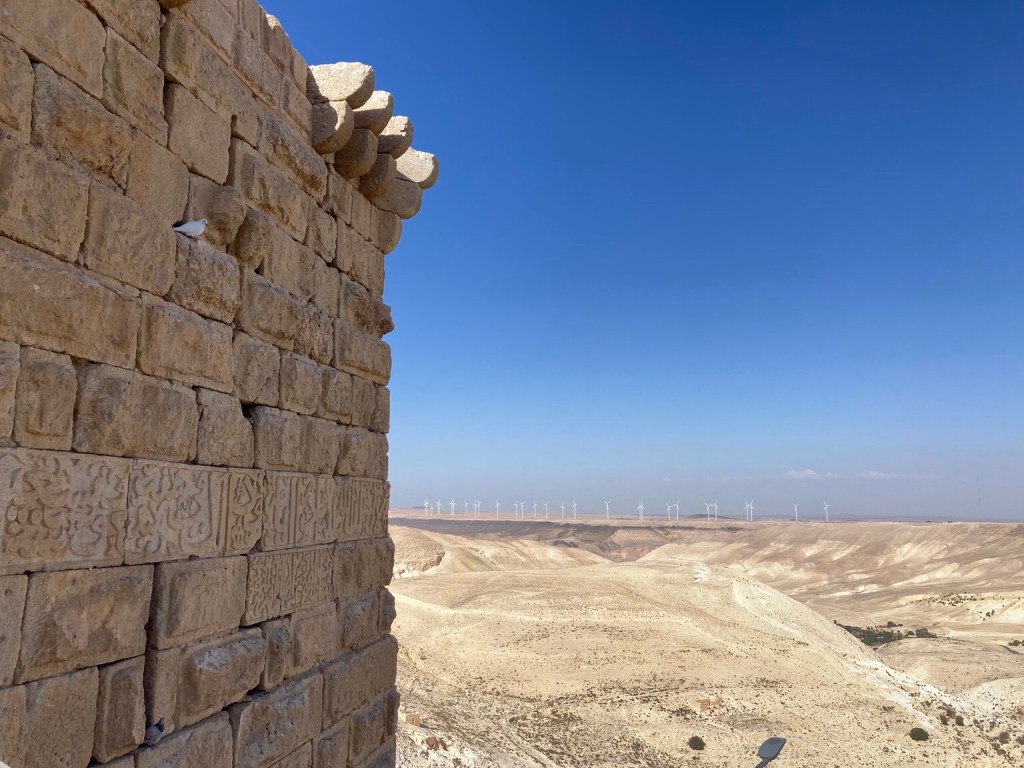
Our last stop was at Shobak Castle which was built by the Crusader king Baldwin I in 1115 and withstood numerous attacks from the armies of Saladin before succumbing in 1189, after an 18-month siege.
It was later occupied in the C14th by the Mamluks and is now being restored. Views were good but not much to see.
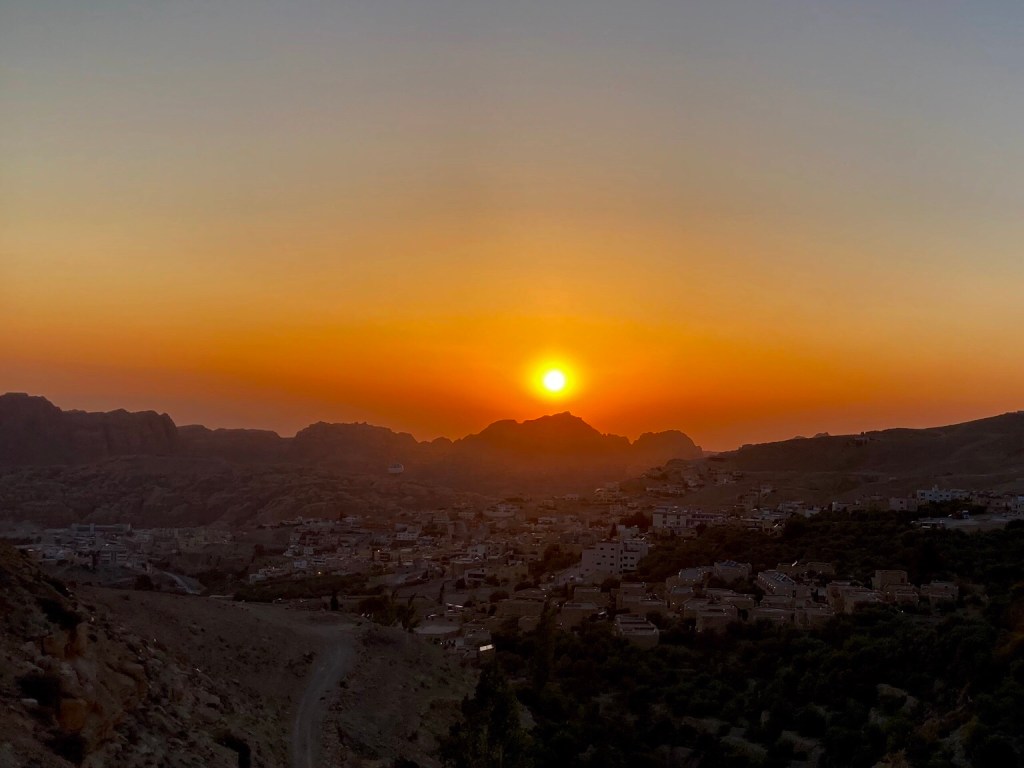
Another drive brought us to Petra where we stayed in a hotel on the outskirts of town. Some of the group went to see Petra by candlelight, but we chose to give it a miss as there would be plenty of walking next day. Instead we caught the sun as it set behind the ridge above Wadi Musa.
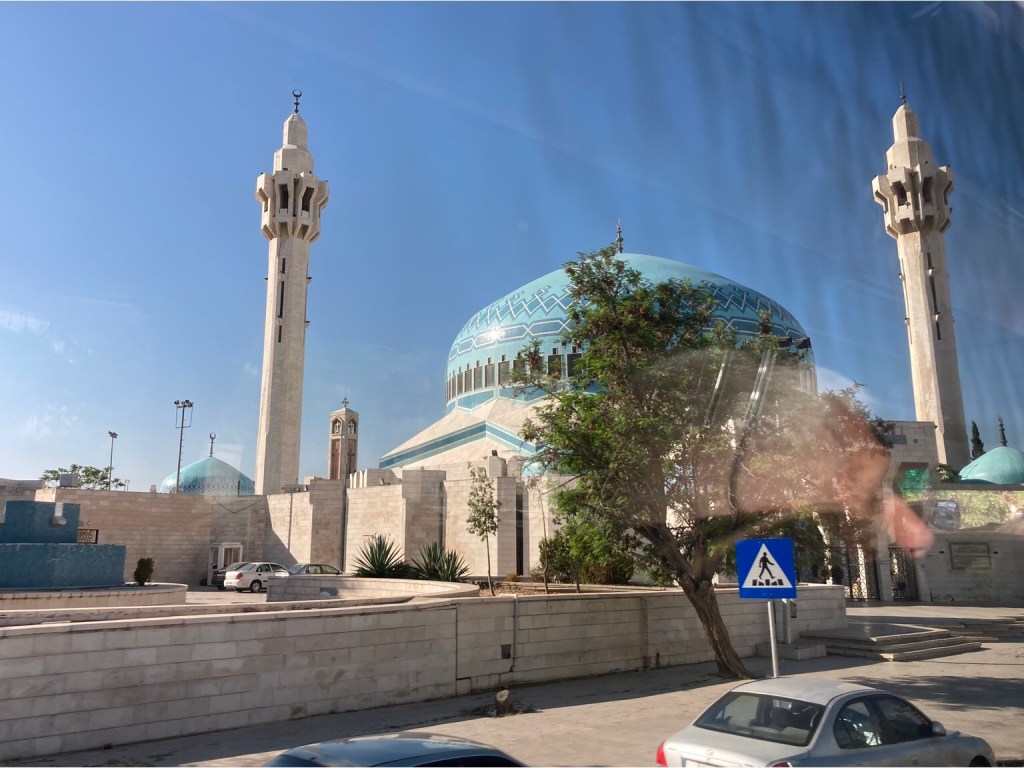
We arrived yesterday in time for a late dinner and woke to a lovely sunny day here in Jordan. We greeted fellow travellers as 30 of us boarded the coach for our day trip to Jerash. We began with a brief drive through the old and new parts of Amman and snaps were difficult, but here is the King Abdullah I Mosque, completed in 1989 and the only mosque in the city open to non-Muslims, with its sky blue dome and quasi-Brutalist minarets.
There are 4.5 million people living in Amman and the traffic is very busy, especially at rush hour as everyone has a car.
Finally we we out of Amman and during the drive, our guide Michael gave us a little background information about Jordan, officially the Hashemite Kingdom of Jordan. It is a constitutional monarchy, where the sovereign has substantial discretionary powers ruled by Abdullah II who succeeded to the throne in 1999.
Around 11 million people live here, 95% following Islam and 3% are Christian. A large proportion or the population are refugees – 2m from Palestine who live as part of society, 1.5m from Syria on three protected camps and 120,000 from Iraq who live in Amman. There are also a large number of migrant workers from Egypt and Asia.
Amman and today’s destination Jerash, were both part of the Decapolis, a group of ten Greco-Roman cities in the Jordan rift valley, which grew up along the trade route to Damascus, with Jerash being the best-preserved example of Roman-era ruins in Jordan.
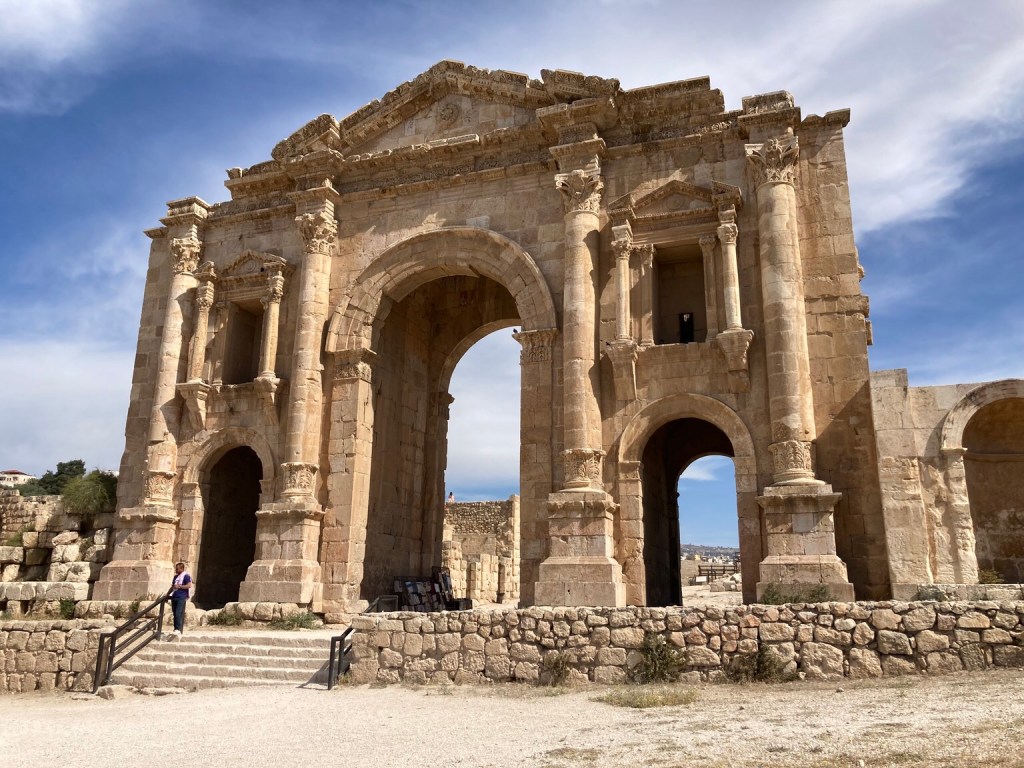
We entered through Hadrian’s Arch …
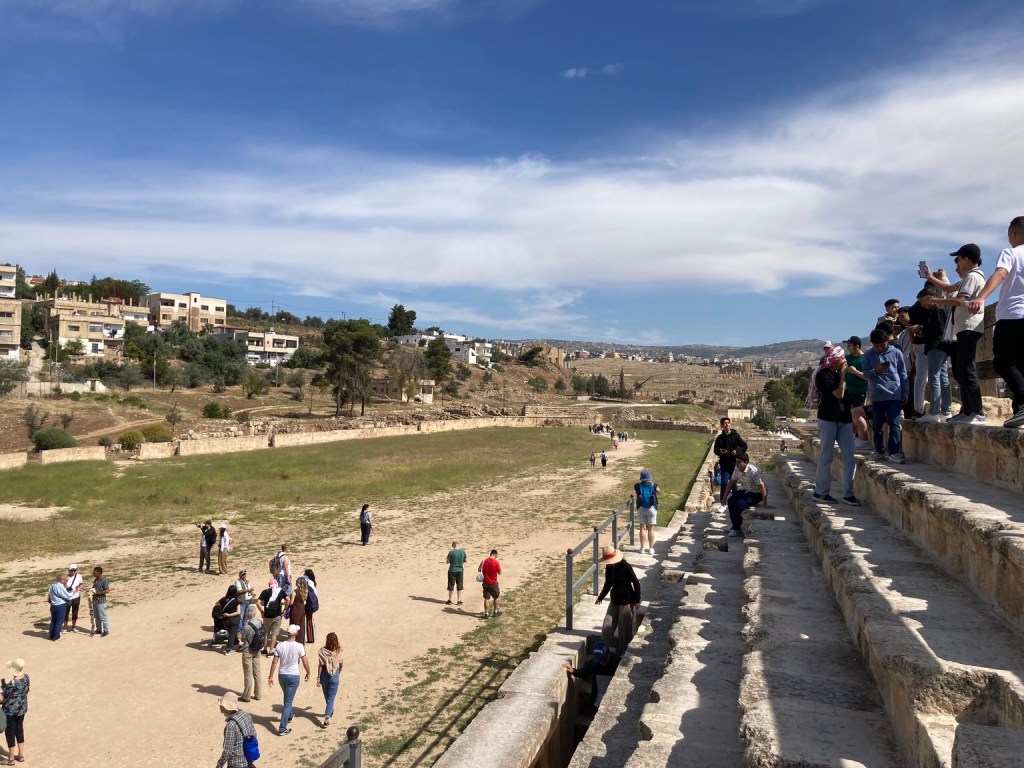
… and saw the hippodrome …
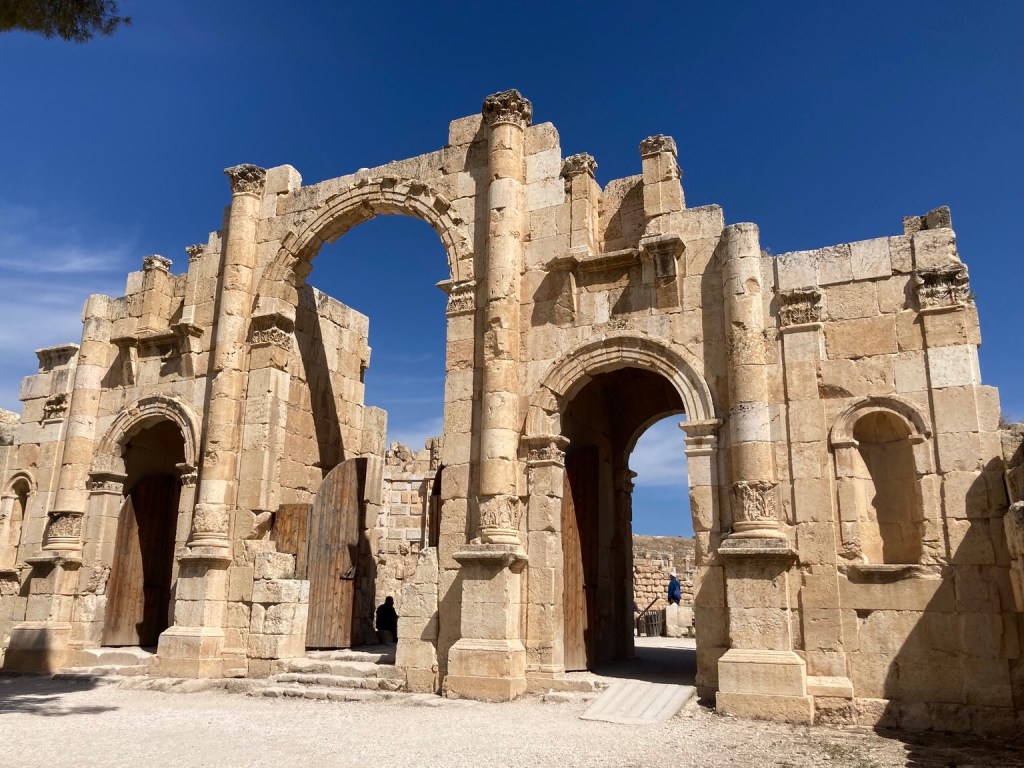
… before continuing through the South Gate.
We walked along the East Souk which would have held small shops and glanced back at the gate …
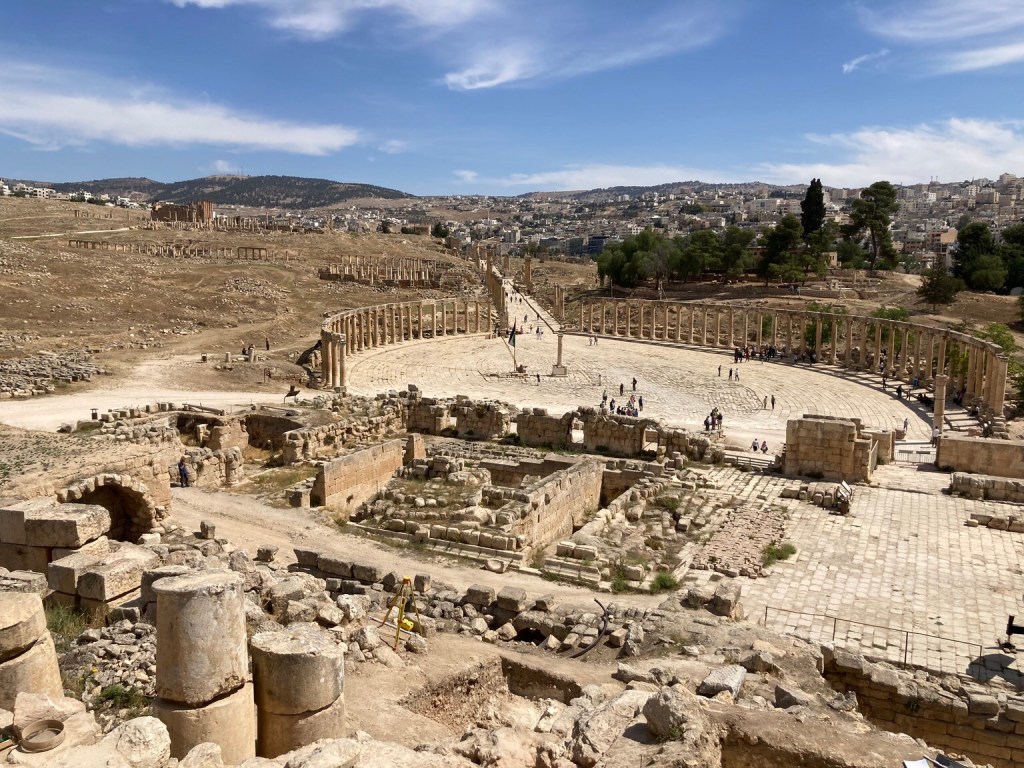
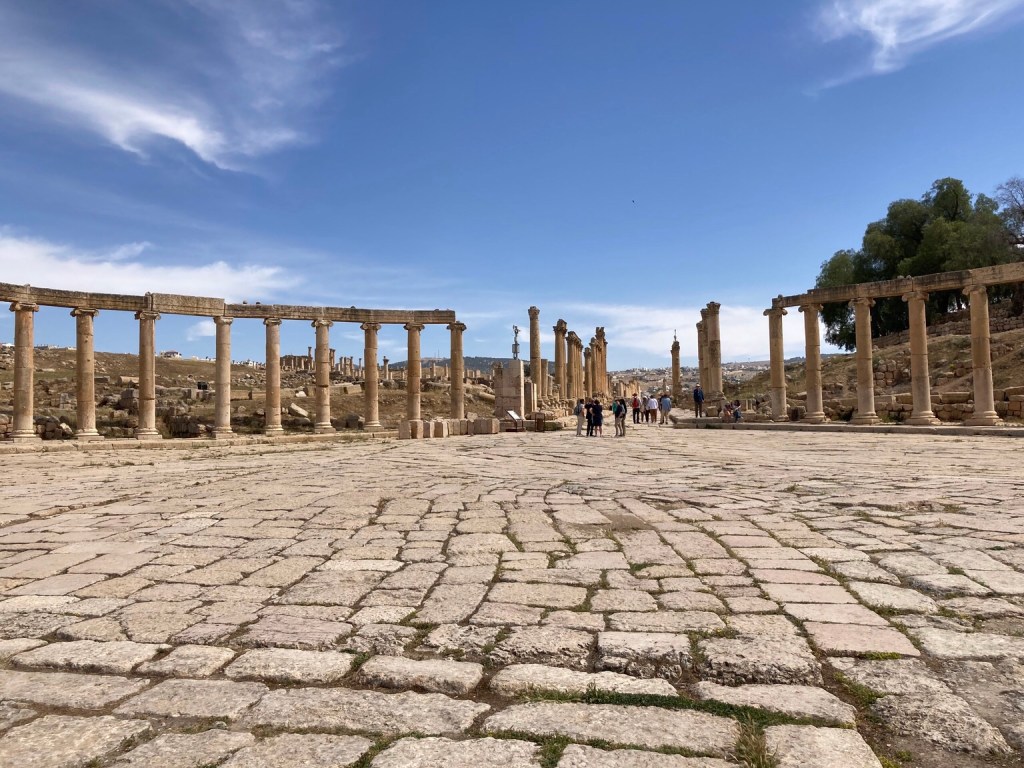
… before heading into the Forum surrounded by an Ionic colonnade and which would have contained more market stalls.
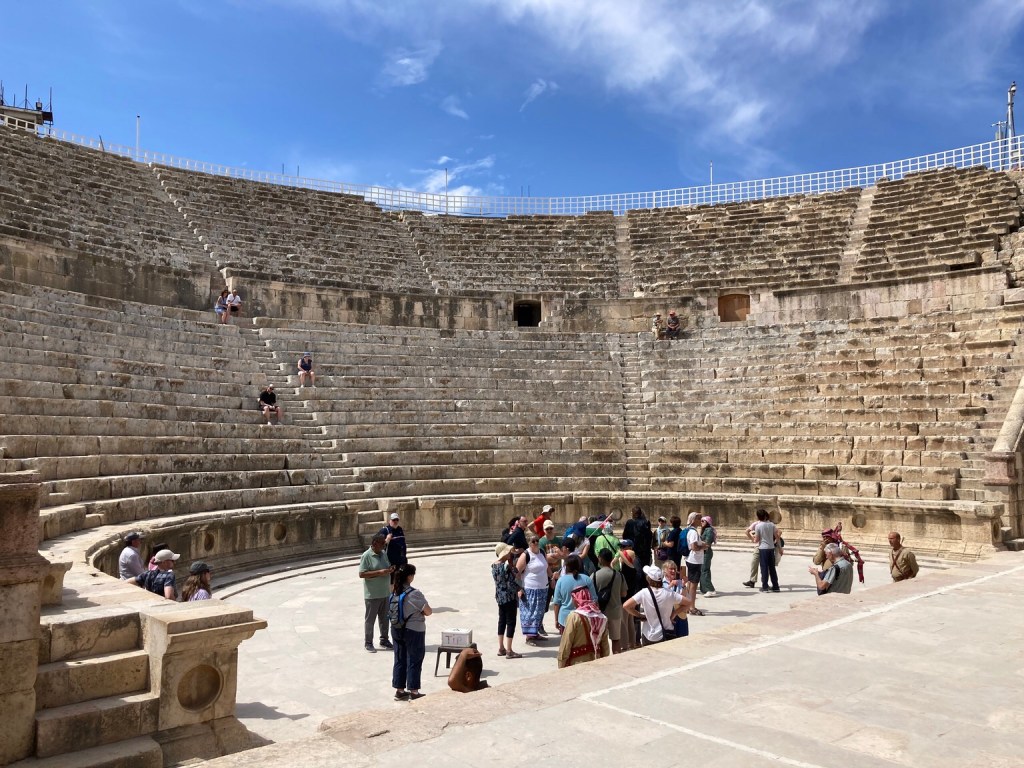
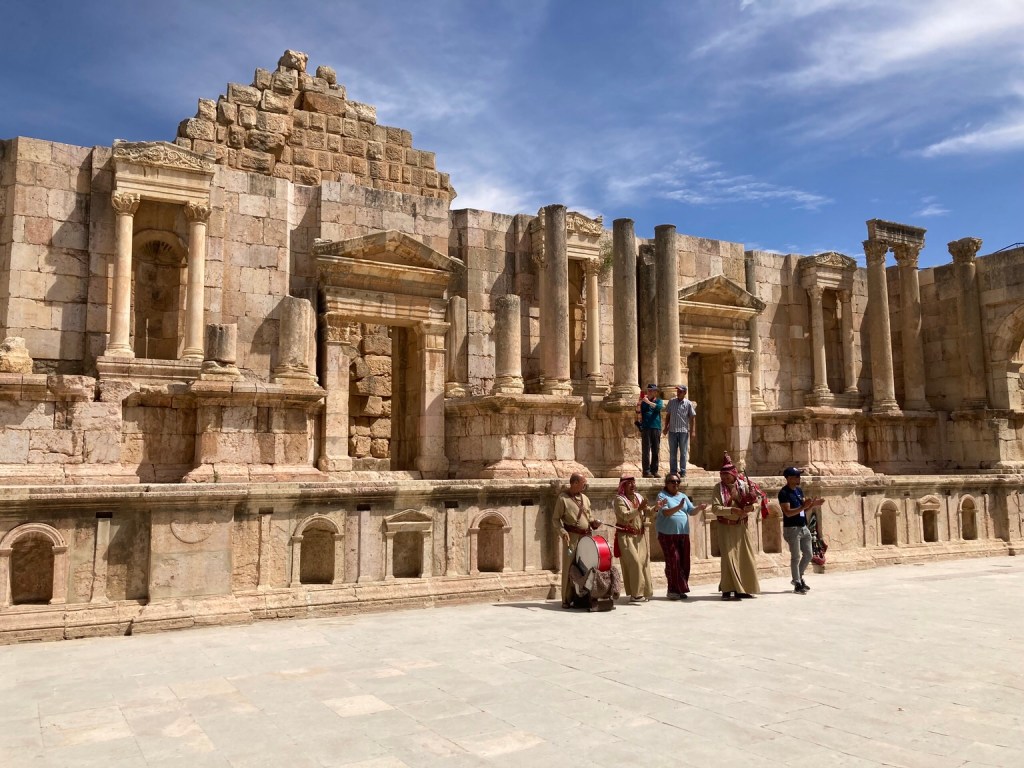
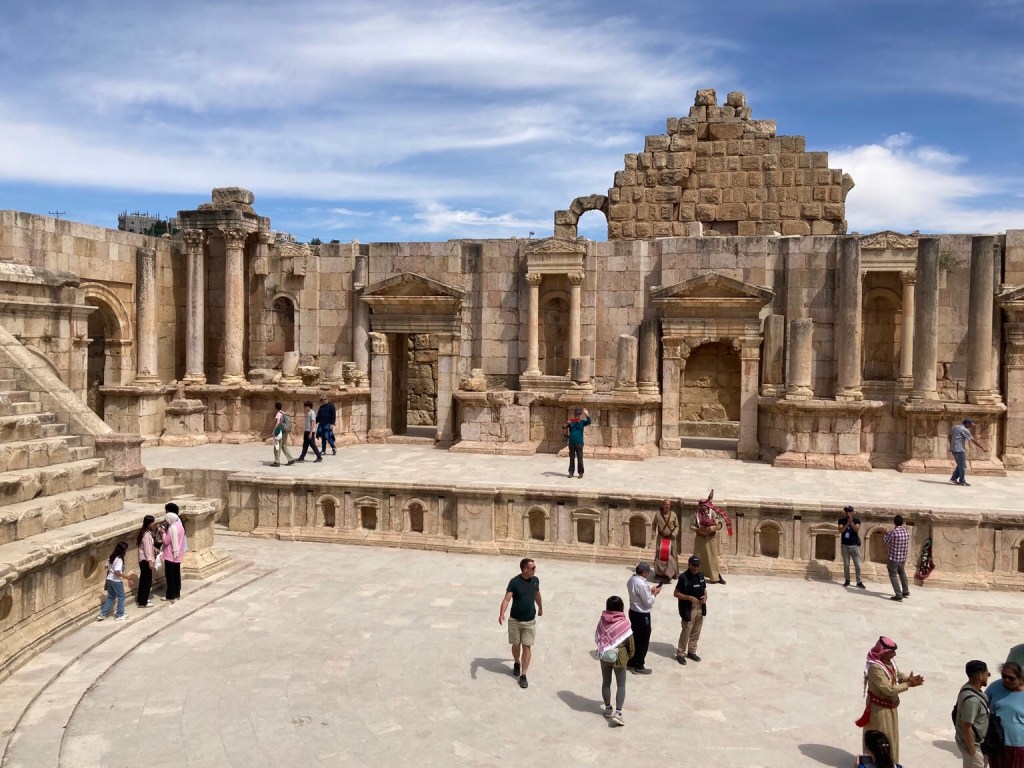
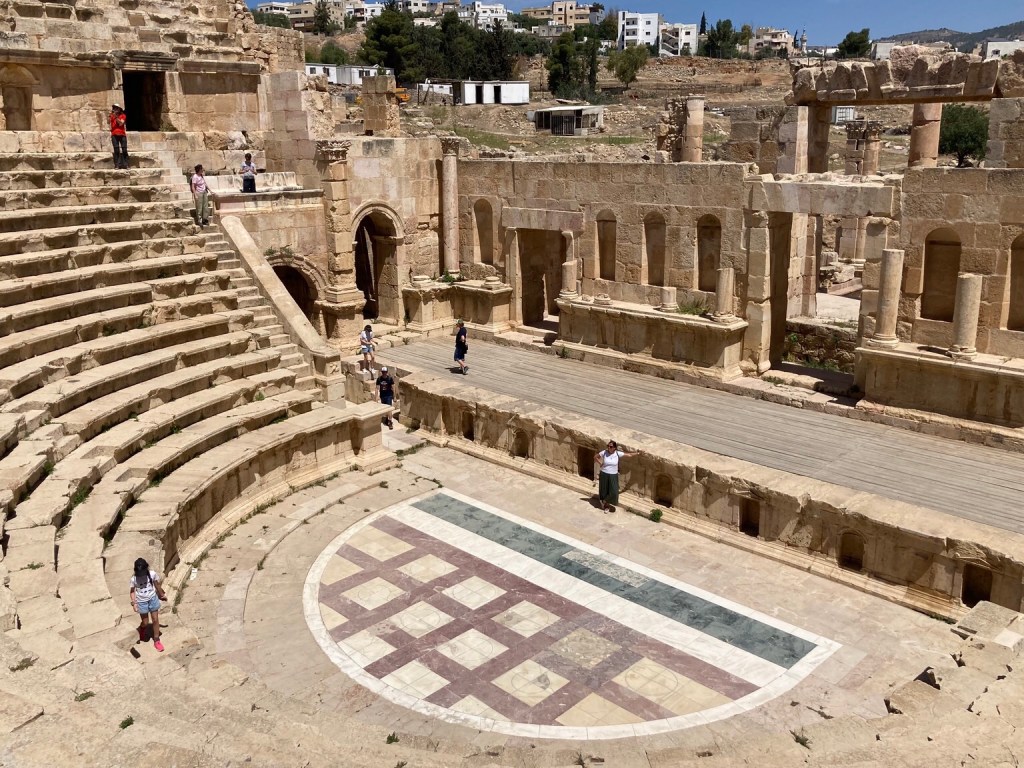
A detour took us up to the South Theatre …
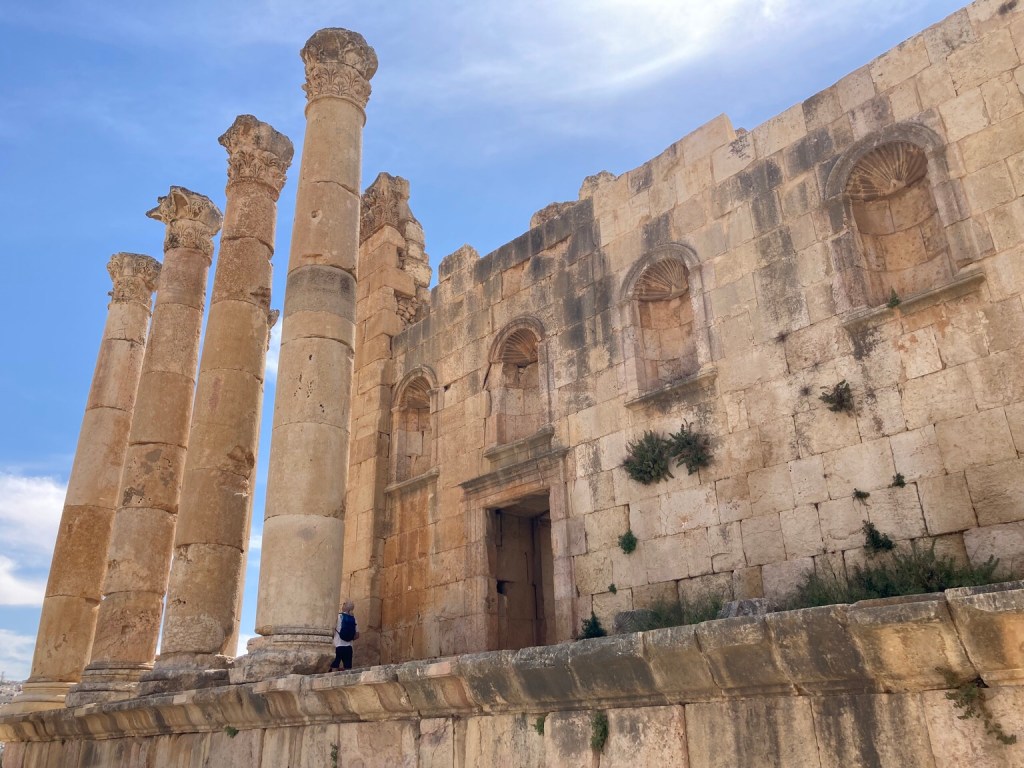
… and the Temple of Zeus …
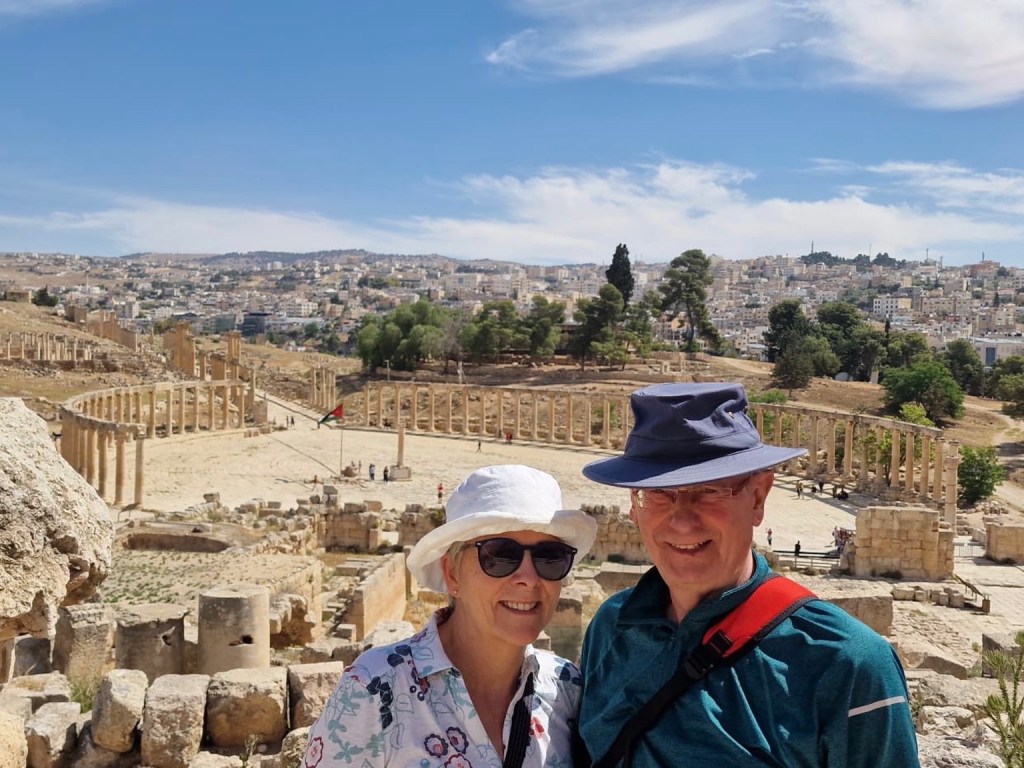
… where we also got a great panorama of the whole site, with the main colonnaded street or Cardo Maximus and the Temple of Artemis above on the left.
There was a large Christian community in Jerash and many churches. One was dedicated to Cosmas and Damianus and has a surviving mosaic floor decorated with a number of birds and animals including an elephant and a camel.
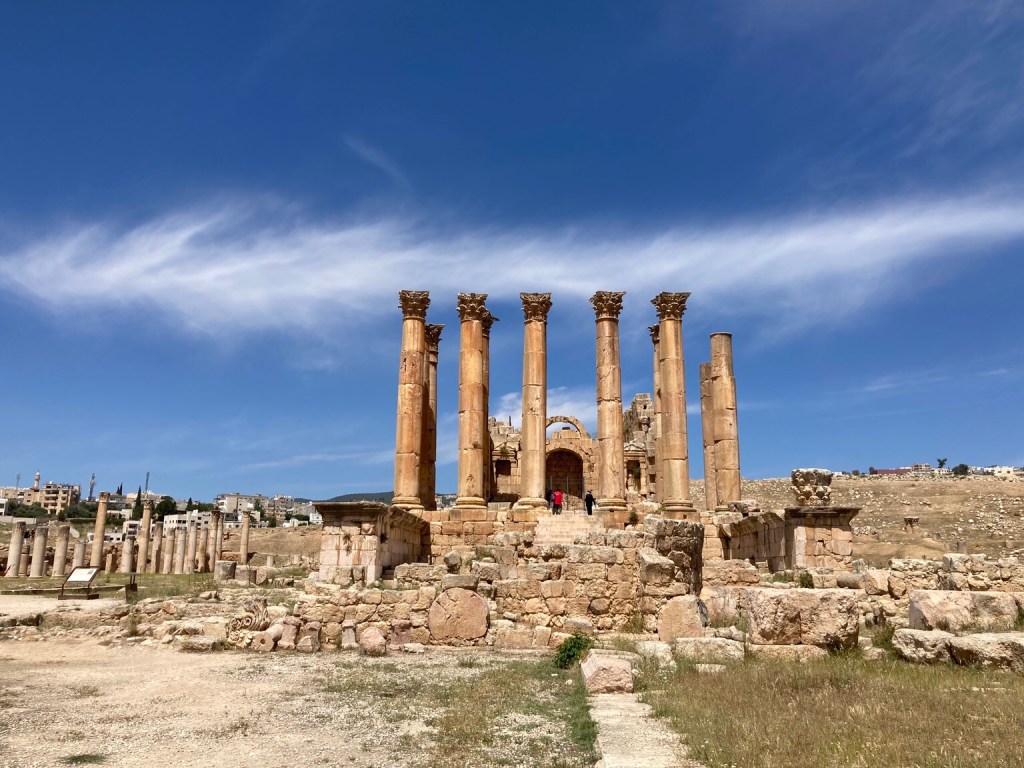
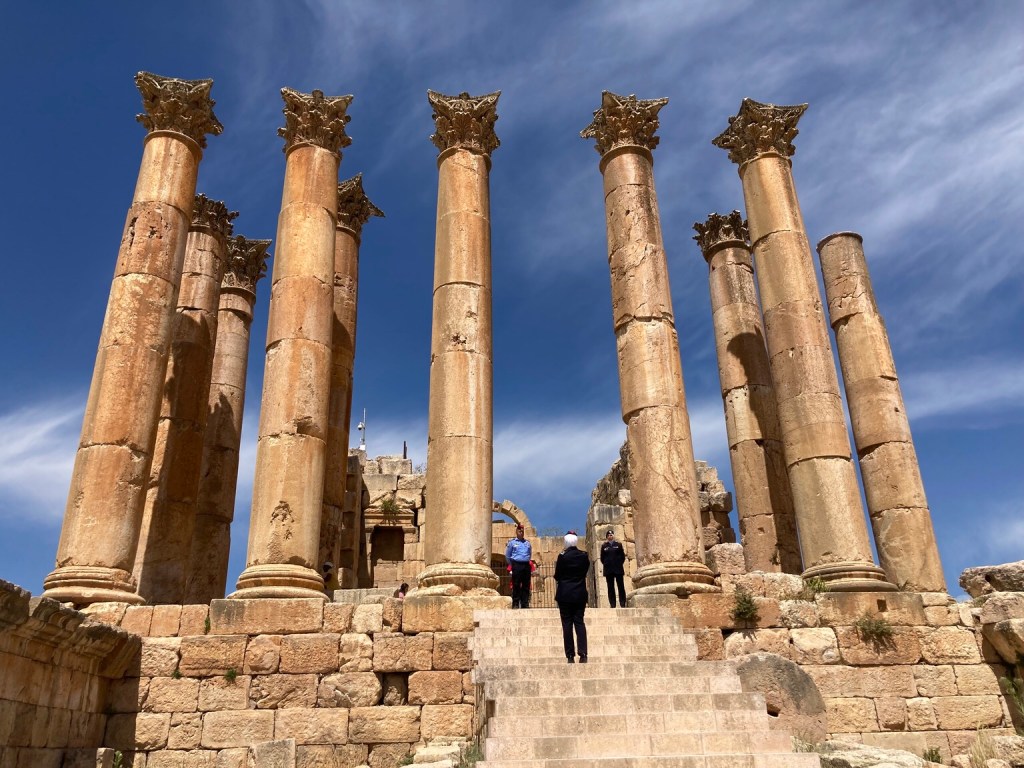
Finally we reached the Temple of Artemis with eleven of the twelve huge Corinthian columns that rim the temple platform still standing …
… and its capitals showing up splendidly against the blue sky.
Walking downhill, we passed the smaller Northern Theatre …
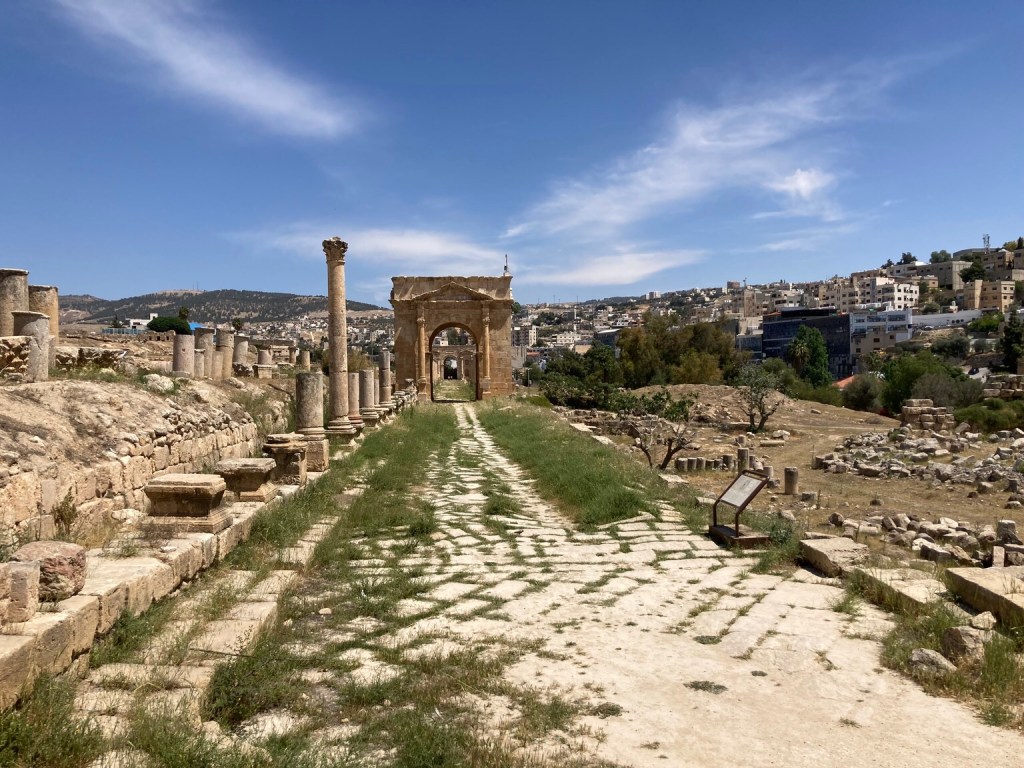
… before reaching the main street and looked towards the North Gate where the road would have continued to Damascus.
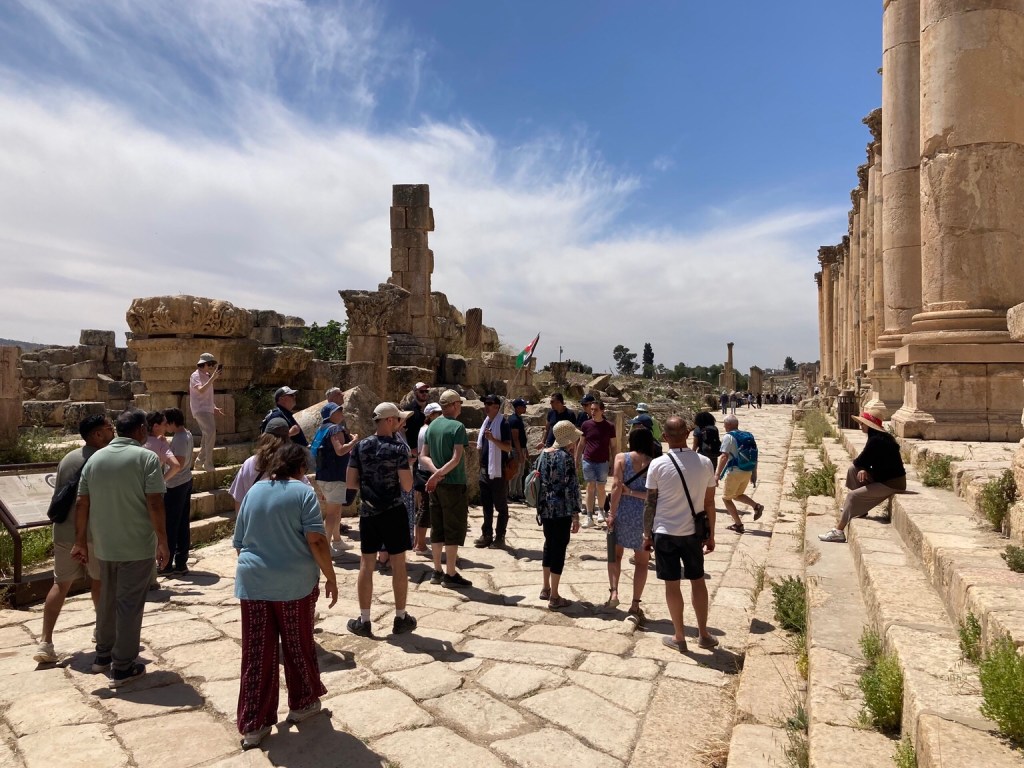
We returned along the Corda, still paved with the original stones and showing the ruts worn by chariots, as well as the drainage holes for the sewer system which runs underneath.
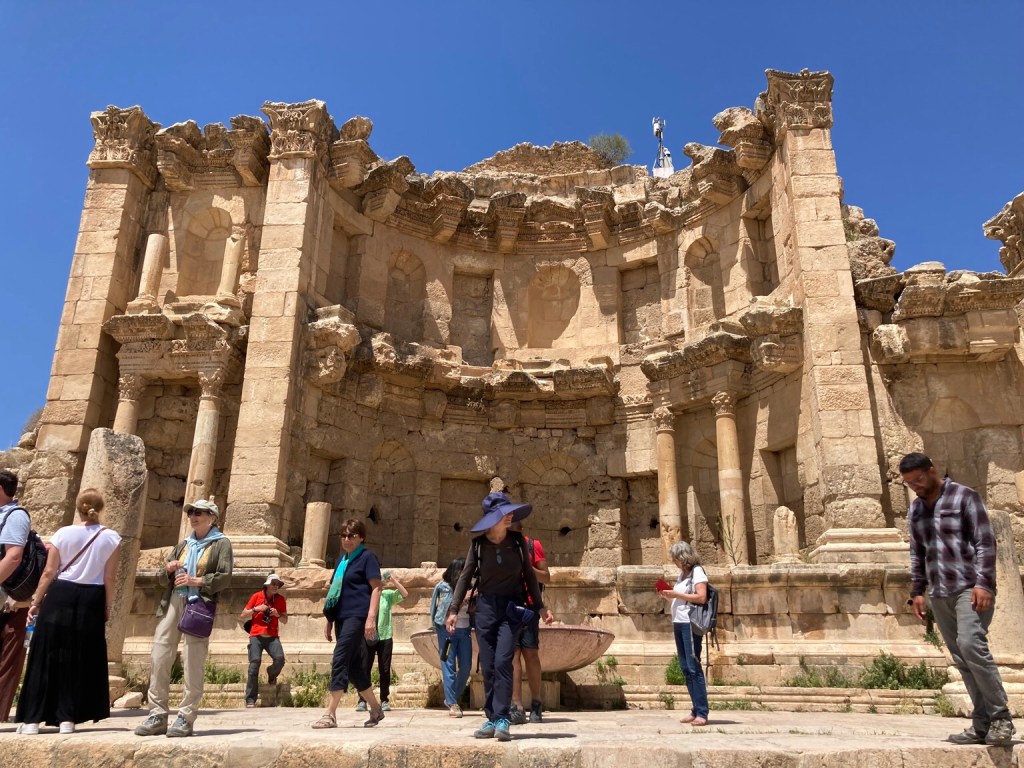
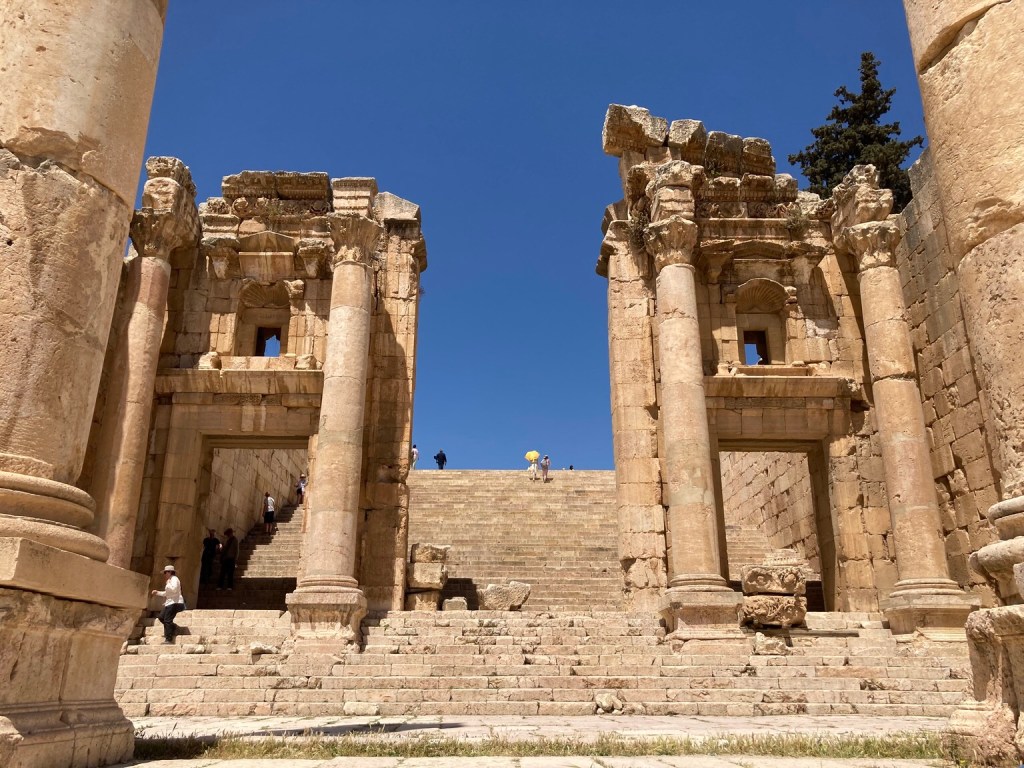
A final couple of snaps, the ornamental fountain called the Nymphaeum …
… and the Cathedral gateway …
… and then we all deserved a sit down, a cool drink and a spot of lunch!
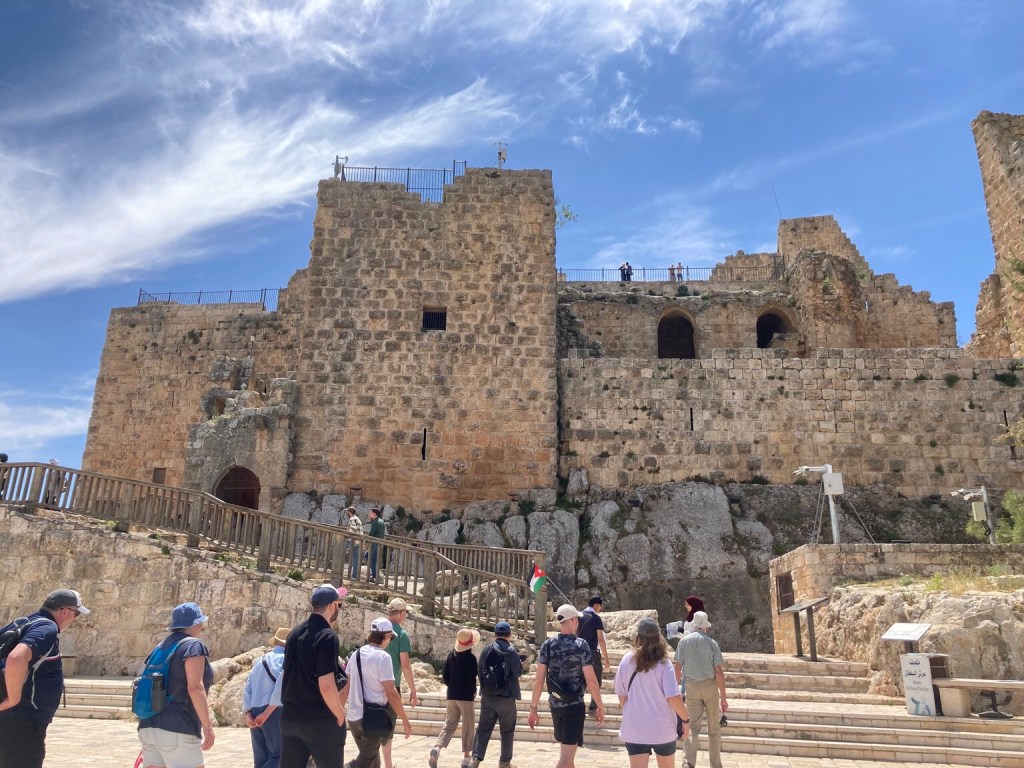
In the afternoon, we continued a short way further north, up into the hills to Ajloun Castle, built by Saladin in the C12th, to protect the area from the Crusaders, before returning to the hotel.
It is definitely time for some sunshine and a bit of an adventure so we are letting Exoticca take the strain once more and are setting off to Jordan.
We begin by exploring the capital, Amman, before moving on to the archeological site of Petra dating to 300BC with its iconic rock tombs. There will also be a chance to float in the Dead Sea, to stay overnight in the desert and time to enjoy the coral reefs of the Red Sea at Aqaba.
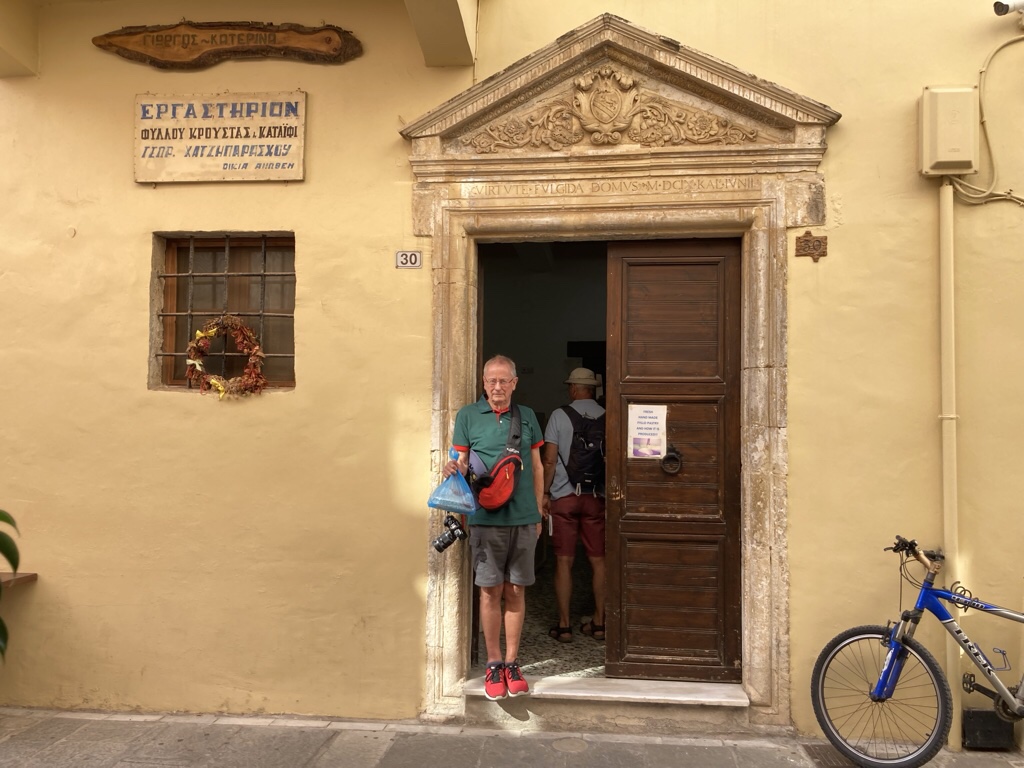
We spent our 13th wedding anniversary quietly, beginning with a visit to a phyllo studio, one of only 5 left on Greece where phyllo pastry is handmade. Paraskevas has taken over from his father who opened the shop 60 years ago and makes traditional phyllo with his son.
He takes a piece of dough, spins it in the air until it forms a large flat disc then lets it float down to the table, trapping air underneath forming a bubble.
It is then slowly stretched to cover the table, covered with burlap to allow the phyllo to breathe and another sheet prepared on top. Once dry, it is cut into squares and boxed up.
To make kantaifi, the liquid dough is poured through tiny holes onto the hot spinning bronze plate which dries and crisps it into thin hair-looking strings. We didn’t see this being made but here is a photo and the machine.
Needless to say, we came away with some to take home, especially when we were told it would last for a fortnight … no chance!
I went for a walk all the way round the outside of the fortress while Chris sat in a cafe taking snaps, then we returned and spent the afternoon at the pool.
Early evening, we took a gentle walk to the port for our anniversary boat trip, a sunset cruise on the Captain Hook pirate boat round the bay.
Once we left the harbour the sea was certainly a bit choppy, but it was just a short trip.
We entered the calm waters of the Venetian harbour to take pictures …
… and then returned to port.
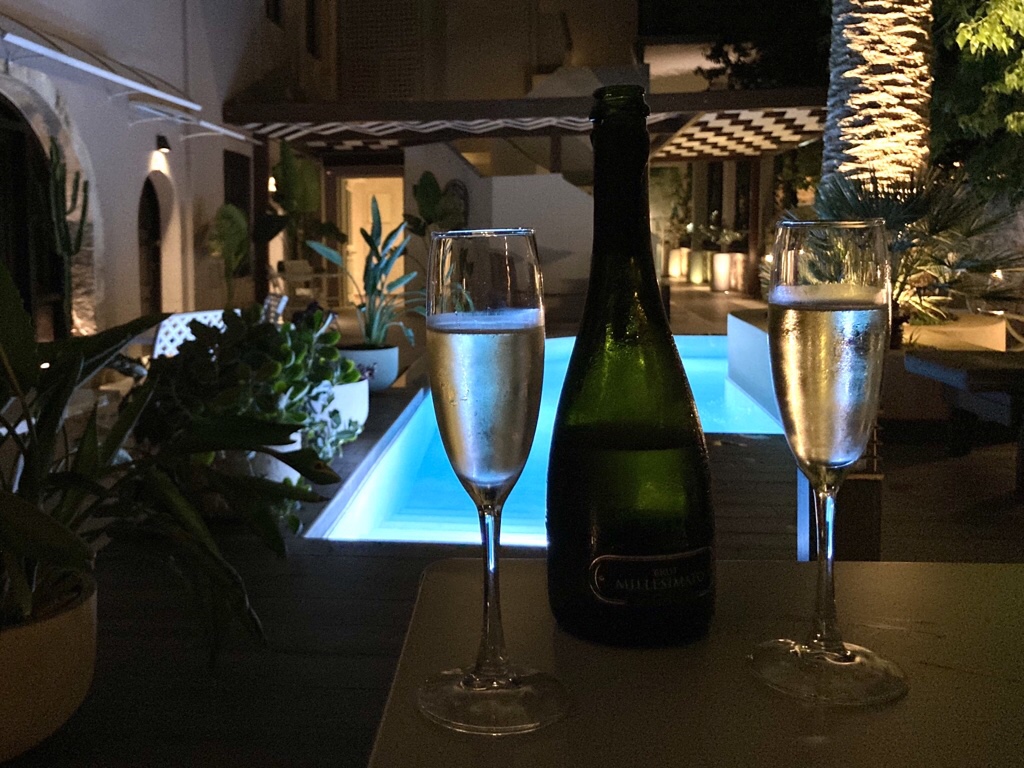
The hotel had very kindly left us a celebratory bottle of fizz in our room …
… which we sipped by the pool before heading out for dinner.
Castello came well recommended …
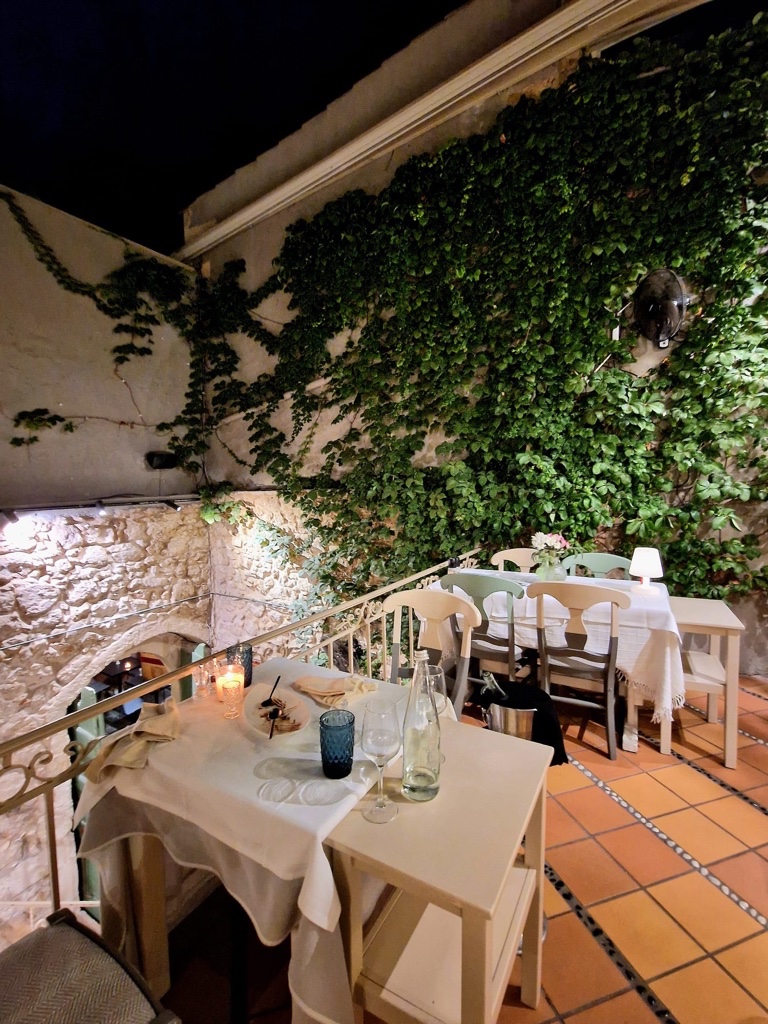
… and we sat on the first floor balcony surrounded by warm buttery stone walls and climbing plants with the starry sky above.
We started sharing a mushroom carpaccio with parmesan sauce and an amazing greek salad, followed by courgette stuffed with rice, mushrooms, herbs and lemon sauce for and caramelised pork belly with smoked aubergine puree and feta mousse.
All the food looked and tasted amazing and the bottle of Pink Blackbird was delicious. Such a lovely meal – the ambience, the food, the friendly waiters and obviously the company! 💕💕💕
The next day was our last and we began by visiting a workshop where three generations of the Stagakis family have been making handmade Cretian lyres in Rethymno. It was explained how important the wood selection is to the final sound of the instrument, with the front panel made of ancient cedar of Lebanon reclaimed from supporting beams of old local houses. The instruments take around 10 days to make and and here is Manolis playing.
They also sell other Greek instruments and played a couple so we could hear the different sounds.
We spent the rest of the day relaxing by the pool, and reflected that Rethymno has really ticked all the boxes for our trip, which is great as we’ve never stayed for so long in one place. Not only have we been especially lucky with the weather, which has been far warmer than we expected, but the hotel has proved a perfect oasis. The steps are deliberately down, (26miles in 10 days) but with regular icepacks, Chris’s ankle has coped admirably.
The last ice cream was coffee for me and pistachio and biscuit for Chris, eaten in the square overlooking the minaret.
In the evening, we took the remains of last nights fizz in a flask down to the sea and watched the Captain Hook take a turn round the harbour.
We bumped into Nikolina and Rebecca, the girls from Switzerland who had kindly taken photos for us yesterday and like us they have had a great trip and are off home tomorrow.
Once dark, the harbour looked quite magical with all the twinkly lights.
We ended as we started, in Rakodikio in the shadow of the minaret, for a delicious dinner of mezzes – zucchini flowers stuffed with feta and mint, vine leaves filled with rice and herbs, spiced cheese dip, baked potatoes and mushrooms stuffed with smoked pork, onion and cream.
After eating, we got chatting to Christian and Sinje on the next table and as the waiter decided we were getting on so well brought extra raki to celebrate!
The boys bonded over football and we were even invited to Cologne for a match, lovely but chilly in the winter so we’ll see!
Rethymno has been perfect, with plenty of rest & relaxation, time for recuperation & rehabilitation, as well as reconnoitring & recreation leaving us refreshed & restored! It doesn’t matter what the R&R stands for … we’ve done it!










































 Off Travelling Together