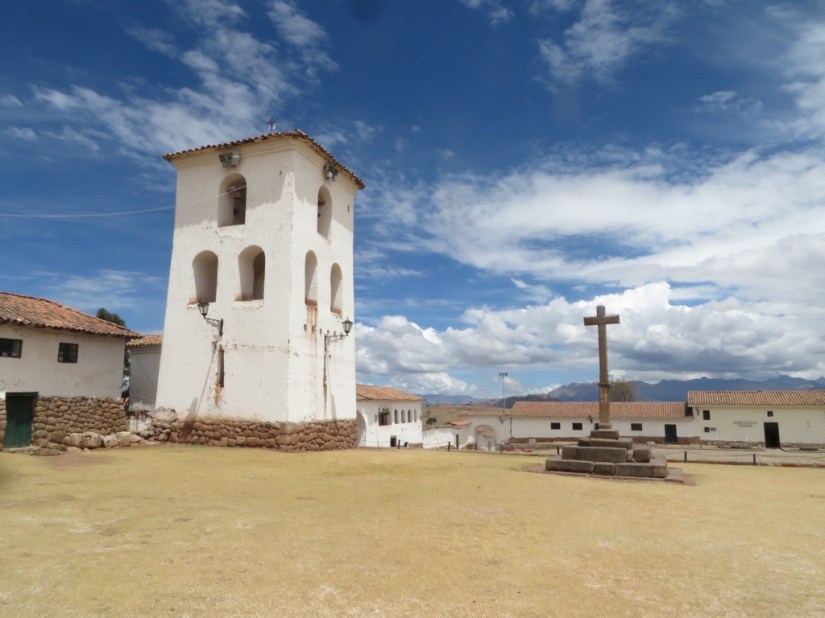
 We came by taxi stopping at the church at Chinchero, which had a beautifully painted wooden ceiling and murals. It has a lively market on a Sunday and even had a few stalls when we visited as well as what we thought might be our last view of snowy peaks.


Time for a quick Peruvian history lesson … do skip this bit if you want!
The Inca Dynasty began in 1200 founded by Manco Capac in the valleys round Cusco, but little is known until 1438 when Pachacuti became emperor and a period of expansion began, continuing under his son Tupac, so that the Empire then stretched from Ecuador to Chile. The next emperor Huayna Capac, spent his reign focused in the north and died of smallpox, which had travelled south, brought to Mexico by Europeans. Civil war then broke out over the succession between his two sons and finally Huascar is defeated by Atahualpa whose reign is to last only months. So the Inca Empire is in a weakened state after a smallpox epidemic that killed a third of the population and a civil war that killed even more.
Enter the Spanish conquistadors, just 168 of them, led by Francisco Pizarro who landed in 1532 and made their way to Cajamarca and massacred thousands of Incas and captured Atahualpa, aided by surprise, steel, cannons and cavalry. Atahualpa was promised freedom if the Incas filled a room with gold, which they did, but the Spanish killed him anyway. Pizzaro then made his way to Cusco where he crowned Manco Inca a puppet emperor.
In 1536, Manco fled to the Sacred Valley to gather troops for the great rebellion. Days later over 100,000 Inca rebels lay siege to Cusco. Manco managed to reclaim the city for a few days, but Spanish troops attacked and took Sacsayhuaman, and while the siege continued for ten months, ultimately Manco retreated to Ollantaytambo and then to mountains northwest of Cusco. Here he conducted regular raids on the Spanish, dying at the hands of a Spanish outlaw in 1544. The rebel Inca state continued successively under three of Manco’s sons, the last being Tupac Amaru who after fierce fighting was captured and beheaded in Cusco in 1572.
End of history lesson!
Cusco is at 3400m, surrounded by mountains and was occupied by the Killke before becoming the centre of the Inca empire under Pachacutec. Several remaining Inca ruins can be seen by getting a taxi high up the mountain above Cusco, and walking 8km back to the city, so we set off for a day out. The first was Tambo Machay, a site for ritual bathing or water worship where carefully cut stones channel a fresh water spring.

Next we came to Puca Pucara, possibly a hunting lodge connected to a military checkpoint.
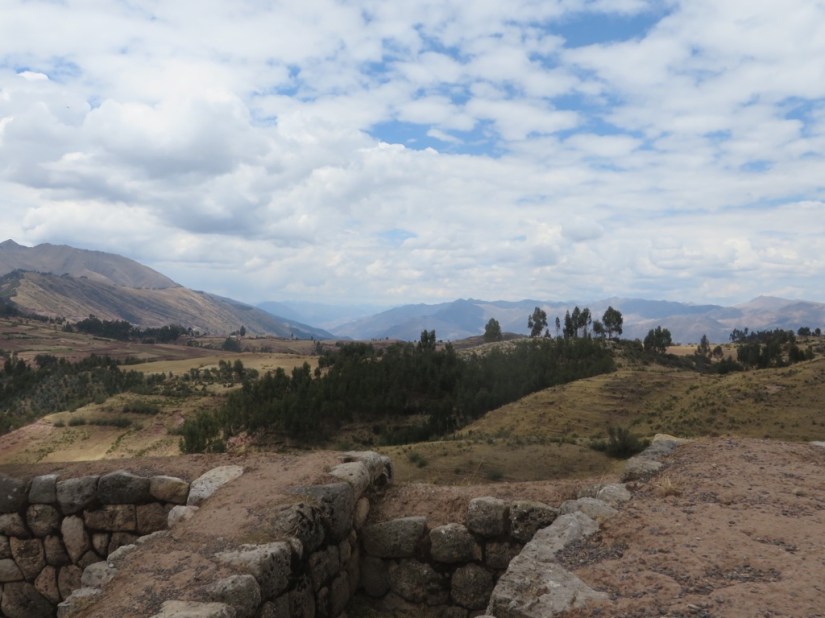
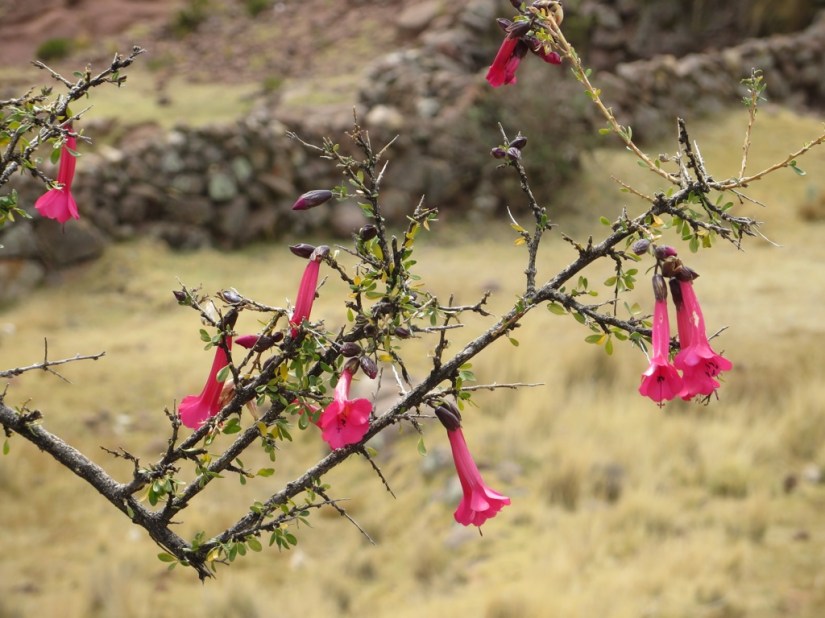
We then walked through the countryside, downhill, passing grazing animals and flowers until we reached Salapunco, a Huaca or sacred giant limestone outcrop, also called the Temple of the Moon.


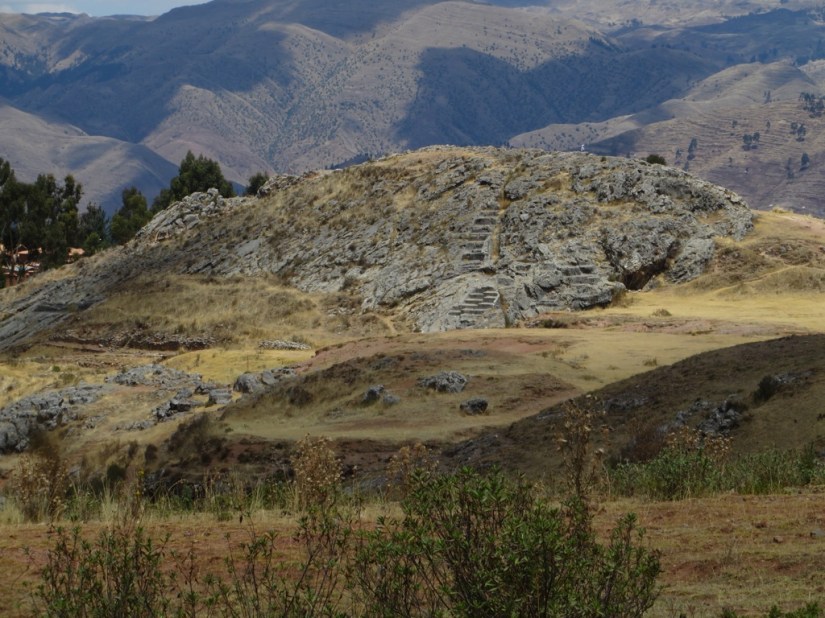
Here we met Gabriella, who showed us around, pointing out rock carvings such as the llama …

… and the seat the Inca would have sat upon …

… and then into the cave below.
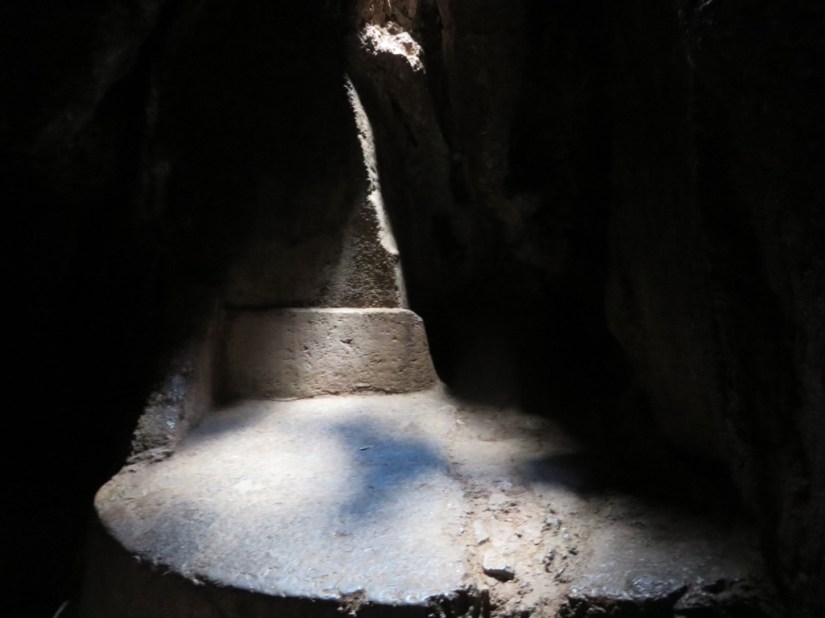
She said it was here that the Chosen Women were divided into Women of the Moon if they were illuminated by the moon as it entered the cave from a hole in the roof enabling them to be wives of the Inca, or Women of the Sun if they were only partly illuminated, in which case they would be eligible for sacrifice like Juanita. Local people still go the the temple and touch the ceremonial stone and let their breathe exhale, together with any badness within so they can leave ritually cleansed and also leave offerings of coca leaves to Pachamama, or Mother Earth. On the way out was a ceremonial platform showing part of the Inca Cross, the centre representing Pachamama and the three steps for the three realms.

We certainly would not have understood so much about Salapunco if we had not met Gabriella.
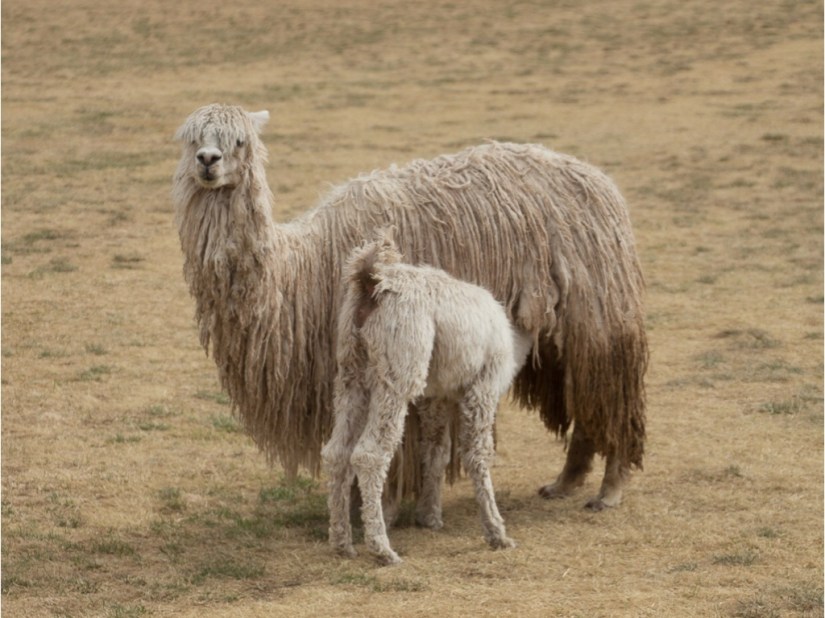
We continued our walk to Quenko, another Inca Huaca, where a llama would be sacrificed annually to determine how good the harvest would be. It is likely that other rituals would also have taken place here.
A little further on, we came to Sacsayhuaman, which is admired for its 600m long zigzagged defensive walls made of the most monolithic stones in Peru. They resemble cats teeth and cleverly expose the flanks of an attacking force, not that this helped Manco when the Spanish attacked. Originally there were three towers, demolished by the Spanish and also a Temple of the Sun. We then walked down into Cusco, very pleased with our achievement.


The Qorikancha or “golden place”, was the most important sanctuary dedicated to the Sun God Inti at the time of the Inca Empire. According to Spanish chronicles, it was said to have featured a large solid golden disc that was studded with precious stones and represented the Inca Sun God, and the Sacred Garden in front of the temple had golden plants with leaves of beaten gold, stems of silver, solid gold corn-cobs and 20 life-size llamas and their herders all in solid gold. The temple was destroyed by the Spanish invaders and only a curved outer wall remains at the site with a convent built on top and a memorial.


The Spanish destroyed many Inca buildings, temples and palaces. They used the remaining walls as bases for the construction of a new city, buildings with a mixture of Spanish influence and with Inca indigenous architecture, replacing temples with Catholic churches, and palaces with mansions for the invaders.

Hathun Rumiyoq, one of the main streets has superb stonework, including one huge boulder with twelve angles.

The Catholic Church were keen to convert the native population, and art was considered a good way to pass on the message. The School of Cusco was a 17C movement which blended European and indigenous motifs to create a New World art form. Paintings were of a religious nature with archangels in sumptuous Spanish fashion, sombre backgrounds, lots of red and blue and some grisly death scenes as well as a fixation for gold leaf appliqué especially for saints clothing. The Marcos Zapata painting of the last supper in the Cathedral has them dining roast guinea pig!


The Plaza de Armas is dominated by the cathedral and two other churches, all built in a red stone and is surrounded by stone arcades, many of which are embellished with balconies of Colonial era woodwork, typical to Cusco. The churches are all richly decorated inside with a lot of gold and silver work on the altars.


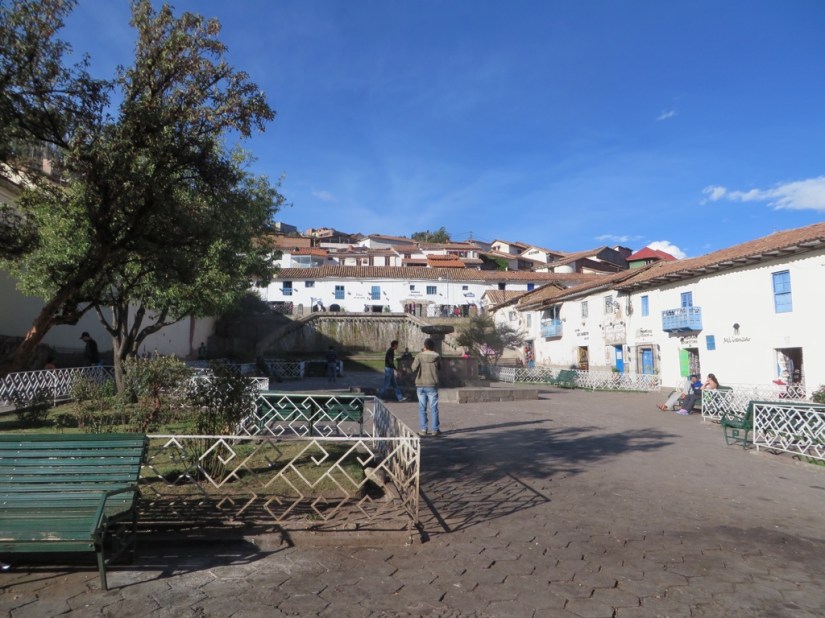
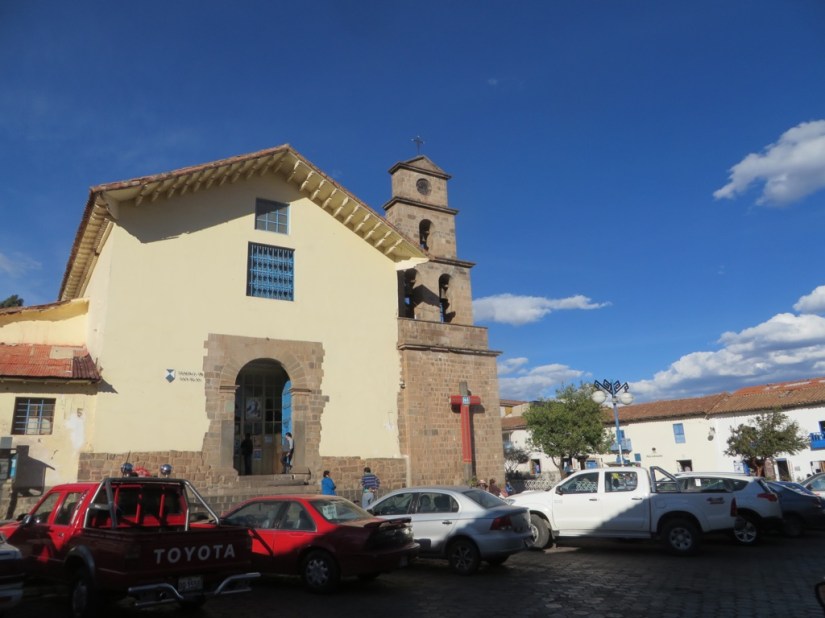
We wandered round the Barrio de San Blas, a picturesque neighborhood housing artisans, workshops and craft shops. Its streets are steep and narrow with old houses and it has an attractive square and the oldest parish church in Cusco.

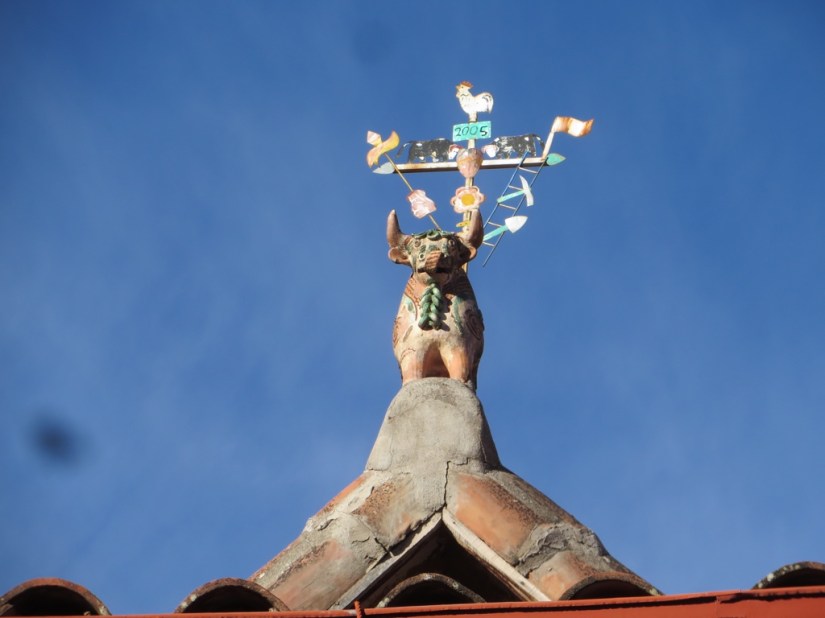
We have seen many houses around, and in Cusco, with bulls on the roof. These are to bring good fortune on the house and happiness to those within. In Inca times, a pottery llama was used to bring good luck to the llama herd, but this converted to a bull with the arrival of the Spanish.
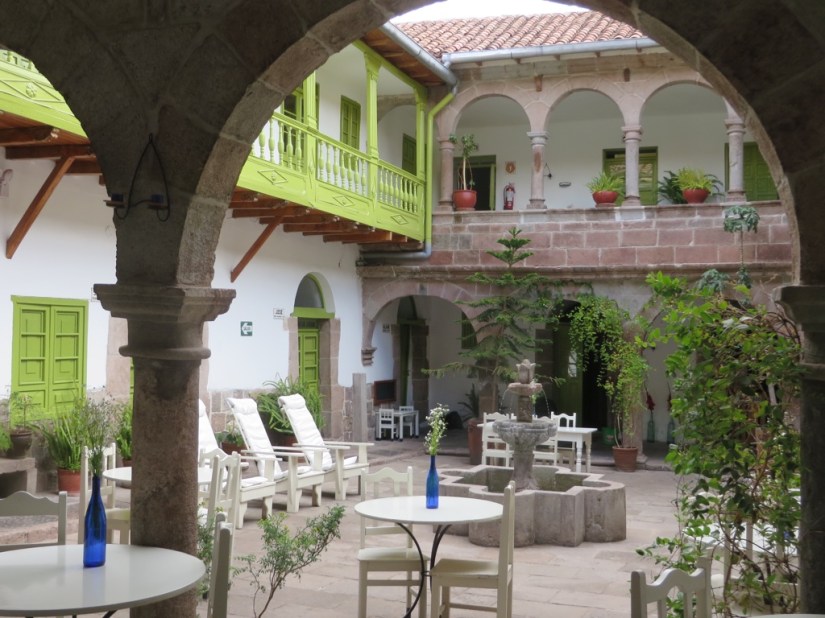
We returned to Ninos a Hotel exhausted!
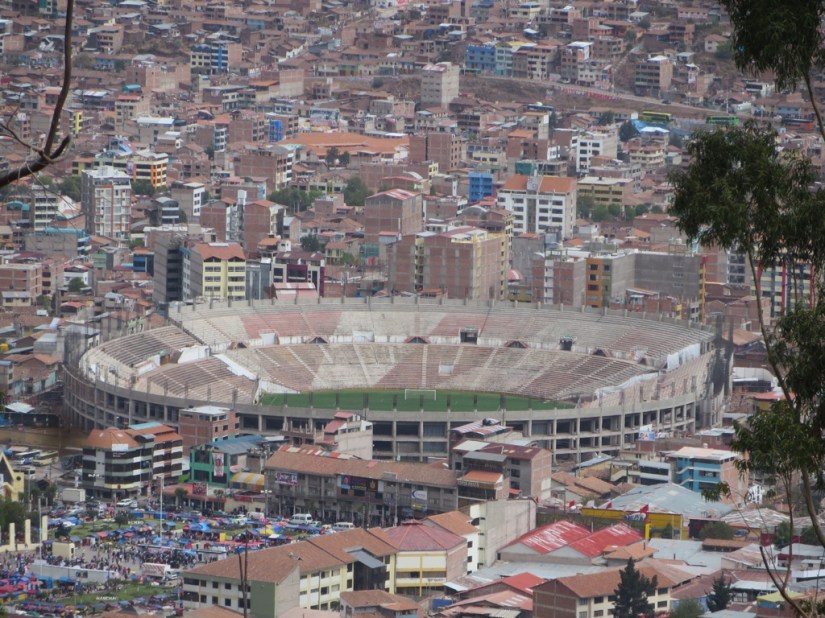
Cusco’s main stadium Estadio Garcilaso de la Vega is home to the local team Cienciano, and we paid £4 each to see them play.
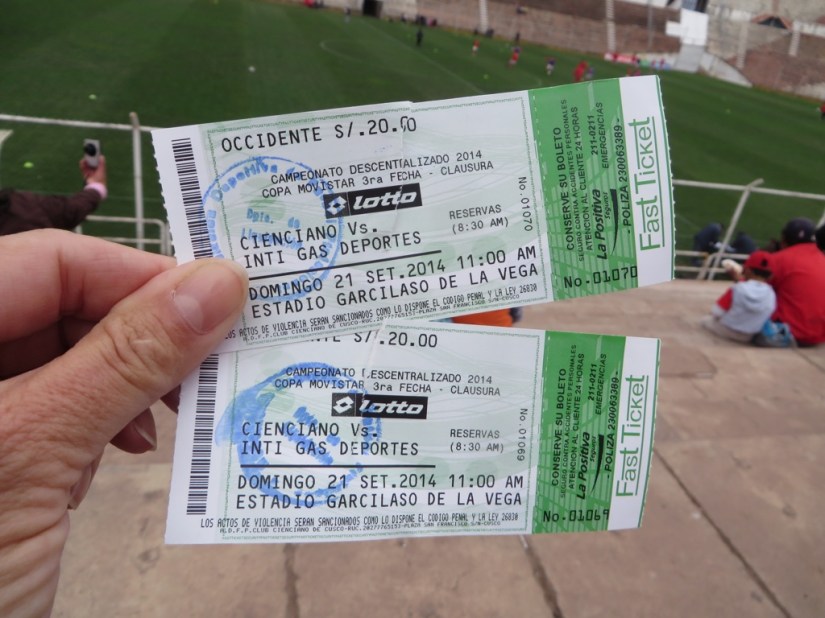


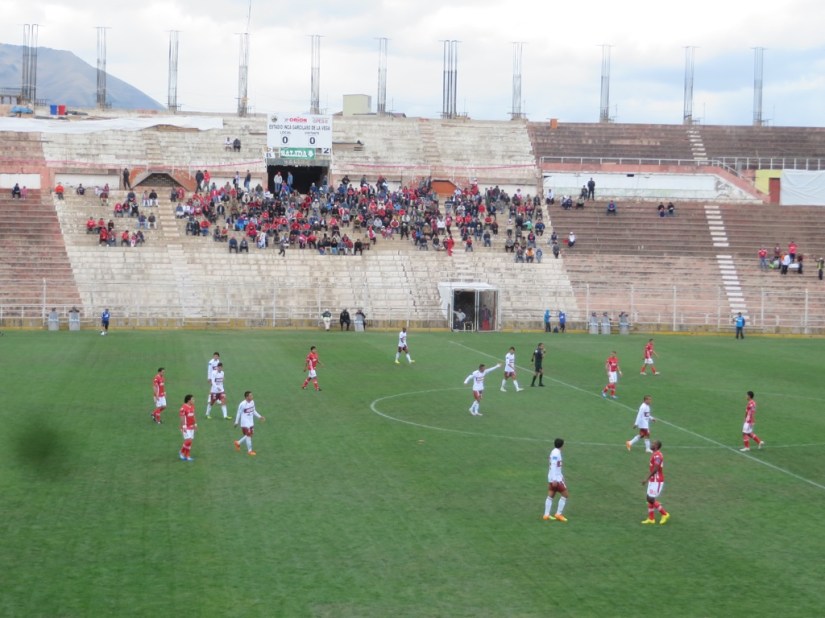
Chris was in his element, not only was he at a football match in a foreign country but the home team were in a red strip and he saw a local Liverpool supporter! Although Cienciano had possession for most of the game, they couldn’t consolidate their attacks into a goal, and the match ended in an entertaining nil nil draw.
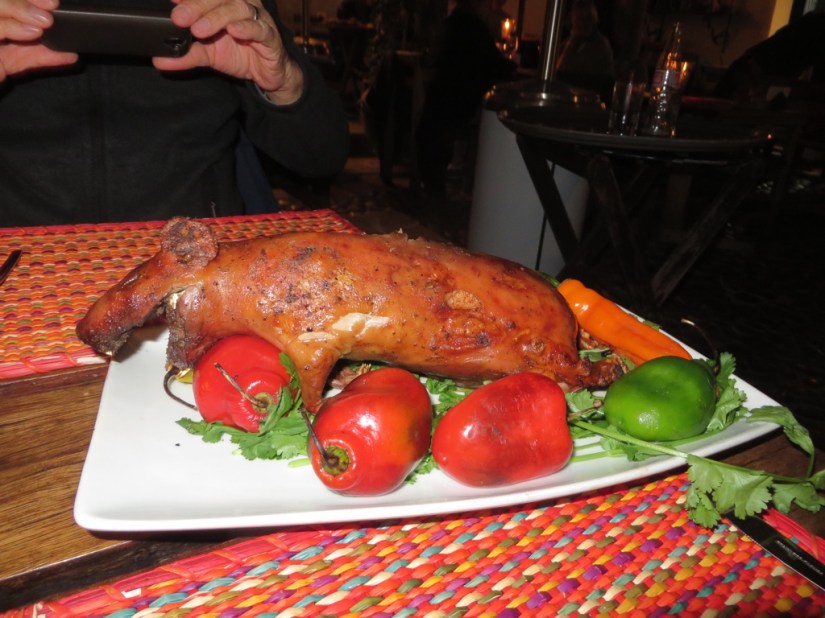
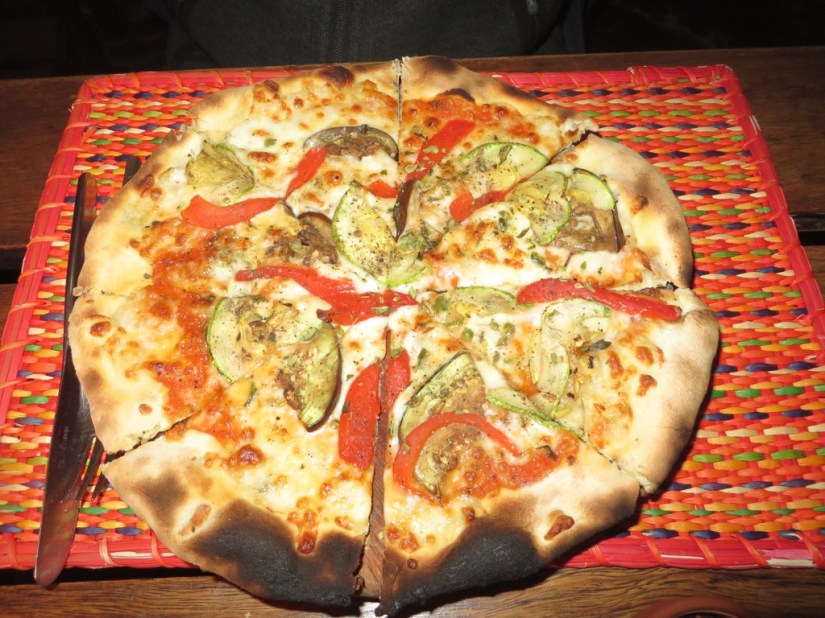
Finally it has arrived, our last night in Cusco and my last chance to try guinea pig or cuy … pronounced cooee … as they call it here. Last night we saw Megan and Nicola sharing one and they tucked in with vigour and said it was a bit like chicken. So here goes, Pachapapa’s best cuy roasted in a wood-fired oven, handy as Chris can have pizza! We sat in the candlelit courtyard, watching the chefs busily pushing things into the ovens, checking them, pulling them out … and then our dinner arrived!
We were both pleased with our choices, the pizza was crisp and tasty and the cuy tender and a bit like chicken.
Tomorrow we fly to Puerto Maldonado …
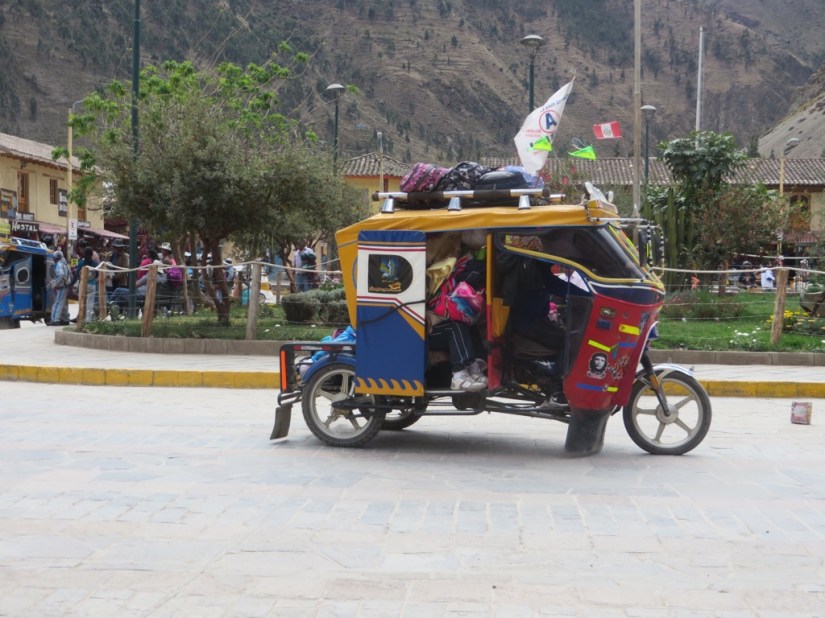
 It is a pretty little town, built where the Patakancha River flows into the Urabamba, set round a main square, with the usual comings and goings.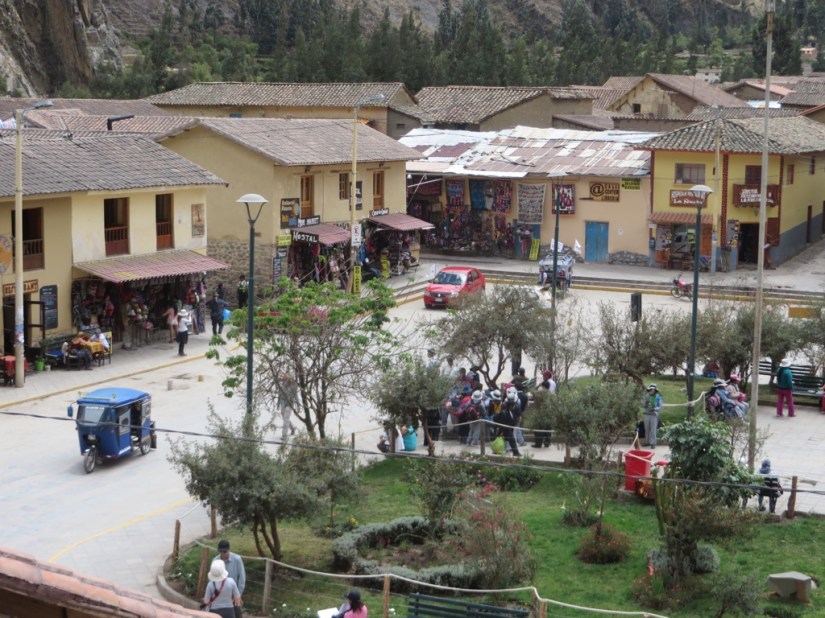

 We stayed at Picaflor Tambo, a friendly guesthouse where we were welcomed by Hilda and Lillian. Also staying were Lauren who is halfway though a 2 year volunteering programme with the Peace Corps and her mum Lynn who was visiting from Florida with whom we had several giggles over breakfast!
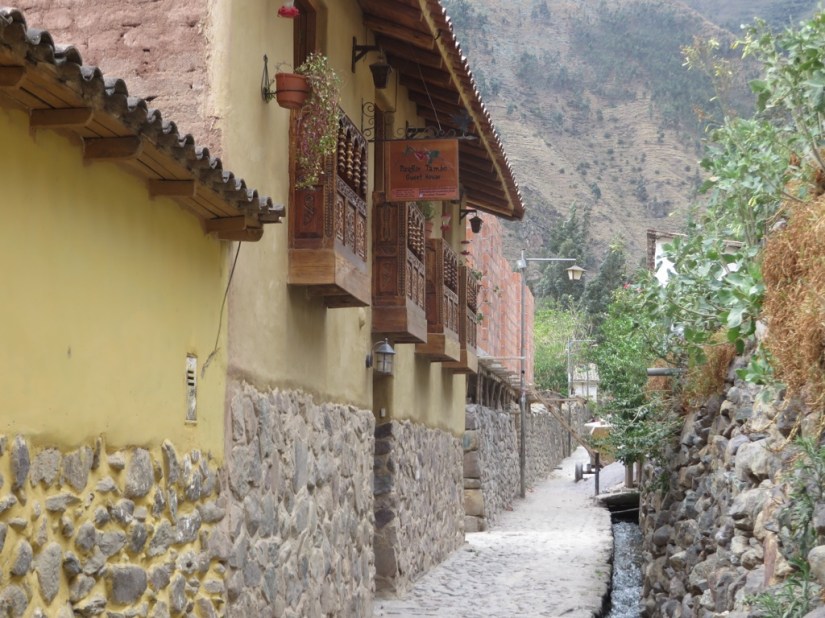 The side streets are cobbled, many with water courses running along them and there are still splendid Inca doorways to be seen.
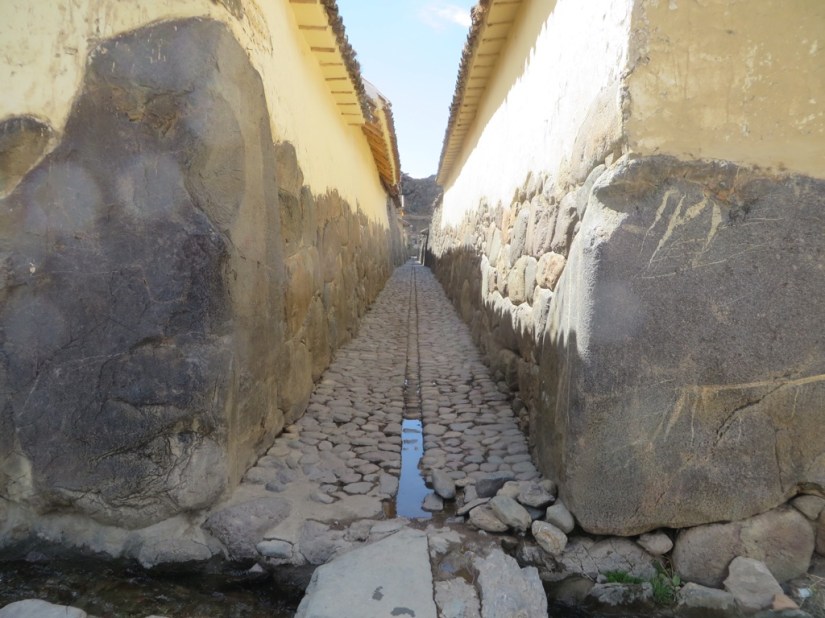
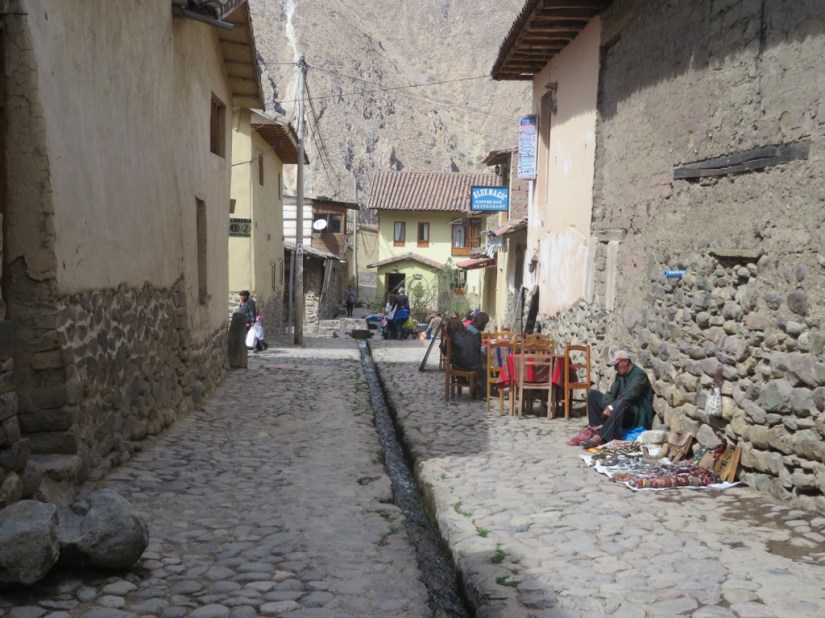
 There are a couple of traditional community courtyards or cancha each belonging to an ayllu or extended kinship group and shared by the four houses set round them and we went into one. Not only do the houses have guinea pigs running round the floor, they have ancestor’s skulls as a shrine on the wall.
 There is a fair amount of traffic and lots of tourist coaches during the day, although quiet at night.
 Ollantaytambo was captured and rebuilt by Pachacuti as a royal estate and ceremonial centre although the religious area remained unfinished. It was also the site of one of the few victories the guerrilla Inca forces had under Manco Inca. All his soldiers were arrayed on the terraces, with Manco himself astride a captured horse. Once the Spanish approached the terraces, water was released from the channelled waterways to flood the plain and it was only with luck that the conquistadors managed to ford the swollen river and retreat humiliated and wet.
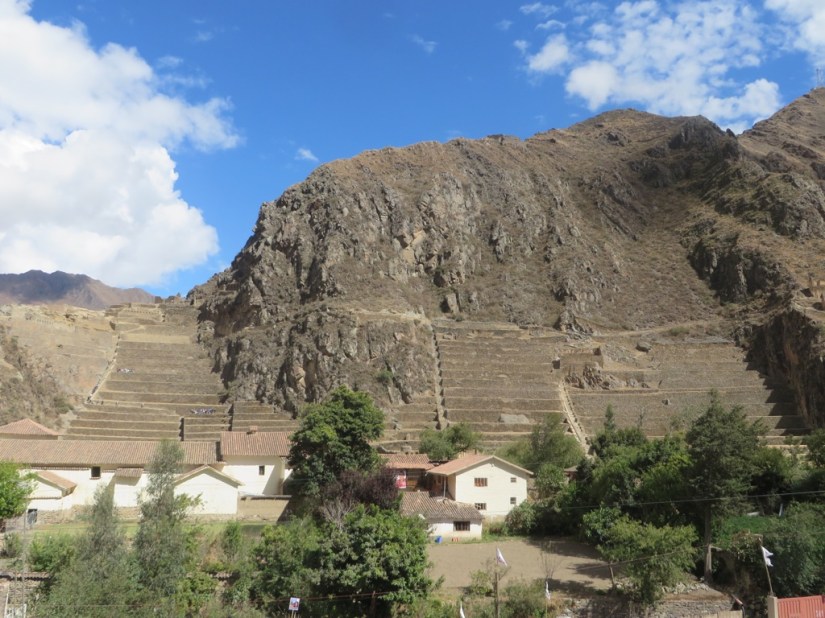 We visited early, while the sun still shone on the terraces, and climbed the 200 steps to the temple entrance, an impressive door jamb, beside the Temple of the Ten Niches.
 Then to six huge red granite slabs, part of the unfinished Temple of the Sun.
 There are various stone slabs cut ready for use around the site as well as a system of water courses and fountains and a view down to the valley from the top.

 We were tempted to cool our feet in the stream and joined a local chap who had been working in the fields.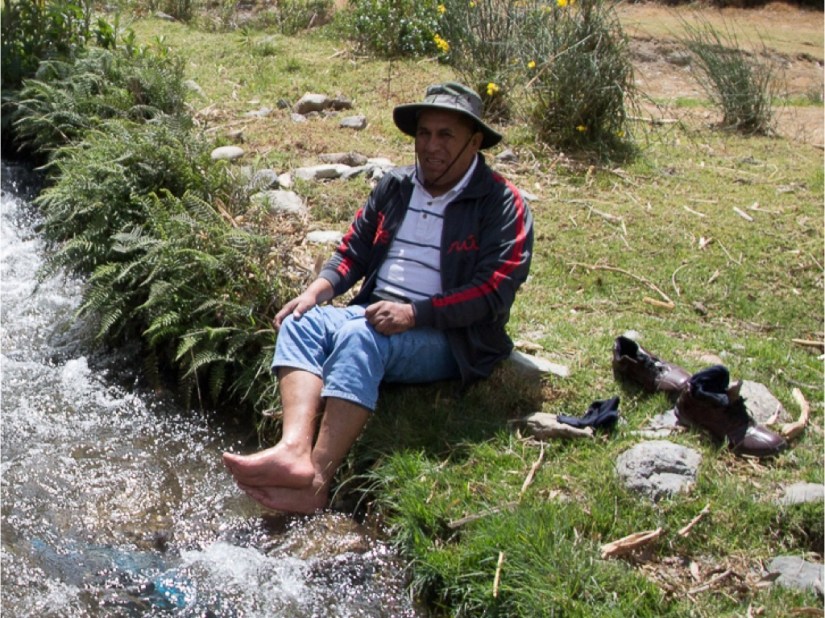
 On the opposite side of the valley are buildings believed to be granaries, as their position with more wind and lower temperature would have helped to prevent decay.
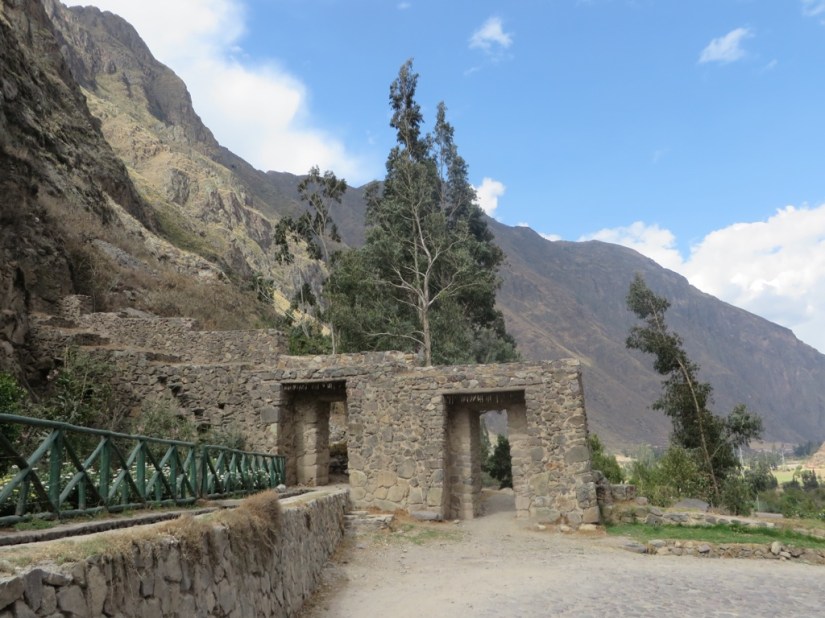
 We also wandered round the outskirts of town and saw Punku Punku, a gate to the town …
 … and some ruins called Quelloracay overlooking the river which may have been a noble residence, surrounded by terraces which, which now it is spring, have been planted with wheat and maize.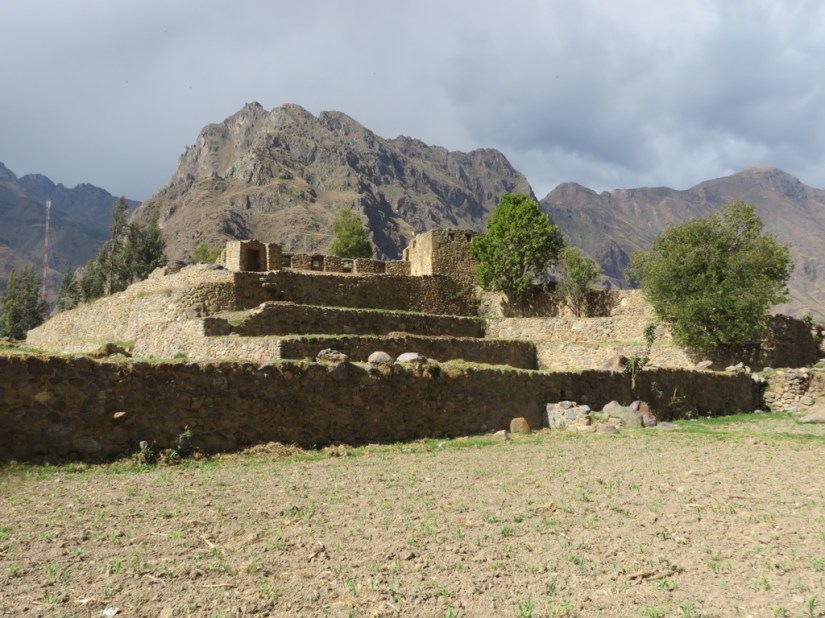
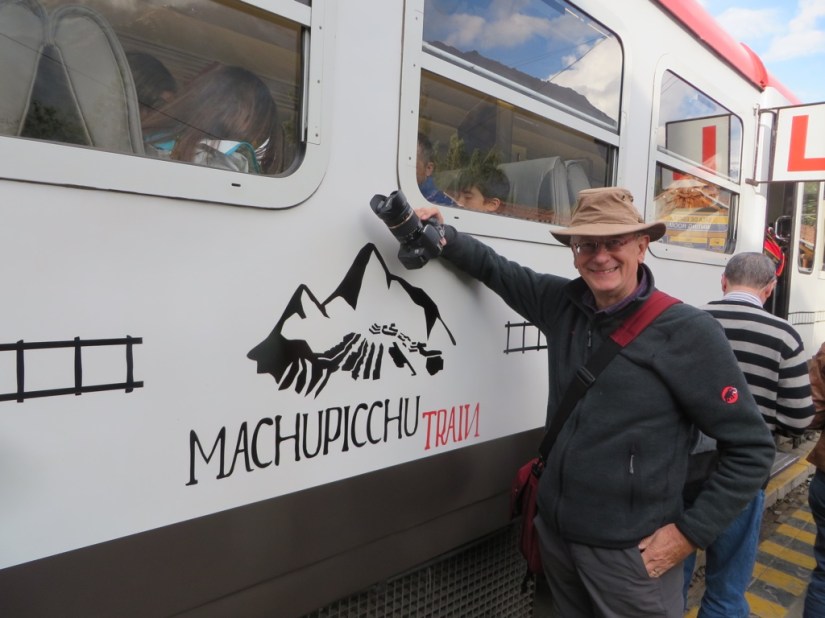
 The main reason for stopping here is our visit to Machu Picchu, not by hiking the Inca Trail, but by train to Machu Picchu Pueblo which takes 90 minutes, and 30 minutes on the bus, upwards!
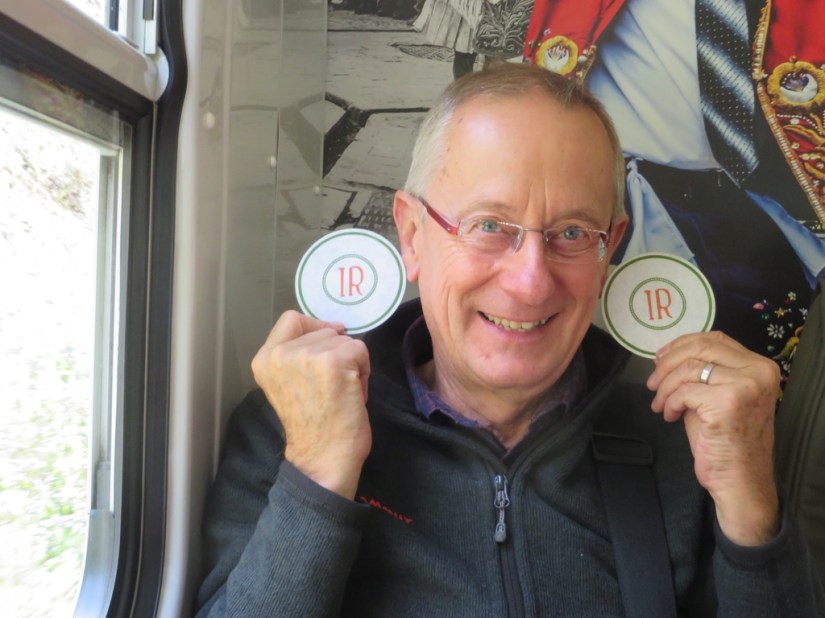
 During the journey, we chatted with Keeley from Seattle, and Chris did a Pachacuti impression, improvising Inca Rail drinks mats for the Inca ear plugs! Inca men wore gold or silver plugs in the ears, which indicated their nobility. Their stretched piercings, which could reach the size of two inches, later inspired a Spanish nickname for the Inca people: orejones (“big ears”).
 As the train carried us closer, the valley narrowed, the surrounding peaks grew higher and the vegetation around became more jungly (I love that word!)
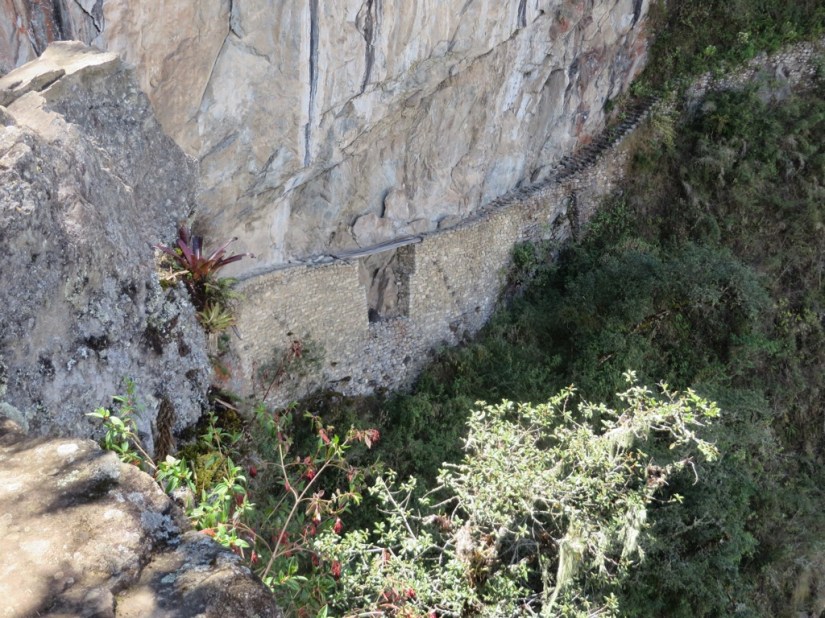
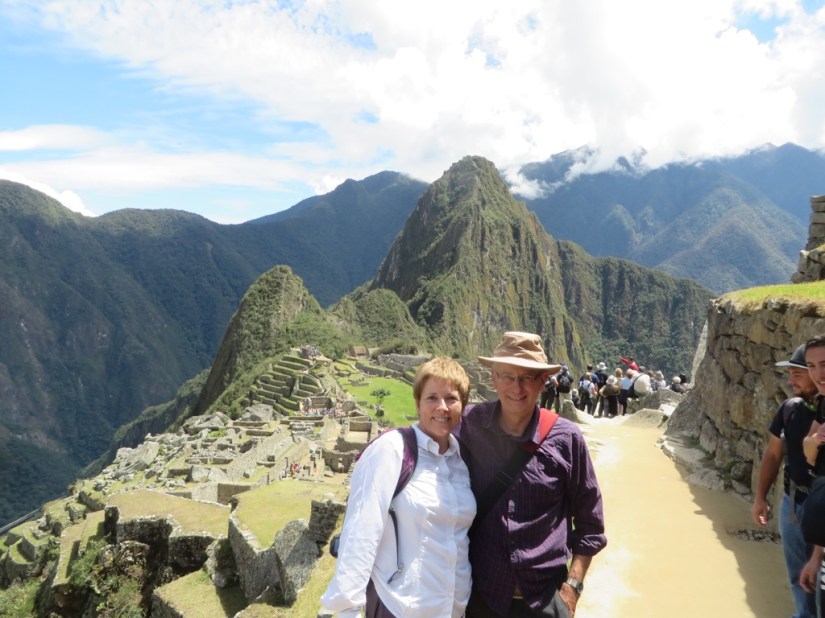 We then headed on a short hike to the Inca Drawbridge which followed a path round Machu Picchu mountain, through more jungly (that word again) undergrowth … giving us an impression of maybe what “The Inca Trail” would have been like! The bridge is a gap in the rock face, bridged by a narrow piece of wood that can be removed in the event of enemy attack, with a 1000ft fall for the unlucky!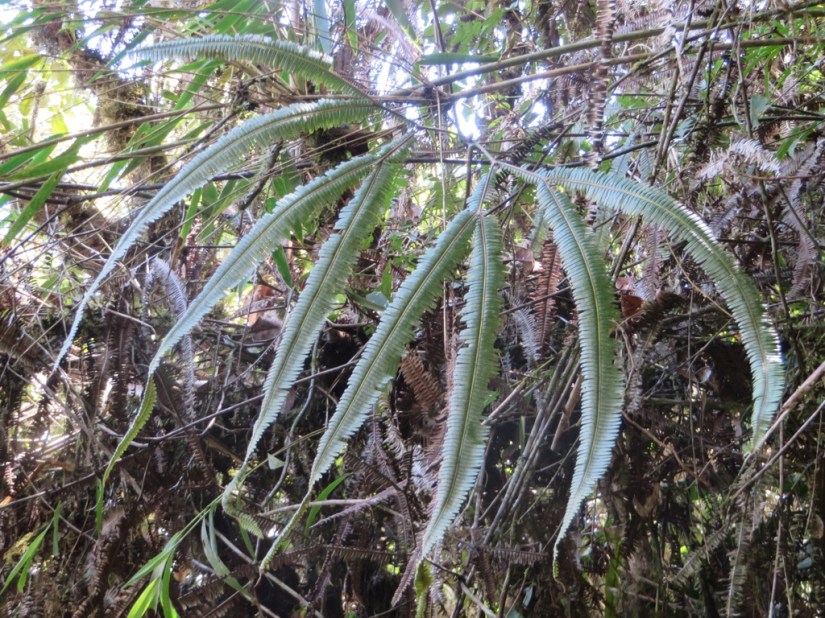

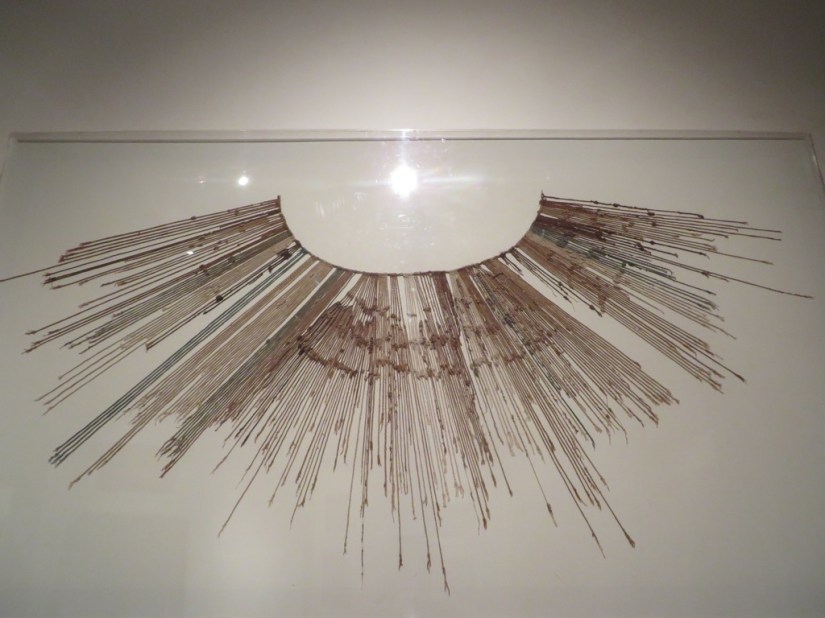
 We then explored the site, guidebook in hand. The Incas had no form of writing, only recording information using a quipus, a series of different coloured strings with knots used to communicate ideas, record information and keep track of the calendar, but which are no longer decipherable.
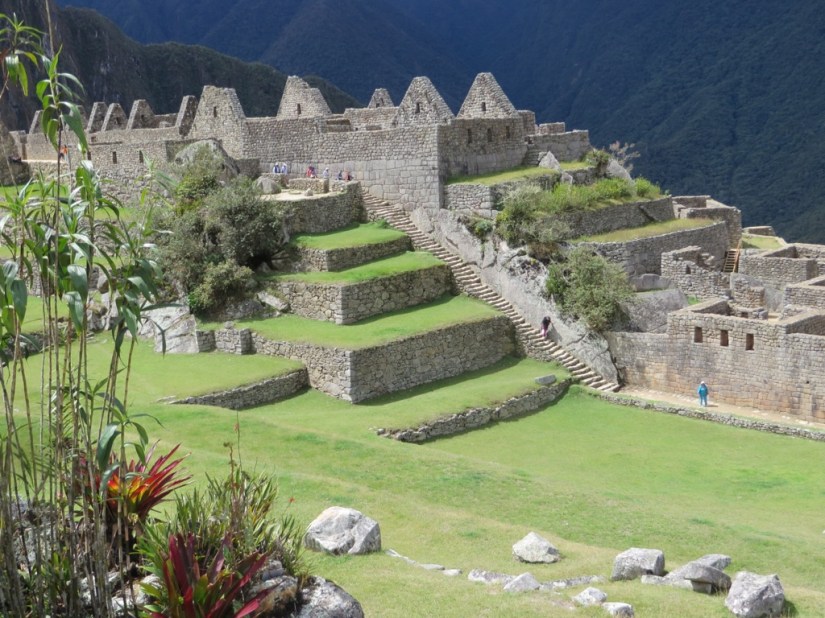
 Also, Machu Picchu was not known to the Spanish, so no reports of the conquistadores mention it. In other words, a lot of what has been written about the site has later been discredited, and a large proportion is supposition, albeit based on evidence from other sites. We walked round, mainly admiring the incredible workmanship in the stonework and brute strength needed to erect some of the buildings …
 … including the wall Hiram Bingham called “The most beautiful wall in America”.
 So we saw the Temple of The Three Windows …
 … The Principal Temple …
 … and even the Grand Staircase and Artisans Wall.
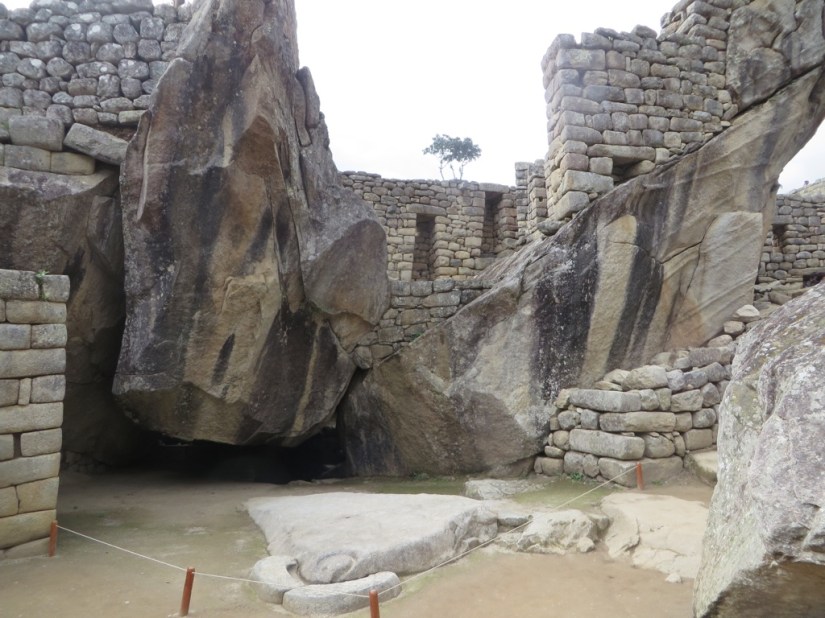
 The Temple of the Condor is theatrical! Craftsmen have embellished natural formations, with a triangular rock on the ground carved with eyes, beak and ruff to be the head of the condor and the two outstretched wings rising above.
 We also appreciated the aesthetic of the masonry set against the backdrop of sky and mountains and the feeling that you are almost on a stage set before god and nature. Lots of nature in fact including a viscacha and the inevitable llamas!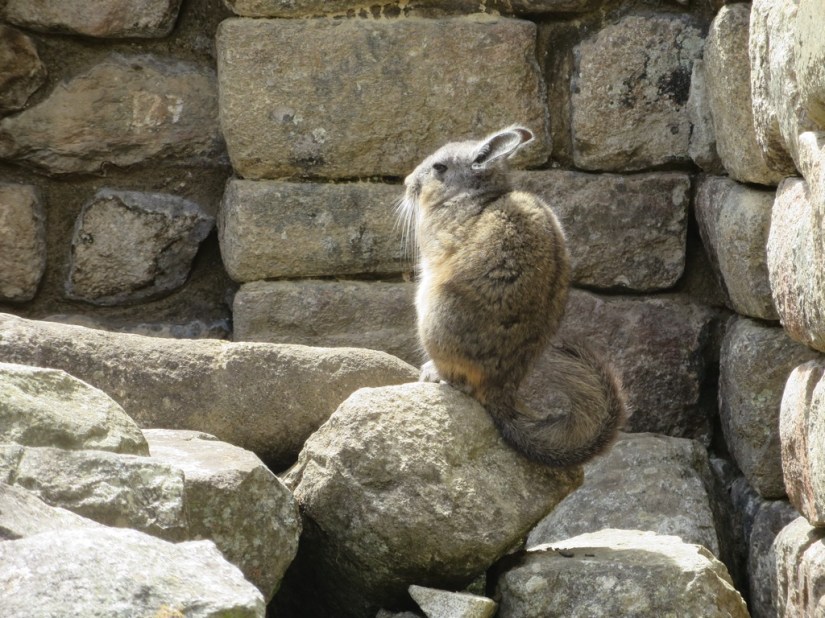
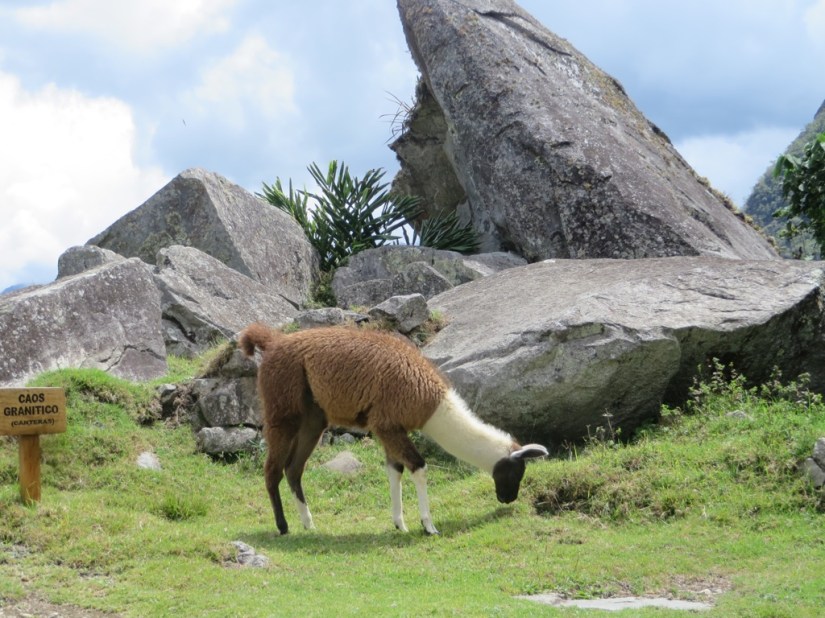
 The Incas worshipped Viracocha the creator god, but also many others and they occupied three realms – the celestial realm in the sky, represented by the condor, the inner earth realm, the domain of Pachamama or earth mother and the ancestors, represented by the snake and the outer earth where humans live, represented by a puma. Creatures that can broach realms, like frogs who live underwater and on land are particularly esteemed. Huacas, meaning sacredness, are also worshipped and are often natural features which bring them closer to the other realms like mountains reaching to the heavens and caves reaching downwards as well as immense rocks.
 Sacred Rock resembling Mount Yanatin behind …
 … Intiwatana echoing Huaca Picchu from the right angle …
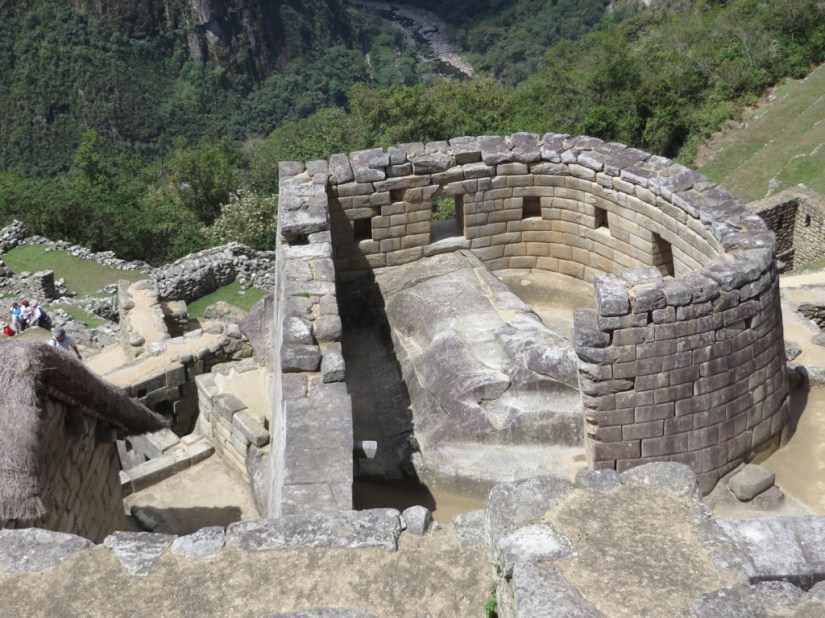
 … and even the sacred rock in the Temple of the Sun with a carved ledge bisecting sunlight at the solstice making a solar observatory.
 Later, the sky started to darken as clouds gathered, the whole atmosphere becoming more dramatic …
 … and then we had thunder and lightening, rain and finally a rainbow … magical!
 We returned to Machu Picchu Pueblo, went for an early dinner and piscos in the warm while we dried out then ambled through the souvenir market, buying bracelets, llama pom-Poms and frogs!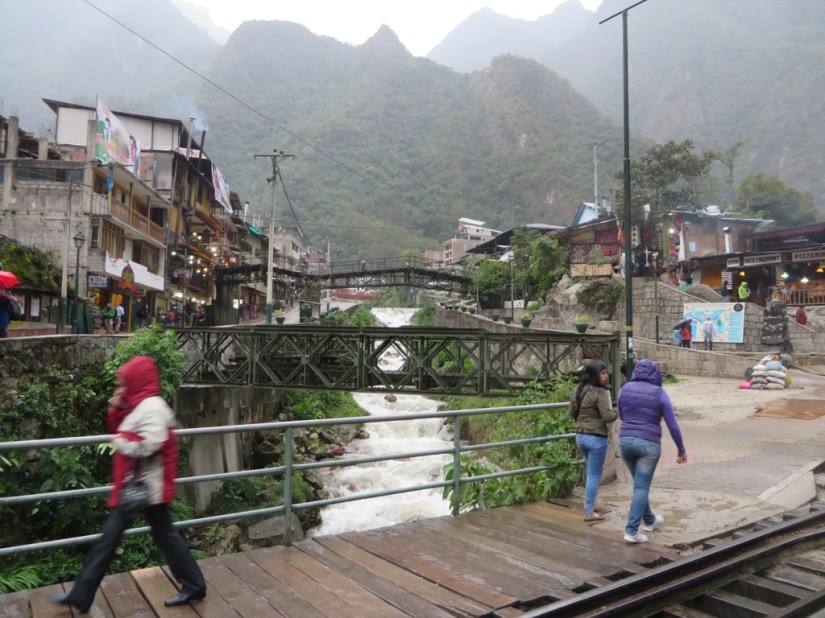
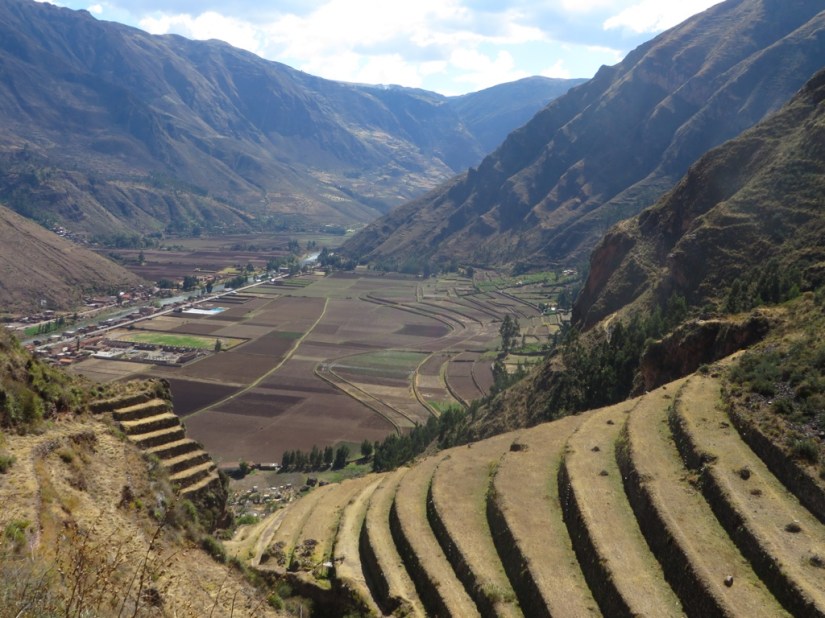
 The Urabamba river kept us company as we drove into the upper part of the Sacred Valley. The countryside changed completely, with far more arable land, and trees. In fact there are many eucalyptus, introduced from Australia to use for the railway and now invaluable as they grow in just 3-4 years and can be used for building and to fuel fires. They do take a lot of water from the soil, and moves are being made to try to return to planting indigenous species.

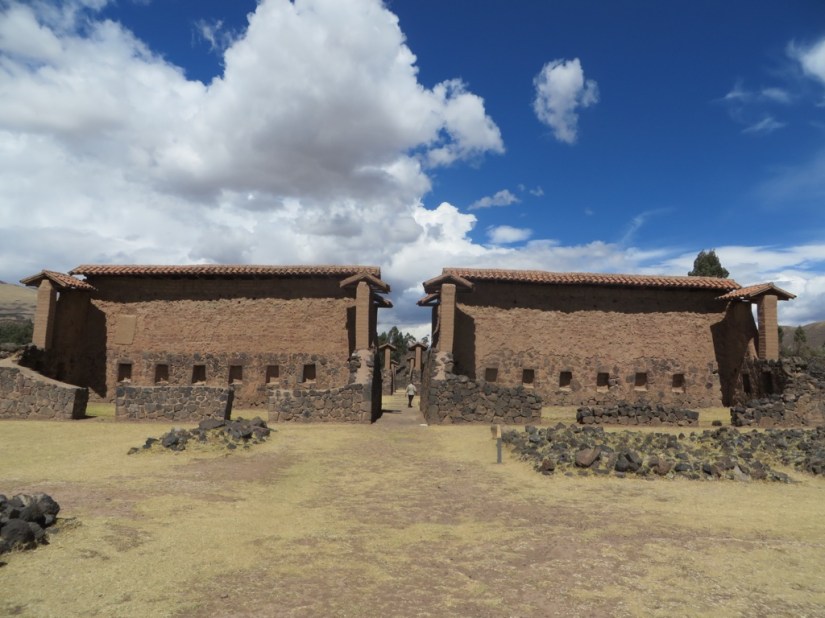
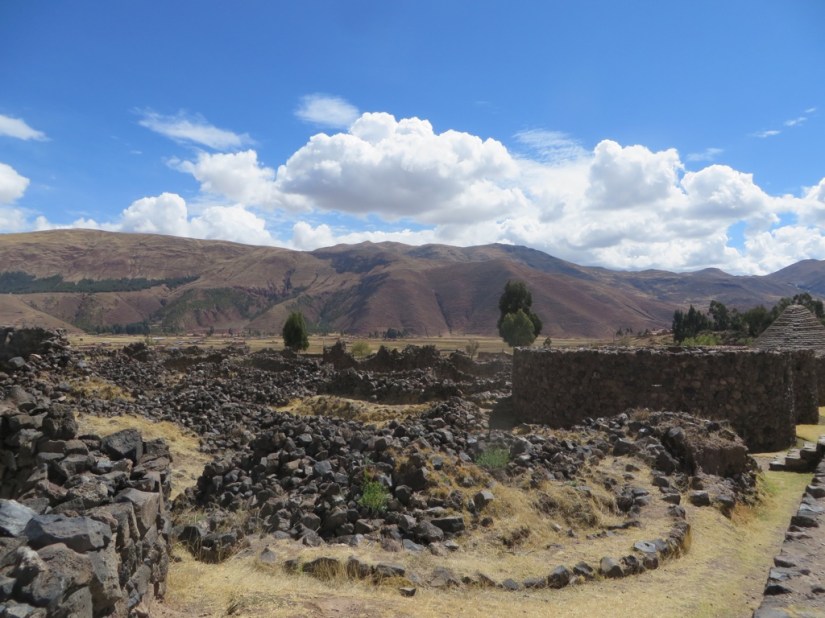


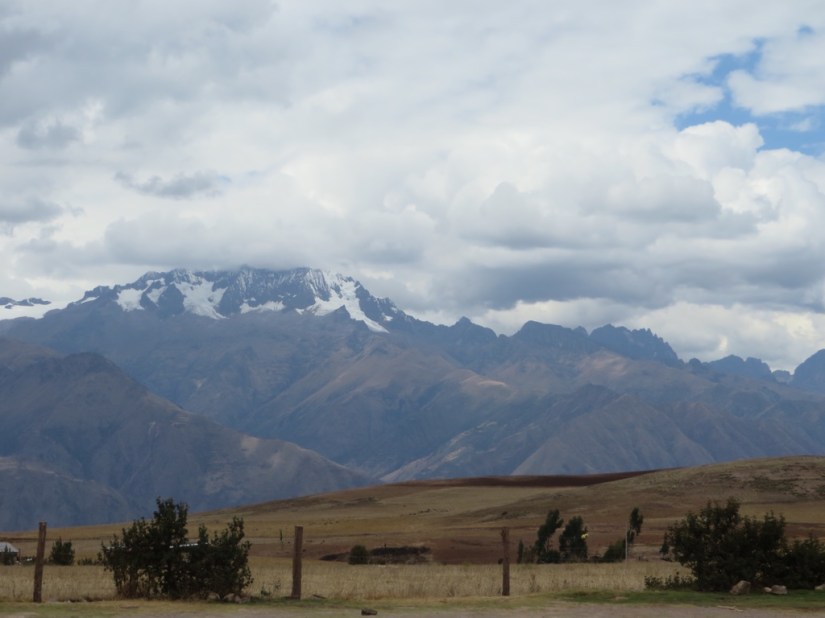










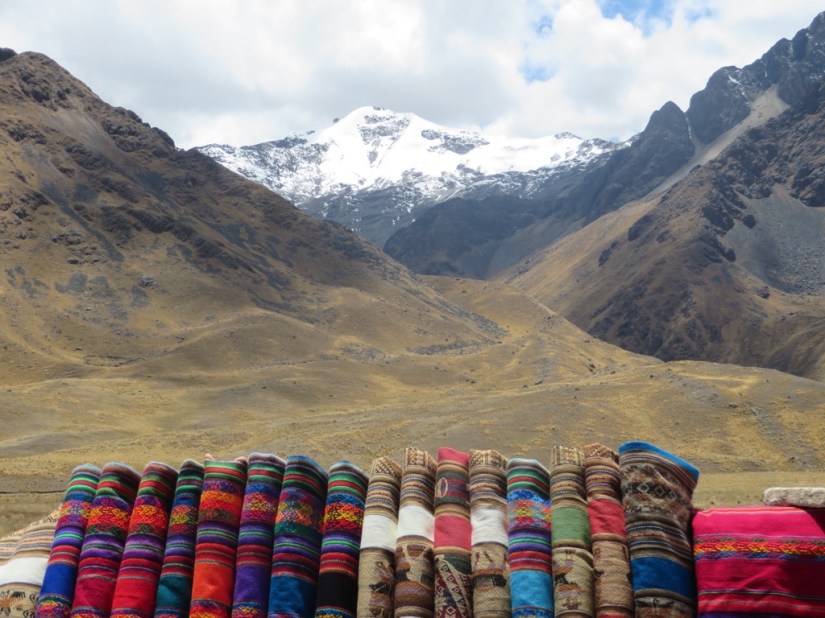
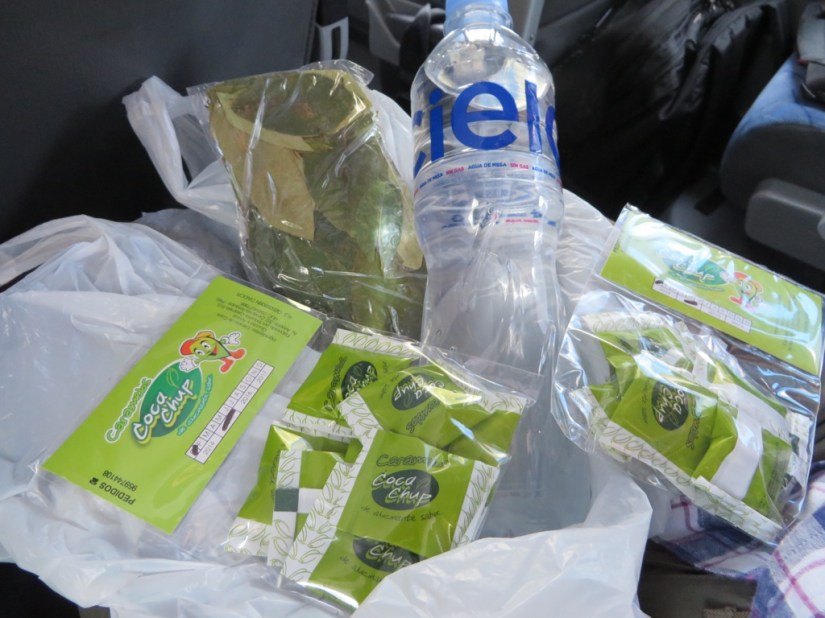
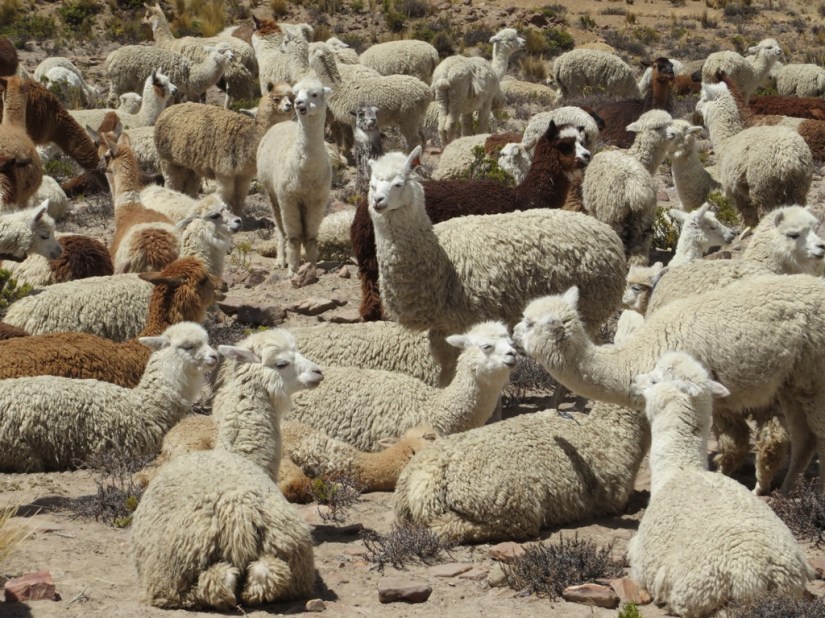
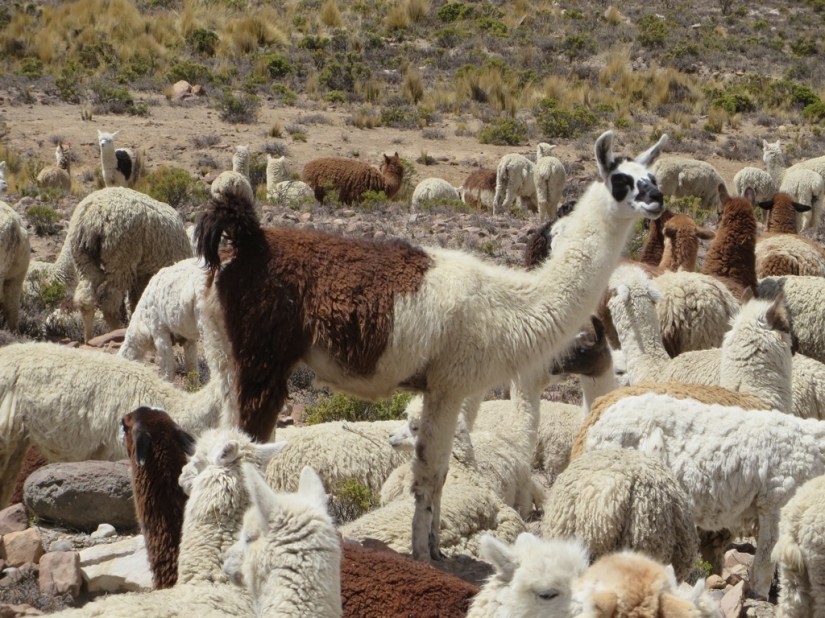
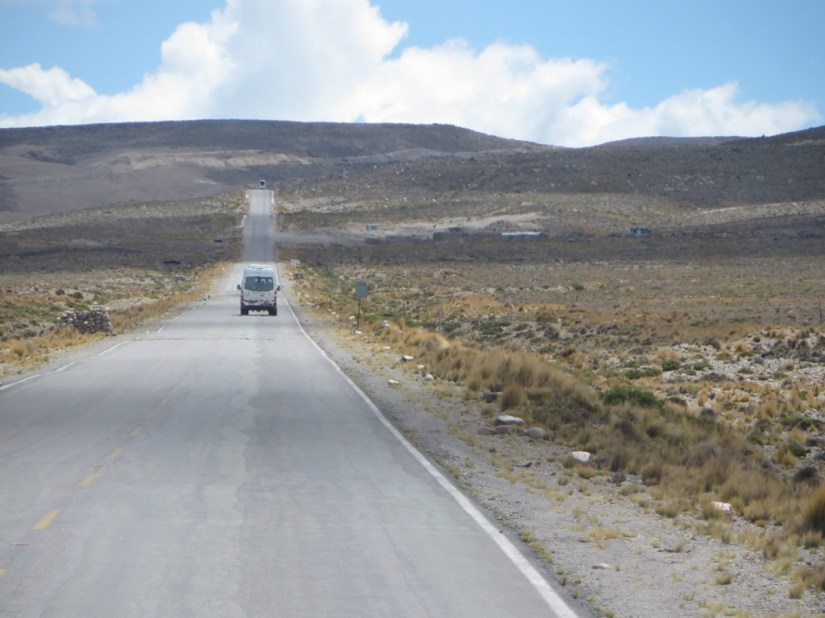
 We left Yanque at lunchtime and fortunately Chris was feeling much better. We travelled by bus back over the Patampampa Pass and this time turned left to Puno, a six hour journey. The road took us through more high puna grasslands with tufts of ichu grass and small shrubs and a background of rolling hills.











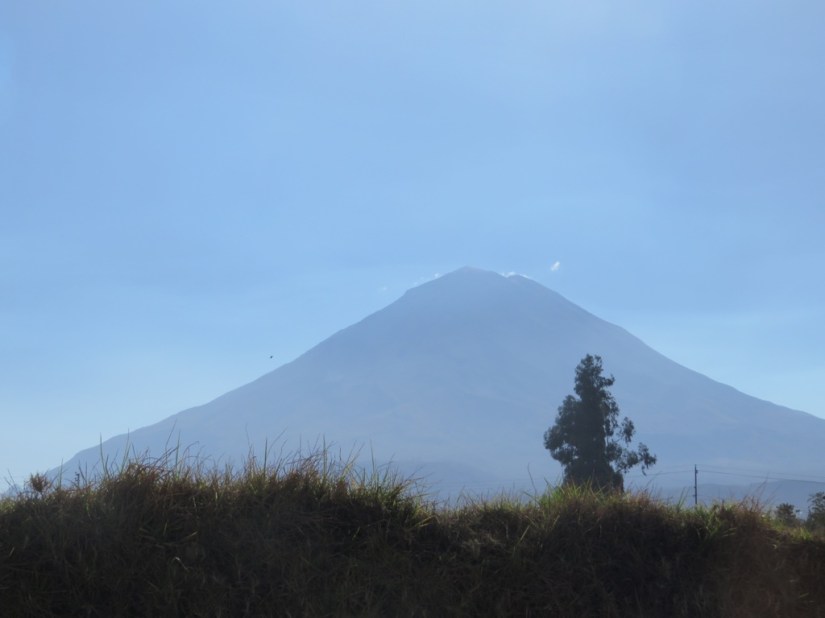






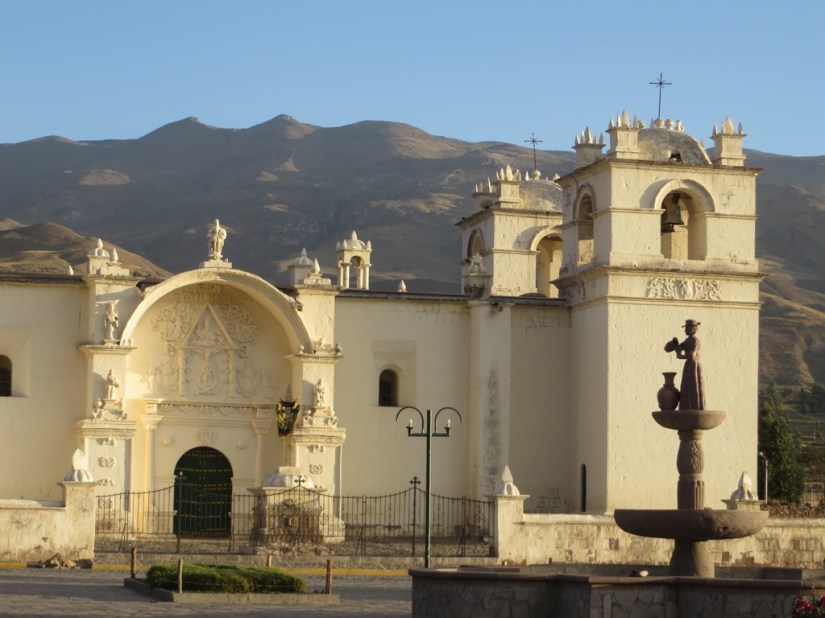




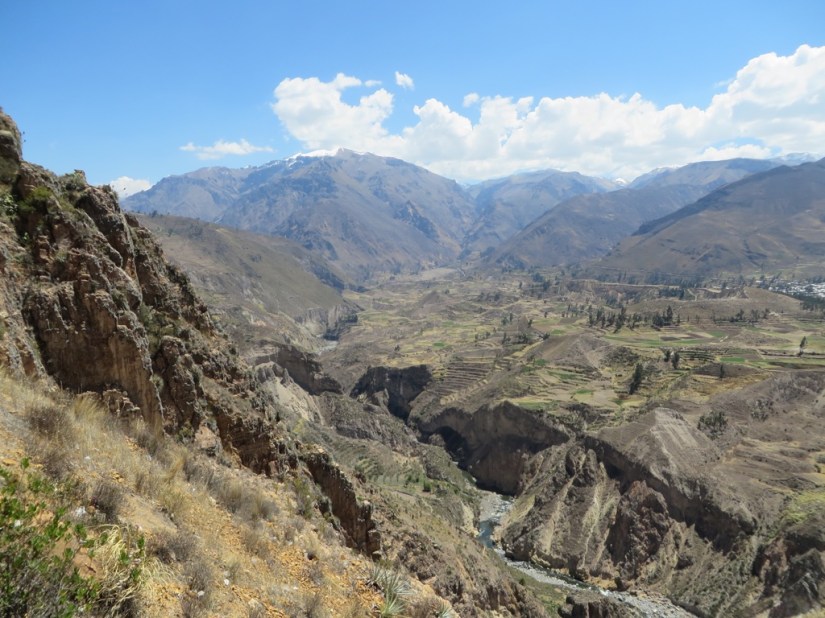


 The coach followed the coast south through the night, then turned inland and started climbing till we reached Arequipa at 2335m, with the volcano El Misti standing behind. Arequipa was a stronghold of colonial Spain and one of the few major settlements of Peru that wasn’t first founded by the Inca people. It then became wealthy again in the 19C from the wool trade with England and today is a mining centre. It still has fine colonial building made from white volcanic sillar rock cut locally and often flecked with black ash which give the city its striking appearance.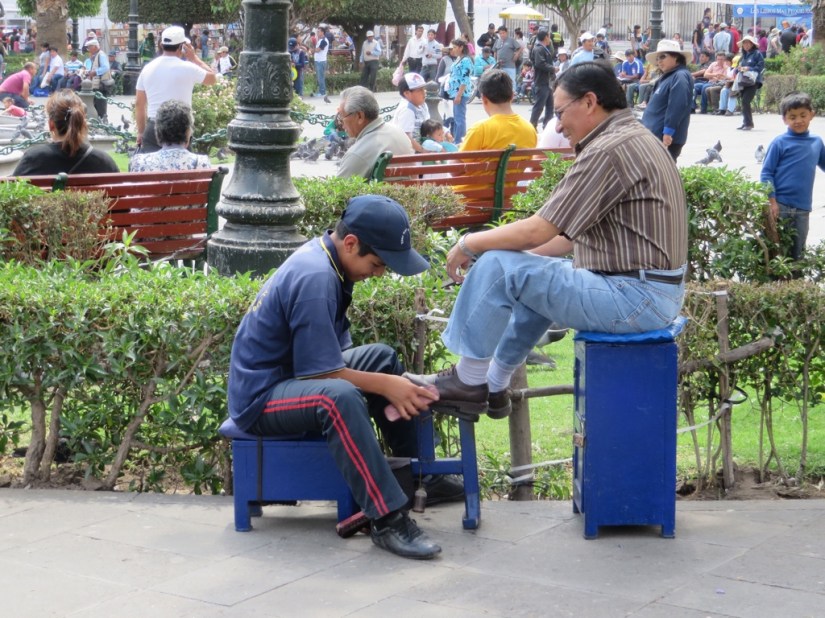


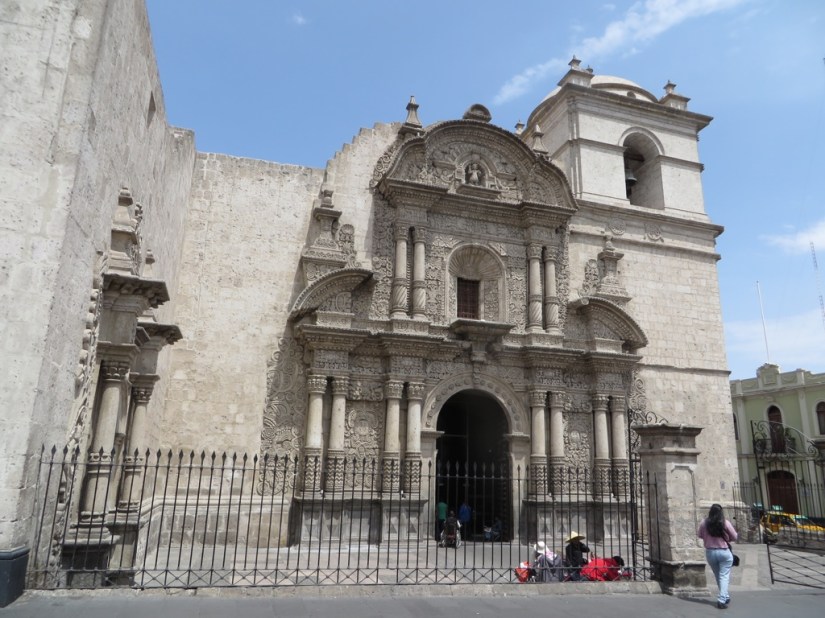


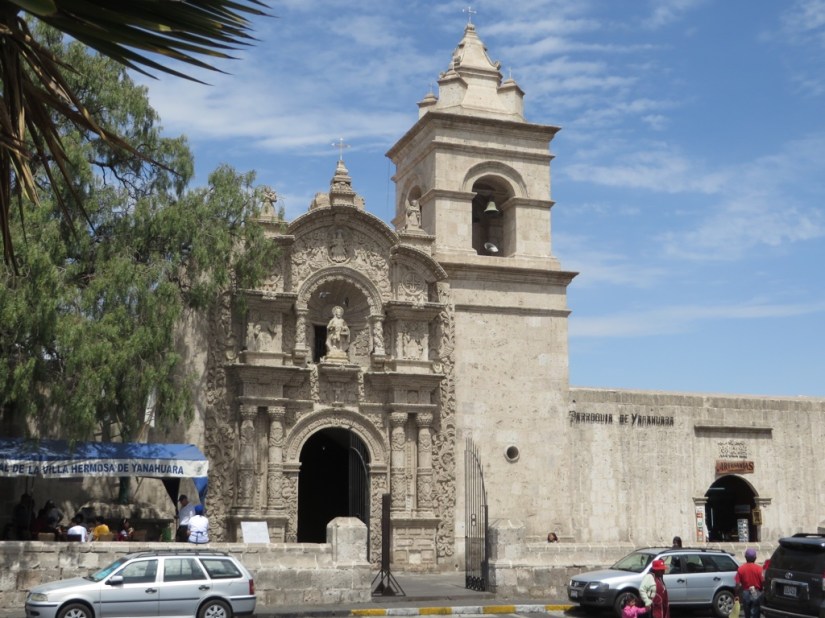


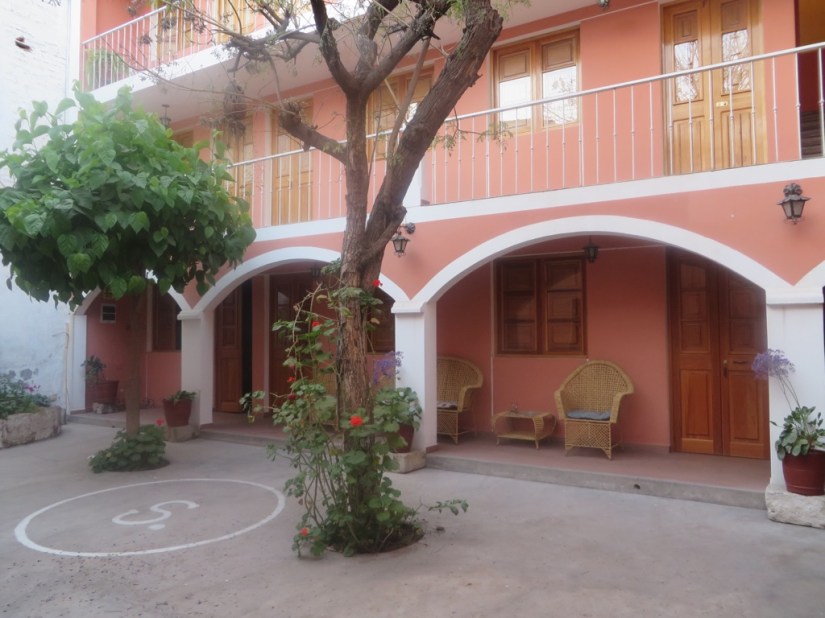


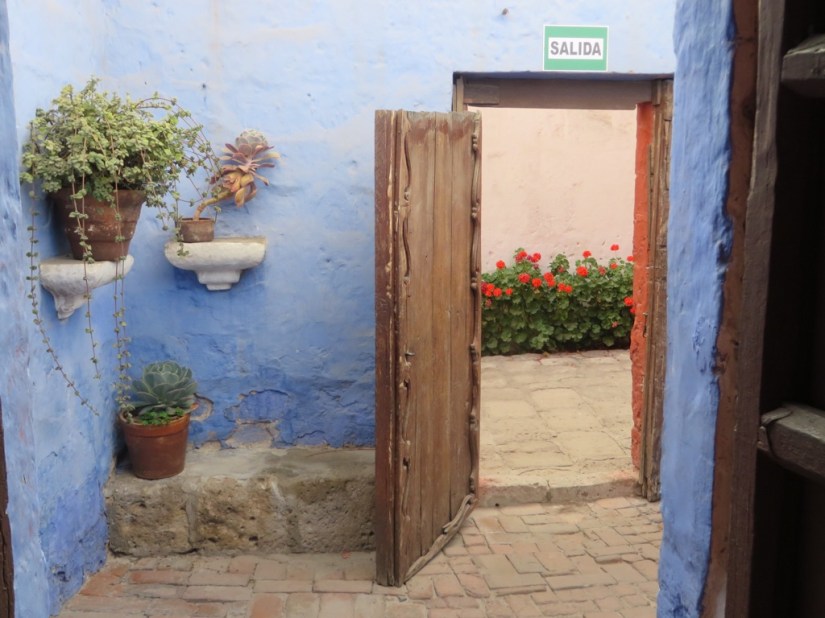


 We drove through desert that got rougher and rockier as we reached the foothills of the Andes, including areas where the road had been blasted through the rock. The views were stark but amazing. We arrived in the afternoon, and only had to walk over the road to our hotel. We took a turn round the town, and sat in the square, watching people taking their afternoon walk.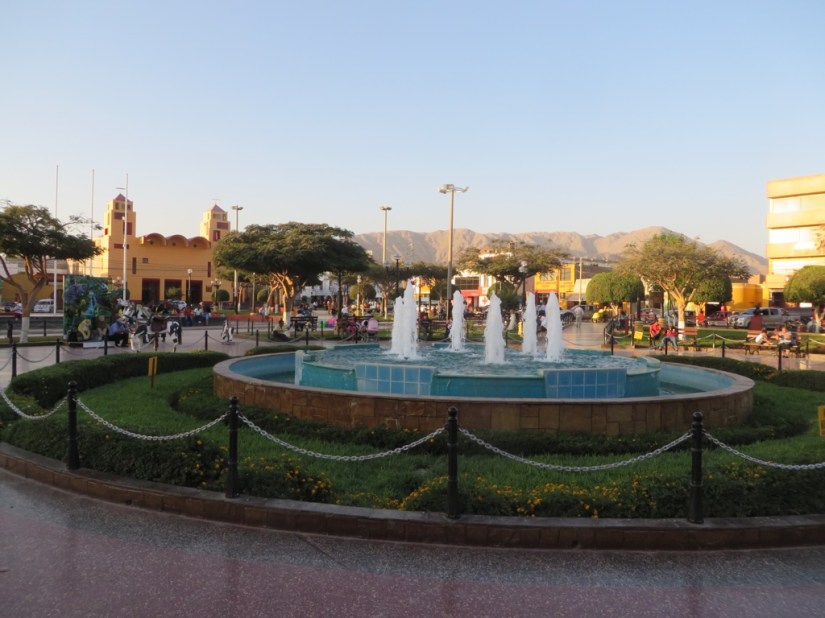


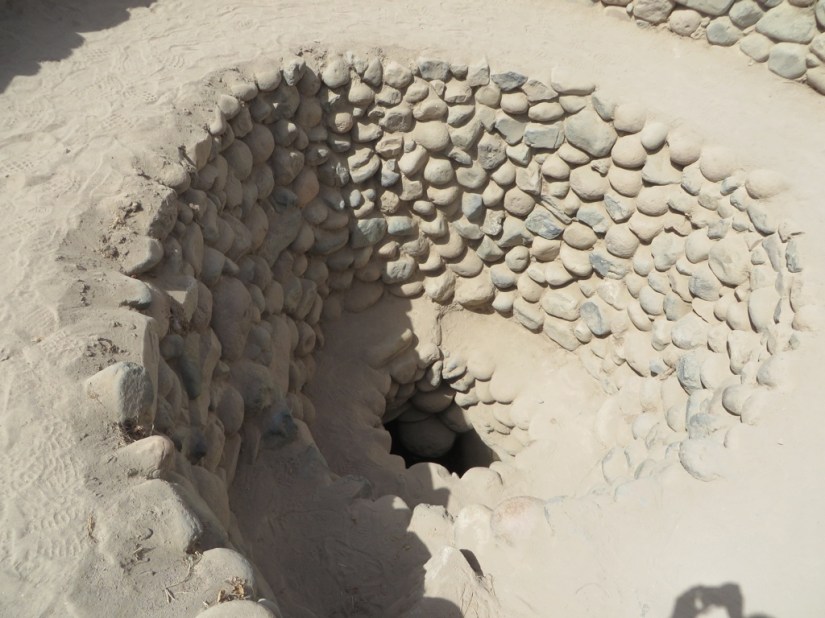
 Nasca in Quechua means “place tormented by droughts”. Although there are rivers, they only flow with water from the mountains in the rainy season. However the Nasca worked out that the water table is closer to the surface in the valleys and were able to construct aqueducts to take advantage of this so they could access water year round. We visited one of the aqueducts at Cantelloc, which runs underground to prevent evaporation, then towards the end runs on the surface with the sides lined with boulders, and then into a reservoir, which can be opened to irrigate the land.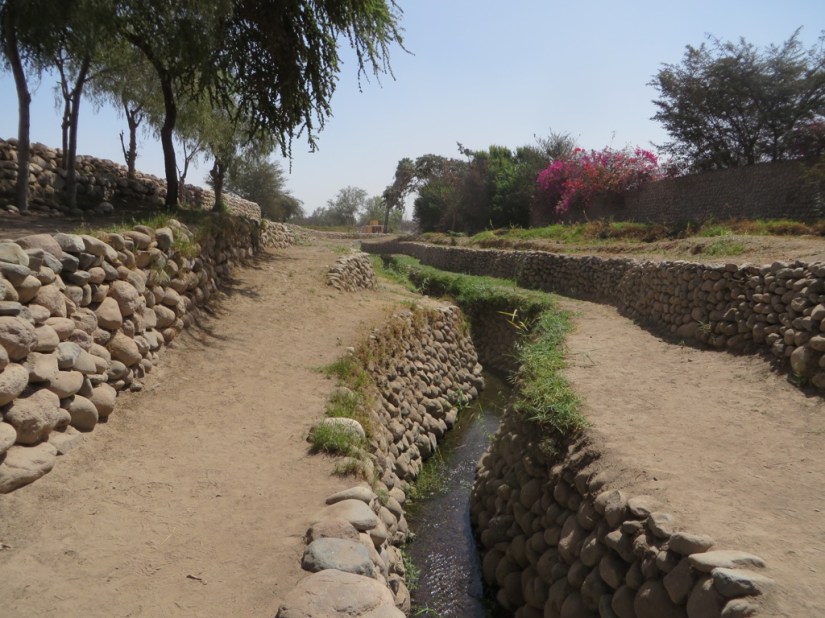



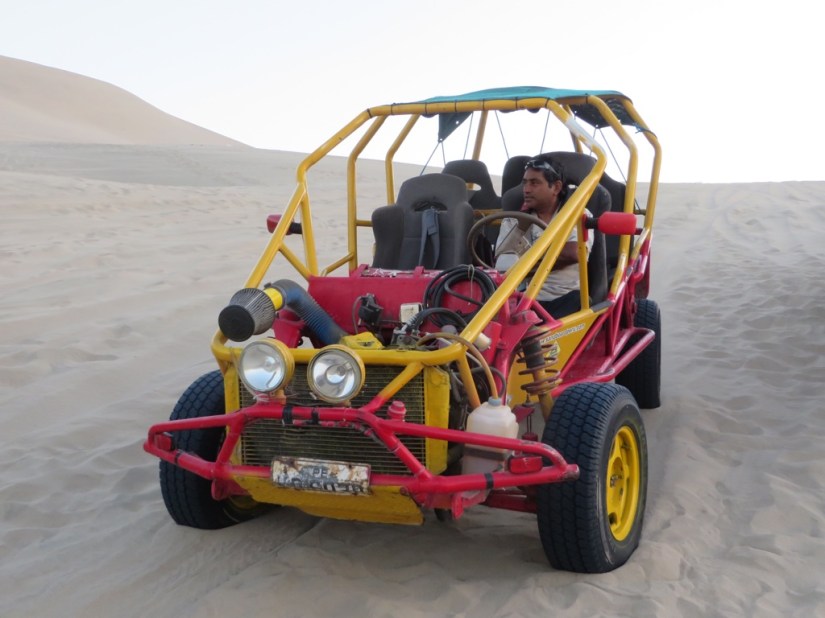
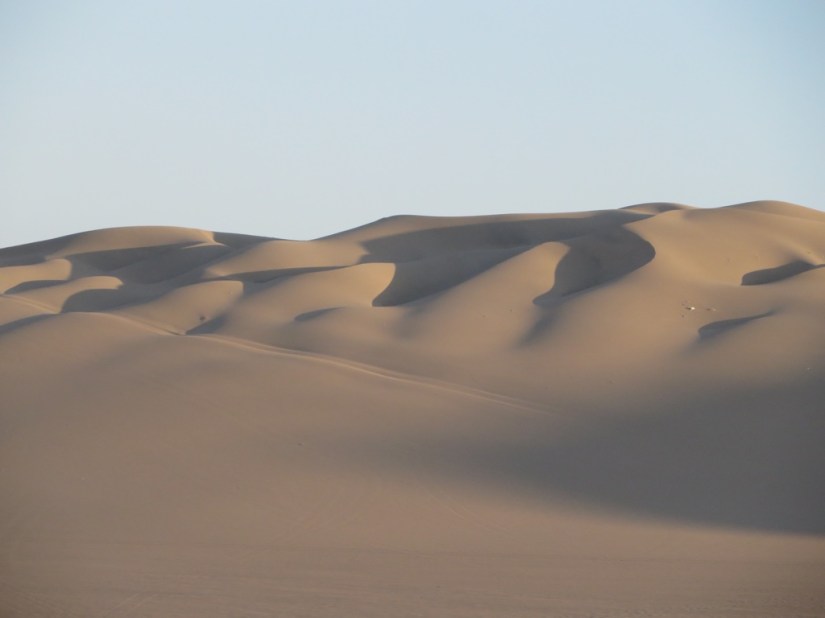
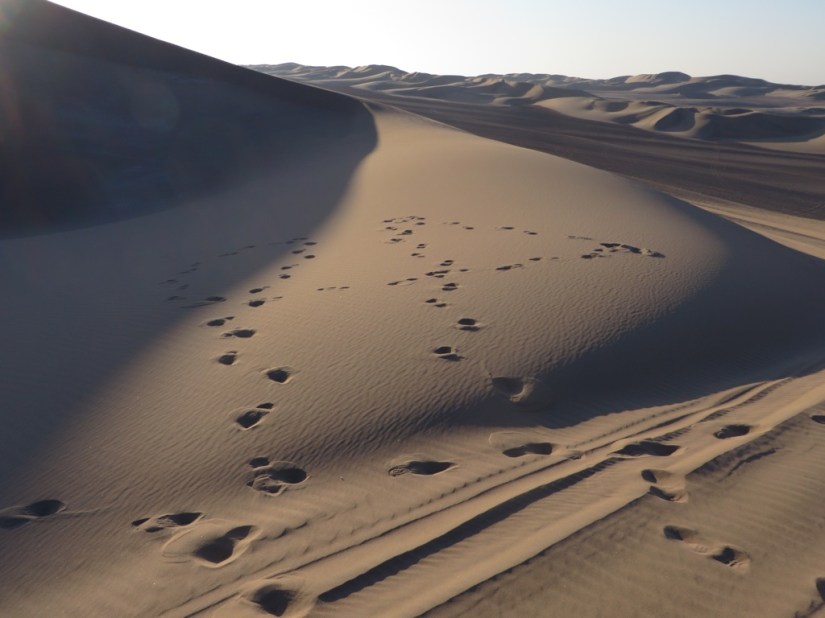
 We got a taxi to our hotel on the outskirts of Ica in Huacachina, but it was dark, so we didn’t fully appreciate the size and majesty of the sand dunes till the morning. If you were asked to picture a erfect oasis in your mind, Huacachina wouldn’t be far off! The story goes that a princess stripped off her clothes to bathe and when she saw a male hunter watching her through her mirror, she dropped it and it became the lagoon. In the 1940’s it became a smart resort, but later the subterranean water source became more erratic. Now it is supplemented with water from artesian wells, and still retains its 1940’s charm and size.





 We picked up our coach at the Cruz del Sur coach station, a very organised procedure of ticket collection, luggage check and security before boarding the coach. We had paid for premium seats downstairs, all of £13 each for just under 4 hours on the road, in a comfy seat, with a lunch service … highly recommended.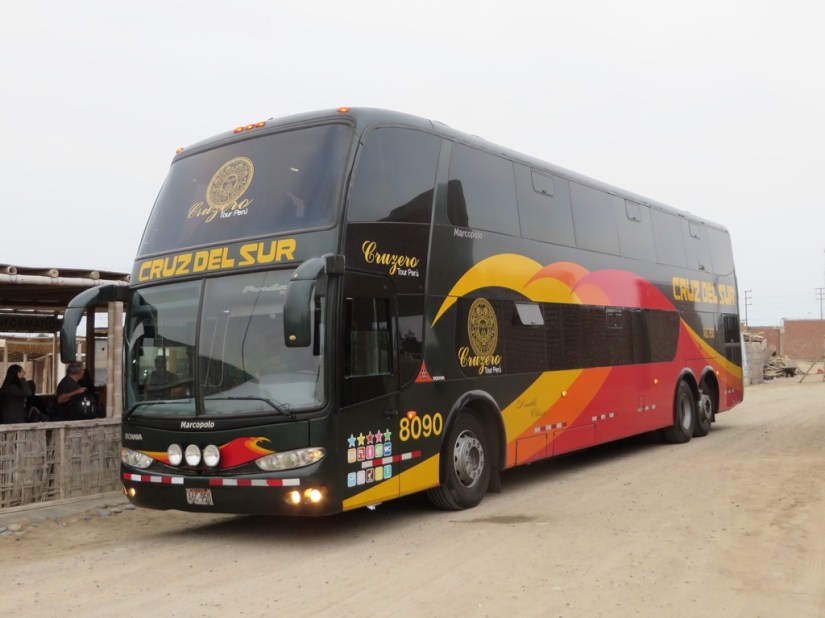














 Off Travelling Together