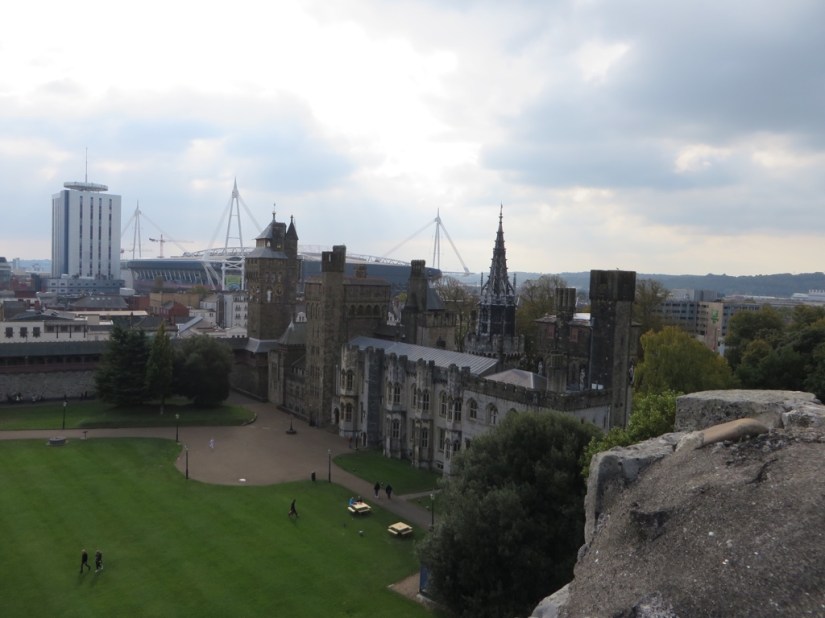
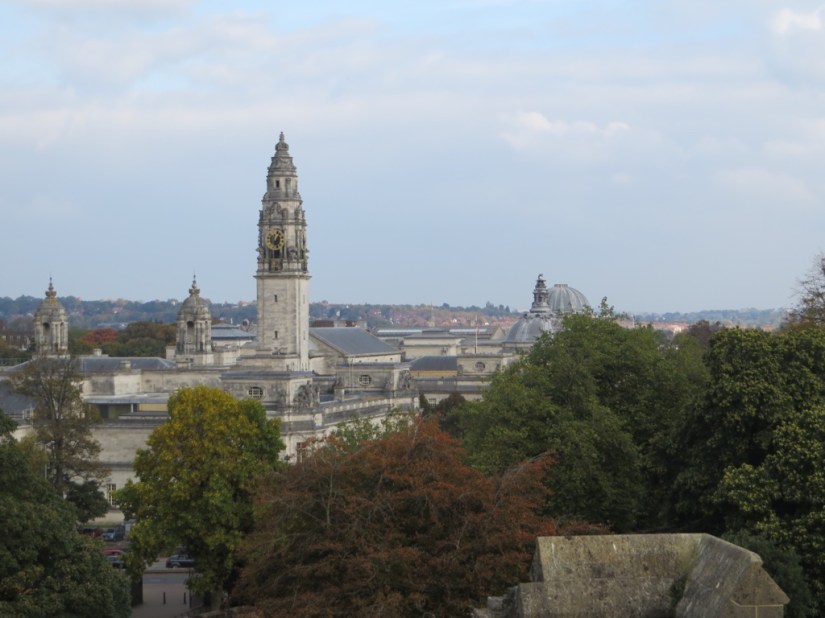
Our last day, and just time to take a turn round the main architectural feature of the city, Cardiff Castle. There are remains of a Roman wall, a Norman keep and a house that was started in 13C and been improved upon by successive owners until the 3rd Marquess of Bute transformed it into the gothic revival fantasy it is today.
The Marquess’s architect William Burges was as keen on the Middle Ages as his patron, and they spent 16 years working on the house until Burges died in 1881. Many of the decorative elements are religious and others romantic in tribute to his wife who he had married for love. In 1947 the Bute family gave the house to the people of Cardiff.
We took a guided tour of the house and oohd and aahd over the gorgeous gilded ceilings, mounded and painted plasterwork and stained glass.
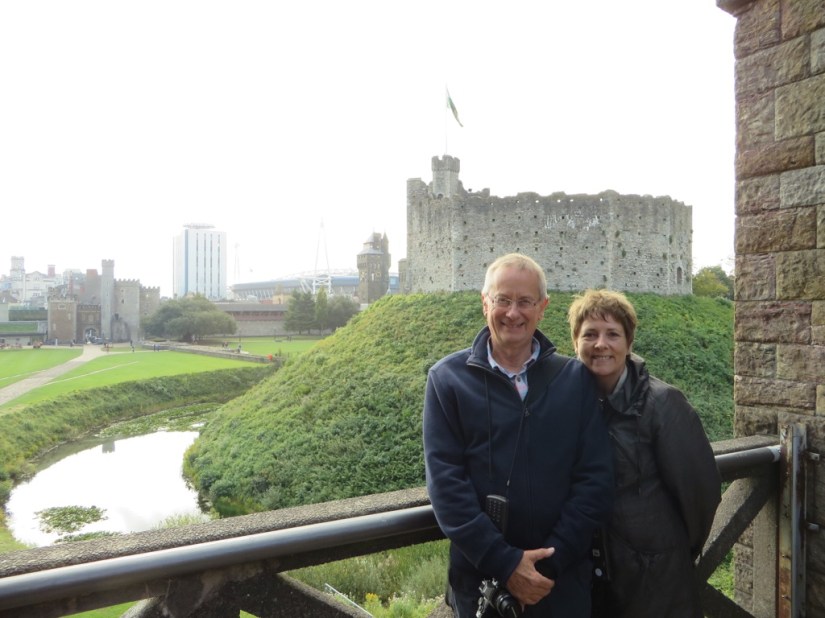
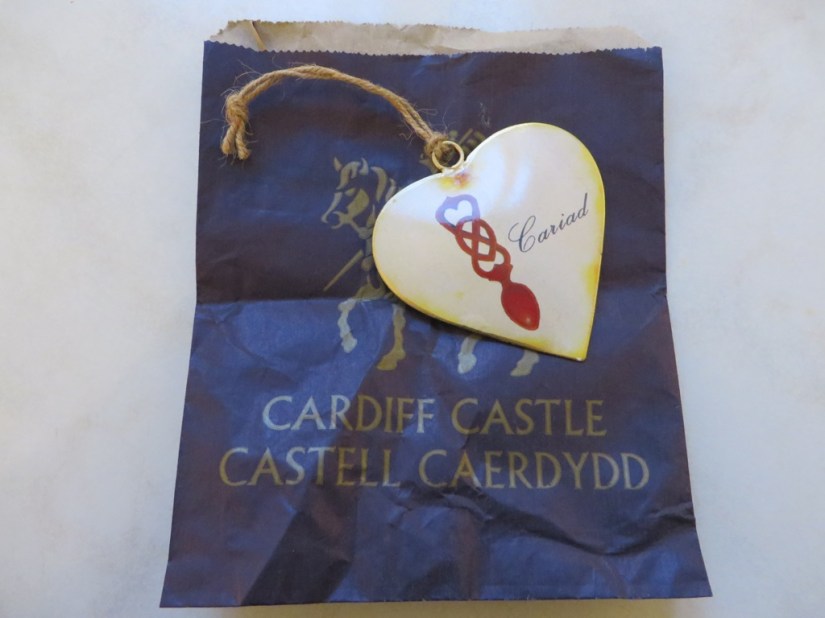
We walked round the battlements and climbed up to the top of the Norman keep then bought a romantic souvenir in the shop, a heart with a Welsh love spoon!
Our trip to Cardiff ended where it started, with a cuppa at the Hayes Island Snack Bar … made with love since 1948 … before we caught our train home … catching sight of one last Dr Who reference!
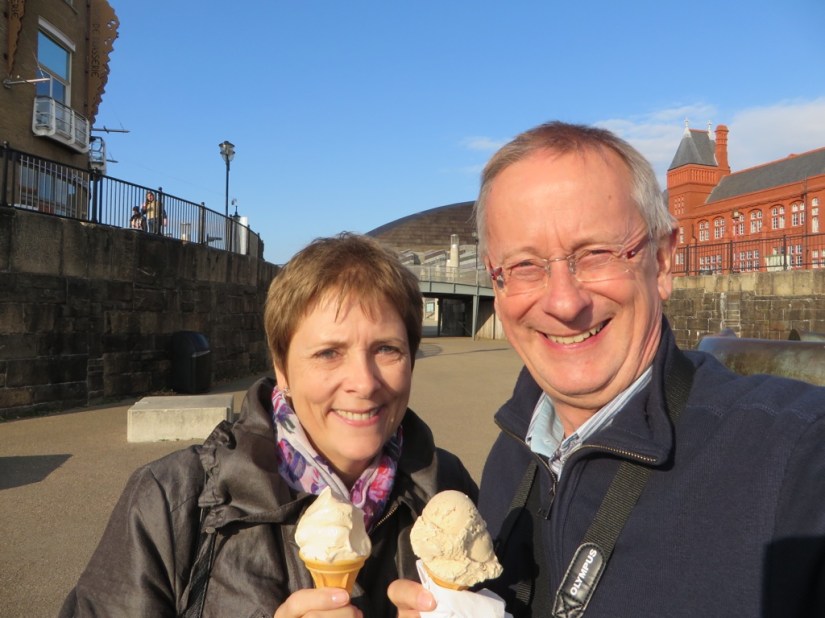
Today is the day, our fourth anniversary, and we have now spent more of the time we have known each other married than not! Time just seems to be flying by while we have fun!
After breakfast we got lost and tetchy trying to find the most direct route back to Cardiff Bay, not helped by the fact a bridge was closed and we had left a bit late. Fortunately we had made up by the time we arrived and Joe and Megan were waiting to show us round the Millennium Centre.
Their knowledge of both the design features and day to day working really made our visit special and we were the only people in the tour. The first striking feature is the inscription which is by the Welsh poet Gwyneth Lewis and has one phrase in Welsh which means ‘Creating truth like glass from the furnace of inspiration’ intermingled with ‘In these stones horizons sing’ in English. Once inside, we were able to walk behind the inscription.
There is a nautical theme throughout, beginning with the outside, where the metal cladding has rivets to resemble a ship’s hull, and the slate either side is for the cliffs and the glass below is the sea.
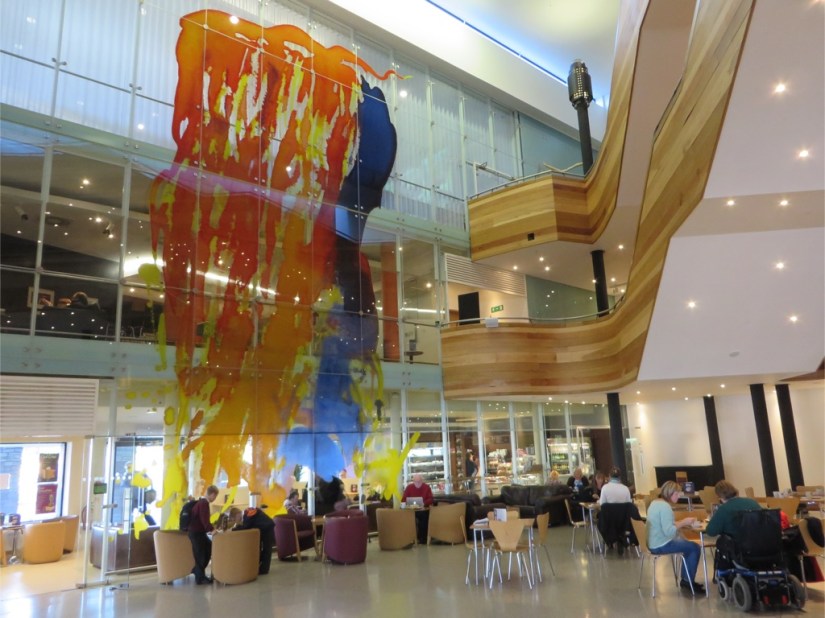
Once inside the stairs have the look of a liner and the lighting in reception looks like stars in the sky by which sailors navigated.
There are huge lights resembling either lighthouses or miners lamps …
We saw backstage where they were rigging the lighting for a new show, and even saw the seating being reconfigured and the floor rising. The auditorium is warm and inviting clad with a red stone which assists the acoustics and finished with natural wood. We had a cup of Welsh tea and some excellent welsh cakes in the cafe!
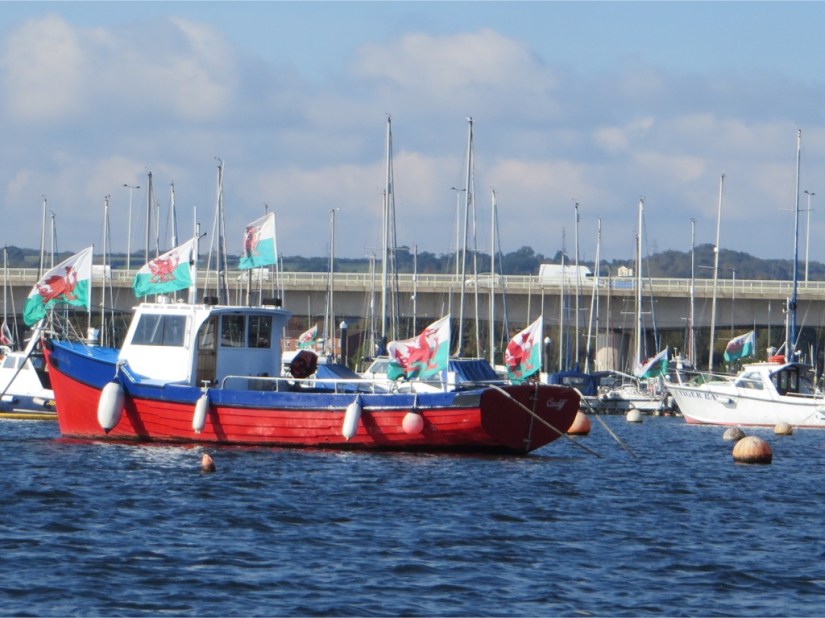
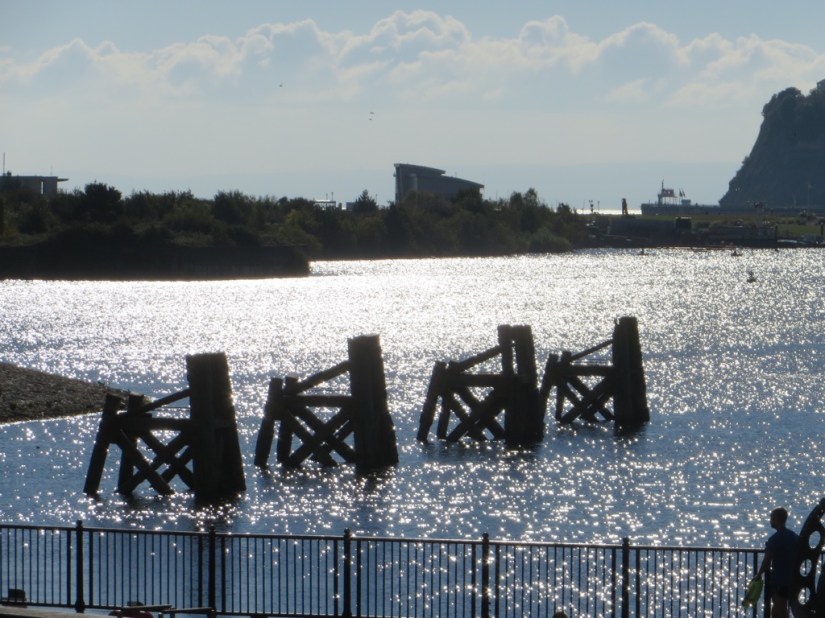
We walked down to Mermaid Quay to see Daffodil’s timetable, only to find she was just about to leave and there was room for us, so we went aboard! Seated with a blanket tucked round our legs, the small but perfectly formed Daffodil carried us valiantly round the bay, while Captain Gorgeous Ben pointed out this and that all for £3 … fabulous!
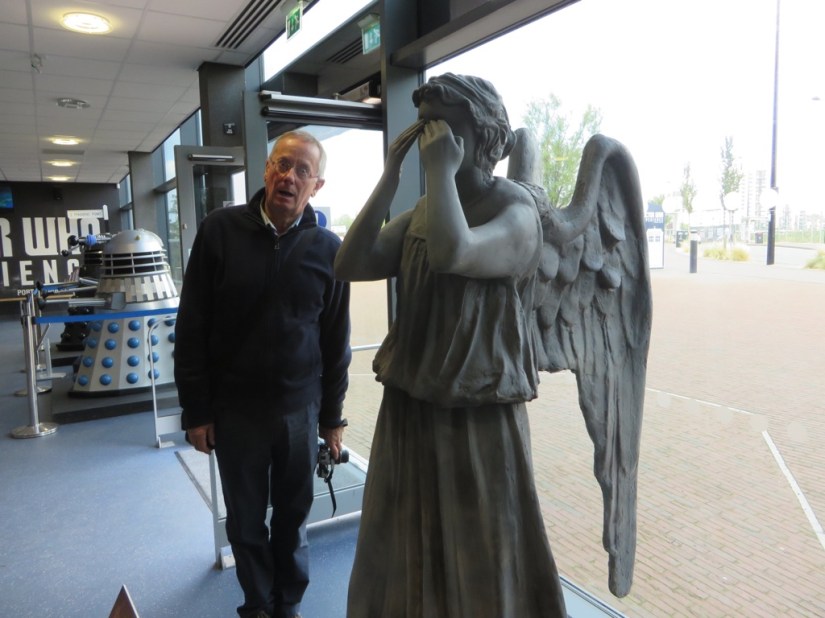
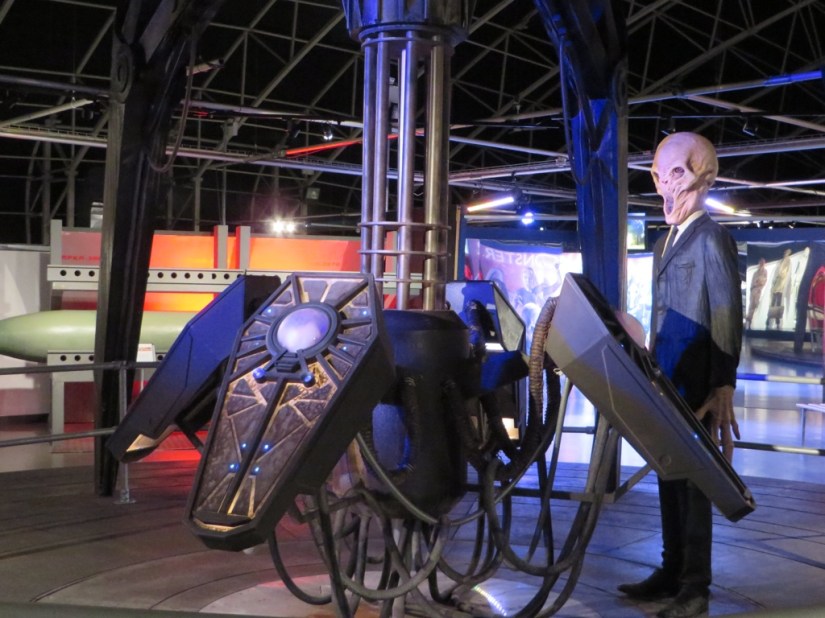
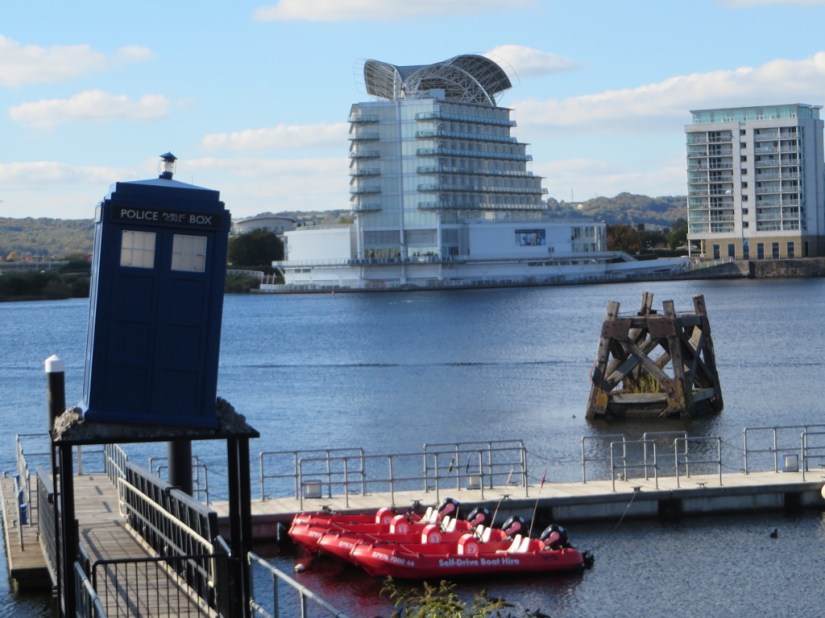
The next stop in our action packed day was a visit to the Dr Who Experience. We arrived early and started by looking round the museum which has different reincarnations of the Tardis, both inside and out … and we can confirm that it is definitely bigger on the inside!
Yes Readers, we were both there!
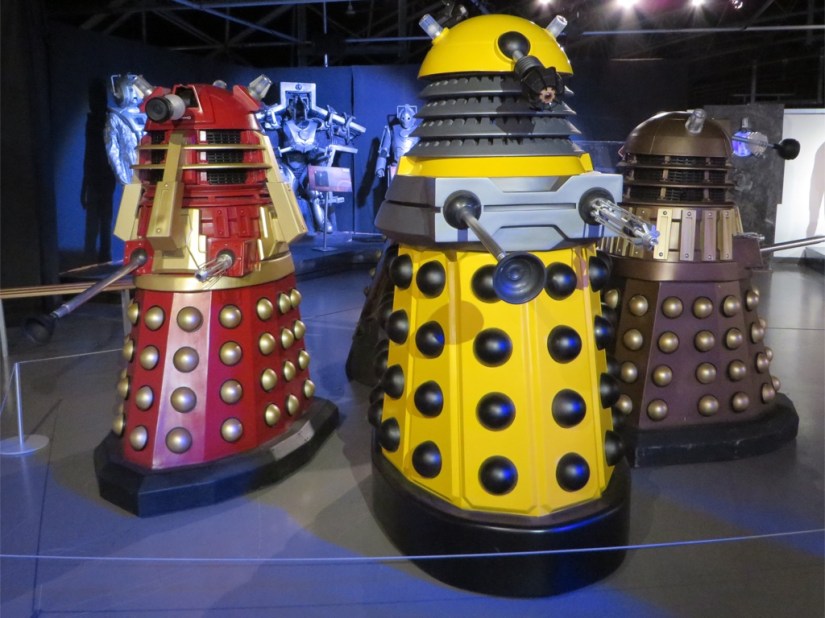
Our time slot arrived and we entered into Gallifrey where a time travelling adventure happened all around us. We travelled through time and space to help The Doctor save the Tardis while being attacked by Daleks and took care not to blink as we passed the Weeping Angels. Fortunately we prevailed and are here to tell the story! It may have been a little corny, but we both had grins on our faces and the floor really wobbled as we helped to fly the Tardis! The rest of the museum held memorabilia and costumes and it felt like more time travel talking about which Doctor we had liked best and which aliens we remembered.
So there was the first Tardis …
and the last …
Then Cybermen, Daleks, a Weeping Angel and The Scream …
Which Doctor do you remember?
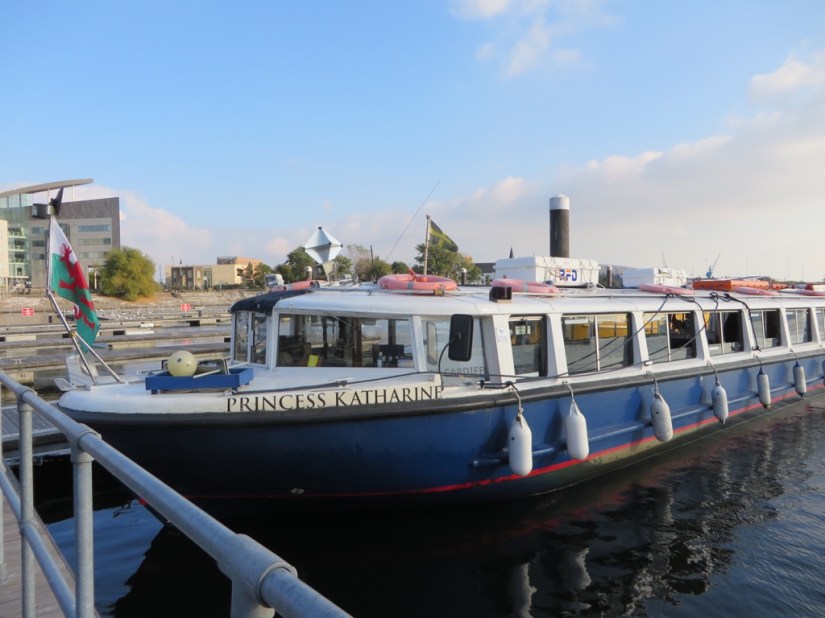
Tired but happy, we walked back to Mermaid Quay and caught another boat, this time the Lady Katharine, back up the River Taff to Cardiff Castle where w3 spotted more dads and a dragon!
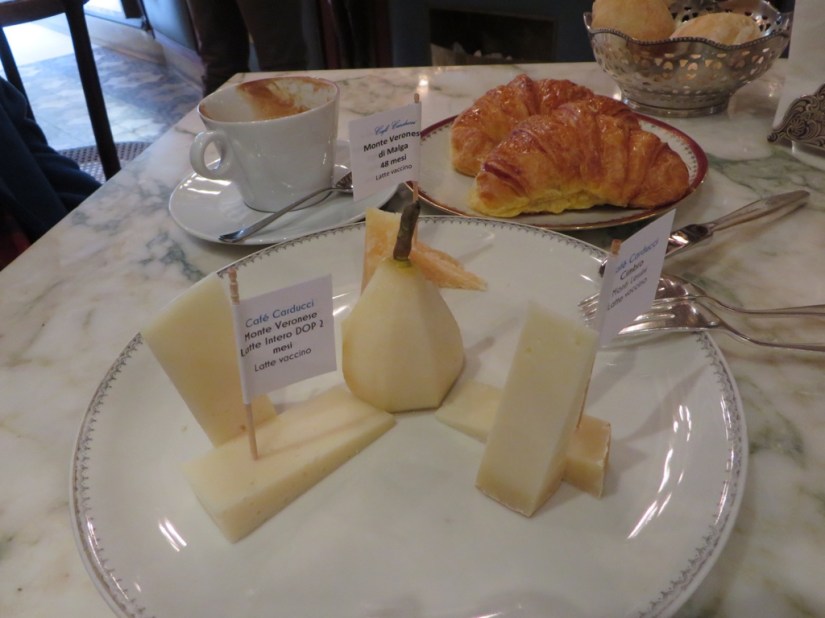
We wandered though the arcades, picking up some welsh cakes to take home and some Welsh Teifi cheese with seweed to try with a glass of celebratory fizz back at the Ibis. The cheese was very nice but we couldn’t detect the seaweed … that might have been a good thing!
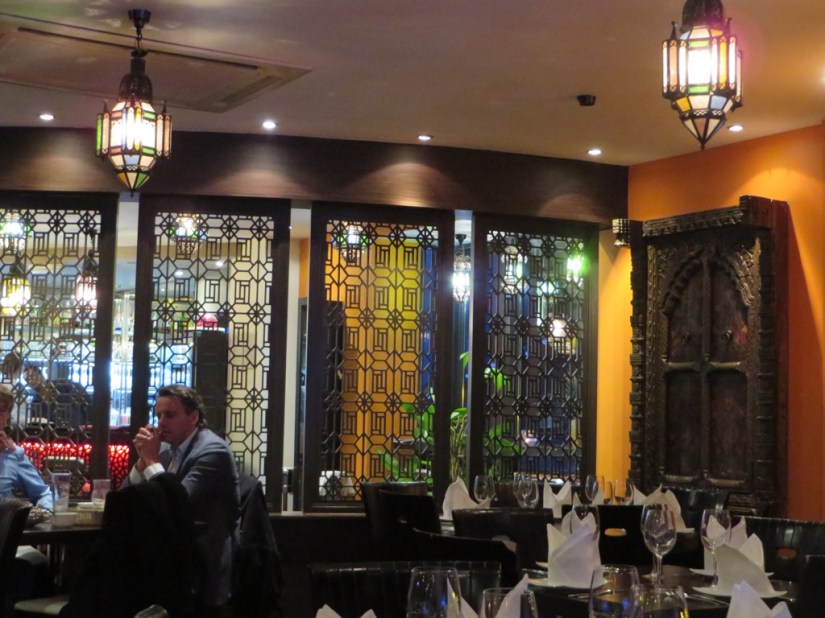
Later we went to The Spice Quarter for dinner, suitably twinkly, and had a lovely meal.
After a good night’s sleep and an excellent breakfast, including Glamorgan sausages for Chris, we set off back to the River Taff, this time to follow the path southwards, passing the Millennium Stadium and Brains Brewery on the way.
We knew we were almost at the bay when we caught sight of the front of the Wales Millennium Centre, with the copper coloured front catching the light. It is a Welsh performing arts centre dedicated to music and dance and we will be visiting it tomorrow. Looking towards the bay, the area is dominated by a huge tower sparking in the sunshine, a 70ft high metallic water sculpture, constantly bathed in flowing water.
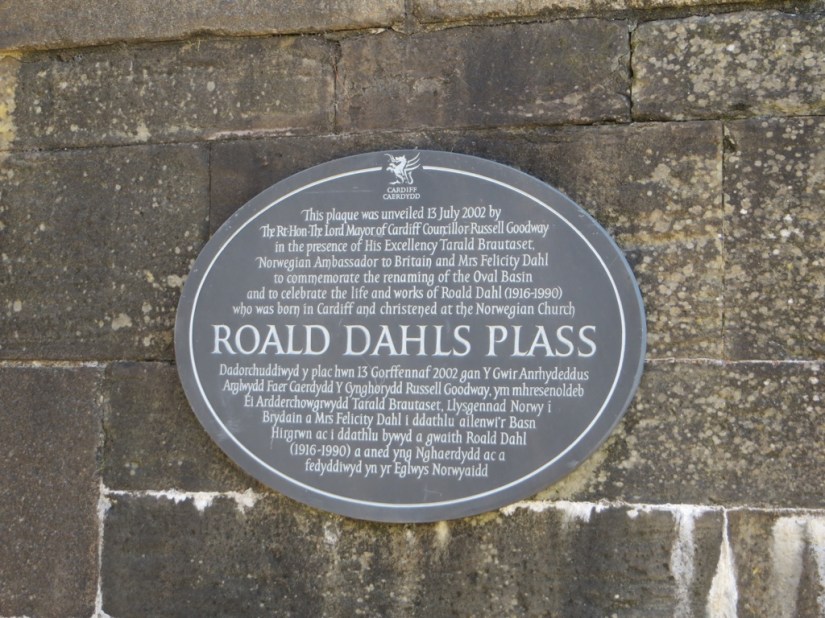
This stands at the head of a bowl shaped amphitheatre, surrounded with several metallic towers (under which the headquarters of Torchwood is hidden) that is Roald Dahl Plass, named after the famous author born here. There are several Norwegian connections in the bay as in the 1860s, many Norwegian sailors came here, employed by the Norwegian Merchant Navy when the West Bute Dock was part of a busy coal port. Others followed and settled, including Dahl’s parents, and the word Plass means Place in Norwegian as a tribute. In fact a church was shipped from Norway and erected here for the community and Dahl was baptised there, named after Roald Amundsen, the famous Norwegian explorer who beat Scott to discover the Antarctic. Today it is an arts centre and cafe, serving excellent Welsh rarebit.
Nearby stands the Scott Antarctic Memorial representing Scott and his men trapped in the snow during this fatal expedition which had set sail from Cardiff.
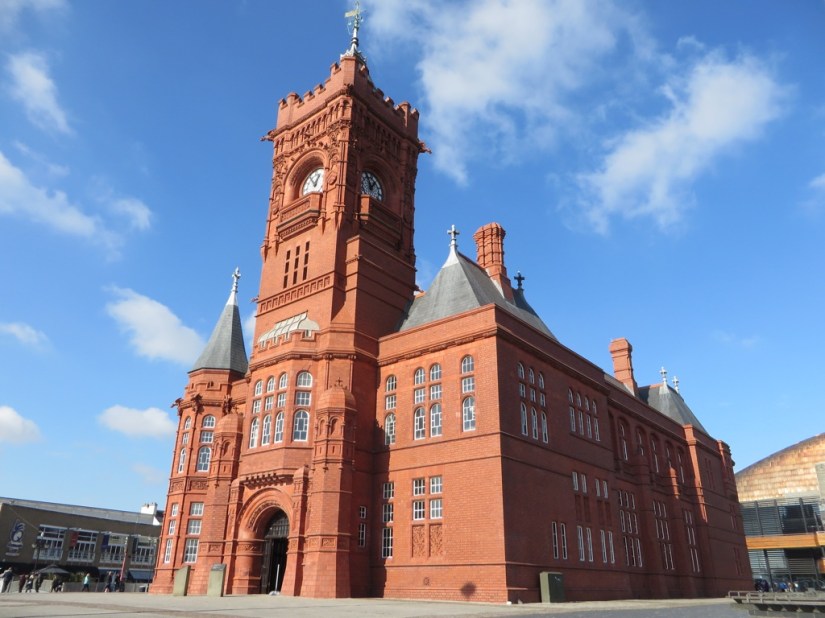
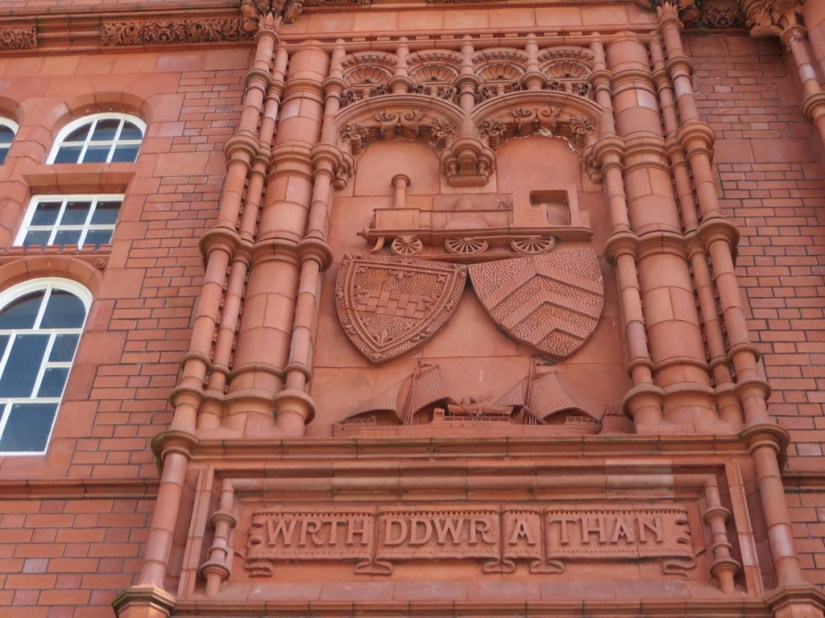
Two other buildings need a mention. Pierhead stands in prime position on the Bay, once the headquarters of the Bute Dock Company and now a museum of the docks and Welsh devolution.
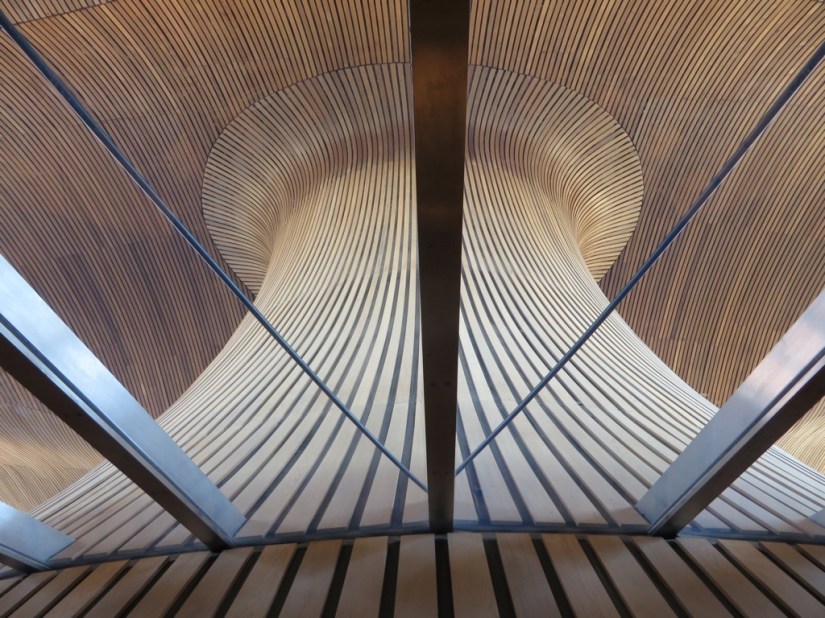
Next door is The Senedd, designed by Richard Rogers, which opened in 2006 and houses the Welsh Assembly. It is made mainly from Welsh materials and the curved red cedar roof is meant to represent the waves in the Bay and reminded us of a similar ceiling in a museum in Auckland. The wind cowl on the top of the roof rotates, drawing all the hot air out of the debating chamber!
Continuing round the bay we caught our first glimpse of the real existence of you know Who … and then continued over the barrage and on to Penarth, where we checked out the marina and caught a train back to Cardiff.
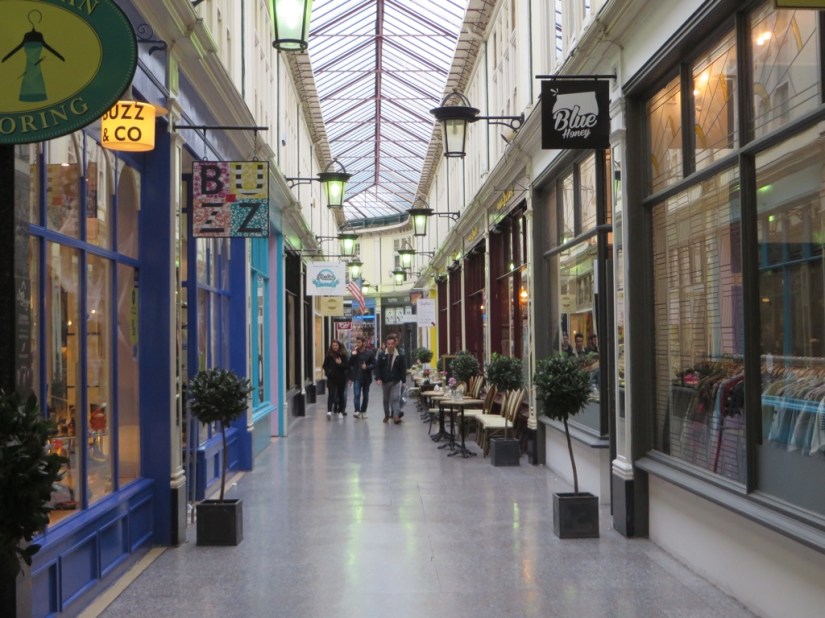
Walking back through Cardiff centre, we took a detour down several of the lovely Edwardian shopping arcades filled with little independent shops. We remembered similar arcades in Paris when we made our 2012 anniversary trip.
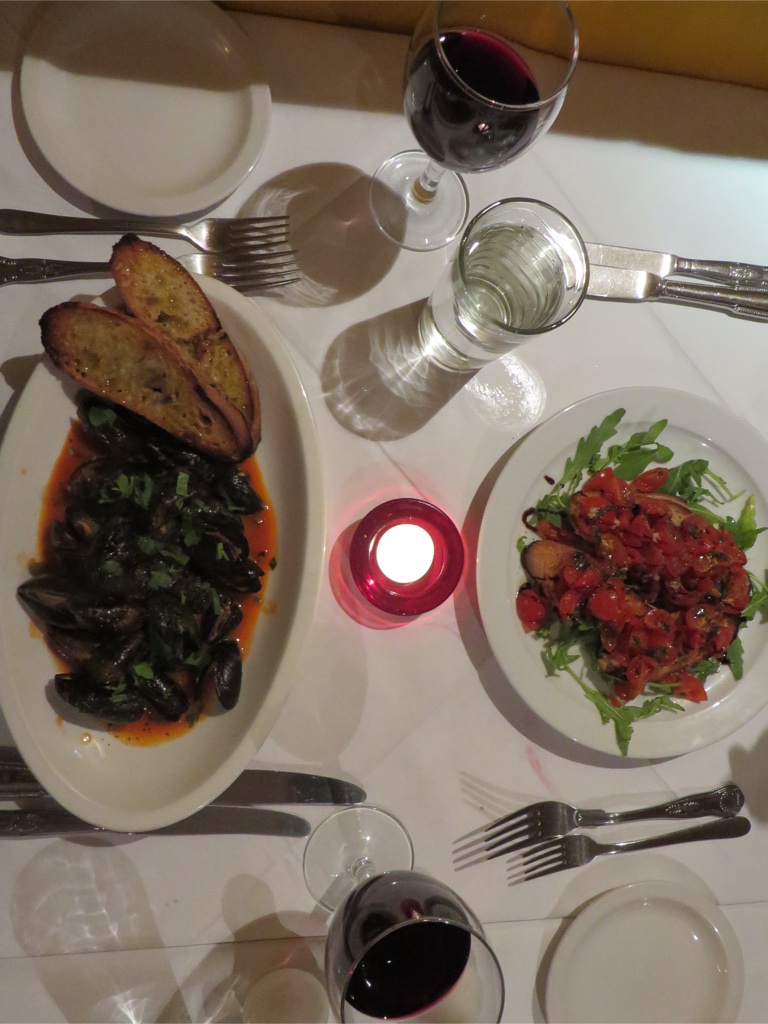
Dinner was at Toni’s Amici, a family run Italian just down the road. We walked in and were the only guests, but didn’t let that spoil our evening! I had mussels in a tomato and garlic sauce followed by wild boar pappardelle and Chris had bruschetta and cannelloni, sharing an amaretto sponge desert to finish … needless to say reminding us of our many trips to Italy!
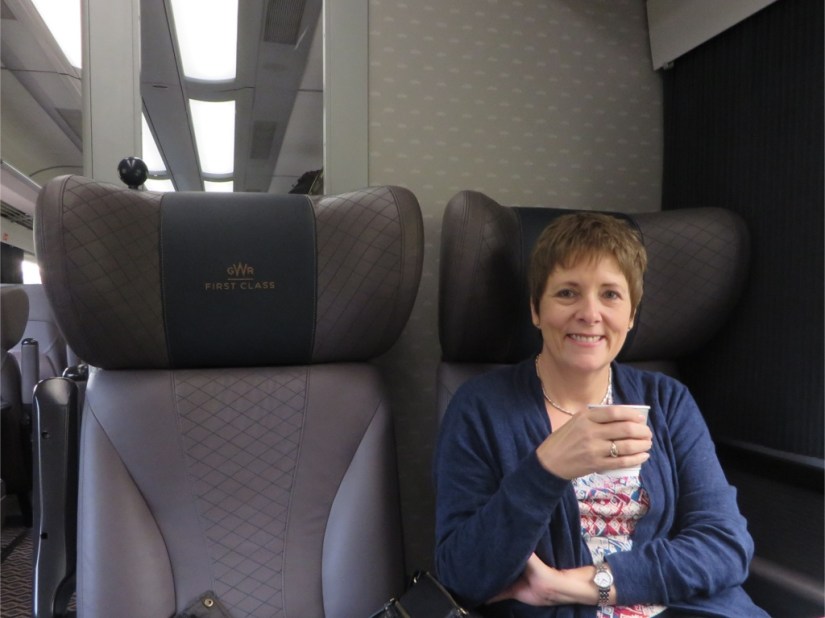
Well the first treat is sitting in the first class carriage, complete with reclining seats and complimentary coffee! Not sure it was worth Chris having his car vandalised for, but a kindly gesture from Great Western Railway nonetheless.
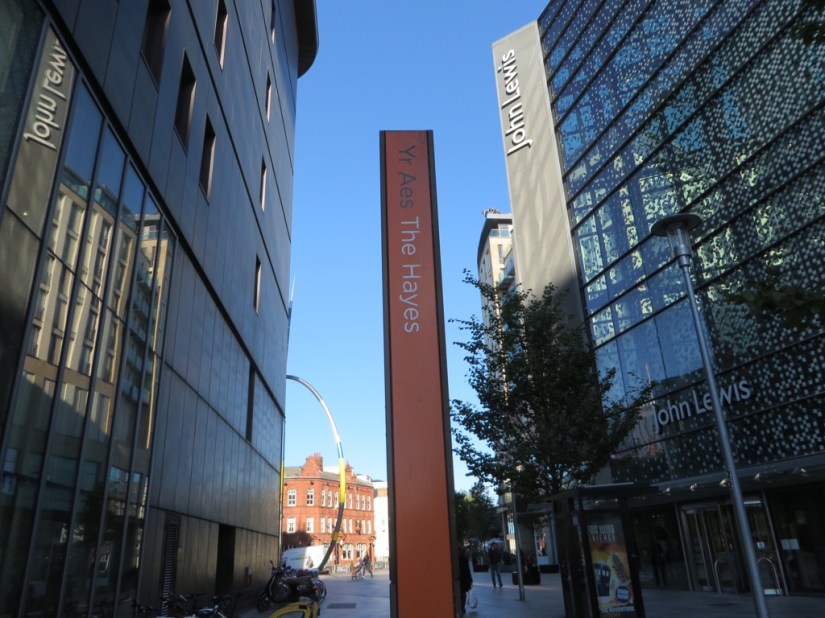
We arrived in Cardiff a couple of hours later, left our luggage at the hotel and set off towards our very own part of town! In the 16C The Hayes was a piece of open ground within the town walls, and today it is a bustling shopping centre, except for the leafy centre where we found the Hayes Island Snack Bar.
J
They have been serving up fabulous bacon sandwiches since 1948 and Chris was pleased to spot a veggie burger on the menu.
Replete, we set off for a walk and were soon reminded that Cardiff is the home of Rugby and we had chosen a few days to visit between World Cup matches. There were banners in the street and as we reached the castle saw rugby mania had breached the wall, nice try!
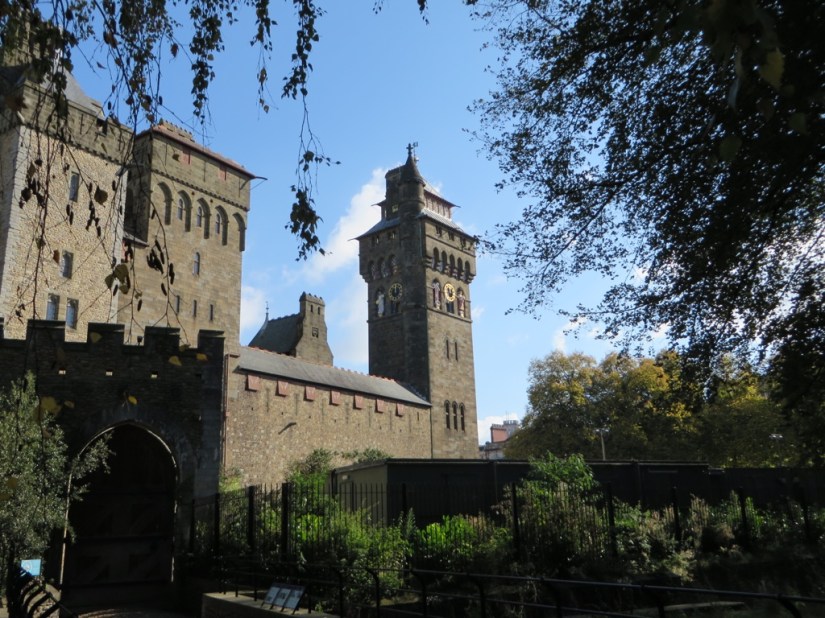
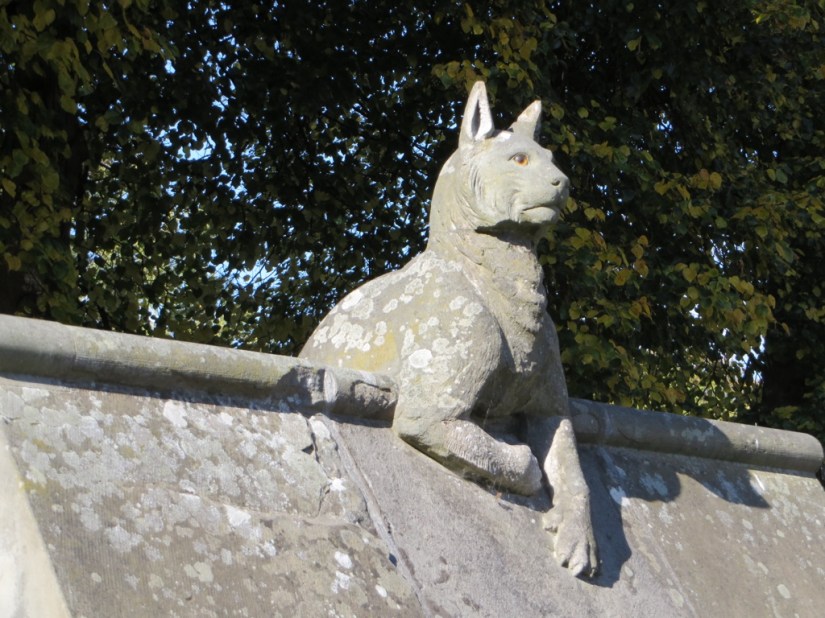
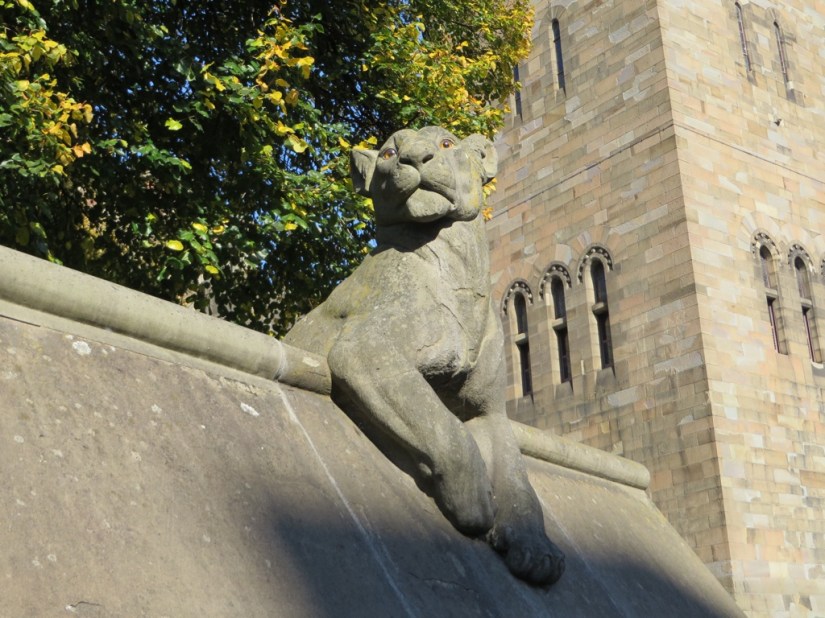
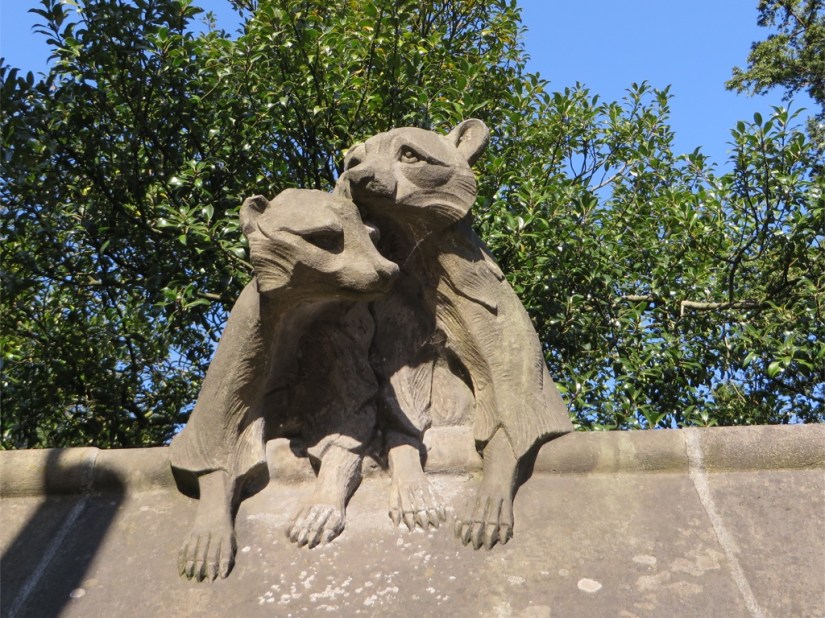
The castle is quite eye catching, with the huge clock tower, and surrounding wall, part of which is decorated with sculptures of animals, not unreasonably called Animal Wall.
Some like the lynx and lioness date from the 1870’s and others are later but still get a mention like the pair of raccoons and the anteater because I thought it looked cute!
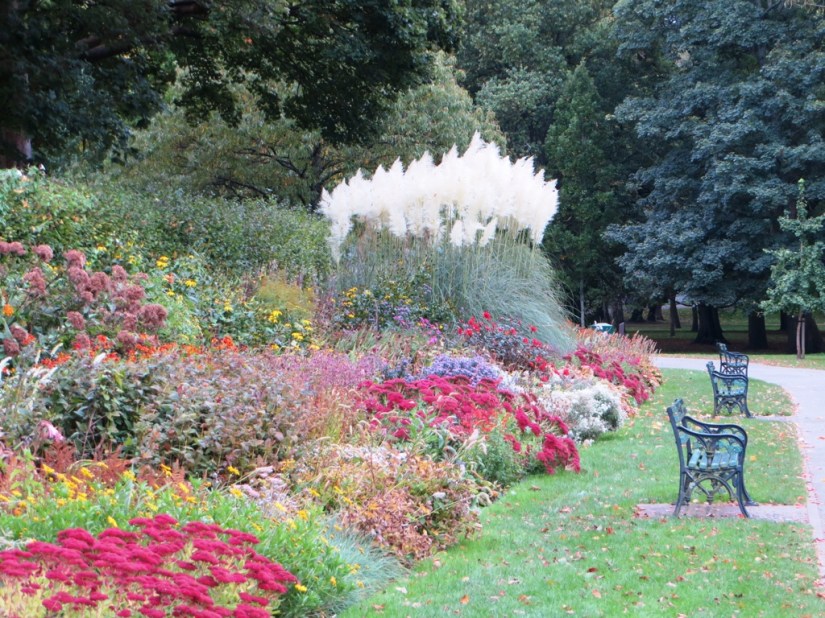
We entered Bute Park, some 130 acres which was once the gardens for the castle, but now a public park and dodged the squirrels as we walked along the side of the River Taff to Llandaff Cathedral.
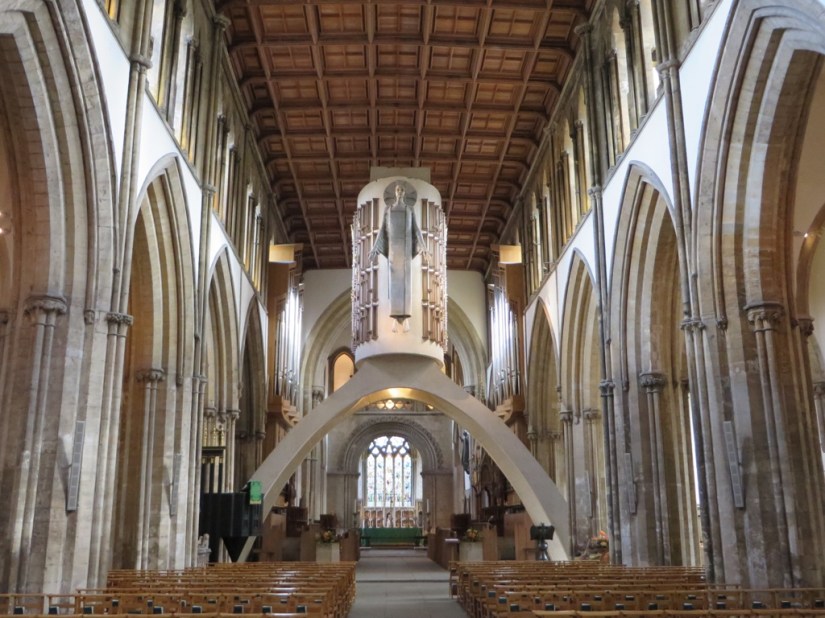
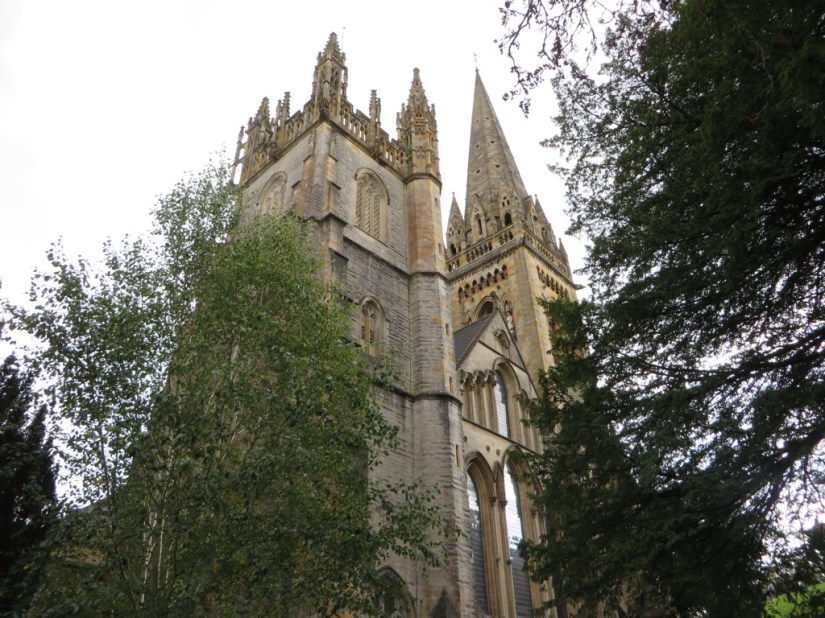
Our first impression of the Cathedral was how light and airy it was, with a huge modern statue of Christ taking centre stage. The cathedral was damaged in the war, hence the addition of a central reinforced concrete arch above which an aluminium statue of Christ in Majesty by Sir Jacob Epstein stands.
Other treasures include the Triptych of the Seed of David by Dante Gabriel Rosetti which was made for the high altar but is now in a side chapel …
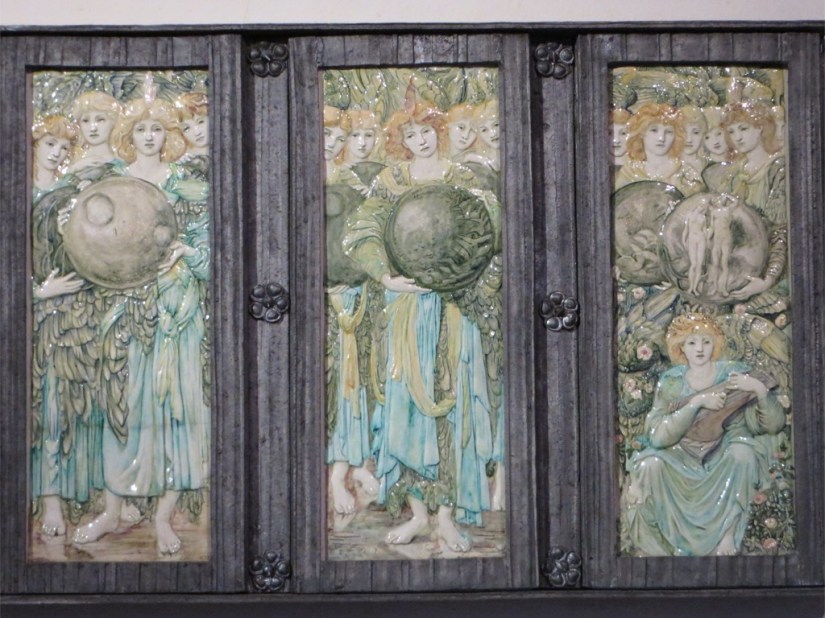
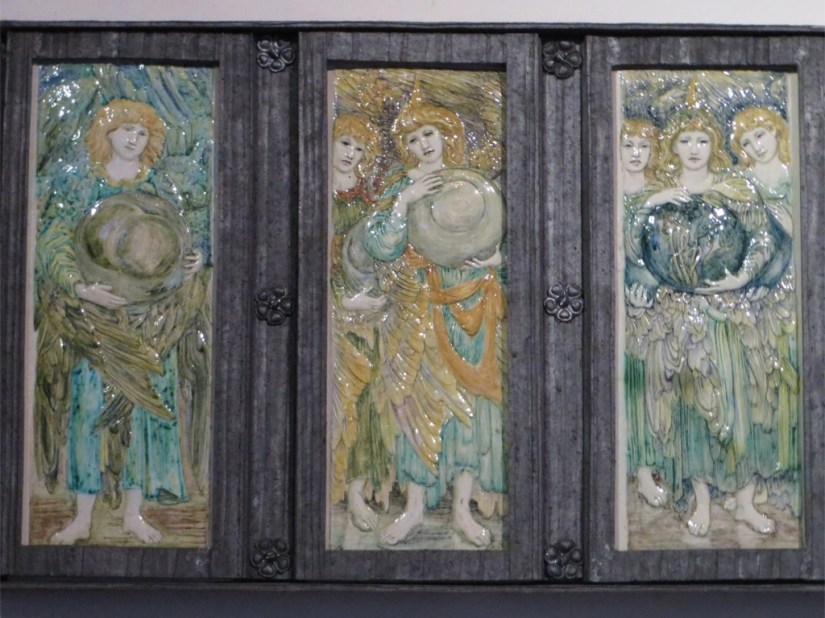
… and a series of porcelain panels showing the Six Days of Creation by Edward Burne-Jones.
Returning along the river we stopped at tea rooms for refreshments and a slice of Welsh fruit loaf called Barmbrack. We checked in and the bears checked out the room at the Ibis … perfectly adequate and a snip at £50 a night including breakfast!
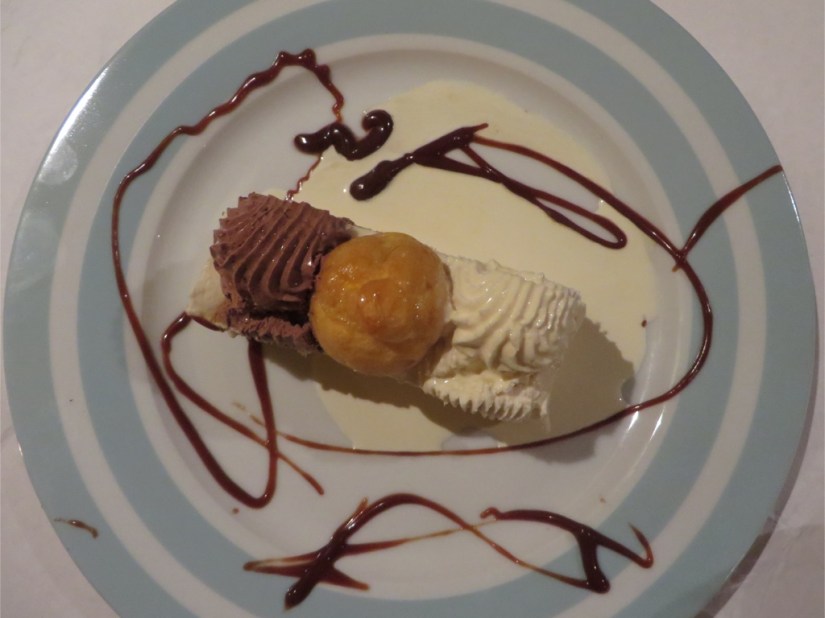
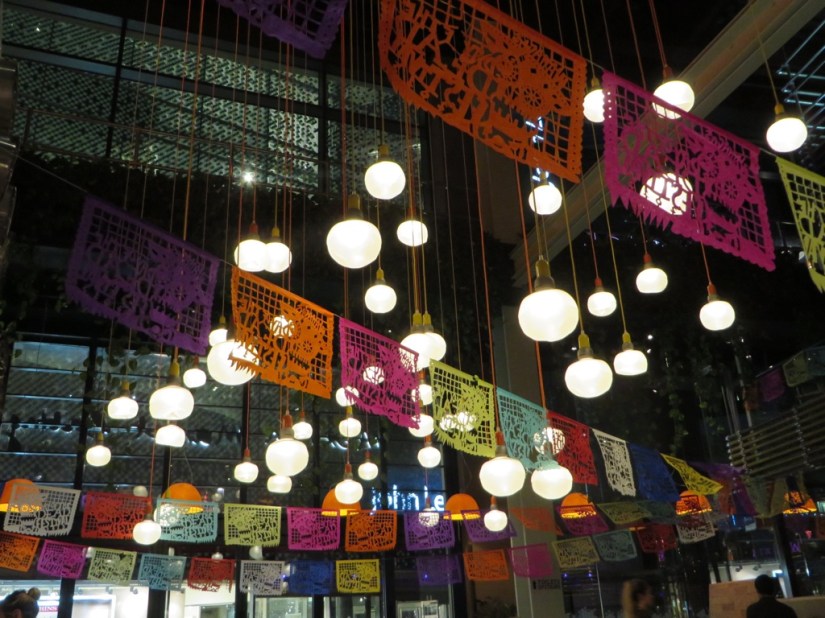
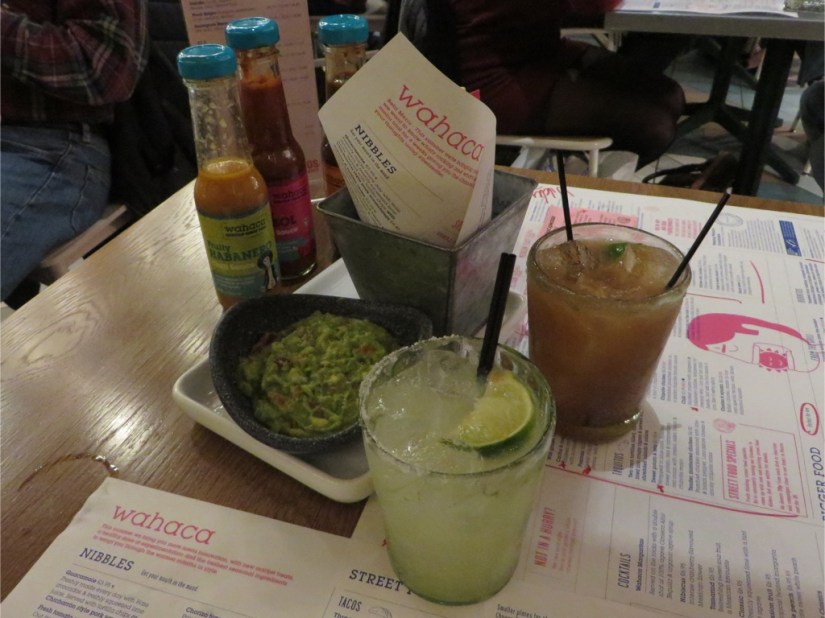
Every dining taste is met here in Cardiff and we felt unable to pass by a chance to eat just down the road at Wacaca … hopefully with tastes to remind us of our trip to the Yucatan … and a lot closer than going to the Southbank. We had a lovely time! The restaurant was decorated with colourful banners for the Day of the Dead at the end of October and we were shown to a table with a good view of the restaurant for us both. After margaritas and guacamole, we had three rounds of small dishes including tacos, tostadas, quesadillas and taquitos, all washed down with coronas!
This year we have chosen to come to Cardiff to celebrate our wedding anniversary.
Chris was sent a couple of free rail tickets following his car being vandalised in Slough station car park so we searched for a destination served by Great Western Railway where we could also celebrate with a boat trip as our wedding reception was held on a boat.
We are looking forward to our trip round Cardiff Bay on the Daffodil as well as popping in to see Dr Who and a turn round Cardiff Castle.
Chris has been looking forward to the highlight of his trip … a Sunday afternoon football match between Hellas Verona and Lazio, a team from Rome. It was typically Italian football with nudges, trips, dives, hacking, drama and handbags! The score was 1-2, Hellas Verona woz robbed! I’ve not been to a match with such good singing and banner waving before … quite atmospheric. Tunes included YNWA, When the Saints, The Red Flag, Que Sera Sera and our very own God Save the Queen, no doubt all with different words! Chris read a Tim Parks book about a season when he followed Hellas Verona to every game, and every character and emotion described at those games, were present at our game!
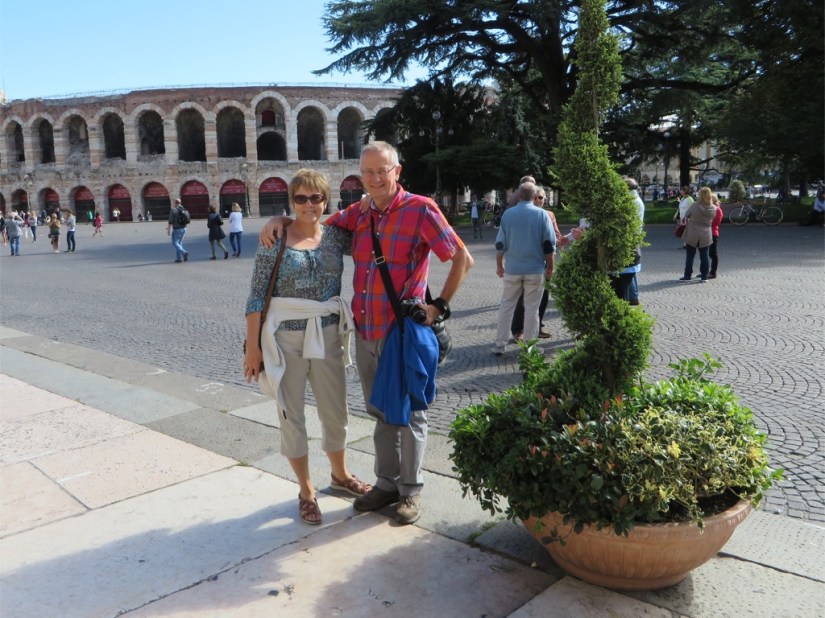
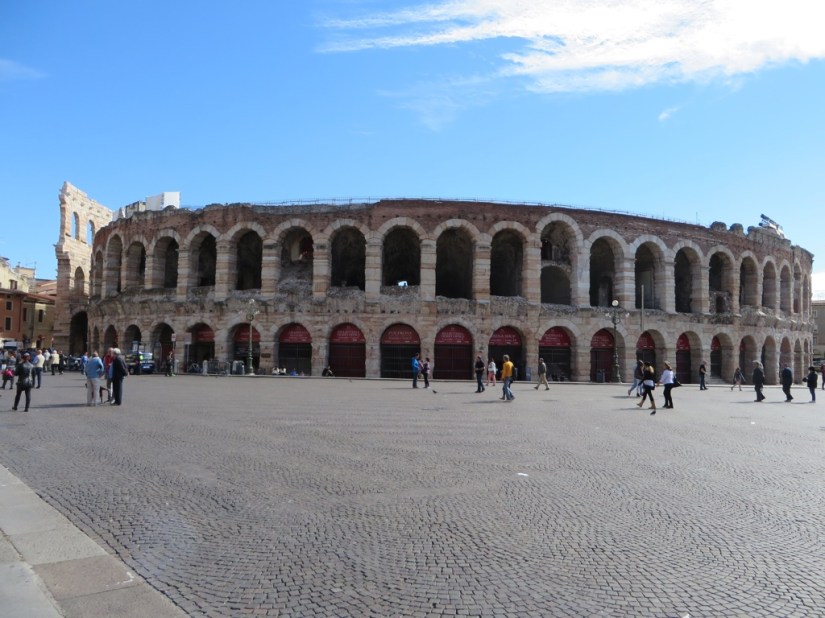
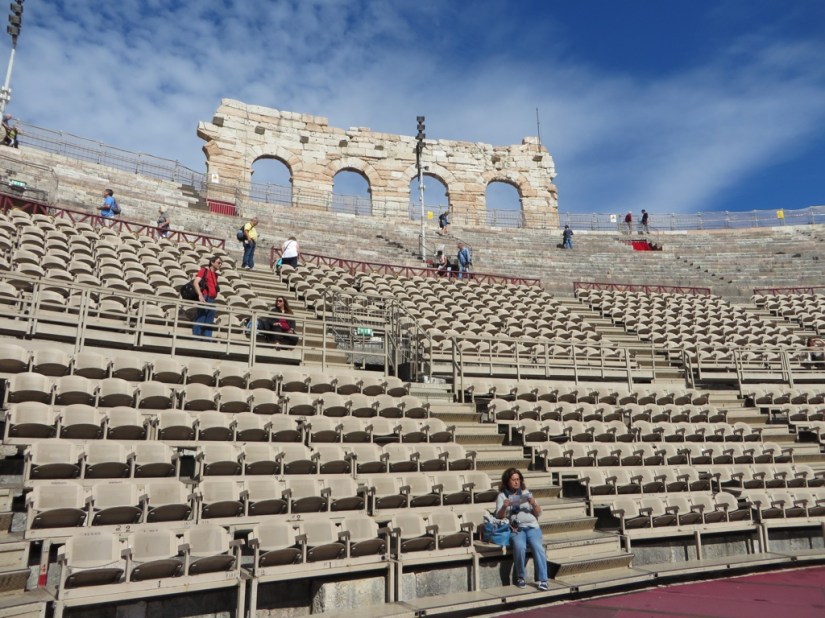
Then came some sightseeing! We wandered the streets of Verona, dodging tour parties following guides carrying unfurled umbrellas or glitter sticks aloft, seeking the Arena …
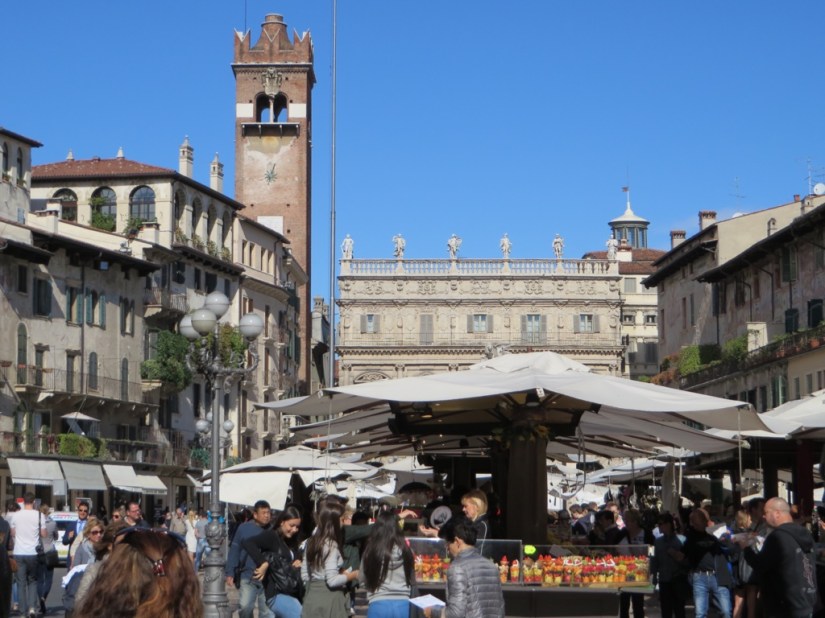
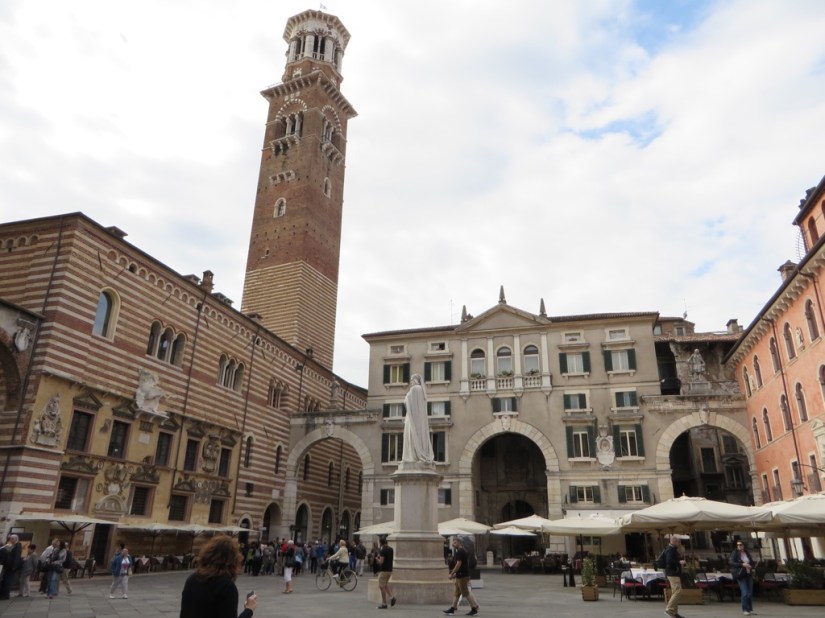
various piazza …
Piazza BraPiazza BraPiazza sells ErbePiazza dei Signori and Torre LambertiPiazza dei Signori
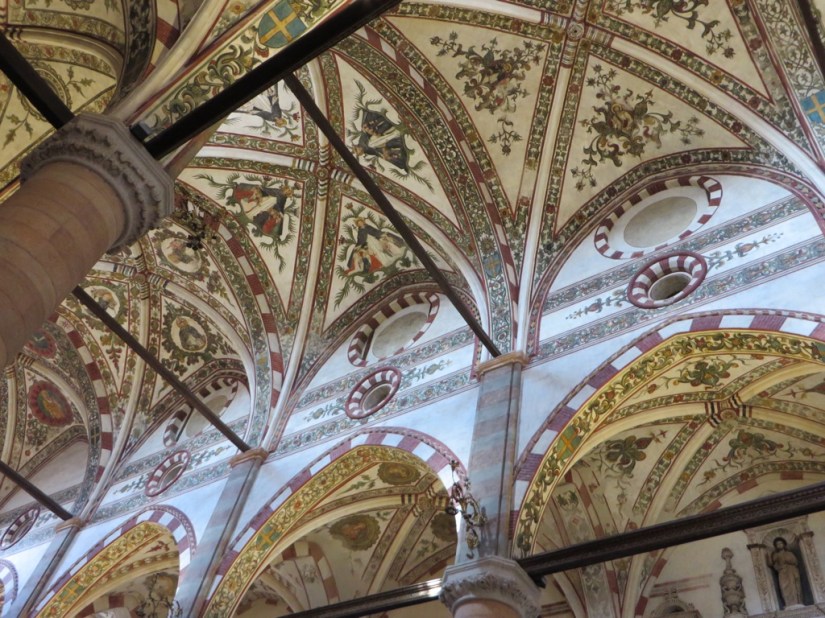
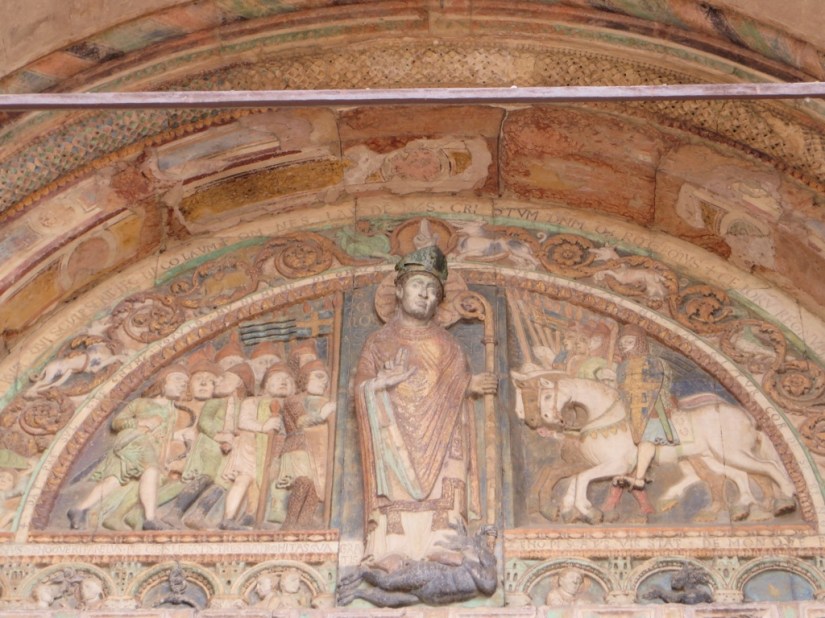
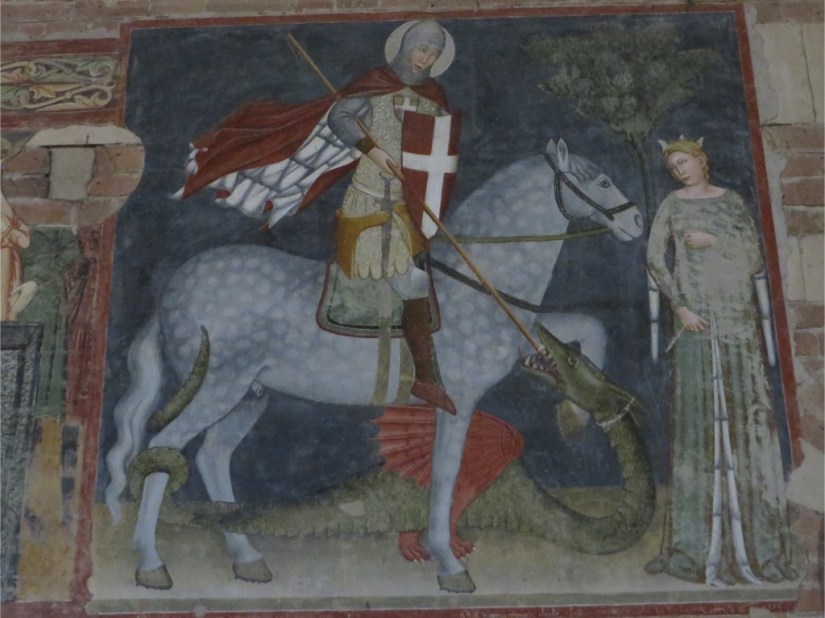
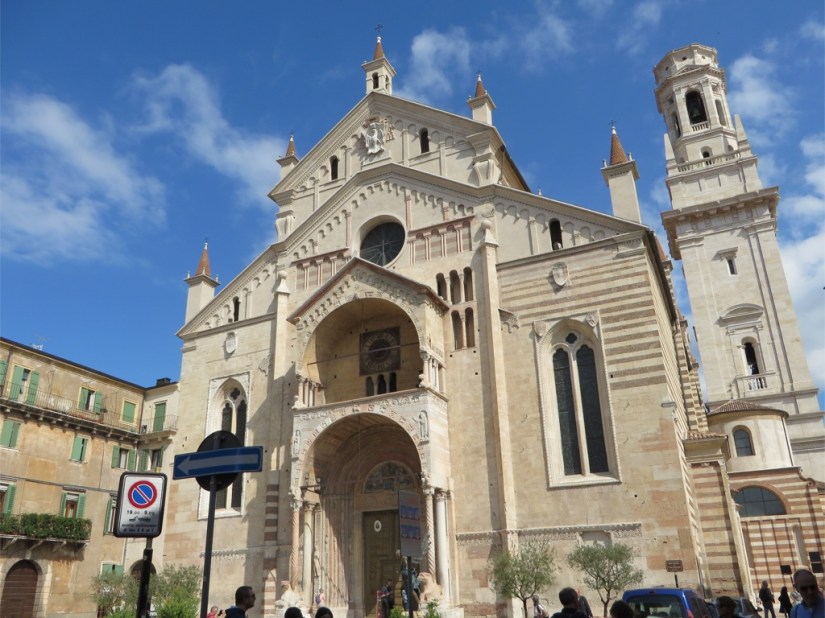
churches and frescos aplenty …
Sant’AnastasiaCeiling Sant’AnastasiaSan Zeno MaggioreSan Zeno Trampling the DevilSan Zeno MadonnaSan Zeno St GeorgeDuomoDuomo CeilingTroupe d’oeilFlight into Egypt
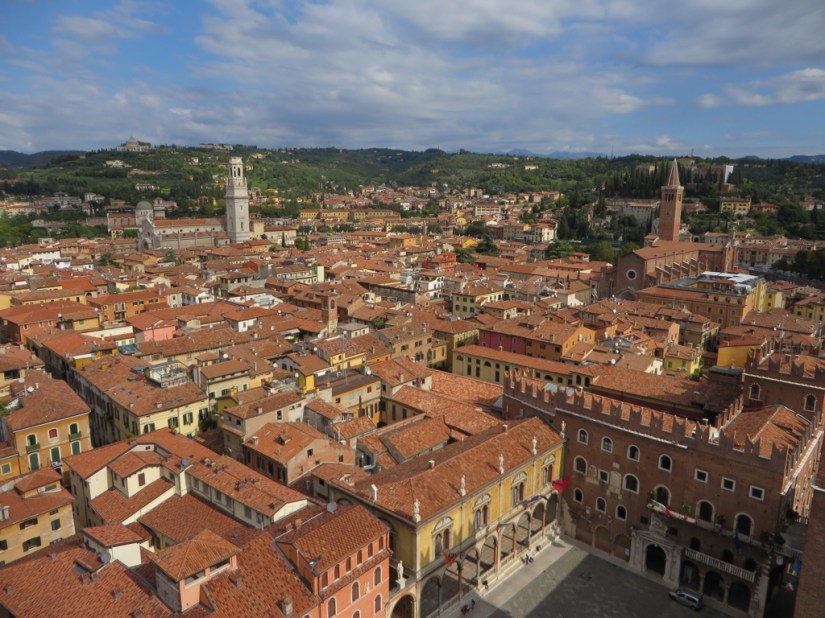
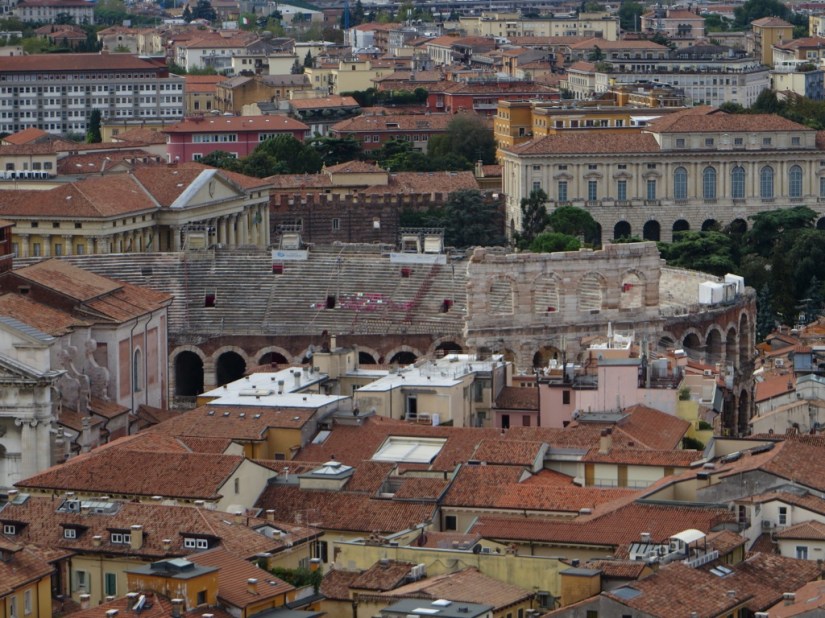
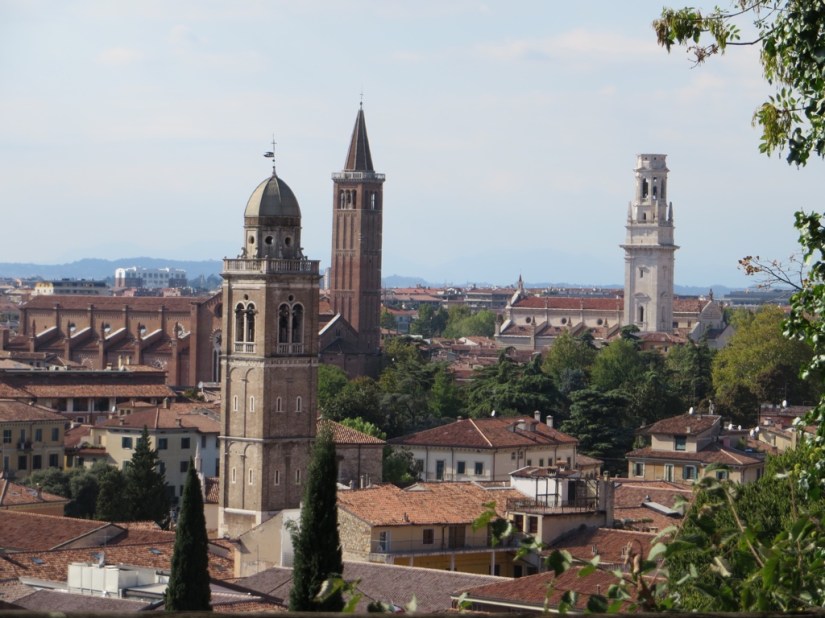
climbing the Torre dei Lamberti for views …
Towards the DuomoTowards the Arena
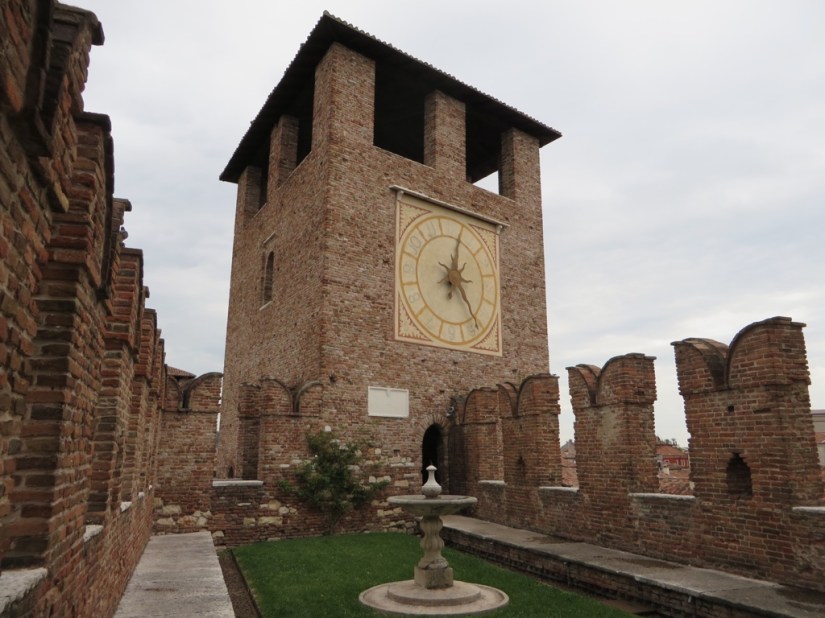
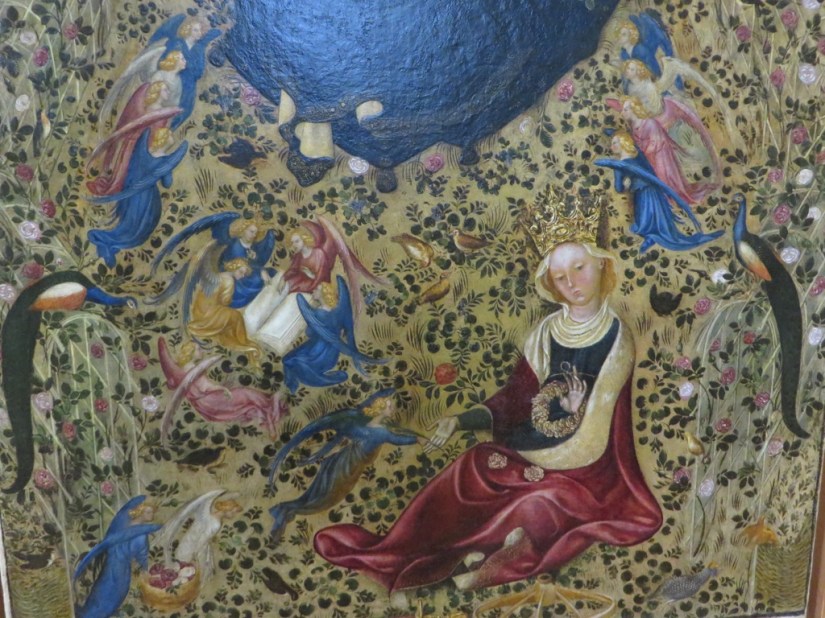
perusing art in the Castelvecchio museum …
Detail from the Madonna of the RosePanel from a wedding chest
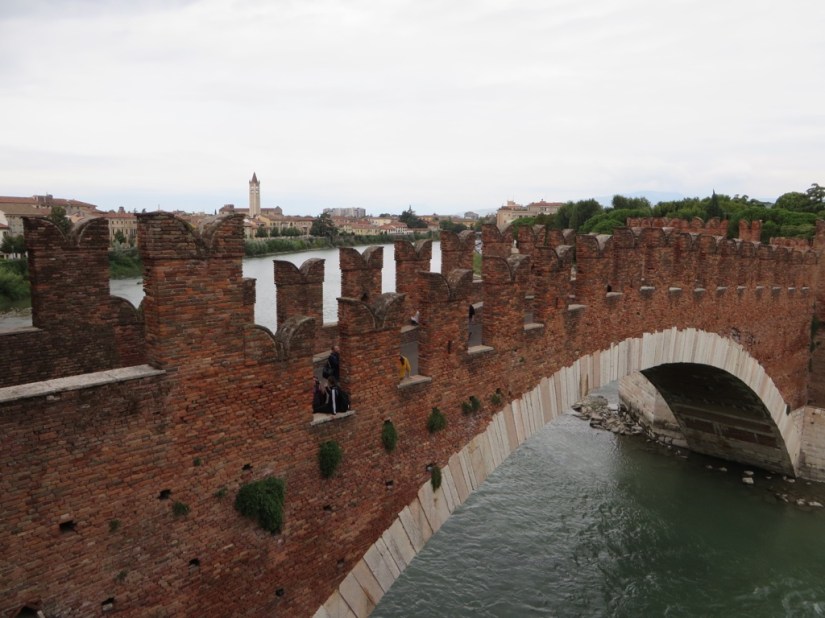
and crossing a couple of bridges (both rebuilt after being bombed by the Germans in WWII) …
Ponte ScalieriPonte Pietra
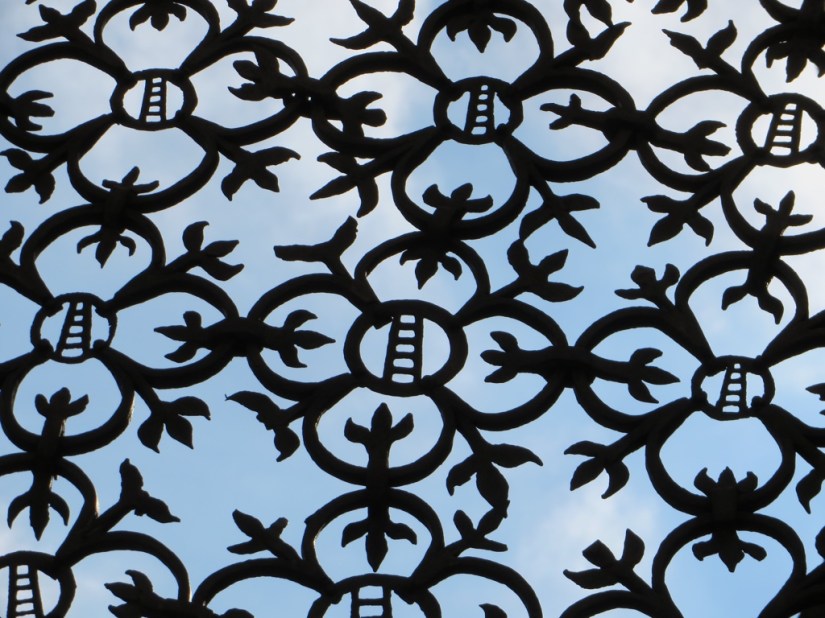
We would have seen the Teatro Romano but it was unexpectedly closed … that’s Italy! The emblem of a ladder is seen all over town, on the football banners and other flags, as it was the symbol of the Scaligere family who ruled the city in the 13-14C, and Arche Scaligere are some of the most elaborate Gothic funerary monuments in Italy.
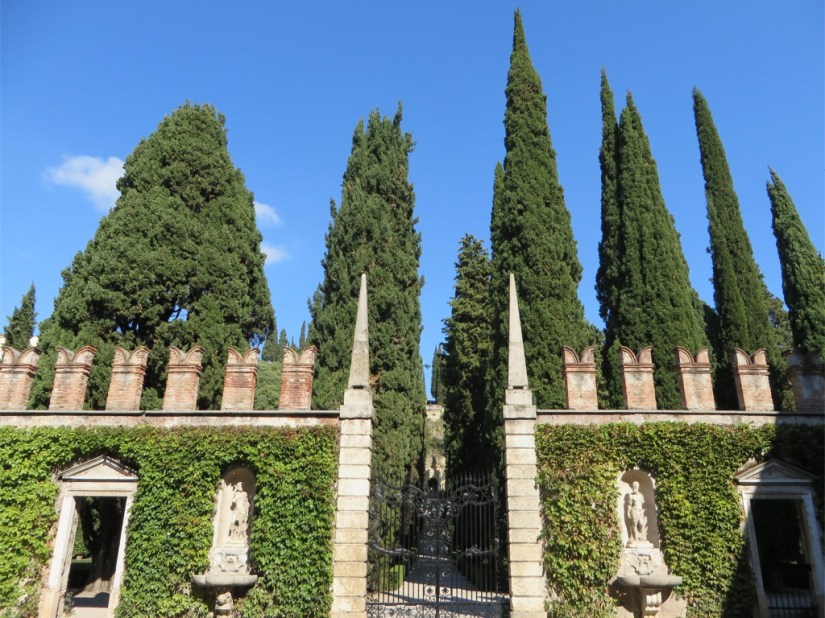
And then there was the garden … Giordini di Giusti, laid out in 1570 with a cypress avenue leading to a grotto with macherone, hedged parterres, statues and a belvedere, a lovely place to wander on a sunny afternoon and get a view of the city.
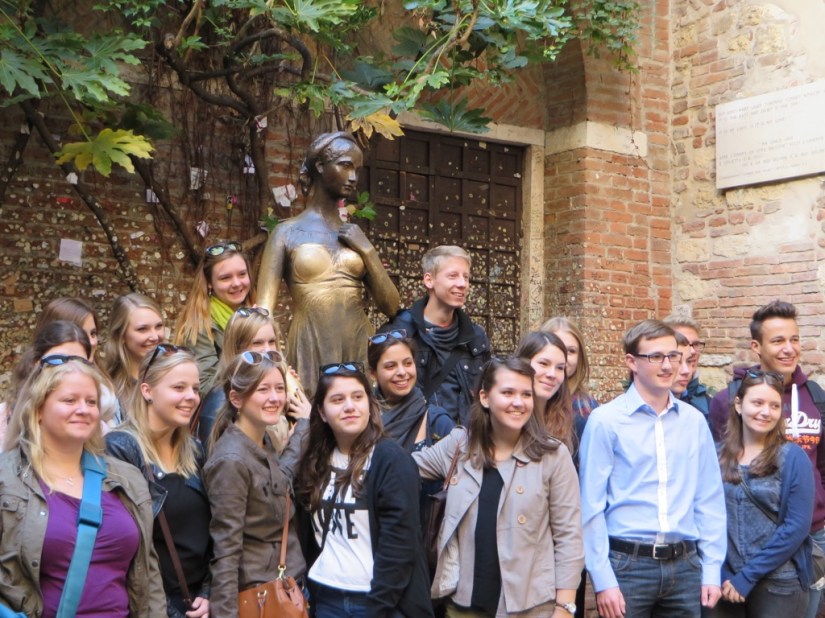
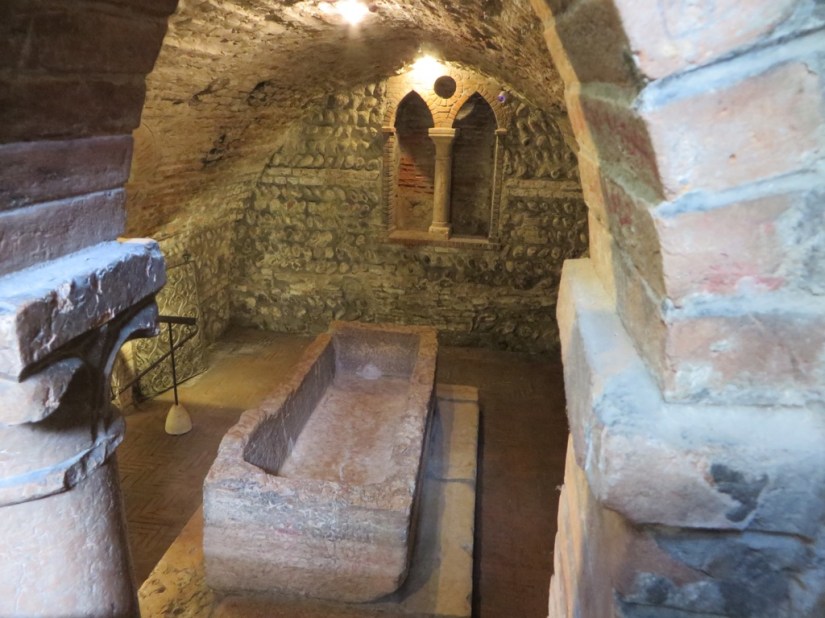
Shakespeare called it fair Verona, and set three plays here including of course Romeo and Juliet, based on an old Italian story, which has always attracted tourists here, but now millions come to Verona. Every day, letters often just addressed ‘Juliet, Verona’ arrive in the city … and every one is answered! From as early as the 16C, a place had been identified as Juliet’s tomb, in a building once belonging to an old convent. Lord Byron and Dickens both wrote of their visits and Byron even took a small piece of granite as a souvenir. Visitors started leaving notes to Juliet, then in 1936 a Hollywood blockbuster of Romeo and Juliet was made and the site received a makeover to better suit the legend. A chap called Solimani was taken on as custodian and he developed the attraction through showmanship, encouraging visitors to have their photo taken together by the tomb and making a wish to Juliet, leaving messages to her or signing the guestbook. Soon letters started arriving addressed to Juliet, and Solimani started replying as The Secretary of Juliet on an old typewriter. In 1989 the job was taken on by volunteer secretaries at The Club di Giulietta who have replied to 50,000 letters since then. The letters are from men and women, from all round the world, asking for help in matters of the heart.
Today, you can even send a message by email … Chris is still awaiting his reply!
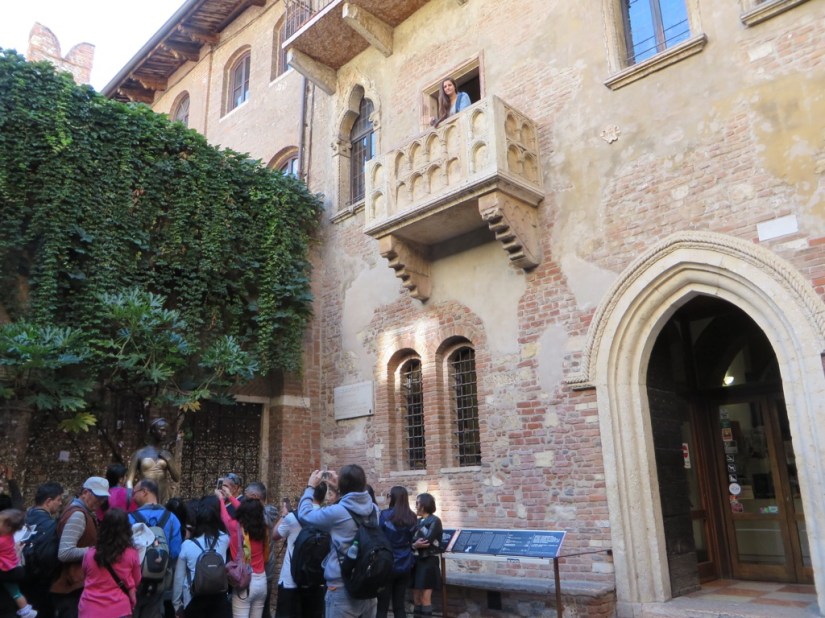
Visitors such as Dickens were directed to a house on Via Cappello as being Juliet’s House and it was bought by the Commune of Verona in 1905. Following the success of the refurbished tomb, the house got the same treatment in 1940, with the facade improved with a balcony, probably made from a recycled 14C sarcophagus, interestingly too far from the ground for even the most athletic Romeo! Today the entrance is covered in romantic graffiti and the tourists have started rubbing the bronze statue of Juliet for luck in love, and queues of people wait for their chance to stand on the balcony. Fortunately we were there early, entry was free with our Verona card so we too stood on that balcony!
Romantic GrafittiJuliet of the Shiny Bosom!From the balconyCould that be Juliet?
Then to Juliet’s tomb, through a colonnaded entrance and a courtyard garden and down some steps to an old sarcophagus… quite atmospheric, except she was a storybook character!
Finally, apparently no visit to Verona is complete without a taste of the Baci di Giulietta, or Juliet’s Kisses, a sweet treat invented by Pasticceria Perlini in 1940, consisting of a pair of chocolate and hazelnut shells sandwiched together with hazelnut cream, now joined by a white almond version … very tasty, very sweet!
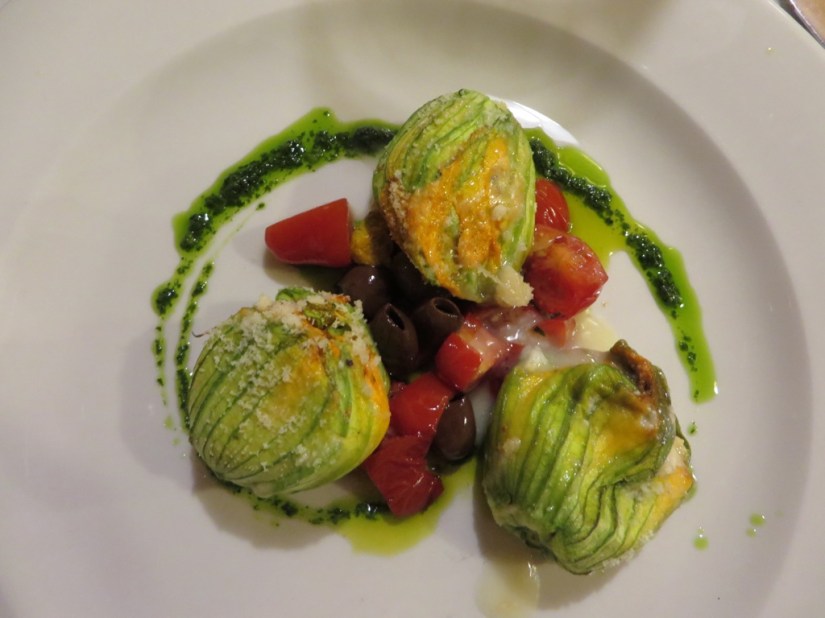
Other gourmet delights have included courgette flowers stuffed with a cheese filling, bigoli with duck ragu and risotto made with Amarone, a very delicious local red wine.
And now with our minds full of all we have seen and our tummies full of pasta and pizza, the time has come to bring our Viaggio a Verona to an end. We hope you enjoyed the trip too!
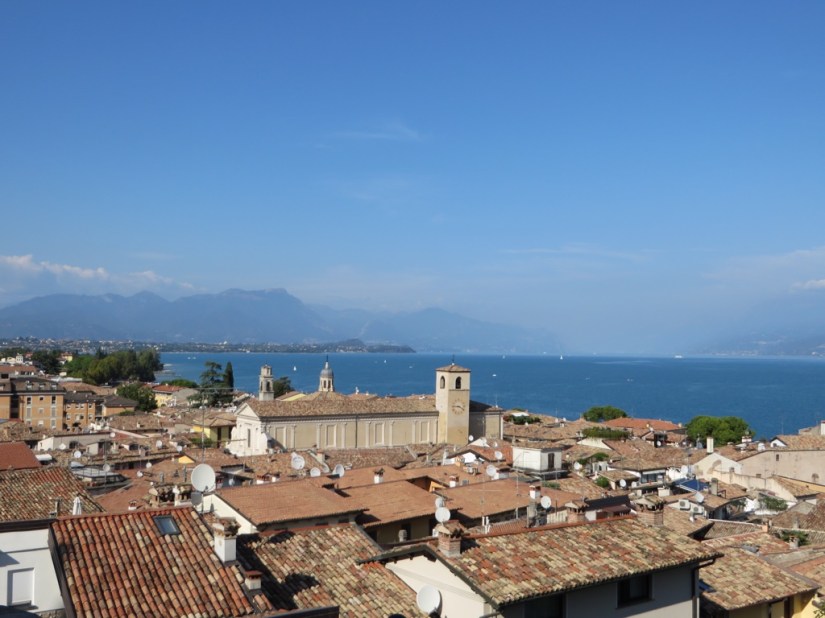
Desenzano has been a popular holiday destination since Roman times, and remains so today, with a street of very chic and expensive shops and lots of restaurants and cafes. It was a bit overcast when we arrived and there had been a storm the day before.
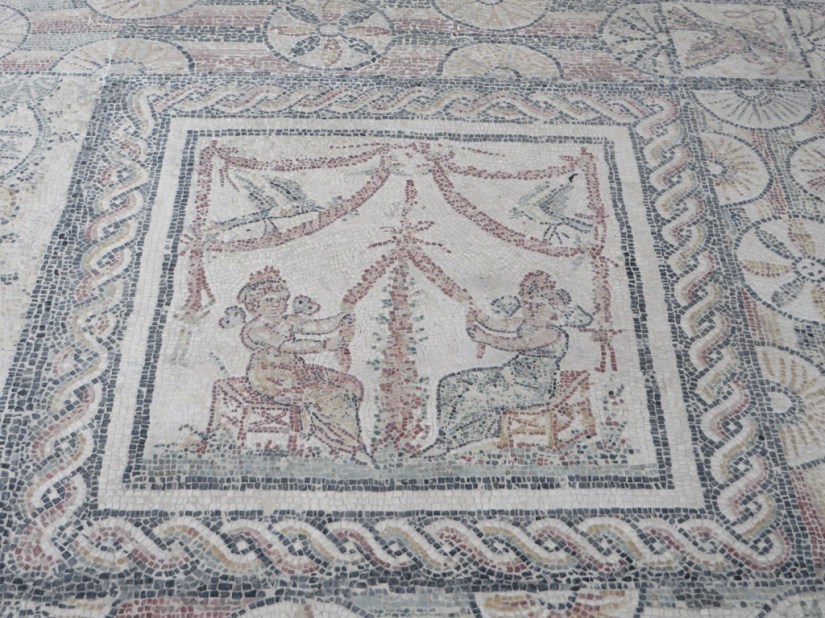
We took a turn round town and found our first lakeside villa, the Villa Romano, a grand Roman country estate dating from 4C, and while ruined still gave us an idea of the layout and we saw some lovely mosaics.
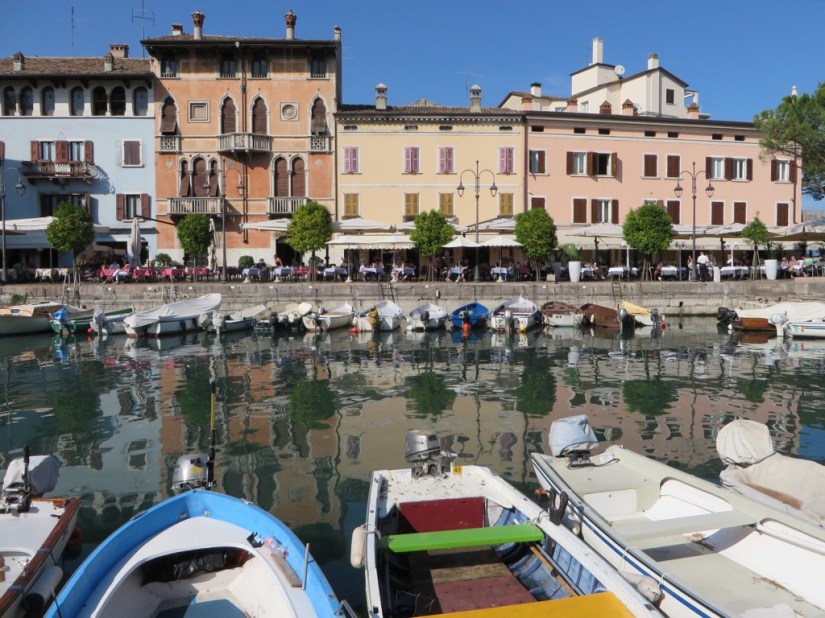
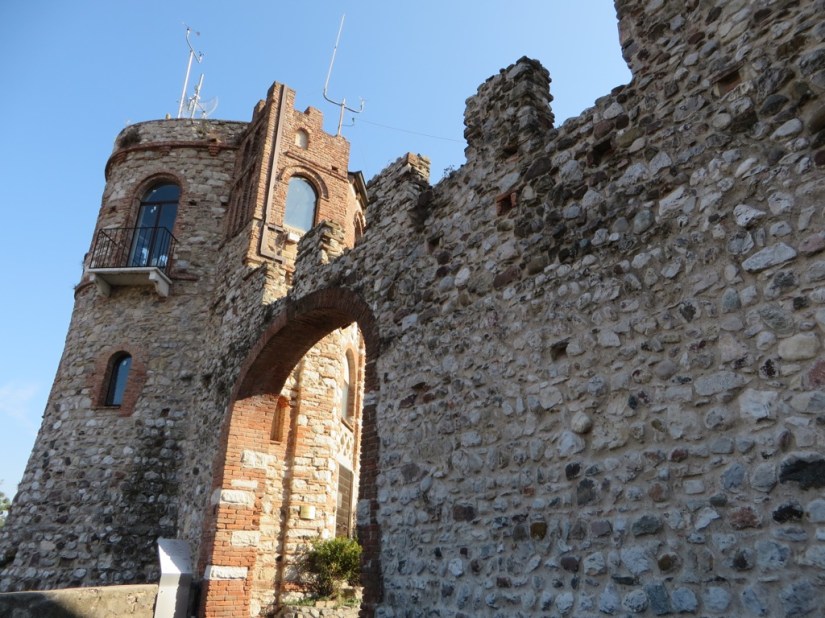
The inner harbour is pretty with the small boats bobbing with the backdrop of pretty pastel coloured buildings with balconies and shuttered windows, especially when the sun shines. We climbed to the small castle for a view of the town.
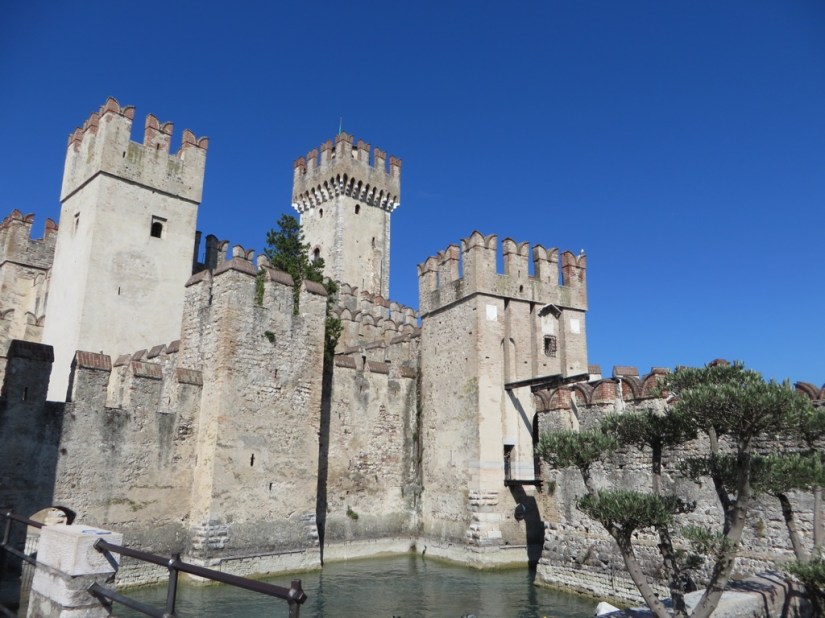
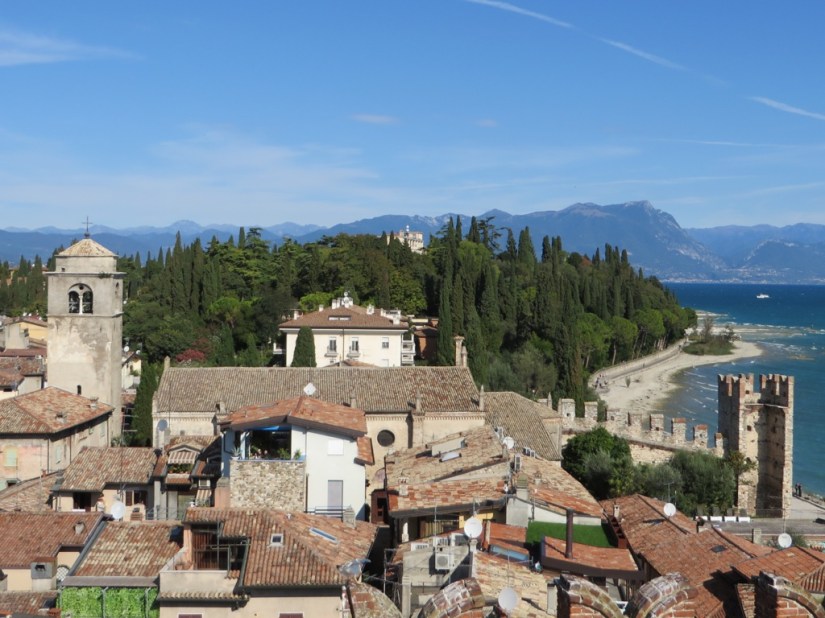
We took the 20 minute ferry to Sirmione, another chic destination, dominated by the 13C Rocca Scaligera, built to protect the promontory from attack, but looking less fearsome with a moat containing swans.
The small historical centre gets choked with tourists, browsing in shops and consuming ridiculously large cones of gelato so we escaped and went past the little Chiesa Di San Pietro with a fresco of the crucifixion …
… to to the Grotte di Catullo, ruins of another Roman villa which have belonged to the poet Catullo. The ruins are extensive, perched on the top of the headland, and offer great views of the lake.
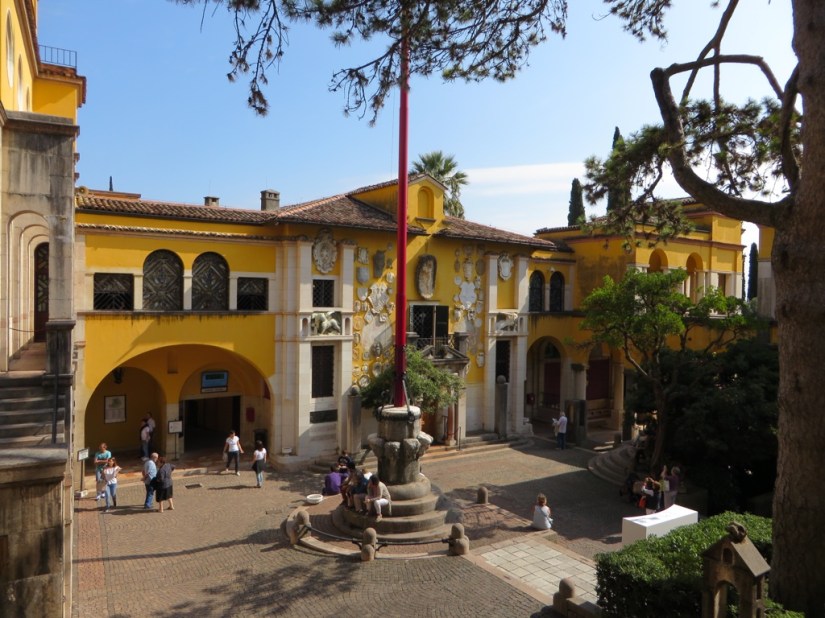
Finally, we took the ferry further, to Gardone Riviera, which was once the smartest of all the lakeside resorts and still has hotels where suites are hundreds of euros a night. We were here to visit Il Vittoriale degli Italiani, former home of Gabriele d’Annuncio, soldier, poet and nationalist hero, who was given the villa by Mussolini to keep him away from politics. He was a shameless egotist and the villa is both grandiose and bizarre containing a huge eclectic collection including beautiful art and sculpture from all over the world and even a huge stuffed tortoise.
The huge garden contains not only his mausoleum …
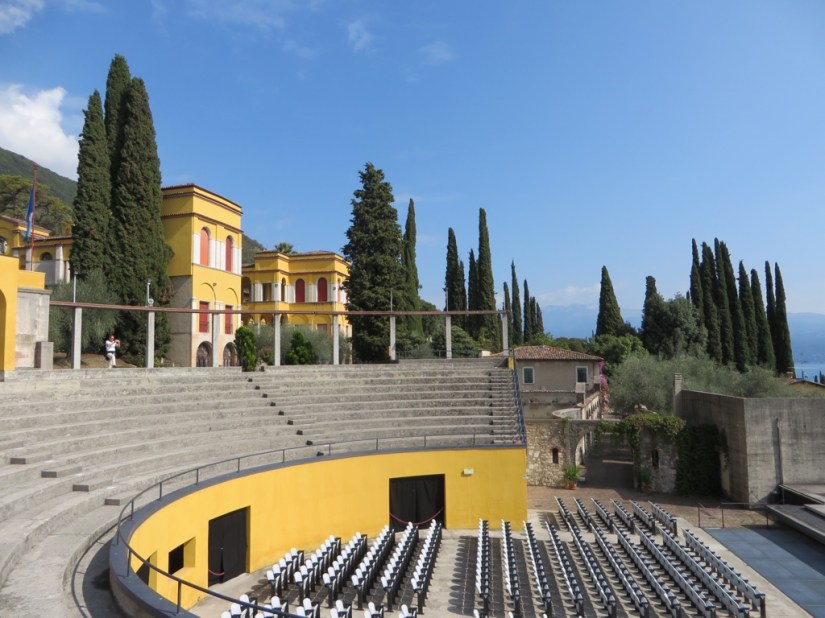
but also an amphitheatre …
a battleship …
A corpse of columns with bombs …
and a blue horse.
Overall a really wacky place with great angles and shapes for photos, according to Chris. Do pop in if you are passing or google him for more info!
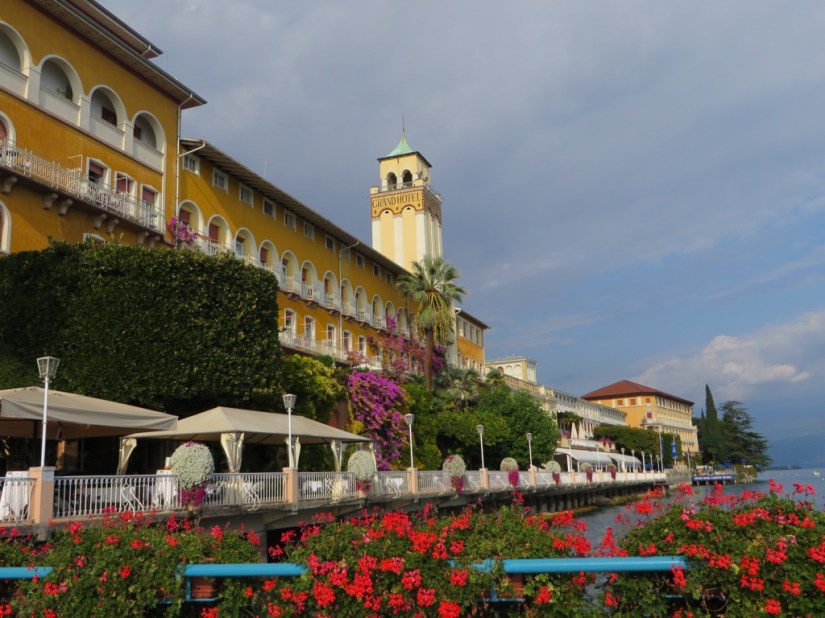
Departing, we looked back at the very splendid promenade, featuring the Grand Hotel.
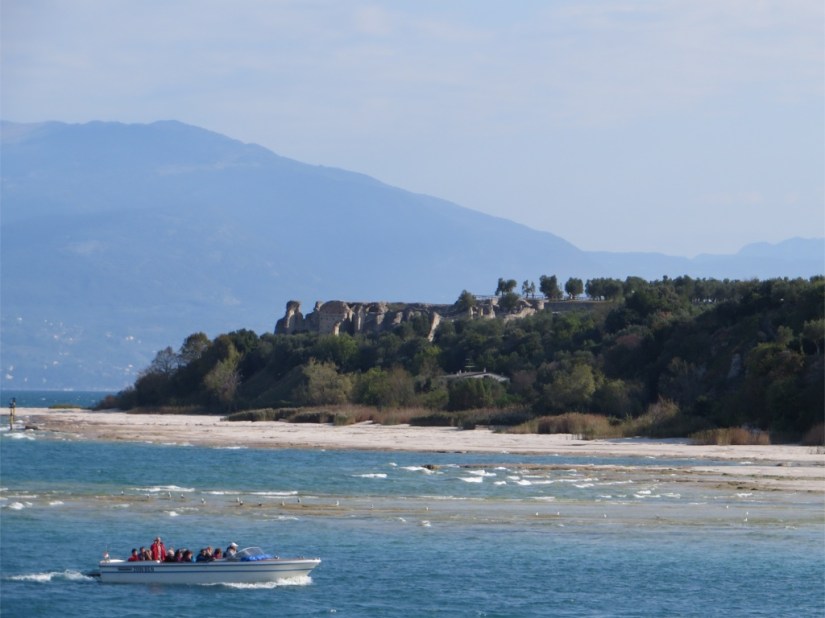
We passed Isola del Garda, a private island topped by a confection of a villa surrounded by gardens and also the ruins at Sirmione on the way back, and there was even a sunset.
Our visit here has proved to be a very pleasant lakeside interlude to prevent museum and church overload. Relaxed and ready we set of for our last and probably busiest destination, Verona.
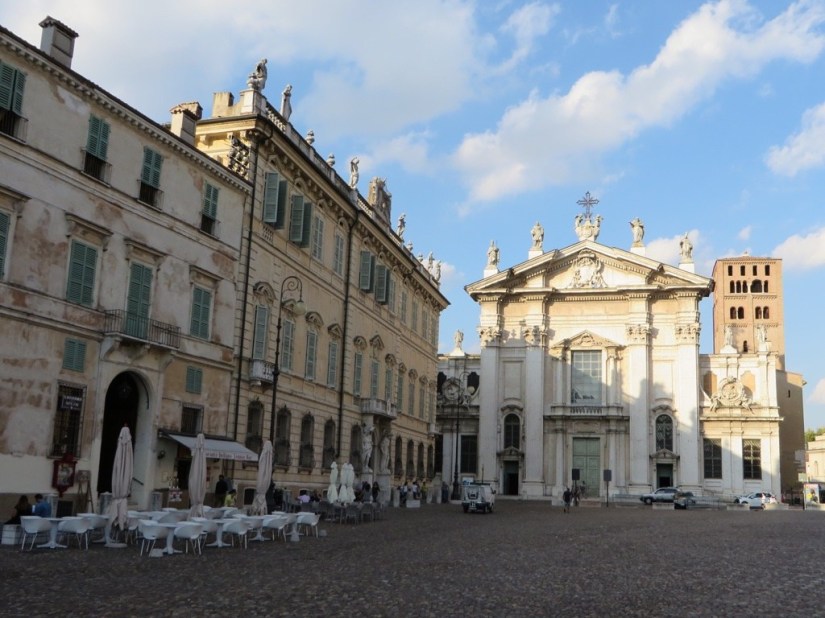
Mantova is a very appealing and walkable town, with four interlocking piazzas in the centre surrounded by civic buildings and churches. Unfortunately an earthquake in 2012 resulted in damage to some buildings which are still under repair.
Palazzo della Ragione and Rotonda Di San LorenzoPiazza Erbe and Sant’AndreaPiazza Sordello and the DuomoDuomo DetailPalazzo Ducale
The Gonzaga family was one of Renaissance Italy’s richest and most powerful families and ruled in Mantova for 300 years. Lodovico II gave the city a facelift when a visiting Pope complained it was a backwater, Francesco II swelled the family coffers as a mercenary while his wife Isabella D’Este spent it on a huge collection of art and Federico II married into a ducal title and built Palazzo Te but then Vicenzo I squandered the lot in debauchery, leaving Mantova open to rule by the Hapsburgs.
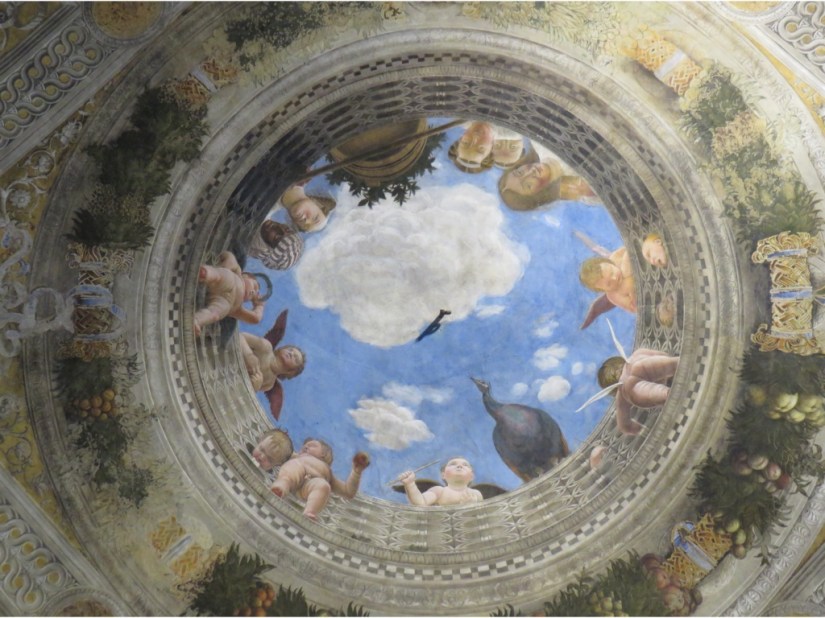
The Palazzo Ducale is an enormous complex, in its heyday convering 34,000 sqm, with a population of over 1000. The highlight here is the the amazing Camera degli Sposi or bridal chamber, commissioned by Lodovicio and frescoed by Andrea Mantega. There are interesting scenes of the Gonzaga family on two walls and the ceiling has a beautiful trompe d’oeil of a balustrade and open sky above.
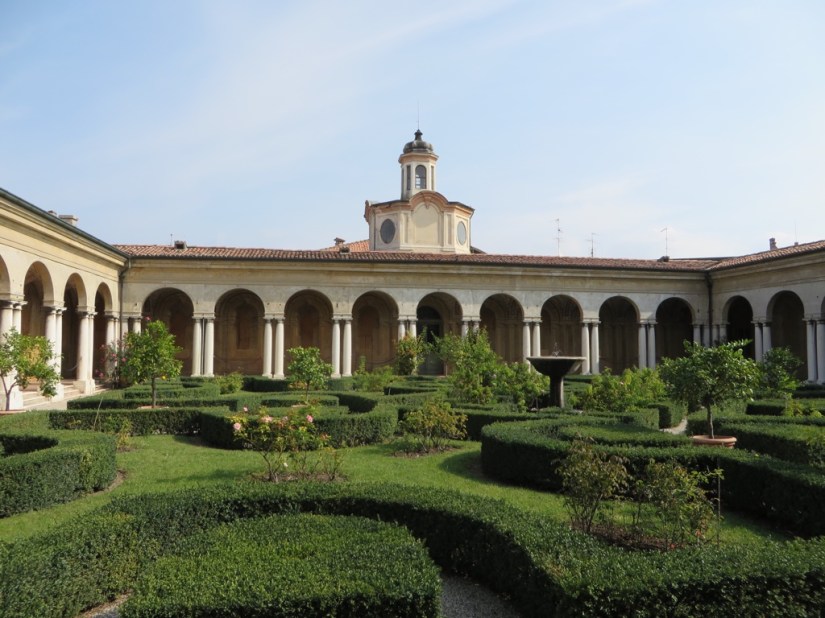
In other rooms there there were elaborate ceilings and lots of paintings but we particularly liked a garden room, looking out over a hanging garden, which must have been quite a showstopper in its day.
Several rooms are decorated with grotesque decoration which was first used in Ancient Rome, with fanciful or fantastic human and animal forms interwoven with foliage. It was copied in the 15C, and again in even more refined form in the 18C when the Hapsburgs redecorated parts of the palazzo.
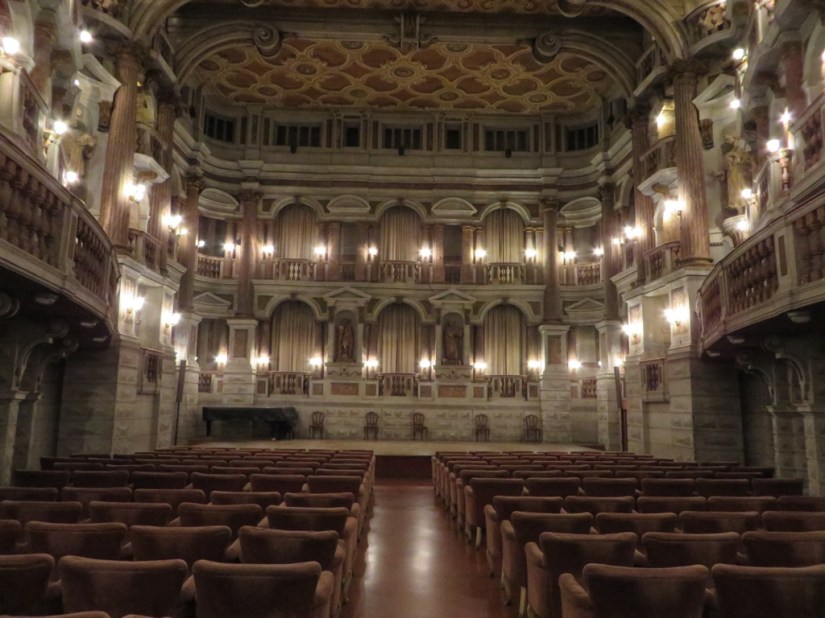
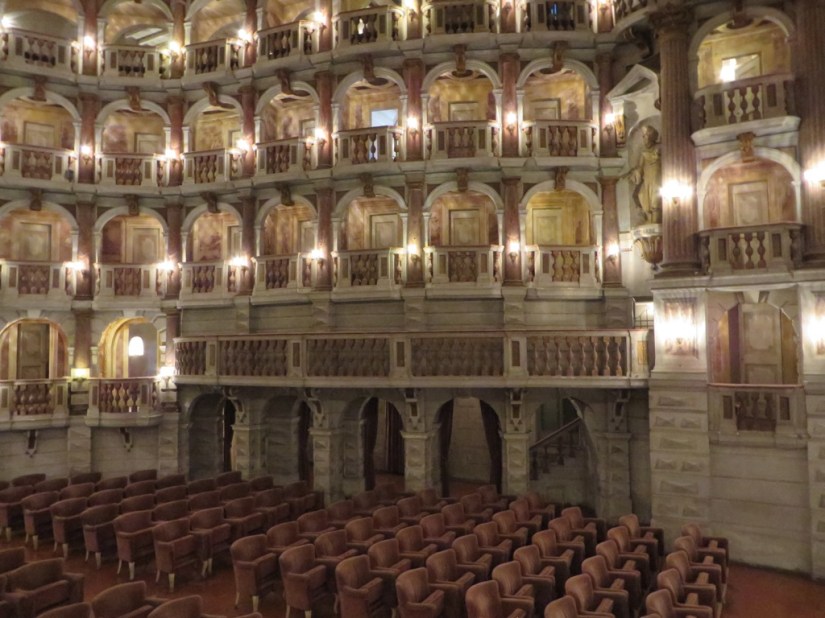
The Hapsburg heritage also includes the small but perfectly formed Teatro Bibiena Mozart played his Italian debut here when young and his father wrote to his wife “Today I saw the most beautiful theatre in the world”.
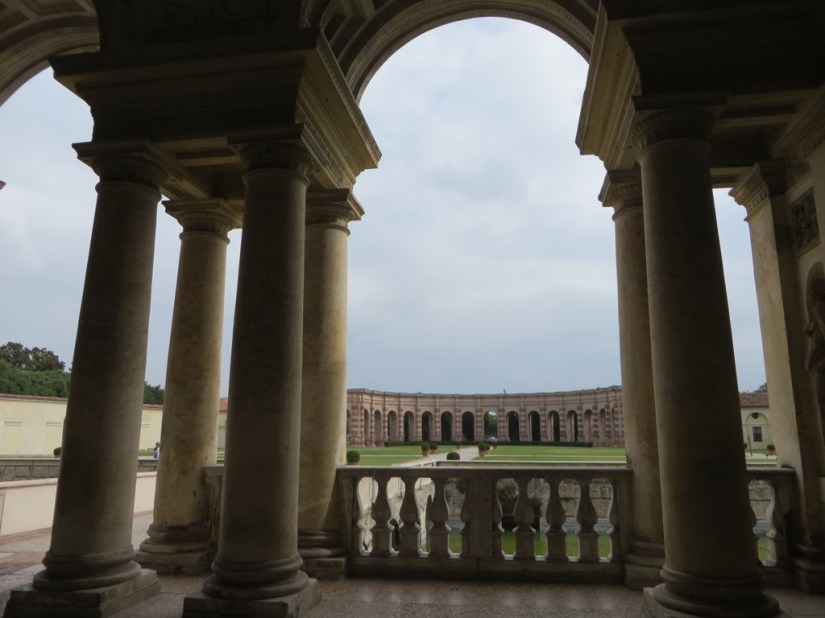
Palazzo Te is the masterpiece of Guilio Romano built as a pleasure palace for Federico II to share with his mistress Isabella Boschetta, originally on an island linked to the mainland only by a bridge.
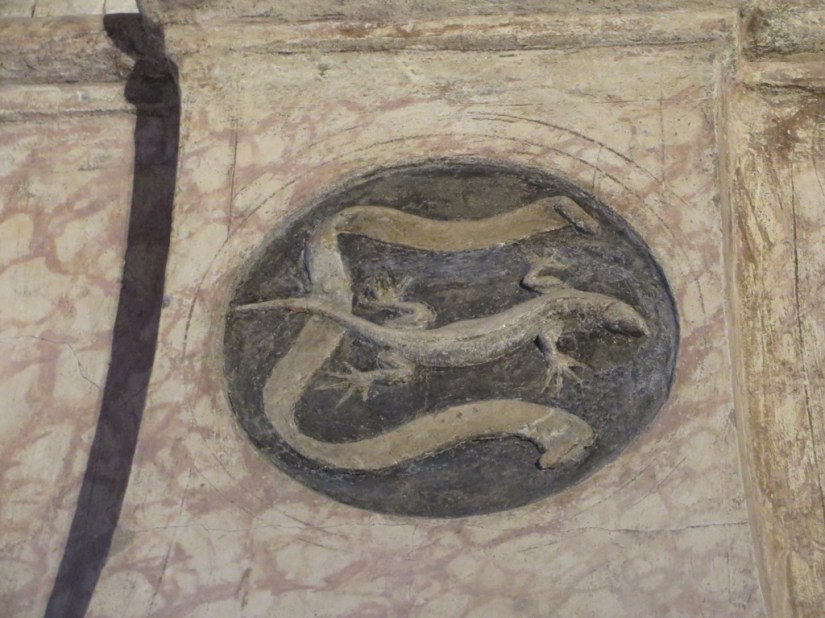
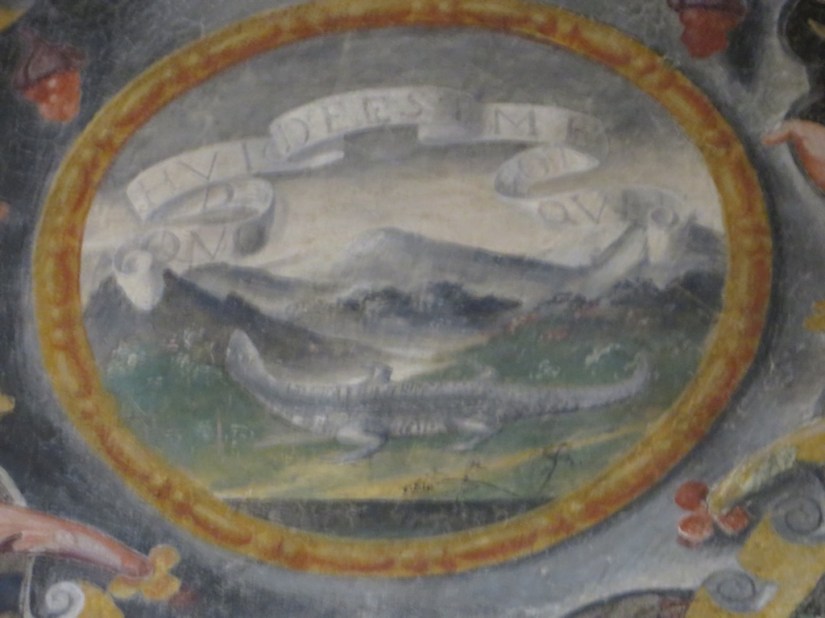
The motif of a salamander is found throughout the palazzo because they were thought to be asexual and Federico’s accompanying motto of ‘What this lacks torments me’ is a reference to his legendary appetites.
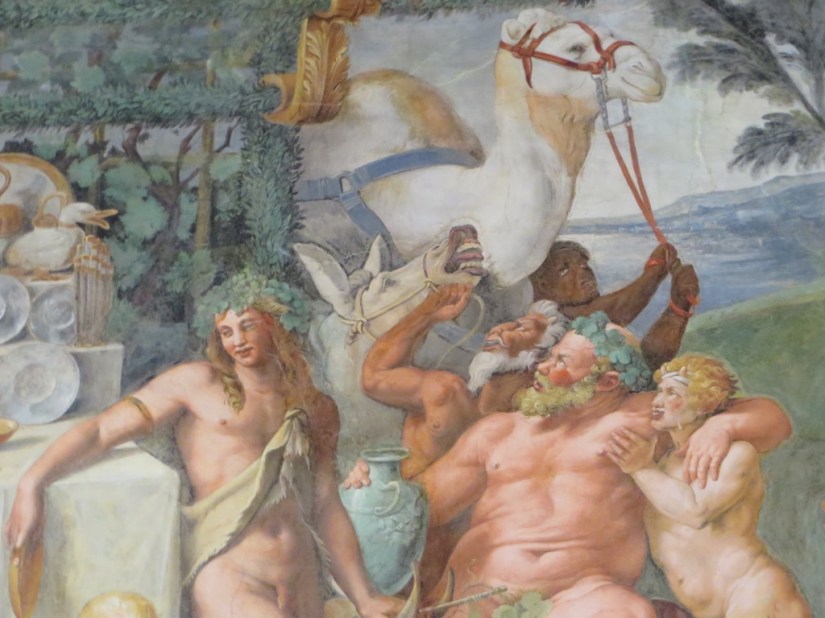
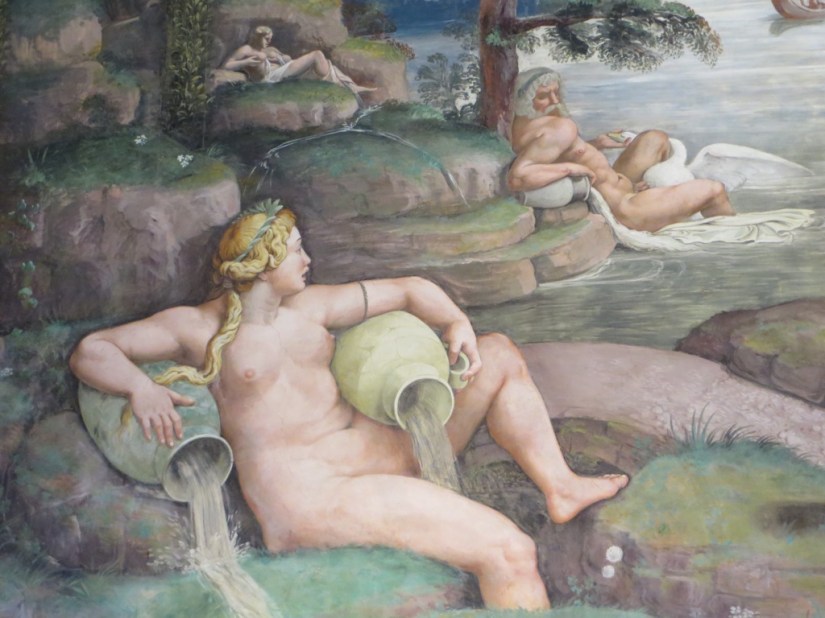
The decorative scheme in the rooms of the ground floor is amazing, every one sumptuous, especially in the Camera di Amore e Psiche, where erotic frescos romp round the walls. See if you can see the salamander.
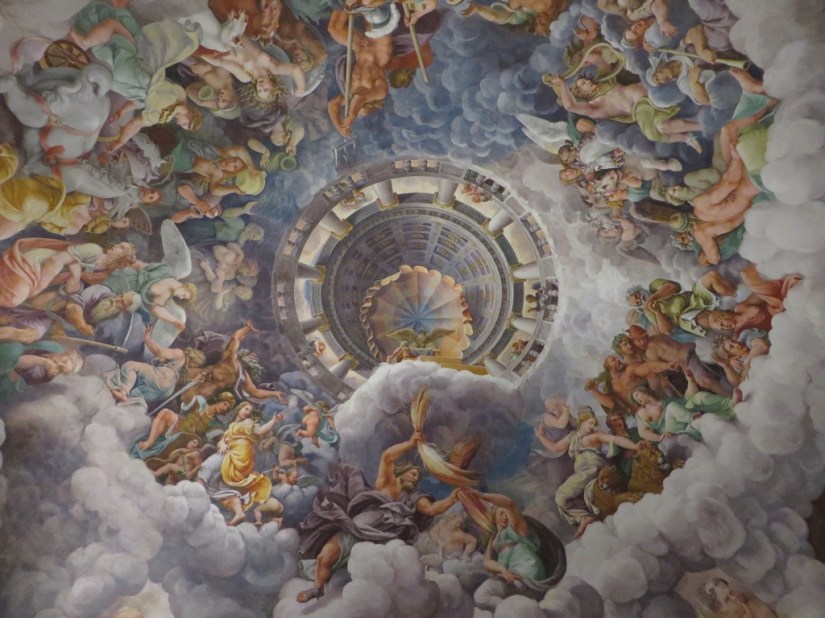
The Camera dei Giganti shows the destruction of the giants by the gods and a continuous fresco covers every part of the walls and ceiling …
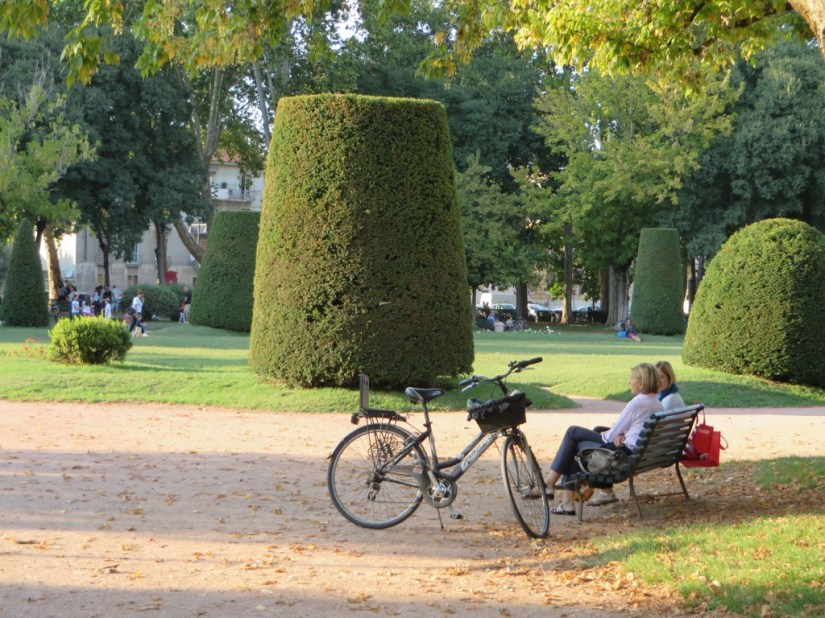
The Giardini di Piazza Virgiliana, named for the Roman poet Virgil who was born here gets a mention, especially as it was just by our B&B and it was on our route into town.
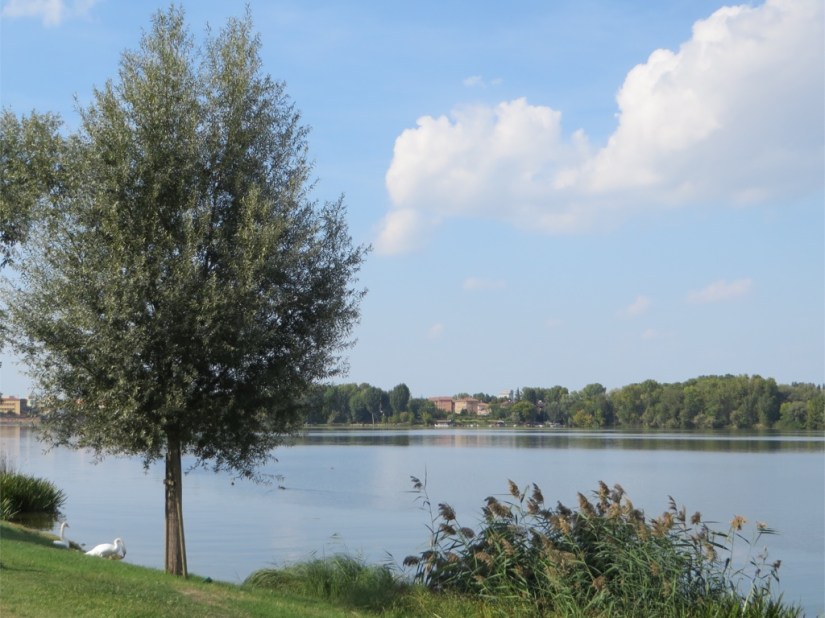
Mantova is surrounded on three sides by artificial lakes, created during the 12th century, as the city’s defence system and we enjoyed walking round, watching walkers, cyclists, dog-walkers and fishermen. There are also small canals or ria which cross the town between the buildings.
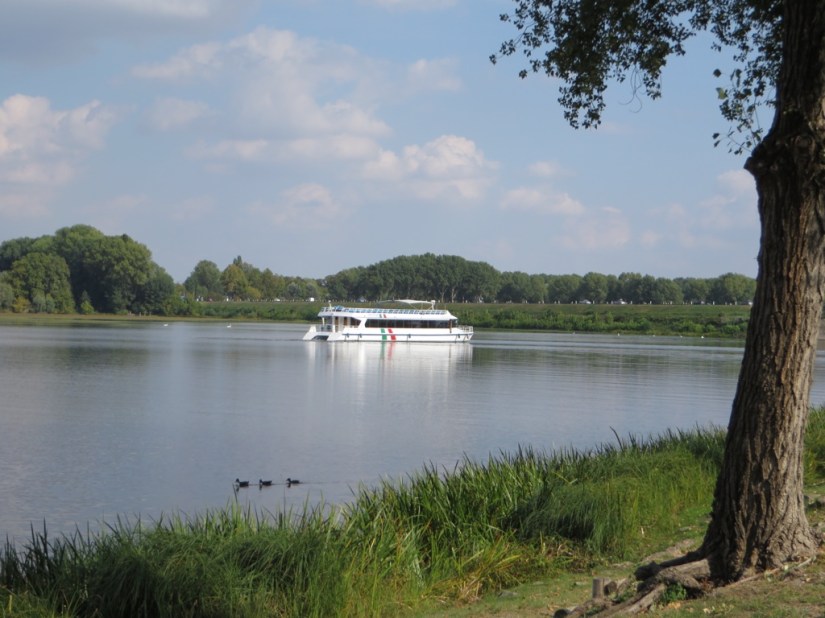
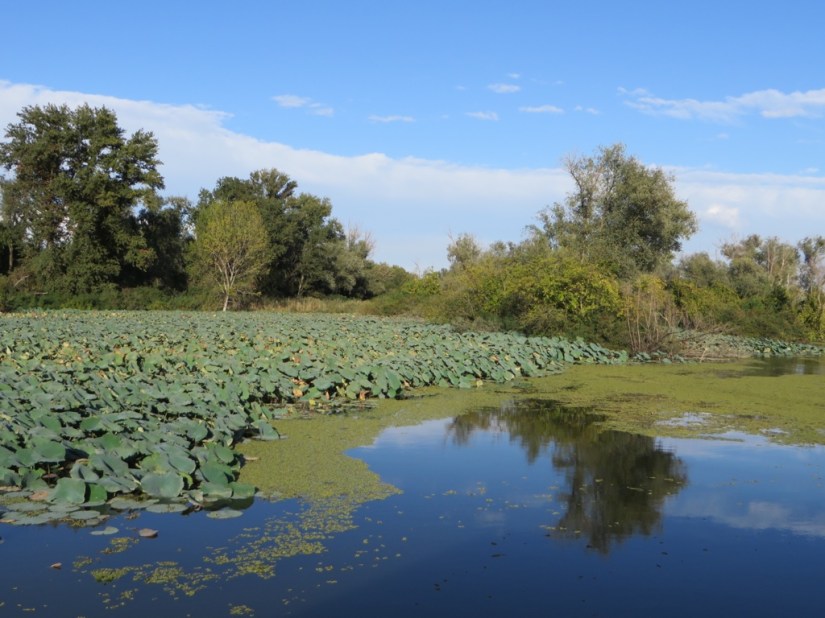
One afternoon we took a boat trip which gave us a good view of the city from the water and took us to the Mincio nature reserve which is rich in birdlife.
We’ve tried a number of local specialities, the most famous here being tortelli di zucca which we knew was ravioli with pumpkin filling, served with a little melted butter drizzled over, but we were really surprised by the sweet amaretti flavour when we tried it.
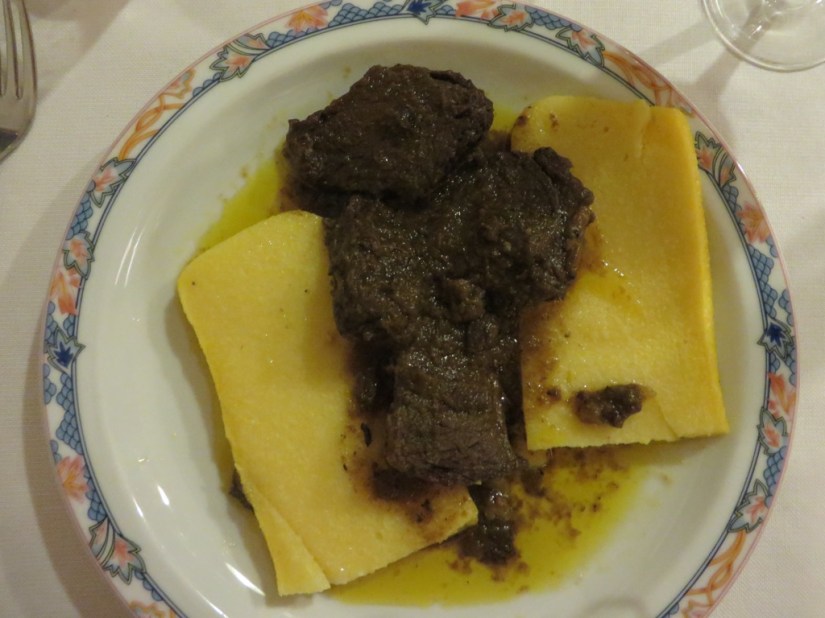
I also tried stracotto del cavello which was delicious, but barely indistinguishable from a good beef stew despite being horse …
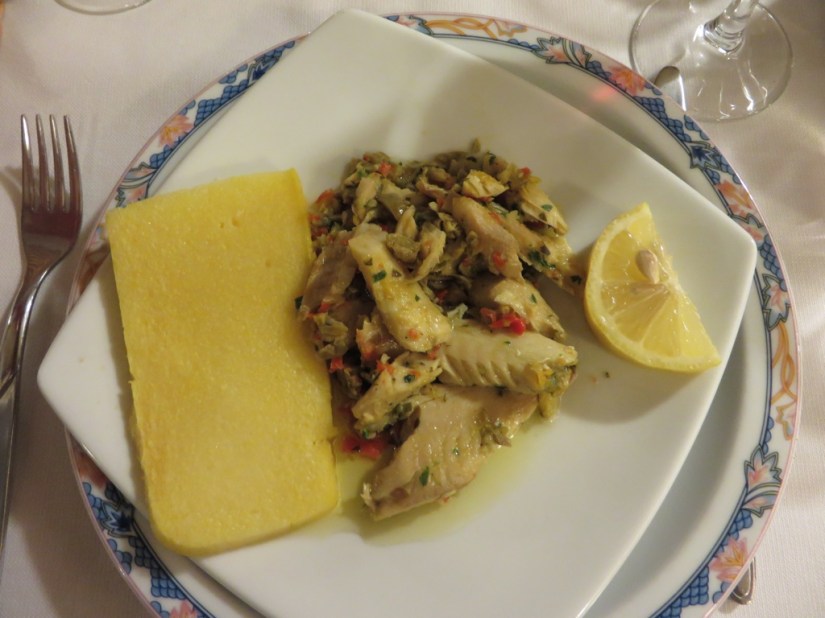
… and also luccio en salsa or pike in a warm pepper and olive sauce which was also good.
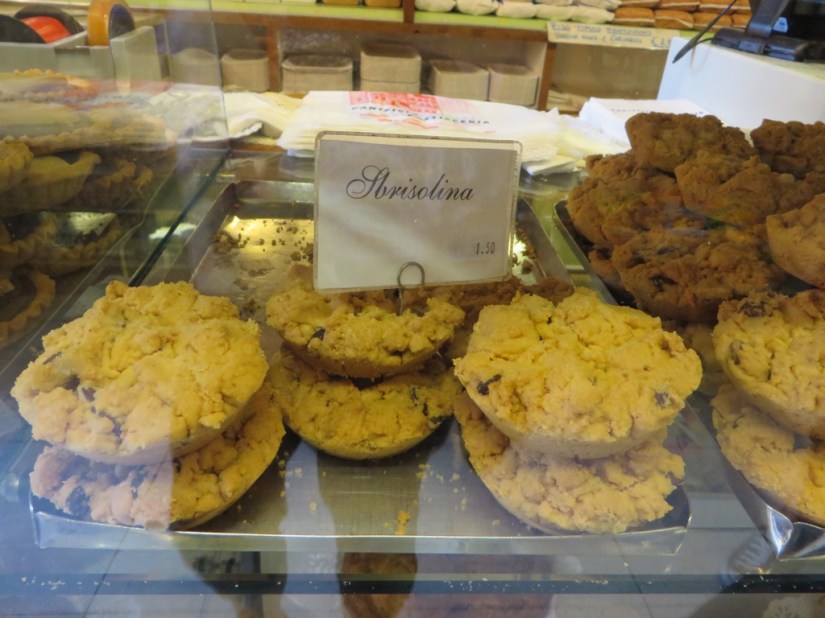
There are several local sweet treats including sbrisolina (a crumbly vanilla flavoured biscuit) …
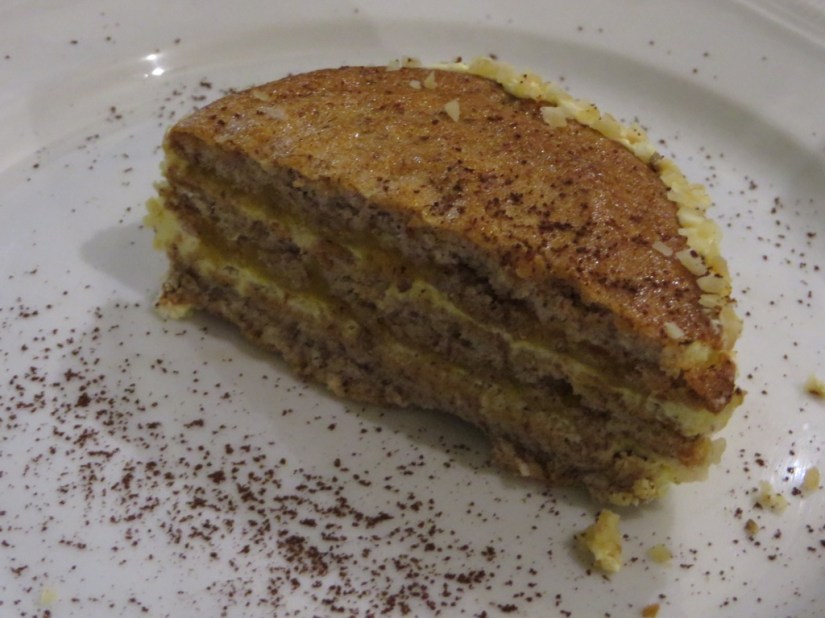
… torta tagliatella (crispy as if made with pasta and almond flavoured) and torta elvezia (thin layers of almond sponge sandwiched with zabaglione) …
… and we have tried them all …all very sweet! We have also had the best gelati here, mine cream cheese and pear and pumpkin and amaretti, Chris’s ricotta and peach and pistachio!
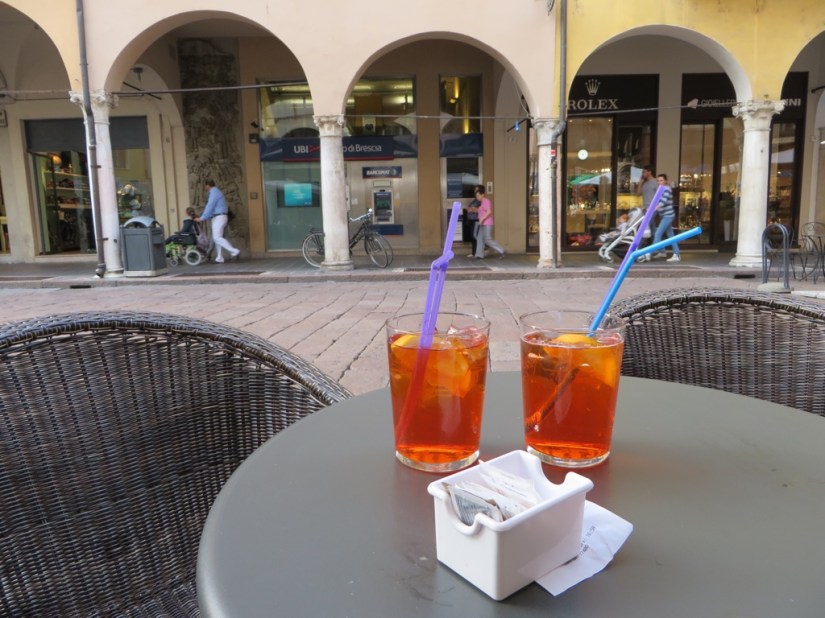
And there is always time for another Aperol moment …
We’ve really enjoyed our stay in Mantova … but time to move one once more, north this time to Lake Garda.
The Scrovegni Chapel is Padova’s most famous sight with its remarkable cycle of frescoes completed in 1305 by Giotto. It was commissioned by Enrica degli Scrovegni, a wealthy banker, as a private chapel once attached to his family’s palazzo. The fresco cycle details the life of the Virgin Mary and Christ and has been acknowledged by many to be one of the most important fresco cycles in the world. To help preserve the chapel, each group of 25 has to wait in an air-locked room watching a video while the climate equalises and then has just 15 minutes to admire the chapel before being asked to leave. I thought this would be a real rush, but actually it was plenty of time and we were able to move around freely, following the pictures of the bible stories like a cartoon book. The detail and realism of the frescos was amazing, they were in very good condition for over 700 years old and the colours were really bright. I’d love to say I’d taken some pics but no pics allowed so I’ve lifted these two from the Internet.
Other frescos in Padova included the Baptistry by Menabuoi with a lovely view of Paradise on the ceiling and the Oratorio do San Giorgio telling the stories of St George, St Lucy and St Catherine albeit with a sorry end for both the ladies.
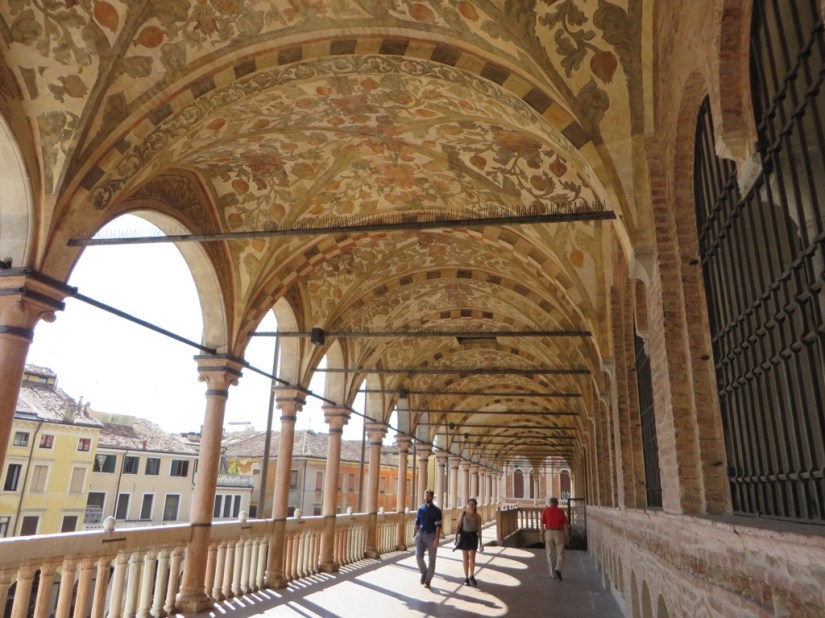
The Palazzo della Ragione sits in the heart of the city, between Piazzas Erbe and Frutti. The upstairs is one huge room which was originally frescoed by Giotto, including a blue starry sky, however these were destroyed by fire in 1420 and were replaced by an amazing 333 panel astrological cycle by Miretto. There is also a large wooden horse which was made for a joust in 1466 and a black stone which could be sat on with bare buttocks by a bankrupt to have his debts discharged … not sure that would catch on now … or would it?
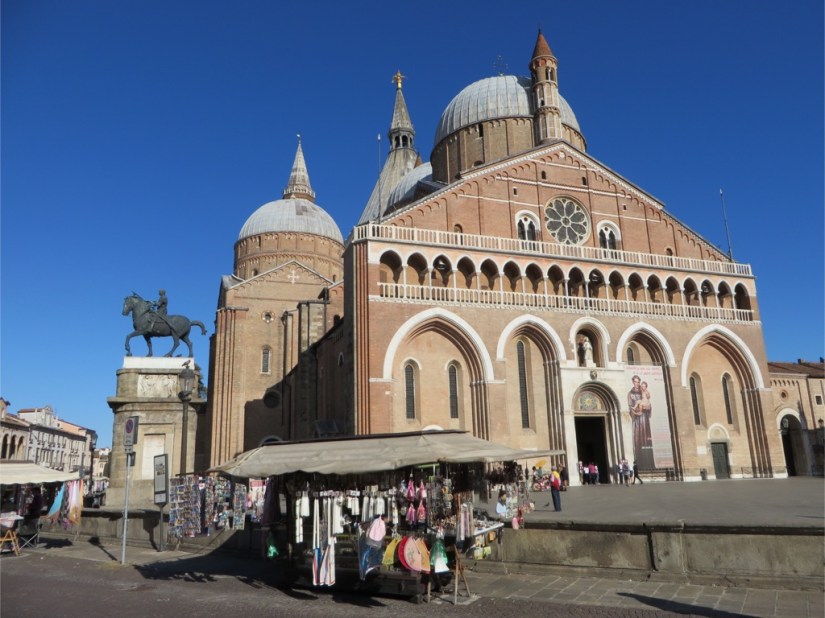
The Piazza del Santo is overshadowed by the huge basilica dedicated to St Anthony decorated with minarets and domes outside and Romanesque and Gothic styles inside. Pilgrims still visit and we queued with the faithful to see the amazing relief sculpture panels showing the life of St Anthony round his tomb and the miracles he had performed. Outside is Donatello’s monument to Gattamelata, The Honeyed Cat, as the condottiere Erasamo da Narni was known. It is the earliest large bronze sculpture of the Renaissance but basically just a man on a horse!
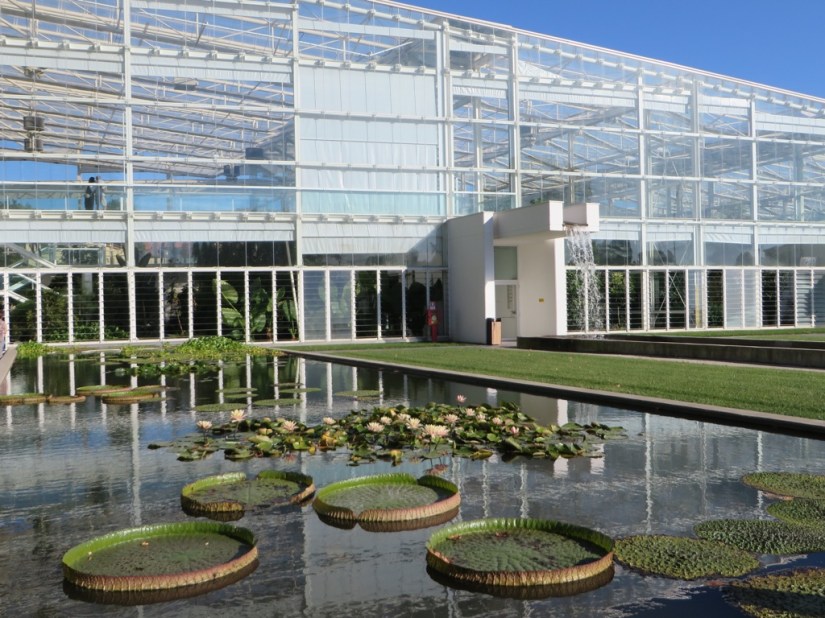
Padova’s garden is the Orto Botanico del Padova, which was founded as the garden of curative herbs attached to the University’s faculty of medicine and still contains an important collection of rare plants. It also has the recently built Garden of Diversity with tropical and temperate greehouses containing plants from round the world. It was relaxing to wander round among the plants having spent the day in the town.
Close by is another green space, the Prato della Valle, which follows the oval plan of the extinct Roman amphitheatre – a grassy island surrounded by a canal with four bridges and statues of 78 local worthies. Fortunately we had a chance to take pictures without the white vans and market stalls which had been there all weekend.
Time to catch the tram to the station and a train back to Verona, then south out of The Veneto to Mantova in Lombardy.
We are visiting Vicenza on the trail of Andrea Palladio, a 16th century architect, whose fascination with Greek and Roman buildings led him to develop the Palladian style which spread throughout the world.
Our flight touched down in Verona just after lunch and in a couple of hours we had taken the airport shuttle to the station, caught a train and arrived in Vicenza. Having checked in we went for a passeggiata along the Corso Andrea Palladio, studded with palazzos with ionic columns soaring skywards and stopped on the way for a gelato and later an aperol undernthe eye of the man himself.
We had a fabulous dinner at Il Molo, a small restaurant near the hotel, dining on tiny stuffed sardines and tomino cheese then huge bowls of pasta.
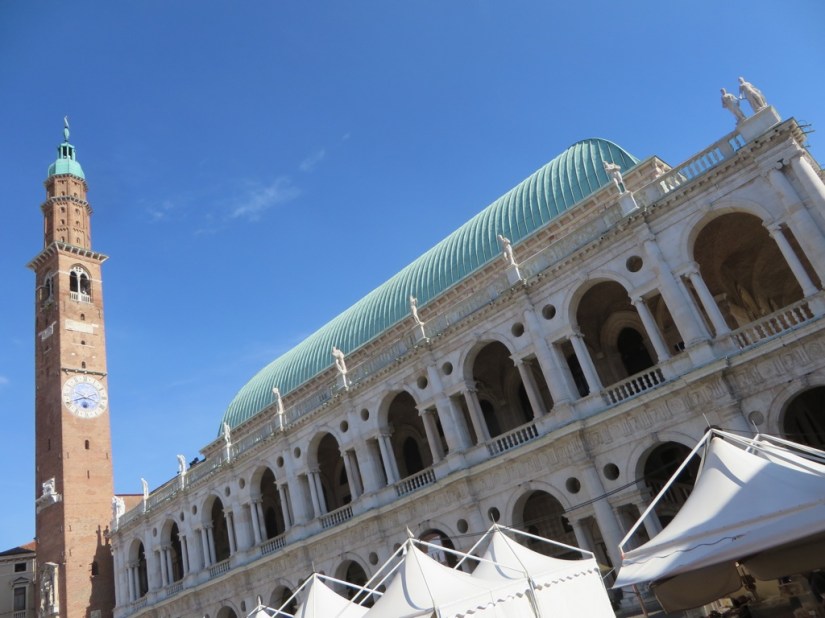
Piazza dei Signori is the heart of the city and is faced on one side by the magnificent Basilica Palladio, which isn’t a church, but a building containing civic offices and shops. The pre-existing building had proved unstable, and Palladio suggested a scheme to clad and reinforce the building, creating facades with two floors of beatifully proportioned loggias.
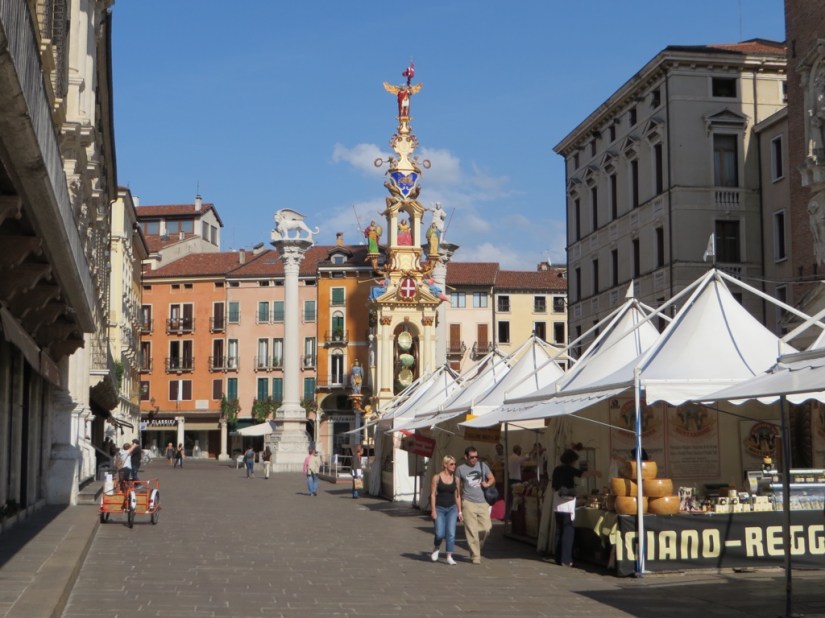
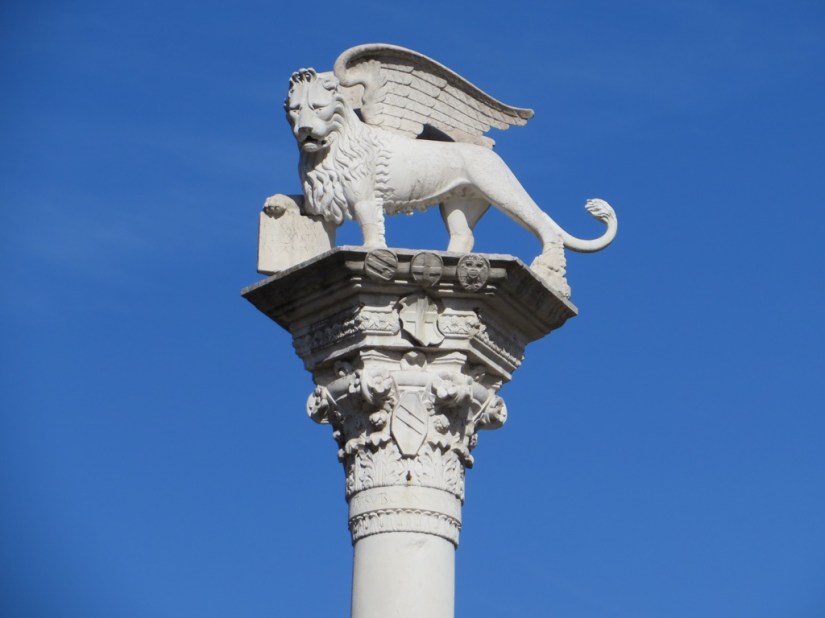
The piazza also contains the Rua or emblem of Padua, which had been part of an annual festival since 1444 and also a lion on a column signifying that Vicenza was once ruled by Venice.
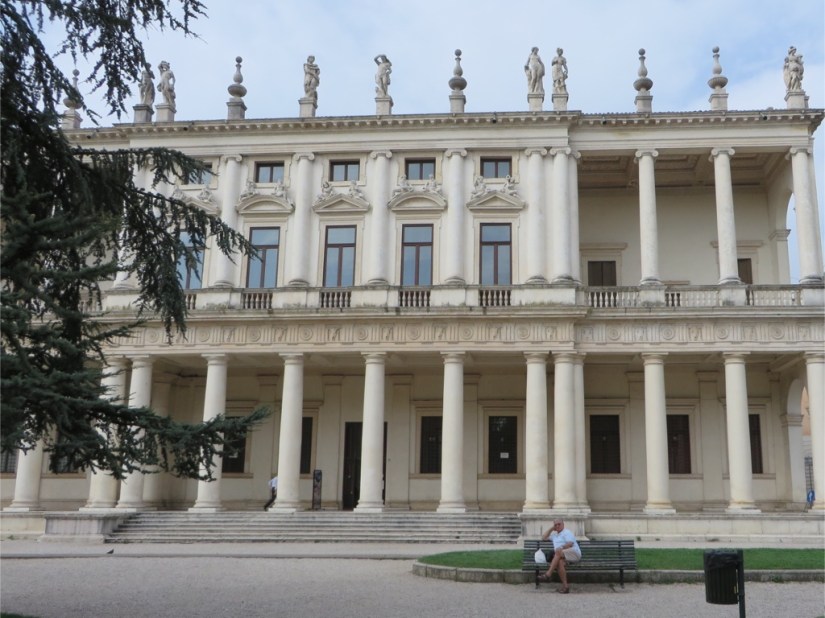
Next, a couple of Paladio’s palazzos. First Chiericati, stunning from the outside and containing the city art collection, with the most fun being a frescoed ceiling featuring a charioteer from below!
Next was Theine, built for a family who had made their fortune producing silk on their country estates but now owned by a bank. Past the impressive facades, the interior is full of stuccoed decoration and frescoed ceilings, but no photos allowed. It’s jewel was a rarely displayed crucifixion by Bellini.
We stopped in a self service restaurant filled with locals and tourists for lunch, which runs on an honour system – you collect your food from the kitchen, eat, then tell the cashier what you’ve had at the end! My risotto flavoured by bacala, the local speciality of dried fish was particularly good.
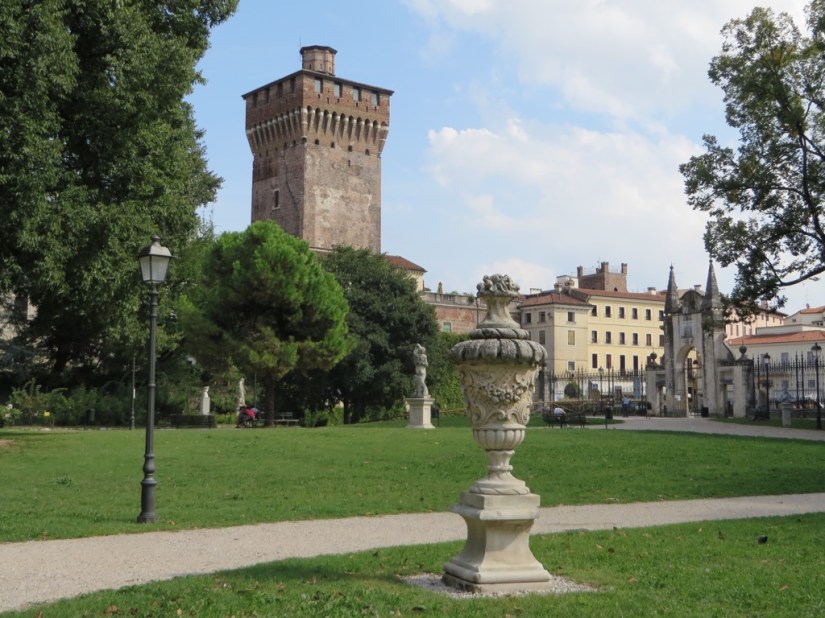
I promised gardens and the first, albeit small, was Giordini Salvi, with a very pretty loggia and view from a Bridge.
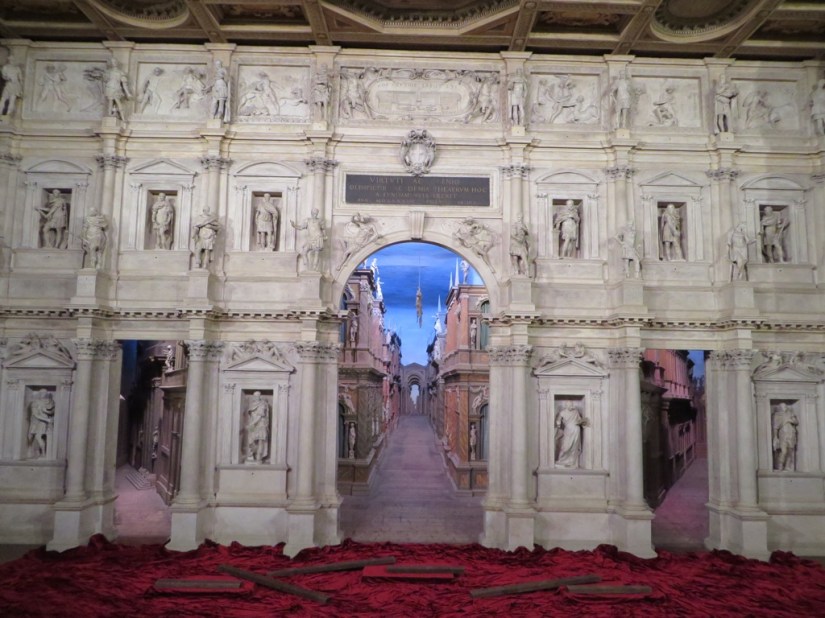
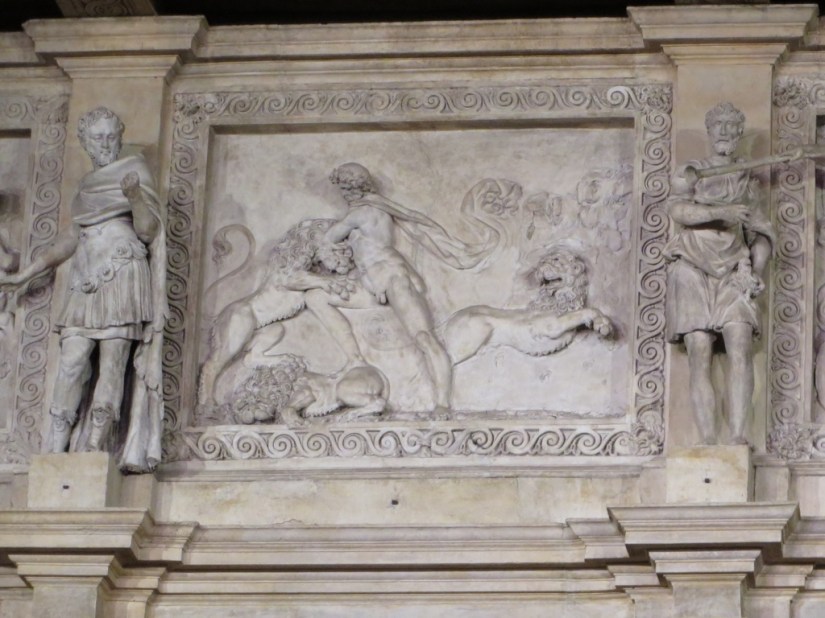
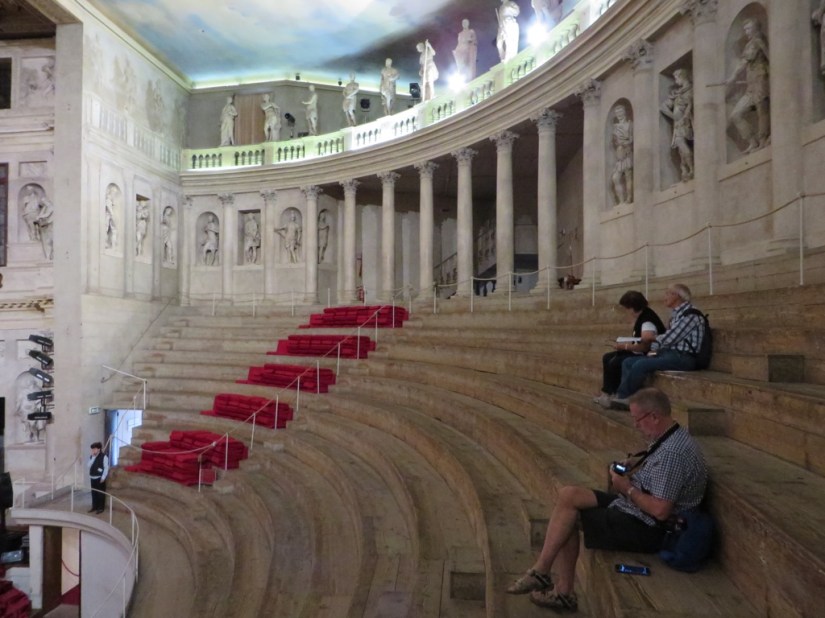
Finally, Palladio’s last work, the Teatro Olympico, in the style of a Roman theatre with a curved auditorium and stunning stage with a central triumphal arch surrounded by columns and statuary, just like the grand facade of a Paladian palazzo. Behind this is an elaborate stage set with trompe l’oeil views of the streets of of Thebes designed by Scamozzi. There was a dead fox hanging down in the centre, part of the scenery for Paul’s Letter to the Corinthians, a play in Spanish with Italian subtitles but sadly it was sold out!
That evening it was warm enough to sit out under the stars in Piazza Signori as we ate.
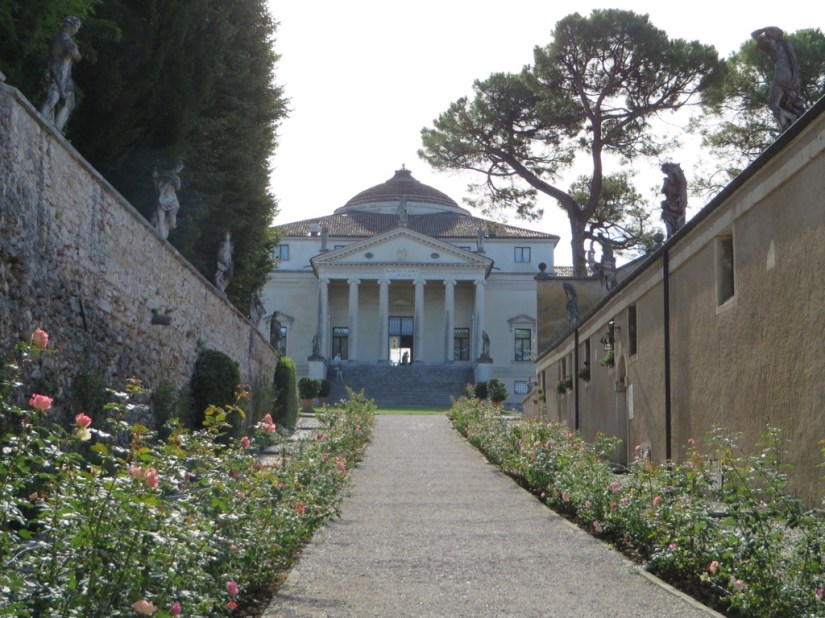
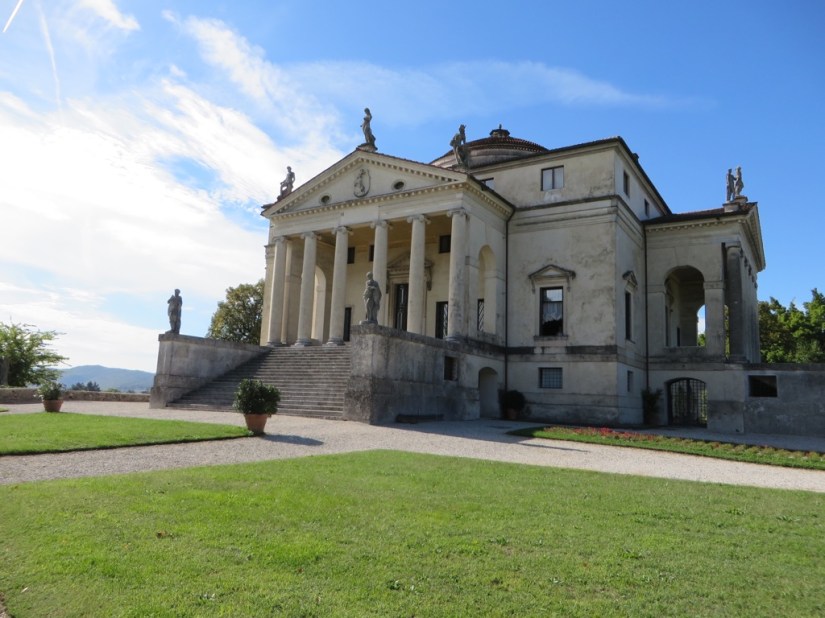
Having seen Paladio’s urban architecture yesterday, today is the turn of his most famous villa, La Rotunda, just outside the city. It stands on a small hill commanding great views of the surrounding countryside, a jewel of a building intended for entertaining and built for the retirement of a papal bishop who was part of the refined cultural circle of the time. The central round hall has a domed roof and is within a square with four facades each with portico, steps and ionic columns. Every interior surface is frescoed and stuccoed and statues and marble floors and fireplaces.
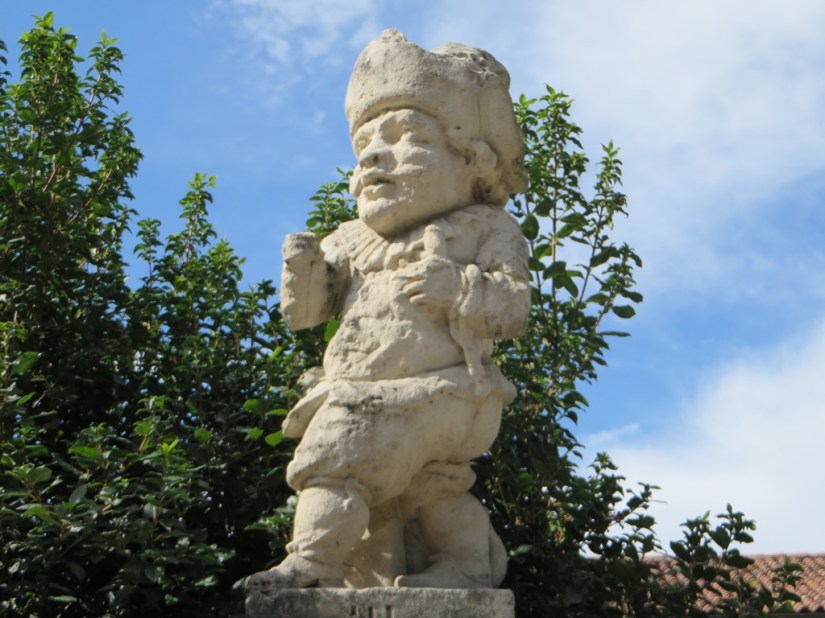
On the way back we stopped at Villa Valmarana ai Nani, not by Palladio, but filled with frescos and named after the nani or dwarves along the wall outside …
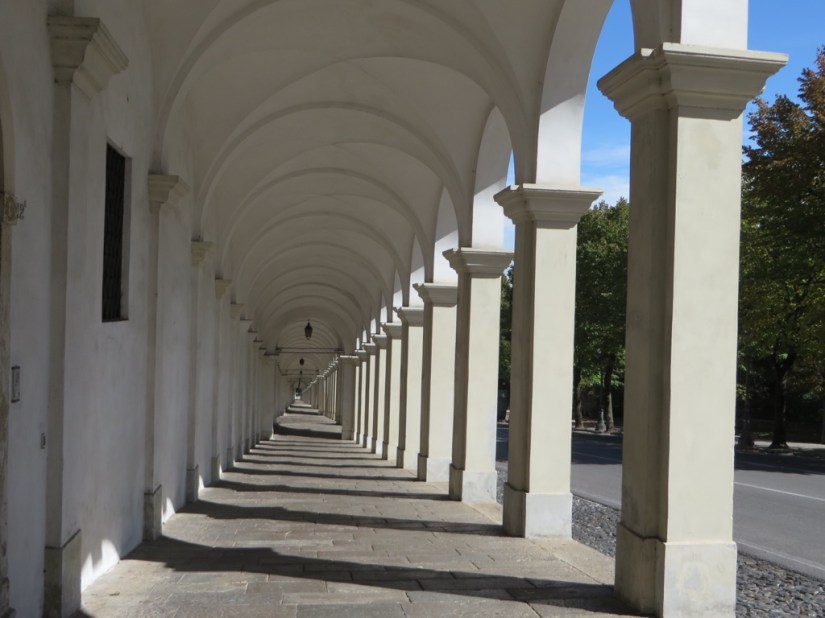
… and also Monte Berico for the view across the city. It was built following a sighting of the Virgin Mary at a time of the plague and is an important pilgrim site, connected to Vicenza by an arcaded walkway.
After our pleasant morning walk, it was time to retrieve our luggage and catch a train east to Padova.
 Our last day, and just time to take a turn round the main architectural feature of the city, Cardiff Castle. There are remains of a Roman wall, a Norman keep and a house that was started in 13C and been improved upon by successive owners until the 3rd Marquess of Bute transformed it into the gothic revival fantasy it is today.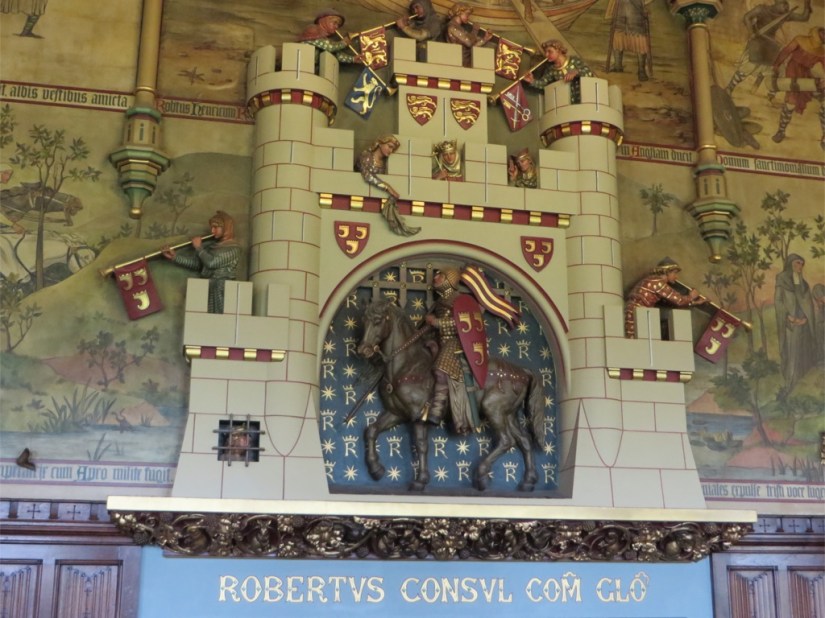

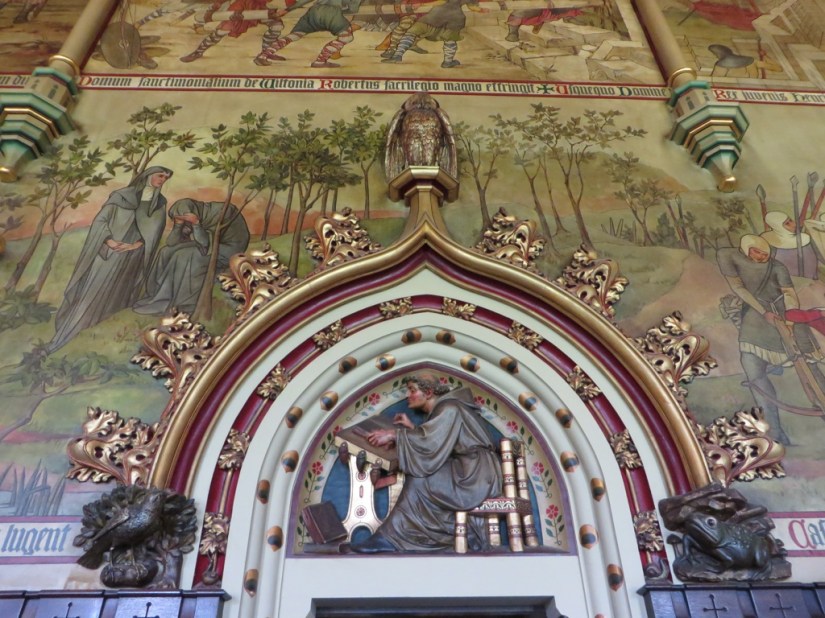

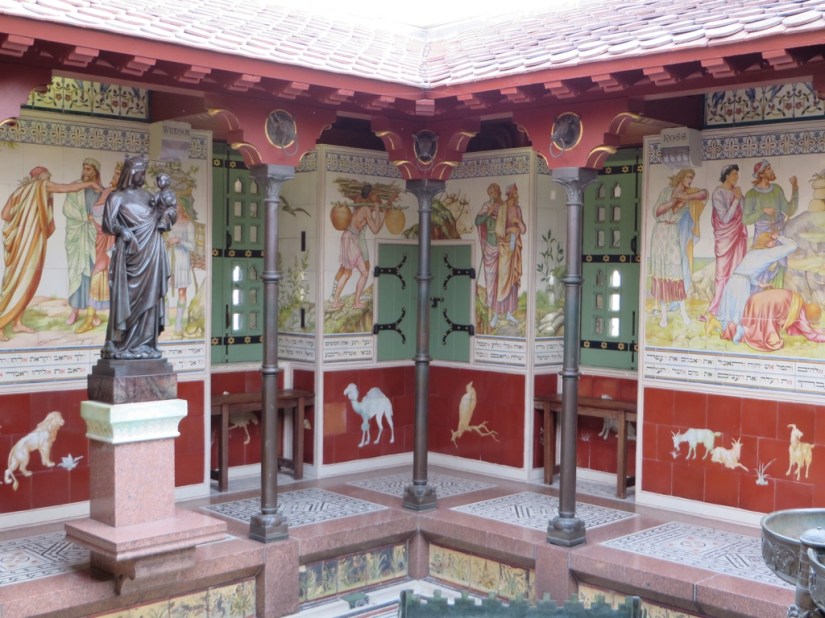


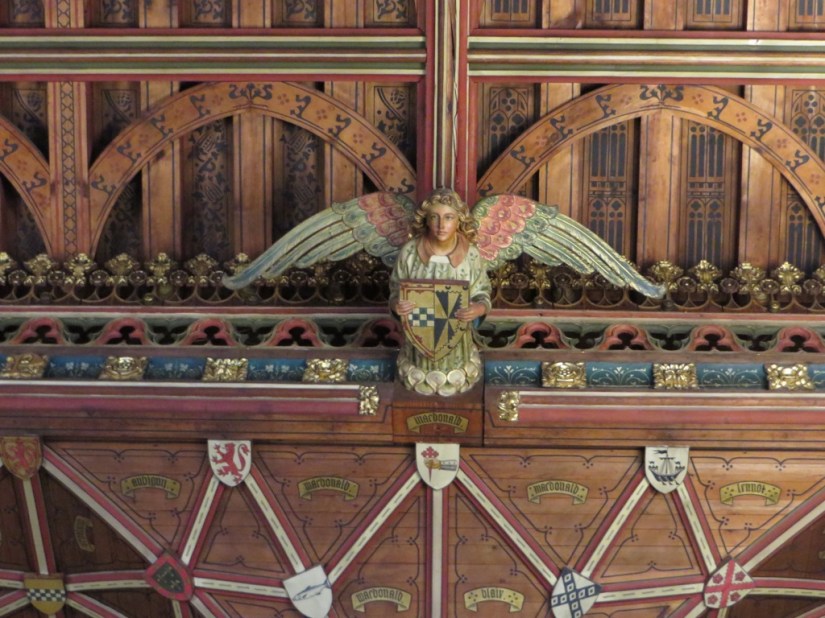

 Our trip to Cardiff ended where it started, with a cuppa at the Hayes Island Snack Bar … made with love since 1948 … before we caught our train home … catching sight of one last Dr Who reference!
 Today is the day, our fourth anniversary, and we have now spent more of the time we have known each other married than not! Time just seems to be flying by while we have fun!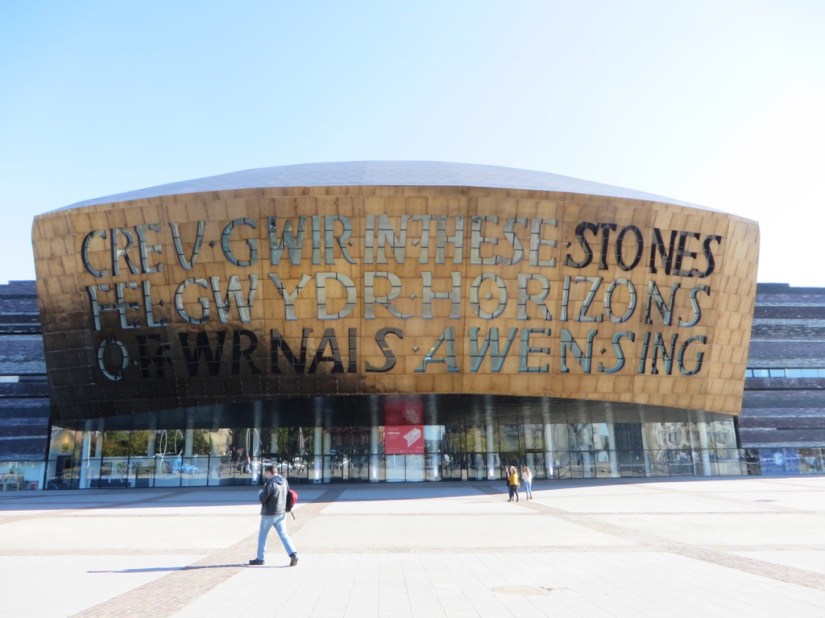








 We wandered though the arcades, picking up some welsh cakes to take home and some Welsh Teifi cheese with seweed to try with a glass of celebratory fizz back at the Ibis. The cheese was very nice but we couldn’t detect the seaweed … that might have been a good thing!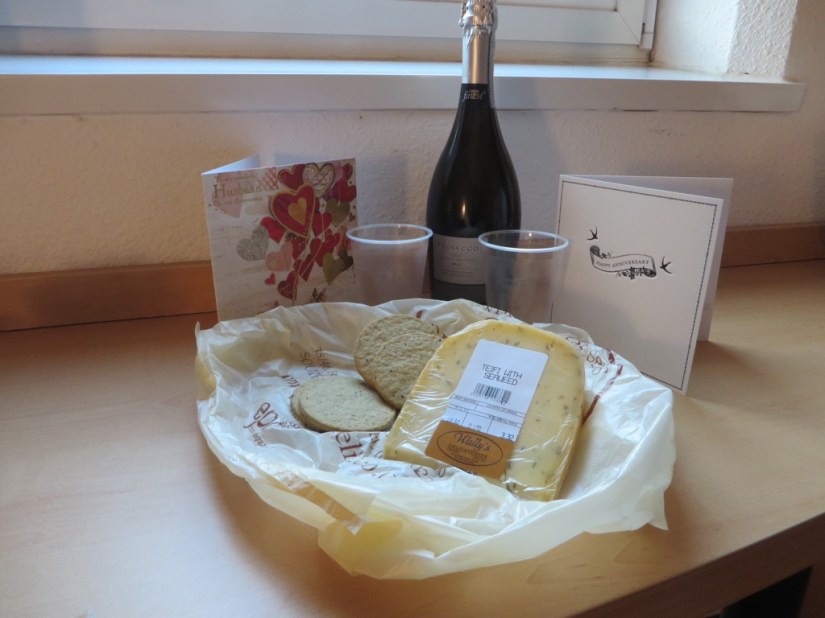


 After a good night’s sleep and an excellent breakfast, including Glamorgan sausages for Chris, we set off back to the River Taff, this time to follow the path southwards, passing the Millennium Stadium and Brains Brewery on the way.
 We knew we were almost at the bay when we caught sight of the front of the Wales Millennium Centre, with the copper coloured front catching the light. It is a Welsh performing arts centre dedicated to music and dance and we will be visiting it tomorrow. Looking towards the bay, the area is dominated by a huge tower sparking in the sunshine, a 70ft high metallic water sculpture, constantly bathed in flowing water.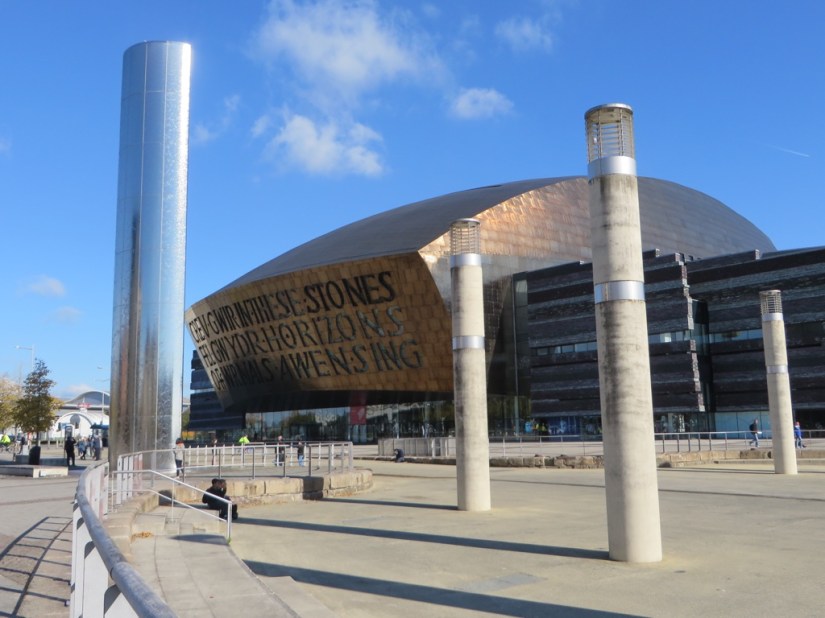







 Well the first treat is sitting in the first class carriage, complete with reclining seats and complimentary coffee! Not sure it was worth Chris having his car vandalised for, but a kindly gesture from Great Western Railway nonetheless.







 Other treasures include the Triptych of the Seed of David by Dante Gabriel Rosetti which was made for the high altar but is now in a side chapel …


 Chris has been looking forward to the highlight of his trip … a Sunday afternoon football match between Hellas Verona and Lazio, a team from Rome. It was typically Italian football with nudges, trips, dives, hacking, drama and handbags! The score was 1-2, Hellas Verona woz robbed! I’ve not been to a match with such good singing and banner waving before … quite atmospheric. Tunes included YNWA, When the Saints, The Red Flag, Que Sera Sera and our very own God Save the Queen, no doubt all with different words! Chris read a Tim Parks book about a season when he followed Hellas Verona to every game, and every character and emotion described at those games, were present at our game!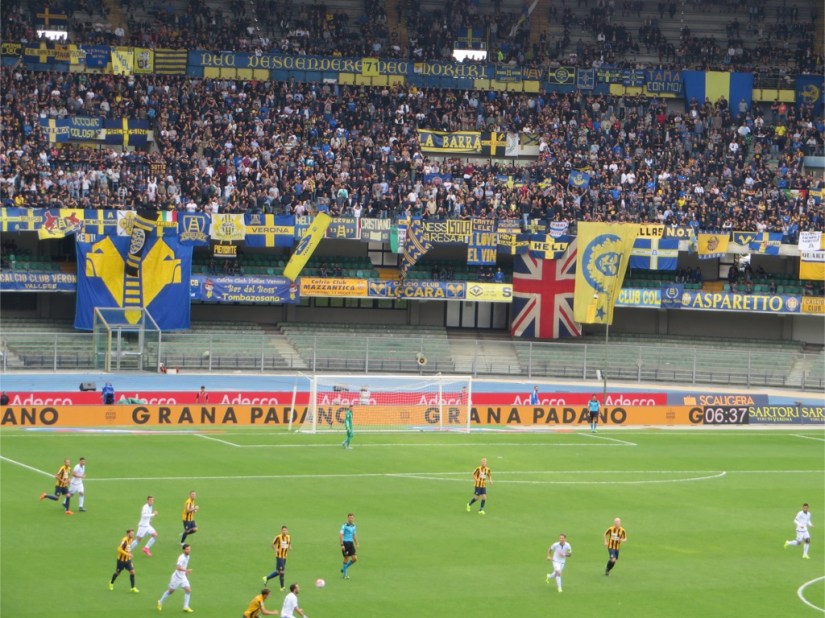























 Desenzano has been a popular holiday destination since Roman times, and remains so today, with a street of very chic and expensive shops and lots of restaurants and cafes. It was a bit overcast when we arrived and there had been a storm the day before.




 The small historical centre gets choked with tourists, browsing in shops and consuming ridiculously large cones of gelato so we escaped and went past the little Chiesa Di San Pietro with a fresco of the crucifixion …








 Mantova is a very appealing and walkable town, with four interlocking piazzas in the centre surrounded by civic buildings and churches. Unfortunately an earthquake in 2012 resulted in damage to some buildings which are still under repair.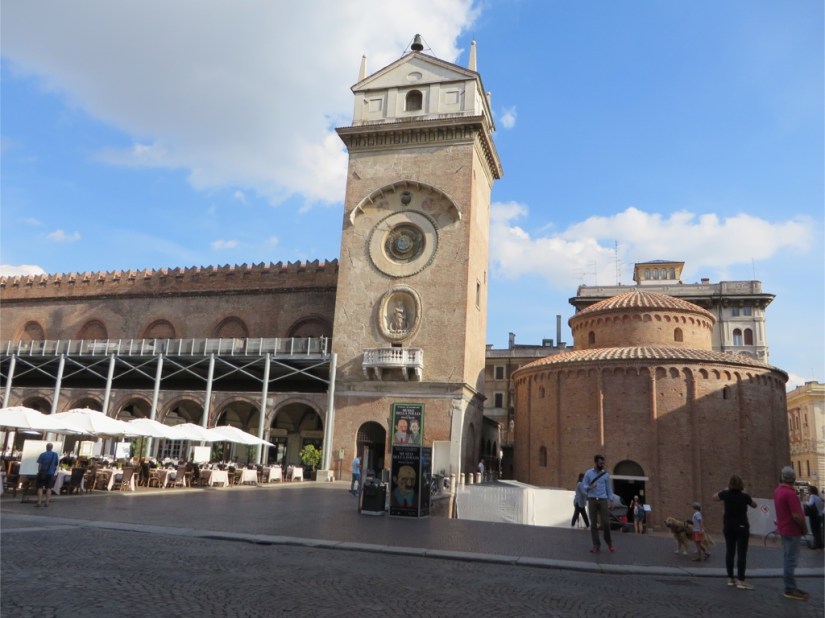




















 Padova’s garden is the Orto Botanico del Padova, which was founded as the garden of curative herbs attached to the University’s faculty of medicine and still contains an important collection of rare plants. It also has the recently built Garden of Diversity with tropical and temperate greehouses containing plants from round the world. It was relaxing to wander round among the plants having spent the day in the town.

 We are visiting Vicenza on the trail of Andrea Palladio, a 16th century architect, whose fascination with Greek and Roman buildings led him to develop the Palladian style which spread throughout the world.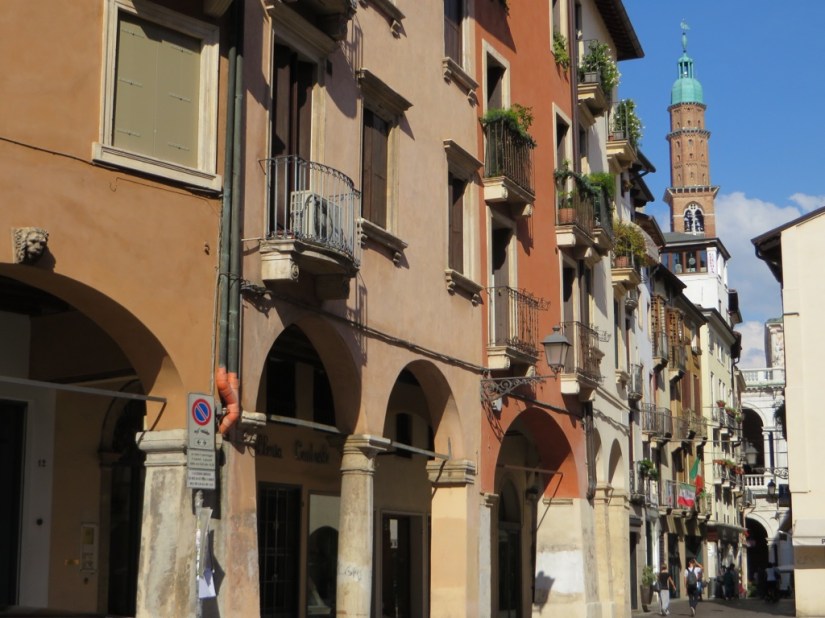











 Off Travelling Together