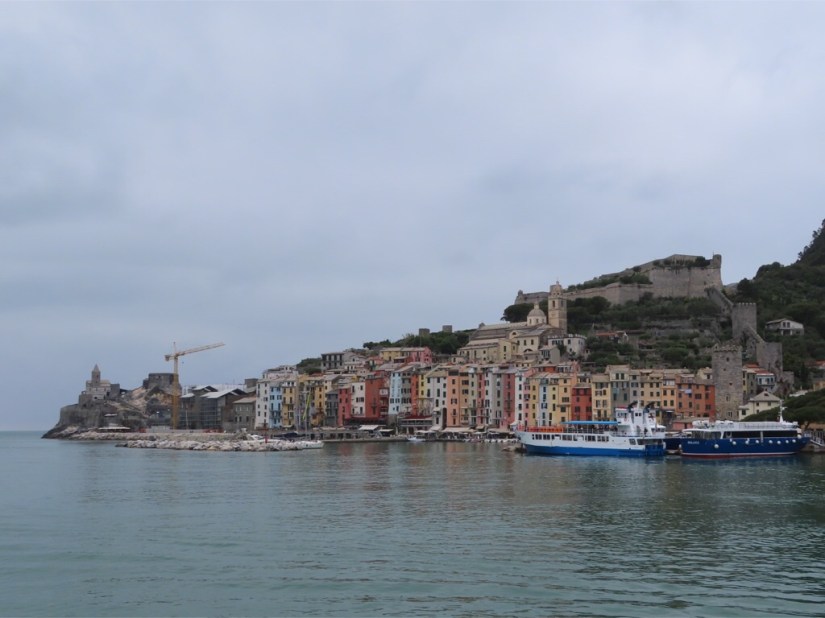
Golfo dei Poeti – Portovenere

The natural beauty of this bay has inspired writers and artists as far back as Petrarch and Dante. Later it was popular with a number of Italian writers as well as DH Lawrence and Virginia Wolf. Shelley lived in the village of San Terenzo with his wife Mary and Byron famously swam across the bay from Portovenere to visit them. But the sea here is not always kind and tragedy struck a month before Shelley’s 30th birthday when a sudden storm in the Bay of Spezia caused him to drown during his journey back to Lerici in his sailing boat.

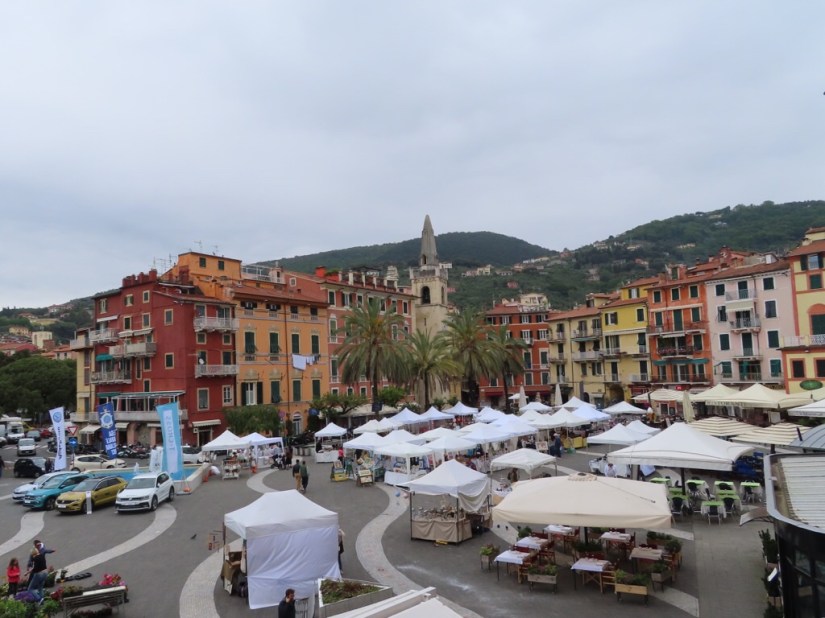
We are staying in Affittacamere Vittorio in Lerici, a lovely room with dark green shutters above a gelateria with a view of the square …

… and from here we will be exploring the coast around the bay. It’s another of those grey days and having travelled on two trains and a bus, we arrived at lunchtime and quickly checked in, grabbed a bite for lunch …

… walked to the pier …
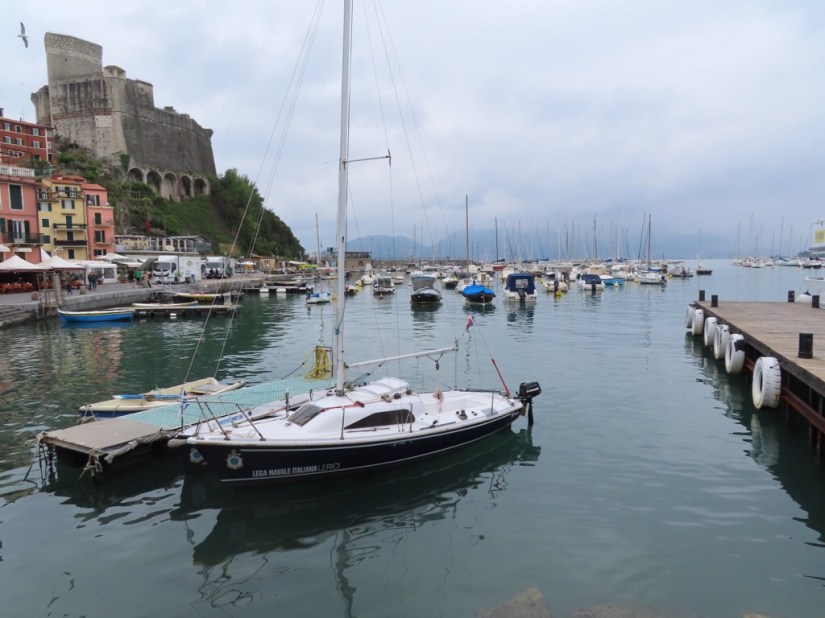
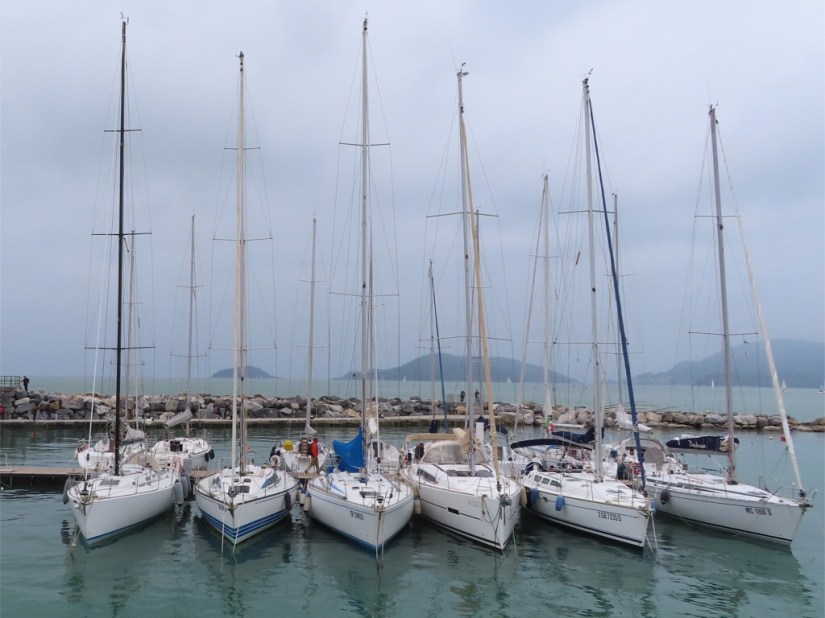
… and left Lerici behind …
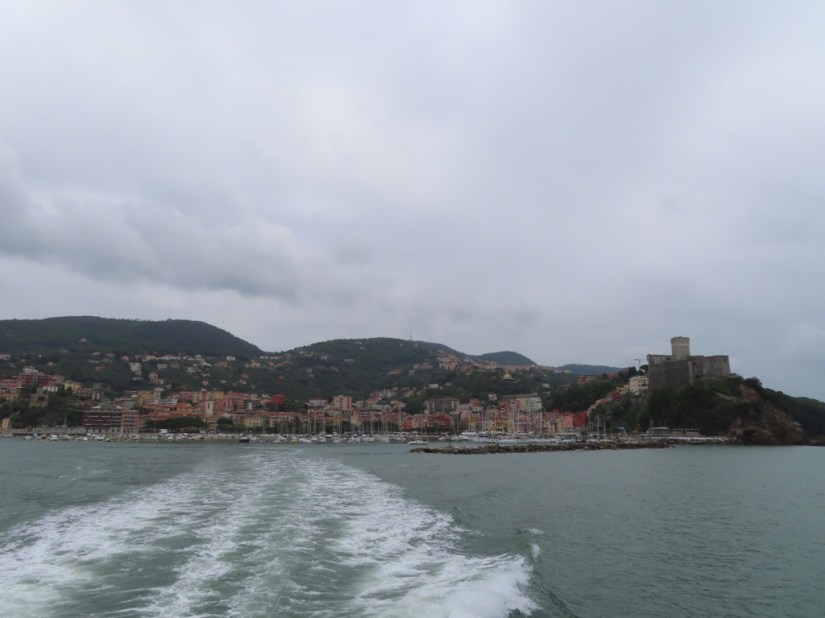
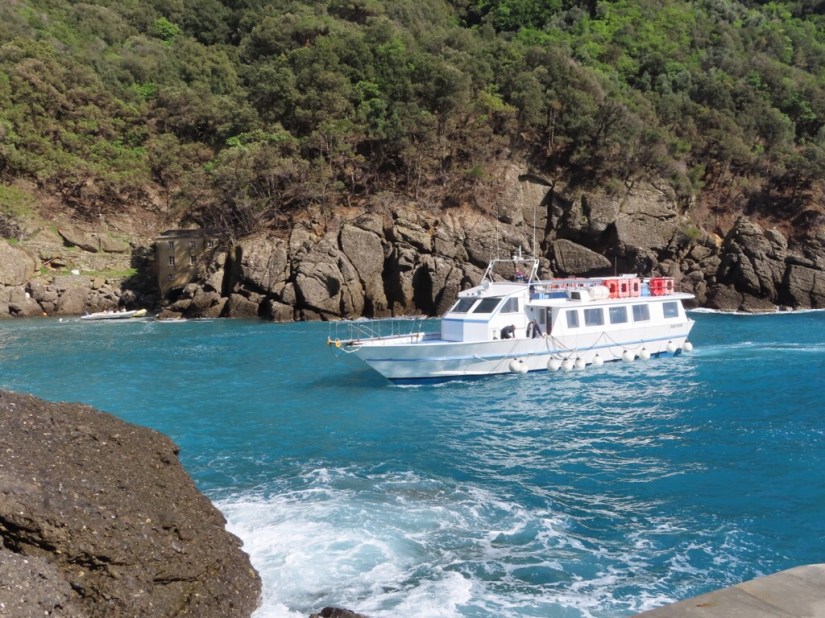
… as we took the boat to Portovenere, ahead with Palmaria and Tino islands to the left …

… while clouds lurked over La Spezia.

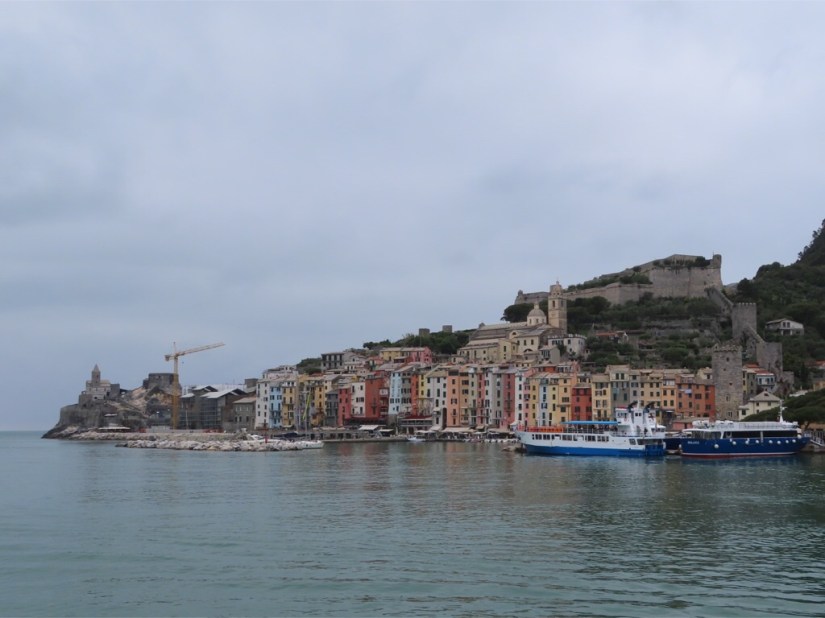
Once a fortified fishing village, Portovenere is now a popular tourist destination and we spent the afternoon exploring.
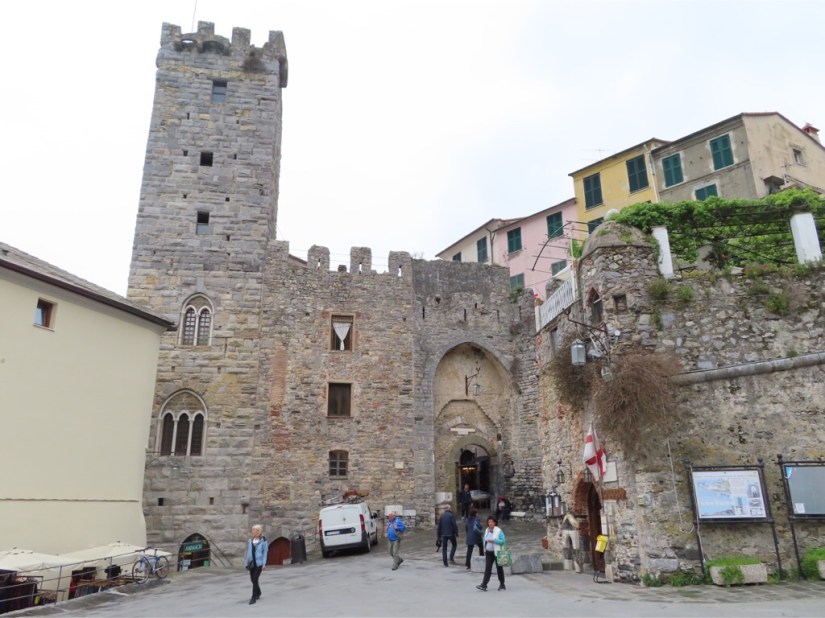
We started with the town gate and tower, leading to a narrow street filled with tourist shops selling souvenirs, snacks and local foodie specialities to take home.
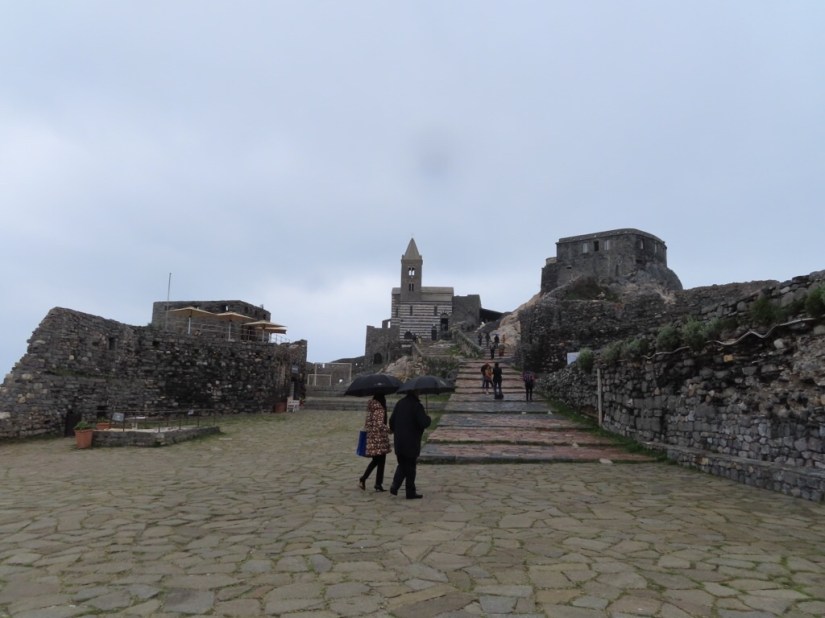
We continued to the Church of San Pietro, standing here since the C12th …
… and Cave Arpaia, one of many caves in the area, but specifically the one in which Byron recited poetry, as stated on the sign!

Climbing up, we passed the ruins of two cylindrical structures which used to be both mills and guard towers …

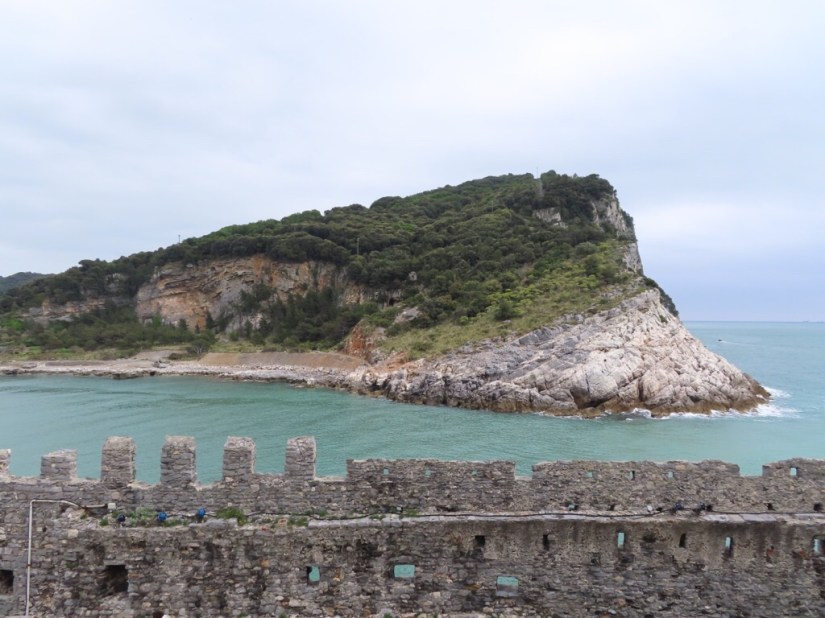
… then on to the C12th Church of San Lorenzo, containing the White Madonna. As the story goes, in 1399 Portovenere was being devastated by a plague and when Lucciardo, a local devout man, was praying in front of an image of the Virgin Mary asking for his village to be freed from the terrible disease, suddenly, the colors of the painting lit up, gleaming and the plague disappeared.

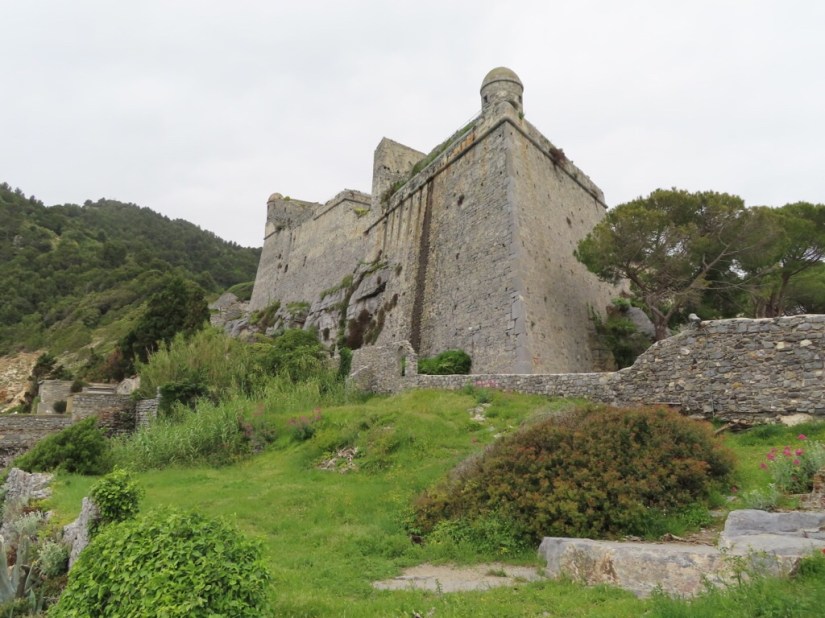
A bit more of a climb to the Doria Castle … those Dorias get everywhere … once a defensive structure, now converted to tourist attraction, concert arena, exhibition space and wedding venue!
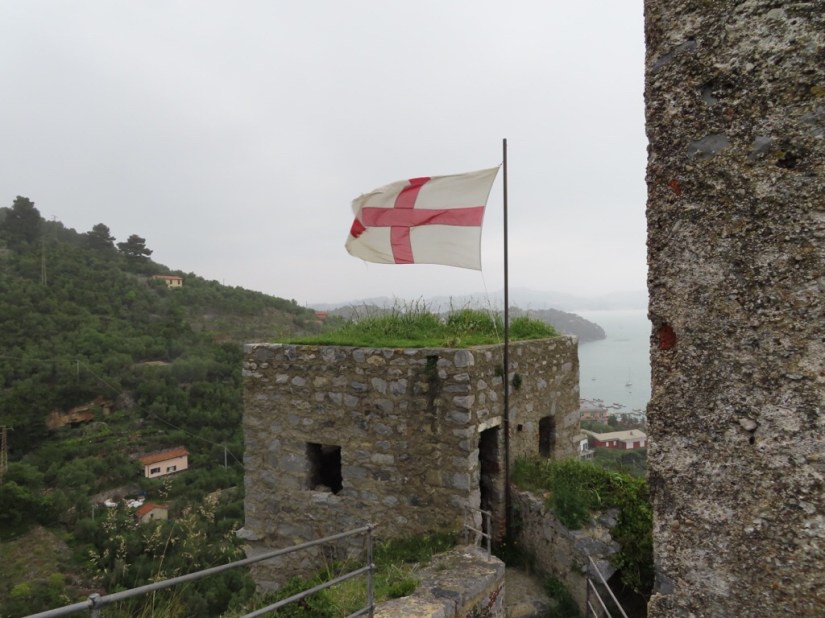
You might we wondering about the white flag with the red cross which has been flying from many of the buildings … it is the city flag of Genova, derived from the Cross of Ambrose adopted by Milan and popular in much of northern Italy … and also predating the Crusades, the St George’s Cross and the flag of England!

Too chilly for ice cream or aperol, we took the boat back for a nice cup of tea!

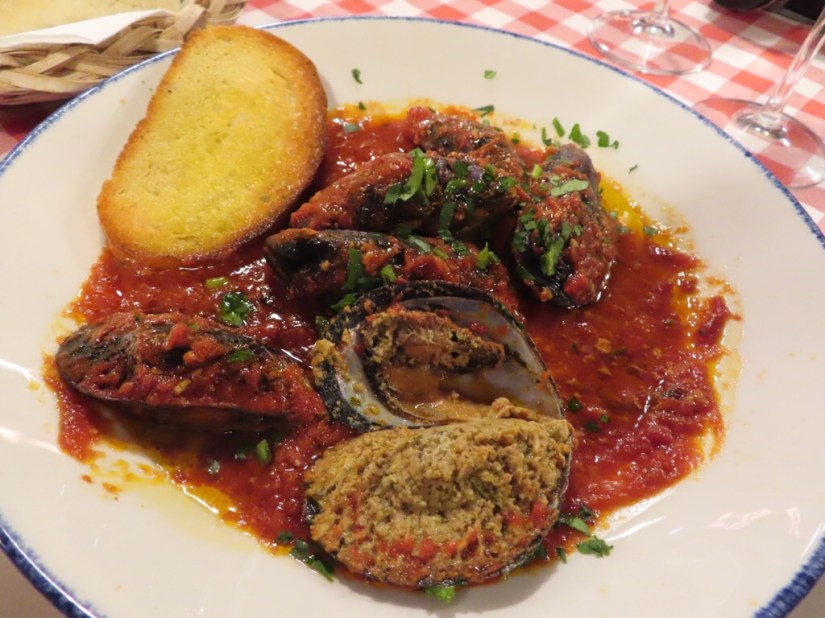
I had stuffed mussels for dinner, maybe the best dish of the holiday, so Trattoria Mani di Fatima deserve a mention!
Map

Portofino Peninsula – Camogli to Portofino

Another sunny day for walking so we took the train one stop to the chic resort of Santa Marguerite Ligure, popular with wealthy Milanese, with its castle and seafront studded with smart hotels.

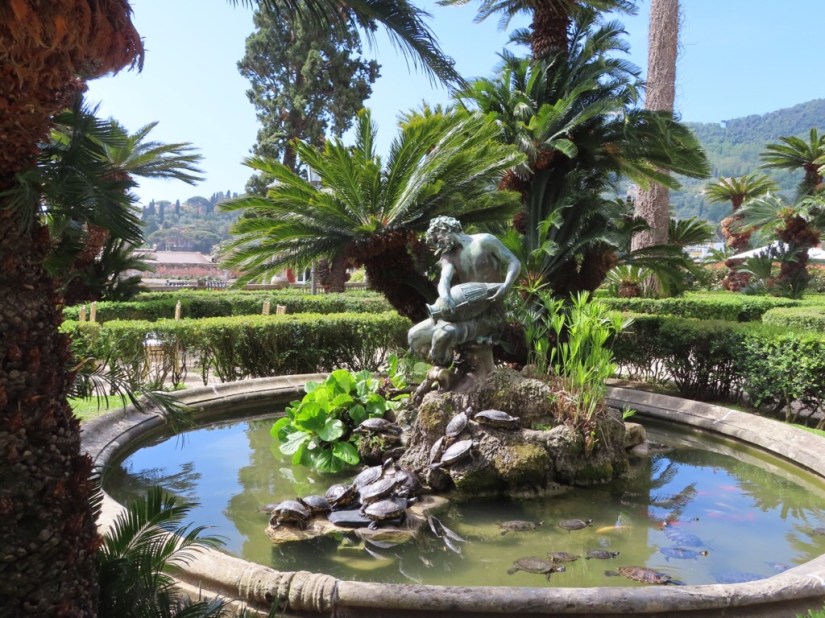
We walked up to the Baroque Church of San Giacomo Di Corte then walked round the gardens of the Renaissance Palazzo Durazzo, typical of the villas in this area, complete with statuary and fine views.

We picked up rolls for a picnic at the supermarket and set off past the harbour …

… and up a narrow path winding upwards. It was another walk though the countryside, on a mule track, with glimpses of the sea and more ups and downs than we were expecting!

We found another picnic stop with a distant view of our destination …

… and some time later, the path became quite a bit smarter …

… as it made its final descent into Portofino.

It really is as one might imagine a perfect Italian fishing village to be!

Having said that, it still has working fishing boats moored beside immense luxury cruisers.

We took the path first to the church of San Giorgio, then higher to Castello Brown, built as a coastal defence in C16th, then bought in the C19th by the British Consul to Genova, Montague Yeats-Brown, and converted into a comfortable villa, hence its name. It is now open to the public and we went to look round and get a great view of Portofino.

Time enough for an ice cream … at €3.50 each well over the going rate but still yummy … the ferry back to SM Ligure and the train home.

Slight technical hitch in that we got on the wrong train and went whizzing past our stop … fortunately we only overshot by one stop … but owned up and bought new tickets to return to Camogli.

Friday night and the town was buzzing, especially with the festival tomorrow. All the restaurants we open and we picked an osteria with pizza for Chris and fish of the day for me.

Darkness had fallen while we were eating and all the buildings were lit up and twinkly …

… not that we will be there to sample the fish fest as we are off in the morning to our final destination … Lerici.

Map

Portofino Peninsula – Camogli to San Fruttuoso

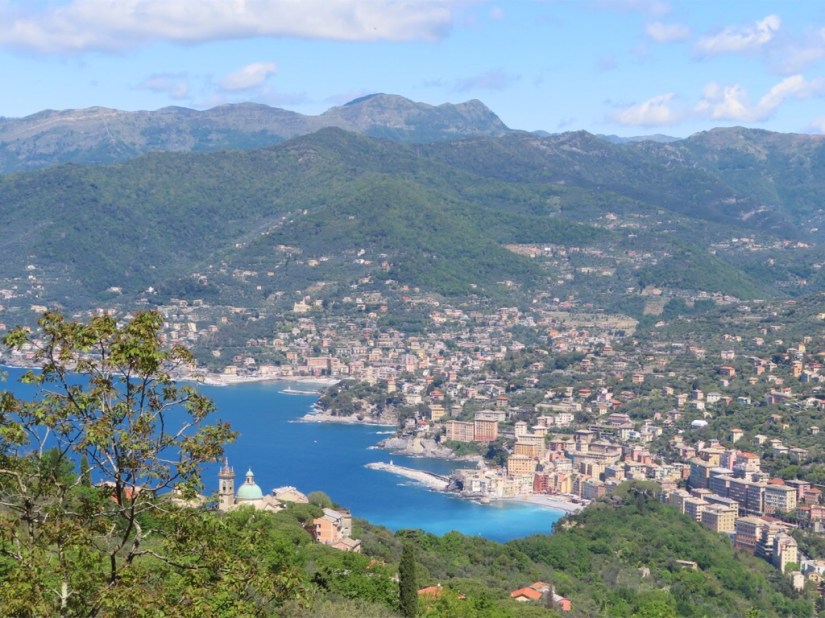
It was definitely a walking day today and we had a route planned. We followed a path out of town and climbed up between gardens and villas on an old mule track to the hamlet of San Rocco. A huge group of teenagers were out on a school trip and while we waited for them to move on, took a great photo of the coast as far as Genova.

We bought some bits for a picnic in the local shop …

… then set off, getting a great view of Camogli and San Rocco.

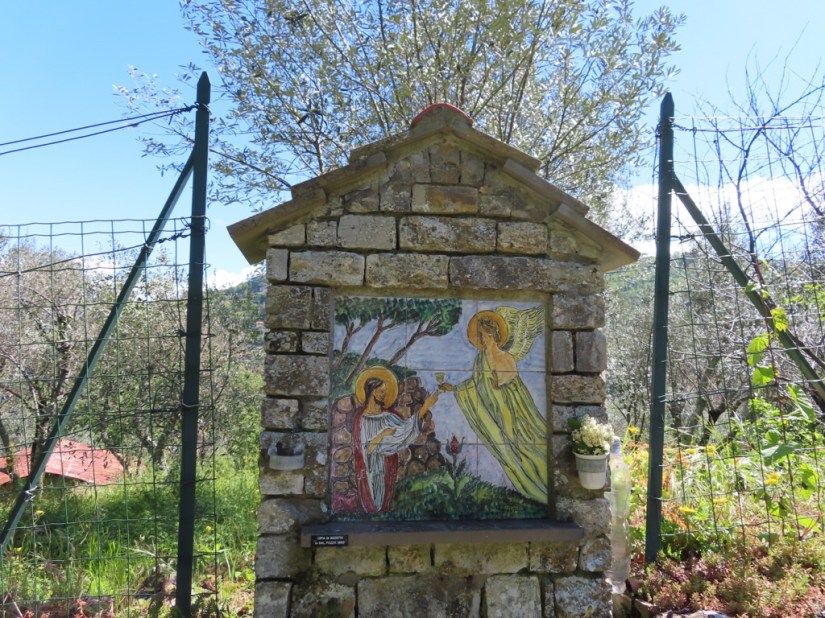
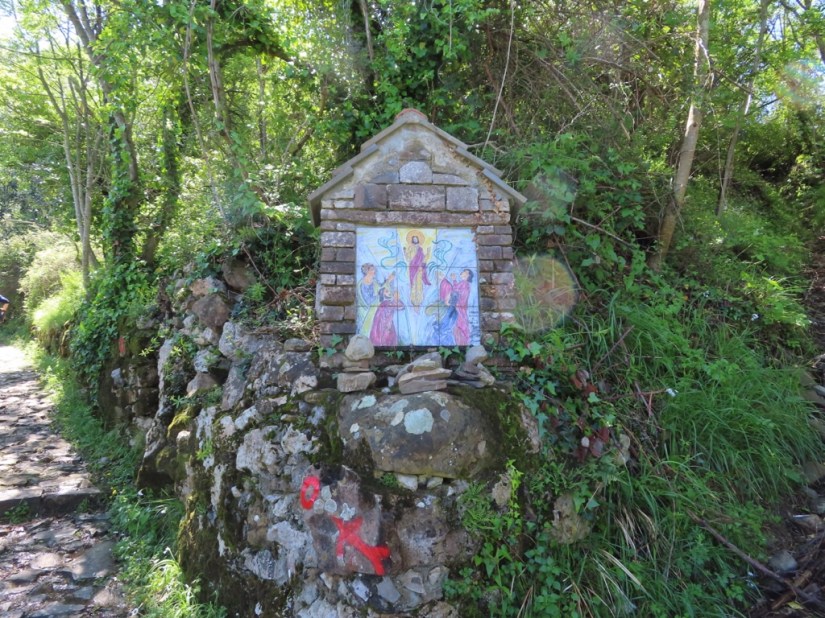
There were stations of the cross made of colourful ceramics as the path climbed.

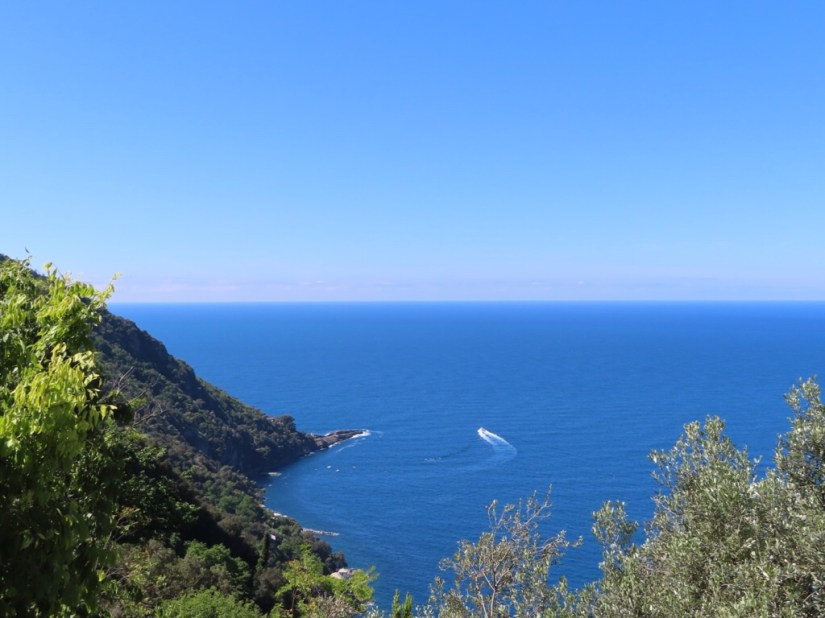
We took a detour round Monte di Portofino offering snatches of sea views …

… then a perfect picnic spot, complete with back rests and a view and tucked into a torte made of rice flavoured with cheese, onion focaccia and the vegetable torte filled with greens sold everywhere here.

A bit further and we went down on a cobbled mule track through the woods.

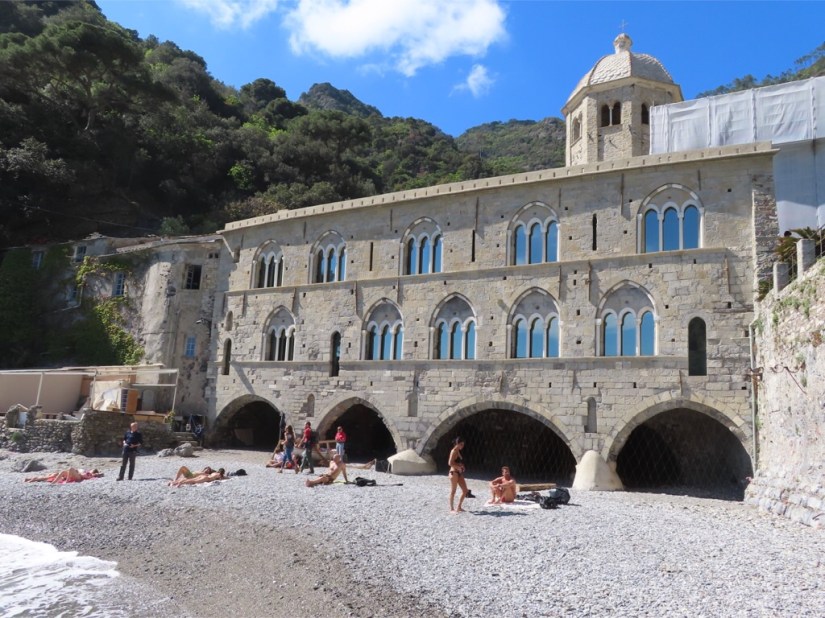
The track zig zagged back and forth and it seemed to go on forever … but finally we reached the monastery and hamlet of San Fruttuoso. How the remains of this saint were buried here is unknown, but there has been a monastery here since at least 984. In 1200 the Abbey was given some land and became connected with the Doria family who were allowed to bury their dead here in exchange for paying to extend the buildings. Over time, there were periods of disrepair then renovation and finally in 1983 the Doria Pamphili family gave the site to the FAI, the Italian National Trust enabling us to visit for free with our NT cards.

We took various pics of the church, tombs of the Doria family and a painting of Andrea Doria.

Luckily we didn’t have long to wait for the ferry … the only other way out of the bay … and 15 minutes later we were back in Camogli.

The book said the route was 7.5 miles although my step counter suggested 11 for the whole day … either way, we deserved our bowls of pasta for dinner!

Map

Portofino Peninsula – Genova

Having had a couple of sunny days, today was grey, chilly and damp so we took the train to Genova.

Genova was one of the world’s greatest trading powers in medieval times and controlled most of the Riviera de Levante from the mid C13th. This brought about Genova’s Golden Age, with its aristocratic dynasties trading all over the world and building grand palazzi in the city.

Walking out of the station the huge victory arch dedicated to the Genoese who died in WWI was ahead of us.

We turned down the main shopping street of the city lined with smart shops with beautiful facades and convenient arcades to keep dry.

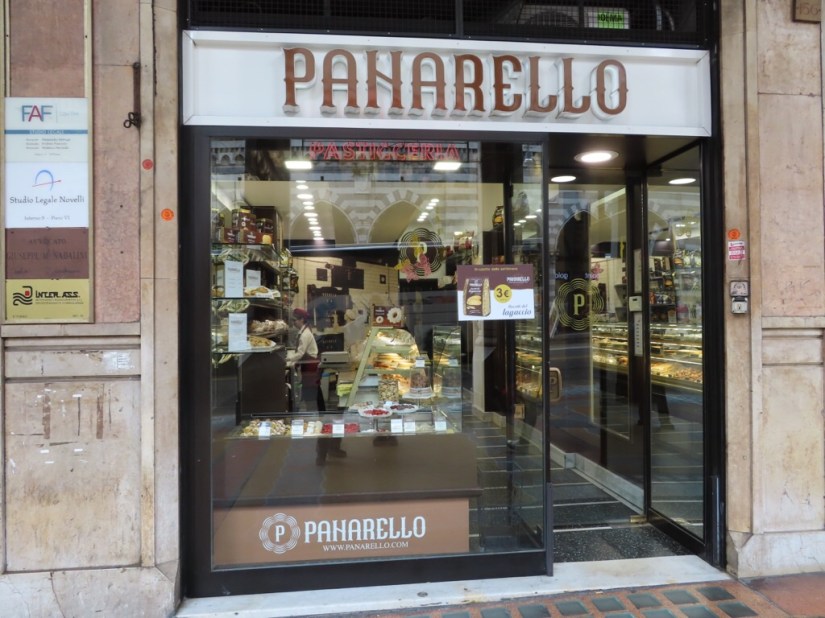
We bought a couple of panedolcino, little rolls flavoured with pine nuts and dried fruit (which we ate for breakfast next day and were delicious!).

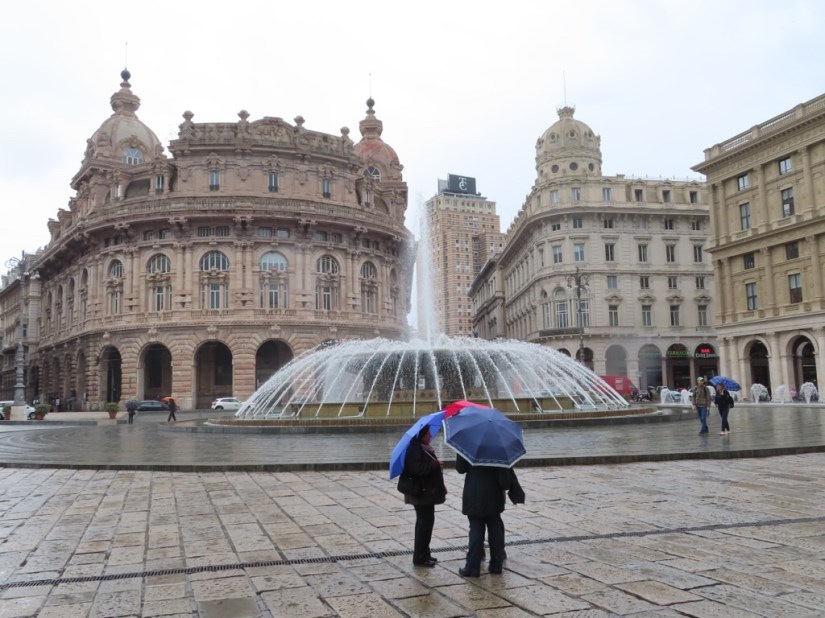
Reaching Piazza de Ferrari …

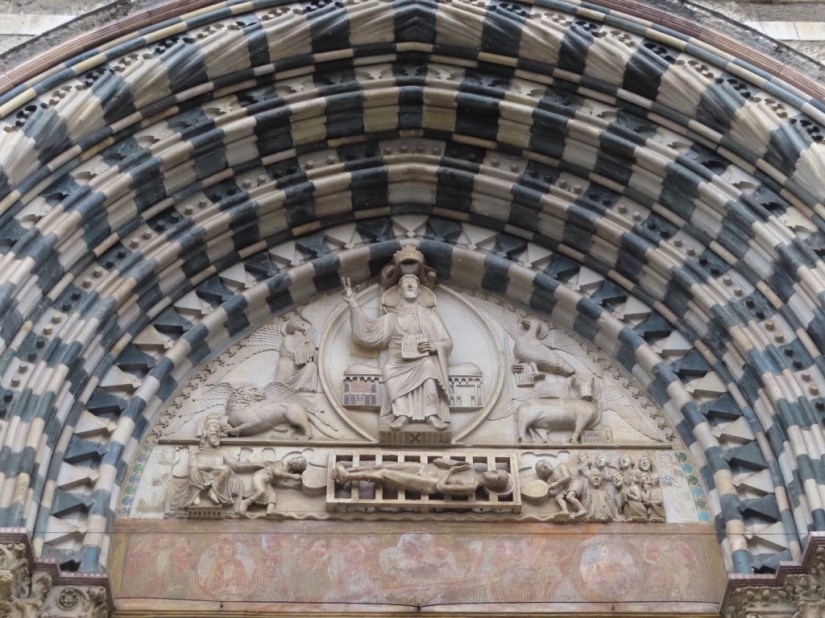
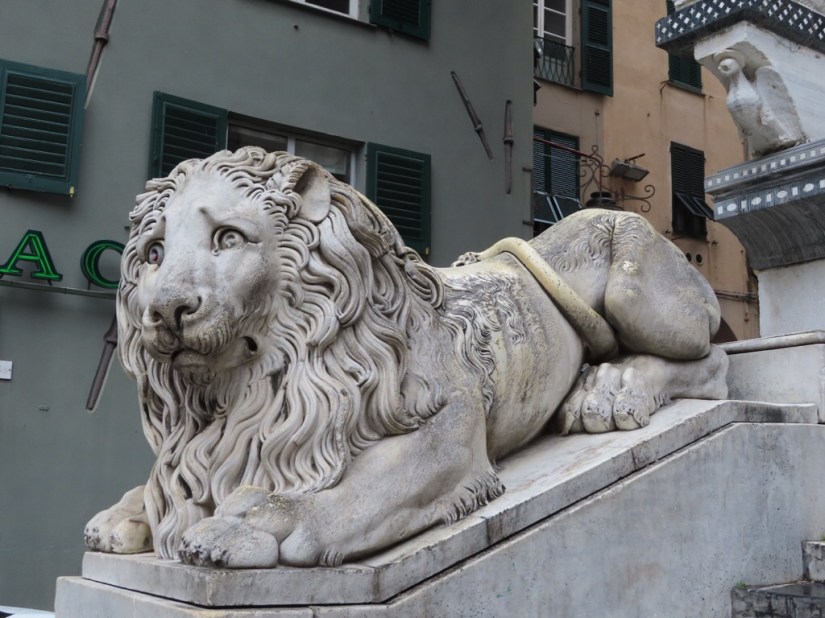
… we then turned into the maze of streets making up the old town, stumbling on Cattedrale San Lorenzo almost by mistake, but we went in for a quick look before it closed for lunch …

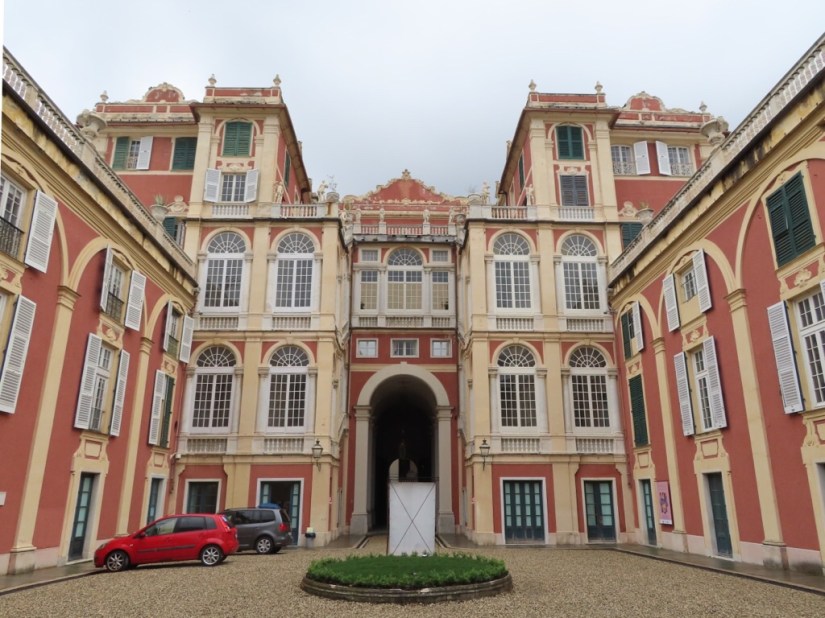
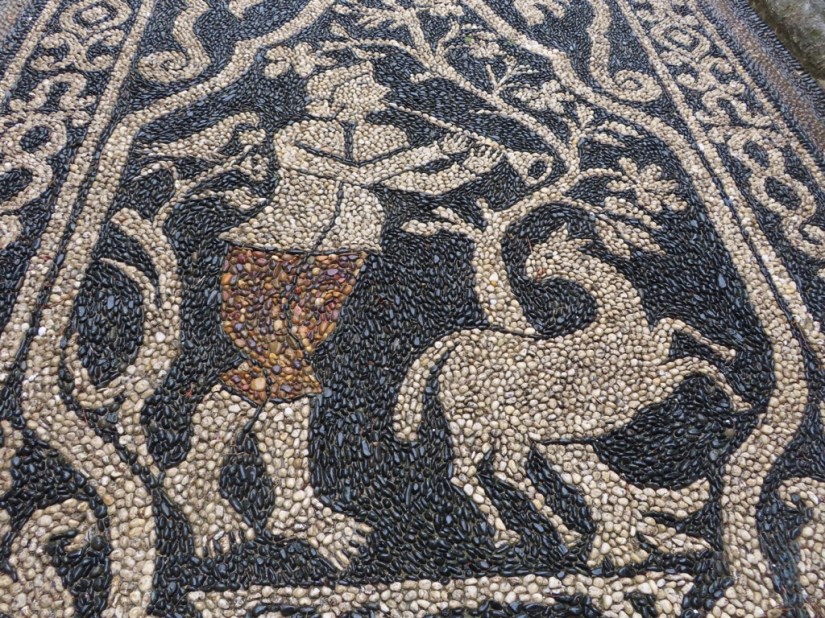
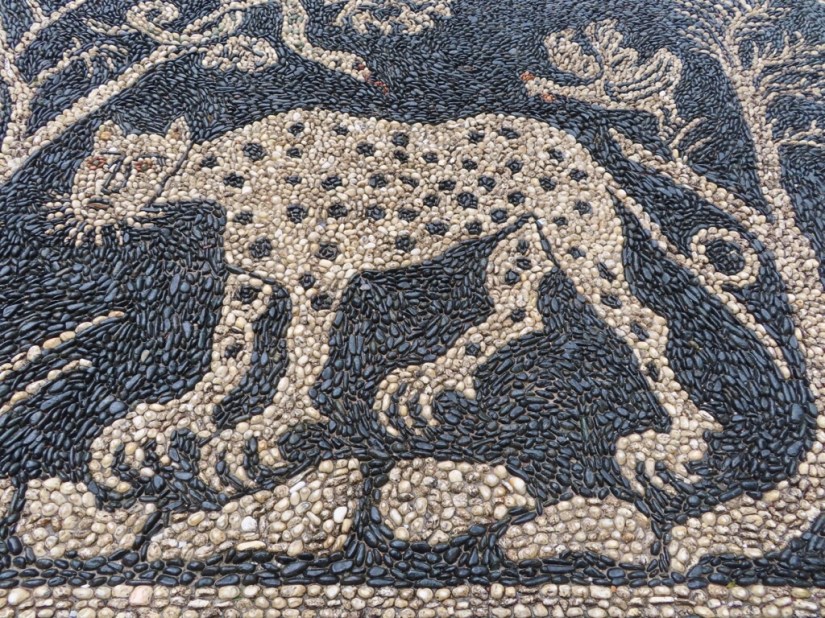
Next was Palazzo Reale, rebuilt in the Baroque style for the Durazzo family in C18th and used as a royal palace by the House of Savoy who ruled Italy between Unification in 1861 and the Republic in 1946. It is sumptuous, filled with gilding, rich fabrics, furniture and art. The hall of mirrors and the throne room say it all! Outside is a courtyard containing a fountain, set in a lovely a Ligurian pavement … the elephant and cheetah being the stars!

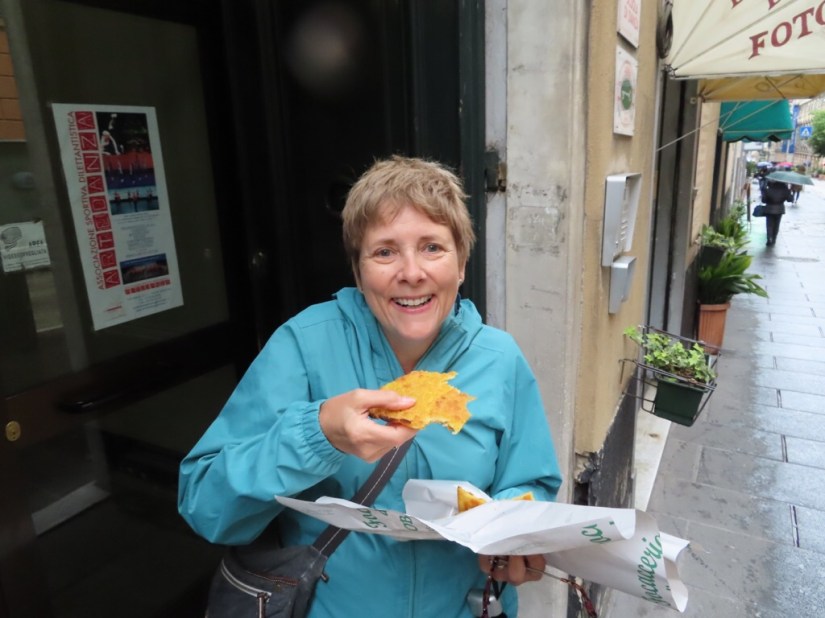
Lunch was takeaway farinata, a local chickpea pancake made in a large pan and served hot … tasty!

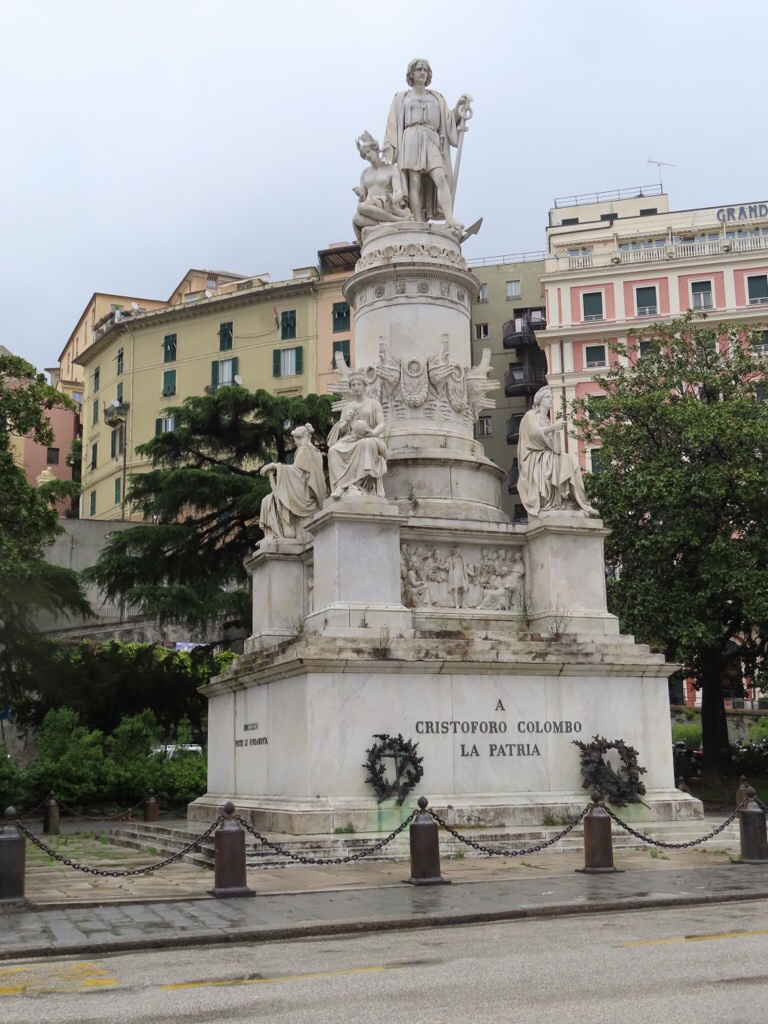
Christopher Columbus is Genova’s famous son, and he stands tall outside the main railway station.

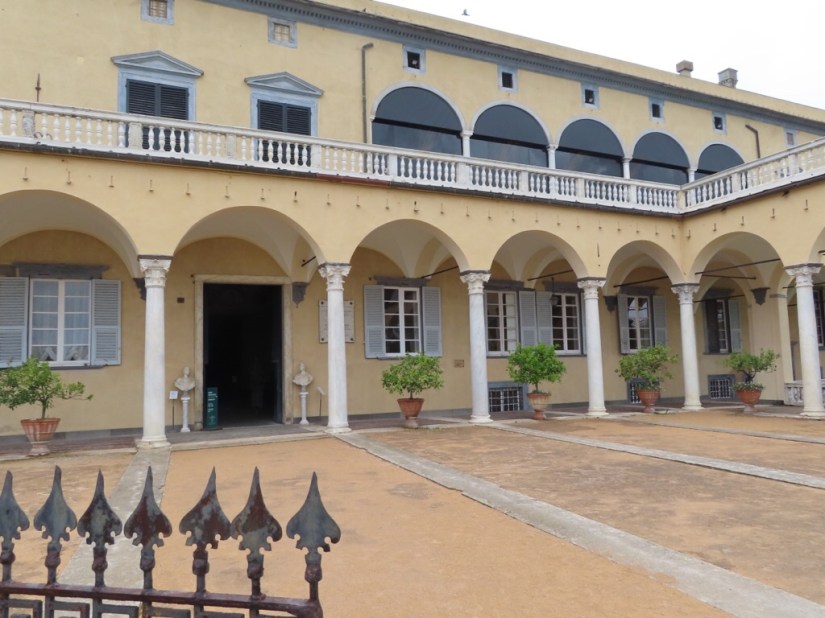
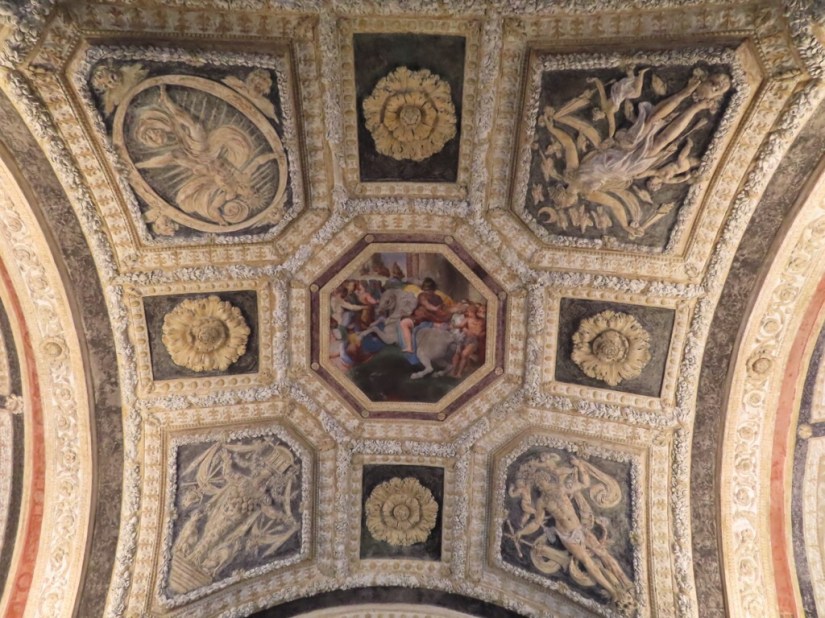
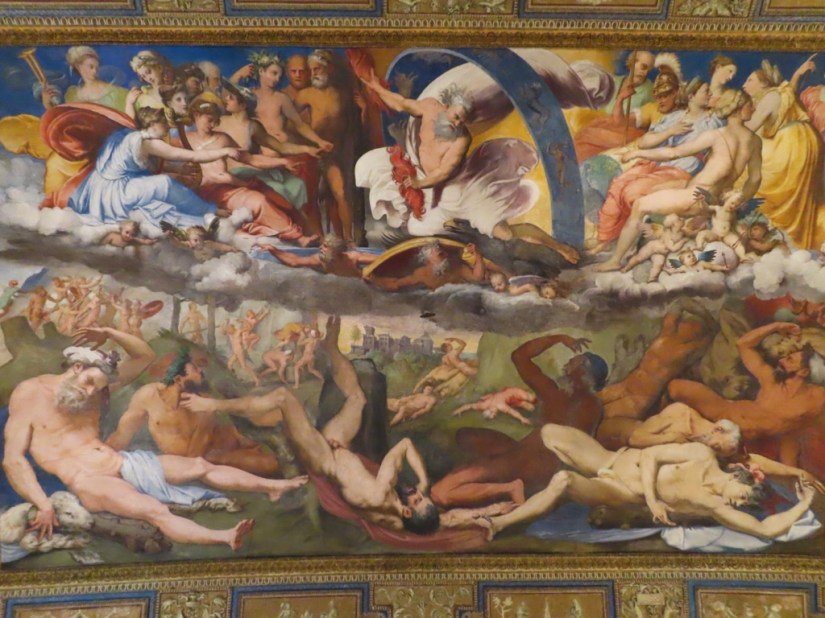
The Palazzo Principe was built for Andrea Doria, the most famous Genoese admiral and virtual dictator of the city for much of the C16th. He planned his naval battles here and tested models of galleons in the garden pond. There are tapestries of the Battle of Lepanto, his most famous victory which stopped the advance of the Ottoman Empire, in a room with a very nice ceiling.

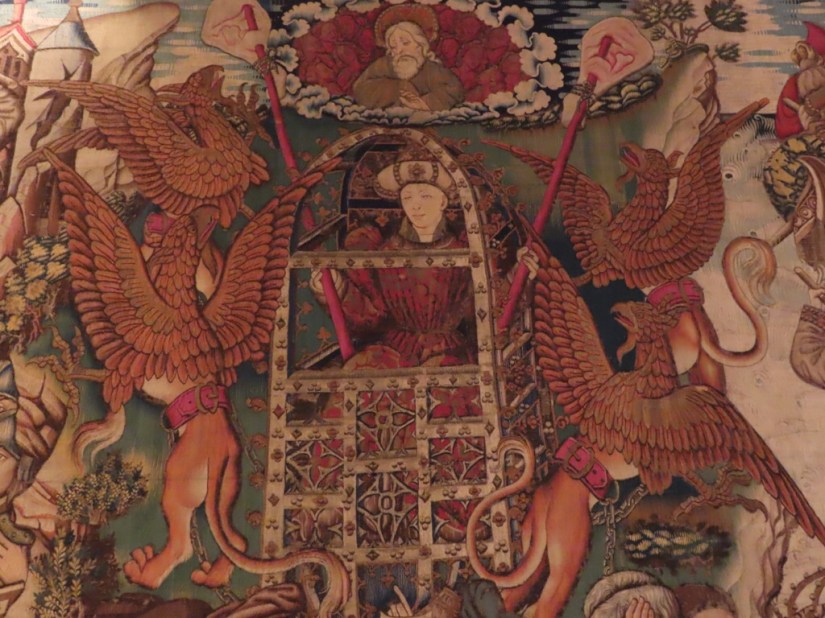
The Hall of Giants, named for the ceiling fresco also contained tapestries showing stories from the life of Alexander the Great including his horse Bucephalus and being carried aloft by griffins.
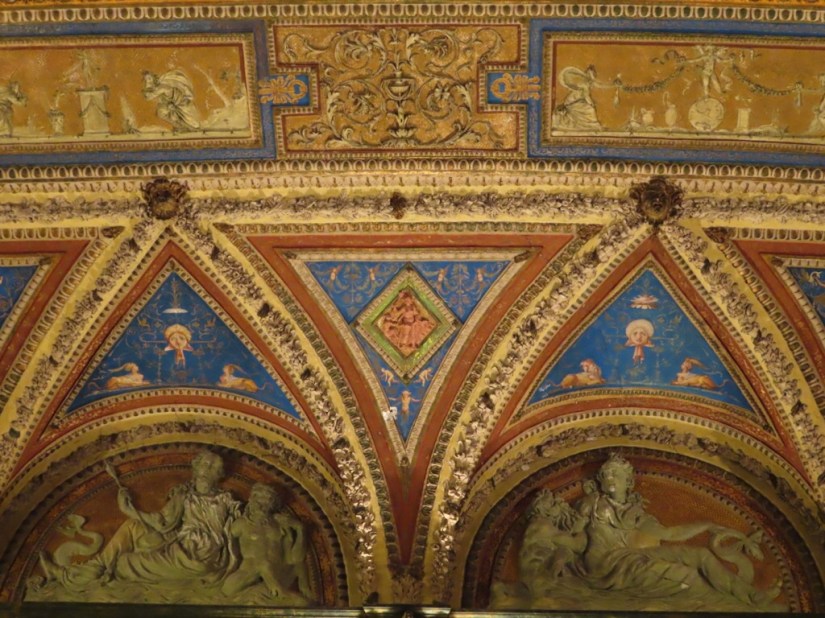
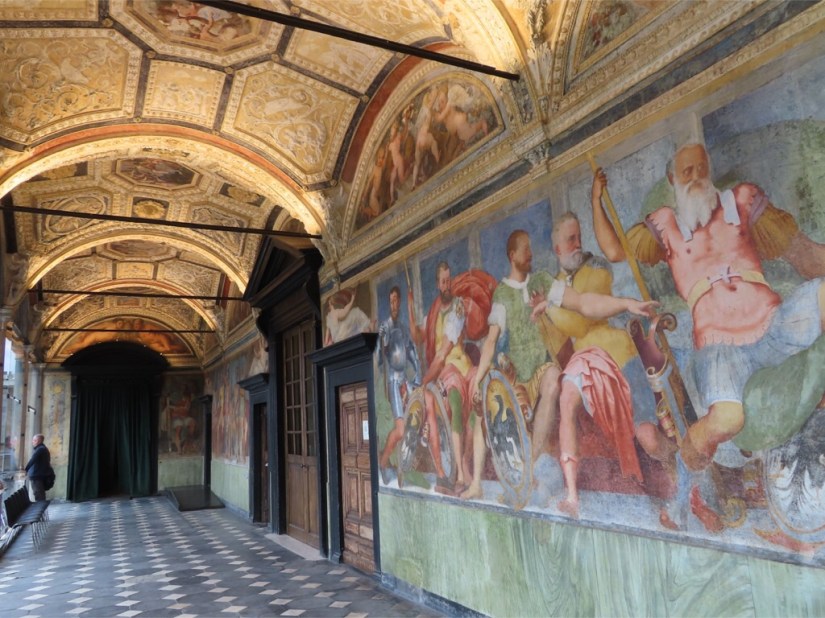
The Loggia has a fresco of several members of the Doria family depicted as Roman soldiers …

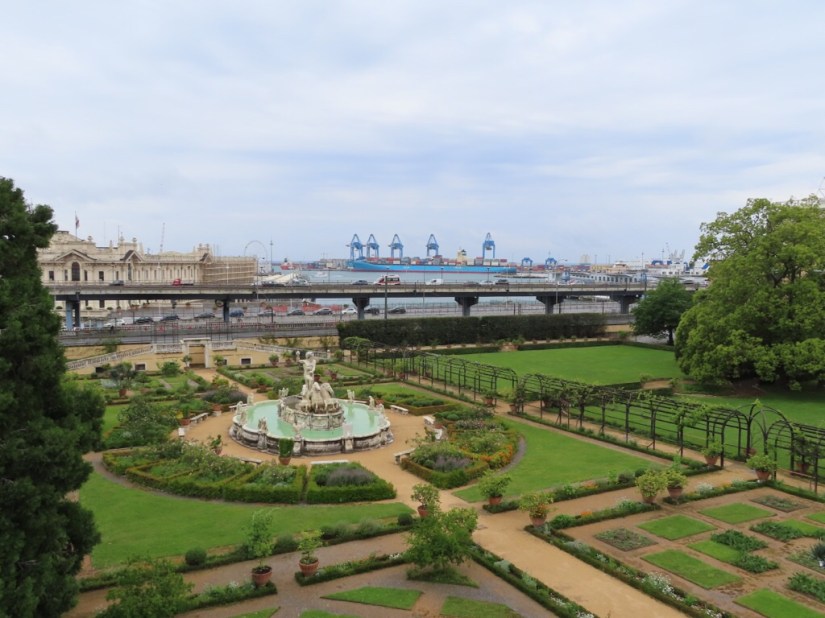
It looks out onto the garden, with a view of the docks and the Stazione Marittima built in the 1930 for transatlantic liners, a reminder that it was the sea that provided these great families with their wealth and power. You can also see the eyesore which is the flyover carrying the SS1 straight through the city!

We walked under the flyover which separates the main part of the city from the port …

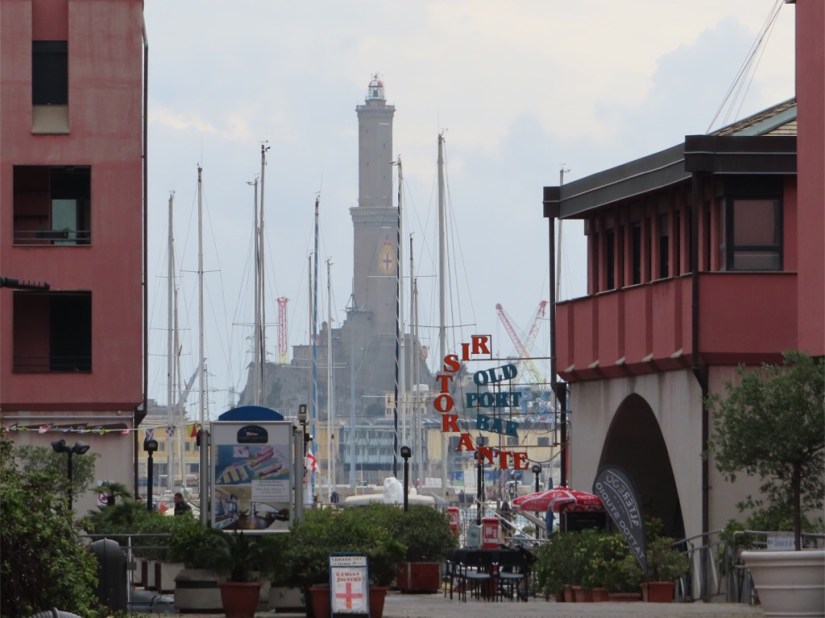
… saw La Lanterna, the lighthouse dating from 1543 and 77m high …
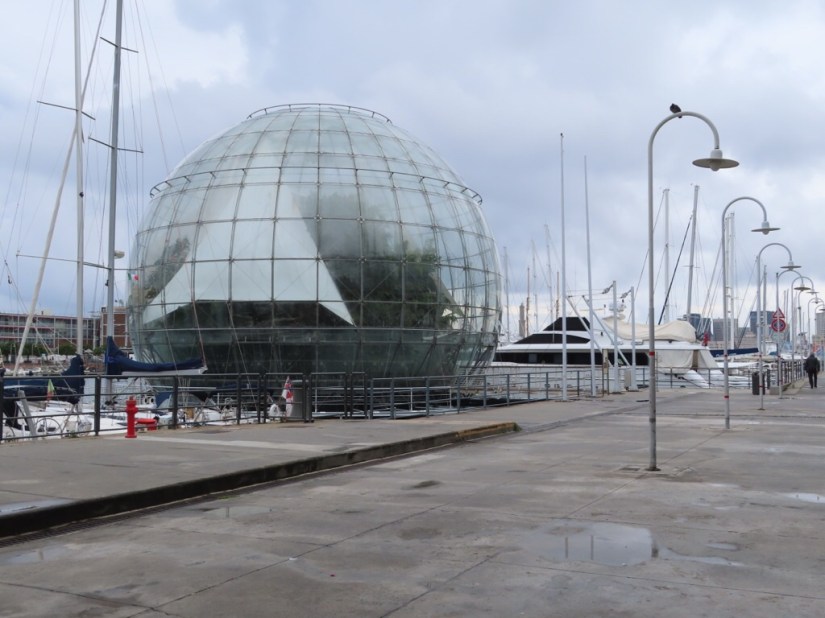
… and continued round the port renovated by local architect Renzo Piano including Il Bigo, a panoramic lift inspired by old cranes and the Biosphere, containing tropical plants. there was also a maritime museum and aquarium, but as it was still grey, chilly and damp we walked past pretty quickly.

As we left the port, we passed the Palazzo San Giorgio, originally home to one of Europe’s first banks which financed royalty and issued the first cheque. It was also where Marco Polo recounted his traveller’s tales while held prisoner. It is now home to the port headquarters.

Piazza Banchi gave its name to banking as it once contained money-changer’s tables, or banchi that once stood here until they were moved to the Loggia dei Mercanti which is now an exhibition hall.

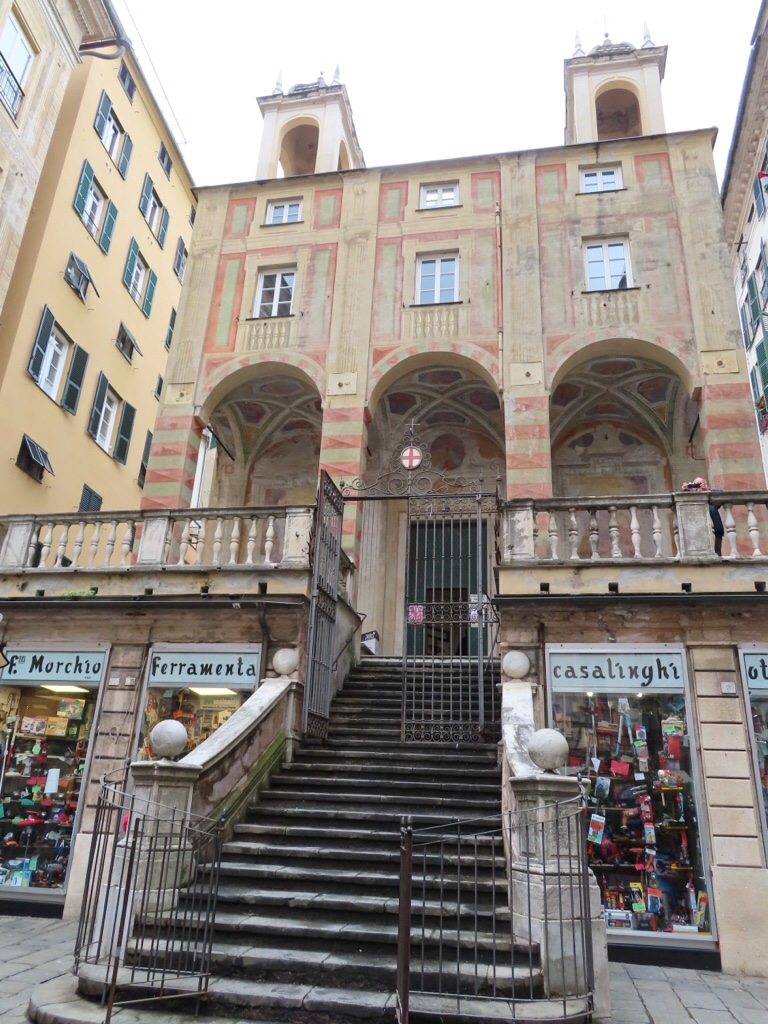
The church, San Pietro in Banchi, had stood here since the C9th, but was damaged and then rebuilt in the C16th, but to fund its rebuilding, concessions were sold as shops so it stands on a terrace above.

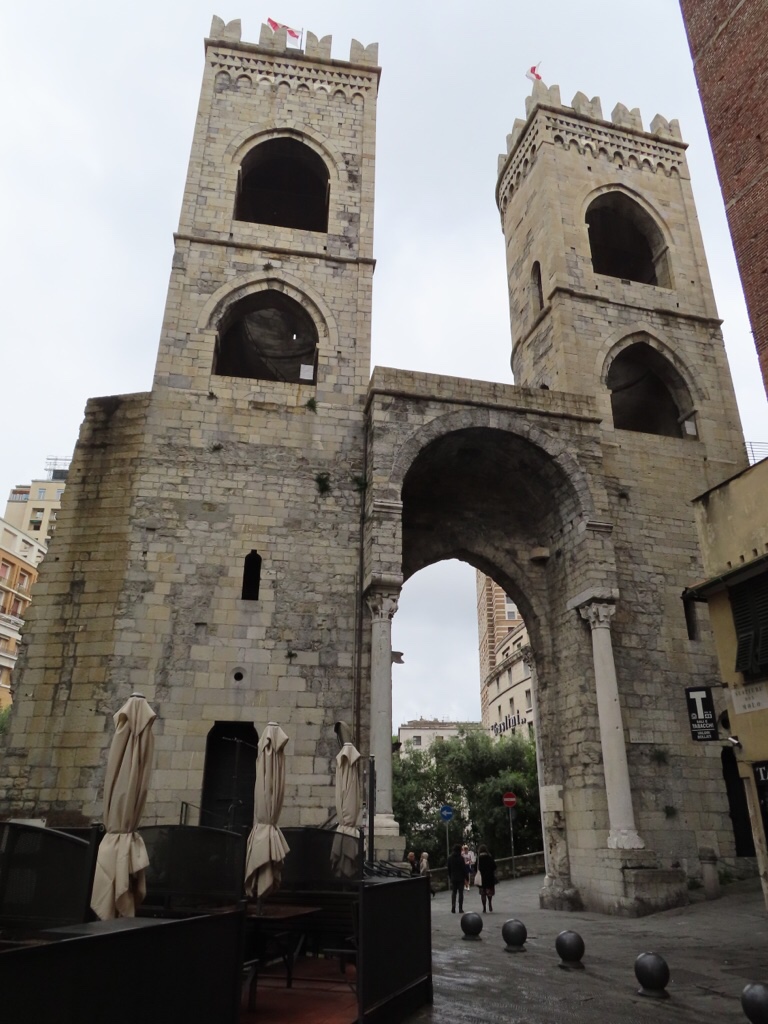
Our last stop before the station was the Porta Soprana, standing on the spot where the city walls were opened to connect Genoa with the Riviera di Levante.

We’ve only really had a taste of the city – there were plenty more palaces, churches and museums to see, but we think we saw the best bits …

It was still grey, chilly and damp when we got back, Camogli seemed deserted. Many of the restaurants don’t seem to be open for the season yet, especially with the bad weather, although we did find one!

Map

Portofino Peninsula – Camogli

The natural environment and beauty of this peninsula is protected by the Parco Regionale di Portofino and access to the rocky coastline is by footpaths and boats alone. We have chosen to stay in Camogli and will be using this as a base to explore take a day trip to the city of Genova and also visit Portofino itself, another picturesque fishing village which has become fashionable with the yacht-set.

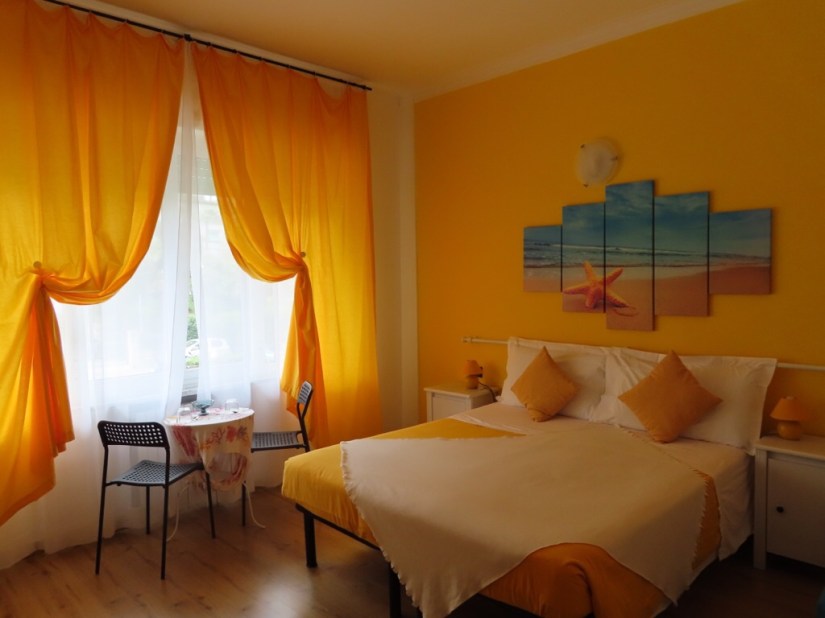
Arriving by train, we checked in at Stella Marina and settled into another cheery room, then went exploring.

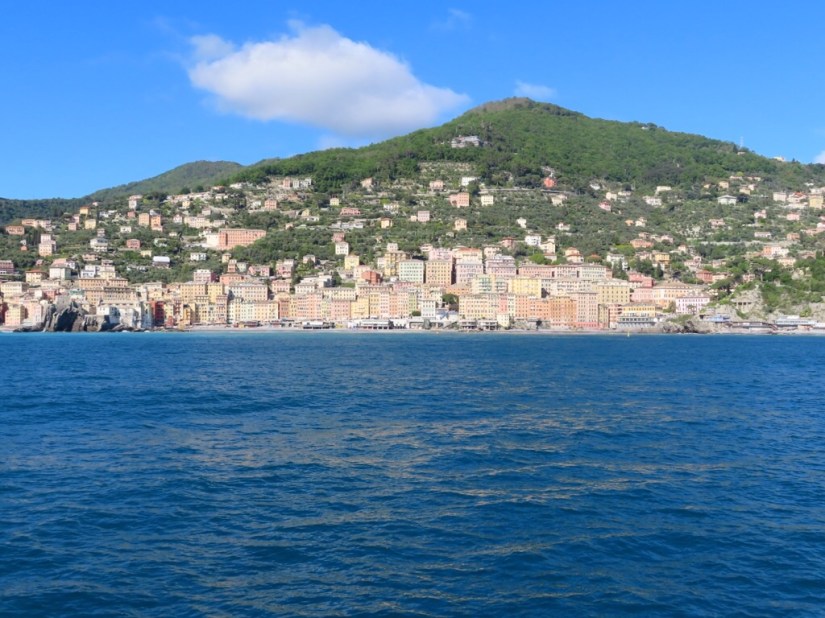
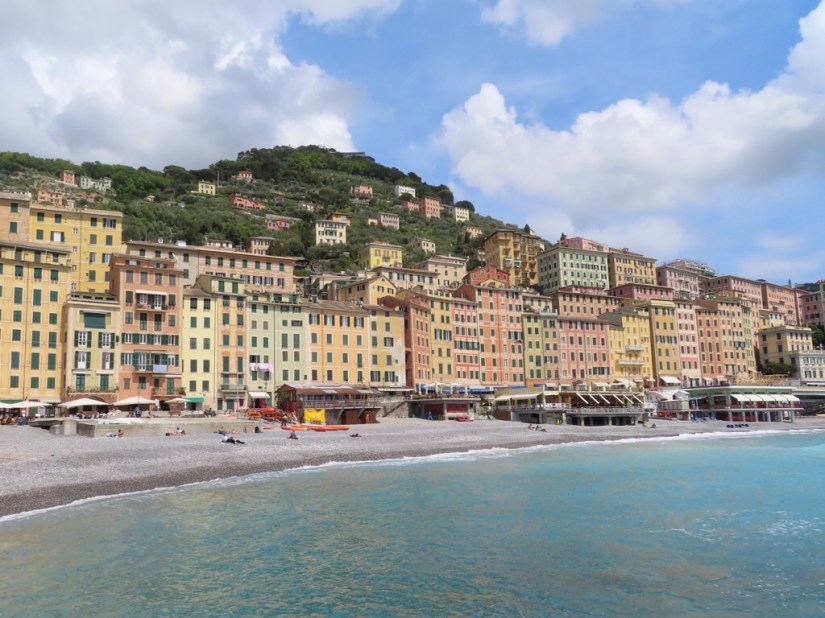
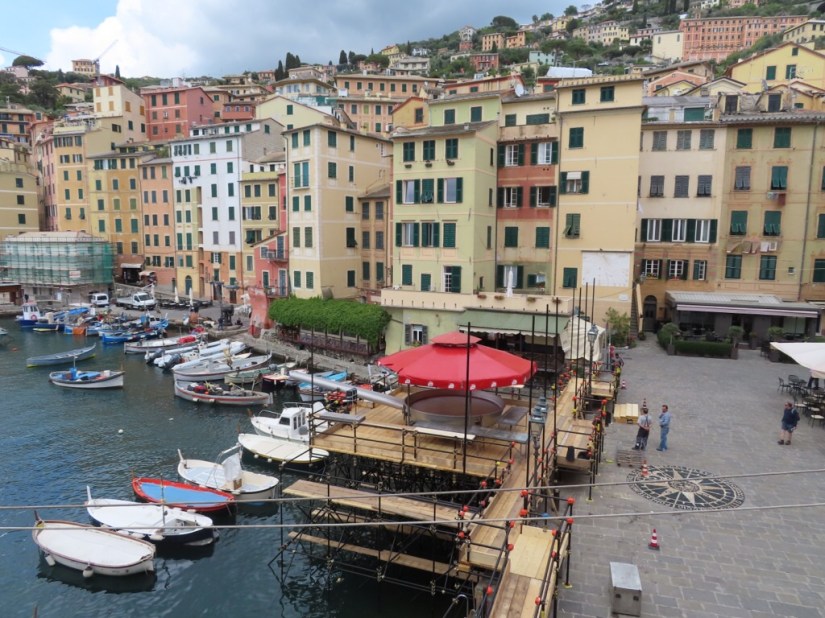
A short walk brought us to the front and we found Camogli to be similar to Vernazza … but bigger! The esplanade is very elegant as it sweeps round the bay, fronted by huge seven or eight storey buildings in the traditional warm yellows and oranges of the region, a reminder of the town’s glorious past.

From the Middle Ages to the coming of steam ships, Camogli was a bustling seaport known as the ‘city of a thousand white sails’ with the fleet being rented out to anyone who could pay, hence they fought at the Battle of Trafalgar for Napoleon. The ship owners were among the most powerful of Europe’s merchants in the C19th and one source of their wealth was the founding of the first maritime insurance against loss of freight and ships.

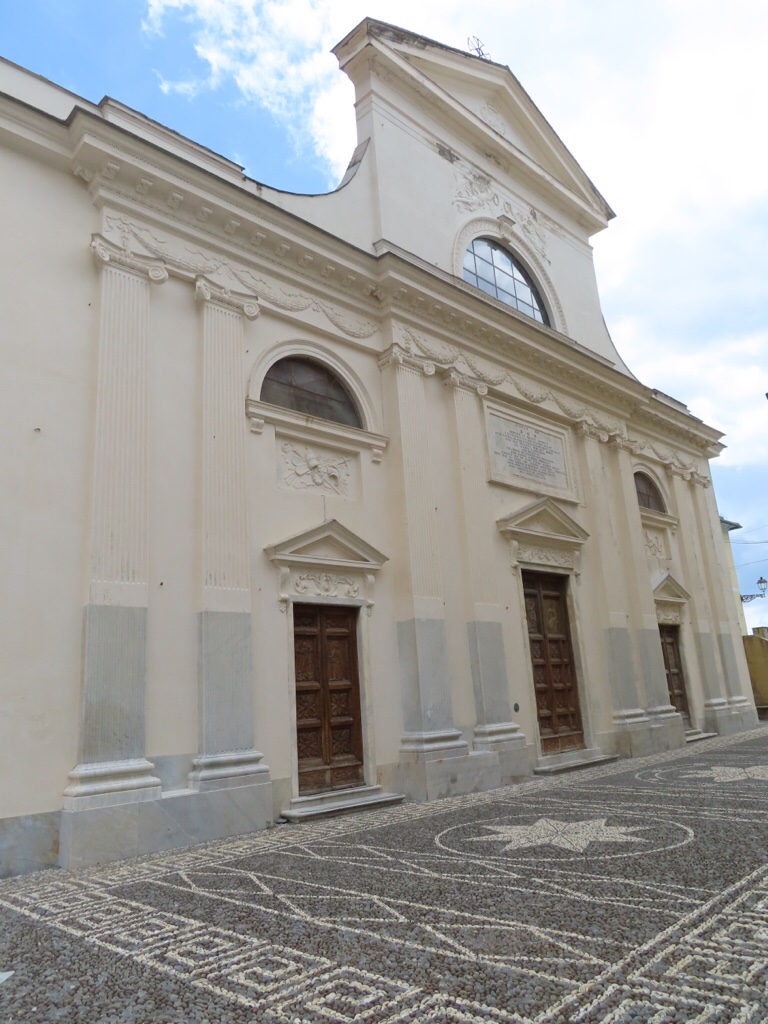
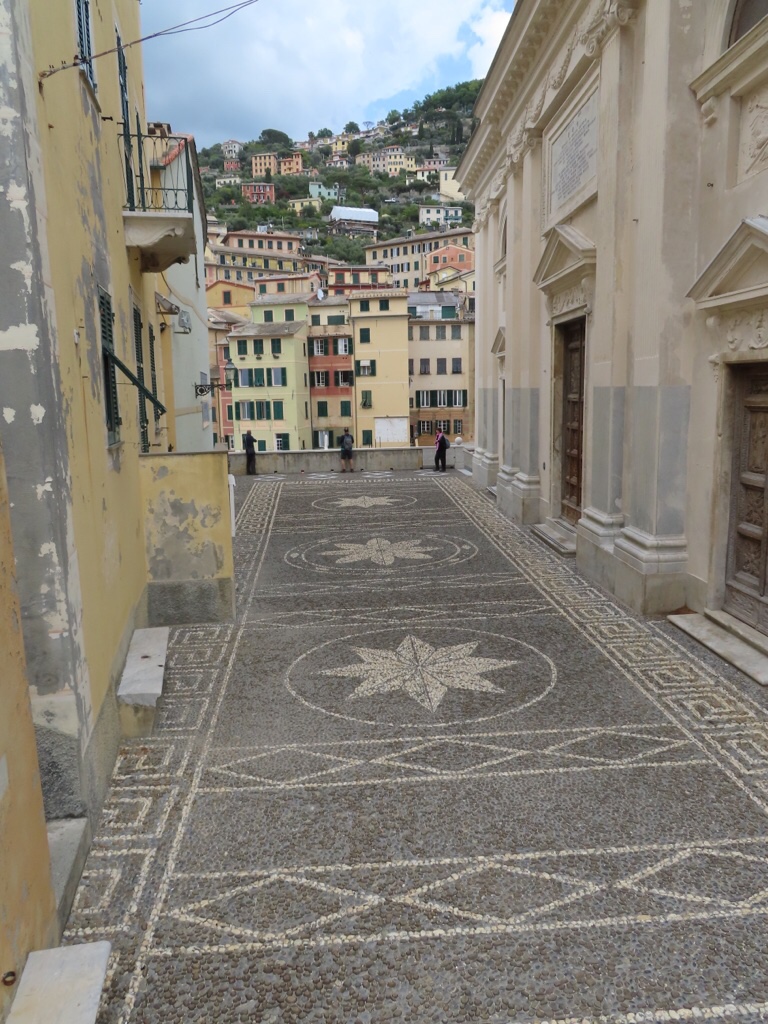
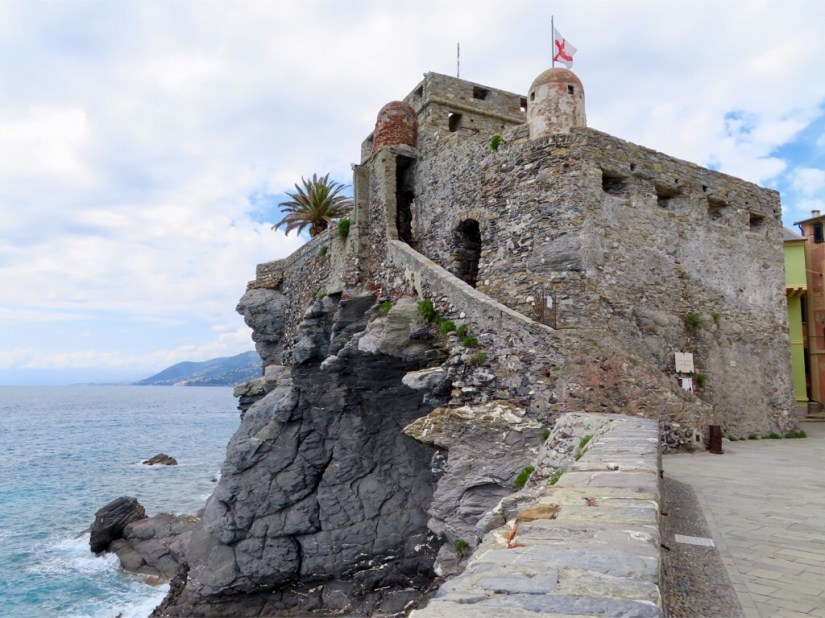
We sat outside in the sun and had some lunch then went to explore the medieval centre, dominated by the C12 Basilica Di Santa Maria Assunta. It had a typical Ligurian pebbled courtyard and a surprisingly ornate interior, but was once the chapel for Castello Dragonara, built to defend the town from Saracens.

As we wandered round, there were several signs of preparations for the Sagra del Pesce this weekend, when huge amounts of fish are fried in a 4m wide pan, the biggest in Italy. This festival began in 1952 to commemorate a night in WWII when the town were starving as German mines prevented the fishermen going to sea, but the situation was so dire they prayed to San Fortunato and went anyway, bringing back a massive catch. There will be much celebration, with fireworks, and here is the pan!

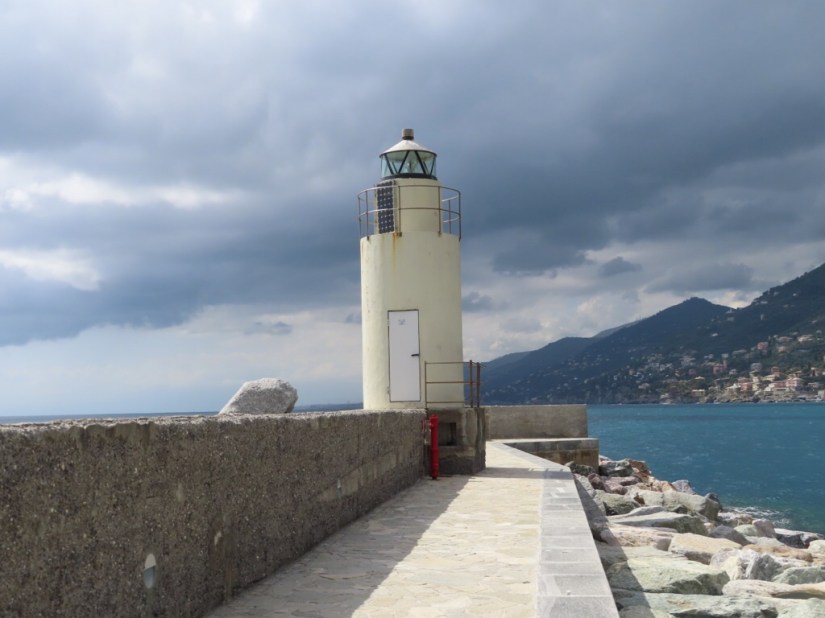
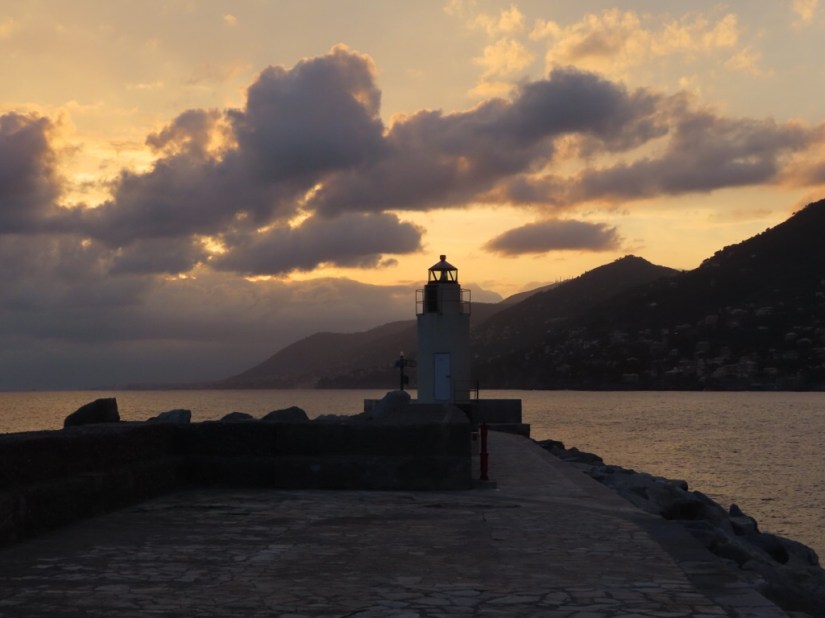
Beyond, was the harbour and lighthouse.

The town also has their Dragun Boat, made from an old lifeboat in 1968 by a group of friends to keep alive the nobility of navigation, which has become a symbol of Camogli and takes part in various folk events all along the Italian Riviera and abroad.

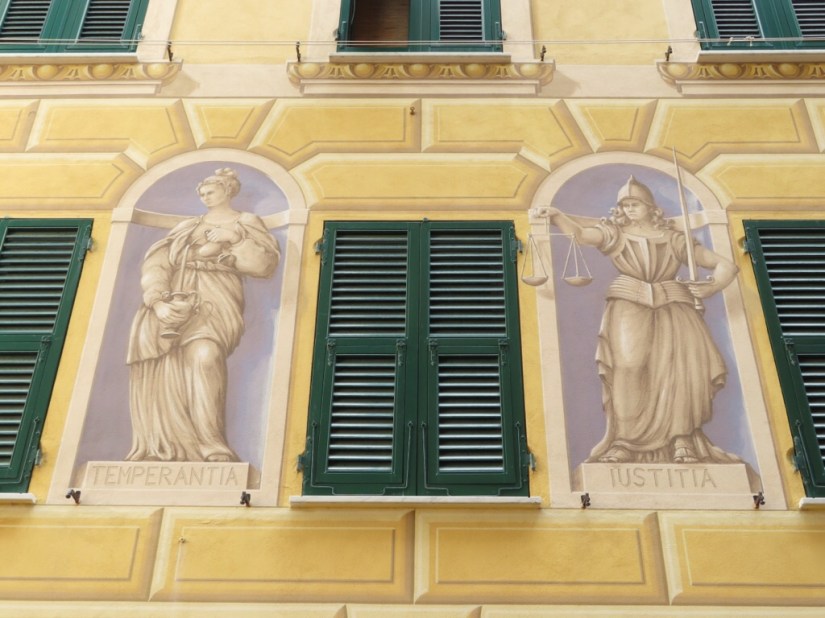
Looking closer at the facades, we realised how clever the painting was as most of the architectural features were trompe l’oeil!

We returned later for an aperol and to catch the last of the sun as it lit up the colourful houses and then set and ate dinner in a little Trattoria beside the B&B.

Map

Cinque Terre – Manarola & Riomaggiore

We had thought we might visit the two remaining Cinque Terre villages by boat but rough seas cancelled the ferry. The day was still bright and sunny so we set off undeterred … by train!

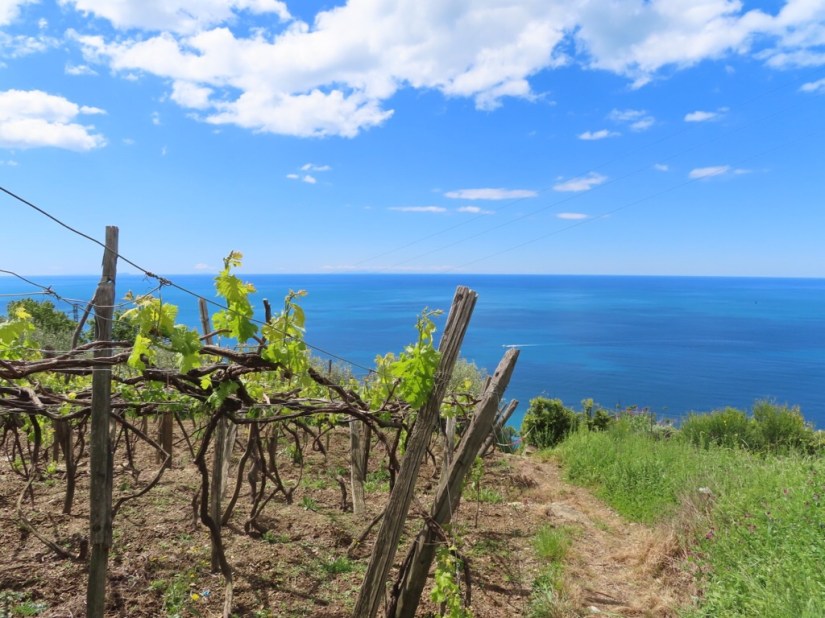
Our first stop was Manarola, where to save our legs, we took the bus up the hill to the Santuario Di Nostra Signora della Salute in the small hamlet of Volastra.

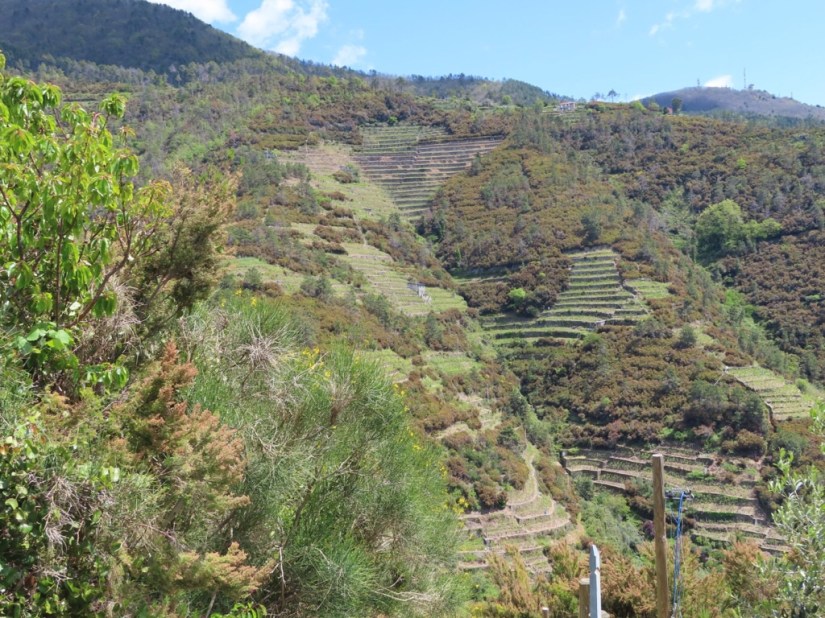
We took the path towards Corniglia for a short way to get a view of the terraced vineyards where grapes for both sweet and dry white wines are grown.

We also saw Corniglia in the distance …

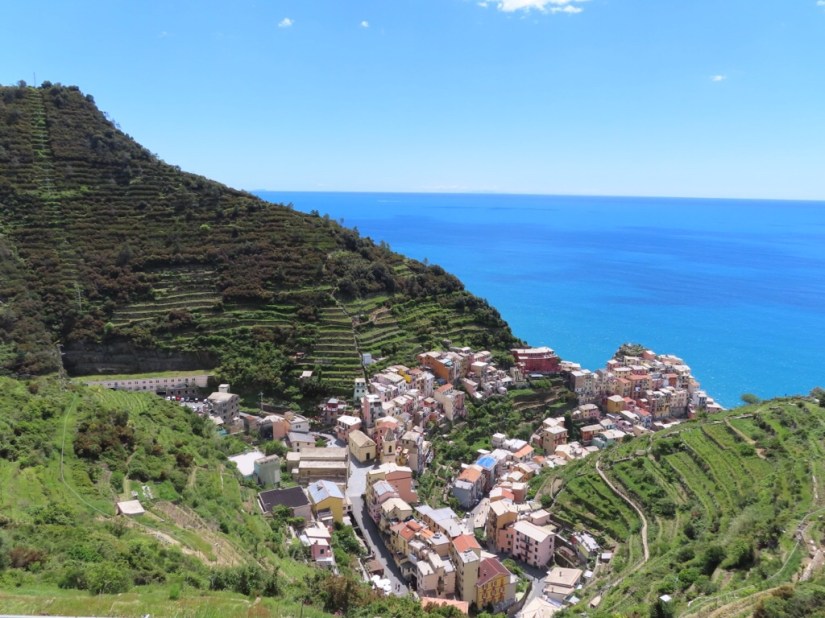
… and Manarola below.

Returning to the church, we began the descent and are really pleased we hadn’t done this walk both ways as what seemed to be an never ending flight of steps descended between the olive trees …

… and between the terraces of vines.

We caught glimpses of Manarola as the path zig zagged …

… then finally reached the main viewpoint at the bottom …

… and returned to the station.

We caught the train onwards to Riomaggiore, the last of the five villages, and the largest. We took a few snaps but it didn’t have quite the charm of the other villages and we didn’t linger.

We had hoped the boats might have started running again so we could get a view of the Cinque Terre from the sea, but it wasn’t to be and we returned by train.

Our last night here, so we had an aperol in the last of the sunshine then more pansotti for dinner in the taverna round the corner. Over dinner we agreed we had picked the nicest village to stay in and that of the others, Manorla was the prettiest. As for Ivo’s Camere, we struck gold here with such a central location, a lovely comfy room complete with lashings of hot water and a kettle to make tea … and those 67 steps have certainly kept us fit!

Tomorrow we take the train further west!

Map

Cinque Terre – Vernazza in the Rain!

The predicted weather forecast for today has been getting worse every day this week, so we knew it was likely to be a wet day … we just weren’t sure how wet!

As it turned out, not only was the rain pretty persistent, it was also blowy and cold. So the choice was whether to take the train to Riomaggiore, the largest of the Cinque Terre towns that we had not yet visited for a look round … in the rain … or stay in our cosy warm room, drinking tea and catching up on a good book …

Chris did venture out to take pics in the rain and came back a tad soggy but with a couple of snaps to share …

Later we ventured out long enough to get sandwiches … and finally just gone four, the rain stopped! We went to stretch our legs and get some air, following steps up between the houses to Castillo Doria which was built in the 15th century to protect against pirates …

… then up more steps to where the coast path to Corniglia is now closed …

… but this gave us another good view of the Vernazza.

Not wanting to leave any viewpoint unexplored, here are a couple more before we called it a day!

Back to the bistro for dinner and an early start planned tomorrow to make the most of what promises to be a sunny day.

Map

Cinque Terre – Vernazza to Corniglia

A lovely day and a walk planned! We took the bus to the hamlet of San Bernardino, a steady ascent for 15 minutes which was going to make our day a whole lot easier and got out at the Santuario Di Nostra Signora delle Grazie which we saw yesterday from afar.

There were several views … the Santuario Di Nostra Signora di Reggio where we were yesterday on the opposite hill …

… and the road snaking down to Corniglia with Manarola in the distance.

We weren’t planning to walk down the road though, we were taking the scenic route via Cigoletta …

… so left San Bernardino behind us …

… and caught a glimpse of Monterosso al Mare …

… before a pretty steep climb.

Cigoletta, at 620m, is the highest point on the Cinque Terre, but hidden in trees has no view!

From here on, it was downhill through woodland and a couple hours after we began, we caught sight of our destination!

Corniglia clings to a ridge, the only village without a harbour and we wandered round it’s narrow streets, finding churches, piazzas and views …

… including one of San Bernardino!

Having sampled the basil and lemon gelato, we made our way to the station … and we were pleased to be leaving by train and not arriving when we saw La Ladarina … the 380 steps, fortunately down in our case!

A well deserved rest and a wander down to the harbour at sunset …

… followed by dinners of pasta with walnut sauce and Tegame Vernazza, a local baked dish of anchovies and potato … delicious!

Map


Cinque Terre – Above Vernazza

It hadn’t started well. We woke to a damp morning, grey and unpromising. We took the day slowly, went for some breakfast, checked out the bus timetable and visited the information office. The very helpful chap suggested the best path for the day might be to the sanctuary above the town as it was cobbled and would be ok even if there was more rain.

Returning to our room a wave of umbrellas approached us! Maybe we would wait a little longer …

Patience paid off as later it dried up and we set out, locating the path which went straight up behind the town.

There are watchtowers dotted all along the coast, reminders of a time where pirates sailed the seas …

… and as we got higher we got a better view of the Castillo Doria …

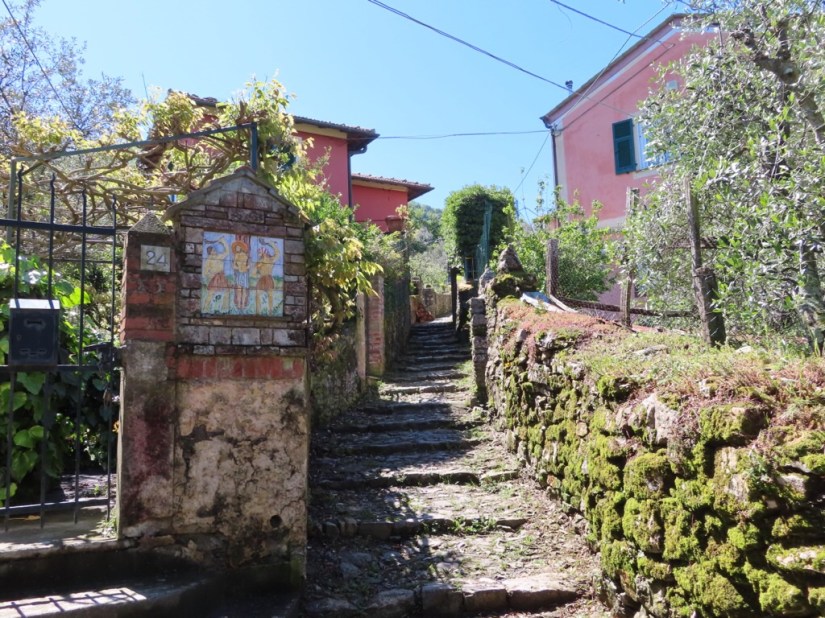
The path became a series of cobbled switchbacks, with stations of the cross on the way.

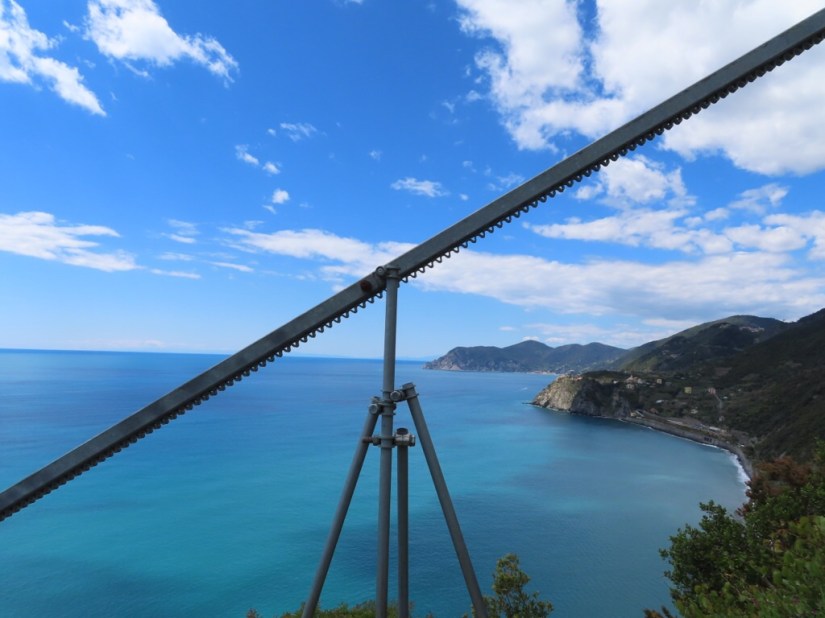
We had seen various stretches of metal track on the slopes snaking between the olives and vines …

… and when we saw this contraption we realised this was harvesting technology Cinque Terre style!

Near the top there was another view of Vernazza below and a glimpse of the Santuario Di Nostra Signora di Reggio above us.

We felt it was more about the journey than the arrival as the church was closed and looked a little sad although there is still a service here every week.

We spotted the Santuario Di Nostra Signora delle Grazie di San Bernardino on the next hill …

… then made our way back to the town.

Just in time for an Aperol in the last of the sunshine!

The buccaneer theme continued with dinner at Il Pirata – bruschetta and pasta and a Sicilian cannoli for desert filled with chocolate cream!

Map

Cinque Terre – Vernazza & Monterosso

Cinque Terre means Five Lands for the five small coastal villages of Monterosso al Mare, Riomaggiore, Manarola, Corniglia and Vernazza, built into the sheer rocky coast of Liguria. They are famed for their rugged scenery and are popular with tourists and hikers alike. The access by road is limited, so most visitors travel between the villages by train, boat or on foot.

We caught the train in Pisa and headed for Vernazza which is billed as the most beautiful and characteristic of the villages.

We are staying with Ivo and he met us at the station, walked us through the village pointing out where everything was and then thankfully carried my case up 67 steps to our room on the fourth floor! Our cheery little room overlooks the small street and will be our base for 5 nights.

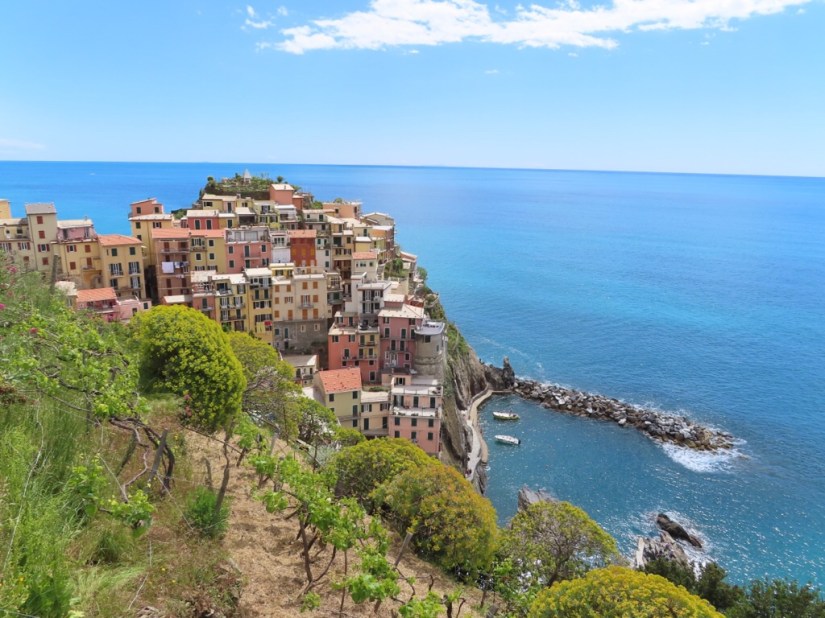
We went to explore the village with the rooftops piled higgledy-piggledy around Piazza Marconi and the harbour and up the slopes towards the fortified tower of the Castello Doria, but it was all a bit grey and chilly.

We looked round Santa Margherita d’Antiochia …

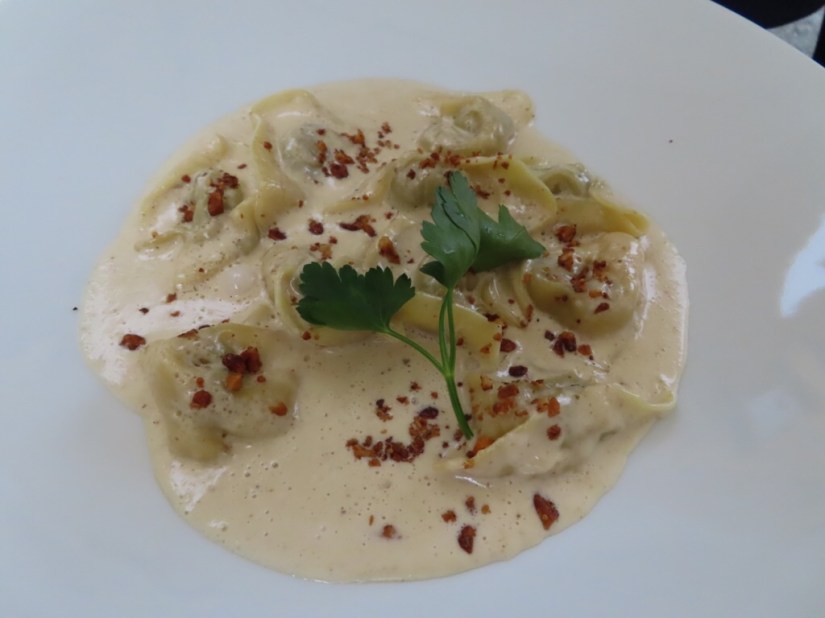
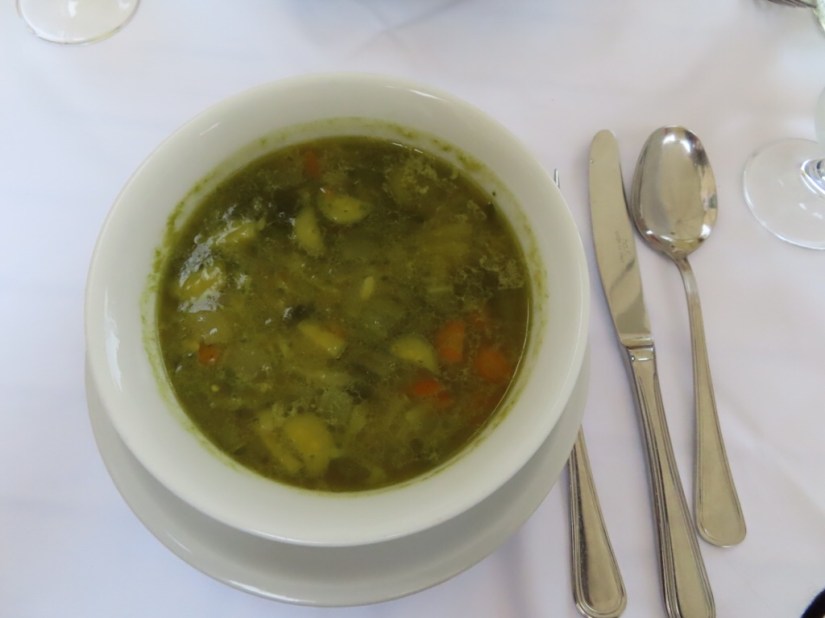
… then warmed up with a couple of local specialities – pansotti (a local pasta stuffed with cheese and greens) served with walnut sauce for Chris and minestrone Genovese with pesto for me and were delighted when a little later the sun came out.

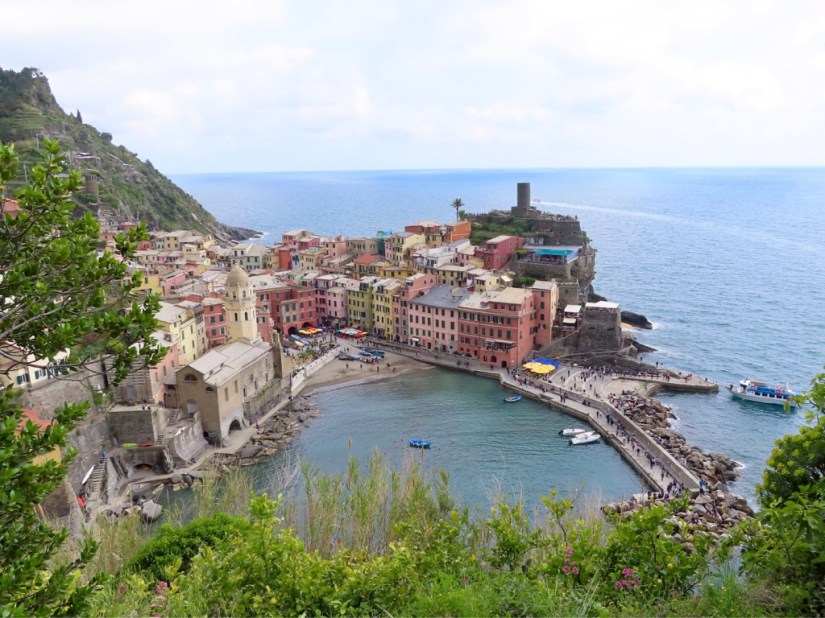
The Sentiero Azzurro or Blue Path is the easiest and most famous path linking the five villages. However due to storm damage, only the 2 mile section between Vernazza and Monterosso is open so this seemed a good walk to start with. We followed signs to the start and were quickly rewarded with a great view of Vernazza in the sunshine.

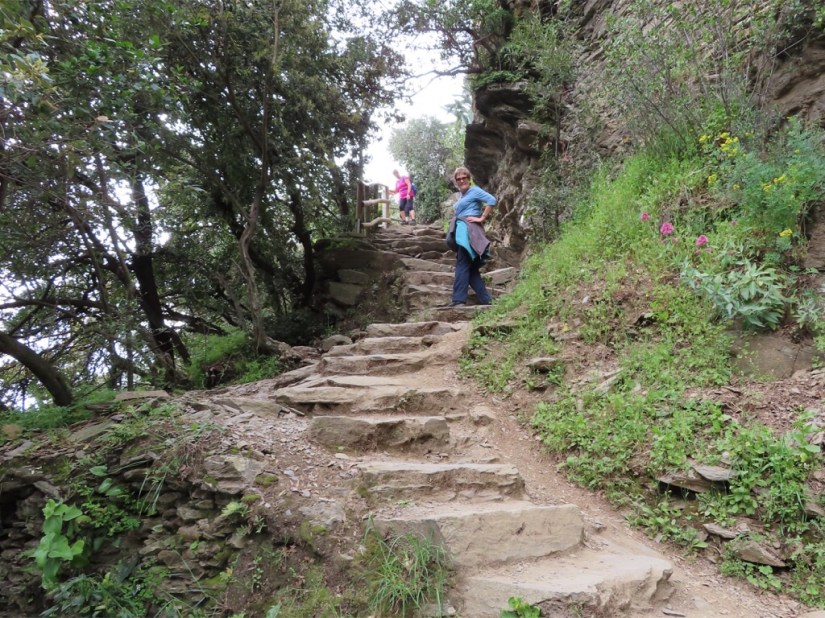
The path was busy with walkers and had plenty of ups and downs as we passed terraces of vineyards.

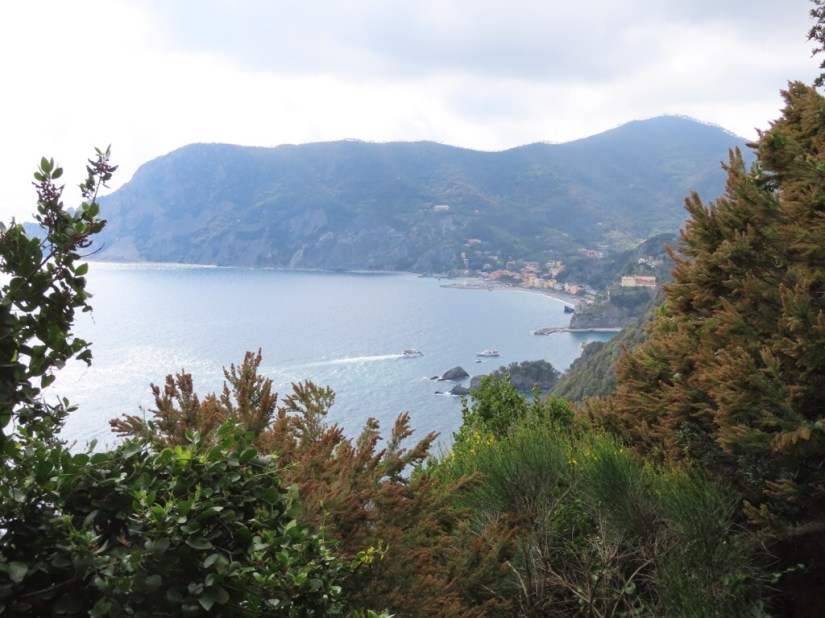
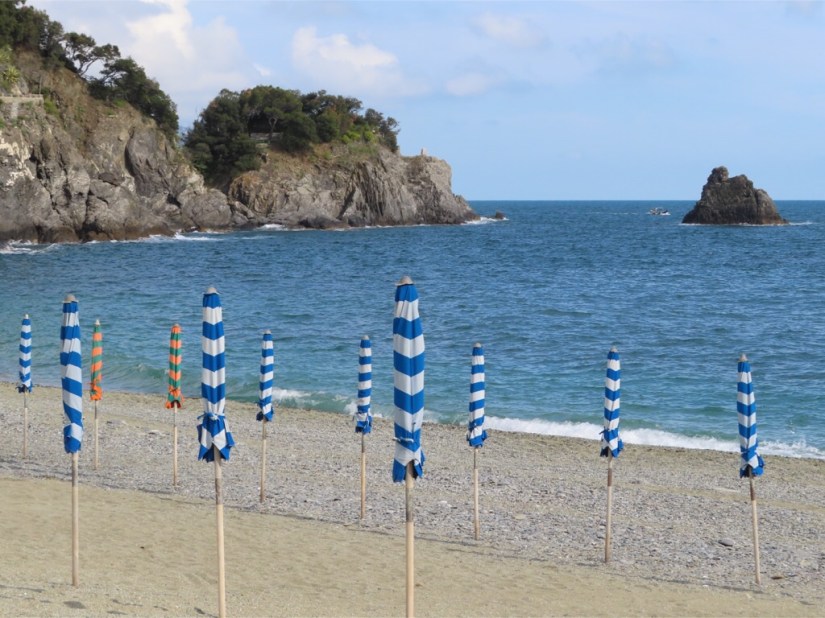
We caught our first glimpse of Monterosso, although it took a while longer to reach it! This was the first resort of the area and has a tunnel through a headland joining the two parts of town. We only had 30mins till the last boat back … so the priority was gelato but we did take a couple of snaps including this one of Torre Aurora which was built in the Middle Ages to defend the town from pirates and Pisans.

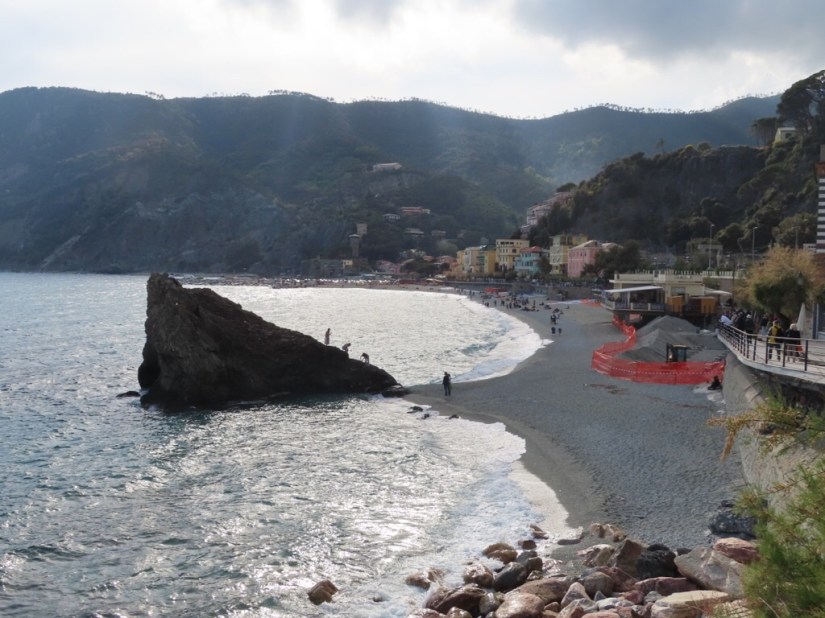
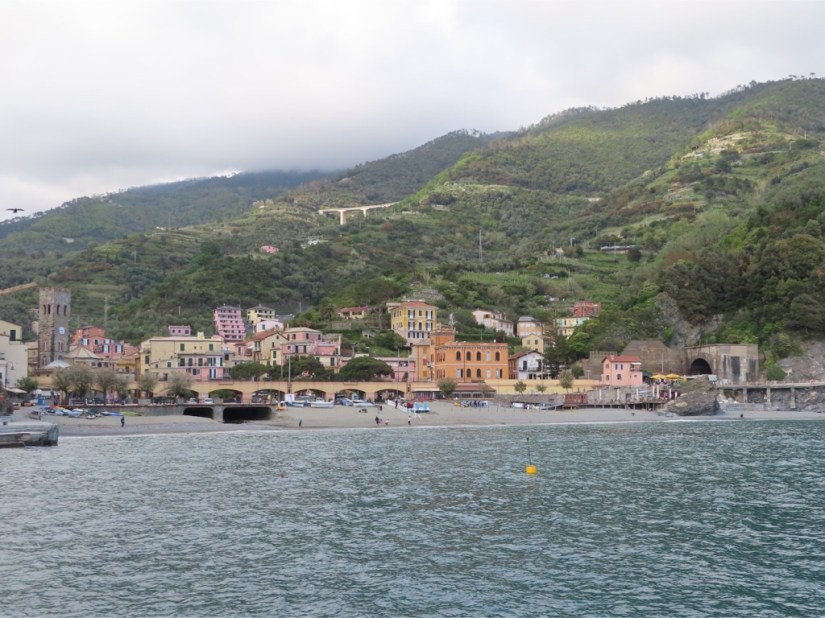
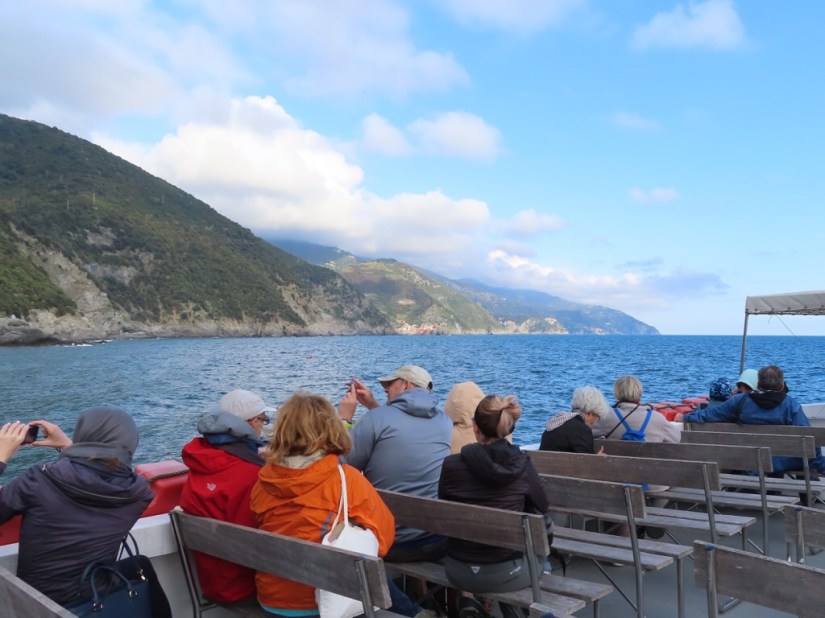
Having taken a good couple of hours to walk there, our boat trip back took 15 minutes! We got views leaving Monterosso, of the coast and of Vernazza from the sea when we arrived.

Another speciality awaited us for dinner – pesto lasagne and a little local red!

Map